The Destiny of Humanity & Machines
Camphill: Being Human Now

The Mission of English Speech

StudieS with YeShaYahu Ben-aharon
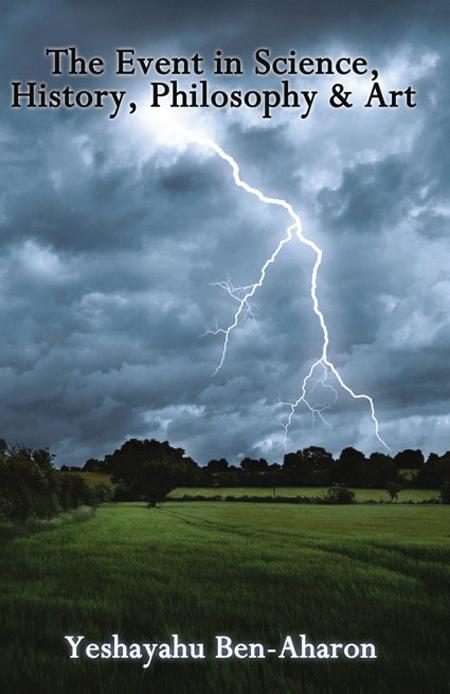
Dr. Yeshayahu (Jesaiah) Ben-Aharon is offering opportunities for close study of his major works and recent research, in four online classes led by him personally. Their aim is to understand the Christ Event of the 20th century and the present, and to prepare for the Christ Event of the 21st century. The first of the classes is offered twice, beginning January and April 2012.
In previous books, The New Experience of the Supersensible and The Spiritual Event of the 20th Century, Dr. Ben-Aharon presented first hand and detailed empirical spiritual investigation of the meeting with the active and creative being of the Christ in the etheric world. His spiritual scientific research is continuously updated and expanded, and is to date the only contemporary research of this central spiritual event of our age.
In 2012 Dr. Ben-Aharon will lecture in the US, Europe and Israel on “The Christ Event of the 21st Century: Singularity & Immortality.” His latest book is now available in print or e-book: The Event in Science, History, Philosophy & Art is a startling and thought-provoking portrayal of the transformation of human consciousness across the major fields of modern culture.
For more information, email scottehicks@gmail To order The Event, sign up for online courses, or learn about upcoming lectures, please go to the new website: www.YBaSite.org
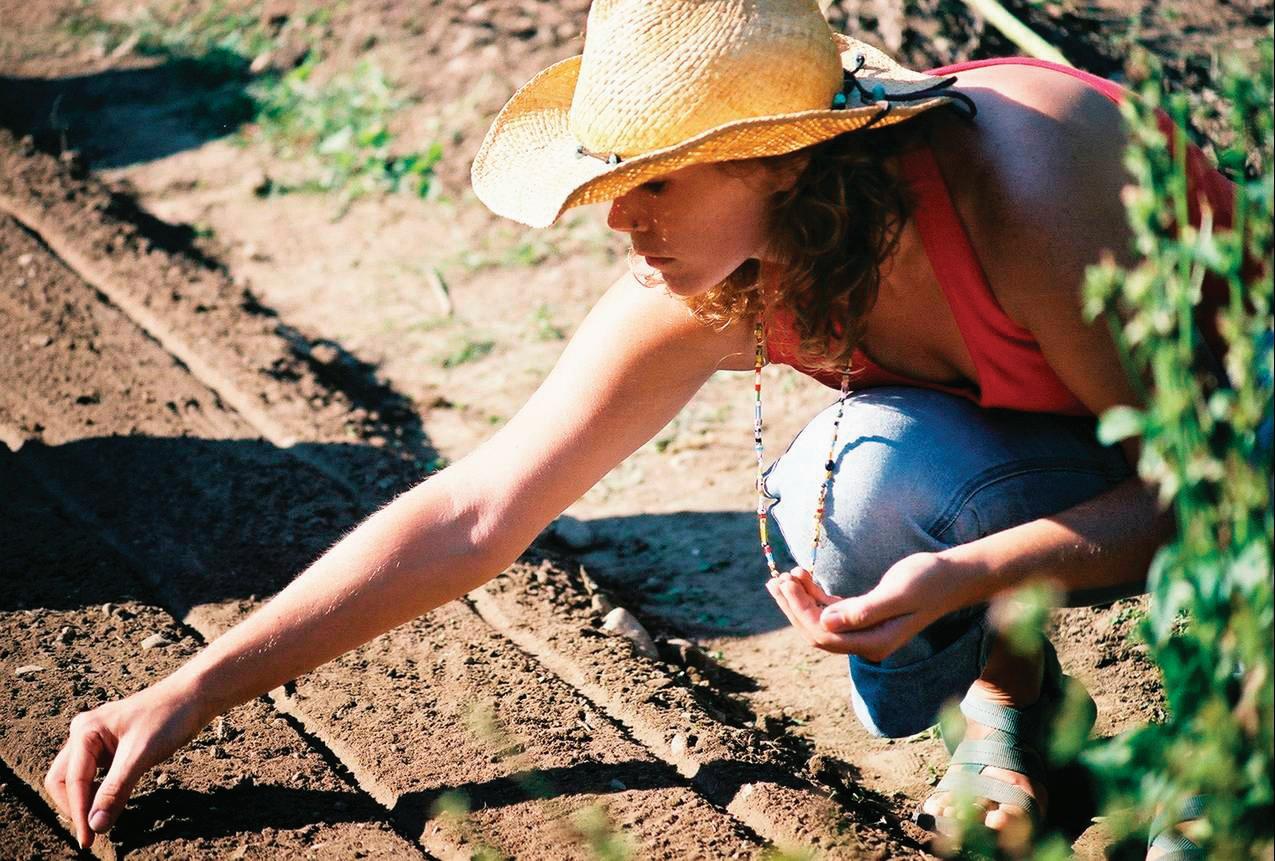
Plant
Serve the future by teaching the children of today through Waldorf Education. Become a Waldorf Teacher by completing a Part-Time Program in Waldorf Early Childhood or Elementary Teacher Education at Sunbridge Institute.
Sunbridge’s Teacher Education programs allow you to explore the anthroposophical underpinnings of Waldorf Education, develop contemplative capacities, and acquire the practical, artistic, and philosophical foundations for teaching in Waldorf schools worldwide.

Sunbridge Institute www.sunbridge.edu 285 Hungry Hollow Road Chestnut Ridge, NY 10977 845.425.0055 / info@sunbridge.edu
the Seed of Imagination Become a Waldorf Teacher
NOW ACCEPTING APPLICATIONS FOR ENROLLMENT IN SUMMER 2012
From the Editor
Rudolf Steiner has been called the “ultimate holistic thinker” by the program director of a leading center for holistic learning. But what does that really suggest? The phrase of the African-Latin playwright Terence comes to mind: “Let nothing human be alien to me.”
Steiner’s holistic human science, anthroposophy, is given a good stretch in this issue. To celebrate its 50th anniversary in North America, the Camphill communities sponsored a symposium last spring, “Being Human in the 21st Century: Toward New Thinking.” Here contemporary thought’s focus on cognitive, intellectual abilities was confronted with quieter and perhaps profounder ideas on the value of human existence. Steiner’s esoteric insight into incarnation remains offstage, but his intimate feeling for the forces of the heart, for the human being in community and in nature, permeates the gentle genius of the Camphill world.
An article follows by technologist and anthroposophist Andrew Linnell, turning to the question of hu-
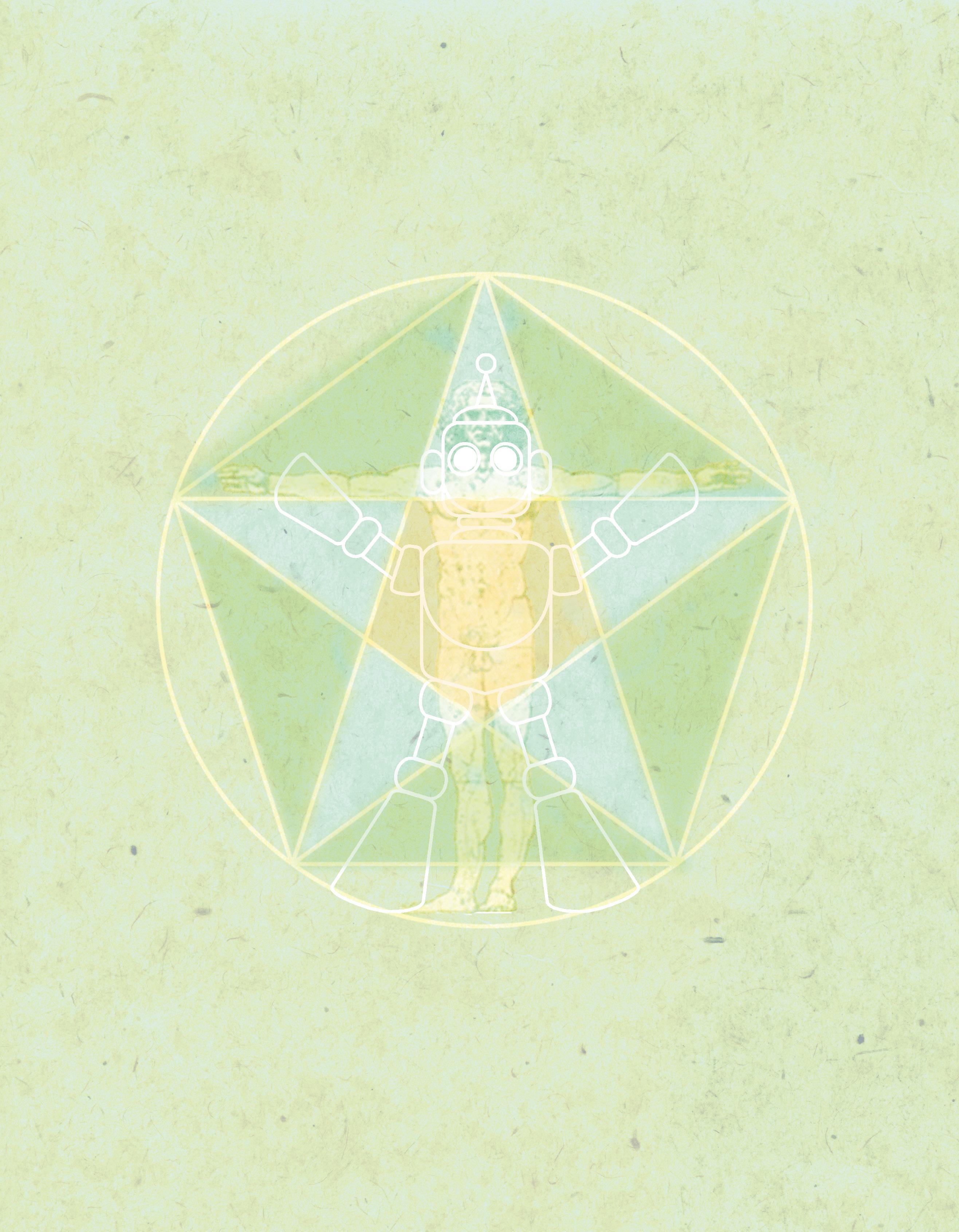
man and machine. Steiner gave startling pictures (long before most science fiction) of further reaches of human and planetary evolution, and what we now call “humanmachine co-evolution.” (And below, left, a finely-made if disconcerting image on this same theme by the artist Kosmur: “assembler.”)

John Miller joins in with an essay on systems thinking: a way of thinking about complex organization which is accepted by natural science but also congruent with organic life—and perhaps with higher social forms and the current evolutionary fluidity of global society. This systems avenue may offer a way to overcome some of those “two cultures” problems that block many modern thinkers.
The “fundamental social law” expressed by Steiner provides Christopher Schaefer a basis for examining the problem of today’s severe wealth disparities. Both this paper and John Miller’s were part of this summer’s conference “Redeeming the Realm of Rights” hosted by the Social Science Section of the School for Spiritual Science.
And what is more social than speech? Virginia Sease of the Goetheanum executive council spoke earlier this year in London on “the future task of the English language” and “the mission of the English-speaking peoples.” How can we live into the spiritual tendency of our language while resisting its tendency to materialize things?
George Centanni reviews two recent books by Peter Selg which approach Steiner’s huge role as spiritual teacher. Or as George puts it, “Rudolf Steiner—Apostle?”
We happily share the recent remarks of general secretary Torin Finser of the Anthroposophical Society in America. Can we balance the active and contemplative lives so as to become bearers of significant and timely initiatives?
John Beck
How to receive being human, how to contribute, and how to advertise

Sample copies of being human are sent to friends who contact us (see below). It is sent free to members of the Anthroposophical Society in America (visit anthroposophy.org/membership.html or call 734.662.9355).
To contribute articles or art please email editor@anthroposophy.org or write Editor, 1923 Geddes Avenue, Ann Arbor, MI 48104. To advertise contact Cynthia Chelius at 734-662-9355 or email cynthia@anthroposophy.org.
winter issue 2011 • 3
“assembler” by Kosmur (kosmur.deviantart.com/art/assembler-79007314). “Some rights reserved. This work is licensed under a Creative Commons Attribution-No Derivative Works 3.0 License.”
Being human, briefly noted
Waldorf Alumni Making a Difference
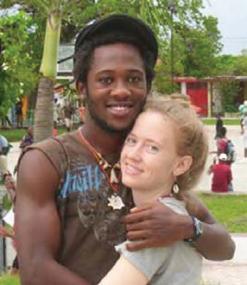
A Waldorf education aims to balance “head, heart, and hands,” thus enabling the student to find his/her true vocation and to transform ideals into action with a passion. Such is the case with these three Waldorf alumni. Back in 1986, Reina Galjour entered my First Grade class at the Emerson Waldorf School, the most loving pupil I have ever taught. She loved everything we did in class. 25 years later, Reina is my hero, taking her gift of midwifery to Haiti and under dire third world conditions for over a year and a half. In many years in El Paso, Texas, she lost only one baby. In Haiti, death is virtually a daily occurrence. What seems to have shocked Reina most in the beginning, however, was how cruelly mothers-in-labor were treated; many even being slapped to quiet them down. That is something Reina has worked tirelessly to change. Reina is a good writer and really captures the feeling of the Haitian life, her heartbreaking trials and joys, at reinagaljour.blogspot.com —do check it out. In spite of no running water or toilets, never enough medicines or blood, Reina has found joy in Haiti. She has met the love of her life and fiancé, Desauguste Robinson, better known as Blada. Reina has mastered the Creole language and is adept at local dances. [In September Reina visited to fundraise for Midwives for Haiti, which she works for. You can donate at www. midwivesforhaiti.org—under “Notes” add “Reina Galjour Fundraiser.”]
Alex Steffen. Mari (Perkins-Yeager) Glaze sent me a YouTube video of a lecture by her former Green Meadow Waldorf School classmate, Alex Steffen. I was elated to see what a fine man Alex has become; I knew him when he was a teenager. His younger brother Joseph was my son Danny’s best friend. I recall taking Alex, Joseph, and my three children, all of us clad in medieval costumes to a Society for Creative Anachronism (SCA) Festival in 1982. Now Alex is an environmental crusader, lecturing all over the world, featured several times in the New York Times, and nearly 600 articles Good magazine. The Sun , Business Week, Fortune, Der Spiegel , CNN, The Guardian, Wired , Treehugger, etc. His website AlexSteffen.com describes Alex as “one of the world’s leading voices on sustainability, social innovation and planetary futurism.” He compiled and edited a book called Worldchanging: A User’s Guide for the 21st Century (Abrams 2006), 600 pages of leading solutions from around the world, a foreword by Al Gore, now updated as Worldchanging 2.0. Keep up the great work Alex!
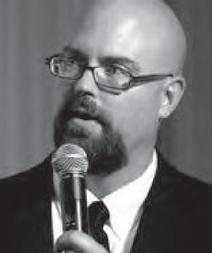
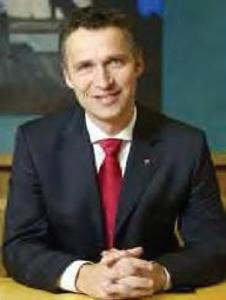
Jens Stoltenberg has been prime minister of Norway since 2005. He is leader of the Labor Party. Jens was in the news last summer after the dreadful incident in which a religious right zealot killed 68 people at Utoya island where the Labor Party was holding its annual youth camp. That same day a bomb went off near the Prime Minister’s office in Oslo, killing eight people. The Prime Minister was on tv all over the world after he quoted a young girl who said, “If one man can show so much hate, think how much love we could show, standing together.” Jens attended Waldorf schools in his youth and when asked by the news media what he thought of his Waldorf education, he replied: “It encouraged me to always strive to become a better human being.”
Kathleen Wright, condensed from The Sophia Sun (North Carolina)


Worthy of Soul Space
“Creating new value between the physical realities and the life-giving forces of human initiative is a modern Rosicrucian task. Never has the challenge been greater... How can we foster inner vitality in the face of mounting external pressures? From August 4 to October 14, 2010, many of us followed the story of the 33 miners trapped deep underground... in Chile. The story was riveting, not only in it’s inherent human drama, but also in terms of unmistakable symbolism... [O]ne of the miners wrote: ‘I was born again at 33 years... It is a coincidence, like a miracle, and for that, it gives me more strength to go forward.’ ...This became one of those opportunities to experience the universal human, our ‘united-ness’ as one people on this Earth. The cry that went straight into the hearts of people across the globe was the short phrase: “Hear me God, I can’t take it anymore.”
What is it that humanity cannot take any more? It is the feeling of being trapped under many feet of matter... Then picture the gradual ascent in a capsule... [t]he indescribable joy of seeing one’s loved ones again, the radiant sunshine, living plants and flowers, the splendor of the natural world. Imagine holding one’s child and partner in a long embrace.
These two contrasting pictures are worthy of some soul space...”
From Initiative by Torin Finser, a new book at steinerbooks.org
Note to readers
Suggestions & brief submissions for this page will be gratefully received! editor@anthroposophy.org Editor, 1923 Geddes Avenue, Ann Arbor, MI 48104
4 • being human



Contents FEATURES 10 Being Human in the 21st Century: Toward New Thinking 13 The Destiny of Humanity with Machines 15 Anthroposophy, Complexity, and the Occupy Wall Street Movement 23 Toxic Excess: Wealth Disparities and the Fundamental Social Law 27 The Mission of English Speech REVIEWS, LETTERS, POETRY 6 Letters: The Great Disputation, Slovenian Culture 9 Letter & Poem: “The Last Morning” 33 Peter Selg’s Rudolf Steiner and the Fifth Gospel ; Rudolf Steiner as a Spiritual Teacher 35 Poem: “Thinking about Thinking” 41 Poem: “What Do I Know About Anthroposophy in America?” 43 Rudolf Steiner Library New Book Annotations NEWS & EVENTS 38 Remarks of Torin Finser at the AGM in Portland 40 Chattanooga Gathering Pan-American Conference Library Grant THRESHOLDS 42-43 Lewis duPont Smith Dies at 54 New Members of the Anthroposophical Society; Members Who Have Died
Joining the Great Dispute
I was glad to read “Anthroposophy and Contemporary Philosophy in Dialogue” by Yeshayahu Ben-Aharon [Fall 2011]. I hear Ben-Aharon’s appeal to join this century’s Great Dispute yet come to a different view on how the dispute should be joined.
I take it Ben-Aharon’s train-of-thought runs as follows: (1) In centuries past there was a “Great Medieval Dispute” (p.28) between the Franciscan Nominalists and Dominican Realists. The Franciscans “could no longer experience thinking’s true spiritualuniversal being” (p.29). But the Dominican Thomas Aquinas and his followers believed that through the “active intellect” one “may unite his soul intimately with real spirit substance” (p. 30).
(2) “The 20th century was supposed…to become a fruitful time of a great new dispute between the reborn Dominicans…and the reborn Franciscans” (p.30). I take it the reborn Franciscans were “the great fourfold German Gotterdammerung stream: Hegel, Nietzsche, Husserl and Heidegger” (p.22) and their French successors while the reborn Dominicans are anthroposophists.
This 20th century “Great Dispute”, however, was “absent” (p.27). “When in the second half of the century…the great culmination of anthroposophy should have taken place, only the other stream was culminating, alone” (p.27).
Let us accept (1). Although I am not a trained academic, all Ben-Aharon says about the Scholastic dispute about the nature of Names rings true with what we have read or read about the Scholastics elsewhere. Let us accept (2) as a working hypothesis. I myself see nothing of the past lives of the 19th and 20th century philosophers of whom Ben-Aharon writes, but in the cubicles of Corporate Bureaucracy I have seen enough religious disputes around Technology to imagine that the souls of many a scriptorium or religious war have incarnated beside me.
However, I am agnostic on whether the great 20th century dispute was missed. The Medieval Great Dispute was a battle of words. But what if the 20th century dispute was not a battle of words? What if it were a battle of images? If we were on shift watch for words but dozed during the image shift, there may be a battle we are sleeping through.
Why images? Images correct a Cartesian fallacy that we are dualistic rather than trine. Descartes saw us as body (sense) and spirit (thinking) but left out mankind’s soul. The soul mediates between sense and thinking through image; this feeling soul activity is needed to make us whole; any philosophical engagement
using dualistic methods alone is likely to fail. (Compare Sergei Prokofieff’s entreaty that the Anthroposophical Society has a special task to oppose the Ahrimanic binary system with a Michaelic threefold system; see Relating to Rudolf Steiner and The Mystery of the Laying of the Foundation Stone, p. 107.)
Moreover, Sartre has already enjoined us to dispute using images. Ironically, if Sartre actually were a reborn Franciscan, we can see in his The Psychology of Imagination that he has now accepted a certain Thomist position, namely the distinction between the passive intellect and the active intellect: “Imaginative consciousness…is spontaneous and creative; it maintains and sustains the sensible qualities of its object by a continuous creation. In perception the actual representative element corresponds to a passivity of consciousness. In the image, this element…is the product of a conscious activity, is shot through and though with a flow of creative will” (p.20).
But are there signs of any “dust-up of images” between the reborn Franciscans and the anthroposophists? Well, maybe not battles, but certainly skirmishes. Take for instance how two different writers picture “we.” In the early 1940’s Sartre wrote Being and Nothingness. In Part 3, Chapter 3, Section 3, he discusses the phenomenon of Mitsein, that is “Being-With” or “we.” He explains the origin of this experience by offering an image of an accident at a café. Customers are seated at the sidewalk. Each is absorbed in his own little world, each experiencing himself as a subject and his fellows as Other. Suddenly a taxi collides with a car. The café customers all turn and stare. What happened? Is someone hurt? Who is at fault? In their common experience and mental reaction to the accident, they cease being unique subjects and become a “we.” Yet Sartre quickly rejects this “we” as a momentary aberration: “The being-for-others precedes and found the “ being-withothers.” (p. 537).
Yes, there is something aberrant about the café klatch “we.” For while all the patrons are very much aware together of the accident, they are very much unaware that they are collectively aware. In fact, at the moment of the accident, they are collectively unaware they are a “we.” Only afterwards, in reflection and observing even themselves as other, a few might ponder, “the accident captivated each of us in the same way; we moved and felt as one.” But by this time the “we” has disintegrated into subject and others, which is why Sartre rejects the “we” as a transitory event.
Some might object—and some have—that this is not even a true “we.” It is not a interpenetration of two self-conscious I’s. It is more of a Collective Unconscious.
Curiously, in 1957 the anthroposophist Owen Barfield takes an entire book, Saving the Appearances: A Study In Idolatry, to prove the opposite of Sartre’s one-sentence conclusion: historically, being-with-others precedes being-for-others. And how does Barfield picture the Collective Unconscious? Systematically, Barfield takes us through what we believe modern physics tells us about the world: it is mostly empty space; it is minute particles; it is waves; it is invisible forces. What does physiology and psychology tell us about perception? That we select certain sensations for perception and ignore others; in short, we participate in the making of what we perceive. Yet if we are asked if the objects in
6 • being human
front of us are “really” there, “really” solid, we say, “Yes.” As a culture we have in fact become collectively unconscious that we participate in forming the appearances before us. Pointing to the Old Testament experience of nations that carved idols of stone and wood, and then forgot who made them while worshipping them, Barfield suggests the modern world is nothing more than a clan of modern-day idolaters. This image contrasts sharply with the collective unconscious “we” of Sartre, a benign temporary affair of no consequence. Barfield’s image is full of moral risk as idolaters often end in bitter disillusionment.
We also find a striking contrast in Heidegger’s image of artistic creation and that of anthroposophist Dietrich Asten. How does Heidegger view art and the artist? In the essay “The Origin of the Work of Art” (in Poetry, Language, and Thought), Heidegger gives us two images of Art and artist. Art he envisions as a clearing of light into which steps Being, now unconcealed. And how does Heidegger picture the artist? “In great art…the artist remains inconsequential as compared with the work, almost like a passageway that destroys itself in the creative process for the work to emerge” (p.40).
Contrast this view of the artist with Asten’s comments on Rudolf Steiner’s 1888 essay “Goethe as Father of a New Aesthetic:” “As man produces works of art, he connects and stands in relation with the world through his feelings….when the artist raises the materials he uses onto a higher level of being, he achieves...a communion in the realm of feeling. He can recognize the meaning of ‘to feel is to unite.’” (p.232, “Sacramental and Spiritual Communion” in Reverse Ritual ). These are two very different views of the artist: one, art as Eucharist; the other, art as a birth canal that dies in childbirth.
An underlying fear of the reborn Franciscans is that Heidegger’s image of “the passageway that destroys itself” is true for any creative relationship. The underlying challenge is how two self-conscious I’s, whether our own I and the World-I, or my I and my neighbor’s I, can become “we” without one of the I’s losing its identity.
This problem has already been solved imaginatively by Rudolf Steiner at the close of his book Theosophy: “If we wish to have a simile for this coincidence or union of the individual spirit with the all-encompassing spirit, we cannot choose that of many different coinciding circles that are lost in one circle, but we must choose the picture of many circles, each of which has a quite distinctive shade of color. These variously colored circles coincide, but each separate shade preserves its color existence within the whole. Not one loses the fullness of its individual power” (p. 177).
Upon this, the Good Doctor’s kaleidoscopic image, may the great 21st century dispute be joined.
Dave Lominac Rochester, NY
Dave appended the following short folk tale to his letter.
Once upon a time there came a day people forgot to look to Sun. They felt his warmth and saw by his light but forgot Sun was there. This made the Sunbeams sad and they began to cry. Their tears fell to Earth and when their tears touched the ground the
tears changed to sun-flower seeds.
The ground soon was littered with sunflower seeds. Since the seeds were free food, the folk greedily began scooping up the sunflower seeds and, without asking from whence such benevolence came, stuffed them into their mouths.
A Wise Old Man walked by and saw how the folk were gorging themselves. “Sunflower seeds are healthy,” he said, “but you aren’t even removing the husks! Have you no feeling? Do you want to become hard as husks? These seeds will poison you if eaten this way. Be careful if you don’t want to smart!”
The folk just laughed and continued eating. However, after a while their bellies did begin to hurt. Their hearts ached as well. Some began to fear the Wise Old Man was right.
“It is true,” said one, “that the Wise Old Man said the seeds might act as poison on us. But he did not tell us that the poison would only harm out hearts and bellies but not our heads. The Wise Old Man did tell us the seeds would make us smart, but he didn’t tell us the seeds would make us smarter! And with this witticism, the speaker grinned, for it was true—the seeds not only caused heartache and stomach pains, they also made one intelligent—and the folk were growing smarter by the minute.
Another said, “You know, the trouble isn’t really that the sunflower seeds cause pain—the problem is my heart and gut. I don’t really need them and neither does any one else.” So the folk gathered their best engineers together and in no time they invented a machine that removed people’s hearts and guts.
There was one small problem with the prototype. Without a middle the arms had to go. That made walking difficult and the first ones who underwent the transformation lost their balance, fell over, and couldn’t get up. So the engineers modified the machine to add more legs. Folk went in as human beings and came out the other end as heads with eight, small, spindly legs, for the skin, muscle and bone that had been in two legs now was divided among eight.
The spider folk—for that is now what they had become—were very proud of what they thought up. They were irritated that the Wise Old Man had warned them falsely. So he wouldn’t speak falsely to others again, they herded the Wise Old Man into a cell and locked the door. But because they now had no pockets (they no longer had middles), and because not one of the spiders would volunteer to walk on seven legs and carry the key with the eighth, the spider folk simply left the key on the floor. The Wise Old Man
winter issue 2011 • 7
could not reach it anyway.
Now not all the folk had eaten the sunflower seeds. Some had taken off the husks and just eaten the seeds inside, and some, unable to take off the husks and not hungry for husks, had eaten nothing at all. One such was a girl who, as fate would have it, now wandered past the cell of the Wise Old Man.
“Can you help me?” he asked. “There is a key on the floor directly in front of you that will unlock the door.” The girl looked at the key and looked at the Wise Old Man. He looked kindly enough, but he was locked up.
“No, if you are locked up it is for a reason, even if I do not know what it is.” But she felt sorry for the old man and didn’t want to leave him alone, so, distressed, she simply squatted, unsure of what to do.
At the girl’s hour of need a Lady came with a tether of distinctively colored balloons. And when the girl saw the Lady, her heart yearned for a balloon. “May I have a balloon,” she asked.
The Lady smiled. “Yes, of course. But I must warn you—these are magic balloons. They can only be given away. If you try to keep one for yourself, the string will slip from your hand and the balloon will float away. So if I give you a balloon it will mean nothing to you and be meaningful only for others.”
The girl reflected a moment. She very much wanted a balloon for herself. Yet she also was troubled about the Wise Old Man. She wasn’t quite ready to risk releasing him from his prison, but she did want to cheer him up. Giving him a balloon seemed liked a middle path. “Can I give a balloon to the Wise Old Man?” she asked the Lady.
“Yes, of course,” the Lady said. And she handed a balloon to the girl to give to the Wise Old Man.
The girl gave her balloon to the Wise Old Man but the outcome was not satisfactory. The balloon couldn’t fit through the bars of the cell door. If the Wise Old Man kept the balloon, he wouldn’t be able to walk back from the cell door to sit on the his bench or drink his water. He would either have to stand by the cell door indefinitely or let go of the balloon. The girl frowned. She had wanted to make the Wise Old Man happier, not give him a dilemma that would make him sad or uncomfortable.
The Lady could read her thoughts and said, “You could unlock the door and let him out.” With the Lady beside her, freeing the Wise Old Man seemed less risky to the girl than when she had been alone, so she momentarily took back the balloon, picked up the key, unlocked the door and freed the Wise Old Man. When she gave him back the balloon, she saw the balloon was indeed magic, for he changed from a Wise Old Man to a boy.
The boy thanked the girl for freeing him, turned to the Lady and said, “May I have a balloon?” The Lady gave him one which the boy then gave to the girl.
“Now we both have balloons!” they said together.
Just then a gust of wind came by and lifted the boy and the girl together off the ground. They floated higher and higher and became so small the Lady could no longer see them. But the Lady just smiled; the two were floating in the direction of Sun; she knew they would be safe.
That evening when Sun set, the spider folk realized they had
miscalculated. It was very cold in the clear night air. Without middles, the spiders could no longer put on their coats and warm themselves. They were in danger of freezing to death. But what recourse did they have? None. So they each went back to the individual webs they had built for themselves during the day and shivered alone in the dark and cold.
The Moon rose closer to the Earth than ever before and filled the sky. When the Moonbeams came down to the spider webs, the spider folk tried to tell the Moonbeams of their predicament. They wished to ask the Moonbeams to fetch their cousin Sunbeams to come warm them. But without middles, they had no diaphragms and could force no air through their windpipes. All that came out of their larynxes were abbreviated, scratchy clicks.
“Hlp! W’r frzng t dth. Ftch yr csn Snbms!”
“I’m sorry, we can’t understand a word you are saying!” said the Moonbeams. They left the spider folk to their plight.
The Lady with the balloons walked by and took compassion on the spider folk. She explained about the magic of the balloons and even understood most of the spider clicking. The spiders thought the idea of receiving a balloon just to give it away grossly inefficient and therefore stupid. “Hw dmb! Wh xchng twc wht cld b fnshd n sngl trnsctn?”
Yet some, desperate, believed the Lady and said to her simply “Hlp s!”
To these the Lady gave balloons. And these spiders, repenting of their egotism, freely gave their balloons away to others. But when the breeze came, the balloons were unable to lift the spider folk into the air to carry them away to Sun; the spiders were stuck to their own webs and had to remain with Earth.
“f w cld tlk, th Mnbms cld hlp s,” clicked one.
“Let me see if I can find friends to help you talk again,” said the Lady. Then the Moonbeams would be able to understand your plight and give aid.”
The Lady awoke the Honeybees, who had spent the day in the sunlight flitting from flower to flower and gathering the golden pollen to take back to their hive. With their own social magic, they had transmuted the flavor of each individual flower into a harmonious sweet whole that united the flora into a delightful taste. “Can you help us?” said the Lady. “The spiders need your honey’s healing power to call to the Moonbeams for help.”
“Spiders!” said the Honeybees distrustfully. “Won’t they trap us in their webs and eat us?” “Yes, they will,” sighed the Lady. “You must only feed the spiders who are willing to give you a balloon first. Those spiders are becoming human. They will not eat you.”
As the Lady’s words were sweet, the Honeybees did as she asked. The spider folk who tasted the bees’ honey were able to speak again; they called the Moonbeams who now understood their plight and went to tell their cousin Sunbeams.
After some time the spider folk saw two specks appear in the moonlight in the night sky. As the specks grew in size, they began to see two balloons with something hanging beneath each. When the balloons settled to Earth, a Young Man and Young Woman were one beneath each and walked to the Lady.
“We have come from the Sun to help you,” said the Young Man and Young Woman. And they reached out with their lighted
8 • being human
wands and touched as many of the spider folk as were willing to be healed. The spiders, freed from their webs and falling to the ground, lost their extra legs, grew waspish middles, and sprouted stubs where their arms had once been. After taking honey, they slept.
In the morning beneath the many broken webs, human folk lay on their backs in the open air. When their eyes opened, they saw Sun.
Acknowledging the Slovene Spirit
In the latest issue of Being Human, I noticed the article “1911: Rudolf Steiner in Italy and the Second Mystery Drama” (from Guenther Wachsmuth’s The Life & Work of Rudolf Steiner, pp.
This Morning (and a poem)— Saturday, July 02, 2011
Hello friends--sisters, brothers in these times. As the writer says in The (Santa Fe) Reporter this week, “The West is Burning!” NM, Texas, Arizona, Colorado... The rest of nature, across the nation, with its unprecendented winter snows, spring floods and tornadoes and suffering, is also speaking to us—but of what? Whatever it’s saying, it’s not merely cyclical, thereby excusing us from responsibility; and the danger cannot be exaggerated any more, I feel.
This morning I woke, as perhaps many of you in the West did, to another smoky sky and to a sun etched so deep blood-red in that ghostly sky and—further? I could not say what it was—but as I ran outside, with crow urgently, repeatedly calling, stayed a while and then returned inside, this poem came:
The Last Morning
Crow calls and calls from the burnt tips of tall pine nearly black as his breast
The blood red sun in a smoky sky rises to die
I photograph and etch in my mind a bleeding sun in the dark crotch of the cottonwood pebbles lying still a pale rhododendron who cannot drink in this desert
156-9, pub. 1941 in German, and 1955 in English translation).
The article mentions several places that Steiner visited in 1911, including Portorose (Portorož) and Veldes (Bled), two places which are in today’s Slovenia. While they were then a part of the Hapsburg Monarchy (Austro-Hungarian Empire), these areas have been Slovenian ethnic territories since at least the 7th century AD.
As a native Slovenian, born and raised in Slovenia, I had never even heard the German word for Bled. Seeing only Italian or German names for Slovene places in an antroposophical publication was very disappointing.
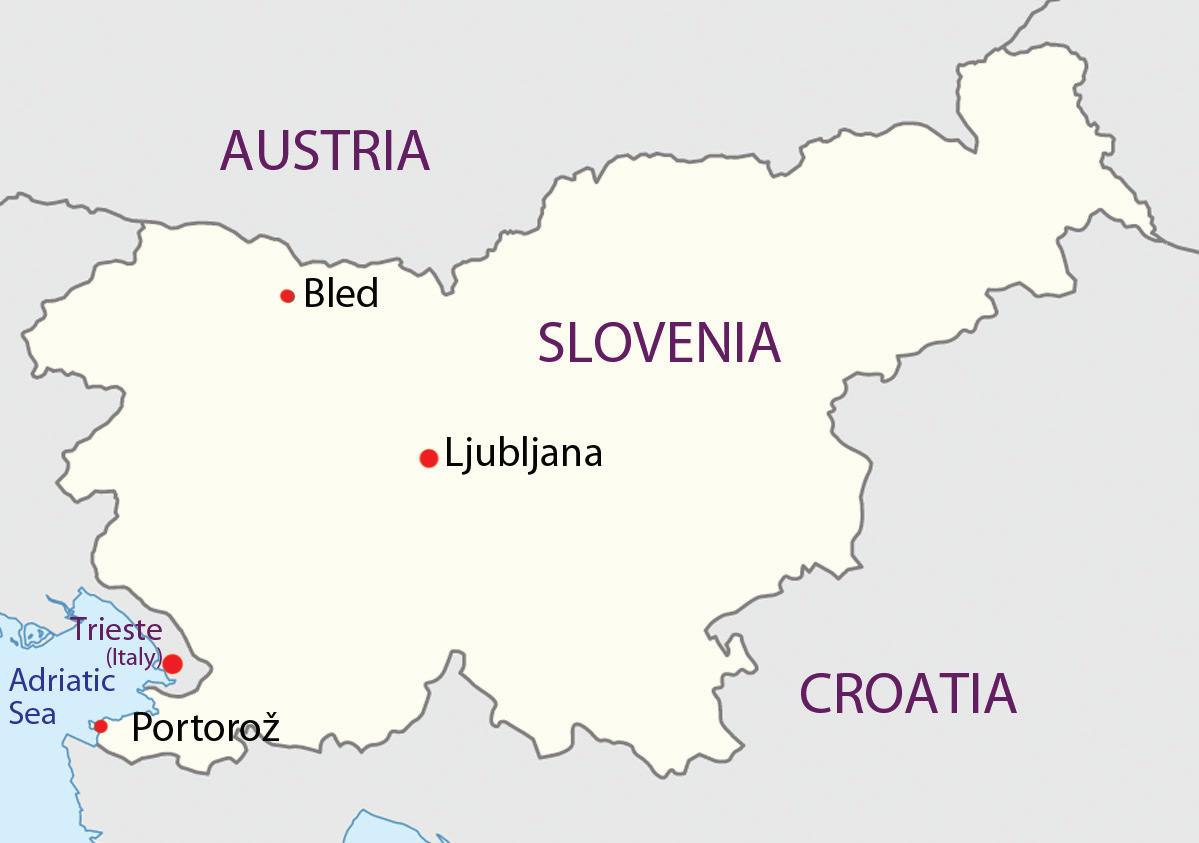
When Steiner was visiting these Slovene places, he must have felt the presence of the Slovene ethnic spirit as he was surrounded by the sound of Slovene language and the culture of Slovene people. Even though the quoted text is from the Wachsmuth book, there is no excuse not to make the due correction at the beginning of the 21st century.
The proper geopolitical and ethnic references not only add to accuracy but also give a better sense for the influences Steiner experienced in the spring and summer of 1911 when the seed of the Calendar of the Soul was planted (in the Portorož area) and while he was working on The Soul’s Probation (in the Bled and Celovec regions).
Marta Stemberger, MA
Brooklyn, NY, martamsmv@gmail.com
I photograph dark doors and archways of smoky white light Who will witness when we’re gone? Who will remember what the world was like?
(Was this what Miklos Radnoti saw in his cloudy sky the morning—or was it evening?—the Gestapo came for him?)
The tiny birds still chirp but their throats sound tired
Our cars stand mute and dumb in their alloted slots— a gray pigeon sits on the wire then flies away. These wires from Santa Fe to Los Alamos to Oak Ridge to Zurich to Tehran to the Pole to Mars take my breath away.
I slowly make my way inside to my room again where from the east window blood shadows have fallen on the floor. How did we make it here—through wars?
This is the last morning though our bodies may be here tomorrow.
Oh Isis Mother your body broken scattered on the sky lend me please your eyes!
Oh Isis Sophia is this blood fallen on the floor the blood of your heart still in love with us?
~elaine maria upton, Santa Fe , NM
winter issue 2011 • 9
Being Human in the 21st Century: Towards New Thinking
A Camphill Sponsored Symposium at Camphill Village Kimberton Hills April 26-29, 2011

What can we bring to the table when faced with the huge challenges 21st century life on earth present? Camphill recently celebrated its 50th anniversary in North America. A symposium, held in April in Camphill Village Kimberton Hills, incorporated short presentations from a range of speakers, conversation, and potent artistic activity. Camphills integrate three primary fields—disabilities, social renewal, and agriculture—but for this symposium the engaging question was how we need to understand and to be human in the 21st century.
Richard Neal introduced the symposium by noting three soul qualities that Rudolf Steiner said would be developing at this time: soul unease if there was suffering anywhere, the possibility to see the hidden divine in every human being, and developing capacities to reach spirit through thinking. And he reminded us that if we are not aware and working on developing these qualities, their shadow sides would challenge our humanity. Steven Usher urged us to recognize that we are still becoming human—not yet finished— and suggested ways to find our true humanity.
Three presenters, philosophers and social scientists, have had their lives changed and thinking deepened by relationships with family members with disabilities. Eva Kittay ’s quest is to realign philosophy with the refined, subtle insights emanating from experiences of the heart. She challenges academic philosophers to come to know people whom they might categorize as “subhuman” in order to more fully grasp what it is to be human. Sophia Wong seeks as a philosopher to discover what our core values are and whether we are structuring our society to reflect
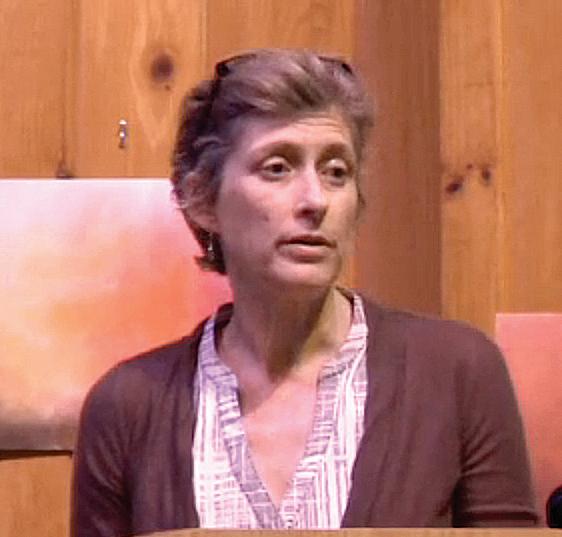
them. If not, what would be new structures? She suggests our duties of justice to citizens with cognitive disabilities. Through the image of a “time capsule,” she brought an appreciation of silence and presence. Can we acknowledge to the inhabitants of the 22nd century that we “did as well as we could with what we knew”?

Shelley Burtt asked us to consider that we need our society to be fully inclusive—even before birth—of people with so-called disabilities. She asked us to challenge our ideas about what is “normal,” to develop a reluctance to “pathologize,” and to foster openness to human experience different from our own, all while making social, economic and political changes to enable care for those who need it and for their caregivers. She encouraged a culture of acceptance that can help us learn important lessons from those we sometimes now dismiss.
Judith Snow, herself completely dependent on caregivers, is a brilliant advocate for people whose needs are atypical. She urged us to choreograph our lives and tell and listen to the many stories we have. She said that what Camphill has to offer needs to be widely shared, and she acknowledged that the Christian metaphor gives her, personally, huge and important resources.
Eugene Schwartz asked us to recognize the challenges of this time. There is both the issue of good and evil, and the incarnation of many souls who have come to face these important challenges. Many of them may feel out of place (and perhaps mentally ill) because of incarnating out of their own time sequence, and many have helped develop the situation (and technologies) as they were coming to earth.
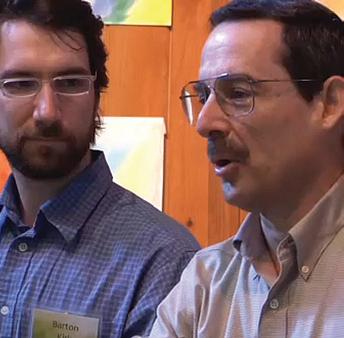
Environmentalist Barton Kirk (SEEDS) and activist businessman and community organizer Tom Sterns
10 • being human
Camphill Village Kimberton Hills, site of the conference.
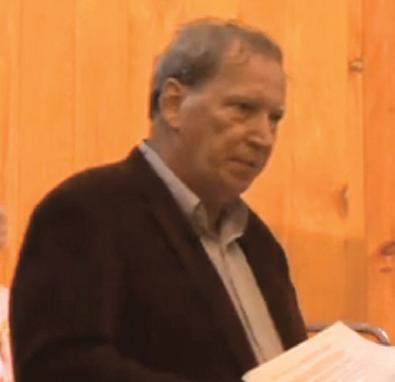
Opening segments of the conference were (from the top) Richard Neal of Camphill Association of North America; Shelley Burtt of Camphill Foundation, and Coleman Lyles of Camphill Communities California
(High Mowing Seeds) brought perspectives on the essential cooperative human, social, and environmental changes we need now and can be inspired by. Their experiences as initiators of change—one in the inner city of Pittsburg, and the other in rural Vermont—gave examples both of the strength individuals need and the power of cooperative community. Their work in highlighting environmental needs and issues resonated with work being done in Camphill. Both stressed “starting local” and encouraging youth involvement.
Dan McKanan brought forward the history of challenges to dignity in our civilization: concentrated power, unequal progress, and ecological collapse. He spoke of how the Camphill impulse has worked to address these through sharing power, working to transcend categories, and placing ourselves in nature rather than in opposition to it. He encouraged us to follow through on commitments to diversity, social renewal, and a spirit-imbued relationship with nature.
The thoughts swirling throughout the conference were warmed by the atmosphere of Camphill Kimberton Hills and deepened through the arts, as small groups of participants, including the presenters, became painters, poets, speakers, eurythmists, musicians, and, yes, clowns. What was developed during the Symposium? We could recognize that we have been “born to face” our challenges and it enhanced our longing to give this time on earth its significance. It gave us experiences that would continue to add insight: the warm and transforming power of community, active endeavors to create enlightening human experiences through the arts, and a living fabric woven by diverse human experiences and thought.
From the final plenum session
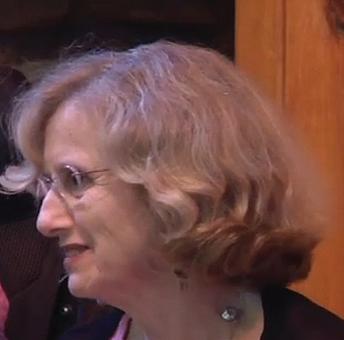
“I think we can rest assured that in the stream of time what we have done here will make a difference, the thought that we have thought, the process that we have been through.” Coleman
Lyles
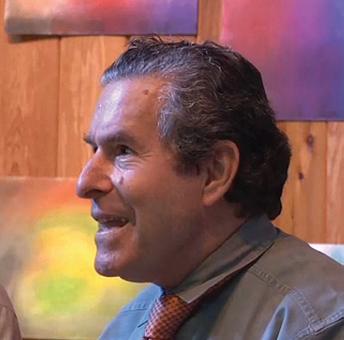

“Exploring the choreography of storytelling... The power of the will can be released through exploration of
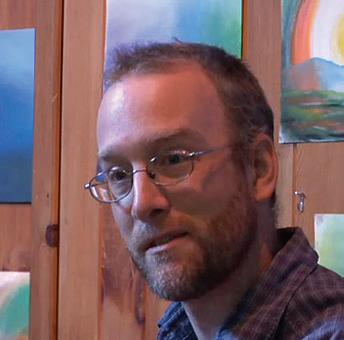
rhythm...so that the person has the power without being told what to do... I don’t think you know how resourceful you can be with each other.” Judith
Snow
“The practice of taking care of one another. If there is something to being human [one observation is] that we are the only great ape capable of shared care-giving... Finding new ways of caring for each other, caring for the Earth... The possibility of finding our full humanity...is in this practice of caring for one another in imaginative and innovative ways. That’s what I came to.” Eva Kittay
“I had prepared very carefully for the other remarks I made here. But I think because of taking the clowning workshop, I realized that sometimes it is interesting just to come and see what happens... So what came to me is a song that I love, and you can join in if you like. ‘What wondrous love is this, in my soul, in my soul?’”
Sophia Wong
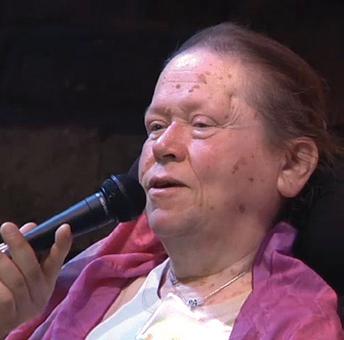
“Most intentional communities turn to compost by the time they are fifty or seventy-five years old... Those like Camphill that don’t pull together and tell their stories... When the Shakers were about fifty years old, they started listening to their young people in a new way. Spirit messengers began coming to the young people... and that generate new life and new vitality... Karl Koenig said that he was trying to preserve a kernel of that true European spirit that was so buffeted by fascism and by war. And you’ve done that. And now it might be time to go to the places that have been asking, how can the true American spirit be preserved after sloughing off empire, the oil economy, all the things that have dampened down the true mission of America.” Dan
McKanan

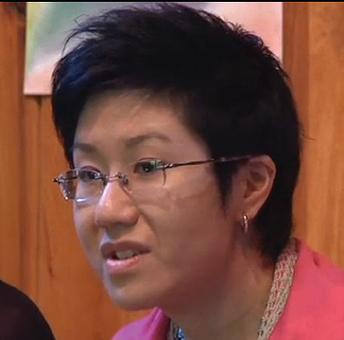
“Understanding that what has been so successful about the Camphill community here is the interdependency, the acceptance, I guess the flow that occurs between acknowledging the need, and the sharing that occurs across [so many levels]... On a human level here
winter issue 2011 • 11
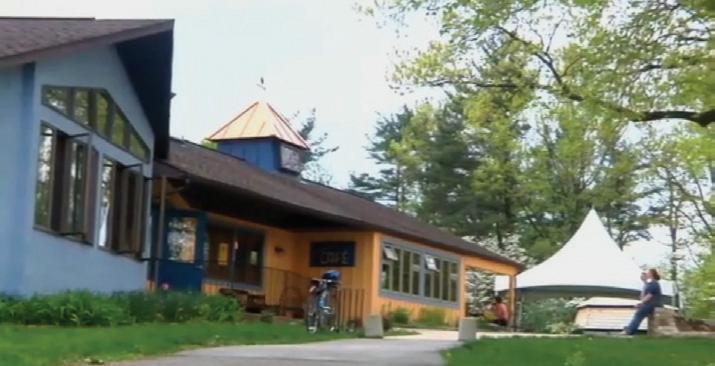
Camphill Café: organic, local, and delicious!
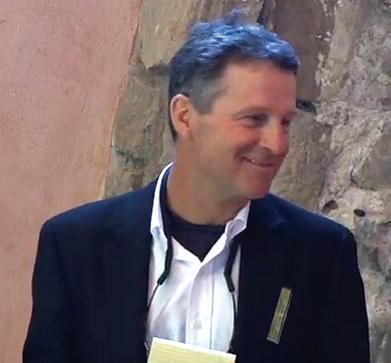
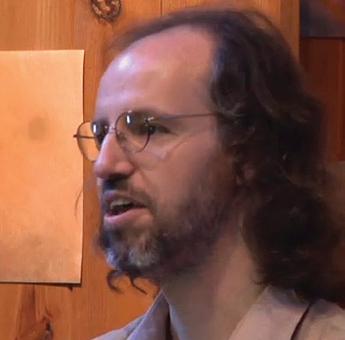
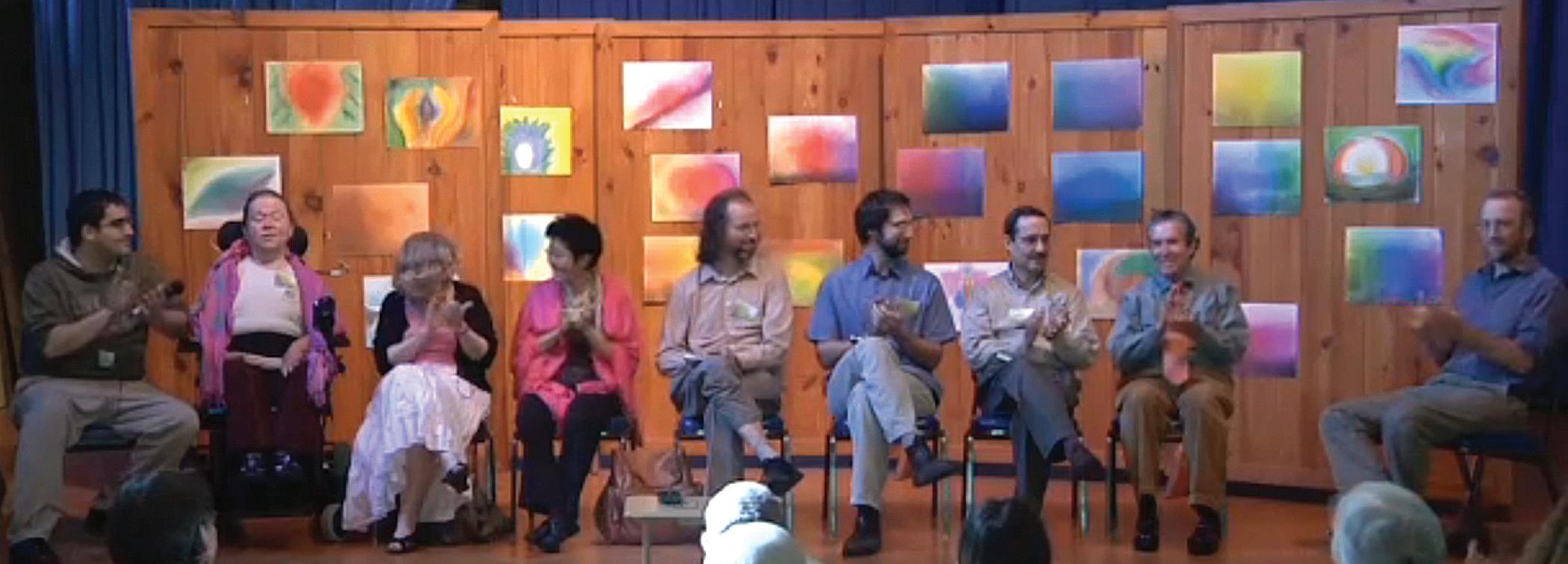
Among the speakers (from top): Dan McKanan, Judith Snow, Sophia Wong, Eugene Schwartz, Eva Kittay, Tom Stearns, Barton Kirk (l) and Steve Usher (r).
there has been such great success sharing that interdependency. What perhaps Dan was suggesting was moving that to a broader community level.” Barton Kirk
“I’ve had many remarkable conversations and heard many remarkable stories... Judith told me, you must share this... these three stories” of encounters of human beings in despair with the etheric Christ. Steve Usher
“I understand that Rudolf Steiner said that after 72 years... an organization, a corporation, like a human being, dies in a certain way... There is something that changes profoundly... every new friendship, every new experience we have after 72 is already moving into a new lifetime.” Eugene
 Schwartz
“Our biggest export is inspiration... Stories need to be told because the inspiration then leads to action. If we know that there is something wrong but we aren’t hearing stories about bringing a solution to that, at least an inklin of hope, then the inspiration that leads to action is a lot harder to manifest... Camphill is a seed... Be that seed that makes 10,000, 50,000, 100,000 more of yourself. Don’t be so quiet.” Tom Stearns
Comments on the Symposium
Ruth Tchannan: “It is the individual, the human being, which shone through in every contribution... On a personal note: ‘I have felt Karl Koenig closer than ever. I feel he is knocking on the hearts and doors of all of us to be open minded and ready to face new tasks coming towards us.’”
Dan McKanan: “It was exciting to see thoughtful, intelligent people encountering Camphill for the first time, and also exciting to be in dialogue with people who have decades of experience with Camphill. I am grateful for this model of the right way to engage the whole person
in a conference.”
Steven Usher: “The diversity of speakers and moral tenor of all the presentations moved me deeply. The audience was remarkably receptive and in tune with the theme.”
Professor P. Cushing: “I thought what you crafted in this gathering was brave and thoughtful.”
Sophia Wong: “Meeting the residents of Camphill
Kimberton Hills, I noticed people’s personalities and was able to interact with everyone without stumbling over the presence (or lack) of developmental disabilities. This is a rare and valuable experience that I wish urban residents could experience somehow.”
Main Presenters:
Eva Kittay, PhD, Distinguished Professor of Philosophy at Stony Brook/SUNY
Barton Kirk, Ecological Engineer (M.Sc University of Vermont)
Dan McKanan, PhD, Associate Senior Lecturer, Harvard Divinity School
Eugene Schwartz, lecturer and international educational consultant
Judith Snow, MA, social innovator and advocate
Thomas Stearns, President, High Mowing Organic Seeds, Hardwick, VT
Stephen Usher, PhD, economist, lecturer
Sophia Wong, PhD, Associate Professor of Philosophy, Long Island University
Artists: Veronika Roemer, Felicity Jeans, Angie Foster, Laura Geilen. Peter Bruckner, Steven Steen, and Linden Sturgis
12 • being human
Thanks to Diedra Heitzman of Camphill Village Kimberton Hills for her work in preparing this report.
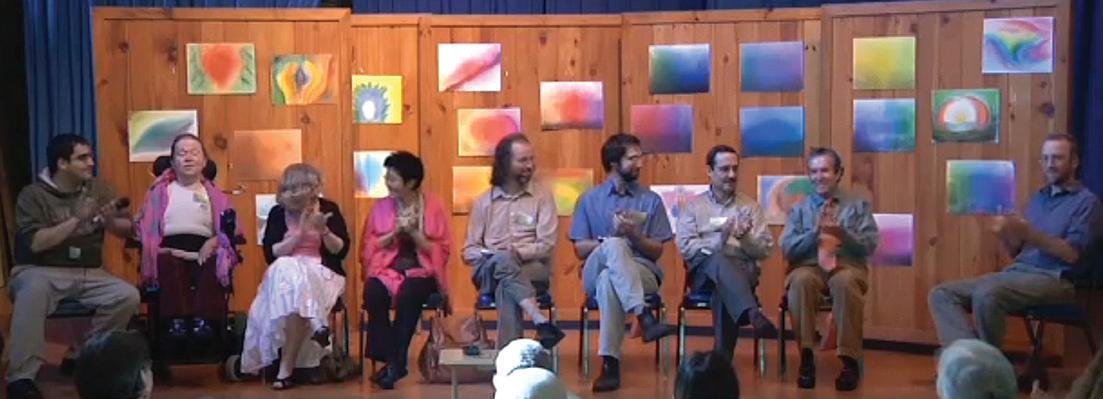
The final panel joins the audience in applauding the conference...
The Destiny of Humanity with Machines
Andrew Linnell
While I was a foundation year student at Emerson College in 1978, my employer, IBM, from whom I had taken a sabbatical leave, requested that I return to restore a simulation model that my colleague at work had accidentally deleted. This awakened my classmates to my career choice. Upon my return to Emerson, I often faced the question, “Why are you helping Ahriman?” or “Shouldn’t you change professions now to something more healthy and becoming for an anthroposophist?” Examples of those who had left high tech jobs for Waldorf teaching or biodynamic farming positions were offered as heroes. In talking about this with my advisor at Emerson, John Davy, he urged me to stay within the field of computers and technology, to go through the skin of the dragon to facilitate change from within.
Over the next twenty years, my sense of the relationship that many anthroposophists had to technology remained similar: a near-contempt for technology because it was seen as the bearer of negative changes to social life and to the soul. Many proclaimed it de-humanizing. Many treated technology as a poison. Many refused to own a computer or use email. Many lecturers, when discussing technology, often included the caveat “but we shouldn’t fight against it,” while its effects were roundly criticized.
In the past three years, I sense a change. Perhaps it is coming from a new generation of anthroposophists who are “digital natives”1 and don’t fear computer technology like prior generations. Today most major branches have web sites and the vast majority of anthroposophists receive their branch news through email. We are shaking off the neo-Amish label.
Despite the growing use and acceptance of computer technology, the question of the relationship of technology with anthroposophy remains. When we think of a future worthy of a human being, do we conceive a future where we are deeply enmeshed with machines? I suspect not.
1 http://www.marcprensky.com/writing/prensky%20-%20digital%20natives,%20digital%20 immigrants%20-%20part1.pdf
I suspect that the picture we form of our future is one free of machinery and its dehumanizing effects. When we ask, “What are the New Mysteries?” do we envision new mysteries comparable to those of Freemasonry that once lead to the penetration and spiritualization of stone with Truth, Beauty, and Strength? Rudolf Steiner claimed that the “shell” of Freemasonry will be filled with new mysteries for the penetration and spiritualization of sub-Nature just as the prior Masonic mysteries did this for stone.
Is it not a bit selfish to consider only our own future? What about the future of those who will be human on Jupiter? The current angels cared for us during the involution period of Old Moon and now, in the involution period of Earth, those who will be human on Jupiter are being pushed up into our will. Our future cannot be free of our task to care for those preparing to enter the human stage. Any picture of the future that shirks our responsibility and destiny with machines and technology, it seems to me, is surely a picture inspired by Lucifer.
A destiny enmeshed with machines and technology? Am I serious? Did Rudolf Steiner suggest this? Yes he did, as difficult as that is to hear and fathom. Especially in the West, the role in the destiny of humanity is for a greater and greater integration with machines. Although this destiny “cannot be fought against,” what matters is how this destiny manifests. It can be (Steiner says “should be”) decided by spiritual scientists. Anthroposophists cannot afford, in terms of our concern for the future, not to be deeply involved as researchers, inventors, and users of cutting-edge technology, especially where it interfaces with the human being, in order to ensure a healthy future. Today, it appears, no spiritual scientists are involved in fields such as nanotechnology, computer-human interfaces, and bio-sciences—meaning that the contributions from these fields for the future are likely to be heavily influenced by Ahriman.
It has been the destiny of the fifth post-atlantean age to deal with matter, to spiritualize stone. Masonry took on that task during the fourth post-atlantean age and even

winter issue 2011 • 13
prepared during earlier post-atlantean ages while Freemasonry carried out the esoteric side of this mission. A crowning of this stream came with the Knights Templar and their selfless construction across Europe of Gothic cathedrals adorned with high-tech stained glass windows. Just before the dawning of the present consciousness soul age, the Knights Templar met a brutal end; but their deed for our age was done (and their esoteric stream may have flowed into the Scottish rites of Freemasonry).
Before the end of the Knights Templar, another esoteric Western stream had begun, Rosicrucianism. In 1904, as Albert Einstein was busy writing his three landmark papers that were published in 1905 bringing about what has been called the Golden Age of Physics, Rudolf Steiner was countering this with his lectures on the Rosicrucian perspective of the atom, electricity, and thoughts.
Like the Army Corps of Engineers warning towns downstream of an impending flood, Rudolf Steiner warned of a destiny of humanity to be joined to machinery as a preparation for what would follow our present Earth-phase, during what spiritual science calls the Jupiter-phase. In this next phase, life as we know it now will no longer exist. The remains of matter will have dissipated into the cosmos while the plants and the animals will have been reabsorbed into mankind. A new form of existence will come about with our participation, one where humanity’s existence will be roughly a half-step up while a new group of beings will have their existence at a half-step below—that is, in what today could be called an existence in sub-nature. Present Earth-Humans will be to Jupiter-Humans what the Angels are to us today.
Rudolf Steiner warned that the flood of destiny was coming; it was not a matter of what, rather, it was (and is) a matter of how and to whom these things will be entrusted. If we fail to bring spiritual science to technology, then humanity will be dragged down too far. Steiner did not look upon this a poison to be avoided; rather as a challenge to our strength of humanity. We will not succeed in our anthroposophical mission if we merely watch and cannot guide the research and selfless motivations for forthcoming products. Anthroposophy must engage in the penetration of technology and sub-nature as did the Masons with stone. Into sub-nature we must bring wisdom, beauty, and strength.
Andrew Linnell , the president of the Anthroposophical Society in Greater Boston, is a 39-year veteran of the field of computers and related technologes and is currently employed by EMC in Hopkinton, MA.
Editor’s Note: Perspectives on “The Singularity”
Awareness of an evolutionary challenge from machines goes back at least to Samuel Butler’s Erewhon , in 1872 (hard on the heels of Darwin’s The Origin of Species): Either...a great deal of action that has been called purely mechanical and unconscious must be admitted to contain more elements of consciousness than has been allowed hitherto...— Or (assuming the theory of evolution but at the same time denying the consciousness of vegetable and crystalline action) the race of man has descended from things which had no consciousness at all. In this case there is no a priori improbability in the descent of conscious (and more than conscious) machines from those which now exist... The present machines are to the future as the early Saurians to man.”
At truthforce.info in 2005 Nicanor Perlas wrote of “The Second Genesis”:
Technological singularity ... promises to alter the form, substance, and direction of human nature and civilization forever. [Nanotech, biotech, info tech, and cognitive technology] have the capability of creating impacts even more profound than ... the industrial revolution. All claim to advance the quality of human existence and consider dangerous side effects to be manageable.... But their convergence towards the creation of machinehuman chimera (the cyborg) and super intelligent machines (SIMs) is starting to raise alarm bells.... From the perspective and time scale of human evolution, failing to address the challenge of technological singularity will make all the challenges we are currently facing pale in comparison.
And in his new book The Event in Science, History, Art and Philosophy, Yeshayahu Ben-Aharon writes:
Now the old humanism, as truthful and well intentioned as it is, must not stand still. It must greatly intensify its understanding of the human if it is going to be able to “compete” with the above described developments in robotics, genetics, and the latter-day utopias of a scientific-technological “singularity,” in which the human will be wholly merged with AI and in which nanotechnological genetics and medicine will have extended human biological life to immortality. Let humanists have no illusions about this fact: the human is about to be wholly virtualized, if not in an ecstatic apocalyptic event, then in due course. Therefore, the question must be: Can the human be virtualized in an essentially humanistic manner?

14 • being human
Anthroposophy, Complexity, and the Occupy Wall Street Movement
John Miller
Anthroposophy offers a lens through which to view ourselves and our world. So does modern complexity theory (the more comprehensive field of which chaos theory is a part). Thus, both should be able to cast some light on the Occupy Wall Street phenomenon. I believe they cast much the same light (and work well together to do so), but my preference is to express this insight in the language of complexity. The audience that can be reached through a new, reputable science is much wider and more diverse than that which would give much credence to a rather arcane spiritual philosophy. I believe anthroposophists could benefit from learning about complexity.
The Occupy Wall Street is extraordinarily significant. It also presents a useful case study through which to compare these two complementary lenses. Complexity, like imaginative thinking, looks at dynamic processes first and foremost, regarding the static “things” upon which most science centers as snapshots of processes which are at best useful for simplified conceptualization—and at worst deceptive and illusory. Complexity shares this attitude with other modern scientific streams, such as relativity and quantum theories, but complexity has the advantage of undisputed applicability within the Newtonian framework, whereas quantum deals with phenomena on the very smallest scales, and relativity on the very largest. Modern disciplines such as ecology and sociology are, in essence, complexity sciences, but complexity extends far beyond such disciplines. It finds complex adaptive systems (CAS’s) within all levels of life and all aspects of human interaction, and it tells us that systems as diverse as the weather, the stock market, ant colonies, and families have much in common, and that much of their behavior can be described by a common set of terms and “rules.” Political systems are also CAS’s, and a systemic analysis can shed much light on their behavior. Even more light can be shed by adding an anthroposophical viewpoint.
Correspondences between the ideas of complexity and those of anthroposophy

In many ways, complexity theory simply states in scientific form what a wide variety of spiritual traditions have been saying for millennia. However, many complexity theorists ignore or even scorn a spiritual interpretation of complexity, just as most scientists who work with quantum theory steer clear of its philosophical implications. With regard to quantum, the math works just fine, and that is all that matters. With regard to complexity, most of its applications involve computer modeling, beyond which one needs not go. Your local weather forecaster, who uses (and may even play with) these models, probably never gives a thought to the spiritual aspects of complexity. Nonetheless, a reputable minority of complexity theorists do explore its metaphysical implications, thereby providing a metaphysics firmly situated within a new scientific framework.
The concept of complexity was, I believe, alluded to by Steiner. Addressing the teachers of the first Waldorf school, he spoke of the need to develop a new type of thinking. He used the analogy of gravity to explain. In the old ways of looking at bodies in space, some sort of center was always envisaged. In early times the earth was the center, later the sun. But now we know that our sun is just one of countless stars, that the universe has no center (or it is everywhere), and that the gravitational effects of many bodies act upon our earth, albeit most ever so slightly. Steiner challenged us to think in a non-linear way. Rather than A causing B, he said (e.g. the earth pulling the moon in its orbit), B is presumably involved in an endless creative dance with C, D, and X, Y, Z as well as A. Learning to think in these terms requires us to become far more fluid in our conceptualizing.
Such ideas were in the air when Steiner spoke. Henri
winter issue 2011 • 15
Poincaré, in the late 1800’s, had tried to solve the threebody problem. Astronomers could use Newton’s laws of gravity to closely calculate the earth’s orbit around the sun just by knowing “the position, speed, and mass of the earth and sun” (Peat, 119). But the moon also tugs on the earth a bit, and Newton’s equations apply only to two bodies. Using perturbation theory, astronomers applied small corrections to take the moon’s influence into account. For all practical purposes, this worked extremely well, but the process was mathematically untidy. In attempting to find an elegant solution for three bodies, Poincaré showed that in some cases even tiny perturbations could feed back, “...amplifying until the whole system becomes unstable. In this way, Poincaré pointed out that within one of the most basic of all certainties—that the sun will rise each morning—was hidden the potentiality for instability, surprise, uncertainty, even chaos.” (Peat, 122) The seeds of modern chaos theory were sown, though they would take over half a century to sprout and grow. Even now, chaos/complexity is a very young science. One might say it is a science for the consciousness soul era.
Poincaré and Steiner had another common interest, non-Euclidean geometry. Steiner’s ideas on projective geometry have much to do with the relationship between point and periphery. In Steiner’s time, as now, the idea that far distant constellations could have any appreciable influence on the earth and its inhabitants was considered superstitious. Yet as in biodynamics Steiner’s worldview —like that of Hermes Trismegistus: “As above, so below”—saw the influence of macrocosm upon microcosm as critically important. Might not “perturbations” from the periphery, under certain conditions or alignments, exert influences, even in ways other than gravitational, rife with “the potentiality for instability, surprise, uncertainty, and even chaos”? Poincaré had shown that this was so for gravitational effects. Steiner’s use of a gravitational analogy in his invocation of a new way of thinking may be an acknowledgment of Poincaré’s contribution, which Steiner extended beyond the merely physical.
This is important because the relationship of point and periphery corresponds to that between part and whole. And the relationship of part and whole, as in Waldorf education, is a basic and recurrent theme in Steiner’s thought. In this, Steiner draws upon a wide variety of sources, including Novalis, Goethe, and Nicholas of Cusa. The latter held that God, who as the neo-Platonic “One” and “All” can be considered the ultimate macrocosm, “contains all things ‘enfolded’ (complicatio), and is
also their source or ‘unfolding’ (explicatio)” (Combs, 4-5).
More recently, physicist David Bohm described an implicate and explicate order in terms reminiscent of Cusa, though he was unaware of Cusa’s thinking when he was developing his own concepts and the physics and mathematics to support them.
Unlike the world of matter and energy, but like “God” or “spirit,” Bohm’s implicate order (“implicate” meaning “enfolded,” and corresponding to Cusa’s complicatio) is metaphysical. As a realm of “active information,” however, it both generates and “contains” everything within the explicate order. (The opposite is not the case, and the implicate order—the physical world—only manifests a fraction of its full potential at any given time within the explicate. One is reminded here of the term pleroma , or “fullness,” by which the gnostics denoted the spiritual realm, as a fitting descriptor of the implicate order.) Still, the two orders, with perhaps endless gradations in between, are not separate and distinct, but merely two inherent sides of the same coin, and the implicate not only informs the explicate but is also constantly influenced by feedback from the explicate.
Bohm was also one of the early influences upon modern chaos and complexity theory:
[Bohm] said the world view of modern physics is now a systems view. Everything is connected to everything else. We are not sure how this connectedness works, but there is a certainty that there is “separation without separateness.” This is the way our universe is constructed. ...He said, “Yourself is actually the whole of mankind. ... The entire past is enfolded within each one of us in a very subtle way. If you reach deeply into yourself, you are reaching into the very essence of mankind. When you do this, you will be led into the generating depth of consciousness that has the whole of mankind enfolded in it. The individual’s ability to be sensitive to that becomes the key to the change of mankind. We are all connected. If this could be taught, and if people could understand it, we would have a different consciousness.” (Jaworski, 79-81)
Compare Bohm’s description of the implicate order to Goethe’s description of the ceaselessly dynamic and endlessly generative realm of the Mothers in Faust :
Mephistopheles.
Descend, then! I might also tell you: Soar!
It’s all the same. Escape from the Existent To phantoms’ unbound realms far distant!
Delight in what long since exists no more!
16 • being human
Anthroposophy, Complexity, and the Occupy Wall Street Movement
Like filmy clouds the phantoms glide along. Brandish the key, hold off the shadowy throng.
Faust [inspired].
Good! Gripping it, I feel new strength arise, My breast expands. On, to the great emprise.
Mephistopheles.
When you at last a glowing tripod see, Then in the deepest of all realms you’ll be. You’ll see the Mothers in the tripod’s glow, Some of them sitting, others stand and go, As it may chance. Formation, transformation, Eternal Mind’s eternal re-creation.
Images of all creatures hover free, They will not see you, only wraiths they see. So, then, take courage, for the danger’s great. Go to that tripod, do not hesitate,
And touch it with the key! (Goethe, trans. Priest)
Faust descends to the realm of the Mothers and encounters Helen of Troy, in a manner reminiscent of Jaworsky’s paraphrase of Bohm: “Yourself is actually the whole of mankind . . . The entire past is enfolded within each one of us in a very subtle way. If you reach deeply into yourself, you are reaching into the very essence of mankind. When you do this, you will be led into the generating depth of consciousness that has the whole of mankind enfolded in it.”
Here is the mystery of point and periphery, of part and whole. We are reminded both of William Blake’s “To see a World in a Grain of Sand” and the alchemical maxim, “As above, so below,” when we read:
As the physicist David Bohm expressed it, the entirety of the sky is enfolded in every element. (Bohm, 1980)
Or, as philosopher of science Henri Bortoft puts it, “... here is everywhere and everywhere is here. The night sky is a ‘space’ which is one whole, enfolded in an infinite number of points and yet including all within itself.” (Bortoft 1996, p.5, quoted in Senge, 4-5)
The work of Bortoft to which Senge refers is The Wholeness of Nature; Goethe’s Way toward a Science of Conscious Participation in Nature (Lindisfarne Books, 1996)
Bortoft is both an anthroposophist and a physicist. He was a student of Bohm’s, to whose memory he dedicates this book (which I most highly recommend). Bortoft speaks of an intuitive, holistic consciousness, different in quality from the intellectual, analytic consciousness which is the normal mode of our waking mind. Is not this consciousness the key which allows Faust to descend
to the realm of the Mothers—and the imaginative thinking which is cultivated through Goethean observation?
And is not the realm of the Mothers also described by Peat’s characterization of Poincaré’s discovery of the “hidden...potentiality for instability, surprise, uncertainty, and even chaos” amidst the seemingly concrete and linear”? Note also that Mephistopheles says, “Descend, then! I might also tell you: Soar! / It’s all the same. Escape from the Existent / To phantoms’ unbound realms far distant!” At the end of Faust, when Faust ascends to spirit worlds, Goethe makes it clear that “the eternal Feminine leads us upward.” All of this points to the metaphysical/spiritual/implicate as the creative and dynamic ground of physical manifestation.
But, though the source of creation can be seen through a neo-Platonic lens (as with Plotinus and Cusa), I believe that Goethe, Steiner, and Bohm all share a more Aristotelian slant. The training which Goethe prescribes for changing one’s consciousness is through immersion in sense phenomena. A verse from Steiner (which we said daily in Dr. Herbert Koepf’s biodynamic training at Emerson College) contains the words, “Hold to the ancient maxim: No spirit without matter, no matter without spirit.” And recall that Bohm’s explicate order feeds back upon the implicate, informing its eternal dance of creation. This is the ancient wisdom—and the new science—of point and periphery, of part and whole.
I believe that the insights of the world’s great spiritual streams, including anthroposophy, and those of complexity theory are intrinsically overlapping and interwoven. I believe that both paths lead to the new way of thinking which Steiner described. Though complexity theory may seem pale and dry in comparison to Steiner’s evocative and far flung anthroposophical teachings, it provides us with a framework and language which is modern, scientific, and universal. In referring to anthroposophy as “spiritual science,” I believe that Steiner was advocating just such a framework. By learning to couch our ideas— whether inspired by anthroposophy or some other spiritual tradition—in the concepts and language of complexity, we can build significantly upon the foundation which Goethe, Steiner, and others have laid.
winter issue 2011 • 17
Anthroposophy, Complexity, and the Occupy Wall Street Movement
Some basic understandings of complexity theory
Steiner speaks of the process of infolding or involution, whereby what is outer becomes inner. This is known as gastrulation, and is part of the process of embryonic development.1

When we develop as selves or egos—when we separate from the All and become an “I”—we are undergoing this process. Involution is an archetypal process, requisite to the separation of self from other. Only when the self is created can there even be an other. Yet, when we focus too exclusively on the self, we forget that no self can arise without a surrounding context to give it birth. Look at the illustration above and note how what was once outer and peripheral is becoming inner. It is also worth remembering that no self, at least no living self or complex adaptive system (CAS), can exist without continual inflows and corresponding outflows of matter, energy, and information from and to the outer environment. A point needs a periphery. A self needs an All.
So just what is a CAS? First of all, it is complex rather than merely complicated. A machine may be complicated. But a car can’t heal itself after a wreck, nor can a Volkswagen evolve into a Porsche. Of course, there is currently much debate as to whether computers can truly learn. Certainly they can be programmed to reprogram themselves, in response to inputs or experience. This certainly mimics learning as we know it extraordinarily well, but even such highly sophisticated computers must be built and programmed—they don’t just grow. CAS’s, by contrast, arise, adapt, evolve, and learn.
So complexity, as opposed to mere complication, allows for something entirely new to emerge. It is the precondition, one might say, to true creativity. A hammerhead shark is still a shark, but it is a distinctly different kind of one. The key to complexity (as Steiner foresaw) is in the quality of relationship. In a clock (a mechanical system) the components relate to one another in a certain, purposeful way (not the clock’s purpose, but that of the
1 http://sophia.smith.edu/~mbarresi/lab/biowebconferences.html
clock’s designer). If those relationships change (perhaps because a part breaks or wears out), the whole system may suffer or even cease functioning.
A prokaryotic or eucaryotic cell certainly has a lot of parts, and these parts also have (sometimes many different) specific functions, but the cell’s operation is more of a dance than a predetermined, linear progression. One of the great mysteries (as Dr. Koepf used to stress, and it is still true today) of cellular activity is its exquisite timing. How do the parts know how to do this now and that then, and how much, and in what manner? A machine is like a repeating decimal—it does the same thing over and over. A CAS is like the number pi— it goes on and on, but it will never exactly repeat itself. Moreover, though a machine will react to changes in the environment (your car is harder to start in the cold), a CAS will respond to it (your body will shiver to make you warmer). Of course, the use of feedback loops, as in a furnace connected to a thermostat, can make a machine responsive, which is why our cars are “smarter” than they once were. But feedback loops are the stuff of complexity theory, and understanding complexity allows us to build mechanical systems that mimic self-organizing CAS’s.2
The parts of a cell (a self-organizing CAS) relate to one another, and the cell’s processes self-regulate for the optimal wellbeing of the cell as a whole. A cell’s parts relate to one another through interactions and various means (structural, chemical, electrical, etc.) of communication. These signals contribute to the “intelligence” of the whole, and the whole in turn influences the functioning of the various parts. It may do so by means of what in complexity jargon is called an emergent property. For example, “mind” may be said to be an emergent property shared by numerous species, while self aware, rational mind may be an emergent property peculiar to our species. But even bacteria exhibit intelligence. They can “learn” to avoid toxic chemicals which they at first took for food, and they can evolve very quickly, as many have done in becoming immune to the antibiotics
2 http://www.bevpease.force9.co.uk/p.Eukaryotes.htm
18 • being human
John Miller speaks at the conference “Redeeming the Realm of Rights” sponsored by the Section for the Social Sciences in July 2011, in Harlemville, NY.
we’ve used so freely for the past half century.
Not only does a cell exhibit relationship within its boundaries, it also relates without, to the surrounding environment. One can see this clearly in the process of evolution. Environmental changes require small and large adjustments by individual species. But, as species change and either flourish or decline, the character of the whole ecosystem changes too. So there is a continual dialogue from whole to part and from part to whole.
This dialogue is carried out by means of a membrane, such as that which surrounds a cell, or your skin, or an ethnic, religious, or other social group. Membranes regulate inflows and outflows. Ideally, they let in (the right amounts of) nutrients and keep out toxins. They keep in what the cell needs and excrete its wastes. When we feel that someone is in “our space,” we are experiencing our psychic membranes. The proper functioning of membranes is incredibly important to the wellbeing of CAS’s.
So far we have dwelt on biological examples of CAS’s, but human social systems are CAS’s too. In studying these, we become aware of another quality inherent to CAS’s. If you think of your family, you may think first of the various individuals. But then you will pass on to the qualities of these individuals (which change over time through age and experience) and the qualities of relationships between and amongst individuals (which also change, as relationships form and deepen, grow closer or farther apart). The full complexity of these relationship is impossible to fully fathom.
Contrast this with a group that forms at a concert or in a park on a nice, sunny day. Chances are, most of the people you encounter will be strangers. The relationships amongst them are mostly very weak. This is not a true CAS, though, as in the show Survivor, it will become so if this group of people remains together over time. So a CAS is qualitatively different from a chance collection of fragments—though CAS’s may also devolve into their component parts, as can happen in divorce, or when a friendship fades or breaks off.
The quality of relationship within a CAS influences its wellbeing. Optimal wellbeing is usually characterized by a high degree of diversity and by healthy relationships amongst parts or members. In a healthy CAS, parts never act egotistically. Cancer may be seen as an example of a part acting egotistically, by replicating at the expense of the health of the whole. However, parts do act to maintain their own individual health. It is in your best interests to have all your organs functioning well.
Healthy relationships also require good avenues of communication, amongst parts and between parts and the whole. Healthy relationships and good communication enable systemic intelligence. All CAS’s have come to be because they have managed to adapt and persist over time. Though they may not be in optimal health at present, they still must have an inherent wisdom or archetypal structure, which can be called upon to bring them back to a state of optimal wellbeing.
Yet we must never make the mistake of thinking a system can stay in one ideal and healthy state forever. CAS’s are dynamic. If their processes come to a halt, they die. And if they cease to be responsive—to either internal or external factors—they risk damage and death. Optimal health for a CAS may be described as a state of dynamic equilibrium. A healthy heart speeds up when you exert yourself and slows down when you relax. Its beat is dependable, but never exactly the same. Lack of health in a system takes two basic forms. The first is sluggishness (in the heart, bradycardia), which may ultimately result in stasis. The second is over-activity (in the heart, tachycardia), leading to turbulence or chaos (in the heart, fibrillation). An EKG offers a picture of heart health. A healthy heartbeat has peaks and valleys, alternating in a lively and balanced rhythm. An EKG of ventricular fibrillation (heart attack) shows utter chaos and lack of rhythm. The flat line of death is utter stasis.
Yet, as we seek to keep CAS’s healthy and balanced, it’s important to note that the tendencies to stasis and chaos each have their roles. Keeping things stable is, in systems terminology, the role of negative feedback. Negative feedback curbs extremes, keeping things in a zone of optimal wellbeing. So, as noted, you shiver when you’re cold. You also sweat when you’re hot. You have your own personal climate control system. Keeping within an optimal zone (not too cold, not too hot) is a regulatory function that tend towards stasis (just right), but it is a necessary function.
Positive feedback is commonly known as the snowball effect or a vicious cycle. Things spiral out of control and dissolve into chaos. That’s what happened (and is still happening) with the recent financial meltdown. But positive feedback can also be good. Say you work hard and do something well. Then you get some encouragement. This leads you to work even harder and do even better, etc. In fact, positive feedback is what creates change in a system, allowing for adaptation and creativity. Without it, systems wouldn’t be able to respond to changing envi-
winter issue 2011 • 19
ronments, leading to death or extinction.
The ancient Indians recognized these three systemic states, associating their qualities or gunas with the Trimurti of Brahma (rajas) Vishnu (sattva), and Shiva (tamas). Without Brahma there would be no creation. Anything new requires rajas. New beings (the young) are full of rajas. But the bringer of life must be balanced by that of death and destruction, the tendency towards tamas. In order for a new phoenix to arise, the old one must first be consumed. In fact, in Parzival Wolfram states, “By the power of that stone [the Grail] the phoenix burns to ashes, but the ashes give him life again” (von Eschenbach, 251). Thus the Grail, which as a sort of cornucopia has a Brahma aspect, also has a Shiva nature, which is what predominates in the elderly as their forces grow sluggish and diminish. Finally, by its ability to preserve its guardians, staying the aging process, the Grail displays a Vishnu character. For it is by means of the sattva of Vishnu that the forces of rajas and tamas are able to harmoniously intermingle, so that beings and entities can coalesce and hang together while still staying flexible and avoiding sclerosis. Just so, in complexity theory, positive and negative feedback are seen as complementary and essential, the counterbalance between the two leading to the healthy balance of dynamic equilibrium.
One final essential complexity term is holon. Holons are complex systems in their own right, as well as being members of more encompassing systems. Thus, our body’s cells, tissues, organelles, organs, organ systems, and the body as a whole are all holons. As individuals, we are holons who belong to families and a variety of other social communities, as well as ecosystemic holons within our various local biomes—and ultimately within Gaia herself.
The word holon also suggests a particular relation between part and whole. A holograph differs from a common photograph with regard to what is contained in one part of the image. If you clip off a piece of a photograph—say one depicting a view of a mountain lake, with peaks and sky above—you’ll get only part of the picture (a patch of water or snow, a bit of cloud or sky). If you take a piece of a holograph—say one showing the same scene—you’ll see the entire scene, albeit smaller and fuzzier. This is to say, the whole is contained in each of the parts.
This is very much in line with Goethe’s characterization of the realm of the Mothers and with Bohm’s concept of the implicate order. Bohm, in fact, suggested the word holomovement to describe the implicate order, to denote a continually dynamic and creative state. The holon is
also implied in Steiner’s social ethic: “The healing social life is found, when, in the mirror of each human soul, the whole community finds its reflection, and when, in the community, the strength of each one is living” (though I believe “impulse” may be a better translational fit than “strength” in conveying the meaning of this verse).
Holons also tend to be hierarchical. Hierarchy seems to be a recurrent strategy in the way nature self-organizes. One can also find “flat” organizational structures in nature, as with the neural nets of simple animals such as sponges. In a sponge, all cells are pretty much the same and no cell or group of cells exerts leadership over the whole organism. In our human social organizations, flat leadership structures are often seen as better, as more fair, in that everyone is equal. And they can indeed work well, as happens among a small group of friends. However, once a social system becomes fairly complex, with numerous members and significant differentiation of roles, flat structures can become extremely cumbersome. If everyone needs to be involved in every decision, and there is only one decision-making body comprised of the whole community, things tend to become difficult. This is why Steiner advocated a “Republican, not Democratic” governance structure for Waldorf schools.
In complex organisms and organizations, hierarchy can be highly efficient. Higher animals have central nervous systems rather than neural nets. In these, some type of brain serves to collect information from all bodily sub-systems and to coordinate their activities for optimal wellbeing. If only things were so simple in human social systems! Here hierarchy does indeed have a tendency to be abused, as the forces of egotism inherent in human beings (as opposed to nature generally) can lead to those “in charge” making self serving decisions which actually hurt the common good. Ideally, we would strive for nonegotistical hierarchy in our social systems. However, high ideals are no guarantee of success.
Occupy Wall Street as a phenomenal holon within American (and global) society
Let us begin with Steiner’s idea of the threefold social order, with an economic, a cultural, and a rights sphere, each properly exemplifying—respectively—brotherhood, freedom, and equality. It would take a great deal of time to describe each of those realms in contemporary American society and to compare them with Steiner’s ideals. A moment’s reflection, however, will I believe lead most of
20 • being human
Anthroposophy, Complexity, and the Occupy Wall Street Movement
us to the conclusion that, of the three, our economic system is the most dysfunctional. Occupy Wall Street seems to be a reaction to our current economic paradigm, and a recognition that there lies our primary illness.
Steiner says that we should produce for the good of others and rely upon others for our own sustenance. This seems to be a call for utter (and utterly unrealistic) altruism. I will argue that, from a complex systems perspective, this is not the case. Think of yourself as producer and consumer. In each role you are part of a greater whole (in fact of many interwoven wholes). And, as is glaringly obvious by now (and as Steiner argued eighty-nine years ago), our economic whole is a global one.
Steiner called on us to become conscious of the creativity, effort, and resources that go into making each small thing upon which we rely. Movements such as Fair Trade try to help us do that. In this way, we are asked to be non-egotistically aware in the realm that is perhaps most prone to egotism—the satisfaction of our earthly needs and desires. How can we do this?
Recall that, at each new holonic level, emergent properties unfold. Steiner recognizes this in the imagination given to the College of Teachers at the first Waldorf School. College members strive to be present, not just as “I’s” or egos, but imaginatively (with angels at their backs), inspirationally (linked by the interweaving of the archangels), and intuitively (together receiving a drop of wisdom from the archai). We can also think, with Bohm, of progressively higher levels of implication or enfolding. In any case, we are called to awaken our latent capacities of consciousness on more encompassing levels of wholeness. In so doing, we also become aware that our separation from the “other”—who produces what we use or consumes what we make—is illusory. “We are,” as Martin Luther King Jr. said, “caught in an inescapable network of mutuality, tied in a single garment of destiny. Whatever affects one directly, affects all indirectly” (“Letter from a Birmingham Jail”).
Yet this recognition, though non-egoic, is not anti-egoic. It is true that Oc-
cupy Wall Street is saying no to an economic order based upon unrestrained egotism of the highest (or lowest) order. But it is also demanding that everyone be given a fair shake and the chance to earn a decent livelihood. In this call, with which we can all resonate, is the inherent recognition (as Steiner also inherently recognized) that the satisfaction of our bodily needs is just and good. Therefore our desires to satisfy those needs must also be just and good. This is not unrealistic altruism. We are not negating our own material needs by striving to fulfill those of others. Rather, we are simply realizing, “No spirit without matter, no matter without spirit.” This is akin to the common-sense understanding alluded to earlier that, in order for us to be healthy, each of our organs also has to be healthy. On the other hand, none of our organs should be trying to “get rich” by making the rest of our organs poorer! In American (and global) society today, we see precisely this happening, and at an ever accelerating rate. Occupy Wall Street is trying to call a nation (and a world) back to sanity.
Occupy Wall Street seems to also make the systemic connection that unfettered egoism in the economic sphere has consequences in the other two spheres. In the rights sphere, we are meant to be equal, yet our collective voice has been politically manipulated as the interests of big money have stage managed the political process, even to the point of allocating to themselves the right to spend any amount of money (so-called corporate free speech, affirmed by the Supreme Court in “Citizens United vs. Federal Elections Commission”) to brainwash us into voting for more of the status quo (or becoming so cynical and apathetic that we cease to vote at all, making it easier for the most hyper-partisan among us to run the show). In such a system, true communication (a necessity for systemic wellbeing) has been replaced by campaign vitriol and political litmus tests. As we root on the activists of the Arab Spring, we should refrain from being smug about the “democracy” of which we are a part.
This same vitriol has (not coincidentally) been spread

winter issue 2011 • 21
Activists connected with the North American Youth Section and Think OutWord are engaging the Occupy Wall Street movement with OccupyTheFuture.org
Anthroposophy, Complexity, and the Occupy Wall Street Movement
into the cultural sphere, in which we are free to hold various values and opinions. Divisive issues such as abortion and gay marriage are designed to split us into a nation of contesting fragments, rather than a whole composed of neighbors, regardless of our particular beliefs. This cynical ploy belies the words of Lincoln (and the Bible) that, “A house divided against itself cannot stand.” Certainly such a house can stand in the short term, as did South Africa under apartheid and [ fill in any autocratic regime here]. The forces of egotism are content to let a succession of such houses stand for as long as they can, knowing that without radical change they will just replaced by another wolf in sheep’s clothing. The Civil War was followed by Jim Crow and the Civil Rights movement “succeeded”—only to produce an America in which African Americans are still vastly poorer, less likely to receive a good education or proper health care, and far more likely to be imprisoned and politically disenfranchised than the population as a whole.
King also realized, towards the end of his life that the struggle for racial equality was inextricably bound up with the struggle for economic justice. (Bobby Kennedy came to a similar realization, towards the end of his own life, later in that same fateful year of 1968.) Ultimately, the forces of division, oppression, and dehumanization work most strongly in the most materialistic social sphere, where egotism is most raw and primordial. Fear and anger are their most powerful tools.
Thus, in a struggle to make our country (and world) whole again, we cannot afford to have enemies, nor can we demonize any “others.” We—and only we—make up the system. We are the cogs in its wheels, and our collective choices, actions, and inactions urge it towards greater or lesser wellbeing. Nor will our choices significantly change without a change in our awareness of self, system, and other.
Occupy Wall Street yearns vaguely for such a change. But, for it to really happen (though Occupy Wall Street is a crucial first step in this process of awakening), we will need to practice “holonic breathing.” This is similar to the process Otto Scharmer describes as “presencing” in Theory U: Leading from the Future as it Emerges (though perhaps it can be described with fewer words and diagrams!). Simply put, we breathe in, to the level of Self or I, and we breathe out, through progressively more encompassing holons of social (and environmental) connectedness. We do this over and over, in all kinds of situations. We make it a habit. At each step we weigh the
consequences of our possible actions, and assess the good from a somewhat different perspective. Our ultimate decisions depend on the “center of gravity” which is most applicable to a given case.
For example, to buy a pair of tennis shoes so I can go running and be more healthy is good for my body and my ability to alleviate stress. But, if my high end tennies break the bank, so my children are eating beans and rice for a week, that fails the test at a higher holonic level. And, if I support an exploitative sweatshop, I fail at another holonic level. At each stage, I must weigh my level of influence on events (and the degree of my culpability in injuring others), but I cannot close my eyes to the “inescapable network of mutuality” that is a systemic reality of our complex interconnectedness.
Occupy Wall Street is but one phenomenon, jogging us to look deeper and wider, and to become aware upon higher holonic levels. Yet it is a significant one. I believe it is a symptom—and a harbinger—of the maturation of the Consciousness Soul Age. And I believe that complexity theory offers us the most useful perspective from which to understand, as well as the most universal language with which to spread, this unfolding awareness—an awareness which must underly any real systemic change in the systems we all participate in (and thereby help create) daily.
John Miller is a former Camphill coworker, Emerson College student, and longtime Waldorf teacher, who now works on Whole Systems Healing with the University of Minnesota’s Center for Spirituality and Healing. He is also involved with the transpartisan movement, seeking ways to bridge social and political divides and create cohesive community.
References
Combs, Allan. “Inner and Outer Realities: Jean Gebser in a Cultural/Historical Perspective.” Journal of Conscious Evolution, vol. 1, 2005.
von Eschenbach, Wolfram. Parzival (translated by Helen M. Mustard and Charles E. Passage). New York: Vintage Books, 1961.
Goethe, Johann Wolfgang. Faust (translated by George Madison Priest). The Alchemy Web Site ( http://www.levity.com/alchemy/faust25.html ).
Jaworski, Joseph. Synchronicity: The Inner Path of Leadership. San Francisco: Berrett-Koehler, 2011.
King Jr., Martin Luther. “Letter from a Birmingham Jail,” 1963. University of Pennsylvania African Studies Center ( http://www.africa.upenn.edu/ Articles_Gen/Letter_Birmingham.html ).
Peat, F. David. The Story of Science and Idea in the Twentieth Century. Washington, D.C.: Joseph Henry Press, 2002.
Senge, Peter. “Some Thoughts at the Boundaries of Classical System Dynamics: Structuration and Wholism.” 1998. Systems Dynamics Society ( http://www. systemdynamics.org/conferences/1998/PROCEED/00081.PDF )
22 • being human
Toxic Excess: Wealth Disparities & the Fundamental Social Law
 by Christopher Schaefer
One of Rudolf Steiner’s unique contributions to social science was to formulate a set of social laws or principles which connect human consciousness to social behavior and to their social and economic consequences. These laws are in most instances conditional, such as the Fundamental Social Law, which states, “In a community of human beings working together, the well-being of the community is the greater, the less the individual claims for himself the proceeds of the work he has himself done; i.e., the more of those proceeds he makes over to his fellow worker, and the more his own requirements are satisfied, not out of his own work, but out of the work done by others.”1 Steiner adds, “every institution in a community of human beings that is contrary to this law will inevitably engender in some part of it, after some time, suffering and want.”2 Rudolf Steiner suggests that these laws are causal, like laws of nature, yet they have to my knowledge not been empirically tested. This I have attempted to do with the Fundamental Social Law, in particular focusing on the impact of income or wealth disparities on the social, psychological and physical health and well-being of nations. By reviewing public health research and other studies, I have found that those countries, in particular the United States and Great Britain, who are the greatest proponents of market capitalism, also have the greatest wealth disparities and have the poorest health and social outcomes of western industrial societies.
The toxic effects of these wealth disparities in the United States express themselves in poorer national health and higher health-care costs, in the highest per capita reported prison population in the world and one of the highest levels of guard labor, in an erosion of our democracy and in the undermining of our economic recovery. The research on income and wealth disparities unequivocally shows the truth of Martin Luther King’s insight in his Letter from a Birmingham Jail: “All men are caught in an inescapable network of mutuality, tied in a single garment of destiny. Whatever affects one directly affects all indirectly. ” No matter what our level of wealth
and physical well being we are all affected by the corrosive impact of wealth inequalities and bear a common responsibility for the future of our society.
The United States has the greatest wealth inequalities of any advanced western society. The top 1 percent controls over 40 percent of the nation’s wealth while the bottom 80 percent only have 7 percent.3 Such disparities have not been seen in the US since 1929, during the Great Depression. According to revised census figures the effective poverty rate in the US was close to 16 percent in 2009 with over 45 million people falling below the poverty line and spending over a third of their limited income on food.4 In addition the top 1 percent of income earners took home 65 percent of real income growth per family between 2002-7 and it has gotten more extreme.5 We have become a nation of “Somebody’s and Nobody’s” to use Robert Fuller’s apt phrase, with a frayed social safety net and growing social and economic hardship.6 Little wonder that the Pew Foundation found in 2009 that 65 percent of Americans view the government in a negative light, and banks and large corporations as untrustworthy and corrupt, (67 and 64 percent respectively).
As a public health researcher noted, “It isn’t the absolute level of poverty that matters for population health so much as the size of the gap between rich and poor.” This gap, highest in the United States of all wealthy industrial nations, negatively effects physical and mental health, drug abuse, education levels, imprisonment, obesity, violence, teen pregnancy and a host of other health risk factors.7 The greater the gap between the wealthy and the poor, the worse the range of social, psychological and physical illness in society as Wilkinson and Pickett and a growing number of other health researchers have shown.8 This is true for countries as well as the states and provinces of the US and Canada.
The gap between the rich and the poor is the primary cause of lowered longevity and increased disease in societies where per capita income levels are in excess of $5,000. per year. The United States spends almost twice as much
on health care as other countries yet ranks 48th in longevity, and does equally badly in many other health categories. Countries such as Japan, Sweden, Germany and Holland all perform considerably better. While the average spent per capita on health care in all of the OECD countries combined was $2966 in 2007, it was in excess of $7600 in the US. Given this difference in per capita health care expenditures and outcomes one would have thought that the health effects of income differentials would have played a significant role in the health-care reform debate in 2009. It did not as both the mainstream media and politicians found it an inconvenient truth to deal with. More progressive taxation might have done more to improve health outcomes than changes in mandated health-care and might even have been sufficient to pay for a single payer system which all other western nations have in one form or the other.
There is a second significant aspect to the impact of wealth disparities on the health of our society, namely the greater the gap between the rich and the poor the higher the prison population and the more a society spends on guard labor. According to researchers at the Santa Fe Institute and the University of Massachusetts there will be more prison guards in the US in 2012 than high school teachers.9 The research draws a distinction between productive labor and guard labor; police, military personnel, and private security guards who all protect private property and maintain public order. Guard labor, while certainly an important part of total economic activity, is not productive in the same sense as producing goods and services for public consumption.
The United States, England, and Greece have the highest percentage of guard labor as a percentage of the labor force, with almost one in four workers in the US employed by the military, the police, or security services. As one might expect, there is a strong correlation between the percentage of the population engaged in guard labor and differentials between the wealthy and the poor. The greater the income and wealth inequalities in a society, and the less spent on social welfare programs, the larger the prison population and the higher the percentage of workers engaged in military, police, and security activities. According to US Department of Justice statistics there were over 7 million people in the US prison system in 2009, or 3.1 percent of the population, the highest per capita reported incarceration rate in the world. Indeed with about 5 percent of global population we had 23.5 percent of the world’s reported prison population at a cost
of over 60 billion a year. It is worthwhile noting that the number of Americans in prison grew rapidly after 1980, along with the cost of maintaining them, just as wealth inequalities were increasing during the years of the Reagan Administration.9
Our Defense Budget is of course much larger than what is spent on prisons or security. In 2010 it is estimated that total defense expenditures exceeded $1 trillion when you factor in the wars in Afghanistan and Iraq.10 That is a huge percentage of total federal spending and indeed of our total GDP of over $14 trillion a year. It is also almost as much as the defense budgets of all other nations combined and vastly in excess of what Russia and China spend together. Do we really need over 710 military bases in 80 countries and to equip and maintain 11 aircraft carrier groups in all the oceans of the world?11 Imagine the creative revolution that could occur if we devoted half of this, the people’s money, to education, research, rebuilding the nation’s infrastructure and alternative energy?
We have become both a Global Empire and a Garrison State, with extensive military personnel stationed abroad, as once the Roman legions were, and large prison populations and heavy security at home. What creates the fear and aggression which seems to characterize our society? Is it that we unconsciously recognize that we use a disproportionate amount of the world resources to maintain our lifestyle choices and fear the poor and the dispossessed in our own communities because the growing gap between the rich and the poor seems both unfair and dangerous to us?
By fostering greater income equality through a more progressive tax system and cutting our military budget by 20 percent a year we would save more than $4 trillion over the next ten years. It is only the People’s Budget of the eighty-member Progressive Caucus in the House that takes steps in this direction and tellingly, when this budget was announced in early April, the mainstream press gave it no play. We simply do not want to hear that the top 1 percent of the wealthy had 42.7 percent of the countries wealth in 2007 and the bottom 80 percent 7 percent; or that only 1.6 percent of Americans inherit $100,000. or more while the bottom 91 percent receive nothing. By fostering greater equality of wealth and reducing our defense budget we would strengthen the middle class, reduce health care and prison costs, increase domestic demand and have a healthier, more robust economy.
The economic argument about income inequalities is quite straight forward and amazingly is seldom discussed

24 • being human
at this time of budget crises and stagnant growth. From 1945 until the mid 1970s the US economy flourished. As a result of the New Deal and the lessons learned from the Great Depression there was a broad sense of social equity as progressive tax rates, and wages increasing in line with productivity, created the basis for a shared prosperity. Marriner Eccles, the midwest banker and Chairman of the Federal Reserve, who more than anyone else helped pull the country out of the Depression, understood very clearly that great inequalities of wealth undermine economic prosperity, and that wealth and income needed to be shared more equitably if there was to be sufficient consumption to support an economic recovery.
After 1975 the economic and political insights result-


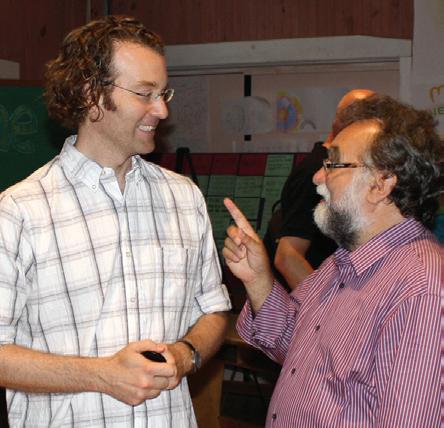


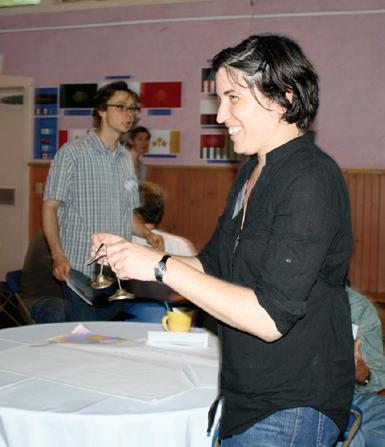




ing from the Great Depression were lost, and working and middle class salaries began to diverge from increases in productivity. From 1980 to the present median wages remained flat, when adjusted for inflation, and the government, from the Reagen years onward, pursued policies of privatization, deregulation and lowering tax rates on the wealthy and on corporations. Further consumption was only achieved through women entering the work force in ever greater numbers, through the expansion of credit and through the granting of home equity loans. The increased levels of indebtedness of families, corporations and the government were unsustainable when combined with the irresponsible and corrupt behavior of the financial sector and of regulatory agencies, and the Great Recession of 2008 occurred. The lessons of the Depression of 1929 clearly need to be relearned; great wealth disparities undermine demand, decrease consumption, increase unemployment and threaten to bankrupt the government and the nation.13
Increasing equality of incomes and opportunity would also go a long way toward restoring our democracy. Considering the Supreme Court decision in Citizens United , which allowed corporations to give unlimited amounts of money to political parties and candidates, in context of the wealth disparities in this country, and we have an oligarchy of wealth and special interest groups controlling the political process. “One dollar one vote”
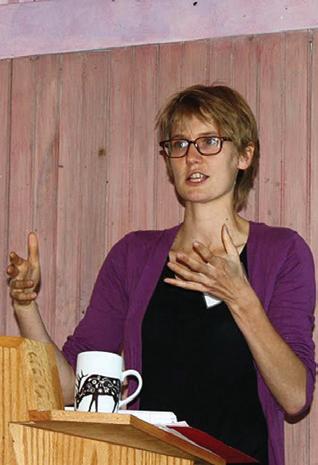
winter issue 2011 • 25
Scenes from the conference “Redeeming the Realm of Rights” sponsored by the Section for the Social Science, July 2011, in Harlemville, NY.
has increasingly replaced “one person one vote.” The truth of this statement is reflected in the fact that large corporations and financial interests have managed to lower effective tax rates on wealthy Americans, to decrease both capital gains and corporate taxes, and to get special government subsidies for select industries under both Republican and Democratic administrations. Meanwhile our representatives managed to help eviscerate the unions and undermine the postwar social contract between American workers and their employers. With the expense of national political campaigns today and the rapid decline of union membership and finances there is no other source of big money today than corporations and the wealthy. The saying “who pays the piper calls the tune” was clearly described by Simon Johnson, the chief economist at the IMF from 2007-8. “If the IMF’s staff could speak freely about the US, it would tell us what it tells all countries in this situation: recovery will fail unless we break the financial oligarchy that is blocking essential reform.”14
Income inequalities in the US are now at a level not seen since 1929. Despite this fact and the mounting evidence that large disparities in wealth undermine the health of the nation, increase the costs of military and guard labor, erode our democracy and weaken the economy, both the Republican Party and President Obama have proposed budgets which will further weaken Main Street at the expense of Wall Street. Only the progressive Caucus has produced a People’s budget which makes efforts to redress the balance between the rich and the poor, those with power and influence and those without. Research and common sense supports the wisdom of many great thinkers such as Prince Kropotkin, the author of Mutual Aid , and Gandhi regarding the important relationship between greater equality of incomes and community well-being. To use Rudolf Steiner’s phrase, unchecked “egotism produces suffering, poverty and want in the world.”15 If we care about our nation and its future and indeed about the future of global society we should heed the truth of Rudolf Steiner’s insights as expressed in the Fundamental Social Law and support efforts to decrease wealth disparities and work toward disconnecting remuneration from work, seeing financial support for individuals and groups as a rights question. Our health would improve and society’s well-being would increase.
Christopher Schaefer, PhD, is co-director of the Center for Social Research at the Hawthorne Valley Association in upstate NY and lives in the Berkshires. He is a writer,
teacher and organization development consultant who has worked on social change and community development issues since the middle seventies. This essay was prepared for Redeeming the Realm of Rights Conference held at the Hawthorn Valley Association in Harlemville, New York, June 30-July 3rd, 2011.
Notes:
1. Rudolf Steiner, Anthroposophy and the Social Question.,1905, p32, Steiner Press, Great Barrinton, Mass.
2. Same. p.34
3. Emmanuel Saez, “The Evolution of Top Incomes in the US” —see http:// press.take88.com/wp-content/uploads/2010/02/saez-UStopincomes-2007. pdf
4. Hope Yen, AP, Wed. January 5th, 2011, “Census: Number of Poor May be Millions Higher.”
5. Saez, cited previously
6. Robert Fuller: Somebody’s and Nobody’s : Overcoming the Abuse of Rankism, New Society Publishers,2003
7. Peter Montague, “Economic Inequality and Health “, Environmental Research Foundation, Report #437Pdf at http://www.huppi.com/kangaroo/ Inequality&Health.htm
8. R. Wilkinson and K. Pickett, The Spirit Level: Why Greater Equality Makes Societies Stronger, Bloomsbury Press, NY, 2009, in particular pages 49-173. Also Stephen Bezrucha, “Is Globalization Bad for Our Health,” Western Journal of Medecine, May 2000, 172:332-4
9. Samuel Bowles and Arjun Jayadev, “Garrison America”, Economists Voice, The Berkeley Electronic Press, March 2007, at http://www.bepress.com/ev/vol4/ iss2/art3/
10. Wikipedia : US Prison Populations
11. Robert Dreyfuss, “Taking Aim at the Pentagon Budget,” The Nation, April11, 2011
12. See the excellent book by Chalmers Johnson, The Sorrows of Empire: Militarism, Secrecy and the End of the Republic, Metropolitan Books, NY, 2004, in particular pp. 32-56. for a description of American military commitments around the globe.
13. See Robert B. Reich, Aftershock : The Next Economy and America’s Future, Alfred Knopf, NewYork 2010, pp.28-38. Also see the insightful and colorful book by Kevin Phillips, Wealth and Democracy; Broadway Books, New York 2002
14. Simon Johnson, “The Quiet Coup,“ The Atlantic, May 2009
15. Rudolf Steiner, Anthroposophy and the Social Question, Steiner Press, pp32-5
Copyright Christopher Schaefer, 15 Hillside Ave. Great Barrington, Mass. 01230
26 • being human
The Mission of English Speech
by Virginia Sease
Lecture given in London, Rudolf Steiner House during the Annual General Meeting of the Anthroposophical Society in Great Britain on May 7, 2011

Dear Friends, the motif for this theme evolved from a question which John Pickin had asked when the Council of the Anthroposophical Society in Great Britain was meeting with our Executive Council at the Goetheanum: “What is the significance of the English language?” Soon it was decided that this question perhaps would be something appropriate for the Annual General Meeting here in London, so the theme consists of two parts, “The Future Task of the English Language” and “The Mission of the English Speaking Peoples.”

We find that there are two special aspects which Rudolf Steiner mentions specifically regarding the English language and the English-speaking peoples. As a person who speaks English as the “mother tongue” as I do and also many of you do, some aspects that Rudolf Steiner described are challenging and they have occupied my attention for many years. May I invite you to join me on the path of my own considerations?
The first aspect may seem a bit obscure and perhaps it may make us feel uncomfortable because, after all, it is not just a figment of speech when we refer to the mother tongue. We have a deep connection with our mother tongue. Today there are many people who learn English as their first foreign language and in many cases they also develop a very deep connection with this language. However, the mother tongue encompasses something more than we may experience on the surface.
You may know that Rudolf Steiner gave lectures in 1917 called “The Karma of Untruthfulness”. As a citizen of the United States of America I have to admit that in 1917 he especially pinpointed Woodrow Wilson. If you grew up in America, you experienced how Woodrow Wilson is always presented as a hero. “Bring democracy to the world” – and do not worry if places which have the same language are split up in a geometric fashion and then form different nations. This is what partially happened after the First World War. People within the same language group suddenly found themselves in different nations. We especially think about the people who ended
up in Austria or in Italy after World War I and they were obliged to speak the other language, German or Italian. This relates to what Rudolf Steiner described as connected with untruthfulness.
One year later he mentions something similar with Anglo-American initiates. At that time Rudolf Steiner was referring to certain initiates of the Anglo-American people who were striving to attain universal earthly world leadership. Rudolf Steiner goes on, to say it in my words, that the English language is the appropriate means to carry out this goal. Why? Because the English language will be less and less adequate to express the truth. Almost a hundred years later I feel we can look at this tendency and ask if there is anything we can do about it, or do we accept it as a totally inevitable fact? This impresses us in quite a difficult way, in an unpleasant manner. What we do not know, specifically, is the basis for this statement by Rudolf Steiner, that the English peoples would be inclined to be working towards a quality of untruthfulness or of compromised truth. What was going on at that time? At that time Rudolf Steiner experienced the beginning of film. None of us experienced as adults, teenagers or children the advent of film. We grew up with film. In my lower and upper school, Saturday afternoon marked the time when everybody went to the so-called movies. The big difference between then and now is that only appropriate movies were shown on Saturday afternoon, and no adult would have risked his life to be in that movie theatre Saturday afternoon, also because all these children and teenagers were not particularly well behaved; today it would be considered nothing, but in those days munching on popcorn and
winter issue 2011 • 27
The Mission of English Speech
drinking Coca-Cola could have been a little bit disturbing for the adult world! In any case, films appropriate for children were shown, but nevertheless, the film is basically an illusion. The film is—one could say— an untruth. Another example from the past is the joy of presenting travel events in the form of slides. Today we would say slides, dias, are actually quite primitive, however Rudolf Steiner mentions that the viewing of slides damages the etheric body. Besides that, they also excite sensuality, in other words the astral body.1
How could slides, which all of us grew up with, especially in the English speaking world, damage the etheric body? Primarily, aside from the fact that it is a picture, therefore an illusion, it is not the real thing, and with slides if there is a rhythm in showing them with modern machinery, it is a mechanized rhythm which will be transferred to the etheric body while viewing. In 1922, 11 years later in a course for teachers, Rudolf Steiner was asked a question about the effect of films. Part of his response was: “…what I have called in these lectures the ether- or life body will be damaged in an extraordinarily strong manner especially for the organization of the senses—through film productions. It is indeed the case that through the film productions the entire soulspiritual constitution really becomes mechanized; it represents in an external way a means to bring the human being to a materialistic attitude [German: Gesinnung ].”2 Thus untruth through materialism is taken up into the habits of perception and most of us belong to generations in which habits of perception have occurred because we have watched films. We need to be aware and conscious of this fact, however from an esoteric point of view we may perceive a task in which we need to relate to the causes of these effects as to our instruments. They serve us, we do not serve them. Our perceptions may actually be taken up in a habit which is more mechanized, we recognize this and ask: what can we do as a counteraction to this? And we have a whole range of things we can do, for example all of the artistic impulses from Rudolf Steiner work against forming habits of perception, so we are not lacking resources in this regard.
Bearing all of this in mind now I would like to mention what connects with the truth aspect: what is it that we can do to maintain a level of truth in the English lan-
guage, individually, so that the English language is used as a vehicle of truth. This assumes great importance for our considerations of the English language which today is the world language. I always feel how amazing it is that from the British Isles the English language streamed out into so many corners of the earth. We do not need to think only of the English speaking nations today, but when we realize that English is also the first foreign language of millions of people—we experienced this during the International English Conference in August 2010 at the Goetheanum—when people from many different countries were in attendance from Slavic, Nordic, Asiatic countries. English served as the mutual language. How are we going to make this language a vehicle for truth? We need to be aware continually of how materialisation works on us through the process of mechanization that we find today. And here, first of all, the English speaking world initially provided leadership. Again, the task is to use it as the instrument but to be aware of it. Yesterday I came to London by airplane and if I had been thinking about it, I would have been very happy that somebody was sitting at a computer in the tower guiding the aircraft and making sure that we actually went from Basel to London/Heathrow and not from Basel to Singapore or somewhere else!
Another aspect of English is becoming increasingly obvious today: I would call it a tendency towards word minimalization, a contraction of words: we leave things out, we say don’t instead of do not, couldn’t instead of could not; it is very ingrained in spoken English. This will not change but we could do something about it, in connection with the usage of acronyms, that is when we find that only the first letter of several words is given which stands for something. We actually live today in a world of acronyms, for example we are here at the AGM, meaning the Annual General Meeting. We find that there are other esoteric groups who are working and trying in their own way to deal with human beings and their problems. One of these groups which has a presence in Europe and especially in America is referred to as AMORC, indicating Ancient Mystical Order of the Rose Cross. Then we have the IMF, International Monetary Fund. We live swimming often between acronyms and we are not going to change that, but at least we can develop a curiosity and ask: what does it stand for? What does it really mean? That will already be something of an awareness, a conscious way of working with it.
A third point for our consideration also arises: the

28 • being human
1 See Rudolf Steiner, notes from a lecture given on January 29, 1911 in Cologne, Collected Works [Gesamtausgabe] 130, Dornach 1987.
2 Rudolf Steiner, Answer to a question after a lecture on January 5, 1922 in Dornach, Collected Works [Gesamtausgabe] 303, p. 357. (Transl. V.S.) Dornach 1987.
English language possesses a very large and wonderful vocabulary. Of course sometimes we notice national differentiations through pronunciation. In America, we call the beautiful spring flowers blooming now péonies, and you call them peónies, and how about controversy, cont roversy? Also the orthography has differentiations like center or centre, mould or mold. But all of this remains basically insignificant when we think of the wealth of vocabulary and its flexibility. In French, if you wish to speak about singing, you say “je chante”, in German you say “ich singe”. That is it! In English one says I sing, I do sing, I am singing, defining a differentiation in the activity. There is a very interesting book about the English language, Mother Tongue by Bill Bryson. It was a bestseller in 1990 and although it is over 20 years old, it has just really reached its peak. The author mentions, among many other things, also this factor of the enormous richness and originality of the English vocabulary. He states, for example, that in the Oxford English Dictionary at the time of his book 650, 000 words were listed, not including technical and scientific terms. If they had been included, it would have been thousands more, millions more. Then he also mentions that 20 years ago, in English there were 200,000 words in common use; in French, 100,000 words, in German it was higher with 184,000 words. So statistics can show anything or nothing but I think what it indicates is at least up to 1990 a large vocabulary was in common usage. If we interpret this it means that English has the innate capacity to provide shades of distinction, shades of a qualification which may also extend to levels of truth. In this regard I feel that we can become more conscious as English speakers, whether as a first or a second language. It provides shades of possibilities, for example English has two words that are absolutely defined. One is conscience, the other is consciousness. In Romance languages one has to use an adjective to show the difference between conscience and consciousness. In the Japanese language “conscience” does not have a specific word, it has to be completely described. Furthermore, there is a possibility in English to have different words meaning approximately the same thing but with varying accents, and according to Bill Bryson, English is the only language owning something known as Roget’s Thesaurus for synonyms. Many of us probably used the Thesaurus in school, and here again we notice an alarming factor: attrition, a reduction of the words. The wealth of the English vocabulary is increasingly dwindling due to e-mails and even more so in writing text messages. This wealth of vo -
cabulary and the sheath-effect which the richness of the English vocabulary offers allows quite a differentiation in soul-spirit expression. This is more precious than we may realize. It may work as a truthful counteraction to the materialisation which also can come through the English language as Rudolf Steiner described.
When we were working with an older, wonderful translation of Knowledge of the Higher Worlds. How is it Achieved? in the Anthroposophical Studies in English course at the Goetheanum, we came across quite a few words that students who had English as their mother tongue did not know. Perhaps they had heard the word but they did not know what it meant. Halfway through the book one of the students who is from Australia said, “Well, maybe I should write these words down, and we could publish a vocabulary list for the use of English speaking students using this book...” That is a little joke, but he did note them. Here are just a few: incipient, idiosyncrasy, detrimental, aberration, vacuity, spectral, vexing, indolence, capricious, timorous, predilection, mendacity.
We are aware of the fact that Rudolf Steiner has informed us from many different aspects concerning the development of the consciousness soul which started in 1413 and will go on for quite a long time. In this connection he mentioned some things specifically for the English language. The consciousness soul will have the opportunity to develop in part through the English language by means of logical scientific thinking and through commercial-industrial thinking. If we think back to the eighteenth century, the major European language for people who were educated was French, but then in the nineteenth century the English influence began to expand. Rudolf Steiner draws this into connection with the time around the year 1814 when what he calls an “Englandization” began. He felt that it was important for people to understand the relationship between the thought and the word which he clarified by describing various languages.3 With the Romance languages, and he specifically mentions French, he shows how the weaving, the welling, the surging of the word actually calls forth the thoughts. Have you ever seen for example French or Italian people in a conversation? Everybody tends to speak at once, and yet somehow there are thoughts that are emerging from the conversation. So the word provides the basis, as it were, and out of the animated speaking then thoughts arise. So it may
winter issue 2011 • 29
3 See Rudolf Steiner, Lecture from December 18, 1916 in Dornach in the Collected Works [Gesamtausgabe] 173, Dornach 1978.
The Mission of English Speech
seem almost like an intoxication arising through speaking. Here I would like to comment that I feel the situation is different in the French speaking part of Canada perhaps because of their pioneer situation in the beginning era of Canada. Now, with German, that is an entirely different situation. The thought is not directly initially connected with the word. The thought remains in the realm of thought and then a pictorial quality is created, and that brings the thought through the vessel of the pictorial aspect into words. I would like to give an example because this sounds quite abstract. One can observe it with simple words but also with more complex situations. In English we have the word glove. In German, that is called a shoe for the hand, Handschuh. In English we say thimble, in German it is called a hat for the finger, so Fingerhut. So we see there is the thought and it finds its way to a picture and then into the word. This quality may sometimes present a challenge when reading Anthroposophy in German, because all of the words may be familiar and understandable, but until the reader makes the leap from the words to the picture—or I could say to the imagination—it can seem abstract. Also when one comes into a situation where people who have an excellent command of the German language speak with one another, especially about anthroposophical themes, they are speaking with exact words but actually they are conveying thoughts which, as it were, remain above. A little episode may illustrate this: some years ago we had three General Secretaries from the Anthroposophical Society in Germany participating in an international meeting of the General Secretaries at the Goetheanum. The three of them came into a very important conversation with each other about a current theme, and the exchange became quite lengthy, maybe about 15 minutes, and we did not have translations in those days into other languages. The other General Secretaries were sitting there as it became longer and longer until at last they rounded it off. Then there was silence, until a General Secretary from another country said, “Well, now that this deluge is over, what are we going to do next?” He meant this not in a critical way, but because of the complexity of meaningful substance. We may conclude that with the German language there is a good measure of selfconsciousness connected with the thought.
People have asked off and on how it is from a world karma point of view that Rudolf Steiner used the vessel of the German language. Why did that happen? My own evaluation of it centers on the linguistic situation, that there is more possibility for plasticity and mobility

in bringing the thoughts into a word picture. He mentions this in the preface to Esoteric Science, an Outline, in 1925: he describes how it was a struggle for him to come from the realm of thought into the sphere of words which people could understand. Furthermore, in German with the word pictures it is possible to link word to word, and the final composite word means something in itself. In English we cannot do that, that is called in linguistic terminology a “barbarism.” We cannot do that. One short personal example will suffice. When as a student I arrived in Germany to study I discovered that there were a lot of papers that I had to fill out, which, of course, is the case in every country. I was given one form which had written across the top one word and that was “Aufenthaltserlaubnisschein”, so that meant a document which allowed me to stay in Germany, all one word. In English we have to divide it up. Now with the Slavic languages the situation with the relationship of thought and word is again different. The thought is pushed back to its inner quality and the word is suspended as if separated from the thought. It emerges out of the feeling life of the more Slavic inclined people. They can engage in poetry readings which last for six hours, as was especially the case before 1989, when many other more social activities were forbidden, so they had long poetry readings, in order to meet each other.
Now, to come to English: English basically, as Rudolf Steiner indicates, has a predisposition for spirituality, logical thinking and systematizing, or in other words, often the spiritual becomes materialized. Time does not permit me to develop this any further as to why that is the case, however a clue may suffice. The William Tynedale translation of the New Testament (1526)4 provides an example if we compare it to the later King James Bible. We can see the way that Tynedale took very significant ideas from his sources and was able to mould them into the English language. The King James version in large part relied upon this earlier translation and its predisposition to spirituality, logical thinking and systematizing can be clearly identified. Centuries later these three aspects then joined with the tendency to drop into materialization and we can notice how many people in England and in the United States became occultists. Perhaps England and other English-speaking countries have more occultists right from the emergence of their countries than most other language groups.
Now what happens in English with the relation4 See William Tynedale, The New Testament 1526, The British Library, London 2000.
30 • being human
ship of the thought and the word? Rudolf Steiner mentions how with English the thought goes right through the word and seeks reality beyond the word.5 So the thought goes through the word and comes out the other side. Now what is the other side? The other side is the etheric nature of the human being. Hence we have a situation in English which has a very positive quality but it also has a danger connected with it. The positive quality occurs when the thought permeates through the word and comes out on the other side as it were, for then people who are communicating with each other will understand each other without relying just on the words one after the other, but there will be an etheric understanding, even an understanding from soul to soul beyond language. Rudolf Steiner describes this process as future thoughtreading. This signifies a next step for us: it means that “the supersensible human being, indeed the first supersensible human being in the historic existence of humanity, must become engaged...”6 through the English language. This first supersensible human being is the human being in command of his or her etheric nature. Whereas this represents a significant development there is danger connected with it: one will assume one has understood what a person is saying as the thought goes through the word and out the other side before the person has finished speaking and then we say: “Yes, yes” or in American slang, “I’ve got you,” meaning “I have understood.” Maybe they have not understood at all because the person has not finished speaking and we presume that we understand when in actual fact it is all going too fast. What we really need to do is to gradually learn how to read the thoughts of the other human being consciously through etheric awareness. Not until the end of our epoch will human beings master this thought-reading consciously. Gradually language will be only like a clanging sound or an indication that somebody will say something or some occurrence will take place, it will be a signal that this person wishes to communicate something. Now, with this, I would like to mention that I think it is a responsibility for people who are working with Anthroposophy in the English language.
At the moment we have a task and that is first of all to understand that we will not be able to rely only on the words spoken but we will need to proceed to a
much deeper soul-spiritual stratum. Then the different languages will no longer be a hindrance to brotherhood. In the past language made the human into a social being. Now an inner spirituality must awaken as language gradually fades away so that human beings will be able to live together. Even to be able to think the thought that the Christ Being can be experienced on the etheric plan through an angel who gives expression to the Christ Spirit already heralds a significant step. If, as Rudolf Steiner describes it, one is able through the English language to permeate through the thought and then to have some realization of the etheric, then this will necessitate an incredible degree of moral integrity which certainly represents a chief task of the Anthroposophical Society. To work in the sphere of this task requires a place where very central questions dealing with Christianity and with the work of the Christ Being today can be addressed. This place is the Anthroposophical Society where those who want to find out about these things will not have to defend themselves or any system that they may have belonged to before, but will find open access. And that leaves people free.
From this point of view, in conclusion, I would like to read a short piece that Marie Steiner wrote for the first publication of the lectures that Rudolf Steiner gave in Penmaenmawr in August 1923 entitled “Initiation Knowledge”. She wrote a foreword for the first edition in 1927, however I could not find it in my present English edition. Two years after Rudolf Steiner’s death Marie Steiner wrote:
If Rudolf Steiner had been able to work in English speaking countries as he was able to do in Central Europe, his name would now live upon all tongues. He would not have been pushed into silence, nor would he have been branded; one would not have endangered his honour and his life in order to make him undangerous. But however, he had to speak in England in a foreign language for listeners at a time of the strongest hatred against Germany, [this is 1923, when he came to England after the First World War. V.S.] Even the most correct translation could not do justice to the artistic verve of his speech. And nevertheless, his work penetrated through. A faithful circle of pupils came towards him and they also directed the attention of more distant observers to this outstanding spiritual researcher. Then the war was threatening again on the horizon and many of the seeds which already had been awakened at that time were stifled, and yet have
winter issue 2011 • 31
5 See Rudolf Steiner, Lecture of July 18, 1919, in Dornach ,in Collected Works [Gesamtausgabe] 173, Dornach 1978.
6 Rudolf Steiner, Lecture of July 13, 1919, Collected Works [Gesamtausgabe] 192, p. 290, Dornach 1964.
The Mission of English Speech
slowly come again to new life.” 7
This is the beginning of a long foreword of this book in which Marie Steiner also asked herself, as she was with him of course, what would have happened if Rudolf Steiner’s message had come into the English speaking countries? She felt there would have been an effect in the English speaking countries that would not have had to go through the trials and tribulations, as she mentions later, of the academic mental stance where he had to prove everything from an academic, scientific standpoint before he felt that he could say anything. He was able to speak directly to the English speaking people in England because he could perceive that through the constitution of their etheric organization, they were able to take up what he was saying. I think it is very important if one can read German because then one can see how Rudolf Stein-
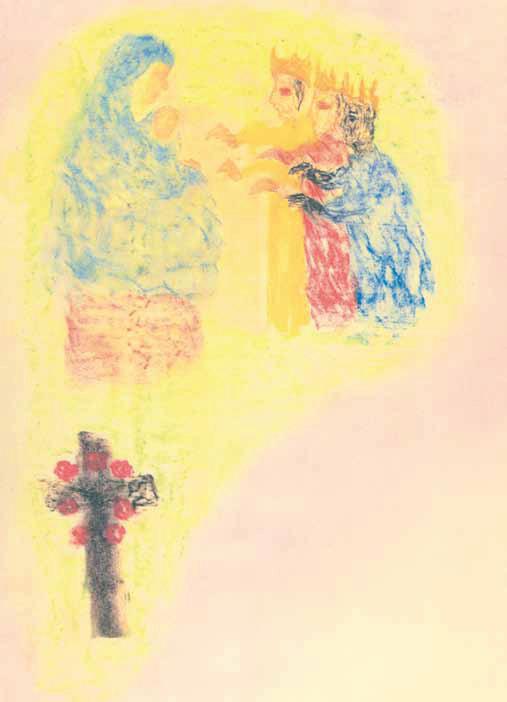
7 See Rudolf Steiner, Foreword by Marie Steiner: Rudolf Steiners Lehrtätigkeit in England [Rudolf Steiner’s Teaching Activity in England], Collected Works (Gesamtausgabe) 227, Dornach 2000.
er brought Anthroposophy into human words out of the world of imagination, inspiration and intuition. It is also significant, I maintain, to become an individual sheath nowadays for Anthroposophy and also equally important through the mutual work in the Society to continue to provide a vessel for Anthroposophy in the English speaking world so that Anthroposophy may enter ever more into the consciousness soul.
Dr. Virginia Sease is a long-time member of the Executive Council of the General Anthroposophical Society, at the Goetheanum in Dornach, Switzerland. She was born in Pennsylvania, studied singing while earning her B.A. degree in German literature at Rutgers University, received a Fulbright Scholarship, studied at the University of Tübingen and the Waldorf Teachers Seminar in Stuttgart, Germany, and was a Class Teacher at Highland Hall Waldorf School. She holds a Ph.D. degree in German literature from the University of Southern California.
Each year we look forward to celebrating Christmas at the Goetheanum with friends and members from all over the world. In the history of the Goetheanum because of the devastating fire on New Year’s Eve 1922, serious thoughts will always arise at this time, but because of the Christmas Conference 1923 for the Founding of the Anthroposophical Society we also experience the powerful impulses for transformation which Rudolf Steiner could initiate. Since that time thousands of people live the with Foundation Stone Meditation. Especially in the structure of the first three verses it clearly expresses the Christian trinitarian principle of Christian Rosenkreutz, leader of our epoch. We can sense an aspect of a certain cooperation between these two great individualities, since it was Rudolf Steiner who enabled us to gain access to Christian Rosenkreutz and to his impulses for our time.
Christmas Conference
December 26 - 31, 2011

Transformation Impulses
by Rudolf Steiner and Christian Rosenkreutz Goetheanum
The lectures and work groups will not primarily deal with a historical view of Christian Rosenkreutz but rather with the fruitful development of various paths of life and art forms to which Rudolf Steiner could bring impulses in the Michael Age based on the Rosicrucian method. An important reference for the conference preparation is Rudolf Steiner’s lecture which is referred to as “An Esoteric-Social Future Impulse. An Attempt to Found a Society for Theosophical Art and Way of Life” (December 15, 1911).
Among the special evening events the concert of December 30, 2011 is of particular significance for this conference. The background for this is the lecture of September 27, 1911 [GA 130, pp. 67] where Rudolf Steiner mentions: The Count of Saint Germain has been the exoteric reincarnation of Christian Rosenkreutz in the 18th century. The Ensemble Phoenix from Eckernförde/Germany will play music from the Count of Saint Germain. Its authenticity is confirmed by his signature on the compositions. We are joyfully looking forward to working with you in this Holy Season!
Virginia Sease Margrethe Solstad Paul Mackay
32 • being human
Rudolf Steiner and the Fifth Gospel: Insights into a New Understanding of the Christ Mystery
Peter Selg SteinerBooks, 2010, 166 pgs
Rudolf Steiner as a Spiritual Teacher: An Introduction
Peter Selg, SteinerBooks, 2009, 90 pgs.
Review by George Centanni
Rudolf Steiner—Apostle?
We are used to calling Rudolf Steiner a thinker, scientist, initiate, and teacher. Those are terms he used to describe himself. But to my knowledge, no one calls him an apostle. Yet how should we regard a man who not only spreads the gospel of Christ, but actually purports to produce one out of his own experience? Of course, the marketplace today is full of books by people who claim to speak with and for God. Anyone can write a gospel, and we regard their works with varying degrees of seriousness. Those fortunate to know Rudolf Steiner’s extraordinary corpus of spiritual philosophy and instruction take him seriously indeed, but does that make his gospel true? And even if it might be, why call him an apostle? Technically, not even all four authors of the New Testament gospels were apostles. Yet Mark and Luke are regarded as mouthpieces of Peter and Paul, and Paul is an apostle because of the great role he played in the spread of Christianity— and because he was spiritually called by the risen Christ himself.
If we may ignore viewpoints that deny the apostolic attributions entirely, then at the end of the day we have four apostles who are considered the primary authors of four gospels—and who, as apostles, were also protagonists and figures in the story they tell. When we study the Fifth Gospel , we realize that Rudolf Steiner is not merely its author but also a protagonist, despite having lived 2,000 years after the life of Christ. He doesn’t turn up in the story in the fashion of a time traveler in science fiction, of course. But consistent with his many descriptions of what it is to read the akashic record, he enters into the inner experience—the actual inner spiritual lives—of Jesus Christ, his mother, and the twelve apostles. That he does this seems completely natural to those versed in Steiner’s ideas. His presence in the fifth gospel—which is to say
the penetration of his transformed human ego into the akashic, everlasting gospel—marks a critical advance in the capacity of earthly self-consciousness that even the first apostles had not attained following the Resurrection. Such ability came to them only after the descent of the Holy Spirit at Pentecost, whereupon they could then understand all tongues—signifying that their earth-born egos had at last attained the power to stay awake in the realm of higher consciousness. That all people should someday gain the power of such wakefulness was the very goal of the sacrifice of Jesus Christ, of the Mystery of Golgotha. Thus Rudolf Steiner’s fifth gospel does more than merely retell the life of Christ and deeds of his apostles from an “occult perspective.”
Seen in this light, to propose that we regard Rudolf Steiner as an apostle is not to be cultish or quaint. It is to ponder—once again—the nature of his great service to humanity. Yet as important as this is to consider, it may well be a different story for readers who don’t really know what Rudolf Steiner taught—including anthroposophical students still largely unacquainted with his basic books. They may well look askance at many of the details contained in the Fifth Gospel, details that can strike one as not merely strange, but quite outlandish. Is it to be taken seriously?
With such a question in mind, it is not entirely shocking that Peter Selg ends his book, Rudolf Steiner and the Fifth Gospel , on a strikingly despairing and discordant note. The final paragraph—yes, the final paragraph of the entire book—consists of this statement of Friedrich Rittelmeyer:
And so he left us, leaving us with little more than fragments of the radiant life of Christ, which lay open for his spirit to read. But what does our generation deserve,
winter issue 2011 • 33
having welcomed his first gifts, which contained a great question to humanity, by dragging his hideously distorted face through the tabloids with the caption “The Fifth Evangelist”?
It is not an uplifting conclusion. Peter Selg seems to point us toward what looks very much like the abyss. Why should he do this?
Before trying to address that question, let me say that the book as a whole is greatly illuminating and uplifting. Here, and in Rudolf Steiner as a Spiritual Teacher, we get a sense of what it was like to know Rudolf Steiner personally. Selg observes his subject thoroughly, through the eyes of students and coworkers, giving us the opportunity to encounter him in a most meaningful way, much in the spirit of these words of St. John Chrysostom:
I wish that it were possible to meet with one who could deliver to us the history of the apostles, not only all they wrote and spoke of, but of the rest of their daily life, even what they ate, when they walked, and where they sat, what they did every day, in what parts they were, where they lodge—to relate everything with minute exactness.
John Chrysostom’s wish is to know the apostles as men: if they were filled with Christ’s spirit, then one could learn a great deal just by living in their company. Selg’s anecdotes and quotes, some of them narrowly saved from history’s dustbin, bring Rudolf Steiner to life in just this way.
Another hallmark of this approach is to let Rudolf Steiner speak for himself. Selg is not a writer who attempts to recast what Rudolf Steiner has already said clearly in his own words. For instance, Selg observes: “spiritual-scientific research did not involve immersing himself in a general ‘cosmic memory’; instead it consisted of encounters and devoted connections with the exalted spiritual beings that make up the actual reality of the Akashic substance.” He then lets Rudolf Steiner’s own words portray the concrete nature of the experience behind such concepts:
Anything related to the soul’s penetration of an individual event can be researched only when the soul makes sense of these words: The soul offers itself up as food to the Primal Beginnings or Archai, to the Spirits of Personality. Strange as this statement may sound, it is nonetheless true that we are eaten by, and serve as nourishment for, the Spirits of Personality. …If we want to research concrete facts in humanity’s evolution, facts such as the life of Jesus of Nazareth, we must know that
we are being digested by the Spirits of Personality. … Higher research is not possible without inner tragedy and suffering.
Reading such passages, it is very difficult to understand how someone like Valentin Tomberg, an erstwhile student of Rudolf Steiner’s spiritual science and himself an evangelist for Christianity, could spread the notion that anthroposophy is deficient in emphasis on faith and feeling. The self-sacrificing aspect of “spiritual-scientific research” surely demands the highest kind of faith and surrender to the agonies that accompany great feeling, manifestly on a level with the mystics who produced the epiphanies of ages past. Through Rudolf Steiner we learn that faith and feeling do not have to dampen or contradict the alert thinking, observing, and clear-eyed “scientific” faculty of the spirit. In fact, he has amply demonstrated that the real mystery—and triumph—of Christianity is that faith and feeling may now do just the opposite. They give strength to pure thinking, and vice versa. The divine Jesus on the cross is the ultimate exemplar of the “anthroposophical” confluence of thinking, feeling, and willing awareness. Amidst all of his agonies and super-awareness, Jesus Christ never loses consciousness. This is so much the case that when he cries, “My god, why have you forsaken me?” his spirit isn’t wavering or sinking, as we tend to assume. Rather, he has knowingly quoted a psalm of David, “in fulfillment of the scriptures,” and also made an ultimate, tragicomic play on words—for the same syllables mean also “My god, you have exalted me.”
After having given only a handful of lectures on the subject, Rudolf Steiner suddenly discontinued his presentations on the fifth gospel. Why, Selg asks, did he leave us “with little more than fragments”—what in a sense amount to mere notes toward a fifth gospel? He first poses the question in his opening chapter, telling how Rudolf Steiner spoke of a “cry” from humanity, waiting for an answer that “can be provided wherever spiritual science can prevail with its gospel that proclaims the spirit.” In the final chapter we come to the final blow. We learn that during an early lecture on the fifth gospel, Rudolf Steiner spontaneously asked an audience, in a way reminiscent of the test put to Parsifal, “Does no one have a question for me?” It turned out that no one did. Rudolf Steiner was badly shaken by this lack of response. Selg quotes Andrei Bely, “Dr. Steiner said severely, ‘Good—I’ll make a note that no one here today had any questions….” What sounds like severity is evidently the expression of heartbreak. Selg relates a page earlier: “Rudolf Steiner expected—or
34 • being human
at least hoped for—active, heart-centered participation in his presentations of material from the Fifth Gospel.”
Rudolf Steiner was not able to continue the lectures on this theme because, as in the Garden of Gethsemane, humanity was found to be dead asleep. That is Selg’s justification for ending the tale where and as he does. Rather than an uplifting moral, he leaves us with an image that should shake us to the core. But will it?

Rudolf Steiner and the Fifth Gospel and Rudolf Steiner as a Spiritual Teacher are wonderful books. They do full justice to their great subject, which is not only Rudolf Steiner but humanity. If Rudolf Steiner is the apostle of our time, it is because he both teaches and exemplifies the way to apprehend the greatest realities human beings can aspire to. These books deserve to be read, along with the Fifth Gospel itself.
If the Christ will be with us always, “even unto the end of time,” then the human race will always look for and need new apostles. An apostle is fundamentally an initiate of the Christ and a spiritual pioneer—a prophet. The apostle of our time has been transformed into a scientist—an independent thinker and knower—encountering oneself, one’s fellow creatures, one’s gods, and one’s savior with eyes blazing, bringing the light of understanding where there was darkness.
For everyone, however, who has the ability to observe thinking - and with good will every normal human being has this ability - this observation is the most important one he or she could possibly make.... Thinking all too readily leaves us cold in recollection; it is as if the life of the soul had dried out. Yet this is really nothing but the strongly marked shadow of its real nature - warm, luminous, and penetrating deeply into the phenomena of the world. This penetration is brought about by a power flowing through the activity of thinking itself - the power of love in its spiritual form.
You say Confucius is confusing
You refuse to start with Sartre
And you just can’t understand Kant.
Mr. Spinoza really throws ya
Schopenhauer is quite sour
These philosophers rave and rant.
Your brain can’t find the room
For Bishop Berkeley, David Hume
And well may you lament,
That though Plato may be great
Oh, God! It’s difficult to state
Precisely what the hell he meant.
You may think a puff of pot’ll
Help you more than Aristotle, Heraclitus is quite dense.
— Rudolf
Steiner, The Philosophy of Freedom
Or you substitute for thinking
Just a touch of social drinking
But still you feel quite tense.
If you think that thoughts will bore you
Someone else will have them for you
And that’s the catch, my friend.
Because from thinking you can’t hide
Or someone else will be your guide
From the beginning to the end.
Through thinking, Beauty, Truth, and Good
Can be rightly understood
As light shimm’ ring from above.
And when our thinking becomes seeing
We experience pure being
And our thinking turns to love.
Paul Margulies
winter issue 2011 • 35
Members of the Anthroposophical Society
in America provide support for the society—financial, moral, and practical,—and through it for the School for Spiritual Science, which members may join. Members seek community for personal development and research to enhance their service to the world. They study together and work in anthroposophical initiatives like Waldorf schools, biodynamic farms, Camphill villages, medical/therapeutic practices and artistic initiatives. And they bring insights and care for the whole human being into all the professions and activities of everyday life.
Members’ dues support the core work of the Society in the USA and worldwide, which includes facilitation of meetings and conferences (including a new series of teleseminars in 2012), and provision of resources like the Rudolf Steiner Library. They receive our quarterly being human by mail.
Friends of
Rudolf Steiner Today
appreciate the extraordinary vision of this pioneering leader of humanity and his far-sighted call for a “future worthy of the human being.” Having read his remarkably insightful views or experienced the healthy and humane results of his initiatives, they would like to help make his ideas and vision part of the dialogue informing humanity’s global culture.
toward a future worthy of the human be ing
The Friends program of the Anthroposophical Society in America is new in 2012. Donations from Friends support outreach. All Friends receive email links to new issues of being human and information about activities of interest. Become a “Friend of Rudolf Steiner Today”— just sign in online at friends.anthroposophy.org or call 734-662-9355.
For more information about membership, call 734-662-9355, email info@anthroposophy.org, or go online to members.anthroposophy.org
Member or Friend— not sure, but still want to help? A one-year introductory membership is also available at $40. You’ll receive being human by mail and member privileges during the year.
August 8–9 Leadership Colloquium Finding the Will in Association
For more than 100 years anthoposophists in North America have been associating with one another based on a shared interest in spiritual science, its insights and its initiatives. As anthroposophy enters its second century here on this continent, the time has come to ask:
How can we as Society members transform our continent’s inherent impulse of good will into a genu‐ine collaboration – among ourselves and with the spiritual world?
During Rudolf Steiner’s life, world events were challenging, complex, intense, and rapidly changing. Our times are no less so. Individually and organizationally we continue to face tumult in the unfolding of our lives and in our relationships. Like the pioneering anthroposophists in Rudolf Steiner’s time, we face much that is beyond our control—yet we are still called upon to make decisions and to act.
The Anthroposophical Society in America lives through its members in the realities of these modern circumstances. Now more than ever, Society members especially need to dedicate themselves anew to the immense vision and vibrant initiatives Rudolf Steiner shared with us. We need to transform the traditional practice of association with one another into new forms of thoughtful, active collaboration. This two‐day Leadership Colloquium will offer opportunities to explore and practice specific ways to meet and manage the complexities and challenges we face in our anthroposophical work and in our daily lives. We will examine relationships within the Society, as well as relationships among the Society and initiatives based on anthroposophy.
1. How do we characterize the spiritual insights and archetypes that have shaped our work? What was the spiritual intention that influenced the founding of our group, our Branch, our anthroposophical initiative?
2. What can we know about the current situation of these undertakings? Where can we identify their suc‐cesses, their challenges?
3. What is being asked of us today? How do we set about working collaboratively towards our shared future? The goal of this colloquium is to focus on the spiritual opportunities and strengths that emerge when we truly collaborate within our association.
The colloquium will be facilitated by Jane Lorand, Leslie Loy, and Bruce McKenzie, from the new Center for Systemic Leadership, now situated at Rudolf Steiner College (Fair Oaks, California).
August 9–12 Anthroposophical Society in America Conference
Opportunities to Meet our Individual and Shared Spiritual Destinies in America
The 2012 annual conference of the Anthroposophical Society in America will take place in Ann Arbor, Michigan, August 9‐12th, Thursday evening to Sunday afternoon; the Society’s Annual General Meet‐ing will be held on August 12, following the conference’s closing session. This year, participation in both the conference and the annual meeting will be for members of the Anthroposophical Society. The General Council of the Anthroposophical Society in America has recently identified three ideals that will shape its future work: Connecting Deepening Serving
In the days preceding the conference, the leadership of the Anthroposophical Society in America will meet with initiative takers within the anthroposophical movement to focus on the themes of con‐necting and serving. This will set the stage for the annual conference during which these two themes will be further enhanced by a deepening of our work, individually and collaboratively. We are pleased to announce that the Executive Council from the Goetheanum, Virginia Sease, Paul Mackay, Sergej Prokofieff, Bodo von Plato, and Seija Zimmermann, will join us in these considerations. Plans are underway to offer members a lively interplay among presentations rich with content, opportunities for interaction and inquiry, and imaginative creativity through the arts. Together we will explore the complex issues facing anthroposophy and each of us as Society members—here in America and as part of a global community.
The Anthroposophical Society “cultivates the life of the soul.” This places a particular emphasis on our relationships and personal connections in the realm of feelings, as well as on our cultivation of thought through study, and on the strengthening of our will in shared activities. Throughout the 20th century, a sense of association was the prevailing mood in the life of the Society. In these opening years of this new century, we are being called upon to imbue association with collaboration—in which will and initiative, prominent aspects of the American spirit, have a leading role. This conference aims to bring new depths of understanding, renew our sense of possibility, and re‐affirm our confidence in anthroposophy and the role of the Anthroposophical Society in the destiny of America.
“That Good May Become”
SAVE THE DATES!
The Anthroposophical Society in America
General Council Members
Torin Finser (General Secretary)
Virginia McWilliam (at large)
Carla Beebe Comey (at large)
Regional Council Representatives
Ann Finucane (Eastern Region)
Dennis Dietzel (Central Region)
Joan Treadaway (Western Region)
Marian León, Director of Administration & Member Services
Jerry Kruse, Treasurer
being human is published four times a year by the Anthroposophical Society in America
1923 Geddes Avenue
Ann Arbor, MI 48104-1797
Tel. 734.662.9355
Fax 734.662.1727
www.anthroposophy.org

Editor: John H. Beck
Associate Editors: Judith Soleil, Fred Dennehy
Cover design & layout: Seiko Semones (S2 Design)
Please send submissions, questions, and comments to: editor@anthroposophy.org or to the postal address above.
©2011 The Anthroposophical Society in America. The responsibility for the content of articles is the authors’.
Remarks of Torin Finser at the Annual General Meeting, in Portland, Oregon
Dear Friends,
With gratitude to my history teacher, Henry Barnes, who was a master at setting the scene for a history lesson, I would like to open with a picture: The scene is the central square in Santiago, Spain. We are standing on cobblestones with hundreds of people. Before us, in full majesty, is the famous cathedral with all the intricate stone carvings and the story of St James, the one who represented hope to all the many pilgrims who journeyed on foot, often for hundreds of miles. Even today, one can experience, as I did recently, the many throngs of people, groups from Brazil, Japan, Germany, and Australia who arrive at this remarkable place and burst into song and dance. Indeed, all day long and deep into the night, one can hear the singing and rejoicing in many languages. As Virginia Sease mentions in her lecture on “The Esotericism of Music” there is a word for human beings who sing and walk, psallierende. Bernard of Clairvaux mentions this: “For the angels of heaven take care to join with the psallierende.” When we sing, we bring the angels close. This is what I experience when we come together for an AGM conference. We experience hope in our common striving, and our voices blend as in song.
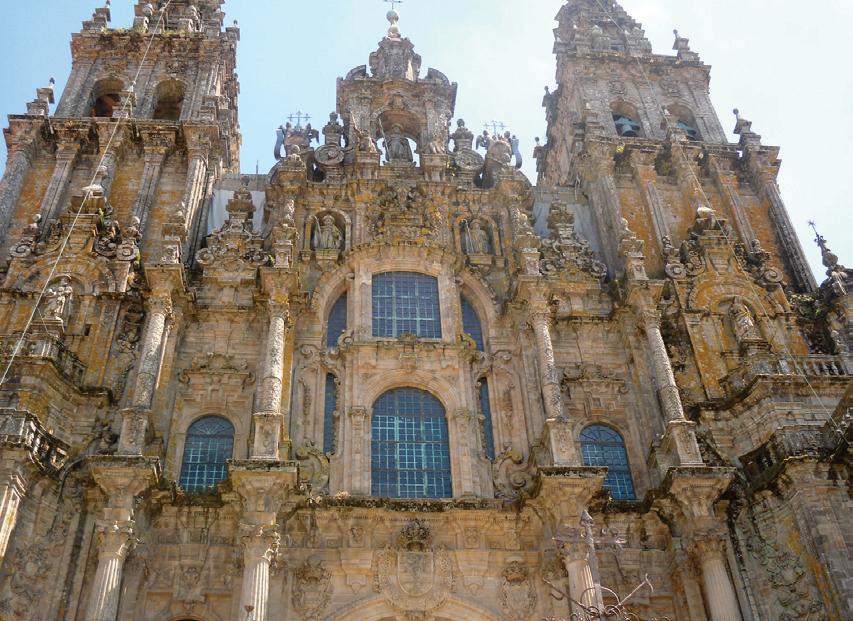
This theme of coming together is a fitting one for 2012. As with the gatherings in the central square in Santiago, we are truly a world society, one, which is only just beginning to realize it’s potential in service of the universal human. All too often still today we have a separation between vita contemplativa and vita activa. Some see the Anthroposophical Society as consisting just of the monthly branch meeting, a place of study and reflection. Others are active in the movement, working in schools, farms, clinics, but seldom have adequate time for reflection. But our world needs both: the working in active social initiatives and the inner work of deepening and helping with the incarnation of new ideas and inspirations. At times I feel our movement, the initiatives, need more vita contemplativa, and the Society needs to engage, vita activa. Otherwise we risk one sidedness: only vita contemplativa risks irrelevance, at least as seen by the external world around us only vita activa risks a loss of spiritual resources, superficiality that becomes just external methods (as when teachers in Waldorf education no longer work with anthroposophy)
How can the two gestures come together? One way is through meditative practices, which we know involves both activa and contemplativa. Another has to do with projects and common imaginations. When one works with a common project, as many have with the celebrations of the 150th, there is an opportunity for both deepening and doing, reflecting and connecting.
At a recent meeting of social entrepreneurs at Amherst College, Arthur Zajonc read from Karmic Relations Vol III, lecture 10: Some people think it is possible in a given age to be a human being pure and simple, but this too would lead to our downfall. We must also be men and women of our age. Of course it is bad if we are no more than this; but we must be contemporaries of our age, that is to say, we must have a feeling of what is going on in our own time. (Otherwise) he is always in the position (forgive the comparison) of a bee that has a sting
38 • being human
The cathedral in Santiago, Spain.
but is afraid to use it at the right moment. The sting is the initiative, but the man is afraid to use it. (p. 152)
Why are we at times afraid to use the “sting” of initiative? What holds us back? Perhaps we are afraid of being noticed, for with that comes the potential for attack. Or are we afraid of success and what that might bring? It seems to me that we are at a time when the world is crying out for the wisdom-inspired initiative that anthroposophists can offer. We need to ever more recognize the potential in others, and transform what others may see as impossible realities. With moral intuition, imagination and moral technique, we can use the social architecture Rudolf Steiner gave us to be inwardly and outwardly active. As one of the youth section members said at the recent symposium, is not every human being an initiative?
To quote once again the words of Rudolf Steiner (from the same lecture): Verily, this is written in the karma of every single anthropsophist: Be a man of initiative, and beware lest through hindrances of your own body, or hindrances that otherwise come your way, you do not find the center of your being, where is the source of your initiative. Observe that in your life all joy and sorrow, all happiness and pain will depend on the finding or not finding of your own individual initiative. This should stand written as though in golden letters, constantly before the soul of the anthroposophist. Initiative lies in his karma. (p. 150)
So bearing these things in mind, let us not hesitate to set goals for the years ahead. Within the wider strategic aim of working to better connect the movement with our Society, some of the things we are working toward include:
• a successful conference with the Executive Council August 10-12, 2012
• a leadership colloquium of members of groups, branches, initiatives, regional councils, General Council and the Vorstand in the two days before the conference, Aug 8, 9
• more phone teleconference calls with
members to further connect members with each other
• continuing to bring our library into the everyday awareness and experience of the members and a growing circle of friends
• intensifying our dialogue with AWSNA, the BD Association and other professional groups that might, for instance lead to jointly sponsored conferences.
So for example in regard to AWSNA, we might look to a conference for teachers on “Anthroposophy and Waldorf Education Today” in 2013, a BD conference in 2014, etc.

These are but a beginning list for 2012 and beyond. We invite member suggestions and initiatives!
Let me end with another picture, returning once again to Spain. Traveling out from Santiago to the last promontory of land, the pilgrims arrived at last at Finisterre, the end of the world. One walks out to that little jetty of land and sees the vast ocean on three sides. There the pilgrims would end their journey and burn their shoes. Nowadays this involves the strong smell of rubber! What does it mean to burn ones shoes? What do we need to let go so as to step forward in the years ahead? What is transitory, like shoes, and what is truly eternal? And like the pilgrims of the past, can we shed the old and become the new?

Since your General Secretary is also a “contemporary of his age”, let me quote from Steve Jobs, a man of initiative who also had perspective on the old and the new: No one wants to die.
Even people who want to go to heaven don’t want to die to get there. And yet death is the destination we all share. No one has ever escaped it. And that is as it should be, because death is very likely the single best invention of life. It is life’s change agent. It clears out the old to make way for the new.
Right now the new is you, but some day not too long from now, you will gradu-
ally become the old and be cleared away. Sorry to be so dramatic, but it is quite true. Your time is limited, so don’t waste it living someone else’s life. Don’t be trapped by dogma – which is living with the results of other people’s thinking. Don’t let the noise of others’ opinions drown out your own inner voice. And, most important, have the courage to follow your heart and intuition. They somehow already know what you truly want to become. Everything else is secondary.” (Steve Jobs: Stanford commencement address, June 2005)
When we listen to the inner voice, to the heart, to intuition, we can become more human even in techno-land. Thanks to anthroposophy we can accelerate the process of becoming “new” through self-development, compassion for the other, and through the arts, some of which we have been fortunate to experience this weekend. The angels have their religion. It is the human being. The hierarchies are looking ahead to the horizon, and there far off, like the pilgrim gazing out at the ocean at Finisterre, the angels see the evolving human being. They are waiting for us to realize our full humanity.
As we become more human, we have even greater ability to connect with others. This is the task of the Anthroposophical Society of the future. This is our initiative for the world, our mutual work for the years ahead.
Torin Finser General Secretary
winter issue 2011 • 39
Finisterre, “land’s end.”
News / Events
Traveling Speaker–Chattanooga
The following is a short excerpt of two reports written by Kathleen Wright for the Sophia Sun in North Carolina.
One of the things I love about being on the Eastern Regional Council is visiting with groups in the region. I am happy to report that the Southeast is growing and thriving. Groups in Tennessee and Georgia gathered in Ooltewah (about 20 miles north of Chattanooga, TN) June 24-26, for a program called “Anthroposophy: What? How? Why? Who?” sponsored by the Traveling Speakers Program of the Anthroposophical Society, the Epiphany Group of Comer, GA and the Southeastern Regional Branch. The keynote speaker was Michael Ronall of NY. Music was provided by clarinetist Alan Drake and Robert Brock gave a recitation of the John Gospel.
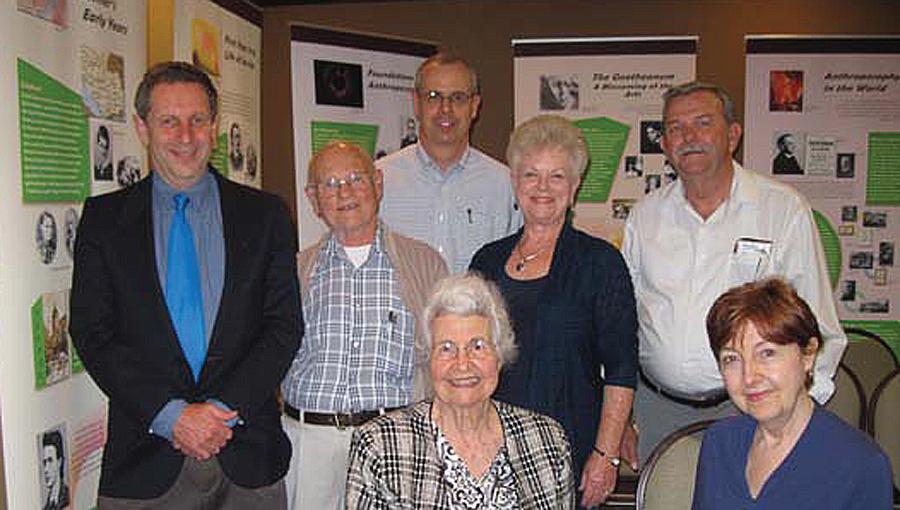
Adding color to the event was the presence of the Rudolf Steiner 150th anniversary panels (in the photo below behind the organizers). About 40 people attended the workshop, with several young people including Bettina Hindes, who has just left the army where she learned to speak Farsi.
The enigmatic title of the Chattanooga Conference might at first make one think it was a simple exposition on the history of anthroposophy, but it is far more complex. The color coding in the title refers to a very specific method of reading, thinking, and writing that is “organic” or living. A good part of Michael Ronall’s lively and frequently hilarious presentation presenta-
tions was about this method of study or observation. To learn more Michael pointed to organicthinking.org where one learns about George O’Neill’s theories on Rudolf Steiner’s method of writing.
Lecture One: What? One of Michael’s opening remarks was that the modern world falsely believes that evolution depends on the survival of the fittest. These animal dynamics do not apply to us if we realize that the seed is within us to counter this principle, and that real evolution progresses through sacrifice, not competition. Through thinking we can become co-creators of the universe. While danger is the ‘sign of our times,’ we have within us the greatest resource for overcoming evil: tranquility.
Since the time of the Scientific Revolution people have believed that they can predict from prior experience and that all psychological, biological and physical phenomena can be reduced to “mechanics.” This leads to the conclusion that knowledge is limited and that the realm of the soul is not investigatable, and so must be left to an authority such as churches. Steiner strongly disagreed and stated that human beings can be active agents, not merely observers with our thinking. If you observe your own thinking, you are focusing your energy on who you really are.
Our evolution asks us to “give away” or lose something in order to progress to the next stage. This is illustrated by Aristotle’s causality and Goethe’s metamorphosis. The plant is drawn by the periphery, just as our creativity depends on us being able to convert mechanical causality into living thinking. After these introductory remarks, Michael went on to the inner meanings of the four questions in the title of the conference: WHAT represents the mineral world, crystals: that which forms, endures, changes by breaking into smaller pieces. It is subject to laws of gravity and entropy. Science explains all experience through matter, regards planets and stars as matter, too,
and believes that physical and chemical reactions explain everything.
HOW represents the life world or plant world. Science would reduce this to the “what” world. The life world is a process. New growth comes from dying; growth is vertical. Since mechanical thinking is lifeless, the question to ask is: How do I think? How do we develop organically?
WHY represents the animal world, the world of conscious feeling, sympathy and antipathy. There is lateral growth and movement. Freud saw animality in the human soul.
WHO represents the human kingdom, the world of unique individuals.
These four questions and the four kingdoms outlined above correspond to the four features of metamorphosis, all represented in the plant kingdom. These are:
1. rhythm – distinguishing living from non-living; e.g. circulation and breathing
2. growth – life processes, reproduction; things become more complex as they grow.
3. polarity – inner and outer
4. inversion – turning inside out; cause and effect are often the reverse. These four principles also apply to spiritual investigation.
Kathleen’s full report on the Chattanooga gathering will be posted at anthroposophy.org in the Articles section.
The Fifth Pan-American Anthroposophy Congress
The Fifth Pan-American Anthroposophy Congress, “The Mysteries of Will, Death and Resurrection in America”, took place July 23 to 29 in Buenos Aires, Argentina. This tri-annual series was inaugurated in San Diego (USA), followed by Quito (Ecuador), Patzcuaro (Mexico) and Medellin (Colombia). There were about 200 participants from Argentina, Brazil, Uruguay, Peru, Colombia, Venezuela, Mexico, and the USA, who gathered for six days in the magnificent Patronato de la Infancia, a boarding school founded in 1945, surrounded by beautifully landscaped fields and mature trees.
Most speakers were South Americans, who delivered their lectures in Spanish, but
40 • being human
Michael Ronall with the organizers of the conference: in foreground: Maria St. Goar, Rebecca St. Goar; Second row: Michael, Fred Coats, Edward St. Goar, Katherine Jenkins and unknown participant.
there were also three guest speakers from Europe: Michaela Glöckler, Georg Glöckler, and Christopher Houghton Budd, for whom simultaneous translation into Spanish was provided. The common theme was spiritual streams in the Americas (past, present and future), but there were also lectures with titles as varied as “Geographic Medicine in the Americas,” “The I and the Economy,” “Rudolf Steiner and the New Mysteries,” “The Body of the Resurrection of the Christ and the Foundation Stone,” and “How Spirit Works on Matter.” There was also a panel titled “Symptomatology of the Confrontation with Evil” and presentations by the Brazilian members on eastern South American native cultures and on human development in favelas (shanty towns).
Buenos Aires’ vibrant artistic and cultural life permeated the conference. There was a diverse offer of artistic workshops in the afternoons, and outstanding artistic performances in the evenings, including eurythmy, tango, musical scenes from Rudolf Steiner’s first Mystery Drama, and the premier of a concert written especially for the conference. There was also an art installation, a portal, created from cotton strings dyed red that we all hung from a wire that spanned the width of the conference room, and which after a few days had evolved into a mysterious web through which everyone had to pass. The Brazilians led a dance party on one of the evenings, starting with a performance that gradually had everyone dancing to samba and other tropical rhythms which spontaneously evolved into a circle dance for universal peace. There was a feeling that everything was possible.
And since universal peace came up, I will end with one image that I am carrying back from this conference. An Andean tradition refers to the eagle as a symbol of the North, the power of thinking and being skillful in material things, and to the condor as a symbol of the South, the power to feel the sacredness of each moment, each place, of each of our simplest daily actions. A prophecy of this Andean tradition states that there will be a time and a place in which the condor and the eagle will fly together under one sky. These two birds represent characteristics that are within us
all. And the time has come to fly with both powers. May the fusion of these two birds metamorphose into the dove, symbol for peace, symbol for the Holy Spirit, and true symbol for the Americas (columba is dove in Italian). Thanks to the Anthroposophical Society in Argentina, the organizers and volunteers who made this a memorable conference. I am looking forward to the next conference which will take place in Sao Paulo, Brazil in 2014.
Alberto Loya is a member of the Central Regional Council and the Great Lakes Branch in Ann Arbor, Michigan.
(email: aloyavaca@peoplepc.com)
Rudolf Steiner Library Awarded Special Project Grant
Judith Kiely, leader of the library’s electronic cataloging project, has recently received a $1500 grant that will benefit our library. The Academic and Special Libraries Section (ASLS) of the New York Library Association (NYLA) and New York’s Reference and Research Library Resources System offer an annual grant to an academic or special librarian.
The grant enables the recipient to pursue a special project at an academic or special library that benefits the recipients’ professional development as well as the strategic mission of the institution. Our successful application was for a pilot digitization project: we will purchase a flat-bed scanner with grant funds and digitize two back issues of the society’s Journal for Anthroposophy
This project will make it possible to share some of the unique content in our collection more widely, and give us a realistic sense of the time and effort involved in digitizing journals with an eye to more digitization in the future. One grant referee wrote, “This sounds like a great project and hopefully one which will lead to more access to your library’s collection by the wider public. Thanks for the interesting application and congratulations!”
Bravo to Judith Kiely, who has streamlined library operations and improved access to the library for members and friends. You can search the Library’s online catalog at http://rsl.scoolaid.net/bin/home
What Do I Know About Anthroposophy in America?
(A brief pause)
I know that She found me. In winter, in Chicago
In the shadow of the blast furnace In the City of Broad Shoulders and the Big Take.
By the smoldering slag heap
From the coke stone mountain Barged in from the Messabi Iron Ore Range
Home of Robert Zimmerman of the Slow Train Coming.
She found me in the factory nuclei Studying the big Us & Them Staring alienation into nothingness Taking sides to lose sides.
On the picket line, at the gun range, In the boozy bar room and bowling alley
Choking on Oscar Meyer’s weinie On the 4th of July.
She found me crying in the loneliness Trolling the underbelly of commerce The ripped open and spent body From which the Board of Trade rises in a sweaty groan.
Mother of Steel. She found me there.
Victoria Temple Earth Day, April 22, 1999
winter issue 2011 • 41
New Members of the Anthroposophical Society in America, as recorded by the Society from 7/16 to 10/12/2011

Lisa Archer, Tucson AZ
Dale A. Bennett, New York NY
Kathleen Bowen, Northampton MA
Michelle Boynton, San Diego CA
Ann E. Burfeind, Stuttgart Germany
Erin Byrne, Phoenixville PA
Colette Caggiano, South Pasadena CA
Laura Carter, Grand Junction CO
Nancy J. Christensen, Ypsilanti MI
Kirsten Clark, Gibsonia PA
Petra H. Contrada, Harrison NY
Kurt Cramer, Glasco KS
Richard Dampman, La Marque TX
Susan Das, Austin TX
Michael Davis, Belvedere Tiburon CA

Regine Detremmerie-Carr, Chelmsford MA
John Engel, Montara CA
Rachel Evans, Beacon NY
Julie Fish, Tustin CA
Scott A. Fishman, Seattle WA
James E. Fitzpatrick, Marietta PA
Nancy Frodermann, Avon CT
Sarah K. Gallagher, Ghent NY
Allison Givens, Corbett OR
Laura K. Guinan, Chapel Hill NC
Karen Guitman, Hancock NH
Vadim Guitman, Hancock NH
Adam Hall, Hudson NY
Ed Hardy, Louisville KY
Jacob Harlow, Austin TX
Lisa Harrison, Portland OR
Travis Henry, Philmont NY
Carmen Hering, Albany CA
Brandon Hoyer, Copake NY
John C. Jackson, Rohnert Park CA
Sarita Jimenez-Fishman, Seattle WA
Kermit Johnson, Dansville MI
Annamay Keeney, Atlanta GA
Chelaine Kokos, Big Bear City CA
Lisa Krogh, Durham NC
Gisele LaLonde, Kula HI
Judelon LaSalle, Benson NC
Shari-Lynn Longson, Temple NH
Janet McCandlas, Erlangen Germany
Sara McMullen-Laird, Ann Arbor MI
Alicia A. Mehle, Oakdale MN
Natalie Norman, Portland OR
Trish Oliver, Royal Oak MI
Claire Bruten Paul, Brooklyn NY
Hanna Pellegrino, Encinitas CA
Claudia Pffiffner, El Prado NM
Frances Priester, Cohoes NY
Heather R. Reese, Eugene OR
Ryan D. Reese, Eugene OR
John Reinhart, Wheat Ridge CO
Tamar Resnick, San Francisco CA
Leigh Rhysling, Lakewood CO
Laura Riccardi-Lyvers, Prospect KY
Leilani Richardson, Easton PA
Kenneth Roe, Richardson TX
Benjamin T. Roosevelt, Decatur GA
Felicity Rosencranz, Santa Cruz CA
Susan Schickel, Temple NH
Kristyn Simmons, Philadelphia PA
Judie K. Sky, Shannock RI
Nancy Stewart, Amherst MA
Margaret Z. Stojak, Grayslake IL
Craig Stoner, Boulder Creek CA
Noe Venable, Brooklyn NY
Gopi Vijaya, Houston TX
Charles Weems, Amherst MA
Wendy Willard, Corvallis OR
Wendy Wong, San Jose CA
Svetlana Zabolotnaia, Brooklyn NY
Philanthropist Lewis
duPont Smith dies at 54
by Valerie Lynch
Lewis duPont Smith, 54, of Chestnut Hill, a teacher, political organizer, and philanthropist who sat on the boards of Vox Ama Deus and the Waldorf School of Philadelphia, died August 12 in Jefferson Hospital after a courageous battle with pancreatic cancer. A true renaissance man, Smith was a passionate student of history, art, music, literature and philosophy. At their home in Chestnut Hill, Smith and his wife Andrea regularly hosted salons where friends were invited to hear classical music and opera, discuss political philosophy and share good food.
Smith often joined his wife in performing operatic excerpts from Mozart’s “Don Giovanni” and entertained his guests with his recitations of Shakespeare and Friedrich Schiller, the legendary German poet and philosopher. He was a founding member of the Philadelphia Forum for Anthroposophy, an organization dedicated to the ideas of Rudolf Steiner (1861-1925).
As a young man growing up in Paoli, Smith attended the Haverford School, and later the Rectory School and Avon Old Farms where he distinguished himself as a twotime Connecticut state champion, two-time New England state champion and a national prep heavyweight wrestling champion in 1975. According to Jorge Consuegra, a former teammate from the Avon Old Farms Class of 1977, “It was the finals of our Western New England Prep School Tournament at Taft School, and Lewis got caught in a move by the Taft heavyweight in the finals. Lew was the defending champion. As a young kid on the team, I was devastated that Lew could lose, but he handled the loss with grace and sportsmanship and later came back to win the national championship that same year. And then we found out that Lew had a serious neck injury that he had fought through. He was so tough and determined, an inspiration to us all.”
“Big Lew,” as he was known at Avon, went on to earn a full football scholarship to the University of Michigan, where he graduated in 1979. After college, Smith taught English and history at the Hill School in Pottstown and Friends Central in Wynnewood. In the early 1980s, he became actively involved in political organizing. After meeting his future wife in Philadelphia in 1985, Smith and Andrea married in Rome and later moved to New Hampshire, where Smith ran for Congress. Although he lost the election, he ran again unsuccessfully in 1990 as a candidate from Pennsylvania. In recent years, Smith was lecturing on the life
42 • being human
of Friedrich Schiller and was scheduled to teach a philosophy course at Eastern University in the fall.
A consummate competitor, Smith trained daily as a cyclist, riding his bike up to 50 miles a day. His dream was to shadow the Tour de France. Most recently, he said that being sick had one advantage. At 6-foot-4, he finally attained his competitive weight of 210 pounds.
A devoted father, Smith was fiercely proud of his three daughters, Martha, Claire and Sarah, who all attend the Waldorf School in Mt. Airy. He often took them on long hikes along the mountain trails of Mt. Desert Island, Maine, where his family has a summer home in Northeast Harbor. He encouraged his daughters’ love of music and art, having recently taken them to Europe to experience the beauty and ancient culture of Rome. His conversion to Catholicism was a deeply transformative experience, which compelled him to actively take part in his children’s religious instruction and Catholic traditions. A funeral Mass was held Aug. 17 at St. Katherine of Siena Church in Wayne, PA. The family has requested that donations be sent to Vox Ama Deus, PO Box 203, Gladwyne, PA 19035.
The author is Lewis Smith’s sister; photo of Lewis duPont Smith by Ron Petrou.
Members Who Have Died
Roy Bell , Riverdale GA; died September 11, 2011
Giorgio Bolis, Pennington NJ; died July 9, 2011
Jane Eliot, Venice CA; died July 31, 2011
Lyman Jackson, Denver CO; died September 2, 2011
Francis Olweiler, Elizabethtown PA; died 2011
Jane Schoonmaker, Copake NY; died October 23, 2009
Lewis Smith, Philadelphia PA; died August 12, 2011
Rudolf Steiner Library
New Book Listings/ Annotations
by Judith Soleil
Anthroposophy—Rudolf Steiner
First Steps in Christian Religious Renewal: Preparing the Ground for the Christian Community, (CW342), trans. Marsha Post, SteinerBooks, 2010, 278 pgs.
The lectures and discussions in this book comprise the first of the five courses for priests Rudolf Steiner gave in 1921. He addressed topics that were among the group’s deepest concerns: ritual, the sermon, community building, and the striving to awaken the individuality in relation to these.
Anthroposophy—General
Aus anthroposophischen Zusammenhängen: Beiträge zu Anthroposophie, Dreigliederung und Esoterik, Michael Heinen-Anders, Books on Demand [Norderstedt, Germany], 2010, 115 pgs.
The author donated this self-published work to the library. His degree is in economics, and these essays focus on anthroposophy, threefolding and inner work.
Anthroposophy—Agriculture
The Development of the Organic Network: Linking People and Themes, 1945-95, Philip Conford, Jonathon Porritt, Floris, 2011, 480 pgs.
This book continues the survey of the history of organic agriculture in Britain that the author introduced in The Origins of the Organic Movement (2001). He introduces the movement’s various organizations, publications, and leading figures, providing social and political context, and discusses biodynamics at some length.
Anthroposophy—Art
The Goetheanum Cupola Motifs of Rudolf Steiner: Paintings by Gerard Wagner, translated and edited by Peter Stebbing, SteinerBooks, 2011,
The ceilings in the first Goetheanum featured painted motifs extending over
the surface of two cupolas, depicting world evolution from the Creation by the Elohim to the epochs of Lemuria and Atlantis that followed. “Traversing the post-Atlantean cultural epochs, the beholder was gradually led to the building’s central motif: the Mystery of Golgotha as the mid-point of world evolution....” Painter Gerard Wagner worked with these motifs for many years. As well as his paintings, this book features two newly-translated Steiner lectures, a number of photographs of the original Goetheanum, and biographical sketches of the artists who worked with Rudolf Steiner painting the cupolas.
Dark and Light Drawing: 52 Exercises, Laura Summer, Free Columbia, 2011, unp.

We in Harlemville are fortunate to have the author and her wonderful school as neighbors. The Free Columbia Art Course “is a quest into the heart of artistic action, particularly the art of painting.” The progressive sequence of exercises in this book is designed to help cultivate a working relationship with the elements of composition. Developing the ability to see and work with light and dark can aid anyone, not just visual artists, in developing concentration and perception.
Sweater of Rain: Gesture Stories, Laura Summer, Free Columbia, 2011, unp.
“What, in a gesture, is a story trying to say? Do we look inward? Do we turn out thinking around? Do we struggle through darkness to light?” Here, the author/artist seeks the gesture of Easter, Ascension, Michaelmas, and Advent in words, paintings, and block prints.
Art, Postmodernity and Anthroposophy, Nathaniel Williams, Free Columbia, 2011, 52 pgs.
This essay by Nathaniel Williams, coprincipal of Free Columbia in Harlemville, NY, suggests that, while we desire “an immediate and living culture [,]” “our experience of the world is barren.” “The postmodern urge to live in an abyss is at least an urge to be culturally honest. Yet there is a better option than this.”
Anthroposophy—Esoteric Christianity
The Second Coming of Christ, HansWerner Schroeder, trans. Maarten Ekama,
winter issue 2011 • 43
The Christian Community in Australia, n.d., 78 pgs.
This is a collection of 10 articles on the Second Coming by a well-known Christian Community priest (the library has his books The Christian Creed, The Cosmic Christ, The Trinity, and Necessary Evil, as well as a number of booklets).
Anthroposophy—Eurythmy
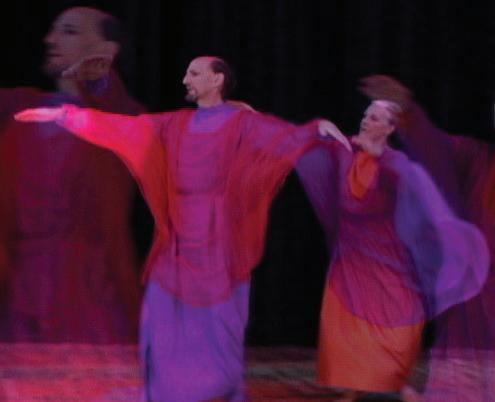
The Physiology of Eurythmy Therapy, Hans-Broder von Laue and Elke E. von Laue, Floris, 2010, 123 pgs.
The authors, a physician and a nurse/ eurythmist, have been teaching therapeutic eurythmy for many years. This book, addressed to physicians and eurythmists, proposes a “systematization” of Rudolf Steiner’s indications regarding therapeutic eurythmy. Their stated hope is that “[t]his work may lead to future studies into the efficacy of eurythmy therapy, and to clarify conceptually the therapeutic application of particular sequences of sounds.”
Anthroposophy—Festivals
How to Create an Advent Garden: A Community Celebration of Advent, Katherine Gaffey Lehman, Trafford, 2005, 24 pgs.
This self-published booklet, illustrated by the author’s children, presents a bit of background to the Advent garden, and detailed indications for creating and “hosting” such a celebration.
Anthroposophy—Medicine
The Anthroposophic Medical Movement: Responsibility, Structures, and Modes of Work, edited by Michaela Glöckler and Rolf Heine, Verlag am Goetheanum, 2010, 142 pgs.
This is a book about working together in anthroposophical initiatives, taking the Medical Section as example. For the leadership of the School of Spiritual Science, Rudolf Steiner thought in terms of a collegium made up of section leaders. The authors of this book characterize this as “an example of a style of leadership with a heart, in which the principles of individual responsibility,
collegial leadership and democratic participation are combined.” They state that the anthroposophical medical movement “has been working to develop a concept of leadership that enables ‘the peace-endowing principles of spiritual guidance and leadership to constructively complement the necessities of today’s working environment.’”
Anthroposophische Medizin: Integratives Konzept, Arzneimittel und Therapien, Anwendung in Klinik und Praxis (DVD), directed by Angelika Weber and Marvin Entholt, Hippocrates Media GmbH, Munich, 2005, 43 min. German, English, French, Spanish.
Produced and distributed by the Medical Section of the School for Spiritual Science at the Goetheanum, this film was first broadcast in 1993 on German, Austrian, and Swiss television. Despite its age it still has many important insights to offer for those interested in anthroposophic medicine, and is appropriate for sharing with a wider audience.
Anthroposophy—Music
The Scale of Twelve Fifths: A Handbook on the Middle Tuning. A Tuning Founded on the Tones C = 128 Hz, Gelis1 = 362.4 Hz and A1 = 432 Hz, Bevis Stevens and Maria Renold, Mercury Press, 2006, 37 pgs.
This practical handbook for those wishing to use the “middle tuning” for their instruments is based on Marian Renolds’s work, Intervals, Scales, Tones and the Con-
cert Pitch (also available from the library). Why a new tuning? The intention is to expand the expressive possibilities of music. According to the author, the middle tuning “speaks directly to the middle of the human being, to the heart. It has a sun-like, radiant quality.”
Anthroposophy—Science
An Optics of Visual Experience, Georg Maier, trans. Henry Saphir and John Barnes, Adonis Press, [1986], 222 pgs., illus.
“Acutely aware of the importance of sensory experience for deepening and enlivening our scientific understanding of nature, Georg Maier devoted much of his career as a physicist to studying the visual world. In this...book he guides us toward an experiential understanding of visual phenomena.”
Anthroposophy—Social
Becoming Human: A Social Task. The Threefold Social Order, Karl König, Richard Steel, editor, Floris, 2011, 183 pgs.
The lectures compiled here were given by Karl König, founder of the Camphill movement, less than two years before his death. They reflect his keen awareness of the need for changes in the social order, and his conviction that true social change must begin with individuals. König says that we can all practice social renewal daily.
Communities for Tomorrow, Richard Steel, editor, Floris, 2011, 154 pgs.
The contributions in this book by, among others, Cornelius Pietzner, Virginia Sease, and Peter Selg, were originally offered at a conference working toward a growing dialogue between people within and outside the Camphill movement (“Community Building in the Light of Michael”) that took place at the Goetheanum in 2009.
Anthroposophy—Waldorf Education
Trust and Wonder: A Waldorf Approach to Caring for Infants and Toddlers, Eldbjorg Gjessing Paulsen, WECAN, 2011, 118 pgs.
As the Waldorf movement be-
44 • being human
gins to serve ever-younger children and their families, books such as this are much needed. With great warmth, this book reflects the author’s years of experience in Norwegian and African kindergartens and focuses on child development, play, rhythms, and caretaking activities for children under age three.
Anthroposophy—Waldorf Education—Curative
Discovering Camphill: New Perspectives, Research and Developments, Robin Jackson, editor, Floris, 2011, 335 pgs.
“The lack of accessible literature about Camphill has contributed to an unjustified perception of Camphill as ‘closed’ communities which have little interest in communicating with ‘the outside world.’ This book seeks not only to bridge that gap, but to highlight the unique and inspiring qualities of Camphill communities.” The essays examine social political, and educational topics.
Agriculture
Cultivating an Ecological Conscience: Essays from a Farmer

Philosopher, Frederick L. Kirschenmann, University Press of Kentucky, 2010, 403 pgs.
Michael Pollan calls the author of this book “one of the wisest, sanest, most practical, and most trusted voices in the movement to reform the American food system.” Bill McKibben is also full of praise. Fred Kirschenmann is a third-generation farmer and also a professor; his essays on sustainability are compelling.
Embr o In Motion y
I believe that miso belongs to the highest class of medicines, those which help prevent disease and strengthen the body through continued usage. . . Some people speak of miso as a condiment, but miso brings out the flavor and nutritional value in all foods and helps the body to digest and assimilate whatever we eat. . .
—Dr. Shinichiro Akizuki, Director, St Francis Hospital, Nagasaki
www.southrivermiso.com




WOOD-FIRED HAND-CRAFTED MISO Nourishing Life for the Human Spirit since 1979
Understanding Ourselves as Embryo PortlandBranch.org


A residential community for adults with developmental challenges
4 DVD Set Available exclusively at
with Jaap van der Wal, PhD, MD
We are a Rudolf Steiner inspired residential community for and with adults with developmental challenges. Living in four extended-family households, forty people, some more challenged than others, share their lives, work and recreation within a context of care.
This seminar explores how human prenatal development expresses the essence of human spiritual unfoldment. Understanding the stages of embryological development provides a basis for therapeutic recognition of embryological forces in all later stages of life. This seminar is a rare opportunity to hear a world authority on modern embryology through a unique synthesis of scientific and spiritual principles.



Daily contact with nature and the arts, meaningful and productive work in our homes, gardens and craft studios, and the many cultural and recreational activities provided, create a rich and full life.
• COMMUNITY SPIRIT
• THE ARTS
• MEANINGFUL WORK •
• RECREATION •
For information regarding placement possibilities, staff, apprentice or volunteer positions available, or if you wish to support our work, please contact us at:
PO Box 137 • Temple, NH • 03084 603-878-4796 • e-mail: lukas@monad.net
lukascommunity.org

45 • being human
•
•
unpasteurized probiotic certified organic SOUTH RIVER MISO COMPANY C onway , M assa C husetts 01341 • (413) 369-4057
centerpoint WINTER 2011-2012
ANTHROPOSOPHY NYC
LECTURES, WORKSHOPS, ART EXHIBITS, FESTIVALS, STUDY GROUPS
RUDOLF STEINER BOOKSTORE
Works of Rudolf Steiner and many others
Spiritual research, Waldorf education, personal growth, Goethean science, Biodynamic agriculture, holistic therapies, the arts, and more www.asnyc.org
Dec 26 – Jan 6, nightly at 7pmThe Holy Nights & Epiphany/Three Kings Day Festival Celebration (Jan 6)
Jan 18, Wed 7pm - David Anderson: Evolution of Religions in World History:
“Egypto-Chaldean Epoch”
(2/15: “The Greeks”; 3/14: “The Romans”)
Jan 21, Sat 1pm - Open Saturday
Jan 22, Sun 1–4pm - Phoebe Alexander: Painting a Tree Through the Seasons, “Winter Tree “

Jan 23, Mon 7pm - Linda Larson: Eurythmy Workshop (monthly: also 2/27, 3/12)

Feb 3, Fri 7pm - Monthly Member’s Evening (also 3/2, 4/6)
Feb 4, Sat 7pm - Dorothy Emmerson & Fred Dennehy: AR Gurney’s Pulitzer-nominated play “Love Letters”
Feb 18, Sat 1pm - Open Saturday: Brigitte Buss, artistic workshop: veil painting on moist paper
Feb 19, Sun 5pm - Art Opening: Melania Levitsky & Melania Freeburn
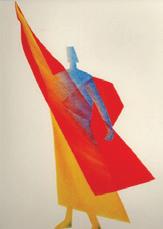
Mar 3, Sat 7pm - Eugene Schwartz: “Auditioning for Antichrist: Part 2, Woodrow Wilson” (Part 3 on 4/14)
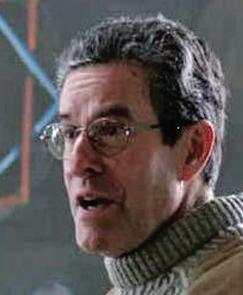
Mar 10, Sat - Barbara Renold, workshop on The Soul’s Awakening, Rudolf Steiner’s second mystery drama
CELEBRATING EASTER - Phoebe Alexander
Mar 25, Sun 2–5pm - Tissue Blossom Flower Making
April 1, Sun 2–5pm - Easter Egg Coloring
April 8, Sun 2–5pm - Easter Community Celebration
the New York Branch of the Anthroposophical Society in America 138 West 15th Street, NY, NY 10011 (212) 242-8945


Upcoming issue focuses including: EMERGENCY PREPAREDNESS, THE TEETH, 2012, REDEMPTION OF WORK, GENETICALLY MODIFIED FOODS, INFLAMMATION
Subscriptions available in printed form or downloadable PDF format. 1 Year: $20, 2 Years: $30, Yearly e-subscriptions: $15.
Illuminating Anthroposophy
forÊaÊfutureÊworthyÊofÊtheÊhumanÊbeing
CLASSICS FROM THE Robert McDermott series editor
Alongside the basic books, these “Classics” collections explore the tremendous cultural and social innovations of anthroposophy and its contemporary development in North America.
www.Lilipoh.com or call 610-917-0792 to order
a FANTASTIC INDEPENDENT MAGAZINE, BRIMMING with ORIGINAL, WORTHWHILE TOPICS Special Boxed Set Edition – receive all 10 volumes for $100. Individual volumes available at $15 each • All pricing includes shipping & handling Order online at www.anthroposophy.org • 734.662.9355 or information@anthroposophy.org
Visit
SUPPORT
Meeting Rudolf Steiner • Anthroposophy & Imagination • Revisioning Society &
Mani & Service • Meeting Anthroposophy • Novalis • Science & Anthroposophy Waldorf Education • Art & Anthroposophy • Meditation & Spiritual Perception
Culture
2012 Renewal Courses
Week I: June 24 – 29 • Week II: July 1 – 6
Renewal Courses for Waldorf teachers and administrators––both new and experienced––along with parents and trustees, as well as artists and thinkers seeking to deepen their lives through anthroposophy.

“Body, Soul, and Spirit: Dialogues with the Divine” with Dennis Klocek
“Illness of Cancer: The Living Forces and the Soul Experiences
Near the Threshhold” with Hans-Broder von Laue, MD
“The Mystical Heart of Abraham” with Christopher Bamford and other courses with Christof Wiechert • Georg Locher • Iris Sullivan • Regine Kurek
Linda Larson • Aonghus Gordon & Ruskin Mill Craftsmen
Evenings include: Lectures, Artistic Soirées & New England Contra Dance
Program sponsored by Center for Anthroposophy, Wilton, New Hampshire Karine Munk Finser, Coordinator of Renewal Courses 603-654-2566 • info@centerforanthroposophy.org
www.centerforanthroposophy.org
July 1 – 28: Waldorf High School Teacher Education Program
Douglas Gerwin, Director
Three-summers program specializing in Arts/Art History
• Biology
• English
History
• Math
• Physics & Chemistry
• Pedagogical Eurythmy
We are committed to the transformation of the whole food system, from farm to table, drawing inspiration from the spiritual-scientific insights of Rudolf Steiner, from which a holistic form of organic farming called biodynamics has been developed that continues to grow and evolve around the world
Help us grow the Food Revolution New Member Special Join now for only $30 ($15 off regular membership price) 4 issues of Biodynamics 10% off book purchases Discounts on events www.biodynamics.com/join.html BIODYNAMIC FARMING AND GARDENING ASSOCIATION
www.biodynamics.com
Ad for Evolving News - 1/2 page:Layout 1 1/11/11 12:21 PM Page 1
“Parsifal Awakening”
–Painting by Karine Munk Finser
New! Deepening Anthroposophy


Winter/Spring Semester, January – May 2012

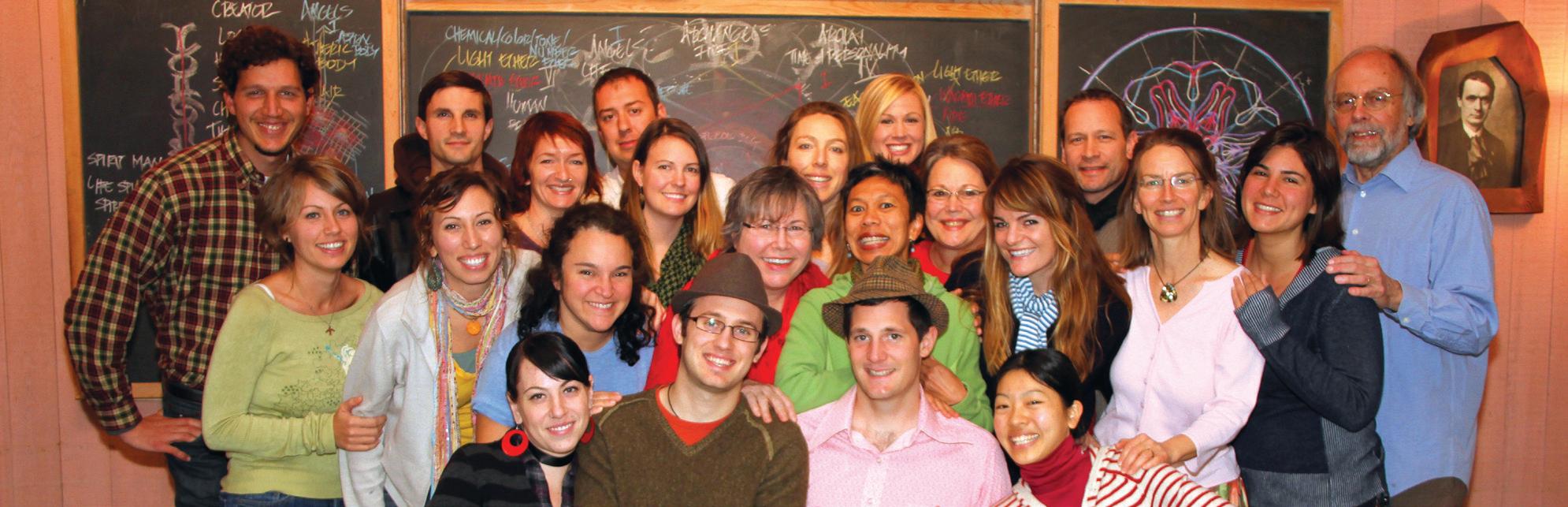
The second semester of our Foundation Program
This unique new offering will guide seekers wishing to penetrate more deeply into the esoteric core of anthroposophy. Those familiar with the basic books of Rudolf Steiner may enroll in this 3½ day per week, 14-week program of discovery and selftransformation. A part-time option is offered as 3-week intensives.
e Goetheanum Cupola
Motifs of Rudolf Steiner
Paintings by Gerard Wagner
Foreword Sergei O. Proko e
Translated by Peter Stebbing
ISBN: 9780880107372, 248 pages, $50
Illustrated in full color
Gerard Wagner’s paintings of Rudolf Steiner’s Goetheanum cupola sketches bring these works to a wide audience that would otherwise have little access to or knowledge of those representations of Steiner’s artistic spiritual vision contained in the rst Goetheanum. Rudolf Steiner’s lecture on October 25, 1914, and his lecture on the paintings of the small cupola on January 25, 1920, are published in English here for the rst time, along with photographs from 1922. Also included are the little-known colored etchings of the Goetheanum window motifs made by Assya Turgenie with Rudolf Steiner, as well as other centrally important contributions to an understanding of this new direction in art. ough the main emphasis is on visual examples, the book achieves something more than simply cataloging these works of art. e book conveys, too, a sense of the artistic process itself. us, Gerard Wagner’s observations here have a special relevance. In addition to the two lectures by Rudolf Steiner and the paintings by Gerard Wagner—in full color— e Goetheanum Cupola Motifs of Rudolf Steiner presents essays from Peter Stebbing, Louise Clason, Assya Turgenie , and Gerard Wagner.
Our Dead Memorial, Funeral, & Cremation


Addresses 1906—1924 (CW 261)


Rudolf Steiner
Introduction by Christopher Bamford
Translated by Sabine Seiler
ISBN: 9780880106269, 448 pages, $30
is book collects Rudolf Steiner’s memorial, funeral, and cremation addresses, as well as a sampling of prayers and meditations for the dead. e context, intimate and sober with grief, means that his intent is quite other than if he had been speaking in a lecture hall. His primary concerns—while based on spiritual-scienti c research and, in some cases, the actual living expression of it in real time—are ethical and existential and, at the same time, ceremonial and communal. He stands as speaker before and for the living—relations, friends, and community members— and for the one who has died, even, in a way, for the greater “cloud” of all the dead. With his feet planted rmly on the Earth, Steiner moves seamlessly between the sensory-physical, embodied world and the invisible, suprasensory, discarnate one. Speaking in an intimate, personal manner to both worlds, he unites the living and the dead with words that are both practical and healing. Shining through this book is Rudolf Steiner’s love for every human being and the whole of humanity as a single being.
“Our highest endeavor must be to develop
free
human beings who are able, of themselves, to impart meaning and purpose to their lives.”
—Rudolf Steiner
Visit www.steinercollege.edu or call 916-961-8727 extension 100 for more information about our programs, workshops, and events. 9200 Fair Oaks Blvd, Fair Oaks, California 916-961-8727 • Bookstore: 916-961-8729 SteinerBooks 703.661.1594 www.steinerbooks.org
