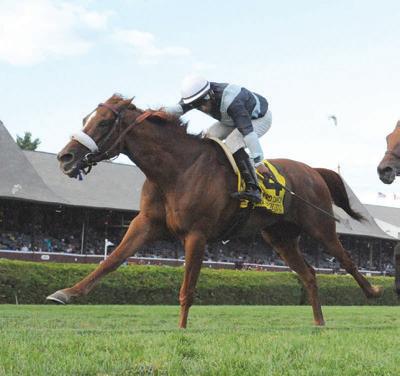
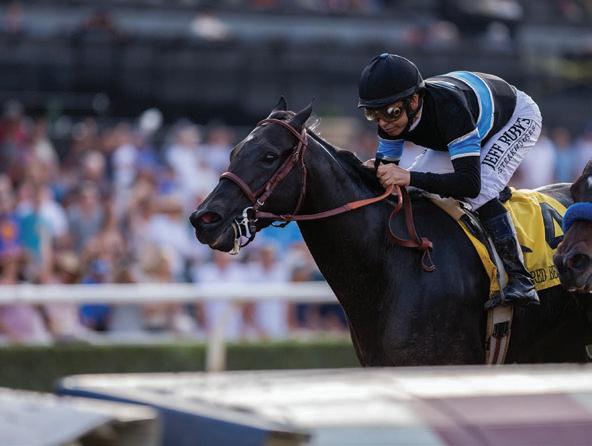
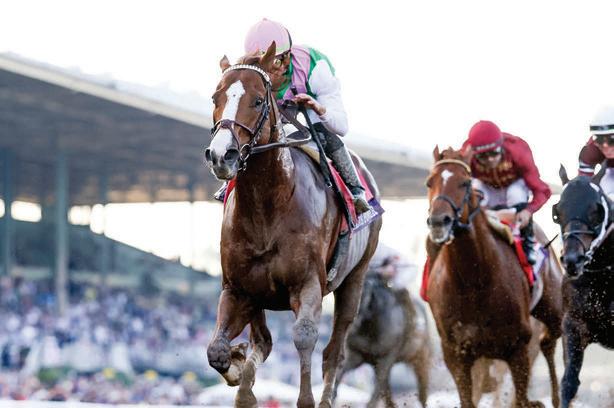
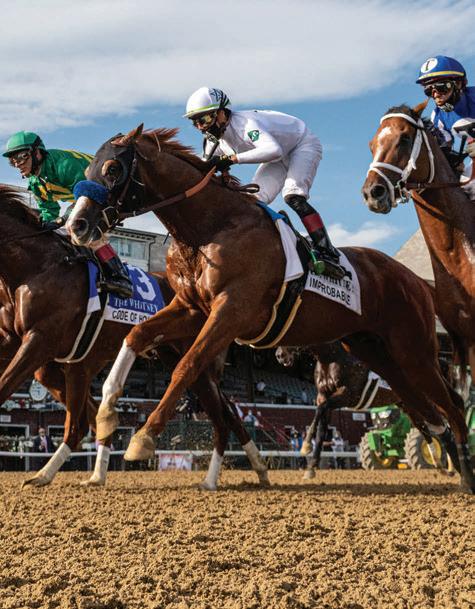
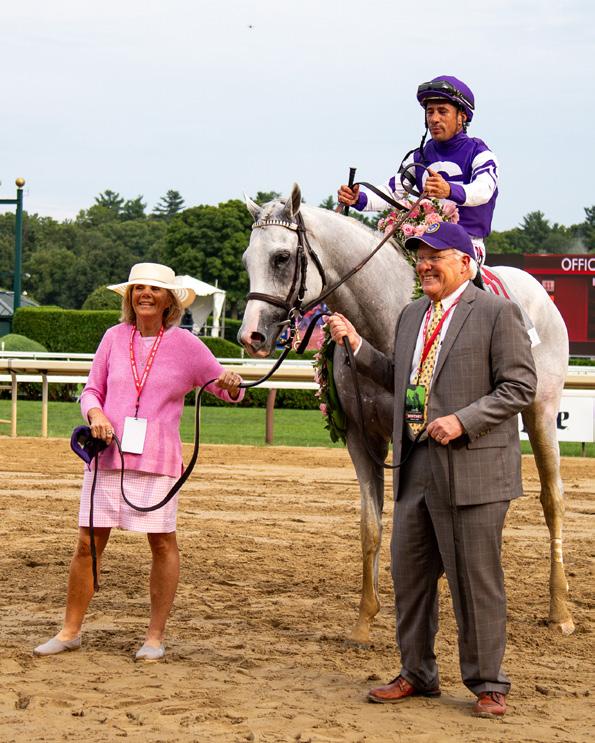
North American Trainer - Breeders' Cup '24 > Pegasus '25 - issue 74
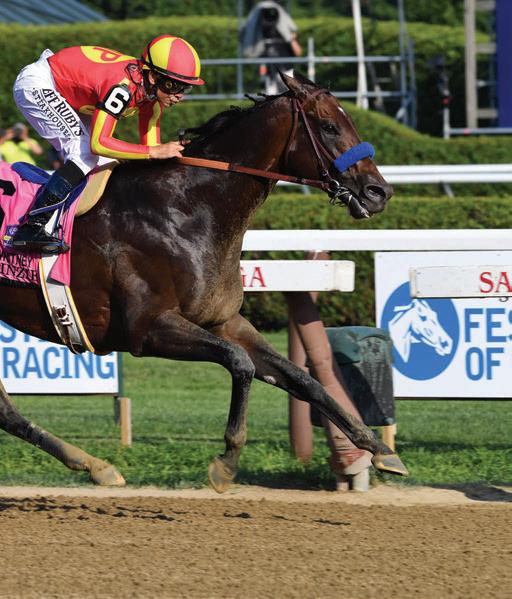
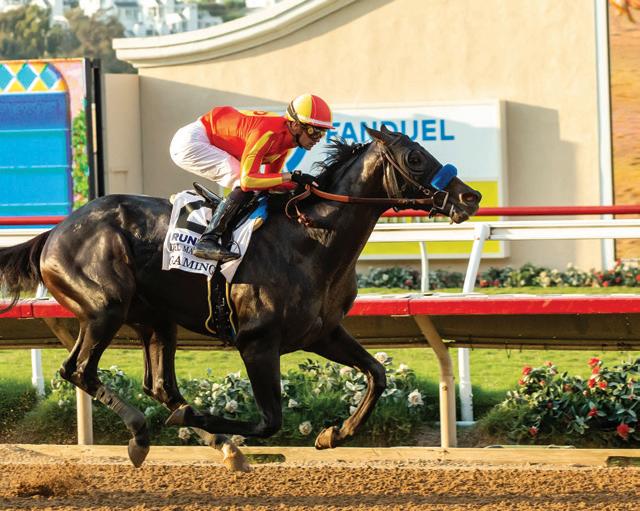
The veteran trainer planning for the Breeders’ Cup with California-bred gelding and sprint sensation
The Chosen Vron
ASSESSING COMMON LIGAMENT INJURIES
How to diagnose and treat proximal suspensory desmitis
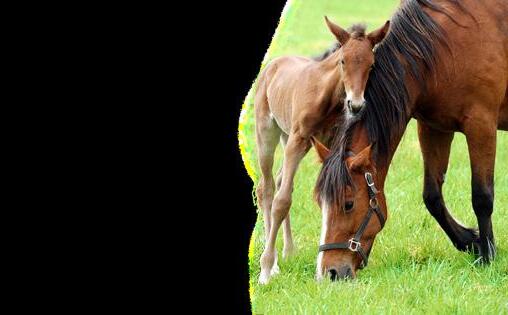
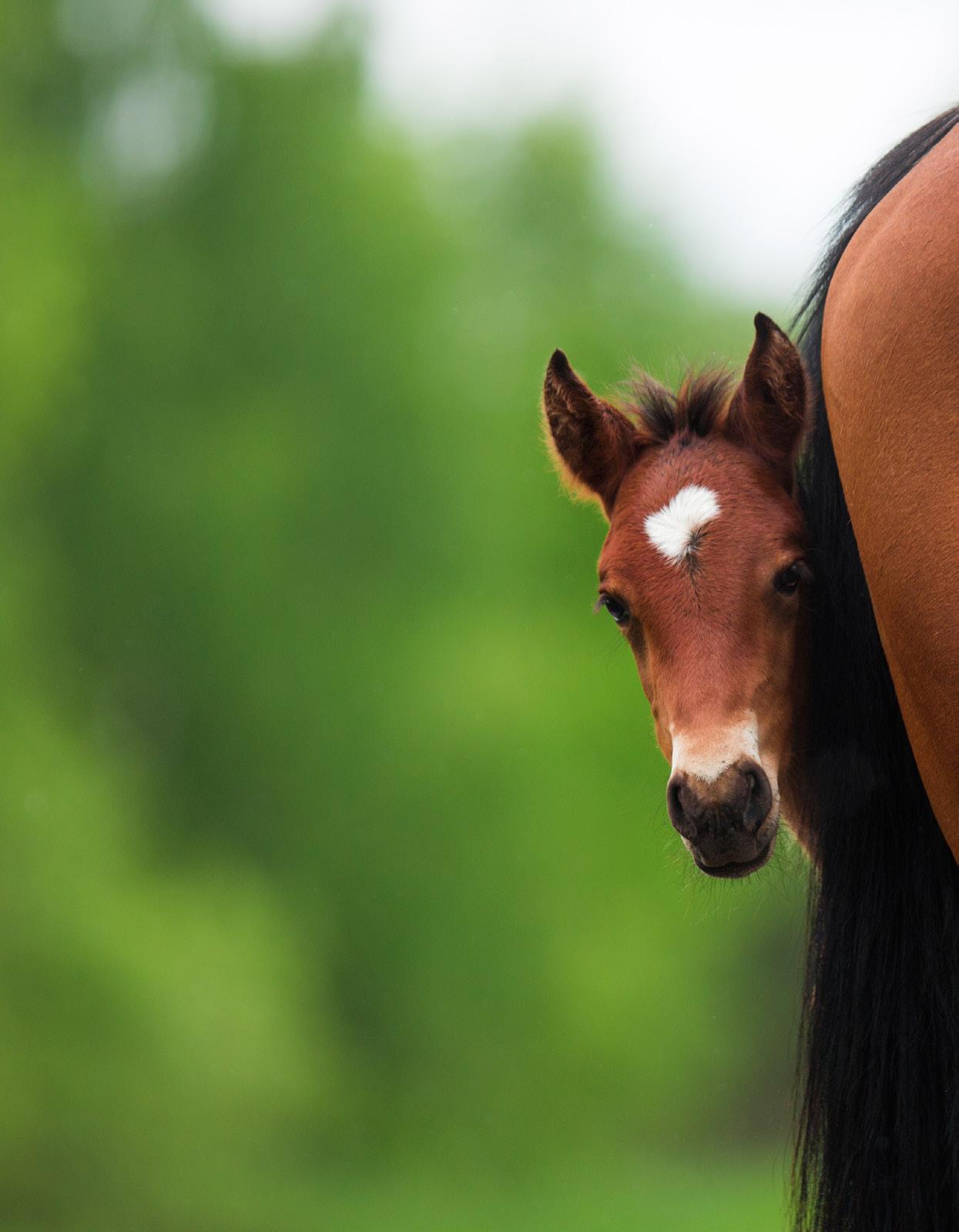
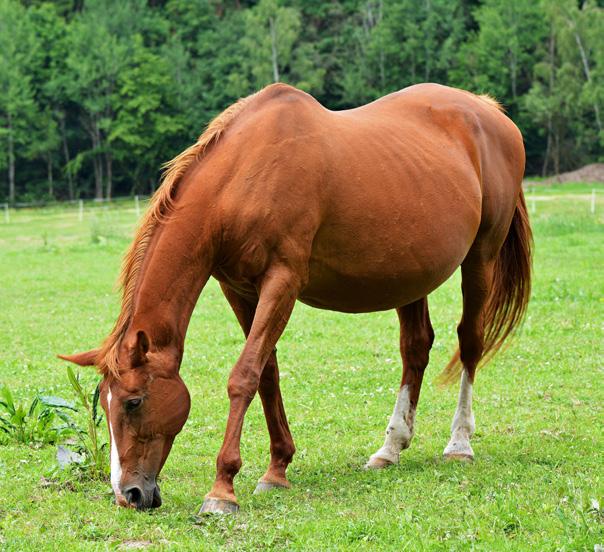
WHY IS MY MARE NOT PREGNANT?
Improving the odds for successful breeding
PERFORMANCE GENETICS
Embracing a scientific approach to training
GILES ANDERSON PUBLISHER’S OPINION
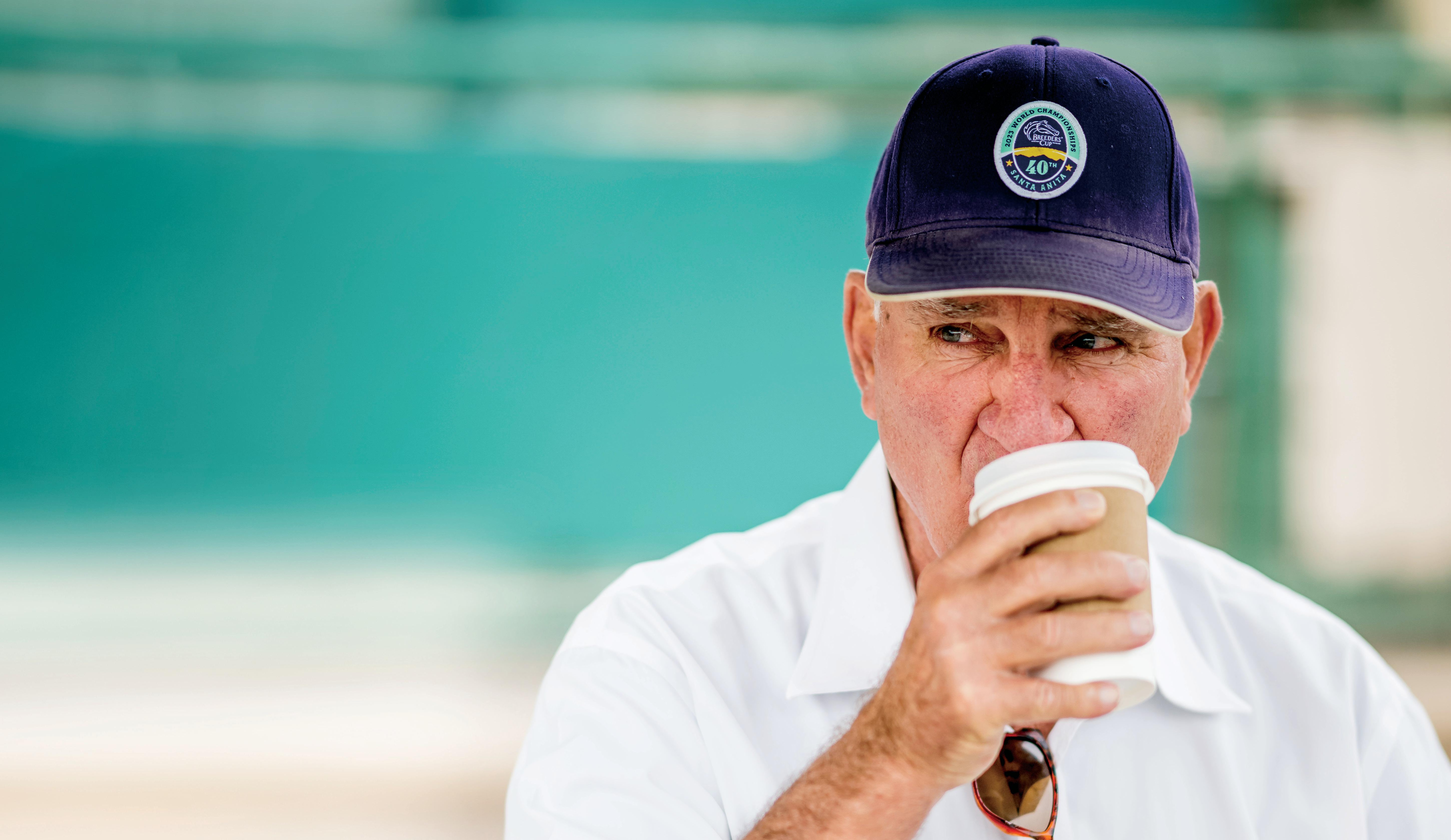
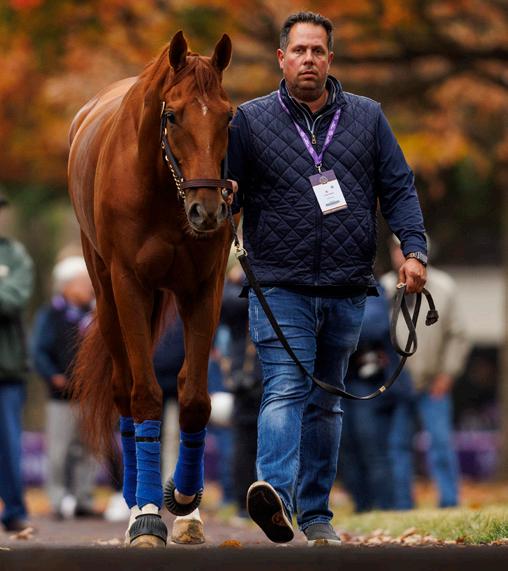
I’ve chosen Eric Kruljac as our cover profile trainer. His star horse is a California-bred gelding pointing towards the race of the year for sprinters, the Breeders’ Cup Sprint.
Yes, at this time of year we normally feature a trainer who has a contender for the Breeders’ Cup Classic.
But in Kruljac we have a gem of a story. He has developed The Chosen Vron over time like a fine bottle of Californian red wine.
As Ed Golden tells us, The Chosen Vron, has won 19 of 25 starts including streaks of eight and six in a row, highlighted by back-to-back Gr.1 wins against open company in the 2023 Bing Crosby Stakes and again last July 27 at Del Mar.
Only two of his 25 races were less than incipient, finishing fifth each time while uncharacteristically failing to make or challenge for the lead.
But what does it take to get a horse to compete with consistency at such a high level? Well for the answer, we turn to Kruljac who tells us that “you have to listen to your horse, especially early on in their career. We had to stop on him after we had run a couple times, then we gave him extended time off, and now we’re being paid for it in bushels, because we gave the horse a chance to get over his problems and mature”.
It’s now been a few years since we started a feature in the magazine called ‘Graded Stakes Winning Owners’.
But do you know what the common theme has been in all the profiles we’ve written?
It’s this line “my dad took me to the track when I was young, so I got the bug”. I resonate with that line and so will many of you all. So does John Sondereker, who owns the majority of The Chosen Vrom.
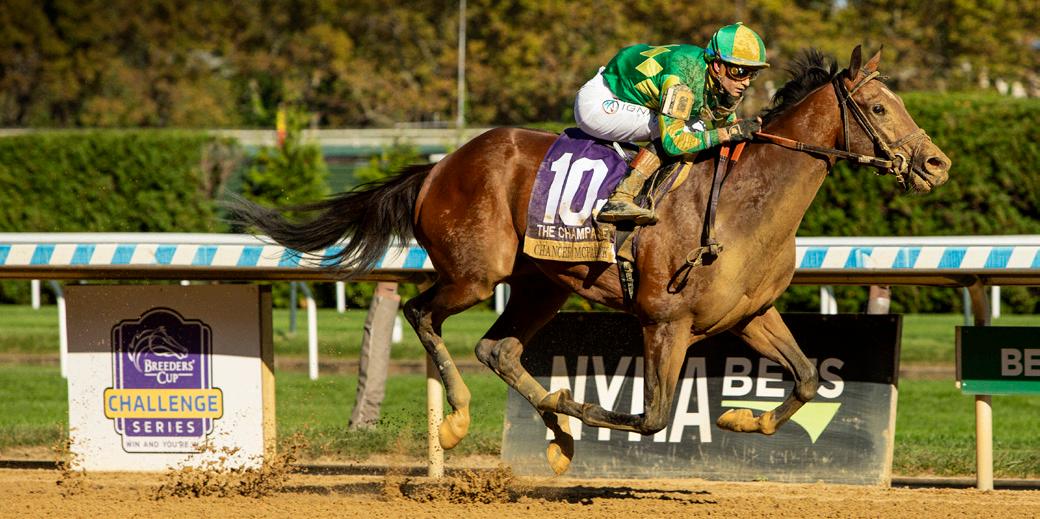
So do our profiled owners in Marsha Naify, so does Sean Flanagan who owns Chancer McPatrick, he recounts; “my folks used to go to Rockingham Park. I was four or five. I remember many Labor Days at Rockingham with five races in the morning, lunch, then nine more in the afternoon. It was just a great place”.
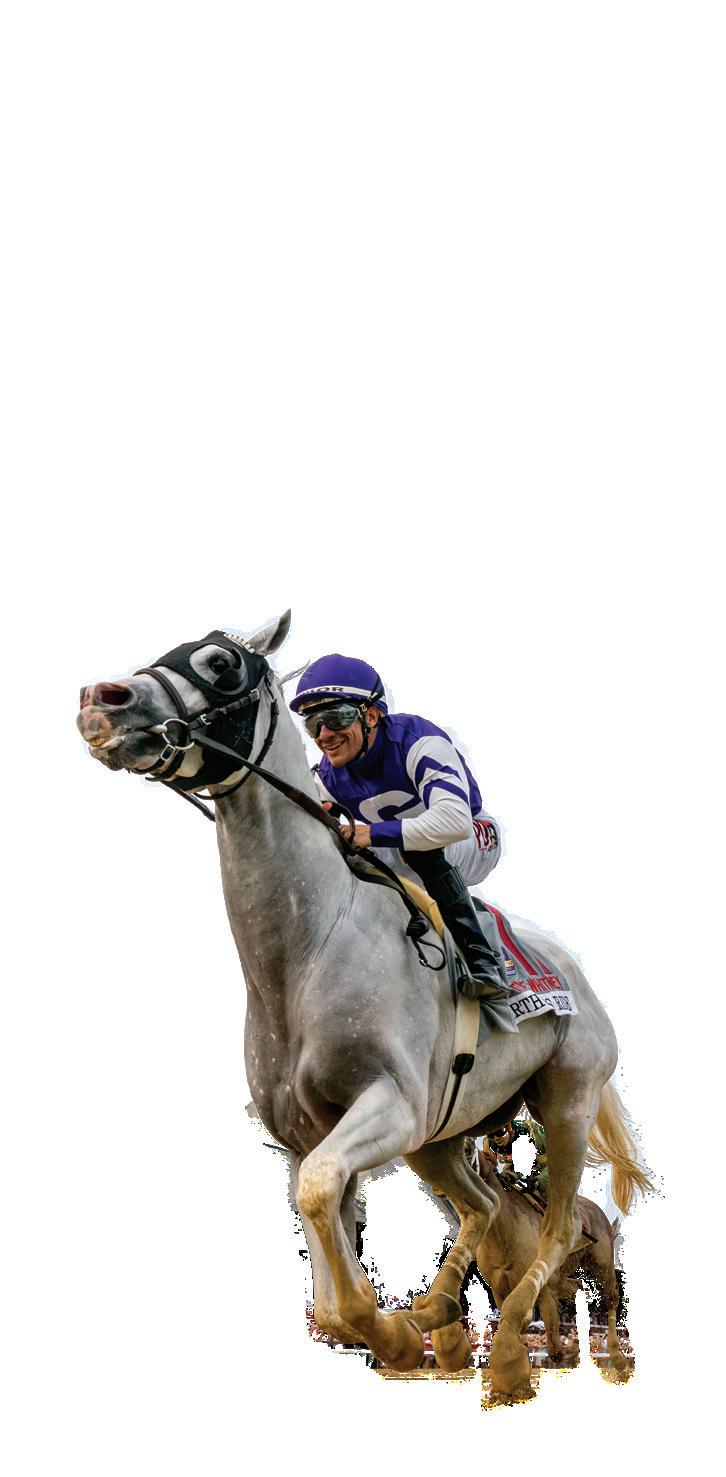
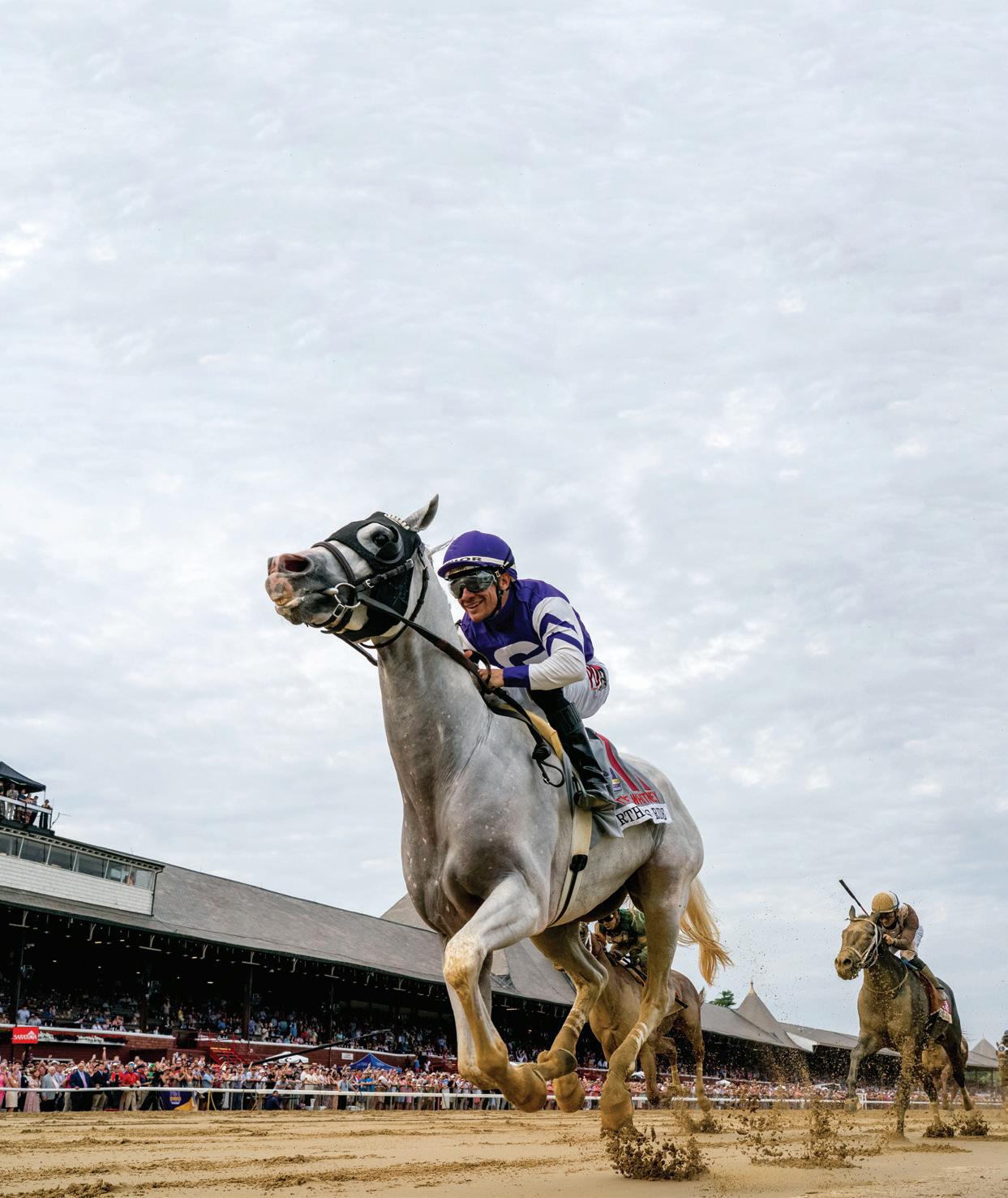
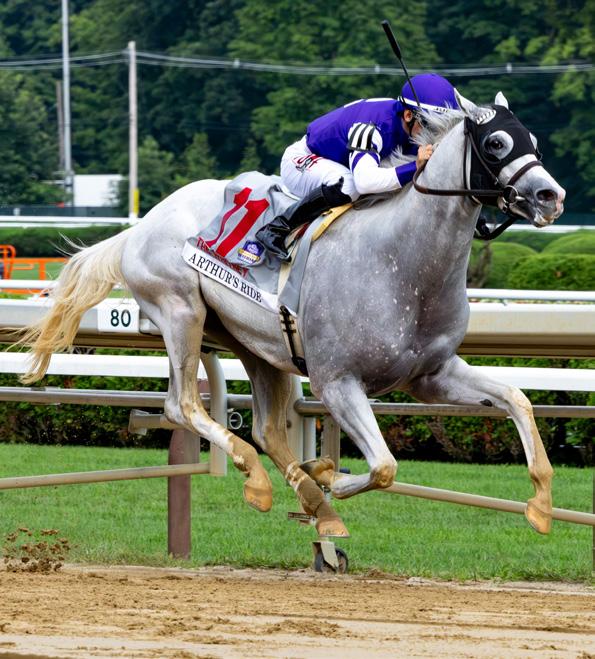
Then there is little doubt where Karl Glassman, owner of Arthur’s Ride got his love of racing from, his father, “the horse is named after my dad.” Enough said.
So many marketing dollars are spent to chase the new investor but perhaps we should be looking back to those who interacted with the sport at a young age - “once you experience the thrill of it, you’ll never forget it”. Could that be racing’s new ‘tagline’?
Good luck wherever racing takes you this winter!
CONTRIBUTORS
Editorial Director/Publisher & Advertising Sales
Giles Anderson (859) 242-5025
Sub-Editors
Lauren Godfray & Nico Jeeves
Advert Production, Circulation/Website
Lauren Godfray (1 888-218-4430)
Cover Photograph Eclipse Sportswire
Trainer Magazine is published by Anderson & Co Publishing Ltd.
Trainer Magazine is the official magazine of the California Thoroughbred Trainers. It is distributed to all ‘Trainer’ members of the Thoroughbred Horsemen’s Association and all members of the Consignors and Commercial Breeders Association, the Maryland Horse Breeders Association, the Pennsylvania Horse Breeders Association, the Alberta Thoroughbred Owners & Breeders Association and the Virginia Thoroughbred Association.
Alan F. Balch was hired as the executive director of the California Thoroughbred Trainers in April 2010. His professional career in racing began at Santa Anita in 1971, where he advanced to the position of senior vice president of marketing and assistant general manager, and was in charge of the Olympic Games Equestrian Events in Los Angeles in 1984. He retired in the early 90s to become volunteer president of the National Equestrian Federation of the USA, as well as of the National Horse Show of Madison Square Garden. He remains president of USA Equestrian Trust, Inc.
Jackie Bellamy-Zions has been Equine Guelph’s communications manager for the past ten years, Jackie has over 30 years of experience in the horse industry in the capacity of coach, trainer, stable manager, competitor, judge and journalist.
Peter Bollen is the founder and head nutritionist of Cavalor. In 1989, Peter completed his thesis, “Nutrition of the Sport Horse,” and was hired by a Belgian company whose managing director shared two of Peter’s passions: equitation and horse nutrition. Together they decided to launch a line of products dedicated to the nutritional needs of high-performance horses. Throughout the next two decades, Cavalor built an international reputation as the world leader in equine nutrition for high-performance horses.
Ed Golden retired in December 2023 from Santa Anita’s Publicity Department after three decades during which he authored the track’s Stable Notes which were acclaimed as “the best in racing” by his peers. A native Philadelphian, he earned Eclipse Award honorable mention while with the Philadelphia Daily News and has written for The Blood-Horse and USA Today
Bill Heller is an Eclipse Award-winning author who published his 27th book, Fred Hooper – The Extraordinary Life of a Thoroughbred Legend. His other biographies include Hall of Fame jockeys Ron Turcotte, Randy Romero and José Santos. Bill and his wife Marianne live near Gulfstream Park.
Connor Parsons DipWCF qualified as a farrier in 2012 after completing his apprenticeship in Surrey, England. After qualifying, he set up his own business, shoeing a wide range of horses using a variety of modern materials and working alongside well-regarded equine vets. In 2023, he graduated from Myerscough College, England after completing the DipHE Farriery course and plans to head back to complete the BSc Farrier Degree.
Holly Robilliard is a published author and scientist, with a passion for equine health. For the past two years she has worked at Etalon Equine Genetics, helping to revolutionize the way we breed and train horses.
Jordin Rosser is the current IT Coordinator at Ocala Breeders’ Sales. With a newfound love of racehorses, she is ready to mix her passions of IT with the horse racing world and share all of the findings.
Peter J. Sacopulos is a partner in the law firm of Sacopulos, Johnson & Sacopulos in Terre Haute, Indiana where he represents clients in a wide range of equine matters. He is a member of the American College of Equine Counsel and serves on the Board of the Indiana Thoroughbred Owners and Breeders Association and Indiana Thoroughbred Breed Development Advisory Committee. Peter has written extensively on equine law issues and is a frequent speaker at equine conferences.
Trainer Magazine (ISSN 17580293) is published 4 times a year: February, April, July and October by Anderson & Co Publishing and distributed in the USA by Modern Litho | Brown Printing, 6009 Stertzer Road, Jefferson City, MO 65101. Periodicals postage paid at Jefferson City, MO, and additional mailing offices.
POSTMASTER:
Send address changes to Trainer Magazine, Anderson & Co Publishing, PO Box 13248, Lexington, KY 40583-3248.
CONTENTS 30
F E ATURES
08 Eric Kruljac eyeing up the cup
Ed Golden profiles the veteran trainer planning for the Breeders’ Cup with California-bred gelding and sprint sensation The Chosen Vron.
22 Performance genetics
Holly Robilliard looks at how we can tailor training programs and racing strategies based on DNA to optimize performance.
30 Bloodstock Briefing
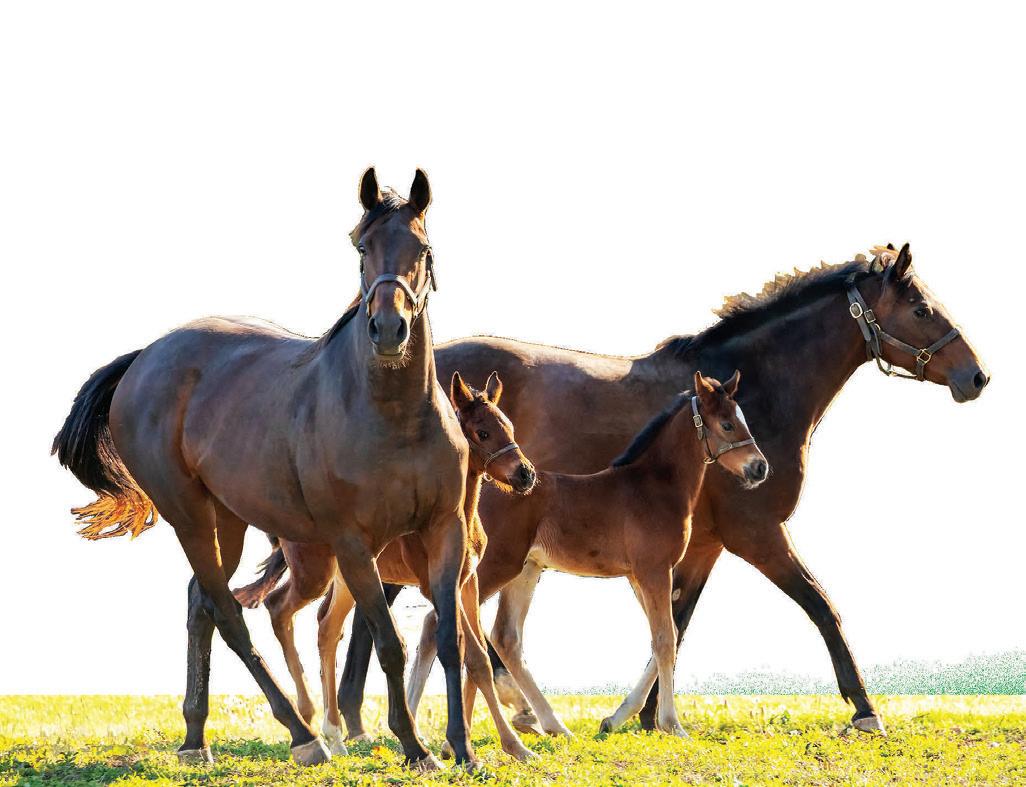
Jordin Rosser explores trends for the 2025 foaling season.
34 Why embryos can fail
Jackie Bellamy-Zions interviews Dr. Tracey Chenier on how we can improve the odds for successful breeding.
40 Proximal suspensory desmitis
Connor Parsons assesses the approaches to diagnosing and treating proximal suspensory desmitis from a small cohort of horses.
48 Going global
Bill Heller looks at how changes to medication rules in the U.S. have opened up a world of opportunity for international competition.
56 Graded stakes winning owners
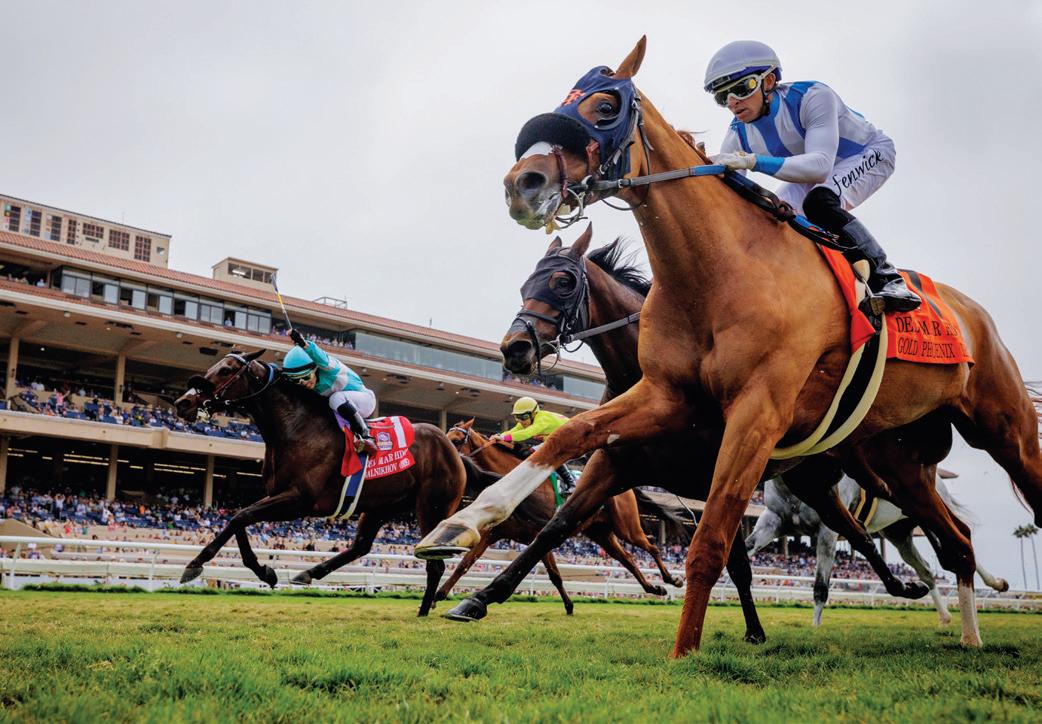
Bill Heller profiles owners with Breeders’ Cup contenders: Marsha Naify with Gold Phoenix pointing to the Breeders’ Cup Turf, Sean Flanagan with Chancer McPatrick pointing to the Breeders’ Cup Juvenile, and Karl Glassman with Arthur’s Ride pointing to the Breeders’ Cup Classic.
64 HISA update
Peter J. Sacopulos updates us on the implications of Federal Rule of Evidence 702 and the rules governing expert testimony pursuant to the Court of Arbitration for Sport.
70 For the love of the game
Bill Heller profiles three trainers: Justin Evans, Jeff Radosevich, and Tim Hamm. They are ranked in the Top 100 (by wins in 2023) but are not national names.
78 PA-Breds shine
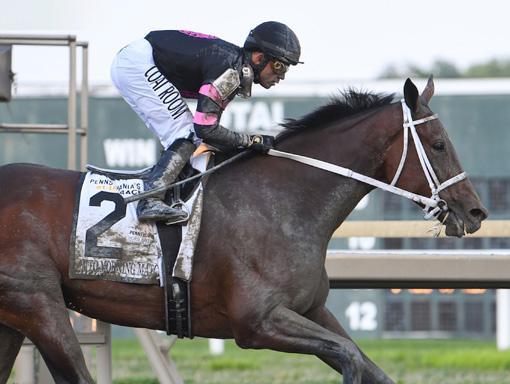
Averie Levanti reports on the 23rd annual Pennsylvania’s Day at the Races which took place at Parx Racing on Monday, August 26.
82 Role of the lymphatic system
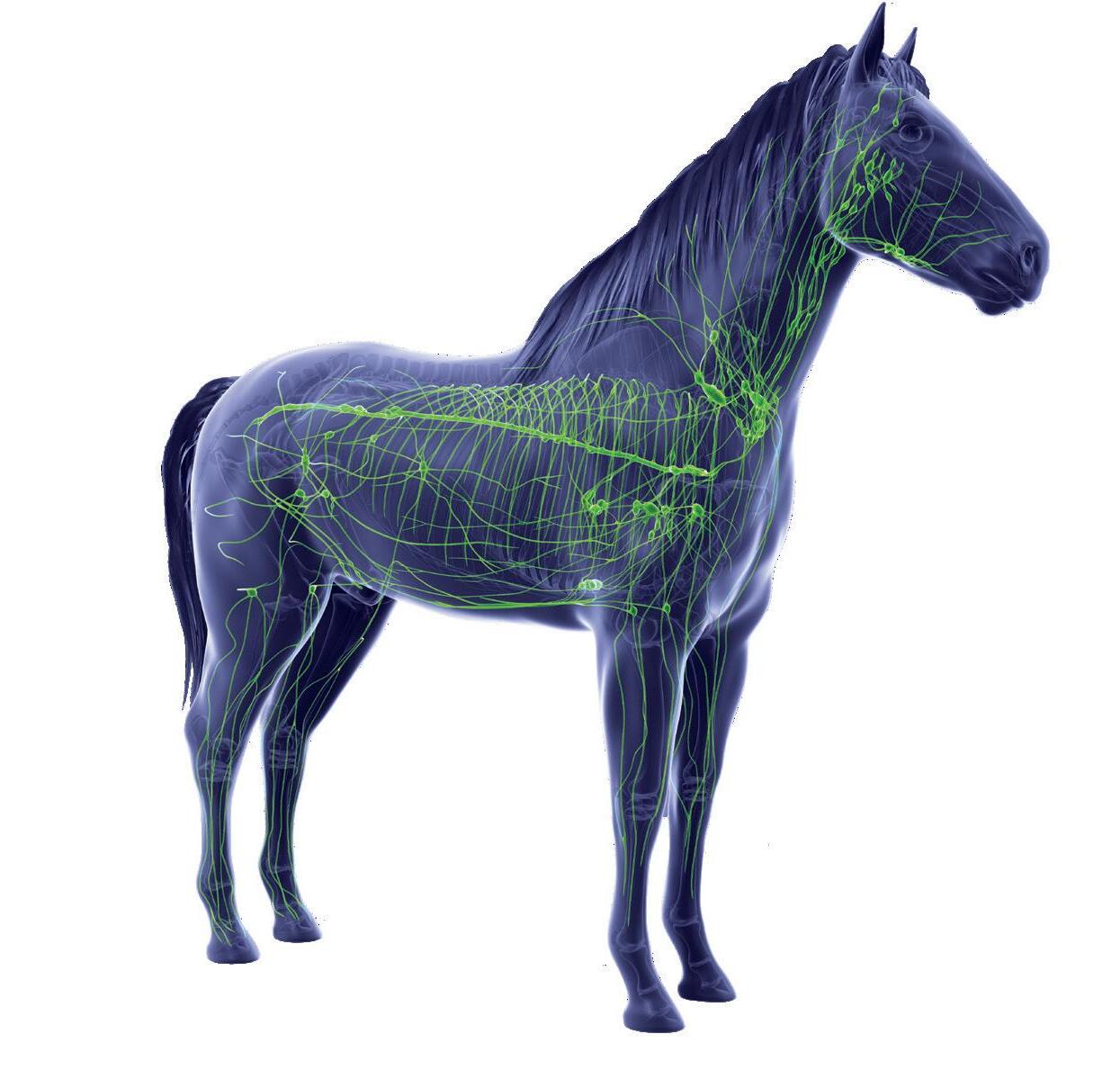
Peter Bollen, head nutritionist at Cavalor tells us why the lymphatic system is so important in the energy metabolism of the horse.
REGULARS
06 View from the CTT Alan Balch – Elite and not
86 #Soundbites
Bill Heller asks “How does the trainer responsibility rule affect you delegating authority to an assistant, exercise rider and/or groom?
Visit trainermagazine.com to download our current digital editions and access back issues of both European and North American Trainer.
ALAN F. BALCH
ELITE AND NOT
he first time I can remember thinking about “elites” in the horse world was in connection with preparing for the 1984 Los Angeles Olympic Equestrian Events, to be held at Santa Anita. And in the decade after that, when defining “elite” and “non-elite” became critically important in determining how non-racing equestrian sport would be governed in the United States.
TA leader of the Olympic Movement told me that tension between those two groups of athletes were at the root of most disputes in sport. I scoffed at that very thought, even though I didn’t then know what the word “scoff” even meant. After all, I reasoned, being a decidedly non-elite competitor myself, my admiration for the elites was unbounded; I knew that they knew they were all once non-elite themselves.
But I was wrong. Woefully wrong.
To be clear, let’s not have any stereotypes in what follows. All “elites” in any pursuit don’t necessarily think or act the same way; ditto those not-so-elite. And their definitions are fluid, too. Seabiscuit and John Henry, after all, lead an impressive list of “former claimers.” The list of former stakes runners is even longer. So, too, with comparable categories of humans?
While you’re pondering that, let’s turn to the pyramid, illustrated here as depicted on the back of the American buck. In all my Olympism years and after, this is the ubiquitous symbol in sport showing the tiny high-performance elite at the apex … everyone else in greater and greater less-elite numbers reaching to its foundation. Now to apply it to American racing. And ultimately to California racing.
Most of us have forgotten, or never knew, that the “Pattern” race system, of grading stakes, started in Europe in the early 1970s, only came to the USA in 1974, courtesy of TOBA (Thoroughbred Owners
and Breeders Association). All stakes are not of equal quality “black type” – in terms of horseflesh, purse, or importance to breeding. A method of sorting them was necessary, from non-graded, up in three more stages to the top, the most elite, Grade I. TOBA, using proven and mostly objective expertise, sets minimum purses for each level, and analyzes field-quality annually to adjust grades.
But the vast majority of American races, now totaling around 32,000 annually, are not graded stakes … only about 450 are, with about 100 at Grade I. The very apex of racing’s pyramid is tiny indeed. Elite.
So, what?
As American gaming has evolved over the last 30 years, the consequences for racing … and, particularly, California racing … have been dire. I vividly remember the head of Churchill Downs in the early 90s, Tom Meeker, addressing a conference in California, where he put forward a preliminary strategy for his company to engage heavily in non-racing alternative gaming initiatives. I was appalled. Wrongly. Again.
Think of the almost infinite number of bettable “outcomes” during a racing day at the track, not just on the races themselves but also on everything else, from objective numbers to colors to lengths to times to you-name-it.
I believed then (and still do) that racing as an industry should have been investing, for many years prior, in serious research and development: to broaden both the concept and definition of parimutuel wagering beyond its then-existing horizons. Adding fixed-odds races and a multitude of propositions and other bets, to compete with every type of game then available away from the track. Amending existing Racing Law to permit such gaming without serious limitation. Always preserving the race track as the
destination for and focus of legalized sports betting.
Since racing invented it centuries ago. “Marketing myopia” used to be a thing: the most famous example of it was what befell the railroad barons. Those myopic tycoons kept saying the railroad itself was their business, instead of transportation broadly defined – causing them to miss out on much greater wealth opportunities from every other more modern mode. Or even the first Tote company, which was distracted by making so much money from racing when it probably could have outdone IBM in what became “technology.”
But Churchill Downs, under evolving leadership, leveraged its monumental, nearly infinite brand value in multiple directions, and became a gaming juggernaut While preserving and enhancing its Kentucky home writ large. Have you paid attention to its stock price and market value over these last couple decades?!
American purses in New York, Kentucky, and Arkansas, particularly, have soared on the basis not just of connected casino and other gaming revenues, but also on Historical Horse Racing (HHR) machine income, which mimics slots. While we in California grapple with the opposite scenario.
To make matters much worse, 1/ST suddenly and peremptorily closed Golden Gate Fields – despite Northern California racing’s position as the foundation level of California’s historic pyramid of racing and breeding.
Since then, there have been further attempts - led by one entity - to impede every effort of California breeders and its northern community of owners and trainers to organize a new and independent circuit there.
That’s the “Eye of Providence” at the top of our American pyramid, as if to symbolize in this instance that even California racing’s elites and aristocrats will not long prosper without a broad and functional foundation. We all need each other. Any strategy for a rational way forward cannot and will not succeed without brainstorming, understanding, intellectual support, and commitment from both the non-elite and elite together .
Or are our California elites too afflicted with their own version of a selfish myopia, which comes with such great risks even and especially to themselves?
ERIC KRULJAC EYEING UP THE CUP
THE MASTERMIND BEHIND CALIFORNIA SPRINT SENSATION THE CHOSEN VRON & HIS ROAD TO THE 2024 BREEDERS’ CUP
Joseph Eric Kruljac might have been a contemporary of Dick Butkus save for a twist of both fate and knee, so instead of perhaps joining the Hall of Fame linebacker in the National Football League circa 1970, Kruljac became a Thoroughbred horse trainer.
It was an appropriate transition in waiting.
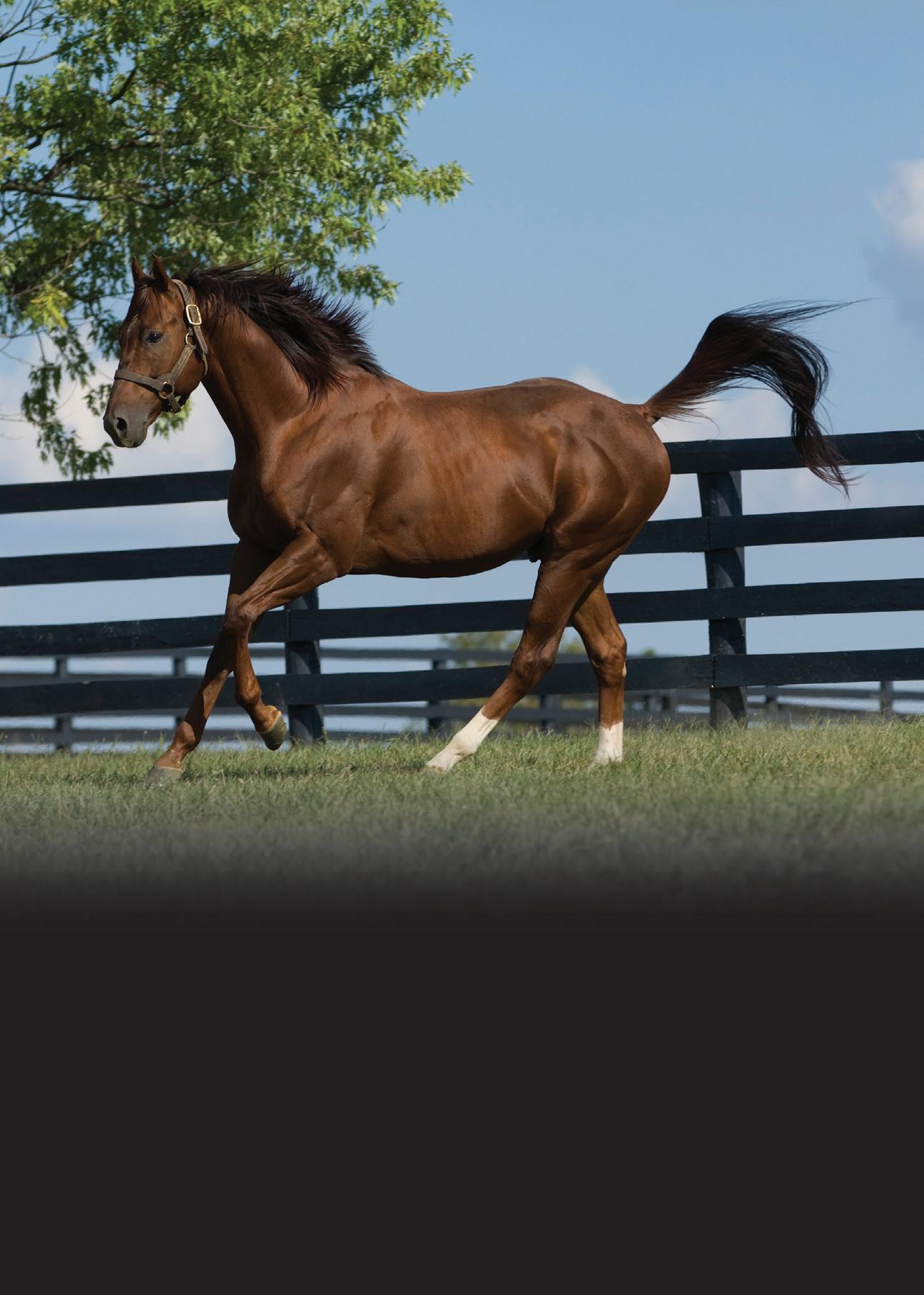
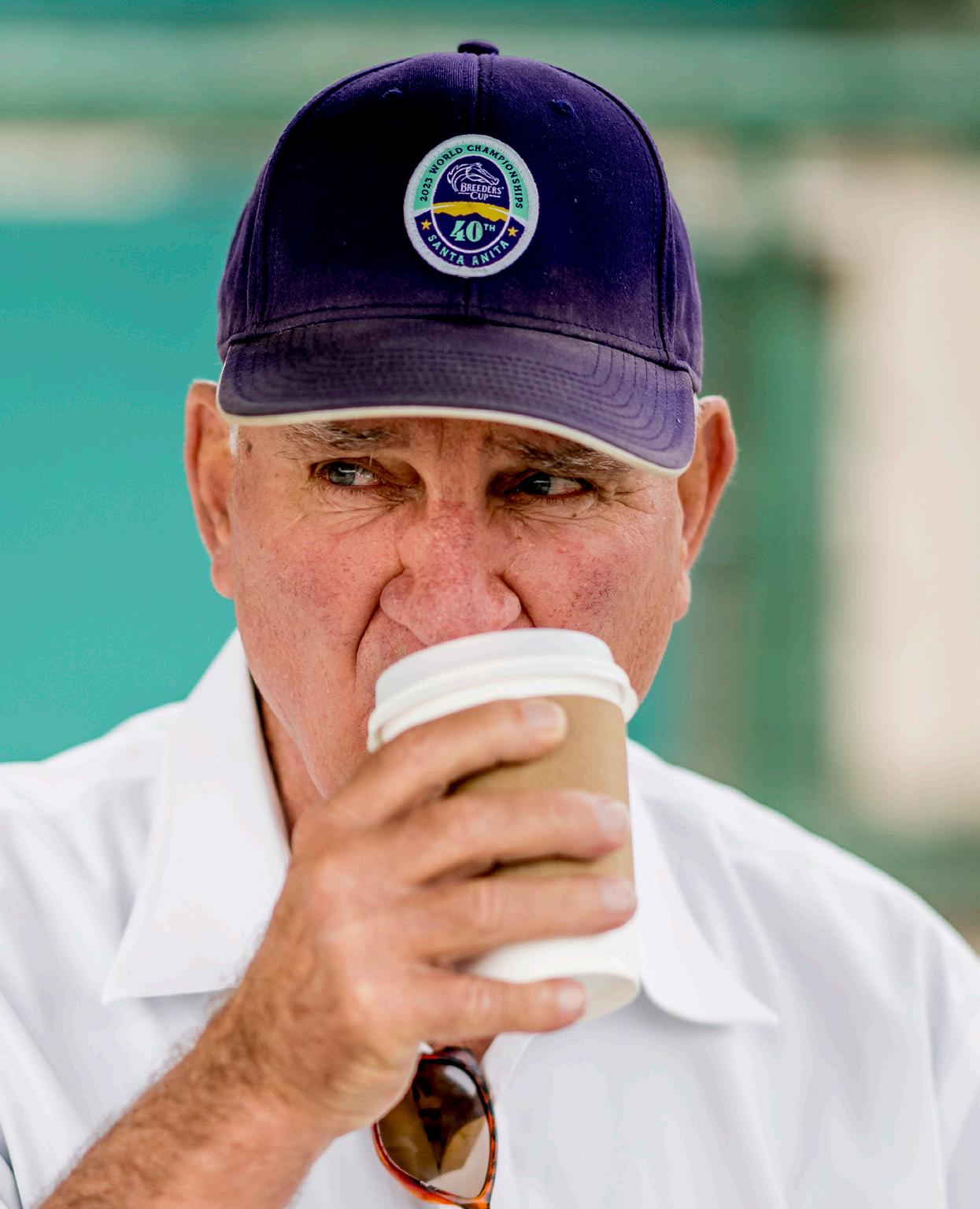
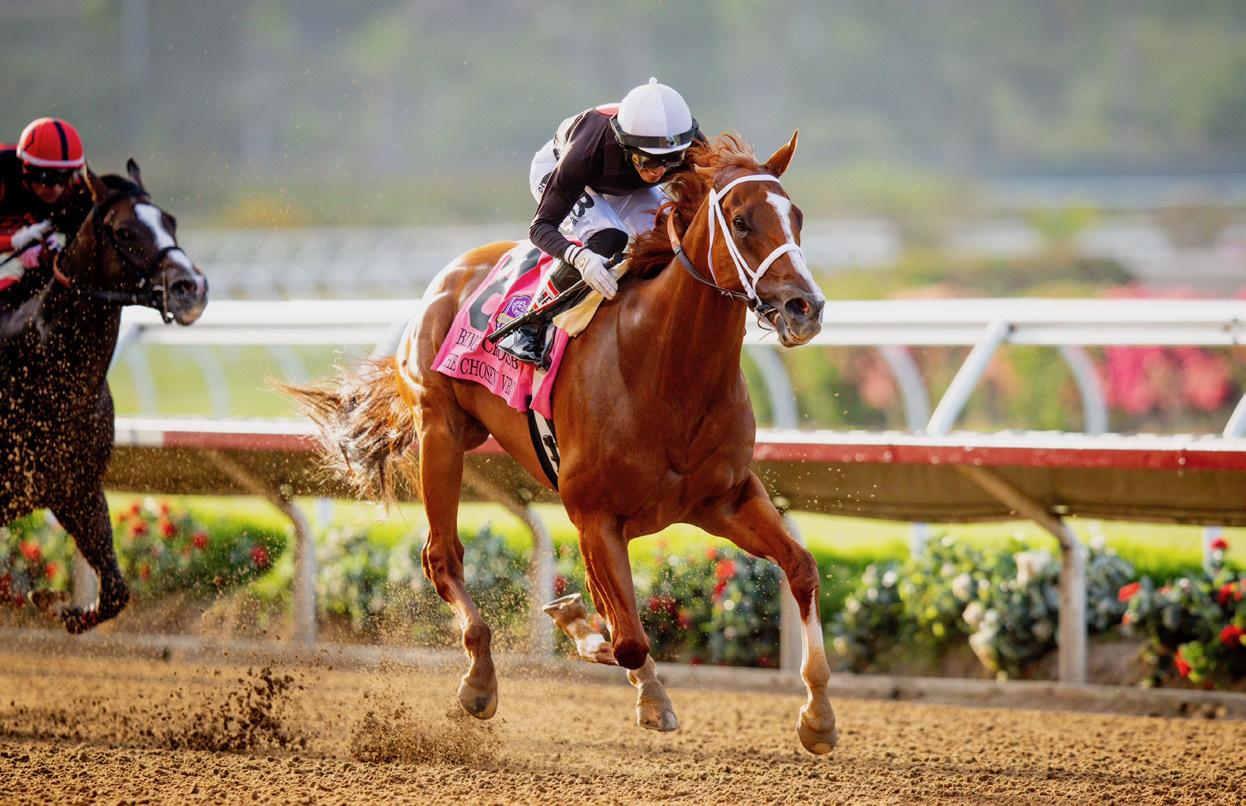
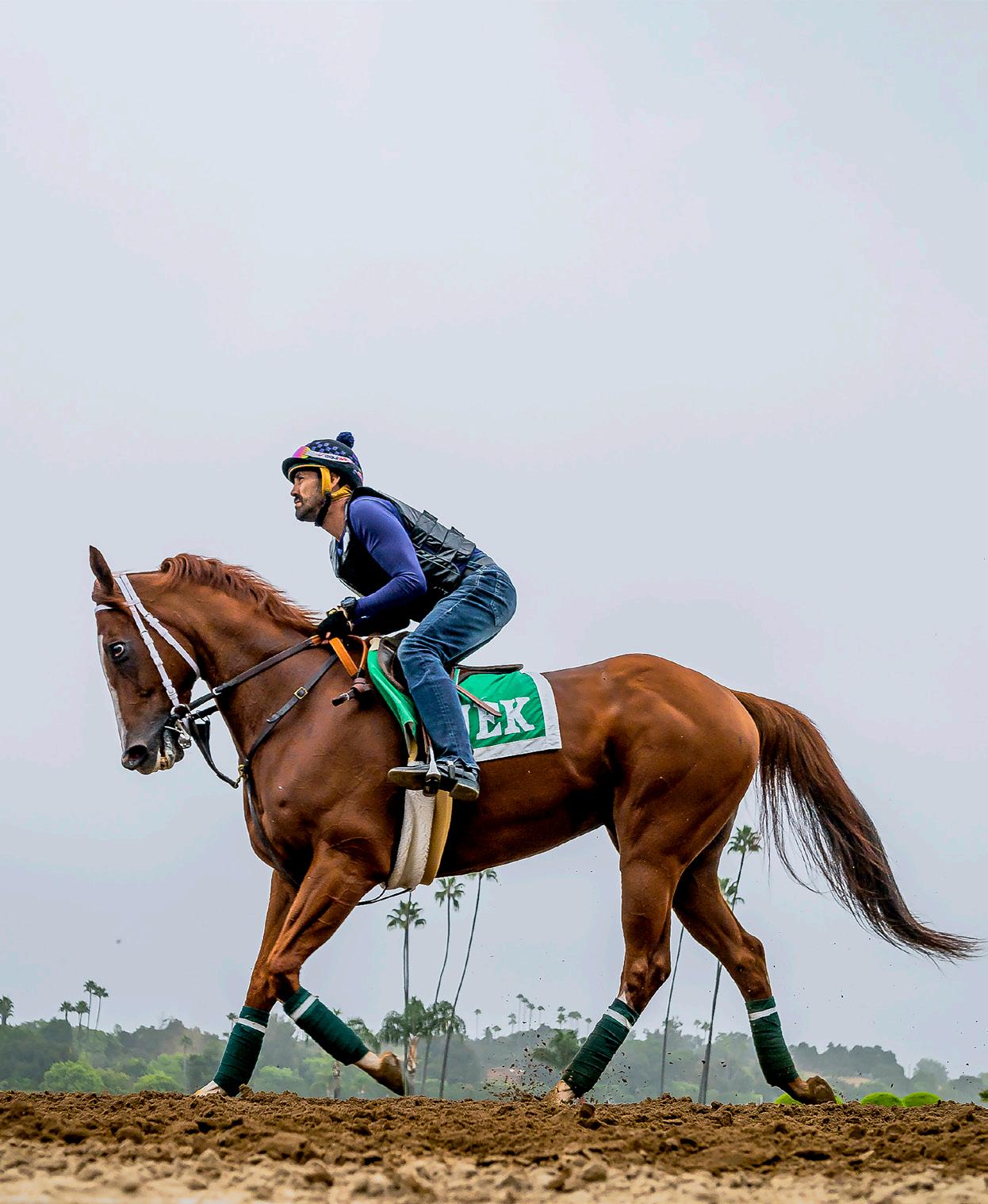
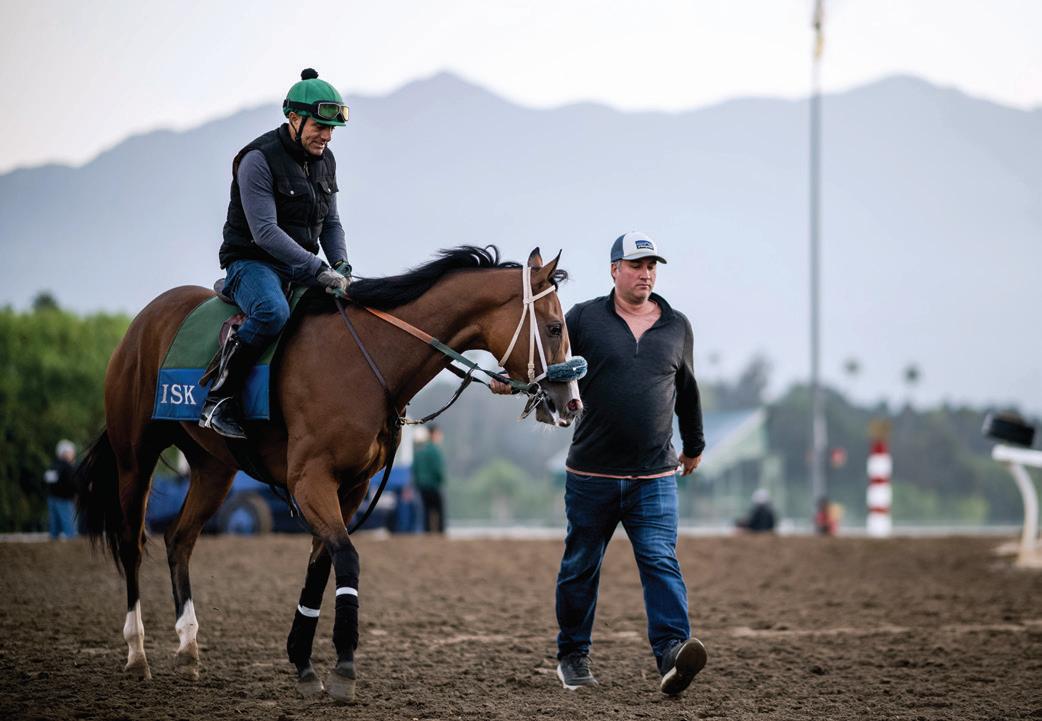
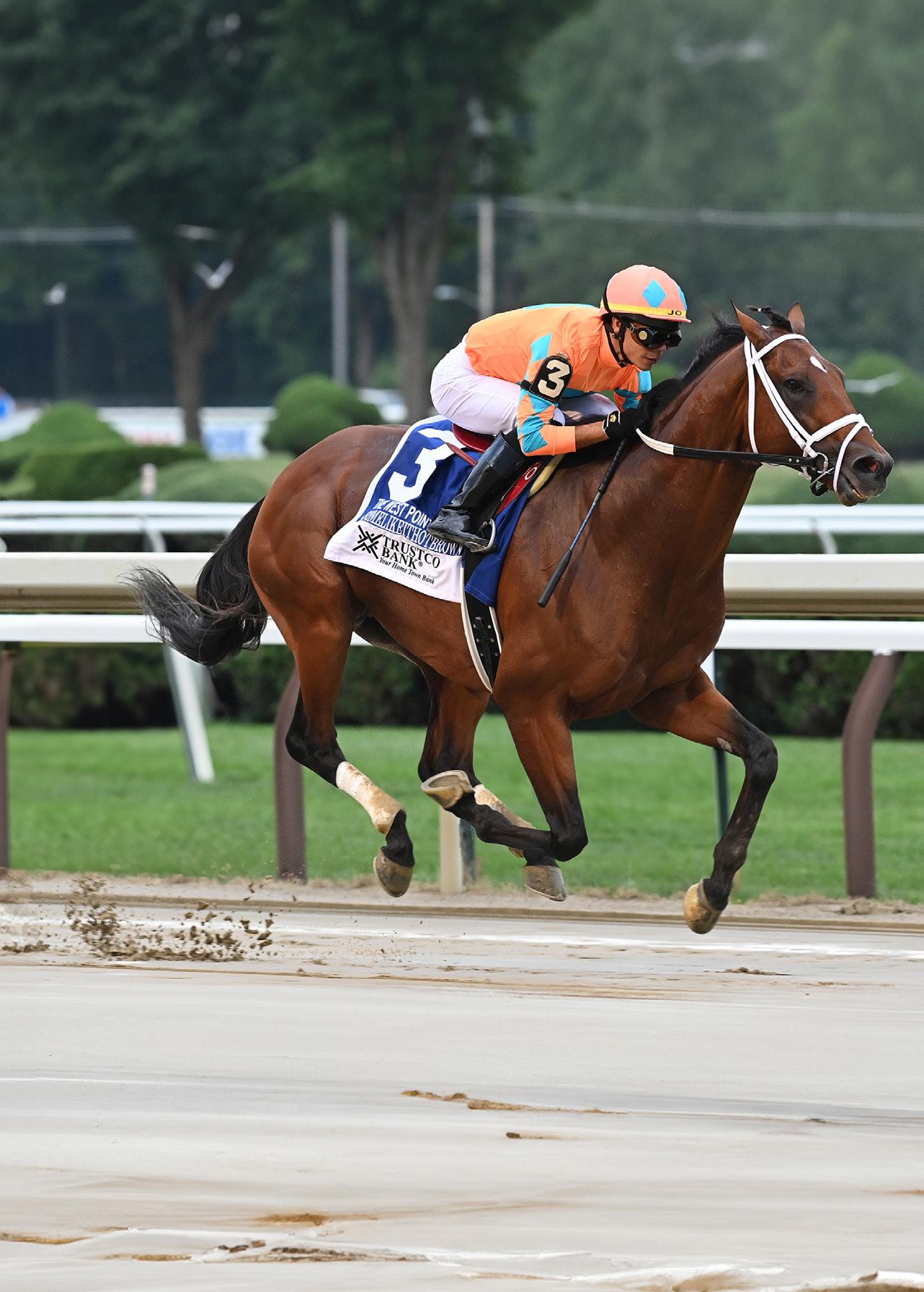
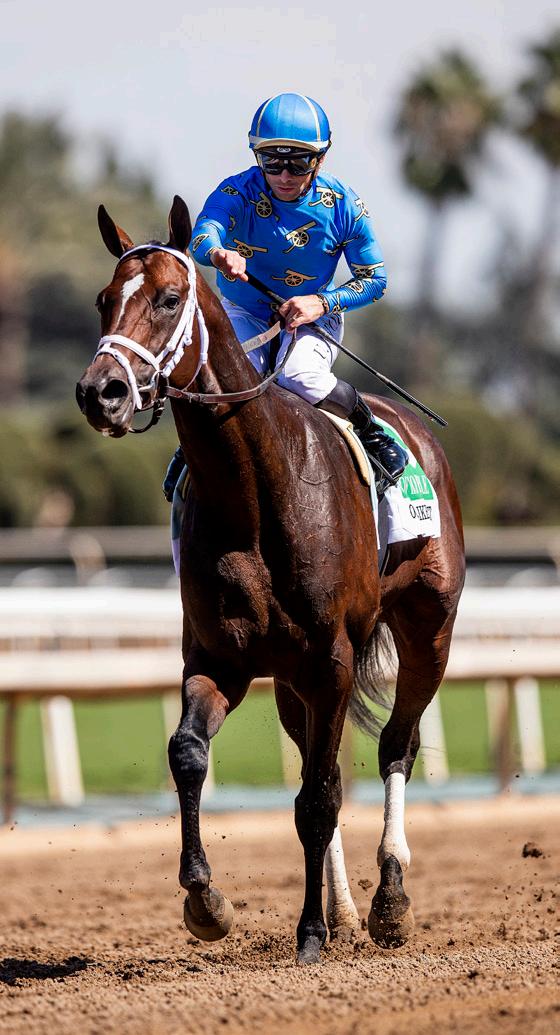
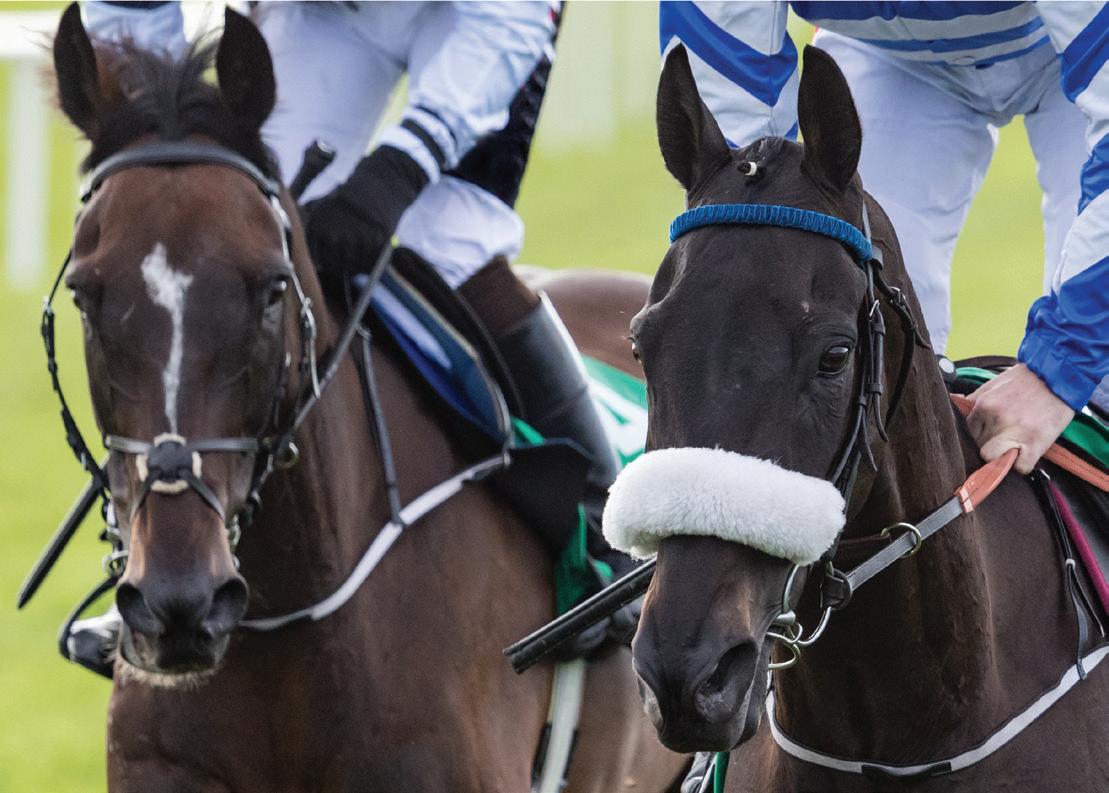
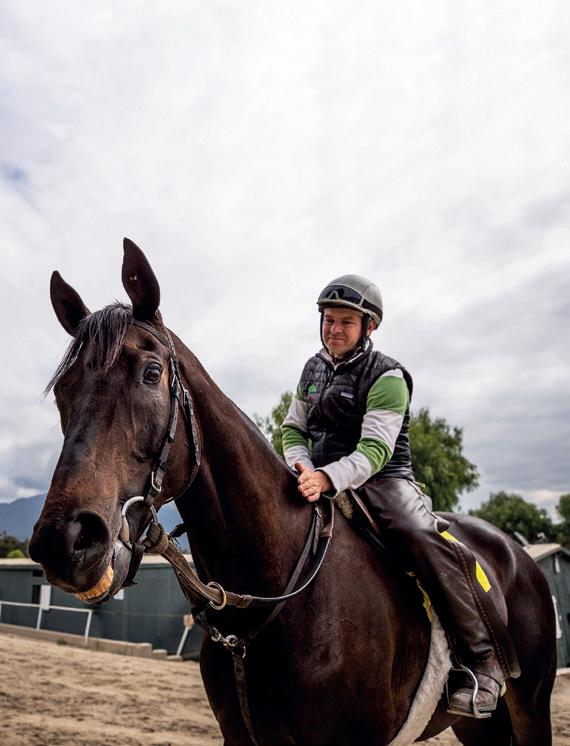
At 71, Kruljac (call him Eric) has enjoyed virtually every moment under the shed row, currently guiding the bountiful fortunes of a six-year-old gelding named The Chosen Vron, a California-bred son of Vronsky that has won 19 of 25 starts including streaks of eight and six in a row, highlighted by back-to-back Gr.1 wins against open company in the 2023 Bing Crosby Stakes and again last July 27 at Del Mar.
Only two of his 25 races were less than incipient, finishing fifth each time while uncharacteristically failing to make or challenge for the lead.
The current ultimate goal is the $2 million Breeders’ Cup Sprint at Del Mar on Nov. 2. The speedy chestnut was fifth in the Breeders’ Cup Sprint at Santa Anita last year but has an affinity for Del Mar, with six wins from eight starts at the seaside oval. His career earnings stand at $1,571,678.
WORDS: ED GOLDEN PHOTOGRAPHY: BENOIT PHOTO, ECLIPSE SPORTSWIRE
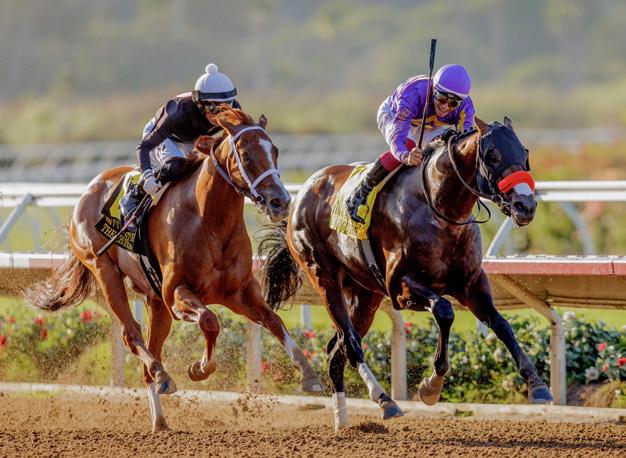
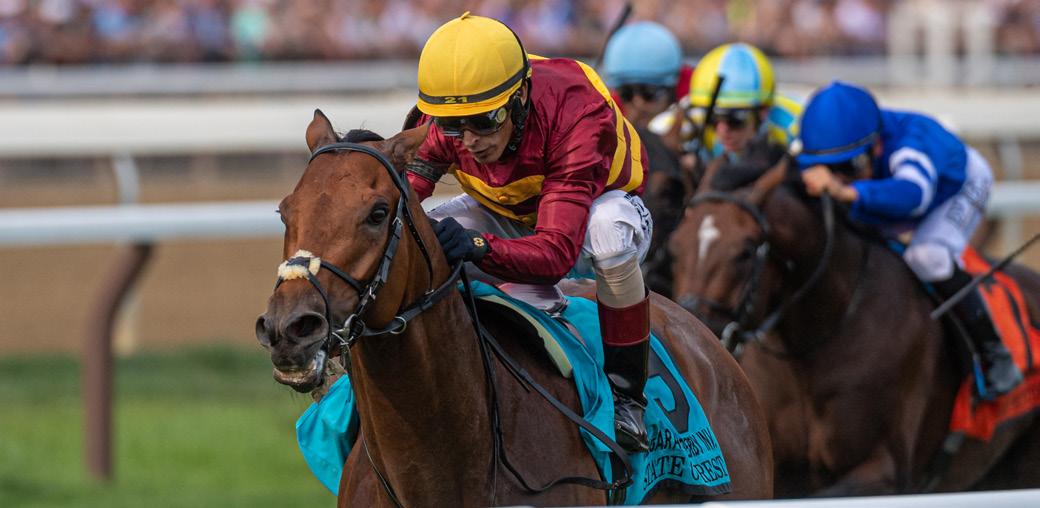
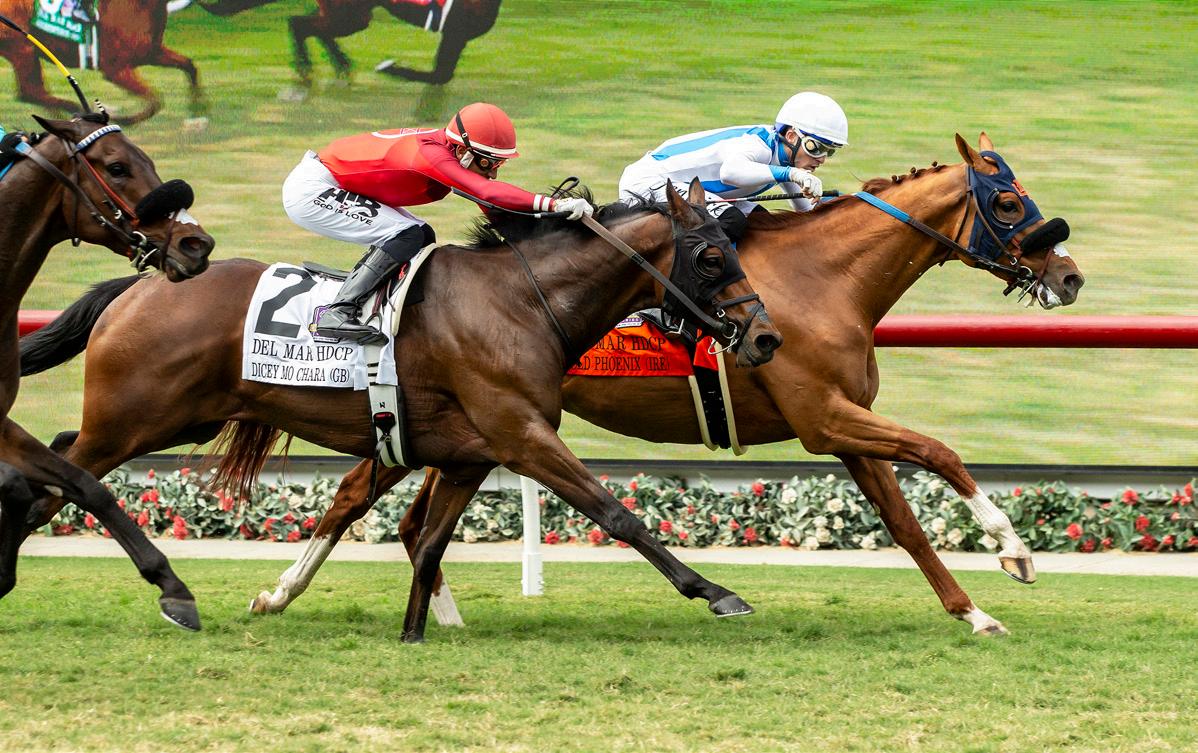
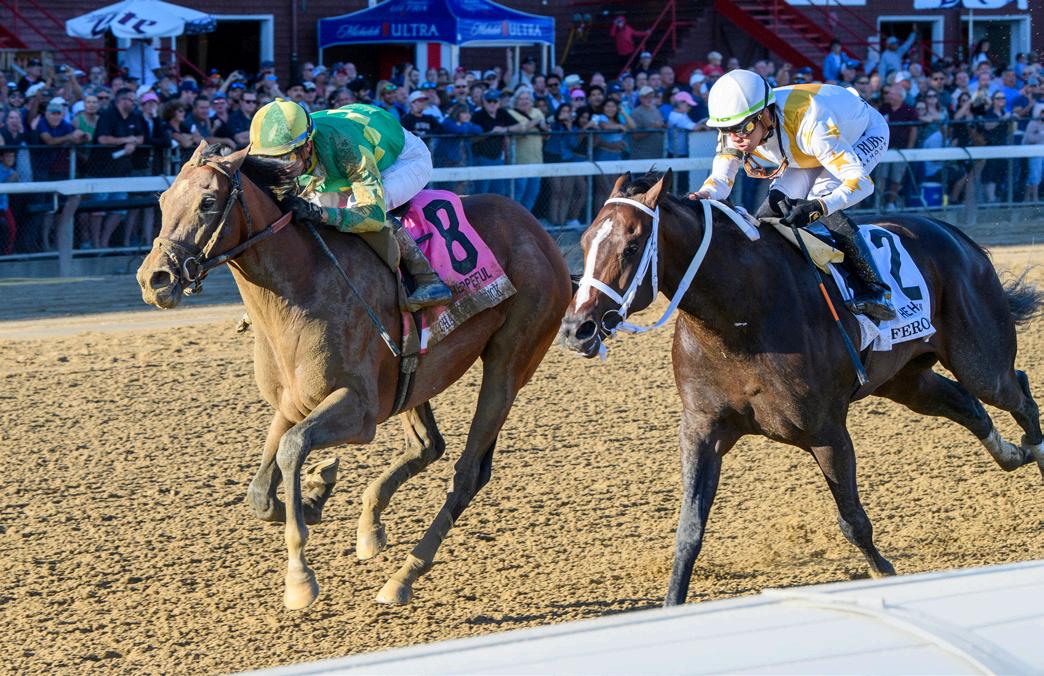
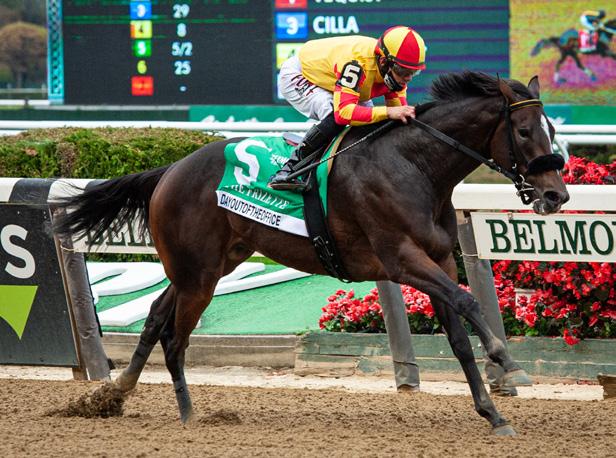
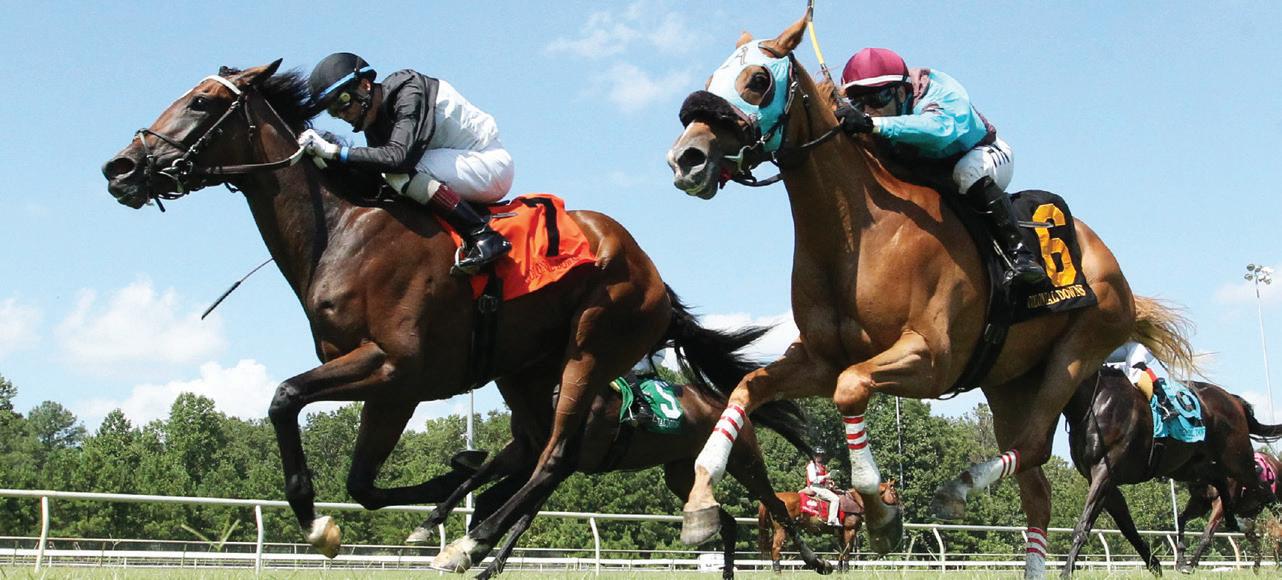
Favored at 1-2, The Chosen Vron lost by a neck to Doug O’Neill trainee Raging Torrent in the Gr.2 Pat O’Brien Stakes at Del Mar on Aug. 10, taking the lead by a head entering the stretch of the seven-furlong race but failing to overtake his stubborn rival who was on the rail and in receipt of seven pounds, 125 to 118.
After the Pat O’Brien, Kruljac had considered running in the Gr.2 Santa Anita Sprint Championship at six furlongs on Sept. 29 before the Breeders’ Cup Sprint, but put the kibosh on that. Odds-on favorite Straight No Chaser won the Santa Anita Sprint by 6 ¼ lengths in impressive front-running fashion.
YOU HAVE TO LISTEN TO YOUR HORSE, ESPECIALLY EARLY ON IN THEIR CAREER. A TRAINER HAS TO STAY AT THE READY WHEN IT COMES TO A HORSE’S HEALTH.”
“We ran in two tough races (winning the Bing Crosby July 27 before his second in the Pat O’Brien) close together,” Kruljac said, “so he’s been just jogging and galloping since. We’ll go in fresh.
“You have to listen to your horse, especially early on in their career. We had to stop on him after we had run a couple times, then we gave him extended time off, and now we’re being paid for it in bushels, because we gave the horse a chance to get over his problems and mature.
“We didn’t ask him for a whole lot after we gave him a break and it worked out well because he just turned into a machine. A trainer has to stay at the ready when it comes to a horse’s health.
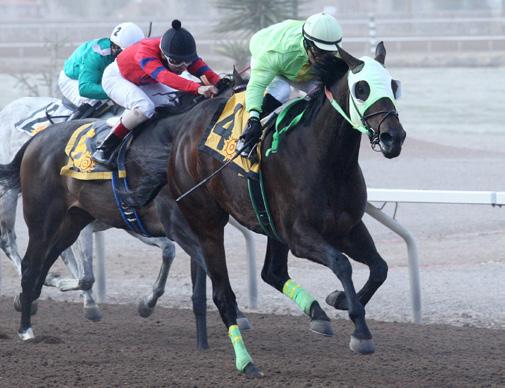
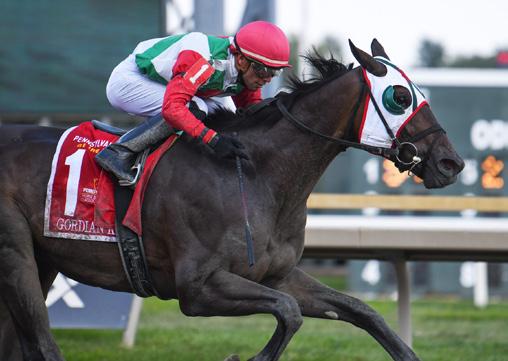
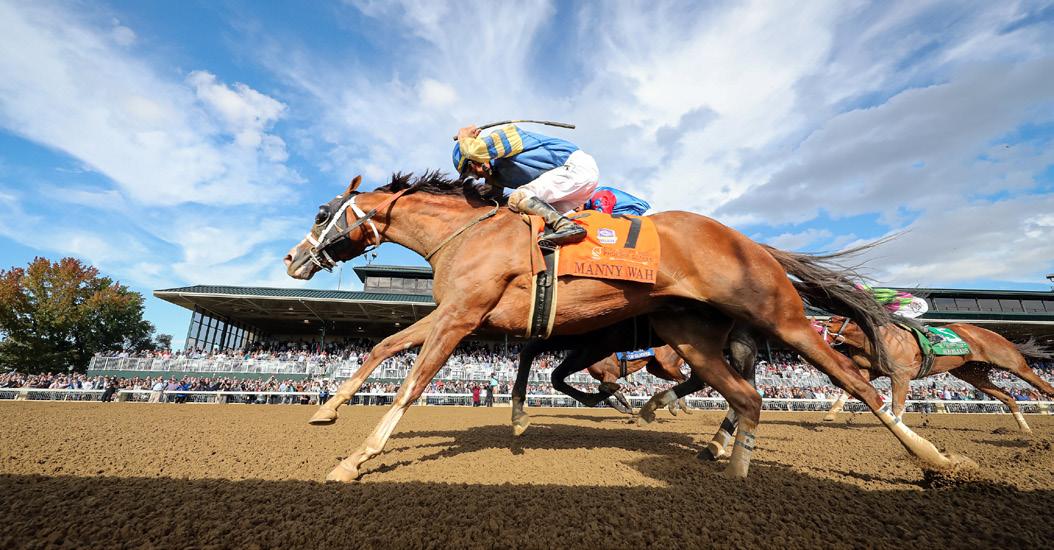
LEFT: The Chosen Vron (left) proved that he looks good even in defeat. The odds-on favorite battled every step of the way, missing out by a neck to the Doug O’Neill-trained Raging Torrent in the 2024 Pat O’Brien Stakes at Del Mar.
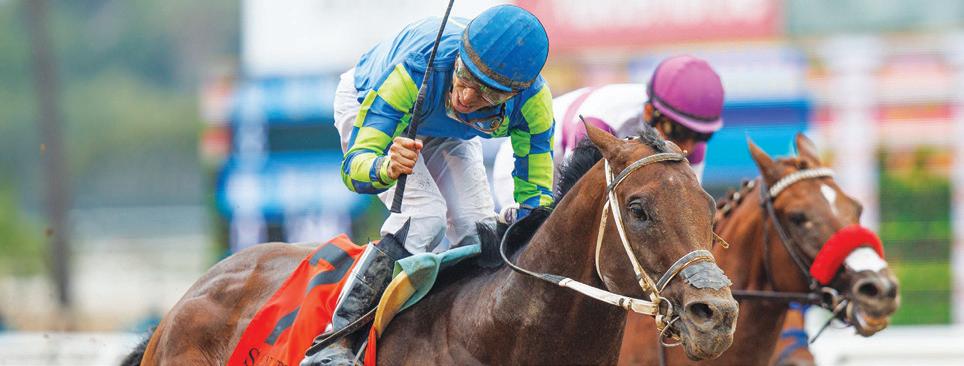
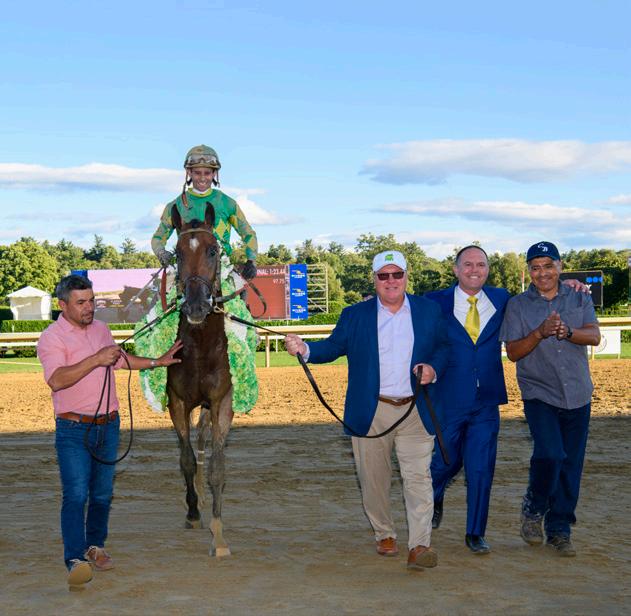
The Chosen Vron ridden by Hector Berrios wins the 2024 Bing Crosby Stakes at Del Mar.
“You have to check them every day, because they’re like strawberries: they can spoil overnight.”
Fortunately for Team Kruljac, it is enjoying the fruits of The Chosen Vron’s labor, and how sweet it is.
“Every horse is different even in some minor ways,” Kruljac said. “Depending on how the horse is handling training, you might back off if he isn’t cleaning up his feed after a workout. Others might be very resilient and eat a hole in their feed tub after a stiff work or a tough race, whereas lesser doers, as we call them, might need more time and have to be treated differently.
“You can tell when a horse likes his feed and it agrees with him if they bury their head in the feed tub after a workout or a race. You’ve got to read the horse.
“The Vron likes what he’s doing. He eats a hole in the bottom of his feed tub every morning. It’s horses like this that make people want to be owners and trainers to come to the barn in the morning. A horse like the Vron is all I need. I just have to keep him together.”
The solicitous Kruljac owns 20 percent of The Chosen Vron along with Sondereker Racing, LLC (40 percent), Robert Fetkin and Richard Thornburgh (each also 20 percent).
“John (Sondereker) is a prince of a man and was at the (Keeneland) auction in Kentucky with me when we bought The Chosen One’s dam (Tiz Molly) as a yearling,” Kruljac said. “He worked the sale with one of my sons (Mack) and I, and that was the beginning of The Chosen Vron.
“Tiz Molly showed a lot of run at the sale, won her first couple outs, then hurt herself, so we formed a partnership, started breeding her and we hit gold. Her second foal wound up being The Chosen Vron.”
Sondereker, 81, principal owner of The Chosen Vron, has enjoyed his days in racing since he started innocuously at the age of 15, mucking stalls and walking hots at tracks near his hometown of Cleveland, Ohio. “Nothing serious,” he said with a chuckle. “Just a dollar-an-hour job. I doubled that now at two bucks an hour collecting social security, so I’m doing a lot better.”
He’s doing a lot better in no small part thanks to The Chosen Vron, an unanticipated success story that prospective young owners might enjoy should good fortune smile on them.
LANE’S END GRADUATES
VISION QUALITY ROAD
GAMING SHARED ACCOUNT MORNING LINE LAST FULL MEASURE PATHFORK
SWAGGER JACK DIALED IN GEMOLOGIST GRAYDAR IN LINGERIE LIAISON GIFT BOX PALACE MALICE HONOR CODE FLIGHTLINE GLANCE ZIPESSA GIFT BOX CISTRON CITY OF LIGHT DANCING RAGS FLAGSTAFF
IN THE LAST 20 YEARS 52 G1 WINNERS
8 BREEDERS’ CUP CHAMPIONS 11 ECLIPSE CHAMPIONS
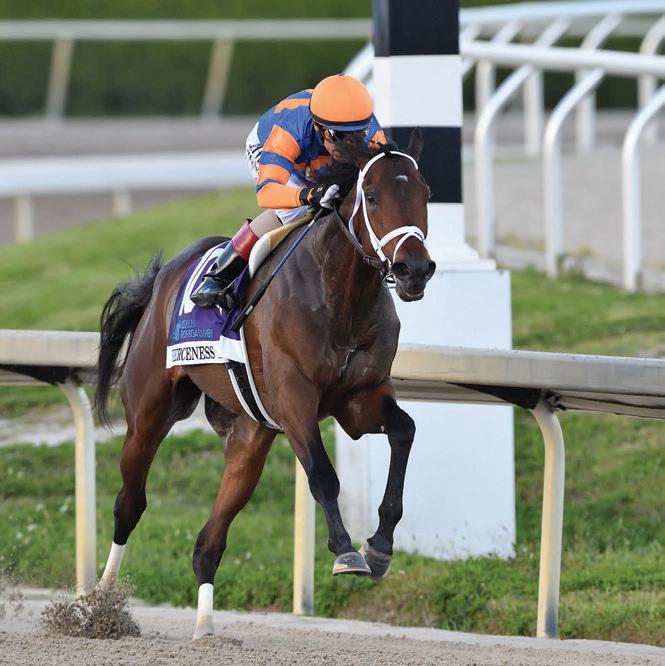
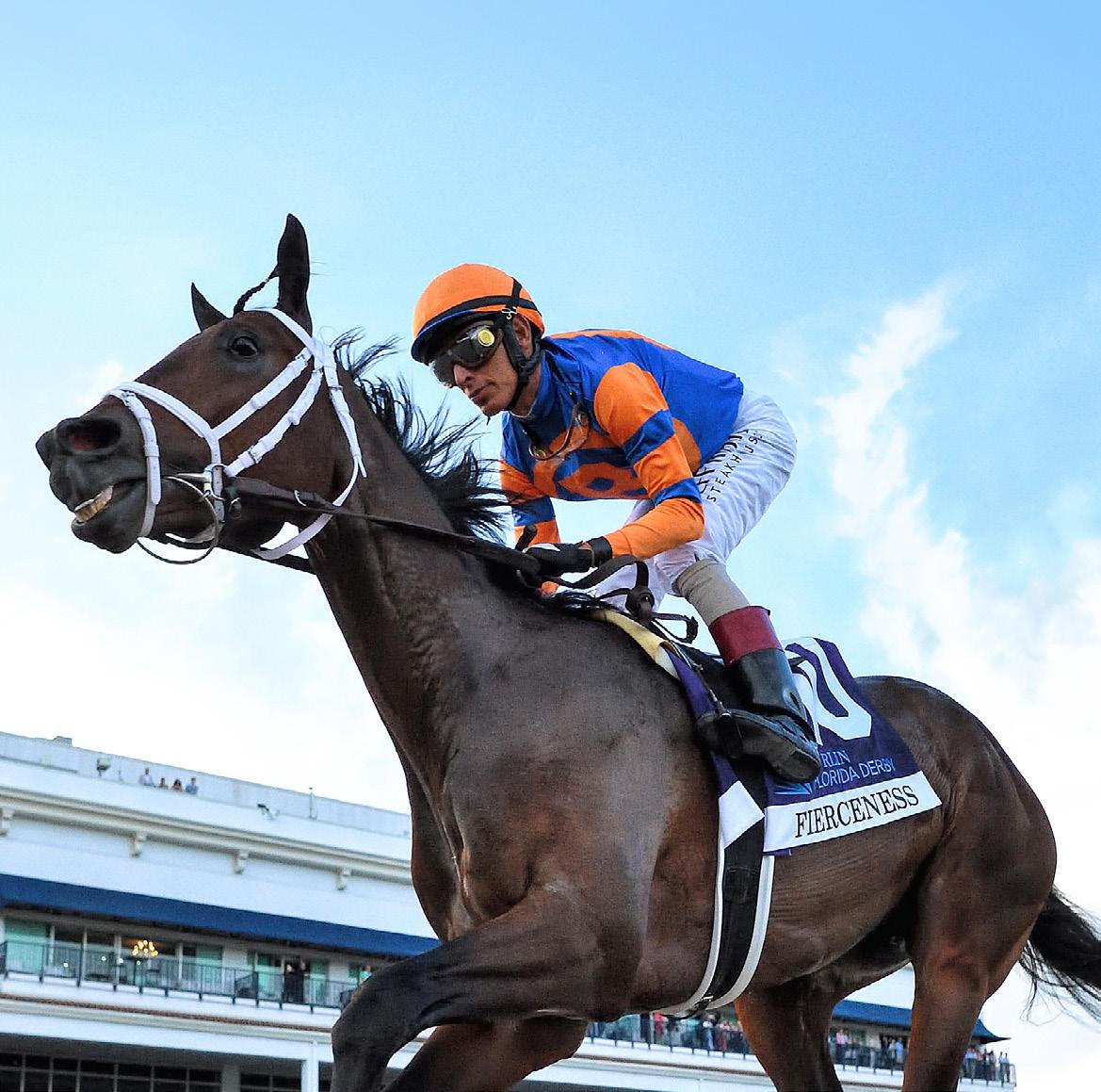
ELITE POWER FIERCENESS SWITZERLAND MCKINZIE MOONSHINE MEMORIES
MOZU SUPERFLARE CODE OF HONOR CONCRETE ROSE GAME WINNER IMPROBABLE KEEP
SOLD OR RAISED BY LANE’S END
ER OF THE STARS VEKOMA WAR OF WILL COLLUSION ILLUSION EXPRESS TRAIN MAX
Including 2024 G1 Del Mar Futurity Winner GAMING
PLAYER FLIGHTLINE
John’s tip to them for full gratification: get in on the ground floor.
“Mine is a familiar story,” said Sondereker, who grew up around horse racing. “My dad took me to the track when I was young, so I got the bug. I loved the horses, went to school, went into the Service and worked for Wells Fargo for 40 years. I was in finance, traveled for them extensively with operations all over the country and spent five years in Latin America.
“I had a couple of cheap horses when we opened Prairie Meadows back in the late 80’s but I always liked to live on the West Coast and wanted to see what I could do in racing and have fun with it when I retired, because it was my passion. Now I live on the West Coast, have a home in (Las) Vegas and one in Del Mar where I spend the racing season.
“I’m a realist and I never expected to have a Gr.1 winner, since I never had one during my first two or three decades. I never expected one this late, and when I saw Vron right after he was born at Harris Ranch, I had no clue this cute, crooked-legged little horse would develop into what he has. He was still around his mom when he was a few weeks old and wouldn’t let me get near him.
“I couldn’t get close to him until he was taken to Arizona where they broke him, then he came back and it looked like he had some potential against California-breds. That was all good, and the next thing you know, we couldn’t stop him from being successful.
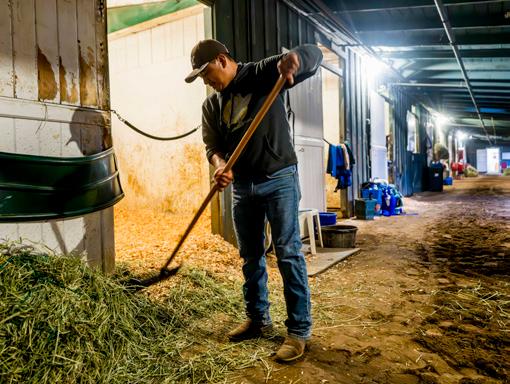
“Everything kind of gelled together and I’m blessed because we have an outstanding groom who works with him—he has a three-part Mexican name but I just call him Herlindo. He’s been with Vron since he was a baby and is a major part of the horse’s success.
“Vron’s regular rider, Hector Berrios, stops at the barn almost every morning to see him, so it’s a caring team, but there’s a lot of luck involved, too. Everything came together and I’m just happy to sit on the sidelines.”
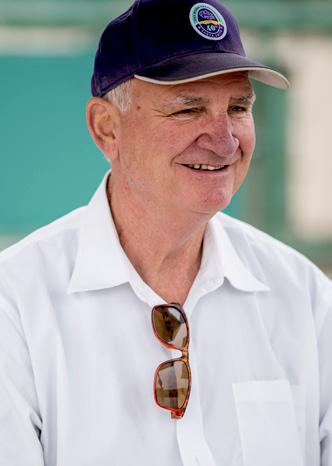
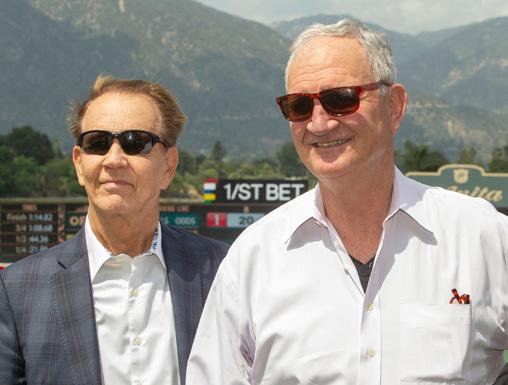
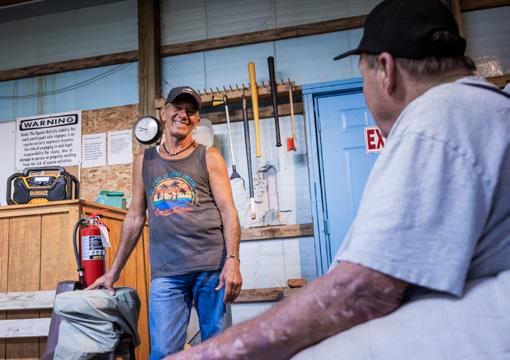
RIGHT: John Sondereker and Eric Kruljac at Santa Anita.
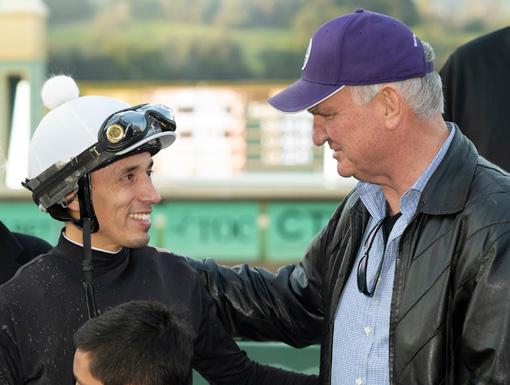
Kruljac with jockey Hector Berrios.
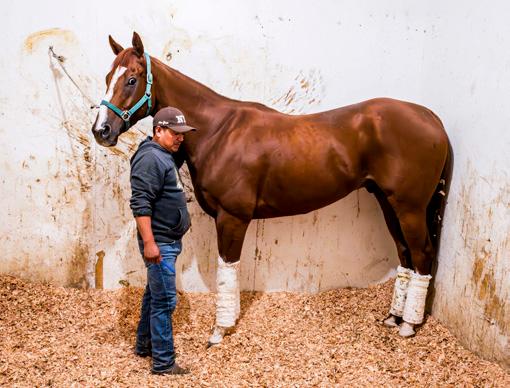
Groom Herlindo Garcia with The Chosen Vron.
Sondereker offers this advice for rookie horse owners: “What makes it fun for me is for the most part I have learned to buy my own horses at the sales, although I haven’t bought any in the last year as I’m getting older and cutting back. I’ve got ‘Vron’ and that’s enough for me now, but the sales aspect of it means so much.
“When you’re confident enough to buy your own horses at a grassroots level, even though there’s more disappointment than there is success, you’re into the whole process.
“Otherwise, you’re outside of that experience, pay bills and don’t know what’s going on. It’s fun to go to the races when one of your horses is running, but it’s a lot more fun if you bought it and are in it from the start, although it takes some capital to do that, obviously.
“That’s what has kept me in the game, going to the sales and learning my way around. Eric taught me a lot about buying horses. I didn’t understand it well until I started going to Keeneland with Eric.
“Early on I thought I knew it all, and you can make a lot of mistakes, but it’s really a treat to go to a place like Keeneland or Saratoga for their sales. You don’t have to buy anything, because mostly when I go, we’re the underbidder.
“That’s my nickname. I answer to The Underbidder,” Sondereker said, laughing. “But seriously, you get involved in the sport, meet wonderful people, most very cordial. They don’t care if you have a budget of $60,000 or five million, they treat you right. It becomes a passion for you.”
That’s what The Chosen Vron has become for his entire team.
“The horse is just all class, at the barn and on the race track,” Kruljac said. “He’s a gelding, so that reduced some of his heat. He’s quiet until you put a saddle and a bridle on him. He thoroughly relishes training and running in races. Around the barn we just call him Vron, because he’s Vron of a kind.”
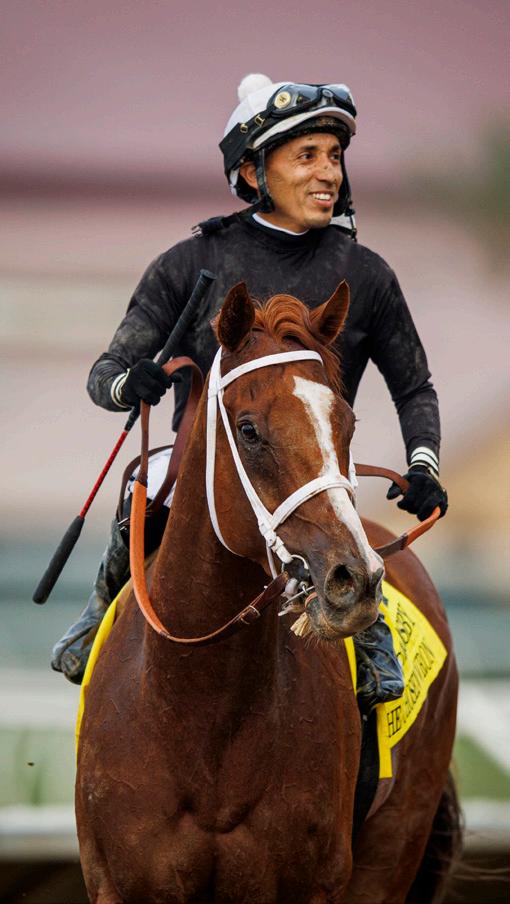
The Chosen Vron’s partner in his last 17 races has been Berrios, a 37-year-old native of Chile who began riding at 17 and became a star in his native country, coming to California for the first time in 2011. He has ridden the gallant gelding in his last 17 races, winning 14.
“He breezes him, too, whenever we breeze,” Kruljac said. “Hector’s like a lot of the South American riders. They’re all true horsemen. They’re not just jockeys. They were born to sit on the backs of horses.”
Kruljac had a football scholarship at Arizona State when he suffered a knee injury, dashing hopes of blitzing the likes of the late, great Walter Payton. “I was basically just a target after I got hurt,” said Kruljac, who was 6’1 and 237 pounds in his sophomore year. He’s a svelte 210 today.
HE’S QUIET UNTIL YOU PUT A SADDLE AND A BRIDLE ON HIM. HE THOROUGHLY RELISHES TRAINING AND RUNNING IN RACES. AROUND THE BARN WE JUST CALL HIM VRON, BECAUSE HE’S VRON OF A KIND.”
“I still walk with a limp to this day,” he said. “As time goes on, old injuries come back and haunt you.
“I had a massive tear in my meniscus. It was bad, but I was still practicing,” continued Kruljac, who left college a semester early and started a private investigators agency in Phoenix, expanding it to 10 before entering racing as an owner, with his brother, Edward, training. Eric sold his business and started his own stable in the early 1990s.
Before attending Arizona State, he spent winters in Phoenix and summers in California as a youngster. His grandfather, Walter Markham, a cattle rancher and a horse owner, employed eventual Hall of Fame member Buster Millerick as his trainer. Kruljac caught the bug and never lost it.
Millerick began training in his twenties, and shortly after Santa Anita opened in 1934, was hired to condition horses for Charles Howard and would work under head trainer Tom Smith when the stable in 1936 acquired Seabiscuit, who would become a global phenomenon.
“Millerick was a very good young trainer,” Laura Hillenbrand wrote in her 2001 multiple award-winning book ‘Seabiscuit, An American Legend’, “but for his new yearlings and the hundredgrander-caliber horses he planned to have soon, Howard wanted the best. In 1935, he went looking for him.”
Chilean jockey Hector Berrios, one of California’s top riders has been The Chosen Vron’s partner in his last 17 races, winning 14.
That man would be Seabiscuit’s taciturn trainer, Tom Smith.
Millerick, reticent bordering on being irascible in public, trained Hall of Fame gelding Native Diver, winner of 34 stakes from two through eight, including three straight editions of the Hollywood Gold Cup. He was the first California-bred to earn $1 million, but the recalcitrant Millerick avoided the limelight like a plague. Louis K. Shapiro, a Millerick client, is quoted as saying, “You never saw him in a winner’s circle photograph.”
“My grandfather used him as a trainer and they were really good friends,” Eric said. “Buster didn’t like owners but he loved my grandfather because he was a cattleman and also a produce broker. He was very outgoing to me and would always give us his box for the races, but he was very tough around the barn.
“An owner would come in without making an appointment and he’d tell him to get the hell out. He’d send his dog, Buttermilk, after him.”
Meanwhile, Joseph Eric Kruljac, one of racing’s good guys, soldiers on, remaining a sedulous stone in racing’s floundering foundation.
One might say The Chosen Vron is Kruljac’s Seabiscuit.
“I’m on the last leg now,” he said philosophically. “The Chosen Vron has just kept me going. It’s so unusual to have a horse like this allowing me to experience all these great things in the twilight of my career. It’s just a blessing. It defies description. I think he’s going to have a good shot in the Breeders’ Cup.
“With the exception of this horse, I probably would have bowed out a year or two ago. You take the worst of the game and hopefully live with what’s left of it.
“I’m basically down to one horse, The Chosen Vron, with seven horses total at Los Alamitos which I’m using as a starting point for them, but only three or four are racing right now.
“I’m way down on stock. This might be my last hurrah, but I’m thoroughly enjoying having a horse like this in the barn.
“For me, I just try to make the horses as comfortable and sharp as we can,” Kruljac said when asked about his training philosophy. “When you see they don’t clean up (their feed) or drink their water, little things that are just different, it’s a signal.
“Once you’ve had a horse for a period of time, you can read them when they might be off their feed a bit or have sore muscles. For great, big, powerful things they sure change at a moment’s notice.”
Eric has four children, one of whom, Ian, 36, is also a trainer currently supervising 12 horses in Southern California. Eric also has two other children, Chance and Meghan, in addition to Mack and Ian.
“Ian’s career started with a bang,” Eric recalled. “The first horse he ever trained won the Breeders’ Cup Filly & Mare Sprint at Santa Anita in 2016 when he was just 28.”
RIGHT & BELOW: Ian Kruljac at Santa Anita.
A ONCE IN A GENERATION OPPORTUNITY —THE MARYLOU WHITNEY FARM—
Synonymous with the best thoroughbred racing and breeding in the world and combined with genera�ons of entrepreneurial wealth and philanthropy, the Marylou Whitney Farm is a special place with a unique history. For 76 years the Farm has been an elegant gathering place for family, Hollywood stars, world leaders, and horse racing elite.
The 72 acre estate with Elkhorn Creek meandering through it is bordered by the historic Gainesway Farm. Originally acquired in 1782 by the Rodgers family, the brick residence was built by their son John in 1794 and is the crowning jewel of Maple Hill.
Adjacent to the main residence is a four‐car detached garage, and former sta� quarters�now offices consis�ng of three rooms, an eat‐in kitchen, and three baths. �n addi�on to the impro�ements already men�oned, the farm includes a 2‐story brick guest house, 1,950 SF manager’s home with a two‐car detached garage, a log cabin chapel, pool house with Olympic size pool and art studio.
The farm is fully‐fenced for horses and contains a 10‐stall horse barn with a shop, office, and feed room plus a 6‐stall horse barn, two equipment sheds, and a small run‐in shed.
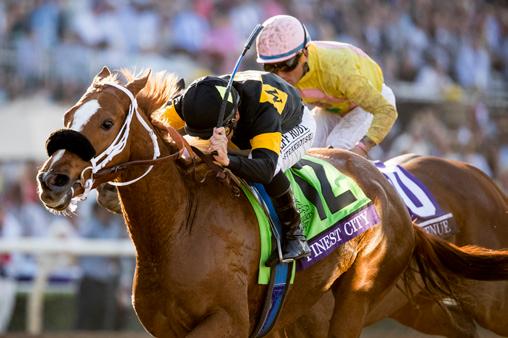
That was Finest City, a four-year-old daughter of City Zip sent off at 8-1. It was one of only two wins for Ian that year.
Obviously, Ian was delighted with the victory, but was mature enough not to fully bask in its glory.
“I realize it takes a small army to succeed; it wasn’t just about me,” Ian said. “To win, everything has to go right, including the timing. But the hardest part is finding the horse. Then when you do, your entire staff has to be moving in the right direction.”
Both father and son adhere to the adage ‘patience is a virtue’ in developing successful Thoroughbreds.
“One of the most important things my dad taught me was give a horse time when needed,” Ian said. “That’s what I did with Finest City. She didn’t make the races as a two-year-old but it certainly paid off when she won the Breeders’ Cup.
“We just have to do what’s right by the horse and hopefully racing will benefit in the future. These horses were bred to run and if they’re treated right, they will, and that’s what racing needs.
“My Dad’s my best friend,” Ian continued, speaking on behalf of the entire brood. “He’s a great father to all his kids. I learned a lot from him on how to take care of horses and about life.
“He’s a great man.”
ABOVE: Finest City ridden by Mike Smith, wins the 2016 Breeders’ Cup Filly & Mare Sprint at Santa Anita Park for trainer Ian Kruljac.
REFINE YOUR TRAINING WITH PERFORMANCE GENETICS
Understanding a horse’s performance strengths and weaknesses is crucial when planning their training regimen. Training Thoroughbreds isn’t a one-size-fits-all endeavor—factors like racing age, track distance and surface type are just a few of the things we have to consider.
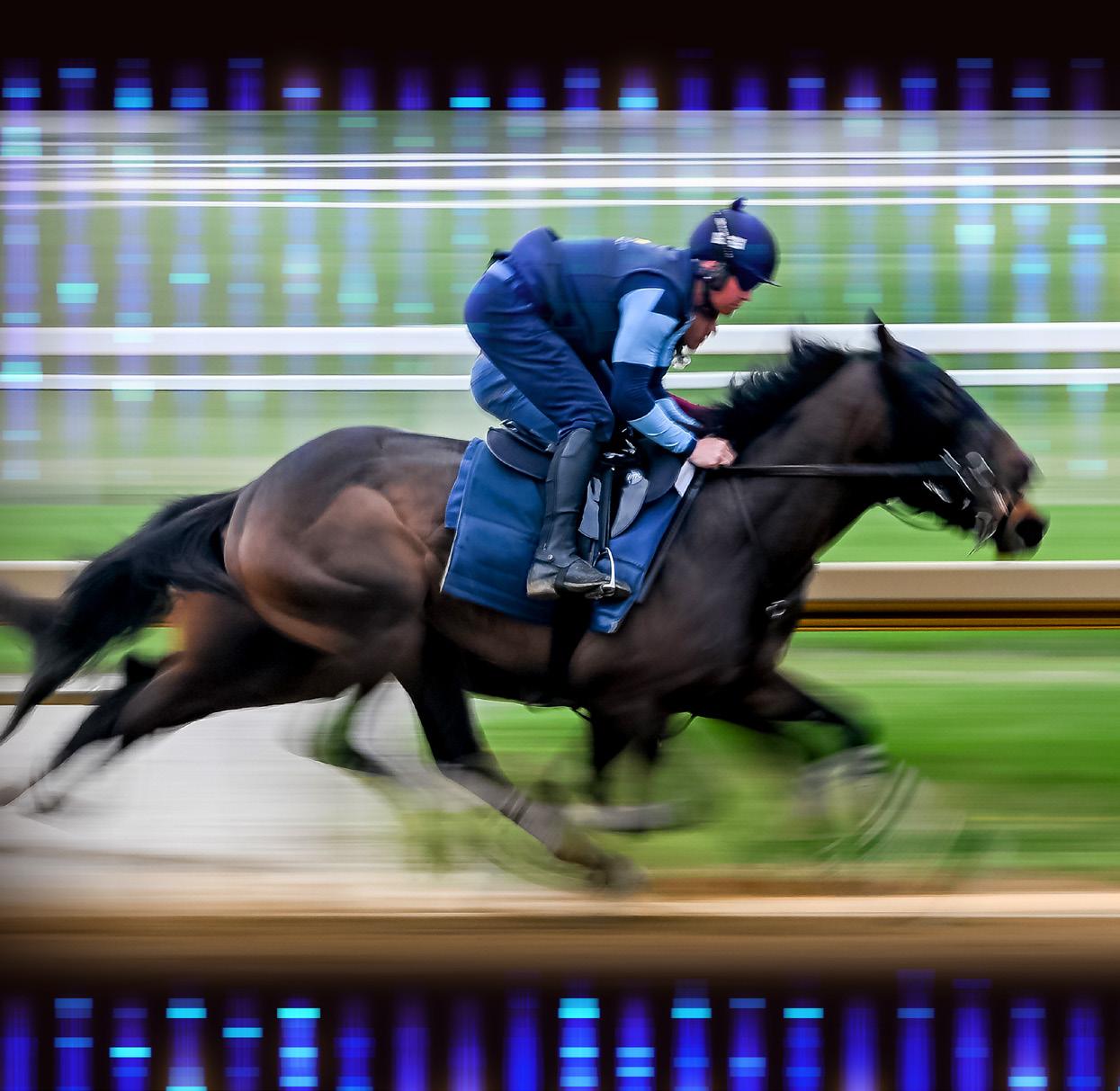
Over the years, advances in veterinary care, nutrition and conditioning have shaped the sport, helping us to produce more competitive horses. But imagine tailoring your training plan based on DNA—not just intuition. Now, there’s an increasing emphasis on a promising tool that enables you to do just that: performance genetics.
It isn’t just scientists who feel that equine genetics can change the way we understand horse racing, either. California Horse Racing Board Vice Chairman Oscar Gonzales said, “California breeding is at a crossroads—if we want to produce top-quality horses, we must embrace new technologies and analytics. By using information from Thoroughbred DNA, we can make better breeding and training decisions that promote health and soundness, ensuring the best horses reach the track. Other sports are using tech to elevate their game, and so should we.”
By understanding a horse’s genetic makeup and embracing a scientific approach, trainers can fine-tune both their training programs and racing strategies. In this article, we will explore how key genetic markers—including the myostatin gene (MSTN), height and respiratory health, temperament, and genomic inbreeding values (GIV)—can influence training, optimize performance, and ultimately increase strike rates.
Race length suitability
Performance genetics aren’t entirely new to the Thoroughbred world. For years, breeders and trainers have been using the “speed” gene, MSTN, to help determine a horse’s ideal racing distance. But how does this gene affect performance, and why is it so important for training?
Myostatin is a protein that plays a crucial role in the negative regulation of muscle mass, particularly the balance between
WORDS: HOLLY ROBILLIARD
fast and slow-twitch muscle fibers. Genetically, horses can have two copies of the “Sprint” variant, two copies of the “Endurance” variant, or one copy of each—known as “Sprint/Endurance.”
Sprint-type horses are typically more muscular and compact, equipped with a higher proportion of fast-twitch muscles that enable explosive bursts of speed over shorter distances. These horses generally excel in races under 6 furlongs, physically mature faster, and often earn more as two-year-olds.1 Therefore, focusing on high-intensity, short-duration training that sharpens acceleration, and avoiding endurance-building exercises that play against the horse’s natural abilities, may help maximize their potential.
In contrast, endurance-type horses possess a greater percentage of slow-twitch muscle fibers, which contract more slowly but can sustain effort without fatiguing quickly. Typically smaller and less muscular, these horses may reach their peak performance
later than their sprint-type counterparts, which should be taken into consideration. They are particularly well-suited for longer races, typically 9 furlongs or more, and incorporating aerobic conditioning exercises into their training regimen would be beneficial to capitalize on their genetic predisposition for sustained effort.
Sprint/endurance horses are versatile and can perform well across a range of distances, benefiting from both speed and stamina. Therefore, their training should include exercises tailored for both short and long distance, depending on the longterm goals for that particular horse.
Incorporating MSTN testing into a training program enables more precise conditioning based on a horse’s genetic makeup, ultimately reducing the risk of over-training and increasing performance consistency. However, it’s essential to consider other physical traits with genetic factors, such as height (LCORL).
Connecting height and “roaring”
When selecting mating pairs for Thoroughbreds, it’s common practice to evaluate physical traits alongside pedigree. Breeders often seek attributes like increased body size and muscle mass, aiming to produce bigger, faster and stronger horses. Yet, it’s important to note that larger horses physically mature at a slower rate compared to those of average height. Furthermore, research indicates that horses carrying at least one copy of LCORL may be taller but are also at a higher risk of developing Recurrent Laryngeal Neuropathy (RLN), commonly known as “roaring.”2
Roaring is a disease that results in a paralyzed larynx and ultimately leads to an obstruction of airflow during intense exercise. Horses with RLN struggle to breathe normally at speed, therefore their performance potential could be limited.
In addition to height, several other factors can contribute to a horse’s predisposition to RLN. Fortunately, genetic tests are available to determine a horse’s risk level: ~12x higher risk (RLN/RLN), ~5x higher risk (RLN/n), or has no increased risk (n/n) for developing the disease.
It’s important to realize that knowledge is power. By understanding the genetic risks associated with your horse, you can anticipate physical limitations and adjust training accordingly. This may involve incorporating more respiratory conditioning, closely monitoring oxygen intake under stress, or considering surgical intervention for affected horses.
Managing the mind
Performance is not just about physicality— temperament plays a crucial role in how a horse handles the demands of training and competition. As more research is done with the assistance of Thoroughbred DNA, trainers canuse genetic analysis to provide insights into a horse’s behavioral tendencies. In this case, let’s look at the temperament gene, DRD4, which tells us whether the horse is more “Curious,” “Vigilant,” or a combination of both. 3
Curious horses, defined by a willingness to be interested in or approach novel objects, are often more inclined to engage with new environments, challenges, or stimuli. This means they may be more adaptable to varied training regimes, allowing them to learn faster in new situations or settings, such as different tracks or training facilities.
That is not to say Thoroughbreds who are vigilant about their surroundings do not readily learn or adapt, only that they may benefit from different training methods. These horses often possess heightened awareness of their surroundings, making them valuable assets in racing. This trait may mean they respond more readily to jockey commands and can navigate environmental factors, such as the positioning of other horses, while racing.
A Lil Evil – Thoroughbred, Mare
This horse is genetically Endurance/Endurance, making her more likely to excel at lengths 9 furlongs or greater. She also carries one copy of Vigilance and one copy of Curiosity, which studies indicate may affect her interest in novel objects and willingness to approach them.
It’s essential to recognize that temperament cannot be attributed to a single gene; other factors, such as environment and stress, also play a significant role in shaping behavior. For instance, more high-strung horses may need additional mental conditioning to cope with the pressures of race day, including exposure to noise and distractions. In contrast, calmer horses might benefit from a more stimulating environment to maintain their focus and sharpness. Trainers can leverage this knowledge to adjust everything from a horse’s daily routine to its training regimen, ensuring that the animal’s psychological needs are addressed in a way that enhances performance.
Balancing talent and risk
Another critical component of performance genetics is understanding the genomic inbreeding value (GIV). Inbreeding in Thoroughbreds is a double-edged sword—it can amplify desirable traits, but it can also increase the risk of hereditary health issues that negatively impact performance. While more research is needed, these issues may present as lower endurance, slower recovery times, or reduced competitiveness on the racetrack.
Over the past five decades, inbreeding rates have increased significantly, yet we have not observed a corresponding rise in the speed of Thoroughbred horses.4,5 In fact, a 10% increase in inbreeding reduces a horse’s likelihood of successful racing by 7%, but what does this mean for performance?
Horses with a high inbreeding coefficient are often more susceptible to injuries and genetic disorders, leading to declines in overall vitality and performance. By understanding a horse’s GIV, trainers can refine their conditioning programs to emphasize injury prevention and overall health management. For example, you may consider implementing medical screenings or adopting less aggressive workout routines to minimize the risk of breakdowns related to structural weaknesses.
Conversely, horses with lower inbreeding values tend to have greater genetic diversity, which can enhance their resilience and adaptability. These horses may be able to manage more intense training schedules without the same risk of injury, allowing trainers to push them harder when necessary.
Conclusion: Utilizing performance genetics
In Thoroughbred racing, there is no universal training program, nor is there a guaranteed formula for ensuring your horse becomes a champion. However, by leveraging performance genetics, we can increase those odds and refine training strategies in ways that were previously unimaginable.
By understanding key genetic markers such as the MSTN gene, and the connections between height, maturation and respiratory risk, trainers can tailor their methods to meet the unique needs of each horse. Taking into consideration the horse’s temperament and genomic inbreeding value allows for further refinement.
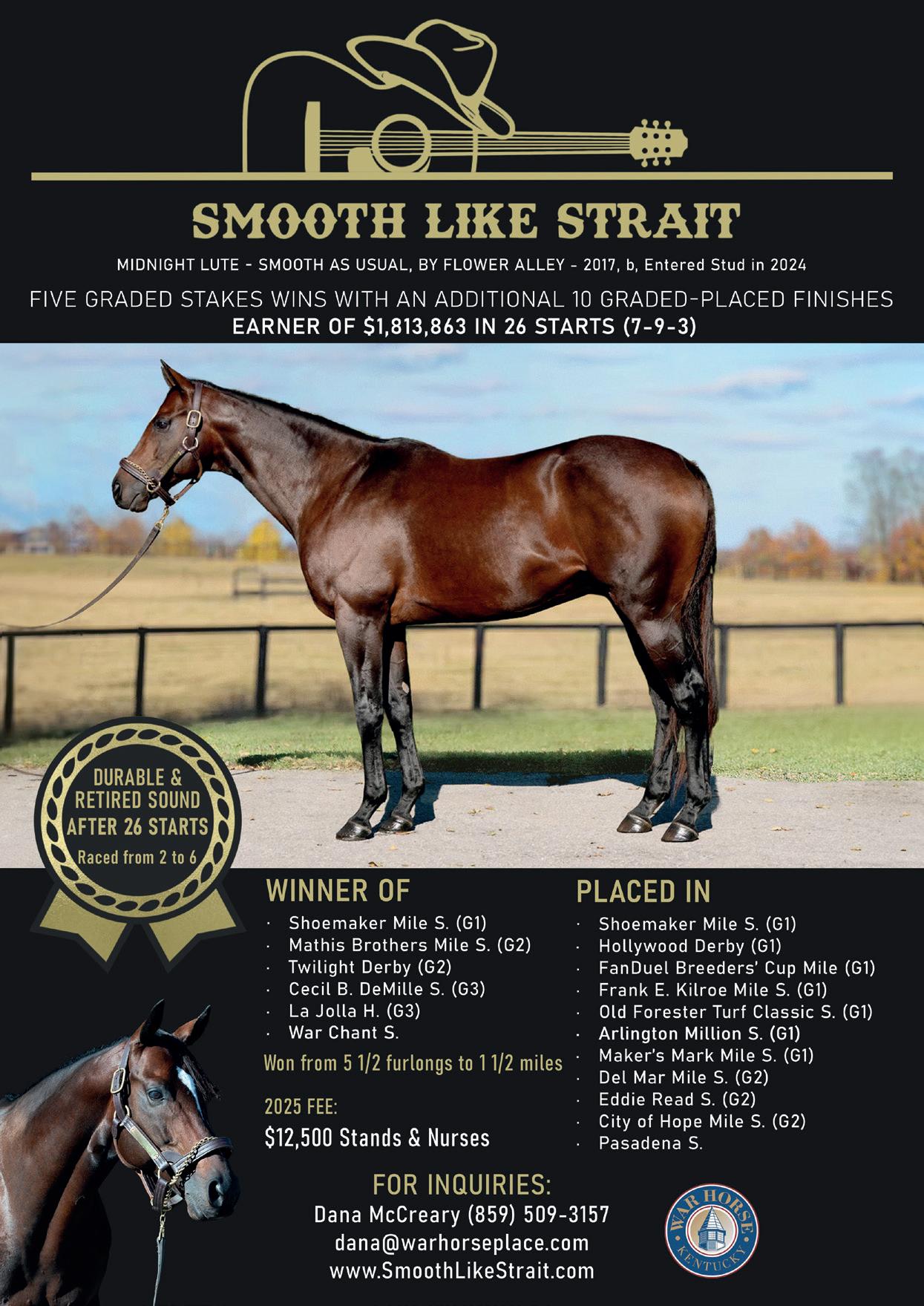
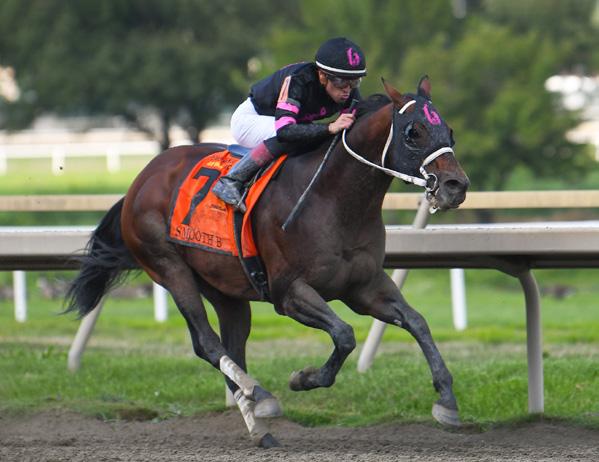
Rocky Savio, Partner and head of track performance for Savio Cannon Thoroughbreds, said, “DNA testing not only helps reduce hereditary disease but also allows for the optimization of breeding and training strategies, leading to stronger, faster, and more resilient horses on the racetrack.” Savio and Michael Cannon’s deep understanding of these strategies is evident in their home-bred stallion, Smooth Like Strait, who achieved remarkable success with six stakes race wins before retiring sound to stand at War Horse Place.
As the science of equine genomics continues to evolve, owners and trainers that incorporate these performance factors into their training programs will be at a distinct advantage—giving their horses the best possible chance to reach the winner’s circle. Performance genetics provide a profound edge, and with the precision of modern DNA analysis, the future of Thoroughbred training is shaping up to be faster, stronger and smarter than ever before.
PHOTOGRAPHY: ECLIPSE SPORTSWIRE, FRANCES J. KARON, GALOPPFOTO.DE, PURPLE QUEUE, SHUTTERSTOCK
References
1. Tozaki, T., Sato, F., Hill, E. M., Miyake, T., Endo, Y., Kakoi, H., Gawahara, H., Hirota, K., Nakano, Y., Nambo, Y., & Kurosawa, M. (2011b). Sequence variants at the myostatin gene locus influence the body composition of Thoroughbred horses. Journal of Veterinary Medical Science, 73(12), 1617-1624.
2. Boyko, A. R., Brooks, S. A., Behan-Braman, A., et al. (2014). Genomic analysis establishes correlation between growth and laryngeal neuropathy in Thoroughbreds. BMC Genomics, 15, 259. https://doi.org/10.1186/1471-2164-15-259
3. Momozawa, Y., et al. (2005). Association between equine temperament and polymorphisms in the dopamine D4 receptor gene. Mammalian Genome, 16, 538-544. PMID: 16151699
4. Hill, E. W., Stoffel, M. A., McGivney, B. A., MacHugh, D. E., & Pemberton, J. M. (2022). Inbreeding depression and the probability of racing in the Thoroughbred horse. Proceedings of the Royal Society B, 289, 20220487. http://doi.org/10.1098/rspb.2022.0487
5. McGivney, B. A., Han, H., Corduff, L. R., et al. (2020). Genomic inbreeding trends, influential sire lines, and selection in the global Thoroughbred horse population. Scientific Reports, 10, 466. https://doi.org/10.1038/s41598-019-57389-5
With the precision of modern DNA analysis, the future of Thoroughbred training is shaping up to be faster, stronger and smarter than ever before.
Smooth Like Strait finished his career 7-9-3 from 26 starts and $1,813,863 in earnings before retiring sound to stand at War Horse Place.
Briefing
LOOKING AHEAD TO THE 2025 BREEDING SEASON
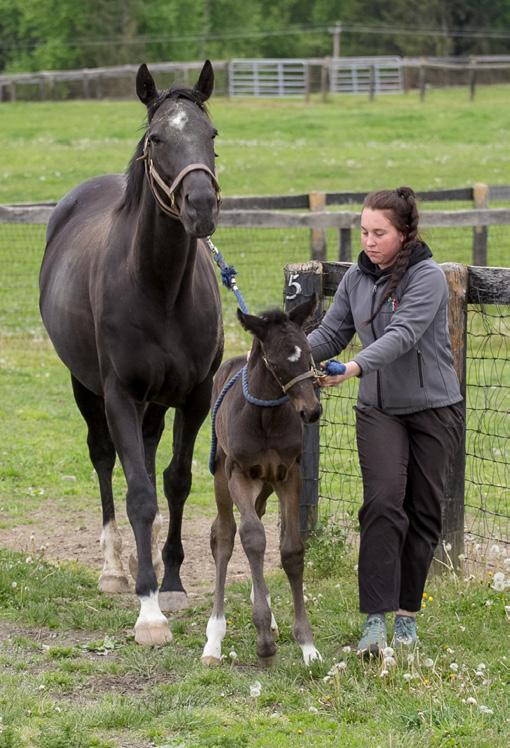
As 2024 draws to a close, stud farms all over the country are gathering stallion prospects for the upcoming year and to attract breeders to their new prospects, managers must think strategically on where their prospect will fit in next year’s market. With the North American foal crop on the decline in recent years and rising costs, breeders have begun to attempt new tactics and adapt to new business strategies to allay these concerns.
We have gathered the opinions of Lere Visage, the general manager of Rockridge Stud in New York and his stallion manager, Erin Robinson. Rockridge Stud stands stallions such as AmericanRevolution, Mind Control and War Dancer. Supplemental information including statistics were provided by the Jockey Club Fact Books – referencing three of the largest states for breeding: New York, Kentucky, and Florida.
Q.
What factors determine trends in the next year’s breeding season?
Breeding community
Similar to real estate, location is a key factor in determining matings due to time and financial costs incurred by shipping the mare to the stallion and possibly boarding for the mare to ensure she is in foal.
Depending on the breeder’s financial status, the location of their farm in relation to the stud farm is a limiting factor in choosing a stallion for their mare.
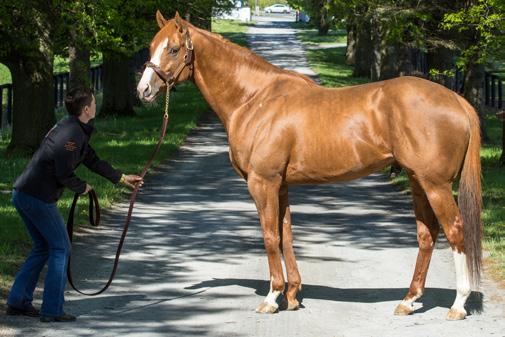
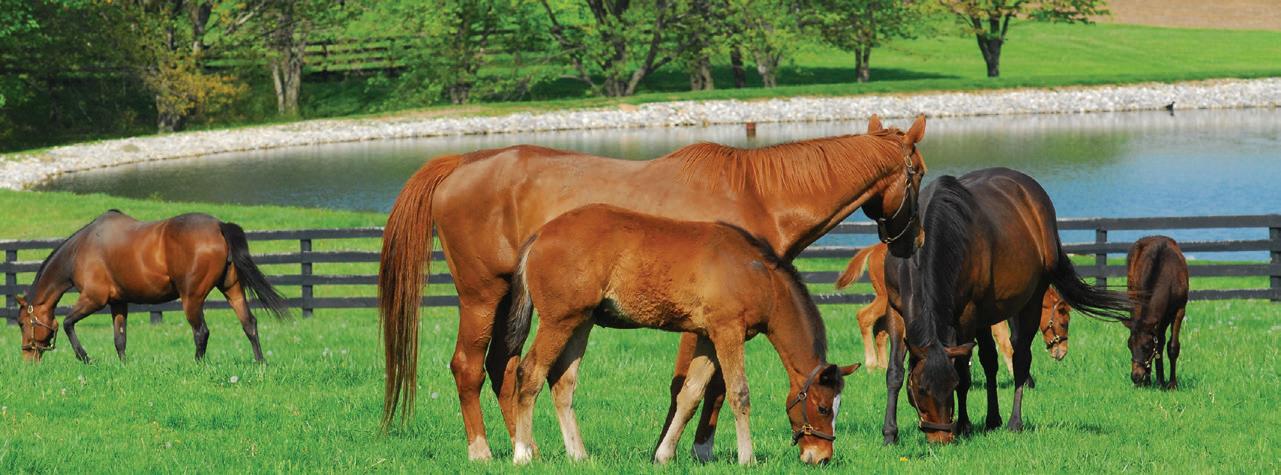
In New York, Rockridge Stud is trying a new tactic, as Robinson mentioned in the case of Mind Control and AmericanRevolution, multiple farms ‘collaborated to get the stallions to New York and get him “syndicated and with full support from breeders near and far” by offering micro shares in ownership for these future racing hopefuls. In allowing these stallions of ‘Kentucky caliber’ to be offered in New York, have led these stallions to reach ‘Kentucky numbers’ of mares bred (nearly 200), as stated by Visage.
Breeding/racing incentives – Breeders Awards, Tax Incentives, State-Bred Racing Conditions and Stallion Stakes
For the three large foal crop states, the incentives to produce foals are plenty. In Florida for example, there are tax exemptions for the purchase of horses from the original breeder and stallion seasons. In Kentucky, the KTDF registration allows for additional purse money to be added to a KY-registered horse - similar to both New York and Florida. In New York, the breeder’s awards have been upped to 40% for a New-York sired horse in 2024 - a 20% increase from 2023.
In Florida and New York, there are racing conditions written to sweeten the purse for state-registered entries and if the horse is sired by a registered state stallion, the horse is then eligible to participate in stakes races with additional purse money and increased breeder awards leading to a strong financial incentive.
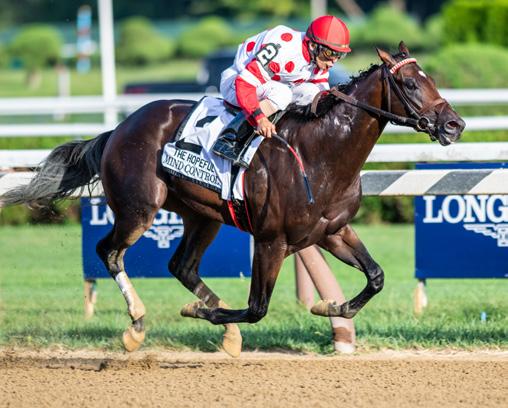
Mind Control wins the 2018 Hopeful Stakes.
Commercial stallions
To provide stallions of superior quality, the commerciality of the horse requires it to have already been successful in the breeding shed previously or fresh from the racetrack.
The qualities necessary for an attractive first year stallion include horses with great race records, good conformation, and sired themselves by a proven sire. At the end of the racing season, stud farms are working to add newly retired stakes horses or their siblings to their stallion roster. For stallions with runners, the year’s results could allow for a stallion to be more or less popular with breeders.
Q. With the continued decrease in foal count, how does this affect the upcoming breeding season?
According to the Jockey Club, the number of foals born in 2022 (fully registered and a more accurate count of horses foaled by the time the horse is 2 years old), decreased by 4.89% from 2021. At first glance, the decrease in percentage is concerning.
However, according to Robinson, there is a strong likelihood that “not well producing mares have been taken out of the producing population and there is more rehoming and retraining”. In reality, as Robinson points out, not all producing horses are “cut out for that career” and, if able, it would be more constructive to retrain and rehome them. This has been moving the industry towards ensuring the best breed with the best when possible and creating more high quality horses.
Q.How can we address these concerns heading into the upcoming year?
As an industry, it can be disheartening to see the foal crop count falling. However, it might behoove us to consider the minimum number of runners necessary to fill races at the tracks currently open and take into consideration the percentage of horses who do not start out from the foal crop as well as how often a horse is likely to race. This minimum viable racing foal crop calculation could provide a more complete picture of the industry and provide more ideas around racing conditions.
In the Thoroughbred racing industry, there is a place for all players, but only if they have a strategy. In breeding, the goal is to support their stud until he begins to produce runners where his progeny will speak for himself. Some farms choose quantity of foals, some choose quality of mares and others support risk management through unique ownership structures which include the developing micro share offerings.
Starting a stallion syndicate is not a new concept, but starting a stallion syndicate with micro shares and with a community of stud farms is - if this concept proves itself to be viable, it may begin to change how stud farms operate.
WHAT IF MY MARE DID NOT GET PREGNANT? WHY
EMBRYOS FAIL & IMPROVING ODDS OF SUCCESSFUL HORSE BREEDING
If entering the fall, your breeding prospects have come up empty, there are considerations to ponder and actions you can take for successful breeding next year.
“Don’t let those mares sit all fall and winter, with untreated conditions such as a uterine infection,” says Dr. Tracey Chenier, Theriogenologist and researcher from the Ontario Veterinary College at the University of Guelph. “Have a thorough veterinary evaluation now to help ensure her uterus is clean and she is healthy and cycling early next year, for the best chance of a positive outcome.”
SCAN QR CODE TO VIEW DR. CHENIER’S SUCCESSFUL BREEDING TIPS
Common issues conceiving and potential solutions
“The number one reason your mare didn’t get pregnant in any given year may be due to uterine infection,” says Chenier. “The term we use is endometritis.” Most often caused by a bacterial infection, it is often associated with poor perineal conformation. In other words, your mare has a tilt to her vulva causing the vagina and uterus to become contaminated with bacteria every time she defecates. It is also common for these mares to wind suck, which can lead to infection and inflammation that results in a hostile environment the embryo cannot survive in. A minor surgical procedure known as a Caslick’s suture reduces the chance of contamination in most affected mares. Severely affected mares may require additional procedures to reconstruct the perineal body. Another common form of endometritis is PBIE, or persistent breeding induced endometritis. In these cases, there is a prolonged inflammatory response to semen and contamination that occurs at breeding. Again, the mare has a hostile uterine environment in which the embryo cannot survive. To improve the chance of conception, this condition can be managed by ultrasound within 6 to 12 hours after breeding. She is checked for fluid retention and inflammation and if present, the uterus is lavaged to remove the fluid and calm the inflammation. The veterinarian may also advise administration of oxytocin to increase uterine contractions and help remove the fluid.
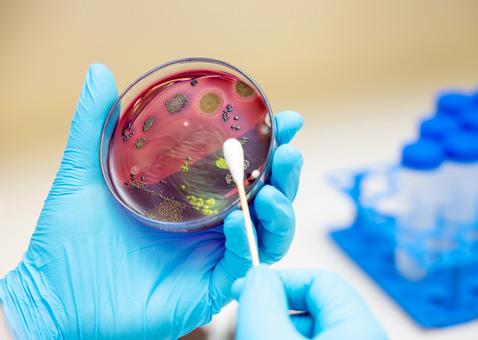
Cultures, gained from swabs of the uterus, are performed to detect inflammation and infection.
Another very common reason for the mare not getting pregnant is their age. “We actually consider mare’s fertility to decline as early as 12 years of age,” says Chenier, “and that surprises people that as early as 12 years, their fertility can decline significantly.” Older mares can have poorer oocyte (egg) quality. This reduces their chances of getting pregnant and can result in higher rates of mid-gestational losses.
Older mares are more susceptible to many circumstances including uterine conditions, metabolic disease, changes to the uterus, fibrosis and cysts. Fibrosis of the uterus will reduce the chances of carrying a pregnancy to term. Endometrial cysts or fluid filled sacs in the lymphatics of the uterus can block the ability of the embryo to move around and interfere with the placenta formation.
Less common conception issues
“Stress, nutritional issues, and hormone deficiencies can make it difficult for an embryo to survive,” explains Chenier “but these issues are generally less common.”
The corpus luteum is the structure that forms on the ovary after the mare ovulates and its progesterone production maintains the pregnancy early on. This structure may be susceptible to effects of severe stress, illness, or inflammation in the uterus. Progesterone/altrenogest supplementation can often save these early pregnancies but the mare will have to stay on the supplements until the fetoplacental unit takes over pregnancy maintenance by 120 days. The fetoplacental unit is a crucial interface between maternal and fetal circulatory systems, providing essential nutrients and oxygen to support fetal growth and development.
Early pregnancy loss can happen from days 0–60 of gestation. To help avoid risk factors like excessive stress, ask your vet before changing or adding anything to your mare’s routine. Consult your vet before administering any vaccines or deworming products.
“Oviductal blockage is another uncommon condition,” says Chenier, “but in mares that are not conceiving and everything else is normal (no uterine infection, good stallion fertility…) it should be considered.” An effective treatment the veterinarian may suggest, involves applying the hormone prostaglandin E to the oviductal papillae, which opens the oviduct and allows that blockage to be cleared out.
Diagnostics used to investigate early embryonic loss
“A good reproductive evaluation is really important to find out the reasons why a mare either didn’t get pregnant or lost a pregnancy,” says Chenier.
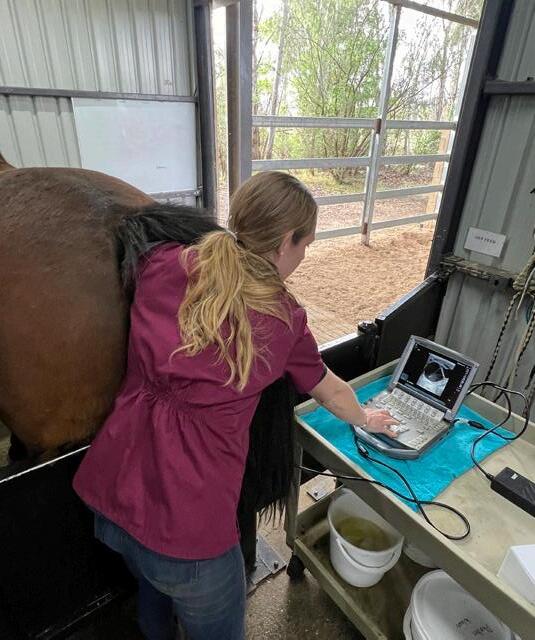
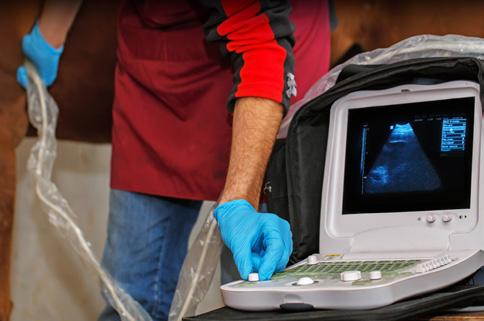
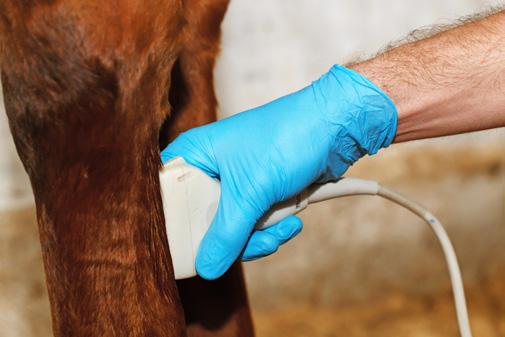
Veterinarians use rectal palpation, especially with ultrasound, to help detect fluid and infection. Palpation with ultrasound can detect the presence of endometrial cysts, conditions on the ovary, such as failure to ovulate and ovulatory follicles.
Cultures, gained from swabs of the uterus, are performed to detect inflammation and infection. This is helpful in cases where antibiotic use is required in order to determine what type of antibiotic to use.
Veterinarians use rectal palpation, especially with ultrasound, to help detect fluid and infection.
Uterine biopsy is indicated in certain cases. “I recommend a biopsy in any mare that fails to get pregnant after three attempts, especially if we are not getting good answers on a swab culture and ultrasound,” says Chenier. As well as providing a prognosis, it provides a lot of information on treatment options to improve the mare’s fertility.
A biopsy can help provide better information about what’s going on in the uterus and in the case of inflammation, identify the type of inflammation present.
Chronic infections are more likely to be caused by something like a dormant strep infection, and biopsy may be the only way to diagnose the fibrosis of the uterus that would be directly related to prognosis. If you found out your mare’s uterine biopsy was a Grade 3, meaning she has a lot of permanent severe changes in that uterus, her likelihood of carrying a foal to term is between zero and ten percent. This is really important information to help the breeder to decide whether they want to invest the time and money to attempt to breed a mare with a prognosis revealing these challenges.
Ultrasound is useful in identifying conditions such as endometrial cysts. Cysts can be removed by putting an endoscope in the uterus and then using either laser or electrocautery to a blade to improve a mare’s chances of pregnancy. Electrocautery involves using a heated electrode to cut or coagulate tissue during surgery. When applied to a blade, it allows for precise cutting with minimal bleeding.
“In really rare cases where all else has been ruled out, a karyotype might be considered,” says Chenier. “If it’s a young maiden and everything else seems to be working, there may be a genetic reason that she’s not able to get pregnant, but that would be the exception.” Karyotyping involves staining chromosomes and examining them to identify structural changes or numerical abnormalities.
Ultrasound is useful in identifying conditions such as endometrial cysts.
Improving the odds of pregnancy
The all-important veterinary evaluation will check the mare’s general health, body condition and uterine health as well as rule out metabolic diseases like insulin resistance and Cushings.
One must ensure the broodmare’s nutritional needs are met. Calories, protein, vitamins, and minerals are all passed on to the foal while in utero. Consult your vet or an equine nutritionist to ensure your mare gets a balanced diet and to learn how her nutritional needs increase during pregnancy.
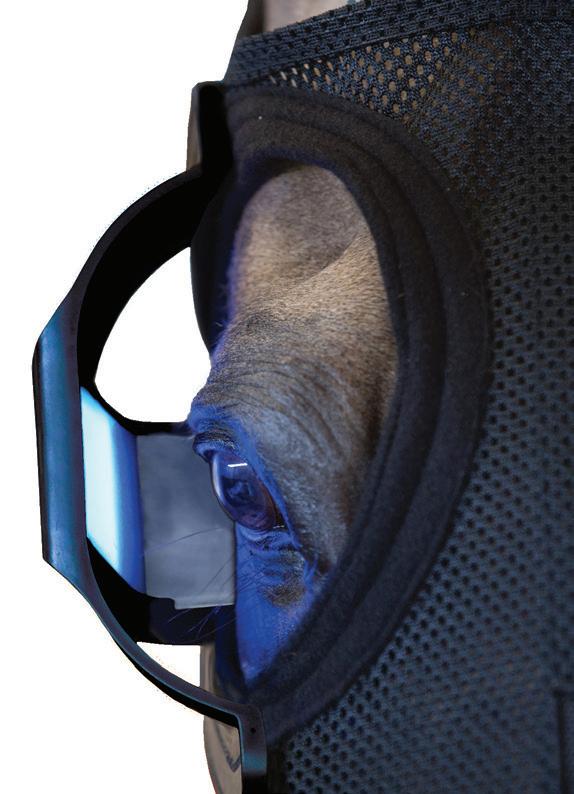
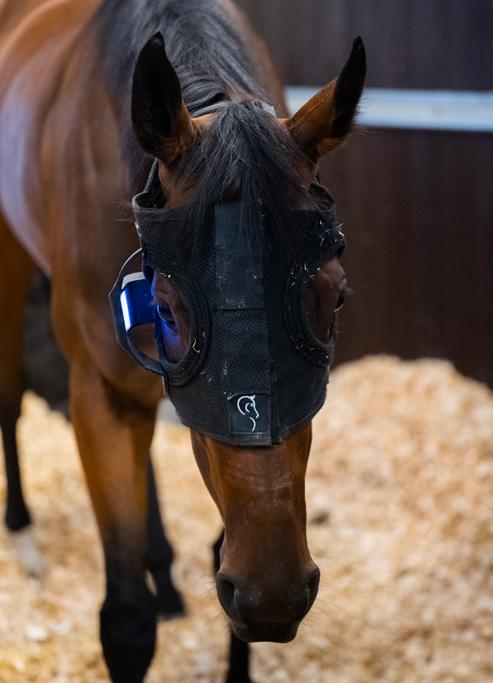
Use of light to manipulate the season is a consideration if you want to breed your mare early in the season for a January –March foal. Mares stop cycling during the winter. “I think it’s helpful to expose the mare to the cold and the darkness of the fall to reset her system before you start her under lights,” s ay’s Chenier. She recommends lighting programs begin around December 1st with what amounts to ten-foot candles, which is equivalent to 100 lux intensity of light. In old style lighting with incandescent bulbs that was the 100 watt bulb and the old saying was you needed to be able to read a newspaper in every corner of the stall. 16 hours of total light per day is recommended, and this includes natural light. From a practical point of view, that means if you turn your mare out at 8:00 o’clock in the morning, bring her in at four, and have the lights on in the stall until 11:00 PM, you will be providing an adequate amount of light. Chenier also describes the use of a commercially available equine light mask that is worn 24/7, like a fly mask. It is battery powered and delivers blue light to one eye on a timed basis.
“Good breeding management is always key,” emphasizes Chenier. “Negative uterine swabs before breeding ensure the mare is free of infection, limit to one cover in mares prone to infection or inflammation, correcting poor perineal conformation and then practice optimal timing.”
Not breeding at the right time is much less likely in the Thoroughbred industry, where mares are being bred by natural cover. If the mare is not in heat and not ready to ovulate, she is not likely to stand for the stallion.
If a mare is bred too early, the sperm will not live long enough. Mares can stay in heat a day or two after they have ovulated. If breeding happens too late (after ovulation), the oocytes will no longer be viable.
If the chosen stallion has fertility issues, the breeder may need to closely monitor their mare’s ovulation for the most optimal timing of breeding to improve odds of success. Chenier says, “If their sperm doesn’t live very long inside the mare, we have to manage those cases differently and make sure we’re breeding those mares really close to ovulation to get good fertility for those stallions.” Stallion fertility should always be considered a possibility when mares are not conceiving.
If breeding early in the season, one needs to make sure the mare is cycling properly and not just in spring transition. A vet check will confirm the mare is experiencing a real heat and ovulating for early breeding (Feb – April)
Equine Guelph’s Mare & Foal Healthcare tool provides many resources such as free broodmare and foal nutrition information sheets, handy checklists, and a pregnancy wheel to see how the foal develops in real time. It also offers a selection of videos featuring Dr. Chenier on predicting and monitoring foaling. Equine Guelph, at the University of Guelph, also offers a 12-week online course providing an understanding of effective broodmare, stallion and foal management and the procedure of producing quality foals while ensuring a sound understanding of welfare assessment and guidance for making good ethical decisions in relation to breeding. Register online at: courses.opened.uoguelph.ca
RIGHT: The commercially available equine light mask that is worn 24/7, like a fly mask delivering blue light to one eye on a timed basis.
PHOTOGRAPHY: GEORGINA PRESTON, SHUTTERSTOCK
ASSESSING APPROACHES TO DIAGNOSING & TREATING
PROXIMAL SUSPENSORY DESMITIS
iagnosing proximal suspensory desmitis in the hindlimb can be difficult. However, the modern diagnostic modalities available to the industry today makes it possible to isolate injuries, allowing both veterinarians and farriers to work together to achieve the best diagnosis and prognosis possible for the equine in question.
DIn this article, Connor Parsons reviews the anatomy and function of the suspensory ligament, causes and signs of proximal suspensory desmitis and whether there is an ideal procedure for diagnosing, treating and formulating a prognosis for the horse as part of his DipHE Farriery studies.
Anatomy
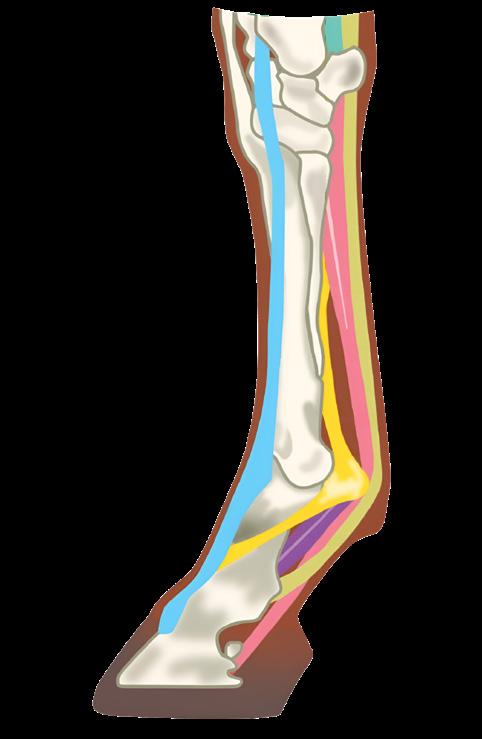
The equine limb is complex yet effective. The suspensory ligament is made up of dense white fibrous connective tissue which suspends the fetlock and prevents hyperextension. Originating at the proximal, plantar aspect of the third metatarsal/carpal attaching to two palmar depressions distal to the carpometacarpal and tarsometatarsal joints descending the channel formed by the 2nd, 3rd and 4th metatarsal/carpal, bifurcating two thirds of the way down
the 3rd metatarsal/carpal, making a firm attachment to the palmar aspect of the proximal sesamoids, pulling the sesamoids proximally, then traveling dorsally and distally at an oblique angle to merge with the common digital extensor tendon. This forms a sling to support the fetlock joint. The ligament and its branches are strong but only slightly elastic (Devereux, 2006).
The suspensory ligament also forms a part of the hindlimb stay apparatus which is a system of ligaments, tendons and muscles that work together to allow the horse to stand and doze with minimal muscular effort. Also known as the fright and flight mechanism (Colles & Ware, 2020).
Damage to the suspensory ligament
Suspensory ligament damage can affect horses of all breeds and ages. However, it is most common in competition horses. Proximal suspensory desmitis (PSD) is inflammation or damage of the main body at the origin of the ligament at the proximal end of the third metacarpal/metatarsal.
The suspensory ligament can be inflamed or there can be changes to the fiber pattern of the ligament. These cases will present with lack of performance, being worse on soft
PHOTOGRAPHY: GALOPPFOTO.DE, JOCKEY CLUB OF SAUDI ARABIA / ERIKA RASMUSSEN, NIGEL KIRBY PHOTOGRAPHY,
surfaces. In more severe cases a core lesion (hole) can be seen on an ultrasound scan, where a number of fibers have ruptured. This type of injury will have a more sudden onset of lameness (Dyson, 1994). Injury can be solely within the ligament, involve tearing of the fibers of the ligament or be connected to avulsion fractures at the origin, involving the proximal 3rd metacarpal/tarsal (Baxter, 2020). Complete rupture is possible, however, very rare. The prognosis for a complete rupture is not favorable (Dyson, 1994).
Although the suspensory ligament has a slight elasticity to its make-up, if it is stretched it tends to heal with a loss of elasticity making it susceptible to recurrent damage (Colles & Ware, 2020).
Signs of proximal suspensory desmitis
Proximal suspensory desmitis is a difficult condition to diagnose as the hindlimb is complex and many of the functioning structures work in unison. A horse suffering with inflammation or damage to the main body of its hind suspensory can present one of three ways. It may have a unilateral lameness, a bilateral lameness or just a general decrease in performance (Dyson, 1994).
Causes of PSD of the hindlimb
Although there has been extensive research into proximal suspensory desmitis, there is no primary cause in all cases.
Proximal suspensory desmitis is a common injury in both front and hindlimbs of the equine athlete. Usually bilateral in the hindlimb (Dyson, 2016).
All types and breeds of horses are susceptible to this type of injury. Poor conformation is a contributing factor to proximal suspensory desmitis.
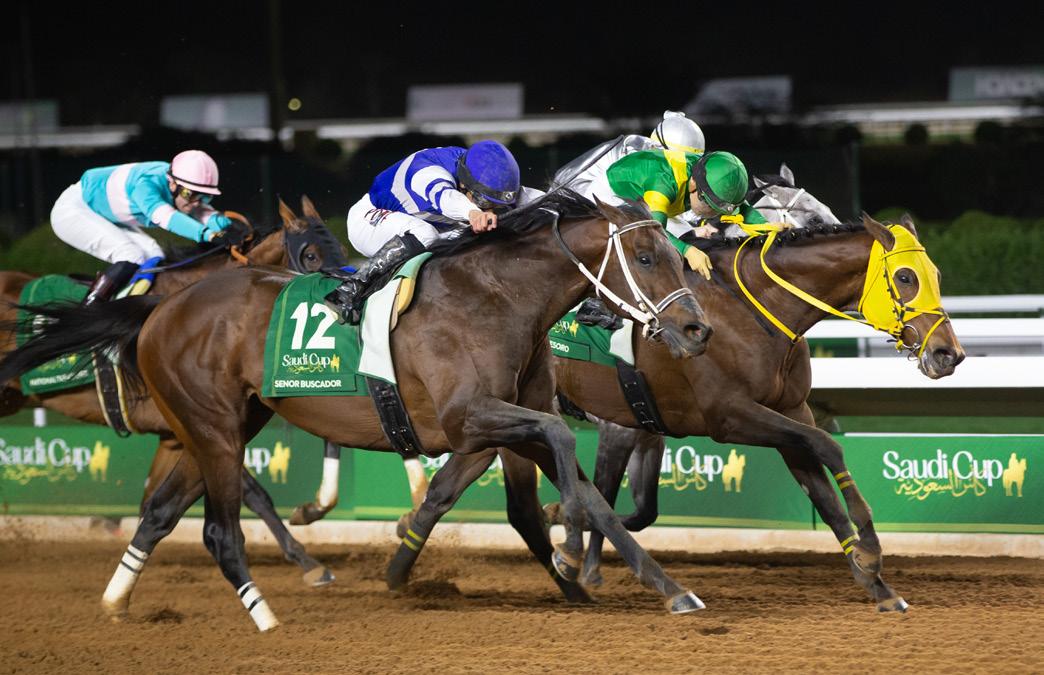
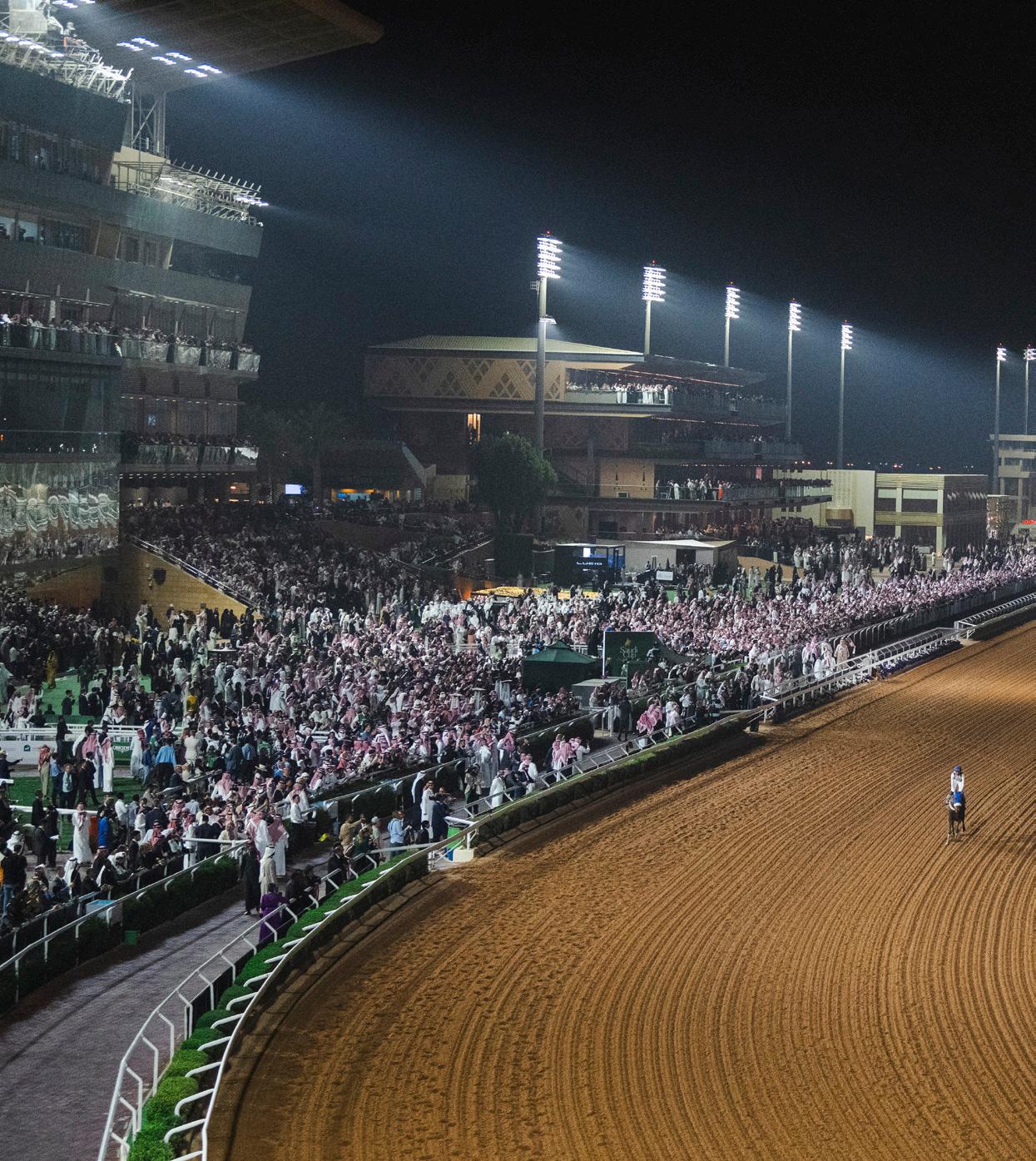
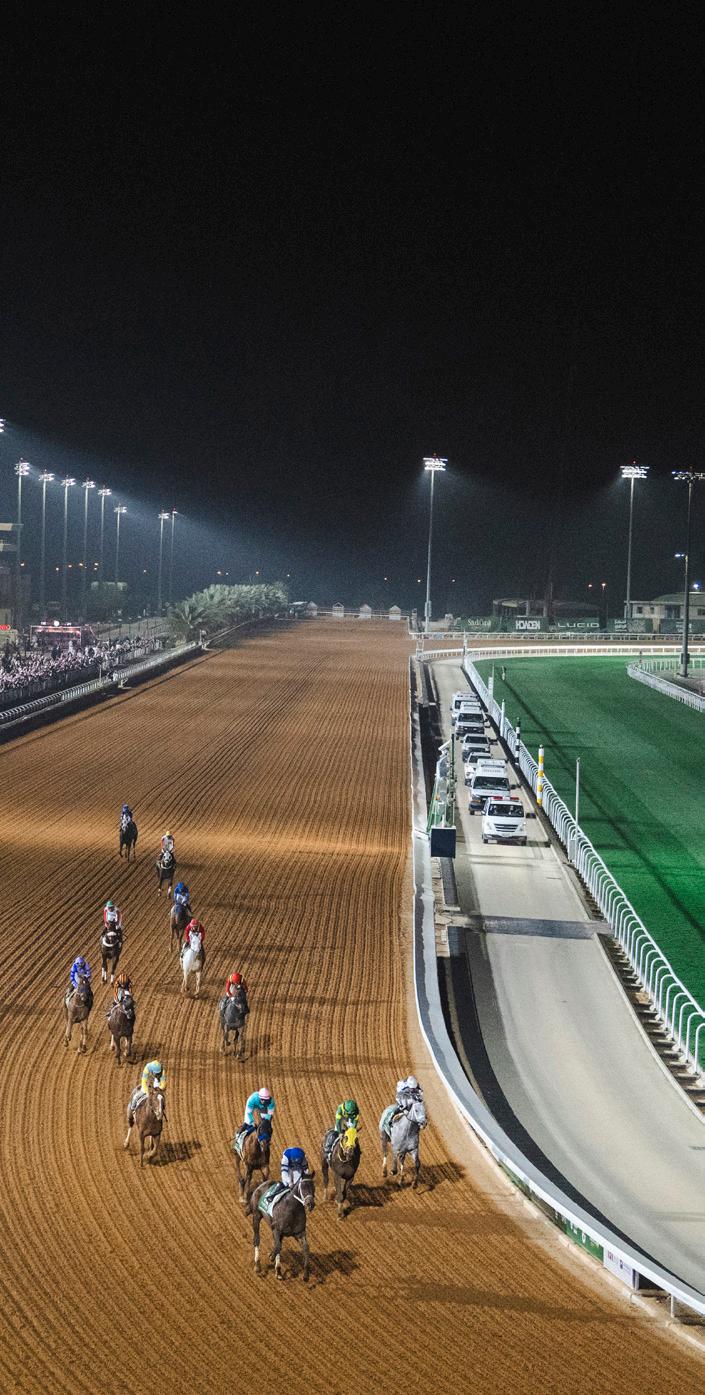
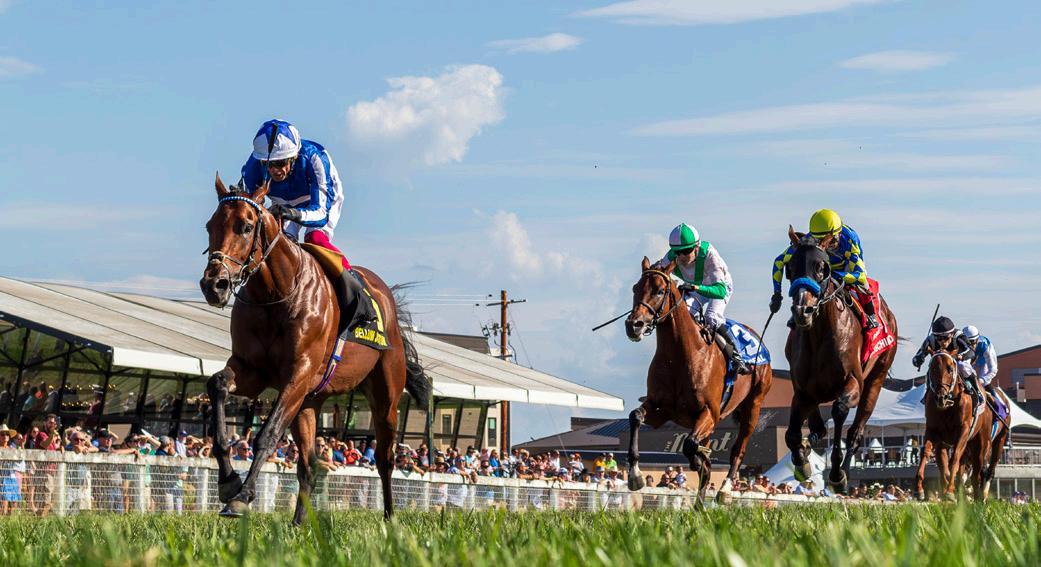
Senor Buscador (12), was derailed by a suspensory injury in his right forelimb but came back stronger than ever winning the 2024 Saudi Cup.
Conformational defects such as straight hocks, sloping pasterns and long-toe, low-heel conformations would be at higher risk to injury. These conformational defects will all apply unnecessary pressure to the suspensory ligament. Horses that have suffered with this condition will be predisposed to a repetitive strain injury of this ligament (Devereux, 2006).
Overextension of the tarsus as a result of overextension of the fetlock has been linked to proximal lesions. The higher the severity of trauma, the higher the severity of ligamentous lesion. Working horses on deep, soft surfaces will increase the risk of this injury (Baxter, 2020).
The hindlimbs are more frequently affected with this condition than the forelimbs with a much lower success rate of the horse returning back to performance prior to rest (69% hind vs 80% forelimb) (Colles & Ware, 2020).
Discussion
In a study of six horses, this is an extremely small cohort of horses to be able to state an average age a horse is likely to present with this condition. This study also shows that all of the horses studied were of varying fitness levels, therefore stating that this does not affect the likelihood of injuring the hind suspensory ligament. There was only one horse in this study that was unfit and overweight. The rest were all competition fit with good muscle mass, showing that fitness doesn’t necessarily decrease the risk of this injury happening. The case history of the six horses studied did not include which discipline or level the horse was working at. This would be an interesting factor to consider when looking at which horses would be more susceptible to proximal suspensory desmitis.
Senor Buscador,
Winner of the $20 Million Saudi Cup, came back from injury with the help of RenoVō®
“(RenoVō®) is my mainstay for tendon and ligament injury rehabilitation to this day. It works well to regain tendon and ligament strength and longevity as well as promotes healing without as much scar tissue. Obviously, it worked on him, and he’s become an amazing athlete.”- DR. TOMMY HAYS
Each individual case was being looked after by different veterinarians, giving a clear picture of different approaches on how to diagnose and treat this condition. Although for the purpose of a study the varying opinions will make the comparison more difficult.
All horses presented with a reduction in performance prior to veterinary contact. Only one horse was reported with a bilateral lameness behind. Flexion testing appeared to aggravate the lameness making it more prominent to see. Local analgesia has been shown to be effective in isolating the area to be investigated. Also, showing lameness on the other hind once the worse limb has been blocked out.
Using digital diagnostic modalities such as ultrasonography to diagnose this condition allows the veterinarian to study the changes in the fiber pattern of the suspensory ligament. This will allow the veterinarian to see the severity of damage caused and allow them to provide the best treatment plan possible. In this study only one horse had a lesion while the other five horses had thickening and slight changes to the fiber pattern. Horse 2 had lesions on both hindlimbs however the veterinarian didn’t medicate, box rest was recommended. His prognosis was guarded.
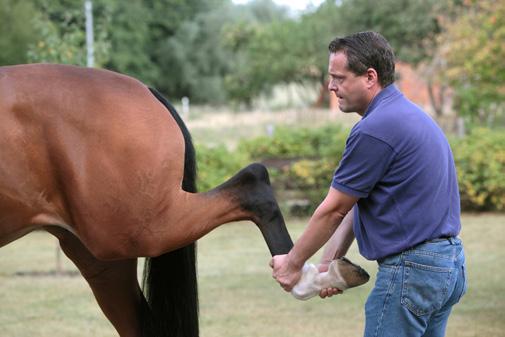
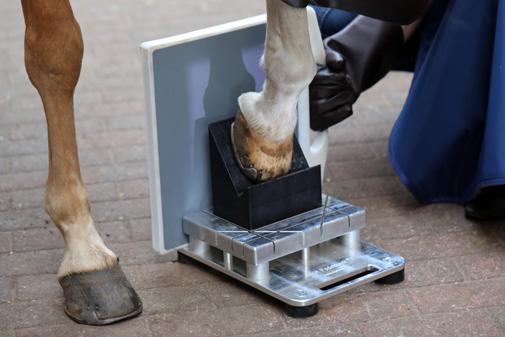
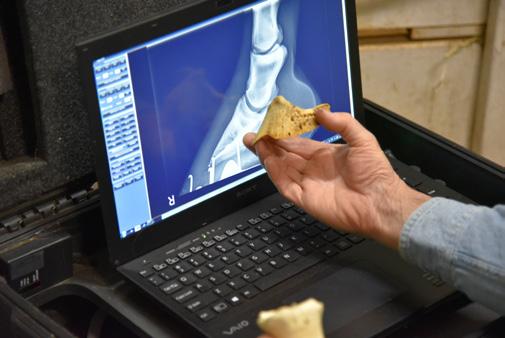
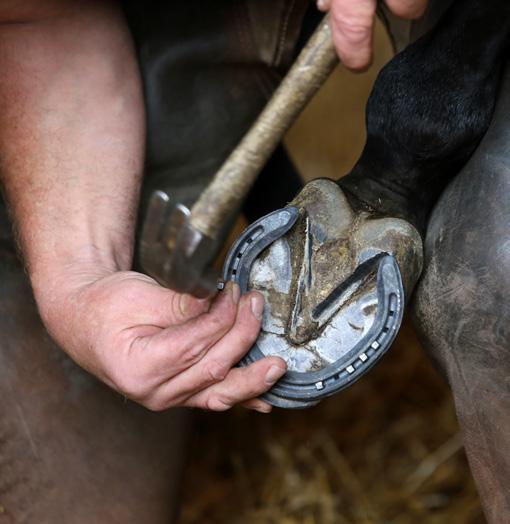
Although radiographs of the feet don’t directly help with the diagnosis of proximal suspensory desmitis, they do allow the farrier to trim accordingly to restore the hoof back to correct hoof pastern axis and mediolateral foot balance. This will reduce lever arm forces thus reducing any unnecessary pressures on the plantar aspect of the limb.
Horses were radiographed for foot balance to aid with remedial trimming and shoeing. This will increase the equine’s prognosis
allowing the farrier to have a clear picture of what is being dealt with.
All of the horses that were radiographed presented with a negative sole plane and weak heels.
The question is whether this foot conformation is because the horses are wanting to apply more pressure to the caudal aspect of the hoof in the landing phase, reducing the movement of the metacarpophalangeal articulation. This is an attempt to reduce the loading forces applied to the suspensory ligament. However, it will also cause the heels to become weak. Or, if this conformational defect has caused the suspensory ligament to become inflamed or damaged, thus causing proximal suspensory desmitis.
Proximal suspensory desmitis can be secondary to other conditions such as hock conditions or sacroiliac problems which cause the horse to adopt a different gate. Therefore causing unnecessary loading on the suspensory ligament. It is important that the primary cause is diagnosed and treated when treating proximal suspensory desmitis. This is where scintigraphy can be a useful tool to get a clear picture of the cause involved in individual cases.
Scintigraphy is an expensive diagnostic modality which carries significant health and safety risks, this must be taken into consideration when dealing with cases. All horses studied were worse on a soft surface where it is harder for the horse to guard itself from soft tissue injuries. Horses that are worse on soft surfaces generally are suffering from soft tissue pain. However, nerve blocks will help the veterinarian pinpoint the structures involved when diagnosing lameness.
= Healthy Horse
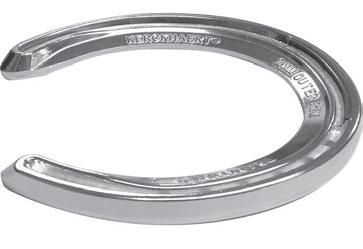
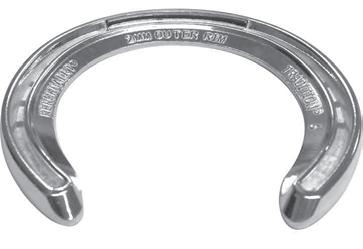
HISA COMPLIANT VICTORY RACING PLATES
VICTORY MODEL ALL SURFACES DIRT
Digestive Optimizer is a blend of Live Probiotics, 14 Digestive Enzymes, Active Yeasts & Prebiotics – to break down feedstuffs & BOOST NUTRIENT ABSORPTION. Naturally.
See Healthy Changes in:
• Energy & Performance
• Appetite & Feed Utilization
• Stress / Nervousness
• Attitude & Focus
• Gas / Hay Belly
• Hoof, Skin, Coat Quality
• Reduced Risk of Ulcers
# No Sugar #USEF/FEI Safe
SPORT QUEENS FRONT & HIND
EC QUEENS FRONT & HIND
SPORT QUEENS FRONT & HIND
EC QUEENS FRONT – SOLID HEEL
EC QUEENS WEDGE FRONT & HIND
EC QUEENS 3-DEGREE WEDGE HIND
EC QUEENS FRONT - SOLID HEEL
EC QUEENS 3-DEGREE WEDGE HIND ALL SURFACES
VICTORY MODEL DIRT
EC QUEENS WEDGE FRONT & HIND
SPORT XLT WEDGE HIND
DEL
EC XLT 3-DEGREE WEDGE HIND
SPORT QUEENS FRONT & HIND
EC QUEENS FRONT - SOLID HEEL
EFFECTIVE DATE FOR THE HISA SHOEING RULES AND THE “NON-ENFORCEMENT” GUIDANCE – AUGUST 1, 2022
EC QUEENS WEDGE FRONT & HIND
VISIT HISAUS.ORG FOR UPDATED INFORMATION
EC XLT 3-DEGREE WEDGE HIND
EC QUEENS FRONT & HIND EFFECTIVE DATE FOR THE HISA SHOEING RULES AND THE
EC QUEENS 3-DEGREE WEDGE HIND
EC QUEENS FRONT & HIND EFFECTIVE DATE FOR THE HISA SHOEING RULES AND THE "NON-ENFORCEMENT" GUIDANCE - AUGUST 1, 2022 HISAUS ORG FOR UPDATED INFORMATION
GUIDANCE - AUGUST 1, 2022 G FOR UPDATED INFORMATION
Although it is possible to have a unilateral lameness with proximal suspensory desmitis in the hindlimb it is most common for the lameness to be bilateral. All of the horses in this study had a bilateral lameness, generally worse on one limb than the other. Although presenting prior to veterinary contact as lack of power or struggling to strike off on the correct canter lead.
When a veterinarian is deciding on a treatment plan, the horse is looked at carefully including its previous history as some treatments come with higher risks, although can be extremely effective for reducing inflammation. Shockwave treatment comes with minimal risks involved and is effective; however, many racing authorities require a mandatory 5 day stand-down period from racing following the administration of extra-corporeal shockwave therapy. Findings from this study show that the horses with the best prognosis of getting back to competitive work have undergone surgery. Understandably this is the last resort treatment as it is invasive and expensive for the client.
Only one horse from this study did not have any medical intervention and this horse had the least favorable prognosis. This would suggest that box rest alone is not generally enough if the horse is expected to get back to full athletic fitness. The most common veterinary treatment is steroidal injections into the area of interest and shockwave therapy with rest. However, the use of corticosteroids in horses in training often adopt a clear 14-day exclusion on the use of intra-articular (joint) injections before racing in line with different racing authority regulations.
Water based therapy can also be considered as part of the recovery process when bringing the horse back into work. It’s known to reduce limb oedema, stimulate nerves, and improve circulation,
which speeds the healing process and provides pain relief. It also aids in joint stability, providing all-around support to the limbs.
Cold water therapy is typically prescribed when the goal is to reduce heat and inflammation. Applying cold water or ice reduces the amount of accumulating fluid to an injured area and can somewhat numb the area, causing a topical analgesic effect.
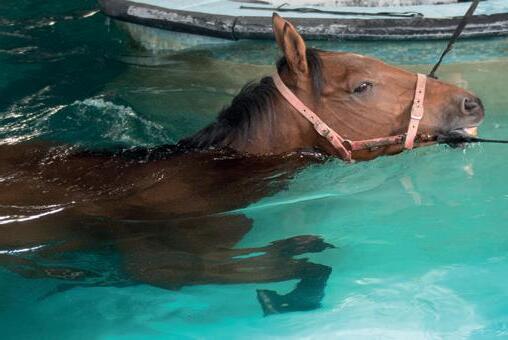
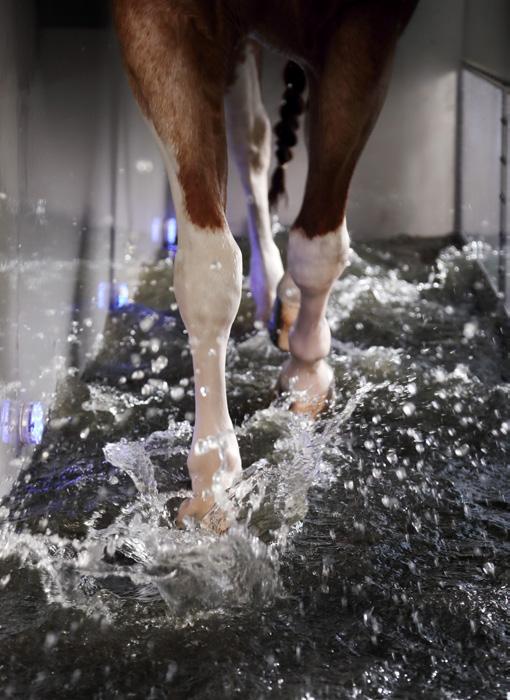
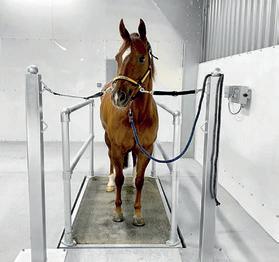
Underwater treadmills are often used for horses with tendon and ligament injuries to provide a gradual transition back into exercise and regain the range of motion. Swimming is also used to condition the horse without putting a load on the skeletal system. It is often used in the early stages of tendon and suspensory injuries due to no pressure being placed on the lower limb. Trainers who use swimming as part of their routine often find that, in addition to the cardiovascular workout, it also helps the horse relax and settle its mind.
This is not always successful and horses are then admitted for surgery. While the surgery for this condition is successful, there must be consideration taken into the fact that it is not legal to compete at certain levels once this surgery has taken place.
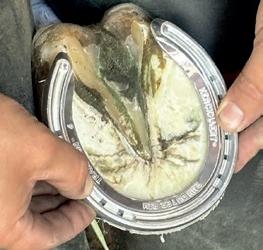
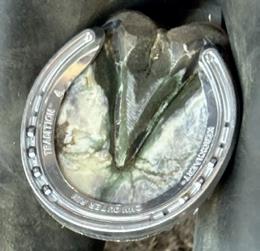
The study shows that the farriery treatment involved when dealing with this condition is varied, depending on which veterinarian the horse is being looked after by. However, the author has had positive results from many different shoeing styles. The main importance of trimming and shoeing for this condition has been shown to restore the best possible hoof pastern axis through trimming, supporting the entire limb and fitting a shoe with an early breakover. This will reduce the lever arm on the metacarpophalangeal articulation, thus minimizing unnecessary pressure on the suspensory ligament.
Underwater treadmills and swimming are often used for horses with tendon and ligament injuries.
Conclusion
Having such a small cohort of horses in a study makes it difficult to finish with a conclusive result. This small study however, has given a positive result in the diagnosis stages of dealing with this condition. At this stage nerve blocks are invaluable along with ultrasonography. In less obvious cases MRI is useful to gain a diagnosis and occasionally scintigraphy will be used to locate the problem. Radiography is a useful tool when dealing with PSD and checking the origin area for avulsion fractures.
This study has also shown that there is a link between a negative solar angle and proximal suspensory desmitis. However, this would need to be studied further and on a greater scale to determine why there is a link between this conformational defect and this condition.
It is paramount that correct foot balance is achieved by the farrier. To achieve this foot balance radiographs are required. This study has shown that there is no definitive way to shoe for this condition, however it has shown a positive result from an early breakover shoe, allowing the horse to relieve pressures on the caudal aspect of its hoof.
Horses that had the best prognosis underwent surgery, allowing them to get back to competitive fitness.
References:
• Baxter, G. M., 2020. Adams and Stashak’s Lameness in Horses. 7th Edition ed. Hoboken, NJ: John Wiley & Sons.
• Colles, C. & Ware, R., 2020. The Principles of Farriery. 2nd edition ed. Marlborough: J.A.Allen.
• Devereux, S., 2006. The Veterinary Care Of The Horse. 2nd Edition ed. London: J.A.Allen.
• Dyson, S., 1994. Proximal suspensory desmitis in the hindlimb: 42 cases. British Veterinary Journal, 150(3), pp. 279-291.
• Dyson, S., 2016. American Association of Equine Practitioners. WEB Available at: aaep.org/horsehealth/lowdown-high-suspensory-diseaseproximal-Suspensory-desmitis [Accessed 19 11 2022].
• Smith, M., 2022. Newmarket Equine Hospital. WEB Available at: www.newmarketequinehospital.com/media/pm1beabc/ hah349-Vet_susp_desmitis-final.pdf [Accessed 9 April 2023].
It is paramount that correct foot balance is achieved by the farrier.
GOING GLOBAL
Finally, after American horses shed race-day medication in graded stakes, international racing is becoming a two-way street. Not only are horses from around the world testing our richest races, but American horses, who annually compete in Dubai and Saudi Arabia’s marquis races, are now earning entrance into Royal Ascot and Australia. Drew Fleming, the president and CEO of the Breeders’ Cup, said, “Racing, as a whole, is becoming more international by the second.”
Sure seemed that way this summer.
In the span of 18 days, Fleming addressed the 40th annual Asian Racing Conference; a British invader captured the richest race at Kentucky Downs to earn a spot in a $5 million stakes in Australia; Hong Kong simulcast three stakes from Del Mar; four massive purses at Kentucky Downs attracted horses bred in Japan, Ireland, Germany and France; two stakes winners in South Korea qualified for the Breeders’ Cup, and four Gr.1 stakes at Woodbine attracted seven horses bred in Ireland, and one each from England, France and Brazil.
“I think the opportunities are fantastic,” trainer Graham Motion said. “I love international racing. That’s what makes the Breeders’ Cup so special. It wouldn’t be so special if it wasn’t for the international participation. Whether it’s us going there or them coming here, it’s what makes racing interesting for a fan, for a bettor, for everybody.”
Speaking at the 40th annual Asian Racing Conference in Sapporo, Japan, August 28th, Fleming, who is also on the council of the International Federation of Horse Racing Authorities, said, “The more eyes we have on our sport, the better we all are.”
Back home a week later, Fleming told us, “The implementation of national uniform medication has brought U.S. racing in line with the international jurisdictions and standards, and that has significantly improved the global perception of our sport. Frankly, that improved perception and integrity is supported by increased participation. We’ve seen increased trust and interest among international participants and audiences.”
Just three days later, British trained, Bellum Justum won the Gr.1 $3.1 million Nashville Derby Invitational at Kentucky Derby by 2 ¼ lengths to earn a qualifying spot in the Gr.1 $5 million Ladbrokes Cox Plate on October 26th in Australia.
“This is going to be a massive win back home,” said Adrian Beaumont, who recruits horses to run at Kentucky Downs and other tracks for the International Racing Bureau in Newmarket as well as helping U.S. horses when they ship to Europe. “Hopefully it will open the floodgates for more coming here next year with horses as good as this – or better.”
LEFT: The Saudi Cup, King Abdulaziz Racetrack, Riyadh.
Beaumont, 62, has done everything he can to foster international racing. He’s been representing the IRB for 40 years. He’s been working with the Breeders’ Cup since its inception in 1984, the New York Racing Association since 1985, Colonial Downs and other tracks.
His job became infinitely easier when race-day medication was stopped in graded stakes in the U.S. four years ago. “America was the only country that allowed it,” Beaumont said. “It was out of step with racing around the world. We were always astounded by it, particularly in graded stakes, which were going to produce the breeding stock of the future. It puts all the international horses who come to America on level footing.”
He took great delight in Bellum Justum’s victory in the Nashville Derby Invitational, convincing his trainer, Andrew Balding, to make the trip: “I persuaded him to run the horse.”
The horse who finished second in the Nashville Derby Invitational, Carson’s Run, had already earned a starting spot in the Cox Plate by winning the Saratoga Derby Invitational Stakes in the second year of a partnership between the New York Racing Association and the Moonee Valley Racing Club in Melbourne.
The Saratoga Derby Invitational Stakes was first run in 2019. In 2021, Joseph O’Brien became the first trainer to win both the Saratoga Derby Invitational Stakes and the Cox Plate with Irish-bred State of Rest.
But Carson’s Run is staying state-side. “The reason we are passing on Australia is that there’s a major question mark on the shipping and a major question on the quarantine,” trainer Christophe Clement said. “There are too many things we can’t control. We do have good races here.”
Regardless, he is appreciative of the opportunity, one which only happened after race-day medication in graded stakes was eliminated: “We’re all competing in the world with the same rules or close to being the same rules, and that’s wonderful. That’s the way it should be.”
In 2021, Joseph O’Brien became the first trainer to win both the Saratoga Derby Invitational Stakes and the Cox Plate with Irish-bred State of Rest.
ABOVE: British trained, Bellum Justum, won the Nashville Derby Invitational to earn a qualifying spot in the Gr.1 $5 million Cox Plate in Australia.
Across the country from Kentucky Downs on August 31st, Hong Kong simulcast three Del Mar Stakes, the Pacific Classic, the Green Flash and the Del Mar Mile.
“That wouldn’t have been possible if North America hadn’t fallen in line with the international standard where graded stakes had to be medication-free,” Bill Nader, the president and CEO of Thoroughbred Owners of California said. Previously, Nader had been Hong Kong Executive Director of Racing from 2007 through 2022.
“It’s very unusual for Hong Kong to simulcast races from America. This is a breakthrough. When I arrived in Hong Kong in 2007, I soon realized the perception of American racing suffered from the permissible use of medication on race day. America was seen as a racing and breeding nation that fell short of the standards of Europe and Asia.”
Speaking at the September 3rd OwnerView Thoroughbred Owner Conference focusing on international buying and racing, Garrett O’Rourke, the general manager of Juddmonte Farms, said the playing field is more level around the world now.
On September 7th, the massive purses of four turf stakes at Kentucky Downs attracted horses bred in Japan, Ireland, Germany
and France, including two horses who made their last start in England and two more in Ireland.
The very next day a world away in Seoul, South Korea, two horses, Crown Pride and Remake, won the Gr.3 $1.2 million OBS Korea Cup and the Gr.3 $1 million OBS Korea Sprint to earn berths in the Gr.1 $1 million Breeders’ Cup Dirt Mile and the $2 million Gr.1 Breeders’ Cup Sprint as two of the Breeders’ Cup 82 “Win and You’re In” qualifiers. This was a first for Korea.
“We’ve had great success in Japan and the Japanese have been long supporters of the Breeders’ Cup,” Fleming said. “They’re very loyal nominators and supporters of running horses in our races and in wagering. The natural next step was Korea. They have a strong dirt program, and we thought it was a nice step to continue to grow the international brand.”
On September 14th at Woodbine, four Gr.1 stakes attracted horses bred in Ireland – seven of them – England, France and Brazil. There were three horses who made their previous start in England, three in France and two in Ireland.
It’s been 107 years since the English colt Omar Khayyam became the first international horse to win the Kentucky Derby. There haven’t been many. In 1971, Venezuelan sensation Canonero II won the Kentucky Derby and Preakness Stakes. Two other international Kentucky Derby winners were Canadianbred Northern Dancer in 1964 and Sunny’s Halo in 1983.
In 2017, Kentucky Derby officials began offering point-earning qualifying races in Japan, Ireland, Great Britain and France. In 2023-24, there were four stakes in Japan and seven in Europe granting the winner with Derby points.
Forever Young nearly became the first Japanese horse to win the Kentucky Derby this year, beaten just two noses when third behind Mystik Dan and Sierra Leone, who bore into Forever Young throughout the stretch. The stewards did not make an inquiry and there was no jockey objection, but it was an obvious foul which should have moved Forever Young into second. If he hadn’t been bothered, Forever Young might have won. Forever Young will lead a group of 18 Japanese horses entered in this year’s Breeders’ Cup.
LEFT: Remake ridden by Yuga Kawada wins the 2024 OBS Korea Sprint at Seoul Racecourse.
Forever Young (above center) nearly became the first Japanese horse to win the Kentucky Derby this year, beaten just two noses when third behind Mystik Dan and Sierra Leone.
Forever Young and jockey Yoshito Yahagi.
Four graded stakes on Kentucky Oaks Day and Derby Day offered their winners a trip to Europe to compete in Group 1 stakes. “We definitely want American horses over here,” Beaumont said. “There’s an appetite.”
On Oaks Day May 3rd, Dynamic Pricing, trained by Chad Brown, captured the Gr.2 Edgewood Stakes, but his connections turned down a berth in The Oaks at Epsom Downs on May 31st.
The following day, Trikari, a 47-1 longshot trained by Graham Motion, won the Gr.2 American Turf Stakes, earning a spot in The Derby at Epsom Downs June 1st. “It just didn’t really work,” Motion said. “It was just too quick to wheel a somewhat lightlyraced three-year-old back in a month going a mile and a half at Epsom. It would have been a huge undertaking. But I admire the idea, and I think it’s tremendous.”
A month and two days later, another Motion-trained horse, the five-year-old gelding The Grey Wizard, won the two-mile Gr.2 Belmont Gold Cup Invitational in trackrecord time. That earned him a start in the Gr.1 $5 million Melbourne Cup on November 5th. Before Motion and the horses owners, Albert Frassetto and Eclipse Thoroughbred Partners, decided whether or not to go to Australia, The Grey Wizard won the $200,000 Cape Henlopen Stakes at Delaware Handicap August 21st. He then finished second in the Nashville Gold Cup at Kentucky Downs on September 13th.
“We strongly considered Australia, but there were no incentives,” Motion said. “It was purely a spot in the race. It’s an extremely expensive undertaking and I think had he won the race at Kentucky Downs, we might have tried. But it’s a huge ask to do that. He would have had to leave for England to quarantine the last week of September. That’s how hard it is to do that.”
Two more Derby Day stakes winners on May 4th also declined to go to Europe: Cogburn, winner of the Gr.2 Twin Spires Turf Sprint Stakes for trainer Steve Asmussen, turned down a berth in the Gp.1 King Charles III Stakes at Royal Ascot. Program Trading, the winner of the Gr.1 Turf Classic trained by Chad Brown, turned down a trip to Royal Ascot in either the Gp.1 Queen Anne Stakes or the Gp.1 Prince of Wales’s on June 18th and 19th, respectively.
Of course, trainers Wesley Ward, Mark Casse and George Weaver list victories at Royal Ascot as career highlights. Ward, who became the first American-based trainer to win at Royal Ascot when 33-1 Strike the Tiger captured the Windsor Castle Stakes in 2009. It was the first of Ward’s 12 victories at the famed meet, including Undrafted, whose score in the 2015 Gp.1 Diamond Jubilee, made Ward the first American trainer to win a Gp.1 stakes at the famed track, and two by Lady Aurelia, the 2016 Gp.2 Queen Mary and the 2017 Gp.1 King’s Stand.
The Grey Wizard (11) with John Velazquez up wins the 2024 Belmont Gold Cup at Saratoga Race Course.
RIGHT: Wesley Ward’s Undrafted with Frankie Dettori up wins the 2015 Diamond Jubilee Stakes at Royal Ascot.
Casse’s Tepin took the 2016 Gp.1 Queen Anne at Royal Ascot on the way to her second consecutive Eclipse Award as Champion Female Turf Horse.
Weaver joined Ward and Casse as Royal Ascot stakes-winning American trainers.
“Thanks to Wesley Ward, the word has spread about what a fabulous place it is to race,” Weaver said. “It is certainly in the highlight reel of my career.”
Weaver lost with his first Royal Ascot starter in 2015, but got a second chance thanks to the 2023 agreement between 1/ST Racing’s Gulfstream Park and Royal Ascot Racecourse to make two $100,000 Gulfstream Park stakes, the Royal Palm Juvenile and the Royal Palm Juvenile Fillies, qualifiers for two Royal Ascot Stakes including a $25,000 equine travel stipend. It was the first time U.S. horses earned automatic qualifiers for stakes races at Royal Ascot.
Weaver won both Royal Palm Stakes and didn’t hesitate to ship both, Crimson Advocate and No Nay Mets across the Atlantic. “There wasn’t a reason not to go,” Weaver said.
Crimson Advocate won the 2023 Gp.2 Queen Mary Stakes by a nose, a day before No Nay Mets finished ninth in the Gp.2 Norfolk Stakes. Weaver had travel experience earlier in his career when his Saratoga Country won the $2 million Golden Shaheen in Dubai in 2005. “To travel so far for a race, it’s exciting,” Weaver said. “You’re going to a new place. There are logistics. There are a lot of hoops to jump through. It’s worth it. It’s the experience of a lifetime, even if you get beat.”
Marsha Naify, Little Red Feather Racing and Sterling Stables’ Gold Phoenix won the Gr.1 Charles Whittingham Stakes at Santa Anita May 4th, but declined to participate in the Gp.1 Coral Eclipse Stakes at Sandown Park, July 6th, instead focusing on his third trip to the Breeders’ Cup Turf. He was a troubled seventh in the Gr.2 Eddie Read Handicap; gamely won the Gr.2 Del Mar Handicap for the third consecutive year and finished fifth in the Gr.2 John Henry Turf Classic.
On May 18th at Pimlico, Richard Santulli’s Colts Neck Stables LLC’s Grooms All Bizness took the Jim McKay Stakes for trainer
Jorge Duarte, Jr., but declined a trip to the Gp.1 Darley July Cup at Newmarket July 13th.
American horses have been heavily involved in racing in Dubai and Saudi Arabia. In 1996, Allen Paulson’s brilliant two-time Horse of the Year Cigar held off Burt Bacharach’s Soul of the Matter by a half-length to capture the first World Cup in Dubai. Ten other American winners followed: Silver Charm, Captain Steve, Roses in May, Invasor (though he was bred in Argentina), Curlin, Animal Kingdom, California Chrome, Arrogate, Mystic Guide and Country Grammar.
Many American horses have won the $2 million Golden Shaheen in Dubai, including repeat winners Caller One and Mind Your Biscuits.
Next year’s $12 million Dubai World Cup is on April 5th.
The $20 million Saudi Cup will precede the Dubai World Cup on February 24th next year. American horses have thrived there. Maximum Security won the inaugural Saudi Cup in 2020, but was stripped of the victory four years later for drug infractions, moving up Midnight Bisou. Emblem Royal won the Saudi Cup in 2022 and Senor Buscador in 2024.
Forty years ago, Robert Sangster’s Irish-bred Royal Heroine and HH Aga Khan’s British-bred Lashkari won the Breeders’ Cup Mile and the Turf, two of the seven races comprising the inaugural Breeders’ Cup in 1984 at Hollywood Park.
What a difference 40 years make.
This year’s Breeders’ Cup offers 14 races with horses literally from all over the world competing, all without Lasix, which was banned from the Breeders’ Cup in 2021. Breeders’ Cup Win and You’re In qualifiers were offered in Argentina, Brazil, Canada, Chile, England, France, Ireland, Japan, Peru, South Africa and South Korea.
“One of the most important things of the Breeders’ Cup is internationalism,” Breeders’ Cup’s Fleming said. “We seek the best horses and also work with our global partners to promote the sport internationally and have strong international wagering.
“We had 42 international starters at Santa Anita last year, which shows none of this would be possible without our nominators
Crimson Advocate (right) ridden by John R Velazquez wins the 2023 Queen Mary Stakes at Royal Ascot for trainer George Weaver.
from around the globe. We’re truly a global company and their support is most appreciated. With the Breeders’ Cup, it’s an honor to work with other racing jurisdictions around the globe to continue to move our sport forward. Last year, Japan wagered on four Breeders’ Cup races. Hong Kong wagered on two. We had an aggregate of approximately $25 million from those two countries alone. Our total handle over the two days was $210 million.
“So we continue to expand the Breeders’ Cup Challenge Series. It’s pretty simple: win and you’re in. It was introduced to enable and incentivize top-performing Thoroughbreds from around the world to qualify and compete in the World Championships and it also keeps fans engaged year-round. This year, we’re proud to offer 82 Challenge Series races.”
The perks of Win and You’re In are substantial, including covering entry fees and travel expenses of $10,000 for North American horses outside of California (because the 2024 Breeders’ Cup is in California), and $40,000 for horses outside North America.
Last year, 42 Breeders’ Cup Win and You’re In horses raced in the Breeders’ Cup, and eight of them won: White Abarrio (Classic), Auguste Rodin (Turf), Idiomatic (Distaff), Cody’s Wish (Dirt Mile), Master of the Seas (Mile), Inspiral (Filly & Mare Turf), Just FYI (Juvenile Fillies) and Hard to Justify (Juvenile Fillies Turf). Auguste Rodin and Master of the Seas were bred in Ireland and Inspiral in England.
International racing indeed.
“We’re in a much better place than we were 15 years ago,” said Kentucky State Senate Majority Floor Leader Damon Thayer, a longtime advocate of horse racing who once worked for the Breeders’ Cup in marketing. “We’re seeing more horses and horsemen traveling internationally with the right kind of horses to try to win big purses in the States. Coolmore and Godolphin are just as aggressive as always, maybe more so. Coolmore had horses running at Kentucky Downs for the first time. We saw Charlie Appleby bring a whole string to Kentucky (and Saratoga) to attack, and he’s been very successful. He chose the right kind of horses.”
One of the most intriguing Europeans to race in America was Toast of New York, he was trained by former jockey Jamie Osborne. Bred in Kentucky and owned by a sporting Englishman in Michael Buckley.
Toast of New York began his career in England. After two victories by 12 and 16 lengths, he won the Gr.2 UAE Derby by 2 ¼ lengths. He made his next six starts in America, finishing sixth in the Gr.1 Belmont Derby, second to Shared Belief in the Gr.1 Pacific Classic and second by a nose to Bayern in the 2014 Gr.1 Breeders’ Cup Classic in his first career start on dirt. An inquiry revealed that Bayern had made a left-hand turn out of the starting gate, wiping out three contenders including Shared Belief, but the stewards let the result stand. “A disqualification would have been nice, but I’m over it,” Osborne said.
In preparation for a start in the 2015 Dubai World Cup, Toast of New York suffered a tear in a tendon. Though it was a slight tear, he was retired. More than two years later, he was un-retired. His tendon had healed. Sent back to Osborne, Toast of New York won an allowance race by one length at Lingfield in England as the 2-1 favorite though he hadn’t raced in more than three years.
Shipped back to the U.S., Toast of New York finished 12th in the Pegasus World Cup to Gun Runner. Toast of New York rebounded to finish second in the Gr.3 Lukas Classic and a distant fourth in the Gr.2 Marathon Stakes. Shipped back to England, he finished third by a neck in an allowance race and was retired for good.
“A big part of being a trainer is managing a horse’s career.” Osborne said.
If that means racing in America or in Dubai, go for it.
“We’ve been going to Dubai with a few good horses,” Osborne continued. “They have great prize money, and it’s a time of the year when UK racing isn’t very attractive.”
International racing has never been more attractive or more available. On opposite coasts September 28th, seven of the 11 starters in the Gr.2 John Henry Turf Classic at Santa Anita were bred in foreign countries: three, including Gold Phoenix, from Ireland and one each from Argentina, Chile, France and Great Britain. In New York, undefeated Chilian Triple Crown winner Kay Army was entered in the Gr.2 Woodward, but scratched. Five races later, Chilean-bred Mufasa made his third start in the U.S. a memorable one, capturing the Gr.3 Vosburgh.
Traffic is flowing in both directions.
TOC’s Bill Nader put it simply: “Doors that were closed for many years are now open.”
Jamie Osborne’s Toast of New York.
Inspiral
BE A PART OF IT Breeding in Britain
So far in 2024, 24 horses bred at 14 studs in Britain have won Group/Grade 1 flat races across seven countries.*
NEW SIX-PART SERIES
showcasing Britain’s world-leading thoroughbred breeding operations underpinned by a thriving stallion market.
To watch the series and discover how GBRI and The TBA can guide you on your journey to breeding in Britain, scan the QR code or head to greatbritishracinginternational.com
*correct as of 10th October 2024
■ HISA compliant for dirt and synthetic tracks
■ Race nails seat and clinch well in the 2mm rim
■ Shoes shape and level easily
■ Special heel design provides good support
■ 6-Nail Hole Pattern
■ Unclipped Front only, sizes 5 - 7
BREEDERS’ CUP BOUND
GRADED STAKES WINNING OWNERS
MARSHA NAIFY
GOLD PHOENIX
eeking a third consecutive victory in the Gr.2 Del Mar Handicap August 31st, Gold Phoenix seemed hopelessly trapped on the inside in mid-stretch under Kyle Frey. “It was a little scary,” said Marsha Naify, who owns the six-year-old gelding with Little Red Feather and Sterling Stable. “He’s in there and staying on the rail. I’m saying, ‘Oh, my god, what is going to happen?’ Then he goes through. He had enough gas in the tank. It was perfect. And we made history. Three in a row had never been done.”
SMarsha knows about California racing history; she’s been part of it. She was the first woman to serve as chairman of the Thoroughbreds Owners of California and she used that position to launch CARMA, TOC’s Santa Anita-based retirement program, in 2007.
“When I was at TOC, I wanted to get some retirement program going in California. Richard Shapiro and our executive director Drew Couto helped. We looked at the Ferdinand Fee (a voluntary retirement fee supported by the New York Racing Association, the New York Thoroughbred Horsemen’s Association and the New York Thoroughbred Breeders), and we looked at the numbers in California. We came up with an outline that it would be so much per horse just for the owners. And it would be an optout program.”
It wasn’t a smooth ride getting it approved by the TOC and the California Horse Racing Board. “There were a couple of arguments,” Naify said. “One was that some owners do take care of their horses. The other argument was we would never get it passed. It was not an easy thing. Eventually, the TOC Board did approve, and CHRB approved. Thanks to Richard Shapiro and other people, it passed. It was my idea to call it CARMA. The rest is history. It’s been really successful.”
“Marsha has done a lot for CARMA and California racing,” said Tom Clark, who manages her Rancho San Miguel, where she keeps her California-based broodmares. “She loves to race. She’s carrying on the tradition of her family. Her father owned horses back in the ‘80s and ‘90s - she followed in his footsteps. Marsha will do anything she can to keep horses safe and sound as long as they can live healthily. She’ll do whatever she can, I have a ton of respect for her. We need about a thousand like her. She’s the best owner in the world.”
Bertrando and Manistique. The list is extensive. Whatever he tackled, he was very good at.”
Asked if she knew her father would be very proud of her accomplishments, she laughed and said, “That’s true. He loved the horses, we love our horses.”
Her equine love affair began at summer camp when she rode for the first time. “I grew up in San Francisco, and went to all the tracks. When my dad retired, he started acquiring horses. It was a perfect segue - he loved the horses, he loved going to the races. He researched, he grew his stable and had a lot of famous horses like
Her father, Marshall, was president of UATC (United Artists Theater Circuit). “It’s the largest in the United States. UATC started as a small company in San Francisco with my grandfather. My dad was president. He wasn’t your typical businessman, he had a real artistic sense about him. He would hang out in a coffee house, Enrico’s. He loved to just sit there and talk to people. He was a very caring, loving man. That came through in everything he did. He had a big heart.” Naify worked for her family’s business while dabbling in real estate.
LEFT: Irish-bred Gold Phoenix and jockey Kyle Frey, sneak by on the inside to win the 2024 Gr.2 Del Mar Handicap for the third straight year for trainer Phil D’Amato.
Gold Phoenix’s connections celebrate the 2024 Gr.2 Del Mar Handicap win.
Marsha & Elise Naify with Little Red Feather Racing’s Billy Koch.
When her father died in 2000 at the age of 80, Naify and her sister, Christina, decided to sell most, but not all, of his horses at auction: “We decided to buy a couple horses back, which we did. We raced them and acquired a few more horses. Christina’s husband was a trainer in France. In the early 2000s, he recommended we buy a couple of horses in France, which we did. Then my sister dropped out of it and I kept on.”
She currently has 20 horses with Phil D’Amato, who trains Gold Phoenix, Leonard Powell, Neil Drysdale and Karen Headley. She also owns 15 broodmares she keeps at Gainesway in Kentucky, where she also owns stallion shares. “I breed in Kentucky, that’s been very successful.”
Her list of successful runners, many owned in a myriad of partnerships, includes million-dollar Gr.1 winner Surf Cat and multiple Gr.1 winner Street Boss, who earned $831,800.
Golden Phoenix, who is 8-for-22 with earnings topping $1.5 million, may be Naify’s best. He captured the 2023 Gr.1 Francis E. Kilroe Stakes by a neck, which also was his winning margin in this year’s Del Mar Handicap.
“They spotted this horse in Ireland,” Naify said. “The horse looked good on paper. From the get-go, the horse showed tremendous ability, but his races were sometimes uneven. He has performed extremely well. He loves the Del Mar track.”
So does his owner. “My favorite meet is Del Mar,” Naify said. “I have a vacation home there. It’s 15 minutes to get to the barns. I love hanging out with the horses.”
Naify, who lives the rest of the year in Long Beach, said, “Going to the Breeders’ Cup is one of the things I really love.”
She would love it even more if Gold Phoenix can improve in his third Breeders’ Cup appearance. In the 2022 Gr.1 Breeders’ Cup Turf at Keeneland, Gold Phoenix was a wide 10th at 41-1. In last year’s Breeders’ Cup Turf at Santa Anita, Gold Phoenix finished fast to gain fourth at 51-1.
Maybe the third time’s the charm.
LEFT: Gold Phoenix and trainer Phil D’Amato, exercises in preparation for the 2022 Longines Breeders’ Cup Turf at Keeneland Racecourse.
Gold Phoenix ridden by Kyle Frey wins the 2024 Del Mar Handicap on Pacific Classic
BELOW:
Stakes Day at Del Mar Thoroughbred Club.
SEAN FLANAGAN CHANCER McPATRICK
he Gr.1 Hopeful Stakes at Saratoga September 2nd, must have felt like a Twilight Zone episode to Sean Flanagan. He’d been the underbidder on the $1.3 million favorite, Ferocious, and owned the second betting favorite, Chancer McPatrick, a colt he bought for $725,000 a month after missing out on Ferocious.
TBoth two-year-olds had won their maiden debuts impressively.
This is heady stuff for Flanagan, who fell in love with the sport on family trips to Rockingham Park and Suffolk Downs, and then fell in love with Saratoga after watching Riva Ridge and Secretariat win back-to-back editions of the Hopeful Stakes at Saratoga in 1971 and 1972. He and Karen were married at the Big Red Springs on July 27th, 1991.
But Sean didn’t become a Thoroughbred owner until eight years ago. “I know how to bet an exacta, but having an eye for horses?” Flanagan said. “I’m getting better, but I’m still a novice.”
The novice now has one of the early favorites for the Gr.1 Breeders’ Cup Juvenile, and, dare we say, the Kentucky Derby.
Born in Lowell, Massachusetts, Flanagan’s family moved to Andover, Mass., when he was 14. “My father was a probation officer; my mother was a teacher,” Flanagan said. “She became the deputy superintendent of schools.”
He played a lot of hockey and baseball and enjoyed horse racing: “My folks used to go to Rockingham Park. I was four or five. I remember many Labor Days at Rockingham with five races
in the morning, lunch, then nine more in the afternoon. It was just a great place. You could have a catch and play football. We went to Suffolk Downs and saw the Mass Cap.”
One of his first trips to Saratoga was to see the 1971 Hopeful, captured by Riva Ridge. The following year, he witnessed Secretariat’s incredible Hopeful performance when he rallied on the far outside around the entire field to win drawing away: “I saw Secretariat. My favorite for all time.”
While at Saratoga, the Flanagan family would stay in various motels: “We came up to Lake George, went to Fort McHenry. A lot of fun.”
Flanagan attended Brown University and lived in the Boston area. In 1996, he started a business, Cybergrants, a software company helping non-profit organizations streamline proposals for grants. “We worked with not-profit organizations. I ran it for about 20 years, sold it in 2015, but I held on to a percentage. I stayed on the board of directors for five, six years.”
The company has since been renamed Bonterra.
With enough revenue to explore Thoroughbred ownership, he and his friend, Phil Keon, bought into some racing partnerships eight years ago.
“I remember taking my daughter, Grace, and her friends into the paddock at Saratoga,” Flanagan said. “She wanted to pet our horse. I said, ‘wait until back at the barn.’ I had to explain I had partners, and she said, ‘Since when do you ever have partners?’”
Point taken: “I said, ‘well, maybe I should try going alone.’ It’s not easy. I started out with John Kimmel. You have to put faith into good people. Kimmel is one of them.”
Kimmel, also a bloodstock advisor, was Flanagan’s first trainer. Flanagan moved on to Saffie Joseph and then Chad Brown, but Kimmel, as well as bloodstock consultant Nick Sallutso, have remained on Flanagan’s team buying new horses.
Chancer McPatrick (8) ridden by Flavien Prat edges out Ferocious to win the 2024 Hopeful Stakes at Saratoga Race Course.
Flanagan and Brown had success with Top Conor, a million-dollar yearling purchase. He won his maiden debut by two lengths, then finished sixth in the Gr.1 Blue Grass Stakes and fifth in the Gr.2 Pat Day Mile. “He was training super in the beginning of May up at Saratoga, but he came up lame one day,” Flanagan said. “He had a hairline fracture. So we took care of that. He’s rehabbing in Kentucky.”
By then, Flanagan had nearly bought Ferocious, a son of Flatter out of Napier by Midnight Lute: “John (Kimmel) said this was the best horse in the sale (OBS, March). It was an interesting auction because I was sitting with John. He said, ‘go to 6, 7 hundred thousand.’ Every time I bid; the other bidder answered right away.”
Flanagan’s final bid was $1.25 million. “I didn’t want to get caught speeding,” Flanagan said. He didn’t bid again. A partnership of JR Ranch, Ramiro Restrepo’s Marquee Bloodstock, trainer/co-owner Gustavo Delgado Jr.’s OGMA Investments, and High Step Racing got the colt for $1.3 million. A month later at OBS, April, Flanagan bought Chancer McPatrick, a son of McKenzie out of the Bernardini mare Bernadreamy.
On July 27th, Chancer McPatrick made his debut for Chad Brown. Under Flavien Prat as favorite, McPatrick broke 10th, survived traffic jams and rallied seven-wide to win by a length.
One week later, Ferocious turned in a scintillating debut maiden victory, winning by 7 ¾ lengths. “I texted Chad that evening and told him I was the underbidder,” Flanagan said. “He said maybe if I did buy him, I would not have bought Chancer.”
Chancer McPatrick and Ferocious hooked up in the Hopeful. “If I could get a Gr.1 win at Saratoga, just from being a fan as much as I am, it would be the Hopeful,” Flanagan said. “In the early ‘70s, if you won, you were one of the favorites to win the Derby. To me, the Hopeful is my special race. It’s the race I remember the most, even more so than the Travers.”
The Hopeful began like a nightmare for Flanagan. Another poor start when Chancer McPatrick hit the starting gate coming out, then got hit by another horse. “Flavien said that night he got hammered in the gate, and one of his feet got out of the iron,” Flanagan said. “Then he got clobbered and we’re last again.”
Ferocious stalked the early pace, tried to take over at the top of the stretch, but seemed to idle. Chancer McPatrick, meanwhile, was once again hitting his late stride on the far outside. But when Ferocious saw Chancer McPatrick, he surged to go with him. “I thought that horse was done,” Flanagan said. “He eyeballed my horse and he picked up again. Turns out it was a tremendous race to beat that horse.”
Chancer McPatrick won by a half-length.
Let the dreams begin. Flanagan said, “What happens if this horse gets a clean trip? I’m looking forward to that.”
He did get a clean trip in the Gr.1 Champagne Stakes at Aqueduct October 5th, and he won by 2 ¾ lengths.
On to the Breeders’ Cup.
RIGHT: Owner Sean Flanagan leads Chancer McPatrick and jockey Flavien Prat to the winner’s circle after the colt won the 2024 Hopeful Stakes at Saratoga.
Chancer McPatrick ridden by Flaien Pratt rallied from last in the field to win the 2024 Champagne Stakes at Aqueduct Racetrack.
KARL GLASSMAN
ARTHUR’S RIDE
hat’s in a name? For Karl Glassman, who named his Gr.1 Whitney Stakes winner Arthur’s Ride, everything. “The horse is named after my dad,” Glassman said after the race. “He passed a year and a half ago and he knew before he passed away that I named the horse after him. And he said, ‘You didn’t have to do that.’ I said, ‘Dad, I really did. You had a great ride.’ And he looked at me and said, ‘I have.’ He was 91 and had a great life.”
WSo has his son, an incredible business success who has become a champion in the fight against pancreatic cancer.
Glassman is the President and CEO of Leggett & Platt, a 141-year-old Midwest-based global manufacturer of bedding products, furniture, flooring, and textile products. With 135 production facilities in 17 countries, Leggett & Platt generates some $5 billion in annual revenue. Glassman joined the company in 1982 as a sales representative.
“My grandparents made springs, and I’ve slept on springs all my life,” he told Sheila Long O’Mara in her May 17th 2023 story in Furniture Today.
Growing up in Southern California, Glassman’s mother’s family owned De Lamar Bed Spring Corp, in Los Angeles. Glassman began working on the factory floor following his high school graduation, and later became the company’s production manager as he worked his way through college at California State University in Long Beach, where he earned his degree in business management and finance.
Leggett & Platt purchased the De Lamar Bed Spring Corp. in 1979, and Glassman joined the company three years later.
In 2009, a bedding industry executive urged Glassman to attend a major fundraiser for pancreatic cancer in Phoenix. Glassman was so moved, he immediately signed on. Glassman’s mother had died of breast cancer at the age of 54. “Funding for medical research is the driving force in pursuit of early detection, extending patient quality of life and ultimately finding a cure,” Glassman told Debra Gelbart in a November 2019 story on the SEENA Magnowitz Foundation website.
Leggett & Platt Inc. has donated hundreds of thousands of dollars for pancreatic cancer research, and Glassman and his wife Cathi have personally donated substantially to the cause through the Seena Magowitz Foundation and the National Human Genome Research Institute in Phoenix.
Following Glassman’s direction, other mattress companies have joined the fight. “There aren’t a lot of industries where competitors come together over a common cause,” Glassman told
Gelbart. “You can change the world one person at a time through this effort. We have a responsibility to try to leave the world better than it was before we got there. There’s no better way to leave a positive, lasting impact on the world.”
That’s a message Glassman and his wife have passed on to their three adult children, Ian, Nathan and Raychel, and their nine grandchildren.
He’s also passed on the wisdom and achievements of his father. “He was so poor when he was little,” Glassman told Tom Pedulla of America’s Best Racing in his story on September 16th. “He spent the first 2 ½ years of his life being raised in a chicken coop in Nebraska. That’s how tough the Depression was.”
Cathi described her father-in-law as a “great man, a very quiet, very humble, very kind man.”
The Glassmans have been part of racing partnerships since 1995. They formed Glassman Racing nine years ago and now have 28 horses in training, half of them with partners. They also own five broodmares.
They purchased Arthur’s Ride for $250,000 at the Keeneland’s September Yearling Sale in 2021 and gave him to Hall of Fame trainer Billy Mott. Freshened after finishing second in his first two starts as a twoyear-old, Arthur’s Ride won his three-year-old debut at Gulfstream Park by one length.
Then came the bad phone call. Arthur’s Ride had injured his tendon, and Mott gave him plenty of time to recover. Off for 13 months, Arthur’s Ride returned to win an allowance race at Gulfstream Park, finished fifth in an allowance and then dominated in another allowance race at Saratoga, winning by 12 ¾ lengths.
It was impressive enough for Mott to enter his lightly-raced gray colt in the Whitney, one of the few Gr.1 stakes he hasn’t won. Beautifully ridden by Junior Alvarado, Arthur’s Ride made the lead and never had an anxious moment, winning by 2 ¼ lengths, giving the Glassman’s their first Gr.1 victory. “The horse is named for my father and to share that with my siblings to watch it, and my dad watching from above, it doesn’t get better than that,” Glassman said. “To be part of Bill Mott winning his first Whitney – my goodness, we’ll wake up, but I don’t know when. I almost hope we don’t.”
Unfortunately, they did. Arthur’s Ride finished fifth in the Gr.1 Jockey Club Gold Cup, but is heading for the Breeders’ Cup Classic. With his early speed, he should have a chance.
After the Whitney, Glassman credited the people who made it possible: “Donato Lanni picked the horse; Dr. Barry Eisaman and his team in Ocala broke the horse. He had a little bit of a tendon issue and Barry got him back sound again. And Bill and his team are the best in the business. Bill gave him time. Bill Mott is as patient as they get. He’s the kind of horse that’s in perfect hands with Bill.”
No matter what happens in the Breeders’ Cup, Glassman will enjoy the experience.
“I’m not a particularly emotional person, but I will tell you that when he runs, it takes my breath away,” Glassman told Pedulla. “When he comes down the stretch, I always look to the sky.”
Karl and Cathi Glassman lead in Arthur’s Ride and Junior Alvarado after the 2024 Whitney Stakes win at the Saratoga Race Course.
EXPERT TESTIMONY UNDER HISA/HIWU
A COMPARISON OF THE FEDERAL RULES OF EVIDENCE AND THE RULES OF THE COURT OF ARBITRATION AND SPORT
One of the most compelling arguments for federal regulation of Thoroughbred racing is uniformity. Yet the lack of uniformity governing the rules of adjudication and, specifically, that of expert testimony is concerning.
The difference may determine whether a Covered Person is allowed to mount and present a defense, or not, and, ultimately, determine the end or continuation of a career in racing. The lack of uniformity is the result of the use of different sets of rules. Those rules being the Federal Rules of Evidence and the Rules of the Court of Arbitration and Sport.
HISA’s Rule 7260 (d) states, in pertinent part: “… the Federal Rules of Evidence may be used for guidance….” (See Rule 7260(d)). Despite Rule 7260 and HISA making no reference to other rules governing adjudication, the rules governing expert testimony have not been uniform. In fact, both the Federal Rules of Evidence and another set of rules, those of the Court of Arbitration for Sport, have been utilized by HISA/HIWU appointed administrative law judges.
The HISA/HIWU adjudication process, whether governed by the Federal Rules of Evidence or, conversely, the Rules of the Court of Arbitration of Sport, produce very different administrative records and outcomes, particularly with regard to expert testimony. A comparison of the Federal Rules of Evidence and the Rules of the Court of Arbitration and Sport make clear the different standards and results regarding expert testimony.
U.S. Federal Standards for Expert Witness Evidence
Federal Rule of Evidence 702 governs the admission of expert witness testimony in federal courts. The text of the rule reads:
A witness who is qualified as an expert by knowledge, skill, experience, training, or education may testify in the form of an opinion or otherwise if the proponent establishes to the court that it is more likely than not that:
1. the expert’s scientific, technical, or other specialized knowledge will help the trier of fact to understand the evidence or to determine a fact in issue;
2. the testimony is based on sufficient facts or data;
3. the testimony is the product of reliable principles and methods; and
4. the expert’s opinion reflects a reliable application of the principles and methods to the facts of the case.
Pursuant to the Federal Rules of Evidence, a qualified expert may testify if the expert has scientific, technical, or some other kind of specialized knowledge that would be helpful in deciding the case correctly, and if the expert’s testimony is sufficiently reliable to assist the factfinder. Federal Rule of Evidence 702 requires that the expert possess some specialized knowledge, skill, or education that is not in the possession of the jurors. The rule is not limited to scientific expert testimony. It refers as well to technical or other specialized knowledge; all that is required is that expert testimony on the subject matter will assist the factfinder.
Consequently, any information that is not common knowledge can be an appropriate subject of expert testimony. If the witness is testifying on the basis of knowledge that is commonly held by most people e.g., an estimate of the speed of a vehicle on the basis of visual observation — then the opinion of the witness must be evaluated under Rule 701, which applies to opinion testimony by lay witnesses.
The specialized knowledge necessary for expert testimony may be derived from experience as well as from education or training. See, e.g., United States v. Roach, 644 F.3d 763, 764 (8th Cir. 2011) (“Rule 702 does not rank academic training over demonstrated practical experience;” witness was properly qualified to testify to behavioral characteristics of abused children where he regularly evaluated and examined abused children over seven years); United States v. Ruan, 966 F.3d 1101 (11th Cir. 2020) (witness was sufficiently qualified to conclude that a clinic was being operated as a ‘pill mill’ even though she was not a specialist in pain management; she held a medical degree, had practiced 20 years as a general practice physician, had prescribed the medications at issue in the case, and had reviewed patient files for the DEA for 20 years); Satcher v. Honda Motor Co., 52 F.3d 1311 (5th Cir. 1995) (finding no error in permitting a former Miami police chief to testify that motorcycle crash guards—which were lacking on the motorcycle used by the plaintiff—are effective in reducing injuries; while the witness had no scientific or engineering expertise in motorcycle design, he had been on the police motor squad for nine years and had investigated hundreds of motorcycle accidents).
The bases for qualification are disjunctive, and courts have been reluctant generally to exclude an expert on the ground that he or she is unqualified. Furthermore, an expert cannot be considered unqualified merely because he or she is being compensated. See Snyder v. Whittaker Corp., 839 F.2d 1085 (5th Cir. 1988) (witness is not to be disqualified merely because he is a “professional expert,” especially because this fact can be brought out on cross-examination).
Even a party to litigation can be qualified to serve as their own expert witness because any question of bias that arises can be tested on cross-examination. See, e.g., Malloy v. Monahan, 73 F.3d 1012 (10th Cir. 1996) (the plaintiff was qualified to project lost future profits in light of 15 years’ experience); Rodriguez v. Pacificare of Tex., Inc., 980 F.2d 1014 (5th Cir. 1993) (no abuse of discretion in accepting the party-physician’s affidavit as an expert in his own case, where the relevant qualifying criteria were satisfied); Tagatz v. Marquette Univ., 861 F.2d 1040 (7th Cir. 1988) (the plaintiff was properly permitted to testify as an expert concerning his economic losses).
The seminal case for interpreting Federal Rule of Evidence 702 is Daubert v. Merrell Dow Pharmaceuticals, Inc., 509 U.S. 579 (1993). Daubert reemphasized “that scientific evidence is to be admitted more liberally under Rule 702 than it was under Frye (the previous controlling federal precedent on the issue), and that exclusion is the least favored means of rendering questionable scientific evidence ineffective.”
Cavallo v. Star Enter., 100 F.3d 1150, 1158 (4th Cir. 1996). The focus in a Daubert analysis is on the techniques used by the experts rather than on the conclusions See City of Tuscaloosa v. Harcros Chems., 158 F.3d 548, 566 n.25 (11th Cir. 1998). “The Court’s role as gatekeeper does not require a determination as to whether an expert’s testimony is correct, rather, the Court must decide by a preponderance of the evidence, whether the testimony is reliable.” In re 3M Combat Arms Earplug Prods. Liab. Litig., No. 3:19md2885, 2021 U.S. Dist. LEXIS 212140, at *14 (N.D. Fla. Oct. 13, 2021). Before admitting expert testimony, the court should be assured that the witness is qualified to testify according to his or her “knowledge, skill, experience, training, or education.” Wilson v. Woods, 163 F.3d 935, 937 (5th Cir. 1999). Therefore, to qualify as an expert, a witness must have such knowledge or experience in their field as to make it appear that his or her opinion “will probably aid the trier in his search for truth.” United States v. Bourgeois, 950 F.2d 980, 987 (5th Cir. 1992) (quoting United States v. Johnson, 575 F.2d 1347, 1361 (5th Cir. 1978)).
If scientific, technical or other specialized knowledge will assist the trier of fact in understanding evidence or determining a fact in issue, an expert may testify. Moore v. Ashland Chem., Inc., 151 F.3d 269, 275 (5th Cir. 1998). It is “unreasonable to conclude that the subject of scientific testimony must be ‘known’ to a certainty.” Id. Rather, “an inference or assertion must be derived by the scientific method,” and “testimony must be supported by appropriate validation – i.e., ‘good grounds,’ based on what is known. Id. This is the “scientific knowledge” requirement which establishes the standard of evidentiary reliability. Daubert, 509 U.S. at 589-90.
The admission or exclusion of expert witness testimony is a matter that is left to the discretion of the district court. See Kumho Tire Co. v. Carmichael, 526 U.S. 137, 147 (1999); United States v. Hicks, 389 F.3d 514, 524 (5th Cir. 2004).
Courts typically hold that the proper remedy for confusing or weak expert reports is to allow cross examination at trial rather than exclusion. Quiet Tech. DC-8, Inc. v. Hurel-Dubois UK Ltd., 326 F.3d 1333, 1341 (11th Cir. 2003) (. . .”[v]igorous cross-examination, presentation of contrary evidence, and careful instruction on the burden of proof are the traditional and appropriate means of attacking shaky but admissible evidence.”); see also Pleasant Valley Biofuels, LLC v. Sanchez-Medina, Gonzalez, Quesada, Lage, Crespo, Gomez & Machado LLP, No. 13-23046-CIV-COHN/ SELTZER, 2014 U.S. Dist. LEXIS 85025, *1, *19-20 (S.D. Fla. June 23, 2014) (“weaknesses in [expert’s] opinions are properly explored on cross-examination or through the presentation of contrary evidence”); see also Advanced BodyCare Sols., LLC v. Thione Int’l, Inc., 615 F.3d 1352, 1364 (11th Cir. 2010); Platypus Wear, Inc. v. Clarke Modet & Co., 2008 U.S. Dist. LEXIS 85140 at *12 (S.D. Fla. 2008) (“Defendants’ arguments are far more appropriate for cross-examination and impeachment of [expert]”).
Appellate courts applying Daubert have recognized that the analysis is flexible because “not every Daubert factor will be applicable in every situation; and a court has discretion to consider other factors it deems relevant.” Guy v. Crown Equip. Corp., 394 F.3d 320, 325 (5th Cir. 2004).
For example, the Fifth Circuit Court of Appeals has characterized the reliability determination for expert evidence as a three-part analysis: 1) whether the testimony is based on sufficient facts or data; 2) whether it is the product of reliable principles and methods; and 3) whether the expert has reliably applied those principles and methods to the facts of the case. Curtis v. M&S Petroleum, Inc., 174 F.3d 661, 668 (5th Cir. 1999).
The underlying facts or data must be of a sort that the experts in the field would reasonably rely upon. Paz v. Brush Engineered Materials, 555 F.3d 383, 388 (5th Cir. 2009). Opinions offered by experts must also be based on more than mere credentials. Brown v. Illinois Cent. R. Co., 705 F.3d 531, 537 (5th Cir. 2013). Finally, there must be “an adequate fit between the data and the opinion proffered.” Moore, 151 F.3d at 276.
However, the trial court not only has broad latitude to determine whether an expert’s testimony is reliable, but also in deciding how to determine the testimony’s reliability. Hangarter v. Provident Life & Accident Ins. Co., 373 F.3d 998, 1017 (9th Cir. 2004) (citing Mukhtar v. Cal. State Univ., 299 F.3d 1053, 1064 (9th Cir. 2002)).
Court of Arbitration for Sport Standards for Expert Witness Evidence
The Court of Arbitration for Sport (CAS) provides for the presentation of expert witness testimony in R44 of the Code of Sport-Related Arbitration (CAS Code). Under R44.1, the party who offers the expert must state the expert witness’s area of expertise and provide a brief summary of the expected testimony in its written submissions. Article R44.2 states that the Panel may limit or disallow an expert’s appearance during a hearing and/or their testimony on the basis of relevance.
In fact, the Panel has the discretion to decide to do away with a hearing altogether and simply rely on the proffered testimony of the expert witness in making its decision. See CAS Code R44.2 (“After consulting the parties, the Panel may, if it deems itself to be sufficiently well informed, decide not to hold a hearing.”) The only ground expressly stated in R44.2 for the disallowance of a witness of expert testimony is on the Panel’s finding of “irrelevance.”
While R44.2 states that each party is responsible for the availability and costs of the experts it has called, the CAS does not permit experts to be compensated for their testimony in such a direct way as is contemplated by the Federal Rules of Evidence. Rather, R44.3 provides,
The Panel shall consult the parties with respect to the appointment and terms of reference of any expert. The expert shall be independent of the parties. Before appointing her/him, the Panel shall invite her/him to immediately disclose any circumstances likely to affect her/his independence with respect to any of the parties.
As such, the Panel must at least consult with both parties with respect to the admission of an expert witness. The expert is expected to be a neutral source of truth as a resource for the Panel in direct contrast to the U.S. federal judicial system’s approach to “vigorous cross-examination” and a “battle of the experts” with witnesses appearing openly in support of each party to the litigation. This difference is likely related to the difference between the adversarial model of the American trial system and the CAS’ arbitral model in which the parties are not even necessarily entitled to a hearing for matters before the Panel. In fact, the Panel may appoint additional experts or witnesses sua sponte as long as it discusses those decisions with the parties.
CAS decisions considering expert testimony have elaborated on the procedure for expert witnesses before review panels.
In CAS 2017/A/5477 Aaron Sloan v. Australian Sports AntiDoping Authority (ASADA) & Baseball Australia (BA) (2018), the Panel stated
When considering expert evidence, the following filters shall be applied: (a) the expert’s duty is not to represent the interests of the party calling him or her, but rather to express his or her views honestly and as fully as necessary for the purpose of a case; an expert should provide independent, impartial assistance to the CAS panel and should not be an advocate for any party; (b) the panel cannot completely disregard any expert evidence which is otherwise admissible or before it. Rather, it must pay regard to the content of the expert evidence, but it is not bound by it, or required to blindly follow it; (c) the expert opinion should be comprehensible and lead to conclusions that are rationally based, with reasoning explained. The process of inference that leads to conclusions must be stated or revealed in a way that enables conclusions to be tested and a judgment made about their reliability; (d) in order to prevent deception or mistake and to allow the possibility of effective response, there must be a demonstrable objective procedure for reaching the expert opinion so that qualified persons can either duplicate the result or criticize the means by which it was reached, drawing their own conclusions from the underlying facts; (e) the value of expert evidence depends upon the authority, experience and qualifications of the expert and, above all, upon the extent to which his or her evidence carries conviction; and (f) in cases where experts differ, the panel will apply logic and common sense in deciding which view is to be preferred, or which parts of the evidence are to be accepted.
The CAS typically applies the standard of “balance of probabilities” when evaluating evidence and expert testimony. This standard requires that the evidence presented by the parties is more likely to be true than not true. See CAS 2017/A/5477 (“In order to accept the Appellant’s version of events, on the balance of probabilities, the Sole Arbitrator ‘must feel an actual persuasion of its occurrence or existence’”).
The CAS has equated the “balance of probabilities” test to a “preponderance of the evidence” standard as used in U.S. federal courts. See In re Lauer Final HIWU Decision at p. 2. Unlike the federal judicial system, in which courts frequently review expert witnesses’ qualification in response to challenges to the proposed expert testimony by the adverse party, the CAS rarely examines an expert witness’s qualification to offer evidence.
Parties may ‘complain’ to the Panel if they disagree with the Panel’s decision with respect to the admissibility of expert testimony, but there appears to be no process of disqualification in which a party may demonstrate that an expert should not be permitted to testify.
See CAS 2022/A/8651 Edgars Gauraˇcs v. Union des Associations Européennes de Football (UEFA), 39 (2022). Rather, the Panel’s discretion is almost unlimited with regard to what testimony they consider from expert witnesses and how such evidence may inform the Panel’s ultimate decision.
Because the Panel’s expectation is that the expert would be a neutral party in the arbitration, no procedural challenges exist as a right of the parties. In contrast to practice under the Federal Rules of Evidence, in which great effort is made to discredit expert testimony before the testimony is actually given, in cases before the CAS, the focus of challenges to expert testimony is on the substance of testimony which is offered without much, if any, opposition. The merits of vigorous contestation of expert qualification and testimonial value are, therefore, valued significantly different in these two evidentiary processes.
The Federal Rules of Evidence are preferred to the Rules of Court of Arbitration and Sport. The Federal Rules of Evidence provide a set of rules whereby the Covered Person may present expert testimony that is both biased in his or her favor via a hired and paid for expert that offers testimony on his or her behalf.
There are additional advantages to removing a dispute to a federal trial court that include: (1) The covered person avoids the time and cost of the HISA/HIWU administrative process; (2) the Federal Rules of Evidence and specifically Rule 706 governing expert testimony will assure, assuming the expert is qualified, that all expert testimony is made part of the record and is properly considered; and (3) the covered person will begin his or her defense on a level playing field and be assured of a proper and complete administrative record should an appeal be necessary.
Given the uncertainty as to which set of rules will govern the adjudication process, what is recommended for the Covered Person facing an alleged medical violation. Initially, the Covered Person should establish that the Federal Rules of Evidence will govern the adjudication and specifically all issues regarding expert testimony. In the event that the Covered Person is faced with adjudicating his or her dispute pursuant to the rules of the Court of Arbitration and Sport, he or she should consider removing the dispute to a federal trial court. This is because arranging (not retaining) an effective expert witness that is both neutral and willing to testify without remuneration is quite a trick.
Emerald Valley Natural Health
Jeff Radosevich
FOR THE LOVE OF THE GAME
Justin Evans, Jeff Radosevich and Tim Hamm are three of a kind, three terrific trainers rarely in a national spotlight because they work at tracks in Ohio, Arizona and Washington, not New York, Kentucky, California and Florida.
“The way this business is, if you don’t have the stock, you stay where you belong,” Radosevich said. “I’d rather win a race at a smaller track than be second or third at a bigger track. No matter what, wins are wins.”
They’ve had boatloads. Collectively, more than 7,400. Their horses have earned more than $115 million. They’ve won numerous training titles.
“We don’t get much publicity,” Evans said. “Not even when I was third in the county in wins (in 2014) and when I won my 2,500th race this year. It bugs me a little bit. That was a big accomplishment to me.”
It was and still is. More are likely to follow for all three. No matter who’s paying attention.
JUSTIN R. EVANS
Justin Evans, now 43, has been a horse owner since he was two. That’s right. Two.
His father Robert, a trainer, explained: “We bought a Quarter Horse at a sale, and he was eligible for one of the futurities. I put Justin’s name on him as the owner. They said, ‘Who’s that?’ I said, “He’s my son.’ ‘Well, he has to be licensed.’ There wasn’t anything in the rulebook about age. He had a big, black cowboy hat on and they took his picture. He’s had a license ever since.”
Evans recalled, “There were newspaper stories. It was really cool. Growing up around the racetrack, I was never one of the shy kids. They coached me really good. I remember doing one interview on TV, I knew all the right answers. I did a lot of those when I was a little kid. I liked talking to older people, I think it really helped me along the way.”
When Justin Evans was just a couple months old, his family moved from California to Chino Valley, Arizona, 100 miles north of Phoenix and eight miles from Prescott Downs. From Kindergarten until the fourth grade, Justin was excused from school to help his family’s horse operation. “I would miss about the first eight weeks,” Justin said. “After Prescott Downs got done running, we went to all these little towns in Arizona, Holbrook, St. John’s and then to Yuma. After Yuma, we’d go home and start with the young horses, breaking babies and starting with some of the older horses that we had turned out. Prescott would run from Memorial Day to Labor Day, so I spent every day at the racetrack. As a kid growing up, I’d just dread going back to school and couldn’t wait to get out. Sometimes, my parents would let me out a week early to go to Prescott Downs. I couldn’t wait to get out of school to go to the racetrack. I spent every waking minute there, going with my parents at five in the morning and staying all day long.”
His father said, “He was around horses day and night. Feeding. Doing leg wraps. I showed him how to do bandages. He was learning everything.”
Growing up, he idolized Bob Baffert, long before he became a Hall of Fame trainer: “He was an Arizona guy for a long time. I used to read the Form and watch his work patterns, and try to pattern my horses like that. We remain good friends to this day. He’s great to me and my family.”
On the first possible day he could get a trainer’s license, his 18th birthday, he did at Prescott Downs. “He had four or five horses,” his father said. “He’s never looked back. He’s a talented trainer and he knows how to pick out horses. He’s good at claiming.” But it took time. “I struggled a little bit,” recalled Justin. “I had cheap horses at Prescott Downs. I called my mom two weeks in and said if things don’t work out I’m coming home. Three days later, a guy from Turf Paradise, Arnie Fullerton, the stall man, called me and said, ‘I’m going to do you a favor. In barn K4, there’s seven stalls you can have. There’s only one tack room, so you’re going to have to make do with it.’”
“I thought it was like early Christmas. I said, ‘Oh, man, thank you. I’ll never forget it. Back then, K4 was the high-rent district. I mean you had Jeff Mullins, and R. Kory Owens. You had some good trainers down there. I was like the Jeffersons. I was moving up, man.”
He made the most of this opportunity. “I was like the 10th leading trainer in the standings my first year at Turf Paradise - I was 18 years old, it was really huge.”
When he shipped to Lone Star Park, he did some work for Steve Asmussen. “I helped Steve a lot and we got to be good friends, I mean I’ve always been one of those guys not afraid to ask a guy like Steve or Bob, ‘Hey, what do you think about this.’ Because why wouldn’t you? They’re the greatest in the game, so you know if you can get an answer from those guys, then you’re way ahead of the ballgame for sure.”
He’d like, eventually, to be in the same game as Baffert and Asmussen. “To be at that level one day, absolutely, it’s my main goal to try to achieve.”
In 2014, he was as good as any trainer, finishing third in victories (272) while posting career highs in earnings ($3,607,260) and starts (1,022), one of five years he finished 11th or better nationally in victories. He completely dominated in New Mexico in 2014, becoming the first trainer to win every meet at New Mexico’s five tracks, Sunland Park, Zia Park, The Downs at Albuquerque, Ruidoso Downs and Sunray Park. “They couldn’t beat me, I claimed a lot of horses.”
Justin Evans
ABOVE & BELOW: Subsidize with Assael Espinoza up wins a claiming race at Turf Paradise giving trainer Justin Evans his 2,500th career win.
Evans won six titles in seven years at Sunland from 2013 through 2020, then shifted his focus to Turf Paradise, where he won his fourth consecutive title with 43 victories, 17 more than anyone else. His victory margins the previous three years were 30, 23 and 28.
In 2023, Evans raced in Emerald Downs in Auburn, Washington, near Seattle. He led all trainers in victories and in earnings in 2023 and 2024 by wide margins. Midway through this year, he’s tied for first in wins and second in earnings.
His top earner was African Rose, a multiple stakes winner for two-thirds of her career from 2011 to 2017. She finished with 18 victories, seven seconds and six thirds in 46 starts with $586,757.
Evans’ son, Austin, may be following his father’s career path. His proud grandfather, Robert, shares the story: “My grandson is 12, and he went to the sales in Kentucky. Justin had the catalog and they went by one of the stalls. Austin had a cap on, and the horse took his cap off. Austin said, ‘I want that horse.’ They bid on him, got him and named him Austin’s Ace. They put him in training, he ran second, then first at Sunland Park. The track announcer knew Austin real well and he was going nuts. He said, ‘Austin’s Ace won the race and Austin is going to the winner’s circle.’ There were a zillion people in the winner’s circle.
“He’s at the barn all the time. It won’t be long. He’ll be doing the same thing. He’s a little horseman. He loves horses.”
That sounds about right.
JEFFREY A. RADOSEVICH
The breadth of Jeff Radosevich’s horsemanship is vast, and nobody knows more about it than Thoroughbred owner William Spitler. On November 23rd 1990, Radosevich rode Spitler’s (and his long-time best friend Rick Spicer’s) King of the Nile to a three-length stakes victory at Beulah Park. Nearly 29 years later, August 11th 2019, Radosevich trained their horse Verissimo, who won the $75,000 Horizon Stakes on grass by a neck at Belterra Park.
“I don’t think too many people have done that,” Radosevich said. Spitler, a retired director of tourism and trade for the United States Department of Commerce, is deeply appreciative: “We can’t say enough good things about Jeff and his family. He and his family are great friends of ours and have been forever. He works really, really hard and he gets on virtually every horse that he trains. He maximizes the potential of every horse he trains.”
And his family’s been with him every step of the way. The J line: his grandfather Jake, father Joe (a Quarter Horse trainer who passed away three years ago), mother Jackie, brothers Joey and Jake, sister Jill and late nephew Joshua, Jake’s son, a promising jockey who suffered a fatal accident on the track at the age of 16 in November, 2005 at Beulah Park. “He was really a special son to them,” Spitler said. Joshua’s younger brother, Jacob, became a jockey, winning his first race at Beulah Park in January 2011. Jeff and his wife Yvonne’s three adult children together are named Justin, Josie and Joshua.
Jeff Radosevich
ABOVE: African Rose wins the 2017 El Diario Handicap at Sunland Park. BELOW: Justin Evans and family.
The Radosevich family had more in common than the first letter of their first names. All are horsemen. “I didn’t really plan on all J’s,” Jeff’s mother, Jackie, recalled. “I named the first child (Joey) after my husband and Jeff for Jeffrey Hunter (a movie star). I thought I would pick short names because people couldn’t say the last name.”
She talked about the beginning of the family’s involvement with horses: “We started out horse showing. My husband started that. We had a barrel horse. We were greener than green. He ended up winning. So then we started racing Quarter Horses, then Thoroughbreds. With Quarter Horses, the big purses were for two and three-year-olds. There were no claiming races. The kids always had ponies, horses. The kids would help in the barn.”
Jeff’s father, though, became a steel mill worker in Joliet, Ill., while he was training. Those memories helped determine Jeff’s future. “He was getting horses, then more horses. Me and my older brother Joey, we were five and six, and he sat us all down in the living room, all the kids and Mom. He asked us, ‘Do you want me to work with horses or stay in the steel mill?’”
The kids didn’t wait long to answer their father. “We all, of course, were kids and we wanted to be with the horses. That’s how he ended up quitting the steel mill.”
They dabbled with barrel racing, and pole bending. “There wasn’t much money in that. “Then we raced Quarter Horses. We went to Oklahoma, Denver, Nebraska. We all started working with him when we were 10 and 11. We were galloping and exercising horses for them. It was fun. It was all fun.”
He said his father “got a little bored with Quarter Horses. There was a lot of traveling. He started buying Thoroughbreds in 1980.”
Jeff wanted to ride them, but his father mandated he graduate high school first. “I graduated early when I was 16 ½ because I wanted to ride, to be a jockey,” Jeff said. “I graduated from Joliet East and started riding Quarter Horses.”
He did well. “They’re like speed cars. Get out of the gate and go as fast as you can.”
Her mother wasn’t surprised that he did well: “Jeff has always been known as a hard worker. He would ride a bike through the barns and get on trainers’ horses. He was up early and he was reliable and honest. I’m very proud. I told him, ‘Just because you’re at the racetrack, you don’t lose your manners or your morals.’”
Jeff rode his first Thoroughbred when he was 19 at Commodore Downs, and won his first Thoroughbred race at Thistledown on November 9th, 1980. “When we went from Quarter Horses to Thoroughbreds, you had to be a good gate person,” his mother said. “He knew how to get his horse away from the gate, get in position.”
In 1990, he got into a good position with Spitler and Spicer, starting a relationship that’s still going strong 34 years later. He rode their King of the Nile and won a maiden race at Thistledown by 12 lengths in his third career start, November 4th. Nineteen days later, he won the $25,000 Beulah Park Sales Futurity on him by three lengths.
While Jeff made it initially as a rider, his brothers wound up turning to training. “All the boys wanted to ride,” Joey said. “My dad told me and Jake that we need to be trainers. He was right. Jeff could make weight.”
Joey trained horses in Florida, New York and Ohio. “Jeff rode races for me and won races for me. I’ve got a lot of win photos with him. I wanted to ride, but I was always too heavy.”
Jeff trained in Florida before turning to pinhooking and breaking horses. He and his wife bought a farm in Oklahoma: “I like doing the farm life better. I like baling hay, putting in a garden. I have cattle, I do the weanlings.”
Jill rode a saddle pony and became a clocker.
Jake trains horses in Kentucky. Through mid-June, 2024, he’s won 1,259 races and $8,773,787. His daughter Jamie is married to jockey Brian Hernandez, who won the Kentucky Oaks and Acorn Stakes with Thorpedo Anna and the Kentucky Derby with Mystik Dan.
Jake’s son, Joshua, seemed headed to a glorious career when he began riding at the age of 16. In a little more than a month, he won five races at Mountaineer Park and 14 races at Beulah Park. In November, 2005, his mount in a $3,500 claimer snapped his leg and Joshua died of a broken neck. “It was hard on all of us, but it was hardest for his dad,” Jeff said.
Eleven years later, on December 17th, 2016, Mobil Sky captured the $75,000 Joshua Radosevich Memorial Stakes at Mahoning Valley Race Course. The horse was trained by Jeff and ridden by Joshua’s younger brother Jacob. Jacob rode through 2020, winning 319 races and earning $4,494,006.
Jeff Radosevich was the leading jockey at Thistledown in 1988. He stopped riding after breaking his leg in 1993. “I was fighting weight a little bit. I rode for 14 years. Broken arms, broken back, broken leg”.
He won his first race as a trainer on December 10th, 1993, at Thistledown.
“I struggled a little bit the first five, six years, from 1994 to about 2000,” Radosevich said. “Then things started turning around. I started picking up some clients. I got more horses.”
His win total jumped from 11 in 1999 to 34 the following year. His horses topped $1 million in earnings for the first time in 2004 and his number of victories and earnings kept on rising. He has finished in the top 14 nationally in wins nine times, including eighth-place finishes in 2016 and 2019.
In 2008, he had 45 horses at Thistledown, 20 at Presque Isle and 20 at Mountaineer Park. On one crazy day, he won races at all three tracks thanks to their staggered starting times. “That’s a pretty busy day. I called it the Bermuda Triangle.” He had five horses at Thistledown for afternoon racing and won two. He drove an hour and 20 minutes to Presque Isle for twilight racing and won one there. “Then I got in my truck and drove an hour and a half to Mountaineer. I won one there. I got home at 1:30 or 2 in the morning. Couple hours sleep and back to work. I was at Thistledown the next morning at 5.”
Why? “Because I like watching them run,” Radosevich said. “I had clients there, and the clients like to see the trainer there. I just made all three places.”
By then, he had married his former fiancé, Yvonne, who works at FedEx. “We ran back into each other 15 years later,” Radosevich, now 54, said. “We got married in 2007.”
Radosevich has dominated in Ohio. He’s currently battling Hamm – they’re one victory apart through early September - for what would be Radosevich’s ninth title at Thistledown in the last 13 years. He’s been second three times and third once.
Radosevich has dominated in Ohio. He’s on target this year for what would be his ninth title at Thistledown in the last 13 years. He’s been second three times and third once.
At Mahoning Valley, he’s won five titles with a second and a third in the last seven years.
In 2016, he was inducted into the Greater Cleveland Sports Hall of Fame which celebrated him as “the first and only horseman” to prevail as a champion as both a jockey and as a trainer.
He has ventured into Florida twice: “I was at Gulfstream Park for half a season, but I didn’t have the stock. I did have some horses at Tampa for a short bit. You’ve got to have stock.”
So he does the best where he’s at, piling up victories, titles and the respect of his rivals for the unique course of his life, a two-way champion who is one of the very few jockeys who transformed into successful trainers.
TIMOTHY E. HAMM
Like his father, Ed, before him, 54-year-old Tim Hamm trained horses as a second, simultaneous career. “I learned a lot about Thoroughbreds from him,” Hamm said. “Actually, the only teacher I really had was him.”
Eventually, Hamm convinced his father to leave General Motors, where he was in lower management, to work full-time with him on horses.
“My dad said, ‘I want to retire one of these days and I said, ‘why don’t you retire and we’ll work together on our horses?’ So he did it and he just loved it.”
Hamm’s childhood was filled with other-breed horses. “We raised Arabians when I was a young kid. Then I worked at a farm that had Saddlebreds when I was 11 or 12. I worked under a guy I credit with a lot of my horsemanship to Grey Barrun. He was nearly 90 at the time. He was one of the gurus in Saddlebreds. I did hay, put oats in feed bags and cleaned stalls. He taught me how to ride Saddlebreds.”
Hamm decided to get more hands-on: “I bought a parade pony that no one could ride. They said he was too mean to ride. He’d throw me about 20 times a day, but I finally got to where I could ride him. Then I started breaking Saddlebreds for Grey, and he saw I was capable. Once I got into high school, I was doing sports and I got a car, and I stopped doing that.”
He was good enough at football to play in college at Youngstown State, where he graduated in 1989 with a business degree. And he was mighty busy. “My schedule was 6-8 a.m. football, classes until noon, football in the afternoon, night classes and working at Wendy’s from 9 until 3:30 in the morning and start over the next day. It was insane. I looked at my buddy and said, ‘I will never flip another burger. I need to get into the construction business.”
He started his own construction company, Hamm Company, in Warren, near Youngstown, immediately after college.
Meanwhile, his father raced eight to 10 Thoroughbreds at Mountaineer Park in West Virginia, 40 miles from their home in Lordstown, Ohio. He would win nearly 100 races while still working at General Motors. “I learned a little bit about Thoroughbreds there. I lived there. I ate there. I did the stalls and helped them jog the horses.”
With Hamm Company doing well, Hamm bought his first horse, Willowy Proof, for $13,000 at the 1994 Ocala Breeders’ Spring Sale of Two-Year-Olds in Training. “My business plan was I want to train horses. I said I have to go out on my own. Then if it grows enough, you can bring in partners. The plan kind of worked. But when I bought her, I tell you I was just so green. Somebody said you bought a Penn-bred, and I said, ‘What is that?’’
After hearing that meant his new filly was bred in Pennsylvania, Hamm said, “It sounds like I’m going to Philadelphia Park.”
And that’s exactly where Hamm and Willowy Proof went. In Hamm’s first start as a trainer, Willowy Proof won a filly Pennsylvania-bred maiden special weight by 9 ¼ lengths, July 25th, 1994. “It seemed easy, but I didn’t know anything,” Hamm said.
He knew enough to keep his filly. “The breeder, Daniel Ljoka, comes up to me after her first race and wants to buy this horse,” Hamm said. “He said, ‘I’ll give you $75,000.’ I said, ‘She’s really not for sale.’ He said, “I’ll give you $100,000.’ I said, ‘It doesn’t matter what you offer, I’m keeping her.’”
After her debut score, Willowy Proof finished last in a $46,000 stakes race. Her next victory was in a $10,000 claimer. She finished seven-for-46 with seven seconds, six thirds and earnings of $64,007.
Hamm returned to Ocala in 1996 Two-Year-Old Sales and purchased two more fillies and two colts. Every one won a stakes. Hamm’s brother Tom, became his assistant trainer. With an evergrowing number of horses, Hamm decided to buy property in
Tim Hamm
Ohio and began Blazing Meadows Farm in 1995. A year later, Hamm opened a second Blazing Meadows Farm in Florida.
He said he considered leaving his construction company in 1999, but didn’t pull the trigger until 2003. But it took time to walk away. “It took me a year and a half to get everything closed down.”
Good timing. At the 2004 Keeneland September Yearling Sale, he purchased Wait a While, a daughter of Rubiano out of Rose Colored Lady, one of the four two-year-olds he’d bought in Ocala in 1996, for $50,000. He then offered Wait a While at the 2005 OBS Select Sale of Two-Year-Olds in Training, and got $260,000 for her. She was worth the money. Trained by Hall of Famer Todd Pletcher, Wait a While would be named the 2006 Champion Three-Year-Old Filly.
In 2005, Hamm debuted the gray colt Too Much Bling in the $40,000 Hoover Ohio-Bred Stakes. He finished second. Dropped to maiden company at Thistledown, Too Much Bling won by 19 ½ lengths. Stonerside Stable then bought a three-quarter interest for $450,000, and Too Much Bling won three graded stakes for Hall of Fame trainer Bob Baffert.
“You hope everything you’re doing can be validated,” Hamm said. “It at least lets you know if a good horse comes into your hands, you can get that horse to the pinnacle of the game.”
Leona’s Reward, a home-bred, didn’t seem like she’d reach any pinnacle, beginning her career zero-for-11. Hamm never gave up on her, and she rewarded his patience, becoming Hamm’s first
millionaire with 10 victories, 10 seconds and six thirds in 55 starts, earning $1,000,556.
At the other end of the spectrum, Dayoutoftheoffice, a filly Hamm owned in partnership with her breeder, Siena Farms, was spectacular as a two-year-old, following a debut maiden victory by taking the 2020 Gr.3 Schuylerville at Saratoga by six lengths; winning the Gr.1 Frizette at Belmont Park by two lengths, and finishing second by two lengths to Vequist in the Breeders’ Cup Juvenile at Keeneland. As a three-year-old, she was second by a length in the Gr.2 Eight Belles at Churchill Downs and a close fourth in the Gr.1 Acorn at Belmont.
A knee injury derailed her career. “There was so much scar tissue,” Hamm said. “We sold her for $2,850,000 and she went to Japan (Shadai Farm).”
Hamm has remained stabled in Ohio, even as his stable has grown to 130 horses.
He had to struggle to get past his father’s death in November, 2022: “It was a shock to us. It happened all of a sudden, and a big part of what we do was all of a sudden missing.”
Despite regularly taking on Jeff Radosevich, Hamm has won the 2021, 2023 and 2024 training titles at Belterra Park, and the 2023 title at Thistledown. He and Radosevich are 1-2 so far in 2024. Hamm has also won the 2013 and 2022 training titles at Presque Isle. He has 1,820 career victories and more than $44 million in purses.
He’s had seven Ohio-bred Horses of the Year and 70 divisional championships, and he’s as much in love with horses and horse racing as ever. “I love the challenges. What I love about the horses the most – obviously, the animals are beautiful – you meet every person from every walk of life, from hot walkers all the way up to billionaires. Literally, I’ve got friends on all aspects and I can relate with every one of them very well. And I love that. I was heavy into sports, and it’s competitive. Horses fill my competitive nature. I love being outdoors.”
And he hasn’t stopped learning: “You never conquer it. Financially, it’s a challenge. There are always new things to learn. It’s competitive. To win races is not an easy thing. You’re always trying to breed a better horse, put a better partnership together. It keeps your mind fresh. You’ve always got to think - to stay ahead of what’s going on in the game.”
No matter how many are watching.
LEFT: Dayoutoftheoffice, ridden by Junior Alvarado, wins the 2020 running of the Gr.1 Frizette Stakes at Belmont Park.
The 23rd annual Pennsylvania’s Day at the Races took place on a beautiful afternoon at Parx Racing on Monday, August 26. Hundreds of breeders attended the luncheon and enjoyed a variety of raffles, including a John Deere Zero-Turn Mower donated by NTRA, and a card featuring some of the best Pennsylvania-breds in training. FanDuel was on site for the 11-race card, and race-calling icon Larry Collmus provided picks and interviews throughout the day.
Maiden special weights featured purses of $65,000, while allowances touted $70,000 and stakes events stood at $100,000, for a total of $870,000 in purses.
Two-year-old fillies kicked off the card in a 5½-furlong event. A field of 10 entered the gate, and the wagering landed on first-time starter Anabam as the 3-2 favorite. Shipping in from Penn National for trainer Todd Beattie, Anabam skipped to the front and never looked back, drawing away to a 6¾-length victory. The daughter of Weigelia was bred by Dr. Stephen Morrone, Dan Kimball and John Spendolini out of the Disco Rico mare Moonstone Beach. Owned by Morrone and Kimball, she’s a half-sister to stakes-placed $246,546-earner Dr. Steve (by Jump Start). Hopeforgreatness and Vivi Rose completed the tri.
Eight maidens, 3 and up, lined up for the second race, restricted to PA-Sired, PA-Bred runners. Traveling 6 furlongs, 14-1 longshot Uncle Winchester took over approaching the quarter pole and opened up a 3-length lead that would hold safe to the wire. It was the third start, following two runner-up finishes at Delaware Park, for the 3-year-old son of Uncle Lino. The Michael Catalano Jr. trainee was bred by Clyde W. Martin Jr. and purchased for $4,500 by John Julia at the 2022 Fasig-Tipton Midlantic Fall Yearling Sale. He’s a half-brother to stakes winners You Need Me and Mollys Missb’havin and was the first winner for owner Katie DeCanzio. Addyson’s Dream was second while Prince of Chill checked in third.
The third race was a 1 mile and 70-yard allowance race. Evenmoney favorite In Spades dueled through the early lead before opening up at the top of the stretch and holding sway for a
4¼-length win over Warrior’s Vendetta and Check My Six. The 4-year-old son of Peace and Justice was bred by Steve Young’s A1A Racing and is owned and trained by Felissa Dunn. It was his fifth victory from 19 starts.
Ten maiden fillies and mares, 3 and up, competed at 7 furlongs in the fourth race. Eleventh time was the charm for 10-1 shot Mikey’s Song. Sitting eighth in the early going, the daughter of Exaggerator moved up along the inside around the turn to get within 2½ lengths of even-money favorite Beautifulcrazygirl. Continuing to rally strongly up the rail, she snagged her foe in the final strides to post a neck upset victory. Trained by Melecio Guerrero and owned by Price of Entry LLC, the 3-year-old was bred by Victoria M. Herlinger and purchased for $24,000 as a yearling at Timonium.
The fifth race saw eight colts and geldings, 3 and up, cover 6½ furlongs. Kohler’s, the 7-10 favorite, broke last from the gate but quickly rushed up inside of horses to sit just behind the early pacesetters. He took command once the field turned into the stretch and, while wandering about, ultimately held off longshot Humble Joe for a three-quarter-length victory. The 3-year-old colt by Bandbox is a homebred for SMD Ltd./Avalon Racing Stables and a stakes-placed half-brother to their stakes-placed runners Miss Avalon and Seventeenohsix.
Two-year-old colts and geldings traveled 5½ furlongs in the final maiden race on the card. Half of the eight to face the starter were making their debuts, and the money was smart in installing one of those, Dansk, the slight post time favorite at 5-2. Tracking just off the early pace, the son of Uptowncharlybrown took command turning for home and pulled clear to an easy 4¼-length win over another first-time starter, Smile Maker, with Dr. Lou third. Sent out by trainer Mike Pino, the colt is a homebred for Smart Angle LLP.
Stakes action kicked off in the seventh race with the $100,000 Marshall Jenney Handicap at 5 furlongs. Moved from the turf to the main track, the field featured five entrants. With three horses vying for favoritism, lost in the shuffle was 9-year-old Smooth B, winner of the Marshall Jenney the last time the race came off the grass in 2022. Joined in a threeway duel for the early lead, Smooth B slipped past Traders Luck along the rail and drew off to win by 3½ lengths at odds of 7-1. The son of Weigelia is out of St. Omer’s Farm’s brilliant broodmare Katarica Disco (by Disco Rico). Bred by St. Omer’s and WynOaks Farm and owned by LC Racing, Smooth B boasts earnings of $893,447 with 11 wins, 13 seconds and nine thirds in 61 starts. Traders Luck held second over charging longshot Keithsendshelloooo.
FAR LEFT: Irish Cork – 2024 Storm Cat Stakes winner.
Smooth B – 2024 Marshall Jenney Handicap winner.
PA-Sired, PA-Bred runners, 3 and up, were featured in the Jump Start Stakes going 7 furlongs, and a strong field of six lined up. Ninetyprcentmaddie took heavy money off his strong graded stakes showings in New York, with Gordian Knot a clear second choice in the wagering. Defending champion Veeson dueled through early fractions alongside 2023 PA Nursery winner Capo, while Gordian Knot tracked in the clear before sweeping past the vying pair in the final furlong. The 4-year-old gelding hit the wire 1¼ lengths in front while Capo held second over Veeson. Ninetyprcentmaddie was fifth, beaten eight lengths. It was the first win of the year for Gordian Knot, a son of Social Inclusion who now boasts stakes wins at ages 2, 3 and 4. A homebred for Mr & Mrs Joseph Imbesi, Gordian Knot now features seven wins and four thirds in 14 starts for earnings of $529,730.
The Storm Cat Stakes squared off a field of six over a mile and 70 yards. With a hot and contested early pace of :23.29 and :47.03 being laid down on the front end between favored Movisitor and Windsor Gold, 5-2 second choice Irish Cork was content to trail in last, six lengths off the lead. Margin of Air got the jump on the frontrunners and opened a 2- length lead at the top of the stretch, but Irish Cork and rider Frankie Pennington chugged along up the rail to collar the leader. The gray pulled away to a 2½-length win over Margin of Air, while Market Maven checked in third. A 7-year-old son of Flat Out, Irish Cork was making his 41st career start and posted his first ever stakes victory for trainer John Servis and owners Irish Three Racing LLC. Bred by Two-Turn Farm
LLC, Irish Cork was a $15,000 weanling purchase at Keeneland November in 2017. His record now stands at eight wins, 11 seconds and eight thirds in 41 starts and earnings of $530,222. While the Mrs. Penny Stakes was reduced to six when coming off the turf, it allowed the opportunity for Morning Matcha to run as a main track only entrant. With earnings standing at over $970,000, a victory would anoint the 5-year-old mare as racing’s newest millionaire. A heavy 2-5 favorite in the 1 1/16-mile event, Morning Matcha tracked 6 lengths back in fifth before dropping to the rail and blowing past the leaders. Quickly opening up 4 lengths at the top of the stretch, she drew away under her own power for a dominate 11¾-length score to become a millionaire in style. Mia Tosca held off re-rallying frontrunner Nature’s Candy by a head for second.
It was the fifth career stakes victory for Morning Matcha, whose record now boasts eight wins, seven seconds and seven thirds and earnings of $1,029,940. Bred by Clovis and Joanna Crane’s Crane Thoroughbred Services LLC, she was an $18,000 yearling purchase for LC Racing at the 2020 Fasig-Tipton Midlantic Fall Yearling Sale. Owned by LC Racing, Cash is King, and Gary Barber and trained by Butch Reid, Morning Matcha is the 34th Pennsylvania-bred to earn over a million dollars on the racetrack.
The 11th and final race was a 6½-furlong allowance for fillies and mares. A field of 11 faced the gate and a wicked early pace resulted in a pace meltdown. Confirmed Star, the 5-2 second choice, settled 7 lengths back in ninth down the backstretch before commencing a strong, but wide, rally around the turn. Meanwhile, favored Flamingo Way was moving up along the rail. Confirmed Star and Flamingo Way emerged the two leaders as they turned for home, dueling through the stretch before Confirmed Star started to inch clear. The 4-year-old daughter of Uptowncharlybrown owned by Cash is King LLC and LC Racing LLC ended up a half-length in front of Flamingo Way at the wire, who in turn held off the fastclosing 64-1 longest shot Pachelbel for second.
Confirmed Star was bred by Uptowncharlybrown Stud LLC and is a full sister to stakes winner Oxana. She was a $32,000 Fasig-Tipton Midlantic May 2-year-old purchase by LC Racing and now has been first, second or third in 10 of her 12 starts.
A total of $2,633,466 was handled on the card. A big thank you to Parx Racing and the PTHA for helping the PHBA conduct another successful PA Day at the Races!
In recent years, focus has turned towards the emerging science of the lymphatic system. It is as important as the circulatory system (which includes the heart and the blood vessels), and is fundamental to the functioning of the body and central to the immune system, energy metabolism, detoxification and energy availability in the horse’s body.
Ahorse with a well-functioning lymphatic system can metabolize energy and clear metabolic waste more efficiently, leading to enhanced performance and faster recovery.
So how can we tap into the benefits of an effective lymphatic system? Well, the first step is in understanding what it is. We might know that nutrients and oxygen are carried in the bloodstream towards our tissues, but what about how they are actually delivered to the cells?
This is where the lymphatic system comes in. Broadly speaking, it runs in parallel to the circulatory system and creates the point of delivery to the cells and tissues. The circulatory system carries the blood via arteries and vessels, which get smaller as they reach the muscle tissue as capillaries – where the wall is only one cell thick.
This enables smaller molecules such as nutrients and oxygen to be pushed out of the capillaries and into the fluid around the cells – or lymph – while retaining larger cells like erythrocytes (red blood cells).
The lymphatic system is an extensive network of vessels and nodes that transports lymphatic fluid around the body and it has two main functions:
1. ENERGY METABOLISM:
transporting nutrients & oxygen to the cells
All the cells and tissues of a horse’s body are surrounded by a watery gel-like substance called interstitial fluid. This provides a medium for dissolved oxygen and nutrients to travel across to the cells. Lymph capillaries, carrying these substances, run through the interstitial fluid. The walls of these capillaries are also only one cell thick and have overlapping junctions, which make them highly permeable and allow easy transfer of materials.
In practical terms, this means the horse’s muscles and tissues get all the energy they require to carry out all their metabolic processes. As well as being responsible for giving cells the oxygen and nutrients they need, the interstitial fluid transports salts, hormones, neurotransmitters, coenzymes, amino acids, sugars and fatty acids around the body via the lymphatic system.
“A horse with a well-functioning lymphatic system can benefit from increased energy and enhanced performance, but without feeling too fresh or fizzy.”
THE LYMPHATIC SYSTEM IS AN EXTENSIVE NETWORK OF VESSELS AND NODES THAT TRANSPORTS LYMPHATIC FLUID AROUND THE BODY AND IT HAS TWO MAIN FUNCTIONS: ENERGY METABOLISM & DETOXIFICATION.”
2.
DETOXIFICATION: processing waste products
During the season, horses are placed under physiological demands and their body has a lot to process. In hard exercise and in races, their body will produce a lot of waste products. Their thin-walled lymph vessels also allow interstitial fluid into them to remove the waste products of cell metabolism (such as cell debris, bacteria, dead blood cells, pathogens, toxins, lactic acid and protein molecules) from each cell. This process is just as important as carrying necessary materials to the tissues to provide energy.
These metabolic waste products are carried in the lymph away from the cells for detoxification. This is the term used for the continuous processes in the horse’s body to remove those waste products or metabolites that are naturally produced.
Detoxification takes place mainly in the liver, kidneys and intestines, so it is really important to ensure that those organs in the horse are healthy and functioning well. By supporting the liver and kidneys, you can help this breakdown process and allow the horse to better metabolize compounds that would otherwise be toxic if they remained in the body.
During the season, horses are placed under physiological demands and their body has a lot to process. In hard exercise and in races, their body will produce a lot of waste products.
Gut health is also very important to the lymphatic system and detoxification, given that more than half of the lymphatic vessels of the horse are located within the gastrointestinal tract.
Peristalsis (the natural contraction and relaxation of the gut wall) drives the return of lymph to the rest of the body. Movement in the gut is stimulated by food consumption (mainly long fibers) and is crucial to lymphatic system function as there is very limited muscular contraction in the horse’s lymphatic vessels themselves. This means it relies on passive forces from movement of other systems in the horse’s body as opposed to active muscle contractions.
Ensuring sufficient feed for a horse around the clock is crucial, not only for maintaining gut health, but to maintain a healthy immune system and detoxification process as well.
Lymphatic system and immune function
In addition to lymph and lymph vessels, the horse has around 8000 lymph nodes. These bundles of lymphoid tissue and proteins act as a filter for foreign substances that travel through the lymphatic fluid and contain lymphocytes (white blood cells) that help the body fight infection and disease. This means that the lymphatic system is also key to the functioning of the immune system.
As the lymph tissue approaches each lymph node, it slows down and collects in that area. Horses have so many lymph nodes that they are extremely susceptible to lymph node blockage. Lymph nodes can actually be felt or sometimes seen at various points around the horse’s body, particularly around the head and neck or when they are swollen.
Keep on moving
Movement is so important for horses, precisely because of the fact that there are no direct muscular contractions within the walls of the lymph vessels to promote the flow of lymph. The functioning of their lymphatic system relies on the force of movement of other structures in the body, such as the movement of the skin to apply pressure to the underlying tissues and stimulate the transport of lymph through the vessels.
GUT HEALTH IS VERY IMPORTANT TO THE LYMPHATIC SYSTEM AND DETOXIFICATION, GIVEN THAT MORE THAN HALF OF THE LYMPHATIC VESSELS OF THE HORSE ARE LOCATED WITHIN THE GASTROINTESTINAL TRACT.”
In the modern day, racehorses can be stabled for longer periods of time. It is very common to see leg swelling, which has a very simple explanation in terms of the immune system. This principle of continuous movement being necessary applies especially to the legs, where this elastic movement of the skin is assisted by a pump mechanism in the hoof and fetlock joint. It is thought that this is the case due to there being no muscles in the lower limbs of the horse to aid the movement of lymph from this area.
Horses therefore need to move extensively and perhaps almost constantly (up to 16 hours per day) to keep the lymph circulating around the body, and standing still for too long significantly impairs the functioning of the lymphatic system.
Practical tips for a healthy lymphatic system
1. Turn horses out as much as possible
Horses that are standing still for long periods of time are at risk of an impaired lymphatic system, which can impact the immune system, recovery time and ultimately performance. Turnout makes a happier horse and a healthier horse.
2. Cool down for at least 15 minutes after exercise
The period of time immediately after training is important for removal of metabolic waste products and keeping a horse moving after a hard training session stimulates the lymphatic system to continue to remove waste products from cells, which includes the removal of lactic acid. By cooling down properly after every session, you can significantly improve recovery times.
UNFORTUNATELY INJURIES DO JUST HAPPEN, BUT WITH FORESIGHT, PREPARATION AND PROVIDING THE BEST NUTRITIONAL SUPPORT TO THEIR HORSES, TRAINERS WILL GIVE THEMSELVES THE GREATEST CHANCE OF AVOIDING YET ANOTHER BAD NEWS PHONE CALL TO AN OWNER.”
3. Consider feeding supplements that can directly benefit the lymphatic system
Functional herbal ingredients in innovative supplements can support lymphatic system function. Cleavers (Galium aparine) is known to bring benefits to the lymphatic system. Couch grass (Elymus repens), Nettle (Urtica dioica), and Dandelion (Taraxacum officinale) are all known to have purifying effects which can support metabolism and detoxification.
Even Lionel Messi, Usain Bolt or Iga Swiatek have picked up issues through their sporting careers, despite having elite support teams behind them. Unfortunately injuries do just happen, but with foresight, preparation and providing the best nutritional support to their horses, trainers will give themselves the greatest chance of avoiding yet another bad news phone call to an owner.
Turnout makes a happier and healthier horse.
Herbal ingredients in supplements can support lymphatic system function.
# SOUNDBITES
How does the trainer responsibility rule affect you delegating authority to an assistant, exercise rider and/or groom?
# Linda Rice
You do your best to control as many variables as possible, but, of course, with the trainer responsibility rules and HISA rules, and considering the environment that we are training under at different racetracks and training centers, there are a lot of moving parts. It definitely gives you cause for pause and reasons to worry, but these are the rules that we’ve lived under for a long time, and we do our best and hope everything goes the right way for us.
# Jeremiah Englehart
Ultimately, it’s my responsibility. It’s under my name, I’m responsible whether I’m there or not. Communication is always very important in making sure that the people that work on your team understand exactly what you’re saying and what needs to be done and how to do it the right way. Follow the rules. Make sure we’re conforming to the rules that are up there for us. It’s my name on it, but you can’t do everything in the barn. So you have to delegate.
# Peter Miller
Let me think about it. It depends on the size of your barn. If it’s a small barn, you can do everything yourself, but when you’re running a bigger barn, it’s impossible. So you have to delegate and trust, but at the same time, that can put you at risk. I understand the reasoning for the trainer insurer rule, but it’s unfair in so many instances.
# Kelly Breen
I’ve been fortunate enough to have a lot of the same help and they know what the trainer responsibility rule is. In this modern world, you never know what your help is doing. Some of the contamination is eye-opening as to what could be happening to some trainers out there.
# Allen Milligan
It just puts me at complete weakness. I try to tell everybody who works for me the same thing: concentrate on what’s going on and make sure something doesn’t happen. But mistakes happen. I’ll never forget at Churchill Downs on Derby Day about 15 years ago, one of the people walking down the backside decided to use one of my stalls for a bathroom. It was a lady in a dress. I caught her coming out of the stall and I said, “There’s a restroom right down there ma’am.” I’ve seen it all.
# Michael Matz
# Leonard Powell
At the end of the day, the responsibility is 100 hundred percent ours. You can delegate some, but you can’t delegate 100 percent. So it’s something that we are always aware of. You have to be extremely diligent with the people you’re working with. You have to be on top of it.
You just have to be responsible for people’s mistakes when they do make a mistake. That sometimes can be a very difficult situation. Accidents do happen. Sometimes it gets lost in the translation when you’re telling them to do one thing and it just doesn’t get done the way you ask them to do it, whether it’s feeding the horse, whether it’s taking the horse to the races, whether it’s jogging the horse for the veterinarian. This is the hard part. You cannot be lax. You have to make sure that you get it done right. It makes it more difficult, that’s for sure.
After purchase, get them to VIRGINIA in 15 days. Foal out here in 2025 and your VA-bred is eligible to earn you breeder bonuses for 1st thru 3rd finishes IN ANY OPEN RACE IN NORTH AMERICA*
2023 Bonuses were paid out at 34% of earned purses
*State-bred and state-sired races excluded except at Colonial Downs and NSA-sanctioned meets in VA