ISSUE 72 – January-March 2021 £6.95 www.trainermagazine.com
THE QUARTERLY MAGAZINE FOR THE TRAINING AND DEVELOPMENT OF THE THOROUGHBRED
EUROPEAN TRAINERS’ FEDERATIO AIMS and OBJECTIVES of the ETF:
a) To represent the interests of all member trainers’ associations in Europe. b) To liaise with political and administrative bodies on behalf of European trainers. c) To exchange information between members for the benefit of European trainers. d) To provide a network of contacts to assist each member to develop its policy and services to member trainers.
ETF REPRESENTATIVES Chairmanship: Guy Heymans (Belgium) Tel: +32 (0) 495 389 140 Email: heymans1@telenet.be
Vice Chairmanship:
Nicolas Clément (France) Tel: +33 (0)3 44 57 25 39 Fax: +33 (0)3 44 57 58 85 Email: entraineurs.de.galop@wanadoo.fr
AUSTRIA
Mrs. Živa Prunk Tel: +38640669918 Email: ziva.prunk@gmail.com
CZECH REPUBLIC
Joseph Vana Tel: +42 (0) 6024 296 29 Email: horova@velka-chuchle.cz
GREECE
Aggeliki Amitsis Tel: 30 229 908 1332+ Email: angieamitsis@yahoo.com
GERMANY
Erika Mäder Tel: +49 (0) 2151 594911 Fax: +49 (0) 2151 590542 Email: trainer-und-jockeys@netcologne.de
Vice Chairmanship:
Treasureship:
Christian von der Recke (Germany) Tel: +49 (022 54) 84 53 14 Fax: +49 (022 54) 84 53 15 Email: recke@t-online.de
Michael Grassick (Ireland) Tel: +353 (0)45 522 981 Mobile: +353 (0)87 258 87 70 Fax: +353 (0)45 522 982 Email: office@irta.ie
HUNGARY
UNITED KINGDOM
Mr. Botond Kovács Email: botond.kovacs@kincsempark.hu
ITALY
Agostino Affe Email: affegaloppo@gmail.com
NETHERLANDS
Geert van Kempen Mobile: +31 (0)6 204 02 830 Email: renstalvankempen@hotmail.com
NORWAY
Are Hyldmo Mobile: +47 984 16 712 Email: arehyldmo@hotmail.com
Rupert Arnold Tel: +44 (0) 1488 71719 Fax: +44 (0) 1488 73005 Email: r.arnold@racehorsetrainers.o
RUSSIA
Olga Polushkina Email: p120186@yandex.ru
SLOVAKIA
Jaroslav Brecka Email: jaroslav.brecka@gmail.com
SWEDEN
Caroline Malmborg Email: caroline@stallmalmborg.s
“I love horses, I love racing and I love my job” www.trainersfederation.eu
YASMIN ALMENRÄDER
GERMAN
BUREAUCRACY IN TRAINING
RACING’S
How trainers cope with racing authorities’ needs
SMALL BUT MIGHTY
RISING
The role of antioxidants for horses in training
STAR
SADDLE PADS
Research on the impact different pads have on the horse’s performance
www.twydil.com
THE WINTER PROTECTION TWYDIL® MUCOPROTECT
Complementary feed for horses containing notably vitamin C, prebiotics, Ginseng panax, Glycyrrhiza glabra and Berberine which helps support the natural defences of the body. Particularly indicated in the event of sudden cold, red mucosa, fatigue or lack of energy. • Withdrawal period: 48 hours • Officially certified by the LCH (following controls on final product, urine and blood) can be used if a withdrawal period of 48 hours is respected. guaranteed until expiry date. content • Declared
Used by most of the successful professionals in the world. HEAD OFFICE PAVESCO AG CH-4010 Basel, Switzerland Tel. (41)(61)272 23 72 Fax (41)(61)272 23 88
PAVESCO U.K. LTD. 116, High Road Needham, Harleston, Norfolk IP20 9LG Tel. (01379) 85 28 85 Fax (01379) 85 41 78
e-mail: info@twydil.com
| OPINION |
GILES ANDERSON PUBLISHER’S OPINION
Our cover profile trainer for this issue is on one of the rising stars of German racing - Yasmin Almenräder. Almenräder enjoyed her first Classic success of her career when Lancade won the German 1,000 Guineas back in July. Lancade will be returning to Almenräder’s Mülheim base for the coming season and it would be no surprise to see her star filly compete in open stakes company across Europe this coming summer. In this issue, Dr. Paull Khan asks the Chairman of the European Pattern Committee, Brian Kavanagh, questions about the structure and remit of the committee. One question which stood out to me was on common / standardised sets of rules for all European Pattern races. As Kavanagh points out in his reply, there has been a lot of harmonisation in recent times in relation to major rules such as interference and prohibited substances. But as Alysen Miller has discovered in her article on the fallout from the Zilpaterol contamination of horse feed in early October, the whole episode has highlighted the differences in the way that horse feed is tested for contaminants across Europe. Surely, it’s about time that the international racing industry adopts a standardised set of protocols for testing - as is the case with other equine disciplines which come under the auspices of the Fédération Equestre Internationale, the governing body for most equestrian sports outside of horseracing. Unlike the global racing industry, which operates under myriad rules and regulations between different countries (and sometimes within the same country), all 134 affiliated nations of the FEI operate under a single set of rules. This includes a single Prohibited Substances Policy to which all jurisdictions must adhere; meaning that a horse competing in Australia is subject to exactly the same medical requirements, including regulations governing banned substances and threshold limits, as a horse based in, say, America. This stands in stark contrast to the racing industry. Perhaps these measures will be covered in the EU project which is set to come to life in late spring or early summer. Named ‘Erasmus+ Sport - Horseracing Integrity’, the project will seek to address and tackle attempts to undermine the integrity of horseracing, including through race-fixing and doping. It seeks to support good governance of horseracing, sharing best practices in the rules and sanctions to be applied and the educational resources to be provided to stakeholders and the general public. More about that in our next issue, which will be published in early April, but until then good luck wherever your racing takes you - stay safe!
EASE&EXCEL CUBES for
Low starch High energy High oil Control Ease & Excel Cubes are whole-cereal free to supply the power to perform while helping keep feet on the ground. CONTACTS: Director of Nutrition, Liz Bulbrook - 07850 368 271 Racing Manager, Simon Venner - 07977 441 571 MADE IN Export Manager, Mark Buchan - 07711 701 565 OUR OWN Tel: 01371 850 247 www.baileyshorsefeeds.co.uk UK MILL
ISSUE 72 TRAINERMAGAZINE.COM
01
| CONTENTS |
R EGUL A R S
10
04 Contributors 06 ETF Members
30
ISSUE
72
58
Visit trainermagazine.com to download our current digital editions and access back issues of both European and North American Trainer.
CONTENTS 08 Susan Corbett –
TopSpec Trainer of the Quarter
36 Hydrotherapy for performance 64 Funding research in equine veterinary development
Lissa Oliver talks to Susan Corbett who recently saddled a remarkable 778-1 double on a December trip to Newcastle.
Georgie White explains the use of water for therapeutic benefit in the equine industry and hydrotherapy as a mechanism for enhancing performance in the racehorse.
10 Yasmin Almenräder –
46 Pre-trainer, trainer, industry
David Conolly-Smith portrays the rising star in German racing at her Mülheim stable and her aspirations for hopefully another successful year for German racing and breeding.
John Gilmore visits the Dutch native who has come a long way from show jumping in Holland to now having a yard for backing and pre-training racehorses at Soucelles in France.
20 Small but mighty
52 Saddle and half pads
74 Bureaucracy in training
58 Wish you were here
80 Thoroughbred Tales
cover profile
Catherine Rudenko questions if there is merit in specifically supplementing antioxidants to enhance performance.
30 Zilpaterol fallout
Alysen Miller investigates the biosecurity scare that threatened to cast the longest shadow over the blighted 2020 racing season when the French racing authority France Galop announced that five horses had recently tested positive for zilpaterol.
02
TRAINERMAGAZINE.COM ISSUE 72
thinker – Anne-Marie Poirier
Dr Russell Mackechnie-Guire researches the effect that pads, when used beneath the saddle, have on race saddle pressures and gallop kinematics.
Lissa Oliver shows the importance of communicating with owners especially during a pandemic-stricken 2020, where visits to yards and racecourses have been few and far between.
@ t ra i n e r _ m a g
Annie Dodd fills us in on the financial impact the pandemic has had on scientific research and what we can expect to learn in 2021.
70 European Pattern Committee Paull Khan looks at some of the EMHF region’s committees and starts with the European Pattern Committee, which controls the classification of black type races in Europe.
Lissa Oliver investigates how trainers are coping with the added paperwork they now need to produce for racing authorities.
Sally-Ann Grassick describes the spirit that has resurfaced again with a campaign named in Pat Smullen’s honour, driven by John Butler, physiotherapist to the Irish racing stars.
/ t ra i n e r m a g a z i n e
/ t ra i n e r m a g a z i n e
IS YO U R C URREN T EG US T R E ATM E N T PERFO RMIN G ?
EQ U I N E GAST R I C U LC E R SY N D R O M E ( EG U S ) A F F ECT S OVER 80% OF THOROUGHBRED HORSES IN TRAINING1 With nearly 20 years of robust studies, you can trust GastroGard® to help keep performance horses at the top of their game
370 mg/g oral paste for horses
N OT A L L T R E AT M E N T S A R E E Q U A L
Speak to your vet about using GastroGard® to treat and prevent EGUS. References: 1. Sykes BW, et al. ECEIM Consensus Statement – EGUS in Adult Horses. J Vet Intern Med 2015; 29: 1288-1299. GastroGard® 370 mg/g oral paste contains omeprazole. UK: POM-V IE: POM. Advice should be sought from the prescriber. Further information available in the SPC or from Boehringer Ingelheim Animal Health UK Ltd., RG12 8YS, UK. Tel: 01344 746957. Email:vetenquiries@boehringeringelheim.com. GastroGard® is a registered the Boehringer Ingelheim Group. ©2020 Boehringer Ingelheim Animal Health UK Ltd. All rights reserved. Date of preparation: Oct 2020. EQU-0200-2020. Use Medicines Responsibly.
CONTRIBUTORS Editorial Director/Publisher Giles Anderson Sub-Editor Jana Cavalier Advert Production Charlotte Fossey Circulation/Website Kerstin Coward, Anna Alcock Advertising Sales Giles Anderson, Anna Alcock Photo Credits: Alamy, Eclipse Sportswire, FMBS Therapy Systems, Grossick Photography, Nigel Kirby, Sabine Lösch, Caroline Norris, Marc Rühl, Scoopdyg, Shutterstock Cover Photograph Marc Rühl
Trainer magazine is published by Anderson & Co Publishing Ltd. This magazine is distributed for free to all ETF members. Editorial views expressed are not necessarily those of the ETF. Additional copies can be purchased for £6.95 (ex P&P). No part of this publication may be reproduced in any format without the prior written permission of the publisher.
Printed in the European Union For all editorial and advertising queries please contact: Anderson & Co. Publishing Tel: +44 (0) 1380 816777 Fax: +44 (0) 1380 816778 email: info@trainermagazine.com www.trainermagazine.com Issue 72
David Conolly-Smith was born in Nottingham and educated there and later read modern languages at the University of Cambridge. However he has lived in Munich for the past 50 years and now has (thanks to Brexit) a German passport. He has been the German correspondent of the International Racing Bureau since 1975 and reports regularly on German racing and breeding for The Irish Field, European Bloodstock News and other international publications. Annie Dodd manages the equine veterinary science function at the Horserace Betting Levy Board. This includes research projects, scholarships and post-doctoral fellowships, and infectious disease monitoring. John Gilmore is a photojournalist based in Chantilly. His work regularly appears on websites such as thoroughbredracing.com and bloodhorse.com. Gilmore attends all the major Parisian meetings throughout the year and at Deauville during the summer months. Sally Ann Grassick comes from a strong Irish racing background. She spent nine years in France as a presenter for Equidia (the French racing channel) covering international racing and is currently on the presenting team for ITV Racing in Britain and RTE Racing in Ireland. She also writes as a freelance journalist and translator for publications such as European Bloodstock News, International Thoroughbred and Jour de Galop, and rides as an amateur jockey. Paull Khan PhD. is an international horseracing consultant. He is Secretary-General of the European & Mediterranean Horseracing Federation and Technical Advisor for Europe to the International Federation of Horseracing Authorities. His other clients include the British Horseracing Authority. Previously, Dr Khan held many senior roles at Weatherbys, including Banking Director and Racing Director. Dr Russell Mackechnie-Guire runs Centaur Biomechanics and works with elite athletes in all equestrian sports, optimising performance and marginal gains. He recently gained a PhD in equine locomotion from the Royal Veterinary College Structure & Motion Lab. Russell is co-author of more than 30 published papers on horse-saddle-rider interaction. Alysen Miller is a writer, editor and producer based in London. She has written about racing for publications including The Sunday Times. She launched and produced CNN International’s first dedicated horseracing magazine show, Winning Post. She has ridden on the flat as an amateur and currently competes in eventing on her retrained racehorse, Southfork. Lissa Oliver lives in Co. Kildare, Ireland and is a regular contributor to The Irish Field and the Australian magazine, Racetrack. Lissa is also the author of several collections of short stories and two novels. Catherine Rudenko is an independent registered nutritionist with a focus on thoroughbreds. Based in the UK, Catherine has worked in the USA, Europe and Asia with trainers and studs creating feeds and feeding plans customised to their needs and climate. With a keen interest in education and research, Catherine works with professional bodies and universities to promote knowledge of nutrition and its importance in the management of thoroughbreds and other breeds. Georgie White is a masters’ degree-qualified veterinary physiotherapist. Following graduation from Writtle University College, she now runs a mobile veterinary physiotherapy service for both horses and dogs in the East Midlands. She has a specific interest in equine performance and pre-habilitation.
04
TRAINERMAGAZINE.COM ISSUE 72
EUROPEAN TRAINERS’ FEDERATION AIMS and OBJECTIVES of the ETF:
a) To represent the interests of all member trainers’ associations in Europe. b) To liaise with political and administrative bodies on behalf of European trainers. c) To exchange information between members for the benefit of European trainers. d) To provide a network of contacts to assist each member to develop its policy and services to member trainers.
ETF REPRESENTATIVES Chairmanship: Guy Heymans (Belgium) Tel: +32 (0) 495 389 140 Email: heymans1@telenet.be
Vice Chairmanship:
Nicolas Clément (France) Tel: +33 (0)3 44 57 25 39 Fax: +33 (0)3 44 57 58 85 Email: entraineurs.de.galop@wanadoo.fr
AUSTRIA
Mrs. Živa Prunk Tel: +38640669918 Email: ziva.prunk@gmail.com
CZECH REPUBLIC
Vice Chairmanship:
Treasureship:
Christian von der Recke (Germany) Tel: +49 (022 54) 84 53 14 Fax: +49 (022 54) 84 53 15 Email: recke@t-online.de
Michael Grassick (Ireland) Tel: +353 (0)45 522 981 Mobile: +353 (0)87 258 87 70 Fax: +353 (0)45 522 982 Email: office@irta.ie
HUNGARY
UNITED KINGDOM
Mr. Botond Kovács Email: botond.kovacs@kincsempark.hu
ITALY
Rupert Arnold Tel: +44 (0) 1488 71719 Fax: +44 (0) 1488 73005 Email: r.arnold@racehorsetrainers.org
RUSSIA
Joseph Vana Tel: +42 (0) 6024 296 29 Email: horova@velka-chuchle.cz
Agostino Affe Email: affegaloppo@gmail.com
Olga Polushkina Email: p120186@yandex.ru
GREECE
NETHERLANDS
SLOVAKIA
Aggeliki Amitsis Tel: 30 229 908 1332+ Email: angieamitsis@yahoo.com
Geert van Kempen Mobile: +31 (0)6 204 02 830 Email: renstalvankempen@hotmail.com
GERMANY
NORWAY
Erika Mäder Tel: +49 (0) 2151 594911 Fax: +49 (0) 2151 590542 Email: trainer-und-jockeys@netcologne.de
Are Hyldmo Mobile: +47 984 16 712 Email: arehyldmo@hotmail.com
www.trainersfederation.eu
Jaroslav Brecka Email: jaroslav.brecka@gmail.com
SWEDEN
Caroline Malmborg Email: caroline@stallmalmborg.se
ADVERTISEMENT
| OPINION |
STOP THE BLEEDING
New natural approach can stop bleeding in its tracks here it was again. A trainer’s worst nightmare. Suddenly not just one, but two of his best horses were bleeding from EIPH (Exercise Induced Pulmonary Hemorrhage). They were in danger of being banned from racing, even though they were still in their prime. Lasix (Salix) isn’t an option. The trainer was at a loss. What can be done? EIPH is a rough deal for any trainer, horse owner, and horse. After all, it can lead to poor performance, lost training days, costly treatments, or worse — a very sick horse that’s banned from racing for life. Facing these concerns for two of his horses, the trainer (who asked us to withhold his name for competitive reasons) was willing to try anything. So, he searched for another option. He gave his horses an alternative to bleeder drugs and treatments; something he had read about called BleederShield. This natural respiratory horse supplement helps control bleeding. It is just as effective in improving the health and performance of bleeders but without any of those “drug issues” that come with most race-day bleeder medications. “I used BleederShield paste on two horses that had been bleeding. Now, neither horse has bled. This is a great product; it saved the careers of two very good horses.”
T
The Science Behind BleederShield To understand how BleederShield works, we looked at a controlled study run by veterinarians at the University of Minnesota College of Veterinary Medicine. They investigated the effects of the active ingredient in BleederShield, yunnan baiyao, which has been shown to help reduce bleeding in people and animals. The veterinary team wanted to see how this active ingredient specifically affected bleeding in horses. They measured template
bleeding times in horses before and after receiving a supplement with the active ingredient. The researchers reported that the supplement significantly reduced bleeding time. They concluded that the active ingredient in BleederShield was effective at minimizing blood loss in horses.1 What surprised us the most about BleederShield is its effectiveness without the use of drugs. Having a drug-free option is critical in countries that ban most race-day EIPH medications, like Lasix/Salix. There’s a serious need NOW for a natural solution that can help control bleeding in performance horses. Trainers and owners alike are impressed with the results they are seeing from BleederShield. One winning trainer told us: “I have horses that bleed and when I use this product I have no problems. I’m sure there are a lot of products on the market but I stand behind this one all the way.” Now you can improve the health of your horses while protecting the investment in their racing careers. With the results from the scientific studies, you can expect BleederShield to reduce bleeding events in horses during intense exercise… repair damaged blood vessels … and provide support for normal lung function and normal blood flow.2 Best of all, BleederShield is easy AND affordable. It could be the smartest investment you make to avoid pricey problems related to EIPH. It’s well worth the small price to avoid a banning risk or losing a great horse. You can order BleederShield today at BleederShield.com or buy it locally by visiting Dave Wilson Harness Equipment at www.davewilsonharness.com or by calling +44 (0)1968 660819. 1. Graham L. et al. J Vet Emerg Crit Care. 12:4 (2002) 279-282. 2. Graham L. Vet Clin North Am Equine Pract. 2006.
®
Feed Balancers and Quality Horse Feeds
TOPSPEC TRAINER OF THE QUARTER
SUSAN CORBETT The TopSpec Trainer of the Quarter award has been won by Susan Corbett. Corbett will receive £1,000 worth of TopSpec feed, supplements and additives as well as a consultation with one of their senior nutritionists. Lissa Oliver
usan Corbett trains over 20 National Hunt and Flat horses at Girsonfield Stud in Otterburn, Northumberland. On 19 December at Newcastle, Andante won the QuinnBet Quarterback “Junior” Standard Open National Hunt Flat Race, and Hills Of Connemara brought up the double for the stable when winning a poignant QuinnBet Live Casino Novices’ Handicap Chase. “Andante was a bit of an accident,” Corbett confesses. “Micheál Conaghan asked if I’d make an offer on an unsold three-year-old gelding. I was giving my four-year-old granddaughter a riding
S
08
TRAINERMAGAZINE.COM ISSUE 72
Grossick Photography
lesson at the time and trying to hold her, the phone and the catalogue! I made a low offer, as I couldn’t afford the horse and didn’t want it! So Andante arrived five months ago, and we broke him and kept waiting for him to tell us to back off a bit and give him a break; but instead he just kept strengthening all the time. “I took him for his first and only racecourse gallop at Newcastle and my husband Frank came to watch and said, ‘I know what I want for my birthday: I’d like that horse!’ And he came out and won on debut at Newcastle, two days before Frank’s 70th birthday.”
Completing the stable double was Hills Of Connemara, highlighting Corbett’s patience and ability to bring back a horse from injury. “She was owned by Fred Chapman, who sadly lost his fight to cancer just two weeks ago,” Corbett reveals. “Fred liked to pay as little as possible for his horses and often just acquired them, so I was surprised when he rang to say he’d paid £17,000 for a filly at the Cheltenham Boutique Sale. “Hills Of Connemara ran with promise early in 2018 but then damaged a tendon. We got that fixed and then she damaged the other tendon. So we spent two years trying to get her back to work — it’s a real
®
tribute to Fred for his patience. She had been off the track for 885 days when we ran her at Hexham and she was pulled up when lack of fitness got to her. We were rushing to get her to the track while Fred could still enjoy her, but sadly he lost his battle before being able to see her repay the faith he had in her. His family were delighted by her win.” At the age of 11, Corbett was told the stark reality by her parents that she couldn’t have a pony “because Dad only worked in a factory; he didn’t own it.” She has achieved her dream by sheer stubbornness and refusal to give up, which you could say reflects in her patient nursing back to winning ways of Hills Of Connemara. “Not coming from a family with any background in training, I have no preconceived ideas,” Corbett reflects. “I sometimes do random things, like putting Morning With Ivan back in training after her foal was weaned, and she won another five races. We’ve now done the same with Harrisons Promise. Once her filly was weaned she practically ran back into the training yard; she is better than ever.”
Feed Balancers and Quality Horse Feeds
NOT COMING FROM A FAMILY WITH ANY BACKGROUND IN TRAINING, I HAVE NO PRECONCEIVED IDEAS, I SOMETIMES DO RANDOM THINGS, LIKE PUTTING MORNING WITH IVAN BACK IN TRAINING AFTER HER FOAL WAS WEANED, AND SHE WON ANOTHER FIVE RACES.” SUSAN CORBETT
With son Jamie working as assistant trainer, having only recently retired as a jockey, and Frank managing the farm, which includes the supply of their own high-quality hay and haylage, it’s a real family affair, completed by eldest son Richard and his cousin Adam, who manage the website. They have a professional and ambitious team alongside. “I remember once reading in Trainer magazine that a trainer is only as good as
the people who work for them and that has been something I’ve always kept in my mind,” Corbett says. “All the team here are a great bunch, really committed to the horses, and they love their job.” In fact, last year the Girsonfield team were awarded 3-star Gold Accreditation in the Lycetts Team Champion Award, and this year they made the shortlist of four, earning Gold accreditation.
TopSpec Racing Feed Balancer • Muscle development and function • Performance, stamina and recovery • Healthy blood • Healthy bone • Efficient energy metabolism • Healthy digestive system • Healthy immune system • Efficient digestion and utilisation • Hoof, skin and coat quality
Multiple Award Winner for ‘Excellence in Nutritional Advice and Customer Service’
®
CREATED WITHOUT COMPROMISE by experienced equine nutritionists
Contact Will Humphreys on 07909 521085 Tel: 01845 565 030 or (062) 85401 (Ireland) www.topspec.com
ISSUE 72 TRAINERMAGAZINE.COM
09
PROFILE
David Conolly-Smith
Marc Rühl
YASMIN ALMENRÄDER
A RISING
S TA R I N
GERMAN
RACI NG T
he middle-sized town of Mülheim an der Ruhr (population 170,000) is, as the name implies, situated on the river Ruhr which gives its name to the whole area. It is north of Düsseldorf, the capital of the state of North-Rhine-Westphalia—Germany’s most populous “land”. It is located just south of the industrial centres of Essen and Duisburg. It is also an important racing and training centre. There has been thoroughbred racing here since the 19th century, but the current racecourse, known as the Raffelberg, was built in 1910. Despite damage through fires and flooding, and even more by bombing during World War II, the track thrived and was one of the most important in western Germany for the last half of the past century. In particular, two local trainers scored spectacular successes. Uwe Ostmann trained here from 1985 to 2013, and his Diana stable, where the principal owner was Gestüt Auenquelle, owned by Karl-Dieter Ellerbracke, also boss of the sales company BBAG; and Peter Michael Endres, also president of the race club at Düsseldorf. Ostmann— still hale and hearty at the age of 80—was one of the top addresses in Germany for a quarter of a century, winning the German Derby with Luigi in 1988 and the Preis von Europa in 1995 with Gonbarda. Gonbarda was later sold to Godolphin and dam of Champion Stakes winner and top sire Farhh, as well as just about every important race in the German calendar. Later arriving on the scene was the colourful Werner Baltromei, who enjoyed a meteoric career before his tragic death from cancer at the age of 49 in 2012. Baltromei was the first German trainer to target the top French races, and from his Mülheim base he sent out such stars as Le Miracle (winner of the Prix du Cadran in 2007, and also third in the Ascot Gold Cup) as well as Lady Marian (winner of the Prix de l’Opera in 2008).
10
TRAINERMAGAZINE.COM ISSUE 72
| YA S M I N A L M E N R Ä D E R |
ISSUE 72 TRAINERMAGAZINE.COM
11
PROFILE
Those were great days for Mülheim both as a training centre and a racecourse, but there were also black clouds on the horizon. A golf course was built there, opening in 2000, and there was soon a great deal of friction between the golfers and the race club, which was gradually falling on hard times. It lost its two best races—the Gp1 Preis der Diana (German Oaks), which moved to Düsseldorf in 2004, and the Preis der Winterkönigin, Germany’s top race for 2yo fillies, which is now run at Baden-Baden’s October meeting. For about a decade, Mülheim only staged three days of racing a year and these only at a very low level. The old race club finally gave up the ghost and declared insolvency in 2017. A new race club was formed later that year; the new president was Gestüt Auenquelle’s Karl-Dieter Ellerbracke, and the new committee included prominent owners Hans Bierkämper (Stall Mandarin) and Werner Krüger (UNIA Racing), while Günter Gudert, previously at Hamburg and then Düsseldorf, took over as clerk of the course and racecourse manager. At the time Bierkämper was 77, Ellerbracke and Krüger were both 74 and Gudert 69; however, they had plenty of youthful idealism and ambitious ideas; and they were prepared to back up these ideas with the necessary funds. Huge investments were made in bringing the facilities at the racecourse and in the training centre up to the highest modern standards. Even in the relatively short period that the new team has been in charge, it is clear that this investment has paid off massively. There has been a huge upswing in the fortunes of both the racecourse and the training centre. There were seven race days in both 2019 and 2020 (despite the ravages of COVID-19). Mülheim has restored their highly successful winter fixtures, in particular their Boxing Day fixture (December 26) was traditionally extremely popular, attracting Kempton-like crowds (not in 2020, alas) and is now reactivated. This is all the more welcome since the future of racing at Neuss, one of Germany’s two all-weather tracks, looks highly doubtful, to say the least. They have also succeeded in bringing back black type racing to Mülheim, with the listed Diana-Trial in July and the listed Silbernes Band der Ruhr, Germany’s longest flat race, in October.
12
TRAINERMAGAZINE.COM ISSUE 72
Racecourse facilities are much improved, and the racing surface is now one of the best in Germany. The training centre has also surged into the kind of prominence it previously enjoyed more than 20 years ago. When the new race club took over, there were fewer than 100 horses in training at Mülheim; now there are well over 200, and still counting. It is now the second largest training centre in the country, after Cologne. “In my opinion, the training facilities at Mülheim are now the best of any German racecourse,” says 46-year-old Yasmin Almenräder, who has herself contributed a great deal to this success story. The youngest of three sisters, she was born in nearby Essen and grew up in a horsey, but not racing, family. Her father, a car dealer, was a passionate rider and a successful show jumper and three-day-eventer. There were always horses about the place, and Yasmin “could ride before she could walk,” as she puts it. Her mother worked in advertising but also rode dressage. They were all great animal lovers, and her father always impressed on his daughters the principle: “Animals always come first, and human beings second,” Sadly, her father died when she was 16, and the family moved later to Verden in northern Germany, a leading equestrian centre. A typical horse-mad teenager, she was soon riding out for local trainers. The same year, she qualified as an amateur jockey; her first winner came in 1992 on a horse named Figiell at the small country track of Großenkneten for permitholder Heiko Kienemann. She had just turned 18, and she went on to ride some 50 winners, including a Fegentri race in Canada.
| YA S M I N A L M E N R Ä D E R |
I HAD TO LEAVE HOME AT 4 AM TO TAKE THE TRAIN, AND I DID SO SEVERAL TIMES A WEEK, THEREFORE OFTEN MISSING SCHOOL. IN THE END, THE SCHOOL COMPLAINED TO MY MOTHER THAT I WAS SPENDING TOO MUCH TIME ON HORSEBACK AND TOO LITTLE TIME IN CLASS; SO I HAD TO CONCENTRATE MORE ON SCHOOLWORK.”
ABOVE: Yasmin with 2nd jockey Anna van den Troost. Trainer Werner Baltromei. Head lad and right-hand man Artur Chlipala.
While the family was living in Wuppertal, Yasmin had started riding regular work for top Cologne trainer Bruno Schütz. “I had to leave home at 4 a.m. to take the train, and I did so several times a week, therefore often missing school. In the end, the school complained to my mother that I was spending too much time on horseback and too little time in class; so I had to concentrate more on schoolwork.” However it was at this time that she really fell in love with thoroughbred horses and also first considered the idea of making racing her profession. In 1995, at 21, she received her licence as a permit-holder, i.e., training exclusively horses owned by herself or her immediate family. In fact, it was mainly for her mother, and she succeeded in winning a few races, often ridden by herself. From 1998 to 2000, she worked for Michael Trybuhl in Mülheim, in fact in the same stable where she now trains. In 2006, she qualified; that was a good year for German racing. Her course also included Markus Klug (four-time champion trainer in Germany) and Frenchman JeanPierre Carvalho, usually known as “Chippi”, who is now her nextdoor neighbour. At the time she was pregnant with her daughter Lisa-Sophie, now 12; the father, from whom she is long since separated, is an IT engineer designing websites for bookmakers. In 2009, she finally received her full licence as a public trainer. In the meantime, Werner Baltromei had succeeded Michael Trybuhl at the Mülheim yard, and she was his head lad until his sad death in 2012. His widow Christina took over the yard and installed ex-jockey William Mongil as trainer. That did not work out ISSUE 72 TRAINERMAGAZINE.COM
13
PROFILE
well, and he left a couple of years later. Yasmin Almenräder finally took over the stable in 2014, originally as Christina’s employee but since 2018, she has been her own boss and has formed a limited company, Trainingsbetrieb Almenräder Rennpferde GmbH to run things. “The company pays me a modest salary; in fact, my head lad gets paid more than me,” she says. Christina Baltromei is still involved and also rides out for Yasmin on a regular basis, and the atmosphere is very friendly, relaxed and harmonious. Several members of the team are still there from the days of Werner Baltromei, notably Anke Woodburn (ex-wife of jockey Kevin), who is the stable secretary and runs the office and is “absolutely indispensable”; and head lad Polish-born Artur Chlipala. “He is my right hand man and knows everything there is to know about horses,” says Almenräder. She also praises the Trybuhl family, who was a great help in the early days; and Wilhelm Feldmann (always known, for obvious reasons, as “Kojak”), who is the racing manager for Gestüt Hachtsee (owners of Le Miracle and Lady Marian, and who helped her to get established).
ABOVE: Yasmin with stable star Pas de Deux and jockey Stephen Hellyn.
14
TRAINERMAGAZINE.COM ISSUE 72
Certainly her career so far has been on a steady upward curve. Her biggest star up to now was the top miler Pas de Deux, owned by Dirk von Mitzlaff, son of Sven von Mitzlaff and one of the greatest German trainers of all time. Pas de Deux won eight races in all, including five group races. He won BadenBaden’s Gp2 Oettingen-Rennen, arguably Germany’s best mile race, in 2016 and 2017. In 2020, she saddled her first classic winner when Lancade came with a withering late run to win the German 1,000 Guineas at Düsseldorf under stable jockey Adrie de Vries. Although a classic, the race is only a Gp2, and she is still waiting for her first Gp1 victory. The closest she came was in 2019, when her Naida finished runner-up in the Preis der Diana (German Oaks). Naida, a homebred of Gestüt Niederrhein, one of her most loyal owners who has actually only ever won once, but she is expected back in training as a 5yo in 2021, when obviously group races will be on the agenda. BELOW: Christina Baltromei with Soul Dancer.
At Aston Martin, as at THEAULT, we do not compromise on quality and innovation which have made the reputation of the two brands. With the release of its first SUV, the DBX, Aston Martin Paris approached the leading european coachbuilder THEAULT to design an exclusive model.
The Morpheo, the brand’s top-end model, seals this unprecedented collaboration by meeting the most demanding expectations in terms of quality and innovations through an exclusive Limited Edition.
Book your test drive at +33 (0)7 84 29 83 54 Explore our international sales network on www.theault.com
ŠHugo Lamacq / Arthur Brasseur
A STORY O F PA S S IO N
| PORPOI N F I LO EN |
I PICKED HER OUT MYSELF AND ACTUALLY BOUGHT HER FOR MYSELF, BUT OF COURSE, WHEN THE NEW COMMITTEE AT MÜLHEIM WANTED A HORSE TO RUN IN THEIR NEW COLOURS OF STALL RAFFELBERG, I WAS HAPPY TO PASS HER ON, ALTHOUGH I SOMETIMES REGRET IT NOW!” YASMIN ON STABLE STAR, LANCADE
Almenräder regards the 1,000 Guineas victory of Lancade as the most satisfying of her career so far. She bought the Fährhof-bred filly for €17,000 as a yearling at the BBAG September Sale. “I picked her out myself and actually bought her for myself,” she reports. “But of course, when the new committee at Mülheim wanted a horse to run in their new colours of Stall Raffelberg, I was happy to pass her on, although I sometimes regret it now!” She has a very high opinion of the filly, who at the time of writing is enjoying a winter break. “She will be back in 2021, when I hope to start her off in fillies’ group races before racing her against the colts in the top mile events. I think she is a miler, pure and simple, and she has a great turn of foot. She has only ever run one bad race, and that was when she came into season (at Hamburg in July last year). Adrie knows how to ride her, and his ride at Düsseldorf to win the Guineas was sheer perfection.” In fact there seems to be a mutual admiration society in action here between the 51-year-old Dutch jockey, under contract
16
TRAINERMAGAZINE.COM ISSUE 72
TOP LEFT: Yasmin’s No.1 jockey, Adrie de Vries.
TOP RIGHT: Lancade and de Vries after winning the German 1,000 Guineas.
again for the 2021 season, and the Mülheim trainer. ”She is a very nice lady and a very good trainer,” says de Vries, who is spending the winter months as usual in Dubai. “He is a very nice man and an excellent jockey” is her comment on her main jockey. Her second jockey is the 24-year-old Belgian Anna van den Troost, who is greatly improved and now one of the best female jockeys in Germany. She is best known for winning the Jebel Ali International Stakes (Arab Gp1) at Newbury in July 2019. “She is a really hard worker and a valuable member of the team,” says the trainer. Almenräder also has an apprentice, Amina Mathony, the 18-year-old grand-daughter of jockey Uwe Mathony. “She is very good tactically and is learning all the time.” She can still claim an invaluable 5 kilos allowance and is in much demand from other trainers. She rode her first winners in 2020 on the sand track at Dortmund; and up to the time of this writing, she has (late November 2020) now won nine races, so that allowance will soon shrink.
| YA S M I N A L M E N R Ä D E R |
Yasmin with 2021 German Derby hopeful Nacido.
There is clearly a great team in Yasmin Almenräder’s Mülheim stable, and it is one of the reasons for her success. “In my younger days, I learned a great deal from working with Bruno Schütz and Werner Baltromei—both masters of their craft. But training racehorses is not rocket science. There is no secret remedy; the most important factors are a well-functioning team, team spirit, good riders, healthy horses and lots of luck.” She admits that luck is possibly the most important because it is also the most unpredictable factor. “We all have our ups and downs, but on the whole I feel that I have been lucky in my life so far; and I believe that if you work hard, you also make your own luck.” For the 2021 season, Almenräder expects to have some 45 horses in training. She charges a daily rate of €39. “I would not like to train more than 45, but that is an ideal number for me.” Her list of owners includes the race club committee members Hans Bierkämper (Stall Mandarin)—her biggest owner with eight horses currently in training with most of them bought at the BBAG yearling sales; also Werner Krüger (UNIA Racing) with four—both of them also in the Lancade team. Four horses run in her own colours, and they are all leased for the season and include the 5yo Sigismund, a Holy Roman Emperor gelding who is used as the lead horse in work. Helmut von Finck (Gestüt Park Wiedingen), one of Germany’s leading owner-breeders, also has four horses here, while racecourse photographer Marc Rühl (who also designed her attractive and informative website) has three, as does Patrick Keegan of Edergole Thoroughbred Ltd. Many of the owners have been with her from the start—some of them from the old Baltromei days. ISSUE 72 TRAINERMAGAZINE.COM
17
| YA S M I N A L M E N R Ä D E R |
PROFILE
I LOVE HORSES, I LOVE RACING, AND I LOVE MY JOB, AND WHAT I AM REALLY LOOKING FORWARD TO IS TRAINING IN THE YEARS TO COME SOME OF THE OFFSPRING OF THE GOOD FILLIES I HAVE HAD IN THE PAST FEW YEARS.” TOP: Team Almenräder
With the three above-mentioned Gp2 wins in her record, it is obvious that her main ambition now is to win her first Gp1, and in particular the Deutsches Derby, run at Hamburg in early July and the Preis der Diana (Oaks), run at Düsseldorf a month later. “I had several promising two-year-olds in 2020, and am quite optimistic that we might have some good candidates for these races in 2021,” she says. Milka, from Protectionist’s first crop, is one of her Diana hopes and is owned by Susanne Ottofilling; she ran three times: at two, finishing runner-up twice and was then unplaced, but not disgraced, in a listed race. Another candidate for the Diana is Helmut von Finck’s Naraja, a Soldier Hollow filly whose dam Narooma (Silver Hawk) won the Preis der Winterkönigin in the days when it was still run at Mülheim. Naraja finished third on her only start at two. Another filly with classic ambitions is Stall Schmeer’s homebred Donna Florentina (Lord of England), who also only ran once at two, finishing third at Düsseldorf. Her main hope for the German Derby would at this stage appear to be Gestüt Niederrhein’s homebred Nacido (Tertullian),
18
TRAINERMAGAZINE.COM ISSUE 72
ABOVE: Naida with jockey Anna van den Troost.
a half-brother to Diana runner-up Naida and fifth on his only start in 2020. “Adrie really likes this one,” she reports; and the veteran Dutch jockey is regarded as a very good judge. Almenräder does not rush her juveniles, and the above quartet are all still maidens. “First they must get through the winter,” she says, “then they have to win their maiden, and then we’ll see.” However there is no hiding her optimism, and her sunny and positive attitude is one of her most endearing characteristics. “I love horses, I love racing, and I love my job,” she says. ”And what I am really looking forward to is training in the years to come some of the offspring of the good fillies I have had in the past few years.” Although she admits to being a bit worried about the future of thoroughbred racing in Germany. However it seems at the time of writing that the COVID-19 crisis could be nearly over by summer 2021, and that we can look forward to another successful year for German racing and breeding—in particular for the Mülheim training centre and for trainer Yasmin Almenräder.
Consumer line 7/7 +44 (0)1352 746100
> FOR PULMONARY SUPPORT AND ELASTICITY
Richard Hughes; “I have used Bronchix Pulmo syrup and Bronchix Pulmo syringes on two individual horses who have unfortunately been categorised as “bleeders”. The product is simple and easy to use and we have had great success with it. We now would not do without it.”
| NUTRITION |
THE ROLE OF ANTIOXIDANTS FOR HORSES IN TRAINING
A
ntioxidants are substances that slow down damage to organisms created by the presence of oxygen. The need for antioxidants is always there, in all species, increasing as exercise intensity and duration increase. Is there merit in specifically supplementing antioxidants to enhance performance?
• The nature of antioxidants There are many forms of antioxidants naturally present within the body and supplied through the diet. One key feature of antioxidants is that they are ‘team players’. No one antioxidant alone can maintain the system, and some will only function in the presence of another antioxidant. The role of an antioxidant is to keep reactive oxygen species (ROS) or free-radicals created in the presence of oxygen at an optimum level. Oxygen is required for life, it is always present, but as an element, it is highly reactive and so can also have an adverse effect on the body. The reactivity of oxygen in the body produces ROS which cause damage to cellular components such as DNA, proteins and lipids of cell membranes. Some ROS also
20
TRAINERMAGAZINE.COM ISSUE 72
have useful cellular functions, and so the purpose of antioxidants is not to eliminate ROS altogether but to maintain a healthy balance. In general, antioxidants operate in two ways: either preventing the formation of an ROS or removing it before it can cause damage to a cell component.
• Sources of antioxidants There are multiple sources of antioxidants including vitamins, enzymes and nutrient derivatives. Other nutrients such as minerals, whilst not having antioxidant properties, are also involved as their presence is required for the functioning of antioxidant enzymes. Two key examples are zinc and selenium.
Antioxidant Examples • Vitamin C
• Vitamin E
• Superoxide dismutase
• Glutathione peroxidase
• Lipoic acid
• Glutathione
• Ubiquinone (coenyzme Q10)
Catherine Rudenko
Shutterstock, Caroline Norris, Alamy
ISSUE 72 TRAINERMAGAZINE.COM
21
| NUTRITION |
| THE ROLE OF ANTIOXIDANTS |
• Oxidative stress As with many body systems, the ideal healthy balance can often go awry. When the level of ROS present overwhelms the capacity of antioxidants present, the body experiences oxidative stress. There are three main reasons for a horse in training experiencing oxidative stress: • Increased exposure to oxidants from the environment • An imbalance or shortage in supply of antioxidants • Increased production of ROS within the body from increased oxygen metabolism during exercise Oxidative stress is of concern as it can exaggerate inflammatory response and may be detrimental to the normal healing of affected tissues. Oxidative stress during strenuous exercise, such as galloping or endurance, is typically associated with muscle membrane leakage and microtrauma to the muscle. Oxidative stress is now understood to play a role in previously unexplained poor performance.
• Dietary antioxidants Given the demands of training and the regularity of intense exercise and racing itself, the use of dietary antioxidants is an important consideration. As antioxidants are generally best considered as a cocktail, it is necessary to give consideration to provision of nutrients and their derivatives across the total daily diet. The majority of racing feeds will be formulated to provide a good cocktail of basic antioxidants or their supporting minerals. All feeds will contain vitamin E, selenium and zinc for example. Some, but not all, feeds will also provide vitamin C. The source of these nutrients may also differ; for example, some feeds will contain chelated zinc or organic selenium, which offers improved availability. The source of vitamin E will also vary—the majority being provided as synthetic vitamin E; but some will include natural sources of vitamin E, which is more effective.
22
TRAINERMAGAZINE.COM ISSUE 72
TOP: Oxidative stress is now understood to play a role in previously unexplained poor performance.
Once a good base diet is in place, consideration for strategic use of individual antioxidants may then be warranted to further enhance the capacity of the body to mitigate the effects of ROS on the muscle. Three popular and commonly used antioxidants are vitamin E, vitamin C and more recently coenzyme Q10.
VITAMIN E As a lipid-soluble antioxidant, vitamin E provides defence against ROS in cells, playing an important role in maintaining integrity of cell membranes. Vitamin E is the most commonly supplemented antioxidant. There are established recommended daily intakes for vitamin E, typically 1000 IU per day for a horse in training; however, further supplementation beyond the basic nutritional requirement can yield benefits. Modern race horse feeds are well fortified—the majority providing upwards of 300 IU/kg, resulting in an average daily intake of over 2000 IU/day.
Read the research Feed the research
developed by
Nano-EÂŽ
A NATURAL SOURCE OF VITAMIN E
Nano-E provides fast-acting antioxidant protection for hardworking horses - administration can be timed strategically to provide peak defences. Nano-E uses advanced nanotechnology to create a rapidly available and highly effective source of Natural Vitamin E. Call a member of our dedicated specialist Thoroughbred team. POLLY BONNOR Tel: +44 7973 802 210 DANIELA NOWARA Tel: +33 676 17 88 99 contact the Office Tel: +44 1488 73456 or visit www.saracenhorsefeeds.com/thoroughbred
working with
CATHERINE RUDENKO Tel: +44 7419 359252 CLARE ROBERTS Tel: +44 7714 768250
Change in serum vitamin E
| NUTRITION |
| THE ROLE OF ANTIOXIDANTS |
2.5
5000 IU dose
Synthetic Nano•E
2.0 1.5 1.0 0.5 0.0
0
12
24
36
48
Hours
Intakes of above the base rate have been investigated for their effect on CK (creatine kinase) and AST (aspartate aminotransferase)—two markers of muscle damage. One such study used endurance horses whereby intakes ranged from 1150 IU up to 4750 IU per day. Elevated intakes of vitamin E correlated with lower levels of CK and AST suggesting that vitamin E can affect muscle membrane permeability and injury to muscle during exercise. As a guide to improving antioxidant capacity, an intake of up to 5000 IU per day would be appropriate for a horse in training. Vitamin E intake is influenced by the level of fats fed in the diet; and where additional oils are added, further vitamin intake E is required, as vitamin E will be utilised in stabilising the oil itself. Fats fed in a dry format, such as extruded rice bran, are normally fortified with vitamin E for this reason and do not require further supplementation. Vitamin E is available in feeds and supplements in two forms: synthetic or natural. The natural form, d-alphatocopherol, is made up of a single isomer (chemical unit). The synthetic form, dl-alpha-tocopherol, is made up of eight different isomers—only one of which is molecularly the equivalent of natural vitamin E. The dose rate required to increase serum vitamin E levels in horses is lower for natural E than synthetic vitamin E.
24
LEFT: Effect of feeding 5000 IU per day of a synthetic or natural vitamin E form (Nano-E) on serum vitamin E. Image Source Kentucky Equine Research
TRAINERMAGAZINE.COM ISSUE 72
The increased bioavailability of natural vitamin E has led to further research in comparing this source against synthetic vitamin E for efficacy against oxidative stress and physical gait changes. The study used 3 diets: a control diet with the standard recommended intake of 1000 IU/day provided by synthetic vitamin E; a higher intake synthetic vitamin E diet of 4000 IU/day; and a high intake of natural vitamin E at 4000 IU/day. The study lasted for six weeks and measured serum levels of vitamin E at various time points along with markers of oxidative stress, CK and AST levels, and gait analysis.
The key findings
TOP: As a guide to improving antioxidant capacity, an intake of up to 5000 IU per day would be appropriate for a horse in training.
All diets increased serum vitamin E over time; however, the increase was not significant in the diet providing only 1000 IU/day of synthetic vitamin E. The greatest difference in serum vitamin E was seen in the natural vitamin E diet where levels increased by 77.25% from day one to the last time point. Oxidative stress was measured through multiple tests including oxidation of lipids (TBARS). Horses supplemented with natural E had lower levels of lipid oxidation markers than both synthetically supplemented horses at the second exercise test, which occurred after six weeks of fitness training. AST levels were lower within the two hours post exercise of natural E supplemented horses compared to synthetic vitamin E horses; however, by 24 hours, the difference was no longer significant. There was no noted significant effect on CK. Gait analysis before and after exercise showed better movement of horses that were supplemented with natural vitamin E. These horses experienced less of a reduction in their stride duration post exercise, potentially indicating less muscle soreness due to less oxidative stress.
Outstanding Results #FedonTopSpec
Elusive Belle, winning the Novices’ Limited Handicap Chase at Newbury Racecourse, trained by Nicky Henderson, ridden by Sam Waley-Cohen and owned by Annabel Waley-Cohen and family.
Photograph by Francesca Altoft Photography
“We are delighted that the horses are looking and performing so well with the help of TopSpec and I am very happy with the way the horses are running.” Robert Waley-Cohen
Multiple Award Winner for ‘Excellence in Nutritional Advice and Customer Service’
®
CREATED WITHOUT COMPROMISE by experienced equine nutritionists
Contact Will Humphreys on 07909 521085 Tel: 01845 565 030 or (062) 85401 (Ireland) www.topspec.com
| NUTRITION | As vitamin E is well proven to be an effective antioxidant, it may be tempting to think that ‘more is better’; however, as with all nutrients, there is a safety limit to consider. Current research indicates that supplementing at 10 times the base level—an intake of 10,000 IU/day—may result in poor bone mineralisation and impair beta-carotene (vitamin A) absorption. An intake of 4000-5000 IU/day based on the research above and other studies would appear effective whilst also being well below the presumed safety limit.
VITAMIN C Ordinarily horses can manufacture adequate vitamin C within the body, unlike humans that require direct supplementation. Additional vitamin C is required and often recommended when the body is challenged through disease or periods of stress. Research has shown vitamin C is needed for horses with recurrent airway obstruction, horses following colic surgery and foals during weaning when stalled. The variety of situations in which vitamin C requirements increases is broad, and the demands and stressors of training make vitamin C an attractive supplement. Vitamin C is water soluble and has the advantage of being able to work both inside and outside the cell to combat free-radical damage. Whilst being an antioxidant in its own right, it also has another significant benefit relating to vitamin E. Vitamin C is somewhat ‘self-sacrificing’ and can regenerate spent Vitamin E, reviving it to an active antioxidant. The combination of vitamins E and C is therefore a common and well-established cocktail in certain feeds and antioxidant supplements. The benefits of combined supplementation have been documented in endurance horses racing 80km and also in polo ponies. What is
| THE ROLE OF ANTIOXIDANTS |
ORDINARILY HORSES CAN MANUFACTURE ADEQUATE VITAMIN C WITHIN THE BODY, UNLIKE HUMANS THAT REQUIRE DIRECT SUPPLEMENTATION. ADDITIONAL VITAMIN C IS REQUIRED AND OFTEN RECOMMENDED WHEN THE BODY IS CHALLENGED THROUGH DISEASE OR PERIODS OF STRESS.” important to note, is that when monitoring plasma levels of vitamin E and C within the polo ponies group, that supplementation was only successful in elevating serum levels in the hard working group when both E and C were supplemented. Those in hard work supplemented with vitamin E only did not see the same benefits. There is no set recommended daily intake for vitamin C as the body can synthesise enough for daily functions. The level of supplementation of vitamin C and the point at which it becomes effective will be in part dependent on other antioxidants present in the diet. Vitamin C is not easily absorbed, and to change blood ascorbate levels requires an intake of at least three grams per day. Research into racing endurance horses was effective at 7g per day fed in combination with 5000 IU of vitamin E. As a guide, based on research into various conditions benefiting from vitamin C, an intake of 5-10g per day would be suitable for a horse in training. Vitamin C supplementation may impact the body’s ability to naturally synthesise vitamin C, and so any period of supplementation of greater than 10 days should not be abruptly halted. If choosing to discontinue high intakes of vitamin C, the feed or supplement should be gradually transitioned downwards.
COENZYME Q10 (UBIQUINONE) Coenzyme Q10, also known as ubiquinone, is an effective antioxidant and has the ability to regenerate both vitamin E and vitamin C, making it an interesting addition to the diet. Unlike vitamin E and vitamin C, coenzyme Q10 is not a vitamin. It is synthesised in all body tissues, and the name ubiquinol given to this substance in 1975, is derived from the adjective ubiquitous—a nod to the compound’s widespread distribution in nature. Horses, when compared to humans, are naturally lower in coenzyme Q10 as measured in serum. Research in 2013 confirmed that supplementing with coenzyme Q10 could increase serum levels; in this particular study 800mg was given per day for 60 days.
26
TRAINERMAGAZINE.COM ISSUE 72
Double Group / Grade 1 Glory for Audarya and James Fanshawe & Team
POWERING YOUR WINNERS
“Audarya has been fed on Spillers Ulca Power Cubes all season and it has clearly shown the benefit! We have had another consistent year and a lot of this must be down to Spillers Horse Feeds” James Fanshawe www.spillers-feeds.com
©Mars, 2020.
| NUTRITION |
STUDIES CONFIRM THAT NOT ONLY IS COENZYME Q10 AN ANTIOXIDANT IN ITS OWN RIGHT BUT THAT IT CAN SUPPORT DEFENCE SYSTEMS THROUGH INDIRECTLY BENEFITING EXPRESSION OF OTHER ANTIOXIDANT ENZYMES.” Further research looking at serum coenzyme Q10 following steady exercise or intense exercise (breezing) at dose rates of 1.9g per day, and 3.4g confirmed that supplementation raised serum profiles. Further to that confirmation, the serum levels post breezing were not as elevated, demonstrating that coenzyme Q10 was ‘spent’ during intense exercise periods. Coenzyme Q10 is the latest antioxidant to gain more attention and research specific to equines and is proving to be of interest in mitigating oxidative stress. More recently, a liquid form of coenzyme Q10 has been investigated by Kentucky Equine Research (KER) for its effects on a group of horses in training. Much like the conversation around vitamin E sources, the form of coenzyme Q10 also influences bioavailability with the liquid form being more available than the powdered form of crystallised ubiquinone. This study looked at energy production in skeletal muscle enzymes, showing an improvement when supplemented, and blood GGT levels. Gamma-glutamyl transferase (GGT) is an enzyme monitored in blood and is most commonly associated with liver damage; however, GGT is found in many body cells. Research is indicating a link with elevated GGT and poor performance of horses in training attributed to oxidative stress. GGT levels measured during the KER study of nano-Q10 showed that horses with higher serum coenzyme 10 had lower levels of GGT. Work in Ireland has also directly researched the effect in thoroughbreds, looking at a microactive form of Q10 and its effect on antioxidant enzyme presence in skeletal muscle. The most positive finding from this study was an increase in gene encoding of glutathione peroxidase isozymes. Glutathione peroxidase is a key enzyme in antioxidant defence systems.
28
TRAINERMAGAZINE.COM ISSUE 72
| THE ROLE OF ANTIOXIDANTS |
The study confirms that not only is coenzyme Q10 an antioxidant in its own right but that it can support defence systems through indirectly benefiting expression of other antioxidant enzymes. Coenzyme Q10 could perhaps be described as the ultimate team player when considering choosing an additional antioxidant to supplement.
• Conclusion The use of a cocktail of dietary antioxidants is well warranted when considering an approach to reducing the effect of oxidative stress on muscles and in general recovery. It is important to understand what level and form of antioxidants are currently provided through your racing feed to establish the base daily intake and build from here upwards. The level of vitamin E, and possibly vitamin C, to consider supplementing will depend on the intake provided by the diet. Coenzyme Q10 is not found in racing feeds, and is available as a supplement, which is well worth considering.
Reading list •C urley,C.E., Rooney,M.F., Griffin,M.E., Katz,L.M., Porter,R.K., Hill,E.W. (2018) Dietary supplementation with MicroActive Coenzyme Q10 increases expression of antioxidant genes in Thoroughbred skeletal muscle. Biochimica et Biophysica Acta (BBA) – Bioenergetics (1859) supplement, p45 •F agan,M.M., Harris,P., Adams,A., Pzdro,R., Krotky,A., Call,J., Duberstein,K.J. (2020) Form of Vitamin E Supplementation Affects Oxidative and Inflammatory Response in Exercising Horses. Journal of Equine Veterinary Science (91) • Geor,J. Harris,P. Coenen,M. (2013) Equine Applied and Clinincal Nutrition. China: Elsevier •P agan, JD.(2006) Tocopherol form affects vitamin E. Feedstuffs 78 (2006) • Sinatra,S.T., Stanley,N.J., Chopra,R.K., Bhagavan,H.N. (2014) Plasma Coenzyme Q10 and Tocopherols in Thoroughbred Race Horses: Effect of Coenzyme Q10 Supplementation and Exercise. Journal of Equine Veterinary Science (34) 2, p265-269
By Appointment to Her Majesty The Queen Manufacturer of Horse Bedding Bedmax Limited, Northumberland
SHAVINGS
By Appointment to HRH The Prince of Wales Manufacturer of Horse Bedding Bedmax Limited, Northumberland
WE’RE WITH YOU ALL THE WAY
Photo: Sunrise at Middleham
Charlotte Graham
To find out more about how our shavings can help you get the best out of your horses, please contact us and our Head of Sales, Brent Adamson, will call you.
+44 (0) 1668 213467
www.bedmaxshavings.com
BEDMAX Euro Trainer Half Page Landscape Ad (December 2020).indd 1
16/12/2020 17:35
Highclere Castle Horse Feeds The finest oats for outstanding performance Digestible and natural, produced on the farms of the Highclere Estate. Superior Grade Oats & Ryegrass Haylage Tel: 01635 250 600 Mobile: 07950 010692
enquiries@highclerecastlehorsefeeds.co.uk www.highclerecastlehorsefeeds.co.uk
Our oats power winners from Flat to National Hunt, Polo Ponies and Hunters. In the last five years, Highclere Castle Superior Oats have powered the winners of over 560 races and ÂŁ12m in prize money. Horses thrive on our haylage, which is dust-free, with high digestibility and vitamin content.
ISSUE 72 TRAINERMAGAZINE.COM
29
| INDUSTRY |
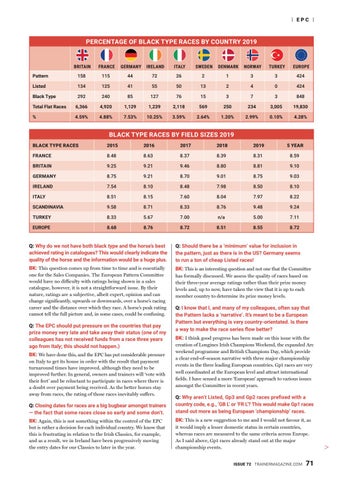
ISN’T IT TIME FOR A EUROPEAN-WIDE THRESHOLD TESTING PROTOCOL?
I
t was a cruel twist of fate, in a year already overshadowed by the spectre of COVID-19, when another biosecurity scare threatened to cast the longest shadow over the blighted 2020 racing season. On the eve of its biggest racing weekend of the year, French racing authority France Galop announced that five horses had recently tested positive for zilpaterol, a synthetic substance used to promote muscle growth in beef cattle, which is licenced in the United States and other countries for agricultural use but widely banned in Europe. The common denominator was quickly determined to be their feed: all the positive samples were taken from horses fed on GAIN Equine Nutrition—the equine feed brand of Glanbia, an Ireland-based global nutrition group with operations in 32 countries. Irish trainer Aidan O’Brien and his two sons,
30
TRAINERMAGAZINE.COM ISSUE 72
Joseph and Donnacha, who use GAIN products, were forced to withdraw all of their runners from Longchamp, including four horses that were due to run in the Prix de l’Arc de Triomphe. The culprit turned out to be a contaminated feed ingredient— cane molasses, which was supplied to GAIN by a third-party supplier, ED&F Man Liquid Products (since then, it has been confirmed by the British Equestrian Trade Association that cane molasses containing zilpaterol supplied by ED&F Man had been supplied to a further half-dozen feed companies in the UK, although at lower levels than was the case in Ireland.) But the scandal has massive implications for the industry beyond O’Brien’s four non-runners in the €5 million European showpiece and raises questions about biosecurity and testing procedures in general, as well as about the sensitivity and specificity of testing apparatuses across different racing jurisdictions, both in Europe and beyond.
Alysen Miller
Scoopdyg, Alamy, Caroline Norris
ISSUE 72 TRAINERMAGAZINE.COM
31
| INDUSTRY |
THE PROBLEM IS THAT THE FEED MANUFACTURERS HAD NO WAY OF PREDICTING THIS WAS GOING TO HAPPEN ... IT’S SO COMPLETELY OUT OF LEFT FIELD THAT IT’S NOT SOMETHING THAT THEY WOULD HAVE THOUGHT TO TEST FOR.”
• What is zilpaterol? But first, it’s worth explaining what exactly zilpaterol is and how it could have found its way into horse feed. Zilpaterol is a beta-agonist used to increase the size of cattle and the efficiency of feeding them. As of October 2017, it is approved by the Food and Drug Administration in the United States, as well as some 16 other countries, for use in beef cattle; although it has rather fallen out of favour in recent years as many of the countries to which the US exports, including China, do not permit it. It is also strictly prohibited in the European Union. As an anabolic steroid, it is widely banned for use in horses due to its potential performance enhancing properties. “The problem is that the feed manufacturers had no way of predicting this was going to happen,” says Joe Pagan of Kentucky Equine Research. Because of zilpaterol’s declining popularity in the beef industry, in other words, it is not necessarily something that would be on their radar: “It’s so completely out of left field that it’s not something that they would have thought to test for,” he adds. Nevertheless, questions remain about how exactly a prohibited substance was able to enter the food chain. Feed manufacturers generally go to great lengths to ensure that their product is safe and free of contaminants by testing a certain proportion of their product before sending it to market—for example, a 300gm sample from each 10 tonne batch. Furthermore, feed manufacturers in the UK and Ireland are subject to the Universal Feed Assurance Scheme (UFAS), which regularly audits a company’s entire operations to ensure that they are in compliance with biosecurity protocols. However, several feed industry representatives, who declined to be quoted in this article, privately acknowledge the reality that it is simply too expensive to test every bag, and occasionally something
32
TRAINERMAGAZINE.COM ISSUE 72
will slip through the net. Many may remember that in 2014, a batch of Dodson & Horrell feed was contaminated by poppy seeds that had been grown in a field close to their plant, resulting in five horses testing positive for morphine (among them, embarrassingly, the Queen’s Royal Ascot Gold Cup heroine, Estimate). Prior to that, in a long-running legal battle, the Willie Mullins-trained Be My Royal was disqualified after winning the 2002 Hennessy Cognac Gold Cup, the highest-profile casualty among a glut of failed morphine tests at the time.
• Test & Trace A further difficulty for feed manufacturers is that, even with the most stringent testing regime in place, identifying a possible contaminant among a batch of feed is rather like finding the proverbial needle in a haystack. “How do you test 25,000 tonnes of oats for a poppyseed?” poses biochemist and equine nutritionist Jim Fielden. “One
| Z I L PAT E R O L FA L L O U T |
handful can differ from another handful. You pick up one handful and it’s clear; the next handful has one seed in it, and you’ve got a problem. You will never get an exact reading of both handfuls coming from the same sack.” Furthermore, depending on supply chains and the length of time between contamination, production and ingestion, there is no guarantee that a hormone such as zilpaterol would have been detectable in the feed before it had made its way into the horse. “Zilpaterol, if it’s exposed to air conditions, can degrade within a certain time,” explains Fielden. “If they have not analysed it straight from the bin, within a certain length of time, it might prove negative. When it gets into the body, that hormone works with the rest of the hormone system and that’s why it’s easier to find.” In other words, it’s possible that, in some cases, the only way of knowing if zilpaterol was present is if it shows up in the horse as a positive test.
• Specificity & Sensitivity And yet there had been no positive tests for zilpaterol anywhere in Europe until France Galop made its bombshell announcement on October 2nd. The Irish Horseracing Regulatory Board tests all winners on its tracks as a matter of course. Is it conceivable that horses exposed to the contaminated feed could pass a test in Ireland only to fail in France? Of O’Brien’s four intended Arc runners— Mogul, Serpentine, Japan, and Sovereign—Japan and Sovereign had run in Ireland within three weeks of the Arc. Neither had won. The O’Brien family did, however, send out multiple winners in Ireland during the same period; and yet in that period, and despite the fact that the contaminated molasses had made its way to several feed companies in the UK by this time, there had only been positives detected under the rules of racing in France from feed originating from one Irish company.
ABOVE: Aidan O’Brien was forced to withdraw all of his runners from Longchamp.
BELOW: O’Brien’s Irish Derby winner Sovereign.
In an era when we have all become armchair epidemiologists, there are two issues about tests that need to be understood. The first is specificity: the proportion of negative tests out of those who should have tested negative. The second is sensitivity: the proportion of positive tests out of those who should have tested positive. In a statement, the Irish Horseracing Regulatory Board said that, “whilst technical discussions are ongoing, we are satisfied that the laboratories have been operating in accordance with the performance standard expected, with appropriate detection capability operating across all three matrices of blood, hair and urine for zilpaterol.” Nevertheless, it has raised questions from some quarters about whether the testing systems employed by France Galop are more sensitive than those used in other racing jurisdictions. “It’s possible that France had their analytical capabilities for that specific drug dialled down to where they got sensitivity where
ISSUE 72 TRAINERMAGAZINE.COM
33
| INDUSTRY |
others didn’t,” acknowledges Pagan. He adds that, at the levels detected, the drug is unlikely to have had a positive or negative effect on the horse’s health, well-being or performance (the level of zilpaterol detected was less than 1 part per billion, according to the Food Standards Agency in the UK—well below the level that would trigger food or feed safety concerns.) Meanwhile, the British Horseracing Authority has been working with several European racing jurisdictions, including the Irish Horseracing Regulatory Board, to compile elective testing results and obtain additional information on the excretion of zilpaterol from horses who have been fed the contaminated feed. According to the BHA, initial results from those tests suggest that zilpaterol was not present in horses that had GAIN feed withdrawn for four clear days (although they stress that this should not be considered a confirmed withdrawal period for zilpaterol). The BHA also moved swiftly to introduce a moratorium on positive tests for zilpaterol through raceday, out-ofcompetition or elective testing to allow time for contaminated feed supplies to be removed and replaced. Elsewhere, the fallout from the contaminated feed scandal has not been limited to the racing industry. GAIN supplies feed to some of Europe’s biggest stables, including top jumping and eventing yards. As in most
34
TRAINERMAGAZINE.COM ISSUE 72
| Z I L PAT E R O L FA L L O U T |
racing jurisdictions, zilpaterol is classed as a banned substance by the Fédération Equestre Internationale, the governing body for most equestrian sports outside racing. Consequently, a number of high-profile riders, following the advice of their national federations, had to withdraw their horses from high-profile competitions, including the only five* three-day event of this COVIDravaged year, Les 5 Etoiles de Pau.
• Standardised testing The furore has led to renewed calls for the global racing industry to follow the approach of the FEI and adopt a centralised testing system, applicable in every racing jurisdiction in the world. “If any good comes out of this, it’s that there needs to be uniformity in testing,” says Pagan. “The method of detection is not as uniform as you or I may think it would be. There are a lot of different methods that are used in testing, and the sensitivity of those tests is not uniform,” he adds. Unlike the global racing industry, which operates under myriad rules and regulations between different countries (and sometimes within the same country), all 134 affiliated nations of the FEI operate under a single set of rules. This includes a single Prohibited Substances Policy to which all jurisdictions must adhere; meaning that a horse trained in Australia is subject to exactly the same medical requirements, including regulations governing banned substances and threshold limits, as a horse trained in, say, America. This stands in stark contrast to the racing industry. The FEI’s approach is to divide prohibited substances into two categories: banned substances (that is, substances that are deemed by the FEI to have no legitimate use in competition and/or have a high potential for abuse, including all anabolic steroids and their esters), which are not permitted at any time; and controlled medication
WE HAVE THE KNOW-HOW, WE HAVE THE TECHNOLOGY. WE HAVE ENOUGH RESEARCH AVAILABLE ON THE MARKET TO SHOW THAT THERE IS NO PHYSIOLOGICAL EFFECT ON THE ANIMAL BELOW A CERTAIN LEVEL. THEY HAVE TO CHANGE THESE 300-YEAR-OLD REGULATIONS AND BRING THEM INTO THE 21ST CENTURY.” (substances that are deemed to have a therapeutic value and/or are commonly used in equine medicine), which are not permitted for use during competition but may be used at other times. These categorisations apply to all national and international competitions, with each national federation being subject to the FEI’s regulations. Testing at competitions is carried out by the FEI’s own veterinary department, while elective out-of-competition testing is also available so that those responsible for the horse can ensure that they allow the appropriate withdrawal times for therapeutic medications (it is worth noting that zilpaterol, like all anabolic steroids, is classified by the FEI as a banned substance and, as such, it is not possible for horses to be tested for zilpaterol under the elective testing scheme.) Elsewhere, it has been suggested that outright bans on particular substances should be replaced with threshold limits for all substances. “We have the know-how,” says Fielden. “We have the technology. We have enough research available on the market to show that there is no physiological effect on the animal below a certain level. They have to change these 300-year-old regulations and bring them into the 21st century,” he adds. The downstream effects of the scandal and the withdrawal of O’Brien’s horses on the shape of the 2020 Prix de l’Arc de Triomphe, not to mention the future breeding prospects of the horses concerned, are almost unquantifiable. However, the racing industry does appear to be united in its desire to use the moment as a learning experience. “I don’t think GAIN was negligent. I think they were massively unfortunate,” emphasises Pagan. “I hope it’s kind of a unifying moment for everyone to get together and make the rules more uniform and regular, both for the racing industry and the feed industry. I think it would suit both of them well to do more comprehensive testing.” ISSUE 72 TRAINERMAGAZINE.COM
35
| TRAINING |
36
TRAINERMAGAZINE.COM ISSUE 72
| HYDROTHERAPY FOR PERFORMANCE |
Georgie White
Nigel Kirby, FMBS Therapy Systems, Shutterstock
• What is hydrotherapy? The historic use of water for therapeutic benefit in the equine industry has taken a leap in development in recent decades, from the humble use of cold hosing a swollen limb through to the development of water treadmills and water walkers for injury rehabilitation and performance development. Cold hosing and other forms of cooling localised areas of the body is more correctly termed cryotherapy—meaning, it aims to harness the benefits of reduction in temperature to treat mainly acute and oedemic injuries. By reducing temperature of the local area, for example, a distal portion of a limb, several key functional changes occur. First, local blood flow is reduced. This is especially useful if an open wound is involved; the precapillary sphincters constrict and direct blood away from the area. Secondly, there is evidence that nociceptors, involved in the perception of pain and sensory receptors located at the end of peripheral nerve endings can be temporarily suppressed with local application of cryotherapy. Following a brief summary of cryotherapy, this article is going to focus on hydrotherapy as a mechanism for enhancing performance in the racehorse, focusing on the specific parameters of fitness that can be targeted and thus improved.
• Fundamental properties of water There are several fundamental principles of water that can be used as a recovery tool to facilitate optimum rehabilitation and ongoing performance improvement. When immersed in water, or made to move through water, the horse’s
body, like the human, encounters a medium for which it is not designed, and locomotion is of limited efficiency. It is in fact the imposed limited efficiency that is useful in different training contexts—it forces the body to work harder than on dry ground, thus improving fitness and better preparing the horse’s body for future athletic tests. Similarly, the method of human altitude, or hypoxic training, is where the body will learn to produce the same amount of energy with a significantly lower available amount of oxygen and thus benefit at a later date in a competitive environment. First, and most important in an equine fitness protocol, is the viscosity of the water creating resistance; the resistance offered by water is greater than that experienced in locomotion on dry ground, therefore requiring greater overall effort to move through it. Exercising in water has shown to provide up to 15 times the resistance of exercising on land. This factor alone means that the trainer can achieve a far more challenging training environment without the horse experiencing the concussive forces on the limbs associated with high-end aerobic or anaerobic land based exercise, such as works on a gallops. Resistance also works indirectly at lower water levels whereby horses will choose to step over the water in a bid to avoid resistance. Therapists then utilise this to gain increased flexion at limb joints (further discussion of this throughout the article). Hydrostatic pressure is the pressure exerted on an object when immersed in water. Depth of immersion is an influential factor with greater depth correlating with greater pressure.
ISSUE 72 TRAINERMAGAZINE.COM
37
| TRAINING |
Depending on the type of hydrotherapy system used, the benefits of hydrostatic pressure will vary. For example, greater hydrostatic pressure will be exerted when using a swimming lane with depths of up to two metres, as opposed to depths of 30-60cm of water on a treadmill. Application of hydrostatic pressure greatly benefits the recovery processes, acting in a similar way as compression bandages. The pressure reduces the formation of oedema, or swelling, and improves the elimination of muscular by-products such as lactic acid and carbon dioxide. Buoyancy is not utilised in the same way as it is in humans and small animal hydrotherapy, except in the use of swimming lanes; this is partly due to the obvious size difference and limitations associated with submerging a horse almost completely in water. Buoyancy is achieved when the weight of the fluid displaced by the body is equal, also accounting for the force of gravity on the body. To remain buoyant, the two forces must counterbalance one another. Once this balance occurs, the body is essentially weightless, allowing exercise without the impact of joint load experienced in land-based exercise. These properties act together during water-based exercise to produce the increased benefits to the horse’s fitness discussed in this article.
IT IS IMPORTANT FOR THE HORSE TO ESTABLISH A RELAXED FRAME WHEN WORKING ON THE TREADMILL OR IN THE HYDROTHERAPY POOL TO PREVENT ANY STRESS-RELATED OR COMPENSATORY POSTURE DURING THE WORKOUT.” When using a treadmill, it is typical that the horse warms up on a dry treadmill prior to adding water. As with land-based exercise, a thorough warmup ensures adequate preparation of the horse’s muscles to be ready for harder work during the session.
• The bodily systems during exercise
• What happens during a hydrotherapy session? Horses are typically introduced to the hydrotherapy equipment to acclimate them and ensure they will be relaxed while exercising. It is important for the horse to establish a relaxed frame when working on the treadmill or in the hydrotherapy pool to prevent any stress-related or compensatory posture during the workout. As we know from land-based exercise, if a horse is stressed, they are likely to tire more quickly; so in order to utilise this workout, acclimation is beneficial.
38
TRAINERMAGAZINE.COM ISSUE 72
ABOVE: The effect of hydrostatic pressure increases as water depth increases.
During a hydrotherapy session, the horse’s different bodily systems will be affected in several ways. But essentially, the efficiency and smooth-running of these systems all contribute to overall performance quality, and any deficiencies will act as an overall limitation. The cardiovascular system is often considered to be the horse’s engine during locomotion, working with the respiratory system in concert to provide the horse with the oxygen needed for exercise as well as dispelling by-products. Working as a muscular pump, the heart delivers oxygen and nutrient-rich blood across the body via a network of blood vessels that develops further with long-term consistent exercise. Supplying this oxygen are the nasal
| HYDROTHERAPY FOR PERFORMANCE |
structures; as obligate nasal breathers, horses must breathe through their noses. Flaring of nostrils and dilation of the horse’s larynx work to provide a greater cross-sectional area of space for oxygen uptake. When exercise begins, the previously oxygenated muscles begin to work and enter temporary oxygen debt. The cardiovascular and respiratory systems combat this by working harder to produce a continual supply of oxygenated blood by increasing the number of breaths taken per minute, thus increasing oxygen intake. During hydrotherapy exercise, the respiratory system will be required to deliver elevated levels of oxygen and removal of increased quantities of carbon dioxide. This is because the horse begins to work towards the higher levels of aerobic exercise. At rest, the horse will be taking in approximately 60 litres of air per minute; when moving towards moderately strenuous exercise, this can increase to as much as 2,250 litres of air per minute. From here the heart increases in beats per minute to keep up with this demand. When still working with oxygen the exercise is considered aerobic; when the horse reaches a speed or exercise intensity where they require greater oxygen than is available, the horse will begin working anaerobically. In a hydrotherapy setting, the treadmill can be considered more the equivalent of strength and conditioning training where heart rate does not rise significantly. On the contrary, swimming increases heart rate significantly without the concussive forces of traditional gallop work. This is when the horse is unable to utilise oxidative processes quickly enough—also known as maximum oxygen consumption (VO2max). Any further energy must be generated by anaerobic
HORSES ALSO EXPERIENCE RESPIRATORY LOCOMOTOR COUPLING IN HIGHER INTENSITY CANTER AND GALLOP WORK–A PHENOMENON THAT EPITOMISES THE EFFICIENCY OF THE HORSE AS A PERFORMANCE ANIMAL.” glycolysis. The horse cannot sustain long periods of anaerobic exercise, but instead the horse’s aerobic capacity becomes greater and thus delays onset of the anaerobic exercise. Incidentally, horses also experience respiratory locomotor coupling in higher intensity canter and gallop work—a phenomenon that epitomises the efficiency of the horse as a performance animal. The stride and breath are in sync at a harmonious 1:1 ratio; they must lengthen their stride to increase their speed. From a fitness point of view, the respiratory system is often considered the horse’s limiting factor where minimal conditioning takes place of the related structures. Additionally, the horse’s respiratory system is highly specialised for exercise. This means that any damage to or deficiency of the respiratory system can have significant influence on overall performance. Unlike in the human, the horse’s resting heart rate does not lower with increased fitness; therefore, opportunities to measure fitness are reduced to monitoring during exercise and in the recovery phase.
KEY PHYSIOLOGICAL CHANGES THAT OCCUR DURING HIGH INTENSITY EXERCISE. ARYTENOID CARTILAGES OPEN
TRACHEA TRANSPORTS AIRFLOW F ORELIMB REACHES FORWARD (FREE FLIGHT PHASE= INHALATION)
THORACIC CAVITY LOADED
FORELIMB STRIKES GROUND = EXHALATION
ISSUE 72 TRAINERMAGAZINE.COM
39
| TRAINING |
AS WELL AS BEING USED TO DEVELOP MUSCLE IN THE GENERALLY POORLY MUSCLED HORSE, HYDROTHERAPY HAS BEEN PROVEN ANECDOTALLY TO BE AN EXCELLENT METHOD OF CORRECTING MALADAPTIVE OR ASYMMETRICAL MUSCLE BUILDUP.” motion. The horse increases flexion at the hip and elbow joint, for example, to clear 5-7cm of water and perhaps increases range of motion at the affected joints by 10-20 degrees; when doing this consistently during a session, the 10-degree increase in range per stride suddenly becomes very influential on work done by muscles. Horses will typically complete several repetitions of swimming a length of the pool with varying rest breaks depending on the trainer’s fitness plan.
Fitness testing methods may include blood-lactate tests, monitoring of respiratory and exercising heart rate, recovery rate from exercise—with the fitter the horse, the quicker the recovery rate. Like on dry treadmills, the controlled indoor nature of the hydrotherapy environment lends itself well to applying various fitness testing equipment as opposed to some of the environmental constraints often found in in-field exercise environments such as out on a gallops. In contrast, to the respiratory system, the horse’s muscular system has great potential for improvement, and targeted use of hydrotherapy can be hugely beneficial. Muscles are arguably the most adaptive structures in the body; consistent and targeted exercise makes them effective energy providers and force producers. As part of muscle development, the individual muscle strands (myofibrils) increase in thickness (diameter) and muscle cell length; increase in muscle cell number is limited to the prenatal and immediate postnatal development. Therefore, muscle growth in the adolescent horse primarily concerns increased thickness of fibres. During exercise, miniscule micro-tears occur that are repaired and result in greater cross-sectional area of muscle mass over time. It is this occurrence that dictates the need for adequate rest and recovery following a period of exercise in order to allow these micro-tears to repair themselves fully. Once the horse has achieved a diet of quality protein and a positive energy balance (i.e., more energy going in than is being used), the horse can begin to build muscle. There is a direct relationship between the range of motion available at a joint and the likely surrounding muscle mass. If the horse has a greater healthy range of motion, then this promotes development of quality muscle or hypertrophy. If the opposite occurs, a horse with a restricted range of motion at a joint, either due to pathology or weakness, performs less work at the joint resulting in long-term atrophy of muscle. Using a treadmill in shallow water helps to facilitate this relationship by providing a stimulus to increase range of
40
TRAINERMAGAZINE.COM ISSUE 72
• Hydrotherapy as a corrective aid As well as being used to develop muscle in the generally poorly muscled horse, hydrotherapy has been proven anecdotally to be an excellent method of correcting maladaptive or asymmetrical muscle buildup. This may have occurred following injury or from overuse of one side of the body. There are emerging clinical controlled trials looking at the benefits, which are linked at the end of this article. Using a treadmill to work the horse in straight lines can be particularly useful where exercise on a circle is contraindicated. As mentioned above, the intricate control that the trainer has, coupled with the ability to view almost every angle of the horse during water treadmill exercise, means that the exercise can be quickly adapted to suit the horse’s capabilities. For example, if the horse is tiring significantly or beginning to compensate, the intensity can be adjusted quickly instead of the horse adopting a maladaptive gait to continue. Unless the distinct biomechanical effects are explained, one may wonder how and why in some cases the small amount of water on the treadmill is beneficial to the horse’s performance and fitness. First, we must consider the proprioceptive influence of water on the horse: Proprioception refers to the horse’s self-awareness and ability to place their limbs correctly; water provides stimulation to this additional sense. By adding just a small amount of water to the treadmill, say around coronet band height, the horse begins to increase the flexion through their limbs to “clear the water” as the air space above the water provides the path of least resistance. With increased flexion comes increased work done by the muscles, in particular the limb flexors. Working this much harder you begin to see the horse really use their body—lowering of the head, engagement of the core musculature, and hindlimbs stepping underneath their barrel. By raising
SUPPLEMENTING FOR SUCCESS AIRVENT SYRUP & GEL Vapour releasing syrup/gel to open the airways Rich in Vitamin C and essential oils for optimal air flow. When optimal air flow is needed most.
FEATURES & BENEFITS > Vitamin C – a powerful antioxidant to maintain a healthy immune system > Honey – a natural soothing agent > Peppermint & Eucalyptus – aromatic oils combined to open up the airways
Vitamin C is an essential support for the respiratory system
FEEDING DIRECTIONS Full syringe / 50ml
>300kg*
SIZES AVAILABLE
50
days*
IDEAL FOR > Young stock > Horses in pre-training > Horses sensitive to dust, mould & pollen > Horses in an intensive indoor environment, such as large stable blocks > Horses with a challenged or compromised immune system
20
days*
2.5L
1
day*
1L
50ml
INCLUDES A CAP WHICH SUPPLIES 30ML. ALSO COMES IN AN EASY TO USE CONVENIENT SINGLE USE FORMAT SYRINGE.
Foran Equine have supplied us here at Cullentra House stables with a wide range of products over recent years, we are happy to use their products with all our horses in training as they are both extremely effective and race safe. We find their customer service and after sales support excellent and would recommend them as a company for any trainer to work with. – Gordon Elliott, Trainer
TO FIND OUT MORE PLEASE CONTACT A MEMBER OF OUR TECHNICAL TEAM Ireland & International – Technical
UK – Technical
Kirsty McCann
Nichola Reynolds
T E
T E
+353 8791 61712 kirstymccann@forans.com
+44 7739 658469 nichola.reynolds@foranequine.co.uk
www.foranequine.com #OURSCIENCEYOURSUCCESS
| TRAINING |
the water further, you are able to increase these benefits to a point. Individual horses will differ, but they will then begin to walk “through” the water rather than stepping over it; here the trainer is then able to utilise the property of resistance further. Aside from the benefits of variation on the horse’s energetic body systems, the horse’s mental state greatly benefits from a change in surroundings. A number of studies as well as anecdotal evidence shows the benefit of variation in a training routine and avoiding mental “burnout” from repetitive training environments.
• Typical hydrotherapy protocols The use of interval training is commonly used in land-based exercise and can also be utilised in the hydrotherapy setting whereby repeated spells of hard work are interspersed with rest or less intense work, allowing the horse to recover to some degree their resting heart rate. Consistent use of this training method conditions the horse’s cardiovascular and muscular systems—over time requiring the horse to recover quicker before commencing the next spell of exercise. When using a water treadmill, spells of high-intensity exercise can either take the form of increased speed or increased water depth; and the trainer can elect to use this in varying forms to suit the trainer’s desired outcomes for the horse. Different centres will work differently, but a typical 10% water fill will reach approximately to the horse’s coronet band, eliciting a proprioceptive response and making the horse reach up and over the water. This is generally considered a height that will begin to tone muscles already present. A 30% treadmill fill will typically reach the fetlock or low cannon bone; here a similar response is seen with increased flexion through the limb joints as the horse steps higher to clear the water. With this, there is greater vertical displacement of the pelvis.
42
TRAINERMAGAZINE.COM ISSUE 72
| HYDROTHERAPY FOR PERFORMANCE |
Typically you will see an increased rounding of the spine and engagement of the horse’s core musculature. Next you have a 50% fill—generally water reaches the carpus height. This harnesses a different water property in that the horse now moves their limbs through the water, utilising resistance of the water. A multifaceted, well-rounded hydrotherapy session would typically include short spells at various heights once the horse was well-established working on the treadmill. An example interval session on a treadmill may take the form of: • 1-2 minutes dry treadmill warmup; speed generally measured in m/s and adjusted according to the horse’s natural walking speed. • 1-2 minutes at lowest water height to provide a gentle increase in stimulus and workload done by the horse’s body. •S everal bursts of work at various lower heights, possibly increasing and decreasing speed accordingly. • At the peak or middle of the session, the highest water height for that horse may be selected for a shorter time; this may be where the horse works anaerobically for a period of time depending on fitness. • Depending on fitness and desired outcomes, the horse may continue with a couple more spells of lower intensity work before performing a cool down on the dry treadmill. At this time, a trainer may choose to monitor the time taken for the horse’s vital signs to return to pre-exercise levels.
A horse walking on the water treadmill in a functionally correct posture, stretching over the back.
We make racehorse ownership more rewarding and enjoyable, getting you closer than ever to the heart of this sport we love. JOIN US TODAY AND DISCOVER OUR BENEFITS AT ROA.CO.UK
WELCOME TO THE HEART OF THE ACTION
| TRAINING |
Horses typically have an inverted back posture when working in a swimming lane. As a result, this method of hydrotherapy may not be appropriate for horses with weak backs or previous back injury.
• A look at the different equipment available Many commercial establishments now offer hydrotherapy sessions for equines with centres offering various services, including swimming pools, water walkers and treadmills. It is important for the therapist or trainer utilising these to correctly clinically reason their use and apply correct treatment protocol in order to benefit performance and rehabilitation. If the trainer wishes to have a high degree of control over the various parameters available, then a water treadmill would be a suitable choice—with speed, water depth and incline all manageable via a set of controls. This means that bespoke interval training programmes are easy to design for targeting specific aspects of each horse’s fitness. On the other hand, a swimming lane also provides a challenging workout for the horse where the trainer can still influence rest breaks between each length repetition without the need of fine tuning the controls; and horses will generally swim at their own pace. When considering if training on a circle or in straight lines is preferable, the trainer has several options. Water walkers will train the horse on a circle with the inside limb taking greater load, and the outside limb is required to complete greater ground coverage. On the contrary, both swimming lanes and water treadmills will train the horse in a straight line, which is often considered beneficial in a rehabilitation setting, especially for gait correction, rehabilitation of spinal pathology and straightness training. Training on a circle does have its benefits when applied at the correct time in a rehabilitation program, but as with most training, an adopted ethos of “little and often” is practical. Using a swimming lane for horses that are weak through the back or have previous back pathology would not be ideal given the fact that horses generally swim quite hollow through their backs, keeping their
44
TRAINERMAGAZINE.COM ISSUE 72
| HYDROTHERAPY FOR PERFORMANCE |
THE USE OF HYDROTHERAPY SHOULD BE CONSIDERED AS AN ADJUNCT TO A HORSE’S TRAINING REGIMEN. IT IS NOT LIMITED TO USE IN TIMES OF INJURY BUT INSTEAD AS A POTENTIALLY INFLUENTIAL TRAINING METHOD TO ADD TO A TRAINER’S REPERTOIRE.” noses up out of the water to breathe. This posture is counterproductive for the horse with back pathology where a rounded, engaged and lengthened spinal posture is beneficial for long-term musculoskeletal health. When it comes to the utilisation of buoyancy and hydrostatic pressure, the swimming lane is the most effective method, given that it provides the greatest degree of body submission under water. It will provide the greatest degree of whole-body resistance when compared to the water treadmill, where water depths may not reach above hock height. In summary, having reviewed the physiological effects of exercise in a hydrotherapy application, the use of hydrotherapy should be considered as an adjunct to a horse’s training regimen. It is not limited to use in times of injury but instead as a potentially influential training method to add to a trainer’s repertoire.
Thanks to Dr. Jessica York for her assistance in the development of this article. Further research studies concerning hydrotherapy can be found below: • Kinematics of the equine axial skeleton during aqua-treadmill exercise, York, 2017 • Effect of water depth on amount of flexion and extension of joints of the distal aspects of the limbs in healthy horses walking on an underwater treadmill, Mendez-Angulo et al., 2013
FMBs Water Treadmills
Why they are market leaders? The Water Treadmill from FMBs Therapy Systems is a unique and innovative product that can be used for both rehabilitation after injury and as an important part of a training regime to improve all over suppleness, stride length, muscle tone and core strength. The Water Treadmills can help maximise performance and reduce the risk of injury offering combined use with the horses being able to be benefit from using it dry as well as with water but also with the chilled saltwater spa option. We have nearly 18 years experience in manufacturing and installing water treadmills worldwide, meaning you can rely on our extensive knowledge and experience in the field, plus all our water treadmills are sold with full UK training, backup, support and servicing. We have the benefit of having Dr Matthias Baumann (veterinarian, rehabilitation and centre owner) as part of our team for full onsite training post installation. Our water treadmills are manufactured in Germany using stainless steel construction throughout. They can be run with either fresh water or salt water, incline function, walk and trot plus chilled saltwater spa function, depending on your requirements.
Dr Matthias Baumann says, “At the beginning we thought the treadmills were only good on therapy – for ligaments and tendons. Now we have good experience on the training and see the effects are not just for rehabilitation of the legs but also on the back muscles, core strength and flexibility through the spine when you train in the right way, on the right machines.” Serena Hickson, managing director of FMBs Therapy Systems, says “Ongoing research and training is of utmost importance to us. We and our clients are always very happy to get involved with any new research projects to improve overall learning for the equine hydrotherapy industry as a whole.
“I just wanted to send this email as a testimonial to the fantastic products and service FMBS provide. I wanted to start a rehabilitation centre and really struggled to understand the best products to use, until I was introduced to FMBS! I was guided through various products with a straight forward explanation as to their uses and benefits, we decided to invest in a water treadmill. FMBS then provided plans and specifications to enable the best use of our existing building, followed by a speedy delivery and superb hassle free installation, carried out by two polite, friendly and exceptionally helpful professionals. One of the main reasons I chose FMBS was not only the great product but the training and ongoing support that is given by the super experienced Matthias. I now have a successful business and that is thanks to FMBS, thank you all so much.” HILARY WESTGARTH,
Brook Farm Therapy Centre “ The Combined Aqua Treadmill Spa has been a great addition to the yard. There is no doubt it has helped some of the horses here.” ED DUNLOP RACING
ED DUNLOP RACING
www.fmbs.co.uk
PROFILE
46
TRAINERMAGAZINE.COM ISSUE 72
John Gilmore
Sabine Lösch
ANNE-MARIE POIRIER
Just twenty minutes from Angers in the Pays de Loire region of France, you come across Anne-Marie Poirier’s Haras Du Chêne pre-training yard at Soucelles. Situated just off a quiet country road, surrounded by forest, provides the ideal calm conditions for pre-training racehorses.
A
nne-Marie Poirier has spent a lifetime involved with horses, since initially showjumping in her native Netherlands as a youngster. For the past 23 years she has been working at Haras du Chêne pre-training racing yard first started by Yann Poirier, whom she married in 2001. Tragically Yann died after an accident with a horse in 2015. “I come from a horse-loving family”, indicated Poirier. “My older brother gave me riding lessons nearly everyday. So thanks to his training I won many competitions – just under national level. Knowing the difficulties of making a living while working with horses in the Netherlands, I decided to concentrate on my studies in International Land and Water Management and went abroad for work to India and Sri Lanka. In between jobs, I decided then to learn French, for my future career.” Her move to France in 1998, barely speaking the language, was to change the whole complexion of her future. “It seems such a long time ago, when I first chose the Loire region to live – taking
French lessons in Angers and obtaining a part time job at Yann Poirier’s nearby Haras du Chêne pre-training yard,” reminisced Poirier. “Working with racehorses for the first time was a real eye opener and a totally new experience, compared to showjumpers. Yann brought me to a racetrack during the same year I arrived. I fell in love with him and thoroughbreds at the same time and have so many fond memories of him.” She added, “Well I thought I knew a lot about horses and how to ride, but that idea was gone after a few days! Riding short took me months. The rider has to find a proper balance with the horse, the gravity point. Yes it was a real puzzle in the beginning. Didn’t have much experience with yearlings really. It’s all about doing the minimum to obtain the maximum. I mean a steady quiet hand and legs, keep them relaxed and breathe, training the muscles, heart, lungs, body and legs. Building up future athletes. I still learn every day!” The whole setup is thanks to the foresight of Anne-Marie Poirier’s late husband Yann, who was the first in France to start a yard for backing and pre-training racehorses in 1993/4.
ISSUE 72 TRAINERMAGAZINE.COM
47
PROFILE
“Yann previously worked four years in Ireland, including for The Irish National Stud, where he became close friends with Brendan Walsh, who assisted Yann for the first year back in France, to get the business started, and is now a successful black type trainer in the States,” pointed out Poirier. “Yann helped a lot of people to start their own business in France. He also tried very hard to get this booming industry officially recognised by the French racing authorities and create proper pre-training schools. This project is struggling, but still ongoing.” She added “I continue to open doors, even at government level to get this sector properly protected and recognised. Not less than six ministries are involved, which makes the task not
YANN HELPED A LOT OF PEOPLE TO START THEIR OWN BUSINESS IN FRANCE. HE ALSO TRIED VERY HARD TO GET THIS BOOMING INDUSTRY OFFICIALLY RECOGNIZED BY THE FRENCH RACING AUTHORITIES AND CREATE PROPER PRE-TRAINING SCHOOLS. THIS PROJECT IS STRUGGLING, BUT STILL ONGOING.”
48
TRAINERMAGAZINE.COM ISSUE 72
simple. It’s important for employees in the business to earn a decent salary, be normally insured and for breeders to gain confidence that he or she is leaving the horse with professionals, which is highly important.” Poirier indicated that the Yard had not been too badly affected by government restrictions during the COVID pandemic this year. “I have 60 boxes and currently have 30 to break, 30 to ride with 10 two years and upwards; including the ones in the paddock nearby the yard. Normally, I have about 200-250 yearlings per year. We haven’t been disturbed too much by the two waves of the coronavirus pandemic, though not many new horses were coming in during the first wave when racing stopped for a couple of months. Regulations introduced by the government made it difficult to circulate for a while, and during June and July business was very slow for the stud.” The annual Arqana August yearling sales were delayed by a month this year, but this appeared a blessing in disguise for the stud, as Poirier pointed out. “Since the Arqana September/October yearling sales my yard has had a massive influx of yearlings for pre-training, as confidence returned, with racing continuing even during the second wave — albeit behind closed doors.” A key factor at Haras Du Chêne is the professional capabilities of the nine current employees, which has a very international look about it. A mixture of four French, one each from Argentina, England, Ireland, the Netherlands, and Spain. Poirier is expecting another arrival from Uruguay shortly, when the necessary paperwork is completed.
| ANNE-MARIE POIRIER |
“José is our new headman responsible for breaking in young horses, with over 20 years’ experience, he is doing a great job,” explained Poirier. “I have a staff of horsey people, so no amateurs. They are specialised in the education of horses, especially young ones and know I can leave the staff to do their job with confidence.” She added, “Foals arrive sometimes for a week or two, just to handle them, prep them for the sales and get them wellmannered. We do long-reining, as my late husband learnt in Ireland, lunging outside or inside, which is very comfortable during winter times, as is the covered walker. The key is always to adapt to the horse, never force, but just education “à la carte”. It’s all a matter of convincing the horse to be co-operative. One way or another you want to ride the horse; but you need to install a steering wheel, a proper seat and a handbrake. Encourage, like we do with children and always reward after the horse does something well.” What’s important is that everybody is well trained and knows their job well – five lots that go out each morning on the 1,300m circuit piste, a few 100 metres down the road and also in the adjacent forest track for the trot or cooling down. This allows Anne-Marie Poirier to concentrate on the management side of the job with owners and trainers, knowing she can leave the horses in safe hands with her staff.
Fellow Dutchman Martijn, the office manager is a key figure in more ways than one, as he also does the maintenance work. Martijn and his boss are both fluent in French, English, German, Flemish and Dutch which is an added advantage, especially when dealing with international clients. Jennifer is another key figure – she is organising the pre-training daily activities for work riders, she is also in charge of the daily care, with the horses detailed on a wall chart and staff taking it in turns to cover for evening feed. “When I employ someone I need to get a good feeling straight away, then it will work out,” explained Poirier. The professional service is everywhere you look, with Poirier dedicated to giving every horse that passes through her yard, the opportunity to leave in the best condition possible. During the past 5 years Poirier has been introducing new facilities for her clients to upgrade the service she offers at the stud. “I installed a huge walker with room for 8 horses and had a big barn built which caters for 16 boxes plus an inside lunging ring, nicely irrigated, in the same building,” explained Poirier. “I use this barn for all the unbroken horses, as well as the new arrivals to isolate them from the others, since I have horses coming and going all the year.” She added, “Horses need time to adapt to their new environment, new food, new noises, the stress for some to see so many other horses can start ulcers; the immunity system of the young ones is not optimal yet. Playing classical music, only in the afternoon, is also rather soothing I have found out.” Keeping tabs on the health of the horse has also been upgraded with a brand new “gyneco” bar installed and a box dedicated to the health of the horse, which includes a solarium and a weighing scale to closely follow the horse’s condition. “We can monitor the horses during exercise with a special girth, follow live their heart ISSUE 72 TRAINERMAGAZINE.COM
49
| PORPOI N F I LO EN |
| ANNE-MARIE POIRIER |
LEFT: Anne-Marie with jockey Mathieu Androuin. BELOW LEFT: Anne-Marie with fellow judges George Haine & David Minton at the 2016 TBA’s National Hunt Foal Show. RIGHT: Anne-Marie attending a Goffs sale where she purchased a filly from Camas Park Stud.
beat, speed and it’s also possible to check the lactate production (blood samples need to be taken before and after the gallop, thanks to Waook training vet Dr Claire Leleu,” explained Poirier. “The human eye works perfectly, but you can confirm impressions with real figures-these do not lie if properly analysed. I also work with an independant nutritionist as well.” The day to day running of operations with social distancing and sanitation rules has made working at Haras Du Chêne a whole new ball game for the staff. “No more visits from clients
50
TRAINERMAGAZINE.COM ISSUE 72
of course and everybody abides by the social distancing rules as best they can,” explained Poirier. “I warn everybody not to take risks and inform them of the rules on the notice board in the yard, updated by emails. Masks on and disinfecting hands very often, are the orders of the day. I disinfect the door handles, light switches and even brooms. Only one person is assisting the farrier if necessary, as well as the vet, no socialising, no coffee break get-together and one by one in the tack room.” Poirier has passed many borders herself since starting to work at Haras Du Chêne. “Many of my clients are international and they leave their horses in training here because of the decent prize money, the large programme, with so many racetracks.” Henri-Alex Pantall, Alban De Mieulle, Rodolphe Collet, Antoine De Watrigant and Francois Rohaut are among the trainers, who also regularly use her services. This is clearly a very specialised business, and as Poirier points out, only a few are capable of doing it. “People disappear because owners/trainers want more. You need to have professional people around to do a proper job of breaking in and pre-train racehorses, plus a top class vet and blacksmith. Having the knowledge and skills to deal with clients is also an important factor. These are major reasons why, when the going gets tough, the small people disappear.” A key factor for Poirier is marketing her product. “I attend most of the sales in France and also try to attend a few in England and Ireland. It’s important to socialise with my existing
clients and try to encounter new breeders/owners. I like to publish regularly on Facebook or Twitter which allows me to show how Haras Du Chêne works. WhatsApp is great to send images directly all over the world, to communicate with my clients, as it’s not enough to send them only a plain invoice every month. You have to give them regular information of how the horse is progressing.” This job is an all year round activity and it’s difficult to take a holiday as Poirier pointed out. “In December I take a week off skiing, together with my two teenage daughters, though I miss the horses when I am on the slopes. During the year I enjoy the occasional weekend at Deauville for the sales with clients and others connected in the racing industry. It also gives me the opportunity to sample the delicious seafood in restaurants. But working with horses is a job I love and like a drug – I can’t stay away from it for too long.” Anne-Marie Poirier rode as an amateur in France, and won for trainer Norbert Leenders. She has also had some success on the racecourse as a trainer. She owned and trained Sun des Mottes who won easily in Longchamp and St Cloud. Enjoyed several successes and a Listed place with Noble Raven. Won six races with Lilly Du Havre, including the Prix de Montfort over 2,000m in October 2017, at her local Angers racecourse. Things look good going forward; Poirier has just bought ten hectares to increase the number of boxes available at the stud, in line with demand. You would be hard pressed to find a better ambiance and professionally run pre-training centre.
EPIITALIS® Equine Forte Gel A patented daily horse feed additive aimed to protect and repair damaged joints. Powered by EPIITALIS® patented for its anti-inflammatory & ability to stimulate the production of healthy cartilage.
Scientifically proven, to reach therapeutic concentrations, in synovial fluid to: • Help protect & repair damaged joints • Address symptoms such as stiffness or lack of willingness to canter or gallop • Support healing after joint injury or surgery • Protect young horse joints when in work • Safe for weanlings and yearlings Available from Duggan Veterinary Supplies Ltd. For more information contact Nollaig Smith MVB MRCVS, on T: +353 (0)86 601 3865 or E: nollaig@dugganvet.ie
ISSUE 72 TRAINERMAGAZINE.COM
51
| TRAINING |
SCIENTIFIC RESEARCH
QUANTIFIES THE IMPACT DIFFERENT PADS HAVE ON
THE HORSE’S PERFORMANCE Dr. Russell Mackechnie-Guire
52
TRAINERMAGAZINE.COM ISSUE 72
| S A D D L E PA D S vs P E R F O R M A N C E |
The use of pads under the saddle has been common for years, but now scientists are using dynamic testing technology to discover how well they really work. n everyday yard situations where multiple horses use the same saddle, putting one or more pads under the saddle has been seen as a way of providing cushioning and comfort for the horse, or even relieving pain. However, there has never been any research in racehorses to demonstrate whether this reduces saddle pressures or provides comfort. Furthermore, there is limited scientific evidence to suggest which type of pad is most effective. A recent study suggests that, depending on the material and design, using a pad beneath the saddle might not always achieve the desired pressure-relieving effect. And using multiple ineffective pads under the saddle might not only be a waste of time and money, but it could potentially cause areas of high pressures, compromising the horse’s locomotor apparatus and affecting race performance.
I
MATERIAL MATTERS
Peak pressure of >35 kPa can cause compression of the capillaries, leading to soft tissue and follicle damage (ischemia) which, in extreme or prolonged cases, results in white hairs, muscle atrophy, skin ulcerations and discomfort.
el Pad
A recent published study evaluated saddle pressure distribution in sports horses using pads made from sheepskin, viscose gel and a medical-grade closed-cell foam. When using a gel pad, the peak and mean pressures increased in the front region of the saddle in trot and canter. This is possibly due to the gel’s lack of ability to dissipate shear forces compared to wool or foam. Similar findings were seen in a pilot study of thoroughbreds galloping at half speed over ground. The same dynamic testing was used (see Technology & Anatomy section) to compare the forces and peak pressures under polyfill pads, as well as viscose gel and medical-grade closed-cell foam. From the initial trials, the overall forces recorded were significantly higher than those seen in the sports horse study. This seems reasonable, given the difference in locomotion and speed (see Speed & Force section). Preliminary findings show the forces were 75% lower, and peak pressures were 65% lower under the medicalgrade closed-cell foam pad than those recorded under the gel pad. Interestingly the polyfill pad, which deforms to the touch, reduced the forces and peak pressures by 25% and 44% respectively compared to the viscose gel pad. The role of the pad is to act as a dampening layer between the horse and the saddle, reducing pressures and absorbing the dynamic forces which occur during locomotion. Based on findings from the sports horse study, and initial findings from the racehorse study, it appears that the medical-grade closed-cell foam pad is superior in its effectiveness at acting as a pressure-reducing layer between the saddle and the horse.
Closed-Cell Foam Pad
Polyfill Pad
Fig 1: Peak pressure of more than 35kPa were recorded in two of the three pads.
FIG 1 GEL Pad PAD Gel Pad Gel Pad Gel
POLYFILL CLOSED-CELL Closed-Cell Foam Closed-Cell Pad Foam Pad Foam Pad Polyfill Pad Polyfill Polyfill PadClosed-Cell PADPad FOAM PAD 45.00 35.00
ABCDE FGH
ABCDE FGH
ABCDE FGH
ABCDE FGH
T13
A B C D E F G AH B C D E F G H
A B C D E F G AH B C D E F G H
ABCDE FG
ABCDE FGH
ABCDE FGH
T13 T13
T13
T13
A B C D E F GA B C D E F G H
A B C D E F GA B C D E F G H
T13 T13
T13
T13
T13
45.00
45.00
45.00
25.00 35.00
35.00
35.00
25.00 15.00
25.00
25.00
15.00
15.00
15.00
10.00
10.00
6.00
6.00
1.00
1.00
1.00
1.00 1.00
1.00
1.00
kPa
kPa
kPa
ABCDE FG
10.00
10.00
6.00
T13
T13
6.00
1.00
kPa
ISSUE 72 TRAINERMAGAZINE.COM
53
| TRAINING |
LEFT: A shaped saddle pad with a midline seam is less likely to draw down on the spine.
• Quality vs quantity
PRESSURE TO PERFORM
Reducing saddle pressures improves gallop locomotion. Horses will still perform when asked, despite areas of high pressures induced by the saddle and pad; but they develop a compensatory locomotor strategy in an attempt to alleviate any discomfort. To increase speed, a galloping horse will either increase stride frequency or increase stride length. Both mechanisms can be used, but the horse will have a natural preference. Published pressure studies have shown that stride length is increased when saddle pressures are reduced. Now, new research is underway quantifying whether a stride frequency approach, which has higher peak forces, could be a compensatory strategy in response to discomfort caused by pressure. Forces are influenced by speed and weight and are produced when the hoof comes in contact with the ground. At racing speeds of 38 mph, the hoof hits the ground approximately 150 times a minute. Stride frequency is an important consideration because a study has suggested that horses have around 100,000 gallop strides before the soft tissues fail. Therefore, any reduction in loading cycles (number of strides) could potentially help reduce injury risk.
• Harder, faster, longer Every stride impacts the horse’s joints, causing wear and tear (see Speed & Force section), so fewer longer strides is the preference for optimum training efficiency. Although horses have a naturally imprinted option, the pressure studies demonstrate that they switch between the two in response to certain extrinsic factors, such as high saddle pressure. Our task as trainers is to optimise the horse’s locomotor efficiency by removing any impediment that might force it to adopt the shorter-stride compensatory gait. We speculate that equipment which increases pressure (such as an unsuitable design of saddle, bridle, girth or saddle pad) will be counterproductive because it may encourage an increase in stride frequency and compromise natural locomotor efficiency.
CONTOURING IS KEY
In both studies, the saddle pads that were designed to follow the contour of the horse’s back and withers performed better than those that were flat with no shaping. Furthermore, pads with a midline seam connecting the two sides were able to maintain traction and position, providing spinal clearance even at speed. In contrast, pads that were flat without any contouring or with no central webbing seam were observed to slip in response to the horse’s movement, drawing down against the spine under the saddle. This was seen even when the pads were pulled up into the saddle channel before setting off.
54
TRAINERMAGAZINE.COM ISSUE 72
In an attempt to improve comfort, it’s standard practice to use multiple pads under an exercise saddle. However, adding more shapeless padding can lead to instability and potentially saddle slip. This feeling of instability can encourage the jockey to overtighten the girth in an attempt to keep the saddle still. One study demonstrated a relationship between increased girth tension and a reduced run-to-fatigue time on a treadmill, indicating that girth tension can affect the breathing of the galloping horse. In addition, bulk under the saddle puts a feeling of distance between the horse and rider. This compromises the close contact feel and balance all jockeys strive to achieve and hinders the lowering of the jockey’s centre of mass relative to the horse.
• Age concern It’s worth noting that the ability of a material to absorb pressure can be significantly compromised with use and washing, as well as changes in climate. As some materials age, they degrade and lose any initial shock-absorbing qualities. For example, wool loses its ‘crimp’ over time and becomes less effective, so a well-used wool pad may not absorb as much pressure as a new one. The medical-grade closed-cell foam used in the saddle pad studies was developed to prevent capillary damage in bed-ridden hospital patients and the pressure relieving properties are not affected by extremes of weather or machine washing.
• Saddle system It is becoming clear that the saddle, pad and girth operate best when they are viewed as a complete system. When choosing a pad, it’s worth bearing in mind that these pressure studies were carried out under correctly fitted saddles with wide channels and ample spinal clearance. The benefits of a pressure-relieving pad are diminished by a badly fitting or poorly designed saddle with a narrow channel and limited spinal clearance. Likewise, trainers who are experiencing the performance gains associated with advances in saddle design will not reap the full benefits of a pressure-relieving saddle if the fit and effectiveness are compromised by poorly performing pads underneath. Fig 2: A saddle pad that is shaped to follow the contours of the back is able to maintain better spinal clearance under the saddle when galloping.
FIG 2
T13
Clearance
| S A D D L E PA D S vs P E R F O R M A N C E |
SPEED & FORCE In gallop, the forelimbs have to support two-and-a-half times the horse’s body weight with every motion cycle (stride). In each motion cycle, a fast-moving front foot interacts with the stationary ground and, as the hoof comes to an abrupt halt, the forelimb has to absorb these forces. The forces are transmitted through the soft tissues and muscles to the thoracic vertebrae in the region where the saddle and jockey are positioned. These thoracic vertebrae in front of T16 (the anticlinal vertebra) are responsible for force transmission from the forelimbs, head and neck. The horse’s back does not just have to deal with the large forces from the forelimbs (and hindlimbs) but also the dynamic forces of the jockey, which can be in excess of two-and-a-half times the jockey’s body weight. As speed increases, so do pressures beneath the saddle and pad. There’s a 5% pressure increase when the walk speed rises by 10%, and in trot it goes up to 14%. As the racehorse is travelling at a faster pace the forces involved are inevitably increased and, at gallop with the jockey ‘up in his pedals’, approximately 80% of his weight is focused on the front part of the saddle—the T10-T13 region (see Technology & Anatomy section). If the saddle pad draws down along the spine during locomotion and creates restrictive pressure, this will interfere
GROUND REACTION FORCE Fig 3: The hoof exerts a force against the ground, and the ground exerts a force against the hoof, which is transferred through the muscles and tissues of the forelimb.
with muscle activation and force transmission, potentially causing the horse to adopt the compensatory short-stride gait. The horse will not only need more strides to cover the same distance, but it will also experience more forelimb loading every stride due to the increased speed of each cycle. Studies are ongoing into the long-term impact of this extra limb loading, but we speculate it will potentially result in poor performance and increased risk of injury.
STABILITY IN MOTION
FIG 4
The spine rotates in three directions, providing stability, forcing transmission and generating power efficiently.
Fig 4: The three axes of rotation.
• Flexion-extension – up and down • Axial rotation
FIG 3
– rolling one side to the other
• Lateral bending – left to right For optimum locomotor efficiency, the vertebral column needs to be dynamically stable. Stability is the combination of strength and suppleness; it isn’t stiffness. The muscles in the back and neck must be strong so they can support the spine but flexible enough to allow the necessary range of movement and transmission of the dynamic forces required during locomotion. Studies have shown that when the saddle and rider are stable and symmetrical, the horse’s back can stabilise through the cranial thoracic spine at T13 (see Technology & Anatomy), allowing the efficient transfer of forces from the hindlimb. A saddle pad that is causing pressure is likely to compromise this dynamic stability. From a preliminary study, it appears that high pressures are associated with increased spinal instability. This instability is likely to cause the horse to seek a compensatory locomotor strategy and adopt a posture where the back is stiffened. Previous research has shown that back function and gallop kinematics are compromised by a stiffened spine.
A: FLEXION - EXTENSION
B: AXIAL ROTATION
C: LATERAL BENDING
ISSUE 72 TRAINERMAGAZINE.COM
55
| TRAINING |
| S A D D L E PA D S vs P E R F O R M A N C E |
Fig 5: Pressure mapping and 3D motion capture are used to quantify the effects of saddle pads on performance at gallop on the track.
TECHNOLOGY & ANATOMY
Thanks to extensive research, scientists now have a greater understanding of the importance of the area around the 10th-13th thoracic vertebrae (T10- T13). This is the location of a high concentration of muscle activity related to posture and movement. Repeated studies have demonstrated how pressure at T10-T13 compromises the locomotor apparatus of the horse and consequently performance. Relieving pressure here affects the mechanics of the whole back, allowing the transfer of propulsive forces from the hindlimb, creating increased power and longer stride length.
• Testing equipment Research teams employ pressure mapping (using a mat with 128 sensor cells on each side of the spine) and 3D gait analysis (using Inertial measuring units) to show precisely how changes in
FIG 5
pressure affect spinal movement. The measuring units (IMUs) quantify flexion-extension, axial rotation and lateral bending. The combination of these state-of-the-art measuring systems allows researchers to prove that relieving pressure has a direct effect on spinal kinematics. Long-term trials using pressure testing and gait analysis have demonstrated that back discomfort associated with pressure can affect the development of the horse’s posture, gallop stride and potentially long-term back health.
Further reading • R Murray, Journal Equine Vet Science 2019 81 102795 • K von Peinen, Vet Journal 2010 538 650-3 • S Latif, Equine Vet Journal 2010, 42 630-6 •R MacKechnie-Guire, Journal of Equine Veterinary Science 2020 •M L Peterson, Racing Surfaces white paper, www.racingsurfaces.org/ bulletins 2012
DO YOU WANT TO BE PART OF OUR NEXT ISSUE? IF SO CALL US BY FRIDAY, MARCH 19, 2021 CALL +44 (0)1380 816777 OR VISIT anderson-co.com/eut for further details
56
TRAINERMAGAZINE.COM ISSUE 72
“I’ve noticed my horses move better in Fairfax saddles” - Nicky Henderson OBE Six-times Champion Trainer
With Fairfax, you’ll avoid the 5 key pressure points and your horses will move better too.
£82.50+VAT
£195+VAT
£575+VAT
£75+VAT
£62.50+VAT
fairfaxracing.com E IN E N GLAN
D
M
01922 711676
AD
| INDUSTRY |
Lissa Oliver
Nigel Kirby
WISH YOU WERE HERE W
e are all in agreement that in an ideal world training fees should increase, as too the remuneration for existing staff and the ability to increase the team. We also recognise the scenario of “you get what you pay for”, and there is no doubt that owners would be happy to pay slightly more for a better service. But the tipping point doesn’t only come down to prize money. Horses cannot be expected to pay their way, but their owner still expects a certain level of enjoyment and engagement. How would you feel if you were in the position of the female owner who recently revealed, “I only have two horses in training—one with a very highprofile trainer. She was injured and has stood in her box for most of the year. She hasn’t run in over 300 days and I have received no communication from her trainer throughout that time, other than a bill each month. I was surprised to see she has been entered and declared for a race at the weekend, and still no communication from her trainer!” The same lady, who doesn’t want her trainers named, reveals that she receives daily updates of her second horse, with a different but equally renowned trainer. “I receive videos of her at exercise, photos of her in the yard and of course updates about her progress and racing plans.” She has younger homebred horses waiting in the wings, and despite the prestige and proven results of the non-communicative trainer, he is unlikely to receive another horse from her.
58
TRAINERMAGAZINE.COM ISSUE 72
| ENGAGING ABSENT OWNERS |
ISSUE 72 TRAINERMAGAZINE.COM
59
| INDUSTRY |
GOOD COMMUNICATION AND FULLY ENGAGING OWNERS HAVE NEVER BEEN MORE IMPORTANT SKILLS THAN DURING PANDEMIC-STRICKEN 2020.” Just as results can’t be relied upon to pay the bills, so a trainer can’t simply rely upon his or her own results to attract and retain owners. Good communication and fully engaging owners have never been more important skills than during pandemic-stricken 2020. We may have been used to regular visits from owners and discussions in person, without any need for remote communication, but in 2020, that ended for everyone. Whether we want to adapt, or see any need to adapt, the option has been taken from us; remote communication has become a necessity. For many trainers, keeping in active contact with absentee owners has always been a part of daily business. You don’t necessarily need time or technical skills to engage your owners. There may be staff or family members who are happy to assist with social media updates, and the curation of yard photos and videos can be a team effort.
60
TRAINERMAGAZINE.COM ISSUE 72
ABOVE: Social media platforms have become an increasingly popular way for trainers to interact with owners.
Facebook, Twitter, Instagram and YouTube are increasingly popular platforms for instant updates, feeding easily into a website to keep the website current and dynamic. WhatsApp and other chat groups are useful for private group messages—one message goes to all in the group; and Facebook allows for private and group pages—a single point for sharing information that can be accessed by all those invited. None of the platforms require technical skills or high-tech equipment, so there really is no excuse for failing to keep owners involved. Gina Rarick, based in Chantilly, has a dedicated private Facebook group page where entries, morning work videos, race replays and photos are posted; and she also has her own YouTube channel to which anyone can subscribe for free (www.youtube.com/user/GallopFrance). Regular uploads include horses-in-training, race day videos, explanations of training methods, and French racing rules and customs.
| ENGAGING ABSENT OWNERS |
Even just maintaining a website can be a big step in the right direction. “We’re quite proud of our website,” says Newmarket trainer Charlie Fellowes. “Any syndicate we form has a WhatsApp group set up for all members so that we can instantly send a video of the horse on the gallops, which enhances the ownership experience.” A comprehensive gallery shows candid photos of the horses at home and at work, sent to owners regularly to keep them in touch and feeling a part of the process. YouTube links provide video footage, too. Fellowes also writes a lively and up-to-date blog, so it’s genuinely possible to follow the yard from anywhere in the world and always feel a sense of personal involvement. Trainers Jamie Osborne and Ger Lyons are others well-known for their daily Tweets and blogs, which Lyons says takes no more than 10 minutes each morning. Establishing five or 10 minutes per day for blogs or Tweets should be part of a trainer’s daily administrative business, keeping to a regular routine. The easy direct sharing of photos and videos is possible on all smartphones, and there are several apps on the market to assist trainers or syndicate managers with larger group sharing, which may include race entries and race replays—with pricing starting at around €30 per month or on a per-horse basis. Alex Hutter, racing secretary for Gordon Elliott Racing, tells us, “We currently use The Racing Manager app and try to send our owners pictures and videos of their horses as often as we can. We try and set aside at least one afternoon per week to do this in the yard and each owner receives a video of their horse at the races in the paddock every time they run. It’s definitely beneficial to the business as you can never give the owners too much feedback. With the year that it has been, all of our owners have really appreciated the content that we have sent them.” The Racing Manager app is popular with many European trainers it’s a dedicated online platform for managing and enjoying racehorse ownership. As well as administration functions, it streamlines communication, bringing owners closer to the action and making it less time consuming for trainers. George Scott describes the app as, “A fantastic aid, especially through this tricky time with owners not being able to visit their horses. It’s an easy and efficient way of communicating with all the owners and has become an integral part of my business.”
WE CURRENTLY USE THE RACING MANAGER APP AND TRY TO SEND OUR OWNERS PICTURES AND VIDEOS OF THEIR HORSES AS OFTEN AS WE CAN.” ALEX HUTTER, GORDON ELLIOTT RACING
ABOVE: Alex Hutter of Gordon Elliott Racing uses the The Racing Manager app to regularly send pictures and video to owners.
TOP: Ger Lyons is well-known for his daily Tweets and blog updates.
Similarly, trainer’s wife Jacko Fanshawe points out, “I am loving the speed of getting videos, photos and information to owners. I am not a techie when it comes to computers and struggle with the most simple chores. If something doesn’t work straight away it will take me hours, so the app has been brilliant for me and great fun to use. I would urge anyone who thinks it is not for them to give it a go.” Other similar apps include EQUI360, a cloud-based app that includes all important administration tasks, as well as keeping owners up to date on the progress of their horses. It enables you to send progress reports, videos, photos and text messages via the app and is used successfully by trainer Michael O’Callaghan, who feels it has been a great asset for enhancing the ownership experience. Ardex Technology has been providing racing-related software for more than 15 years, via web-based, desktop, email and mobile app information systems. Racing Office is the Ardex solution for horse racing clubs and syndicates, easily accessed from any computer or mobile device. No software needs to be installed to keep owners actively engaged on a daily basis with their horse. It’s all very well having an app to share the information, but the information first needs to be collated. The verbal report you might give by phone is readily transcribed as text, and there are apps available to dictate a written ISSUE 72 TRAINERMAGAZINE.COM
61
| INDUSTRY |
| ENGAGING ABSENT OWNERS |
THE MOST ENGAGING FACTOR FOR OWNERS, HOWEVER, IS THE SIMPLE PHOTO OR VIDEO FOOTAGE.”
report, such as Dragon Dictation (free) and Dragon Anywhere (subscription) for iPhones; or Xenon’s speech to text app and Evernote, free for Android devices. The most engaging factor for owners, however, is the simple photo or video footage. A staff member might capture a horse at play in the yard—the horse and broom encounter is a social media stalwart—or film each horse having a roll after exercise. As you watch horses working in the morning, it’s no additional effort to capture the work on your phone, particularly if you have a mobile tripod. The first thing to remember is to always use your phone horizontally so that photos and videos can be edited in editing apps, and the finished result looks more professional. Editing apps require at least 10 seconds of video footage, so film slightly more than you need. Avoid using the flash and instead make use of natural light, particularly at its best after sunrise or just before sunset. Keep in mind when filming for social media, people usually leave videos on mute and don’t listen to sound.
62
TRAINERMAGAZINE.COM ISSUE 72
ABOVE: WhatsApp’s group chats are perfect for keeping syndicates up to date.
Alex Cairns, marketing executive at Irish Thoroughbred Marketing, has some advice for producing professional quality photos and videos on any mobile phone or tablet device. “Location is important,” he says. “Choose a neutral or attractive background. A hedge, wall or open field all work well. Use the best natural light available. Stay in a fixed position and keep the phone steady. Zooming will adversely affect stability and quality.” If using a tripod is necessary to keep the camera steady, allow the subject to move toward the camera rather than moving the camera. Cairns suggests a shot list of the horse standing; head only; walking left and right; walking front and back; shooting separate clips for each shot which can then be edited together. “Yes, editing apps can be intimidating for some people,” he acknowledges, “but if you want to communicate better and more cheaply in the digital age, then it does require the development of new skills. Hopefully most people can find a more technologically experienced staff member, family member, or friend to help get them started at least. “Keep the video short, ideally less than one minute. No audio or music is required. Edit the clips together on your phone using apps such as iMovie, InShot or Filmora. Trim the clips in your chosen app to shorten and remove unwanted scenes. You can also use the apps to make a simple opening graphic with the horse’s details, such as name, pedigree and rider. “For photos, choose a simple neutral background. A headshot and a standing shot with all legs visible are all you need. Make sure the subject fills the frame. You can crop the photo later and adjust the brightness if necessary. It’s possible to edit photos on your phone using apps such as Apple Photos, Google Photos or Photoshop Express.” None of this sounds as daunting as the prospect of losing owners who have felt uninvolved.
Complete range for training and rehabilitation
The original vibrating floor systems for horses
Manufacturing top quality surfaces in Somerset
PROVIDED BY
TB11326 EHC Trainer Magazine Advert 176 x128mm Landscape V2.indd 1
The benefits of the sea in your yard
Full range of treadmills and aqua trainers
Tel: +44 (0)1458 251300 www.EquineHealthCentre.com 19/03/2020 14:00:24
INVESTMENT OPPORTUNITY Fully working racecourse for rent in Lithuania
1300 metre railed sand track and 1100 metre railed turf track Includes 25 box barn, indoor ride, horse walker, management offices Opportunity to obtain a gambling license for pari-mutuel betting For more information please contact: TEL: +44 (0)7473 035853 / +37 0606 77325 EMAIL: racecourselt@gmail.com ISSUE 72 TRAINERMAGAZINE.COM
63
| INDUSTRY |
FUNDING R ESEARCH IN EQUINE VETERINARY DEVELOPMENT 64
TRAINERMAGAZINE.COM ISSUE 72
| FUNDING RESEARCH |
mongst the statutory duties of the Horserace Betting Levy Board (HBLB) is a requirement to apply funds for the advancement of veterinary science and education. In a normal year, the Board, through its Veterinary Advisory Committee, would be inviting applications for new projects to start the following year, as well as managing work already underway. In 2020, access to university labs and field work has been severely restricted, meaning that many of the ongoing projects are being delayed—a frustrating situation for all. Everything will be finished, but it will take longer than planned. The financial impact of the pandemic on racing is well known. For the Levy Board, many of the non-racing budget items have had to be restricted, and this has included veterinary science and education. For the first time there has been no grant call this year, and so no new work will be starting in 2021. The better news is that three new major projects, 12 small projects, one research scholarship and two post-doctoral fellowships have begun in 2020. The major research projects are hosted by institutions such as university veterinary schools. These can go up for up to three years, with budgets normally in the region of £200,000 to £300,000.
Something we can all agree on is that 2020 has not gone as planned. Nothing has escaped the effects of COVID-19, and as far as the racing industry is concerned, that goes for scientific research as well as the day-to-day activity in training centres, on studs and on the track. Annie Dodd
Shutterstock
• 2020’s new projects: Identification of how Streptococcus zooepidemicus infects the horse and steps towards an effective vaccine – Professor Julian Parkhill, Cambridge Investigation of the equine genome to identify which genes are virus resistant and could help in the development of improved vaccines – Dr Pablo Murcia, Glasgow Examination of a newly emerging strain of the foal infection, Rhodococcus equi, which is resistant to current therapies – Professor Jose Vazquez Boland, Edinburgh These three top-class projects are all concentrating on combating infectious disease, which is of course vitally important; but usually the range of subjects covered is more diverse, as is shown in the list of small projects. To guide potential applicants, the VAC, in consultation with the thoroughbred industry, publishes a statement of priorities, supported by a detailed scope document. ISSUE 72 TRAINERMAGAZINE.COM
65
| INDUSTRY |
| FUNDING RESEARCH |
• The newly revised priorities: Best possible quality of life, which include all aspects of healthcare, husbandry and disease control (e.g., improved methods of disease diagnosis, more effective vaccines, biosecurity and disease prevention strategies, antimicrobial and anthelmintic resistance) Best possible safety and well-being during breeding, training and racing (e.g., enhancement of diagnostic methods and restoration techniques after musculoskeletal disease and injury, safer training and racing practices, minimisation of fatal and non-fatal injury) Lifetime responsibility for equine health (e.g., optimal health of breeding thoroughbreds and youngstock, reproductive efficiency, evaluation of factors affecting transition to post-racing careers) The small research projects are valued at about £10,000 and should be completed within 12 months. They are intended to be an opportunity to develop or test an idea before perhaps taking it forward as a larger piece of work. These projects are open to anyone working full time in the racing industry, so, as well as applications from universities, the HBLB welcomes proposals from vets in practice, veterinary nurses, farriers and anyone else in racing.
• The 2020 programme includes: •H ow and why disease spreads between racing and non-racing horses •E valuation of a potential new treatment for African horse sickness •D evelopment of an image analysis system to measure respiratory changes •N ew method of detecting and identifying multidrug-resistant bacterial infections •E xamining antibody responses to equine hepaciviruses to inform vaccine design •S urvey of the prevalence and impact of back pain in the training of the racing thoroughbred •D evelopment of a new local anaesthetic technique for back surgery in horses • I mpact of abnormal chromosome numbers on breeding and developmental disorders •V alidation of a new equine temperature sensor •F urther investigation of stem cell therapy for osteoarthritis in horses •E xamination of horse, horse and rider, and movement over different surfaces •P otential environmental chemical effects on thoroughbred breeding stallions All these projects will report during the next six to nine months.
66
TRAINERMAGAZINE.COM ISSUE 72
Since the early days of the HBLB, the Board has supported postgraduate education for qualified vets to further their equine career through higher clinical or research qualifications. A new research scholarship has started at Bristol University under the supervision of Dr Laura Peachey, herself a HBLB scholar. All the scholarships have a strong project focus, and this one will be looking at equine parasitology, concentrating on drug resistance— a subject of increasing importance for equines. The Board also offers equine post-doctoral fellowships, aimed at helping the very best young research vets to develop their careers and become the research pioneers of the future. The two that have started in 2020 are both exciting, with the potential to uncover some novel approaches to perennial problems. At Edinburgh, Dr Caroline Chauché is working on identifying the long-term effects of equine Influenza on the respiratory system. The flu outbreak in 2019 showed how disruptive this disease can be to the equine world as a whole. Dr Chauché’s work takes a fresh approach in looking at the longer-term consequences of infection and what can and should be done in terms of preventative and management practices. Tendon injuries are amongst the most common musculoskeletal problems for racehorses. Tendons don’t heal easily, so injury can require long rehabilitation or end a racing career. Dr Agnieszka Turlo, at Liverpool University, will be examining why the efficacy of current therapies is so variable and investigating what works and what doesn’t, and why. The objective is to identify new, improved and more predictable methods of promoting healing.
| FUNDING RESEARCH |
Changes management of tendon injuries forever
UTC imaging
Portable Easy to perform: scan plus analysis takes only minutes Standardized & highly reproducible 3-D visualization & tissue characterization Early detection overstrain & degeneration Precise diagnosis & prognostication Targeted & minimally invasive treatment Objective evaluation & monitoring of therapy Guided rehabilitation
www.UTCimaging.com
European by name International by nature
WEDNESDAY, 2ND DECEMBER 2020
NEW YEAR
NEW OPPORTUNITY
EBN EUROPEAN BLOODSTOCK NEWS
JANUARY
M O N . 11 - T H U R S . 14
FOR MORE INFORMATION: TEL: +44 (0) 1638 666512 • FAX: +44 (0) 1638 666516 • EDITORIAL@BLOODSTOCKNEWS.EU • WWW.BLOODSTOCKNEWS.EU
EUROPEAN BLOODSTOCK NEWS
TODAY’S HEADLINES TATTERSALLS EBN Sales Talk is brought to you by IRT
Click here to contact IRT, or visit www.irt.com
PALACE PIER’S DAM IS SOLD TO COOLMORE M V Magnier of Coolmore Stud fended off a plethora of rival stud owners to secure the dam of champion Palace Pier for 2,200,000gns at yesterday’s second session of Tattersalls’ December Mares’ Sale, writes Carl Evans. Beach Frolic (Lot 1731) went straight into seven-figure territory when auctioneer Edmond Mahony asked for an opening bid, the round 1,000,000gns being offered by Newsells Park Stud’s Julian Dollar. Alex Elliott and his client Kia Joorabchian swiftly responded and further bids were taken from Japan’s Northern Farm and Old Mill Stud’s Rob Speers, but Magnier, standing outside the ring, had the pistols and the bullets. As a nine-yearold daughter of Nayef with a proven breeding record her appeal to the Coolmore team was not hard to spot. Magnier said of Beach Frolic, who was consigned by Highclere Stud in a partnership with Floors Stud: “She’s bred an exceptional racehorse and the Highland Reel yearling that Jamie McCalmont bought this year [320,000gns at Book 1] was very nice, too. She’s a special mare and they don’t come up very often.
Palace Pier’s dam, Lot 1731 Beach Frolic (Nayef), pictured, topped trade on day two of the Tattersalls December Mare Sale yesterday as M V Magnier closed the deal at 2,200,000gns on the Highclere Stud offering in foal to Darley’s Blue Point. © Tattersalls.com
The racing and breeding world at your fingertips Extensive daily coverage of everything that matters in the industry
I N T O D AY ’ S I S S U E . . .
Stallion news – Tapizar
p14
Industry news
p16
Australian news
p18
Racing review
p23
Bloodstock World according to Gary Sanderson
p29
Worldwide Stakes fields, results and reports; European maiden results; pedigree analyses; NEW Parading at the National Stud FOR sales previews, reviews and statistics; pinhooking tables; stallion statistics; from Today until Thursday 3rdregular December breeding 2021 and international features; European-bred winners abroad; stallion news, principal National Hunt races, etc.
SERGEI PROKOFIEV
All of the above is delivered to your screen for lessBythan 80px (€/$1) a day! Scat Daddy Orchard Beach (Tapit) To subscribe daily visit www.bloodstocknews.eu or email enquiries@thoroughbred-advertising.co.uk Contact: Phil Haworth or Ed Harper 01725 518254 www.whitsburymanorstud.co.uk
EBN – “The Breeders’ Digest” CALL: +44 (0) 1638 66 65 12
ISSUE 72 TRAINERMAGAZINE.COM
1
67
| INDUSTRY |
| FUNDING RESEARCH |
As well as these new studies, there are 12 major projects underway, targeted for completion within the next two years: Why do horses roar? From the beginning to the end of recurrent laryngeal neuropathy? – Professor Richard Piercy, RVC Role of VapA in the pathogenesis of R equi – Professor Paul Pryor, York Equine respiratory muscle training: a new clinical and performance enhancing tool – Dr Kate Allen, Bristol Shoe assessment for equine racing – Dr Thilo Pfau, RVC Axonal transport and survival in equine recurrent laryngeal neuropathy – Professor Richard Piercy, RVC New avenues for intervention in age-related degenerative disease in the horse: unravelling the role of altered RNA splicing and senescence in tendons – Professor Roger Smith, RVC Profiling microRNA for the prediction of orthopaedic disease in the TB racehorse – Dr Sarah Taylor, Edinburgh Does early life experience affect injury risk and performance in later life? – Professor Kristien Verheyen, RVC Using a cell based system to identify the genetic mechanisms behind fracture risk in thoroughbred horses – Dr Debbie Guest, RVC
Within the scientific community, the normal way to report project results is in publication peer-reviewed journals, but HBLB wants the outcomes of its research programme to be available to everyone interested in the health and welfare of thoroughbreds—indeed all equines. HBLB is working on enhancing the current methods so that the conclusions are available and comprehensible to the layperson. The HBLB’s Veterinary Advisory Committee consists of academic scientists and vets, and veterinary clinicians. The current line up is: •P rofessor Emeritus Sandy Love – Chair
Development of a nasal epithelial brush model to study equine respiratory disease in the racehorse – Professor Mark Chambers, Surrey Exploiting microvesicle small non-coding RNA and protein cargo in osteoarthritis for early diagnosis and treatment – Dr Mandy Peffers, Liverpool A reverse genetics strategy for improved development of equine influenza vaccines – Prof James Wood, Cambridge
On top of these, there are also nine education awards and another five small projects underway.
68
TRAINERMAGAZINE.COM ISSUE 72
•P rofessor Matthew Allen
– Cambridge
•P rofessor Gary Entrican
– Roslin Institute
•P rofessor Colin Farquharson
– Edinburgh
•M s Caroline George
– Lambourn Equine Vets
•D r Rob van Pelt
– Sussex Equine Hospital
•P rofessor Christopher Proudman – Surrey •P rofessor Falko Steinbach
– AHVLA & Surrey
•P rofessor Tom Stout
– Utrecht
The HBLB is very grateful to The Racing Foundation, the TBA and BEBF for their continued collaboration in funding equine scientific research.
Feeding Fibre for Health & Performance
Feeding isn’t simply a case of supplying energy and nutrients, it’s also vital for supporting health and well-being. At Dengie, we have a range of premium quality fibre feeds that promote digestive health, provide energy and supply quality protein for top line and muscle tone.
ALFA-A OIL
Ultimate pure alfalfa, highfibre feed for fuelling work and promoting condition
PERFORMANCE FIBRE A tasty blend of pure alfalfa and grass to tempt picky performance horses
Discover more at www.dengie.com
01621 841188
ALFA-A ORIGINAL
A pure alfalfa fibre feed naturally abundant in calcium for bone development
| INDUSTRY |
Dr Paull Khan
Eclipse Sportswire, Alamy
THE EUROPEAN PAT T E R N C O M M I T T E E : CHAIR BRIAN KAVANAGH ANSWERS YOUR QUESTIONS
I
n this issue, we begin a series of articles in which we look at some of the EMHF region’s committees. We start with the European Pattern Committee, which controls the classification of black type races in Europe, monitoring the quality of the fields and agreeing when races should be upgraded or downgraded. In future issues, we will look at two further committees, which deal, respectively, with dope testing and the health and welfare of jockeys. In each, we will pose questions, from trainers, to the relevant committee chair. The European Pattern Committee (EPC) members are France, Germany, Great Britain and Ireland. The ‘Part 1 countries’ within the International Cataloguing Standards
70
TRAINERMAGAZINE.COM ISSUE 72
book, often known as the ‘Blue Book’, which lists the world’s black type races. The contents of the Blue Book can be viewed online at www.tjcis.com/otherServicesDisplay.asp?section=5 Any other European country that stages a Group race published in Part I of the Blue Book may become an Associate Member of the EPC. Currently, these are Italy, Scandinavia (covering Denmark, Norway and Sweden) and Turkey. The EPC’s chair is Brian Kavanagh, who is also chair of EMHF. Brian is CEO of Horse Racing Ireland. We asked board members of the European Trainers’ Federation for questions to put to Brian and here are the results.
| EPC |
PERCENTAGE OF BLACK TYPE RACES BY COUNTRY 2019
BRITAIN
FRANCE
GERMANY
IRELAND
ITALY
SWEDEN
DENMARK
NORWAY
TURKEY
EUROPE
Pattern
158
115
44
72
26
2
1
3
3
424
Listed
134
125
41
55
50
13
2
4
0
424
Black Type
292
240
85
127
76
15
3
7
3
848
Total Flat Races
6,366
4,920
1,129
1,239
2,118
569
250
234
3,005
19,830
%
4.59%
4.88%
7.53%
10.25%
3.59%
2.64%
1.20%
2.99%
0.10%
4.28%
BLACK TYPE RACES BY FIELD SIZES 2019 BLACK TYPE RACES
2015
2016
2017
2018
2019
5 YEAR
FRANCE
8.48
8.63
8.37
8.39
8.31
8.59
BRITAIN
9.25
9.21
9.46
8.80
8.81
9.10
GERMANY
8.75
9.21
8.70
9.01
8.75
9.03
IRELAND
7.54
8.10
8.48
7.98
8.50
8.10
ITALY
8.51
8.15
7.60
8.04
7.97
8.22
SCANDINAVIA
9.58
8.71
8.33
8.76
9.48
9.24
TURKEY
8.33
5.67
7.00
n/a
5.00
7.11
EUROPE
8.68
8.76
8.72
8.51
8.55
8.72
Q: Why do we not have both black type and the horse’s best achieved rating in catalogues? This would clearly indicate the quality of the horse and the information would be a huge plus.
Q: Should there be a ‘minimum’ value for inclusion in the pattern, just as there is in the US? Germany seems to run a ton of cheap Listed races!
BK: This question comes up from time to time and is essentially
BK: This is an interesting question and not one that the Committee
one for the Sales Companies. The European Pattern Committee would have no difficulty with ratings being shown in a sales catalogue, however, it is not a straightforward issue. By their nature, ratings are a subjective, albeit expert, opinion and can change significantly, upwards or downwards, over a horse’s racing career and the distance over which they race. A horse’s peak rating cannot tell the full picture and, in some cases, could be confusing.
Q: The EPC should put pressure on the countries that pay prize money very late and take away their status (one of my colleagues has not received funds from a race three years ago from Italy; this should not happen.) BK: We have done this, and the EPC has put considerable pressure on Italy to get its house in order with the result that payment turnaround times have improved, although they need to be improved further. In general, owners and trainers will ‘vote with their feet’ and be reluctant to participate in races where there is a doubt over payment being received. As the better horses stay away from races, the rating of those races inevitably suffers.
has formally discussed. We assess the quality of races based on their three-year average ratings rather than their prize money levels and, up to now, have taken the view that it is up to each member country to determine its prize money levels.
Q: I know that I, and many of my colleagues, often say that the Pattern lacks a ‘narrative’. It’s meant to be a European Pattern but everything is very country-orientated. Is there a way to make the race series flow better? BK: I think good progress has been made on this issue with the creation of Longines Irish Champions Weekend, the expanded Arc weekend programme and British Champions Day, which provide a clear end-of-season narrative with three major championship events in the three leading European countries. Gp1 races are very well coordinated at the European level and attract international fields. I have sensed a more ‘European’ approach to various issues amongst the Committee in recent years.
Q: Closing dates for races are a big bugbear amongst trainers — the fact that some races close so early and some don’t.
Q: Why aren’t Listed, Gp3 and Gp2 races prefixed with a country code, e.g., ‘GB L’ or ‘FR L’? This would make Gp1 races stand out more as being European ‘championship’ races.
BK: Again, this is not something within the control of the EPC
BK: This is a new suggestion to me and I would not favour it, as
but is rather a decision for each individual country. We know that this is frustrating in relation to the Irish Classics, for example, and as a result, we in Ireland have been progressively moving the entry dates for our Classics to later in the year.
it would imply a lesser domestic status in certain countries, whereas races are measured to the same criteria across Europe. As I said above, Gp1 races already stand out at the major championship events. ISSUE 72 TRAINERMAGAZINE.COM
71
| INDUSTRY |
The Goodwood Cup was upgraded to Gp1 status in pattern changes in 2017.
Q: Why can there not be a common set of rules for all of the European Pattern? That way, everyone would know where they stand when they run. BK: This issue strays beyond the remit of the EPC. However, it is a sensible suggestion and I believe things are moving in the right direction. Ultimately, every country controls its own Rules of Racing, but there has been a lot of harmonisation in recent times in relation to major rules such as interference and prohibited substances while we are moving towards a greater consistency among the major European countries in relation to use of the whip. As regards to the areas in the EPC’s purview, we operate to a common weight-for-age scale and fillies’ allowance system.
Q: What about the introduction of a points-based system for Gp1 races? This would open up multiple opportunities for additional revenue for sponsorship and betting. BK: This has been looked at previously but did not find favour as the factors which influence running behaviours are generally prize money levels, prestige and history of the race. Various Championship and Horse of the Year awards are made at the end of each year and attract positive media coverage and sponsorship. In the UK there is a British Champions Series, which is a points-based system. However, I believe that the prestige and increased value of winning a major Gp1 race will always be the primary ambition and motivation.
just to the benefit of a racecourse or a sponsor. There are strict limitations on the number of races which can be promoted each year, which has meant that EPC member countries have to focus on those changes that will have the most beneficial impact.
Q: The staying division seems to have more downgrades than upgrades. Why is this? BK: That may have been so up to recent years, but in recent years the EPC has specifically focussed on the staying race programme, including those for three-year-olds and fillies only. A number of races were upgraded—including the Goodwood Cup and the Prix du Royallieu, both of which moved to Gp1—while there has been a five-year moratorium on downgrades in the same division as it is a long-term project aimed to alter breeders’ and owners’ behaviours and will therefore take time.
Q: I would be interested to know more about how the jumps pattern works – from talking to different Clerks of the Course, it seems that it’s up to the individual country’s authority to have a race graded. Surely, there should be similar principles in place as per their flat counterparts? BK: The jumps pattern is a matter for individual countries, although Britain and Ireland operate with virtually identical ground rules and rating parameters.
BK: Naturally, racecourses will seek to have their races upgraded,
Q: My question concerns the European Pattern Book. Could there be more of an online format for all trainers across Europe to access?
and this is a good thing. However, the duty of the Pattern Committee is to ensure that any changes are for the greater good rather than
many trainers I speak to would prefer the hard copy as well.
Q: How does the EPC deal with pressure from racecourses to have races upgraded?
72
TRAINERMAGAZINE.COM ISSUE 72
BK: Moving online is certainly worthy of consideration, though
| EMHF |
EMHF WELCOMES NEW VICE-CHAIR
L
ike so many the world over in this annus horribilis, the EMHF has been forced to abandon all face-to-face meetings. Plans to stage our General Assembly in Warsaw, originally in May, were kept alive for a while, with hopes that an October alternative date might prove possible. But defeat was admitted and we met by Zoom on September 18th. The silver lining to this particular cloud was that it enabled participation from some delegates who would have found it difficult to travel. For the first time in many years, it was pleasing to welcome a representative of the Libyan Horse Racing Authority. Similarly, our Executive Council’s intention to meet and witness racing at Izmir in September did not come to pass. Instead, we convened virtually on November 26th. In addition to its chair, Brian Kavanagh, the EMHF has three vice-chairs. Omar Skalli of Morocco and Behcet Homurlu of Turkey were appointed at the EMHF’s inception in 2010 and have served continuously ever since. (Rudiger Schmanns of Germany joined them in 2016). It was therefore with sadness that we learnt that Mr Homurlu had decided to stand down from the Executive Council. The great affection in which he was held was evident from the tributes paid. Taking his place as vice-chair representing non-European Union member countries is Will Lambe, Executive Director of the British Horseracing Authority, where his responsibilities include strategy and policy development, funding matters and betting industry liaison, and industry recruitment, training and retention, including safeguarding. He leads for the BHA on Brexit matters and has extensive experience in government relations and communications, previously heading up the work on the 2017 reform of the
ABOVE: Will Lambe, incoming vice-chair.
Horserace Betting Levy. He took part in the sport’s graduate development programme in 2001, opting for continued work experience with the sport’s TV channel over a place at law school and joined the then British Horseracing Board in 2003. Never happier than when on a racecourse with friends and colleagues alike, he lives in South West London with his Australian partner and young son.
BELOW: Behcet Homurlu, outgoing vice-chair.
ISSUE 72 TRAINERMAGAZINE.COM
73
| INDUSTRY |
BUREAUCRACY IN TRAINING A HELP OR A HINDRANCE? Lissa Oliver
74
TRAINERMAGAZINE.COM ISSUE 72
Shutterstock, Giulia Filippini, Johnston Racing
C
onny Whitfield, a small-scale German trainer based in Iffezheim, shares one of German racing’s best kept secrets. “Elsewhere in Europe, most stables have a secretary, but here in Germany, most trainers do not. There are 15 trainers based here, three with over 50 horses in training each; and none of us have secretaries.” As the office work elsewhere in racing yards increases, it’s perhaps bitter-sweet to learn that some jurisdictions have honed an efficient online system that can actually save trainers time in the office. “We have 10 horses in training, and I do all the office work myself, although I do have the help of an accountant,” Whitfield reveals. “I find all the paperwork and documentation required on a daily basis to be straightforward, and it has not really increased in recent years. The difference now is that it is all online, and I find it simpler. Moving online has been a great help. What used to take me an hour now only takes 10 minutes. The only paperwork needed is collecting receipts.” Whitfield has a lot of runners in France and notes, “There’s much more paperwork required by France Galop!” She admits that recruiting and dealing with staff is a bigger issue than office work, as finding good staff in Germany is a major problem. There are always exceptions, and Cologne-based Peter Schiergen is assisted with secretarial duties by his wife Gisela. He also has Valeria Holinger working on his website and social media, but he does have over 70 horses in training. Christian von der Recke, with 43 horses, has introduced Stefanie Sambale to his team—the first person in his office for many years. Producing good riders and grooms is the necessary priority for the racing school in Cologne, but the mounting office work faced by most other trainers means that courses for Racing Secretaries are becoming an equal part of the curriculum at Europe’s horseracing academies. Ireland’s Racing Academy and Centre of Education (RACE) is the latest to introduce such a course—the part-time racing secretary course new for 2020 and delivered via Zoom (due to pandemic restrictions) in six afternoons over three weeks. Among the six modules covered are Racing Administration, Payroll and Health and Safety, which have increased significantly in recent years. Racing Secretaries courses are designed to provide aspiring secretaries and newly appointed secretaries with a comprehensive understanding of the role of the trainer’s secretary, the structure of the racing industry and racing administration. Clare Breadin was seeking work within the racing industry when she recently completed the Newmarket-based course and found it was an even mix between those already working in a
racing yard office and those, like herself, looking to change careers. “I see the role of the racing secretary as quite demanding,” Breadin observes, “as they cover Health and Safety, Human Relations, declarations, bookings, owners, accounts, payroll and so on. Attention to detail is a must. Also, now everything has to be on social media, which is another additional task. I feel the job could be very stressful, and secretaries are needed seven days a week.” Breadin, who now works in a leading flat racing stable in Britain, found the software programmes for accounts and billing easy to use and straightforward, so it would seem the traditional tasks have been alleviated somewhat by the digital era. But new responsibilities for employers regarding data management, working hours and the health, safety and general wellbeing of employees have brought a tougher new dimension to the office. “Some trainers have several secretaries, as some do the book-keeping and some deal with the racing side of things,” Breadin notes. “I think maybe with the increase of racing, and also more international runners, the role has increased.” This is borne out by Hannah Watson, racing secretary and PA to British trainers James and Ed Bethell. “Over the last year, the emphasis on the trainer’s secretary to carry out more and more administration duties and paperwork has increased dramatically,” Watson says. “Weatherbys have now changed several things. VAT Summaries are now online, and we must go through them all monthly and print them out. The naming of the horse online now is done by us, and Weatherbys just send us a sticker for the passport once confirmed. We must make sure of the correct spelling, etc. “Unfortunately, due to COVID, we now must declare all racing staff online and then do the race day declaration. Previously this would be done by a member of staff at the races in the weighing room. This takes time, and it is so important to get all the information correct, such as whether the horse needs to wear a red hood to the start, etc. It’s our responsibility to make sure all our owners and staff have passed the COVID questionnaire before attending racing; we then organise the badges via the PASS Card system. “I am lucky, as I have worked on and off in the racing industry as a trainer’s secretary for many years. I have had no formal training and taught myself along the way. Weatherbys do have a help desk if we are ever stuck.” Martine Ricard, secretary to Henri-Alex Pantall in Beaupréau, France, joined the team in 1983, and has followed its progress, being responsible for all the administration and management of the business. “It is with pleasure that I could talk about the job of racing secretary, I’ve been practicing it for 35 years and it’s true that there have been a lot of developments,” she says. ISSUE 72 TRAINERMAGAZINE.COM
75
| IONPDI U NS I OT N R Y| |
ONE OR MORE SECRETARY IN A STABLE IS MORE AND MORE ESSENTIAL, TO FREE THE TRAINER FROM THIS INCREASINGLY TIMECONSUMING ADMINISTRATIVE WORK AND SHE OR HE MUST HAVE A GREAT CAPACITY FOR ADAPTATION.” “The job of stable secretary has evolved considerably since I started, 35 years ago. Everything has become enormously professional and centralised at France Galop. The number of race meetings, now several meetings per day, has increased a lot and as a result the workload of entries, forfeits, declarations of starters, climbs too. Then there is the organisation for owners and transport for this. “Fortunately, the internet is there! And the France Galop site greatly facilitates our work, it has become an essential tool for our work, but also much more specialised and demanding, it is also our reference.” Pantall’s stable is well-established and successful, as Ricard points out. “With the exception of this particular year, we have on average more than 1,000 starters per year, plus those abroad who are also ask to complete special formalities. In addition, there is staff management, and in France social laws are constantly evolving, and all the billing. “In conclusion, one or more secretary in a stable
76
TRAINERMAGAZINE.COM ISSUE 72
ABOVE: With over 250 horses in training, Middleham-based UK trainer Mark Johnston has a team of seven in the office.
is more and more essential, to free the trainer from this increasingly time-consuming administrative work and she or he must have a great capacity for adaptation.” It would seem that with any volume of runners, a trainer simply cannot devote the necessary time to the administration involved in running a larger racing stable, even if he or she possessed the required skill set and interest. Few people get involved with horses in order to immerse themselves in office duties, least of all trainers. For many British stables, having two office staff is fast becoming the norm. With over 250 horses in training, Middleham-based UK trainer Mark Johnston has a team of seven in the office; four secretaries complimented by a dedicated human resources and transport manager, an accounts manager and a partnerships manager to deal specifically with shared ownership horses. Nicolò Simondi is beginning to find the same issues in Italy and is counting the cost in terms of time and the financial impact on his business. “Here in Italy, everything is very complicated with documents for MIPAAF,” he says. “A trainer must fill out forms for everything, with too much information required about himself and his company. Often, they must have staff who are able to do all this documentation in perfect order. For example, you can change ownership for the horses only before the declaration of start for a race; if you make an error your horse can’t run. “It is not very easy to attract staff and to find suitable office staff with an understanding of horses, racing and administration because it is a world in constant evolution, and the rules change quickly. Obviously, all this work increases staff cost.”
| BUREAUCRACY IN TRAINING |
The situation is just as difficult in Scandinavia, and Amie Karlsson—communication manager at Svensk Galopp— explains, “Training over here is financially quite challenging, and the trainers usually ride out themselves or do plenty of stable work, which doesn’t leave much time for the administration. Still just few, if any, will have the help of a racing secretary. “Running a business in Sweden can be quite challenging, in particular the accounting. There is also lots of paperwork to do with Svensk Galopp, for example, when purchasing or selling a horse. It is a legal requirement, so (there’s) nothing that we can do much about it, unfortunately.” Karlsson astutely identifies a particularly problematic area for trainers—the added burden of dealing with owners, partnerships and syndicates. “Sole owners are becoming scarce in Sweden, and more and more horses are owned in partnership, usually anything between 10 and 100 shares. There are no racing clubs here, so the trainers tend to do a lot of the admin themselves. There is a Swedish company, Easy KB (www.easykb.se), specialising in administrating horse racing syndicates, which takes a lot of the hassle away from the trainers. The trainers still have to do all the marketing, entertaining owners, etc., but very little of the actual administration. I think a lot of trainers have some experience from using Easy KB.” This is a recurring theme among Irish trainers, who spend much of their day on the phone with owners. Even an Irish permit holder, with only four horses, finds he must leave the administration to his wife while he deals with entries and owners. He has help with a syndicate, relaying information to the syndicate manager. Increasing the number of horses obviously increases staff, the staff-related administrative responsibilities, the
EVEN AN IRISH PERMIT HOLDER, WITH ONLY FOUR HORSES, FINDS HE MUST LEAVE THE ADMINISTRATION TO HIS WIFE WHILE HE DEALS WITH ENTRIES AND OWNERS.” entries and race day procedures, and the owners and conveying information to them. Add in social media and the modern need to have instant gratification and information on demand, and there is an obvious addition to a trainer’s daily duties. Not all of us have the skills to fulfil this new role ourselves. It is almost certain that we lack the time necessary. Whether we choose to pass that new role onto a staff member or take it on ourselves, it is coming at a cost and will have an economic impact on the business, if not an impact on our own wellbeing. BELOW: Italian trainer Nicolò Simondi finds complicated paperwork has an impact on his business and the ability to find suitable office staff.
ISSUE 72 TRAINERMAGAZINE.COM
77
Sign up now to access our back issues archive
European
European
ISSUE 50 – JULY TO SEPTEMBER 2015 £5.95
ISSUE 52 – JANUARY TO MARCH 2016 £6.95
ISSUE 61 – APRIL – JUNE 2018 £6.95 www.trainermagazine.com
ISSUE 58 – JULY 2017 – SEPTEMBER 2017 £6.95 www.trainermagazine.com
www.trainermagazine.com
Europe
www.trainermagazine.com
THE QUARTERLY MAGAZ AZINE Z FOR THE TRA RAINING A AND DEVELOPME ENT OF THE THOROUGHB BRED
Can Spirulina be a superfood for horses?
THE QUARTERLY MAGAZINE FOR THE TRAINING AND DEVELOPMENT OF THE THOROUGHBRED TRAINING GRADS include
2015 ECLIPSE AWARD WINNERS:
HONOR CODE
CHAMPION OLDER MALE
ED DUNLOP Winning the world over Is ALL WEATHER racing a bookmakers’ benefit and a commercial winner for racecourses?
Owner: Lane’s End Racing, Dell Ridge Farm LLC and Teresa Viola Racing
LOUISA CARBERRY
Christophe
Ferland
Living the dream
Serious injuries for horses and jockeys
The Tetrarch
100 years since “the spotted wonder” stood his first season at stud
JOSEPH O’BRIEN
A man with a plan
Can they be prevented?
The Crowley dynasty runs on at Carriganog
Michael Hourigan
Training with technology
What is a genetic passport?
EUROPEAN TRAINER ISSUE 52.indd 13
GENERATION X
The new jockeys on the block
SHOCK ABSORPTION
Can shoeing improve impact injuries
NUTRITION
Does a young horse’s diet determine longevity on the racecourse
THE FIGHT AGAINST EQUINE HERPES VIRUS-1
DIGESTIVE TRACT HEALTH IN FOCUS
HOW EUROPEAN GOVERNMENTS VIEW RACING’S WORKFORCE
18/12/2015 00:46
ISSUE 64 – JANUARY-MARCH 2019 £6.95 www.trainermagazine.com
ISSUE 65 – APRIL-JUNE 2019 £6.95 www.trainermagazine.com
ISSUE 67 – OCTOBER-DECEMBER 2019 £6.95 ISS www.trainermagazine.com
ISSUE 68 – JANUARY-MARCH 2020 £6.95 www.trainermagazine.com
THE QUARTERLY MAGAZINE FOR THE TRAINING AND DEVELOPMENT OF THE THOROUGHBRED
THE QUAR QUARTERLY RTERLY MAGAZINE MAGAZINE E FOR TH THE HE T TRAINING RAINING AN ND DEVELOPMENT OF THE THOROUGHBRED D
THE QUARTERLY MAGAZINE FOR THE TRAINING AND DEVELOPMENT OF THE THOROUGHBRED
THE QUARTER QUARTERLY RLY M MAGAZINE AGAZINE F FOR OR T THE HE T TRAINING RAINING AND DEVELOPMENT DEV OF THE THOROUGHBRED
THE QUARTERLY MAGAZINE FOR THE TRAINING NG AND AN ND D DEVELOPMENT DEVELOPMENT OF OF THE TH HE E THOROUGHBRED THOROUG
JESSICA HARR ARRI RINGTON I A trainer for all seasons
CATHRINE ERICHSEN
THE
DUNLOPS
Life smells good for Cologne’s leading trainer
How high are racing’s stakes?
SHOULD HORSES BE PAID TO RACE?
ANDY OLIVER Shares his views on Brexit from a trainer’s perspective
THE RISE OF ALL-WEATHER RACING
WHY RACING IS LOOKING AFTER ITS TRAINERS
EQUINE ULCERS – WHAT WORKS FOR YOUR HORSE
DR. ANDREAS JACOBS Shares his thoughts on racing and breeding in Germany
FUNGI
Is fungi the invisible health risk?
HARRY WHITTINGTON
Norway’s leading lady
Making tracks for French-bred success
BREXIT SPECIAL
NEW FINDINGS ON EIPH
From an Australian perspective but with worldwide implications
Congratulations t
www.WinStarFarm.com | 3001 Pisgah P
162825-TrainWinStar-NATrainer.indd 1
ISSUE 62 – JULY – SEPTEMBER 2018 £6.95 www.trainermagazine.com
MARKUS KLUG
STELLAR WIND
CHAMPION 3-YEAR-OLD FILLY Owner: Hronis Racing LLC
ARE WE GOING SOFT ON OUR HORSES?
DIVERSITY AND INCLUSION IN EUROPEAN RACING
BLEEDERS – THE FACTS, FICTION AND FUTURE DIRECTION
“I actually had no aspirations to be a trainer whatsoever”
THE IMPORTANCE OF STABLE VENTILATION
WHAT IS EQUINE WELFARE?
THE IMPACT SADDLES HAVE ON PERFORMANCE
Over 90 issues of both North American and European Trainer magazine including over 500 articles.
North American Trainer ISSUE 39 (FEBRUARY 2016-APRIL 2016)
ISSUE 39 FEBRUARY ’16 - APRIL’16 $5.95
ISSUE 45 – AUGUST-OCTOBER 2017 $5.95 www.trainermagazine.com
ISSUE 46 – WINTER 2017 $5.95 www.trainermagazine.com
ISSUE 48 – TRIPLE CROWN 2018 $5.95 www.trainermagazine.com
ISSUE 49 – AUGUST-OCTOBER 2018 $5.95 www.trainermagazine.com
THE QUARTERLY MAGAZINE FOR THE TRAINING AND DEVELOPMENT OF THE THOROUGHBRED
THE QUARTERLY MAGAZINE FOR THE TRAINING AND DEVELOPMENT OF THE THOROUGHBRED
THE QUARTERLY MAGAZINE FOR THE TRAINING AND DEVELOPMENT OF THE THOROUGHBRED
NORTH AMERICAN EDITION
www.trainermagazine.com
THE QUARTERLY MAGAZINE FOR THE TRAINING AND DEVELOPMENT EVELO OPMENT OF OF THE THE THOROUGHBRED THOROUGHB
The vital role of the
THE OFFICIAL MAGAZINE OF THE
MONOMOY
THE OFFICIAL MAGAZINE OF THE
GIRL
Giving her trainer, Brad Cox, a year to remember
O’NEILL A positive start to the new year
THE OFFICIAL MAGAZINE OF THE Publishing Ltd
to the connections.
JOE GORAJEC
The former boss of Indiana racing speaks out
Pike, Versailles, KY 40383 | (859) 873-1717
PEGASUS BOUND
TEAM
RETUNING broadcast racing
SHEDDING NEW LIGHT On broodmare management
BOB HESS Jr.
Keeping the fabled family in the winner’s circle
THE OFFICIAL MAGAZINE OF THE
Classic winner set to face Distaff heroine in defining test
MIKE STIDHAM
On the quest for winners
FIELD SIZES
Do today’s horses last the distance?
DUNCAN T AY L O R “Out of the box thinking”
MICK RUIS
Trainer of Bolt d’Oro – in profile
DENNIS COLLINS Proving paralysis wont hold him back
YEARLING TRAINING
What’s the best way to bring on your youngsters?
THE OFFICIAL MAGAZINE OF THE
HAS PLENTY TO CHEER FOR AFTER ONE YEAR TRAINING
Combating the
Understanding
Horseracing in
EQUINE HERPES VIRUS
W O R K E R S’ COMP Insurance
SOUTH KOREA
FEEDING
For a successful weaning
UNDERSTANDING The biome of the lung
2/1/16 1:51 PM
ISSUE 51 – SPRING 2019 $6.95 www.trainermagazine.com
ISSUE 52 – TRIPLE CROWN 2019 $6.95 www.trainermagazine.com
ISSUE 54 – BREEDERS’ CUP 2019 TO PEGASUS 2020 $6.95 www.trainermagazine.com
ISSUE 56 – Summer 2020 $6.95 www.trainermagazine.com
THE QUARTERLY MA MAGAZINE AGAZINE F FOR OR T THE HE T TRAINING RAINING A AND ND DEV DEVELOPMENT VELOPMENT OF OF THE THOROUGHBRED
THE QUARTERLY MAGAZINE FOR THE TRAINING AND DEVELOPMENT OF THE THOROUGHBRED
THE QUARTERLY MAGAZINE FOR THE TRAINING AND DEVELOPMENT OF THE THOROUGHBRED
THE QUARTERLY MAGAZINE FOR THE TRAINING AND DEVELOPMENT OF THE THOROUGHBRED
THE OFFICIAL MAGAZINE OF THE
THE OFFICIAL MAGAZINE OF THE
JUAN CARLOS AVILA
Preserving the family legacy
BELLAFINA Earns Simon Callaghan “Trainer of the Quarter” honors ANDREW LERNER
The young trainer who’s a fast learner!
HIRING WORK RIDERS? What you should know
POSITIVE ENERGY!
THE OFFICIAL MAGAZINE OF THE
ULCER M E D I C AT I O N S What works for your horse
JIMMY JERKENS
Can the Venezuelan’s dream become a reality in this year’s Kentucky Derby?
THE OFFICIAL MAGAZINE OF THE
Roadster strikes for Speedway Stable in the Santa Anita Derby
MARK HENNIG
A respected horseman with a boutique barn on the up
M A N D AT O RY L AY O F F Would mandatory layoffs for horses be a good thing?
RECRUITING RUNNERS
The lengths that different tracks are going to maximize fields for their races
CONFORMATION AND BREEDING CHOICES
REMEMBERING RANDY ROMERO
THOROUGHBRED NUTRITION PAST AND PRESENT
JUSTIFY, JIMSON WEED & JUSTICE From the Racetrack to the Courtroom
MODERN SADDLE DESIGN
JESSICA BUCKLEY
Woodbine’s new SVP of Racing Operations
HOW TECHNOLOGY CAN QUANTIFY THE IMPACT SADDLES HAVE ON PERFORMANCE
How technology can improve performance
Thanks to advances in technology, it is getting easier for scientists to study horses in a training environment. This, combined with recent saddlery developments in other disciplines, is leading to significant progress in the design and fit of exercise saddles. Dr. Russell MacKechnie-Guire
Alamy, Dr. Russell MacKechnie-Guire
Scan the QR code to sign up or alternatively register online at trainermagazine.com/register
MASSACHUSETTS
The racing revival is underway!
Sally Ann Grassick
THOROUGHBRED TALES his has been a difficult year for people the world over for obvious reasons. Aside from COVID-19, it was also a tough time for the racing world as we lost one of the gentlemen of the weighing room in Pat Smullen, and the pandemic deprived our tight-knit community from coming together in the traditional way to honour and remember him, as so many of us wished we could have. But even the darkest times can provide a glimmer of positivity when we least expect it, and throughout Pat’s illness, and even after his untimely passing, we have seen the strength of humankind and the desire to help others in whatever way possible. The entire racing community banded together throughout Ireland and beyond to support the fundraising campaign in Pat’s name for much needed pancreatic cancer research. During the last year of his life, a game-changing €2.6 million was collected through various events around Irish Champions Weekend 2019. Pat hated being the centre of attention for any reason other than his skills in the saddle; but through that campaign, he provided a much-recognised face to a worthy cause and created a legacy to make his family very proud. The spirit that we all felt during that time has resurfaced again during this difficult year with a campaign named in Pat’s honour and driven by John Butler, physiotherapist to the Irish racing stars. “I have dealt with a lot of sports teams during my career, and the highlight of any major success was always the lovely tradition of taking the trophy to a children’s hospital the John Butler following day. I had often mentioned it to the jockeys, and last year we finally made it happen, though we had to all make fools of ourselves singing in a car driving around the Curragh to raise money beforehand! I’ll never forget the feeling of standing in the car park that morning, more nervous than I’d ever been in my life, surrounded by jockeys who think nothing of throwing themselves over fences on horseback for a living but were dry mouthed at the prospect of what they might see inside. It wasn’t nearly as terrifying as they might have expected, but it did have an effect on each of us that day.
T
Pat was a great friend of mine going back years; we are both Offaly men so we had a sort of mutual understanding of our stubborn personalities. He was supposed to be part of that day, but unfortunately his condition worsened and that couldn’t come to be in the end; but we carried him with us on that visit. He was so inspirational to that campaign, so it was only right that we would dedicate this year’s project to his memory. I remember Aidan O’Brien turning to me at the end of last year’s visit and saying, “Thanks for that John; we all needed it.” Those words have stayed with me, and I think now is another time when we all need that feeling again. This year has been hard for everyone, and restrictions make it even harder for hospital staff and the parents of the children. I asked Crumlin Children’s Hospital to name a piece of equipment that they really needed, and they came up with a Spinal Cell Saver, which is a blood recovery device that costs €26,000. I thought that seemed a decent target to aim for, but little did I know that three weeks later our total would be over €30,000 and still continuing to rise. It has been amazing to see the support for this campaign as we have not been able to organise any big events, and we haven’t had major donors. But instead, it has just been regular people throughout the racing community giving what they can. The machine has already been purchased and is on site ready to be used. The account will remain open for now, and any further money raised will go to providing some much needed fun and distraction for the children. I think it has been a lovely way to honour Pat’s memory, and I hope the groundwork has now been laid for this project to continue in the future when we finally return to normality and can organise our next hospital visit.” The mission of Thoroughbred Tales is to spread positive stories about racing with a wider audience, and I for one cannot think of a better tale to share with you all at this time of a difficult year than this one. Happy New Year to you all, and I hope 2021 shines brighter for everyone.
To get involved, look for us on twitter: @ThoroughbrdTale, email: thoroughbredtales@gmail.com or call Sally Ann on: +353 87 7637125
80
TRAINERMAGAZINE.COM ISSUE 72
Carrera
Carrera Secure
Liberty Carrera combines a standardized, solid neck design with a super slim shaft.
Carrera Secure has the same unique features as all Carrera nails. The nail head is wider, for less wear.
The nail is available in three different lengths. This means you do not have to use a larger nail, if you need the extra length.
•
The large nail head adds wear to your race plate.
•
There is just enough space between the nails, so you can remove them easily.
SMALL | MEDIUM | LONG
MEDIUM | LONG
Also available Liberty Carrera Secure-Non-Slip (steel)
Carrera replaces
47 mm
44,5 mm
41,5 mm
SMALL MEDIUM LONG RACE 3,5, BH3, ASV 1 5/8 RACE 4,5, SWIFT 0, BH3,5 4,5 SLIM (SB), ASV 1 3/4 RACE 5, BH4, HAMMERHEAD
MEDIUM
FEED YOUR DESIRE TO WIN
YOU G O, WE GO! R E V E R E H W
P U C E N R U O B MEL AYMENT, WINNER TWILIGHT P ckey: J McNeil trick O’Brien • Jo Trainer: Joseph Pa
BREEDERS’ CUP GLASS SLIPPERS, WIN
NER TURF SPRINT
Trainer: Kevin Ry an
QATAR PRIX DE L ’ARC DE TRIOMPHE
UP C D L O G M A H N E T L E CH NER , BACK TO BACK WIN
BACK
9
NER O IN
G
F
W
Trainer: W P Mul
RADE 1
P 9 GR.1 ANE, WCINU JAOP NER OF ND EY ALM
SOTTSASS
, WINNER Trainer: J C Roug et • Jockey: C De muro
Jockey: P Townend
s
TO AL BOUM PHOlin s •
• Jockey: C Lemaire Trainer: Sakae Kunieda
• Jockey: T Eaves
S
WINNER
NUNTHORPE STAKES BATTAASH, BACK TO B
Contact our specialist thoroughbred team: Ireland: +353 599 775 800 UK: +44 1386 552066 France: +33 6 98 67 51 38 Goresbridge, Co. Kilkenny, Ireland Email: info@redmills.com
ACK WINNER
Trainer: Charlie Hills • Jo
ckey: Jim Crowley
Advert by kind permission of the trainers
www.redmills.com