
NEW CODES & FEES TAKE EFFECT P.12
TIPS FOR TREATING NONVERBAL PATIENTS P.24
TRANSFORMATIONS: CLINICIAN CREATES UNIQUE WEIGHTLIFTING PROSTHESIS P.30

NEW CODES & FEES TAKE EFFECT P.12
TIPS FOR TREATING NONVERBAL PATIENTS P.24
TRANSFORMATIONS: CLINICIAN CREATES UNIQUE WEIGHTLIFTING PROSTHESIS P.30
High-quality upper-limb care requires highly nuanced solutions P.16
SEPTEMBER 12-15, 2024
CHARLOTTE, NC

THE PREMIER MEETING FOR ORTHOTIC, PROSTHETIC, AND PEDORTHIC PROFESSIONALS.
Join us September 12–15, 2024, for an ideal combination of top-notch education and entertainment at the 107th AOPA National Assembly in Charlotte, NC.


With an added layer of internal fabric, the Reinforced Sleeve is designed to withstand wear and tear, ensuring long-lasting usage.
What does it take to position your business as a go-to resource for upper-limb care? Specialists weigh in, sharing the nuances of treating the upper-limb population and tips for properly equipping your staff and facility.
By CHRISTINE UMBRELL
Some of the pediatric patients at your facility may have autism spectrum disorder or other intellectual or developmental disabilities. Find out which strategies may assist you in communicating with nonverbal or minimally verbal patients.


President Mitchell Dobson, CPO, FAAOP Hanger Clinic, Austin, TX
President-Elect
Rick Riley
O&P Boost, Bakersfield, CA
Vice President
Kimberly Hanson, CPRH Ottobock, Austin, TX
Treasurer
Chris Nolan Össur, Foothills Ranch, CA
Immediate Past President
Teri Kuffel, JD
Arise Orthotics & Prosthetics, Spring Lake Park, MN
Executive Director/Secretary Eve Lee, MBA, CAE
AOPA, Alexandria, VA
Arlene Gillis, MEd, CP, LPO International Institute of Orthotics and Prosthetics, Tampa, FL
Adrienne Hill, MHA, CPO(L), FAAOP Kennesaw State University, Kennesaw, GA
John “Mo” Kenney, CPO, LPO, FAAOP Kenney Orthopedics, Lexington, KY
James Kingsley
Hanger Clinic, Oakbrook Terrace, IL
Lesleigh Sisson, CFo, CFm Prosthetic Center of Excellence, Las Vegas, NV
Matt Swiggum Proteor, Tempe, AZ
Linda Wise
Fillauer Companies, Chattanooga, TN
Shane Wurdeman, PhD, CP, FAAOP(D) Research Chair
Hanger Clinic, Houston Medical Center, Houston, TX
330 John Carlyle St., Ste. 200 Alexandria, VA 22314
Office: 571-431-0876
Fax: 571-431-0899
AOPAnet.org
EXECUTIVE OFFICES
Eve Lee, MBA, CAE, executive director, 571-431-0807, elee@AOPAnet.org
Akilah Williams, MBA, SHRM-CP, director of finance and strategic operations, 571-431-0819, awilliams@AOPAnet.org
HEALTH POLICY AND ADVOCACY
Joe McTernan, director of health policy and advocacy, 571-431-0811, jmcternan@AOPAnet.org
Devon Bernard, assistant director of coding and reimbursement services, education, and programming, 571-431-0854, dbernard@AOPAnet.org
Sam Miller, manager, state and federal advocacy, 571-431-0814, smiller@AOPAnet.org
MEETINGS & EDUCATION
Tina Carlson, CMP, senior director, education and meetings, 571-431-0808, tcarlson@AOPAnet.org
Kelly O’Neill, CEM, assistant director, meetings and exhibitions, 571-431-0852, kelly.oneill@AOPAnet.org
MEMBERSHIP & COMMUNICATIONS
Joy Burwell, director of communications and membership, 571-431-0817, jburwell@AOPAnet.org
Betty Leppin, senior manager of member services, 571-431-0810, bleppin@AOPAnet.org
Nicole Ver Kuilen, manager of public engagement, 571-431-0836, nverkuilen@AOPAnet.org
Madison McTernan, coordinator of membership and communications, 571-431-0852, mmcternan@AOPAnet.org
AOPA Bookstore: 571-431-0876
Reimbursement/Coding: 571-431-0833, LCodeSearch.com
O&P ALMANAC
Eve Lee, MBA, CAE, executive director/publisher, 571-431-0807, elee@AOPAnet.org
Josephine Rossi, editor, 703-662-5828, jrossi@contentcommunicators.com
Catherine Marinoff, art director, 786-252-1667, catherine@marinoffdesign.com
Bob Heiman, director of sales, 856-520-9632, bob.rhmedia@comcast.net
Christine Umbrell, editorial/production associate and contributing writer, 703-662-5828, cumbrell@contentcommunicators.com
PUBLISHER EVE LEE, MBA, CAE
EDITORIAL MANAGEMENT CONTENT
COMMUNICATORS LLC
ADVERTISING SALES RH MEDIA LLC
DESIGN & PRODUCTION MARINOFF DESIGN LLC
PRINTING SHERIDAN
O&P Almanac (ISSN: 1061-4621) is published monthly, except for combined issues in June/July and November/ December, by the American Orthotic & Prosthetic Association, 330 John Carlyle St., Ste. 200, Alexandria, VA 22314. To subscribe, contact 571-431-0876, fax 571-431-0899, or email info@aopanet.org. Yearly subscription rates: $59 domestic, $99 foreign. All foreign subscriptions must be prepaid in U.S. currency, and payment should come from a U.S. affiliate bank. A $35 processing fee must be added for non-affiliate bank checks. O&P Almanac does not issue refunds. Periodical postage paid at Alexandria, VA, and additional mailing offices.
Postmaster: Send address changes to: O&P Almanac, 330 John Carlyle St., Ste. 200, Alexandria, VA 22314.
Copyright © 2024 American Orthotic and Prosthetic Association. All rights reserved. This publication may not be copied in part or in whole without written permission from the publisher. The opinions expressed by authors do not necessarily reflect the official views of AOPA, nor does the association necessarily endorse products shown in the O&P Almanac. The O&P Almanac is not responsible for returning any unsolicited materials. All letters, press releases, announcements, and articles submitted to the O&P Almanac may be edited for space and content. The magazine is meant to provide accurate, authoritative information about the subject matter covered. It is provided and disseminated with the understanding that the publisher is not engaged in rendering legal or other professional services. If legal advice and/or expert assistance is required, a competent professional should be consulted.
Share your message with AOPA membership— approximately 9,000 orthotic and prosthetic professionals, facility owners, and industry personnel. Contact Bob Heiman at 856-520-9632 or email bob.rhmedia@comcast.net. Learn more at bit.ly/24AlmanacMediaKit


Since 2001, the Department of Defense has cared for over 63,000 beneficiaries with some level of limb loss, including more than 1,700 service members with deployment-related amputations. Of that number, over 400 service members have returned to duty via advancements in military research and a holistic approach to patient care.


Researchers from the United Kingdom explored whether reducing grip uncertainty alters the visuomotor control and mental workload associated with initial prosthesis use. They sought to determine if attaching Velcro to a prosthesis would improve grip certainty, theorizing that the feeling of uncertainty some upper-limb loss patients encounter when gripping an object with their prosthesis may be cognitively burdensome and lead to device abandonment.
The research team, led by Mohamed O. Mohamed, MSc, MBPsS, in the Department of Sport and Exercise Sciences at Manchester Metropolitan University, conducted a repeated measures design of 21 able-bodied participants. Subjects performed a pouring task in three conditions: using their anatomical hand, using a myoelectric prosthetic hand simulator, and using a myoelectric hand simulator with Velcro attached to reduce grip
uncertainty. Mohamed and his team evaluated participants’ performance, gaze behavior, and selfreported mental workload.
The researchers found that, compared to using their natural hand, using a prosthesis both with and without Velcro slowed participants’ task performance, impaired eye-hand coordination, and increased mental workload. When using the Velcro-equipped prosthesis, however, participants displayed improved prosthesis control and eye-hand coordination and reduced mental workload compared to using a prosthesis without Velcro.
“These positive results indicate that reducing grip uncertainty could be a useful tool for encouraging more effective prosthesis control strategies,” noted the researchers. The study was published in March in Journal of Motor Behavior
Scientists from the Center for Limb Loss and MoBility (CLiMB) and the VA Puget Sound Healthcare System recently explored the effect of prosthetic limb sophistication and amputation level on selfreported mobility and satisfaction with mobility.
The research team examined mobility outcomes for 347 veterans who received transtibial or transfemoral prostheses due to diabetes and/or peripheral artery disease between March 2018 and November 2020. The researchers reviewed patient-reported mobility, using the advanced mobility subscale of the Locomotor Capabilities Index, for patients who received basic, intermediate, and advanced prostheses to determine prosthesis satisfaction, classified by the PROClass System.
Higher levels of prosthesis sophistication were associated with better patient-reported outcomes for both transfemoral and transtibial amputees, according to the researchers. However, among transtibial amputees, greater sophistication was associated with higher levels of mobility satisfaction but not

higher levels of mobility; and among transfemoral amputees, greater sophistication was associated with achieving higher levels of mobility but not higher levels of mobility satisfaction.
“These results suggest further research is needed to better understand the relationship between mobility level and satisfaction with mobility in transtibial and transfemoral amputees,” reported the researchers. The study was published in March in Archives of Physical Medicine and Rehabilitation
Researchers at Stanford University have developed a springassisted actuator to accomplish tasks using less energy than is required of traditional electric motors. The actuator also may enable powered prostheses and robots to accomplish more complicated tasks, according to a study published in Science Robotics
The project, led by researchers in Stanford’s Department of Mechanical Engineering, combines the benefits of motors and springs. The actuator uses an electric motor to provide power input and fine torque control; an array of elastomer springs to provide efficient torque production and energy recovery; and lower-power electroadhesive clutches. The springs can be individually engaged and disengaged, while retaining stored energy. The clutches are designed to be efficient and not waste electricity, without sacrificing controllability and other features that make electric motors attractive, according to the researchers.
The researchers tested a prototype actuator in a series of cyclic test cases, demonstrating the potential to reduce energy consumption by 50% to 97%. “Elastic energy recovery, controlled by power clutches, can improve the efficiency of mobile robots, assistive devices, and other engineered systems,” including powered prostheses, said the researchers.
An interdisciplinary team of researchers from Penn State University has been awarded a five-year, $4 million U.S. National Science Foundation grant to make robotic prostheses more useful for individuals with limb loss.
During the first phase of the study, researchers will develop an electrode platform to measure sensory information in a rodent model, to investigate how neural and cognitive processes behind daily tasks are represented in the brain. “We will seek to understand how sensory information, like reaching or grasping, are represented in the brain, and use it to help us reengineer it in robotic parts to deliver artificial sensations back to the brain,” said Nanyin Zhang, a professor of biomedical and electrical engineering and part of the Penn State Neuroscience Institute. Future phases will involve developing a device that sits on the skin’s surface and stimulates the nerves so that a prosthesis user can “feel their missing hand, and eventually test the robustness and adaptability of the prosthesis by training a sensory feedback system.” Details of the study were published by Penn State
10,000
In a survey of 140 children who were hospitalized for a lawnmower injury, 101 children underwent amputation.
In the United States, an average of 42,650 individuals were born with limb difference annually between 2016 and 2019
The most common diagnoses, accounting for 16%, were nonspecific “other congenital malformation of lower limb(s).”
SOURCE:
Sens. Mark Warner and Steve Daines introduced the bipartisan Medicare O&P Patient-Centered Care Act in the Senate March 19. The legislation was introduced in the House in June 2023 and now has 35 co-sponsors. Through its three major provisions, the legislation would prohibit “drop shipping” of custom orthoses and prostheses to Medicare beneficiaries; ensure Medicare beneficiaries can access the full range of orthotic care from one O&P practitioner rather than requiring patients to visit multiple providers when the treating orthotist or prosthetist does not have a competitive bidding contract; and ensure Medicare beneficiaries can access replacement custom-fitted and custom-fabricated orthoses when a change in

their condition or clinical needs occurs.
“AOPA appreciates the support and efforts of Sens. Warner and Daines on the introduction of the Medicare Orthotics and Prosthetics PatientCentered Care Act,” said Eve Lee, MBA, CAE, AOPA executive director.
“This comprehensive legislation is important to both the O&P profession as well as the patients its serves. The legislation will help address the costly fraudulent practices Medicare beneficiaries have been experiencing in the recent years,” said Mitchell Dobson, CPO, FAAOP, president of AOPA. “It will also ensure that individuals living with limb loss and limb difference have access to the safe, quality clinical care they need and deserve.”
Approximately 1.7 million lives were added to the Medicare Advantage rolls for the 2024 plan year. Of those, 1.4 million, or 86%, were captured by the three largest insurers in this segment: UnitedHealthcare, Humana, and Aetna.
SOURCE: “CHARTIS:
Enhancing Skills for Life (ESFL) recently published “Hands Free: A Beginner’s Guide for Adaptive Equipment & Helpful Gadgets,” available at enhancingskillsforlife.org/resources.


The catalog, which is free to download and share, inventories devices designed to ease activities of daily living, from toileting and dressing to bathing and grooming. Each item has been reviewed by clinicians and people living with bilateral upper-limb loss and limb difference.
“I use many of these items myself,” said Mike St. Onge, president of the ESFL Board of Directors. “Sharing ways to be more independent is a central part of how ESFL empowers our community, from individuals to families to clinicians.”
The catalog features an easy-to-use digital format that links to details about each item, according ESFL Executive Director Shawn Johnson. ESFL plans to update the catalog biannually or annually and seeks feedback from consumers who use the catalog.
“We are especially grateful to Hanger Foundation for the grant that helped to fund the catalog,” said Johnson. “There are also many others to thank for their contributions, design, proofing, and guidance. I am so proud of the results, a resource created just for people without both hands, arms, or all four limbs.” Send suggestions and updates to info@enhancingskillsforlife.org

CUSTOM: FOOT ORTHOTICS • AFO’S • RICHIES
At Hersco, we pride ourselves on being on the leading edge of technology. We have mastered the art of accepting scans and 3D printing to bring you precise orthotics every time. Our team works to deliver custom orthotics tailored to each individual’s needs and specifications. We also keep an exact digital record of each patient’s foot orthotics for ease of reproduction.


Mike Benning has been appointed director of sales and marketing at Point Designs. Benning will spearhead the company’s sales strategy and lead the marketing team to drive growth and expand the company’s market presence.

Benning brings more than 12 years of experience in sales leadership, business development, and strategic marketing within the prosthetics industry. Prior to joining Point Designs, he spent 10 years in sales and marketing roles at Hanger Clinic. He holds a master’s degree in integrated marketing communications from West Virginia University. Currently based in Boston, Benning is involved in the adaptive sports community, serving as a mentor and coach for adaptive golfers and skiers.
“We are thrilled to welcome Mike to our executive team,” said Levin Sliker, chief executive officer and co-founder of Point Designs. “His extensive experience in the prosthetics industry, coupled with his expertise in sales and marketing, will be invaluable as we continue to advance the field of partial hand prosthetic design.” “I am excited to join the Point Designs leadership team at such a pivotal time in the company’s journey,” said Benning. “Point Designs’ robust prosthetic solutions are transforming the lives of people with upper-limb loss and upper-limb difference. I look forward to accelerating our growth by strengthening our sales and marketing strategies.”
Allard USA has hired three individuals to its sales team after restructuring its territories.
Lisa Divello, Midwest district manager, has spent most of her career in sales, with a focus on medical sales. She also completed a pedorthic certificate through Kennesaw State University.
Jeremy Sleet, Great Lakes district manager, has worked in sales for more than 16 years, primarily in the medical and pharmaceutical sectors.
Michael Dubourg, Midsouth district manager, has sales experience in the medical sector, including in pharmacy, durable medical equipment, podiatry, and O&P.


Jerry Don Leavy, a prominent figure in upper-extremity prosthetics, passed away March 12, 2024.
Leavy, who was born Dec. 13, 1926, in Columbus, Nebraska, lost both arms at the age of 12 after falling from a tree, leading him to pursue a career in prosthetics that included research, education, production, and manufacturing. Leavy traveled the world in government and private-sector roles that included the Department of Defense, Northrop Aircraft, University of California—Los Angeles, Hosmer Corp., Pope Brace, and Cascade Orthopedic Supply. He remained dedicated to helping individuals with amputation throughout his lifetime.

Leavy was a serial entrepreneur and owned several businesses in the Chester and Lake Almanor, California, areas. He was an accomplished pilot, fisherman, hunter, and bowler. He also was the subject of a 1960s documentary, “Meet Jerry Leavy,” available on YouTube

Orthotic Prosthetic Group of America (OPGA), a division of VGM & Associates, announced that members now have access to 20 complimentary continuing education (CE) courses through its educational offering with VGM Education. “OPGA is very grateful to have worked with VGM Education to expand this educational offering to serve our members’ need for education while also enhancing the value of OPGA membership,” said OPGA President Adam Miller.
The courses are intended to help members learn about running a profitable and efficient O&P business, according to OPGA. In addition to the original 10 courses that have been available to OPGA members since 2023, new topics include documentation prior to claim submission, the Medicare appeals process, communication strategies and etiquette, retaining existing customers, and more.
Each course is eligible for CE credit from the Board of Certification/Accreditation, and some courses are eligible for CE credit from the American Board for Certification in Orthotics, Prosthetics, and Pedorthics.


Fabtech Central Fabrication offers a broad range of fabrication services for prosthetics and composite orthotics. With decades of both conventional and digital experience we are ready for any challenge.


Reaktiv brace designs, built with PDE™ by the people who invented it!


Here we are with the third installment of the impromptu trilogy on the “three Cs” of O&P: coding, compensation, and coverage.
We introduced the concept of the three Cs in the November/December 2023 Reimbursement Page. In the January 2024 column, we provided some current realworld updates on the three Cs in action, with the new codes becoming active at the start of 2024; the new 2024 Fee Schedule for Durable Medical Equipment, Prosthetics, Orthotics, and Supplies (DMEPOS); and some policy and coverage updates. The January column also hinted at some upcoming new codes and fees.
Well, those new codes and fees have arrived and become effective for claims with a date of service on or after April 1, 2024. This month’s Reimbursement Page examines these new codes and fees and provides a brief explanation of how the official Healthcare Common Procedure Coding System (HCPCS) process now works.
For the 2019-2020 coding cycle, CMS made a change in how it processes code applications for the creation/addition of a new HCPCS code, the revision of an existing code, or the discontinuation of an existing code.
At that time, CMS implemented more frequent coding cycles. Previously, all code applications had to be submitted by the end of the calendar year, and those applications would be reviewed mid-year of the following year; any new codes or revisions would be implemented at the start of the next calendar year. This meant that if a code application was submitted in 2024, the review would take place in 2025 and a new code implemented in 2026.
Under the updated process, code applications may be submitted on a biannual basis, and CMS publishes its final coding determinations more frequently. So, code applications are now either submitted by
the first business day in January with a review in May/June and a new, revised, or deleted code possibly becoming active in October; or applications can be submitted by the first business day in July with a meeting and review in November/December and the determinations becoming effective in April of the following year.
In addition to the revised process being biannual, it is much more transparent than in the past. For example, CMS has published some of the criteria used when evaluating code applications, and it publishes the rationale for all preliminary and final determinations for each application. Everyone can read why a new code was created or why an existing code is acceptable, and how the new fee was established.
Also, when deciding if a code is to be added, revised, or deleted, the final code
application determinations include a Medicare benefit category assignment—brace, artificial limb, durable medical equipment (DME), etc.—and a Medicare payment determination. The payment determination includes being placed into a DMEPOS payment category—not separately payable, routinely purchased, oxygen, orthotics/ prosthetics, etc.—and the assignment of a fee under established protocols. The only thing the final determinations don’t include or address is the “C” of coverage.
In February, CMS released its final determinations from the Second Biannual 2023 HCPCS code application meetings held Nov. 28-30, 2023. As a result of these final determinations, there were five updates of note for O&P providers/suppliers.
The first update relates to the creation or introduction of new fees for two codes— and for these two codes, it has been a long journey. Way back in 2019, codes L8701 (powered upper-extremity range of motion assist device, elbow, wrist, hand with single or double upright(s), includes microprocessor, sensors, all components and accessories, custom fabricated) and L8702 (powered upper-extremity rangeof-motion assist device, elbow, wrist, hand, finger, single or double upright(s), includes microprocessor, sensors, all components and accessories, custom fabricated) became effective, but they did not have a fee or any coverage rules or guidelines. In 2023, L8701 and L8702 were finally declared to be orthoses under the brace benefit category; in January 2024, the DME Medicare Administrative Contractors (DME


MACs) and Pricing, Data Analysis, and Coding (PDAC) contractor released some correct coding and coverage guidelines for these two braces—but they still did not have an established fee. (Review the March 2024 Reimbursement Page for a summary of the guidelines for the braces.)
During the November 2023 public meeting, CMS provided a preliminary determination for a fee, and the final determination upheld that decision. For L8701, the average 2024 fee schedule amount will be $33,480.90. For L8702, the average 2024 fee schedule amount will be $65,871.74.
These new fees took effect April 1, 2024, and they will appear in the next quarterly update to the DMEPOS fee schedule.
The next update may have been the most anticipated determination of the second coding cycle of 2023. It had to do with the creation or assignment of a fee to the other powered exoskeleton code, the K1007 (bilateral hip, knee, ankle, foot device, powered, includes pelvic component, single or double upright(s), knee joints any type, with or without ankle joints any type, includes all components and accessories, motors, microprocessors, sensors). K1007 was introduced in 2020 and—just as with L8701 and L8702—it was declared to be “orthoses” under the brace benefit category in 2023, and correct coding and coverage guidelines were released in 2024. CMS initially assigned a fee during the public meeting but decided to wait—based on the feedback provided during the meeting—before making a final determination and establishing a permanent fee.
On April 11, 2024, CMS released a final determination and established a fee for K1007. The 2024 fee schedule amount has been set at $91,032.
Next are the newly created codes. First up is a code for an external chest compressor or a custom pectus carinatum orthosis. The code application for this orthosis was submitted by Children’s Healthcare of Atlanta. CMS created the code L1320 (thoracic, pectus carinatum orthosis, sternal compression, rigid circumferential

frame with anterior and posterior rigid pads, custom fabricated), which became effective for claims with a date of service on or after April 1, 2024. L1302 is covered by the orthotic back brace benefit category; however, it is not covered under the spinal policy—so, if there are to be any special coverage rules, they will most likely occur via a DME MAC/PDAC coding bulletin. Because these types of braces are typically not provided to the Medicare population, don’t expect guidance anytime soon.
Based on the custom nature of the brace and the limited claims data, a final fee determination was not made at this time. Each claim submitted for the L1302 would be reviewed and paid for independently by each DME MAC.
Another code with an active date of April 1, 2024, is the L5841 (addition, endoskeletal knee-shin system, polycentric, pneumatic swing, and stance phase control). The application for this code was submitted by DAW Industries to describe the Sure Stance Knee. The fee for L5841 is based on a series of calculations using the fees from existing HCPCS codes, and the final determination did not provide an average estimated fee.
The final fees will be published in the April quarterly update of the DMEPOS fee schedule.
Finally, regarding the code application submitted by Click Medical for the RevoFit socket, the final determination didn’t change much from the preliminary determination, except to update the fee to reflect for the increase in the 2024 DMEPOS fee schedule.
CMS created the new code L5783 (addition to lower extremity, user adjustable, mechanical, residual limb volume management system) and assigned a fee schedule amount with the average of $3,015.92. This fee is to account for the substantial time it takes for the prosthetist to fabricate and integrate the RevoFit into a socket. As with the other updates, this new code is effective with claims with a date of service on or after April 1, 2024, and the complete listing of fees will be found in the April quarterly fee schedule update.
Because both L5841 and L5783 were deemed to be part of the artificial limb (prosthetic) benefit category and are for lower-extremity prostheses, we will have to wait and see if the next update of the Lower-Limb Prosthesis Policy Article will provide any special coding or coverage guidelines. Until the policy article is updated or special instructions are released, be sure to document the basic medical necessity for these additions if you intend to use and bill for them.
If you have not already done so, be sure to update all of your systems and billing sheets to reflect these new codes and fees.
Keep an eye out for the next possible coding update in October, when the final determinations from the first biannual code applications for 2024 should be released, as well as the next quarterly fee schedule update in July.

Devon Bernard is AOPA’s assistant director of coding and reimbursement services, education, and programming. Reach him at dbernard@AOPAnet.org


Prosthetic devices are only as good as how they are controlled. Coapt’s convenient unit applies the remarkable power of Machine Learning to myoelectric signals – adding personalized, streamlined, modern control to arm and hand prostheses. Connect with us to find out more.

Position your facility as a go-to resource for upper-limb prosthetic care
Running a successful O&P practice with a reputation for high-quality upper-limb prosthetic care requires close attention to the nuances of patients.
“Almost 80% of upper-limb amputations are trauma related,” which distinguishes this demographic from much of the lower-limb population, where amputation is primarily disease-related, says John Miguelez, CP, FAAOP(D), senior clinical director and founder of Arm Dynamics. Patients with upper-limb loss typically have less time to prepare for their amputations, so “it’s a different psychological experience,” he explains. In addition, upper-limb patients generally trend younger than lower-limb patients.

Staffing upper-limb “specialists” helps ensure patients are seen by experienced professionals, given the relatively small patient population, Miguelez says. In fact, only 17% of individuals with limb loss in the United States have upper-limb amputation, according to a new Avalere Health study, “Prevalence of Limb Loss and Limb Difference in the United States.” “It’s hard for prosthetists to become proficient at fitting upper-limb amputees when they only see a few patients a year,” Miguelez explains.
f O&P facilities that specialize in upper-limb care recognize that a prosthesis is not a “replacement” because it’s impossible to replicate the human hand’s dexterity and sensitivity, so prostheses should be designed as individualized tools for fulfilling patient goals.
f Clinicians who specialize in upperlimb care often gain experience from seeing a higher proportion of patients with upper-limb loss and keep current with the latest technological advances impacting surgeries and devices for this patient population.
Upper-limb care necessitates creativity and problemsolving skills, as each patient requires a custom solution, says Fred Schaumburg, CP, Hanger Clinic national upper-limb specialist and clinician based in St. Louis. “When fitting lower-limb devices, we do a good job of replacing function for patients,” nearly replicating the abilities of a natural foot with a prosthesis, he explains. “But with upper limb, the hand is so dexterous and the sense of feel so important, we can’t exactly replicate it just yet. So, an upper-limb prosthesis is more of a tool, and patients need individualized solutions. When you’re successful with an upperlimb patient, it’s very rewarding.”
Those facilities seeking to expand their upperlimb caseload or optimize their business practices for this patient population should consider the following suggestions from experienced upper-limb professionals.
Any properly trained O&P clinician is capable of providing upper-limb care, “but not everyone may want to,” says Schaumburg. “Being a specialist allows you to stay up-to-date on the technology and latest techniques— practice makes perfect.”
f Optimal outcomes depend on collaborative care, where O&P clinicians partner with patients, surgeons, occupational therapists, case nurses, case managers, and family members when considering prosthetic solutions.
f Prosthesis abandonment is common for upper-limb patients, so clinicians are advised to provide initial devices that are not too heavy or complicated for new users, avoid delays when delivering prostheses, and encourage patients to participate in occupational therapy.
f O&P facilities should equip patient rooms intended for upper-limb patients with samples of various prostheses and terminal devices as well as objects that will be helpful in acclimating to a prosthesis.
f Collecting and analyzing outcome measures for upper-limb patients can be beneficial not only to patients in monitoring their progress but also to insurers and referral sources to demonstrate the value of prosthetic intervention.

At Arm Dynamics centers, the clinical team learns from each other by discussing challenges and brainstorming solutions. “One of our tools is a monthly clinical call,” during which a prosthetist or occupational therapist presents a challenging case or scenario, says Miguelez. Each participant is asked to describe a similar experience from their past patient interactions—and reflect on how the challenge was resolved. “We believe that experiential learning keeps everyone engaged, pulls the team together, and takes advantage of the collective intellect.”
Working closely with other members of the healthcare team also is critical, says Miguelez, noting that the patient, surgeons, occupational therapists, case nurses, case managers, and family members all provide vital input for prosthetic solution decision making.
“The human hand is incredible” and difficult to replace, says James Vandersea, CPO, director of upper-limb prosthetics at Medical Center Orthotics & Prosthetics (MCOP) who sees patients in Silver Spring, Maryland. “The hand and arm are a complex structure. … It senses hot and cold, feels and applies pressure, grasps, releases, and has so many different independent movements,” it’s difficult to replicate with current prosthetic technology.
“An upper-limb prosthesis is a tool” to help patients achieve their goals in their daily life, says Schaumburg. Because one prosthetic hand isn’t capable of all of the same functions of a natural hand,

patients “will have to build their toolbox over time” by adding terminal devices provided by their prosthetist, or adapting how they accomplish tasks.
For this reason, it’s important to start with a “simple” initial prosthesis, explains Schaumburg. Continuing the tool analogy, “an initial prosthesis should be more like a Leatherman or Swiss Army knife—a multipurpose tool,” he says. As a patient learns to use their initial prosthesis and incorporate it into their life, “they may find they need more activity-specific terminal devices, which can be added on as needed.”
When determining which prosthetic option and/or terminal device to recommend to a patient, “we go deep into researching patient-specific goals,” says Miguelez. Each center’s clinical team conducts an initial two-hour screening to assess patient goals and discuss prosthetic options. While prosthetic training may begin with ensuring patients can complete activities of daily living (ADLs), “we try to move on quickly to tasks that bring happiness,” such as participating in a sport or hobby or returning to work. “We try to build patients’ confidence, then introduce new challenges,” says Miguelez. He notes that their patients are “split fairly evenly” between using body-powered, electric, passive, and hybrid prostheses.


Turbomed’s premium foot drop or thosis sits on the outside of the shoe to facilitate maximized ankle movement while reducing the risk of injury .

PDAC validated (L1951)
Simplified assembly
18% more dorsi-flexion power
35% more media-lateral strength

Communicating with surgeons prior to amputations—when possible— may lead to better patient outcomes. Because many upper-limb amputations are traumatic in nature, some patients “are left with less-than-ideal residual limbs,” says Miguelez. He encourages clinicians to “think of surgeons as your partners, and let them know” if you have a suggestion regarding an amputation surgery that could lead to a better prosthetic outcome for the patient. “Many surgeons are taught to keep as much of the residual limb as possible,” he says. “But sometimes, the patient may actually have more prosthetic options if you amputate a little shorter—length matters.”
Like Miguelez, Schaumburg emphasizes the importance of building relationships with surgeons: “Certain surgeons will call me when they’re about to perform an amputation and will ask for my input” to find out “what will make the prosthesis easier [for the patient] to control.”
Patients’ prosthetic training is not complete without the guidance of occupational therapists (OTs) to teach patients how to make the best use of their devices. Schaumburg collaborates with OTs throughout the prosthetic process. Some patients start therapy for pre-prosthetic rehab—before getting fit with a prosthesis. “You can’t mandate that someone get occupational therapy,” but this type of intervention helps facilitate return to function and ADLs, says Schaumburg. “You can’t do it for just a few days—it’s an ongoing process. Patients have to learn to use their prostheses, apply that knowledge in real life, then go back to OT” to optimize movements and learn to take on new tasks, he says.
OTs who are certified hand therapists can be particularly helpful, but that certification is “not required” for successful therapy, Schaumburg assures. OTs without such training can get assistance from more experienced therapists, as well as some upper-limb manufacturers. For example, “if your patient tries a myoelectric prosthesis, the manufacturer will likely offer online courses to train local OTs on how to train patients.”
Daily prosthesis wear can vary greatly among the upper-limb population. “Not every patient uses their prosthesis all day, every day. Some may just use it a few times a week. Both of these scenarios are successful,” says Schaumburg. “My strategy with the first prosthesis is to make it simple and easy to use.” Consequently, most of his patients’ initial prostheses are bodypowered or conventional prostheses.
Miguelez believes that many patients do not take advantage of the benefits of prostheses: “The industry standard of around 40% abandonment for upper-limb prostheses is unacceptably high,” particularly given a relatively healthy patient base, he says. Prosthetists should make sure they’re not exacerbating the problem by fitting the wrong type of prosthesis: “If I recommend the most advanced, high-tech device for someone who has gadget intolerance,” then it shouldn’t be a surprise if the patient chooses not to use it, Miguelez says. “If I recommend a myoelectric prosthesis to someone who digs ditches—and it breaks all the time,” that patient will get frustrated “and may choose to reject his prosthesis.”

Vandersea notes that time matters: “The longer [patients] go without a prosthesis, the more they adapt” to life without one, he says. “Patients often develop compensatory movements” that add stress and strain to the intact anatomy. Studies show the importance of OT in training patients to use a prosthesis and learning to use it properly for functional activities, he says. “When a prosthesis fits well and is used properly, it will reduce compensatory movement and the stress on remaining anatomy.”
In addition, some individuals with upper-limb loss don’t even see a prosthetist or consider a prosthesis, says Chris Nolan, vice president of upper-limb prosthetics at Össur and treasurer of AOPA. This is “an underserved market,” he says. “A lot of amputees don’t know what solutions exist.” Individuals missing partial hands or fingers, in particular, may not understand the wide array of options that have recently become available. “A lot of physicians don’t consider prosthetic intervention and may not even be aware of the digit or partial hand options.”
It’s important to share prosthetic options with patients who have any type of upper-limb loss, according to Nolan: “Every patient deserves to have as much functionality as they can, to better their lives, to enhance their ADLs, and to return to work and not have to rely on others.”
Nolan suggests the O&P community “create greater awareness with referral sources” by educating surgeons who perform hand procedures, trauma surgeons, and even burn centers about arm, hand, partial hand, and digit prostheses. Manufacturers can aid in this effort by providing tailored education. “Össur has a team of education outreach specialists,” he says, “who focus on referral education and can support education events with local providers.”

“Materials, techniques, and technologies are emerging at such a pace that it’s almost a full-time job to stay up on the state of the science,” says Miguelez. “One way to accomplish this is to take part in beta-testing with manufacturers.”
Vandersea stays current by partnering with manufacturers and getting alerts when they have new products, attending upperextremity conferences, communicating with universities that conduct research in this area, and participating in premarket trials to test products.
Given recent surgical developments, upper-limb specialists should be prepared to treat patients who have undergone advanced upper-limb procedures. Schaumburg has seen an uptick in patients undergoing targeted muscle reinnervation (TMR), a procedure to improve the control of upper-limb amputees that may be useful in reducing phantom limb pain. A recent study by researchers from the University of Wisconsin-Madison’s School of Medicine and Public Health found that 72% of patients who had undergone TMR reported reduction in pain following the procedure—a finding that matches what Schaumburg sees anecdotally.
Schaumburg also notes an increase in Starfish Procedures performed on individuals with partial hand amputation; this involves the pedicled transfer of one or more dorsal interosseous muscles to a subcutaneous location, allowing for a myoelectric sensor to capture signals and enabling intuitive digital prosthetic flexion and extension. Some manufacturers are offering new myoelectric devices designed to work in combination with this surgical technique to enable individual digit control.
At Arm Dynamics, Miguelez has fit technologically advanced hands on thousands of patients. He touts the benefits of recent advances in custom silicone, which enables unique interfaces and other design innovations.

Rapidly evolving technologies necessitate close connections between patient-care centers and manufacturers, explains Miguelez. “We get experience with new components by partnering with manufacturers to stay current,” and by working with manufacturers to alpha-test and beta-test new products.

Some manufacturers offer virtual or in-person training options for clinicians.
At Össur, “we have on-site and virtual options” to train clinicians at their own facilities, says Nolan, but the company also offers “the Össur Academy” at its Dublin, Ohio, center of excellence.
“We prefer to bring clinicians and their patients to us for multiday education, which includes the fitting and training with the patient,” Nolan explains. Participating prosthetists learn to fit their patient with a device that’s new to them, and the patient trains with Össur’s on-staff OTs. “Clinicians go through didactic training,” he says, and patients learn to perform tasks in a dedicated “ADL training room,” with simulation living room, kitchen, bedroom, and bathroom areas.
“The goal is for the clinicians to gain confidence to take on more upper-limb cases,” Nolan says. “We see that clinicians who bring their local occupational therapists with them to referral sources have improved those relationships and have received additional referrals for partial hand cases.”
Some prosthetic companies are in the early stages of launching more hand choices for smaller individuals, such as women and children. “Recently, hands have gotten larger and heavier, and there aren’t many options for children,” says Ted Varley, CEO of Rebel Bionics.
Varley, who previously designed the Bebionic small hand and Covvi bionic hands while working for other manufacturing firms, now is designing a new prosthetic hand that can be made for women and, eventually, children as young as 8 years old. “A lot of products are very male-focused, and the larger hands are not helpful” for smaller individuals, says Varley. “There’s a gap in the market.”

Many current hands are weighed down by batteries, motors, and heavy materials needed for advanced devices that can perform a multitude of functions. Varley’s new design will likely feature only four grip options—he believes most individuals with upper-limb loss can perform most of the tasks they need to accomplish with those four options. Varley also plans to reduce battery and motor size and “get clever with power consumption” to build a lighter hand that won’t cause fatigue for smaller users.
“The spirit of it is not to get to super high performance level, but to keep it light, so they’ll wear it,” he says, and hopes to launch his new design in the fall.
Schaumburg leverages “tips and tricks” from OTs to equip his facility with objects that will be helpful in acclimating to a prosthesis—such as objects to train patients in completing ADLs. “I keep cutlery— forks, knives, and spoons—so I can ask patients to cut a log of Play-Doh” for feeding simulations, he says. He also stocks blocks or cones typically found at OT offices “to help patients understand how their prosthesis will work” when picking up and carrying objects. Observing these actions provides feedback for tweaking the prosthesis, Schaumburg says. “This sets the patients up for OT—and more tweaks will be needed after working with OT.”
At MCOP, locations that specialize in upper-limb care feature dedicated patient rooms, says Vandersea, that are “equipped with samples of various upper-limb devices. If a patient wants to try something that’s not in stock, we’ll get samples from the manufacturer on a loaner basis.”

“Our centers have demos of just about every terminal device in each location for patients to see and try,” says Miguelez. His team completes all fabrication in-house, which allows for a “comprehensive, accelerated fitting protocol” that is particularly beneficial to patients coming from out-of-state. “We start on Monday creating a well-fitted socket, then on Tuesday and Wednesday, the patient will use a diagnostic prosthesis for training with one of our occupational therapists. On Wednesday, we do the definitive fabrication; on Thursday, we deliver the definitive prosthesis, continue with training, and perform outcome measures; and on Friday, the patient leaves with a well-fitting, definitive prosthesis that they’ve been trained to use.”
Just as with lower-limb prosthetics, outcome measures are key to pursuing optimal upper-limb outcomes, says Schaumburg. Hanger Clinic’s outcomes program steers the course of care at its facilities. Some data is accumulated via questionnaires that patients are asked to complete at several points during the treatment process. “This gives us feedback on whether the technology we’re providing is helpful,” he says. “We can extrapolate from that information to improve care for each patient—and collectively to improve care for future patients.”
At Arm Dynamics, “we use a variety of outcome measures to make sure every patient is maximizing their rehabilitation potential,” says Miguelez. His facilities leverage performance-based and patient-reported outcome data to optimize fit and function. “Additionally, we have developed a unique outcome measure called the ‘FIT Survey’ designed to identify small changes in how the prosthesis fits the patient to ensure the prosthesis is comfortable and functional over time,” he explains. “We use that information to motivate patients—to demonstrate via data, videos, and photographs where they are today versus previously.”
Miguelez also shares outcome measures data with insurers and referral sources to demonstrate the value of prosthetic intervention.
“We have embedded outcome measures into our care model, so everyone on the team understands their value. And we look at them over time—longitudinally—which is critical,” he says, noting that it’s important to ensure patients are still comfortable and using their prostheses six or 12 months after initial delivery, rather than solely relying on reports or feedback given during the initial “honeymoon period.”
Insurers process relatively few upper-limb claims, so prosthetic facilities should be prepared to educate companies for smoother authorization and approval processes. “We have to work with insurance companies in a team approach to help them make good and expedited decisions, without anything falling between the cracks,” Miguelez says.
To facilitate this process, Arm Dynamics employs “justifications, authorizations, and billing (JAB) professionals”—a team whose job it is to understand the intricacies of documentation and billing for upper-limb patients. “We have an extremely detailed patient assessment form that is separate from and augmented by our therapists’ screen,” Miguelez explains. “Our JAB professionals review the prosthetic evaluation form, the OT screen, and physician notes to write effective authorization letters.” Patient communication also may influence insurance approvals, so “our JAB team will often engage patients in self-advocacy.”
Depending on the payor, “you may need to let them know you’ll be providing phased care,” Miguelez adds, “starting with a [simple] initial device, then progressing to a more advanced prosthesis.” This will allow the payor to establish a “set-aside or reserve” while motivating the patient to attend appointments and meet their goals. It also builds confidence with the insurer that the patient is going to be a long-term, successful prosthesis user, according to Miguelez.
One of the biggest challenges in treating this patient population is “unrealistic expectations” on the part of patients who have seen advanced upper-extremity devices online or in media—devices that aren’t currently available or cost-effective for the general population, says Vandersea.
Schaumburg warns of the need to be prepared for patients “coming in educated by Google.” Some may request a certain type of device that is not appropriate as a first prosthesis or a difficultto-use terminal device early on in their rehabilitation journey. “You may need to explain why it may not work” to attempt complicated technology so soon.
He emphasizes the importance of “keeping it simple” when developing initial upper-limb solutions, “then you can add more technologies or degrees of freedom” as patients progress. For example, if a patient is fit with a transradial myoelectric device, “first they should master the basic device without an electric wrist rotator—then you can add or activate the rotator later,” Schaumburg says.

Upper-limb-focused O&P facilities should be ready for future innovations that will affect care. For example, osseointegration for upper-limb patients is on the horizon.
Vandersea and his team at MCOP have been involved in osseointegration studies carried out by Walter Reed National Military Medical Center. “Most of the people getting implants are doing so based on HDEs [humanitarian device exemptions]” for now, he says. Among upper-limb patients, osseointegration is proving most successful for patients with short transhumeral amputations, according to Vandersea. “If you have a short limb, osseointegration allows you to use a prosthesis when you might not otherwise be able to and can offer more control,” so he is hopeful the U.S. Food and Drug Administration (FDA) will approve the procedure soon.
Miguelez says that transhumeral osseointegration implants will add value for many upper-limb patients. Current small-sample trials in the United States are demonstrating a very low rate of infection among transhumeral osseointegration patients, he says, which bodes well for FDA approval “in the next five years.”
Vandersea also anticipates new devices integrating sensory and motor control, such as the Modular Prosthetics Limb and the LUKE Arm systems developed by the Defense Advanced Research Projects Agency. He believes neural integrated technology for sensory feedback and motor control will come to market in the next few years.
Christine Umbrell is a contributing writer to O&P Almanac Reach her at cumbrell@contentcommunicators.com
When language is a challenge, how do orthotists and prosthetists ensure they treat patients appropriately? Many children who have autism spectrum disorder (ASD) or intellectual or developmental disabilities may also present with mobility challenges that necessitate O&P intervention—and some of these patients may be nonverbal or minimally verbal.
f Several pediatric conditions, including certain intellectual or developmental delays and some forms of autism, may present both mobility and communication challenges.
f To prepare for patients who may be nonverbal or minimally verbal, O&P clinicians should undergo training and work with experts— such as child life specialists or applied behavior analysis therapists—and garner tips and ideas to tailor care appropriately.
f Experts urge clinicians to “presume competence” when treating nonverbal patients, and avoid making assumptions
about a person’s understanding based on their disability or communication style.
f Prepare patients for the evaluation, fitting, and delivery phases of the O&P treatment process via videos or step-by-step visual guides.
f Collaborate, when warranted, for optimal patient care—partner with facility staff members, other healthcare providers, or family members and caregivers to ensure appointments go smoothly.

Several pediatric conditions, including ASD, may present both mobility and communication challenges, according to Shannon O’Shea, CPO, an area clinic manager for Hanger Clinic in Kansas City, and national clinical specialist in pediatrics for Hanger’s Clinical and Scientific Affairs team.
Knowing how to approach patients with autism or developmental delays is challenging because every patient is unique. “Like all aspects of autism, the spectrum of mobility is diverse, and mobility challenges will vary from person to person and over time,” explains Allie Tasche, vice president, national programs, at the Autism Society of America. “Muscle, sensory, and neurological differences impact a wide range of mobility challenges and associated needs—from coordination and balance, including toe-walking and other differences

in gait patterns, to fine and gross motor skills, to muscle-tone, motor-planning, movement-sensing, stimming, and sensory processing.
“Some people may not experience any mobility challenges, whereas others can be significantly impacted throughout their lifespan,” adds Tasche.
Among children with autism, approximately 25% to 30% are nonspeaking, says Tasche. “But in addition to this, autistic individuals who typically use speech to communicate may lose access to effective speech when highly stressed”—such as during healthcare appointments.

David Patterson, CO, LO, says he notes a connection between mobility and communication challenges. Patterson, who owns Goal Pediatric Orthotics in Pleasant Grove, Utah, estimates that half of his patients are special-needs children, including those with cognitive delays as a result of diagnoses like ASD, cerebral palsy, spina bifida, and Down syndrome.
“A lot of the connections are just theory,” he says, but some are backed by research, such as the tendency of some children with ASD to be toe-walkers (see sidebar).
“Children with autism experience the world differently,” Patterson notes. He sees two reasons why patients with autism may present with toe walking: “They’re either sensory-avoiding—and want to keep sensation to a very limited area of their body; or they’re sensory-seeking—and want to feel pressure on their toes.” Many toe-walkers benefit from orthotic intervention, explains Patterson: “If they never elongate their Achilles’ tendon, they develop contractures—so they may need night-time stretching and braces to restore the range of motion lost during toe walking.”
He also has seen a connection between children with autism who have low muscle tone and subsequent low-tone pronation.
Patterson frequently fits patients with low tone with supramalleolar orthoses (SMOs) “to better align the rest of the lower extremity for stability, more efficient walking, and the ability to walk longer distances.” With orthoses, “we can improve alignment, which improves function” and ultimately empowers children to play and engage in physical activity for longer durations.
Given the physical and developmental challenges affecting many pediatric orthotic patients, it’s important for clinicians to undergo training and work with experts to ensure appropriate treatment for children who are nonverbal or minimally verbal.

Across the United States, 2.8% of 8-year-old children were estimated to have autism spectrum disorder (ASD) in 2020, according to the Centers for Disease Control and Prevention. ASD is 3.8 times more prevalent among boys (4.3%) than among girls (1.1%).
ASD symptoms can be described as either a lack of communication and social interaction, or the presence of restricted and/or repetitive activities, behaviors, and interests, according to the National Institutes of Health.
Mobility issues are common among children with ASD: In a study of 67 families with at least one child who has autism, a research team reported that motor problems show up in 83% of individuals with autism, compared with 6% of unaffected siblings. In another study conducted by NIH researchers, 68% of ASD children were found to have a walking disorder.
Toe walking is one type of mobility issue common among children with ASD; for some, their proprioceptive perception is so altered that it involves postural and biomechanical adaptions, according to the NIH article, “The Management of Toe Walking in Children With ASD.” The researchers noted, “The ASD toe-walker is affected by outside world contact refusal: touching the ground as little as possible, trying to avoid any contact. This psychological behavior often causes them to walk on tiptoes without a specific medical reason.”
“Re-education is fundamental for these patients to avoid structured equines,” noted the NIH researchers, with possible treatment strategies including observation, physical therapy, serial casting, orthoses, or Achilles’ tendon lengthening surgery.
Patterson and other Goal clinicians partner with healthcare providers and specialists, such as speech therapists, occupational therapists, and applied behavior analysis (ABA) therapists, when treating patients. ABA therapy is designed to help children with autism develop social and emotional skills.
At Hanger Clinic, “we have our own pediatric network, and each pediatric specialist has been provided guidance on how to use proper language based on the age of patients, as well as
age-specific stressors to be aware of,” says O’Shea. That guidance includes some training on working with children with limited verbal skills or developmental disorders.
O’Shea notes that clinicians also turn to child life specialists or ABA therapists for assistance. “I am embedded in a hospital setting, so I can call a child life specialist to assist” when needed—and she suggests that other clinicians seek out child life specialists when working with challenging patients as well.
Finding ways to connect with nonverbal patients and collaborating with their caregivers are the keys to providing optimal patient care for patients who are nonverbal or minimally verbal, says Elizabeth Klinepeter, PhD, BCBA. As an assistant professor in the Division of Psychology within the Department of Pediatrics at Baylor College of Medicine and a licensed psychologist and boardcertified behavior analyst at Texas Children’s Hospital, Klinepeter specializes in evidence-based assessment and treatment of significant behavioral concerns, particularly in children and adolescents with autism spectrum disorder (ASD).

“Some of these patients can struggle to get their point across,” says Klinepeter. “They may not have the language to say, ‘I’m hungry,’ ‘I’m thirsty,’ ‘I’m scared,’ or ‘I need a break because I’m feeling overwhelmed,’” says Klinepeter. “And some patients may have sensory issues,” rendering them sensitive to bright lights or background noises they encounter in the medical setting. “Every child with ASD is different and unique, and a strategy that works for one patient may not work with another, so clinicians must think creatively to ascertain what will work best to meet each patient’s needs.”
Klinepeter offers the following tips when treating patients with ASD or intellectual or developmental disabilities:
• Connect with caregivers. Start by asking the family, “What’s the best way to provide care for your child? How does your child communicate? How will they let us know they’re frustrated or in pain? What can help distract them or stay calm during the visit?” Nonverbal patients may communicate via body movements or motions, and caregivers may share calming strategies that work for their child.
• Develop a questionnaire or “health passport” for your setting. Adopting a tool for caregivers to quickly provide a concise summary of an individual’s specific needs, preferences, and communication styles that can be shared
with medical professionals before visits can be helpful in the medical setting.
• Reduce outside stressors or excess stimulation. Depending on what the caregivers share about their child’s preferences, you may want to dim lights, turn off noisy machines in the background, or play your patient’s favorite song during appointments.
• Communicate directly with your patient. Even if the child is nonverbal, make eye contact and introduce yourself. Show interest in something that’s important to them.
• Explain your plan of care. Break down, step by step, the expected treatment process. Consider creating “social stories” with realistic pictures designed to help children with ASD understand what they will be asked to do and appropriate behavior.
• Involve families. If a parent tells you their child is overwhelmed, listen to them. Ask the parent to assist during measurement and fittings, as needed, to make the examination less frightening.
• Prioritize. Particularly when dealing with combative or frustrated patients, determine ahead of time what you absolutely must get done during the appointment, and consider what you may be able to delay. End the appointment early if the family notes you’ve come to a “point of no return” rather than pushing the child further and leaving them with a negative memory of the experience.
• Collaborate. If needed, ask for assistance from other members of your facility staff or other healthcare providers to ensure the appointment goes smoothly—with preference to those who have experience working with individuals with ASD or intellectual and developmental disabilities.
“How powerful is it when clinicians take the time to get to know the patient, and think outside the box in how they approach the patient?” Klinepeter adds. “Families are so impacted when they have good medical experiences—it can trickle down to their own daily life and future ability to access healthcare.”
IT’S ALL ABOUT FUNCTION. Naked Prosthetics offers four finger prostheses: PIPDriver, MCPDriver, ThumbDriver, and GripLock Finger.


O&P clinicians also may access information from organizations that focus on autism and other disabilities. “There are many best practices for supporting individuals with autism that can be implemented in healthcare settings,” says Tasche. Her organization, the Autism Society of America, offers accessible healthcare training and tailored resources for healthcare providers.
Experts and clinicians who have treated nonverbal patients have some insights into best practices. When meeting with a new patient who has ASD and their family, remember that healthcare settings can be anxiety-inducing, say Tasche. “The sensory environment alone can be a barrier, but there are many ways that providers can help individuals and families to prepare for their visit in advance. Asking what supports may be helpful is a powerful first step.”
“Be open and direct with parents,” suggests Patterson. His team has found that asking parents how their children prefer to communicate is key. “Ask: Is your child verbal or nonverbal, and how do they typically communicate?” he says. “Parents appreciate that you want to communicate directly with the patient.”
“I’m reliant on the parent or caregiver to inform me of patients’ abilities so I can better treat them,” agrees O’Shea. Body language can help facilitate communication.
Next, communicate directly with the patient. “Get down on their level, make eye contact, and provide an opportunity for the patient to offer feedback in whatever way works for them,” says O’Shea. “’Nonverbal’ doesn’t mean there is no or lesser cognition,” and many patients can communicate in alternative ways.
“Presume competence,” agrees Tasche. “People with autism often report feeling invisible or ignored as patients when people only talk to or ask questions of their caregivers. Talk directly to the person you are interacting with in an age-appropriate manner. It’s okay to check for understanding—but avoid making assumptions about a person’s understanding based on their disability or communication style.”
Caregivers may be able to share tips for getting feedback from nonverbal children. “Maybe they blink twice for no and once for yes, or maybe they move their head to the right for yes and left for no,” Patterson says. “Use the parent as an advocate—they know their kids” and may help interpret slight movements.
Some children may leverage communication devices, such as iPads or augmentative and alternative communication (AAC) devices. In these cases, “try to ask ‘yes’ or ‘no’ questions, and give patients time to respond,” advises O’Shea.
After introductions are over, clinicians can take further steps to ensure successful appointments. Providing an environment that is conducive to play can help in evaluating nonverbal patients in a noninvasive way. “It is very intentional that our facility is soccer-themed,” Patterson says. “We have soccer balls we use in almost every visit.” By passing a ball or watching a child chase or kick a ball, “it basically performs the evaluation for me,” he says.
O’Shea also encourages the use of play activities when conducting range-of-motion evaluations. “We can assess through

watching them be a kid,” she says. “We can even watch them just walk down the hall when they’re checking in, and assess gait then.”
Once a clinician has a treatment plan in mind, it’s important to “explain as much as you can.” Orthotic intervention can be “a bit invasive,” says Patterson, so “slow down, get on their level, and show them what you’re going to do.”
Tasche encourages clinicians to make use of “social stories” or “social narratives”—narratives that provide key information about a concept, scenario, or event—or video models to help prepare patients for their upcoming visit and orthotic or prosthetic treatment. “Visual supports like step-by-step guides can [aid] patient understanding, engagement, and comfort,” she says.
Videos showing measuring and casting on the Goal website feature Patterson working with his then 5-year-old daughter. “We show those to patients, or ask parents to show them to their children” in advance of appointments. During appointments, he also demonstrates measurement or fittings on siblings or other children accompanying patients to appointments before working with the patient.
Of course, partnering with other healthcare professionals can facilitate orthotic appointments—particularly for patients who
are combative or even self-harming, says Patterson. “Use the advocates around you—work together to protect the patient and yourself.”
“Sometimes you have to call in help,” agrees O’Shea. “Some nonverbal children may have had a previous bad experience” in a medical setting—sometimes called white-coat syndrome. To keep patients and caregivers safe, “you may need to do a tandem casting.”
O’Shea notes that parents can be a great resource when dealing with apprehensive patients. “One of my patients will not let me fit him or put his braces on—but he lets his mom do it,” she says. “So, I just ask her to put his braces on. I get the fit as close as possible, and fine-tune it later.”
Reaching out to other important people in a patient’s life will result in more successful care, adds Tasche. “Collaborate!” she says. “Caregivers, therapists, and school teams can provide insight throughout the fitting process. Consider supports to promote optimal mobility and comfort.”
Editor’s Note: To learn more about the Autism Society of America’s accessible healthcare training and tailored resources for healthcare providers, email training@autismsociety.org.



The Transformations column features the success story of an O&P clinician who has worked with an inspiring or challenging patient. This month, we speak with Macy Oteri, MSOP, CPO, LPO, about her experience designing an upper-limb prosthesis to help a patient meet his weightlifting goals.
If you’ve been to a fitness facility lately, you’ve likely noticed that “gym culture” is extremely popular among Gen Z. More than one-third—36%—of Gen Z are already exercising regularly, and 30% are regularly using fitness facilities, according to a recent study. Both males and females in the age 16-26 age group spend a great deal of time lifting weights to build strength, improve their fitness, and get healthy.
So it came as no surprise to Macy Oteri, MSOP, CPO, LPO, when she encountered a college student named Christian who wanted a new prosthesis specifically for weightlifting. Oteri, a clinician at AlliedOP (recently acquired by EQWAL), treats a wide array of patients but is “passionate about upper-limb prosthesis design.”
Oteri studied exercise science as an undergraduate student at the University of Delaware, where she was introduced to O&P by assisting in the Delaware Limb
Loss Studies Lab under the supervision of Megan, Sions, PT, DPT, PhD. Oteri earned a master’s degree in O&P in 2021 at Eastern Michigan University and accepted a residency at AlliedOP in Mt. Laurel, New Jersey, postgraduation. She’s been employed by AlliedOP since.
Recently, Oteri has been taking on more upper-limb cases, as “I like the creative side to it, so I’ve been collaborating with seasoned professionals to learn more.”
Oteri was called onto Christian’s care team at AlliedOP in the fall of 2023 when he came in seeking a new device. Christian, who studies computer science at a local university, had lost his right arm below the elbow as a baby due to infantile cancer. While he often chooses to wear no prosthesis, he depends on his bionic arm to enable his beloved workout regimens.
When Oteri met Christian, he was already using a weightlifting-specific device, but it no longer met his needs. “Christian enjoys working out and lifting weights to balance his body out,” explains Oteri. With the previous device, which solely leveraged a pin-lock system and a socket that he outgrew, “his socket would fall off; he had a lot of suspension issues; and the device caused irritation at the end of his residual limb.”
Oteri consulted with other clinicians and contacted several partners to devise just the right prosthetic solution. “We had to do a lot of research to make sure we used the most appropriate components based on his goals,” she says.
Oteri reached out to Click Medical—a company that offers unique adjustable socket systems—to design a prosthesis that would provide Christian the ability to adjust socket fit as needed. She also contacted representatives from Fillauer to select heavy-duty componentry that can withstand loads of up to 1,650 pounds. Nick Gambill, director of fabrication at FabCo Prosthetic Designs, a central fabrication facility, provided assistance in fabricating the prototype test socket and definitive device.
The team convened to brainstorm a solution: “We worked together figuring out the best design idea based on his goals and comfort in the device,” says Oteri. They created a design that fit all of Christian’s needs, then FabCo fabricated a working test socket, made from carbon-fiberinfused plastic and featuring Click Medical adjustable socket technology, according to Oteri. Christian brought the test socket into his gym and “gave it a good test drive,” she says.
Oteri fit Christian with two prototypes along the way. During the test phases, some concerns arose regarding the soft tissue at the cubital fold area, but “we played around with the trimline there,” says Oteri. “Originally, it was higher, but the patient preferred it lower. There was definitely a lot of trial-and-error to figure out what worked out best based on functionality and patient preference.”

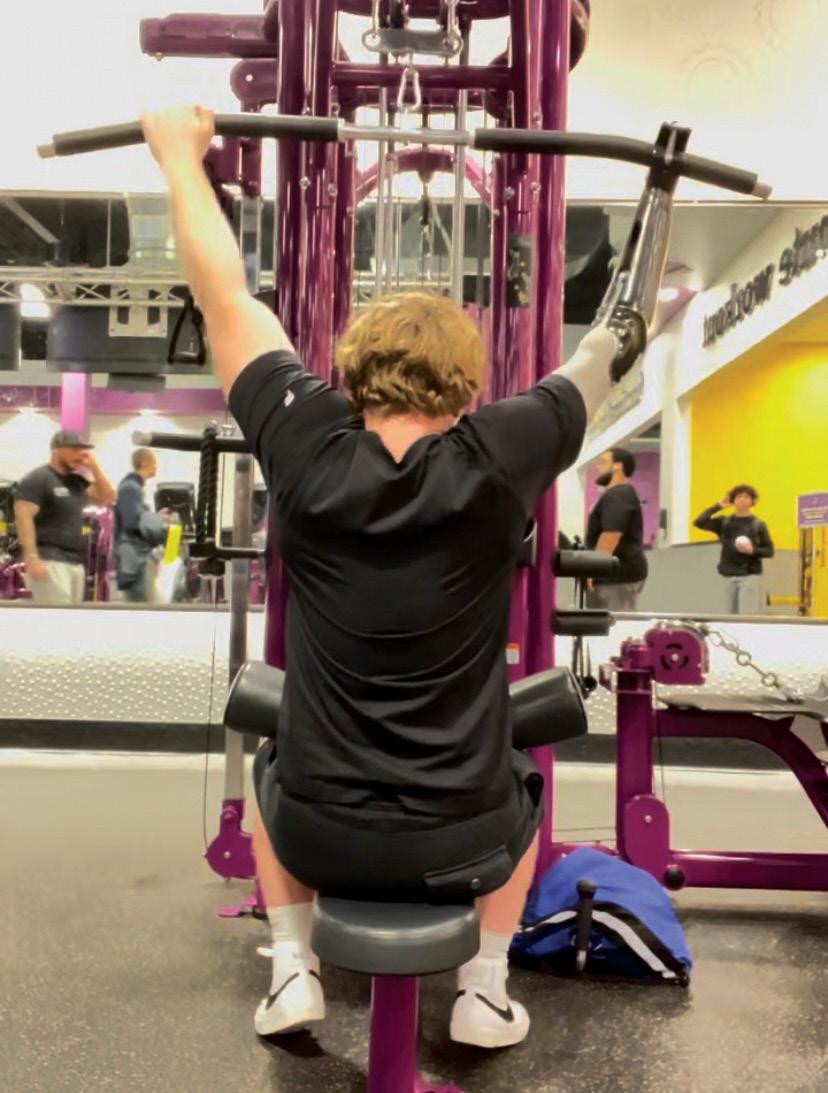
The final laminated device features Click Medical’s RevoFit system consisting of a specific pattern “for how it’s laced through the socket to make sure the pressure is distributed evenly throughout the limb,” Oteri says. Christian can turn a reel to increase the tension of the laced string, which, in turn, tightens the fit of the socket, according to Oteri. The final design incorporates a pin-lock suspension that allows Christian to have an audible cue knowing he is locked into the socket. Once the pin clicks in, Christian then turns the reel to the desired tightness. Christian’s device also features Fillauer’s Omega Wrist and Black Iron Master terminal device.
Christian is doing well with his final prosthesis and is regularly hitting his weightlifting


goals, according to Oteri. “The new weightlifting arm has allowed Christian to feel more supported during back-specific exercises at the gym,” she explains—particularly when he is performing rows and lateral pulls. “He also has been able to increase his bench press weight loads.
“I check up on Christian periodically,” Oteri notes. “So far, so good! I’ve made minimal tweaks, but there haven’t been any suspension issues or pain” with the new prosthesis. “He’s accomplishing all of his goals, which has been great to see.”
Thinking about the future, Oteri’s care of Christian has taught her a lot about designing weightlifting-specific prostheses—knowledge she is bound to use when the next Gen Z gym aficionado needs a new prosthesis.
FACILITY:
Kavella Prosthetics & Orthotics


OWNER: Summer Siddiqui, CPO
LOCATION: Colleyville, Texas
HISTORY: One year
Summer Siddiqui, CPO, began her career in the business world after earning an undergraduate degree in biology. “I always knew I wanted to help people, but I wasn’t sure how,” she says. “After working in the mortgage industry, I realized I needed more in my life than pursuing the next promotion.”
Siddiqui considered different avenues of delivering health care, including interning at a doctor’s office and working as a pharmacy technician. But then she stepped into an O&P facility—and found her calling.
“I was lucky,” she recalls. “My first day, there was a delivery appointment for a patient. He arrived in a wheelchair and walked out” at the end of the appointment. “It was mind-blowing and life-changing—for me and for him! I immediately applied for a master’s program in O&P, and was enrolled the following fall.”
“The AOPA Co-OP is a massive benefit of joining AOPA. Having access to its exclusive coding, billing, and policy resources has improved administrative efficiency, confidence, and accuracy. I am very excited about the educational opportunities to keep up with the latest clinical developments as well.”
—Summer Siddiqui, CPO
After completing her residency and obtaining certification, Siddiqui practiced in various clinical settings. After 11 years of practice and managing a clinic, “the natural next step was for me to open my own facility,” she says. In January 2023, Siddiqui found a space, registered the company, and gained her license and credentialling. Last September, she opened the doors to Kavella Prosthetics & Orthotics in Colleyville, Texas. The name Kavella means “to walk” in Finnish.
Siddiqui is a sole practitioner, but she opened her clinic just two units away from an old friend, Mariya Cameron at 14th Element Fabrication, who does custom silicone fabrication and fabricates upper- and lower-extremity prostheses. Two units away on the other side are friends who opened their own traditional O&P fabrication lab, The Ranch Fabrication. “These fellows are veterans of the industry—they’ve carved sockets out of wood and followed all the transitions in fabrication to carbon-fiber laminates,” she says.
tried-and-true traditional fabrication,” she says. “Together, there’s not much we can’t find a beautiful solution to.”
Siddiqui treats children through adults, although she would like to specialize in adults: “I’d like to give focus to women’s prosthetic needs in particular,” she says. “Various studies have shown that women are 20% to 24% more likely to abandon their prostheses. Through collaborations and developing products, I’m eager to find solutions to address women-specific needs. We are different anatomically and physiologically, and I want to capture those nuances to offer better fit and function to an underserved population.”
One of Siddiqui’s favorite patient success stories occurred before she opened her own practice. She treated a young woman in her mid-20s who was hiking overseas when she was caught in a mudslide. As she fell down the hill, she was hit by large, tumbling boulders. When she looked down, says Siddiqui, her foot was hanging on by a piece of skin.
“In the operating room, she found out she was two months pregnant with her third child—so she became a new amputee with a surprise pregnancy,” says Siddiqui. “Her baby is 4 years old now, and I have accompanied her on her journey to learn to walk again, with anatomical changes that had to be addressed on a daily basis. One challenge—which we met—was to reduce donning time so that it was the fastest, easiest, and safest way for her to reach a crying baby in the night.”

Siddiqui has many ideas and plans for the future. “Aside from growing the clinic, I want to add charitable work on a local and international basis,” she says. “And I’d like to do more outreach work, to help as many people as I can, and follow that wherever it leads me, including adding more staff.
“In the meantime, I just love what I’m doing! And that translates into terrific patient care.”
“So on one side, I can access cutting-edge custom silicone and 3D printing; on the other, I have
Deborah Conn is a contributing writer to O&P Almanac. Reach her at deborahconn@verizon.net

With the same unique features as KiddieGAIT® & KiddieROCKER®!


OWNER:


Employees fabricate a wide range of O&P devices, leveraging both old-school and cutting-edge technologies.
Why Am I an AOPA Member?
“We’ve been a member of AOPA since the beginning.
AOPA has a lot to offer, from insurance discounts to trade shows. It offers great networking opportunities.”
—Tony Culver
BY DEBORAH CONNLOCATION:
New Port Richey, Florida
HISTORY: 34 years
Established in 1990, Grace Prosthetic Fabrication began as a family-owned and -operated business, founded by Ed Grace. Today, it is still family owned by Grace’s stepbrother, Tony Culver, and it currently employs more than a dozen staff members in its New Port Richey, Florida, administrative and manufacturing site.
The family tradition continues: Culver’s son currently works in the lab and will be pursuing a master’s degree in O&P, and his nephew has worked in the lab as a prosthetic technician for more than 10 years. In addition, “we consider many employees as extended family because they have been with us so long,” says Culver.
Grace offers complete central fabrication services to O&P clinics throughout the country and Puerto Rico. According to Culver, one of the company’s strengths is the breadth of its products.
“We were among the first to add CAD/CAM technology into the central fabrication industry, which gives us the ability to digitize a wrap or test socket from a mold and create a customized template,” Culver notes. “This technology speeds up our turnaround times and creates a more precisely fitting product. Today, we still use this technology, but we added an app for scan-and-go to allow practitioners to send us their digital files.”
At the same time, Grace is one of the few manufacturers that continues to make old-school prostheses, such as joint corsets and exoskeletal and hip disarticulation devices. “We still offer a carbon-laminated socket with thigh lacer, and we use traditional sewing to stitch the leather,” he says. “Both methods provide an advantage to practitioners.”
Culver says Grace’s most popular products are its above- and below-knee sockets, with finishes that can be customized for each user. “Some of the most popular customized laminations are patriotic and military designs [because] there is a large sector of amputees that served in the military,” he says.
“We also fabricate more specialized products for hip disarticulation, Symes sockets, Van Ness sockets, joint corsets, ankle-foot orthoses, knee-ankle-foot orthoses, gauntlets, and more. Most recently, we have had a high volume of spray skins.”
Not all individuals with limb loss want a visible prosthesis, and for the roughly 20% who prefer a more lifelike limb, Grace uses a tough, flexible vinyl as a cosmetic covering. The material has a matte finish to show texture, and it feels like natural skin, according to Culver. The cover can be pigmented to match the user’s natural skin tones.
Grace is also known for the Grace Plate, developed to make it easier to connect the socket to the residual limb. Instead of the traditional four-hole square plate, Grace invented a rounded plate that allows technicians to drill the holes and align the components after creating the socket, instead of beforehand. Since then, Grace has developed dozens of variations, including suction plates, lanyard plates, and a tie-in plate, to fit with newer components.
In one of many efforts to give back to the community, Grace supports the International Institute of Orthotics and Prosthetics, an educational institution in Tampa that offers a master’s degree in O&P. “We create connections with student professionals studying to become practitioners,” says Culver.
Grace also supports the FOOT Foundation, a 501(c)3 organization that offers O&P services to children and adults of impoverished countries, by donating parts.
Culver says he also was privileged to work on the Gentle Giants Stay Home Project, which seeks to improve the treatment of elephants in Thailand and Africa, in 2021. The project created a prosthetic leg for the elephant Khun Dej, and Grace was asked to fabricate the socket that would be fitted for the elephant. “The cast was sent to our office, and from there we used more than 50 gallons of plaster to create a mold,” he says. “The finished socket weighed 64 pounds, included six laminations, and [leveraged] more than 120 feet of 10-inch carbon braid and eight gallons of resin.”
With 34 years behind it, Grace Prosthetic Fabrication has no plans to change course. “We will continue to serve as an extension of the services offered by facilities,” says Culver, “allowing them to increase their capacity without increasing overhead.”
Deborah Conn is a contributing writer to O&P Almanac. Reach her at deborahconn@verizon.net

AOPA members already love Sam Miller’s “State Policy Forecast” videos. Now, Miller—AOPA’s manager of state and federal advocacy—brings you a new series: “AOPA on the Hill.”
In this new series, Miller provides the latest federal advocacy updates—bolstered by some interesting and fun facts. View the inaugural “AOPA on the Hill” video, where Miller discusses the status of the Medicare O&P Patient-Centered Care Act and offers suggestions on how you can help support the legislation, at AOPA on the Hill: 1—YouTube. And be on the lookout for future updates!
AOPA will offer six webinars throughout 2024—in February, April, June, August, October, and December.
February’s webinar covered “Changes & Updates to Medicare Policies: Do You Still Know the Rules?” April’s webinar is a must-see “AOPA Ask the Expert” event. Webinars are $99 for members and $199 for nonmembers. All webinars are live, but everyone who registers will receive access to the recordings.
To purchase the February or April webinar or register for future sessions, access your AOPA Connection account or visit aopanet.org. Questions? Contact Devon Bernard at dbernard@aopanet.org
Take part in the virtual event May 13-14
Sign up for the next AOPA Virtual Coding & Billing Seminar, slated for May 13-14. You’ll learn how to get claims paid, survive audits, collect interest from Medicare, and file successful appeals. Earn CEs!
Visit AOPAversity online at bitly.aopaversity for details and to register. For questions regarding seminar content, email Devon Bernard at dbernard@aopanet.org
SEPTEMBER 12-15, 2024 | CHARLOTTE, NC
The 2024 AOPA National Assembly, with a theme of “Ignite 24,” takes place Sept. 12-15 in Charlotte, North Carolina. Plan now to attend this year’s Assembly. Why attend?
• Earn continuing education credits
• Hear from physicians, researchers, and top-notch practitioners
• Participate in hands-on learning and demonstrations
• Network with an elite and influential group of professionals
• Explore the largest O&P exhibit hall in the western hemisphere, featuring devices, products, services, tools, and the latest technology from exhibitors around the world.
Questions? Contact AOPA at 571-431-0876 or email assembly@aopanet.org
Charlotte’s history is “revolutionary”: The city made a “statement of defiance” against Britain more than a year before the Declaration of Independence was signed. The Mecklenburg Resolves of May 31, 1775, states the “authority of the King or Parliament” as “null and void.”

The officers and directors of the American Orthotic & Prosthetic Association (AOPA) are pleased to present these applicants for membership. Each company will become an official member of AOPA if, within 30 days of publication, no objections are made regarding the company’s ability to meet the qualifications and requirements of membership.
Visit AOPAnet.org/join for more information.
Exton Advisors LLC
1720 Epps Bridge Pkwy., Ste. 108-118
Athens, GA 30606-6132
770-329-8888
extonusa.com
Michael Schlesinger Supplier Consultant
Ortheco Prosthetics 4105 Union Road Saint Louis, MO 63129-1064
314-492-0080 orthecousa.com
Thomas Schmidt Supplier Startup
OrthoRx Inc./dba Kansas Brace Systems 6001 SW 6th Avenue, Ste. 250 Topeka, KS 66615 785-271-2271 breg.com
Tracy Boyd, COF Patient-Care Facility
Restorative Health Services 1272 Garrison Drive, Ste. 307 Murfreesboro, TN 37129-3177
615-890-2160 rhs-tn.com
Aaron J. Sorensen, CPO Patient-Care Facility
Sensor Medica Corp. 4929 U.S. 1 Vero Beach, FL 32967 772-217-8777
sensormedica.us
Trista Vossman Supplier Startup
The O&P PAC Update provides information on the activities of the O&P PAC, including the names of individuals who have made recent donations to the O&P PAC and the names of candidates the O&P PAC has recently supported. The O&P PAC recently received donations from the following AOPA member:
Scott Williamson
The purpose of the O&P PAC is to advocate for legislative or political interests at the federal level that have an impact on the orthotic and prosthetic community. The O&P PAC achieves this goal by working closely with members of the House and Senate and other officials running for office to educate them about the issues, and help elect those individuals who support the orthotic and prosthetic community.
To participate in, support, and receive additional information about the O&P PAC, federal law mandates that eligible individuals must first sign an authorization form, which may be completed online: bit.ly/aopapac

Thank You TO OUR SPONSORS





KiddieFLOW™, Allard USA’s extension to our pediatric AFO line, was introduced in response to clinician requests for an orthosis with more foot plate flexibility. KiddieFLOW™ allows for better control of foot positioning in late swing, which aids in stability during stance. FLOW models offer increased ROM in the sagittal plane and a smoother transition (flow) throughout the gait cycle.
For more information, contact customer service at 888-678-6548 or info@allardusa.com and request your free teddy bear tape measure!

Embrace the comfort of custom-fit with Mt Emey®’s Custom Shoe (Medical) Program. Our precise 3D scanning captures your unique foot contours, promising a perfect fit without the wait or waste. From stylish athletics to roomy comfort designs, our handcrafted shoes adapt to your needs. Satisfaction guaranteed before payment. Plus, qualified wholesale accounts receive a free 3D scanner. Step into the Mt Emey difference— where every shoe is made for you.

Modern and easily adaptable to your myoelectric applications for the benefit of your patients.
For over 10 years, Coapt has been the industry leader in myoelectric Pattern Recognition. Coapt’s system is NOT another myoelectric hand, wrist, or elbow -- it is an add-on brain to enhance and personalize the users’ control of all those prosthetic options.
Coapt’s electronics unit fits neatly inside any arm build and comes with easy-toassemble connectors and hardware. Coapt’s suite of performance applications helps the wearer quickly unlock the power of machinelearning myoelectric control.


Hersco is delighted to offer HP’s advanced 3D-printing technology for custom orthotics. 3D printing has unique design capabilities not possible with other methods—reducing landfill waste by 90%! The accuracy of 3D is unparalleled, specs exceed direct-milled polypro, and manual plaster fabrication. Among the benefits: a 90% reduction in landfill waste, many new design possibilities for posting, and the ability to vary thickness and flexibility across the shell. The PA-11 polymer is a biobased renewable material that has been tested and proven in research and industry. Call today, 800-301-8275, for a free sample.
For more information, call 1-888-937-2747 or visit emeys.com

RUSH Feet Available in Sandal Toe You’ve been asking and we have listened! This expansion opens a world of footwear possibilities including sandals or flip flops while enjoying the same exceptional performance and confidence of RUSH feet.


With the full line available in sandal toe, there’s more choices for everyone to explore. Vist shop.proteorusa.com
Turbomed’s leading line of foot drop AFOs sit completely outside the shoe for an invisible, painless support that will follow you as long and as far as you want. Their unique design acts as an exoskeleton to the impaired limb, keeps the foot at 90 degrees, and provides the user with unparalleled levels of function. Each model takes minutes to assemble and is easily transferrable to most shoes, boots, and sandals through an innovative lace clip design.
The Xtern Summit is the lightest model, has the most dorsiflexion power, and features a see-through design. The Xtern Frontier was designed for patients with reduced hand dexterity and requiring front leg support. Visit turbomedusa.com, and think outside the shoe!


April 1–30
ABC: Application Deadlines, Exams Dates, O&P Conferences, and More! Check out ABC’s Calendar of Events at ABCop.org/calendar for the latest dates and event details, so you can plan ahead and be in the know. Questions? Contact us at info@abcop.org; ABCop.org/contact-us
April 23 and April 25
Certificate in O&P Business Management— Healthcare Operations. Virtual, 9 a.m. – 1 p.m. ET. Register on My AOPA Connection
May 13–14
AOPA Virtual Coding & Billing Seminar. To register, visit aopanet.org

June 28–29
PrimeFare East. Sheraton Grand Hotel Downtown Nashville. In-person meeting. For information, contact Cathie Pruitt at 901-359-3936, primecarepruitt@ gmail.com, or visit primecareop.com
August 19–20
AOPA Virtual Coding & Billing Seminar. To register, visit aopanet.org

September 12–15
AOPA National Assembly. Charlotte, NC. For more information, visit aopanet.org
A large number of O&P Almanac readers view the digital issue— If you’re missing out, visit issuu.com/americanoandp to view your trusted source of everything O&P.
Scan the QR to start advertising in the O&P Almanac or visit bit.ly/24AlmanacMediaKit
The Pedorthic Footcare Association: Diabetic Wound Prevention, Management, and Healing Program. 10-session online education program series. Approved CEs by ABC and BOC, monthly classes are 1.5 hours each. For more information and to register, visit pedorthics.org/page/.Diabetic_Series_LMS_List
September 3–6, 2025
AOPA National Assembly. Orlando. For more information, visit aopanet.org

Advertise O&P events for maximum exposure with O&P Almanac Contact Bob Heiman at bob.rhmedia@comcast.net or learn more at bit.ly/24AlmanacMediaKit. Announcement and payment may also be sent to O&P Almanac, Calendar, P.O. Box 34711, Alexandria, VA 22334-0711 or emailed to jburwell@AOPAnet.org along with VISA or MasterCard number, cardholder name, and expiration date. Make checks payable in U.S. currency to AOPA. Note: AOPA reserves the right to edit calendar listings for space and style considerations.
If
Several states introduce O&P-themed bills
House Bill (HB) 131, which would require that clinical providers maintaining a supply of durable medical equipment (DME) for potential patient use file a Certificate of Exemption with the Department of Revenue in order to be eligible for tax exemption of these items, has passed the House and is now under consideration in the Senate.
Assembly Bill (AB) 2753, which would specify that coverage of rehabilitative and habilitative services and devices under a healthcare service plan or health insurance policy include medically necessary DME and prohibit DME coverage from being subject to financial or treatment limitations, has been introduced in the California legislature. The bill is functionally identical to AB 1157, which was introduced in the last session and passed the House.
The Connecticut state legislature has recently introduced two O&P-related bills:
• HB 5459 would direct the Connecticut Commissioner of Social Services to study rates of Medicaid reimbursement of durable medical equipment, prosthetics, orthotics, and supplies to determine how they compare to the five-state rate benchmark (defined in the bill as “the average of rates for the same services in Maine, Massachusetts, New Jersey, New York, and Oregon”) and Medicare.
• Senate Bill (SB) 371 would appropriate $1 million to the Connecticut Department of Public Health to establish a program to address pain management for people who have undergone amputation.

Below are the most recent developments in the So Every BODY Can Move (SEBCM) initiative, developed by AOPA in conjunction with the National Association for the Advancement of Orthotics and Prosthetics, the American Academy of Orthotists and Prosthetists, and the Amputee Coalition. The movement advocates for a policy solution rooted in dignity and justice by empowering state-by-state legislative action, ensuring access to medically necessary orthotic and prosthetic care for physical activity.
House File 3339 and Senate File 3351, identical companion bills, would implement insurance fairness, cover activity-specific and showering/bathing devices, and require that insurance companies follow nondiscrimination standards related to the coverage of O&P care. These bills have officially passed out of the House Commerce
Identical companion bills HB 5769 and SB 3910 have been introduced in the Illinois legislature. The bills would ensure that Medicaid coverage for custom O&P be no less favorable than the terms and conditions applied to all medical and surgical benefits, require that Medicaid managed care organizations comply with network adequacy requirements for custom O&P, and increase the current 2024 Medicaid reimbursement rate by 21% via staggered 7% increases in 2025, 2026, and 2027.
Finance and Policy and Senate Commerce and Consumer Protection Committee, respectively. They now head to the House Health Finance and Policy and Senate Health and Human Services committees.
Senate 3919, which ensures coverage of activity-specific orthoses and prostheses for enrollees of all ages in state commercial and public employee plans, now has an identical companion bill in the New Jersey Assembly. The bill, Assembly 3856, sponsored by previous champion Assemblyman Herb Conaway Jr., has been referred to the Assembly Financial Institutions and Insurance Committee.
Visit the New SEBCM Website
Log on to soeverybodycanmove.org, a dynamic platform featuring a userfriendly interface, engaging content, an interactive state map, and much more.
SB 455, which would require that New Hampshire Medicaid reimburse for O&P services at 100% of Medicare rates, has been reported favorably from the New Hampshire Health and Human Services Committee with a 5-0 vote. During the committee deliberation process, the bill was amended to set Medicaid reimbursement at 90% of Medicare.
Interested in getting involved?
Email advocacy@aopanet.org to learn more.


● Identify areas for improvement.
● Compare your company’s financial performance with industry leaders and others in similar markets.
● Help inform business decisions.
● Retain valuable employees.


Be on the lookout for YOUR unique access code to participate in this year’s survey.
To request access to the survey, scan the QR Code to complete this


Limb Loss & Limb Difference Awareness Month


Since its inception 14 years ago, has illuminated the unique needs of people living with limb difference.


At Ottobock, it’s our favorite month to acknowledge community members, regardless of where they are in their journey.
Follow along on our social channels and visit our website to learn more about how we celebrate all April long.


