
TheIntersection of Education and Technology
F rom the e xecutive D irector
Dear Colleagues,
The start of a new school year always brings renewed energy and anticipation. With fresh opportunities for growth, exploration, and innovation, no two years are ever the same — especially in this age of artificial intelligence (AI).
AI is rapidly becoming a part of everyday life. Even in these early stages of adoption, employers across industries are signaling a growing demand for professionals who are confident using AI tools and technologies. In response, many school districts are incorporating AI into their classrooms and designing thoughtful policies and procedures to guide its responsible use.
To support this evolving work, the AIU launched the AI Fellows Program, made possible by the generous support of the Henry L. Hillman Foundation. Featured in this issue of AIU Connections, the program empowered to explore a wide range of AI tools and collaborate with peers to share insights and best practices across districts.
Also in this edition, we shine a spotlight on Waterfront Learning, one of the AIU’s flagship programs. Through partnerships with school districts, Waterfront Learning delivers high-quality online education to thousands of students across Pennsylvania. The program is just one example of how we’re helping districts offer flexible and engaging learning options taught by certified teachers.
This fall, we are also proud to celebrate a major milestone: the 25th anniversary of PAeducator.net. Since 2000, this pioneering online platform has served as a statewide clearinghouse for education job postings. Every year, thousands of prospective school employees submit their applications to this secure site which is used by hundreds of school entities seeking to fill staff positions. This issue also highlights how we are harnessing technology to modernize the AIU’s internal operations and enhance responsiveness across the organization, streamlining hiring, training, benefits, and more to help the AIU operate more efficiently and meet the evolving needs of the districts we serve.
As we begin the 2025–26 school year, it’s clear that technology will continue to shape the future of education. Amid these changes, the AIU remains committed to partnering with schools and organizations throughout the region to serve every learner.
Happy reading!
Sincerely,

Dr. Robert J. Scherrer Executive Director

AIU Connections
F all 2025
AIU Connections is published biannually by the Allegheny Intermediate Unit’s Marketing & Strategic Communication Department under the direction of Sarah McCluan.
Publisher
Dr. Robert Scherrer
Editorial Director
Amanda Ritchie
Creative Director
Michael Tarquinio
Copy Editors
Andrew Chiappazzi
Will DeShong
Emily Wiley
C ontributors
e D itorial
Will DeShong
Sam Kulp
Daveen Rae Kurutz
Jeremy Tepper
Emily Wiley
P hotogra P hy Matt Brosey
Will DeShong
Sam Kulp
Amanda Ritchie
Michael Tarquinio
Jeremy Tepper
Emily Wiley
Advertising Manager
Amanda Ritchie
Design Assistant
Sarah Campbell
Production Assistant
Carolyn Weissgerber
About the cover
Our cover features graphics depicting students interacting with technology atop a digital wave.




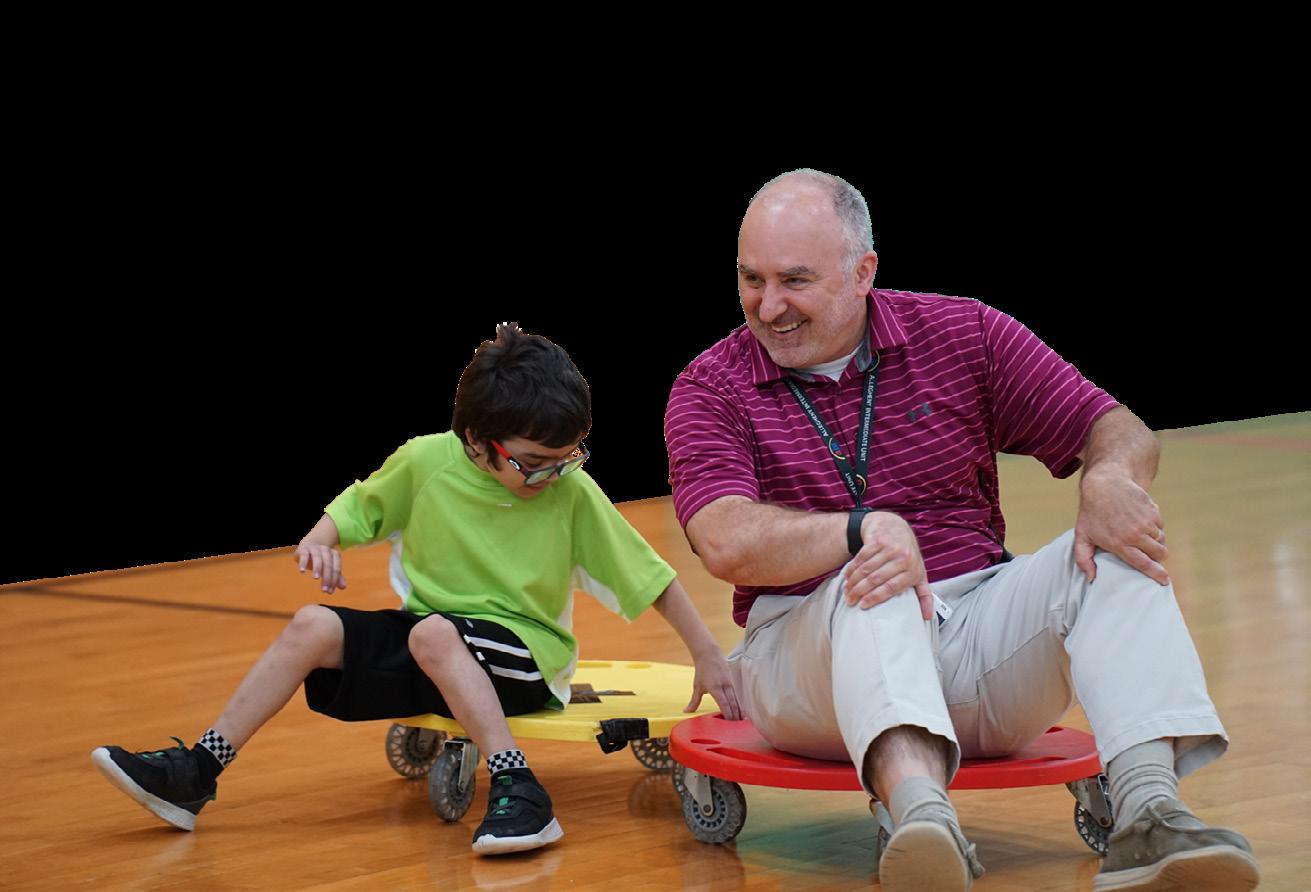




Davi D C ampos:
y e mily W iley

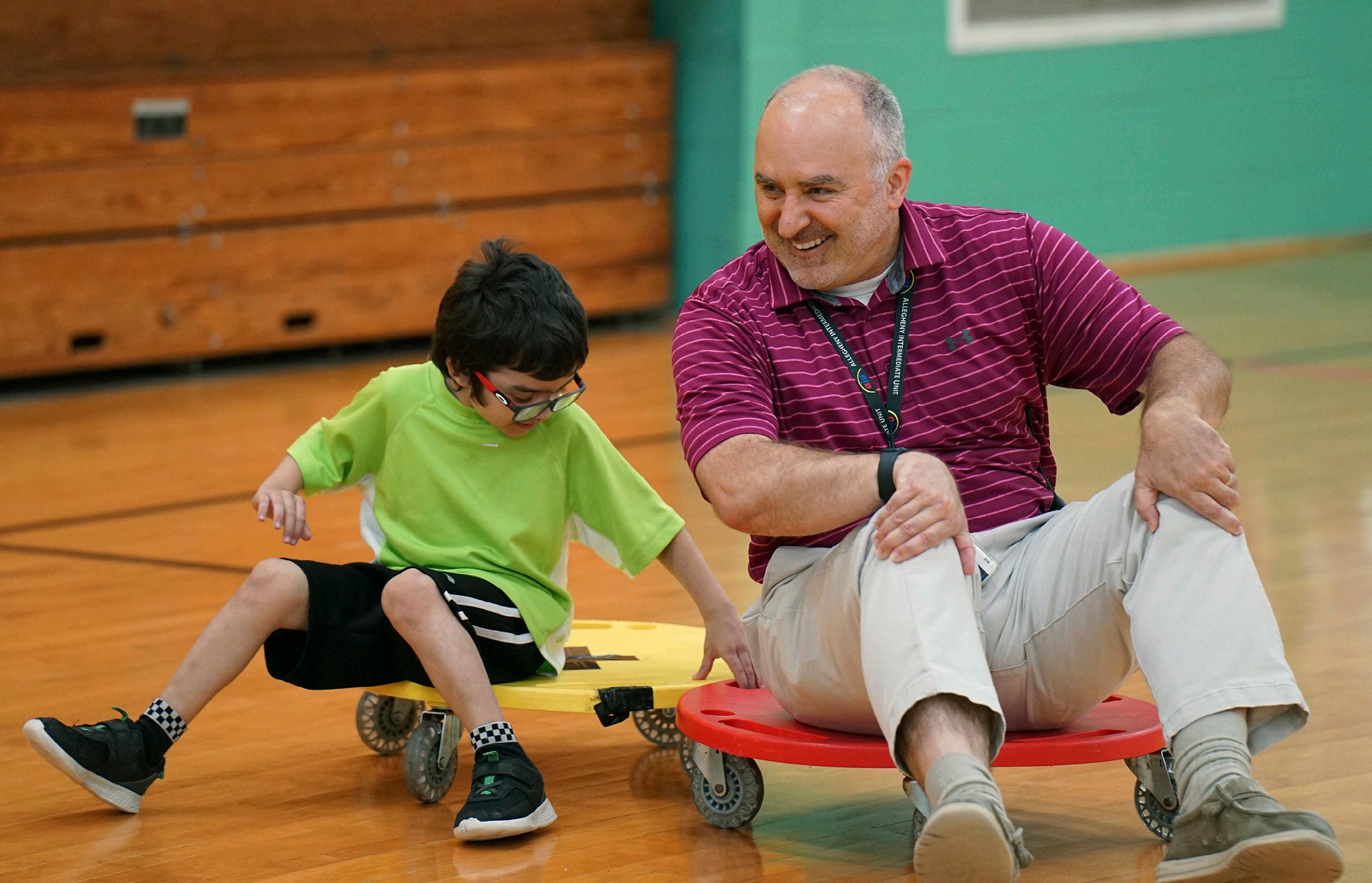
W hen you W alk through the D oors o F s unrise s chool , you’re greeted by genuine smiles and enthusiastic high-fives. There are students skipping, pedaling adaptive tricycles, and spinning on sensory swings. Colorful artwork decorates the halls and picture schedules guide their days. Principal David Campos knows every name, every hope, every challenge, and every victory worth celebrating.
Sunrise School, along with Mon Valley School and Pathfinder School, are dedicated to the academic, social, and vocational development of students with disabilities. It takes a passionate team of educators to teach these students. In the case of Campos, his passion was revealed through experience.
“I wasn’t someone who knew when I was five that I wanted to be a teacher,” he admitted. After earning a bachelor’s degree in psychology, Campos worked as a TSS (therapeutic support staff) in a special education school. That experience was his first exposure to education – and it changed everything.
“It opened a door I didn’t even know existed,” he said. “I saw what those teachers were doing, how they helped the kids, and I just knew I had to be a part of it.”
That realization led Campos back to school, where he earned his master’s in education and certification in special education, and eventually his principal certification. His career has included a series of roles: emotional support teacher, learning support teacher, assistant principal, and building principal. Following more than 25 years in administration at Riverside Beaver County and Deer Lakes school districts, he was ready to return to his roots.
B
“I’d gotten further from what brought me into education in the first place,” he explained. “When the opportunity at Sunrise School came up, it felt like the right time and the right position to get back to special ed.”
Rediscovering Purpose
Campos is two years into his role as principal at Sunrise School, and he has rediscovered purpose through a familiar passion.
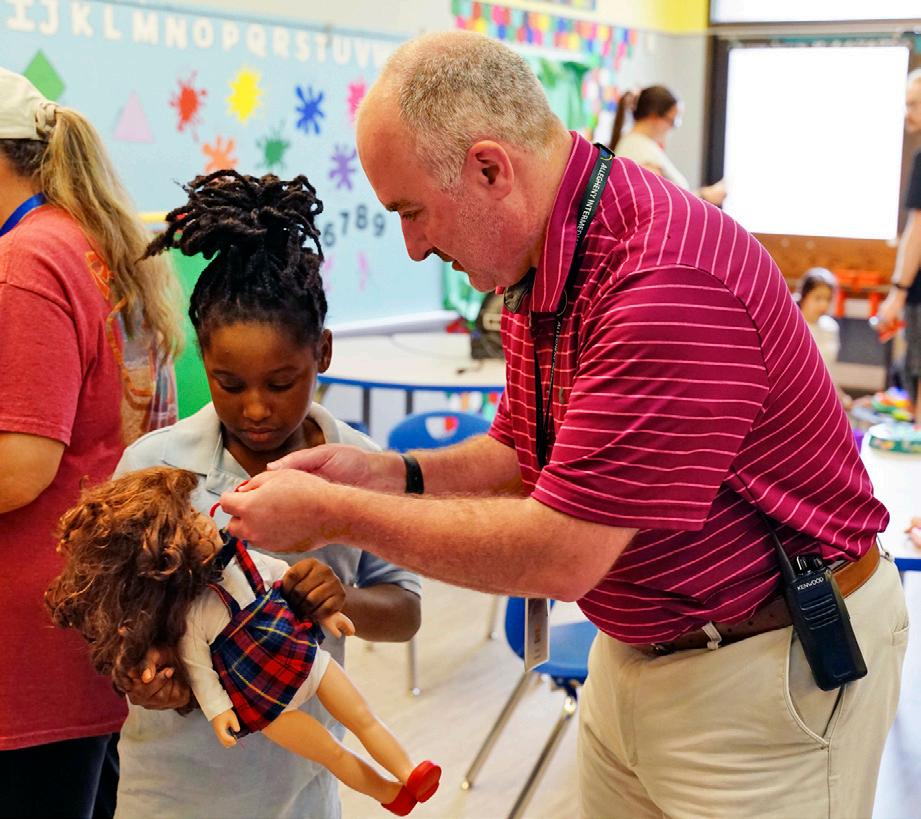
“There’s something about the connection you build with these kids,” he reflected. “They just have this love of life. It sounds corny, but they’re happy to be here. There’s a joy that fills the building.”
Like any school principal, Campos wears many hats. His mornings often begin with the logistical puzzle of ensuring every classroom has the coverage it needs. He must make time for meetings, paperwork, and management tasks. But he prioritizes time with students.
“Being out of the office, just walking the halls and saying hello, it matters,” he said. “When things get busy, emails can wait. Being there for the people is what keeps this building running.”
Campos is quick to acknowledge that he is one small wheel in a big machine. “Whether it's a teacher, a paraprofessional, a custodian, or a secretary —everyone is engaging with the students,” he said. He may be just one component of the school’s engine, but without Campos, it wouldn’t run. His guidance steers the entire school community forward. He leads with a magic touch—and sometimes a mischievous grin.
Making Magic
Campos admits that he is not capable of saying “no” to any idea that has the potential to spark joy in students.
“At Deer Lakes, they threw pies in my face, shaved my head, and taped me to the wall,” he laughs. “I’ve gotten involved in a lot of things, but one I have loved the most is sitting in the case as the Elf on the Shelf.”
The tradition began years ago with Mikayla Nolfi, a special education teacher at Sunrise School. She was eager to hand over the reins to the principal last school year. The costume—and character—fit Campos perfectly.
In December, the Elf appeared inside the case in the main lobby of the school. Campos kept a straight face while students and staff members laughed all around him. Throughout the month, he made his rounds through Sunrise School, showing up in surprising places—like in the driver’s seat of the custodian’s tractor.
“They announced that the tractor was missing, and asked if the kids could go look for it,” he recalled. “And I was riding the tractor around the parking lot.” The mischief continued into the month of March with the arrival of Larry the Leprechaun. He stole homework and basketballs from students. “These traditions may seem small, but they bring so much excitement,” Campos said. “For our kids, the magic is real.”

Looking Ahead
As Sunrise School continues to grow and evolve, Campos remains focused on what brought him back to special education in the first place.
“Connection, trust, joy—these aren’t just feel-good words. They’re what makes this place work,” he says. “If I can help a student have a better day, help a parent feel reassured, or support a teacher through a tough moment, then I’m doing my job.”
And after 27 years in education, it’s clear that Campos isn’t just doing the job— he’s fulfilling his passion.
Photos: Emily Wiley
Strength Numbers in
MSC and PPG Foundation team up to support math educators

110 teachers in high-needs school districts across Allegheny County received training designed to strengthen math content instruction.
t hrough generous F un D ing F rom the PP g F oun D ation , the AIU’s Math and Science Collaborative (MSC) provided no-cost professional development to 110 teachers in high-needs school districts across Allegheny County during the 2024-25 school year. The sessions were designed to strengthen math content instruction to enhance student learning.
The grant also allowed MSC to provide instructional coaching to seven middle school educators in the Penn Hills School District, focusing on boosting their confidence and strengthening strategies for assessing student learning. Later, those teachers led sessions at the MSC’s math and science leadership workshops using the same coaching framework they had experienced.
“Current research describes classroom-based teacher leadership, where teachers with primary roles in the classroom engage in activities that allow them to be recognized as experts and leaders,” said MSC Program Director Michael Fierle. “This informal role and recognition serves to sustain the teacher’s own growth and prompts them to act as a mentor to others.”
B y s am k ul P
Immersive instruction
Where curiosity leads the way
B y s am k ul P
As part of its ongoing efforts to support member school districts with the transition to the state’s updated science standards, the AIU’s Math and Science Collaborative (MSC) joined forces with OpenSciEd to help provide transformational professional learning for science teachers. This partnership will help provide direction to educators as they update their lesson plans to make the transition from “learning about” to “figuring out.”
OpenSciEd and MSC host curriculum launch events, a multi-day professional development series that introduces teachers to OpenSciEd’s instructional materials. The most recent of these events, OpenSciEd’s Elementary Curriculum Launch, invited educators from across Pennsylvania and beyond to experience what equitable science instruction looks like for grades K-5.
OpenSciEd’s curriculum centers on student thinking and investigation, using compelling phenomena to spark curiosity. At a curriculum launch event in spring 2025, facilitators guided teachers through sample lessons while encouraging them to wear the ‘student hat’ —experiencing the learning as their own students would.

“The whole goal of the curriculum is to center student thinking,” said Jacob Noll, professional facilitator for OpenSciEd. “Wearing that ‘student hat’ to deal with that productive uncertainty, that need to know something, can only be generated in the moment. We want teachers to know what it feels like to have their curiosity leveraged.”
Experiencing lessons firsthand helps educators understand how the approach engages diverse learners and adapts to varied classroom dynamics.
“The idea of ‘student hat’ is not to conjure one student’s perspective, but an entire classroom’s worth of experience,” Noll said. “We have 30 educators in our space, which means they’re bringing 30 classrooms’ worth of student perspectives to this space, helping us approach a variety of student needs.”
Launching strong teaching careers: Inside the AIU’s Educator Induction Program
B y s am k ul P
Starting a career in education is both exciting and overwhelming. For new teachers in Pennsylvania, the journey begins with a required, state-approved induction program—a crucial step on the path to Level II certification. But for many high-needs districts, limited resources can make it challenging to provide consistent, high-quality support for novice educators. That’s where the Allegheny Intermediate Unit steps in.
“The Riverview School District has been involved in the AIU induction program for as long as I can remember,” said Dr. Neil English, the district’s superintendent. “Our incoming teachers consistently report that the induction process is meaningful, efficient, and well organized.”
The program also introduces inductees to a wider educational community. “Teachers develop relationships with mentors and
support personnel outside the district who can enhance their ongoing growth and development,” Dr. English said. “Our goal is for new teachers to feel supported through strong mentorship—not only within our district, but also through the broader educational community that the AIU helps to cultivate.”
By connecting new educators with experienced mentors and a broader network of support, the AIU’s Educator Induction Program helps school districts invest in their future, one teacher at a time. It’s more than a certification requirement; it’s a launching pad for strong, confident teachers who are prepared to make a lasting difference.
Learn more at aiu3.net/induction.
A voice for every child: Jessica Bartholomew’s lasting legacy
The Allegheny Intermediate Unit remembers English as a Second Language (ESL) educator Jessica Bartholomew, who passed away on April 28, 2025. A beloved member of the AIU’s ESL team for 16 years, Bartholomew supported children across several school districts. She was a passionate educator who went above and beyond to advocate for her students and their families. Her dedication, warmth, and tireless commitment left a lasting impression on all who knew her. The AIU honors Bartholomew’s legacy by continuing to serve English Learners with the compassion and dedication that she brought to her work each day.


Colleagues who knew and worked alongside Bartholomew shared the following reflections on her life and impact:
“Jessica was an exceptional teacher and colleague. She loved to create fun and exciting activities for her students and always shared her ideas with others. She was a bright light to everyone who knew her, especially her students.”
Jenna Robinson, ESL teacher
“Jessica Bartholomew had a gift for teaching! She always approached each day with a passion for learning and helping others. Her impact will live on in every student she taught. We will miss Jessica’s presence dearly, but we carry forward the legacy of her love for education and for others!”
Jackie Barton, ESL teacher
“I had the privilege of knowing Jess for over 16 years. She was an extraordinary ESL teacher whose love for her students knew no bounds. Jess cared deeply for each and every child, working tirelessly to ensure their needs were met and their voices heard. Her impact is lasting—reflected in the lives of all the students who passed through her classroom. The AIU was truly fortunate to have her. Her legacy will live on in the work of every educator who follows in her footsteps.”
Kelly Noyes, Ed.D., Program Director of Educational Support Services
Professional Development
Enrollment is subject to registration deadlines and capacity. Dates are subject to change.
All CPE courses are virtual and asynchronous. Fees and registration deadlines apply. CPE courses fulfill 90 Act 48 hours and requirements for Level II Certification and Master’s Equivalency. Start dates are subject to change. Register at aiu3.net/cpe.
Fall 2025
Introduction to Text Comprehension, 10/20
Connecting with Kids, 10/22
Cultivating a Growth Mindset, 10/24
Apps and iPads for the K-12 Classroom, 10/27
Addressing Learning Disabilities in Education, 10/31
AI Tools in the Classroom: Planning and Instruction, 11/3
Group Work Dynamics: Collaboration and Assessment, 11/3
When It’s Not Just Kids Being Kids: Bullying and Beyond, 11/5
Strategies for Challenging Student Behavior, 11/10
Coping Skills: Teacher and Student Wellness, 11/10
Empathy: Teacher and Student Wellness, 11/10
Making an Impact: Building Positive Relationships with Students, 11/10
Teaching K-12 Problem Solving with Computational Thinking in all Subjects, 11/10
ADHD in Education, 11/14
Infusing STEAM into K-12 Classroom, 11/17
Moving From Problems to Solutions: Building Resiliency Skills, 11/19
A New Look at Working with Students with Autism, 11/21
Spring 2026
Creating and Supporting a Positive: Bully-Free School Climate, 2/11
Strategies for Challenging Student Behavior, 2/11
21st Century Skills, 2/11
Beat the Bullying: A Look into Prevention and Intervention, 2/11
Engaging in Mathematics, 2/13
Supporting Students with Autism in Education, 2/13
Motivating and Inspiring Today’s Students: Strategies, Methods and Materials to Awaken the Learner, 2/13
Multiple Intelligences in the Classroom: Strategies, Techniques and Materials, 2/13
Culturally Responsive Teaching, 2/16
Infusing STEAM into K-12 Classroom, 2/16
Best Practices in Teaching K-12 Online, 2/16
A Closer Look at Learning Disabilities: A Refresher Course for all Classroom Teachers, 2/16
Anxiety and Stress: Teacher and Student Wellness, 2/16
Adverse Childhood Experiences, 2/16
Digital Literacy, 2/18
Autism in Pop Culture, 2/20
Get Active About Learning, 2/21
How to Develop Good Digital Citizens for the 21st Century Learner, 2/23
Are Your Students Tuned in? Strategies for Engaging Every Student, 2/23
Backwards: The Flipped Classroom Concept, 2/23
Apps and iPads for the K-12 Classroom, 2/23
Connecting with Kids, 2/25
Implementing Equitable Trauma Responsive School Practice, 2/25
How to Design a Digital Classroom for the 21st Century Learner, 2/25
Introduction to Text Comprehension, 2/27
Cultivating a Growth Mindset, 2/27
Working with Fractions and the Four Operations: Instructional Practices for the Middle Grades, 3/1
AI Tools in the Classroom: Introduction and Exploration, 3/2
Integrating the iPad into the Classroom: There are Apps for That, 3/2
Being Mindful: Teacher and Student Wellness, 3/2
Break the Ice: Icebreakers for All Ages, 3/2
Group Work Dynamics: Collaboration and Assessment, 3/2
Teaching Historical Thinking Concepts, 3/2
Any Device Technology Tools in K-12, 3/2
Project-Based Learning and Challenge-Based Learning, 3/4
Addressing Learning Disabilities in Education, 3/6
The First Days of School: How to Be an Effective Teacher, 3/6
Writing Alive: Strategies, Techniques and Materials, 3/6
Word Power: Vocabulary Instruction for All, 3/6
Tech Tools for the 21st Century, 3/9
Coping Skills: Teacher and Student Wellness, 3/9
Building Bridges: Working with (Difficult) Parents, 3/9
4 Free Technology Essentials for Educators, 3/9
When It’s Not Just Kids Being Kids: Bullying and Beyond, 3/11
Uncovering the Truth About Fake News, 3/11
Making an Impact: Building Positive Relationships with Students, 3/11
Stronger Together: Building Powerful School-Community Connections, 3/11
ADHD in Education, 3/13
Empathy: Teacher and Student Wellness, 3/16
Teaching K-12 Problem Solving with Computational Thinking in all Subjects, 3/16
A New Look at Working with Students with Autism, 3/20
Technology for Formative Assessment, 3/20
AI Tools in the Classroom: Planning and Instruction, 3/23
Moving From Problems to Solutions: Building Resiliency Skills, 3/25
Training & Consultation (TaC) Training
Unless otherwise noted, all TaC sessions are free, offer Act 48 credits, and held in-person at the AIU Central Office. Educators who work for LEAs in the AIU region will be given priority registration. Learn more under Training Opportunities at aiu3.net/tac
Fall 2025
Workshop Dynamic Learning Maps: Plot the Path to Propel Progress, 9-part series, virtual, starts 9/12
Emotional Support Teacher Training, 6-part series, starts 9/16
Secondary MTSS Networking, 8-part series, virtual, starts 9/17
Elementary MTSS Networking, 8-part series, virtual, starts 9/17
Executive Function 101, 9-part series, virtual, starts 9/18
Diagnostic Assessment in Mathematics, 4-part series, starts 9/18
Functional Behavior Assessment to Positive Behavior Support Plans, 3-part series, starts10/14
Where They Are, We Begin: Instruction That Honors Every Elementary Learner (K-6), 2-part series, hybrid, starts 10/21
Schema-Based Instruction in Mathematics: Multiplicative Schemas, 10/21
Elementary MTSS Reading Tier 2-3 Intervention Systems, 10/23
Math & Science Collaborative
Ready, Set, Regulate! 11/5
Educational Benefit Review PD & Workshop, 11/6
Structured Literacy for Special Educators K-12, 4-part series, starts 11/6
Small Group, Big Impact: Structuring Small Groups for Student Success, 11/7
Using the Dynamic Learning Maps: Enhancing Instruction for Students with Cognitive Disabilities, 11/10
Workshop DLM: Plot the Path to Propel Progress, virtual, 11/14
Supporting Student Attendance: A Multi-Tiered Approach, 11/18
RENEW: Resilience, Empowerment, and Natural Supports for Education and Work, virtual, 11/19
Moving Beyond Indicator 13: Advancing Student Centered Transition, 2-part series, starts 12/2
Building Bridges: Collaborative and Proactive Solutions to Student Behavior, 12/2
Trauma Responsive Practices: Trauma Basics, 2-part series, hybrid, starts 12/3
Grow & Glow: Learning & Networking for Autistic & Life Skills Support Teachers, 2-part series, starts 12/15
Unless otherwise noted, MSC workshops are free to member districts and held in-person at the AIU Central Office. Prerequisites may apply. Register at aiu3.net/msc.
Mathematics:
Implementing a Keystone Algebra I Course, starts 2/5/26, $450
Math Coaches/Administrators Network, starts 9/26/25
School Leadership in Mathematics - Part 2 (Act 45), starts 10/7/25, $375
Building Thinking Classrooms: Part 1, starts 10/7/25, $375
Mastering Online Math Tools for PSSA and Keystone Success, 11/11/25 or 2/11/26
School Leadership in Mathematics - Part 1 (Act 45), starts 1/27/26, $600
Building Thinking Classrooms: Part 2, starts 1/28/26, $450
Science:
Administrator-Focused Science Professional Learning, starts 10/28/25, $350
Science Institute Course 2 for K-12 science educators, starts 12/2/25
See all upcoming professional development opportunities on our website
Use the event category filter to view opportunities by program at aiu3.net/events.
To browse all upcoming Teaching & Learning PD, select the Professional Growth category.
Spring 2026
EBPs in Mathematics: Assisting Elementary Students Struggling with Mathematics, 1/7
Where They Are, We Begin: Instruction that Honors Every Secondary Learner, 2-part series, hybrid, starts 1/7
Inclusive PBIS: Including Students with Significant Disabilities in Tier 1, 1/12
Supporting Secondary Readers: Strategies for Teaching Reading at the Secondary Level, 1/13
Check-In/Check-Out: Daily Support for Positive Change, 1/22
Writing Compliant & Meaningful IEPs, 2-part series, starts 1/27
Let’s Play: Strategies for Child Centered Learning, 1/29
Navigating 504s: Comprehensive Guidance for School Teams, 2/3
Educational Benefit Review PD & Workshop, 2/4
Strong Structure, Strong Engagement: Enhancing Learning Environment through Classroom Management, 3-part series, starts 2/5
Discipline with Dignity: Creating a Proactive & Restorative Discipline Process, 2-part series, starts 2/10
From Case Study to Classroom: Strategies to Support Students with Significant Cognitive Disabilities, 2/11
Schema-Based Instruction in Mathematics: Additive Schemas, 2/12
Ready, Set, Regulate! 2/19
Supporting Students with Dyslexia, 2/23
Cultivating Community: Fostering Agency, Belonging, and Connection, 2-part series, starts 2/24
Feedback That Moves Students - More Than a Grade: Giving Feedback to Moves Students Forward, 3/4
Schema-Based Instruction in Mathematics: Multiplicative Schemas, 3/12
Advanced Tiers Academy, 3/19
Supporting Struggling Students: Classroom Behavioral Interventions, 2-part series, hybrid, 3/23
Educator Workshops
FREE professional development opportunities for educators in Pennsylvania. Visit aiu3.net/transformED for more information.
transformED Educator Workshops focus on hands-on practice with new ideas, skills, and tools—paired with peer-to-peer support—to help teachers return to their classrooms confident, capable, and ready to inspire, engage, and support their students.
To enroll in any of these workshops, visit the transformED page on Eventbrite.
2025
AT Making - Solder, Switches, & Stuffing, 10/20
Amplifying Student Voice: Podcasting and More with SLB Radio, 10/21
Empowering Students to Design Their Learning Space (Student Opportunity), 10/23
Minds in Motion: Thinking Routines and Maker Learning, 11/5
Learning Together: Trying Tech with Tomorrow’s Teachers, 11/11
STEM Educator & Innovator Role-Alike, 11/17
AI for Absolute Beginners, 11/18
Design, Create, Innovate: Laser Cutting for an Enhanced STEAM Experience, 11/19
Ten AI Tools to Transform Your Teaching, 12/4
Build Fly Code Compete - An Introduction to Drones, 12/9
Grow Your Canva Skills with Portfolio Projects as Your Guide, 12/11
Solving for Success: AI in the Math Classroom, 12/16
Instructional Coaches Network
This network is free to member district coaches, including literacy, math, technology, and instructional coaches. Contact Heather Moschetta, Ph.D., at heather.moschetta@aiu3.net for information on how to join.
2026
Explore the STEAM Lending Library, 1/13
Producing Accessible Digital Docs, Decks, and Videos- ADA Title II, 1/26
AI for Absolute Beginners, 1/28
Learn to Create with Canva (Canva Basics), 1/29
Amplifying Student Voice: Podcasting and More with SLB Radio, 2/10
Grow Your Canva Skills with Portfolio Projects as Your Guide, 2/11
New Strategies to Support ELLs in Your ContentArea Classroom (K-12), 2/17
Hands-On AI, 2/24 or 2/25 (TBD)
Customizing AI Tools to Personalize Learning and Simplify Tasks, 2/26
Innovation in World Language Teacher Convening, 3/3
STEM Educator & Innovator Role-Alike, 3/4
AT Making - Solder, Switches, & Stuffing, 3/5
A LEGO Learning Lab - Serious Play with Brick Clubs and Spike Robotics, 3/9
Ten AI Tools to Transform Your Teaching, 3/10
Solving for Success: AI in the Math Classroom, 3/11
Design, Create, Innovate: Laser Cutting for an Enhanced STEAM Experience, 4/16
Girls in Gaming Summit (Student Opportunity), 5/4
Get Hyped About Hydroponics, 5/12
Courses are available in both in-person and asynchronous virtual formats, except where noted. Register at aiu3.net/rac
RAC Reading Specialists’ Network, free, starts 9/12
Science of Reading for Administrators (Act 45), $300, starts 9/19
Text Dependent Analysis Part 2: Effective Instructional PracticesEnglish Language Arts (Grades 4-8), $600, starts 9/25
Keys to Comprehension - English Language Arts (Grades 3-8), $600, starts 10/2/25
Thinking through the Pencil - English Language Arts (Grades 4-8), $600, starts 10/8/25
Word Wizards: English Language Arts (Grades 3-12), $450, starts 10/21/25
Adolescent Literacy Institute: Middle and High School English & Reading Teachers, $600, starts 10/29/25
English Language Arts SymposiumTips for Shifting to Online PSSA, Free (No virtual option)
• Grades 3-5, 11/10/25
• Grades 6-8. 1/13/26
Comprehension, Close Reading, and Complex Text: Laying the Foundation K-2, $600, starts 1/8/26
Structured Literacy
Free for AIU member districts; meets Chapter 49 requirements.
2025
Pre-K & Primary K-2, 10/22
2026
Upper Elementary & Middle School ELA, 2/19
Reading Specialists and Special Educators, 3/10-3/11 (2 sessions required)
Bringing the Expanded Core Curriculum to Life: The Braille Challenge and Cane Quest
B y e mily W iley
Expanded Core Curriculum
Pathway to Independence
n Assistive technology
n Career education
n Compensatory access skills (including braille literacy)
n Independent living
n Orientation and mobility
n Recreation and leisure
n Self-determination
n Sensory efficiency
n Social interaction
e very learner D eserves the o PP ortunity to thrive in a supportive and engaging environment. The AIU Blind and Visually Impaired Support Program (BVISP) offers more than a service to students— it provides a pathway to independence, guided by the Expanded Core Curriculum (ECC). The ECC—along with events like the Braille Challenge and Cane Quest—allow students who are blind and visually impaired to grow and learn while fostering community and belonging.
“We want our students to be as independent as possible,” said Jeanine Esch, director of the AIU BVISP.
The ECC focuses on nine areas: assistive technology, career education, compensatory access skills (including braille literacy), independent living, orientation and mobility, recreation and leisure, self-determination, sensory efficiency, and social interaction. Students who are blind and visually impaired do not learn these skills incidentally. The skills often require specialized instruction by Teachers of the Visually Impaired (TVIs) and Certified Orientation and Mobility Specialists (COMS).
School districts draw upon the expertise of AIU educators like Melissa Kenderes, who holds both the TVI and COMS credentials, to provide instruction, consult with classroom teachers, create accessible materials, and ensure that students can fully engage in the classroom and beyond.
Building confidence and community
This past spring, the AIU BVISP hosted two events that celebrated and challenged students who are blind and visually impaired. The Braille Challenge and Cane Quest, both in collaboration with the Braille Institute, offered students an opportunity to apply ECC skills in real-world scenarios. Esch said, “These events highlight everything our TVIs do day in and day out to build independence.”

During the Braille Challenge in March, students of all skill levels completed a variety of challenges created by the Braille Institute. Some worked on finger strength and coordination by identifying and sorting objects, while others focused on reading comprehension, spelling, speed, and accuracy.
Similarly, at Cane Quest in April, students had the opportunity to practice their orientation and mobility skills—essential to navigating daily life safely and confidently. With white canes in hand, students climbed stairs, simulated using elevators, and practiced tasks like pouring water and retrieving items from the floor, all without the use of sight.
These events offered something else rarely experienced by students who are blind and visually impaired: peer connection. In most classrooms, they
Photos: Emily Wiley
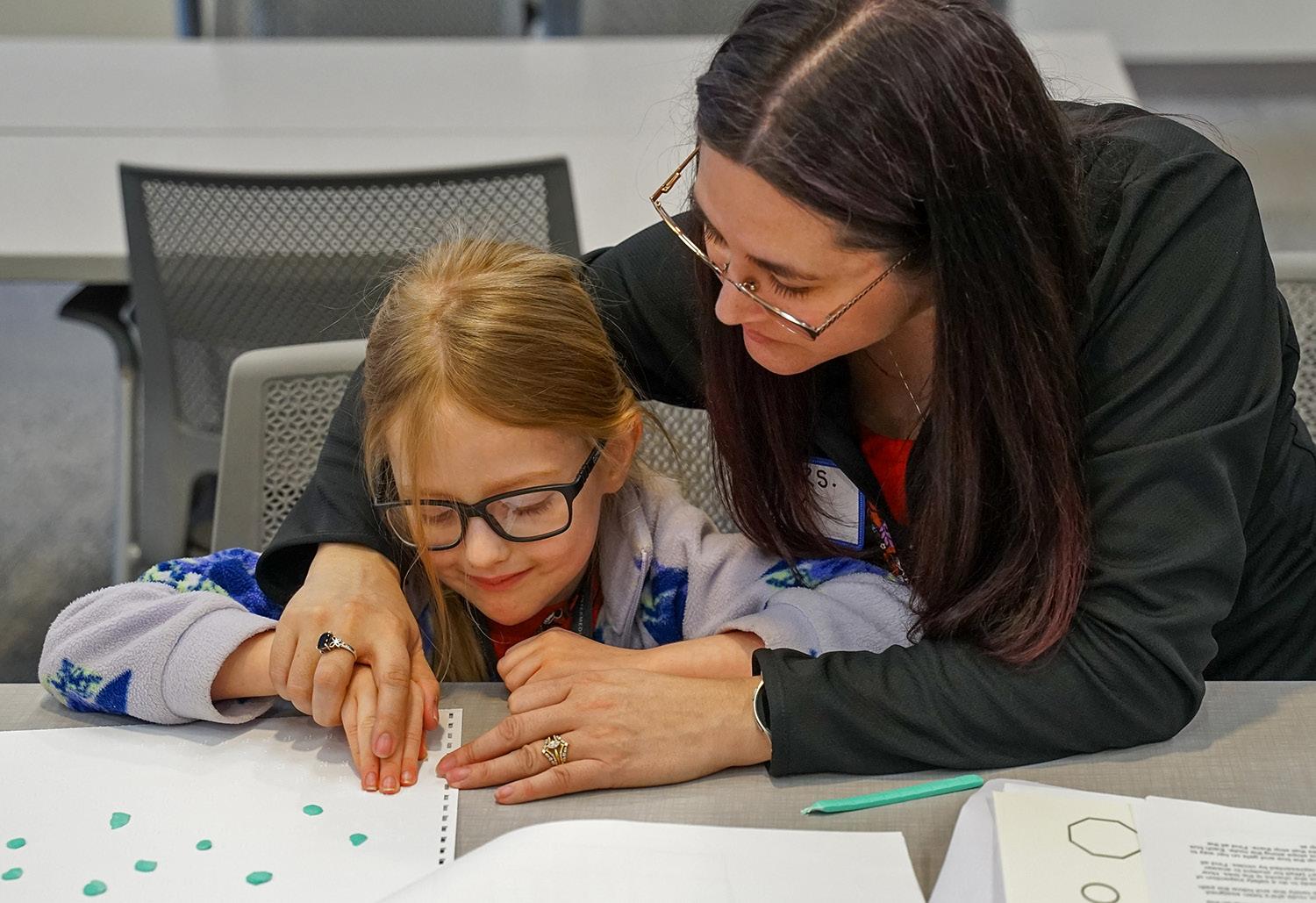
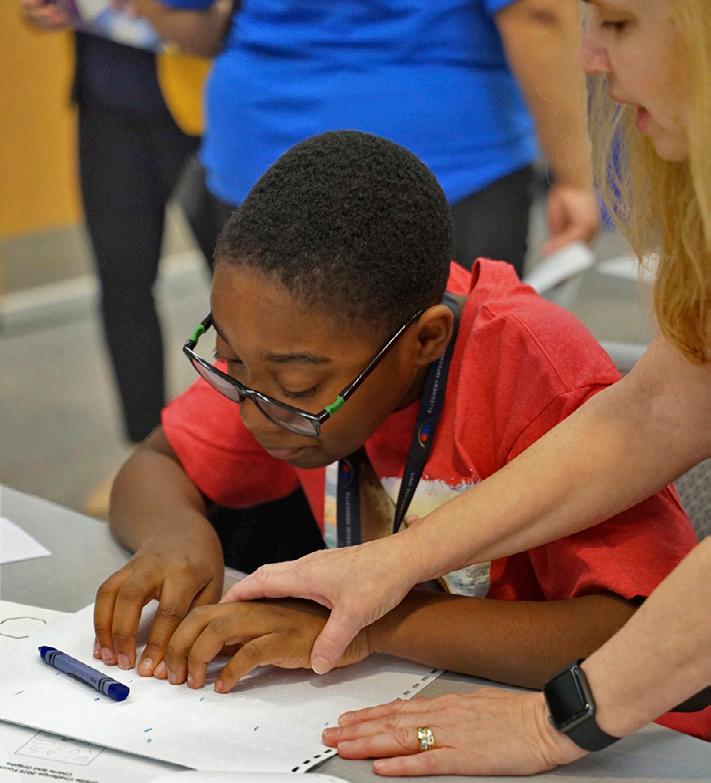
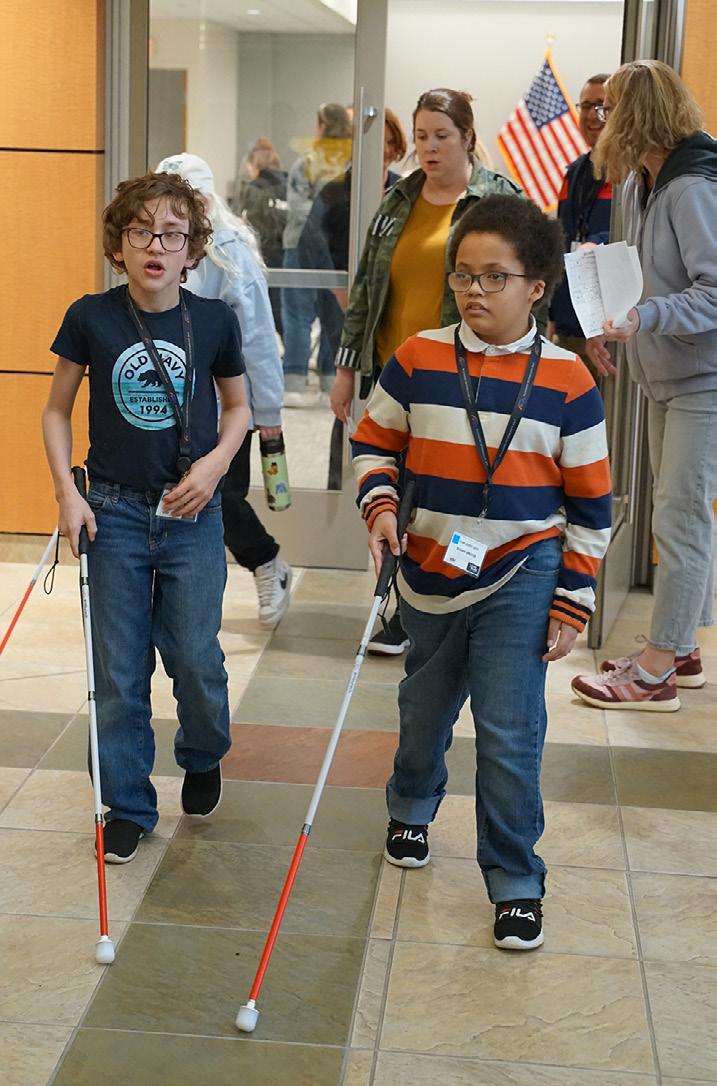
are the only brailler or white cane user. However, at the AIU this spring, they were among peers with shared experiences.
“They saw others using the same tools, overcoming the same challenges, and they made real connections,” said Patty D’Ascenzo, accessible instructional materials coordinator.
The AIU BVISP hosted these events for the first time this year, thanks to the initiative of a passionate team led by Kenderes. With support from the Braille Institute, the team brought the events to life with individualized materials, tactile games, and adaptive activities for all learners.
MAGAZINE
Connecting students and celebrating the Deaf culture
B ri D ge D is more than a magazine it connects the diverse Deaf and hard of hearing student population across Allegheny County. The digital publication is a collection of stories told by students and curated by the AIU Deaf and Hard of Hearing Support Program. Since 2023, Mindy Robbins, teacher of the Deaf and Hard of Hearing, has led the project to encourage dialogue and celebrate the richness of Deaf culture.
“Our students share a unique experience, shaped by a shared language, culture, and history,” Robbins said. “Yet, in most cases, they are the only Deaf or hard of hearing person in their family and school. That can be incredibly isolating.”
The AIU Deaf and Hard of Hearing Support Program recognizes the importance of creating a space for students to share their stories. Bridged is a way to spotlight students’ voices while fostering skills like communication, collaboration, and digital literacy.
Recent issues of the magazine have explored themes of representation and influence. In one article, students shared examples of representation in entertainment and society, emphasizing the importance of seeing their own experiences portrayed with accuracy and respect. Another series featured inspiring messages from an author, a musician, and a visual poet. Through written words, photographs, illustrations, and videos translated into American Sign Language, these students are encouraged to be more than storytellers—they are empowered to be changemakers.
Scan or click to view recent issue.

go.aiu3.net/TJo5i
Starting at home: How the AIU supports fathers
B y s am k ul P
Even if it’s just to provide an ear to listen, or to know that there’s someone else who understands their problems, sometimes that’s enough to make it through.”
t yrone F isher F atherhoo D F acilitator
and families
F or young learners , education doesn’t stop at the school bell. A nurturing home environment—especially one with engaged fathers and male role models—can be just as critical to a child’s development. Acknowledging this, the AIU promotes Fatherhood Initiatives that empower fathers and male caretakers to become strong, supportive figures in their children’s lives.
Operating under the AIU’s Early Childhood, Family, & Community Services (ECFCS) division, Fatherhood Initiatives help fathers overcome social and economic obstacles. The initiatives meet fathers where they are and connect them with the AIU’s network of family centers located across Allegheny County.
One initiative, the 365 Dads program, introduces fathers to a team of facilitators to help them find stability and empowerment. The program connects dads to foundational resources like job preparation and adult education, while providing evidence-based mentoring on topics like socialization, mental health, and parenting. Over the past three years, 365 Dads has served 245 fathers with children ages 0 to 5, reaching more than 550 children.
Often the hardest part for fathers looking for help is knowing where to start. Many dads have experienced setbacks such as poverty, homelessness, or incarceration.
“I was in prison for 26 years,” said Tayo, one of many fathers supported by 365 Dads. “When I got out, I was homeless. 365 Dads believed in me. They trusted me and gave me hope that I didn’t have before.”
365 Dads acts as a lifeline to all dads, regardless of background. Fathers are able to find community with members who have similar lived experiences and discover a space to safely discuss one’s struggles and hardships.
“Even if it’s just to provide an ear to listen, or to know that there’s someone else who understands their problems, sometimes that’s enough to make it through,” said Tyrone Fisher, Fatherhood Facilitator for 365 Dads. “Whatever problems they face, we hit it head on.”

To amplify its impact beyond individual programs, the AIU partners with the Fathers Collaborative Council of Western Pennsylvania (FCCWPA), a network of organizations that support the growth and stability of programs like 365 Dads. The FCCWPA’s member agencies share resources, expertise, and influence to engage with fathers across the region. The council includes groups such as mental health clinics, legal services, housing assistance facilities, and others dedicated to providing fathers and their families with the resources needed to thrive. The council’s broad reach also strengthens community support— the FCCWPA brings fathers together through community events like the annual Father-Daughter Dance, Father’s Day Cookout, and the Fatherhood Engagement Conference.

The FCCWPA’s members advocate for fathers at a policy level as well. Community leaders, experts, and everyday fathers in the FCCWPA organize to confront larger issues that face struggling dads in Allegheny County. The council’s advocacy committee trains members to contact local representatives, attend legislative meetings, and understand the importance of representing fathers and their families.
“Community organization empowers people to fight for what they need,” said Dr. Wendy Smith, ECFCS director and chair of the FCCWPA Advocacy Committee. “The Fathers Collaborative Council gives fathers a voice and shows them just how impactful their voices can be.”
Through their efforts, advocates from the FCCWPA have established the council as an expert on fatherhood. Their partnership has grown to include support from local officials like state Senators Nick Pisciottano, Wayne Fontana, and Devlin Robinson. The council’s resources help fathers connect nationwide—FCCWPA members even traveled to the International Families and Fathers Conference in Los Angeles earlier this year to share insights on key fatherhood topics.
The AIU is committed to empowering fathers and strengthening families at every level — from one-on-one mentorship to countywide collaboration. Through programs like 365 Dads and partnerships with organizations like the FCCWPA, the AIU ensures fathers have the tools, support, and community they need to thrive. By investing in fathers, the AIU is helping to build more resilient communities and a brighter future for the next generation.
4pmPhoto | Deposit Photos

Photo: Courtesy of 365 Dads
Safer schools start with strong partnerships between educators and first responders
Protecting students and staff is a top priority for both school administrators and first responders, and it’s up to both groups to use their expertise to proactively create safer school environments, according to Aaron Skrbin, the AIU’s director of Safety and Security.
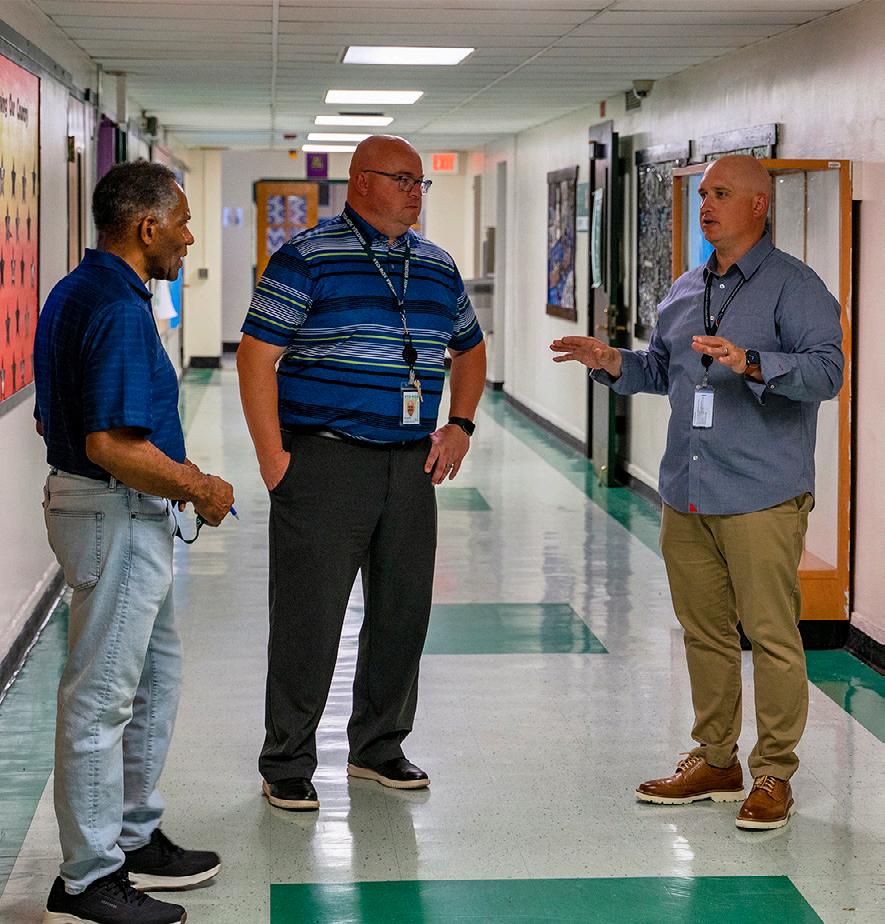
One of the first steps in planning is to define and understand expectations. “Everyone involved in school safety wants the same thing,” Skrbin said. “But administrators and first responders sometimes speak different operational languages. Building trust and communication is how we bridge that gap.”
For schools, emergencies raise urgent questions: Are all students accounted for? Are they safe? How will the district communicate with parents, the community, and the school board? Can basic needs be met, and how will students get home or return to school the next day?
Meanwhile, first responders are working to control the scene, ensure safety, and manage resources—often coordinating with multiple agencies in real time.
The key to smoother cooperation is building relationships before a crisis hits. Schools that don’t have a school resource officer or dedicated police officer should consider designating a primary point of contact within local law enforcement.
“Simple things like inviting officers to walk through the building or observe a drill can go a long way,” Skrbin said. “It’s about creating familiarity. When both sides know each other and know what to expect, everything goes more smoothly in a real emergency.”
In rural districts, where help may be farther away, it’s especially important to keep updated contact information, check in virtually, and develop realistic emergency plans tailored to the school’s resources.
Skrbin recommends establishing regular meetings between school and emergency leadership, inviting first responders to participate in drills, and creating a shared calendar of training opportunities.
“Safety isn’t a one-time checklist — it’s a relationship,” Skrbin said. “The more we invest in it, the better things will operate when it counts.”
“ Safety isn’t a one-time checklist—it’s a relationship. The more we invest in it, the better things will operate when it counts.” a aron s krbin
Long-term efforts might include joint exercises and written plans that are reviewed annually or after incidents. Including both school leadership and first responders in safety conversations and routine drills, like fire, lockdown, or weather events, ensures that everyone understands their roles and expectations.
Skrbin added that planning and documenting all procedures help sustain these safety partnerships over time, even as personnel change.
“At the end of the day, safety is a team effort,” Skrbin said. “When schools and first responders plan together, train together, and trust each other, we’re not just responding to emergencies — we’re preventing them.”
Powering Possibility
Innovation at the intersection of tech and teaching

In the pages that follow, we shift our focus to a central theme shaping schools across our region: the growing overlap between technology and education. From artificial intelligence in the classroom to flexible online learning models and modernized district systems, educators are navigating a fast-changing digital landscape—and leading with intention.
Through the AI Fellows program, educators and administrators are taking the lead on understanding and applying AI in ways that promote equity, creativity, and student engagement. Districts are developing policies and professional development strategies that balance innovation with responsibility, while teachers experiment with tools that can personalize learning and streamline routine tasks. At the same time, cyber academies are offering new models for flexible learning, online platforms are modernizing hiring practices, and backend systems are transforming how schools serve their staff.
Together, these stories illustrate a pivotal moment in K–12 education— one defined not just by rapid change, but by a shared commitment to using technology thoughtfully and deliberately to support students and communities.
Empowered educators, engaged learners: The AIU’s vision for AI in schools
B y D aveen r ae k urutz & s am k ul P
“This is a huge opportunity,” said Rachel McVeagh, Instructional Innovation Coordinator of transformED, a program of the Allegheny Intermediate Unit that focuses on starting, scaling, and sustaining transformational practices in our schools.
“We can now access technology that can support students in ways we’ve always dreamed of—from providing instant feedback before they submit work to personalizing their learning,” McVeagh said. “AI allows students and their teachers to ask bigger questions and explore content more deeply.”
ai is here , an D it P resents a huge Para D igm - shi F t F or teaching an D learning .
Through the AI Fellows program, created by the AIU and transformED, educators from across Southwestern Pennsylvania have resources to navigate the world of artificial intelligence. Designed to empower educators to lead their districts in AI integration, the AIU AI Fellows program was funded by the Henry L. Hillman Foundation and enabled educators and administrators from 20 districts to spend one year intensively learning about the innovative, equitable, and ethical use of AI. The goal: create a network of informed educational leaders who can serve as a resource to districts across the region.
“Every district needs a strong AI leader — someone who is knowledgeable about the technology, is willing to explore how it will impact teaching and learning, and who is thinking carefully yet expansively about how it can lead to true transformation in our schools,” McVeagh said.
The program paired educators with varying backgrounds and grade levels with administrators from their district to bring AI to their schools. In total, 19 suburban Allegheny County districts and one Washington County district participated in the program, which included five professional development sessions and funding for substitute teachers, AI tools, and attendance to the 2025 SXSW EDU Conference in Austin, Texas. The fellows then conducted action research projects focused on topics related to policy, instructional strategies, and professional development.
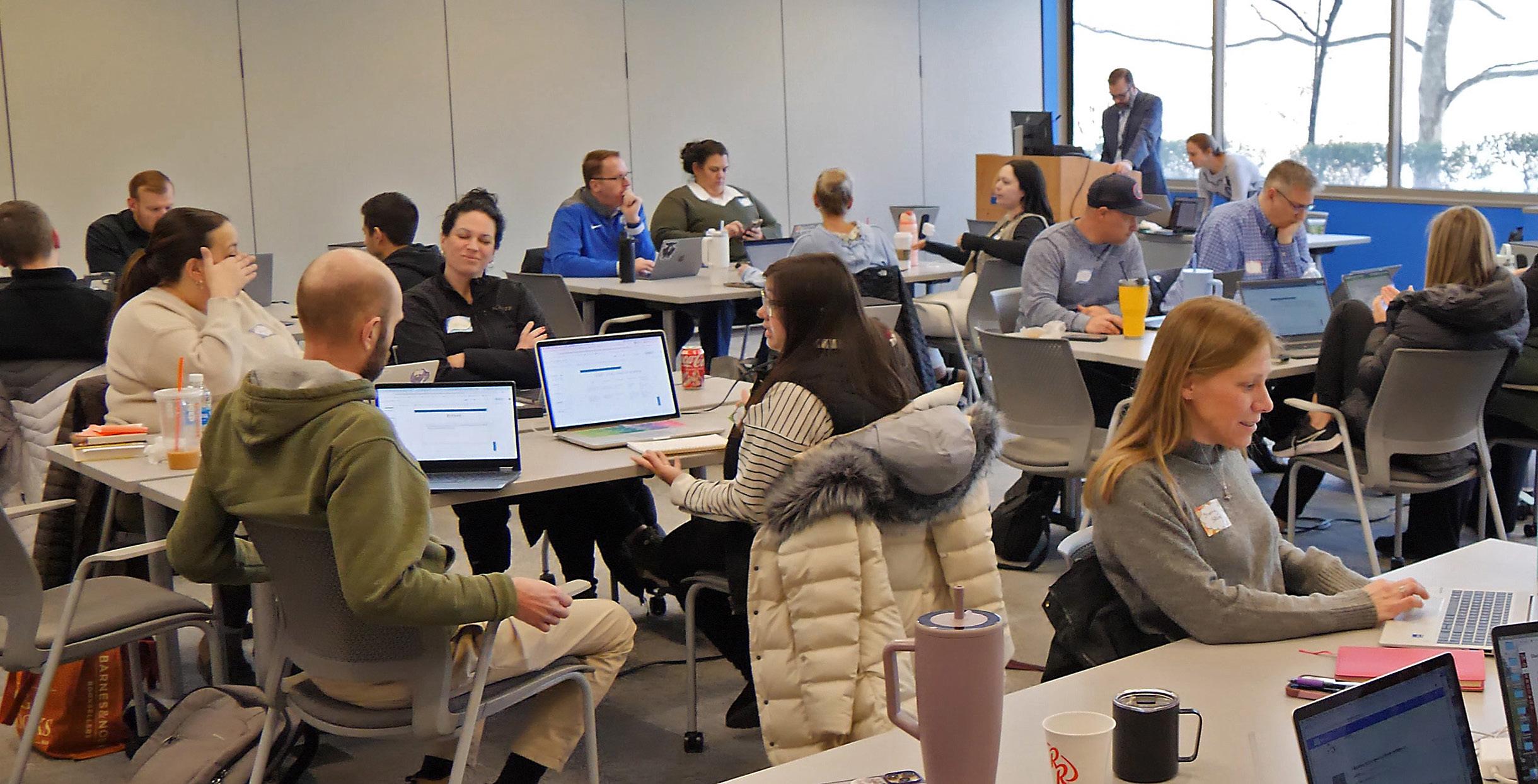
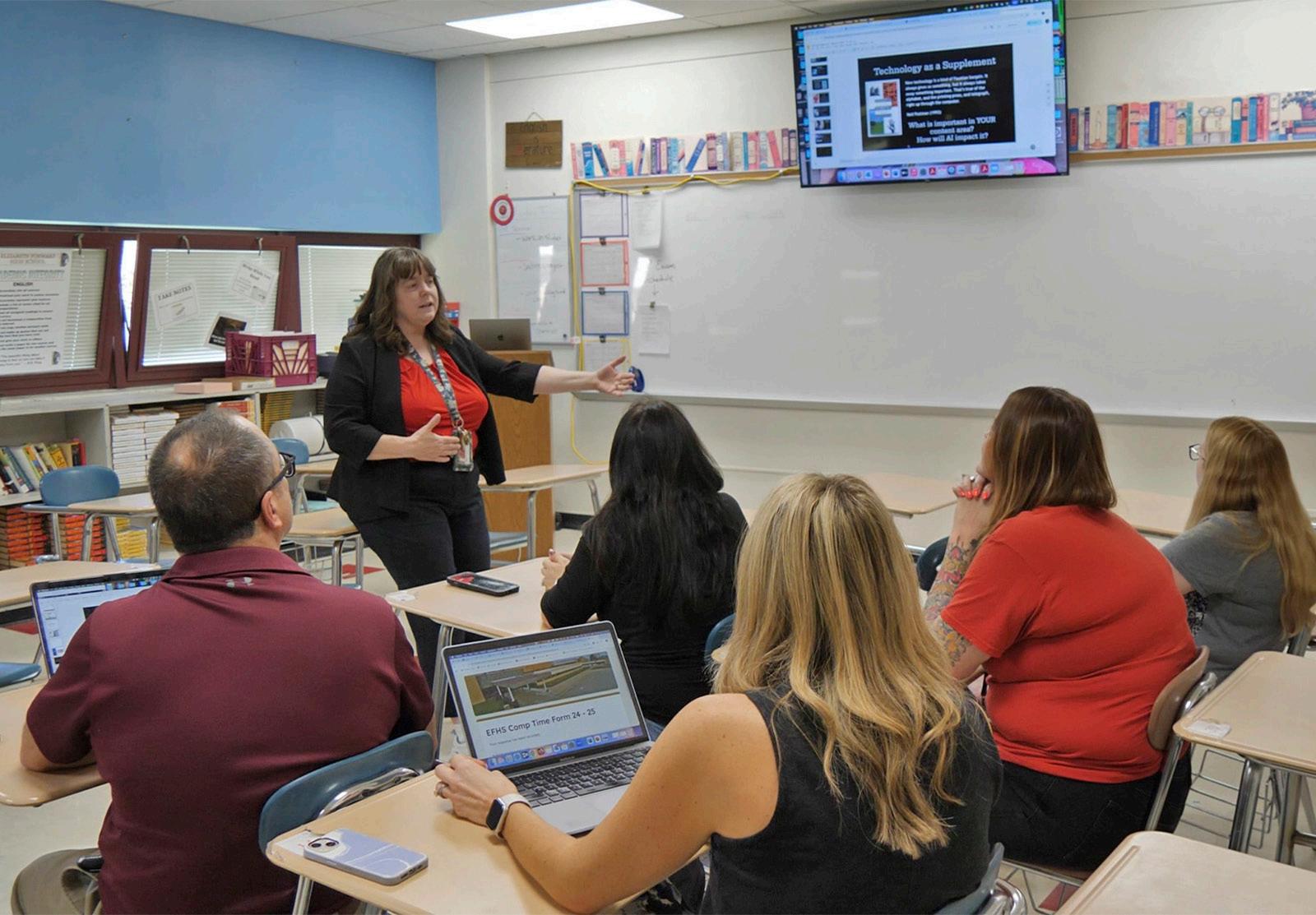
“Building the capacity of individuals who can lead the charge in our AI-driven world is a great benefit to their districts,” McVeagh said. “The program energized these individuals, and they are excited to share all that they have learned.”
The cohort included educators in various stages of their careers who teach subjects ranging from social studies to computer science at elementary, middle, and high schools in small and large districts.
Cofacilitator Brian Stamford, Ed.D., program director for Accountability and Innovative Practices at the AIU, said having a wide variety of teachers involved in the program expands equity of opportunity — so students of all ages and all experiences can learn about the latest technology tools. Representation plays a key role in encouraging more teachers to explore the implementation of AI. “By having a diverse range in terms of background and experience,” Dr. Stamford said, “I feel like everyone will see someone like them, which will help with buy-in.”
One fellow, Shannon Roos, brought her knowledge as an English teacher and instructional coach to the fellowship from Hampton High School. “I’m working with our academic support teachers to integrate Class Companion and SchoolAI for individual skills practice and feedback,” she said. “This is just such a good opportunity to see what other schools in the district or what other schools in the area are doing, and then also to build things together.”
Another fellow, Amanda Sappie from Cornell High School, is seeking to use AI to help make science writing more engaging for her middle school students. “Science writing is something that’s a little bit scary, especially for middle school. We’re using different AI tools that give writing feedback in real time,” she said. She conducted her research in her eighth grade science classes, where she added AI tools to one chapter, comparing student growth with and without the technology.
As AI continues to evolve and grow, educators must be prepared to thoughtfully integrate the technology into the classroom, Dr. Stamford said. AIU Executive Director Robert Scherrer, Ed.D., emphasized the broader impact: “The AI Fellows program is key to preparing students for a future fueled by AI.”
“ D r . r o B ert s cherrer The AI Fellows program is critical because it gives educators the time, tools, and community they need to deeply explore the role of AI in learning.”
Photos: Matt Brosey
This program provided a safe environment for educators to learn and experiment with new things that they might otherwise have felt more hesitant to try.”
r achel m c v eagh
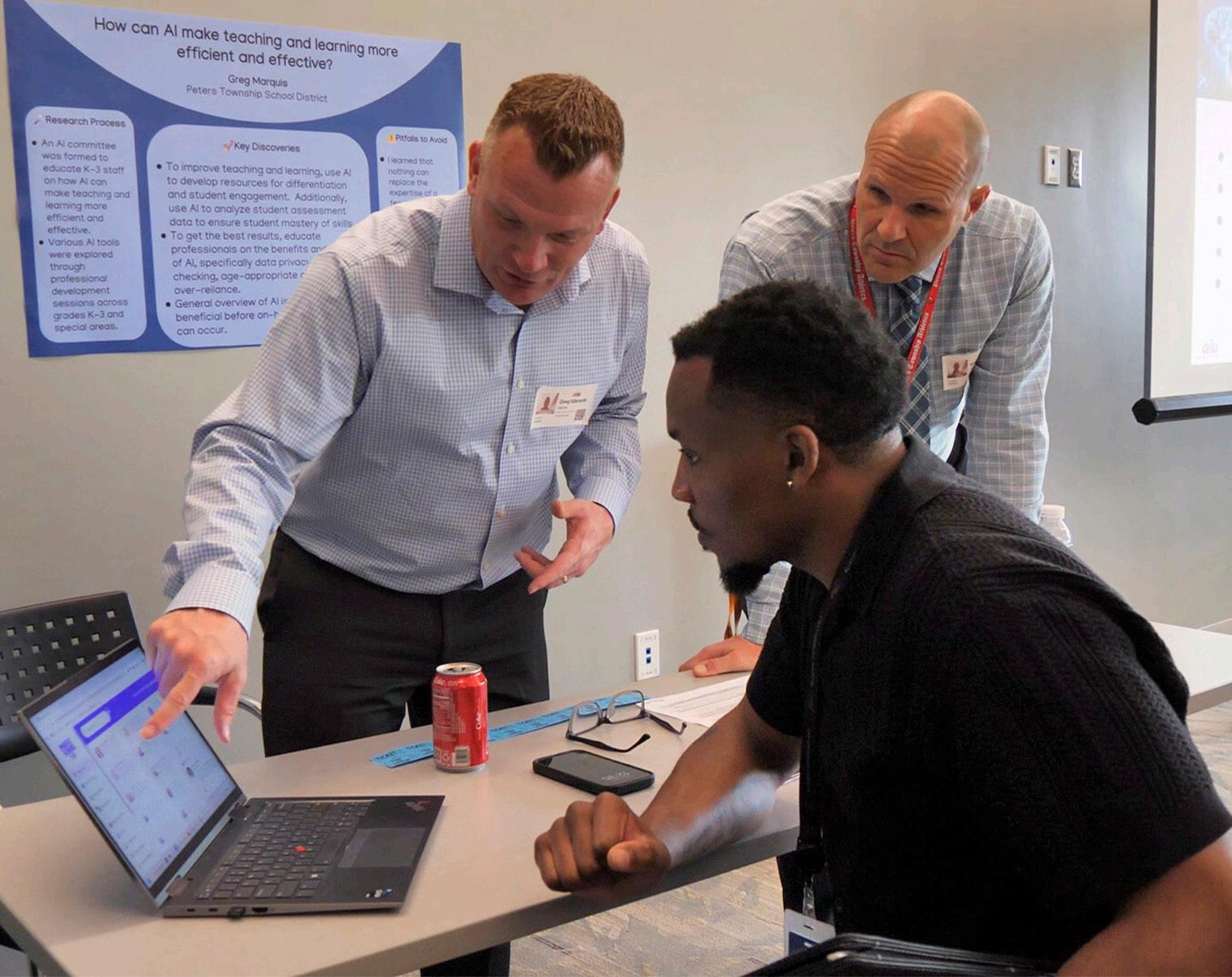
“The AI Fellows program is critical because it gives educators the time, tools, and community they need to deeply explore the role of AI in learning,” Dr. Scherrer said. “By focusing on action research and real-world practice, the AI Fellows program ensures that AI integration is thoughtful, strategic, and student-centered.”
To help bring each fellows’ ideas to life, participating districts were required to commit an administrator to the program. Dr. Stamford noted that this level of support was essential, as it gave teachers the freedom to experiment with AI tools and take risks.
“This program provided a safe environment for educators to learn and experiment with new things that they might otherwise have felt more hesitant to try,” McVeagh said. “We built a true community of learners in which educators supported one another by sharing interesting findings and successful strategies.” The AI Fellows program isn’t just about implementing new teaching strategies that incorporate AI. Shaping district policy to guide that implementation must be factored in, as well.

“During a time of such rapid development, clear guidance enables educators to safely explore using new technology in their schools,” McVeagh said. “As districts increasingly adopt guidelines and policy surrounding AI, we will begin to see a ripple effect of people having the confidence to try using AI in responsible ways. Educators will feel more confident to try using AI for teaching and learning because they will begin to have a better understanding of what is deemed acceptable and what is not within their school setting. Similarly, students will learn from their teachers, who will be sharing those guidelines and modeling this responsible use.”
Some question whether AI has a place in grading and evaluation. Roos found that AI was more helpful for skills practice or formative assessment rather than for offloading tasks like grading. “I don’t think it’s quite there yet, but I think it’s great for getting them that feedback and working
Photos: Matt Brosey and Rachel McVeagh
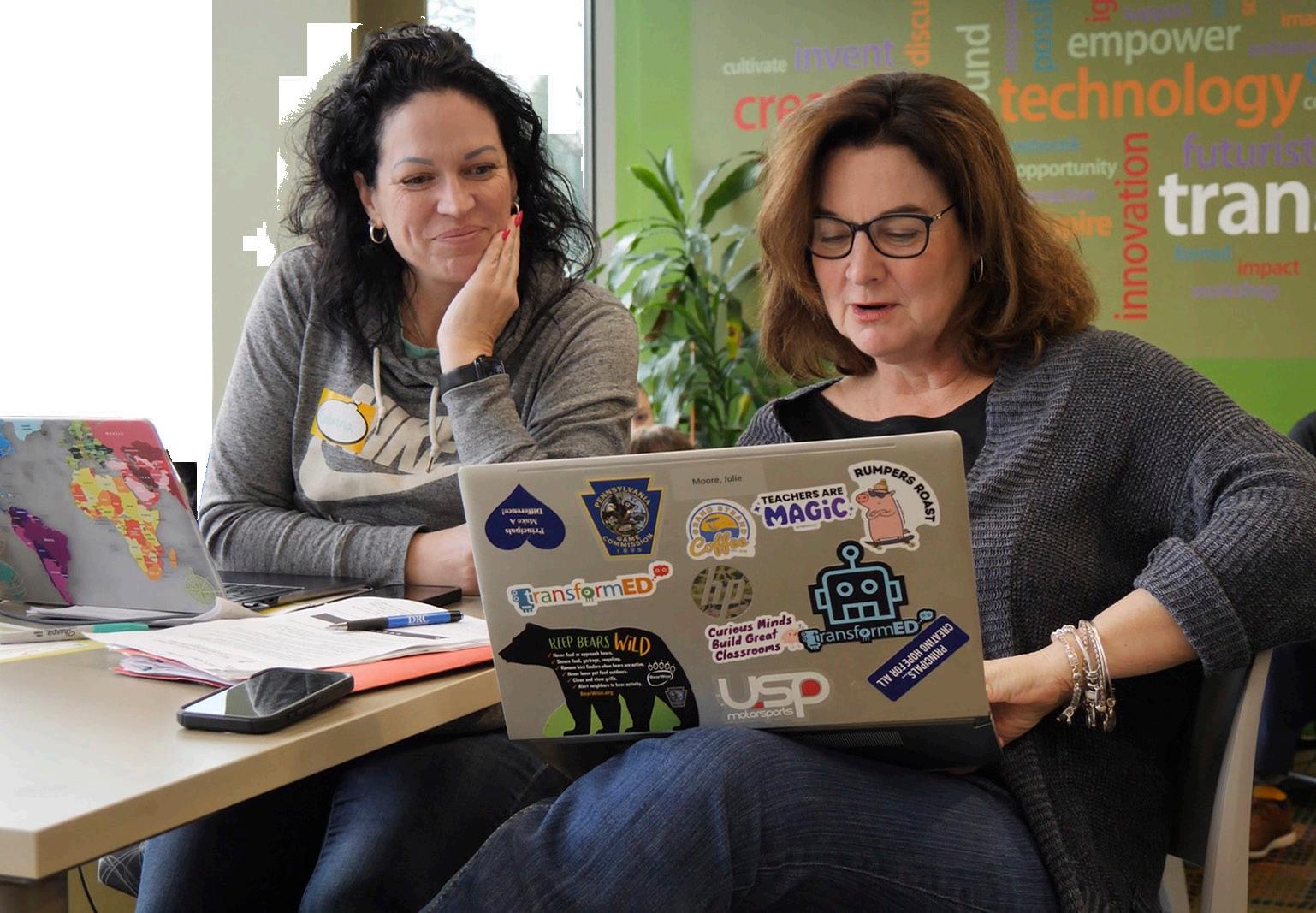
through those initial steps with them,” she said. “It’s just such a complex thing to tackle when there’s not a curriculum in place. Being able to work across districts is important in figuring out ‘what does this look like in the hands of students? How do we help them use it effectively?’”
Teachers are also finding that many of their students are eager to use the technology. “I was most surprised that the kids are not afraid of AI whatsoever,” Sappie said. “They are much more willing to use the tools than I expected.”
Concerns regarding the ethical use of AI in education are abundant. As with any new tool, the limits and potential misuse of AI are important to consider during implementation. “I hope that AI fellows leave the program much better equipped to begin teaching their students how to be ethical and responsible users of the technology, preparing them for the world of today, outside of K-12,” Dr. Stamford said. Their collective expertise will be a resource for other teachers in Allegheny County. As more school districts implement the technology, the AI fellows and their research can be referenced as a guide throughout the process.
“Each fellow’s work is something that those in other districts can learn from, which is what makes it so valuable,” McVeagh said.
“The AI Fellows program can serve as a regional and national model for AI integration,” Dr. Stamford said. “A regional education agency identified early adopters of AI, brought them together, and partnered with subject-level experts and private organizations to dig into best practices. That model is one that can be replicated nationwide.”
D r . B rian s tam F or D “
I hope that AI Fellows leave the program much better equipped to begin teaching their students how to be ethical and responsible users of the technology.”

Thoughtful Deliberate &
School leaders chart next steps for AI in K–12
After months of hands-on research, districts across Western Pennsylvania are shifting their focus from exploration to execution.
Over the first half of 2025, 20 school districts participated in the AI Fellows program, engaging educators in action research to examine how artificial intelligence can be introduced ethically, equitably, and effectively into classrooms. Now, with support from administrators, those ideas are being shaped into policies, pilot programs, and long-term plans for sustainable implementation.
As AI continues to reshape industries, workforce demands, and even the nature of information itself, school leaders are navigating a complex landscape—balancing innovation with caution as they consider how, when, and where to introduce these tools into the classroom.
At Elizabeth Forward High School, Principal Kelli Garlow said relevance has been key to engaging teachers. “ Teachers are more likely to use AI with their students when the tools are specific to their content area,” she said. Her team required teachers to design AI-integrated lessons based on professional development sessions, with plans to observe and evaluate the lessons next school year. The reflections gathered from that process will help shape the district’s next phase of implementation.
Other districts, such as Quaker Valley and Hampton Township, are working to formalize their learning by integrating it into district policies, training, and tools.
“We need to be really thoughtful and deliberate in how we implement AI in schools,” said Brett Slezak, Director of Innovation at Quaker Valley.
Hampton’s assistant superintendent, Jackie Removcik, said the district is
developing its own AI guidebook and asynchronous training modules tailored to different grade levels. “It will be difficult to stay on topic… when this landscape is changing so rapidly,” she said.
Recognizing the wide range of teacher readiness, districts are working to meet educators where they are. At South Fayette Township School District, Director of Curriculum Cristine Wagner-Deitch described a noticeable divide between early adopters and educators more hesitant to experiment. To bridge that gap, the district is developing clearer AI guidelines and launching educator study groups. Other districts, including Clairton City, are expanding professional development to support broader instructional integration across all subject areas.
Some districts are exploring how AI can support early academic interventions. Eloise Milligan, former academic services coordinator at Shaler Area, outlined a multi-phase plan to pilot AI tools for early math intervention in grades K–2. But she also identified barriers— including young students’ limited digital fluency, infrastructure gaps, and the need for a shared district vision.
School leaders agree that success will depend on ongoing professional learning, careful tool selection, and sustainable models for classroom use.
Across districts, equity and ethics emerged as consistent priorities. At Cornell, Director of Technology & Instructional Innovation Kris Hupp emphasized the importance of direct student instruction in AI literacy, while others underscored the need to model ethical practices.
At Montour School District, those priorities are already shaping classroom conversations. Social studies teacher Nathan Galiyas found that when students discussed ethical considerations, they became more reflective about how they used AI tools. Montour plans to expand AI use across disciplines and introduce new course offerings shaped by the technology, said Assistant Superintendent Eric Sparkenbaugh —further underscoring the need for intentional, responsible use.
Data privacy and regulatory concerns also loom large. Under the federal Children’s Online Privacy Protection Act (COPPA), for example, students under age 13 require parental consent before digital platforms can collect personal data.
School leaders agreed success depends on owning professional learning, careful tool selection, and sustainable models for classrooms. Thoughtful and deliberate implementation isn’t just a goal — it’s the foundation for responsible innovation.

Machine learning Finding AI’s place in education
B y s am k ul P
Artificial intelligence is impacting all aspects of education, and users are discovering new applications every day. Students have been especially quick to adopt AI—using it to generate essays, solve math problems, and complete assignments with minimal effort. While AI can be a powerful learning tool, improper use raises concerns about academic integrity and highlights the need for ethical and responsible use in schools. To address this concern, educators must not only understand how AI works but also know how to guide students in using it thoughtfully and appropriately.
During the spring of 2025, teachers in the AIU’s AI Fellows Program explored practical applications of AI in their own schools and classrooms. In response to challenges with student misuse, the fellows created AI-centered professional development training to help colleagues better understand AI’s capabilities and limitations. Kevin Hughes, a fellow and computer science teacher at Deer Lakes Middle School, took this a step further by organizing AI Literacy Day to engage students directly. His goal was to shift the conversation from misuse to meaningful use by helping students explore AI in different academic contexts.
Hughes surveyed 192 students and discovered that 88% were using AI and 34.5% admitted to relying on it for homework answers. These insights helped shape the structure of AI Literacy Day, which integrated discussions and activities into every class period.
“Students went through a full regular school day. In each period, they had a conversation about AI and how it relates to different subjects and then did an activity utilizing AI within that subject,” Hughes said.
A survey of 192 students at Deer Lakes Middle School revealed 88% were using AI and 34.5% relied on it for homework answers.
For example, in science class, students used AI to deepen their understanding of lesson-specific topics through guided prompts. In Language Arts, they critically evaluated AI-generated book summaries for accuracy. Each activity encouraged students to think more deeply about how AI can support— not replace—learning.
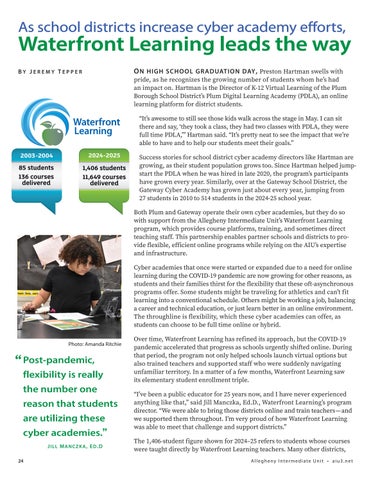
As school districts increase cyber academy efforts,
Waterfront Learning leads the way
B y J eremy t e PP er






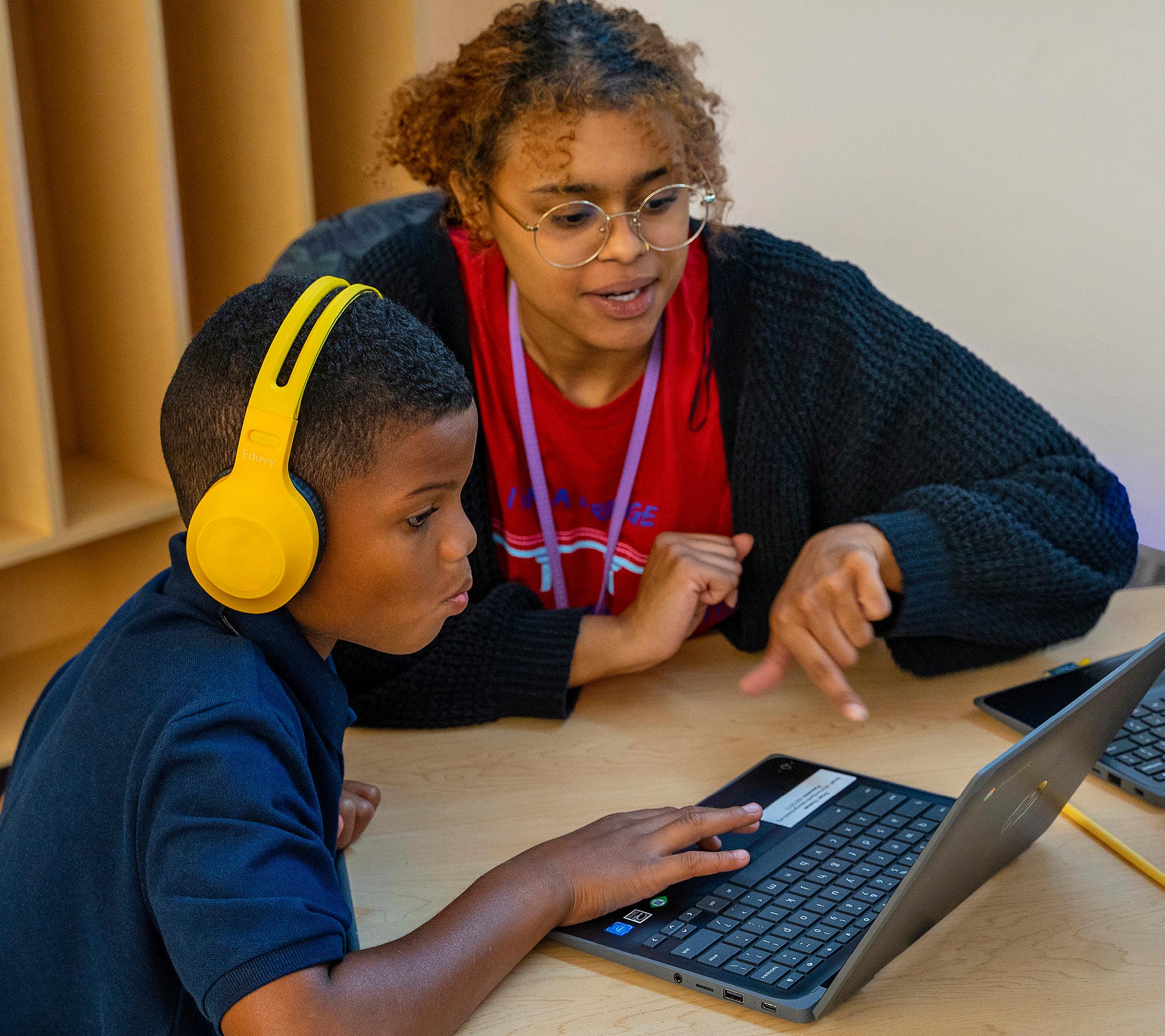
Photo: Amanda Ritchie
flexibility is really the number one reason that students are utilizing these cyber academies.” J ill m anczka , e D .D
o n high school gra D uation D ay , Preston Hartman swells with pride, as he recognizes the growing number of students whom he’s had an impact on. Hartman is the Director of K-12 Virtual Learning of the Plum Borough School District’s Plum Digital Learning Academy (PDLA), an online learning platform for district students.
“It’s awesome to still see those kids walk across the stage in May. I can sit there and say, ‘they took a class, they had two classes with PDLA, they were full time PDLA,’” Hartman said. “It’s pretty neat to see the impact that we’re able to have and to help our students meet their goals.”
Success stories for school district cyber academy directors like Hartman are growing, as their student population grows too. Since Hartman helped jumpstart the PDLA when he was hired in late 2020, the program’s participants have grown every year. Similarly, over at the Gateway School District, the Gateway Cyber Academy has grown just about every year, jumping from 27 students in 2010 to 514 students in the 2024-25 school year.
Both Plum and Gateway operate their own cyber academies, but they do so with support from the Allegheny Intermediate Unit’s Waterfront Learning program, which provides course platforms, training, and sometimes direct teaching staff. This partnership enables partner schools and districts to provide flexible, efficient online programs while relying on the AIU’s expertise and infrastructure.
Cyber academies that once were started or expanded due to a need for online learning during the COVID-19 pandemic are now growing for other reasons, as students and their families thirst for the flexibility that these oft-asynchronous programs offer. Some students might be traveling for athletics and can’t fit learning into a conventional schedule. Others might be working a job, balancing a career and technical education, or just learn better in an online environment. The throughline is flexibility, which these cyber academies can offer, as students can choose to be full time online or hybrid.
Over time, Waterfront Learning has refined its approach, but the COVID-19 pandemic accelerated that progress as schools urgently shifted online. During that period, the program not only helped schools launch virtual options but also trained teachers and supported staff who were suddenly navigating unfamiliar territory. In a matter of a few months, Waterfront Learning saw its elementary student enrollment triple.
“I’ve been a public educator for 25 years now, and I have never experienced anything like that,” said Jill Manczka, Ed.D., Waterfront Learning’s program director. “We were able to bring those districts online and train teachers—and we supported them throughout. I’m very proud of how Waterfront Learning was able to meet that challenge and support districts.”
The 1,406-student figure shown for 2024–25 refers to students whose courses were taught directly by Waterfront Learning teachers. Many other districts,

including Gateway, license Waterfront’s online course infrastructure but use their own faculty. Those students — such as the 514 enrolled at Gateway last year — are not included in the 1,406 count, meaning the program’s overall reach across 66 partner districts and schools, is much larger than the directteaching figure alone.
Growth of Waterfront Learning’s online education program
We don’t look at any student as a number. We really try to take the time to build relationships with parents and listen to all of their concerns to make sure we’re meeting the specific needs of their child.”

Enrollments
Students = Number of K-12 students
Photos: Amanda Ritchie
Photo: Jeremy Tepper
“Post-pandemic, flexibility is really the number one reason that students are utilizing these cyber academies,” Dr. Manczka added. “And districts want to support their learners. They want to be able to keep them in the school community and offer them as many things as they can.”

Onboarding starts with a discovery meeting and follows a process where Dr. Manczka and her team identify needs and share learning platform options. School districts can mix and match these curated learning platforms, before Waterfront Learning eventually helps train staff, provide technological support, build a virtual learning handbook, and much more.
“The help and guidance from Jill and her team was phenomenal in helping us troubleshoot and learn how to really fine-tune our processes,” Hartman said. “That partnership has been pivotal in helping us reach our full potential and provide the best services possible to our community.”
Gateway and Plum run courses on learning platforms supported by Waterfront Learning, including Accelerate Education, Imagine Edgenuity, and Imagine EdgeEx. The classes are led by school district teachers and fully meet state requirements for graduation. Courses can go beyond normal core offerings and electives. Gateway Cyber Academy, for example, offers classes like Introduction to Coding and Small Business Entrepreneurship.
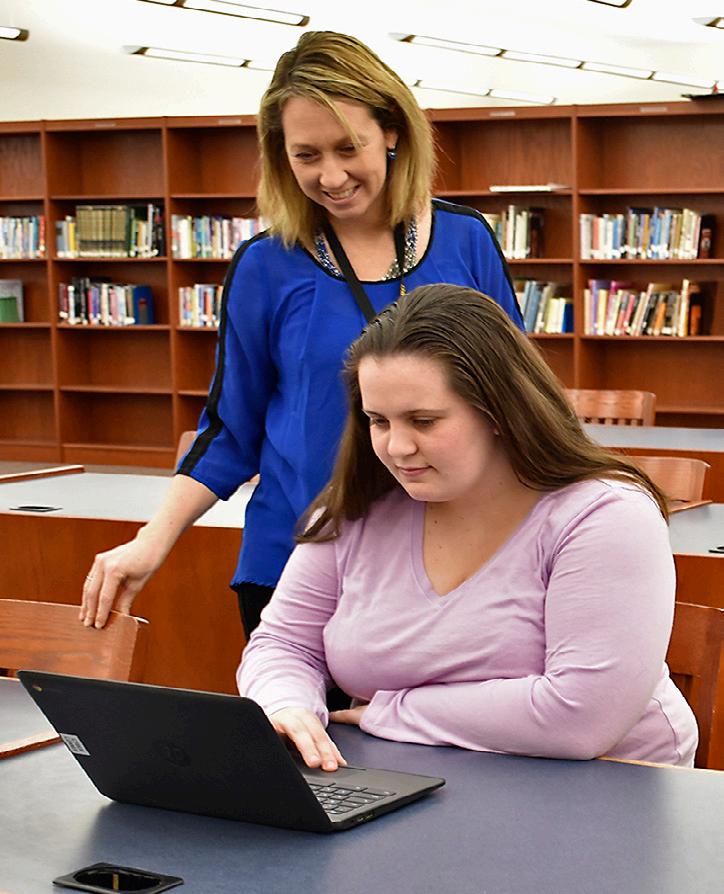
Each cyber academy is unique in its strengths. Gateway’s Cyber Academy, for example, thrives in its ability to adapt and consistently meet the needs of its students. Marci Klinger, Ph.D., and Regan Reeder, who both head the cyber academy, offer drop-in hours for families and students to stay in regular contact. “We don’t look at any student as a number. We really try to take the time to build relationships with parents and listen to all of their concerns to make sure we’re meeting the specific needs of their child,” said Dr. Klinger. “We genuinely care about each and every kid in this program and we want them to be successful.”
Hartman said Plum succeeds in keeping PDLA students connected to the school community through constant communication and invitations to participate in school activities and extracurriculars.
“You’re still a Plum student, so you still have access to all the resources and services here in the district,” Hartman said. “Our PDLA students aren’t in this separate little bubble of, well, they’re over here in this alternative education thing. We’ve really just integrated the PDLA program into who we are.”

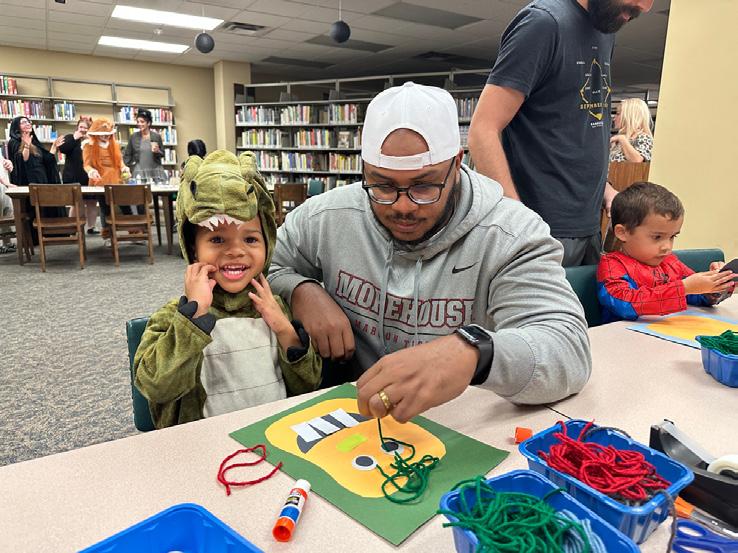



Photo: Amanda Ritchie

Jawanna Warren recognized for advancing age-inclusive communities
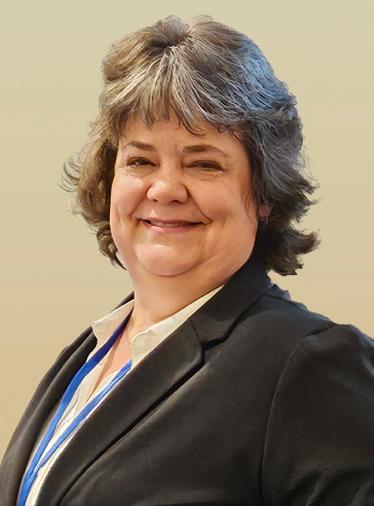
Jawanna Warren, senior site director of the Clairton Family Center, received the Age-Friendly Leadership Award from the Southwestern Pennsylvania Partnership for Aging (SWPPA) for her work to help to build more inclusive, respectful communities for people of all ages. Warren’s leadership embodies the mission of Age-Friendly Greater Pittsburgh—an initiative of the SWPPA and University of Pittsburgh School of Social Work.
Tracy Strachan honored for exceptional leadership in school health services
Tracy Strachan, manager of health for the AIU’s three special education schools, received the Regional School Nurse Administrator of Excellence Award from the Pennsylvania Association of School Nurses and Practitioners last spring. She was recognized for her exceptional leadership during a critical nursing shortage and for her efforts to strengthen health services, support her team, and promote equity and excellence for students and staff alike.
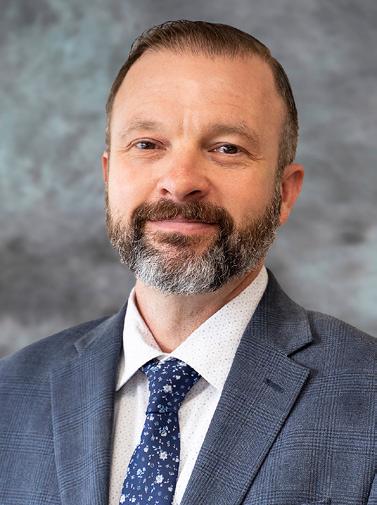
Dr. Brian Stamford earns PAIU award, Leads AI training nationally
At this year’s PAIU Conference, Brian Stamford, Ed.D., the AIU’s Director of Accountability & Innovative Practices, received the Gary L. Miller Distinguished Service Award, recognizing exceptional dedication and leadership among intermediate unit staff.
Dr. Stamford was also recently named a national lead trainer for the Building Capacity for Generative AI in K–12 Education initiative, a collaboration between the Consortium for School Networking and the Association of Educational Service Agencies. In this role, he will help guide districts— particularly those that are small or under-resourced—in assessing AI readiness and developing strategic implementation plans, further establishing the AIU as a leader in the K–12 AI space.
MarCom team earns top honors for video and print
The AIU’s Marketing & Strategic Communication team earned major accolades this year — three in-house video productions received Telly Awards, and the Fall 2024 issue of AIU Connections earned the PenSPRA Award of Excellence in Publications.
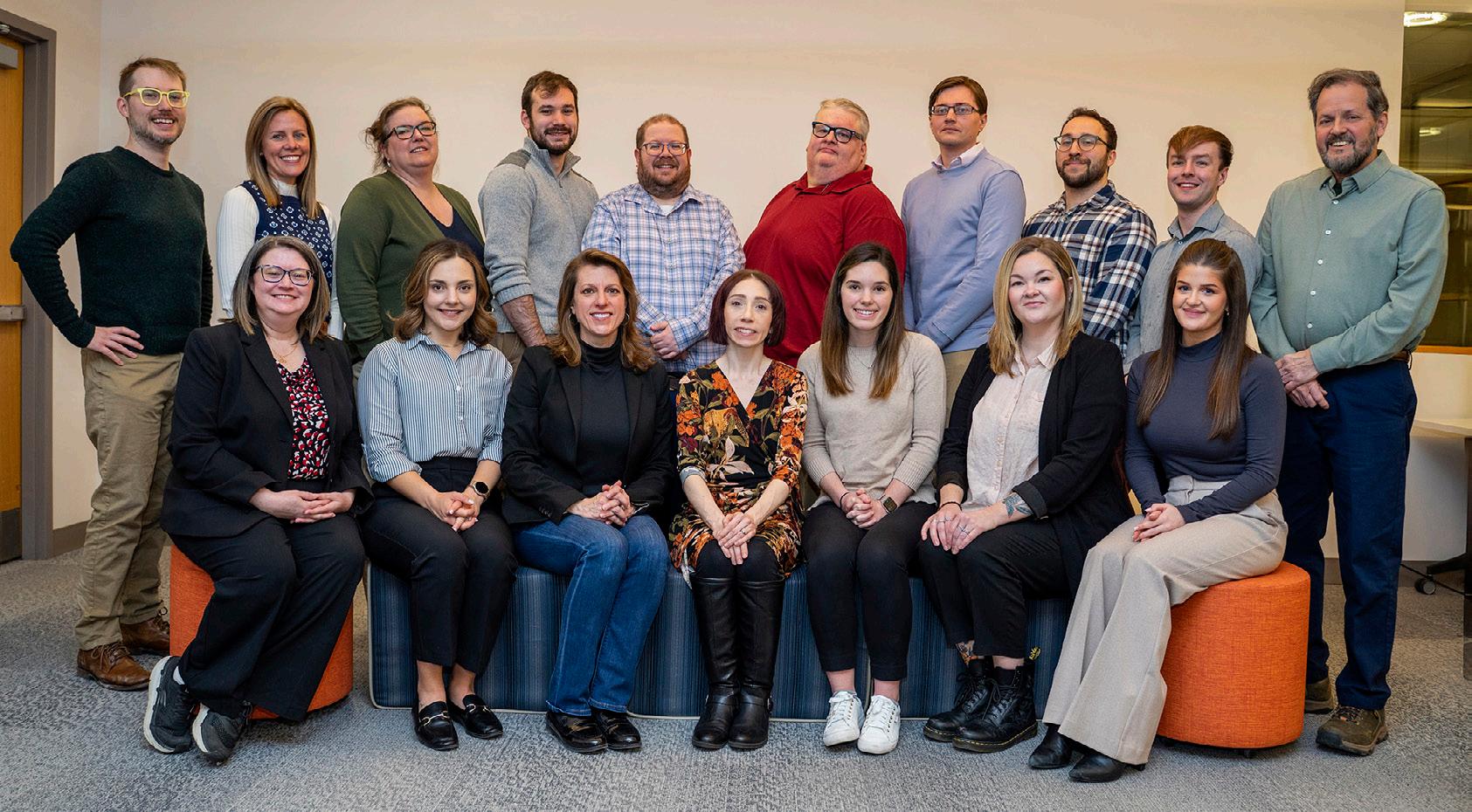
AIU honors employees with annual awards
B y W ill D e s hong
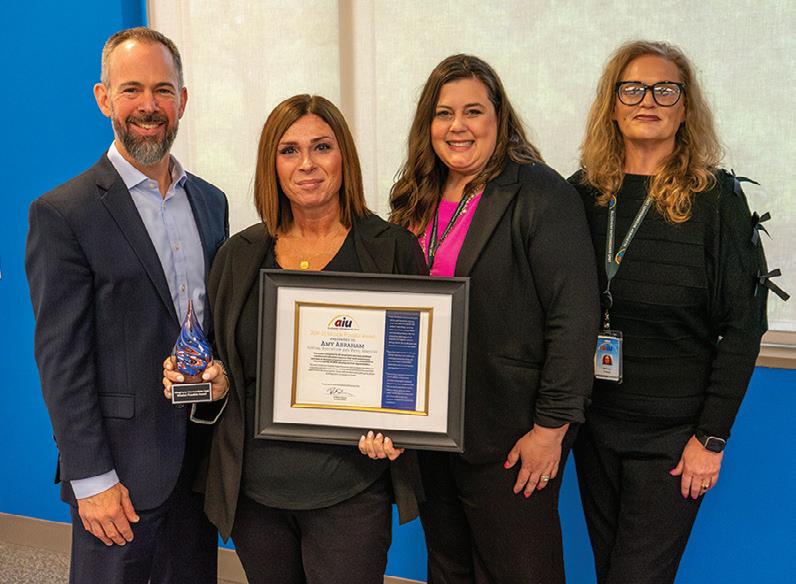
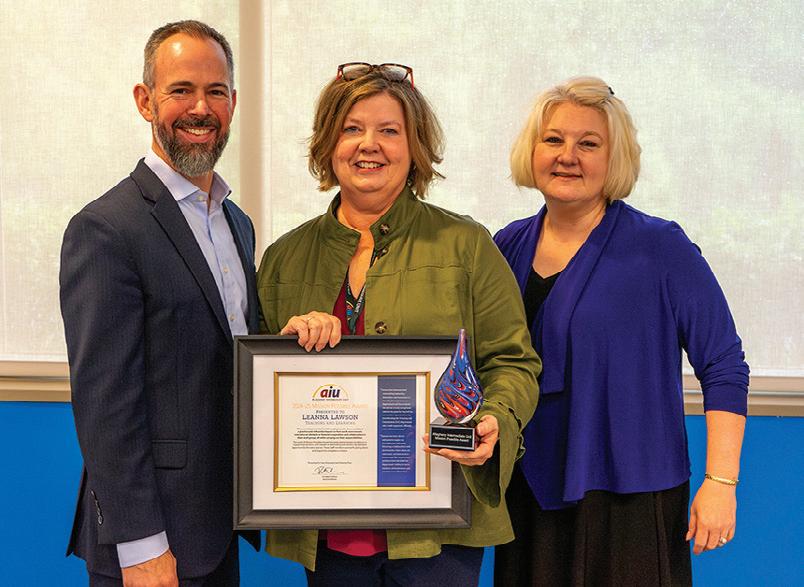
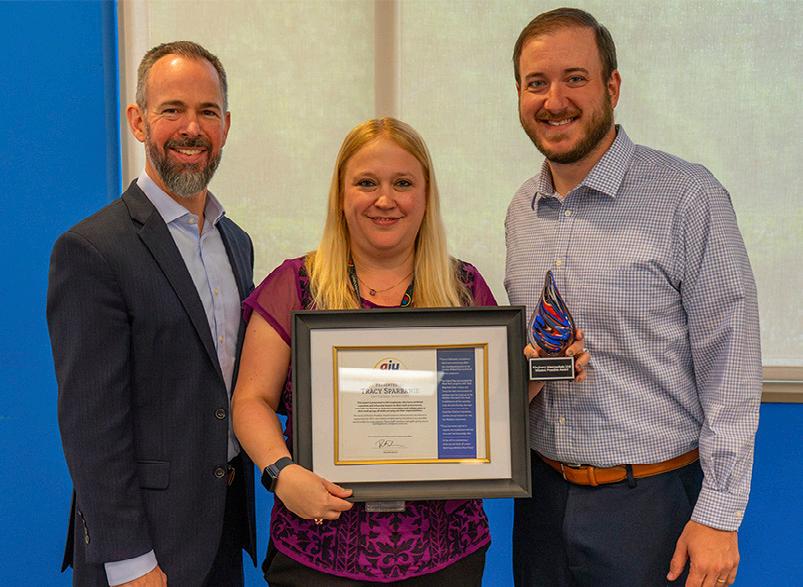
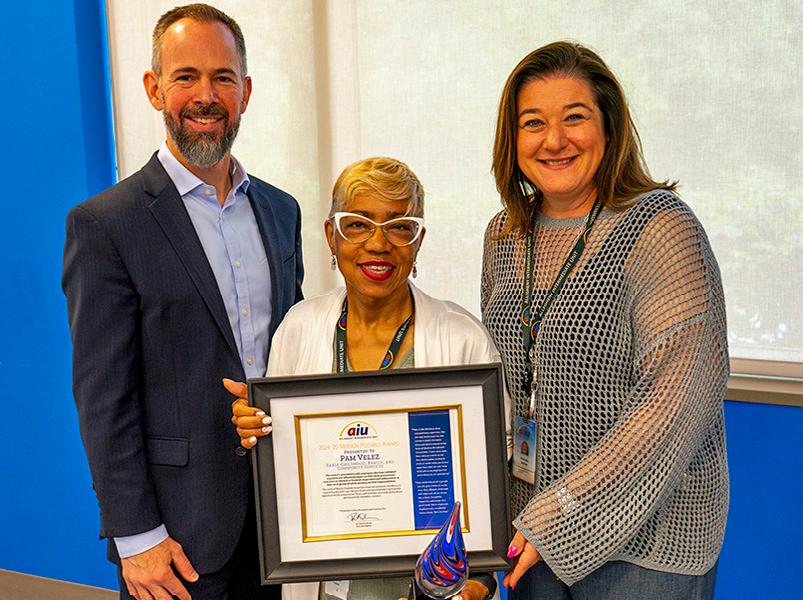
i n a cele B ration o F D e D ication , lea D ershi P , an D im Pact , the AIU honored standout staff members across the organization for going above and beyond in supporting the agency’s core mission of advocating and advancing equitable opportunities for every learner.
2024-25 M ission p ossible A w A rdees
The AIU’s Mission Possible Award recognizes four individuals each year—one representing each of the AIU’s four divisions. This year’s honorees included:
n Amy Abraham, Special Education and Pupil Services
n Leanna Lawson, Teaching and Learning
n Tracy Sparbanie, Internal Services
n Pam Velez, Early Childhood, Family, and Community Services
aBraham was honored for the support she provides to her team, whether by building positive rapport through recognition efforts or supporting professional development by providing meaningful feedback.
“Amy has all of the qualities of an exceptional leader, mentor, and role model,” said Nicole Lloyd, one of Abraham’s nominators. “She is always going above and beyond to create a positive and supportive work environment.”
laWson was recognized for her work to transform the Training and Consultation (TaC) program and cultivate a collaborative work environment—enhancing the department’s ability to serve teachers, administrators, and paraeducators.
“Leanna has gone far beyond her normal job responsibilities by transforming the Training and Consultation (TaC) department into a well-organized, efficient, and collaborative team,” said Crystal Vogtsberger, who nominated Lawson for the award. “She has implemented processes and procedures that enhance productivity and ensure that every TaC member has a clear direction and purpose.”
sParBanie’s nomination highlighted her dedication and attention to detail—both vital for securing funding for AIU programs —and praised her volunteer work with the Stand for Children Committee and Wellness Committee. “Her commitment and dedication to the AIU is unwavering,” said Jeanette Casciato, Sparbanie’s nominator and a past winner of the award.
velez was praised for her positive attitude, strong work ethic, and exceptional leadership—qualities that inspire her team of Enrollment Consultants.
“Pam is the definition of an extraordinary supervisor. She not only works hard but also strives to instill this same drive and determination in her team of enrollment consultants,” said one of her nominators, Katie Alioto. “I have never seen Pam without a smile on her face. It makes coming to work easier when you have a supervisor that not only cares about you as an employee but cares about you as a person, too.”
2025
Mission Possible Awardees, from top, Amy Abraham, Leanna Lawson, Tracy Sparbanie, and Pam Velez.
B eyon D the m ission P ossi B le a W ar D s , the AIU also collaborates with its program leaders and member bargaining units to recognize employees for their contributions to education. Additional 2024-25 award winners include:
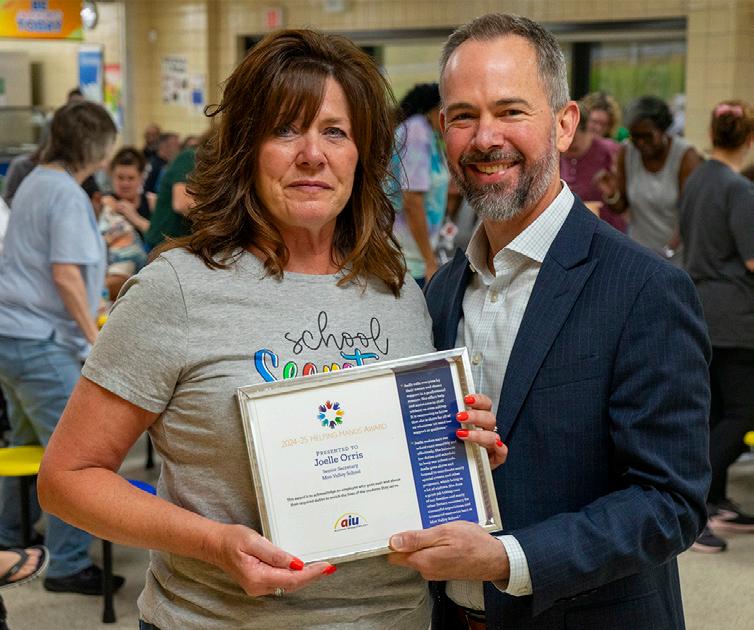
Joelle Orris, a senior secretary at Mon Valley School, received the Helping Hands Award. Orris goes above and beyond her role as secretary -- supporting student activities and keeping operations running smoothly throughout the school.
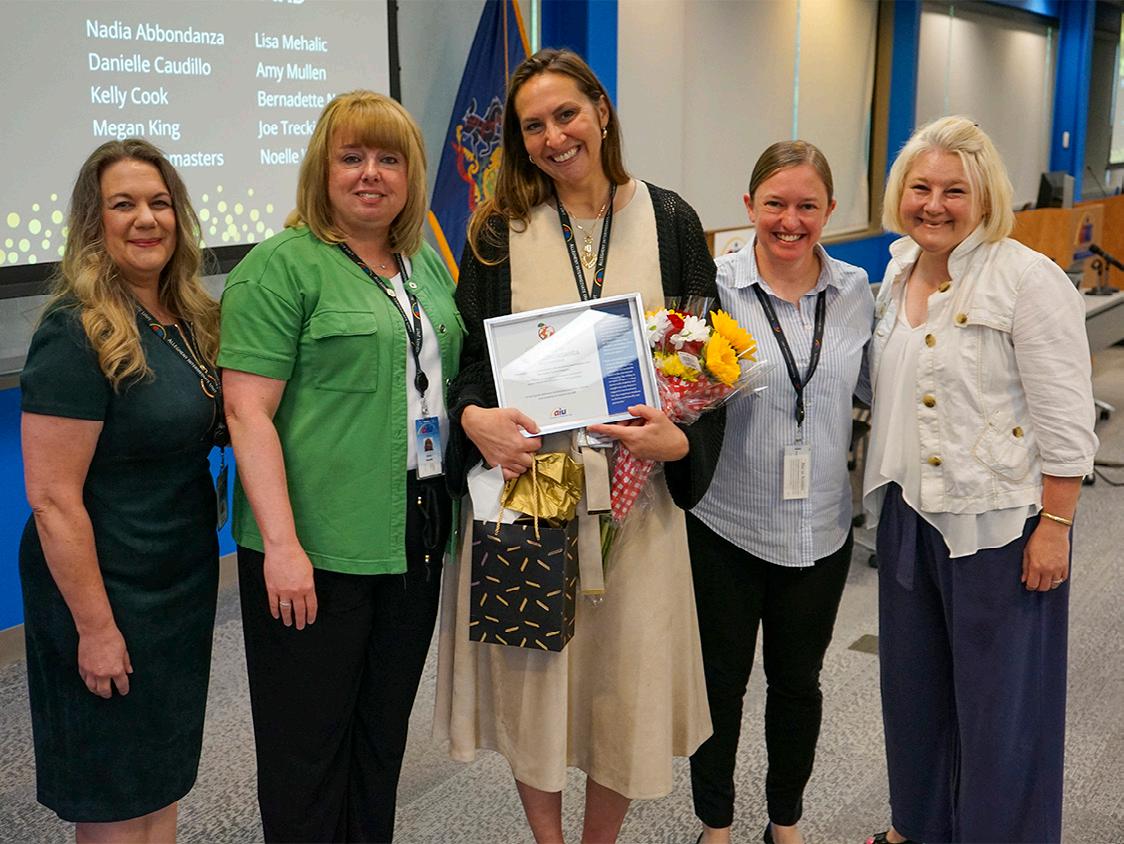
Nadia Abbondanza, a counselor in the NonPublic Schools Program, received the Apple Award, which is given annually to a K-12 professional in the program for demonstrating superior contributions and support. Abbondanza was credited for navigating complex student issues with empathy and insight, as well as building a strong sense of trust and rapport.
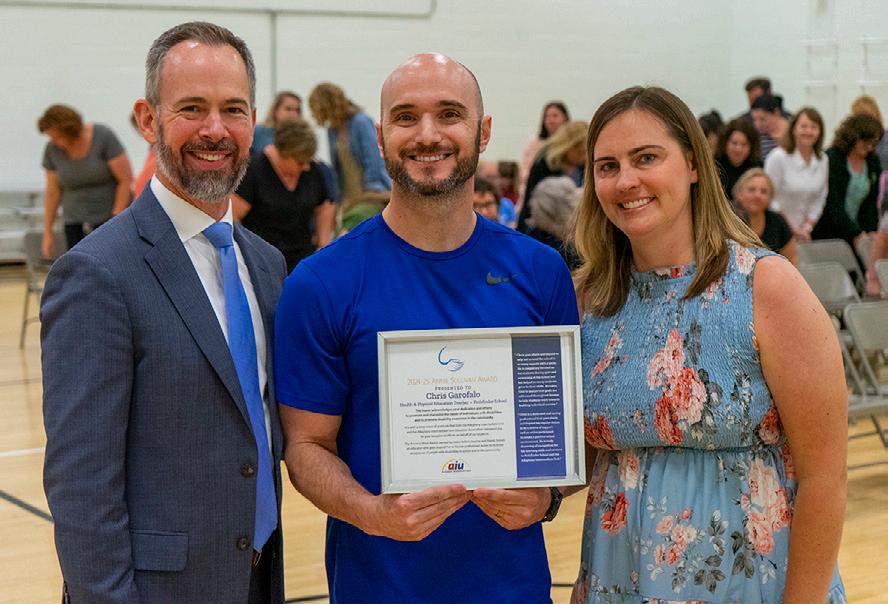
Chris Garofalo, a health and physical education teacher at Pathfinder School, received the Annie Sullivan Award. The honor goes to an employee who promotes and champions the needs of individuals with disabilities. Garofalo was nominated for his efforts to ensure individualized support to all students, allowing them to achieve their own goals.
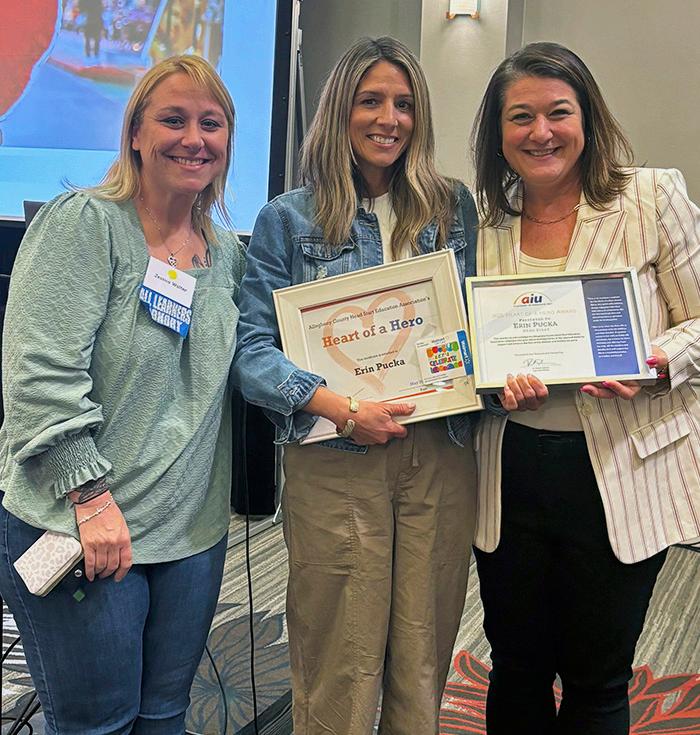
Erin Pucka, a Head Start teacher, earned the Heart of a Hero Award, presented with the Allegheny County Head Start Education Association. Pucka was honored for her caring efforts that help prepare students for kindergarten.
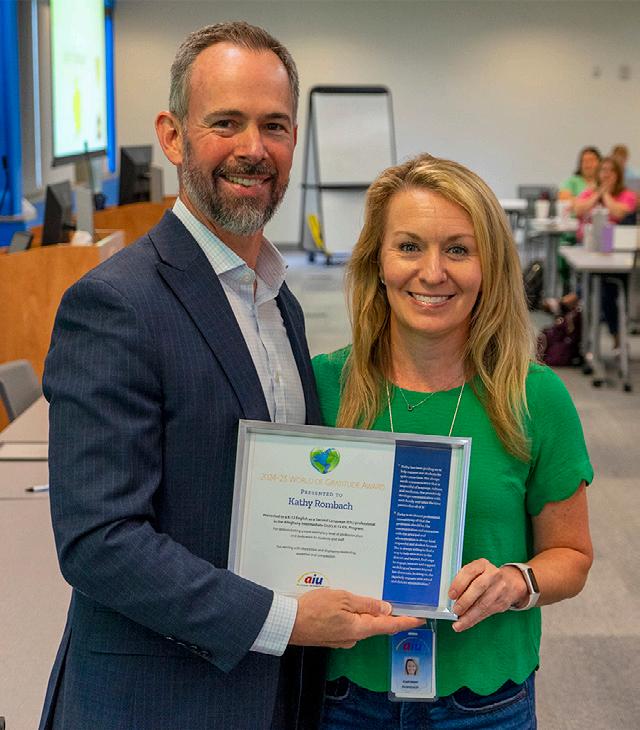
Kathy Rombach, an English as a Second Language teacher, won the World of Gratitude Award. She was recognized for her ability to build connections with students, their families, and administration, ensuring multilingual learners receive the support they need.
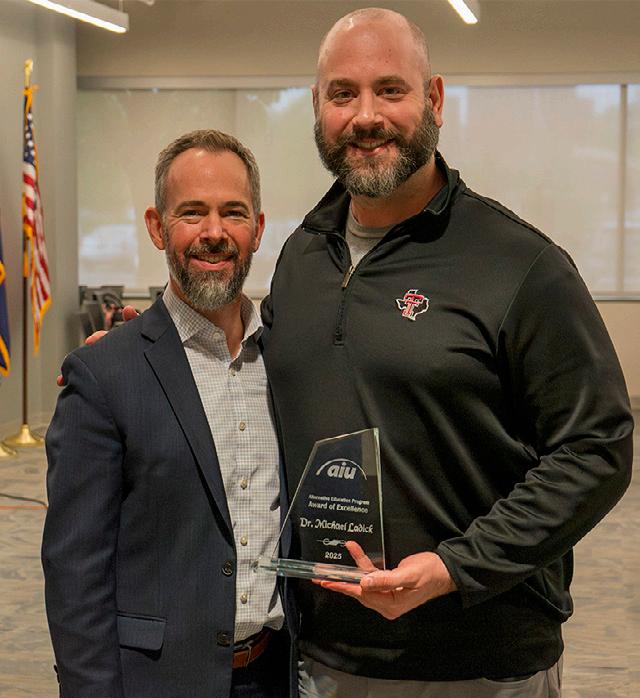
Michael Ladick was presented with the Award of Excellence in the AIU’s Alternative Education Program. Ladick, a counselor in the program, was recognized as an integral part of the program’s PBIS initiatives, with an enthusiasm that encourages students to learn.
Photos: Will DeShong
PAeducator.net marks
of connecting schools and job seekers
By standardizing the application process, PAeducator.net
simplified what had once been a time-consuming and inconsistent experience for applicants and school districts alike.
t his year marks the 25 th anniversary o F Pa e D ucator . net , a pioneering online platform that has served as a clearinghouse for education job postings in Pennsylvania since 2000.
Originally launched as a regional pilot in 1999, the platform expanded statewide the following year. The Allegheny Intermediate Unit (AIU) led a coalition of intermediate units, school districts, colleges, universities, and other organizations in developing the website.
More than 30,000 active applicants and over 250 school districts and educational entities use PAeducator.net
George DeSimone, former assistant executive director of the AIU, said the idea for PAeducator.net emerged during the rise of early commercial job sites like Monster.com, which were gaining traction in the late 1990s.
“We wanted something like that for our teacher applications,” DeSimone recalled. “It was particularly beneficial for school districts that didn’t have large HR departments. A lot of districts weren’t getting as many applications as they needed.”
The website was originally funded by grants from the Grable Foundation, the Richard King Mellon Foundation, the Vira I. Heinz Endowment, and the Buhl Foundation. DeSimone said the AIU and local education leaders collaborated with the Association of School Personnel Administrators to expand the website beyond Allegheny County following a successful pilot period. “Between those connections and the support from intermediate units across the state, we were able to grow pretty quickly,” he said.
The site caught on. By standardizing the application process, PAeducator.net simplified what had once been a time-consuming and inconsistent experience for applicants and school districts alike. Before its launch, aspiring educators often mailed paper applications to individual school districts, each with its own requirements.
“It was daunting for young applicants,” DeSimone said about applying to individual schools.
While the website served as a centralized spot for applicants, the technology at the time wasn’t as seamless as it is now. “When the site started, applicants would mail their certification and supporting documents to the AIU,” said Avyrle Schmitt, the AIU’s project specialist who oversees the site today. “Deborah Weiblinger, who was instrumental during the early days of the website, would then upload the documents to create profiles. It was incredibly labor-intensive compared to the userfriendly system we have now.”


Today, applicants can complete their entire profile online, including uploading transcripts, certifications, clearances, and letters of recommendation. The platform automatically generates the state’s standard teaching application, and users can apply to multiple openings with a few clicks.
The system supports not only certified teaching positions, but also administrative, support, and non-instructional roles — such as counselors, custodians, aides, and business managers.
More than 30,000 active applicants and over 250 school districts and educational organizations currently use the platform. Schmitt said the site is regularly updated based on feedback from both user bases to ensure it best meets their respective needs.
“We’re always willing to help in any way we can,” said Schmitt, who had personally used the website herself as a certified teacher-school librarian. “Whether someone is applying for their first job or a district is trying to fill a hard-to-staff position, we pride ourselves on being responsive.”
The AIU also engages in outreach at job fairs, college campuses, and education conferences to promote the platform and offer hands-on guidance to job seekers.
“Our outreach efforts are about more than just sharing information,” Schmitt said. “We want everyone to know that we’re here to support them every step of the way — whether you’re posting a job or searching for your next role.”
DeSimone said it’s rewarding to see how far the platform has come since its early days.
“We were really proud of what we built,” he said. “Just think— it’s been around for 25 years. That’s pretty humbling. And it’s still helping young educators and school districts connect. That’s exactly what we hoped for when we started.”
Today, applicants can complete their entire profile online, including uploading transcripts, certifications, clearances, and recommendations.

VelesStudio | Deposit Photos
Goodluz | Deposit Photos
One dashboard, many solutions: Oracle modernizes HR at the AIU
The digital overhaul in the human resources and business offices at the Allegheny Intermediate Unit (AIU) over the past decade has brought a new level of efficiency to the way it serves employees. The software at the center of the shift away from filing cabinets to cloud-based convenience is Oracle.
The AIU uses Oracle applications to allow employees to easily update their personal information, manage their timesheets, enroll in online professional development courses, and elect benefits, all from one dashboard. Likewise, it allows the human resources and business offices to more easily monitor these variety of functions for more than 1,200 employees spanning numerous bargaining units and employee classifications.
“When you’re managing a workforce of our size, with so many different roles and responsibilities, having a centralized, intuitive system like Oracle is a game changer,” said Erin Koebel, director of Human Resources. “It streamlines how we support our employees and ensures consistency across the board.”
The annual open enrollment period for benefits is one of the key processes that depend on Oracle. The software guides employees through an open enrollment “journey” that outlines the benefits available to them during the upcoming year. This journey is adjusted to meet an employee’s classification, ensuring that they only receive information relevant to them.
“We have a wide range of employee groups, from teachers to professional staff to administrators, and their benefits vary,” Koebel said. “It’s critical that each employee gets clear, accurate information that applies specifically to them.”
Just as students benefit from flexible learning environments, educators and staff can now engage in professional development beyond the traditional classroom. A robust Learning application provides an easy way for employees to complete online training offerings, including requirements such as Title IX and annual Act 55 Safety and Security sessions.
The AIU also uses a third-party vendor, Vector Solutions, to provide a library of hundreds of professional development courses for employees. This library covers a wide range of topics, from courses applicable to all employees—like preventing workplace discrimination—to those tailored to specific roles, such as a road safety course for transportation drivers.
“We also offer courses focused on classroom management, trauma-informed care, and student engagement strategies, which are especially valuable for educators,” Koebel said. “Having everything in one place makes it easier for staff to find what they need to grow in their roles.”
“
When you’re managing a workforce of our size, with so many different roles and responsibilities, having a centralized, intuitive system like Oracle is a game changer.”
Oracle Learning provides staff across all departments with consistent, accessible training through flexible pathways and real-time content updates that traditional in-person seminars and printed materials can’t easily match.
Recruitment has also been modernized through the Oracle Recruiting Cloud, which powers the AIU’s new career website launched in July 2025. The platform facilitates collaboration between the AIU’s talent acquisition team and hiring managers across the agency, enabling them to co-manage job postings, review applications, and coordinate interviews more effectively.

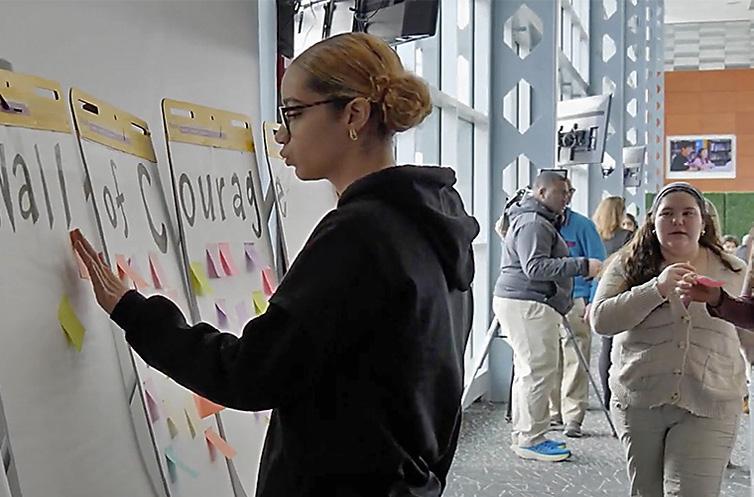
“We’re in constant communication with hiring managers to ensure that job postings are accurate and that we’re identifying the right candidates efficiently,” said Victoria Dunlop, supervisor of Talent Acquisition. “Oracle allows us to work together seamlessly across departments.”
Once a job posting is approved, it is easily scheduled to be posted to the AIU’s public careers website. The platform then provides convenient tools for talent acquisition specialists and hiring managers to use to view applications, schedule interviews, and complete the hiring process all the way through employee onboarding.
“The onboarding process starts even before an employee’s first day,” Dunlop said. “With Oracle, we can provide preboarding materials, collect documentation, and ensure a smooth transition into the organization. It sets the tone for a positive experience from day one.”



475 East Waterfront Drive
Homestead, PA 15120
o ur M ission
We are an educational community that advocates and advances equitable opportunities for every learner.
o ur V ision
Through equitable access, all learners achieve their full potential.
For more than 50 years, the Allegheny Intermediate Unit has served suburban school districts across Allegheny County as a liaison to the Pennsylvania Department of Education. a llegheny i nterme D iate u nit aiu3.net | 412-394-5700