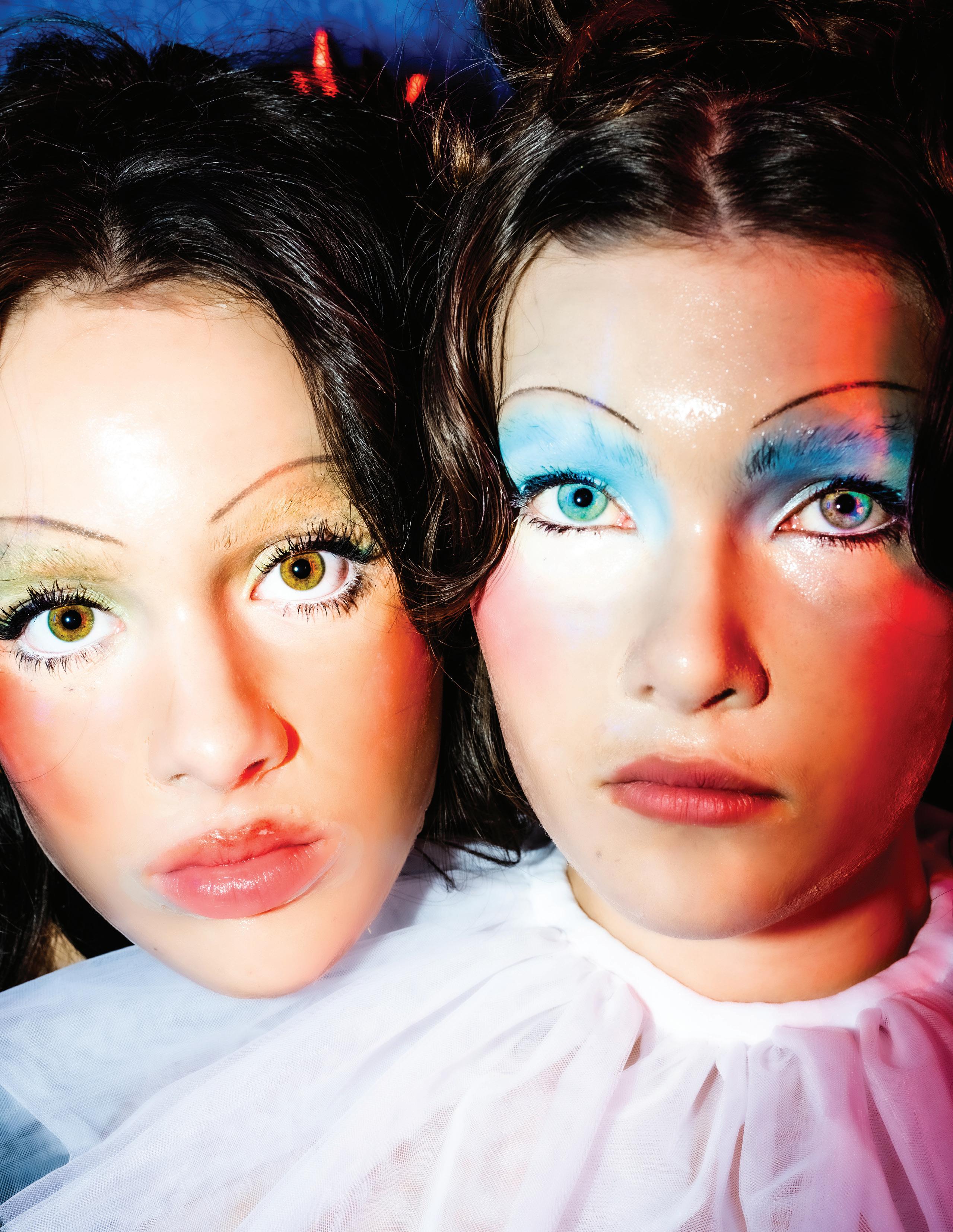
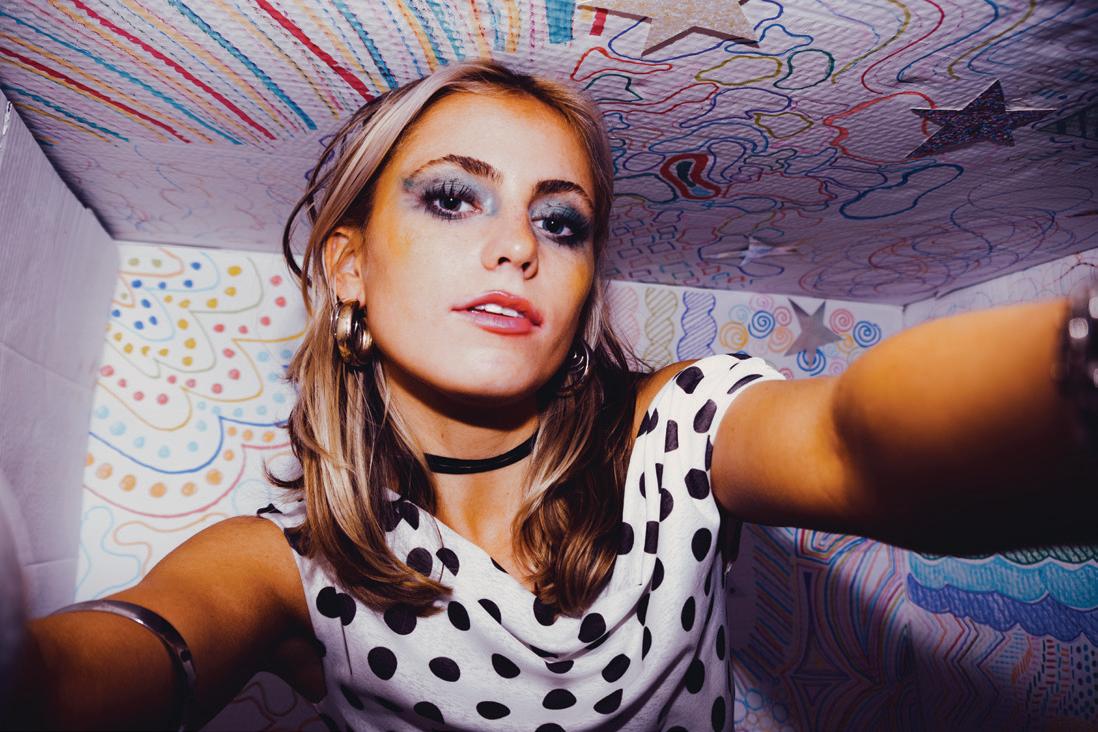
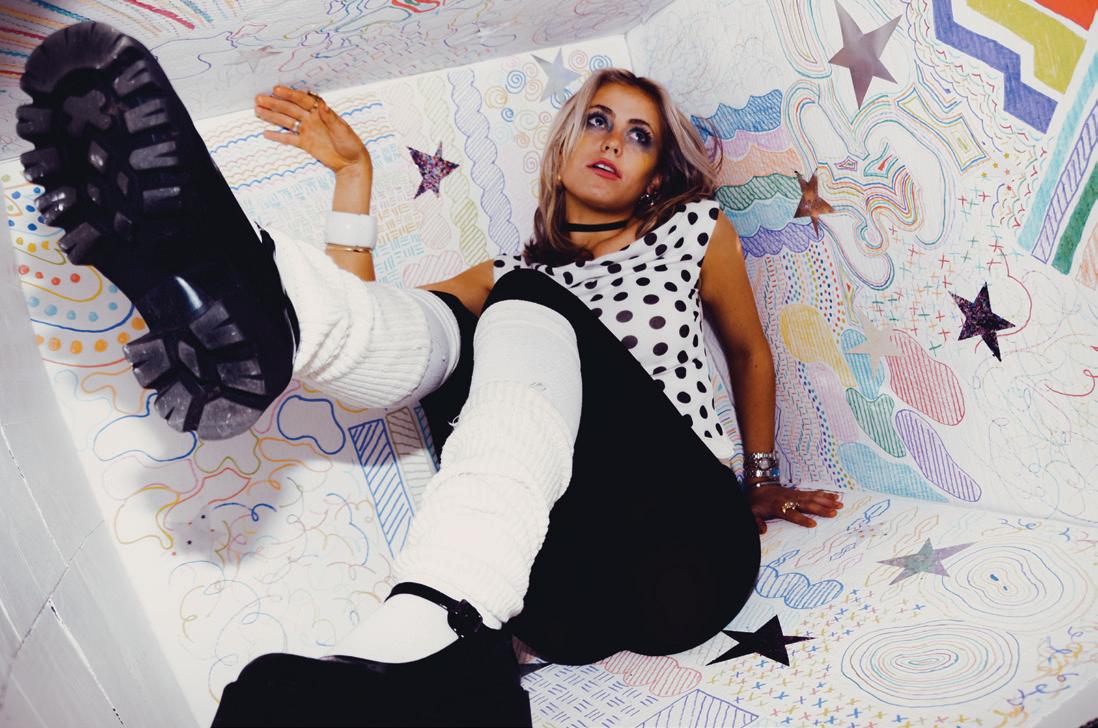
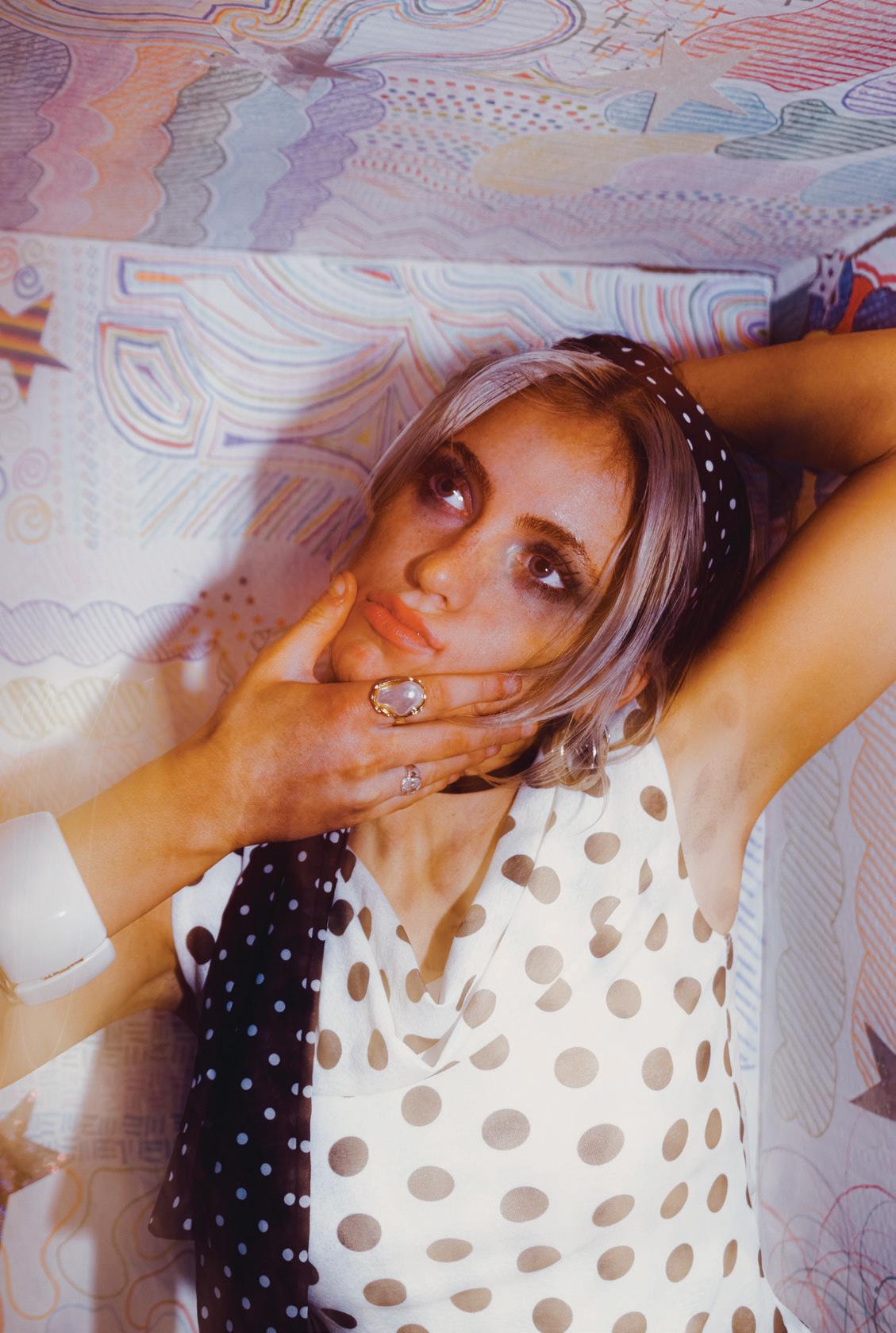
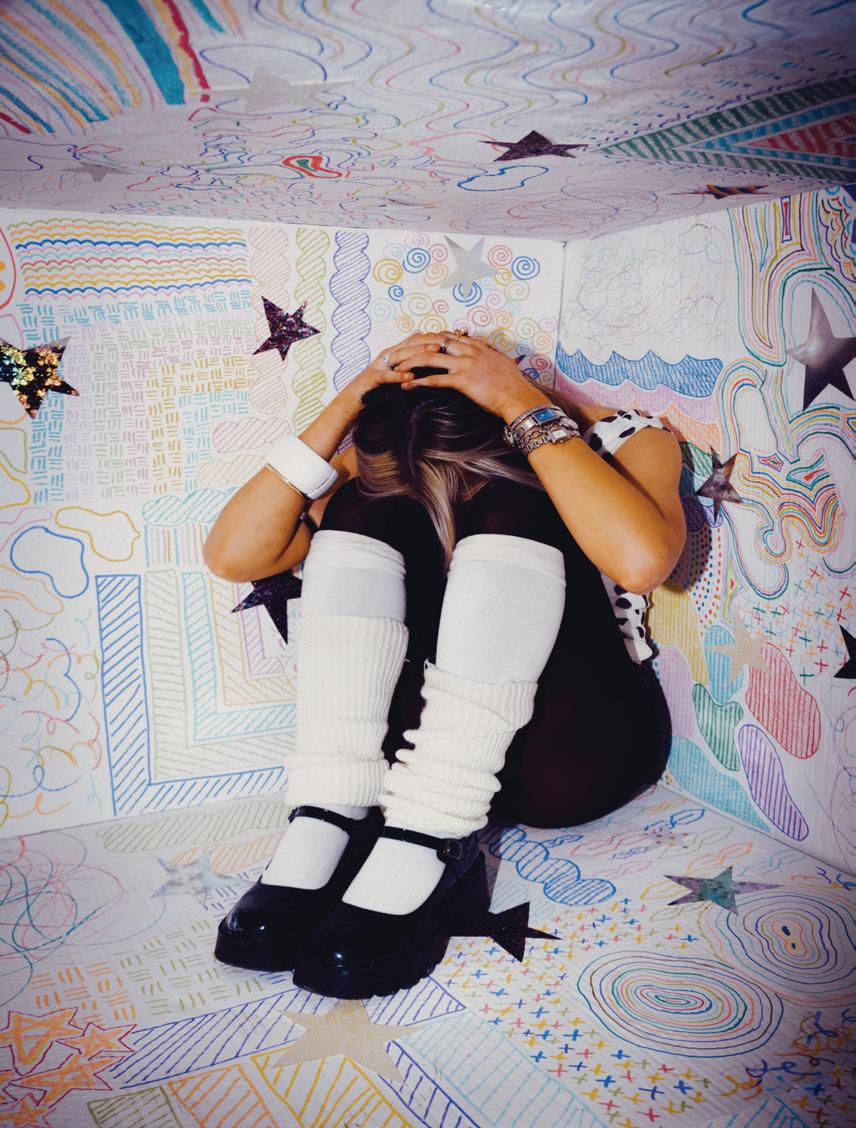
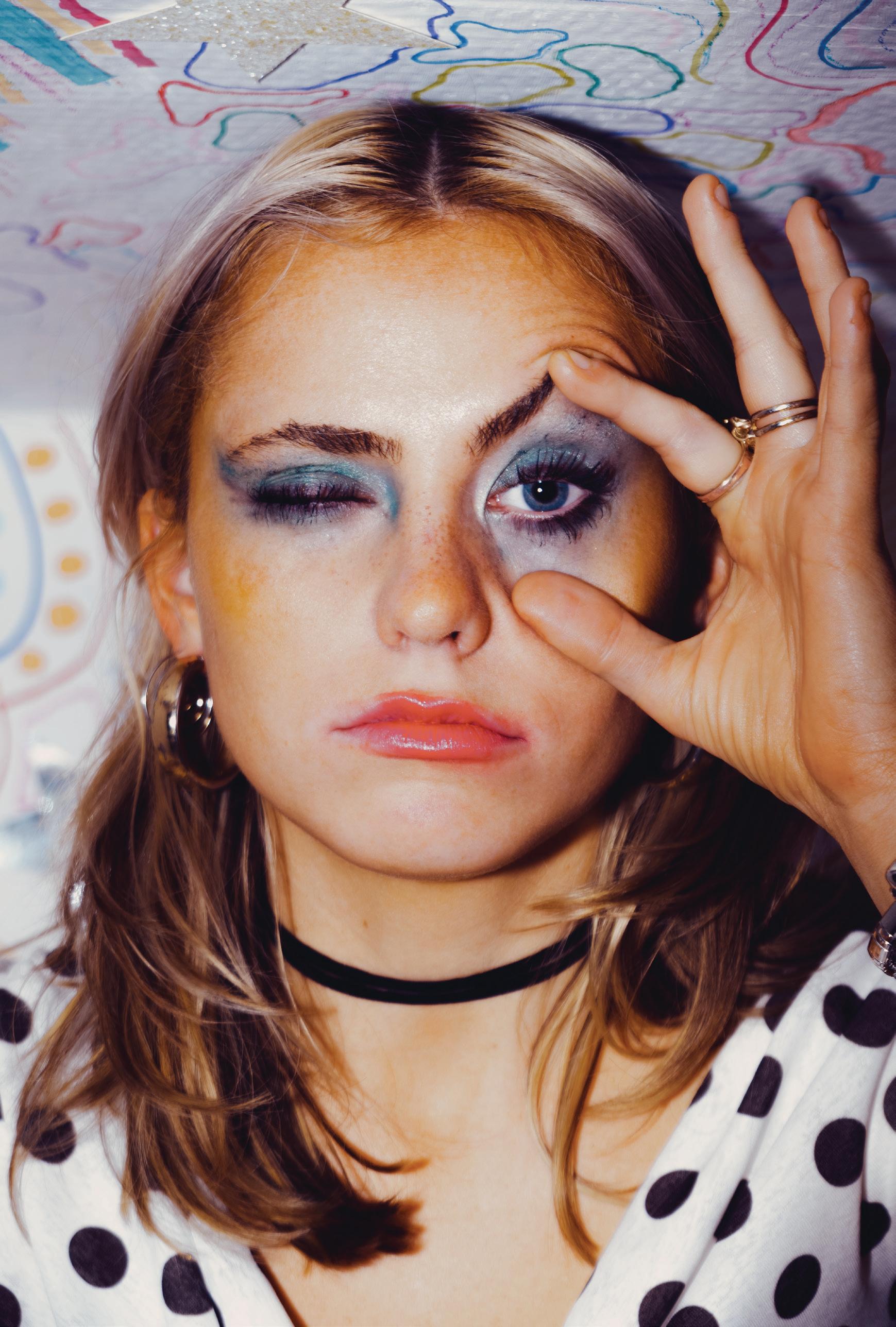
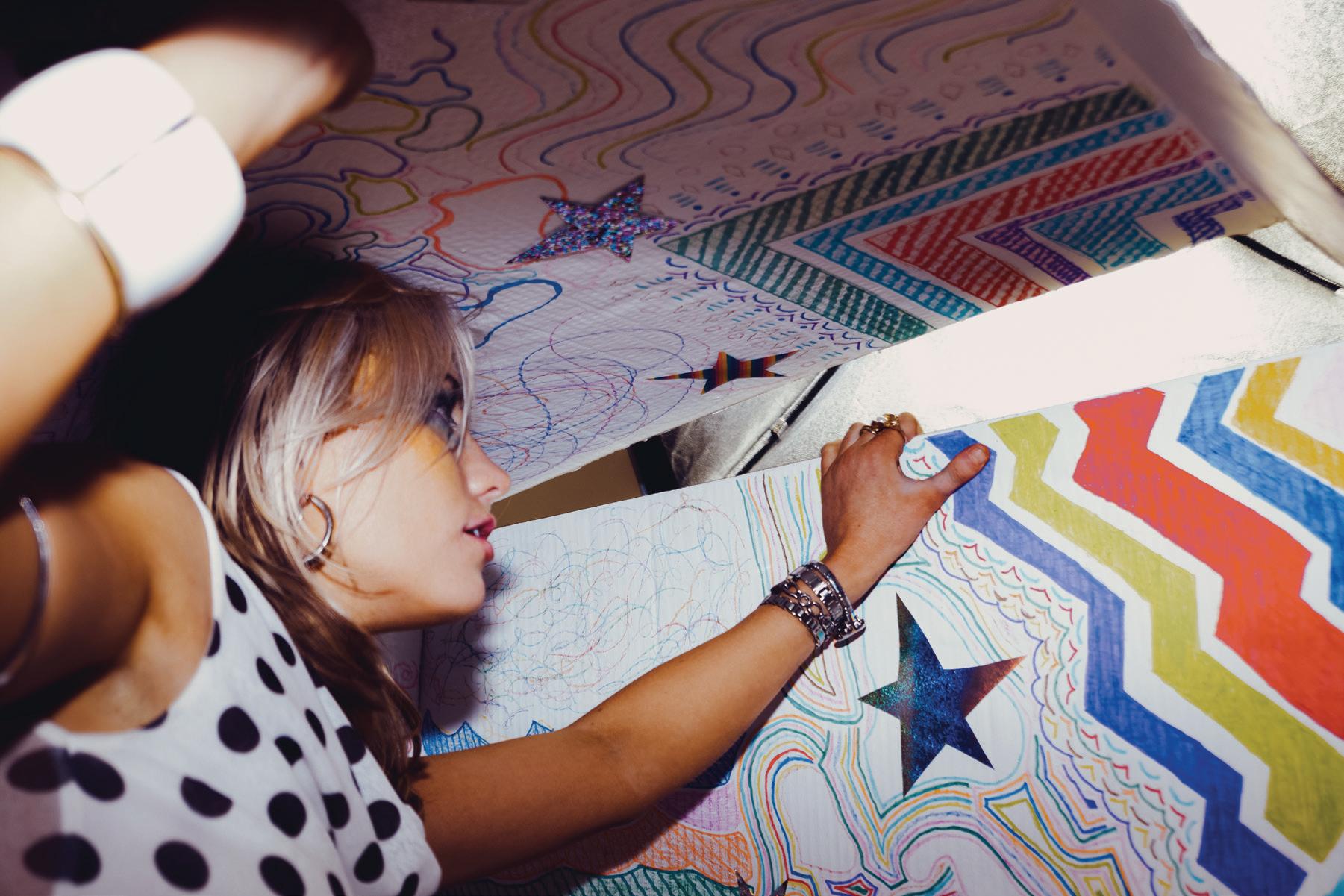
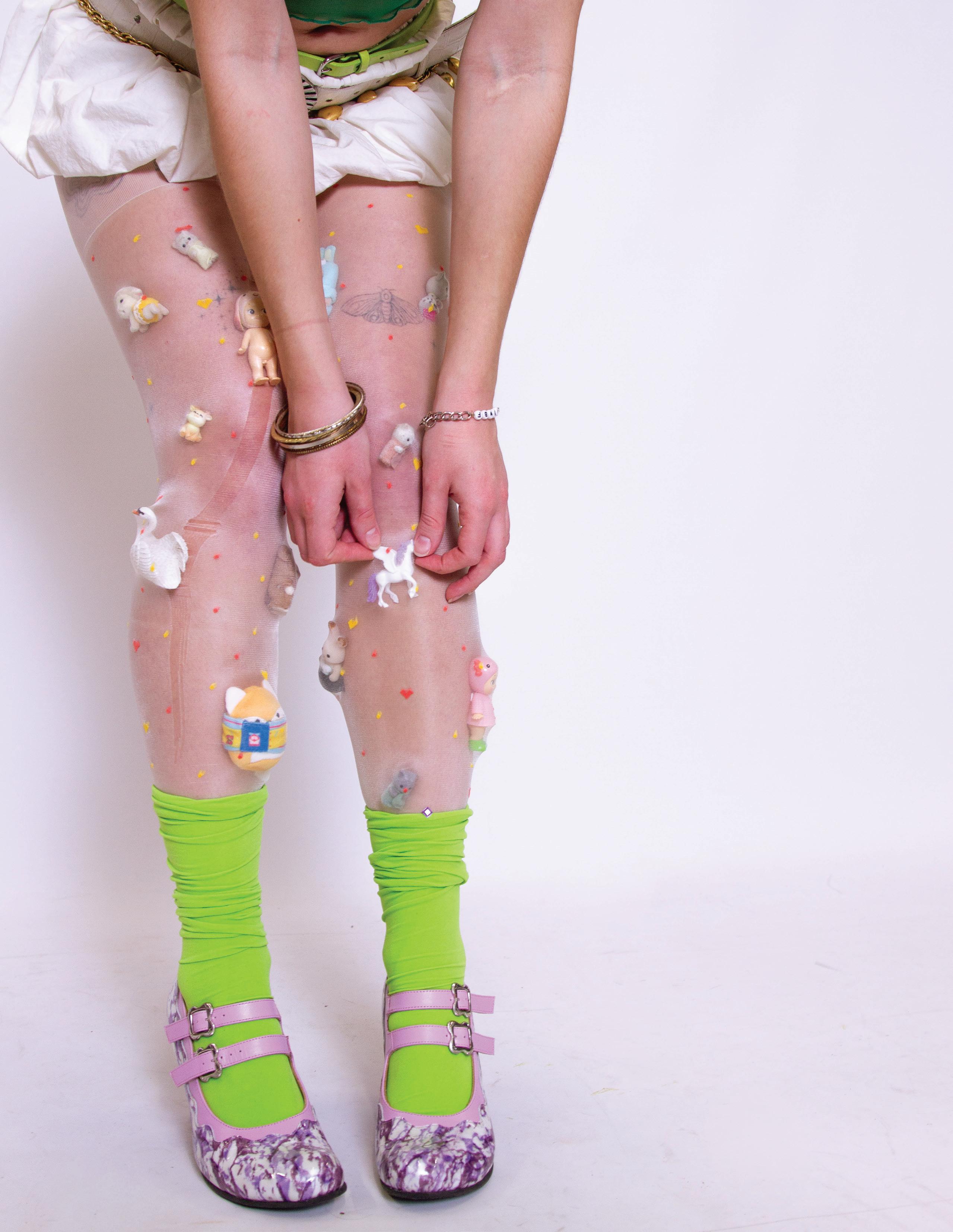
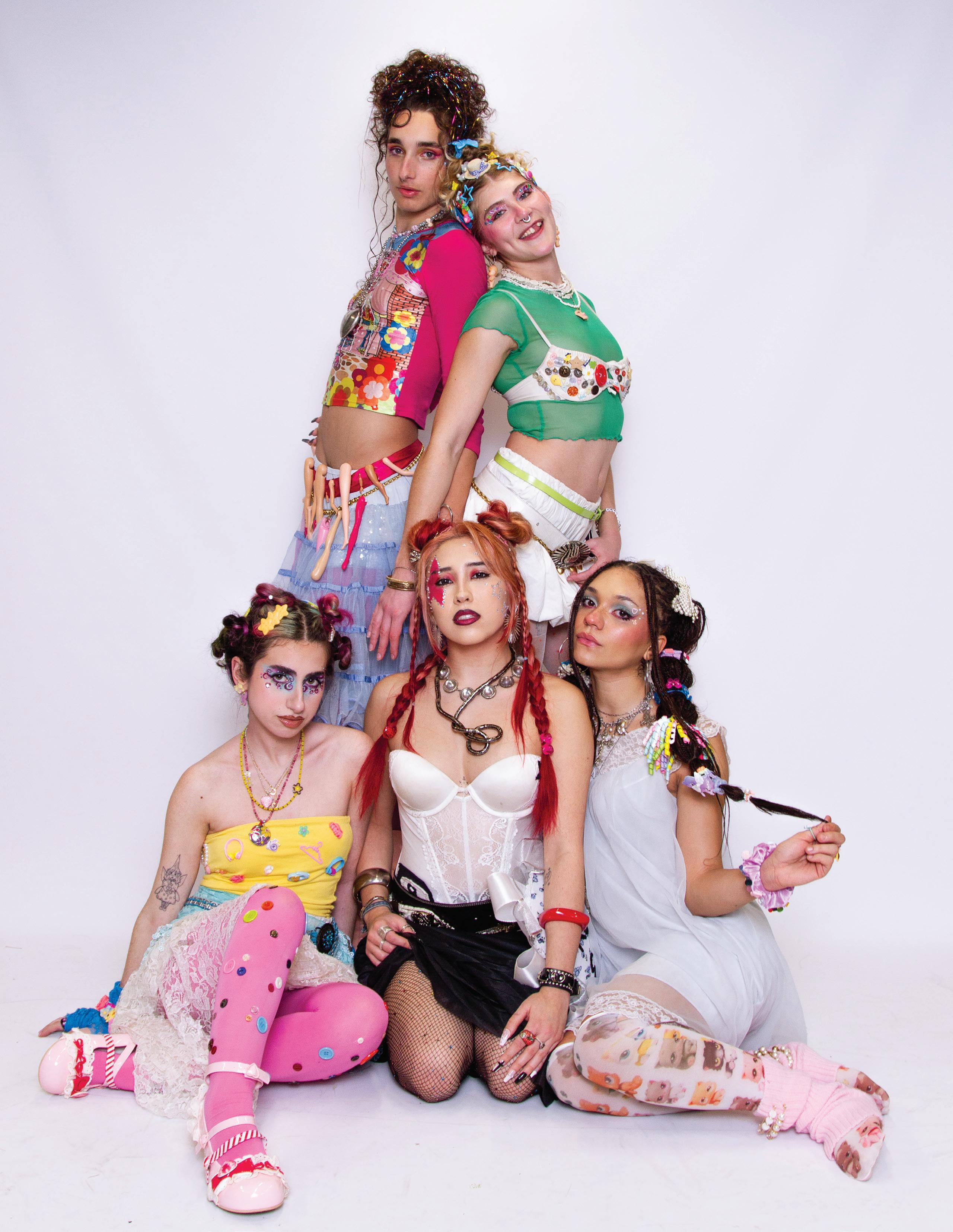
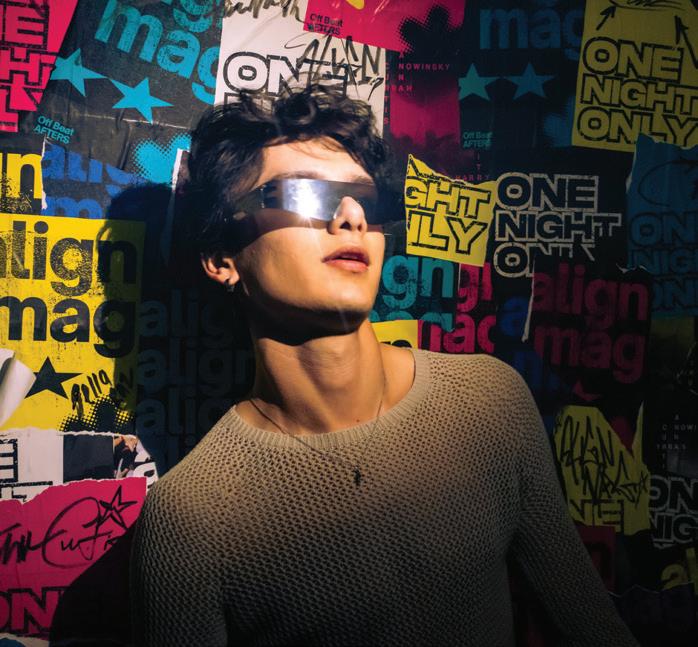
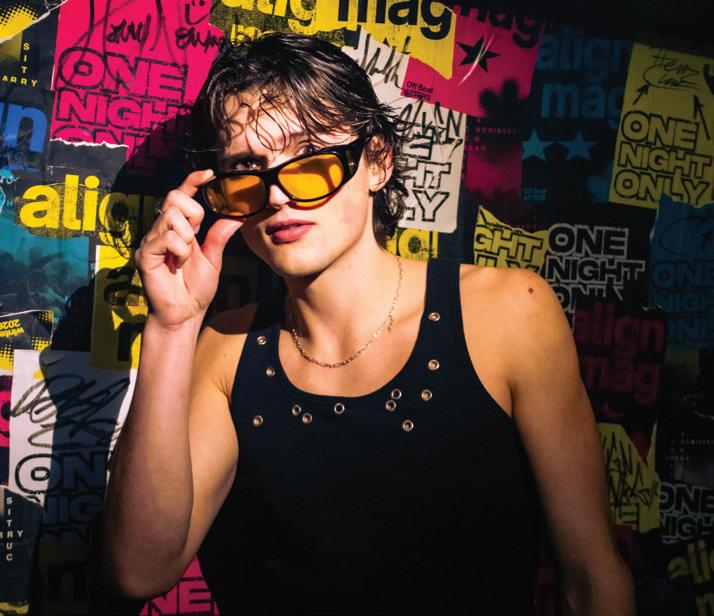
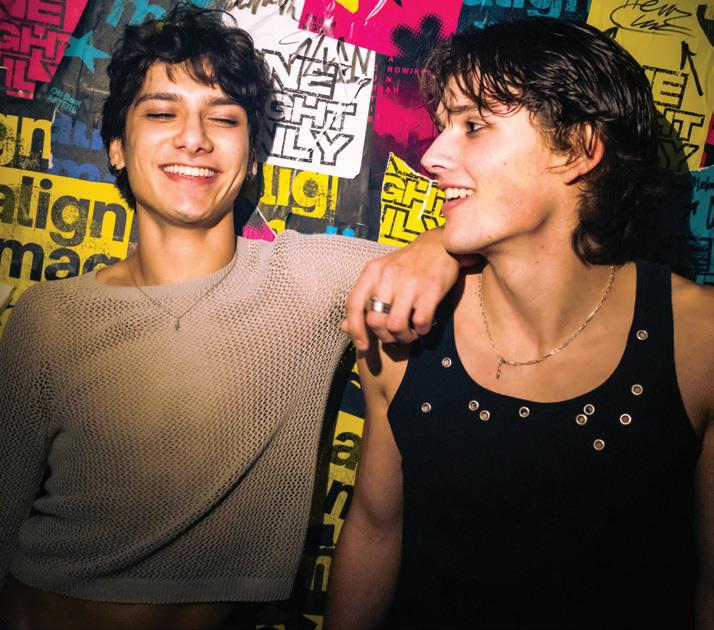
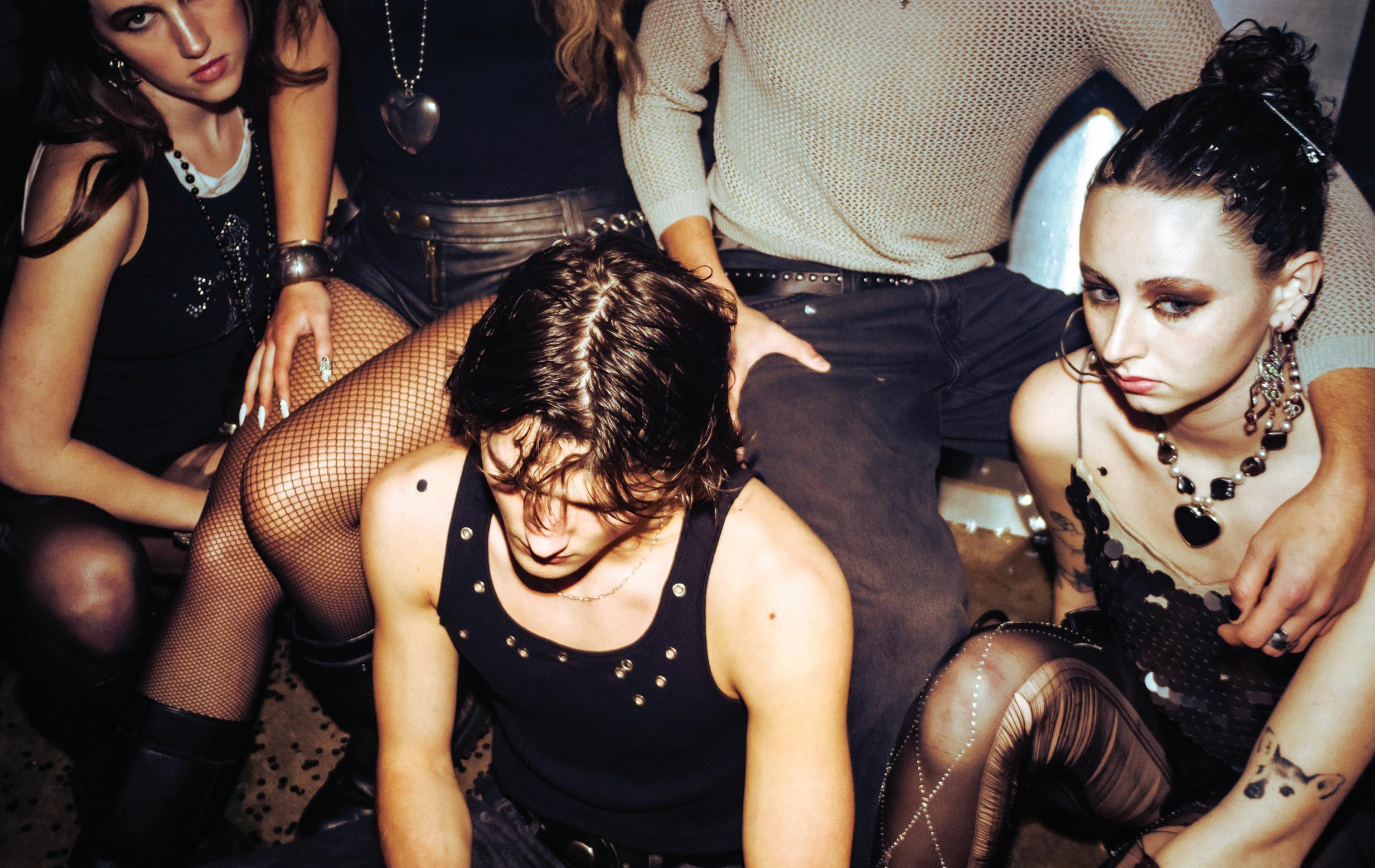
Thank you to every member of Align for your dedication and creativity, I could not be more proud of the work you have made. Having this community where students can unabashedly create and push themselves is the most special thing I have had the honor to be part of.
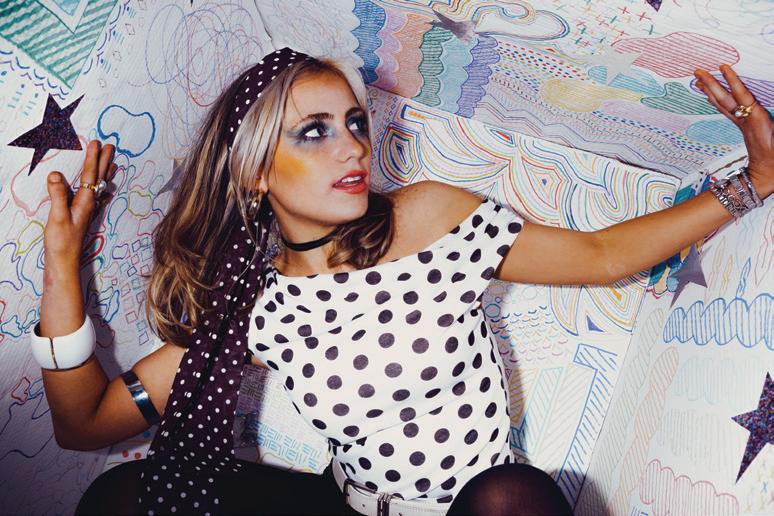
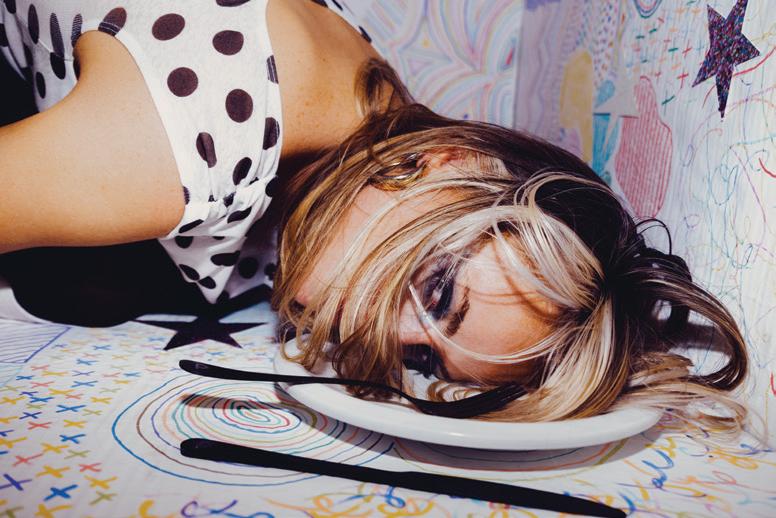
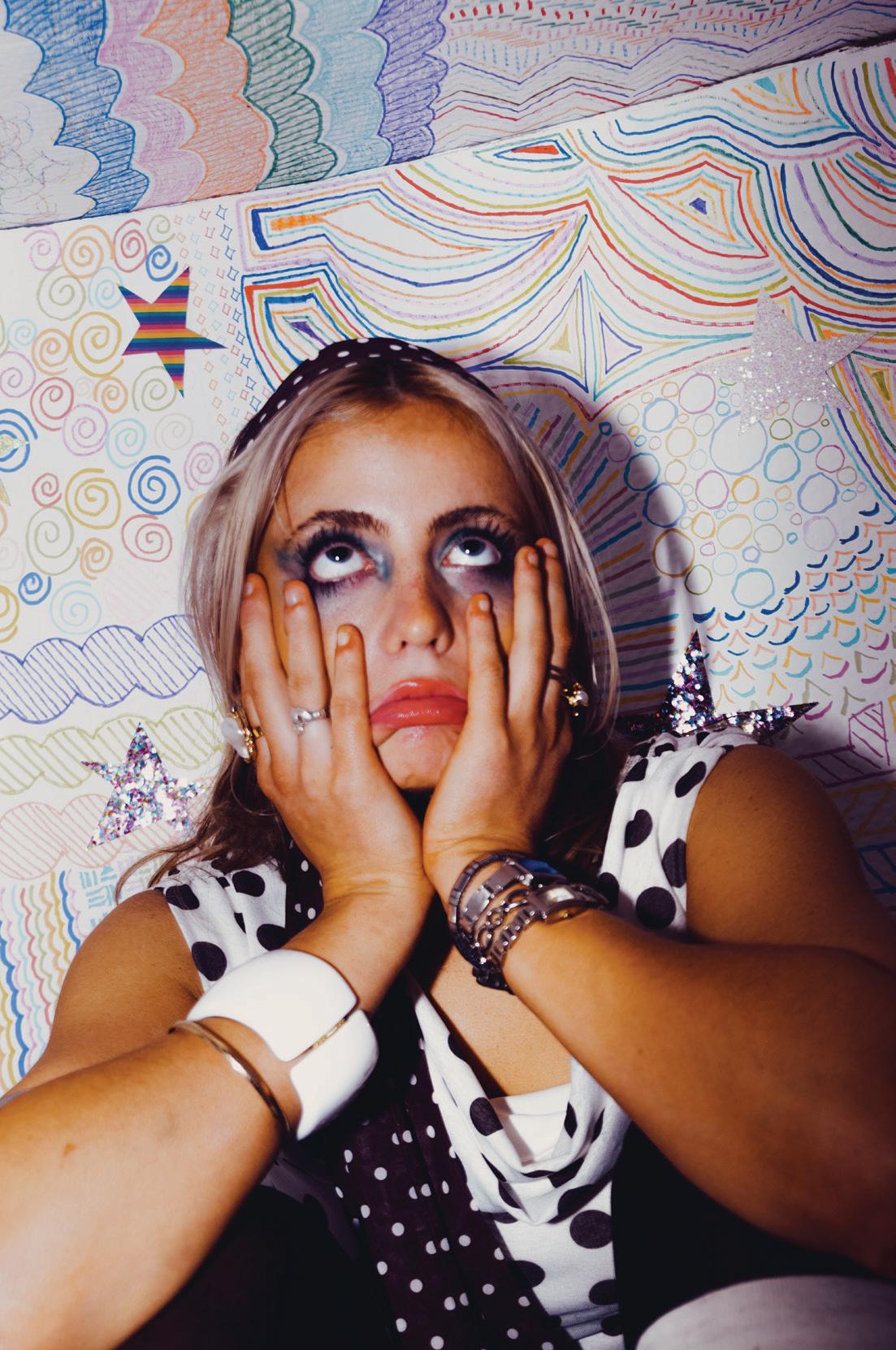
OFFBEAT is a celebration of eccentricity, difference, music, maximalism, rhythms, and finding strength in noise. As an artist, I believe that creativity is a statement, and artistic expression has always been a universal language. Art is the melody that has been sung through history, cultures, movements and eras to connect us. It is a tool of joy, and a resistance to autocracy and suppression. It is a manifestation of human feeling, and there is no wrong way to create it. The world will always need people who think independently, people who want to make things, and people who can dance to their own rhythm no matter how out of tune it may seem. Keep creating, and I encourage you to bask in your “odd” ideas. The world could use more of them.
JOIN OUR TEAM
Applications open two weeks before the beginning of every term, and we publish three printed issues per year. Check our socials to know when applications are released.
Follow @align_mag on Instagram Read past issues and our digital content at alignmaguo.com
PHOTOGRAPHERS
ART DIRECTORS
WRITERS
MODELS
DESIGNERS
ALIGN ON AIR
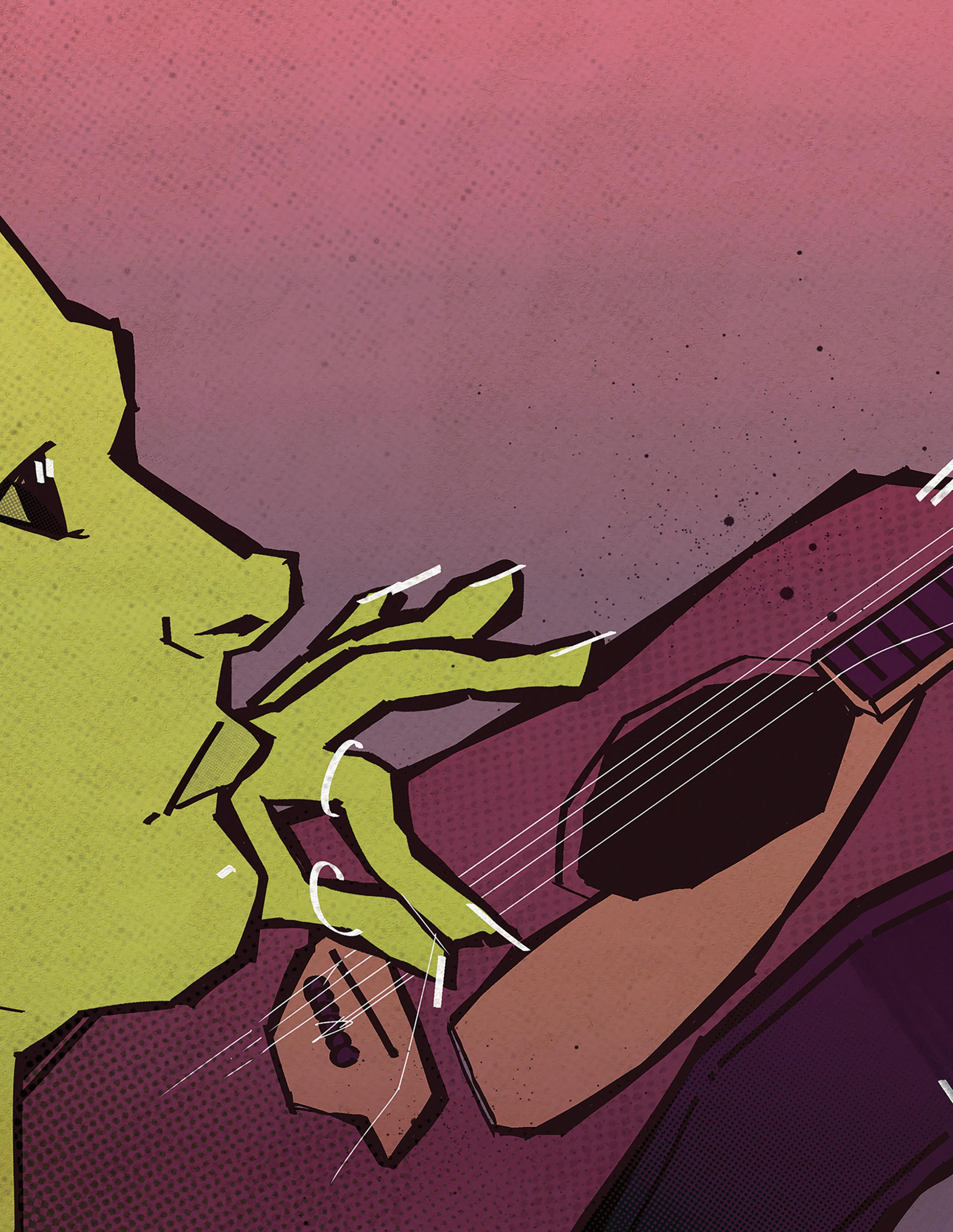
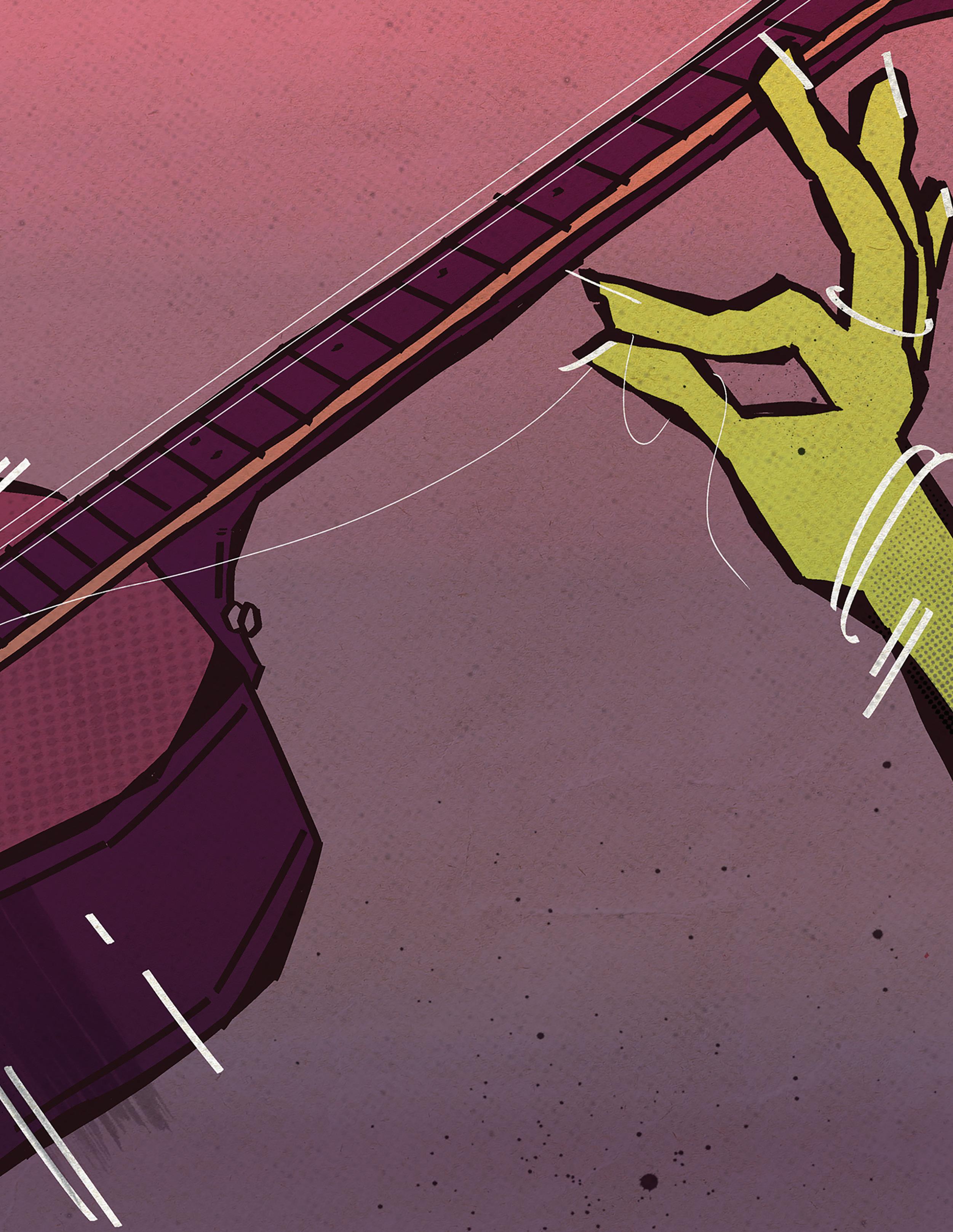
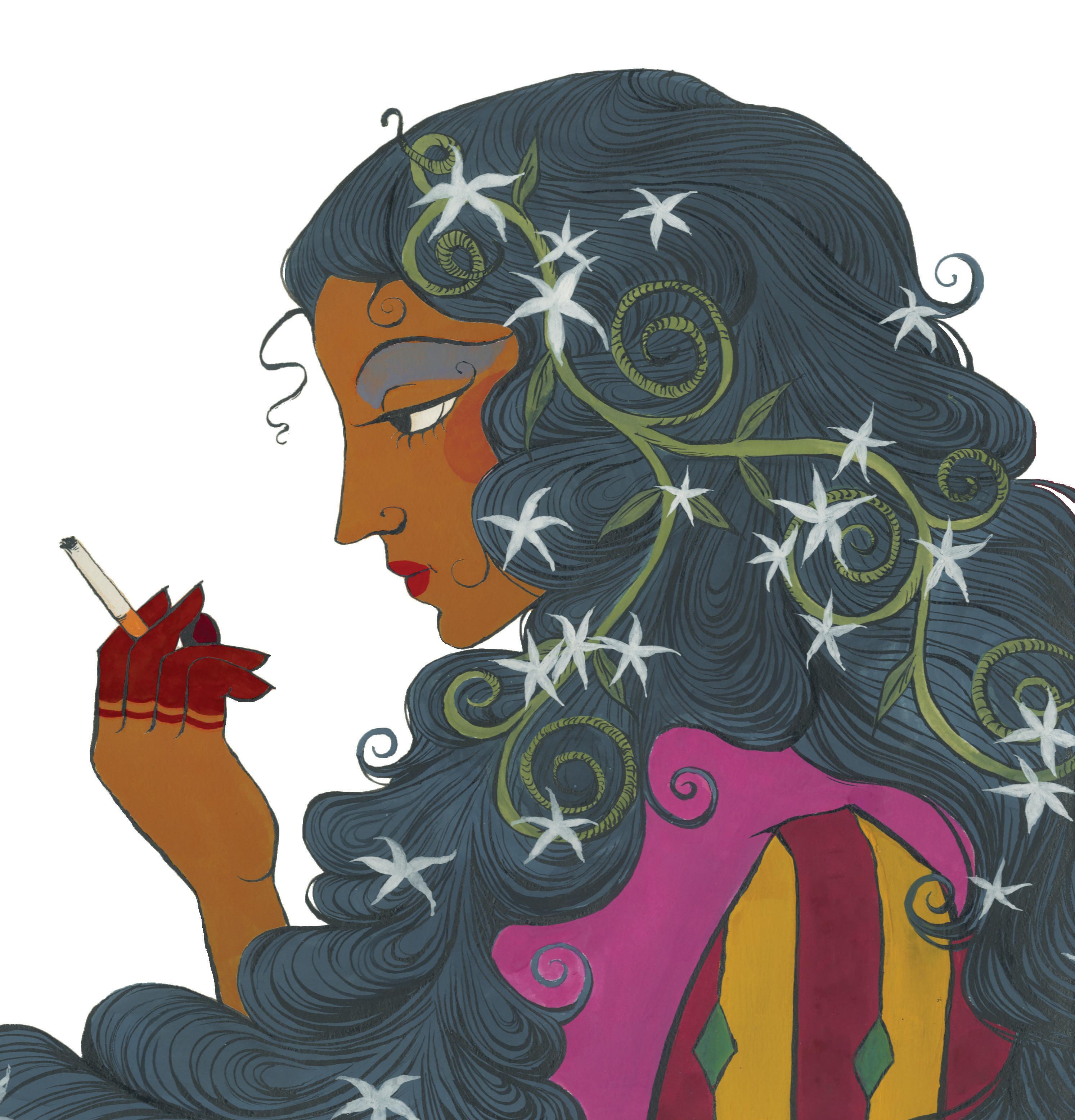
Our official podcast, Align On Air, has been talking with student organizations, creatives, and local artists around Eugene that embrace unique perspectives and community. Check out our recent episodes: ILLUSTRATED BY JOEY
BEZNER
Follow Your Illuminance: An Interview with Jud Turner Dive in to the work of local Eugene artist Jud Turner, a multimedia sculptor.
Align Chats with: Emi Allen and Aspen Hookie Podcast Editor Daniel Santoyo sits down with Duck Street Dance Crew co-directors to discuss their journey and upcoming competition.
Video
The Align Video Team has produced projects throughout the term to capture the spirit of Offbeat. All videos are available on our website and Instagram @align_mag, with more coming soon!
Blog
From Align’s free-for-all, say anything corner of the internet, the Align Blog Team has produced work that embraces the eccentric, out of tune nature of Offbeat. Here are some highlights:
The Myth of Contemporary Coolness: Balancing Uniqueness and Conformity WRITTEN BY ANNA VIDEN
Black Musicians Who Broke the Rules and Rewrote the Industry WRITTEN BY SKYLAR DEBOSE
Your Body is Not an Outlier: The Voices of Women’s Reproductive Justice WRITTEN BY HANNAH DEAN
Decentering Our Minds: Briding the Separation of Body and Brain in Western Society WRITTEN BY OCEAN DEMMIN-FERNEAU
align music
ART DIRECTORS & PHOTOGRAPHERS
ZOE MAITLAND & AYLA FUNG
STYLISTS OLIVIA ROBERTS & MAYA CLAUSMAN
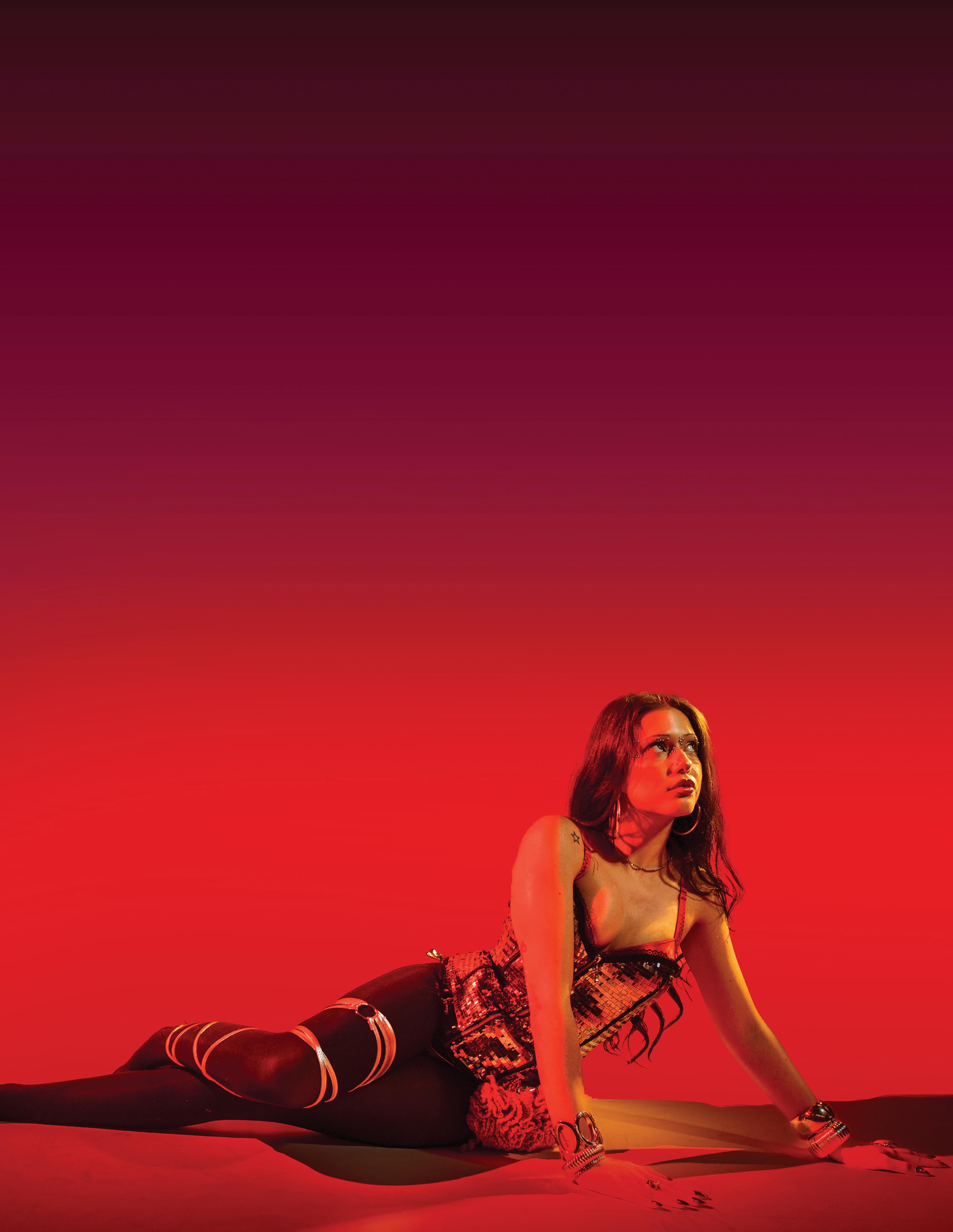
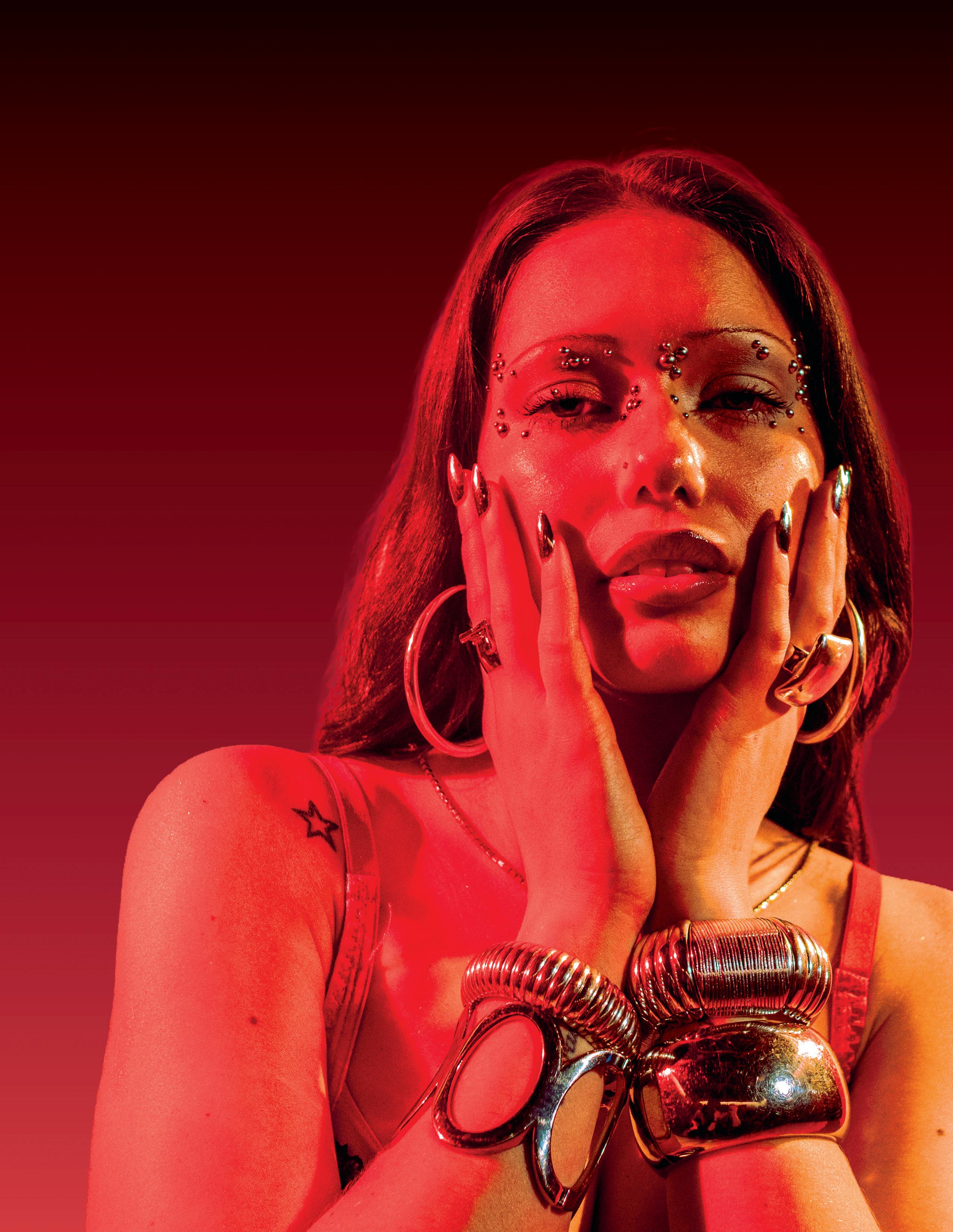
MODELS ANAYA LAMY, ANNIKA PATIL & PIPER SHANKS
PRODUCTION ASSISTANTS STELLA RANELLETTI,
ANNA CURTIS, TRIPP REPP & JOEY BEZNER
COVER DESIGN JOEY BEZNER
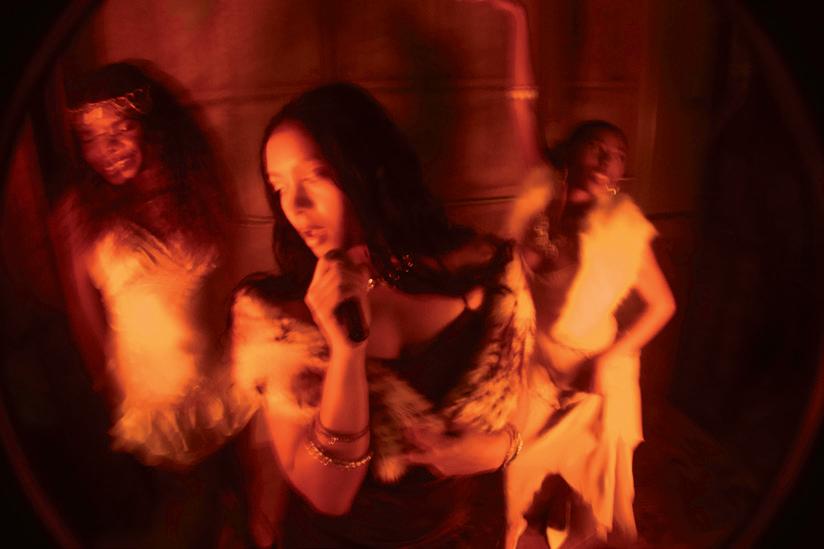
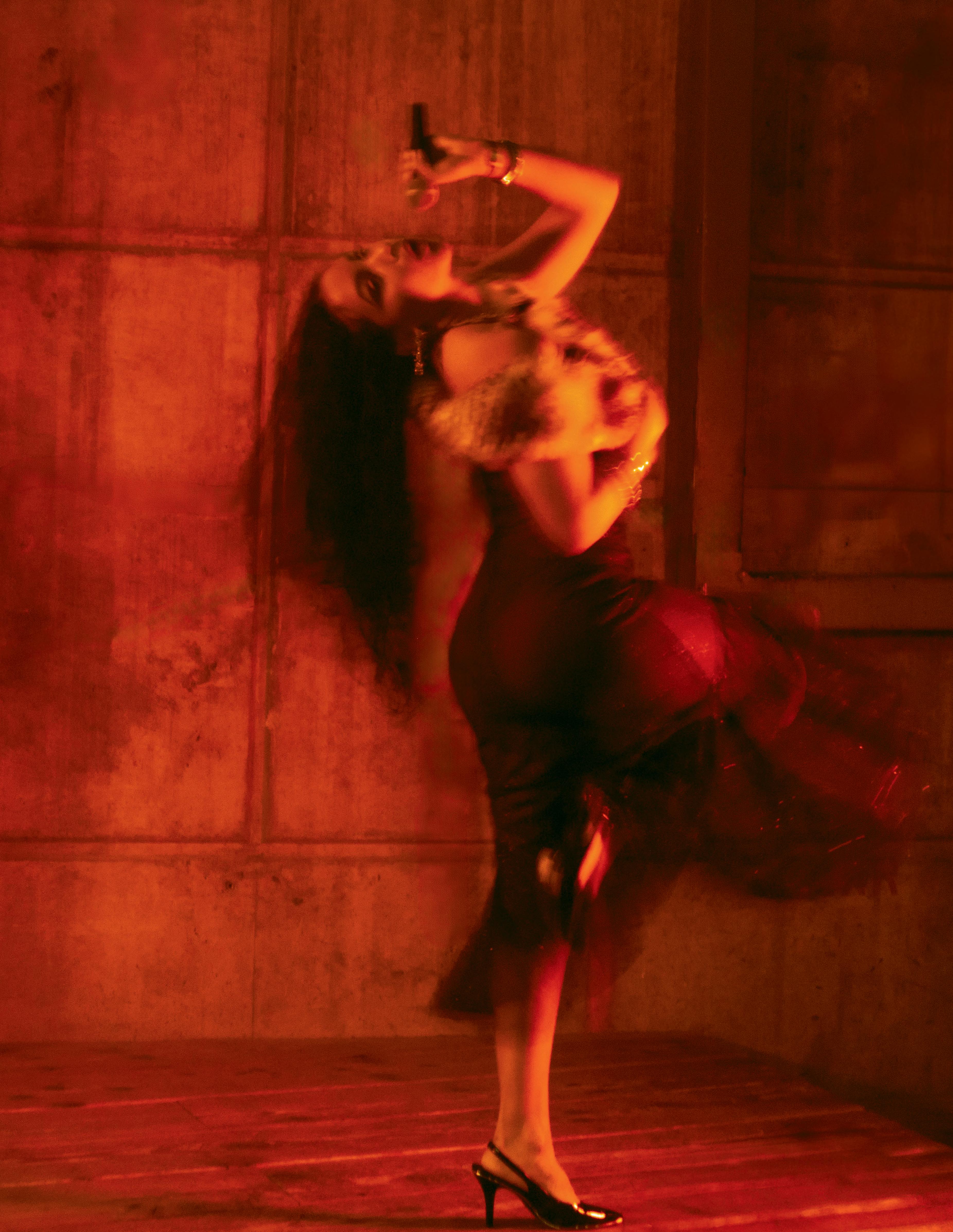
The Align Music team presents our favorite offbeat albums, along with a playlist that captures the eccentric, exciting, colorful, and unique spirit of this issue: a kaleidoscope of sounds.
ANTHOLOGY 1997-98 – FARAQUET
“Songwriting through freedom. Faraquet’s album “Anthology 1997-98” is loud, quiet, soft, hard, melodic, dissonant, and most of all unique. Through time signature changes, key changes, and rhythmic shifts, Faraquet writes boundlessly. Ignoring the standards and rules of sound, this album is an undeniable feat of true feeling communicated in song. Musical authenticity at its finest.” – Ben Cohen
IMAGINAL
DISK – MAGDALENA BAY
“This high concept, whimsical synth pop album will transport you to an extraterrestrial dream land. Jam packed with funky percussion, electronic strings, theremin warbles and distorted lyrics, this album provides the perfect soundtrack to the galactic sci-fi party of your dreams. Standout song recommendations (aka, my personal favorite tracks) include Image, Tunnel Vision and That’s My Floor, but you’ll never catch me skipping a single song on this bizarre record.” – Ellie Acosta
WALLSOCKET
– UNDERSCORES
“Underscores’ second album, Wallsocket, is an explosive combination of glitchy hyperpop, folk, rock, and just about everything in between. Set in the make-believe town of Wallsocket, Michigan, the loose concept album follows three fictional characters navigating small-town life, with stories of internet predators, embezzlement, stalking, and nepo babies among the many things touched on. It’s a constantly evolving mix of sound, blending dozens of genres into 54 beautifully chaotic and moving minutes. Good luck!” – Lauren Gross
LIQUORICE – HATCHIE
“An enchanting declaration of love, embarrassment, and vulnerability-paired with whimsical vocals that haunt in their meaning. Liquorice, is the third studio album of Australian artist Hatchie, who has perfected the depravity and beauty of romance and love through a blend of hazy dream pop, to the striking guitar cords that physically strike your soul. Recentering the chronicles of the cycles of love and heartbreak detailed by Hatchie, but understood through its unique sound, it’s a tale that reflects in the lives of all.” – Fiona Ryan
STAFF PICKS
LABYRINTH (FROM THE ORIGINAL SOUNDTRACK OF THE JIM HENSON FILM) – DAVID BOWIE, TREVOR JONES
“David Bowie, already a groundbreaking pioneer in music, blends your typical rock music of the era with odd other-worldy sounds in Jim Henson’s world of the Labyrinth. The range of the soundtrack truly exhibits Bowie’s talents; from the melancholy love ballad ‘As the World Falls Down’, to the oddly fever-dream esque but catchy ‘Magic Dance’ and ‘Chilly Down’, and classic pop rock ‘Underground’, the Labyrinth’s musical journey can’t be described as anything but offbeat.” – Lucy Fromm
NEVER FOR EVER – KATE BUSH
“Kate Bush was a pivotal figure in experimental music, theatrical vocals, and avantgarde sounds. In Never for Ever, her soft, high-pitched voice perfectly contrasts with the dramatic, sometimes chaotic instrumentals. As an early user of the Fairlight CMI and other synthesizers, Bush took advantage of new, groundbreaking musical technology. Kate Bush refined mainstream 80s pop with her own unique stylistic choices. The continual fade from The Infant Kiss to Night Scented Stock to Army Dreamers is nothing short of perfection, and this album is absolutely worth a listen!” – Madison Norwood
THE PARTY ALBUM! – VENGABOYS
“Flamboyant neons, eccentric beats and showy theatrics characterize the Vengaboys, and The Party Album! is perhaps their most iconic work. An emblem of the Eurodance movement, the album encapsulates the most quirky and addictive qualities of European club culture and is irresistibly catchy. Imagine yourself in Belgrade, Berlin or Prague and simply let yourself enjoy the infectious, possibly-cheesy hits of The Party Album!”
– Mia Fairchild
ART DIRECTOR AAMANI SHARMA
PHOTOGRAPHED BYALEX RUSSO
STYLIST CLARISSA PEREZ
MODELS IMANI LEWIS, MARIANNE HATLEY, NASEEB REYES, MIKAI WHITE, KENNEDY GENTRY & ALYSSA SAMUEL
SEE MORE ON PAGE 46
THE TREACHERY OF IMAGERY FOLDED RESISTANCE REVOLUTION THROUGH CREATION SISYPHUS’S CUBICLE KAPITAL
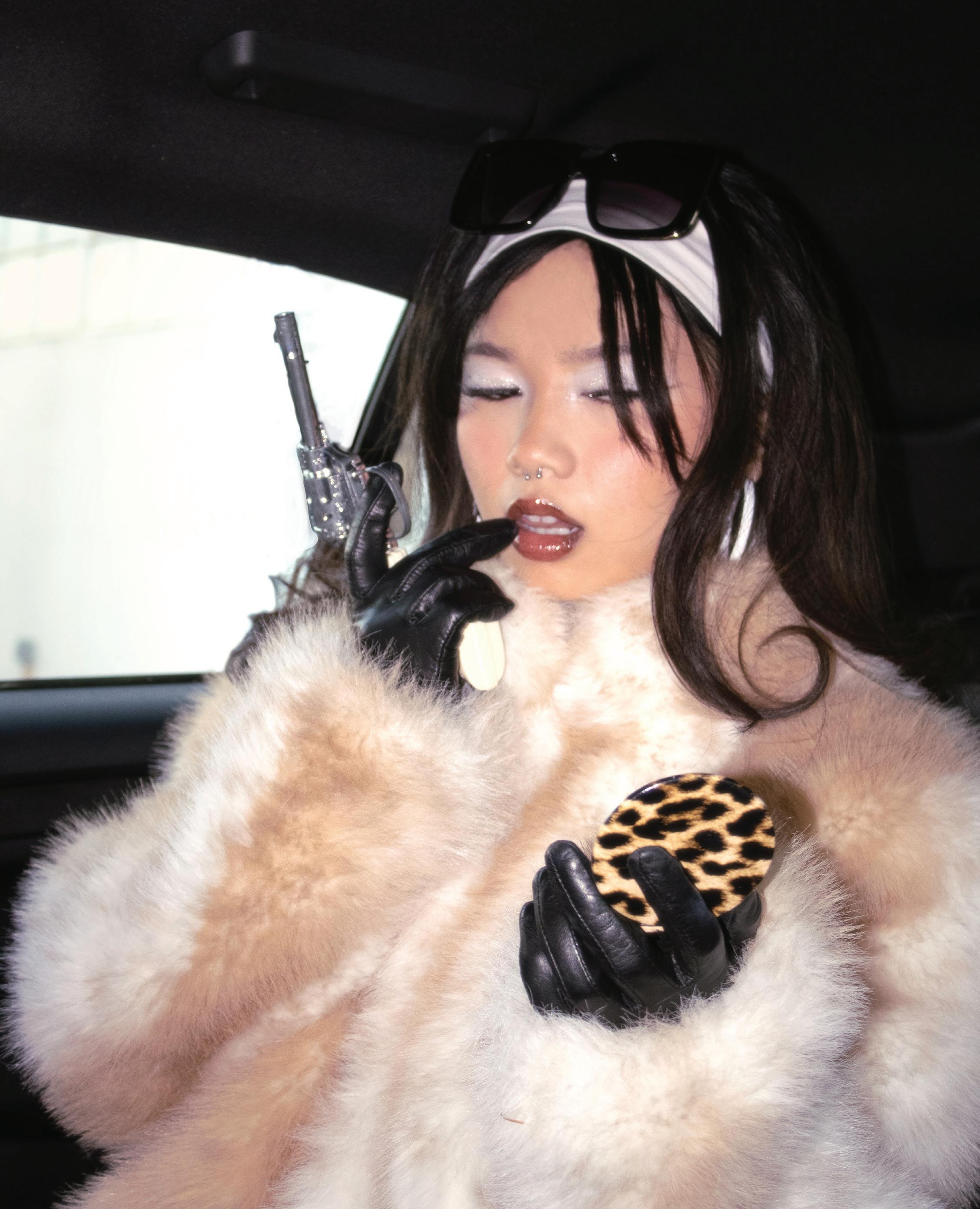
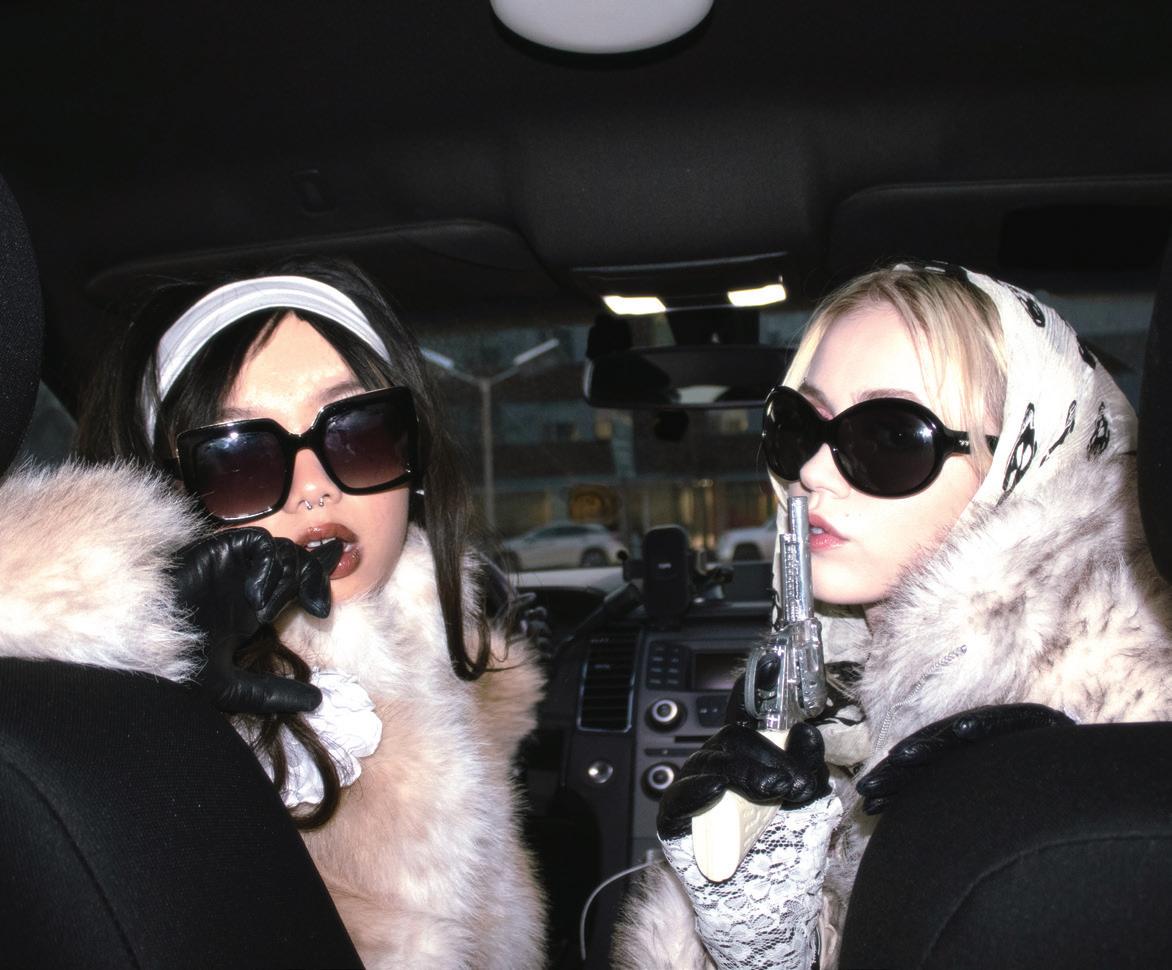
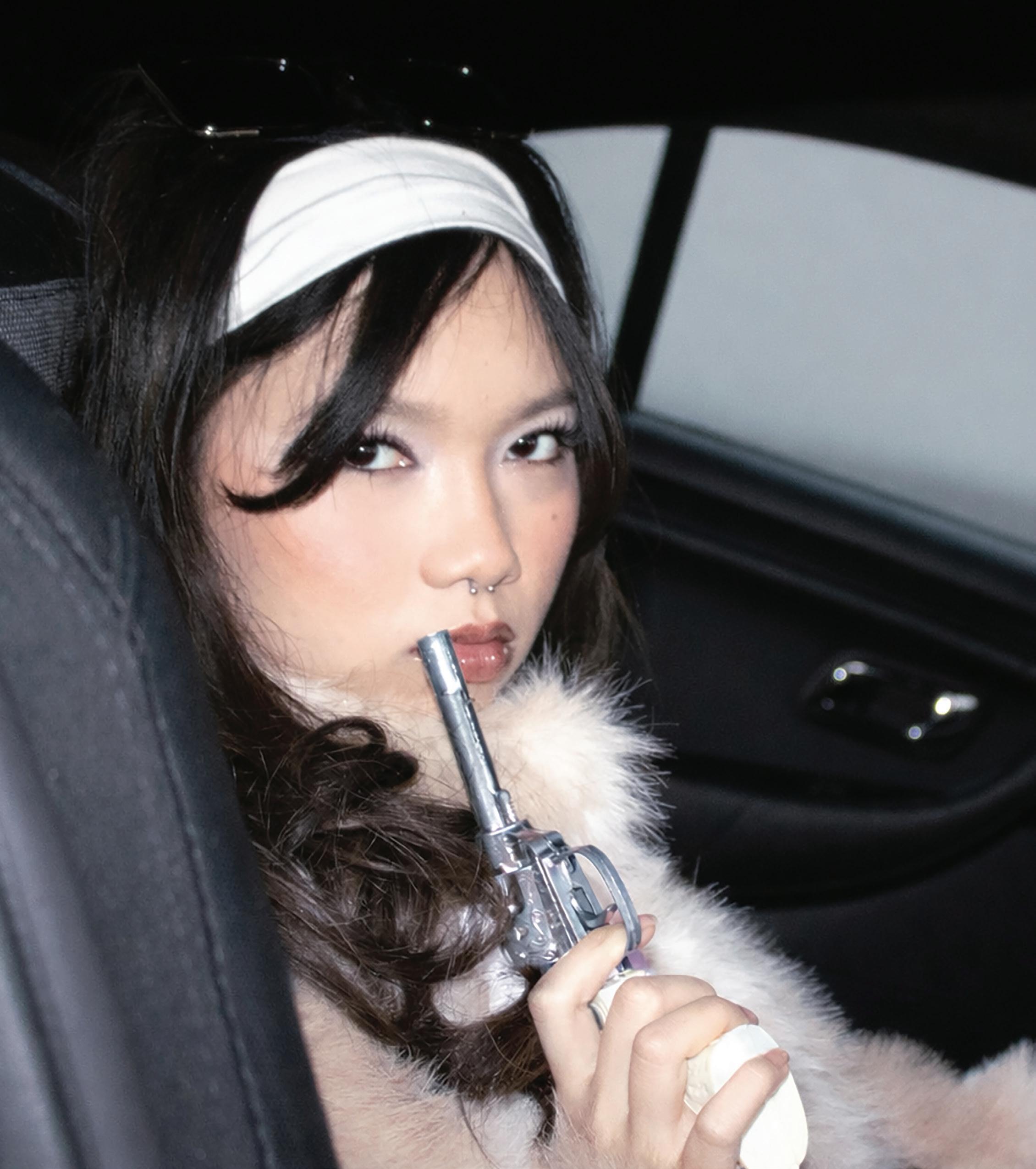
THE CHICEST SPIES EVER ELLA JAKSHA ART WITHOUT INVITATION ANDRÉ LEON TALLEY WEAR IT ON YOUR SLEEVE OUT IN DAYLIGHT VELVET POUR EMBROIDERY
THE UNUSUAL BEHAVIOR OF THE YOUNG NACIREMA CLOWN SHOW
DAUGHTERS DONT BURN GENTLY GIRL BAND BORING CLOTHES ARE BACK MAN ENOUGH ASYLUM PLASTIC PLAYTHING A MUSE IS MADE ONE VOICE, ONE DRUM BLUE NOTES
THE SPIRIT OF THE SCHOLASTIC BOOKFAIR AFTERGLOW INVISIBLE EXPRESSION THE BLACK SHEEP COMPLEX WHY DOES ART ATTRACT THE WORST? OFF THE CURB AFTER THE MOMENT FROM FEELING MAN OF THE YEAR BEATNIK
The treachery of images
WRITTEN BY BECKHAM TORREY-PAYNE ART DIRECTOR ISABELLA KING
PHOTOGRAPHED BY JULIAN RAMIREZ-SANCHEZ STYLIST EVE HAGHIGHI MODELS ALEXANDRA BONDURANT, ELLA FOGG & KARTER GREEN DESIGNER ADDIE JENSEN
Essai
*CONTENT WARNING: The following piece contains brief mention of suicide in fiction.
We are surrounded by objects and materials that shape our consciousness. At the same time as we order objects, they order us, too. We may have simply imposed meaning onto a pipe. However, just as we manifest the experiences of the pipe — it is of our creation, after all — the pipe manifests our experiences.
It is not just the pipe’s aesthetic qualities that dictate meaning; the pipe-maker imbues the object with meaning through the production of those qualities. Explaining the production of a jug in his lecture “The Thing” (Das Ding), German philosopher Martin Heidegger says: “the potter, who shapes the sides and base upon the potter’s wheel, does not actually finish the jug. He only forms the clay. No – he forms the emptiness. For this emptiness, within it, and from out of it, he shapes the clay into a figure.” In the production of a pipe, we can see the production of a certain emptiness, as
Heidegger puts it. The pipe-maker molds the material into a pipe-like figure for a subject to find some relation to.
Magritte, in this sense, can be understood as a pipemaker. He paints the pipe in his work, “The Treachery of Images” (La Trahison des Images). The pipe, despite its emptiness as both an object and as a representation of a pipe, truthfully resembles a pipe. Michel Foucault, in his book on the painting, explains, “Let a figure resemble an object (or some other figure), and that alone is enough for there to slip into the pure play of painting a statement –obvious, banal, repeated a thousand times . . . ‘What you see is that.’” Foucault uses the term’ resemblance’ to describe the aesthetic qualities of a set of lines drawn on a page. The set of lines Magritte draws resembles a pipe. But Foucault also feels the need to use a social term, one for the viewer: that of affirmation. In Magritte’s pipe, the image of the object affirms what we, the viewer, understand within a pipe: what a pipe is, what a pipe does, and who uses a pipe.
However, Magritte disaffirms this; he actively counters the movement that the viewer takes up: “Ceci n’est pas une pipe.” This phrase (also made up of a set of lines) once again resembles certain things. In this case, the lines resemble text and the French language. How then does the audience affirm the text? What must the audience take up as truth in the painting? Magritte, in his disaffirmation of the pipe and his broader use of a non-affirmative methodology, completely removes the logical constraints we imagine the painting follows. Just as much as we question the nature of the pipe, so too do we question the nature of the text. Is the pipe truly a pipe? Is the text truly text? Can we believe what we see?
David Lynch’s “Mulholland Dr.” (2001) processes identity through the same lens as Magritte. Lynch places identity as the product of social interactions and social relations. Just as Heidegger discusses the pot-maker, Lynch dissects the identitymaker: in this case, the identity(s) of characters Diane/Betty. Chris Rodley, in his summary of the film in his collection of interviews with Lynch, describes the film as such: “Are the first two-thirds of the film — in which Hollywood ingenue Betty Elms tries to help the amnesiac Rita discover her real identity — a ‘dream’? Is the final third — in which Betty turns into the suicidal loser and drug addict Diane Selwyn, and Rita becomes her treacherous lesbian lover Camilla Rhodes — ‘Reality’? Or is it the other way around, perhaps?”
Once again, we, the viewers, encounter the same nonaffirmative actions in Magritte’s work. Perhaps Betty is the real person, and all of Diane’s actions (like the text in “The Treachery of Images”) disaffirm what we previously thought about the resemblance of Betty. Instead of being a naïve young Hollywood hopeful, we are placed into Diane’s nihilism, misery, and, perhaps, most importantly, her destruction.
However, the reverse is possible. Diane could be the true protagonist, the real character in a world that resembles our reality. However, once again, Betty’s actions disaffirm what we know about Diane. If Diane has gone through with her suicide by the time Betty and Rita find her body, then how can Betty be there? Just like Magritte, Lynch calls into question which is which: Is Betty real? Or is Diane real? If we can be certain that Diane/Betty is both Betty and Diane, the competing forces underscore her emptiness, and it is the social interactions and space that end up placing Betty as Betty and Diane as Diane. However, this idea still requires faith in Betty/Diane.
We can believe Magritte’s pipe is an actual pipe. Still, the written words sow doubt: how can we truly know which is the real statement and which is the fabricated statement? Which statement truthfully fills the emptiness of the pipe, and which identity fills the emptiness of Betty/Diane?
Does it truly matter? Or should we take the emptiness for what it resembles: full of nothing?
“If a Hole” If a hole were just a hole without a thing around it, who would know it was a hole and how would they have found it?
- Kay Sage
It fits in a jacket pocket — creased into eight squares and stapled down the spine. The pages are crowded with photocopied images, hand-drawn illustrations and collage scraps held in place by washi tape. Large, bold text often appears in Sharpie or glitter gel pen. Nothing is polished, but everything is deliberate. The message is impossible to ignore.
It moves from hand to hand — left on a table, pinned to a bulletin board, passed between friends, traveling through bedrooms and classrooms. It circulates quietly but persistently.
It’s a zine: a self-published booklet made to be copied and shared from person to person. Cheap to produce and easy to distribute, zines move information quickly without sacrificing creativity. They do not require a publisher, funding, or formal approval. A single sheet of paper, folded and stapled, can be copied dozens of times in a day.
Marisol Peters understands that power intimately.
Now a senior at the University of Oregon, majoring in Native American Studies and Planning, Public Policy and Management, Peters serves as chair of the ASUO Programs Finance Committee, works with Special Collections and University Archives, and has been deeply involved with the Native American Student Union. Her work often centers on preserving student histories and supporting campus organizing. But her relationship with zines began years earlier, at an all-girls school in Texas.
During the isolation of the pandemic, Peters and her friends began mailing zines back and forth. At first, they were small and personal — collections of song lyrics, collages made from CD booklets, and handmade labels. She was 17 and looking for a creative outlet. Zines offered a way to stay creatively engaged and connected to her friends.
That creative exchange took on new meaning in 2022, when Roe v. Wade was overturned while Peters was still living in Texas. The same folded format she had used for art became a vehicle for protest. She began creating zines that listed protest dates, chants, and reproductive health resources. The structure did not change, but the purpose did. Zines became a way to organize and spread information.
At the University of Oregon, that instinct to condense and circulate information has continued. After spending months
researching the history of the Native American Student Union, Peters transformed months of archival work into a single folded sheet. She handed copies out at the annual Mother’s Day Powwow, translating institutional memory into something immediate and accessible.
“That was one of my proudest moments,” she said. “I put six months of research into a single page that I handed out to my community.”
In spring 2024, when students established a Gaza solidarity encampment on campus as part of a nationwide wave of protests calling for divestment and transparency, Peters again turned to zines. As tents went up and conversations intensified, information spread quickly online — but not always clearly. Students walking past the encampment often did not know what the demands were or how to engage.
Peters was part of a group that created zines to outline the encampment’s goals, summarize key context, and provide ways for students to get involved. Instead of asking people to scroll through fragmented posts, the zines gathered the information in one place. Handed out directly, they lowered the barrier to entry. They made participation and understanding feel tangible.
What makes the format effective is its accessibility. A zine does not require design software, a large budget, or institutional backing. Peters often shows groups of students how to fold a zine, emphasizing how quickly it can be done. Anyone with paper, a pen, and access to a copier can participate.
The physicality matters, too. Unlike digital posts that vanish in a feed, zines remain. They live on desks, bulletin boards, and telephone polls. Their creases reveal how many times they have been folded and unfolded. They carry evidence of touch.
For Peters, zines are both a creative outlet and a practical tool. They allow her to merge research, art, and organizing into something that can be held. In a media landscape dominated by speed and polish, the act of folding paper by hand feels radical in its simplicity.
When there is information that feels urgent or a passion that refuses to stay quiet, it does not have to wait for a platform to be heard. It can start with a piece of paper, a few folds, a pen, and hands to pass it along.
REVOLUTION THROUGH CREATION CREATION
hen politics feels increasingly hostile and exhausting, resistance is often portrayed as stern and joyless. But some of the most offbeat forms of protest rely on play, humor, art, and intentional absurdity.
This practice originated in the Middle Ages, where fools discreetly protested at carnivals, using their position of silliness to safely criticize the church and crown. This has since adapted to more modern forms of “tactical frivolity,” where movements use humor to confuse authority, expose its fragility, and make repression look foolish. In the 1960s, Yippies, radical hippies of the Youth International Party, nominated a pig for president to protest the Vietnam War. In 2025, Portland protesters dressed in blow-up frog suits to confront U.S. Immigration and Customs Enforcement (ICE). Stupid, or strangely effective?
The political landscape feels like it has transformed from a dialogue to a deathbed. While anger and direct action are needed for change, how long can they sustain us? Joy can be a source of strength, especially through song.
For example, in Minneapolis early this year, thousands gathered, singing songs inviting ICE agents to leave destruction and hate behind: “It’s okay to change your mind / Show us your courage / Leave this behind / It’s okay to change your mind / And you can join us / Join us here anytime.” That same week, drummers lined the streets of the city, striking hi-hats and cymbals with love and urgency to fight violent immigration enforcement in our country.
is sustainable resistance. Rather than burnout-driven activism, fun and creativity function as cultural selfpreservation — ways to maintain stamina, clarity, and connection over time. It also prevents oppressors from lying about the nature of the revolution.
By being rooted in creativity and support, movements refuse to be painted as violent or destructive.
Joy, in this sense, isn’t decorative. It’s infrastructure.
Through examples across history, art, sound, and performance have also functioned as tools of resistance. Jazz, once dismissed as noise or moral decay, is itself a form of protest, rooted in Black survival and expression. During the Civil Rights Movement, collective singing wasn’t just symbolic; it sustained people emotionally and spiritually. “This Little Light of Mine” and “We Shall Overcome” were live resuscitations of the cause, pushing oppressed populations to keep fighting. The Hippies of the 1960s rejected war, globalization, and materialism by promoting the “Free Love” movement through music, peace and worn denim. In this way, fashion became a language of refusal. 1970s punk scenes then flipped the script, using loud and chaotic joy through moshing, outrageous safety-pin style, and rawness to battle social norms head-on. This type of visual rebellion carried forward in the oversized silhouettes of '80s Black hip-hop culture and the bandanas and lowrider aesthetics of '90s Chicano culture, claiming space and visibility in cities that tried to erase them.
realities, reducing the anger of oppressed people to a slogan. Joy strengthens movements when it emerges from shared struggle; it flattens them when it replaces seriousness with comfort.
PHOTOGRAPHED
Today, outrageous fashion and playful protest continuously show up in art, satire, and spectacle, especially among younger organizers navigating an unpredictable and hyper-visible political world. These countless examples have one common thread — joy as subversion, not avoidance. Creation and happiness are effective political tactics that maintain peaceful, yet disruptive, action.
However, this strategy also carries a critical tension: when does joy strengthen a movement, and when does it risk flattening it or trivializing real harm? Is “joy as protest” genuinely radical, or does it sometimes soften urgency? For example, one could argue that the “peace and love” rhetoric of the '60s sometimes ignored racial and economic
A HISTORY OF JOY AS PROTEST JOY
Since the introduction of social media to the political landscape, fun, Instagrammable protest can replace concrete political action — where we repost infographics instead of calling our Senators. In these instances, joyful protest becomes a luxury afforded to those insulated from harm. Take Pride Month, a celebration of queerness, which has become largely commercialized, creating the narrative that pleasurable protest is permitted only when profitable. WRITTEN BY
We also must ask ourselves who we tolerate joyful protest from and why. Who gets to feel joy in moments of crisis and who is punished for it? Decades of learned biases have conditioned us to view joy differently when it comes from different groups. The joy of marginalized communities is frequently policed, framed as disruptive and excessive, whereas white self-expression is more often framed as innocent or harmless. The same acts — laughter, dancing, celebration — can be praised as carefree in white bodies and socially punished as disorderly in Black ones.
Amid this double standard, we see that joy itself is not neutral, but filtered through systems of power that determine whose happiness is permitted, and whose becomes a threat. So what does it mean to insist on joy in a moment that seems to demand despair as proof of seriousness? Can taking the traditionally untraditional path of laughter, art, and play function as refusal?
Playfulness and creativity destabilize oppressive norms by simply existing. For example, queer joy in spaces that directly deny it is an ethical assertion that life and pleasure also belong to marginalized people. This is rooted in prefigurative politics;
modeling the world you want to live in before it actually exists in law and policy. Making art, jokes, music, or creating moments of collective pleasure under oppressive conditions becomes a way of practicing freedom before it is passed by Congress. These moments form micro-utopias, temporary pockets of relief and possibility inside an otherwise hostile system.
Etched into the generations of movements that came before us, using joy as resistance sweetly screams to the oppressor that we will not surrender our bodies, imaginations, or happiness to systems that thrive on our exhaustion and despair. The demands of the movement, the cut of the jeans, and words on the protest sign may change, but one value endures. Unapologetically living with happiness, humanity, and creation seeping from your spine is radical.
Joy must not be postponed until liberation, but embodied alongside it.
SCAN
THE SPOTIFY CODE TO STREAM THE
LIBERATION,
JOY MUST NOT BE POSTPONED UNTIL LIBERATION, ALONGSIDE IT. BUT
EMBODIED EMBODIED
So I was sitting in my cubicle today and I realized, ever since I started working, every single day of my life has been worse than the day before it.”
- Office Space
In the 1980s, the American workplace was at the height of desirability. So-called “yuppie” culture had infested itself, bringing in waves of young ambitious men and women inspired by dreams of wealth and high-class lifestyles. Popular culture was fueling this drive, with the film “Wall Street” (1987) dominating the minds of citizens with workplacepropaganda and the idea that “greed is good.”
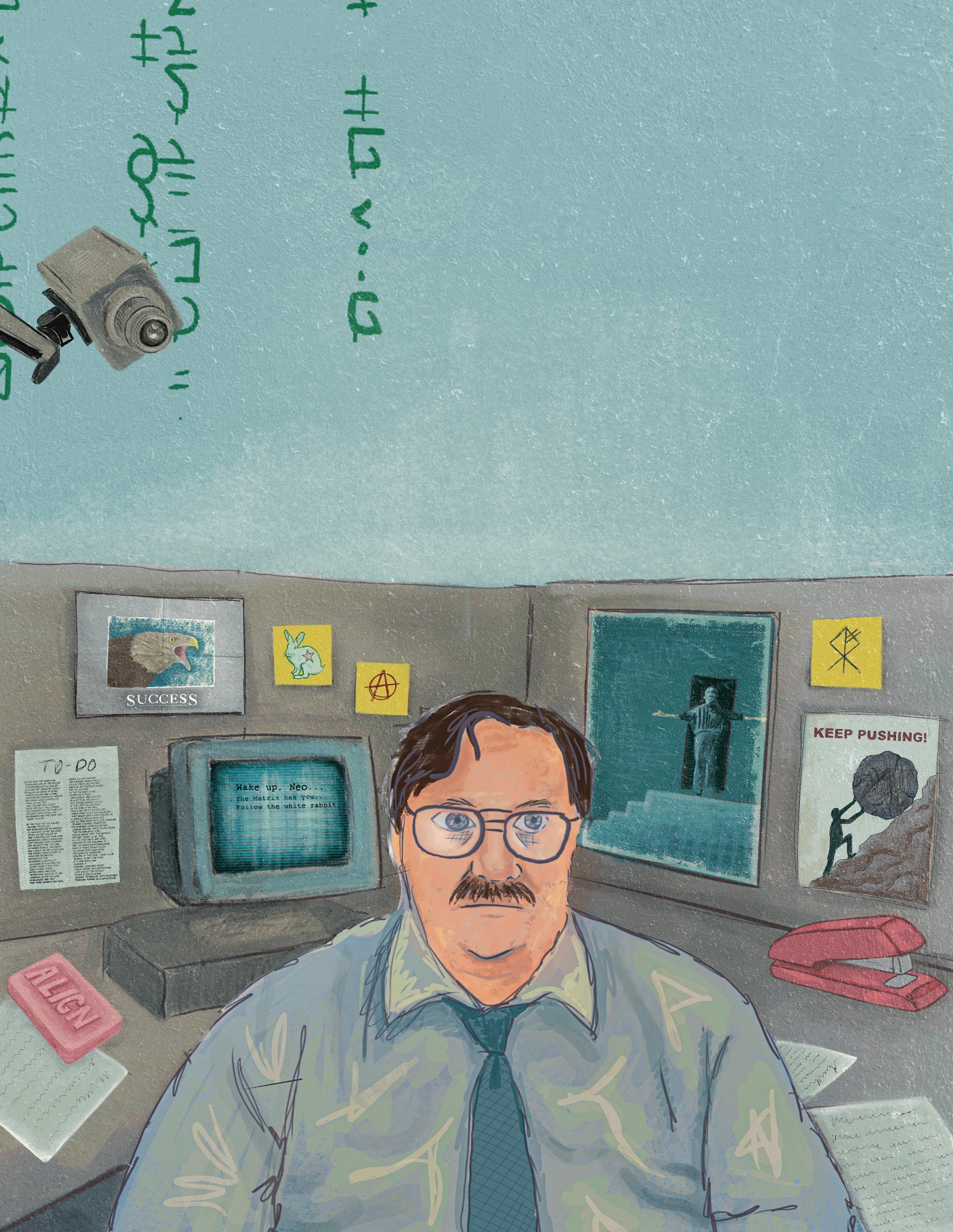
By the time the ‘90s rolled around, those who had been seduced by dreams of success in the ‘80s were stuck in the reality of cubicles and computerized busy-work. Increased labor downsizing left workers with lessened job security and, in turn, lessened morale, integrity, and loyalty in the workplace. The steady development of computer technology introduced the sisyphean lifestyle of clicking on a screen for eight hours a day, five days a week, month after month, and year after year. Suffice to say, workers in the ‘90s were displeased and felt they were given a raw deal.
indulge in corporate greed, the pop culture of the ‘90s paid close attention to this indulgence, and reacted in suit. Thus, the era of anti-establishment films of the late ‘90s was born.
In the span of 497 days, from June 1998 to October 1999, there were four films released that began with a man working in a cubicle-style workplace,
against a mundane, consumer-based world intent on commodifying life itself. “The Matrix” shows a man fighting against technology, with machines trapping humans in a simulation to use as batteries to power their apocalyptic world. “The Truman Show” depicts a seemingly average man, secretly being watched and studied by the entire world until he escapes his jailers. “Office Space” takes a more head-on approach, following a man fed up with the modern workplace until he learns he doesn’t have to do anything, and is shown that the system that has been draining his life every day is, for lack of a better word, bullshit.
Where ‘80s pop culture encouraged Americans to follow their wallets and
forever forgetting the mundane lifestyle he was leaving behind. These films, being “The Truman Show” (1998), “Office Space” (1999), “The Matrix” (1999) and “Fight Club” (1999), all fit this mold and were inspired by the feelings of the ‘90s American businessman.
Each of these films follow a common idea consuming the minds of American workers at the time. “Fight Club” brings us into the mind of a man revolting
This idea is the center of these films, as so many people felt like their lives working day in and day out were in fact meaningless. They had spent their lives up to that point going through school and lesser jobs, all to reach a point of tireless toil, filling the pockets of CEOs they’d never meet, until the point of retirement. These films acted as an escape from the mundane; a tale of a man ripped away from his average life to be shown that he is, in fact, extraordinary.
If we take a step forward to the modern day, it could seem like this problem has been fixed. According to a December 2024 study conducted by Pew Research Center, 88 percent of Americans are at least somewhat satisfied with their jobs, with 50 percent of them being very or extremely satisfied.
However, other sources are telling us a different story.
A study done by the American Psychological Association tells us that around one third of Americans aged 18-34 feel lonely every day. While people may be somewhat satisfied with their jobs now, they still experience the same daily slog workers of the past endured.
The problem may not lie with employed but rather those looking for work. According to the U.S. Bureau of Labor Statistics, job openings have steadily decreased over the last four years, hitting just over 6.5 million in December 2025 compared to just over 12 million in March 2022. Additionally, CBS News tells us that 2025 brought 55,000 job cuts due to artificial intelligence, a number that will only increased as the years go by.
As we dive deeper into an uncertain future, it’s important to remember the lives of those who have experienced what we are experiencing, just in a different context. These films make it easy to see how people felt about their lives in the ‘90s, and how badly they needed an escape from them. Hopefully we can learn that lesson before we delve more into repeating the past, but whatever happens, we’ll have some good movies to watch along the way.
WRITTEN BY KEIRA WILSON
ART DIRECTOR AINSLEY MCCARTHY
PHOTOGRAPHED BY ZOE MAITLAND
MODELS KEIRAN CHRISTIANSEN & LEV KELLMAN-LIMA
STYLIST ALYSSIA TRUONG
DESIGNER LIV BOURGAULT
Mid-summer in Madrid pulsed with life — bustling crowds moving through restless streets that never slept. Fragments of conversation intertwined with the warm midnight air, seeping through the crack of the bathroom window into the suffocatingly small hostel bathroom. Steam veiled the mirror, heavy with the breath my friend and I shared in the heat, dampness coating our skin. I pressed my hands against my hair, which wanted so badly to take the moisture-ridden air and curl into an excited disarray of knotted fringe. A bit of lipgloss, clumped mascara, solo cups strewn across the bathroom sink. An energy of excitement hung around us, a slight buzz in our heads. Evening found us still in the ritual of transformation — fabric slipping over shoulders, perfume blooming in the air, kitten heels clicking against tile — until at last we tumbled down the hostel stairs, bright with impatience. A restless thrill fluttered at our ankles, urging us forward through the warm Madrid night toward the beating heart of the city: the Barrio de las Letras district, alive with music, wine, and wandering souls.
The city did not hum — it roared. We pushed through the heavy doors, and the night exploded around us. Deafening. That was the only thought that my mind could conjure. Music was like thunder in my ears, the bass penetrated my skin, lightning in the souls of my feet. We stood before the throng of sweaty bodies, all pressed against one another as limbs jutted into the air and flashes of hair flicked from side to side. I sucked in a breath, filling my nose with the stench of spilled alcohol, mixed with pheromones from the hundreds of bright-eyed revelers that crowded the Kapital club for a night of euphoria. Europeans thrived off of the strobing lights and beautiful chaos. It was under the roaring of the speakers where I submerged myself within the sea of strangers, my muscles willed to rouse. Heat all around me, sweat slicked to my skin. Not mine, though.
Smoke curled through the air like slow, deliberate dancers, catching the fractured light of the strobes. Bass rolled underfoot, a low, hungry pulse that trembled in my
Faces passed like fleeting shadows, lit in red and gold for a heartbeat before disappearing into the swirl of bodies. The air tasted faintly of perfume and heat, of laughter pressed close and music pressing closer, folding the space in on itself until walls, floor, and ceiling were nothing but movement and glow. Every beat lingered, quivering in the throat of the night, a promise that the dark would not let go. A clap of reverberation that hugged my body and encapsulated all of my senses. French to my left. Russian too. I thought. My body began to move in rhythm with the music. My shoes stuck to the floor as if they were made of sap and honey. No, just spilt tequila. Brown eyes in front of me. Blonde hair grasped my skin exuding transudation. My scratchy top pressed into my sides, but I could hardly notice it with all the textures of the silks and linens that mingled against me.
A bomb of confetti burst into the air, trickling down slowly as if it were the beginning of a rainstorm. Cheers erupted, feet stomped like an earthquake vibrating through me. I had my hair pulled into a pony on the back of my head, which did nothing for the tangles and flyaways that ended up caught in my eyes. My friend grabbed me, pulling my body into an unsteady rhythm as we swayed together in tandem. Her smile shone bright beneath led lights that made her skin glow.
Beats fractured and reformed, sometimes slow and sultry, sometimes frantic and jarring. First, it was techno. The electronic booms and sharp, digitized percussion, all slightly undermined by the robotic voice effects that carried in the lyrics. Then, like auditory whiplash, came the Spanish music. The mob of individuals erupted into screams as bodies began to push and shove against me in an exaltation of the night. Acoustic guitar. The Spanish speakers pushed their vocal cords to join the lyrics of the song. Those who didn’t went along. My friend tried to sing, but her words turned into unpredictable syllables that clashed with the percussion and horns. Allencapsulating, like an aura that surrounded my body and brought me into myself. Yet, I was so far from noticing my movements. All I could do was sway with the crowd. We sang the lyrics we knew, straining our voices until my throat ached and burned. I didn’t care. Oh my god, they were playing Justin Bieber, now. The high pitched tones
of shrieking girls who, too, began to scream-sing. Justin Bieber, a universal name, funnily enough bringing people together from across all oceans.
A group of girls to our right met my eyes and, with big and bright smiles, began to dance with us. I never got their names. Only their clammy hands felt on my shoulders and their voices rang in my ears. I would never know their home. Only that they were here, at Kapital, with me, late at night in mid-summer. I wondered what their story was, but that thought only briefly passed me by as we clung to each other. Completely and utterly consumed by the music we shared. Together. Their faces were only half remembered, faint in the back of my mind. The sound of our laughter mingling in the air, our legs pounding together in the small circle of space
The stench of sweat slicked skin, alcohol on everyone’s breath. Hot, it was the only thing I could focus on. The heat grabbed onto me like a blanket that I couldn’t escape. Body heat of the hundreds weaving with the summer Spain air. Lights strobed in my eyes — purple and blue and pink and green. Neon. Like a cyber-futuristic city. Up and down, side to side. All around me. I didn’t even know what time it was, my phone was long gone from my mind. It had to be well past 1 a.m. Yet, people would go on to dance and sing in clubs into the wee hours of the night, subsisting on ecstasy. Ecstasy of music,
When my friend and I finally spilled into the street, the air felt like ice on my skin heated to, what felt like, one thousand degrees. It must’ve been 70 degrees outside, though. My ears rang with the echo of the screaming speakers, my
ART DIRECTOR LUCY MCMAHON
PHOTOGRAPHED BY EMMA
LAWSON
MODELS AVERY WILSON & MALINA PHAM
STYLIST LUCIE HIRSCH
DESIGNER PENNY HENSON
ILLUSTRATED BY ELLA JAKSHA
ART WITHOUT INVITATION
Whether you’re familiar with graffiti or not, undoubtedly you’ve seen it all around you. In the inside of tunnels, tagged on overpasses and electric boxes, passing by us on railroad cars and packing trucks. We are surrounded by graffiti, yet many pass by without further thought.
But it begs the question: why graffiti?
used for people seen as inexperienced or untalented — writers with very few pieces, which are pieces of low quality.
For many, the world of graffiti is opened by friends or community connections. Graffiti is a way of being seen when you feel unseen. “Every graffiti artist has some ego… it’s a way to feel seen, your way out, the only option you can think of” says a Eugene writer who chose to remain anonymous. At its core, graffiti is a way of saying “I was here” in a world that may otherwise ignore your existence.
In a culture of wanting your art or name to be seen, there is a large emphasis on keeping others’ work untouched. Painting over other graffiti is widely regarded as an affront, “If you make a disrespectful move like writing over someone, your work will get crossed out,” says the Eugene writer. This action is called stamping — covering someone’s piece is a direct insult to the artist and can cause conflict between writers or artists.
With ego and reputation integrated into the culture of graffiti, there is undoubtedly a social hierarchy written on the walls. Writers perceived to be at the bottom are called “Toys,” which is a pejorative term
Writers with more respect are those who produce great pieces and have been writing consistently for a long time. Writers will also gain respect for putting up pieces in buff spots — spots that are commonly covering graffiti, which shows they are active, meaning they are currently and consistently producing new work.
What are the differences between tags, pieces, and other forms of graffiti? Tags are the smallest works, commonly done with paint pens or squeeze pens. Found in places like on electrical boxes, trash bins, and mailboxes posted outside. Throw-ups are larger and usually created with spray paint, typically consisting of no more than two colors. You will see these more frequently around town because they take less time execute. A piece is a more detailed form of graffiti that takes much more time and skill to achieve. These are the more complicated pieces with multiple colors and intricate designs.
Each writer has their own style, with unique visual attributes, forms, and methodology. Some are very blocky or rigid, some are so chaotic you can’t even read it; this is called “Wildstyle.” Style is a tradition, and can be passed down from artist to artist. Experienced artists teach younger ones how to shape their letters and utilize different pens. Styles vary so greatly that a trained eye can distinguish between writers motivated by adrenaline and those focused on the art of it.
Not bound by aesthetic gatekeeping and bypassing the gallery space entirely, graffiti challenges institutional restrictions by occupying public space without invitation. It is an art form centered on visibility rather than commodification.
British street artist Banksy once stated, “Graffiti is one of the few tools you have if you have almost nothing” (Banksy, Banging Your Head Against a Brick Wall). Its unmediated and unsanctioned nature creates a practice that benefits the artist through physical release and expression.
“Graffiti is a creative release for sure, but I have heard so many people say, ‘graffiti saved my life.’ In a place where you don’t feel heard or respected, it’s kind of like, I’m going to go get that for myself,” stated the Eugene writer.
When institutional systems deny recognition, graffiti becomes a self-granted form of visibility. Artist Keith Haring vehemently opposed the commodification of art, advocating for it to become democratic, accessible, and socially conscious. He believed it should “liberate souls” (The Keith Haring Journals).
Graffiti epitomizes this sense of liberation. It benefits the artist not because it’s transgressive, but because it allows the artist to act without permission. In this way, risk becomes intertwined with agency, not the point itself. Another anonymous writer said, “Graffiti writers are operating in a system that censors creativity. Think of a rebellious teen who wants to be expressive and break rules; risk is part of that process.”
While beneficial, graffiti is not free of institutional pitfalls. There is inherent irony in Banksy, and the cultural capital of a Keith Haring print. Graffiti, as a process, does not equate to a potential market outcome. Its benefits arise before commodification, and once it is absorbed into institutions, it loses the qualities that enable artists’ sense of release.
The Eugene writer stated, “Once you commodify something that isn’t meant to be bought, it’s not really graffiti anymore. If you’re a muralist who does graffiti letters, you’re not a graffiti writer.” The institutionalization of graffiti stems from the system’s hunger to neutralize dissent.
The legal system imposes an arbitrary stigma on graffiti, associating it with other criminal acts while ignoring its function. “That association never made sense to me. Like what’s f*cking wrong with some colorful letters on this gray wall?”
It takes a degree of cognitive reframing to separate legality from harm. This is a necessary lens for viewing graffiti. It can be seen as a form of damage because it disrupts institutional order, but it is, in fact, a refusal to accept visual monotony. In his preface for “The Picture of Dorian Gray”, Oscar Wilde wrote, “The morality of art consists in the perfect use of an imperfect medium.” Graffiti transforms imperfect surfaces into complex imagery. In this sense, it is not an act of malice, but a moral craft.
When PacSun uses Keith Haring’s work on a collection, it insufficiently describes his art, prioritizing status over message. Graffiti’s value lies in the artist’s decision to create and in the moment of action in which it is created. Its afterlife in the gallery space or development into mainstream culture doesn’t define its purpose.
WRITTEN BY MORGAN HOPES ILLUSTRATED BY
NINA VAN RYZIN DESIGNER
AMELIA FOX
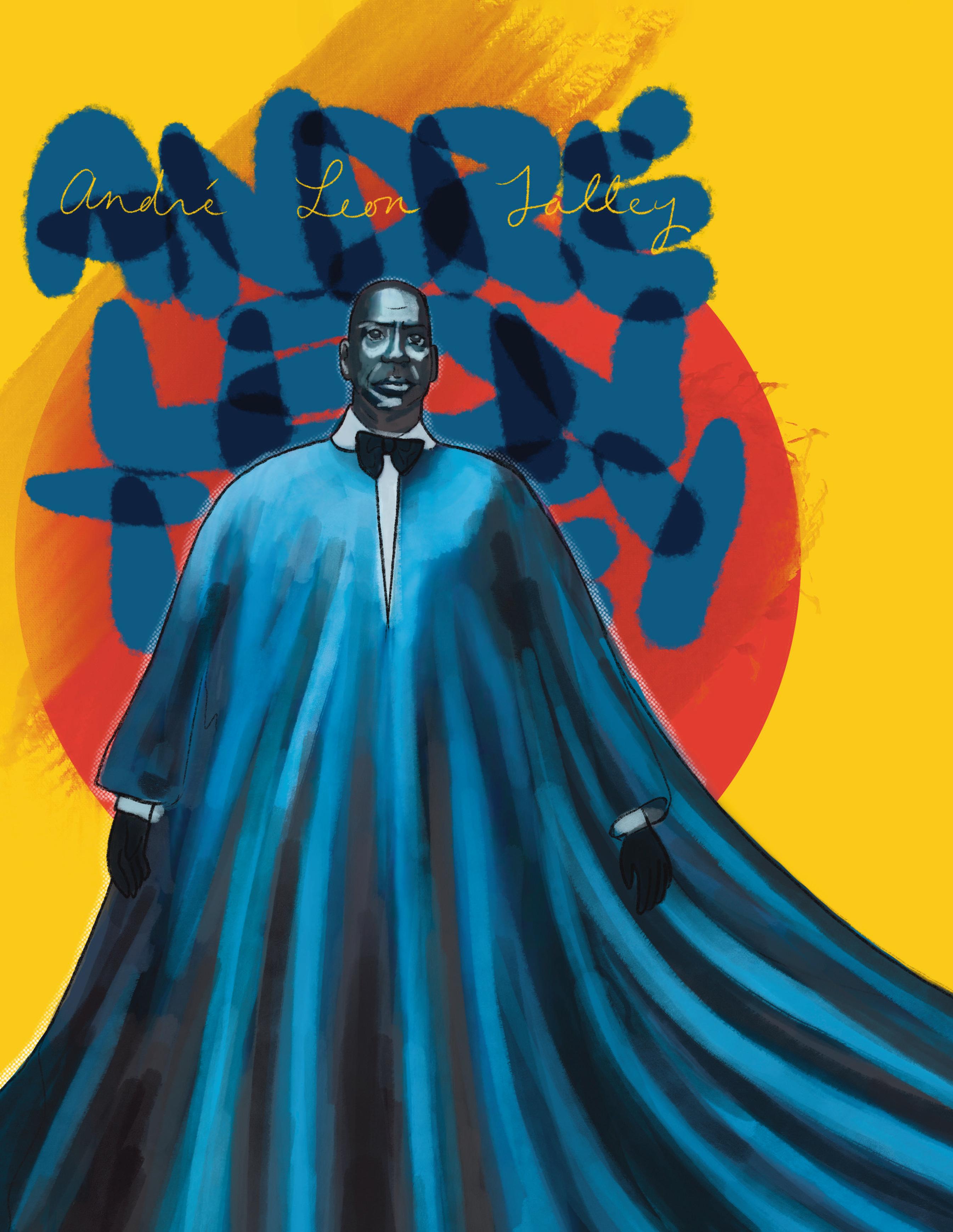
On January 22, 2023, André Leon Talley passed away. However, his story and his impact on the fashion world shall never.
André Leon Talley was born in 1948 in Washington, D.C. and raised in Durham, North Carolina. Bennie Francis Davis, his grandmother, raised and provided for him working as a cleaner at Duke University (Robin Givhan, Britannica). People assumed that Talley had a poor childhood due to her occupation, status, and race. Her occupation was of low pay, and being Black in the segregated South almost guaranteed that she would face adversity. However, according to Talley, he never knew poverty. All he knew was that he had food on the table, clothes on his back, and governing principles of hard work, determination, and faith. Those principles not only helped him in achieving greatness, but helped him survive through life.
Even when he would get assaulted on his walks home from school during his adolescence, Talley would show up for himself, working hard and sticking to his true interests. In the classroom, he developed his love for French. Outside of the classroom, he developed his love for fashion. On Sundays, assuming after he indulged in watching The French Chef from the previous night, he would watch his grandmother get ready for church. Talley was mesmerized by the construction and attention to detail of his grandmother’s outfits. Her handkerchiefs were always “as neat as a letter,” and her priority for dignity and spotlessness would rub off on Talley in both a creative and academic outlet (Talley, Garden and Gun). His attention to detail in both fields only launched him forward. Even though he faced adversity, the thought of a world where all that mattered were the clothes that complimented his shoes encouraged him to keep going.
Talley went on to get his degree from North Carolina Central University in French literature. He then went to Brown University on a full ride scholarship where he wrote his thesis on Baudelaire, and would spend time periodically in France as a student (Julia Reed, Garden and Gun). His obsession with French culture alongside his Southern Gothic roots enhanced his creativity and expertise that would move him forward in the fashion world.
After he completed his degrees, he moved to Manhattan in 1973 with nothing more than his education. His first professional jobs were at Andy Warhol’s Interview magazine and Women’s Wear Daily, and he found himself traveling to Paris, France. His knowledge of French history and ability to correlate it to fashion made him incredibly overqualified to be an editor. However, because of the racial climate, his expertise was met with constant doubt. Facing discrimination as a Black man proved to be an obstacle for Talley, but he had long learned to overcome challenges in a world that tried to hold him back. Talley realized early on that if he wanted to be great, he would also have to be the first.
Throughout his time at these institutions, Talley used his expertise in introducing American fashion to French designers like Karl Lagerfeld and Christian Dior (True Fashionistas). Both figures were pivotal in “haute couture,” a French term that translates to “high dressmaking” (Glam Observer). Haute couture are clothes that are hand-sewn from start to finish with only the highest quality of material. It is only purchased from the elite and truly propels high fashion as being luxurious and obtainable from the elite. Talley’s role in bringing cultural significance from Paris into American mainstream media helped him become American Vogue’s Creative Director from 19881995. Not only is this position incredibly prestigious and hard to obtain for anyone, but he was the first Black man to receive this high honor. He later went on to become the Editor-at-Large at Vogue, holding multiple influential roles throughout his career. Luckily for the world, he truly took advantage of it.
During his time at Vogue, Talley solidified his role as the “only Black man among a sea of white titans of style” (André Leon Talley). When the world did not offer Black creators a seat at the table, he would pull up a chair for him and others. Not only did he work with Anna Wintour to redefine modern Vogue, but redefined the elite himself by uplifting Black designers and striving for more representation in a predominantly white industry. For example, “Scarlett ‘n the Hood”, a photoshoot from May 1996 in Vanity Fair that starred Naomi Campbell, one of the most famous African-American supermodels of all time, painted her in an extremely luxurious light. Campbell was adorned in haute couture, and represented the Black woman as elegant, progressive, and rich. Furthermore, it shone light on the beauty of darker skin. Another example is when Talley featured a column in the late '90s dedicated to underrated Black designers like Stephen Burrows and Kevan Hall (Savannah Winstead, Lofficiel).
He used his corporate position to amplify Black creators directly and indirectly. Even though he was creating for Vogue, he was simultaneously defying them, because no one in the company was willing to push for diversity as much as him. By staying true to his values, he took up space. By sitting in the front row, wearing flashy colors, and incorporating elements from the African diaspora into his colorful caftans and haute fashion, Talley was like a bright flower in a bed of weeds.
As Talley now rests, he continues to inspire millions, and they may not even know it. His work inspired many Black creatives to find their footing, and told them it was possible to be successful in a predominantly white field no matter how great the odds are against them. Edmund Enniful, the first Black Editor-in-Chief for the British edition of Vogue, now carries the torch. His mission is to build on what Talley started, and he knows that it is important to pay credit when it is due. Enniful states that without Talley, he would have never thought he could achieve this position. This monumental moment is a testament that things can get better, voices can be heard, talent can be recognized, and as a society, the world can truly move forward.
WeAR slEeVE IT ON YOUR
EXAMINING BUTTON PINS AS A TOOL FOR REVOLUTION
personalize position them as a medium for personal activism and political messaging.
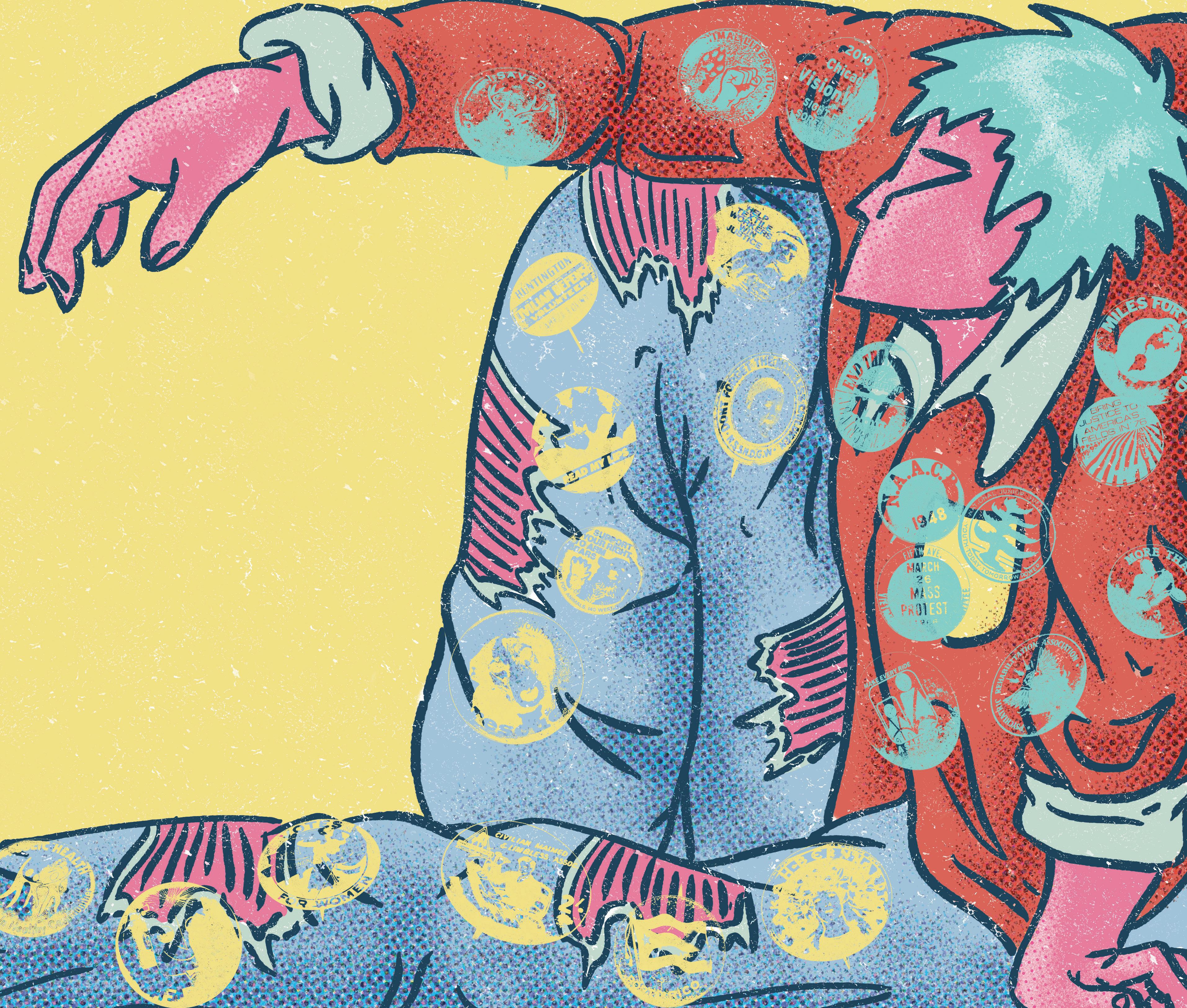
their existence is rooted in resistance. From small political campaigns to nationwide protests, Americans have used button pins to declare their causes for decades. Their popularity boomed in times of social unrest, especially during the Civil Rights Movement, the waves of feminism, and gay liberation. Their portable size and unique opportunities to
Unlike other forms of popular art, such as painting or photography, button pins exist without the barriers of rare, expensive materials and years of artistic training. They are instead easily accessible, as many revolutionary art forms have historically been. All that is needed is a button machine, paper, pencils, and a drive to create. This aspect appeals to countercultural movements that reject social hierarchies, such as worker reforms, racial justice, and gender equality. The assembly process is also incredibly satisfying, firmly pushing down on the lever and encasing your precious artwork in clear, shining plastic, popping out the perfect palm-sized button.
As an art form, button pins are wonderfully customizable and can be entirely personalized to the creator’s beliefs, values, and personal design tastes. Their blank slate allows for total creative expression, often through symbols, colors, and eye-catching fonts. Although their small surface often limits the messages that can be expressed, it forces the creator to break their thoughts down to absolute essence, resulting in short, impactful statements. Looking at these artistic choices can allow us to understand the aesthetics of both individual
movements and the visual influences of their eras. For example, the button pins worn by the hippies in the 1960s displayed the peace symbol and “END THE WAR” messaging, or the pink triangle symbol of The Gay Liberation movement in the 1970s. Each used button pins as a tool to signal the important issues and visual trends of their eras.
From grand-scale installations to the tiniest cries of protest, art of all scales will forever play a role in the political landscape of our country. While button pins may not be revered in history books or sold at auction for large sums of money, their availability to the public, transitional and transformative nature, and opportunities for customization have an impact much larger than their size. Button pins serve as a reminder that in our world of ever-unfolding change, even the smallest acts can speak the loudest.
Out In Daylight
A HISTORY OF THE SAPPHIC VAMPIRE GENRE
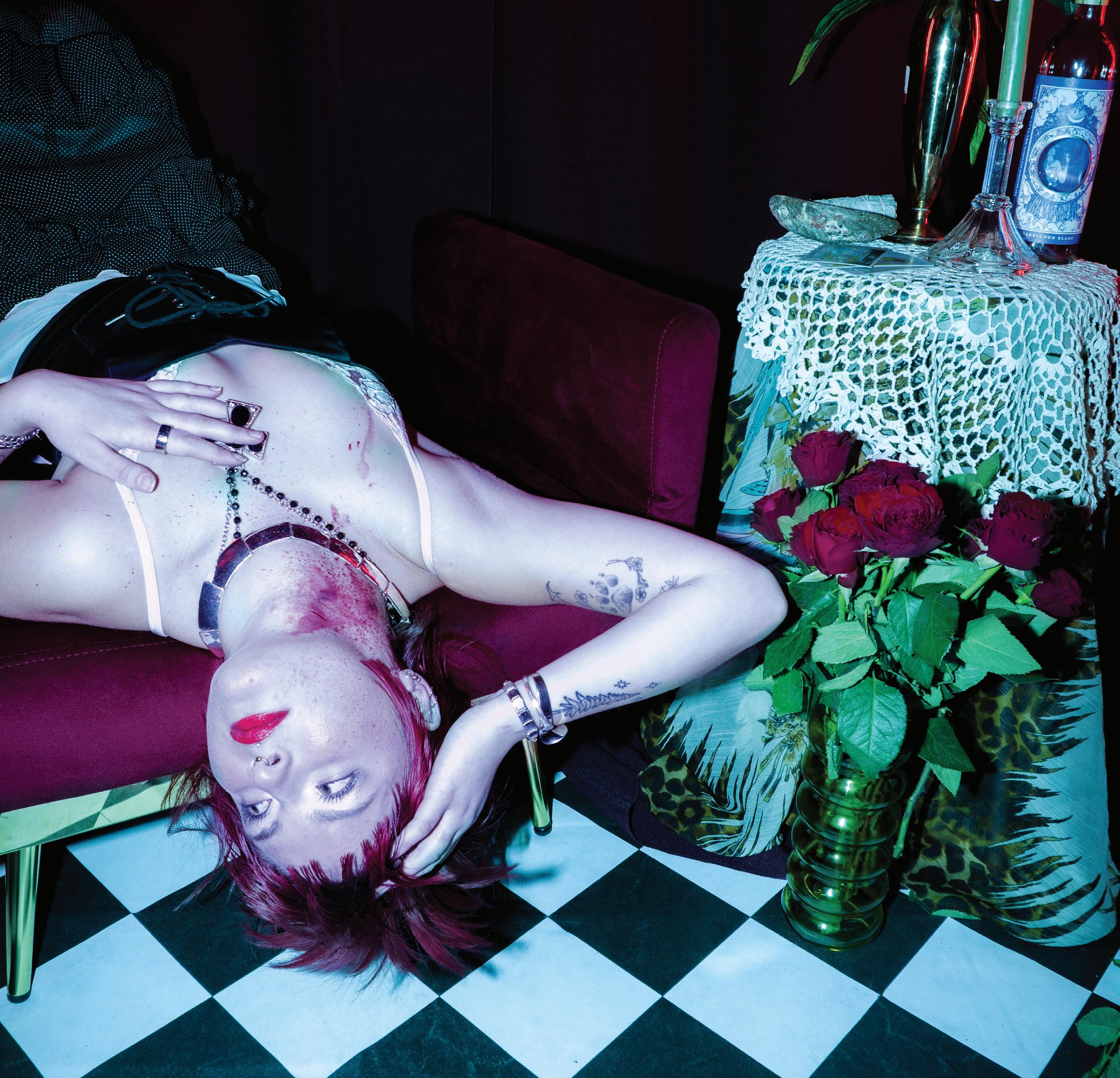
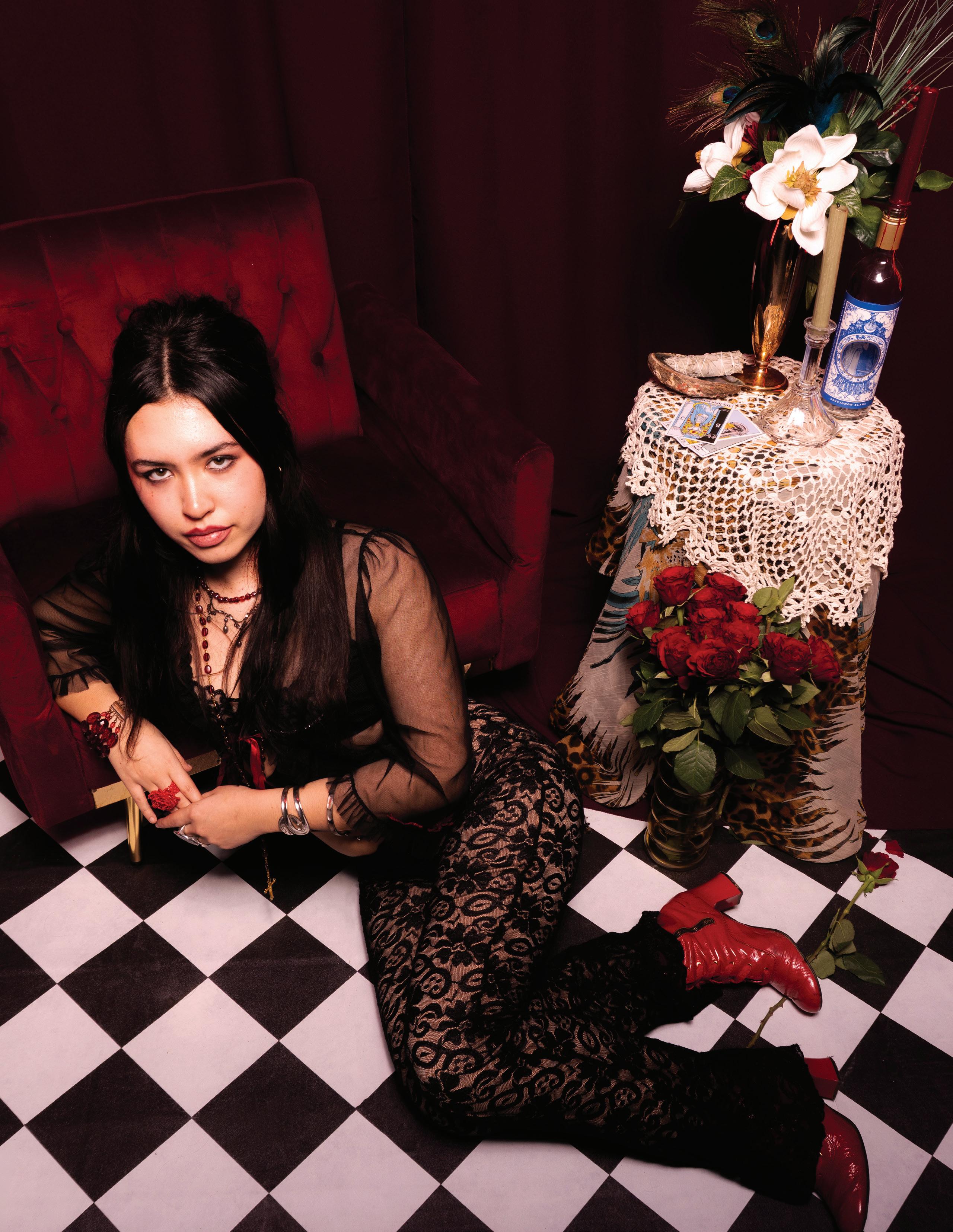
We’ve all heard of the infamous Count Dracula tale — the story of an undead creature sustained by human blood living in the shadows of the world, but, have you heard of the precursor vampire novel, “Carmilla”? “Carmilla” was a vampire tale written by Joseph Sheridan Le Fanu in 1872, about 25 years before the acclaimed “Dracula” was published. Stitched from the same themes seen in vampire mythology throughout history, “Carmilla” follows a vampire by the same name who builds a close bond with her prey, Laura. The vampire has common traits such as pale facial features, sharp teeth, an aversion to sunlight, immortal existence, and most notably, the desire to suck blood to keep herself alive. However, unlike common vampire mythology, Carmilla develops a romantic bond with her prey, portraying themes of queer love and complex desire. At the end of the story, Carmilla’s affection towards Laura turns bitter and Carmilla marks Laura as her next victim, eventually leading to Laura’s death. The story was progressive for its time and is recognized as the first sapphic vampire novel, inspiring an array of successors to the trope, but it begs a fair question: why did these unlikely components get grouped together in the first place?
To understand this we first must start at the beginning of queer history in American culture. Though queerness has always existed, the official
decriminalization of LGBTQ+ identities in America didn’t occur until the early 2000s — nearly 130 years after the publishing of “Carmilla”. Before that, queer identity was punishable by law and socially frowned upon. Because of this legal barrier and social fear, LGBTQ+ identifying people were often forced into hiding. Over time, however, social movements built up and communities that centered around the protection of queer identities started to form. In the 1920s, queer culture thrived underground in cities, where speakeasies were hubs for drag queens and LGBTQ+ performers. This paired with the social resistance of prohibition at the time, and though queer identity wasn’t accepted or fully acknowledged, more and more people started becoming conscious of the fact of it. The Gay Liberation Movement formed in the 1970s out of the Stonewall Riots of 1969: a series of riots in response to police violence suppressing queer communities. Subsequent organizations empowering LGBTQ+ voices were formed out of the Gay Liberation Movement and by the 1980s queer culture was fully integrated and recognized as a part of American culture. By 2004, same-sex marriage became legal, marking official recognition and acceptance of queer identities under the law.
The articulation of sapphic identity embedded in Le Fanu’s “Carmilla”, then, was a deliberate grouping of queer representation with the mythological creature of the vampire. This grouping signified the tension between cultural fears growing around queer identity and, at the same time, the growing cultural desire
to see queer identity represented. One way “Carmilla”, and the sapphic vampire novel, show an unmediated fear surrounding queerness is the portrayal of sapphic vampires as villains. Though the story of “Carmilla” doesn’t use brute violence, the very fact that vampires suck the life out of their prey shows how society may have influenced Le Fanu to construct a story around a sapphic vampire, a queer villainess. In the 1870s, queer people were punished for their vocalization of their identity, making them a villain to the views of a heteronormative society. In the same way, Carmilla the vampire is made out to be a villain not only because of their vampire identity, but also because of their sapphic identity.
The sapphic vampire novel also portrays queer struggle through the symbolism of the vampire’s nocturnal characteristic. Just as queer or sapphicidentifying people were coerced into hiding throughout history, vampires hide in the shadows of society, only coming out at night to hunt their prey. These nocturnal attitudes of the vampire, when grouped with the sapphic love story, reveal the struggle of being “closeted,” an often tense suppression of expressing one’s inner identity and desire. When queer people hide their identity from the world, they often hide from the scrutiny of society’s gaze, just as vampires hide their own identity from the condemnation of society.
“Carmilla” portrays the perseverance of LGBTQ+ identity beyond legal and political bounds. As storytelling is one of the oldest mediums of expression, and novels are simply a story put to words, the act of this telling emerges from society’s
desires and fears but ultimately portrays unique themes that would otherwise go untold. A story’s influence can turn into empowerment when overlooked voices are heard. This consideration of diverse voices, then, creates a cultural awareness of society beyond what is endorsed legally or politically. In this way, stories may have more power to impact society than politics or law due to their versatile and accessible nature.
What ultimately emerged from the story of “Carmilla” was the lesbian vampire trope reimagined: what was once a fearful and timid expression of queer desire has now become an empowering representation of queer desire, allowing queer people to feel comfortable in their identity and come out in daylight.
WRITTEN BY KIANA HEILFRON
ART DIRECTOR ALEXANDRA BONDURANT
PHOTOGRAPHED BY PIPER SHANKS
MODELS MAY ADELMAN, ANNABELLE
NEIN & KHOUSEKA RAJAVELAN
STYLIST KEIRAN CHRISTIANSEN
DESIGNER GEMMA MOWATT
PLAYLIST CONNOISSEUR MADISON
NORWOOD
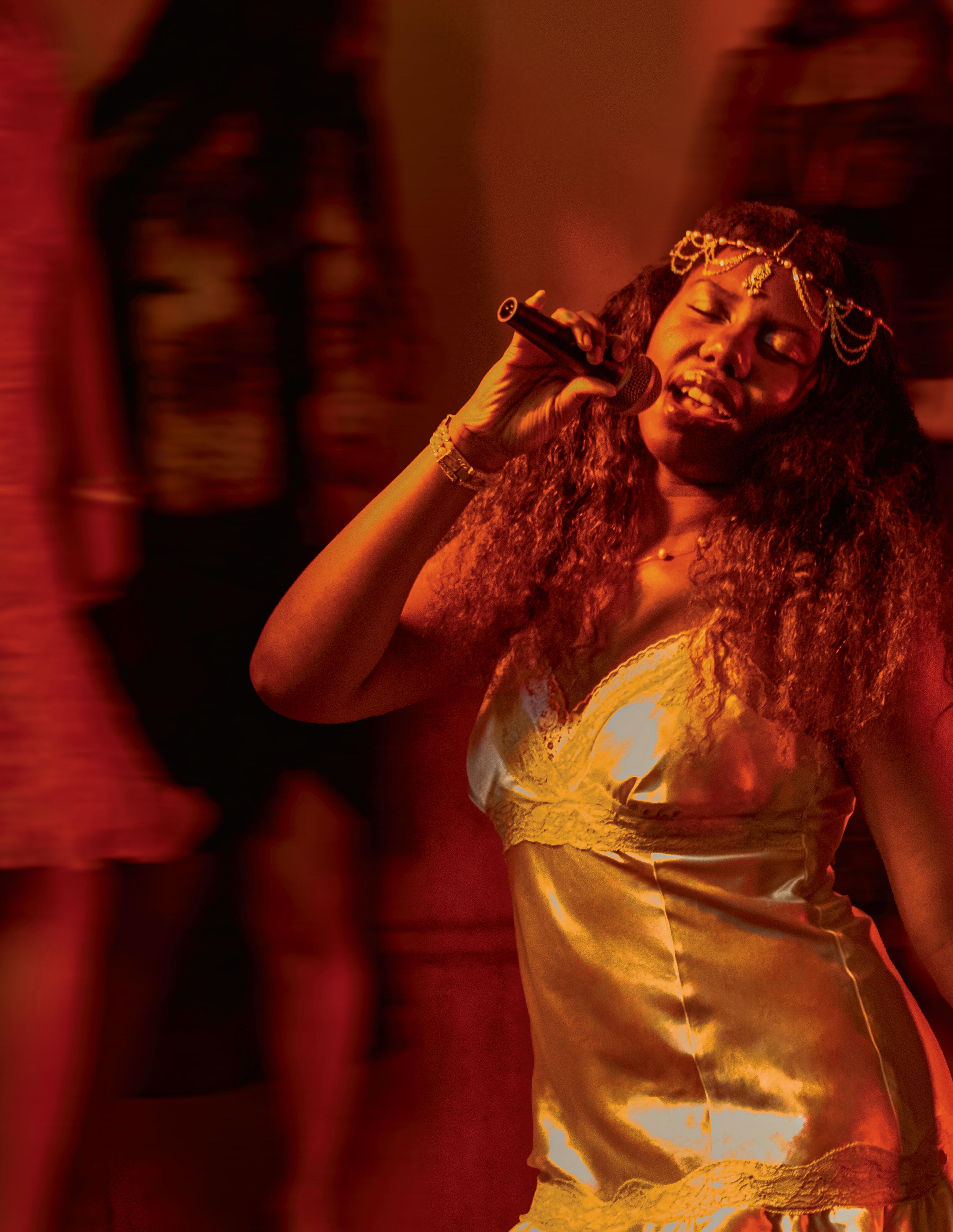
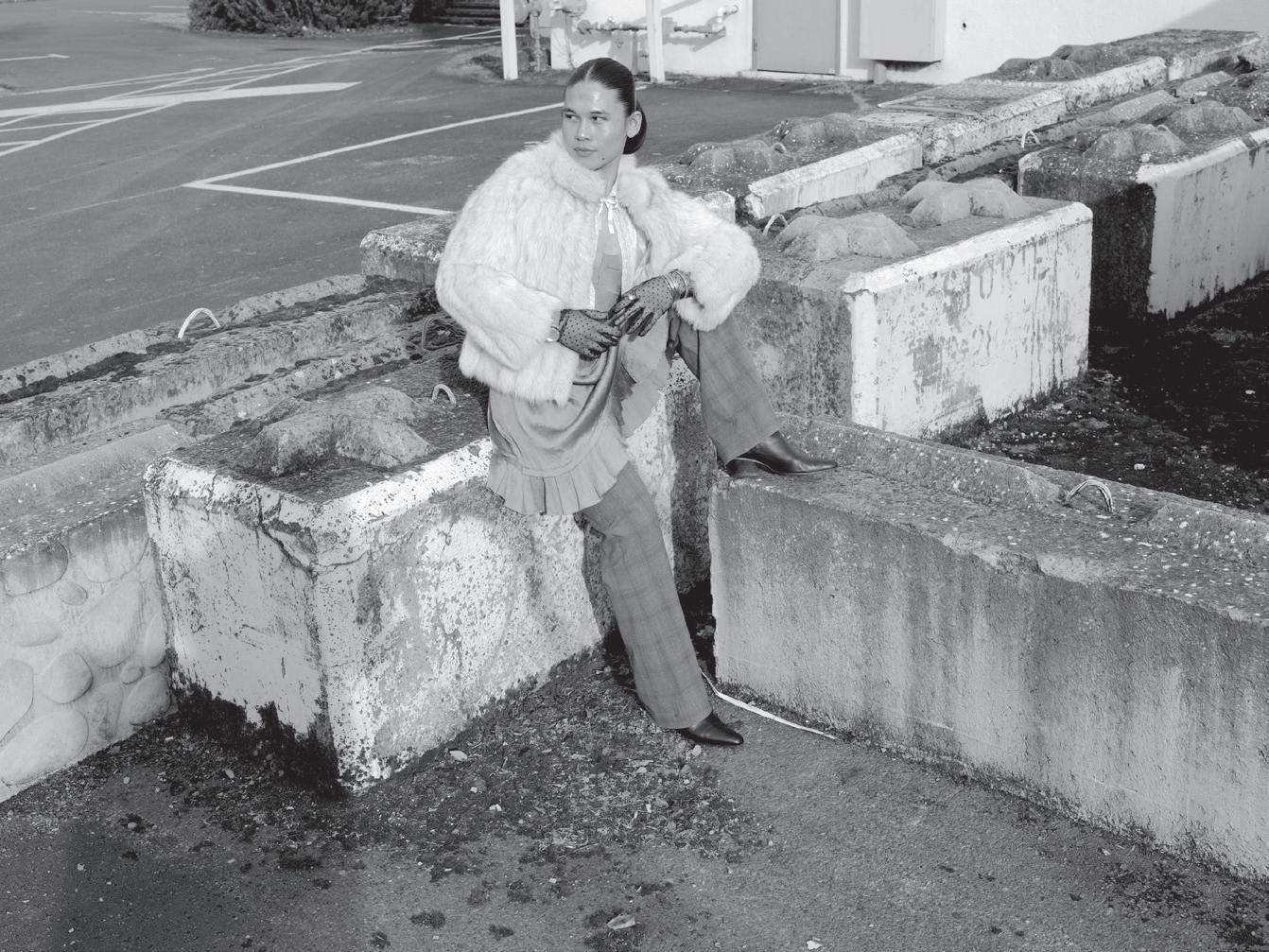
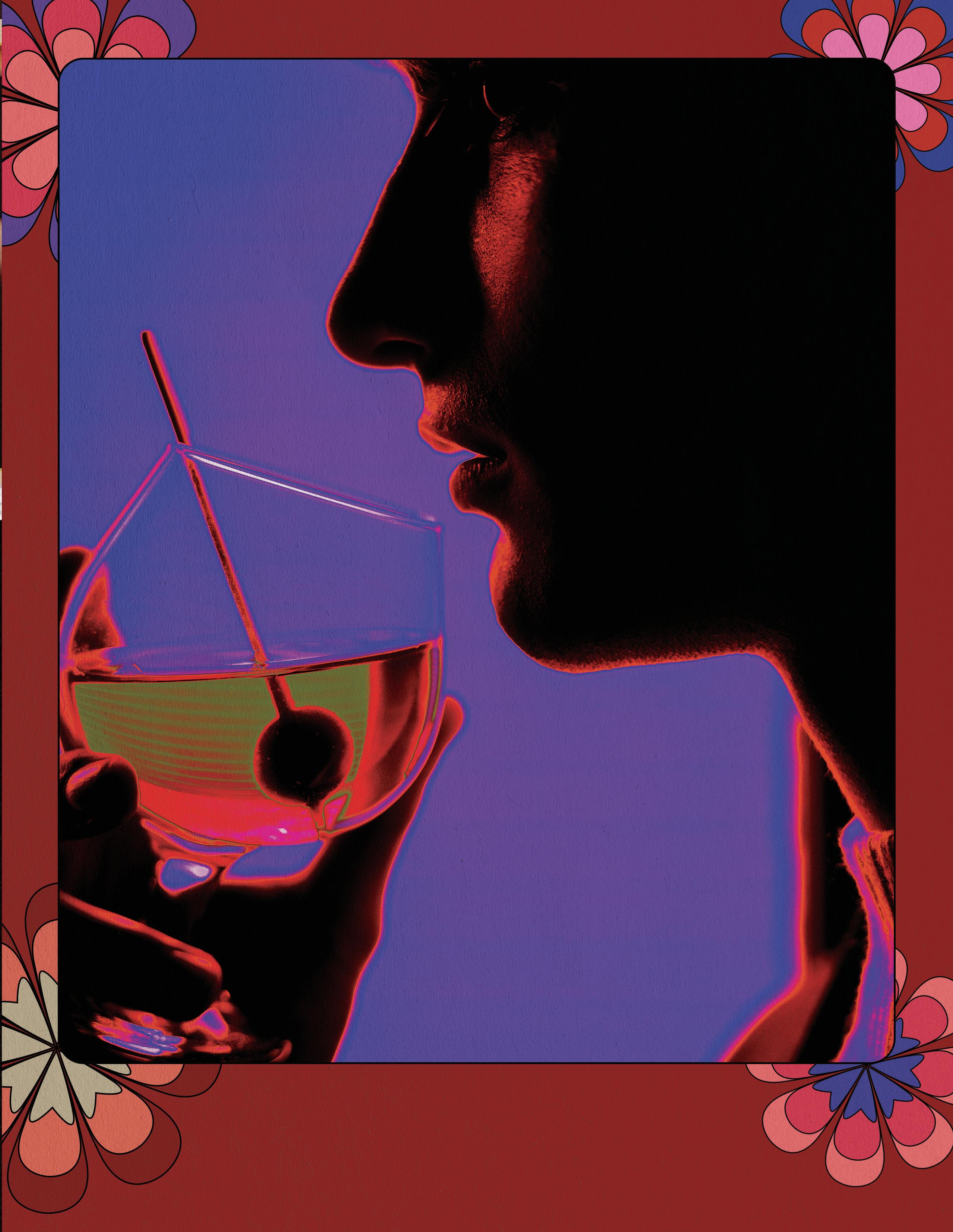
Famously known from its New Orleans origins, jazz is an American culture that has grown, evolved, twisted, and turned as the decades and centuries have passed. It is rooted in African rhythmic traditions, spirituals, blues, and ragtime, which together influenced the birth of jazz. This shoot is a peek behind the curtain of a night out in the jazz club. Primarily drawing inspiration from 1920s-1940s style, it captures the charged intimacy of a room gathered to hear singers perform their bebop ballad. The nightclub becomes a space where past and present coexist, honoring jazz as both tradition and living culture on this special night.
“If jazz means anything, it is freedom of expression.”
-Duke Ellington
During the 1920s, jazz clubs served as spaces where societal norms were bent and diversity was celebrated. Jazz is a byproduct of Black communities creating spaces for themselves, and artists could find a platform for expression that also allowed Black musicians to gain prominence in the entertainment industry. “Black and Tan” clubs also became popular at this time; they were among the few spaces where Black and white patrons could socialize together. Women “flappers” were also able to seek sanctuary in these spaces to defy gender norms by smoking, drinking openly, and freely expressing themselves. Jazz has always been about resistance through art.
ART DIRECTOR & WRITER AAMANI SHARMA
PHOTOGRAPHED BYALEX RUSSO
STYLIST CLARISSA PEREZ
MODELS IMANI LEWIS, MARIANNE HATLEY, NASEEB REYES, MIKAI WHITE, KENNEDY GENTRY & ALYSSA SAMUEL
DESIGNER
JADEN RAI
PLAYLIST CONNOISSEUR ELLIE ACOSTA
Embroidery
MEXICAN WOMEN’S ANTI-PATRIARCHAL LANGUAGE OF RESISTANCE
The concept of language expands beyond verbal and bodily communication. For centuries, needlecraft has taken the stage as an outlet for expression. Through spirit and soul, we find the continuation of our most natural cultures in the delicate hands of the nurturer, divinely embroidered.
Patriarchal language, the centralization of the man, has long controlled the history of many mothers, sisters, and daughters’ stories. Since many modern languages are gender-centered, they articulate perspectives from a limiting frame of mind. However, through craftivism — social activism using handicrafts — the collapse of these restricting languages has transformed gender-based activism against violence and social inequalities. Contrary to what may be initially believed, anti-patriarchal language is not necessarily “man-hating,” rather, this form of communication enables cultural solidarity.
“Women are the center of crafts, the creators of the medium, the controllers of the message.”
The basis of anti-patriarchal language was initiated in 1970s France under a movement coined “Ecriture Feminine” or “Feminine Writing.” This theoretical literary framework avoided the monopoly of male-centered literature by expressing individuality through the abolition of standard signification. Essentially, standard concepts were reimagined under female symbolism. Though France was an imperialist power, their establishment of ‘ecriture feminine’ brought light to the concept and allowed academics to observe its relevance in indigenous cultures. In North and South America, indigenous women have used cultural practices to assist emotional expression — such as beading, weaving, quilting, body art, pottery, and embroidery. Centered in social identity, women’s daily use of craft was a survival skill. Spiritually rooted. These languages are not centered around self but cultural solidarity.
Indigenous cultures function as a unit. The well-being of the individual is a reflection of the entire group’s well-being. Therefore, the connections they hold with one another are incredibly valuable. At heart, the arts are a vessel for community. Women hold power as they are responsible for nurturing cultural knowledge. Women are the center of crafts,
the creators of the medium, the controllers of the message. Ultimately, the act of creation enables their own voices, more powerful than their mother tongues warrant.
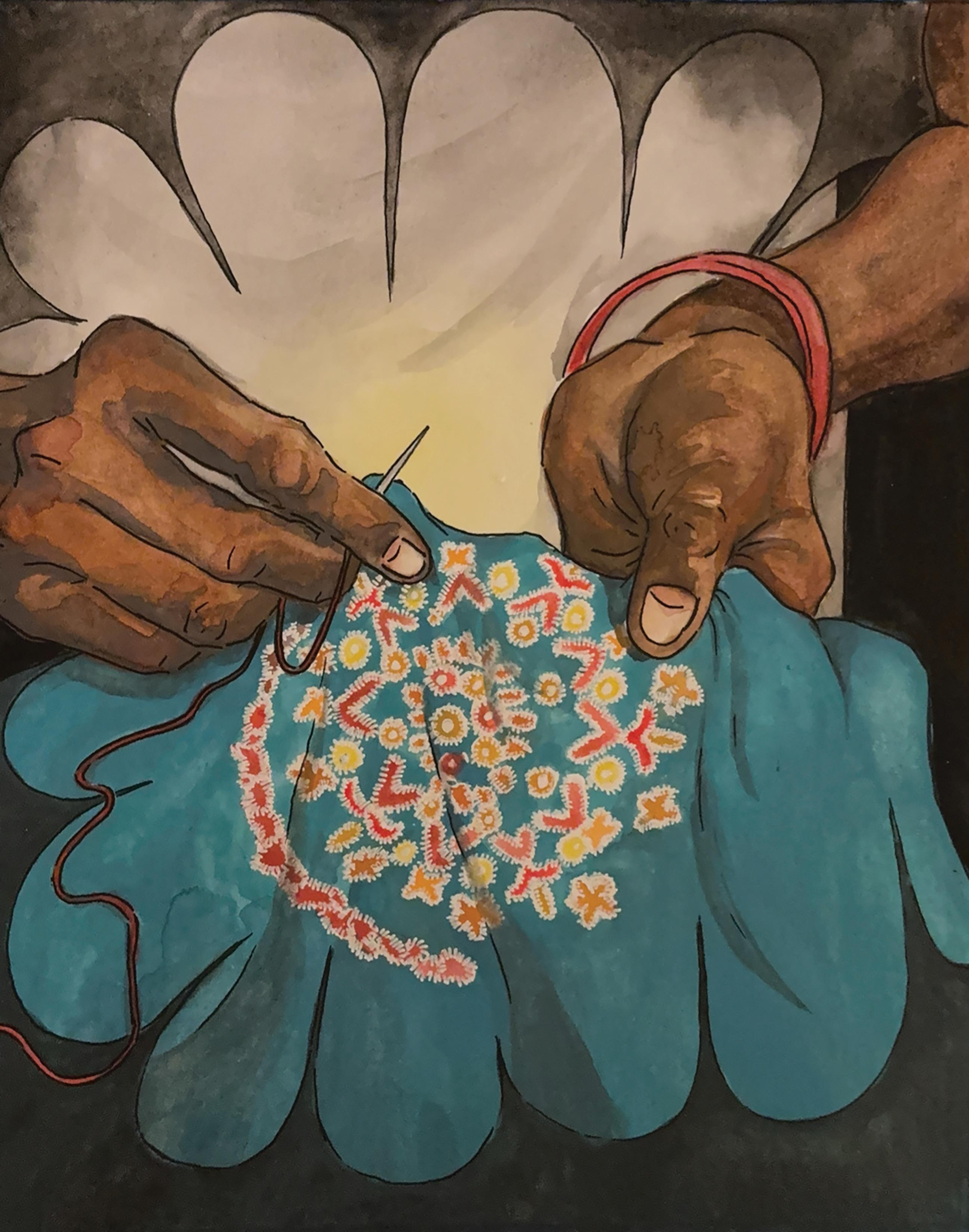
Create. Communicate. Commemorate. Through the entwined fibers of their own defined nature, the hands of the needle and thread, the creator, empower the narrative. Needlework offers the creator a palette for storytelling under generational significance. It tends to a tender lineage of women embracing femininity, for the living and the dead. As a narrative, desiring to be understood, its defiance of violence has allowed many women to use embroidery as a channel for social activism. Lawyers, bakers, neighbors, teachers, mothers, aunts, grandmas, sisters, daughters. Different social standings under one overarching understanding of cultural femininity.
“Calladita, te ves más bonita” (“You look prettier when you keep quiet”)
Invisible behind the cartel, femicide is the highest in Mexico, globally. Femicide is the epitome of misogyny. Killing women because they are women. “We Embroider Feminicides,” an artistic movement initiated in 2013 to humanize the statistics, empower those who feel fear, and bring light to injustice. White handkerchiefs drape the mere concrete to voice those who were stolen. In red string, a color of deep religious mourning, women’s stories saturate the cloth. The names of victims are boldly stitched along with their stories and faces. The creator, though literate, is only able to express the sentiment through the craft eloquently.
These stark political messages opened the public to new forms of emotional solidarity. With a needle and thread, a common goer’s walk to the market became marked with resistance. Demanding justice in the darkness of crisis, the display of embroidery dismisses concepts of “the good girl,” by accentuating women’s ability to be angry and frustrated in public spaces. Embroidery has allowed women to document femicides on their own accord, to articulate their story using a peaceful medium. Through embroidery, Mexican women hold hands as they share their experiences through patriarchal abuse.
WRITTEN BY BEATRICE GRIFFITH
ISAACMAN
WILLIAMS
The Unusual Behavior of the Young Nacirema
A Satirical Ethnography of the College-Aged American
In 1956, Horace Miner, an anthropologist at the University of Michigan, released the groundbreaking study “Body Rituals of the Nacirema.” The Nacirema are a North American group living in the territory between the Canadian Cree, the Yaqui and Tarahumare of Mexico, and the Carib and Arawak of the Antilles. Miner examined their absurd bodily rituals; holy-mouth-men who scraped enamel with sharp tools, men who lacerated their own faces each morning, and women who baked their heads in small ovens. Beneath these ceremonies lay a singular belief: the human body is ugly, prone to decay, and in need of constant correction. For the past several decades, the Nacirema has been a highly researched tribe. Their unusual nature provides insight into the extremes to which human behavior can go.
At this time, Miner urged scholars to further investigate the culture and personality structure of these people. 70 years later, I attempt to offer an extension to his work through the sub-tribe of the late adolescent Nacirema – inhabitants of vast learning temples scattered across the land.
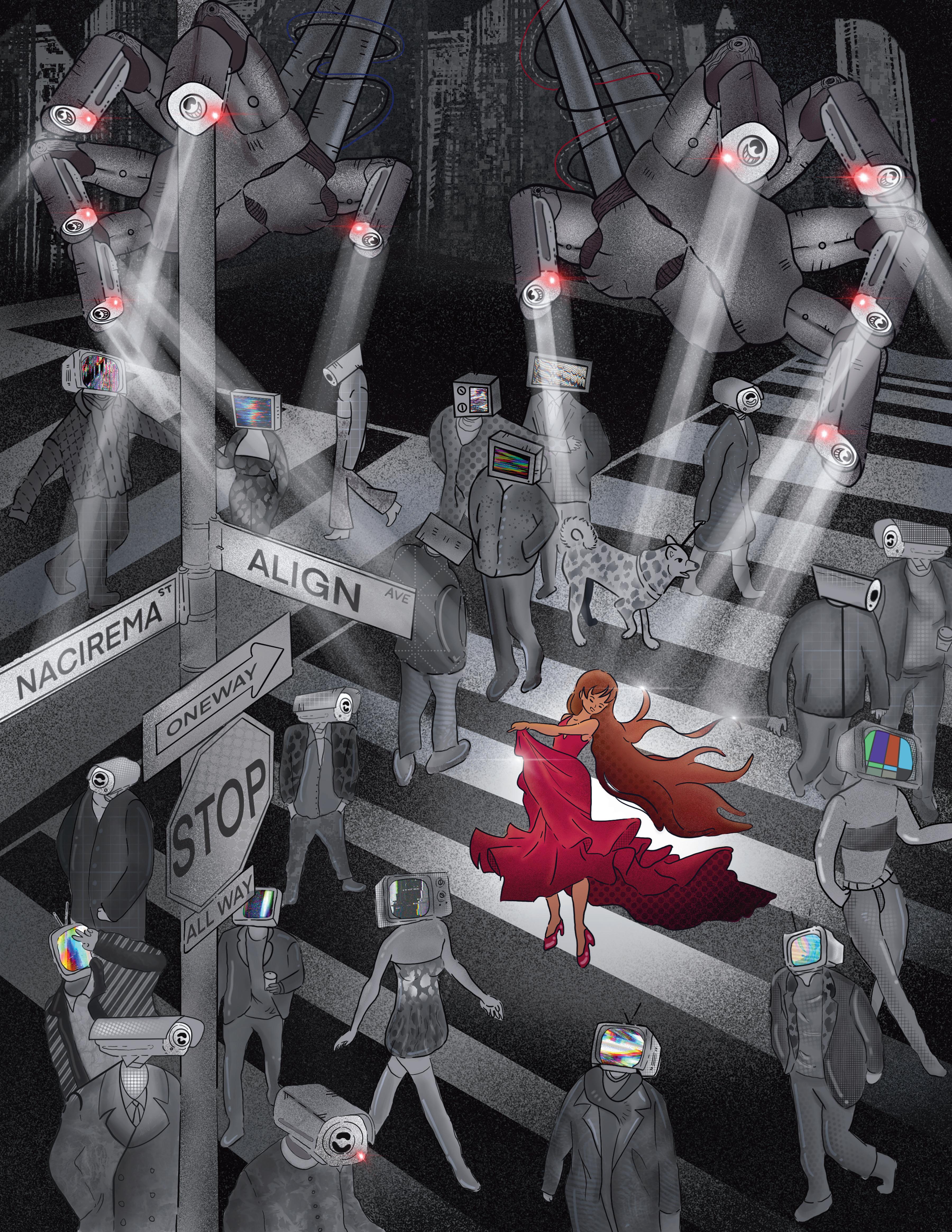
Contemporarily, the superficiality of these people still stands at the root of what they do. However, their rituals have evolved in an unforeseeable way. In 2007, culture hero, Evets Sboj, created a compact telecommunication device called the Enohp Trams: a smooth, rectangular, blue-lit device that rests in one’s palm like sacred text — seemingly providing all the world’s information through a void called the Tenretni. Its devotees spend hours stroking its glass hardware in a trance-like state, participating in what they’ve named “doomscrolling” until sleep overtakes their bodies.
According to Miner, the Nacirema once used to consult the “listener,” a witch-doctor who bears the power to exorcise the devils that lodge in the heads of people who have been bewitched. Now they turn to the leaders of the Tentretni: The Influencers. Influencers provide insight into “what they’re wearing this winter,” and which Dnarb (establishments with distinct symbols and identities) they should commit discipleship to. Unlike the Medicine Men who have spent years in learning temples mastering their craft, the Influencer has no formal credentials. Still, they command unwavering faith.
Because of the Enohp Trams and the Tenretni, the young Nacirema’s relationship to their bodies has intensified to an unprecedented degree. They persist in their masochistic tendencies, but it’s amplified through injection and slicing of the face. Although the female Nacirema is more preyed upon for these procedures, the male is not immune to temptation. General dissatisfaction with muscle tone, skin texture, and bone-structure remain central to their cosmology. However, the Tenretni has created an ideal beyond the realm of human variation.
A curious rite of young Nacirema in the learning temples is the consumption of the substance called Lochocla: a poison that induces memory loss, nausea, and temporary euphoria. The consumption of Lochocla is not exclusive to the Nacirema. A neighboring tribe across the ocean, called the Naeporue, are avid enjoyers of it. However, there is a particular deviance that often comes with the young Nacirema, causing them to take ingestion to the extreme. It is consumed communally, often from red plastic vessels marked “solo.” Participants gather in crowded dwellings, chanting and swaying, bonded through collective debilitation. Common after
effects include humiliation and regret, yet its popularity endures. The suffering serves as a piece of social currency.
Although the Nacirema are superficial yet self-loathing, their actions are a result of what is at the core of all human desire: love. The scraping, sculping, and poison ingesting in hopes of admiration. Offering up comedic fragments, effortfully effortless photodumps, and “fitchecks” into the void awaiting affirmation in the form of hearts and thumbs.
Despite their devotion to connection, it is apparent that the young Nacirema suffer from profound isolation. Their environments are densely populated, yet many report feeling unseen. They possess unprecedented access to global knowledge but struggle with basic interrelation. The hyperawareness of their appearance, catastrophe, and their lack of possessions has given them an emptiness in their psyche that could likely lead to their downfall.
Arguably, the most striking feature of the young Nacirema is not their self-harm, nor their glowing shrines or intoxicating poisons. It’s their capacity for choice that they so regularly forget. Beneath their blue lights and red cups lies free will. They are not doomed to be prisoners of the Tenretni. They can at any moment set the sacred rectangle scribe down and look up. This may be their first step to experiencing the love they so deeply crave.
My purpose in further examining the personality structure of the Nacirema is not to induce mockery, but rather to offer perspective. In fact, you might find it surprisingly easy to relate to the rituals of this unusual tribe.
WRITTEN BY ANAYA LAMY
ILLUSTRATED BY KENT PORTER
DESIGNER ELENA SIEKMANN
Show
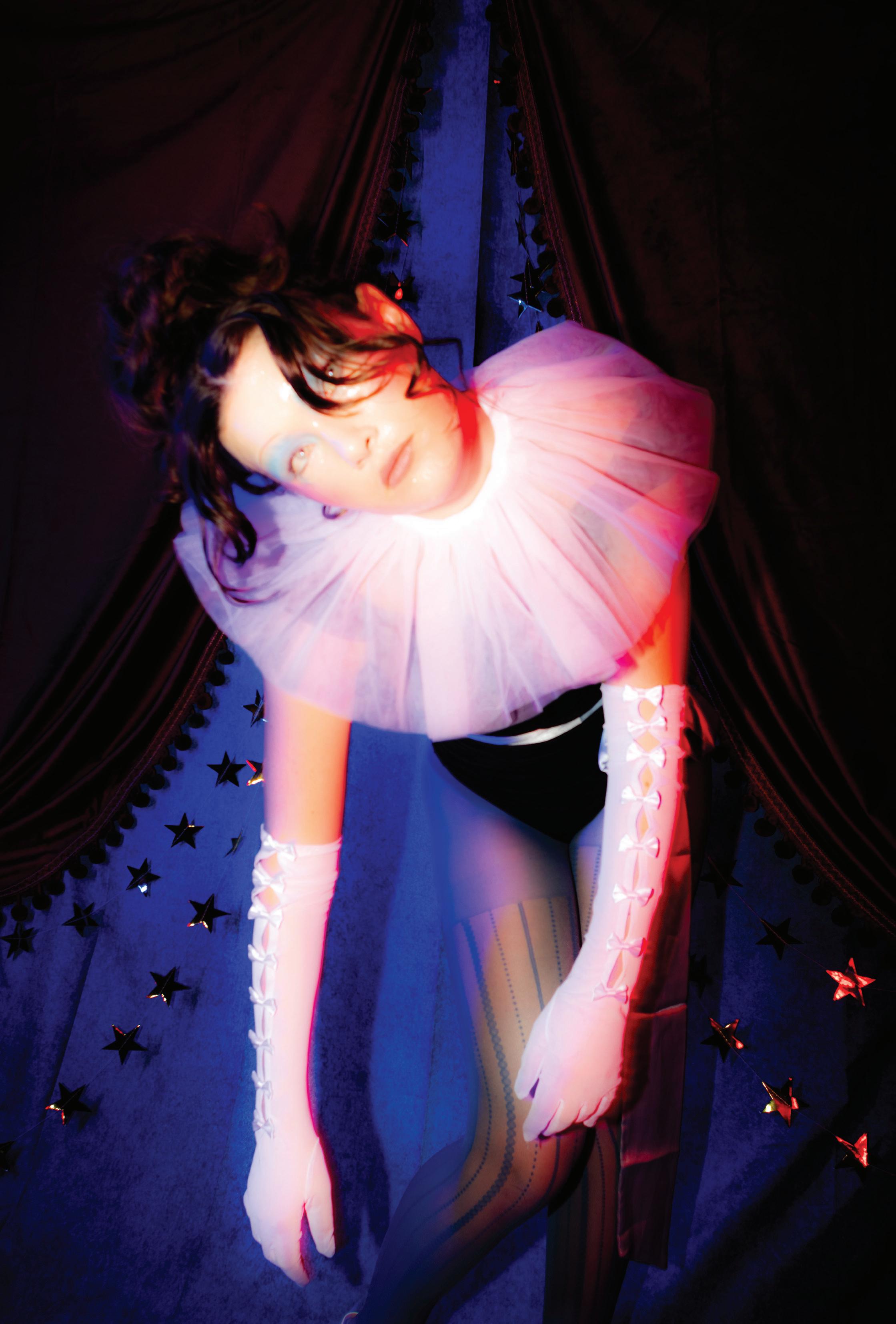
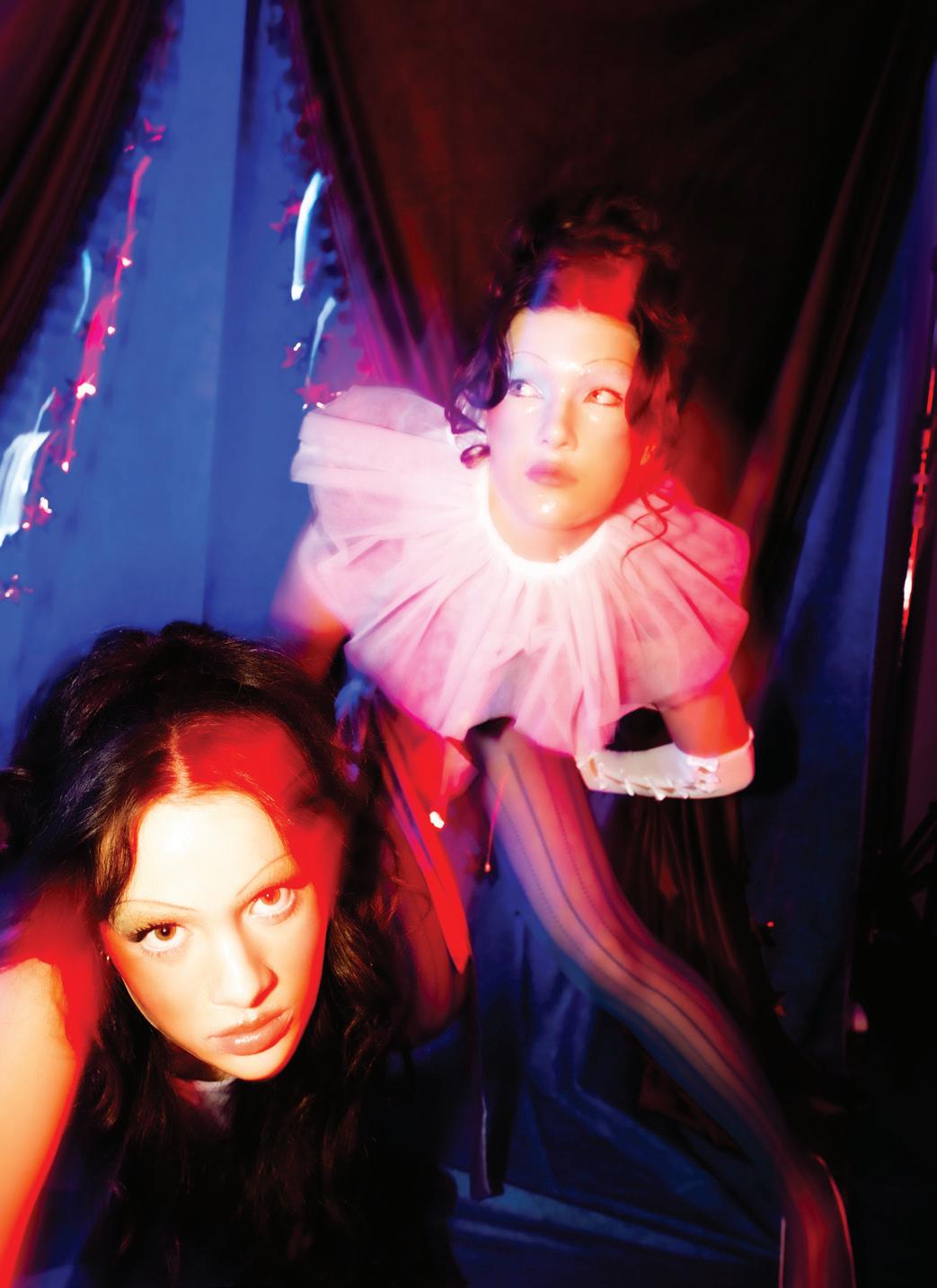
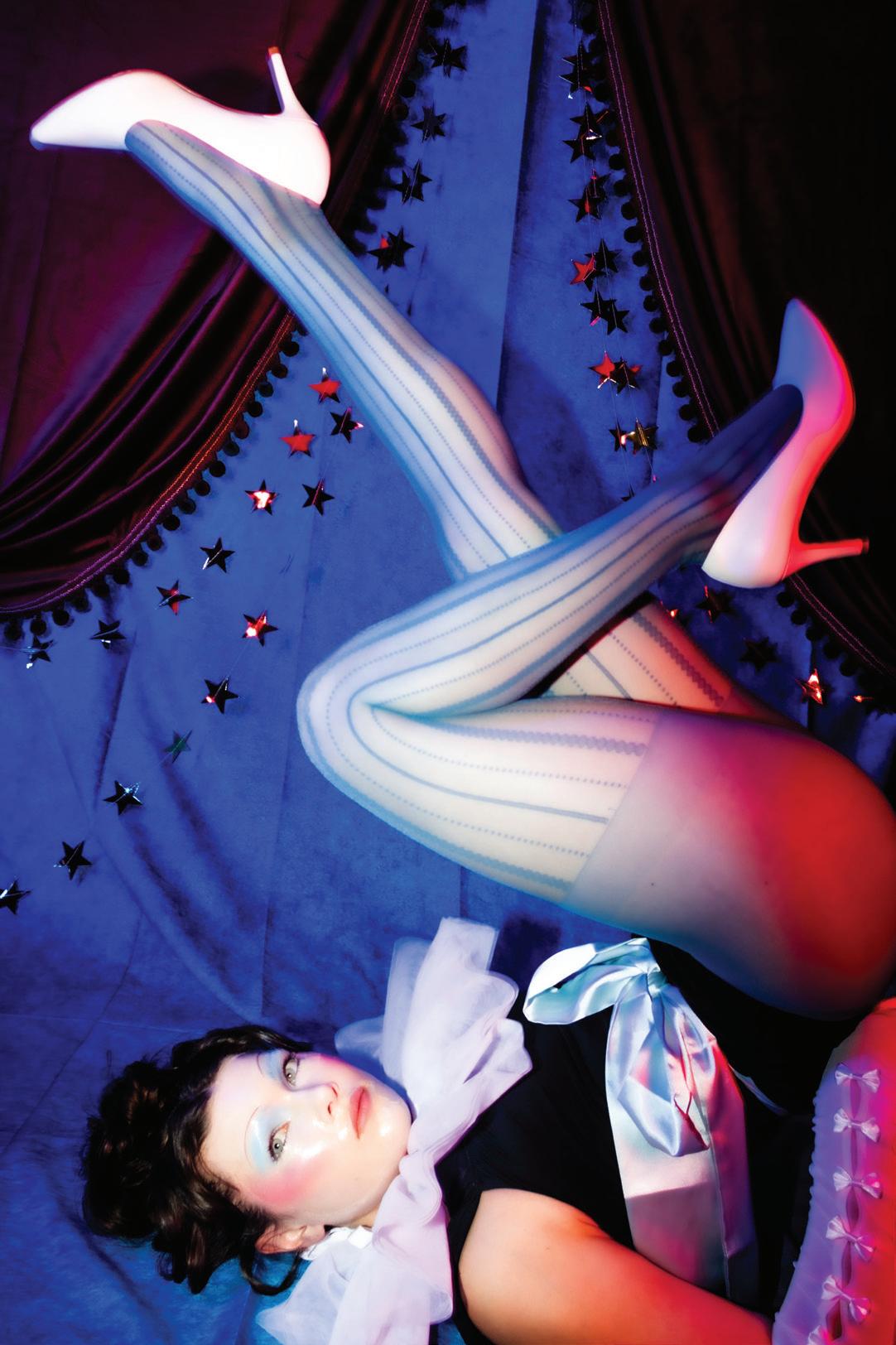
FASHION DESIGNER CUPID HALE'S CIRCUSES, DOLLS, AND PASTEL MORBIDITY
In ancient societies, when food was scarce and money scarcer, entertainment was paramount to a healthy quality of life. Thus, the commedia dell’arte was developed: comedic ensemble plays which centered men in tight, colorful leotards and white facepaint. The danga in ancient Egypt, the sannio in ancient Greece, the jester in medieval Europe — it’s an image modern citizens of the world are deeply familiar with. Clowns are a staple of alternative Western cultures. The general attitude toward them has shifted over the years, from entertainers to murderous horror movie mascots. One thing clowns have rarely been, however, is stylish.
Costume designer Cupid Hale aims to change that.
“I consider myself a very strange person,” they said over the phone.
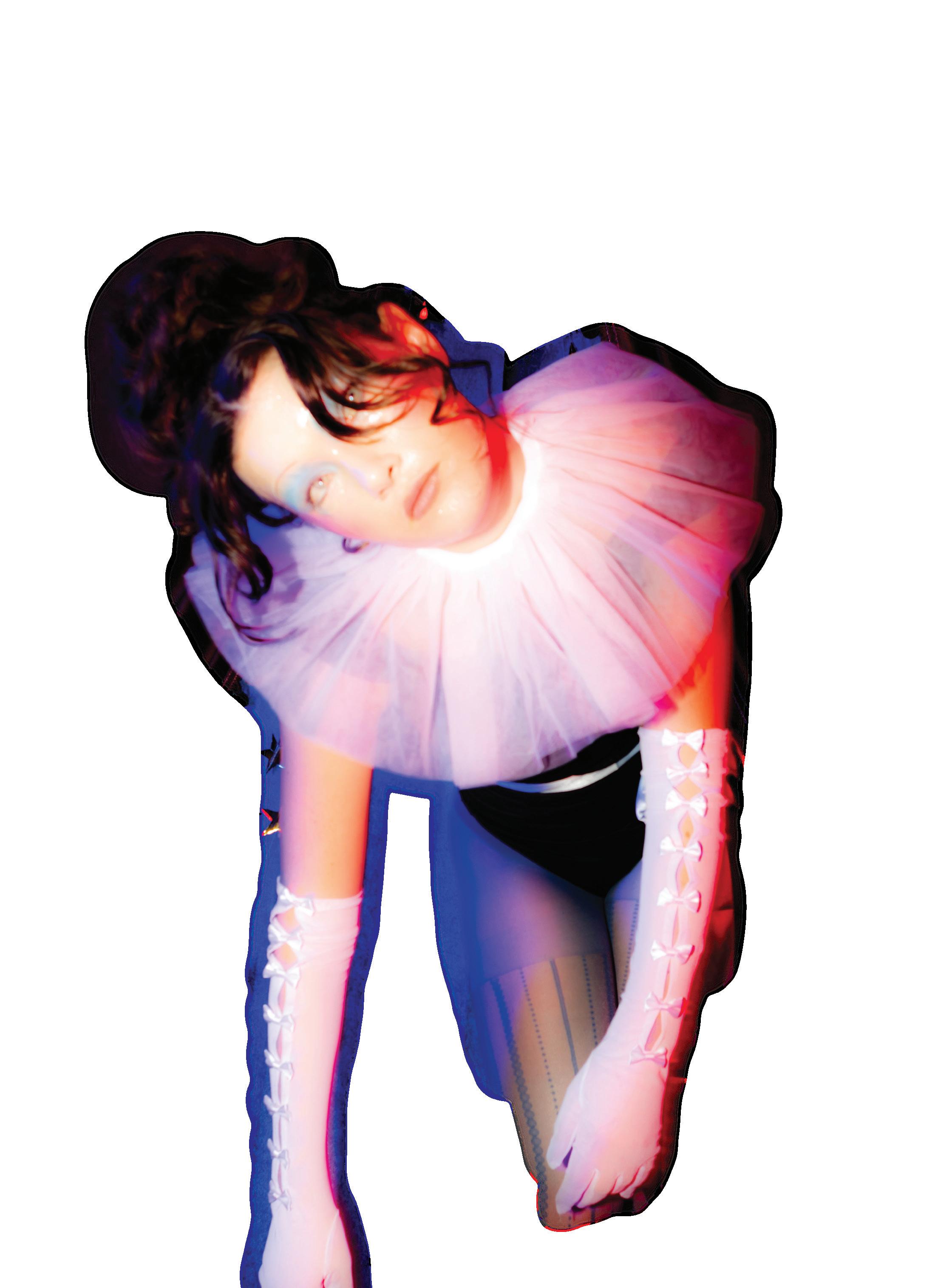
Cupid’s self-described strangeness can be gleaned from one scroll through their Instagram: striped pastel jumpsuits with ruffled collars, stacks of neon handmade jewelry, and hot pink, bulbous clown makeup are frequent staples of their profile.
“I really like attention,” they explained. “Growing up, I had friends who were more ‘dark’ alternative — emos, goths, punks — and being the one in pastel colors... it’s fun to be in those friend groups and express yourself in a way that really stands out.”
Trapped inside at the height of the COVID-19 pandemic, Cupid discovered a website called KandiPatterns, a forum dedicated to people making and sharing their kandi — plastic beaded jewelry, common at raves or punk shows. Having always had a penchant for bright colors and wanting clothes they could never find in stores, they started crafting their own jewelry. “I think, through the kandi kid ‘90s subculture, everything else just kind of fit into place.”
This aspect of their style remains to this day — their wrists clack with handmade bracelets that bear words like ‘details’ and ‘dead’, their barrettes are adorned with eyeball charms, and their makeup drips as if they’ve been crying.
“I’ve always been drawn to colorful things, but also weird things. There’s some fun misdirection in that — like, you see my outfit and it’s all pastel and neon, and then you look at my hairclips, and they’re eyeballs and teeth,” they said. “It’s a
very interesting juxtaposition, to be super bright and fun, but also have little dark elements that peek through.”
Cupid is far from the only person to have embraced clown fashion in recent years — citing inspirations like Lolita or Decora styles, which have roots in Tokyo, their personal style is a large amalgamation of internet subcultures.
“The way I describe it has definitely changed over the years,” they said. But clown fashion is Cupid’s own personal brand of idiosyncrasy, one that has been shaped by their identity over the years.
“Because of my queerness and my neurodivergence, the way I present myself is very alienating,” they said. “But that’s not just the way I look — it’s my personality, too. As strange as that sounds... at least this way, I’m advertising what I’m selling a little bit, you know?”
Cupid has relied on their ever-evolving style over the years, as a sort of anchor as they came of age — though it’s changed, from classic, all-black emo to neon, fishnetted scene, their pastels and their desire to create have remained with them from childhood into young adulthood.
“I feel like everything about a person is always intersecting,” they said. “I don’t think that I would dress this way if not for the way my brain is wired, but I also don’t think that I would understand the way my brain is wired if I didn’t explore these aesthetics.”
Creation is as integral to their identity as their vibrant style. A lot of their work in design comes from personal need. “It’s very difficult to find clothes in the silhouettes and the colors that I like,” they explained.
They feel comfortable in looser, baggier fitting clothes, but have trouble finding those fits in the colors they gravitate toward. Most cargo shorts come in boring colors — forest green, black, maybe a dusty pink if you’re lucky. Cupid wants neon pink and blue shorts with bright yellow stars embroidered on the hips.
“I find a lot of joy in making myself clothes that I can’t find anywhere else,” they said.
Their passion for creation extends beyond clothes — they’ve cultivated a collection of porcelain clown dolls over the years, perfected the art of clown makeup, and learned how to make balloon animals.
Cupid affectionately recalled finding a broken cowgirl porcelain doll at Goodwill, taking her home, making her a new body and a new face — the doll’s name is Cosmo, and he sits on a shelf, prized among Cupid’s rows of clown-ified porcelain and fabric creations.
“I’m actually looking at him right now,” they said with a laugh. “Hi, buddy!”
The dolls, white-faced and poofy-collared, are a further reflection of Cupid’s particular oddball brand of colorful creativity.
There are few people quite like Cupid Hale. It’s not that they don’t exist — but their identities, those weird, inventive desires everyone has, they don’t put on display for fear of judgment.
Cupid, however, cites their style as one of the fundamental pillars which has guided them through their life. Originally from Portland, they now study costume design in Manhattan.
So be a Cupid. Pierce your eyebrow, paint your nails neon pink, make patches and sew them onto the rips on your jeans. Create endlessly and indulgently — put on your clown makeup.
WRITTEN BY CELIA HUTSELL ART DIRECTOR DANIELLE COLLAR PHOTOGRAPHED BY SOFIA MOSCOVITCH
Iwas five-years-old when I was first told to “sit like a girl.” I stepped harder when told to be elegant, steeled my voice when told to be gentle, and lifted my head
GIRLBAND
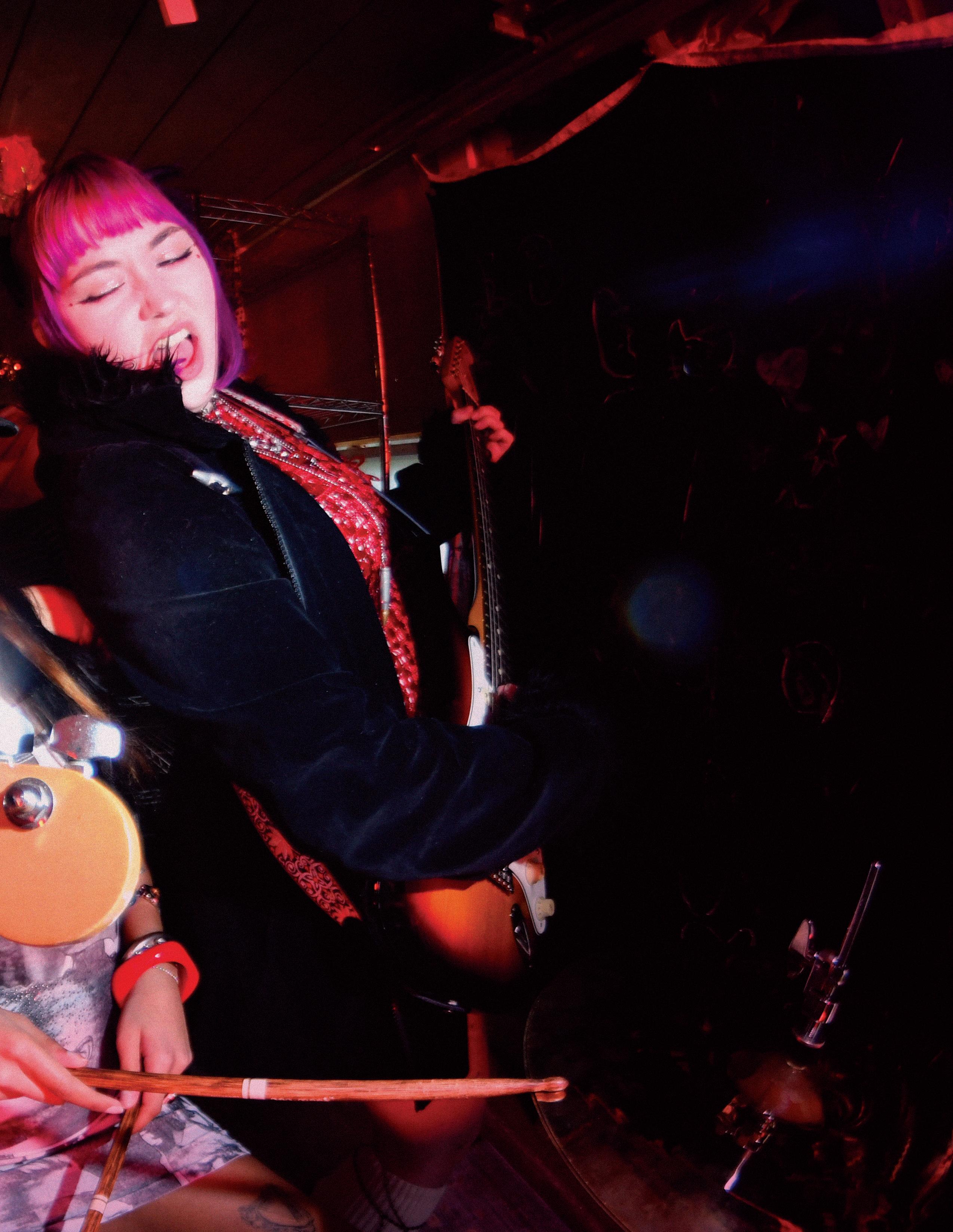
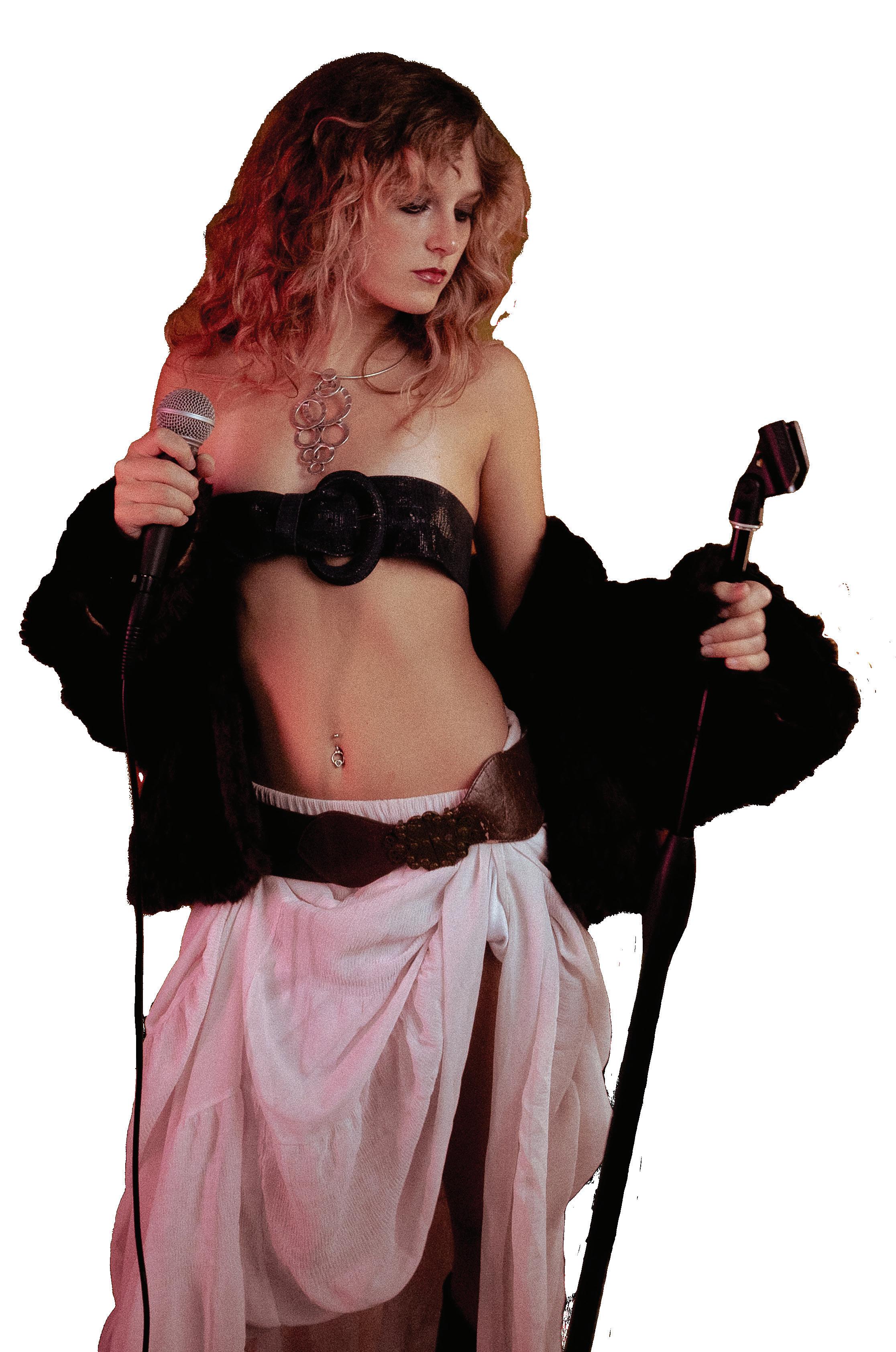
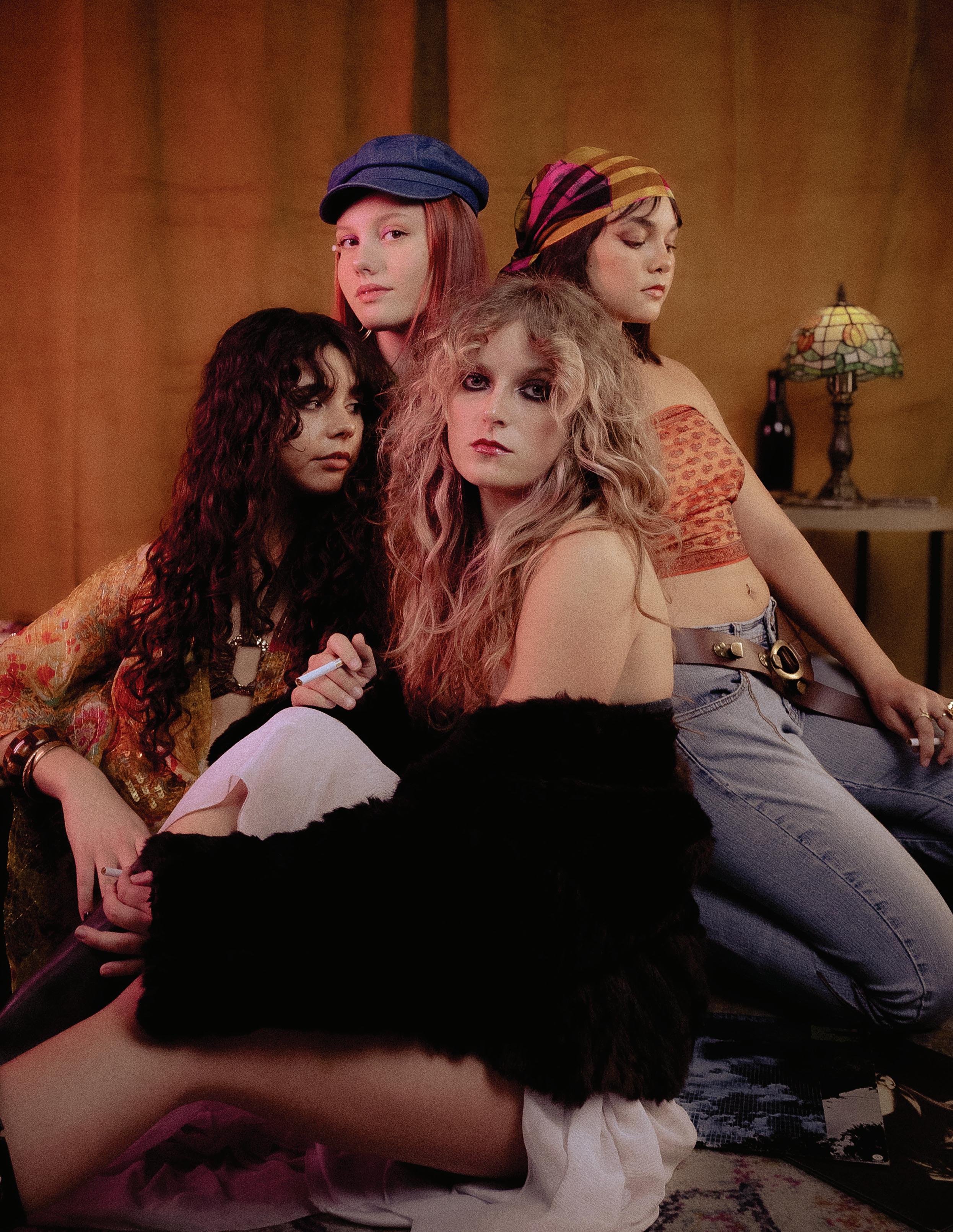
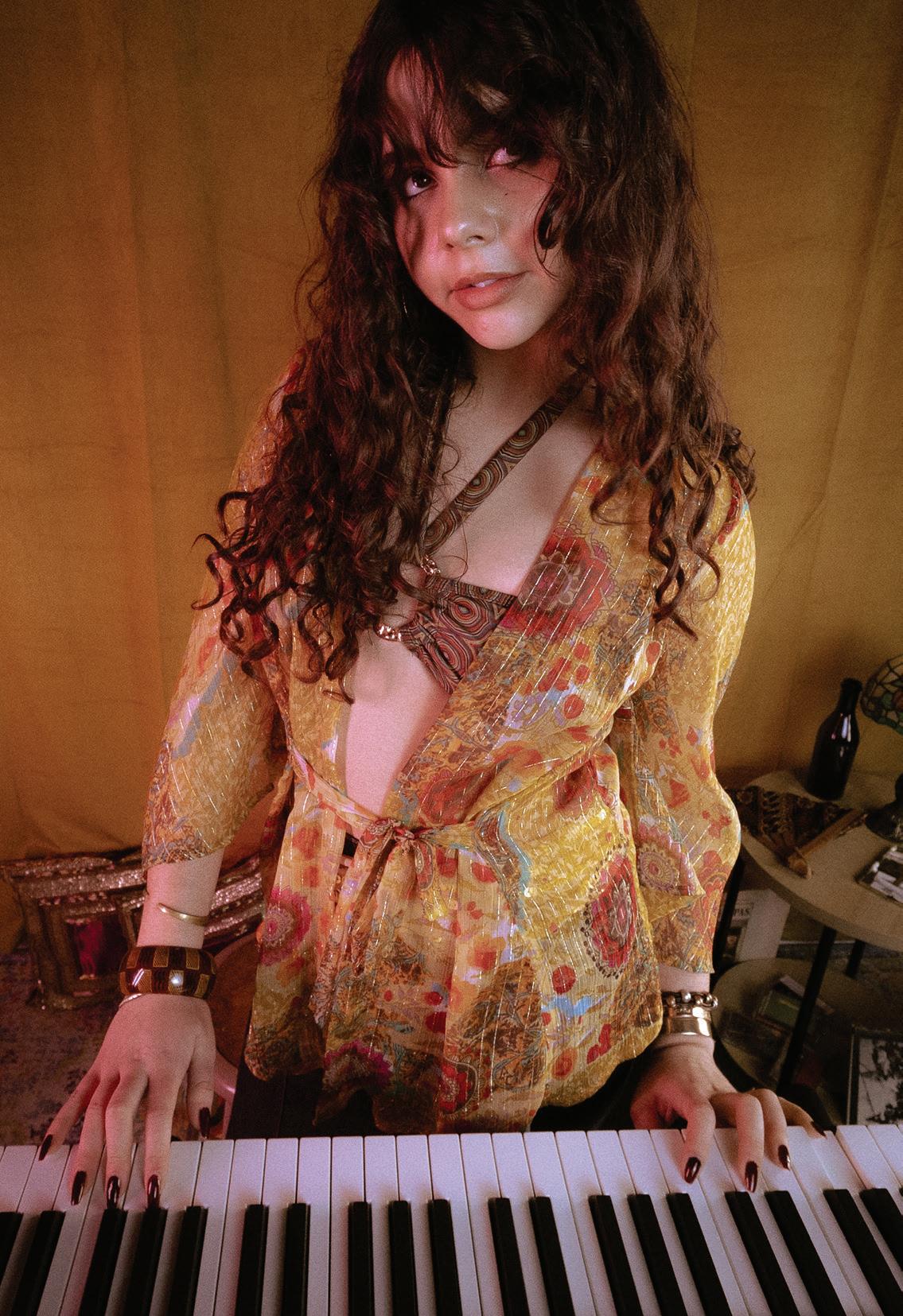
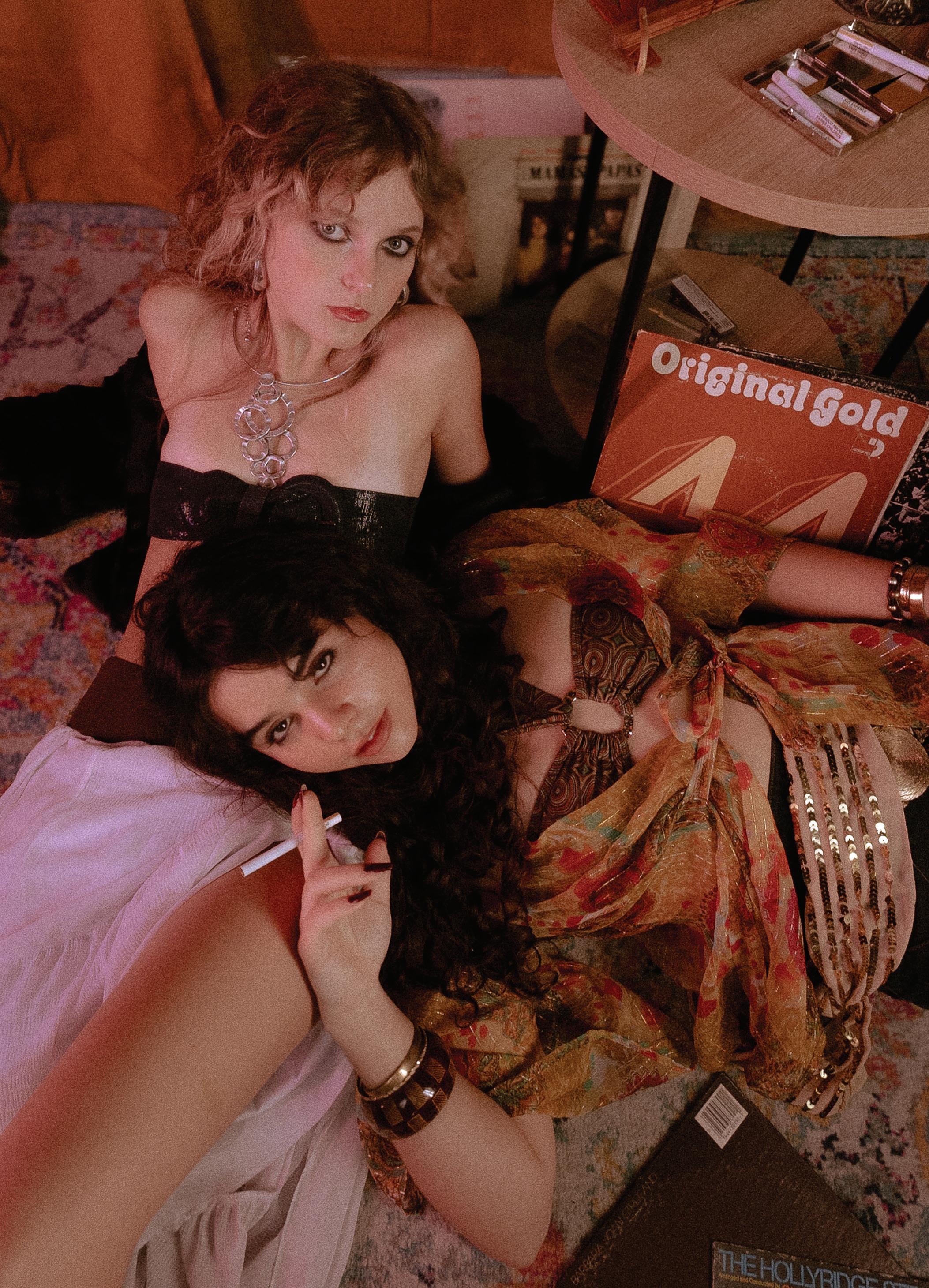
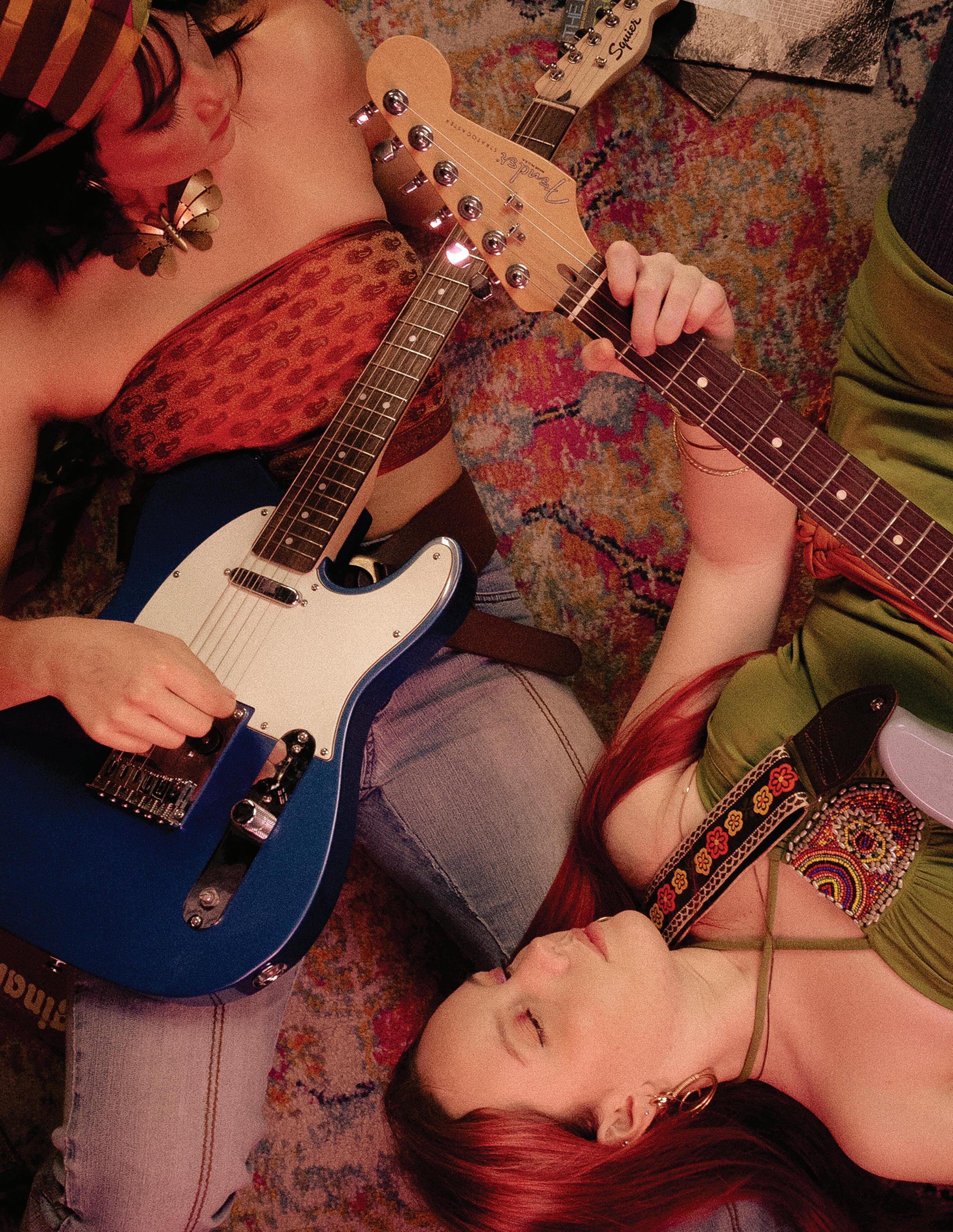
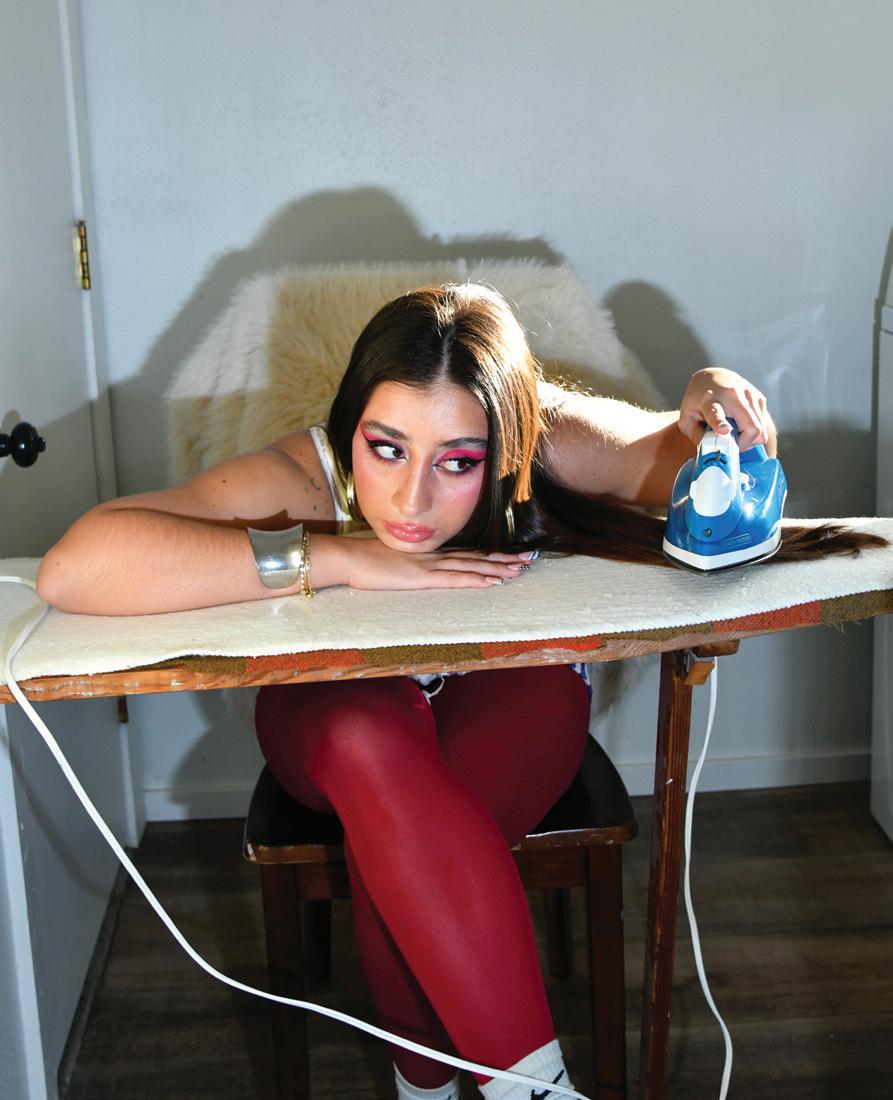
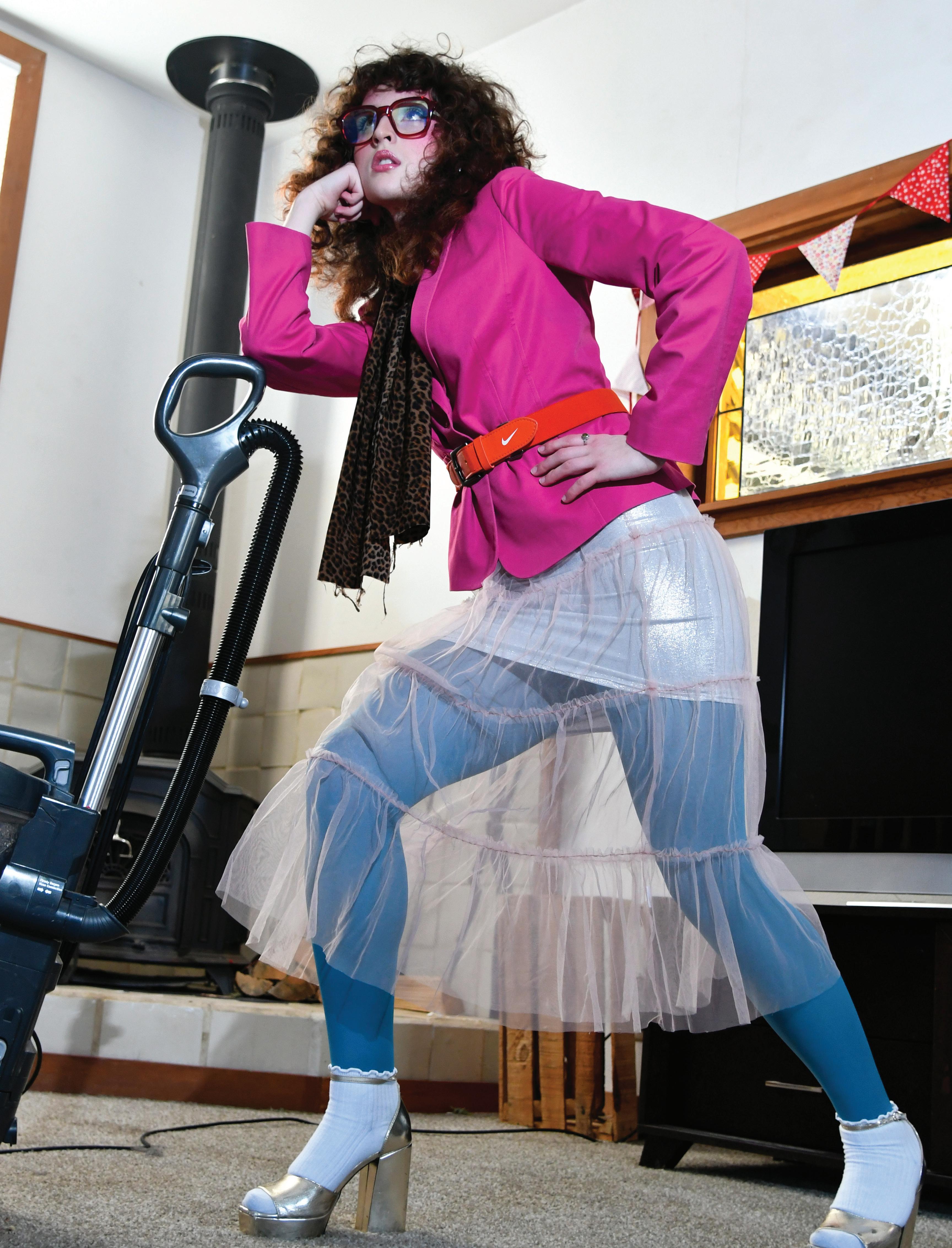
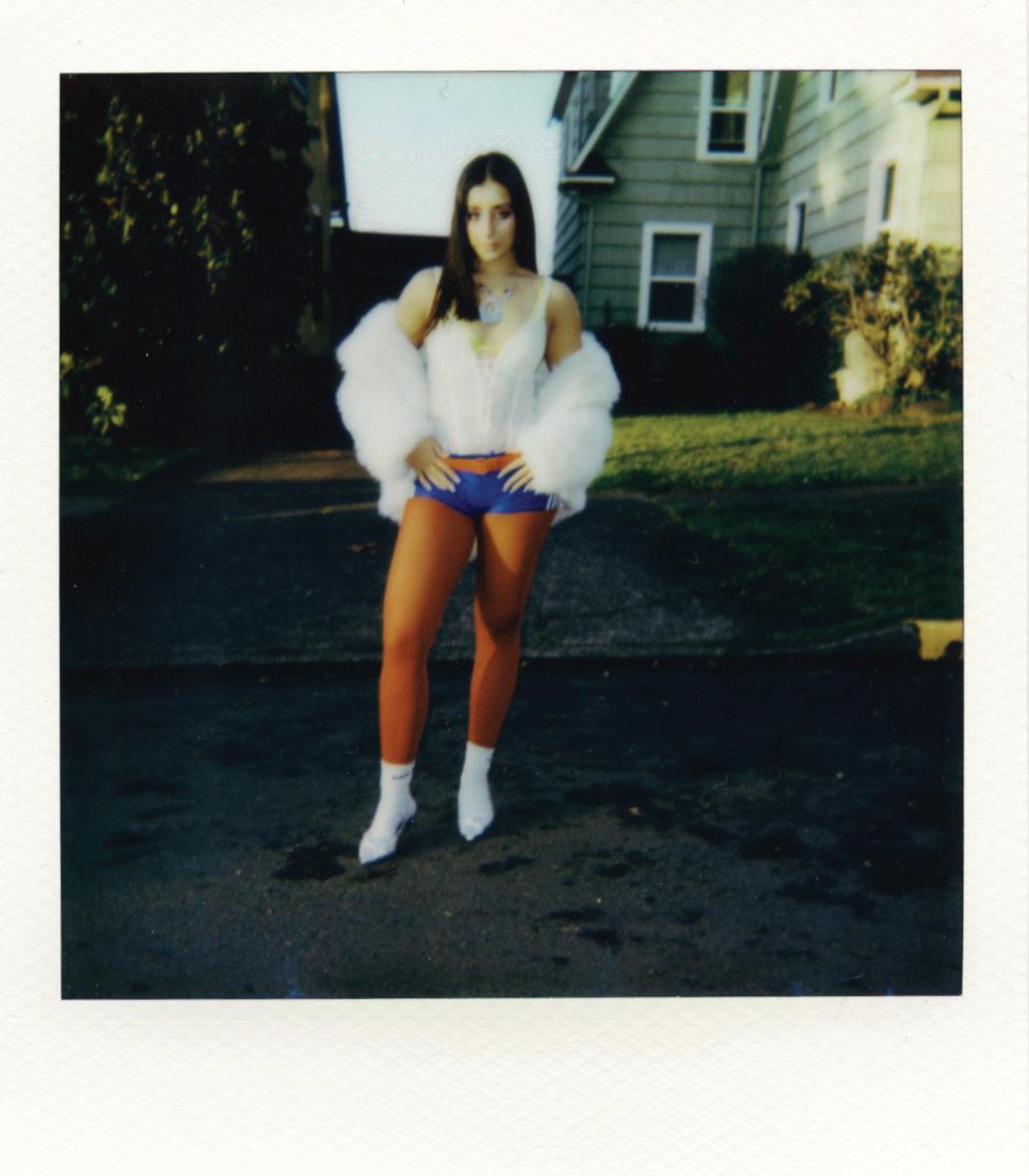
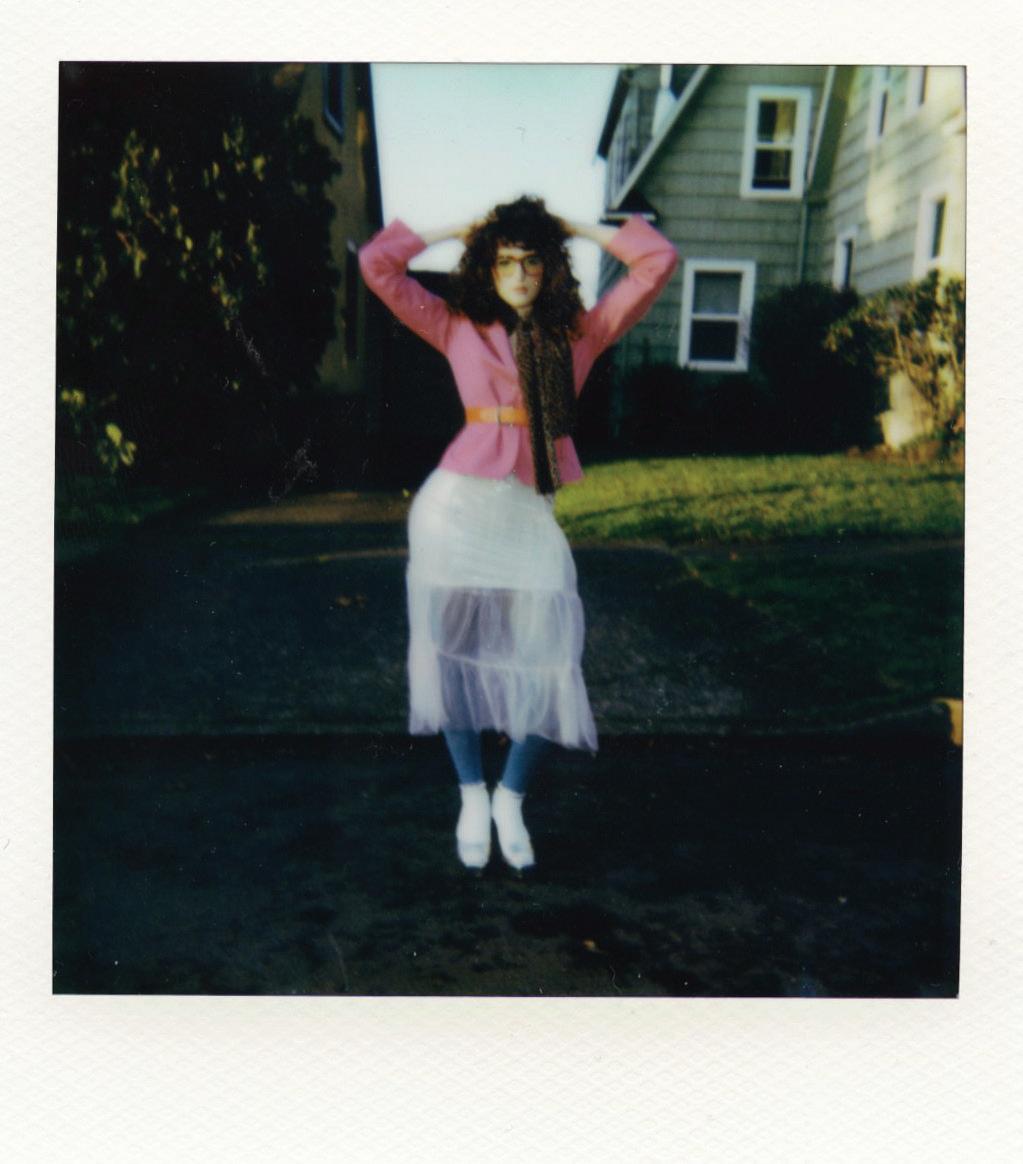
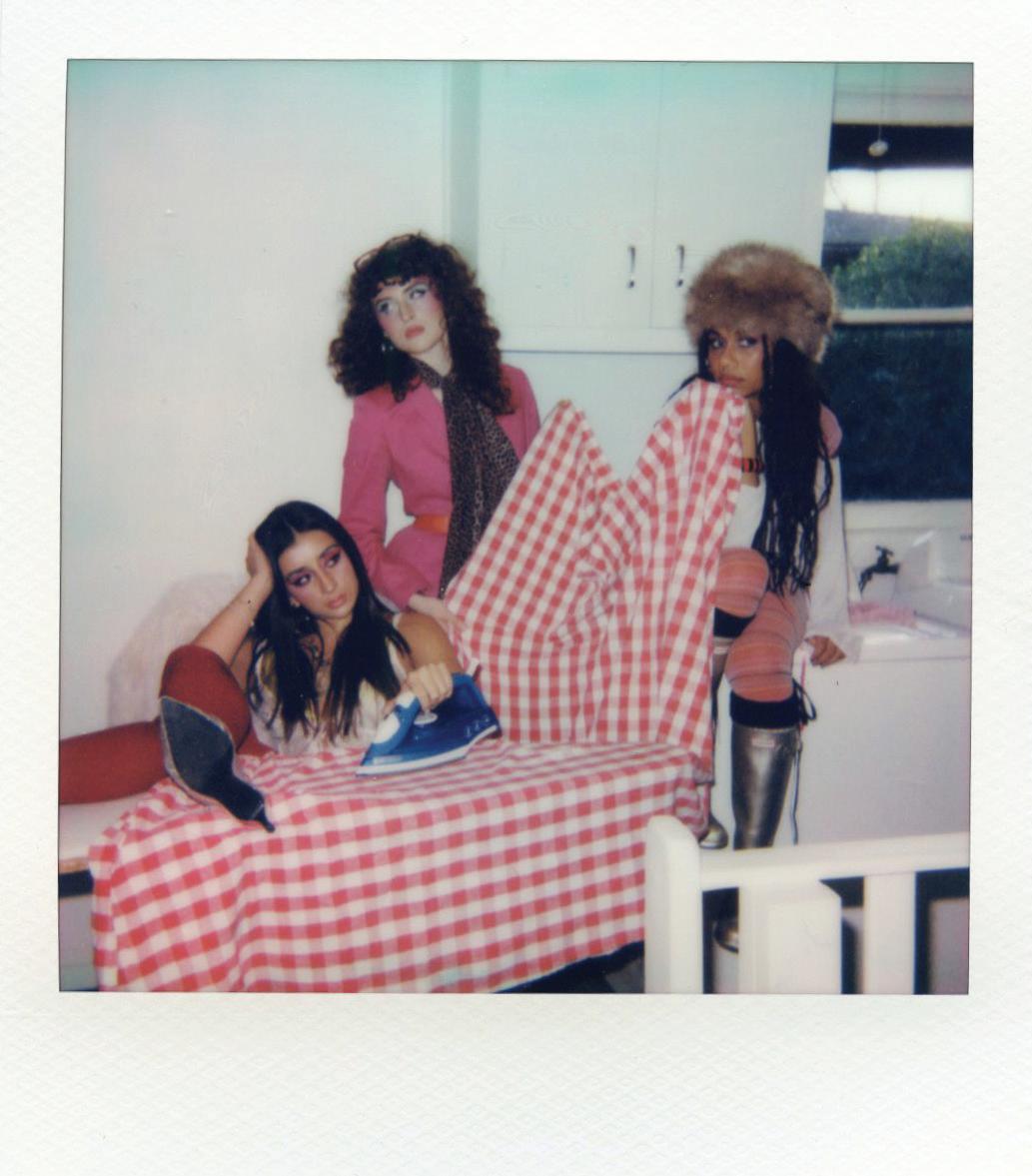
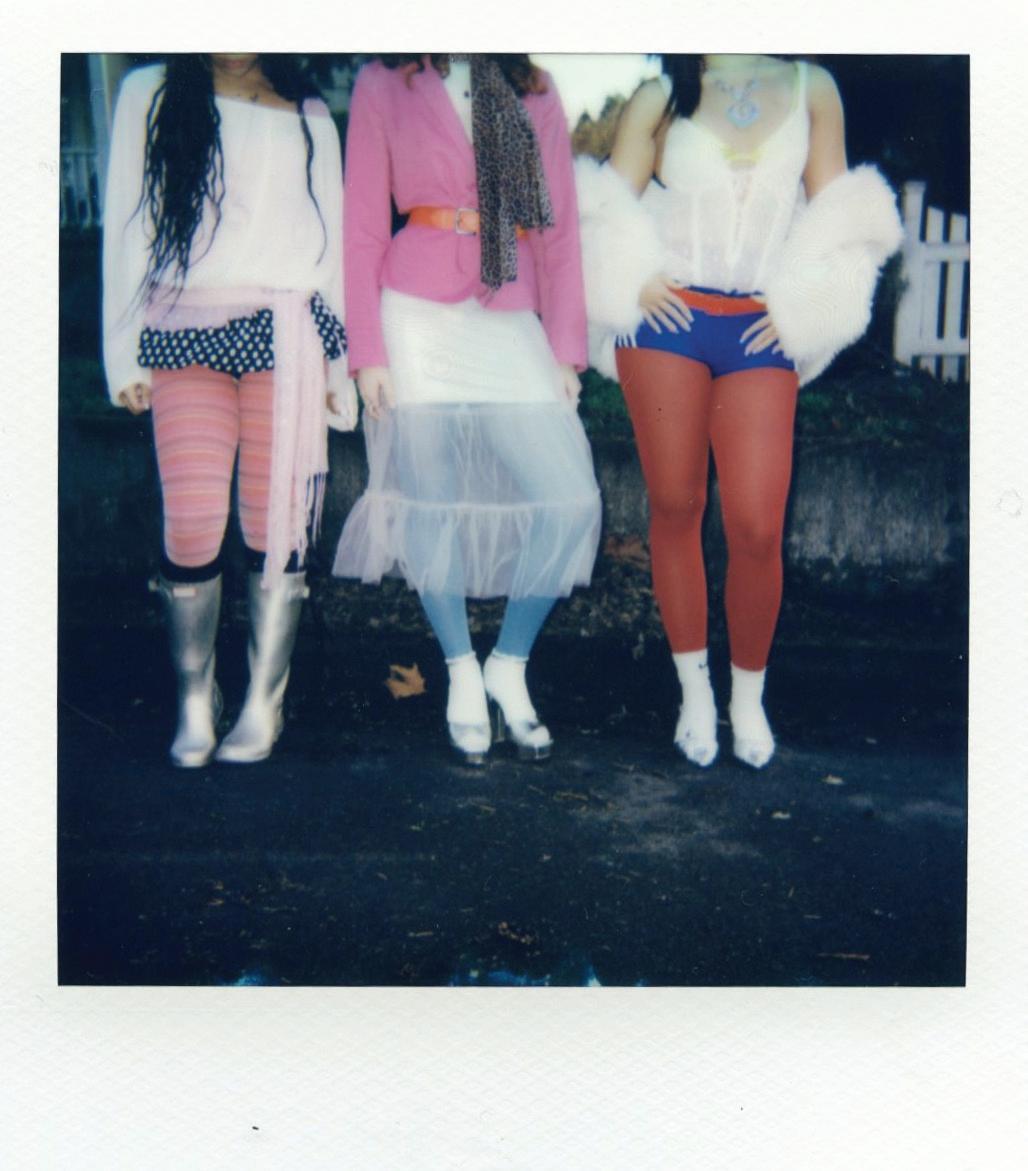
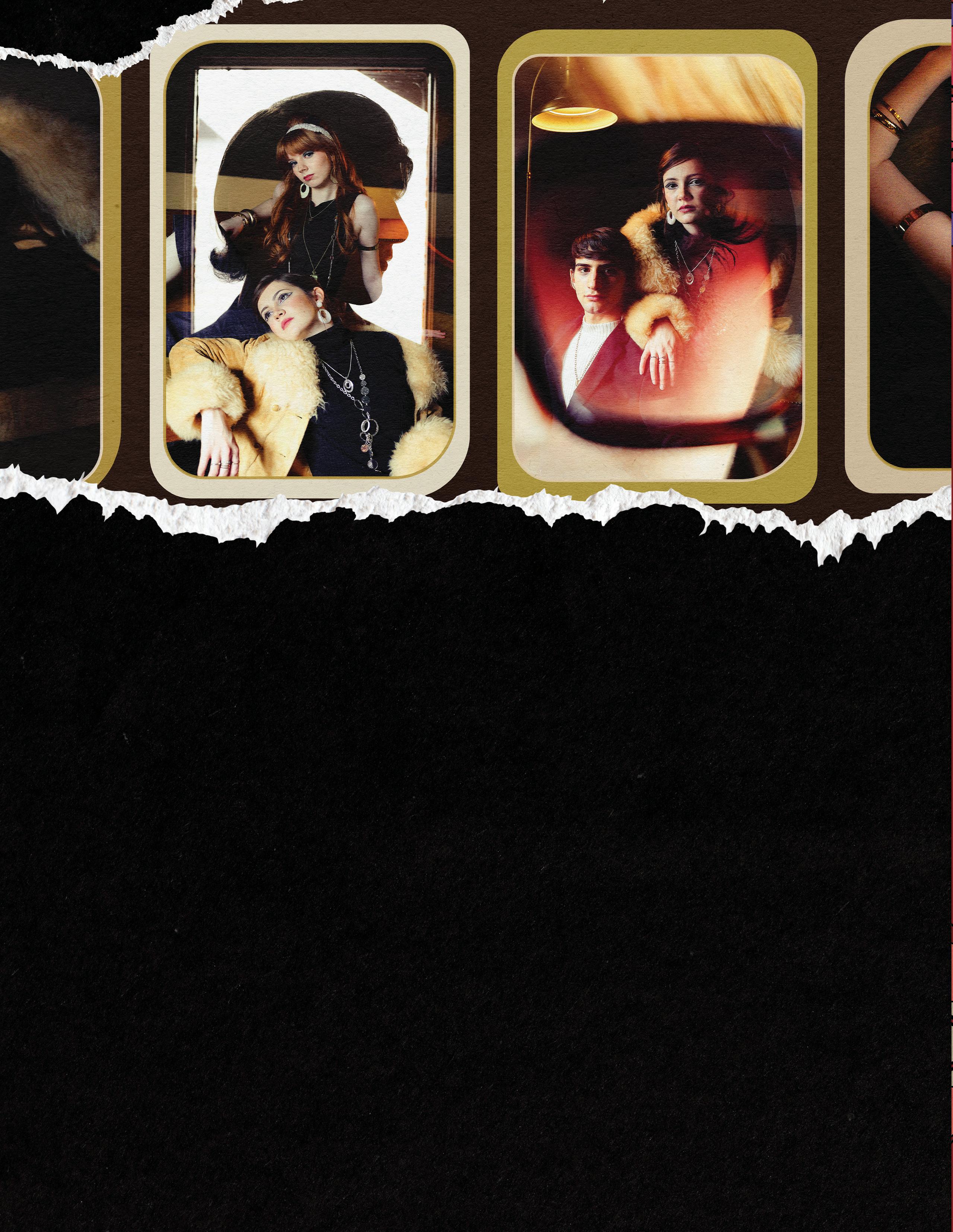
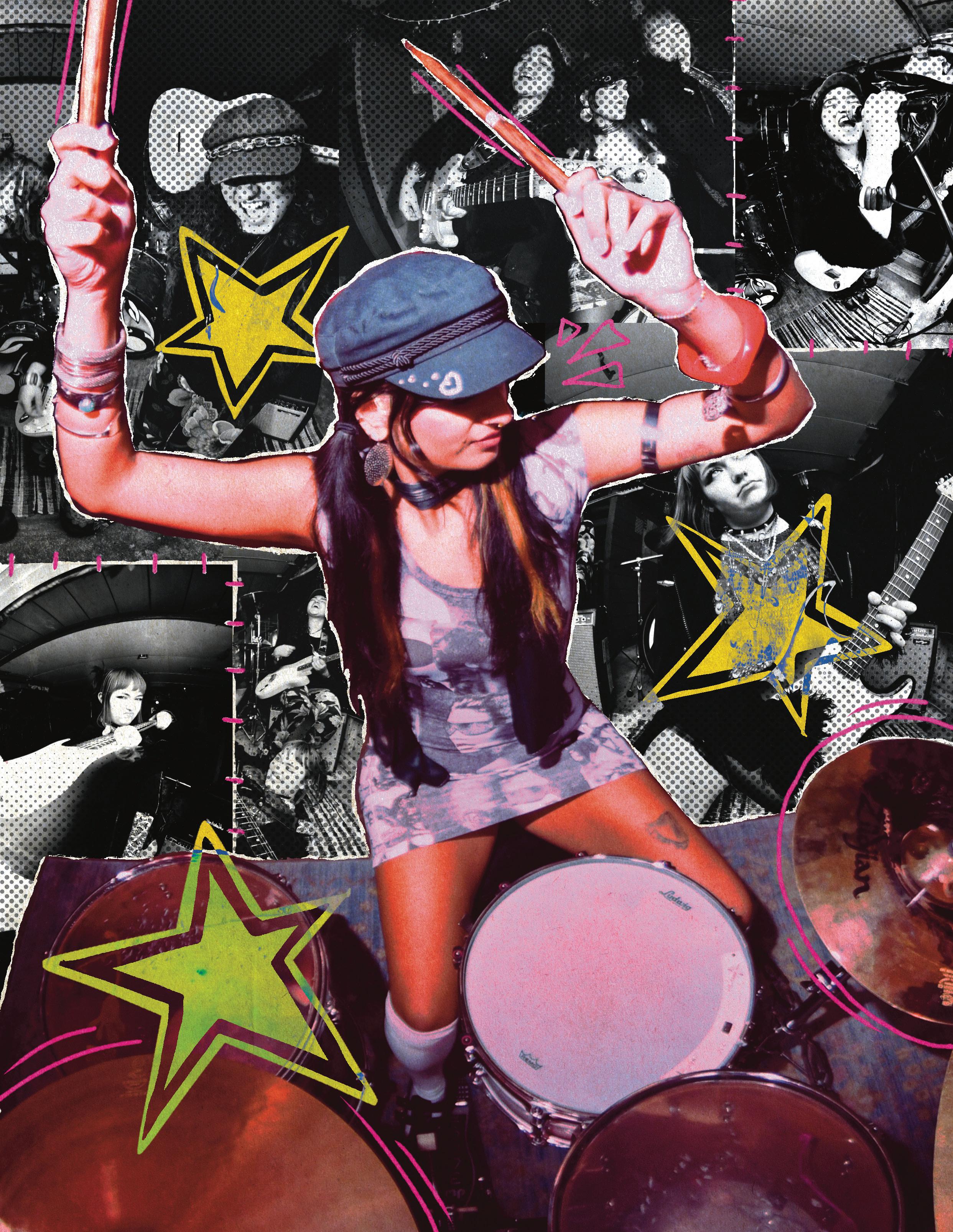
The concept of the GIRLBAND shoot was to display a 1970s all female band recording their next hit album. The shoot highlights girlhood and all the thrilling whimsy that comes from it. Although the recording studio is chaotic, the women are working together to create beautiful art. During the 1970s the music industry was dominated by male artists, so I wanted to bring to light the female voice. This shoot draws inspiration from Fleetwood Mac’s Stevie Nicks, Kate Hudson’s Penny Lane, and Riley Keough’s Daisy Jones. It embodies femininity in creativity. The models portray hippie and rock sensations, with a blend of instruments — shredding the guitar, slamming the keys, and screaming into the mic. Juxtaposed by the band members hanging out and bonding with the theme of confidence and power. This band is loud, literally and figuratively, and proud! Every individual brings her own original identity; soul, grunge, mystique, domination. GIRLBAND is drawing audiences in and completely memorising them with the endless possibilities of life. These women are wild yet intentional, utilizing music and performance as a means for freedom and pushing boundaries in a changing world.
A glimpse into fashion’s shift from signs to materials, and back to signs.
Boring clothes stomped down the hallowed halls of the Parisian Musée des Arts et Métiers, where SSSTEIN, a leading name in the recent wave of independent Tokyo-based brands, presented their fall 2026 collection. With only two patterned looks in the 42 shown, the brand is representative of a new wave of sleek brands who let their materials do the talking.
As the unsightly symbols of luxury fashion houses begin to lose their luster, a new guard of sensibly subdued independent labels are making a name for themselves. Brands like SSSTEIN, AURALEE, and A.PRESSE run tangential to the usual suspects of high fashion: a logo-clad boat keeling in the steady winds of profit margins and the diminished purchasing power of the middle class. For fashion consumers disillusioned by the faulty value propositions of high fashion mainstays — namely gaudy displays of branding and diminishing construction standards — it’s no wonder the subdued yet detail oriented designs of independent brands are drawing new attention.
the value of $500 dollars equates to 10 cents. For the latter however, each object — gatekept by its price tag — becomes a representation of upward mobility for an aspiring middle class and the nouveau-riche. This consumption of representation, termed conspicuous consumption, reduces items to concepts leaving the material quality behind as a byproduct. The apparel industry, like all other luxury markets, is governed by similar modes of representation; those Louis Vuitton bags and Gucci loafers don’t buy themselves after all.
“each object — gatekept by its price tag — becomes a representation of upward mobility for an aspiring middle class and the nouveau-riche.”
Occupying a variety of countries, but primarily Japan, the next generation of apparel designers leave behind loud signage and allow their materials to speak for themselves. Over the last ten years, they’ve slowly generated a small but zealous fanbase, and in the last two years, they’ve moved to the cusp of the mainstream. But with LVMH, a Parisian luxury conglomerate, spending $10.6 billion on marketing and PR in 2024, the rearrangement of the corporate fashion hegemony isn’t possible with beautiful clothes alone. Instead, it is indicative of a change in consumer mentality, as the aspirational middle class has wizened to the velvety sheen of marketing and has begun to seek other outlets for disposable income.
Luxury markets have always catered to two types of customers: a select few who can make acquisitions at their leisure, and the majority, for whom each purchase is a month or yearlong process of penny-pinching and deliberating. Consequently, for the customer for whom price is no object, items are merely materials, a T-shirt truly is just a T-shirt when
For the aspiring middle class, “an object’s symbolic value was always more important than its material value,” writes Eugene Rabkin in Business of Fashion. However, for the bastions of traditional luxury, it was customary for a certain standard of quality to accompany the glaring logos used to justify spending one’s mortgage on a bag. But with that quality firmly relegated to the dustridden closets of “archivists,” luxury consumers have slowly opened up to other sources to satisfy their thirst for opulent, well-crafted clothing. This shift has redefined luxury and the status which accompanies it.
Brands like AURALEE, A.PRESSE, and SSSTEIN use an array of handspun fabrics ranging from luscious cashmeres to hardy tweeds, to hook customers on the feeling of living in this new generation of clothes. The tactile focus, which sets itself in opposition to traditional luxury houses, should be applauded. However, with a reliance on sensation, a new set of privileges — and by extension symbolic value — can be derived from these clothes. This new set of conditions emerges with the capital, both financial and temporal, required to jump through increasingly complex hoops to obtain coveted pieces. The scavenger hunt-like nature of buying is the new standard for luxury consumption, one that feels like a necessary rebound to the digital flattening of garment acquisition. Buying, now more than ever, is about the journey and not the destination.
ILLUSTRATED BY
YING THUM WRITTEN BY MARK MUNSON-WARNKEN DESIGNER CARLY RIDENOUR
Masculinity comes with very set standards to meet, but what if one’s masculinity is defined by the ability to cut one’s own cloth? What if a man is truly “a man” when he embraces all sides of himself? Masculine and feminine. Embracing masculinity through the confidence to show all sides of oneself.
Man
Enough
MODELS DANNY MEADE, GOVIND NAIR & DENSEL
VILLASPIR DESIGNER
RYAN EHRHART
ART DIRECTOR ISABELLA THOMAS PHOTOGRAPHED BY AIDAN BARBER STYLIST KARTER GREEN
CREATIVE AND CULTURAL CANNIBALISM.
DOES ANYTHING REALLY EXIST IN A VACUUM, FREE OF OUTSIDE INFLUENCE?
ART DIRECTOR CHARLOTTE MILLER
PHOTOGRAPHED BY JOAQUIM GRUBER
STYLIST OLIVIA ROBERTS
MODEL & MUSIC
CONNOISSEUR FIONA RYAN
DESIGNER KATE COOPER
FEEDING THE ALGORITHM
“THE
SAMENESS FEELS INESCAPABLE, ALIENATING”
DAZED
"IF THE MEDIUM IS THE MESSAGE, THEN TODAY’S MEDIUM IS THE ALGORITHM"
DAZED
BY
WRITTEN
LIBBY FINDLING
ART DIRECTOR MAYA CLAUSMAN
PHOTOGRAPHED BY GRETA SVEN
STYLIST AVA SHOKOUHI
MODELS EMILY CASCIANI, AVA KLOOSTER, SARA KHOURY, OLIVIA ROBERTS & GIDI BATYA
DESIGNER AMELIA FOX
Her blonde hair swept in a neat bunch, her twig limbs still, her blue eyes piercing, her smile white and immutable. She is pink and perfect, created as the ideal doll for a young girl. Her name is Barbie. And she can be anything. But before she was an astronaut or a doctor, she was a racy icon of 1950s Germany.
In the early 1900s, American girls played with babydolls, advertised to consumers as a way to prepare them for motherhood. Babydolls were placed in the hands of girls, transporting them into motherly roles — to dress, care for, and soothe their dolls. This anticipatory socialization told young girls who they were expected to become once they grew up: mothers.
Ruth Handler, co-founder of Mattel, retold her lightbulb moment in a charming anecdote, describing watching her daughter Barbara dismiss babydolls and favor paper dolls of adult women. Handler saw a business opportunity to help girls look forward to a future as a grown-up with a career and shiny dresses, opposed to a baby who needs a diaper change. Her idea was put into motion when she visited Switzerland with her family and met Lilli.
Bild-Lilli was a cartoon character created by Reinhard Beuthien in the 1950s that appeared in the Bild-Zeitung, a best-selling tabloid founded in Hamburg. Lilli worked as a secretary, often found in tight clothing and black stilettos, teasing men and making jokes. Lilli was known for her quick wit, independence, blonde pony tail, sass, and exaggerated form. She was the post-war ideal of a German woman: fresh, sexually uninhibited, and intent on marrying a nice rich man.
After the cartoon gained popularity, Lilli dolls were manufactured and sold as adult novelty toys at tobacco stands, bars, and adult shops. The dolls were bought by men and hung in rear-view mirrors, placed on desks, given as gag-gifts to bachelors, and to girlfriends with a bouquet of flowers.
Lilli caught the attention of Barbara during their trip, and Handler purchased a few Lillis to bring back to the states. She reworked the 11-inch doll, giving her curly bangs and removing her earrings, transforming her into a clean and pristine lookalike of the German doll.
Barbie was marketed as a “teen fashion model,” empowering young girls and breaking typical domestic roles. Through the years, the brand’s advertising moved away from fashion centered play, “You’re Always Dressed Right in Barbie (1961),” to empowering messaging like “We Girls Can Do Anything (1984).” In the early 1960s, before women could even open bank accounts, the Barbie Dreamhouse launched. Barbie told girls that any career was possible and that the sky was the limit. She allowed for more choice within the toy market, giving girls the freedom to play in new ways.
However, as much as Barbie aimed to inspire and uplift, her flawlessness designed from the epitome of a male fantasy started to harm young girls’ self images –something that Barbie has been long criticized for by the public and in formal research. Additionally, Barbie’s career choices were still limited to traditionally female careers.
It seemed that to have the dream job or material items, one must have her slim figure and stylish clothing. The dreams of Barbie’s empowering messaging had an opposite effect on many consumers, and now, a prominent association with Barbie is unrealistic beauty standards and eerie perfection.
This seemed to boil a quiet rage, causing girls to hurt Barbie back. Her blonde hair was snipped, her clothing ripped, her limbs popped off, and markers defaced her unblemished skin. Her stiff and uncompromising form was not designed for cuddling with, opening a door to demolition. Did this rage come from Barbie’s disgusting perfection? Did her impossible fantasy promote destruction? A need to prove that she isn’t perfect? Or was it just another way kids played?
Greta Gerwig’s “Barbie” (2023), plays with how Barbie is both hated and loved, both pampered and abused. Opposed to classic Stereotypical Barbie, Weird Barbie mimics the types of manipulation kids inflict on her. Her appearance in the film is characterized by choppy pink hair, legs permanently in splits, and marker scribbled on her face. Weird Barbie brings humor to the film, addressing Barbie’s famous destruction and offering Stereotypical Barbie guidance about the real world. The fact that Barbie lives in her own world unaware of death and suffering proves that her perfection is a fantasy.
Mattel now produces Barbies that represent a broader audience. Parents can now buy dolls in different races and body types, as well as dolls
including fidgets and
a tablet. While these advancements arguably capitalize off of modern social justice movements, these dolls can help children beyond thin white girls see themselves in the social world, positively shaping their identities by helping them feel seen and accepted. However, recent studies alarmingly indicate that girls would rather play with thinner Barbie than curvy Barbie. This speaks to our deep-rooted beauty standards and the shifts Barbie has taken to maximize profits.
The shift from dolls that mirrored the male gaze, exposing girls to maternal and domestic roles and unrealistic beauty standards, to dolls that don’t just say “anything is possible” but show it, is a part of a bigger movement towards demolishing social norms that are rotting from the inside out. Representation, as shown in Barbie’s evolution, is important because doll worlds mimic adult worlds in miniature, demonstrating social norms and culture to children.
Dolls are a projection of their owner. If a child needs a friend, a doll can fill that role. If a child needs to let out some rage, a doll can be that vessel. Ultimately, play helps children express themselves and figure out who they are and what the world is, so any toy that can help them to do that is worthy of the shelves and deserves a place in little hands.
her shoulders. Feathers frame her back and stretch out of her dress like wings surrounding her frame. Her dazzling eyes light up and peer back at everyone lucky enough to be in her presence. The room roars, artists start to sketch, and all are enchanted with awe at the immensely unique and remarkable figure standing before them.
“I want to be a living work of art,” Casati declares after a night of heavy drinking paired with even heavier socialization. “I do not wish to be beautiful.” And that she was not. At around six feet tall and with such a lanky build, she was anything but Italy’s beauty standard in the early 1900s. Luisa had bright, burnt orange hair, deep-set eyes marked with a black kohl powder, sharp facial features, and alluring green eyes enhanced by
In fact, Luisa Casati was on her way to leading a fairly normal life for an Italian noblewoman. Born Luisa Adell Amman in 1881, she was brought up in great wealth
marked a transformative shift in her personality that led her to become the muse of her nation.
This transformation occurred when Casati met playwright and poet Gabrielle D’Annunzio. D’Annunzio was an Italian writer and aristocrat who was constantly looking for muses to inspire his work. D’Annunzio was drawn to the unique beauty of Casati, while Casati was drawn to the masterful artistry of D’Annunzio’s work. The two hit it off and maintained a turbulent affair throughout their lives. At this time, Casati’s husband, Stampa, chose to ignore the budding love affair but could not ignore the changing lifestyle Luisa Casati began to lead. In fact, none of Europe could.
REMEMBERING MARCHESA LUISA CASATI
Casati started her transformation with her physical appearance. She dyed her hair a bright, fiery red, began lining her eyelids with black kohl powder, and began investing in personal designers for her eccentric way of dress, including long black dresses that looked more like rare, expensive costumes and large headpieces fitted with peacock feathers. What once was the shy, closed-off Luisa became the larger-than-life character of the Marchesa Casati – a person so extravagant in personal style, she almost became unnerving to those around her. In an interview with Casati in 1956, she recounts, “How shy and insecure I was at the beginning! It was the enraptured or envious gaze of men and women that hardened me, made me grow.” By this account, it was the very idea of captivating an audience that caused Casati to maintain such an appetite for unusual fashion.
She commissioned exotic fur coats, decadent gowns made from sheer fabric, and stitched with pure diamonds. She began to purchase unique animals to have as pets, or sometimes, to wear as stylistic accessories. Among them, she wore a boa constrictor as a necklace, had albino blackbirds, peacocks, greyhounds, monkeys, Pekingese dogs, and most notably, two pet cheetahs who followed her around the streets of Venice. Her desire to be recognized didn’t stop there, however. After maintaining a personal style, she sought artists out to keep her image alive; she wanted to eternalize her unique beauty.
She had portraits painted of her, a life-size wax doll that mirrored her image commissioned for her, photographs taken, ballgowns tailored for her, and all the while, Europe became enchanted and enthralled by the captivating force of her. Artists were inspired by her daring sense of expression; authors wrote novels, poems, and other works about her, fashion designers incorporated her tastes into their designs, jewelers cut gems just for her costumes, and filmmakers were determined to capture her essence through their medium. If artists maintain a stance of immortality by their chosen medium of art, then the non-conformist Marchesa’s medium was no singular pursuit but rather the culmination of her stylistic choices of expression.
But underneath the lavish life, exotic fur coats, extravagant balls, and eccentric way of living, was a woman, bare in natural beauty, desperately seeking to be remembered. She was so haunted by the fact of mortality that her desire to be immortal drove
HER UNIQUE WAY OF LIVING LED HER TO LEAVE BEHIND A LEGACY OF FASHION AND NONCONFORMITY.” ”
her to great extents (and costs) of living large. This raises the question: What is the cost of being remembered?
For Casati, that cost was exorbitant. In fact, she was so obsessed with preserving her image and leaving an impact on Europe that she squandered her wealth until she was $25 million in debt. The once incredibly wealthy and larger-thanlife caricature of Luisa Casati turned into an impoverished woman living in the shadow of her past. Buried in the Brompton Cemetery in London, Casati lay at rest with her taxidermy Pekingese dog at her feet under a headstone inscribed with Shakespeare’s fitting line: “Age cannot wither her, nor custom stale her infinite variety.” Her unique way of living led her to leave behind a legacy of fashion and non-conformity, which inspired artists, fashion designers, social movements, and the general population at large. If the famed and honored Marchesa Casati sought to be immortal, she certainly succeeded.
WRITTEN
BY
KIANA HEILFRON
ART DIRECTOR MAURA MCNEIL
PHOTOGRAPHED BY AYLA FUNG
STYLIST LARA CLUTE
MAKEUP BY DANIELLE COLLAR
MODELS ZOË WALKENHORST, ABIGAIL GHIO & ANNA DE SANCTIS
RANELLETTI
one voice, one drum the sounds of carnaval in bahia
It begins with the thrumming weight of a palm catching at the head of a drum. To me it’s a familiar sound, the start of so many vibrant nights, and many of my best memories. It’s the sound I hear before my head dives under the waves — when it’s summer in Salvador and colorful feathers still litter the streets from Carnaval. At some point in the last couple years people from all over the globe have started turning their heads southward towards Latin America; and towards Brazil. I’ve grown used to catching the familiar beat of samba, bossa nova, or Axé all over the world, and I’ve stopped assuming every person who walks past me in a Neymar Jr. jersey speaks Portuguese.
When asking my American friends what they knew about Brazilian music they collectively mentioned Carnaval. In Salvador — a coastal city and the capital of the state of Bahia — Carnaval is our most vibrant expression of culture, song and dance. As said in Baianidade Nagô, an iconic Carnaval song, “Carnaval na Bahia, a oitava maravilha,”— Carnaval in Bahia, the eighth wonder of the world.
I asked Saulo Fernandes, a prominent Bahian singer and songwriter, about Carnaval’s influence in Brazilian music, and how performing in Carnaval is different from all other shows. “Carnaval is a fundamental part of the music I make. It’s where we see the reach of the songs. It’s an opportunity to sing for
Nowadays all kinds of music blasts from the booming speakers of the trio elétrico trucks, but in the 1980s a new rhythm began to gain popularity. That genre would come to characterize Bahia’s Carnaval: Axé. The rhythm is a vibrant demonstration of culture and history, which Saulo explains as “…contact with rhythmic patterns that come from Africa, with the Afro-block bands, with the composers (my masters), and with the immense musical and cultural richness.” The word Axé, which comes from the Afro-Brazilian religion of Candomblé, is a greeting, meaning positive energy. The vibrant energy of the drums and the ringing of the triangle overlaid with the classic call-and-response practices are characteristic of the sound, the very heartbeat of Bahia. Saulo explains, “Axé is part of my formation as a musician, a composer, and as a person. I always say that singing Axé Music on a trio elétrico, leading a huge crowd, makes you feel like you have to be even more human, to fulfill your role, with the responsibility and love that it requires.”
Although Brazilian music and beats have gained a lot of popularity across the United States in the past decade, the spread of Axé to the rest of the globe has been happening for a while. In 1991, American artist Paul Simon played with Brazilian musical group Olodum bringing a crowd of over 750,000 people to watch them perform in Central Park. In 1996 Olodum participated in a music video with Michael Jackson shot in Salvador’s iconic Pelorinho block. I asked Saulo if he’s noticed the increasingly global audiences for Brazilian music — and how he felt about the shift, especially in his performances outside Brazil. “Yes. It’s beautiful to see the growing interest in Latin music overall — the engagement with our cultures, our beliefs, our languages, and our different rhythmic traditions.” said Saulo, “we have so many wonderful artists who represent this diversity and richness.”
I concluded our interview asking Saulo what he hopes people discovering Brazilian music for the first time take away from the experience. So if perhaps reading this has made you curious about Brazilian music, Saulo only asks that you “experience the genuine joy, the lightness, the rich rhythms, and encounter great poets and songs. Words carry a lot of power in Brazilian music. I think it’s worth exploring it with care and on a deeper level. We make music with a lot of love and truth.”
“Salvador, Bahia, território africano. Bahiano sou eu, é você, somos nós. Uma voz, um tambor.”
Salvador, Bahia, African territory. Bahian — that’s me, that’s you, that’s all of us. One voice, one drum.
— Saulo, “Raiz de Todo Bem”
WRITTEN BY ANA MENDONCA KERTÉSZ
ILLUSTRATED BY BRAYLON BELLONI
DESIGNER KAYLA CHANG
MUSIC CONNOISSEUR MIA FAIRCHILD
Do you ever like being sad?
Do you ever like swimming in it?
This pool of your own tears, and you are skinny dipping, and it is dead of winter.
At a show in a fluorescent jazz bar, the trumpet player is in your face, and you’re moving to the bright tones–the saxophone solo takes your hand, walks you up to their apartment, unlocks the door, and says goodnight, shutting you out in the cold.
Playing a sad note instead of a happy one –why now? Why make something that could be joyful ring out with pain?
There must be some reason they want the awful, the longing, the missing, the muddy pieces of past selves; why dredge them up?
Why do you listen to blue songs when you’re blue? You should be listening to something orange, yellow, red, vibrant and bursting.
Maybe you’re trying not to ignore yourself –but then why make it worse, why not claim some silence for a while, instead of sinking in these weary, blue songs?
You want to be heard?
To be hurt?
You want that world where the blue never ends because it is nice to have consistency.
Happiness puts you into space, heaven, dreams; sadness makes you real.
I have double-booked myself again, I am running late and so split that I can be anything –your personal saxophonist is wafting a golden tune into your room, all you need to do is close your eyes.
Close your eyes and you are in your own world. You don’t control it, but it is yours, you can go there and live whenever, you can live when we first met. Just because a place is dark does not mean it does not exist. Please remember this.
I will be sad for a long time after this me and my not-quite-friends bowled; I figured it would be a great time but I started losing, and decided that would be my gimmick to sink so far down the leaderboard that it will be hilarious.
It was three games long, it took forever, and I think that’s the length of time I will be sad for. Three games, or forever. You would be wise to measure sadness in number of games played.
The blue is holding me back then I couldn’t see it from the outside, and now I sit here rain surrounds me so that I cannot move and you don’t have to play a sad note to remember what they felt like you can do that on your own.
DESIGNER LIV BOURGAULT PLAYLIST CONNOISSEUR
GRETCHEN SCHECK
WRITTEN BY ZENON REECE
ART DIRECTOR AZTIN ARNELL
PHOTOGRAPHED BY LAC NGUYEN
MODELS AMMA MANU & DIEGO VASQUEZ
STYLIST DANIELLE COLLAR & DIEGO VASQUEZ
Spirit The of the Scholastic Bookfair
The thrill of the hunt, the joy of discovery, the satisfaction of walking away with a book (or highlighter)
It was a momentous occasion in many elementary schools. Backpacks were unzipped in the hurried search for spare change and dollars. Lists appeared, containing a litany of titles and objects to be procured. For the first time, students lined up in single file, not affording a wasted moment before heading to the library. That afternoon, the library transformed into a treasure trove, bursting with glossy adventure books, color-changing pens, and the beckoning of novelty. A red sign declared the event’s standing –welcome to the Scholastic Book Fair.
The emphasis of the name Scholastic Book Fair is on the books themselves rather than the other items sold. “Scholastic,” despite its austere title and connotations, is a company. The event would have a different energy if it was the “Scholastic Stationery Fair.” But, in practice, there is a dissonance between the item promoted and the item sold. It was not an organic process, as Scholastic Book Fairs continue today, operating across the U.S. and across the world.
The spirit of the Scholastic Book Fair lies in its simultaneous accessibility and exclusivity. On the one hand, novel and unique books flooded into the public school. On the other hand, the books themselves were sidelined by the scented erasers and bright notebooks. The irony of the book fair, held in cafeterias, libraries, and gyms, is its promotion of consumerism in egalitarian spaces. Next to the school library’s check-out desk, where a student can check-out a book free of charge, is the never ending selection of “I Survived” books for purchase. The fair placed barriers in purportedly accessible spaces.
From an economic perspective, the fair offered many benefits. Students as young as kindergarten were entrusted with pocket money to fund their adventures in the fair. It provided a foray into financial independence within the security of schools. At the institutional scale, schools partially benefited from book fair sales. Schools earn a percentage
for each purchase, incentivizing the continuation of the fairs. These funds help confront significant deficits in public schools. A meager profit from the event will likely not make a dent in mitigating lack of operational funding.
The thrill of the hunt, the joy of discovery, the satisfaction of walking away with a treasure under one’s arm, constitute the spirit of the Scholastic Book Fair. This excitement is missing from current higher education. Rows are left empty at public lectures. Headphones are on during class. Scented markers are replaced by Apple pencils.
Now, children’s attention is captured by instantaneously gratifying entertainment. The careful (or frenzied) browse through the book fair inculcated freedom in choice. Now, algorithms present the perfect next book from one’s search history. Young adults outgrew the literal Scholastic Book Fair. The quest remains for a unifying event that facilitates excitement for learning concomitant with consumption.
COMMUNITY AND BELONGING IN THE RAVE SCENE
Electronic dance music (EDM) thrives on anticipation. A build climbs to a drop that feels inevitable, until suddenly it isn’t. The bass cuts out and the rhythm stutters. In EDM, rhythm is simply a negotiation.
At its core, EDM is built on a rejection of traditional music structure. Unlike conventional pop music that relies on predictable verse and chorus patterns, electronic music fragments and rebuilds itself in real time. DJs manipulate tracks on the spot, extending drops or even abandoning them. A set is never performed the same way twice. It is improvised until it exists in a space full of moving bodies. This genre thrives on the tension between sound and silence, order and chaos.
The spaces where EDM exist reflect its unconventional spirit. Many club environments operate on spontaneity and trust rather than strict structure. Flyers circulate through social media stories, word of mouth, and so on, rather than through formal promotion. Some venues — underground tunnels, empty parks, warehouses — often transform temporarily, shaped by lighting, sound, and the people inside them rather than their intended purpose. These environments create something that feels fleeting but deeply intentional. EDM crafts a scene where the normal barriers of life soften.
Fashion within EDM spaces mirrors this improvisational energy. Instead of following curated trends or social media
aesthetics, rave fashion is built around movement and personal expression. Outfits are layered and often intentionally chaotic: mesh paired with neon, heavy boots alongside reflective accessories, glitter smeared rather than precisely placed, accessories turned into statements. Clothing becomes functional art designed to survive hours of dancing. In these spaces, fashion is less about presentation and more about embodiment. What people wear becomes part of how they physically experience sound.
The physical experience of EDM further reinforces its offbeat identity. The bass is not simply heard, it’s felt in your chest. Dancing never follows choreography or performance standards. Instead, movement becomes instinctive and individualized. The dance floor transforms into a place where people experiment with motion without the fear of judgement. This lack of rigid structure allows individuals to exist slightly outside predictable rhythm, creating movement that feels spontaneous yet completely natural.
Above all else, the strongest element of EDM is the community that it brings together. A group of people so connected through one entity that it transcends identity. Within the shared experience of basslines and flashing lights is a medium where people find connection without conversation. Strangers become best friends in a collective moment of love, freedom, release, belonging, and noise.
The rave becomes a social equalizer, dissolving hierarchy and encouraging expression that exists beyond everyday social roles.
Furthermore, one of the most enduring cultural values in the EDM scene is the philosophy of PLUR — peace, love, unity, and respect/rave. More than just a slogan, PLUR functions as an unspoken social contract that shapes how people interact within rave environments. It encourages openness, kindness, and mutual care among strangers who may never meet again outside the dance floor. In spaces defined by sensory overload, PLUR acts as a grounding force, reminding strangers to look out for one another and create an atmosphere of safety and acceptance. Whether it appears through small gestures such as fanning someone who needs a cool down, exchanging smiles in the middle of a set, or trading kandi with a stranger you connect with, PLUR reinforces the idea that rave culture is built on more than just music. It is a community of people united by love and connection. This sense of connection transforms EDM from entertainment into cultural experience. In spaces built around sound, people often find a temporary suspension of outside expectations.
Raving is ultimately a social practice as much as it is a musical one. Even in this loud setting, people learn to look out for one another, creating an environment rooted in trust rather than
expectation. What exists there is fleeting, disappearing when the lights come on, but the feeling lingers. For many, the rave is less about escape and more about practicing a different way of being together, even if only for a night.
Time doesn’t really exist at a rave, at least not in the way it does outside. It’s measured by energy instead of hours, by the tension of a build or the collective release when a drop finally lands. Songs blur together until the night feels continuous, like one long breath shared between hundreds of people moving in sync. Phones stop mattering. Deadlines disappear. For a few hours, productivity and routine lose their grip, replaced by something physical and immediate — the bass vibrating through your body, heat rising from the tight crowd, lasers illuminating the dark space, strangers dancing together without needing introductions. In a world obsessed with schedules and outcomes, EDM feels quietly rebellious. It allows people to exist without performing for anyone else, creating space to feel and let go without apology.
EDM challenges the idea that art must follow clear structure to hold meaning. The genre celebrates distortion and imperfection as forms of expression. The rave scene does not exist to be easily categorized or neatly explained, instead, it invites participants to experience art physically, socially, and emotionally in real time.
WRITTEN BY DREW
TURIELLO
ART DIRECTORS HARRY NOWINSKY & ANNA CURTIS
PHOTOGRAPHED BY HERONIMA VALLEDOR
MODELS MELEA AYLWARD, HENRY CLARK, ISAIAH DIAZ, ISABELLA RAZURA, & AVA SHOKOUHI
STYLISTS DAVIS LESTER & FRANCESCA OVERTON
DESIGNER NINA ROSE
PLAYLIST CONNOISSEUR ELENA THOMPSON
AFTERGLOW
WRITTEN BY LINDSEY PEASE
ART DIRECTOR ANNA DE SANCTIS
PHOTOGRAPHED BY CAMILLE MCFAUL
STYLIST ALYSSA SAMUEL
MODEL CORI MARKUS
DESIGNER JADEN RAI
PLAYLIST CONNOISSEUR MIA FAIRCHILD
Invisible
Perfume is a portal. A private playground for trying on versions of yourself, experimenting with new identities that cling close to pulsepoints, coat collars, sweater sleeves. Perhaps you know perfume best by way of the fog of Chanel No. 5 that descends when your grandmother enters a room. Perhaps you know departmentstore smells and sticky locker room body sprays, or the advertisements on TV or magazines, draping celebrity’s face on a paper smell-strip of something indistinguishable — yet cloying. The perfume industry gives way to bottled, try-on identities, and it’s one little corner of this world where the greatest aim is to keep everyone guessing.
Niche fragrance began as a kind of olfactory counterculture. It originates in the 1980s as a more thoughtful, smaller-scale refuse of the mass market perfumes designed to be unoffensive to the general public — that is, alternatives more individualized to particular tastes, rather than whatever has found commercial success and smells just like everyone else. Perfume as we understand it began before the Greeks, the word itself derived from the Latin per fumus, or “through smoke.” For Ancient Egyptians, scent became a means of communicating with the gods. This recent return to artisanal roots via indie perfumeries allowed a departure from the focus on smelling
“good” and began a new consideration of fragrance beyond convention. Niche fragrances are experiencing another burst of life lately in a kind of alternate current running alongside the gourmand takeover in the mass market. Perfumes that smell like, say, lightbulb, are battling it out with vanilla ice cream and caramel sugar notes. Gone is the blind notion of smelling good. We want to smell a little weird, or a lot weird.
Think of a place. Situate in your mind’s eye a memory, or feeling — even one entirely imagined. Scent can take you there. Thin Wild Mercury is a perfume house that transcends eras into nittygritty hyperreality. A perfumer refusing the expectation of classical training and instead experimenting wildly with fantasy accords to invoke olfactory experiences of New York City and Los Angeles across the 1960s, ‘70s, ‘80s — utilizing notes like warm leather objects, antique wrought iron, or stretched canvas. Blueberry jam and denim in “Sheep Meadow,” vintage armoire wood and loved-in linens in “Chateau, 1970” to invoke its namesake, the famed Chateau Marmont. I spritz on “34 Bohemian Cafes” and wake up in a Beatnik basement, neck-to-neck with Jack Kerouac. I, another day, dab “Girl of the Year” to my wrists (notes of lipstick + incense + smoker’s leather jacket + vintage fur) and look
in the mirror to find the ghost of Edie Sedgwick. I’ve become Tom Wolfe’s next “It Girl.” All it took was the spritz.
On the odder end of the fantasy scent experience, there is Zoologist — a Canadian niche perfumerie which devises perfumes literally based on animals. Scents like “Squid” have a literal black ink accord, whereas scents like “Cow” work alternatively to emulate a cow’s ideal bucolic scene with a variety of florals. Zoologist also places an important emphasis on not using actual animal products in their fragrances. Many organic compounds that run the fragrance world chemically are traditionally derived from animals: civet, ambergris, skatole, musk, castoerum — the list goes on. The ingredients typically come from less savory parts of the animal, namely anal glands. These notes ground the perfumes they inhabit, building a kind of foundation of scent for the more tricky, volatile and identifiable notes to cling to. They give it that not-quite-explainable base funk. That said, advances in chemical science have created synthetic replicas of things like musk and ambergris, opening a whole avenue of exploration at cheaper costs and without harming quite so many beavers, deer, or sperm whales.
Individual perfumes become a way to dig our heels into an imagined world. To explore who we could become under what mist, of what notes. To consider in a new, invisible way, who it is we wish we could be. It’s the antithesis of the vision board. As a most intimate expression of the self, fragrance allows for experimentation with closed consequences. You can’t read a perfume from afar; it requires a real human connection to be known in a sense as vulnerable as smell. Maybe this is what defines the ritual. A last touch before leaving, an effervescence to let trail behind. A lasting mark on the world, on the day as you encounter it. A signature perfume creates the moments a friend catches up to you at the top of the stairs, knowing you’d be there simply by what’s left in the air. A coat borrowed from a friend and borrowing an invisible part of them too. Or, helping another dress up for a date and bestowing a final-touch spritz of your perfect “date night” perfume for them.
The journey to discovering the world of scent is as much a path of self-discovery as it is an immersion into getting to know the world around you. Pocket O’ Posies is a Eugene-based niche perfumery, boasting a catalogue of houses like Heretic, Stora Skuggan, and Imaginary Authors. Even spots like Whole Foods carry scented oils to experiment with. Scent is all around; the trick is what you find for yourself out of all of it.
The Black Sheep Complex
Growing Up Outside the Rhythm
As the warmer seasons approach, anxiety fills my body. The thought of wearing shorts and facing my reflection haunts me. On sunny days, I walk the streets and watch strangers pass by. I rarely meet their eyes. Instead, their stare drops to my left leg, where a carbon-fiber, misshapen “cast” replaces what society expects to see. In those moments, I feel like a black sheep. I often say that fall and winter are my favorite seasons, not because of the cold, but because they allow me to hide. Layers protect me from stares for a while, I feel like I blend in. I can pretend I belong to the rhythm everyone else seems to follow. But seasons always change, and with them, my sense of identity shifts again, leaving me stuck in a cycle of comfort and exposure.
The term “black sheep” is commonly used to describe someone who exists as an outlier in their family, culture, or environment. Throughout my life, I have embodied the definition of a black sheep as an amputee. I lost my leg when I was just one year old. I realized what my amputation meant in kindergarten. At four years old, classmates would ask, “What happened to your —” I never needed them to finish the sentence. From that moment on, I knew I was different, not in a negative way, but in the way society defines difference. That understanding deepened as I grew older. Being treated differently, even when it came from a place of kindness, made my separation feel unavoidable. I remember playing soccer in elementary school and being asked if I wanted others to “go
WRITER & MODEL HELEN BOUCHARD
ART DIRECTOR EMILY MURO
PHOTOGRAPHED BY SKYE FLORES
STYLIST GIDI BATYA
DESIGNER BRYANT LEAVER
easy on me.” At first, I didn’t understand why. When it clicked, I felt confused and alienated. I was capable, strong, and competitive, yet suddenly, I was seen as fragile. Once again, I felt out of place, questioning not my ability, but how others perceived it.
I went on to conquer many sports throughout my childhood, never feeling limited by my body. Still, one challenge followed me into adolescence and remains with me today social media. Platforms like Instagram and TikTok thrive on strict beauty standards and idealized bodies. While these pressures affect nearly everyone, they intensified my insecurities in ways I could not ignore. Disabilities are often the identities erased on social media. Beauty standards run much deeper than appearance alone. They decide who is seen as desirable, capable, and worthy of space. More often than not, these standards are built around symmetry, smoothness, and the illusion of effortlessness. Anything outside of that is marked as “not applicable.”
For people with disabilities, beauty becomes a qualification. We are either expected to hide the parts of ourselves that don’t fit or provide enough confidence that our difference becomes inspirational rather than uncomfortable. There is little room for normality.
A prosthetic is not just a medical device, it becomes a statement, inviting commentary whether we ask for it or not. Growing up, I learned how to adjust myself to make others more comfortable. I learned when to cover my leg, when to laugh off questions, and when to explain myself before anyone asked. These were survival tactics shaped by a culture that treats disability as something to overcome rather than something that simply exists.
Social media intensified this pressure. Platforms built on visuals reward similarities, filters, and carefully presented bodies. Disabled bodies rarely appear unless they are framed as extraordinary or tragic. Seeing myself reflected back on my feed felt like a quiet act of rebellion.
I asked Kaylah, a fellow amputee I met at the Paddy Rossbach Amputee Youth Camp, to answer a few questions that I felt resonated with my experiences. Her words reflected my own. When I asked her if she ever felt isolated in her daily life she stated, “Of course. I experience feelings of isolation daily… I’ve always been different before my accident so after it I definitely felt differently and got treated differently. Not in a bad way but to me it wasn’t a good way either.”
Kaylah also described how people assume her disability is a disadvantage. Strangers often think she needs help or that she is struggling, when in reality she is fully capable. That automatic association of difference with weakness is exhausting. Staring is something we both understand. Children’s curiosity can feel harmless, even empowering. But when adults stare, it feels different, uncomfortable, and aware. As Kaylah put it, “Why are you uncomfortable by my presence?”
When I asked if she feels like a “black sheep,” her answer was simple: yes. Not just because of her disability, but because being different has followed her long before it was visible. In public, she
is underestimated. At home, she is expected to function as if nothing has changed. Caught between fragility and invisibility, she navigates both.
We are not the only ones facing this crisis of belonging. The symbolism of the black sheep extends beyond disability. Stereotypes affect how people are treated both physically and mentally. But something is shifting — our generation is beginning to question who created these standards, and who they were meant to exclude. Gen Z speaks openly about body image, mental health, disability, race, gender, and identity; conversations that previous generations often avoided. We are less willing to shrink ourselves to fit a mold that was never designed for us. Social media, while part of the problem, has also become part of the resistance. Disabled creators show their prosthetics unapologetically. People post unfiltered photos. Conversations about beauty now include scars, stretch marks, mobility aids, and differences. The rhythm is no longer singular, it is being rewritten, and we will continue to bring resilience and allow freedom to be offbeat
WHY DOES ART ATTRACT THE WORST?
GREED AND LAZINESS IN THE CONTEMPORARY ART WORLD
Art is often associated with creativity and technique, yet the contemporary art world increasingly rewards spectacle over substance. As wealth and greed shape cultural spaces, mediocre artists rise to prominence not for their skills or mastery, but for producing provocative, easily marketable work that caters to the status-seeking tastes of the mega-rich. Galleries that once celebrated beauty and innovation now function as investment tools and tax shelters, leaving little space for new, more talented artists.
Jeff Koons and Damien Hirst embody the laziness of the contemporary art world. At this point in their careers, neither of them takes critiques of themselves or their work seriously. They know that people will pay attention to anything with their name on it. The two tycoons have very distinct art styles and scandals of their own. Both are among the most commercially successful artists of all time, and while different in work, are similar in practice. They both follow the Andy Warhol method of having armies of assistants work on their pieces, or, if you're Koons, automated robots.
Jeff Koons, an American artist, gained popularity in the 1980s with his kitschy artworks. Notable pieces include porcelain sculptures of his adult-film-star ex-wife, inflatable versions of everyday objects, and building-sized balloon animal sculptures. His work focuses on consumerism and pop culture, blending high and low art. Despite his meteoric success, Koons has been widely criticized for being overly commercial and for his lack of contribution to the work attributed to him. Others argue that his work was groundbreaking, and the lack of sentimental value in his pieces makes it distinctive. Love him or hate him, Koons pushes against the expectation of what an artist should be.
How is Koons determined to be the most successful contemporary artist? Profit made? Number of shows? Are any of his workers given credit, or is it run as more of a factory?
Similarly, Damien Hirst is a provocateur artist based in the United Kingdom. He rose to prominence during the Young British Artists (YBA) movement in the 1990s and confronts themes of life, death, and religion. His work often features corpses, such as a diamond-encrusted skull, paintings made with butterflies, and, most famously, his use of dead animals in Formaldehyde tanks. This caused ethical concerns around his art. Some estimate that around 1 million animals have died for his art.
He also has received criticism for selling paintings inscribed with the year “2016” when they were mass-produced in 2018 and 2019. Despite this, Hirst remains the UK’s richest artist.
Do Koons and Hirst deserve their success? What constitutes good art and drives its value? Who is even buying these milliondollar sculptures and paintings, and what makes a sculpture worth one million dollars?
Art continues to be reserved for the privileged. While many artists are driven by creative expression, others seek to benefit from the opportunities offered by famous galleries and elite collections. When examining factors that determine the price of art, the gallery or auction house in which it’s sold can increase the price simply for being included. Think about buying socks from a luxury brand; they will be more expensive given the brand's name. Additionally, factors such as the artist's education, the art’s medium, its rarity, the materials used, or the artist's name can determine price. Even something as menial as the previous owner of a work, in the same vein as a celebrity re-selling their clothes, can make the price soar.
It’s no surprise that art can be used as a tax write-off or an investment for the rich to get even richer. Buyers purchase a piece now not because they enjoy its artistic value but because they know in five years that same painting will appreciate in price. Not all high-priced or famous art should be ripped from its owners, nor is contemporary art as a whole junk.
There should be more emphasis on labor and talent rather than on money. Even here in Eugene, our local Jordan Schnitzer Museum of Art, which houses works from Picasso to Kusama, also features local, lesser-known artists. Sharing spaces for all artists is a way for the art world to level the playing field. The art world needs to rein itself back in from Koons’ and Hirst’s profitdriven spectacles and lean into the expression of talent from artists. There’s already limited gallery exposure, so making that space accessible or adding variety beyond the million-dollar art model helps art feel attainable and inspiring.
WRITTEN BY AVERY WILSON
DESIGNER MADELINE DELL
ART DIRECTOR DENIA FERREIRA
PHOTOGRAPHED BY HOLLIS MORRIS
STYLIST CARMEN PEREDIA
MODELS HARRIET LEVI, LUKE LOBSENZ, & MAX STUEBE
Everyone has a moment. A moment where you freeze, make a quick decision, and immediately regret what you just did. It might be a sentence you didn’t say, a door you closed too quickly, or a choice you wish you could undo.
What happens next, though, is where people begin to differ. Faced with the same moment, people respond in contrasting ways; the aftermath fractures. Some search for logic, others for comfort, or a way forward.
In the mid-20th century, American psychologist Gordon Allport rejected the idea that personality could be reduced to a single archetype. Instead, he argued personality is shaped by traits, influenced by both individual differences and varying situations. His trait theory organizes personality into cardinal, central, and secondary traits — layers which guide how people think, feel, and act.
In decisive moments, those traits, Allport suggests, take lead. Every trait guides how we sit with discomfort, how we come to a conclusion and, eventually, how we move through times of regret and uncertainty. Now it’s your choice.
Think back to a time that still lingers in the back of your mind. In this moment of regret, how do you want to proceed?
a. Overthink it: Replay the moment and imagine every other alternative
→ Go to “Overthinking”
b. Blame-game: Take it personally
→ Go to “Self-blame”
c. Move forward: Accept it and let it go
→ Go to “Acceptance”
d. Jump ahead: Ask if it really made lasting impact
→ Go to “Future self”
OVERTHINKING
You start to replay this moment over and over again. Every word, every minute, every second drags you deeper
into the “what-if’s.” Your brain is flooded, overwhelmed, by the countless ways this moment could have gone differently, but didn’t.
Lying in bed that night, your mind races and your body tosses. You can’t sleep because you drown yourself in thoughts of the different paths this could have taken. Fixating on every minor detail makes you spiral, feeling hopeless and stuck. You’ve thought of it in every way you know how, mapping out each outcome. You wait for change, but nothing happens.
→ Go to “Next steps”
SELF-BLAME
You look for someone to blame. However, this just pushes you to turn on yourself. Your thoughts sound like, “I can’t believe I did that,” and “How did I let this happen?”
Judgement grows. You feel embarrassed, awkward, and uncomfortable in your own skin. As you keep beating yourself up about it, you feel even worse than before. This feeling stacks up with regret, piling more weight onto something already heavy. The blame hasn’t solved anything, it’s only kept you there, stuck in the moment longer.
→ Go to “Next steps”
ACCEPTANCE
So, what? Everyone has a moment like this. You feel dissatisfied with your actions, but as time goes on, the worry slips from your mind. You acknowledge it, let yourself feel it. But you let the moment stay in the past, instead of letting it control your present and future. It can’t be undone, so why let it take over your thoughts?
As you come to this conclusion, you move on with your day, week, month, and so forth. You are free from the endless thoughts that would have come if you stayed stuck trying to replay it in your head. Moving on, you focus on other
(more important) things. Life keeps moving, and so do you.
→ Go to “Next steps”
FUTURE SELF
(does it still matter now?)
One year passes. Five. Ten. Does this moment and memory still haunt you, or has it faded into the background, seemingly having smaller and a slighter impact on you?
Maybe you laugh at it now. You think, “I can’t believe I cared that much!” Or maybe you barely even remember, your brain letting go of the regret. Instead of having a lasting impact, the moment taught you a lesson: it’s okay to make mistakes. Learn from them, then let go.
Future-you finds happiness and fulfillment through other joys. You are content, busy pursuing dreams and navigating other hardships that may get thrown your way. Time didn’t erase the moment, it just put it into context.
→ Go to “Next steps”
NEXT STEPS: How we can respond. All roads lead you back here, no matter which path you chose. Not one of the hundred scenarios you thought of changed what happened. Blaming yourself only led you to a one-person battle, where neither opponent ‘won.’
However, if you chose to accept it and move on, you may have been brought to this realization quicker. None of these routes truly change the past. As much as you may want things to have ended differently, your life moves on.
As Allport showed, our traits guide our reactions, and each path reveals a different side of who we are. Overthinking and blaming yourself ultimately doesn’t serve you. Though easier said than done, dwelling on the moment rarely brings you clarity. What can change is how you carry it. You decide what comes next in the story.
FromFeeling
ON THE BALLET DANCER VASLAV NIJINSKY
Stage right and stage left must be covered in earth and noise. Yes, that’s right. The theater, the audience, all covered. Until now, the history of ballet has consisted of two centuries of movement through gritted teeth. Hardened technique and the guise of class have allowed us to forget the rush, the deluge, the wild gesture of dance. Dance is a savage state: preverbal, prereflexive, before life itself. It burns from life. It’s fire in the head.
The Russian ballet dancer Vaslav Nijinsky understood this well.
In 1913, when Nijinsky choreographed composer Igor Stravinsky’s ballet “The Rite of Spring,” he became more of a writer than a dancer. By then, Nijinsky was already a worldrenowned performer who had previously choreographed two successful ballets for Sergei Diaghilev’s Ballets Russes, earning him the nickname “the god of dance.” But for Nijinsky, dance inhabited a sphere above everyday life.
In classical ballet, where dancers must remain vertical and weightless, Nijinsky’s choreography for “The Rite of Spring” forced them back to the ground. Dancers were instructed to step off-time from the music rather than alongside it. With limbs stiffened, they moved with bent knees, twisting across the stage as if in ritual delirium. It’s no wonder the ballet allegedly incited a riot the night of its Paris premiere.
Successful as Nijinsky was onstage, the same could not be said for his life offstage. In his mid-20s, he began sinking into an increasingly manic state that developed into schizoaffective disorder, cutting his career short. As his condition deteriorated, he began writing obsessively in a diary over a period of six weeks from late 1917 to early 1918, intent on publishing it upon completion.
“I want to say so much and cannot find the words,” he wrote in one entry. “I want to write and cannot.”
If the dancer were truly a writer, he would produce a blank page. Nijinsky must’ve asked himself, perhaps while writing in solitude as he was so apt to do, how the dancer’s body, being a body without qualities, a body sewing space with signs, whose movement metabolizes instantly (just as a gesture appears to give way for the next, capable only of fleeing or forming a continuous line, as the passage is a single, continuous sentence punctuated by inhales and exhales, by commas and colons) could possibly leave a trace?
If Nijinsky was so troubled by his inability to articulate his thoughts, why write a diary? Why publish it? Perhaps he knew of no other way to express his situation than through forms that appear insufficient but are ultimately necessary. Perhaps writing, like dance, was another attempt by Nijinsky to express the inexpressible. Perhaps words, too, embodied the same fullness of life he found in footsteps.
And yet to write is to compromise feeling. The inexpressible must be left out so that language, with all its rules, can enter. It may be, however, that this very insufficiency of writing also constitutes the ultimate meaning of dance: communication without language.
Nijinsky’s diary suggests that writing emerges from doubt — the doubt that what you want to say cannot be translated, that meaning cannot be shifted from hand to hand and released into the air exactly as it should. The dancer must wade through this doubt, he must exhaust it — there is no point in stringing together gestures, as there is no point in stringing together words, except maybe to allow something new to be given the possibility of existence.
What makes Nijinsky foundational to the history of early modern dance is not that he abandoned the rigors of ballet, but that he exposed the essential inner turbulence beneath choreographic technique. It’s one thing to treat dance as work. It’s another to treat it as pollen: energy spreading from the body, propelled through space, conveying feeling. Before Nijinsky, ballet could propel its energy only within the codified limits of tradition: plié, jeté, arabesque — from these movements the body is made beautiful, but from where can it expunge itself from its work?
Every time Nijinsky would dance, something would carry him. To be carried someplace by art requires destruction: the dancer abandons himself to dance, he crumples into a wad somewhere between leaps. You can see him retreat into his body. Nijinsky understood that if you want to acquaint yourself with anything close to revelatory, the body must dominate the mind.
In this way, we can begin to understand that at the heart of ballet is a molten tremor. What had once settled into the silt of formal convention now rises with feeling. It is Nijinsky who plucks this feeling from out of the shadow of its vanishing gesture, it’s the articulation of what language leaves behind: dance.
To the reader, Nijinsky writes in his diary: “You think that because I build everything on feeling, I have lost my mind.”
Is thinking not the furthest point from the earth? The furthest destination from the body? Is dance not inherently knit with feelings that cannot be taught? The more you think, the further you are from yourself.
To this point, Nijinsky repeats, as if to remind us of what we have forgotten but what he has always known:
“I build everything on feeling, I have lost my mind.”
WRITTEN BY EMESE BRACAMONTES VARGA
ART DIRECTOR CORI MARKUS
PHOTOGRAPHED BY LILLY BARTLESON
PRODUCTION ASSISTANT LUCY RUPPERT
MODEL SARAH REMBISZ
STYLIST JOSEPHINE MILLER
DESIGNER NATALIE KOSKI
MAN OF THE YEAR
ART DIRECTOR & WRITER
AKIYAMA PHOTOGRAPHED BY ROSHNI RAM
For centuries, women all over the world who have sought entry into spaces of authority have adopted elements of classic menswear as a visual strategy for legitimacy. Women step into menswear to step into credibility, imitation yet survival. Power has always had a uniform. This expectation that leadership must visually align with masculinity has shaped corporate culture for decades; And yet, authority has never really existed in title or skill, it exists in perception.
Styled in ‘80s & ‘90s menswear, this shoot pokes at the ironic sense of being in a “man’s role,” moving through office spaces that reflect on boardroom conflicts and dealmaking.
Environments historically recognized through male ambition. Dim desks, loose ties, fluorescent lighting, and the mood of being catered towards reintroduces traditional masculinity with modern femininity. Taking inspiration from cultural icons such as legendary basketball coach Cheryl Miller reflects this evolution of style communicating authority, without sacrificing individuality. Professionalism can look like suits and ties, but it can also look like lipstick and heels too. Why wouldn’t it? Subverting traditional fashion and gender roles while also encouraging equality in the workplace, this shoot represents redefining visual expectations towards the people who make the world spin: Women.
Aslim silhouette whirls across a speakeasy humming with velvet-toned jazz, her movements swaying with graceful fluidity. Monochromatic from the neck down, she flaunts her otherwise austere apparel — a black turtleneck paired with cigarette pants and ballet flats. In her minimalist attire, Jo Stockton, who exudes chic rebellion, is played by Audrey Hepburn in the 1957 American romantic comedy film “Funny Face”. The film, a playful musical, unveiled the essence of true independence in an era where conformity was the norm. Although the film was produced within Hollywood’s commercial system, it enabled Beat ideals to circulate beyond their original subcultural context, broadening the movement’s cultural reach by entering mainstream discourse. These adaptations of Beat counterculture, in presentation, made space for more visible expressions of female intellectual and artistic identities.
Along with Jo’s signature Beatnik style, Hepburn’s blatant rejection of postwar consumerism and shallow beauty standards, accompanied by the radicality of the Greenwich Village in which she resides, are synonymous to the greater aspirations of the Beatnik movement. Beat-adjacent women were unwavering in iconoclastic ferocity, ardent in cosmopolitan expressivity. Idealistic reveries in gutter growls and blue-note screams, Hepburn’s allure in Funny Face honed the anti-materialist demeanor associated with Beat intellectual counterculture of the 1950s.
“Beatnik” — a fusion of “beat” (an ode to the Beat Generation movement) and the suffix “-nik” (derived from the Soviet satellite Sputnik) — is a portmanteau signifying a divergence from mainstream society’s materialism, which emerged after World War II. Originating in New York City in the mid-1940s, Beatnik emerged as a social
and literary movement encapsulating the intellectual aesthetics which proliferated in artist communities. Poetry was a must, representing the impulsiveness of bohemian subculture — it was taboo in-vogue. Apparel was characterized by its simplicity: turtlenecks, berets, glasses, loafers, all in monochromatic black-white-gray palettes. Beatnik itself even became a lifestyle — cafés and coffeehouses, a mesh of beings and beats, where existentialist jibberjabber hummed alongside streetwise riffs and whiskeystained runs.
Though used pejoratively in criticism, Beatnik works were characterized by the vibrant off-the-
cuff compositions of creatives like Jack Kerouac, Ruth Weiss, and Charlie Parker Jr. Where Kerouac’s notoriety stemmed from experimentation with unstructured writing composition, Parker’s claim to fame emerged from improvisational “bebop” jazz, and Weiss’s genre-bending jazz-poetry performances dubbed her the “Beat Goddess.” Across mediums, Beat artists were instrumental to shaping countercultural ideas, creating a community in opposition to mid 20thcentury consumer culture — that used self-expression as a means of liberation.
However, despite widespread progressive attitudes characterizing the unorthodoxy of Beatnik, the movement itself tended to cater toward traditional, male-centric standards. Women were overlooked and marginalized in the broader narrative, often perceived only as “muses” or “supporters.” In response to these norms, feminist writer Diane di Prima used poetry to defy conventional archetypes, depicting women as fiercely resilient in their intellectualism. Di Prima’s presence in the Beat movement embodied self-initiated engagement
and autonomy, where she exercised deliberate intellectual and personal independence to strike conversations with her male counterparts — rather than orbiting them. Her “Memoirs of a Beatnik” transcended the memoir genre as an autobiographical account with fictionalized flair, providing an eroticized and sensual account of the primarily male-dominated Beatnik movement from the perspective of a woman navigating her early adult years. The work, a pièce de résistance of literature, elevated the female voice while simultaneously working to dethrone traditional gender roles. Rebellion was integral to the nature of the movement, and through writing, Beat women not only fought back against erasure, but actively expanded the meaning and inclusivity of “Beat.”
The Beatnik movement ultimately cultivated a fervent pursuit for a metamorphosis of lasting cultural freedom, wherein entwined roots of idiosyncratic inventiveness and eccentric individuality kickstarted a societal shift that enveloped the 1960s hippie movement. Creativity began to
favor artistic sectors over corporate industries, fueling the Mimeo “do-ityourself” (DIY) Revolution, the use of underground presses in challenging mainstream journalism for over a decade, and, later, the emergence of the ’70s punk subculture “zine” art form. San Francisco’s Haight-Ashbury sustained the culture of Beat coffeehouse communal scenes — to the extent that the popularization of poetry readings incited a slam movement reverberating throughout the ‘80s and ‘90s. Following open mic culture, freeform lyricist literature and existentialist, spiritual “beatitude” gave way to legacies of antiestablishment thought: Art Brut and the likes of experimentation. An outré echo, Beat continues to rumble in sporadic unconventionality, ever-persistent in the notes that follow — and even today, the demand and struggle for individualism among the masses remains. As Jo Stockton says, “If the individual rights are not respected by the group, the group itself cannot exist for long.”
WRITTEN BY VALENTINA DECLAIRE
ART DIRECTOR EMILY CASCIANI PHOTOGRAPHED BY BELLA SNYDER