alestle THE
Clerical workers stuck in negotiations with university
3
insidE: The Alestle staff visits, ranks local ice cream shops
Baseball alum plans to advance career in MLB

Clerical workers stuck in negotiations with university
3
insidE: The Alestle staff visits, ranks local ice cream shops
Baseball alum plans to advance career in MLB
storm chasers track down
 photo courtesy of Makenzi Keller
In the class, professor of psychology Stephen Hupp equips students with the necessary tools and expertise to recognize the difference between pseudoscience and valid scientific methods.
According to Hupp, the objective of Pseudoscience in Psychology [PSYC 413] is to equip students with the tools necessary to effectively identify and eliminate flawed psychological ideas, enabling them to make the most of the credible ones.
“My goal is just to get them to approach most new ideas with some skepticism,” Hupp said. “I’m not trying to turn people into cynics where they just don’t believe in anything … But, as new data comes in, I want them to be more open-minded.”
During the summer term, the three-credit-hour online course is available for students. This course is designed to examine the history of pseudosci-
ence, explore modern examples, dive into skepticism and enhance critical thinking skills.
“We talk a lot about logical fallacies and cognitive biases that affect the way we think,” Hupp said. “One example is called ‘post hoc ergo propter hoc’ ... the idea that just because one thing happens before a second thing, that doesn’t necessarily mean the first thing caused the second thing.”
Hupp said that an example of this is the misconception that vaccines cause autism.
“So a lot of times, a child might get one of their scheduled vaccines and then, at some point soon thereafter, be diagnosed with autism,” Hupp said. “Some people may think that just because one happened before the other that there’s a causal relationship, when there’s not.”
According to Hupp, it is important to think critically about the source of the information you’re getting and ask yourself if the source in question is trying to sell you something.
“If you know who the source is and what they’re getting out of sharing information with you, then that can be a good safeguard against falling for ideas,” Hupp said.
According to Psychology chair Greg Everett, Pseudoscience in Psychology shows students that in order to accept science as valid, you need to critically look at the data provided.
“You need to look at what actual psychologists have published in articles — research articles — as opposed to people writing about things without any data to support them,” Everett said.
Everett said the development of these critical thinking skills is important across all of the students’ classes at SIUE.
“[Students have] the right to be informed citizens, to be able to take a skeptical eye towards things that you see in the media or seeing popular culture and to be able to judge whether or not those things actually have
any validity,” Everett said.
According to Hupp, these skills go beyond college, especially for students pursuing the field of therapy.
“We have evidence-based therapeutic approaches, such as cognitive behavioral therapy,” Hupp said. “But we also have pseudoscientific therapeutic approaches such as facilitated communication.”
According to Hupp, it is crucial for people to know how to access evidence-based treatments instead of pseudoscientific treatments.
He said that the Committee for Skeptical Inquiry is a great resource for students who want to further explore the topics covered in his class, but might not necessarily be able to get in.
According to Hupp, it is important to find balance when it comes to skepticism in psychology.
“It’s good to keep an open mind, but not so open that your brains fall out,” Hupp said.
06.02.23
An officer responded to a report of a person screaming at a bus stop. The officer reported that the person was praying loudly while waiting for the bus.
06.02.23
An officer responded to a report of someone acting suspiciously on a path. The officer said that the person was requesting that someone take a family photo, and that nothing suspicious was occurring.

06.06.23
A report in the blotter stated that a social security card was found in Cougar Village. A few hours later, on the same day, a social security card was found once again in Cougar Village, though it was at a different address.
Parking services started construction on parking lots right after spring commencement. They will be working on them all throughout the summer to have them done for the fall semester. If not done by move-in, they will continue to block off the lots that need to be fixed until they are finished. The funds for the project come from students and staff from permit sales and citations.

“All of our money we generate goes toward projects like this. Whether it is snow removal, lighting, maintenance or anything that goes into parking. Langendorf said. “We don’t get money from the state, we make that money through permit sales, parking meters and citations.”
Parking services director Tony Langendorf said the lots were in need of an update.
“We have a maintenance schedule where we fill the parking lots with specialized products for the first two years and then we use tar sealant,” Langendorf said. “At about 20-25 years the lots reach the end of their life cycle. Then it is time to redo them.”
They are currently on schedule and are set to be done by move-in.
“If we don’t hit the deadline, we will have to keep working on them. None of them are able to be parked on at the moment,” Langendorf said, “We would have to delay the lottery and we would have to utilize the parking lots that are available for students and staff.”
They also are making some of the lots safer for pedestrians and drivers.
“When we redo them we also, like in Lot E and Lot A, look at pedestrian traffic safety,
vehicle traffic safety and the interactions between the two. We make a model that makes the two flow as efficiently and as safe as possible,” Langendorf said.
Construction hasn’t only been about the pavement, however. They are also doing improvements on the lighting of the parking lots as well.
“We are removing the high mount lights and replacing them with low level LEDs,” Langendorf said.“They are more energy efficient, they are better for the environment and they are better for maintenance. The high level lights have a lot of light waste. The low level ones are directly where they need to be.”
Not all lots are getting the same treatments. Some are getting paved, some are getting new lights, and some are getting redone completely.
“This year we are repaving the old concrete on Lot 7, Lot 9 and the red lots. Lot 8 and Lot B are just getting lighting improvements, and Lot E is getting a total redesign,” Langendorf said.
Despite the amount of work that needs to be done, Langendorf is confident they can get the work done before students flood back into campus.
“We anticipate that everything will be done on schedule,” Langendorf said.“The contractors are moving along, so if everything goes as planned, we can make the deadline.”
The overall goal for this construction is to make the parking lots a safer place.
“Parking services’ job is to make parking safe for students, faculty, staff, guests, and just anyone who needs it,” Langendorf said. “We are going to make it safer for pedestrians and vehicles. Interaction and traffic should flow better.”
In a highly demanding workplace, clerical workers on campus are in a slow back and forth between administration to try and figure out a new contract.
The tasks of clerical workers are numerous, some of these are scheduling students’ classes, ensuring that textbook requests reach Textbook Services and budgeting and paying for items within the departments.
These tasks are also added on top of other regular office duties, such as making copies and printing papers, assisting people within the department, receiving and making calls and scheduling appointments.
The clerical workers, represented by AFSCME Local 2887, have been in negotiations since June 2022. Like other unions on campus, they have struggled to reach any conclusions with the university.
The clerical staff is also pre-
dominantly women, with around 92 percent of the staff identifying as such.
Amy Bodenstab, an office manager in the Department of Teaching and Learning as well as vice-president of AFSCME Local 2887, is one of the 200 clerical workers on campus dealing with the slow negotiations.
“One of the things that is important to us is the fact that we don’t get the respect we deserve for the work that we do,” Bodenstab said. “For the most part, our benefits are half — sometimes less than half — than other people on campus.”
Bereavement is one of the benefits that workers get on campus. However, clerical workers are only allotted four days of bereavement, while others get 10 with the option to ask more.
This affected Bodenstab personally when her son died in an out-of-state traffic accident a little over a year ago.
“It took us over a week to get him back,” Bodenstab said.
“I have four days of bereavement
leave in my contract, but if I were faculty I would have had 10. I had a good boss, and all the people in the union were on it, so I didn’t suffer too much, because I had vacation leave and sick days, but it shouldn’t have been a concern I had to deal with in the first place.”
When Bodenstab brought this up to the negotiation table, the answer wasn’t what she had hoped.
“While they gave it a moment to be respectful, the answer was still no,” Bodenstab said.
The death of Bodenstab’s son eventually led to her taking on a third job to make ends meet. With the added expenses of his death, she also no longer had someone to help fix her car instead of taking it to a mechanic or buy food for his multiple dogs.
“Not only am I dealing with the trauma and grief that comes along with it, I’m also dealing with the concept that my job doesn’t think that me as a person is as worthy of the same care that a faculty member is,”
Bodenstab said.
Bodenstab said that if she were to quit at SIUE, she could find a job that paid double for all the work responsibilities she and most of the other clerical staff on campus have to do each day.
Jim Gillentine, a financial aid advisor and member of AFSCME 2887, is also working two jobs to afford necessities.
While Gillentine’s position in the financial aid office isn’t as rough as others, due to them being properly staffed while in the downtime of the summer semester, the pay still isn’t enough to live on.
“I’ve been working two jobs for a couple of reasons,” Gillentine said. “One is my salary level [at SIUE], but my wife is in school also, so I’ve had to work two jobs for the last five years to make ends meet and pay the bills.”
Gillentine wishes that the university was more forthcoming. A particular example he gave was how SIU Carbondale’s workers were able to get a two per-
cent raise each year for the past couple of years.
“We’re a part of the same system,” Gillentine said. “It’s unfair that we at SIUE are treated so poorly. If we’re all in the same school system, why can’t we all be treated equally?”
According to Bodenstab, the university has been represented by just two people in the negotiations. The two act as liaisons between the clerical staff and administration.
While finding another job may seem logical, for many it isn’t the right choice. The reason Bodenstab has stayed at the university is because she can’t stand leaving while others are still being treated poorly.
“This is an agreement I made with the members — that I would help fight for what is going on here,” Bodenstab said. “I assumed that coming here, I would receive an appropriate pay, which isn’t the case. But I look around and see that it’s not the case for anyone in clerical, and that’s not OK.”
CHLOE WOLFE
opinion
editorCiting his family and mentors as his motivation to continue on his path for tenure, Timothy Lewis recently became the first Black professor to be tenured within the Political Science department.
Lewis said he feels an immense sense of pride in receiving tenure. Not only because it is a high achievement within the academic community, but also because he’s a part of the small percentage of tenured Black men across the country.
“Depending upon the source you look at, roughly only about 6 percent of the entire faculty in higher education across the nation are Black people with tenure,” Lewis said. “Then we look at Black men, that’s only roughly around 2 percent. So it puts you in a very, very exclusive category.”
Despite this being a step towards the fulfillment of one of SIUE’s strategic plan pillars, Lewis said he still feels as if he shouldn’t have been the first.
“In one sense, I’m prideful that I’m the first- But it’s 2023,” Lewis said. “We’re still having firsts in areas where you would think we already passed those racial milestones. So it was a mixed bag.”
Lewis said being the first at something isn’t a first for his family though.
According to Lewis, his father, Perry Lewis II, was one of the first Black maritime crane operators at the Mobile, Alabama, seaport. Lewis said that the port is the second largest on the Gulf Coast and can fix many larger ships that other ports cannot do.
“He was one of the first Black Americans to be employed in the ports of Mobile,” Lewis said. “As far as we know, he’s the only one to actually retire. So he
stayed there all the way up until retirement in 1999. He put a little over 32 or 33 years there, and he faced a lot of racism both overtly and covertly.”
Lewis said his grandmother, Stella Wasp, was another person in his life that inspired him.
Wasp was in northern Florida during the Rosewood massacre, which began when a white woman, Fannie Taylor, said a Black man assaulted her. This led to the razing of the town and the area surrounding it.
Lewis said that his grandmother and her siblings survived the massacre by hiding in swamps as they made their way to Escambia County, Alabama, where they were born.
“We often were told the stories of how they could hear the sounds of horses chasing them and how they would hide in the swamps,” Lewis said. “This was around January so it was cold, even in the panhandle of Florida. They ran without failing and without stopping to rest — only stopping to hide — until they got to that marker that said Jay, Florida. They knew once they got there, on the other side of that city was Escambia County, and that they would have some refuge there.”
Lewis said that seeing this resilience as he was growing up was what led him to continue on his path for tenure, despite it being difficult.
“I feel like I’m just continuing a legacy, not creating one,” Lewis said. “I come from a lineage of people who are very familiar with breaking racial barriers, who are very familiar with resilience. So I feel I almost have a duty to continue that legacy.
If my parents and grandparents could survive what they survived, then, at a minimum, I can thrive in the environment that I’m in.”
In order to receive tenure, Lewis described having to do lots of work. He said that not only was he academically reviewed but he also participated in service to his community.
“I had to be evaluated by students and by other faculty members,” Lewis said. “I had to do a certain number of publications and research and peer-reviewed journals, and I had to do a certain amount of service.”
While Lewis said that the process may seem easier on paper, the inherent process of tenure is difficult for minorities to break the barrier.
“Tenure as an academic system was designed to exclude certain groups. It was meant to be an elite, white male club,” Lewis said. “When universities are looking at their tenure policy, they must be conscientious not to replicate that same exclusionary founding component of tenure. If you just replicate that then you’re going to have a disproportionately low amount of women, racial minorities, LGBTQ+ minorities, and international minorities.”
Despite the exclusionary bases of academia, Lewis said his work always centers around marginalized groups.
“All of my research, to some degree, will always center around what I call a marginalized identity,” Lewis said. “As a political scientist, I study from the margins. ‘How does it affect those who are disenfranchised, either as a result of policy or just a political culture?’”
Some of the work Lewis has done to achieve tenure includes researching identity politics.
Lewis developed a concept he calls a “racially-charged district,” where he says race is so prevalent within a certain area that it “saturates” every other issue. He used Milwaukee during the George Floyd protests as an example.

When Lewis first came to SIUE, he said the Political Science department lacked diversity, not only in the classes offered but also in the professors teaching them. Lewis credits Ken Moffett, the current chair of the department, as the reason that is beginning to change.
The Political Science department now offers classes on LGBTQ+ politics, women in politics and African American politics, all introduced and taught by Lewis. He says that by offering diverse classes, students are going to do better once they graduate.
“You’re going to increase the courses students can take and students want to take courses that are just interesting to them. They don’t just want to take fundamentals” Lewis said. “If you increase your course offerings, you’re also going to increase the overall quality of education.”
Diversity within faculty, specifically the Political Science department, is incredibly important according to Lewis.
“Political Science is one of the few disciplines that covers every demographic. You need diversity,” Lewis said.
According to Lewis, diversity is not only needed to teach classes but also needed to support students.
“When students come to college, they’re looking for more than just a classroom experience,” Lewis said. “They’re looking for life mentors, they’re looking for people who can write letters of recommendations for them in the future, they’re looking for someone who may even want to be their colleague. And if you only have this exclusive group of white males, what you’re going to do is push certain demographics away.”
With summer in full swing and temperatures rising, The Alestle staff took it upon themselves to find the best ice cream or frozen custard to beat the heat. Following a few simple guidelines of taste, appearance and price, we rated eight local spots. Here’s to enjoying a sweet treat this summer.

Clementine’s Creamery, known for their alcoholic ice cream, has worthwhile dairy-free and non-alcoholic options as well.
Originally I was going to go to Clementine’s with a friend, and was tempted to try the alcoholic ice cream. However, I ended up going alone, and since I wasn’t sure how much alcohol the alcoholic ice cream had, I opted for non-alcoholic ice cream. I also went dairy-free, since I’m lactose intolerant.
I settled on the vegan tahini chocolate chip ice cream in a waffle cone, which was not a bad choice. It tasted good to an extent, but the best way I could sum up the flavor would be slightly over-salted cookie dough.

I enjoyed the chocolate chips scattered throughout the ice cream, they had a nice rich flavor to them. The cone itself was a sweet, classic waffle cone.
However, at a price of $7.10 for a single scoop of ice cream in a waffle cone, I’m not sure if I got enough bang for my buck.
CLEMENTINE’s TASTE
APPEARANCE
PRICE
TOTAL 10/15
In a region where frozen custard is king, there are still a few places to get good old-fashioned ice cream in bizarre combinations, and Northside Dairy Haven has a long tradition of serving it up.


At the north end of Edwardsville’s Main Street – thus the name – you can find the roadside food stand that goes back to 1961 with a snarky comment on the message board and a lot of cars lined up for the small drivethrough. While the diner-type charco-burgers and pulled pork get a lot of attention, the ice cream is what makes it special.
Northside Dairy Haven makes its ice cream fresh every day, including the orange sherbet that made them famous. Concretes, shakes, sundaes and twisted cones are just part of the offerings, and they have a wide variety of combinations for the weirdest tastes.
While I’m always partial to the turtle sundae with extra hot fudge and pecans, for
the purposes of Metro-East Eats I opted for their newest experiment: the Cherry Bomb, a twisted ice cream cone dipped in chocolate shell and then in cherry shell.
A word to the wise: order small. My husband’s large cone is close to the size of his head. I ordered the small and it still took me a while to scarf it down. The chocolate-cherry dip mix worked well, but the chocolate kind of overpowers the cherry, more than you might expect. For a cherry aficionado, you might order it alone, or perhaps get the more bland vanilla ice cream instead of my preferred chocolate.
The prices make them very college-student friendly: my small cone was a grand $1.95 plus 60 cents for the dip. The large is $2.95 and the concretes are $4.45, so you won’t need to break the bank here.
Food is made to order, so don’t mistake it for fast food; it was a good 25 minutes from order to eating when we were there on a Friday. It was absolutely worth it.
TASTE
APPEARANCE
PRICE
TOTAL 14.5/15
Annie’s frozen custard is perfect to sit inside or just get drive-through ice cream. The fact that they also offer a discount to SIUE students is another perk.
Annie’s is one of the first food experiences I had in Edwardsville and every single time I’ve gone has been great.
This time I ordered one of their featured sundaes: the brownie supreme, which has fudge, crushed nuts and obviously brown-
ie bits. After the discount, I only paid $6.78, which is a pretty decent price for how much I got.
My favorite part about Annie’s is how quick they are no matter how busy the shop is. Before I could even finish paying, my ice cream was ready.
The first bite made me skeptical because it was basically just a bite of peanuts, but once I mixed it myself, it tasted better.
Overall, the sundae was great as was the experience. I definitely recommend this to other students in search of a sweet treat.
ANNIE’s TASTE
APPEARANCE
PRICE
TOTAL 11/15
Being less than 10 minutes away from campus, City Scoops is a great stop for anyone craving quick and good ice cream.
I had salted caramel ice cream, which was about $6 for two scoops in a cup. There were many options, but I chose to go with something simple. The store is located in the same space as Imo’s Pizza, so you could hypothetically get pizza and ice cream if you were really

starving. The walls were painted in black and white, and there were multiple cow paintings placed around. Party games were also on the tables, such as Connect Four and Jenga. The ice cream was pretty good for what I paid for, though since it was very simple, it would be difficult to mess up. There are many options on their menu, ranging from the type of ice cream to toppings to method of eating — cones, cups and a few more. I’d definitely recommend City Scoops if you’re hungering for ice cream in the hot summer weather.
CITY SCOOPS
TASTE
APPEARANCE
PRICE
TOTAL 11/15
I’ll admit that I had trouble finding parking at The Pink Cow, but it was all uphill from there.
With an extensive menu chock-full of ice cream flavors I’d never even heard of, choosing my dairy delicacy was a daunting task. I settled on a vanilla and cookie dough mix, which was remarkably cheap. My girlfriend and I both bought ourselves a treat for no more than $5.50 after tax.
I took my cone to the seating area, a se-
ries of pink tables, which I thought was a nice touch. I could only describe the atmosphere as, well, the Earth’s atmosphere, since it was outside. Jokes aside, I got to watch downtown Alton while munching on ice cream.
As for the ice cream itself, the texture was just right, and the taste was enough to make me seriously consider buying another. The vanilla and cookie dough flavors had been blended, but they were still distinct enough that you could taste them both. It made for a unique experience I haven’t had at a chain ice cream shop.
THe Pink COw
TASTE
APPEARANCE
PRICE
TOTAL 14/15
 FRANCESCA BOSTON lifestyles editor
Uptown Scoops is a new frozen custard “hang-out” spot in downtown Collinsville. Not only is it conveniently located along Main Street, right near the library and other small businesses, but the thought behind its restaurant design is very cute. The shop is not very large, and you order at the front window, and then you have the choice to sit on the ground, or walk up the steps and sit on top of the building.
While there were the typical options found at most ice cream/ frozen custard shops, they did have a few unique choices which I am excited to go back and try. I ordered a “Puppy Chow Chill” mini concrete,

which was vanilla ice cream with peanut butter, hard chocolate shell and pieces of puppy chow mixed in. It was delicious, and enough ice cream to be filling without being too much. The crunch of the puppy chow was a perfect compliment to the creamy frozen custard. My only small complaint was that the frozen shell got a bit stuck at the bottom, so I didn’t get a ton of that.
I paid $5.29 for a mini concrete with tax and a tip, which isn’t a wonderful price for the amount of ice cream, but I would happily pay it again.
Overall I highly recommend Uptown Scoops, and will be going back plenty throughout the summer.
UPTOWN SCOOPS
TASTE
APPEARANCE
PRICE
TOTAL 13/15
WINTER RACINE online editor
Bobby’s Frozen Custard offers an extensive range of frozen desserts with custard that is prepared hourly for maximum freshness.
Bobby’s Frozen Custard is situated between I-70 and I-270, providing college students with easy accessibility. Its vibrant atmosphere is enhanced by LED signs that illuminate the surroundings at night. Numerous parking and seating options are available, providing customers with plenty of options to enjoy their treats.
Due to the extensive range of menu choices, selecting a dessert was quite challenging. However, the staff was extremely ac-
commodating and answered all my questions without any sense of pressure.
I chose the Tart Cherry Turtle sundae in its regular size, which consisted of a generous serving of vanilla frozen custard, hot fudge, salted pecans and tart cherries. The toppings were plentiful, leaving nothing to be desired.

The flavors were masterfully balanced between tanginess and sweetness, and every spoonful had a perfect combination of all the toppings. The sundae was absolutely exceptional.
I paid $5.00 for a regular sundae, which I believe is an unbeatable price given the premium quality and freshness of the frozen custard. The taste alone is worth every penny.
BoBBY’s
TASTE
APPEARANCE
PRICE
TOTAL 15/15
 GABRIEL BRADY former managing editor
My trip to Shivers Frozen Custard in Godfrey, Illinois, was not my first visit to the business. However, there was one “first” I had for this review: ordering their Penguin Delight concrete. My usual order is a marshmallow and Heath concrete, but this time I wanted to stick to what they had on the menu as a suggested combination. The Penguin Delight was vanilla ice cream with hot fudge, marshmallow and mixed nuts.
Although the cup that my concrete came
in was a simple white paper cup, I didn’t mind. I always feel that flavor trumps presentation. In this case, the flavor was certainly worth the low-quality cup.
For about $5, the price was pretty standard, and the order came out quickly. However, by the time I was about halfway done with my ice cream, my friend who came with me still hadn’t gotten their order. They talked to the cashier and received their ice cream, an apology and a gift card for their troubles. Despite the delay, they said their ice cream was just as good as mine.
SEE NEXT WEEK’S ONLINE
EXCLUSIVE ISSUE: WHY ARE INACTIVE CLUBS SHOWN AS ACTIVE?
 BOSTON Lifestyles Editor


THE ALESTLE STAFF editorial board


 WELTZIN Illustrator MYLEE WALKER Reporter
 UDIT NALUKALA Photographer
TAMMY MERRETT Program Director ANGIE TROUT Office Manager
UDIT NALUKALA Photographer
TAMMY MERRETT Program Director ANGIE TROUT Office Manager

HAVE A COMMENT?
Let us know! opinion@alestlelive.com
Campus Box 1167 Edwardsville, IL. 62026-1167
LETTERS TO THE EDITOR POLICY:
The editors, staff and publishers of The Alestle believe in the free exchange of ideas, concerns and opinions and will publish as many letters as possible.


Letters may be submitted at
The Alestle office: Morris University Center, Room 0311
e-mail: opinion@alestlelive.com
All hard copy letters should be typed and double-spaced. Letters should be no longer than 500 words. Include phone number, signature, class rank and major.
We reserve the right to edit letter for grammar and content. Care will be taken to ensure that the letter’s message is not lost or altered.
Letters to the editor will not be printed anonymously except under extreme circumstances. We reserve the right to reject letters.


Learning is a priceless tool that will always help someone get through life. No matter what the situation is, the more knowledgeable you are, the more likely you are to succeed. That is why keeping your brain active is so important.
As a child, you looked forward to the two to three months of summer vacation. Things couldn’t get much betterno teachers, no homework and no tests. During summer, kids only have to do what they want to do, except for chores. With a world full of ice cream and no deadlines, life couldn’t get any better.
Despite a child’s viewpoint, life goes on outside of the usual August to May school year. Learning and living do not get a
vacation, and this is something that parents should be aware of. It isn’t a child’s duty to look out for their future; it is your responsibility as a parent or guardian to make sure your growing child retains the information that you paid for them to learn. Even if you do not have a student of your own at home, it is important to retain information from the college courses that you have spent thousands of dollars on. Losing information across the non-stimulating summer months is very common among students. In fact, this phenomenon is so common that it has been coined as “Summer Learning Loss”. One institution that has studied this phenomenon is Brown University. In their recent study, “School’s Out: The Role of Summers in Understanding Achievement Disparities,” which took place in 2020, researchers found that students
first grade through eighth lose up to 34 percent of the knowledge gained in the school year during summer months.
Scores in the areas of reading and math tended to be the scores that dropped the most. The aforementioned study did not collect data on what exactly children were doing during their summer, but most parents would tell you that it wasn’t math. Most children would rather play in the sprinklers outside than sit in the living room and read the latest edition of their favorite trilogy or do multiplication at the dinner table.
While you don’t need your child to read a trilogy in the summer or even do multiplication every night before dinner, another study by Brown University shows that participating in summer programs allows students to bet-
ter retain knowledge. In the study, “The Impact of Summer Learning Programs on Low-Income Children’s Mathematics Achievement: A Meta-Analysis” done in April 2021, researchers found that students who took summer programs were more likely to remember school year information. Summer courses can even benefit college students. Courses are a worthy investment to ensure that they don’t forget what will ultimately get them through the rest of their schooling. Even if students cannot afford summer courses, at-home work booklets are available as a cheaper option. Retaining information is just as important as learning new things. So this summer, make sure to enter your student (or yourself) in some summer courses to keep your brain active and knowledge flowing.


Imagine you are in your dorm room late at night reading a book, and, all of a sudden, you hear tornado sirens.
You get an e-Lert saying a tornado warning has been issued for Madison County.
Where do you go?
The first-year residential halls are all three stories tall. Evergreen is four. In Woodland, the space designated as a storm shelter was the first-floor bathroom.
A bathroom is generally a decent place to take shelter during extreme weather events.
between 400 and 435 students at any given time. Of course, this number can also fluctuate with guests.
With that taken into account, the little bathrooms on the first floor of each dorm hall are not adequate for tornado safety.
There is never a guarantee that someone will be completely safe during a tornado, as they are violent and unpredictable phenomena, but for an area that should be well-acquainted with tornado safety, SIUE seems to do the bare minimum when it comes to keeping students safe during extreme weather.


The procedure also says to go to safe areas marked with “Storm Shelter” signs. However, there is no real guide as to where these safe areas are, aside from a few scattered PDFs online.
Anything written in safety procedures doesn’t matter if it’s not implemented properly. I was on an assignment for The Alestle on April 15 at the Center for Spirituality and Sustainability when a tornado warning was issued over Madison County. We took shelter in the gallery, an interior room that was below ground level. I felt safe there.
rooms are a decent place to take shelter, fourth-floor bathrooms are not. The National Weather Service instructs people to go to the lowest floor they possibly can during a tornado. SIUE’s own safety procedures do too: “If safe areas are not posted, go immediately to the basement or to an inner hall of a lower floor.”
So, why was our multimedia editor sent back up to the fourth floor?
The name Alestle is an acronym derived from the names of the three campus locations of Southern Illinois University Edwardsville: Alton, East St. Louis and Edwardsville.
The Alestle is published on Thursdays in print and on Tuesdays online
For more information, call 618-650-3528. For advertising, email advertising@alestlelive.com.
In buildings with no basement, the first-floor bathroom is usually the ideal spot, according to the National Oceanic and Atmospheric Administration. According to the housing department, each first-year residential hall can house up to 500 students if all rooms are fully occupied. While this is rarely the case, first-year residential halls tend to house
The University Safety and Emergency Procedures acknowledges the threat of tornadoes. It also gives some very basic information as to what people on campus should do in the event of a tornado. For instance, the alert is “a long, wavering, intermittent blast of sirens located both outside and within the core buildings.”


At the same time, our multimedia editor, who lived in Evergreen Hall, was sent all the way up to his fourth-floor bathroom. When speaking with him about this, he said that in the past, Housing had no plan when there was a tornado threat, and improvised by sending everyone to the ground floor. However, their plan on April 15 was to send students back to their rooms.
While ground-level bath-
A combination of flawed safety plans, bad communication and inadequate shelter space can all lead to a deadly outcome. SIUE is lucky to have avoided such a disaster so far.
Infrastructure damage from a tornado is pretty much unavoidable, but measures can be taken to protect the lives of students, faculty and staff. The fact that SIUE has not invested more into storm safety is a troubling sign, and one that could come back to bite the university if a tornado plows through campus itself.
Alum Jake Bockenstedt is seeking a professional baseball career following a highly successful final college season, earning both Ohio Valley Conference and national honors.
Bockenstedt, a pitcher from Cedar Rapids, Iowa, said that since graduating he has been preparing for the Major League Baseball drafts that will take place July 9-11.
“For me, it’s [about] being regimented,” Bockenstedt said. “Just because we don’t have a season right now doesn’t mean we necessarily take off. I’m still working out five or six times a week and making sure I’m doing everything I can to have myself ready by the time the draft comes around.”
He said as part of this regimen, he’s also been having workout sessions with major league teams, where he showcases his abilities in front of national cross checkers and other scouts.
“It can be a little nerve-wracking … so you’re obviously wanting your best performance, but at the same time, you got to realize it’s still the same game that you’ve been playing since you were a kid,” Bockenstedt said. “That’s been my approach to it — just go out, have fun with it, don’t get your nerves
too worked up.”
He said if he doesn’t make the drafts this year, his backup plan is to play in the second half of the draft league — an independent league in the northeast.
During his final season playing at SIUE, Bockenstedt earned Ohio Valley Conference Baseball Pitcher of the Week four times. This award is selected by the sports information directors in the league, who determine the most outstanding performance of the week. Three of these were awarded back-toback in the early season and the fourth at the end, which Bockenstedt said was an awesome way to finish out his college baseball career.

“I’ve grown so much as a player in the last three years,” Bockenstedt said. “I’m glad not only my coaches see it, but people around the OVC see it.”
Bockenstedt was also the second ever SIUE player to earn a spot as one of the Collegiate Baseball’s National Players of the Week.
However, he said while he’s happy to be recognized, he attributes these awards as much to his team as himself.
“It shows the hard work that I’ve put in and how it’s paying out, and it’s also a tribute to the teammates around me and how it’s not just a one
man thing,” Bockenstedt said. “It truly takes a village. We’re all working together every day for everybody to get that much better, and that doesn’t happen without a defense.”
According to Head Coach Sean Lyons, said the team attributed just as much of their success to him as well.
“Jake was our workhorse,” Lyons said. “He was the guy that we knew every week was going to take the baseball one time a weekend. The guys had a ton of confidence playing behind him and had a belief he was going to have a strong start every time he went out.”
Lyons said Bockenstedt was a leader by example during practices as well.
“He was a leader amongst the pitching staff,” Lyons said. “Jake’s a very internal type of guy, but he showed up early and was very diligent in the work and process to making sure that he left no stone unturned to help himself get the max out of what he was able to do.”
Bockenstedt said the productiveness of their practices came from having specific goals set for each individual at every practice.
“There’s a goal every day in which we want to get better at some sort of aspect of the game,” Bockenstedt said. “Everybody on the team had to hone
in and really focus on getting better at one thing every single day. It’s not just showing up to the park and going through the motions. Everybody has a motive for the day, and everybody’s trying to get better to achieve a goal at the end of the year.”
Lyons said he was glad to see Bockenstedt have such an ac-
complished college career and is looking forward to seeing more come from him in his future career as well.
“It was a great way to have a senior year, winning that award four times, and he’s definitely going to be missed,” Lyons said. “We wish him the best of luck in his pursuit of playing beyond college.”
We’re surrounded by warning signs on roads, at work and on packaging and equipment. Your body sends warning signs too.
As your race date nears, it’s tempting to pull out all the stops in your training. That makes this a prime time to watch for warning signs of overtraining.
Overtraining or overuse injuries are any muscle or joint injuries, such as tendonitis or a stress fracture, that result from repetitive trauma. Overuse injuries typically occur because of training or technique errors.
Runners are tenacious athletes. When you dramatically increase your training intensity, don’t ignore your body’s warning signs. Pulling back and slowing down may be tough. While some overtraining issues can be resolved with simple rest, others may evolve into more significant problems.
How overtraining, overuse injuries occur
Going too fast, exercising
for too long or simply doing too much of one type of activity can strain your muscles and lead to an overuse injury. Improper technique also takes a toll on your body.
For example, if you use poor form while running or doing strength training exercises, you may overload certain muscles and cause an overuse injury.
Thankfully, most overuse injuries are avoidable.
Try these suggestions to prevent them:
Use proper form and gear. Whether you’re starting a new activity or have been playing a sport for a long time, taking lessons can help ensure you’re using the correct technique. Talk with an expert about proper form, equipment and gear fit to help ensure success.
Pace yourself. Rely on your training program, which should be spreading your aerobic activity throughout the week. Take time to warm up before physical activity and cool down afterward.
Gradually increase your activity level. When changing the intensity or duration of physical activity, do so gradually. Try not
to increase anything by more than about 10 percent per week. Your body needs time to adapt to the new stress.
Mix up your routine. Instead of focusing on one type of exercise, build variety into your training program. Doing a variety of low-impact activities prevents overuse injuries by allowing your body to use different muscle groups.
It can be hard to know when you’re pushing through your training for continuous improvement and when you’re moving into overtraining. Focusing on your diet, hydration and sleep can help you figure out what your body is telling you. If you don’t recover after two to three days of little or no activity, it may be time to look further.
Your feet and legs take a pounding as you run mile after mile, so watch for these issues: Callous blistering and broken toenails are common overtraining problems.
Early morning pain on the sole of your foot can be a sign of
plantar fasciitis.
Tendonitis can leave you with pain in the back of your ankle or in the front of your shins, also called shin splints.
These typically can be treated with rest and medication to relieve pain and inflammation.
Slow down your training. Return to the level you were at before the problem or consider cross-training with lowor no-impact exercise, such as a stationary bike, elliptical or swimming.
Take an extra day off. These symptoms can be shortterm if you treat them early and appropriately.
If pain continues despite rest or gets worse, it could indicate a bone issue, which potentially is serious. Stress reactions or stress fractures are common in the mid-foot, mid-shin, or most concerning, high up in your leg by your hip. Pain that doesn’t go away is a symptom, so consult your health care team.
Tell your health care team if you’ve recently changed your workout technique, intensity,
duration, frequency or types of exercises. Identifying the cause of your overuse injury will help you correct the problem and avoid repeating it. You can seek further guidance by talking with specialists, such as sports medicine physicians, athletic trainers and physical therapists.
Once your injury has healed, ask your health care team to check that you’ve completely regained strength, motion, flexibility and balance before beginning the activity again. Pay special attention to proper technique to avoid future injuries.
Don’t allow an overuse injury to prevent you from being physically active. By working with your health care team, listening to your body and pacing yourself, you can avoid this common setback and safely increase your activity level.
Knowing you worked hard to prepare will add to your feeling of accomplishment on race day, but don’t overdo it. You’re almost there. Take care of yourself so you can keep going strong all the way to the finish line.
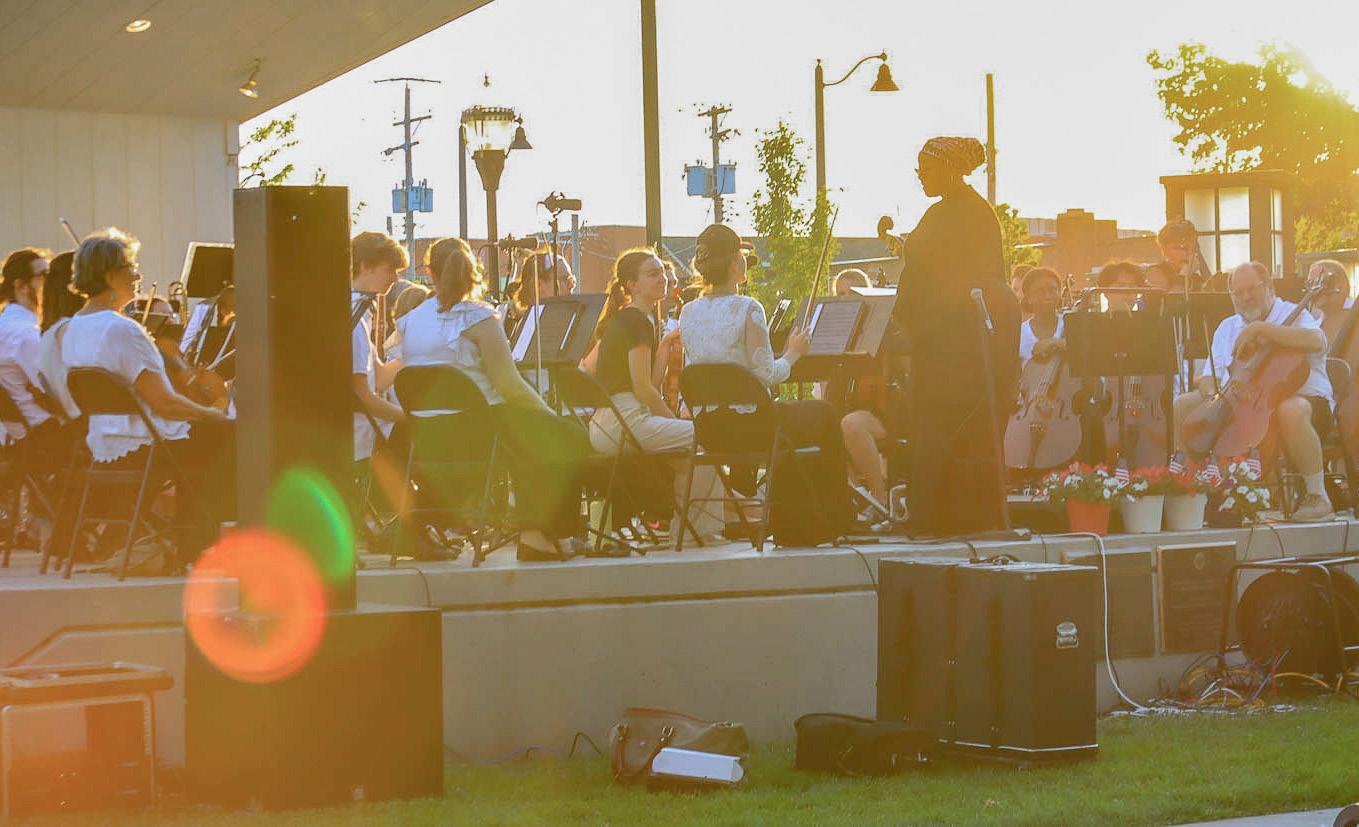
Side by Side
6:30 p.m., Sunday, June 25
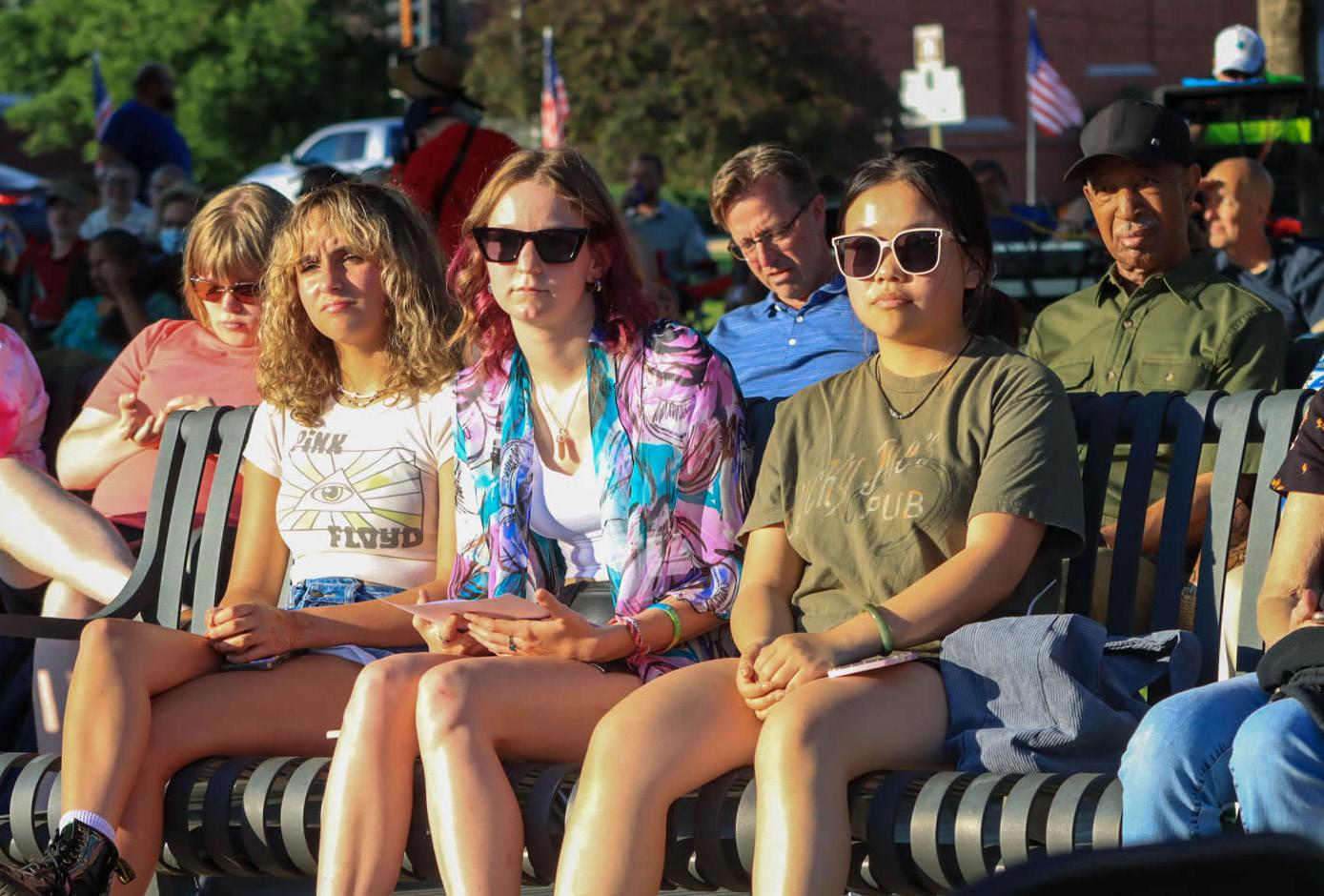
Children’s Stories
6:30 p.m., Sunday, July 30
Music of War and Remembrance
6:30 p.m., Sunday, Aug. 27
Cooking Music
6:30 p.m., Sunday, Sept 17
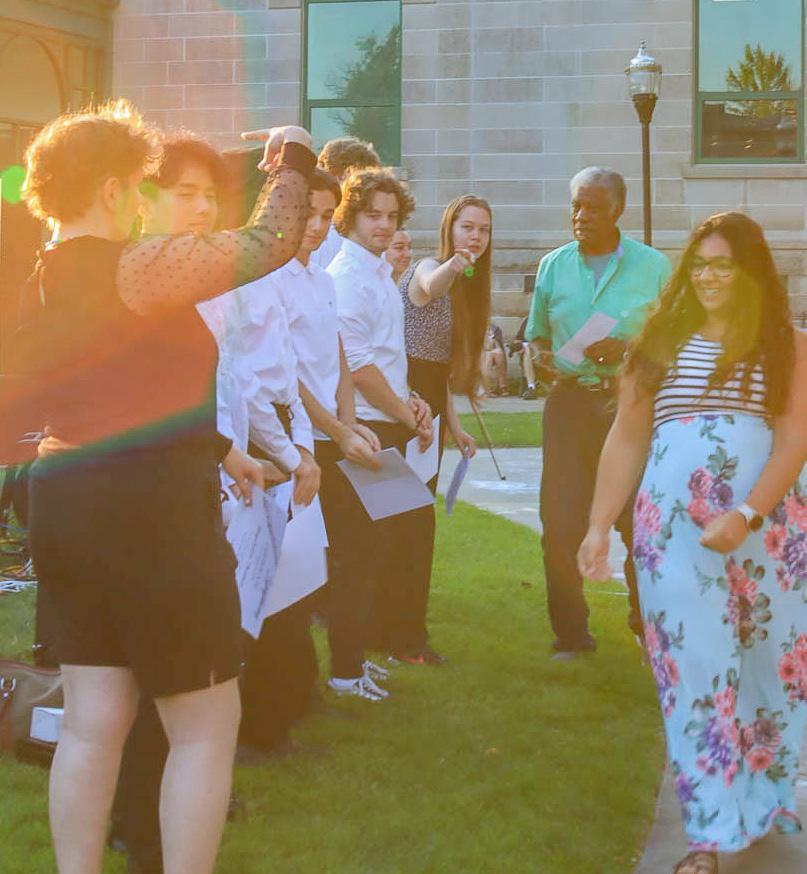
Edwardsville High School students received a music grant amounting to $2,500 from the Lincoln School Alumni Foundation. Recipients include Madeline Loyd, Magdalyn Thomas, Joey Johnson, Peter Valkov, Daniel