Figures de proue en design et en architecture
People Insights & Confessions
edp est fière de mettre en lumière ces entreprises établies au Québec.


edpinc.ca/eclairage @edp.eclairage info@edpinc.ca


Prenez un rendez-vous dans l’un de nos showrooms. Book an appointment at one of our showrooms
Une division de Céramique Royal
8845, rue Pascal-Gagnon, Montréal (QC) H1P 1Z4
514 324-0002 maisoncr.ca
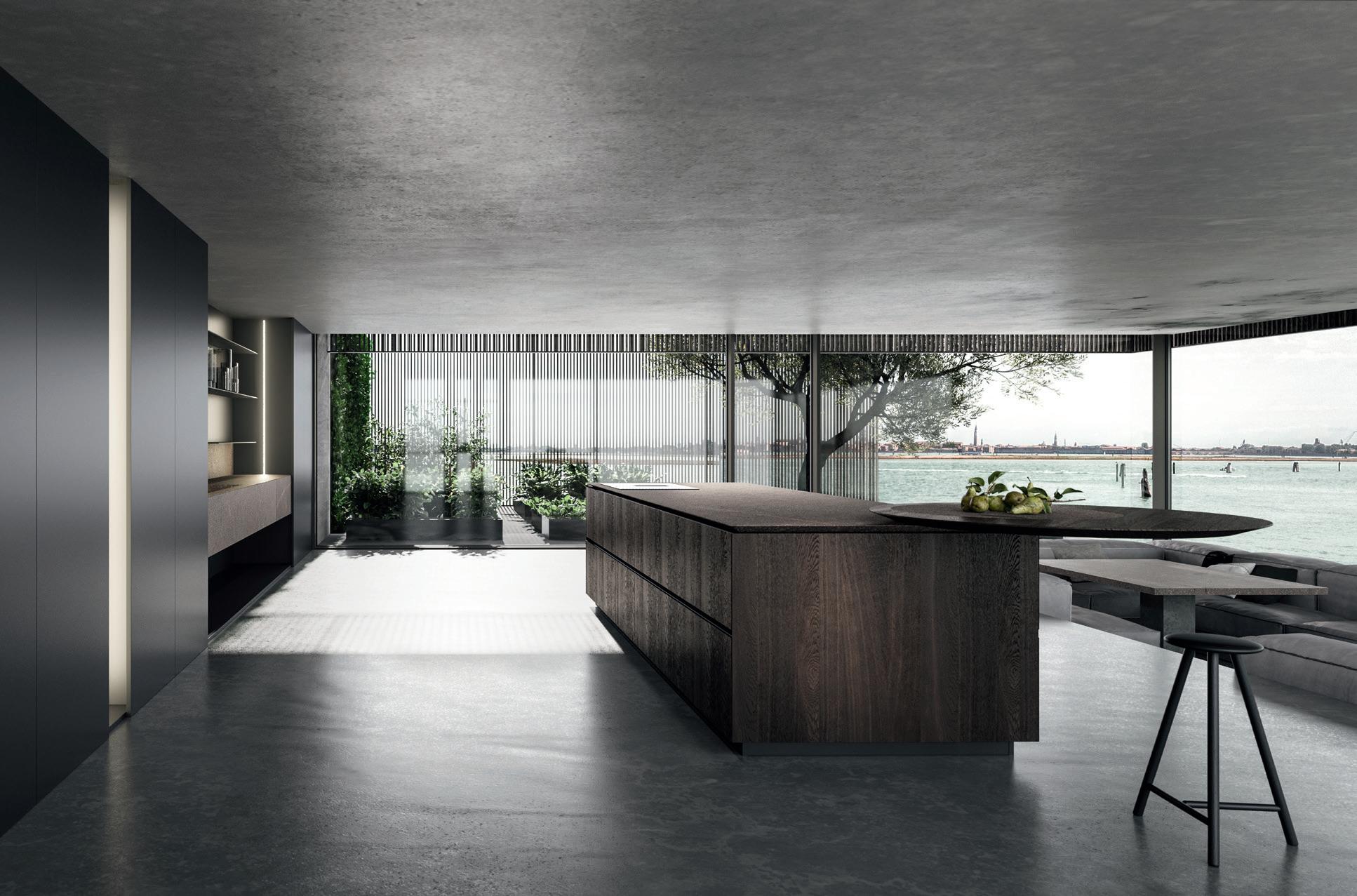
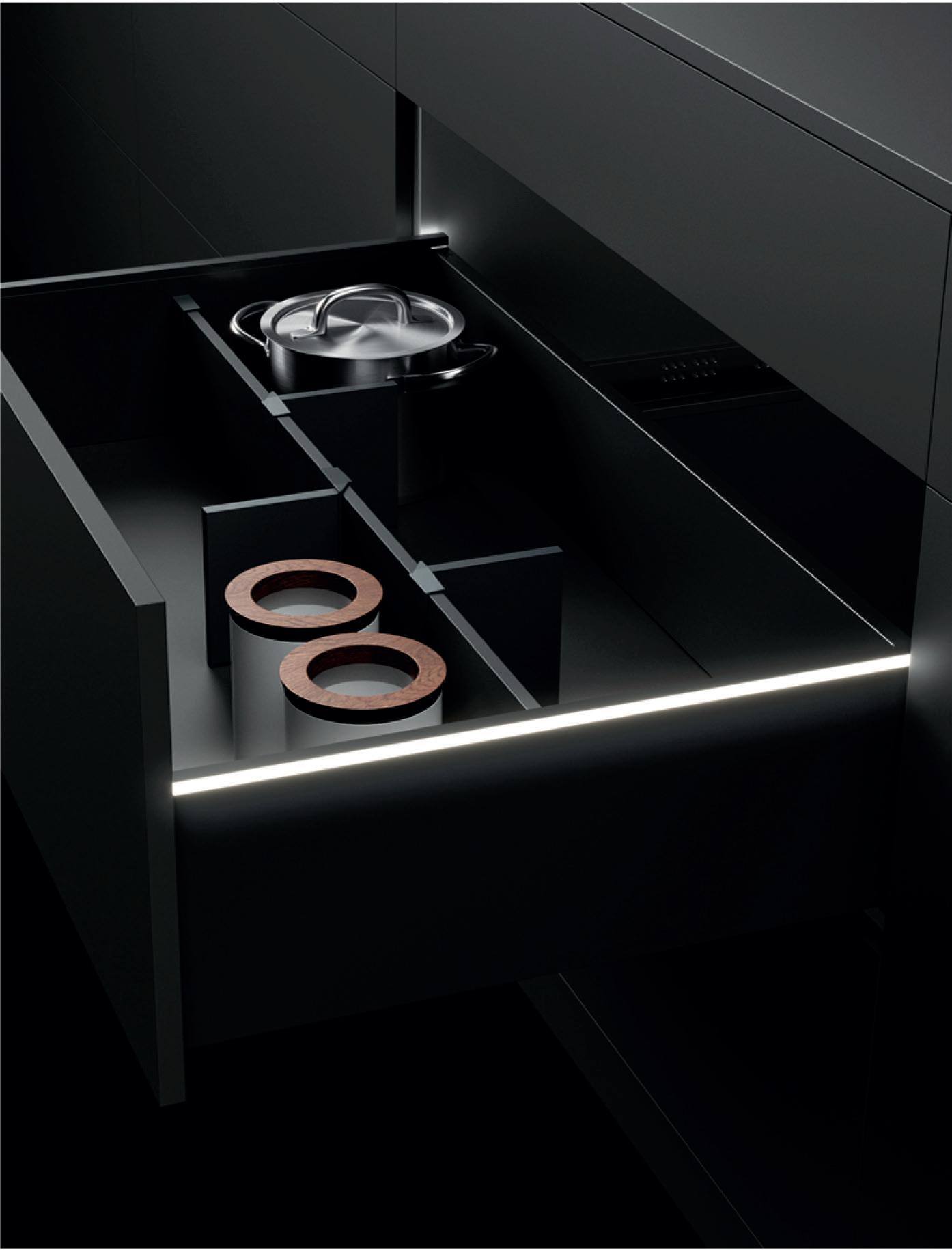
Mobilier de cuisine et garde-robe importés d’Italie
DES IDÉES BIEN ANCRÉES, DES VOIX BIEN PORTÉES
Dans un paysage mondial en perpétuelle transformation — où l’intelligence artificielle évolue à grande vitesse, suscitant à la fois enthousiasme et débats sur l’avenir de la créativité — le design et l’architecture demeurent des repères. Un langage de résilience. Une manière d’habiter le monde avec sens et beauté.
We are proud to present this 196-page annual PEOPLE edition of INT. DESIGN magazine—a heartfelt tribute to the creators of today who are actively building the world of tomorrow.
Au cœur de ce numéro : découvrez les 40 nouveaux membres du jury international de la 18e édition des GRANDS PRIX DU DESIGN, dont les visions croisées élèvent les standards d’excellence à l’échelle mondiale.
We also sat down for a candid conversation with internationally renowned Ramon Estevez, who offers a deeply human approach to the creative process, and engaged in a vibrant Q&A with Patricia Urquiola, whose boundary-breaking imagination has long served as a beacon in the design world.
Our Business & Pleasure section explores the intersection of strategy and æsthetics through the lens of two Montréal-based industry leaders: Francesco Lucia, second-generation head of Maison CR, and Pompeo Antonio Masecchia, founder of AD Waters—each setting the tone for elegance and innovation in their respective fields.
Enfin, notre dossier spécial Made in Québec met en lumière seize entreprises d’ici, bien enracinées dans la Belle Province, dont les idées audacieuses et le savoir-faire raffiné rayonnent bien au-delà de leurs territoires. Dans un monde en quête de nouveaux modèles, leur ancrage local et leur esprit tourné vers l’avenir inspirent et interpellent.
Extending our local road trip, the Design Tourism feature turns the spotlight on Québec as a destination in itself—a celebration of places where architecture, design, and hospitality converge to create memorable experiences.
To all the inspiring professionals who opened their world to us—thank you. Your stories enlighten us. Your convictions uplift us.
Bonne lecture — et longue vie à la beauté bien pensée.
Brigitte & Ginette Gadoury Co-présidentes
À PROPOS
Fondé en 1996, le magazine INTÉRIEURS — devenu INT.DESIGN — demeure une référence en matière d’excellence en design et en architecture, tant au Québec qu’à l’international. Véritable phare éditorial, il trace une anthologie du beau à travers les idées, les gestes et les projets qui façonnent notre environnement.
Each year, two special editions are dedicated to the GRANDS PRIX DU DESIGN Awards, alongside a PEOPLE issue that spotlights individuals and professionals who are leaving their mark on the industry through vision and leadership.
The print edition of INT.DESIGN offers a bilingual reading experience— in both French and English—reflecting Montréal’s vibrant professional landscape. Online, readers can enjoy the magazine in three formats: bilingually, in French only, or in English only.
Contenu / Content
ÉDITRICES & DIRECTRICES DU CONTENU / PUBLISHERS & EDITORS
Brigitte Gadoury
Ginette Gadoury
DIRECTRICE DE CRÉATION / CREATION DIRECTOR
Ariane Mercure
INFOGRAPHIE / GRAPHIC DESIGNER
Hélène Goré
RÉDACTION / EDITORIAL
Juli Pisano
Publicité / Advertisement
Production & Diffusion
DIRECTRICE / DIRECTOR
Brigitte Gadoury
COMMUNICATIONS INTERNATIONALES
INTERNATIONAL COMMUNICATION
David Foroglou Gadoury
IMPRESSION / PRINT
Impresse inc.
Administration
COPRÉSIDENTES / CO-PRESIDENTS
Ginette Gadoury & Brigitte Gadoury
COMPTABILITÉ / ACCOUNTING
Gestion Lynda De Grandpré inc.
WEB
Hugo Lachance
Abonnements / Subscriptions
int.design / abonnement info@int.design
450 651–3630
CANADA
30 $ + tx — 3 éditions / issues
48 $ + tx — 6 éditions / issues
INTERNATIONAL
80 $ + tx — 3 éditions / issues
150 $ + tx — 6 éditions / issues
PAR NUMÉRO / PER ISSUE
12,95 $ + tx
Le magazine INT.DESIGN est publié trois fois par année par : / INT.DESIGN Magazine is published three times a year by:
AGENCE PID
1080 rue Sainte-Hélène, Longueuil QC J4K 3R9 Canada
T : 450 651-3630
F : 450 651-8520 info@agencepid.com
Convention de la poste-publication no 40019406. Retourner toute correspondance ne pouvant être livrée au Canada au Service des publications. / Publication mail agreement number 40019406. Return all mail that cannot be delivered in Canada at the Publications Services.
Toute reproduction de textes, illustrations et photographies du magazine est interdite. Bien que toutes les précautions aient été prises pour assurer la rigueur des renseignements contenus dans le magazine INT.DESIGN, il est entendu que le magazine ne peut être tenu pour responsable des erreurs ou des négligences commises dans l’utilisation de ces renseignements. / Any reproduction of texts, illustrations and photos of the magazine is strictly forbidden. Even if all precautions have been taken to confirm the information contained in INT.DESIGN magazine, it is agreed that the magazine cannot be held responsible of errors or acts of negligence in the use of this information.
Dépôt Légal / Legal Deposit
Bibliothèque nationale du Québec, Bibliothèque nationale du Canada ISSN 1206–0208
Imprimé au Canada / Printed in Canada
INT.DESIGN No. 94
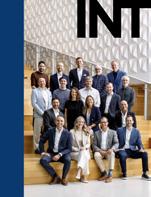
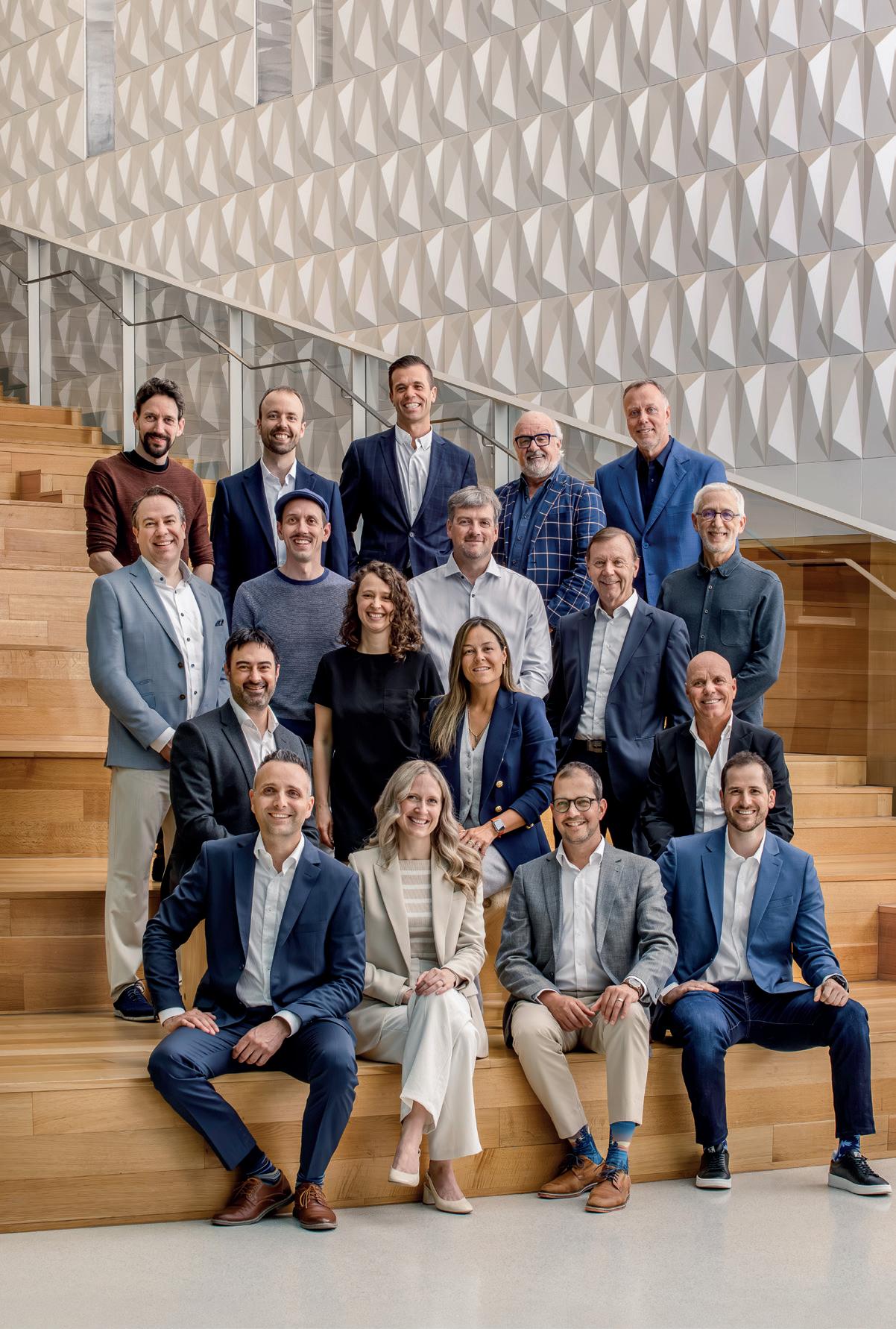
EN COUVERTURE / COVER Dix-huit leaders de quatorze entreprises québécoises se sont réunis au Complexe des sciences du Campus MIL. Découvrezles en page 95 à 177.
Eighteen leaders from fourteen Québecbased companies gathered at the MIL Campus Science Complex. Discover them on pages 95 to 177.
Le plaisir des affaires Mixing Business & Pleasure

Tête-à-tête Up Close & Personal

Les membres du jury

Made in Québec











Le savoir-faire d’ici.
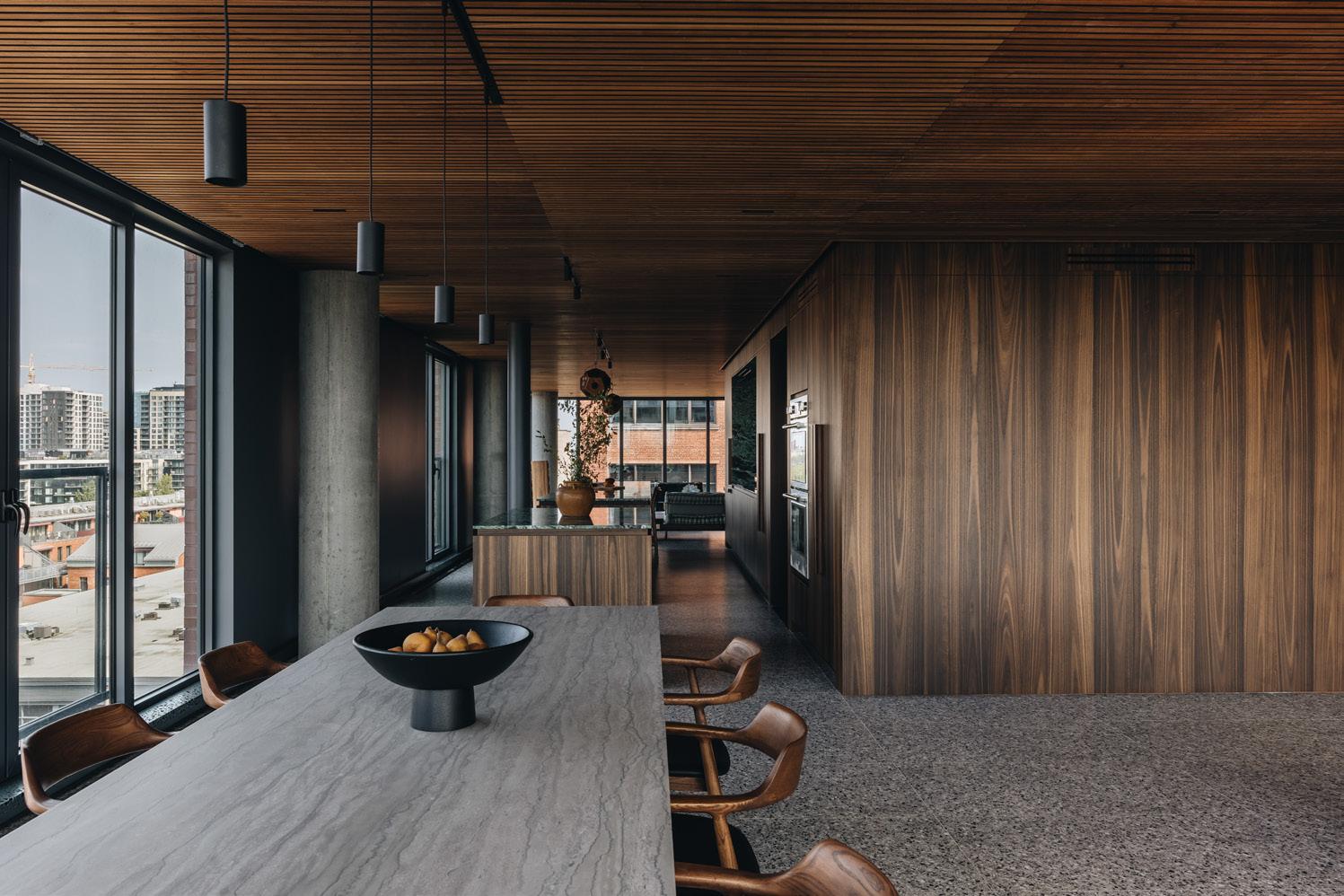


Faire couler le design
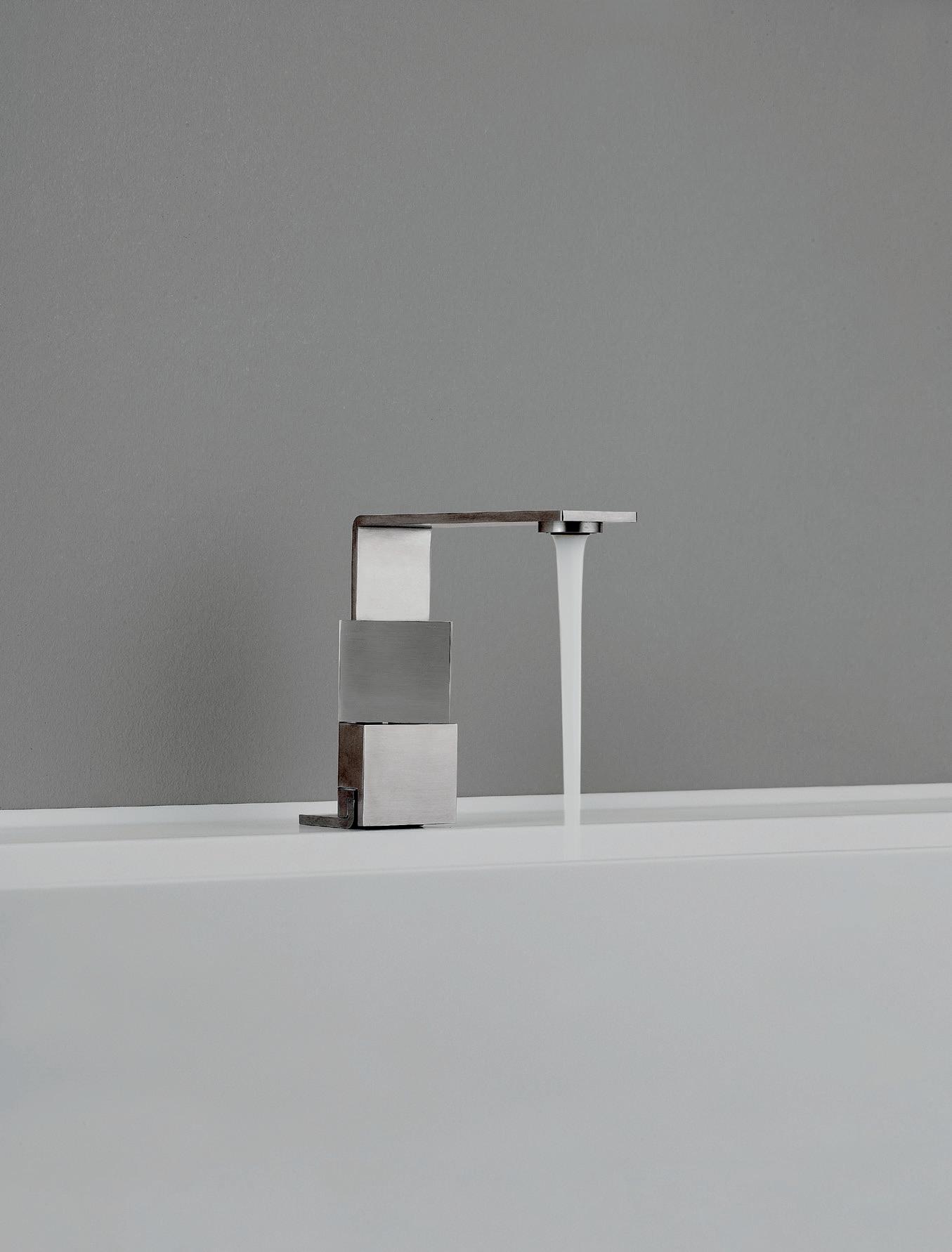
Chez AD Waters, il ne s’agit pas simplement de fournir de la robinetterie ou des bases de douche mais de penser l’espace d’eau comme un véritable territoire de design, où distributeurs, architectes, designers, installateurs et usagers se rejoignent autour d’un même impératif : la précision du geste et la beauté fonctionnelle.
Steering the Montréal-based company with vision and rigor for over three decades, Pompeo Antonio Masecchia—Tony, to everyone—has built a refined, fluid and unmistakably design-driven ecosystem, shaped by a craftsman’s instinct and a connoisseur’s eye.
Le plaisir des affaires Mixing Business & Pleasure
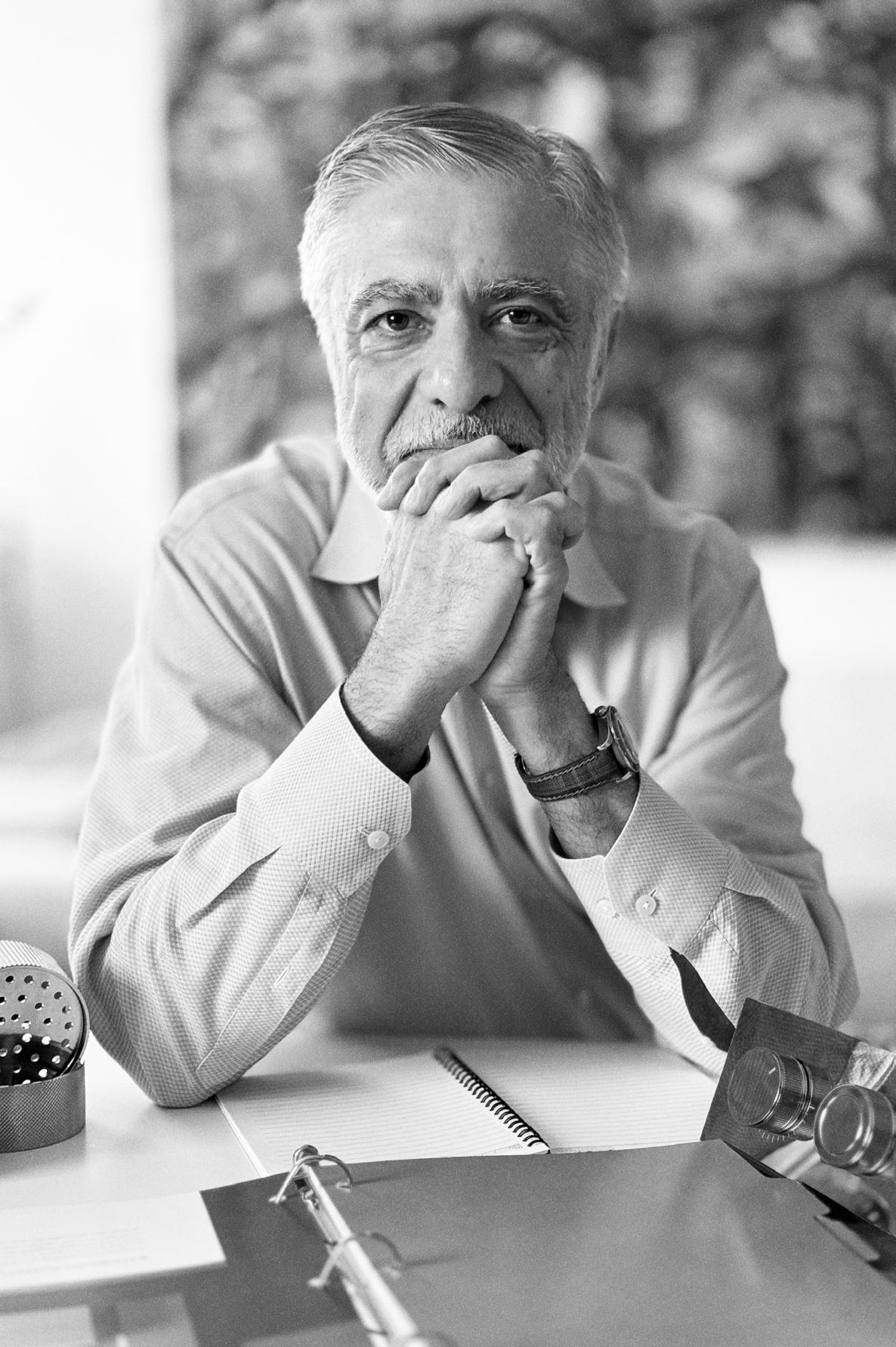
Pompeo Antonio Masecchia
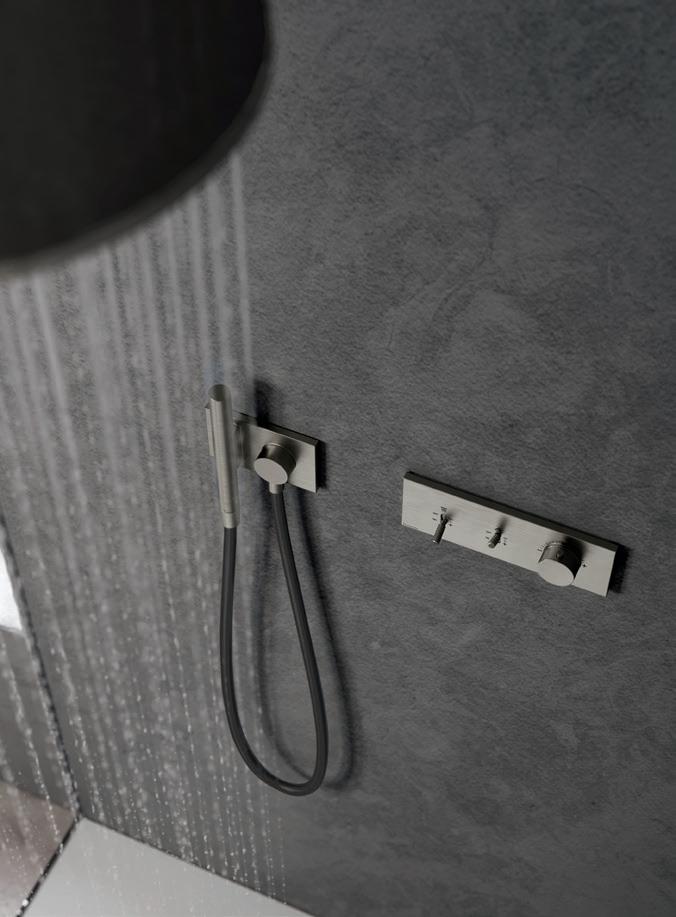
Une question, mille liens
Une simple question aura lancé l’entrevue : Tony, parlez-nous un peu de votre parcours. S’en est suivi un récit captivant, aux connexions tissées d’un océan à l’autre, de la matière à l’usager — un voyage entre design, distribution, savoir-faire et instinct.
Speaking the Vision
Tony sure has a way with words — and with products too. “AD Waters, even the name, reflects both our tailor-made offering for the A&D community and our deep expertise in everything related to water spaces.” It’s all there: the audience, the specialty, the vision.
Design, instinct et croquis
Il parle avec les yeux, dans un français ponctué d’anglais, de villes italiennes et de métaphores bien senties. Il évoque ses débuts dans la vente au détail, le fameux week-end qui a tout changé, et les croquis qui ont lancé une vie de création et de distribution.
The Young Antonio Born in Italy, Tony moved to Montréal at the age of three, the youngest of five children. He studied interior design at Dawson College, photographed weddings as a teen, and has always had a deep love for well-made products.
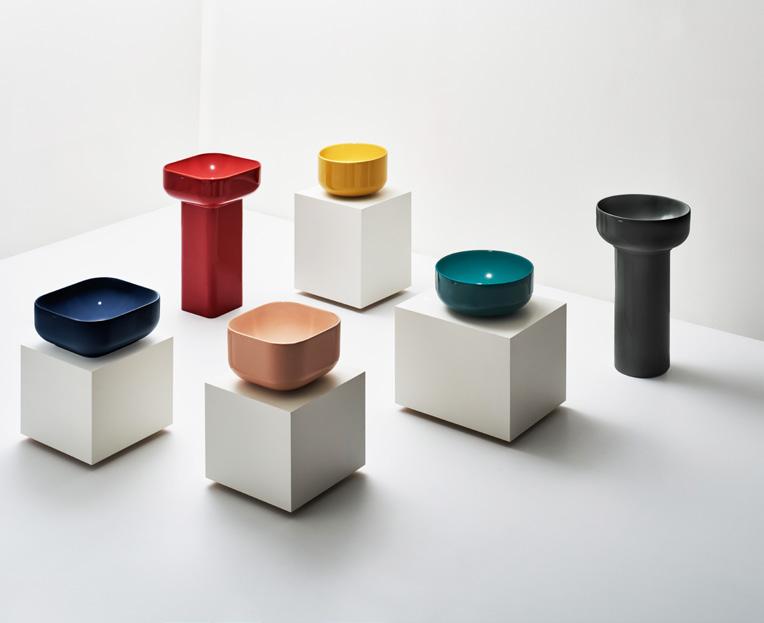
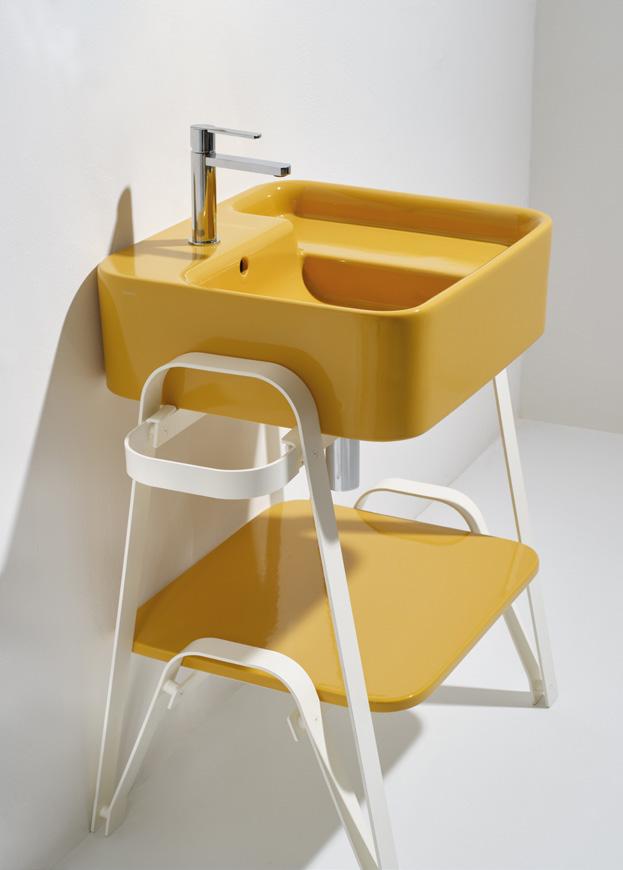
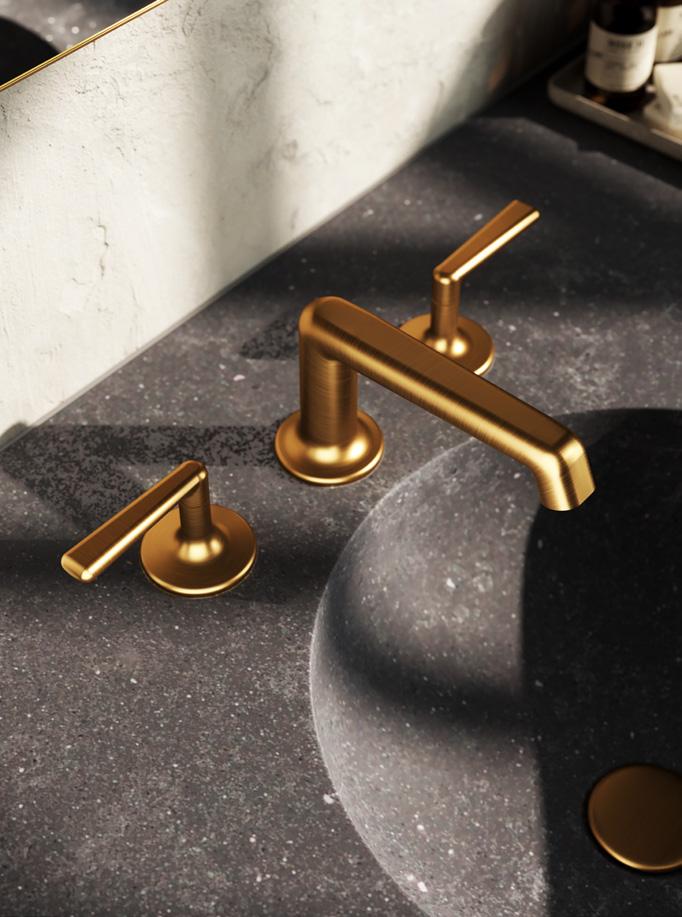
Plonger dans l’eau
Diplômé en 1983, il débute en vente, mais c’est presque par hasard — en aidant un ami un samedi de 1987, lors d’un week-end de soldes dans une boutique de salles de bains — qu’il découvre l’univers de l’eau… et y plonge corps et âme. Coup de foudre. « C’était l’application directe du design, du dessin, du détail. Je n’ai jamais décroché. »
Expanding the Vision
In 1999, Tony took the reins of Aquabrass, shaping its growth through design sketches, patents, and a series of strategic pivots. In 2010, he launched Alt , a brand tailored to large-scale projects. Then, in 2017, he founded AD Waters, a premium distributor dedicated to serving design and architecture professionals.
Une constellation de marques
Aujourd’hui, AD Waters réunit une équipe centralisée à Montréal et Toronto, et distribue ses produits au Québec, ailleurs au Canada et aux États-Unis. L’entreprise propose à la fois ses marques maison — conçues par Tony et son équipe de trois designers industriels en R&D : Aquabrass, Aquabrass Xpress, Ca’Bano, Alt, et StoneTouch — ainsi qu’une sélection rigoureuse de marques européennes.
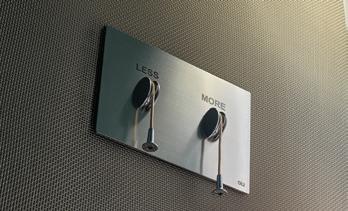
On pense aux citernes murales du Portugais Oli, aux planchers de douche en résine de l’Espagnole Fiora, à la robinetterie Treemme d’Italie ou à la porcelaine Simas, distribuée en exclusivité nord-américaine.
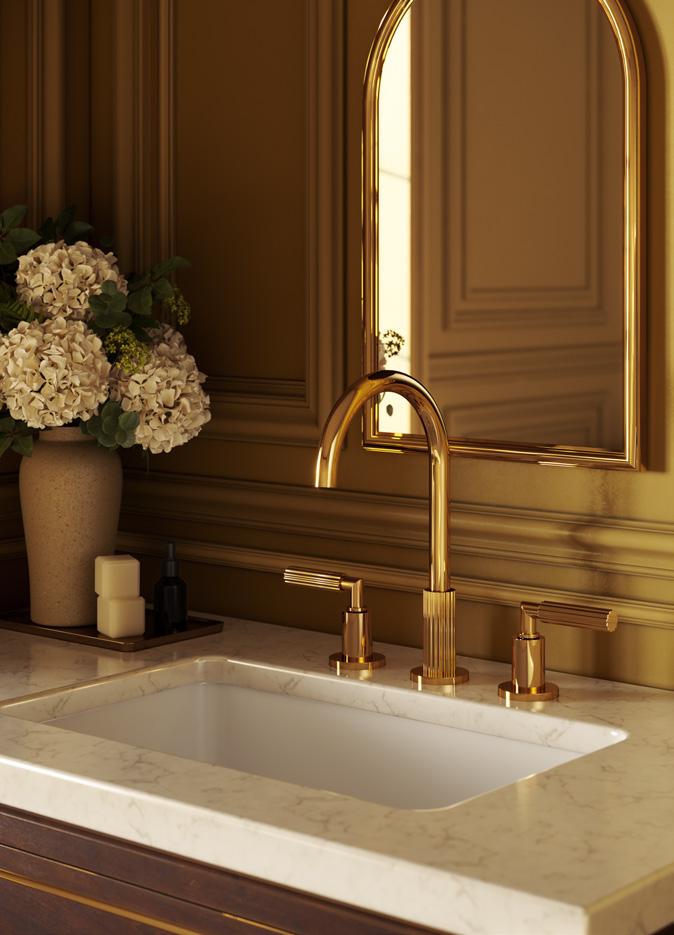
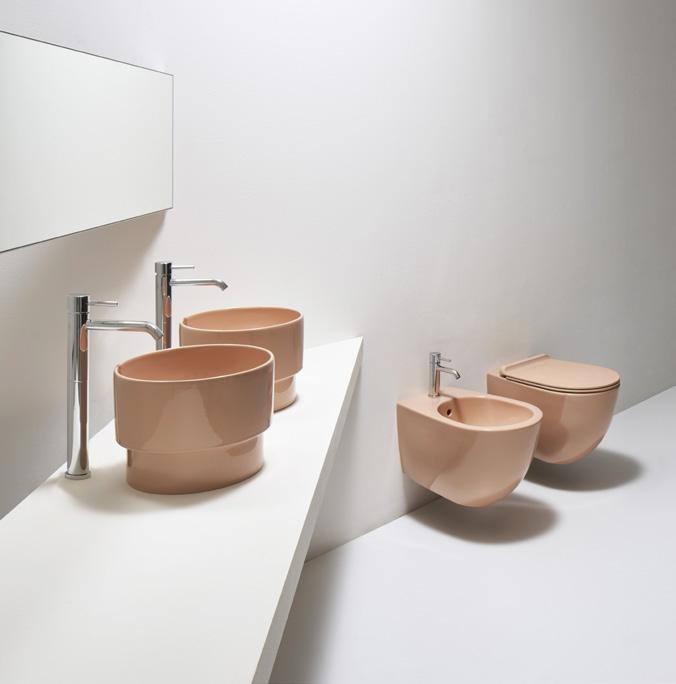
« Quand on naît dans un pays aux murs centenaires comme l’Italie, on comprend tôt que bâtir, c’est penser à demain. Cette idée du beau durable, je cherche à la faire vivre dans chacun de nos produits. »
Fewer Steps, Greater Impact
With a sharpened pencil and a clear vision, Tony strives to make beautiful, high-quality, long-lasting products more accessible. By operating his own warehouse in Italy—bypassing middlemen—every step of the logistics chain remains fluid and uncompromised.
Habiter aussi l’Italie
Ce centre, nommé ABITA, clin d’œil à l’habitat et à Aquabrass Italia, est installé à Ponte San Marco, entre Venise — où sont fabriquées les surfaces StoneTouch — et Brescia, berceau industriel italien. L’endroit est stratégique : il centralise les produits européens et en maîtrise la livraison jusqu’au dernier kilomètre.
It’s a Matter of Details
For Tony, good design starts with uncompromising precision—every component must align to create a cohesive whole. “It’s like dressing for a black-tie event. You need the right shoes, the perfect cufflink—it’s those subtle, almost invisible details that bring everything together.”
Le droit au dernier mot
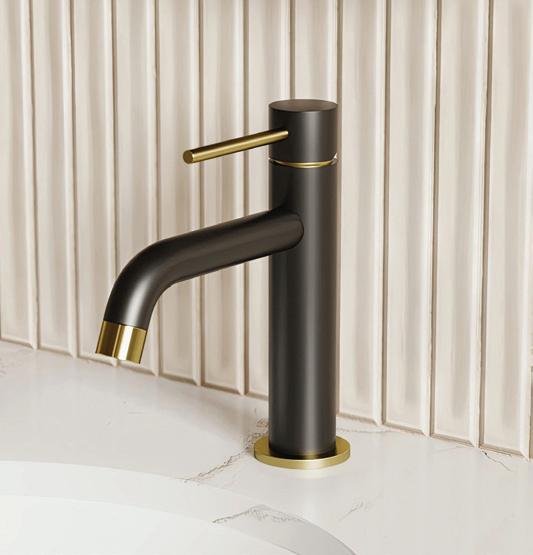
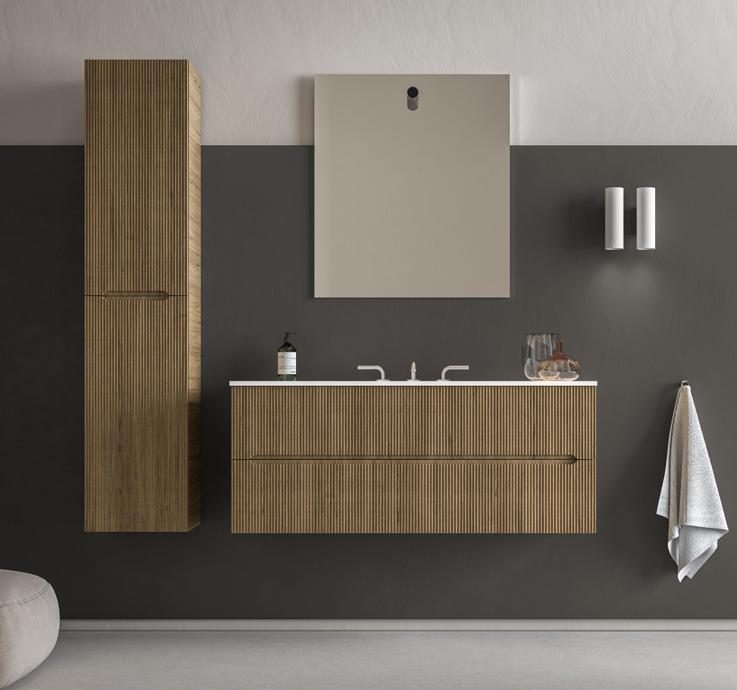
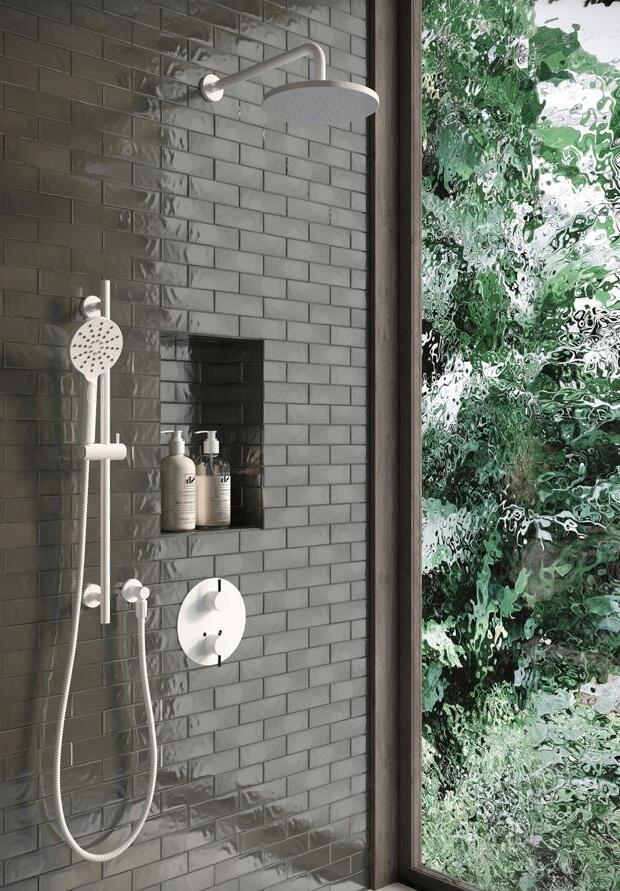
C’est dans cet esprit qu’il a imaginé UMIX, un mitigeur d’entrée de gamme signé Aquabrass Xpress, entièrement personnalisable, livré avec des pièces modulables dans une boîte pensée comme un coffret de collection. Finitions noir mat, nickel brossé, doré brossé… tout est ajustable, pour permettre des modifications non prévues au moment de l’achat, directement lors de l’installation. Et le succès est, dit-il, « crazy ».
Material You Can Feel
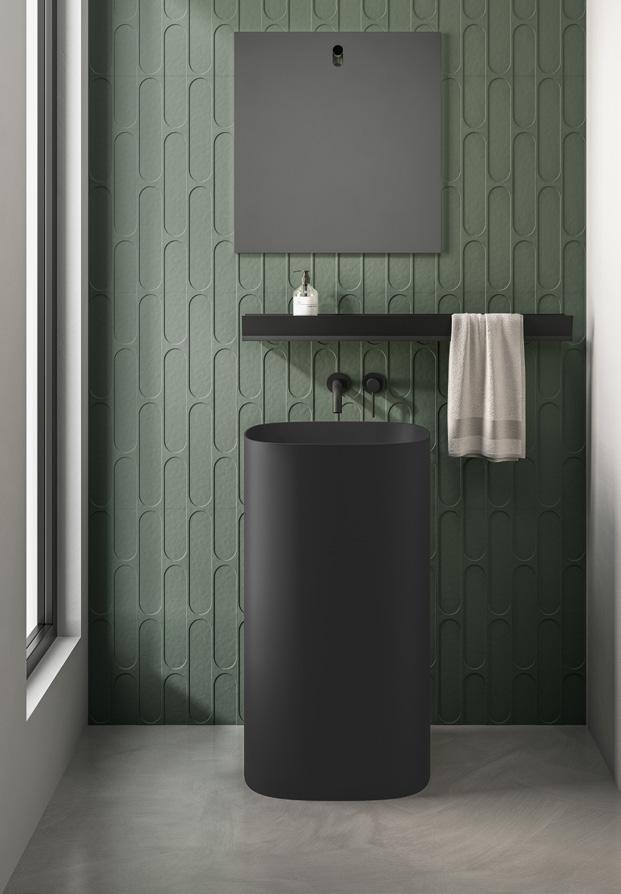
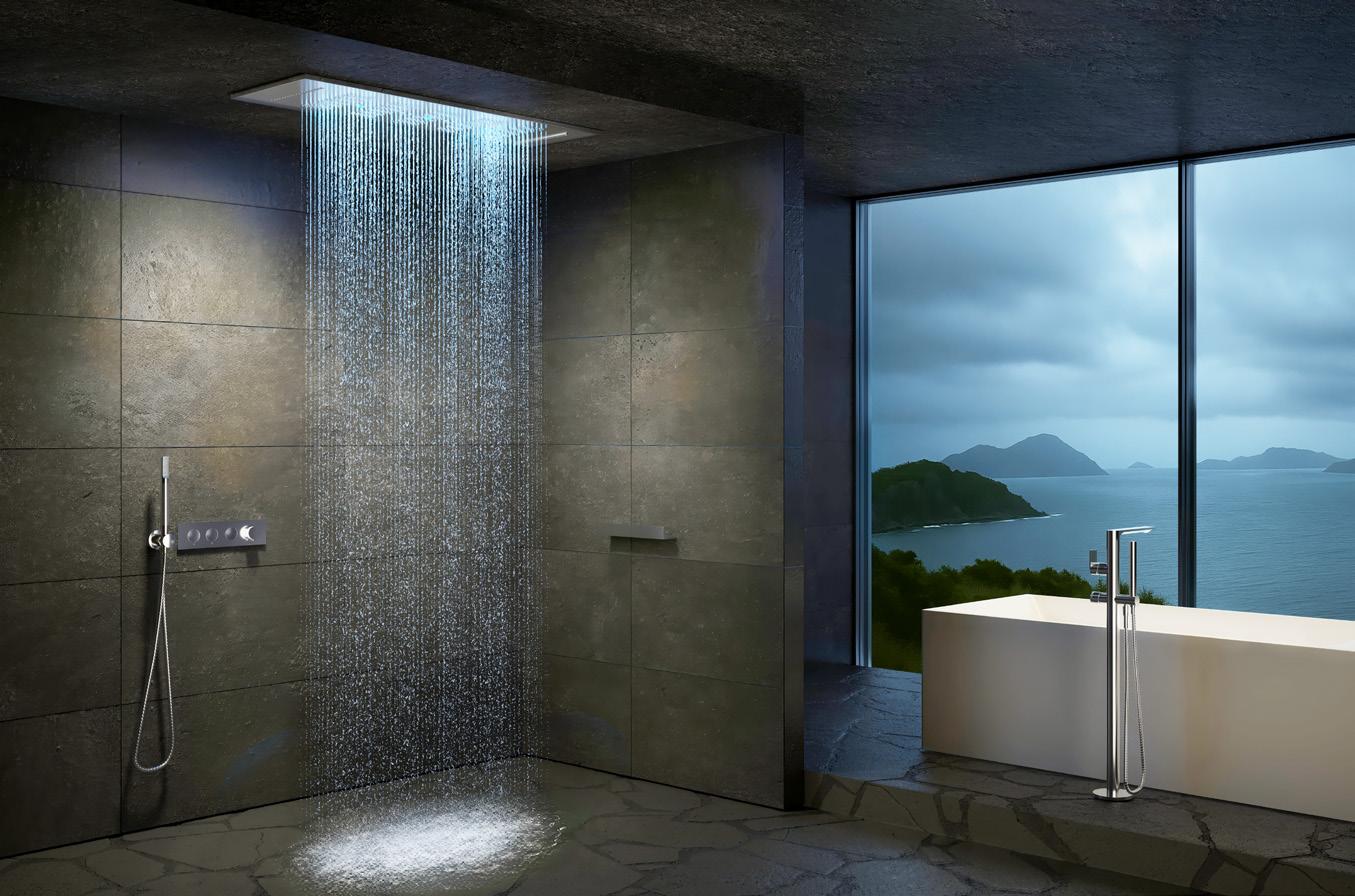
With StoneTouch, AD Waters takes its vision even further— bringing high-end solutions within reach while making them intuitive to use. From ready-to-tile shower bases and matte black vanity tops to moisture-resistant textured surfaces, every element is engineered to streamline installation without compromising on beauty. “We developed the first-ever solid-surface waterproof shower floor with an integrated tile flange—eliminating an entire trade from the installation process.”
Et demain, Tony ?
Toujours habité par le geste juste, l’homme visionnaire poursuit sa quête : affiner, simplifier, élever — sans jamais perdre de vue l’essentiel : ce détail invisible qui transforme un objet en expérience.
Et l’aventure continue : en 2026, AD Waters dévoilera La Cucina, une toute nouvelle ligne de robinetterie artisanale pour la cuisine, conçue et fabriquée en Italie.
When Everything Flows
As a fully integrated destination for the modern bathroom, AD Waters moves with the precision and passion of its founder—backed by a close-knit team, a clear creative vision, and an unwavering commitment to thoughtful design. All delivered with the natural ease that defines a true art of living—a project considered down to the very last drop.
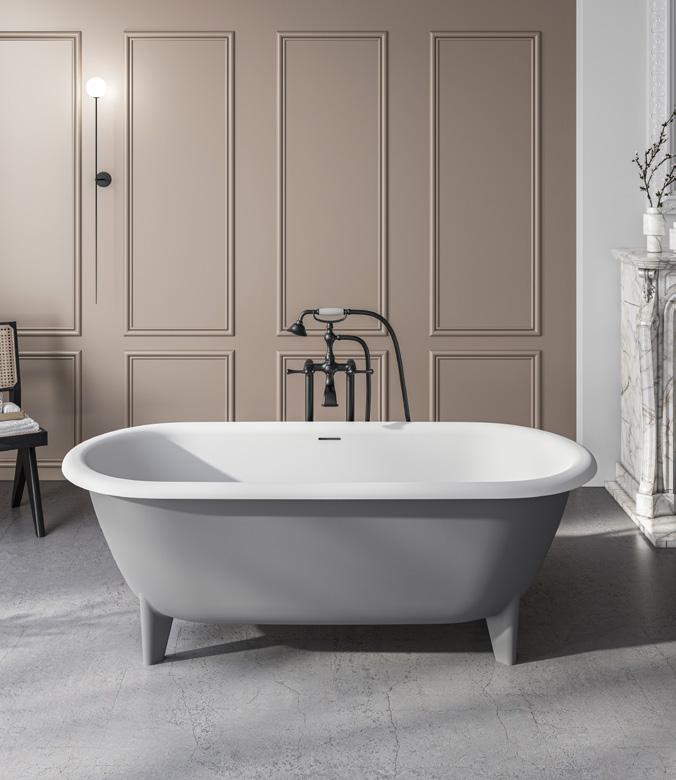
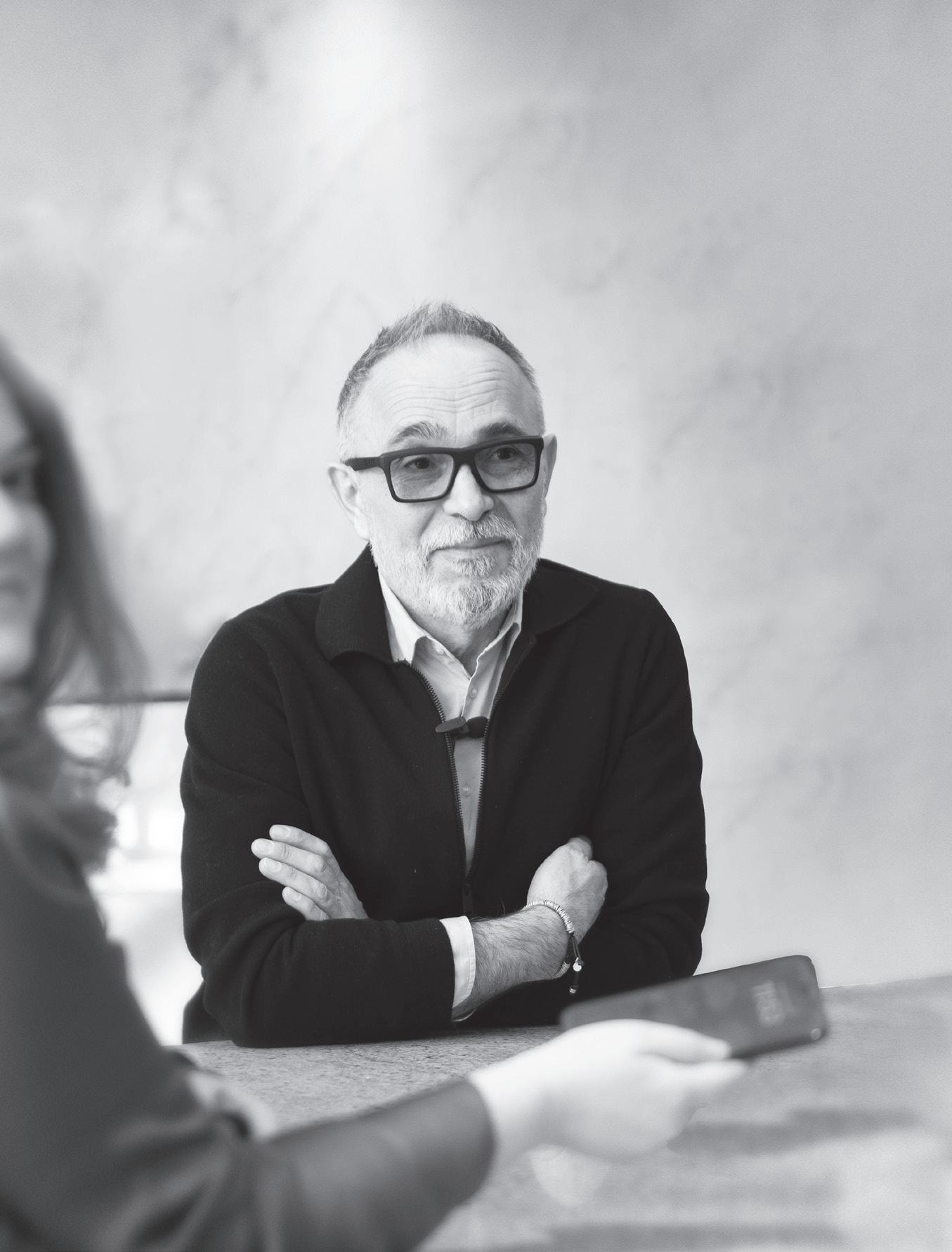
Francesco Lucia
Une mer d’idées, un port d’attache
Le plaisir des affaires
On entre chez Céramique Royal et à La Maison CR, dans sa nouvelle incarnation intégrée comme on pousse les portes d’une maison bien tenue : chaleureuse, inspirée, soigneusement pensée. Mais derrière les lignes épurées des dalles venues d’Europe et l’élégance des cuisines italiennes, il y a une histoire de transmission, d’exigence, et de regard tourné vers l’avenir.
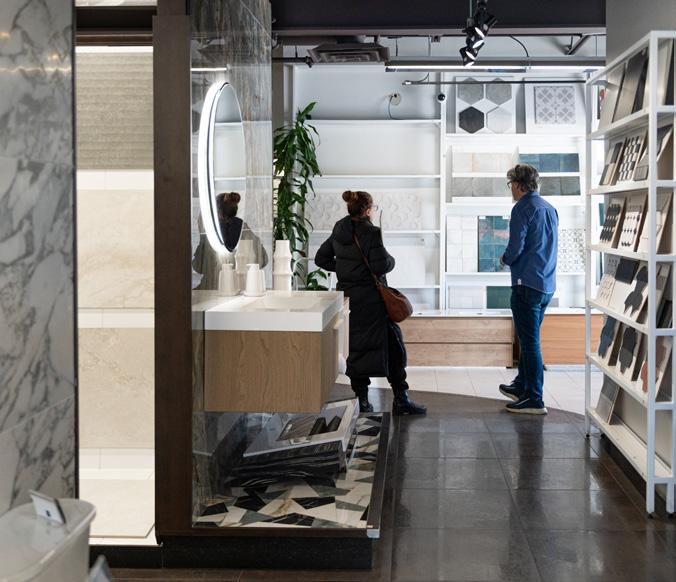
Today, Francesco Lucia, son of the founding father, is breathing new life into this heritage. We met him in the showroom, between samples of natural stone and a perfectly pulled macchiato, to talk about design and excellence.
Between Design and Dolce Vita
Francesco Lucia is a man of heart, family... and refinement. Over thirty years ago, while still studying architecture at CEGEP, he joined the business his father had built. An instinctive, almost obvious move — one that would shape the path of his life. Since then, he’s moved forward rooted in his family values — loyal, grounded, and community-driven.
Un air de famille
Aujourd’hui, c’est toute la famille élargie qui contribue à faire vivre cette aventure : son frère Chris, sa fille Amanda, ses neveux Jason et Justin, sans oublier son beau-frère. Et quand il rentre chez lui, c’est au bonheur de retrouver son épouse bien-aimée — que Francesco décrit avec tendresse comme la meilleure cuisinière de recettes italiennes en ville… même si, glisse-t-il en souriant, ses racines viennent de la tradition juive plutôt qu’italienne.
The Call of the Mediterranean
Italy is his anchor. “From the marvels of Venice to the treasures of Sicily… the journey, the warmth of the people, and of course the food.” He loves the simplicity of well-made dishes, raw ingredients, authenticity — and naturally, a good wine.
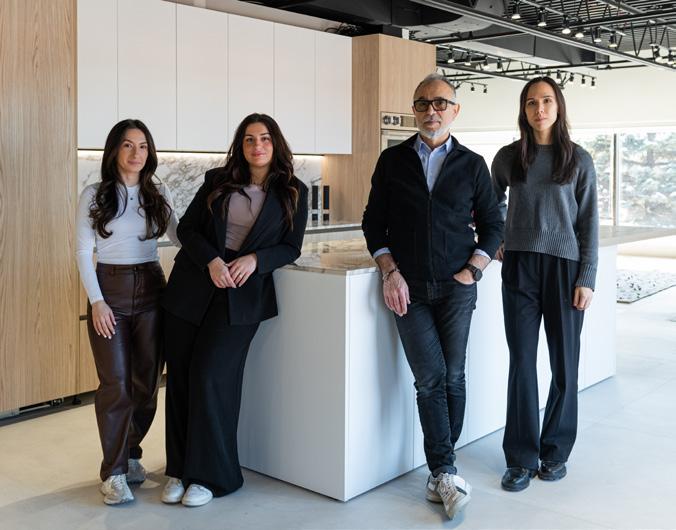
L’ÉQUIPE PLURIDISCIPLINAIRE incluant designers et architectes, pour accompagner clients professionnels et particuliers : Bianca Lapalucci, Ariana Crescenza, Francesco Lucia et Amanda Lucia.
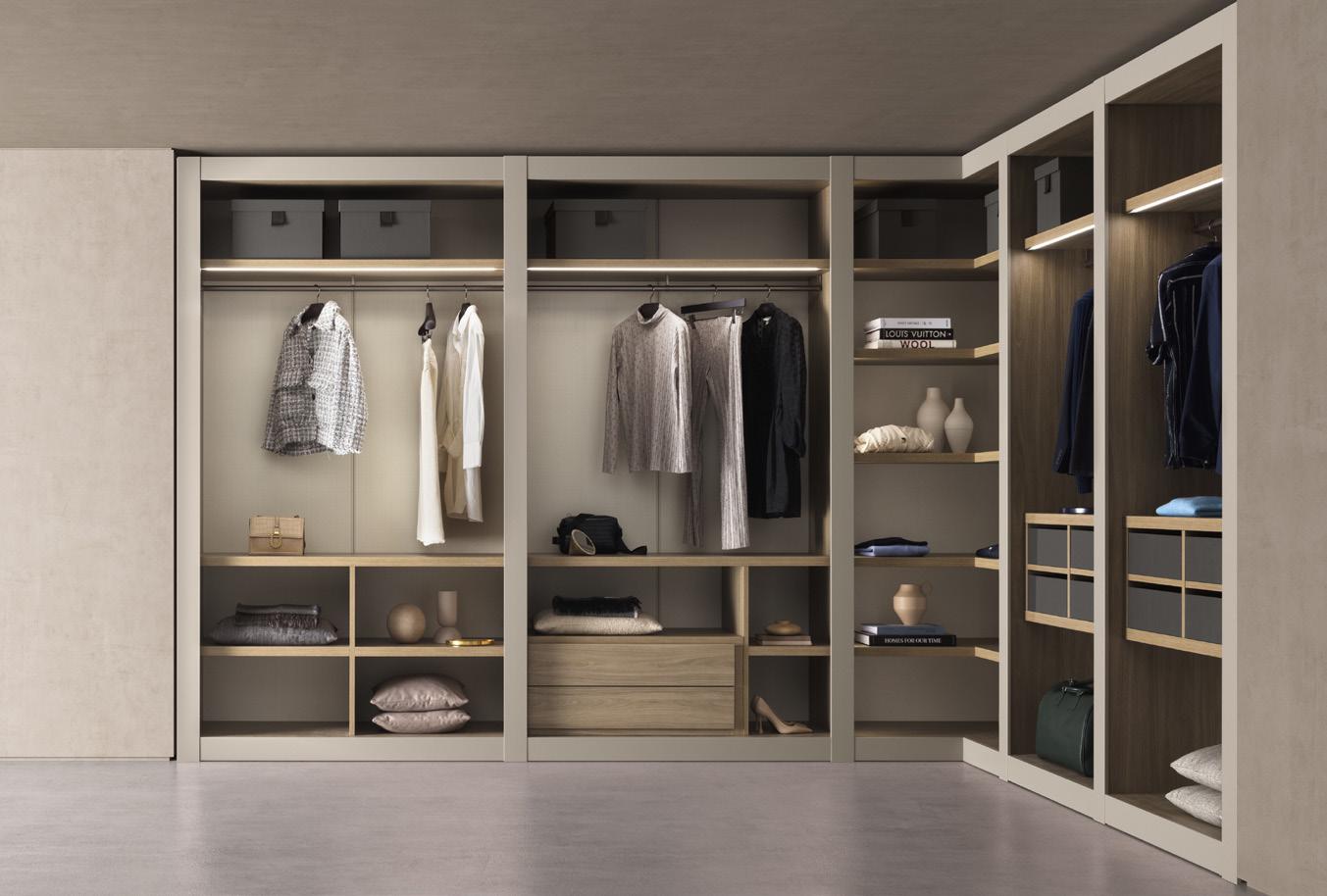
ARMOIRES PAR PIANCA
Enracinée dans l’est
C’est à Saint-Léonard — là où se croisent l’énergie brute d’une zone industrielle et la chaleur d’une communauté italienne bien vivante — qu’est née, en 1980, une entreprise familiale portée par un artisan passionné. Adresse prisée des connaisseurs, sa salle de montre et son entrepôt abritent alors un impressionnant éventail de revêtements, mobilier et accessoires de salle de bain.
From Tiles to Lifestyle
Rebranding as Maison CR, Céramique Royal donned a tailored jacket—a name fit for the high-end market. It’s no longer just about bathroom tiles. Maison CR now offers full design environments: custom kitchens, sleek vanities, walkins that would move Marie Kondo to tears, contemporary furniture, and of course, tiles from Sassuolo in Italy’s Modena region and Castellón in Spain’s Valencia province.
L’euro-élégance
Ici, la qualité est européenne — parce que le mot « qualité » prend un accent lorsqu’il est collé à l’Italie ou à l’Espagne. Dit simplement, La Maison CR, c’est la dolce vita des tendances d’outre-mer, dans un quartier où les racines italiennes ne sont pas un décor, mais un socle.
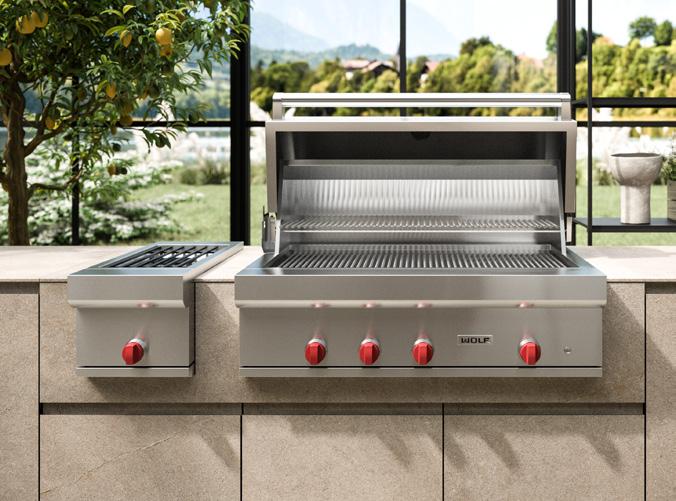
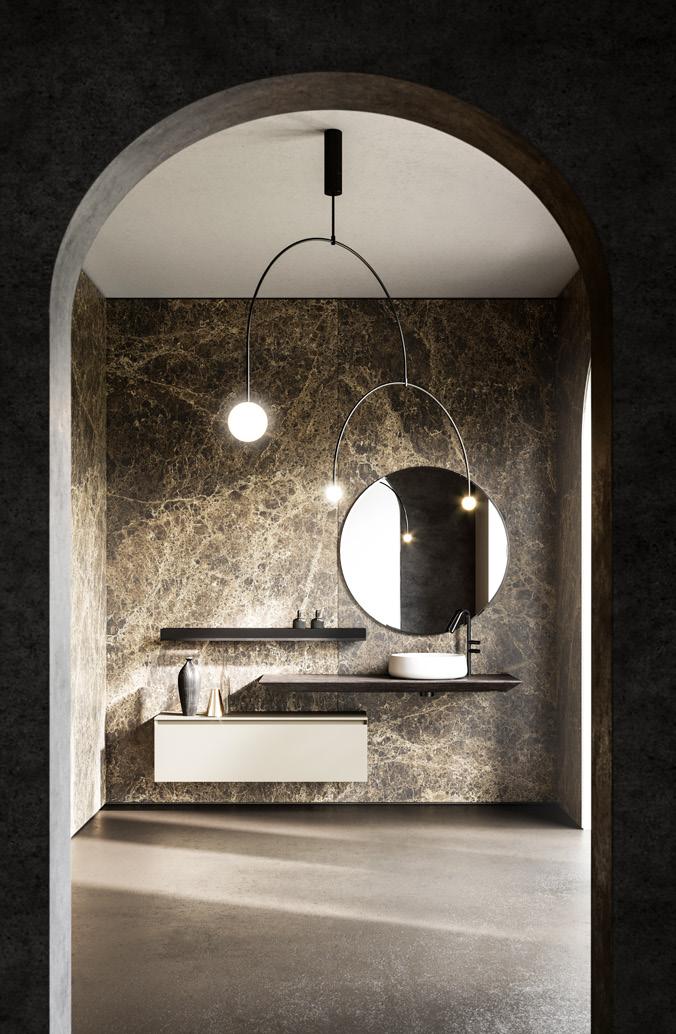
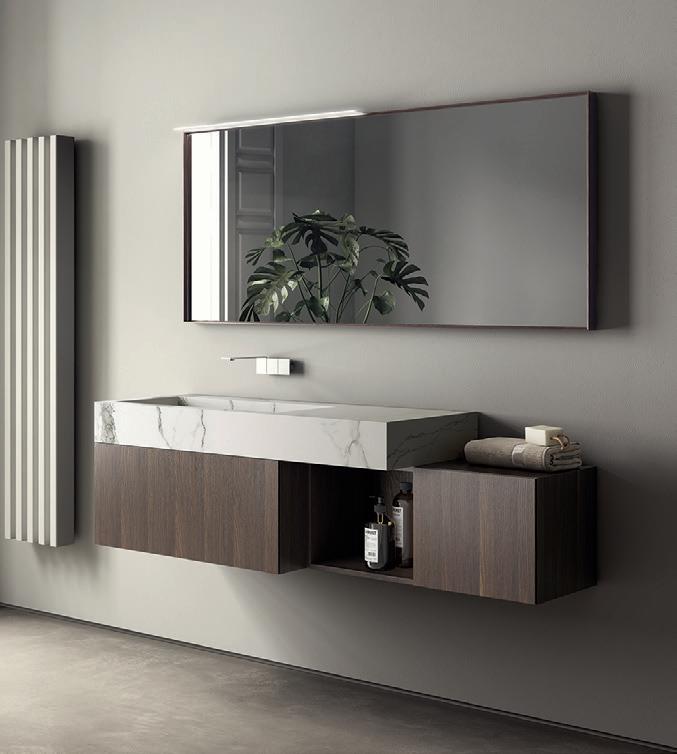
The Heart of the Home, All’Italiana
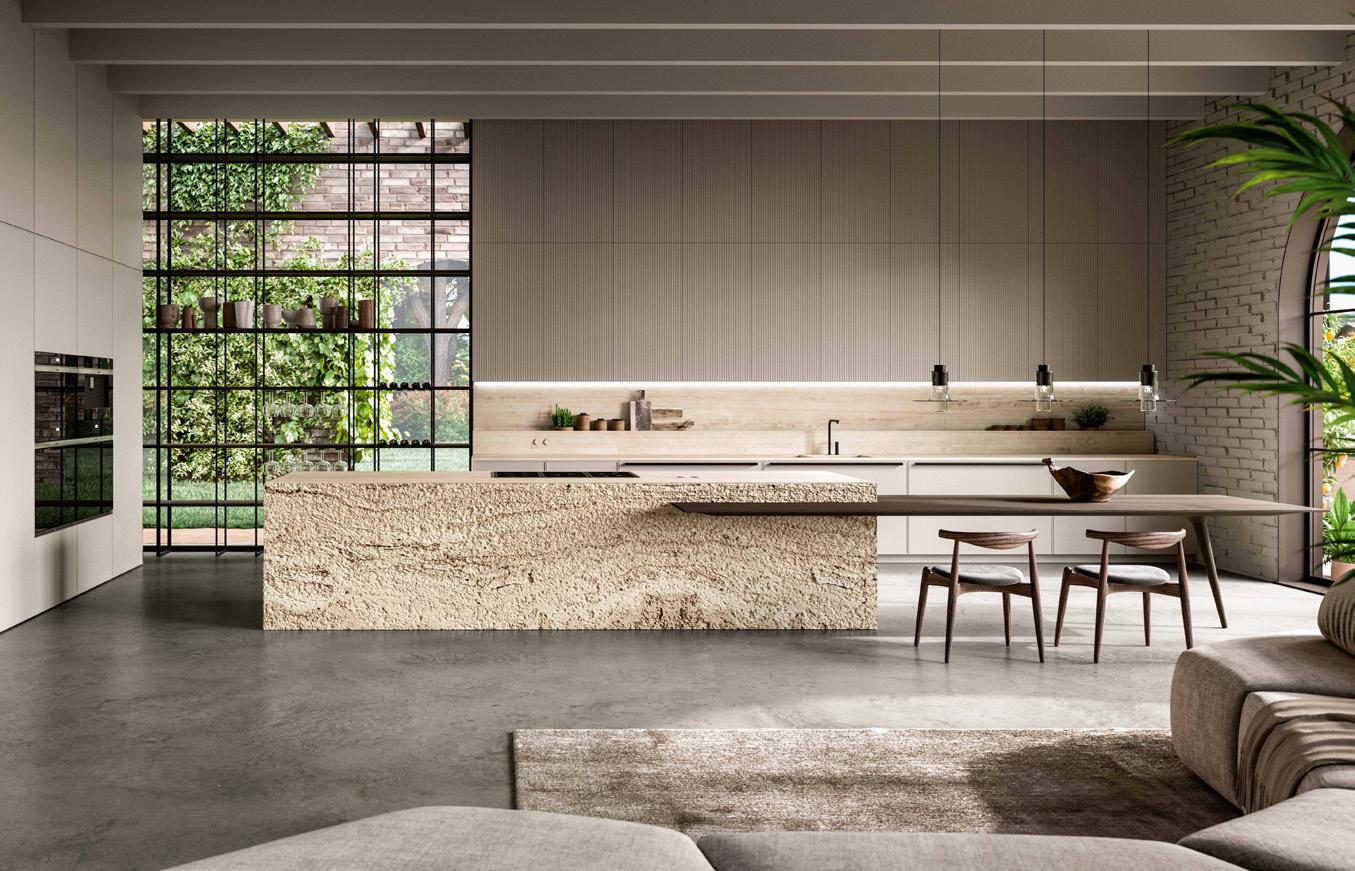
While tiles built the reputation of Céramique Royal, custom Italian kitchens now embody the premium pivot of Maison CR. Francesco Lucia speaks of them with passionate conviction.
Their kitchen offerings include exclusive access to THE CUT—an Italian brand merging flawless craft and refined detail. Made in Italy, these kitchens combine noble materials, minimal design, and elegant functionality.
And far from being only for the elite, a fully customizable kitchen can be tailored to any budget—whether modest or luxurious—while still delivering true European quality. It’s a tangible way to bring Italian-style cuisine into Québec homes—without compromise.
Une philosophie au service de la clientèle
Et le service suit cette philosophie : de la conception personnalisée à l’installation clé en main, La Maison CR veille à ce que l’expérience soit aussi fluide que le plan de travail en marbre qui trône au centre de la pièce.
Quand on demande à Francesco de nommer trois valeurs qui le définissent, il en cite cinq : honnêteté, intégrité, loyauté — mais aussi travail et persévérance. Tout Francesco, résumé en cinq mots.
Crafting Know-How
Behind every kitchen, bath, or living space lies craftsmanship cultivated for over four decades. Oversized tiles, quartz, porcelain, marble, granite—always serving both beauty and durability. Here, material is the starting point—and the signature of Maison CR.
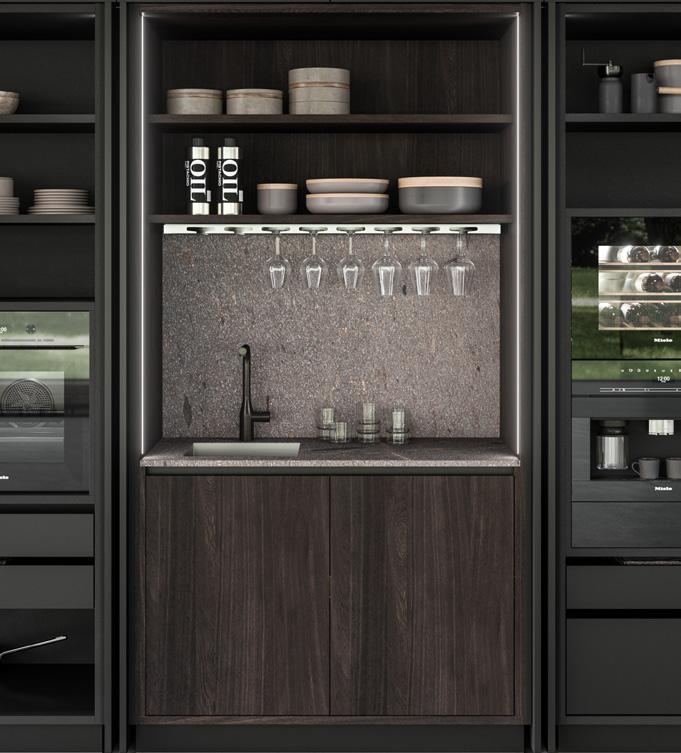
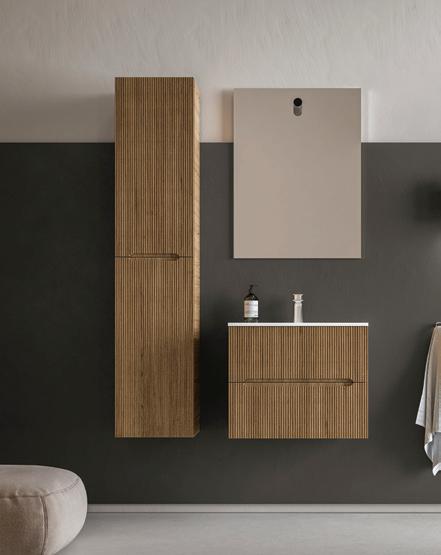
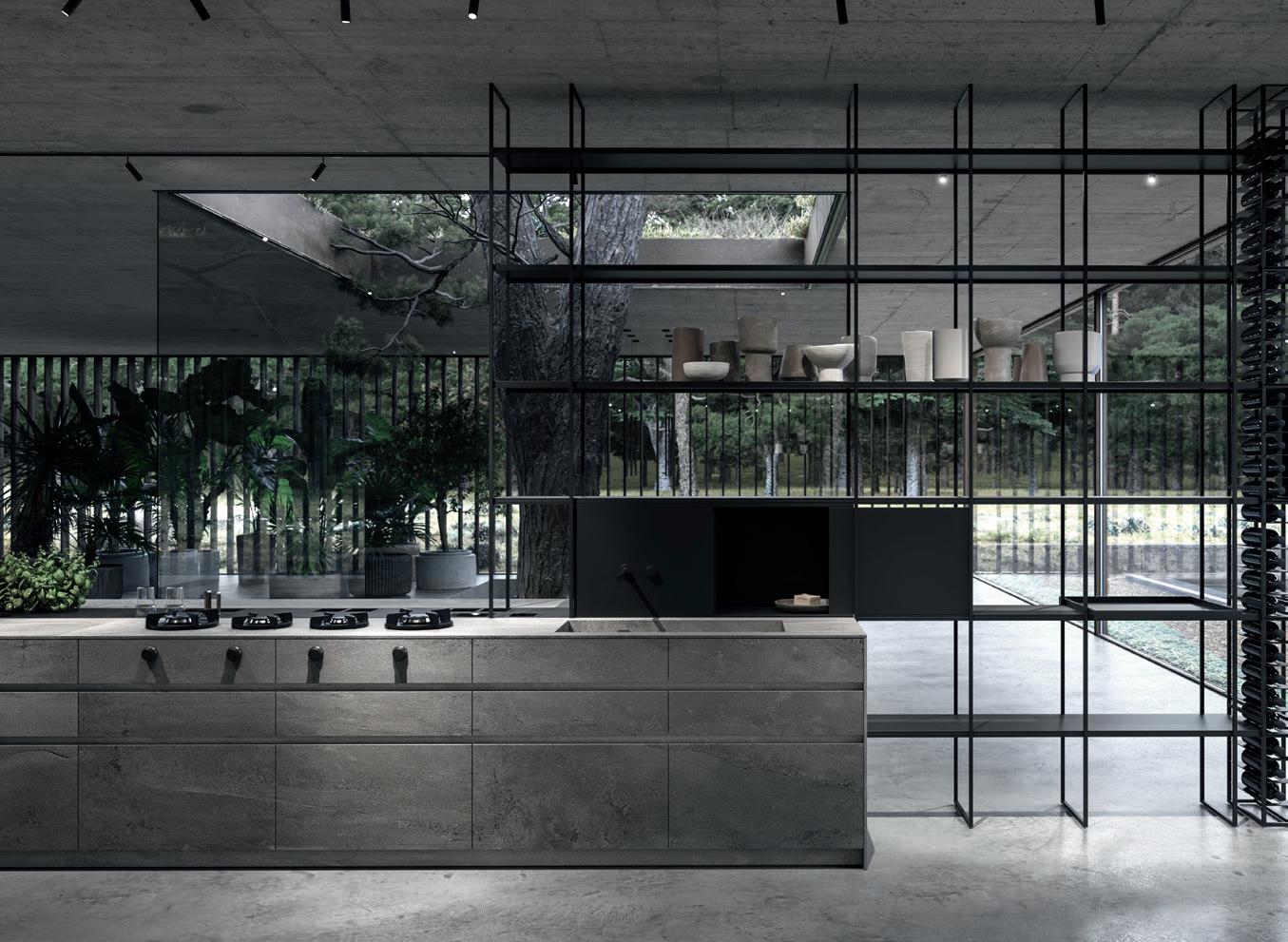
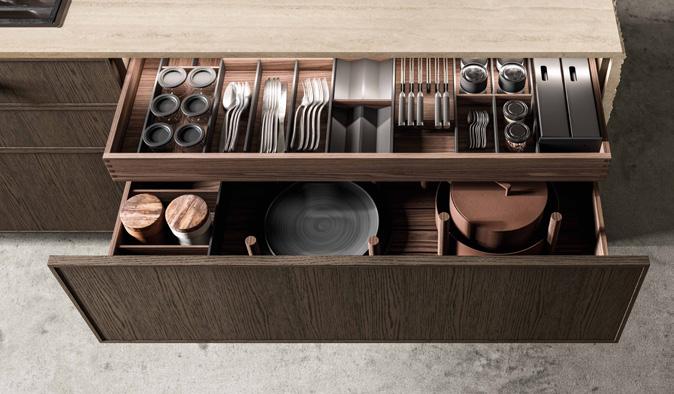
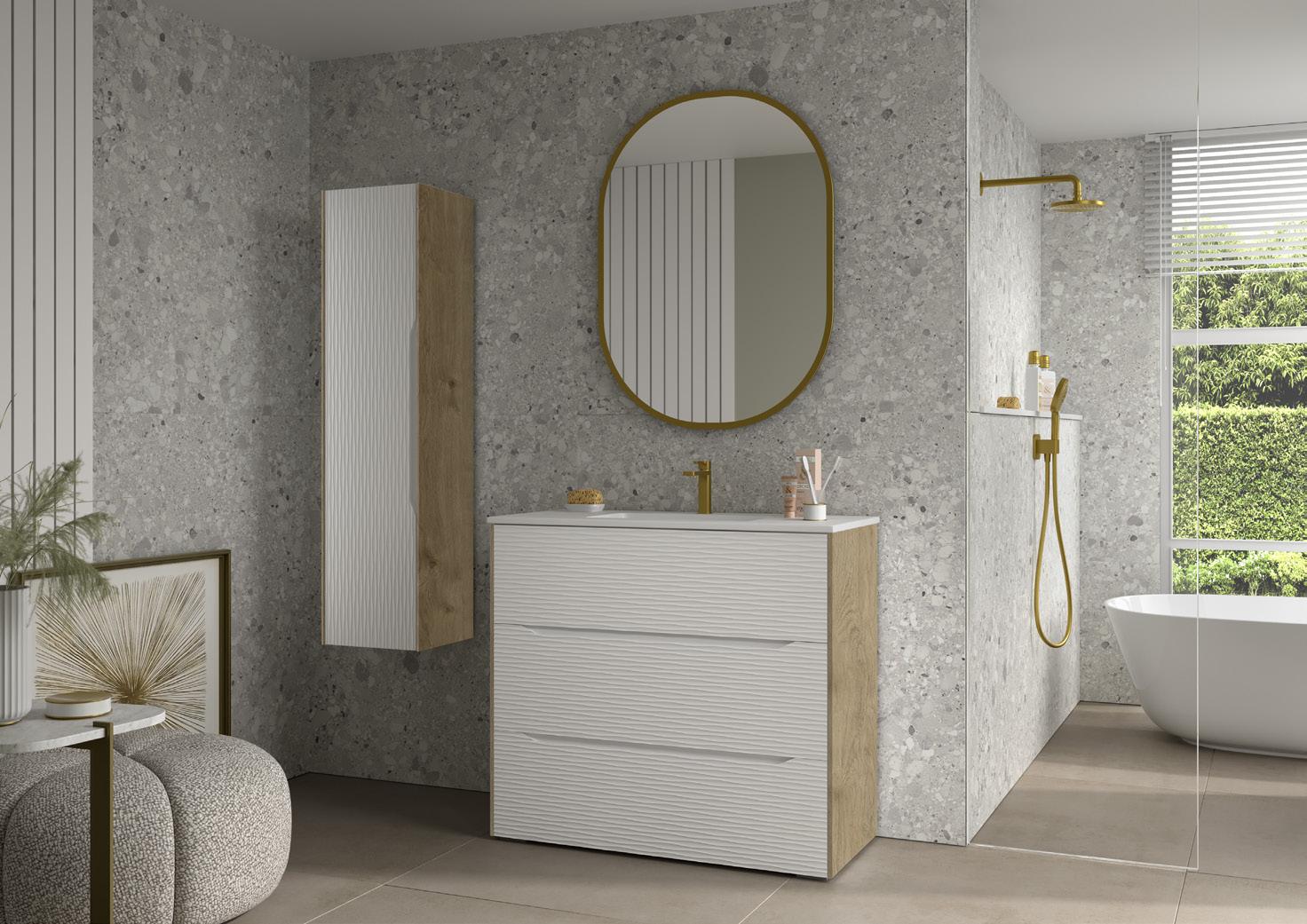
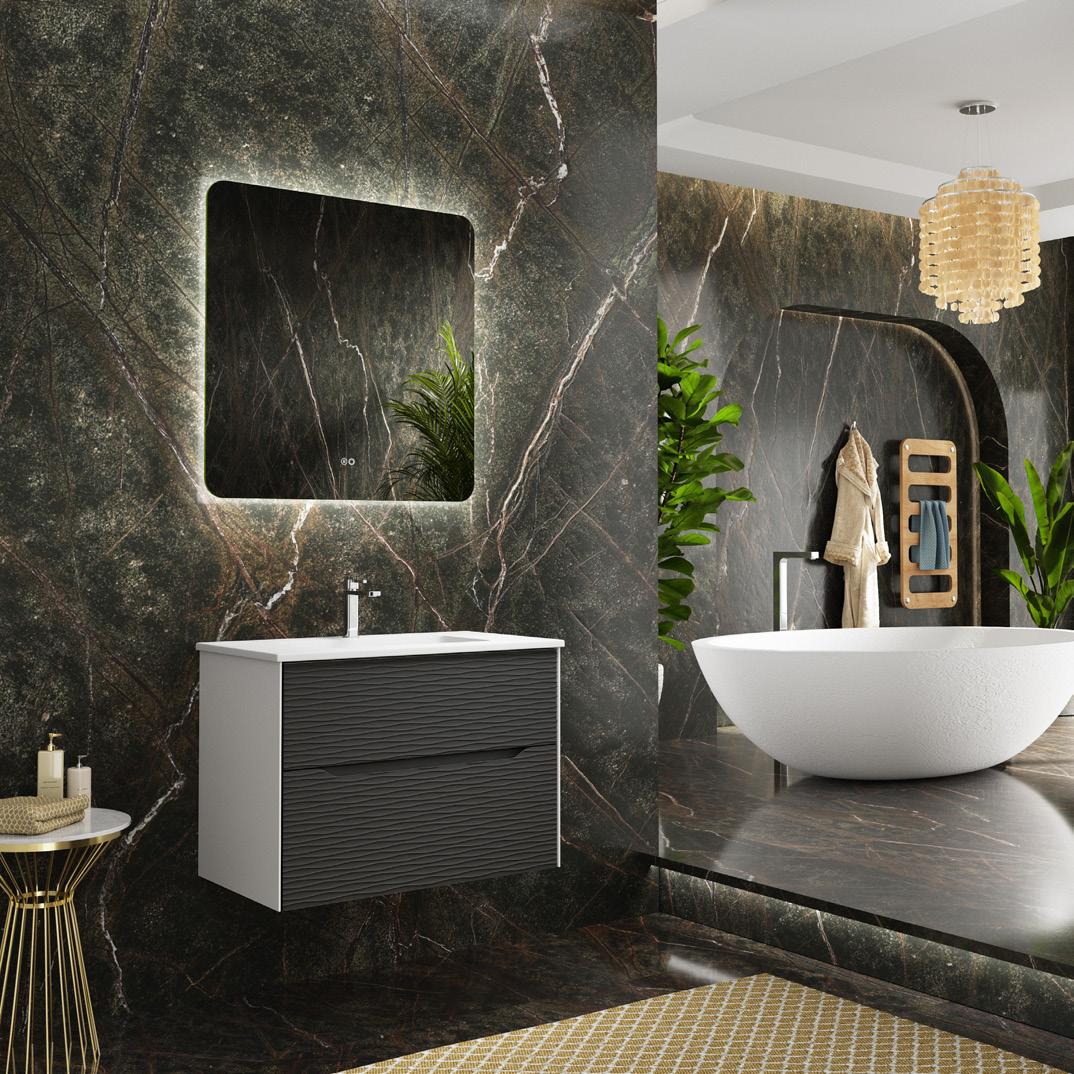
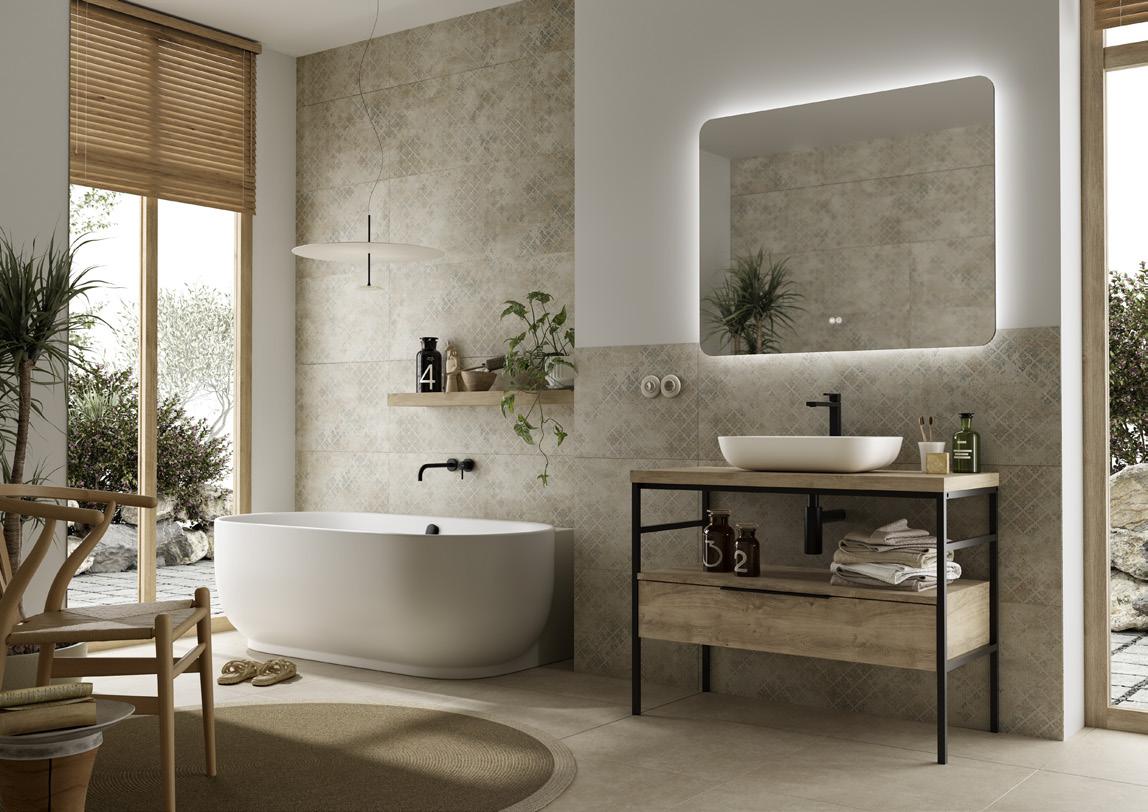
01, 02 MEUBLES DE SALLE DE BAINS par IDEA GROUP 03 CUISINE par THE CUT
Design italien, version modulaire
Dans sa quête de raffinement sans rigidité, La Maison CR élargit aussi son univers avec deux lignes italiennes aussi techniques que stylées : Albed et Pianca.
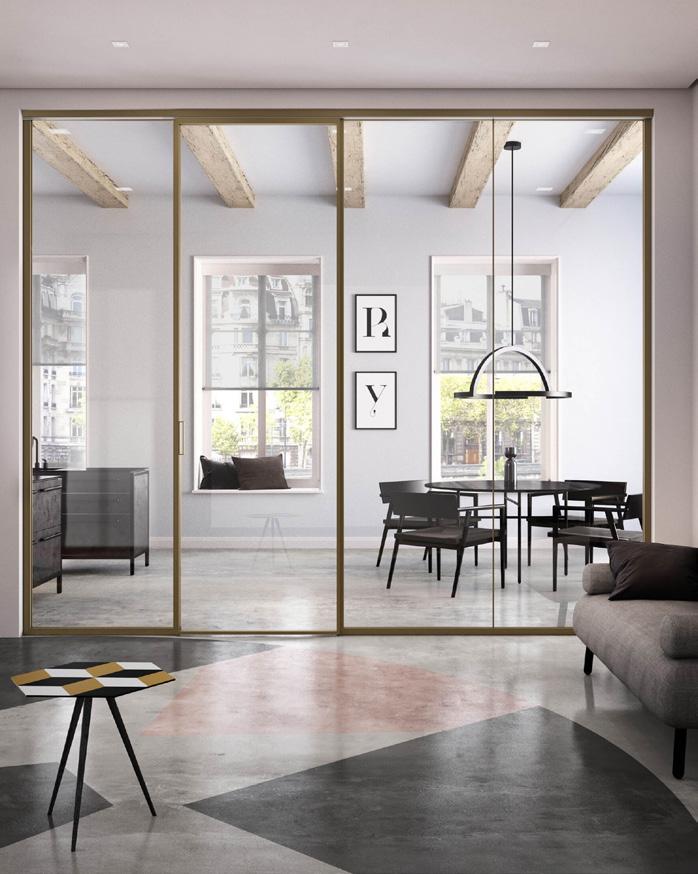
Du côté des cloisons, Albed propose des solutions architecturales sur mesure : portes, parois coulissantes, éléments intégrés — pensées pour dialoguer avec l’espace sans l’alourdir. Un minimalisme fluide et adaptable — fidèle à l’ADN de la maison.
Luxury on a Hanger
And for those dreaming of walk-ins that are as functional as they are photogenic, century-old Italian brand Pianca offers modular layouts Carrie Bradshaw would envy. Elegant and flexible, they adapt to every room, whim… and shoe collection.
Beauty in Transit
From interior architecture to elevated storage, Maison CR supports designers, architects, and clients in transforming each space into a subtle statement of refined design.
At the helm of this evolution, Francesco Lucia embraces both his roots and his influences: a devoted fan of Italian design and frequent visitor to Milan’s Salone del Mobile, he draws from its creative pulse a clear vision — of design that’s heartfelt, enduring, and alive.
Prendre la mer et lever un verre
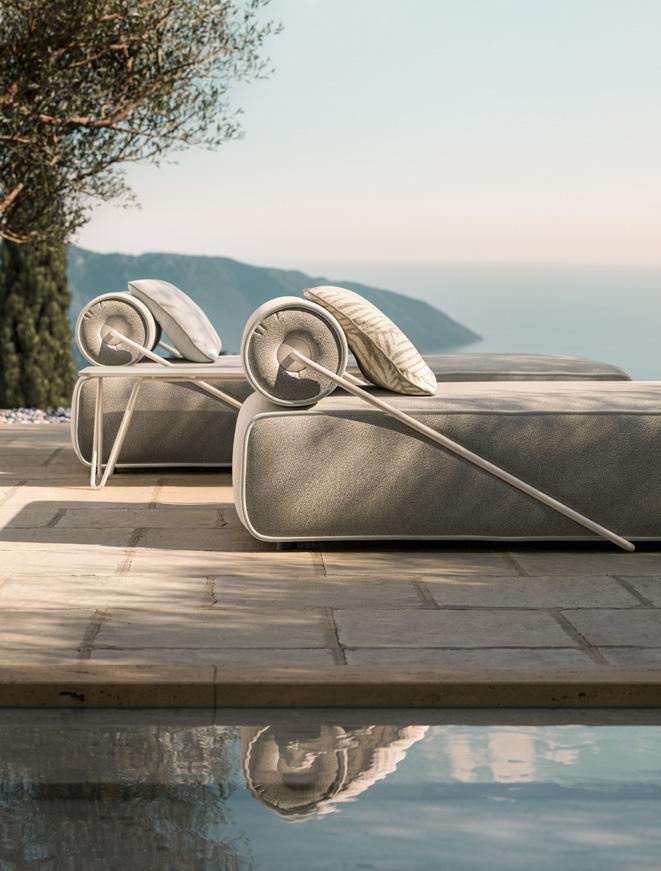
Un dialogue constant entre l’Europe et l’Amérique, où l’inspiration prend la mer pour rejoindre, chaque semaine, le port de Montréal et les planchers de La Maison CR — à coups de conteneurs finement chargés de lignes pures, de textures nobles et d’idées bien ancrées.
Et pour célébrer ce lien entre excellence, matière et hospitalité, La Maison CR ouvre désormais ses portes aux professionnels lors de soupers-causeries sur invitation dans l’une des cuisines du showroom. Parce que le bon goût, ici, se savoure autant dans la matière… que dans l’assiette.
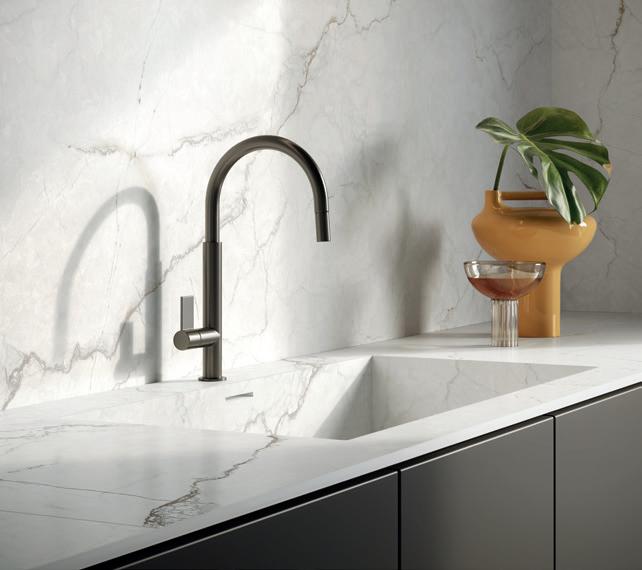
LA SÉRIE DE COULEURS SUMA
Une nouvelle collection pour les projets résidentiels et de construction par Silestone
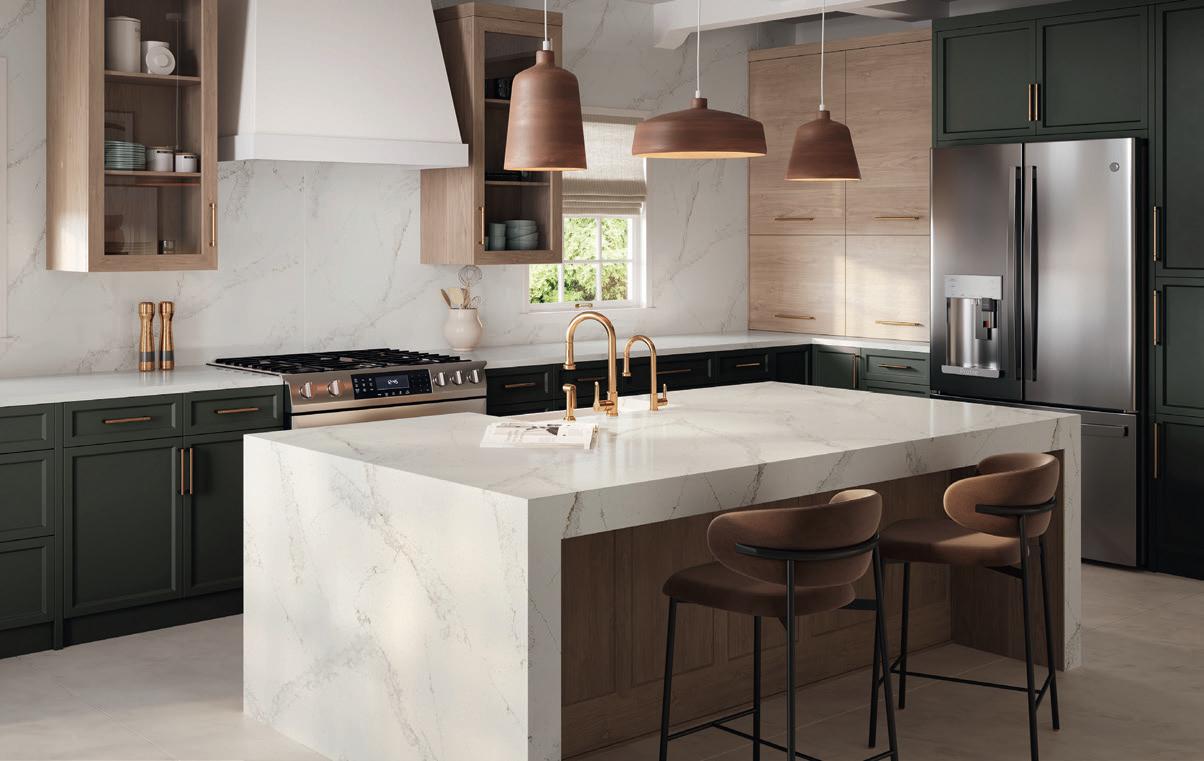


Performance supérieure
Notre large gamme de solutions pour la décora tion intérieure couvrent les surfaces de cuisine, l a salle de bain et l es meubles, avec une résistance et une durabilité garanties jusqu’à 25 ans.


Approuvé par Cosentino
Nos décennies de leadership en tant que pionnier dans l’industrie des surfaces nous permettent de fournir des produits de haute qualité.

Durabilité consciente
N os surfaces à faible teneur en silice sont fabriquées avec 100 % d ’énergie électrique renouvelable et 99 % d ’eau recyclée.
Siberian
Persian White Motion Grey
Linen Cream Bronze Rivers
BRONZE RIVERS
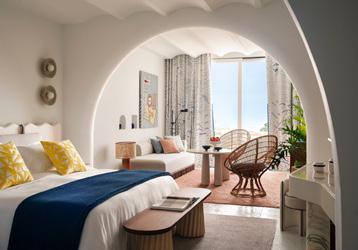
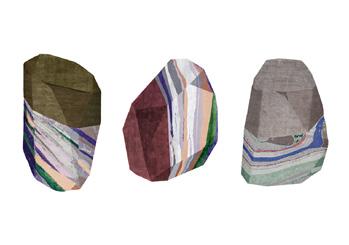
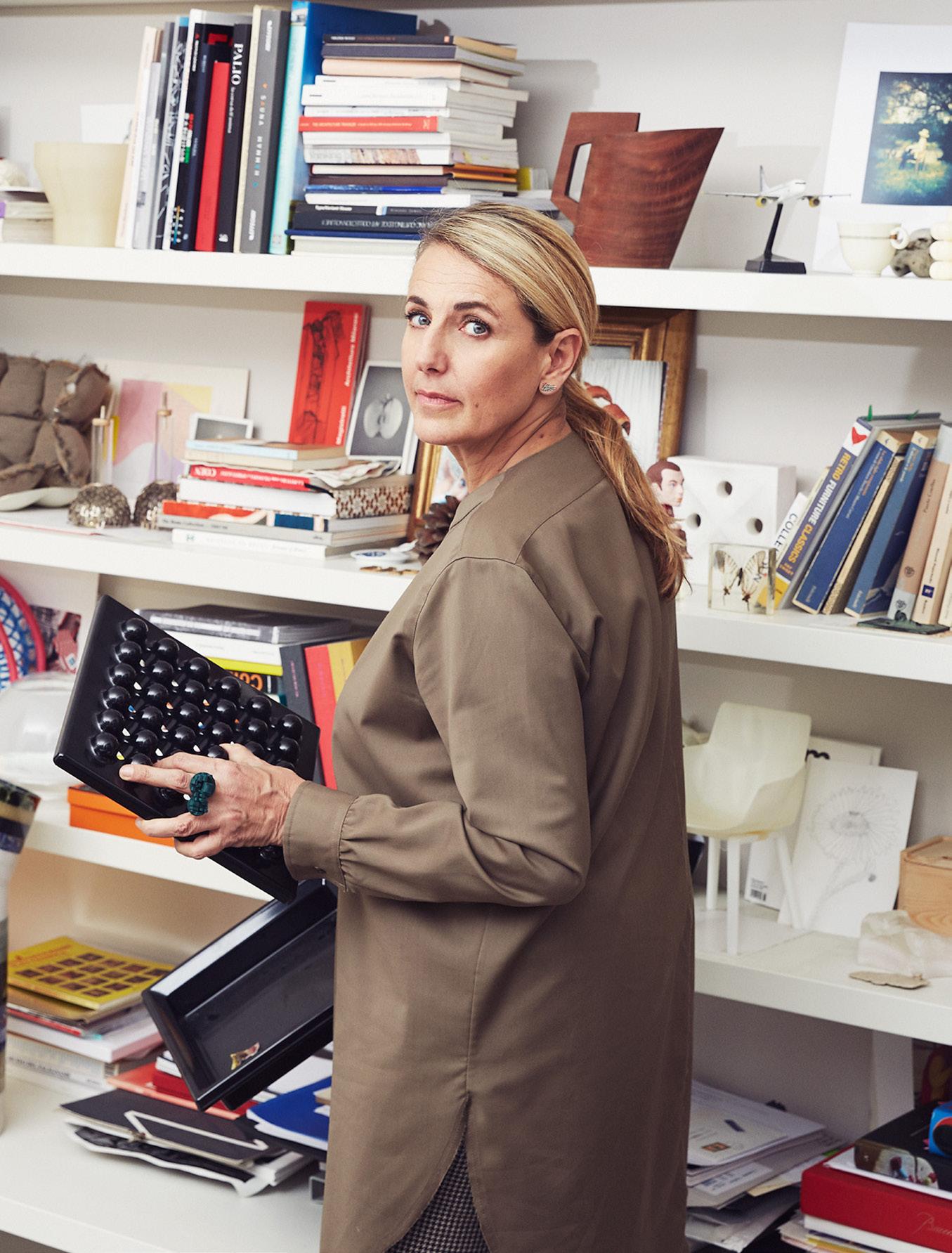
Patricia Urquiola
From her formative years under the mentorship of Achille Castiglioni to her bold experiments in sustainable design, Spanish architect and designer Patricia Urquiola has always challenged norms while honouring heritage. At the helm of Studio Urquiola and as Art Director of Cassina since 2015, she continues to bridge memory and innovation, weaving emotion into every fold, seam and surface of her work.

Between Icons & Instincts
AINSI VA L’HISTOIRE
Née à Oviedo, en Espagne, puis formée entre Madrid et Milan, Urquiola incarne l’une des voix les plus influentes du design contemporain. Protégée d’Achille Castiglioni et de Vico Magistretti, puis responsable du design chez Lissoni Associati jusqu’en 2011, elle conjugue rigueur intellectuelle et sensibilité profonde à la matière et au sens.
FROM MILAN TO MOMA
Since then, she has created iconic pieces for some of the world’s most renowned design houses—Haworth, Cassina, B&B Italia, Moroso, Kartell, Glas Italia, Flos—crafting works that blend technology, craftsmanship, and poetic functionality.Her work has received numerous international accolades and is part of major public collections, including the Museum of Modern Art (MoMA) in New York—a testament to her lasting impact on the world of design.
LE LANGAGE DU DESIGN
À travers son studio milanais et son rôle de directrice artistique chez Cassina, Patricia Urquiola redéfinit sans cesse ce que signifie être designer aujourd’hui — non pas simplement une créatrice de formes, mais une traductrice culturelle, une innovatrice, une passeuse d’histoires, de matières et de sens.
Des matériaux circulaires aux rééditions iconiques, des paysages textiles aux installations chargées d’émotion, sa pratique instaure un dialogue vivant entre le passé et l’avenir — un langage feutré, réfléchi, toujours empreint de sensibilité.
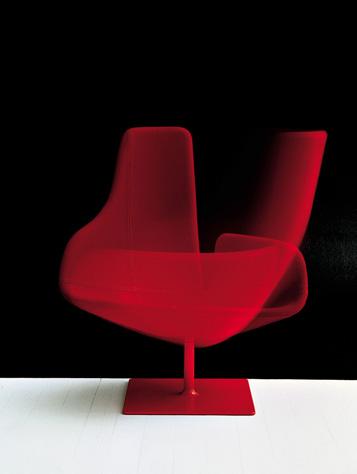
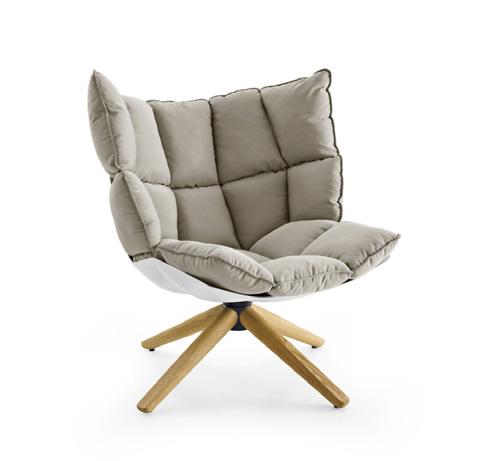
01 HUSK CHAIR B&B ITALIA 2011 – Un hommage à la douceur avec ses généreux coussins capitonnés. Sa coque rigide est en Hirek®, un polymère recyclé et recyclable.
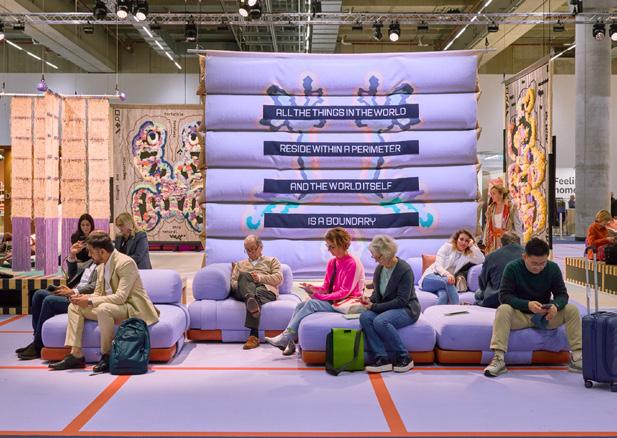
02 INSTALLATION « AMONG US » À HEIMTEXTIL Un environnement interactif piloté par les textiles, combinant matériaux durables, ilots lounge, tapis suspendus et assises sculpturales des marques Kettal, Moroso, Kvadrat, cc tapis, Aquafil, Cimento® et Parà Tempotest.
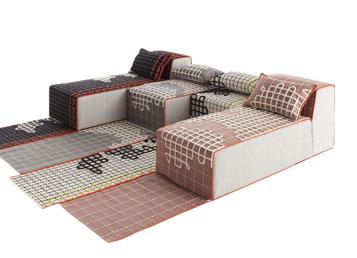
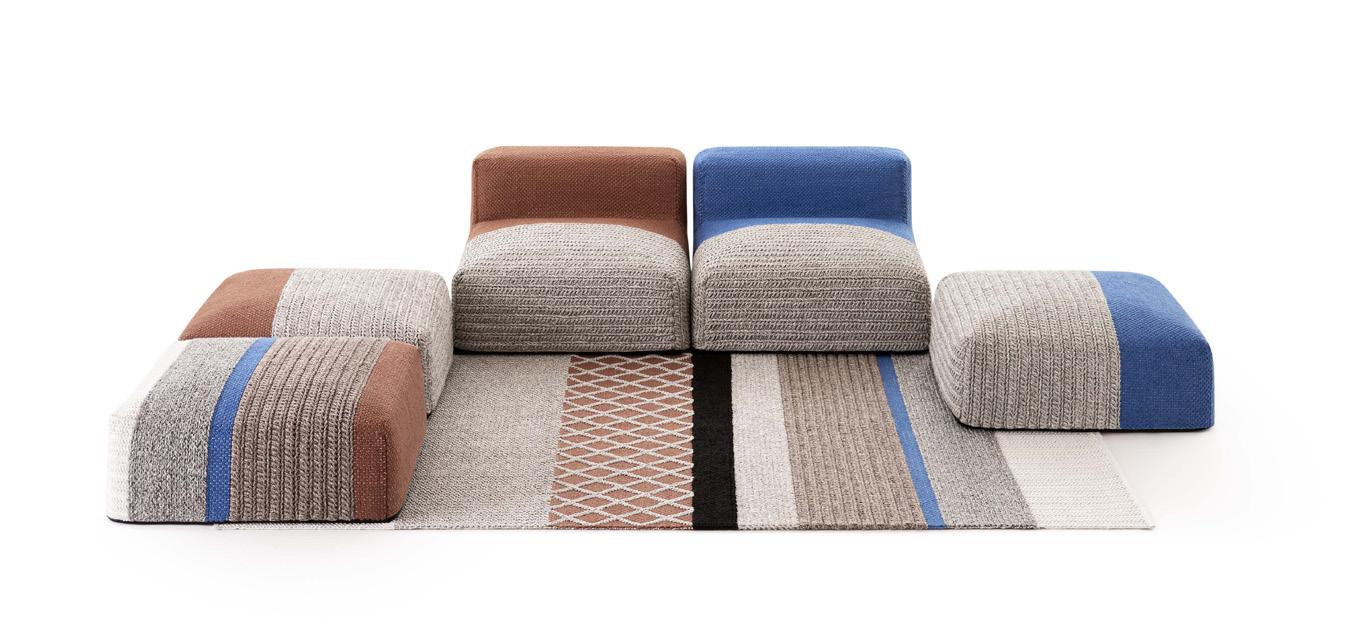
03 The iconic MANGAS OUTDOOR made with materials specially designed for outdoor use including rugs and covers made by hand with 100% recycled PET.
A CANDID CONVERSATION
Following her immersive Among-us installation at Heimtextil 2025—a 650 m² exploration of sustainable materials and hybrid forms where we met—Patricia Urquiola sat down with us to reflect on her creative journey, her mentors, and the evolving role of design in shaping human experience.
Merci de nous ouvrir une fenêtre sur votre univers. Allons droit au but : quand et comment avez-vous découvert votre vocation d’architecte et de designer ?
– Au départ, je n’étais pas certaine que le design était pour moi. J’étudiais l’architecture à la Polytechnique de Madrid, puis à Milan, et le design me semblait presque théâtral — plus proche de la scénographie que de la rigueur que je recherchais. Puis j’ai rencontré Achille Castiglioni. Ses cours étaient inattendus : il arrivait avec une valise remplie d’objets du quotidien — ciseaux, verres — et, à partir de là, c’est tout un monde qui s’ouvrait à nous.
Your early path was shaped by mentors like Achille Castiglioni and Vico Magistretti. How did those formative relationships influence your creative philosophy?
–They were both central figures. Castiglioni taught me to look at things without filters—to enjoy the act of observing. Vico Magistretti was an example of design intelligence, but also of personal elegance. He gave 100% of his attention to whoever he worked with. And he could explain a project with just words.
© Messe Frankfurt/Jean-Luc Valentin
© Anna Casanova
Your Milan studio is often described as a creative laboratory. What kind of energy defines the workflow on a typical day? –Movement. We work in an open space where conversations flow—at desks, over fabrics, in the kitchen. Ideas pass through many hands before settling. We don’t follow a rigid process, but we trust the rhythm that emerges from collaboration.
Depuis 2015, vous êtes directrice artistique chez Cassina. Comment abordez-vous la réinterprétation d’icônes du design comme Charlotte Perriand ou Le Corbusier — en honorant leur héritage tout en maintenant leur pertinence aujourd’hui ? – Cassina est l’entreprise qui réédite les grands noms — Vico Magistretti, Gerrit Rietveld, Ico Parisi, Franco Albini, Le Corbusier, Charlotte Perriand. Et la maison a toujours démontré un fort engagement à promouvoir la portée culturelle de ces figures à travers des expositions et des initiatives — comme Charlotte Perriand : Inventer un monde nouveau, première exposition pour laquelle la Fondation Louis Vuitton a consacré l’ensemble de son espace à une designer.
Nous partageons depuis toujours une vision commune avec Cassina. Notre travail quotidien consiste à traduire cet héritage dans les collections contemporaines et dans une image complexe, cohérente de la marque — une image qui évolue en permanence avec la société. En ce sens, la direction artistique devient un continuum culturel, un enchaînement d’expériences.
Your work increasingly incorporates recycled and low-impact materials. Has the urgency of the climate crisis transformed your way of designing?
–In the past, we looked at sustainability as one component of a project. Today, it’s the foundation of everything we lay our hands on.
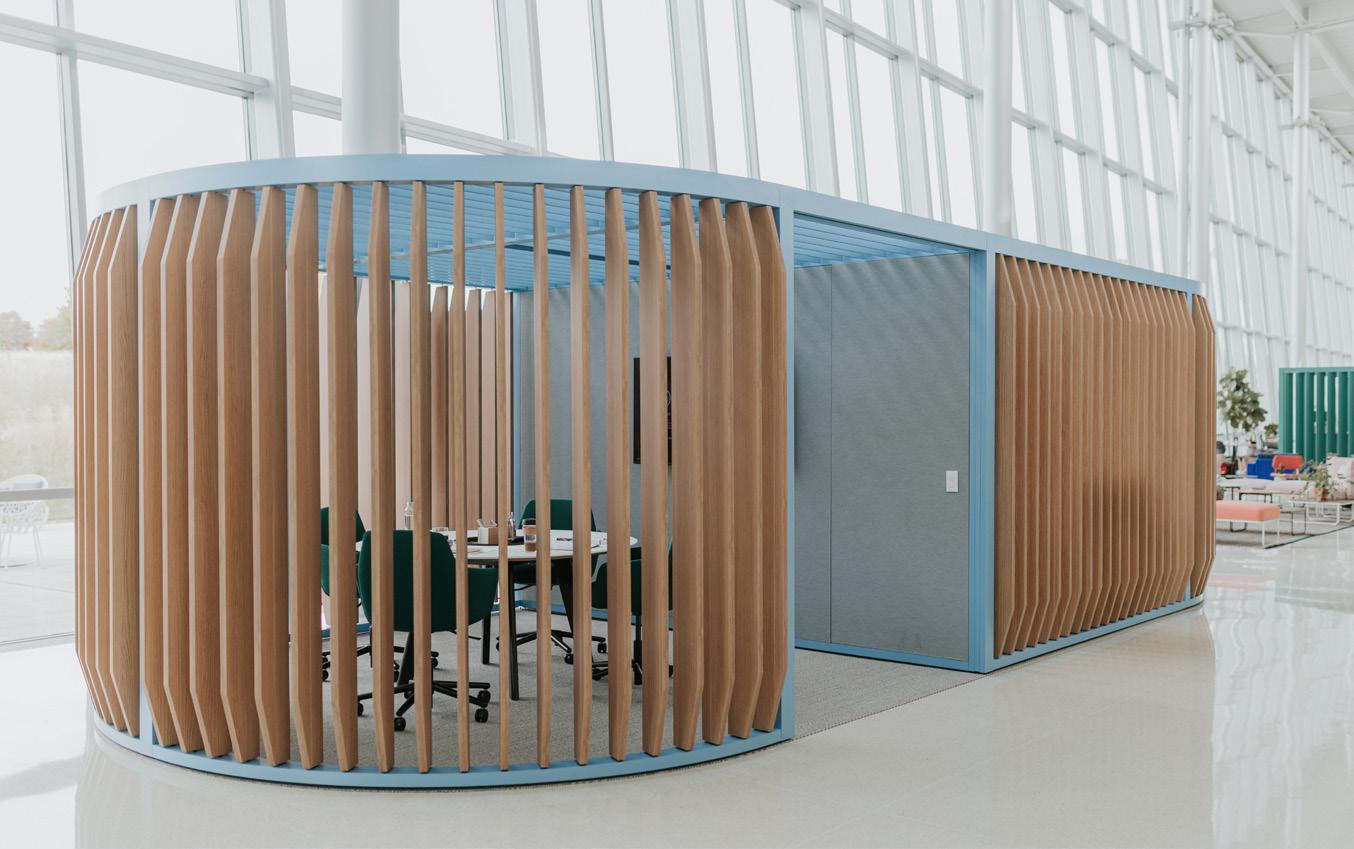
PERGOLA HAWORTH 2020 – un « espace dans l’espace » redéfinit l’aire ouverte du bureau. Pensée comme un lieu multifonctionnel pour le bureau contemporain, la Pergola favorise les échanges, la collaboration et la concentration.
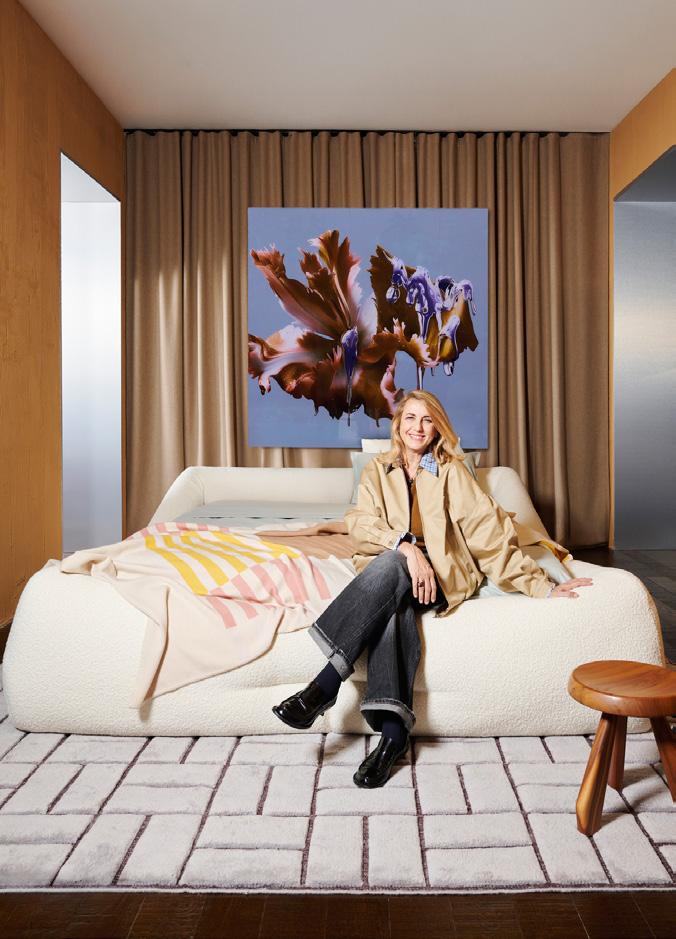
MON NID BED CASSINA 2025 – le lit réinventé comme un refuge tactile. Ses volumes généreux et courbes enveloppantes évoquent un nid douillet. Doté d’un rangement sous la base à lattes, il allie forme sculpturale et fonctionnalité au cœur de la maison contemporaine.
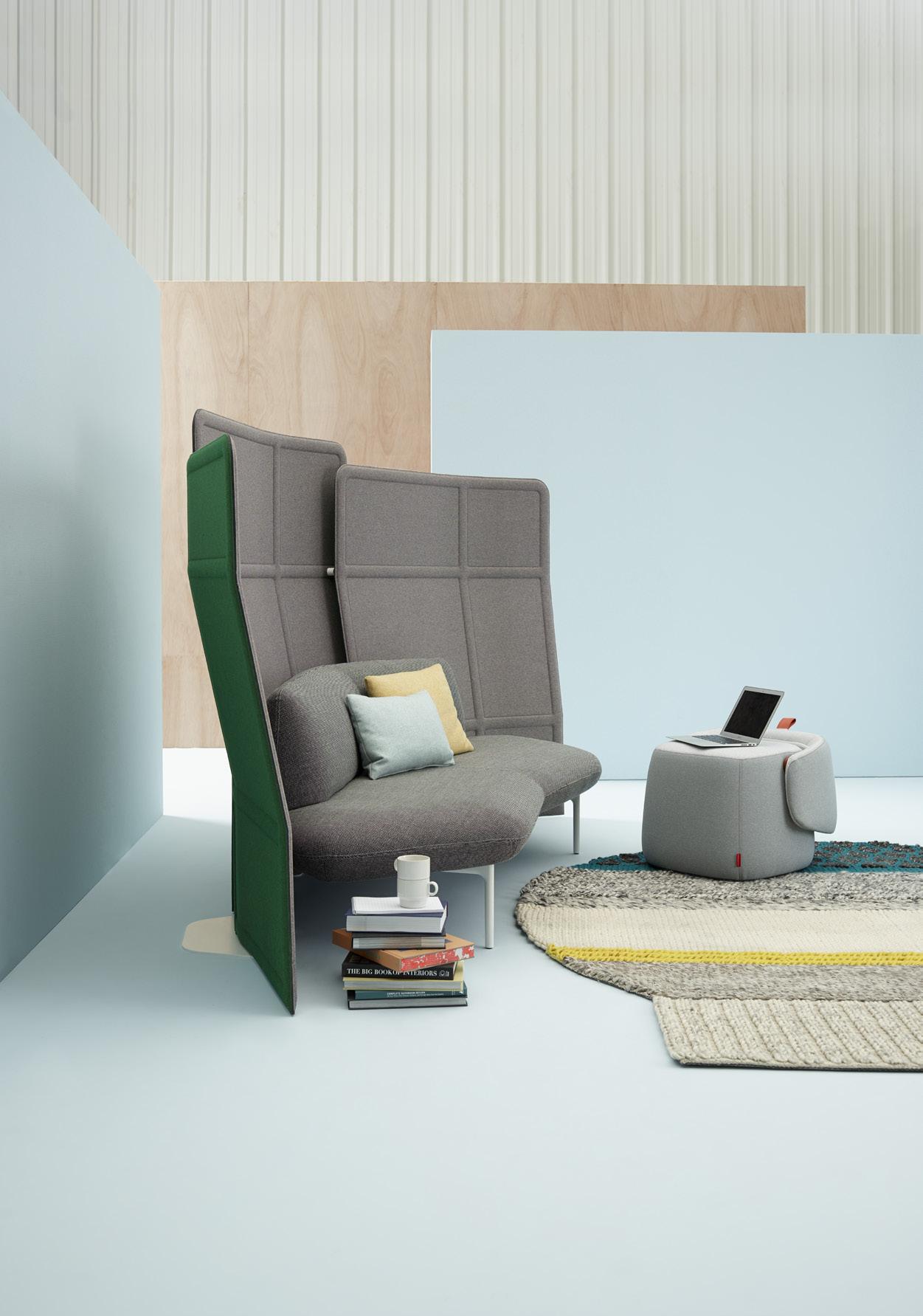
OPENEST HAWORTH 2014 un ensemble mobilier lounge et espaces de travail privés pensé pour s’adapter aux environnements professionnels en mutation.
Openest crée un paysage chaleureux et invitant, propice aux échanges, à la réflexion, à la concentration ou à la détente, alliant confort et flexibilité.
We think in terms of the full lifecycle—origins, processing, and what happens after use. We use circular materials like bio-based foams, recycled PET fibers, low-impact woods—and we’re exploring algae textiles, mycelium, and biodegradable composites. We’ve also started using digital tools more consciously—they help us reduce waste during prototyping, track material origin, and optimize how we use resources. But it’s not only about materials. It’s also about how we design: thinking modularly, designing for repair and disassembly, and building with durability in mind.
Vous avez présenté l’installation immersive Among-us au salon Heimtextil 2025, où nous nous sommes rencontrés — un projet qui explorait le potentiel expressif et durable du textile. Qu’est-ce qui vous a motivée à entreprendre ce projet, et comment voyez-vous évoluer le rôle du textile dans le design contemporain ? – Le textile est omniprésent dans mon travail. Il représente la couche la plus proche entre les gens et l’espace — douce, intime, toujours en contact avec le corps. Avec Among-us, je voulais réfléchir à la manière dont les tissus transmettent l’émotion, le geste et l’histoire. Nous avons créé un environnement accueillant — des formes simples, un langage sensible : des plis, des coutures, des structures que l’on peut traverser, appuyer, lire comme un paysage textile.
WHERE EMOTION MEETS MATTER
From the dynamic pulse of her Milan studio to her curatorial vision at Cassina and unwavering commitment to sustainability, Patricia Urquiola invites us into a world where objects are anything but static—they speak, they respond, they carry memory and meaning. In her design language, even the most humble object becomes a threshold—between material and memory, tradition and transformation.
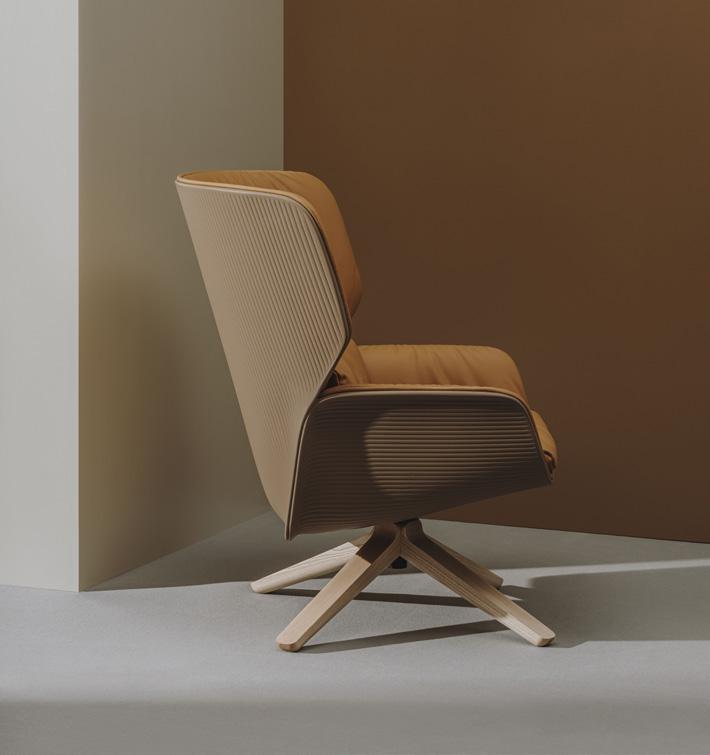
01 NUEZ LOUNGE BIO® ANDREU WORLD 2020. Ce fauteuil lounge au dossier haut, conçu dans un thermopolymère d’origine naturelle, est 100 % biodégradable, compostable et recyclable. Son design facilement démontable permet de séparer coque, mousse, tissu et base.
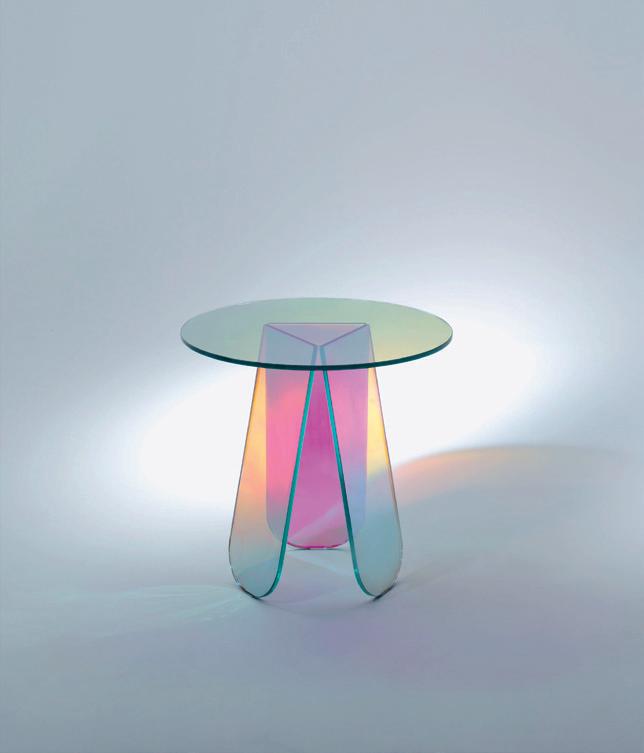
02 SHIMMER GLAS ITALIA 2015. A line of round tables characterized by its magical and ethereal appearance. Depending on the vantage point and the incidence angle of light, it displays an infinite variety of nuances, a result of its iridescent and multicoloured finish.
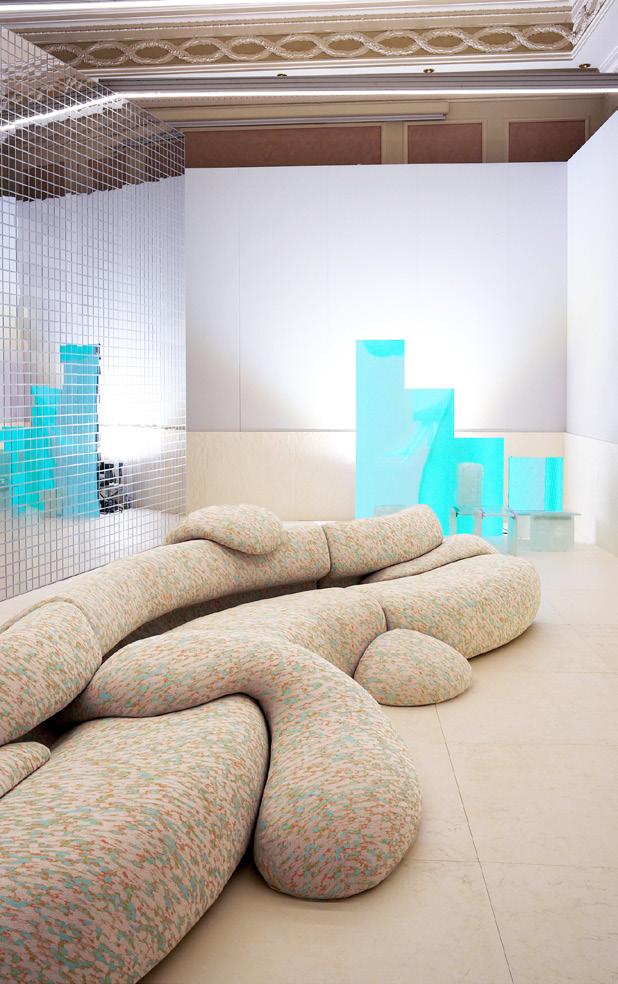
03 LORS DU SALONE DEL MOBILE 2025, « ALCHEMICA » une installation pour Elle Decor Italia explore le foyer domestique comme métaphore de l’alchimie, voyageant des phases de Nigredo à Rubedo.
Every Scale at

Tête-à-tête
Up Close & Personal
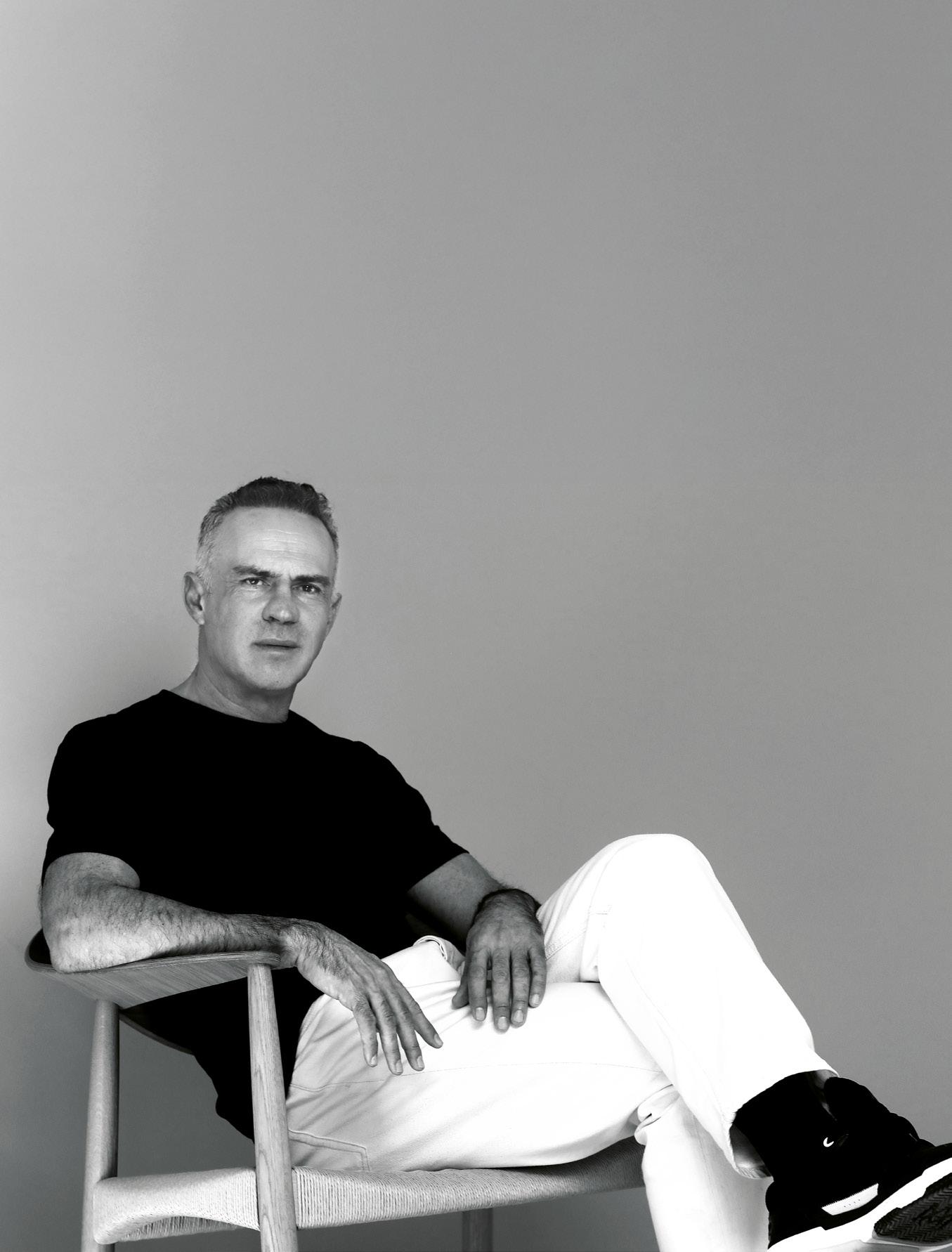
Ramón Esteve
Des résidences iconiques aux collections de mobilier pour de grandes marques internationales, l’architecte et designer espagnol Ramón Esteve aborde chaque projet comme faisant partie d’une vision d’ensemble cohérente. Ancré dans la lumière et les formes méditerranéennes, son travail conjugue précision matérielle, profondeur émotionnelle et sensibilité contextuelle — qu’il conçoive une chaise, une maison, ou qu’il transforme un site industriel en pôle culturel.
We met Ramón Esteve at the Habitat Valencia fair, where our conversation revealed a deeply thoughtful creative mind—one who sees design not as a series of isolated gestures, but as a continuum where architecture, objects, and experience coalesce. The following interview offers a glimpse into this holistic approach.
LES DÉBUTS
Comment et quand avez-vous découvert votre vocation pour l’architecture et le design ? Y a-t-il eu un moment, une personne ou une expérience marquante qui vous a orienté dans cette voie ?
Enfant, j’étais fasciné par la manière dont les espaces pouvaient influencer les émotions et les comportements. J’ai toujours été attiré par cette discipline, même si je ne comprenais pas encore tout ce qu’elle impliquait. Il n’y avait pas d’architecte dans ma famille, mais mon père travaillait dans la construction. Cela m’a donné un lien précoce avec cet univers — même si j’ai vite compris que construction et architecture étaient deux mondes très différents.
C’est au fil de mes études que ma véritable vocation a commencé à prendre forme. J’ai découvert l’architecture comme un langage, un moyen de connecter les gens à leur environnement en alliant fonctionnalité et beauté dans un ensemble cohérent. Cela m’a également ouvert à la théorie architecturale et à l’histoire, qui restent des sources d’inspiration inépuisables.
Je me souviens précisément d’un livre que j’ai reçu lorsque je réfléchissais à mon orientation. En feuilletant ses pages, je suis tombé sur Fallingwater de Frank Lloyd Wright. Je me suis immédiatement dit : « Je veux créer des maisons comme celle-là. » Ce fut un moment décisif, qui a orienté toute la suite de mon parcours.
J’ai débuté ma carrière dans ma ville natale de Valence, en réalisant de petits projets d’architecture et de design intérieur. J’ai toujours conservé un lien fort avec les artisans, apprenant autant de leurs gestes que des conseils de mon père.
Mon premier projet d’envergure a eu lieu alors que j’étais encore étudiant : la conception de stands d’exposition pour Kodak, dont certains atteignaient 500 m². Ils ont été publiés et ont attiré beaucoup d’attention. Il est intéressant de noter que j’ai commencé par l’aménagement intérieur — et que j’ai naturellement aussi dessiné le mobilier.
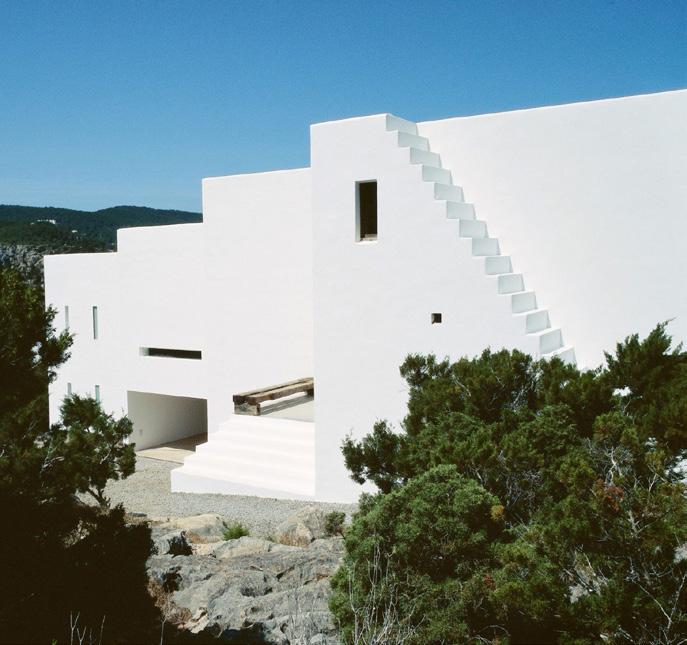
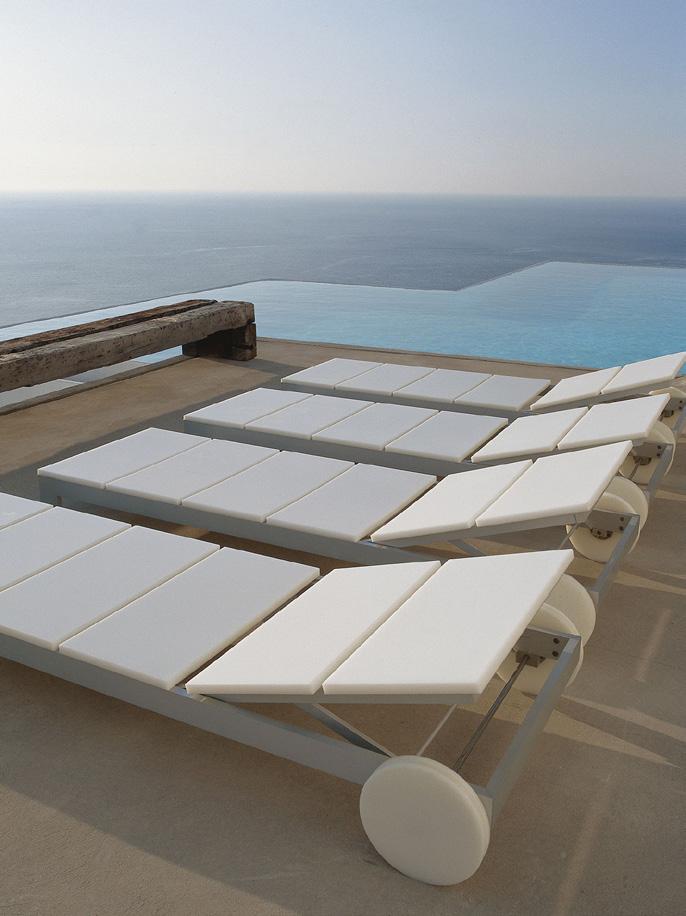
Par la suite, mes projets ont gagné en échelle et en complexité. Le tournant majeur a été le projet Na Xemena à Ibiza, qui a cristallisé les deux piliers de mon travail : le design et l’architecture.
Le
FOUNDING YOUR STUDIO
Your studio was founded in 1991, reflecting a strong ambition and clear vision from the start. What were the key steps or defining influences during this period that helped lay the groundwork for your entrepreneurial and creative journey?
In 1991, when I founded my studio, I had a clear purpose: to develop projects that transcended mere functionality to become sensory experiences. It was essential to surround myself with a multidisciplinary team and to embrace a philosophy of holistic design. The influences of vernacular architecture, contemporary art, and the great masters—combined with my focus on contextualisation—helped me establish a distinct identity. Specialisation and meticulous attention to detail enabled us to grow and take on increasingly complex and meaningful projects. Influential figures such as Louis Isadore Kahn, Le Corbusier, Mies van der Rohe, and Frank Lloyd Wright taught me the importance of purity in form, functionality, and the seamless integration of architecture with its surroundings.
UNE APPROCHE HOLISTIQUE
Votre approche holistique, où architecture et mobilier dialoguent pour créer des espaces cohérents et harmonieux, n’est pas sans rappeler celle de Frank Lloyd Wright, qui concevait aussi les meubles de ses bâtiments. Quelle place cette relation entre architecture et design occupe-t-elle dans votre travail ?
Le design holistique est au cœur de ma pratique. Je considère l’urbanisme, l’architecture et le design comme des disciplines indissociables, qui doivent dialoguer pour créer des environnements avec une âme — des lieux capables d’entrer en résonance avec l’utilisateur.
Nous avons souvent cette phrase au studio : « Nous concevons tout, de la chaise à la ville. »
L’influence de Frank Lloyd Wright est indéniable. Son aptitude à intégrer architecture et mobilier dans une même narration m’a inspiré à rechercher une harmonie semblable, où chaque élément enrichit l’expérience spatiale globale.
D’autres grands architectes m’ont également influencé, notamment ceux dont le mobilier prolonge naturellement le discours architectural. Ce concept dépasse d’ailleurs le cadre du design : en musique, par exemple, l’idée du Gesamtkunstwerk — « œuvre d’art totale » selon Wagner — est une référence qui me parle profondément.
INFLUENCES
You’ve previously mentioned the influence of architects like Le Corbusier, Frank Lloyd Wright, and Mies van der Rohe on your design philosophy. Could you share how their ideas have concretely shaped your work?
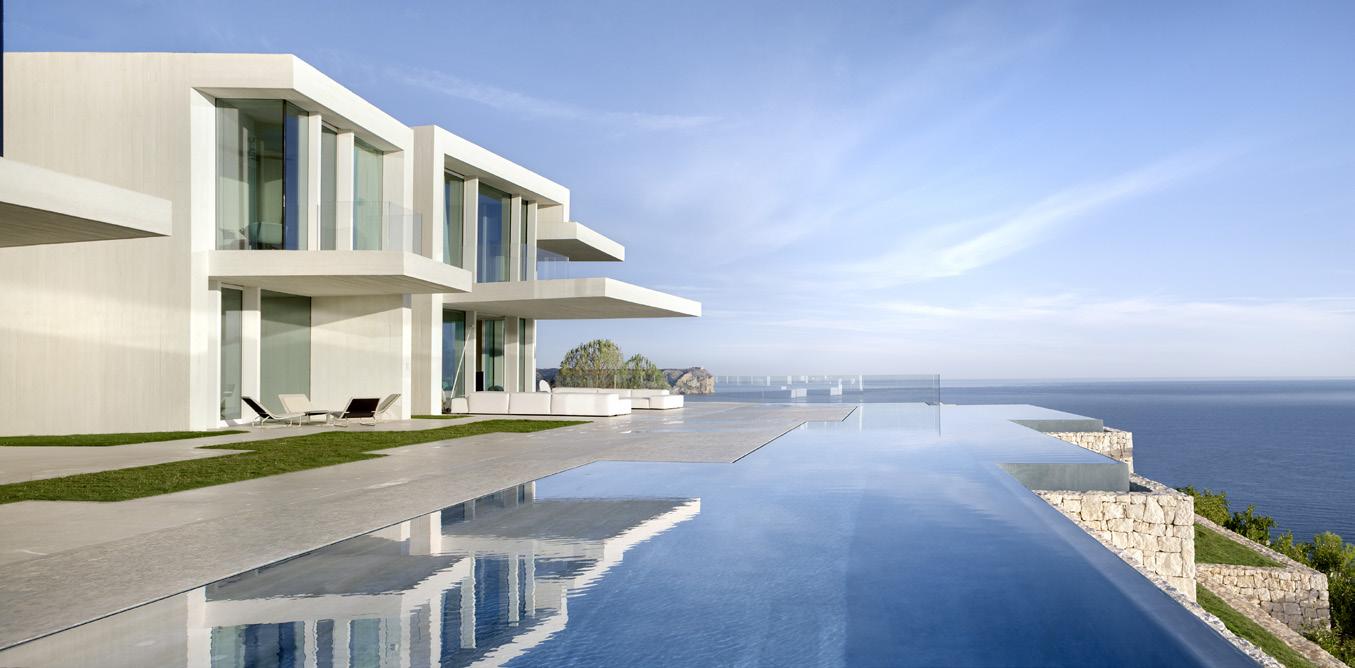
The principles of Le Corbusier, Frank Lloyd Wright, and Mies van der Rohe have been guiding lights throughout my career. From Le Corbusier, I learned the importance of formal purity; Wright taught me how to integrate architecture with its surroundings; and from Mies, I value structural clarity and material honesty. For instance, in Casa Sardinera, the volumes emerge from the terrain as if they were a natural extension of the landscape—a tribute to Wright's teachings and his famous words: “No house should ever be on a hill or on anything. It should be of the hill. Belonging to it. Hill and house should live together, each the happier for the other.”
In general, great architects such as Louis Kahn, Jørn Utzon, Alvar Aalto, Sigurd Lewerentz, and particularly Nordic architects have profoundly influenced my approach. Additionally, the philosophy of contemporary architects such as Herzog, Pierre de Meuron, and Zumthor has also left a lasting mark on my work.
DURABILITÉ
Lors de la World Design Capital Valencia 2022, vous avez affirmé que « la durabilité devrait devenir la norme, soutenue par une régulation adéquate ». Si vous pouviez imposer une mesure concrète pour encourager une architecture plus durable, laquelle choisiriez-vous, et pourquoi ?
Si je pouvais mettre en place une réglementation, je commencerais par exiger que l’efficacité énergétique et les principes de durabilité soient intégrés dès les premières étapes de conception. Cela pourrait inclure l’usage de systèmes de récupération d’eau, des matériaux locaux à faible empreinte carbone, ou des technologies qui optimisent les ressources.
Mais pour que ces initiatives aient un véritable impact, elles doivent devenir la norme et non rester des exceptions. La gestion des ressources et la durabilité devraient être intégrées dans les réglementations et dans les habitudes culturelles de la société.
Nous ne faisons encore qu’entamer ce chemin. Sensibiliser, transmettre des valeurs partagées autour de ces enjeux est une première étape cruciale. La régulation que j’imagine ne répond pas seulement aux urgences environnementales — elle vise à provoquer un changement culturel vers un avenir plus durable.
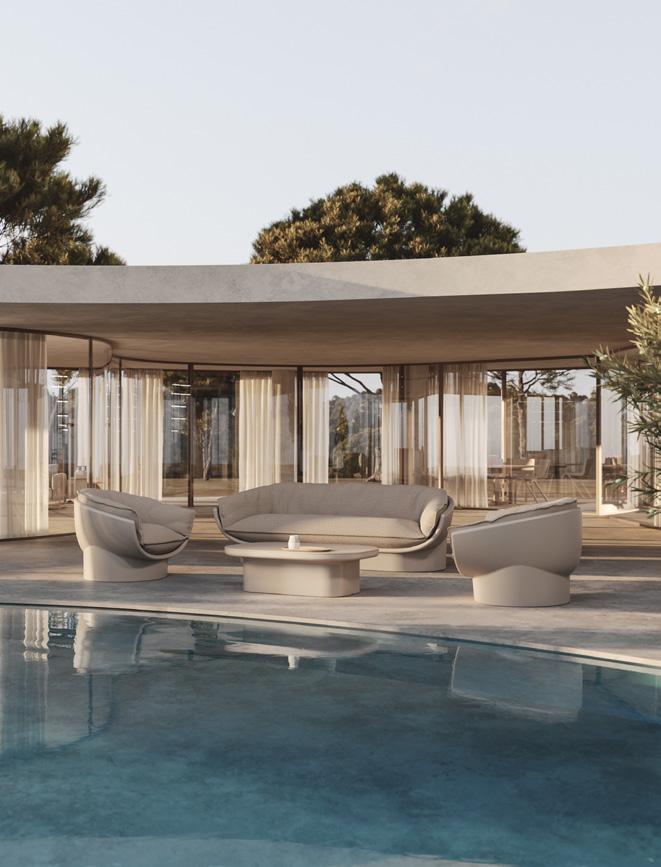
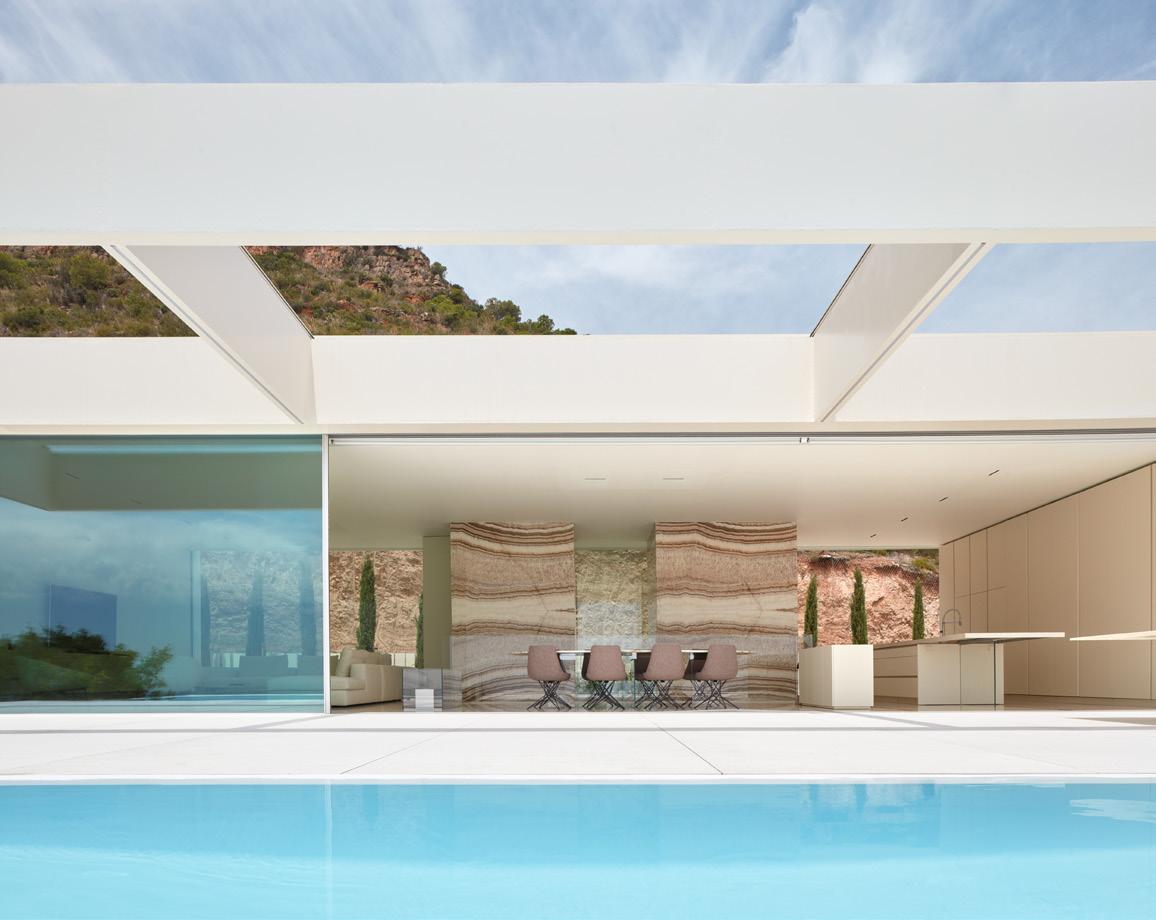
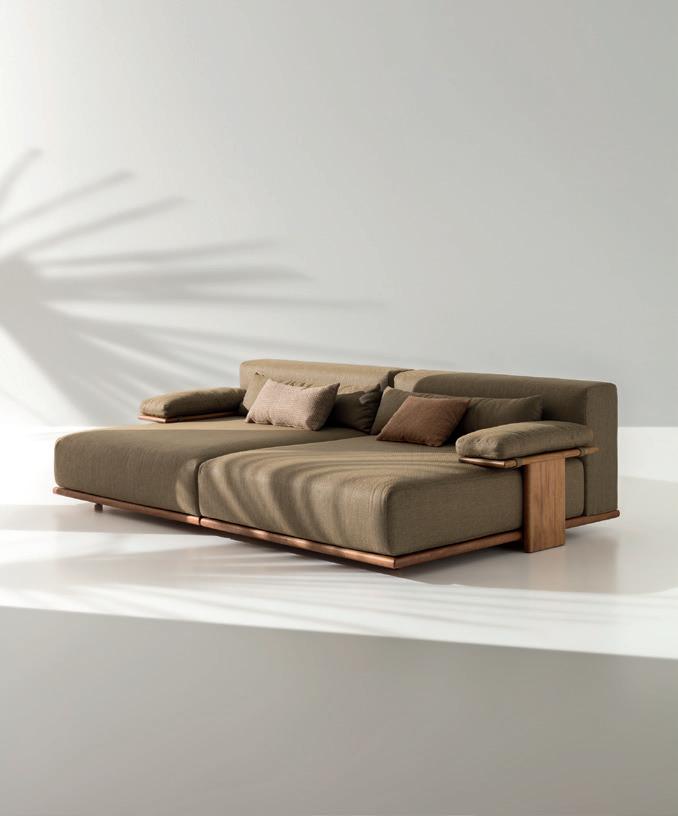
COLLECTION LUNA POUR VONDOM
QUARRY HOUSE BY RAMÓN ESTEVE
COLLABORATIONS
Can you tell us more about your collaborations with brands such as Vondom, Vibia, and Porcelanosa? How have these partnerships influenced your creative process? Collaborations with brands such as Vondom, Vibia, and Porcelanosa stem from a shared commitment to innovation and quality. Each project presents an opportunity to explore new materials and forms. I recall, for instance, the development of the Luna collection for Vondom, where we worked tirelessly to create a piece that balanced functionality with emotion.
L’ENSEIGNEMENT
En tant que professeur à l’Université Polytechnique de Valence, comment vos échanges avec les étudiants nourrissent-ils votre pratique ? Et inversement, comment votre expérience professionnelle enrichit-elle votre pédagogie ?
Enseigner à l’Université Polytechnique de Valence m’a permis de porter un regard critique sur ma propre pratique et de me réinventer continuellement. Les étudiants me stimulent par leurs idées neuves, leurs questions inattendues.
En retour, j’essaie toujours de leur transmettre l’importance d’une approche rigoureuse, créative, et consciente du sens de chaque projet.
SIGNATURE PROJECTS
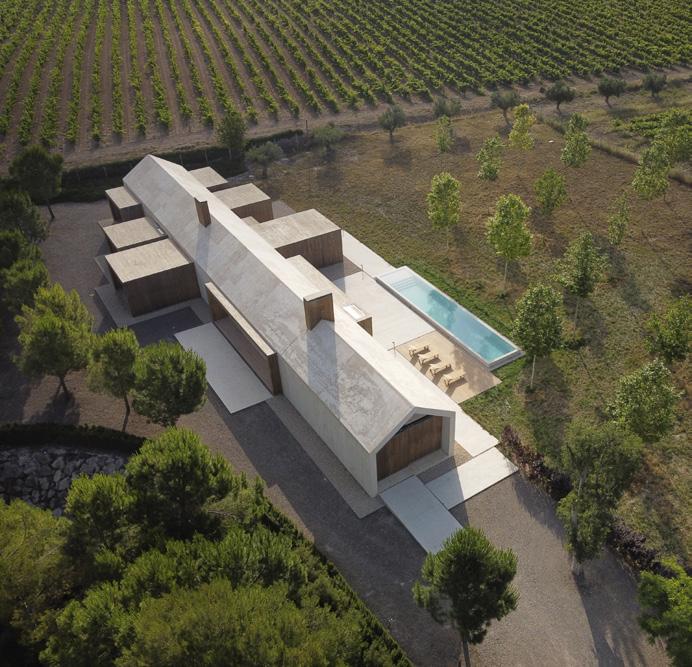
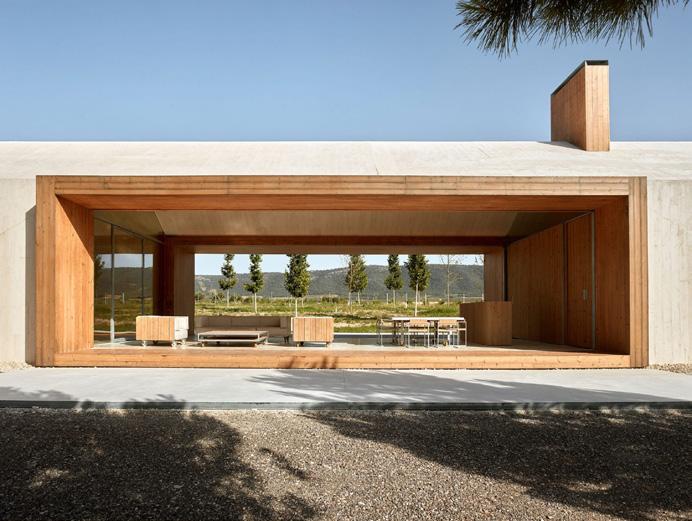
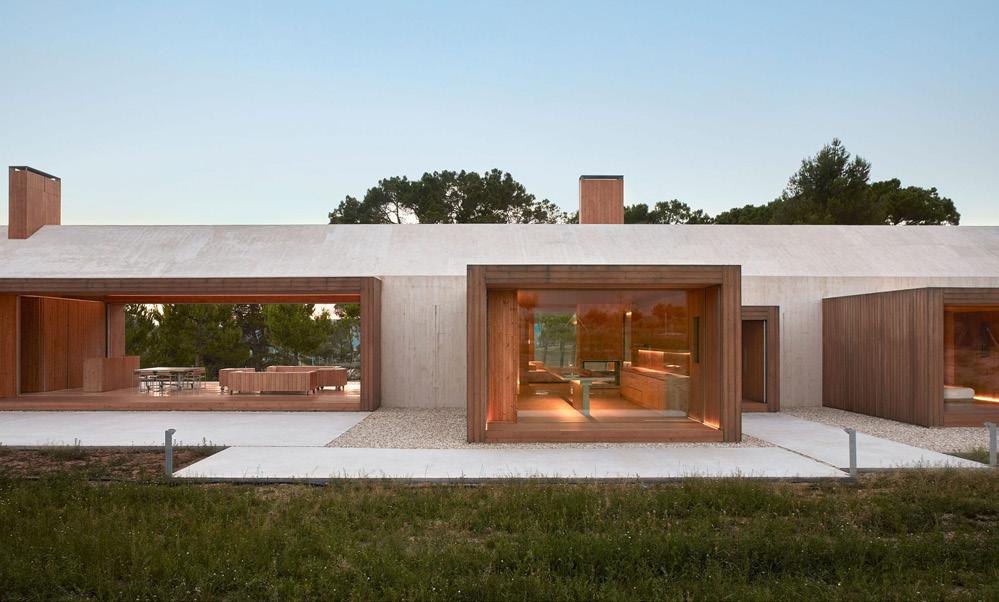
You have designed iconic projects such as the "Sardinera House" and the "Cottage in the Vineyard." Can you share the unique challenges of these projects and how you overcame them?
Projects like Casa Sardinera and Cottage in the Vineyard have been both technical and creative challenges that have deeply influenced me. In both cases, the key was to balance integration with the landscape and functionality. In Casa Sardinera, the cantilevers and orientation optimise energy efficiency and maximise the views, while in Cottage in the Vineyard, the volumetry connects the building to its vineyard surroundings, reinterpreting the iconic shape of a house in a modern, extruded form.
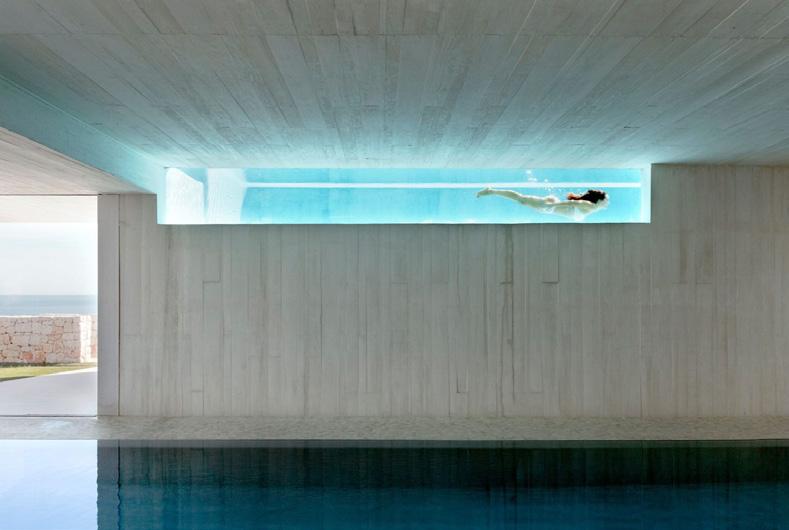
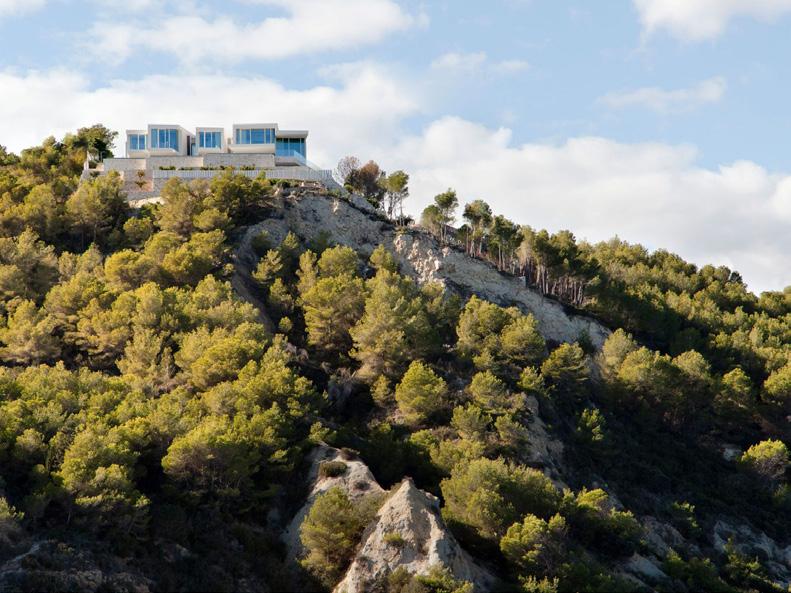
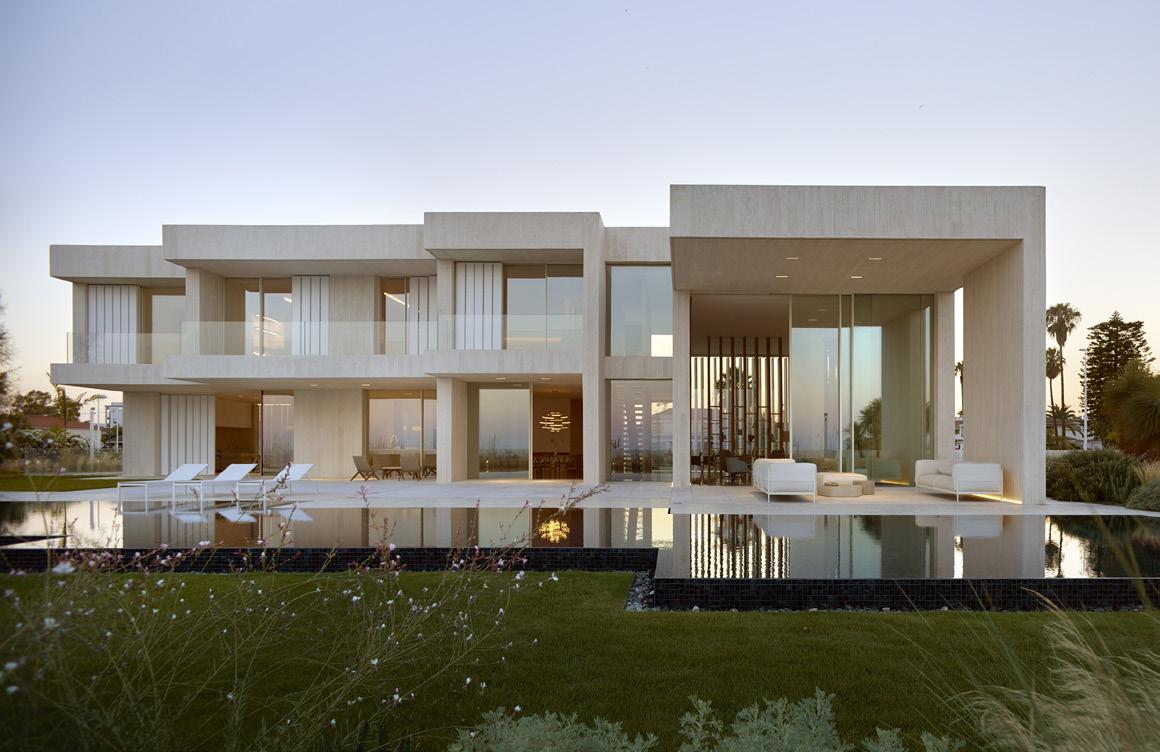
01, 02, 03 CASA SARDINERA Un projet où les volumes s’intègrent naturellement au paysage.
PROJETS SIGNIFICATIFS ET FAVORIS
Parmi tous vos projets, lesquels ont été les plus significatifs à vos yeux, et pourquoi ? Avez-vous des favoris personnels qui se distinguent par leur portée ou leur valeur symbolique ?
Chaque projet a une signification particulière, mais Na Xemena est sans doute celui qui a cristallisé le plus clairement mes idées sur l’architecture. Ma propre maison, ou encore Cottage in the Vineyard, sont très personnels : ils incarnent des intentions presque manifestes.
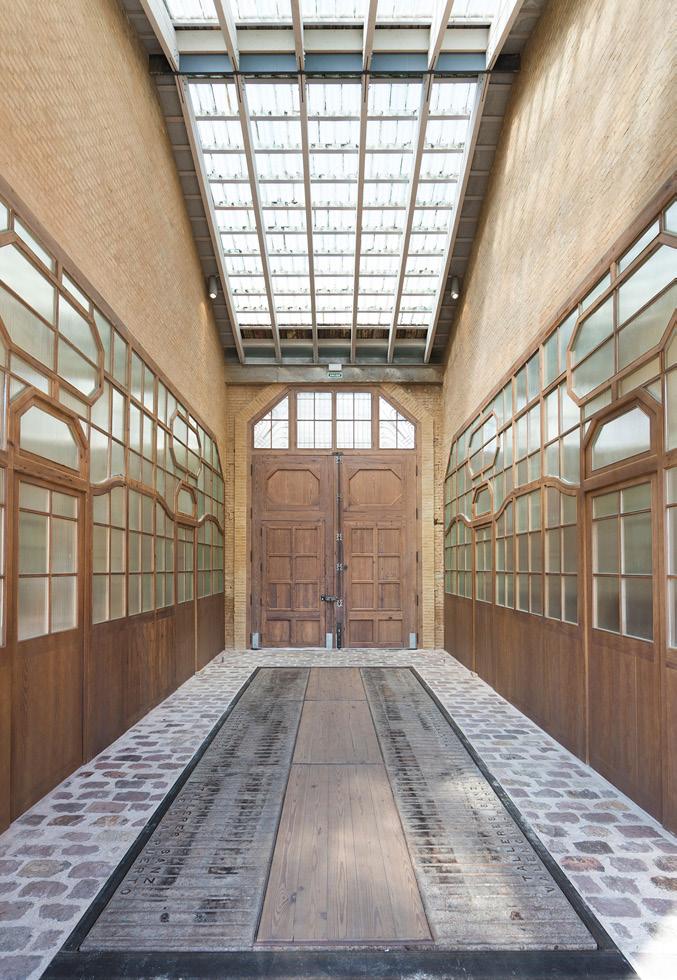
D’un autre côté, des projets de plus grande envergure comme Bombas Gens à Valence ou le Parc industriel de Rodes m’ont ouvert à une nouvelle dimension : la réhabilitation du patrimoine. Cela exige une sensibilité particulière, à l’intersection de la créativité, de la durabilité et de l’engagement social.
TECHNOLOGY
AND CRAFTSMANSHIP
Technology has transformed the field of architecture and design. How do you integrate digital tools into your creative process, and how do you balance them with traditional methods like hand sketches?
Digital tools are essential for exploring forms and resolving complex details, which is why we implemented BIM years ago. However, I always start with hand sketches. This balance between technology and craftsmanship is crucial for maintaining authenticity and a human touch in every project.
INTELLIGENCE ARTIFICIELLE ET AVENIR
L’intelligence artificielle prend une place croissante dans la création. Comment envisagez-vous son intégration dans votre pratique, et quels en sont selon vous les défis et opportunités pour l’avenir de la discipline ?
L’intelligence artificielle offre des perspectives fascinantes pour générer des variantes, accélérer les processus, et étendre les champs d’exploration formelle. Mais le défi est clair : préserver l’émotion, l’intention, et la sensibilité du geste.
L’IA peut élargir les possibles, mais c’est à nous de définir les contraintes initiales, le cadre conceptuel, et surtout la lecture critique des résultats. Elle doit rester un outil, au service d’un projet porté par une vision humaine.
© Alfonso Calza
01, 02, 03 COTTAGE IN THE VINEYARD
Un équilibre subtil entre la volumétrie et l’environnement viticole.
Lately, I’ve been inspired by two ideas or aspirations. On one hand, the challenge of tackling an urban planning project and designing a city layout informed by real-world experience. On the other, I’m intrigued by projects I’ve had less opportunity to explore, such as urban planning and high-rise construction.
ADVICE TO THE NEXT GENERATION
What advice would you give to young architects and designers who aspire to leave a significant mark in the field of contemporary design?
My advice to young architects and designers would be: never lose sight of the purpose behind every creation. Every design should have soul, identity, and the ability to connect emotionally with the people who inhabit or use it. Designing is not just about solving technical problems, but about doing so with meaning, respecting the context, and always striving for technical and aesthetic excellence.
Passion for your work and a willingness to put in the effort are essential to leaving a mark on contemporary design. We live in an ideal time to pursue this profession, where society increasingly values creativity and innovation, both in the built environment and in the products we use.
Moreover, don’t wait for opportunities to come to you. Be proactive: seek experiences, collaborations, and learning opportunities that help you grow professionally. Learn to solve problems with technical skill, but also think beyond, challenging your own creative limits. Never stop evolving, exploring new perspectives, and giving each project a unique sense of meaning that reflects your identity and adds emotional value.
© Mariela Apollonio
© Alfonso Calza


JURY INTERNATIONAL
18E ÉDITION

Avec passion, rigueur et un regard tourné vers l’avenir, la 18e édition des GRANDS PRIX DU DESIGN poursuit son rayonnement international et renforce le dialogue entre les disciplines du design, de l’architecture, du paysage, du bâti et de l’art.
Le concours GRANDS PRIX DU DESIGN se distingue par la qualité de son jury international. Composé de 108 membres — architectes, designers, urbanistes, experts, chercheurs, journalistes — issus des quatre coins du globe, ce panel élitiste enrichit le concours d’une expertise pluridisciplinaire rigoureuse, curieuse et équitable.
Le jury offre aux candidats l’opportunité précieuse de voir leurs projets et produits évalués par des figures influentes du milieu, issues tant du Québec que de la scène internationale. Grâce à un système de notation numérique précis, chaque projet est évalué par des jurés choisis selon leur domaine de spécialisation, assurant ainsi une évaluation juste et pointue.
With passion, rigour, and a forward-looking vision, the 18th edition of the GRANDS PRIX DU DESIGN continues to shine on the international stage and strengthens the dialogue between the disciplines of design, architecture, landscape, the built environment, and art.
The GRANDS PRIX DU DESIGN Awards stands out for its international jury composed of 108 members—architects, designers, urban planners, experts, researchers, and journalists—from all corners of the globe. This elite panel enriches the competition with rigorous, inquisitive, and fair multidisciplinary expertise.
The jury gives candidates the invaluable opportunity to have their projects and products assessed by influential figures from both Québec and the international stage. Using a sophisticated digital scoring system, each entry is evaluated by jurors selected for their domain expertise, ensuring accurate and specialized judgments.
Ils sont de retour
They're back!
Certains membres reviennent année après année pour une 2e, 3e, voire 5e édition preuve de leur attachement à la qualité et à la mission du concours. Retrouvez leur parcours dans nos éditions #81, 85, 88, 91, disponibles sur int.design.

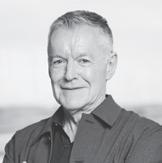




Christine ABBATE
CEO
Novità Communications
New York, NY, United States

Christian BÉLANGER Designer BÉLANGERMARTIN Montréal, QC, Canada

Jacques BOILY Directeur, Livraison aux locataires - Aménagements locatifs Royalmount Carbonleo Montréal, QC, Canada
Jean-Sébastien
BOURDAGES
Directeur Innovation et Design BC2
Montréal, QC, Canada
Virginia BURT Principal Virginia Burt Designs Dundas, ON, Canada



Edward CHAN Partner Zeidler Architecture Toronto, ON, Canada

Gabriele CHIAVE
Creative Director CONTROVENTO Milan, Italy Amsterdam, Netherlands

Some jurors return year after year—sometimes serving for a 2nd, 3rd, or even 5th time—reflecting their dedication to the the competition. Discover their profiles in past issues (#81, 85, 88, 91) available on int.design.
Patrick ABBATTISTA
Founder & CEO
DesignWanted Milan, Italy

Sarmad AL-MASHTA
Transport Architecture
Principal
HDR Vancouver, BC, Canada
Tima BELL Assoc. AIA & Founding principal Bell Design Group Los Angeles, CA, United States
Nataly BOLSHAKOVA Founder & Head Bolshakova Studio Geneva, Switzerland


Imen BEN YOUSSEF ZORGATI Directrice et Professeure agrégée à l’École de design de la Faculté de l’aménagement Université de Montréal Montréal, QC, Canada
Nadja BORRAS MARKOVIC Design Director Gensler Mexico, Mexico
Jaime BOUZAGLO
Designer - Fondateur
Jaime Bouzaglo Design
Studio Montréal, QC, Canada

Cheryl BROADHEAD
Principal
BYU Design Vancouver, BC, Canada
Luis CALABUIG
Co-founder & Chief Design Officer
ODOSDESGN Valencia, Spain

Laure CAPITANI
Coordinator
Wallonie-Bruxelles Design Mode Bruxelles, Belgium
Benoit CHAPELLIER Directeur marketing Montoni Laval, QC, Canada

Onie CHU
Executive Director The Association of Accredited Advertising Agencies of Hong Kong(香港廣告商會) Hong Kong, China

Nicole CHARBONNEAU Architecte Paysagiste Nvira Montréal, QC, Canada
André-Yves COENDERAET
Designer CONTRASTE [stimulateur d'identités] Bruxelles, Belgium









Sara CORVINO
Senior Lecturer Nottingham Trent University Nottingham, United Kingdom
Ahmed DRIDI
Architect Moke architecten Amsterdam, Netherlands


Hans FONK
Founder, Publisher and Photographer OBJEKT International & USA | Canada Amsterdam, Netherlands
Jean-François GUIMONT
Associé, Directeur projet et intégration Lemay Montréal, QC, Canada


Patrick LEBLANC
Designer, Président-Fondateur
Conception Leblanc Boucherville, QC, Canada
Peter MABEO
Founder Mabeo Gaborone, Botswana


Alain MOUREAUX
Co-fondateur / MOUREAUX – HAUSPY Design Montréal, QC, Canada

Tushar NEGI
Principal Architect THINK Architecture Toronto, ON, Canada

Ema PETER
Professional interior and architectural photographer
Ema Peter Photography Vancouver, BC, Canada
Ngoc DANH TRAN
Vice President
VDAS (Vietnam Design Association)
Founder and CEO
VMARK
Vietnam Design Award Ho Chi Minh, Vietnam
Reza ESLAMI
Founding partner & Architect ICON Architects Toronto, ON, Canada


Hans GALUTERA
Founder HG DesignWorks New York, NY, United States

Dominique LANNOY
President ASBL Re Créarts Eghezée, Belgium

Nicolas LEBRUN
Designer Industriel Creaform Inc Lévis, QC, Canada

Carlo MARTINO
Full Professor of Design Sapienza University of Rome Rome, Italy

Mardi NAJAFI
Principal, Chief Creative Officer, Retail & Hospitality Practice
Lead SDI Design Toronto, ON, Canada
Carolina NISIVOCCIA
Owner
Studio Carolina Nisivoccia : Architettura Milan, Italy

Claudya PIAZERA
Chief Strategy Officer and co-founder
Smart8 & Design for Winning Winter Garden, FL, United States
Antonio DE ANTONIS
President ADWS (Antonio De Antonis
Work Studio) Pescara, Italy
Filipa FIGUEIRA
Founding Partner
HAS - Hinterland
Architecture Studio Porto, Portugal
Alain GILLES
Signature product & furniture Designer
Alain Gilles The Studio Brussels, Belgium
Denys LAPOINTE
Chef de la direction du design BRP Valcourt, QC, Canada
Steffen LEHMANN
Founding Partner and Principal si_architecture + urban design Las Vegas, NV, United States

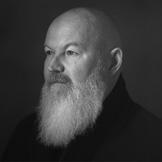

Laura MIMINI
Design Director and Co-Founder d2p - Design to Product Brescia, Italy Foshan, China
Nina NDICHU
Austin Deputy Office Director + Project Urban Designer Toole Design Group Austin, TX, United States
Alan PERT
Director
Melbourne School of Design, University of Melbourne Melbourne, Australia
Christophe PILLET
Designer
Christophe Pillet Designer Paris, France







Stephen PIMBLEY
Founder, Partner & Director SPARK Architects
Singapore

Kourosh SALEHI Architect & urbanist LWK + PARTNERS Dubaï, United Arab Emirates

Ana SEGOVIA Creative director & co-founder Odosdesign Valencia, Spain
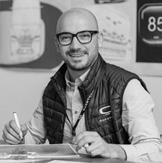
Leslie SYDNOR
Director / Project Manager - Planning and Development Cumming Group Van Nuys, CA, United States
Marco TORTOIOLI RICCI
Design Director Bcpt Associati President, AIAP Milan, Italy


Alessandro VALENTE
Certified Public Accountant and auditor / Controller and Chief Financial Local Action Group (GAL) Alto Casertano Consortium Benevento, Italy
Jason WANG
Secretary-General Asia Pacific Design Center (APDC) Shanghai, China


Les nouveaux venus New Voices
Thanasis POLYZOIDIS
Founder TPOL landscape
architecture Co-founder topio7 team Athens, Greece
Maria SALVATI
Partenaire associée Jaime Bouzaglo Design Studio Montréal, QC, Canada


Koorosh SHOJAEI Advisory Board Member Automotive Circle Conference Augsburg, Germany

Ho TAN DUONG
President VDAS Design Association Ho Chi Minh, Vietnam

Marie-Hélène TROTTIER Co-fondatrice & directrice de création Jump&Love Design Montréal, QC, Canada

Marie-Chantal VILLENEUVE
Directrice salle de montre et marketing - Designer L’Atelier Studio d’Électroménager Montréal, QC, Canada
Jean-Michel WILMOTTE Architecte, urbaniste, designer, fondateur Wilmotte & Associés Paris, France


Scott POOLE
Dean Emeritus and Professor University of Tennessee Knoxville, TN, United States
Mark SCHOLLEN
Landscape Architect & Principal Schollen & Company Inc. Richmond Hill, ON, Canada
Stanley SUN Partner Mason Studio Toronto, ON, Canada
Christiane TAWIL Editor-in-Chief côté déco Beyrouth, Lebanon
Alina VALCARCE
Founder & Director Valcarce Architects Dubaï, United Arab Emirates
Ingalill WAHLROOS-RITTER Professor East Los Angeles College President ACLA Architecture for Communities Los Angeles Los Angeles, CA, United States
Milagros ZINGONI PHIELIPP Director & Associate Professor School of Interior Architecture / University of Tennessee Knoxville, TN, United States
Découvrez dans les prochaines pages les nouveaux jurés qui rejoignent cette année ce groupe d’élite internationale. Ces nouvelles voix viennent enrichir le débat et élargir notre regard sur l’excellence créative. ➤
Discover in the following pages the new jurors joining the international jury this year. These fresh voices enrich the dialogue and broaden our view of creative excellence. ➤
Aidin ARDJOMANDI
Director Designooor Magazine
Lecturer
Pars University of Art and Architecture
Tehran, Iran
UNE PERSPECTIVE ENGAGÉE
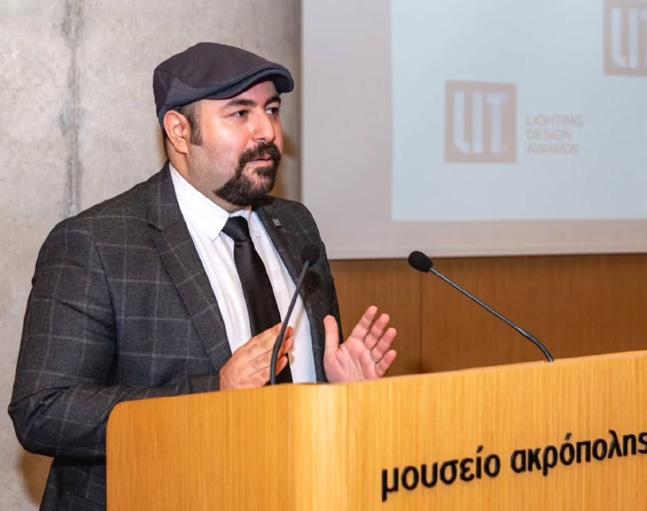
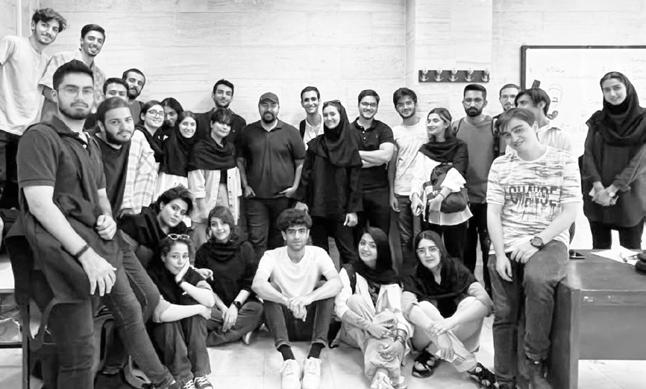
Basé à Téhéran, Aidin Ardjomandi est un designer multidisciplinaire, enseignant et critique spécialisé en design de produits, éclairage et design durable. Il enseigne à l’université Pars et dirige Designooor Magazine. With jury roles in 50+ global awards, including the A’ Design and LIT Awards, his insight into aesthetics, functionality, and innovation makes him a key voice in the international design community.
AS A CHILD, WHAT DID YOU WANT TO BE WHEN YOU GREW UP?
—I was a curious dreamer, always sketching imaginary worlds and reinventing everyday objects. I didn’t want to be something—I wanted to understand everything. There was no single “aha” moment, just a deep fascination with how design shapes the world around us.
QUEL A ÉTÉ VOTRE PREMIER EMPLOI DANS LE DOMAINE ?
Mon premier emploi a été caricaturiste éditorial à la fois stimulant et intimidant. Une de mes œuvres les plus marquantes a été un hommage aux victimes de l’attentat de Charlie Hebdo. J’ai vite compris que j’étais plus attiré par la critique nuancée que par la provocation. Cette expérience m’a conduit vers le design, l’enseignement et la recherche, où narration et analyse visuelle sont au cœur de ma pratique.
QUEL EST LE MEILLEUR CONSEIL DE CARRIÈRE QU’ON VOUS AIT DONNÉ ?
Un jour, on m’a dit : « Le design ne consiste pas à donner des réponses, mais à poser les bonnes questions. » Cette idée a orienté mon parcours de chercheur, critique et pédagogue. Elle m’a appris que les travaux les plus significatifs naissent de la curiosité et d’une réflexion profonde.
WHAT ACHIEVEMENT ARE YOU MOST PROUD OF?
—Seeing my students thrive. Sharing knowledge is just the beginning— what matters most is igniting a way of thinking that lasts well beyond the classroom. Their growth, their impact—that’s my greatest reward.
WHAT SONG LIFTS YOUR SPIRITS, RAIN OR SHINE?
—“Father and Son” by Cat Stevens. It’s a timeless conversation between generations—a reminder to trust the process, embrace change, and let each person find their own path. Every time I hear it, it feels like an old friend offering quiet wisdom.
“Design isn’t about trends or objects—it’s about perspective. The best designs challenge, inspire, and endure.”
Alykhan VELJI
Creative Director Alykhan Velji Designs Calgary, Alberta, Canada alyveljidesigns.com
SEEKING TIMELESS BEAUTY
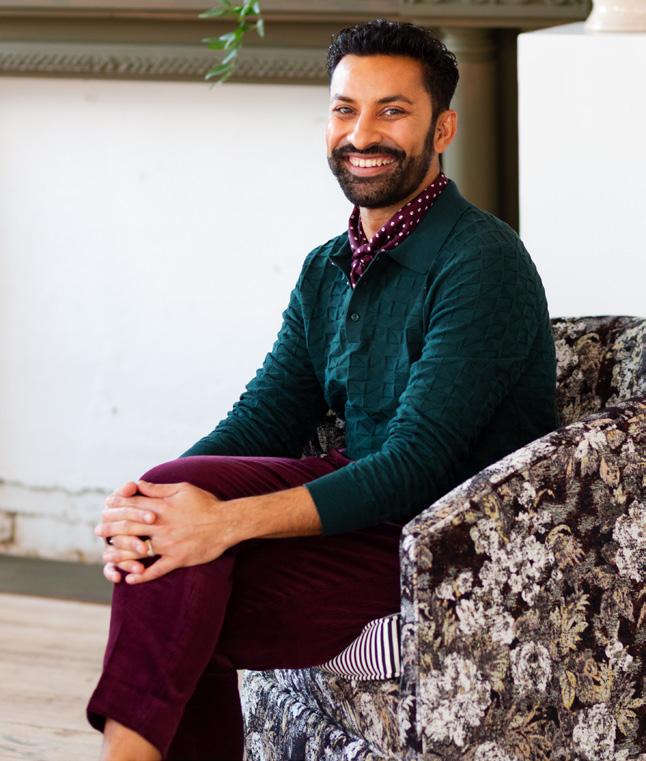
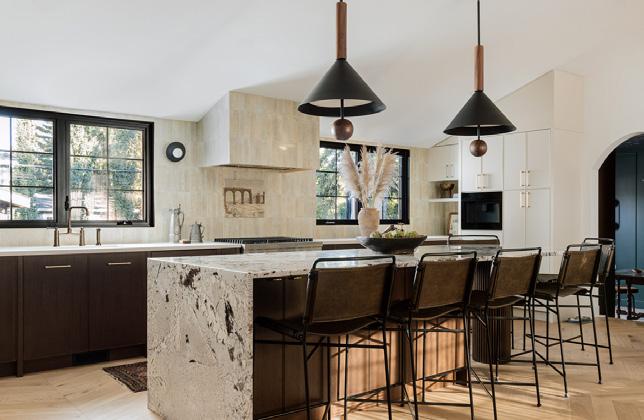
Alykhan Velji, Creative Director of Alykhan Velji Designs, has built a dynamic lifestyle brand with over 17 years in the industry. Known for mixing styles, patterns, and textures, he creates timeless, personal spaces. His work spans residential and commercial projects and has been featured in top publications like AD and House & Home. Figure incontournable du design canadien, Aly a mené plusieurs collaborations acclamées, tel le récent lancement de Modern Heritage avec SILVA, une collection qui célèbre l’artisanat et la tradition.
PARLEZ-NOUS DU GARÇON QUE VOUS ÉTIEZ.
J’étais un enfant très créatif, passionné de mode. J’avais plusieurs cahiers remplis de dessins de mannequins portant toutes sortes de tenues, avec des chapeaux extravagants, des chaussures et des sacs.
WHAT COLOR ATTRACTS YOU THE MOST, AND WHY?
—I love green. In our studio, we consider it a neutral tone because it pairs well with everything. I use it in various shades throughout the home—it’s warm, inviting, and comforting, yet can still feel unexpected.
QUI VOUS A DONNÉ ENVIE DE SUIVRE VOTRE PROFESSION ?
En grandissant, j’admirais Martha Stewart, c’était une icône du style de vie, maîtrisant tout, de la décoration intérieure au jardinage, en passant par l’art de recevoir et la cuisine. Sa capacité à allier esthétique et expertise m’a fasciné et a éveillé mon amour pour les antiquités et l’élégance au quotidien.
WHAT WAS YOUR FIRST JOB IN YOUR FIELD? DESCRIBE THE TIME, PLACE, AND MINDSET.
—After graduating from Bow Valley College in 2004, I began my career at Buhran Gallery, an antique furniture shop in Calgary specializing in pieces from India and China, along with stunning Afghan rugs. This experience was pivotal—it taught me craftsmanship, joinery, and the timeless beauty of antiques.
“Istill embrace the art of mixing old and new to create curated, character-rich spaces.”
Andy DOWDING
Head of Urban Design & Masterplanning
Lambert Smith Hampton London, United Kingdom
lsh.co.uk
DRAWING CITIES, SHAPING PLACES
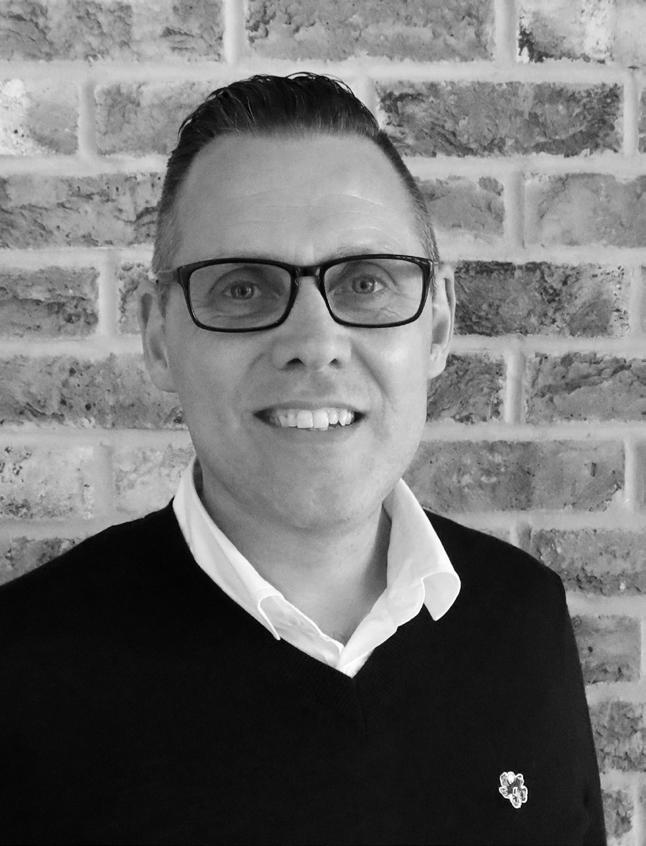
Andy Dowding est responsable de l’urbanisme et de la planification chez Lambert Smith Hampton, premier cabinet de conseil en immobilier commercial et résidentiel au RoyaumeUni. He has over 20 years’ experience leading or contributing to significant regeneration projects, planning applications, and development appraisals at a range of scales and complexities including King’s Cross Central, London 2012 Olympic Transformation, Hereford Old Market, Cambridge Innovation Campus, and Graven Hill.
WHAT DID YOU WANT TO BE AS A KID?
—I’ve always loved drawing, so the creative industries attracted me from a young age. Influenced by my wider family who worked in the automotive sector, I was initially focused on a career in vehicle design, but my studies at art college and university steered me towards the built environment— where I became fascinated with the morphology of place and how design can be used to make positive change.
QUEL PROJET A LANCÉ VOTRE CARRIÈRE ?
Au début de ma carrière, j’ai participé à l’équipe qui concevait la régénération du King’s Cross Central de Londres. Plus de 20 ans plus tard, ce projet touche à sa fin et reste une référence exemplaire en matière de régénération urbaine.
QUEL EST LE MEILLEUR CONSEIL PROFESSIONNEL QUE VOUS AYEZ REÇU ?
“I ’ve always seen yellow as a bright, positive force - bringing modernity, energy, order, and structure to space.”
La règle de trois. Elle guide ma façon d’organiser les idées, de mener les réunions, de présenter et de structurer les solutions de design.
WHICH LIVING HEROES, MENTORS, OR TALENTS DO YOU MOST ADMIRE AND WISH YOU COULD SPEND TIME WITH?
—I admire creative people who think outside the box, challenge conventions, forge new disciplines, and show resilience and courage. I enjoy a range of interests and as such my heroes extend from multiple disciplines. They include the architect Richard Rogers, artists Ben Nicholson, and Alfred Wallis; musicians Bruce Springsteen and Bob Dylan; motorsport legends Juan Manuel Fangio, Sir Stirling Moss, Ayrton Senna, and Curt Goransson; and visionary engineers like Isambard Kingdom Brunel and Adrian Newey.
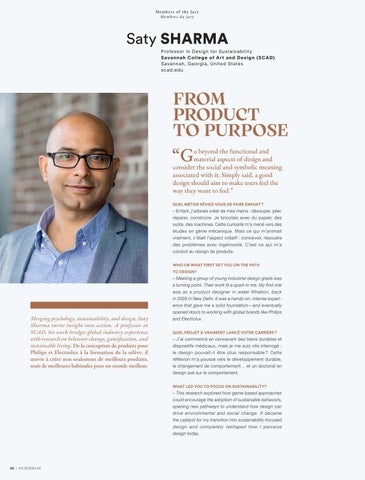
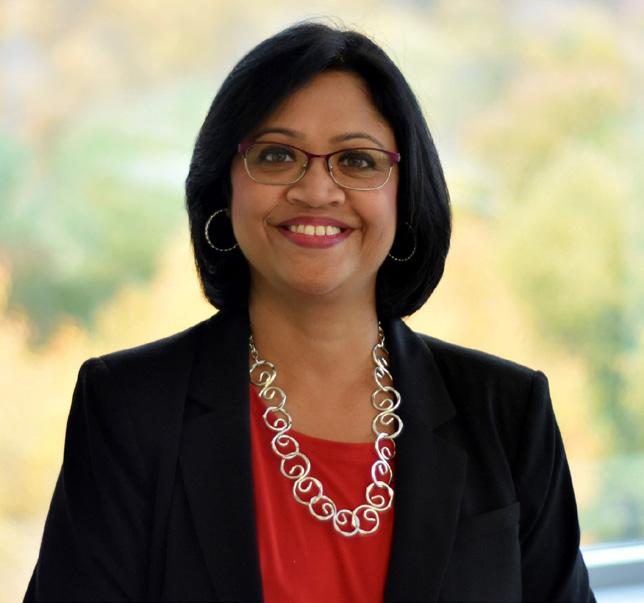
Anita SIRCAR
Architecture Department Head
Michael Baker International Alexandria, Virginia, United States mbakerintl.com
FROM AIRPORTS TO ECO-VILLAGES
Based in Alexandria, Virginia, Anita Sircar leads the Architecture Department at Michael Baker International’s Mid-Atlantic office. With 30 years of experience, she oversees high-impact, large-scale projects across sectors. Reconnue pour son leadership stratégique, son innovation en design durable et son engagement envers le développement des talents, elle joue un rôle clé dans la croissance de l’entreprise tout en promouvant l’excellence dans l’ensemble du milieu professionnel.
QUEL ÉVÉNEMENT OU PERSONNE VOUS A MISE SUR LA VOIE DE VOTRE
CARRIÈRE, ET COMMENT CELA S’EST-IL DÉROULÉ ?
Le parcours vers l’architecture commence souvent par un moment ou une personne déterminante. Pour moi, ce fut l’œuvre visionnaire de Le Corbusier. Une visite de la Villa Savoye, alors que j’étais étudiante, m’a révélé le pouvoir de l’architecture à la fois fonctionnelle et poétique. Sa philosophie continue de guider ma façon de concevoir des espaces durables et porteurs de sens.
WHAT WAS YOUR FIRST JOB IN THE FIELD? GIVE US A PLACE, A MOMENT, AND A STATE OF MIND!
—My first job was with a prestigious architecture firm in India—a thrilling opportunity right out of school. I was tasked with designing technical buildings and control towers for three international airports. It was daunting, intense, and exhilarating all at once—a true trial by fire that fueled my passion for complex, large-scale projects.
SELON VOUS, QUELLES SONT LES QUALITÉS ESSENTIELLES D’UN DESIGN
D’EXCEPTION ?
L’innovation, la fonctionnalité, l’attrait esthétique, la durabilité et une connexion émotionnelle : voilà les fondements d’un design véritablement exceptionnel.
WHAT’S ONE THING YOU’D LIKE TO SEE CHANGE IN YOUR FIELD?
—I’d like to see a greater emphasis on affordable and inclusive housing. While we’ve made strides in sustainability and innovation, the need for accessible, high-quality housing remains one of the most pressing issues in architecture today.
A DREAM STILL TO BE REALIZED? TELL US WITHOUT HOLDING BACK!
—I dream of designing and building a self-sustaining eco-village—a living model of sustainability that blends innovative architecture, environmental stewardship, and community-centered design.
«O n m’a un jour conseillé de toujours concevoir avec empathie et vision — sans jamais perdre de vue les réalités d’affaires et de budget du client. Ce conseil me guide encore aujourd’hui. »
ÉCRIT DANS LA PIERRE
Anna BOSCÀ
Director of the Cultural & Healthcare Architecture Dept. Ramón Esteve Estudio Valencia, Spain ramonesteve.com
“Architecture is a dialogue between the past, the present, and the future. Our responsibility is not only to create, but to listen—to spaces, to history, and to the needs of those who inhabit them.”
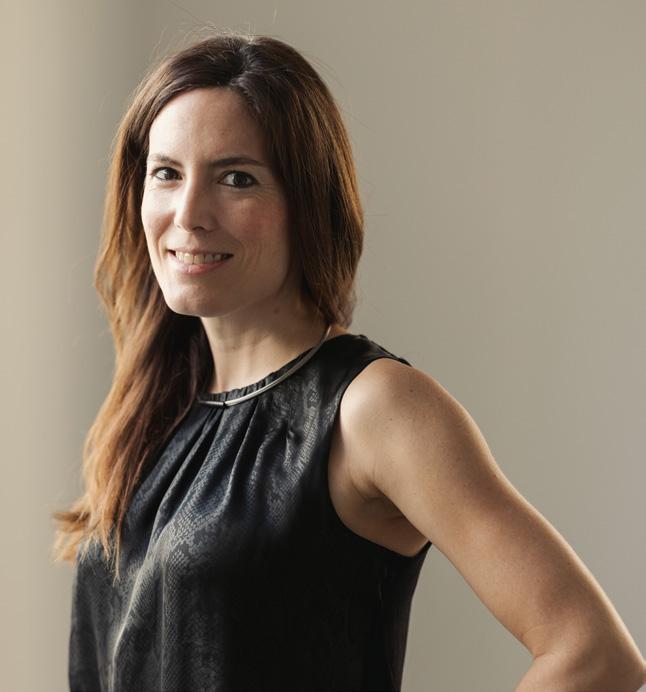
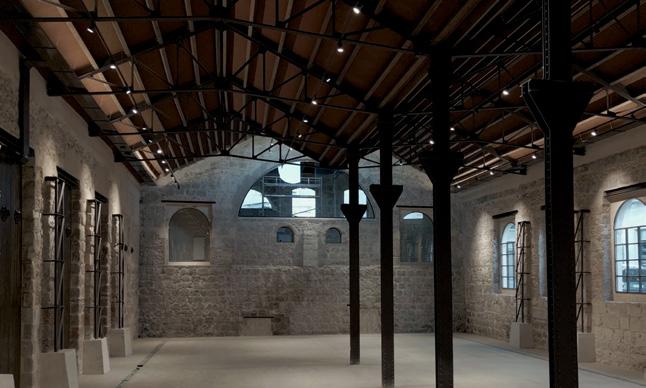
Anna Boscà est directrice du département d’architecture culturelle et hospitalière au sein de Ramón Esteve Estudio, une agence de design de premier plan située à Valence, en Espagne. Depuis 2011, elle dirige un large éventail de projets des espaces culturels aux hôpitaux, en passant par les établissements éducatifs. Drawing on her deep expertise in complex architectural programs, she approaches each project with a thoughtful, human-centered vision, designing spaces that inspire, heal, and foster connection.
WHAT DID YOUR CHILDHOOD SELF DREAM OF BECOMING?
—As a child, I wanted to be a writer—something completely unrelated to architecture. I was always lost in books, imagining stories as if they were a second life. In a way, I suppose architecture shares that same impulse to imagine different lives, crafting spaces that shape experiences.
QU’EST-CE QUI VOUS A MENÉE VERS CE DOMAINE ?
Je ne peux pas identifier une personne ou un événement marquant qui m’aurait poussée vers l’architecture. C’était plutôt une attraction progressive de petits moments et des lieux qui ont laissé une empreinte. Je me souviens avoir visité des bâtiments historiques et avoir été fascinée par leur façon de raconter une histoire sans mots. Avec le temps, cette fascination est devenue le désir de créer ce type d’espace.
QU’EST-CE QUI VOUS MOTIVE LE PLUS DANS LE MONDE DU DESIGN ET DE L’ARCHITECTURE ?
Ce qui me motive, c’est la possibilité de créer des espaces qui ont une fonction réelle, au-delà de l’esthétique. Je suis particulièrement attirée par les projets à vocation collective hôpitaux, musées, écoles des lieux où l’architecture façonne les expériences à grande échelle.
WHAT DO YOU APPRECIATE MOST ABOUT WHERE YOU LIVE AND WORK?
—I live in Valencia, a city I truly consider one of the best places to live. Its scale, seaside location, and walkable layout make moving through it feel natural and fluid. Valencia has deeply shaped how I see architecture—not just as a discipline, but as a way of creating environments that feel intuitive, human-centered, and in harmony with the lives they support.
Architect
BORN FOR BEAUTY Ban KUBBA
Associate Vice President
National Market Sector Leader Transportation Buildings ÆCOM Toronto, Ontario, Canada aecom.com
Passionate architect Ban Kubba bridges art, infrastructure architecture, and innovation engineering. With 30+ years of experience and a national reputation in transportation architecture, she leads a major sector at ÆCOM Canada. Leader engagée, elle défend une culture d’excellence en design, livrant toujours des projets qui dépassent les attentes et laissent une empreinte durable.
ENFANT, QUE RÊVIEZ-VOUS DE DEVENIR ?
On dit que le bonheur, c’est de réaliser un rêve d’enfance. Dès l’âge de 10 ans, je savais que je voulais devenir architecte. Je me faufilais sur le chantier voisin juste pour toucher les matériaux, envoûtée par l’odeur de l’acier brut et du bois. J’étais fascinée par la manière dont une structure prenait forme. Ce contact direct avec la matière a éveillé en moi un désir profond : je voulais bâtir.
WHAT WAS YOUR FIRST JOB IN THE FIELD? GIVE US A PLACE, A MOMENT, AND A STATE OF MIND!
—In 1993, fresh out of Baghdad University, I planned to rest—finally. Two days later, I got a call from a top firm known for cutting-edge digital design. I declined at first, wanting a break. That lasted half a day. My first project? A palace for Saddam Hussein, shaped like an octopus. I designed the shoe storage room for its mosque! It felt absurd—but I learned a lot there: power, compromise, and how architecture meets reality.
COMMENT VOTRE STYLE A-T-IL ÉVOLUÉ AVEC LE TEMPS ?
J’ai beaucoup déménagé dans la vie comme au travail. Chaque projet, aimé ou détesté, m’a enseigné quelque chose. Le style ne naît pas tout fait — il se construit. Aucun architecte ne commence avec un style abouti. Comme Gehry ou Wright, on évolue avec l’expérience. Le succès, l’échec et la répétition façonnent l’architecte qu’on devient.
TELL US ABOUT YOUR PROUDEST ACHIEVEMENT.
—While I’ve led major projects across Canada, the ones dearest to me are the residential units I designed in Baghdad, Vancouver, and Toronto. These reflect my own style and my own vision. On a personal and deeper level, I’m most proud of my three children. I raised them through war and hardship—and today, I watch them lead change.
“A rchitecture is in my blood— almost like a disease. I was born for this line of work, destined to make the world more beautiful.”
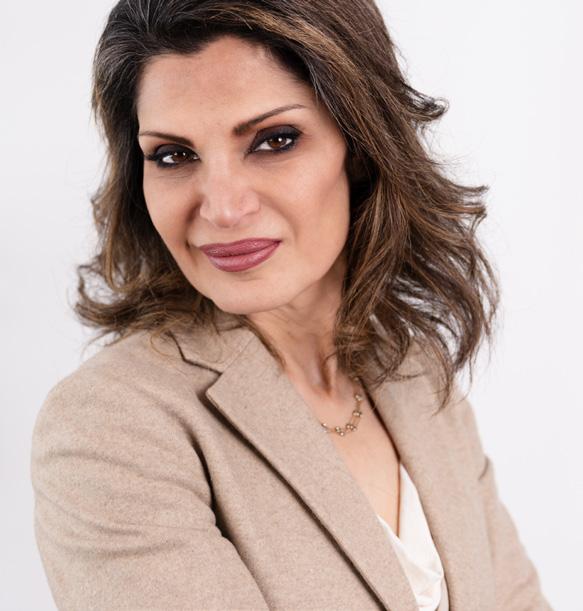
Benoît GÉRARD
Fondateur associé BlazysGérard
St-Gabriel-de-Brandon, Québec, Canada blazysgerard.com
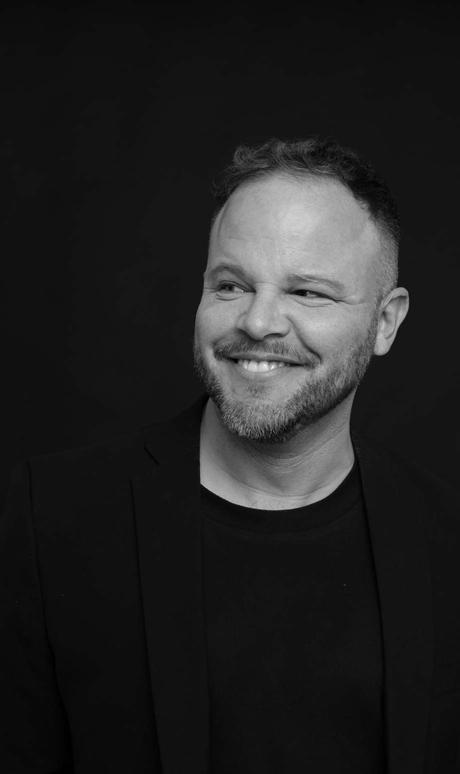
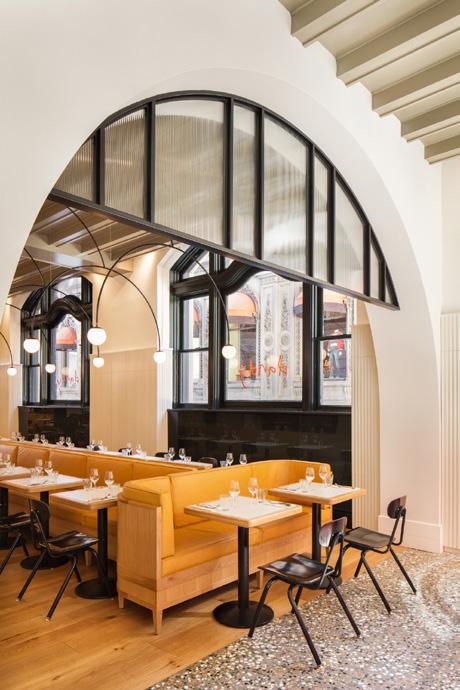
ENTRE L’OMBRE & LA LUMIÈRE
Technicien, puis bachelier en architecture, Il trace sa voie avec passion. In 2003, he co-founded BlazysGérard in the heart of Montréal to bring a strong vision to interior design: building with meaning, asserting identity, and creating lasting impact. Each project celebrates permanence, consistency, and a sense of place.
WHAT DID YOU WANT TO BE AS A KID?
—Happy, free… and in the world of architecture!
«L e gris est ce territoire entre l’ombre et la lumière, riche en subtilités et en sensualité. Du plus pâle au plus foncé, il sait toujours éveiller une émotion simple. »
QUI VOUS A MIS SUR LA VOIE DE L’ARCHITECTURE ET DU DESIGN ET COMMENT L’HISTOIRE S’EST-ELLE DÉROULÉE ?
C’est mon père qui m’a mis sur cette voie. Artiste peintre, il a dessiné et construit de ses mains, en 1976, une maison-sculpture où j’ai grandi. C’est là que j’ai développé mon amour du design et de l’architecture.
QUEL EST LE PREMIER EMPLOI QUE VOUS AVEZ OCCUPÉ DANS VOTRE DOMAINE ?
C’était en 2000, chez Dupuis Letourneux, à Montréal. J’y ai appris la création et la sculpture d’espaces auprès de mon mentor Benoit Dupuis, et la rigueur méthodique grâce à Jean-Pierre Letourneux, avec son esprit logique et son calme légendaire.
WHERE DO YOU LIVE AND/OR WORK, AND WHAT DO YOU ENJOY ABOUT IT?
—I split my time between Montreal and Saint-Gabriel-de-Brandon—a perfect balance between city and countryside. In Montreal, I always return to Marché Maisonneuve and its public square, a vibrant place I love. Favorite restaurant?
I flock to Leméac for Negronis, basil escargots, flank steak, and French toast.
SI VOUS ORGANISIEZ UN REMUE-MÉNINGES CRÉATIF EN INVITANT TROIS
PERSONNALITÉS, VIVANTES OU DÉFUNTES, QUI SERAIENT-ELLES ?
Frank Lloyd Wright, Yves Saint Laurent et Lenny Kravitz. Le sujet porterait sur leur approche de la créativité pure et la gestion des émotions dans des domaines connexes comme l’architecture, la mode et la musique.
Bill BOUCHEY
Design Director
GENSLER
Los Angeles, California, United States gensler.com
MAKING SPACE MATTER
QUEL MÉTIER RÊVIEZ-VOUS DE FAIRE, ENFANT ?
Je construisais des choses, j’imaginais des structures et des routes. J’y passais des heures, complètement absorbé. Le tapis vert vif de la table de billard de mon enfance devenait un “plan” fertile pour mon imagination.
WHAT SET YOU ON THE PATH TO YOUR CAREER? AND WHAT WAS YOUR FIRST JOB IN THE FIELD?
—While studying Fine Art and Design, architect Mary Gale saw potential in my spatial studies, suggesting they could be “inhabitable.” That insight opened the door to interior design and architecture. In 1983, I was hired as junior interior designer by The Walker Group. Their immersive, emotion-led approach left a lasting impression and shaped my early vision of design.
A visionary leader in human-centric design, Bill Bouchey’s work spans industries from tech to life sciences. With 30+ years of award-winning experience, he specializes in commercial interiors—from lifestyle and legal to creative media and branded environments. Publié dans The New York Times, Interior Design, Contract, Metropolis et FRAME, il a reçu le prix Lifetime of HIPness du magazine Interior Design.
“B e infectious. Be the creator your training and experience demand —and do it boldly, in unison with others, with purpose and passion.”
QU’EST-CE QUI VOUS MOTIVE ET VOUS ENCHANTE LE PLUS DANS LE MONDE DU DESIGN ET DE L’ARCHITECTURE ?
Un terrain vide ou un intérieur inoccupé est toujours une source d’inspiration un contenant en quête de forme et de sens. Je le vois comme une occasion de sculpter à travers la culture, la communauté et la connexion, avec pour objectif constant de renforcer l’interaction humaine par un design centré sur l’humain.
IS THERE A DREAM PROJECT YOU STILL HOPE TO REALIZE? AND IS THERE A SPACE OR OBJECT YOU ALWAYS FEEL THE URGE TO REDESIGN?
—A dream of mine is to transform an urban strip mall into a magnet destination—to redefine the association with what’s often labeled 'garbage architecture.' I also find myself wanting to redesign the paperweight, imagining one that engages with hard copy in a more interactive way than simply sitting on it.
GENSLER LOS ANGELES STUDIO
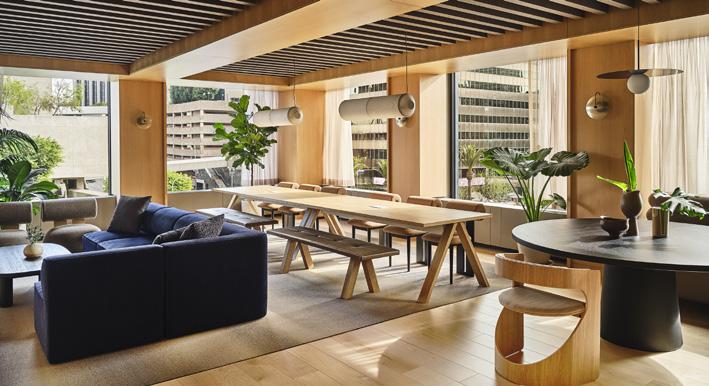
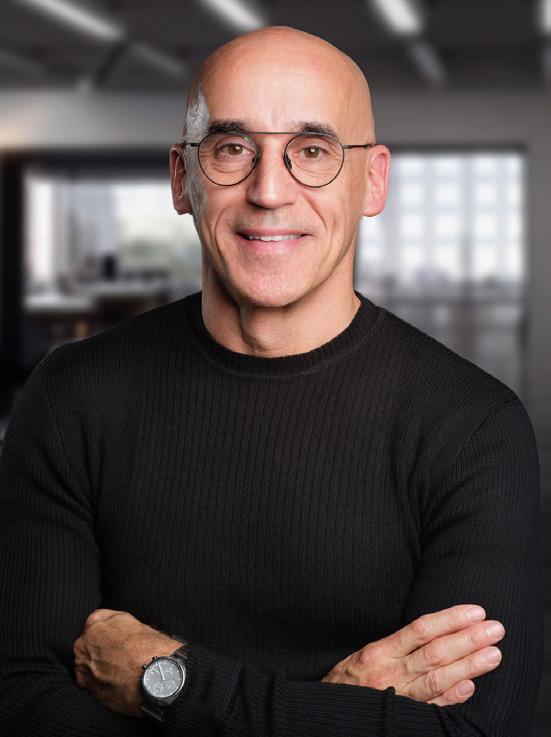
Bruno ORO
Professor Iowa State University Ames, Iowa, United States iastate.edu
FROM SEEDS TO SUCCESS
QUE VOULAIT DEVENIR L’ENFANT QUE VOUS ÉTIEZ ?
J’ai toujours été curieux de comprendre comment les choses fonctionnent : démonter des jouets, rebrancher des circuits, expérimenter juste pour voir. Ce n’était pas le résultat qui comptait, mais le plaisir de découvrir. Cette curiosité pratique guide encore aujourd’hui ma façon de résoudre les problèmes.
WHO OR WHAT INSPIRED YOU TO PURSUE YOUR FIELD?
—It all began at 12, playing online games with dial-up internet. To lead a team, I had to build a website, without any formal training whatsoever. I reverse-engineered sites until I created one for my team. That led to my first real gig designing a business website for my father’s friend. By 16, I was financially independent, designing brands and sites. My first official job was at Dambros Architecture in Brazil, where I learned that great design isn’t just creative—it’s also structured, patient, and consistent. That balance still guides my work today.
QUELLE RÉALISATION VOUS REND LE PLUS FIER ?
Je ne mesure pas le succès à un seul projet, mais aux semences d’idées que j’ai plantées celles que j’ai nourries et vues grandir avec le temps. Ce dont je suis le plus fier est certes l’accompagnement porté auprès de la prochaine génération de designers.
WHERE DO YOU SEE THE FUTURE OF YOUR PROFESSION?
—While there’s talk of AI replacing jobs, I see it reshaping design—not replacing designers. It will help streamline tasks so we can focus on what matters most: creative problem-solving, empathy, and critical thinking. The future of design lies in collaborating with technology, not competing against it.
Meet Bruno Oro, a creative force in industrial design with over 20 years of experience shaping everything from electronics to toys. He has collaborated with global brands like Electrolux, consistently pushing design forward with creativity, curiosity, and heart. Professeur à Iowa State University, il partage aussi sa passion à l’international comme mentor, juré et membre actif de la communauté du design.
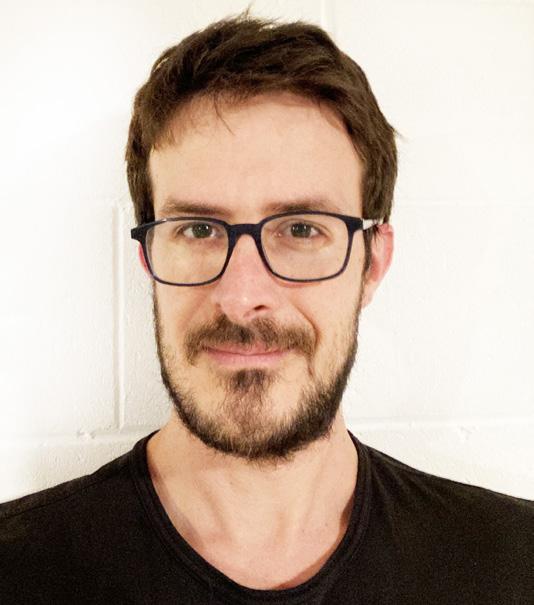
“I n design—and in life—progress often begins by embracing failure as a vital part of the process.”
À LA CROISÉE DE L’ART ET DE LA FONCTION Christian DUNBAR
Designer de mobilier et sculpteur basé à New York, Christian Dunbar est reconnu pour marier matériaux organiques et éléments industriels. Crafted in his Red Hook, Brooklyn studio, his handmade bespoke pieces blend hardwood, stone, leather, and metal into minimalist yet luxurious forms. A graduate of NYSID and SCAD, Dunbar has been featured in Vogue, Elle Decor, and design fairs around the world.
QUI VOUS A MIS SUR LA VOIE DU DESIGN ?
Plus jeune, j’ai fréquenté une directrice artistique pour Donna Karan Japan. Lui donner un coup de main sur ses projets a éveillé ma curiosité pour le design et m’a poussé à m’inscrire à la New York School of Interior Design. Dix ans plus tard, j’ai poursuivi une maîtrise en design de mobilier.
WHAT WAS YOUR VERY FIRST JOB IN THE FIELD?
—The first piece I ever sold was a coffee table made from an old wooden ceiling joist I spotted on my way home— tossed out during a New York City apartment renovation.
WHERE DO YOU LIVE AND/OR WORK, AND WHAT DO YOU APPRECIATE ABOUT IT?
—We live in Manhattan, and I work out of my woodshop in Red Hook, a small waterfront neighborhood in Brooklyn. It’s full of artists and artisans, with a magical atmosphere. Crowds gather for the sunsets, and our shop has a direct view of the Statue of Liberty—it’s surreal and inspiring.
QUELLES SONT, SELON VOUS, LES QUALITÉS ESSENTIELLES
D’UN DESIGN EXCEPTIONNEL ?
Pour moi, le meilleur design naît à l’intersection de l’art et de la fonction. J’aime la matérialité contre-intuitive et les surprises visuelles qu’offre le design haut de gamme.
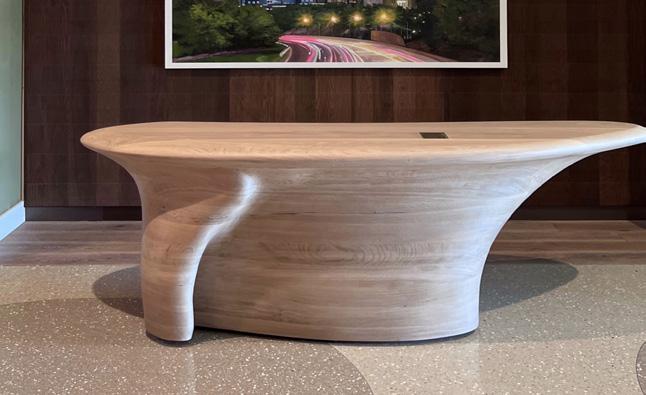
Designer, Sculptor, Founder Christian Dunbar Design Brooklyn, New York, United States christiandunbar.com
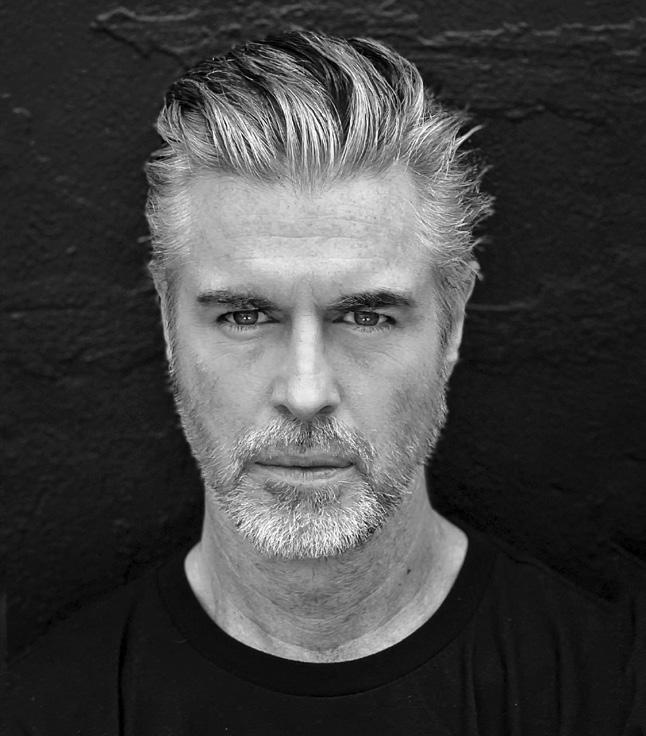
“I would love to see the practice of planned obsolescence come to an end. The ultimate cost we all pay for producing 'throwaway' furniture is staggering. We have to do better.”
Cynthia DAMAR-SCHNOBB
Founder/CEO
Artellix
Toronto, Ontario, Canada artellix.ca
DESIGNING FOR BELONGING
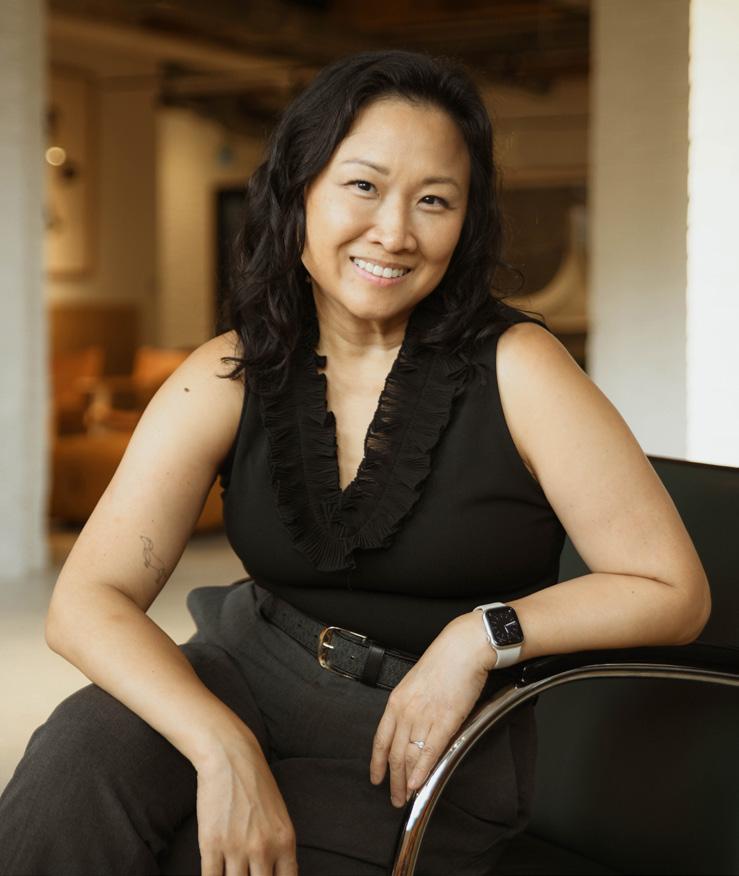
Experte chevronnée avec 25 ans de carrière, Cynthia Damar-Schnobb est une consultante primée en design expérientiel. Fondatrice du studio torontois Artellix, elle se spécialise en signalétique, image de lieu et reconnaissance de donateurs. A Carleton grad and Women Business Enterprise (WBE)-certified leader, she co-chairs Sheridan’s Experiential Design Program Advisory Committee and has held key roles with the Society for Experiential Graphic Design and the Association of Chartered Industrial Designers of Ontario (ACIDO).
WHAT DID YOU WANT TO BE WHEN YOU GREW UP?
—I always wanted to be a designer, though I never knew exactly what kind. My path zig-zagged—from studying Industrial Design, to falling in love with graphic and information design in UI/UX, to eventually working in Experiential Graphic Design. Today, I find deep satisfaction collaborating across architecture, interiors, and landscape. I’m fascinated by how built environments merge graphic, information, and industrial design with psychology—how we connect emotionally to space and interpret our experiences.
QUI VOUS A MISE SUR CETTE VOIE ?
Mon père. Le voir bâtir son entreprise de fabrication m’a marquée. Sa façon de résoudre des défis avec créativité et stratégie a éveillé ma curiosité, encore vive aujourd’hui.
WHAT PROJECT LAUNCHED YOUR CAREER?
Sidra Medicine in Qatar was certainly one of the more memorable ones. As one of my first major international projects, it brought together teams from around the world to tackle everything from visitor flow to architecturally integrated design. Its completion remains a powerful example of collective coordination—and a project I’m proud to have contributed to.
VOTRE PLUS GRANDE FIERTÉ ?
Avoir fondé Artellix. Me lancer après la pandémie, faire grandir ce studio jusqu’à former une équipe solide et diversifiée en deux ans : c’est la plus belle aventure de ma carrière. Cette fierté témoigne du talent, de l’engagement et de l’impact que nous construisons ensemble.
“I n built environments, elevating user experience depends on creating a genuine emotional connection between humans and the spaces they inhabit—fostering comfort, belonging, and interaction that resonates beyond aesthetics or utility.”
CEO
MILAN À FLEUR D’ESPACES Daniele AGOSTINELLI
Agostinelli Architetti - Green Interior Design Milan, Italy
agostinelliarchitetti.com
“T here’s no greater pride than stepping into a finished space, breathing in the scent of something I designed and built with dedication.”
QUE VOULAIT FAIRE L’ENFANT QUE VOUS ÉTIEZ ?
À cinq ans, sur un chantier aux côtés de mon père, j’ai su que je serais architecte. J’avais l’impression de voir un chef diriger un orchestre. De retour à la maison, je dessinais au dos de ses plans, déjà en train d’imaginer un monde à construire.
WHAT WAS YOUR FIRST JOB IN THE FIELD? GIVE US A PLACE, A MOMENT, AND A STATE OF MIND.
—The first job I landed was at a small architectural firm in Milan that did a bit of everything—residential projects, offices, renovations, interior design, and more. It was led by two seasoned architects who taught me a great deal. On my very first day, one of them said, “Design in the most spontaneous, crazy, and free way possible.” It’s a mindset I’ve carried with me ever since.
QU’EST-CE QUI VOUS MOTIVE ET VOUS ÉMERVEILLE LE PLUS DANS LE DESIGN ET L’ARCHITECTURE ?
C’est un parcours exigeant, mais lorsqu’un chantier se termine après des mois d’efforts et d’obstacles, une flamme s’allume en vous, comme une étincelle qui rallume l’élan pour le projet suivant.
IF YOU WERE TO HOST A CREATIVE BRAINSTORMING SESSION AND COULD INVITE ANY THREE PEOPLE, LIVING OR DECEASED, WHO WOULD THEY BE? WHAT WOULD YOU DISCUSS?
—In my wildest dreams, I’d invite Pier Luigi Nervi—the ideal architect who embodied elegance, experience, and inimitable artistry—along with Renzo Piano, whom I deeply admire, and the brilliant Gio Ponti, to reimagine the role of the architect and project it into the future.
Né, élevé et établi à Milan, l’architecte et designer Daniele Agostinelli fonde son agence en 2007, spécialisée en architecture intérieure et en réhabilitation durable. A graduate of the Politecnico di Milano, he has worked across sectors from schools to hotels. A LEED® Green Associate and Royal Institute of British Architects (RIBA) Chartered Member, he blends Italian design sensibility with a strong focus on environmental innovation.
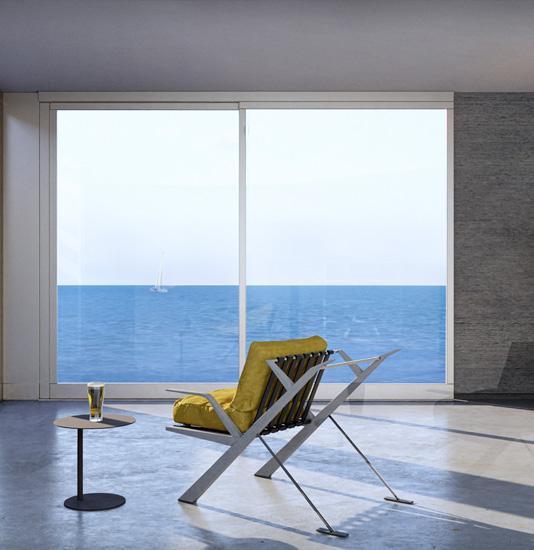
Debbie LAPORTE
Founding Director Orterra Brisbane, Australia orterra.com.au

“D esign is about creating tomorrow’s spaces with nature today—by working with her, not against her.”
WITH LAND IN MIND
Forte de plus de 20 ans d’expérience en Australie et en Europe, Debbie Laporte est la fondatrice d’Orterra, une agence d’architecture de paysage basée à Brisbane. A registered landscape architect with the Australian Institute of Landscape Architects (AILA), she brings deep expertise to every project and is a passionate advocate for nature, community, and the power of place-based design.
WHO OR WHAT FIRST SET YOU ON THE PATH TO YOUR FIELD, AND HOW DID IT UNFOLD?
—I’d always had my mind set on being a vet one day—until a university anatomy class made me rethink everything. Unsure of my next step, I took a career quiz (thanks, Mum!), and “landscape architecture” topped the list. I picked a firm name from the phone book, made a call, and never looked back. That one decision led to a career I love—creating places where people truly connect with nature.
DE QUOI ÊTES-VOUS LA PLUS FIÈRE, ET QU’EST-CE QUI VOUS ENTHOUSIASME LE PLUS DANS VOTRE SECTEUR ?
Je suis fière d’avoir bâti mon entreprise à partir de rien et impatiente de voir ce que l’avenir me réserve. Ce qui me motive profondément, c’est la collaboration : lorsqu’un défi surgit et qu’une équipe s’unit, écoute, et trouve ensemble la meilleure solution. Cette énergie collective, c’est ce que j’aime le plus dans le design.
WHERE DO YOU LIVE AND/OR WORK, AND WHAT DO YOU APPRECIATE ABOUT IT?
—I live in Brisbane, Queensland, surrounded by nature, with beaches and bushland to explore. The weather is perfect nine months a year, and living with wildlife in and around the city is truly inspiring.
WHAT’S ONE THING YOU’D LIKE TO SEE CHANGE IN YOUR FIELD?
—I’d like to see trees classified as infrastructure. They should be given a real value, so that every time one is removed, the true cost is considered. Right now, they’re seen as far less important and are often removed too easily, without recognizing the broader impact.
QUELLE EST LA COULEUR QUI VOUS ATTIRE LE PLUS ?
Sans surprise : le bleu et le vert !
Didier CHINCHOLLE
Head of Experience Design, Digital Services
Ericsson Stockholm, Sweden ericsson.com
ZERO GRAVITY
Didier Chincholle dirige l’équipe UX primée d’Ericsson à Stockholm. Originaire de France, il est diplômé en architecture et design. He began his career designing astronaut equipment and air traffic control interfaces. He joined Ericsson in the late ’90s and has since led design teams across several business units.
“D ream—and build your dreams! If you don’t, someone else will hire you to build theirs.”
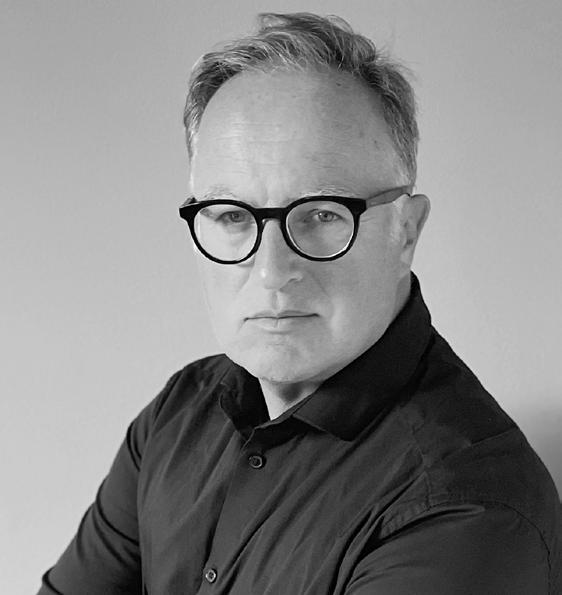
FAIRE L’ENFANT QUE VOUS ÉTIEZ ?
Le ski et le dessin m’ont toujours passionné, et ils me définissent encore. Le sport pro n’était pas prévu, mais mon goût de l’aventure a trouvé un terrain idéal en Suède. Le dessin m’a mené à l’architecture, avant un détour inattendu par l’aérospatiale, puis les télécoms. Au cours de la vie, j’ai appris que certaines opportunités ne se refusent pas.
WHAT WAS YOUR FIRST JOB IN YOUR FIELD?
—It was in the 90s, following my studies at the International Space University and the extraordinary privilege of learning from icons like Buzz Aldrin— the second person to walk on the Moon. I was hired by Aerospatiale in the Paris area, France. That unforgettable experience fundamentally shaped my understanding of user-centered design, the power of innovation, and the essential harmony between form and function—principles that continue to guide my teams and our work.
QUELLE EST VOTRE PLUS GRANDE FIERTÉ PROFESSIONNELLE ?
Avoir su relever les défis liés à la création et à la montée en puissance d’équipes de design efficaces au sein de grandes organisations technologiquement avancées comme Ericsson demeure mon accomplissement le plus marquant.
WHAT MAKES DESIGN EXCEPTIONAL?
—The compelling convergence of aesthetics, practical usability, and long-term sustainability, all driven by an inherent desire to push beyond conventional boundaries. It's at this vital intersection that truly remarkable and impactful outcomes are achieved.
QUE VOULAIT
Founder + Lead Architect
DS Studio Toronto, Ontario, Canada dsstudio.ca
FROM FASHION DREAMS TO BUILT REALITIES DINA SARHANE
Visionary architect Dina Sarhane, founder of DS Studio, brings over 15 years of global experience to human-centered design. Her work spans luxurious interiors, vibrant public spaces, and innovative healthcare environments, all rooted in collaboration and well-being. Présidente du conseil de district de l’ULI Ottawa et chargée de cours à Carleton, elle milite pour des espaces qui favorisent la connexion, l’accessibilité et le sens.
ENFANT, QUE RÊVIEZ-VOUS DE DEVENIR ?
– Styliste. Mais mes parents m’ont encouragée à choisir une voie plus traditionnelle. J’ai ensuite découvert que de nombreux créateurs de mode avaient étudié l’architecture j’ai donc décidé de me lancer dans ce domaine exigeant.
WHO OR WHAT SET YOU ON THE PATH TO YOUR FIELD OF WORK?
–It was the young Alexander McQueen who inspired me with his storytelling and avant-garde approach to fashion. At the time, there were few young, rule-breaking architects to look up to, so fashion designers like McQueen and Moschino in the ’90s deeply resonated with me.
WHAT MOTIVATES YOU, AND WHAT EXCITES YOU MOST ABOUT THE DESIGN AND ARCHITECTURE INDUSTRY?
–The fact that design and the built environment profoundly shape the human experience. Spatial design can lift your mood, spark social connection, influence behavior, encourage relaxation—even create euphoria. Humans adapt to their surroundings, and that responsibility is both a powerful motivator and a great privilege for the design community.
QUELLE RÉALISATION VOUS REND LE PLUS FIÈRE ?
–Concevoir des espaces publics et des projets ouverts au public est ce qui me comble le plus. Il est difficile pour les jeunes firmes d’avoir un impact sur les villes, car les règles d’attribution excluent souvent les pratiques émergentes. Collaborer avec des villes, des institutions, des OBNL ou des promoteurs locatifs nous donne l’impression de contribuer vraiment à améliorer les modes de vie et d’interaction.
WHAT COLOR ARE YOU MOST DRAWN TO?
–White—pure, adaptable, and calming; it reflects all colors and creates a sacred, serene feeling.
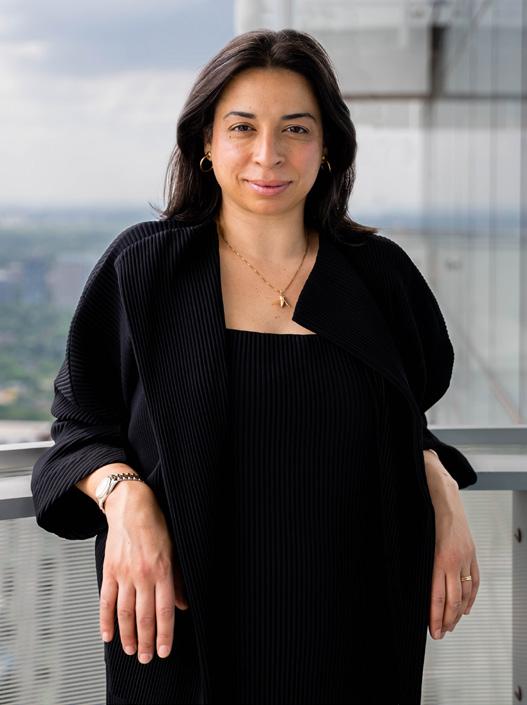
“E xceptional design stems from innovation—the courage to reveal the unseen, explore alternatives, and create beyond the confines of trends.”
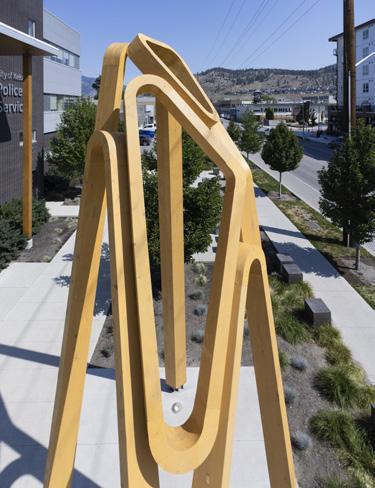
Edith NORMANDEAU
Propriétaire et conceptrice
Atelier VITA LOCI
Lac-Beauport, Québec, Canada vitaloci.com
L’ÉCHO DES PAYSAGES
Formée au Québec et en France, Edith Normandeau conçoit des designs distinctifs ancrés dans l’esprit des lieux. Architecte paysagiste séniore (AAPQ), elle cumule 23 ans d’expérience en projets urbains et naturels. Her approach blends natural, cultural, and historical elements within a sustainable vision—championing movement for all ages and universal accessibility.
WHAT DID YOUR CHILDHOOD SELF WANT TO BE WHEN YOU GREW UP?
—As a child, I climbed trees and built forest huts. I dreamed of becoming an architect while nurturing a deep love of nature. The fusion of those two passions led me to my dream career: landscape architecture.
QUEL EST LE PREMIER EMPLOI QUE VOUS AVEZ OCCUPÉ DANS VOTRE DOMAINE ?
Formée également en art, j’ai entamé mon parcours professionnel en tant que chargée de projets à la Caserne Éphémère en France, un centre de pratiques artistiques. J’y ai créé un projet collectif sur la ville et ses réseaux à travers lequel je me suis intéressée aux environnements sonores en architecture de paysage.
QUELS TALENTS VIVANTS ADMIREZ-VOUS, ET POURQUOI ?
Bernard Tschumi m’inspire profondément par sa conception du parc de la Villette à Paris, avec ses emblématiques "folies" rouges et sa forte trame, une déambulation architecturale et paysagère singulière. C’est dans ce même parc que j’ai découvert le Jardin des Bambous d’Alexandre Chemetoff, une œuvre marquante pour l’immersion dans une ambiance végétale et la découverte de son paysage sonore.
A DREAM YET TO BE REALIZED?
—My dream? Designing a vast sound promenade suspended between sky and water, winding along a riverbank or coastline, dotted with lookouts, pathways, and elevated walkways—with “sound constellations” like musical notes in a living landscape score.
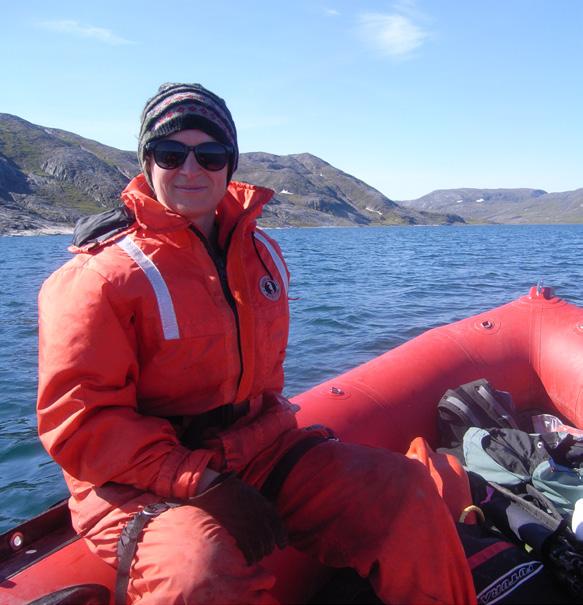
«E
n saisissant pleinement la puissance du design sensible pour créer des ambiances vécues, nous réalisons à quel point notre travail collectif peut transformer les paysages en véritables expériences. »
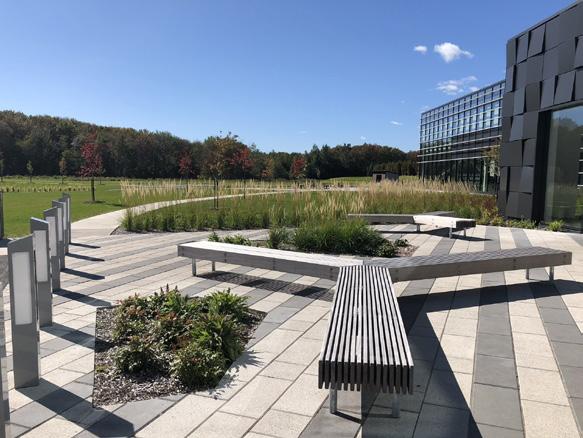
Erin NEUFEGLISE
Senior Manager, Design Royal Bank of Canada Toronto, Ontario, Canada rbcroyalbank.com
BANKING ON DESIGN
Bringing spaces to life with purpose and personality, Toronto based designer Erin Neufeglise has spent over a decade shaping standout retail, hospitality, and workplace environments. En tant que directrice principale du design à la Banque Royale du Canada, elle pilote de grands projets à travers le pays en traduisant des stratégies en espaces concrets. Ayant travaillé autant en agence que côté client, elle mise sur la créativité, l’innovation et une vraie attention à l’expérience utilisateur.

“D esign shapes how we live, work, shop, and vacation—it's a privilege to impact the world in every facet of life.”
WHAT DID YOUR CHILDHOOD SELF WANT TO BE WHEN YOU GREW UP?
—As a child, I was always drawn to virtually anything creative—from doodling fashion designs to attempting to write songs and even hairstyling. If it took some imagination, I was there. Ultimately, my family’s history in the construction and building materials industries swayed me towards interior design.
WHAT COLOR ARE YOU MOST DRAWN TO, AND WHY?
—Historically, I’ve been against choosing a favourite since all colours have their appeal, but a constant that sticks out is all shades of green. Aside from the obvious biophilic associations and being the colour most found in nature, I’m drawn to green because of its versatility—it can be a calming pause from an overstimulating world, but also a bold and unexpected statement colour.
COMMENT SORTEZ-VOUS D’UN PASSAGE À VIDE CÔTÉ CRÉATIVITÉ ?
De l’exercice ! Rien de mieux qu'un effort physique pour réveiller l’esprit.
QU’APPRÉCIEZ-VOUS DE VOTRE VILLE ?
Je vis et je travaille à Toronto, et j’adore sa diversité et sa gastronomie ! Habiter dans l’une des villes les plus diversifiées du monde donne accès à une cuisine exceptionnelle aux multiples influences.
IS THERE A LOCAL SPOT YOU ALWAYS RETURN TO?
—I’m lucky enough to live close to High Park in the west end of Toronto and spend lots of time there with my family. From cycling, searching for bugs in the forest with my boys, or simply having a picnic—having access to nature in the city is the ultimate respite from the chaos of life.
Freddy CURIÉL
Founder & Creative Director Lapis Bureau (LxB) Shenzhen, China lapisbureau.com

“Our industry has an endless capacity for reinvention since every project has its own set of rules, constraints, and possibilities.”
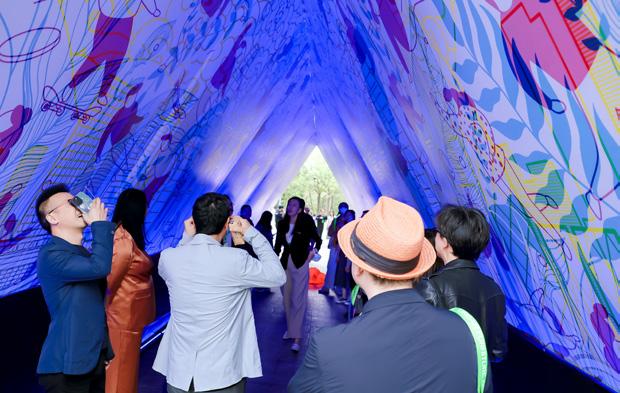
ENTRE LE VISIBLE & L’INVISIBLE
Based in Shenzhen, Italian architect and landscape planner Freddy Curiél studied in Venice, Copenhagen, Milan, and Delft, and has worked across Europe and Asia. En tant que fondateur et directeur de la création de LAPIS BUREAU, il dirige des projets multidisciplinaires allant de l’architecture au design d’intérieur, du paysage au design produit, et collabore avec des clients comme BOSCH, Luxottica, Cassina, Giorgetti, Tencent, Huafa, le MoMA Design Store, et bien d’autres.
QUE VOULAIT FAIRE L’ENFANT QUE VOUS ÉTIEZ ?
J’ai toujours été attiré par l’idée de construire et de créer le Lego était mon jouet préféré. Je passais des heures à bâtir des mondes imaginaires, et c’est là que ma passion pour l’architecture a germé. Encore aujourd’hui, chaque Nouvel An chinois, je construis l’animal du zodiaque en Lego comme porte-bonheur pour le studio une tradition qui me rappelle que l’architecture, au fond, c’est donner vie aux idées, pièce par pièce.
WHAT COLOR ARE YOU MOST DRAWN TO, AND WHY?
—Indigo. As a child, I was fascinated by its place in the rainbow— it seemed to stand apart. Being colorblind, I’ve developed a more analytical way of understanding color, and indigo—equal parts cyan and magenta—feels like a bridge between the visible and invisible. It still inspires how I explore perception and creativity in my work.
UN RÊVE ENCORE À RÉALISER ?
Concevoir et construire quelque chose de significatif pour ma ville natale, Trieste. Même après 25 ans à l’étranger, j’en garde l’esprit son mélange culturel, son charme maritime, sa richesse architecturale. Parc, espace culturel ou maison, je rêve de créer quelque chose qui renforce le lien entre la ville et ses habitants.
IF YOU COULD HOST A CREATIVE BRAINSTORMING SESSION WITH ANY THREE PEOPLE, LIVING OR DECEASED, WHO WOULD YOU INVITE—AND WHAT WOULD BE DISCUSSED?
—Great question! I’d invite Oscar Niemeyer, Nikola Tesla, and Oscar Wilde to imagine “The City of the Future.” Niemeyer would explore harmony with nature, Tesla would push boundaries on innovation and sustainability, and Wilde would remind us that beauty, wit, and narrative give space its soul.
Frédérique ALLARD
Fondatrice, Architecte paysagiste, AAPQ/CSLA
Friche Atelier
Montréal, Québec, Canada fricheatelier.com
CRÉER, C’EST FAIT POUR JOUER
Passionnée d’art, d’architecture et d’horticulture, Frédérique Allard fonde
Friche Atelier en 2014 après un baccalauréat en architecture de paysage à l’Université de Montréal. With a keen eye and deep sensitivity, she has developed strong expertise in residential landscaping, often collaborating with seasoned architects and contractors. Each project receives the same meticulous care—from design to material selection and planting.
QUEL A ÉTÉ VOTRE PREMIER EMPLOI DANS LE DOMAINE ?
Pendant mes études en architecture de paysage, j’ai passé mes étés à entretenir et réaménager des jardins résidentiels. D’un contrat à l’autre, j’ai découvert la liberté du travail extérieur et le bonheur simple d’évoluer parmi les fleurs, la végétation luxuriante et le chant des oiseaux.
WHAT’S THE BEST CAREER ADVICE YOU’VE RECEIVED?
—During an internship, a passionate landscaper told me to “go play” rather than “go to work.” That mindset stuck with me. In moments of doubt or stress, I remind myself it’s all about perspective—we can choose to play.
QUELLE COULEUR QUI VOUS ATTIRE LE PLUS ?
Le vert, évidemment ! Plus précisément le vert-degris une patine naturelle, formée par le temps. Douce et apaisante, cette teinte entre le bleu, le vert et le gris évoque pour moi l’équilibre et la beauté du vivant.
DE QUELLE RÉALISATION ÊTES-VOUS LE PLUS FIÈRE ?
Le jardin Jackson, un bel exemple de collaboration entre clients, architectes, architectes paysagistes et entrepreneurs. L’aménagement met en valeur la maison de pierre d’origine ainsi que l’agrandissement contemporain, grâce à des matériaux comme l’acier corten, la pierre naturelle et le béton, qui structurent harmonieusement la végétation abondante.
WHICH TALENTS OR MENTORS DO YOU PARTICULARLY ADMIRE?
—Like many landscape architects, I’m inspired by Piet Oudolf and the New Perennial Movement. His work reshaped how we design gardens and observe nature. His sensitivity captures everything I love about this profession.
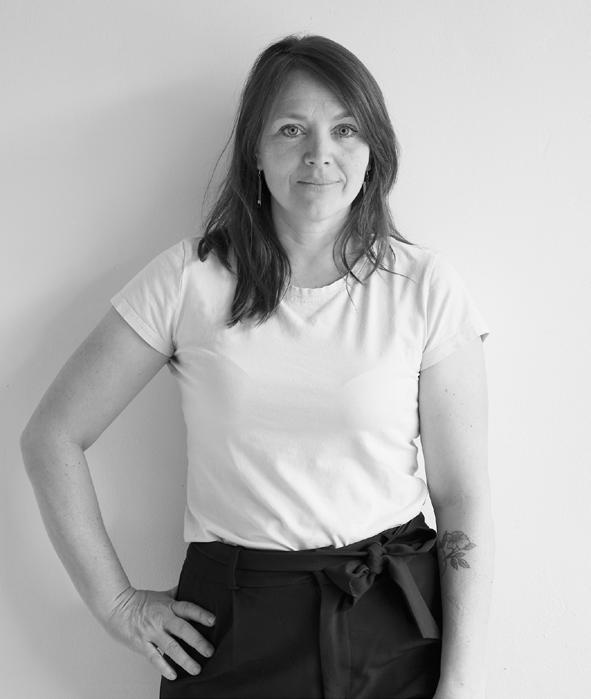
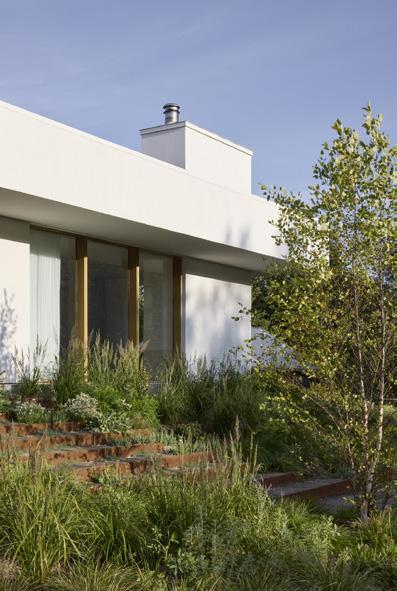
«J’habite Montréal, une ville que j’aime pour ses quartiers bigarrés, ses ruelles, ses parcs et ses cafés. Pour me ressourcer, c’est la Corse qui m’appelle, entre mer et montagne… ou encore la Gaspésie, berceau de mes étés d’enfance. »
Giorgio CUI
Architecture Director - Senior urban Planner
RBTA- Bofill Taller de Arquitectura
Barcelona, Spain ricardobofill.com
L’ÂME DES LIEUX
Basé à Barcelone, Giorgio Cui est architecte en chef chez BTA depuis 1995. Avec plus de 25 ans d’expérience, il dirige des projets urbains durables à grande échelle, de Connected City à Dallas à Greater Moscow. Currently active in Saudi Arabia, Morocco, India, and Albania, he drives major large scale projects from concept to construction, combining strong design leadership with a hands-on, collaborative approach.
“Create, don’t copy. Within each of us lies beauty and proportion. We only need to ignite the creative energy that flows from the soul.”
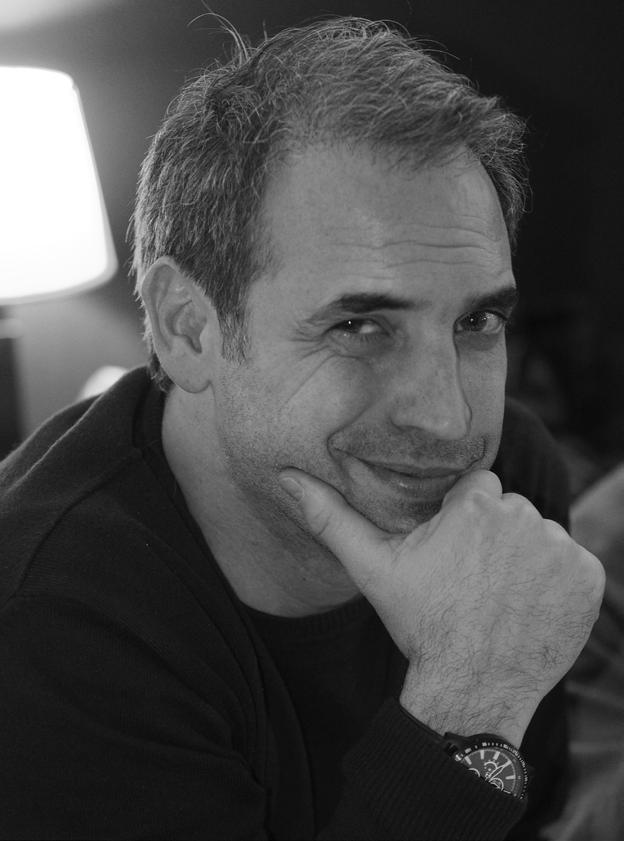
QUE VOULAIT FAIRE L’ENFANT QUE VOUS ÉTIEZ, UNE FOIS ADULTE ?
J’ai toujours senti que l’architecture était ma voie. Très jeune, je dessinais à la main avec passion, inventant des bâtiments et parfois des objets. Je dessinais en coupe ou jouais avec la perspective.
WHAT SET YOU ON THE PATH TO YOUR FIELD OF WORK, AND HOW DID THE STORY UNFOLD?
—Growing up in Italy in a family of builders, I was immersed in the world of construction from an early age. It was my paternal grandmother,
though, who first saw in me the potential to become an architect. Drawn to art and the harmony of proportions, I chose to study in Florence—a city that quietly shaped my vision through its beauty and balance.
IN YOUR OPINION, WHAT ARE THE ESSENTIAL QUALITIES OF EXCEPTIONAL DESIGN?
—A design’s uniqueness and its ability to integrate with the context and culture of the place where it’s built are quintessential parts of exceptional design. The Romans called it the Genius Loci—the spirit of the place. Every
location has a soul, and what we design must resonate with that energy.
ET DEMAIN ? VERS OÙ PROGRESSE VOTRE PROFESSION À VOTRE AVIS ?
On parle beaucoup de l’intelligence artificielle et de la révolution qu’elle promet, même en architecture. Mais l’IA est un outil, pas une béquille. Ceux qui continueront à étudier, voyager, découvrir d’autres cultures ceux qui nourrissent leur esprit créatif ce sont eux qui feront la différence, même dans un monde dominé par l’IA.
Hao SHAN
Creative Director / CRE+ Design
Department Head / School of Art Design & Media, East China University of Science & Technology Shanghai, China ecust.edu.cn
L’ART DE L’ARCHE
Hao Shan est le fondateur de Cre+ Design, créé en 2009, et une figure de proue de la communication visuelle. Il est actuellement directeur du département de communication visuelle à la School of Art, Design & Media de l’Université des sciences et technologies de l’Est de la Chine. Bridging practice and academia, his work reflects a commitment to creative excellence, design education, and cross-disciplinary collaboration.
QUEL EST VOTRE MEILLEUR CONSEIL DE CARRIÈRE REÇU ?
– La réflexion mène aux questions, mais c’est par l’action que les réponses apparaissent. L’action apporte de la clarté.
WHAT ACHIEVEMENT ARE YOU MOST PROUD OF?
–Just yesterday, I learned that my branding project for HYZY World Youth Activity Center—China’s largest—won Gold at the A’ Design Award in Italy. The client had previously held a national logo competition but wasn’t satisfied with the results. They approached me to take on the challenge.
QUEL ÉTAIT LE BRIEF, ET COMMENT L’AVEZ-VOUS ABORDÉ ?
– Le cahier des charges était particulièrement exigeant. Le logo devait être moderne, minimaliste, et refléter à la fois la bienveillance éducative, la recherche de perfection et une vision tournée vers l’avenir — tout en évoquant l’identité du bâtiment. J’ai étudié les logos de centres jeunesse à travers la Chine, et proposé une direction signifiante et non conventionnelle.
WHAT MAKES THIS LOGO SO UNIQUE?
–I focused on the arch—an iconic feature of the center—and combined it with a circle to symbolize wholeness and openness. The 3D form works both in print and as a spatial object. At its center is a “gateway to the future” and a hidden heart revealed by shadow—echoing the center’s theme of “nurturing with love.”
QU’EST-CE QUI DISTINGUE CE LOGO D’UN BRANDING TRADITIONNEL ?
– Il rompt avec la convention — non seulement en tant que signe visuel, mais aussi en tant qu’élément spatial vivant et interactif. En intégrant lumière, ombre et forme, il devient dynamique, expressif — quelque chose que l’IA peine à reproduire. Il porte en lui une vie, un sens, et une capacité à communiquer en profondeur.
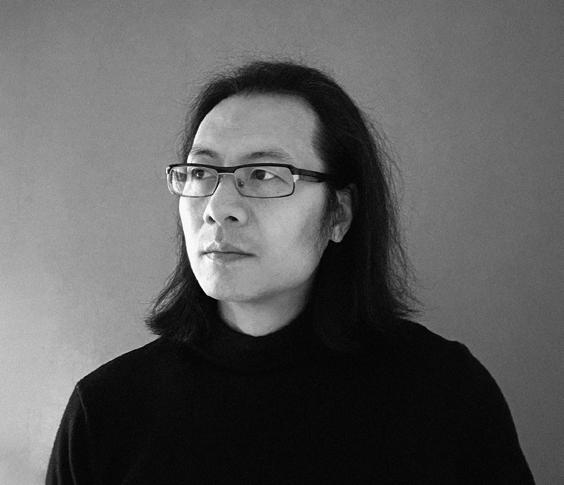
“A design that truly stands out is one that embodies wisdom, showcases original creativity, and proves to be both effective and impactful—it naturally rises above the rest.”

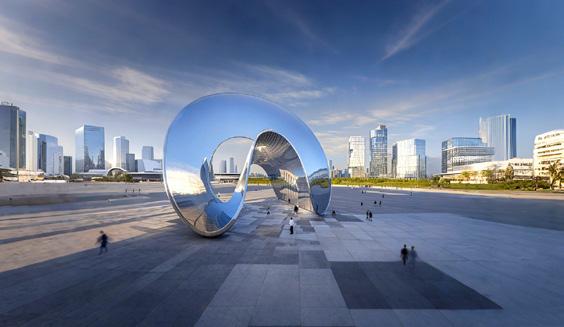
Joanne CHAN
Chief Innovation Officer, Workplace Practice Lead
SDI Design Toronto, Ontario, Canada
sdi-design.com
OH, THE PLACES DESIGN WILL GO!
Alliant créativité et stratégie, Joanne Chan — diplômée en beaux-arts devenue cheffe de file dans l’industrie est la force motrice derrière l’innovation en milieu de travail chez SDI Design. As Principal, Chief Innovation Officer, and Workplace Practice Lead at the awardwinning Canadian firm, she brings over 20 years of interior design experience to every space she shapes.
QUEL EST LE PIRE CONSEIL DE CARRIÈRE QUE VOUS AYEZ REÇU ?
– « Ton travail parlera de lui-même. Si tu dois l’expliquer, c’est qu’il n’est pas bon. » Ça semble noble, mais c’est trompeur. Le design ne vit pas en vase clos — il prend vie dans le dialogue. Être un bon designer, ce n’est pas seulement faire preuve de créativité ou de talent, c’est aussi savoir mener des conversations, bâtir des relations et défendre ses idées avec clarté, intention et assurance.
WHERE DO YOU LIVE AND/OR WORK, AND WHAT DO YOU APPRECIATE ABOUT IT?
–Although I live and work in Canada—and truly value its diversity and progressive approach to design—my heart is rooted in all that is Japan. Japanese design has always moved me: it’s intuitive, empathetic, and deeply human. I’m inspired by how it balances urban intensity with calm, and how every detail—from signage to spaces—is crafted with accessibility and dignity. That’s design at its highest form: beautiful, functional, and above all, ethical.
QUEL CHANGEMENT AIMERIEZ-VOUS VOIR DANS VOTRE DOMAINE ?
– J’aimerais qu’il y ait plus d’intégration entre les différentes disciplines du design. La magie opère quand on brouille les frontières — en apportant la chaleur du résidentiel dans les bureaux, le flux de l’hôtellerie dans les hôpitaux, ou la narration du commerce de détail dans les espaces publics. En combinant le meilleur de chaque monde, on crée des environnements qui soutiennent réellement la manière dont les gens vivent, se connectent et ressentent.
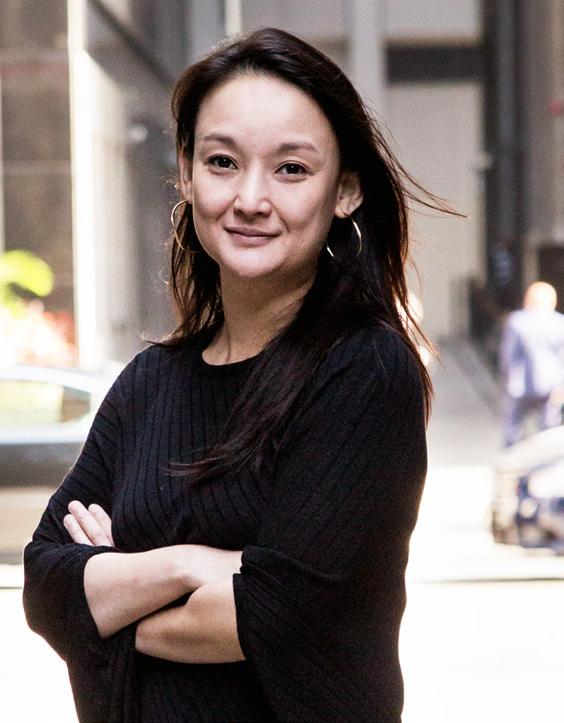
“Black, to me, is more than just a colour— it’s a presence. A quiet strength that never needs to shout to be seen.”
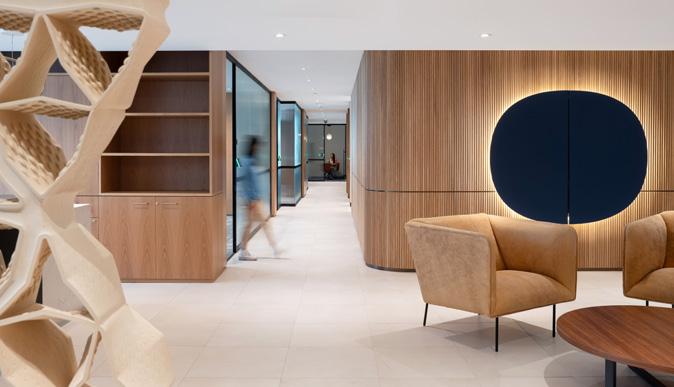
Jonathan CHA
Directeur de projets, Paysages Lemay Montréal, Québec, Canada amenagement.umontreal.ca
TRAMES URBAINES, MÉMOIRES HUMAINES
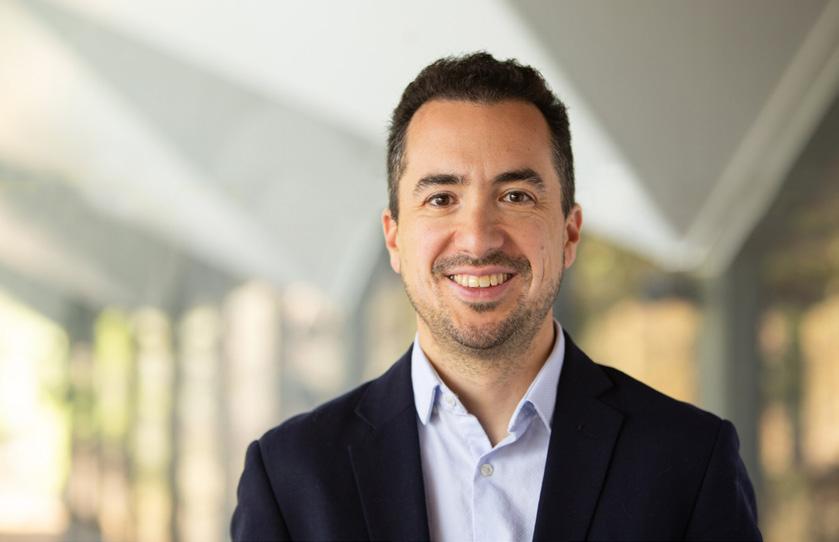
DANS QUELLE VILLE VIVEZ-VOUS ?
QUEL PROJET A LANCÉ VOTRE CARRIÈRE ?
Rencontrez Jonathan Cha, docteur en urbanisme et architecte paysagiste, dont la pratique, l’enseignement et la recherche explorent les identités et les fondements de l’espace public. A lecturer at Université de Montréal and a devoted lover of the city, he theorizes parks from past to present. Among other projects, he coordinated the 2020–2030 Master Plan for Parc Jean-Drapeau.
– Je suis un Montréalais insulaire de génération en génération, avec un amour profond pour la ville. J’ai un faible pour la rue Saint-Viateur, les abords du canal de Lachine, le marché Atwater… et l’Orange Julep, où je photographie mon fils chaque année pour sa fête !
AS A CHILD, WHAT DID YOU WANT TO BE WHEN YOU GREW UP?
–As a kid, I dreamed of becoming an archæologist—definitely inspired by the Indiana Jones film trilogy!
QUI EST LA PREMIÈRE PERSONNE QUI VOUS A MIS SUR LA VOIE DE VOTRE DOMAINE DE TRAVAIL ?
– Ron Williams, mon enseignant en première année de bac, m’a transmis le goût de voyager, d’enseigner et de réfléchir au sens des lieux. De mentor, il est devenu un ami. À sa retraite, j’ai repris son cours « Histoire et théorie » et, depuis, j’ai eu le plaisir d’enseigner dans plus d’une douzaine de pays — de l’Italie au Brésil, jusqu’en Chine.
– C’est grâce à une étude patrimoniale sur le square Dorchester et la place du Canada que j’ai entamé une collaboration fructueuse avec la firme Claude Cormier et Associés (CCxA) et que j’ai contribué à plusieurs projets d’aménagement au centre-ville de Montréal.
WHAT MOTIVATES AND INSPIRES YOU MOST IN THE DESIGN AND ARCHITECTURE INDUSTRY?
–The ability to influence the evolution of cities, to shape our living environments, to enrich people’s daily lives—all while strengthening our collective identity.
«S i je pouvais réunir des esprits, vivants ou disparus, j’inviterais
Frederick Law Olmsted, Claude Cormier et Phyllis Lambert pour imaginer ensemble l’avenir des espaces publics. »
“Design is this ongoing negotiation between logic and feeling, and that balance is endlessly fascinating to me.”
QUELLE COULEUR VOUS ATTIRE LE PLUS ?
– Je suis attiré par un bleu profond et désaturé. Il est contemplatif, intemporel, et porte une charge émotionnelle à la fois ancrée et infinie. Il me rappelle le crépuscule — ce moment où le monde ralentit et où la réflexion devient naturelle. Il y a une profondeur silencieuse dans cette teinte vers laquelle je reviens toujours.
WHAT MOTIVATES YOU, AND WHAT CONTINUES TO ENCHANT YOU MOST ABOUT THE WORLD OF DESIGN?
–I find motivation in believing design can clarify complexity and provoke change. I’m continually enchanted by the intersection of systems and storytelling—how structure becomes expressive, how data carries emotion.
IN YOUR OPINION, WHAT ARE THE ESSENTIAL QUALITIES OF EXCEPTIONAL DESIGN?
–Great design feels inevitable—like it couldn’t have been anything else. It balances clarity with personality, restraint with resonance. It’s thoughtful without being loud. It stays with you not because it shouts, but because it hums in the background, perfectly in tune.
QUEL CHANGEMENT AIMERIEZ-VOUS VOIR DANS VOTRE DOMAINE ?
– J’aimerais qu’on accorde plus de reconnaissance à la réflexion qui mène au résultat. Le processus — les questions posées, la recherche, les décisions mises de côté — contient le cœur du travail. On célèbre souvent le rendu final, mais on devrait être tout aussi curieux du chemin parcouru.
Lei YE
Senior Product Designer McKinsey and Company Boston, Massachusetts, United States mckinsey.com
WHEN SYSTEMS TELL STORIES
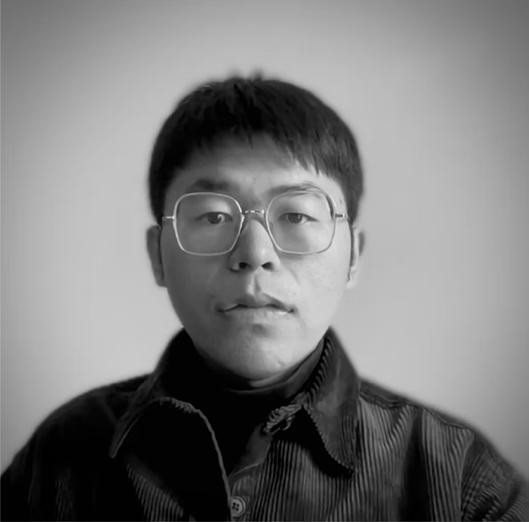
Lei Ye crafts digital experiences where design marvellously meets storytelling. Specializing in user experience, user interface and data visualization, his work has earned nods from Red Dot, DNA Paris, and Good Design. Avec un sens aigu de la stratégie et du style, il a façonné des produits autant pour des startups que pour des entreprises internationales—et met aujourd’hui son expertise au service de jurys comme ceux des prix W3, Davey, Communicator et Orpetron.
Louise MAZAURIC
Architecte BGIS
Montréal, Québec, Canada bio.site/ArchiChic
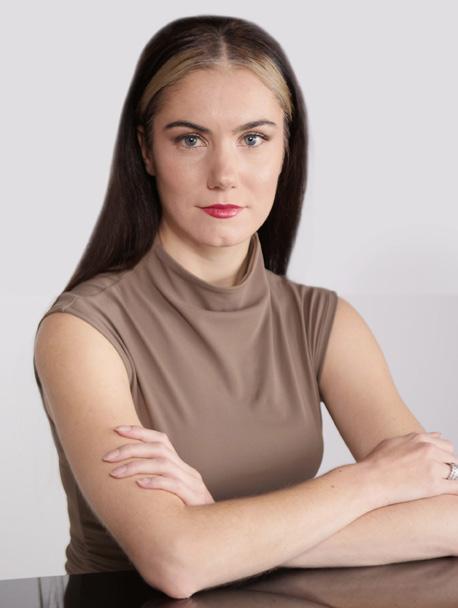
Architecte formée à Québec, née au Japon et active à Montréal, Louise Mazauric s’illustre par son engagement en faveur d’un design inclusif, durable et accessible. She weaves together practice, volunteer work, and teaching to help build a more equitable Canada—while contributing her expertise to the federal projects of tomorrow.
IL N’EST JAMAIS TROP TARD POUR RÉALISER SES RÊVES
WHAT’S YOUR PROUDEST ACHIEVEMENT?
–When I received the Ones to Watch Award from the American Society of Interior Designers in Denver in 2024, I became the first winner from Québec—and the only honoree from Canada that year. This award recognizes my dedication to the next generation of architects and designers, as well as my involvement in the real estate industry promoting equity, diversity, and inclusion through CREW M, an organization that supports women’s success in commercial real estate.
OÙ VOYEZ-VOUS L’AVENIR DE VOTRE
PROFESSION ?
– L’avenir repose sur une collaboration étroite entre architectes et designers, avec les autres disciplines de l’immobilier et de la construction. L’architecture et le design évoluent vers plus d’inclusion, de durabilité et d’innovation.
HOW DO YOU OVERCOME A CREATIVE BLOCK?
–Every interaction fuels me. Whether it’s virtual or in-person meetings, teaching, lectures, or coffee chats—it all energizes me. Learning from others, sharing, discovering new perspectives: that’s how I revive my creativity and find momentum.
UN MOT DE LA FIN ?
– J’encourage chaque professionnel qui me lira à oser sortir de sa zone de confort et aller là où on ne l’attend pas pour tenter de nouvelles expériences. Pour ma part, représenter le Canada à Miss Face of Humanity m’a transformée. Grâce à cette expérience, j’ai appris le pouvoir de l’implication, à communiquer sur les réseaux sociaux, à parler en public, occuper une scène, etc… J’essaye aujourd'hui d'utiliser ces compétences pour faire rayonner notre industrie et sa relève.
«Femme, immigrante, membre de la relève de l’industrie et survivante de harcèlement scolaire je sais ce que c’est que de se sentir exclue. Aujourd’hui, comme architecte et designer, je m’engage à bâtir un Canada plus inclusif, équitable et durable pour toutes et tous. »
Marc STREKER
Director (until 2023)
École supérieure des Arts Saint-Luc Bruxelles
Limal, Belgium
stluc-bruxelles-esa.be
«C e qui m’enchante, c’est la façon dont l’architecture et le design façonnent le monde, et leur pouvoir de nous projeter et de nous faire exister dans l’espace. »
TELL US ABOUT THE CHILD YOU ONCE WERE.
–As a child, I already longed to be an adult— free to think and act on my own terms. At the same time, I was fascinated by the world of the cabin—a private refuge where one could reflect, withdraw, or let imagination run wild.
QUI VOUS A MIS SUR LA VOIE DE VOTRE MÉTIER, ET QUEL A ÉTÉ VOTRE PREMIER EMPLOI ?
– Le graphiste et typographe Michel Olyff a été déterminant. Son travail, et la manière dont il en parlait, m’a inspiré à m’engager dans l’enseignement et la recherche en art. Mon premier emploi fut d’assurer une charge de cours à l’École supérieure d’architecture d’intérieur de Ganshoren, à Bruxelles. Issu des arts plastiques, j’y ai découvert les arts de l’espace, qui ne m’ont plus quitté depuis lors.
À QUEL PERSONNAGE HISTORIQUE VOUS IDENTIFIEZ-VOUS LE PLUS, ET POURQUOI ?
– Un architecte du mouvement brutaliste des années 50, comme Roger Bastin ou Léon Stynen. Le béton, aussi fascinant que rebutant, reste pour moi une matière à la fois poétique et intemporelle. Les empreintes laissées par les coffrages en bois lui confèrent un caractère organique, presque primitif.
WHAT COLOR ARE YOU MOST DRAWN TO?
–Black, like Pierre Soulages’ outrenoir—a luminous black, deep and vibrant, that reveals material while capturing light.
WHICH DESIGN OR ARCHITECTURAL PROJECT DO YOU WISH YOU HAD CONCEIVED?
–The Guggenheim Museum in New York, designed by Frank Lloyd Wright. A brilliant example of form serving function.
À
MÊME LA MATIÈRE
Diplômé de l’ERG et de l’UCLouvain, Marc Streker a été copywriter chez McCann Erickson et consultant externe à la Commission européenne avant de diriger l’École supérieure des Arts Saint-Luc Bruxelles. A former visiting professor in Brussels, Milan, and Montréal, he is also an author, critic at Art même, jury member, and speaker in Belgium and abroad.
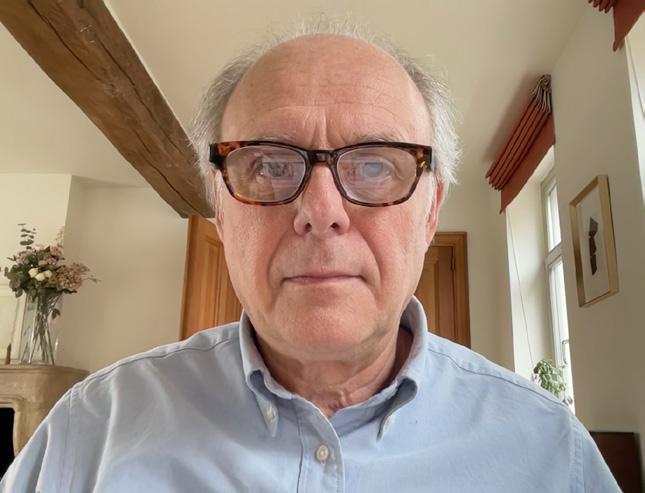
Marie-France BÉLEC
Associate Architect, LEED AP BD+C Automne, architectes Montréal, Québec, Canada automnearchitectes.com
DE LA MATIÈRE À LA MISSION
© Bastiani
Accréditée LEED, Marie-France Bélec détient une maîtrise en architecture et développement durable, avec une spécialisation en matériaux biosourcés. With over 20 years of experience, she partnered with Laure Giordani to found Automne, architectes.
WHAT COLOUR ARE YOU MOST DRAWN TO, AND WHY?
–I’m drawn to mandarin. It’s vibrant, appetizing full of life!
QUI EST LA PREMIÈRE PERSONNE QUI VOUS A MISE SUR LA VOIE DE VOTRE DOMAINE DE TRAVAIL, ET COMMENT
L’HISTOIRE S’EST-ELLE DÉROULÉE ?
– J’ai grandi dans une maison conçue par l’architecte André Bessette. Les circulations, les hauteurs de plafond, la lumière, les couchers de soleil dans la salle à manger… tout de cette maison a marqué ma perception du bâti. J’ai compris l’influence que celui-ci peut avoir sur l’humain. Ensuite, lorsque les terres agricoles et les forêts avoisinantes ont disparu au profit de l’étalement urbain, j’ai vu que nous allions dans la mauvaise direction. À moins de développer une conscience collective, nos choix d’aménagement resteront des actes compulsifs — principalement nocifs pour nous-mêmes.
WHAT’S THE BEST CAREER ADVICE YOU’VE RECEIVED?
–During a student exchange, the renowned architect Patrick Berger—our visiting professor—shared this advice: “When you’re faced with two seemingly unrelated problems, link them. A solution will emerge.” Try it. It’s magic!
UN RÊVE ENCORE À RÉALISER ?
– J’aimerais développer une application mobile de maillage dédiée à l’économie circulaire dans le secteur de la rénovation résidentielle — un modèle pratique et collaboratif, qui pourrait être exporté à l’international. Mais avant tout, j’aimerais obtenir des mandats ouverts à la construction en béton de chanvre.
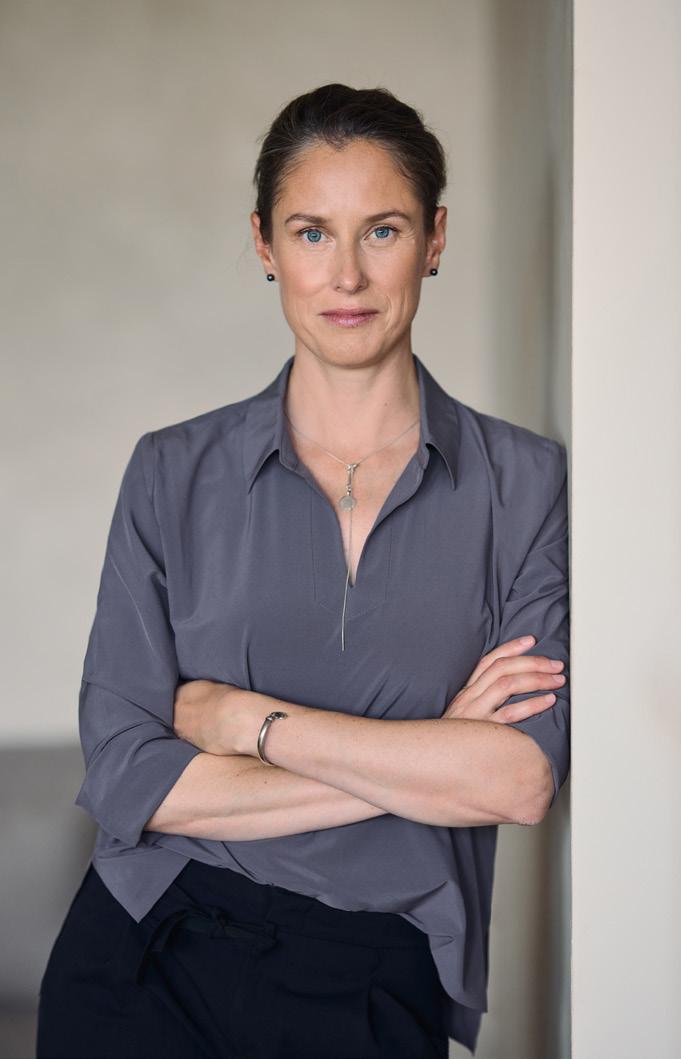
«L
’avenir de notre industrie dynamique est prometteur, à condition de rester guidés par des valeurs saines et de ne pas laisser la peur, l’avidité ou l’individualisme prendre le dessus. »
Mark BLACKWELL
Creative Director
Morphis Limited Hong Kong, China morphisdesign.com
THE EVERYDAY EXTRAORDINARY
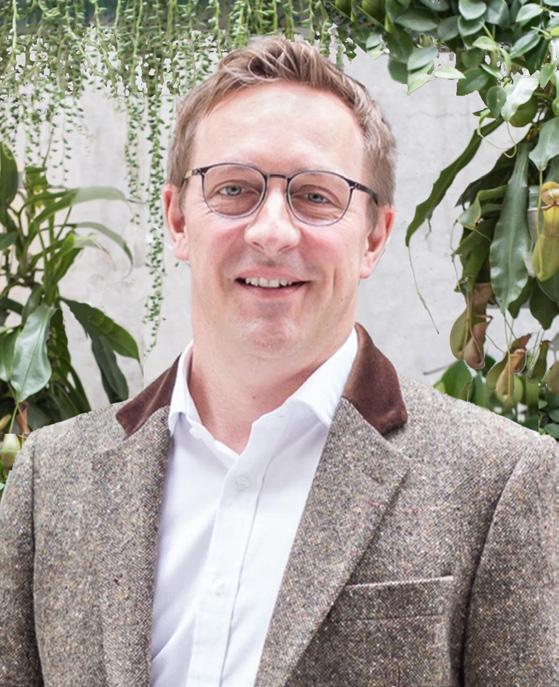
“A s boundaries between these worlds dissolve, the real and the virtual begin to enrich one another—and the extraordinary becomes everyday.”
Award-winning designer and creative thinker Mark Blackwell shapes contemporary landscapes across Asia and the Middle East by enriching nature and curating multi-sensory experiences. He creates socially sustainable and culturally animated spaces that grow over time. Critique invité dans plusieurs universités et conseiller pour Design Trust Hong Kong, il encourage l’échange créatif et les liens communautaires à travers des projets publics porteurs de sens.
WHAT MOTIVATES YOU MOST ABOUT THE FIELD OF DESIGN AND ARCHITECTURE?
–Ultimately, it's about connecting people to places—across geographies, typologies, and scales—as our most memorable destinations evolve into multicultural platforms for future generations to experience and engage with. The most successful designs harness collaborative creativity to shape innovative, sustainable environments that resonate with emotion, honor nature, and reflect context.
WHERE DO YOU SEE THE FUTURE OF YOUR PROFESSION?
–We’re seeing our future projects shift from purely physical landscapes toward an integrated physical and digital universe. The challenge is to balance this evolution with grounded, physical realities that can adapt narratives and shape cities that are not only iconic, but also livable and lovable.
QUEL CHANGEMENT AIMERIEZ-VOUS VOIR DANS VOTRE DOMAINE ? – J’aimerais plus de réponses intégrées et collaboratives qui bousculent les approches classiques — surtout face aux enjeux climatiques urbains. Il faut continuer à stimuler une pensée innovante centrée sur l’humain et l’écosystème, pour repenser la ville comme un organisme vivant qui contribue activement à la réduction du dioxyde de carbone et à un mode de vie plus durable.
© Morphis Limited
Martin LIU
Secretary General
China Europe International Design Culture Association (CEIDA)
Antwerp, Belgium ceida.eu
EST / OUEST, UN PONT CRÉATIF
Secrétaire général du bureau belge de la CEIDA depuis 2019, Martin Liu se consacre à créer un pont entre les industries créatives de l’Est et de l’Ouest. Il promeut la créativité chinoise à l’échelle mondiale et soutient les jeunes talents par le développement de carrière et les échanges culturels. As a higher education consultant in Europe, he mentors artists and designers in navigating international academia and thriving in the global creative economy.
“Design is
more than self-expression —it is a way to engage in dialogue on a global scale.”
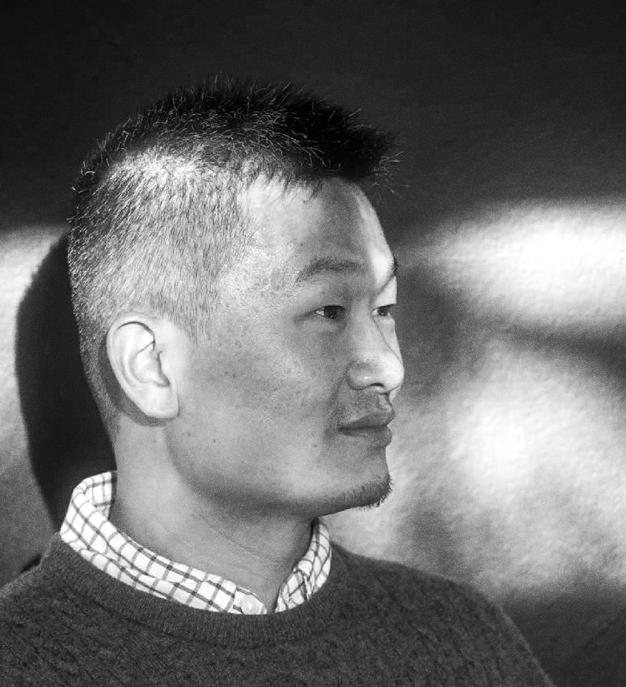
WHAT PROJECT LAUNCHED YOUR CAREER?
–As a Chinese designer and cultural entrepreneur, I’ve always aimed to break geographical barriers and connect global creative talent. During my MA at Goldsmiths, I received a fully funded EU scholarship in Design Thinking and Audience Development, which deepened my understanding of design’s societal impact.
COMMENT VOYEZ-VOUS L’AVENIR DE VOTRE PROFESSION ?
– De nombreuses universités européennes peinent à recruter des doctorants qualifiés en design — malgré des financements généreux. En parallèle, de nombreux chercheurs chinois motivés souhaitent partir à l’étranger mais sont freinés par des barrières systémiques. À travers la CEIDA, je cherche à combler cette fracture en facilitant les connexions directes, en soutenant les candidatures et en favorisant des échanges académiques plus inclusifs entre la Chine et l’Europe.
WHAT IS THE BEST CAREER ADVICE YOU’VE EVER RECEIVED?
–Don’t hesitate or second-guess yourself—take the leap and pursue what truly inspires you. Courage is the first step toward success, and once you begin, you’re already halfway there.
WHAT EXCITES YOU MOST ABOUT THE DESIGN AND ARCHITECTURE INDUSTRY?
–Design and architecture fuse aesthetics with function, turning real-world challenges into inspiring solutions. I’m driven by the chance to empower others with the tools to create this harmony—enhancing how we live and understand the world.
QUELLES SONT, SELON VOUS, LES QUALITÉS ESSENTIELLES D’UN DESIGN EXCEPTIONNEL ?
– Un design exceptionnel conjugue innovation, fonctionnalité et résonance émotionnelle. Il ne se contente pas de résoudre des problèmes, il suscite aussi la connexion, l’inspiration et l’empathie.
May FAWZY
Founder and Creative Director
MF Design Studio
London, United Kingdom
mf-studio.co.uk
LONG LIVE THE REIGN OF WELLNESS
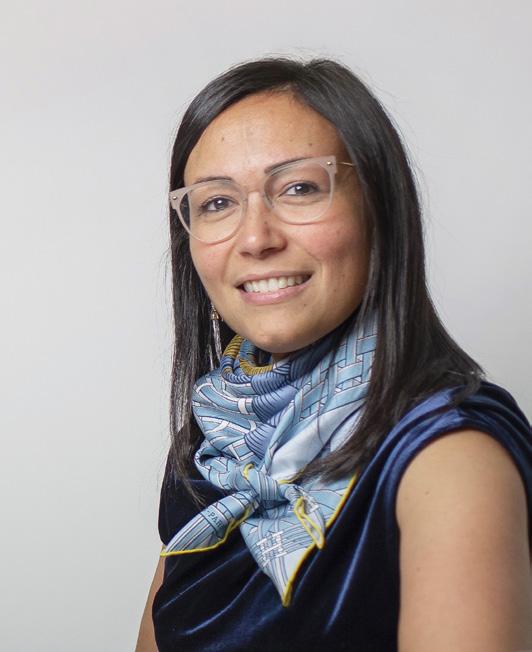
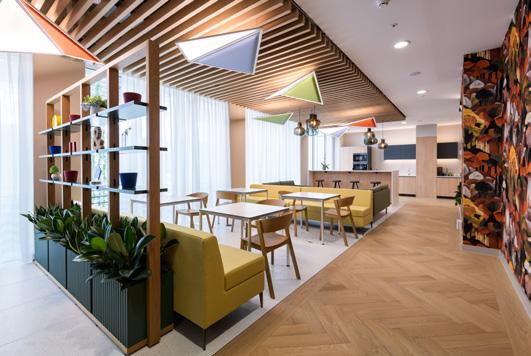
With a design career spanning continents and disciplines, visionary designer May Fawzy has led major commercial interior projects from the Middle East to the UK. In 2011, she founded MF Design Studio, known for wellness-driven, sustainable spaces. Professionnelle accréditée WELL et ancienne présidente du British Institute of Interior Design (BIID), elle siège aujourd’hui au conseil d’administration du Conseil Européen des Architectes d’Intérieur (ECIA), où elle contribue à façonner l’avenir d’un design écoresponsable.
ENFANT, QUEL MÉTIER RÊVIEZ-VOUS DE FAIRE ?
– J’ai toujours su que je voulais devenir designer d’intérieur. Petite, je construisais des intérieurs et des meubles avec des briques de Lego. Mes parents ont rapidement remarqué ma passion et ont commencé à rapporter à la maison des magazines de design — me faisant découvrir un univers qui me fascine encore aujourd’hui.
WHAT WAS YOUR FIRST JOB IN THE FIELD? GIVE US A PLACE, A TIME, A MINDSET!
–In 2005, I started as an interior architect at a top architectural firm in the Middle East. I worked on everything from airports to national libraries. My mindset? Absorb everything. I was eager to learn, surrounded by brilliant colleagues—many of whom became lifelong friends.
WHAT PROJECT LAUNCHED YOUR CAREER?
–Winning the British Council for Offices Project of the Year in London in 2016 was a turning point. We were the first small studio to win against industry giants since the 1980s. It gave both me and MF Design Studio a huge boost—and launched an exciting new chapter in our journey. Seeing my own studio stand up against the UK's top interior architecture firms is definitely one of my proudest achievements.
COMMENT VOYEZ-VOUS L’AVENIR DE VOTRE PROFESSION ?
– Le bien-être prend une place croissante dans les environnements bâtis. Plus que jamais, nous concevons non seulement pour l’esthétique ou la fonction, mais pour la santé mentale et physique — en créant des espaces qui soutiennent véritablement celles et ceux qui les habitent. Le design a le pouvoir de transformer, non seulement les lieux, mais aussi les vies.
“Aword
of wisdom? Create with purpose, with heart, and the courage to challenge convention.”
Pete EVANS
Assistant Professor, Industrial Design Iowa State University Ames, Iowa, United States iastate.edu
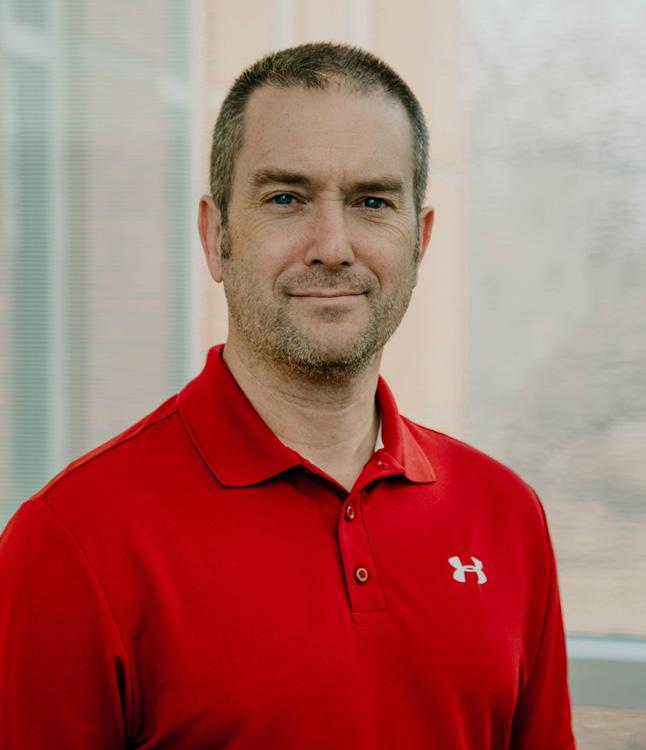
QU’EST-CE QUE VOUS APPRÉCIEZ LE PLUS D'OÙ VOUS VIVEZ ?
– Je vis et travaille dans le Midwest américain — une région que j’aime pour son lien avec la famille, ma plus grande fierté, et pour ses ciels vastes et ses horizons ouverts.
WHAT DID YOUR CHILDHOOD SELF DREAM OF BECOMING?
–Growing up, I remember wanting to be a pilot, an astronaut, or an explorer—probably thanks to the release of Star Wars in 1977.
QUEL EST LE MEILLEUR ET LE PIRE CONSEIL DE CARRIÈRE
QU’ON VOUS AIT DONNÉ ?
– Le meilleur conseil que j’applique encore ? Garder son réservoir toujours au moins à moitié plein— mentalement, émotionnellement et créativement. Le pire ? « Ne parle pas au client. » Quelle absurdité ! La communication est essentielle à tout travail significatif et réussi.
A BRIDGE TO THE FUTURE
Pete Evans has been blending design innovation with cutting-edge research for over 25 years. A dynamic voice in national American Institute of Architects (AIA) circles and senior associate editor at Architosh, Pete explores XR, 3D printing, drones, and digital design. Il dirige le labo mobile FLEx sur la vulgarisation des STIM et un projet de 2,1 M $ sur les technologies émergentes en logement abordable et emploi.
“T here’s something about blue—like deep waters and open skies—that pulls me in.”
WHAT MOTIVATES YOU, AND WHAT EXCITES YOU MOST ABOUT YOUR FIELD OF WORK?
–The ability to positively impact the future—that’s what drives and inspires me most. My areas of research include extended realities, simulation, digital communication and design, and the impact of 21st-century skills on K-16 students (kindergarten to college) and the workforce. I also focus on human-centered design, human-computer interaction, technology and design thinking, phenomenology, and perceptual cognition.
QUELLES SONT LES QUALITÉS ESSENTIELLES D’UN DESIGN EXCEPTIONNEL, ET COMMENT VOYEZ-VOUS L’AVENIR DE VOTRE PROFESSION ?
– Un design exceptionnel agit à plusieurs niveaux : fonctionnel, émotionnel et contextuel. L’avenir de la profession ? Il réside dans la résolution de problèmes complexes à travers divers domaines, avec une approche centrée sur l’humain comme fondement.
Primo ORPILLA
Co-founder Studio O+A
San Francisco, California, United States o-plus-a.com
THE CURIOSITY COMPASS
Primo Orpilla is the co-founder of Studio O+A, a San Francisco-based design firm redefining the modern workplace. Known for bold, people-centered spaces for clients like adidas, Microsoft, and Nike, Primo leads with a vision of design as a tool for transformation. Durant la pandémie, il a imaginé des stratégies pour les bureaux hybrides, donnant naissance aux guides numériques acclamés de O+A : A Toolkit for the Times et The Eco Playbook.
“A s designers in a world of constant change, our greatest strength is a mindset of relentless curiosity.”
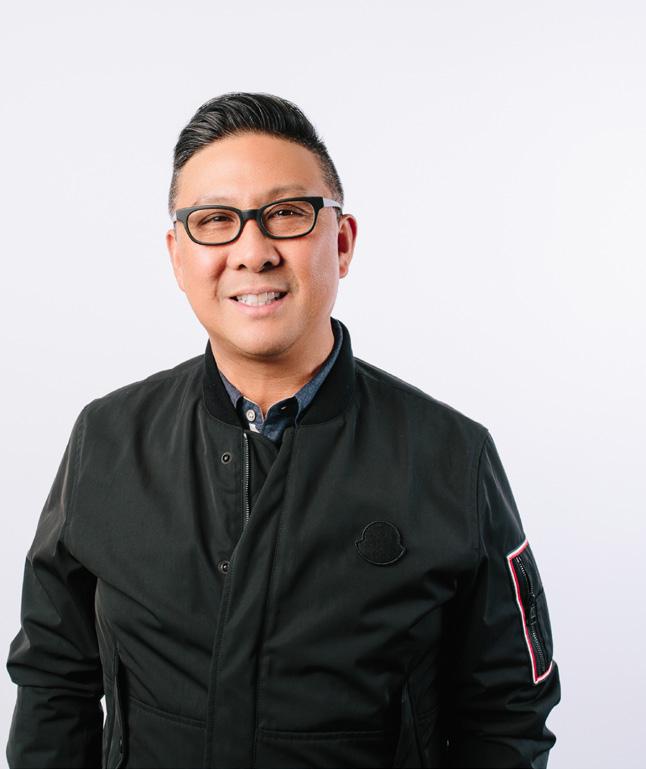
QUEL A ÉTÉ VOTRE TOUT PREMIER EMPLOI DANS LE DOMAINE DU DESIGN ?
– Mon tout premier poste a été un stage chez DesignMark, une firme de design d’intérieur à Mountain View, en Californie, en 1986. À l’époque, la Silicon Valley en était à ses débuts, et DesignMark se spécialisait dans l’aménagement de bureaux d’entreprise — exactement le type de projet auquel je voulais participer.
WHAT ATTRACTED YOU TO THAT FIRM IN PARTICULAR?
– Several things stood out. The founder, Randy Horton, had graduated from the same program I would later attend, and he had worked at Atari before launching the firm. But what really drew me in was their early use of computer-aided design. At the time, most firms were still drafting by hand, so seeing one embrace digital tools felt incredibly innovative.
COMMENT ÉTAIT L’ENVIRONNEMENT DE TRAVAIL À L’ÉPOQUE ? – C’était une configuration très classique : des cubicules de 8x8 pieds et quelques salles de réunion. Les clients étaient impressionnants — Lockheed, la NASA, et plusieurs jeunes pousses technologiques. J’ai obtenu ce stage parce que la colocataire de ma copine était l’une des designers principales de la firme.
WHAT KIND OF WORK DID YOU DO AS AN INTERN, AND WHAT DID YOU LEARN FROM IT?
– I started at the very bottom—making coffee, organizing storage, sending faxes, plotting drawings. But that experience taught me the value of humility and eagerness to learn. I vividly remember organizing the materials library and realizing how critical it was for designers who needed up-to-date samples and information. That attention to detail and support role shaped my entire approach to teamwork in design.
Saty SHARMA
Professor in Design for Sustainability
Savannah College of Art and Design (SCAD) Savannah, Georgia, United States scad.edu
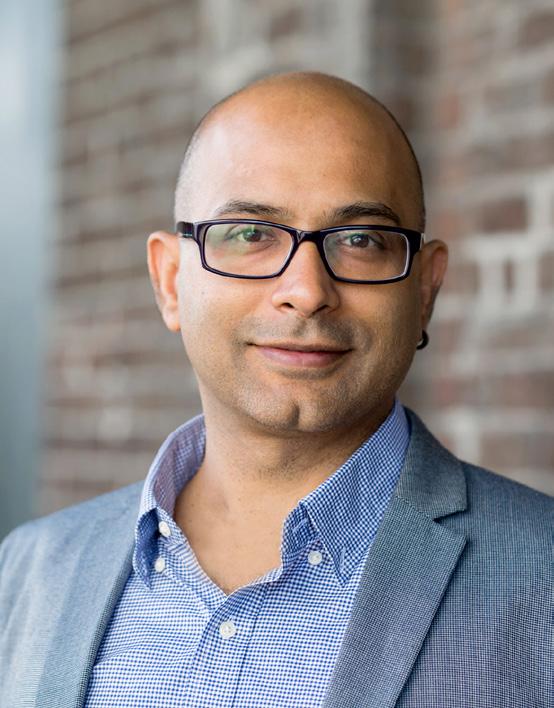
Merging psychology, sustainability, and design, Saty Sharma turns insight into action. A professor at SCAD, his work bridges global industry experience with research on behavior change, gamification, and sustainable living. De la conception de produits pour Philips et Electrolux à la formation de la relève, il œuvre à créer non seulement de meilleurs produits, mais de meilleures habitudes pour un monde meilleur.
FROM PRODUCT TO PURPOSE
“Go
beyond the functional and material aspects of design and consider the social and symbolic meaning associated with it. Simply said, a good design should aim to make users feel the way they want to feel.”
QUEL MÉTIER RÊVIEZ-VOUS DE FAIRE ENFANT ?
– Enfant, j’adorais créer de mes mains : découper, plier, réparer, construire. Je bricolais avec du papier, des outils, des machines. Cette curiosité m’a mené vers des études en génie mécanique. Mais ce qui m’animait vraiment, c’était l’aspect créatif : concevoir, résoudre des problèmes avec ingéniosité. C’est ce qui m’a conduit au design de produits.
WHO OR WHAT FIRST SET YOU ON THE PATH TO DESIGN?
– Meeting a group of young industrial design grads was a turning point. Their work lit a spark in me. My first role was as a product designer in water filtration, back in 2005 in New Delhi. It was a hands-on, intense experience that gave me a solid foundation—and eventually opened doors to working with global brands like Philips and Electrolux.
QUEL PROJET A VRAIMENT LANCÉ VOTRE CARRIÈRE ? – J’ai commencé en concevant des biens durables et dispositifs médicaux, mais je me suis vite interrogé : le design pouvait-il être plus responsable ? Cette réflexion m’a poussé vers le développement durable, le changement de comportement… et un doctorat en design axé sur le comportement.
WHAT LED YOU TO FOCUS ON SUSTAINABILITY?
– This research explored how game-based approaches could encourage the adoption of sustainable behaviors, opening new pathways to understand how design can drive environmental and social change. It became the catalyst for my transition into sustainability-focused design and completely reshaped how I perceive design today.
Sheng-Hung LEE
Ph.D. researcher and designer Massachusetts Institute of Technology Cambridge, Massachusetts, United States shenghunglee.com
FROM BUTTONS TO BEHAVIORS
Researcher and designer at MIT AgeLab and board director of the Industrial Designers Society of America (IDSA), Sheng-Hung Lee, Ph.D. explores where technology meets humanity—crafting meaning through systems and stories. Animé par la curiosité et le design de service, il conçoit avec la conviction que le design est un pont, non une destination.
DE QUEL RÉALISATION ÊTES-VOUS LE PLUS FIER ?
– Concevoir l’Espace d’Innovation de la Bibliothèque de Shanghai reste l’un de mes projets les plus marquants. Il a permis de concilier usage public, narration spatiale et design résolument tourné vers l’avenir.
WHICH OBJECT DO YOU WISH YOU COULD REDESIGN?
–The elevator button. A small, overlooked detail with big, untapped potential.
WHERE DO YOU LIVE OR WORK, AND WHY DO YOU LOVE IT?
–I finished my Ph.D. in Human Behavior and Service Design at MIT, and work in beautiful Cambridge, Massachusetts. Thanks to the people, the culture, and the spirit of this university town, it’s an intellectually stimulating setting in which to spread my wings.
COMMENT SURMONTEZ-VOUS UN BLOCAGE CRÉATIF ?
– Je lis des livres au hasard et je parle avec des designers d’ici et d’ailleurs, en personne ou en ligne. Les idées naissent souvent d’endroits inattendus. Il y a une librairie en ville qui m’inspire toujours — c’est une source constante de découvertes.
WHAT COLOR DRAWS YOU IN THE MOST, AND WHY?
–Neon green and light pink—two eccentric colors that both inspire and energize me.
WHAT MOTIVATES YOU AND EXCITES YOU MOST ABOUT THE DESIGN AND ARCHITECTURE INDUSTRY?
–I see immense potential in human-centered design. It’s most powerful to create with people—not just for them. Exceptional design, in my opinion, means creating sustainable and meaningful solutions that are rooted in empathy.
“H ijack your mentors and learn from many, many failures.”
Design for Longevity
Sophie BURKE
Principal
OF OCEAN BLUES AND QUIET BEAUTY
Sophie Burke, Vancouver-born and London-trained, founded her eponymous studio in 2004 to create refined, livable interiors rooted in both West Coast nature and European elegance. Convaincue que le design peut vraiment améliorer le bien-être, elle dirige une petite équipe soudée qui conçoit des espaces intemporels et profondément personnels où la beauté passe par la confiance, l’intuition et l’écoute.
“Iadmire the work of Ilse Crawford, Norm Architects, and Vincent Van Duysen, and would seize the opportunity any day to spend time with them and learn how they see the world.”
PETITE, QUEL MÉTIER RÊVIEZ-VOUS DE FAIRE ?
– J’hésitais entre enseignante et designer d’intérieur. Je suis heureuse d’avoir suivi la voie du design — c’est une carrière qui m’a comblée.
WHAT WAS YOUR FIRST JOB IN THE FIELD?
GIVE US A PLACE, A MOMENT, AND A STATE OF MIND.
– I was 21, working as an assistant for a small interior design firm while still in university. I remember sketching ideas for a café façade— the idea of unfettered creativity felt really freeing to me. It took a while to grasp that something I imagined could actually be built and used in the real world.
WHAT COLOR ARE YOU MOST DRAWN TO?
–I love the colour blue. I think it’s because I grew up close to the ocean, and I find it to be a calming, peaceful colour. I love that it’s a
complex colour with so many beautiful shades— from pale morning-sky blue to deep indigo. It can feel fresh and bright, or moody, and subtle, and a million things in between.
DANS QUELLE RÉGION VIVEZ-VOUS ET QU’EST-CE QUI VOUS PLAÎT DE CET ENDROIT ? – Je vis à Vancouver. C’est une chance énorme : on a la mer, les montagnes, des forêts anciennes pour marcher des heures… La nature m’apaise et m’inspire au quotidien. On a aussi un petit chalet sans électricité sur une île pas loin — c’est mon coin de paradis.
A DREAM STILL TO BE FULFILLED? TELL US ABOUT IT WITHOUT HOLDING BACK! –I’m currently working on a collaboration with a local company on a line of furniture and accessories—something I’ve always wanted to do. I’m really excited about it.
Sophie Burke Design Vancouver, British Columbia, Canada sophieburkedesign.com © Andrew Latreille
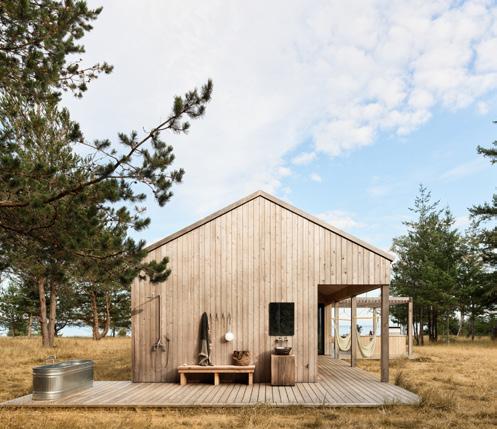
Steve CLEM
Principal TVS
Atlanta, Georgia, United States tvsdesign.com
FLIGHT, FOREST AND FORM
Steve Clem is a principal at TVS and a visionary in architecture and interior design since 1978. Known for his bold ideas, refined detailing, and elegant solutions, his work spans showrooms, offices, lobbies, headquarters, theaters, and aquariums—to name just a few. Mentor et penseur reconnu, il mène une carrière marquée par plus de 120 prix de design et a été nommé Designer of Distinction par l’American Society of Interior Designers (ASID), ainsi que Fellow de l’American Institute of Architects (AIA) en 2014.
“I’ve spent my life building through design—it’s the joy of being part of the whole process. While others retire, I’m still energized by new creative opportunities.”
QUELLE COULEUR VOUS ATTIRE LE PLUS ?
– Le pervenche. Elle me rappelle le jardin de ma mère — fraîche, apaisante et pleine d’élan.
WHAT DID THE CHILD VERSION OF YOURSELF WANT TO BE?
–I loved building things with my dad—architecture always felt like a natural path. Dulles Airport by Eero Saarinen sealed it. I was 12, visiting family in D.C., and the soaring roof capturing the spirit of flight was simply unforgettable.
WHERE DO YOU LIVE AND/OR WORK, AND WHAT DO YOU APPRECIATE ABOUT IT?
–I live in Atlanta, Georgia—an urban forest with beautiful green spaces and easy travel access. I’ve been here since high school, but every summer I return to my roots in Alaska to fish, do woodworking, and recharge from Atlanta’s heat.
QUEL EST LE MEILLEUR CONSEIL DE CARRIÈRE
QUE VOUS AYEZ REÇU ?
– J’ai appris très tôt à considérer l’architecture
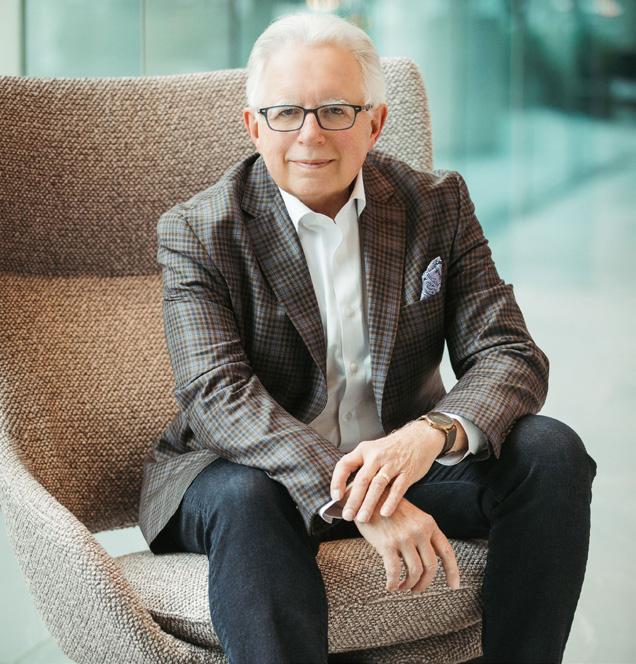
de façon holistique — à la fois de l’intérieur et de l’extérieur. Cette façon de penser a façonné mon parcours. Après douze ans à travailler sur des projets à grande échelle, je me suis tourné vers l’architecture intérieure, un virage qui a véritablement transformé ma carrière.
WHAT WAS YOUR FIRST JOB IN THE FIELD?
GIVE US A PLACE, A TIME, AND YOUR STATE OF MIND!
–I had a few architectural summer jobs during grad school, but my real start was at TVS in 1978. Aside from a brief six-week detour, I’ve been there ever since—and May 2025 marks my 47th anniversary.
DE QUELLE RÉALISATION ÊTES-VOUS LE PLUS FIER ?
– Je suis passionné par les grandes idées concrétisées dans les moindres détails. J’ai eu de nombreux projets gratifiants, mais ma plus grande fierté reste le Jio World Centre à Mumbai — un projet extraordinaire à tous les niveaux.
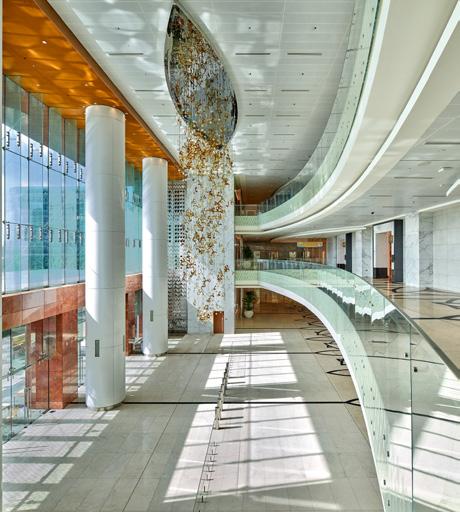
JIO WORLD CENTRE, CONVENTION CENTRE
© Harshan Thomson
Susan CHANG
Partner
Shimoda Design Group Los Angeles, California, United States shimodadesign.com
FROM A SPOON TO THE CITY
Susan Chang, partner and founding member of Shimoda Design Group, shapes dynamic spaces for leading global brands across entertainment, media, tech, and real estate. Guided by the philosophy that design is storytelling—from a spoon to the city—her work fosters community, wellness, and innovation. Lauréate de plusieurs prix, elle siège au conseil consultatif en architecture intérieure du Boston Architecture College et agit comme mentore auprès de la relève du design.
“To create, grow, and live meaningfully, we must embrace falling short and rising again. It’s not failure that defines us—it’s how we rise after.”

ENFANT, QUEL MÉTIER RÊVIEZ-VOUS DE FAIRE ?
– Je voulais devenir costumière… dans un cirque volant ! J’ai commencé la gymnastique à huit ans — un de mes plus beaux souvenirs — et je rêvais de participer aux Jeux olympiques comme Nadia Comaneci. Quand ce rêve s’est éteint à 12 ans, j’ai voulu devenir trapéziste… et créer moi-même mes costumes.
WHAT IS THE BEST CAREER ADVICE YOU’VE EVER RECEIVED?
– Samuel Beckett said it best: “Ever tried. Ever failed. No matter. Try again. Fail again. Fail better.” Failure isn’t just inevitable—it’s essential.
VOTRE RESTO PRÉFÉRÉ À L.A., ET CE QUE VOUS Y COMMANDEZ HABITUELLEMENT ?
– Manuela LA, niché dans la cour des galeries Hauser & Wirth dans le Arts District — à deux
pas de mon bureau. C’est l’endroit idéal pour clore la semaine avec un martini Vesper et leurs biscuits à la crème avec prosciutto. Un vrai délice !
IF YOU COULD ORGANIZE A CREATIVE BRAINSTORM WITH THREE PERSONALITIES, LIVING OR DECEASED, WHO WOULD YOU INVITE AND WHAT WOULD YOU BRAINSTORM ABOUT?
– My fantasy brainstorm session would bring together pioneering minds to create with purpose. I’d invite pioneering modernist designer and architect Eileen Gray, visionary sculptor Louise Bourgeois, and trailblazing designer, filmmaker, and architect Ray Eames. Together, we’d design educational toys for girls, a solar-powered wheelchair and a modern innovative brassiere.
Suzanne WILKINSON
Principal Figure3
Toronto, Ontario, Canada figure3.com

WHAT WAS THE MOMENT THAT SET YOU ON YOUR CAREER PATH, AND HOW DID THE STORY UNFOLD?
–My journey into design began in high school when I took a woodworking course that resonated with me. It taught me the importance of planning, understanding materials, and selecting the right tools to create something practical and beautiful. That hands-on experience sparked a passion for thoughtful, well-crafted spaces and led me to pursue interior design. I realized I wanted to improve people’s everyday lives through design that is both functional and inspiring.
QUELLE RÉALISATION VOUS REND LA PLUS FIÈRE ?
– Avoir remporté à la fois un prix VODA et une Médaille du Gouverneur général en architecture pour la maison-jardin de type laneway conçue avec Williamson Williamson Architects.
C’était un projet profondément personnel, qui démontre comment un design réfléchi peut
FROM WOOD TO WONDER
Award-winning interior designer Suzanne Wilkinson brings nearly 30 years of experience to her role. Since joining Figure3 in 2006 and becoming Principal in 2013, she has helped shape it into one of Canada’s top studios. Lauréate de nombreux prix ARIDO, VODA, BILD, The Nationals, ainsi qu’une Médaille du Gouverneur général elle pilote également les initiatives en matière de durabilité, de diversité et de gouvernance éthique au sein de la firme.
“Lead with empathy and kindness—keep just enough ego to show your brilliance while saving room for fresh perspectives.”
transformer notre manière d’habiter. Cette reconnaissance a validé la force de la collaboration et l’impact que peuvent avoir des solutions durables à petite échelle dans le tissu urbain.
WHAT MOTIVATES YOU, AND WHAT EXCITES YOU MOST ABOUT THE DESIGN AND ARCHITECTURE INDUSTRY?
–The belief that design can improve the world drives me. Whether creating environments that support well-being, foster connection, or spark joy, I am motivated by the chance to make a positive impact. I am enchanted by the industry's evolution, and mentoring young designers who bring fresh perspectives reminds me why I fell in love with design.
QUELLE EST LA COULEUR QUI VOUS ATTIRE LE PLUS, ET POURQUOI ?
– Le vert, depuis toujours. C’est la couleur de la nature… et des émeraudes.
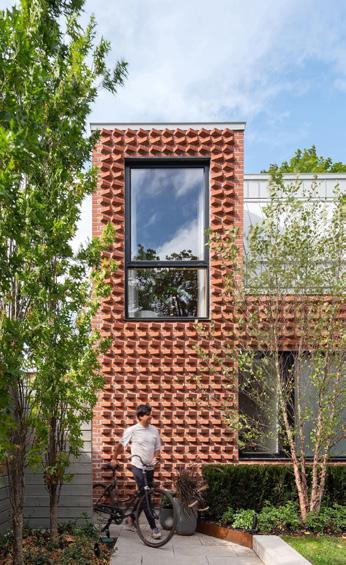
© Scott
Norsworthy
Verda ALEXANDER
Co-Founder
Studio O+A
San Francisco, California, United States verdaalexander.com
FROM PETRI DISHES TO BREAKING SOME

“Great design challenges us the way the sublime does—it inspires awe, and momentarily suspends us in a state of astonishment or wonder.”
Verda Alexander is a San Francisco-based designer and artist. She is the Editor-at-Large at Metropolis Magazine, co-founder of Studio O+A, and co-host of “Break Some Dishes” podcast that engages designers and innovators in conversations about meeting the challenges of climate change. Elle a été intronisée au Hall of Fame du magazine Interior Design et a reçu le National Design Award du Cooper Hewitt Museum en 2016.
WHAT DID THE CHILD VERSION OF YOU WANT TO BE WHEN YOU GREW UP?
–I grew up in a house full of science—Petri dishes, slides, beakers, microscopes. I thought I’d be a biologist, maybe even an astronaut. Then in high school, I discovered art class, and it completely changed how I saw the world—and I chose a more rebellious, creative path.
QUI OU QUOI VOUS A MISE SUR LA VOIE DU DESIGN ?
– Mon partenaire de l’époque, tout juste diplômé en architecture de paysage, m’a proposé qu’on fonde ensemble un bureau de design d’intérieur. On était jeunes, un peu naïfs, sans doute trop sûrs de nous — mais prêts à plonger. On a lancé notre agence à Fremont, en Californie, en 1991, juste à côté de la Silicon Valley. Nos bureaux étaient voisins d’un garage de pneus… mais l’énergie, la créativité et notre foi en ce projet rendaient cette période inoubliable.
QUEL PROJET A LANCÉ VOTRE CARRIÈRE ?
– Notre croissance a été progressive, mais le véritable tournant est arrivé avec le premier siège social de Facebook. Je n’en avais jamais entendu parler — ils avaient moins de 500 employés — mais le bureau qu’on leur a conçu a attiré l’attention à l’échelle mondiale. Tout à coup, on recevait des demandes de dossiers de presse de partout. C’est là qu’on a compris l’impact de notre travail.
WHAT ACHIEVEMENT ARE YOU MOST PROUD OF?
–I’m proud of always trying to put people first—creating a firm that feels like family and prioritizes well-being in a tough industry. Project-wise, the Food for Thought truck stands out. It was a crazy self-initiated idea to bring design to communities, and it ended up becoming a beautiful book. It truly pushed and inspired our team.
Zhaodi WANG
Senior Interaction Designer
New York, New York, United States
EMPATHY, EXPERIENCE, IMPACT
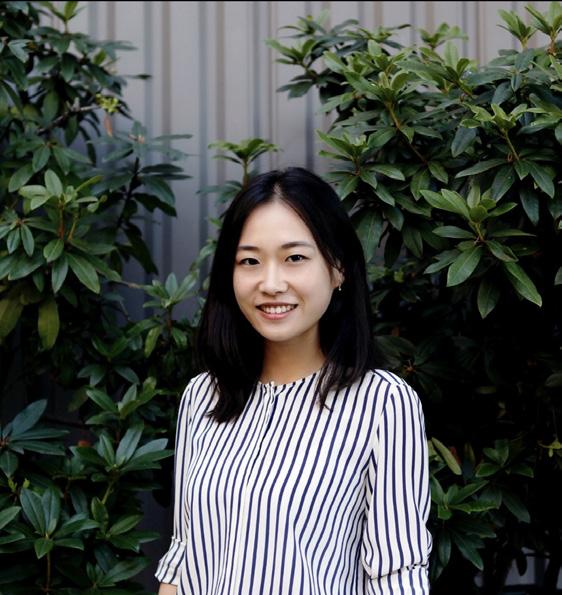
“K eep questioning, keep experimenting, and never wait for permission to create something meaningful.”
Celebrated interdisciplinary UX designer Zhaodi Wang brings over a decade of innovation across digital health, consumer tech, hardware, AI art, and environmental design. Now a Senior Interaction Designer at Google, she shapes seamless global payment experiences for millions. Sa passion pour le design intuitif et centré sur l’humain lui a valu une reconnaissance internationale et un impact réel dans plusieurs secteurs.
WHO WAS THE FIRST PERSON—OR WHAT WAS THE MOMENT—THAT SET YOU ON YOUR CAREER PATH, AND HOW DID IT UNFOLD?
–A shout-out to my professor, Mr. Zhang Yujun, who taught Design 101 in my first year of college and planted the seeds that grew into my design career. We spent hours exploring global artists and designers, purely for the joy of it. I began to develop my own taste, experiment with different styles, and ultimately shape my perspective as a designer.
DE QUELLE RÉALISATION ÊTES-VOUS LA PLUS FIÈRE ?
– Je suis fière d’avoir dirigé le système de design de Google Wallet et Google Pay. En créant des composants et des directives évolutives, nous avons renforcé l’accessibilité, la cohérence et la compatibilité multiplateforme — pour une expérience sécurisée et fluide.
WHAT MOTIVATES AND EXCITES YOU MOST ABOUT THE DESIGN AND ARCHITECTURE INDUSTRY?
–I’m fascinated by the iterative nature of digital design— launching early, learning from real users, and refining constantly. At Google, the scale of impact is immense—and learning directly from users at that level feels truly magical. It’s inspiring to see real-world feedback shape a product and to grow alongside both the users and the design itself.
COMMENT VOYEZ-VOUS L’AVENIR DE VOTRE PROFESSION ?
– L’IA transforme la tech, et beaucoup de designers s’y tournent — ce qui est passionnant. Mais quelle que soit l’avancée technologique, les expériences intuitives et humaines resteront le cœur du bon design. Le vrai facteur distinctif sera toujours l’UX, ancrée dans l’empathie et la création de valeur.
APPEL DE CANDIDATURES 19e ÉDITION
JUSQU’AU 1ER MAI 2026

L’APPEL À L’EXCELLENCE
Le concours international GRANDS PRIX DU DESIGN entre déjà dans sa prochaine phase. Professionnels et étudiants, développeurs, entrepreneurs et manufacturiers : c’est le moment de faire rayonner vos projets porteurs d’excellence, de sens et d’audace !
CALL FOR EXCELLENCE
The GRANDS PRIX DU DESIGN is already gearing up for its 19th edition. This is the perfect opportunity for professionals, students, developers, entrepreneurs, and manufacturers to showcase projects that embody excellence, purpose, and boldness!
CALENDRIER & TARIFS / TIMELINE & FEES
JUSQU’AU 15 NOVEMBRE 2025 = TARIF RÉDUIT
JUSQU’AU 15 FÉVRIER 2026 = TARIF RÉGULIER
JUSQU’AU 1ER MAI 2026 = TARIF FINAL
Soumettez vos projets entre le 1er août 2025 et le 1er mai 2026 sur gpd.design.
Submit your projects between August 1, 2025 and May 1, 2026 at gpda.design. int.design
INSPIREZ-VOUS

Explorez les projets soumis lors des précédentes éditions des GRANDS PRIX DU DESIGN sur int.design grâce à un moteur de recherche intuitif et visuel ! Design d’intérieur, architecture, paysage ou produit : chaque projet trouve sa place, créant une véritable encyclopédie d’inspiration. Un outil essentiel pour les professionnels et les passionnés !

GET INSPIRED
Discover past entries from the GRANDS PRIX DU DESIGN on int. design using our dynamic visual search engine! From interior design and architecture to branding, landscape, and product — every project is featured, forming a true inspiration encyclopedia. A valuable resource for both professionals and design enthusiasts!
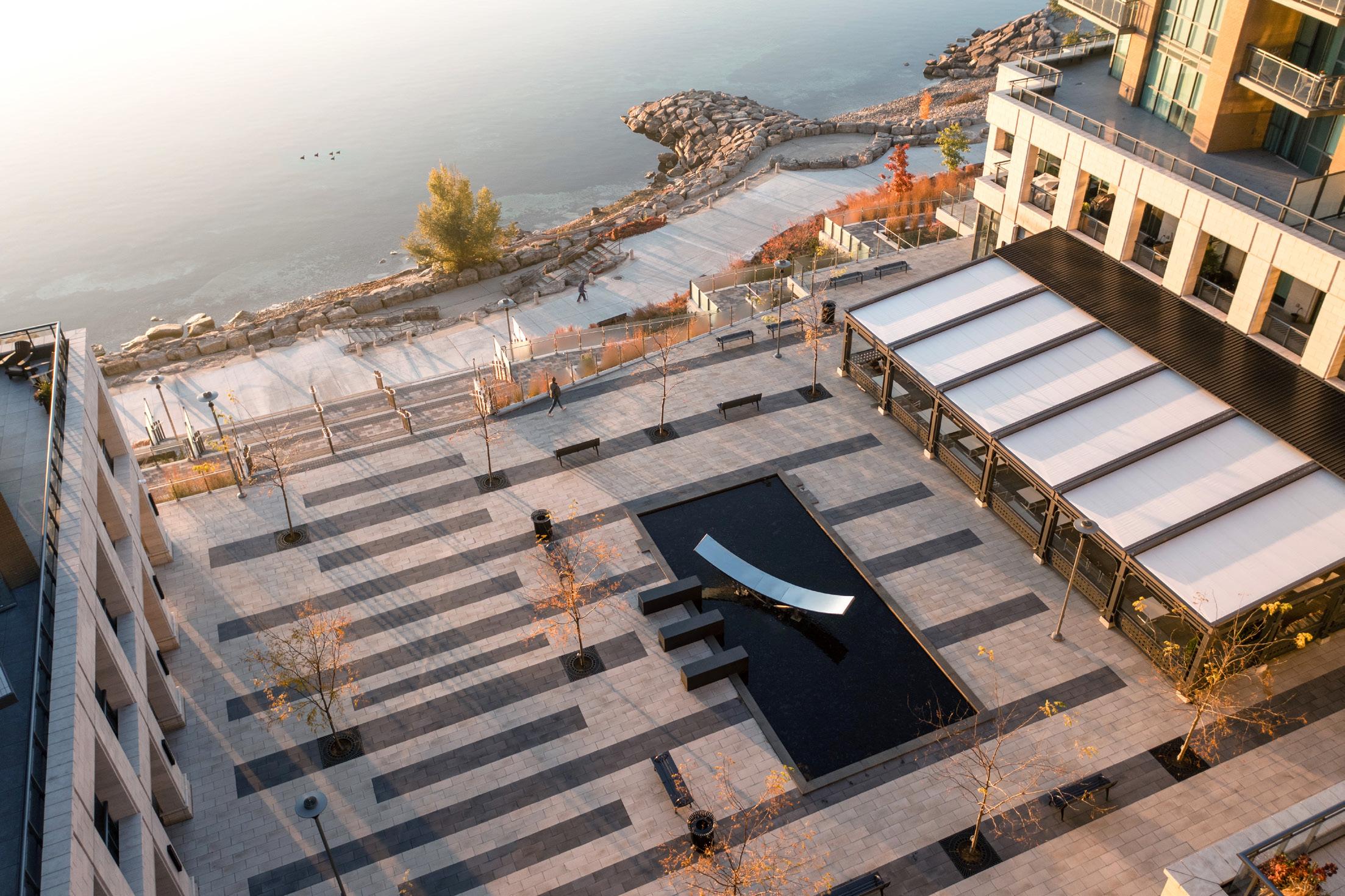

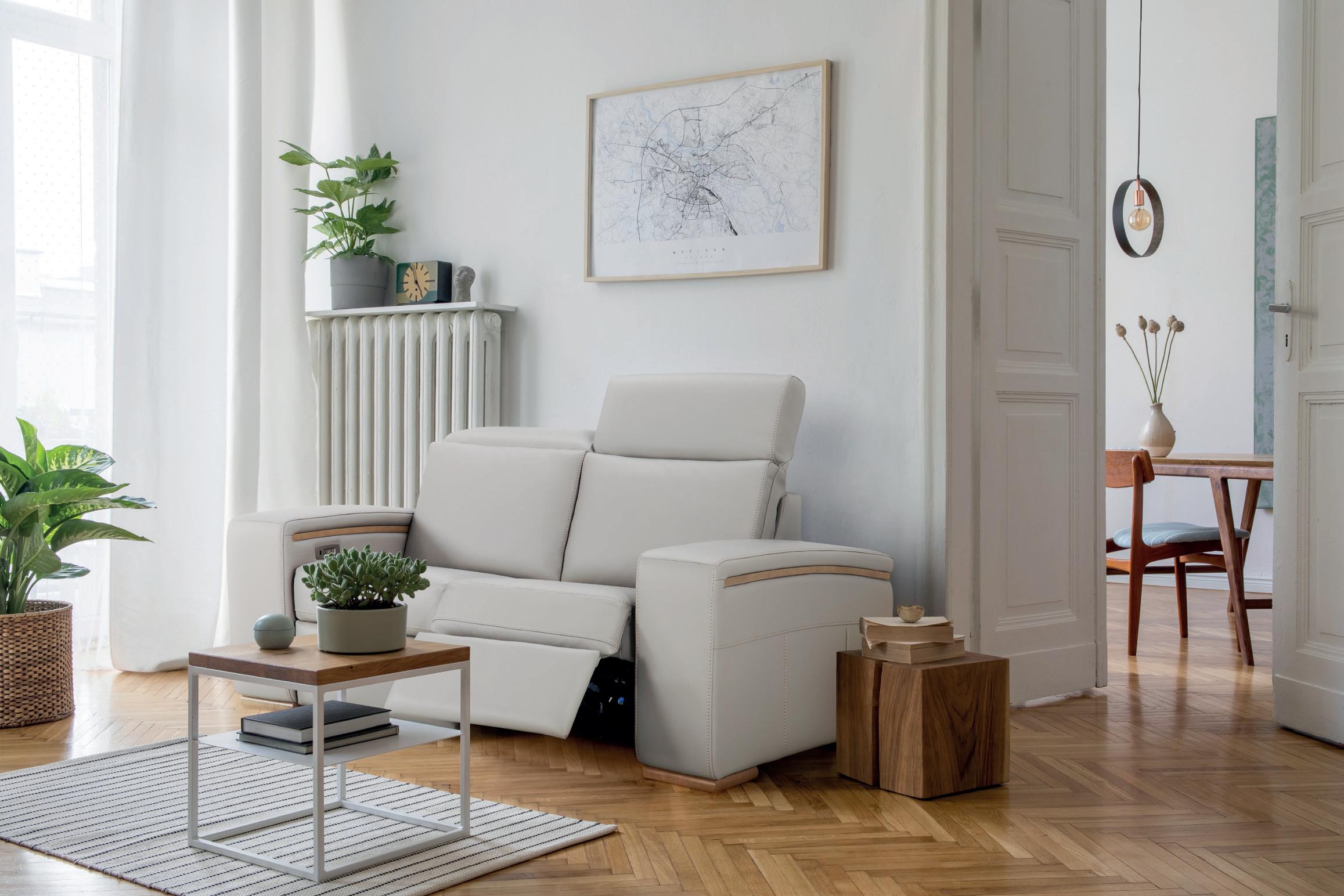
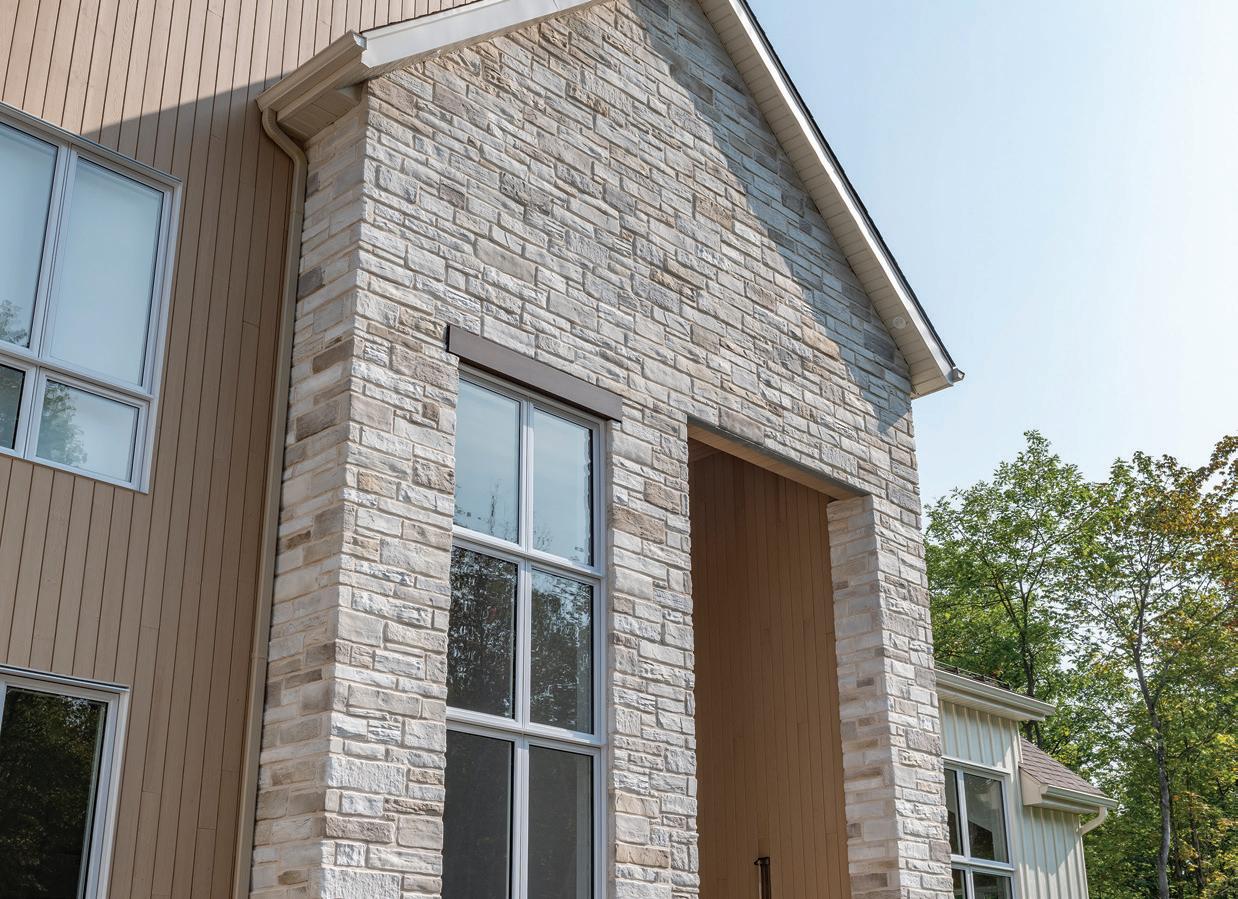
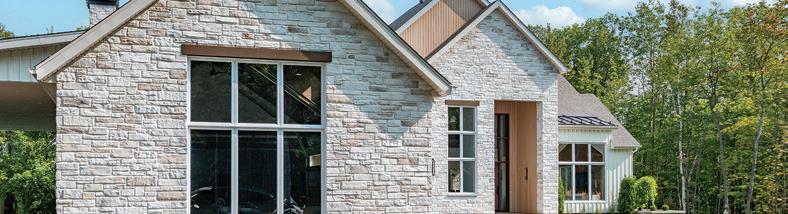
Fabricant, manufacturier et installateurs de portes, fenêtres et murs rideaux en aluminium
RÉSIDENTIEL & COMMERCIAL
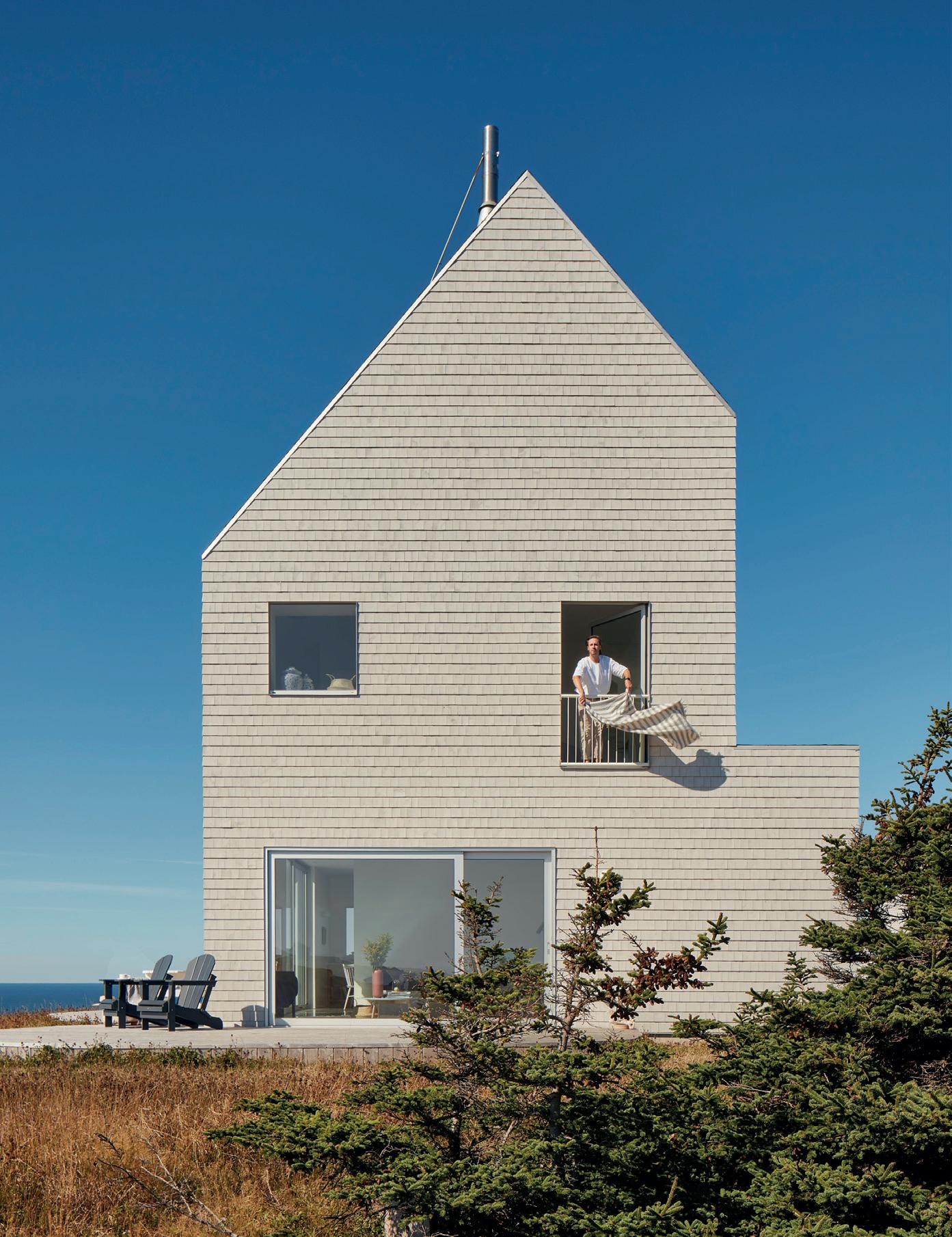
RECYCLABLE CERTIFIÉ LEED
Fièrement Québécois


Construisonsdesbâtimentsànotreimage
Découvrezlescouleursexclusivesdenoscouvre-planchersen caoutchouc A ABPURE etdenoscarreauxdevinyle T Texas Granite, conçuspourcréerdesenvironnementsaussidurablesqu'inspirants.

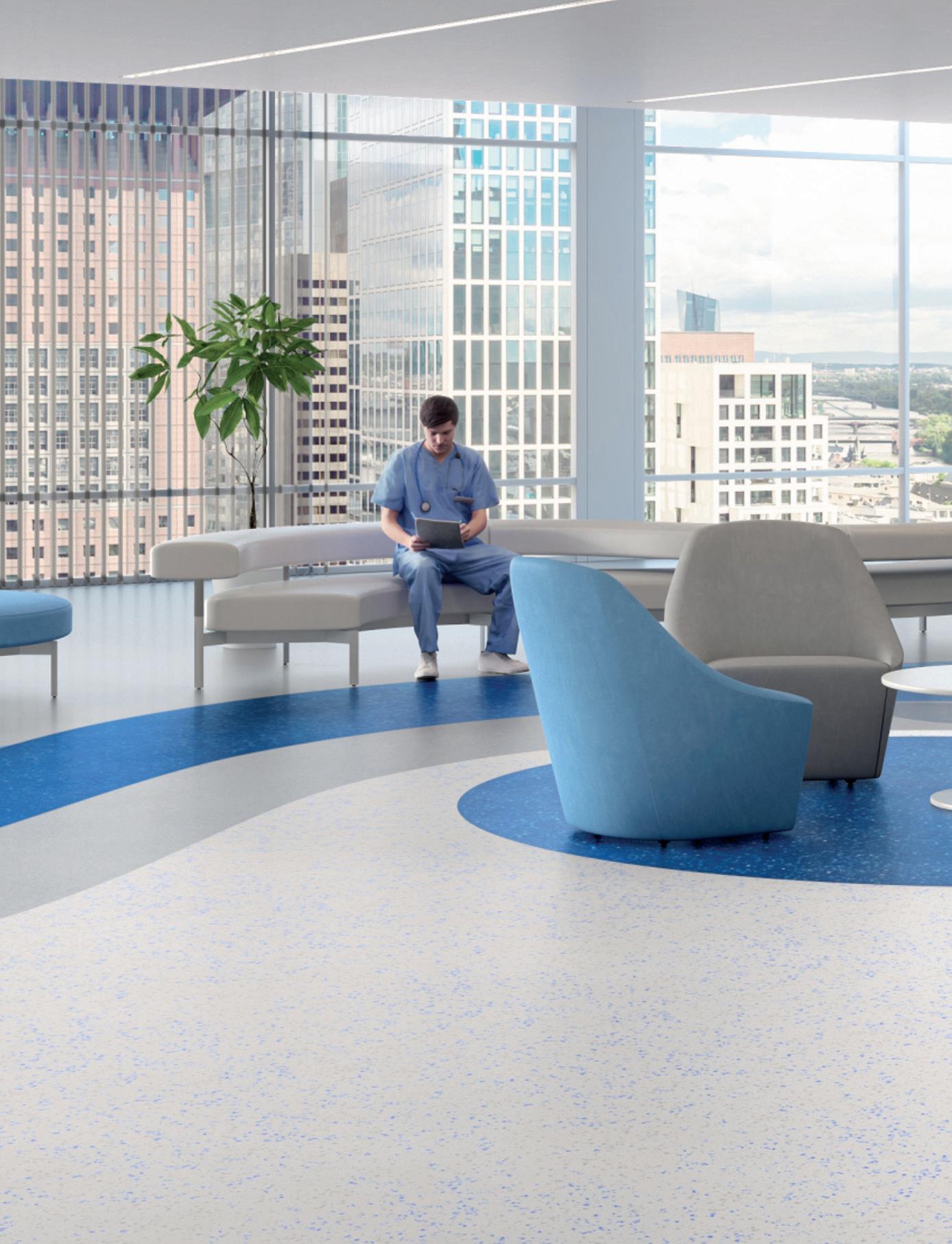

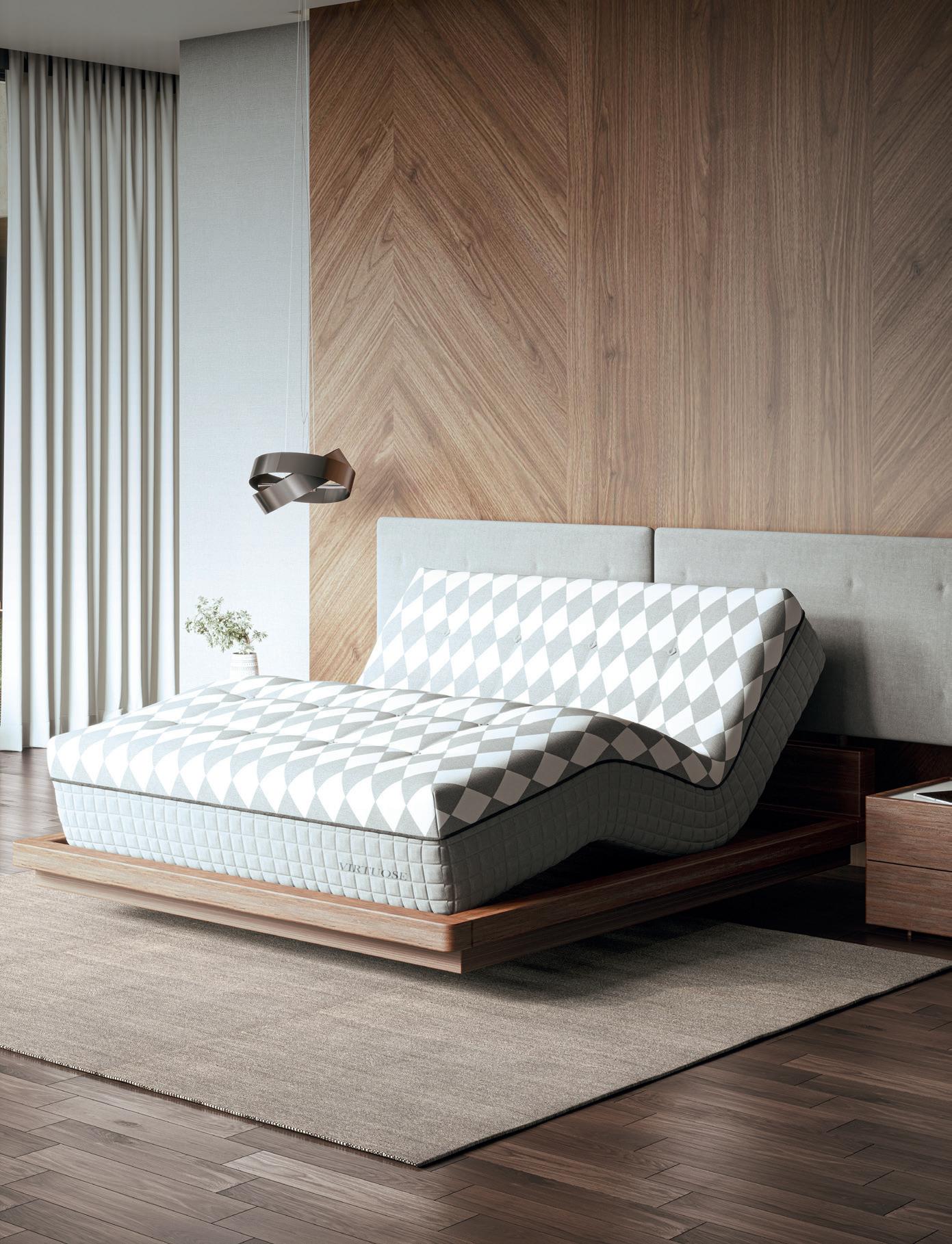
L’INNOVATION NE DORT JAMAIS
Découvrez notre collection Harlequin
DOSSSIER SPÉCIAL
Made In Q uébec
RACINES LOCALES, PORTÉE DURABLE
Dans un contexte où l’approvisionnement local, la résilience manufacturière et la traçabilité des matériaux prennent un sens nouveau, le design québécois s’affirme avec un aplomb assumé. De Sherbrooke à Rivière-du-Loup, de la Montérégie à la Beauce, des entreprises façonnent, avec audace et maîtrise, des produits durables, distinctifs et profondément enracinés en sol québécois.
THE POWER OF LOCAL
Whether in furniture, flooring, windows and doors, millwork, lighting, or architectural materials, these local companies’ skills weave a rich and cohesive tapestry—at once human, functional, and forward-thinking.
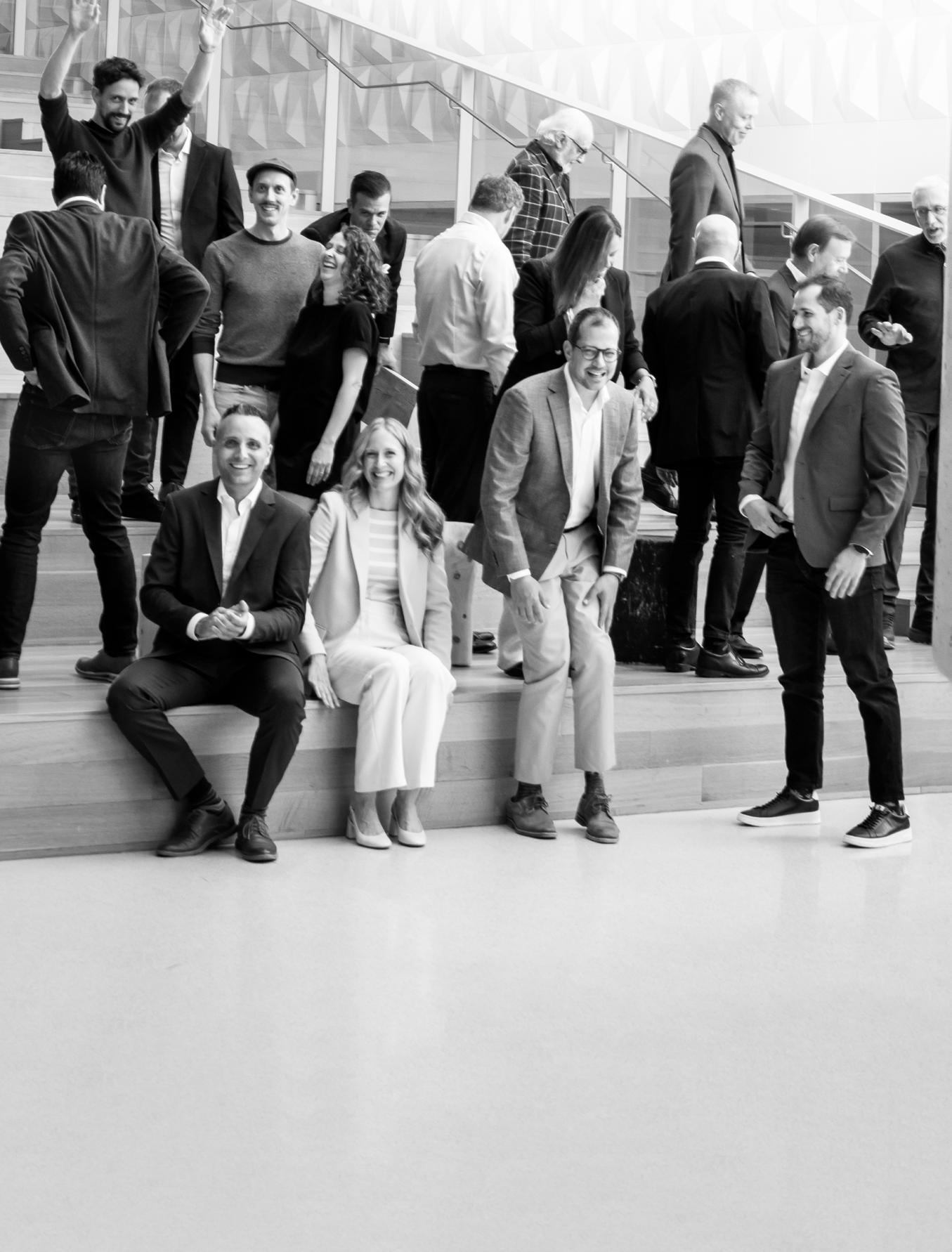
LES VOIX DERRIÈRE LES MATIÈRES
Nous sommes allés à la rencontre des femmes et des hommes derrière certaines entreprises d’ici pour parler d’innovation, de transmission et de fabrication locale — mais surtout, de cette volonté commune de faire rayonner le Québec à travers des produits d’architecture et de design qui transforment nos espaces avec intelligence, sens et intention.
LONG LIVE LOCAL DESIGN
Behind every piece conceived, there is a grounded idea, a masterful gesture, and a deep desire to build differently. Let’s step into these places where tomorrow’s design is already taking shape.
UN DÉCOR À LA HAUTEUR DE LEUR VISION
C’est au cœur du Complexe des sciences du Campus MIL de l’Université de Montréal — vaste lieu de savoir porté par une architecture visionnaire — qu’a eu lieu notre séance photo pour la couverture de ce numéro, un lundi baigné de lumière. Érigé sur le site de l’ancienne gare de triage d’Outremont, ce lieu emblématique conçu par les firmes Menkès Shooner Dagenais LeTourneux, Lemay et NFOE incarne une vision du monde où le design et l’architecture relient, élèvent et transforment. Lauréat des GRANDS PRIX DU DESIGN, il illustre parfaitement l’esprit de ce dossier spécial Made in Québec.
DESIGNED TO BRING PEOPLE TOGETHER
It was in the Complex’s atrium—crafted to connect people, shaped by noble materials and inspiring volumes—that we brought together eighteen business leaders at the helm of fourteen companies firmly anchored in Quebec. A luminous moment, set in a place that reflects the spirit of this feature: visionary, purposeful, and deeply human.
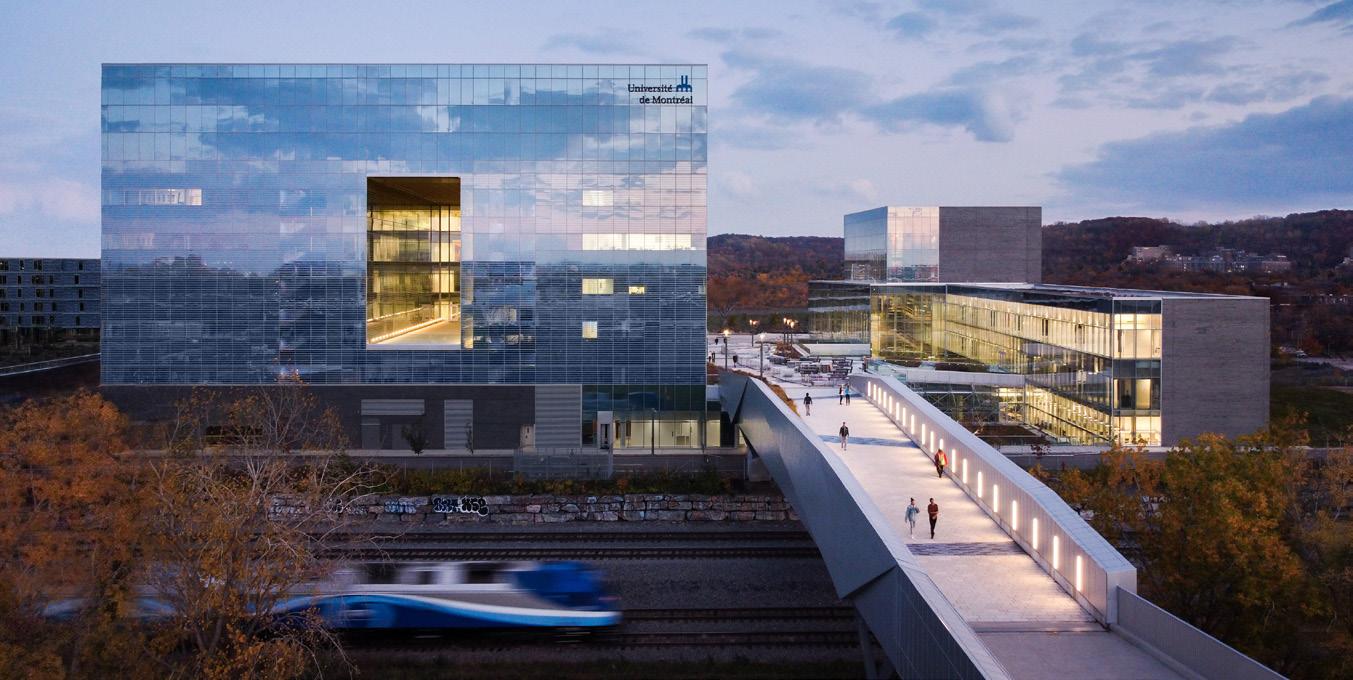
DANS L’ŒIL DE L’EXPERT
C’est le photographe Stéphane Brügger qui s’est prêté au jeu de capturer les dix-huit personnalités d’affaires réunies pour ce dossier, au cœur même d’un lieu qu’il connaît intimement. Basé à Montréal, Stéphane Brügger n’est pas un inconnu des architectes et designers d’ici : appelé à photographier certains des plus beaux projets d’intérieur et d’architecture au Québec, il s’est taillé une réputation enviable grâce à son regard sensible, sa maîtrise de la lumière et son sens de la composition.
CAPTURING THE SOUL
Brügger had already immortalized the MIL Science Complex—his architectural photographs of the space having earned accolades at the GRANDS PRIX DU DESIGN. Known for revealing the soul of the places he captures, he once again rose to the occasion, portraying not only the power of the setting, but also the character of these women and men shaping Quebec Inc.—today and for the future.
STÉPHANE BRÜGGER PHOTOGRAPHE
www.stephanebrugger.com
FRÉDÉRIC GUÉRIN
Premier vice-président ventes et marketing Sherbrooke, Québec, Canada
DANIEL PELLETIER
Président Granby, Québec, Canada
CHRISTIAN MARCOUX CUISINE ET MOBILIER
CHRISTIAN MARCOUX
Président fondateur
SYLVAIN LABRECQUE
Directeur général et associé
CAROL-ANNE VACHON
Directrice des ventes et associée
Saint-Isidore, Québec, Canada
DENIS LAVOIE
Vice-président et directeur général Montréal, Québec, Canada
GUILHEM GOSSELIN
NATHAËL GOSSELIN
NAOMI CHASSÉ-JEAN
Co-fondateurs associés
Sherbrooke, Québec, Canada
MARC-ANTOINE BONNEVILLE
Copropriétaire et directeur commercial Rivière-du-Loup, Québec, Canada
FRANÇOIS ST-PIERRE
Co-propriétaire & vice-président ventes Anjou, Québec, Canada
ÉRIC DAIGLE
Président
Montréal, Québec, Canada
PIERRE-LUC RACINE
Directeur général
Terrebonne, Québec, Canada
STÉPHANE MASSICOTTE
CHRISTIAN MASSICOTTE
Co-propriétaires
Montréal, Québec, Canada
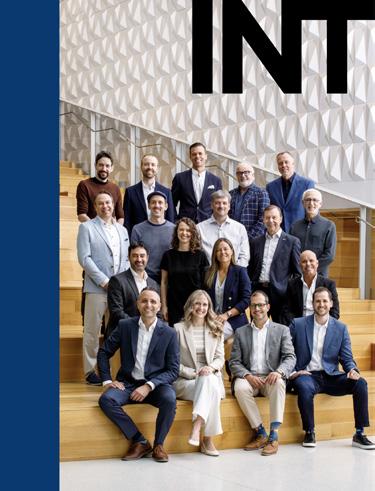
EN COUVERTURE de gauche à droite, de haut en bas : 4E RANGÉE Guilhem Gosselin, Pierre-Luc Racine, Bobby Correia, François St-Pierre, Denis Lavoie, 3E RANGÉE
Frédéric Marier, Nathaël Gosselin, Frédéric Guérin, Daniel Pelletier, Éric Daigle, 2E RANGÉE Charles-Antoine Gauvreau, Naomi Chassé-Jean, Alexandra Champagne, Stéphane Massicotte, 1ÈRE RANGÉE Sylvain Labrecque, Carol-Anne Vachon, Christian Marcoux, Marc-Antoine Bonneville
RINOX & RIALUX
BOBBY CORREIA
Directeur général Terrebonne, Québec, Canada
SHALWIN & PRÉVOST ARCHITECTURAL
ALEXANDRA CHAMPAGNE, Co-présidente — Groupe Champagne Shawinigan & Richelieu, Québec, Canada
FRÉDÉRIC MARIER
Président - Directeur général Lévis, Québec, Canada VANICO-MARONYX
CHARLES-ANTOINE GAUVREAU, Directeur général Terrebonne, Québec, Canada
À MÊME LE SOL, À MÊME LE CŒUR
FRÉDÉRIC GUÉRIN
Premier vice-président ventes et marketing
american-biltrite.com/couvre_planchers
Siège social / Sherbrooke
Maison mère / Wellesley Hills, Massachusetts, États-Unis
Année de fondation / 1908
Nombre d’employés / 260 à Sherbrooke
Production locale / 90 % fabriquée au Québec
Matériaux et composantes d’origine québécoise / 10 %
American Biltrite
Made in Québec
Territoires desservis / Québec, Canada, États-Unis, Europe
Ventes par région / Québec 5 %, reste du Canada 15 %, États-Unis 77 %, Europe 3 %
Implantée à Sherbrooke depuis 1913, American Biltrite couvre-planchers est une entreprise centenaire bien ancrée en sol québécois. Spécialisée dans les couvre-planchers commerciaux et les produits de caoutchouc industriel, elle emploie plus de 260 personnes dans la région.
Blending manufacturing heritage with innovation and sustainability, American Biltrite Flooring is carving out a distinct path in North America’s industrial landscape. Frédéric Guérin and JeanPierre Benoit speak of a company proud to produce locally, with rigor and responsibility.
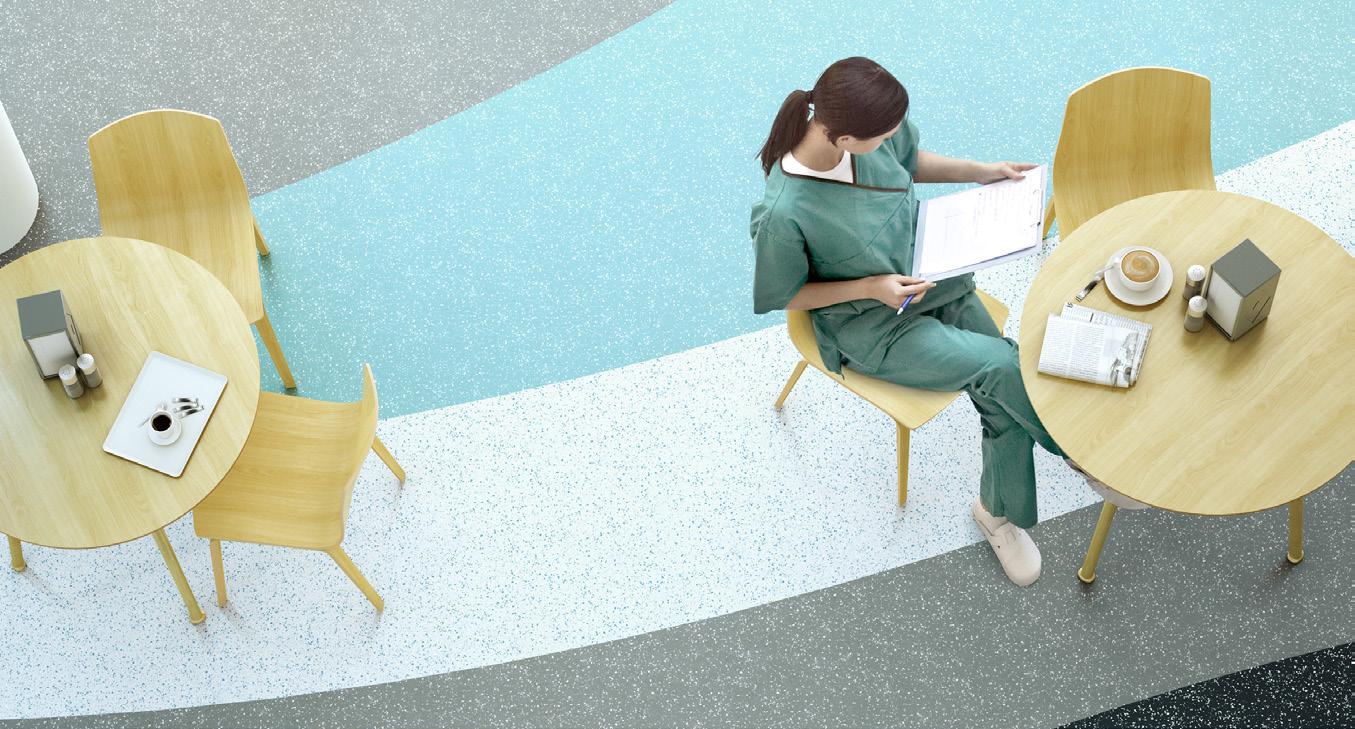
CARREAUX DE VINYLE TEXAS GRANITE en centre hospitalier.
CENTRE DE DISTRIBUTION
CROSS-BORDER FOUNDATIONS
Founded in 1908 in Massachusetts, American Biltrite has been family-run by the Marcus family for over a hundred years. The Sherbrooke plant opened in 1913, launching a long-standing industrial presence. To this day, the company thrives thanks to a team dedicated to maintaining the highest standards.
DEUX EXPERTISES, UNE MÊME RIGUEUR
Sa force repose sur deux pôles : des revêtements de sol destinés aux milieux institutionnels, commerciaux et éducatifs, et des produits de caoutchouc industriel tels que des joints et scellants d’étanchéité pour les mines, les hôpitaux et bien d'autres secteurs. Cette complémentarité permet d’optimiser ressources, procédés et équipements.
INVESTING IN GROWTH
With $25 million invested over the last five years—and more to come—American Biltrite is growing steadily. “Our growth is driven by the agility of our production,” says Frédéric Guérin. “We develop our own equipment, adapt our methods, and respond to real-world needs.”
CERTIFICATIONS, ACTIONS, RÉSULTATS
Première usine de caoutchouc en Amérique du Nord à obtenir la certification ISO 9001, American Biltrite est aussi certifiée ISO 14001. L’entreprise ne se contente pas de cocher les cases : ici, les engagements environnementaux sont tangibles.
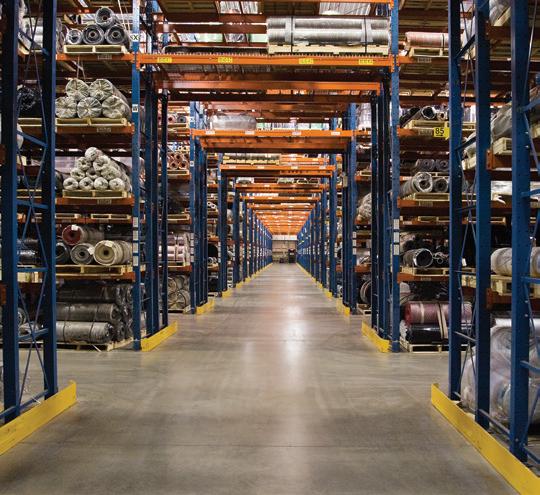
«En dix ans, grâce à nos efforts collectifs, nous avons retiré l’équivalent de 275 voitures de la circulation estrienne, réduit notre consommation énergétique de quoi alimenter 37 foyers par an, et économiser l’eau de 11 piscines olympiques chaque année — simplement en optimisant notre système de refroidissement », souligne Jean-Pierre Benoit, Directeur Général et signataire de la politique environnementale de l’entreprise.
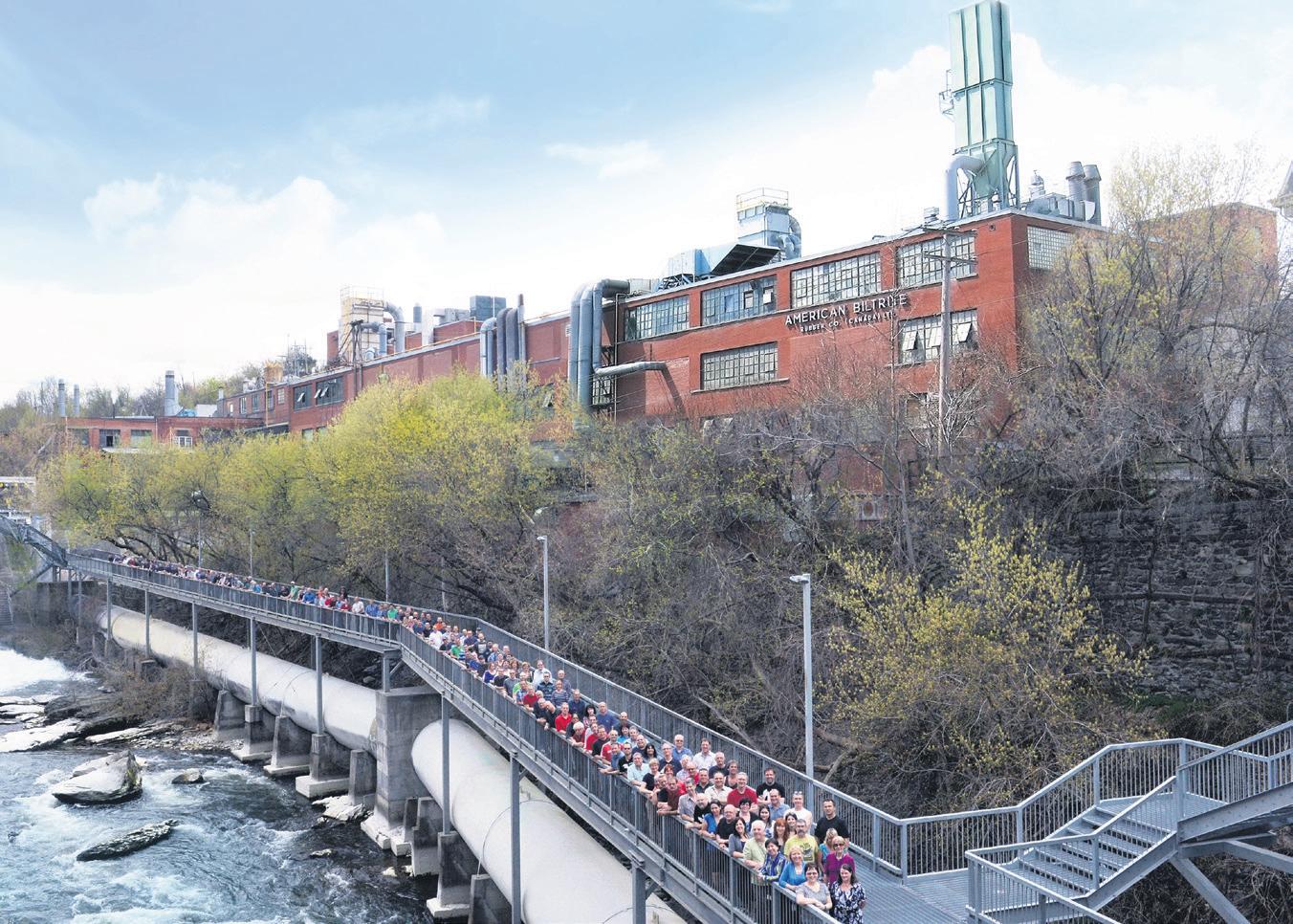
AMERICAN BILTRITE célèbre plus de 110 ANS d’existence dans la communauté sherbrookoise.
American Biltrite, Sherbrooke
A FERTILE ECOSYSTEM
This momentum is strengthened by Sherbrooke’s unique local ecosystem. “We benefit from an impressive talent pool here: the Université de Sherbrooke, cutting-edge chemistry research, over twenty rubber-related companies, and specialists across diverse segments. It’s an ideal environment for innovation,” adds Jean-Pierre Benoit. Public programs—including initiatives sustained by the City of Sherbrooke—also help drive innovation.
UNE AVANCÉE QUI INSPIRE
Parmi ses percées récentes : un procédé breveté de revalorisation des retailles de caoutchouc. Broyées mécaniquement, réduites en poudre fine (sans agent chimique), elles sont réintégrées dans de nouveaux produits sans pour autant en perdre ses propriétés physiques — garde-boue, protections industrielles. Une avancée écologique qui fait école.
PRODUITS VEDETTES, ADN D’ICI
Parmi les grandes fiertés d’American Biltrite, deux innovations reflètent bien son savoir-faire. Le premier : Texas Granite™, une tuile de vinyle haut de gamme (SVT) à l’allure patinée et aux propriétés écologiques marquées. Sans cire, durable, facile d’entretien, elle s’impose comme alternative aux VCT classiques et connaît un franc succès depuis huit ans.
Deuxième fleuron : ABDEFENDER™, un revêtement ignifuge développé sur plus de deux ans pour répondre aux normes nord-américaines les plus exigeantes. Conçu pour les sorties de secours et escaliers d’issue, il prouve qu’excellence technique et sécurité peuvent aller de pair.
ROOTED AND CONNECTED
In 2018, Frédéric Guérin restructured the sales and marketing team for the rubber division, aligning everyone’s strengths to maximize field performance. The results speak for themselves. While American Biltrite primarily exports to the U.S. and English-speaking Canada, it also reaches Europe, Japan, Australia, and the Middle East. Its 23-person sales team is strategically placed to ensure a personal touch — even at a global scale.
AB PURE American Biltrite lance en 2021 une nouvelle collection exclusive au couleur du Québec.
CARREAUX ET GIRONS DE MARCHES ABDEFENDERMC
LOYAUTÉ ET FIERTÉ
Ici, l’ambiance est humaine et respectueuse. « On ne travaille pas ici par hasard. Il y a un sentiment d’appartenance fort, une fierté de participer à quelque chose de plus grand que soi », note Frédéric Guérin.
Tout est mis en œuvre pour entretenir ce lien : dîners, pique-niques, courriels collectifs où chacun peut s’exprimer. « Ce qui m’a frappé à mon arrivée, c’est le sentiment d’implication. Tu envoies un message à toute l’équipe… et tout le monde te répond. Chacun se sent concerné, chacun veut contribuer », souligne Frédéric Guérin.
A CORNERSTONE OF ESTRIE’S INDUSTRY
Firmly rooted along the river shores in Sherbrooke for 112 years and counting, American Biltrite is a committed corporate citizen, with long-serving employees and ties to the Université de Sherbrooke and the local cultural scene. The plant’s close proximity to the city center is a daily testament to its integration — and to its intention to help the community thrive.
FAIRE MIEUX, ENSEMBLE
Si American Biltrite rayonne depuis plus d’un siècle, c’est qu’elle a su évoluer sans se renier. Aujourd’hui encore, l’énergie est vive, la vision claire, la passion bien réelle. Miser sur la qualité, l’humain et la planète — c’est possible. Et même agréable. Car innover, fabriquer et transformer, ici, c’est une aventure partagée : locale, durable et profondément humaine.
CARREAUX DE VINYL TEXAS GRANITE en milieu hospitalier
Près de 10 millions ont été investis dans L’USINE DE SHERBROOKE depuis 1908.
QUAND LE QUÉBEC FRANCHIT LES FRONTIÈRES
Président
DANIEL PELLETIER

artopex.com
Siège social et maison mère / Granby
Année de fondation / 1980
Nombre d’employés / 800
Production locale / 100 % fabriquée au Québec
Matériaux et composantes d’origine québécoise / 71 %
Territoires desservis / Québec, Canada, États-Unis
Ventes par région / Québec 48 %, reste du Canada 20 %, États-Unis 32 %
Artopex
Made in Québec
À Granby, une entreprise familiale 100 % québécoise respire au rythme du bois, du métal et de l’humain. Depuis 45 ans, Artopex façonne des environnements de travail pensés pour durer — et pour faire du bien. Ici, le mobilier ne sort pas simplement d’une ligne d’assemblage : il naît d’une chaîne intégrée, locale et cohérente, qui va de l’idée à la finition, en passant par la découpe, le pliage et l’ensemble des détails conçus.
This deliberate vertical integration, fueled by a culture of ongoing innovation, enables the company to shine across Canada and the U.S.—all without losing touch with its roots. Because in Granby, Sherbrooke, Laval, and now Saint-Jérôme, to manufacture still means: to create, to build, and to pass on.
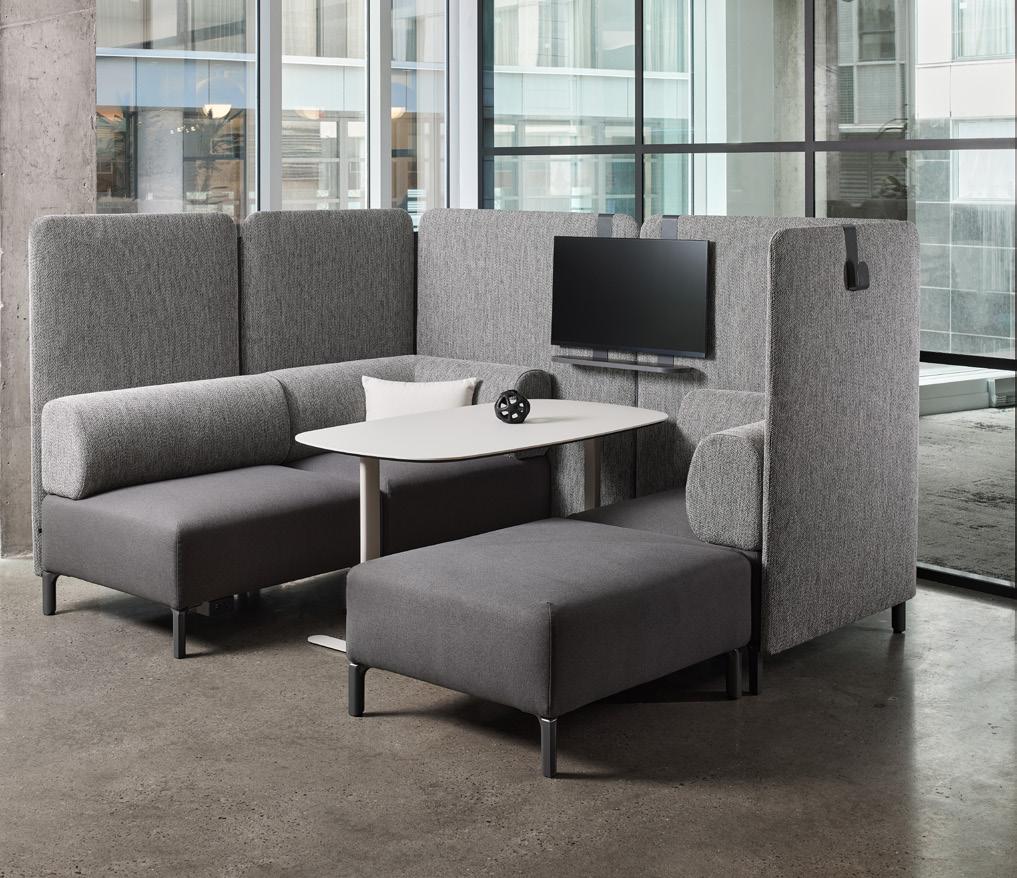
J’AURAIS VOULU VIVRE DANS LES 80S…
Dans les années 80, Daniel Pelletier et ses frères rêvent de créer du mobilier d’ici, avec les ressources et les talents d’ici. Leur entreprise, d’abord baptisée ProMeubles, prend de l’ampleur. En 1993, ils acquièrent Artopex — un nom qui deviendra emblématique.
GROWING STRONG
With a fierce commitment to local manufacturing, the original SME gradually evolved into a fully integrated group, able to meet North American demand. In 2025, Artopex celebrates its 45th anniversary and ranks among Canada’s Best Managed Companies—for the eighteenth consecutive year.
LA RELÈVE FAMILIALE
Aujourd’hui, ce sont les fils de Daniel, Francis et Martin Pelletier, qui assurent la relève. Le premier dirige les
MUTE BOX ET COLLECTIONS LOUNGE
ventes et le marketing au Canada et aux États-Unis, tandis que le second supervise les opérations manufacturières et les finances. Une transition douce, étalée sur près d’une décennie, façonnée par le terrain, des formations ciblées et un accompagnement réfléchi. Pas de pression : juste le temps qu’il fallait pour transformer l’envie en engagement, et l’engagement en leadership.
INNOVATION WITH A HUMAN TOUCH
At Artopex, innovation doesn’t mean turning away from heritage—it means building on it. In April 2025, the company opened a new chapter by acquiring Trica, a specialist in high-end residential furniture. This alliance introduced a new vision: commercial furniture inspired by the warmth of home, crafted from noble materials like glass, porcelain, and textured metal.
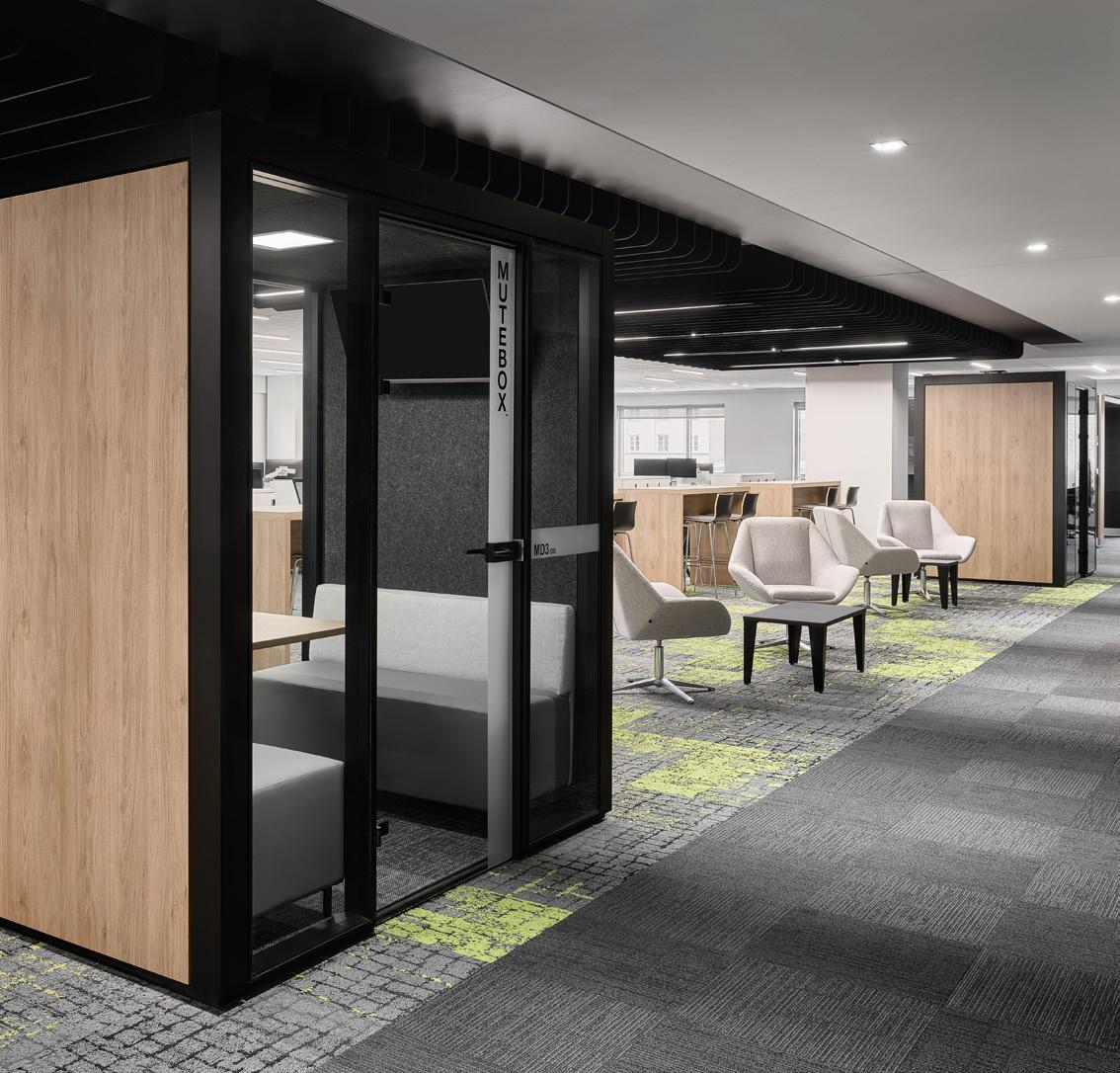
QUAND LA MAISON S’INVITE AU BUREAU
Le sofa Le Cournoyer, signé Trica, avec ses lignes pures et sa conception modulaire, devient une pièce centrale d’espaces lounge inspirants. « Chez Trica, nous avons toujours cru à un mobilier durable et inspirant, affirme son président François Caron. Avec Artopex, nous partageons une même passion : faire rayonner notre savoir-faire local à travers tout le continent. »
TWO WORLDS, ONE PHILOSOPHY
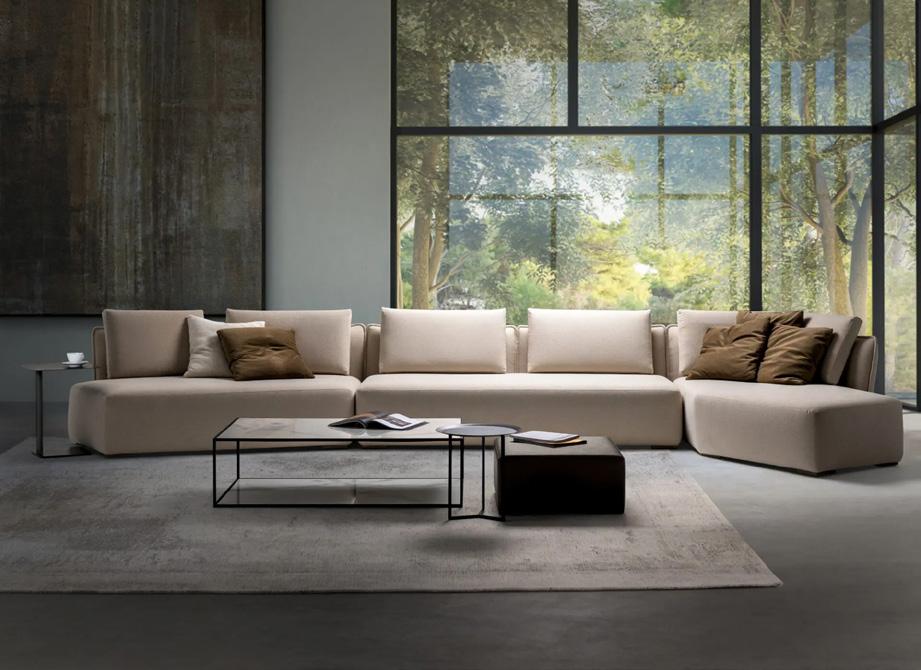
That same philosophy resonates in Artopex’s collections, such as Take Off. Reimagined with a residential spirit, this line blends elegance, modularity, and purposeful design. With refined finishes, tactile textures, contemporary colours, and flexible layouts, every detail is designed to beautify the workspace—while encouraging focus, movement, and collaboration.
That’s where the synergy between Trica and Artopex truly shines: together, they’re shaping a new generation of furniture that blurs the lines between home and office, comfort and performance, aesthetics and function.
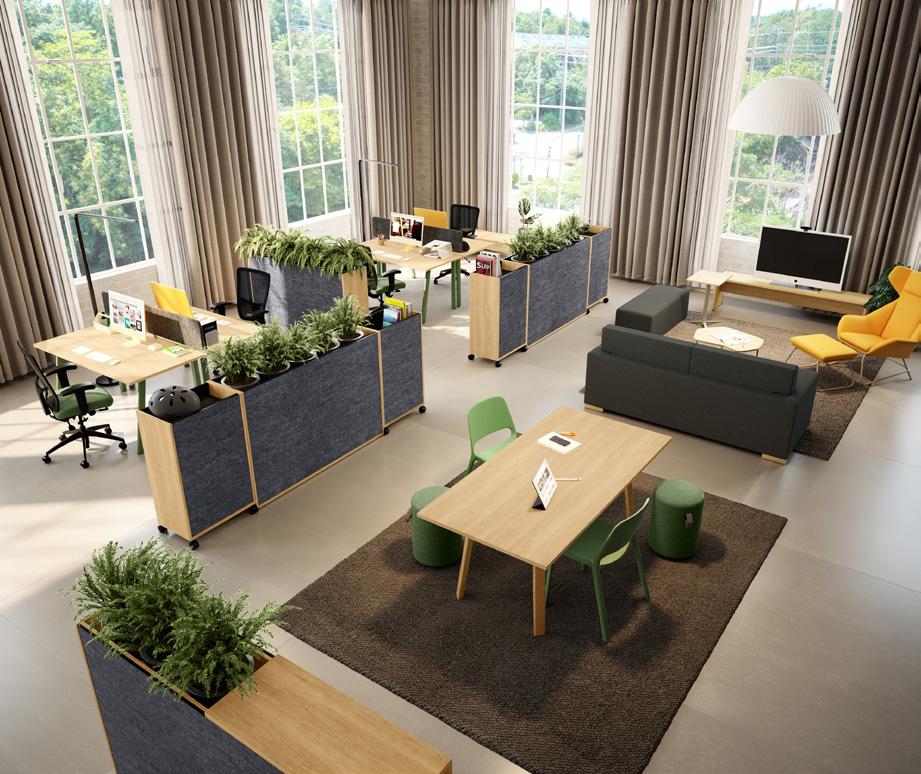
LE COURNOYER by Trica
LES SIX DOIGTS DE LA MAIN
Dans ses six usines intégrées, Artopex pousse plus loin l’automatisation. Assemblage laser sans colle, robotisation, logistique intelligente : l’entreprise augmente sa capacité tout en réduisant son empreinte. « L’innovation est constante chez nous, mais elle reste au service de l’humain », résume Daniel Pelletier. La technologie n’y remplace pas le geste — elle le magnifie.
A PROUDLY LOCAL MODEL
Unlike many competitors, Artopex maintains full control over its production. Everything is made in Québec, across six specialized factories—each expert in its own material: wood, metal, steel, hardware, and more. This vertical structure ensures fast, flexible, and precise delivery.
And the impact is real: 86 % of every dollar invested in an Artopex piece stays in Québec—supporting wages, sourcing local materials, and reinvesting in the regional economy. In an era of international supply chains, this model stands out—and stands proud.
SPRINGING FROM REALITY
Design at Artopex is deeply grounded in real-world dialogue—forged through strong, daily relationships with designers, architects, and planners. Their insights directly shape product development, inspiring solutions tailored to today’s needs.
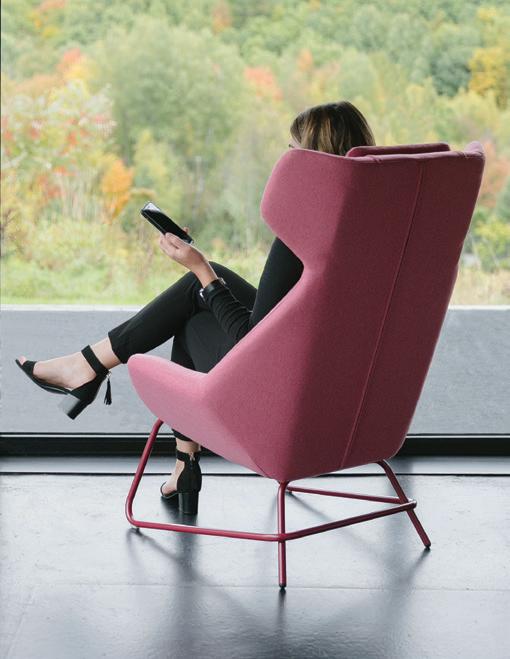
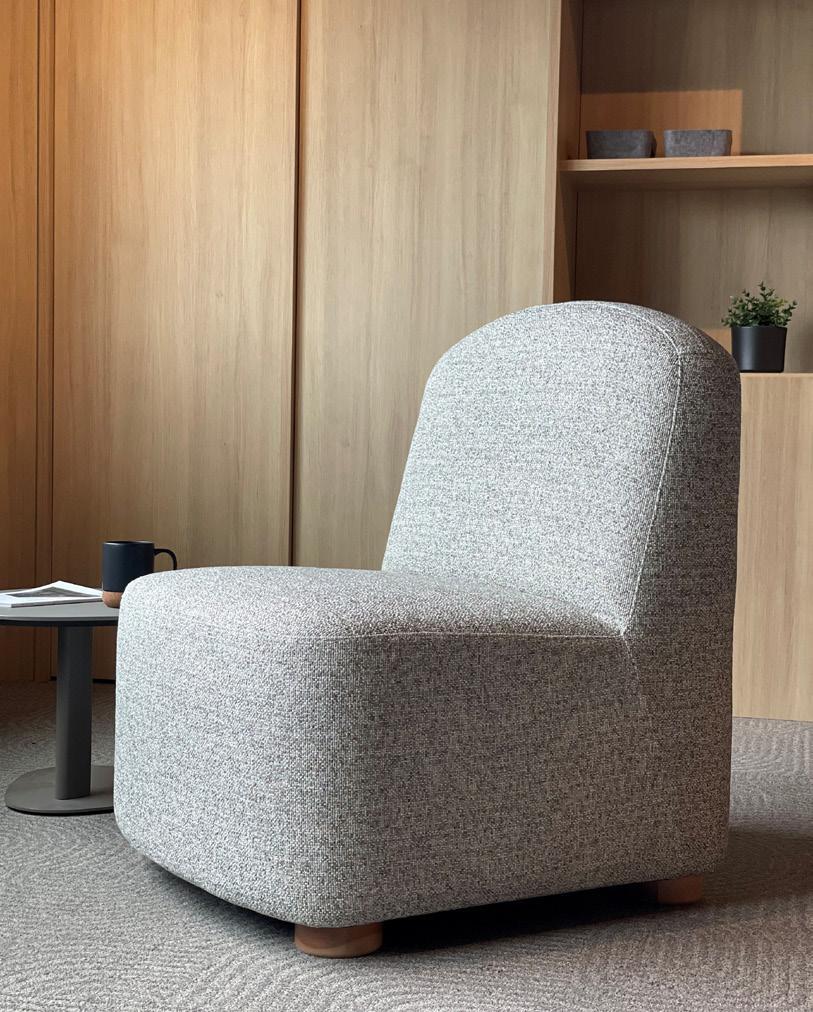
01 FJORD Fauteuil dossier haut, base tubulaire 02 IRIS Fauteuil droit
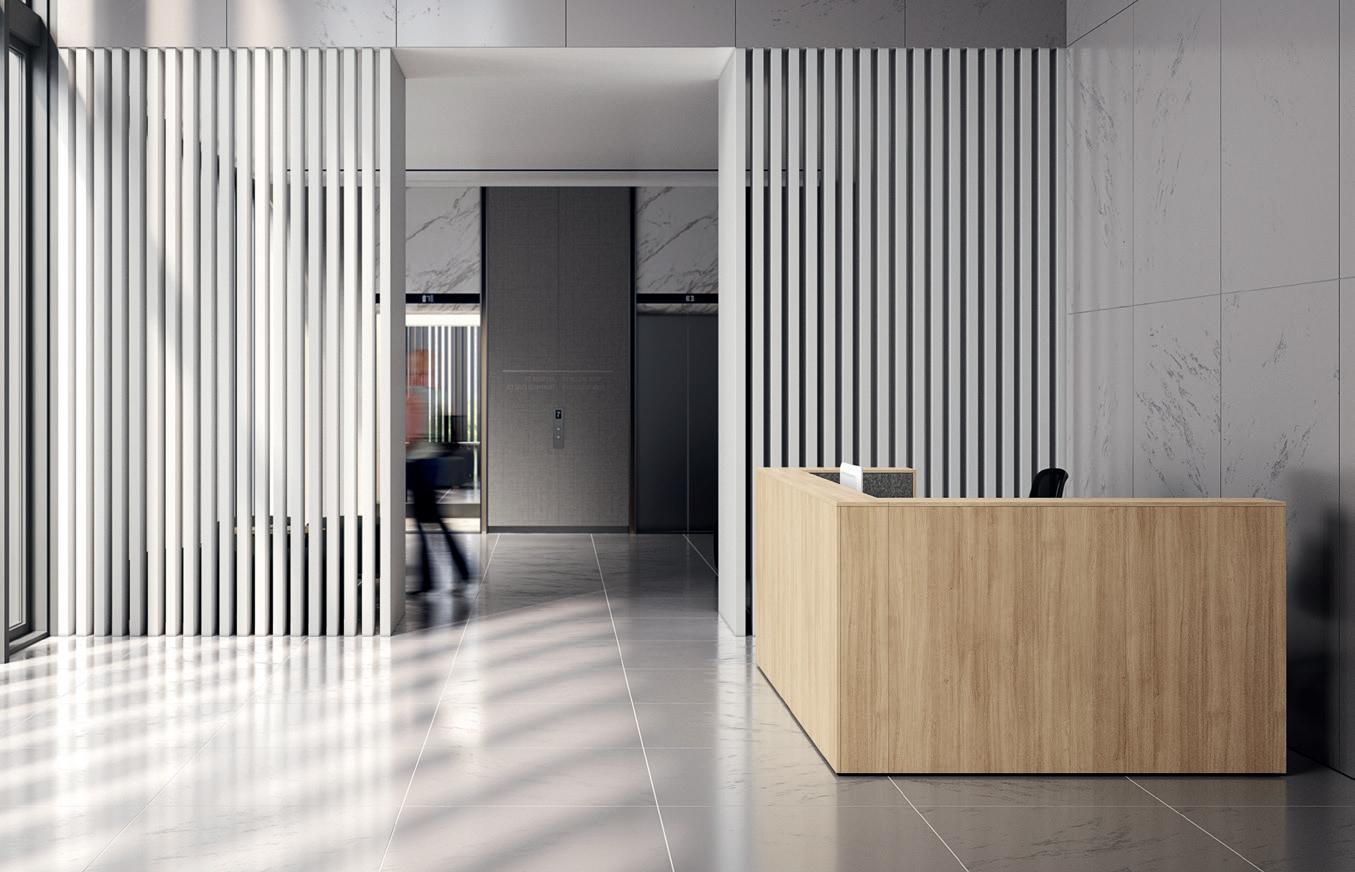
CONFIGURER LE CONFORT
Cette compréhension fine inspire des gammes comme IRIS, pensée pour les zones collaboratives et les espaces d’attente. Avec ses modules de fauteuils sans bras et ses tables variées, elle offre des agencements dynamiques, confortables, humains.
Vient ensuite RZ4, mobilier réception à la fois sobre et évolutif.
Grâce à des modules aux formes et matériaux variés, il s’adapte à toutes les réalités, du comptoir minimaliste à l’îlot complexe, sans jamais sacrifier l’élégance.
LOYAL TO THE PAST, FOCUSED ON THE FUTURE
At Artopex, innovation never comes at the expense of local roots. In fact, it’s by staying true to its territory, its people, and its values that the company continues to anticipate the needs of tomorrow.
AU SOMMET DE SON ART
Dans un monde où tout s’accélère, Artopex choisit une voie plus exigeante — mais aussi plus durable : celle d’un design local, intégré, façonné pour durer et porter l’empreinte du Québec jusque dans les plus grands projets nord-américains. « Plus de 30 % de nos ventes se font aux États-Unis, 70 % au pays, mais 100 % de notre production vient d’ici. Ça me rend fier de ce que nous avons su maintenir et bâtir au fil des années », conclut Daniel Pelletier. Car ici, le design se fabrique. Il se transmet. Et chaque meuble porte la signature discrète d’une fierté familiale — bien de chez nous.
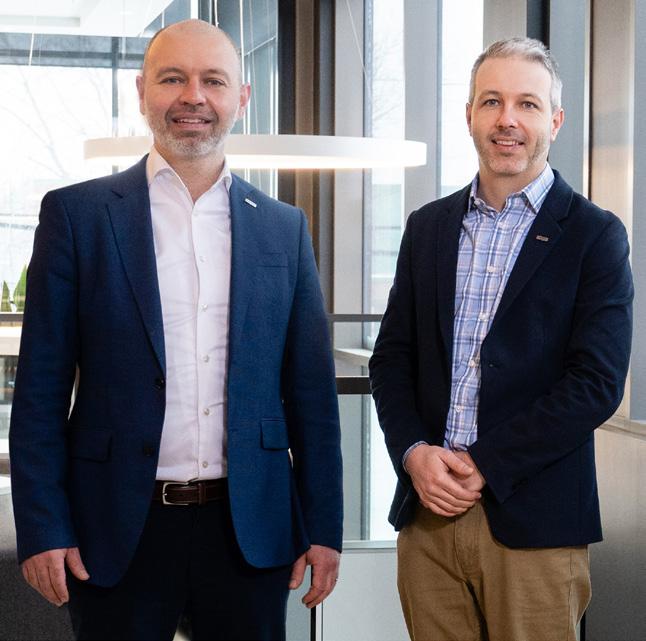
MOBILIER RÉCEPTION RZ4
MARTIN ET FRANCIS PELLETIER
SYLVAIN
LABRECQUE Directeur général Associé
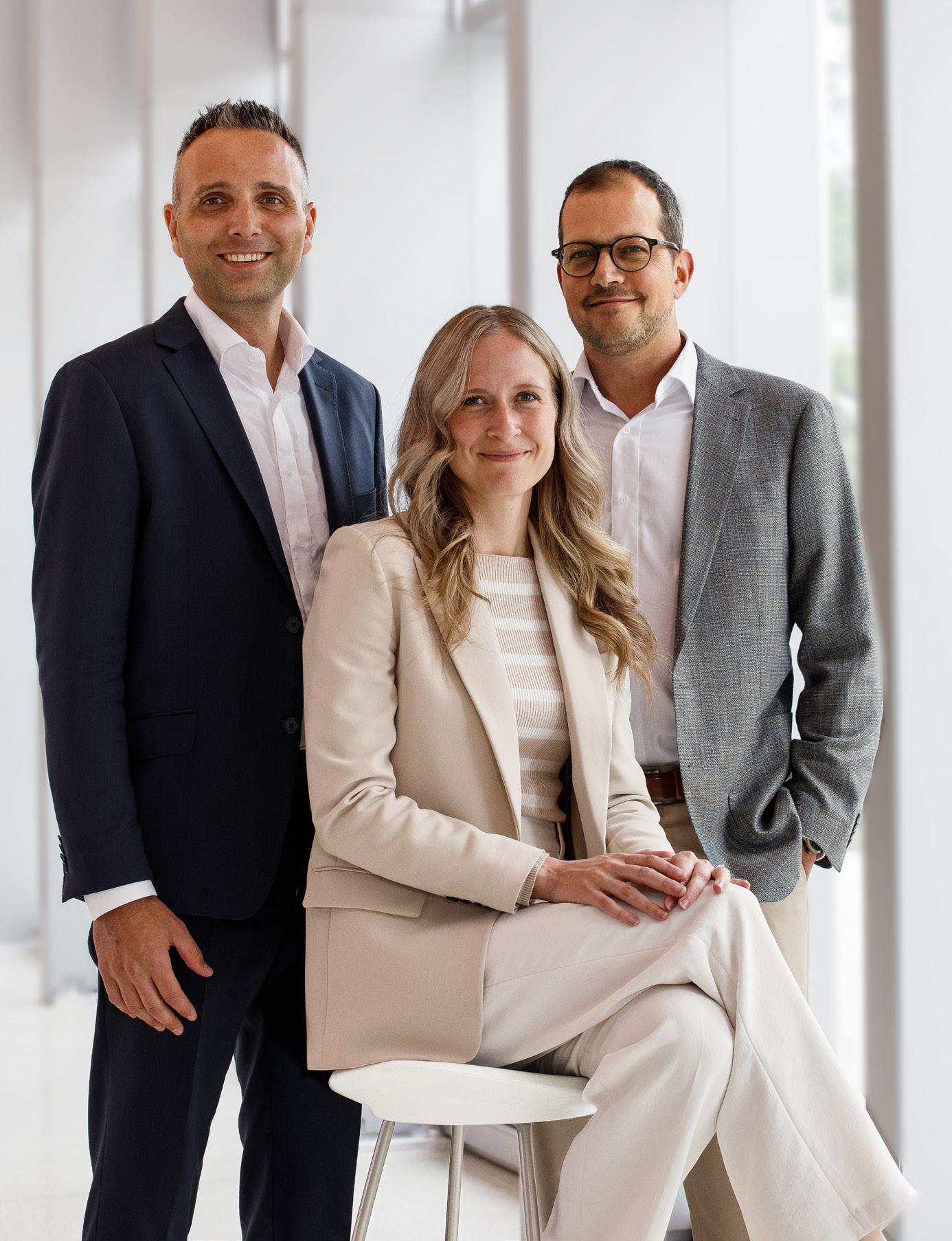
Carol-Anne
Vachon Directrice des ventes Associée
BOIS DE COEUR, BOIS D’AVENIR
Christian Marcoux Président fondateur
Christian Marcoux cuisine et mobilier design
Made in Québec
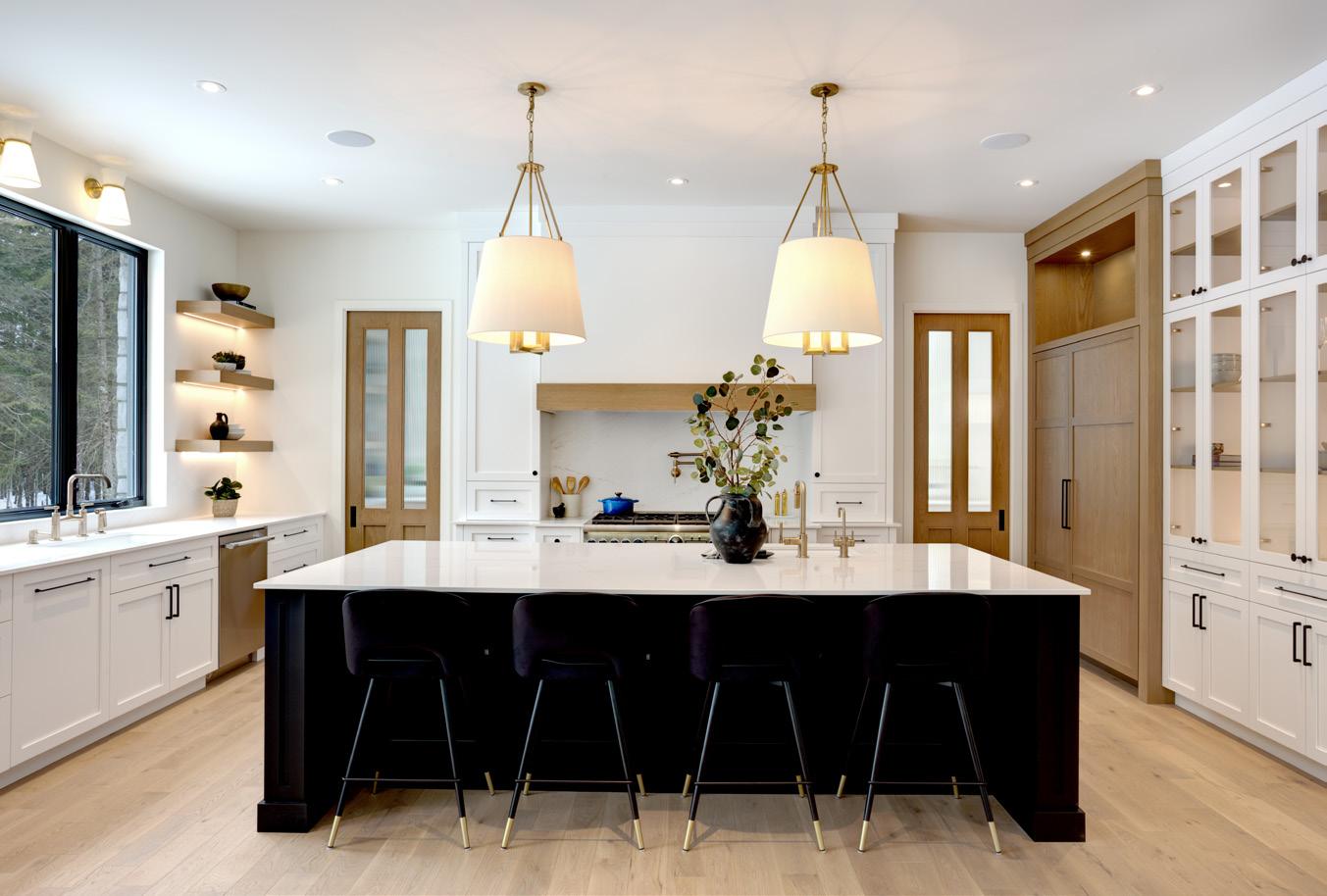
christianmarcoux.com
Siège social et maison mère / Québec
Année de fondation / 2001
Nombre d’employés / 65
Production locale / 100 % fabriquée au Québec
Matériaux et composantes d’origine québécoise / 75 %
Territoires desservis / Québec, reste du Canada, États-Unis
Ventes par région / Québec 90 %, reste du Canada 5 %, États-Unis 5 %
It all began in a backyard shed in Saint-Isidorede-Beauce—not with a business plan, but with bare hands, a love of wood, and a dream of crafting something true.
Deux décennies plus tard, le nom Christian Marcoux est devenu une signature. L’atelier d’hier est aujourd’hui une usine technologique de plus de 20 000 pi2, forte de 65 collaborateurs, où chaque projet porte la même exigence : être unique, humain et durable.
PROJET SURINTENDANT Collaboration avec Construction Dureco
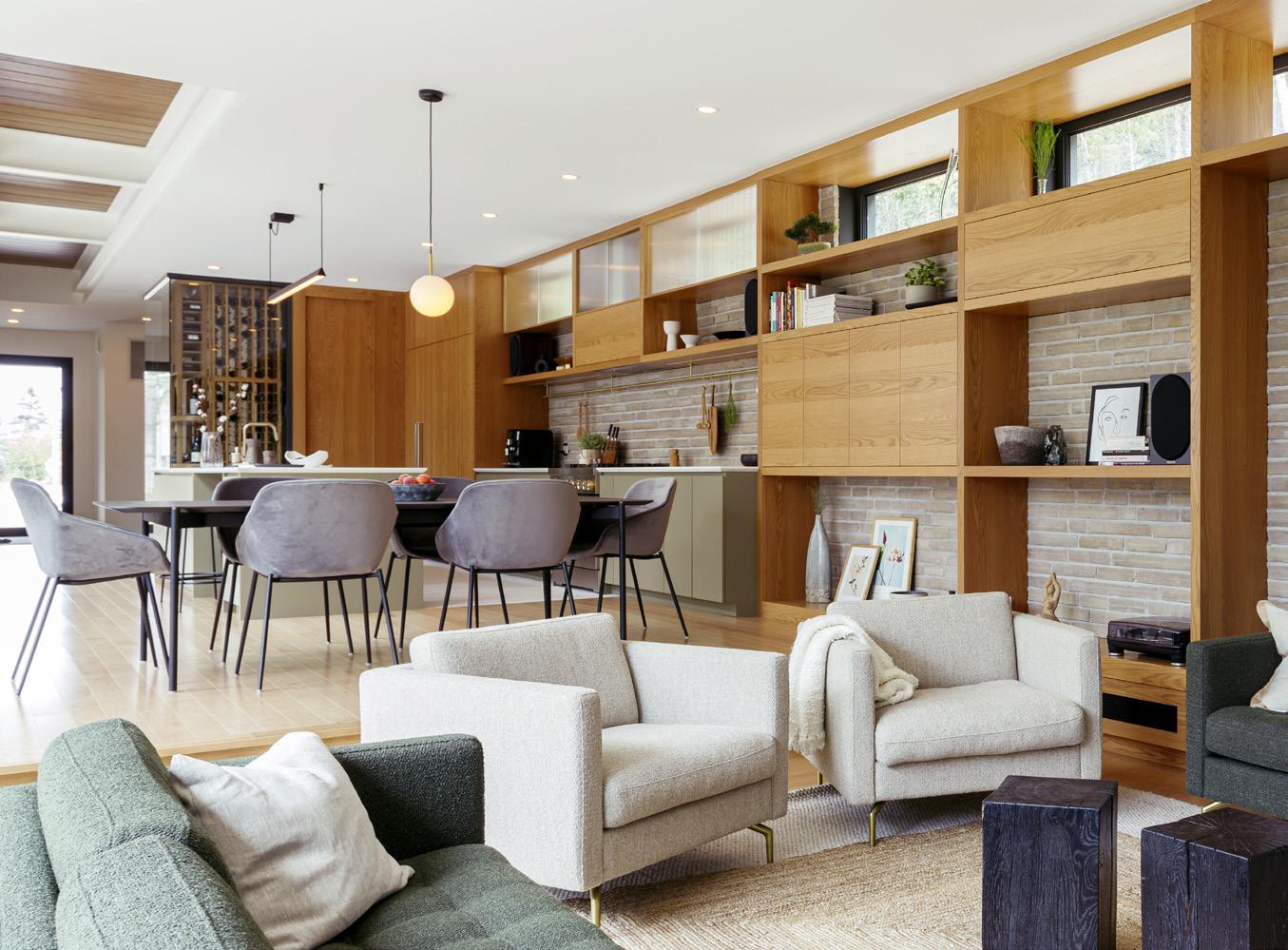
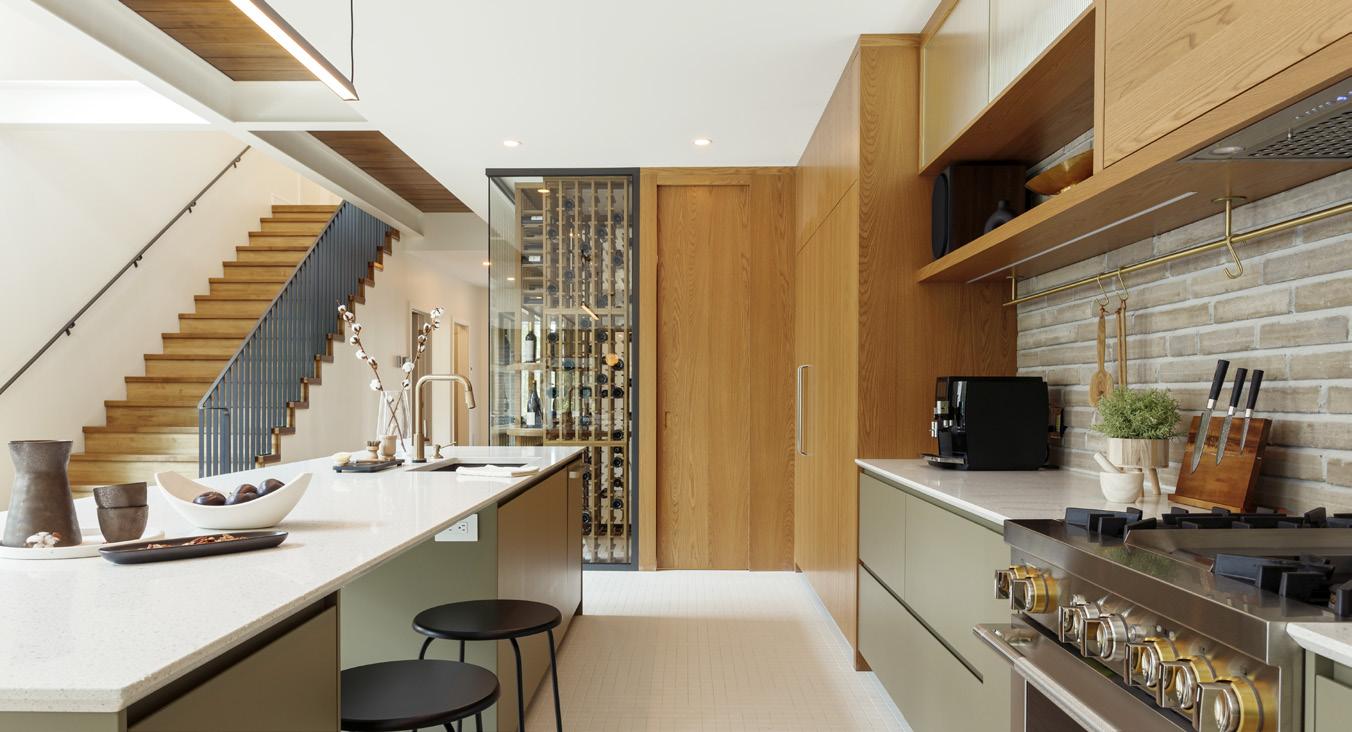
01, 02
PROJET DU RUISSEAU
Collaboration
Les Habiations DLC (entrepreneur) MPA & NU DROM (architecte)
03 PROJET DU BOTANISTE Collaboration
Loca Design, Anne Carrier architecture & Construction Urbanext
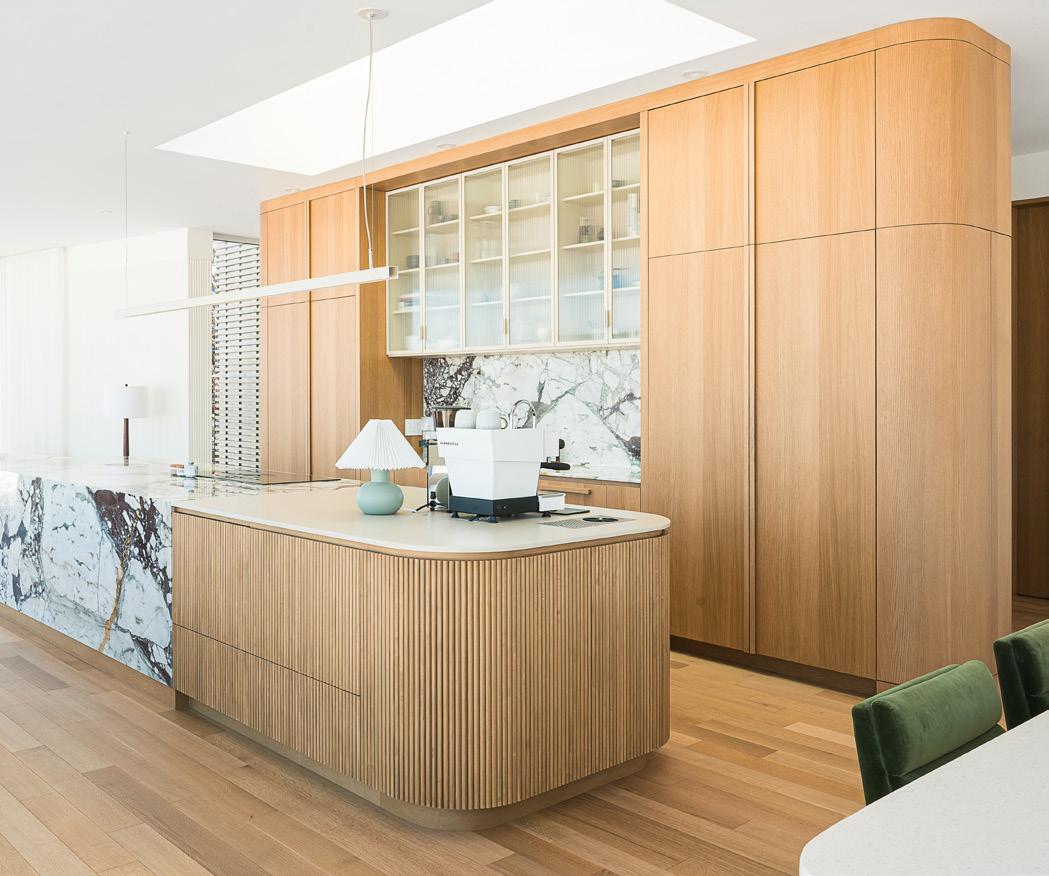
PRENDRE RACINE
Fondée en 2001, l’entreprise a grandi autour d’un modèle d’affaires fondé sur la rigueur et la passion. « Tu commences par un 5 km, tu réussis. Puis un 10. Et un jour, t’es rendu au marathon — plus rien ne t’arrête ! » lance Christian Marcoux. « C’est pareil ici. Chaque projet nous pousse à dépasser ce qu’on croyait possible. C’est ma plus grande fierté — réaliser le chemin qu’on parcourt en équipe. »
En 2017, deux associés talentueux se joignent à l’aventure : Carol-Anne Vachon, aujourd’hui directrice du design, et Sylvain Labrecque, ébéniste de formation devenu directeur général. Ensemble, ils forment un trio où les idées circulent librement et les forces se conjuguent avec transparence.
WITH THE GRAIN
To support their growth, the factory expanded in 2020—and doubled again in 2022. At the same time, the addition of robotics and automation freed up time for finishing, precision, and quality.
“Technology makes us more agile, but it’s the human hand that makes the difference,” says Christian. “We’ve got a rare mix: a high-tech facility where craftsmanship still leads the way. Of the twenty people on the fabrication team, six are trained cabinetmakers — true artisans, passionate about the material and the craft.”
CUSTOM THAT LIVES
From kitchens to walk-ins, vanities to architectural ceilings everything here is custom-built. “Our projects aren’t picked off a shelf. They’re shaped by people’s lives,” explains Carol-Anne. The new showroom, opened in 2024 across from the Québec City airport, reflects this vision: inspiring, thoughtful, and fully attentive.
QUAND LE BOIS DEVIENT ROI
Dans une réalisation de cuisine à Lévis conçue avec Urbanex et Loca Design, le chêne blanc crée une ambiance douce et contemporaine. « C’est une essence qu’on a vue partout à EuroCucina, à Milan. Elle traverse les modes avec une chaleur naturelle qui plaît autant ici qu’à l’international », note Carol-Anne, ramenant également comme tendances observées les teintes neutres comme le taupe, les couleurs terre et la simplicité, en général. Une preuve que les tendances globales trouvent ici un écho local.
REFINED COUNTRY LIVING
In the Surintendant project, custom woodwork fills the entire space—architectural doors, cabinets, bathroom vanities, transition furniture. “We leaned into a timeless refined farmhouse feel. It’s warm, but understated—and works across generations,” she adds.
UN ESPACE OÙ TOUT COULE
Dans le projet résidentiel Du Ruisseau, l’approche globale de l’entreprise s’illustre pleinement. Cuisine, salle de bain, rangement intégré — toutes les boiseries et éléments d’ébénisterie y sont pensés comme un tout cohérent, fluide, lumineux. Le bois côtoie la pierre, les lignes sont pures, les volumes généreux.
REBOISER L’AVENIR
Réfléchir au design, c’est aussi penser à son impact. L’entreprise mise ainsi sur des vernis à base d’eau, une production sur commande et un engagement en reforestation : « Depuis six ans, ce sont plus de 3000 arbres que notre équipe a planté en Beauce. C’est notre manière de redonner », précise Christian. Un geste qui s’aligne sur les valeurs des clients et des architectes et designers spécificateurs.
SHARED VISIONS AND GESTURES
“More and more, architects and designers want to work with responsible practices. That pushes us to go further in our materials, methods, and everyday choices,” adds Sylvain Labrecque. Symbolic actions — and meaningful ones—rooted in place.
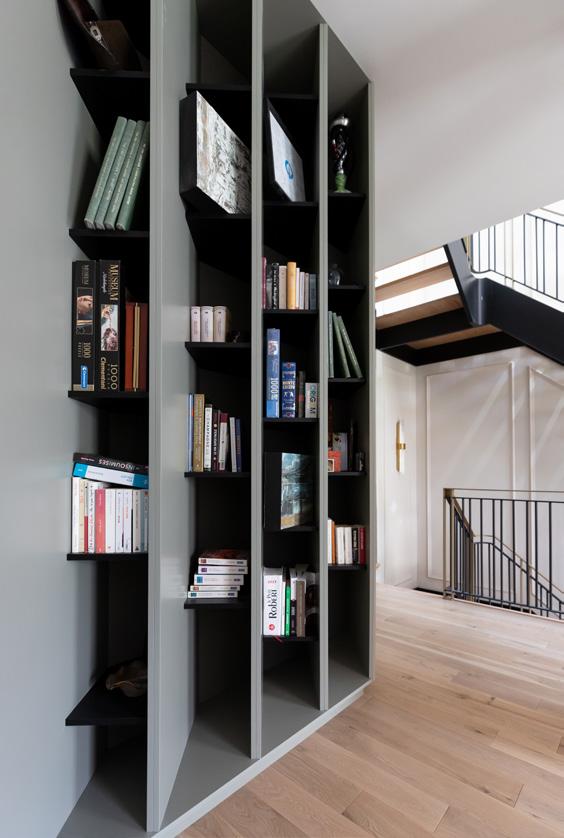
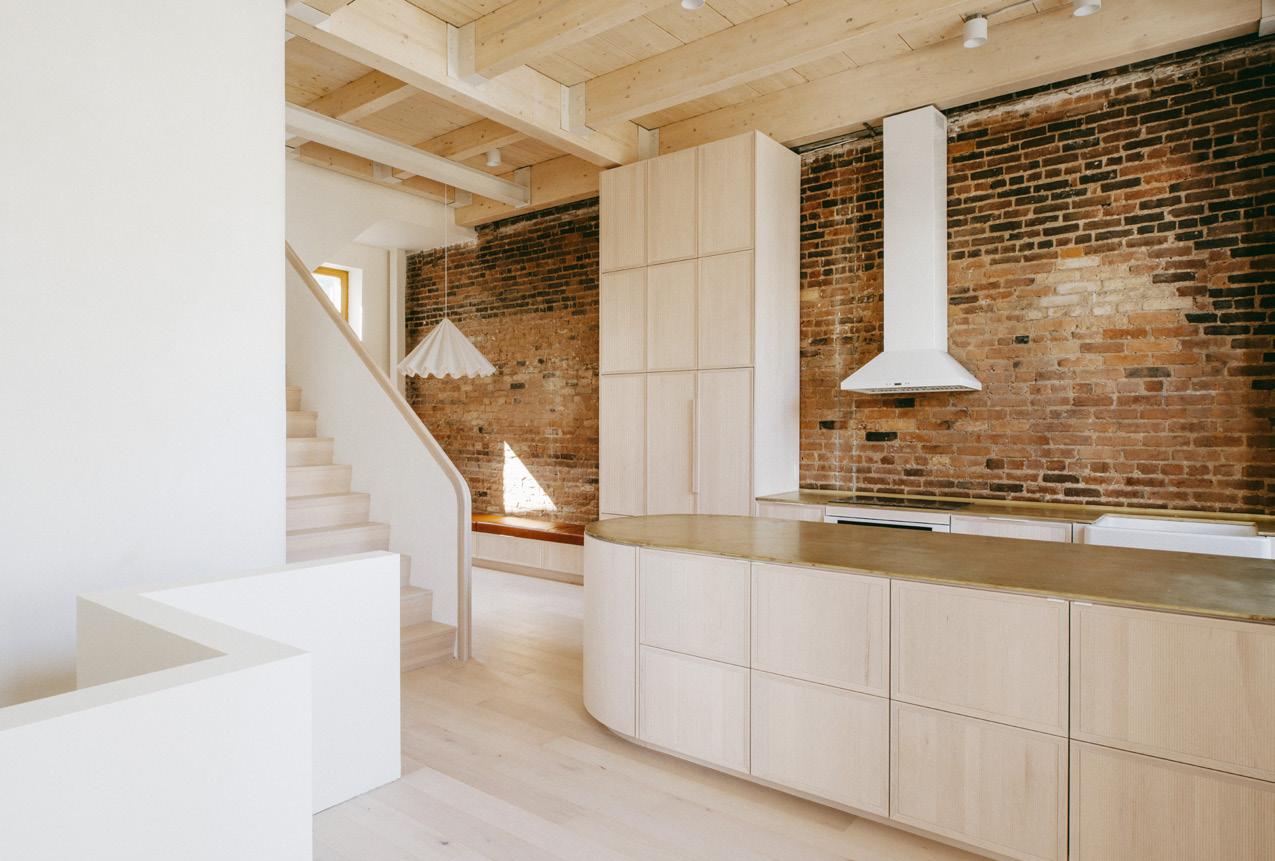
PROJET DE LA PORTE Collaboration avec Atelier Filz
PROJET DES GRISONS Collaboration avec Ultralocal architectes & Sira Construction
UN TRONC SOLIDE
« On collabore régulièrement avec des designers, architectes et entrepreneurs d’ici — de Québec à Montréal, en passant par Chicoutimi », souligne Sylvain. Notre force réside aussi dans le souci du détail et de la finition : la possibilité d’appliquer n’importe quelle couleur sur les produits finis permet de créer un mobilier véritablement unique et haut de gamme.
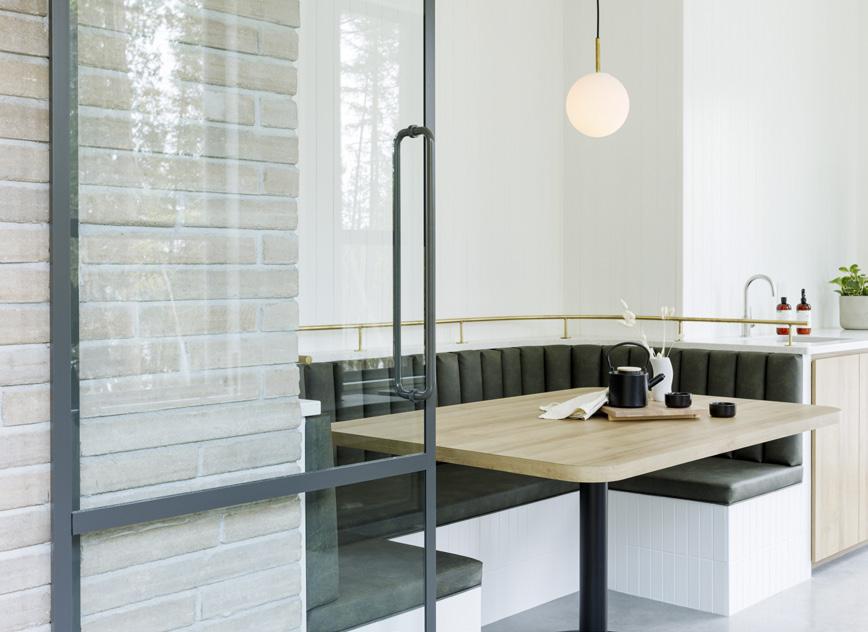
Si les projets résidentiels demeurent au cœur de leur pratique, l’équipe signe aussi des mandats commerciaux d’envergure : cliniques, restaurants, bureaux… jusqu’aux cloisons architecturales et murs sur mesure.
LOCAL ROOTS, GLOBAL REACH
Even though most of their growth is driven by wordof-mouth, their craftsmanship travels—from Milan to the Cayman Islands, from Nova Scotia to Las Vegas.
They’re also developing a U.S. network, aiming to attract high-end distributors and retailers. “We want to be the manufacturing arm for brands that don’t have one. Everything is made right here in Beauce, by a skilled team. That’s our strength!” Christian emphasizes.
LE BOIS COMME LANGAGE COMMUN
C’est dire que chez Christian Marcoux cuisine et mobilier design, chaque projet traduit un dialogue entre matière, gestes et liens humains. « On veut quintupler notre chiffre d’affaires, sans jamais perdre notre force : la rigueur, l’écoute, le geste humain.», conclut-il.
Car à Saint-Isidore, on ne court pas après les tendances : on façonne un design durable, sincère et incarné. On fait mieux, parce qu’on fait vrai. Avec fierté, avec vision — et cette certitude tranquille que le savoir-faire d’ici a toute sa place dans le monde.
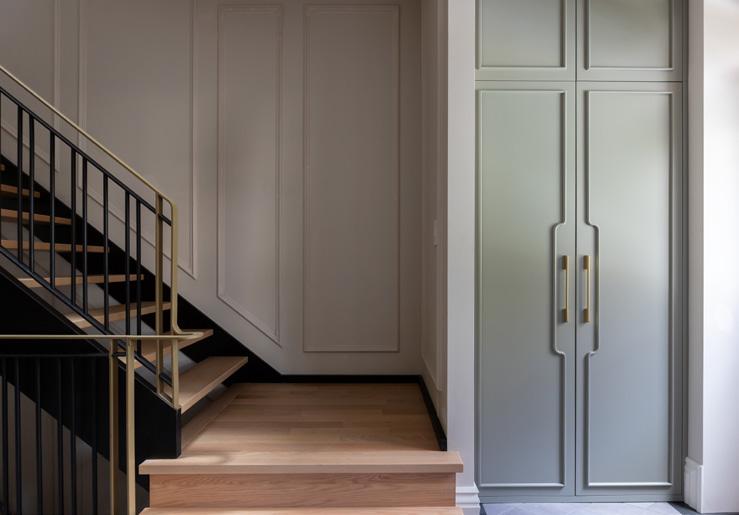
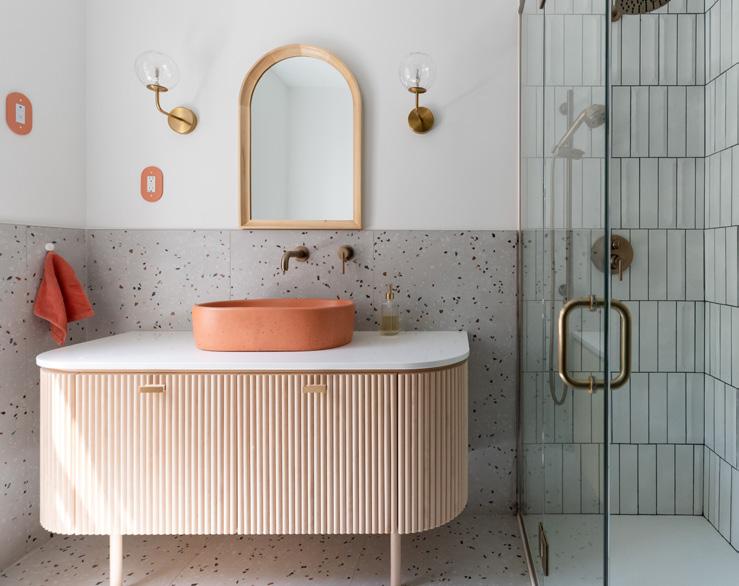
© Catherine Potvin Photos
© Catherine Potvin Photos
DENIS LAVOIE Vice-président et directeur général
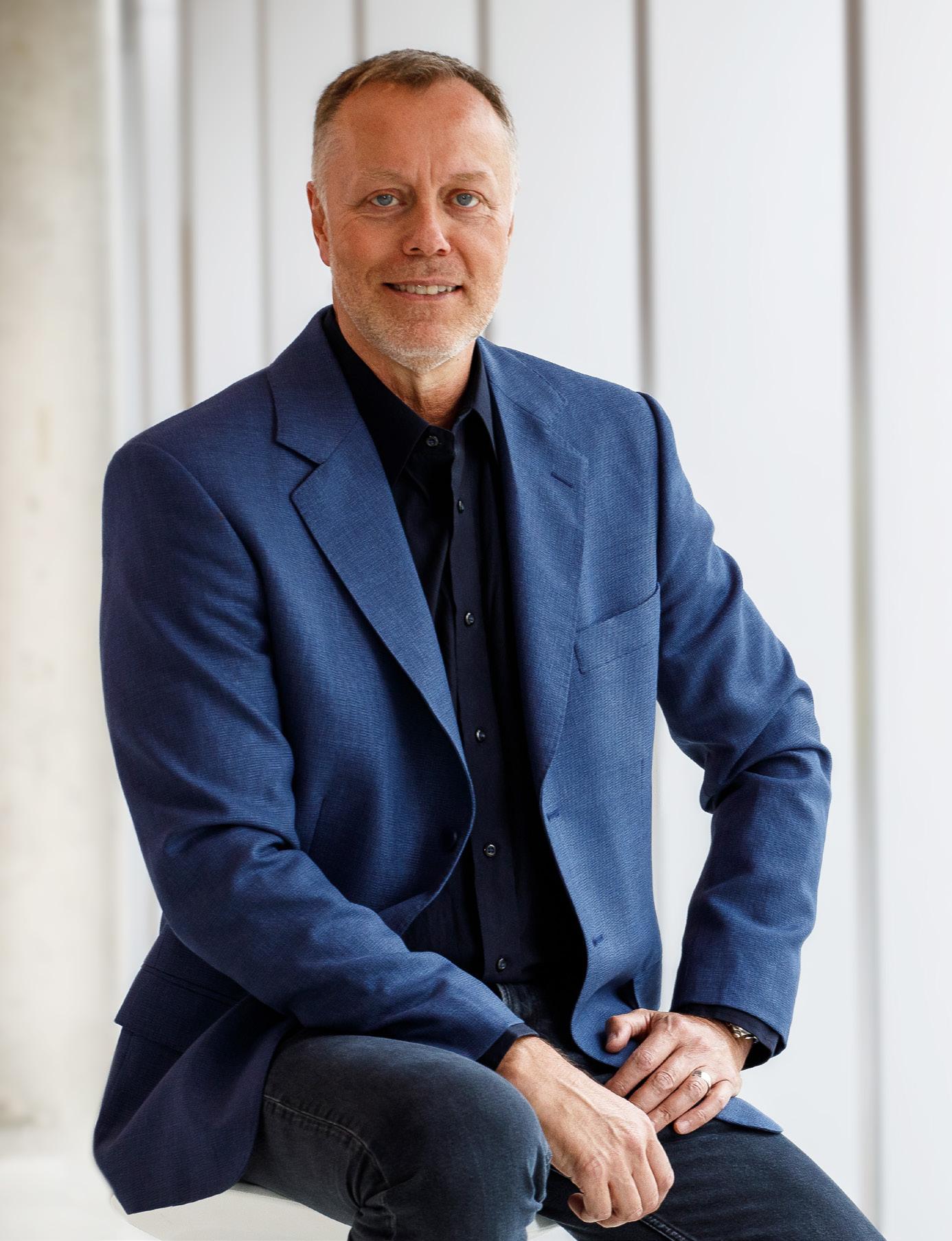
ÉCLAIRER LE MONDE DEPUIS MONTRÉAL
eurekalighting.com
Siège social / Montréal
Maison mère / Acuity Inc, Atlanta, Georgia, États-Unis
Année de fondation / 1987
Nombre d’employés / 115
Production locale / 100 % fabriquée au Québec
Matériaux et composantes d’origine québécoise / 40 %
Territoires desservis / Québec, Canada, États-Unis
Ventes par région / Canada 20 %, États-Unis 80 %
At Eureka, lighting is never just a detail. It’s a language—a way of revealing space, amplifying a gesture, inhabiting an experience. Founded in Montreal in 1987 and acquired by U.S.-based Acuity Inc. in 2019, the company has become a luminous bridge between Quebec’s design culture and North America’s manufacturing power.
Eureka
Made in Québec
À sa tête depuis cinq ans, Denis Lavoie — seul président québécois de l’histoire de l’Illuminating Engineering Society (IES) à New York — veille à préserver cet ADN local tout en propulsant l’entreprise vers l’avenir. « Dans le monde de l’éclairage, on aime dire que lorsqu’on y entre… on n’en sort plus. C’est une industrie de passionnés. Like fireflies drawn to the light! »
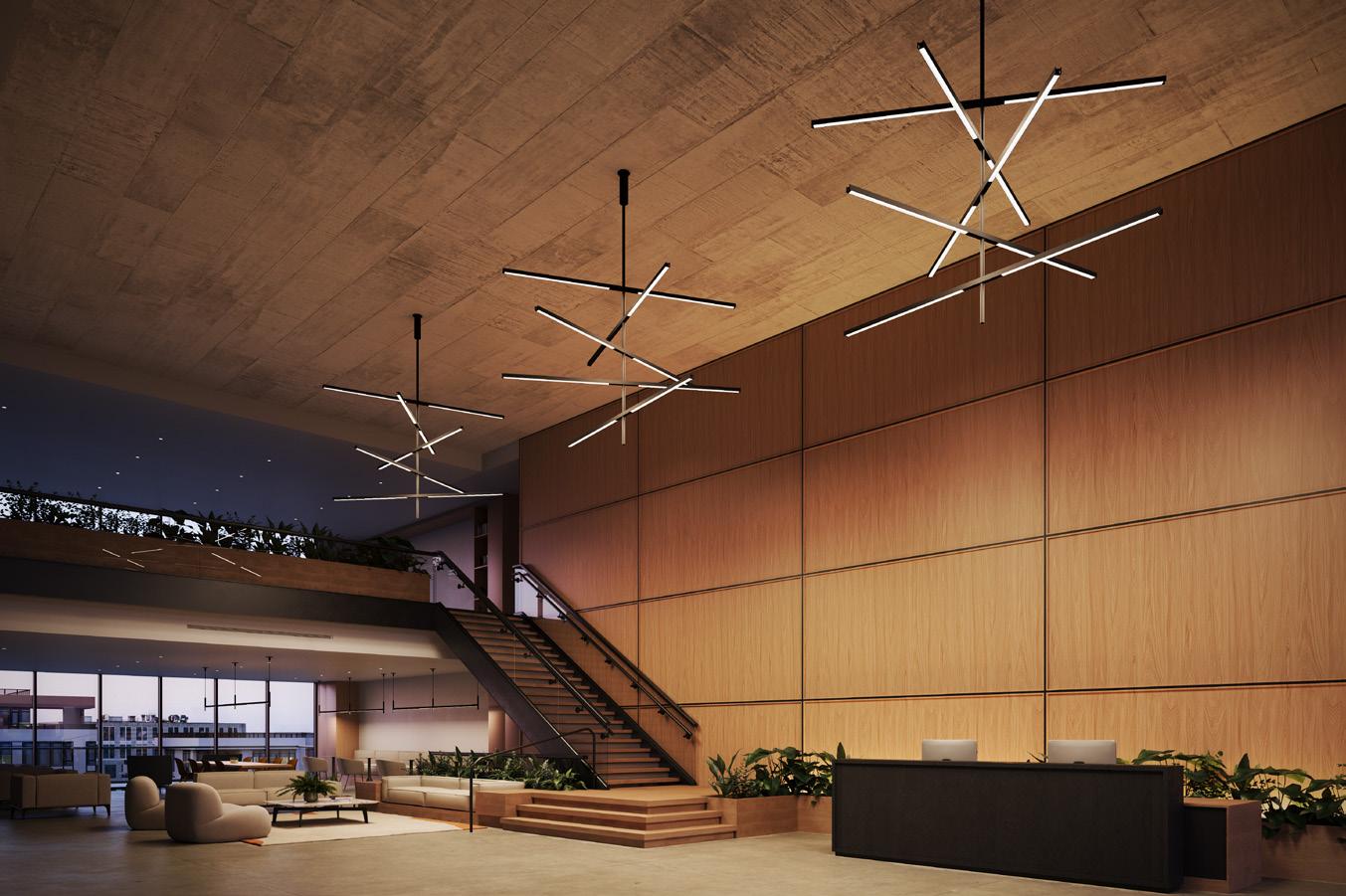
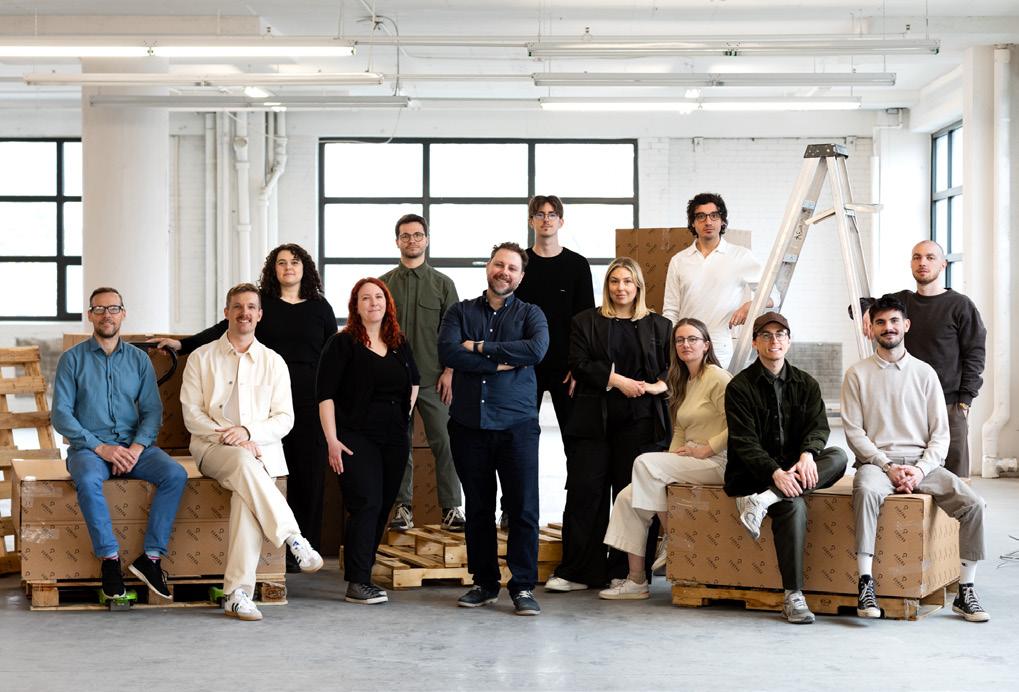
DESIGN DNA
At Eureka, everything begins with an idea—but more importantly, with an intention: to create luminaires that are integral to the space, reshaping its sensory rhythm. The fifteen-member in-house design team works from Montreal, at the crossroads of Europe and North America—a fertile ecosystem of design schools, cosmopolitan culture, and UNESCO City of Design status.
“We don’t follow trends. We lead them, shape them, illuminate them,” sums up Denis Lavoie.
UN RAYONNEMENT MAÎTRISÉ
En rejoignant Acuity Inc. en 2019, Eureka a gagné en portée… sans rien perdre de son âme. Basé à Atlanta, ce groupe nord-américain mise sur une approche décentralisée : Eureka conserve son autonomie créative tout en profitant d’un réseau puissant.
Aujourd’hui, 80 % des ventes se font aux États-Unis — de New York à L.A. en passant par le Midwest. Ajoutons qu’en Amérique, Montréal, elle, demeure une ville phare, toujours à l’avant-garde dans l’adoption des nouveautés.
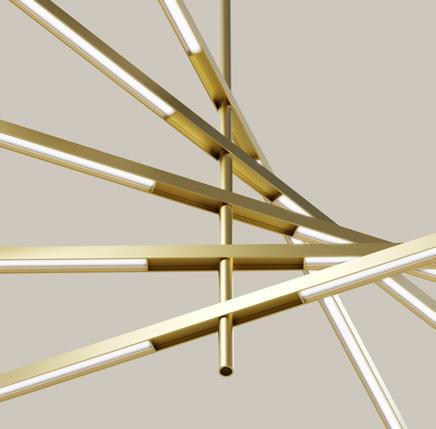
ÉQUIPE EUREKA de gauche à droite :
Marc Pearce
Edouard Lauriault
Valérie B. Plamondon
Chantal Vertefeuille-Lareau
Clement Heyraud
Louis Thomas-Bérubé
Mathieu Desjardins
Julie Tremblay
Martin Gonzalez Godoy
Stéphanie Paquet
Etienne Vernier
William B. Tully
Niccolo Ghirotto-Kallos
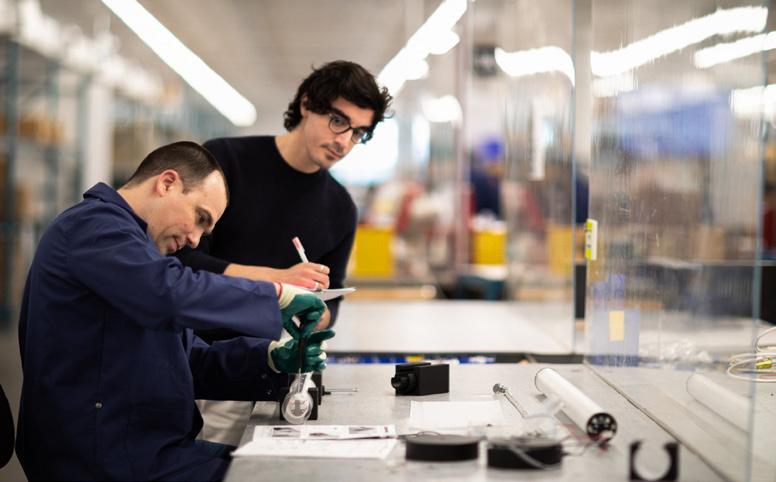
A LIVING LABORATORY
Each luminaire at Eureka is born through close collaboration between design, engineering, procurement, and production. Ideas flow from the creative studio to the shop floor. Designers are handson—testing, refining, and working alongside technicians. Sometimes, they even invent tools to help their colleagues. The result? Signature collections, customizable and built to converse with architecture.
L’INTELLIGENCE AU LOCAL
« Produire à Montréal, c’est faire le choix de l’agilité », renchérit Denis. Les luminaires sont assemblés dans un bâtiment lumineux de la rue de Liège. Les postes sont organisés en cellules, avec des chefs d’équipe. Cette flexibilité, combinée à l’amélioration continue, permet une grande réactivité.
JUNCTION
MARTIN GONZALEZ GODOY AND ANTHONY CARRE
« Depuis cinq ans, on a rapatrié plus de la moitié de nos approvisionnements. Chaque nouveau produit est pensé avec des matériaux locaux, recyclables et faciles à transformer. Produire ici, c’est plus rapide, plus logique, plus durable. »
GEOMETRIC LIGHT
Among these collections, Tangram brilliantly illustrates the brand’s mastery of luminous geometry. Its Essential version stands out with wide PETG straps—available in several colors— supporting an 8-inch cylindrical light source. Two optics are offered: a prismatic diffuser or a 3D-printed honeycomb louver.
From the same family, no fewer than four Tangram variations received accolades at the prestigious 2023 Red Dot Awards—including the Tangram Trace, named Best of the Best, the competition’s highest distinction.
TANGRAM COLLECTION
L’ŒIL DU SCOUT
Quant à la gamme Scout, elle explore la forme cylindrique dans sa plus simple expression. Sans joints visibles, ce luminaire au design épuré est offert en deux diamètres, trois longueurs et seize couleurs de tube. Mural, plafonnier ou suspendu, il s’adapte à une foule de contextes architecturaux.
AT THE JUNCTION OF DREAMS
In a different register, Junction brings large-scale pendant lighting to a new level. Suspended at the intersection of form and function, the luminaire features a central mast from which up to five adjustable arms radiate. Conceived more as a platform than a static object, it allows specifiers to create custom lighting installations—part graphic chandelier, part geometric constellation.
FAIRE FLEURIR LES IDÉES
Parce qu’un luminaire peut aussi évoquer la tendresse d’un geste ou la poésie d’un printemps, certaines idées naissent d’un simple élan partagé. Pensée comme un contrepoint plus doux à la rigueur minimaliste de Junction, Tulip insuffle une touche poétique et organique à l’espace intérieur. Sa silhouette délicate s’inspire de la fleur du même nom — de sa grâce, de ses couleurs, de sa façon d’émerger lentement pour illuminer le décor. C’est d’ailleurs au moment où les premières tulipes se pointaient le bout du nez que le processus de création s’est amorcé, porté par l’envie d’introduire une sensibilité florale dans l’univers du luminaire architectural. L’équipe, séduite par la douceur et la luminosité qu’évoque cette fleur, a imaginé trois diffuseurs inspirés de son cycle de vie : la semence, le bourgeon et la floraison.
À travers Tulip, dont le lancement est attendu pour juillet 2025, c’est tout un désir de reconnexion à la nature qui s’exprime — dans une langue résolument contemporaine, mais tout en finesse.
SIGNATURE TULIP Bloom diffusers
SCOUT with Scout Accessories.
From left to right: Scout Orb in Champagne, Scout Bell in Apricot Yellow, Scout Flare in Dynamic Blue.
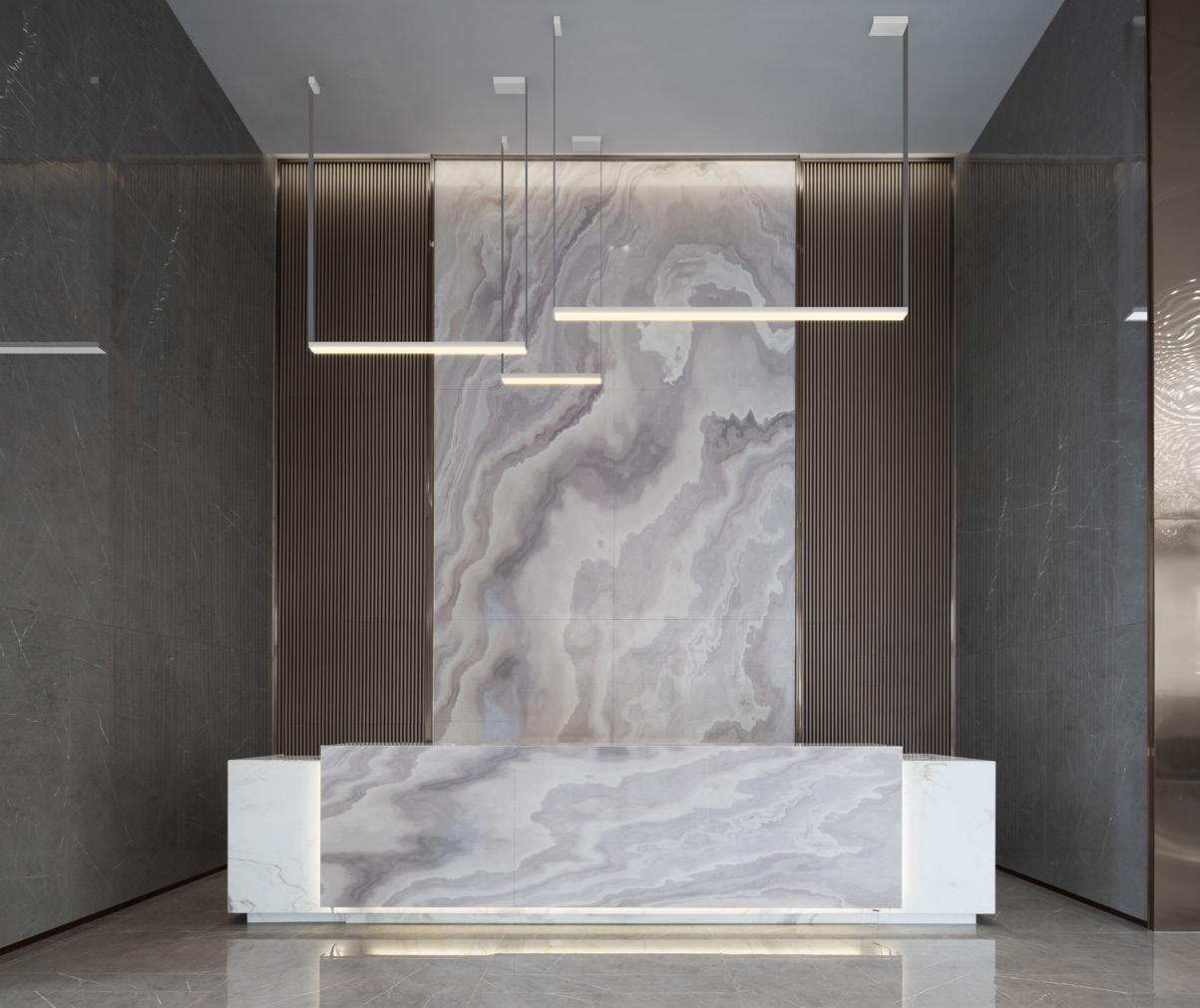
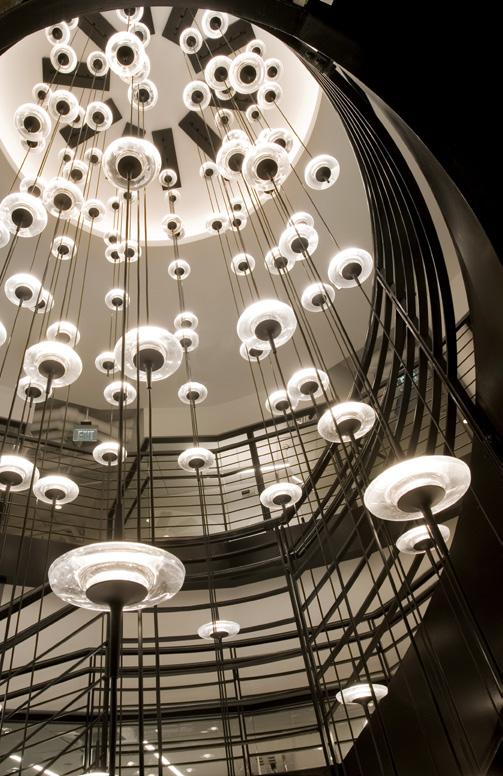
01 TANGRAM TRACE AGAIN 02 CELESTE
INNOVATION AS REFLEX
Within this creative porthole, R&D is everything. Each year, eight to ten new products come to life—a steady pace that reflects the team’s drive and precision. These creations find their place in the real world, like the 1,400 Celeste heads soon to illuminate the public library in Omaha—transforming a bright idea into a work of art.
“Our luminaires don’t just light spaces,” says Denis Lavoie. “They give those spaces a voice.”
LUMIÈRE DURABLE, IDÉES VIVANTES
Chez Eureka, la matière n’est jamais neutre. Aluminium local, feutres acoustiques composé à 50 % (en fonction de poids) de polyéthylène recyclé : chaque matériau est choisi pour sa capacité à durer… et à renaître.
Car ici, on conçoit pour être désassemblé, repensé, recyclé. Un geste en accord avec la mission de l’entreprise : « donner aux designers d’éclairage le pouvoir de réinventer l’espace et de concrétiser leurs idées » — avec éclat, ajoutons-le !
ghauz.ca
Siège social / Sherbrooke
Année de fondation / 2024
Nombre d’employés / 5
Production locale / 100 % fabriquée au Québec
Matériaux et composantes d’origine québécoise / 70 %
Territoires desservis / Québec, reste du Canada
Ventes par région / Québec 100%
In Sherbrooke, Ghauz designs high-end sofas at the intersection of craftsmanship and contemporary design — born from a deep knowledge of upholstery, where each piece becomes a vehicle for storytelling. Stories of Québec, of materials, and of the hands that shape them.
Ghauz Canapé
Made in Québec
Cofondée par les frères Guilhem et Nathaël Gosselin, ainsi que par la conjointe de ce dernier, Naomi Chassé, Ghauz incarne une relève artisanale qui ne cherche pas à en faire plus, mais à faire mieux. Chaque pièce est conçue et fabriquée localement, avec une rigueur presque philosophique. Rien d’étonnant quand on sait que Guilhem a d’abord étudié la littérature et la philo avant de plonger dans l’univers du mobilier.
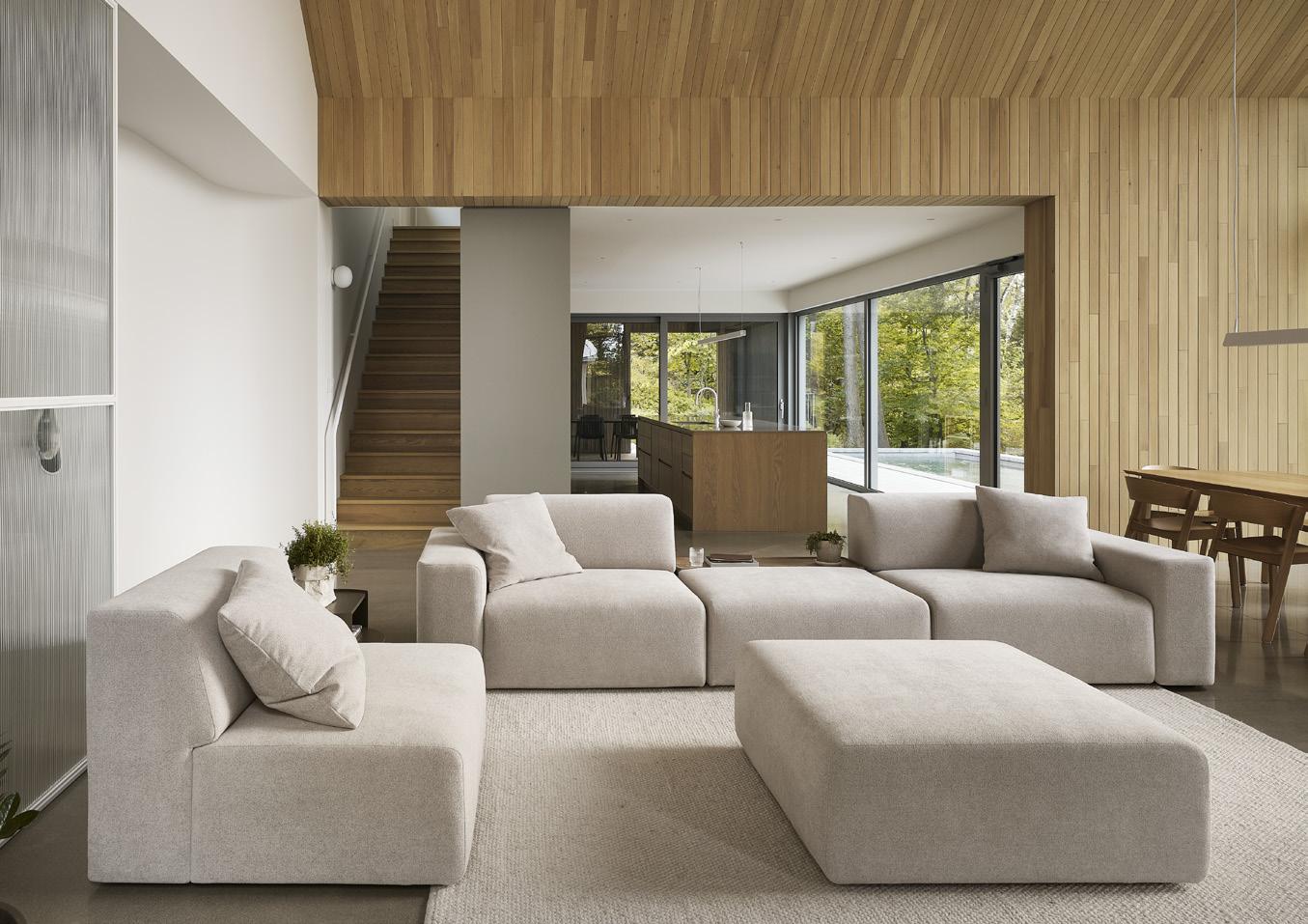
CRÉER À ÉCHELLE HUMAINE
NAOMI CHASSÉ-JEAN Fondatrice associée
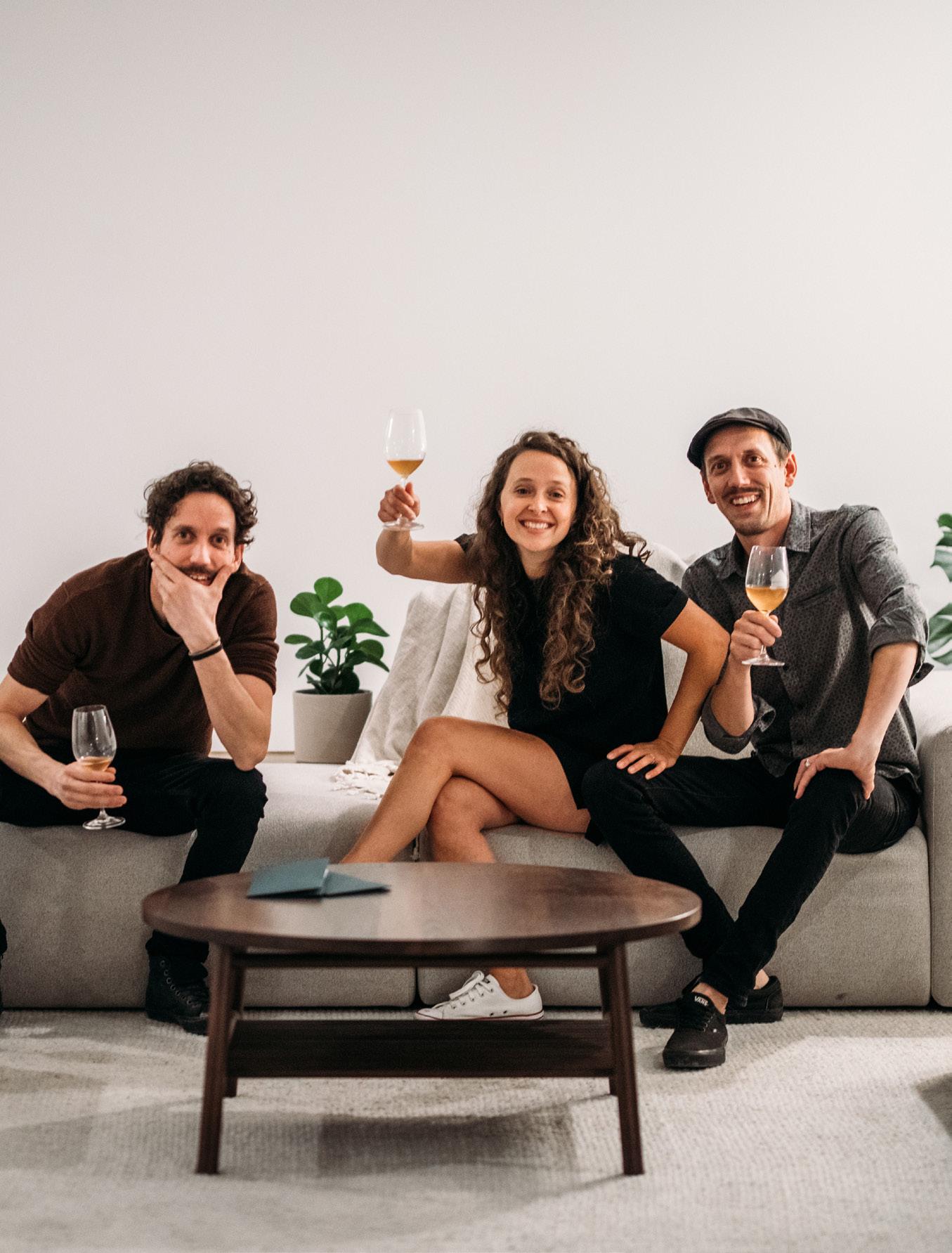
NATHAËL GOSSELIN Fondateur associé
GUILHEM GOSSELIN Fondateur associé
© Claudine Chaussé Photographe
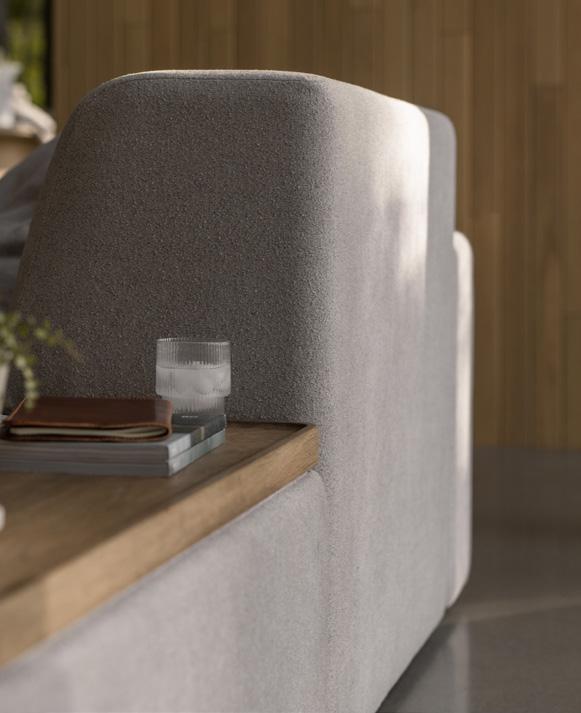
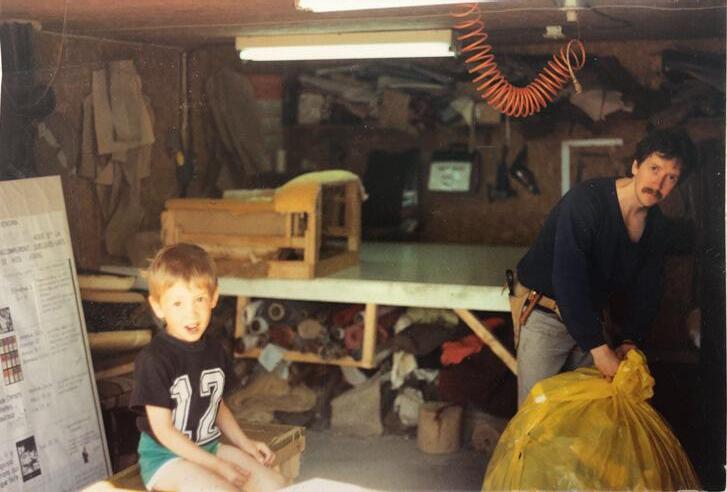
A GROUNDED VISION
Guilhem recalls joining the venture with a clear intent: to create their own in-house collections. The goal? To build by hand, with care—and to affirm a vision of Québec design that is sustainable, rooted, and cohesive. It’s not always a straight path, but rather a weaving of complementary strengths, reimagined legacies, and a shared pride in doing things right.
This is how Ghauz was born—a way of seeing the sofa as a space for transmission. Each collection opens a dialogue between the memory of a family craft and the modernity of intentional design. Clean lines, lasting textures, noble woods, and North American plywood: materials are chosen with care, always in pursuit of longevity and timeless elegance.
TELLE UNE LANGUE MATERNELLE
Chez les Gosselin, le design se transmet comme une langue maternelle. C’est Nathaël, le grand frère — manuel, rigoureux, technicien en aéronef — qui reprend l’atelier de rembourrage fondé par leur père. Un lieu où l’on façonne, ajuste, peaufine.
À ses côtés, Naomi Chassé apprend le métier et développe une expertise en couture, redonnant à chaque finition toute sa noblesse. Leur père Gosselin, Bertrand, figure discrète mais essentielle, veille à la passation du savoir — transmis autant par le regard que par le geste.
Puis arrive Guilhem, le cadet, au parcours singulier : poète, philosophe, amoureux du mot juste autant que de la ligne juste. Ensemble, ils élèvent Rembourrage Gosselin au rang de référence en Estrie — alors que nombre d’ateliers ferment leurs portes, emportant avec eux des savoir-faire précieux. Un parcours qui devient un hommage à l'artisanat, et à sa pérennité.
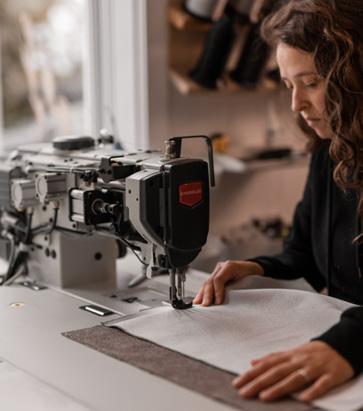
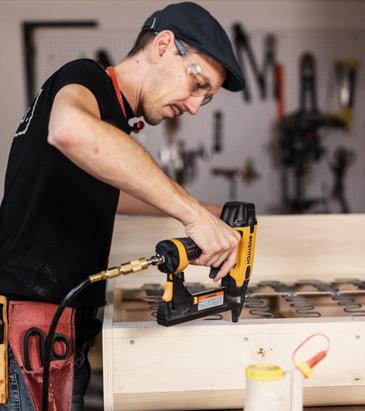
FROM SKETCH TO DELIVERY
With a five-person team, Ghauz embraces small-scale production. This deliberate choice keeps them hands-on at every step—from stitching to comfort, from sketch to delivery. In a market overrun with standardization, the company forges a different path: one of craftsmanship, and of quiet pride.
UN ÉCOSYSTÈME DE CONFIANCE
Ici, la création naît d’un écosystème profondément québécois, tissé de liens familiaux, d’amitiés et d’une vision partagée du design. Mettre en valeur le talent, le savoir-faire et la matière d’ici devient la pierre angulaire de chaque canapé.
COLLECTION MASIV
© Ian Balmorel
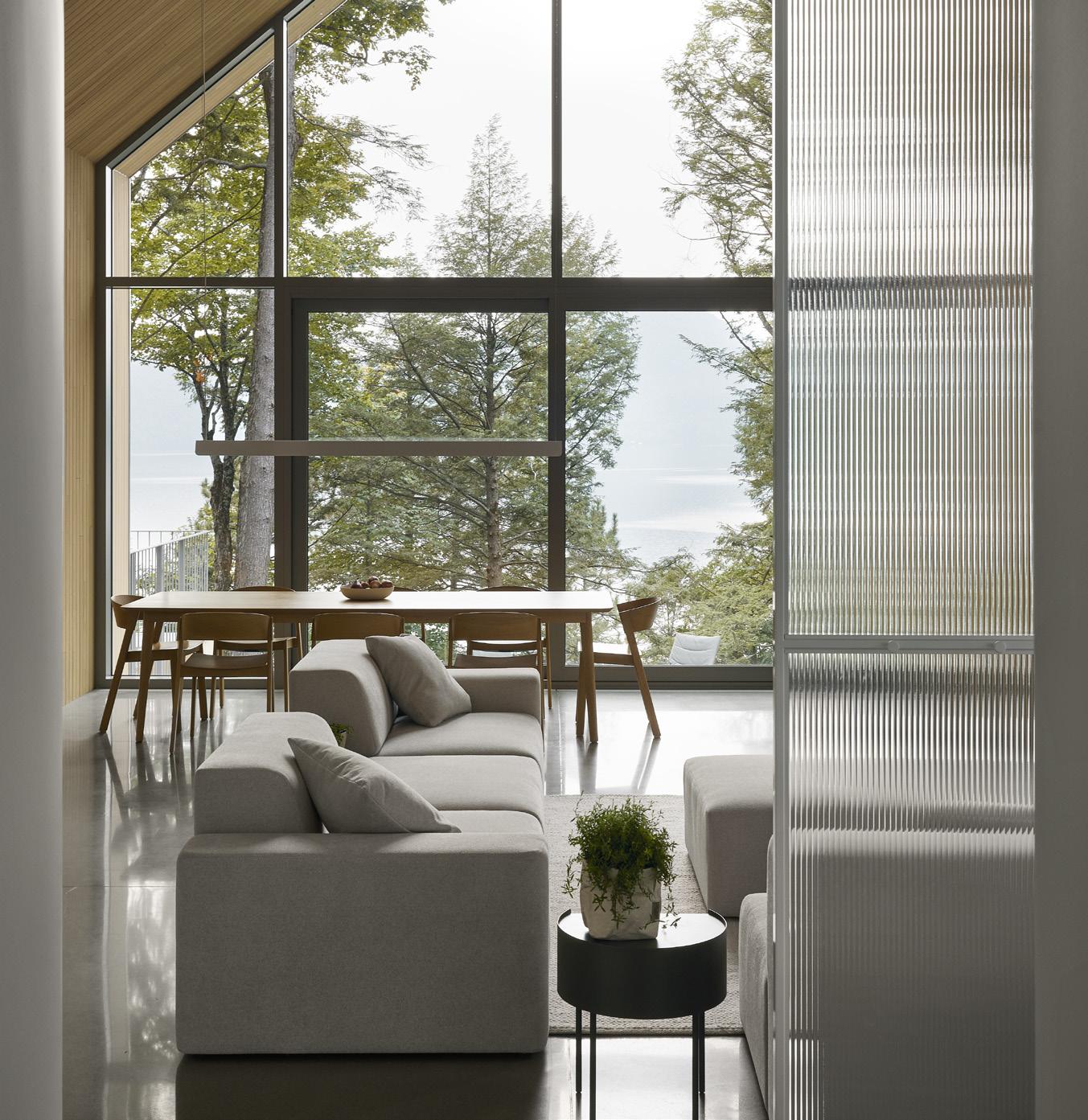
MASIV
L’atelier collabore étroitement avec Marc-Antoine Chrétien, architecte associé chez Matière Première Architecture à Magog, pour concevoir les collections, et fait appel à l’Atelier Vaste, à Montréal, pour l’ébénisterie. Le résultat ? Des pièces pensées pour l’espace domestique comme pour l’architecture, livrées avec soin à travers tout le Québec et le Canada.
«Marc-Antoine Chrétien, c’est l’ami du meilleur ami de mon frère, Dominic Chaussé, président de Nu Drom construction. Des amis, des amis d’amis qui deviennent eux mêmes des amis, une histoire d’amitié quoi ! On ne s’est pas recrutés, on s’est trouvés — autour d’un même désir de concevoir du sur-mesure, bien pensé et fabriqué ici, en Estrie.»
COLLECTION
© Maxime Brouillet
CURVES, VOLUME, AND WHITE OAK
Developed in collaboration with Matière Première Architecture, the Nübes and Masiv collections reflect a common goal: blending contemporary lines with artisanal discipline. Each model is the product of a dialogue between spatial design and furniture making—between formal thought and local know-how.
Both lines are anchored by the use of white oak, worked with precision and sensitivity. It has become a hallmark of the Ghauz aesthetic—a noble material that runs through every piece like a backbone.
COMING SOON…
Looking ahead to the upcoming fall season, Ghauz is preparing a third collection, again developed with Matière Première Architecture. More pared-down and understated, it will highlight the natural elegance of wood through clean, minimal lines. A series designed to transcend styles and integrate seamlessly into a wide variety of environments—always with the same dedication to quality and coherence.
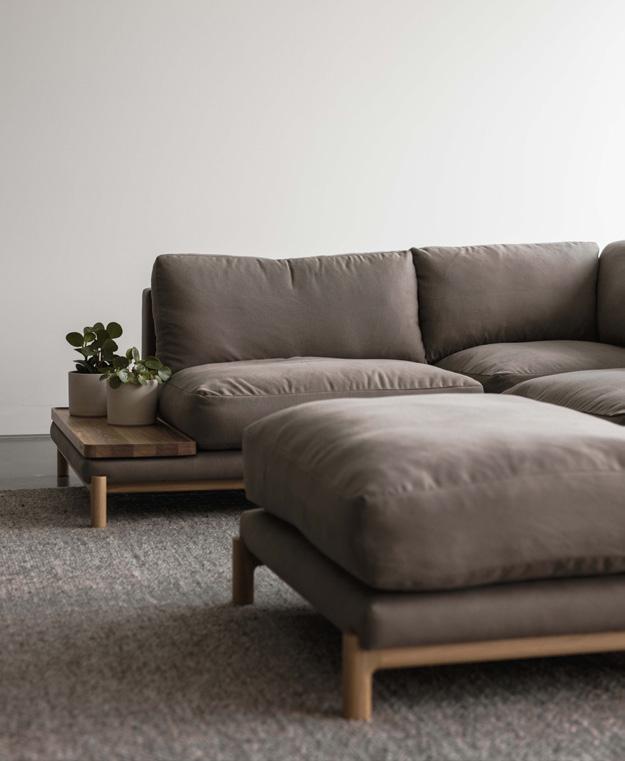
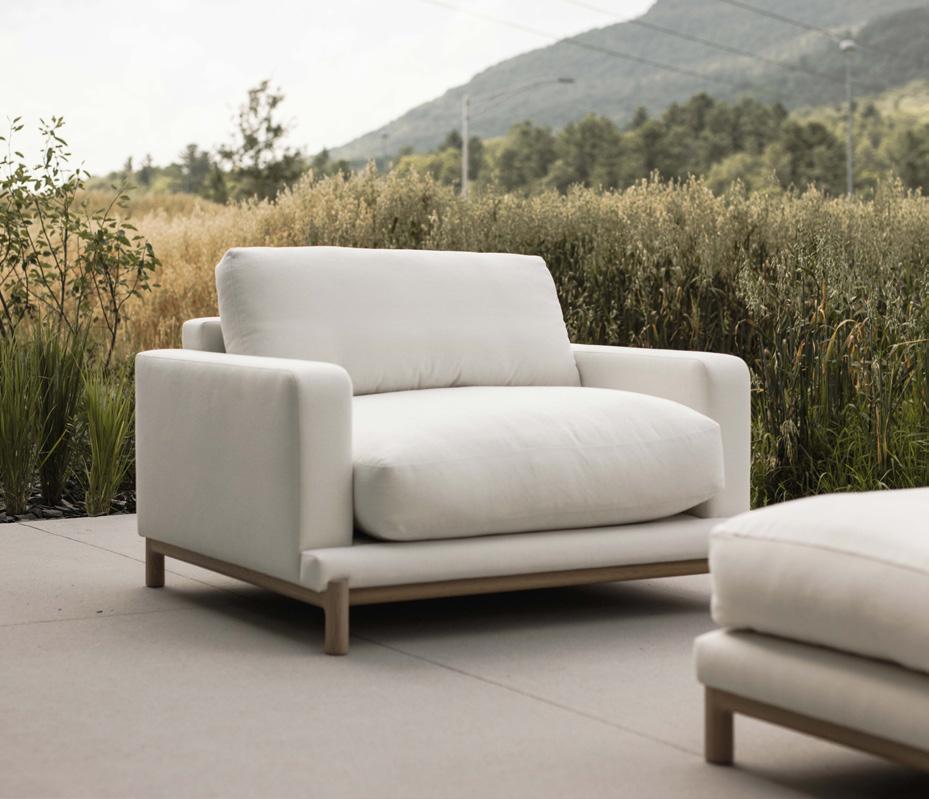

© Ian Balmorel
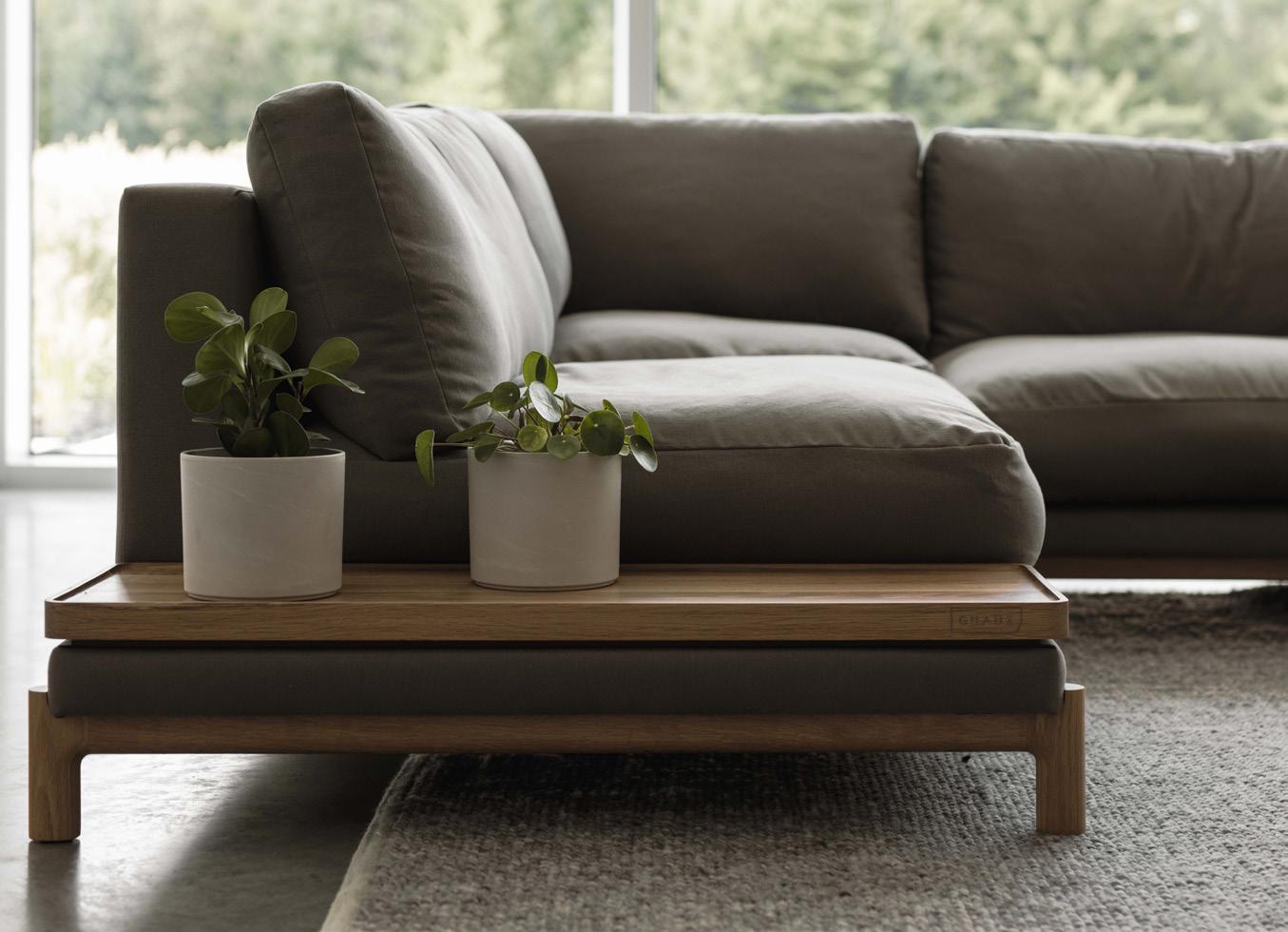
S’ANCRER POUR RAYONNER
Aux yeux des co-fondateurs, la croissance ici n’est pas une course, mais un prolongement naturel de ce qui est bien fait. Si la demande dépasse aujourd’hui les frontières de l’Estrie, l’ambition reste mesurée.
« Notre père est très fier de voir l’ampleur qu’a pris la petite shoppe qu’il avait fondé. Aujourd’hui, on se concentre d’abord sur une présence soutenue et reconnue au Québec et au Canada avant de croître trop rapidement et de perdre les fondements de notre production à échelle humaine. »
LE SOCLE DE DURABILITÉ
C’est dire que la durabilité n’est pas un argument marketing, mais la fondation sur laquelle repose la création chez Ghauz. Du bois franc au contreplaqué nord-américain, des textiles robustes à la fabrication locale, chaque décision est portée par une volonté de produire mieux et de produire ici, avec les ressources et les talents du Québec.
Formation de la main-d’œuvre, traçabilité des matériaux, longévité des pièces : tout participe d’une vision enracinée dans l’héritage familial et tournée vers l’avenir.
01, 02 COLLECTION NÜBES
PIERRE-LUC
RACINE Directeur général
LÀ OÙ LA RUE PORTE LEUR NOM
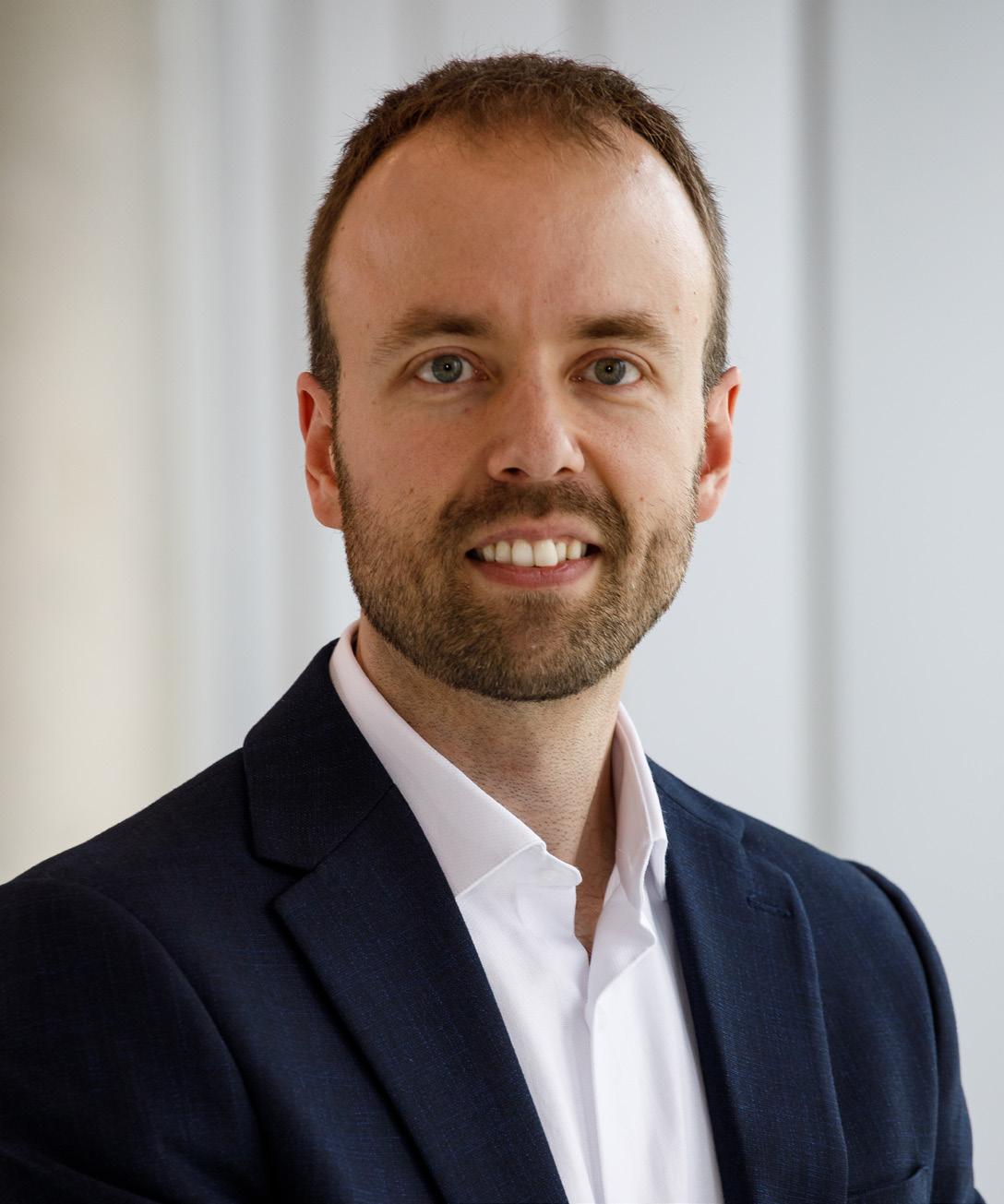
jaymar.co
Siège social et maison mère / Terrebonne
Année de fondation / 1956
Nombre d’employés / 150
Production locale / 100 % fabriquée au Québec
Matériaux et composantes d’origine québécoise / 35 %
Territoires desservis / Québec, reste du Canada, États-Unis
Ventes par région / Québec 77 %, reste du Canada 13 %, États-Unis 10 %
© Stéphane Brügger
Made in Québec
À Terrebonne, il y a une rue Jaymar. Une artère discrète du quartier industriel, baptisée ainsi parce que l’usine y était bien avant le reste. C’est dire à quel point cette entreprise fait partie du paysage — au propre comme au figuré.
Since 1956, Jaymar has been crafting high-end residential furniture built on local know-how, integrated production, and exceptional adaptability. Sofas, sectionals, loveseats, upholstered beds—every piece strikes a balance between comfort, durability, and custom design. And behind this refined furniture are more than 150 people who oversee every detail—from padding to stitching—with a level of mastery passed down through generations.
A HAND-STITCHED CULTURE
At Jaymar, there’s no barrier between those who design and those who build. Everyone works under the same roof—and often shares the same lunch table. “We foster a true spirit of collaboration,” says PierreLuc Racine, General Manager. “Ideas circulate freely—it’s a collective ‘we’ moving in the same direction.”
UN SAVOIR-FAIRE VIVANT
Cette cohésion s’appuie sur l’ancienneté remarquable de plusieurs employés — certains sont là depuis 30, 40, voire 50 ans. Une mémoire vivante de l’entreprise, transmise par les regards, les mains, les échanges. Un savoir-faire artisanal en perpétuelle évolution, nourri autant par la tradition que par l’innovation.
A BRIEF HISTORY LESSON
Jaymar was founded by George Reinitz in a yet-to-be-industrialized Québec. A visionary, he established the factory in Terrebonne well before the neighborhood took shape—so much so that the street that now houses it bears the company’s name.
In 2013, the Québec flagship was acquired by Daniel Walker, who brought new energy to the business while staying true to its mission and unwavering commitment to quality.

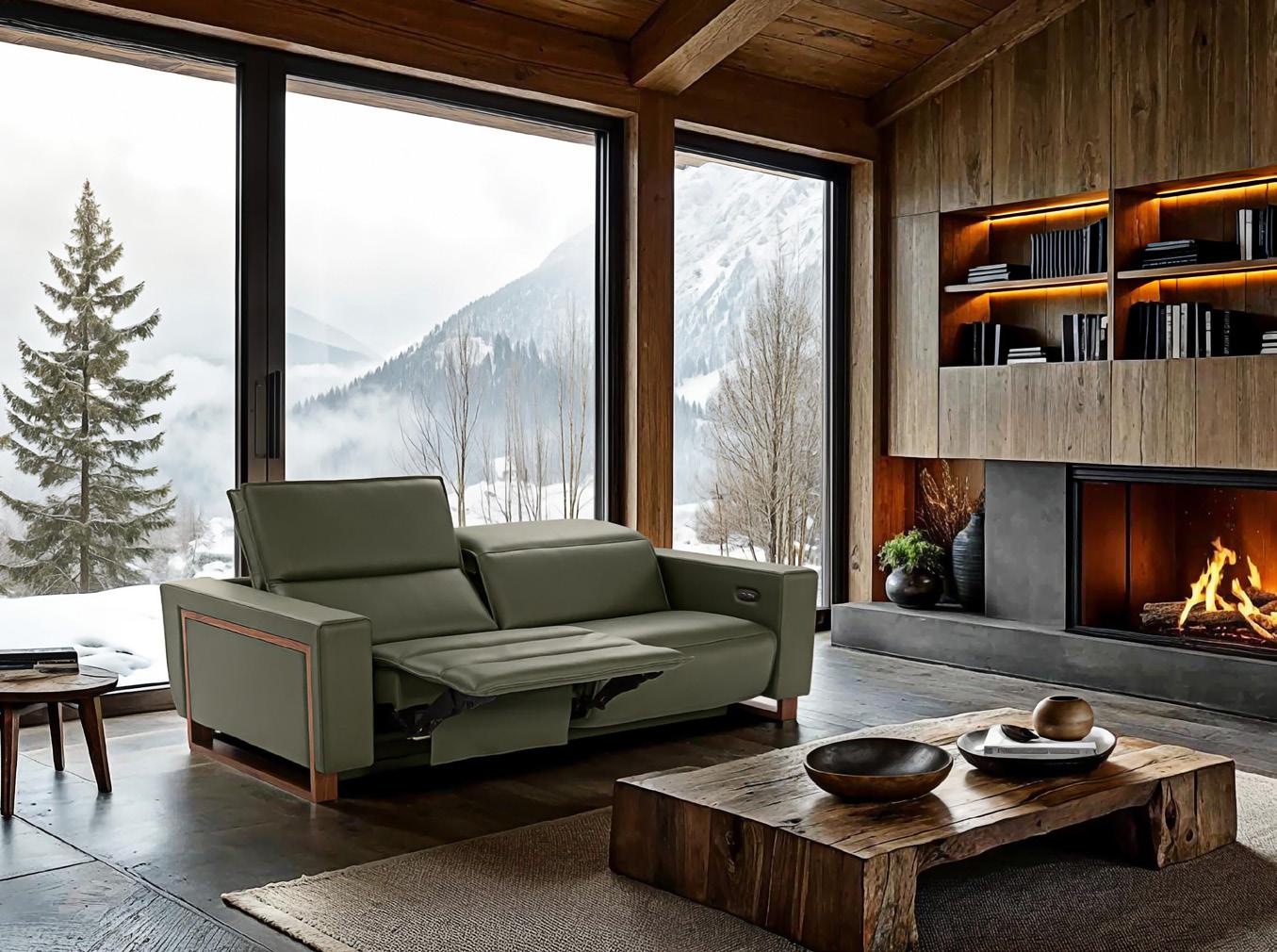
UN NOUVEAU LEADERSHIP
À la tête de Jaymar depuis 2023, Pierre-Luc Racine met à profit son expertise de CPA et son parcours en finance, notamment chez Bombardier. « Rapidement, j’ai vu le potentiel humain et manufacturier unique de cette entreprise. » Proche de son équipe comme du marché, il veille à ce que chaque meuble incarne l’essence Jaymar : un confort durable, pensé ici, pour ici.
CUSTOMIZATION AS A SIGNATURE
Here, customization goes well beyond fabric and color choices. With more than 200 fabrics, 50 leathers, and countless configuration options—from motorized mechanisms and adjustable headrests to tailored comfort and integrated accessories—Jaymar empowers each client to create a piece that reflects their personal lifestyle.
UN ESPACE POUR FAÇONNER SON CONFORT
Dans la salle de montre de 10 000 pieds carrés, clients, détaillants et designers peuvent explorer les modèles, tester les assises, discuter d’ajustements ou même proposer un recouvrement hors
catalogue. La chaîne de production flexible permet une adaptation rapide, qu’il s’agisse d’un projet résidentiel classique ou d’une commande très spécifique, comme un canapé aux dimensions hors normes.
A TOOLBOX FOR THE TRADE
In 2025, Jaymar will launch its new Trade program, designed specifically for interior designers. Envisioned as a collaboration tool, the program offers exclusive discounts, a professional kit (samples, catalogs), factory tours, and meetings with the teams. The goal: to strengthen the bond between local manufacturing and Québec design.
UN RÉSEAU SOLIDEMENT IMPLANTÉ
Présent dans plus de 300 points de vente, Jaymar entretient un réseau solide de détaillants à travers le Québec, le Canada et les États-Unis. Ses collections sont offertes chez des partenaires majeurs comme JC Perreault, Germain Larivière, Tanguay et Setlakwe, ainsi que dans de nombreuses boutiques spécialisées en Amérique
COLLECTION SUMMITX
The Mont Blanc in premium leather
du Nord. Des collections exclusives, comme la gamme Summit X offerte exclusivement chez JC Perreault au Québec, illustrent l’ancrage haut de gamme et local de la marque.
MORE THAN LOCAL SOURCING
Jaymar’s factory houses 100% of its design and production under one roof—and the company is firmly committed to a close-knit, locally anchored supply ecosystem. The vast majority of its suppliers and partners are located within 20 kilometers of Terrebonne. Solid wood, foam, fabrics, metal components—each material is carefully selected for quality, traceability, and sustainable collaboration.
With the Designed and Made in Québec certification from the LPDQ, Jaymar enjoys remarkable agility in the face of market fluctuations, shorter lead times, and greater resilience in an everchanging economic climate.
EXCELLENCE WITH PRECISION
Even the 35% of materials sourced from abroad—such as select Italian leathers or U.S.-made mechanisms—are chosen for their excellence, then seamlessly integrated into the manufacturing process.
PENSER DEMAIN
Face à un marché en mutation — acheteurs plus jeunes, attentes redéfinies, popularité croissante de l’achat en ligne — Jaymar mise sur l’agilité. Son usine permet de répondre rapidement à la demande tout en développant de nouvelles gammes : mobilier compact et multifonction, assises généreuses à l’esthétique minimaliste, et pièces hyper luxueuses conçues pour des clients d’exception.
THE FIRST EMBRACE OF COMFORT
Created to accompany the earliest stages of life, the Jaymar BB collection combines originality, quality, and long-term durability. It now includes reclining rockers designed to deliver an unmatched level of comfort. Whether for nursing, storytime, or quiet bonding, these chairs offer optimal support and reassuring safety—helping parents savor every moment in a cocoon of well-being.
HABITER AUTREMENT
Plus qu’un fabricant québécois de meubles, Jaymar se positionne comme un partenaire d’habitat, capable d’évoluer avec les modes de vie. Car demain, comme hier, le vrai luxe restera de se sentir bien chez soi.
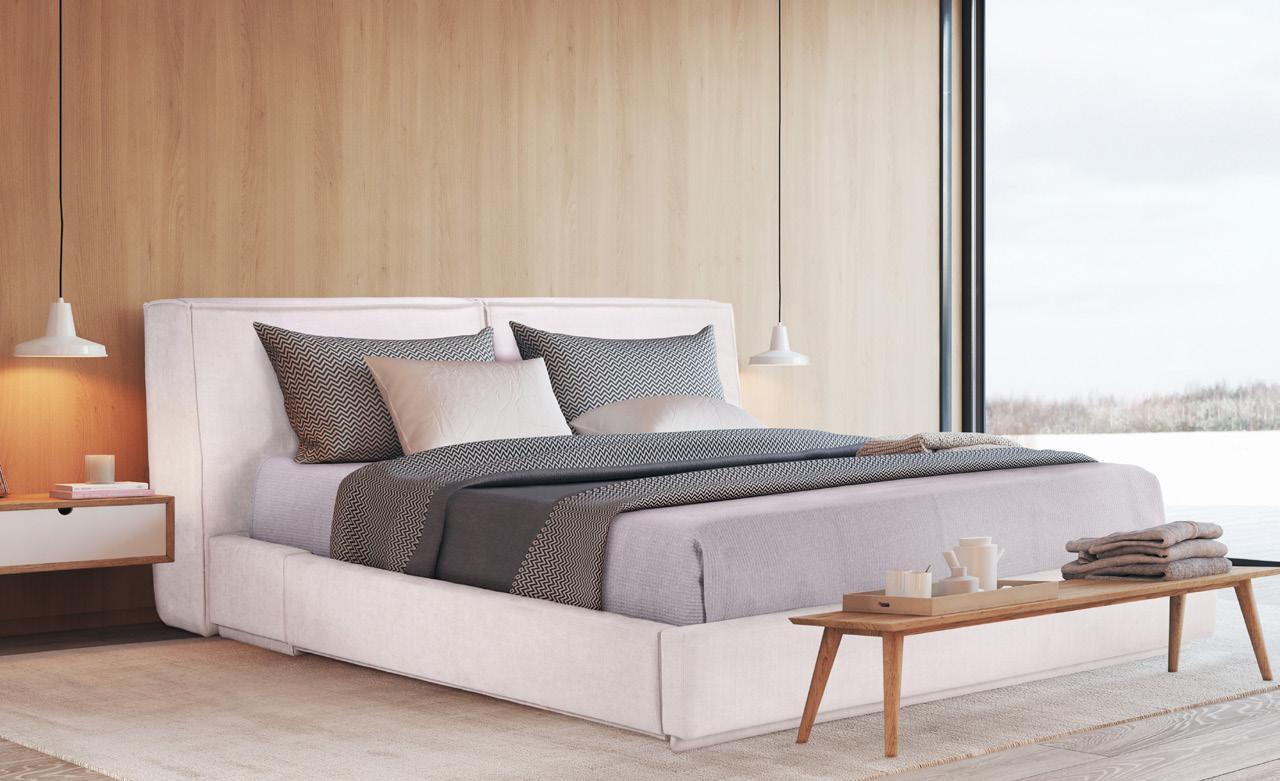
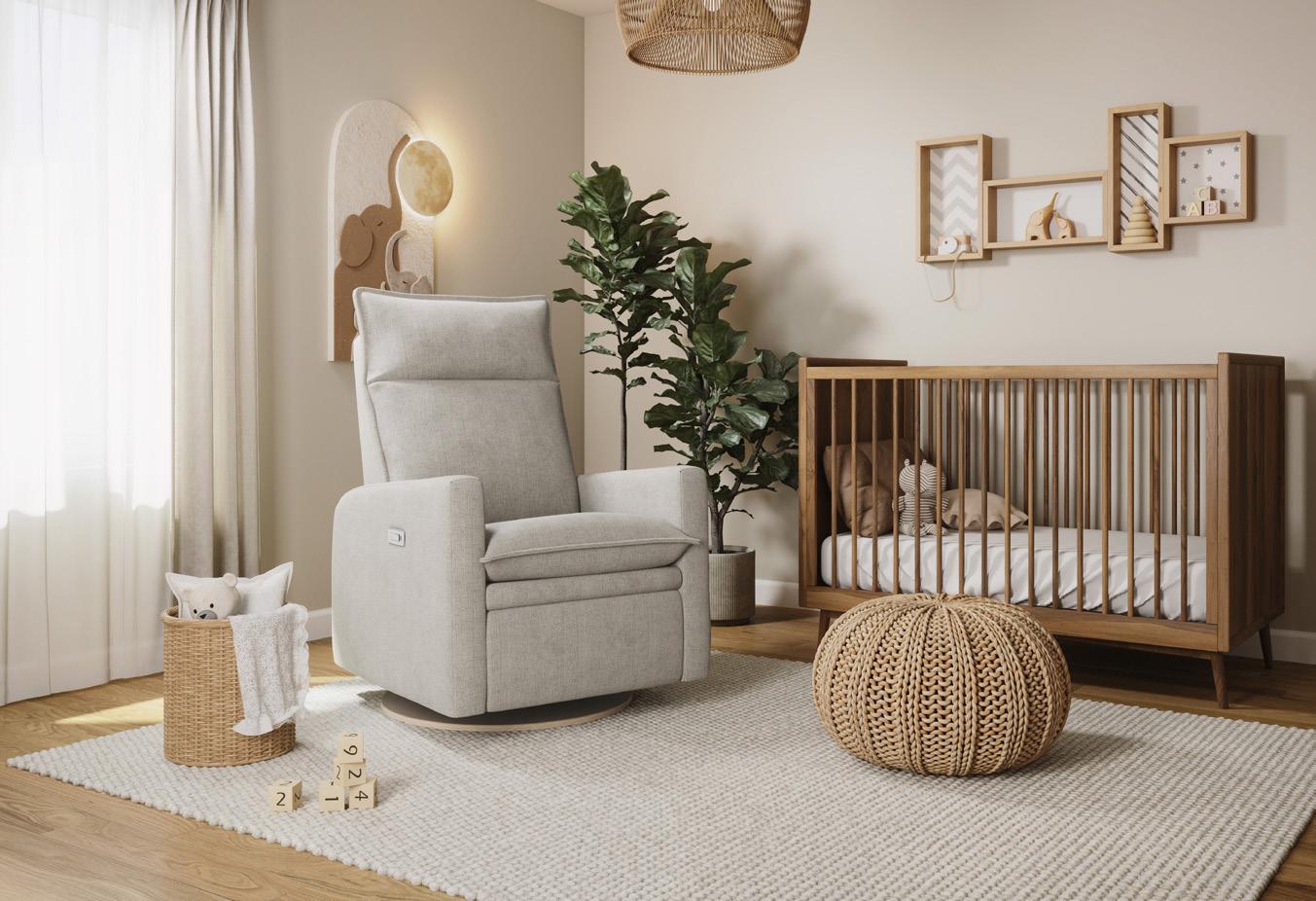

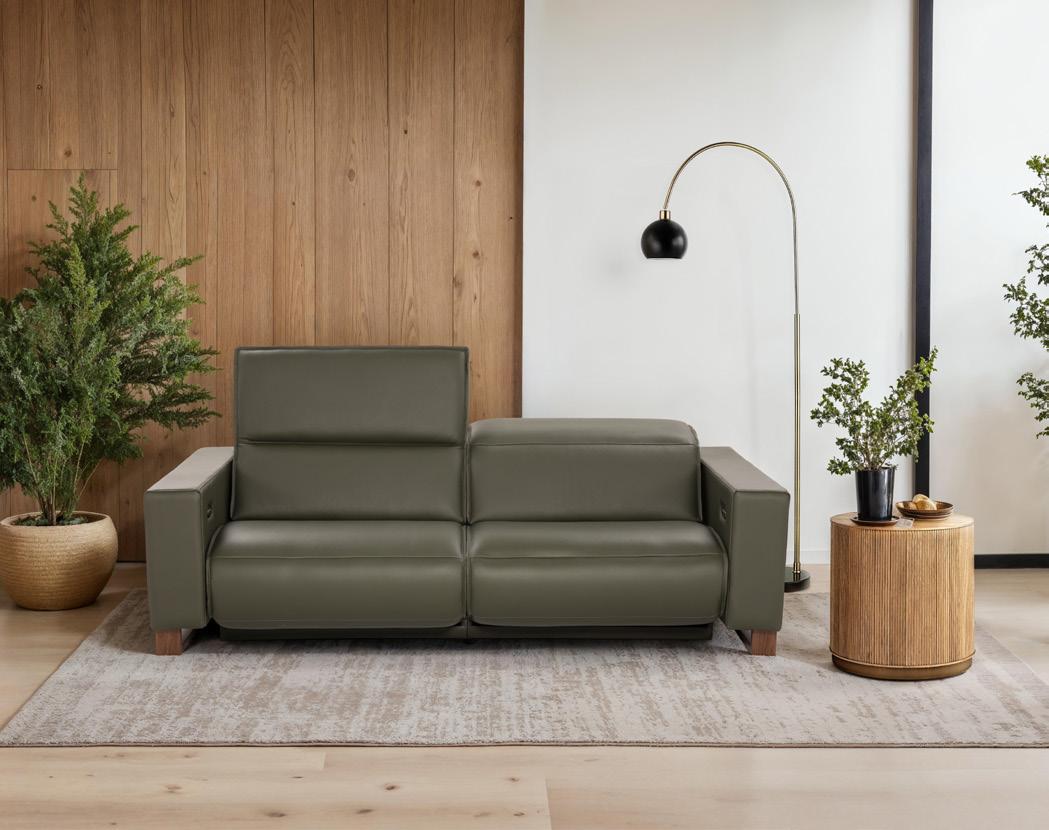
FRANÇOIS-XAVIER
BONNEVILLE
Copropriétaire et Directeur général
MARC-ANTOINE
BONNEVILLE
Copropriétaire et Directeur commercial
L'ATELIER INDUSTRIEL
lepagemillwork.com
Siège social et maison mère / Rivière-du-Loup
Année de fondation / 1947
Nombre d’employés / 490
Production locale / 100 % fabriquée au Québec
Matériaux et composantes d’origine québécoise / variable Territoires desservis / Québec, Ontario, États-Unis
Lepage Millwork
Made in Québec
Ventes par région / Québec 20 %, Ontario 30 %, États-Unis 50 %
C’est dans le Bas-du-Fleuve que Lepage Millwork fabrique des portes et fenêtres en bois et bois-aluminium qui traversent les frontières — et les générations. Héritière d’un savoir-faire enraciné dans la matière depuis 1947, l’entreprise familiale s’impose aujourd’hui comme un chef de file nord-américain du marché haut de gamme, tout en cultivant une culture profondément humaine.
Since Guy Bonneville took over in 2002, and through the transition to his sons François-Xavier and Marc-Antoine, Lepage has continued to innovate with wood—the noble material that sets it apart in an industry still dominated by PVC.
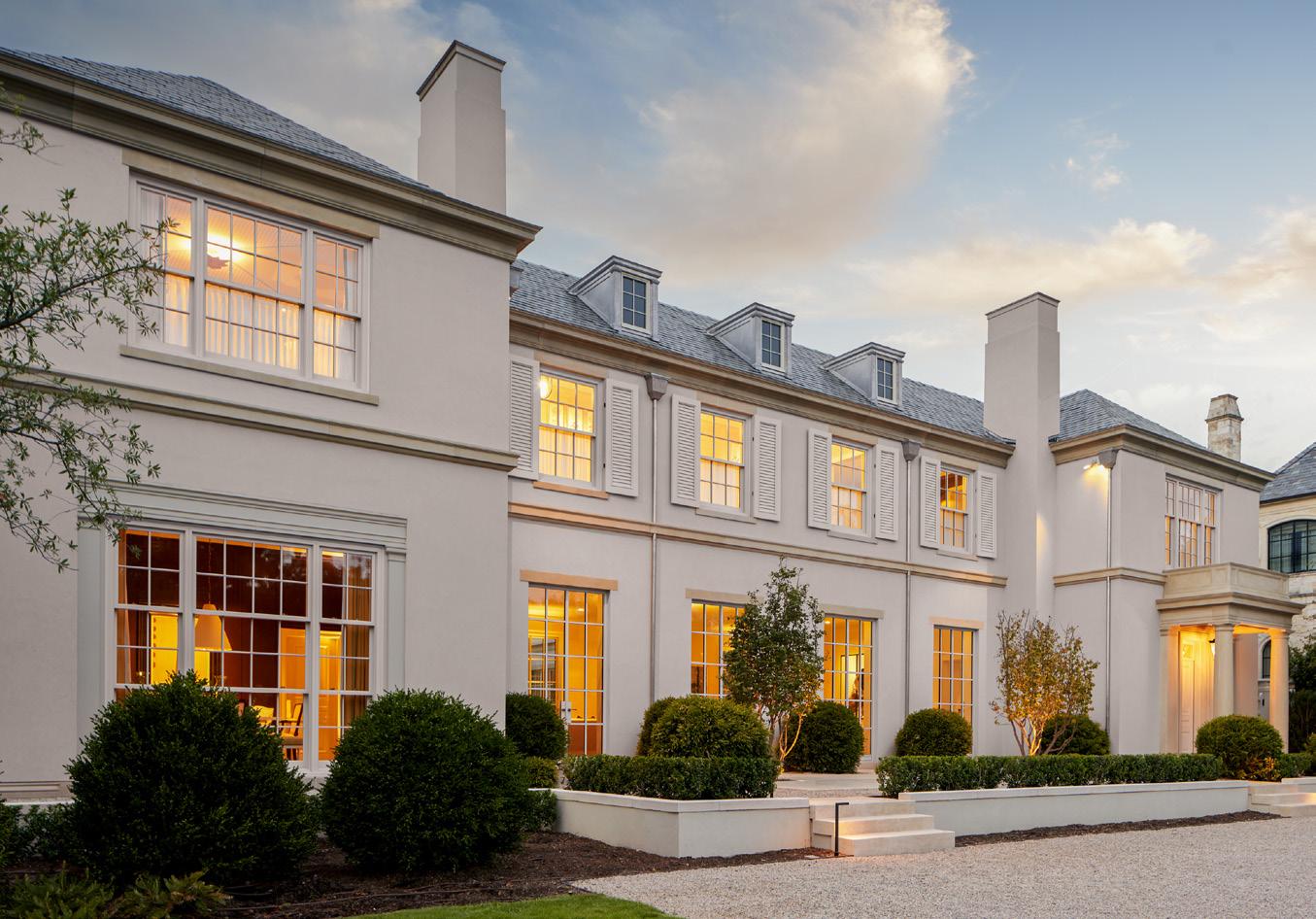
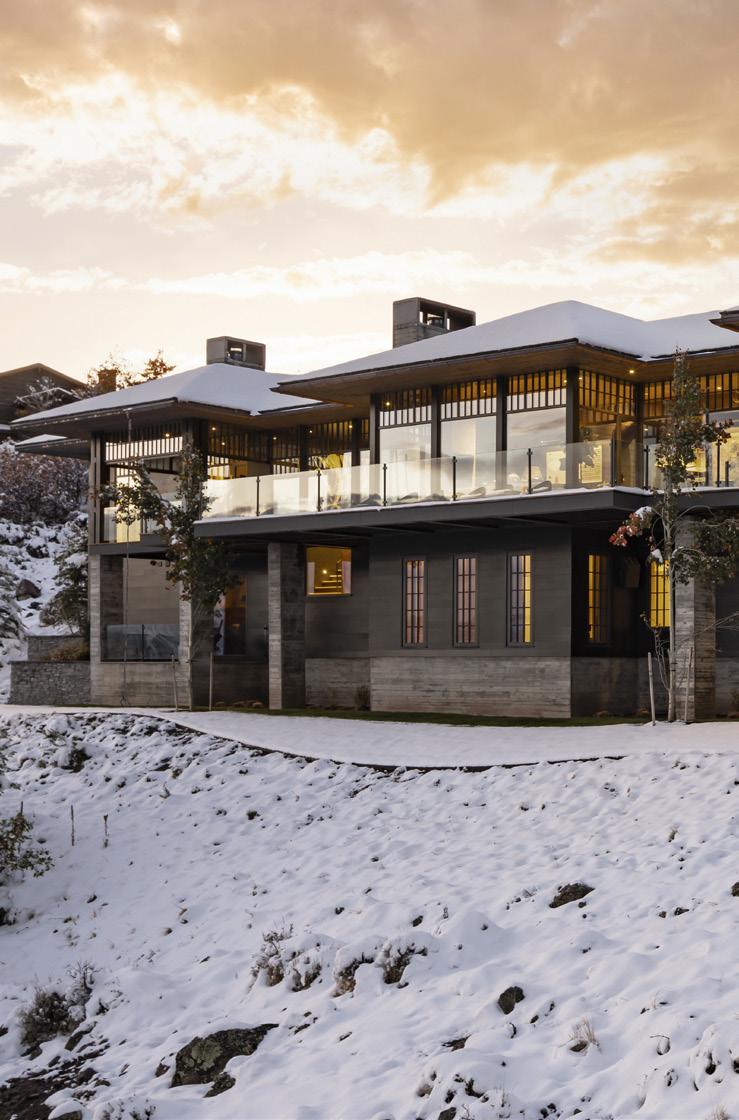
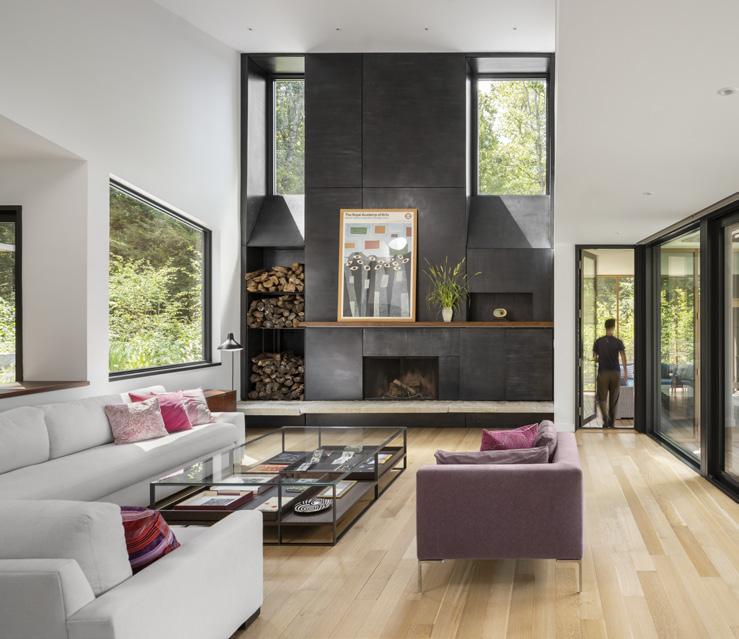
BACK TO ITS CORE
“In 2025, we left PVC behind to focus on what truly drives us: wood . We were at a crossroads,” recalls Marc-Antoine Bonneville. “Keeping up with the PVC market would have required massive investments. Instead, we chose to double down on our DNA: durability, warmth, material integrity.”
UN RETOUR DANS LE TEMPS
Fondée en 1947, l’entreprise prend un tournant en 2001 lorsque Guy Bonneville, entrepreneur manufacturier, en fait l’acquisition. Il y insuffle une croissance soutenue, passant de 50 à près de 400 employés.
En 2016, un voyage entre ses deux fils aligne les visions. L’année suivante, ils amorcent leur entrée : FrançoisXavier, ingénieur mécanique avec maîtrise en administration, et Marc-Antoine, détenteur d’un baccalauréat en comptabilité.
HAND IN HAND
The transition was deliberate, thoughtful… and honest: “We gave ourselves permission to dream. Together, we built the structure to make it happen— with an outside consultant, a clear timeline, and the will to speak openly. We named the challenges and welcomed differing views.”
That openness paid off: in 2023, the brothers earned an award for Next-Gen Entrepreneurship. Today, François-Xavier leads as CEO, and Marc-Antoine oversees commercial strategy. Guy, now retired, stays close to the forest—through the family’s maple grove, a nice wink to their roots… pun intended.
LES RACINES AU FLEUVE
Basée à Rivière-du-Loup, avec une antenne à Palmer, au Massachusetts, Lepage dessert un marché nord-américain — du Québec à la Californie. Ici, esthétique architecturale et performance technique se rencontrent : formes architecturales, chaleur du bois, effet inside-out, essences nobles comme l’acajou et l’eucalyptus, couleurs de teintures et peintures développées sur mesure.
LE REGARD AU LARGE
Les ouvertures opérantes et coulissantes grand format, tout comme les fenêtres de style classique, illustrent cette volonté d'unir design en tout genre et performance.
Lepage Millwork élargit notamment son offre avec une nouvelle porte coulissante à panneaux multiples, conçue pour effacer les frontières entre intérieur et extérieur. Offrant une fluidité d’ouverture impressionnante et un rendu architectural hautement soigné, ce modèle modulable permet de créer des ouvertures spectaculaires sans compromettre l’esthétique ou la performance. Un lancement stratégique qui confirme l’expertise de la maison en matière de design sur mesure.
THE INDUSTRIAL WORKSHOP
Here, expertise shines at every step of a fully vertically integrated production process—from raw wood to finished products. A dedicated team of colourists develops custom shades, while all glass units (thermal, tempered, laminated) are mainly made in-house. The company is also currently repurposing its former PVC plant to meet the growing demand for oversized glass panels. This balance of deep customization, attention to detail, and robust manufacturing capacity allows Lepage Millwork to handle major architectural projects without ever losing its client proximity.
And behind every product, the company evolves. Investments in automation and rethinking high-value workstations are driven by a clear mission: to elevate the human touch.
CULTIVER L’AVENIR, FORMER LE PRÉSENT
Ici, la fidélité des employés est un pilier fort. Certains ont cumulé plus de 50 ans d’ancienneté. Cette mémoire vivante est aujourd’hui transmise via l’Académie Lepage, qui forme les recrues aux bases du métier — de l’ébénisterie à la lecture des plans.
Un enjeu clé alors qu’une vaste vague de départs se profile : « On a 200 personnes qui forment le cœur de l’organisation et qui partiront à la retraite d’ici 5 à 10 ans. On a donc investi dans l’automatisation, oui, mais aussi dans la formation. Pour nous, technologie et savoir-faire vont main dans la main. »
LES GAULOIS VS LES ROMAINS
Leur approche se démarque dans un marché dominé par les Américains : « On a le volume des grands, mais on garde la personnalisation des petits. C'est notre équilibre, paradoxal... mais assumé. »
Si Rivière-du-Loup est parfois perçue comme en marge des grands centres, Marc-Antoine Bonneville y voit au contraire un véritable levier. Un terreau fertile où le savoir-faire s’enracine depuis des générations.

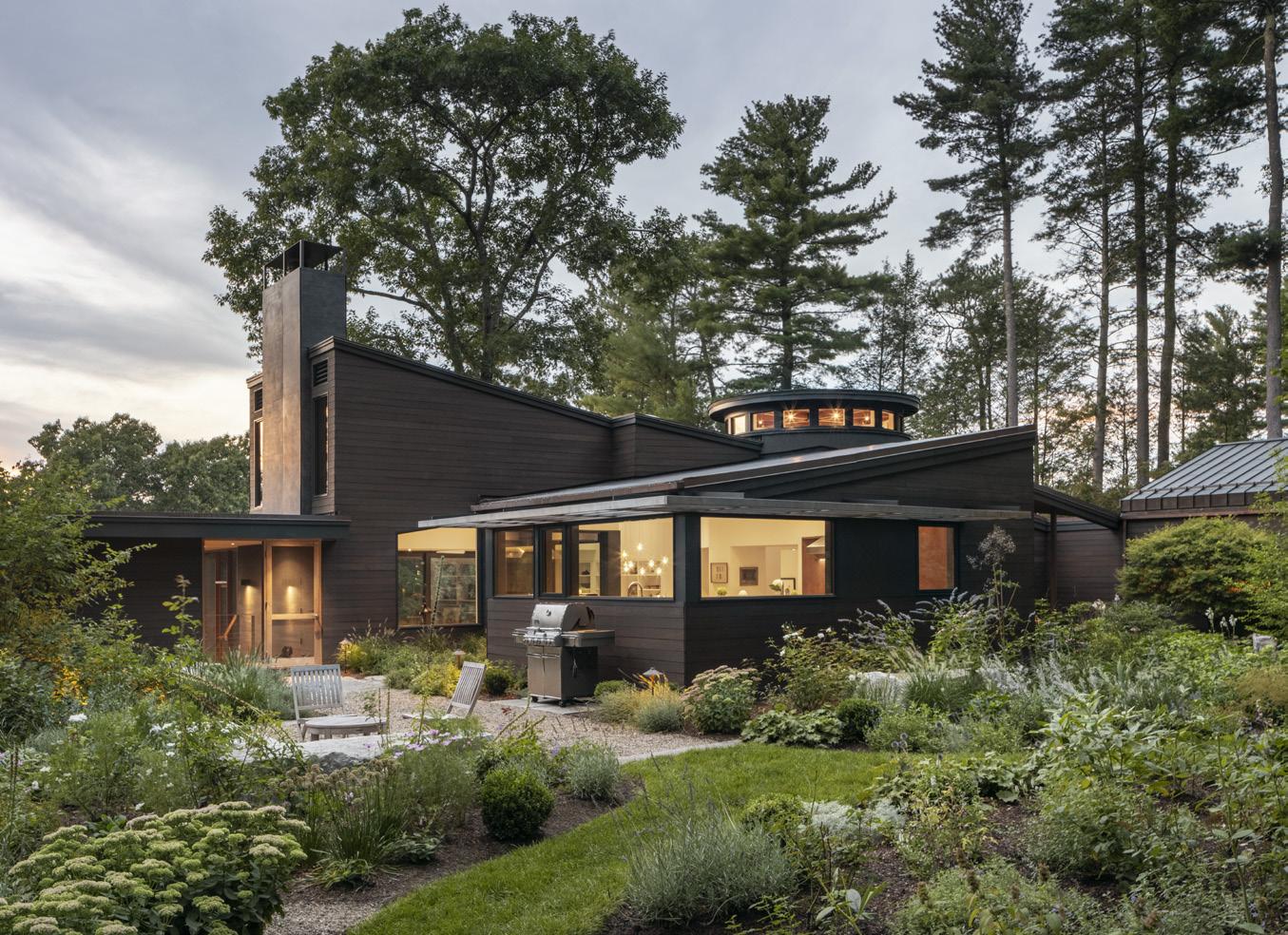
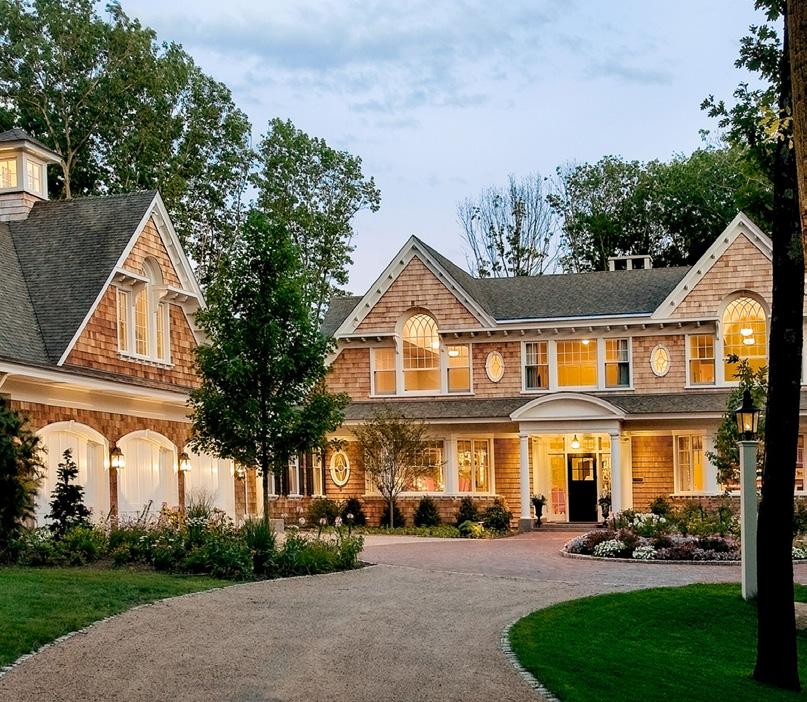
THE LEPAGE RECIPE
“We have incredible talent in our factories and our offices. A rich manufacturing heritage that values precision and versatility. A strong distribution network. And above all, lasting relationships built on mutual trust.”
This grounded culture, paired with a global mindset, creates a rare formula: a company that blends industrial performance with genuine, tailored craftsmanship.
“Sure, 70% of our clientele is English-speaking— but our way of doing things speaks for itself. It attracts, it retains. And it comes from here.”
UNE FIERTÉ SANS FRONTIÈRES
Rayonner bien au-delà des rives du SaintLaurent — sans jamais perdre son accent local : telle est la fierté signée Lepage Millwork.
« On est fiers de ce qu’on construit ensemble. Chacun porte une part de l’histoire. Chaque jour, c’est toute une famille qui avance, unie. »
© Trent Bell Photography
© Rob
Karosis
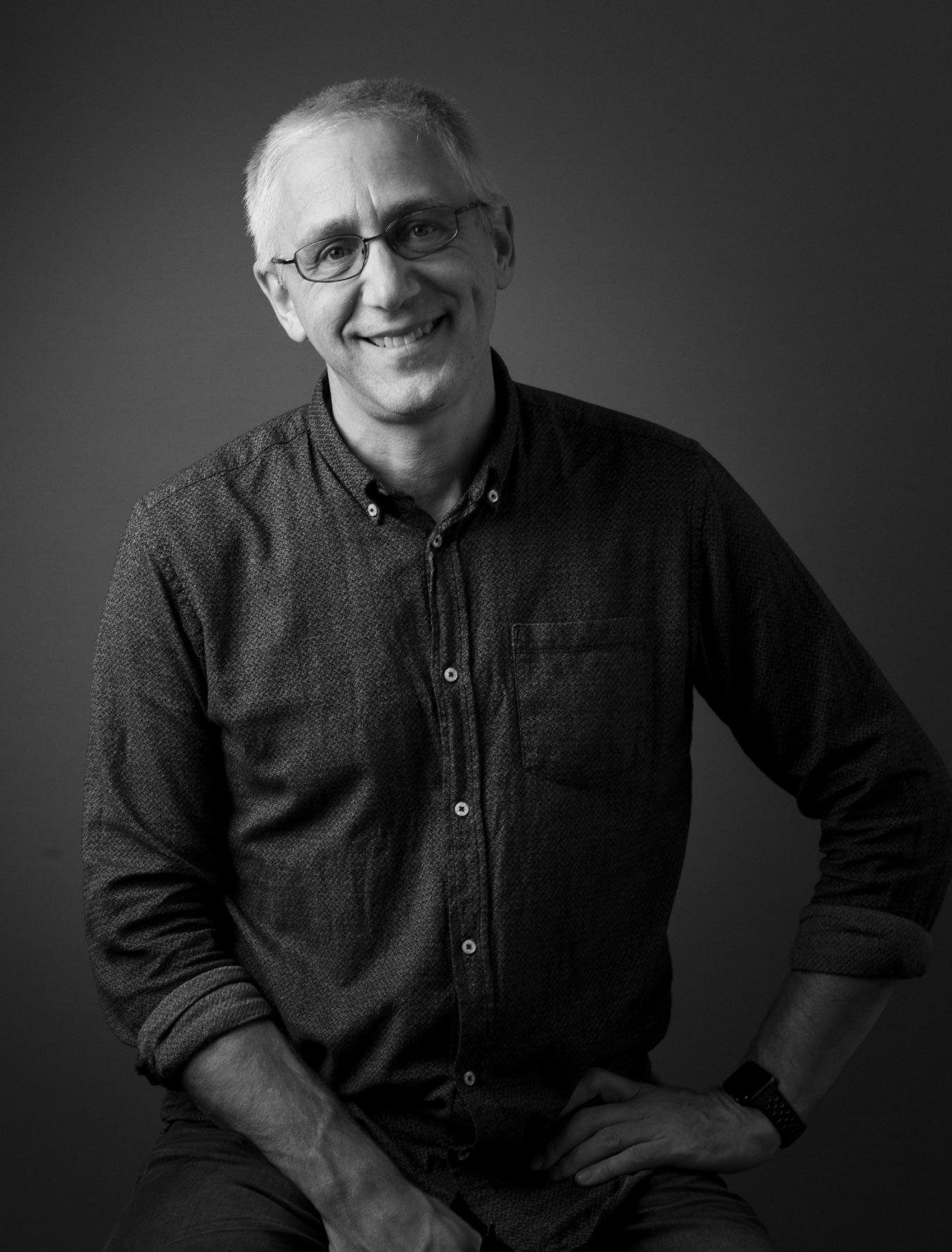
TRACER SA VOIE DANS LE BOIS
ÉRIC DAIGLE Président
loevenmorcel.com
Siège social et maison mère / Montréal
Année de fondation / 1991
Nombre d’employés / 19
Production locale / 100 % fabriquée au Québec Matériaux et composantes d’origine québécoise / 80 %
Territoires desservis / Québec, reste du Canada, États-Unis
Ventes par région / Québec 95 %, États-Unis 5 %
Depuis plus de 30 ans, Loeven Morcel incarne la rigueur et l’audace du mobilier sur mesure à Montréal. Sous la gouverne complice d’Éric Daigle, président et actionnaire majoritaire depuis 2023, et de Dirk Lindert, co-propriétaire et contremaître de l’atelier depuis 2010, l’entreprise continue de hisser l’ébénisterie architecturale au rang d’art appliqué — entre passion du bois, design d’exception et fabrication 100 % locale.
Loeven Morcel
Made in Québec
It all took shape inside a 17,000 sq. ft. workshop in the heart of Rosemont. Founded in 1991 by Alain Morcel and Frédéric Loeven, the company built a rock-solid reputation in high-end custom furniture. A reputation that, according to Éric Daigle, is built on a simple promise: to take custom work beyond the limits of the competition.
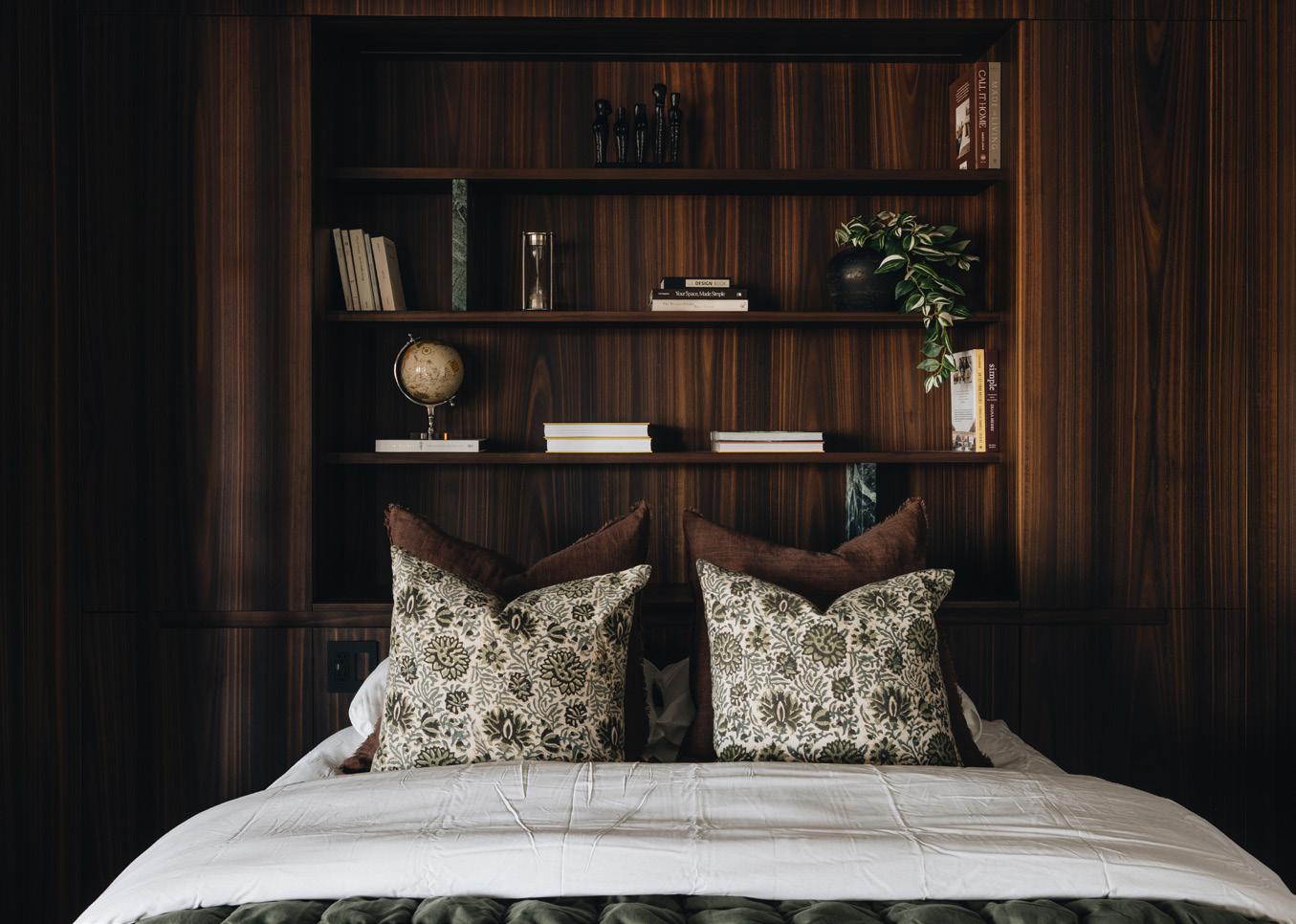
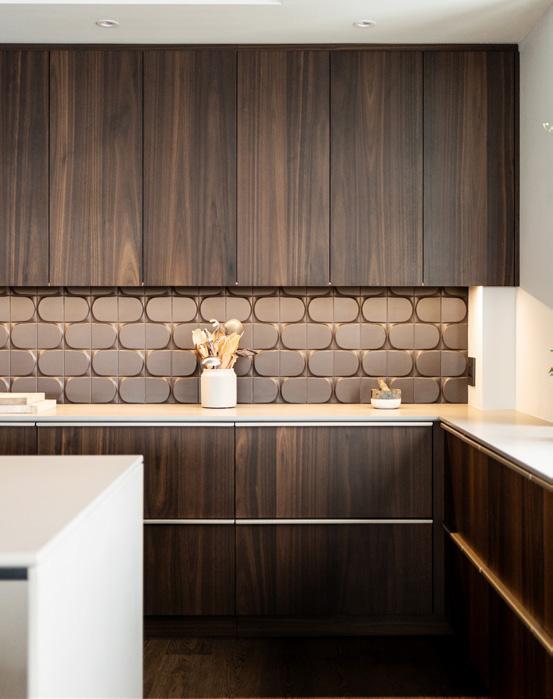
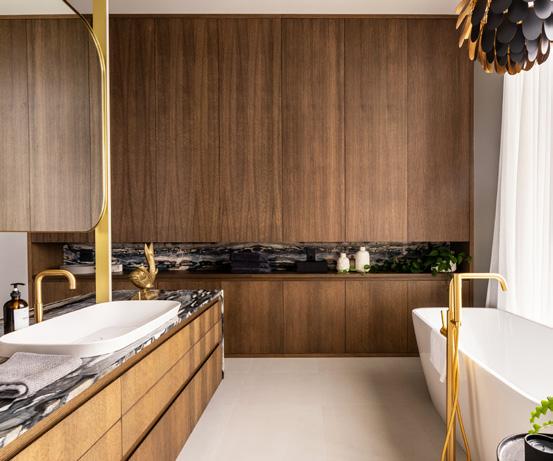
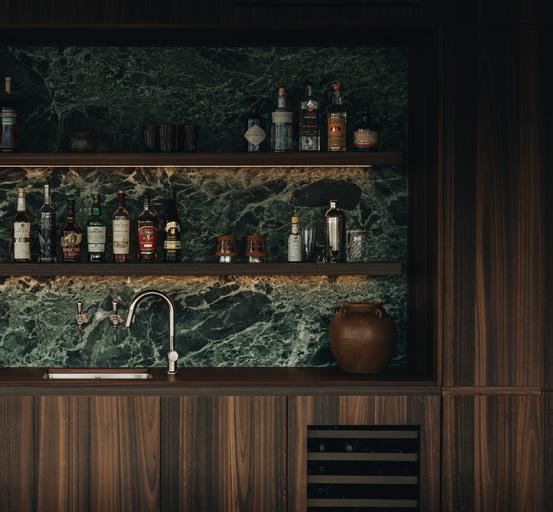
MASTERING THE CRAFT
“Everything is done in-house,” Daigle emphasizes. “Design, production, finishing, installation. Nothing leaves the shop— and that changes everything.” There’s no outsourcing here: each piece is designed, cut, assembled, and refined according to the highest standards, ensuring consistency from start to finish. This rare model of operation guarantees total quality control—and attracts some of the most ambitious projects, like the stunning Nordelec condo by MXMA, where woodworking plays a starring role.
UN PROJET MANIFESTE
Parmi les projets phares de Loeven Morcel, le condominium Le Nordelec se distingue par sa transformation en un véritable chalet urbain. Réalisé avec MXMA Architecture & Design, ce projet a permis de métamorphoser deux unités résidentielles en un espace chaleureux et sophistiqué.
L’ébénisterie sur mesure, notamment l’utilisation d’eucalyptus fumé, confère une ambiance feutrée et élégante, illustrant la capacité de l’atelier à allier design contemporain et matériaux nobles.
« On a vraiment pu pousser nos limites sur ce projet-là, raconte Éric Daigle. L’ébénisterie n’était pas un ajout — c’était la base du concept. Chaque ton de bois avait un rôle à jouer dans l’atmosphère. »
STRUCTURER LA NARRATIVE
Ici, l’ébénisterie devient structure narrative : elle guide la lumière, module les perspectives, impose un rythme à l’espace. Des bibliothèques intégrées aux panneaux muraux jusqu’aux meubles de cuisine, tout a été pensé comme un tout cohérent. Le choix de l’eucalyptus fumé, avec ses reflets profonds et son grain subtil, ajoute une touche de noblesse et de chaleur discrète — signature de Loeven Morcel.
MADE IN MONTRÉAL
From walnut to cherry, and especially smoked eucalyptus, noble woods are the stars of the workshop—yet white oak tends to steal the spotlight. Widely loved by architects, designers, and clients for its warm neutrality and versatility, it pairs beautifully with colored lacquers and refined finishes. Every element is designed and made in Montréal with artisanal care and industrial precision.
FORMER LA RELÈVE LOCALE
Transmettre le savoir-faire est une mission à part entière. Ici, la relève se forme au contact du bois, guidée par l’expérience. « On a la chance d’être voisins de l’École du meuble de Montréal, souligne Éric Daigle. Chaque année, on accueille des groupes en visite — et souvent, ça se poursuit avec des stages, puis avec des embauches. Rien ne vaut l’expérience sur le terrain. »
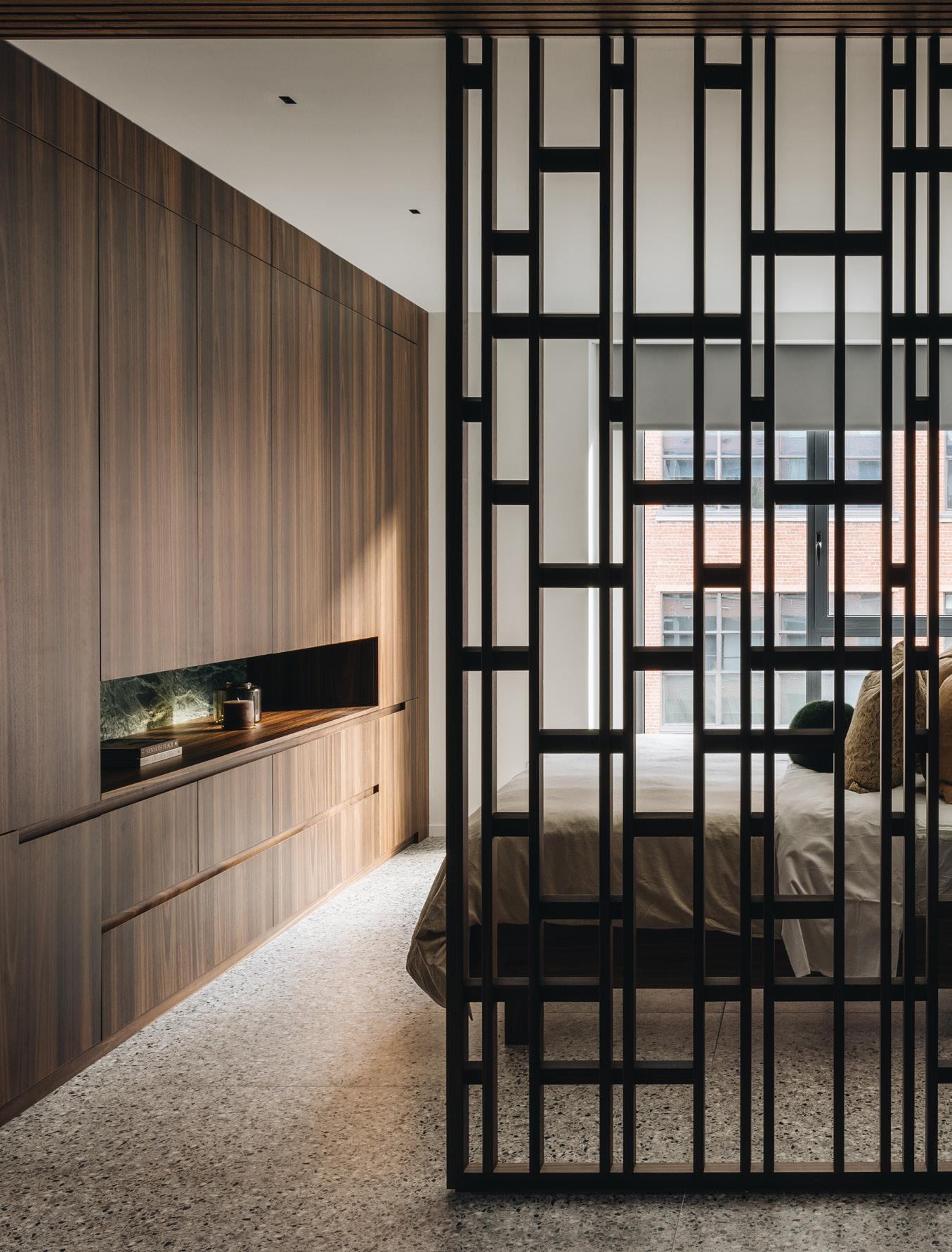
01, 02 PROJET DE LA ROTONDE Mandat : réaliser le mobilier sur mesure (chêne blanc et eucalyptus fumé) pour un condominium de l’Île‑des‑Sœurs. Conception de Vincent Boyer (2021).
03, 04
PROJET NORDELEC Mandat : concrétiser la vision des architectes en fabriquant du mobilier sur mesure, pour transformer deux unités résidentielles en chalet urbain. Conception par MXMA Architecture & Design (2024).
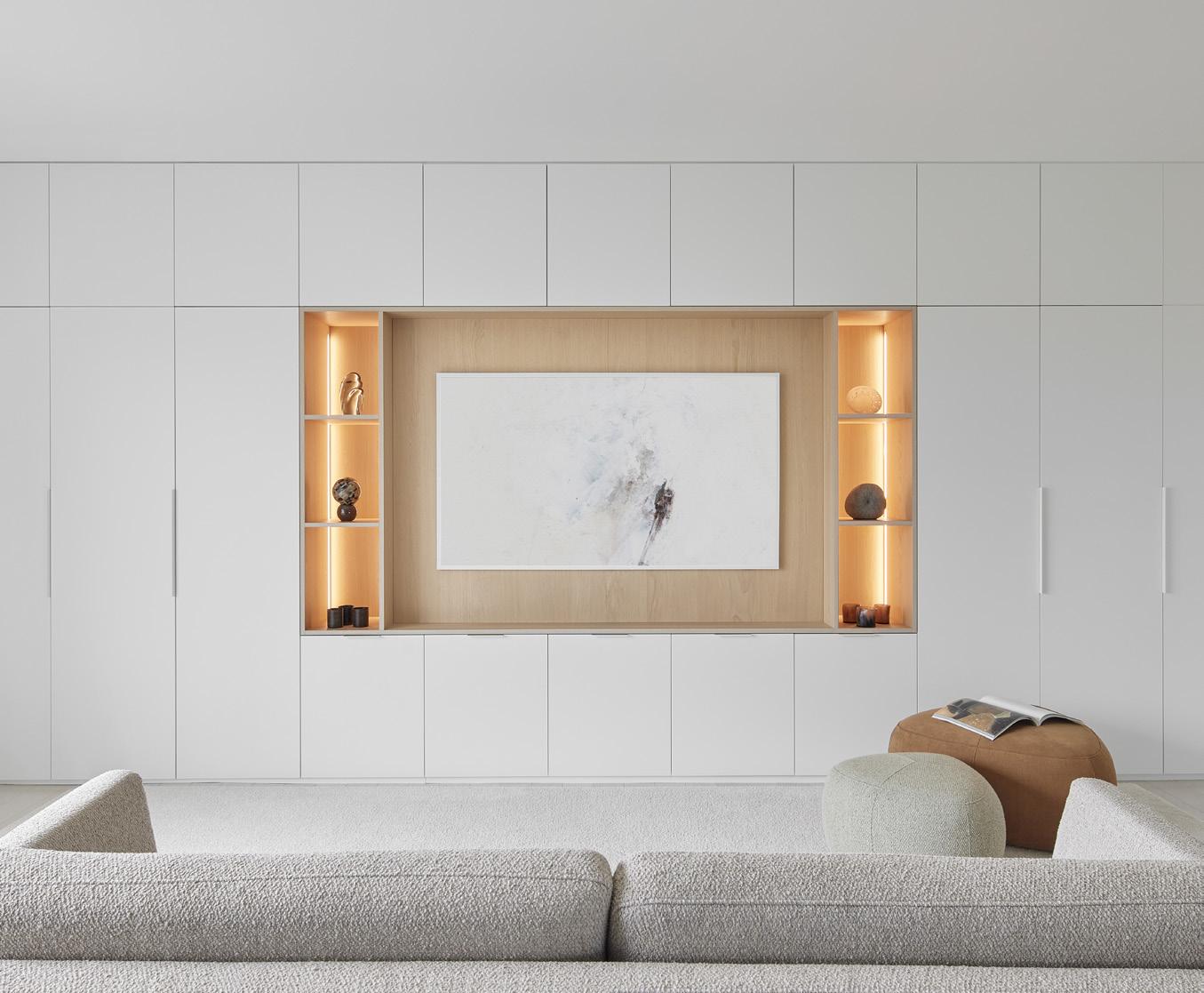
A CRAFTMAN’S LEGACY
At Loeven Morcel, the art of woodworking is handed down. Éric Daigle is living proof: trained as an urban planner, he discovered the craft “through passion, through his hands,” starting in his family garage. He eventually rented a corner of Alain Morcel’s shop, became a partner in 1999, and is now majority shareholder. Today, with VP Dirk Lindert, he leads a team of 20 versatile artisans—all grounded in the house’s methods and committed to excellence.
OH! SURPRISE!
En 2020, l’entreprise lance OH Mobilier — une collection de meubles aux lignes épurées, entièrement conçue et fabriquée à Montréal. Tables de chevet, bureaux de travail, commodes : chaque pièce de la collection est personnalisable à souhait et pensée pour conjuguer accessibilité, rigueur et qualité artisanale.
Prêt à éclore en mars 2020, le projet se heurte à la pandémie et à une vague de rénovations qui mobilise l’atelier pendant deux ans. Aujourd’hui, OH Mobilier reprend son envol. Prototypes prêts, images en circulation, site transactionnel en ligne : l’équipe maintient le cap sur ses valeurs : approvisionnement local, production maison, savoir-faire d’ici.
FROM OUR FORESTS TO OUR HOMES
At Loeven Morcel, every board has a story, every project a unique signature. Far from fleeting trends, the workshop has carved out a quiet, steady path over the past three decades—guided by sure hands, deep convictions, and an unwavering connection to Montréal. In this world of textures and materials, wood doesn’t lie—and neither does the company’s reputation.
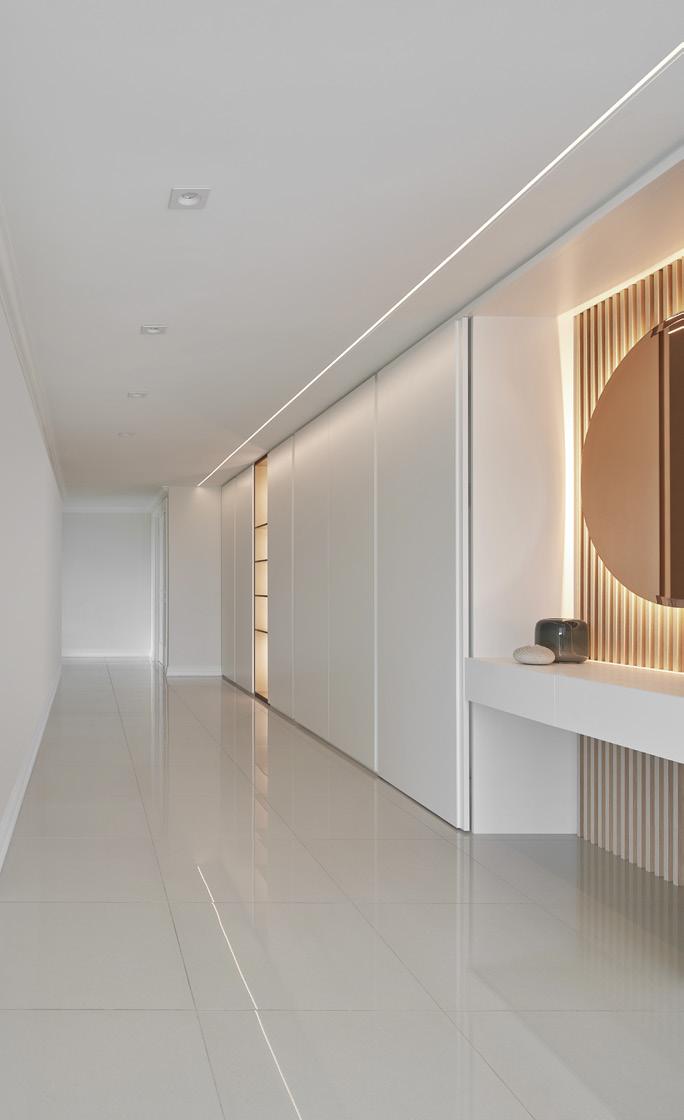
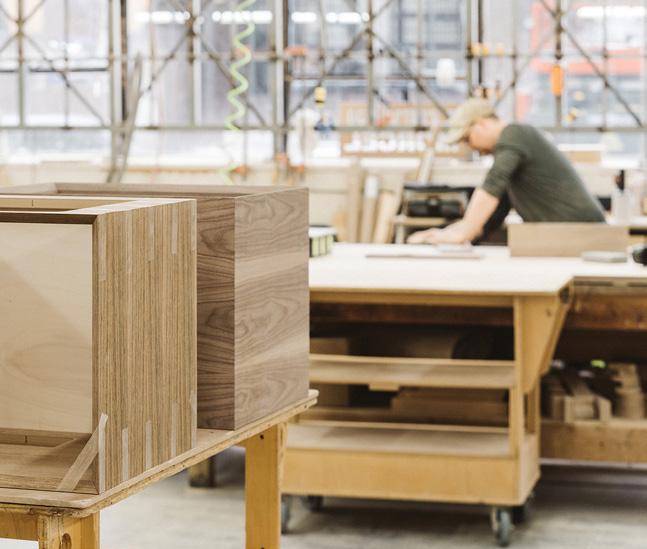
DÉPLOYER SES BRANCHES
01, 02 PROJET NORTHCREST
Mandat : concevoir et fabriquer une cuisine, un lambris ainsi que du mobilier intégré pour une résidence à Montréal (chêne blanc et laque blanche). Design par Cathlin Stothers (2023).
03 ATELIER 04, 05 COLLECTION OH 02
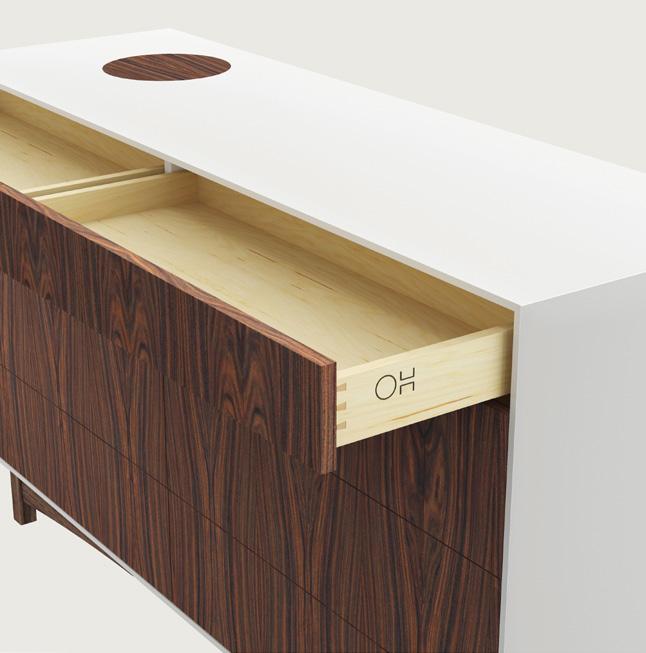
« Notre réputation nous précède depuis déjà 30 ans, souligne Éric Daigle. Nous sommes fiers de collaborer étroitement avec la communauté de designers et d’architectes d’ici, et souhaitons nous y enraciner encore davantage — en participant plus activement à la vie de cette industrie locale, si vivante et en pleine effervescence. »
Et tant que le bois parlera aux mains — ce bois issu de nos forêts, mémoire vivante du territoire — Loeven Morcel continuera d’en faire écho.
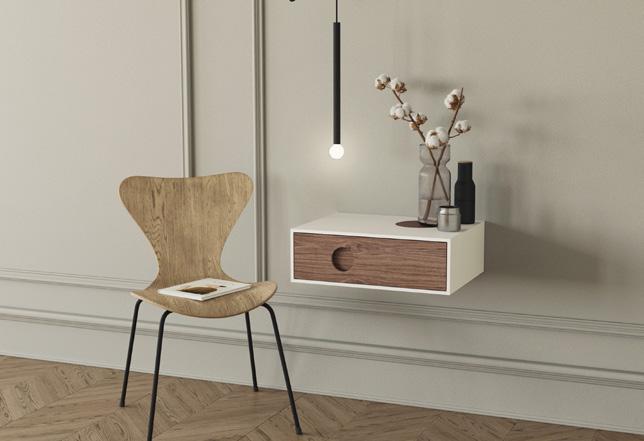
FRANÇOIS ST-PIERRE
Co-propriétaire & Vice-président ventes
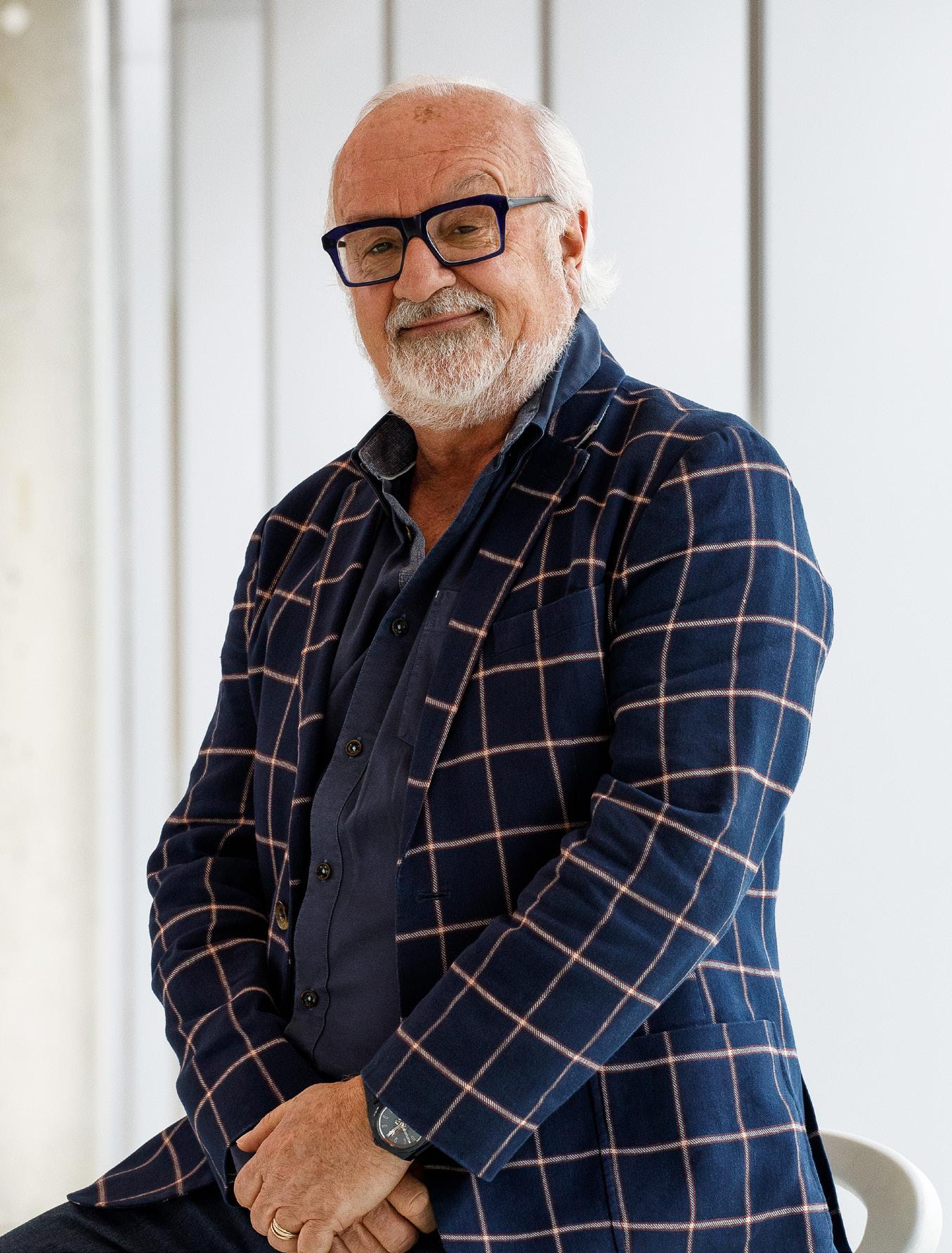
À MÊME LES RÊVES, LA MAIN DE L’ARTISAN
Literie Laurier
literielaurier.com
Siège social et maison mère / Montréal
Année de fondation / 1938
Nombre d’employés / 45
Production locale / 100 % fabriquée au Québec
Matériaux et composantes d’origine québécoise / 65 %
Territoires desservis / Québec, reste du Canada, États-Unis
Ventes par région / Québec 60 %, reste du Canada 15 %, États-Unis 25 %
Depuis 1938, Literie Laurier conçoit des matelas et sommiers sur mesure avec une rigueur artisanale enracinée au Québec. Dirigée par François
St-Pierre, petit-fils du fondateur et son partenaire
Denis Benoit, l’entreprise incarne une continuité rare, à la fois enracinée et tournée vers l’avenir.
Made in Québec
From classic models to the very first adjustable mattress without a mechanical base, each product is handmade in the Anjou factory, serving commercial projects in collaboration with architects and designers, boutique hotels, prestigious private labels, and through its exclusive collection, Harlequin™.
COLLECTION HARLEQUIN™ Virtuose
UNE HISTOIRE COUSUE MAIN
L’histoire de Literie Laurier prend racine en 1938, dans la maison de Roméo Gauthier et de son épouse, à Rosemont, où les premiers matelas sont patiemment confectionnés à la main. En 1945, l’entreprise artisanale prend de l’ampleur : la production est relocalisée dans un bâtiment commercial, marquant un premier tournant. Au début des années 1950, Lucien St-Pierre se joint à l’aventure et en fait l’acquisition. En 1956, son fils Claude le rejoint à son tour pour poursuivre le développement des activités.
A LEGACY SHARED
In the 1990s, François St-Pierre joined the family business, bringing a background in business administration and a vision for its evolution. Around the same time, Denis Benoit was working at Matelas Martin, his uncle’s company. The chemistry was immediate—a shared vision, complementary strengths. In 1995, they partnered, acquired both businesses, merged operations, and set the stage for a dynamic synergy woven in artisanal flexibility, growth, and excellence.
LE VENT DANS LES VOILES
En avril 2023, l’entreprise double sa capacité de production avec une nouvelle usine — projet structurant, soutenu par des investissements majeurs en machinerie et automatisation. « Même après toutes ces années, on a encore l’énergie de se dépasser, lance François St-Pierre. Ce n’est pas une question d’âge. C’est une question de passion. »
COLLECTION HARLEQUIN™ Pierrot
THE LUXURY OF MADE-TO-MEASURE
Round mattresses, special sizes, private-label models for furniture retailers, university residences, or hotel chains: Literie Laurier is synonymous with flexibility. Every mattress is made by hand, with no outsourcing. “It takes eighteen pairs of hands to make one single mattress,” notes Marie-Josée Tessier (Account Manager). Seamstresses, packagers, cutters, assemblers—about 40 employees oversee every step.
On the material side, the company favors comfort and sustainability: wool, cotton, natural latex, horsehair, silk, organic cotton. Several models are certified eco-friendly, and concrete recycling initiatives are in place for offcuts and packaging.
UNE RELATION INTIME
Qu’ils s’adressent à un hôtelier, un marchand de meubles, un designer, un architecte pour un projet commercial, François, Denis et l'équipe cultivent le même réflexe : l’écoute. « On fabrique pour des gens. Il faut comprendre leur réalité, leurs besoins, leur usage. »
DERRIÈRE LES PLUS BELLES ADRESSES
Si Literie Laurier œuvre souvent dans l’ombre, son empreinte est bien visible dans les plus beaux projets d’ici et d’ailleurs. Depuis plus de dix ans, l’entreprise est le fournisseur officiel du Groupe Germain, fabricant sur mesure les matelas de tous ses hôtels, brodés du logo de la marque.
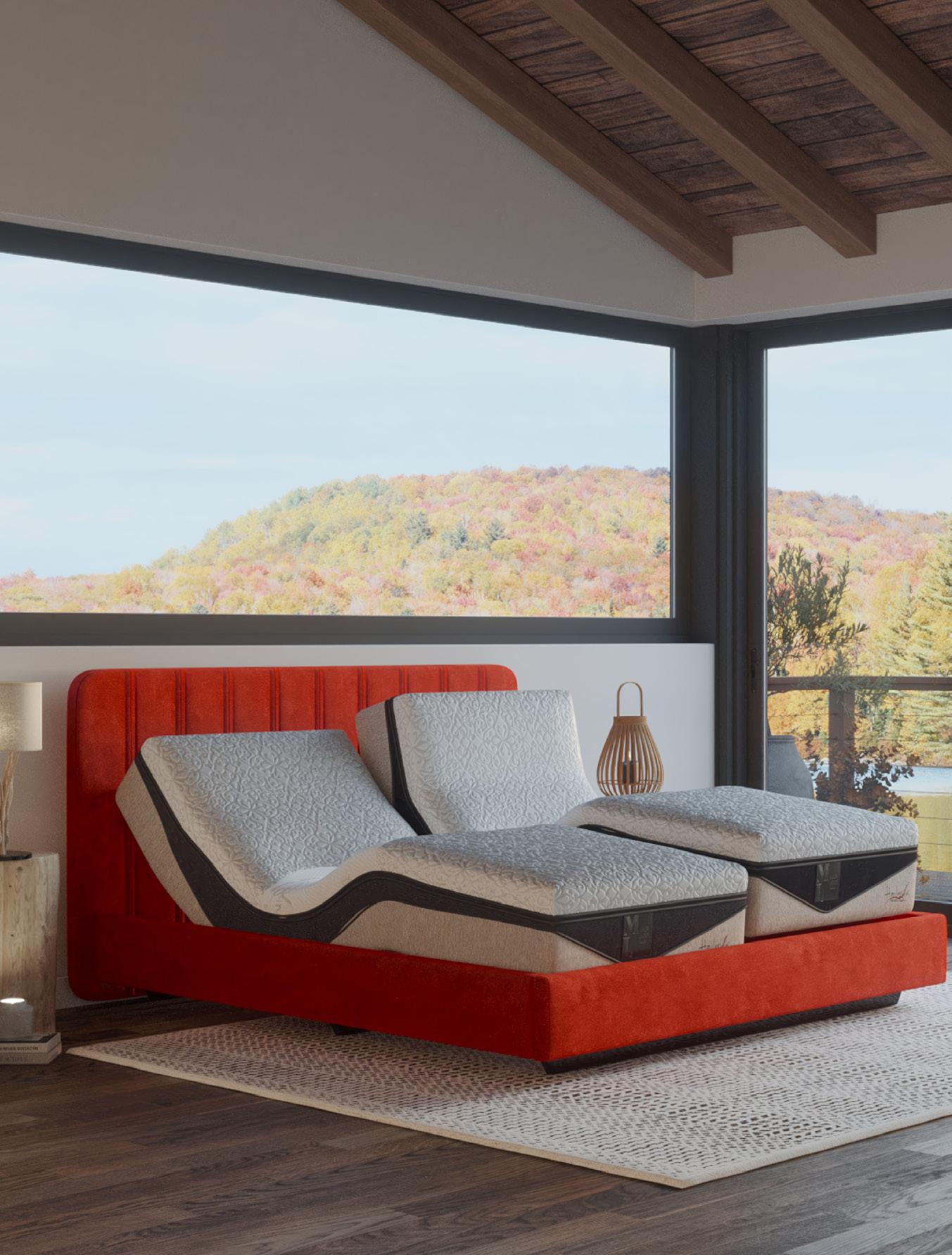
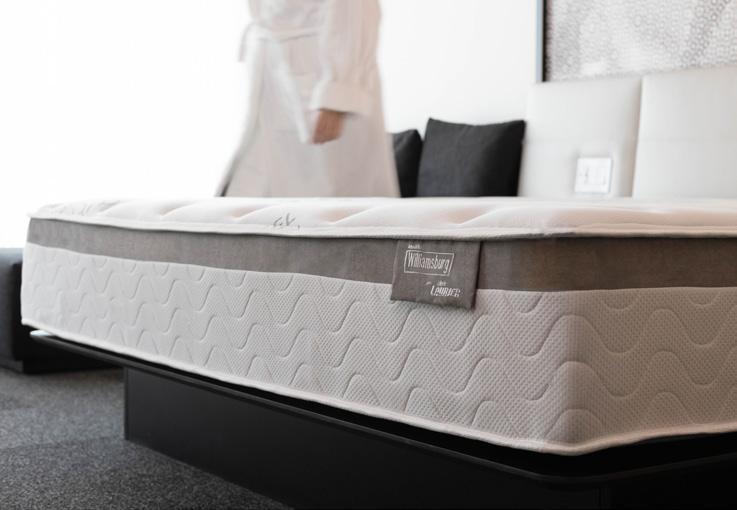
« On est dans plus de 40 projets d’hôtels boutiques — Birks, Mount Stephen, le Capitole de Québec, l’Hôtel St-Paul… Et toujours dans une logique de confort durable », précise Marie-Josée.
Meubles Re-No, Mobilier Avant-Scène, Home Société (Must, Maison Corbeil, Jardin de Ville), la Galerie du Meuble, Maison Lipari… toutes ces bannières québécoises s’appuient aussi sur le savoir-faire de Literie Laurier, souvent en marque blanche. Une discrétion assumée — et gagnante.
COMFORT IN MOTION
Driven by that same demand for quality, the Harlequin™ adjustable mattress collection was born in 2007, through an exclusive partnership with a European inventor. It became the only North American brand to offer an adjustable mattress with built-in technology—no mechanical base, no visible components. Patented worldwide, this innovation allows any bed, even the most design-forward, to become an adjustable rest space.
UNE RENCONTRE, UN DÉCLIC
C’est lors d’un échange avec Tony Masecchia, fondateur d’AD Waters (voir article page 14), en 2015 que François saisit le potentiel d’un déploiement aux États-Unis. Pendant deux heures, lunettes retirées, il reste suspendu aux paroles de l’homme d’affaires. « Je l’ai écouté me parler d’un plan d’expansion aux États-Unis et, en quittant, j’ai appliqué à la lettre la recette partagée », nous confie-t-il.
BEYOND BORDERS
Launched the same year, Harlequin™ became the company’s growth engine in the U.S. market. Now sold in 23 states and supported by a sales team of nine manufacturers’ reps, the brand spans the East Coast, the Midwest, and the West Coast—from Maine to Florida, Michigan to New Mexico, San Diego to Washington.
Unlike traditional sales networks, Harlequin™ isn’t sold through mattress retailers but through mid-to-high-end contemporary furniture stores: Copenhagen Living (Arizona, Texas), Clive Daniel (Naples, Sarasota), Sklar Furnishings (Boca Raton), DDC Design (New York), Lawrance Furniture (San Diego), Chuck Wells (Denver)… all championing this Québec-born technology designed for sleep that adapts to modern life.
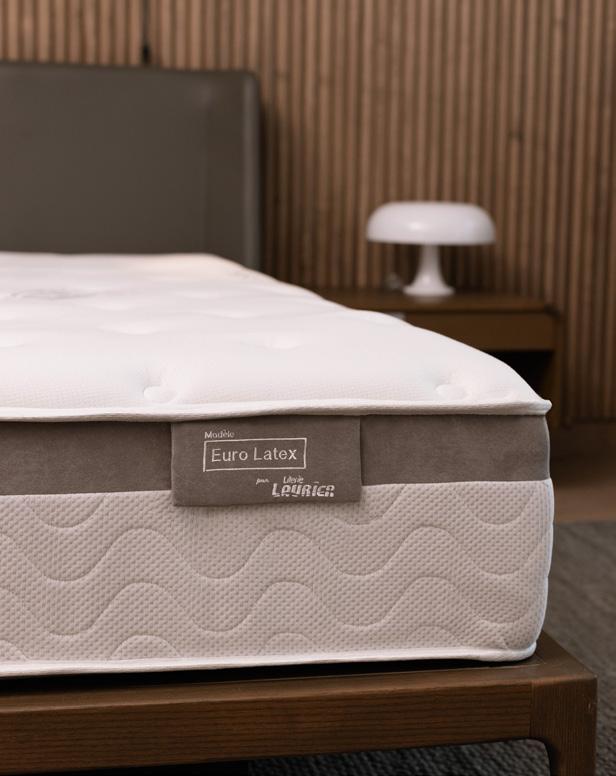
UNE CULTURE D’ADAPTATION
Aujourd’hui, Literie Laurier conjugue artisanat, agilité et ambition. Avec Harlequin™, elle rayonne aux quatre coins de l’Amérique du Nord. Avec ses collections en marque blanche, elle signe le confort de grandes maisons et d’hôtels de renom. Et avec ses racines bien ancrées, elle reste fidèle à l’essentiel : offrir du sur-mesure, du durable, du vrai.
« Notre ADN, c’est la passion de bien faire, confie François St-Pierre. Et honnêtement… on dort tous mieux là-dessus. »
mreno.com
Siège social et maison mère / Montréal
Année de fondation / 1961
Nombre d’employés / 25
Production locale / 80 % fabriquée au Québec
Matériaux et composantes d’origine québécoise / 75%
Territoires desservis / Québec, reste du Canada, États-Unis
Meubles RE-NO
Made in Québec
Ventes par région / Québec 80 %, reste du Canada 10 %, États-Unis 10 %
Behind a discreet façade in the Hochelaga district lies an unsuspected world—a world of mastered curves, noble textures, and creations shaped with both eye and hand. Since 1961, Meubles RE-NO has brought interiors to life with remarkable consistency: a commitment to beauty, craftsmanship, and durability.
Chaque pièce y est construite comme autrefois — sur des bases d’érable massif, gage de stabilité et de savoir-faire transmis. Mais loin de se cantonner à la tradition, l’entreprise tisse aussi, depuis plus de 40 ans, un dialogue complice avec les plus grandes maisons européennes du design telles que Fiam Italia, Flou, Kartell, puis avec les marques locales les plus réputées, de Trica à Huppé en passant par Mobican. Une conversation entre matière locale et lignes d’ailleurs, qui fait de Meubles RE-NO une adresse singulière, entre héritage et innovation.
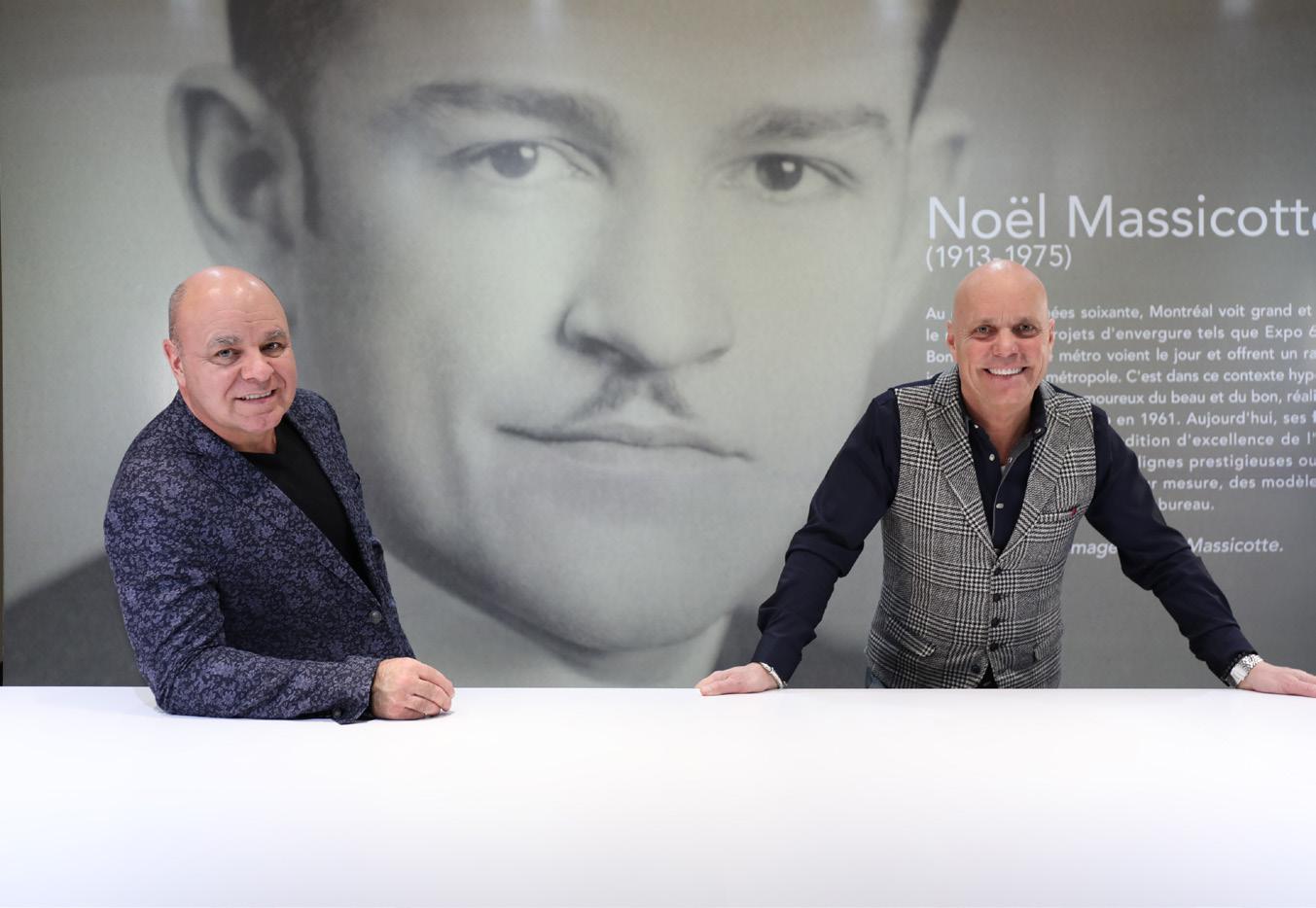
Co-propriétaire
STÉPHANE MASSICOTTE
CHRISTIAN MASSICOTTE Co-propriétaire
LE DERNIER DES MOHICANS
UNE HISTOIRE DE FRATRIE
L’histoire débute à Sainte-Mélanie, dans le comté de Joliette, où Noël, artisan-ébéniste, transmet sa passion du bois à son fils aîné
René. Ensemble, ils unissent leurs prénoms et leur savoir-faire pour fonder RE-NO. À leurs débuts, ils fabriquent des bancs d’église et des pupitres scolaires, marquant les premiers jalons d’une entreprise familiale enracinée dans la tradition.
Trois générations plus tard, Stéphane et Christian Massicotte, petits-fils de Noël, dirigent l’entreprise, aujourd’hui reconnue pour son approche design. Leur force ? Une complicité fraternelle et une vision commune : honorer les racines tout en embrassant l’avenir.
A FAMILY ON A MISSION
Stéphane quite literally grew up in the workshop. “I swept the floors, learned by watching everything being done. At 18, my father suggested I step out from backstage and into the showroom—and I loved it.” Not surprising, given how much Stéphane thrives on human connection.
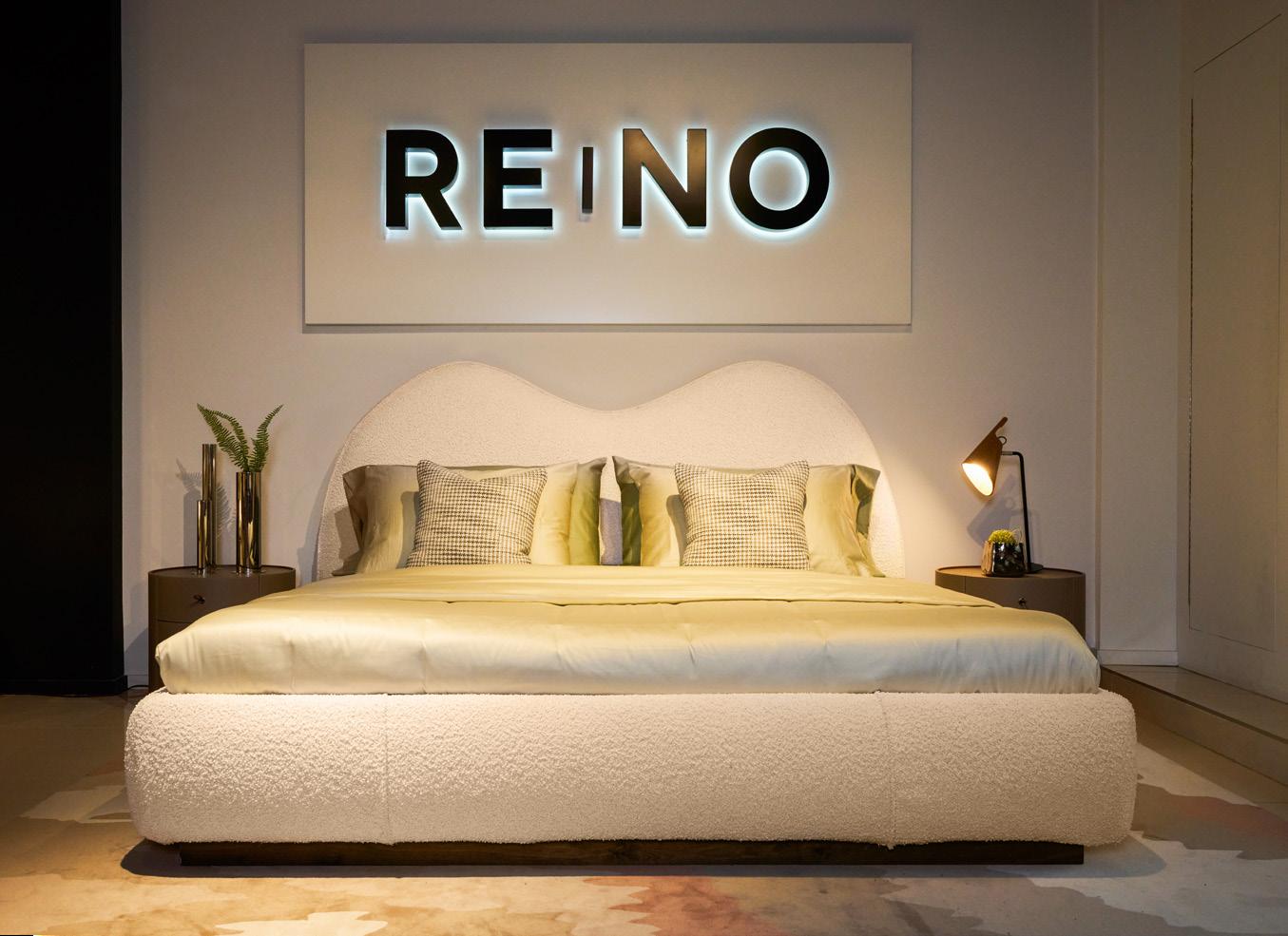
LIT NÉBULE
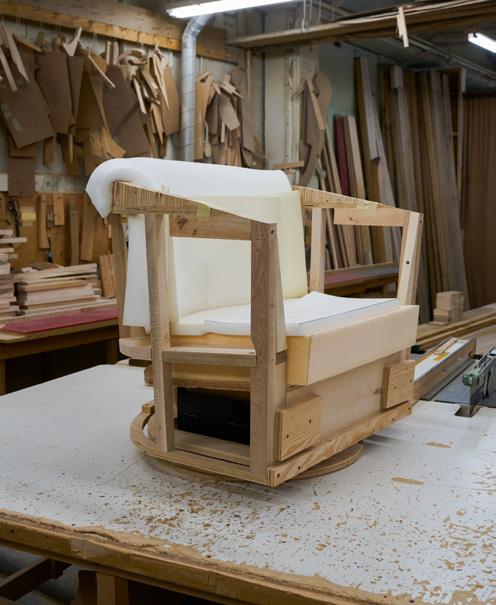
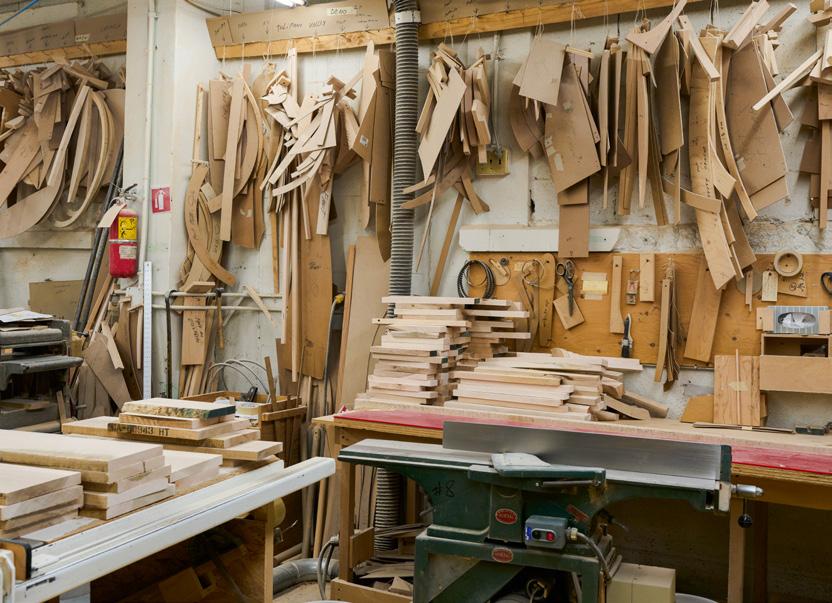
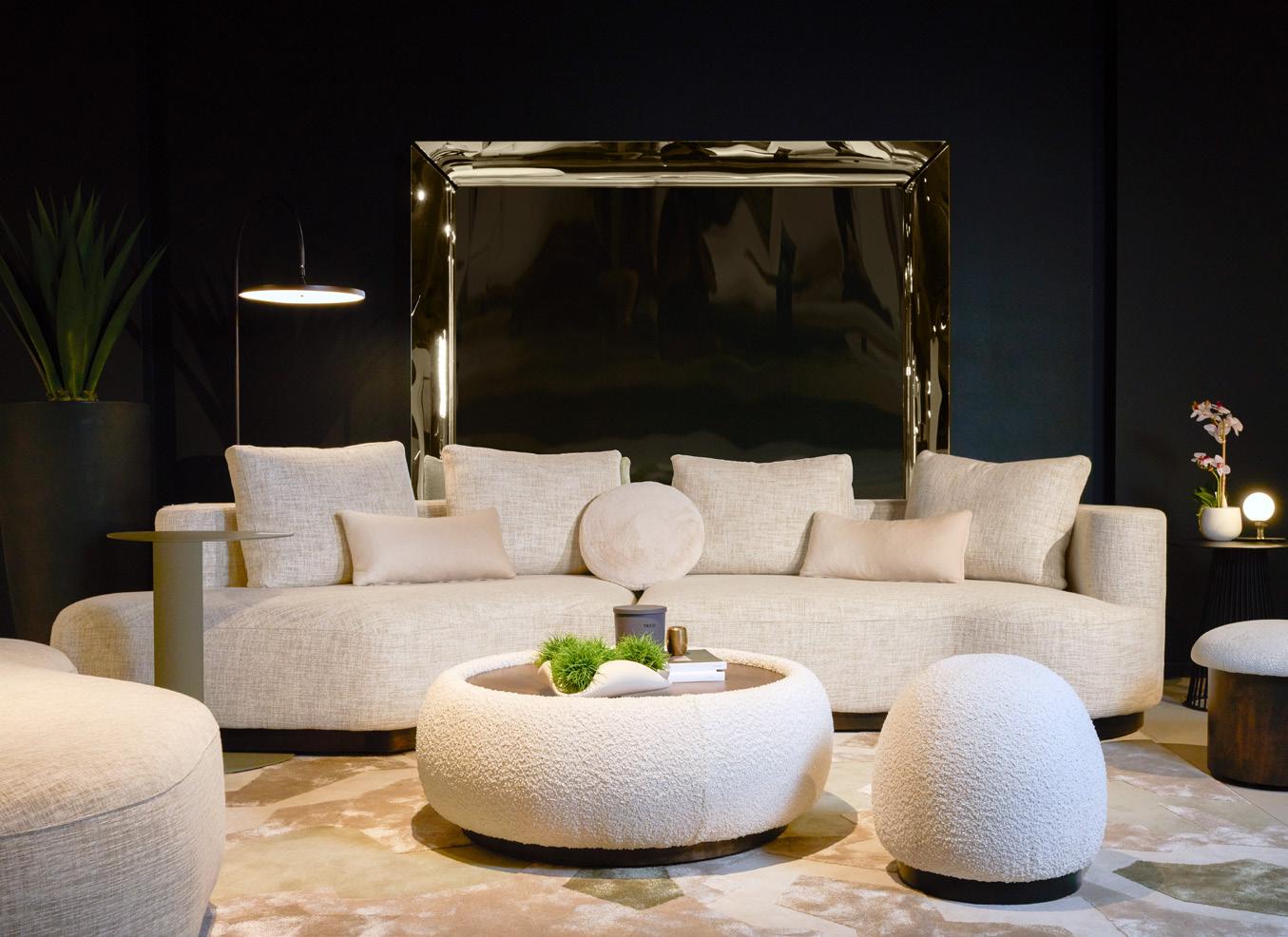
CANAPÉ AVÈNE
© Tanya Langelier de Photographie TL
© Tanya Langelier de Photographie TL
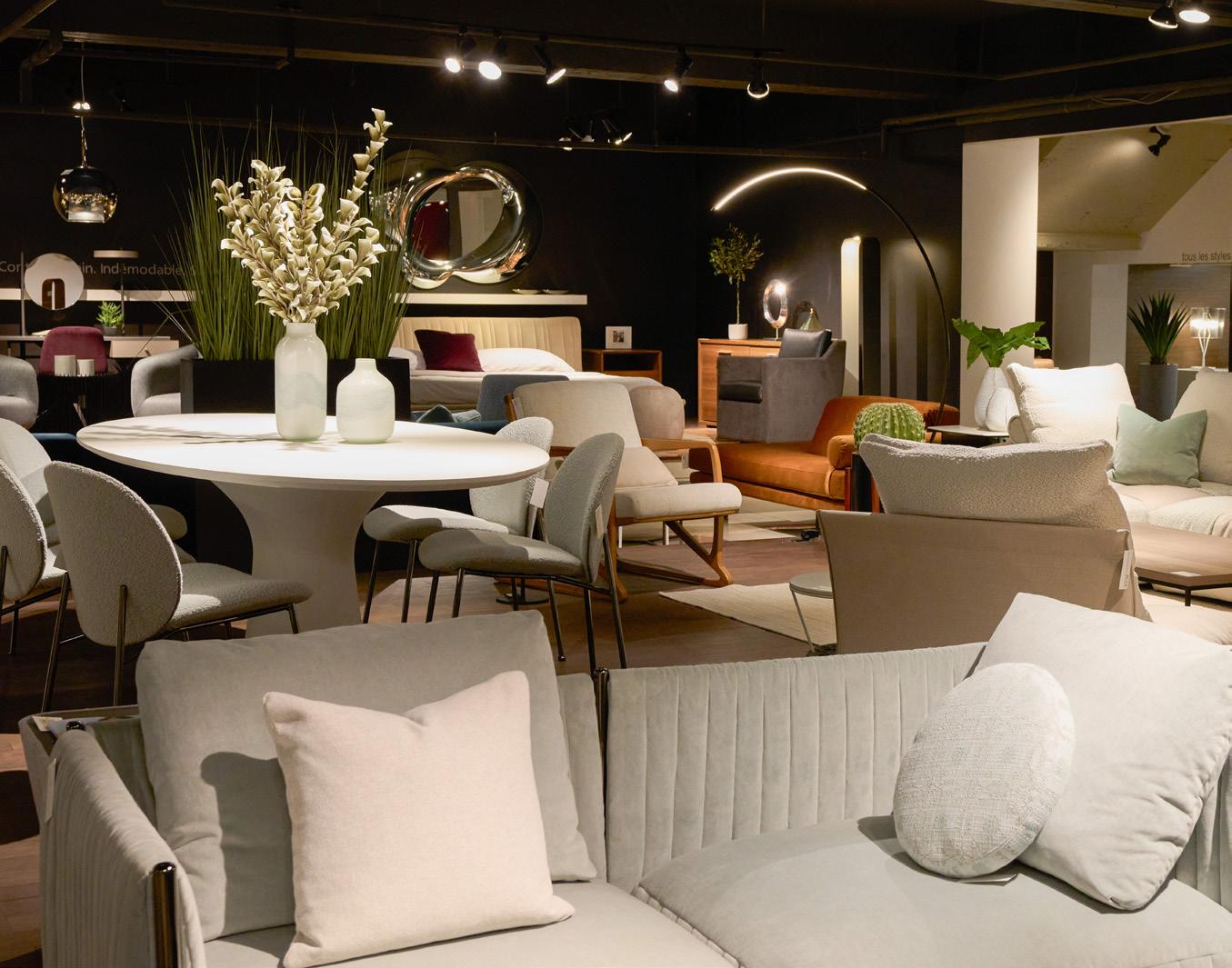
Christian took a different path, studying business and completing an MBA before returning to the family business, enriched by experience in other industries.
“Christian tends to manage the showroom more, and I handle the workshop. But everything flows smoothly. We’re one big family with our team—and that’s what I’m proudest of.”
UN ATELIER QUI DURE
Dans l’atelier de l’avenue Charlemagne à Montréal, le temps a façonné une équipe tissée serrée. Plusieurs y travaillent depuis 30, 40, parfois même 45 ans. « On connaît les familles, les enfants, les histoires. Ce sont des visages qui incarnent nos valeurs, celles de contribuer concrètement au bien-être de nos gens », confie Stéphane. Ici, la transmission se poursuit entre couturières, rembourreurs et menuisiers. Le savoir-faire se transmet dans les gestes, les regards, les silences. Près de la moitié du mobilier présenté y est fabriqué sur place, dans un esprit artisanal soigneusement préservé.
WOOD, HARD & REAL
“In 64 years, our way of building hasn’t changed. We refine the details, adjust the finishes… but the quality remains the same,” says in-house designer Angéline Lapointe , who spearheaded the signature collection co-created by Meubles RE-NO and Angéline Studio.
Their signature material? Solid maple. The discreet yet essential base of almost all their frames, built to last. From foam to stitching to fabric, every detail is designed to stand the test of time.
UN ACCUEIL PERSONNALISÉ
La salle de montre s’étale sur trois étages, avec plus de 25 000 tissus, cuirs et matériaux de finition. « Ce qui fait la différence chez nous, c’est l’écoute, affirme Stéphane. C’est notre capacité à comprendre des besoins parfois très précis, très personnels, et à y répondre avec doigté. Ça nous anime depuis toujours. »
SALLE DE MONTRE
UN CONFORT ADAPTÉ
Ici, rien n’est figé. Une dame plus petite requiert un bureau de travail ? On lui conçoit une version à sa taille, moins profonde et plus discrète. Cinq frères et sœurs retraités aux enjeux de santé variés ? On leur fabrique cinq fauteuils identiques d’allure, mais ajustés sur mesure, chacun selon son confort. Et avant même de poser le tissu, on vous appelle pour un test confort et les derniers ajustements, comme un dernier mot soufflé au creux du fauteuil.
A DESIGNER’S GO-TO
At Meubles RE-NO, the values they share with Quebec’s design community are clear: beauty, durability, and integrity. “More than 95% of our clients return to us,” notes in-house designer Angéline Lapointe. “It’s the strongest testament to the trust our dedicated team has earned.”
UNE COLLECTION-MAISON
C’est Angéline qui signe la nouvelle collection maison, une ligne exclusive aux formes arrondies, contemporaines, 100 % conçue et fabriquée à Montréal, avenue Charlemagne, dans Hochelaga.
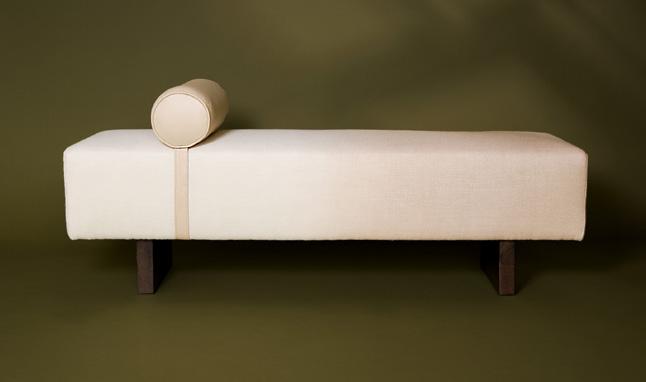
Parmi les modèles phares : le canapé Avène, le lit Nébul, les poufs Morille. Chaque pièce en rondeur est personnalisable, jusque dans les moindres détails. S’y greffent deux carpettes, dessinées par la designer.
EXPANDING BEYOND BORDERS
While Meubles RE-NO is deeply rooted in Montreal, its curiosity runs wide. Since the 1980s, the Massicotte brothers have attended Milan’s Salone del Mobile, forging real friendships with leaders at Fiam, Saba, Bontempi, Nicoline, Kartell, and Flou.
Those deep human connections continue to this day, nurtured through regular transatlantic visits every two or three years—a steady source of inspiration and carefully curated imports.
PARTAGER SON HISTOIRE
À l’heure où la production bon marché s’impose un peu partout, Meubles RE-NO fait un pari clair : continuer à fabriquer ici, maintenir ses standards de qualité, valoriser le métier et les gens qui le portent.
« On est peut-être les derniers Mohicans, plaisante Stéphane. Mais on y croit. Parce que derrière chaque meuble, il y a une histoire d’ici. Une famille d’ici. Une fierté d’ici. Et ça, ça donne réellement du sens à nos vies. »
BANC NOMADE
ENSEMBLE
©
Tanya
Langelier de Photographie
© Tanya
Langelier de Photographie
CORREIA Directeur General
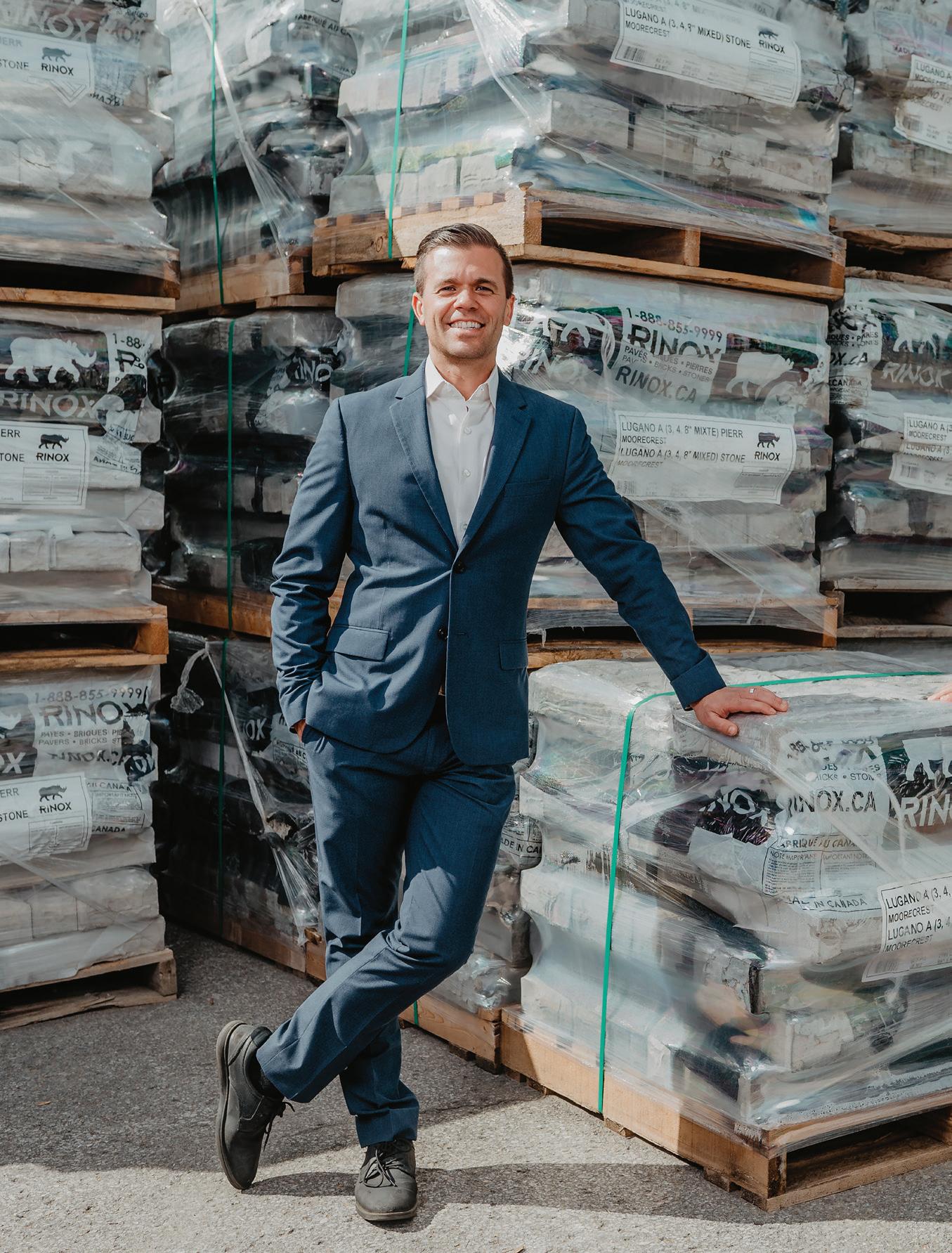
LA PUISSANCE DU BÉTON & L’ÉCLAT DE L’ALUMINIUM
BOBBY
rinoxgroup.com
Siège social et maison mère / Terrebonne
Année de fondation / Rinox 1997, Rialux 2018
Nombre d’employés / 200
Production locale / 100 % fabriquée au Québec
Rinox & Rialux
Made in Québec
Matériaux et composantes d’origine québécoise / Rinox 98%, Rialux 60%
Territoires desservis / Québec, reste du Canada, États-Unis
Ventes par région / Québec 50 %, reste du Canada 45 %, États-Unis 5 %
À travers ses deux marques phares, Rinox et Rialux, le Groupe Rinox s’impose comme une force tranquille de l’industrie manufacturière québécoise. Béton haut de gamme pour l’aménagement paysager et la maçonnerie chez Rinox, revêtements d’aluminium innovants chez Rialux — l’ensemble forme un écosystème pensé pour les réalités d’ici.
Two brands, one shared DNA: local production, an aesthetic inspired by place, and a commitment to offering durable, beautiful, and well-designed materials for the projects of today and tomorrow.
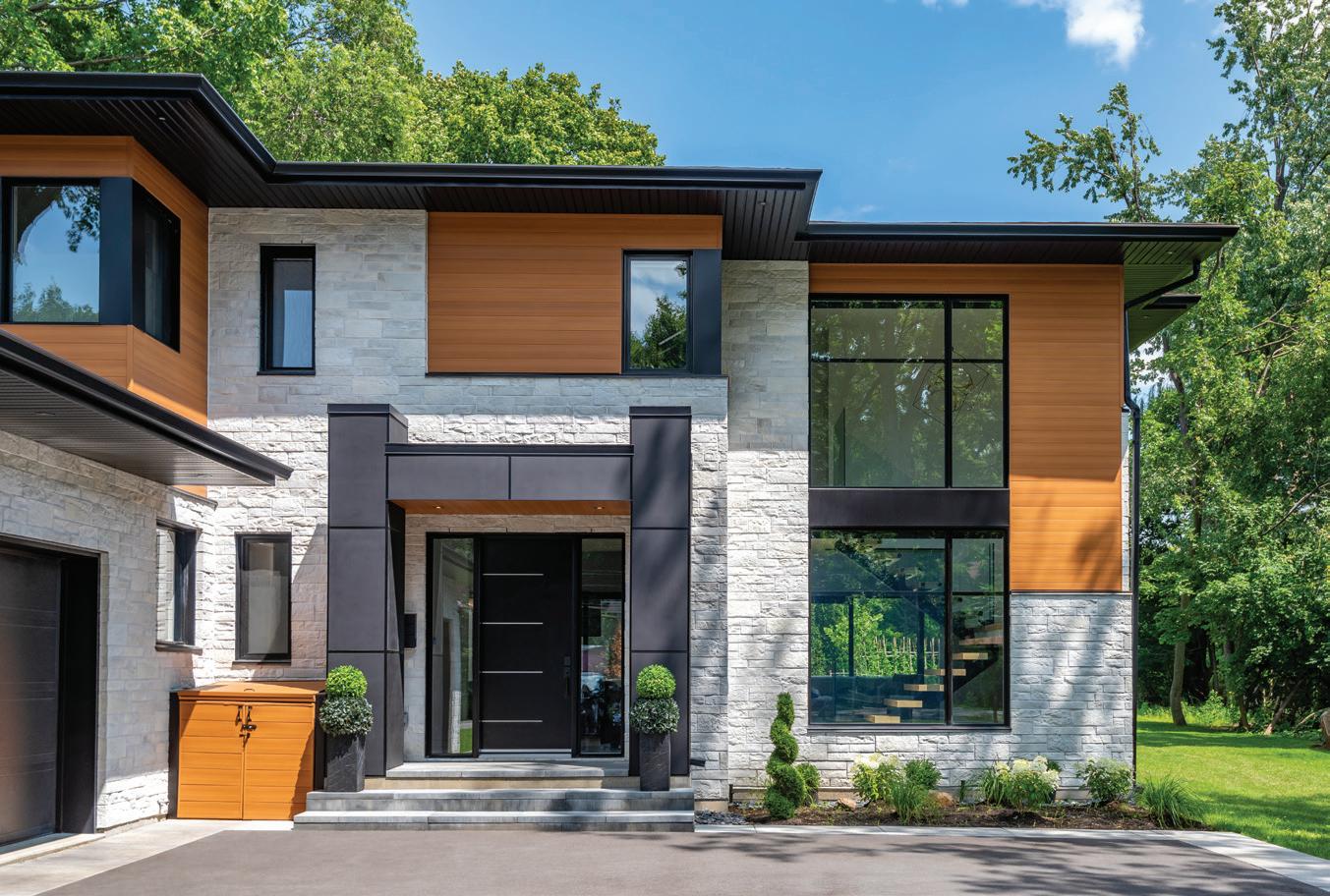
RIALUX_TIAGO SIENNA LOTIS GRANDE COQUILLE
© Michel Bonomo Photography

A BIT OF HISTORY
Founded in 1997 in Terrebonne by Horacio Correia and Rosa Ciccarello Rinox was built on a passion for high-quality concrete products offering pavers, brick, stones and retaining walls, with an unwavering drive to innovate. Today, their children—Bobby, Maria, Jessye, and Sabrina—carry on the legacy. “We grew up in it,” recalls Bobby Correia. “We were there for the product launches, we followed our parents around the factory.”
LA SECONDE GÉNÉRATION
Aujourd’hui, Bobby dirige l’entreprise aux côtés de Maria, Jessye et Sabrina avec l’assurance tranquille de ceux qui connaissent la maison sur le bout des doigts. Ensemble, ils prolongent la mission de leurs parents : innover, sans jamais perdre le lien au territoire.
BETTER TOGETHER
In 2019, the creation of Rialux—specializing in high-performance aluminum siding—added a complementary offer right next door. The two brands now share coordinated palettes, simplifying the work of designers, architects, and self-builders alike.
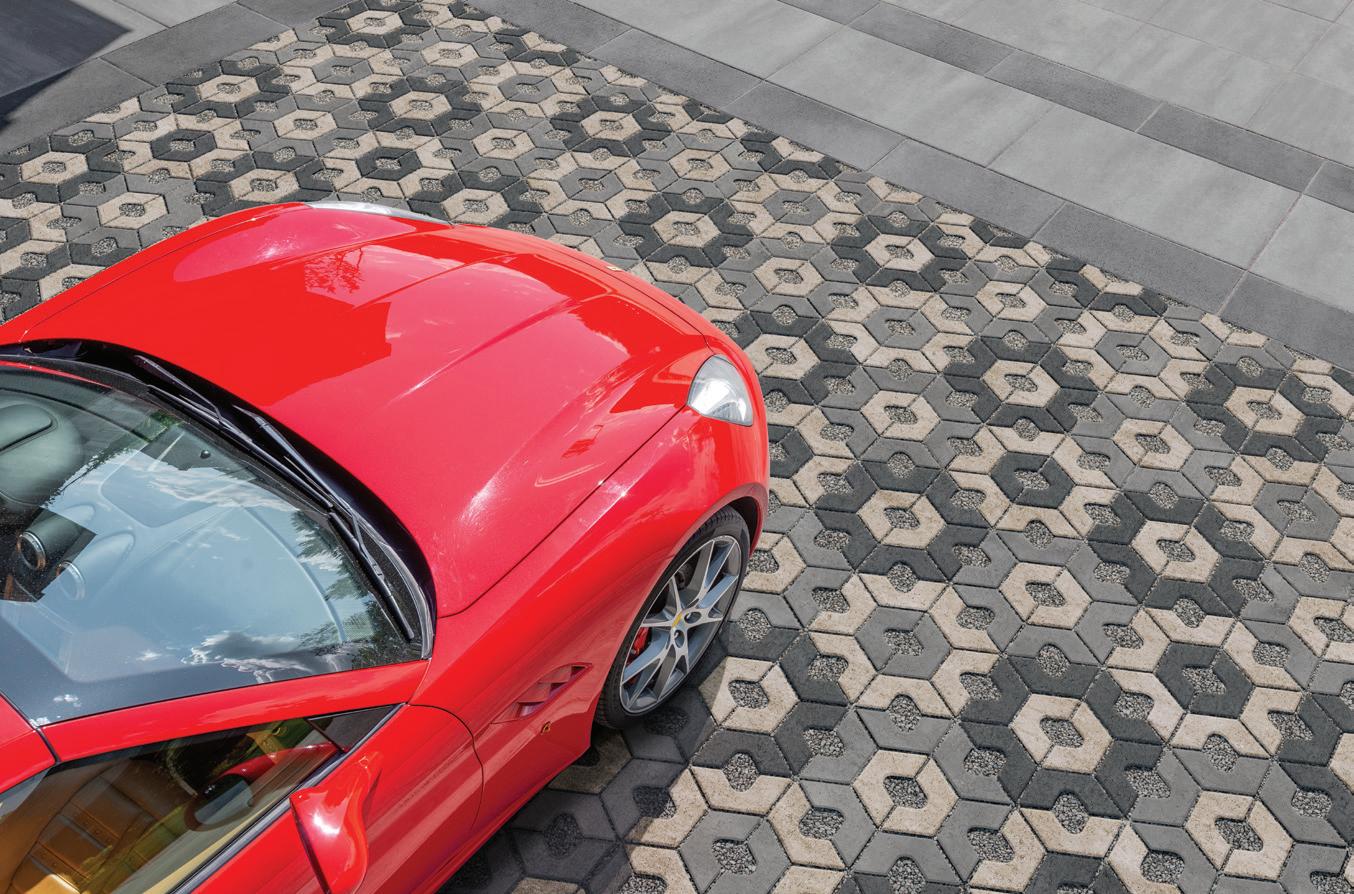
RINOX_AVA Charbon cendré, beige oka & caviar
FAMILLE CORREIA : Maria Correia, Sabrina Correia, Horacio Correia, Rosa Ciccarello, Jessye Correia, Bobby Correia
LE BÉTON REPENSÉ
Depuis plus de 25 ans, Rinox fait figure de pionnier dans l’univers du béton design. Gammes de maçonnerie intégrant 30 % de matériaux recyclés, exceptionnels pavés perméables de haute qualité comme la collection Ava… l’entreprise innove sans jamais se déconnecter de ses racines locales.
WHERE CONTINENTS MEET
The Clayden brick perfectly embodies the brand’s ethos: a refined European look, imagined and manufactured here, engineered to meet the performance standards of today’s construction sites. A graceful way to bridge tradition and innovation.
The historic, for example, are replicated using modern manufactured materials that retain the city’s architectural character while solving the challenges of traditional installation: cleaner formats, sharper angles, better consistency. A way to combine heritage and efficiency.
LE CHOIX DU LOCAL
Chez Rinox, l’approvisionnement local n’est pas qu’une priorité — c’est un principe fondateur. À preuve, l’entreprise fait partie des seuls fabricants à utiliser la poudre de ciment GS à faible empreinte carbone, produite par Ciment Québec à Saint-Basile, près de Québec.
© Michel Bonomo Photography
RIALUX_BOLTON Gris chêne
RINOX_CLAYDEN Truffe
Une telle traçabilité reste rare dans l’industrie. Ici, l’ancrage québécois se vit à chaque étape. « Si 98 % de la matière première provient du Canada, ce sont 100 % des opérations de transformation qui sont réalisées à Terrebonne. » Une manière concrète de construire mieux, en misant sur la proximité, la transparence et la durabilité.
L’ALUMINIUM AUX ACCENTS QUÉBÉCOIS
Du côté de Rialux, le design s’inspire des textures, teintes et atmosphères du paysage québécois. Les collections Timberland, Tiago et Bolton, propose dix teintes inpirées d’essences de bois nobles, telle que le cèdre naturel de nos forêts des Laurentides.
Le modèle Bolton, plus contemporain, répond à la tendance farmhouse moderne — un style prisé autant ici qu’aux États-Unis, notamment dans les projets résidentiels haut de gamme.
PROXIMITY, PRECISION, AND EXCELLENCE
While the raw aluminum is imported, 40% of the other raw materials are sourced in Canada. Everything else—from finishing to texturing—is done in Terrebonne, right next door. This local proximity fuels agility, quality, and service.
RINOX_STRIATO Brume / NOLITA Husky
RIALUX_BOLTON Gris chêne / RINOX_LOTIS GRANDE Coquille
© Michel Bonomo
QUAND L’INSPIRATION NAÎT DU TERRAIN
Toujours à l’écoute des architectes, le groupe développe ses collections à partir d’idées ou d’esquisses venues du terrain. « Notre force, c’est d’être très réactifs. Une discussion avec un concepteur peut littéralement donner naissance à une collection », explique Bobby.
C’est ainsi qu’ont vu le jour des gammes les nouveautés Rinox, Striato et Nolita, des murets de soutènement aux textures singulières, nées d’idées, d’esquisses ou même de photos partagées par des architectes.
INNOVATING FROM THE INSIDE OUT
An in-house R&D team works closely with on-staff engineers to turn concepts into finished products. From the first sketch to rigorous testing (freeze/thaw cycles, abrasion, resistance), each product is put through its paces before hitting the market.
OUTILLER LA CRÉATION
Afin de simplifier le travail des concepteurs et stimuler l’inspiration, Rinox et Rialux ont développé, en collaboration avec la firme Lightbeans, un outil de design virtuel aussi puissant qu’intuitif. Grâce à cette plateforme interactive, architectes et designers peuvent visualiser en temps réel l’effet de la lumière naturelle ou artificielle sur les textures, les matériaux et les agencements.
Ce rendu ultra-réaliste, ajustable selon l’heure du jour ou les conditions d’éclairage, permet de tester différentes combinaisons de produits, de teintes et de finis — sans quitter l’écran. Résultat : un gain de temps considérable en amont des projets, une meilleure communication avec les clients… et surtout, une création plus fluide, plus libre, mieux ancrée dans la réalité des usages.
THINK GLOBAL, BUILD LOCAL
Today, Rinox and Rialux products are found across Quebec, Ontario, Western Canada, and seven U.S. states. “Whether it’s an institutional, commercial, or residential project, our goal is clear: to offer a complete solution, from product selection to installation. A true one-stop shop for professionals.”
Like the concrete they shape and the aluminum they transform, the relationships Rinox and Rialux build with their communities are made to last—strong, flexible, and boldly future-focused.
RIALUX_TIMBERLAND Ébène / RINOX_LONDANA Amaretto
RINOX_KAVA Amaretto
© Michel Bonomo Photography
Présidente
Groupe Champagne
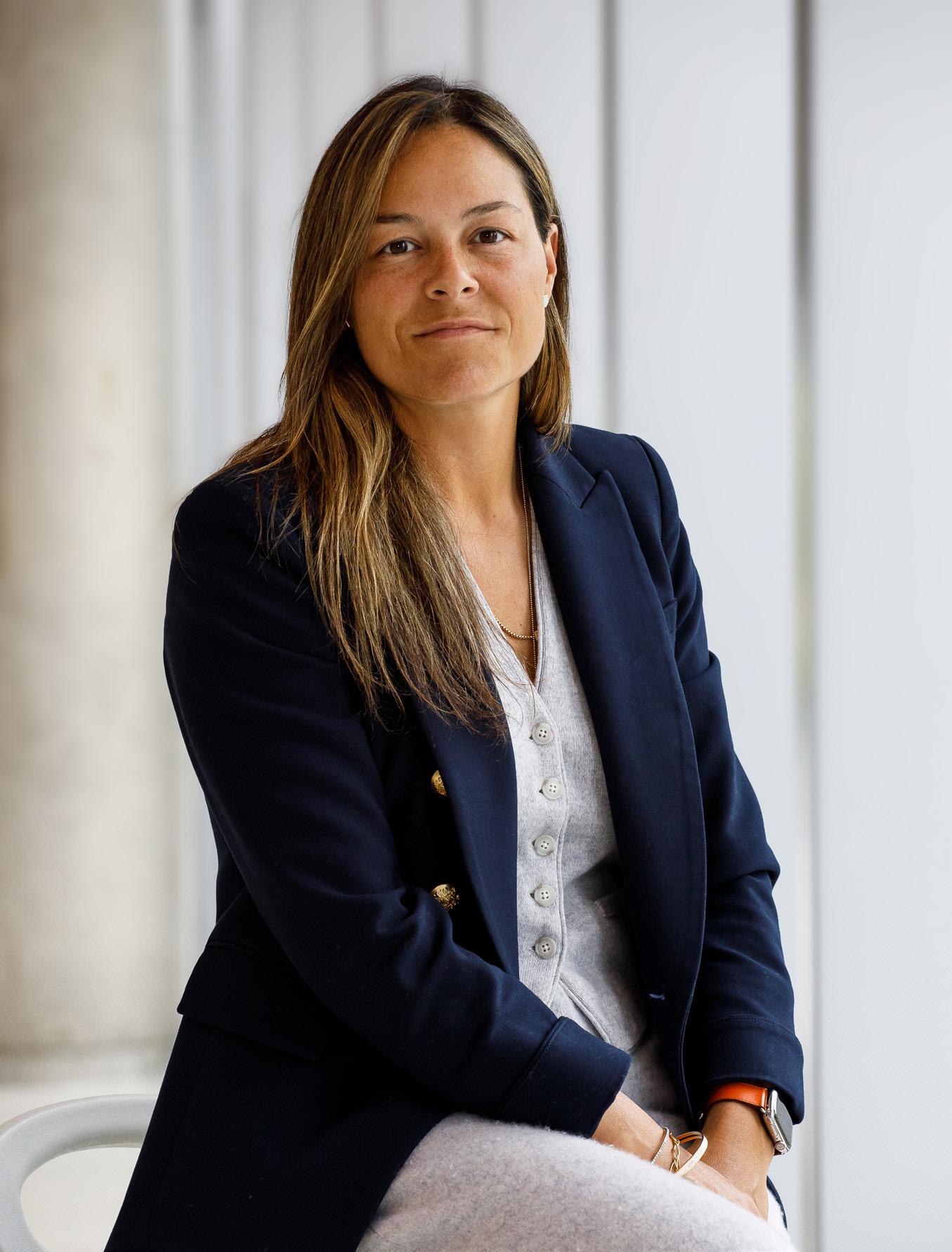
UNE VISION À DOUBLE VITRAGE
ALEXANDRA CHAMPAGNE
Shalwin
shalwin.ca
Siège social / Shawinigan
Année de fondation / 1955
Nombre d’employés / 145
Production locale / 100 % fabriquée au Québec
Matériaux et composantes d’origine québécoise / 95%
Territoires desservis / Québec, reste du Canada
Ventes par région / Québec 95%, reste du Canada 5%
Prévost Architectural
prevost-architectural.com
Siège social / Richelieu
Année de fondation / 1959
Nombre d’employés / 150 employés
Production locale / 100 %
Matériaux et composantes d’origine québécoise / 85 %
Territoires desservis / Québec, Ontario, Maritimes
Ventes par région / Québec 90 %, Ontario 8 %, Maritimes 2 %
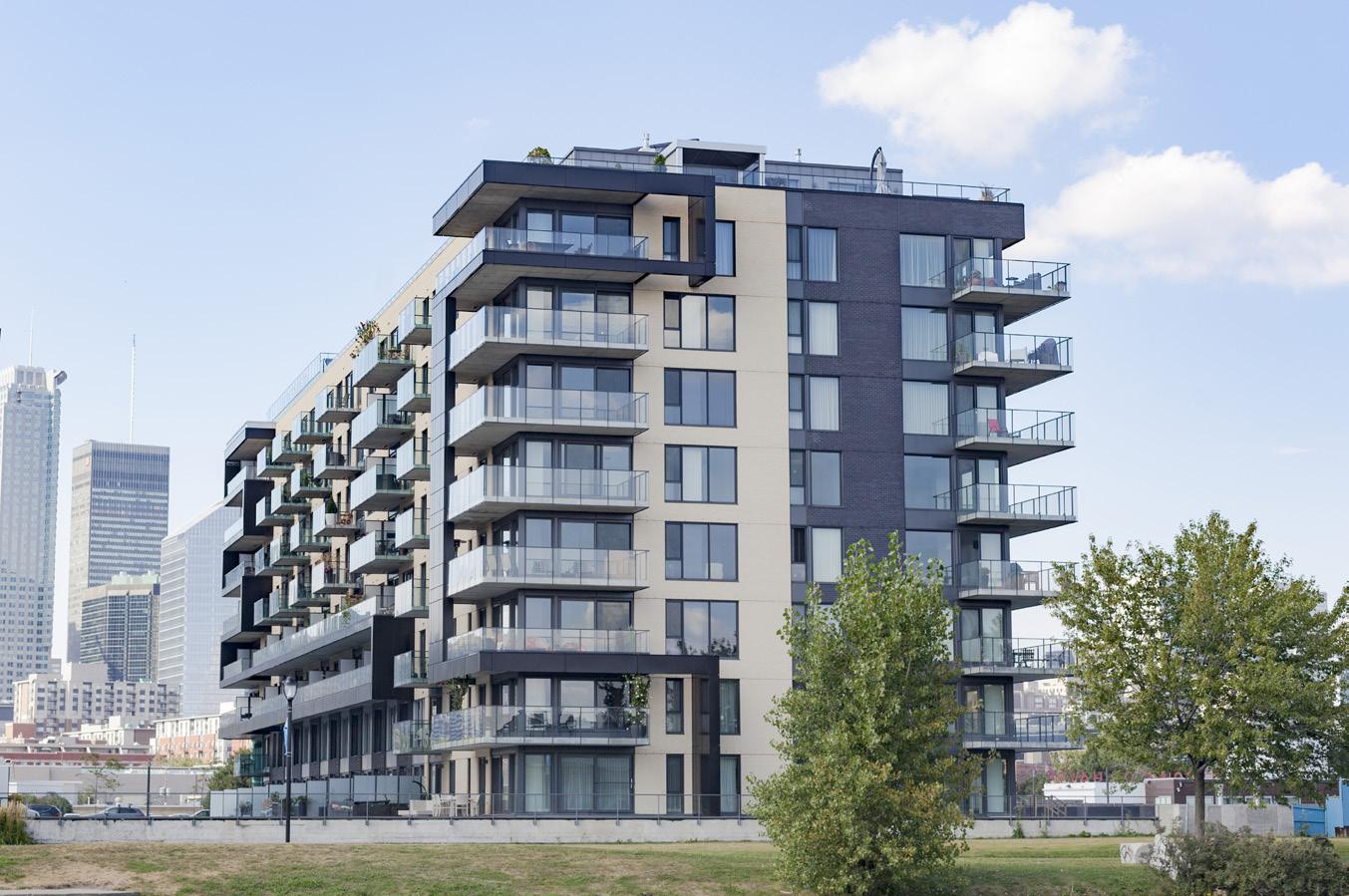
De la Mauricie à la Montérégie, la fenestration québécoise rayonne avec un éclat renouvelé. À Shawinigan, Shalwin, fabricant et installateur de solutions clé en main, déploie 70 ans d’expertise. À Richelieu et Saint-Hyacinthe, Prévost Architectural — manufacturier et spécialiste du développement de produits et de la distribution depuis plus de 65 ans — incarne un fleuron bien de chez nous. Deux forces distinctes, réunies aujourd’hui sous la bannière du Groupe Champagne portée avec clarté et ambition par sa co-présidente Alexandra Champagne.
A SEAMLESS SUCCESSION
A trained and accomplished lawyer, Alexandra Champagne didn’t initially envision stepping into the family business—an enterprise that owns multiple Québec-based companies and employs over 500 people. And yet, the path revealed itself naturally. Today, she embodies a new generation of leadership, energized by entrepreneurial instinct, youthful drive, and the strength of a legacy built to last.
“At Groupe Champagne, we believe in the power of an integrated, made-in-Québec model. We’ve been active in the fenestration industry for 38 years, and our ambition is to remain a key player for the next 50.”
SEPT DÉCENNIES D’EXPERTISE
Fondée à Shawinigan il y a 70 ans, Shalwin est une pionnière de la fenestration haut de gamme. Acquise par Gilles Champagne il y a 38 ans et dirigée par Gary Roy pendant 35 ans, l’entreprise s’est imposée dans les projets résidentiels et multirésidentiels d’envergure à travers le Québec. Elle fabrique, assemble, installe — et innove. Ses produits sur mesure s’intègrent aussi bien dans l’architecture contemporaine que dans les résidences de prestige, avec un souci constant de performance énergétique, de finition et de design.
Sous la direction du successeur de Gary Roy, Patrick Guay, depuis deux ans, Shalwin mise sur la personnalisation, la rigueur opérationnelle et la proximité client, tout en étant fidèle à ses valeurs : Plaisir. Performance. Bienveillance.
HONOURING A PROUD LEGACY
In October 2024, Groupe Champagne’s decision to acquire Prévost Architectural reflected more than a business strategy—it reflected a commitment to local legacy. For the Champagne family, it was vital that this emblematic Québec company remain locally owned. To lead this new chapter, they assigned longtime collaborator Pierre Saint-Laurent as General Manager.
“Part of our mission is to restore Prévost’s place of distinction,” says Alexandra Champagne. “This is a company that helped shape Québec’s fenestration landscape with forward-thinking, innovative products, always paired with outstanding service—and it still has so much to offer.”
, 03 USINE PRÉVOST ARCHITECTURAL 02 P-55 ÉVOLUTION PRÉVOST ARCHITECTURAL Système de mur rideau qui offre un rendement énergétique
plus élevé qu’une ossature de mur rideau
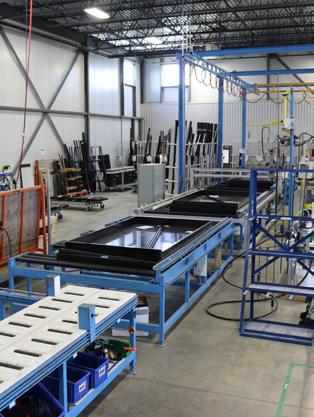
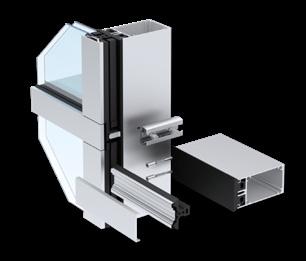
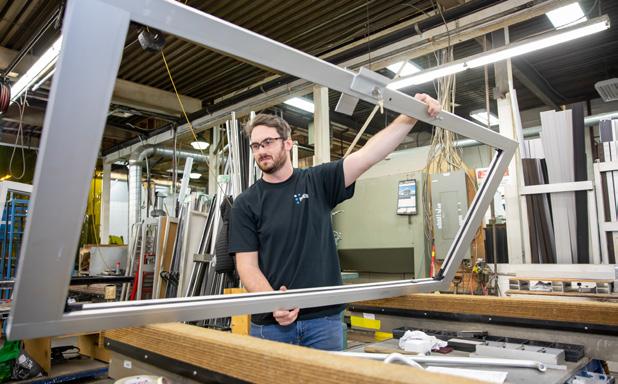
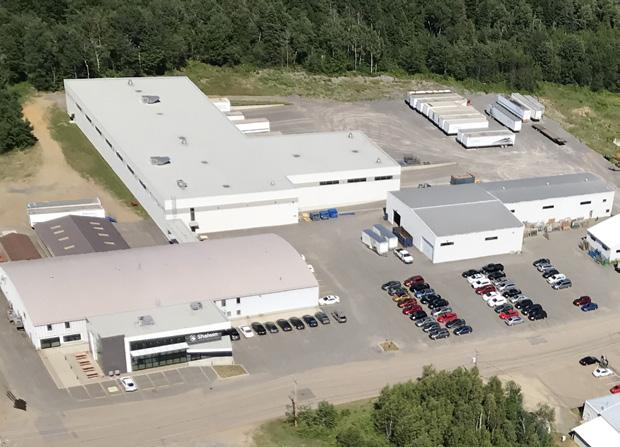
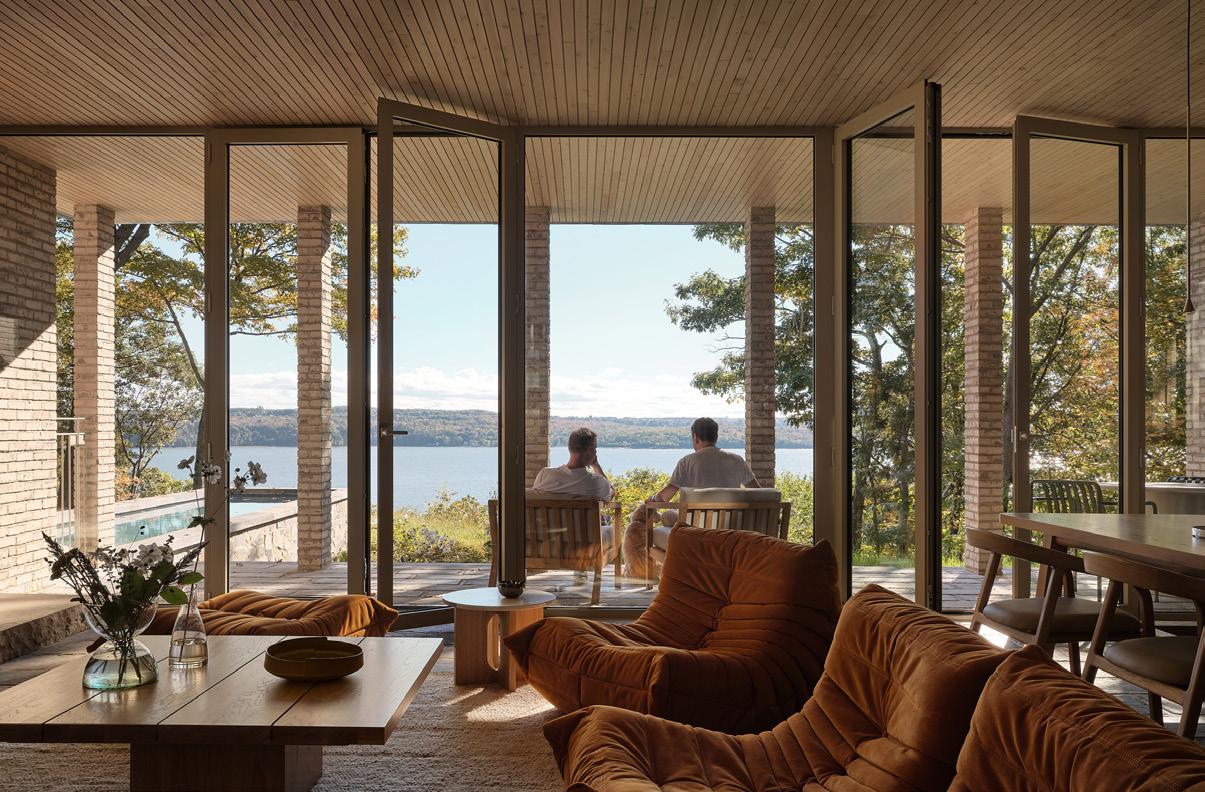
UNE CULTURE COMMUNE
Au-delà des expertises, Shalwin et Prévost partagent une même culture du travail bien fait, de l’innovation responsable et de l’engagement envers les communautés. Cette approche humaine se reflète dans la fidélité des équipes : plusieurs employés cumulent 20, 30, voire 50 années de service.
Ici, l’engagement communautaire est aussi central, comme en témoigne l’implication de Shalwin en éducation et dans le sport local — une salle de sport d’une école primaire porte même son nom.
LOCAL
SUPPLY
That same sense of rootedness shapes the Group’s supply chains. Favouring Québec and Canadian sourcing, Groupe Champagne also builds long-term relationships with nearby partners. It’s an integrated, people-first model designed for the long run.
At Shalwin, aluminum, glass, and hardware are all sourced in Québec. These eco-responsible choices helped the company earn LEED certification for its full line of institutional, commercial, and multi-residential products.
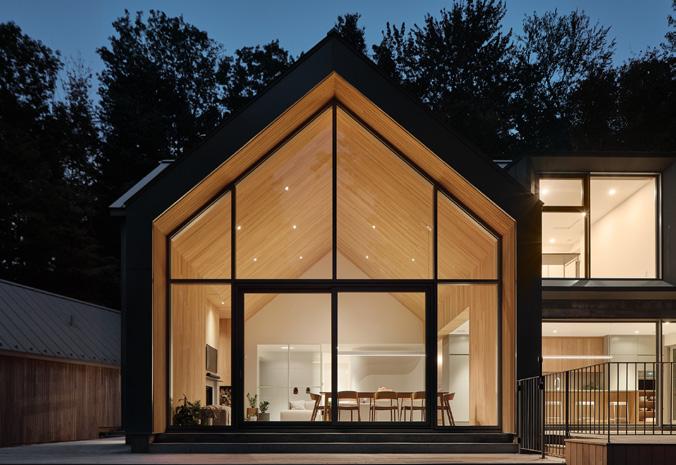
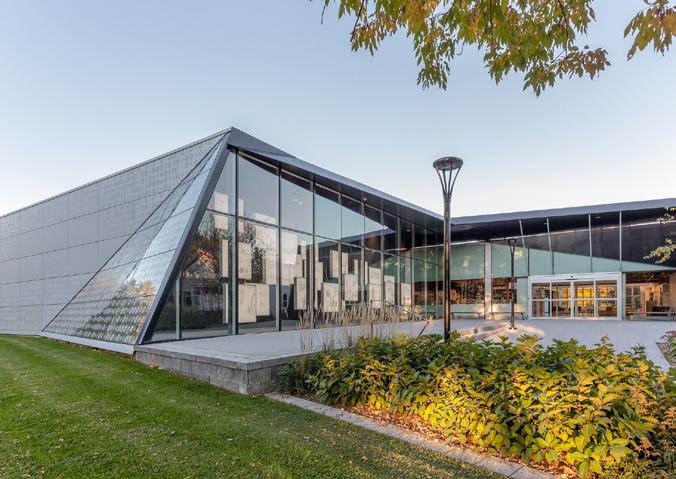
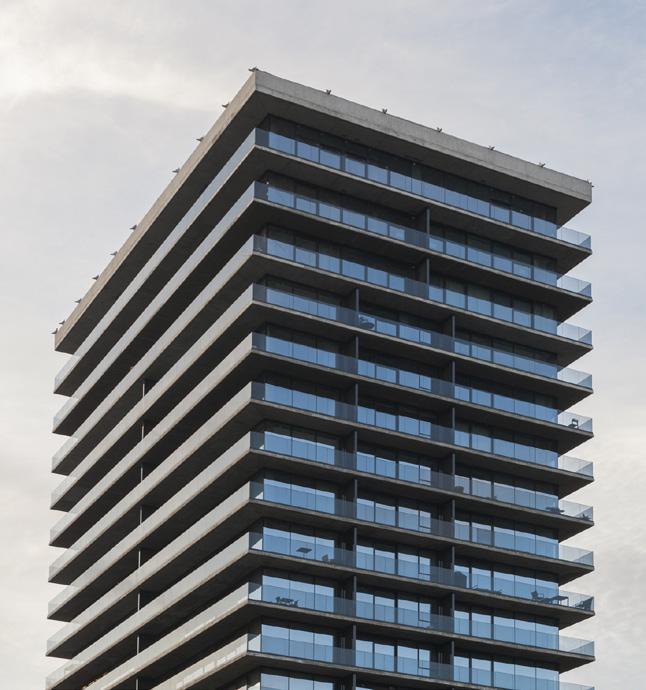
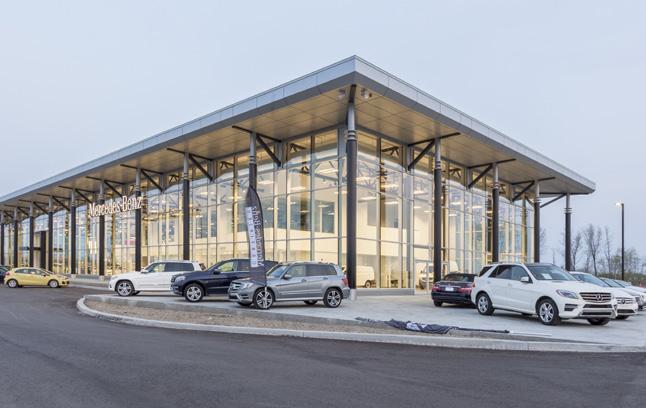
HONORER SES VALEURS
Du côté de Prévost, l’aluminium est également d’origine locale, tandis que la quincaillerie, hautement spécialisée, provient des États-Unis et de l’Europe. L’entreprise fait aussi appel à une multitude de fournisseurs québécois, partenaires clés dans la conception et la fabrication de produits uniques, exigeant un savoir-faire spécialisé pour répondre à des besoins hors norme. Tous les produits sont certifiés, offrent des performances énergétiques inégalées et se distinguent par leur grande facilité d’installation, reconnue par les professionnels du métier.
« Le Québec, et particulièrement la Mauricie, possède une industrie de l’aluminium puissante. S’approvisionner localement — c’est une manière concrète d’honorer nos valeurs et de bâtir un avenir solide, à partir de ce que nous avons de meilleur. »
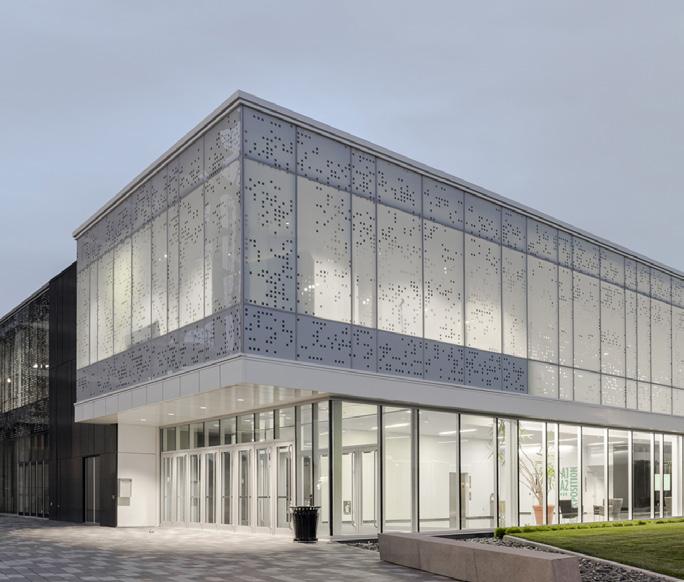
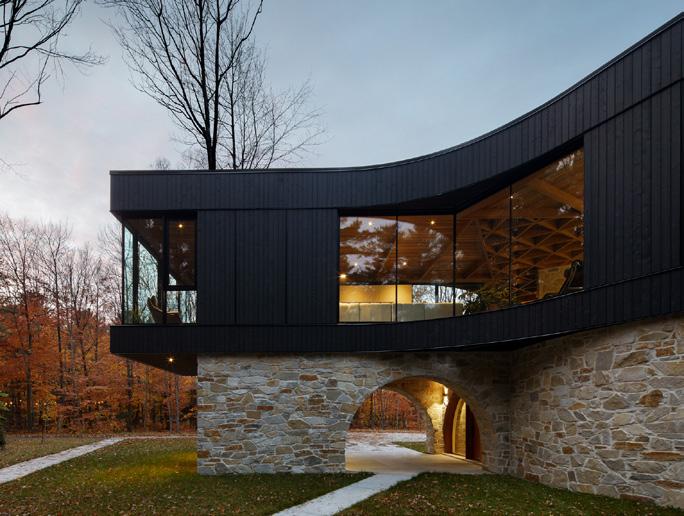
R&D IN THE DRIVER’S SEAT
At Groupe Champagne, innovation is more than a buzzword—it’s a core strategy for performance and differentiation. At Prévost, a full-time in-house R&D team of five experts is dedicated to refining window systems with a focus on energy efficiency, manufacturing precision, and ease of installation.
This design-for-manufacturing-and-installation mindset results in systems that are engineered for speed, precision, and reliability— adding real value for the glazing companies who rely on Prévost’s proven expertise. This approach led to the development of the Window Wall, a patented curtain wall system featured in landmark projects like Mæstria in Montréal and Centrepointe in Ottawa.
L’INNOVATION SUR MESURE
Du côté de Shalwin, l’innovation s’incarne au quotidien à travers l’intégration de solutions techniques sur mesure, tant pour les
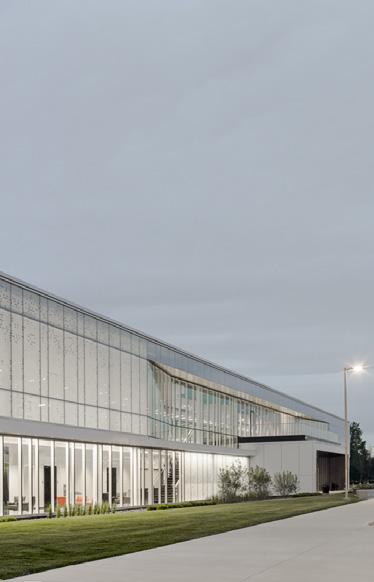
01 YOO MONTRÉAL
02 MERCEDES BENZ TROIS-RIVIÈRES
03 PROJET DESFORGES 04 CENTREXPO DRUMMONDVILLE
05 PROJET STANLEY
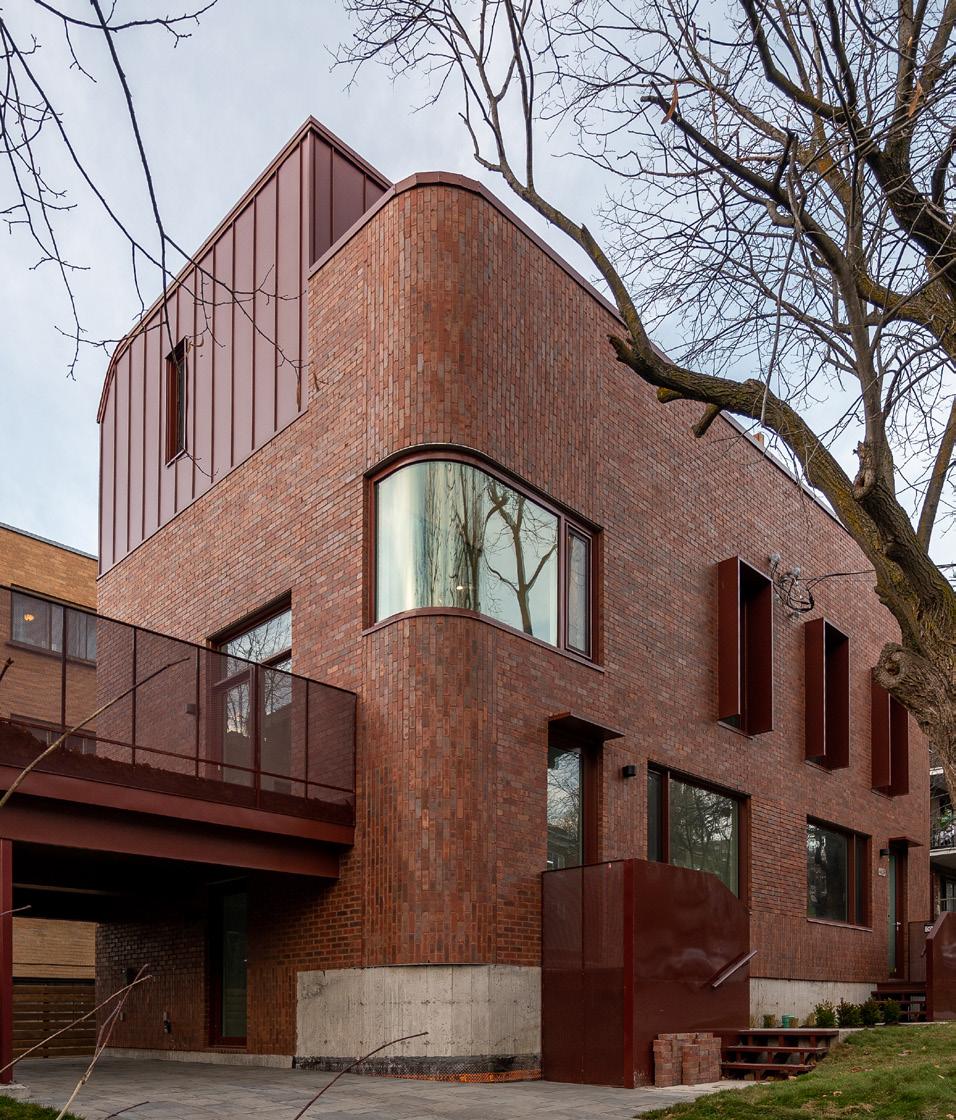
projets résidentiels que multirésidentiels haut de gamme. Pensons notamment au Yoo Montréal , ce village vertical au cœur de Griffintown, où design et patrimoine industriel se rencontrent — un projet au design signé YOO Inspired by Starck et porté par la firme d’architecture NEUF architect(e)s de Montréal.
Chez Shalwin, une équipe spécialisée en ingénierie et en génie industriel collabore étroitement avec les architectes et les clients afin d’adapter chaque système aux particularités du bâtiment.
Vitrages photochromiques, cadres intelligents, intégration domotique, teintes thermo-réactives… chaque solution est pensée pour allier performance, esthétique et durabilité. « Notre rôle est de rendre le possible visible, en transformant les exigences des projets en produits réellement performants, élégants et durables », résume Alexandra Champagne.
TWO PATHS, ONE VISION
From innovation comes alignment. With both Prévost and Shalwin under its wing, Groupe Champagne asserts itself as a driving force in the future of fenestration—advancing a model that is both deeply human and structurally sustainable.
As Shalwin strengthens its footprint in high-end turnkey residential and multi-residential markets across Québec, Prévost expands its reach in the design, manufacture, and distribution of aluminum systems across Canada in commercial, institutional, and multi-residential sectors. Together, their combined strengths reflect a shared ambition: to unite manufacturing excellence, local roots, and thoughtful growth—and, together, shape the future of the window and door industry in Québec and beyond.
FRÉDÉRIC MARIER Président & Directeur général
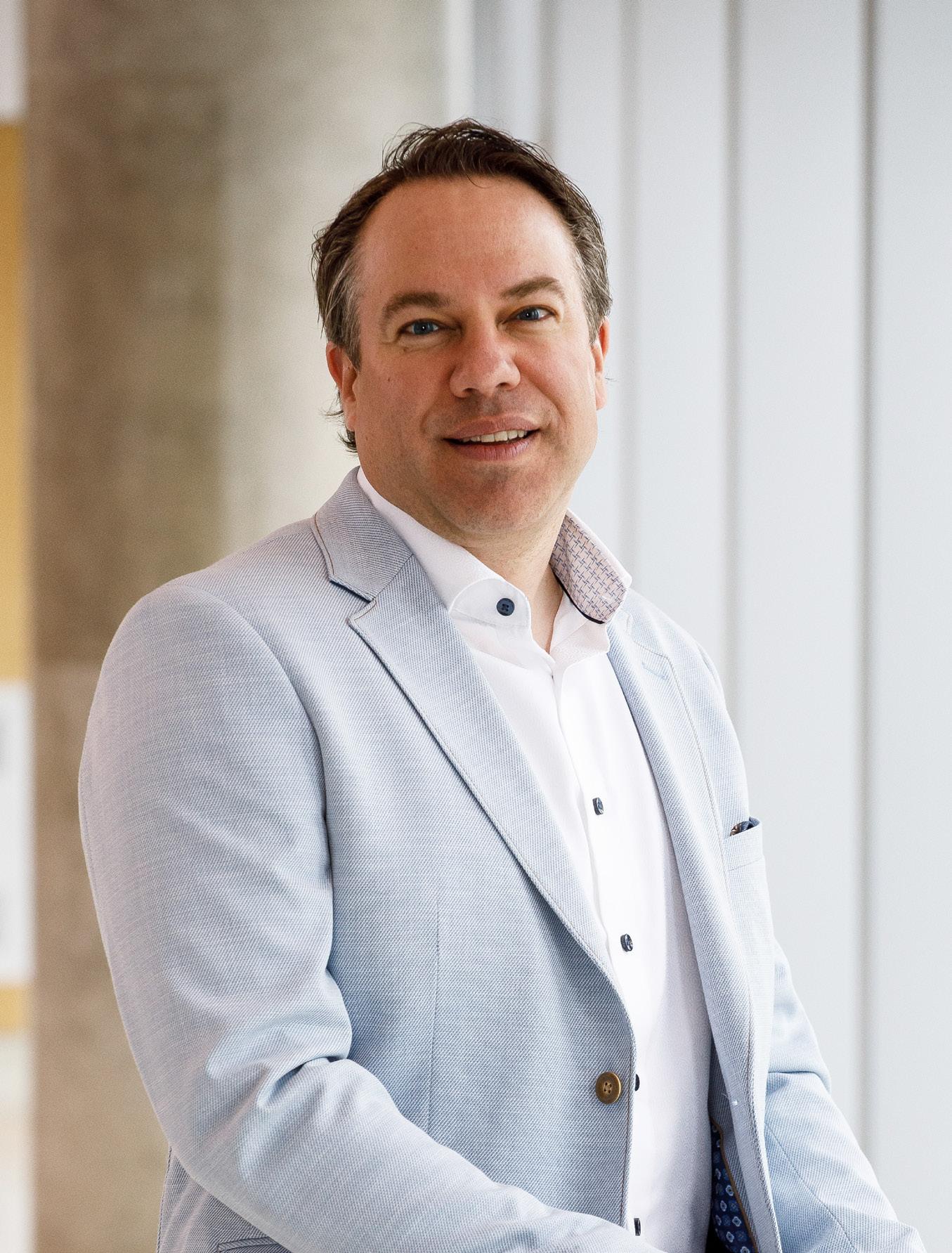
CLASSE MONDIALE, SIGNÉE LÉVIS
teknion.com
Siège social / Lévis
Teknion Roy & Breton
Made in Québec
Maison mère / Teknion Corporation, Toronto, Canada
Année de fondation / 1956
Nombre d’employés / 1 100
Production locale / 99 % fabriquée au Québec
Matériaux et composantes d’origine québécoise / 55 %
Territoires desservis / partout dans le monde
Vente par région / Canada 30 %, États-Unis 60 %, reste du monde 10 %
En sol manufacturier québécois, Teknion Roy & Breton s’impose comme une référence bien implantée et résolument tournée vers l’avenir.
Fondée en 1956 à Saint-Vallier-de-Bellechasse, l’entreprise gagne sa réputation par la rigueur et la fiabilité de son mobilier de bureau. Depuis son acquisition par Teknion en 1999, elle allie autonomie créative, ancrage régional et rayonnement international.
Here, on an 815,000 sq. ft. campus along the St. Lawrence River, world-class work environments are designed and built—in a production ecosystem that is agile, people-first, and proudly Québecois.
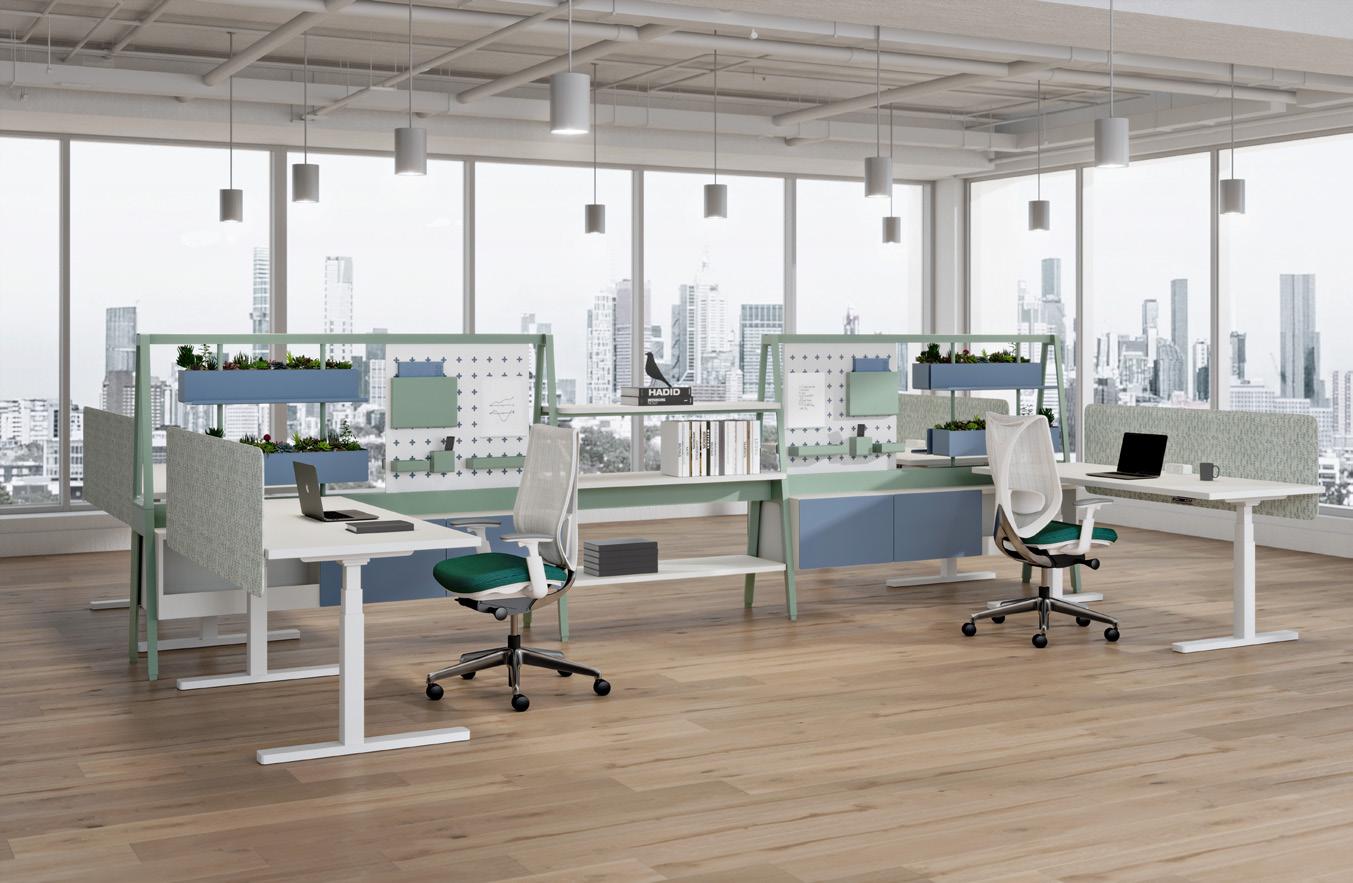
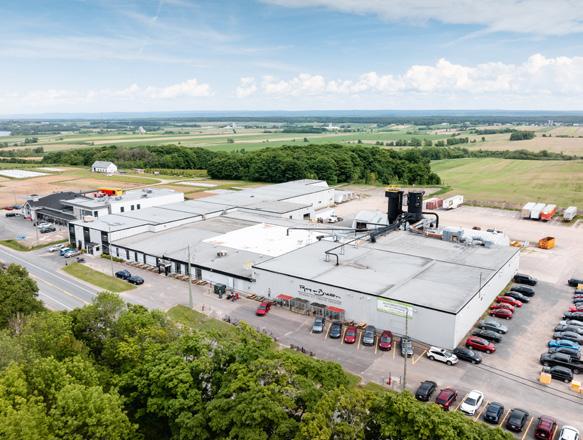
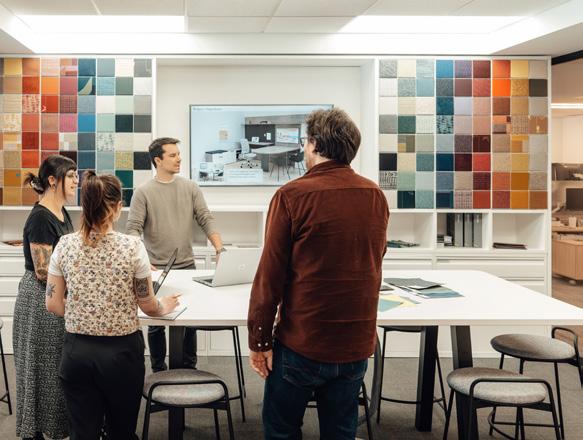
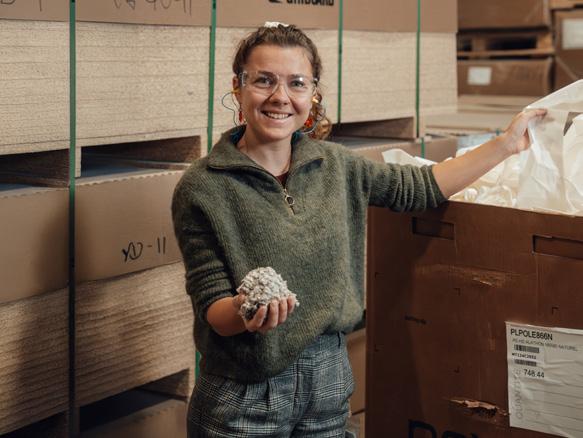

LE GÉNIE DU « PRENDRE SOIN »
Originaire de Montmagny, Frédéric Marier rejoint Roy & Breton en 1998, un an avant l’acquisition par Teknion. Il gravit les échelons jusqu’à devenir président-directeur général en 2022. Sa fierté ? Une culture du soin : envers les clients, les produits… mais d’abord envers les employés.
A STRATEGIC HUB
The Teknion Roy & Breton facility is where it all started in 1956. Across seven sites—Lévis, Montmagny, Laurier-Station, Saint-Vallier 1,100 people are involved in designing and producing some of the brand’s most iconic products. In Lévis, custom orders alone account for 35% of the company’s revenue. “Our design teams work upstream with architects and designers. That ongoing dialogue is what gives us real relevance.”
A HALLMARK COLLECTION
Another flagship product, Expansion Casegoods, is designed for every part of the office—executive suites, workstations, meeting rooms—and features over 26,000 compatible components. Modular and standardized, it ensures ease of installation and reconfiguration.
UN BEST-SELLER D’ICI
Lancée en 2002, la collection Expansion Casegoods n’a cessé d’être perfectionnée — jusqu’à devenir, année après année, le produit le plus vendu de tout le groupe Teknion à l’échelle mondiale. « Entièrement conçu et fabriqué ici, ce produit est un pilier depuis plus de vingt ans — une vraie preuve de notre engagement envers un design bien fait et durable », souligne Frédéric Marier.
LOCAL HANDS, GLOBAL IMPACT
That design philosophy—rigorous, local, and responsible—extends to production practices. Over the past five years, Teknion Roy & Breton has invested more than $30 million in Québec to modernize facilities, optimize processes, and boost innovation. By maintaining full control over its production chain, it reduces turnaround times, enhances quality, and lowers its carbon footprint.
UN ÉCOSYSTÈME RESPONSABLE
L’approche circulaire y est bien ancrée. À Montmagny, les rebuts de verre laminé sont revalorisés en sable de filtration et en paillis; les pellicules de papier utilisées pour les étiquettes (ou glassines) sont transformées en matériaux isolants ; les courroies de polyester sont broyées, puis réutilisées.
Premier fabricant de mobilier canadien à obtenir sa certification ISO 14001, l’entreprise vise réduire de moitié ses émissions de gaz à effets de serre d’ici 2030. « Nos cinq usines et deux entrepôts sont situés dans un rayon de 60 km, précise Frédéric Marier. Ça, c’est du concret pour réduire les transports, miser sur l’énergie propre, et inscrire nos produits dans une logique durable, de bout en bout. »
01 USINE Teknion Roy & Breton / 02 ÉQUIPE DE DESIGN TEKNION ROY & BRETON À L’ŒUVRE – le travail d’équipe, valeur-clé : l’équipe de design produit en pleine création. / 03 TRANSFORMATION DE DÉCHETS POST-INDUSTRIELS EN ISOLANT DOMESTIQUE – la glassine (papier de support à étiquettes) est revalorisée en isolant par notre partenaire Soprema. / 04 MÉTHODE INNOVANTE (LA PREMIÈRE EN AMÉRIQUE DU NORD) DE DÉLAMINATION DU VERRE POUR CRÉER DU SABLE DE FILTRATION – les rebuts de verre feuilleté sont transformés en sable de filtration, notamment pour les piscines.
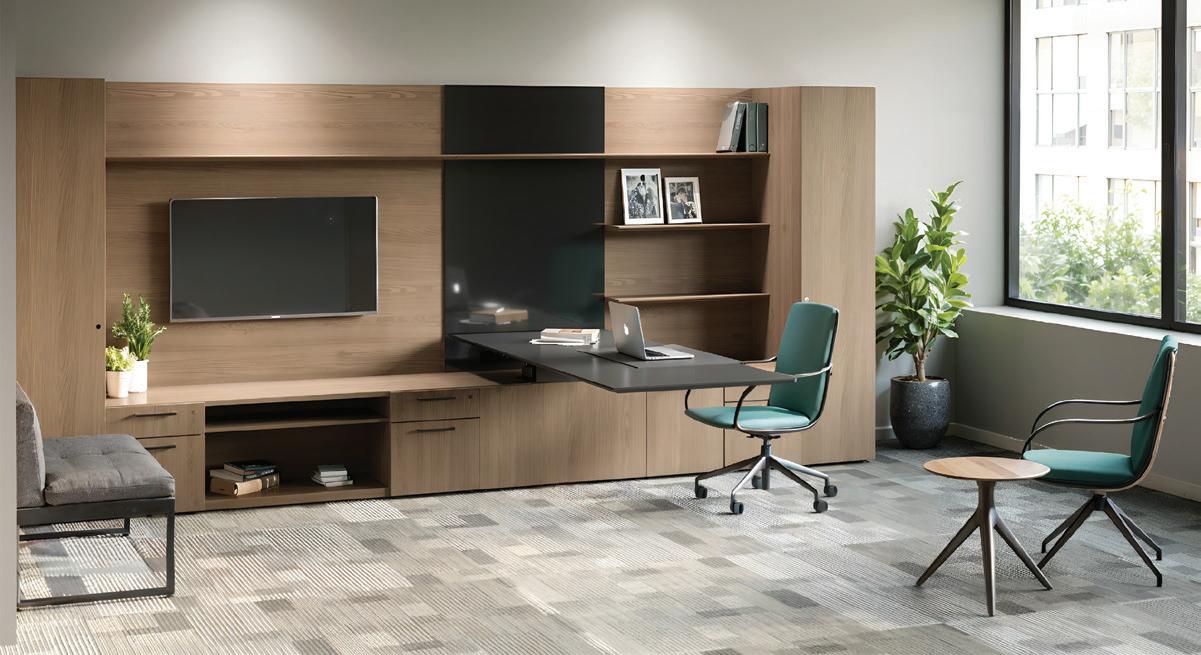
FUNCTIONING HOODS
Among its award winning products, the Expansion Cityline collection– inspired by the definitive patterns of urban neighbourhoods–is based on the concept of planning for a workplace as diverse and dynamic as a modern city. Like the public and private places where resident dwellers work and play, Expansion Cityline offers a highly active setting that allows people to move, to gather and to disperse when privacy and focus is desired.
DES AIRS DE GLOIRE
Lancement marquant au salon NeoCon 2017 à Chicago, Expansion Cityline récolte dix-sept prix internationaux — dont un Gold IDEA Award , décerné par l’Industrial Designers Society of America (IDSA), devant des géants comme Samsung. « C’est réellement une grande fierté collective, souligne Frédéric Marier. Une équipe de design à Lévis — des gens d’ici — qui signe un produit autant primé ici comme ailleurs. Ça, c’est notre moment Coupe Stanley. »
UNE ENTREPRISE CITOYENNE
Ici, le sens de la communauté n’est pas un slogan : c’est une réalité quotidienne. Teknion Roy & Breton collabore avec CÉTAL et Formaca, des organismes qui intègrent des personnes vivant avec des limitations fonctionnelles au travail, et avec Travail Jeunesse, qui forme des jeunes à risque tout en leur offrant des emplois durables — souvent dans l’entreprise même.
DESIGN THROUGH DIALOGUE
For the Teknion family of brands, design is a dynamic conversation. At Lévis, the creative team collaborates seamlessly with colleagues from across Canada and worldwide, ensuring they remain at the forefront of emerging trends. This global exchange fuels inspiration, drawing from residential aesthetics, natural materials, and soft palettes to craft inviting and innovative workspaces.
THE CAPITOL EFFECT
When clients or partners visit the Lévis team, they’re treated to the full experience—starting with the obligatory ferry ride across the river to Old Québec for fine dining. But it’s winter that always seals the deal: the Carnaval, the Bonhomme, and a signature cocktail at the Hôtel de Glace— memories that forge lasting bonds.
FIER D’ICI, TOURNÉ VERS DEMAIN
Dans un monde où l’externalisation est souvent la norme, Teknion Roy & Breton trace une voie différente : celle d’un design pensé et fabriqué au Québec, pour le monde entier.
« On est là depuis 65 ans, et plus que jamais, on est là pour durer. Ce qui nous définit ? Une entreprise de classe mondiale… enracinée dans sa communauté. »
01, 02 FOCUS Le système de cloisons démontables Focus offre différents degrés d’insonorisation et un style européen épuré.
CHARLES-ANTOINE GAUVREAU General Manager
«
LE NOUS, NOTRE FIERTÉ, NOTRE IDENTITÉ »
vanico-maronyx.com
Siège social et maison mère / Terrebonne
Année de fondation / 1980
Nombre d’employés / 90
Production locale / 97 % fabriquée au Québec Matériaux et composantes d’origine québécoise / 27 % Territoires desservis / Québec, reste du Canada, États-Unis
Vanico-Maronyx
Made in Québec
Ventes par région / Québec 65 %, reste du Canada 23 %, États-Unis 12 %
Née de la fusion de deux savoir-faire québécois, Vanico-Maronyx réunit design fonctionnel, personnalisation poussée et fabrication locale dans une usine unique en Amérique du Nord. Ici, le capital est partagé, les idées aussi et chaque salle de bain est pensée pour durer.
The story begins in 1980 with Vanico in SainteAnne-des-Plaines and Maronyx in Boucherville. Two entrepreneurs—Robert Gauvreau for Vanico and Jacques Parisé for Maronyx—two names, two complementary strengths: furniture for one, composites and sinks for the other.
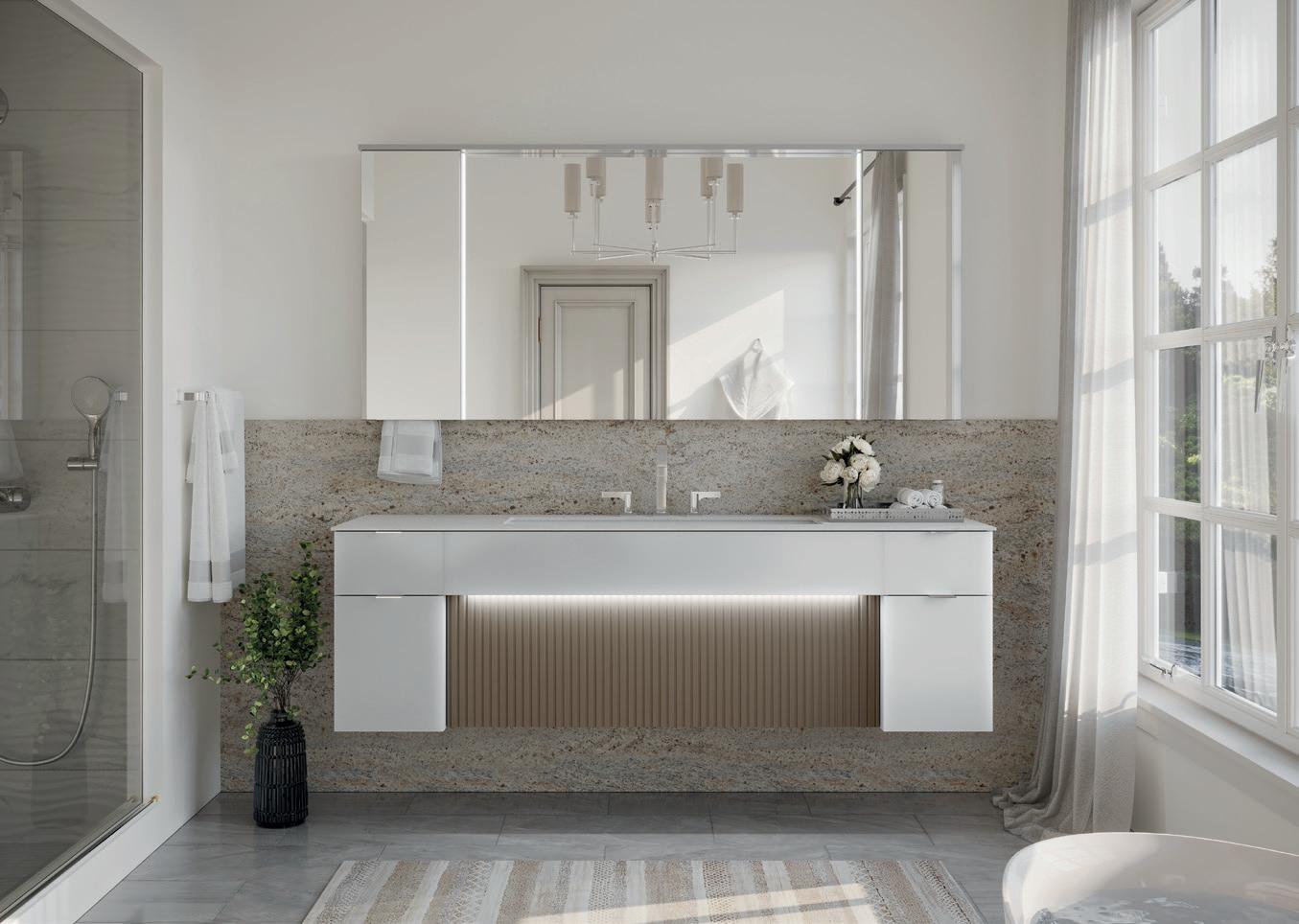
COLLECTION PENTHOUSE PLAZA
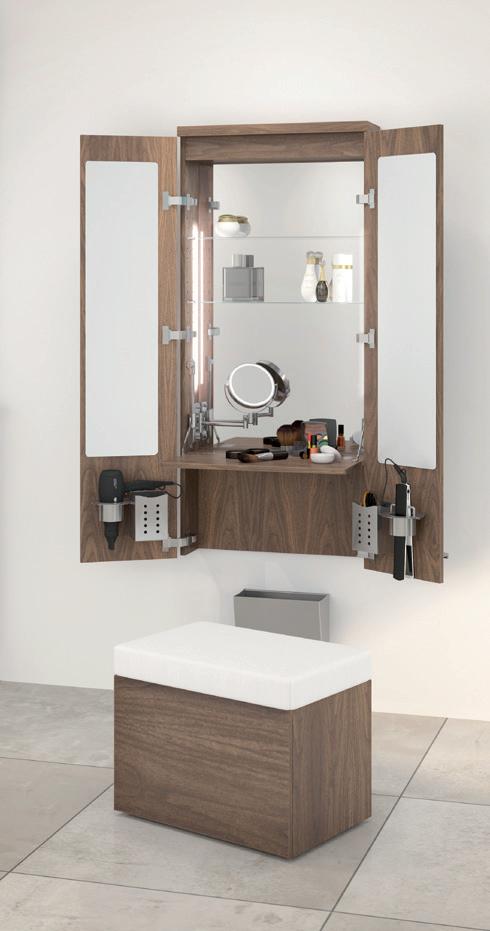
ROOTED IN LEGACY
By the 1990s, recognizing their synergy, the two companies began co-developing products—distributed by one or the other, depending on the collection. In 1998, they moved under the same roof in Terrebonne, and the merger became official in 2000.
UN AIR DE FAMILLE
Charles-Antoine Gauvreau, directeur général actuel et fils du fondateur de Vanico, a littéralement grandi dans l’entreprise. « J’ai toujours su que je voulais faire ça de ma vie », nous confie-t-il. « J’ai étudié en administration à l’université et je suis entré chez Vanico-Maronyx pour y rester. »
Balai à la main à 10 ans, puis de stage en été à direction partagée, il incarne aujourd’hui la relève, aux côtés de son partenaire Alain Belzile.
A SHARED SUCCESS
In 2005, Gauvreau and Belzile took a bold step: creating a worker-shareholder cooperative — a concrete way to anchor the company in an ethical form of capitalism, where wealth is shared and pride is built collectively. As the GM often says, “Together means everything, here.”
Today, the cooperative owns 20% of the company, making it the third-largest shareholder. At Vanico-Maronyx, belonging goes beyond a paycheck—it’s reflected daily in shared decisions, mutual accountability, and a collective commitment to advancing local expertise.
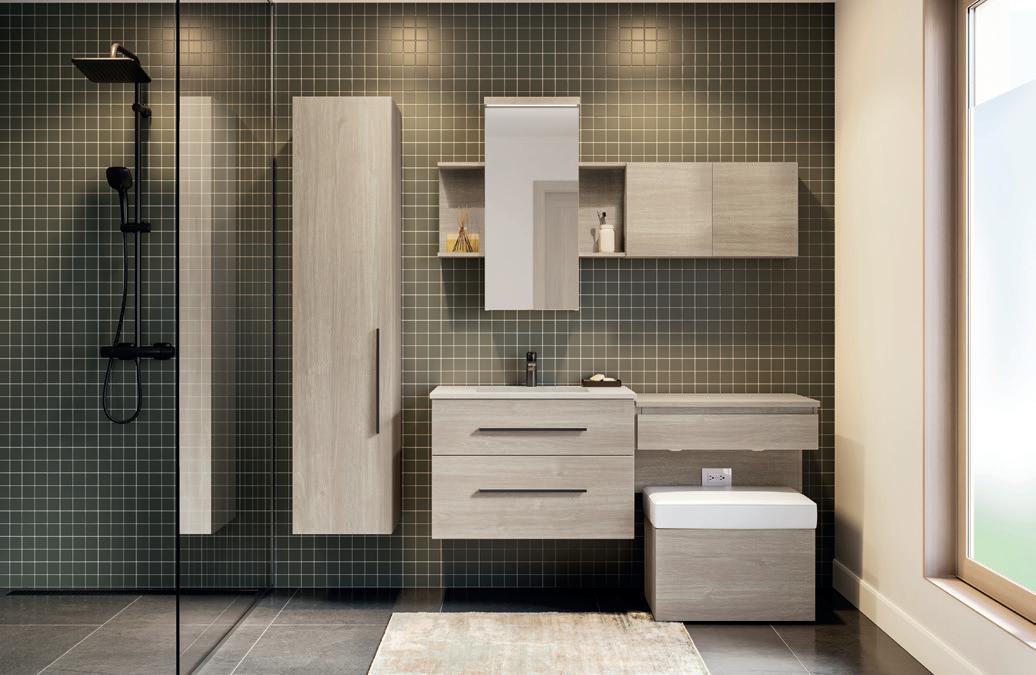

DUO COIFFEUSE
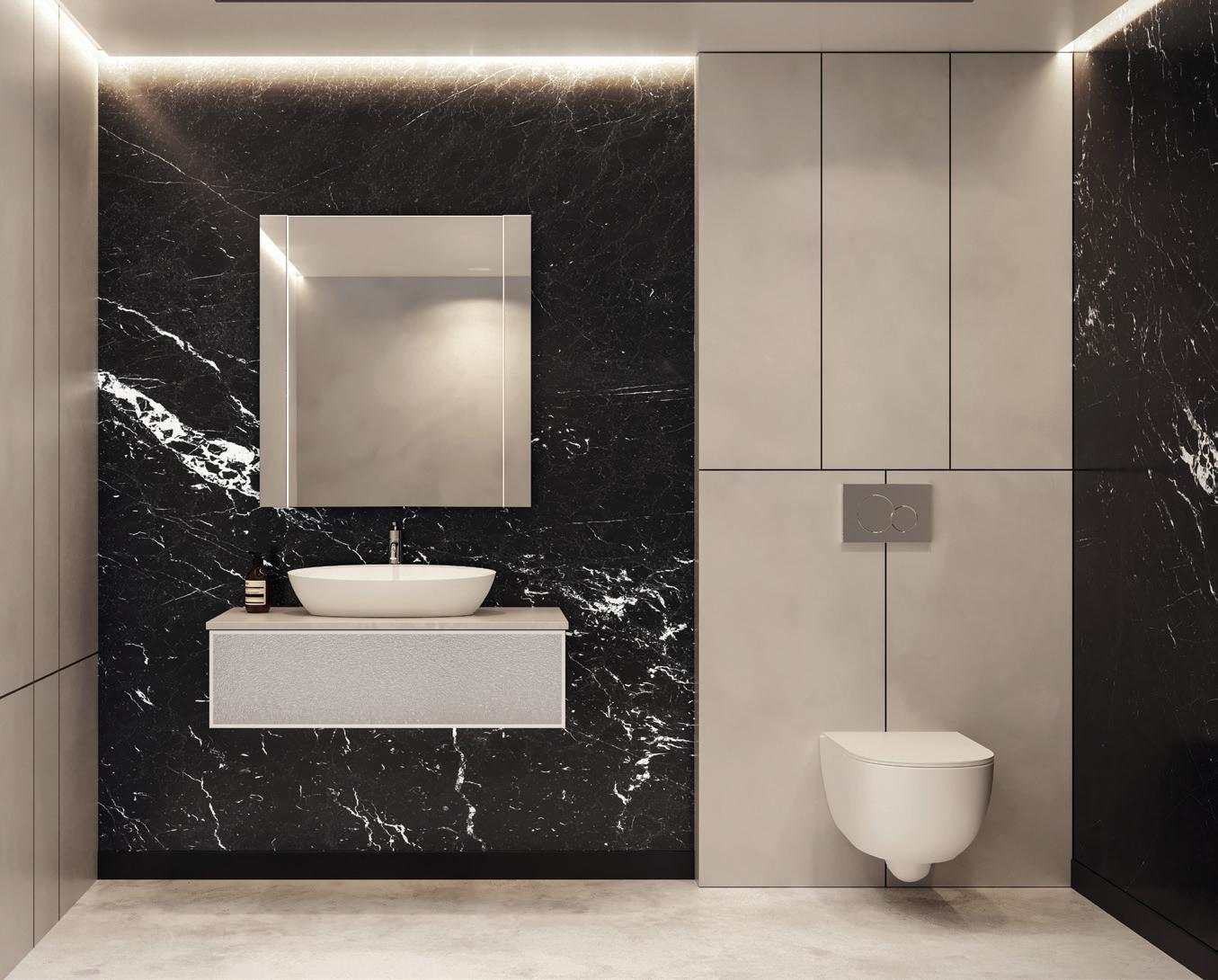
UNE MAISON COMMUNE
Selon Charles-Antoine, il aura fallu quelques années pour réellement unifier les cultures des deux entités d’origine. Cette transformation atteint sa pleine maturité en 2017, avec un déménagement stratégique dans une nouvelle usine ultramoderne à Terrebonne — leur maison commune.
A COLLABORATIVE ECOSYSTEM
Inside this 78,000 sq. ft. facility, furniture, stone, and composite come together under one roof. Unique in North America, this space is more than a manufacturing site—it is a place of design, adaptation, and refinement, driven by teamwork, technological integration, and a deep respect for artisanal expertise.
PENSÉE ET PERSONNALISÉE
Ici, l’esthétique ne va jamais sans la fonctionnalité — un principe fondateur de la maison. Quel que soit le produit développé, design et usage forment un tout indissociable.
Et parce qu’une salle de bain est avant tout un espace de vie, Vanico-Maronyx repousse sans cesse les limites de la personnalisation : dimensions, configurations, matériaux, finitions… Tout est pensé pour s’adapter à ceux qui l’utiliseront.
TECHNOLOGY IN SERVICE OF CRAFT
From 3D CAD to ERP systems and additive manufacturing, technology enhances personalization—without replacing the human hand. The one that checks, adjusts, polishes. At Vanico-Maronyx, innovation supports the made-to-measure—never the other way around.
COLLECTION PENTHOUSE SKYLINE
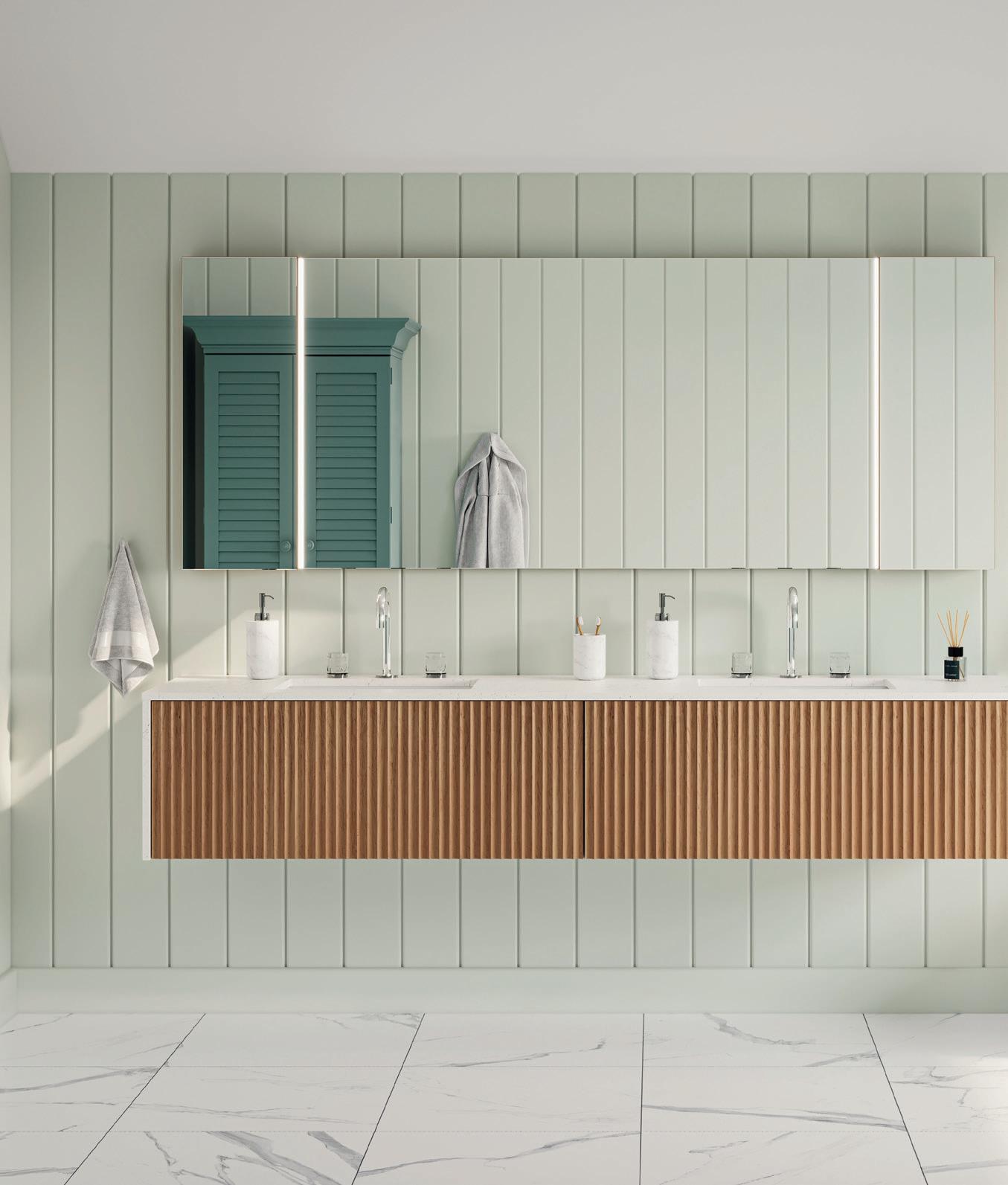
UNE VISION : FABRIQUER ICI, PENSER PLUS LOIN
Dans un marché toujours plus concurrentiel, l’entreprise mise d’abord sur la proximité, la maîtrise interne et la transmission des compétences. « Le savoir-faire reste au Québec, les talents aussi — un choix stratégique autant qu’une conviction. »
A RECOGNIZED DISTINCTION
In North American markets often saturated by sameness, this Québec brand stands out through a refined, flexible, human approach—one that resonates with both designers and discerning consumers.
LE RAFFINEMENT À LA PIÈCE
Symbole d’un savoir-faire maîtrisé, la collection Penthouse conjugue lignes épurées, matériaux nobles et fonctionnalités soigneusement pensées. Déclinée en sous-collections telles que Plaza ou Skyline, elle incarne une vision du design à la fois contemporaine, modulable et profondément élégante. Chaque pièce est façonnée pour durer — et pour séduire.
ELEGANCE, UNLEASHED
Created with architects and designers in mind, the collection opens up a new level of creative freedom, with 13 customizable fronts and over 500 combinations of materials, finishes, and
tones. Woodgrain textures, satin lacquers, matte or glossy effects, mineral or deeper hues—every element contributes to a cohesive, bespoke environment. With integrated handles, concealed lighting, and floating volumes, the result is a design language that is understated, assured, and resolutely modern.
APPEALING BEYOND BORDERS
Firmly rooted in Québec, Vanico-Maronyx is expanding thoughtfully—first in Ontario, then in the U.S., where its bespoke and responsible approach resonates with clients seeking better.
“If tariffs apply, we absorb the difference. Our American customers should never have to worry.”
FABRIQUÉ ICI, PENSÉ POUR LONGTEMPS
Dans un monde où tout va trop vite, Vanico-Maronyx prend le temps de bien faire : bien concevoir, bien produire, bien livrer. Avec 97 % de sa production fabriquée au Québec, une équipe unie par un esprit coopératif, et une approche du design qui valorise autant l’usage que l’esthétique, l’entreprise offre plus qu’un produit : elle propose une vision durable de l’habitat.
COLLECTION FUZION
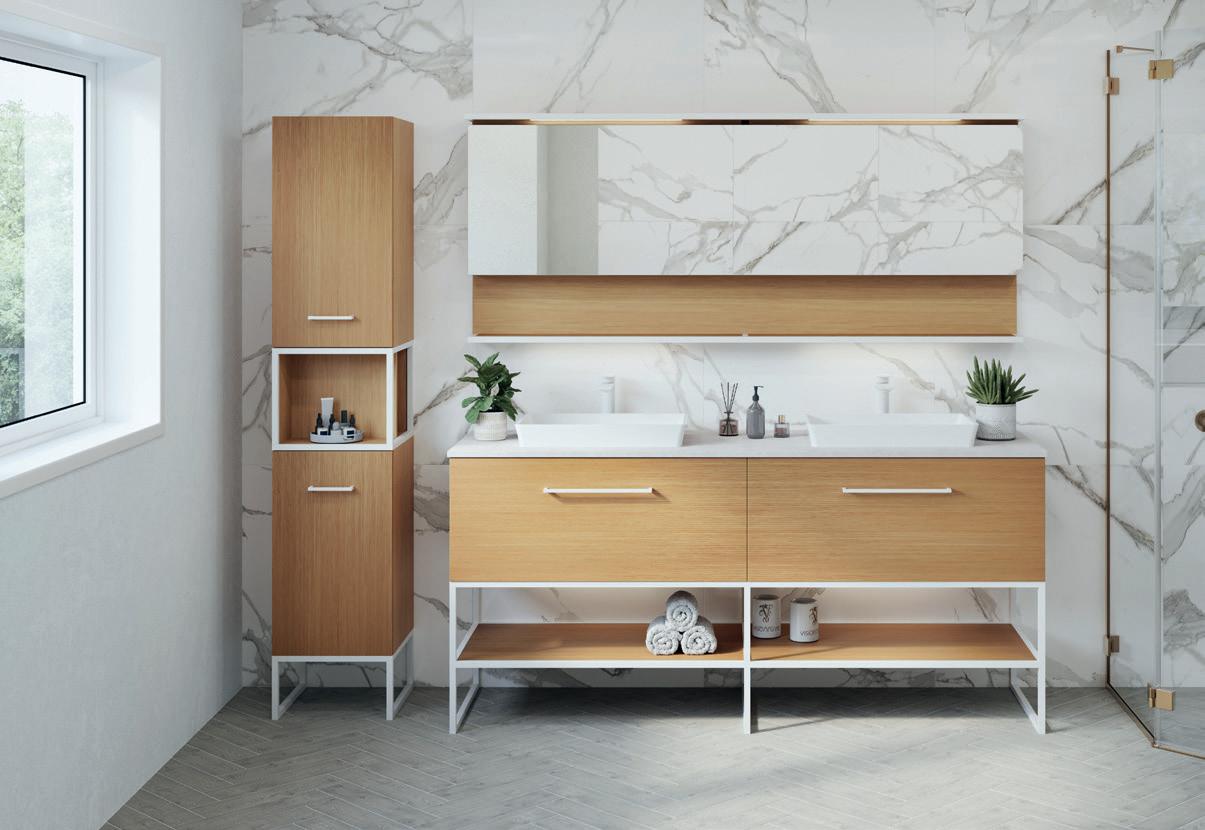
Tourisme Design Québec
LE QUÉBEC COMME DESTINATION
Dans la Belle Province, certains lieux ne se contentent pas d’accueillir — ils marquent, émerveillent, inspirent. Spas, hôtels, restaurants, quartiers culturels ou districts de luxe : ici, l’expérience est conçue avec intention, à la croisée de l’hospitalité, de l’identité et du territoire.
From Charlevoix to the Laurentians, discover distinctive destinations where architecture design, and storytelling transform tourism into a lasting encounter between beauty, craftsmanship, and memory.
AU SERVICE DU SOUVENIR
Dans un monde où le voyage dépasse la simple destination pour devenir une quête de sens, le design et l’architecture s’imposent comme les véritables artisans de l’émotion et de la mémoire.
Les lieux touristiques d’aujourd’hui ne se contentent plus d’héberger : ils racontent une histoire, éveillent les sens et tissent un lien durable avec ceux qui les visitent.
PLACES OF DISTINCTION
Hotels, spas, restaurants, cultural institutions— each project featured here embodies a vision of tourism enriched by design: a way of inhabiting the world with beauty, depth, and intention.
UN MOTEUR D’EXPÉRIENCES
Amateurs de design et d’architecture, partons à la rencontre du Québec comme destination. Et prolongeons l’exploration sur int.design, où le moteur de recherche Inspirez-vous rassemble une sélection unique d’adresses d’exception, ici comme ailleurs.
FAROUCHE
Un design en symbiose avec la nature, une expérience profondément enracinée
À Farouche, sur le versant nord de Tremblant, le design apaise et laisse place à l’essentiel : la beauté brute des Laurentides. Lignes épurées, matériaux naturels, volumes maîtrisés l’architecture signée Atelier L’Abri s’efface au profit du paysage, suivant le rythme de la forêt, du vent et des montagnes.
Les refuges incarnent cette philosophie : minimalistes mais luxueux, ouverts sur la nature, ils invitent à ralentir. Dans cette alcôve de calme, on y dort avec la lune pour veilleuse, on s’éveille au chant des oiseaux.
À la buvette, le design devient lieu de rencontre. Sa structure ouverte, entre vues grandioses sur les montagnes et convivialité de village, diffuse une ambiance douce, vivante et élégante en toute simplicité. On y savoure des assiettes de saison, des vins vivants, des cueillettes fraîches dans un esprit à la fois décontracté et raffiné.
La ferme est le cœur de Farouche. Potager en permaculture, fleurs comestibles, ruches et petits fruits y nourrissent le lieu autant qu’ils l’inspirent. C’est là que naissent les festins de la table, les cueillettes guidées et les ateliers sensoriels.
L’expérience se prolonge en plein air : sentiers forestiers, plages sauvages, haltes méditatives ou sportives, bain nordique tout invite à une reconnexion au vivant. Ici, le design est porteur d’émotion, de lenteur et de sens.
farouche.ca
CITQ # 629356
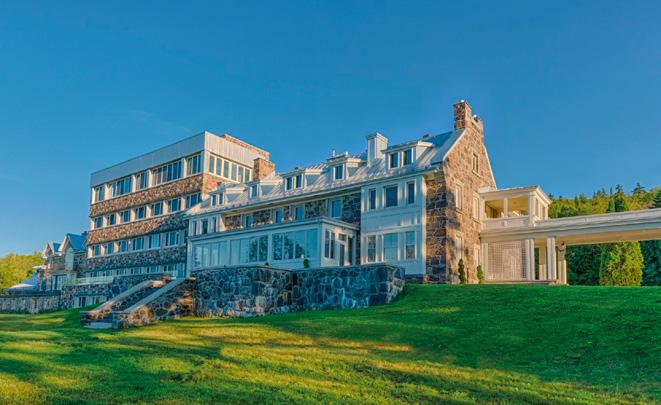
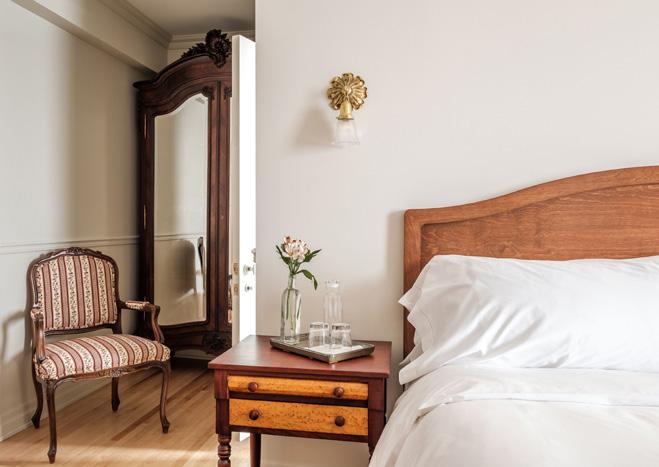
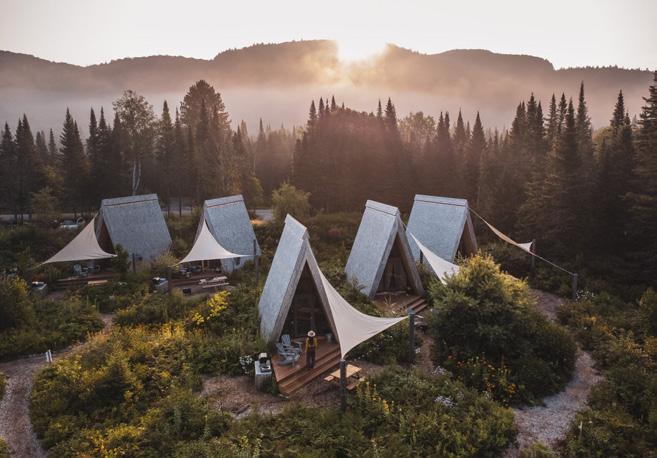
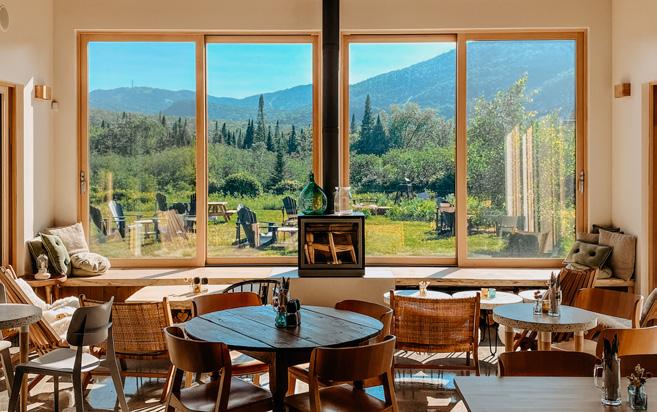
LAURENTIDES
STONEHAVEN LE MANOIR
Trésor patrimonial des Laurentides
Surplombant le lac des Sables à Sainte-Agathe-des-Monts, StoneHaven Le Manoir renaît d’un glorieux passé patrimonial. Érigée en 1908 pour Douglas Lorne McGibbon, cette élégante résidence d’inspiration écossaise est rapidement devenue le tout premier sanatorium des Laurentides. Acquise par les Pères Oblats après son décès, elle fonctionne ensuite comme centre de retraite, préservant son esprit unique.
En 2015, Georges Coulombe, spécialiste réputé de la restauration patrimoniale, réinjecte plus de 10 M $ dans sa rénovation. Transformée en Relais & Châteaux de 34 chambres, l’architecture d’origine est sublimée par des meubles anciens et œuvres d’art soigneusement intégrés. Le nouveau Pavillon, ancienne résidence des religieuses, ajoute 17 chambres tout aussi raffinées, avec literie haut de gamme et ameublement d’exception.
Le jardin italien, cœur du site, dialogue avec la nature environnante et offre un refuge visuel unique. Depuis 2019, les visiteurs profitent également d’un spa, d’un hammam, d’une piscine extérieure, d’un restaurant gastronomique et d’espaces événementiels élégants.
Le tout porte l’empreinte de la vision sensible et passionnée de Georges Coulombe, accompagné de Sonia Gagné de Provencher_Roy Architectes pour parfaire cette renaissance d’exception.
stonehavenlemanoir.com
CITQ # 209646
MONTÉRÉGIE
FÖRENA CITÉ THERMALE
À la frontière des eaux
Affrontez les températures téméraires de ces complexes thermaux inspirés des terres d’Islande, d’Allemagne et de Russie, dans le respect des traditions qui ont forgé leurs rituels de thermothérapie iconiques. Laissez la douce brise du Piterak vous emporter vers l’Islande, le Foehn vous transporter vers les rituels de thermothérapie en Allemagne, et le Buran vous surprendre par son intensité.
Le design, conçu en collaboration avec Projet Paysage ainsi que Blouin Tardif Architecte se distingue par ses lignes épurées, ses jeux de volumes et une fenestration généreuse qui ouvre les espaces sur le paysage. L’ensemble crée une atmosphère contemporaine, minimaliste et enveloppante, favorisant la déconnexion et la détente profonde. Förena allie tradition et innovation dans un concept cohérent, à la fois ancré et dépaysant. Une véritable cité thermale où le temps ralentit, et où le corps et l’esprit trouvent un nouvel équilibre.
Et lorsque votre corps apaisé réclame une autre forme de voyage, laissez vos sens poursuivre l’exploration à travers une expérience gastronomique unique. Dirigé par nos chefs, le restaurant Förena est constamment à la recherche d’innovations culinaires inédites. Véritables créateurs culinaires et explorateurs des saveurs du monde, l’équipe est formée d’épicuriens chevronnés qui crée chaque jour des plats rafraîchissants et savoureux, où chaque bouchée vous transporte vers des rivages lointains. forena.ca
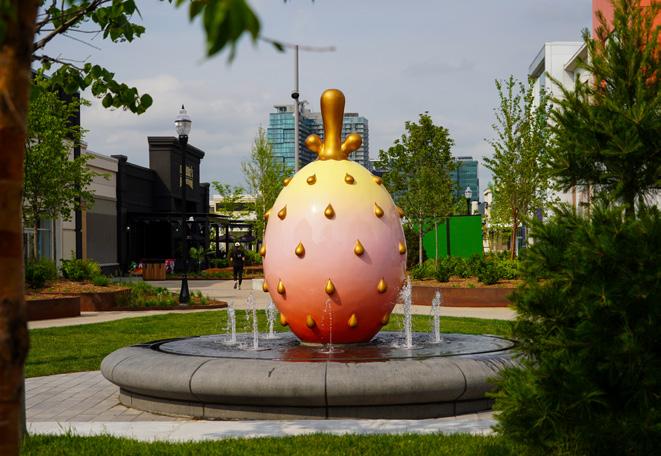
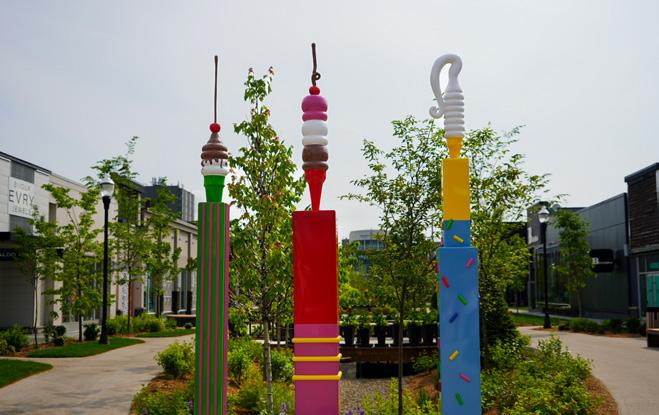
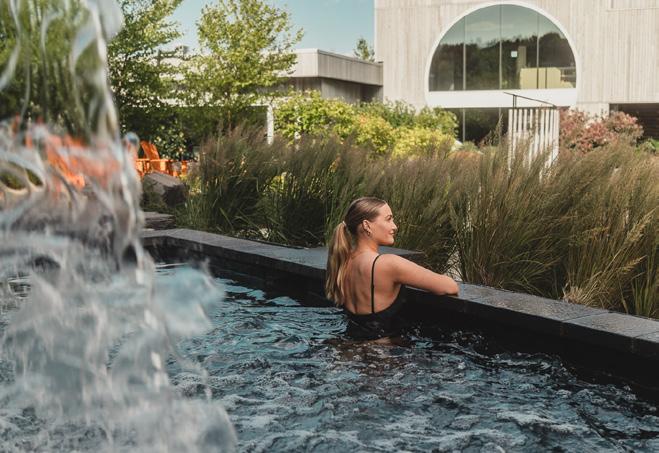
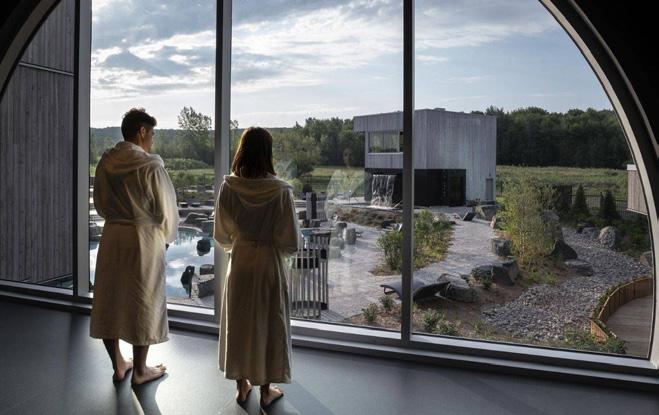
MONTÉRÉGIE
QUARTIER
DIX30
Une destination design où le style prend l’air
À seulement 15 minutes de Montréal, le Quartier DIX30 réinvente l’expérience urbaine à ciel ouvert. Inspiré par les grandes artères piétonnes nord-américaines, ce lieu hybride réunit mode, déco, gastronomie, bienêtre et culture dans une ambiance contemporaine et accessible.
On y retrouve plus de 270 boutiques, 70 restaurants, 45 terrasses, 38 espaces bien-être et plus d’une dizaine d’attractions culturelles et de divertissement. Chaque zone a été pensée pour conjuguer convivialité, design et art de vivre.
Cette année, cap sur la toute nouvelle Avenue des Lumières, où plus de 120 000 pi² de voies automobiles ont été transformés en un parc extérieur verdoyant. L’architecture moderne y dialogue avec des terrasses animées, des installations artistiques et des événements immersifs.
Tout l’été, une programmation culturelle gratuite fait vibrer le quartier de jour comme de soir. DIX30 s’impose comme une destination incontournable pour les amateurs de design urbain et les voyageurs en quête de nouveauté.
quartierdix30.com
MONTRÉAL
LE CLUB ST-DENIS
Un refuge privé au cœur de Montréal
Le Club St-Denis 257SE est une oasis privée datant de 1974, réservée exclusivement aux membres et à leurs invités. Que ce soit pour une réunion d’affaires, un refuge pour votre vin ou un 5 à 7 entre amis. Ce club privé est un pied-à-terre au cœur de Montréal où vous pouvez vous sentir véritablement comme chez vous.
L’espace grandiose a été réimaginé par Huma Design, une référence en matière de design unique et singulier. Chaque détail a été soigneusement pensé pour offrir une expérience exceptionnelle aux membres. Devenir membre du Club St-Denis, c’est saisir l’opportunité unique de rejoindre une histoire prestigieuse et une communauté d’individus influents et visionnaires.
clubstdenis.com
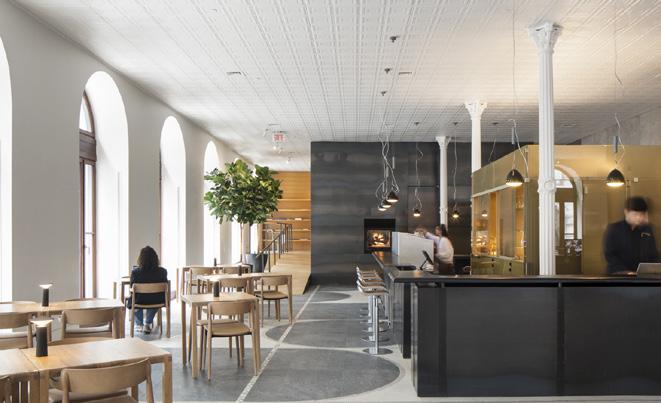
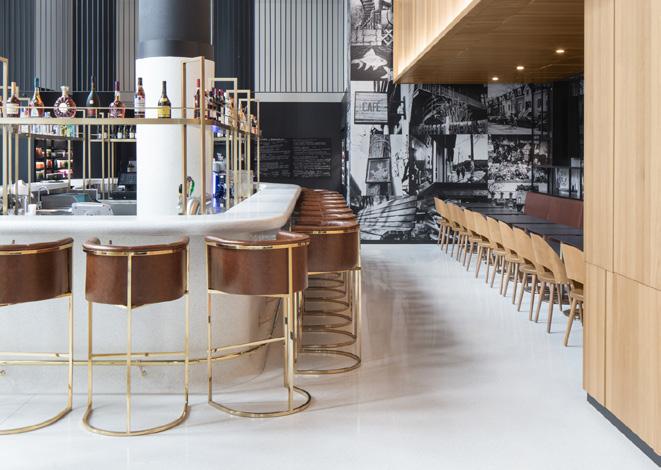
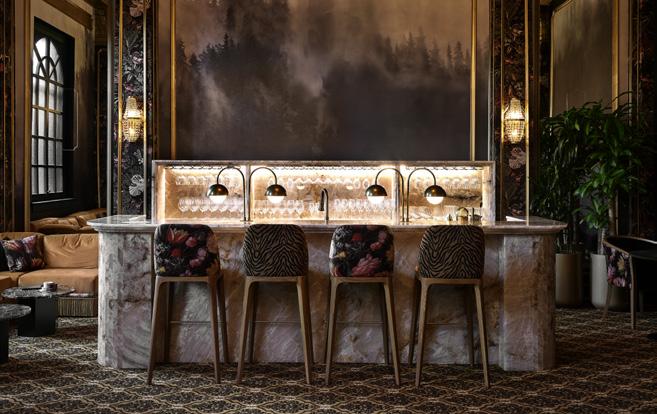
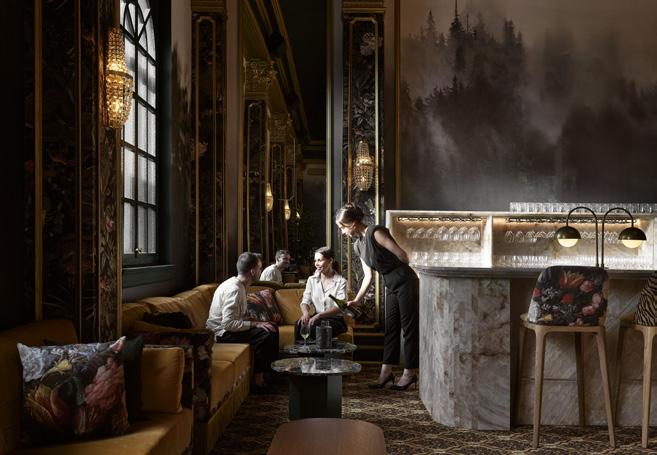
MONTRÉAL
GAULT
Patrimoine réinventé, luxe révélé
Installé dans un édifice historique du 19e siècle du Vieux-Montréal, l’Hôtel Gault propose 30 suites élégantes mêlant murs en briques apparentes et mobilier minimaliste, créant une atmosphère raffinée.
Son lobby a récemment été repensé par la firme YH2, qui a magnifié cet espace par un design lumineux, épuré et respectueux du patrimoine original.
hotelgault.com
MONVILLE
Une vision audacieuse du luxe urbain
CITQ # 177096
Situé au cœur du centre-ville de Montréal, l’Hôtel Monville, conçu par ACDF Architecture, se distingue par sa façade en trompe-l’œil noir et blanc et son design épuré. Son lobby à triple hauteur, orné de colonnes monumentales et de boiseries en chêne, crée une ambiance à la fois chaleureuse et contemporaine.
Les 269 chambres, dotées de fenêtres pleine hauteur, offrent une vue imprenable sur la ville et intègrent des technologies innovantes, dont un service d'étage robotisé pour une expérience urbaine résolument moderne.
hotelmonville.com
CITQ # 295871
MONTRÉAL
ROYALMOUNT
Une destination incontournable pour les voyageurs amateurs de design
ROYALMOUNT est la nouvelle destination montréalaise pour le magasinage de luxe, la gastronomie et la découverte culturelle pensée pour les voyageurs en quête d’expériences exclusives. Situé à quelques minutes du centre-ville et facilement accessible en métro ou à vélo, l’endroit conjugue architecture audacieuse, grandes marques internationales et art immersif.
En son cœur : un parc urbain de 77 000 pi², un espace à ciel ouvert où cohabitent art public, performances culturelles et événements saisonniers. Autour de ce parc se déploie la plus grande concentration de boutiques phares de luxe au Québec, dont Louis Vuitton, Gucci et Versace. Plus de 100 boutiques et restaurants sont déjà ouverts et plus de 50 % des marques y font leur entrée dans la province.
Entre patinage hivernal sous les étoiles, terrasses baignées de soleil et boutiques éphémères, chaque détail est soigneusement pensé pour inspirer. On y découvre une gastronomie raffinée, des œuvres uniques et des services sur mesure qui enrichissent chaque visite.
Que vous soyez de passage à Montréal ou en escapade prolongée, ROYALMOUNT vous propose une expérience élégante, surprenante et tout simplement introuvable ailleurs.
Royalmount.com
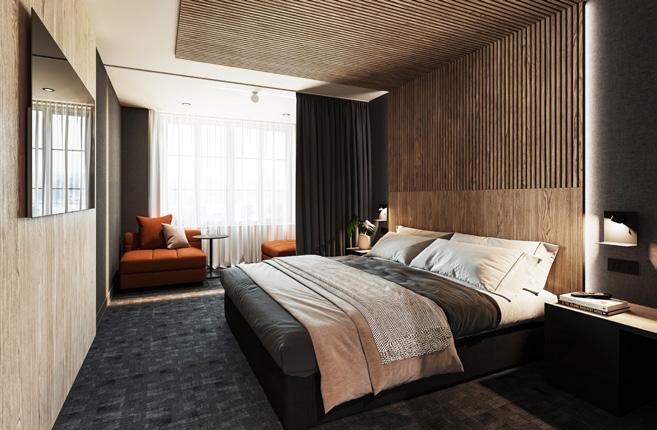
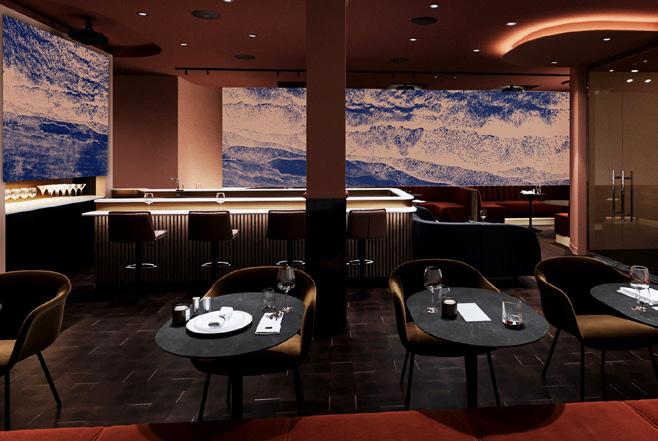
MONTRÉAL
SONOLUX
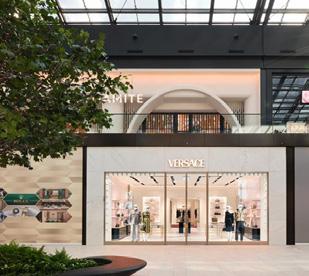
Nouvel hôtel d’art contemporain et immersif
SonoLux est un hôtel-boutique où l’art façonne l’hospitalité. Derrière sa façade néoclassique du Vieux-Montréal, les invités découvrent un lieu issu d’une collaboration créative conçu pour être à la fois immersif et intime, dans une atmosphère aussi accueillante qu’inattendue.
L’exposition inaugurale, Semences de R/Évolution, organisée par la commissaire Cheryl Sim de PHI, invite à réfléchir à notre avenir commun à travers des œuvres d’artistes locaux et internationaux. LUMI, le restaurant porté par le chef Graham Hood, propose un menu saisonnier et paradoxal. Caché dans les profondeurs de SonoLux, Subterra est un lounge audio avec des sets vinyles, des DJ et des concerts intimistes programmés par Fred Everything.
Les 36 chambres de SonoLux sont de véritables retraites, alliant lignes épurées, éclairage ludique et confort enveloppant.
Imaginez un repas alors que les murs prennent vie, la rencontre d’une œuvre évocatrice en chemin vers votre chambre, un échange d’inspirations avec l’équipe ou d’autres voyageurs, ou encore le plaisir de redécouvrir une pièce qui vous intrigue. Chez SonoLux, l’art stimule les sens et s’intègre naturellement à votre séjour montréalais.
sonolux.ca
ESTRIE
SPA NORDIC STATION
Voyage au fil des éléments
Niché au cœur de la forêt d’Estrie, le Spa Nordic Station s’impose comme un refuge enchâssé, où le design se fait discret pour mieux laisser place à la nature. Construit autour de bâtiments de pierre et de bois, le site évoque l’authenticité des premiers spas nordiques, avec une architecture qui épouse le relief et dialogue avec la rivière Castle.
L’expérience thermale y suit un parcours immersif : bains californiens, saunas finlandais, banya russe, crypte vapeur, cascades vivifiantes et aires de repos en surplomb de l’eau. Chaque station invite à une rencontre sensorielle avec les éléments, dans une atmosphère feutrée et apaisante.
Le design, sobre et organique, privilégie les matériaux naturels, les volumes maîtrisés et les circulations fluides. Les installations s’intègrent avec harmonie dans l’environnement, favorisant une reconnexion profonde au vivant. Entre vapeur et lumière, chaleur et fraîcheur, chaque instant devient un rituel.
Lieu de lenteur, de contemplation et de présence, le Spa Nordic Station est une ode au retour à soi, où le bien-être s’ancre dans la matière même du paysage.
spanordicstation.com
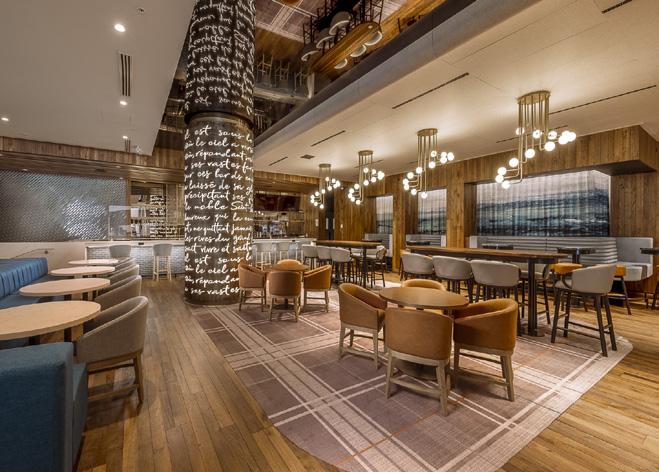
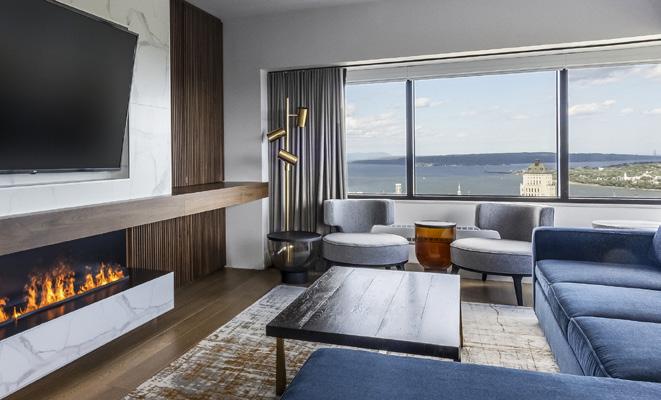
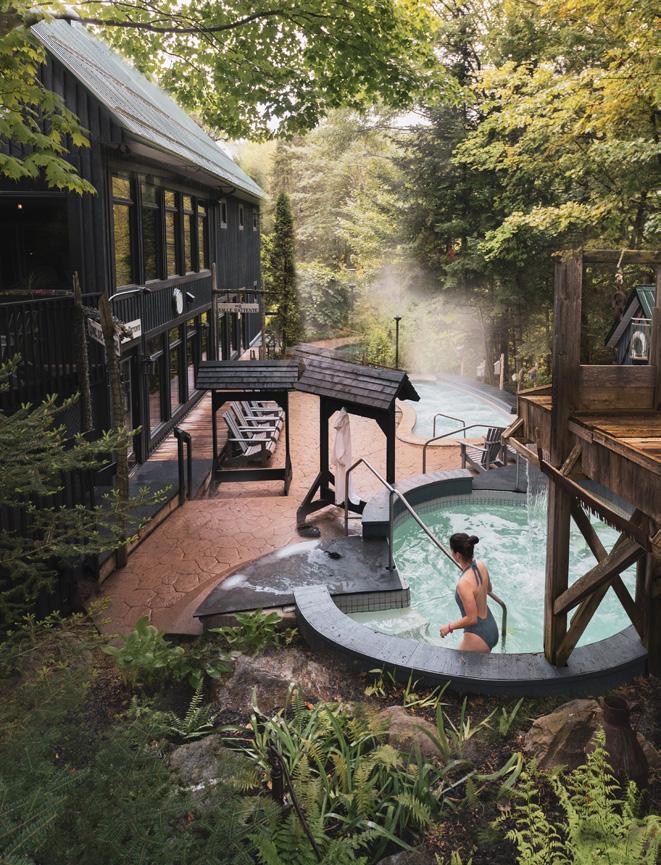
QUÉBEC
HILTON
QUÉBEC
L’expérience Hilton Québec – Design, vue, confort
À deux pas du Vieux-Québec, séjourner au Hilton Québec, c’est s’immerger au cœur de la ville. Derrière sa façade épurée, l’hôtel dévoile des espaces lumineux et un décor ravivé en 2020 par la firme LemayMichaud, alliant élégance, modernité et chaleur inspirée du fleuve Saint-Laurent. Les chambres, offrant une vue spectaculaire du matin au soir, sont sublimées par une tapisserie créée sur mesure à partir de photos du VieuxQuébec, apportant une touche locale unique. Les suites spacieuses, au style résidentiel, offrent une expérience distincte, conçue pour séduire les amateurs de design tout en assurant un confort inégalé.
Perché au 23e étage, le Club Exécutif panoramique offre l’une des plus belles vues sur Québec. Ce lieu exclusif comprend plusieurs avantages et inclusions qui viennent rehausser l’expérience des voyageurs. L’hôtel se distingue également par son restaurant CABU Boire et Manger, dirigé par la réputée chef Marie-Chantal Lepage, ainsi que par sa piscine chauffée sur le toit, bordée d’un bar et de lits baldaquins en été.
Réservez votre prochain séjour avec le code promo QUEBEC et profitez d’un rabais allant jusqu’à 25 % sur le tarif du jour.
HiltonQuebec.com
CITQ # 054806
HÔTEL
MANOIR
VICTORIA
Un joyau contemporain dans son écrin historique
L’histoire de l’Hôtel Manoir Victoria remonte aux années 1830, alors qu’il était situé à l’est de la Côte du Palais, en face de son emplacement actuel. À la fin du 19e siècle, le propriétaire de l’époque innove en faisant construire une piscine et des bains turcs sur le terrain aujourd’hui occupé par l’hôtel moderne de 156 chambres et suites.
Deux siècles plus tard, l’hôtel attire des voyageurs en quête de culture et de gourmandises locales. C’est ici que les chefs Jean-Luc Boulay et Arnaud Marchand ont ouvert, en 2012, le restaurant Chez Boulay – bistro boréal. Dans un décor signé LemayMichaud, le restaurant sert une cuisine saisonnière élaborée à partir d’ingrédients québécois, tout récemment recommandée par le Guide Michelin dans sa première édition régionale.
En 2022, l’équipe d’Arnaud Marchand récidive avec Le Bedeau, un restaurant qui rend le vin moins intimidant et plus accessible. LemayMichaud aussi concepteurs des espaces publics et des chambres de l’hôtel imagine un environnement envoûtant, inspiré d’un lot de vieux meubles d’église acquis par le chef. Cet été, grâce à un nouvel investissement, les gastronomes pourront accéder au Bedeau depuis le lobby, rendant l’Hôtel Manoir Victoria encore plus gourmand !
manoir-victoria.com
20 24
Meilleur spa de jour au Canada
CITQ # 025535
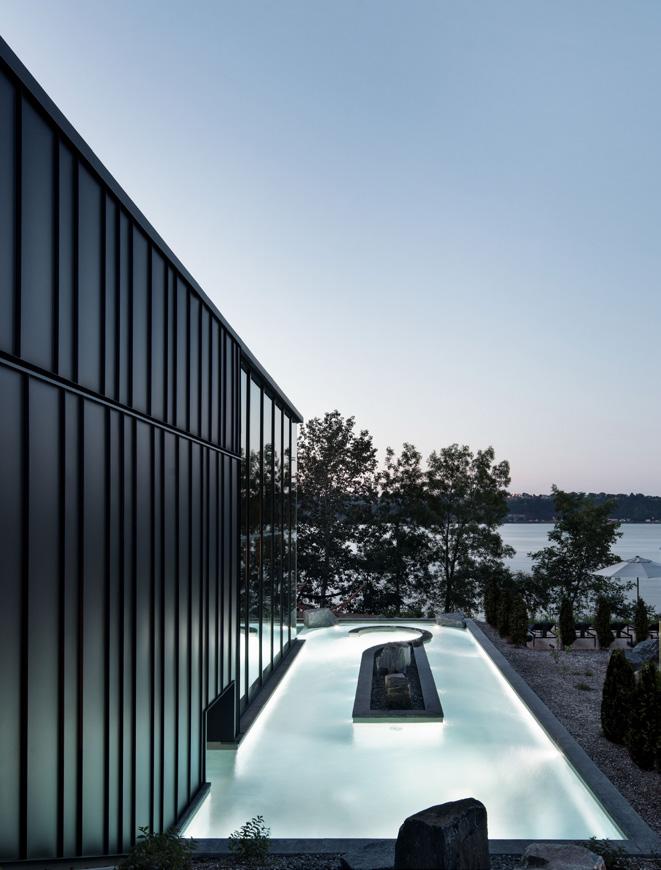
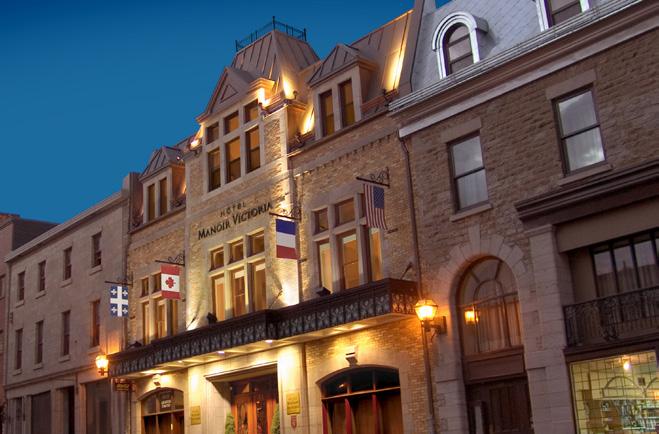
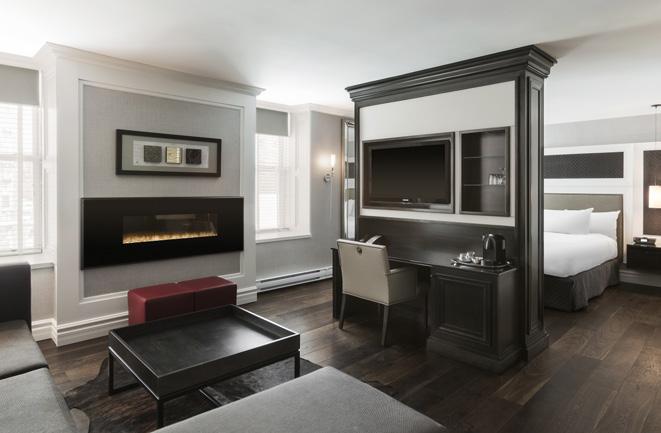
QUÉBEC
STRØM SPA NORDIQUE
Le Strøm du Vieux-Québec élu Canada’s Best Day Spa aux World Spa Awards 2024
Le renommé Strøm spa nordique du Vieux-Québec continue de briller sur la scène internationale. Pensés autour du bien-être de l’usager, les espaces, ambiances et lieux ont été soigneusement conçus. La sobriété de l’architecture minimaliste et intemporelle fait écho aux expériences vécues par les sens, pour un pur moment de détente. Elle met en lumière un véritable havre de paix, propice au ressourcement et à la pleine présence.
L’endroit se distingue par trois atouts remarquables :
• L’emplacement, où l’immensité, la puissance et la tranquillité du fleuve Saint-Laurent créent une atmosphère de déconnexion totale.
• L’architecture, signée LemayMichaud, dont les perspectives soignées et la généreuse fenestration s’harmonisent à la richesse du site et reflètent le ciel.
• Les installations, parmi lesquelles une piscine infinie, un bain vapeur en marbre, le bain flottant Laga et une ambiance feutrée, culminant dans le bain intérieur-extérieur un véritable voyage entre ombre et lumière.
Découvrir le Strøm du Vieux-Québec, c’est vivre une expérience de détente inégalée.
stromspa.com
CHEZ TRUCHON BOUTIQUE CHARLEVOIX
L’ÎLE MYSTÉRIEUSE
Trois adresses liées par le cœur !
Le chef Truchon vous invite à une immersion sensorielle au cœur de Charlevoix, à La Malbaie. Commencez votre expérience à L’Île Mystérieuse, où ses cocktails signatures et trésors locaux se savourent en tapas ou repas légers, en terrasse ou dans un décor inspiré de Jules Verne.
Poursuivez au Bistro Chez Truchon, une table gastronomique chaleureuse, inspirée par les producteurs de la région, vous attend en salle ou sur la terrasse.
Prolongez le plaisir avec un digestif sur notre île… puis une douce nuit à notre auberge dans l’une de nos chambres douillettes.
Enfin, passez à la boutique, qui met à l’honneur la créativité locale : bijoux, coussins, catalogues, chaussettes, poteries… sans oublier notre espace galerie d’art. De véritables trésors à rapporter chez soi.
Un projet conçu en collaboration avec FOR. design planning et SIMARD architecture.
aubergecheztruchon.com
ilemysterieuse.com
CITQ # 023203
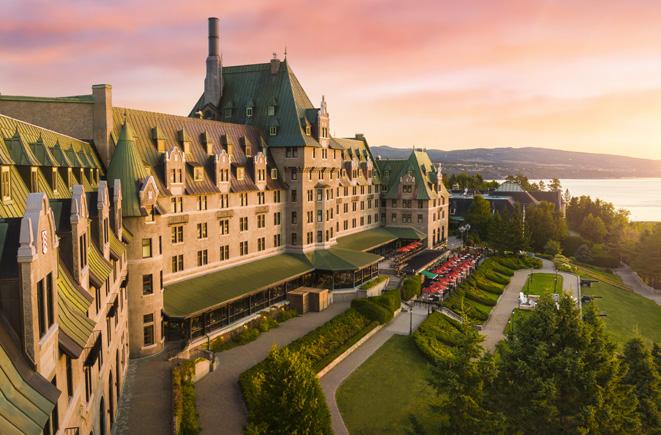
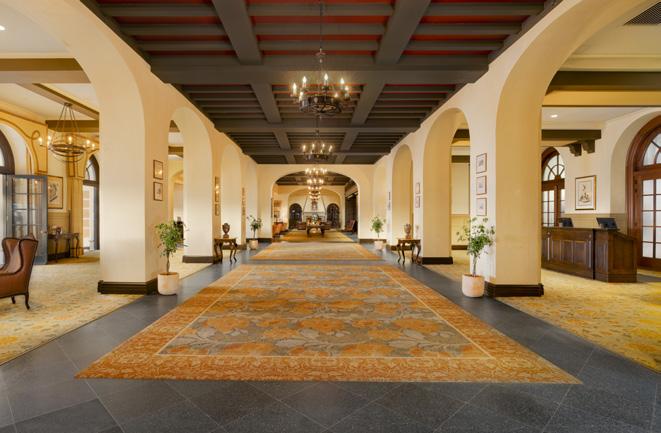
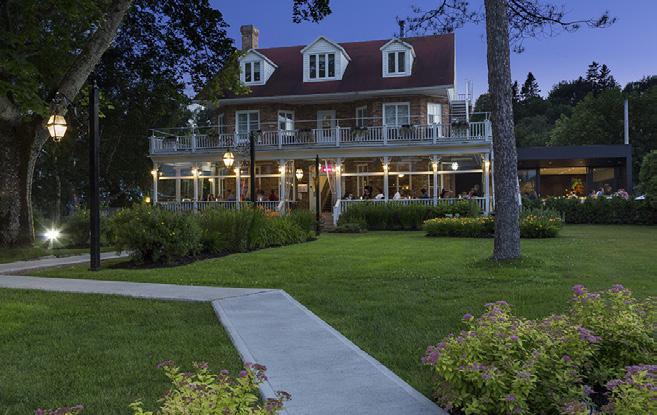
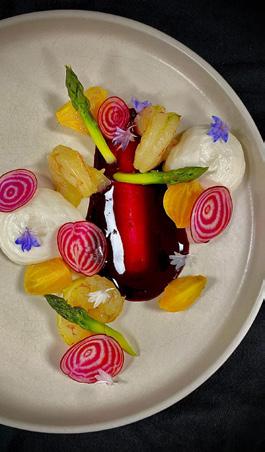
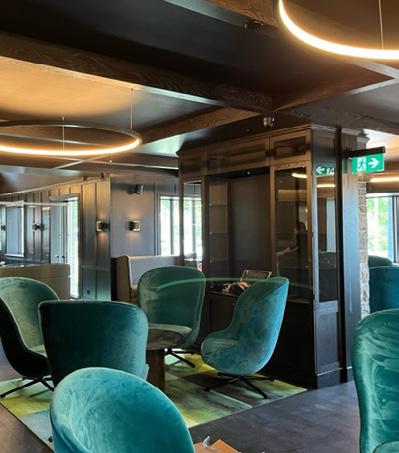
FAIRMONT LE MANOIR RICHELIEU
Face au fleuve et au fil du temps
En 1899, ouvre à Pointe-au-Pic, un grand hôtel tout en bois de 250 chambres desservant les voyageurs arrivant sur de somptueux bateaux à vapeur. Déjà prisé, le secteur est l’un des lieux de villégiature les plus renommés en Amérique du Nord. Les propriétaires baptisent l’établissement Le Manoir Richelieu, en hommage au Cardinal Richelieu. Le projet, dominant un paysage grandiose, est confié à l’architecte Edward Maxwell.
Après l’incendie de 1928 qui détruit entièrement l’hôtel, le Manoir est reconstruit en neuf mois selon les plans de John S. Archibald et rouvre le 15 juin 1929. Cette fois, fini le bois : le béton des collines avoisinantes devient le matériau de choix. Inspirée des châteaux de Normandie, la nouvelle construction comprend une piscine d’eau salée et un casino pour spectacles et soirées dansantes.
En 1999, le Manoir Richelieu entre dans une nouvelle ère sous la bannière Fairmont, avec plus de 140 M $ investis en rénovations et l’agrandissement du casino. Depuis, plusieurs projets ont vu le jour, dont un nouveau club de golf, des restaurants revampés et des terrasses extérieures offrant toujours des vues imprenables sur le Saint-Laurent.
fairmont-manoir-richelieu.com
CITQ # 062436
CHARLEVOIX
CHARLEVOIX
CHARLEVOIX
TERACEA CHARLEVOIX
Le luxe d’un chalet avec tout le confort d’un grand hôtel TERACEA, un domaine perché dans les hauteurs de Cap-à-l’Aigle, offre une expérience de ressourcement unique en pleine nature. Pour vos prochaines vacances ou séjours corporatifs dans Charlevoix, découvrez une collection exclusive de 21 chalets d’architectes et de cinq pavillons, chacun bénéficiant d’une vue imprenable, d’attentions personnalisées et d’un confort exceptionnel, signature de l’accueil TERACEA.
À quelques pas du calme de votre chalet, plongez dans l’ambiance chaleureuse du Hameau, conçu par l’architecte autodidacte Florent Moser et Alain Carle Architectes. Piscine suspendue entre fleuve et ciel, salons en alcôve pour plus d’intimité, court de tennis, tour d’observation et pavillon de rassemblement… tout est pensé pour enrichir votre séjour.
teracea.com
CITQ # 311231
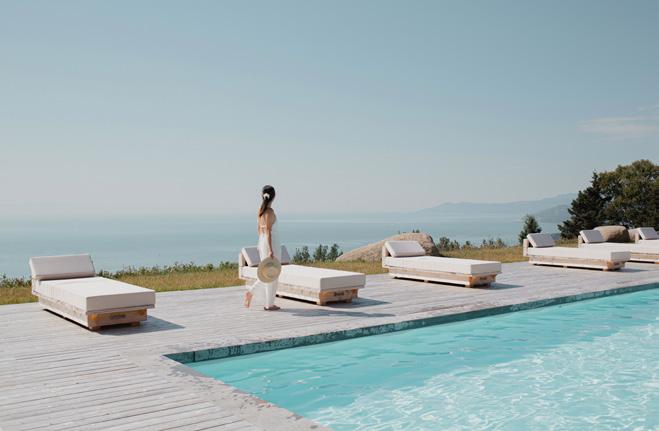
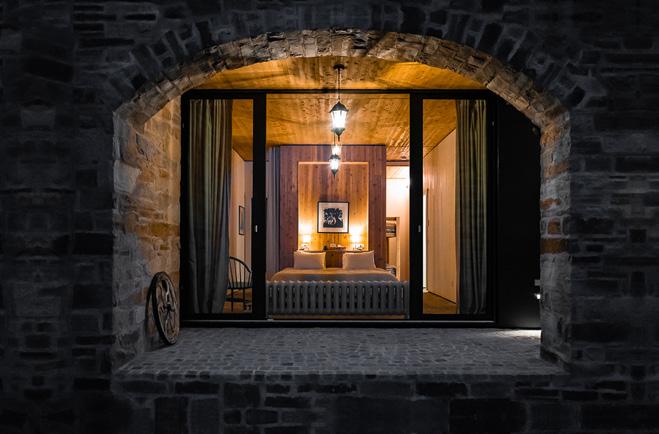
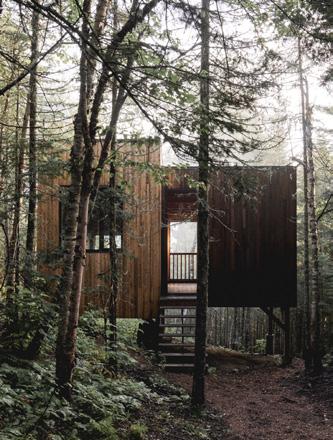
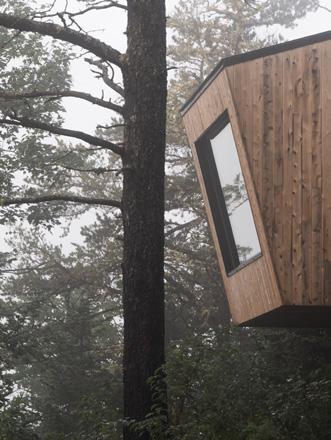
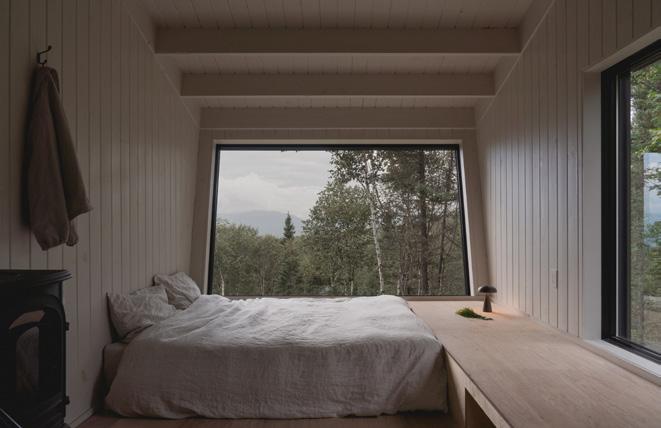
TERRITOIRE CHARLEVOIX
À flanc de montagne, plein cadre sur la nature
Territoire Charlevoix est un lieu reculé, situé entre La Malbaie et BaieSaint-Paul, niché dans les hauteurs boisées de la région. Sur ce vaste site en montagne, une série de refuges s’intègre discrètement au paysage, offrant des vues spectaculaires sur les vallées, les forêts et les horizons infinis de Charlevoix.
L’architecture, signée Atelier L’Abri, mise sur la simplicité des formes, la richesse des matériaux bruts et une relation directe avec la nature. Chaque refuge propose une vue panoramique sur les environs, une fenestration généreuse et un aménagement intérieur épuré mais confortable. Ici, tout est conçu pour faire place au calme, à la lumière et à une expérience plus consciente du territoire.
On y séjourne en autonomie complète, dans un vaste territoire propice aux longues marches, aux haltes gourmandes à la Buvette Oui Oui, et aux fins de journée passées face à l’horizon.
Territoire Charlevoix fait désormais partie de l’offre d’hébergement en nature de BESIDE.
beside.earth/territoire-charlevoix
CITQ # 627728
CHARLEVOIX
© Raphaël Thibodeau
© Raphaël Thibodeau
© Raphaël
Lors de la 17e édition, plusieurs projets québécois se sont démarqués dans le secteur touristique, témoignant du talent et de l’innovation de nos créateurs locaux. De lieux d’hébergement à des restaurants, en passant par des activités culturelles et de loisirs, ces réalisations redéfinissent les standards de l’hospitalité et du design touristique, tout en faisant rayonner le Québec sur la scène internationale.
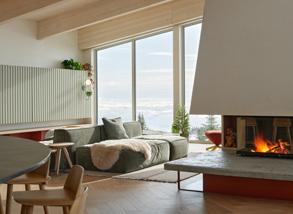
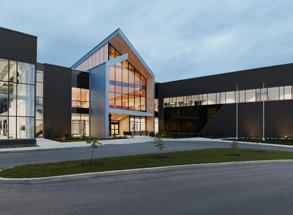
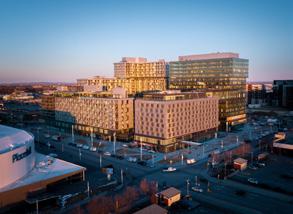
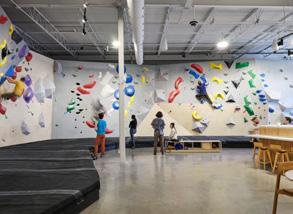
CHARLEVOIX
Bertha - Hôtel particulier par Perron
Petite-Rivière-Saint-François Travel exchange
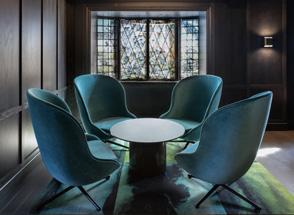
CHARLEVOIX
Territoire Charlevoix par Atelier L'Abri La Malbaie beside.earth/territoire-charlevoix
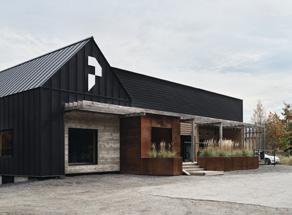
LAURENTIDES
Centre sportif de la MRC des Pays-d’en-Haut par RÉGIS Sainte-Adèle centresportifpaysdenhaut.com
LAVAL
Espace Montmorency par Groupe Montoni Laval espacemontmorency.com
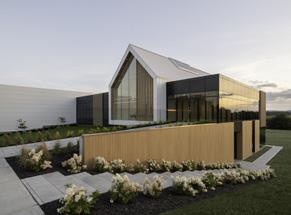
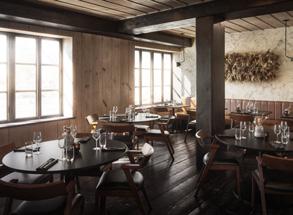
MONTRÉAL
Allez Up De Gaspé par Smith Vigeant Architectes Montréal allezup.com
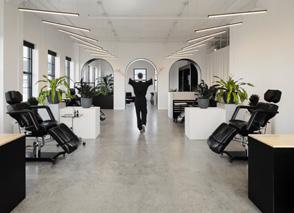
MONTRÉAL
Château d'ivoire par ArchiMontréal chateaudivoire.com
CHARLEVOIX
L’Île Mystérieuse par FOR. design planning La Malbaie ilemysterieuse.com
ESTRIE Pittstop Vélo-Café par MUUK Architecture Bromont pittstop.com
LAURENTIDES
La Maison Lavande par Syscomax Saint-Eustache maisonlavande.ca
MONTÉRÉGIE
Nord Laboratoire culinaire par Strøm spa nordique Chambly restaurantnord.com
MONTRÉAL
Blackswan Studio par Entre quatre murs Montréal
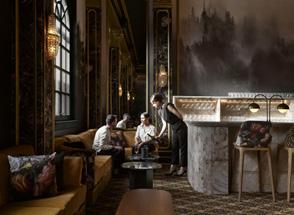
MONTRÉAL
Club Saint Denis par Humà Design + Architecture Montréal clubstdenis.com
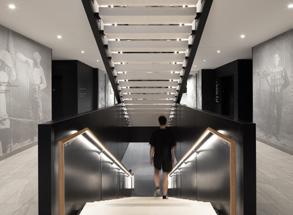
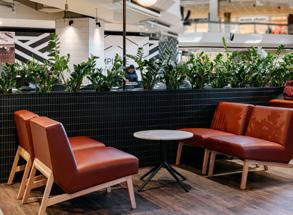
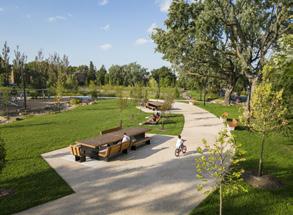
MONTRÉAL
Club Sportif MAA par LemayMichaud Montréal clubsportifmaa.com
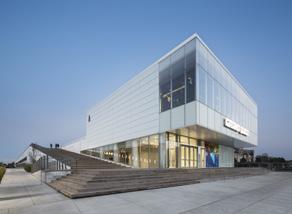
MONTRÉAL
Le rendez-vous gourmand du complexe Desjardins par Régis Montréal
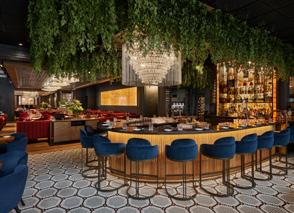
MONTRÉAL
Parc Rosemont par Projet Paysage Montréal
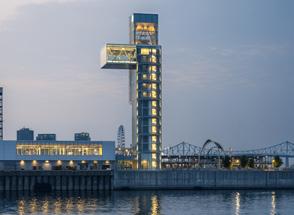
MONTRÉAL
WELMÄ Studio, Montreal par Susan Homa Welmä Lifestyle Montréal welmalifestyle.ca
QUÉBEC
Cosmos Lebourgneuf – Terrasse par Perron Québec lecosmos.com
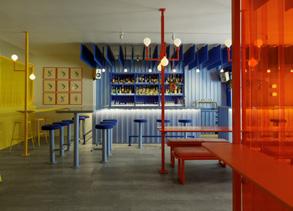
QUÉBEC
Parc Chauveau par BC2 et Ville de Québec Québec
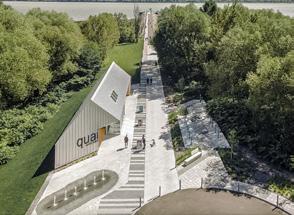
QUÉBEC
SITE ARCHEOLOGIQUE
CARTIER ROBERVAL par CIRCUM.ARCHITECTURE
Québec capitale.gouv.qc.ca/lieux/ site-archeologique-cartier-roberval
MONTRÉAL
Grand Quai du Port de Montréal par Nippaysage & Provencher_Roy Montréal
port-montreal.com/fr/grand-quai
MONTRÉAL
Moishes par Patty Xenos Design Montréal moishes.ca
MONTRÉAL
Tour du Port de Montréal par Provencher_Roy Montréal
port-montreal.com/fr/grand-quai/tour
OUTAOUAIS
Résidence Chalet de la baie par M ton intérieur - Résidence Chalet de la baie Lac Simon chaletsauquebec.com
QUÉBEC
Julio par Lanterne architectes Québec juliotaqueria.ca
QUÉBEC
Quai de Sainte-Anne-de-Beaupré par Groupe A / Annexe U Québec
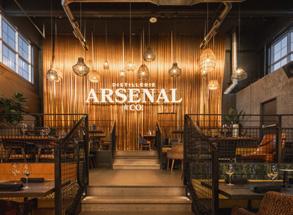
QUÉBEC
Distillerie Arsenal & Co. par Patriarche Québec arsenaldistillerie.com
MOUSSES PRÉSERVÉES
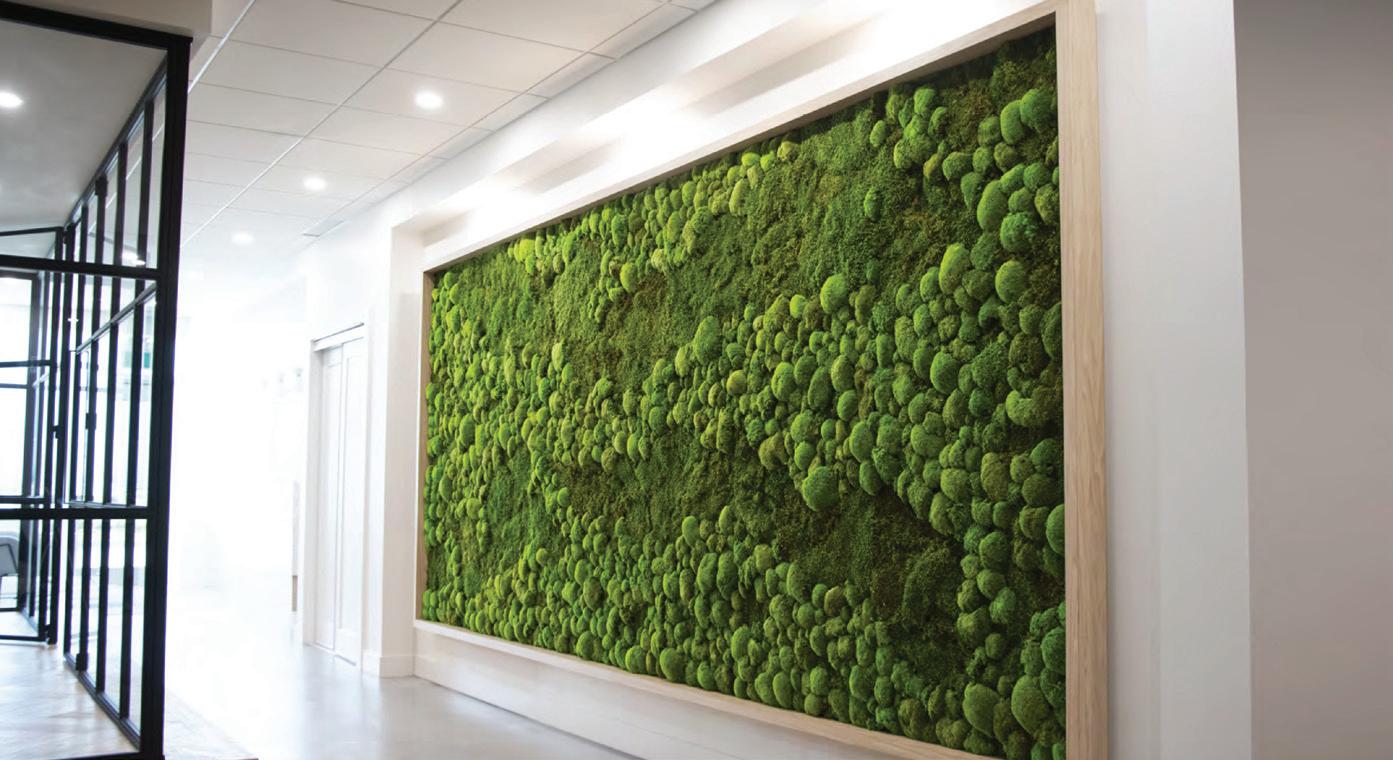
DESIGN CORPORATIF AMÉNAGEMENT INTÉRIEUR
DÉCORS DES FÊTES
GROSSISTE DE PLANTES TROPICALES - MURS DE MOUSSES PRÉSERVÉES - AMÉNAGEMENT PAYSAGER INTÉRIEUR - MURS VÉGÉTAUX -
SALLE DE MONTRE - PLANTES NATURELLES ET ARTIFICIELLESJARDINIÈRES ET ACCESSOIRES - DÉCORS DES FÊTES - CONSULTATION - DESIGN - INSTALLATION - LOCATION SERVICE D’ENTRETIEN
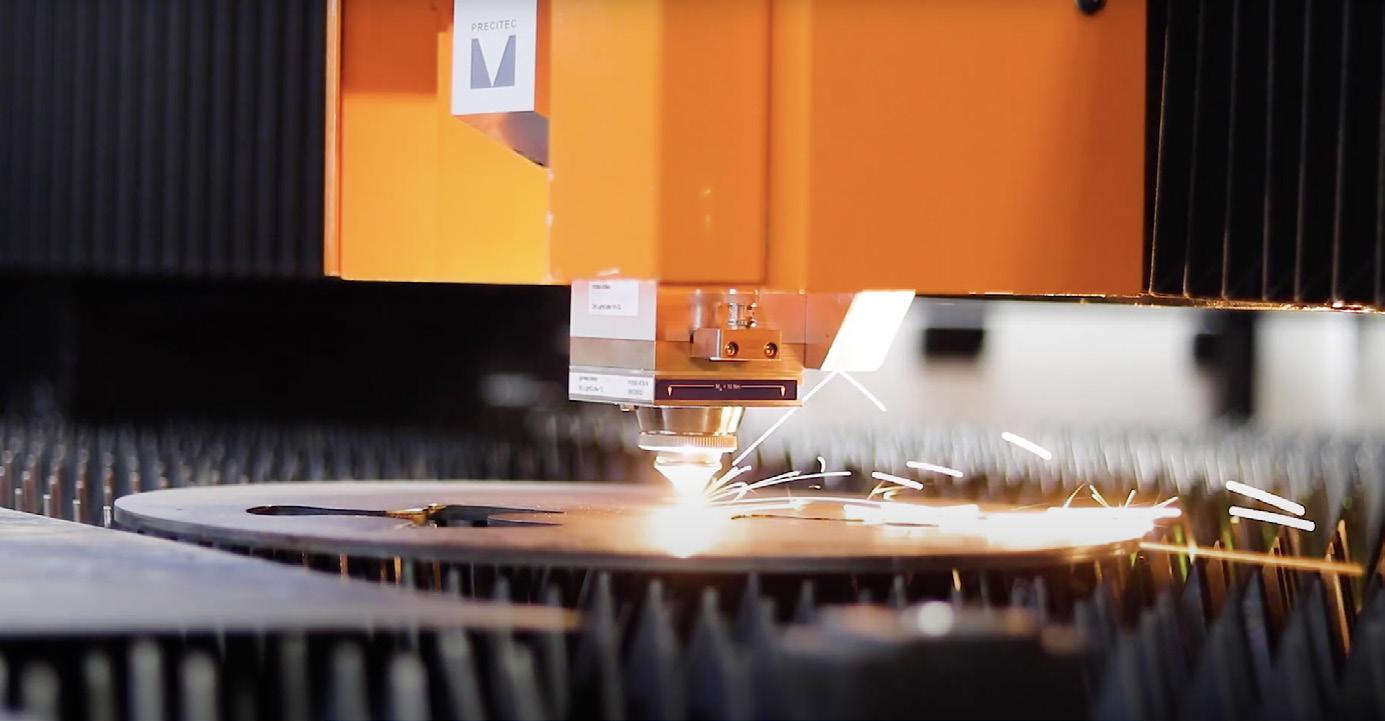

EXCALIBUR
29 années à promouvoir l’excellence en design, en architecture et en environnement bâti !
Celebrating 29 years of editorial content showcasing talents, trends and novelties in design, architecture and built environment.
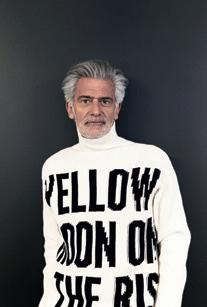

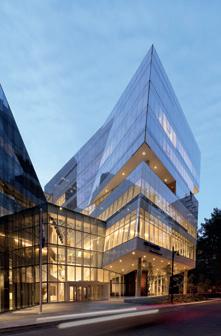
3 numéros exclusifs / an Abonnez-vous et économisez plus de 25 % Passez la commande en ligne ! int.design
3 exclusive issues / year Subscribe and save more than 25 % Order online! int.design Magazine INT.DESIGN 1080 rue
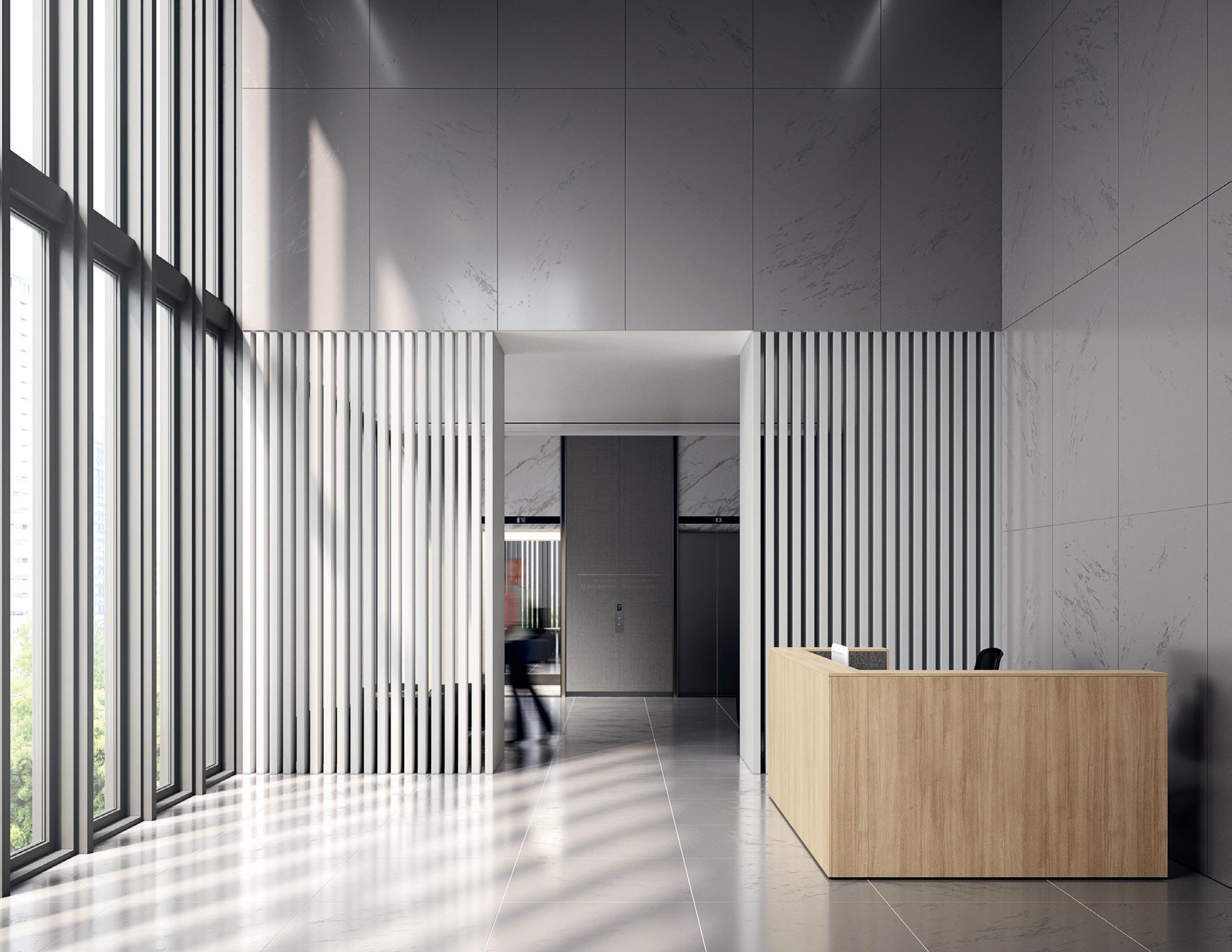
RZ4
Élaborée ou en toute simplicité, RZ4 vous propose une réception à votre image.

Salles de montre
Québec / Montréal / Toronto / Calgary
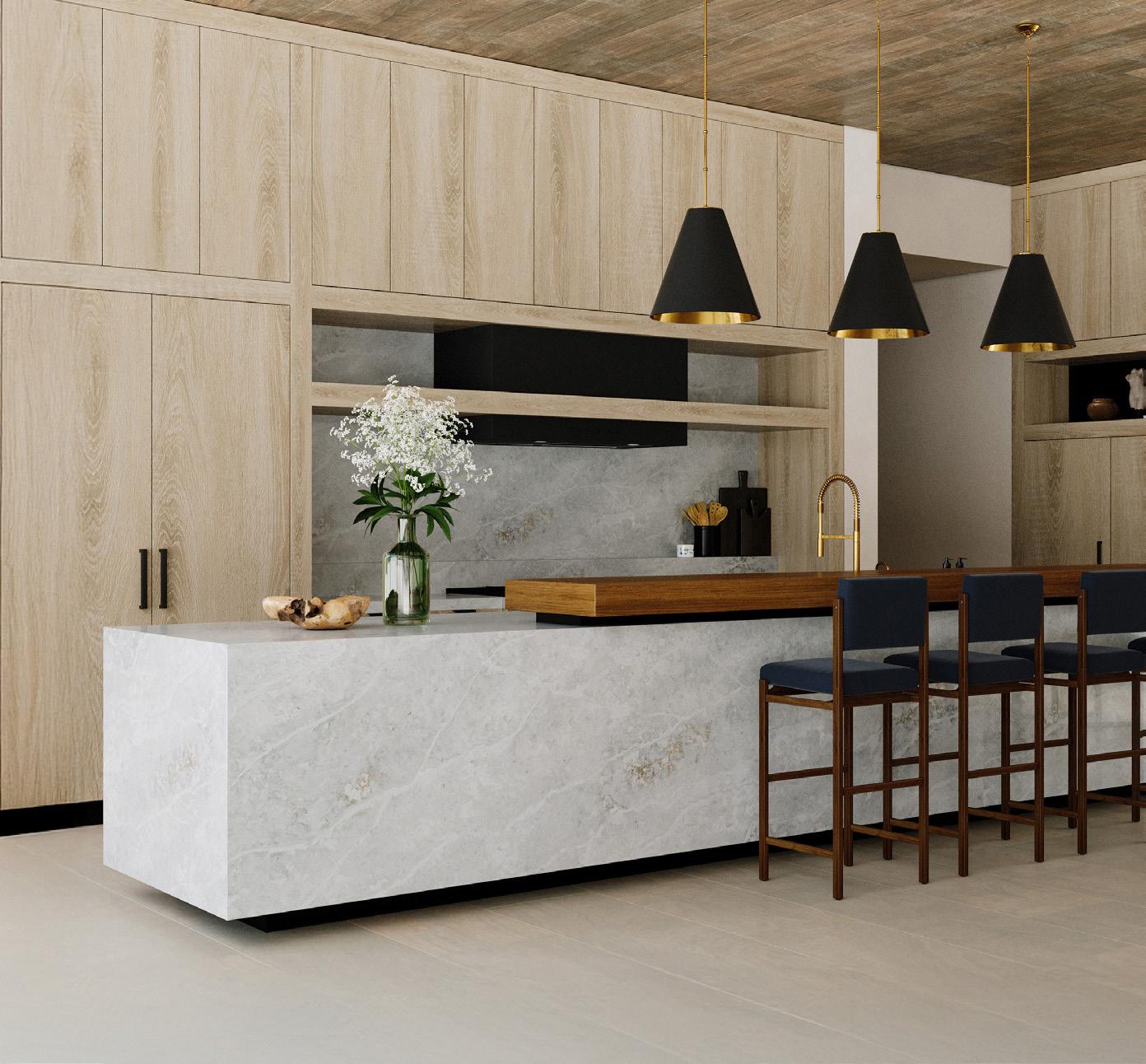
MONTRÉAL
1909 Onésime Gagnon St., Lachine, QC H8T 3M5 Bureau : 514 633 8886 | Télécopieur : 514 633 8828 OTTAWA
2191 Thurston Drive, Unité 3F, Ottawa, ON K1G 6C9 Bureau : 613 739 8888