

Perpetuating the Vision: A.G. Coombs – Bringing Buildings to Life continues the story of A Singular Vision, which chronicled how a small plumbing business evolved into Australia’s leading building services specialist.
This updated 80th anniversary edition also includes three new chapters covering the years from 2015 to 2025 – a momentous decade in which A.G. Coombs expanded its national footprint, reinforced its reputation as a technical innovator, designed and installed the building services in some of Australia’s most prominent facilities, and navigated the COVID-19 pandemic.
After eighty years, A.G. Coombs remains privately owned and proudly 100 percent Australian owned and operated. The company remained active as an essential service during the COVID-19 lockdowns – a chapter explored in detail through the compelling first-hand recollections of employees. Having emerged intact from the pandemic, A.G. Coombs continued delivering sustainable, highperforming solutions for its clients, while meeting its own environmental, social and corporate obligations.
The company’s achievements are all the more remarkable given its humble beginnings in 1945 at the end of the Second World War, when Allan George Coombs – a plumber by trade – decided to capitalise on the work being generated by post-war construction. Having started out with nothing more than a pushbike and a kit of tools, Allan eventually purchased some land in Moorabbin, and by 1953 had built a factory and office in what were then open paddocks.
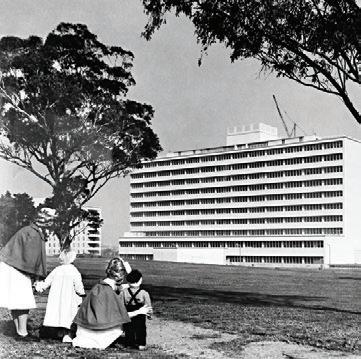
The company’s earliest achievements included the plumbing installations at the 1956 Olympic Village in Melbourne, followed by the installation of air conditioning and mechanical services at Melbourne’s Royal Children’s Hospital – then Australia’s largest mechanical services contract when completed in 1963.
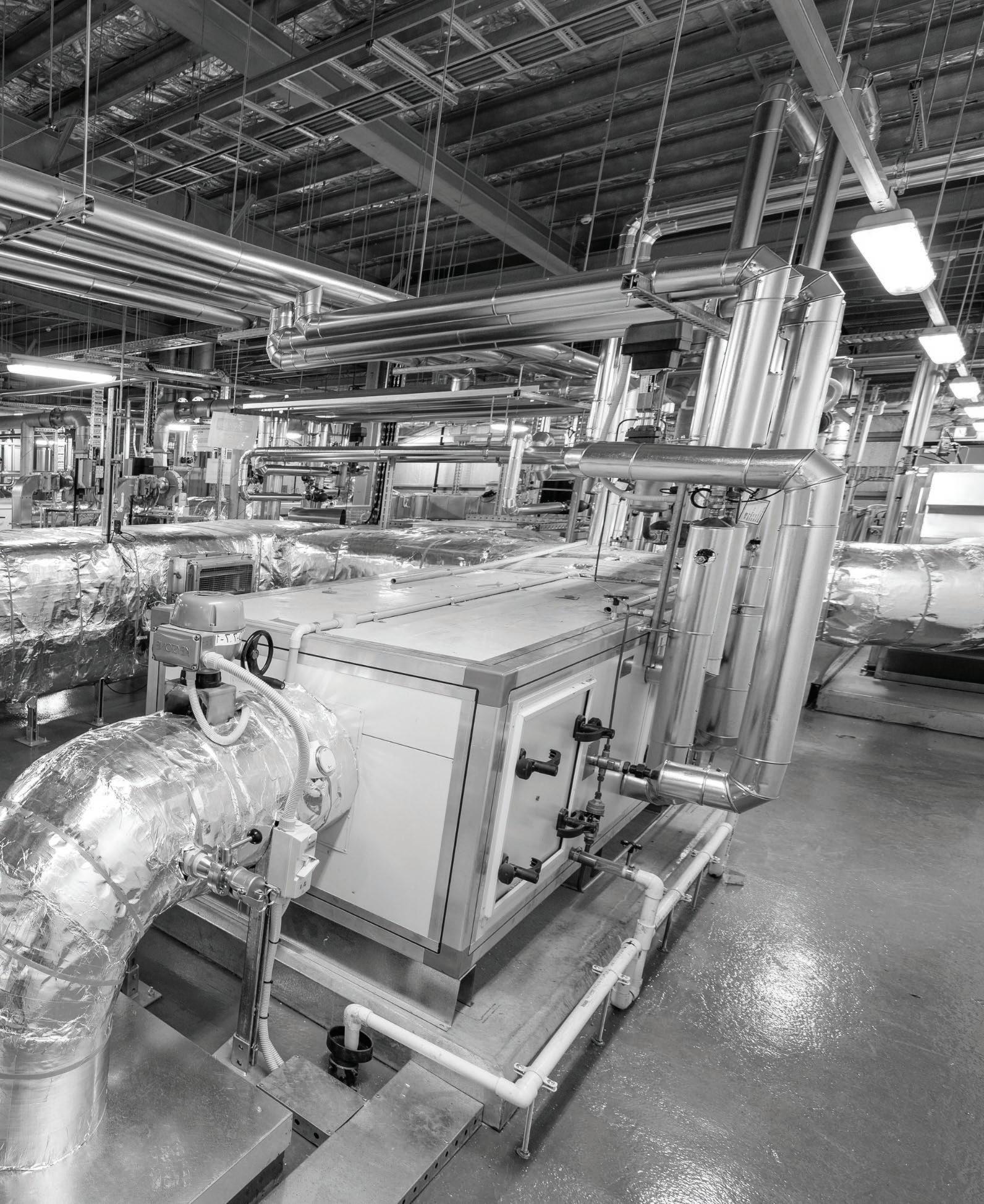
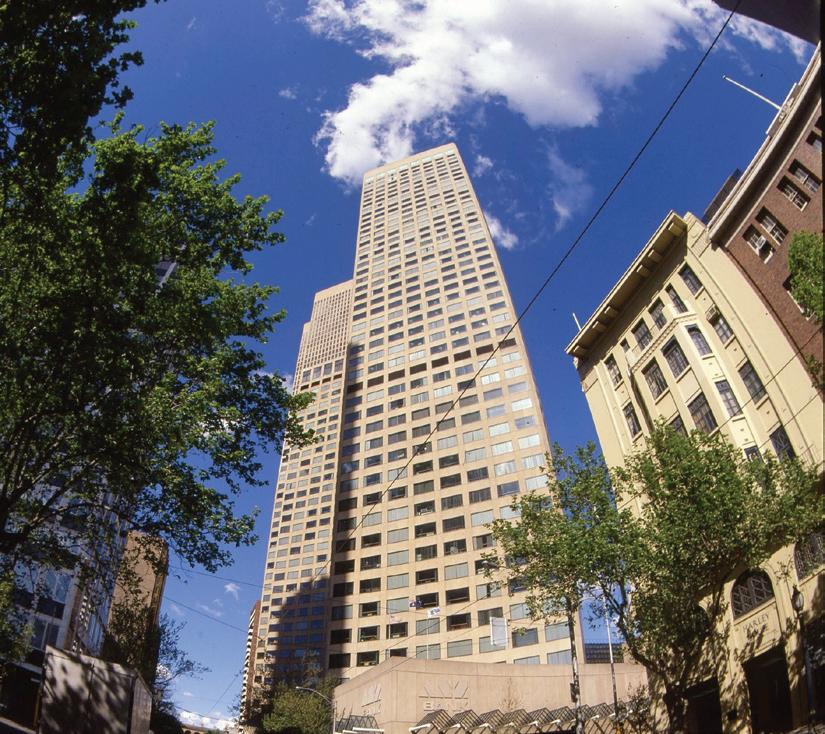
The arrival of air conditioning in Australia would ultimately determine A.G. Coombs’ future, with the company repositioning itself during the 1960s to focus on commercial properties – a decision that saw it go on to air condition significant buildings along Melbourne’s Collins Street, notably Collins Place.
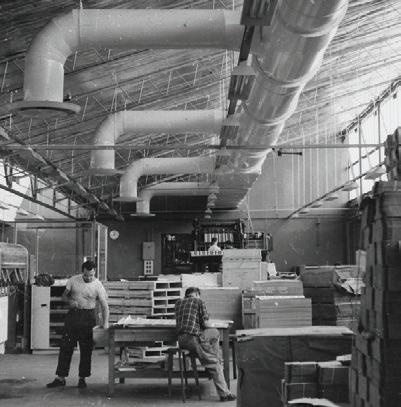
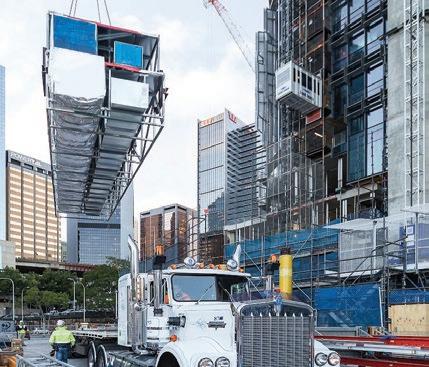
From the outset, Allan and his team had fabricated ductwork and sheet metal products on site. The company would much later establish an integrated prefabrication facility, pioneering multi-storey services risers for some of Australia’s tallest buildings.
This history covers the tough decisions taken by the company to streamline its operations during severe economic downturns. It also explores how A.G. Coombs transitioned into a whole-of-life technical specialist and built an enviable corporate culture around eight core values that would become a touchstone for employees during the COVID-19 pandemic.
Featured throughout this book are the numerous buildings that A.G. Coombs has brought to life – among them the Princess Theatre in Melbourne, Canberra’s John Gorton Building, the ANZ Centre (Melbourne), Barangaroo South (Sydney), Queen’s Wharf Brisbane, Rod Laver Arena, the Victorian Heart Hospital, Melbourne’s Town Hall Station, Metro Martin Place (Sydney) and many more.
Above all, this is a book about people – the people who started the business, those who helped it grow and, ultimately, those who will take it forward into the next decade and beyond.
Marcella Hunter is a Melbourne-based author and historian. After a career in communications in the public and private sectors, Marcella branched out as a freelance writer and editor. She is the author of several books, among them Australia Post – Delivering More Than Ever; Creating a Better Future – the AMP Story; Shell Geelong Refinery – 50 years in Geelong; Kenworth Making History; Preston Motors 100; The Normans of Camberwell; and The Brown and Hurley Story
MARCELLA HUNTER
Perpetuating the Vision: A.G. Coombs – Bringing Buildings to Life
First published as A Singular Vision in 2015
Updated edition 2026
Updated online edition 2026
A.G. Coombs Group 26 Cochranes Road Moorabbin VIC 3189 Australia www.agcoombs.com.au
Marcella Hunter 2015, updated edition Marcella Hunter 2026. The moral right of the author has been asserted.
All rights reserved. No part of this book may be reproduced, stored in a retrieval system, communicated or transmitted in any form or by any means, electronic, mechanical, photocopying, recording or otherwise, without prior written permission of the publisher. The publisher does not authorise the use or reproduction of any part of this book in any manner for the purpose of training artificial intelligence (AI) technologies or systems.
While all reasonable attempts have been made to ensure factual accuracy and to trace copyright holders, the publisher accepts no responsibility for any errors or omissions contained in this book.
All trademarks and registered trademarks are the property of their respective owners.
© 2026 A.G. Coombs Group and all related entities. All rights reserved.
A hard copy version of Perpetuating the Vision: A.G. CoombsBringing Buildings to Life is available in the National Library of Australia.
ISBN: 978-0-6489610-3-1
Designed in Australia by Theme Park Advertising

for more information about

Russell Telford Managing Director A.G. Coombs Group
It is a pleasure to introduce the updated edition of our history – Perpetuating the Vision: A.G. Coombs – Bringing Buildings to Life
When our seventy-year history was published in 2015, we said back then that compiling it allowed us to appreciate and better understand our journey. This new edition further highlights how our skills and initiatives – supported by a can-do, adaptive and innovative culture – have helped cement our position today as Australia’s leading building services specialist.
Although ten years might seem a short space of time to warrant an update, much has been accomplished in the last decade, to the extent that three new chapters were necessary to record the company’s achievements. These cover, among other things, our journey as a passionate privately owned company, our enhanced focus on social engagement and our changing employee demographic, reinforcing A.G. Coombs’ status as a destination employer.
In the formative years of the business, the few women working at A.G. Coombs were mostly employed in secretarial and administrative roles. Today, women serve on our Board and hold executive management and key leadership positions, as well as supervisory, technical and trade roles across all areas of our organisation. They are an integral part of our national workforce (presently more than 1,150 employees), encompassing people of all backgrounds and abilities.
One of our proudest achievements in recent years has been the work we have undertaken to highlight the importance of strength and high performance through diversity, inclusion and belonging – not only in our company, but also throughout the wider construction and property services industries, including the associated supply chains that form part of the ecosystem that helps make up the A.G. Coombs community.
We have never taken a wait-and-see approach at A.G. Coombs, but rather we have sought to drive and encourage change, leading when we are in a position to lead, and always supporting improvement and innovation
at all levels. It started with our founder Allan Coombs and his early employees, and continues to this day with our leadership role in Building Information Modelling (BIM), including our recent Informed Design initiative.
Our integrated prefabrication capabilities have pioneered the construction of three-storey services risers, and is well positioned to be at the forefront of how we design, cost and install the mechanical, HVAC and building services in major facilities around Australia, including hyperscale Data Centres.
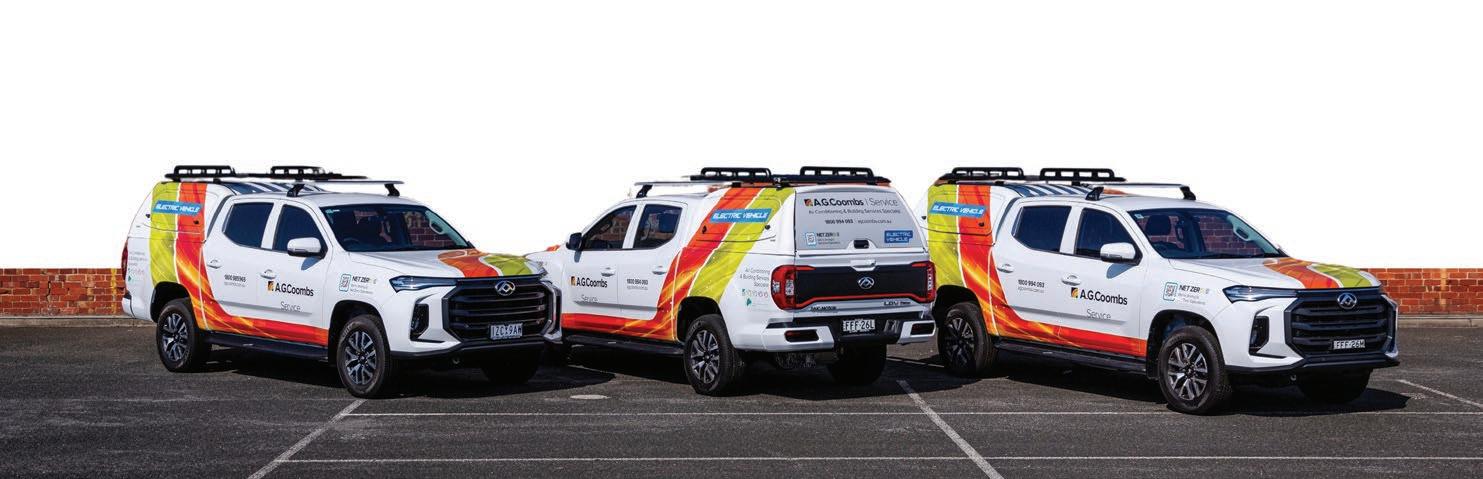
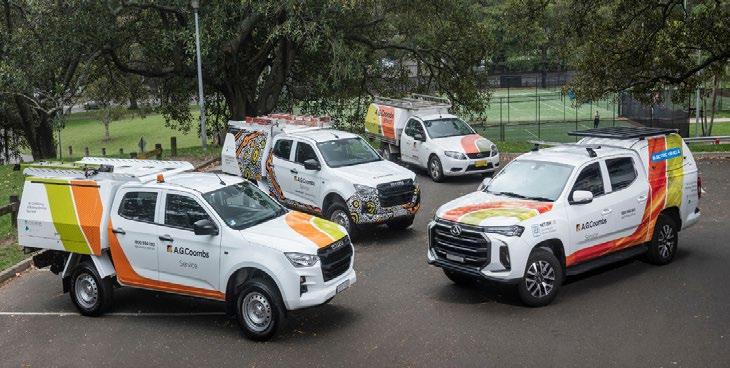
In other areas, A.G. Coombs Advisory has collaborated with clients to electrify existing properties to meet net-zero targets. As a company, the A.G. Coombs Group also aspires to these targets, and as a key response, we have participated in a pilot program aimed at transitioning our fleet of service vehicles into one that has low or no carbon emissions.
It is sometimes hard to visualise A.G. Coombs in the days when it was just a small sheet metal factory in open paddocks, with a basic office where draftspeople worked on drawing boards. It was labour intensive and cumbersome compared to today’s streamlined, technology-driven operation, yet it was during those years that our values and culture developed, and in time was enshrined in our eight core values (see page 306).
The importance of these values was reinforced during the COVID-19 pandemic – indeed, without them, we may not have come out the other side of the pandemic as strongly as we did. The decision of our historian and author, Marcella Hunter, to devote an entire chapter to the COVID years will offer readers an insight into the difficulties and hurdles we faced, while shedding light on the effects of lockdowns on our employees, their families and the community in general. The chapter also reveals how we navigated the crisis by implementing measures to safeguard our employees and ensure the company’s capacity to continue operating as an essential service.
I am extremely proud of the way our people pulled together during those challenging years and, particularly, of the role we played in ensuring that the building services in hospitals,
data centres and other critical facilities were maintained during the tough months of lockdown. I am also proud of how we all returned to the office after COVID, ready to move forward with our collaborative whole-of-life approach to building services.
A.G. Coombs’ evolution into a whole-of-life business has been one of the headline stories of the last twenty years. It was a decisive step change for the company back in 2000 when we redefined our business as a technical services specialist with trade-based capabilities. This saw the creation of two new businesses – A.G. Coombs Advisory and Integrated Technical Management – both of which have celebrated major milestones.
Our focus on attracting and developing engineering graduates and apprentices to our organisation and providing them with training and experience has also strengthened over the years. It was gratifying to be able to maintain our longstanding benchmark of a 94 percent apprenticeship completion rate, which is almost double the national average.
In this update, you will also see how A.G. Coombs continues to play a significant role in the nation’s reconciliation journey. Again, we have taken the lead by providing training and employment opportunities for Indigenous Australians while launching initiatives that enable cultural celebration and facilitate inclusion in our workforce. We are also redefining how we engage with First Nations businesses through Murrungar – a ‘profit-for-purpose’ procurement model that seeks to build, grow and nurture a world-class Indigenousled supply chain ecosystem that delivers sustainable economic, cultural and social value impact.
Having reached our eighty-year milestone, we are a mature business, but one that is not content to rest on past achievements for recognition.
The innovative spirit of the early years has never waned, and is evident in our new generation of employees. It is in their hands – our greatest assets – that the vision continues.
Whenever I am approached to write a corporate history, people will often ask, “How much do you know about the subject?” The truth is I often know very little – at least in the beginning. In this case, I had no knowledge of chilled water systems or BIM technology.
A history, however, is not a technical manual. It is about people: the people who founded the business, those who helped it grow, and those who are responsible for taking it forward. My duty as a historian is not simply to write about a company’s products or services, but to record its journey from establishment to the present day, and to reflect on the consequences of key decisions. How did the company pivot during tough times? What decisions were made to keep the business afloat? How did employees respond to the changing work environment brought about by health and safety regulations? And in this book, specifically, how did A.G. Coombs remain Australian owned and in private hands?
In reviewing eighty years of history, one can see where ideas began germinating. Allan George Coombs, the company’s founder, believed that if his sons were unable to take over from him, then employee ownership would be the best way of ensuring business continuity. Although his youngest son, Philip, did take over the reins, Allan’s desire for continuity was realised with the introduction of employee share plans in 1999. Ultimately, it would be the management buyout in 2012 that ensured the company continued to be privately owned.
The commitment to hiring apprentices also began in the early years when Allan Coombs made a point of meeting applicants and their families himself. It continues to this day with Managing Director Russell Telford taking a keen interest in the apprentices and graduates the company hires – even sitting in on their interviews. [8]
What became apparent in writing this history is that while A.G. Coombs is an innovator, it has not sought to change everything from its past. Rather it has reaffirmed the things it holds important such as its contribution to industry development and its focus on nurturing and providing career opportunities for all its employees. These things could so easily have slipped during the necessary cost-cutting measures of past economic downturns, yet they have only strengthened as each crisis passed.
A major theme that emerges is the focus on the company’s core values (see page 306). Defined during the 1990s, and reaffirmed in 2001, these deeply ingrained values are integral to the way A.G. Coombs operates both within the organisation, as well as externally with clients and stakeholders.
As I updated the history, I realised that one chapter – The COVID Years – would reveal just how important these values were. Because if there was ever a time when the culture of a company needed to be strong, then the COVID-19 pandemic of 2020–2022 was indisputably that time.
In the COVID chapter, one sees the core values providing a reassuring reference point throughout this devastating crisis. This was evident in the leadership team’s consistent communication with employees, as well as its swift response to ensuring their safety and wellbeing. It was also evident in the phone calls made by Russell Telford to those who were struggling with the stay-at-home orders. I have several favourite stories in the book – this is one of them.
Another ‘favourite’ concerns Collins Place in the weeks after the original builder went into receivership. In the mid1970s, Collins Place in Melbourne was the major contract A.G. Coombs had on its books. Realising things were looking bleak, Allan Coombs put his house on the line and borrowed against it. He also went to the bank and refused to leave until the bank manager gave him the funds to pay his
These stories tell me two things: that while the company has high expectations of its employees, it has their backs – and it cares.
One question I’m often asked before I begin writing is, “What title will you give the book?” Sometimes the title does not become apparent until all the chapters are drafted. With the A.G. Coombs history, however, it revealed itself quite early in the process, around chapter three.
By then it was clear that Allan Coombs had a ‘singular vision’ to be a key player in the major construction projects underway in Melbourne during the 1950s and 1960s. His team had become too skilled to continue with domestic plumbing jobs – indeed, they were already thinking outside the box and resolving all sorts of issues that would have stumped less experienced operators. Tied in with this was a desire to be an industry leader and a specialist provider of building services.
There was a clear sense of pioneering when Allan Coombs recognised that building his own factory and having the capacity to produce sheet metal would be crucial for the company’s success. True to this vision, A.G. Coombs has gone on to become a pioneer in prefabrication within its industry, and is now leading the way in Design for Manufacture and Assembly (DfMA). [t]
There was also a sense of pioneering when Russell Telford sat down with Bryon Price and scoped out a model for the A.G. Coombs of the future. Their discussions led to the creation of the whole-of-life building services company we see today – one capable of providing installation and advisory services across a building’s entire lifespan from construction and commissioning through to maintenance and future upgrades. [h]
When it came time to update the history, the new title, Perpetuating the Vision, made sense. Of course, when one perpetuates a vision, it does not mean that one must
perpetuate every single element of the original vision. If so, A.G. Coombs might never have expanded interstate, as Allan Coombs was not in favour of such a move, preferring instead to focus his resources in Victoria. However, one can perpetuate the essence of that vision (to be privately owned, for example, and to recognise that employees are the backbone of your company) while still being innovative and responsive to new challenges
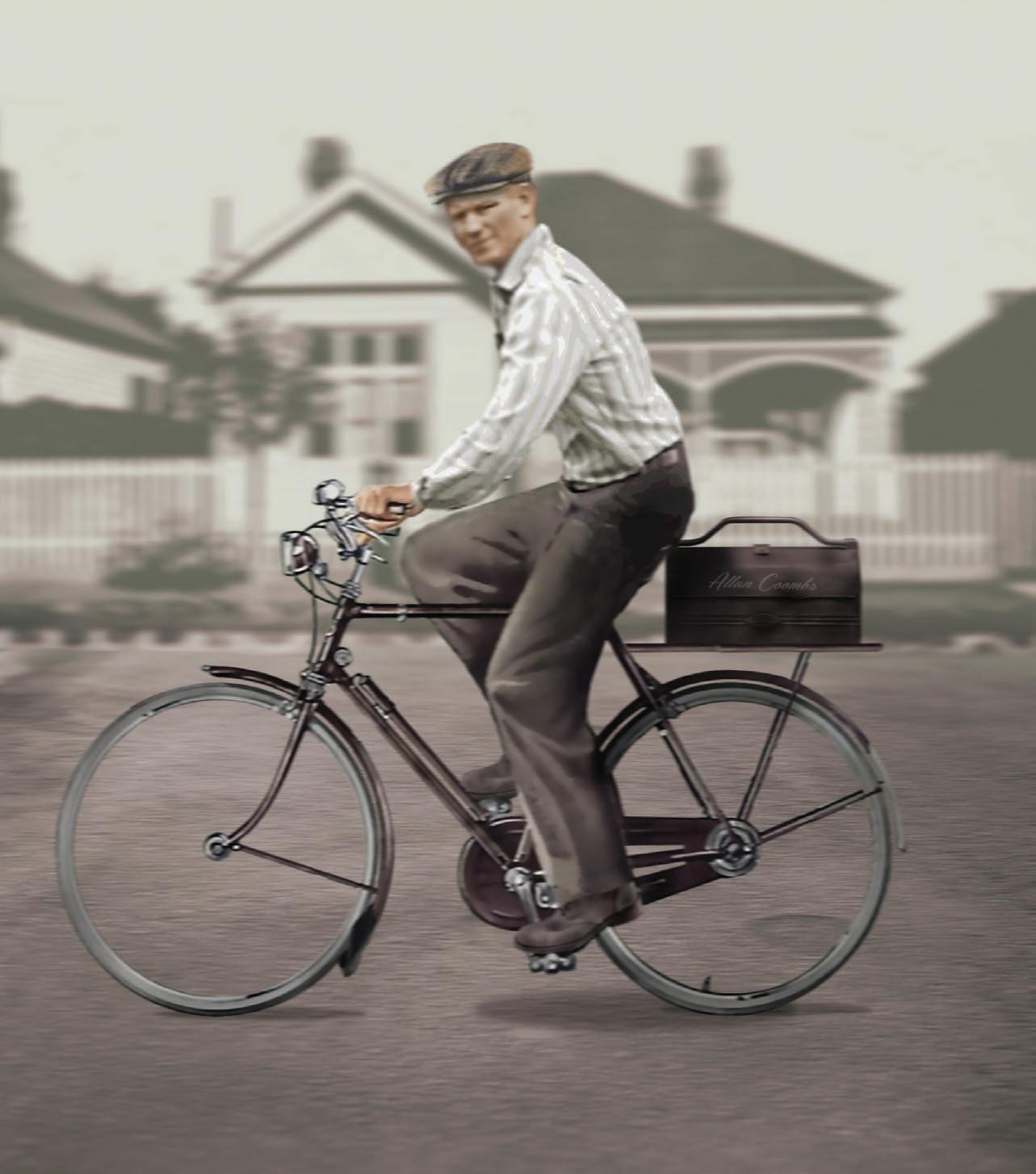
The young Allan Coombs was what we would call a “go getter”. Riding around on his bicycle, he was always searching for ways to help people fix and improve things, even before they realised they had a problem. He was fortunate to have gathered like-minded people around him –people with drive, determination, initiative and enthusiasm. Having researched this history, I have seen those same characteristics among the company’s current generation of employees.
Today, you could say there are many ‘bicycles’ at A.G. Coombs. However, the tool box of the 1940s has been electrified, the drawing board is now a computer, and the mode of transport has low or no carbon emissions.
Another big change can be seen in the images in this book. In the early chapters, the images mainly feature men – that’s how it was back then. But as the story progresses, we begin to see more diversity – not only more women throughout the business in various trade and technical roles, but also people of all backgrounds and abilities.
One thing that has not changed is the commitment to the core values. For me, this was highlighted time and time again as I commenced interviewing for this updated edition of the book. Indeed, employees often referenced the company’s core values while discussing key projects and challenges. More than anything, this was what guided me

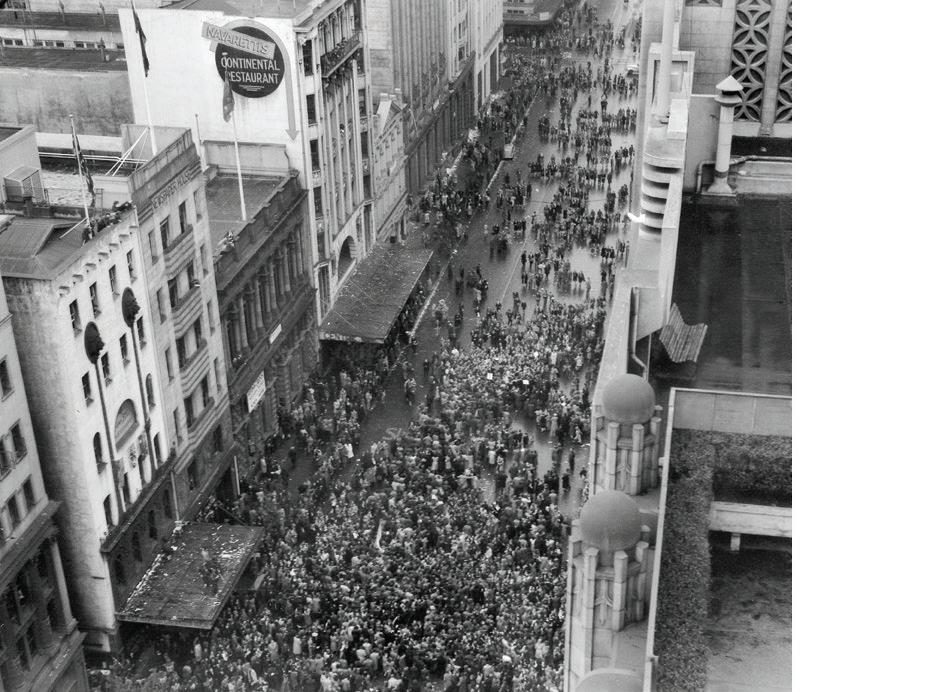
The war is over! Jubilant crowds gather in Collins Street, Melbourne on 15 August 1945 to celebrate Victory in the Pacific (VP Day). Collins Street would feature significantly in the future business dealings of


Looking back over history it is often those with a clear purpose in life who manage to attain their goals and realise their ambition. Allan George Coombs was one of those people: a resourceful and ambitious young man, who knew what he wanted and how he would go about achieving it. He was so determined to do something with his life that he quit his plumbing job at the end of the Second World War, jumped on his pushbike and cycled away from work, ready to strike out on his own.
Allan was born in Melbourne, Victoria, on 14 October 1920, the youngest child of Frederick and Alberta Coombs. He was twenty-four years old when the war ended in August 1945, and was already an experienced plumber, having spent almost eight years at Hawkins and Wilcox, a Melbourne firm specialising in plumbing and pipe fabrication.
On the day he left his plumbing job, Allan would have been focusing on what needed to be done in the short term, while also looking ahead at the bigger picture. He knew that he wanted to use his skills as a plumber, but on his own terms, running the show and managing his own projects. There was no reason why he could not have a successful business and start employing his own apprentices.
August 1945
VP Day (15 August) – the Second World War ends after Japan unconditionally surrenders to the Allies.
August 1945
Allan Coombs leaves his plumbing job to set up his own business.
October 1945
The United Nations is officially formed. Signatories hoped that the international organisation would prevent another world war.
August 1947
Allan Coombs registers the business name A.G. Coombs.
December 1947
Qantas launches regular air services to Britain.
January 1948
The 40-hour week is introduced for all Australian workers.
August 1948
Australian cricketer Sir Donald Bradman – widely acknowledged as the greatest batsman of all time – plays his last match at The Oval in London (the Fifth Test of the Ashes series).
November 1948
The Holden, ‘Australia’s own car’, is launched in Melbourne, becoming the first all-Australian designed and manufactured car.
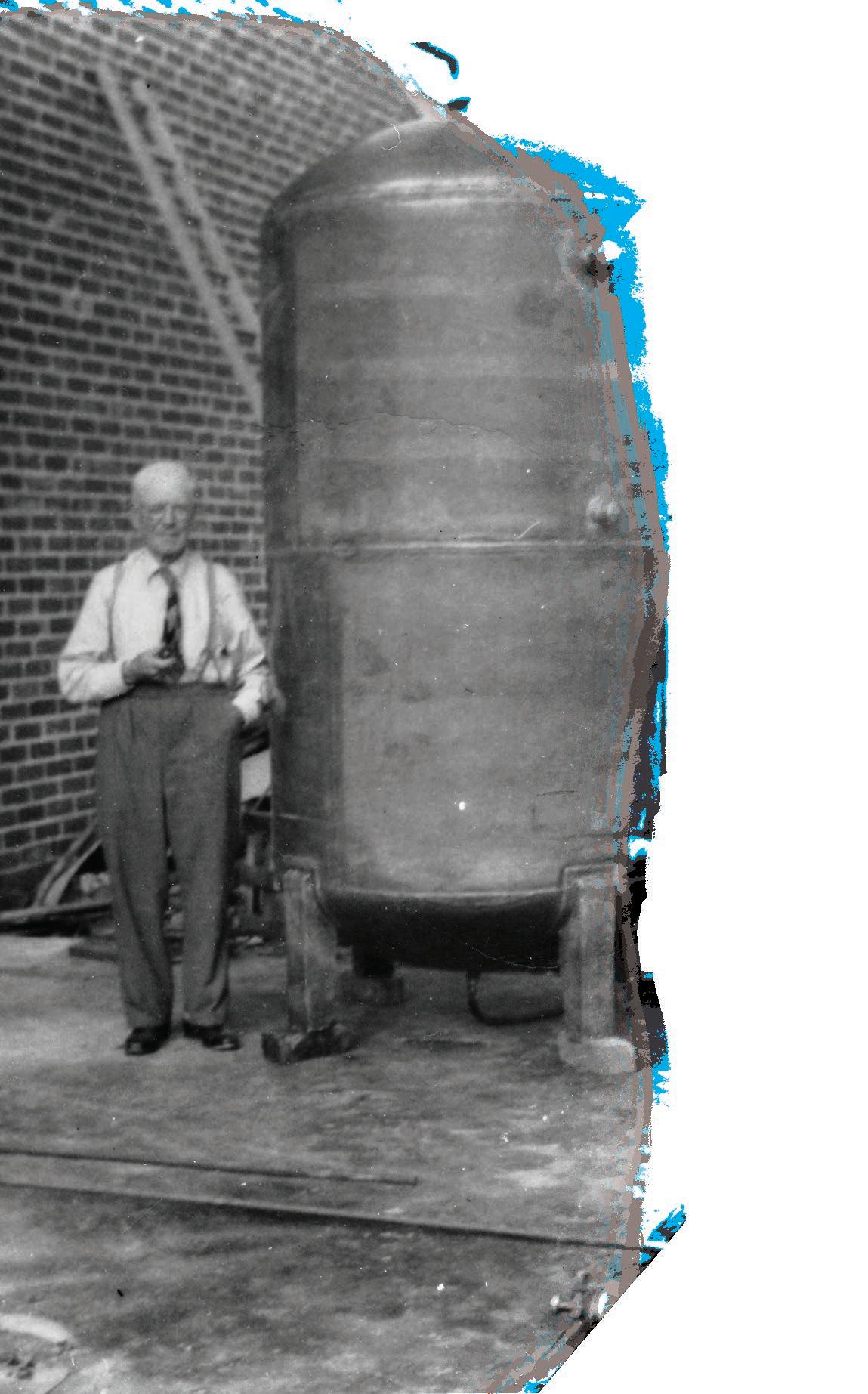
Plumbing was a trade in which other members of the Coombs family were also involved. Allan’s older brothers Les, Russell and Percy – the latter two affectionately known as Russ and Perce – also worked for Hawkins and Wilcox, while his father, Frederick (Fred) Coombs, was the firm’s chief estimator and design engineer.
The importance of plumbing in Melbourne could not be underestimated during the first half of the twentieth century. In 1945, the city’s underground sewerage system was barely fifty years old, as it was only in 1897 that the first house connections were made in the metropolitan area. This was not before time, as residents and visitors alike had previously been overwhelmed by the stench of night-carts and open drains, while outbreaks of typhoid were all too frequent due to inadequate sanitation in the city’s housing developments.
Eight years earlier, in 1889, a devastating typhoid epidemic had claimed around 400 lives, prompting a huge public outcry and a royal commission into Melbourne’s unhealthy living conditions. The commission concluded that a metropolitan-wide underground sewerage system was urgently needed and, despite a depressed economy, construction of the sewerage system moved ahead under the supervision of the Melbourne and Metropolitan Board of Works (MMBW).
Plumbers naturally reaped the benefits of the government’s decision, and there was plenty more to do as the MMBW assumed responsibility for sewering more areas. The post-war years of the 1950s would create further opportunities for those in the trade, as nation-building projects commenced and the demand for housing escalated.
Allan’s father, Frederick George Coombs, had also trained as a plumber and held senior positions with plumbing specialists Hawkins and Wilcox, where Allan would eventually do his apprenticeship.
Fred Coombs was just a boy when Melbourne’s sewerage system was being constructed in the late 1890s and early 1900s.
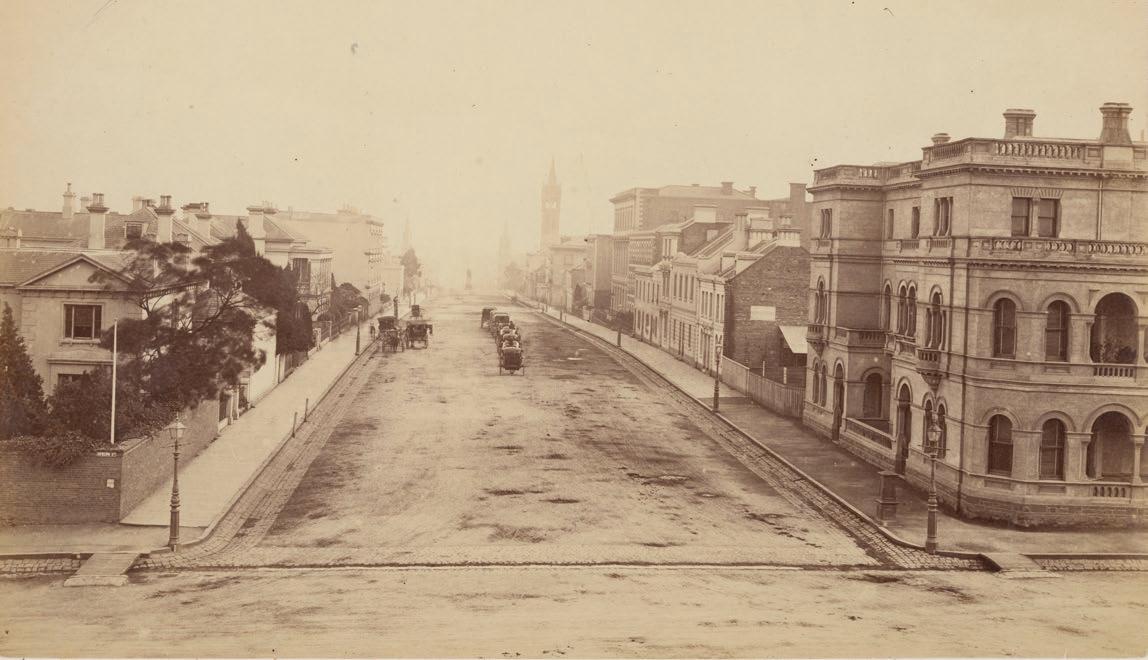
Corner of Collins and Spring Streets, Melbourne, showing open drains running along each side of the street c. 1865–1870.
Image source: State Library of Victoria
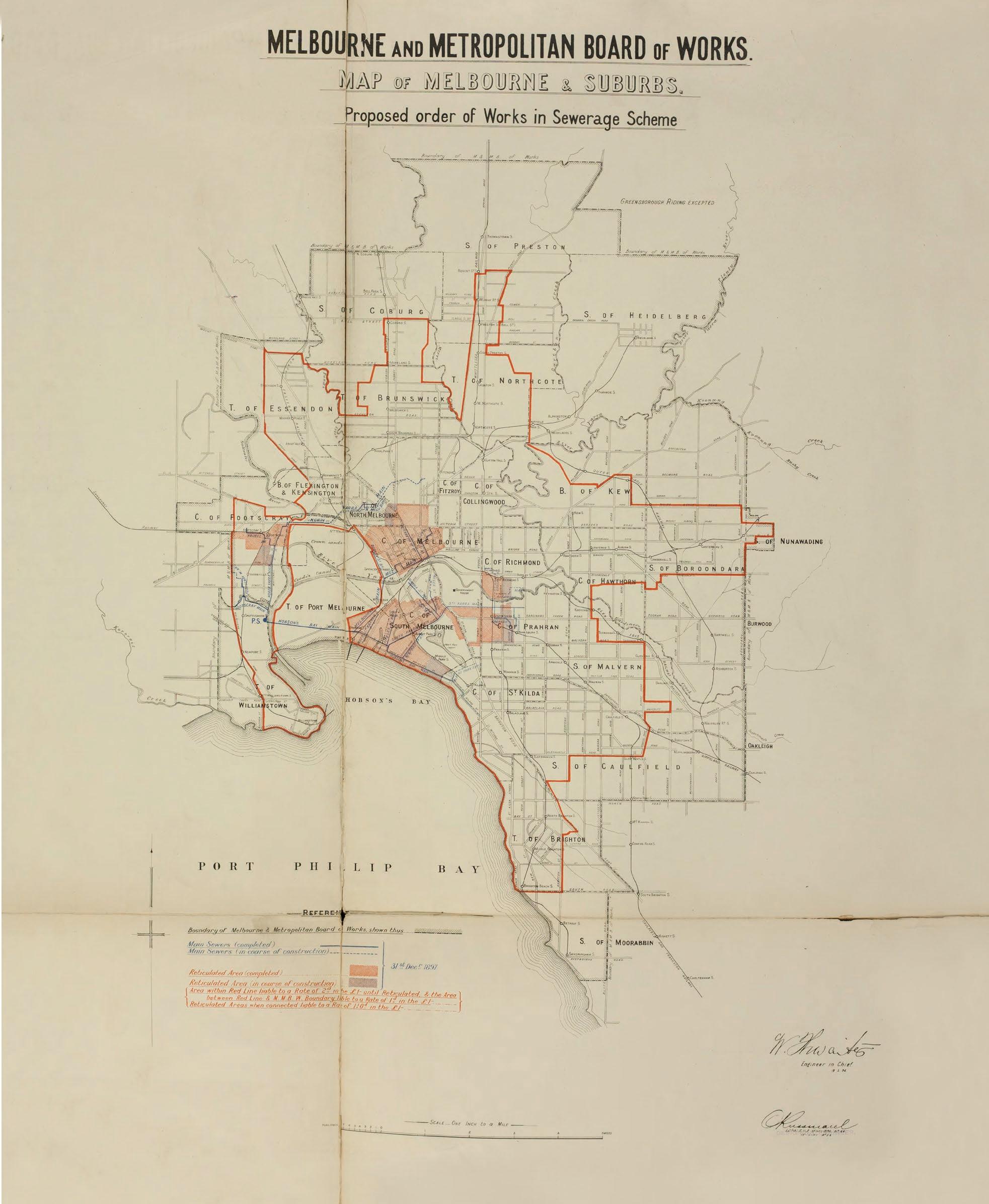
The construction of Melbourne’s sewerage system commenced in the late 1890s. This drawing was signed by William Thwaites, who was then engineer-in-chief of the Melbourne and Metropolitan Board of Works.
Image source: Public Record Office Victoria
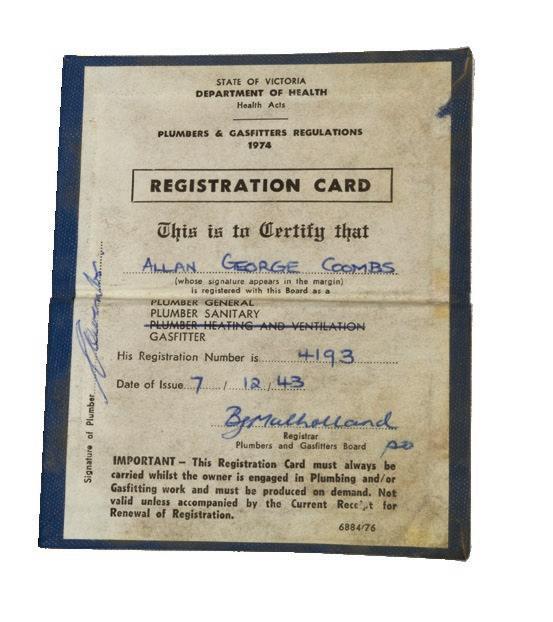
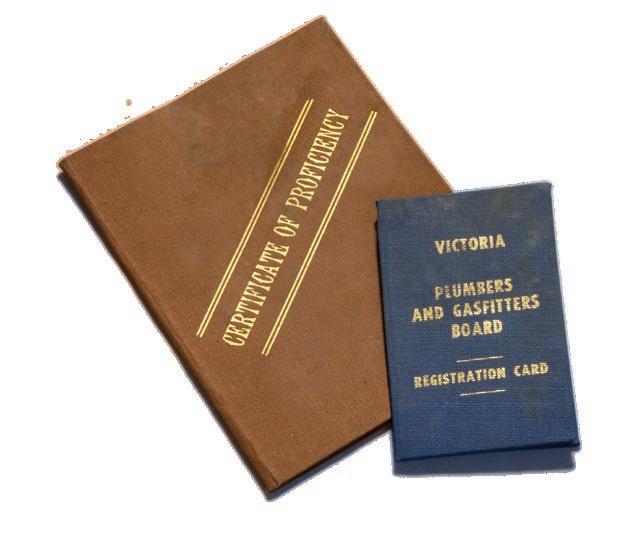
Allan received his Certificate of Proficiency in March 1943 after completing a five-year apprenticeship at Hawkins and Wilcox. He was registered several months later as a plumber and gasfitter but had yet to attain qualifications for heating and ventilation. Allan’s birth date was incorrectly recorded on his proficiency certificate; he was, in fact, born a year earlier in 1920.
Vision and drive were two things that Allan George Coombs possessed in equal measure, and he knew from experience that hard work and enterprise would be rewarded. He had grown up in the 1920s, during a time of economic stability and general prosperity in most industrialised countries. The ‘Golden Twenties’ lasted until 1929 when the Wall Street stock market crash in October triggered the collapse of major financial markets worldwide. Allan’s family had struggled through the Great Depression that followed, when money was scarce, and he was now keen to improve his financial circumstances and build a more secure future.
Apart from his trade certificate, Allan had no formal academic qualifications, having left school at around fourteen or fifteen years of age to become an apprentice bricklayer to his Uncle Les. He persevered with the bricklaying for a while, learning as much as he could, but eventually gave it up to join plumbing specialists Hawkins and Wilcox after his father helped him to secure an apprenticeship in late 1937.
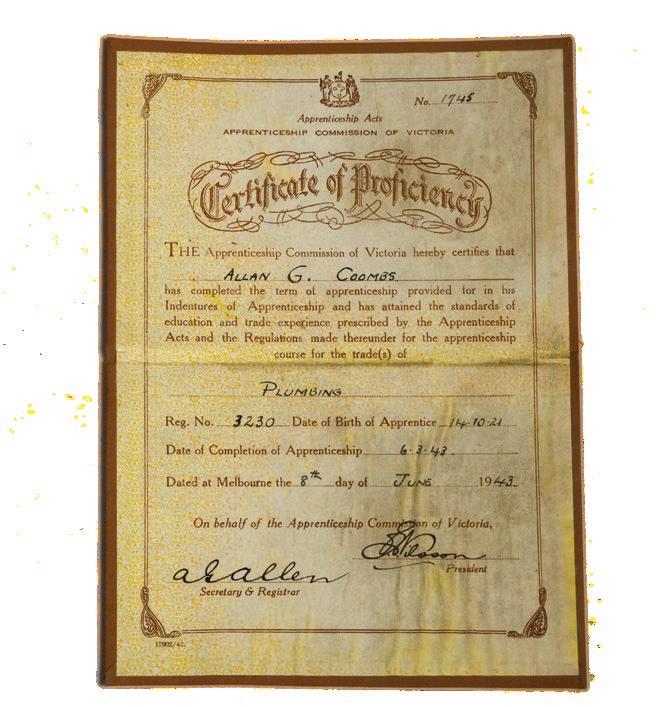
Allan commenced his five-year apprenticeship in 1938, when he was seventeen years old, and was well into his second year when Australia entered the war against Germany in September 1939. His training could so easily have been disrupted, except that skilled workers were needed on the home front in industries essential to the war effort – the conflict in Europe expanded into a world war in 1941 – and trades such as plumbing were exempt from military service. Due to these developments Allan finished his apprenticeship and then bided his time at Hawkins and Wilcox until the end of the war in 1945.
Allan was still living with his parents at 62 Martin Street, Gardenvale, a suburb of Melbourne, when he branched out on his own, with nothing but a pushbike and a kit of tools to his name. He had to start somewhere and decided to try his luck locally, so he cycled around Gardenvale and over to nearby suburbs like Brighton, where he knocked on people’s doors if he noticed their spouting falling to pieces and enquired if they wanted their gutters replaced. But he needed to do more than this if he was going to grow beyond a one-man operation.
By late 1945, Australians were resuming their peacetime lives and looking beyond the austerity of wartime restrictions. After six long years of hardship and sacrifice the general mood was cautious but hopeful, and it was in this growing atmosphere of optimism that Allan ventured out to the countryside, eventually ending up in Romsey, a small country town about sixty kilometres north of Melbourne.
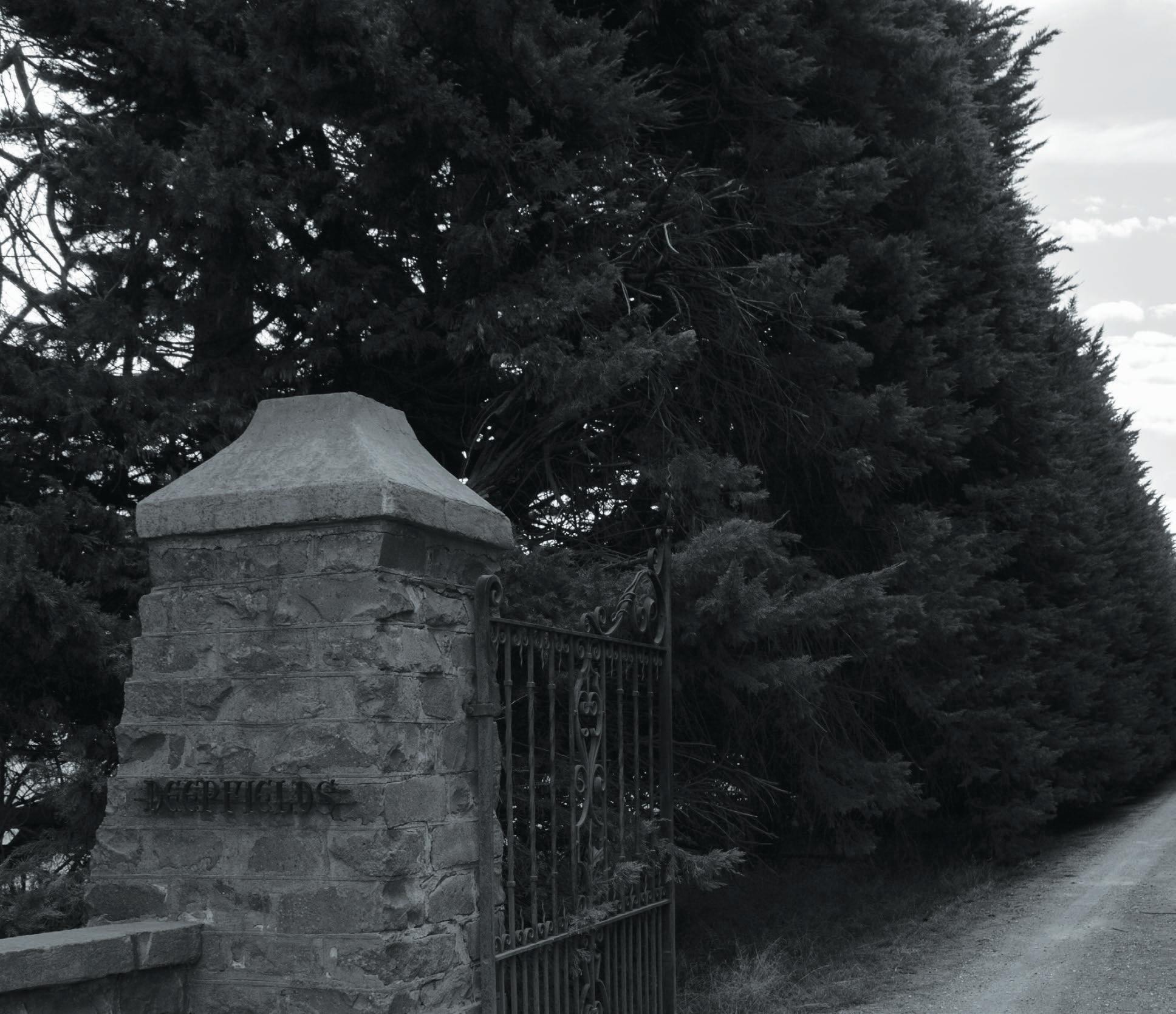
In no time he managed to secure some work at Deepfields, the rural property of Sir Kenneth Luke, a prominent industrialist and then president of the Carlton Football Club. Allan was already familiar with the Luke property, having worked there under his former employer, and decided there was nothing

to lose by knocking on Sir Kenneth’s door and offering his services as an independent contractor. His initiative paid off and, in addition to working for Sir Kenneth, he began picking up jobs all over the district.
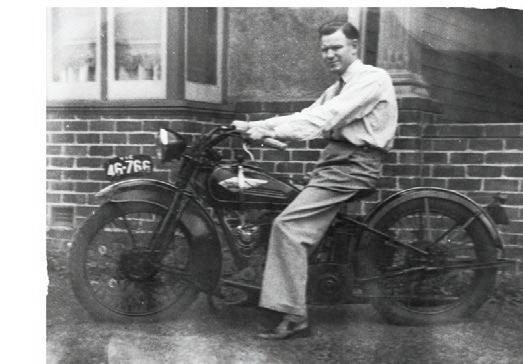
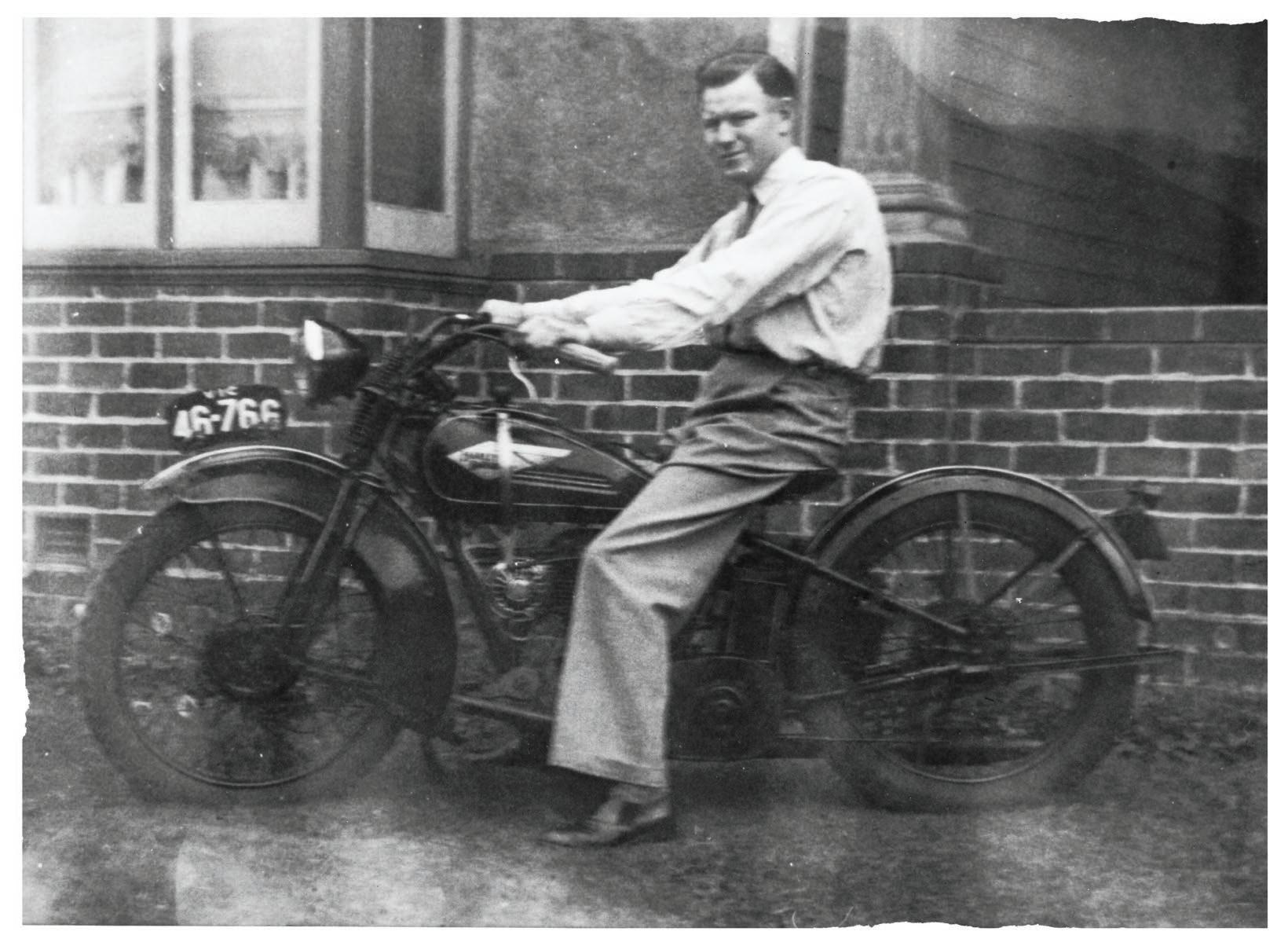
“I worked around the Romsey, Lancefield, Woodend district for about six months,” said Allan. “There was a shortage of manpower, and you had many jobs to do apart from the plumbing.” Allan was both practical and adaptable, and was often sent to gather up the wool in the shearing shed. He was soon earning a reasonable income and quickly upgraded his mode of transport from a pushbike to a Harley Davidson.
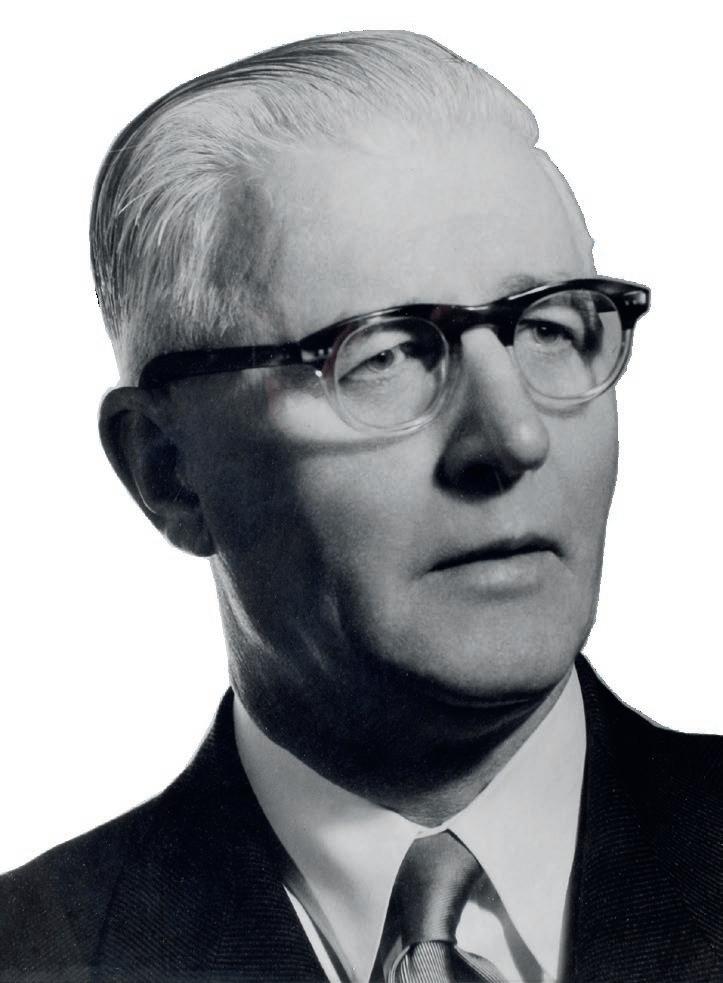
Sir Kenneth Luke was as renowned for his business leadership as he was for his achievements in sports administration. Knighted in 1962, Sir Kenneth was Chairman and Managing Director of K.G. Luke Group Industries Ltd. He was also President of the Carlton Football Club from 1938 to 1955, and President of the Victorian Football League (VFL) from 1956 until his death in June 1971.
Described by then Australian Prime Minister Sir Robert Menzies as “an uncommonly good citizen”, Sir Kenneth’s contribution to football culminated in the construction of VFL Park (later Waverley Park) in Mulgrave, Victoria. He had long campaigned for a permanent home for Victorian football and lived to see his dream come true when VFL Park was officially opened in April 1970.
When off-duty, Sir Kenneth pursued his passion for farming and horse racing, and divided his time between Melbourne and his beloved country property, Deepfields, in Romsey.
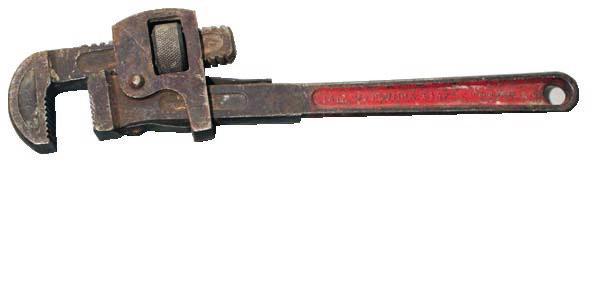
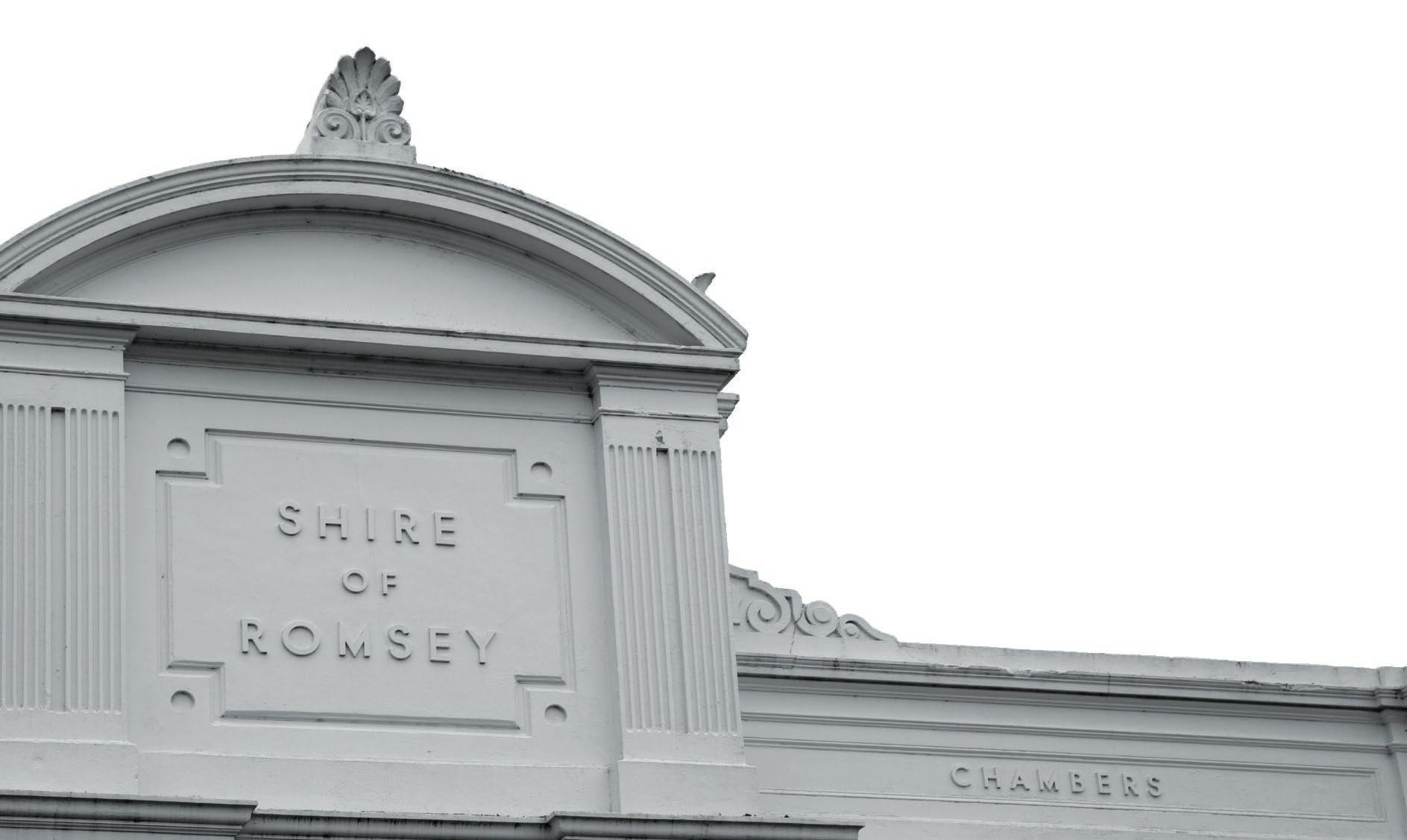

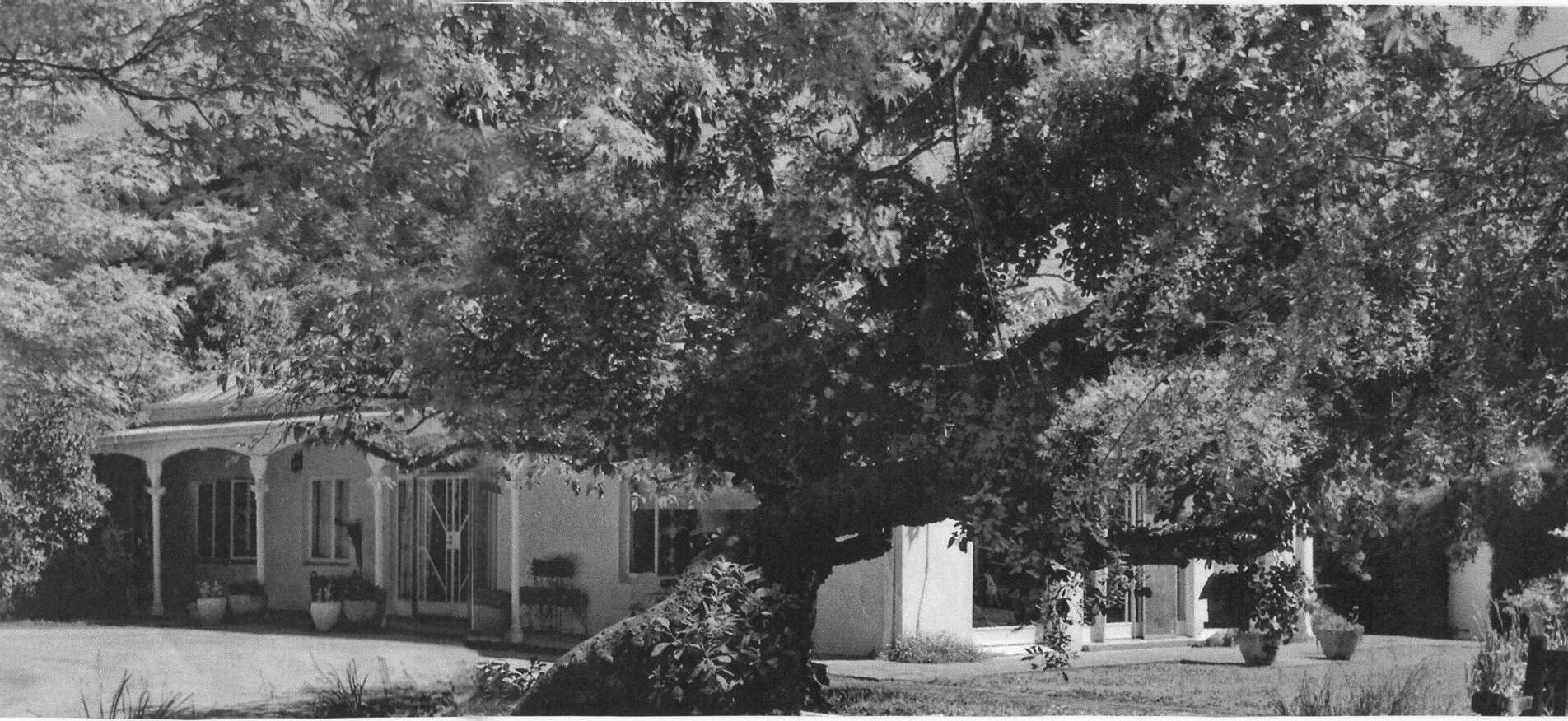
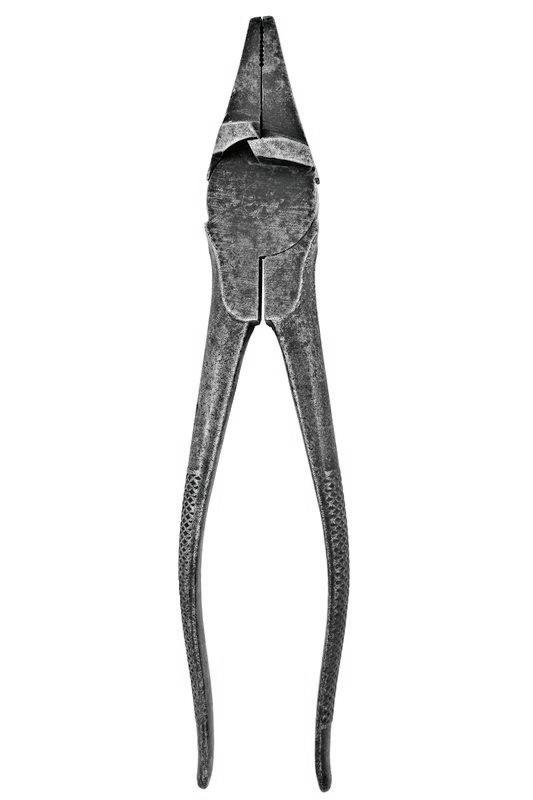

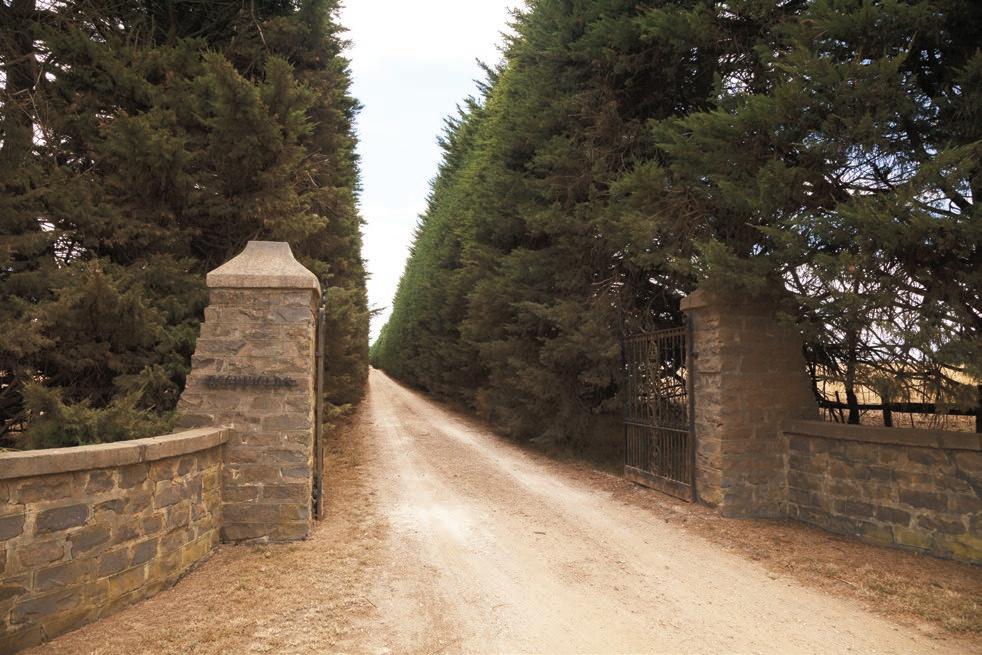
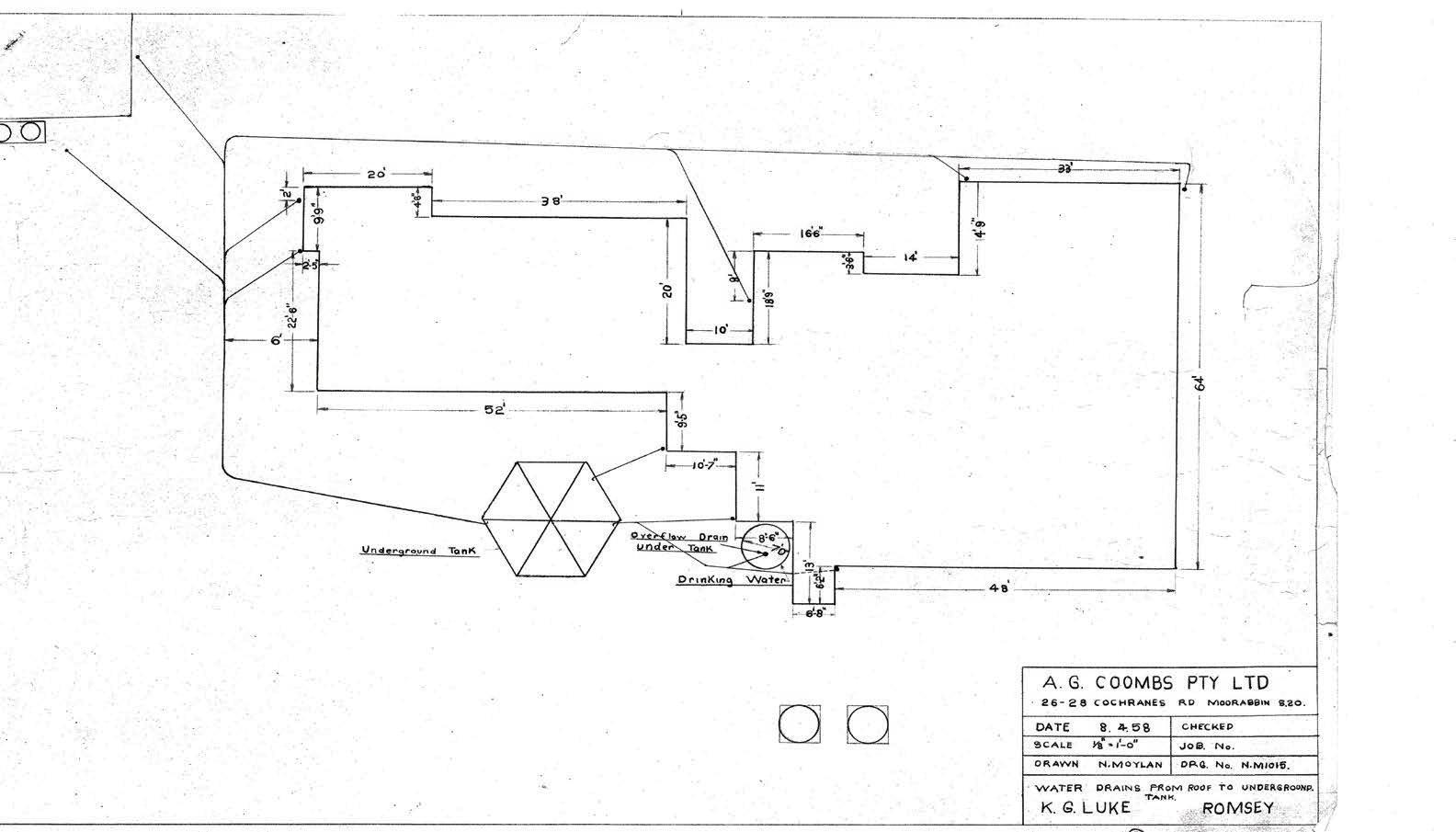
Allan Coombs worked on the plumbing at Sir Kenneth Luke’s Deepfields property not long after striking out on his own. It was an association that would continue into the 1950s. The simplicity of this diagram depicts the ‘old days’ of drafting.
A.G. Coombs’ drawing office would eventually begin generating more sophisticated drawings to meet the requirements of larger projects.

Allan was now taking on nearly everything that came his way
By mid-1946, Allan was back in Melbourne, working on contracts for builders he knew and taking on more residential jobs. He was also thinking ahead and had already opened a business account, depositing £6 on 15 April 1946.
These were exciting times in Australia, with post-war immigration set to boost population numbers in the coming years. The massive influx of people from war-torn Europe would see more houses being constructed in the semi-rural fringe around Melbourne, and, once again, plumbers would be in great demand as the MMBW began preparing to water and sewer these new areas.
Allan initially ran his business from his parents’ garage and was feeling even more confident after securing a £200 loan – nearly a whole year’s average wage in 1946 – to assist with major purchases. The loan, which his father guaranteed, most probably came from Sir Kenneth Luke. Indeed, many believed that it was Sir Kenneth who helped Allan get established in business.
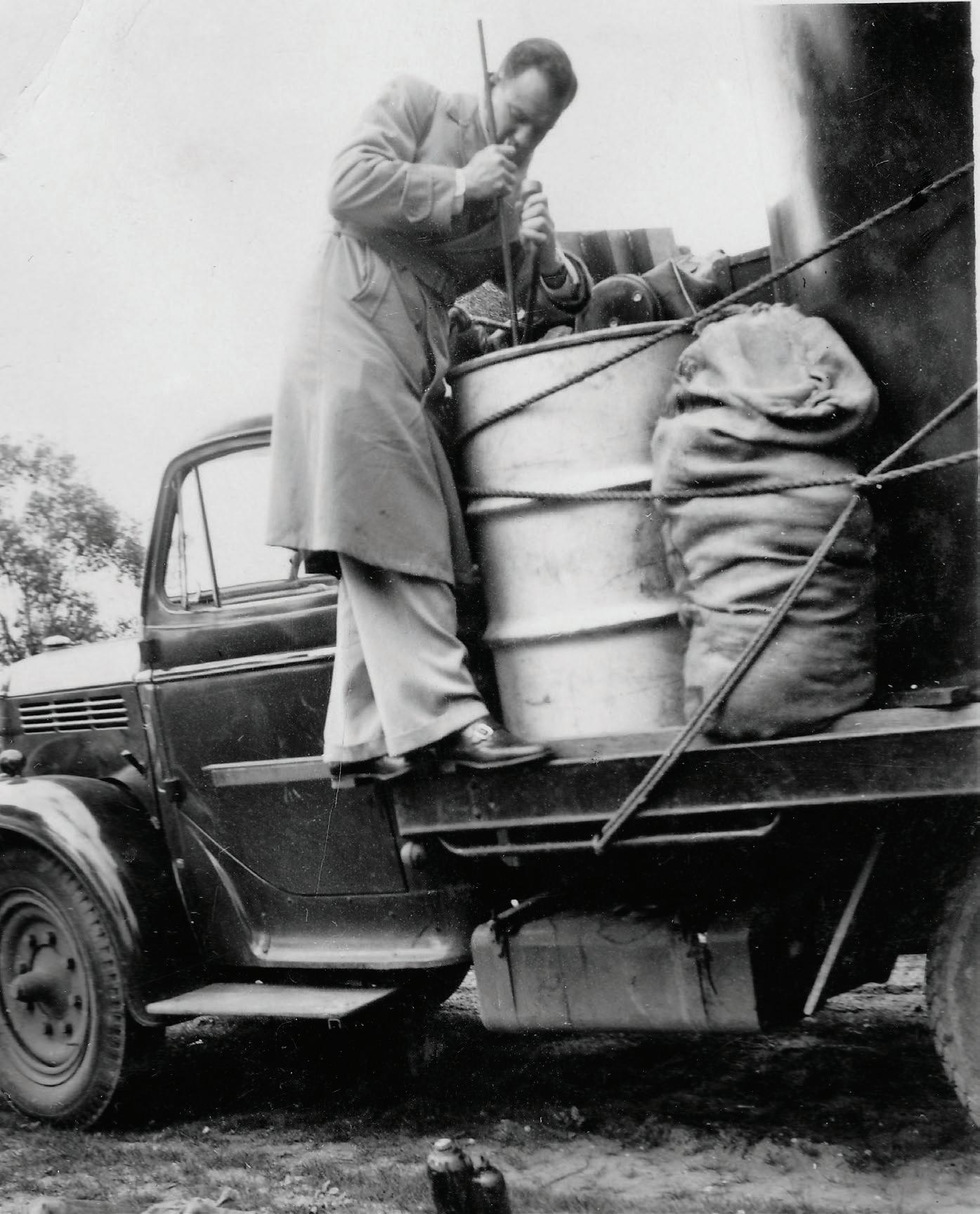
Determined to put these funds to good use, Allan purchased a 1928 Austin 12 sedan, which he and his brothers promptly transformed into a utility truck – the ‘ute’.
“We cut the back off it behind the front seat and we took the bit out of the middle and joined that up, and we built a tray back body on it and that was our transport for some considerable time,” he said. Flivvie, as the truck was affectionately known, was a necessary purchase, not only to transport all their tools and fittings, but because jobs were increasingly taking them further away from home.
In 1947, two more plumbers, Greg Parkinson and Harry Brett, joined the team, along with apprentice plumber Jim Barr. As Allan’s first apprentice, Jim used to accompany his boss to various jobs around town. In fact, Allan would often collect Jim from his home in the morning before they headed out on their rounds. Working so closely with Allan was a real eye-opener for the young apprentice, who would soon learn to drive the Austin ute. “It was an education. I was only a fifteen-year-old boy straight out of school, but you had to learn things fast. You didn’t question it, you just did it.”
Allan was now taking on nearly everything that came his way, and often travelled out to the country, in particular to Romsey, where he and Jim worked for three months on the water service at Sir Kenneth Luke’s property. This was a fairly big job, which they tackled in between fixing drain pipes and water services all over Melbourne. “You name it, we did everything for the first three or four years,” said Jim, who started out on sixteen shillings a week.
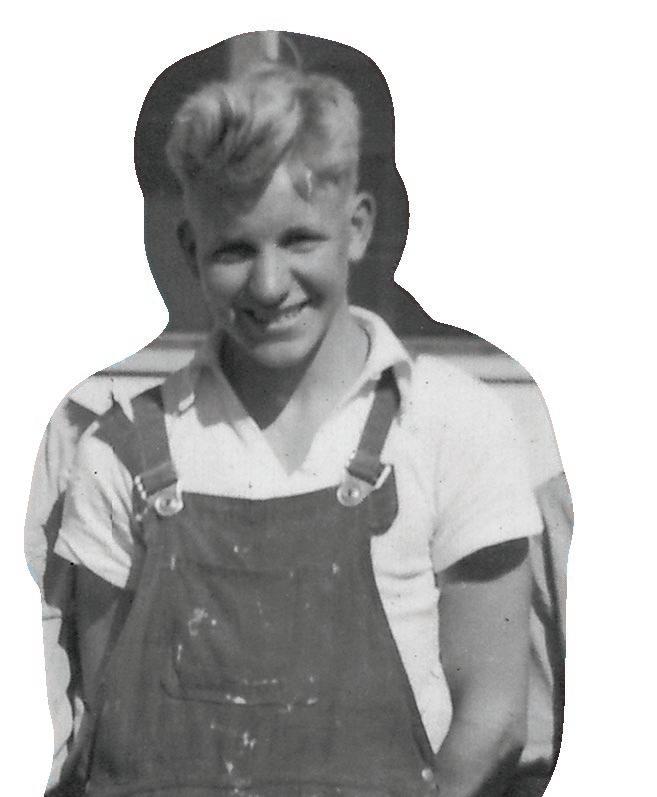
Jim Barr was only fifteen years of age when he began working for Allan in 1947. He was the company’s first apprentice.
‘
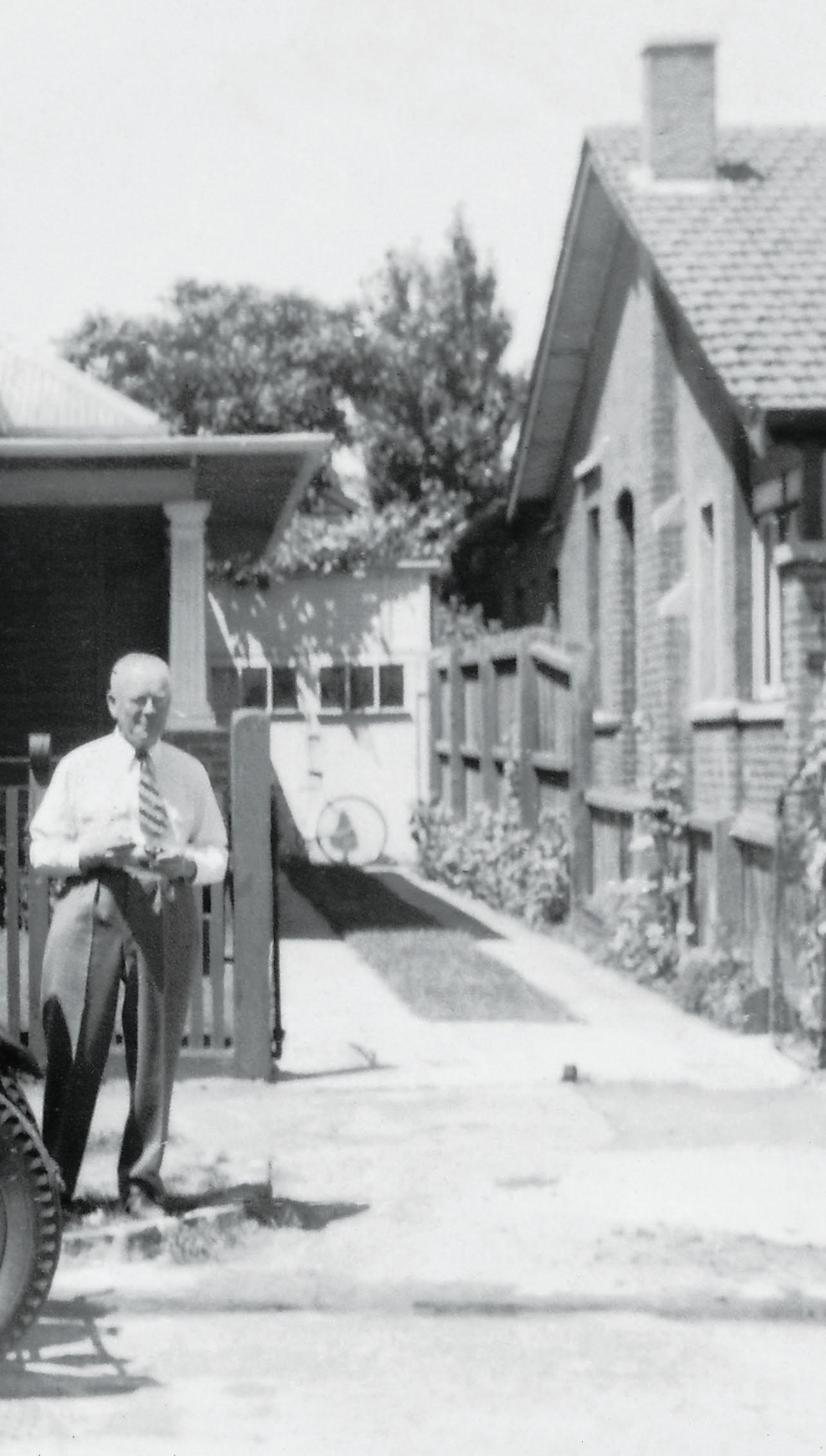
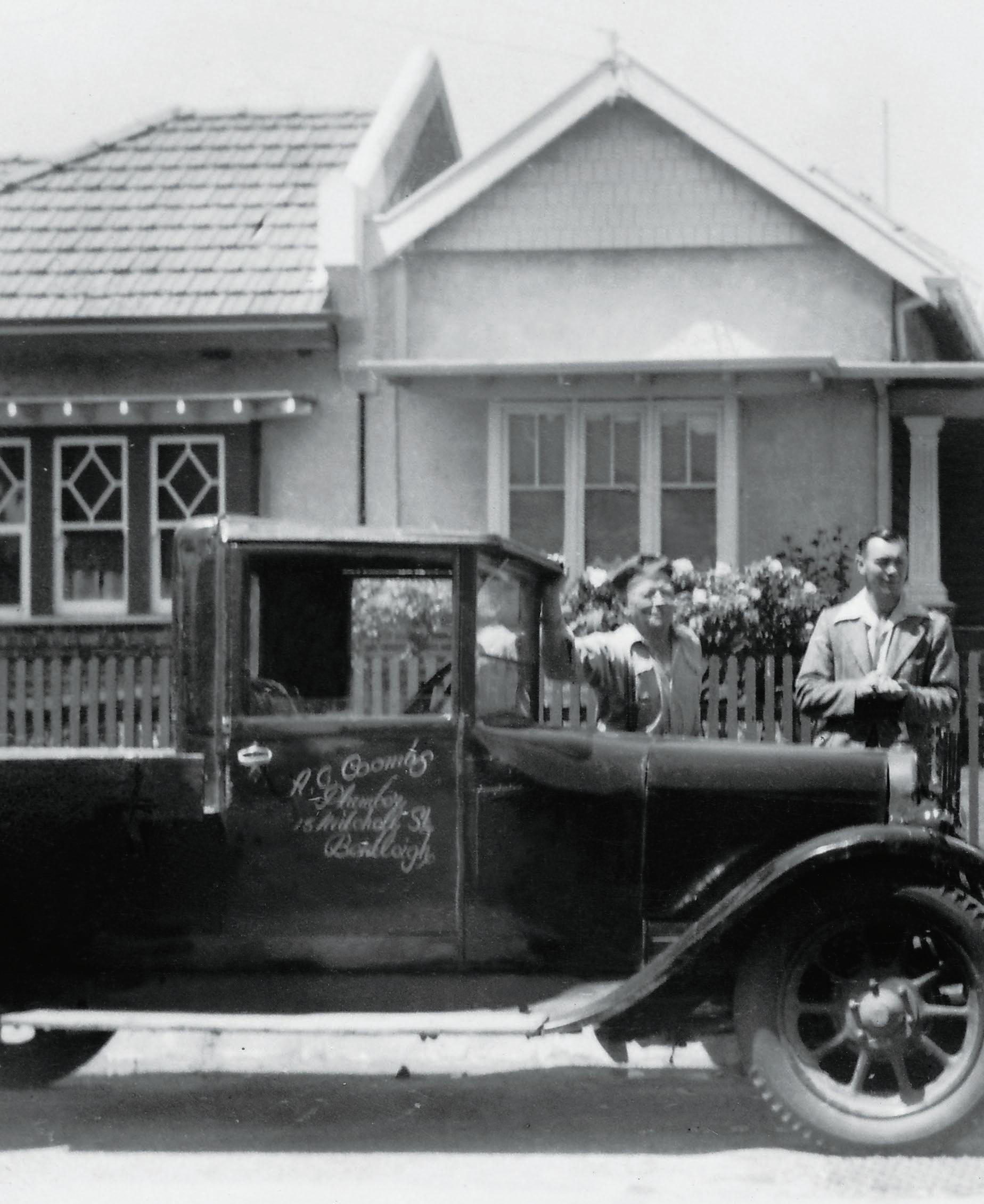
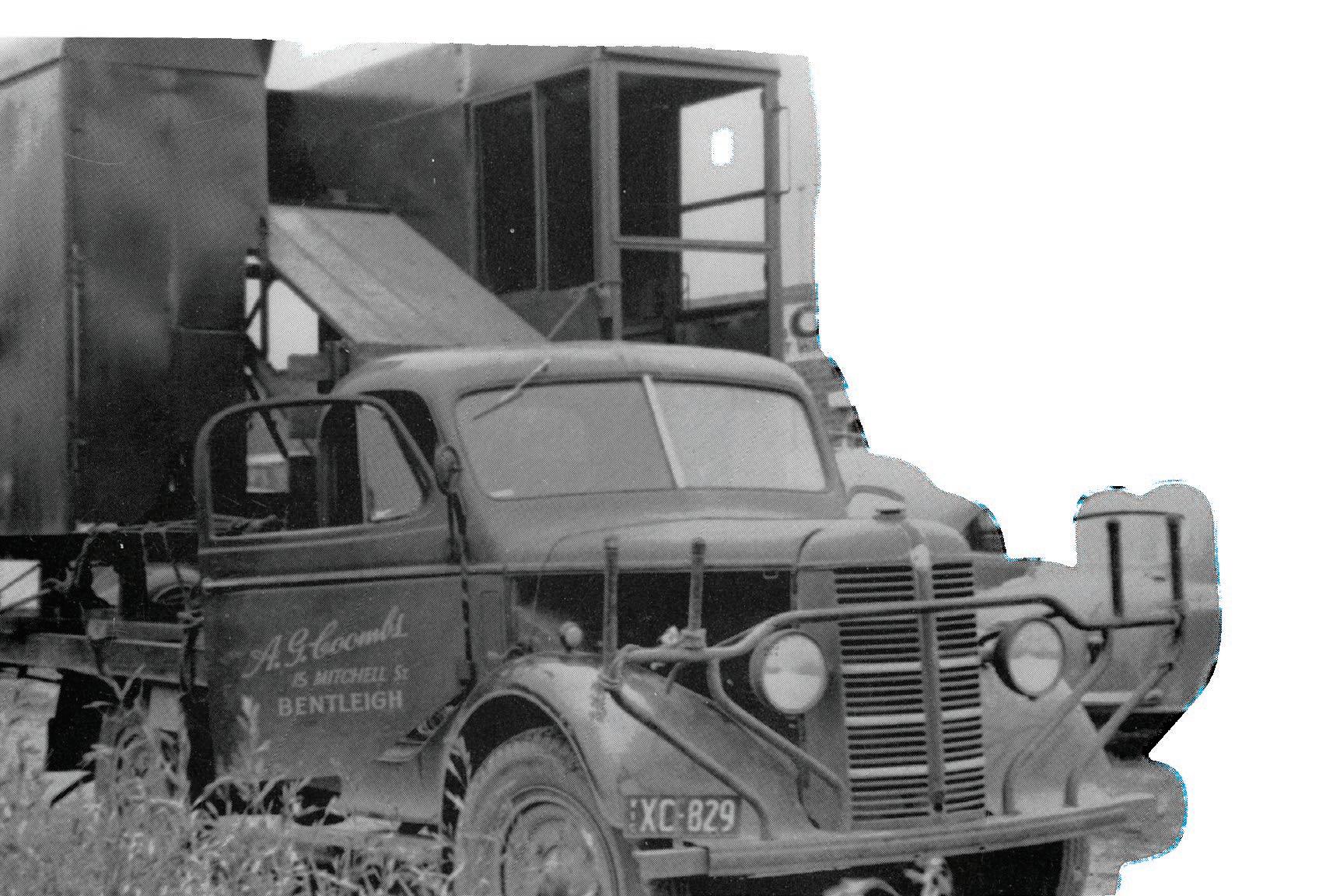
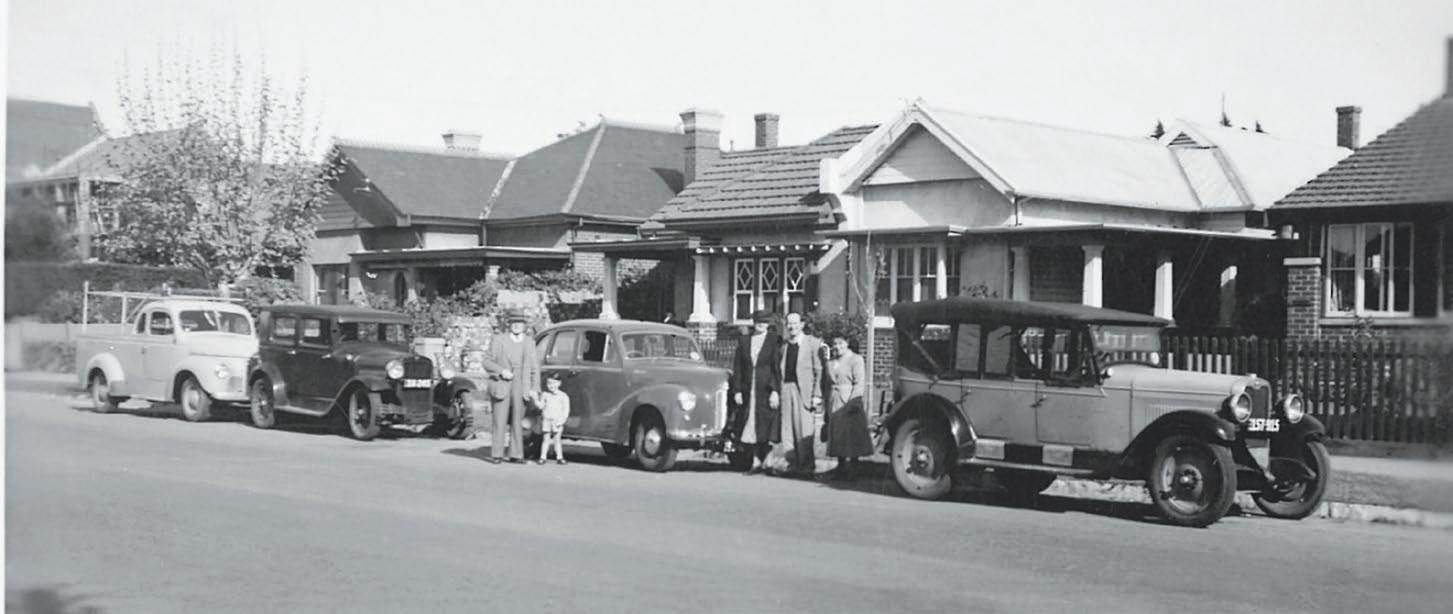
Fred ‘Pa’ Coombs (pictured standing right), Percy Coombs (centre) and Uncle Les Coombs (far left) with Allan’s first truck ‘Flivvie’ at 62 Martin Street, Gardenvale (the home of Allan’s parents). Gardenvale was a former market-garden district about twelve kilometres from the centre of Melbourne.
Allan had started his plumbing business at Martin Street, but eventually began operating out of his brother’s place in Bentleigh. His new business address was clearly marked on the truck’s door.
In 1946, Allan did well to purchase his second-hand Austin for £200 (roughly $17,500 in 2025) and convert it into a utility truck. Not only was there a short supply of new vehicles at the end of the Second World War, but prices had also increased significantly, with new cars and utility trucks costing up to 50 percent more than their pre-war counterparts.
The price for a pre-war Austin 8 Tourer was around £250 plus sales tax. In 1946, the estimated price for the first post-war models coming off the English production line was £442.
Austin, Chevrolet, Ford and Vauxhall were among the car models available in Australia at the time. Truck brands included Bedford, Ford and International.
Sources:
Land, Sydney, NSW – 5 October 1945. Sunday Times, Perth, WA – 23 June 1946.
In 1947, Allan took the first step towards building the company of his dreams by officially registering the business name A.G. Coombs. But as the months went by, he realised that he could not operate out of his parents’ garage indefinitely, nor continue cluttering their yard with tools and equipment. More storage space was urgently needed, not to mention a proper workshop.
As Allan considered his options, his brother, Russ, came to the rescue by offering him the use of his backyard at Mitchell Street, Bentleigh, where they began building a large garage in 1949. This solved a multitude of storage problems for Allan, as he now had space to install pigeon holes for all his plumbing fittings and have a proper work bench on which to make spouting. He also built a sleep-out alongside the garage and began using it as an office.
Realising that he could not be everywhere at once, Allan employed his three brothers – Russ, Perce and Les – to help him with the increasing workload. He was lucky having brothers who were qualified in the trade, as it meant the company could now handle larger projects simultaneously. Their first big contracts included some flats along Nepean Highway (for property developer Stanley Korman); the Centenary Woollen Mills in Bentleigh; and also Stanhill Flats at 34 Queens Road, Melbourne – an impressive nine-storey apartment block that was considered one of architect Frederick Romberg’s finest buildings.
If everything was running smoothly on the various job sites, it was a very different story behind the scenes. More business meant more paperwork and Allan was now struggling to do everything himself. Apart from working alongside his team, he was also responding to calls and quoting for jobs, not to mention collecting all the time books and making up the wages. Deciding that he could do with some extra help, he turned to his brother-in-law, Gerald Carter.
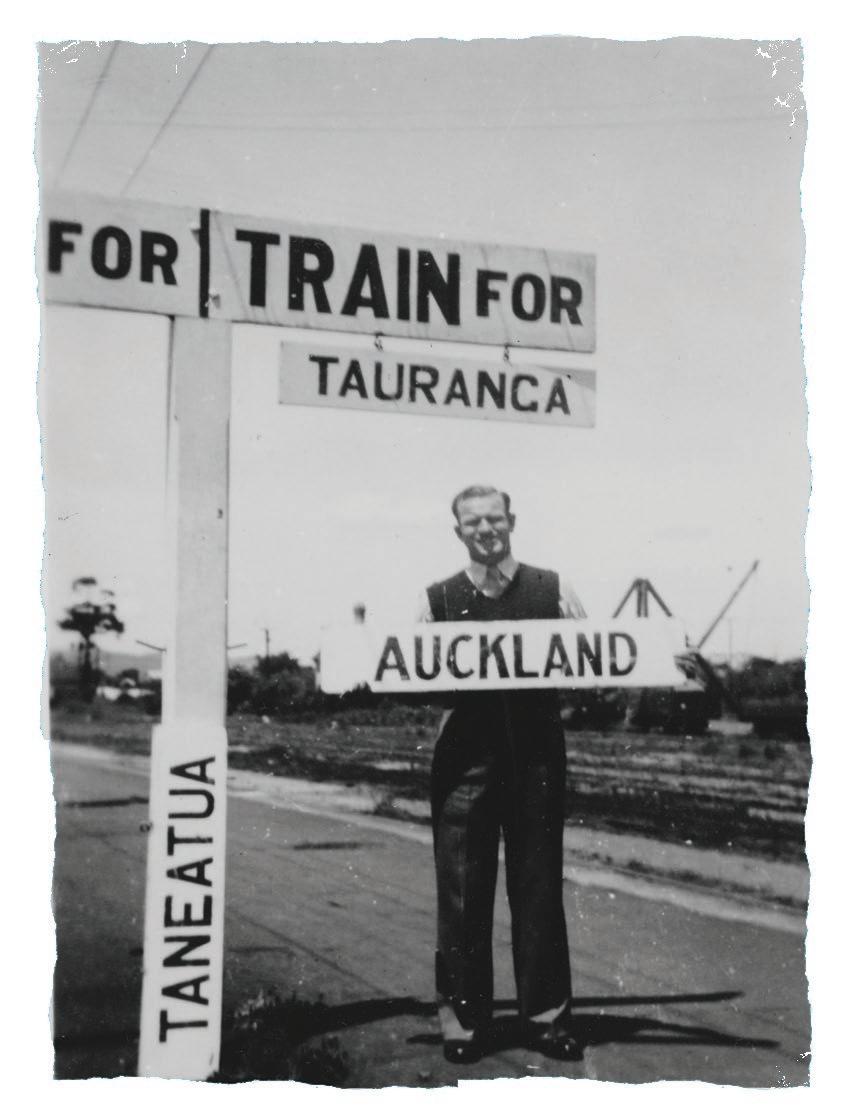
Gerald had married Allan’s sister, Joyce, in December 1947, and by 1949 they were settled in New Zealand where Gerald was employed as a telegraphist in the Post and Telegraph Department. Taking a much needed break, Allan visited them over the Christmas holidays and, when the opportunity arose, asked Gerald if he would consider giving up his job to work for A.G. Coombs in Melbourne. The administrative tasks were becoming onerous, Allan explained, and it would be great to have some assistance around the office.
“As a returned serviceman, I was able to take six months leave without pay to seek other employment,” said Gerald, “so I decided to try the work.” Having made this decision, the Carters relocated to Melbourne in March 1950 so that Gerald could see how things went for a while.
After arriving in Melbourne, Gerald settled into the small office in Russ’s backyard and immediately took over all the accounting and clerical duties from Allan. But it was not all desk work, he discovered, as people were required to pitch in wherever they could, and he was soon driving Flivvie, as well as assisting with plumbing jobs and helping out with general labouring. “I was good on the pick and shovel,” he remarked.
Gerald was eventually promoted to purchasing manager and, with the exception of major equipment, entrusted with purchasing all supplies for the company. Allan could be very rigid at times about how he wanted things done, and later insisted that his brother-in-law type out his own purchasing orders instead of handing them over to the secretary. Yet he was also happy to delegate and trust people with decisions. “I never went to Allan unless the expenditure was an extraordinarily large amount,” said Gerald, whose six months turned into a thirty-two-year career with A.G. Coombs.
For Allan, the idea of becoming a successful businessman was no pipe dream. “He knew what he wanted,” said Jim Barr. In time, people would come to know Allan George Coombs as something of a crusader for the industry; someone who was just as committed to innovation and improving industry standards as he was to building the reputation of his own company.
The installation of underground steam mains at the 1956 Olympic Village was the first high-profile project undertaken by A.G. Coombs. The complex, at Heidelberg in Melbourne, boasted over 800 dwellings, most of which would be handed over to the Housing Commission after the Olympic Games, although some were later auctioned.
Image source: National Library of Australia

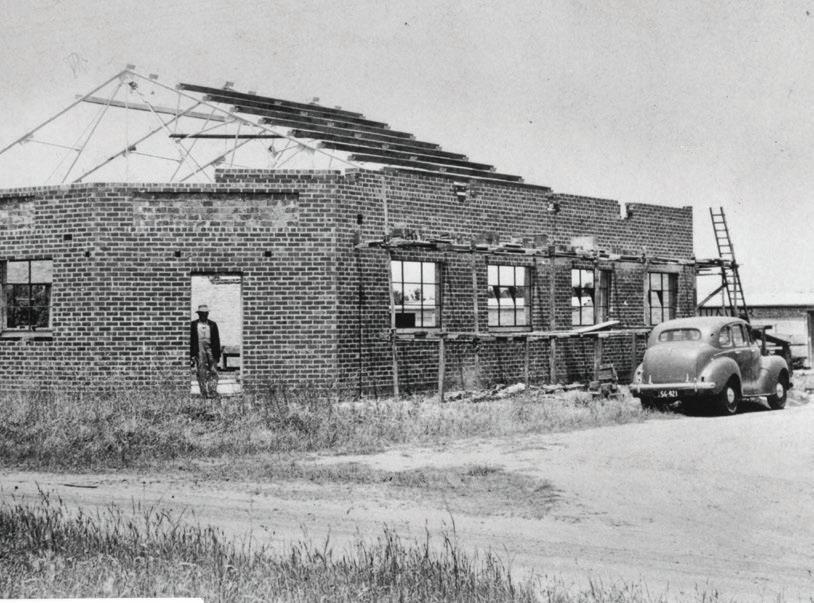

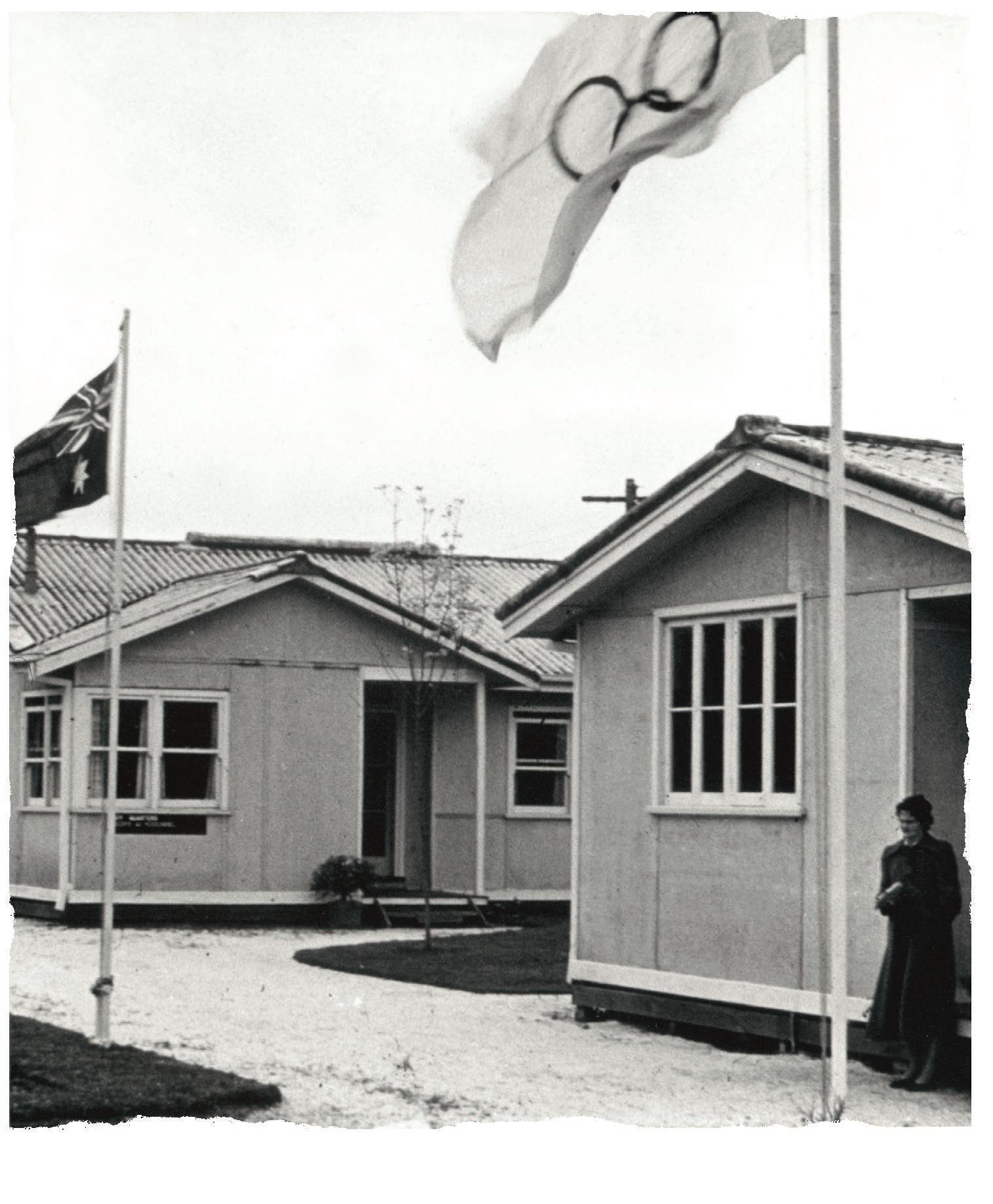
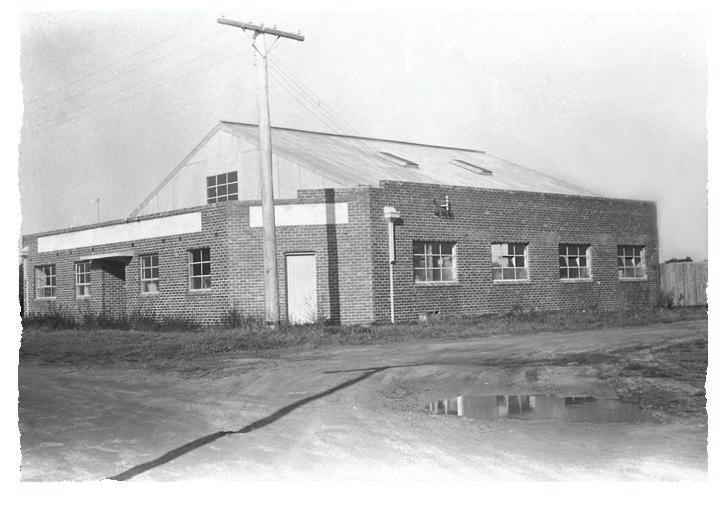
The construction of the company’s new offices at 26-28 Cochranes Road, Moorabbin, was the realisation of a dream for Allan Coombs, who built the complex in 1953 with the help of employees and family members. It was one of the very first buildings in the area.

Although A.G. Coombs was a small plumbing business, it was one with big aspirations, and it was only a matter of time before Allan Coombs started accruing the resources to tackle more complex projects. While his company was offering a greater variety of services in the early 1950s, these were limited to domestic plumbing, dust extraction, hot water heating and ventilation. Air conditioning had already been introduced to Australia, but was mainly installed in large commercial and industrial facilities, an area in which he had yet to specialise.
By October 1953, Allan had built a new office and factory on Cochranes Road in the rapidly expanding suburb of Moorabbin. He realised the benefits of producing ductwork on site and moved quickly to establish a sheet metal shop, while encouraging his employees to develop skills in this area. He was also gathering a loyal team of people around him, and they were now ready for more challenging work, including the contract for the 1956 Olympic Village in Melbourne.
As the years went by, Allan began noting the changing architectural trends in the city. One development in particular – the construction of ICI House – offered local plumbing companies a glimpse of the future should they wish to take up the challenge. The building’s completion in 1958 signalled the start of a high-rise boom in Australia, and together with other similar developments escalated the demand for full climate-control air conditioning. This trend would significantly alter the nature of Allan’s business, moving him away from domestic plumbing into the world of commercial air conditioning.
February 1953
Building on the research of other scientists, James Watson and Francis Crick discover the double helix structure of DNA.
May 1953
New Zealand mountaineer Edmund Hillary and his Sherpa guide Tenzing Norgay are the first confirmed climbers to reach the summit of Mount Everest.
June 1953
Coronation of Queen Elizabeth II at Westminster Abbey.
October 1953
A.G. Coombs moves into new premises at 26-28 Cochranes Road, Moorabbin.
April 1954
A.G. Coombs becomes a proprietary limited company, A.G. Coombs Pty. Ltd.
November 1955
Post-war immigration to Australia peaks with the arrival of the millionth migrant.
September 1956
Mainstream television is launched in Australia at the Nine Network station in Sydney.
November 1956
The Olympic Games commence in Melbourne.

This
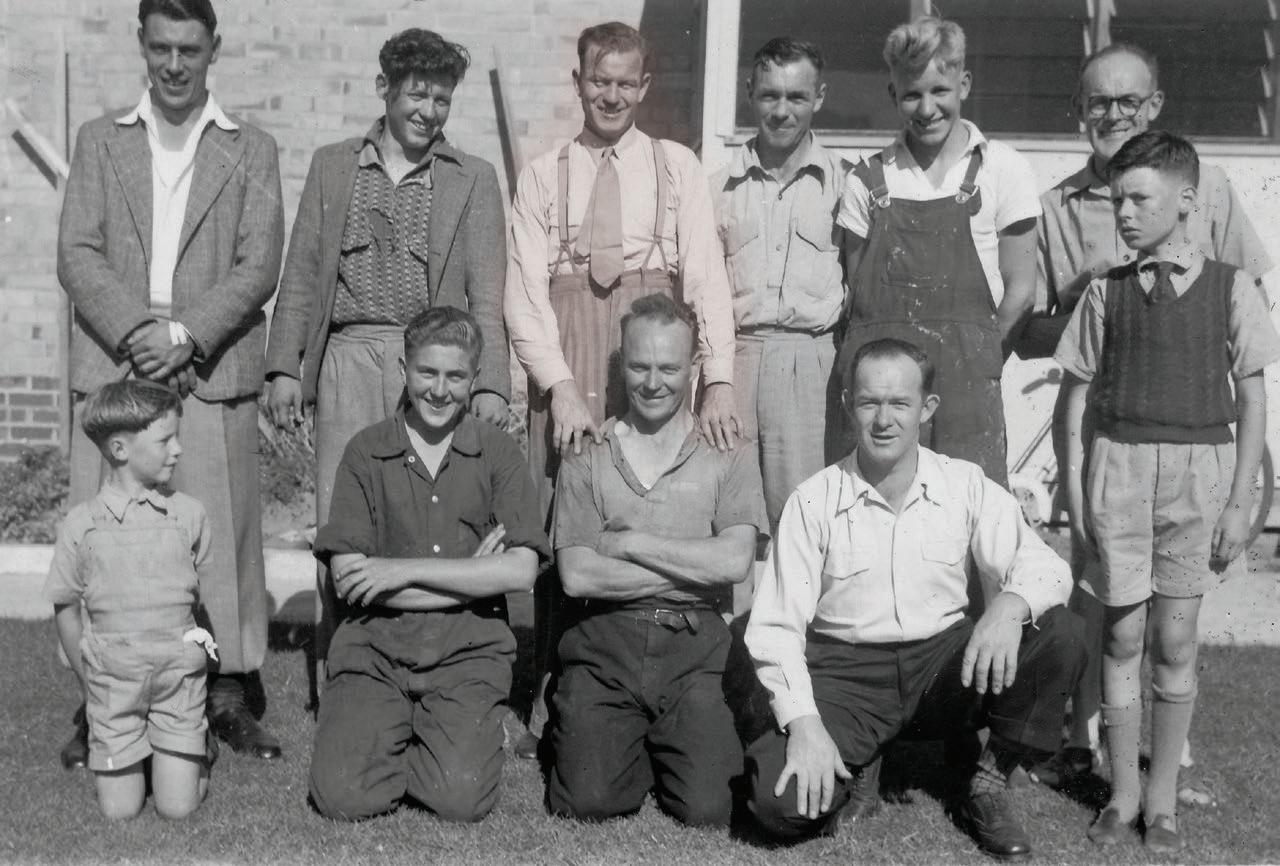
The post-war era was a time of opportunity and full employment, and if you were hired by A.G. Coombs you were swept up by a sense of pioneering and building something for the future. For young apprentices it was like joining a second family, where people looked out for you while showing you the ropes. This was fortunate for newcomers as most apprentices, like Bill Moseley, were still teenagers when they joined the company.
Thanks to Allan’s clever networking, Bill’s instructor at Brighton Technical College had steered him towards A.G. Coombs for his plumbing apprenticeship. “He always got the leading apprentices,” said Gerald Carter, explaining how Allan made a point of getting to know all the key people at Brighton Tech so that his name was always at the forefront of their minds.
Apprentices were expected to hit the ground running, so despite being somewhat ‘green’, Bill was sent out on a job the day he started in 1950. “I remember the first day I went to work, we had to go around to a house in Oakleigh and Jim Barr gave me a dink on his bike, and he carried his tools on his back. So that was my initiation to work.”
Their tools of trade were fairly basic back then, which meant that even straightforward jobs took longer to complete. “When I first started, there were no power tools,” said Bill. “There were no electric saws or drills. Everything was done by hand.” Drilling holes in bricks and concrete, for example, was accomplished with a star drill and considerable physical effort.

The work was hard, but rarely ever boring, as they were always travelling around town and, occasionally, out to the country. Some jobs took them away for weeks at a time to popular destinations such as Eildon Weir, where people holidayed in their houseboats. Other jobs were memorable for different reasons, like the work they did at the now demolished Federal Hotel on Collins Street.
“People used to sit in the dining room eating their breakfast and there were rats running around their feet,” said Jim Barr. The Federal Hotel was then one of the grandest buildings in Melbourne and working there would have been an eyeopener for young tradespeople – in more ways than one so it seems.
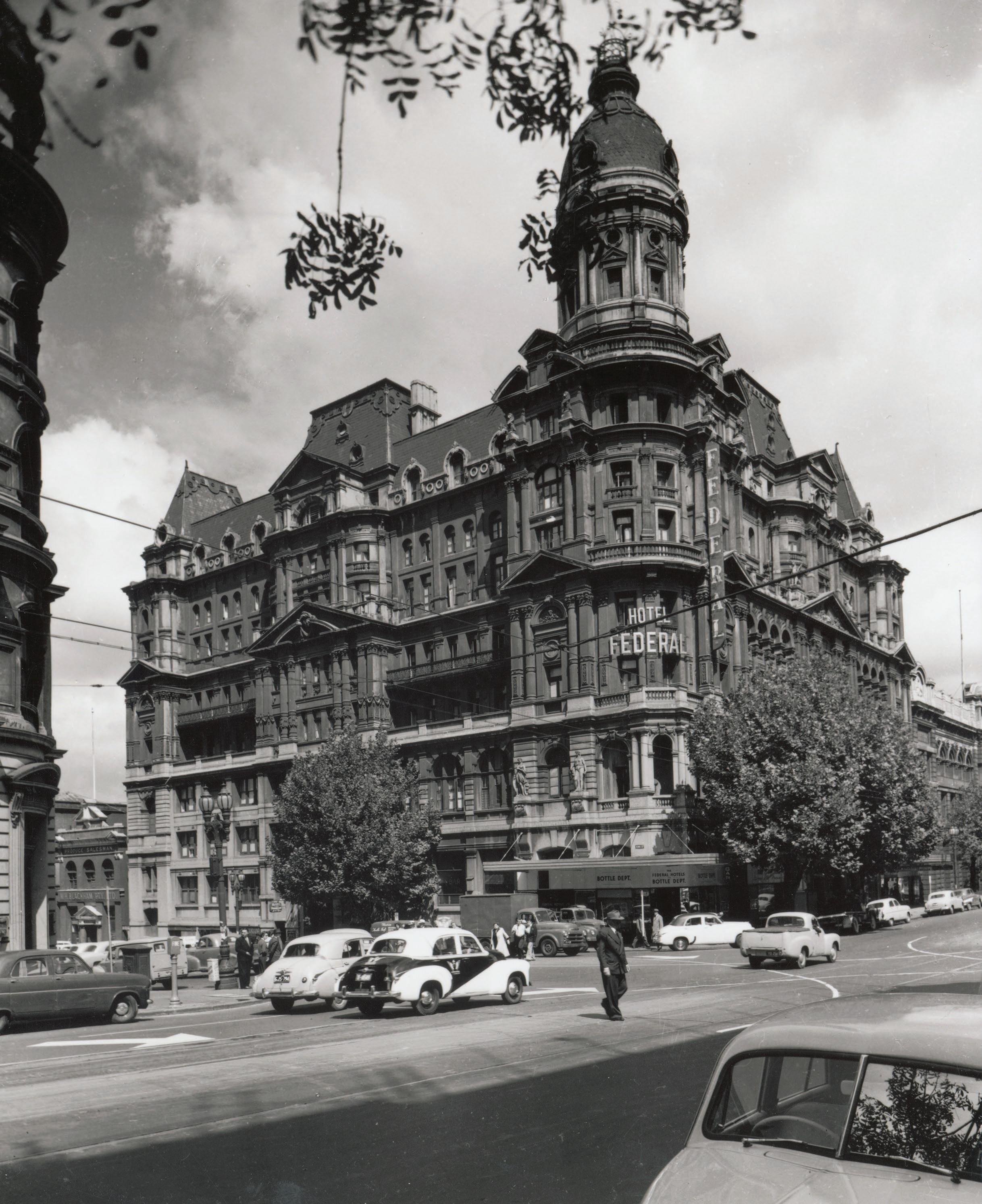
One of the company’s earliest projects in the city was for the Federal Hotel at 555 Collins Street. Completed in 1890, the Federal Hotel and Coffee Palace (as it was first known) was one of Melbourne’s most impressive buildings. It was also an alcohol-free establishment due to the affiliation of James Munro (one of the original owners) to the temperance movement – hence the reference to ‘coffee palace’. To boost revenue, the hotel was licensed in 1923 and renamed the Federal Hotel. It was sold in 1972 and torn down in 1973.
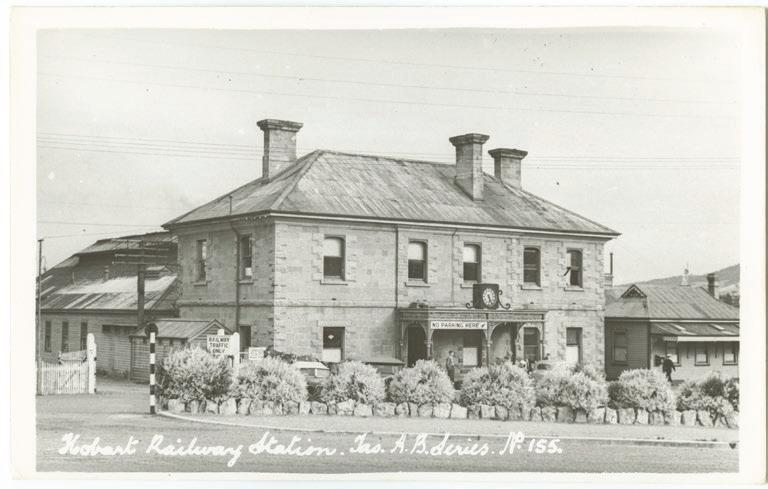
Beginning in 1950, Allan would make several trips to Tasmania where he was contracted, among other things, to install the heating at Hobart Railway Station. There was a romantic interest too, as he was also pursuing Elaine Bill, a childhood friend from Melbourne, who happened to be nursing in Hobart.
It is hard to say whether Allan took on the railway contract because of Elaine, although given his well-known resistance to accepting interstate jobs, it is likely that this was a key reason. Elaine, it seems, knew nothing about Allan winning the contract. “I booked on the plane [to Hobart] and who should be there but he and Moseley,” she said, referring to Allan’s apprentice.
Elaine and Allan married in 1954 and honeymooned in Tasmania, with Bill Moseley in tow, as Allan still needed to conduct a final test on the heating at the railway terminal. “My performance as the most considerate and attentive husband didn’t end there,” recounted Allan wryly, as he proceeded to take Elaine north to Launceston so that he could inspect the mechanical installations at the city’s new Coles store.
On arriving at the store, Allan asked Elaine to wait outside on the footpath, promising her that he would return shortly. But no sooner had he gone inside, than some local boys started shouting at her from across the road. If that was not enough, a policeman came along and told Elaine that if she did not move on she would be charged with loitering. “I lost a few points on my honeymoon!” Allan admitted.
Allan and Elaine would go on to have two sons, Ian and Philip, both of whom would later work in the business, with Philip eventually becoming head of the company.


By 1952, the business had grown to the point where Russ’s garage at Mitchell Street was becoming too small for their needs. Allan realised that he needed to find larger facilities or, better still, build something himself. He already owned a block of land in Bentleigh, which he was then using for bulk deliveries of pipe and drainage fittings, and initially thought about building a factory there. But he decided against this after finding and purchasing two blocks of subdivided land at 26-28 Cochranes Road, in the neighbouring suburb of Moorabbin.
You would have needed a good imagination to have seen the area’s potential back then. Cochranes Road was little more than a dirt track and the land surrounding it was mainly paddocks. “It was pretty open at the time,” said Jim Barr. “There was a little factory down the road and a
house on the other corner, but other than that there was nothing, absolutely nothing, just cows in the backyard.”
Luckily, Allan had both imagination and foresight, and it was not surprising that he settled on Moorabbin. Not only was he familiar with the area, he could also see that it was moving ahead at an astonishing pace after the Second World War.
Moorabbin was mostly semi-rural when the war ended, with fruit and vegetables thriving in its sandy soil and market gardens dominating its flat, open terrain. But life in the suburb began changing when returned soldiers and immigrants from war-torn countries came looking for land on which to construct their homes and rebuild their lives. New developments had started sprouting in the open spaces beyond Melbourne’s established boundaries and
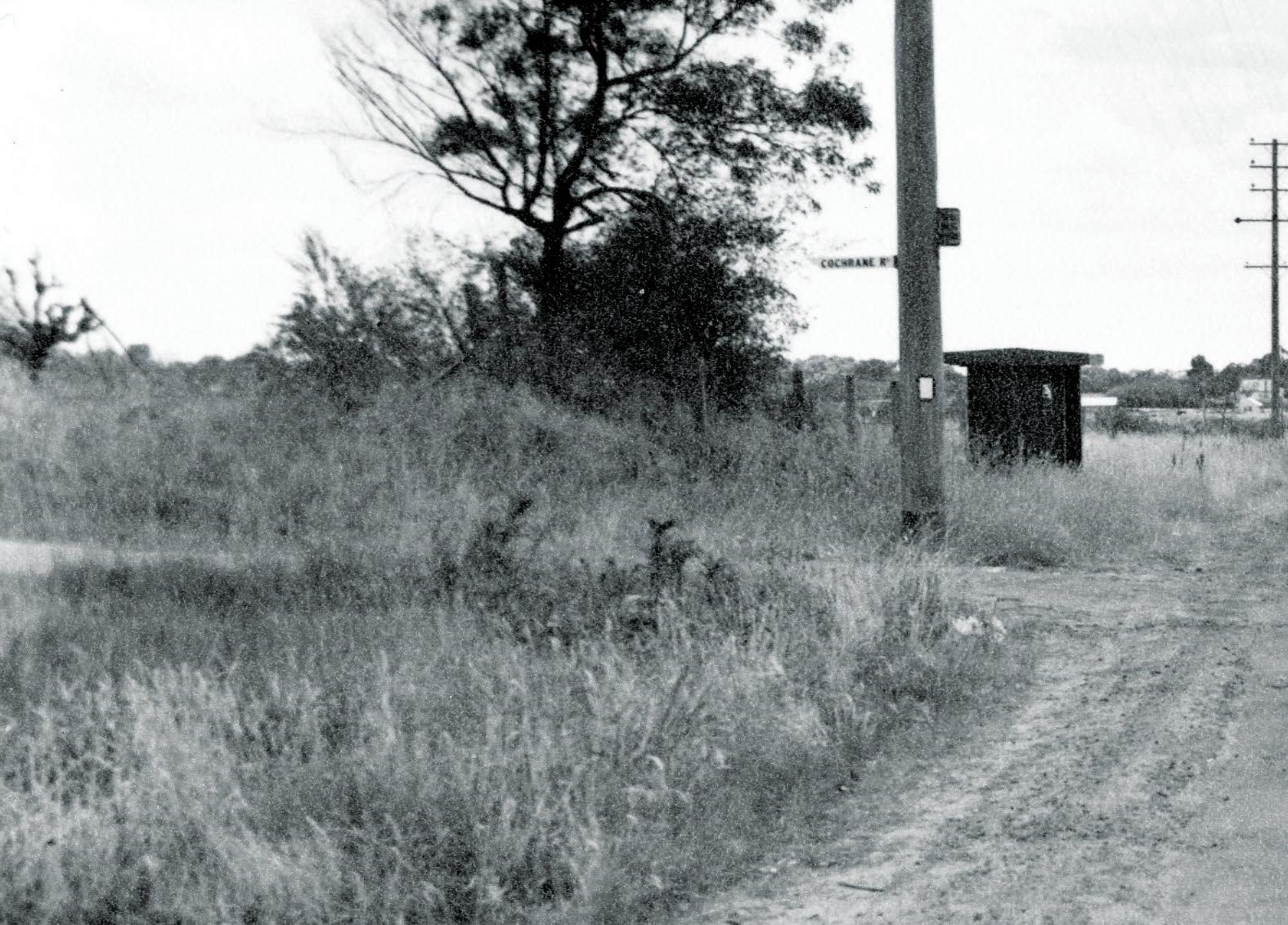
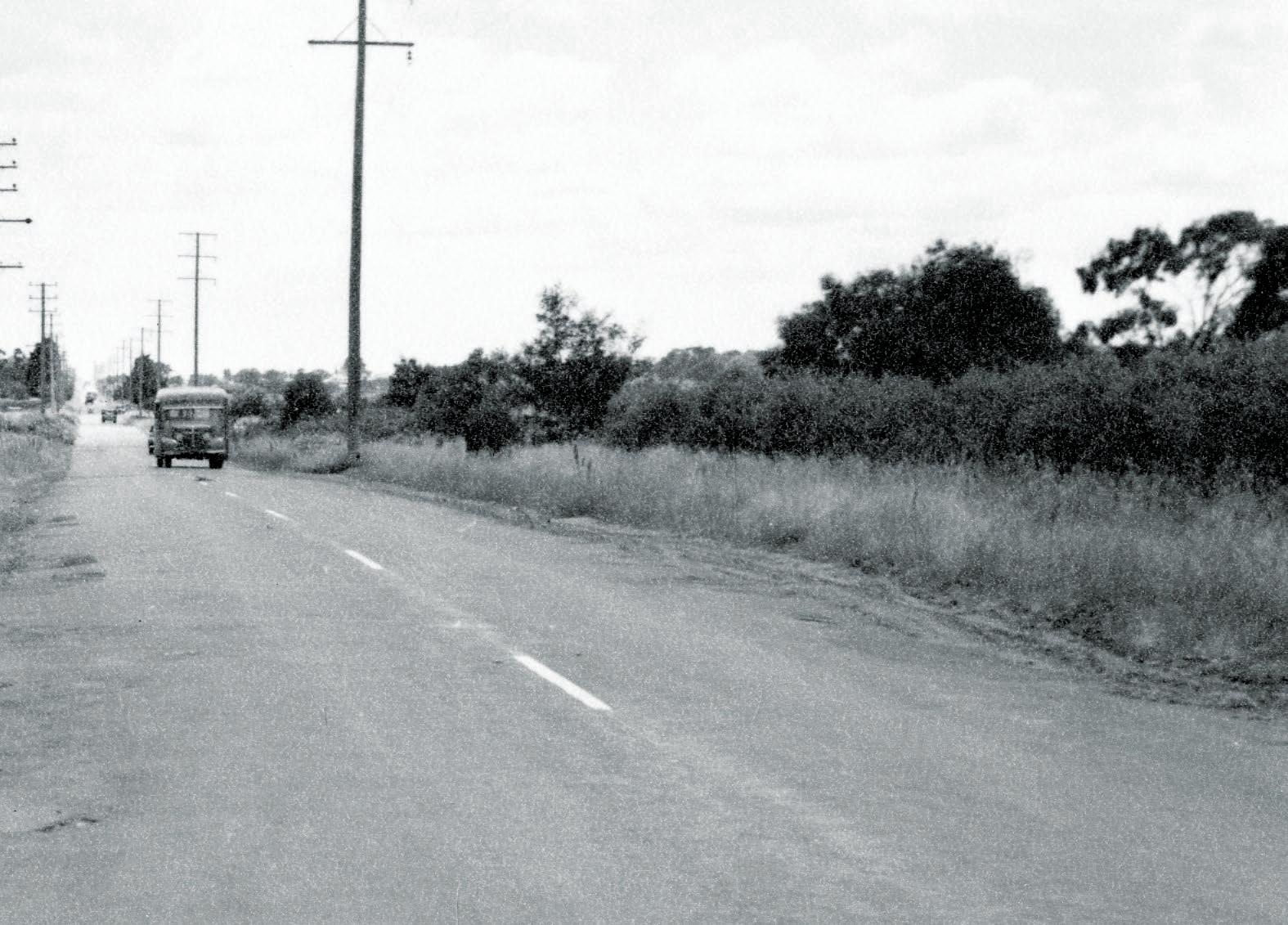
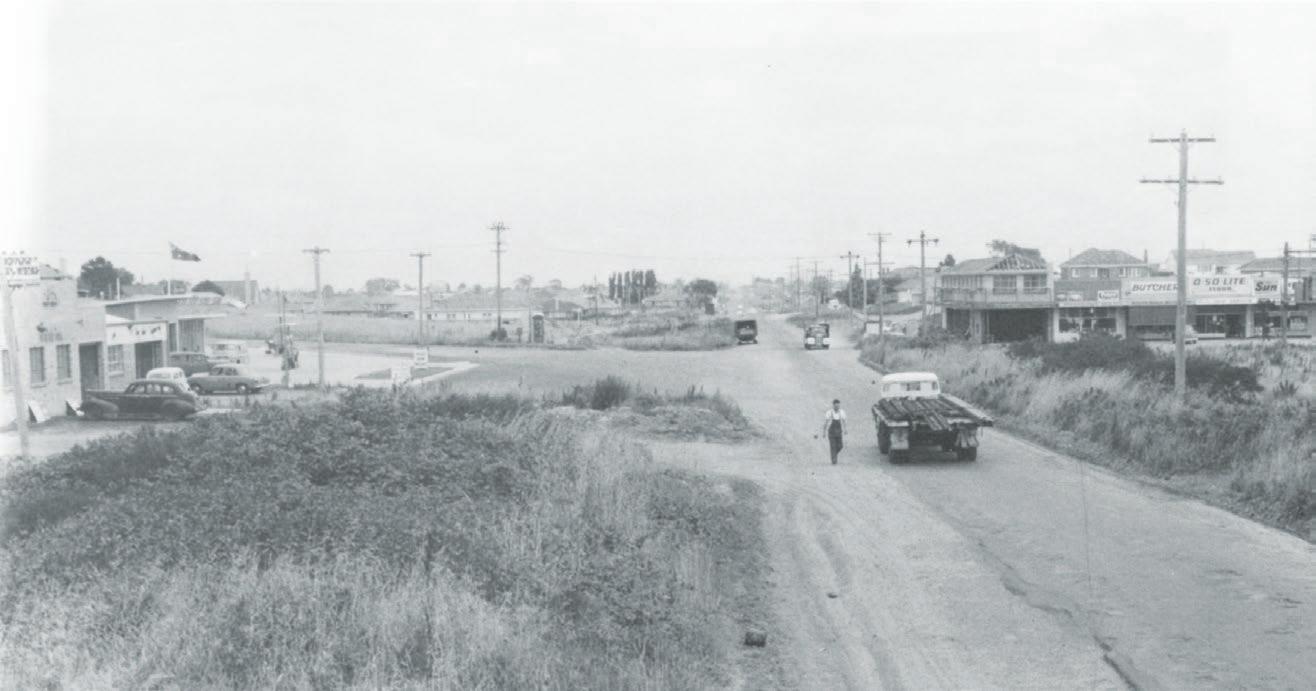
Originally known as Swampy Gully Road, Cochranes Road is just visible on the left at its junction with Warrigal Road in 1950. It was still a dirt track in 1953 when Allan built his office and factory at the other end, closer to the intersection with Chesterville Road.
Image source: City of Kingston
Moorabbin was where many people were settling. The area was also attractive to business and industry, not simply because of available land, but because it straddled the Nepean Highway, which provided good access to the city. Moorabbin, in fact, was one of Australia’s fastest growing municipalities during the 1950s.
After purchasing the Cochranes Road site in 1952, Allan did not have to look too far for someone to help him build a factory with a proper street-front office. His uncle, Les Coombs, was still working as a builder and Allan had been helping him out with some plumbing installations. Les was only too happy to return the favour and soon took charge of the building works at Cochranes Road.
Constructing the company’s new premises was very much a family affair, with Uncle Les laying the factory floor and Allan’s father designing the roof trusses using three-inch steam pipes. Although the area had been designated an industrial estate, they were the only ones building on the entire subdivision at that time.
A dozen people were now employed in the business and everyone pitched in where they could, especially when the factory roof was going up. “We all had our sections to work on,” said Bill Moseley. For many employees, this phase of the company’s development created a further sense of attachment to the business, as they were literally laying the foundations for the A.G. Coombs of the future.
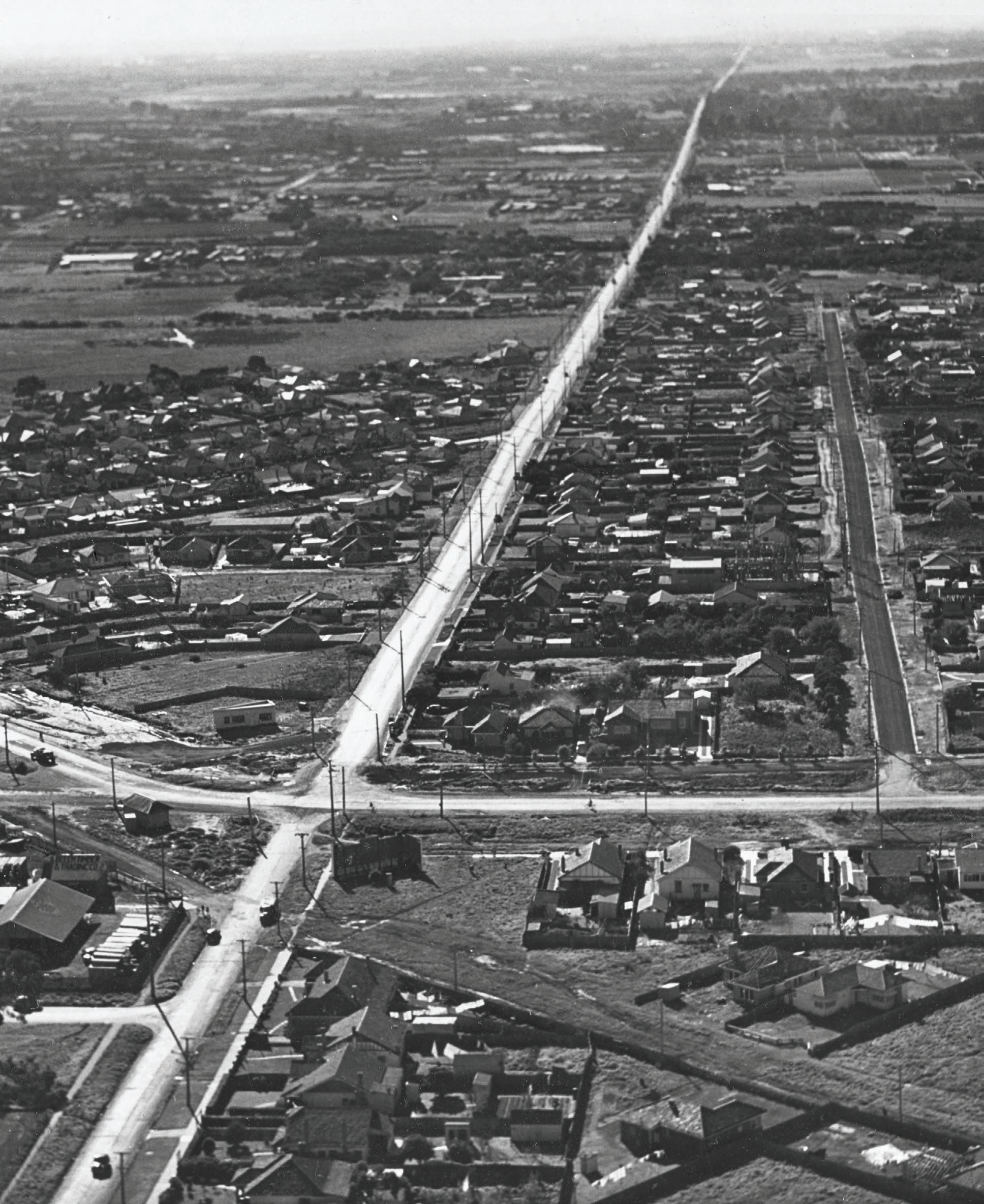
This background image shows the suburbs of Mentone, Cheltenham and Moorabbin, with Warrigal Road intersecting the photograph from top to bottom.
Image source: State Library of Victoria
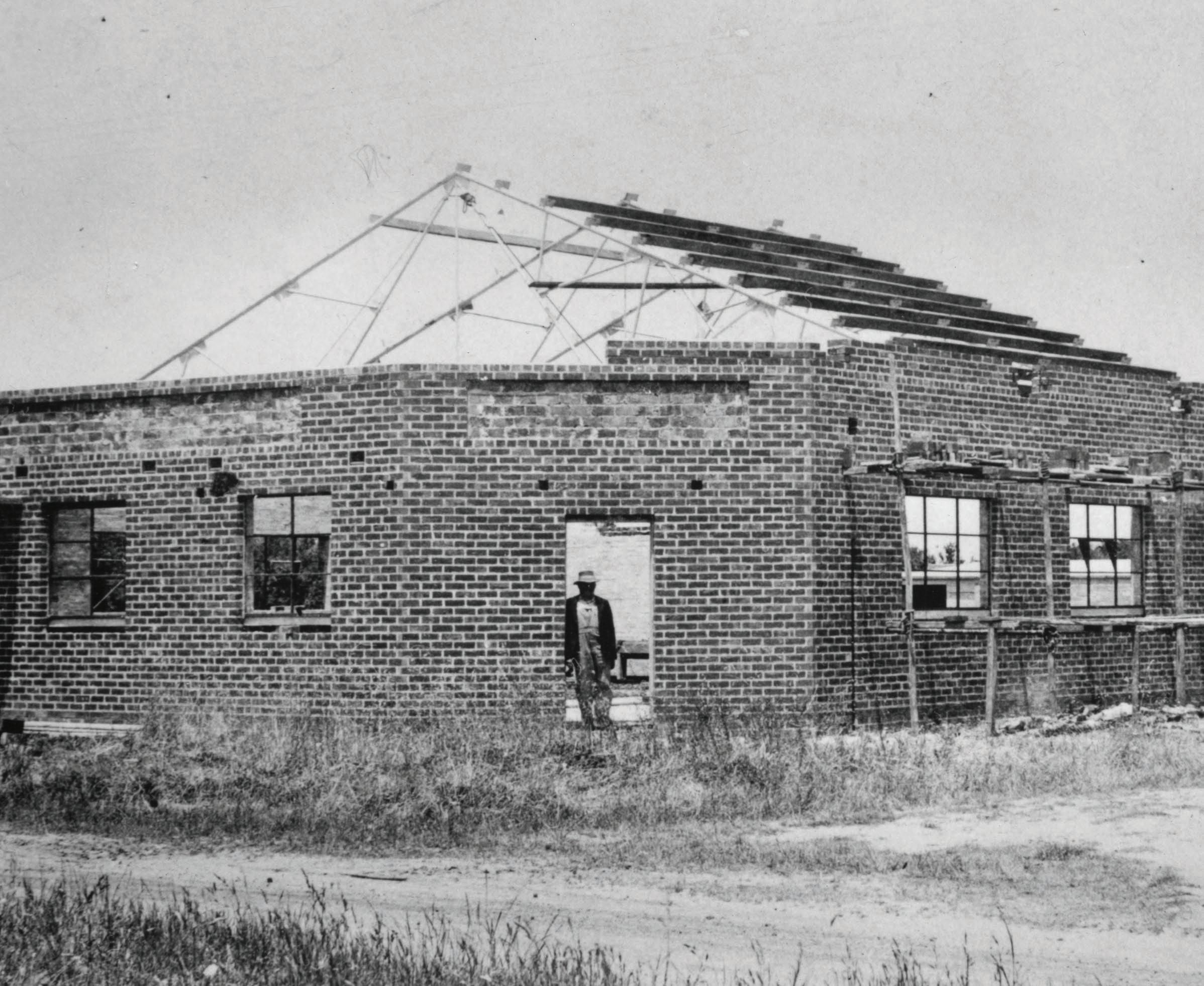
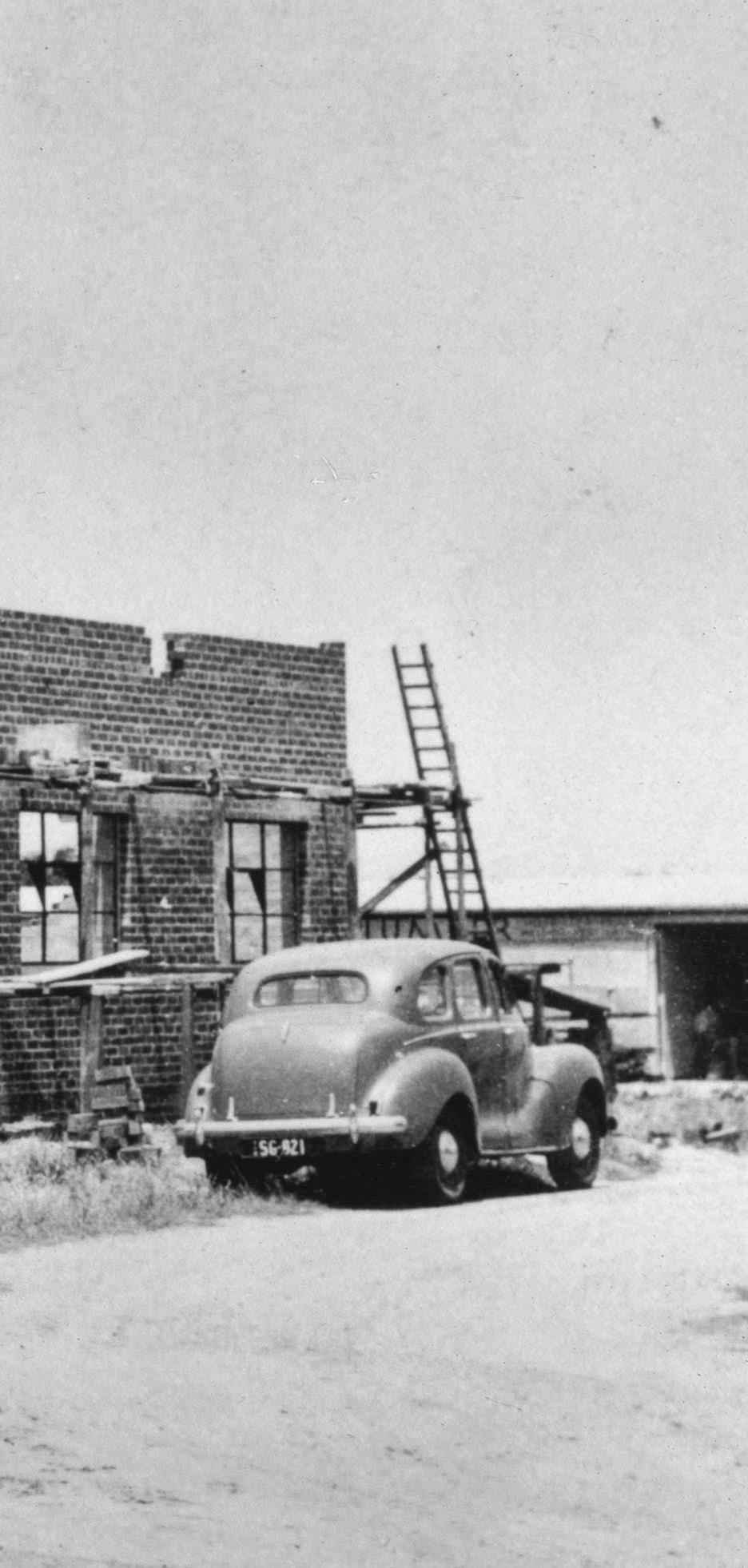
The company’s administration office – pictured here under construction in 1953 – was surrounded by open paddocks. Allan worked on the building himself, with employees helping out when they were not engaged on other jobs. In time, other companies would also start building in the area.
Moorabbin
Allan and his team officially occupied the new facilities at Cochranes Road in October 1953. After Mitchell Street, the main office must have seemed like a mansion, with ample space for a storeroom, an accounts area, an estimating office and a separate office for Allan. “We celebrated this milestone with a square dance in the new factory,” said Bill Moseley. “It was our first social function!”
Allan also increased his landholding in 1953 by purchasing the block of land behind their new offices. This immediately provided a second point of access to the complex from Tabbita Street, a dirt track which ran down one side of the property from Cochranes Road to Levanswell Road.
Other businesses were also keen to build in the area and the real estate agent who had sold Allan the land was quick to approach him about re-purchasing it. His intention, apparently, was to get rid of one of the roads on the industrial estate and join up two parcels of land in order to sell an even larger block to another client. But Allan, with his eyes firmly fixed on the future, refused to negotiate and ended up acquiring additional blocks of land on the estate.

As the business grew, A.G. Coombs began expanding its skills in mechanical services and promoting itself as hot water, heating and ventilating engineers. In those early days, ventilation was usually all that was required, although heating was sometimes included depending on the client’s budget.
Tackling the ventilating jobs required a capacity to make air ducts out of sheet metal. As the company had yet to acquire these skills, Allan had contracted a sheet metal worker by the name of Jack O’Hehir to deliver the air ducts. Jack had been discharged from the army in 1945 and was running a ductwork factory in Northcote on the other side of town. As it was quite a hike travelling there and back to collect all their ductwork, Allan asked Jack if he would
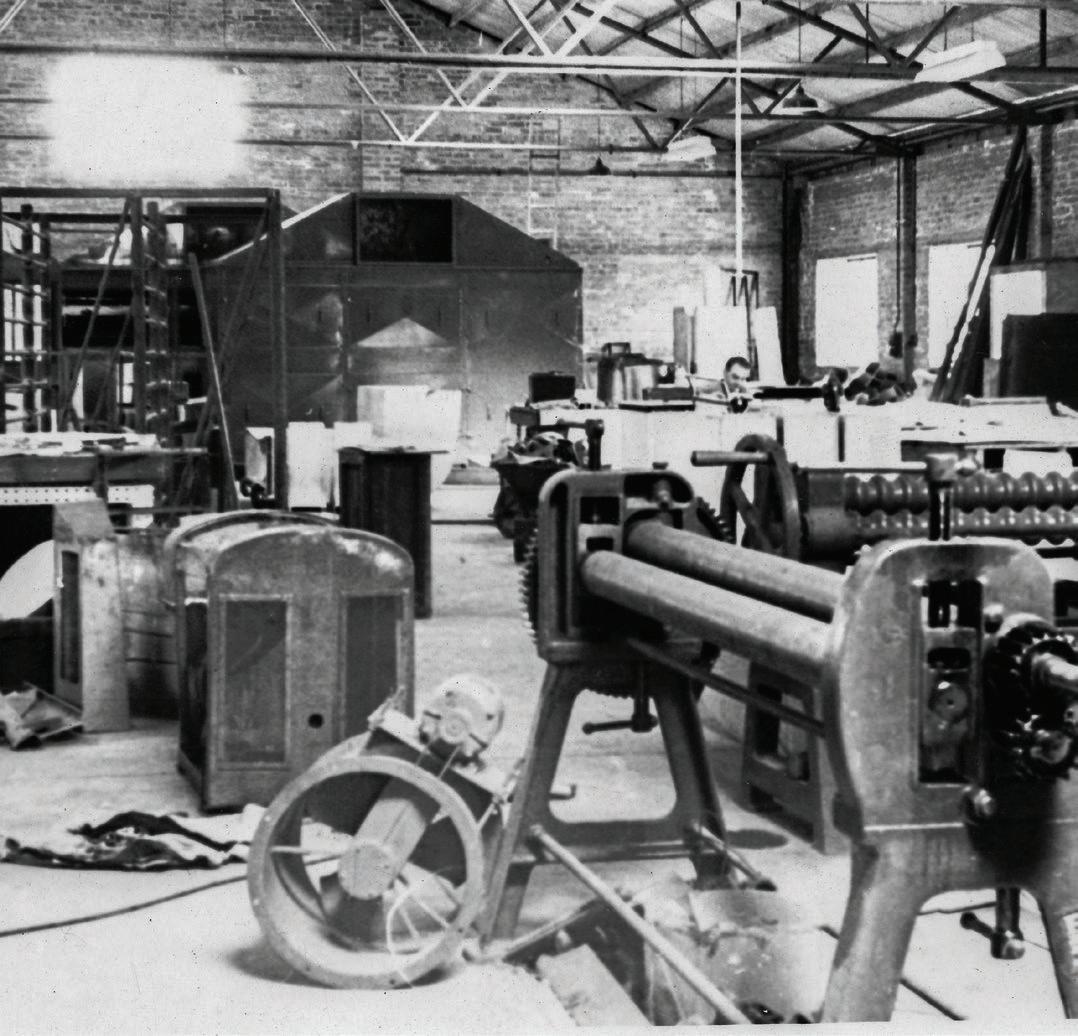
consider relocating to Moorabbin. It was clearly an attractive proposal because, in July 1953, Jack packed up all his gear and moved his machinery to Cochranes Road, where he proceeded to set up a sheet metal shop in the factory, effectively becoming A.G. Coombs’ first factory manager.
Jack O’Hehir was as tough as nails and a very shrewd operator. As factory manager, he ran the place with an iron fist, blacking out all the lights in the toilet block to stop the men lingering there to read the paper. As a sheet metal worker he was “one of the best”, remembered draftsman Jock Fraser. The introduction of sheet metal production was yet another step in the company’s development and a number of apprentice plumbers would spend their first months in the factory learning how to make ductwork.
A skilled sheet metal worker, Jack O’Hehir (right) helped establish what would become A.G. Coombs’ sheet metal factory in 1953. He was also an ex-POW and a survivor of the infamous Changi Prison Camp in Singapore, where he was interned during the Second World War. Coincidentally, another ex-POW, Bill Goodger, would also join the company a year later in 1954.
Jack and Bill knew one another from school and their paths had continued to cross over the years, first as apprentices, then as POWs in Changi, and finally at A.G. Coombs after Bill was employed as a site supervisor. Bill later became a site manager on projects such as Tullamarine Airport (now Melbourne Airport).
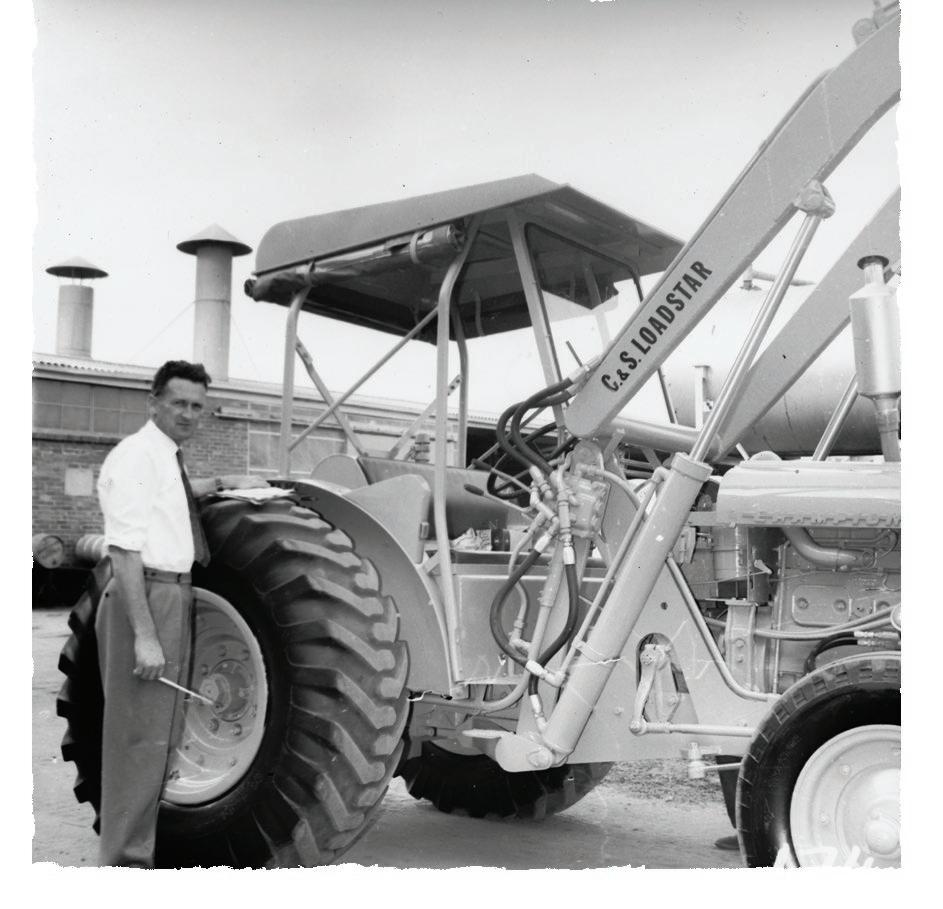
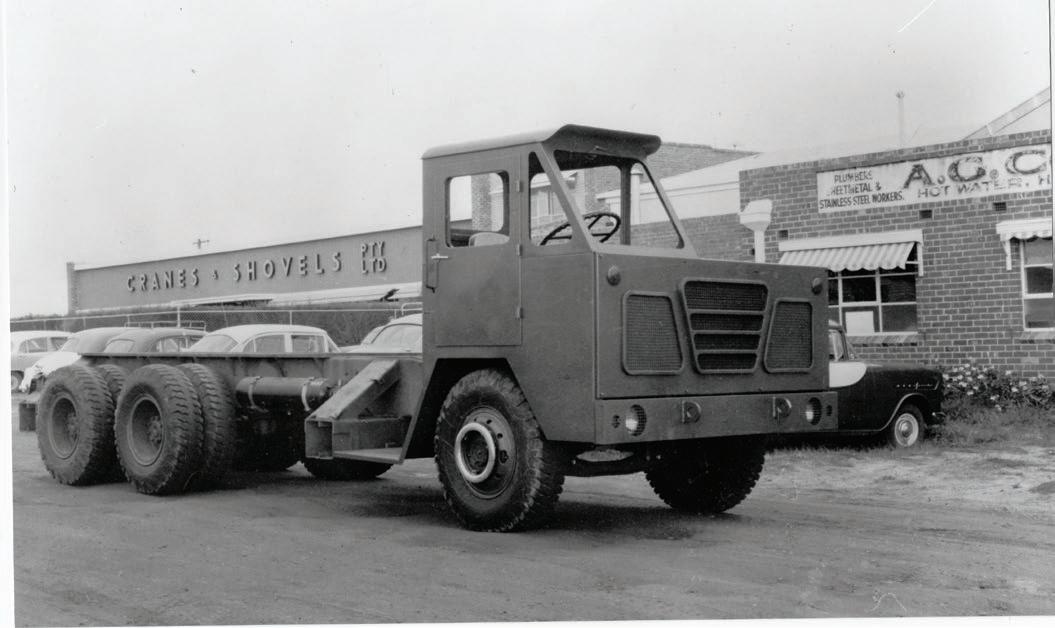
The sheet metal factory not only enabled A.G. Coombs to produce ductwork for its own projects, but also allowed it to apply its skills in other areas, such as building cabins for its new neighbour Cranes and Shovels.

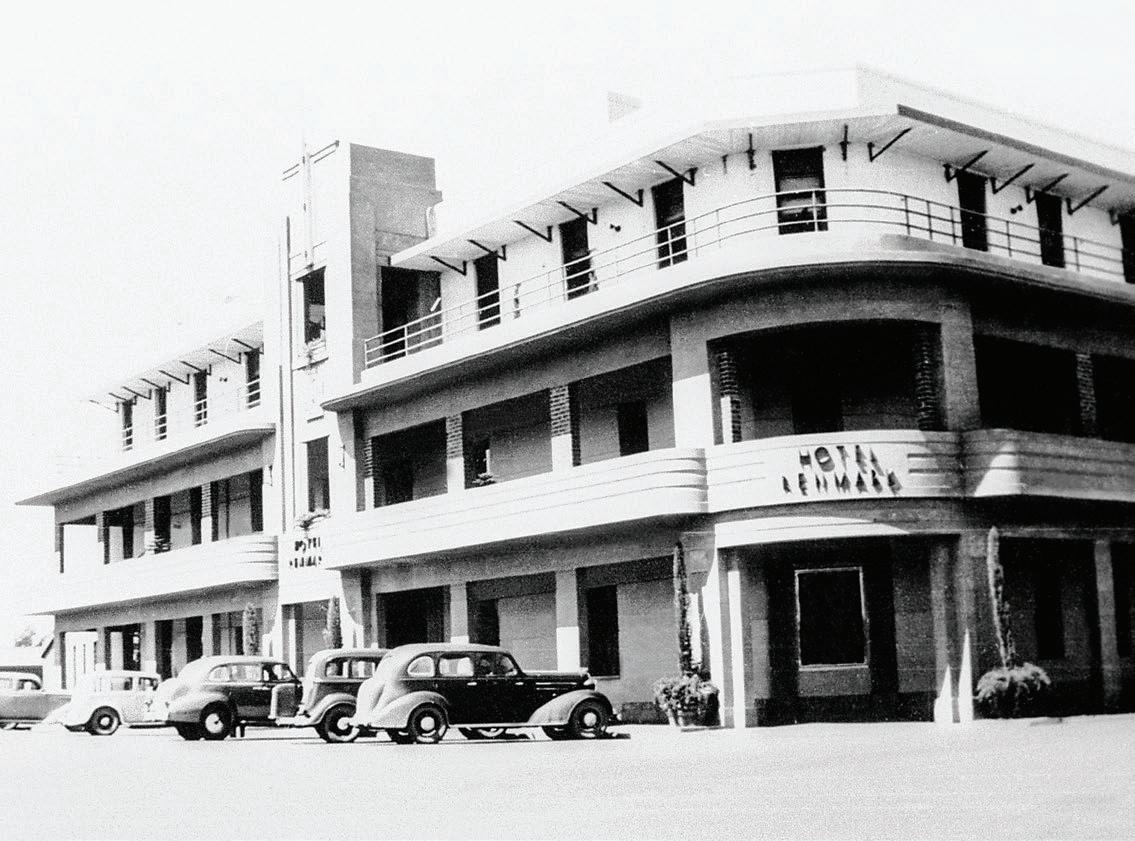
The heating and ventilating side of the business really took off when A.G. Coombs started working on the Renmark Hotel in South Australia, a landmark building on a sweeping bend of the Murray River near the Victorian border. “We re-did the hot water right through the hotel,” said Jim Barr, explaining how they installed a steam generator and all the associated pipework. This project was effectively their first big mechanical services contract.
These were embryonic days in ductwork production and most companies were “bashing a bit of sheet metal together” according to Norm Davies, a qualified engineer from Wales in the United Kingdom, who arrived in Melbourne in 1953. After establishing an engineering consultancy and contracting Allan and his team for various projects, Davies discovered that A.G. Coombs approached its work differently. “A lot of firms were just shoving things together. A.G. Coombs appeared to be the first ones that really put some engineering into the work,” he said.
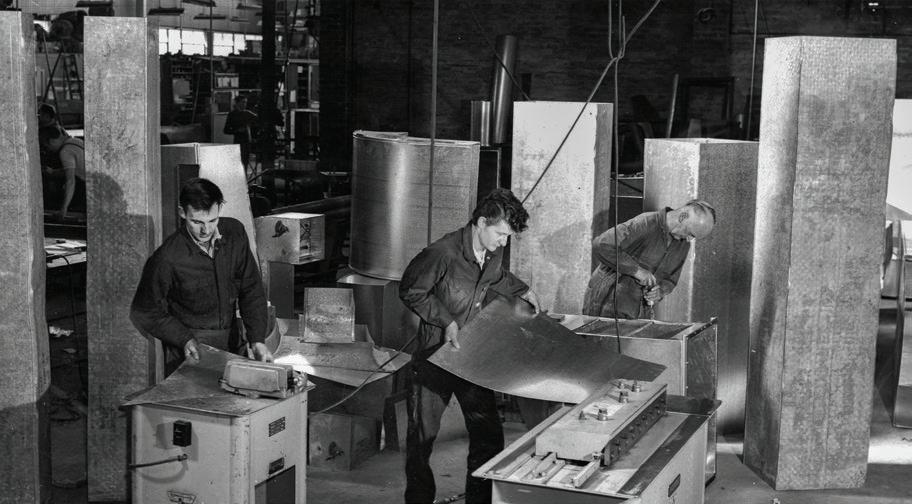
A.G. Coombs’ sheet metal factory was a vital part of the company’s operations. A sheet metal roller can be seen in the foreground, with a corrugating machine located just behind.
Established in 1897, the Renmark Hotel was the first community-owned hotel in the British Empire and, by 1957, boasted the Southern Hemisphere’s longest bar. At over sixty metres long, the bar had twenty taps, and encircled the entire room. By the time A.G. Coombs began installing a steam generator in the 1950s – one of its first big contracts – the hotel was already famous, having been patronised by bush poet and soldier Harry ‘Breaker’ Morant, who apparently rode his horse into the bar. Legendary aviator Sir Charles Kingsford Smith and the Duke and Duchess of Gloucester had also visited the hotel.
Image source: State Library of South Australia
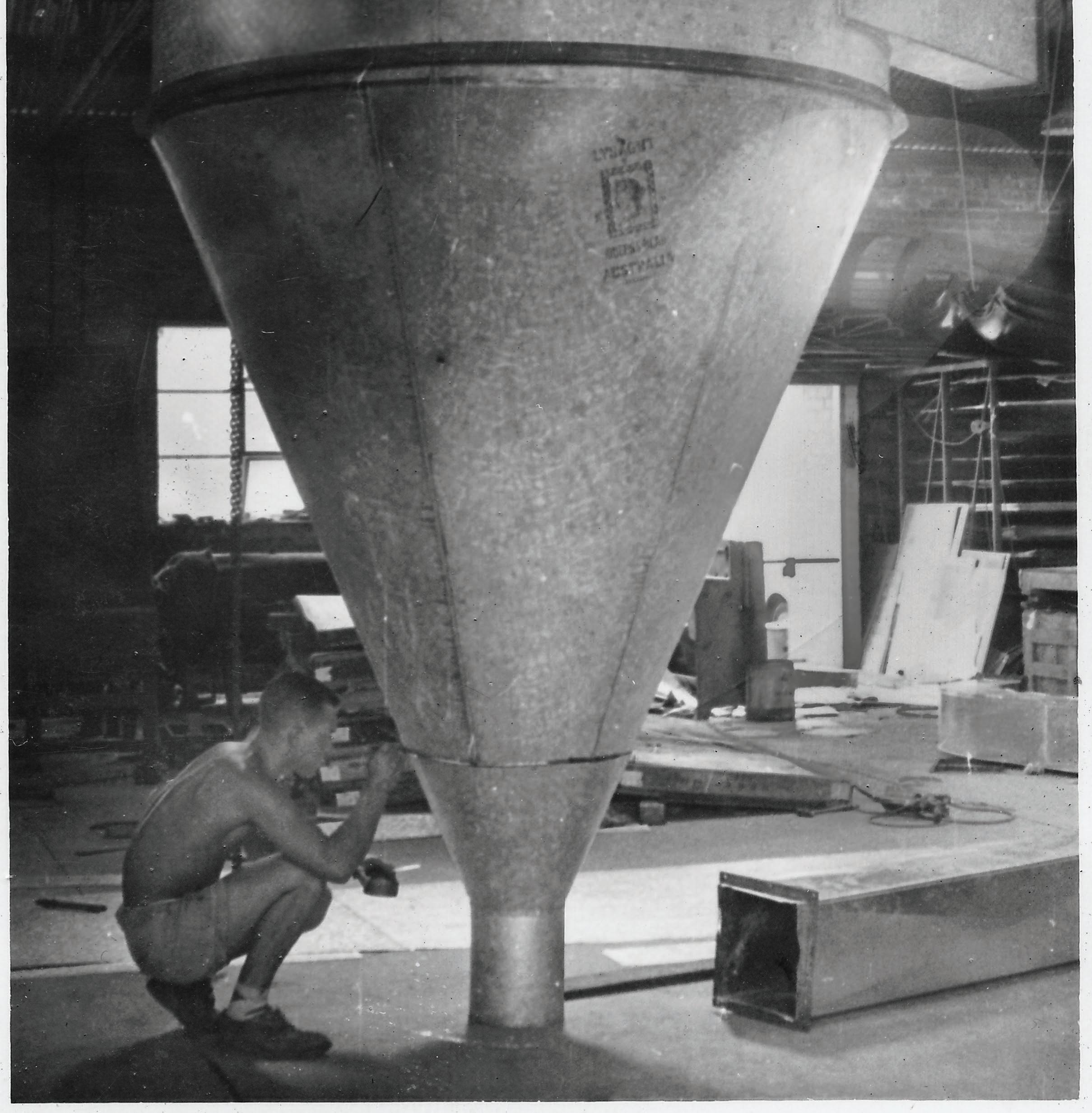

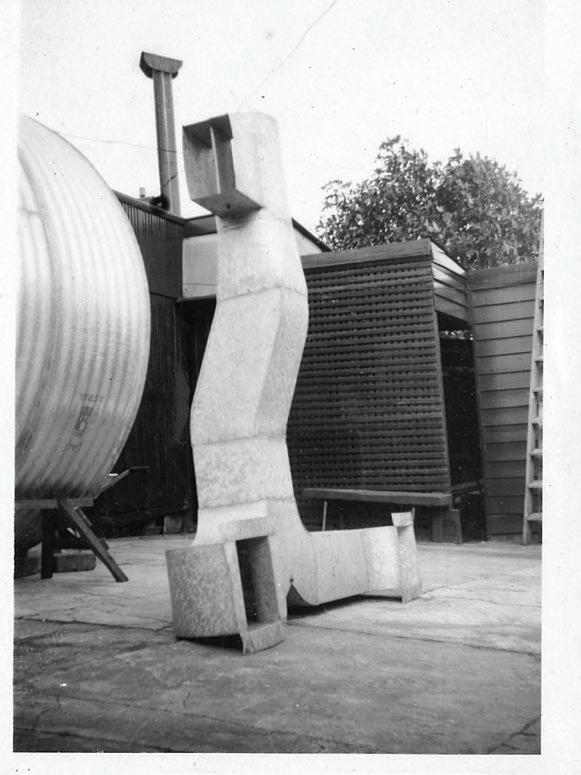
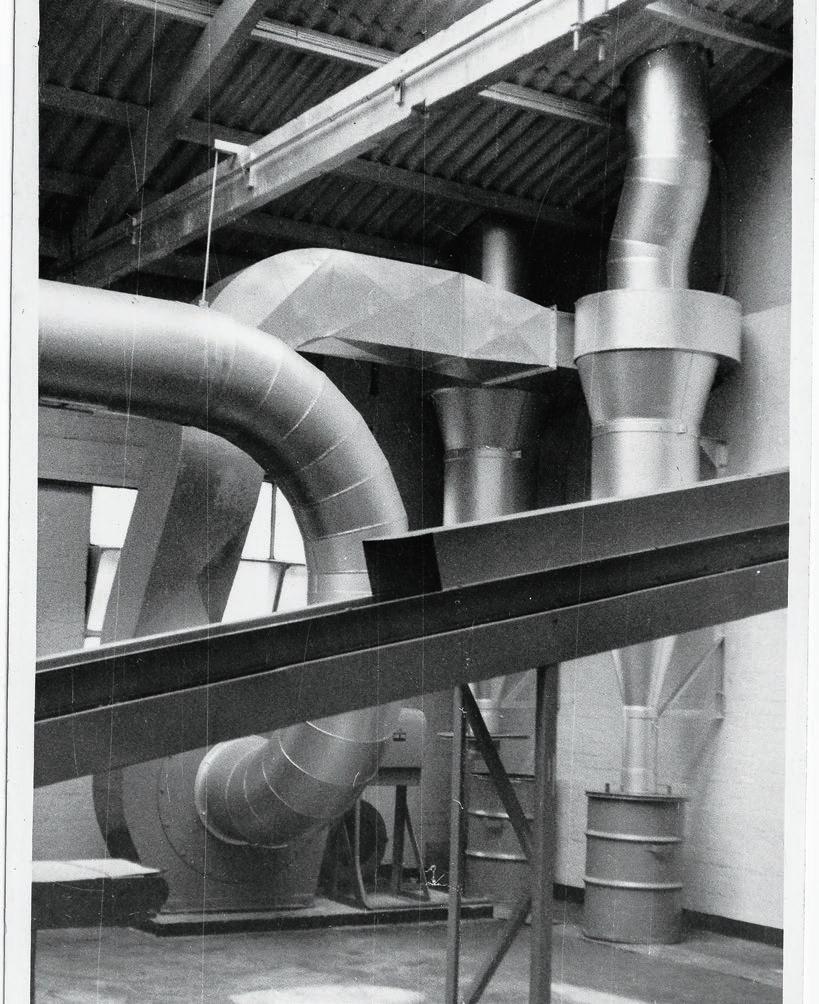
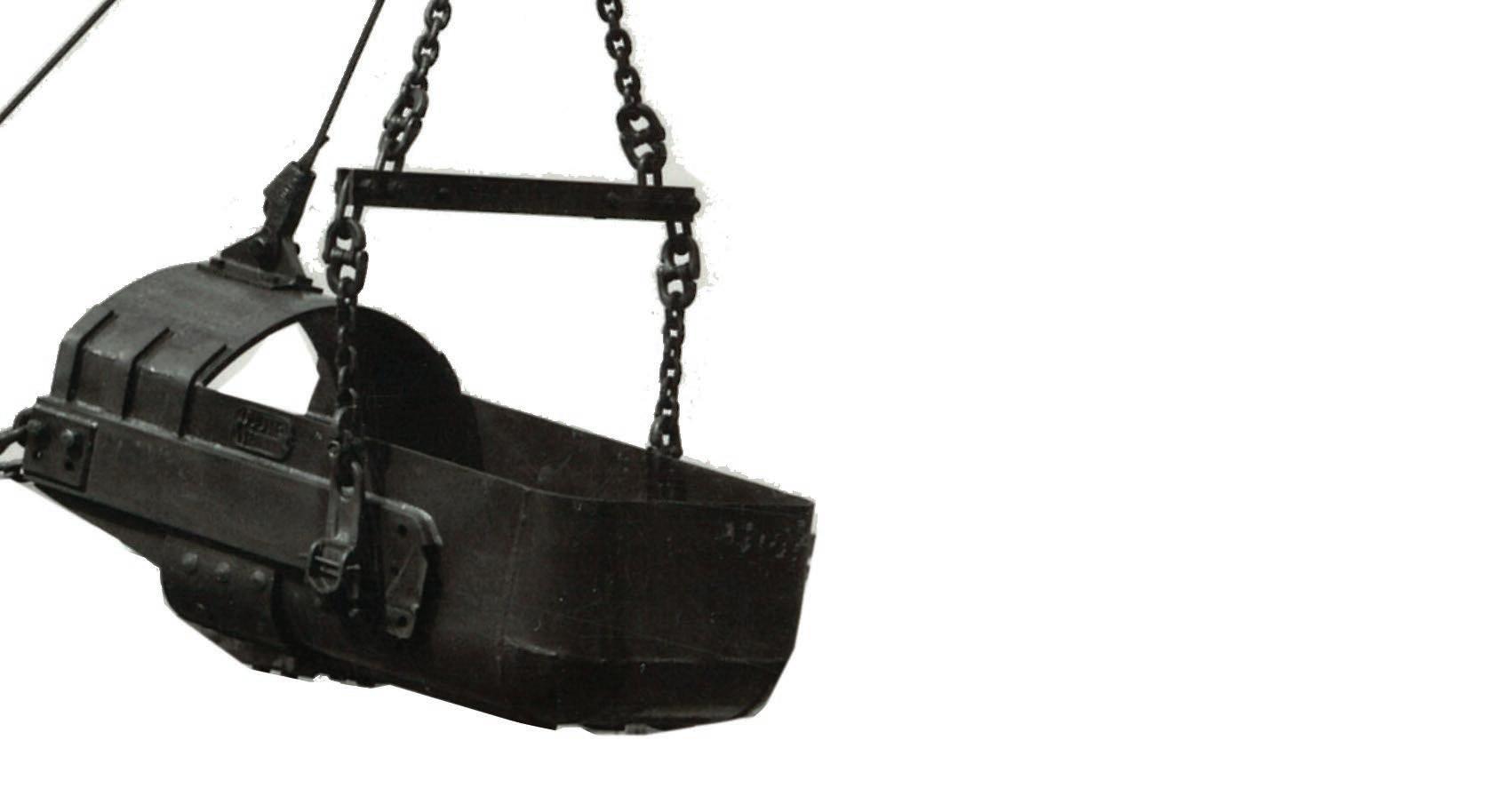
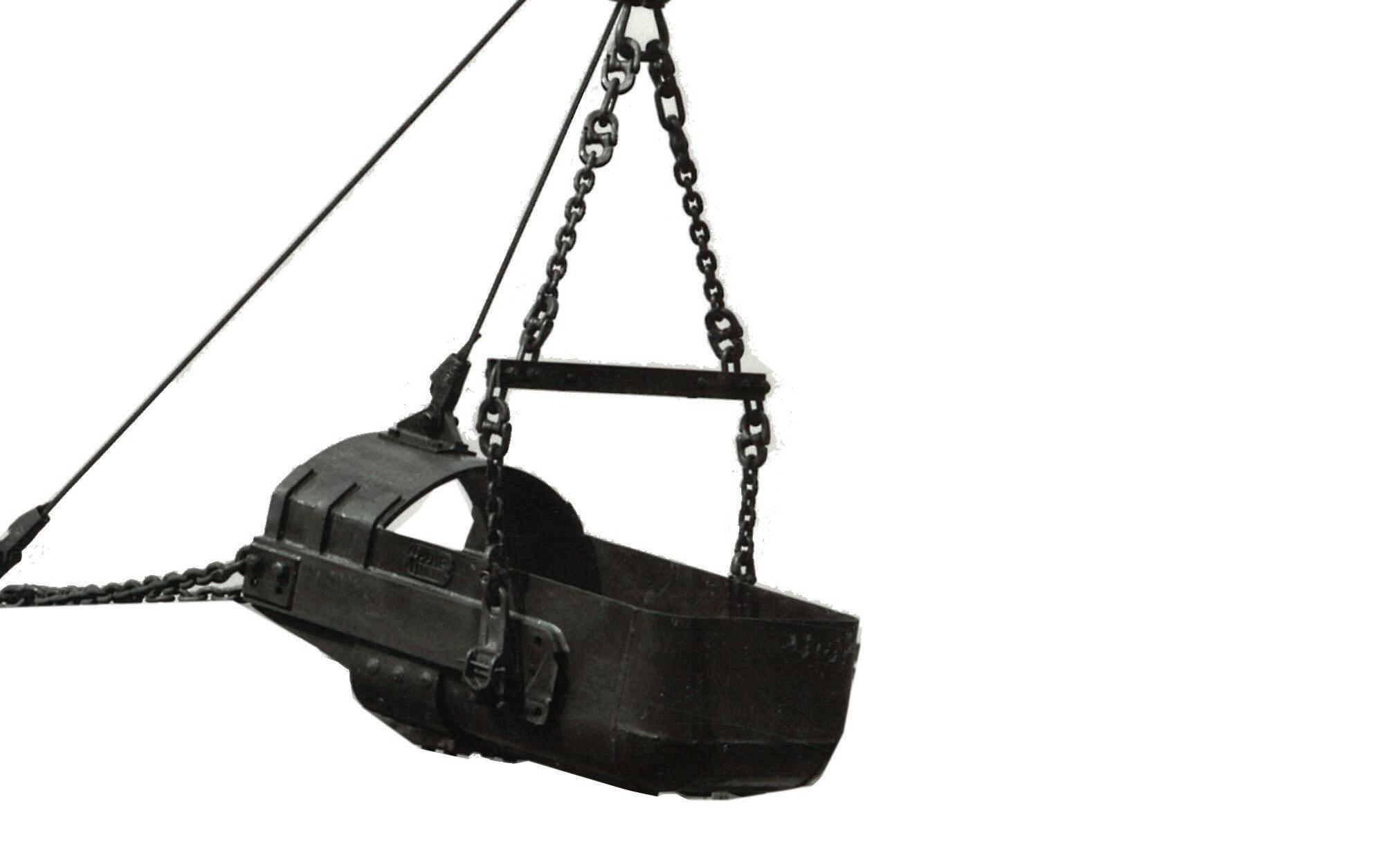
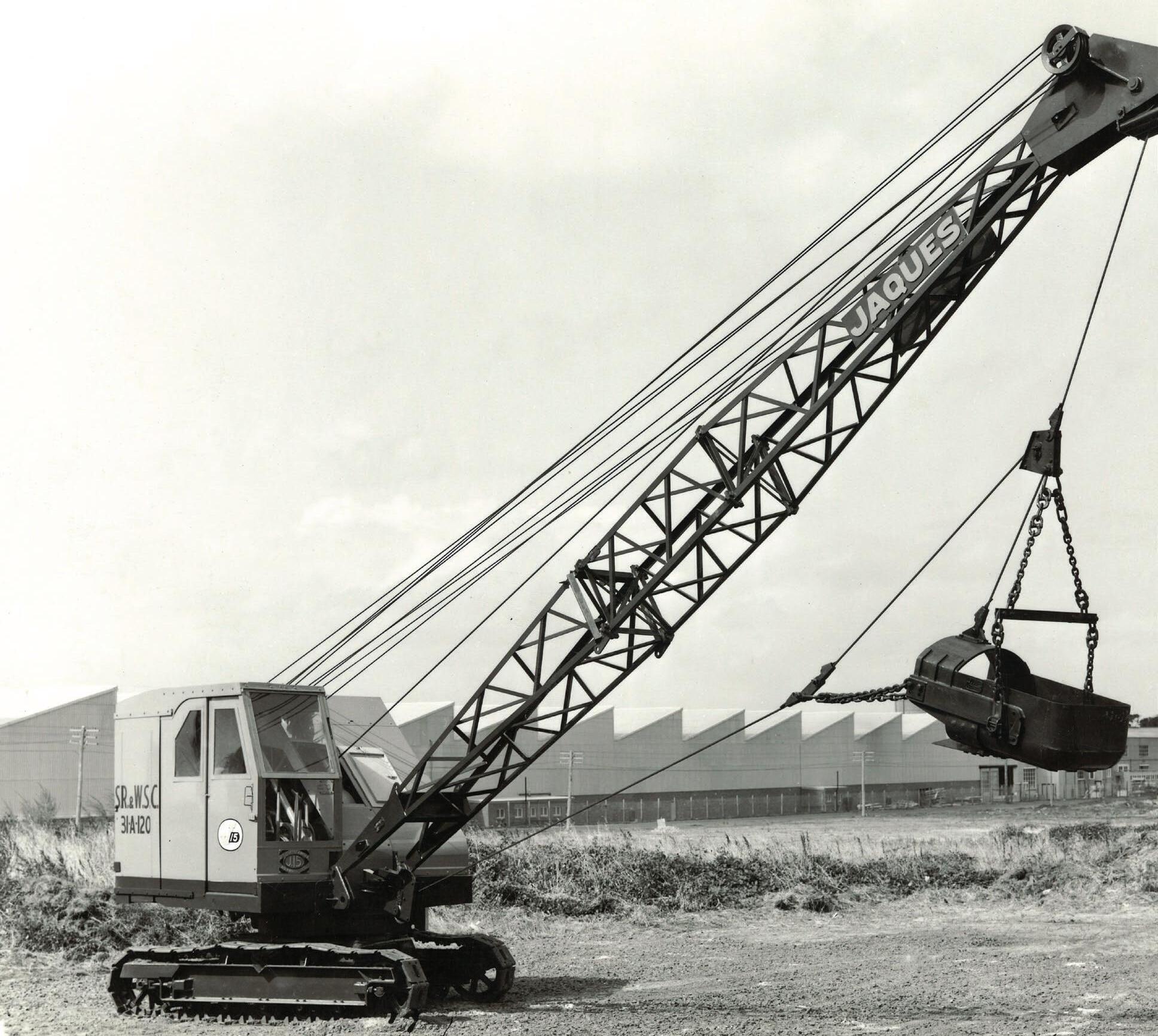
As A.G. Coombs expanded, it began using its technical expertise and sheet metal skills to develop new lines of business. Allan was open to all possibilities, and the company was kept busy during the 1950s manufacturing excavator cabins for Jaques Brothers Engineering. It also began building cabins for Cranes and Shovels, a heavy-equipment company that had established offices next door on Cochranes Road.
After becoming a proprietary limited company in 1954, the company’s letterhead changed to reflect its new name, A.G. Coombs Pty. Ltd. Now that the business had been operating for almost ten years, Allan felt confident about going after larger contracts. He was excited, no doubt, by Melbourne’s appointment as the host city for the 1956 Olympic Games – a rare honour indeed, as it would become the first city in the Southern Hemisphere to host the Olympics. New facilities would be required for the event, and Allan was convinced that his team could handle projects on this scale.
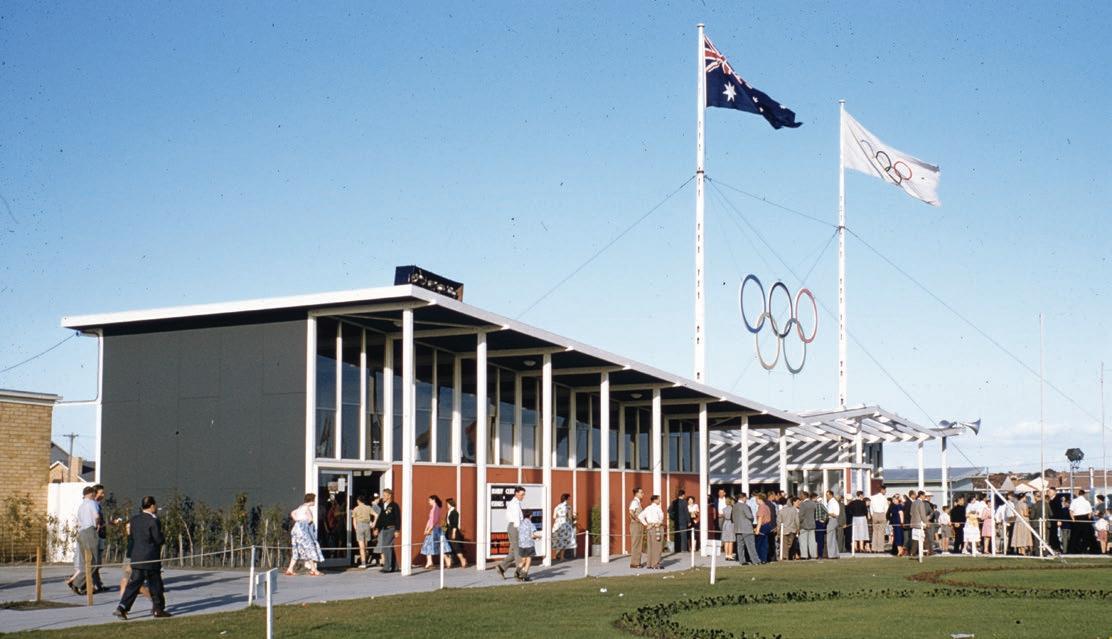
With high hopes, Allan tendered to install the services at the new Olympic Village in Heidelberg and was ecstatic to learn that A.G. Coombs was the successful contractor. The significance of winning the contract for the Olympic Games was not lost on employees. “It was a prestige job, a real feather in the cap,” said Alan Collard, who was just fifteen when he joined the company as an apprentice in 1955. Alan had completed his Intermediate Technical Certificate at Preston Technical College and had been recommended for an apprenticeship by his teacher. In fact, it was his teacher’s brother, Trevor Eastoe, a supervisor and estimator with A.G. Coombs, who managed to secure him an interview.

Allan Coombs always liked meeting the families of prospective apprentices and interviewed both Alan Collard and his father together. Not long after, Mr Collard received a letter saying that A.G. Coombs was prepared to offer his son a five-year apprenticeship with a three-month probationary period. The letter opposite shows Alan Collard’s first name mistakenly spelt with a double ‘L’ – presumably by someone used to writing ‘Allan’ the way the boss did.
As the company’s practice back then was to assign one apprentice to each job, Alan Collard first went to the Preston Hotel (later renamed the Olympic Hotel) and then to the Olympic Village. Between jobs, he spent a week at the company’s offices in Moorabbin, cycling there and back from his home in East Preston – a round trip of approximately forty-five kilometres!
He also recalled how Allan Coombs was still helping with various jobs in the lead-up to the Olympics, even assisting with the installation of hot water tanks at the Olympic Hotel. It would be the last project where Allan Coombs had a hands-on role in the mechanical installations, as managing the business was increasingly occupying his time.
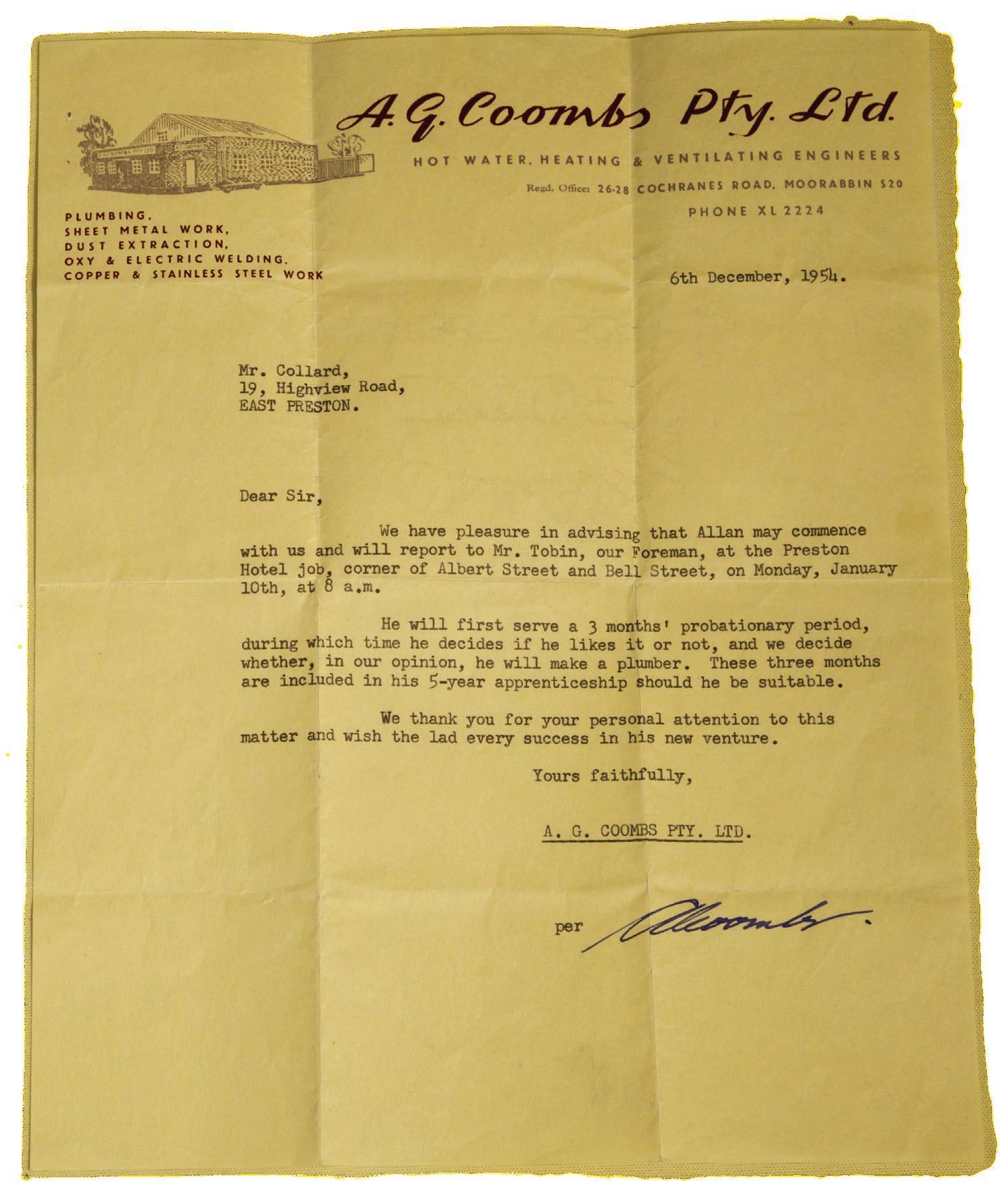
Alan Collard was accepted as an apprentice in 1954, with his first day of work commencing in January 1955.
Note the envelope highlighting the forthcoming Olympic Games in November 1956.


This hand-drawn map was prepared for the organising committee of the 1956 Olympic Games. A.G. Coombs tendered for and won the contract to install all the underground steam mains at the Olympic Village (see bottom right).
Image source: Public Record Office Victoria
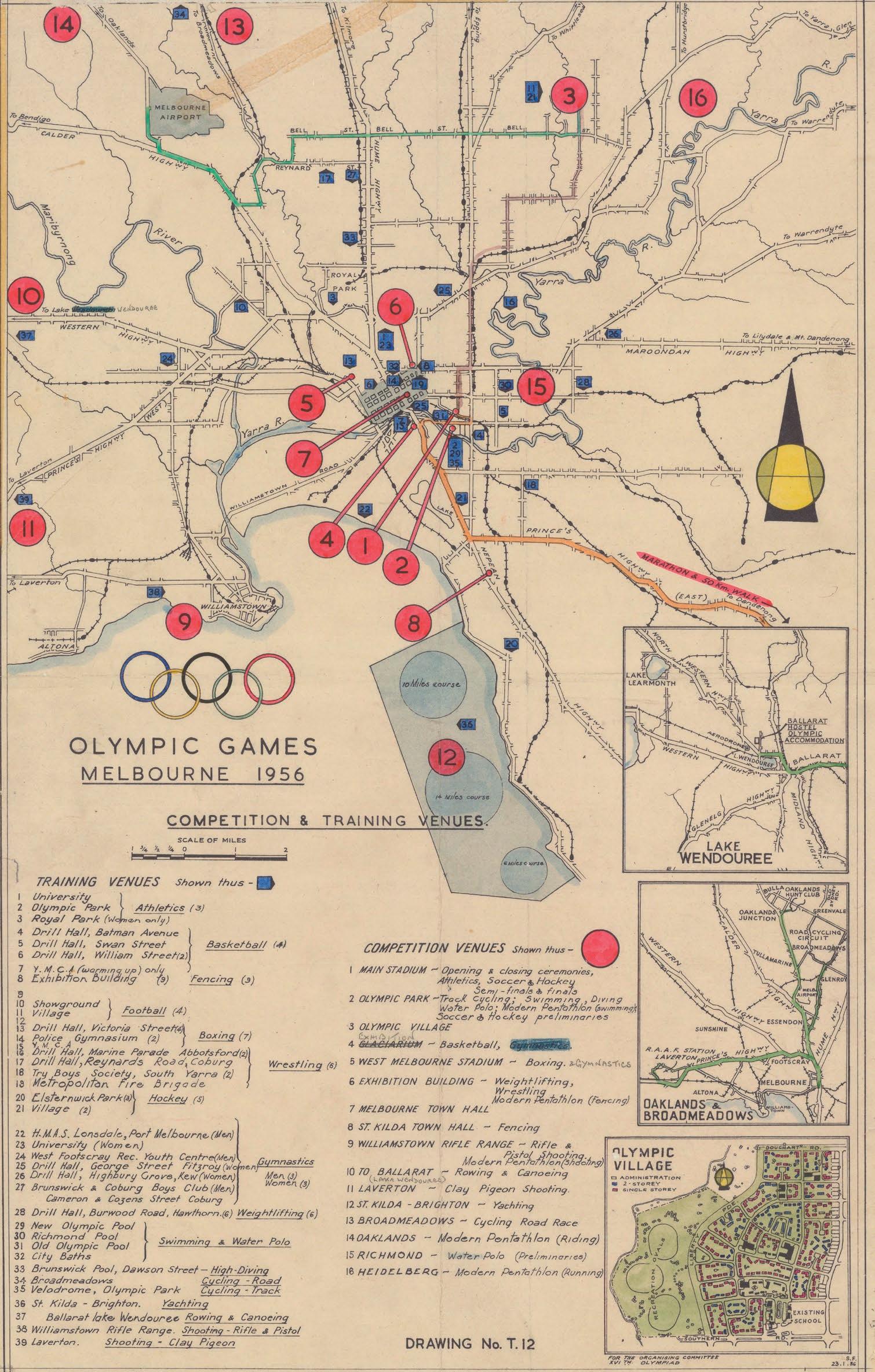

Melbourne’s Olympic Village in Heidelberg was conceptualised as a self-contained community, with accommodation for thousands of international athletes and officials. However, unlike the dormitory-style accommodation at previous Olympic Games, the Heidelberg complex boasted over 800 bungalow-style dwellings for smaller groups of people.
As one of the successful contractors for the Village, A.G. Coombs was responsible for installing all the underground steam mains throughout the complex. This involved digging all the trenches and then laying metres of expensive copper pipes to reticulate steam from several generator plant rooms to all the bathrooms and kitchens. “It was hard work, as it was all volcanic rock and very sticky clay soil,” said Alan Collard, who was now in the second year of his apprenticeship.
After several strenuous weeks of trench digging and laying the copper steam mains, the builders finally poured the concrete for the footpaths and gutters; however, no one was aware at the time that their copper piping had been punctured by the steel pegs holding the concrete form work. “When we turned on the generators, there were steam geysers all over the place, just like in New Zealand,” said Alan, recalling how everything had to be dug up and repaired.
Despite the arduous tasks they were expected to do, it was up to all workers to take care of their attire. Tradesmen, as well as apprentices, had to supply their own work gear, which basically comprised overalls and boots – there were no such things as hard hats, safety glasses and gloves in those days. People also remembered conditions as being fairly primitive at most of the job sites. Sometimes they worked out of corrugated galvanised iron sheds, which were freezing in winter and stifling hot in summer. The floor was dirt and the ‘seats’ were little more than planks between bricks. Tea and coffee dispensers were unheard of.
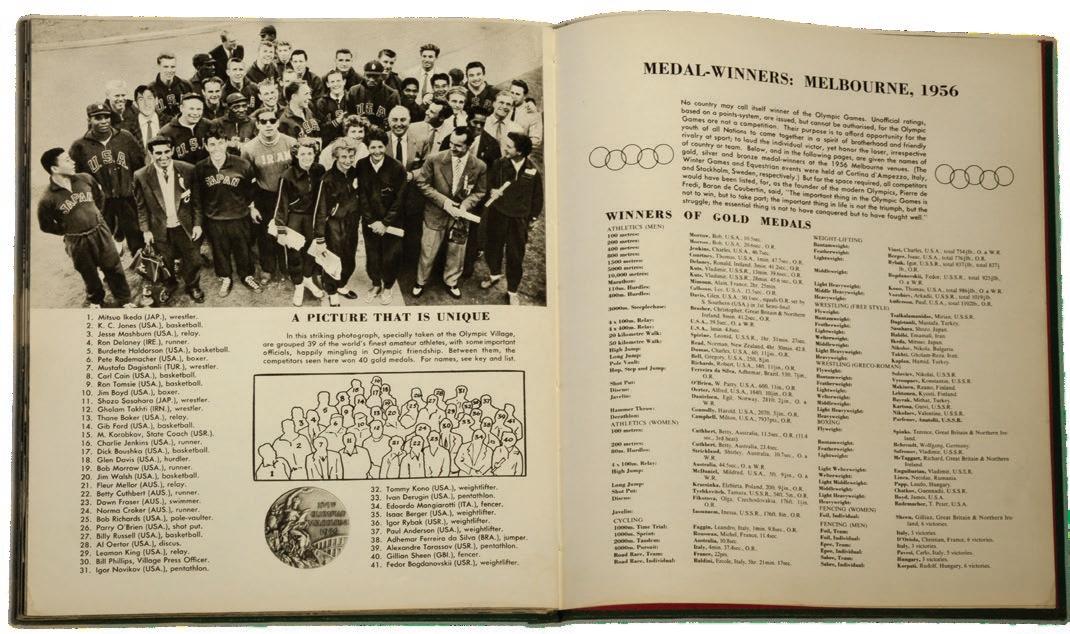
A.G. Coombs installed the heating services at the Olympic Village, which became home to almost 5,000 athletes and officials during the 1956 Olympic Games. The group of athletes (left) took home forty gold medals between them.
Australia’s gold-medal athletes in the front row included swimmer Dawn Fraser (third from right), who won two gold medals, and sprinter Betty Cuthbert (fourth from right), who won three. The Melbourne Olympics were known as the ‘Friendly Games’ after a Chinese Australian teenager wrote anonymously to the Games Organising Committee suggesting that, instead of marching in teams, athletes should mingle freely during the closing ceremony – an idea that has become an Olympic tradition. The letter’s author was later identified as apprentice carpenter, John Wing.
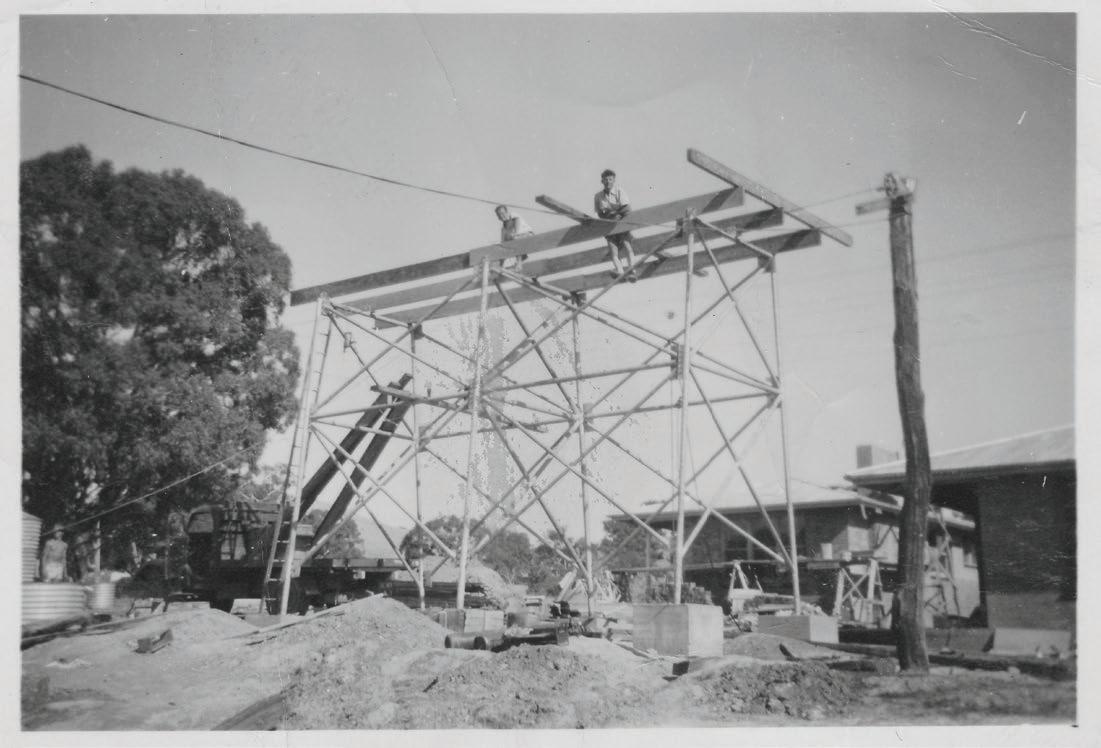
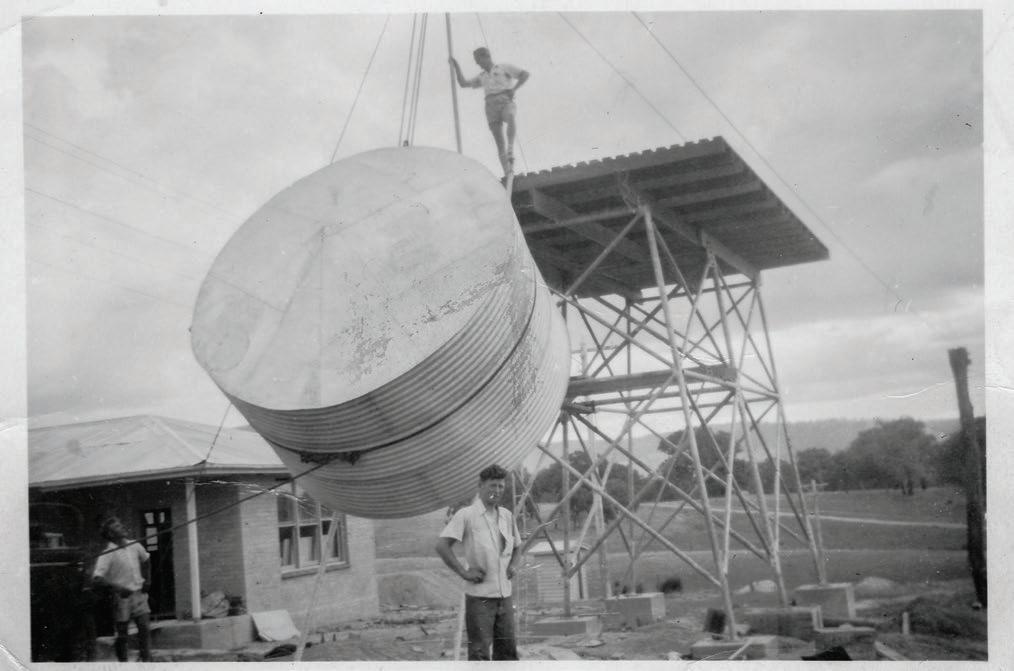
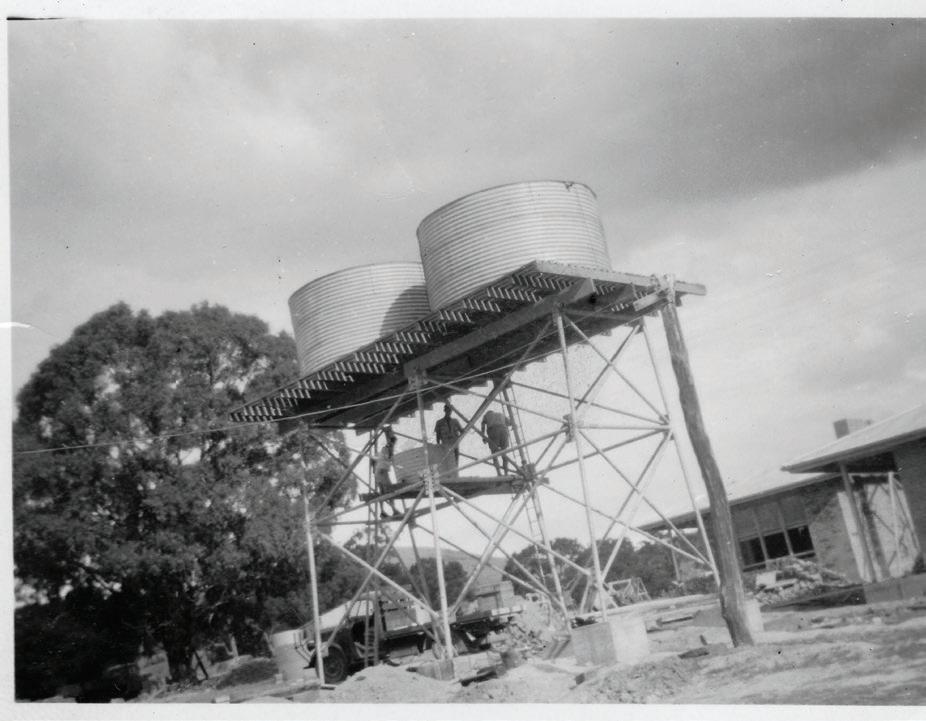
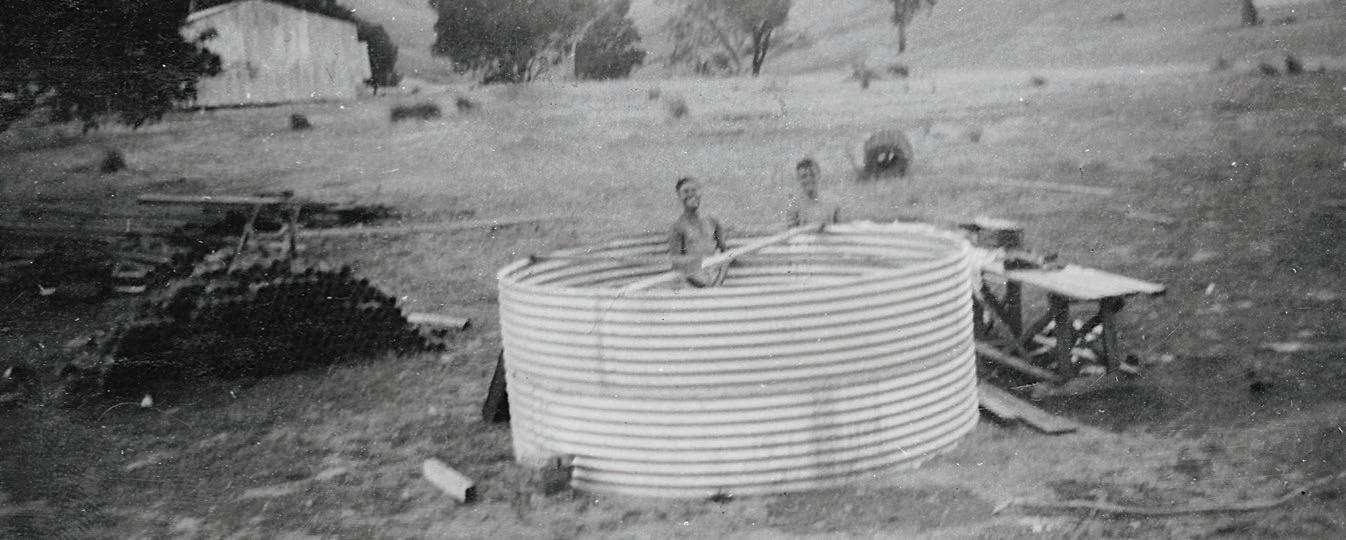
Apprentices were often sent out on country jobs, where they gained valuable experience alongside qualified tradespeople. Here, a couple of young lads pose with a water tank, prior to hoisting it several metres above ground.
Allan Coombs first started employing apprentice plumbers in the late 1940s and wasted no time in sending them out on jobs with qualified tradesmen. This provided new recruits with not only practical experience, but also a little adventure, as they were often assigned to country projects after they completed their weekly classes.
Jim Barr, the company’s first apprentice, had started out with Allan as a fifteen-year-old back in January 1947. Along with Bill Moseley and Alan Collard (who joined as apprentices in the 1950s), he would end up staying with A.G. Coombs for many years and later progress into management roles.
From the 1940s to the 1960s, plumbing apprenticeships were completed over a five-year period, although this would later be reduced to four years. To be eligible for an apprenticeship, applicants had to complete third form at a technical school and obtain their Junior Technical Certificate. Some applicants also managed to complete fourth form and attain their Intermediate Technical Certificate.
Most apprentices would have been around fifteen or sixteen years of age when they joined the company. Junior Certificate holders then had to complete four years of trade school during their five-year apprenticeship, whereas those holding an Intermediate Certificate only had to do three years of trade school, as their first year was covered by the intermediate qualification. The Intermediate Certificate was of enormous benefit to the employer, as it meant the apprentice was available to work for two full years during a five-year apprenticeship, as opposed to only one year with the Junior Certificate.
Apprentices attended their local trade school one day a week, but travelled into the city to complete their final year at the Royal Melbourne Institute of Technology. As they soon discovered, there was just as much emphasis on theory as there was on practical skills, with textbooks setting out in great detail everything apprentices needed to know about the trade, from the design and sizing of soil stacks and vents to the layout for sewer and stormwater drains. Students also had to get their heads around cold water reticulation and gas-fitting systems, while learning about roofing materials and associated practices and processes.
Practical work during the apprenticeship was carried out in trade school classes and included constructing sheet lead flashings (for roof penetrations of pipes), fabricating spouting angles and joints, and making downpipe connections. All students had to master these activities before sitting an annual examination.
Securing an apprenticeship with the right company was crucial, as it was important to have good mentors and a variety of work experience. Allan Coombs always took a keen interest in the apprenticeship program and often interviewed applicants and their parents himself.
In addition to their weekly wage, apprentices received a toolkit valued at £20 in 1955. “We also received a nominal weekly tool allowance to purchase and replace tools,” said Alan Collard who, in 1955, was earning £4/10/3 per week (equivalent to $195 in 2025). His working week was then forty hours and there was no such thing as a rostered day off.
During those years, protective clothing was not compulsory, nor supplied by the company. Apprentices recalled having to purchase their own overalls and boots, and working on building sites without any of the high-visibility clothing that in time would become standard issue and a mandatory industry requirement at all work sites.
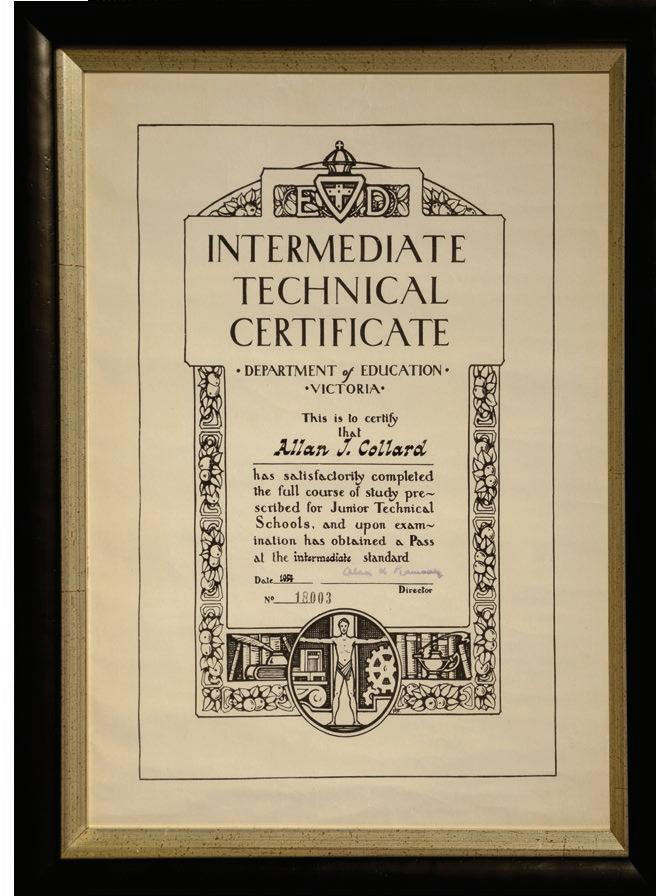
Apprentices who had attained their Intermediate Technical Certificate before joining the company were available for an extra year of full-time work, as they were only required to do three years of trade school instead of four.
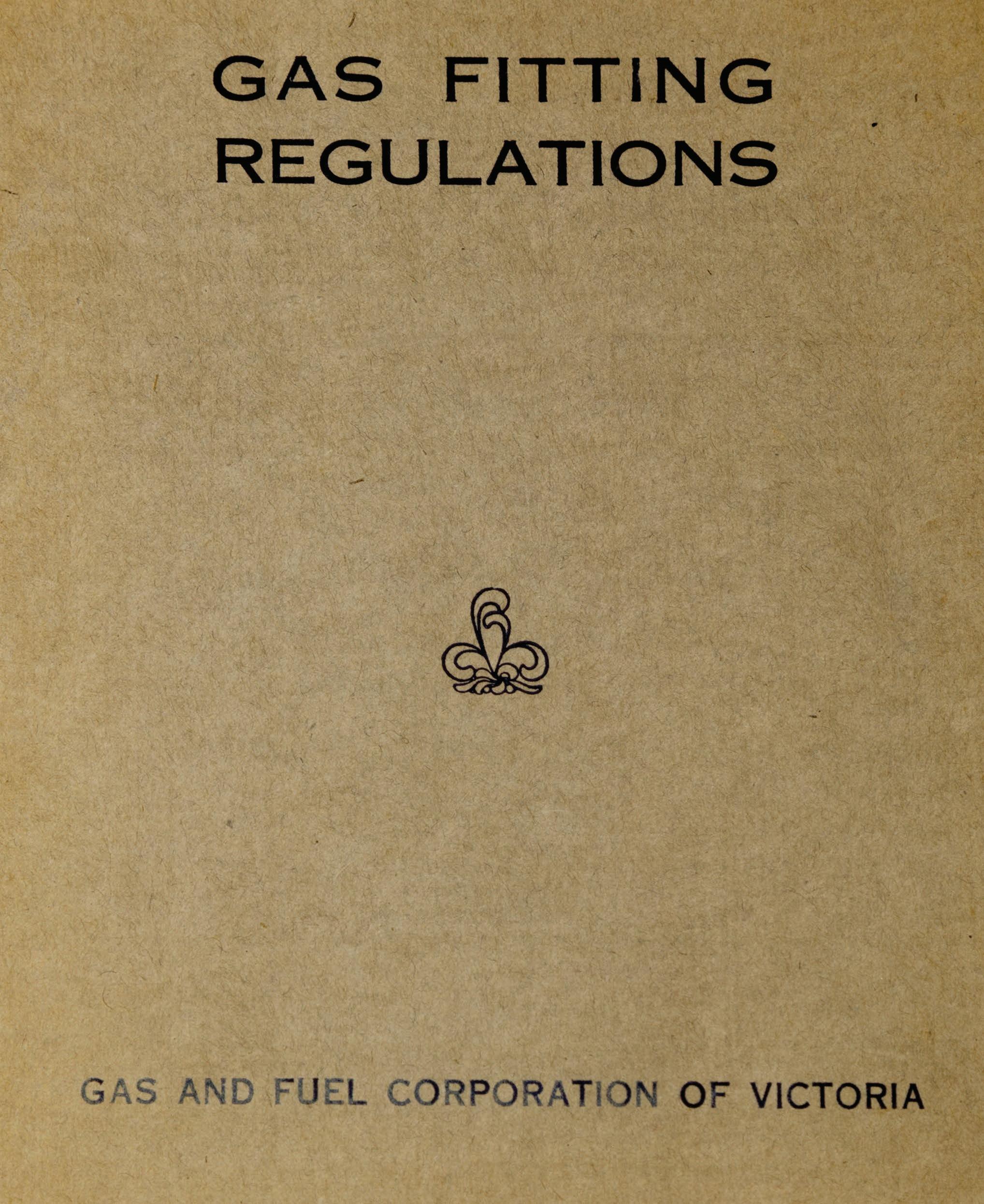
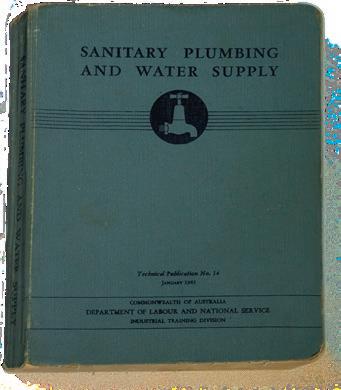
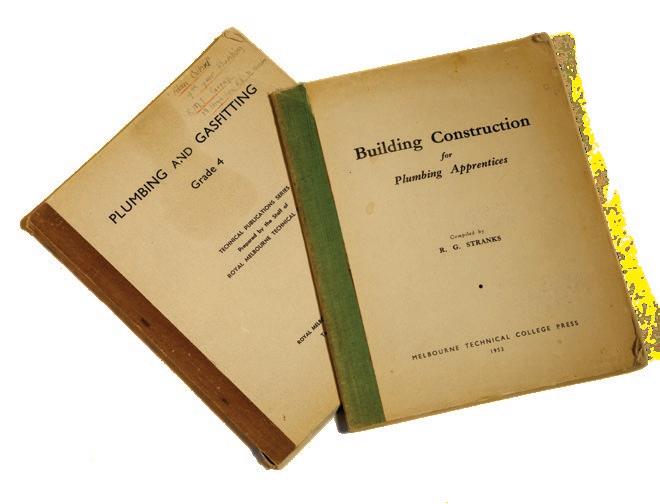
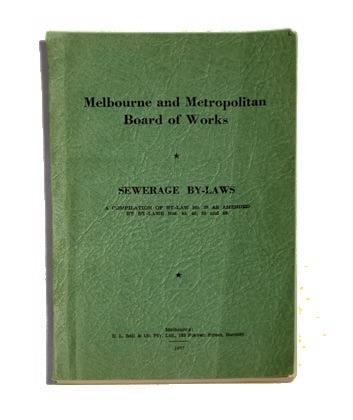
Undertaking an apprenticeship was not just about learning practical skills. As these booklets show, the theoretical side was also important. All apprentices had to attend a day of trade school each week, where they learnt about basic building construction and Melbourne and Metropolitan Board of Works (MMBW) testing procedures. They also studied the technical aspects of the plumbing trade such as cold water reticulation, gas fitting systems and the layout for stormwater drains.
The A.G. Coombs culture was by and large developed and defined during these years, when nearly everyone was involved across all the company’s activities, be it production, procuring supplies or installing the services. The general workload also increased as more contracts started coming their way in both the medical and industrial areas.
As the years went by, Allan had spent less time assisting at the various work sites. His tradespeople were becoming more experienced and he felt that he would be better off devoting his energies to the office, where he could concentrate on securing new contracts and growing the business. He also made some important decisions regarding the company’s structure.
While Allan appreciated his brothers’ assistance, he always had a clear sense of proprietorship in the business and therefore declined their offer to buy into the company. Realising that Allan was not about to change his mind, Russ, Perce and Les decided to leave and form their own company, settling, not surprisingly, on the name ‘Coombs Brothers’. Their departure in 1954 was a sensitive matter for many years and there were times when Coombs Brothers won contracts that Allan would have liked. But business was business and everyone just got on with it.
After his brothers left the business, Allan Coombs recruited Trevor Eastoe from a competitor company, as he wanted to focus on the company’s future and needed someone to take over day-to-day contract management and supervision duties. An experienced manager, Trevor also assisted with estimating projects, as the company had yet to establish a formal estimating department.
Although the business had grown to around thirty people by the mid-1950s, it was still small enough to know one another’s quirks and strengths. Most people had been working together for a while and the atmosphere was very friendly. Ron Barns remembered feeling a “good vibe” when he joined in 1955 and was very aware of Allan’s presence and influence. People looked up to Allan and knew that he was looking after their interests, but they also felt he was someone with whom they could speak candidly. “He was just one of the guys and he used to make certain that he got the work for all the boys,” said Ron.

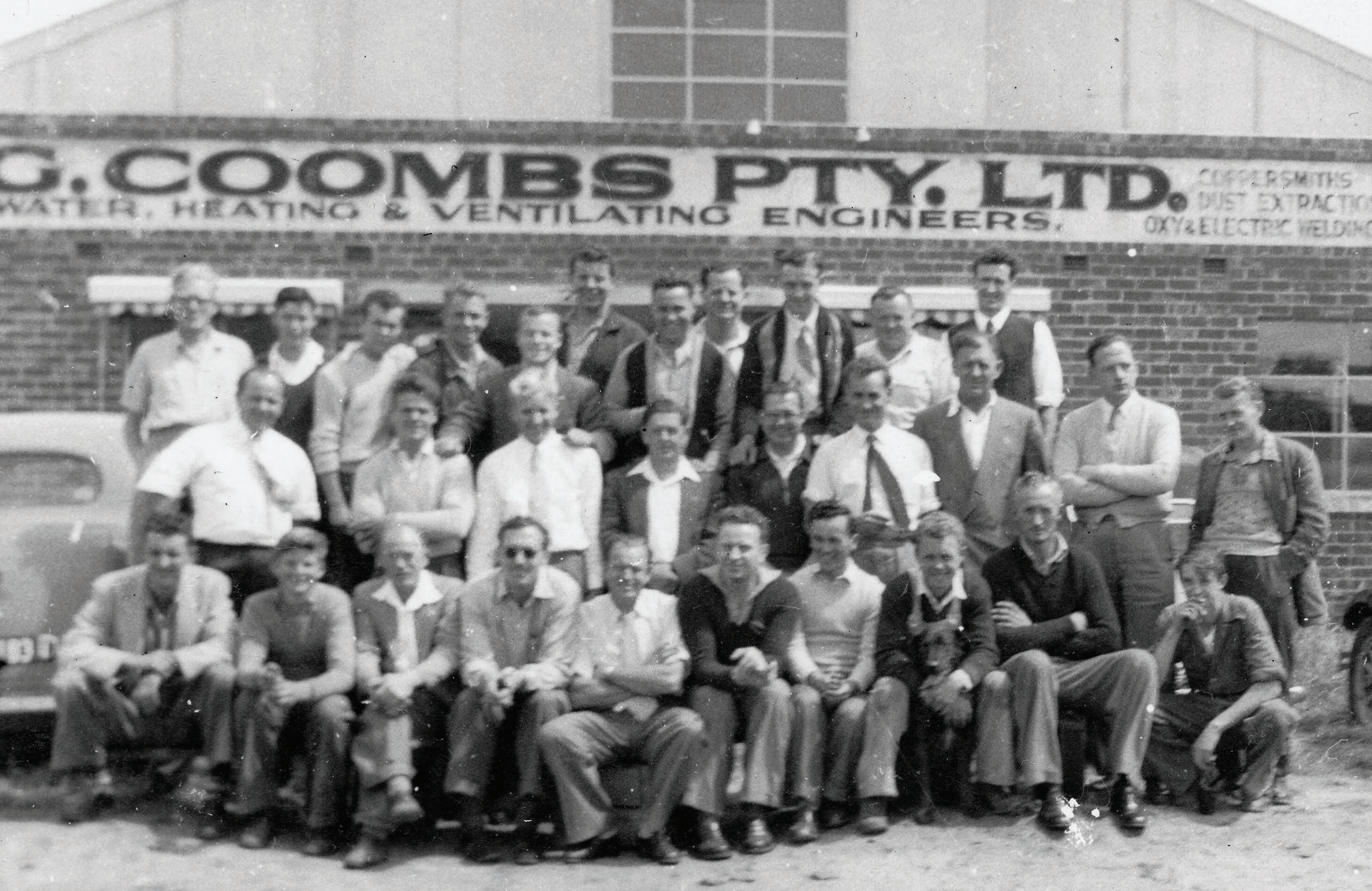

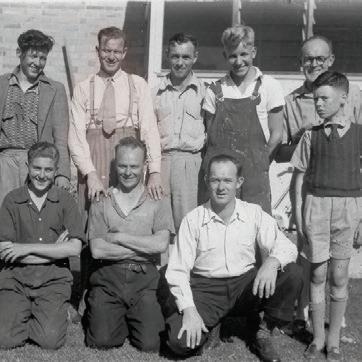
Staff outside the company’s new office on Cochranes Road, Christmas 1956.
George Brown (1), unknown (2), Alan Stephenson (3), Bill Moseley (4), Les Taylor (5), Noel Bridges (6), Ron Donnison (7), Frank Millhouse (8), Joe Caldwell (9), Jack Mayes (10), Jack O’Hehir (11), Trevor Eastoe (12), Brian Moseley (13), Jim Barr (14), Bill Goodger (15), Jack Shaw (16), unknown (17), Bill Stargett (18), John Zylstra (19), Phil Buxton (20), Bert Ellingson (21), Ron Barns (22), Max Dixon (23), Ron Harvey (24), Allan Coombs (25), Sid Barrett (26), Alan Collard (27), John Hanby (28), Albert Bell (29), Colin Cartwright (30).
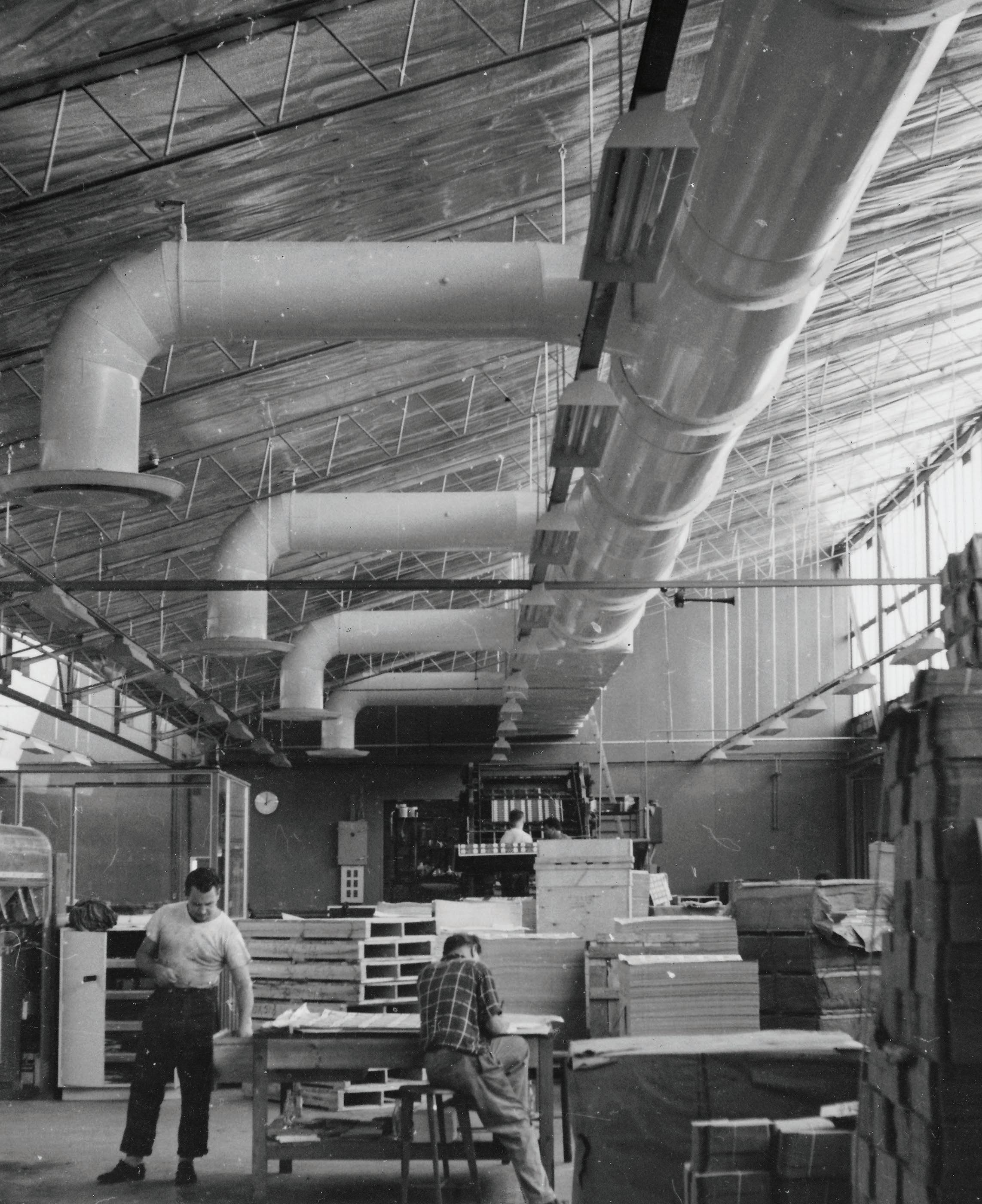
The company was now taking on industrial work more
commercial and
The company’s projects were now scattered across Victoria, and included the army training camp in Puckapunyal, the Mars factory in Ballarat and numerous Coles department stores. The Victorian Government also kept them busy with contracts to install the mechanical services at a large number of country hospitals. A.G. Coombs normally tendered for these jobs through consulting engineers, who then nominated them to a particular builder. But in the case of the country hospitals they tendered directly to the government.
Working on a hospital contract involved long spells away from home in towns like Benalla and Myrtleford, which were around two to three hours’ drive north-east of Melbourne.
Some employees went further afield and worked their way along the Murray River installing the services at hospitals in Swan Hill, Echuca and Wodonga. As a rule, a group of four or five people worked on each hospital, living away from home for the duration of the project. Even apprentices, as young as they were, went away on country jobs.
Great friendships were forged during these trips, with people bonding together as a team during the day and then kicking back at the local pub afterwards. “It was that sort of blokey culture,” said Bill Moseley. “We were good friends and loyal to the company.”
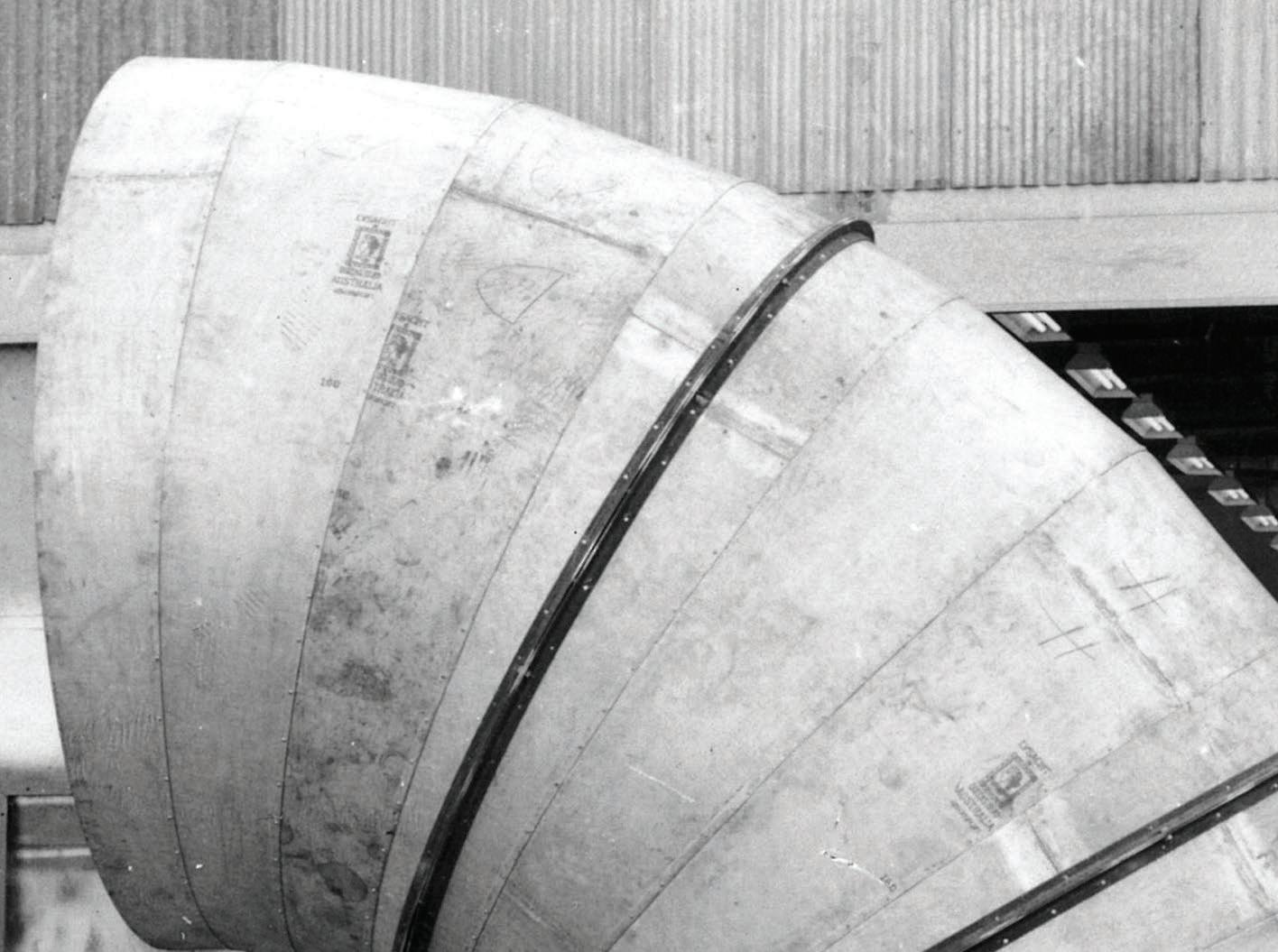
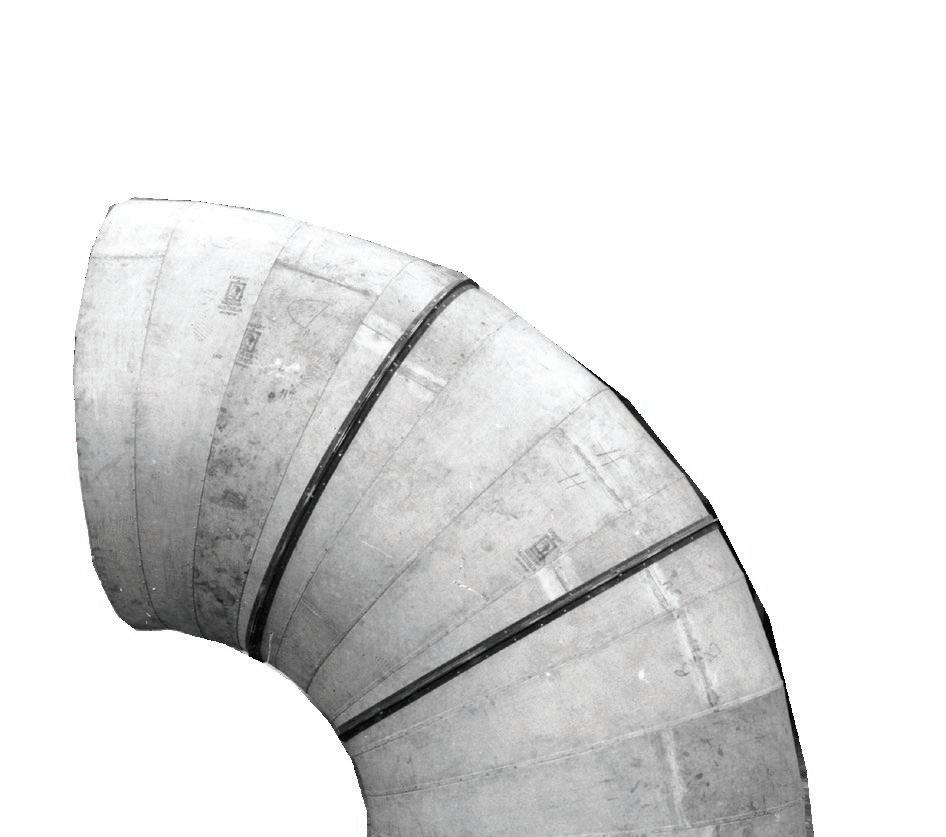
This lobster bend was manually joined, soldered and riveted together, and would have taken a week to complete. Today, with the aid of modern techniques, it takes a fraction of the time to fabricate.
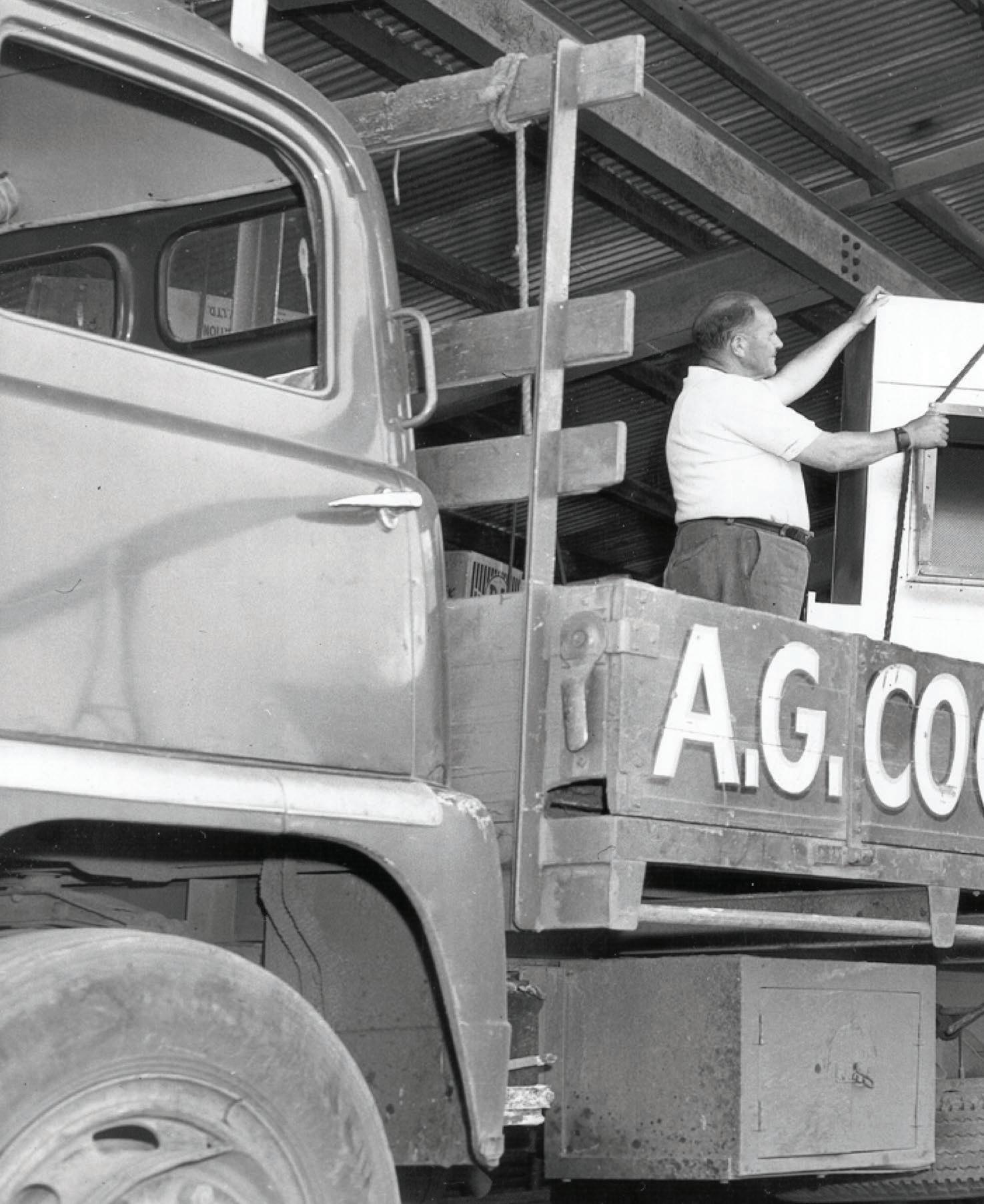
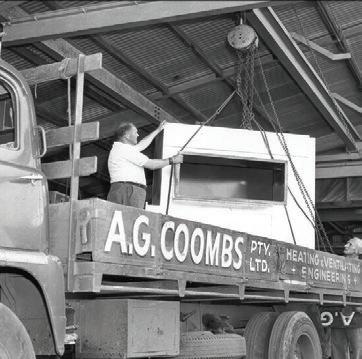
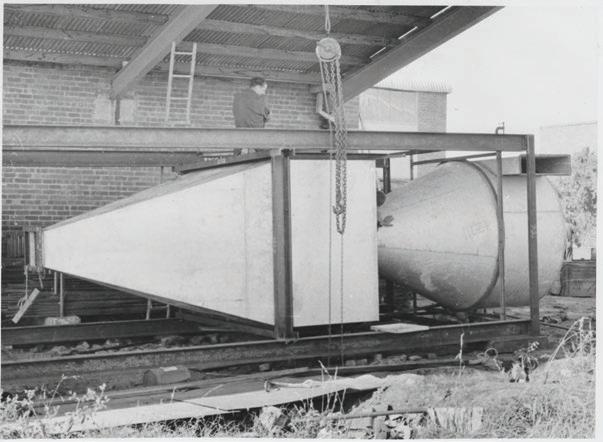
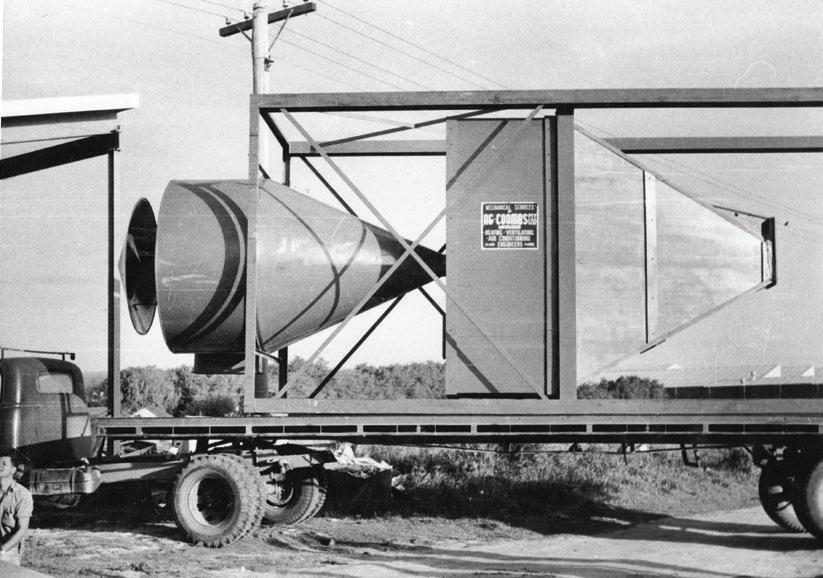
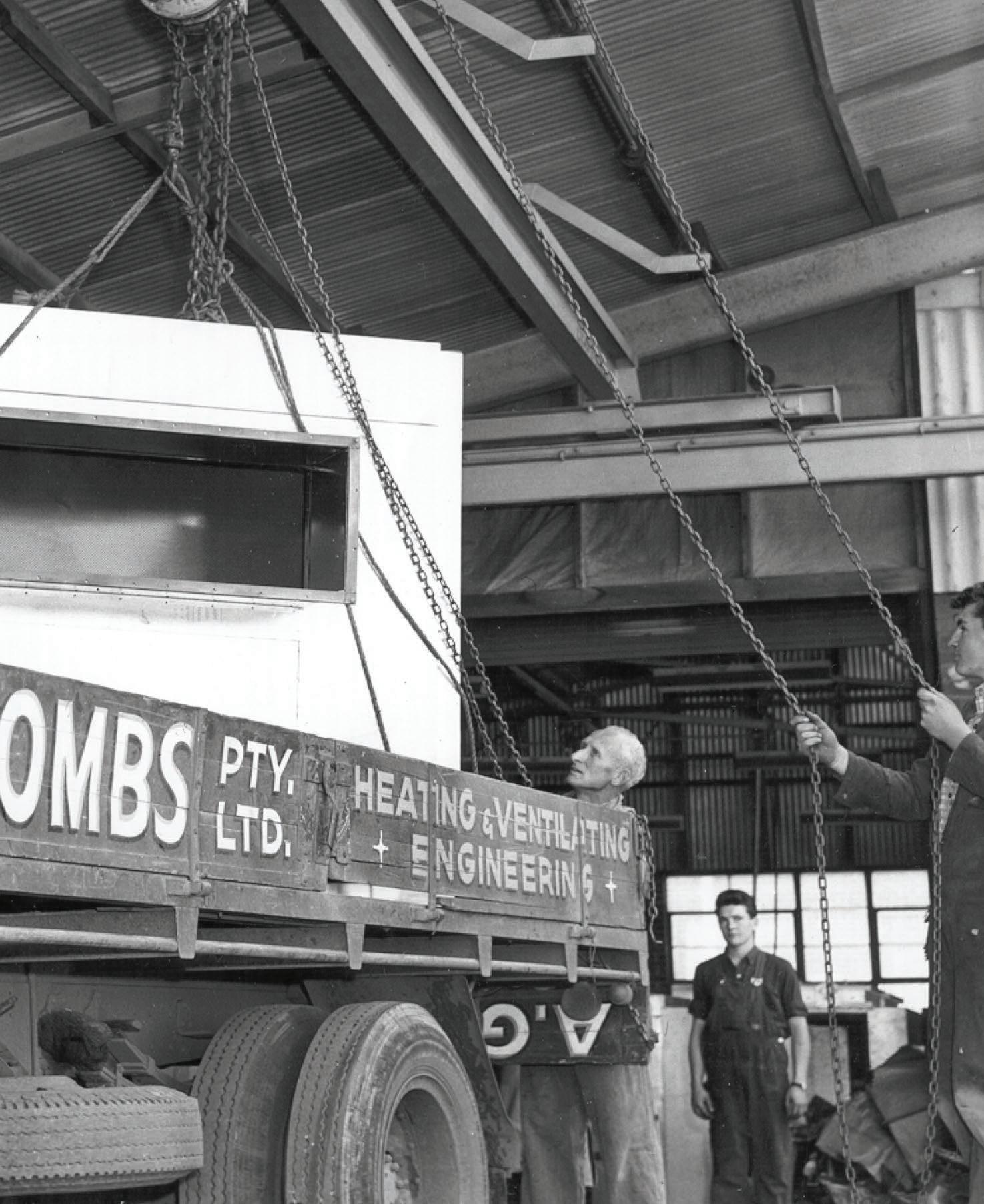
Truck driver Cornelius Cass (standing on the company’s truck), and Albert Bell (standing immediately behind it), help manoeuvre a plenum unit into place. The plenum, which housed the fans and coils for the air conditioning system, was constructed at the company’s sheet metal factory in Moorabbin. The truck is pictured in the loading bay of the factory.
s
Although Americans had been reaping the benefits of air conditioning since 1902, Australians had to wait almost thirty years for organisations to start installing climate-control systems, with clean, pure air that was “thoroughly washed and scrubbed” according to the Brisbane Courier in 1929. Even when Allan Coombs began plumbing houses in the 1940s, air conditioning could only be experienced in factories, such as woollen and hosiery mills, and a select number of commercial buildings.
The first modern air conditioning system was designed in 1902 by American engineer Willis Carrier, whose invention helped control the humidity at a printing plant in Brooklyn, New York. The printing, textile and chocolate industries were among the first to realise that they could produce better products in temperature-controlled environments. Industrial air conditioning, they all agreed, made good business sense; but comfort air conditioning also had its place, creating more pleasant environments for the general public.
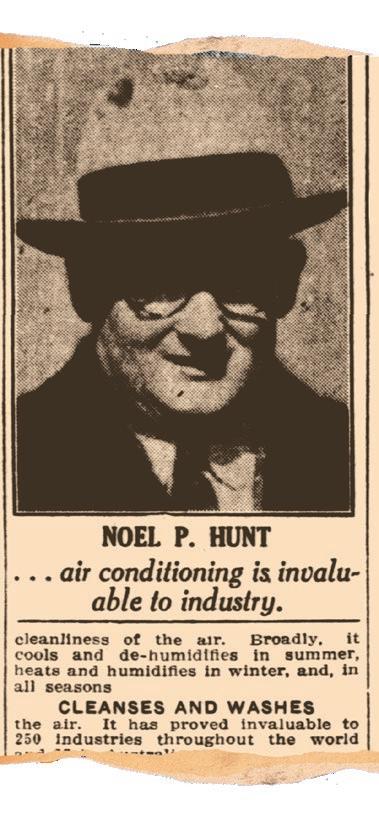
After introducing air conditioning to Australia in the late 1920s, businessman Noel P. Hunt secured the rights in 1930 to distribute Carrier air conditioners throughout the country. Hunt later merged his interests with those of the Americanbased Carrier Corporation, which led to the establishment of Carrier Australasia Limited in 1932, with Hunt as managing director.
Image source: National Library of Australia (Sunday Times, Perth, 20 June 1937)
An air conditioning system designed by Willis Carrier, purely for comfort, was experienced for the first time in 1904 when he installed conditioning machines (to control humidity and cleanliness) in a St Louis library and a Cincinnati school. In time, more people would start enjoying the benefits of comfort cooling as hotels, department stores and theatres began installing air conditioning systems using mechanical refrigeration. Indeed, a publication by Carrier boldly claimed that a visit to an air-conditioned motion picture theatre imparted “the same splendid physical exhilaration you would feel after a two-hour vacation in the naturally pure air of the mountains”. To Australians sweltering through a hot summer, this sounded grand.
There was no doubt that the Australian climate, with its hot summers and comparatively mild winters, provided a perfect market for air conditioning. Previously, various installations (from radiant heating through to fans), had been used to heat or cool a building. Air conditioning, however, combined a number of processes by allowing people to simultaneously control the temperature, humidity, cleanliness and distribution of air in a designated space. The air could be cooled and dehumidified in summer or heated and humidified in winter, while inbuilt systems absorbed or controlled odour, and cleaning processes removed dirt all year round. Filtered air could also be circulated around a building and changed several times within the hour.
Air conditioning was introduced to Australia in 1928 by businessman Noel P. Hunt, following a fact-finding trip to America. It made news when installed at Brisbane’s Wintergarden Theatre in 1929, and continued gaining favourable press throughout the 1930s as other organisations began introducing similar systems. In 1937, a newspaper article reported how the directors of Farmer & Co in Sydney had “expressed the opinion that the outlay on air conditioning, both from the point of view of the comfort of customers and the efficiency of employees, has already proved one of the best investments the company has ever made”.
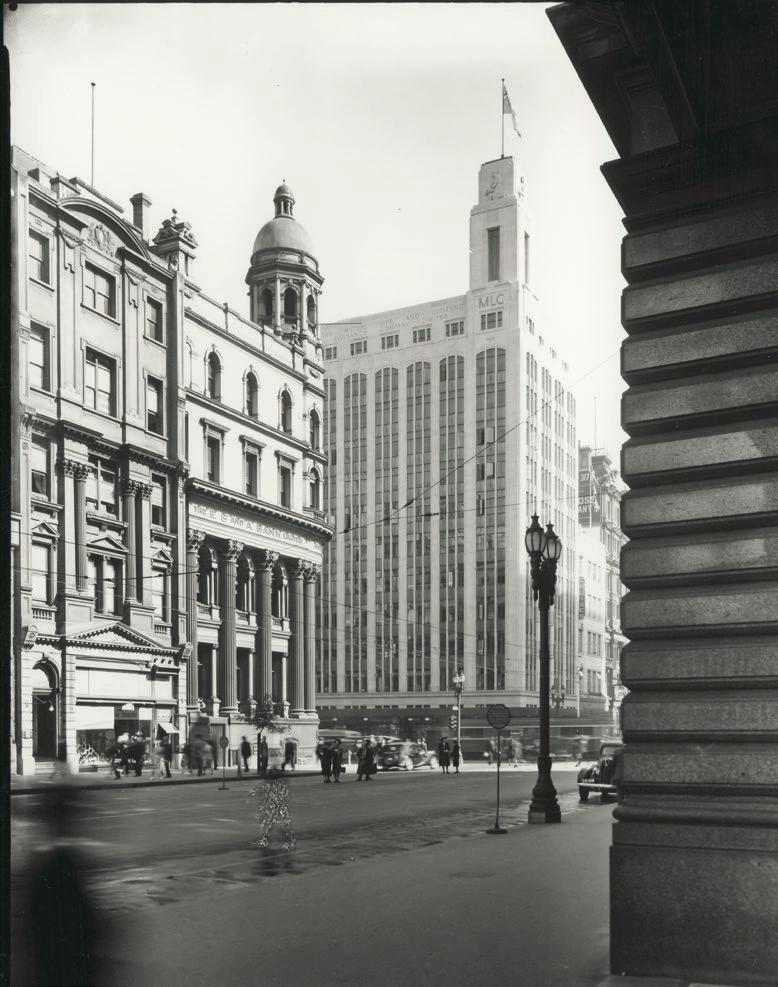
By 1940, Melburnians were also experiencing the effects of climate-controlled environments. The 11-storey MLC Building, on the corner of Collins and Elizabeth Streets, was completely rebuilt during 1937–1938, and was one of the first buildings in Melbourne to install a modern air conditioning system. It was also one of the tallest structures allowed under the city’s strict height limits. Other new developments with air conditioning systems included the Australia Hotel and the recently extended T&G building, which were both completed in 1939. The idea that you could ‘manufacture’ weather was catching on, and by the late 1950s, air conditioning would no longer be something new and fabulous, but a feature of many modern buildings and an amenity that, in time, the average family household could also afford.
Interestingly, air conditioning influenced the way buildings would be designed in the future. While the ‘skyscrapers’ of the 1930s still had windows that opened – a necessity in summer – the ability to manufacture weather and create more comfortable indoor environments made it possible to construct buildings with sealed windows. As time progressed, structures such as ICI House in Melbourne, with its nineteen storeys of panelled glass, would have a smoother, more streamlined look. Designed by Sir Osborne McCutcheon, of Bates Smart McCutcheon, ICI House was the first building in Melbourne to exceed the city’s height limits – previously capped at 132 feet (40 metres) – and on completion in 1958 became Australia’s tallest building. Air conditioning, the easing of height limits and modern building techniques would see the skyscraper rise even higher out of the ground.
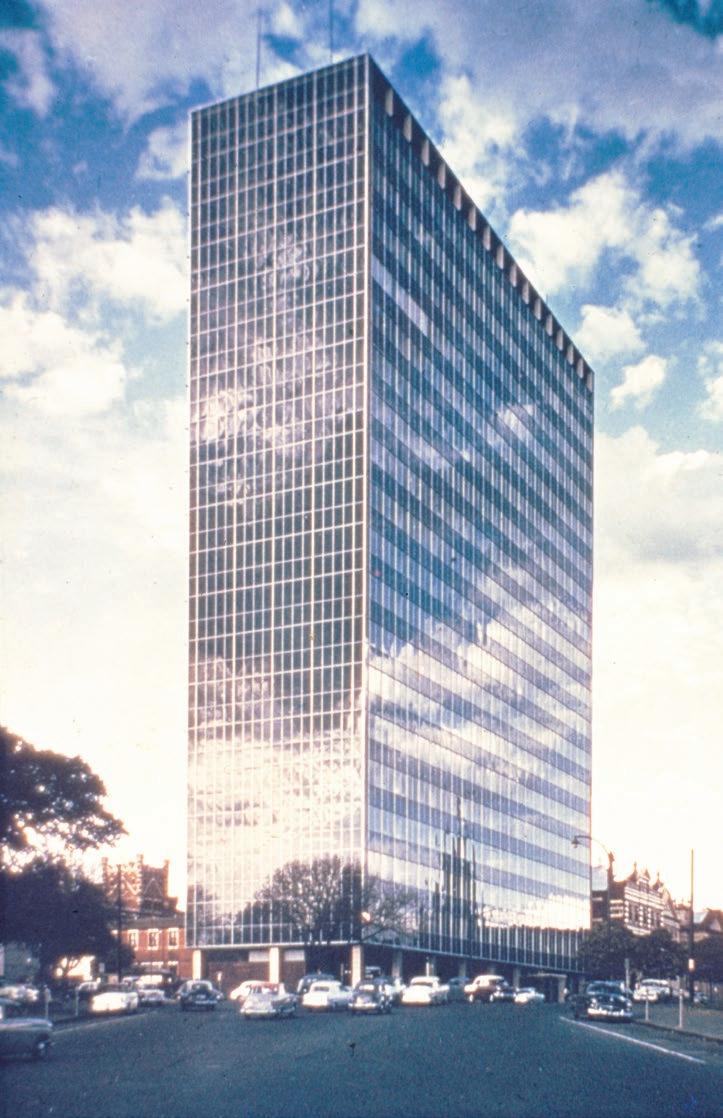

At 84 metres high, the 19-storey building was one of Australia’s first fully glazed commercial skyscrapers. Air conditioning made it possible to design buildings with sealed windows.
It is hard to imagine a world without air-conditioned offices and hospitals, or what we would do if we could not store our milk in a refrigerator. The work of Willis Carrier (the father of modern air conditioning) and James Harrison (a pioneer of refrigeration) has touched our lives in so many ways. Their cooling experiments have made our summers more bearable and cinema visits more enjoyable, while their inventions have increased the shelf life of perishable food and created optimal conditions for producing life-saving medication. Today, the modern data centres supporting commerce and industry could not operate effectively without climate-controlled environments.
Advances in air conditioning were made possible by the development of refrigeration, which Australia helped pioneer in the mid-nineteenth century. Trade opportunities beckoned and if Australians were going to export meat to distant countries they needed to find a way of keeping it fresh during long sea voyages, which back then could take several months depending on the type of vessel. This challenge was taken up by newspaper editor James Harrison, who began developing a mechanical ice-making machine in Geelong, Victoria, during the early 1850s.
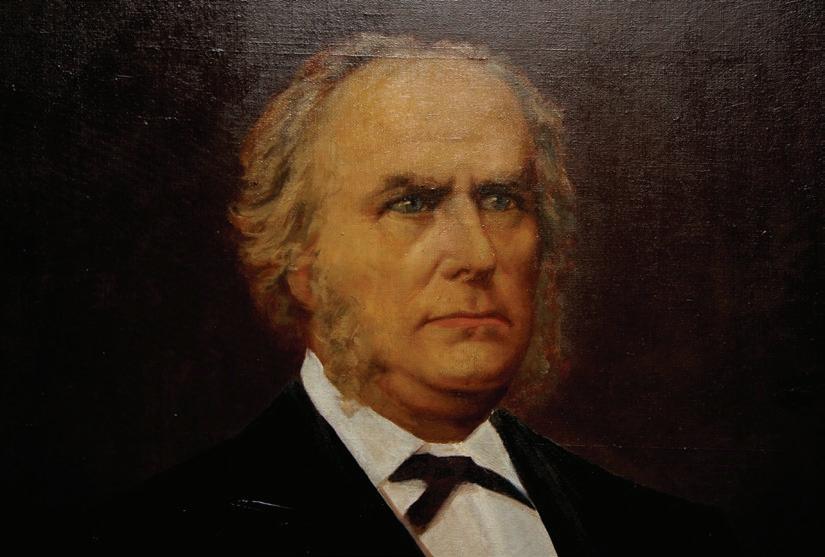
In 1837, Scottish-born printer and journalist James Harrison immigrated to Australia, where he would later carry out his pioneering work in refrigeration. Harrison, who edited and owned the Geelong Advertiser, was granted a patent in 1855 for his commercial icemaking machine, and also received patents in London for his process (1856) and his machine (1857).
The James Harrison medal presented by AIRAH (Australian Institute of Refrigeration, Air Conditioning and Heating) is the Institute’s highest honour.
Image courtesy of AIRAH.
Harrison – who was as interested in science as he was in words – began trialling his machine on the banks of the Barwon River in 1851, using ether as a refrigerant (a compound that absorbs and discharges heat). While his first machine had limited capacity, his second ice-making machine, which he launched in 1854, was capable of freezing over 3,000 kilograms of ice in twenty-four hours. Harrison received an Australian patent in 1855 for his ether vapour-compression refrigeration system, and had the foresight to apply for two more patents during his visit to London the following year. He was subsequently granted British patent No. 747 in 1856 for his refrigeration process, with patent 2362 following in 1857 for the actual apparatus.
By now, Harrison had successfully frozen fish and would later exhibit fresh meat “frozen as if for a voyage” at an exhibition in Melbourne during 1872–1873. Despite counter-claims from other inventors, Harrison’s patents were believed to be the first ever granted for a commercial ice-maker. Although other entrepreneurs would realise his long-held dream of transporting frozen meat to England, he is universally regarded as a world pioneer of refrigeration. In future years, refrigeration would enable the air conditioning of large venues for the comfort of the general public.
The quest to manufacture cooler environments gained momentum once American engineering graduate Willis Haviland Carrier began experimenting with temperature and humidity control. Carrier was then employed at the Buffalo Forge Company in New York and had been singled out to help a Brooklyn printer resolve the humidity issues causing his paper stock to expand and contract, and, consequently, the coloured inks to misalign on the paper. Carrier responded in July 1902 with his now famous drawings of a mechanical system to control the humidity within the plant.
Using his knowledge of heating objects with steam (by sending air over hot coils), Carrier ran the air over coils filled with cold water and then ducted the cooler air into the plant after it lost moisture through condensation. To the printer’s delight, Carrier’s invention helped his printing business meet critical deadlines and enhanced the four-colour printing process by creating a more stable environment.
Carrier’s Apparatus for Treating Air (patented in 1906) was able to adjust temperature and humidity levels to a desired setting and became the blueprint for the modern
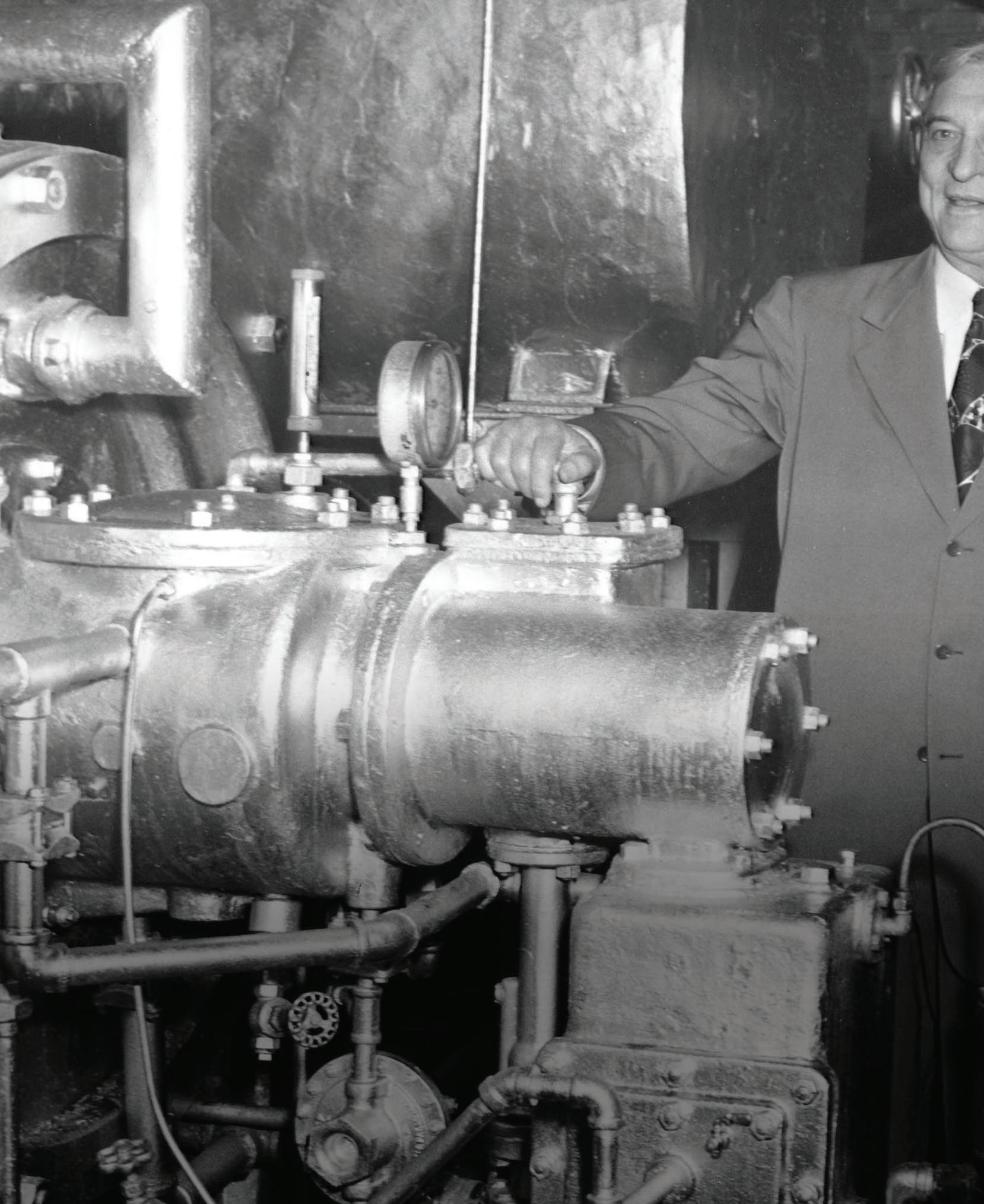
air conditioner. That same year, about a month after Carrier delivered his paper on textile mills, the term ‘air conditioning’ was coined by textile mill owner Stuart Cramer, whose device for adding water vapour to air (a process known as evaporative cooling) helped condition the yarn in his mill to keep it pliable on dry days. The term perfectly summed up a number of key processes and, after establishing his own company in 1915, Willis Carrier began using it to promote his products.
Carrier continued receiving patents for his inventions, including one for his centrifugal refrigeration machine, or ‘chiller’, which enabled large public spaces to be air conditioned safely and economically for the first time. While other machines had performed similar functions, they tended to use piston-driven compressors to pump often toxic refrigerants such as ammonia throughout the system. Carrier’s version, which he unveiled in 1922, not only used a non-toxic and non-corrosive refrigerant, but was also much quieter in the public domain and incorporated bypass circulation and down-draft distribution systems to provide better circulation of air.
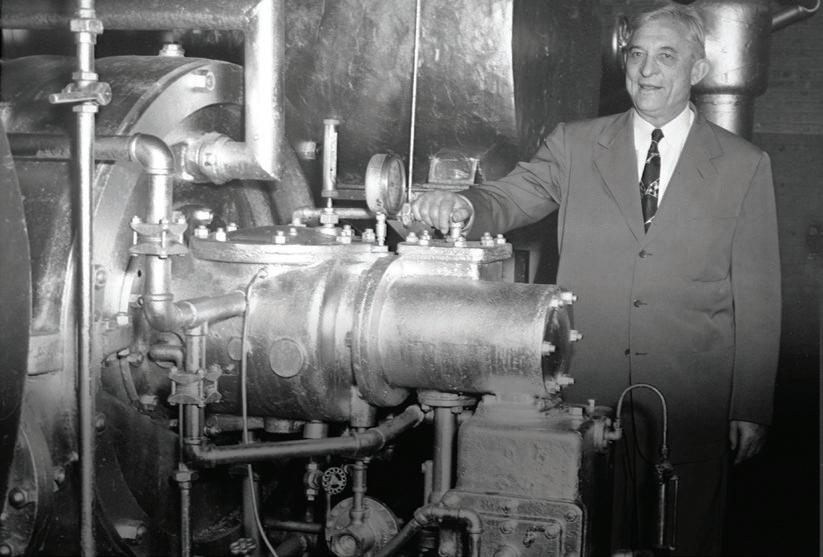
In 1950, Willis Carrier inspected his first centrifugal refrigeration ‘chiller’, which paved the way for large-scale comfort air conditioning when it was first launched in 1922. Movie theatres welcomed the installation of chillers, as proprietors had previously used propeller-like fans to draw hot air from outside the venue into the theatre, or used their heating systems to pump out cold air from vents in the floor – the latter causing shivering patrons to cover their feet with cloaks. The chiller’s down-draft system improved air circulation, thus eliminating the problem of frozen feet!
Image courtesy of Carrier Corporation.
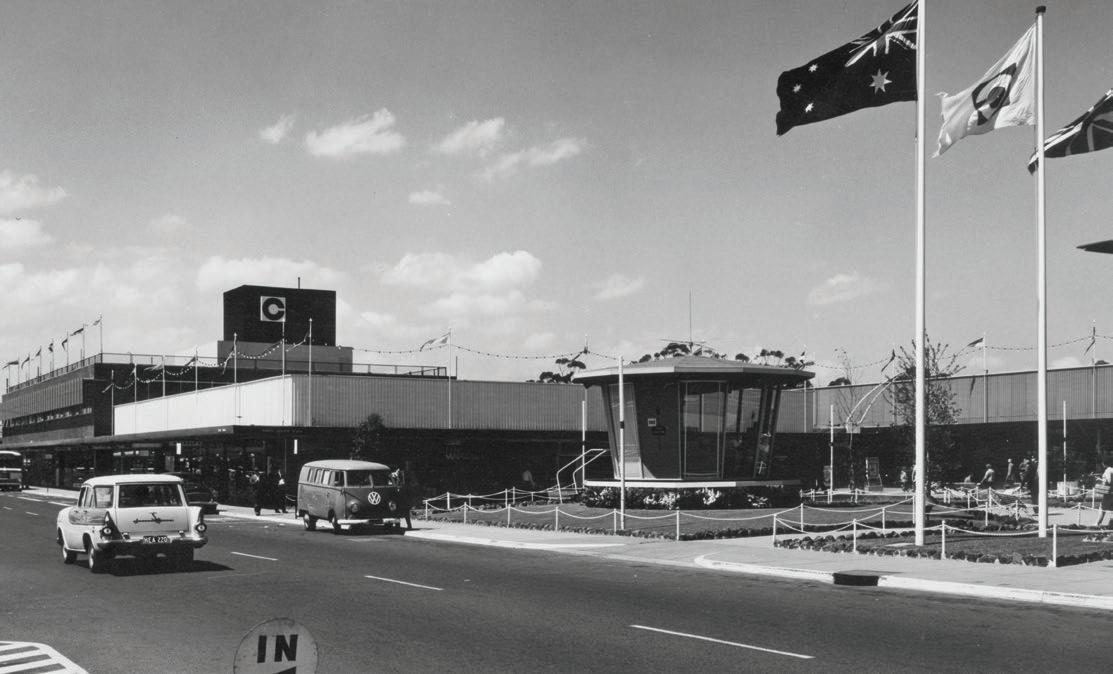

Originally owned by the Myer Emporium, Chadstone Shopping Centre was built on the former paddocks of the Convent of the Good Shepherd, and was one of the most significant retail developments in Melbourne during the late 1950s. A.G. Coombs was contracted to install the air conditioning throughout the facility, which initially consisted of an open-air mall, similar to those found in America. Chadstone became Australia’s largest self-contained regional shopping centre when it opened in October 1960. The mall would eventually be roofed over and would go on to be recognised as the largest shopping centre in the Southern Hemisphere.
Image source: State Library of Victoria

wonderful, restorative powers
of air conditioning!
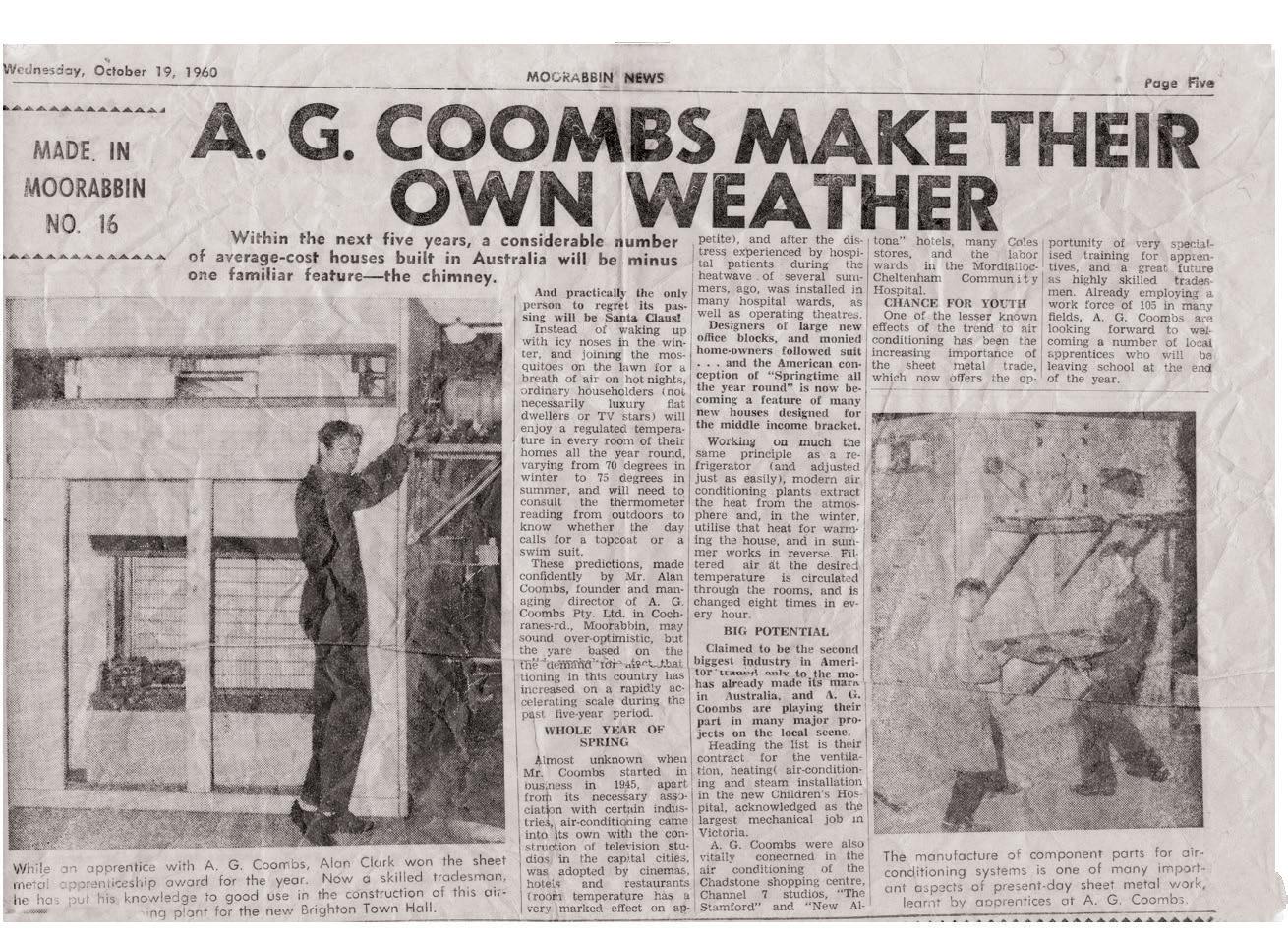
Having progressed from small plumbing jobs to ventilating larger buildings, Allan Coombs immediately saw opportunities for his people to apply their expertise in what was clearly a growth industry. The company first moved in this direction when it became involved with the air conditioning of Channel 7 studios in the mid-1950s, followed by contracts to air condition Brighton Town Hall and Chadstone Shopping Centre. Allan had also won the contract to air condition and install the mechanical services at the Royal Children’s Hospital – an ongoing project and their biggest undertaking to date. On the strength of all these projects, A.G. Coombs was fast becoming one of the most experienced HVAC (heating, ventilation and air conditioning) companies in Australia.
The move into air conditioning meant that the company’s sheet metal workers had to acquire additional skills in order to manufacture component parts for the new systems that filtered and circulated air at desired temperatures. This upskilling also extended to plumbers, who were now required to have a welding certificate for some areas of work. These developments raised the profile of both trades and offered apprentices the opportunity for specialised training.
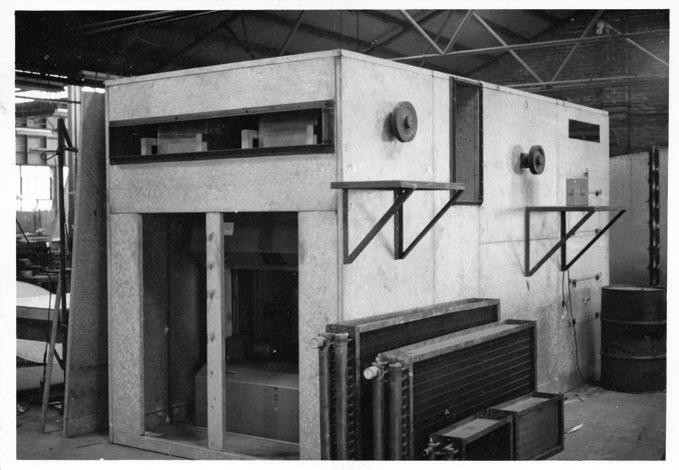
While commerce and industry were already enjoying the benefits of air conditioning, ordinary Australian families were just starting to embrace the idea of controlling climate in their homes. In 1960, an article in the Moorabbin News revealed that people who had installed air conditioning would have to consult a thermometer reading of the outdoor temperature “to know whether the day calls for a topcoat or a swim suit”. The article highlighted the work of A.G. Coombs, noting its progress in creating environments where the “weather” indoors would be far more consistent than the fluctuating temperature outdoors.
No one could deny that air conditioning was changing the way people lived and worked, especially in offices where research showed that employees performed more efficiently in climate-controlled environments. More private dwellings were also installing modern air conditioning systems, while new homes were being built without chimneys. Allan Coombs predicted in 1960 that residential air conditioning would escalate over the next five years. But it was not the domestic environment where his attention was focused, as he was now carefully positioning his business to handle some of the biggest jobs in town.

Nurses of the Royal Children’s Hospital line the balconies of the nurses’ home on 25 February 1963 in anticipation of Queen Elizabeth’s arrival for the official opening of the hospital.

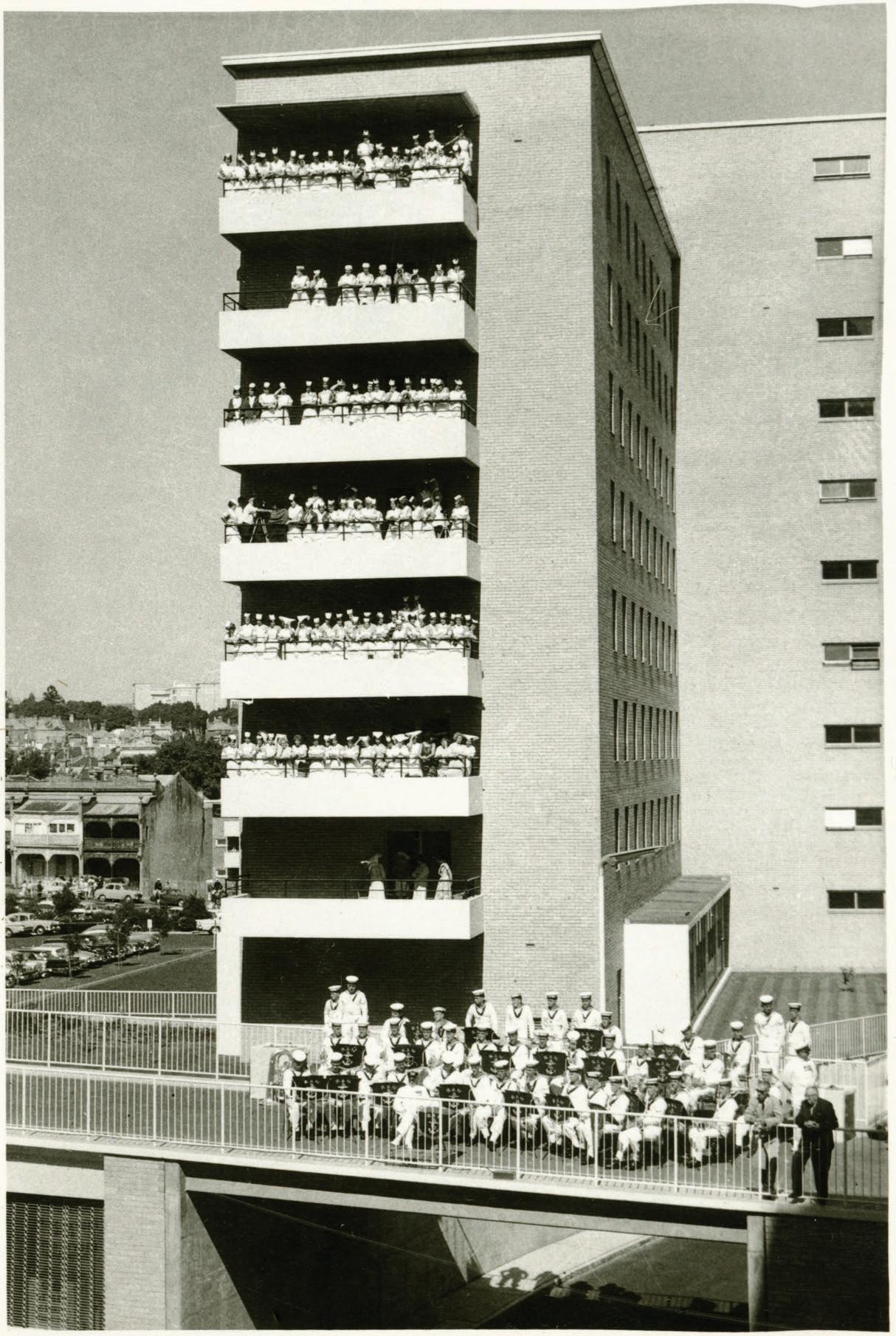

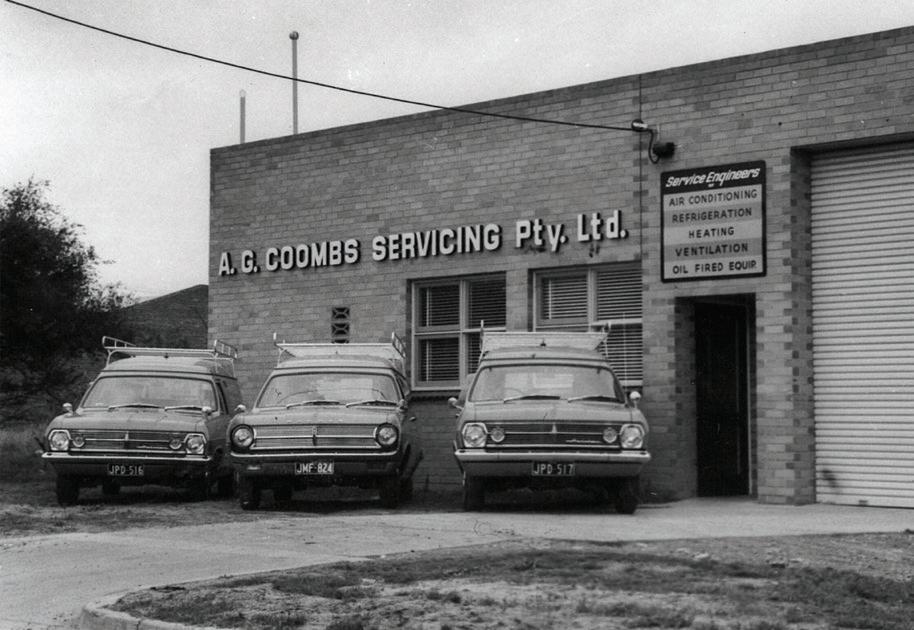

The 1960s were incredibly exciting years for A.G. Coombs as Allan Coombs began expanding the company’s skill base and introducing more services – trailblazing in some areas, while laying crucial foundations for the future in others. Significantly, the words ‘air conditioning’ would appear on the company’s signage for the first time, marking a clear change of direction for the business.
People were now becoming more aware of Allan’s long-range vision for the company, with the contract for the Royal Children’s Hospital a prime example of his ability to identify projects that would help the business grow strategically in a particular direction.
A.G. Coombs had actually started working on the hospital project in 1955. Its involvement with the high-profile development would last eight years until it completed its contract in early 1963. Although a huge test of the company’s abilities – with the project encompassing two multi-storey buildings – Allan was not in the least bit daunted that the mechanical installations were on a scale never seen before in Australia, let alone Victoria.
January 1960
Australian virologist Sir Frank Macfarlane Burnet becomes the first recipient of the Australian of the Year Award. Later that year he was jointly awarded the Nobel Prize in Physiology or Medicine.
February 1963
Queen Elizabeth II opens the new Royal Children’s Hospital in Melbourne.
June 1964
A.G. Coombs Servicing Pty. Ltd. established.
June 1964
The Beatles take Australia by storm.
February 1966
Decimal currency is introduced in Australia.
July 1967
Four-digit postcodes are introduced for every locality in Australia.
July 1969
Neil Armstrong becomes first person to walk on the moon.
September 1969
Australian tennis player Rod Laver wins the Grand Slam for the second time.
Out of all the mechanical services contracts awarded in the previous decade, the contract for the Royal Children’s Hospital was arguably the most coveted. The hospital was then situated in Carlton, on the outskirts of Melbourne’s central business district, and its committee of management had been battling for almost two decades to acquire a larger site on which to build a bigger and better-equipped facility. The construction of a major hospital created significant opportunities for service contractors and Allan Coombs had watched with interest as the hospital moved ahead with stage one of the project in 1955.
Plans to rebuild the hospital had commenced well before the Second World War, when the hospital’s committee agreed that the Carlton facilities were terribly overcrowded and
inadequate. Although fundraising for the new building was postponed during the war, the committee had kept the project on the agenda, with hopes of relocating to the leafy expanses of Parkville, to Carlton’s west.
The Royal Melbourne Hospital and the University of Melbourne were also based there, and the idea of building another facility on a new site – thereby creating a learning, research and healthcare precinct in the area –was appealing. However, the committee had to wait until April 1950 for the Victorian Government to finally pass legislation granting the hospital a substantial parcel of land at the city end of Royal Park.
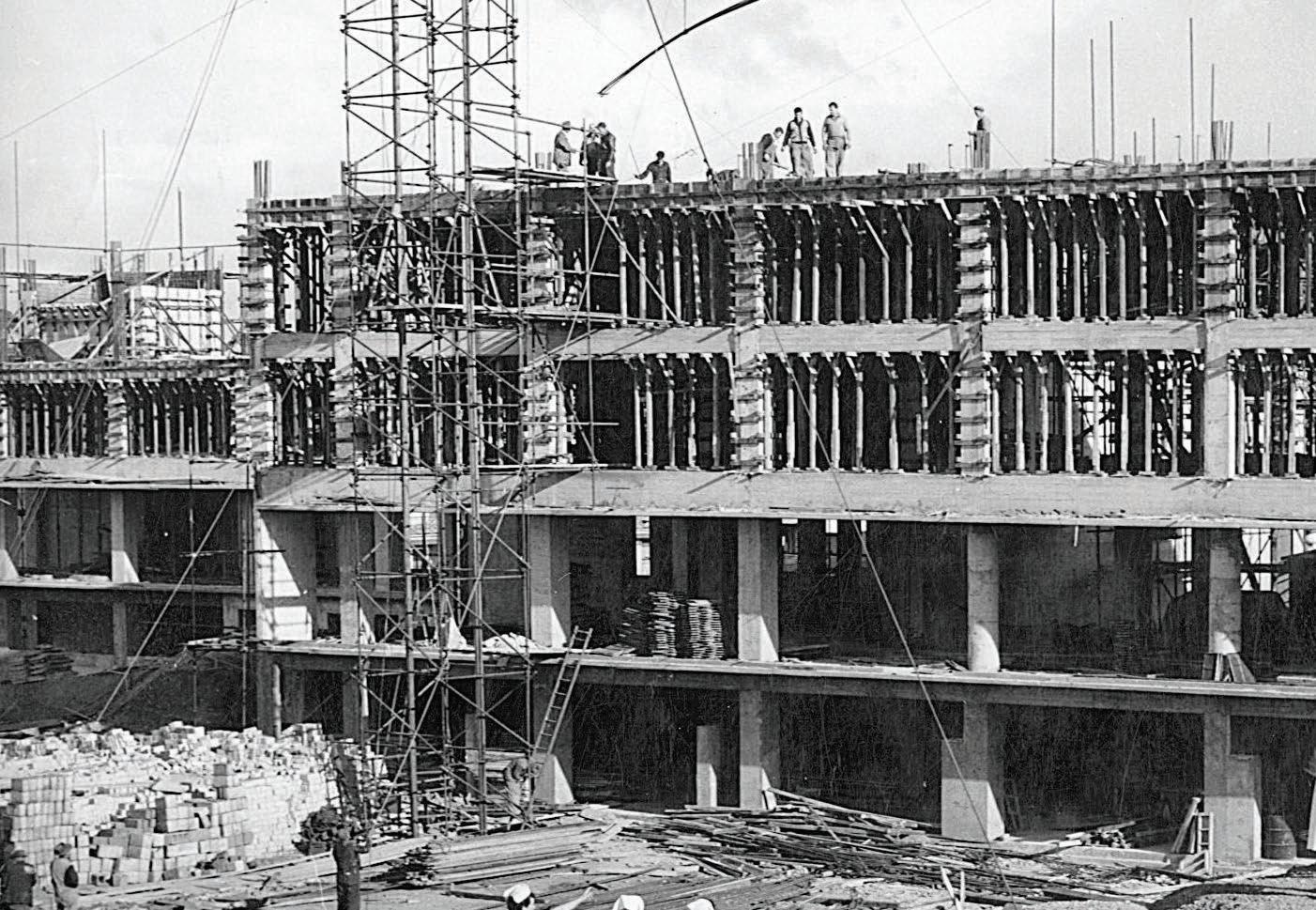
The Victorian Government’s decision to grant the hospital around ten acres of land in Parkville was a turning point in its quest for new premises. By now, architects Stephenson and Turner had finalised the drawings for the new complex, which also included a separate building for the nursing staff. The nurses desperately needed larger facilities, as a number of them were living off site in the homes of two committee members, one of whom, Elisabeth Murdoch, would become the committee’s future president. Both houses had been modified and lent to the hospital, specifically to resolve the accommodation problem in the short term.
Final approval to build the nurses’ home – designated as the critical first stage of development – did not come through until mid-1952. But funding issues delayed the project and many months passed before the hospital authorised its architects to put the nurses’ home out to tender. Determined to speed things along, the hospital’s committee signed the building contract in February 1955, and approximately one year later the framework of the new multi-storey facility began emerging out of the ground.
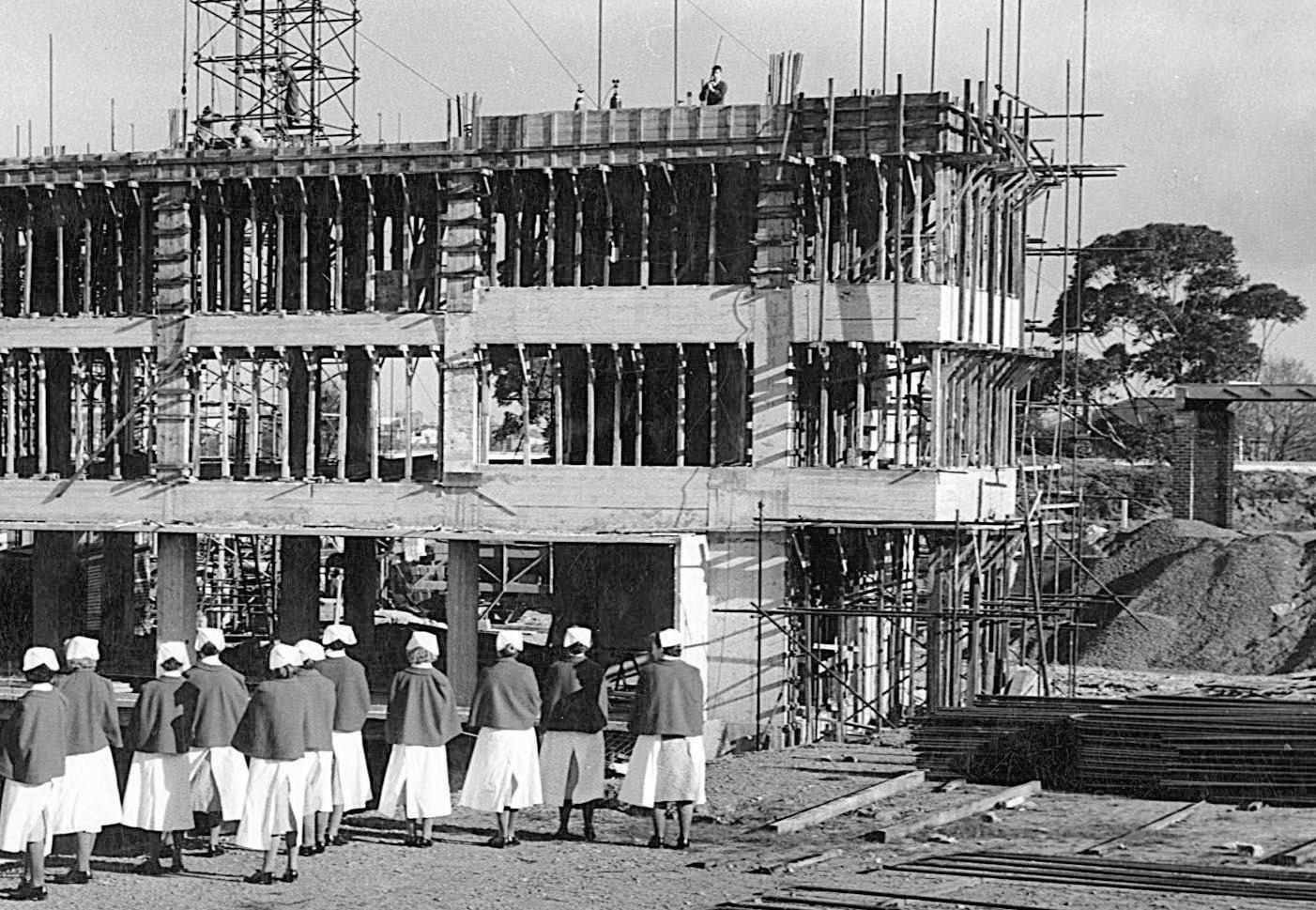
Nursing staff enjoyed dining together in their new air-conditioned cafeteria. The floor was laid with polished parquette, while grey vinyl tiles lined the pillars up to the acoustic tiled ceiling. All the pipes for heating and cooling were installed in the false ceiling space between each floor.
Image source: State Library of Victoria
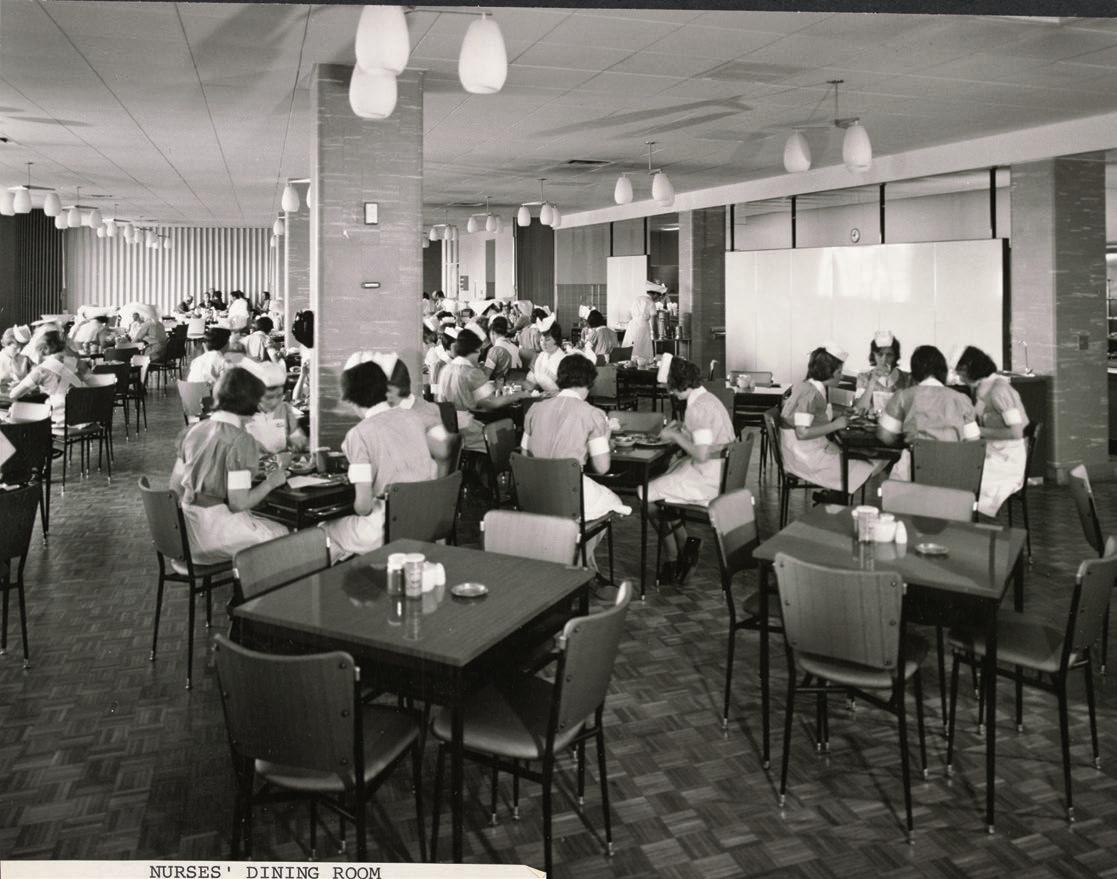

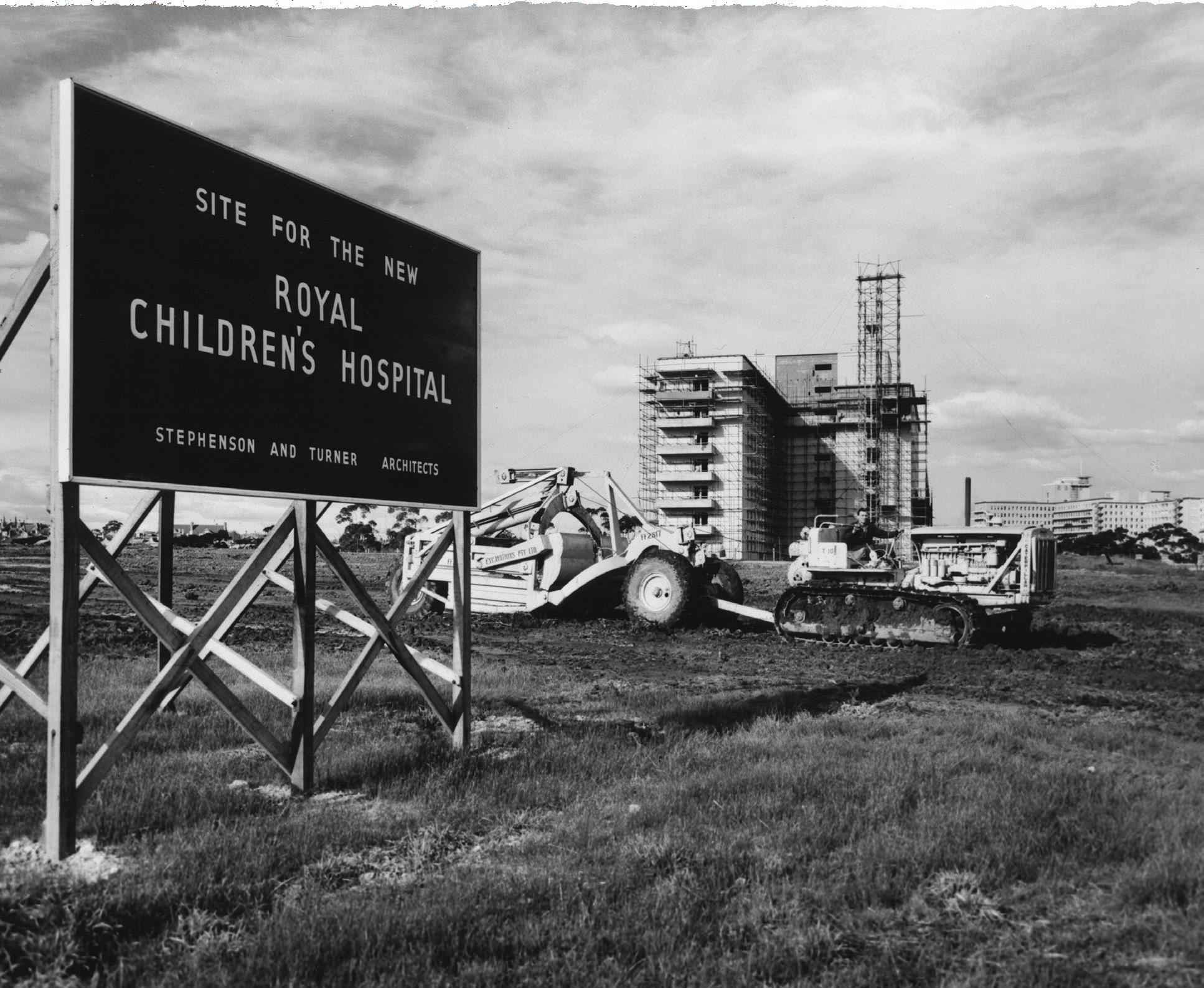
A sign bearing the name of prominent architectural firm Stephenson and Turner marked the location of the main building in July 1957. The architects – who were also responsible for St Vincent’s Hospital, the Freemasons Hospital and the Royal Melbourne Hospital – had been working on the hospital designs since the end of the war. The nurses’ home, which was nearing completion, can be seen in the background.
Image source: Royal Children’s Hospital
Service contractors were also appointed and A.G. Coombs ended up tendering not only for the nurses’ home, but also for an industrial project of similar value. While the two tenders were favourably received, it was the company’s size that ultimately concerned the consulting engineers for both these facilities. A.G. Coombs, they felt, was too small to handle both jobs simultaneously, especially as the nurses’ home alone would be a major undertaking. But they gave Allan a choice: if he could only do one job, which one did he want?
Eager to get his foot in the door with the Royal Children’s Hospital, Allan chose the nurses’ home, confident that his people had the skills to tackle their largest project to date, and mindful that it would potentially put them in the running for the main hospital. Winning the contract in 1955 was something of a “shock” according to Bill Moseley as they were such a young company back then.
Although smaller than the main building, the nurses’ home would take over three years to construct. As part of its contract, A.G. Coombs installed all the heating, ventilation and air conditioning throughout the facility, while another company (White’s Plumbing) was contracted to install the general plumbing. When the building was finally completed and occupied in July 1958, A.G. Coombs was able to reflect proudly on its achievements, not only in delivering the mechanical services, but also in being part of a project aimed at providing the very best medical treatment for children and adolescents. For the nursing staff, this purpose-built facility, complete with heating and climatecontrol air conditioning, was far superior in every way to their cramped and often stuffy quarters in the old Carlton building. Being able to rest comfortably between shifts also enabled them to do their jobs more efficiently and provide better care for their patients.
By the time the nurses were settled in their new home, A.G. Coombs was looking ahead to stage two of the development, as building works had already commenced on the adjoining site where the main building would be located. After a long wait, it was now the children’s turn to have a new facility.
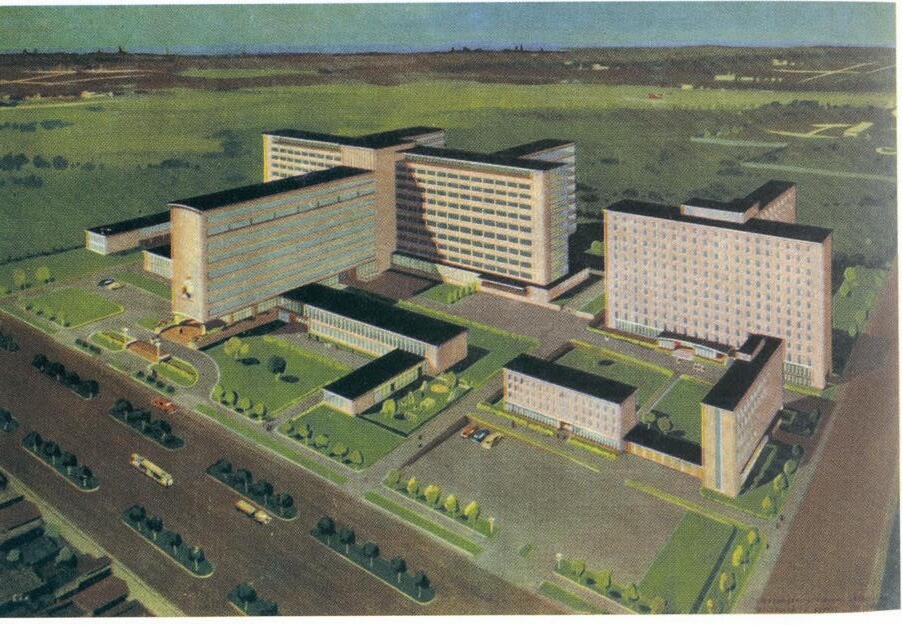
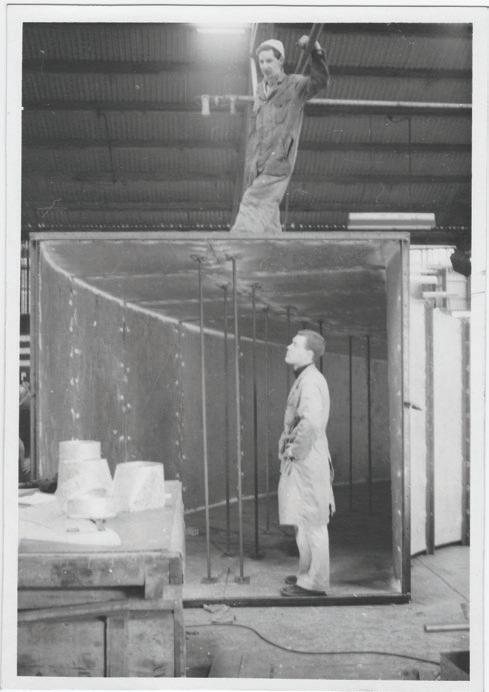
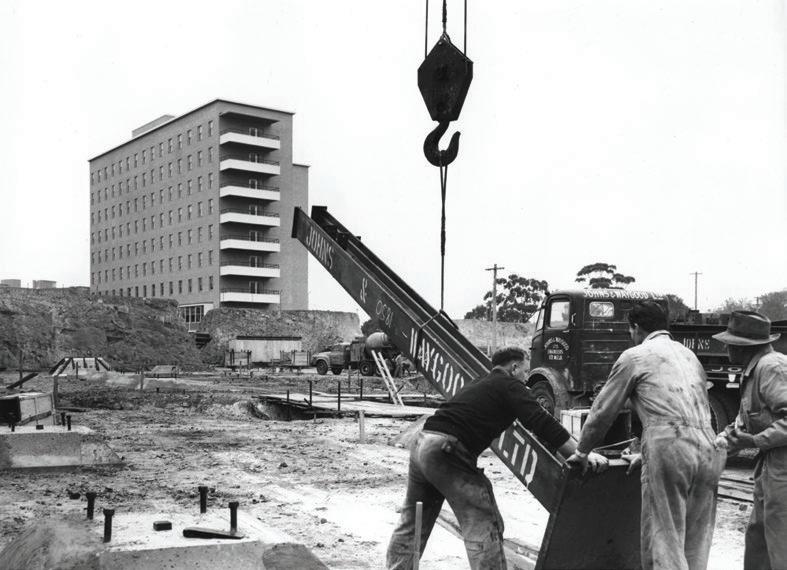
There was a collective sigh of relief when the hospital gave the go-ahead for the main building in November 1957, especially as funding issues had once again threatened to delay construction. But few people had counted on the determination of Elisabeth Murdoch, the hospital’s new president, who decided to take matters into her own hands.
Tired of waiting, Lady Murdoch (as she was then known) sought a meeting with the newly elected premier, Henry Bolte, and in her charming yet persuasive manner extracted a promise that his government would commit funds to the project. Lady Murdoch, it seems, was not someone easily refused, because funding was duly granted and A.G. Coombs, as Allan had hopefully anticipated, was formally contracted to air condition and install the mechanical services throughout the main building.
By late 1958, the work site at the main complex was a beehive of activity, with hundreds of tradespeople from different companies coming and going each day. One of these young ‘tradies’ was Bill Lawry, an up-and-coming cricketer who was then working for White’s Plumbing. Staff recalled how Bill used to play baseball with Jim Barr, a former apprentice plumber whom Allan Coombs had promoted to site supervisor. When draftsman Jock Fraser discovered that Bill was interested in working for A.G. Coombs, he went straight to Allan and said, “I hear Bill Lawry wants a job.” Allan was not so sure, pointing out that “Bill will want to be playing cricket all the time.” He was correct, as Bill Lawry would go on to open the batting for the Australian cricket team and captain Australia in twenty-five Test matches, becoming one of the legends of the sport.

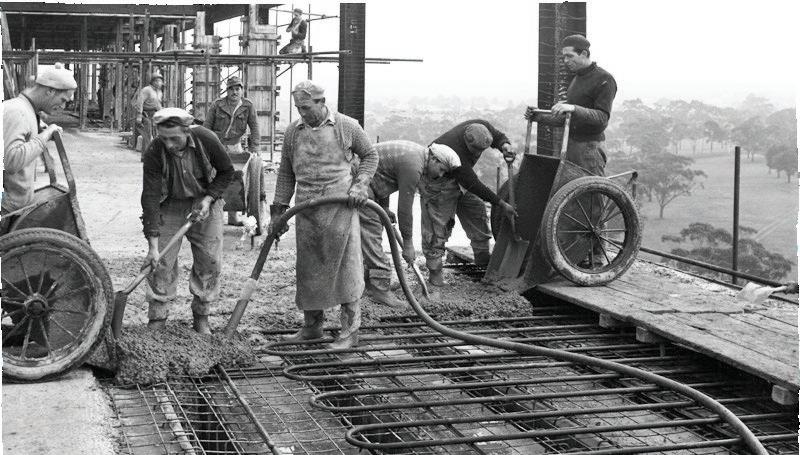
At times, the sheer scale of the project seemed overwhelming. The enormous quantity of mud, for example, presented its own challenges, and getting around was extremely difficult unless you had the right gear. Indeed, one of the most memorable sights for apprentice Alan Collard, who began assisting the hospital crew with drafting in 1958, was of everyone trudging through the mud in gum boots. “It was just a sea of mud spread over such a big area!” he exclaimed.
Although the builder, J.R. & E. Seccull, was in charge of construction, A.G. Coombs’ contract was overseen by Trevor Eastoe, who, as the project supervisor, was responsible for coordinating everything from production requirements through to on-site installations.
Most contractors were mindful of what the builder was doing when construction was at its peak. “The builders had their own concrete mixing plant on the site it was so big,” said Alan Collard, who eventually moved out of the drafting area into a supervisory role. The concrete, he recalled, was pushed around in wheelbarrow contraptions that were more like “Chinese rickshaws”, which meant that he was constantly running around checking that their pipe sleeves were not getting knocked out of position during concreting.
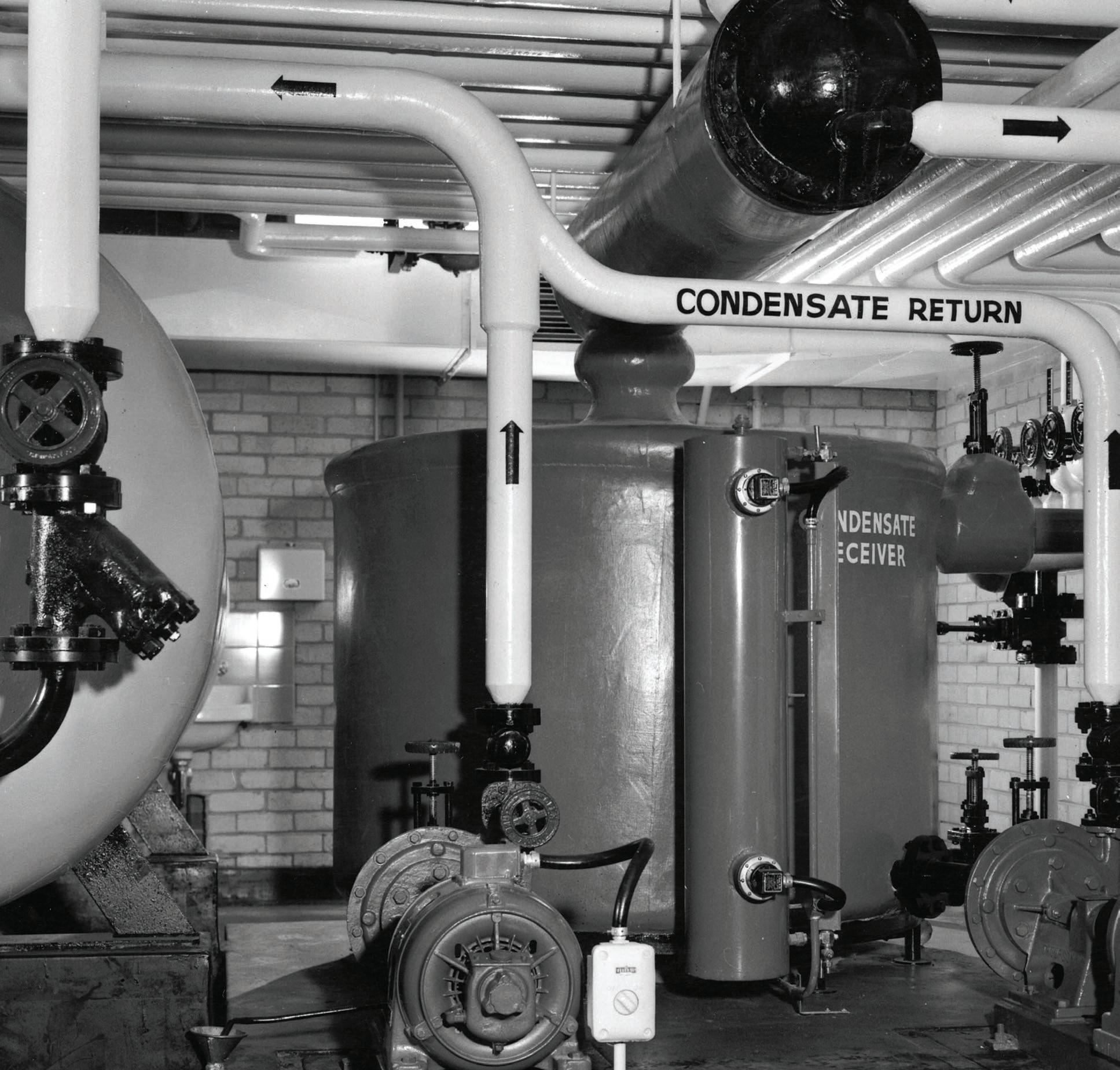
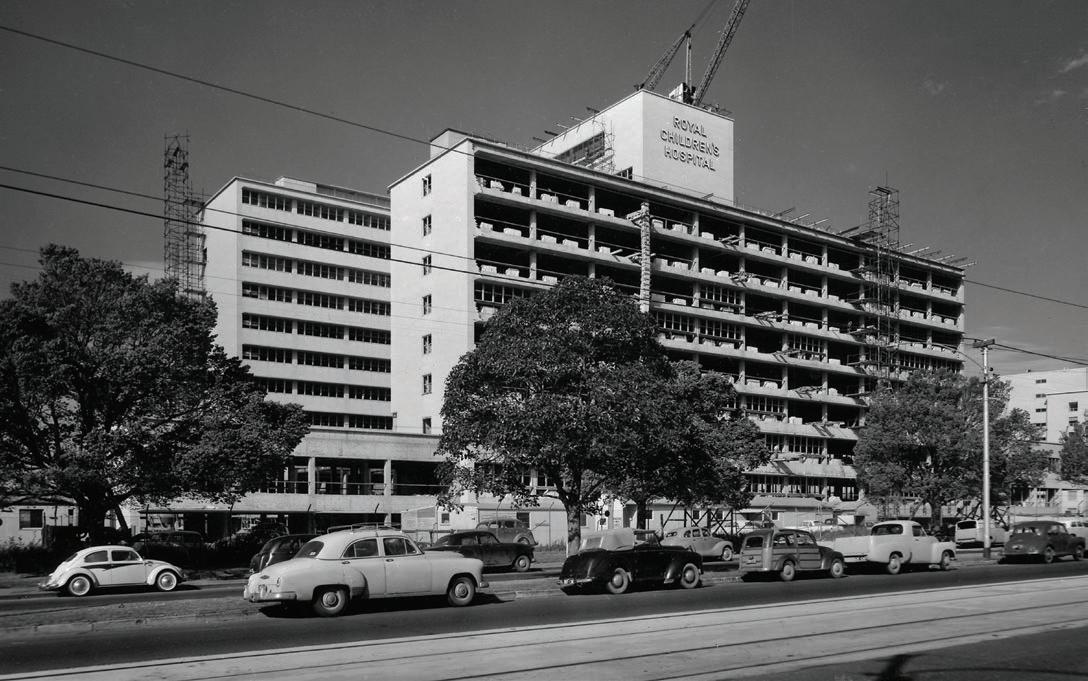
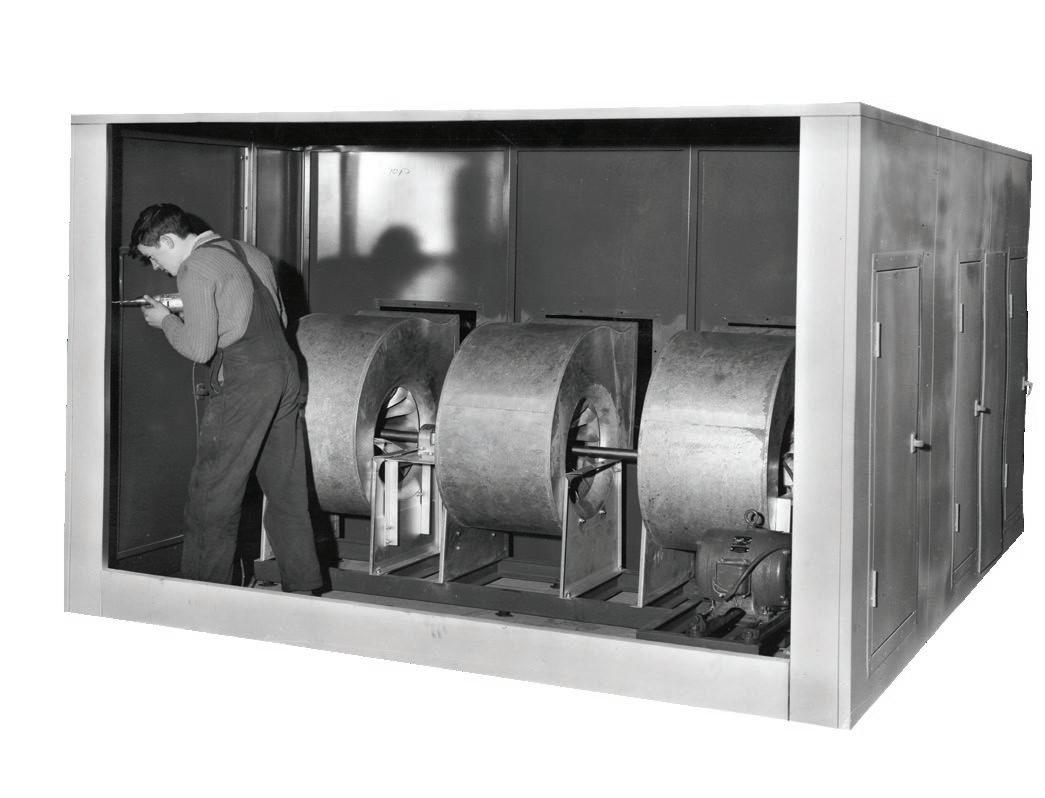
air-handling units (or plenum chambers) were prefabricated off site and transported to the hospital for installation.

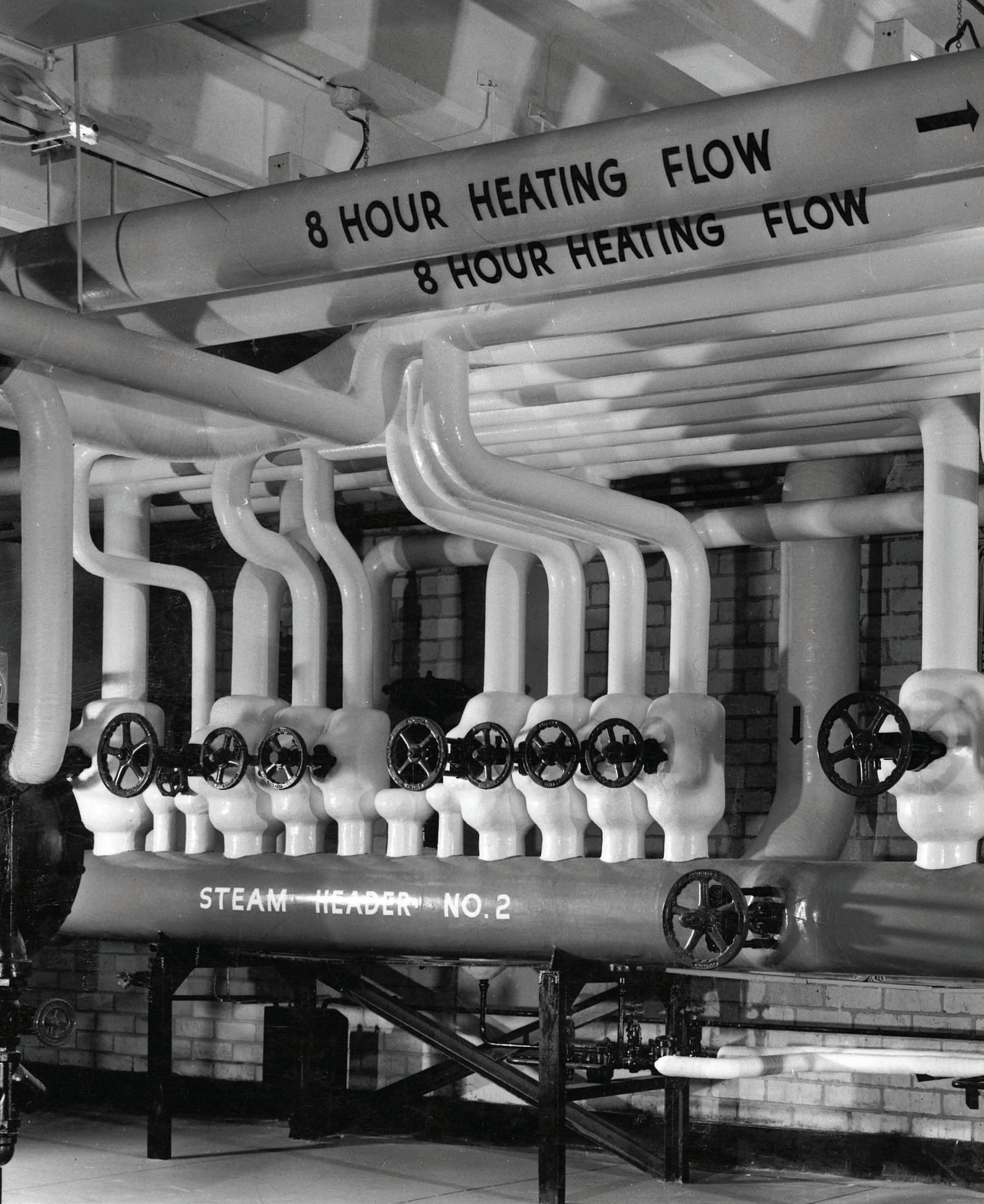
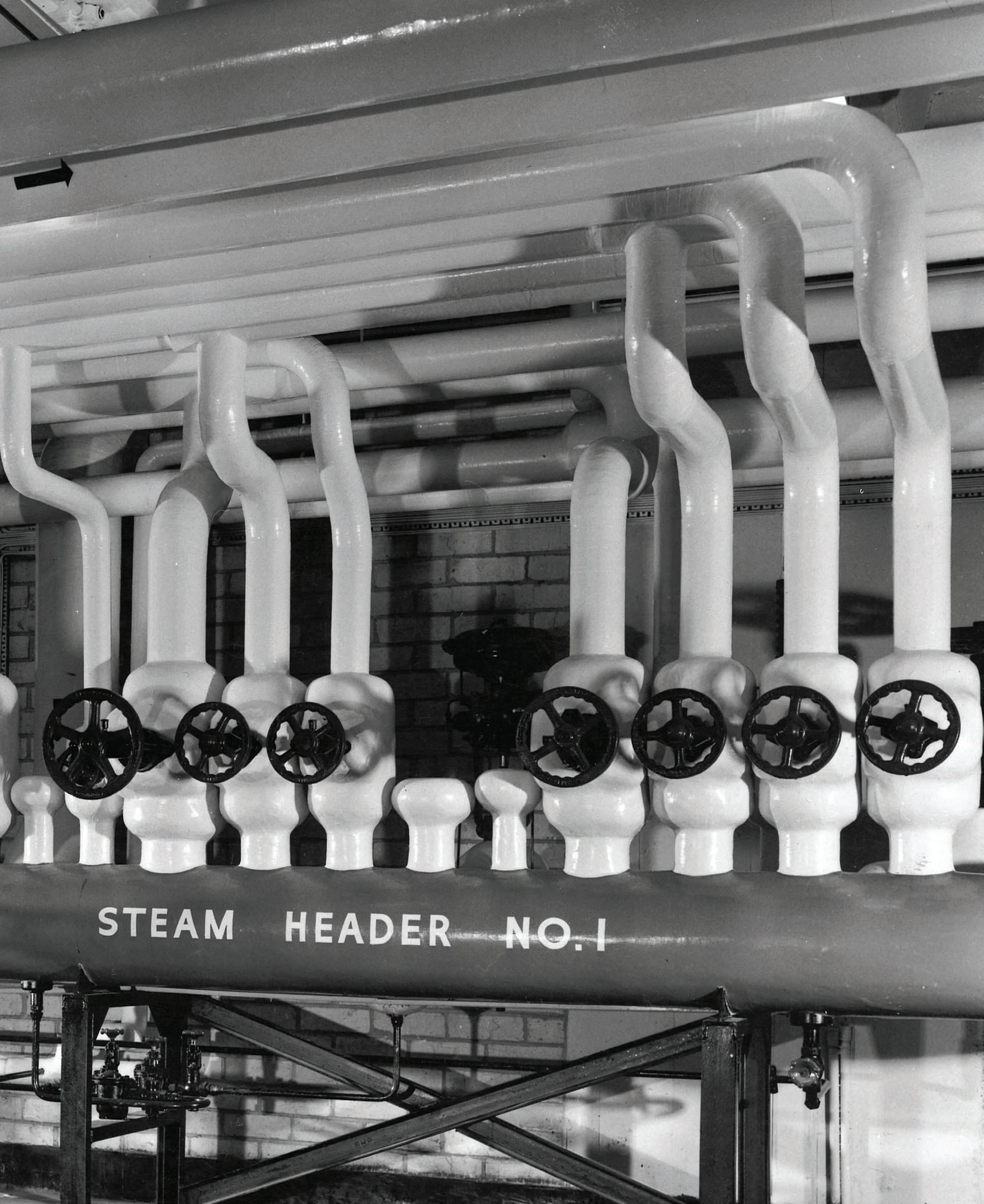
Australia’s largest installation of mechanical services
(then
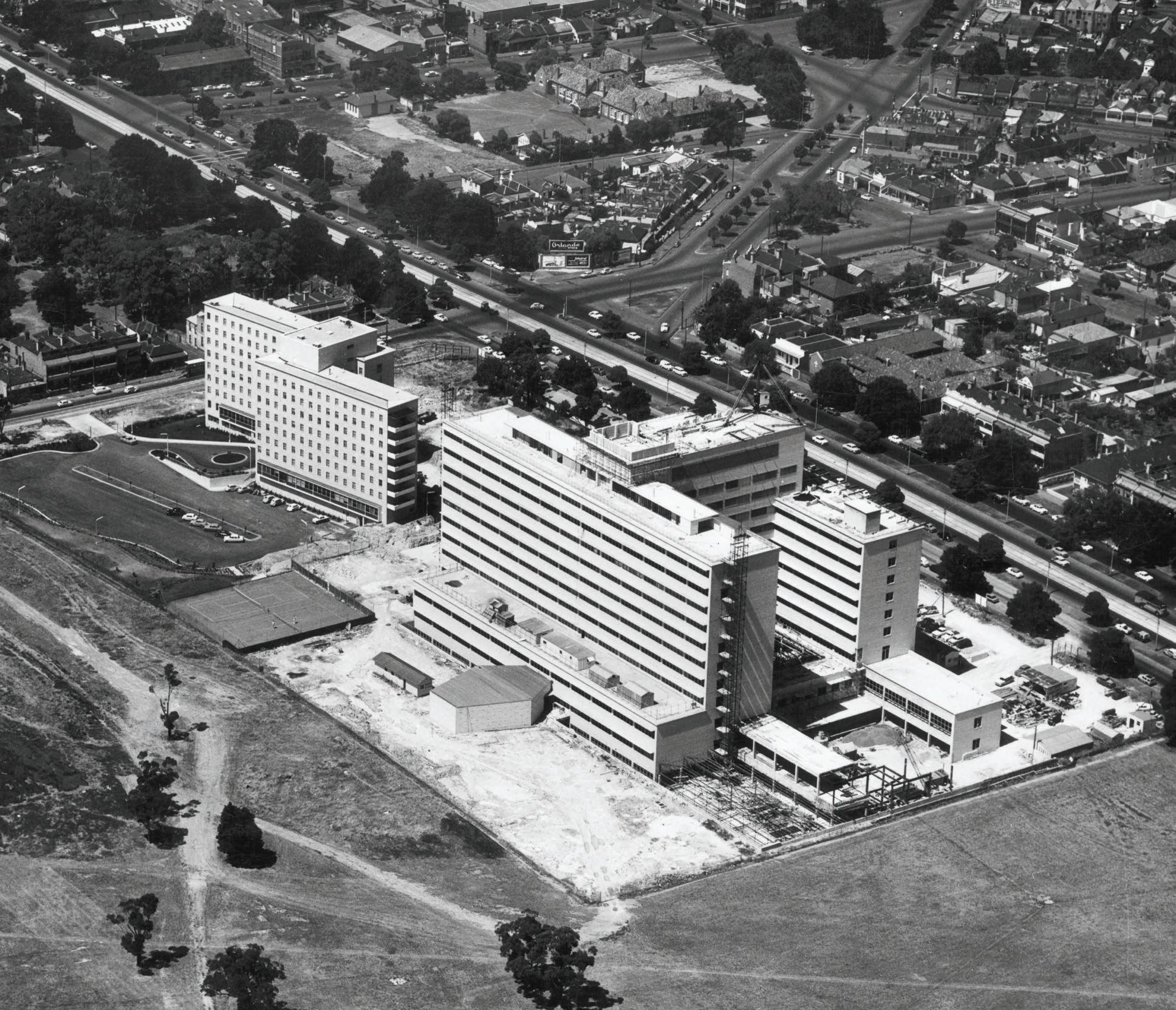
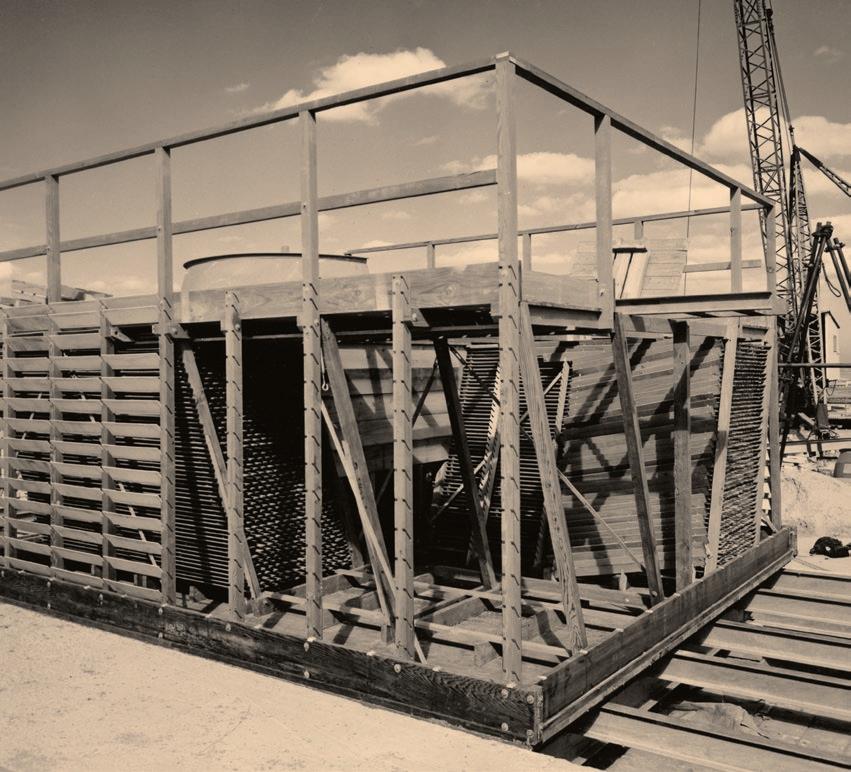
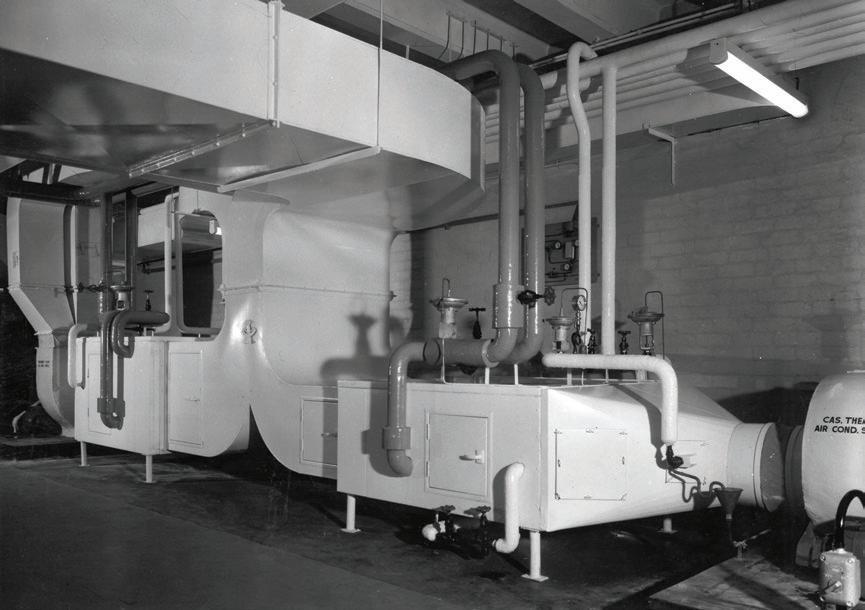
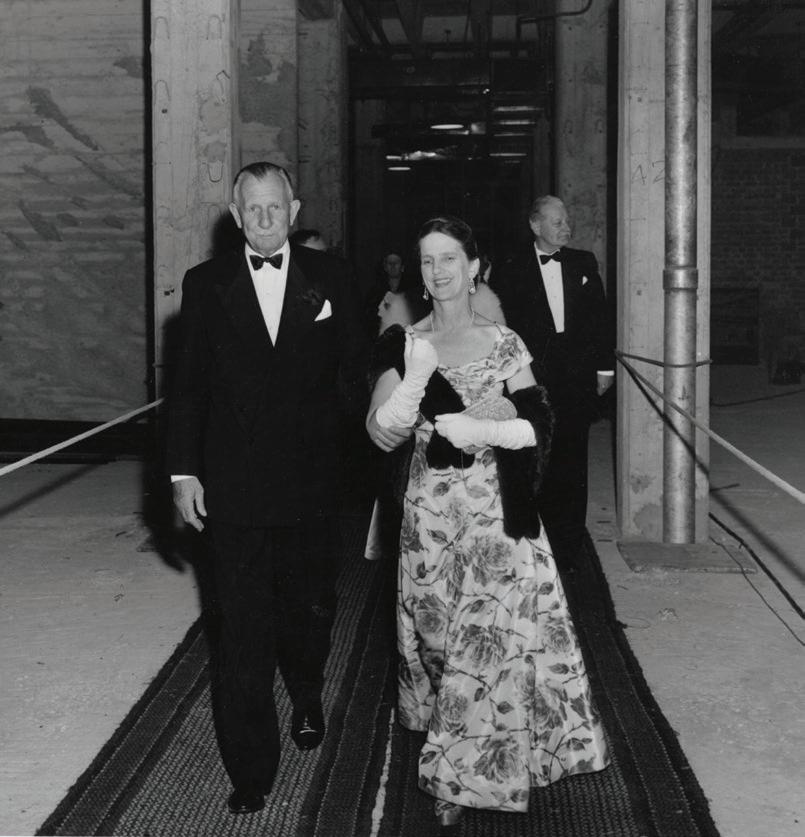
Lady Elisabeth Murdoch (as she was then known) and General Sir Dallas Brooks walk through the partially completed hospital on their way to a Building Appeal launch in 1960. The wife of Australian newspaper publisher Sir Keith Murdoch, and mother of media magnate Rupert Murdoch, Elisabeth Murdoch served as president of the hospital’s management committee from 1954–1965. A dedicated philanthropist, she was instrumental in securing funds to construct the new hospital, and was recognised for her efforts in the 1963 New Year’s Honours List when she was appointed Dame Commander of the Order of the British Empire. Englishman Sir Dallas Brooks was Governor of Victoria from 1949-1963. His links to Australia stretched back to his time as a Royal Marine in the First World War, when he was severely wounded during the Gallipoli landings in 1915.
Image source: Royal Children’s Hospital
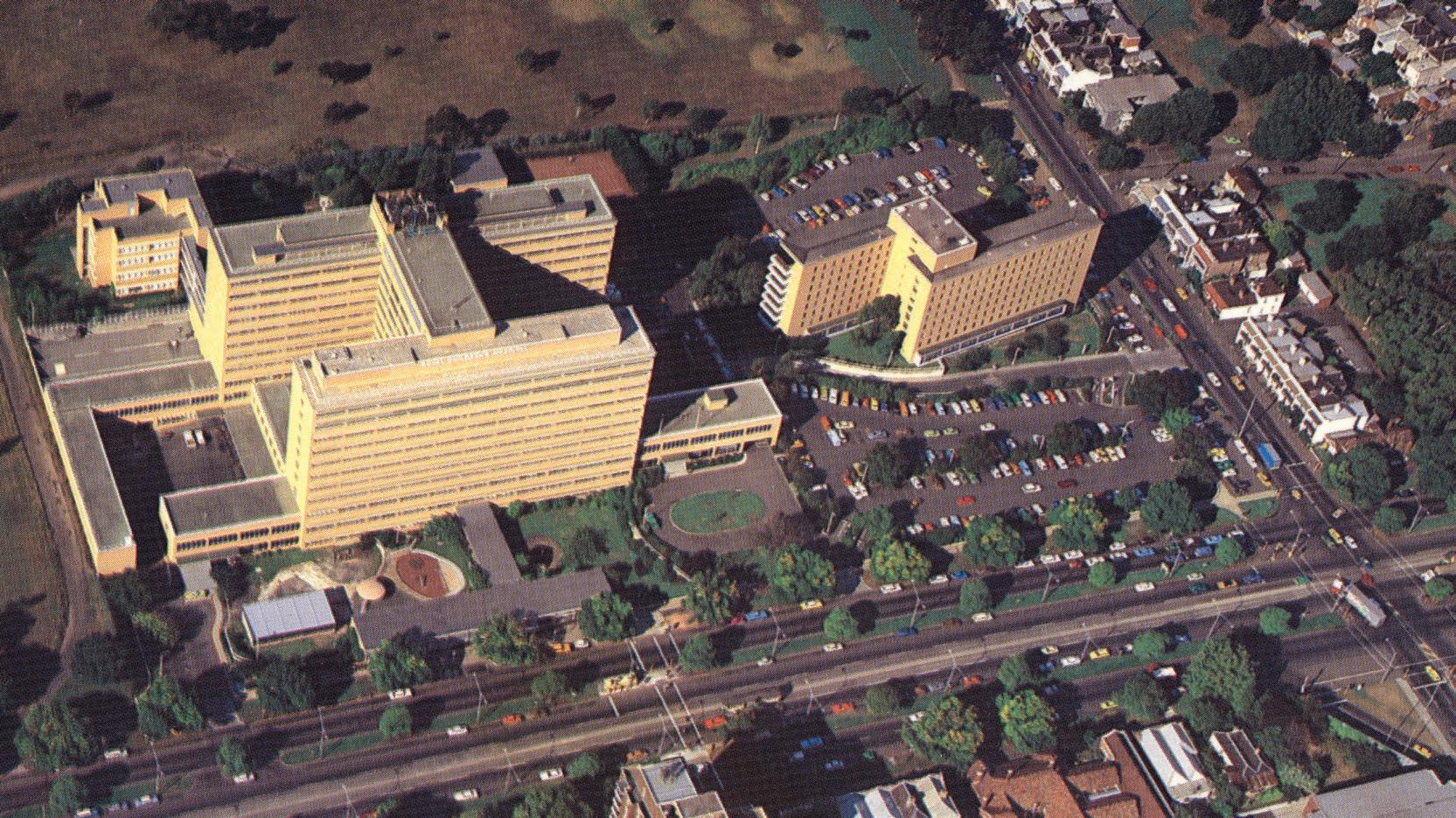
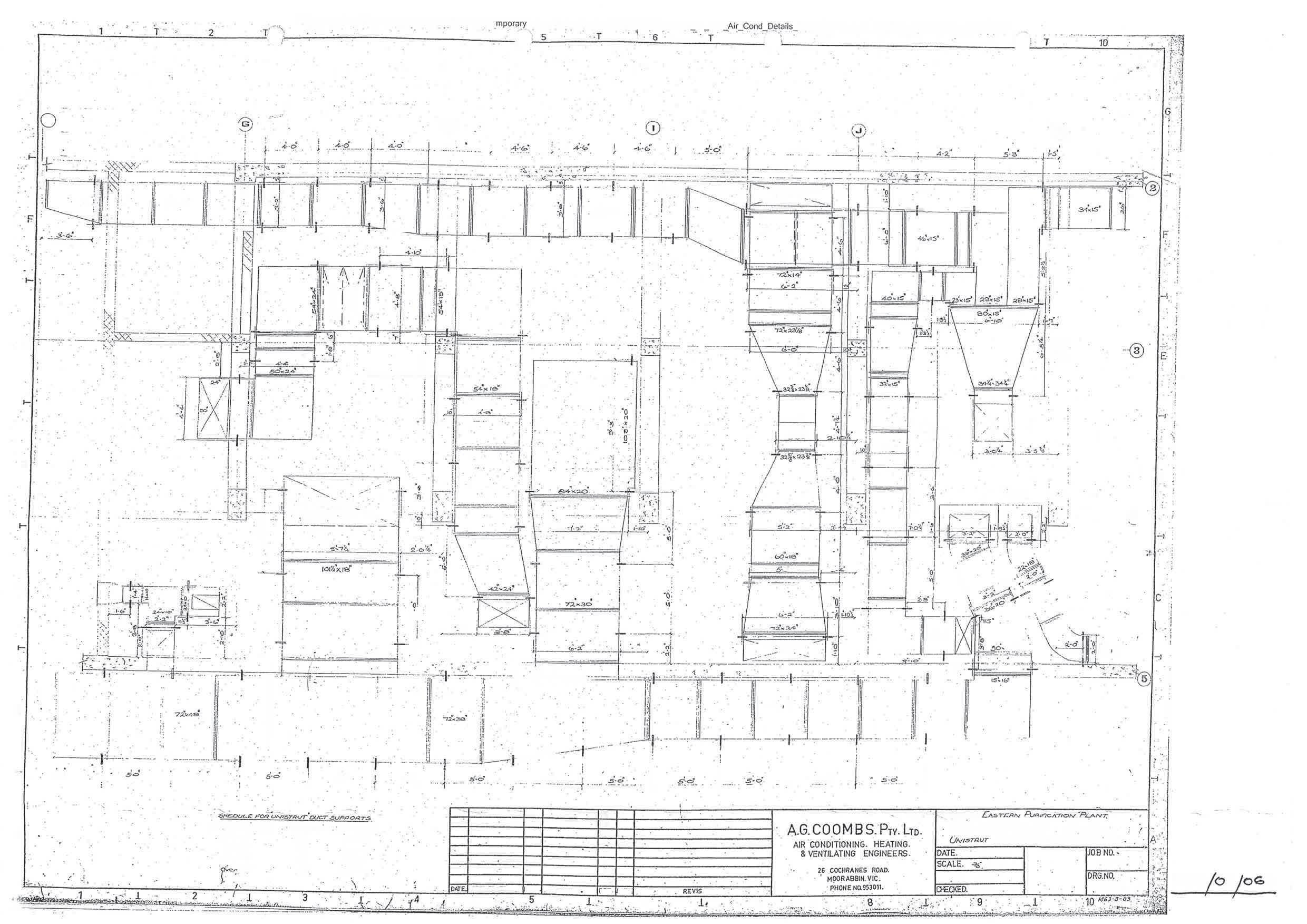
Checking the bearings on the large fans for the air conditioning system at the Royal Children’s Hospital. circulated air throughout
Her Majesty Queen Elizabeth II addresses guests at the opening of the new Royal Children’s Hospital on 25 February 1963. Dame Elisabeth Murdoch is seated behind her, with the Duke of Edinburgh seated to the Queen’s left, and the Victorian Premier, Henry Bolte, at the far left of the photo.
Hospital
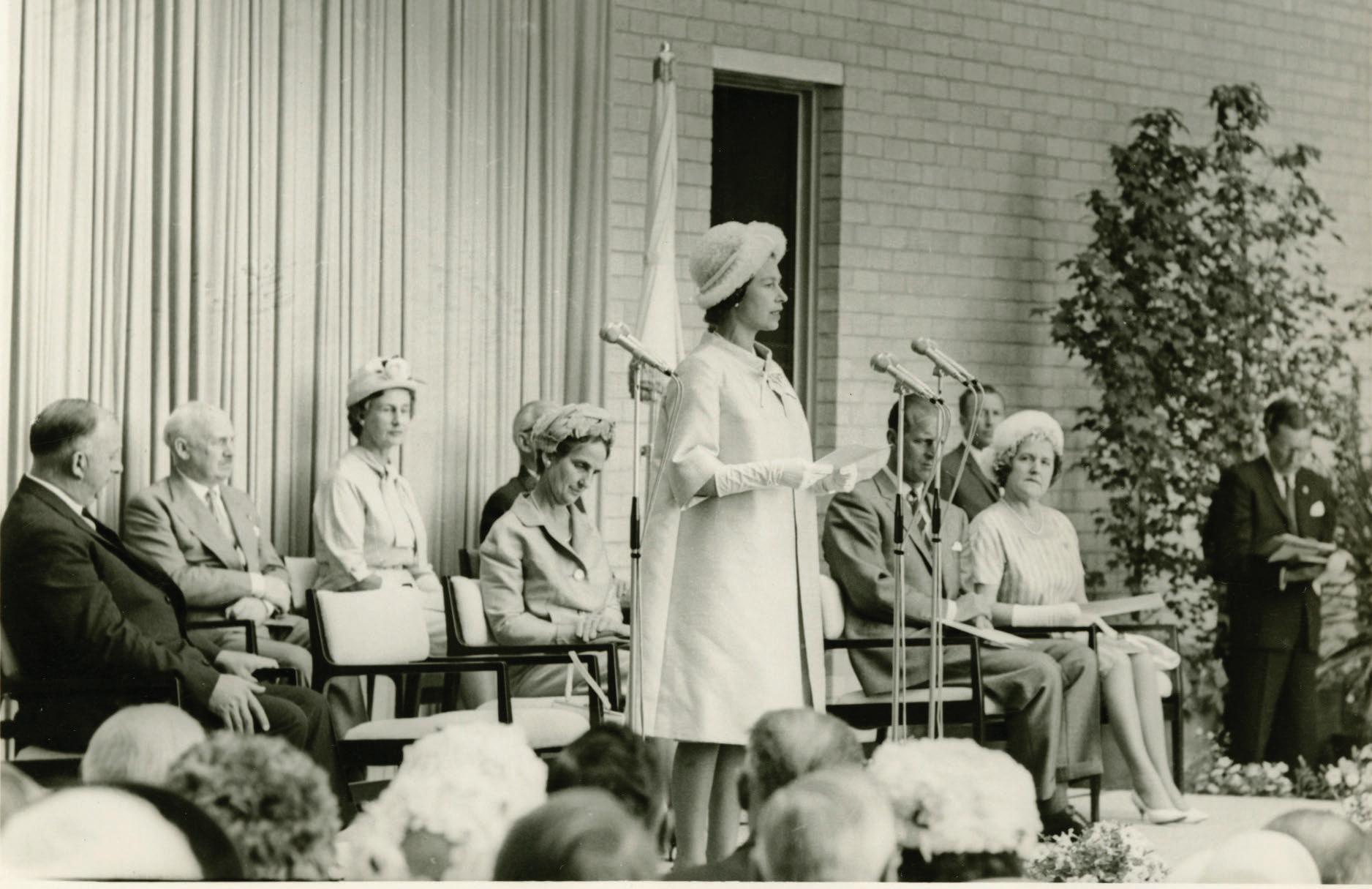
The hospital was granted the right to use the word ‘Royal’ in August 1953 after it made a strong case that outstanding specialist hospitals should be entitled to the Royal prefix. Its coat of arms (as depicted on the program) would be replaced in 1965 by one featuring children and a pelican as a symbol of devotion to the young.
Image source: Royal Children’s Hospital
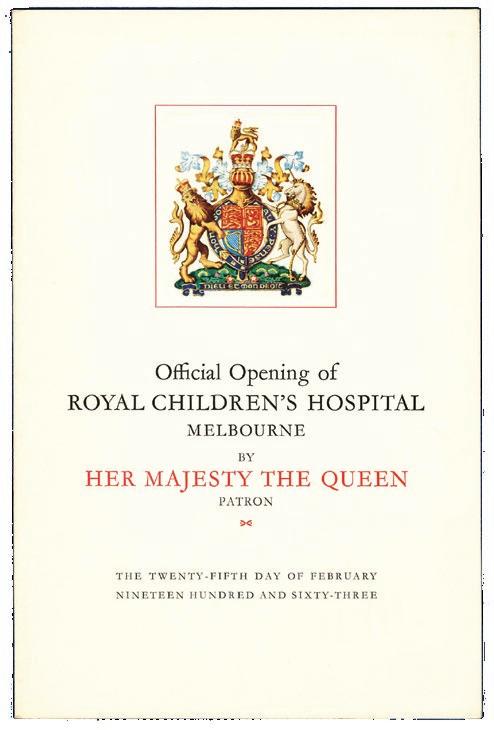
Both the nurses’ home and the main building were flagship projects for A.G. Coombs involving hundreds of drawings, which the newly established drawing office at Cochranes Road was now providing. These drawings showed where all the pipes needed to be installed in the shafts and false ceiling space between each floor, and how the main plant room would then feed these pipes to heat and cool the building, and provide medical gases such as oxygen.
The engineering was highly complex for its day, with the extensive network of pipes, fans and ductwork a testament to the growing technical capabilities of the company.
With its 400 beds and modern facilities, the Royal Children’s Hospital was already being hailed as a leading paediatric centre in the Southern Hemisphere. It also boasted what was then recognised as Australia’s largest installation of mechanical services – an undertaking that Allan and his team could not have foreseen in the early stages of the contract. In fact, the completion of the main building in 1963 marked approximately eight years since A.G. Coombs started work on the entire project, beginning with the nurses’ home back in 1955.
Queen Elizabeth II, accompanied by the Duke of Edinburgh, Dame Elisabeth Murdoch and Premier of Victoria Henry Bolte opened the new hospital on 25 February 1963. No one at A.G. Coombs – not even Allan Coombs – could have predicted in the early years of establishing the business that the Queen would one day be inspecting their work. It was a defining project for the entire team and one that sealed the company’s reputation in the industry.
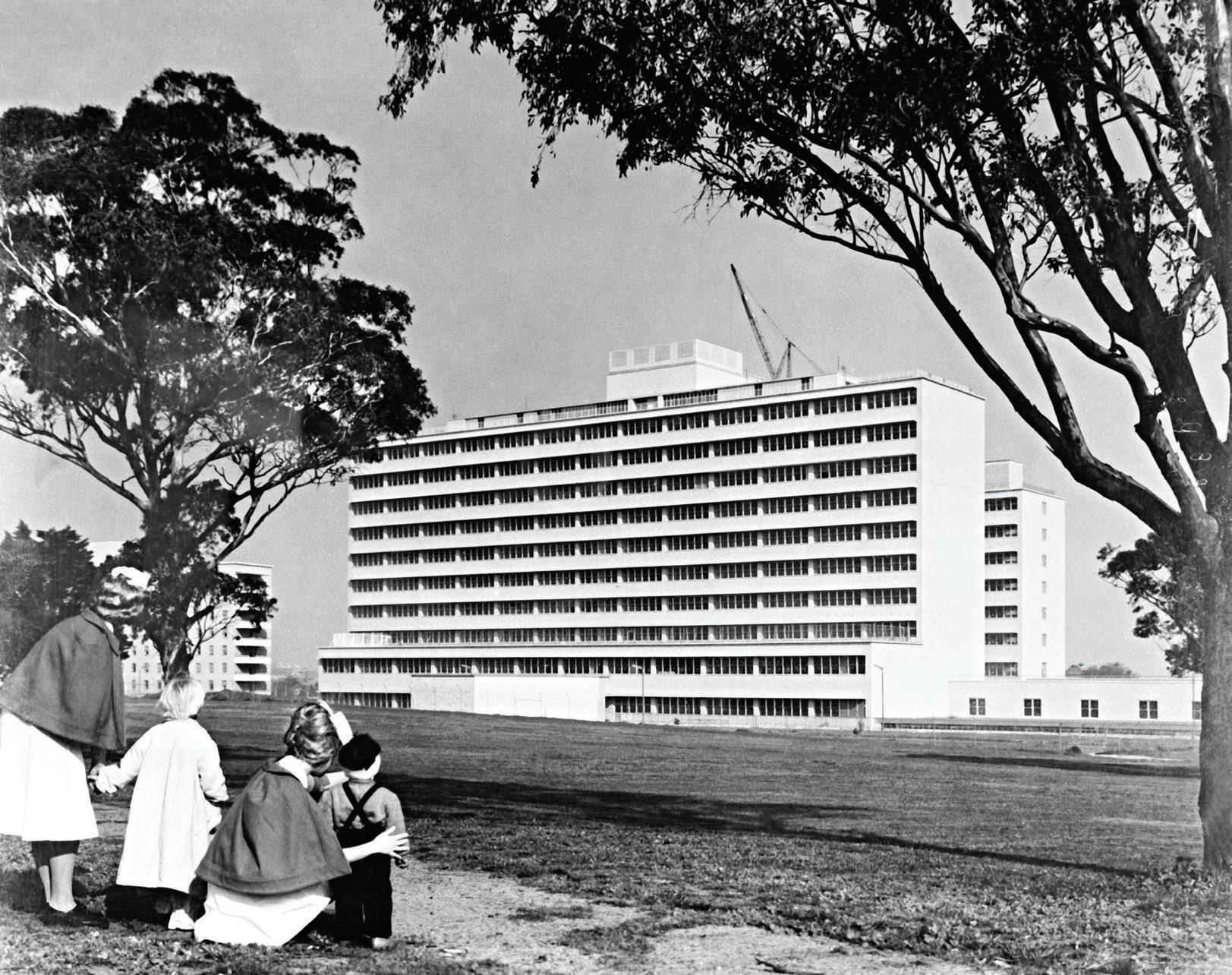
The Royal Children’s Hospital offered its patients the latest paediatric facilities. Nurses and children are pictured (above) in Royal Park, looking south towards the hospital and (right) walking towards the main entrance.
A.G. Coombs’ role in air conditioning, heating and ventilating the building – then the largest contract of its kind in Australia – raised the company’s profile in the industry.
source (above and right): National Archives of Australia
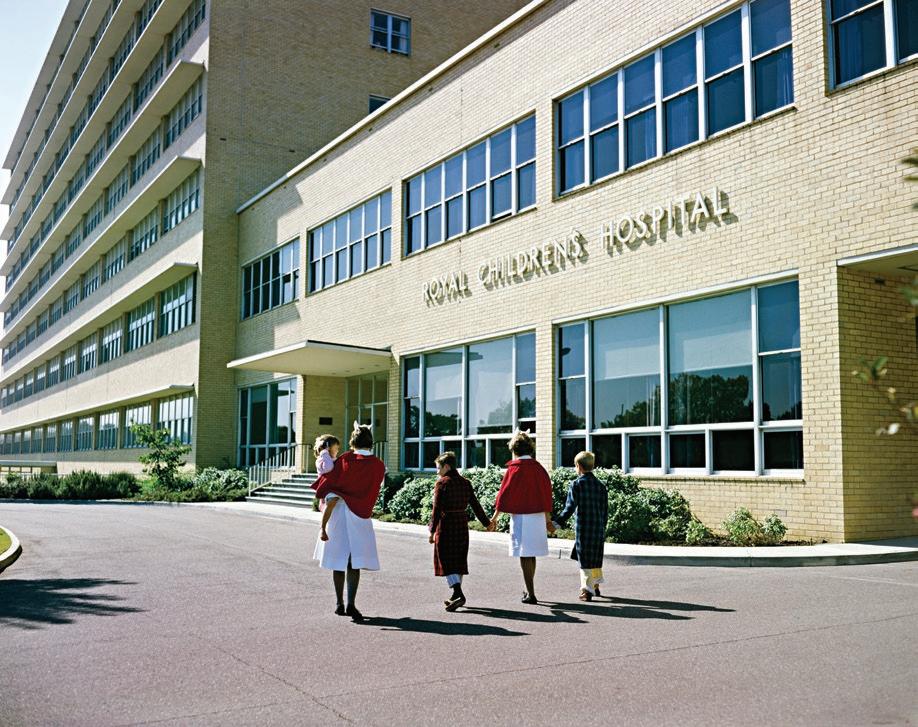
The drawing office was established in 1958 to produce detailed plans for the main building of the Royal Children’s Hospital. Head Draftsman Jock Fraser (far
reviewing some
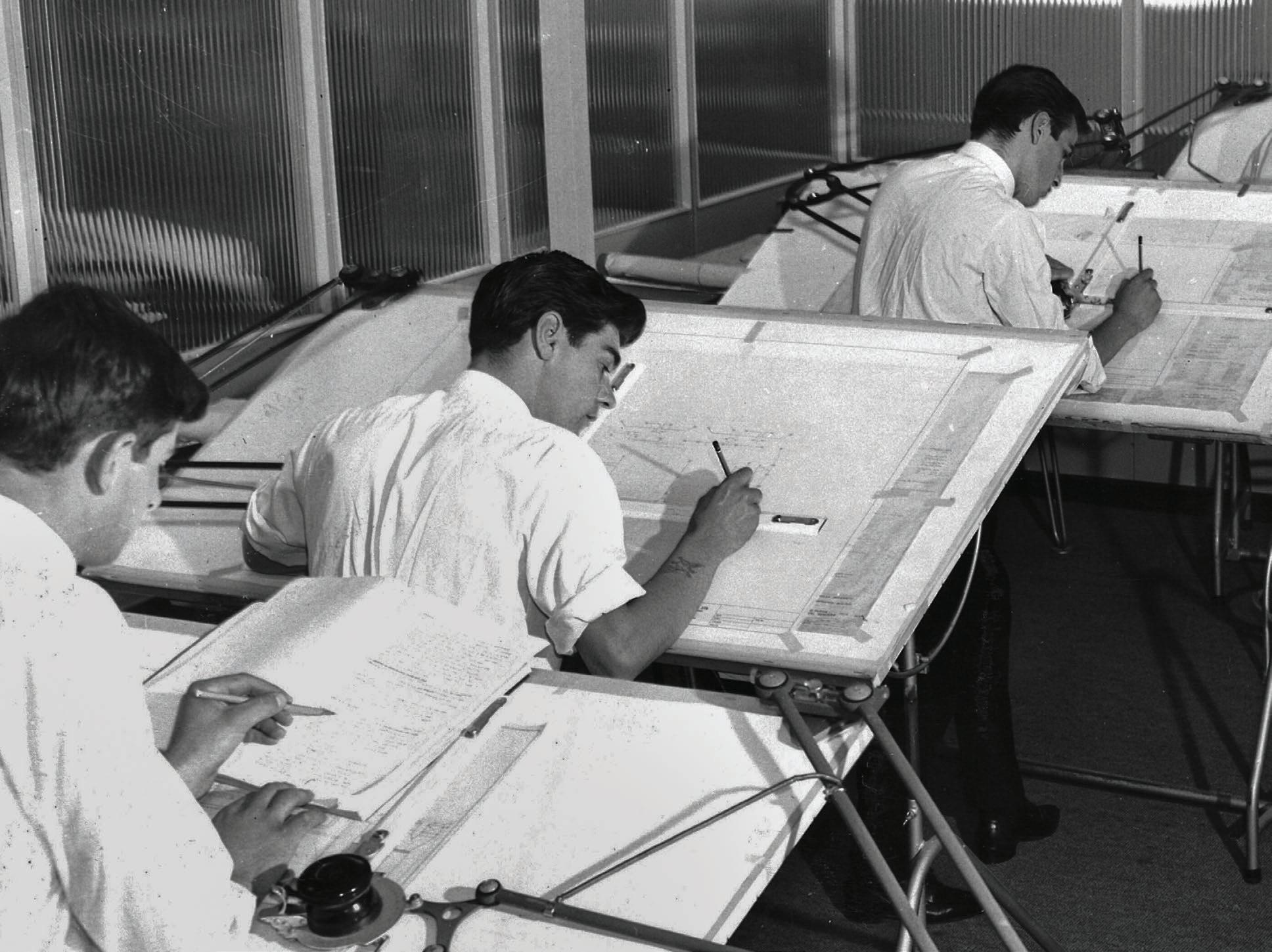
The proliferation of new commercial developments in Australia since the end of the Second World War was staggering. In addition to the Royal Children’s Hospital, people were now witnessing the construction of large industrial complexes and massive shopping centres, not to mention a significant number of medical and academic facilities. In Melbourne, city buildings were also rising higher due to the government revoking the 132-foot (40 metre) height limit, while building proprietors were now deciding that full climate-control air conditioning was highly desirable.
For Allan Coombs it was all about seizing opportunities. Having started his business with little more than £200 and a bucket-load of determination, he was justifiably proud of the way in which his people had just completed one of the most complex installations of mechanical services in Australia.
It was this feeling of accomplishment that Site Supervisor Ray Twite sensed when Allan Coombs interviewed him for an apprenticeship and showed him the drawings for the Royal Children’s Hospital. “He showed me his first plans, which were of the Children’s Hospital – you could tell he was proud about that,” said Ray, who joined the company in November 1966.
Those plans were the product of the drawing office, which was initially a one-man set-up, but was now a proper office with a growing team of draftspeople. Jock Fraser, who was in charge of drafting, recalled how the office came to be established in the late 1950s, more out of need than design, but ultimately with a view to professionalising the services offered by the company.
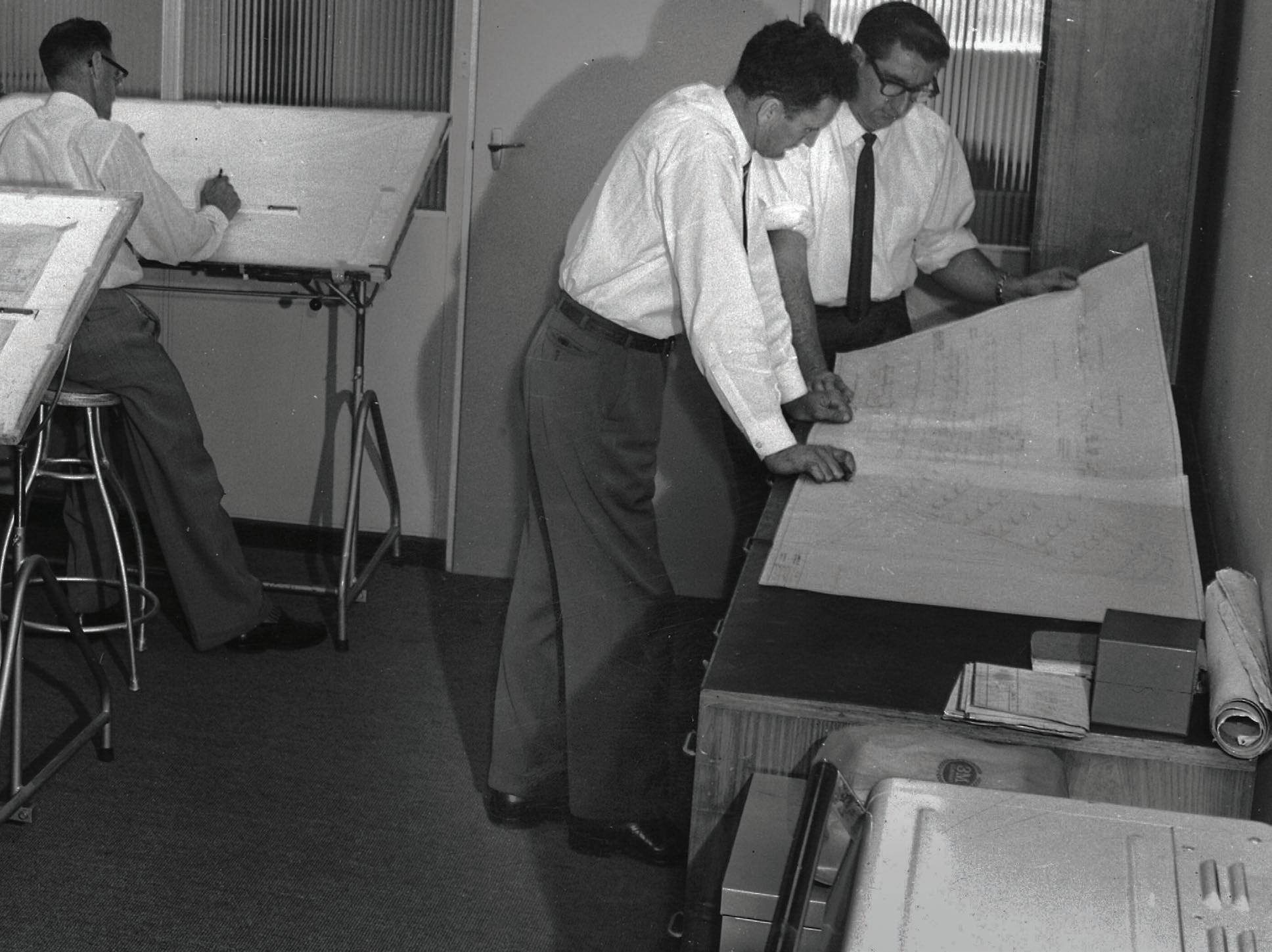
A skilled operator, Jock’s initial dealings with A.G. Coombs took place when he was in charge of the excavator drawing section of Jaques Brothers Engineering. As always, the entrepreneur in Allan had spotted an opportunity to utilise their sheet metal factory for other purposes, which at the time included building excavator cabins for the Richmondbased engineering firm. As it turned out, Jock was overseeing the contract and was due to meet with A.G. Coombs’ Factory Manager, Jack O’Hehir, in Moorabbin.
Jock recalled the “little factory” set-up at Cochranes Road and how the company was getting its head around the new requirements for the Royal Children’s Hospital, one of which was to produce drawings for all the mechanical installations. It was actually the first time that A.G. Coombs was being
asked to submit drawings well in advance of commencing the installations. The fact that a small room had been designated for the task was a clear indication of the project’s importance. “Are you looking for a job?” Jack O’Hehir had enquired, hopeful that Jock might jump at the opportunity to work on a high-profile project.
Jock was definitely interested and returned the next day for a formal interview in the small drawing office where all the plans for the main building were spread out. He was soon immersed in what was an incredible challenge for the whole company and emerged eight hours later having practically drawn up the entire project with Allan Coombs and Jack O’Hehir. Jock obviously fitted in because Allan made a quick decision: “We’ll get you here straight away,” he declared.
It would be a few months before Jock could join them, but when he finally came on board in April 1958, he ended up sitting around with little to do, as construction had already commenced on the main building of the Royal Children’s Hospital. No one, it seems, required his services and it was especially hard, he remembered, trying to get people to understand the value of drafting. At the time, site supervisors generally did all their drawings and measuring on site, and were particularly wary of someone sketching things back at the office. “The project managers on the plumbing side really thought I was going to take over their jobs,” said Jock. “They wouldn’t let me draw anything or do anything!”
Fortunately, he discovered a good ally in Fred Coombs, Allan’s father, who was then working on some small design contracts for his son. Fred, a former design engineer and great supporter of the drawing office, invited Jock to work on some of his sketches. This was timely, as people soon came to realise that professional drawings enabled ductwork to be precisely measured up and produced in the factory, before being sent out ready to install. “They were measuring up thousands of pieces of ductwork out on the sites and I think word got back that this is not a bad idea because we don’t have to measure up and we’re not going to get the mistakes,” said Jock.
Allan Coombs also saw the efficiencies being achieved by having a dedicated drafting set-up and asked Jock to expand the drawing office. “Allan had a vision, but he left the detail to you,” said Jock, explaining how Allan never interfered once he realised you knew your job. Interestingly, though, while Allan was unable to perform many of the tasks he employed people to do, he uncannily knew the procedures required to do them.
Jock Fraser was assigned one apprentice, then a couple more, and soon things really started taking off. They got the drawings done quickly, delivered them to the factory, and from there all the ductwork went out to the work sites with fewer mistakes. Before long, other companies began establishing drawing offices as there was now a growing requirement for contractors to submit drawings after winning a tender. In fact, most projects now required the submission of detailed plans prior to commencing work. “It was something the industry took hold of,” explained Jock, who ended up supervising a team of seventy people. In time, A.G. Coombs would begin hiring engineers and would go on to introduce new drafting standards for the industry.

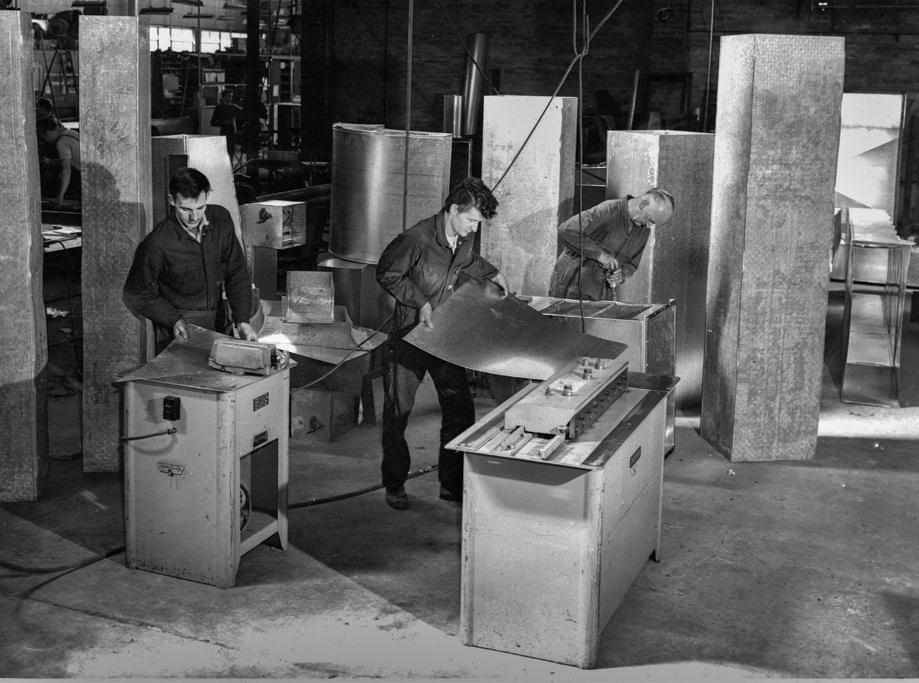

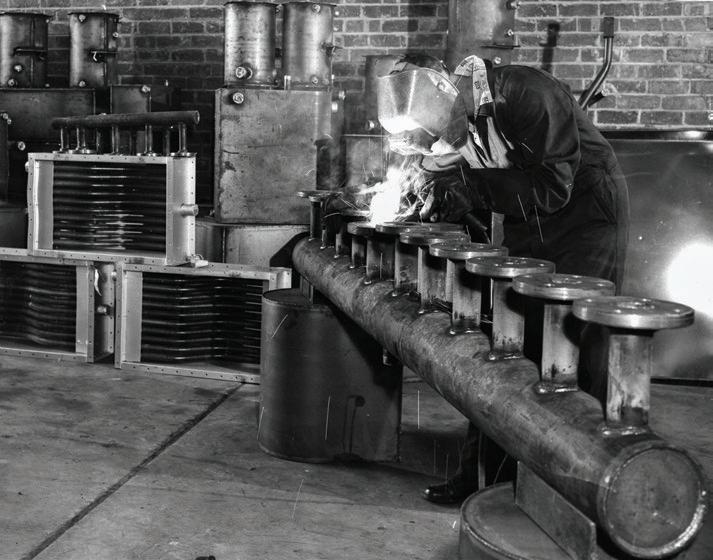
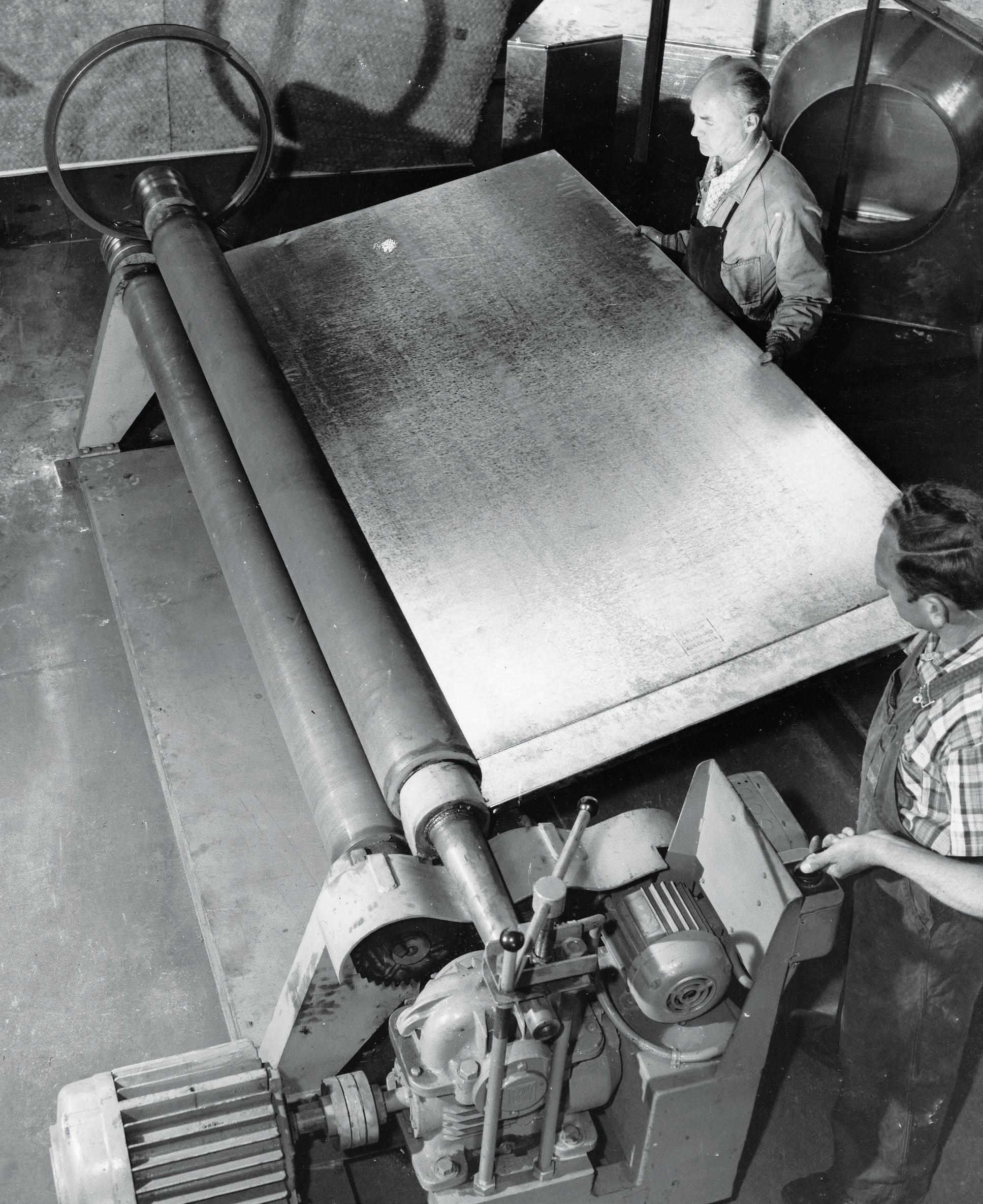
When it came to guaranteeing the company’s work, Allan Coombs always insisted on providing appropriate follow-up once projects were completed. It was more than simply assuring clients that faulty equipment would be fixed under the manufacturer’s warranty. In his opinion, it was important to provide ongoing maintenance for all the installations (not only their work but also items supplied by other companies) so that problems did not occur in the first place. This train of thought resulted in the creation of A.G. Coombs Servicing Pty. Ltd. – otherwise known as the Service Division.
The Service Division was a completely new area for the company and its establishment in 1964 was entrusted to Alan Collard, a former apprentice who was in agreement with his boss when it came to servicing their projects. Like Allan Coombs, he believed there was no point in doing a good job and then walking away after it was completed, because your reputation depended on how well everything performed over the long term.
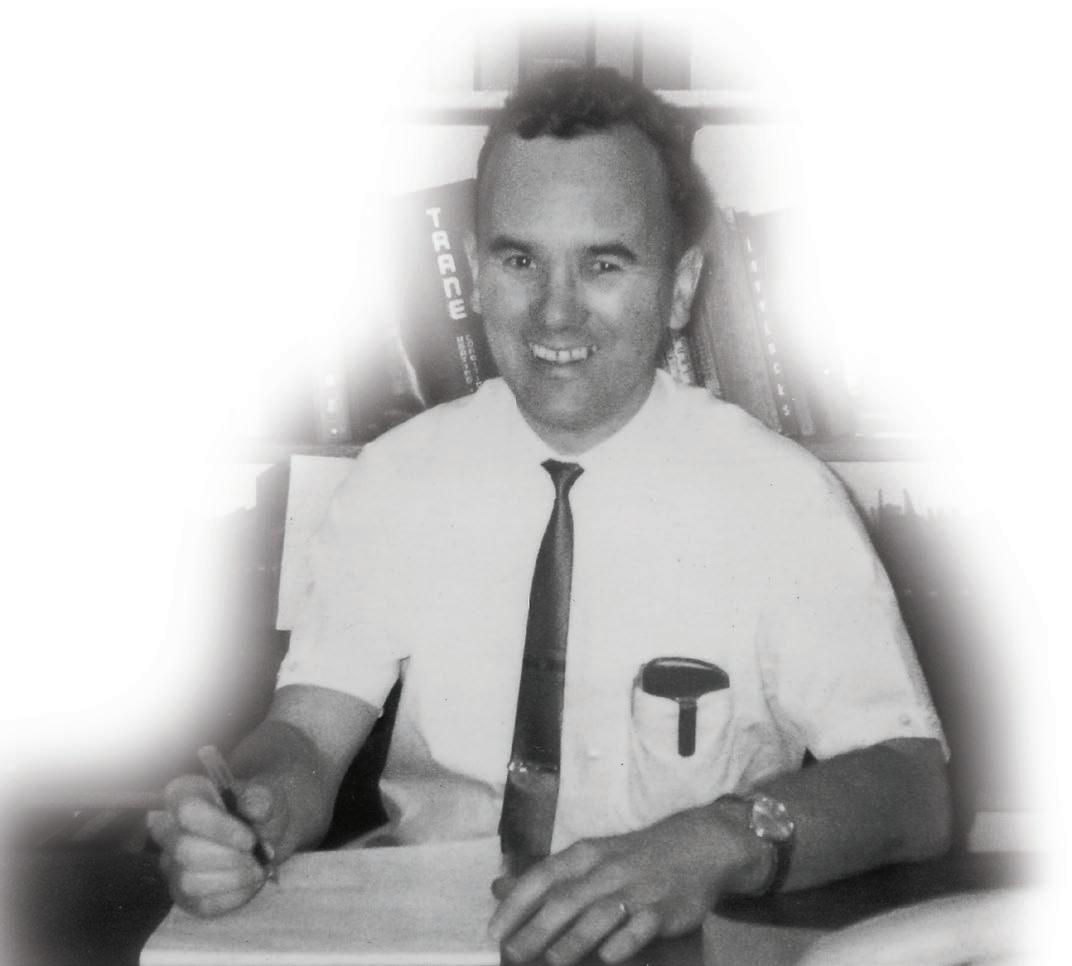
Initially operating out of a small cubicle in the factory, the Service team basically took over once the services were installed and delivered. Not many contractors had the resources to provide this level of ongoing service and A.G. Coombs was seen as something of a trailblazer in its industry.
Previously, manufacturers such as Westinghouse and Carrier had taken full responsibility for all the machinery they supplied, which meant that property managers had to call on different companies to service or repair individual items of equipment. When the Service Division initially started, it played a coordinating role and subcontracted the manufacturers to service their equipment on a routine basis. In time, the Service Division would take over a lot of this work, especially once trained technicians started leaving the manufacturers to join A.G. Coombs.
The Service Division also went a step further and began maintaining properties where it was not responsible for the original mechanical installations. “A lot of companies did not have this service facility, so we used to do the maintenance on the jobs they’d finished,” said Alan Collard. “We were basically the first mechanical services contractor to do that in the industry, and that’s how it built up from there.” However, they did go through a learning curve when preparing quotes for comprehensive service contracts, as they now had to allow for insurance and after-hours calls, and often had to “take a punt” on the number of calls they might receive. While they under-quoted some jobs, it only took a few contracts to understand the level of work involved, and it wasn’t long before the Service Division began generating good business.
Not only did A.G. Coombs have a division entirely dedicated to servicing, its staff also drove around in specially equipped and clearly marked vans (emblazoned with the A.G. Coombs name), and communicated with two-way radios when they were out on jobs. The Postmaster-General’s Department, which administered the two-way system, had advised that transmissions should be “as concise as possible” and all “superfluous conversations avoided.” Limited airspace, however, meant they had to share radio frequencies with other companies, and so it often took a while to establish where their calls were coming from.
Setting up the Service Division was a wonderful opportunity for employees to develop a new line of business while adding value to the company’s core services. It also highlighted one of the great things about working for A.G. Coombs, in that Allan Coombs was happy to give his most capable lieutenants considerable scope to put their stamp on different areas of the company.
Business became more competitive when other companies saw just how lucrative this line of work could be and started their own service divisions. As a result, A.G. Coombs did not always get to service the jobs where its project teams had carried out the initial installations, largely because of
its higher costs. These costs, as customers would later discover, more accurately reflected what was involved in ongoing maintenance, such as being aware of all the fan units in the ceiling and other hard-to-access services. While it was tough watching competitors win jobs on price alone, it was also gratifying to see many lost opportunities come their way again on the basis that they were better equipped to do the job.
The service concept was a winner, and the Service Division rapidly expanded to accommodate the company’s growing clientele. Service contracts also helped the company through difficult times, especially during downturns in the building industry.
The Service Division built up its own fleet of vans, and in 1968 relocated from its small cubicle in the factory to larger facilities that Allan Coombs rented at 16 Cochranes Road.
Alan Collard would go on to manage the Service Division for fourteen years. By the time he left to assist Allan Coombs in 1977, the Division had forty-five vans and a staff of sixty people handling jobs all over Victoria. A little lateral thinking had taken not only A.G. Coombs but also the entire industry into a whole new area of service.

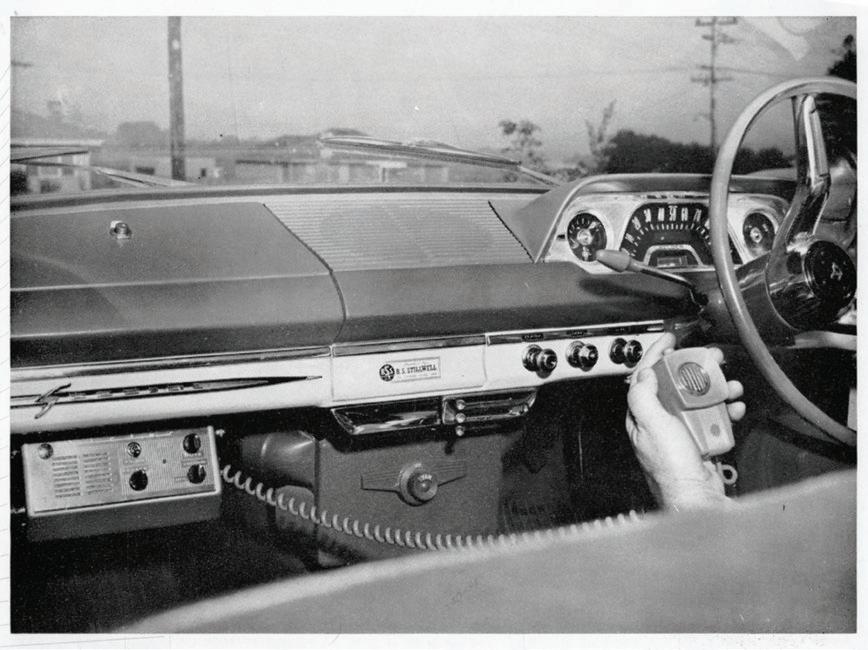
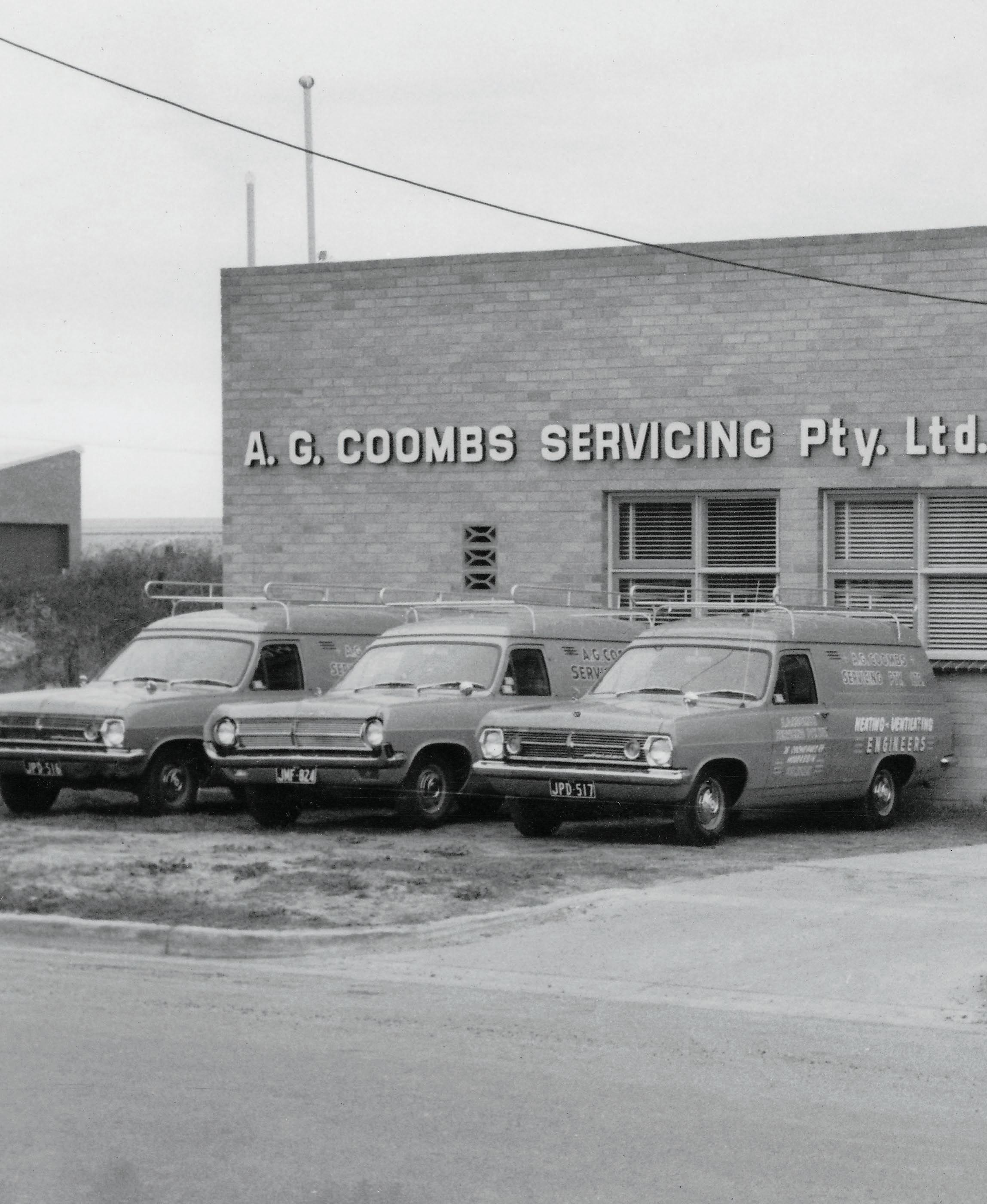
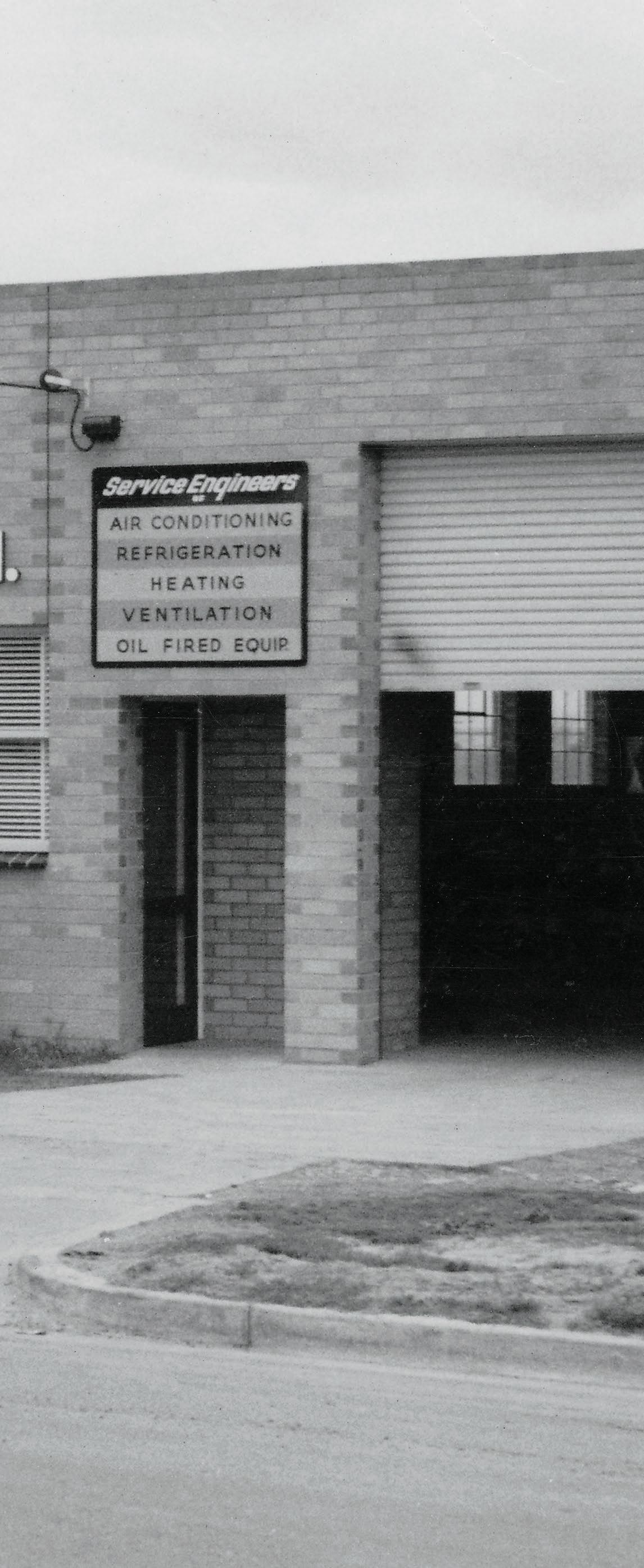
The Air Conditioning and Mechanical Contractors’ Association of Australia first emerged in Victoria during the 1960s after a group of contractors from the Master Plumbers Association (MPA) decided to form a separate organisation.
For plumbing firms that had transitioned into the area of heating and ventilation, there was now a growing realisation that the MPA did not fully represent their specific interests. The view at the time was that the MPA was focused on the needs of plumbers working on residential and domestic projects, whereas plumbers specialising in major mechanical work were dealing with large central plant buildings and therefore operating under contractual conditions that were markedly different from those in the residential sector.
Allan Coombs realised that the interests of these companies needed to be addressed separately and, together with Alec Bell of AE Smith & Son, was instrumental in leading calls to develop the activities of companies operating in this area. A resolution to this effect (passed in 1960) saw the creation of a breakaway group, the Society of Heating and Ventilating Contractors, which in time became the Air Conditioning and Mechanical Contractors’ Association – or AMCA for short.
The AMCA’s establishment owed much to the efforts of Allan Coombs and Alec Bell. Allan was the organisation’s founding president in 1961.
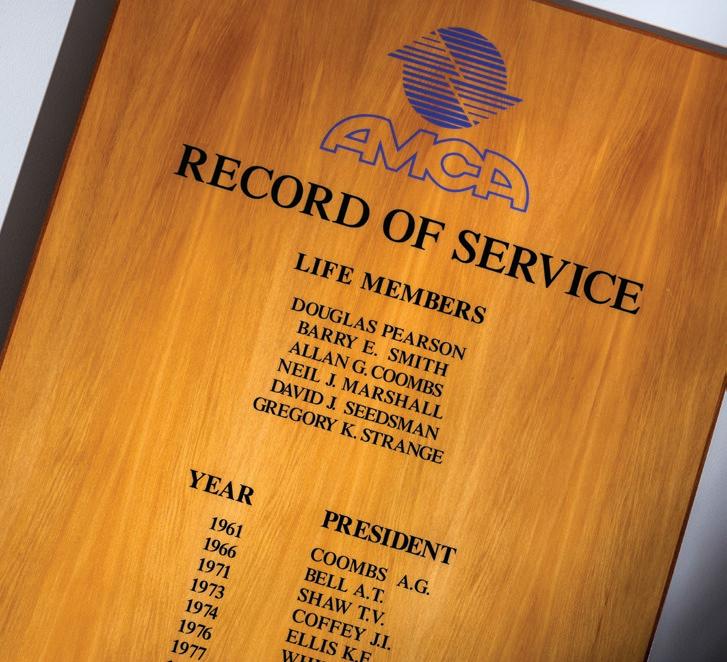
Opportunities outside Victoria were always carefully assessed, and it was not unusual for Allan Coombs to send people away for short periods to work on interstate projects. Discussions also took place about establishing interstate branches, but these never progressed any further due to Allan’s determination to focus on Victoria. The one exception was Tasmania, where Allan had previously worked on jobs in Hobart and Launceston. Because of this he was happy for Trevor Eastoe, one of his senior managers, to oversee a number of projects from Melbourne.
On the strength of its ongoing work in the medical area, A.G. Coombs had managed to win several major contracts to install the mechanical services at a large number of Tasmanian hospitals. “We did hospitals everywhere,” said Bill Moseley, citing a long list of places stretching across the north of Tasmania. Scottsdale Hospital was their first big project, followed by hospitals in Devonport, Burnie, Smithton, Ulverstone and Launceston.
While Trevor initially managed these projects from Melbourne, it became increasingly clear that the Tasmanian Government preferred working with local contractors. Therefore, to improve their chances during the tender process, Allan established A.G. Coombs Tasmania Pty. Ltd. and agreed to open a branch office in Launceston. “That was the main reason for opening a branch there, because of the bias toward local contractors,” explained Bill Moseley, who moved to Tasmania with his wife Coralie in 1960. Together they set up the office – known locally as AGC Heating and Ventilation – with Coralie also acting as Bill’s secretary for two years.
At one point, Ron Barns went up to Queensland to take on a job in Brisbane, but any thoughts of establishing a branch there never got off the ground, largely due to an economic downturn. “We would never have moved from this place [Melbourne],” said Jock. “Allan wasn’t keen to. He just felt that we were getting one percent or two percent of the work [in Queensland], so what’s the point?”
The Tasmanian business, by contrast, was turning into a busy operation with around ten people on staff and a growing list of projects. Bill Moseley had worked tirelessly for four years to get the branch off to a good start, but decided in 1964 that it was time to return to Melbourne. Meanwhile, Trevor was keen to be more hands-on and in 1964 relocated to Launceston, where he took over the management of the Tasmanian office.
Truth be known, Allan had never been entirely convinced about opening an office in Tasmania. Trevor, however, seemed to be making a go of things and, for practical reasons, it made sense to run everything locally once they started securing more work. “Allan didn’t want to go there, but Trevor liked it and [had been] doing little jobs from Melbourne,” said Jock Fraser. “Then they won the Casino project, which meant they had to set up the factory in Tasmania.”
Wrest Point Casino, which they would work on in the early 1970s, was A.G. Coombs’ most high-profile undertaking in Tasmania. Destined to become a landmark building in Hobart, it was Australia’s first legal casino and boasted a 17-storey hotel tower with a revolving restaurant.
The Casino’s production requirements were so extensive that Allan went ahead and set up a ductwork factory in Tasmania with the help of a government grant. The factory, as it turned out, would be kept busy for quite some time producing ductwork for a variety of hospital and government projects, including a contract for the Postmaster-General’s Department.
The foray into Tasmania was an interesting exercise in Allan’s eyes, but he was reluctant to take things further. Union issues and a project at a virtual standstill in Melbourne would start consuming his energies in the mid-1970s, and he would later sell the company’s Tasmanian operations to Trevor, who, by all accounts, enjoyed the lifestyle in Launceston and was happy to settle there.
A.G. Coombs installed the air conditioning and mechanical services in Hobart’s Wrest Point Casino, a landmark building designed by eminent architect, Sir Roy Grounds.
Plans by the Federal Group to build Australia’s first legal casino commenced in the 1960s as part of broader efforts to attract more tourism to Tasmania. After an approach was made to the Tasmanian Government, a state referendum was held and narrowly passed, paving the way for the casino licence. With its distinctive 64-metre tower, Wrest Point Casino can be seen at right and in the foreground below during the final stages of construction. It officially opened in February 1973.
Image courtesy of the Federal Group.

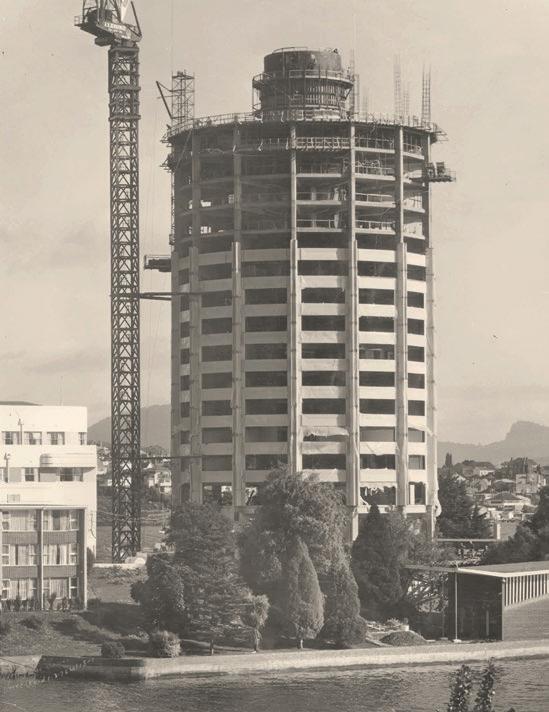
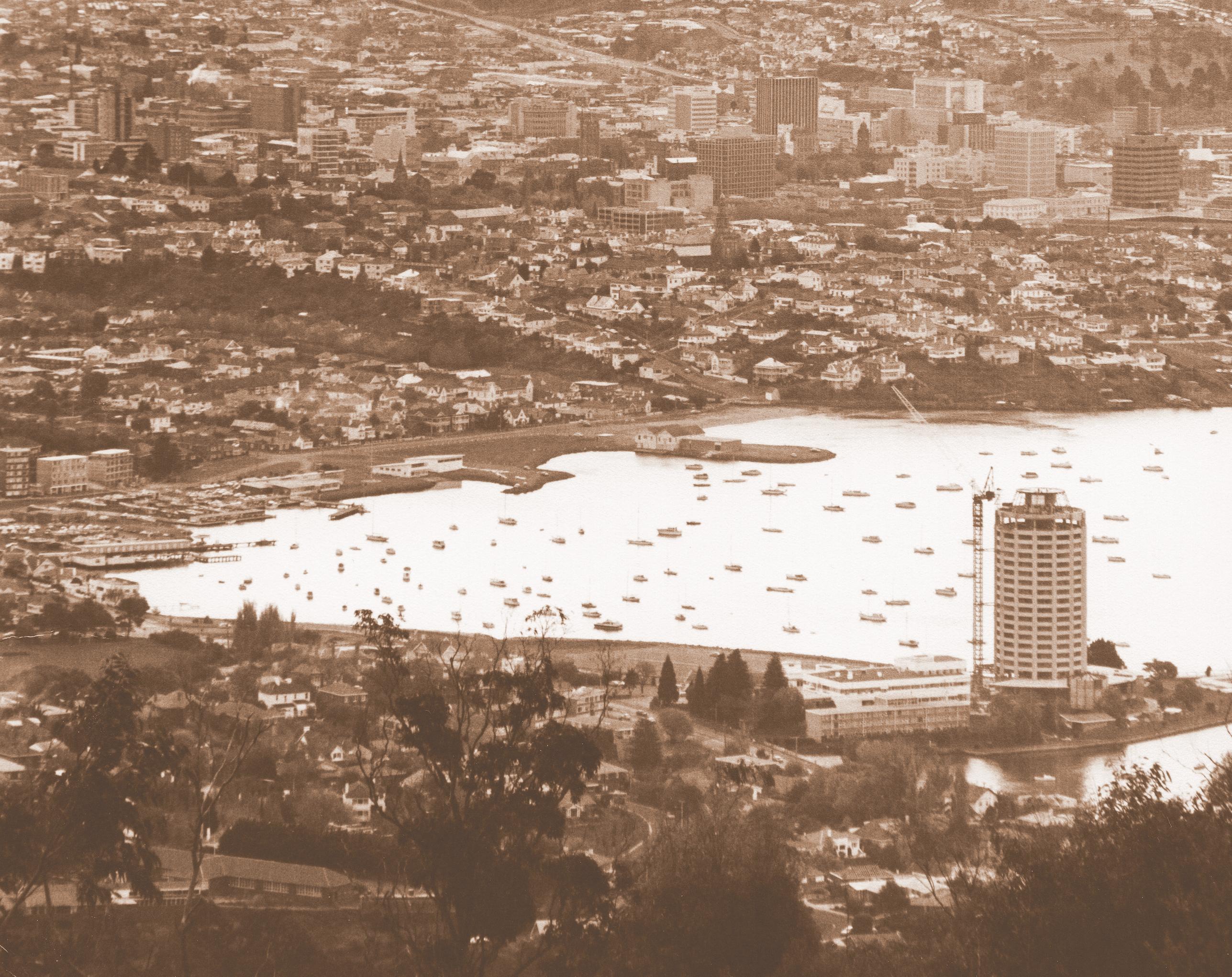
Even as the company grew, it never lost sight of where it began. People’s efforts were always recognised and Allan Coombs went out of his way to help his employees.
“He was a popular bloke and he looked after his staff well,” said Gerald Carter. A telling example of this was during the economic downturn in 1961 when, instead of letting people go, Allan employed them to paint the inside of the factory.
While Allan expected a decent day’s work from his team, everyone seemed to enjoy what they were doing.
“Although we worked hard, it was a fun place to work,” said David Seedsman, who joined the company in 1966.
“There was a sense of camaraderie and a sense of we’re in it together.” Being “in it together” meant working whatever hours were needed to get the job done. There was no such thing as “checking the clock”, Alan Collard remembered.
Visitors were often struck by the general friendliness throughout the company, which in part was cultivated by bringing everyone together socially after work, especially on Friday nights. Allan Coombs was never one to stay in the background and he regularly joined everyone for a few beers as they placed their bets on the weekend’s football. “He would put up a board and act as bookmaker,” recounted Bill Moseley.
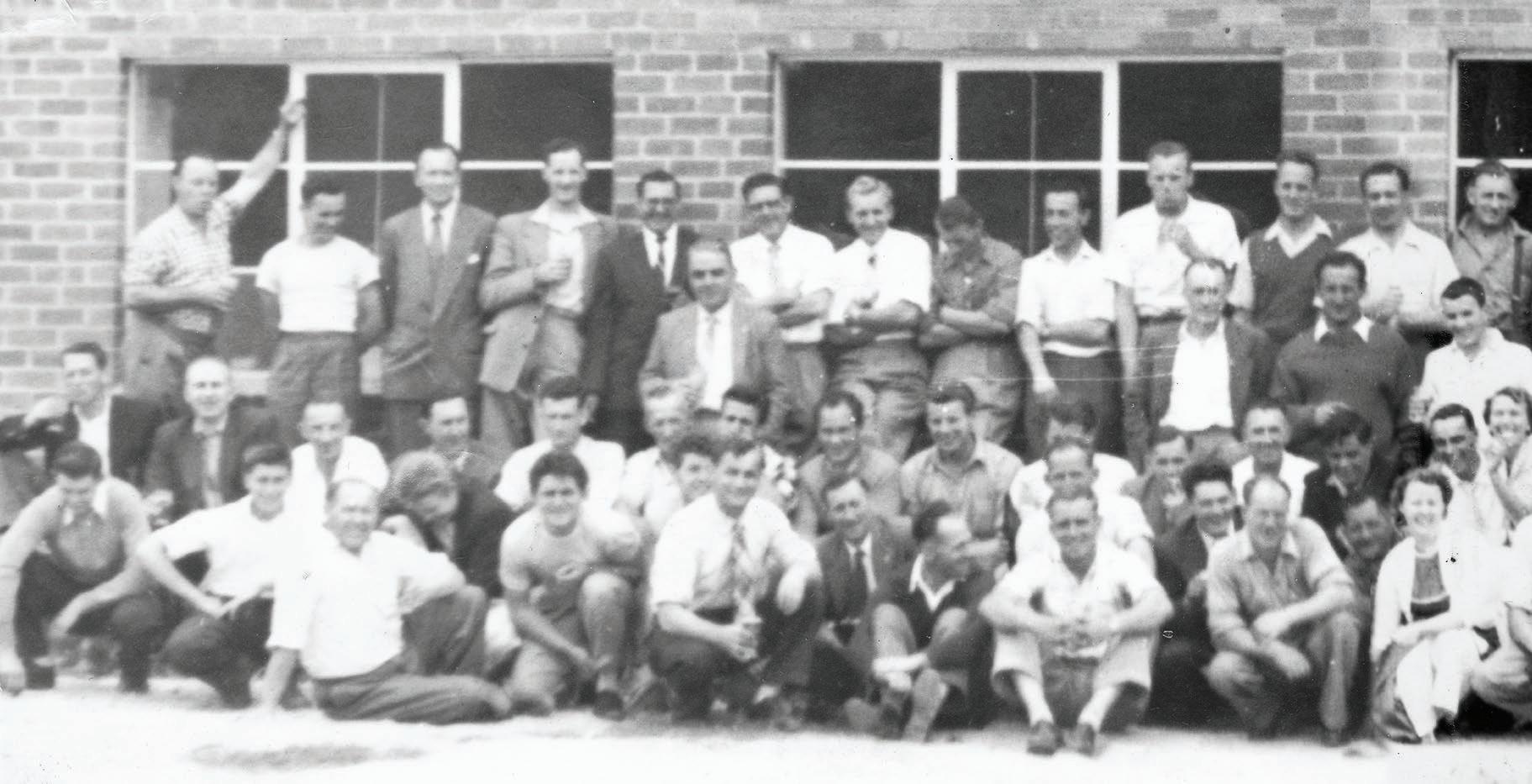
Political discussions were also a highlight of their Friday night gatherings, with Allan enthusiastically leading one side of the debate and Jock Fraser presenting the opposing view.
For many organisations in Australia, the workplace social scene was exceptionally vibrant during the 1950s and 1960s. Indeed, many workers discovered a rich social life through regular company gatherings, where staff frequently came together for a social drink before heading home. “We worked hard and it wasn’t uncommon to have a slab at the end of the week,” said Ray Twite. “It was just appreciation for what you’ve done; a couple of beers and you go home.”
The introduction of new drink-driving legislation in 1966 changed everything, as even a few beers could put you over the legal limit. The new laws curtailed after-hours social activities – with random breath testing having an even greater impact in the 1980s – and, consequently, the once lively social scene at work began diminishing.
Social activities were only one aspect of A.G. Coombs’ strong workplace culture, as it was the way employees were treated that contributed to the company’s success according to Gerald Carter and others. There was clearly a devotion to the company and a devotion to Allan as well.
People in the factory were often amazed that the boss not only knew their names, but also their children’s names. On occasions, Allan also assisted them financially, like lending money or paying their hospital bills. Allan might have been domineering, even “overpowering” in some people’s eyes, but he was loyal to his staff and they in turn to him. “People wanted to be part of the organisation,” said Allan’s business colleague, Norm Davies. “They loved him and he used to look after them.”
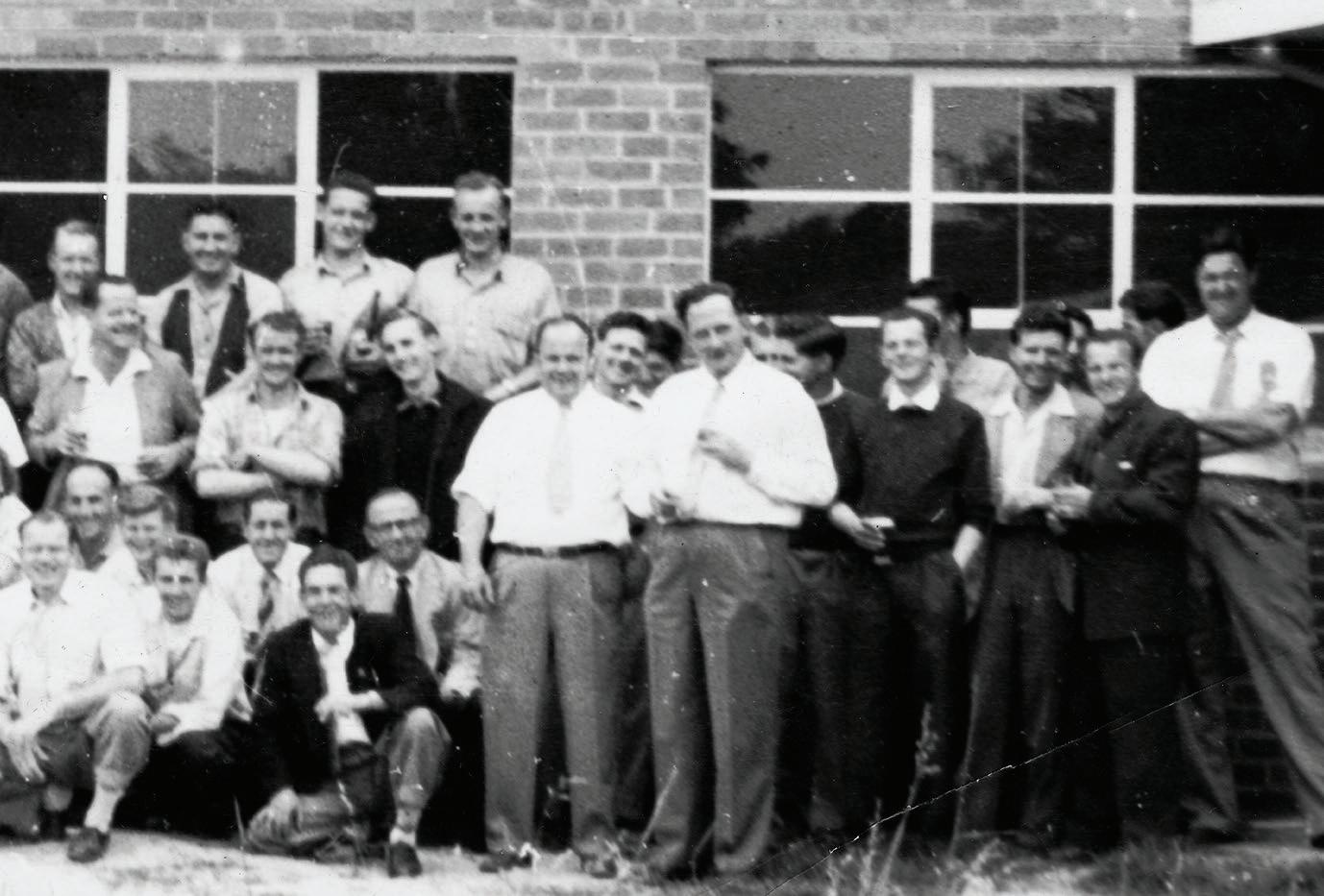
By the 1960s, A.G. Coombs’ workforce – pictured here at a Christmas break-up – had expanded to well over seventy people, with women now employed in Administration. The company’s Christmas parties were particularly memorable, with no expense spared on the terrific spread of food and drink that Allan provided each year.
Longevity of service was also recognised, with Jim Barr (back row seventh from left) the first employee to be acknowledged with a gold watch for achieving twenty-one years of service in 1968. The presentation started a tradition that would see many more watches presented in the years ahead.
Allan was also prepared to give his employees a fair degree of autonomy, which was one of the key reasons why people rarely left. “People stayed because they were running their own show and were getting paid reasonably well,” said Jim Barr. “It was a very close-knit group,” remarked Alan Collard. “People would take pride in whatever the company did and that they were a part of A.G. Coombs.”
Working for A.G. Coombs was more than just a job –employees, it seems, derived enormous satisfaction from tackling major projects in and around Melbourne. The company’s success with the Royal Children’s Hospital had also transformed the way in which the business was perceived. No longer just a plumbing company, A.G. Coombs was now one of Melbourne’s major HVAC contractors, with both the skills and experience to handle projects of increasing complexity.
During this time, Allan Coombs began updating the company’s pricing methods in consultation with his project managers Jim Barr, Bill Moseley, Ray Underwood and
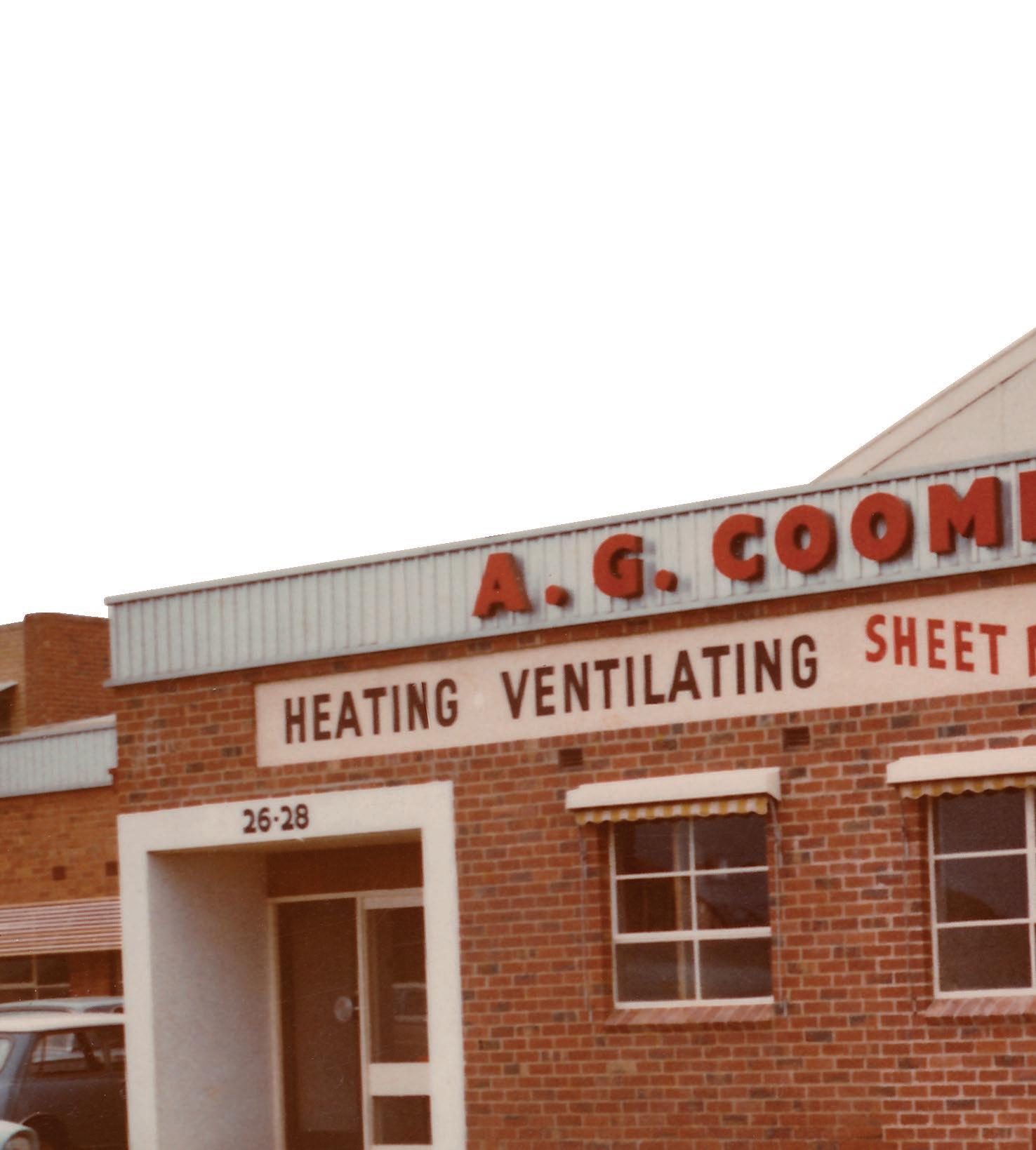
David Seedsman. He was a hands-on proprietor and, true to form, worked after hours with his team for around six months to complete the task. Together, they revised the company’s labour costs for ductwork and pipework, with the end product becoming the basis of A.G. Coombs’ computerised pricing system in the future.
As its engineering capacity increased, the company’s innovative spirit came to the fore, with Allan sensing further opportunities to work with building consultants to design and engineer truly sophisticated internal climate systems. There was a belief that if air conditioning was taken into account when designing a building, the architects and structural engineers could produce a more integrated design.
“Allan saw the company as being the leading provider of air conditioning and mechanical services in Victoria,” said David Seedsman. “His attitude was that he was going to be the best.” The next decade, with its trials and tribulations, would see this dream realised.
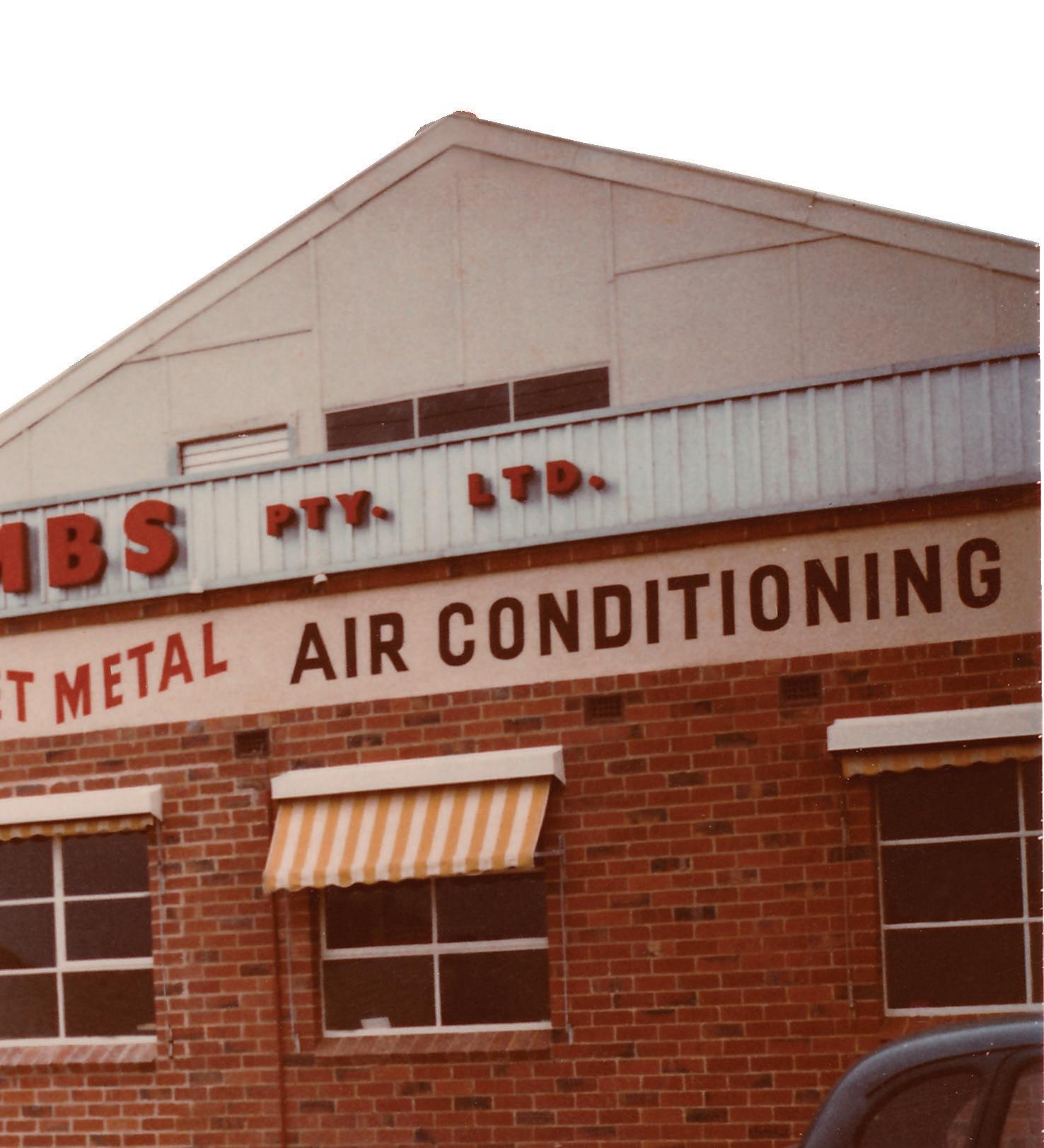
The words ‘air conditioning’ appeared for the very first time on the company’s signage in the mid-1960s.

Collins Place was promoted as a “city within the city” when it opened in May 1981. Construction had commenced in the early 1970s, but was delayed by prolonged periods of inactivity due to union unrest and the original builders going into receivership.
A.G. Coombs installed the mechanical services throughout the complex, with the Great Space atrium regarded as an “air-conditioned showpiece”.
Collins Street looking east from below Exhibition Street towards the Treasury Building on Spring Street c. 1970.
Image source: State Library of Victoria
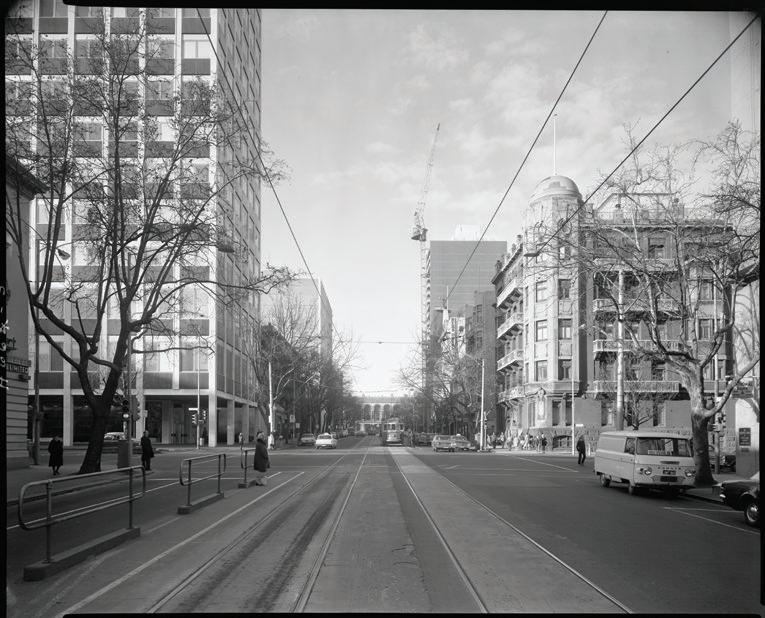


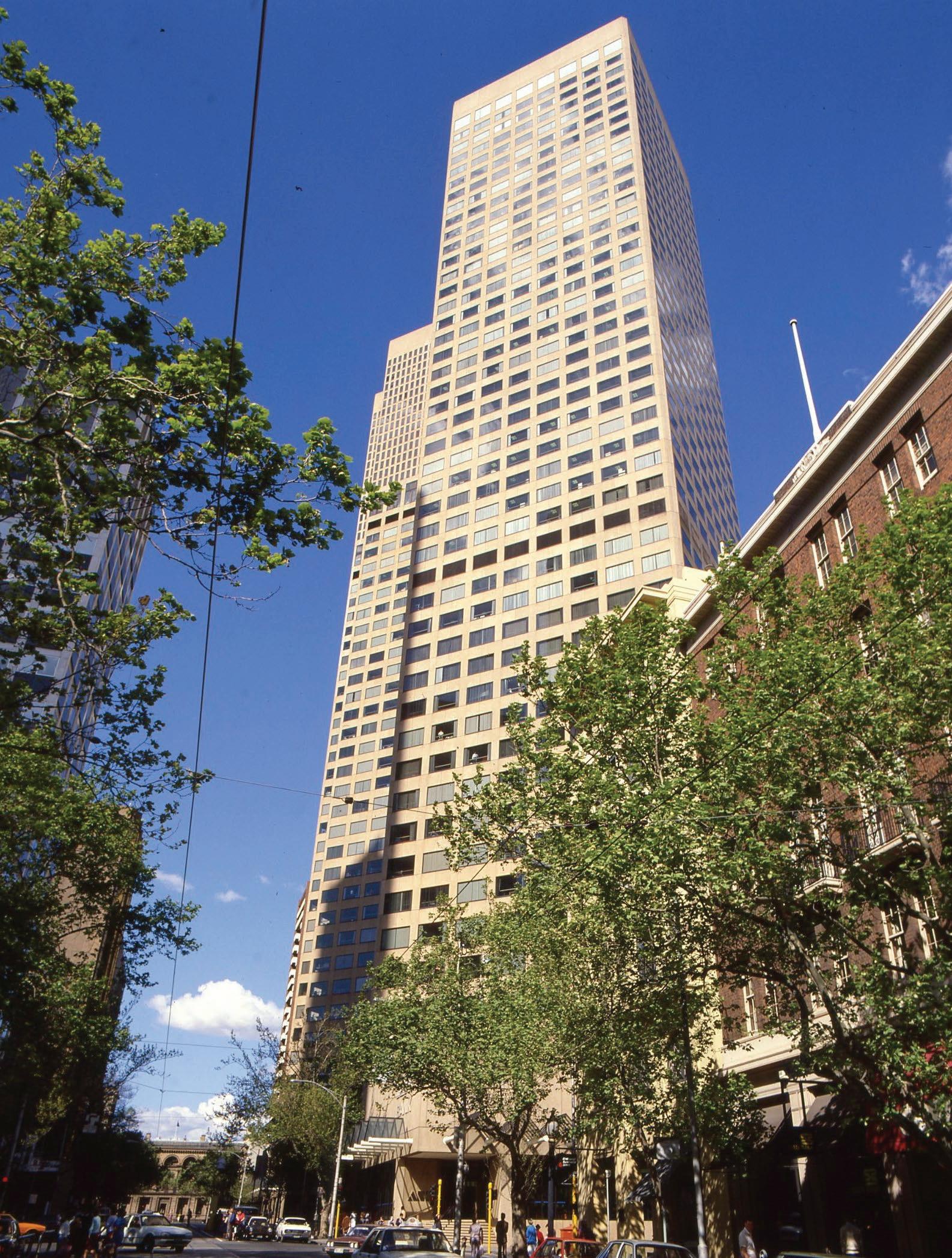
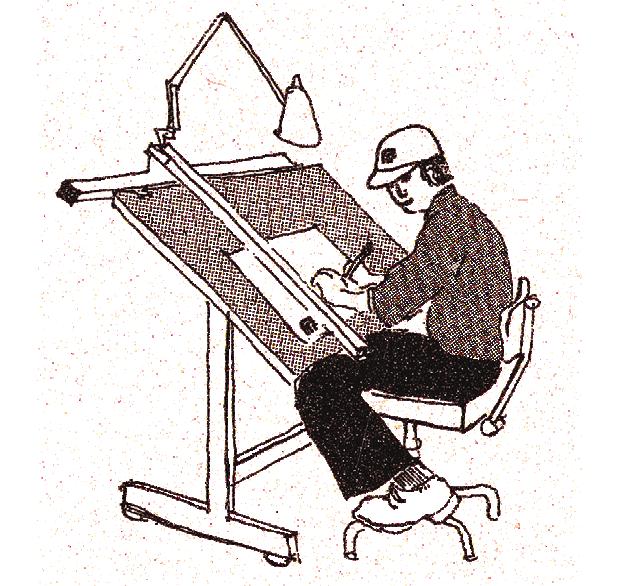
Melbourne’s skyline changed dramatically during the 1970s as banking institutions and property developers began commissioning new multi-storey complexes. One thing was plain to see as these buildings were constructed: standing tall was as much a symbol of progress as it was an effective way of accommodating hundreds of office workers. More specifically, these facilities needed to be cooled, warmed and ventilated, and A.G. Coombs would progress through the decade with contracts to air condition several major developments along Collins Street.
Out of all these developments, one project stood out in terms of scale, complexity and on-site challenges. This was Collins Place, an exciting, multi-purpose complex that would dominate the ‘Paris end’ of Collins Street when completed, and encompass within its perimeter the ANZ Bank Headquarters, as well as a luxurious multi-storey hotel and an open-space atrium lined with shops and cafés.
If the race to win the contract was like a 100-metre sprint, completing it would be like running several marathons, uphill and over hurdles. These were turbulent years in the building industry, with the unions flexing their muscles with increasing militancy. Add to this a builder in receivership and the finishing line for the project was barely visible at times.
January 1973
Paris Peace Accord marks the end of the Vietnam War.
February 1973
Wrest Point Casino (Australia’s first legal casino) opens in Hobart.
April 1973
The first hand-held mobile cell phone is demonstrated by Motorola.
October 1973
Opening of Sydney Opera House.
October 1973
Australian author Patrick White is awarded the Nobel Prize in Literature.
June 1974
A packet of chewing gum becomes the first item scanned by a Universal Product Code (a specific type of barcode).
December 1974
Cyclone Tracy devastates Darwin on Christmas Day.
March 1975
Australians are able to watch television in colour for the first time.
November 1975
Australian Prime Minister Gough Whitlam is dismissed from office.
August 1981
The personal computer (PC) is introduced.
By 1970, the ANZ Bank was moving ahead with plans to construct its new global headquarters on Collins Street.
To be known as Collins Place, the $90 million development would consume nearly a whole city block and was being commissioned in partnership with the AMP Society. An ambitious project, Collins Place promised Melburnians a unique office, retail and entertainment complex that would “boost the city, not strangle it” according to one newspaper article. This vision of a place where people could work, shop and relax was being carefully shaped by renowned American architect I.M. Pei and his New York-based team, with the support of Melbourne architects, Bates Smart McCutcheon.
For any company wishing to enhance its credentials as a major service contractor, there was no better opportunity than Collins Place. The development boasted not one, but two skyscraper towers, each soaring 185 metres into the air, with one tower having its top fifteen levels transformed into a luxurious hotel. Like the Royal Children’s Hospital before it, Collins Place was a plum project that could potentially redefine a contractor’s place in the industry and set its course for the future.
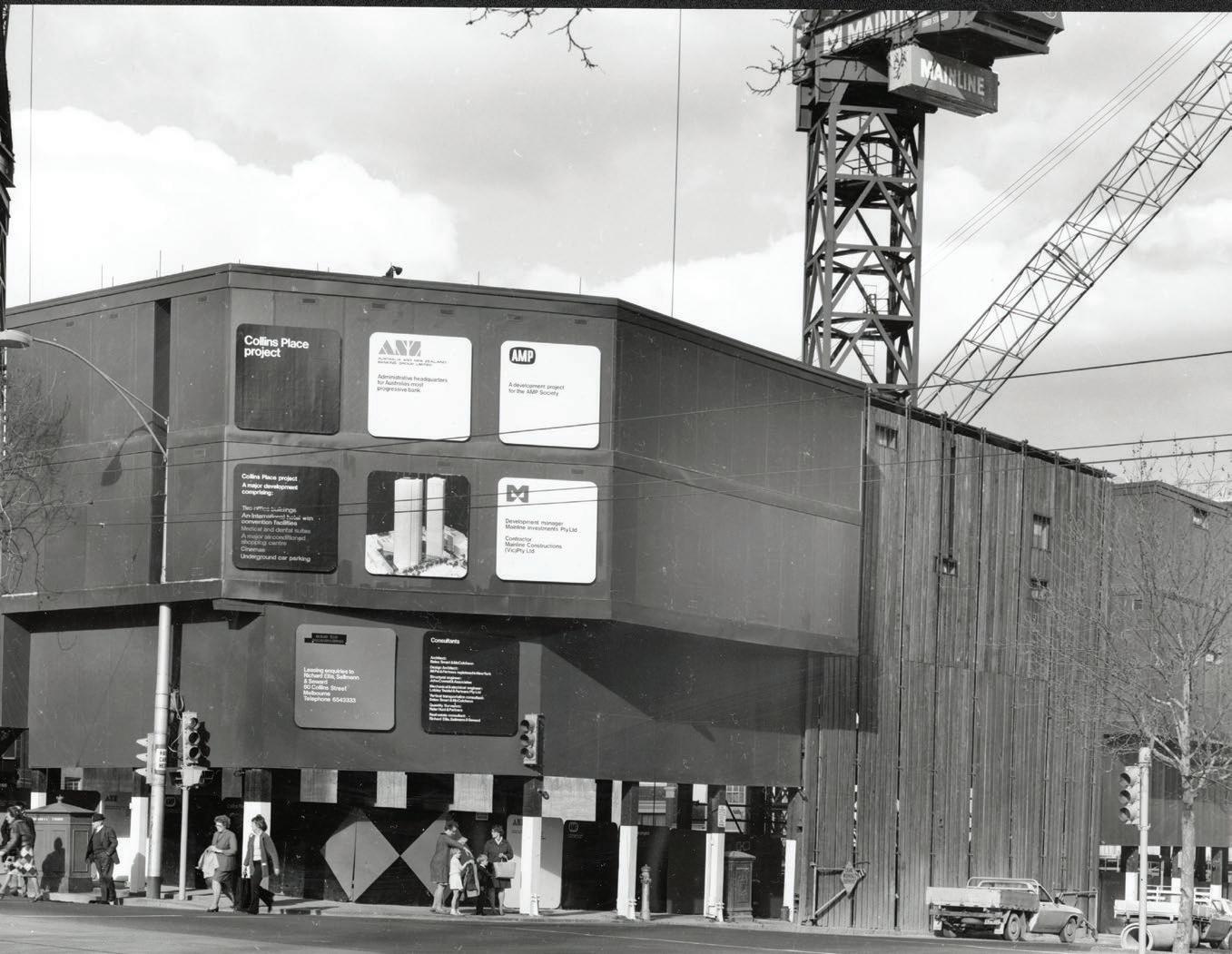
A.G. Coombs’ contracting (projects) business now comprised several departments covering engineering, drafting, materials handling and administration. There was also a department devoted solely to estimating, which was crucial to the tendering process. Staffed by several estimators, all with prior experience as site supervisors, the department estimated the quantity of material needed and the number of people required to complete a job, and priced it accordingly. It was to the estimating department, under the direction of Bill Gribble, that all eyes turned when it came time to tender for Collins Place in 1972.
Hours went into preparing a detailed submission highlighting the company’s experience and technical skill. With his eye on the bigger picture, Allan Coombs also insisted that their estimates be fine-tuned to the point where he felt they had a realistic chance of getting over the line. The tender was successful and A.G. Coombs proceeded to sign a $10 million contract with Mainline Corporation (the project builders) to air condition Collins Place. “We won it by Allan’s decision-making, by him saying we need to be there,” said Site Supervisor Brian Tregenza. “It was the biggest job we had ever had by far.” So big, in fact, that Allan instructed his secretary, Edna Tregonning, to invite employees to a dinner dance to celebrate the win.
A.G. Coombs now had 406 employees, with over 300 in Melbourne and the remainder employed in its Tasmanian operations. As additional resources would be required for a project of this magnitude, Allan Coombs took out another lease on 16 Cochranes Road – the Service Division having already moved out into new premises – and modified it to accommodate the drafting team, which soon expanded from thirty to sixty people.
The large drafting team was necessary according to Head Draftsman Jock Fraser, as Collins Place was then scheduled to take four years to complete and they were looking at tackling well over a thousand drawings during the life of the project. “If I hadn’t had sixty [draftspeople], it would have taken a hundred years to do!” he emphasised many years later to highlight the scale of the undertaking.
The energy and focus of the company impressed Frank Schooneveldt, who started out as an accounts payable clerk with A.G. Coombs in June 1972. Working
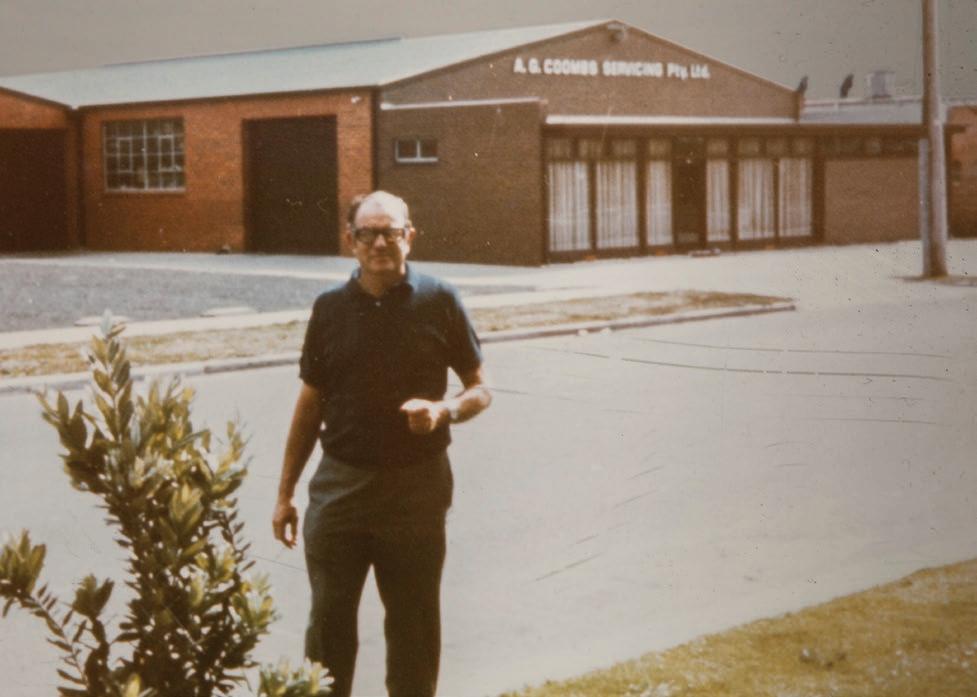
Allan Coombs outside A.G. Coombs Servicing’s new premises at 18-22 Cochranes Road, Moorabbin c. 1972. This was the second move in eight years for the rapidly expanding Service Division.
closely with John Zylstra (the company’s first accountant), Frank witnessed a business that was expanding and moving forward. “The technical people were there, the engineers were there and Allan Coombs, with the support of his team, had the whole business poised for growth,” he recalled.
Excavation was now underway at Collins Place, with buildings such as the Ress Oriental Hotel and the twindomed Masonic Lodge demolished to make way for the new complex. An extraordinary amount of ductwork was needed for the job and the company’s sheet metal factory operated at peak production for weeks on end to meet the additional requirements. Such was the demand for sheet metal that Keith Marsh, the company’s truck driver, carted six truckloads of ductwork from the factory to the city in just one day.
One of the best memories during this time was when A.G. Coombs received its first progress payment. “We became the first [contracting] company to have ever received a cheque for a million dollars for one month’s work on a project,” said Brian Tregenza, remembering those magic six zeroes.
The Senior Project Manager for Collins Place was Ray Underwood, a plumber by trade who had been with A.G. Coombs since 1964. Like his colleagues, Ray expected the building to be completed in around four years. Neither he nor anyone else involved with the project could have predicted what was about to follow.
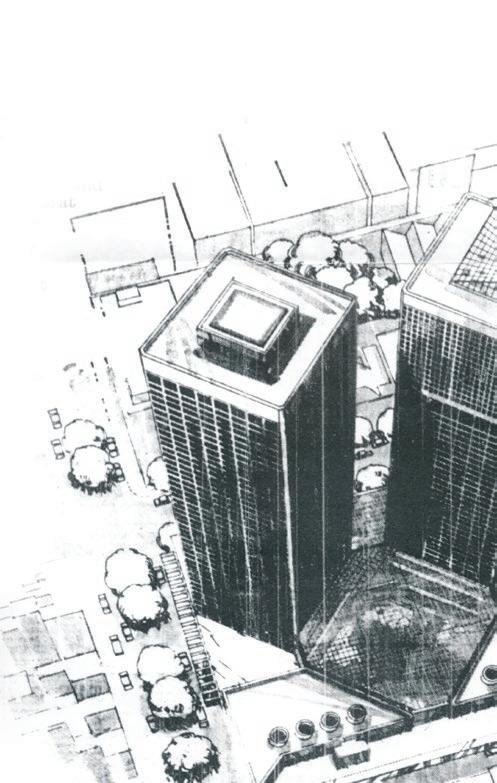
When people in Melbourne began talking about the ‘Paris end’ of town in the late 1950s, they were referring to the eastern end of Collins Street – an area that had assumed a more cosmopolitan identity due to the success of a footpath café outside the Ress Oriental Hotel (where Collins Place now stands).
Previously considered one of Melbourne’s finest establishments, the Oriental, as it was originally known, became a popular haunt of the landed gentry after first opening its doors in 1878. Pearson Tewksbury, one of its regular patrons, was so taken with the place that, after a dispute with management, he bought the hotel in 1910 and gave the manager his marching orders.
Tewksbury, who was already wealthy from dredging gold out of the Ovens River, extended the hotel and purchased additional space behind the property for the chauffeur-driven limousines that he hired out to hotel guests – he would
later introduce Yellow Cabs to Australia. But it was not the Oriental’s ‘taxi’ services that would get everyone talking, but rather its plans for outdoor dining. In 1933, the Oriental proposed setting up tables on the footpath outside the hotel, but was forced to abandon this idea when the Melbourne City Council refused its permit application. Many years later, in 1958, the Oriental’s new owner, Leon Ress, had better luck in securing approval for outdoor dining on a trial basis. It helped that he was also a city councillor.
With its nineteen tables and brightly coloured umbrellas, the café was an instant success, transporting diners, in the words of Ress’s French-born wife, to “the Champs Elysées in Paris”. Mrs Ress had been speaking to the media, and it was not long before references to the Paris end of Melbourne began appearing in advertisements encouraging tourism to Melbourne. As popular as it was, the café closed in 1960 following police claims that it impeded pedestrian traffic. However, the evocative ‘Paris end’ label has endured to the present day.
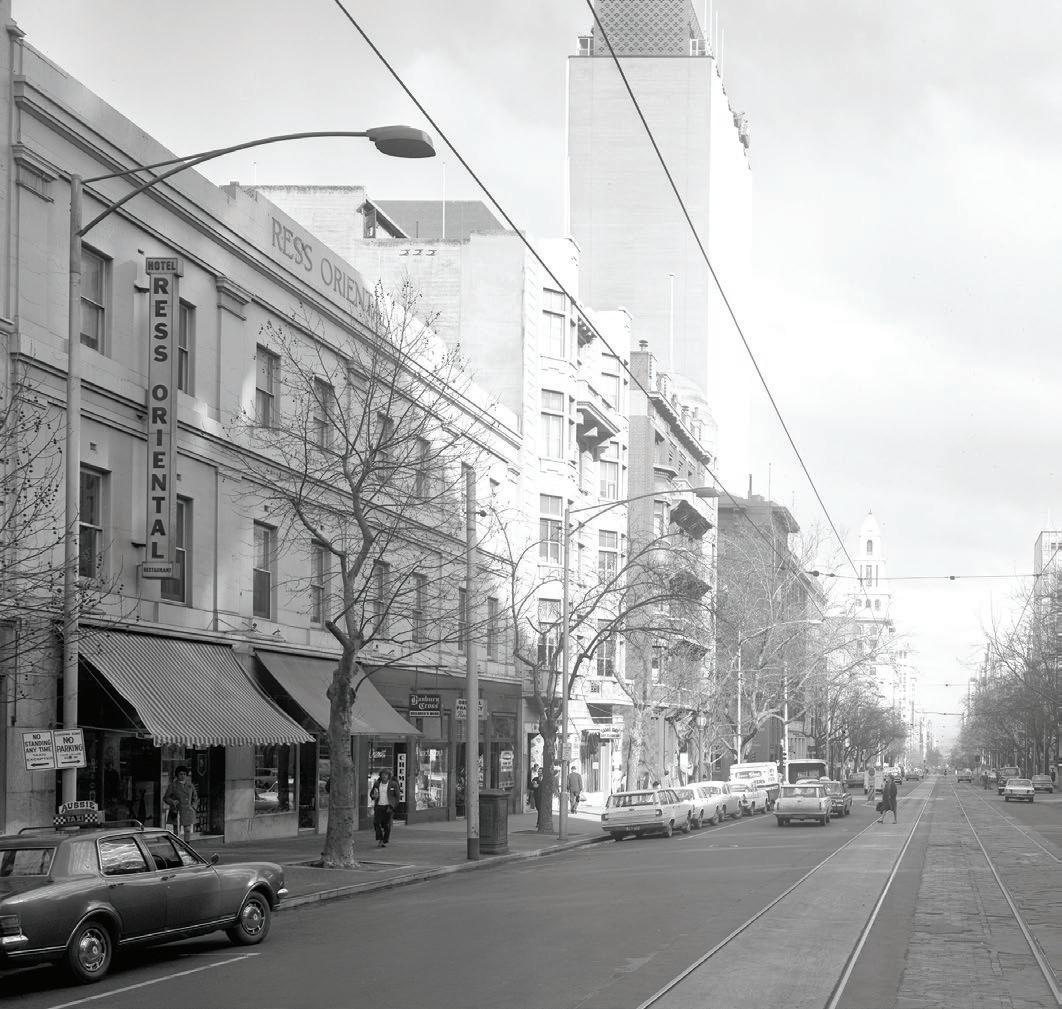
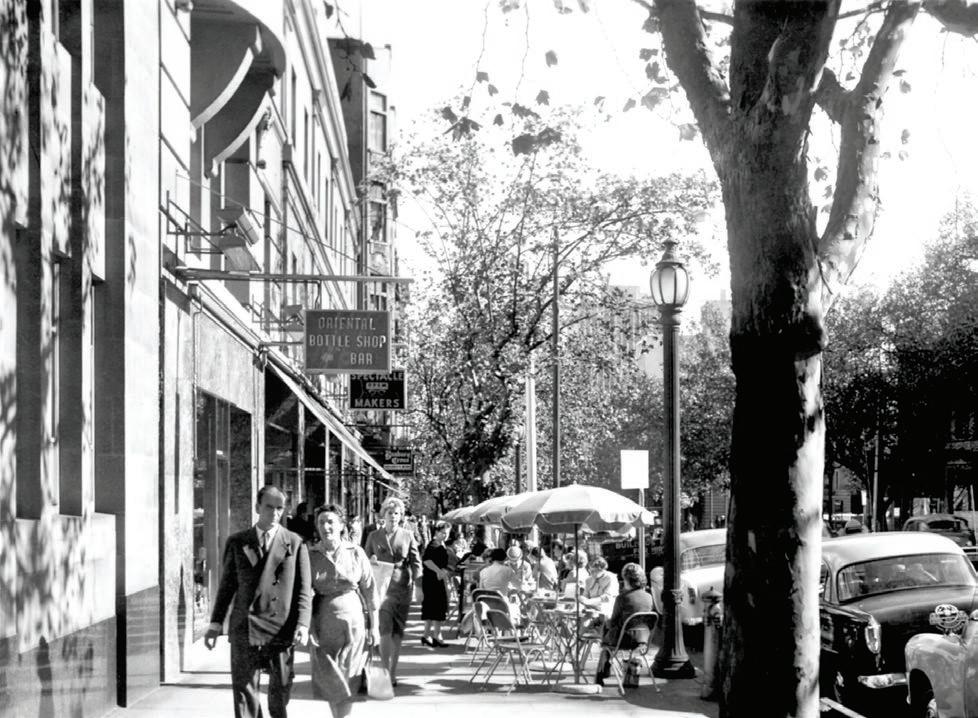
Dining at the Ress Oriental’s footpath café (shown here c. 1958) immediately captured the public’s imagination. Although the café was situated outside the hotel’s bottle shop and bar, council regulations prevented the service of alcohol to footpath diners.

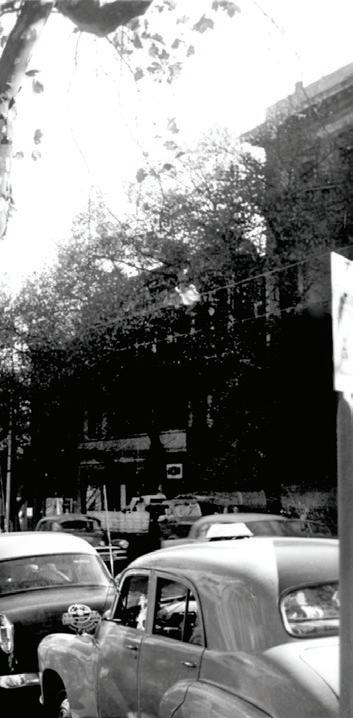
The eastern section of Collins Street (photographed c. 1970). The Reserve Bank can be seen on the left, while on the opposite side of Collins Street nearly an entire city block, including the Ress Oriental Hotel, would be demolished to make way for Collins Place. Accepting the winds of change – there was no time for sentimentality in the 1970s – the Oriental auctioned off most of its furnishings and fixtures in 1971 before the wreckers moved in.
Other historic buildings were also demolished during the 1970s, prompting a huge public outcry over the destruction of Melbourne’s architectural heritage. Many deplored the fact that some stately buildings were being replaced by car parks or fairly ordinary structures. However, the plans for Collins Place were far from mundane, as the proposed development included a twin-towered complex offering magnificent views of the city from the upper levels, as well as a massive light-filled atrium that would provide a sheltered off-street meeting place, while still connecting to the external streetscape.
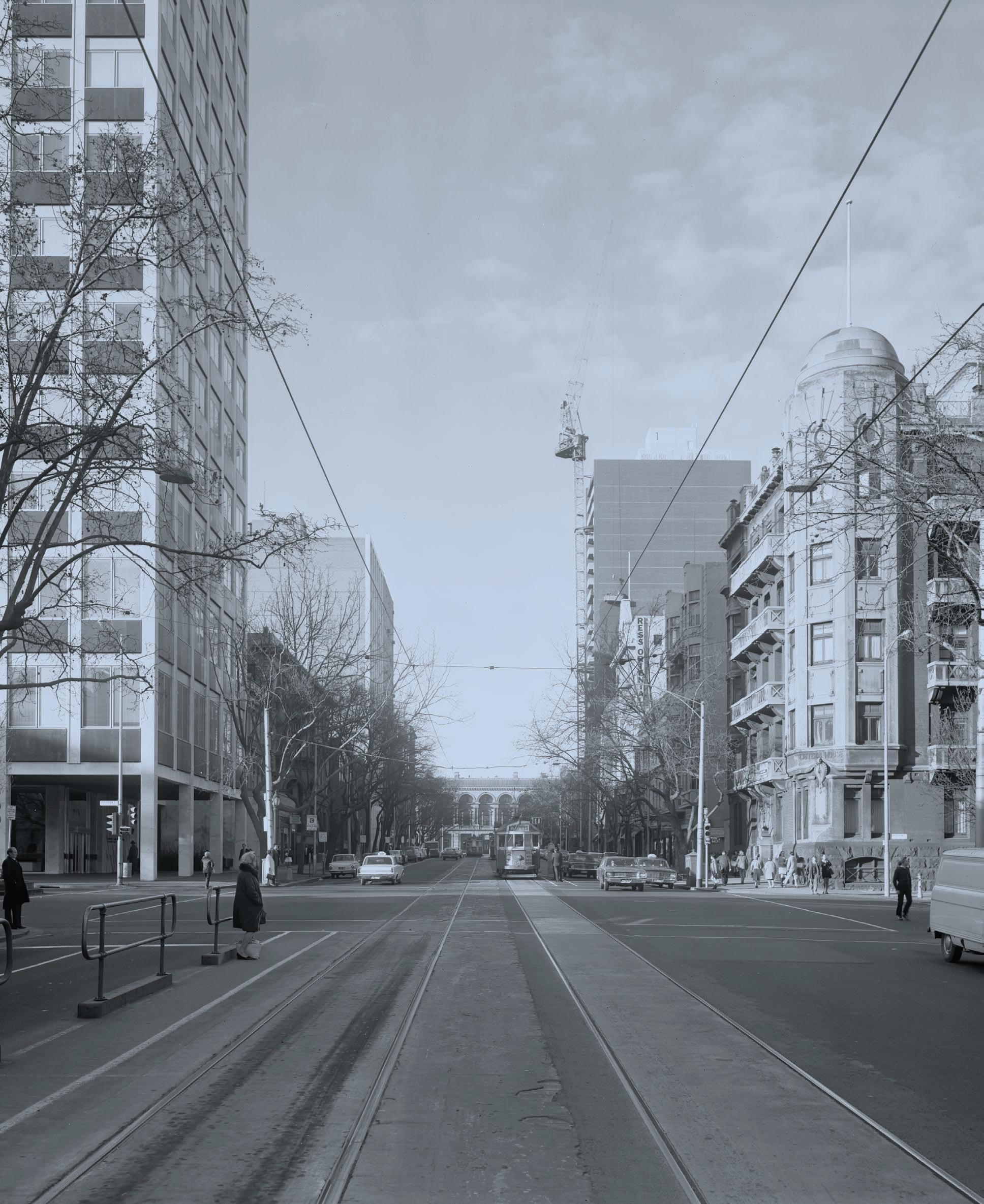
‘Paris end’ of
Collins Place was arguably the most high-profile building project in the city during the early 1970s. Yet it was also a hotbed of union activity, with work stoppages and strikes causing never-ending problems for the project’s builders.
In over two decades of operations, Mainline Corporation had made its mark in the construction of high-rise office buildings and hotels, and counted a number of insurance companies among its clients. But it would soon buckle under the strain of union confrontation.
Industrial action throughout the Seventies disrupted production in many industries, to the point where people sometimes felt as though the unions were running the job if not the country. From the unions’ perspective, wage increases were long overdue, while working conditions, as they saw it, were unsatisfactory. However, the growing militancy within some union ranks did not augur well for negotiation.
The situation was particularly heated at Collins Place where the Builders Labourers Federation (BLF) held sway.
“You’d be halfway through a concrete pour and they’d find some little thing and they’d stop the job and all walk out,” recounted Brian Tregenza. These actions meant that all the concrete had to be chopped out and redone at enormous cost to the builder.
“There was a period applying throughout the industry where the unions flexed their muscles and they just kept getting more militant, and it came to a head,” said Bill Moseley. It was bewildering, he recalled, for site supervisors to be dealing with a large crew of people who might be working one minute and then sitting down the next over some minor issue. “People used to go on strike for nothing. We had a hundred men sitting in the shed one day because they wanted a particular type of safety hat and they wanted a particular type of pie warmer.”
In those days, union members were paid even when they went on strike. This encouraged an environment where people looked for reasons to walk out, knowing that their wages would not be docked. The hot days were the worst, as you only needed to hear a forecast for high temperatures to know that your men would be watching the thermometer the next day, just waiting to walk off the job.
David Seedsman, who was then A.G. Coombs’ General Manager, recalled daily meetings, over many months, with Bill Moseley and Jim Barr, just to discuss strategies for minimising the overall impact of on-site union activities. The unions, it should be said, had raised some valid safety issues and naturally wanted their concerns addressed. Realising the importance of these issues, A.G. Coombs would later pour its heart and soul into ensuring that all its work environments met rigorous safety guidelines. Yet these things took time, and extreme union tactics not only made negotiations difficult, they also deflected people’s attention from tackling these issues in a more considered way. With on-site productivity as low as an estimated 35 percent, work at Collins Place moved ahead in fits and starts, while the construction timeline dragged out even further.
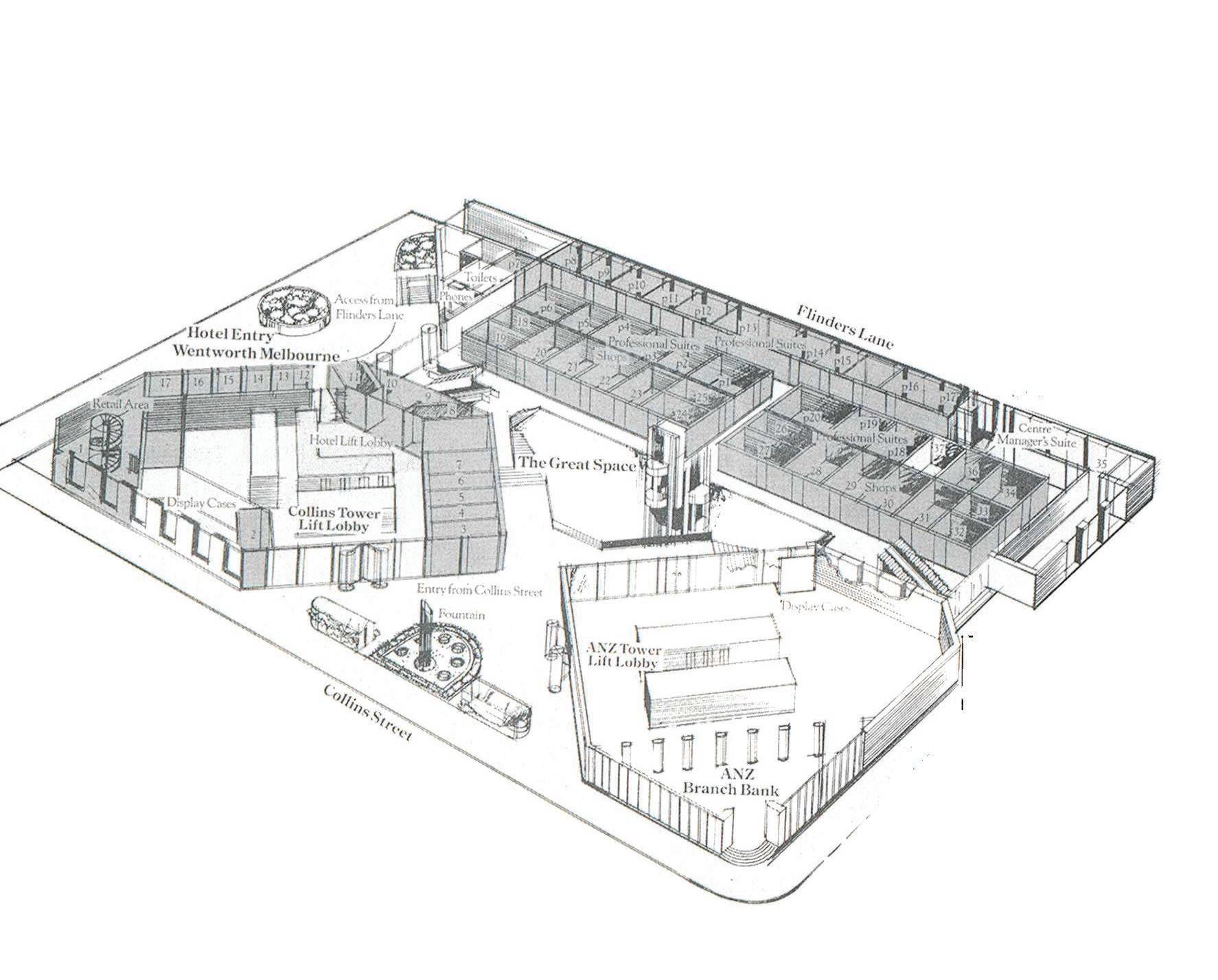
The architects and consultant town planner, Vincent Ponte, visualised Collins Place as a “great public space first and a grouping of towers second”. True to this vision, the Great Space (visible at the centre of the drawing) offered a large, light-filled area where people could eat and shop in comfort.
Image source: Collins Place News
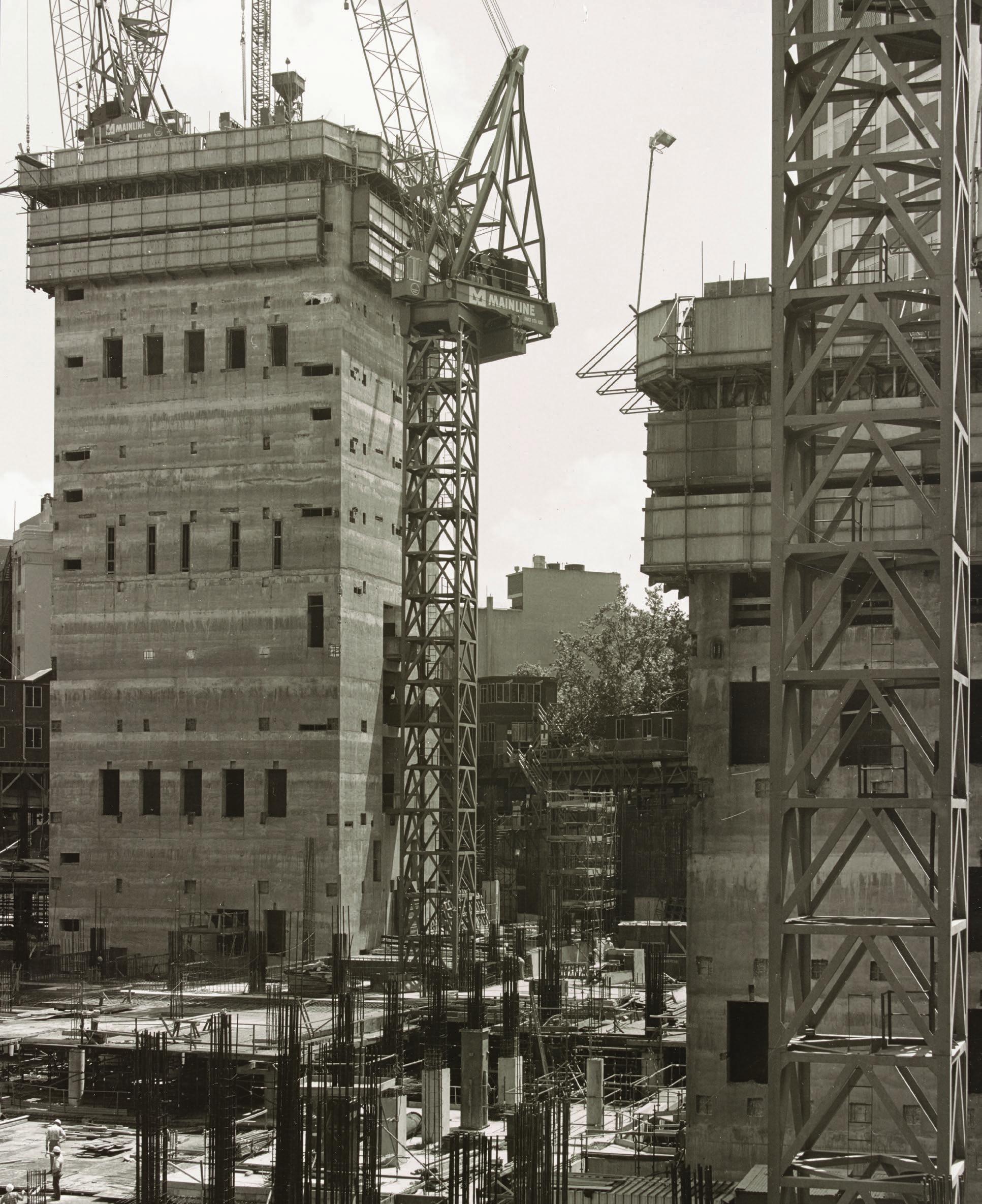
Collins Place was designed by New York firm I.M. Pei and Partners, with the support of its Australian associates Bates Smart McCutcheon. Construction commenced following site excavations during 1972. By the end of 1973, the two towers of the complex were visible to passers-by.
Frank Schooneveldt joined A.G. Coombs’ accounts payable office in June 1972. Although the turbulent Seventies and future recessions would put enormous pressure on the accounting area, systems were put in place to ensure that A.G. Coombs continued meeting its financial obligations. Frank – pictured c. 1972 (right) and several years later (far right) – would eventually be promoted to Company Secretary and Group Financial Controller.
In August 1974, work at Collins Place ground to a halt following the announcement that Mainline Corporation was in receivership. Already affected by heavy losses from its American operations, Mainline attributed its existing troubles to the economy and fickle investors, but also cited the militant BLF as a major source of its woes. BLF State Secretary Norm Gallagher was unrepentant, saying that Mainline only had itself to blame for its demise and claimed it as a victory for the working class. At first, Mainline hoped to continue operating, but it was finally liquidated when clients, including the AMP Society, withdrew their support.
It was a black day for everyone in the building industry as people tried to come to terms with this dramatic turn of events. Frank Schooneveldt, who was now working in a senior financial role, recalled Allan Coombs gathering all the key players together and breaking the news to them. “He was a great communicator. We had a big meeting in the drawing office and we talked through the issues.”
Their immediate concern was the company’s large project team for Collins Place – a workforce of approximately 250 tradespeople, technicians and draftspeople, with many of them hired specifically for the project. There was also the question of A.G. Coombs’ now-voided contract with Mainline. Would they be given a chance to re-tender and, if so, would they be able to secure more favourable terms? It seemed as if the company’s whole future was at stake.
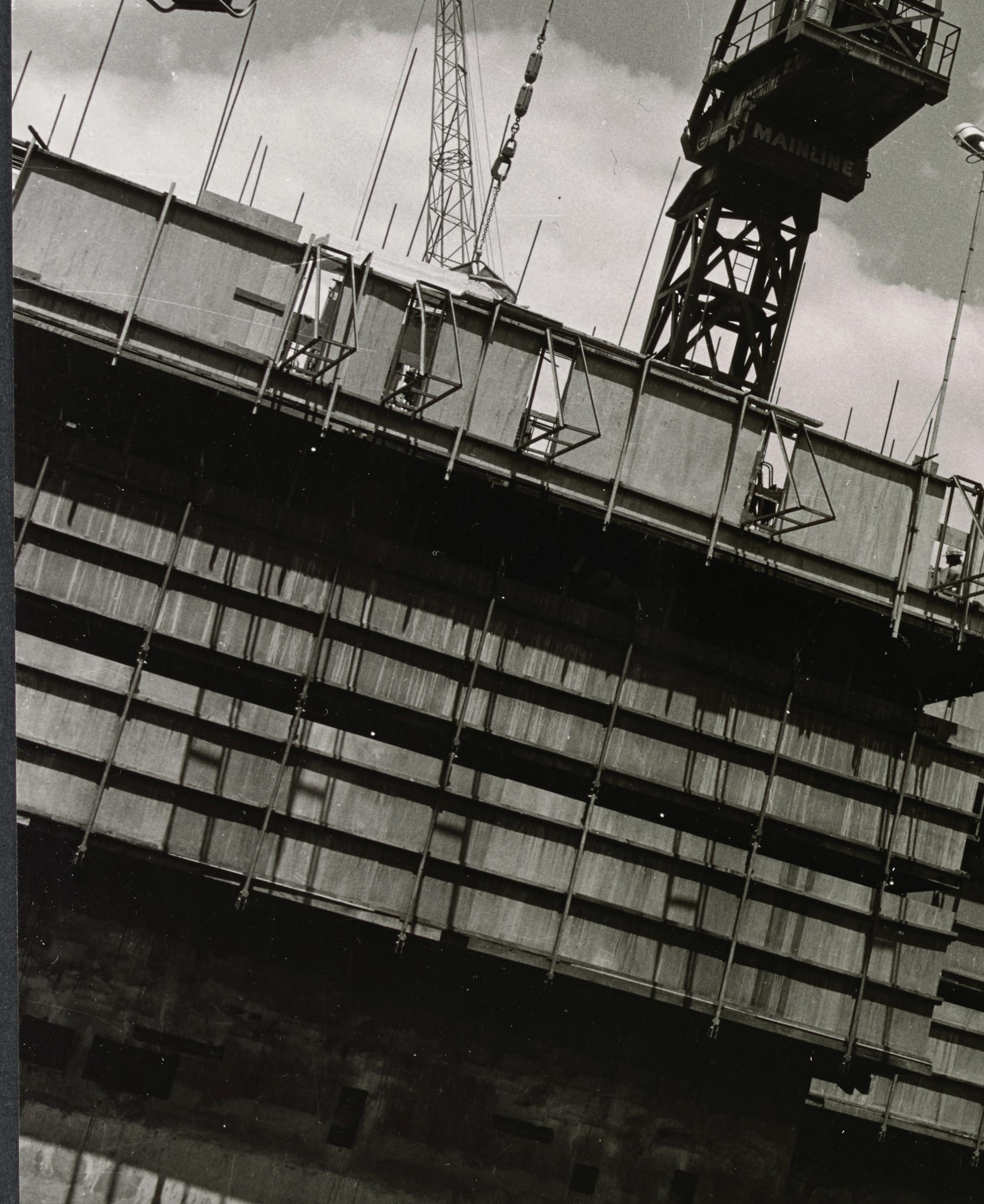
Mainline collapsing was a “massive thing” said Brian Tregenza. “We couldn’t get our gear off the site. We had a lot of people there; it was obviously the major contract that we had running.” With the project at a standstill, plumber Ray Sherry remembered going to Collins Place in the company’s truck with instructions to bring back as much equipment as possible. “All our drills, all our leads, anything that’s worth value, just throw it on the truck and get them out of there.”
Cash flow was now a serious issue, and the prospect of not being able to pay people’s wages weighed heavily on Allan’s mind. “He was very worried about the whole thing,” said friend and colleague Rob Dunn. The whole situation looked quite bleak and was compounded by project losses in Tasmania and the company’s unsuccessful foray into modular flat-pack housing. A severe credit squeeze also made it difficult to raise funds. In another development, the BLF was deregistered in 1974 but re-registered two years later. It would be permanently deregistered by an Act of Parliament in 1986.
As Allan sorted out the finances, tough measures were taken to keep the business afloat. People were relocated to other jobs where possible, but staff cuts were inevitable and the guys on the tools were the first to be laid off, followed by the drafting team. Although the Service Division had enough contracts in place to plug some short-term gaps, it was not enough to carry the entire company.
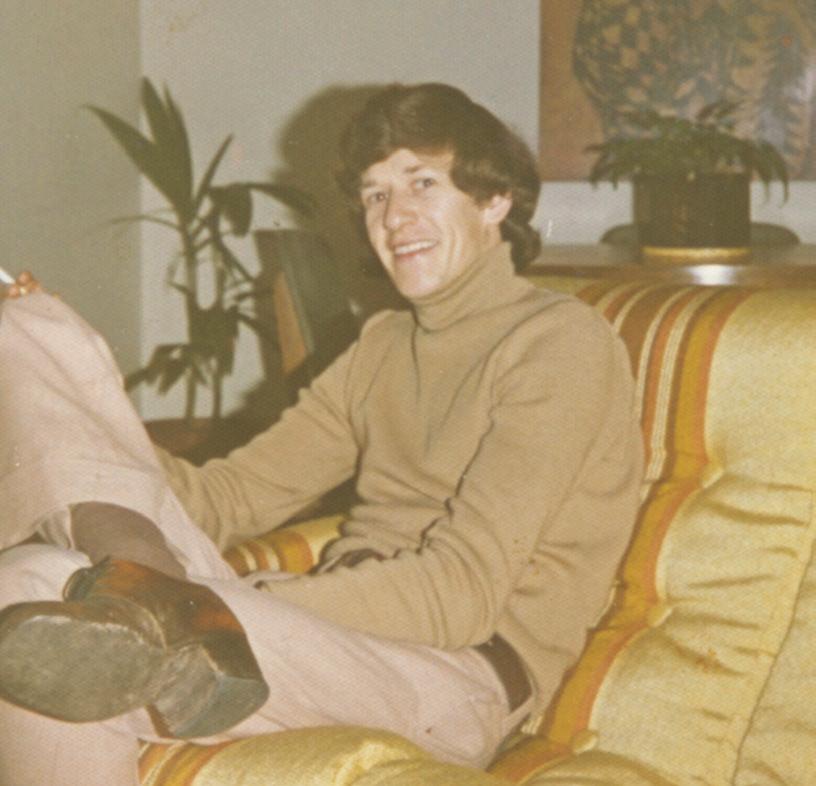
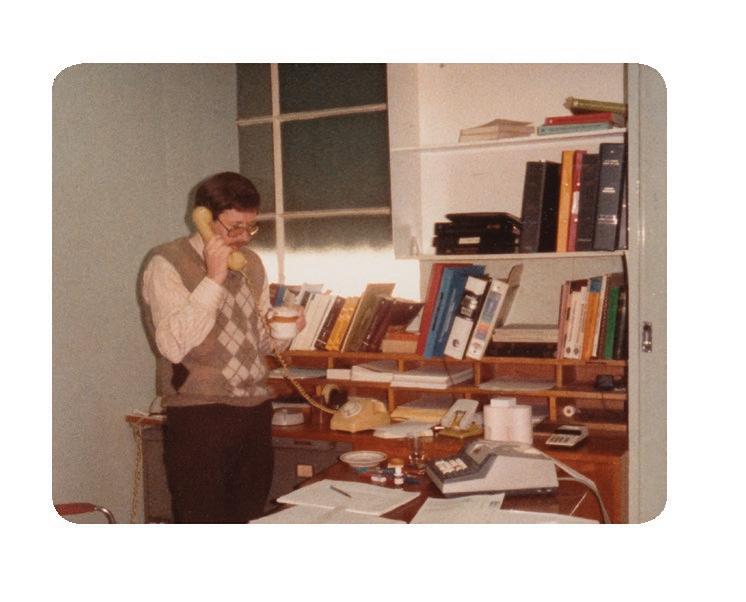
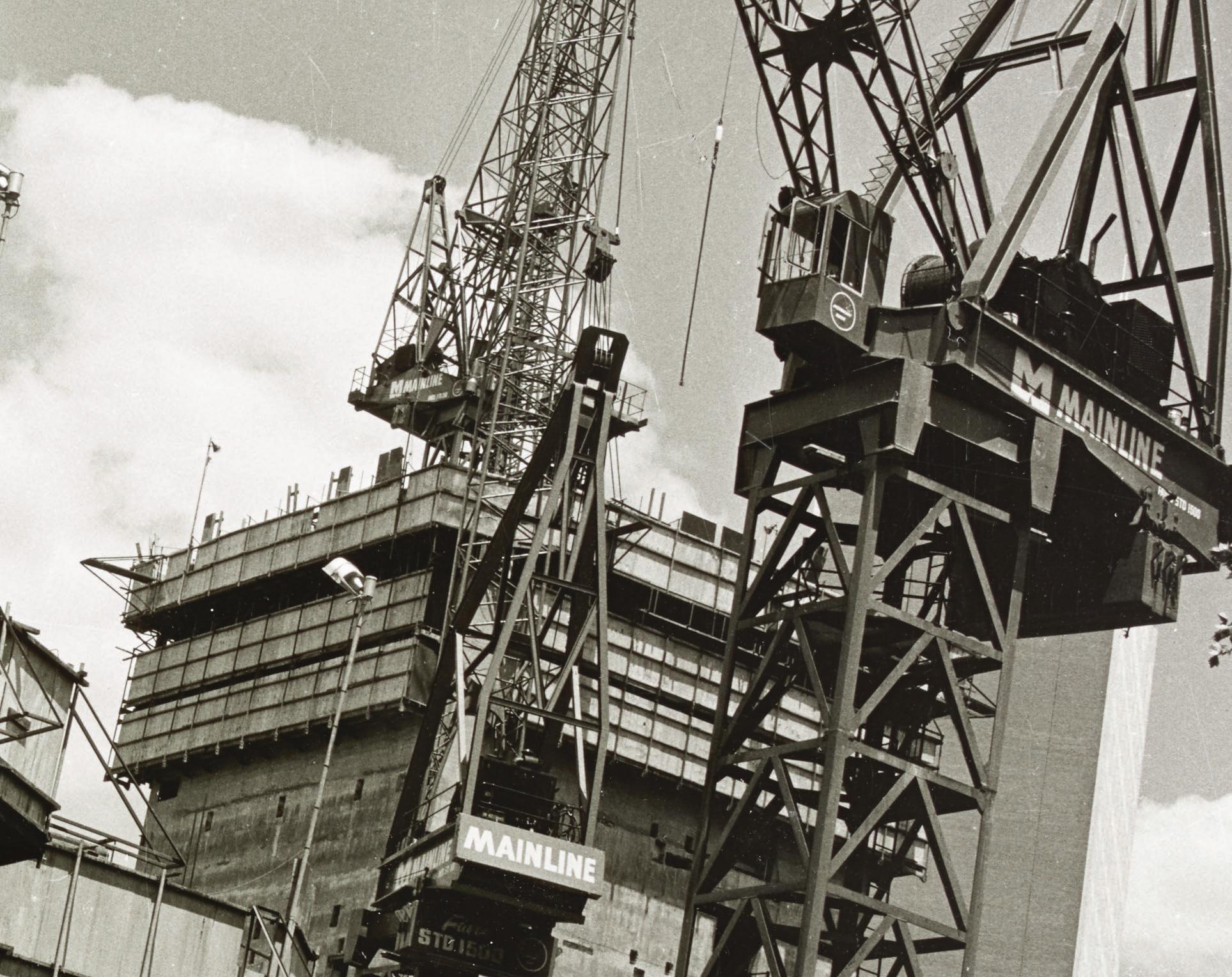
The Mainline collapse affected not only A.G. Coombs’ employees, but also its key suppliers. Bill Moseley remembered how accountants John Zylstra and Frank Schooneveldt spent long hours at Cochranes Road – even working at night – just to sort out the cash flow, and how Frank set up a system to manage the creditors and pay people in stages. Most suppliers went along with this proposal and, in the end, everyone got paid. “The company always met its commitment to its suppliers, even when times were tough,” said Frank.
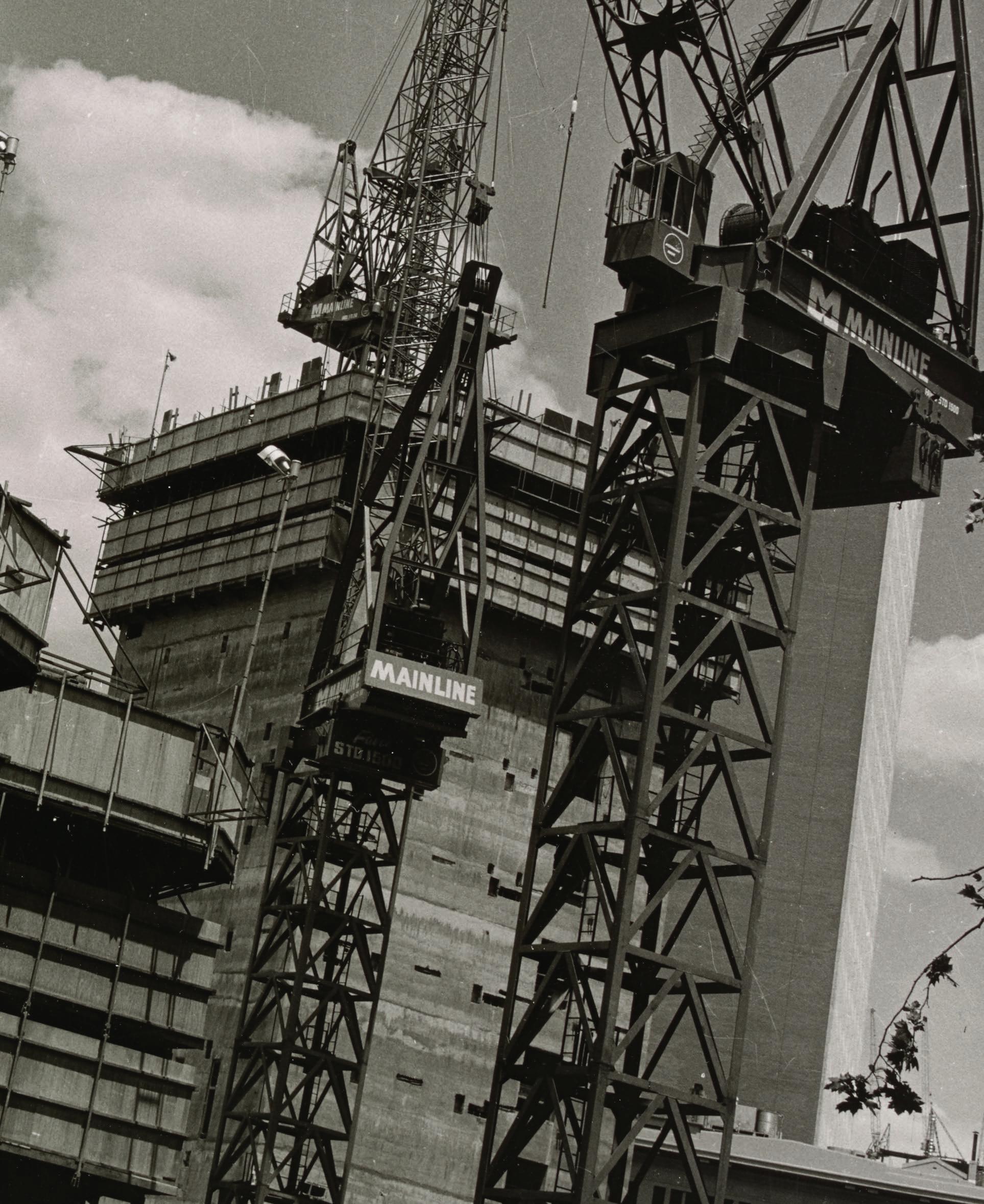
Employees realised that A.G. Coombs was struggling, but few were aware of the lengths Allan went to in order to get the company out of trouble. “It was a realisation for Allan that he was going to lose the business, it got that close,” Frank recounted. In the end, Allan put his house on the line and borrowed money on it. He also fronted the banks for a heavy round of talks. “He went there by himself and refused to leave until he got the money to pay the wages,” said Frank, recalling these difficult events.
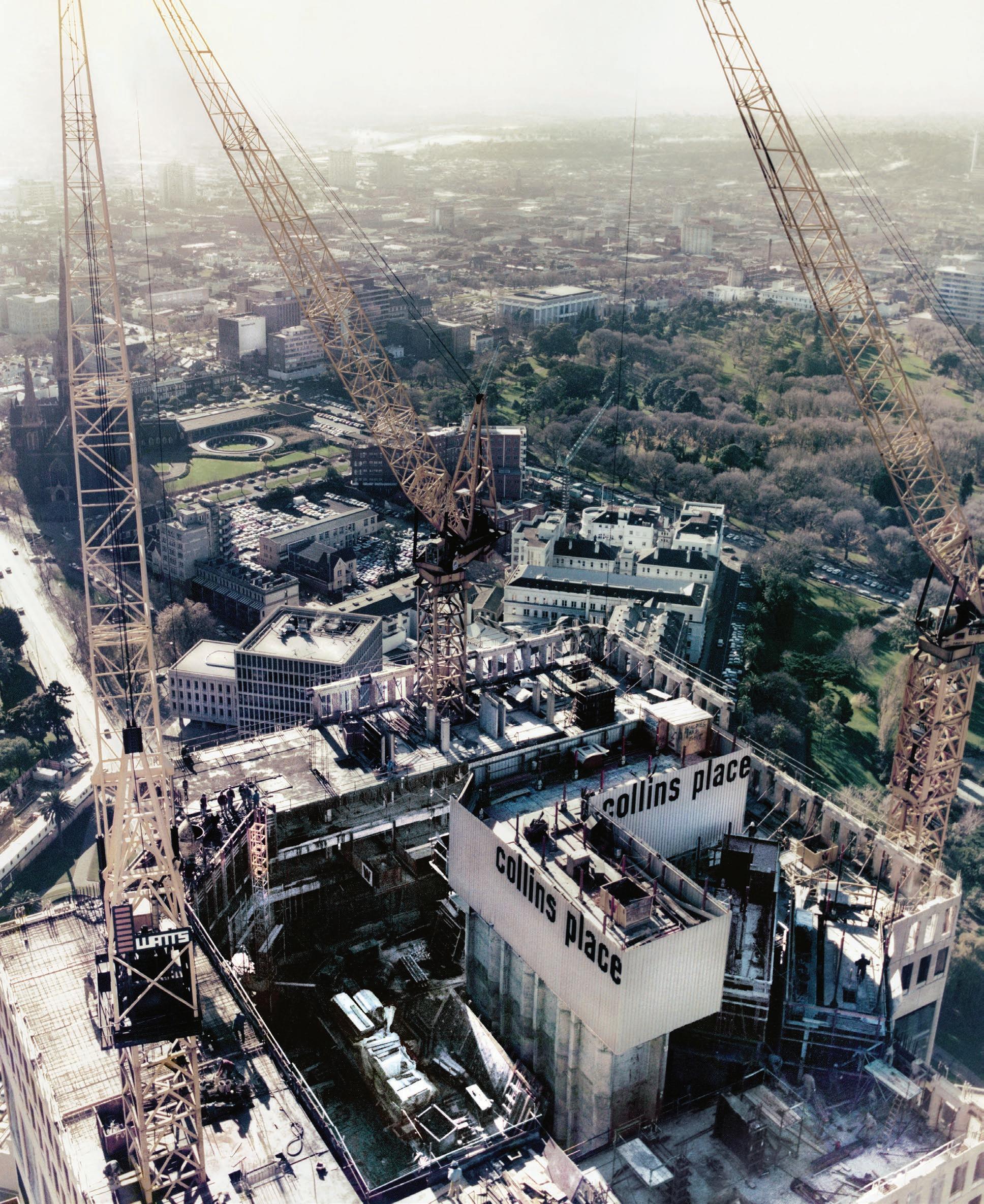
Following the collapse of original builder Mainline Corporation, construction eventually resumed at Collins Place under new builder E.A. Watts. Image source: State Library of Victoria
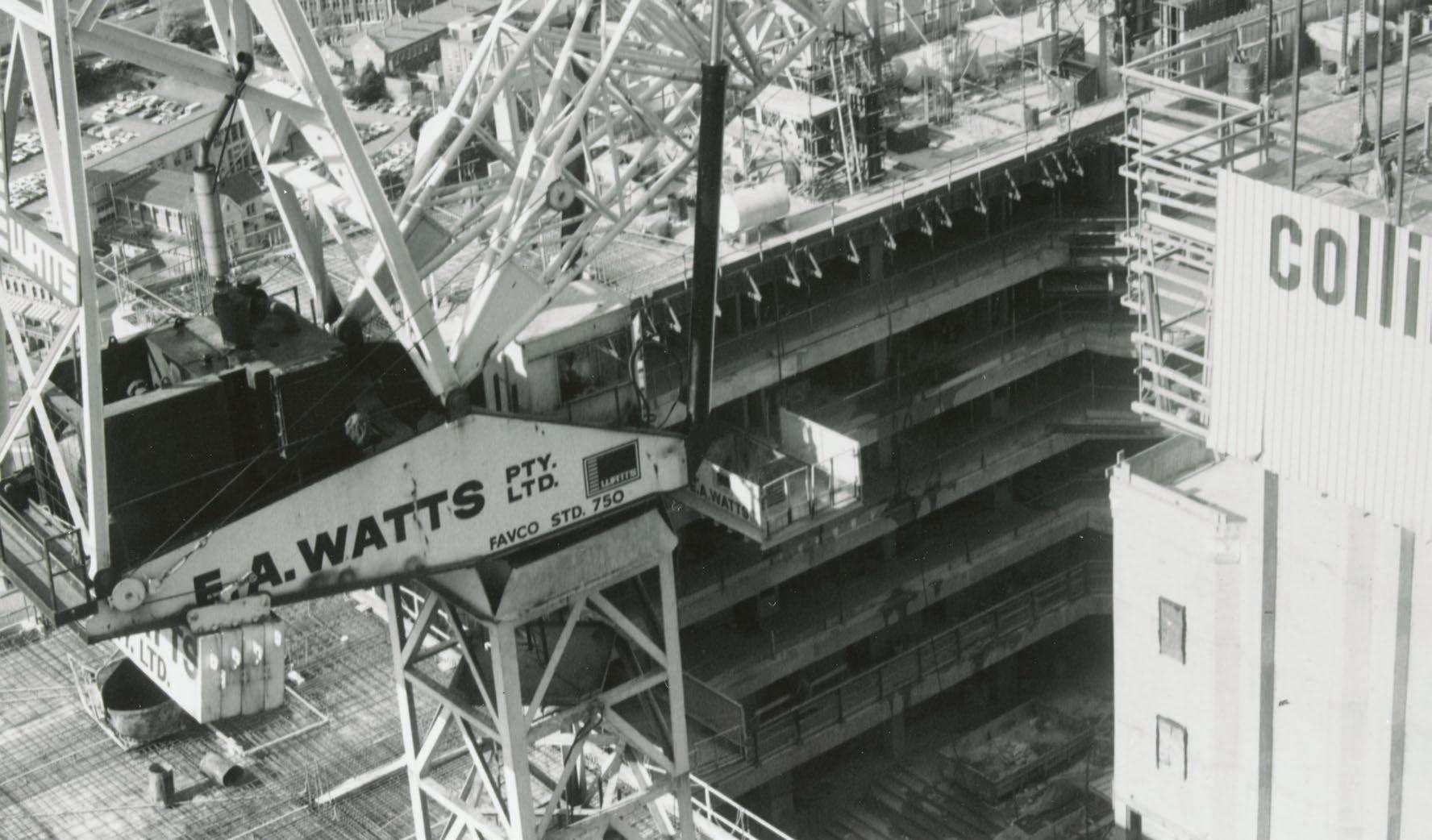
After the shock subsided, everyone regrouped to determine the best way forward. Allan was now of the view that the company would survive if they implemented a plan of action to bring in more work. “If you go out and sell small contracts and everybody does their job, we’ll be okay,” he urged. “We’re not going to fold up; we’re going to sit down and work things out.”
Everyone rallied by trying to pull in as much work as possible and, gradually, between the Service Division and the smaller contracts, the company’s financial position improved.
Renegotiating Collins Place was the next challenge, and people were called back from holidays to assist with repricing the job. The best piece of news was learning that they could negotiate the contract direct with the principals of the AMP Society instead of having to work things out with the builder. Allan was also determined to secure more favourable terms and managed to win a revised contract based on an hourly rate. People who had left the company in the aftermath of the crisis started streaming back through the doors, and
work eventually resumed under new builder, E.A. Watts, whose experienced construction managers, Alan Pizzey and Graeme Noble, kept everything rolling along in the face of ongoing union activity.
While Collins Place took its toll on the health of many people, those in charge resolved to keep going, with Ray Underwood successfully steering their part of the project through to conclusion. By the close of construction, A.G. Coombs’ tradespeople had installed 80 kilometres of ducting throughout the complex, while its engineers had risen to the challenge of air conditioning the Great Space atrium, with its open access to the street. Using a unique design technique, their clever feat of engineering provided comfortable temperatures within the atrium, no matter what the weather conditions were externally.
The revised terms would also see the contract triple in price from $10 million to over $30 million by the time the building was completed in 1981. It was a good outcome, to say the least, not to mention a satisfactory financial boost after the turmoil and heartache of the last decade.
Built with 16,000 tonnes of steel, 9,000 metres of pre-cast concrete, 56 kilometres of plumbing pipes and 80 kilometres of ducting
The Great Space atrium offers visitors a wide choice of shops, cafés and cinemas under a vast glass canopy. A triumph of air conditioning, this public area is cool in summer and comfortably warm in winter, despite its open access to the street.
Image source: The Collector’s Marvellous Melbourne
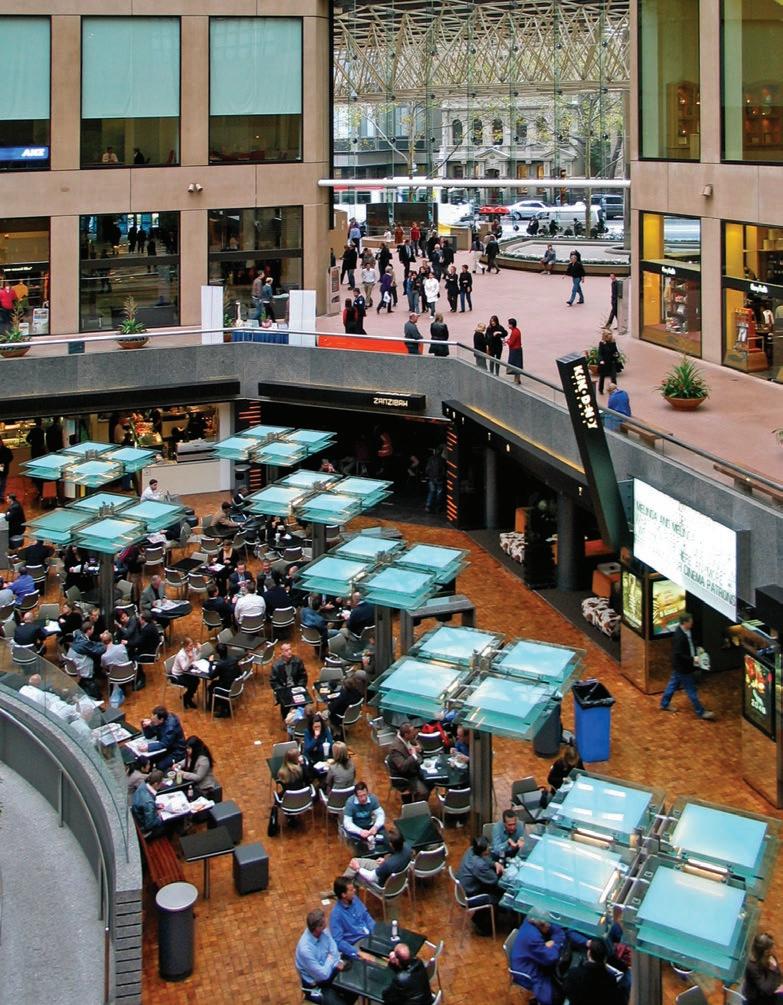
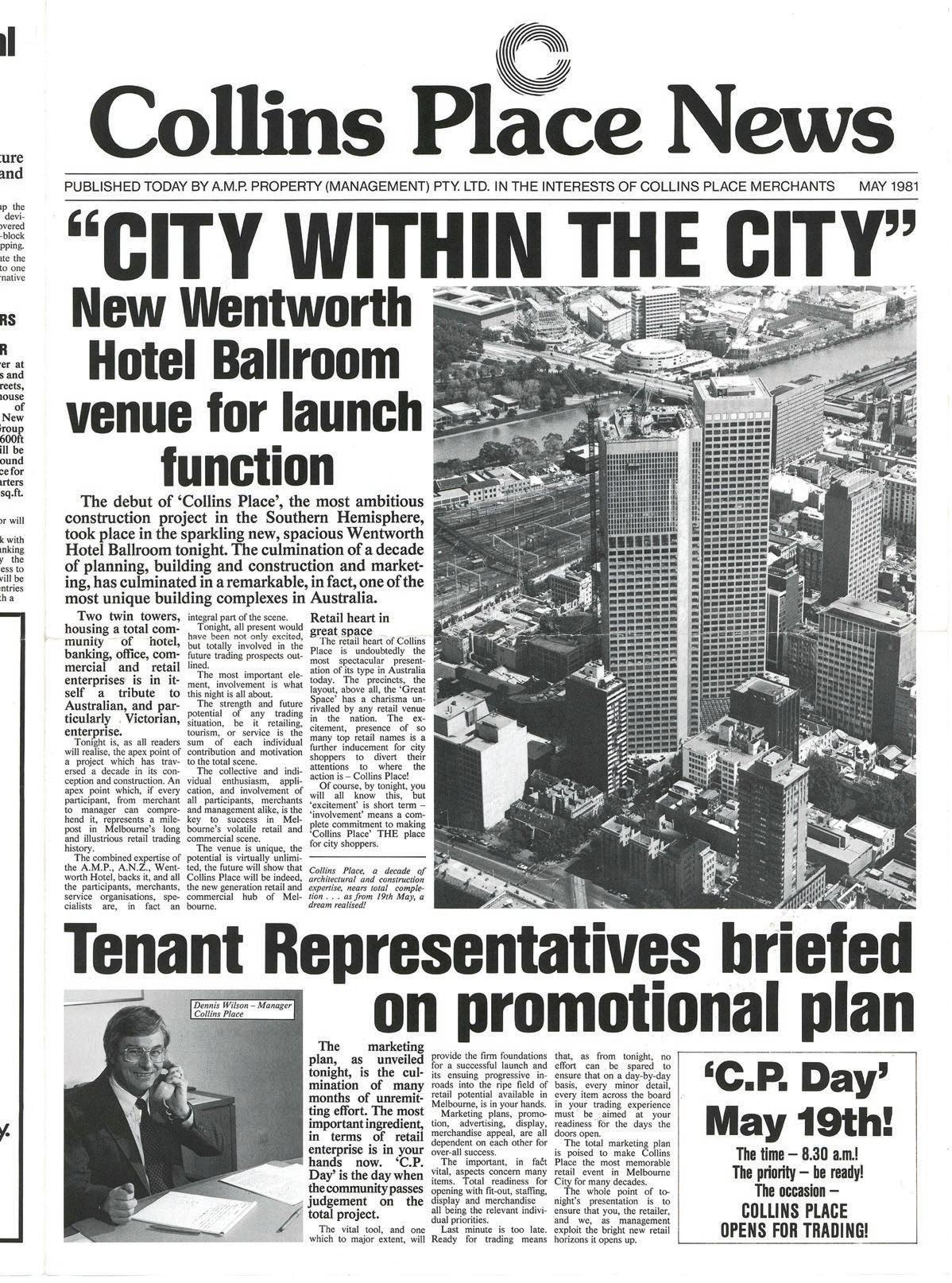
The Wentworth Hotel, with its magnificent views, originally occupied the top fifteen levels of the Collins Tower. The Regent Hotel would later take over this space, followed by the Sofitel Melbourne on Collins.
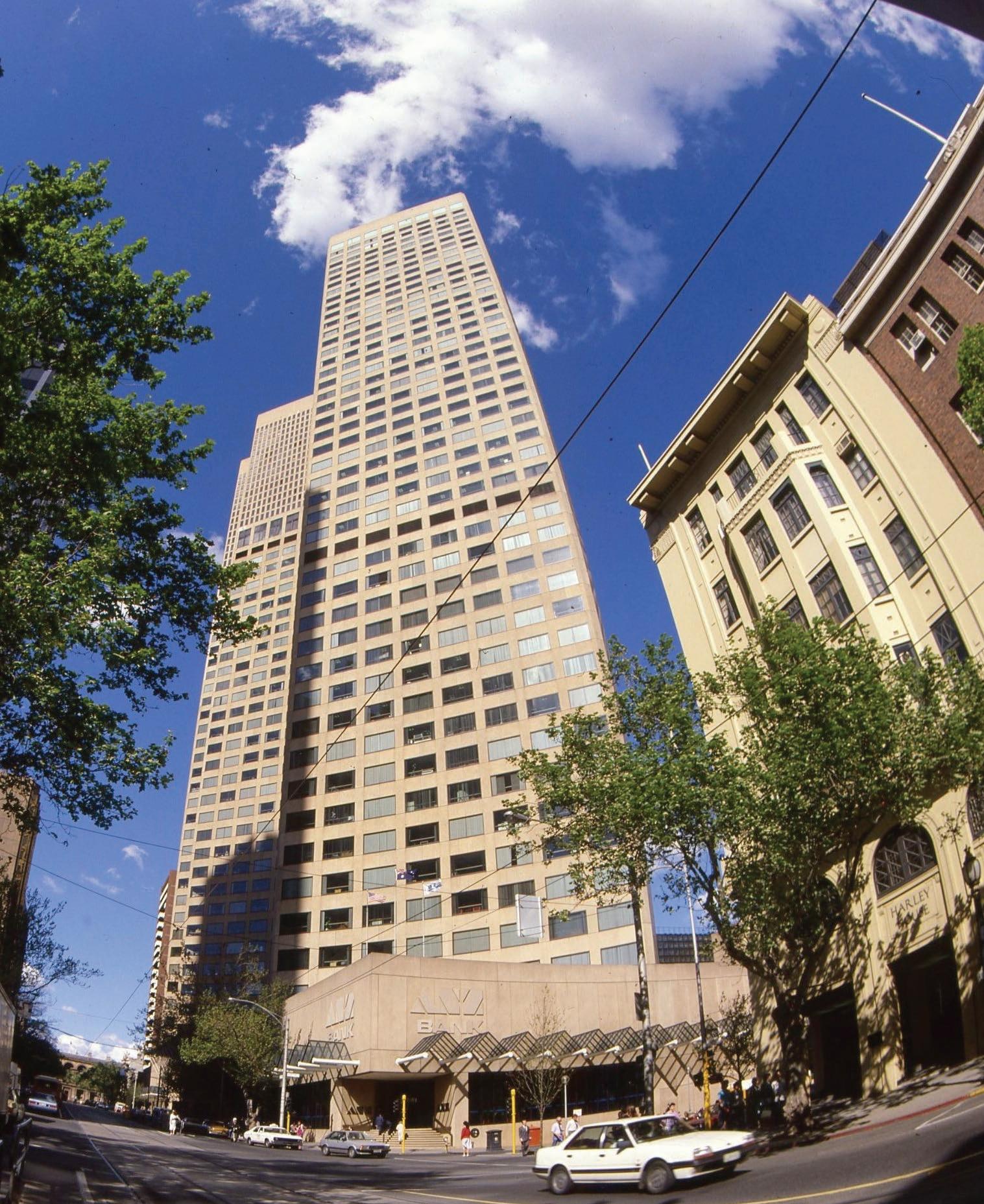
The two towers of Collins Place were built on a square plan at a 45-degree angle to the city’s Hoddle Grid. The ANZ Bank occupied one tower, while the Wentworth Hotel initially occupied the top fifteen floors of the other tower. Fifty-seven lifts ferried people to their destinations throughout the complex, while in the basement, a special cellar – cooled by A.G. Coombs to a constant 10oC – was used to store premium wines.
With projects becoming larger and more complex, the important task of switching on the various services and bringing them on-line was increasingly being handled by a group of specialist technicians. This task was known as commissioning – or, as Ray Sherry explained, “Once a project finishes, someone has to make it go.” He was referring, of course, to the crucial finishing stage of a project, which involved ensuring that everything was in working order and operating in accordance with the consulting engineers’ parameters.
In the early days, start-up or commissioning checks were handled by the Service team, and generally involved people walking around and checking that hot or cold air was coming out of all the ducts. But on multi-level projects like Collins Place, it was not enough to say, “Yes, something’s coming out of that” without a formal sign-off process. With several large jobs already on their books, there was a realisation that the company’s services did not finish once everything was installed and that commissioning was, indeed, a separate and specialised process.
The importance of commissioning was recognised in 1970 when it evolved into a formal department under the direction of Phil McMahon. Previously employed by W.E. Bassett & Partners (consulting engineers), Phil had been recruited by Allan Coombs to set up the company’s Commissioning Department. It was a clever move, as A.G. Coombs had already been involved in government
jobs where its work was formally checked and verified as a matter of course. It was this sort of knowledge that Allan wanted to bring into the company.
After the department was established, Ray Sherry (who had joined A.G. Coombs as an apprentice mechanical plumber in 1968) spent around twelve months learning how to commission jobs. Making something “go”, he discovered, required a high level of technical skill to ensure that all systems were functioning correctly. The new department brought together staff members who were more technically minded and trained them to document every single installation to reassure the project engineers that everything was operating as it should, and that all the procedures were clearly recorded and not locked away in someone’s head. “It was important to put something in front of them, so those engineers could be comfortable that the buildings were running in the way they were supposed to,” explained Ray, who would later be appointed Commissioning Manager.
Commissioning involved a certain mathematical aptitude, especially when working out water and air quantities. Technicians were therefore required to take courses at the Royal Melbourne Institute of Technology (RMIT) and the Air Conditioning and Mechanical Contractors’ Association (AMCA). Other organisations were also establishing their commissioning departments, and Allan went to great lengths to ensure that adequate resources were devoted within his own company to commissioning everything in a professional and structured manner.
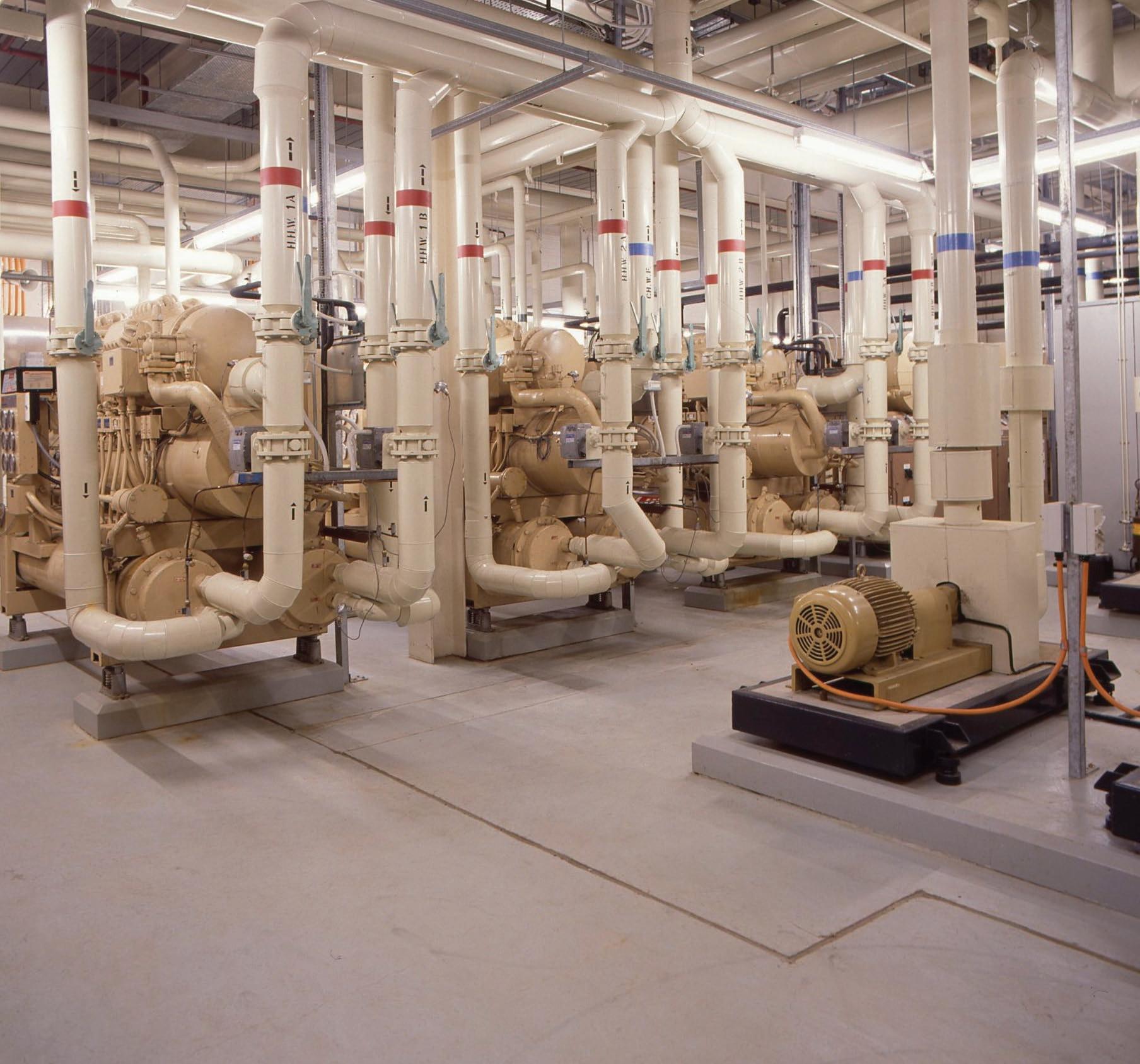
Commissioning was a specialised area requiring extensive testing and precise documentation of all installations throughout the building. Here,
and
check the air flow during the final commissioning of services.
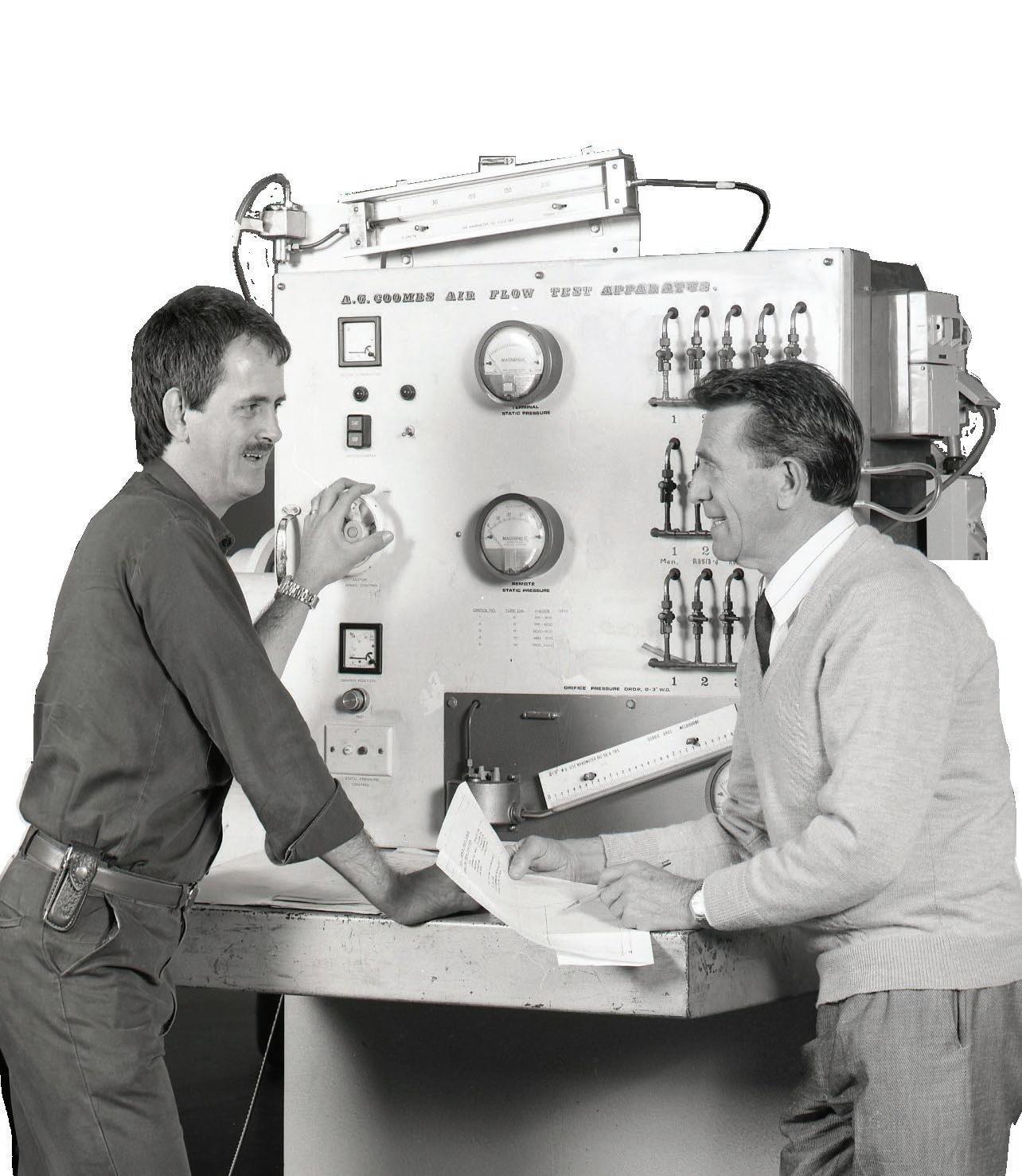
As the events of the decade unfolded, Allan Coombs found himself contemplating something much closer to home when both his sons joined the company. Although Ian and Philip Coombs had been exposed to the business from an early age, it was Allan’s younger son, Philip, who would ultimately see a career path in the industry in which his father had played such an influential role.
During their school years, Ian and Philip had been frequent visitors to the factory, spending at least one week during term holidays travelling around in the company truck with Cornelius (Corn) Cass, one of A.G. Coombs’ truck drivers. He was a “legend” said Philip, recalling how Corn would take them to job sites and then down to the beach to have fish and chips.
Ian was two years older than Philip and had left technical school at an early age to join the trade. He worked at A.G. Coombs for a short period in the early 1970s, but left before completing his apprenticeship to take up a suburban plumbing job. Realising that plumbing was not his calling, he decided to open a hardware store and was assisted in this new venture by his mother, Elaine.
Ian eventually returned to A.G. Coombs in 1980 to run the stores and dispatch department, and took over as purchasing officer from Gerald Carter in 1983 when Gerald retired from the company. Ian later progressed through various positions in information technology (IT), before leaving to pursue an IT career elsewhere.
By the time his elder brother left the company, Philip Coombs was already working in the business. A practical person by nature, Philip was in his element when helping to build things in the factory with his father. “I was always a doer and the factory ... was a doing environment. We created stuff and built stuff and that’s what I enjoyed,” he reminisced.
It was never a foregone conclusion that Philip would follow Allan into the business, especially given his early interest in studying marine biology. But after finishing his schooling, Philip put his academic interests on hold to do a short stint as a factory process worker, before taking a computer job at the Local Authorities Superannuation Board. In the end, the thought of creating things in the Cochranes Road factory proved too strong for Philip, and after approaching his father about joining the company, he commenced his plumbing apprenticeship at A.G. Coombs in February 1976.
The arrival of the boss’s son was an interesting development for a company that had evolved under the direction of one strong leader, and people were naturally a little uncertain as to how they should treat Philip. While delighted to have his son in the business, Allan insisted that he be treated no differently from everyone else. “That was the way it was going to be,” explained Site Supervisor Ray Stephenson. “You had to do the hard yards.”
Philip joined A.G. Coombs at a time when apprentices were coming into the company at an older age (he was then nineteen years old), whereas in the early days they were usually fourteen or fifteen when they joined. Starting out on the tools, Philip would find himself working on some of the company’s most high-profile projects, including Collins Place and the Commonwealth Bank. He did what was expected of him, including a stint with Ron Barns and Ray Twite on a project in Werribee. Ray was apprehensive about this, believing that he would be called to account for either being too hard or too easy on the boss’s son. “Just treat him like everyone else,” Ron advised. So, Ray treated Philip like one of the boys and everything worked out fine.
Supervised by some of the company’s most experienced operators, Philip went on to complete his plumbing apprenticeship in 1980, as well as several years of night
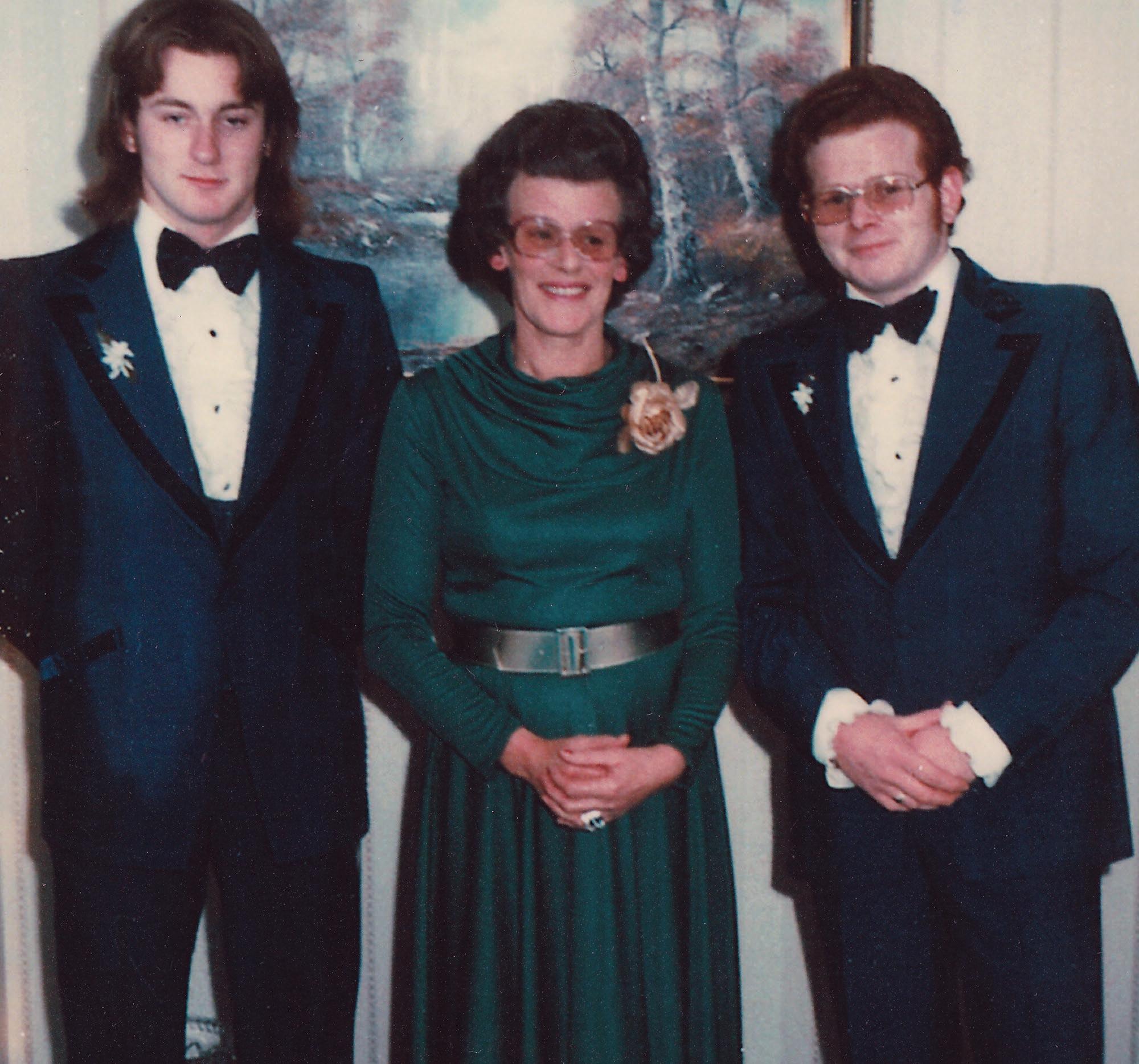
school, where he studied advanced air conditioning design, business management and marketing. He also enrolled in a computer science course at Swinburne Technical College and later set up a program for managing tools and equipment, which helped save A.G. Coombs thousands of dollars in the program’s first year of operation.
The real test, though, was when he began working alongside his father, who, in typical fashion, threw him in the deep end and expected him to grasp things quickly.
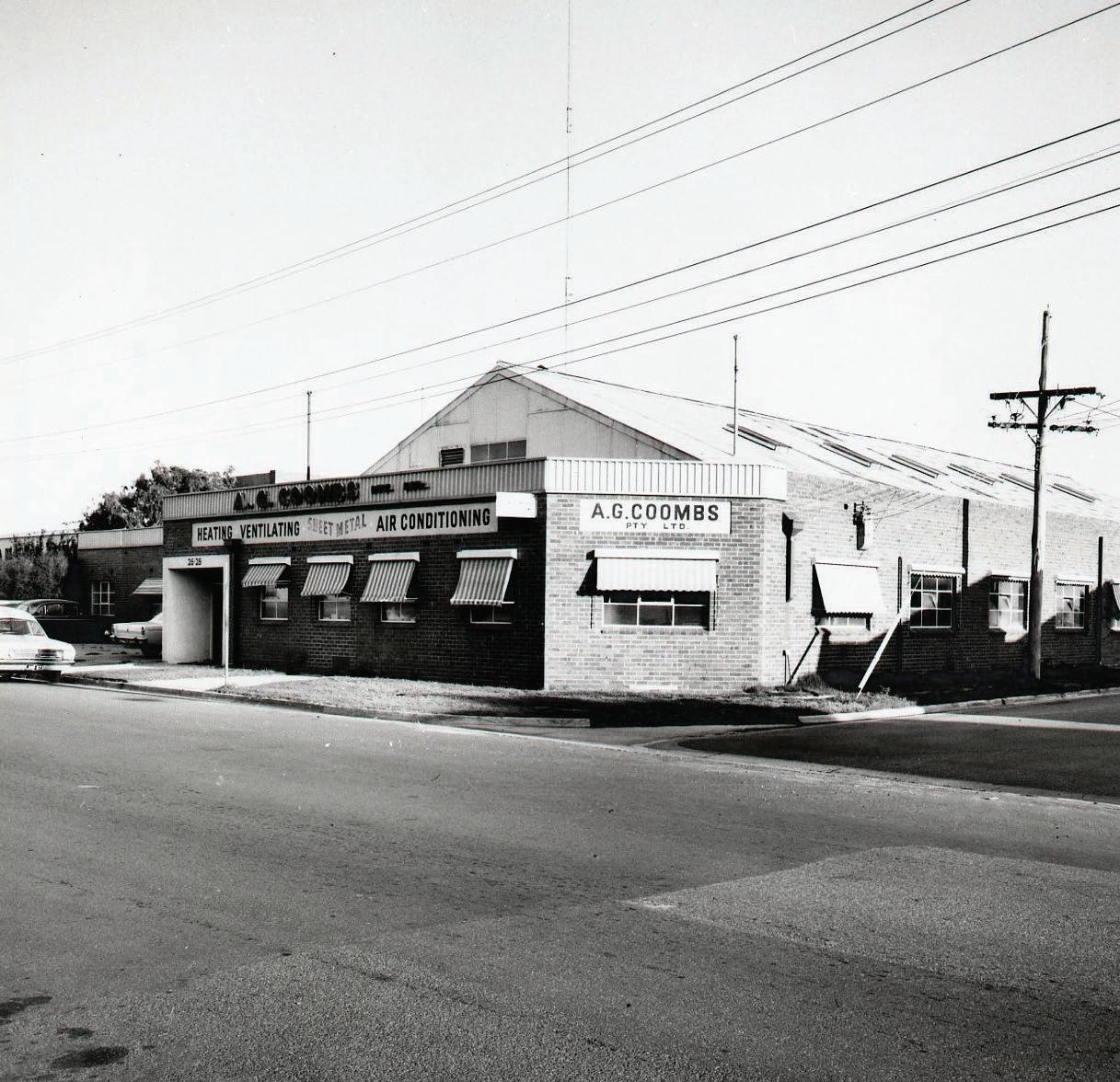
“My father probably accelerated me, pulling me from pillar to post through different parts of the business,” said Philip.
“So I developed a pretty wide knowledge in a very short space of time.” He was also aware of the management culture during his father’s era. “My father ran a tight ship; everybody did what they were told.”
Philip settled easily into the business, and in doing the hard yards earned the respect of staff. When it came time for him to step into his father’s shoes, he would do so with a good grounding in the operations of the company and an understanding of what he could bring to the leadership role.
At the start of the decade, A.G. Coombs had consisted of a holding company and four subsidiaries, namely A.G. Coombs Pty. Ltd. (Contracting), A.G. Coombs Equipment Pty. Ltd., A.G. Coombs Manufacturing Pty. Ltd. and A.G. Coombs Servicing Pty. Ltd. (otherwise known as the Service Division).
However, in 1976, Allan Coombs restructured the business into the A.G. Coombs Group Pty. Ltd., and over a period of time began transferring his property investments into family trust structures. These decisions were largely a response to the events of 1974, when Mainline Corporation (the original builders of Collins Place) went into liquidation.
Of all the many difficult episodes in the company’s history, the collapse of Mainline in 1974 had the biggest impact on Allan Coombs personally. Forced to take drastic action to save the business, he was determined that this must never happen again. “Allan became a changed man,” observed Frank Schooneveldt. “He restructured his affairs and didn’t have all his eggs in one basket.” The company’s presence in Moorabbin was also consolidated during the 1970s through the acquisition of more land and properties, most significantly in Cochranes Road. Properties were also purchased on Centre Dandenong Road, Cheltenham and in the regional Victorian city of Wodonga.
From the outset, Allan had been very hands-on in running the company. For example, after visiting and noting the factory layouts in America, he single-handedly revamped the Cochranes Road factory during one of the Christmas breaks. Needless to say that on returning to work,
Factory Manager Jack O’Hehir was stunned to discover that Allan had spent three weeks using a forklift and crane to relocate all the factory’s equipment, pipe racks and materials.
Allan was both ‘boss’ and founder, but in time became Managing Director – a more corporate title befitting the company’s formal restructure. However, after more than thirty years of growing and leading the business, he decided it was time to hand over executive responsibilities to three of his most trusted lieutenants. In December 1980, he promoted Jock Fraser to Executive Director, with David Seedsman and Frank Schooneveldt appointed General Manager and Company Secretary respectively.
All the former departments were also restructured into divisions, while Allan – who now recognised the importance of consistency across all their operations – set about writing procedures for each and every function throughout the company. “There was even a procedure on how to write and update procedures,” said Project Manager Bill Moseley, citing a 500-page document that would be well-thumbed through in the future.
Around this time, Allan used the company’s newsletter to make a heartfelt statement to employees, saying:
“It is with tremendous pride in what has been achieved through the efforts, ability and team spirit of so many loyal and capable people not to feel confident of the continued success of the company.”
Having secured more lucrative contracts – including significant projects along Collins Street and a major contract with the CSIRO – it was now possible, in his mind, to look at expanding the Cochranes Road complex, which he would start to tackle in the years ahead.
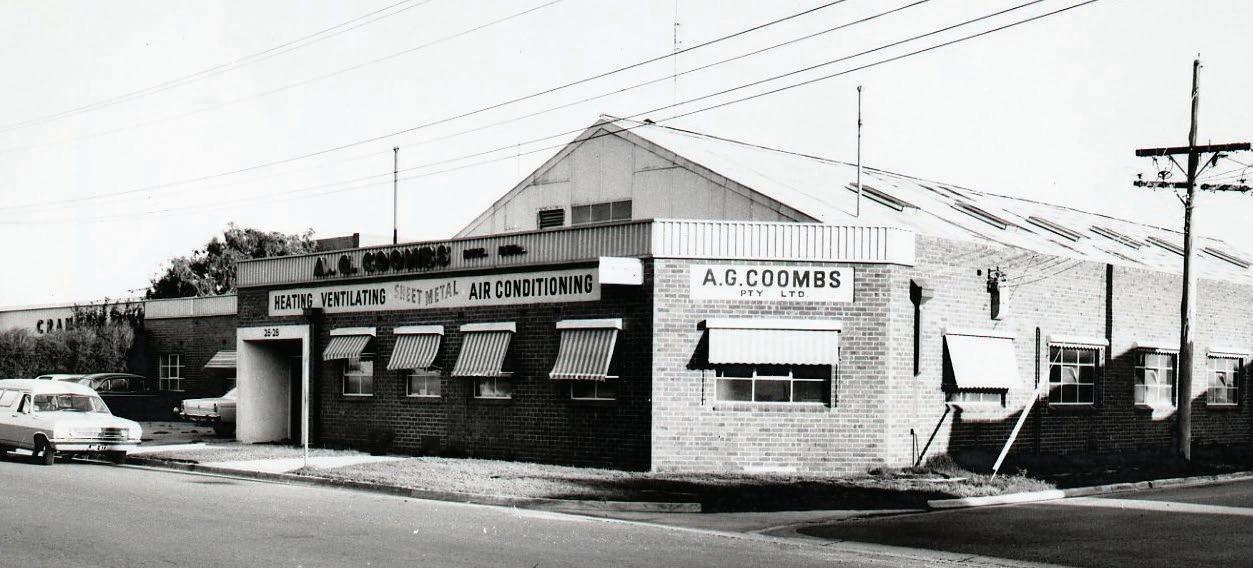
The contribution of Allan Coombs to the industry he so vigorously championed was recognised in the 1979 New Year’s Honours list when he was appointed a Member of the Order of Australia (AM). A relatively new award, the Order of Australia (which had replaced the British Honours system in 1975) recognised Australians who had demonstrated “outstanding merit” in any field of endeavour in Australian life
A member of the Master Plumbers Association since 1957, Allan had been a key force in establishing the Air Conditioning and Mechanical Contractors’ Association (AMCA), a separate organisation that promoted the role of mechanical contractors, as distinct from plumbers and gasfitters. On becoming the Association’s founding president in 1961, he campaigned tirelessly to have the air conditioning industry recognised in its own right. He also convinced the American-based Sheet Metal and Air Conditioning Contractors’ National Association (SMACNA) –of which he was the first international member – to open an overseas chapter in 1968 and base it in Victoria.
Allan professionalised the industry by bringing SMACNA standards to Australia and encouraging architects and engineers to recognise them. He also worked with technical colleges to improve education and training opportunities for young apprentices – even sponsoring prizes for outstanding students – and was equally passionate about facilitating post-trade training. Many colleges applauded Allan’s “untiring efforts” to ensure that apprenticeship training kept pace with the industry. He would be inducted posthumously into the Air Conditioning, Refrigeration and Building Services (ARBS) Hall of Fame in 2010.
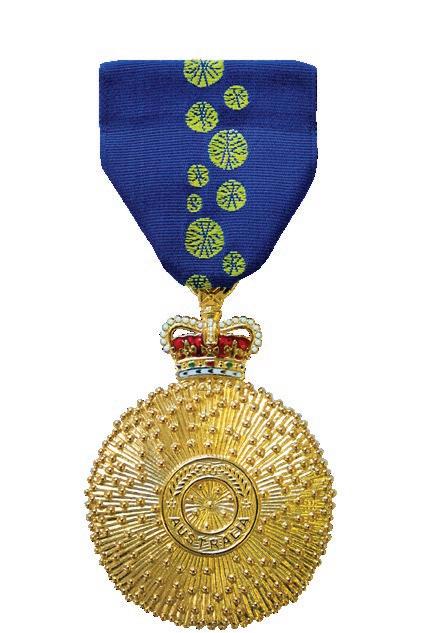
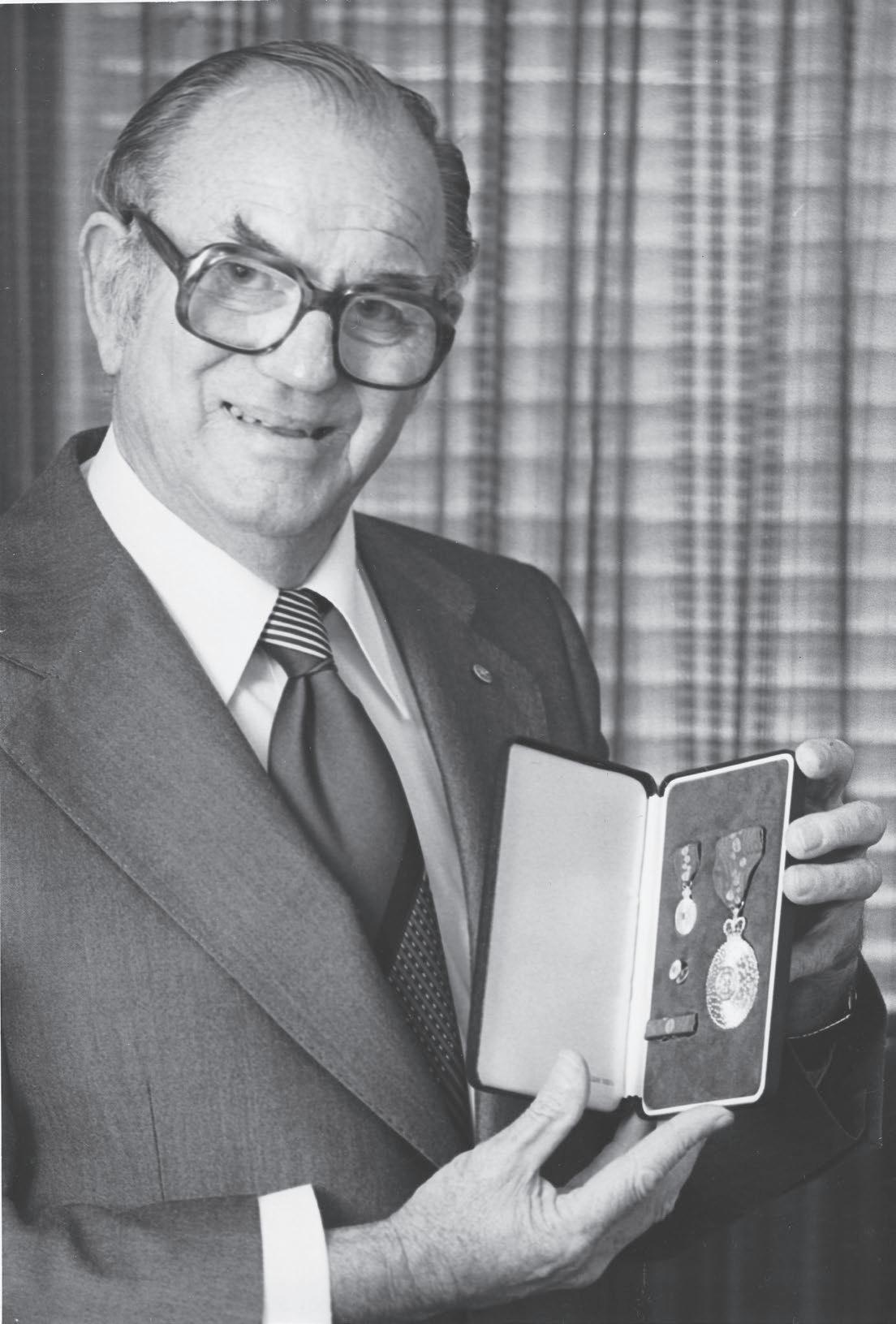
Completed in 1978, Collins
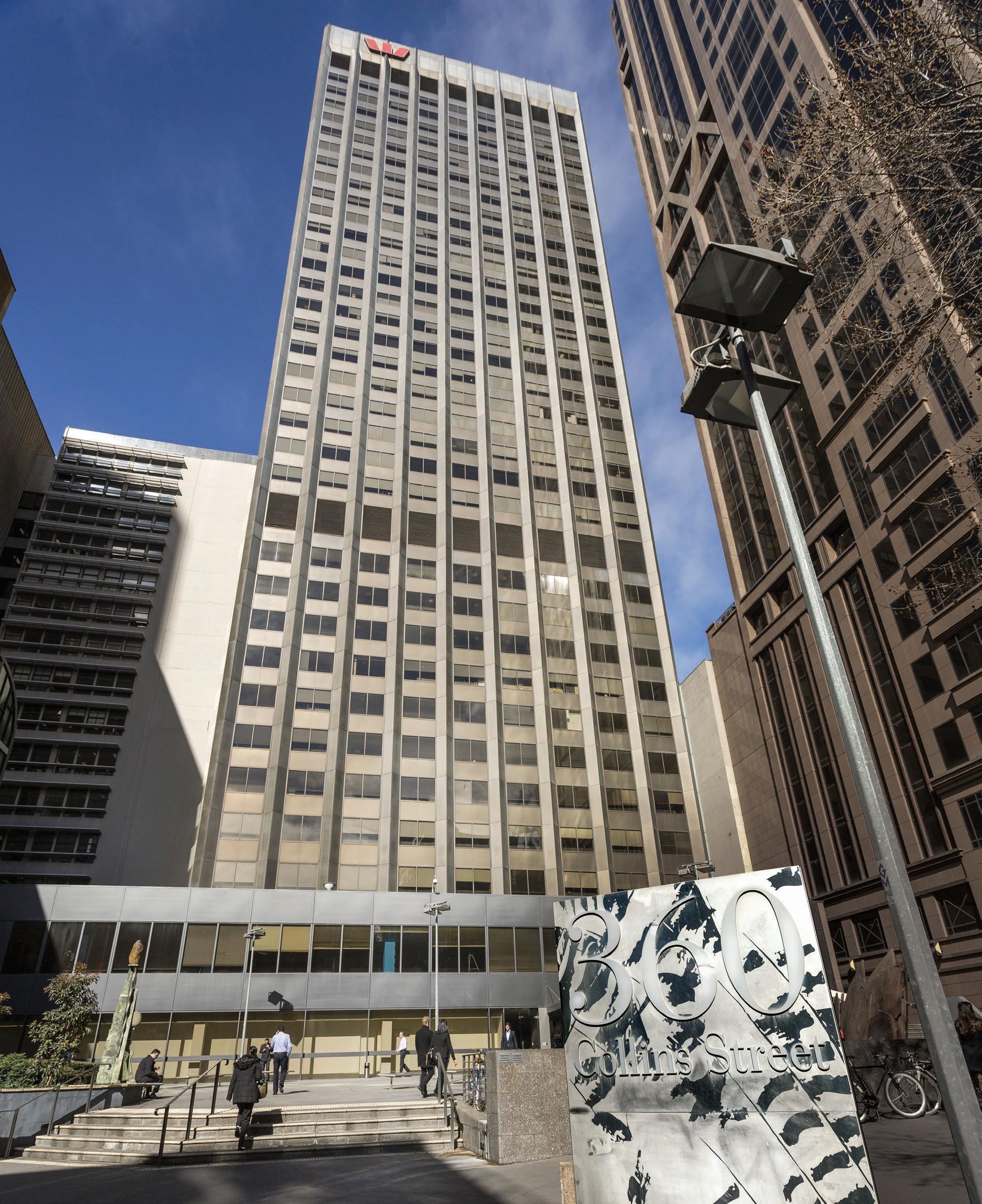
a
There were times during the 1970s when Collins Street felt like the company’s second headquarters. Apart from Collins Place, A.G. Coombs had contracts for several other high-rise developments in the city’s financial heartland, including 360 Collins Street (Collins Wales House), 350 Collins Street (the Australian Taxation Office) and 367 Collins Street. A.G. Coombs also installed the mechanical services in the new headquarters of what was then the National Bank of Australasia (now National Australia Bank), just a short walk around the corner in Bourke Street.
Once again, banking groups were the main occupants of nearly all these multi-storey buildings. The Commonwealth Bank took up residence at 367 Collins Street, while Collins Wales House would become the corporate headquarters of the Westpac Banking Corporation. With hundreds of employees and subcontractors employed on these projects, people could be forgiven for thinking that A.G. Coombs had been contracted to air condition the entire street!
Throughout this period, union issues still consumed a considerable amount of company time. Indeed, Collins Wales House, just like Collins Place, was proving a difficult job to supervise, with 150 plumbers spread over 36 levels. Union members took advantage of this, often putting down tools well before finishing time to make their way to ground level. However, union issues flared up irrespective of where people worked, making it a challenging time to be in the industry. “It was a massive job getting those fortified buildings up,” said Ray Sherry.
A.G. Coombs’ biggest achievement by far was the opening of Collins Place in May 1981, nearly a decade after the company first tendered for the project. What so easily could have been a contractual disaster was now a major triumph – the ‘jewel’ in the company’s crown. “There was a lot of heartache in getting Collins Place completed,” said Ray Stephenson, “but in the end the job proved to be a winner.” This winning outcome was a result of the original contract
tripling in price after being renegotiated by Allan Coombs. It was also a testament to the dedication and perseverance of the entire site team, in particular Senior Project Manager Ray Underwood, Site Manager Ray Smith and Site Supervisor Brian Tregenza, all of whom remained totally focused on getting the job done against overwhelming odds.
The fact that all these buildings were even completed was remarkable, given the stop-start schedule of construction. The transformation along Collins Street was also remarkable, prompting a range of responses from the community. Some regretted the loss of a bygone era; others applauded bold new design. Reflecting on the end result, people could never have imagined the hurdles faced, almost daily, by the hundreds of contractors who built these facilities, delivered the services and prepared them for handover. But gradually, through sheer energy and collective persistence, modern structures had emerged, their interiors beautifully regulated and temperature controlled, in stark contrast, some would say, to the unpredictability and emotion that accompanied their construction.


The Melbourne Central development comprised a multi-level office tower and diverse shopping complex, originally anchored by Daimaru, one of the world’s oldest department stores. Construction commenced in the mid-1980s and included a specially made glass cone to encase the historic shot tower, which became a focal point of the complex after it opened in 1991.
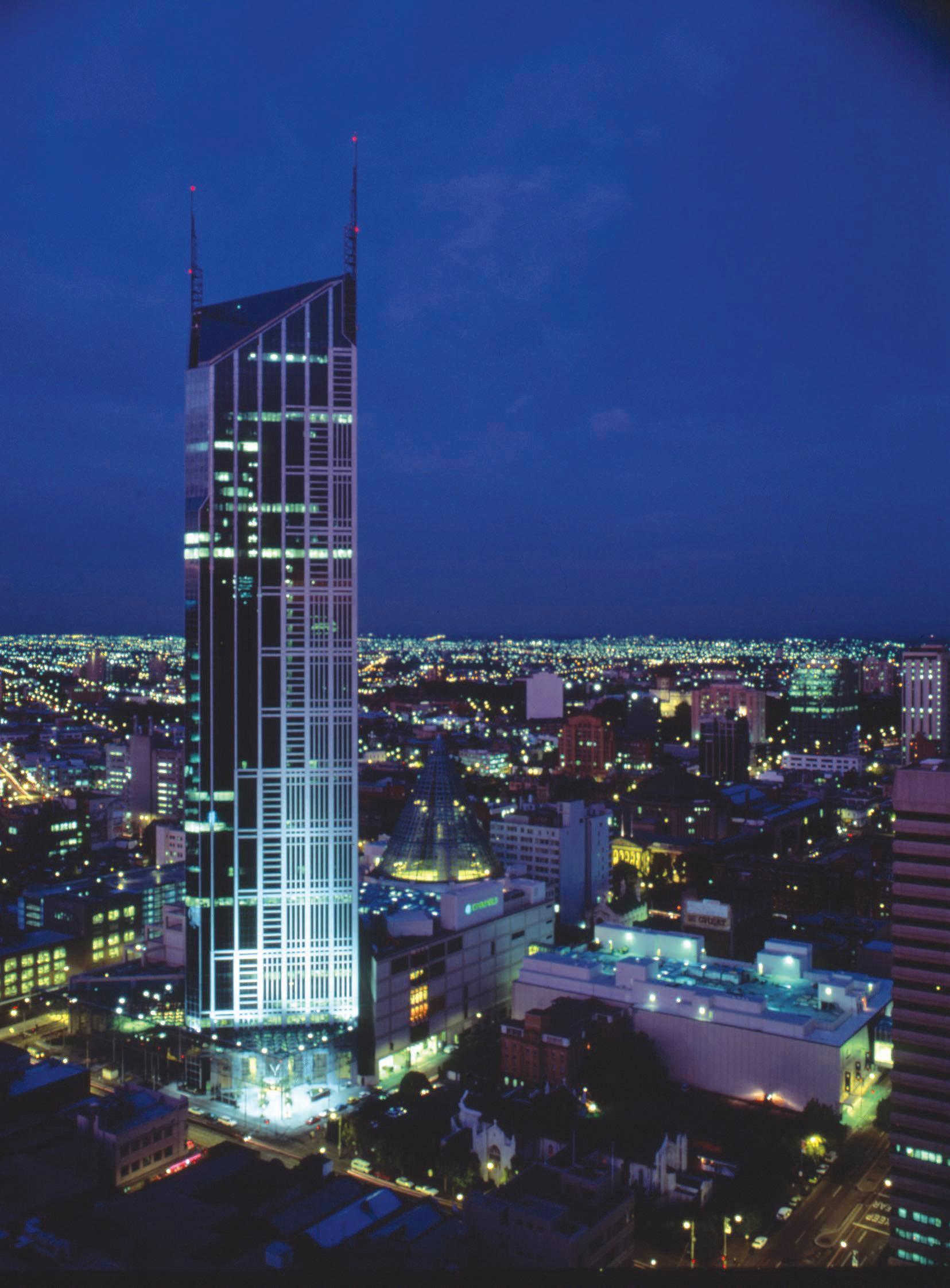
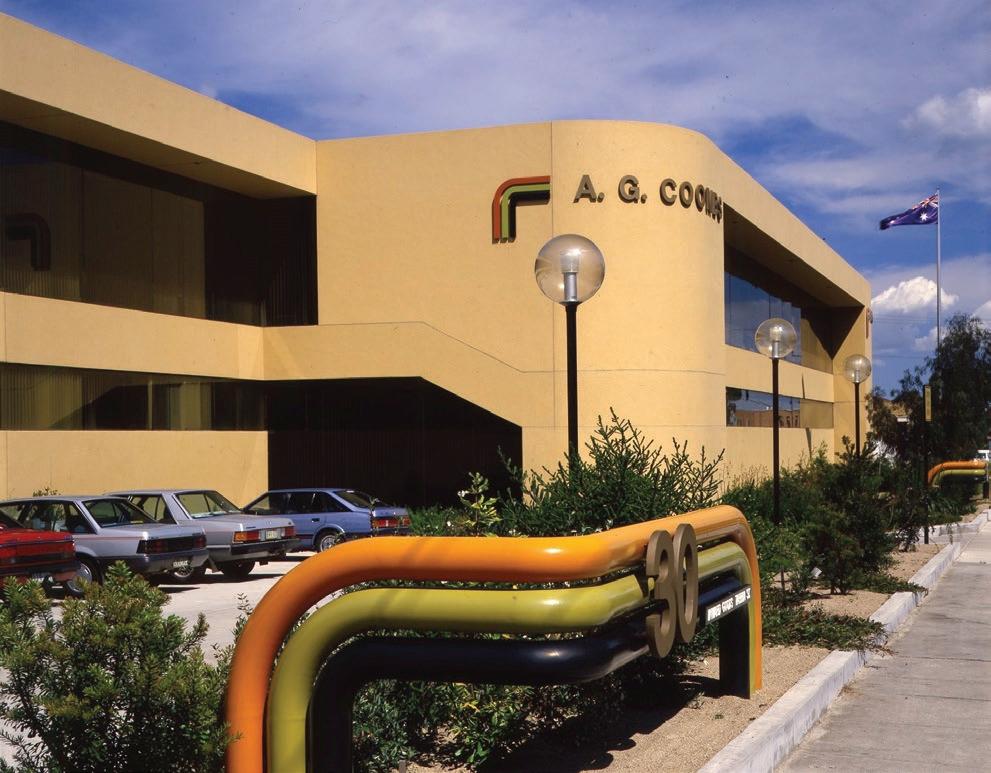
A.G. Coombs’ reputation as a large mechanical services contractor had been cemented with the completion of Collins Place in 1981 and its involvement in several high-profile developments along Collins Street in the late 1970s. But the euphoria associated with completing these iconic buildings was short-lived, as a major downturn in the economy thwarted the company’s plans to move forward.
There was now a realisation that the Australian Government’s talk of a resources boom had been greatly overstated. In fact, ongoing government speculation since the late 1970s had raised people’s expectations, with businesses becoming over-confident and the unions demanding further wage hikes. But the predicted resources boom never eventuated and business confidence crumbled in the face of stringent fiscal policies, high interest rates and tight credit. The building industry plunged into recession, and by October 1982 repeated job cuts across different industries saw half a million Australians out of work.
In stark contrast to the early 1980s, the latter half of the decade would be exceptionally buoyant with a major building boom creating a buzz of activity around the Cochranes Road office, which Allan Coombs had rebuilt over two years from 1983 to 1985. The completion of the new office would be followed by a change of leadership in 1985, when Philip Coombs took over as Managing Director after an apprenticeship that had seen him progress from working on the tools into administrative roles.
September 1982
Commonwealth Games commence in Brisbane.
February 1983
Ash Wednesday bushfires in Victoria and South Australia.
September 1983
Australia II wins the America’s Cup.
April 1984
Advance Australia Fair becomes Australia’s national anthem.
January 1988
Australia celebrates its Bicentenary.
May 1988
New Parliament House opens in Canberra.
November 1989
British computer scientist Tim Berners-Lee invents the World Wide Web.
November 1989
Fall of the Berlin Wall.
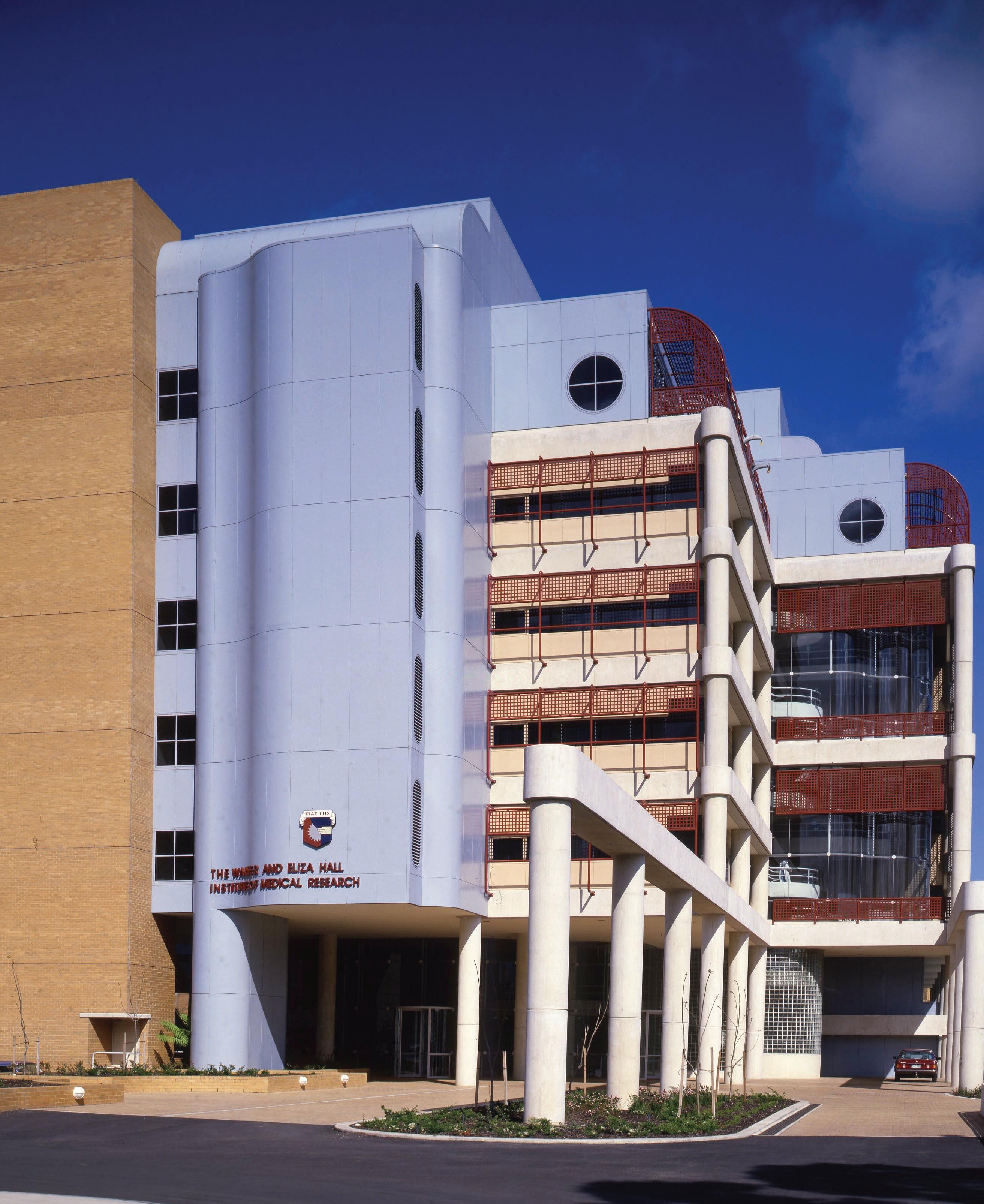
The Walter and Eliza Hall Institute of Medical Research in Parkville is renowned for its research into cancer, immune disorders and infectious diseases. During the mid-1980s, A.G. Coombs created special temperature-controlled environments in the Institute’s research laboratories.
Allan Coombs had seen the signs of a recession as early as 1980 and was already emphasising the importance of securing smaller projects. However, everyone’s energies at the time were almost entirely devoted to major projects like Collins Place, which was then nearing completion, and it was hard to shift focus.
As the economy deteriorated, the company took stock of its position. After a very full schedule, the prospect of dwindling work was a tough jolt to the system, raising the possibility of widespread job cuts. On a company barometer of tough times, the recession of the early 1980s was not as severe as it could have been – and definitely not as severe as what they would experience in the 1990s. But work was scarce,
and like many other businesses in Australia, A.G. Coombs rationalised its workforce and implemented a range of cost-cutting measures.
A number of people left during this time, while those who stayed accepted a more austere work environment. As for sourcing new business, it was a case of picking up the phone and working through your contact list. “We spent a lot of time chasing work and ringing consulting engineers,” recalled Project Manager Bill Moseley, explaining how the consultants were still the ones making most of the hiring decisions. In time, the builders would take over the selection of all major subcontractors from mechanical service providers through to plumbers and electricians. This saw the demise of the previous system – where consulting engineers and architects nominated their preferred contractors – and heralded the rise of ‘all-in-contracts’ that enabled the builder to have full control over the selection process.
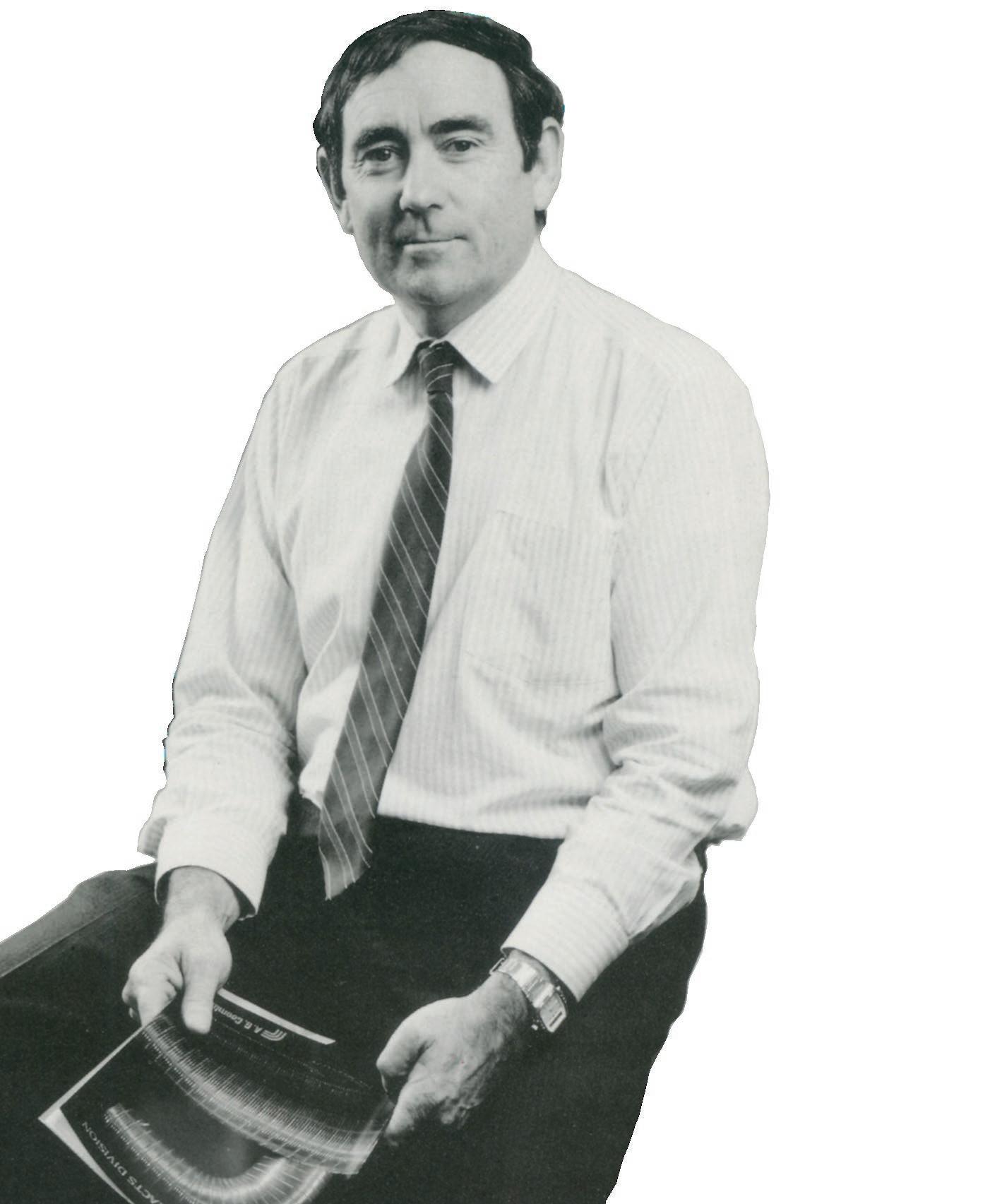
In 1963, after completing his plumbing apprenticeship at DH Armstrong, David Seedsman won a Victorian Overseas Scholarship, and was soon packing his bags for Belgium and England, where he would continue his training with several heating and ventilating companies. After gaining valuable work experience, David joined A.G. Coombs’ estimating department in December 1966 and was involved in pricing some of the company’s major contracts, before moving into project supervision and management. David was appointed General Manager in 1980 and began working closely with Allan Coombs, and later with Philip Coombs, whom he mentored for several years. David’s leadership skills and experience were invaluable during difficult times in the industry, especially during the years of recession, when raising morale was crucial. He also played a pivotal role in securing prestigious contracts, including an installation contract for a new building being commissioned by the Walter and Eliza Hall Institute of Medical Research.
While A.G. Coombs managed to get by without too many layoffs, major construction was now on hold and everyone had to be on their toes to “pull in” a job, according to General Manager David Seedsman. One of the jobs pulled in around this time was the contract for the Walter and Eliza Hall Institute, a leading facility for medical research, which was in the process of commissioning a new building to expand its research capabilities. “In those days, that project was worth in the vicinity of seven to eight million dollars,” said David. “It was an extremely important project for us to have at that stage, for morale and also to get the guys active.”
Recognising the significance of the Institute’s work – and believing that they could meet the technical brief – David spent long hours with the company’s estimating team, as well as with the project’s consultants and architects, to maximise A.G. Coombs’ chances of winning the contract. He also consulted with the Institute’s director, leading immunologist Sir Gustav Nossal, over his requirements
Eliza Hall (pictured right c.1867) clearly wanted to do something meaningful with the vast funds she inherited from her husband, Walter Hall, a wealthy mining and livestock pioneer. She later used a portion of these funds to establish the now internationally famous Walter and Eliza Hall Institute (WEHI) of Medical Research. Founded in 1915, WEHI is Australia’s oldest medical research institute, and its vision to be “the birthplace of discoveries” for the prevention and removal of diseases, holds true today.
Sir Frank Macfarlane Burnet, one of the Institute’s past directors, rose to prominence for his research in virology and immunology, and along with Sir Peter Medawar was jointly awarded the 1960 Nobel Prize in Medicine or Physiology for the discovery of acquired immunological tolerance. From 1965–1996, Burnet’s successor, Sir Gustav Nossal, set about expanding the Institute, and it was during his tenure that scientists, led by Professor Donald Metcalf, identified the colony stimulating factors (CSFs) that boost infection-fighting white blood cells, particularly in people with cancer.
Image source: State Library of Victoria
for the new facility. The contract, if they were hired, would help lift everyone’s spirits at a particularly difficult time. It would also challenge their engineers, who were already experienced in the medical area, to create special temperature-controlled environments for the Institute’s research laboratories.
The hard work paid off and it was a memorable day when David returned to Moorabbin with the news that A.G. Coombs had won the contract. “I remember walking back into the office and saying, ‘We’ve won the job’, and the morale just lifted, and from then on we started to win more work.”
Fortunately, it was not a prolonged recession and staff cutbacks were not as severe as they would be a decade later. When it became clear that the company would pull through relatively unscathed, Allan Coombs took advantage of lower building costs during the downturn to expand the Moorabbin complex. The extensions were eventually completed in 1984 with the new administration wing opening in June 1985.
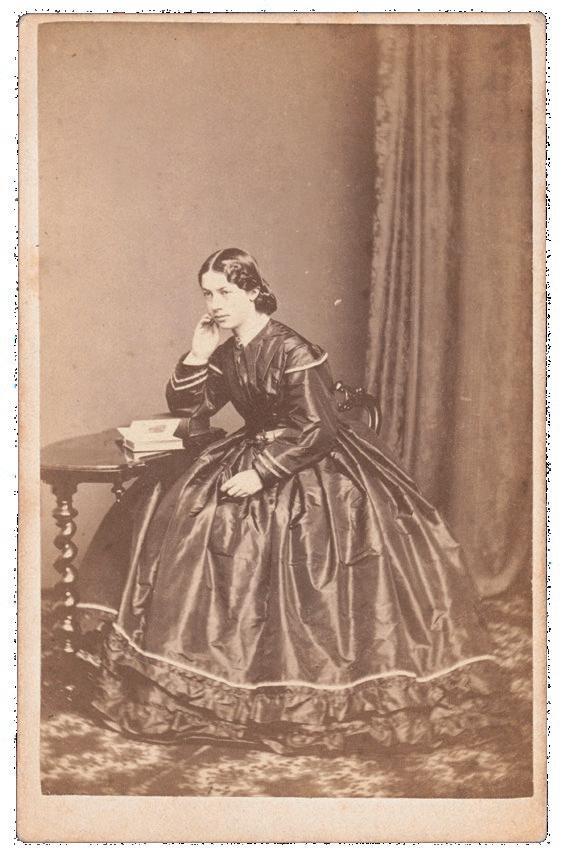
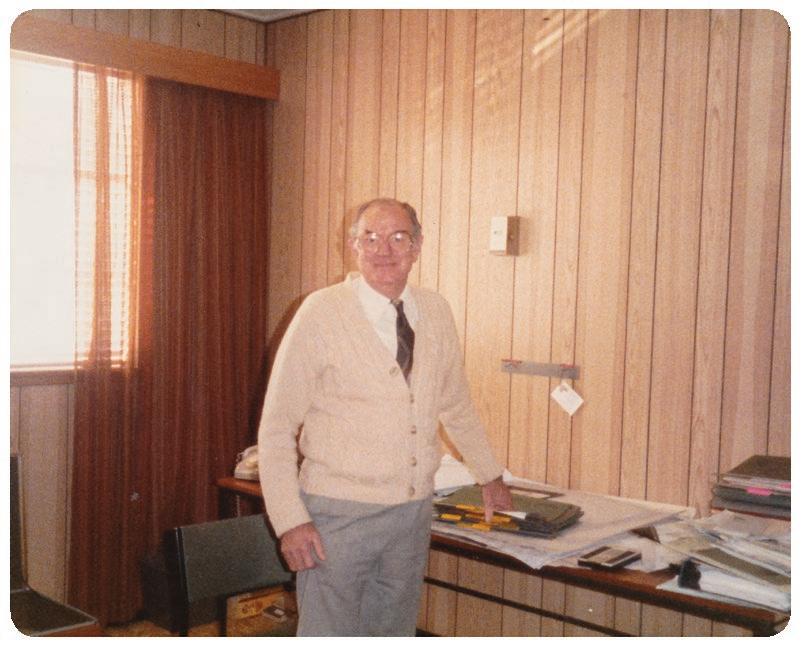
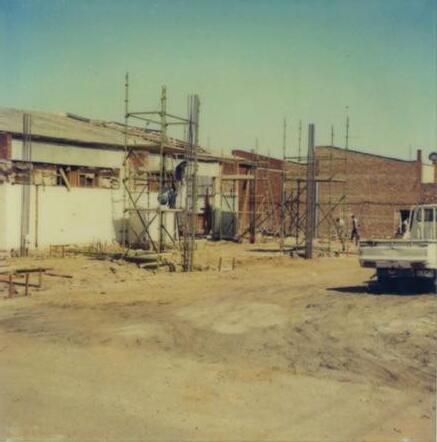

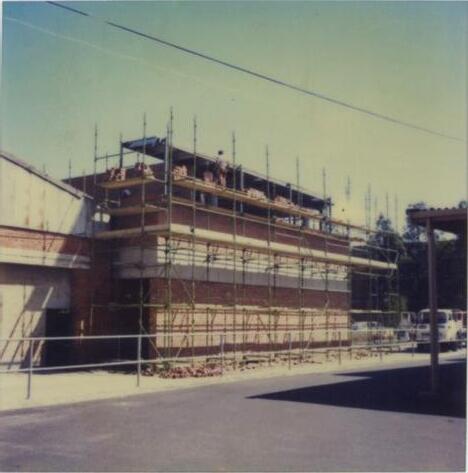
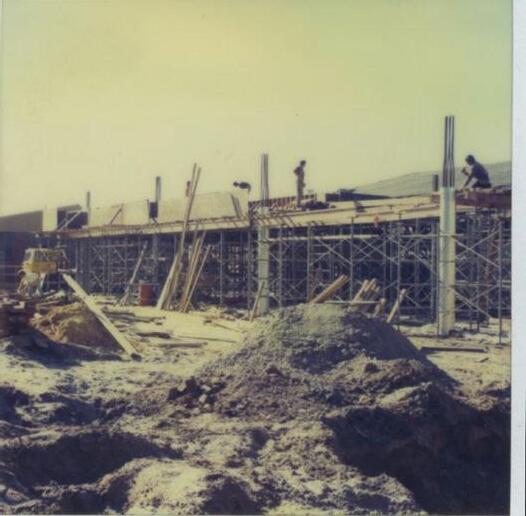


A.G. Coombs’ original facilities were demolished in 1983 to make way for a new and more modern complex

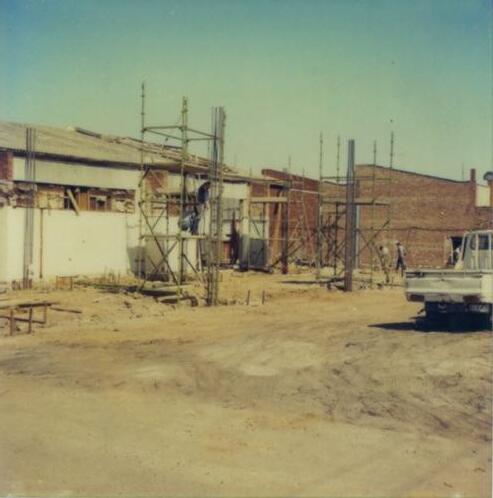
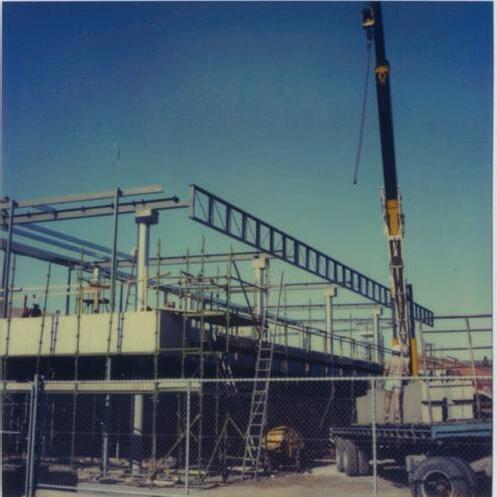

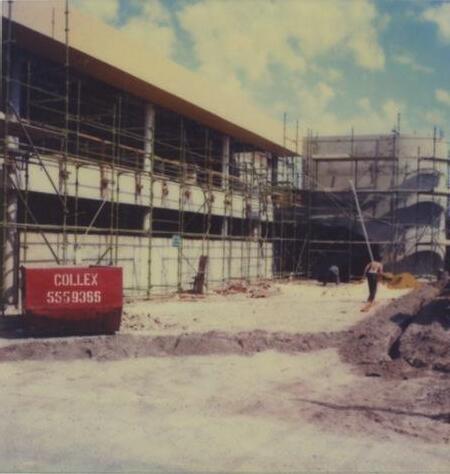

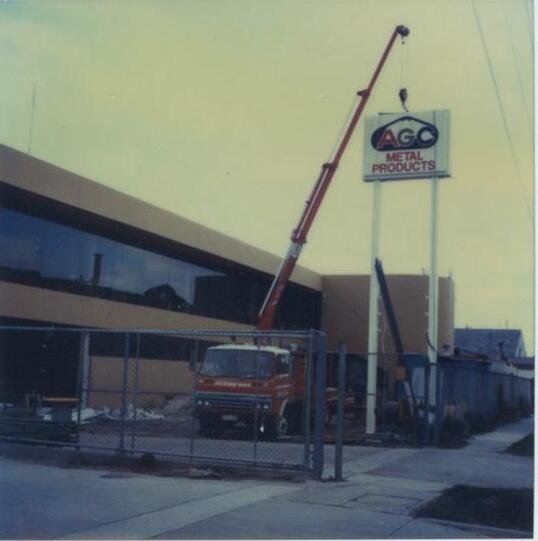
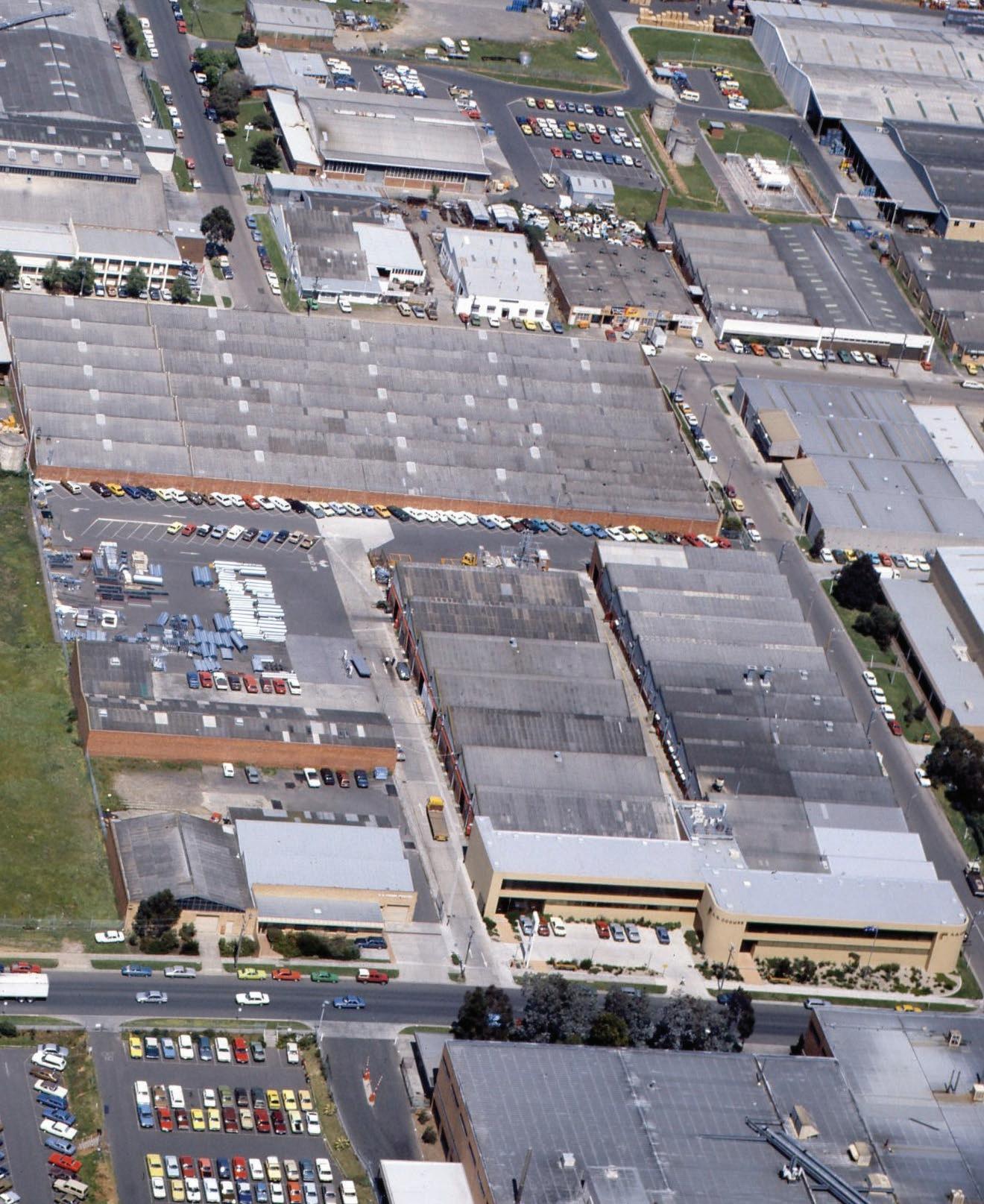
In the mid-1980s, Allan Coombs decided to demolish and rebuild the company’s head office at 26 Cochranes Road, Moorabbin. The aerial view (left) shows the new administration building in the foreground, with other commercial operations and light industry spread over what were formerly open paddocks.
Since acquiring the original Cochranes Road site in 1952, Allan had continued to purchase other buildings on either side of the main property. These included 18-22 Cochranes Road, which he acquired for the Service Division in 1972, and the neighbouring Cranes and Shovels building in 1977, which he promptly leased back to them.
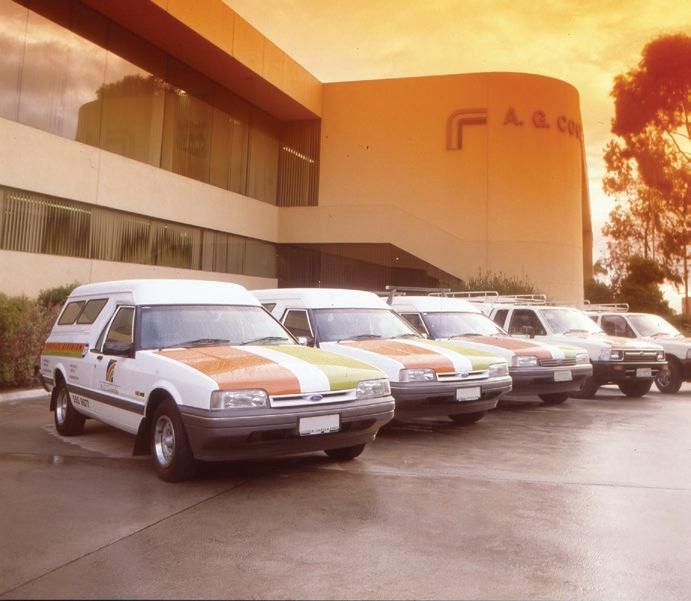
In 1978, he also acquired and remodelled the Epicure building at 36-40 Cochranes Road – once again to accommodate the growing Service Division – and bought another parcel of land in Cheltenham with the intention of developing it for commercial purposes. He was eventually forced to sell the Cheltenham land due to rezoning issues, but used the funds from the sale to rebuild 26 Cochranes Road.
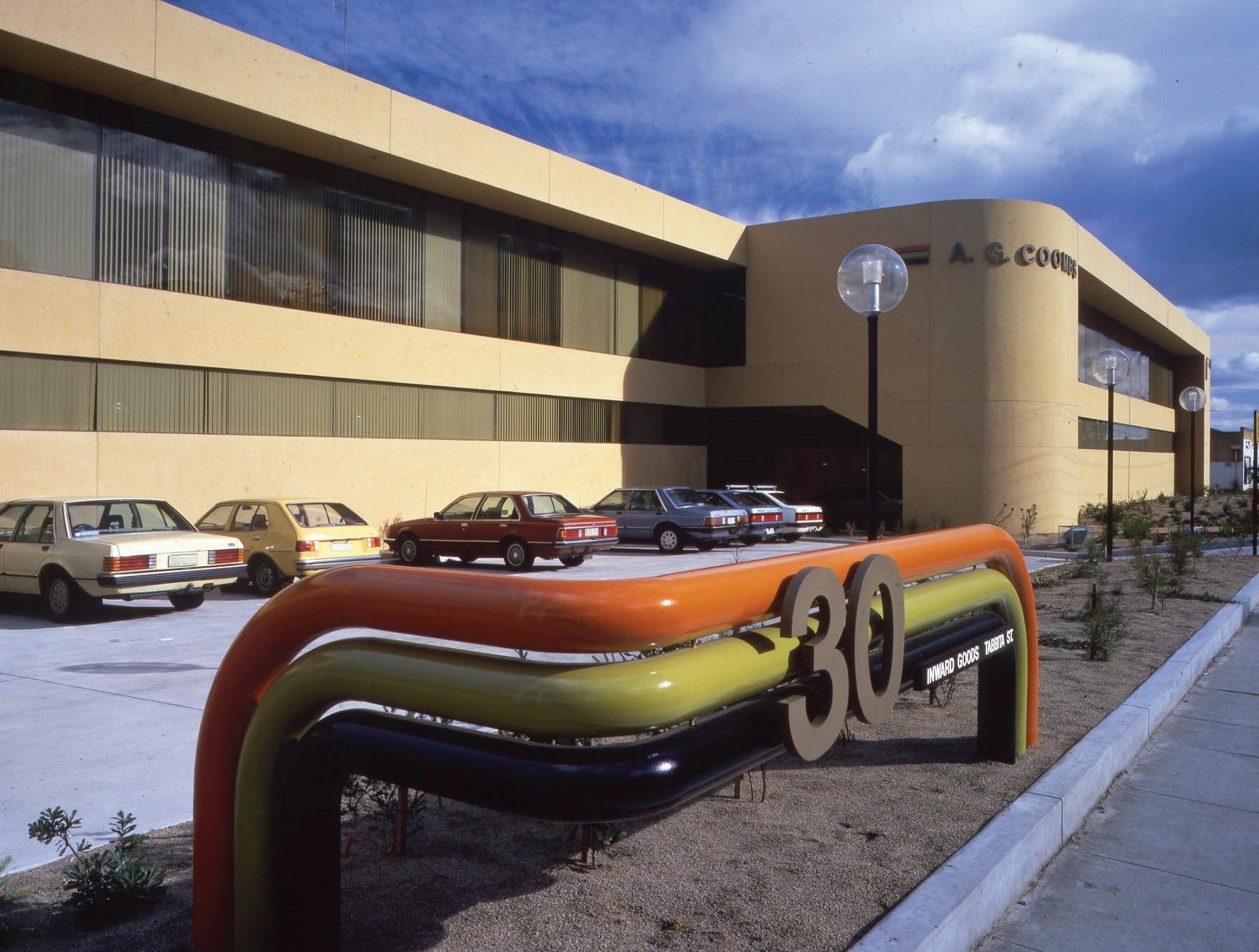
Although major contract work had dried up, smaller projects seemed to be less affected by the economic downturn. In fact, the newly created Special Contracts Division (SCD) was already justifying its existence.
In the weeks after Collins Place came to a standstill in 1974, Allan Coombs had made a strategic decision to return to the company’s roots by taking on small suburban jobs and building refurbishments. The decision proved successful, highlighting opportunities to grow the business in different ways, leading to the creation in 1976 of a division purely devoted to smaller projects, with Bob Tardif as its manager.
Allan realised that SCD would need a different cost structure to be competitive. He was also mindful that the budgets for small suburban offices would be substantially less than those for Collins Street skyscrapers, and the requirements
Each year in October, keen punters flock to Moonee Valley Racecourse, where some of the world’s finest thoroughbreds contest the W.S. Cox Plate, Australasia’s richest weight-for-age horse race, and one of the world’s classic thoroughbred events. First run in 1922, the Cox Plate was named after William Samuel Cox, who established the racecourse in 1882 on leased farmland. Moonee Valley also hosted harness racing from the 1970s to 2010. A.G. Coombs’ Special Contracts Division upgraded Moonee Valley’s services during refurbishments in the 1980s.
less complex. With this in mind, Allan structured everything differently from the rest of the organisation, as SCD would now be going head-to-head with smaller companies and needed to treat and price its jobs accordingly.
The importance of smaller projects was again highlighted during the recession of the 1980s. “All through the recession, we always had the small jobs,” explained Site Supervisor Ray Twite, pointing out how they dropped to about fifty plumbers in 1983, and managed to find work for everyone by picking up a couple of small local projects. Nevertheless, some of these jobs could be quite substantial – not to mention something to brag about at home – like the installations they did at Moonee Valley Racecourse, one of Australia’s premier venues for Group One thoroughbred racing. Projects like these were the reason why SCD contracts were deemed as ‘special’ rather than ‘small’.
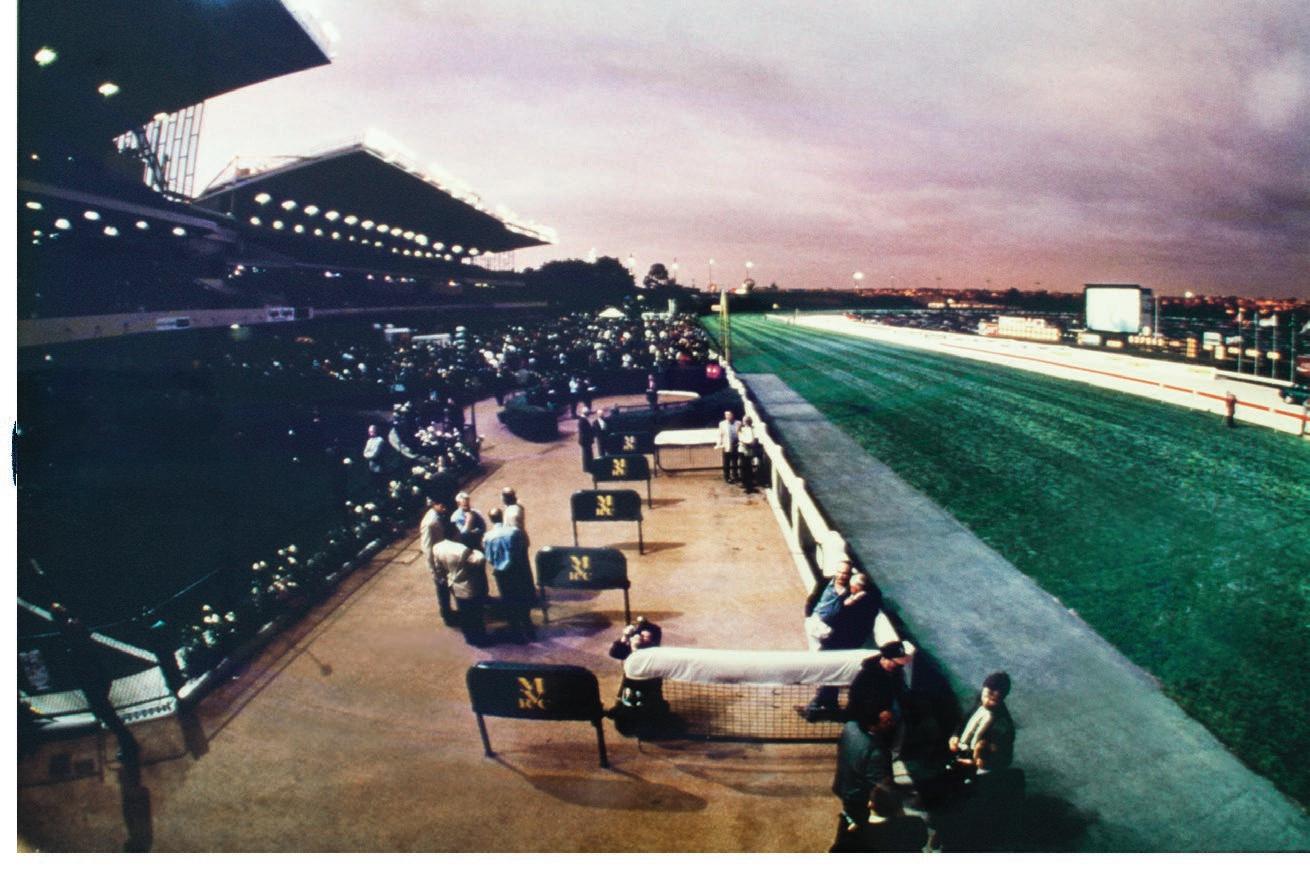
Ray Twite commenced his apprenticeship at A.G. Coombs in 1967 on a weekly wage of thirteen dollars. In 1971 he moved to the company’s Tasmanian office, where he worked on the installations at the Royal Hobart Hospital, eventually becoming site supervisor for the project.
After returning to Melbourne he was assigned to Collins Wales House in 1976 and would later find his niche in the Special Contracts Division.
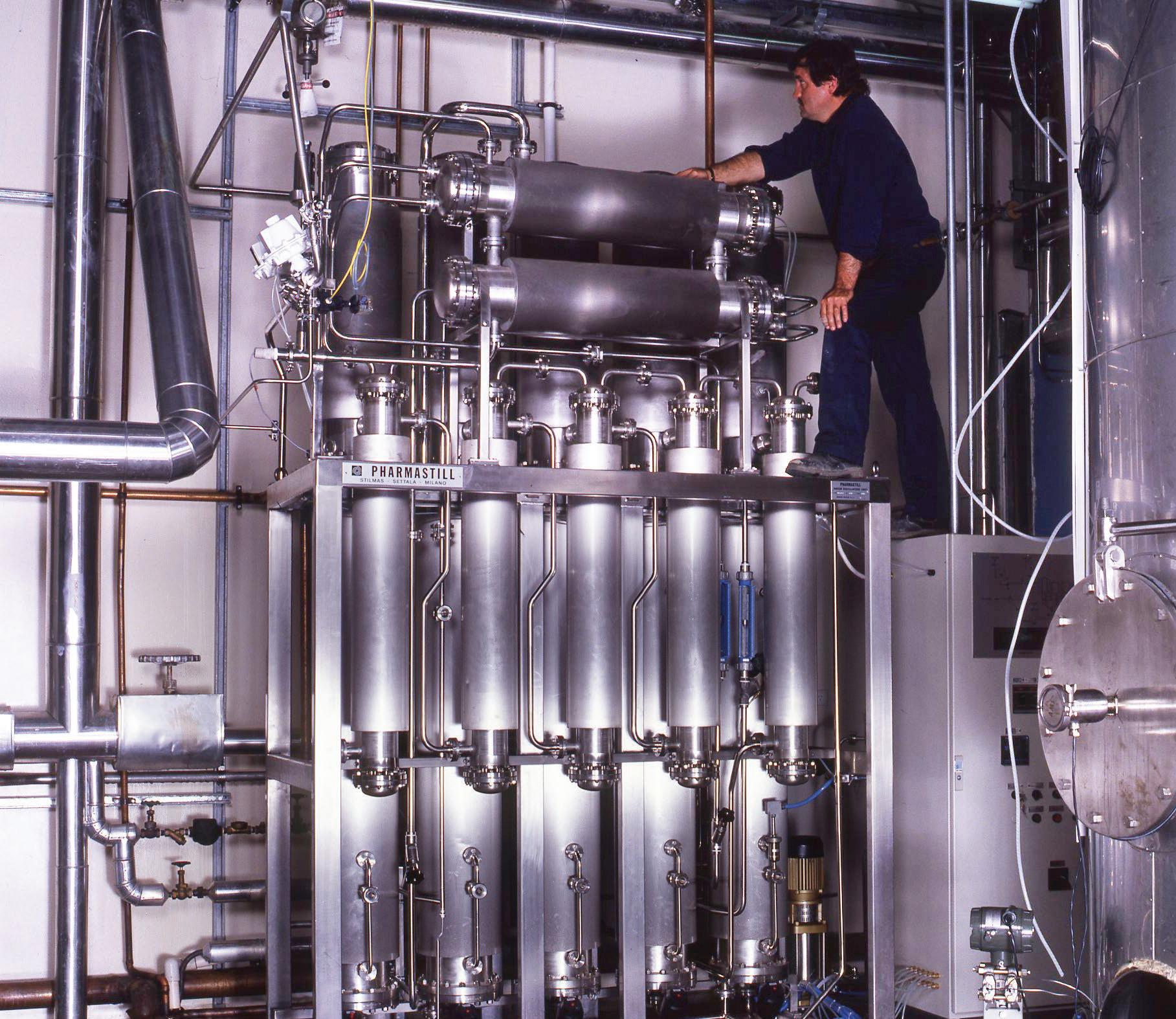
While many people in the company were still drawn to the big construction sites, no one doubted the value of the smaller contracts, as you only needed a few small refurbishments on your books, plus a couple of projects like Moonee Valley, to help sustain the business when things were slow in major construction. “During all the recessions there were no big jobs, so everybody who wanted to work on a big job had to come and work for me,” said Ray, who helped supervise a number of small yet fairly complex projects.
Setting up SCD also broadened the company’s capacity to seek new business in areas it might not even have considered. Moreover, installation projects of any size could often lead to an ongoing maintenance contract.
Essentially, this meant that A.G. Coombs was fast becoming a “one-stop-shop”, as staff pointed out, with the ability to handle both big and small projects.
A plumber by trade, David Seedsman became General Manager of A.G.
in 1980. David was responsible for negotiating and overseeing some of the company’s most significant projects.
The late 1980s were hectic years for A.G. Coombs as the company’s engineers, draftspeople and commissioning technicians began focusing on several large developments in and around the city. “Melbourne was on fire,” said General Manager David Seedsman.
From every angle, Melbourne’s skyline was dotted with cranes as new buildings began shooting up. The city’s building boom, which effectively started around 1985, would go on to generate millions of square metres of office space by the end of the decade. And with more buildings being commissioned, the Service Division was enjoying the increased opportunities to procure new maintenance contracts.
After its success with Collins Place, A.G. Coombs began working on several memorable projects. These included the World Trade Centre on the Yarra River; the upscale Como Centre in Chapel Street, South Yarra; and the Melbourne Central retail and office development, commissioned by Japanese firm Kumigai Gumi.
Melbourne Central was an interesting project for A.G. Coombs, and one which could easily have gone to another contractor had employees not been conditioned
to think proactively about job opportunities. Having pulled through the bleak days of the recession, the general feeling was that rather than waiting for project consultants to call for tenders, they had nothing to lose by getting out there and knocking on people’s doors.
David Seedsman remembered approaching the consulting engineers for Melbourne Central, before going to Lewis Constructions and floating the idea of awarding the job via an ‘open-book’ policy (where a preferred provider negotiates a contract scope and price by sharing costs and margin) rather than putting it out to tender. It was a bold move in hindsight, as the builders had pointed out that they had worked with Smiths – AE Smith & Son was A.G. Coombs’ biggest competitor – but not with A.G. Coombs.
“Well, I’ve got a surprise for you,” David confidently informed them. “You don’t know what you’ve been missing!” It took a fair amount of negotiating, but after several meetings, the project team warmed to the idea.
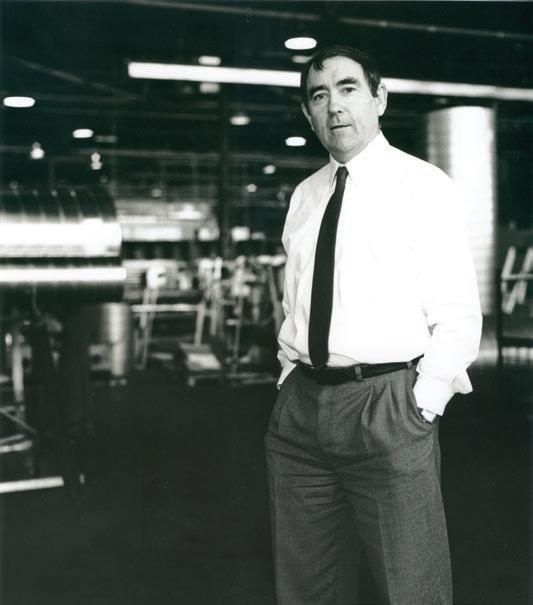
“I remember going to a meeting and there was a cast of thousands there,” said David, who was on his own when he heard the decision that the builders were prepared to negotiate with A.G. Coombs over the office tower, but would be talking to AE Smith & Son about the retail facilities. This, he felt, was a fair outcome, given that the entire contract for the retail and commercial space could have been awarded to just one company. Moreover, A.G. Coombs had won its slice of the contract before the rest of the industry had a chance to bid.
David remembered Barry Smith (grandson of AE Smith & Son’s founder Albert Edward Smith) ringing and saying, “What are you doing in there? That’s my job”. To which David replied, “No it’s not!” And so, with contracts in place, work at Melbourne Central got underway, becoming one of several developments where teams from A.G. Coombs and AE Smith & Son would find themselves working side by side on prestigious projects.
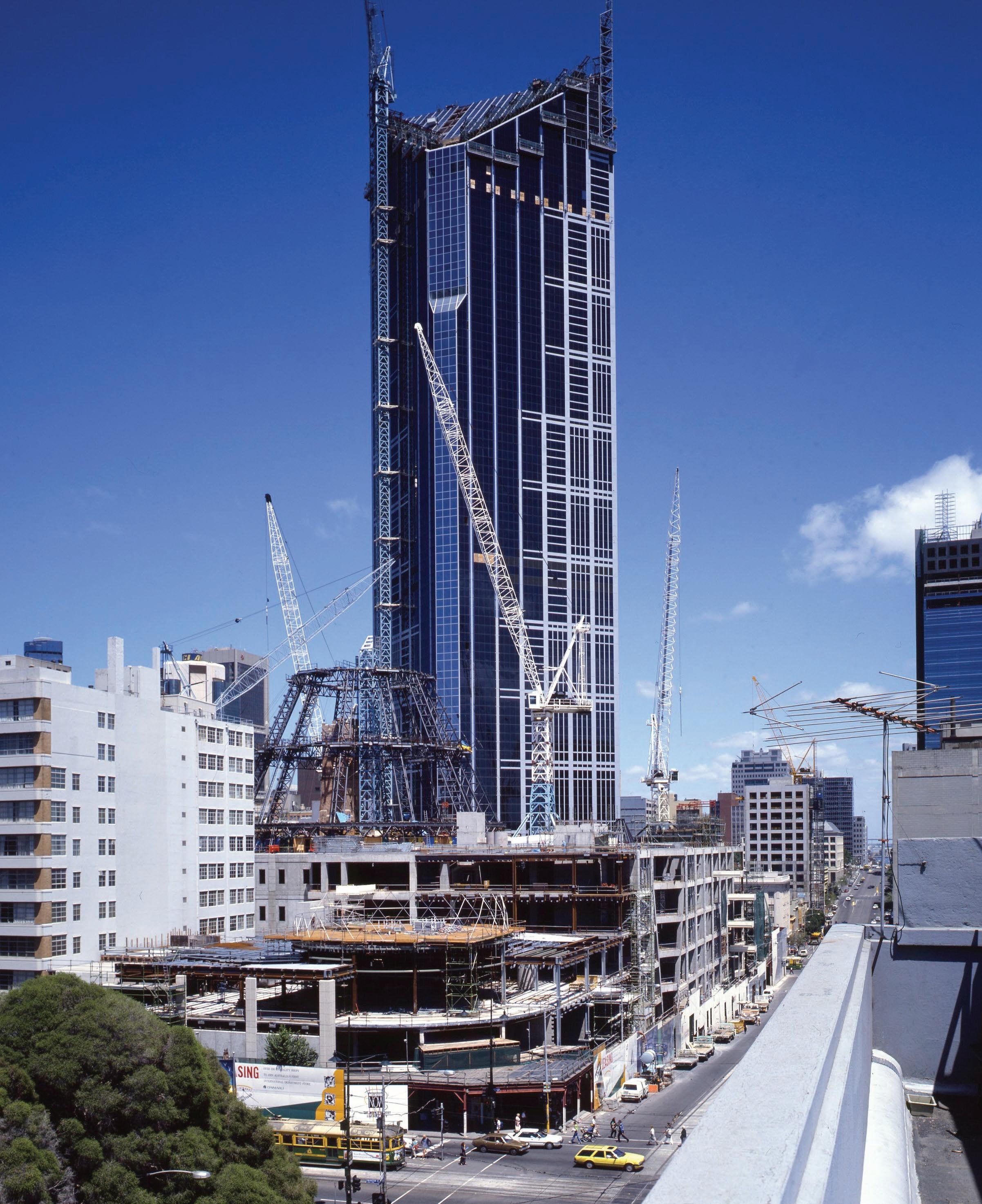
Construction commenced on the Melbourne Central shopping and office complex in 1986. A.G. Coombs was contracted to install the mechanical services in the office tower, while AE Smith & Son worked on the retail facilities in the foreground. The complex officially opened in 1991.
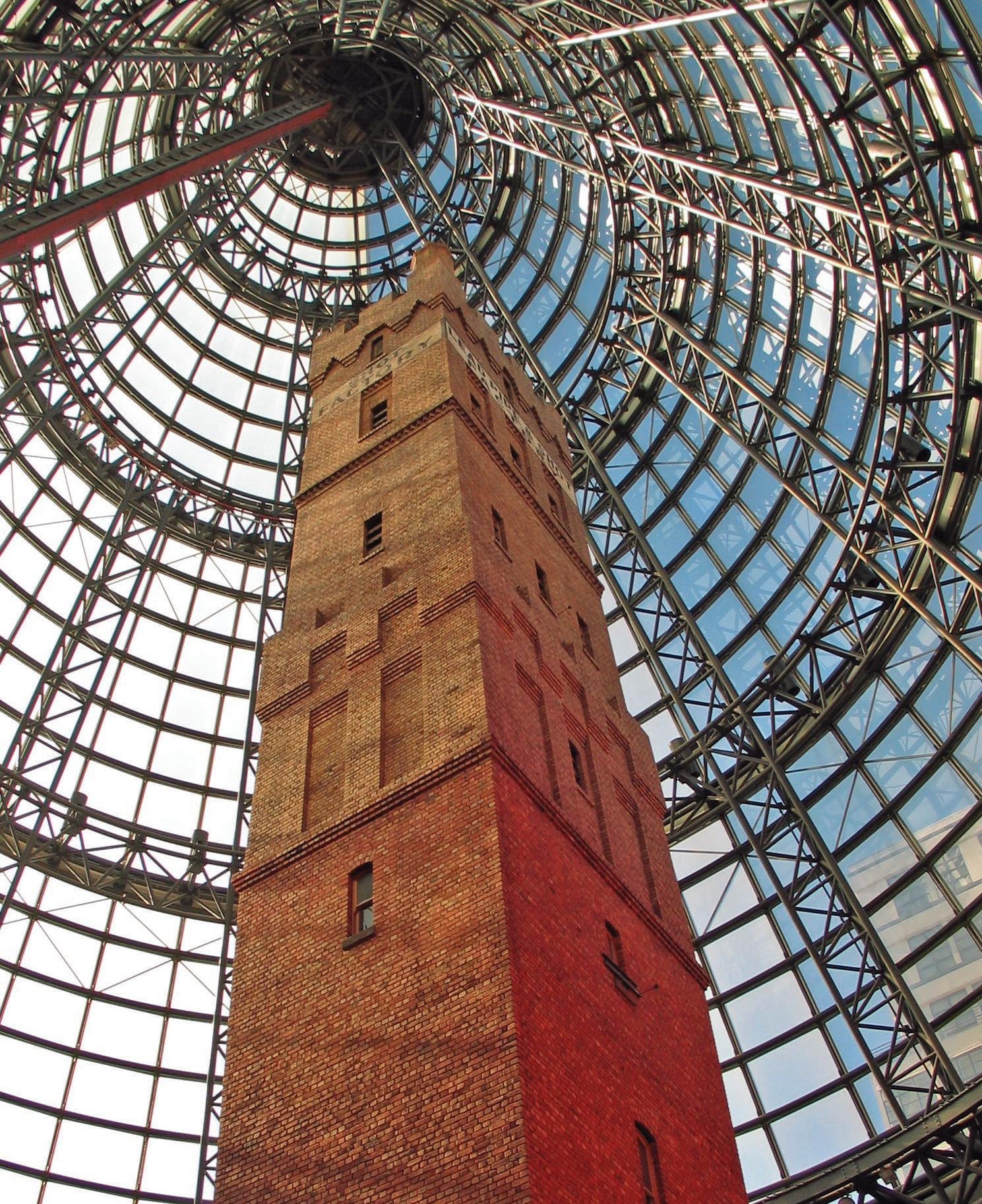
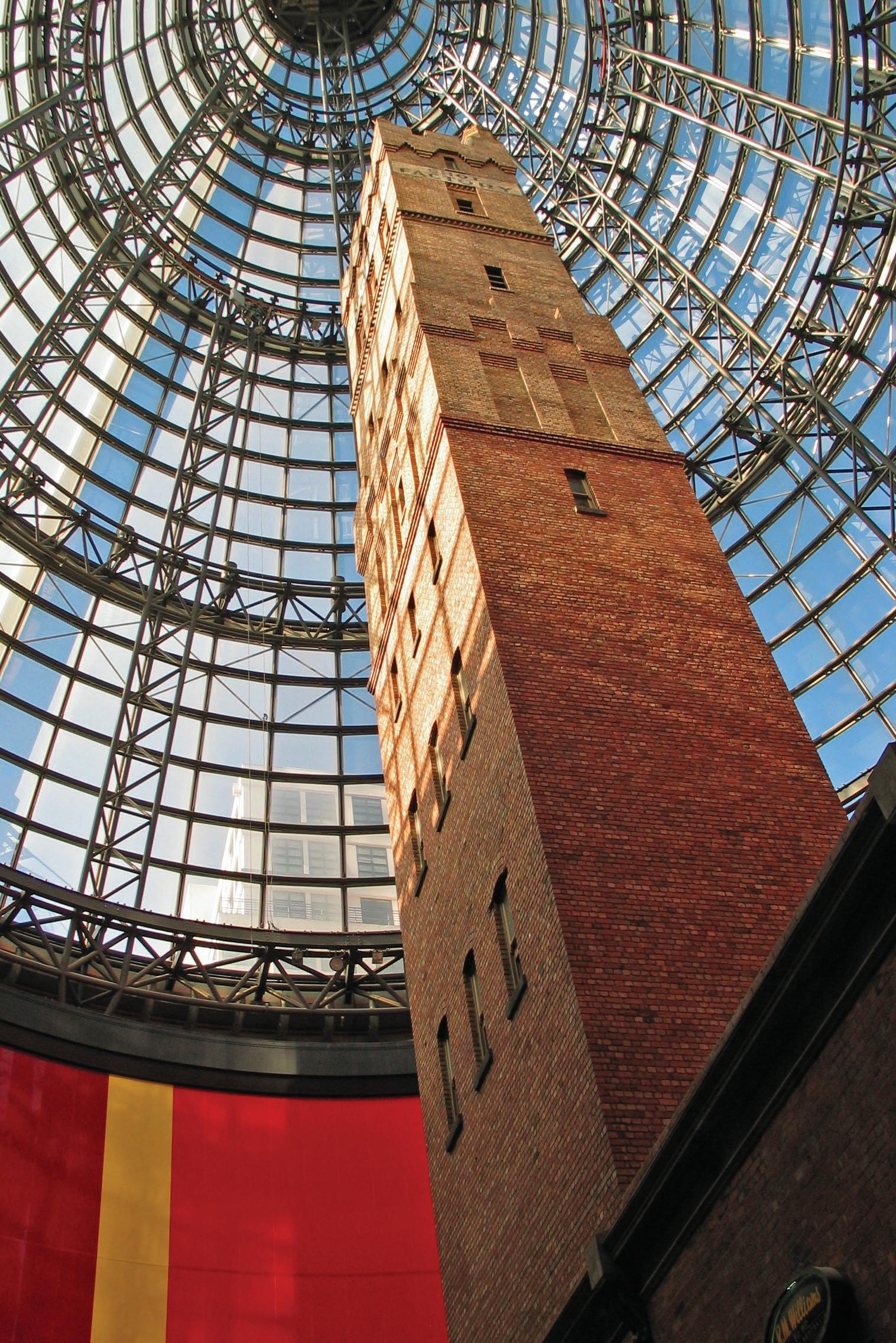
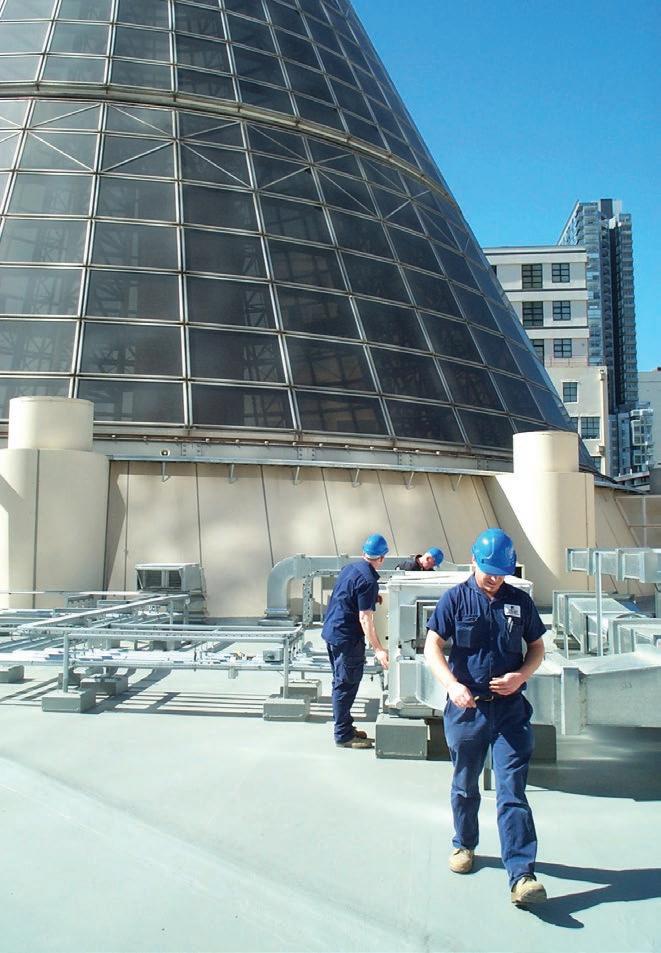
The historic Coop’s Shot Tower sits at the heart of Melbourne Central’s retail facilities as a well-preserved reminder of the city’s history. Surrounded by the daily bustle of shoppers, it is hard to imagine that around six tonnes of molten lead used to fall weekly from the top of the tower. Shot balls were made by dropping molten lead from a great height into a water basin below. As demand for lead shot dwindled, the tower (which was built around 1888) was slated for demolition, but was saved and incorporated into the Melbourne Central retail development.
After completing the installation in the office tower during the 1980s, A.G. Coombs would later work on Melbourne Central’s retail facilities during future upgrades and refurbishments (see left), including a major development and expansion of the facilities following the departure of the Daimaru department store in 2002.
Image source (above): The Collector’s Marvellous Melbourne
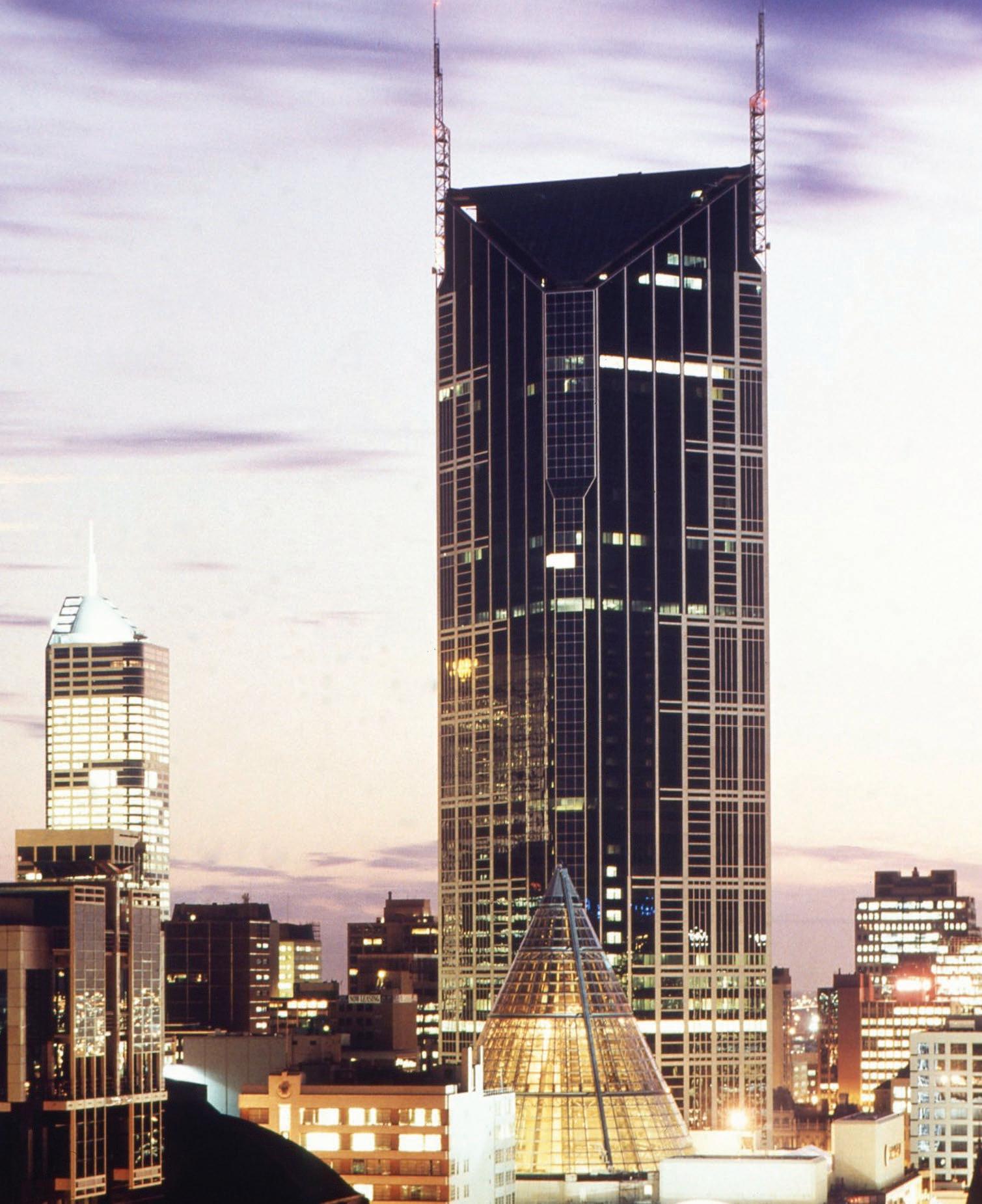
Melbourne Central’s office building towered 211 metres above Elizabeth Street. With its two distinctive communication masts, the building rose even higher to 246 metres.
A landmark Melbourne skyscraper, 120 Collins Street was constructed between 1989 and 1991. On its completion, the building had a roof height of 220 metres, with its 45-metre spire elevating the entire structure to 265 metres. From 1991 to 2005 it was Australia’s tallest building. Its architectural features – in particular a distinctive granite facade – were influenced by the grand art deco structures of New York. Winning the contract for 120 Collins Street saw A.G. Coombs continue its tradition of air conditioning major buildings along Melbourne’s premier street.
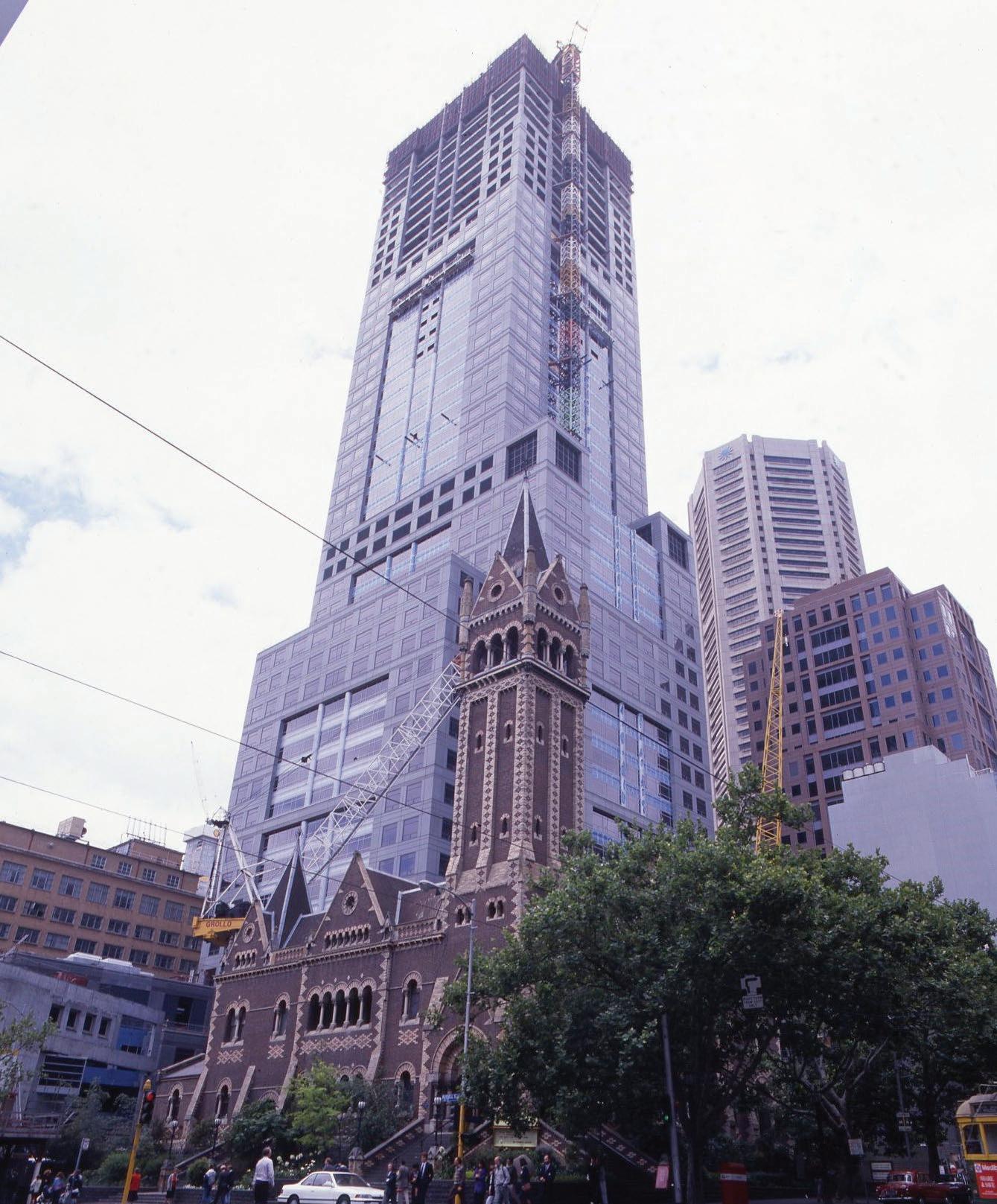
One of the most impressive projects of the late 1980s was 120 Collins Street – an imposing city skyscraper designed in the post-modern style by architects Hassell in collaboration with Daryl Jackson. At 265 metres, it became Melbourne’s tallest building (a title it held until 2006) and was the tallest building in Australia until 2005.
As with Collins Place and other similar high-rise developments, A.G. Coombs was charged with installing the air conditioning and ventilation throughout multiple levels of prime office space in a landmark development. On completion, the building became home to BHP Petroleum (its anchor tenant) and would go on to provide office suites for major corporations such as Standard & Poor’s, Merrill Lynch, Mitsubishi and the Rio Tinto Group.
The decade was not without its union troubles according to Norm Davies of Lobley Treidel, a consulting engineering firm that frequently utilised the services of A.G. Coombs. Norm remembered working closely with Project Manager Bill Moseley and Project Supervisor Russell Bray on the restoration of Melbourne’s Princess Theatre, a project which moved along in fits and starts in the late 1980s due to ongoing union activity. Although a relatively small project for A.G. Coombs, it was
The heritage-listed Princess Theatre on Spring Street dates back to 1854 when Astley’s amphitheatre for equestrian events and dramatic performances first opened on the site. After being renovated and renamed the Princess Theatre in 1857, it began staging all the popular musicals of the day. There would be further renovations over the years, with a major overhaul (including a new air conditioning system) in the mid-to-late 1980s. The theatre reopened in 1989 with Les Misérables, followed by The Phantom of the Opera.
The Princess Theatre also lays claim to a ‘friendly’ ghost – the former baritone Frederick Federici, who died from a heart attack in March 1888 at the end of his performance in Faust. Despite Federici never returning to the stage, cast members were certain he took a bow with them during curtain calls that evening. Since then, numerous people have sighted the ghostly Federici in evening attire, while a dress-circle seat was often kept empty for him on opening nights. The building’s facade still shows its original name –Princess’ Theatre – written with the apostrophe (see right).
Image source: The Collector’s Marvellous Melbourne
nonetheless a challenging one, given the limited space in the theatre’s ceiling for a modern air conditioning system.
Having had a long relationship with the company, Norm remained confident that he was working with people who appreciated and understood the finer points of engineering. “It was nice for consultants to deal with a firm that had people who could speak the same language,” he said. “As well as the technical side, A.G. Coombs had good on-site management. They were a good stable firm and were really reliable.”
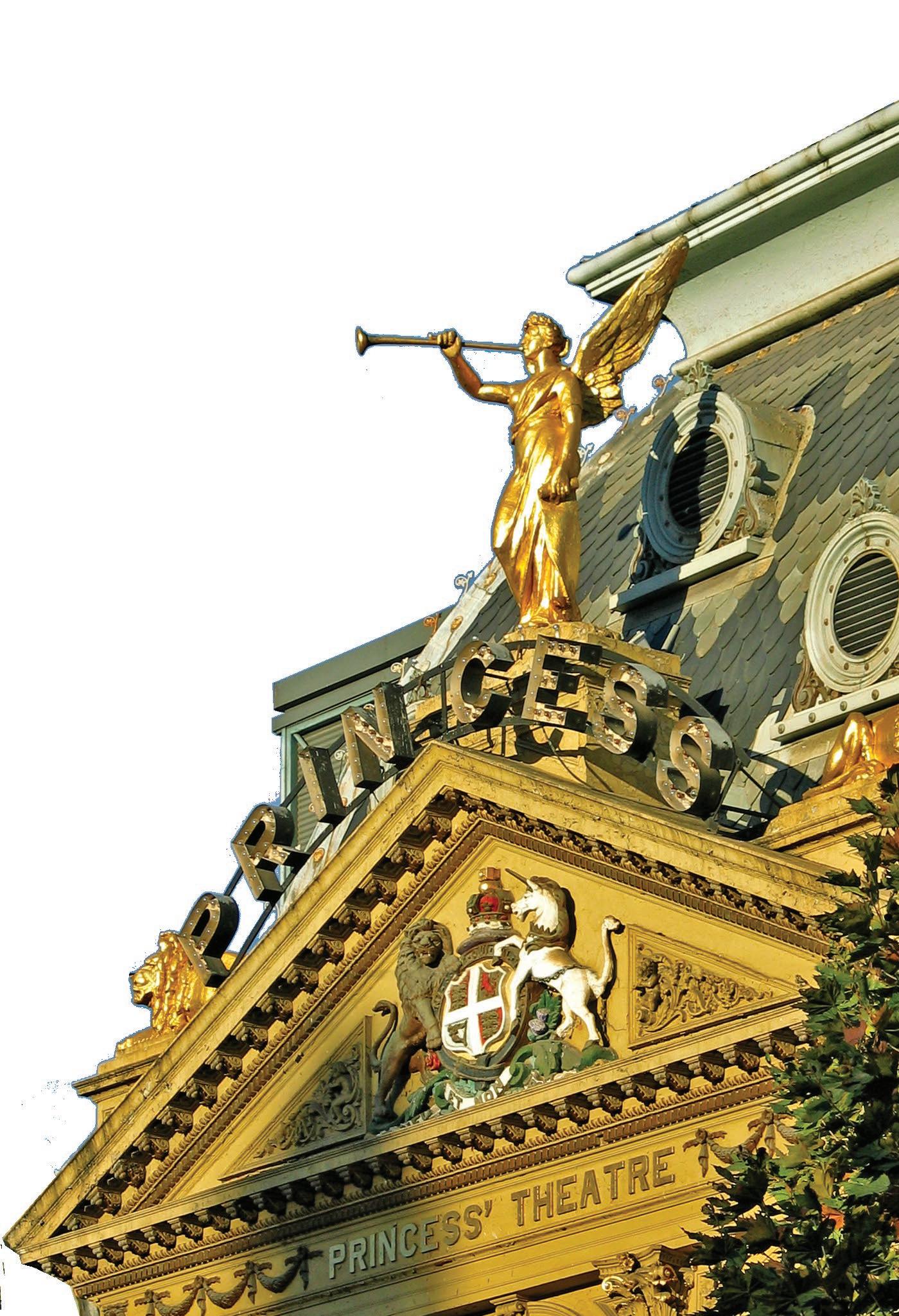
While the building boom kept everyone busy in Melbourne, there was a successful foray into Canberra in 1989 with a contract for the Department of Defence. As with all interstate jobs, providing accommodation for project teams was a major consideration, and contracts needed to be of a certain size before management would commit to submitting a tender. The $20 million Defence job ticked all the critical boxes and was so successful that it whetted the appetite for similar interstate projects.
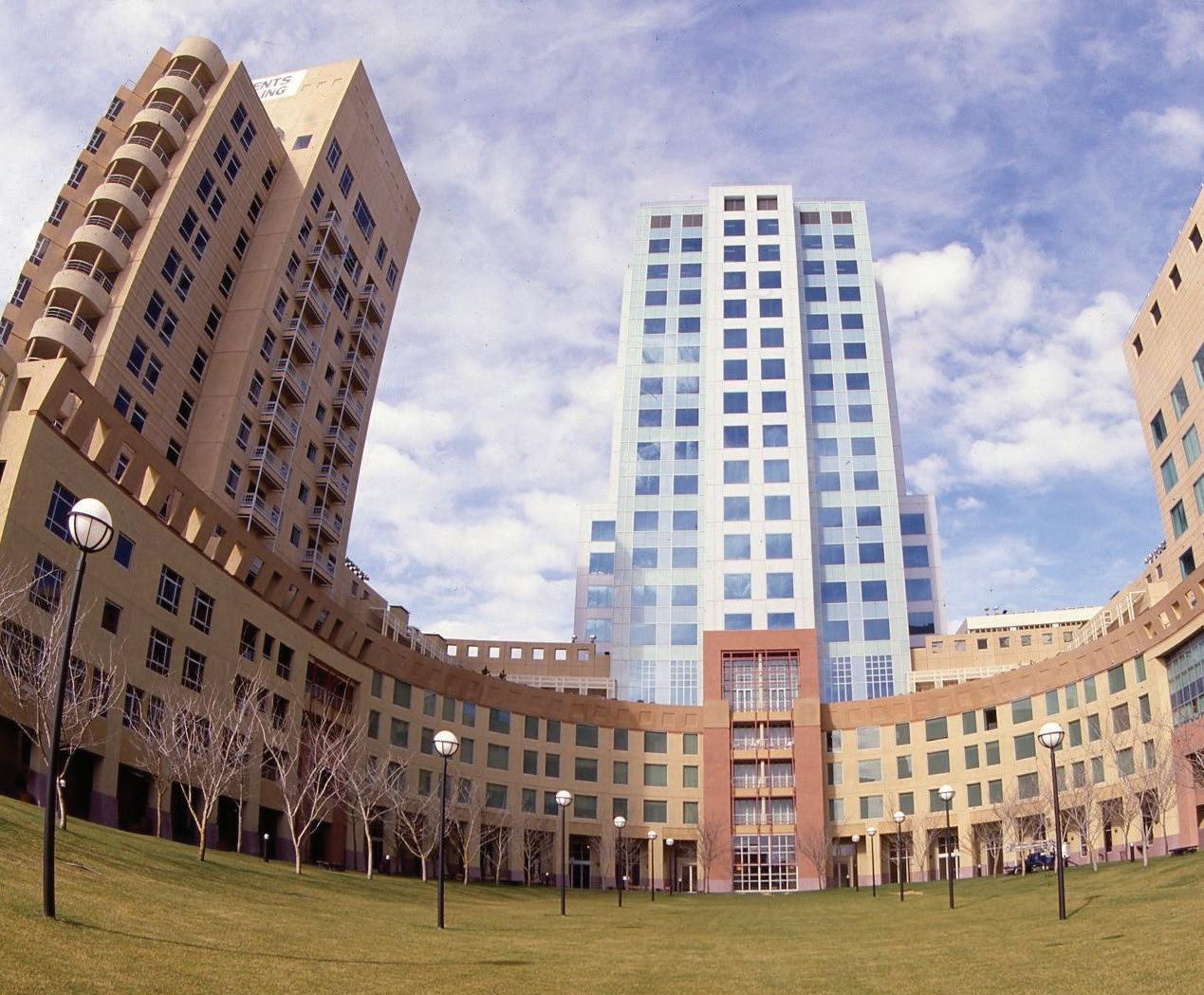
A.G. Coombs installed the mechanical services throughout the Como Centre during the mid-1980s. Located in stylish South Yarra, on the corner of Toorak Road and Chapel Street, the new Como Centre offered a variety of upmarket shops and eateries below a three-towered office building. Chapel Street had long been home to small retailers and general stores, and in the early 20th century rivalled Melbourne’s CBD as a premier shopping destination. During the 1980s, major developments like Como, which brought numerous retailers together under one roof, redefined the character of the area, particularly at the South Yarra end of the street.
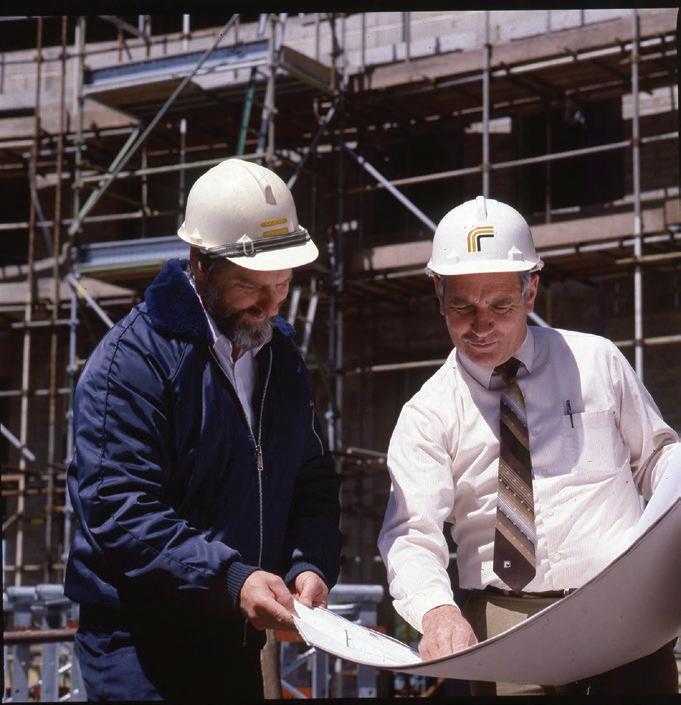
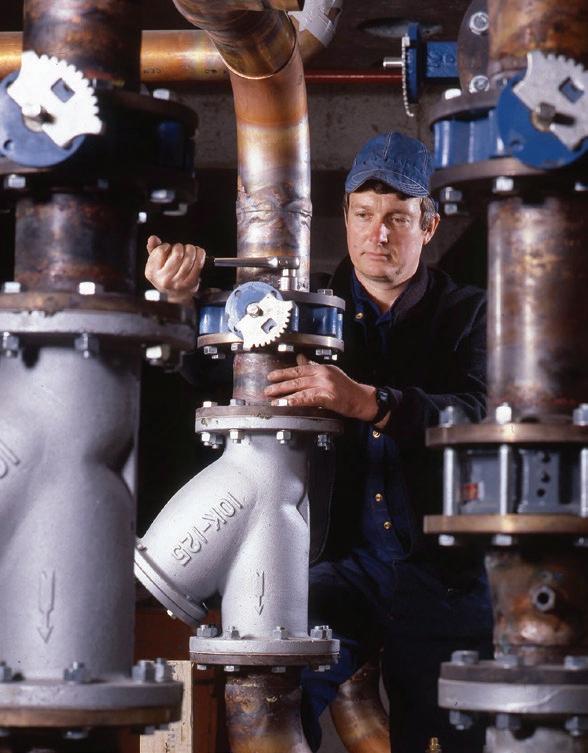
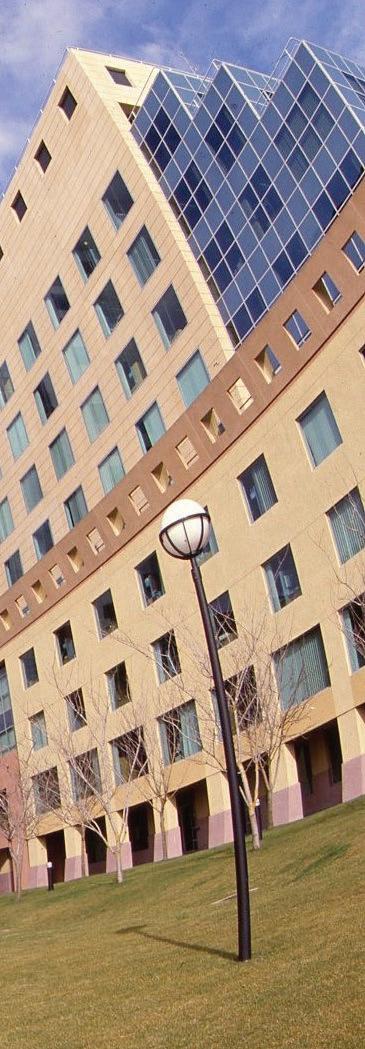
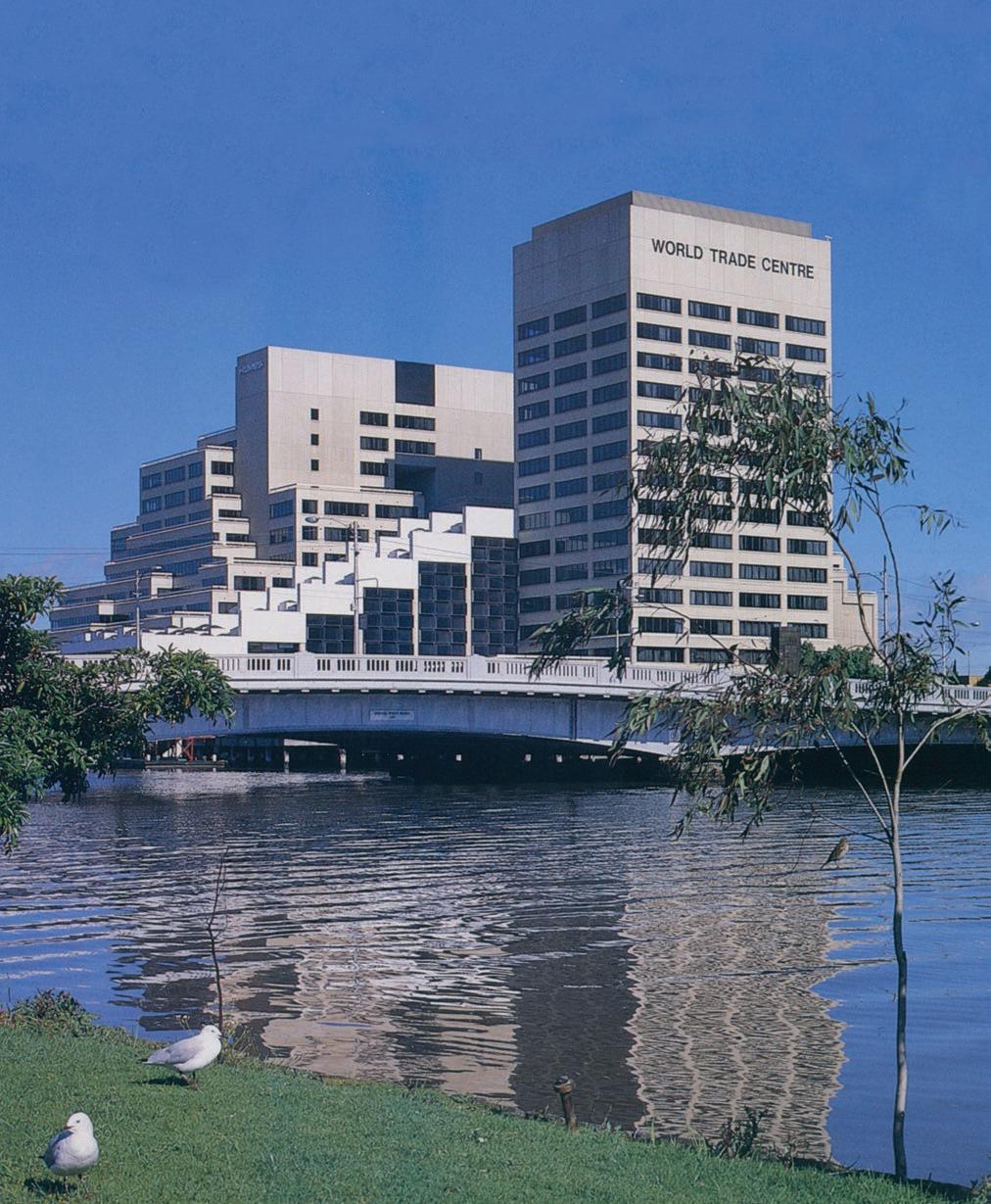
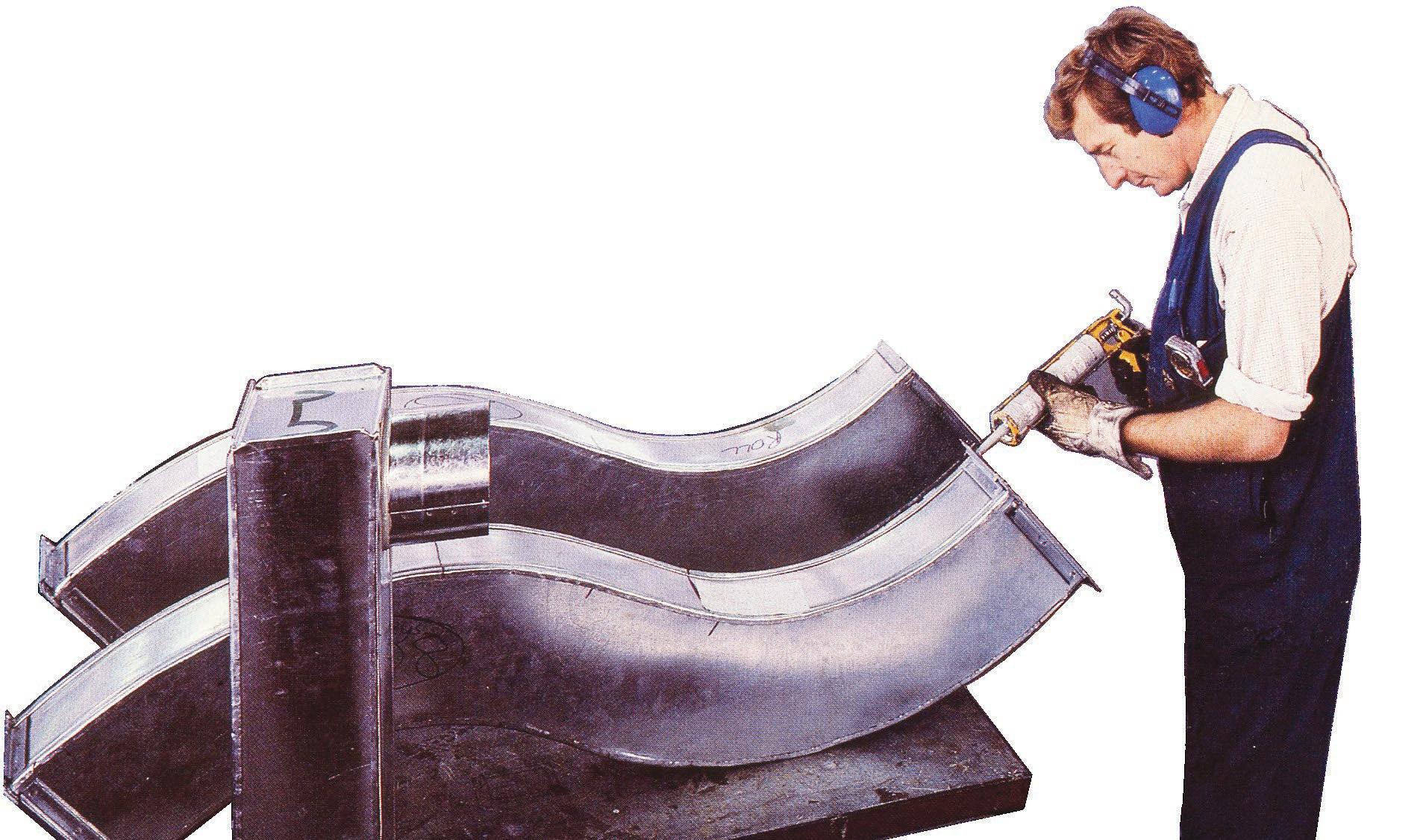
In addition to its Melbourne facilities, A.G. Coombs had a small branch office in Wodonga about a four-hour drive north-east of Melbourne. Straddling the Murray River, the twin towns of Albury-Wodonga became a focus of the Australian Government’s push in the 1970s to stimulate regional development. Allan Coombs had always sourced a lot of his work in country areas, so Wodonga, on the Victorian side of the river, aligned with his vision of keeping the business close to home.
The branch office was established back in 1971, in rented premises at 76 High Street. By 1973, Albury-Wodonga had been designated a national growth centre, with housing and commercial developments predicted to escalate in the years ahead. Sensing the potential of future work for all the company’s divisions, Allan structured the Wodonga branch to offer the full range of services available at head office in Melbourne.
In time, the Wodonga office achieved a certain notoriety within the company for the startling blue exterior of its production facility, which employees began referring to as the “blue biscuit tin” – because, as someone remarked, “It looked like a blue biscuit tin from a distance”.
The facility was built in the late 1970s after Allan Coombs suggested to Jock Fraser, who was then overseeing the company’s regional operations, that they build a factory in Wodonga to speed up delivery of ductwork and reduce transportation costs. Jock’s immediate thought was that they could construct the factory using the prefabricated sheet metal panels he had helped to develop after seeing a similar idea in the United States, and which A.G. Coombs was now clipping together for use on various air conditioning jobs. After discussing this idea, Allan gave Jock the go-ahead in 1978, authorising him to purchase a block of land on Michael Drive where they could locate the factory.
For some reason, they decided not to engage an architect. Instead, Jock organised all the drawings himself and hired a contractor to do the steelwork.
On the last day of construction, as Jock was helping to finish off the welding in teeming rain, an architect he knew dropped by to look at the building. When it came time to leave, Jock got in his car and noticed something that made his heart sink. “I looked in the rear vision mirror and saw that the material had buckled,” he said. They had originally planned to leave the galvanised iron fittings completely exposed; but now, with the light falling on the factory at a certain angle, it “looked shocking” as Jock recalled. While he was thinking of an explanation for Allan, the architect suggested a way of disguising the imperfections: why not spray paint the whole building using a special paint with sand in it? That paint happened to be blue.
Time was running out before Allan’s arrival, so they ran a test on one of the surplus panels, sticking it out the back where Allan would not be able to see it. After everyone was satisfied with the result, they proceeded to paint the entire building.
“We sprayed this paint on it and we watched the sun rise and we watched the sun go down,” said Jock, who later told Allan that an architect thought it would be “a good idea” if they painted the building. Allan accepted the decision and the factory survived to become part of company folklore.
As the years went by, it became increasingly clear that there was not enough regional work to sustain the business. Finally, a decision was made to pull out of Wodonga altogether, with Allan’s son, Philip Coombs – who by then had been working in the business for several years – given the task of closing the branch in 1985.
Alan Collard, assistant to Allan Coombs, was not surprised, as service contracts had dwindled and they were losing projects to contractors who hailed from the local area. “We were considered outsiders,” he said, explaining that this would have always counted against them when bidding for jobs.
Swan Hill
Echuca - Moama
Melbourne
Sydney
Canberra
Albury - Wodonga
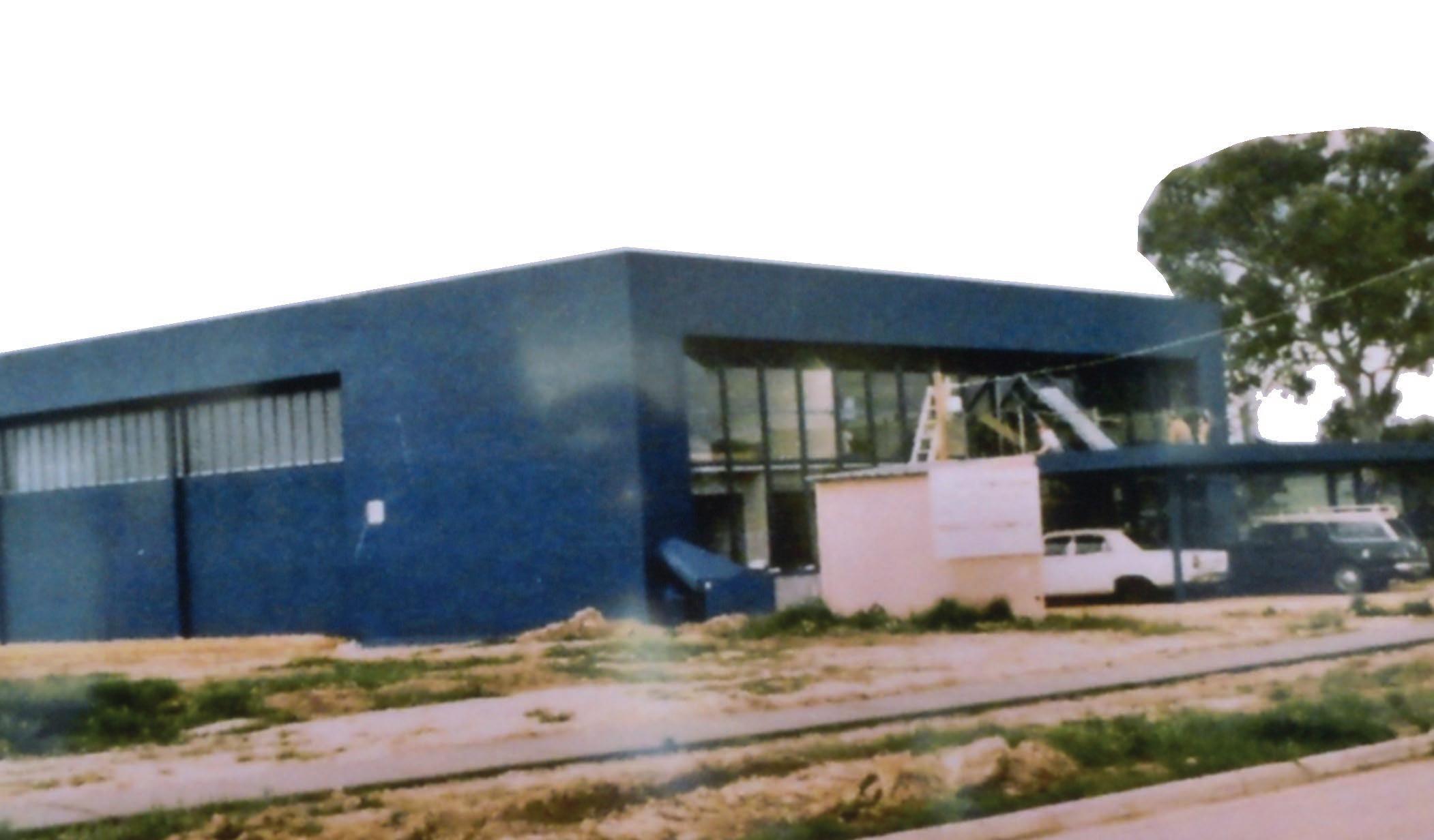
In the early days of building the business, Allan Coombs saw advantages in having his own production facility, and wasted little time setting up a sheet metal factory to produce ductwork at Cochranes Road. In the late 1970s, after deciding that the company needed to be more strategic about its factory operations, Allan and his managers began investing in spiral and oval duct machinery, with plans to capture the duct fabrication market. The ultimate goal would be to sell duct and fittings to the industry, including the opposition.
All these ideas led to the creation in August 1980 of A.G.C. Metal Products Pty. Ltd. – a new division of the A.G. Coombs Group. It also marked the beginning of A.G. Coombs manufacturing products specifically for sale to the industry. Although round and oval ducts did not replace the standard rectangular ducts as originally hoped,
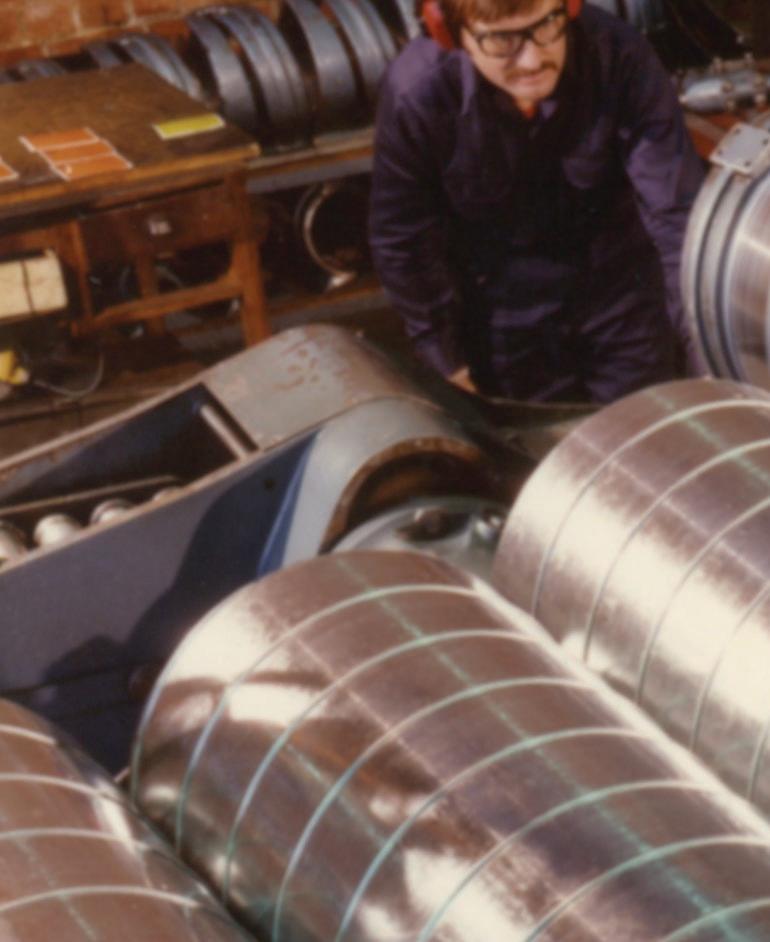
A.G.C. Metal Products quickly developed into a busy operation, dispatching trailer loads of products daily to local and interstate customers. It also introduced new products such as volume dampers, fire dampers and radiant heating, and was the first company in Melbourne to make spiral ducting, which proved quite lucrative until similar products entered the market.
Selling to the industry required a strategic approach and W.R. Gribble & Co. — Bill Gribble had been A.G. Coombs’ chief estimator before branching out on his own — was duly engaged to market and distribute the entire product line on commission. In 1988, A.G.C. Metal Products began marketing its own product line, before handing the task to Celmec, a new marketing business that A.G. Coombs created in 1989. The name was a clever abbreviation of Celsius Mechanical. In 1991, the A.G. Coombs Group took back all its specialist sheet metal operations, while A.G.C. Metal Products merged with Celmec to form Celmec International Pty. Ltd.
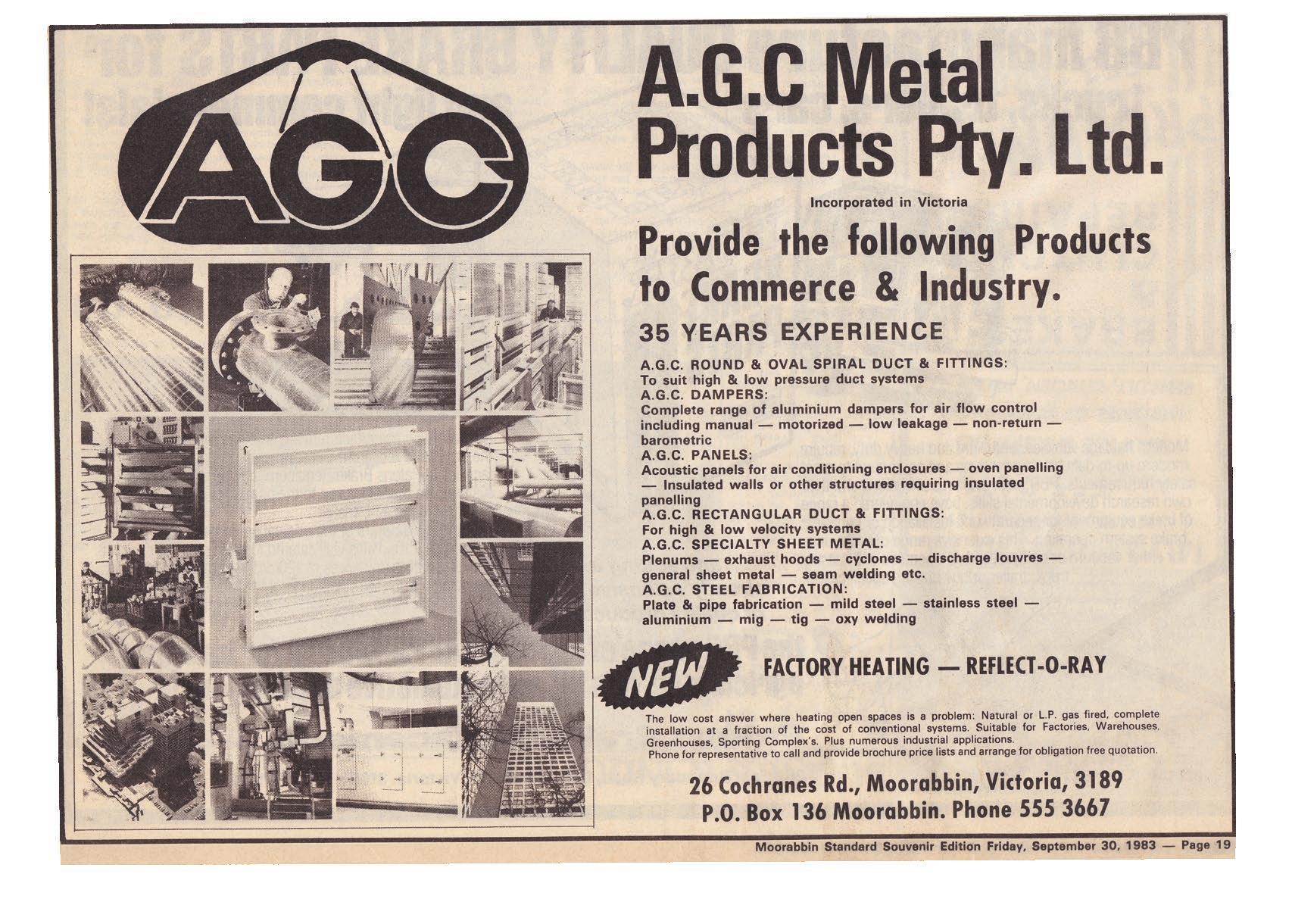
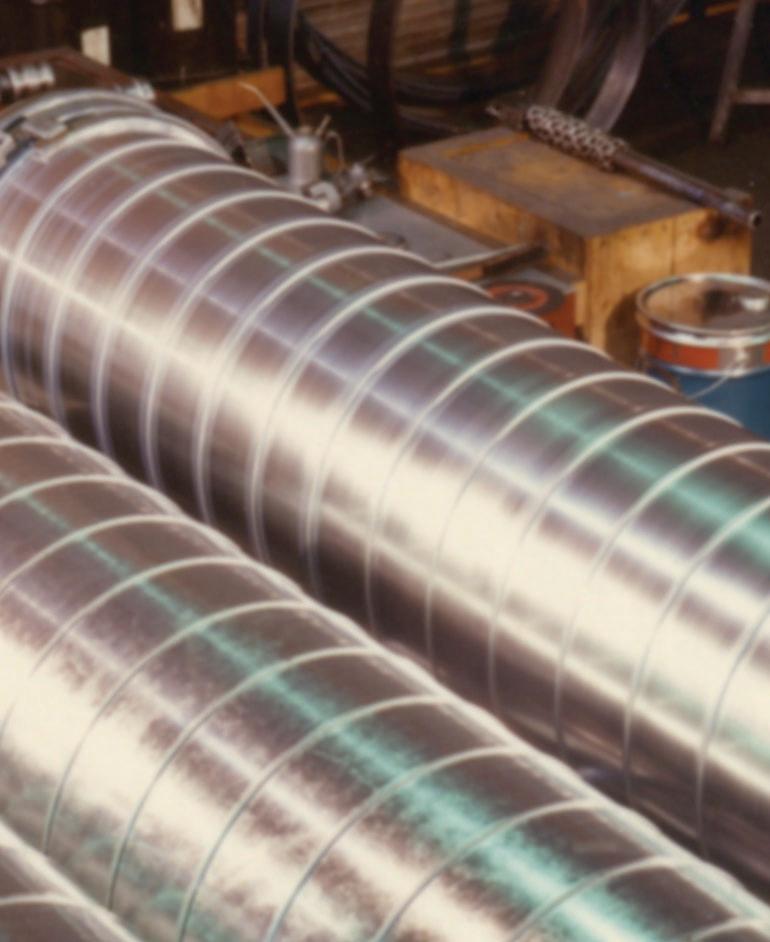
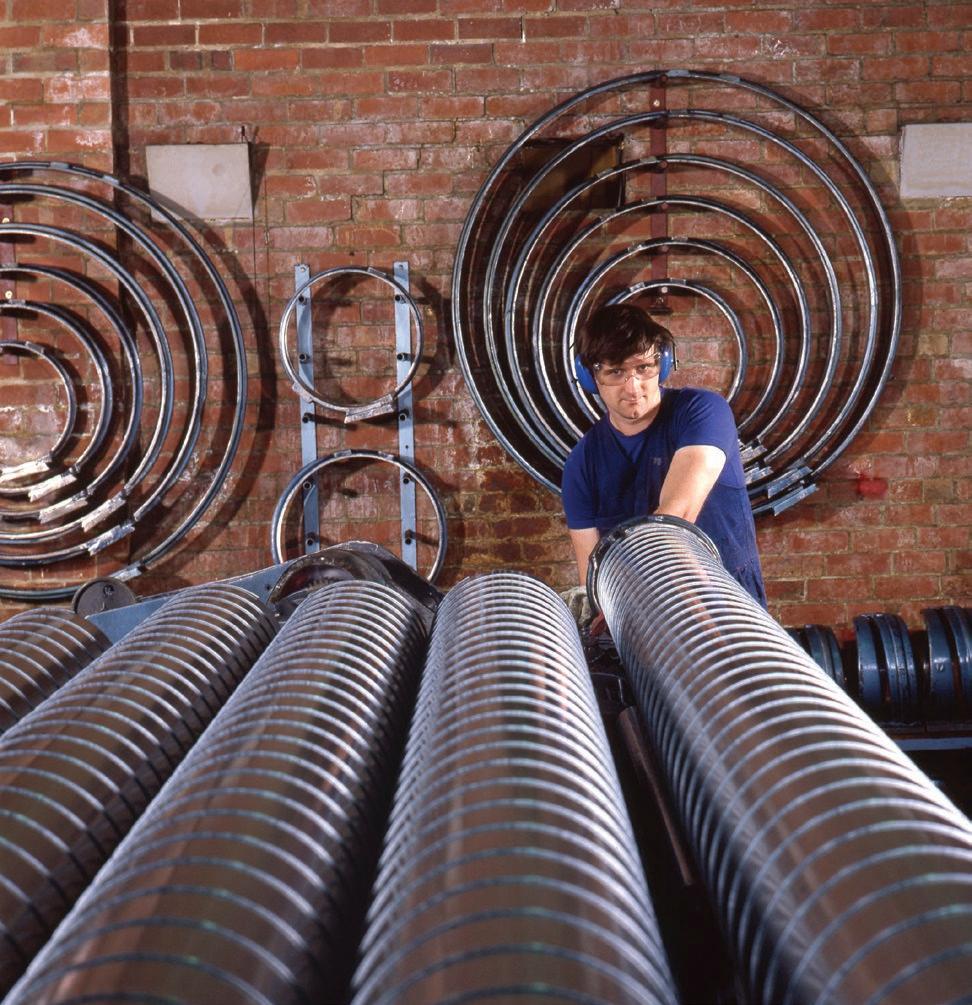
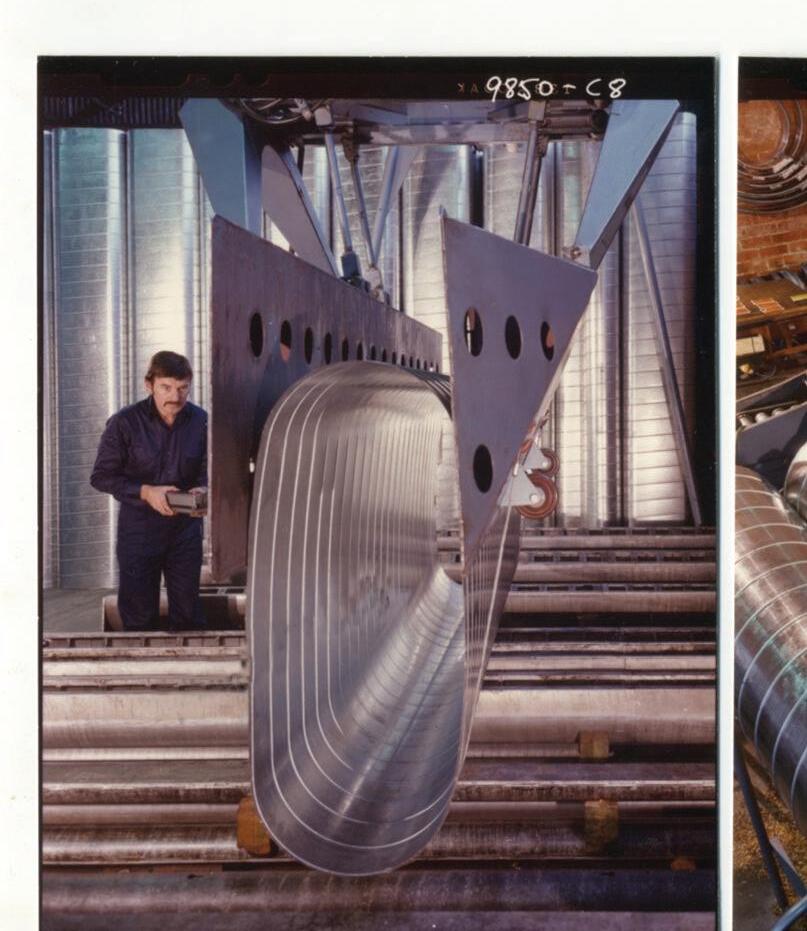
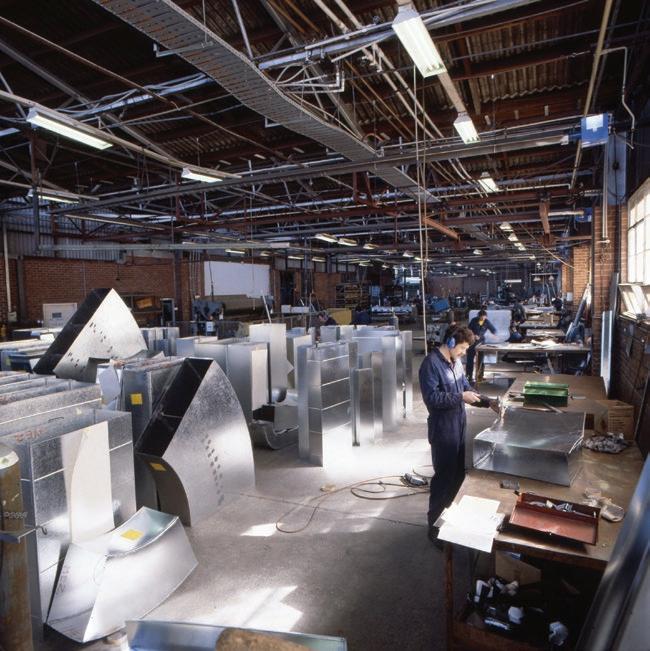
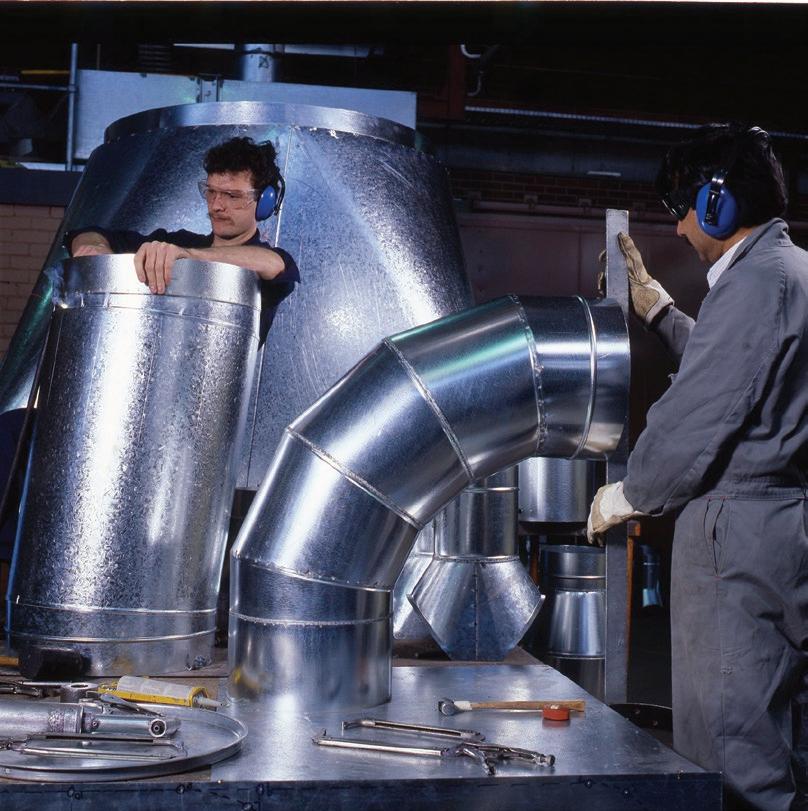
In 1985, Philip Coombs stepped into the managing director’s role after an all-round ‘apprenticeship’ of almost ten years. Prior to this, he had been assigned roles of increasing responsibility, and had been given the task of closing down A.G. Coombs’ Wodonga operations after it became clear that the regional branch was struggling to secure new business.
Most people were aware that Philip was being groomed to take over the company, but no one really knew when the handover would take place. One day, at a company meeting, someone asked, “When is Philip going to take over?” Allan Coombs thought about this before responding decisively: “When the bank manager rings up and asks for him and not me!”
With or without calls from the bank manager, Philip was as ready as he could be for the job. A self-motivated person, he had spent several years at night school, and with his plumbing qualifications was more than capable of picking up the tools and working alongside any one of the company’s tradespeople if required.
Despite Philip’s extensive preparation for the top job, the eventual transition between father and son came as something of a surprise due to Allan leaving the company somewhat unexpectedly with no formal announcement to staff. Reflecting on these events, Philip remembered his father as being terribly unwell, the stresses and strain of the last decade having taken their toll on his general health and wellbeing. Allan, in fact, would be hospitalised for several weeks.
After his father’s sudden departure, Philip became leader practically overnight, something he found particularly tough, especially as there was no official handover to smooth the transition. Although Philip understood how the business operated, he admitted that it was daunting to be just twenty-eight years of age and managing a company where senior employees were fifteen to thirty years older.
It was now over forty years since Allan had established his company, starting out on his own with small plumbing jobs and progressing from there into the big league of mechanical services. The business world had also changed dramatically, with a shorter working week and more time off, including a rostered day off a fortnight, which Allan could never fathom. He was not the only one to feel this way.
“I felt guilty having a day off during a working week,” said Alan Collard. Both men had worked in a vastly different era and found it hard to adapt to the 38-hour week, which became a national standard after it was first achieved by the metal industry in 1981.
After his son took over as Managing Director in 1985, Allan Coombs – who remained company Chairman – became far less active in the business. In fact, Allan vacated his office that year following the completion of the new building, and although he watched from a distance it was Philip Coombs who was now in charge of the company’s future.
“I took over that role with his blessing,” said Philip, realising the huge responsibility on his shoulders, but knowing that there were experienced people he could call on, including General Manager David Seedsman, who mentored and supported him in his new role.
It had been Allan’s wish that David play a key role in mentoring his son, and the two of them had often discussed Philip’s career in the company. “I said to Allan that I’d be more than happy to support Phil, and so he worked alongside me for quite a few years, and we got on very well,” recounted David.
Allan Coombs occasionally returned to work on matters not directly related to the company’s core projects, but chose to operate out of a small office at the back of the building. He eventually moved out completely, thus giving Philip a free hand to change the management structure and, ultimately, set up a new board and committee of management.
In the months after Philip took over from his father, A.G. Coombs began experiencing greater automation in its administration area. The company’s first fax machine, which appeared in September 1986, signalled the start of more rapid communication with customers and suppliers, while in October people began receiving their wages electronically, instead of being paid in cash.
While each new development required significant adjustments, the biggest adjustment after all these years was the change in leadership. Philip, as people discovered, was a very different leader from his father. While Allan had given his employees considerable scope to do their jobs, they would be in serious trouble if they did not deliver. Philip, on the other hand, was more inclined to pick you up, dust you off and give you another chance. “Allan, in lots of ways, was an autocrat – tough, single-minded,” said David Seedsman. “Philip had a totally different way of managing; he could see two sides of the story.”
Philip was a great believer in personal development and continuous improvement, and staff would become very aware of his philosophies during the 1980s, and again in the 1990s following the introduction of ‘Project 5’ with its emphasis on continuous improvement techniques to help grow the business. He was also clear about making decisions based on the current economic situation and that to do so was not being disrespectful to the company’s origins. “What might have been successful in the past will not make us successful in the future,” he emphasised.
In the years ahead, there would be a consensus within the company that Philip had remained true to his father’s overall vision, while also making the necessary changes to rebuild the business. Part of this long-range vision would be a commitment to perpetuating the company through facilitating employee ownership in the business – a process that would gather momentum in the years ahead. This impressed a lot of staff, including those who had been with the company since the early days. “What I liked was that he was prepared to change things. He had the courage to do that,” said Jock Fraser.
As A.G. Coombs moved into the 1990s, courage and determination would be required in equal measure to survive a recession even deeper than that of the early 1980s.
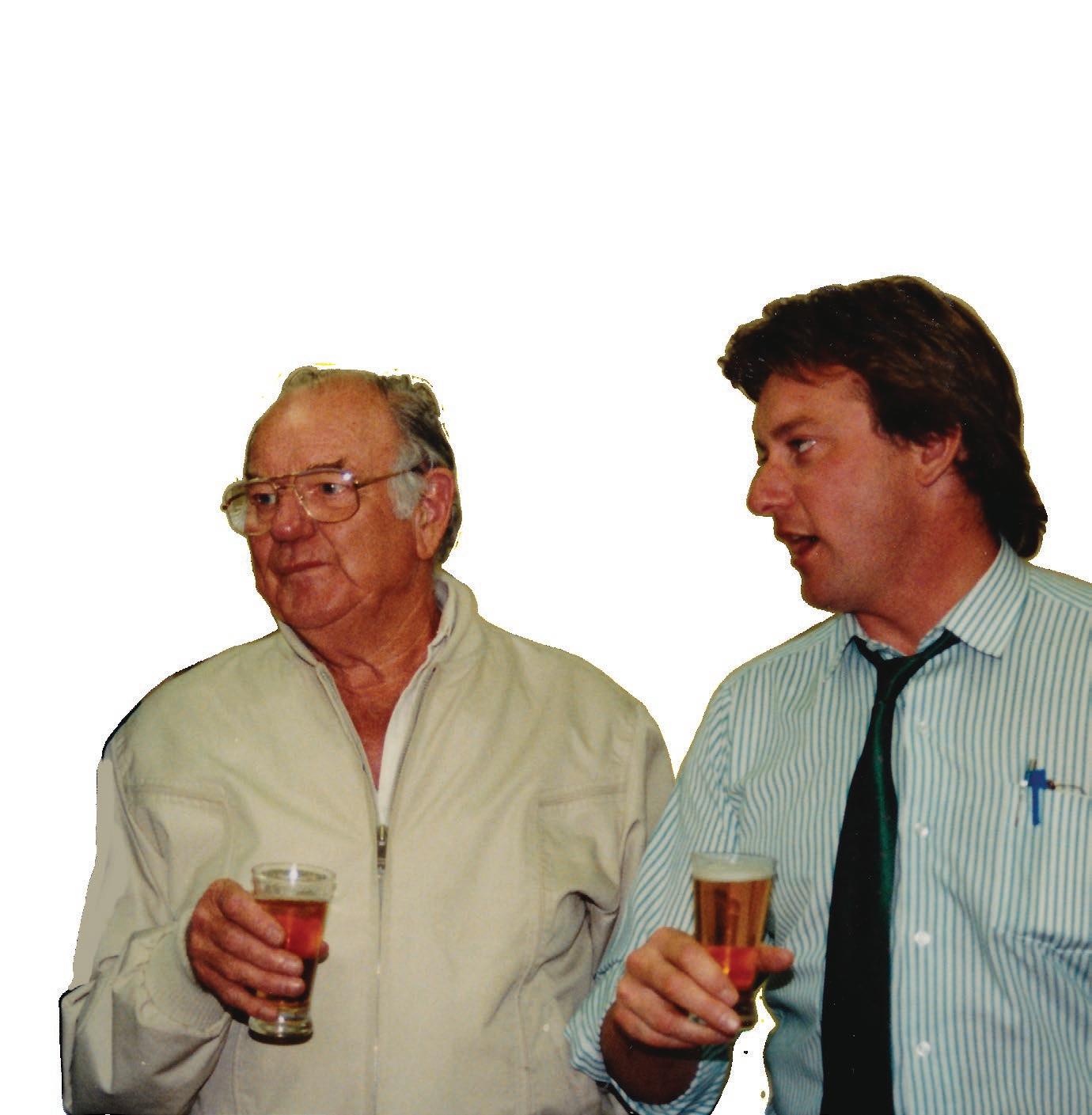

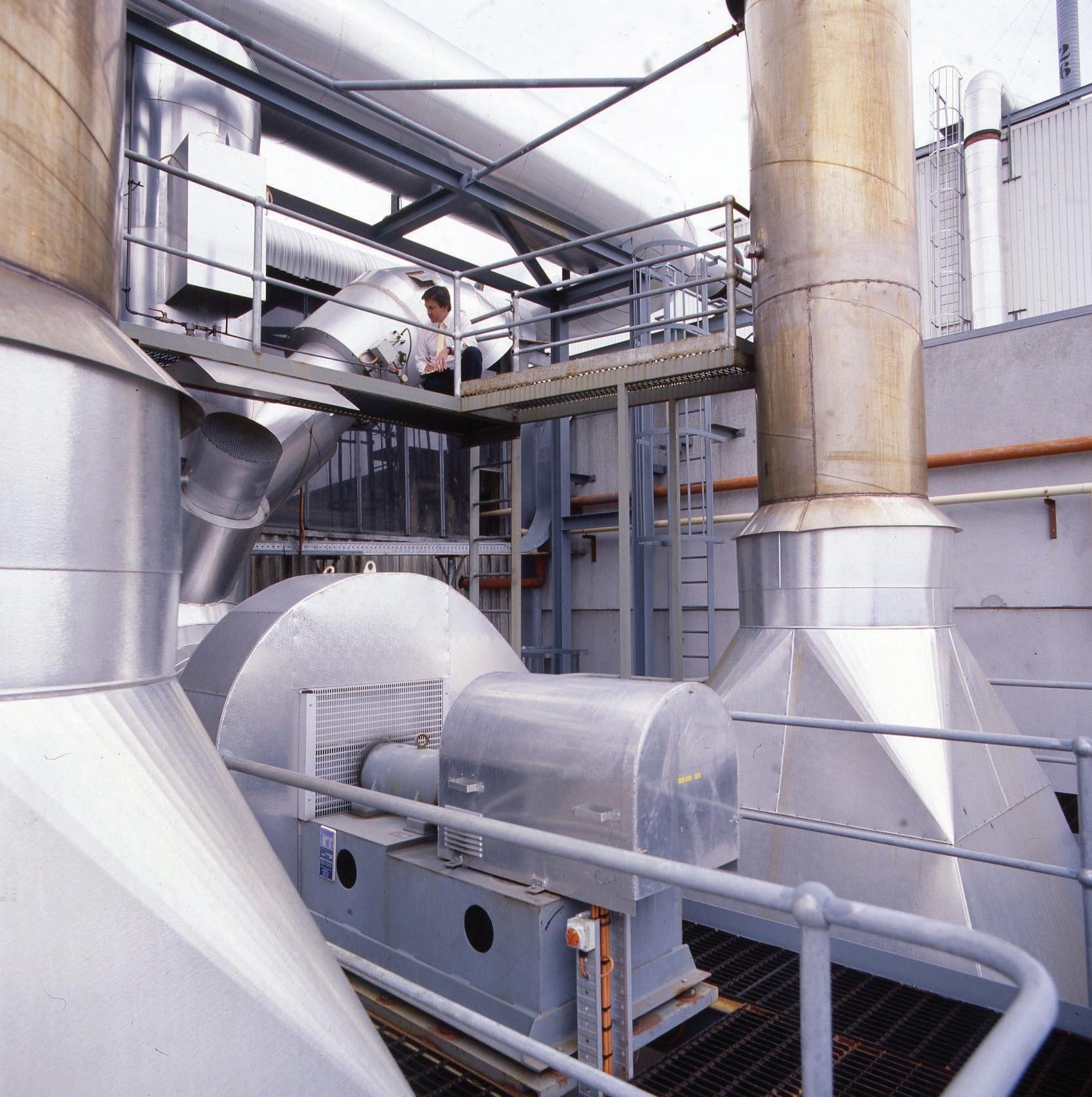
During the 1990s, A.G. Coombs upgraded the mechanical installations in Old Customs House, now the Immigration Museum. For many years this historic 19th century building was one of the busiest places in Melbourne. In addition to collecting customs duties from all goods entering or leaving Victoria, customs officers were also in charge of immigration and censorship.
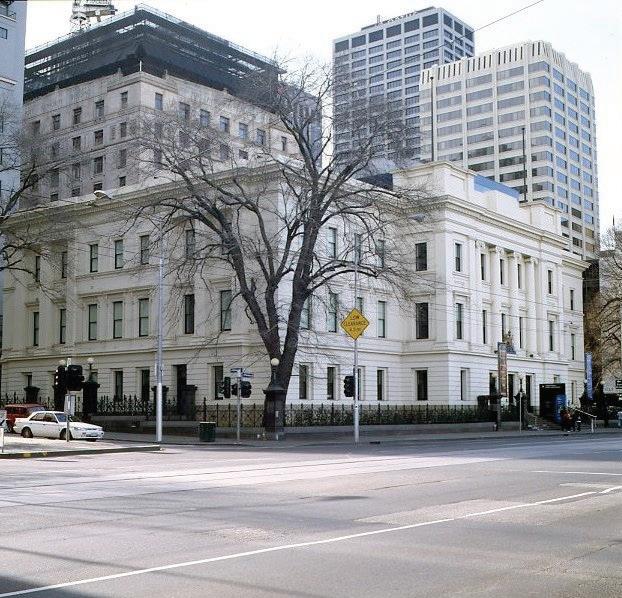
A general uneasiness could be felt throughout the business community during the first months of 1990. By now, another recession seemed imminent, with soaring interest rates, rising debt and headlines of corporate failures highlighting an economy under considerable pressure. Aware of this growing unease, Managing Director Philip Coombs warned employees to expect tough times ahead, as the early years of the decade, he cautioned, would be “full of trials and tribulations”.
The downturn was already being felt in the building industry, particularly in Melbourne, which for some years had been riding the wave of a massive boom. The problem was not so much what would happen to existing projects under construction, but the fact that there were no major developments in the pipeline once these projects were completed.
In response to the deteriorating economic situation, decisions were taken to become more diversified and not totally reliant on one segment of the market. This was highlighted in 1990 by the acquisition of Thos. Walker & Sons (including its fire protection division), which brought a new line of service into the A.G. Coombs Group, thus growing A.G. Coombs’ profile in areas that complemented its core business of heating, ventilation and air conditioning.
January 1990
Victorian Football League (VFL) becomes the Australian Football League (AFL).
November 1990
Following the release of economic data showing another fall in Australia’s growth rate, Australian Prime Minister Paul Keating stated that this was “the recession we had to have”.
December 1991
Dissolution of Union of Soviet Socialist Republics (USSR) effectively ends the Cold War.
March 1992
The first women are ordained in the Anglican Church of Australia.
June 1992
The High Court of Australia announces its landmark Mabo decision, overturning the concept of terra nullius – a land belonging to no one – and granting native title rights to Aboriginal and Torres Strait Islander Peoples.
May 1994
Anti-apartheid activist Nelson Mandela is elected as the first president of South Africa.
August 1995
Microsoft releases Windows 95. The user-friendly interface marks a significant evolution in personal computing.
Despite all the murmurings of a downturn, there was still a measure of confidence at A.G. Coombs, not to mention sufficient momentum in terms of ongoing projects as the company transitioned into the new decade. Indeed, it was business as usual, with everyone knuckling down to work on several large developments, including Western General Hospital, the former Footscray Institute of Technology and Chadstone Shopping Centre, which was undergoing refurbishment. Project teams were also spread around the CBD, installing or commissioning services at several major building sites, with developments like Melbourne Central and 120 Collins Street nearing completion.
Back at company headquarters, the old Epicure Building at 36-40 Cochranes Road had been demolished in 1989 to make way for brand new facilities, which were due to be completed in August 1990. The Epicure Building was originally purchased in 1978 to accommodate the expanding Service Division. However, more space was eventually needed and so the Division was temporarily relocated to the pipeshop while the new premises were constructed. “It was our first smoke-free building,” said Alan Collard, who returned to head up the Service Division in 1990 after thirteen years in contracting and administration.
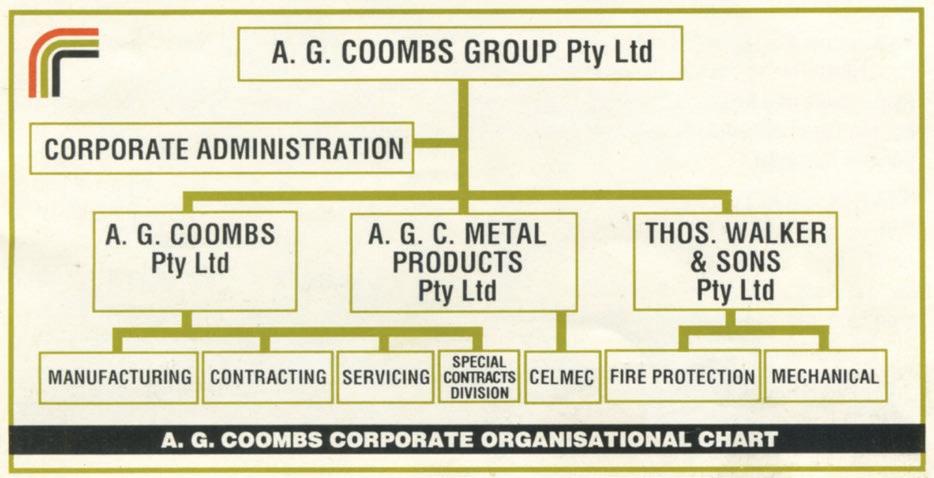
The building’s other tenants included the Drawing Office and Celmec International, a marketing company that had been established to promote and sell goods made by A.G.C. Metal Products (the two companies would eventually merge in 1991). Celmec not only professionalised the marketing of these products in Australia, it also planned to sell a range of items internationally. And just like A.G.C. Metal Products in the 1980s, it only sold to people in the trade, including to some of A.G. Coombs’ biggest competitors.
Selling to a competitor was always a sensitive issue and one of the main reasons for creating a marketing company that was completely unrelated in name to A.G. Coombs. Staff noted that customers seemed more comfortable writing out cheques to Celmec than they had to A.G.C. Metal Products, most probably because the latter highlighted that they were paying a competitor – which no one liked to do – whereas the name Celmec, at least on paper, had no connection to A.G. Coombs.
Looking ahead, diversification was believed to be the best buffer against an uncertain economy. It was a view that guided the decision to acquire Thos. Walker & Sons in April 1990, and, almost two years later, to diversify into dehydrated snack food. While the food business took A.G. Coombs in a new direction, the acquisition of Thos. Walker & Sons was seen as an opportunity to build the company’s industrial profile by offering fire protection as part of the mechanical services package.

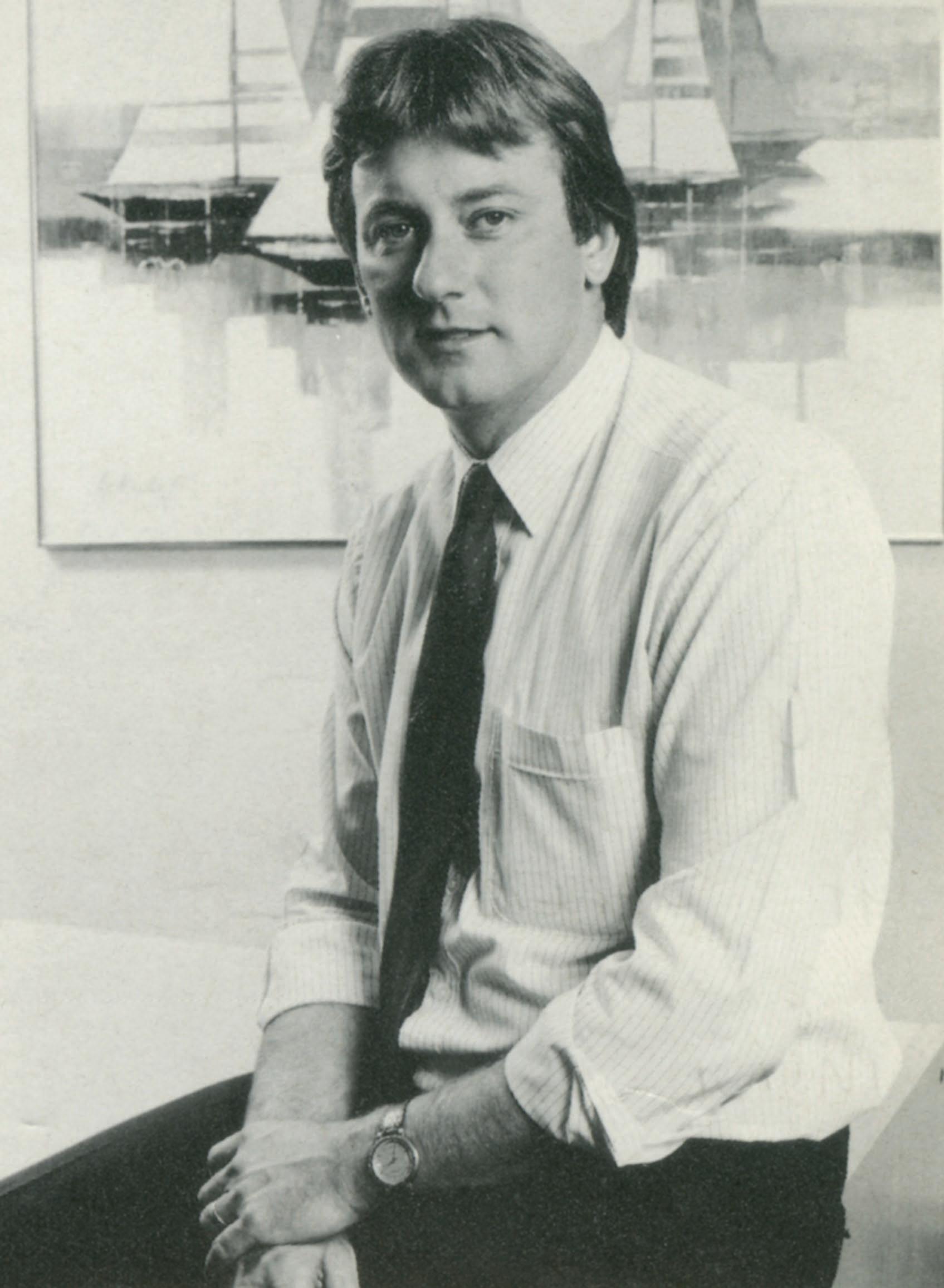
After a ten-year ‘apprenticeship’ in the company (including a fouryear plumbing apprenticeship), Philip Coombs became Managing Director in 1985.
The loyalty and expertise within the business, along with its teamwork culture, meant that Philip could count on having experienced hands working alongside him as he led A.G. Coombs through another recession and a major rebuilding program in the mid-1990s.
Like his father, Philip was committed to perpetuating the company for employees – a vision that would see employee share plans introduced in 1999.
Growing up in the family plumbing business, Russell Telford had an early taste of life in the trades, and was encouraged by his parents to pursue a technical path in his career. After graduating with good marks from Box Hill Technical College, he decided to seek an apprenticeship in mechanical plumbing, with plans that one day he might return to work full-time for his father’s business, S. Telford Pty. Ltd. He was particularly keen to hone his skills at Thos. Walker & Sons due to its strong history in process pipework and because it was known for producing highly skilled tradespeople.
Russell joined Walkers as a first-year apprentice in 1982 and spent his first months in the company’s pipeshop. He eventually moved off the tools into roles with more responsibility, but realised that he would need to look elsewhere for more challenging work, especially when it became clear that Walkers was focused on the short term and unwilling to offer its employees opportunities for career advancement.
Like most people in the industry, Russell was aware of A.G. Coombs’ reputation for being progressive and innovative. By the late 1980s, Melbourne’s building boom was in full swing and the word was out that A.G. Coombs was looking to hire tradespeople with skills and experience. Russell’s background ticked all the right boxes, and in 1988 he began working for A.G. Coombs as a site supervisor at 505 Little Collins Street. He would eventually be promoted to management in 1993, and succeed Philip Coombs as managing director eight years later.
With a history that included installing pipework in warships, Thos. Walker & Sons developed an industrial expertise that would later incorporate large-scale pipe installations and fire protection services.
A.G. Coombs’ acquisition of Thos. Walker & Sons, including its fire protection arm, enabled it to expand its profile in the industrial area, and marked the start of the company’s transition into a full building services company.
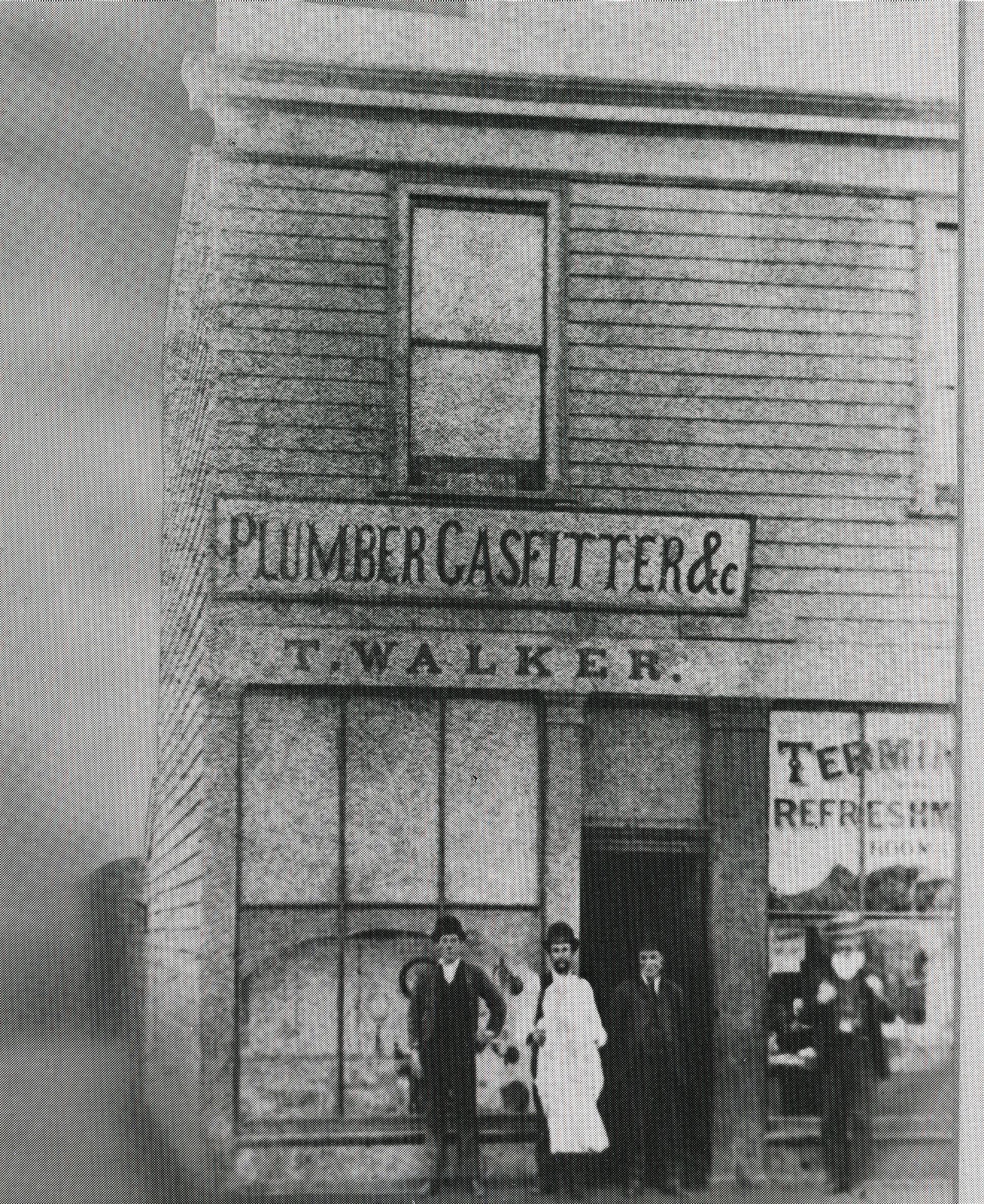
By the late 1980s, pipe and fire protection specialist
Thos. Walker & Sons (Walkers) was struggling with a range of operational and marketing issues. At this stage, most of its ductwork was coming from A.G. Coombs, and discussions had progressed in recent months between Philip Coombs and Dennis Walker over A.G. Coombs potentially acquiring the business.
Dennis’s grandfather, Thomas Walker, had started out in 1894 as a plumber and gasfitter in the popular beachside suburb of Albert Park. His plumbing business had a varied client base, but would eventually build its reputation on big pipe installations and fit-outs, particularly for the maritime industry, with fire protection services introduced in 1968. Allan Coombs, on the other hand, had gone down the HVAC route and grown his business in the area of commercial heating and ventilation.
In nearly a century of operations, Walkers had tackled some massive pipe installations for local and interstate clients. Its customer base was now primarily industrial and its pipework could be found in some of the country’s major power stations and paper mills, including the Shell oil refinery in Geelong.
Despite its past successes, Walkers appeared to have lost direction and focus, and was in serious need of an overhaul by the time Philip and his management team began weighing up the prospects of acquiring the business, in particular its fire protection services. As talks continued, it was Walker’s industrial profile that was most appealing, especially at a time when new commercial projects in Melbourne were fairly thin on the ground.
In other areas, both companies had excellent track records for training and providing career paths for young apprentices, although Walkers had let this practice slip. Yet in its heyday, the pipe specialist had carefully developed the
skills of its young tradespeople, including those of Russell Telford, who, after six years with Walkers, left in 1988 to seek new opportunities with A.G. Coombs.
“A.G. Coombs was regarded as a progressive, modern company,” said Russell, remembering how impressed he was when he saw the Moorabbin complex for the first time. In his opinion everything about A.G. Coombs came across as professional, from the paperwork that accompanied all the company’s ductwork to the way products were delivered to customers.
Russell was already on staff at A.G. Coombs when the decision was made in 1990 to acquire his former employer. “It was disappointing to see a long-established company lose its way,” he reflected with mixed emotion, remembering the days when Walkers was usually top of the list for anyone seeking a job in process pipework.
The plan was that the acquisition of Thos. Walker & Sons would provide a strong fire protection capability, as well as a good industrial client base. But then, as Philip Coombs recalled, “the whole market collapsed” – not just one sector.
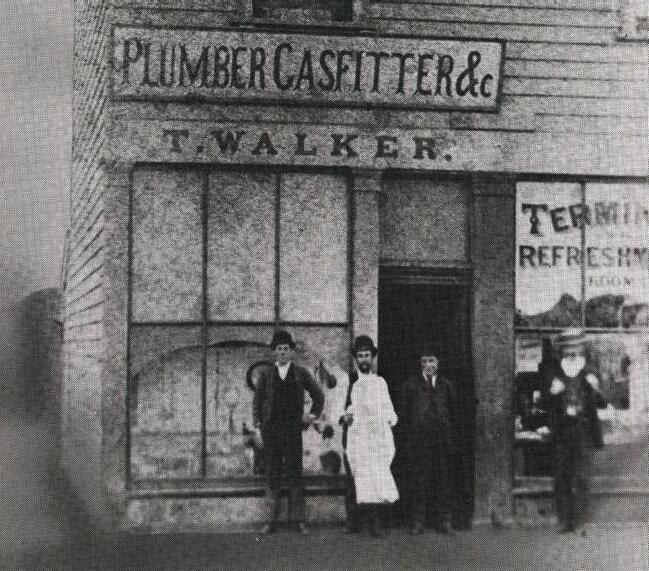
The original premises of Thos. Walker & Sons, Albert Park, Melbourne, 1894.
Thos. Walker & Sons would later be renamed Walker Fire Protection – an A.G. Coombs company.
Australia officially plunged into recession in the September quarter of 1990. Although people could feel the market slowing, no one expected it to collapse. “The whole industry stopped; it just literally stopped,” said A.G. Coombs’ General Manager, David Seedsman.
Interest rates had climbed sharply just prior to the recession, with the mortgage rate rising to 17 percent. The aim had been to slow the economy, but high interest rates and high levels of debt had the effect of curtailing corporate investment and job creation.
Then Federal Treasurer Paul Keating explained the downturn as inevitable – even necessary – summing it up in six infamous words as “the recession we had to have”. It was a bitter pill to swallow and did little to alleviate the symptoms of a heavily stressed economy, with many businesses now consumed by debt.
Companies everywhere began shedding staff, and the consequences of this would be revealed two years later with job figures for December 1992 showing unemployment levels at 11.5 percent – the highest in sixty years.
You did not need statistics to tell you that things were grim. Signs of the recession were visible everywhere, particularly in Melbourne’s CBD where no one was pegging out new building sites along the city’s major streets. “There were lots and lots of cranes on the skyline for things that were designed [and nearly completed],” said Norm Davies, whose consulting firm had worked with A.G. Coombs on a number of occasions. “But there were no new jobs in the pipeline; it just dried up.” Basic arithmetic showed that something had to give, especially if developers were building ten times the annual absorption rate of office space.
At A.G. Coombs, the recession began wrapping its tentacles around all areas of the business. Ron Barns, who was working on the Great Southern Stand at the
Melbourne Cricket Ground in 1990, recalled how everything changed quite dramatically in the months that followed. “By the time the job came to a close, everybody really had to pull their heads in because we were starting to go through this recession.”
Russell Telford remembered the shock he felt on returning to Melbourne in 1992, after spending a year in Canberra as the senior site supervisor on a major government contract. He and others – in fact the entire project team from Melbourne – had been based in the nation’s capital, where they were leading the installation of around nineteen million dollars worth of mechanical services in the Defence Signals Directorate facility. “This was a large, challenging project and I remember not so much feeling like we were in a recession,” he said. “I came back to Melbourne and thought I’d gone to another country. Work in general had totally started to dry up.”
The market in Melbourne seemed to have disappeared almost overnight, leaving Philip Coombs with one of the most difficult and important decisions he would have to make regarding the business. After becoming Managing Director in 1985, Philip had come to an arrangement with his father, which saw him acquire all Allan’s shares in the A.G. Coombs Group by January 1989. But with the sole shareholding came sole responsibility for the future of the business.
The economic distress was severe, more so in Victoria where the downturn was deeper due to a higher rate of corporate failures. “The company was facing devastation given where the market was going,” said Philip, describing the recession as a “giant wrecking ball” about to swing remorselessly through a business which, until that point, had grown dramatically.
Despite the gloomy outlook, life continued at Cochranes Road, albeit at a slower pace, with efforts now focused on creating new avenues of business through the creation of Drytech (a company specialising in dehydrating fresh food) and Elvin’s Snack Products. A decision was also made in 1993 to restructure Thos. Walker & Sons into a division of A.G. Coombs under the name of Walker Fire Protection.
In the boom-bust cycles of the economy, there was no doubt the market would recover. The question was when? Philip remembered flying out of Melbourne to think things over for a couple of weeks, and then mapping out a new strategy for the business on the flight home.
Back at Cochranes Road he called a meeting and laid out the bare bones of what was still a pretty bleak picture. In his opinion, there was no future in where they were currently heading, and so he proposed a new direction and asked for everyone’s trust. “I set about restructuring the business with a clear strategy in mind,” he said. “It was either going to work or it was going to fail.”
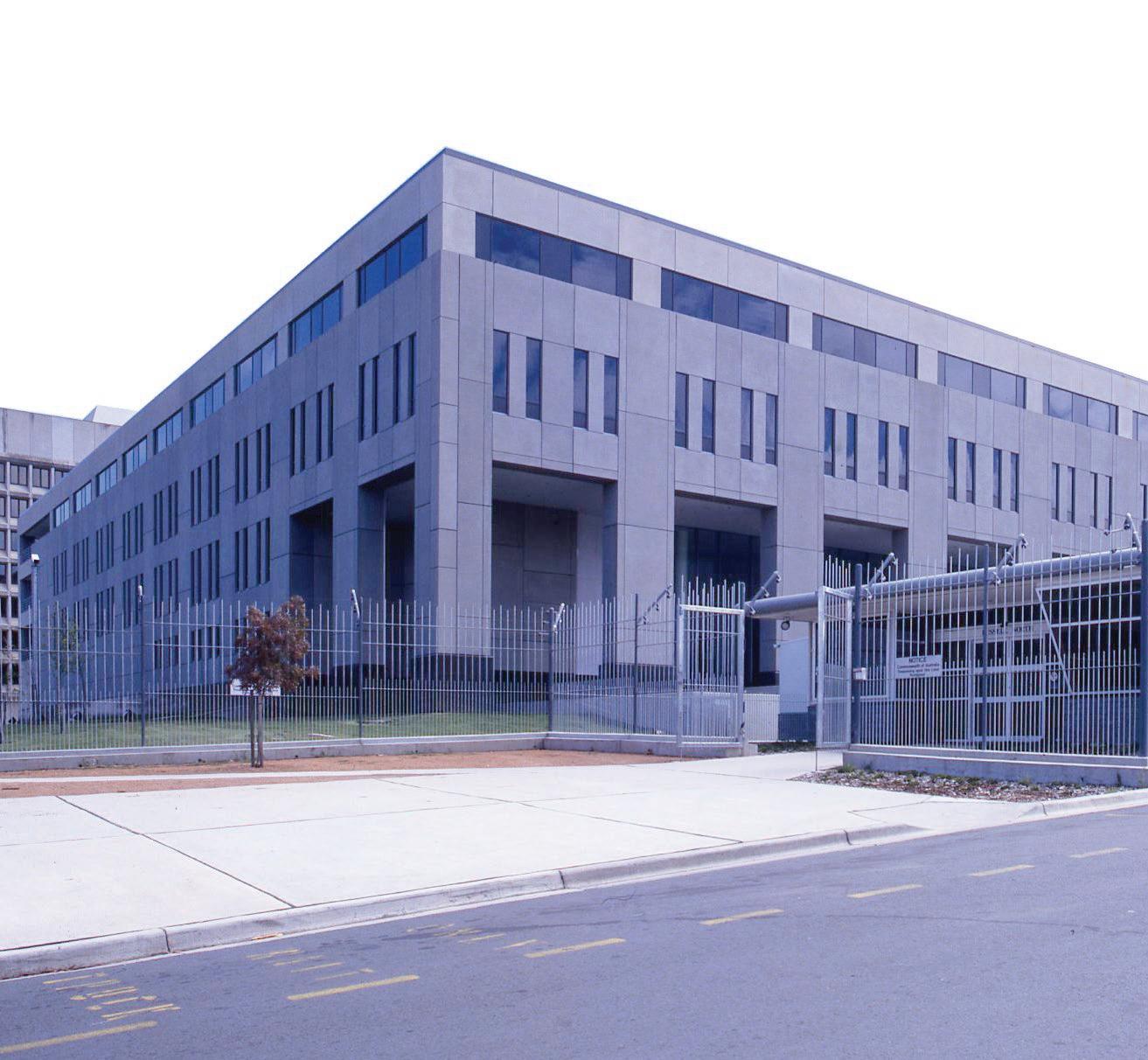
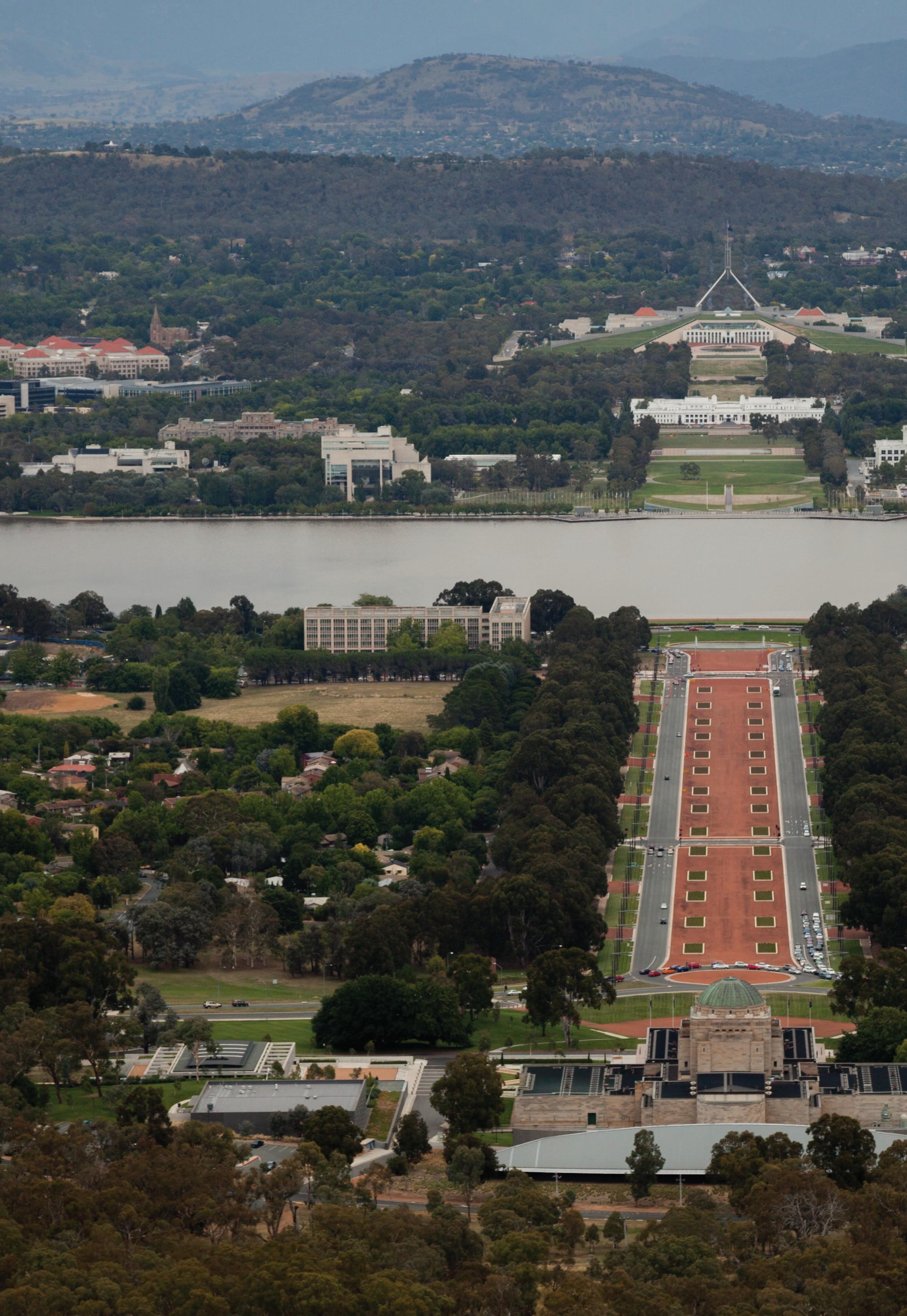
Technically, the recession lasted roughly a year, until the September quarter of 1991. The economy, however, was slow to recover and unemployment figures continued rising through 1992. “In times of crisis, democracy will only take you so far,” said Philip, as he reluctantly, but decisively, made the hard decision to downsize and rebuild the business.
By now, a lot of site staff had departed, as there was simply nothing for them to do and no way of remunerating them. Although site workers were not permanent employees (being contracted as they were on weekly wages), it was hard letting go of so many people with no promise of work in the foreseeable future. It was even harder saying goodbye to many long-serving employees in drafting, engineering and commissioning. As a result, the number of staff and contracted workers employed by A.G. Coombs fell from around 500 people in 1990 to approximately 200 by the time the recession really started to bite.
As part of the company’s rebuilding process, Philip Coombs and senior managers refocused the business on smaller projects and implemented a major communications and rebranding campaign that saw the launch of a new company logo in 1993.
Retrenching good people was “traumatic” remembered General Manager David Seedsman, as they watched this vast pool of experience flow out the door. “We built this expertise and then suddenly had to start shedding people because there was just no work, and that was extremely tough in those days.” Everyone from the top down also took a ten percent pay cut, while perks, such as company cars, were scaled back.
Although the outlook was still grim, the new business strategy placed the Special Contracts Division at the forefront of their contracting operations. “The remainder of the 1990s will be a stark contrast to the unrealistic conditions and expectations of the 1980s,” said Managing Director Philip Coombs, as he and senior managers pressed on with rebuilding the business. They also stepped up internal and external communications, put the focus on customers, and, in early 1993, commissioned a new logo as part of an upgraded corporate image. The end result was not so much a different logo but a more contemporary version of the original pipes, which, at Philip’s insistence, still retained the green and orange colour palette that people in the industry associated with the A.G. Coombs name.
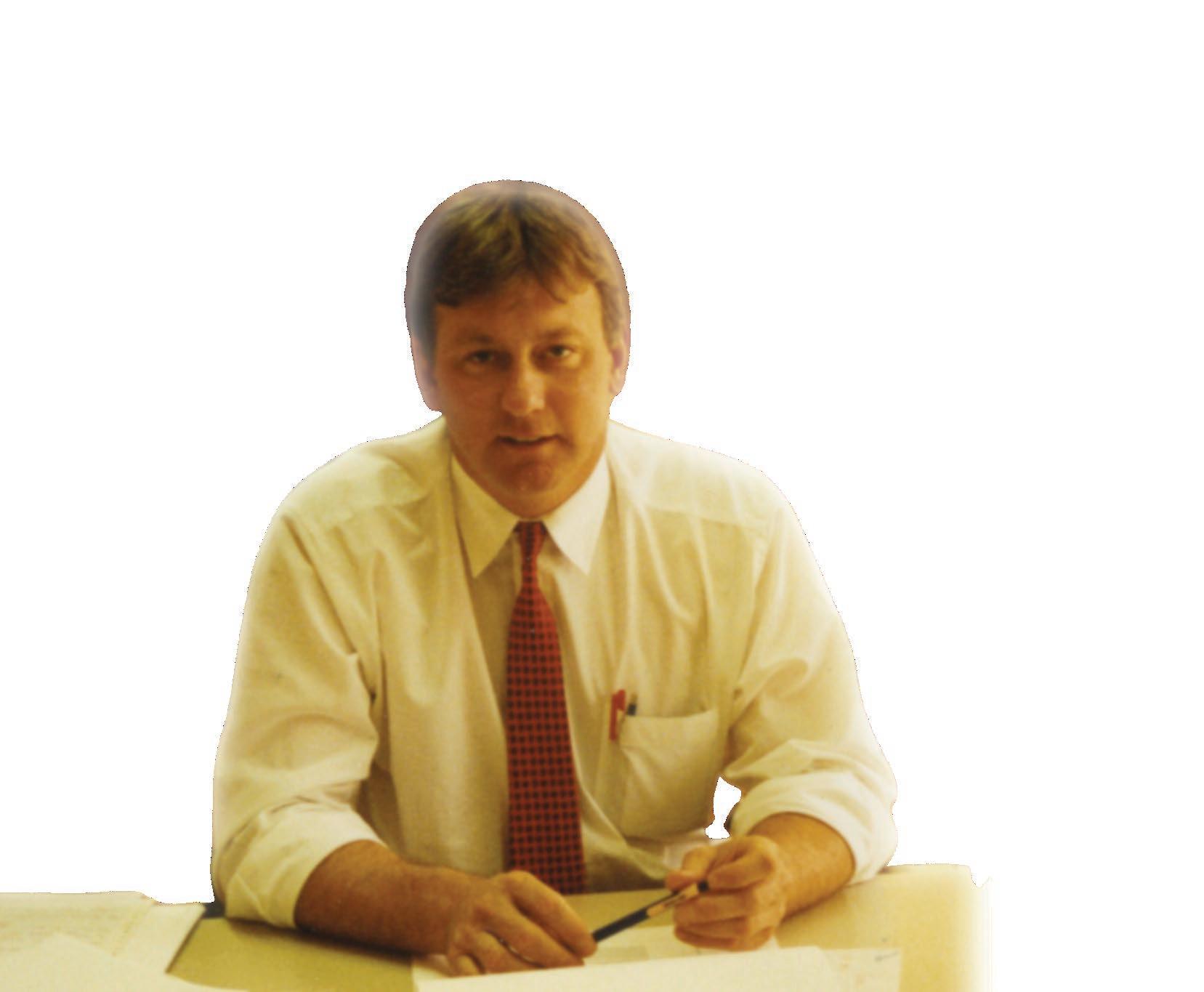
It was a name that conjured up visions of large projects along the lines of Collins Place or the Royal Children’s Hospital. But all this was about to change.
The decision in 1993 to rebuild the company around the smaller projects of the Special Contracts Division (SCD) meant rethinking the whole marketing strategy for the business. Was A.G. Coombs a ‘big job’ company, as defined by the Major Contracts Division, or a ‘small job’ company, as defined by SCD? In the eyes of Philip Coombs it was not a case of being exclusively one thing or the other. “We’re a small job company that can do big jobs,” he said, adding that they would now be focusing on customers rather than projects.
At this point, Philip tapped Russell Telford on the shoulder and invited him to run SCD with a completely new structure. Russell’s appointment was effectively the start of a new generation of management at A.G. Coombs, although the idea that they would now be driven by the smaller projects of SCD turned the company “upside down” as Philip recalled.
The emphasis on SCD – which handled jobs up to a million dollars – recognised its similar role almost a decade earlier when Allan Coombs and his team had started sourcing smaller projects to lead the company out of a recession in the early 1980s. It was also clear that SCD had the capacity not only to sustain the company during downturns, but also to deliver new customers, generate work in its own right, and provide a valuable training ground for apprentices and leading hands.
SCD would now have its own management, drafting, estimating and installation teams. It would also offer a complete design and construction service to clients, tackling everything from small tenancies and refurbishments to upgrades of larger buildings. The restructure took advantage of the fact that a number of companies had decided to refurbish existing buildings instead of commissioning new facilities.
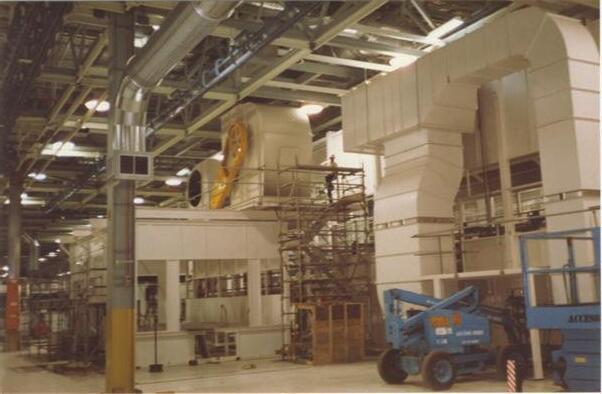
The focus on SCD also moved A.G. Coombs away from the ‘wet concrete’ environment of big building developments, where it was contracted by the builder, and distanced the company from the industrial relations issues historically embedded in this area. The aim now would be to source smaller projects from property owners and property managers. “After the recession we got out of wet concrete and focused purely on the client base and then dealt with wet concrete as an opportunity with the right customers,” said Russell Telford. Being able to operate in both markets was a “huge strength” he added.
While it was an enormous responsibility for Russell to be charged with rebuilding an entire division, he was backed up at a senior level by Philip, and also by General Manager David Seedsman and Finance Director and Company Secretary Frank Schooneveldt. Between them, David and Frank had clocked up almost fifty years with the company, and their combined knowledge and experience would help facilitate the changes. “We went a lot harder to try and restructure and change in a different direction,” said Russell. “Profitability returned very quickly and we came out the other side fairly well.”
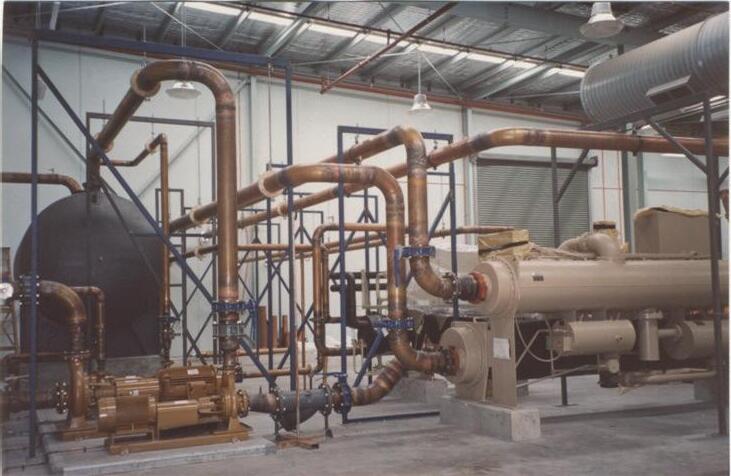
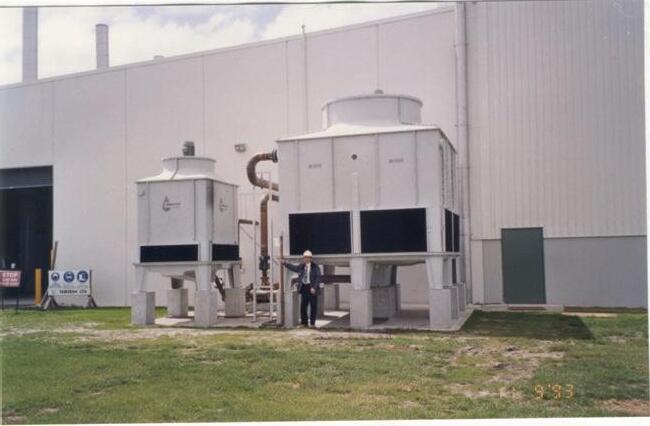
The Special Contracts Division installed the air conditioning and ventilation in the
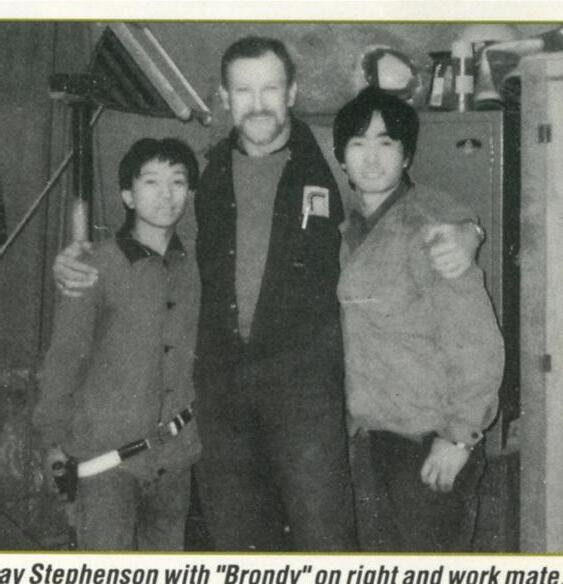
As part of its diversification plans in the early 1990s, A.G. Coombs established a number of different ventures, among them Drytech and Elvin’s Snack Products. Launched in 1991, Drytech specialised in dehydrating and preserving fresh food products. Although this might have seemed an
At the request of the Australian Government, three of A.G. Coombs’ most experienced operators packed their bags at short notice and flew to Beijing in September 1990 to supervise the mechanical work at the Australian Embassy, which was then under construction. The call for help had been urgent, as winter was approaching and work would come to a standstill unless the heating could be installed before temperatures plummeted to below minus 20ºC
Peter Morphet, Greg Spencer and Ray Stephenson (Ray is pictured left with two Chinese workers) spent several weeks in China working alongside a local crew at the Embassy, where they earned the right to call themselves “international plumbers”. It was an eye-opening experience for all three men, who quickly adjusted to their new work environment: the scaffolds, they discovered, were built to Chinese height and were lower than what they were used to. They also joined the daily bicycle commute to work and, during what little spare time they had, managed to sample local delicacies such as stir-fried frog, grasshopper and jellyfish skins.
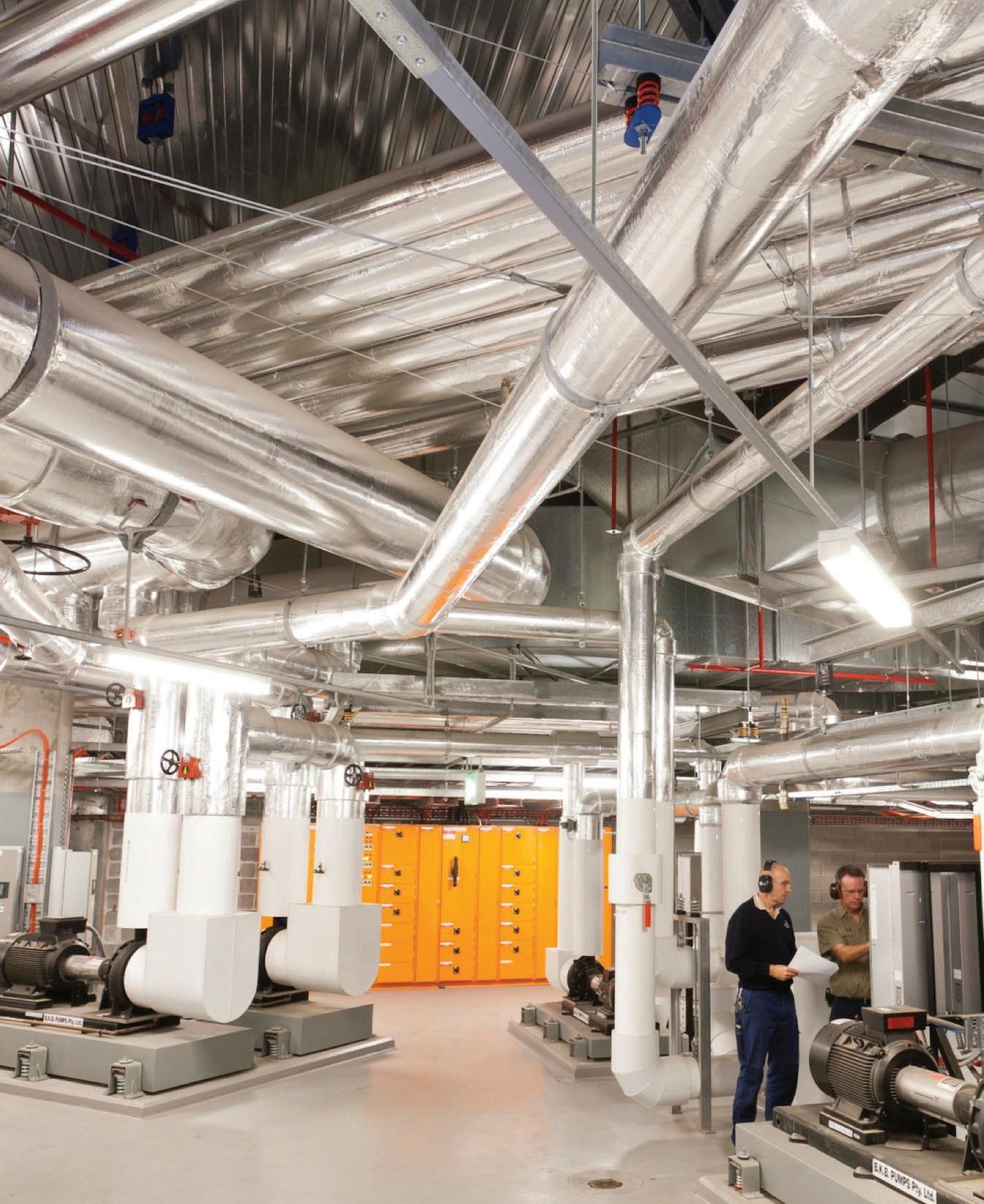
unusual line of business for A.G. Coombs, the process used was actually a case of air conditioning in reverse. For example, instead of pumping heat from an interior space into the external environment (a basic principle of refrigeration) the heat was put into fruit and vegetables, and the water content removed.
Drytech used its technology to turn fruit such as apricots and cherries into a type of fruit ‘leather’ or dried fruit snack. It then changed its name to Elvin’s Snack Products in 1993 and began producing fruit and muesli bars on site at Cochranes Road – a development that fascinated staff. While there was a sense of adventure in trialling new technology, the financial impact of the recession ultimately led A.G. Coombs to pull out of the snack business altogether in 1995.
These images show the evolution of the A.G. Coombs logo, from the drawing of the original Cochranes Road building in the 1950s to the ‘pipes’ logo, which was updated from an earlier version and introduced in 1993.
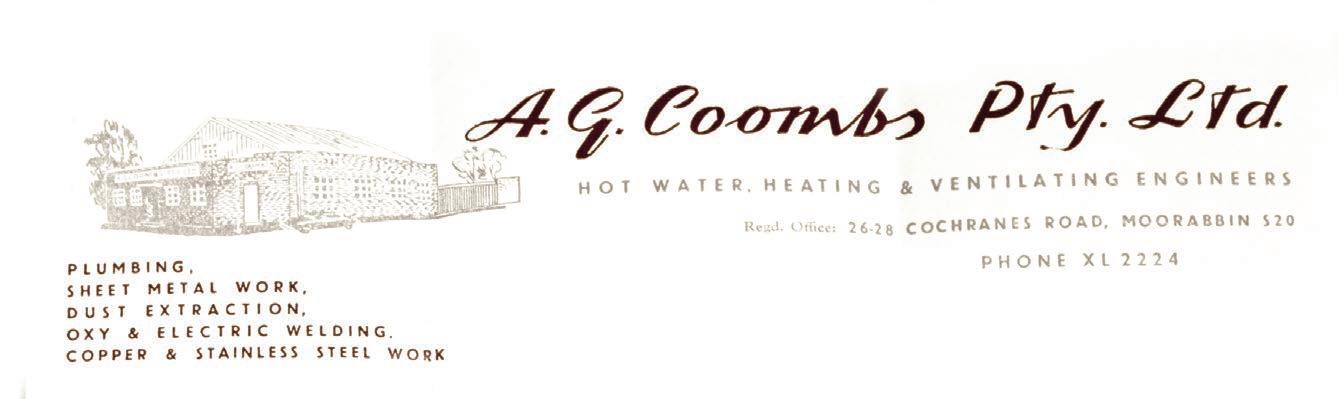

Several designs using the original orange and green colour palette were considered when ideas were being developed for a new logo in 1993 (see far left). In the end, A.G. Coombs decided to retain the familiar pipe design (left).
As the restructuring continued, A.G. Coombs began building closer relationships with its customers, especially on smaller jobs where there was potential for ongoing work and providing what people were now calling a “whole-of-life service”. The whole-of-life philosophy was shaped in the years after the recession, with managers demonstrating how A.G. Coombs could design, manufacture, install and then maintain all the mechanical services in a building. It involved changing the way they went about securing projects and looking at clients as, potentially, customers for life.
The move to promote A.G. Coombs as a complete building services group had also gathered pace after the acquisition of Thos. Walker & Sons. Indeed, the idea had been brewing since the completion of the Como project in the 1980s, when management decided to bundle up a range of services (including electrical and general plumbing) under the broader banner of building services. Thos. Walker & Sons extended this multi-service focus by offering fire-protection services as part of the package.
It was also clear that the companies most likely to prosper would be those that operated professionally in line with the quality assurance and safety processes that were becoming an integral part of business life. In keeping with these developments, A.G. Coombs emphasised the need for quality management systems and began rolling out programs to improve work practices and develop greater safety awareness. Managers, in particular, needed to be flexible, open-minded and ready to learn new skills. All this additional training was a far cry from the days when everyone just got on with their jobs, but was necessary to keep one step ahead of competitors.
Recognising the need for change, Managing Director Philip Coombs secured a government grant, and in April 1993 engaged management consultant Chris Mason to train staff in decision-making and teamwork. He then launched ‘Project 5’ in 1994 and introduced staff to the idea of continuous improvement, while setting an example by looking for ways in which to improve his own performance.
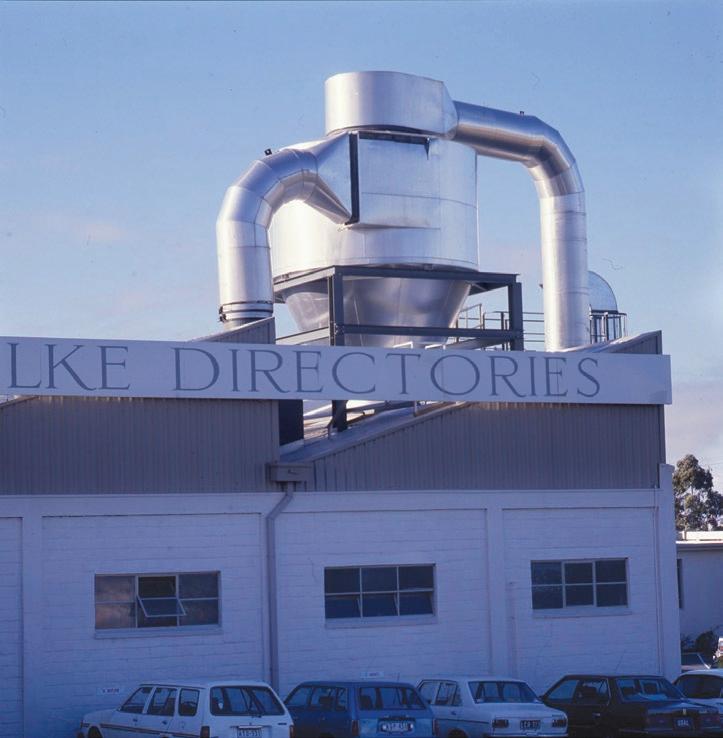
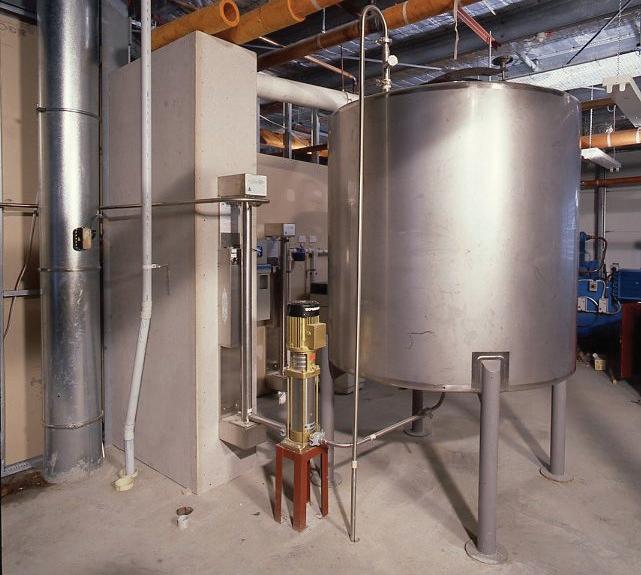
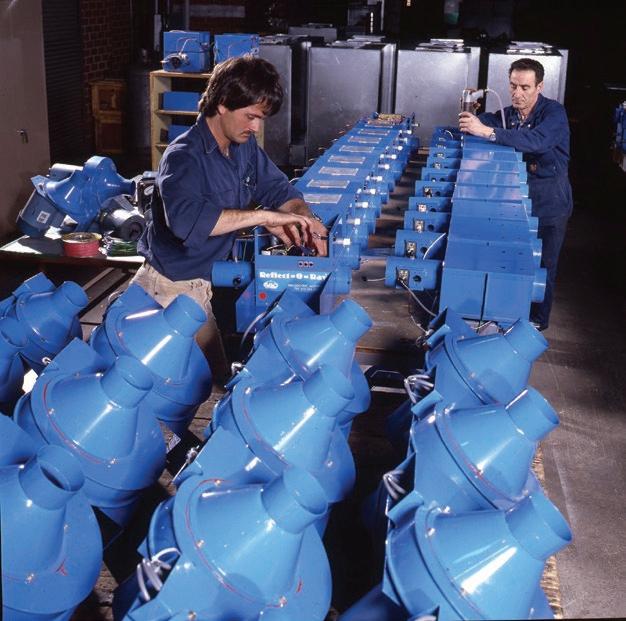
Chris was also invited to join the A.G. Coombs Advisory Board, which included Frank Schooneveldt, David Seedsman, Tim O’Brien, Allan Coombs and Philip Coombs. As Chris saw it, having sound values and being smart about the business gave A.G. Coombs the upper hand. “Good players in the market weather [recessions] much better than most,” he said.
The Australian workplace faced a raft of challenges during the 1990s as everyone grappled with new business concepts and changing legislation in industrial relations. Enterprise bargaining, multi-skilling and quality accreditation were the buzzwords of the era, with one of the biggest changes being the increasing level of documentation that was now required for company procedures and practices.
The paperwork for the Australian Standard AS/NZS ISO 9001 quality assurance system placed considerable demands on everyone’s time. But it was an essential requirement for getting on government tender lists.
Although staff completed all the ISO paperwork – compiling some twenty quality assurance manuals in all – A.G. Coombs never made its final submission for certification due to another downturn in the building industry. “We had to put this on hold as certification was an expensive business,” said Alan Collard, who completed two university short courses just to help the company through the process.
Despite this setback, all the knowledge gained would not be wasted. Instead, it would go on to form the basis of the company’s successful application for SafetyMAP accreditation (the quality assurance of health and safety) in 2000. It would also be transformed into an enduring quality management system for the entire organisation.
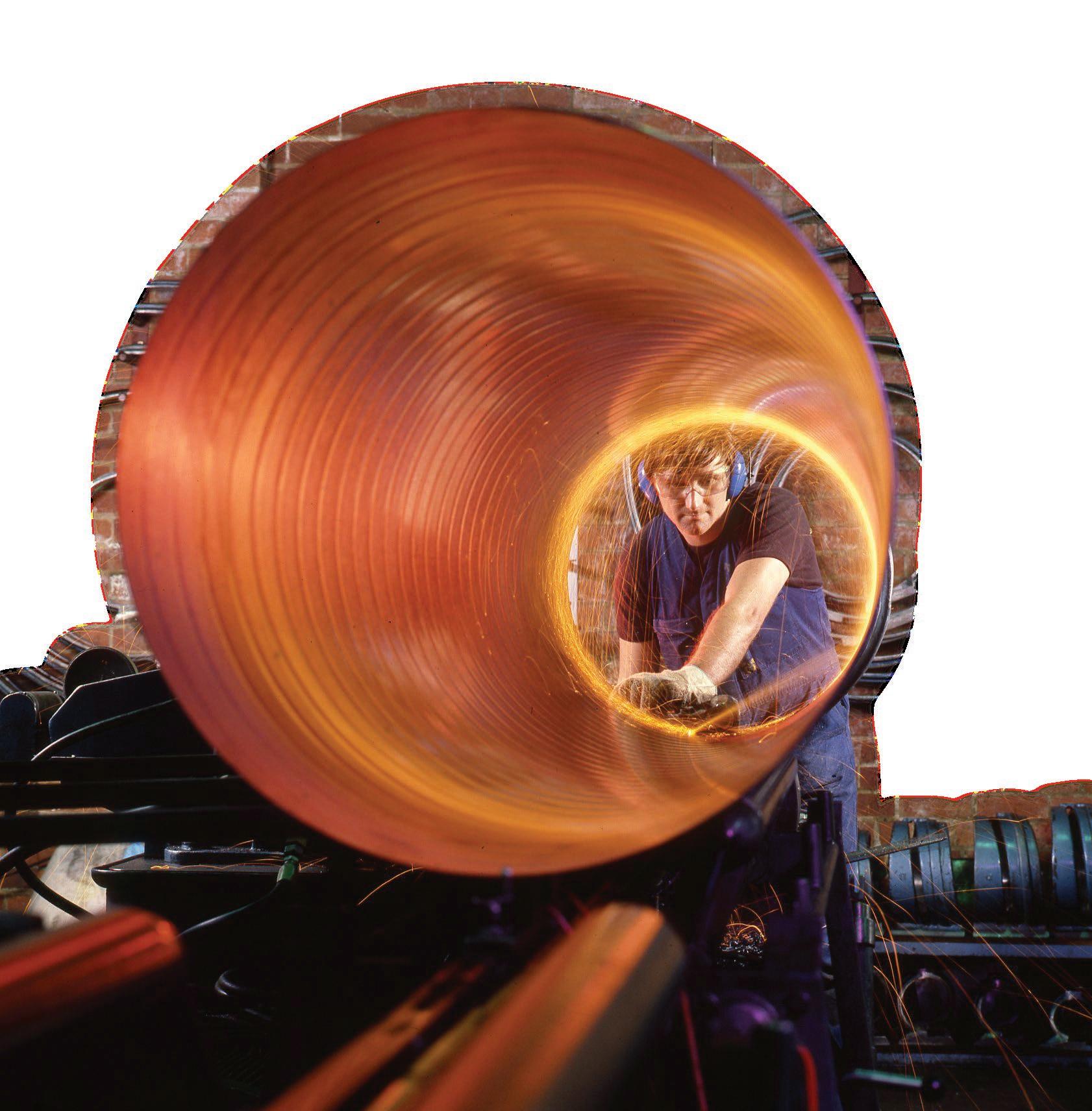
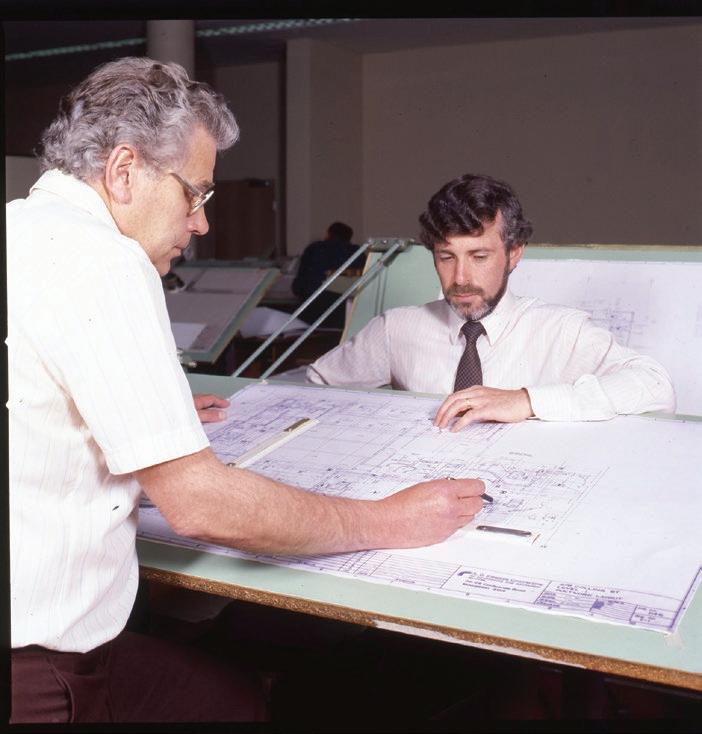
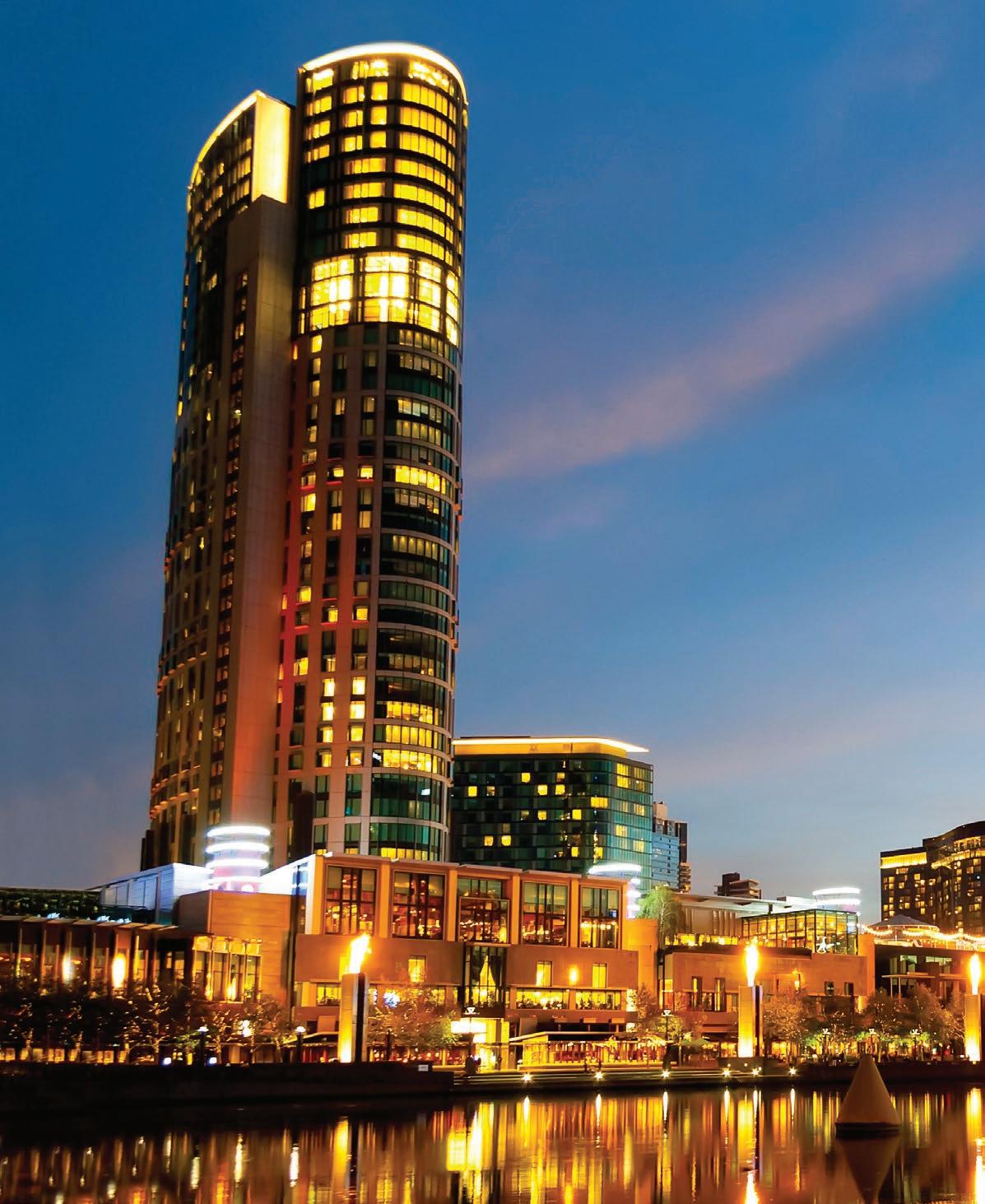
The Crown Entertainment Complex transformed the Southbank area of Melbourne when it opened in 1997.
A.G. Coombs and its joint-venture partners installed the air conditioning and mechanical services throughout the gaming and entertainment areas of the new complex.

A.G. Coombs worked on the refurbishment of the Australian Government’s Administrative Building in Canberra as part of a joint venture during the late 1990s. This facility housed a number of government departments and would later be renamed the John Gorton Building.
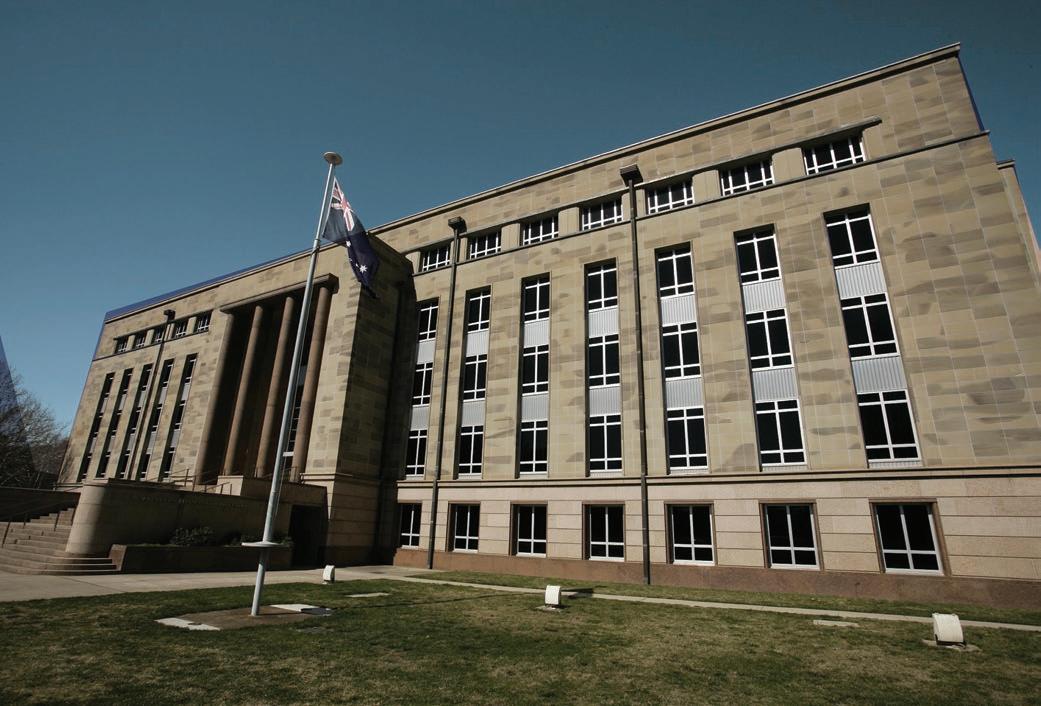
By 1995, A.G. Coombs had recovered sufficiently from the economic gloom of the recession to celebrate fifty years in business. It was also a time for rebuilding, with management now focusing on growth opportunities for the company while making strategic decisions about its core businesses.
No one doubted that change was necessary; however, after fifty eventful years, it was time for a nostalgic trip back through the decades to where it all began.
A.G. Coombs’ 50th anniversary celebration was a proud moment for both Allan and Philip Coombs – particularly so for Allan, who was able to witness the result of his early endeavours while mingling with people he had worked with for almost fifty years. This was a testament to the depth of experience within the company and highlighted the importance of perpetuating the business for the next generation of employees.
Two years later, Allan Coombs passed away after a remarkable career – not only in terms of transforming his small domestic plumbing business into a major services contractor, but also as one of the driving forces behind the development and advancement of the HVAC industry in Australia.
After his death, Allan’s long-held dream of giving employees the opportunity to participate in the company’s vision for the future was finally realised with the introduction of employee share plans.
August 1995
50th anniversary of VP Day on 15 August, marking fifty years since the end of the Second World War.
August 1995
A.G. Coombs celebrates fifty years in business.
July 1996
Dolly the cloned sheep is born in Scotland, becoming the first mammal cloned from an adult cell.
December 1996
Australian immunologist Peter Doherty and Swiss immunologist Rolf Zinkernagel are jointly awarded the Nobel Prize in Physiology or Medicine. A.G. Coombs would later install the services at the Peter Doherty Institute in Melbourne.
September 1998
Google is incorporated as a company and the Google webpage officially launched –google.com was registered as a domain the previous year in September 1997.
Although 1995 heralded a new chapter for A.G. Coombs, its 50th anniversary that year also provided a rare opportunity for reflection, as well as a chance to thank people for their loyalty. By chance, Alan Collard’s 40-year anniversary dinner was due to take place that year, so it was decided that this would be the perfect opportunity to mark both a company and a personal milestone. Holding the floor at a celebration dinner, Allan Coombs highlighted the generational change in leadership and the efforts of those who had kept the
business going. He then spoke about the old days when he was driving around in his Austin utility truck – the Austin ‘ute’ – and mulling over ideas for growing his one-man plumbing business. “Nobody had an awful lot of money; we were all trying to make our way and therefore we worked together as a team of people,” he reminisced. “I would say every individual was the best in the field in his own right. Together we were a tremendous team and we depended so much on one another for success.”

Philip Coombs also spoke, recalling the multiple challenges at the start of the decade. Now as the company’s Managing Director, he fully appreciated what it was like to be in his father’s shoes. He capped off his reflections with some good news: “The company is going through a transition and is back to probably number one in the industry,” he assured employees, adding that the future was looking very optimistic and bright.
In the space of five decades, A.G. Coombs had grown beyond its original plumbing roots to become a specialist in mechanical services, with a reputation that had attracted not only tradespeople to the company, but also engineers and designers. A.G. Coombs was also active in the wider industry through its involvement with the AMCA and SMACNA. Determined to professionalise the industry and improve his own business, Allan Coombs had travelled overseas, particularly to America, where he researched new developments, while Philip Coombs and others also spent time abroad investigating new machinery methods and design ideas.
As an employer, A.G. Coombs’ workplace culture was defined by a genuine camaraderie and caring attitude that seemed to bring out the best in its employees. Significantly, the company was growing again and it was wonderful for managers to be hiring people they had let go during the recession. A new mission statement also set forth a
bold course for the future by outlining the company’s goal to be an industry leader and specialist provider of building services. Underpinning this were core values highlighting a commitment to continuous improvement, customer service and quality performance. “We wanted to affirm what the company stood for,” said Russell Telford who, together with Finance Director Frank Schooneveldt and Kim Hesline (who was in charge of human resources), identified eight core values, including some longstanding principles, which they incorporated into a formal value statement.
Amid all these new developments, a change in top management saw Frank taking a sabbatical in 1995 and David Seedsman departing in April 1996 to take up a senior position with AE Smith & Son. But it was not a complete severing of ties for David, as he would later find himself working on joint ventures with his former colleagues, helping in more ways than one to ensure the success of future collaborations between both companies.
Following David’s departure, Philip Coombs asked Russell Telford to head up the Special Contracts Division, and then to take on the broader role of general manager in 1997. There was little fuss or fanfare, as Russell recalled. It was more a case, he said, of being “gently ushered” through the general manager’s door. “I felt really confident about A.G. Coombs. I always felt we had input to improve things or change things. There was a very open approach about what we could do.”
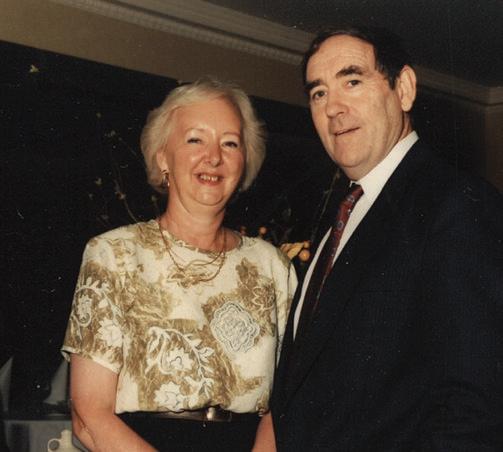

After toasting fifty years in business, the next challenge for management would be to ensure the growth of A.G. Coombs over the next half century. The diversification plans of the early 1990s had been a strategic response to a slowing economy, especially in major construction. But was it the right strategy for the future?
An eagerness to explore new opportunities was inherent in the company’s approach to business. Although not all ideas would stand the test of time, the company’s foray into cabin construction and flat-pack housing were early examples of this innovative spirit. Even during the difficult years of recession there was a willingness to experiment, as evidenced by the dried fruit venture, which many remembered as one of the more interesting ideas that A.G. Coombs attempted.
The severity of the recession, however, meant that focusing on the company’s core strengths, particularly in design and engineering, was now considered vital to the rebuilding process. It was a strategy supported by Jack Melbourne, who in 1995 was appointed Non-Executive Chair of the A.G. Coombs Group Board. Having held senior roles in the construction industry, he was familiar with the issues confronting A.G. Coombs, and mindful that the recession and start-up requirements of new ventures had placed undue pressure on its finances. The Board moved quickly, winding up Elvin’s Snack Products in 1995 and selling the products marketing business Celmec, which was now more focused on retail and export, to its then manager Tom Schilbach.
As a Board member, Philip Coombs was conscious of implementing a clear and manageable strategy for growth. “The initiatives during that time [early 1990s] were an ongoing example of the company striving to break new ground,” he reflected. “However, the economic times – which were extremely severe – forced us to take a tough approach in the interests of business stability.”
There were also concerns that the company’s sheet metal factory was not being fully utilised due to the economic downturn. A.G. Coombs was not alone; if the industry
grapevine was correct, other companies were also struggling to feed their factories. Believing there was a better way to handle production, A.G. Coombs and its competitors teamed up in 1997 to establish Ductmakers, a joint venture company that began manufacturing products for all venture partners.
Decisions were also made regarding A.G. Coombs Servicing and A.G. Coombs Contracting, the latter comprising Major Contracts and the Special Contracts Division. Although staff in Contracting often worked on the same projects, albeit at different stages, those in the Service Division were often overshadowed by their cousins on the contracting side of the business. The Service Division, however, was one of the biggest operations of its kind, with large maintenance contracts and around forty service vehicles operating throughout Melbourne. It deserved a bigger profile.
A change of postcode was deemed the best solution, so in November 1997 the Service team moved to Williamstown Road, Port Melbourne, where it was hoped they could forge their own identity. There were also practical reasons for the move, as Port Melbourne was closer to the CBD where most of the Service Division’s work was located. Walker Fire Protection also relocated to Port Melbourne, while A.G. Coombs Contracting, which eventually evolved into the Projects business, remained at Cochranes Road.
It was now clear to employees that the company needed to restructure its operations to remain viable. Businesses everywhere were starting to outsource a range of services and A.G. Coombs did not escape this trend. In the mid-1990s a decision was made to close the company store and transfer equipment such as leads, ladders, scaffolds and drills to the Ductmakers site. At the same time, the supply of materials was outsourced to Tradelink, a major plumbing supplies company.
“This changed the culture of the place,” said Alan Collard. “Instead of people from the building sites contacting the Moorabbin store, they began requisitioning site equipment direct from Ductmakers and ordering their materials from Tradelink.” The outsourcing trend also extended into other areas, with truck driver Keith Marsh given the opportunity to purchase the company truck and become an A.G. Coombs subcontractor.
There was no denying that A.G. Coombs was pouring its heart and soul into creating a safe work environment for all its employees. By the late 1990s, at Russell Telford’s instigation, a safety committee had already commenced an internal safety audit using the rigorous criteria of SafetyMAP – a quality assurance system initiated by the Victorian Government’s WorkSafe organisation.
“The impact was almost immediate,” said Site Supervisor Ray Twite, who attended dozens of meetings to reinforce the importance of wearing safety glasses and ear muffs. However, it took a while, he admitted, for people to appreciate that a strong safety culture depended on observing even the most basic safety practices, with no exceptions.
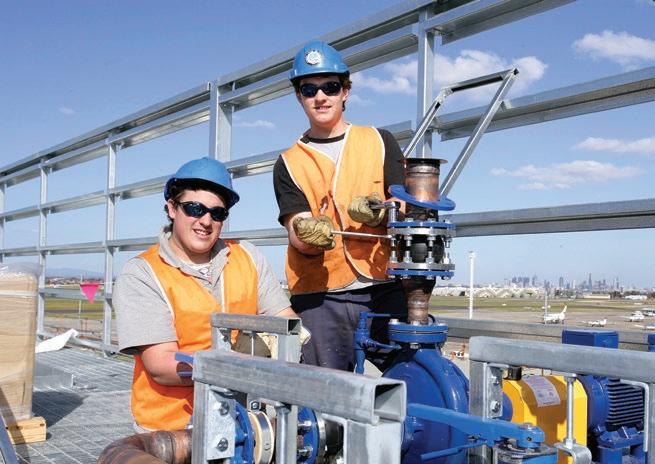
Although high-visibility clothing was introduced in the late 1990s, there was a period of transition during which tradespeople still wore some of their own clothes to work. Today, work attire incorporating high-visibility components is provided by A.G. Coombs.
Although embedding these changes would take time, the decision to apply for SafetyMAP accreditation provided a clear goal for the entire organisation. As the determination to document procedures grew, the company’s earlier work for the ISO quality assurance system was used to guide the application process.
By 2000, A.G. Coombs had thoroughly recorded all its occupational health and safety practices, while everyone was now on the same page when it came to following procedures. Finally, in October that year, A.G. Coombs received its SafetyMAP accreditation, becoming the first mechanical services contractor in Victoria to be accredited.
Clients were now looking to engage contractors with excellent safety credentials, therefore SafetyMAP would become a much-envied feather in the A.G. Coombs cap, giving the company not just a significant edge when tendering for projects, but also a safe one. “We started winning jobs because of SafetyMAP,” said Site Supervisor Ray Stephenson.
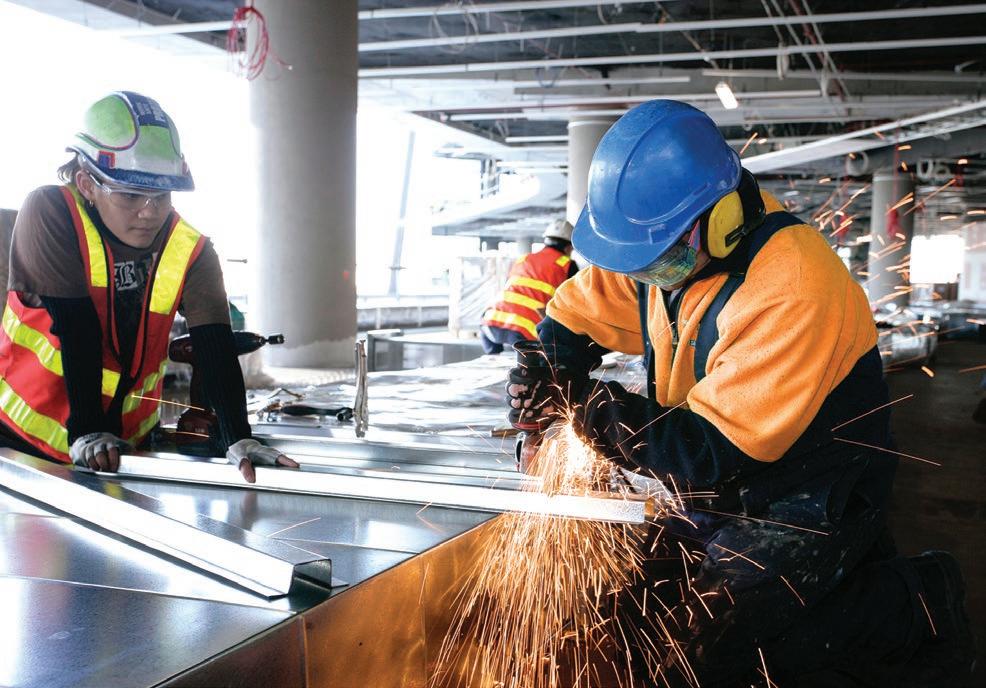
By the mid-1990s, A.G. Coombs and its competitors could no longer ignore the bleak situation confronting their respective sheet metal facilities. As they discovered, it was great when the machines were running full time; not so great when they were sitting idle due to an economic slowdown.
With this in mind, Philip Coombs and Ray Wilson, founder of Rayson Industries, began discussing the benefits of having one facility manufacturing ductwork for several companies – an idea that also appealed to AE Smith & Son’s Managing Director Barry Smith. “A.G. Coombs had all this sophisticated machinery and Barry also had it, and he had the same problem, and it just made economic sense to form a separate company,” explained David Seedsman, who was now working at AE Smith & Son.
Other companies were also approached, including Allstaff and Doug Langford and Ernie Wills of D&E Air Conditioning. In the end, after Rayson withdrew from the project, A.G. Coombs, AE Smith & Son and D&E Air Conditioning teamed up in 1997 to form a joint venture manufacturing company, which they aptly named Ductmakers.
While joining forces with the opposition might seem risky, there was no reason why it could not work. After all, both A.G. Coombs and AE Smith & Son had previously demonstrated that they could enter a joint venture, with different ground rules, and treat the project separately to their other operations.
The new company was located in Dandenong with an independent ownership structure and clearly defined supply agreements. It also began operating ‘around-the-clock’, processing huge volumes of sheet metal, not only for the venture partners, but also for sale to the industry.
“It was a good strategy coming out of the recession, and one of the most successful things we’ve done,” said Frank Schooneveldt, A.G. Coombs’ finance director, who returned from his sabbatical to help establish the business.
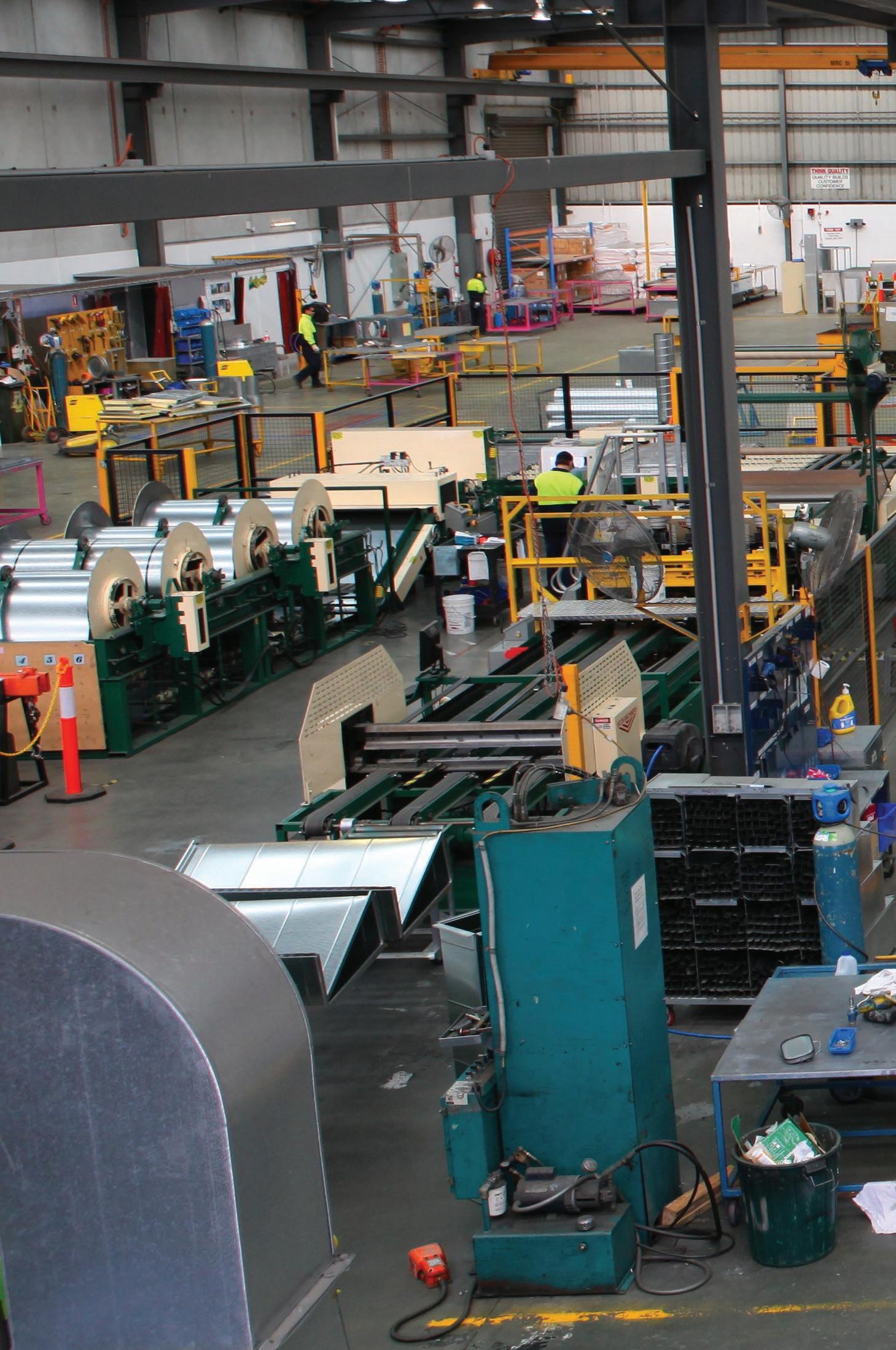
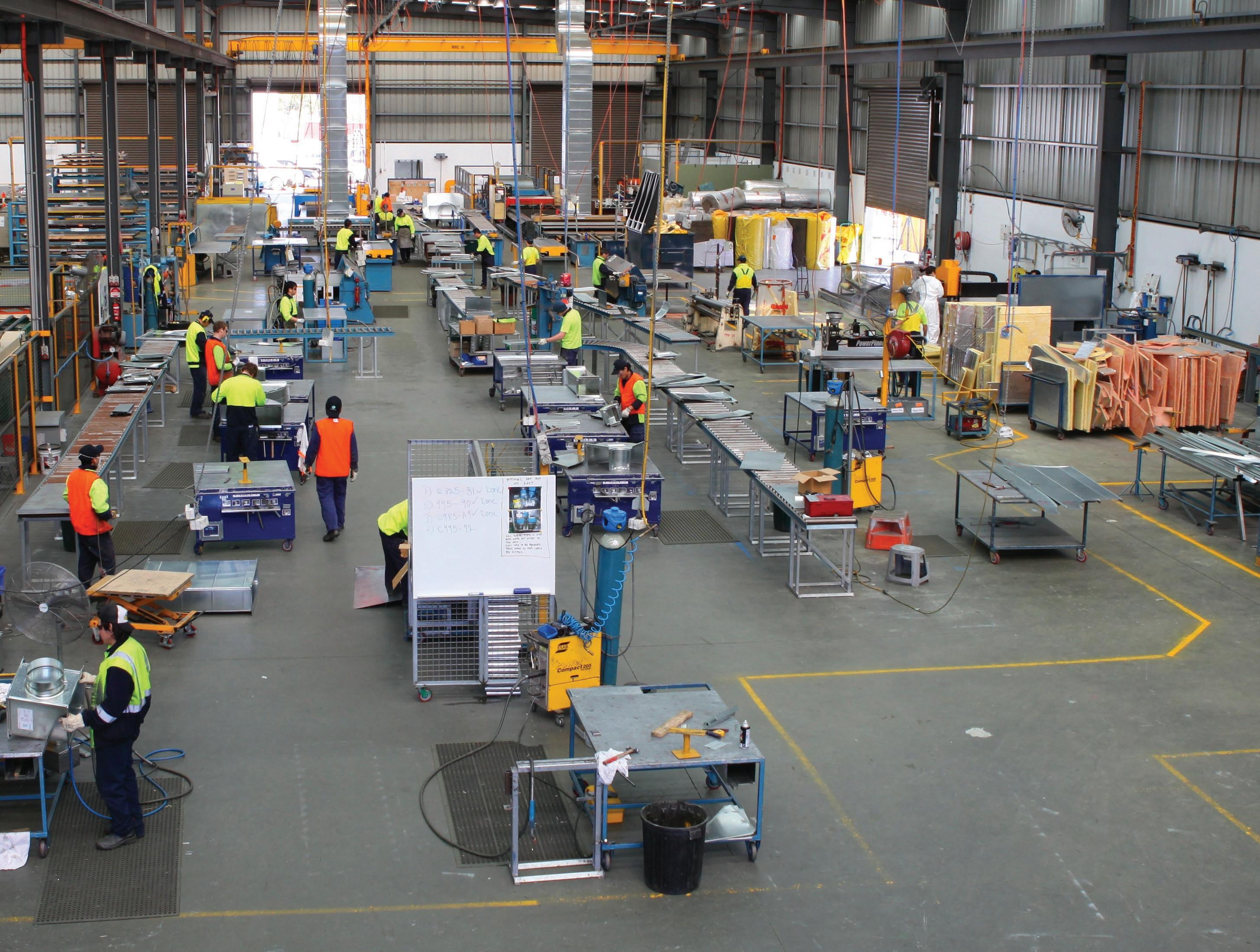
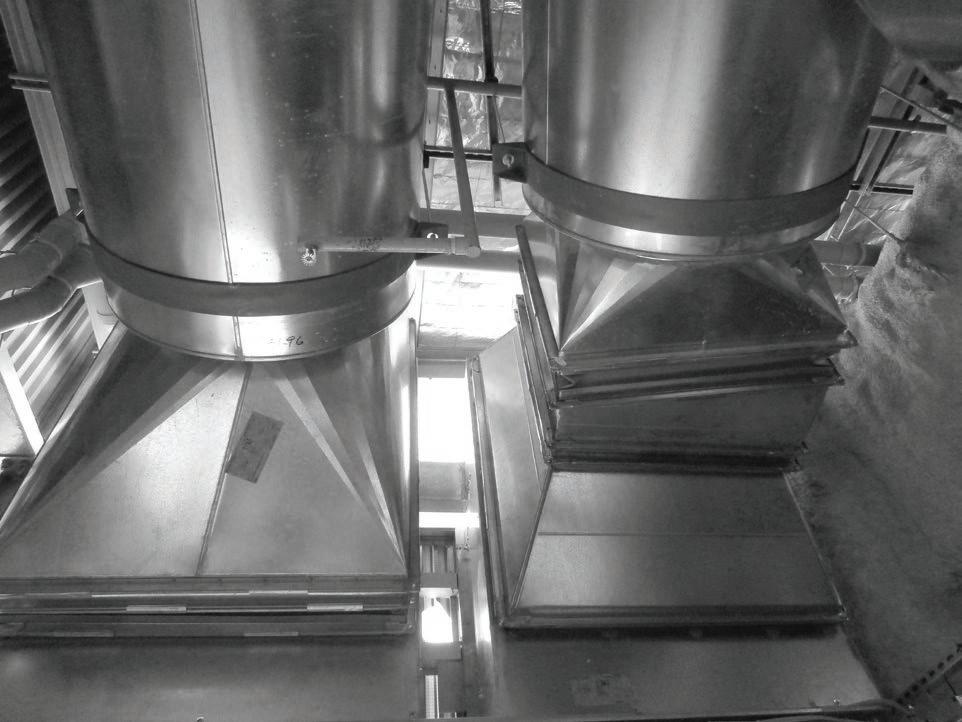
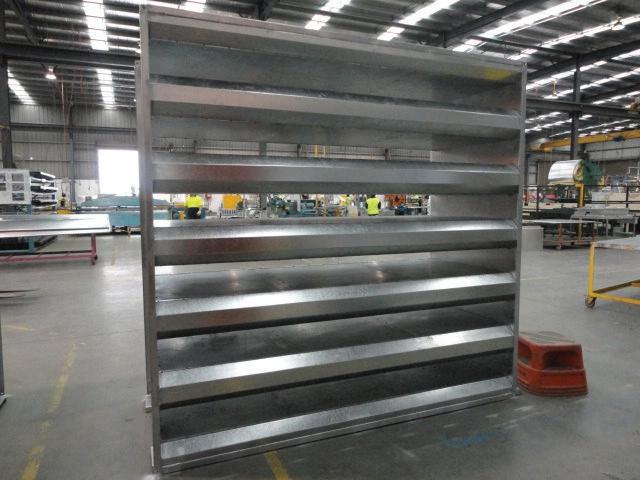
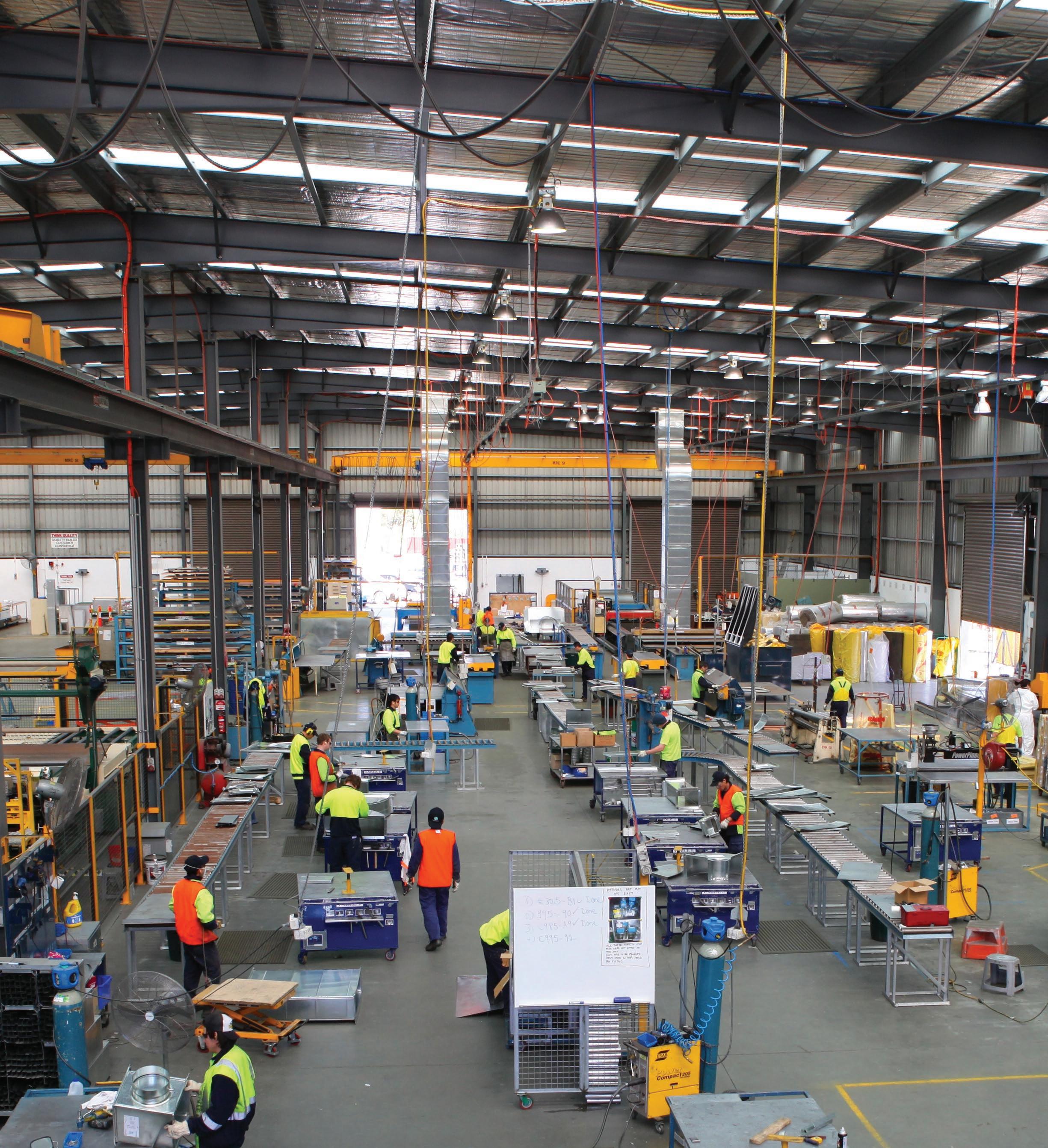
The joint venture partnership of A.G. Coombs, AE Smith & Son and Allstaff installed the mechanical services in the podium area (visible bottom left) of Melbourne’s Crown Entertainment Complex, while Barlin
worked on the hotel tower. Construction was well underway by 1995.
Image source: National Library of Australia
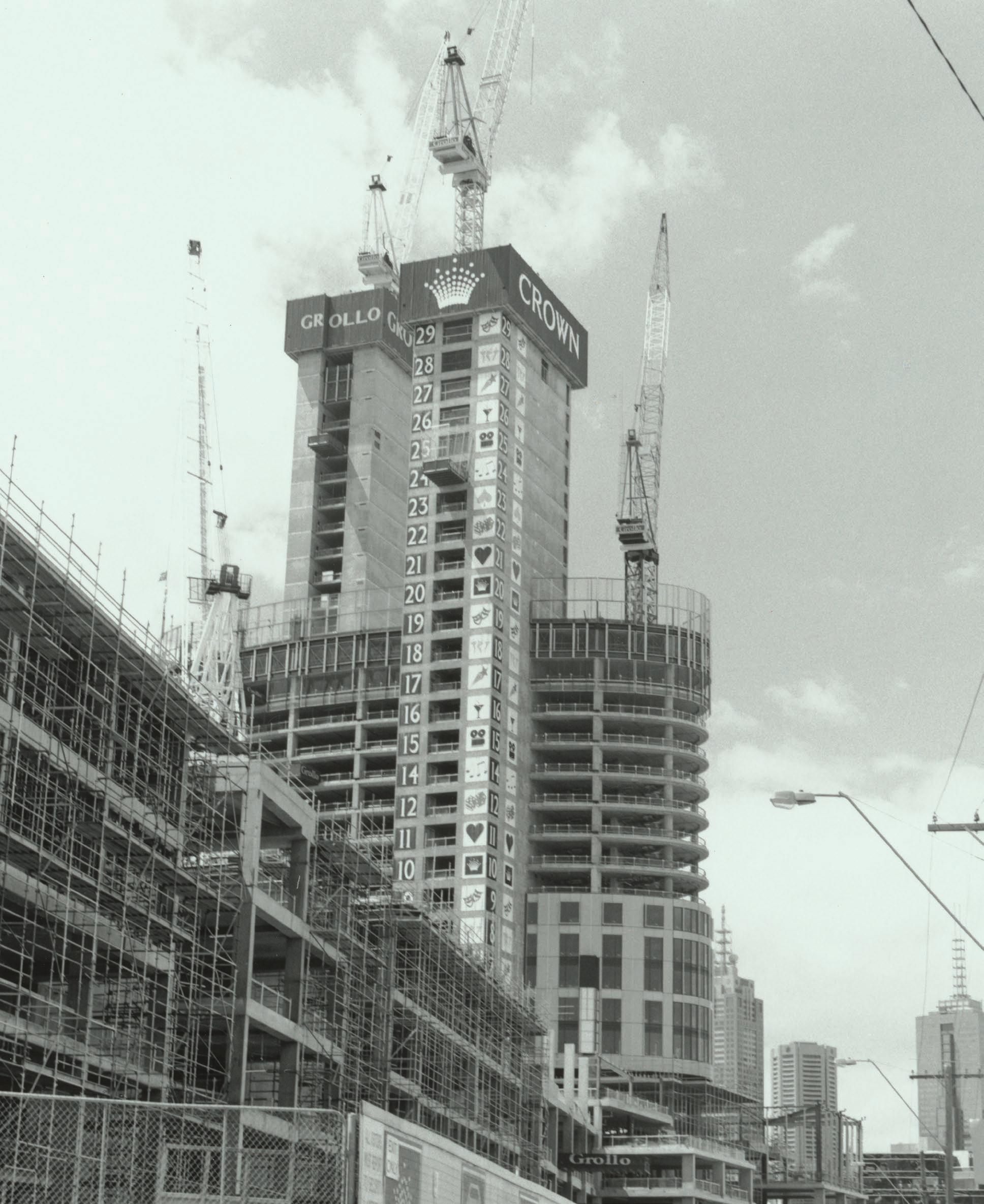
With business confidence gradually returning, it was only a matter of time before construction began moving ahead on major commercial developments around Melbourne. Building owners were also upgrading their facilities and A.G. Coombs soon had its project teams back in the CBD with refurbishment contracts for Treasury Place, 140 William Street and the Commonwealth Bank Building at 385 Bourke Street.
One of the most talked about projects in the mid-1990s was Melbourne’s Crown Entertainment Complex. Crown Casino had already opened its doors to the public in 1994 at a temporary location in the World Trade Centre on the north bank, or city side, of the Yarra River. Meanwhile, a much larger complex (including shops and entertainment areas) was now being built across the river at Southbank.
Grocon, the builder, believed that the development was too large for one mechanical services contractor to handle, and made it known that separate contracts would be awarded for different sections of the complex. Even so, the divided sections were still considered major projects in their own right, and after the bleak years of recession, people were soon chasing the same jobs. Keen to enhance their chances, Philip Coombs and Barry Smith, then Managing Director AE Smith & Son, decided to bid for one of the larger sections of the complex as part of a joint venture.
The proposal made sense, not just in terms of securing work for everyone, but also because both companies had a similar culture. “We were fierce competitors,” said David Seedsman, “but there was a mutual respect, which made it work.” Allstaff also came on board and together, as the AAA Joint Venture, they won the contract to install the
services in the podium section of the complex (which included the gaming areas, ballrooms, restaurants and cinemas) as well as supporting infrastructure and gas features.
After some preliminary sorting out of roles, project tasks were divided equally. In the drafting area, for example, five people from each company (plus an additional two from A.G. Coombs) worked full time in rented offices near the construction site. Each company also assigned an equal number of engineers, tradespeople and receptionists to the job, with an independent management structure resolving the lines of reporting. The venture, with its equal resourcing, worked well, and laid the foundations for future partnerships.
For A.G. Coombs, the Crown Entertainment Complex was a morale-boosting project at a time when numerous other companies were still struggling to re-establish their businesses. Nevertheless, as staff recalled, it was still an incredibly tough environment in which to be operating, with building companies grinding contractors down to the last cent if they could, and in some cases expecting financial hardships to be borne by all service providers.
Philip Coombs remembered stepping out of a staff function to take a call from a builder, who then proceeded to inform him that a large sum of money owing to A.G. Coombs would not be paid, because if the builder was hurting financially, then all contractors should be sharing “some of the pain”. Despite these bruising exchanges – not to mention the constant financial worry – the services were always delivered and massive complexes like Crown were constructed, completed and commissioned.
two sides of
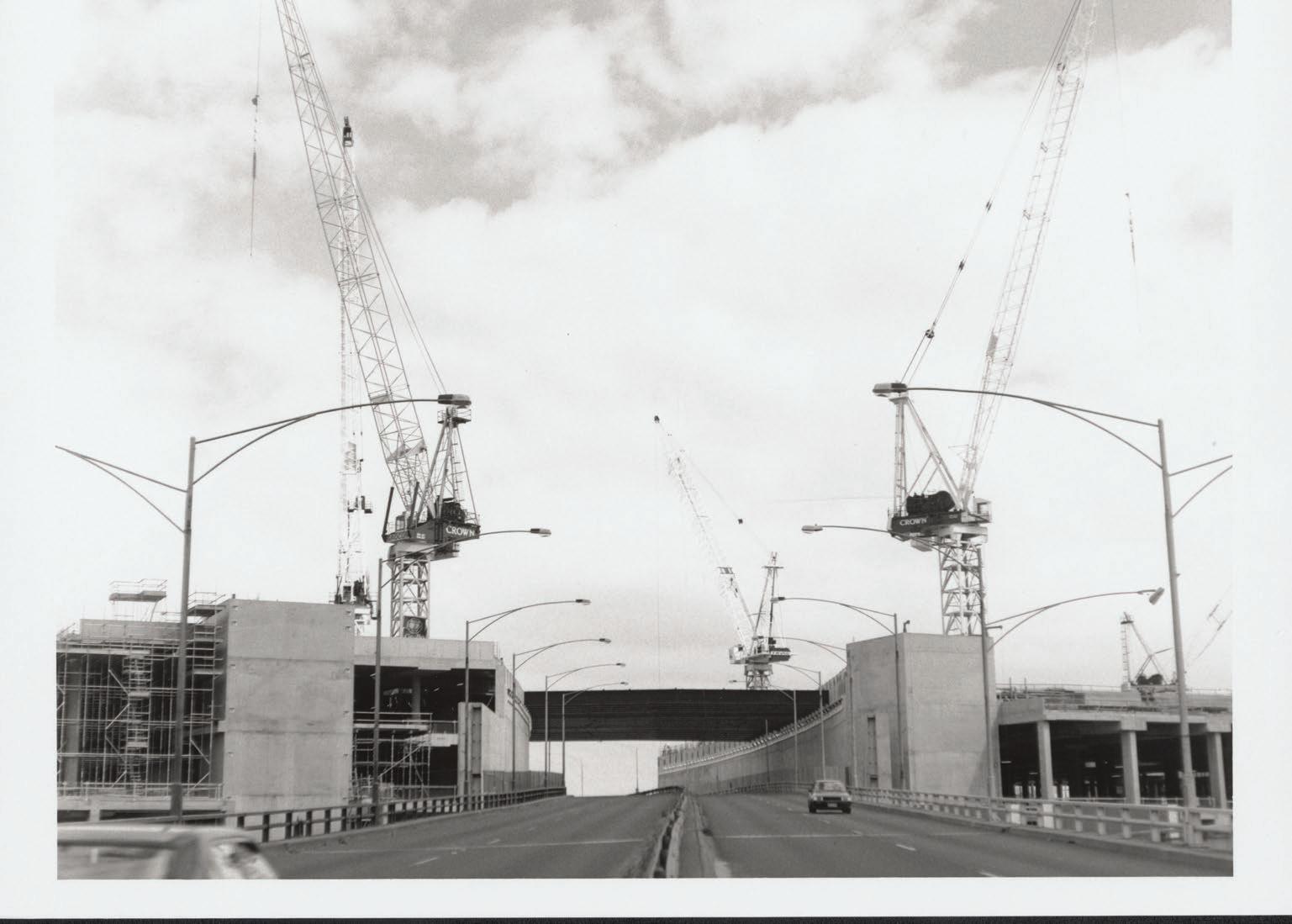
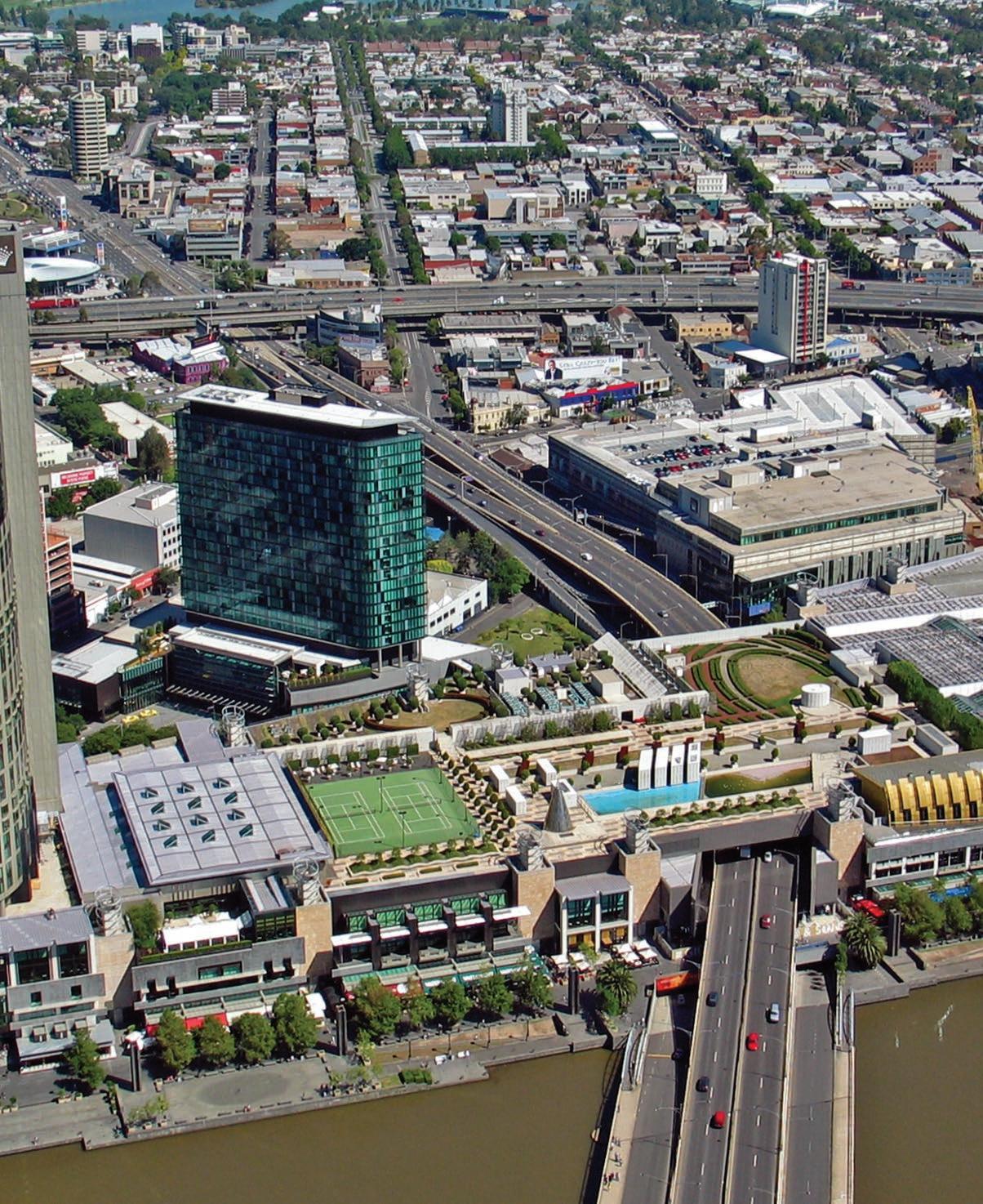
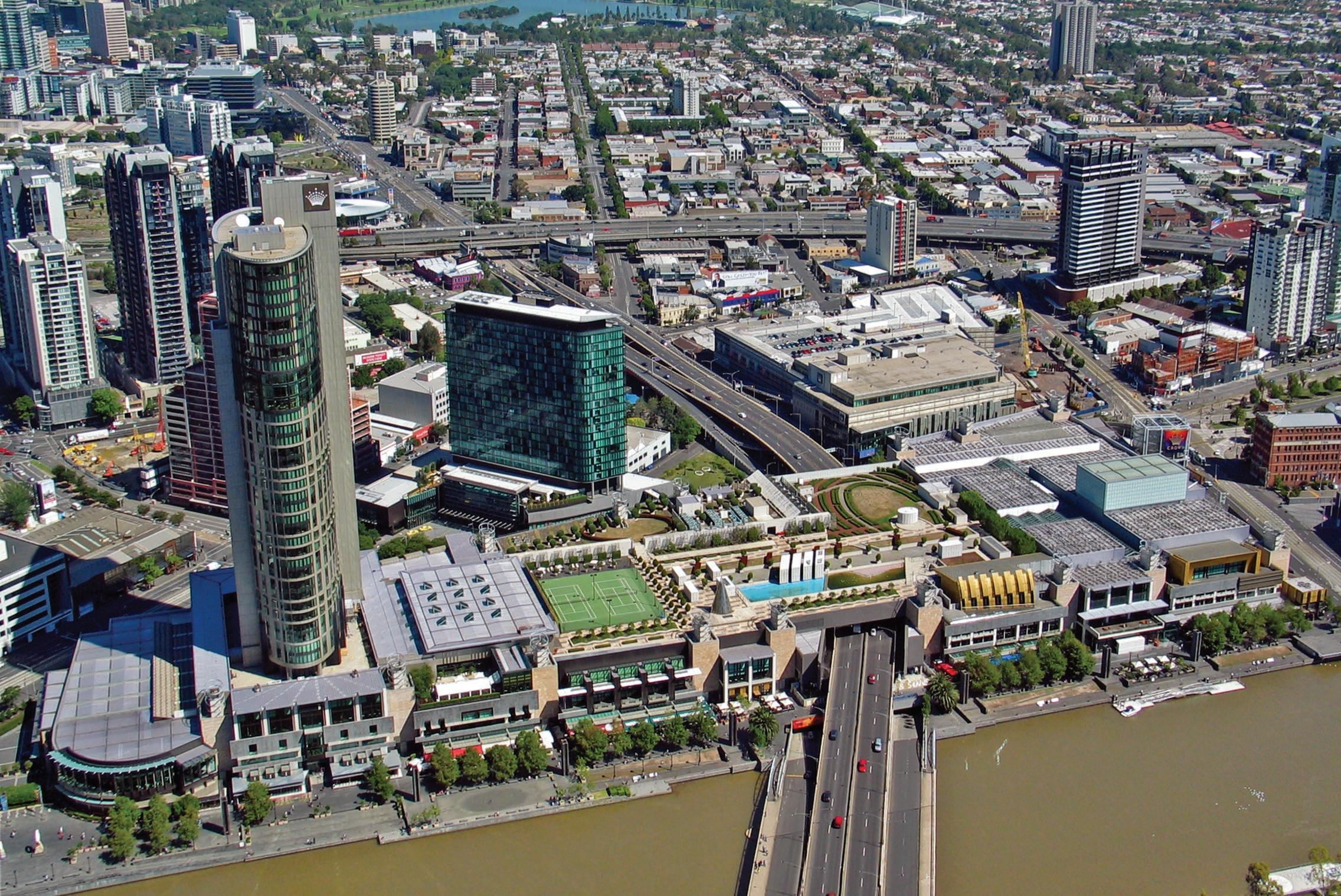
After opening in 1997, the Crown Entertainment Complex began attracting visitors to its numerous designer boutiques, restaurants and bars. This image (taken in 2008) shows the luxurious Crown Towers hotel towering above the extensive podium area with its food and retail outlets stretching along the south bank of the Yarra River.
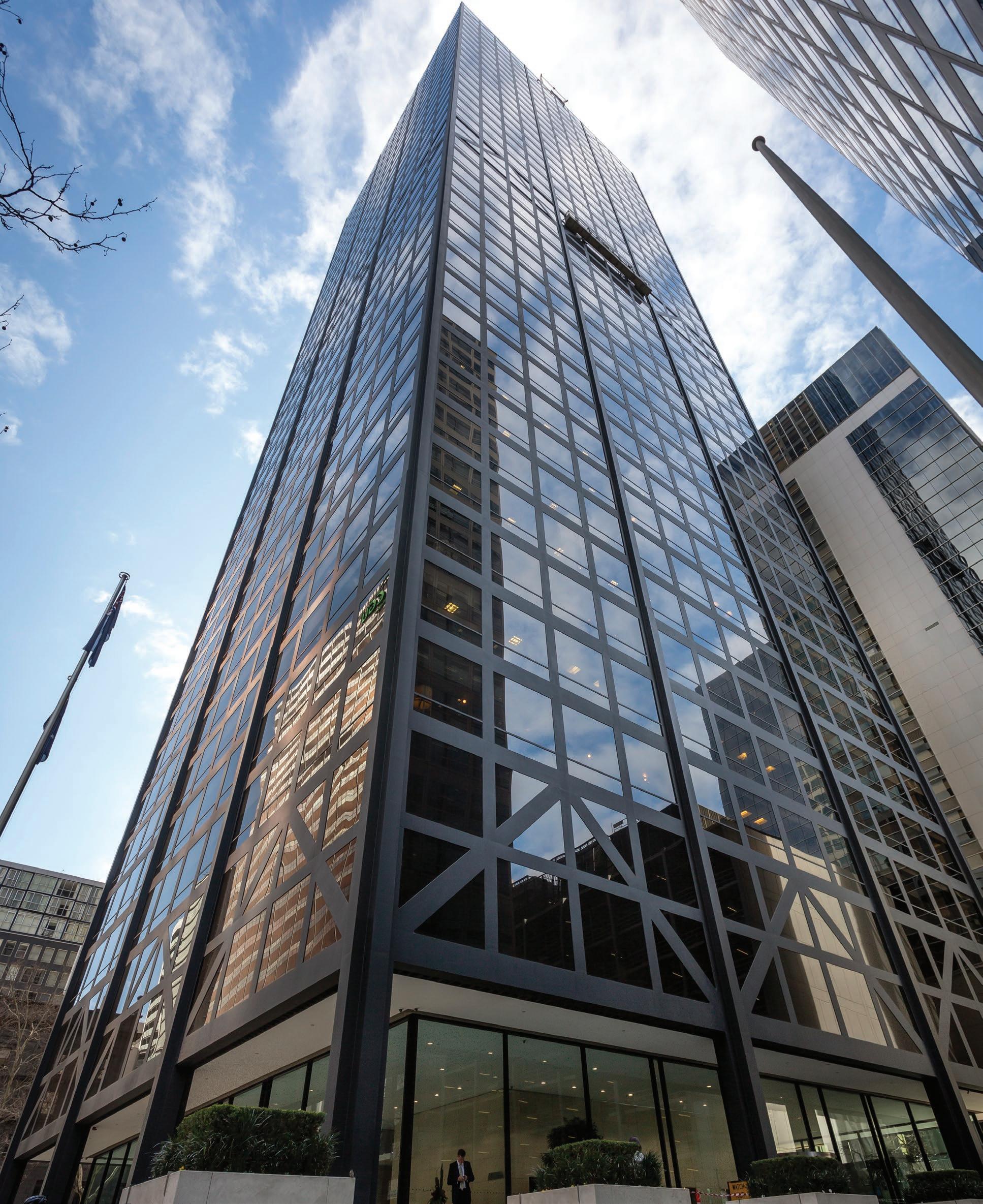
A.G. Coombs upgraded the mechanical services at 140 William Street (formerly BHP House) during the 1990s. Designed by Yuncken Freeman, the building was completed in 1972 and is today considered one of Melbourne’s heritage skyscrapers.
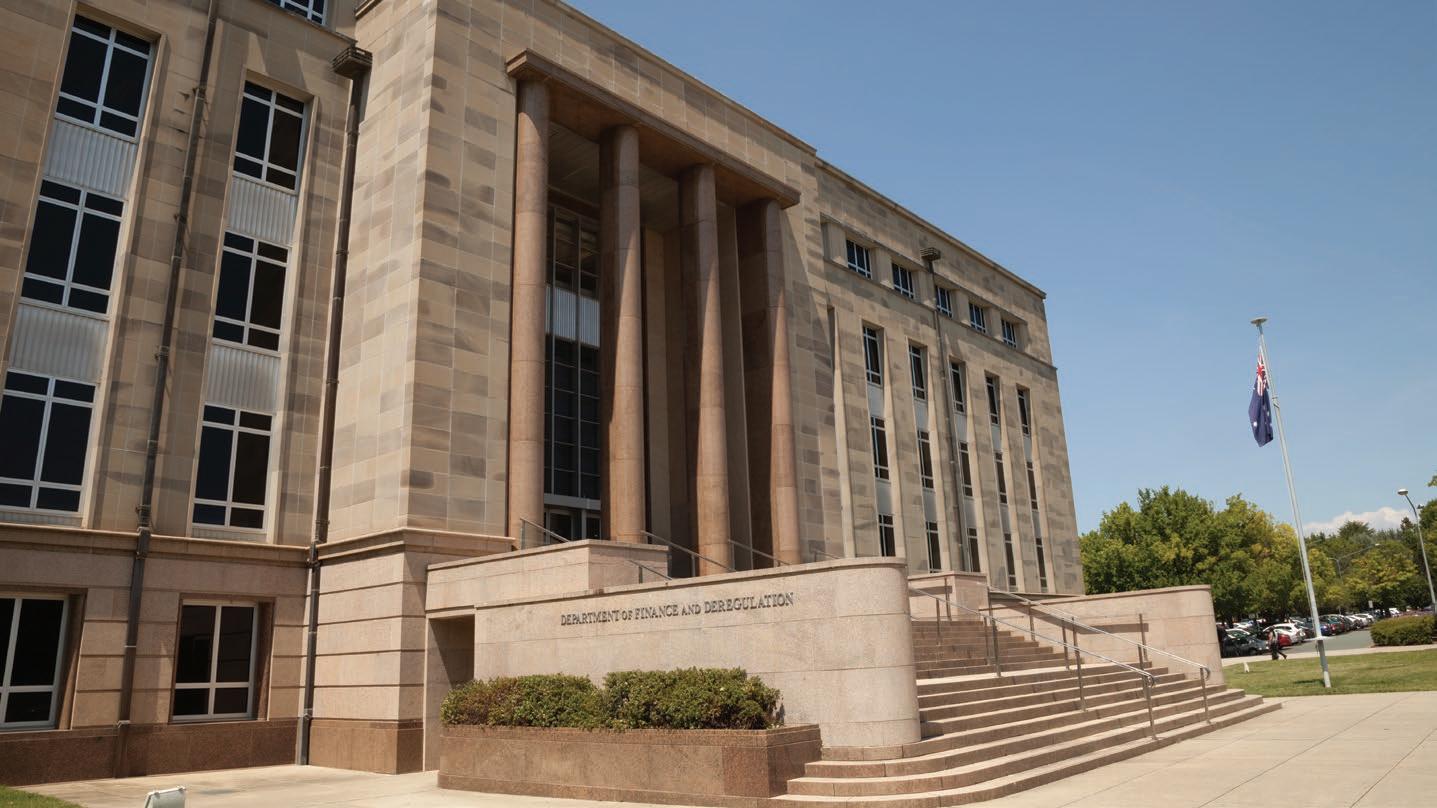
The John Gorton Building – originally known as the Administrative Building – holds the record for the longest period of time (some twenty-nine years) to construct a public building in Canberra. The building’s history dates back to 1924 when the Australian Government held a design competition for a facility large enough to accommodate several government departments in Australia’s new capital city.
Following selection of the winning design by Sydney architect George Jones, construction moved ahead in 1927, but ceased in 1929 due to the Great Depression. Although the Second World War delayed construction yet again, work recommenced in 1947 with a new and larger design by Australian Government architects.
Sited according to Walter Burley Griffin’s design for the layout of Canberra, the Administrative Building was finally completed and occupied in 1956. This marked the start of government departments relocating to Canberra from Melbourne, the original seat of government.
Over the years, the building has housed a number of key tenants including the Department of Foreign Affairs and Trade (its new title from 1987), the Department of Finance and Administration (October 1997 to December 2007) and the Department of Finance and Deregulation (December 2007 to September 2013). A fine example of the inter-war stripped classical style, the building features symmetrical facades, a classical column form with distinctive portico, simple surface treatments and an overall design emphasising verticality. It was renamed the John Gorton Building in 1997 after Australia’s nineteenth prime minister.
Partnerships seemed to be in vogue where large projects were concerned, with the contract to refurbish Canberra’s John Gorton Building in the late 1990s bringing together not only different companies, but also different service providers.
The John Gorton Building was then home to the Department of Finance and Administration (DOFA). Other departments had also worked behind the building’s imposing classical facade, among them the former Department of Foreign Affairs, which in 1976 installed an underground communications bunker, where it handled all official cables between the Australian Government and addresses outside the country. The communications bunker – described as “a secure but windowless office” – was used until 1996 when Foreign Affairs moved to new premises. By then, the entire building desperately needed modernising, if only to bring in more natural light and improve the circulation of fresh air.
Normally, as part of the tender process, A.G. Coombs would have quoted only the mechanical services component of the project. DOFA, however, wanted a single point of contact for all the building services, and advised the interested parties that it wished to bundle everything together – with ‘everything’ meaning mechanical, electrical, fire protection, lifts and hydraulics. So, instead of having to appoint several subcontractors, DOFA would be awarding just the one all-encompassing contract when the building closed for refurbishment.
As people began negotiating with potential joint venture partners, three companies – O’Donnell Griffin, A.G. Coombs and Wormald – joined forces as OCW (the name derived from the initials of each organisation). The three-way union made sense, as key personnel from all three parties had previously worked as independent contractors on the Defence Signals Directorate. Now, as a team, they would be tendering to DOFA for the design, construction and commissioning of all the building services, which they would then subcontract and project manage.
The joint venture bid was successful and OCW proceeded to upgrade and integrate the services in one of Canberra’s most historic buildings, installing new systems to reduce energy costs and minimise the building’s environmental impact. Having one contractor responsible for everything proved advantageous, as it ensured that all the building services came together seamlessly and that the building functioned correctly once commissioned.
Following the completion of the multi-million-dollar refurbishment in 1999, the OCW joint venture secured a five-year maintenance contract for the building. The entire project also set in motion ideas for future service delivery and, several years later, prompted A.G. Coombs to establish Integrated Technical Management, a company that would focus specifically on managing and maintaining all the technical services within a building, in much the same way that OCW had operated. This enhanced A.G. Coombs’ emerging profile as a full building services company – a transformation that had been gathering momentum since the acquisition of Thos. Walker & Sons in the early 1990s.
Canberra’s famous National Triangle (or Parliamentary Triangle) contains some of Australia’s most notable buildings, among them Parliament House and Old Parliament House, the High Court, the National Library and the John Gorton Building (circled).
Not all of A.G. Coombs’ work was hidden from view within false ceiling spaces and basement plant rooms. The airlifting of chillers provided some impressive and very public aerial theatre.
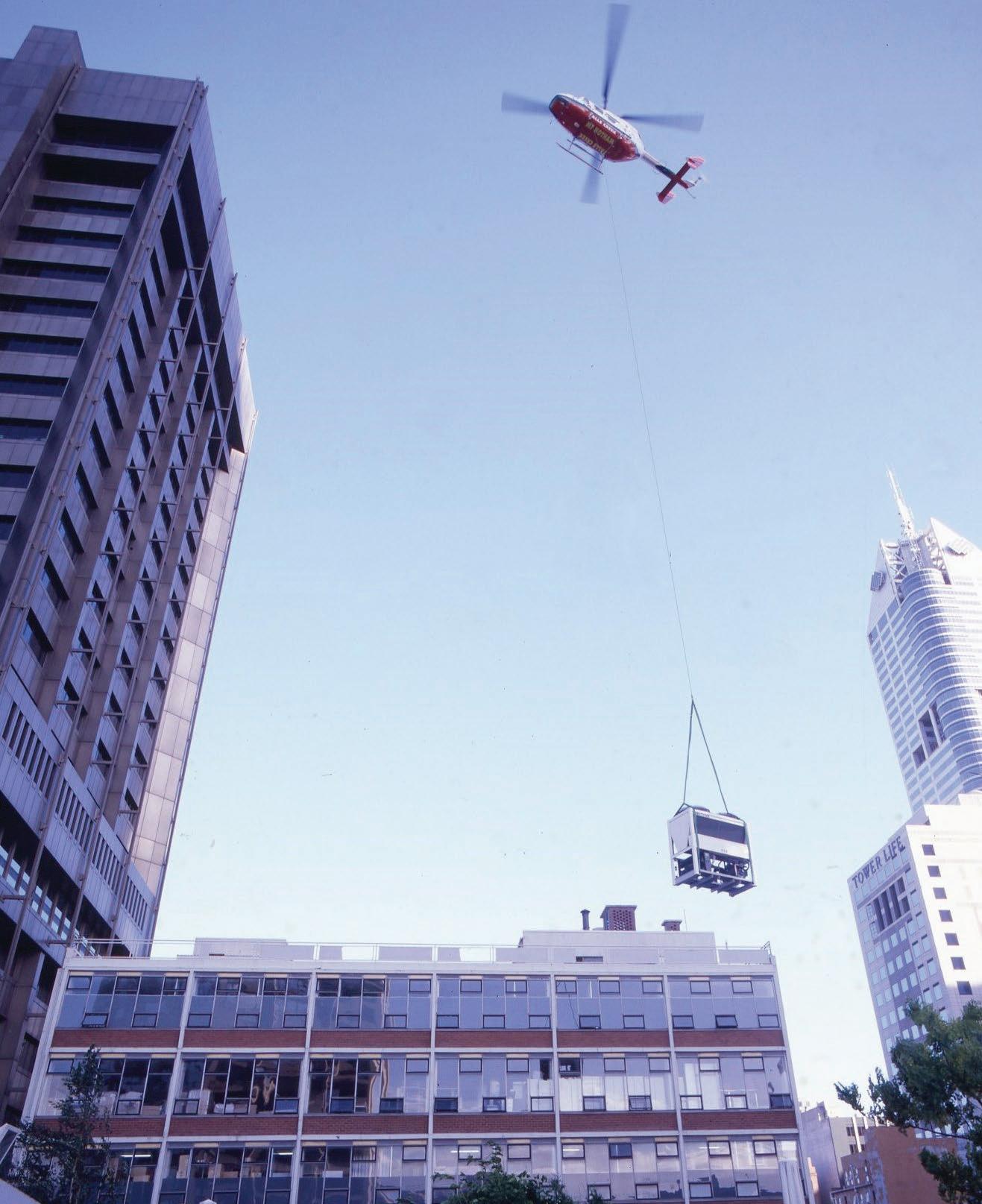
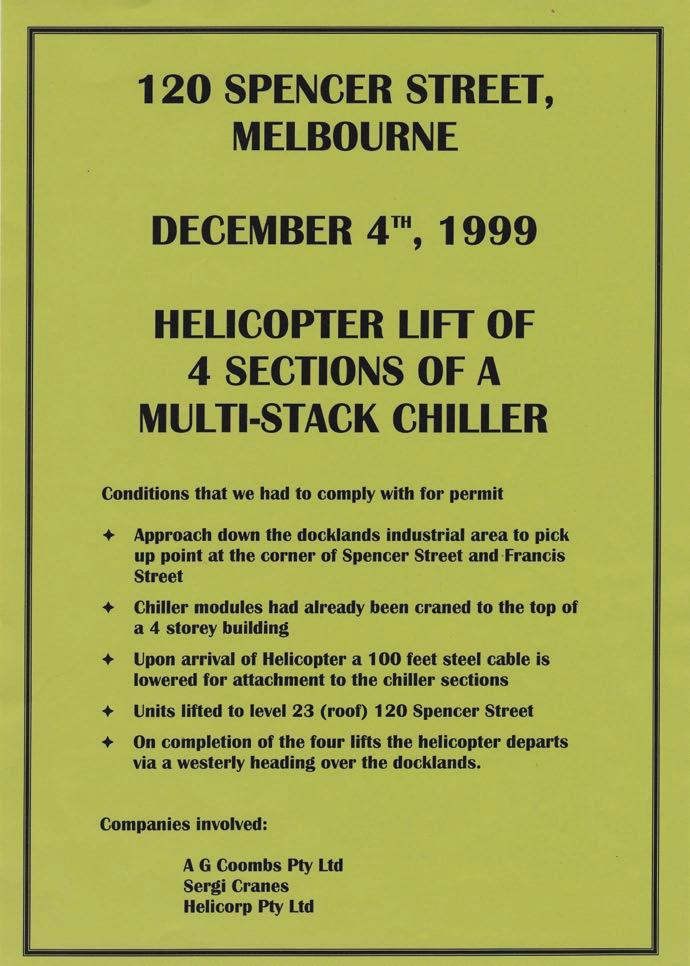
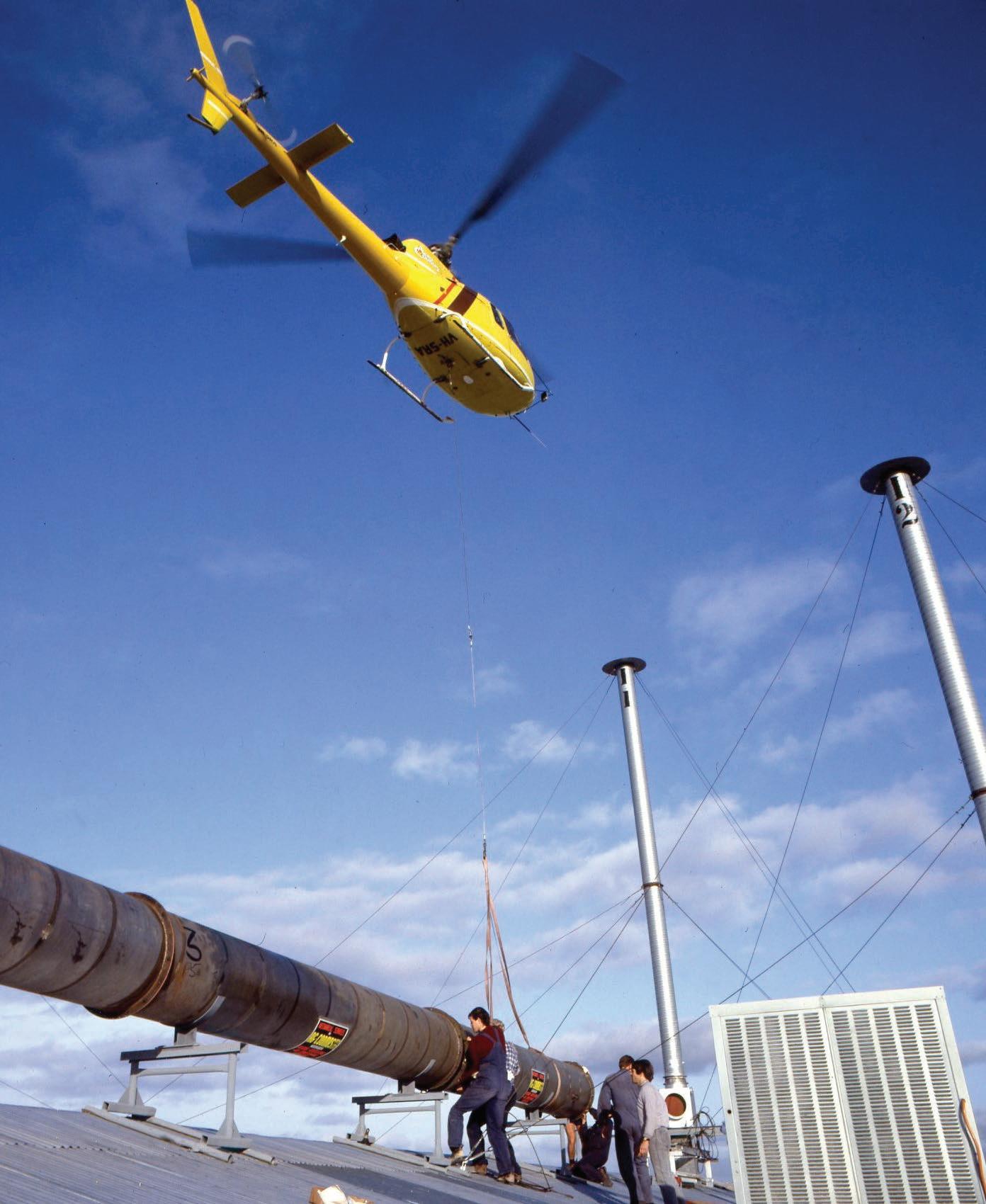
14 October 1920 – 17 April 1997
From the moment he started hiring tradespeople and apprentices, Allan George Coombs had expected nothing but the best from his employees. In return, he had demonstrated a rare commitment to the personal and professional wellbeing of his staff, and only the bravest of bank managers would have dared refuse him the money to keep his company going in times of crisis. On one memorable occasion, when company funds were running low, Allan had fronted up to the head office of the former Commercial Bank of Australia (now Westpac) and refused to leave until the bank agreed to pay all the wages.
Allan’s achievement in turning his small domestic plumbing business into an industry leader was imprinted on every building sign, brochure and service van that bore his name. Industry associations like AMCA would not have been created without him, while SMACNA could thank him for his tireless efforts to establish an industry standard for the manufacturing of ductwork in Australia.
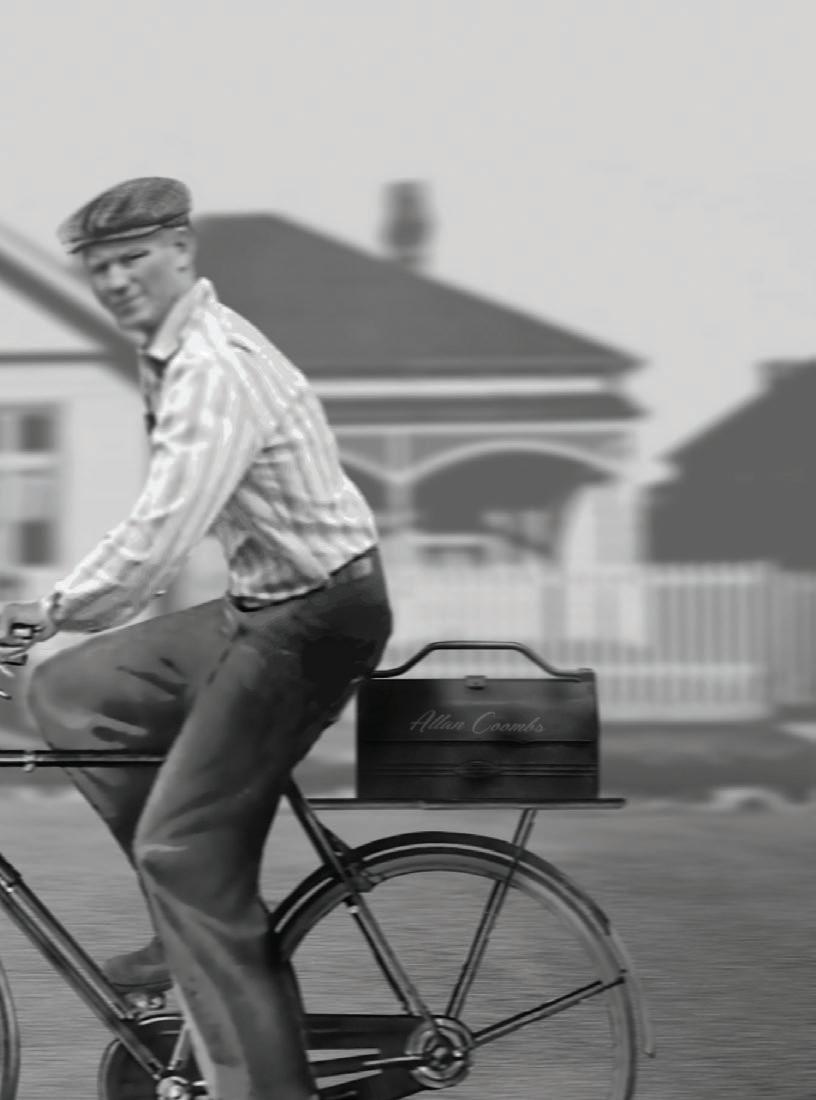
Allan’s commitment to advancing the industry he loved had been rewarded with an Order of Australia in 1979. Yet, for many people, it was the workplace culture that truly defined his legacy, and was something highlighted at his memorial service at Commonwealth Golf Club, a course he used to play, almost religiously, once a week.
As people reminisced, it was easy to appreciate the things that made the A.G. Coombs workplace so exceptional. There was the celebration of good times and the pulling together during the tough years, when Allan himself had put everything on the line. There was also genuine recognition of people’s abilities and a willingness to help them do better, as well as a shared sense of pride in what had been achieved.
“People were steeped in the [culture of the] company,” said longstanding client Norm Davies, noting how Allan’s employees would have done anything for him. For Allan to have cultivated such loyalty, while growing his company into a major contractor, capable of air conditioning the largest commercial buildings in town, was a remarkable accomplishment by any measure.
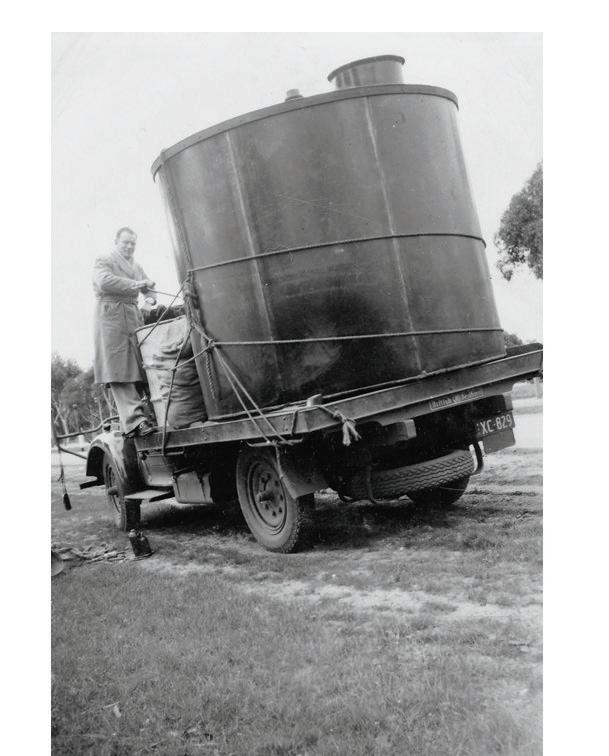
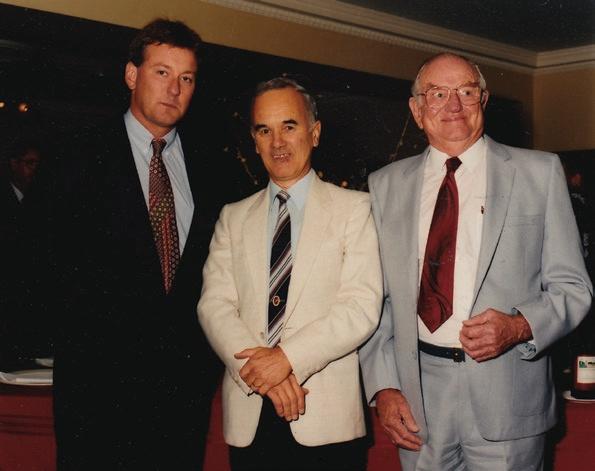
As the years went by there was a growing realisation that the business could not stay a family concern forever. Indeed, a chapter closed in the history of A.G. Coombs when company founder Allan Coombs passed away after a long illness on 17 April 1997.
Although Allan had bowed out of the business in the mid-1980s, the role of employees in the company’s evolution had always been important to him, and it was his fervent wish that strategies be implemented to perpetuate A.G. Coombs well into the future. It was a feeling shared by his son Philip and resulted in the decision to encourage key employees to have some ownership in the business.
The introduction of employee share plans in 1999–2000 was in keeping with Allan’s belief that you needed your employees as much as they needed you. The plan was open to eligible employees (seniority, length of service and experience were important) and, in many respects, equated to a partial management buyout of the company. Its purpose, in essence, was to retain good people in the business, while giving them a vested interest in the company’s future.
These developments also coincided with the untangling and gradual winding up of the various family companies. By 2000, the A.G. Coombs Group had bought most of the company properties from the Coombs family, a process that had commenced in 1990 with the sale of the Moorabbin complex to the Group. It also highlighted the fact that A.G. Coombs was becoming more corporate in its structure, and that the family involvement in the business was decreasing.
“Allan Coombs always prided himself on professionalism, so he would have seen corporatisation as a good thing,” said then General Manager Russell Telford. The transition to a corporate structure, with senior employees having a significant shareholding, was regarded in some quarters as one of the key developments contributing to A.G. Coombs’ long-term success.
There was no question that the company had just experienced a rollercoaster of a decade, from the depths of the recession in the early 1990s to an intensive period of rebuilding and recovery spanning several years. The outlook, though, had improved considerably, with several high-profile contracts taking the company’s project teams back into the city’s commercial hub, and even north to Canberra as part of a large joint venture.
A.G. Coombs’ structure was also evolving, while its profile as a building services company was gradually being strengthened. The fact that it was now hiring more apprentices was yet another good indicator of growth. Getting to this point had required some careful navigation on the part of Philip Coombs and his managers as they steered the company through some turbulent waters. However, all the work done during this time would provide the basis for future growth in the rapidly approaching new millennium.

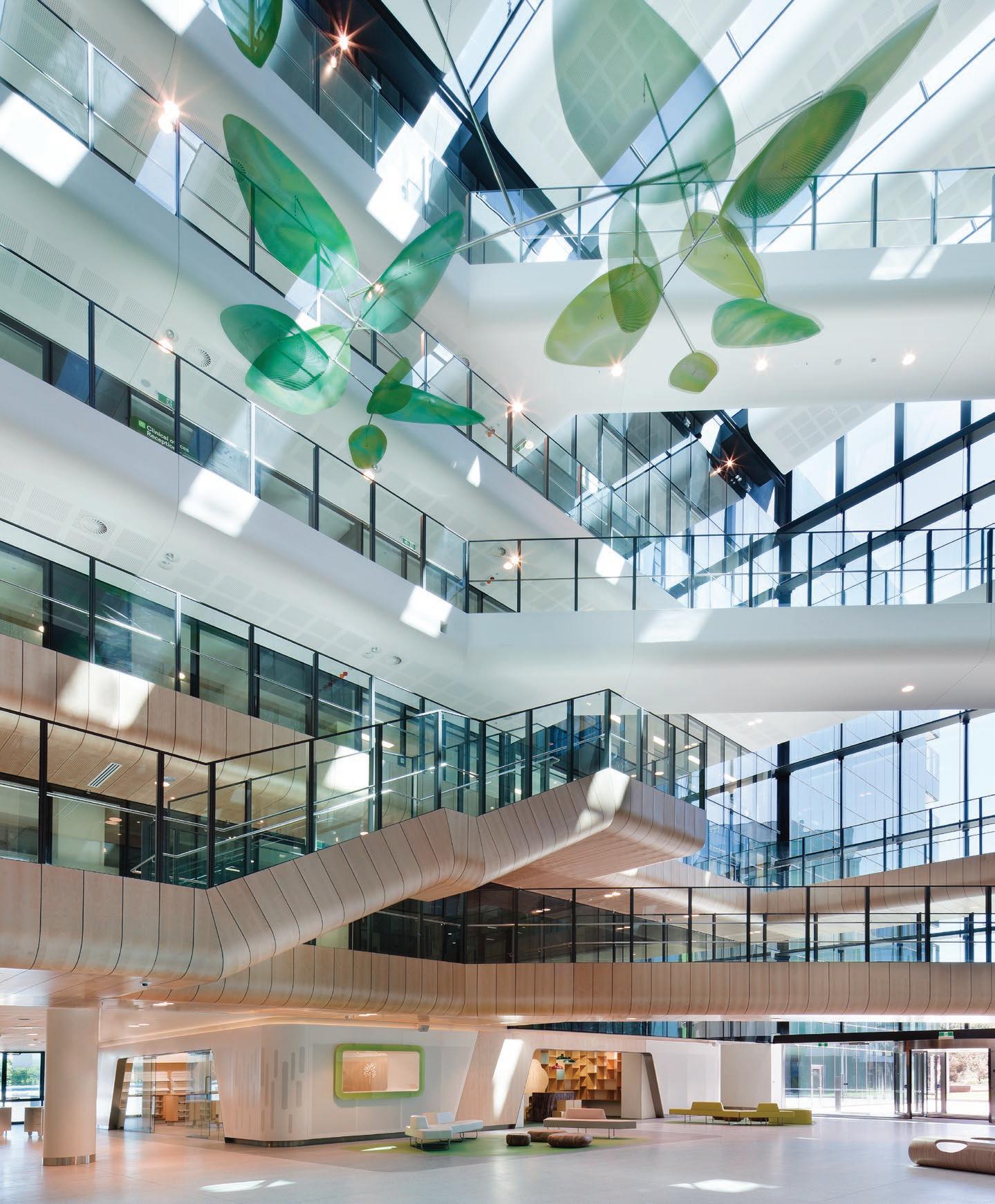
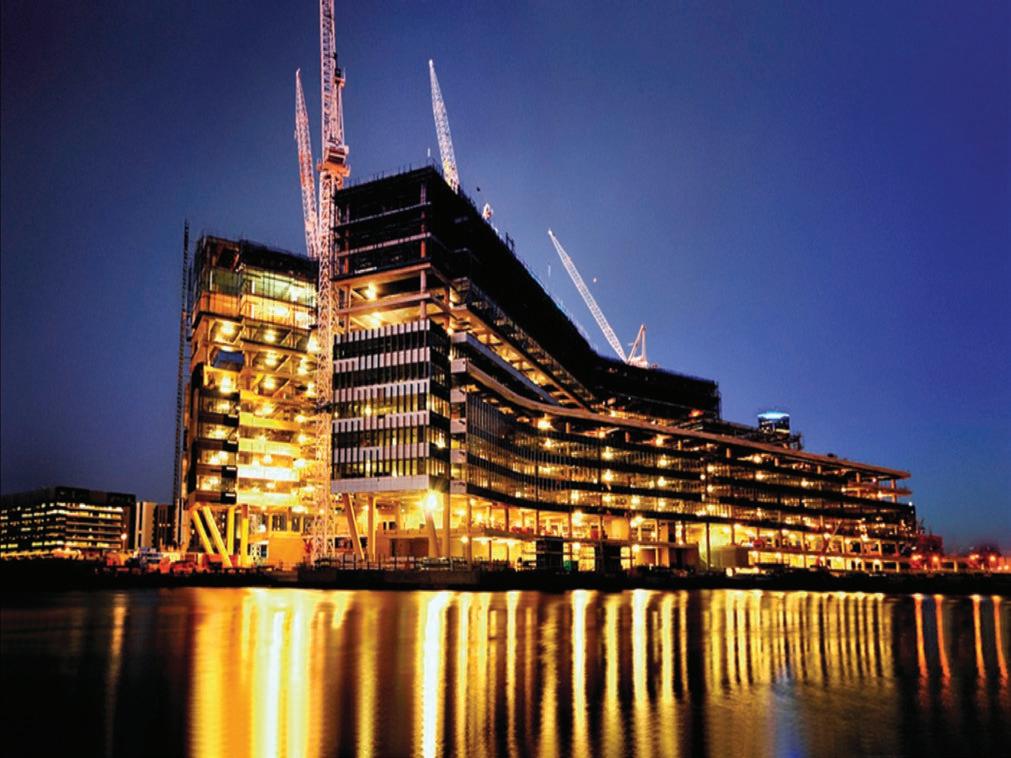
Many businesses around Australia welcomed the new millennium as a milestone opportunity to redefine their corporate profile. A.G. Coombs was no exception and new ideas – indeed new visions – were emerging as to how the company could carve out a more consultative role as part of its whole-of-life model. The ‘green’ challenge would also drive the business forward, with the emphasis on sustainability and energy-efficient buildings providing a new focus for the company’s expertise.
As the years went by, four significant events highlighted the company’s journey in terms of its past and its future. In 2000, A.G. Coombs thought strategically about its technical strengths by redefining itself as a technical specialist with practical capabilities. The following year saw a change of leadership when a non-family member stepped into the role of managing director. Then, after years of keeping the business close to home, A.G. Coombs began expanding nationally from 2009 and putting its name on interstate branch offices in Sydney, Canberra and Brisbane. Finally, in 2012, senior company executives acquired the remaining family shares in the business, while electing to continue operating under the A.G. Coombs name.
All these developments provided momentum and a fresh approach. They were in keeping with A.G. Coombs’ long-held objective to perpetuate the business and provide a specialist, all-encompassing service from project commencement to completion and well beyond via ongoing maintenance and technical management contracts. Importantly, A.G. Coombs’ can-do culture and core values (emphasising teamwork, continuous improvement and good corporate citizenship, among other things) helped unify the company during a time of considerable change.
January 2000
The new millennium is welcomed across the world. It was celebrated one year too early – it would officially begin on 1 January 2001.
September 2000
Sydney hosts the Olympic Games.
September 2001 9/11 terror attacks in America.
December 2004
Boxing Day tsunami (Indian Ocean).
March 2006
Melbourne hosts the Commonwealth Games.
January 2007
Apple launches the first-generation iPhone.
August 2007
Start of the Global Financial Crisis.
February 2008
Australian Prime Minister Kevin Rudd apologises to Aboriginal and Torres Strait Islander peoples, particularly to the Stolen Generations.
February 2009
Black Saturday bushfires in Victoria.
June 2010
Julia Gillard becomes the first female prime minister of Australia.
October 2015
A.G. Coombs celebrates 70 years.
Corporate initiatives can evolve in different ways, and for A.G. Coombs it was a typical working lunch in early 2000 that delivered a string of ideas for growth.
Bryon Price, who was then working for Lincolne Scott consulting engineers, remembered sitting down at a city restaurant with Russell Telford – who by 2000 was in charge of A.G. Coombs’ contracting operations – and drawing overlapping circles on the paper tablecloth. As he drew, he floated the idea of a new business unit that could tie all the other A.G. Coombs businesses together. What had long appealed to him, he explained, was the company’s innovative mindset. “A.G. Coombs had a reputation for doing things differently,” he said, and for always thinking, “Is there a better way we can do this?”
Underpinning their discussions was a belief that A.G. Coombs was already offering customers more than what you would expect from a traditional mechanical services provider. It was a ‘thinking’ company as well as a ‘practical’ one, and there was no reason why they could not market this expertise and use it to provide a more complete service to clients.
Through his consulting work with Lincolne Scott, Bryon was already familiar with A.G. Coombs’ way of working. Having observed the company’s technicians in action, he came to appreciate how they were very strong technically and particularly strong on commissioning projects – in short, "a little out of the box" he said, and refreshingly different from their competitors.
Over the years, A.G. Coombs’ willingness to sink its teeth into design and engineering issues meant there was now a substantial set of skills and expertise within the business. However, while employees often assumed a consulting role with customers by providing advice on issues outside the scope of the initial contract, the whole notion of consultancy was still a niche area for the business.
Russell had listened to Bryon’s ideas with interest. Having entered the industry with qualifications in mechanical plumbing, he had quickly transitioned into senior management.

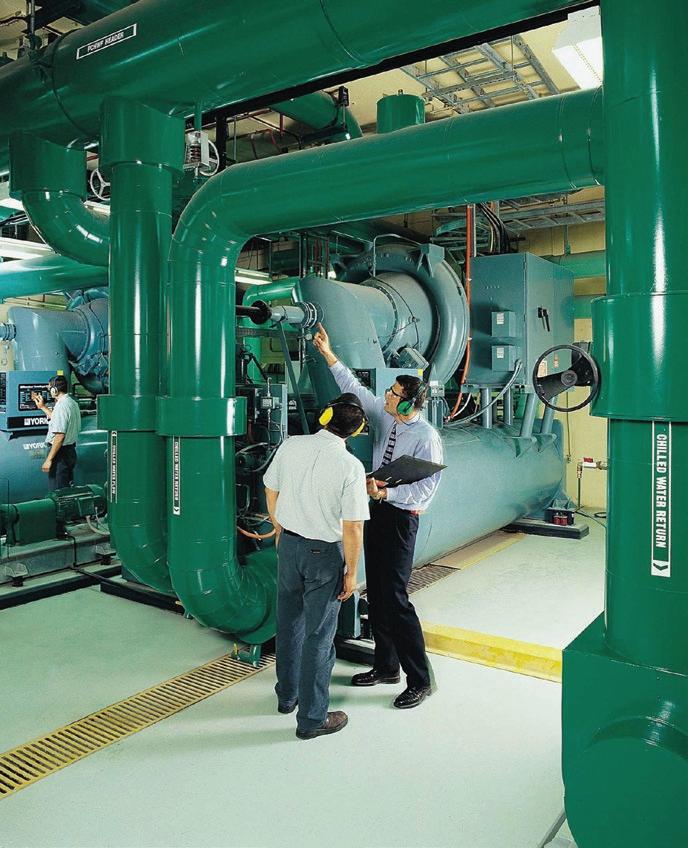
“Russell was always open to new ideas and information,” said Geoff Moore, former General Manager Victoria for Lendlease. “He also has a gift for connecting with people at all levels.”
Given the company’s technical reputation, Russell immediately saw the potential for A.G. Coombs to “move up the food chain” and grow its profile as a building services specialist. After all, he pointed out, if you could provide the right advice at the outset, you could help people tick all the compliance boxes, address sustainability issues, overcome technical hurdles and put in place budgets to get the job done.
“We felt there was an opportunity in the market for a specialist provider that could fill three specific roles,” said Bryon. This organisation, he explained, would design, construct and commission all building services. It would then maintain all the services once they were commissioned. And it would also advise clients on how to achieve the best outcomes at any stage in the building’s life cycle. The Projects and Service businesses had the first and second roles covered. The third role – that of advising and problem solving – had the potential to move A.G. Coombs up the food chain.
Not long after meeting Russell for lunch, Bryon was invited to present his ideas to the A.G. Coombs Board, and was later offered a position with the company to progress the concept. He joined A.G. Coombs in July 2000 and would later be appointed Strategic Development Director – an apt title for someone who not only had a strong vision for repositioning the business, but who was highly skilled at joining the dots to reveal the bigger picture.
Having received the green light to promote a new business unit known as A.G. Coombs Advisory, Russell and Bryon launched the new concept for the A.G. Coombs Group at the Facilities Management Association of Australia Conference in October 2000. Effectively, A.G. Coombs was now being presented as a one-stop building services organisation with three distinct yet complementary areas of service: Projects, Service and Advisory. The word ‘Advisory’ was carefully chosen, partly to avoid confusion with the role of external consultants, but also because A.G. Coombs’ employees could now provide advice on everything from big-picture project management to troubleshooting specific problems.
The Advisory capability and the whole-of-life model would soon differentiate A.G. Coombs from its competitors. It also formalised something the company had been doing for many years. This was effectively the fork in the road –the moment when A.G. Coombs began repositioning itself as a technical services company. It also gave rise to the expression "thinkers with practical bones".
Another person who would play an influential role in bringing the Advisory concept to fruition was Warwick Stannus. Like Bryon Price, he had also worked at Lincolne Scott and enjoyed a professional association with A.G. Coombs prior to joining the company.
Russell Telford recalled his conversation with Warwick when he approached him to join A.G. Coombs Advisory. “I remember saying that I wanted him to help us take A.G. Coombs from a trade-based company with technical skills to a technical services company with trade-based capabilities.” This goal would be achieved by 2010.
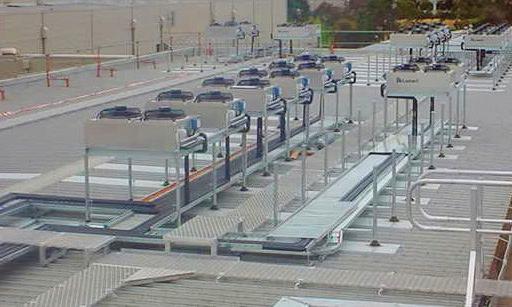
Advances in computing and the need for faster connectivity resulted in data centres becoming more sophisticated. Air conditioning is vital for controlling temperature fluctuations and humidity, as any rise in ambient temperature can cause equipment to malfunction.
In its role as head contractor, A.G. Coombs supervised the infrastructure upgrade of the ANZ Data Centre (left) and was recognised for its work by Engineers Australia in 2003.
Extending the company’s scope of services into the Advisory area provided a new focus for the years ahead, while in other developments, Philip Coombs decided that the time was right for a non-family member to run the business. The task of guiding everyone along the company's new path fell to Russell Telford who, in April 2001, became Group Managing Director. Meanwhile, Philip, the company’s major shareholder, remained on the Board, and several years later would take over the chairman’s role from Jack Melbourne.
Russell Telford’s road to the managing director’s office effectively began in the post-recession days of the early 1990s, after Philip Coombs singled him out to manage the Special Contracts Division (SCD). By 1996 he was heading up all the company’s contracting operations, an appointment, he admitted, that took him a little by surprise.
Those who had worked with Russell in his site supervisor days were well aware of his abilities, with Ray Sherry recalling how people were completely blown away by his presentation skills. “He put out the first PowerPoint presentation I’d ever seen and I just thought, ‘Wow, where has this bloke come from? You’re a plumber!’ And I knew then there was a drive there that was different.”
Russell’s trade background and his ability to articulate company initiatives were important during the rebuilding process in the 1990s, especially as he was able to identify with many of the people he supervised. His challenge in 2001 would be to develop a team that could grow the business in new directions.
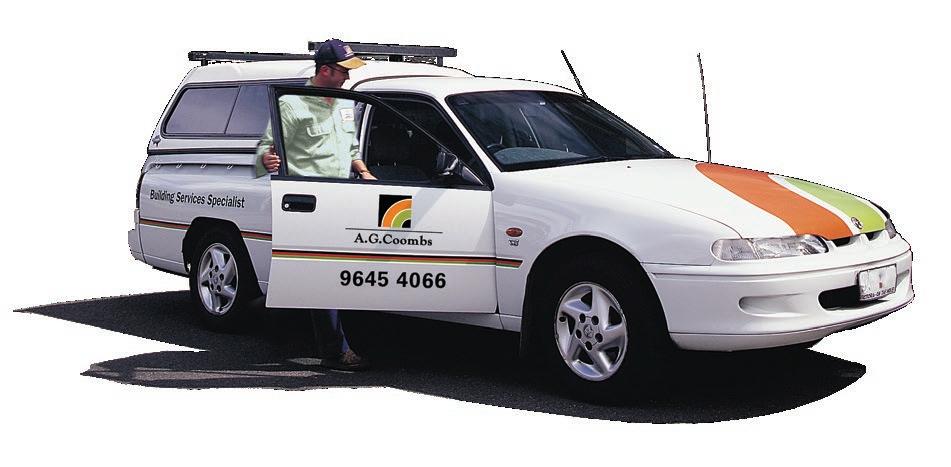
“We faced one thing very clearly at that stage,” said Russell. “Geographical spread around core business or the development of the whole-of-life model.”
By now, ‘whole of life’ had been elevated into a marketing catchphrase, denoting a clear point of difference from other providers. After reviewing the two options, plans to move interstate were temporarily filed away in favour of strengthening the whole-of-life model and building the company’s profile in Victoria.
Around this time, the A.G. Coombs Group Pty. Ltd. was being developed from a holding company (with three separate businesses) into a parent company with a number of subsidiaries. The new structure saw all subsidiary companies feeding directly into the parent company, which in turn allowed resources to be spread more strategically across all the Group’s operations.
As the restructuring continued, management noticed that the Service business seemed to lack the cohesiveness of other areas of the Group. This was mainly due to the nature of its work, with Service technicians – who tended to operate individually or in small units – driving around town to maintenance jobs, where they serviced things that others had built. People in Projects, however, worked on major contracts and operated in larger teams, with all the camaraderie and sense of achievement associated with being part of a collective effort.
However, the Service business had customers – lots of customers – and being on the ground with a maintenance contract gave people in Projects a better chance of winning additional work if a building needed extending or refurbishing. Not only were these jobs important, the Service business also had the capacity, in Russell’s opinion, to lead them interstate.
Interestingly, the feeling around this time was that the culture in the Service Division was not as strong as other areas of the Group, which in turn prompted management to think about the entire workplace and, consequently, about the need to define, if possible, this much talked about culture.
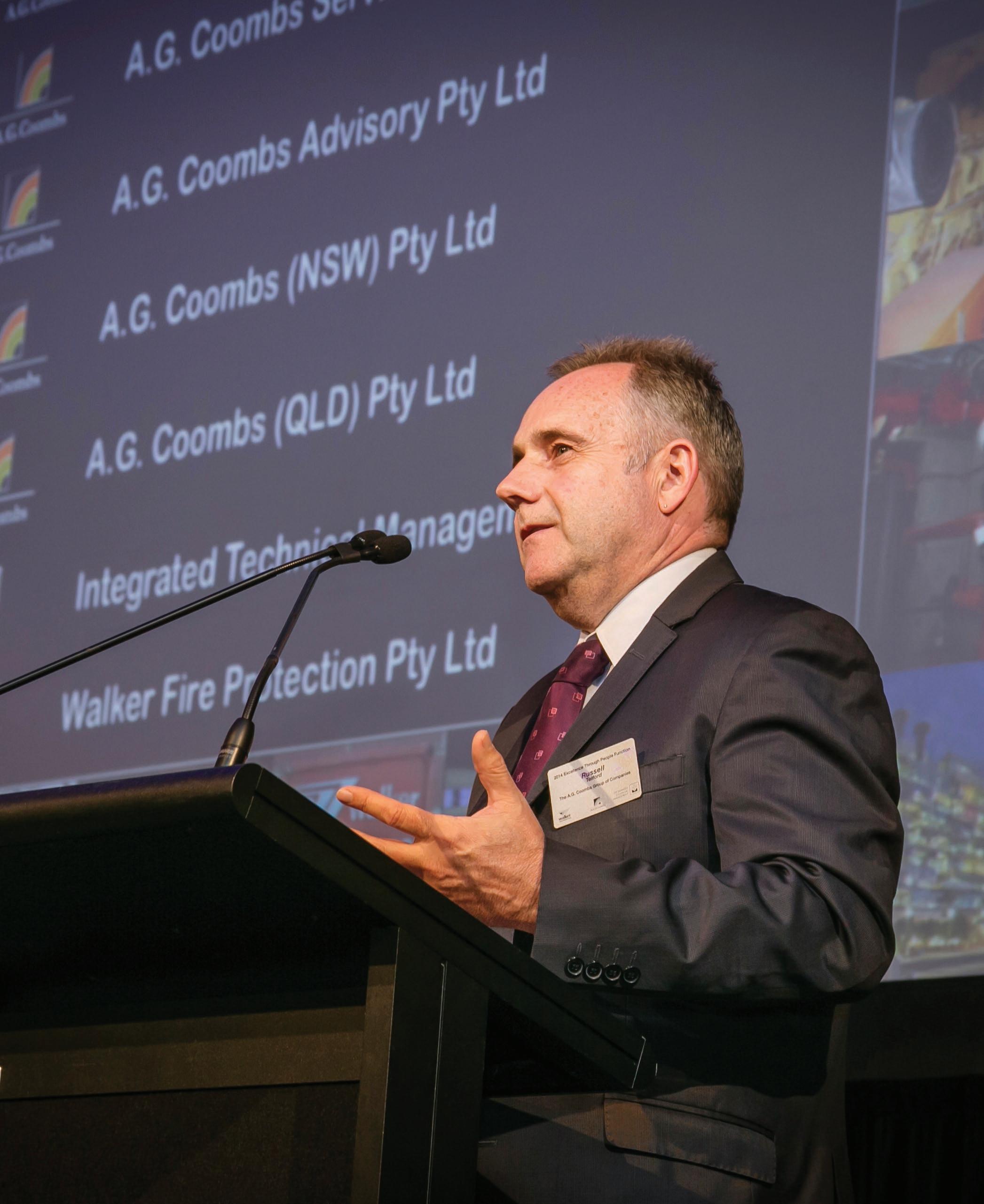
A.G. Coombs’ culture was legendary. Indeed, there were countless stories of employees who had left the company for one reason or another, only to return several years later seeking re-employment because their experiences elsewhere had not measured up. The culture was the glue that held everyone together, particularly in the Projects business, and was much admired by those outside the company. “There was a belonging there,” said engineering consultant Norm Davies.
Despite this observation, there were now concerns that the very essence of what had made A.G. Coombs such an enviable workplace might have been diluted by several years of internal restructuring, not to mention an influx of new recruits who were unfamiliar with the key identities in the business and how the company had evolved. “With all the changes taking place we did not want to compromise the culture,” said Strategic Development Director Bryon Price, who accepted responsibility for talking to employees and committing this “legendary thing” to paper.
Essentially, it was people’s reflections and anecdotes that shaped what became known within the company as the Culture Document. A.G. Coombs, they concurred, was a “fun place to work” with a “nurturing and understanding” environment. The little gestures were also remembered.
Paul Eagling, General Manager Service.
Paul Eagling would play a pivotal role in reinvigorating the performance of the Service operation after joining the company’s management team in 1999. An engineer by training, Paul’s prior experience with leading consulting and manufacturing companies brought a fresh perspective to the business. He also embraced A.G. Coombs’ culture of teamwork, thoroughness and going that extra mile to get the job done, while focusing on lifting professionalism and technical capability. “As a former A.G. Coombs client, I was attracted to the company as much by its culture and people as by the professional challenges it offered,” said Paul.
“My mum got flowers,” said Ray Sherry, recalling how his mother was also acknowledged when he was presented with a gold watch on attaining twenty-one years of service. These events highlighted the depth of experience in the business, with over ninety gold watches presented by 2001. “If you did your job, you were treated fairly,” said Ray Twite.
Published in 2001, the Culture Document emphasised A.G. Coombs’ commitment to the safety and wellbeing of its people, and noted that happy employees were the best advertisement a company could have. “Working at A.G. Coombs, I’ve never felt that I was just a number,” said Gareth Whitfield. “Everyone’s opinion is valued and I’ve had every opportunity to achieve my goals.”
The document also acknowledged the core values established in the mid-1990s and reaffirmed standards of behaviour encompassing integrity and trust, following things through – even if it took a little longer – and going that extra mile to resolve problems. There was teamwork, too, with people pitching in and getting the job done, and taking pride in the efforts of their colleagues. The document specifically talked about creating a “champion team” that was always striving to excel rather than just doing the job. It was therefore not surprising that it also included the statement, “Mediocrity will not be tolerated!”
“I was always impressed by the technical depth of the Projects team and its ‘can do’ attitude.” The Service business, which he was now managing, had the potential to lead them into new markets, so it was vital to strengthen its culture if it was going to assume wider responsibilities in the years ahead.
Paul provided the much-needed stability and leadership to build the next generation of the Service business as the company promoted and added key frontline people including Gareth Whitfield, John Plowman, Con Bafitis, David Rouvray and Ian Taylor to the team.
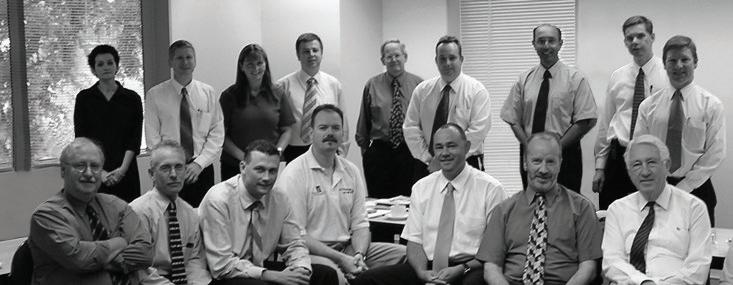
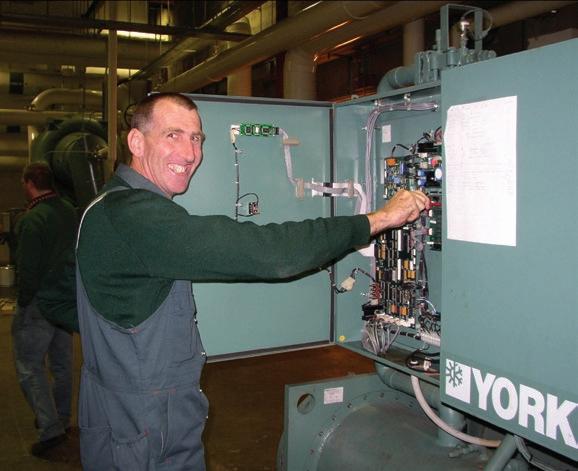
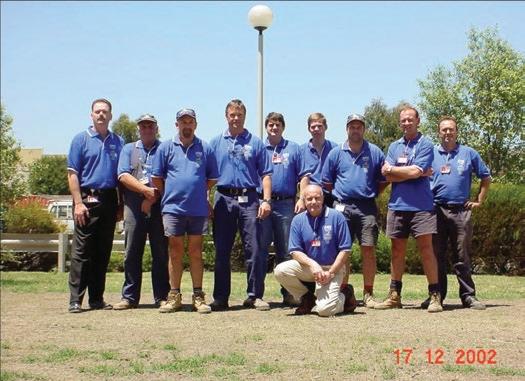
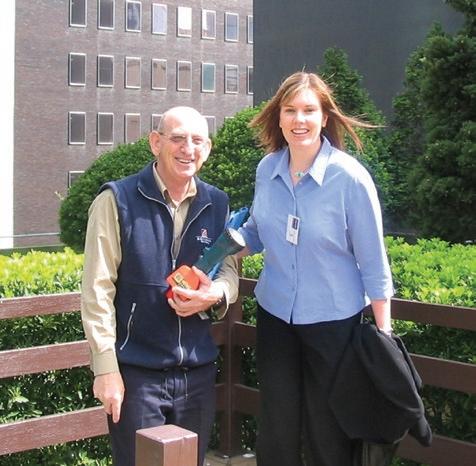
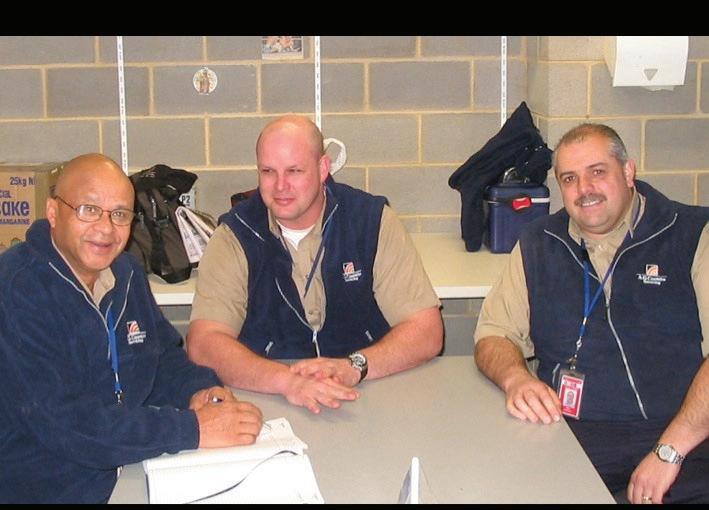
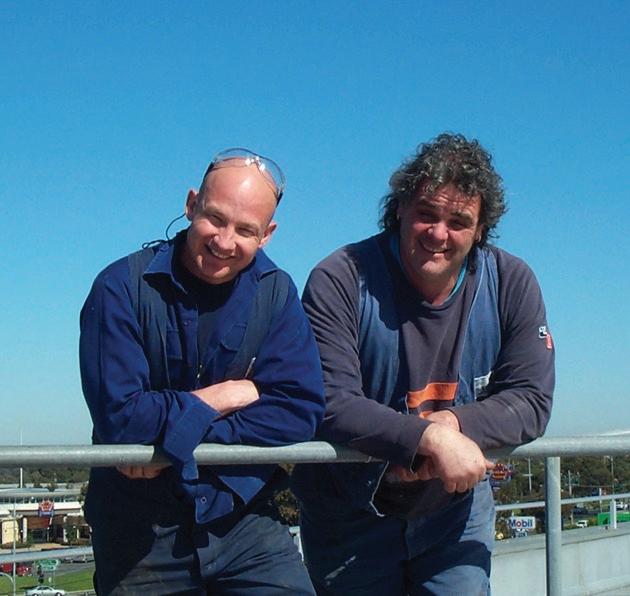
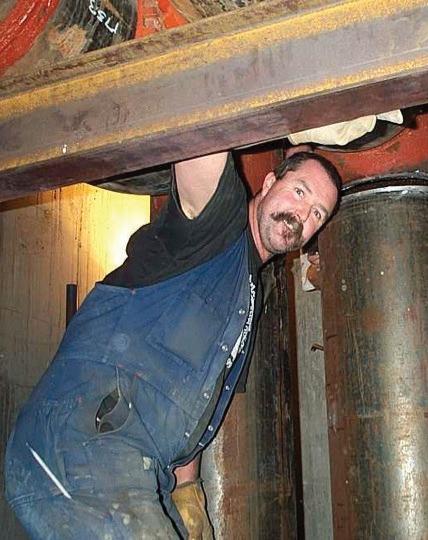
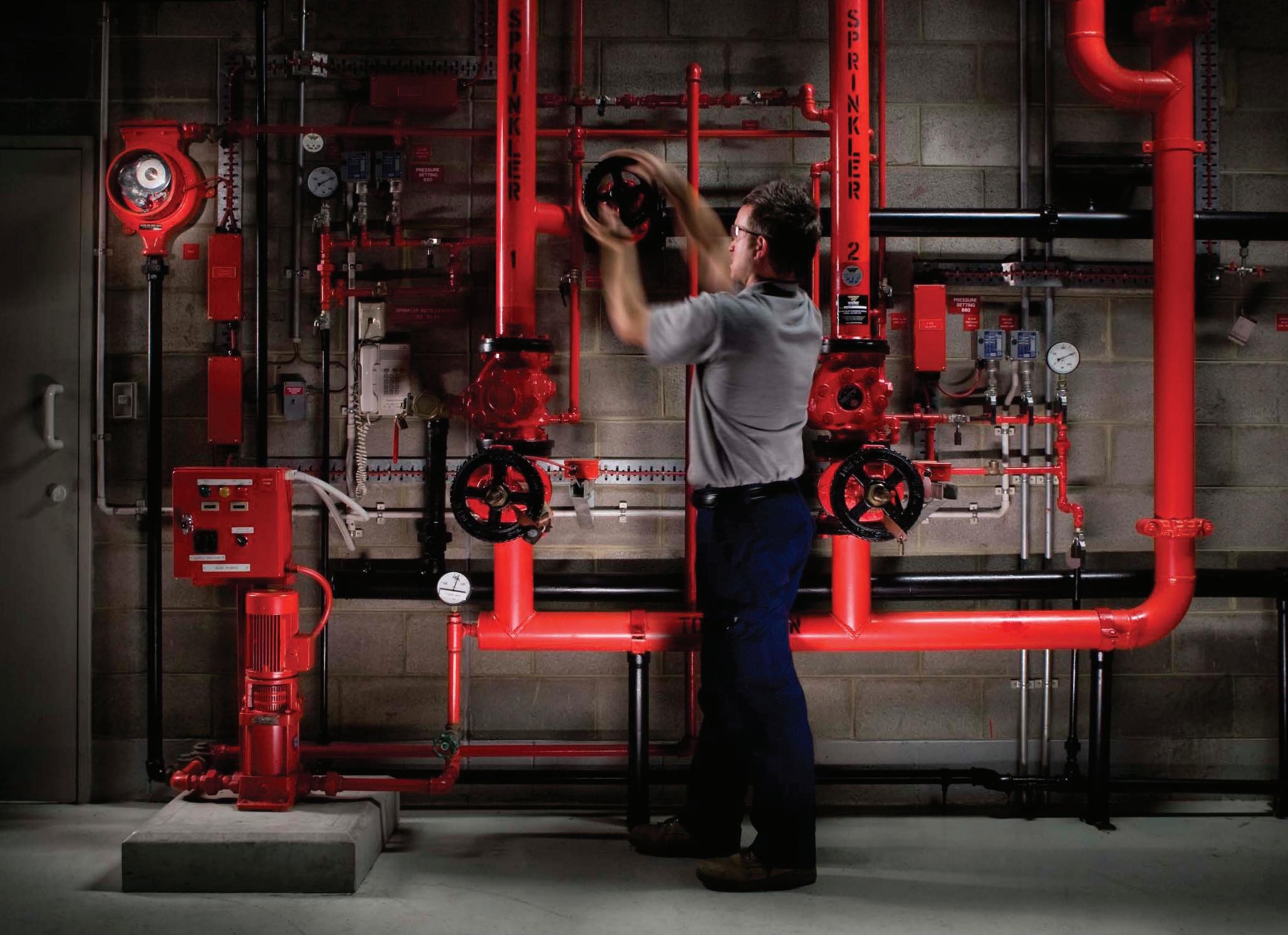
Mark Dunshore was appointed General Manager of Walker Fire Protection in 2015. Formerly a highly valued client and industry colleague, Mark brought a wealth of experience and knowledge to the role. After starting out as an electrical apprentice, he had gone on to work for leading construction companies, which brought him into contact with A.G. Coombs on numerous occasions, particularly in his role as Project Director for the John Gorton Building Redevelopment. Aware of A.G. Coombs’ reputation, Mark was one of several clients attracted by the opportunity to work with the company. Mark passed away in August 2021 after a thirty-year association with A.G. Coombs.
Mark Dunshore, General Manager, Walker Fire Protection.
Thos. Walker & Sons became a subsidiary of the A.G. Coombs Group in April 1990. Historically strong in process pipework, its fire protection services complemented the mechanical services already being offered by A.G. Coombs. It also operated in different-sized markets and created opportunities for the Group to offer a broader range of services to all its customers. After a number of restructures, the Thos. Walker & Sons business was liquidated and its fire protection capability briefly rebranded under the A.G. Coombs name, before being relaunched as Walker Fire Protection Pty. Ltd. in 1990.

By 2005, the A.G. Coombs Group was a business with sixty years of history behind it, but with its eyes firmly focused on the next six decades. It was already redefining its place within the industry by introducing services that not only supported its Projects business, but were also capable of standing on their own. The creation of A.G. Coombs Advisory and Walker Fire Protection were examples of this vision, as was the creation in 2003 of Integrated Technical Management, a company which had started providing on-site technical management for entire buildings.
A.G. Coombs was also one of the few companies in the building services industry to be SafetyMAP accredited, not to mention the first to have achieved this accreditation.
The company was rightly proud of its ‘safety-first’ culture, while its commitment to improving health and safety standards had already been acknowledged with several Excellence Awards from the Master Builders Association of Victoria. Similarly, its apprenticeship program was much admired and would be recognised in 2006 with a Commonwealth Award for Excellence.
Looking ahead, one of the biggest challenges for all companies in the building services industry was the increasing community focus on sustainability. A.G. Coombs was already innovative, safety-conscious and customer-focused. It was now becoming energy-conscious, environmentally aware and frequently thinking ‘green’.
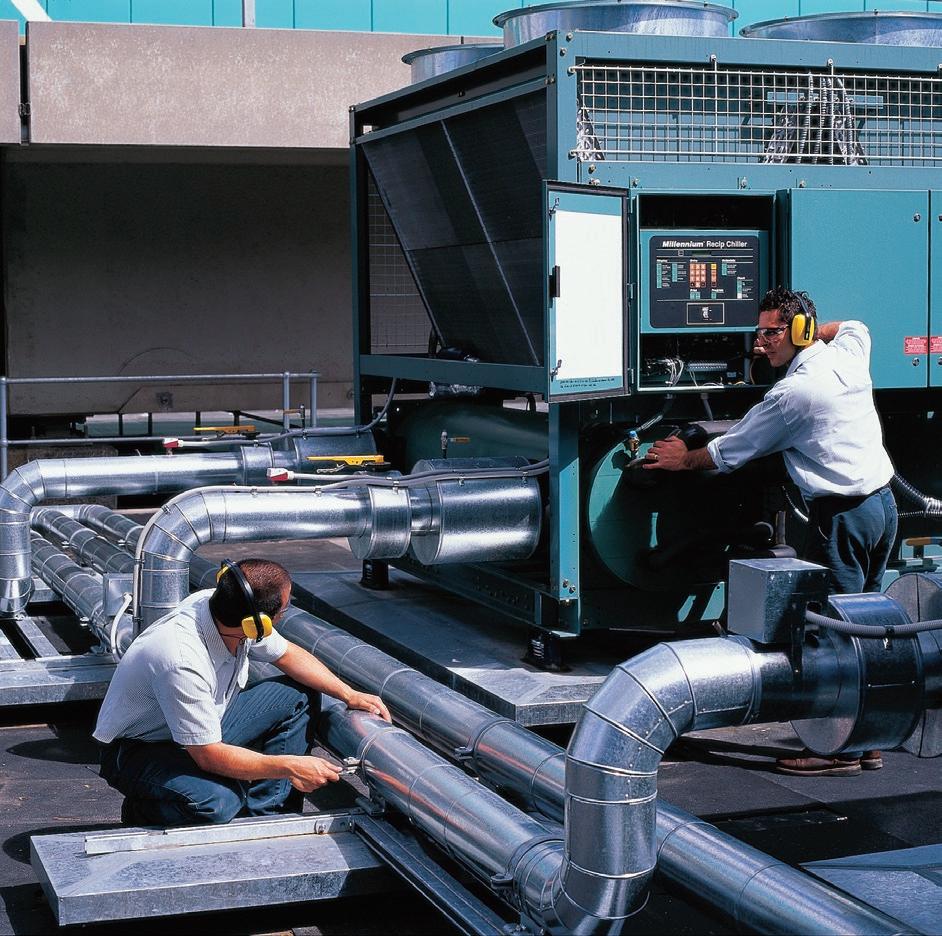


500 Collins Street was one of many older buildings that A.G. Coombs upgraded to more energy-efficient systems.
One of the biggest drivers for change during these years was the growing call for buildings to be energy efficient. While plumbers of yesteryear were no doubt bewildered by the quest to reduce the carbon footprint of an air conditioning unit, the pressure to lower carbon emissions and create environmentally sustainable buildings was increasing. It was a challenge relished by the engineering minds at A.G. Coombs.
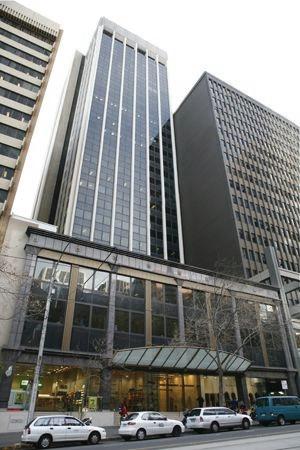
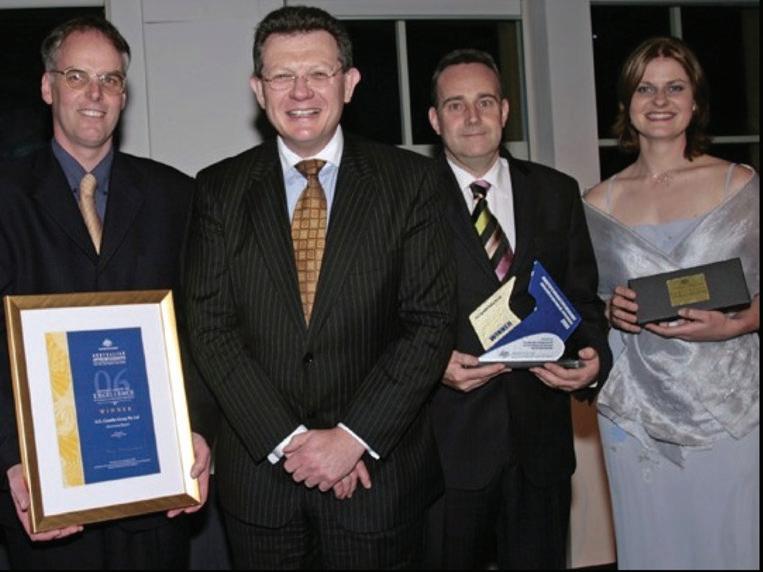
For example, at 500 Collins Street in Melbourne the conversion of an ageing dual-duct system into a more energy-efficient, chilled panel system required, among other things, an absolutely airtight facade in order to meet specific environmental outcomes. Energised by this challenge, A.G. Coombs designed a special rig to test the airflow and air pressure in a sealed section of the building, before embarking on a detailed commissioning process to ensure optimum energy efficiency.
Delivering energy solutions was just one way in which A.G. Coombs saw itself contributing to the sustainability of the built environment. Another area where it felt it could play a meaningful role was as an Independent Commissioning Agent (ICA) for Green Star accreditation.
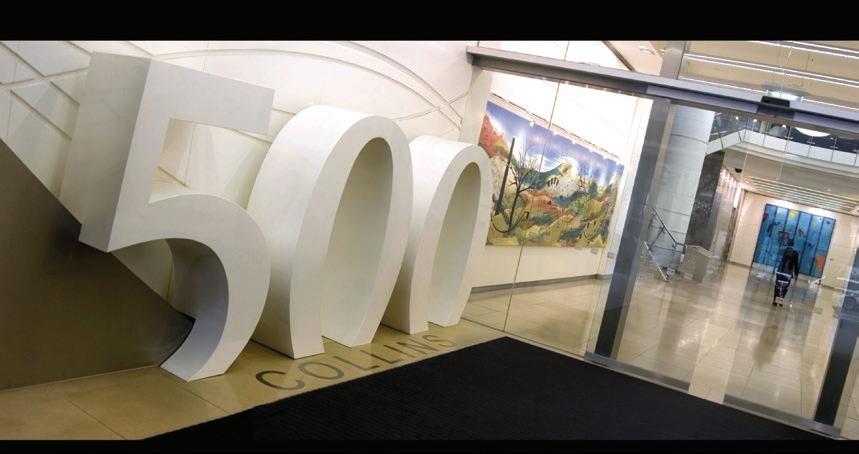
A longstanding commitment to supporting apprentices and encouraging career development earned A.G. Coombs the 2006 Commonwealth Minister’s Award for Excellence for Employers of Australian Apprentices (Melbourne region).
Pictured from left are: Apprentice Coordinator Darren Martin; then Minister for Vocational and Technical Education the Hon Gary Hardgrave MP; A.G. Coombs Managing Director Russell Telford and the company’s first female apprentice Melissa Skrzelinski. By 2025, A.G. Coombs would have in excess of 120 apprentices, with 25 percent of them female.
Property developers were now appreciating the need to demonstrate environmental sustainability, and proof of their commitment would be reflected in a series of ‘Green Stars’, which could be attained after rigorous evaluation of the building’s construction and environmental performance, and then displayed prominently in brochures or on signage in building foyers. Awarded by the Green Building Council of Australia (GBCA), these coveted Green Stars signalled an environmental standard that was easy to comprehend, in much the same way that people could appreciate the difference between a three-star or five-star hotel.
Complying with the GBCA’s exacting standards was as much about working through a process during construction, as it was about installing the right equipment. Seeing an opportunity to take on the environmental stewardship of a building, A.G. Coombs began developing the third-party mentoring role of the Independent Commissioning Agent (ICA) in collaboration with the GBCA.
The prime purpose of the ICA would be to help builders and property owners understand the requirements for sustainable outcomes, while ensuring consistency throughout the entire process. It was not about doing the job for the client, but rather a case of guiding them through the necessary steps to achieve accreditation. Although it would be the client’s call as to whether it appointed an ICA, many property owners and builders soon recognised the benefits of having an experienced third-party mentor on board, not only to help them navigate their way through the compliance process, but also to enhance their application for Green Star status.
“We saw how we could provide this focal point for all the work teams and facilitate a smooth transition from design and construction through to commissioning and occupancy,” said Bryon Price. It was in this specific role that A.G. Coombs’ whole-of-life approach came to the fore, enabling its clients to draw from deeper wells of expertise across all areas of the business as they went about meeting their sustainability targets.
One of A.G. Coombs’ earliest achievements in this area would be its involvement with Council House 2 (CH2), a major development in the heart of Melbourne striving for a 6 Star Green Star design rating. To receive this rating, the
building needed to incorporate leading-edge environmental features, while meeting the complex commissioning requirements set out by the GBCA.
Determined to achieve this goal, the City of Melbourne (the property’s owner) engaged builders Hansen Yuncken and then appointed A.G. Coombs as the ICA on the project. As part of its brief, A.G. Coombs advised on technical issues, developed generic compliance guidelines, conducted workshops and reviewed submissions. It also ensured that all HVAC and building control systems were appropriately commissioned.
As construction progressed, there was a sense that CH2 would meet its environmental targets, which was an exciting prospect for all contractors working on the project. Indeed, everyone’s efforts were rewarded following the building’s completion in 2006, when CH2 became the first commercial facility in Australia to achieve a 6 Star Green Star design rating – the highest rating possible.
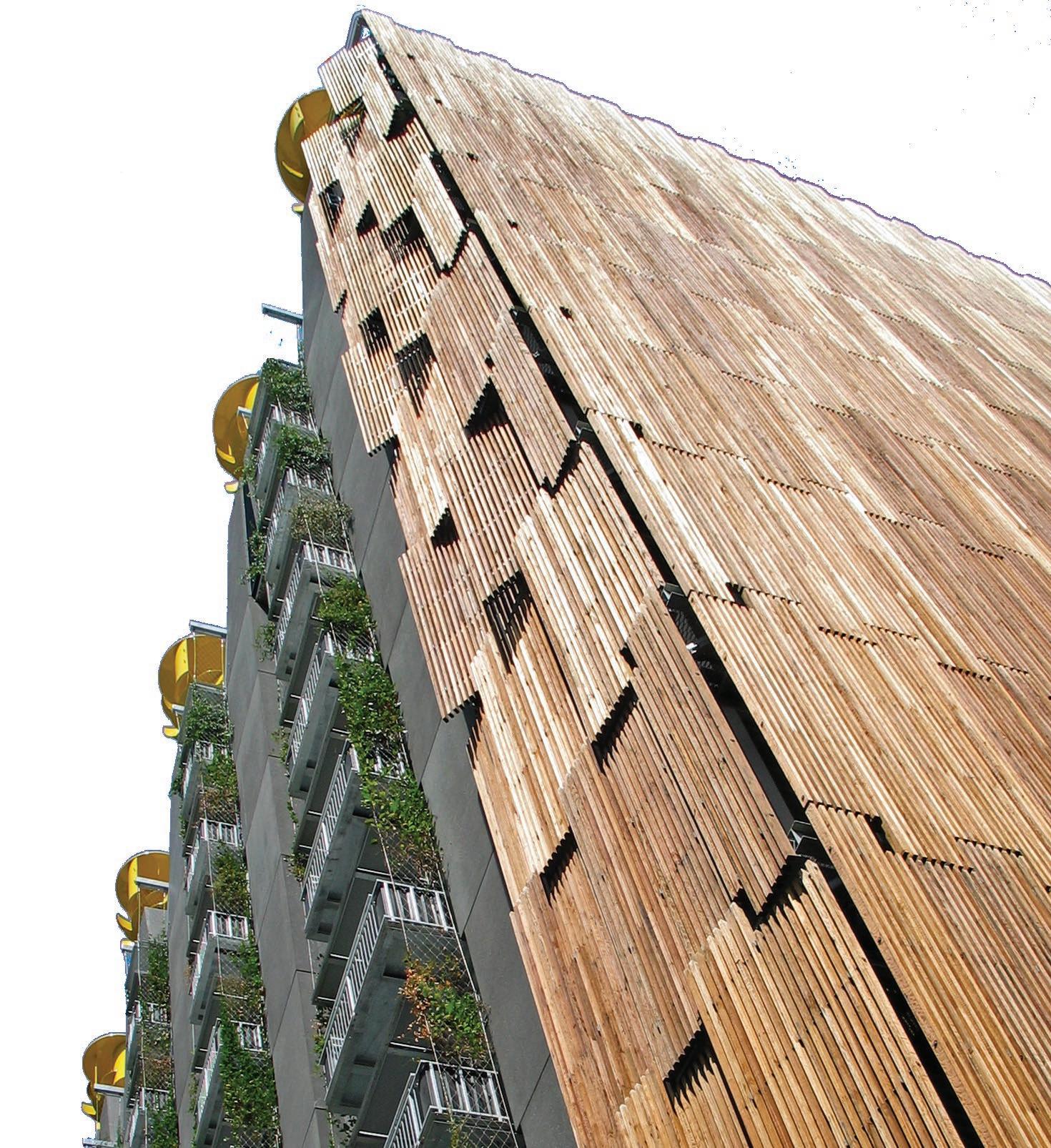
Designed by the City of Melbourne in association with Mick Pearce and DesignInc, CH2 raised the bar as a multi-level showpiece of innovative ‘green’ technologies. Its 6 Star Green Star design rating elevated it above Australian best-design practice to world’s best practice.
The ANZ Centre was an impressive example of how careful design and commissioning could reduce a building’s impact on the environment and, in this case, lower greenhouse gas emissions by up to 70 percent. Wind turbines generated clean power, all waste water was recycled and heat from electricity generation was used to run absorption chillers for air conditioning.
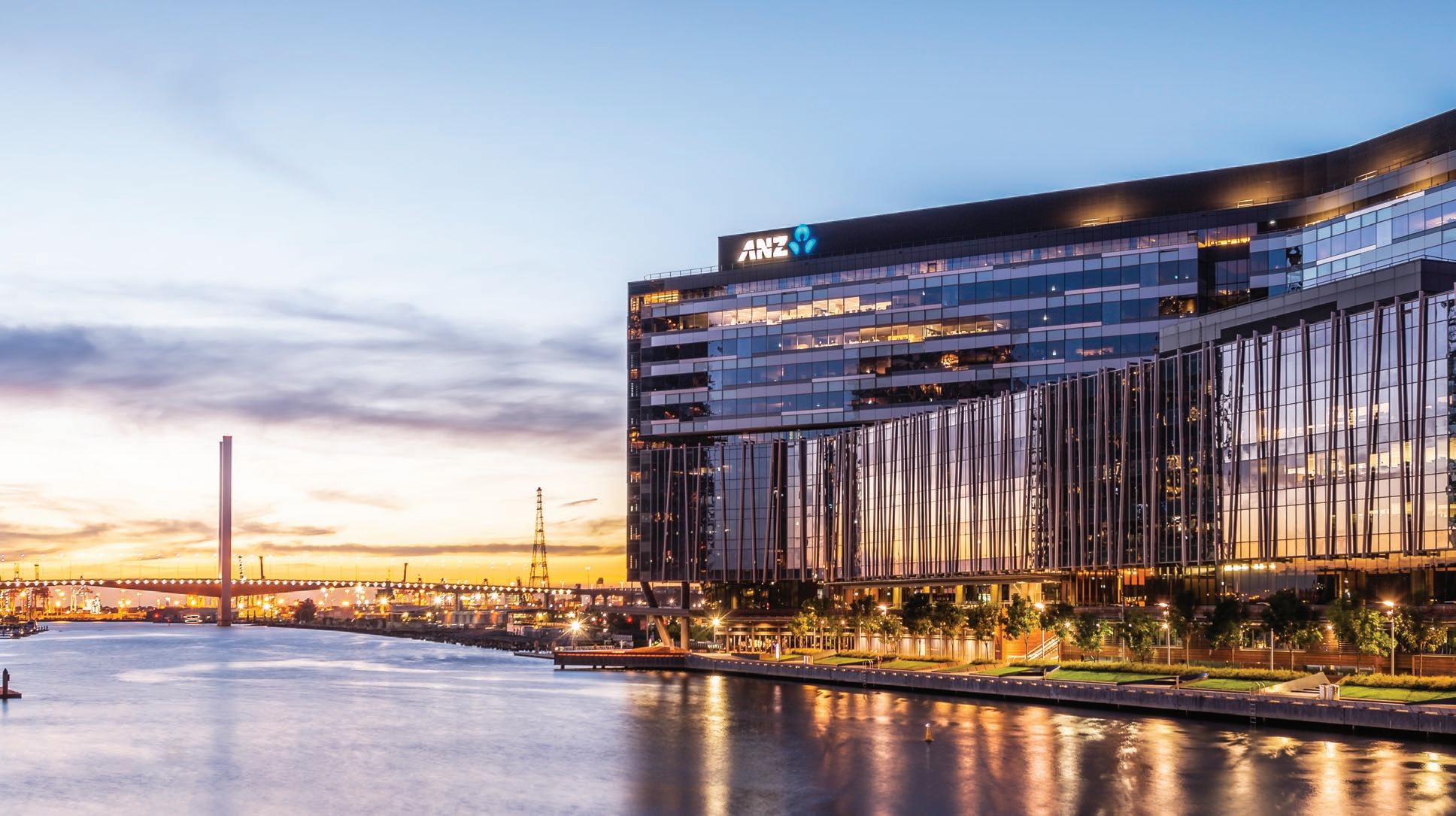
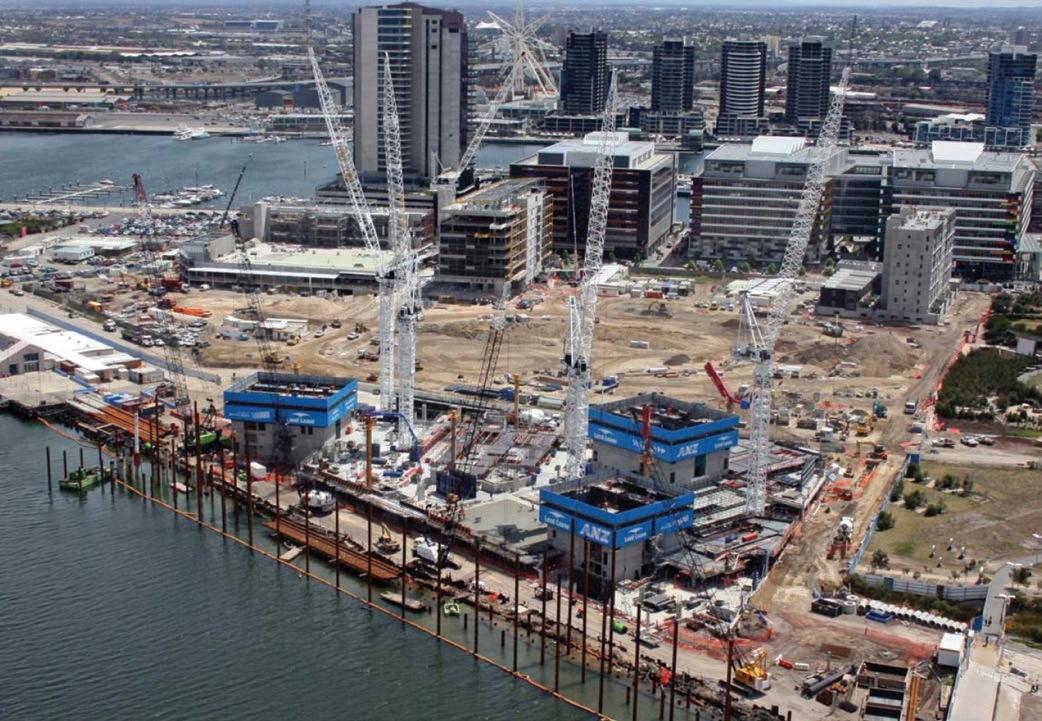
ANZ’s global headquarters under construction c. 2007.
A.G. Coombs was engaged by builder Lendlease to install the mechanical services, with A.G. Coombs Advisory serving as Independent Commissioning Agent.
A.G. Coombs’ whole-of-life vision was now a reality, with all areas of the company taking an integrated approach to projects. “It was exciting to see our business units develop to a level where they were working collectively to provide seamless solutions for customers,” said Managing Director Russell Telford.
This collective approach meant that customers could access the wider expertise of the Group no matter whose door they knocked on first, whether it was A.G. Coombs Advisory, A.G. Coombs Projects or A.G. Coombs Service.
The company’s whole-of-life approach was further highlighted when it took on three different roles during the construction of the new global headquarters for the ANZ (Australia and New Zealand Banking Group) at 833 Collins Street.
Situated in the newly created Melbourne suburb of Docklands, the ANZ Centre was being built to accommodate around 6,500 people, and was designed with every conceivable energy-saving feature in mind. The building naturally had to meet a range of sustainability benchmarks, and contractors such as A.G. Coombs were challenged to deliver systems that would lower carbon emissions and provide significant energy savings.
For A.G. Coombs it was also an opportunity to bring the wider expertise of the Group to the table, with work crews from A.G. Coombs Projects installing and commissioning the mechanical services, and A.G. Coombs Advisory, as the project’s Independent Commissioning Agent (ICA) steering the building to a 6 Star Green Star Office Design rating. Normally, the ICA role would have been outsourced; however, separate lines of reporting enabled the Advisory business (a company in its own right) to provide an independent mentoring role. Finally, after the ANZ Centre opened in 2009, Integrated Technical Management took up residence with a brief to maintain all the technical systems within the facility.
Although the environmental initiatives for this project were highly complex, it was advantageous to be designing energy-efficient systems for a brand new facility. However,
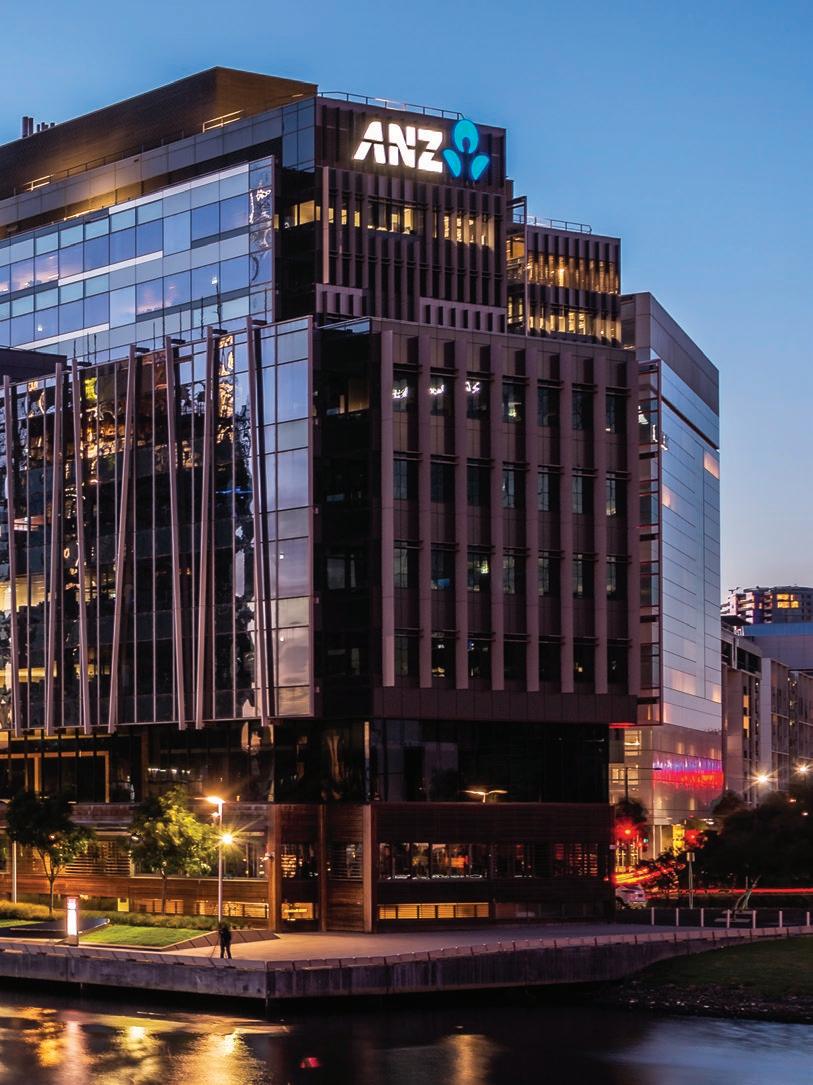
in an environmentally conscious community, many property owners were now seeking to reduce energy costs in buildings that were not only older, but also fully occupied. This was the challenge for A.G. Coombs at Sydney’s HSBC Centre, where the Projects and Advisory businesses pooled their expertise to upgrade the building’s mechanical plant and air conditioning system, with minimal disruption to tenants. A.G. Coombs was also operating under an Energy Performance Contract (EPC), and was required to guarantee the energy outcomes of the project. As part of the 2010 upgrade, both teams managed to recycle some 83 percent of surplus materials. They also achieved a reduction in carbon emissions that equated to “taking 460 cars off the road” according to internal calculations.
Even Service technicians were looking beyond general property maintenance and thinking about potential energy solutions for their customers. This development validated the decision at the start of the decade to establish A.G. Coombs Advisory, as technicians were now able to enlist the help of the Advisory business when proposing staged upgrades of equipment to more energy-efficient systems. The ability to offer this extra tier of service broadened the capabilities of the Service business, which would soon start managing the maintenance across very large property portfolios.
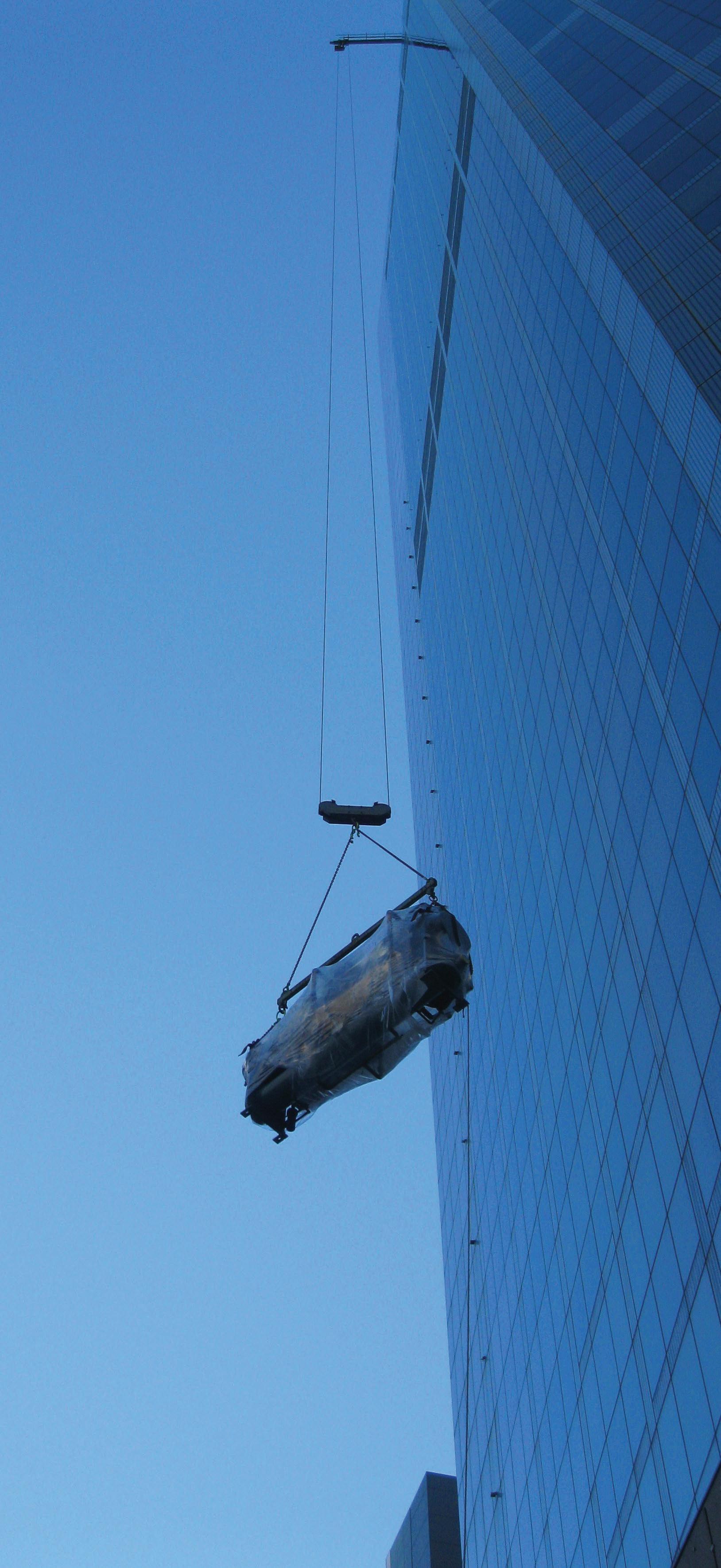
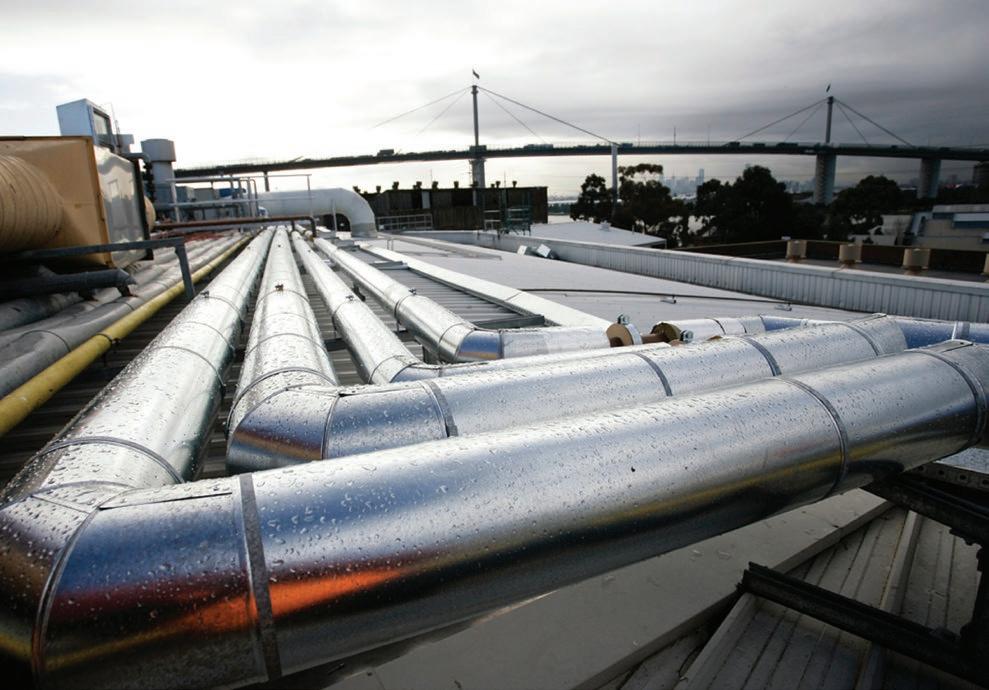
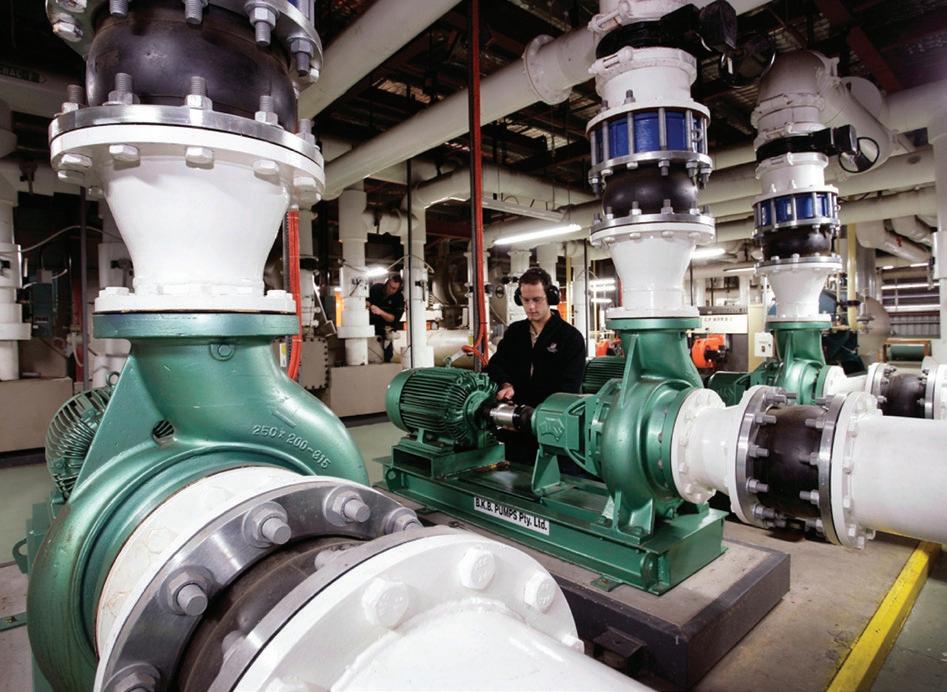
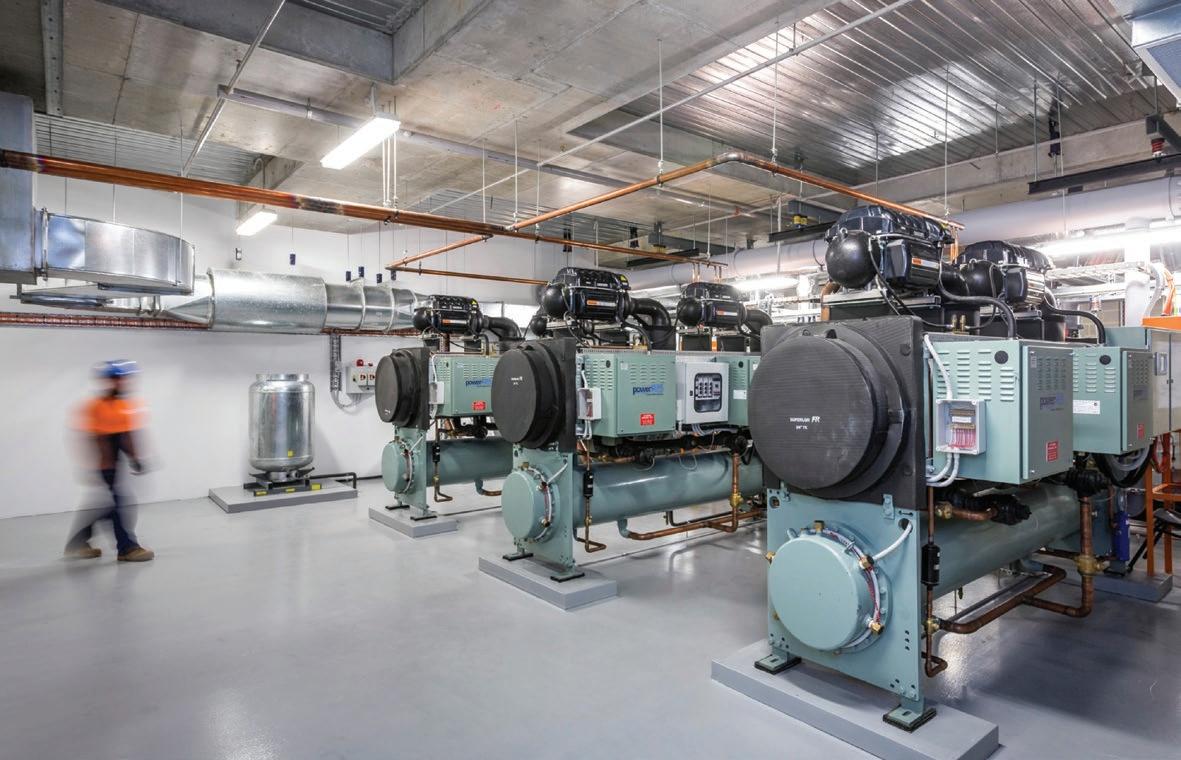
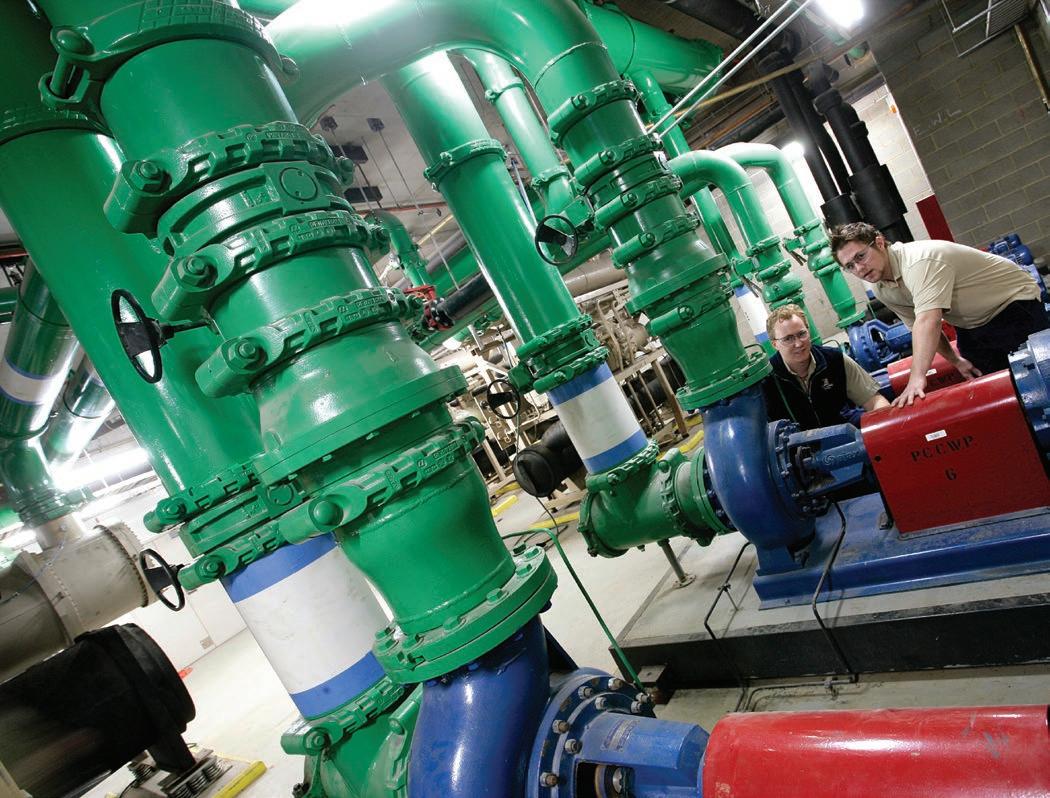
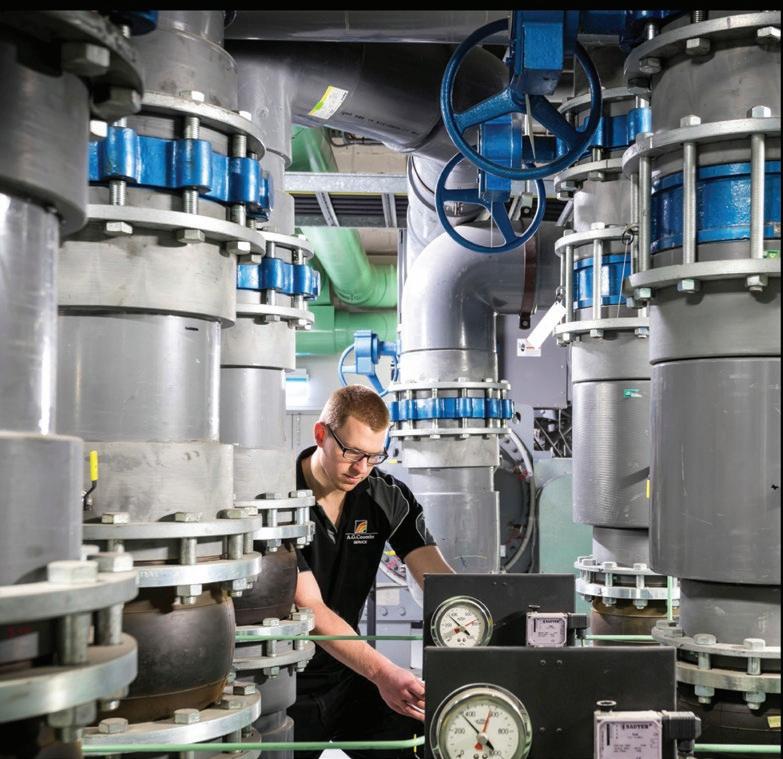
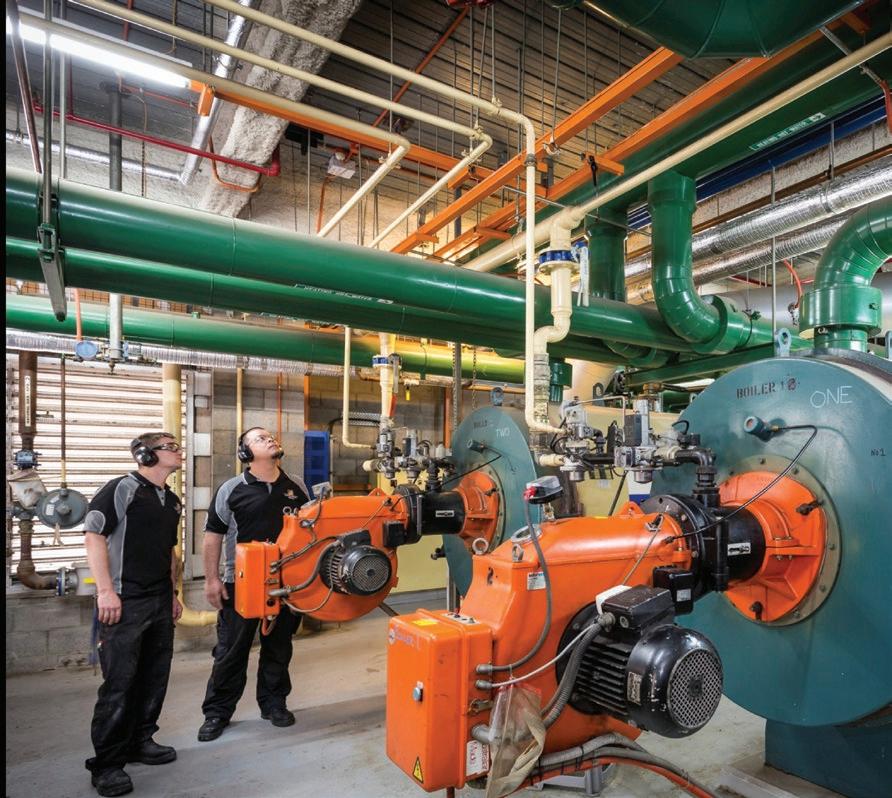
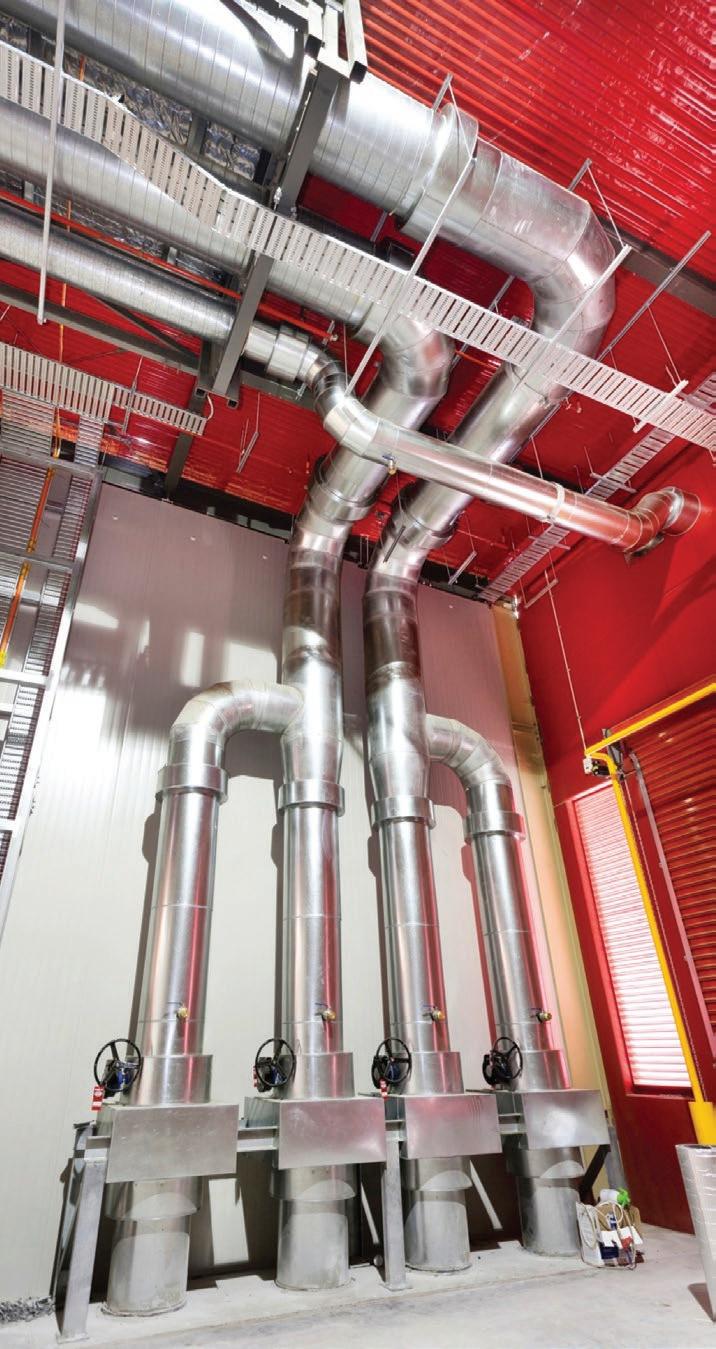
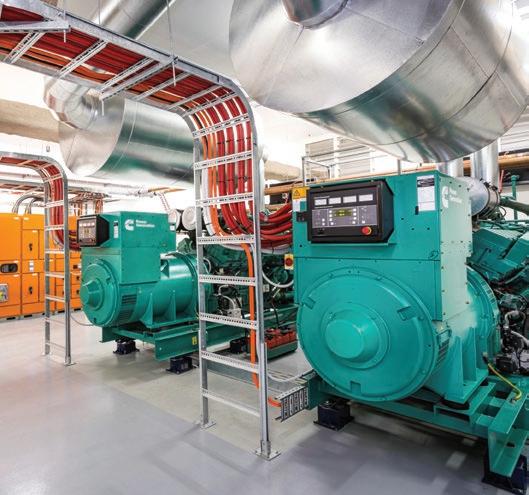
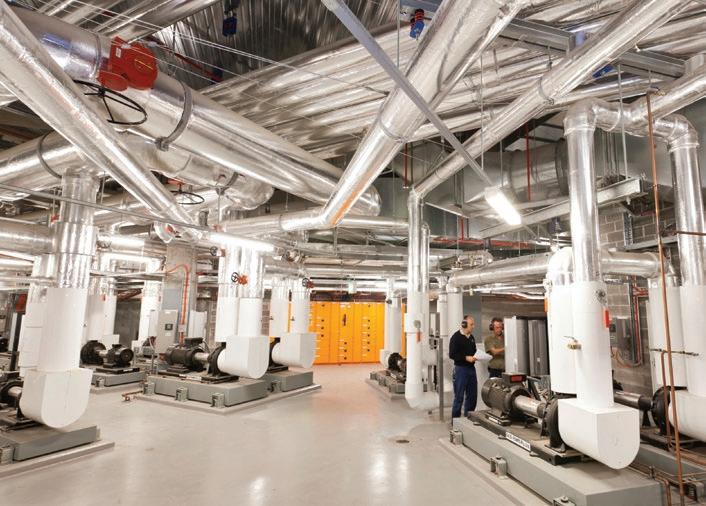
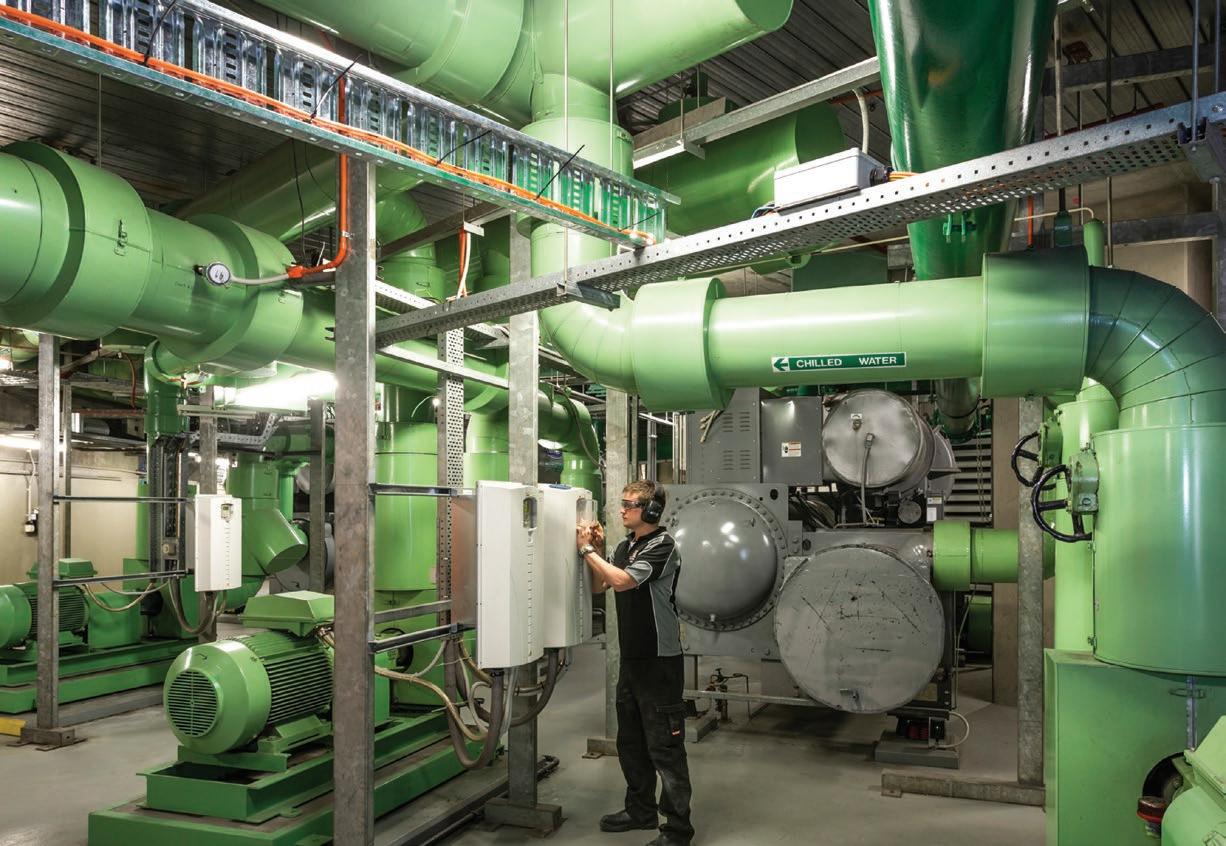
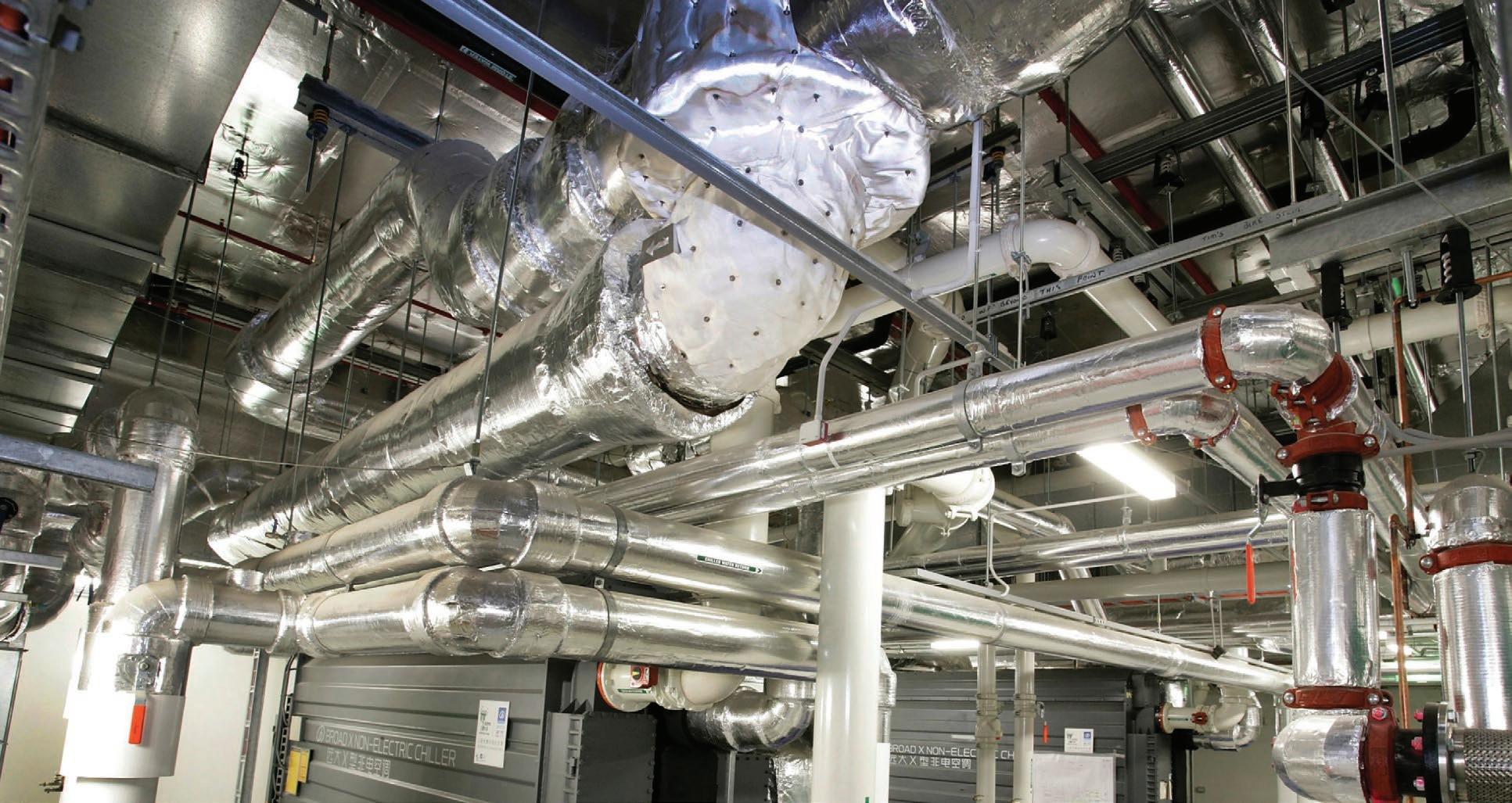
The new Royal Children’s Hospital in Parkville was constructed by Lendlease, with A.G. Coombs responsible for the installation of the air conditioning, mechanical services and specialist hospital systems.
A.G. Coombs also formed a joint venture with AE Smith & Son – known as RACAH – to deliver part of the services.
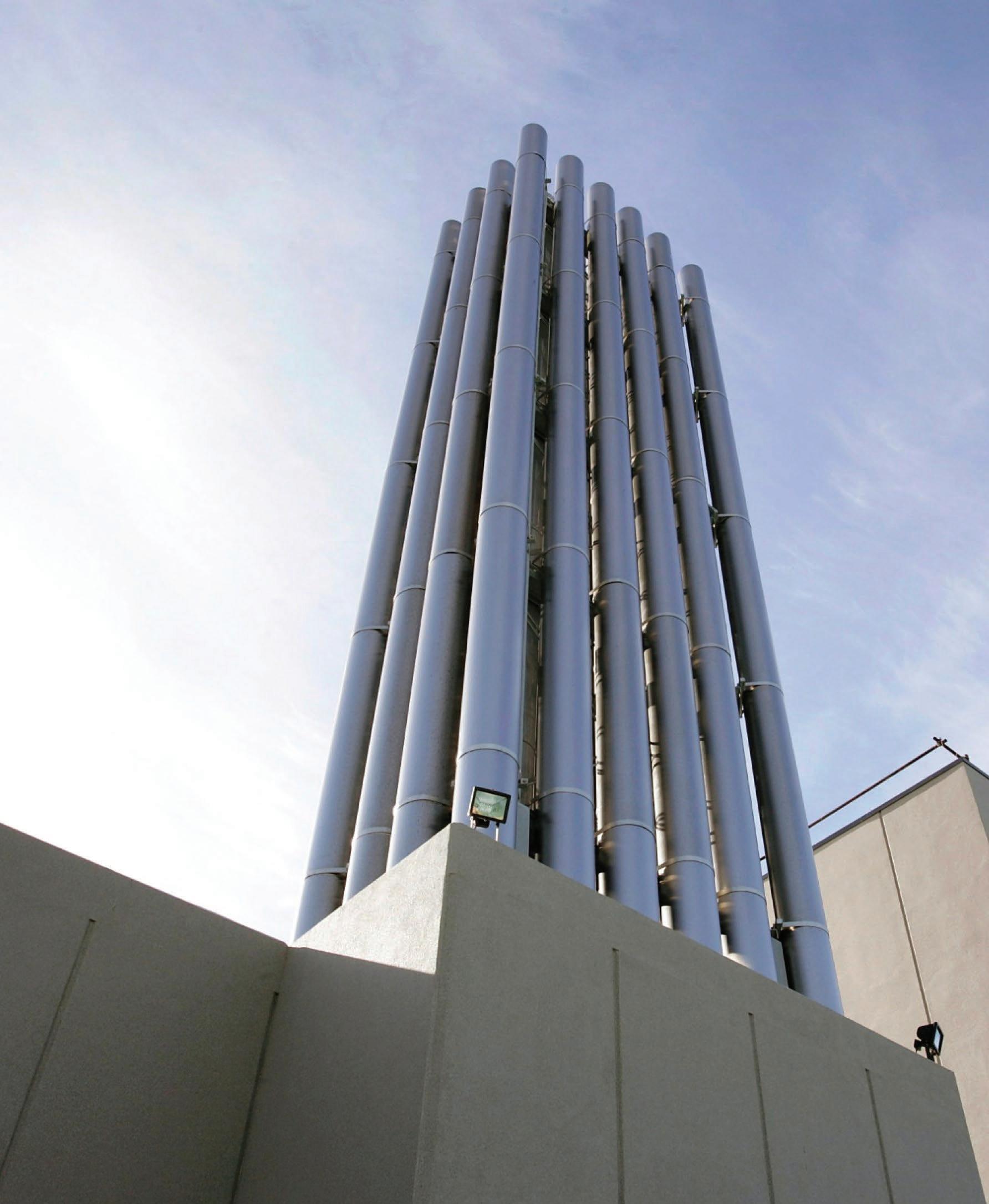
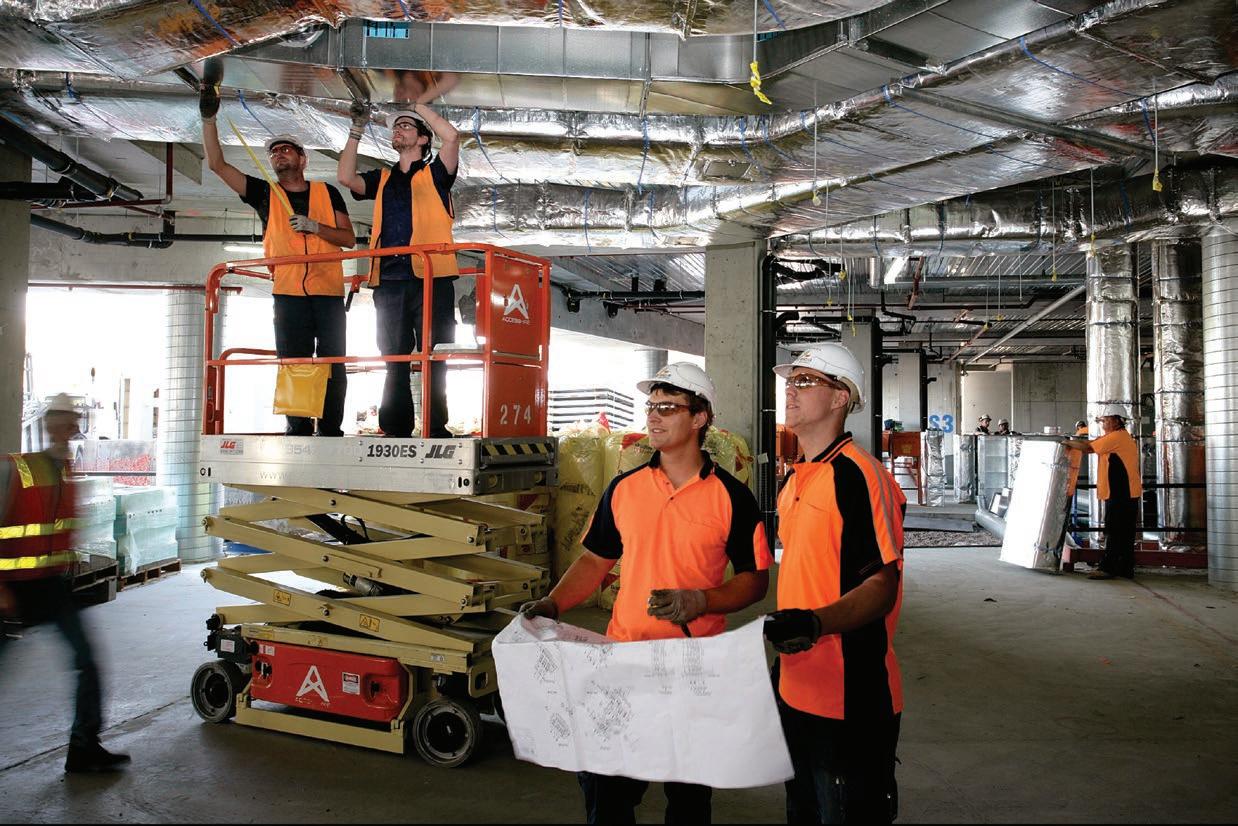
The contract for the new Royal Children’s Hospital (RCH) in Melbourne was the one most steeped in nostalgia for A.G. Coombs, given its previous association with the hospital between 1955 and 1963 (see Chapter Three). Although long hailed as one of the world’s leading paediatric facilities, the growing demand for the hospital’s services, not to mention advances in medical science, had prompted decisions to construct a more modern building with capacity for an additional 35,000 patients a year. The new hospital would also be located in Parkville, on land adjacent to the old building.
Plans for the billion-dollar facility were being handled by a public private partnership (PPP) – a business venture model funded and operated as a partnership between government and the private sector. Under this arrangement, a consortium of designers, builders and facility managers would finance, construct and maintain the hospital for twenty-five years, while the RCH would operate the facility when completed.
Construction finally moved ahead in late 2007 under builder Lendlease, which engaged A.G. Coombs as a trade partner to design and install the air conditioning, mechanical services and specialist hospital systems. Energy efficiency was paramount, and although the official Green Star rating system had yet to be introduced for healthcare facilities, the aim would be to work towards a 5 Star rating by performing a self-assessment against the yet-to-be-finalised credits of the Green Star – Healthcare V1 rating tool.
For A.G. Coombs, the excitement at revisiting one of its most iconic projects was balanced against the need to be strategic in undertaking such a massive contract. “Nearly all our resources were devoted to the RCH when the company installed the services in the old complex,” said Managing Director Russell Telford. “But given the growth of our business since then, we also had other major projects to consider.” The question of resourcing was crucial, as a project of this size and complexity could easily have tied up large areas of the company for an extended period of time. The challenge then
was how to deliver the best results for the Royal Children’s Hospital while still providing a quality service to all its other clients. Some sharing of the workload was desirable, and with this in mind, A.G. Coombs approached AE Smith & Son and established the RACAH joint venture to deliver part of the services required. The RACAH name came from breaking up the RCH acronym with the two ‘As’ for each partner.
As agreed, the venture allowed both partners to maintain their existing customers, while running RACAH as a standalone project. Under the A.G. Coombs contract with Lendlease, the jobs were also divided equally so that if a task required a team of twenty draftspeople, each company put forward ten people. “We shared the risks and rewards that went with it,” said David Seedsman, who by then had left A.G. Coombs to join AE Smith & Sons.
Bringing one of Australia’s leading paediatric hospitals into the twenty-first century meant designing sophisticated heating and cooling systems for its operating theatres, cancer treatment wards, laboratories and MRI areas. ‘Green’ was the word as the 200-strong RACAH team, under the direction of A.G. Coombs Project Manager Kevin Wilson, set about delivering an environmentally sustainable hospital. By 2010 they had installed chilled beam air conditioning, specialist heat recovery units and a trigeneration energy plant fired by natural gas. A key installation was a bio-mass boiler that reduced carbon emissions by burning timber waste by-products to produce heating hot water.
Leaving nothing to chance where the boiler was concerned, they contacted the Swedish boiler manufacturer and flew in a technical expert to ensure that it achieved its operational efficiency. It was the first installation of its kind in Australia and was yet another feature in the creation of one of the country’s ‘greenest’ hospitals. The commissioning phase for all the installations would take approximately fourteen months and involve extensive testing of all systems and equipment throughout the building.
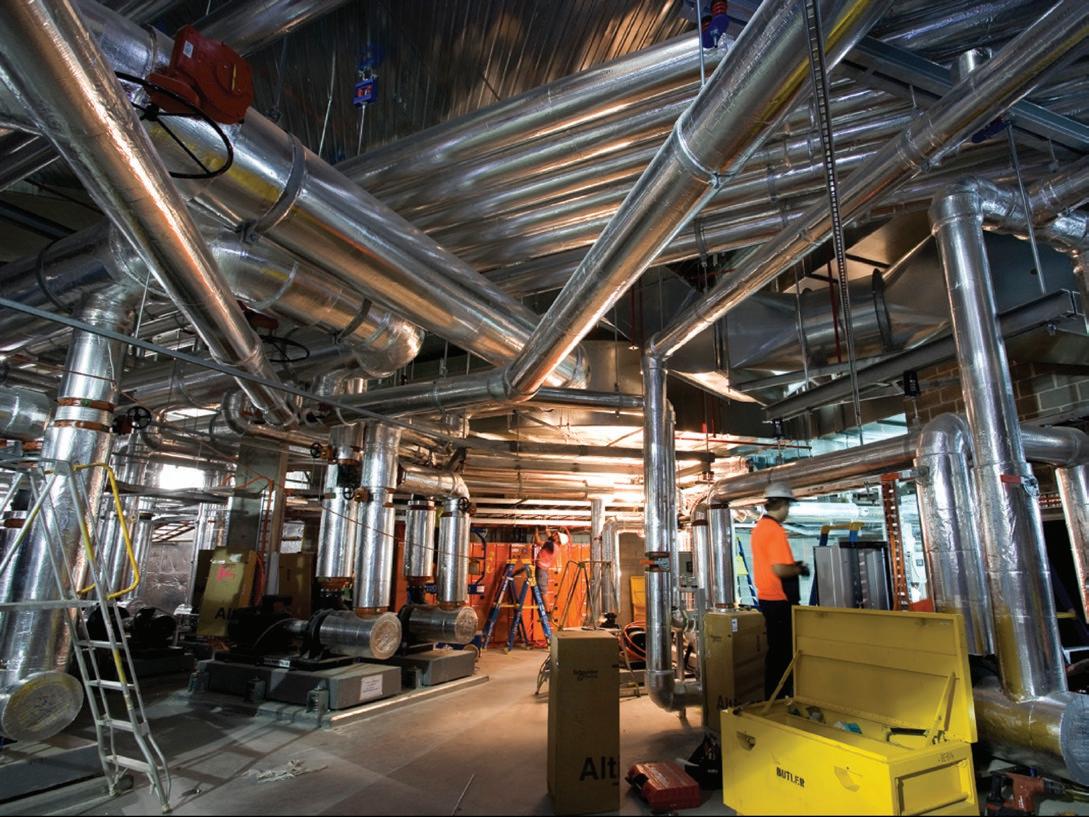
The Royal Children’s Hospital has long been recognised as Victoria’s major specialist paediatric hospital. The new building was constructed next to the old hospital, which in time would be demolished.

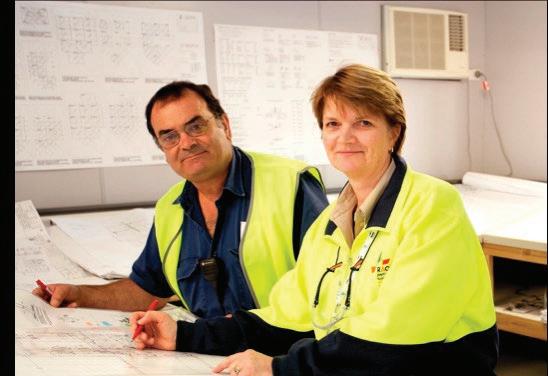
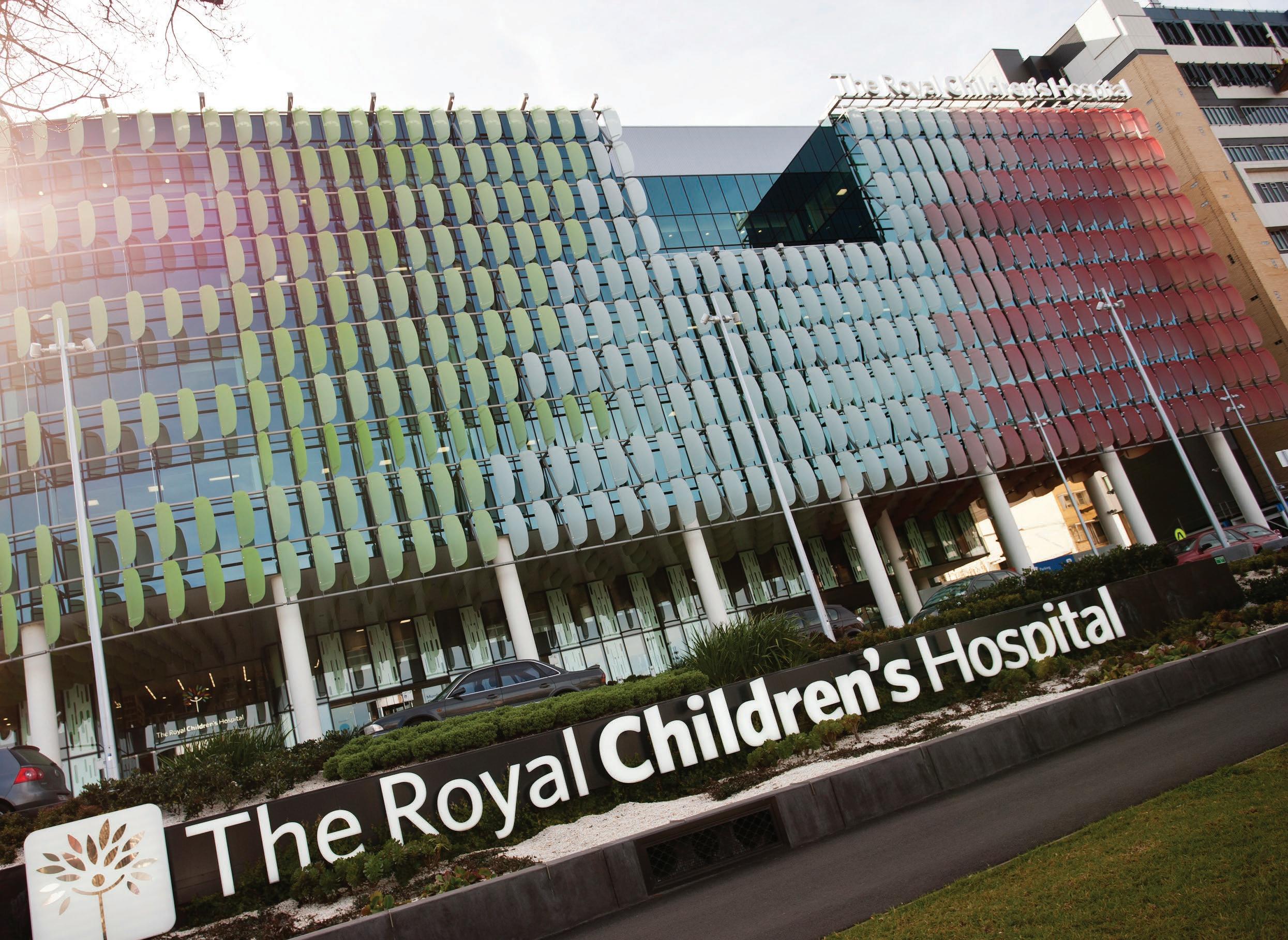
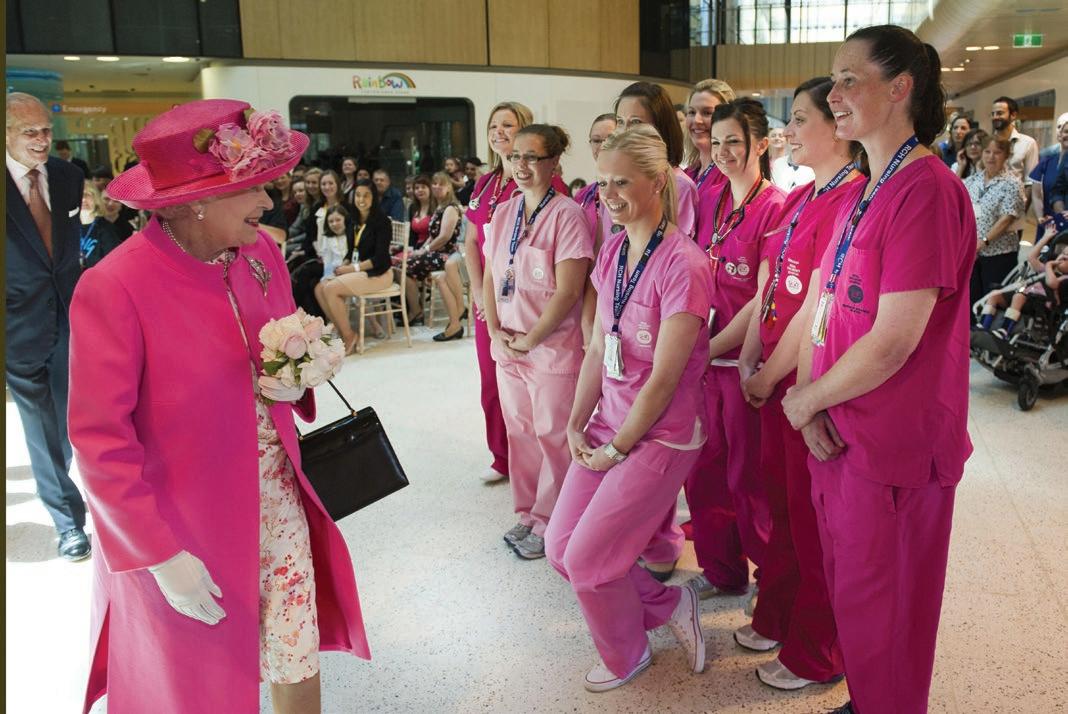
Each year thousands of children visit the Royal Children’s Hospital for specialist appointments, emergency treatment and life-saving surgery. Although hospitals can be intimidating places, the new building’s light-filled public foyers have created a warm and friendly environment for children and their families.
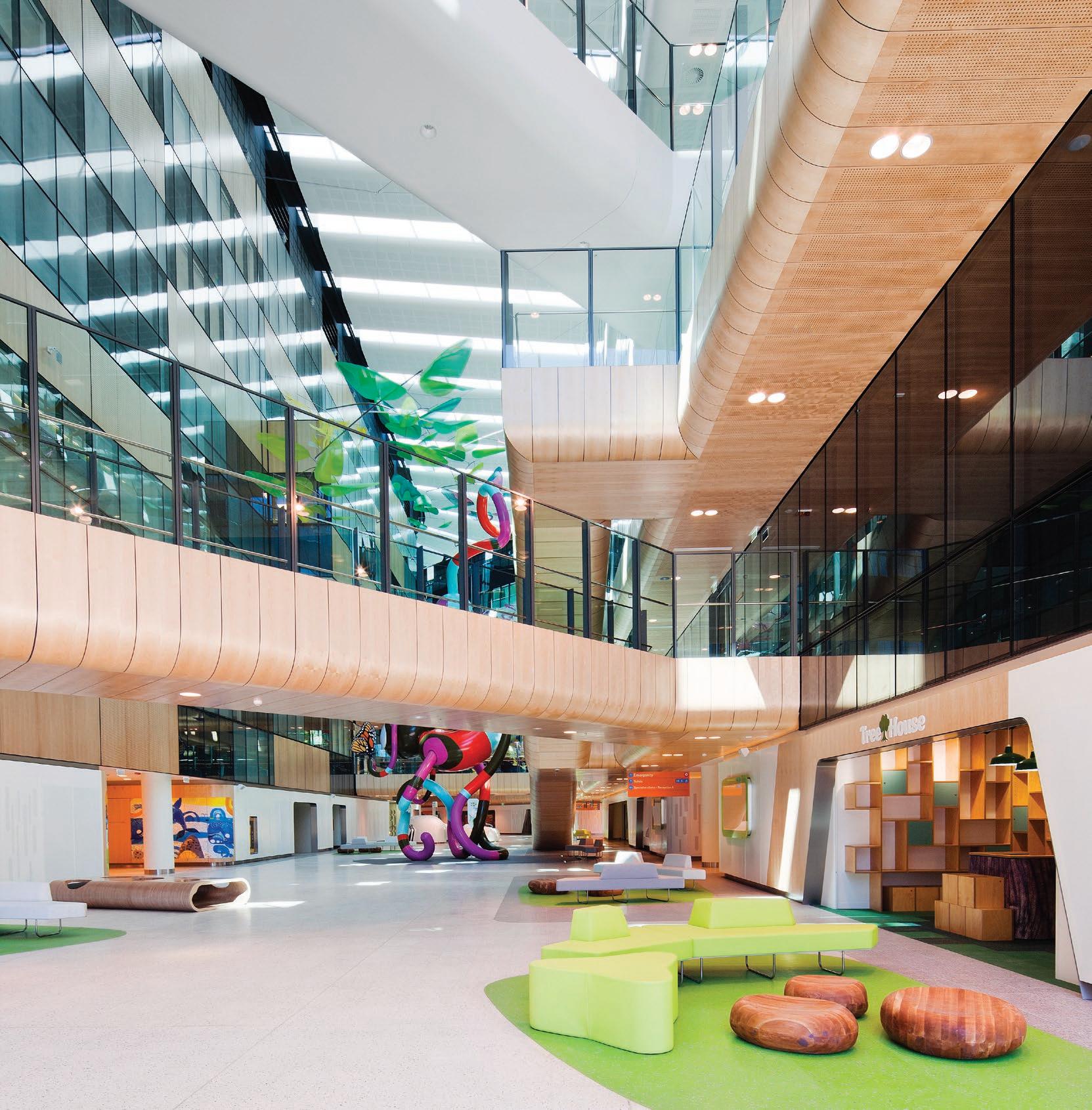
On 26 October 2011, Her Majesty Queen Elizabeth II arrived in Melbourne to open the new hospital. Being so closely involved in the rebirth of a leading medical facility was a truly proud moment for A.G. Coombs. Putting aside the technical achievements, not many contractors could claim that their work had been inspected twice in almost fifty years by the same reigning monarch.
There inevitably came a point when the lure of interstate markets could no longer be ignored. Clients had already started urging A.G. Coombs to establish a permanent base in Sydney, while opportunities in Queensland demanded consideration. Despite this potential for expansion, an important decision needed to be made, as there had been good reasons in the past for concentrating the company’s resources in Victoria.
When Allan Coombs was alive, any suggestion of opening interstate branches had generally been resisted, with Tasmania being the one exception. Taking on a major
project in Canberra was also acceptable, providing it was sufficiently large enough to be economically viable. However, it was a case of completing the job and then returning home to Melbourne. The subject of interstate expansion was something that Philip Coombs had inherited in the 1980s, but filed away for practical reasons. “At that point, with the size of the company, it just wasn’t worth it, as we could not afford to lose key people to interstate branches,” he explained. Management decisions in the years ahead saw this position reinforced.
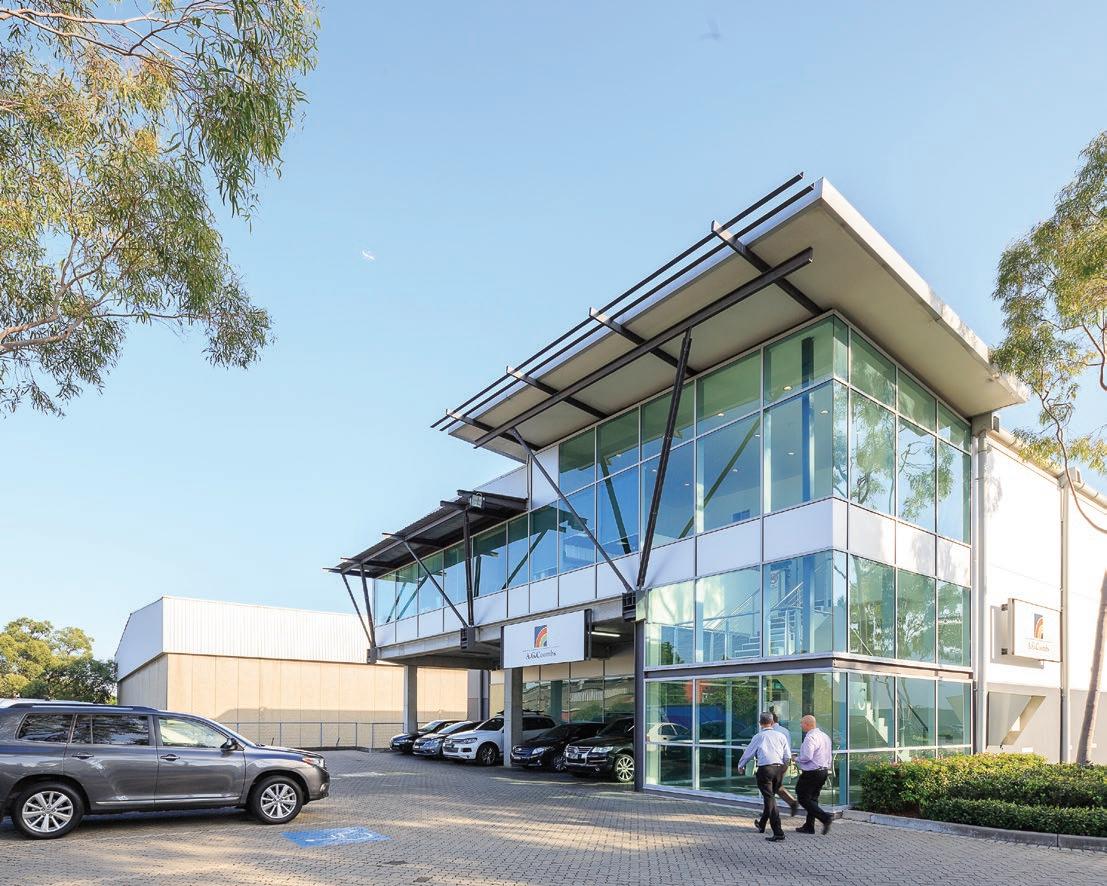
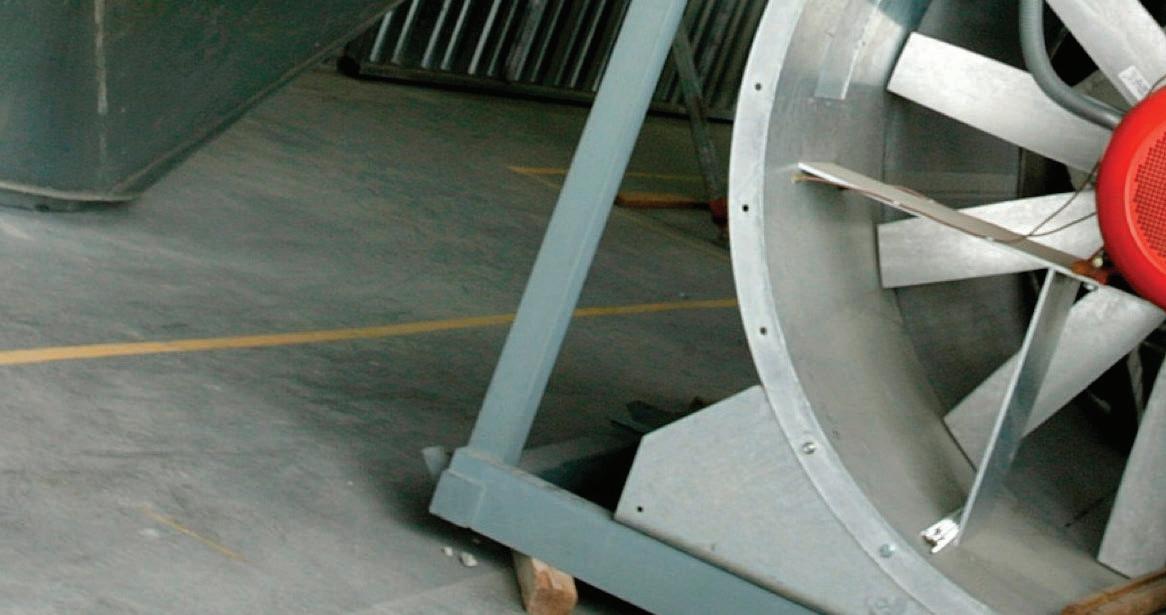
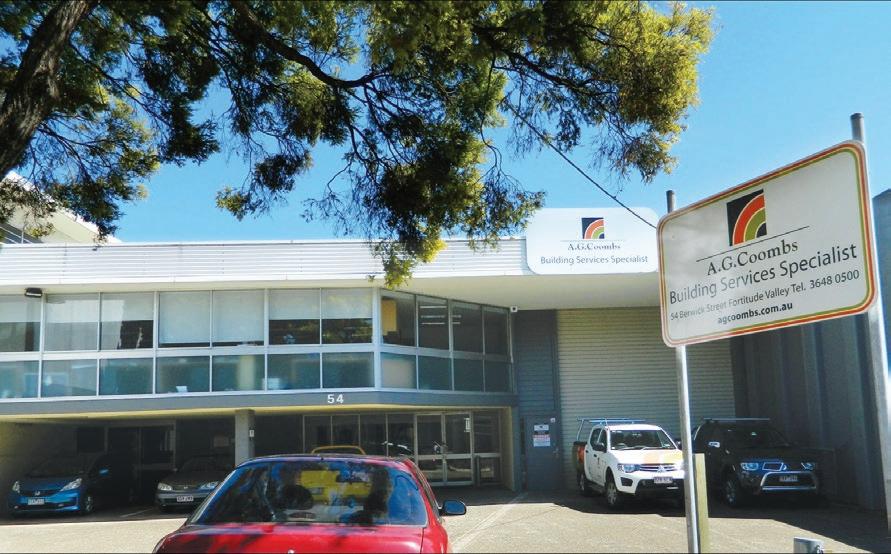
By the late 2000s, however, A.G. Coombs had a much bigger core base with more people in the system. Its market share in Victoria had also grown to the point where geographic expansion was becoming essential to help national clients, such as Lendlease, secure new business. So, when the time was judged right, A.G. Coombs took its expertise north to Sydney in New South Wales (NSW) and opened a branch office in Newington in 2009. There were only two employees back then: Gary Economos, who was appointed General Manager, and Service Technician Andrew Wallbridge.
In the months after establishing A.G. Coombs (NSW), Gary and Andrew recalled the regular visits made by Managing Director Russell Telford, who in typical fashion rolled up his sleeves and went to work helping them to secure service contracts.
“The hardest part was getting acknowledgement for the A.G. Coombs name,” said Gary, who came from a trade background with qualifications and experience in air
conditioning and the electrical trade. “A.G. Coombs had a huge presence in Victoria, but it was a very different story 1,000 kilometres north.”
While the move to Sydney was initially Service driven, the Projects business eventually followed and soon became a contender for major projects, especially on large developments around Sydney Harbour with builder Lendlease.
In time, their efforts would see the NSW business grow from one Service contract (at 100 Pacific Highway) and some building upgrades into a thriving operation at Newington that encompassed not only Service and the Special Contracts Division, but also the Projects and Advisory businesses. Both Projects and Advisory would later move into Sydney’s central business district, first to premises in York Street, and eventually to 115 Pitt Street.
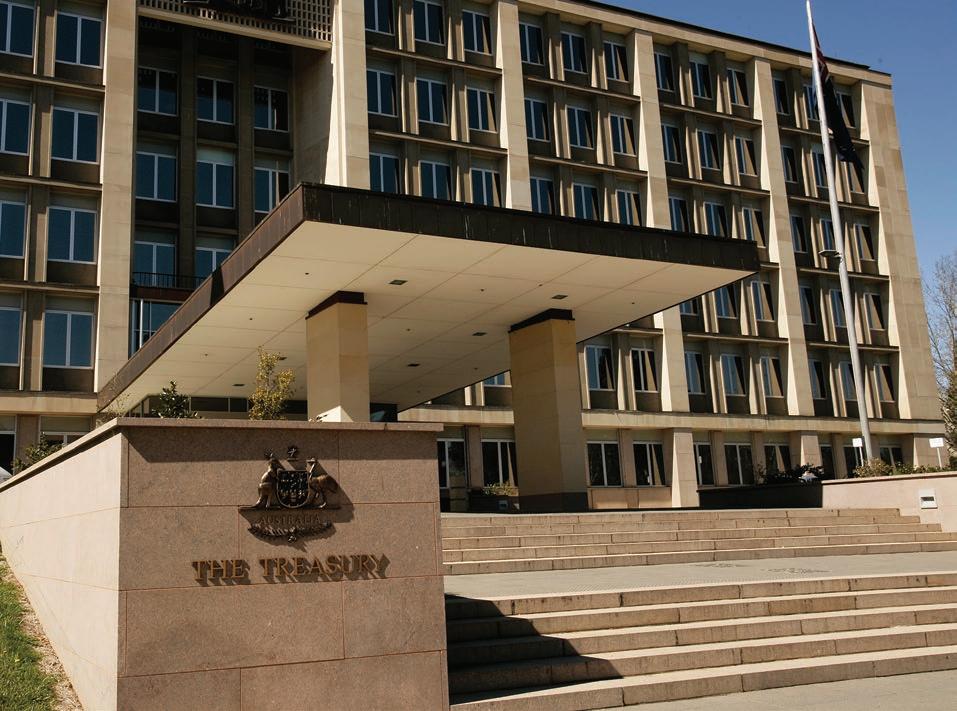
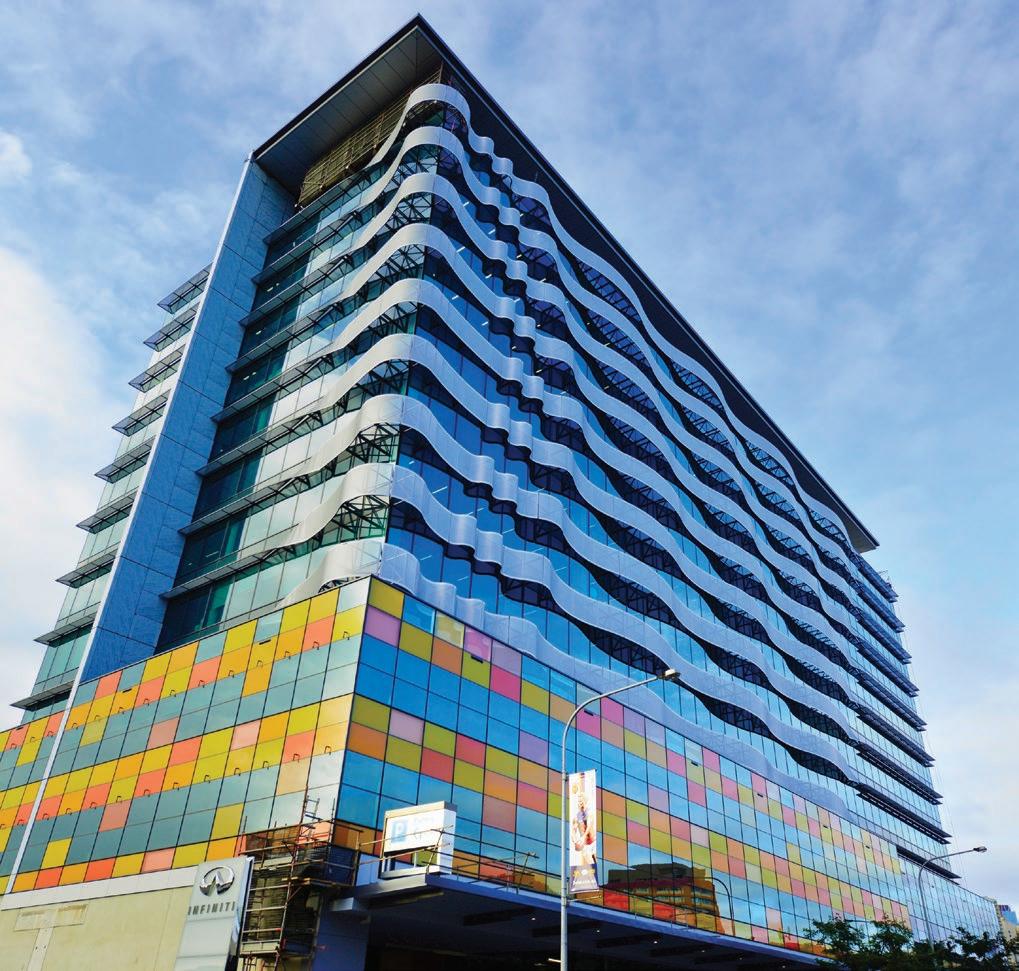
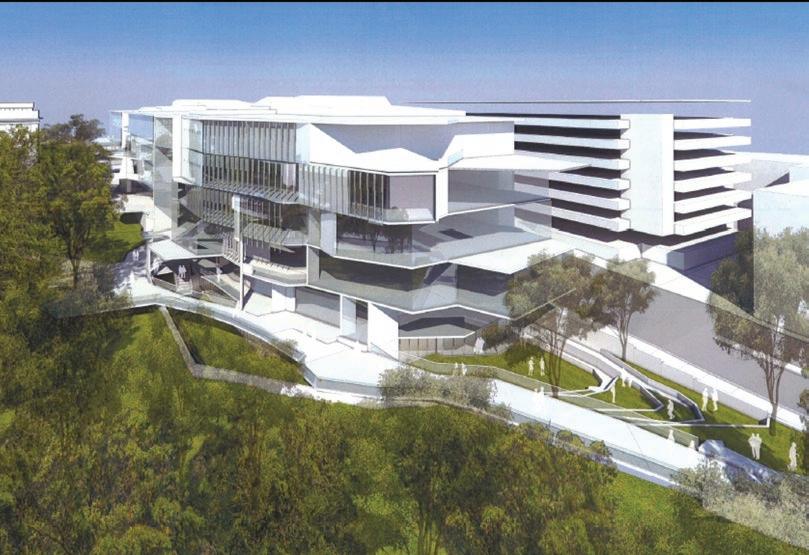
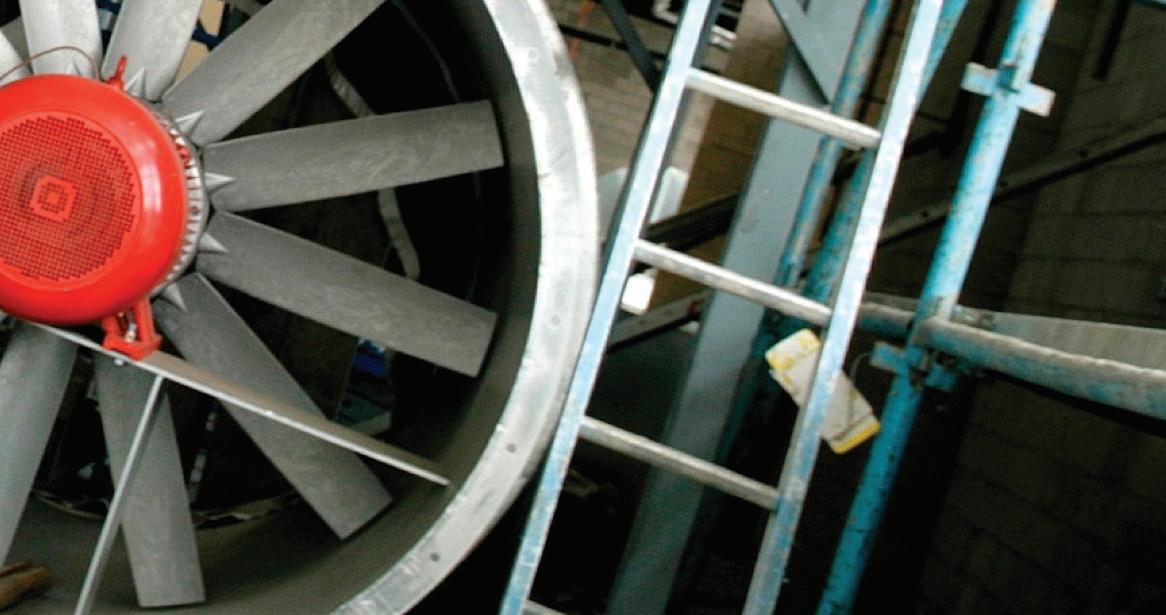
Canberra, in the Australian Capital Territory (ACT), was another obvious location for a branch office, not only because of the company’s previous work there, but also because Integrated Technical Management (ITM) now held Australian Government contracts for the Treasury Building and the heritage-listed John Gorton Building (formerly the Administrative Building). Canberra clearly afforded opportunities to build the ITM profile, so in September 2010 A.G. Coombs opened an office in Allara Street, which was centrally located in Canberra’s CBD.
With the company in expansion mode, calls from Brisbane continued streaming into Russell Telford’s office, all with the same question: “When is A.G. Coombs coming up here?”
Although it was tempting to book flights to Brisbane, Russell made it clear that office space would only be rented if a major contract was on the table. These contracts finally materialised in 2011, prompting A.G. Coombs to establish a Group office in Fortitude Valley, Brisbane. While strong client support made the move possible, the fact that they were able to establish the office with local expertise meant the company opened its doors in Brisbane sooner than expected.
After a confident start, supported by the relocation of several longstanding employees, including Project Manager Brett Mann and Site Supervisor Eric Gailey, business moved ahead rapidly on the back of a design and installation contract for the McLachlan & Ann Complex in Fortitude Valley – a major
A multi-service maintenance contract for the ANZ Bank’s retail network in Victoria and Tasmania enabled A.G. Coombs to maintain its historical links with Tasmania, where twenty-five ANZ branches were located. Commencing in 2006, the Service contract involved maintaining not only the mechanical and fire installations, but also providing all the electrical maintenance throughout the network. It would also be a catalyst for exploring new project opportunities in Tasmania.
development occupying a whole city block. But it would be the contract for The University of Queensland’s new Oral Health Centre that would challenge A.G. Coombs in other ways, and see it take on a new role in the area of digital modelling.
Building Information Modelling – or BIM to use its acronym –was now generating full digital representations of buildings, and was already being used to great effect by A.G. Coombs’ drawing office. As other contractors were also employing BIM technology, there was clearly a need for someone to coordinate the BIM component of a project, which A.G. Coombs, with its technical know-how and broad management expertise, was able to undertake. The role of BIM coordinator was yet another overarching role for A.G. Coombs and one that slotted perfectly into its portfolio of services.
Moving interstate was not without its hurdles and, despite A.G. Coombs’ longstanding reputation in Victoria, there was a sense in these early days of being the new kids in town. This was not necessarily a drawback in Russell’s eyes, as it allowed them to promote their whole-of-life building services, while positioning A.G. Coombs from the outset as advisors and technical specialists, with core capabilities in traditional HVAC projects.
All these developments fulfilled earlier strategies to build a whole-of-life capability in building services and to expand nationally only after consolidating the company’s credentials in Victoria – and only when the time was right.
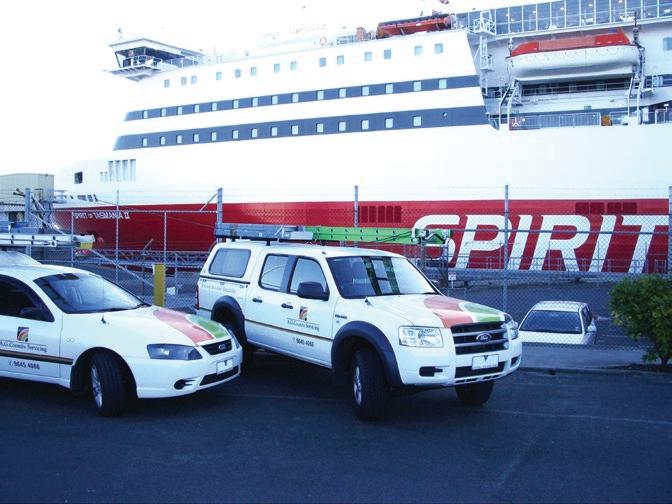
A comprehensive energy-efficient HVAC system refurbishment was designed, installed, commissioned and tuned for the building’s owners at 44 Market Street in Sydney’s CBD in 2011.
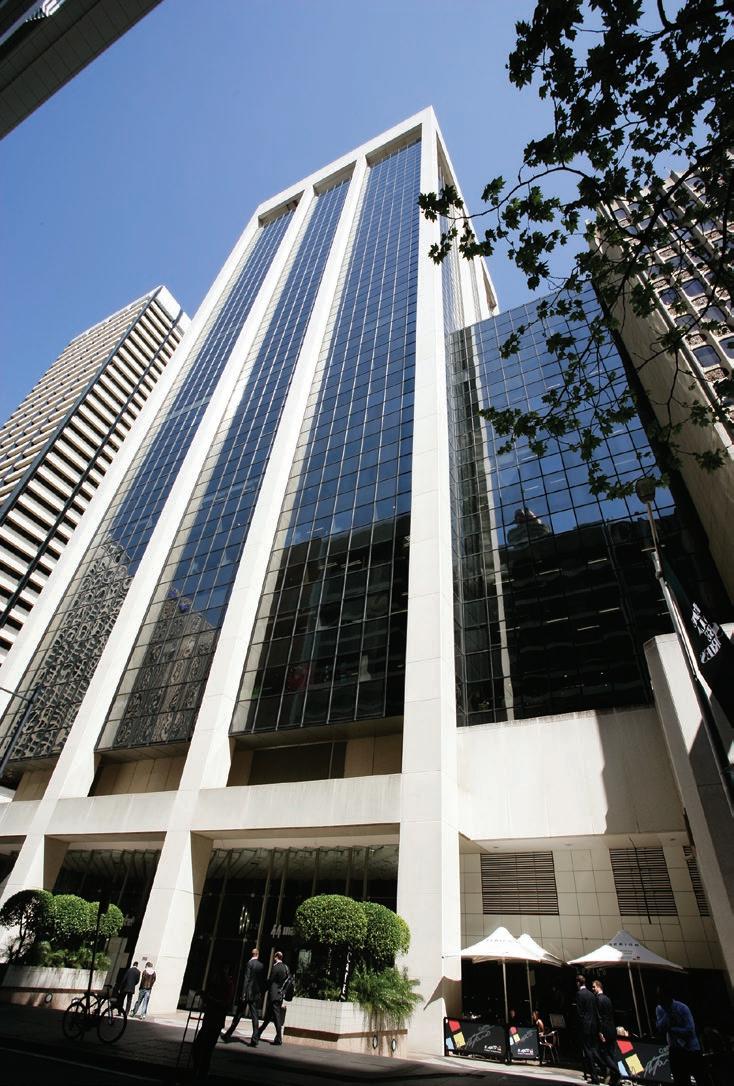
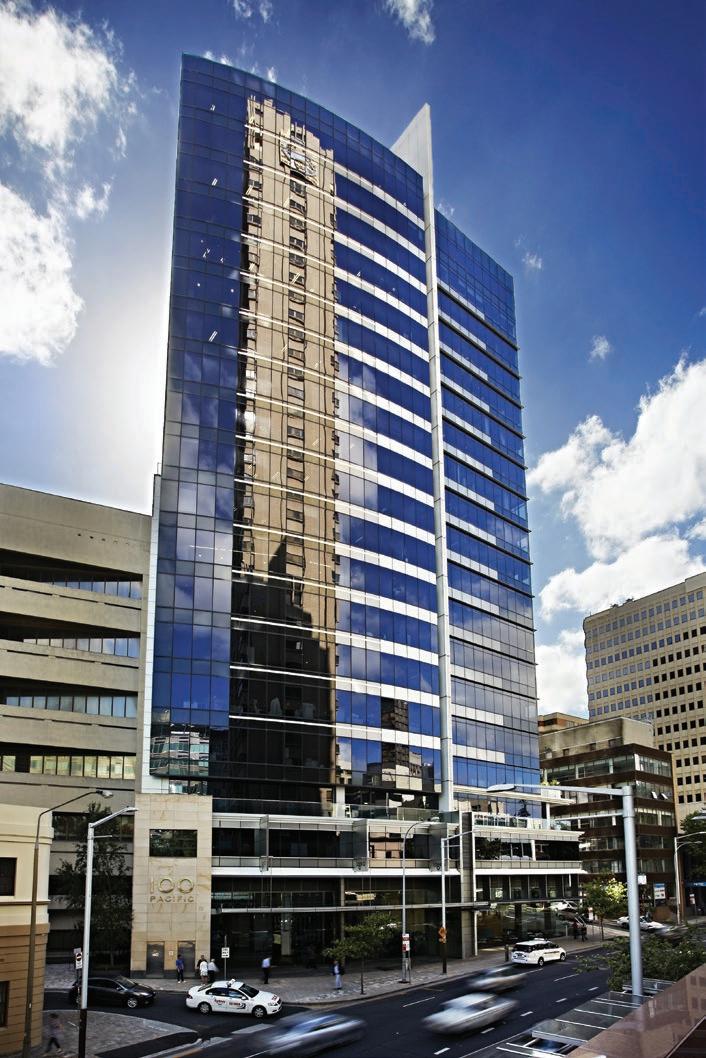
A.G. Coombs worked closely with the building’s owner to significantly improve the energy performance of the newly constructed 100 Pacific Highway in North Sydney in 2012. Image courtesy of ISPT, now IFM Investors.
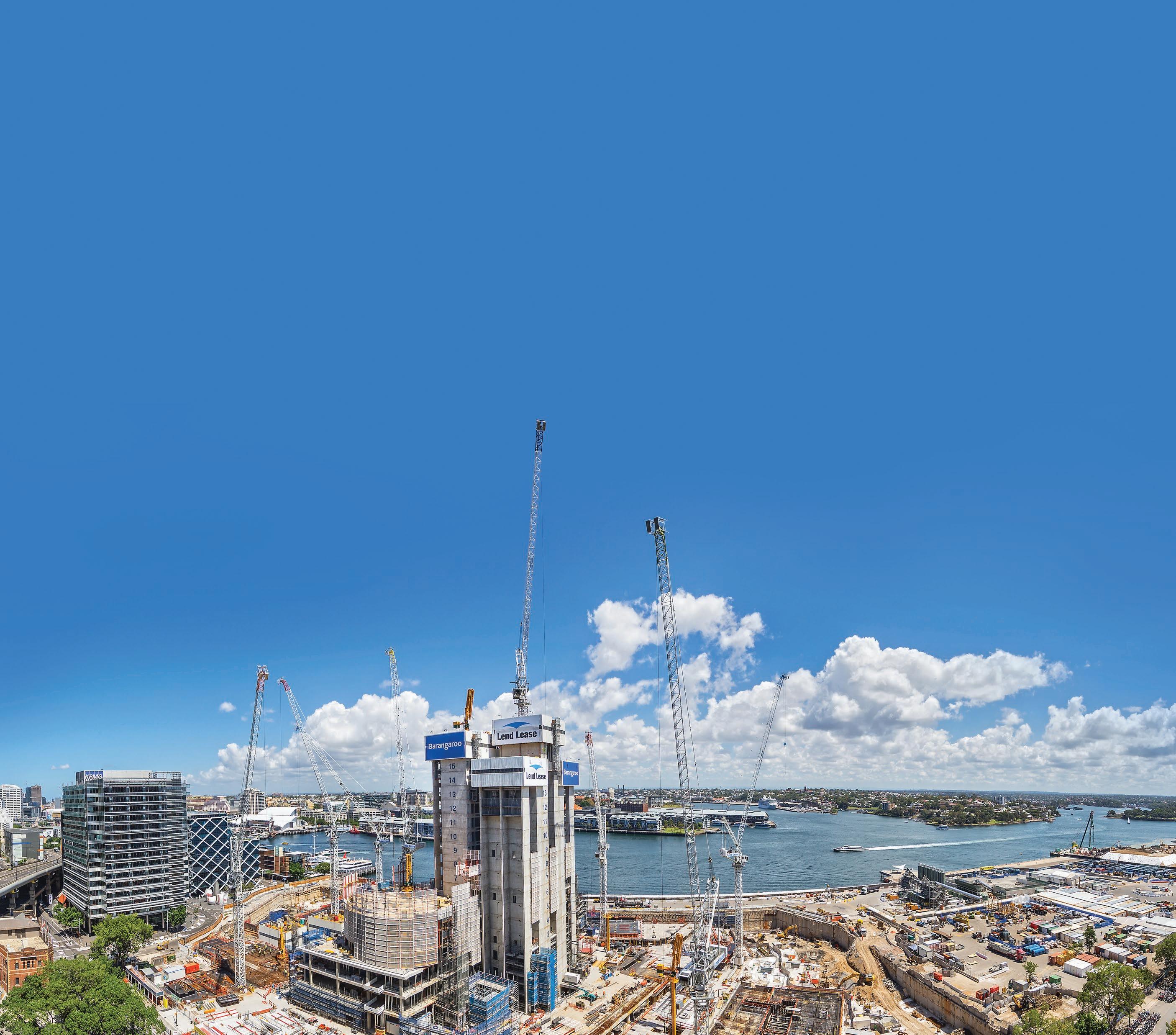
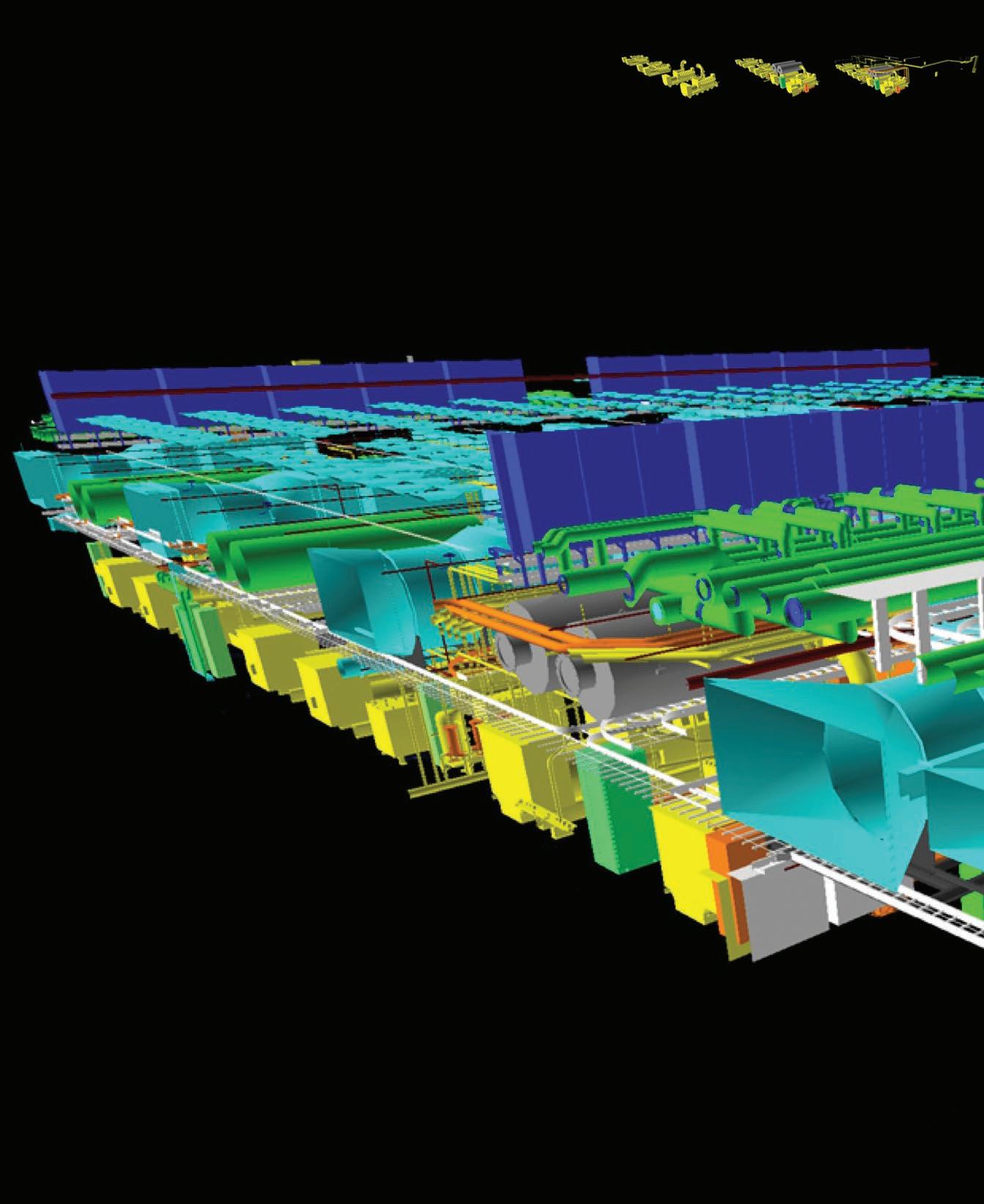
Building Information Modelling is a process that generates and manages multi-dimensional digital representations of the physical, functional and spatial features of a specific place. With BIM, a building is first constructed digitally (to improve design and eliminate installation issues) before being constructed physically. Although a computer would be needed for the full 3D effect, the image on this page shows how construction data is captured using detailed digital modelling. Everyone involved in a building’s construction – from architects and engineers through to builders and contractors – can input data into a BIM model. Systems and assemblies can also be shown relative to the entire facility, while the precise quantities of materials required can be easily extracted.
The benefits of BIM are realised when a building transitions from the architect’s plan to the building services design, as the technology can accommodate any necessary change in the virtual model before components are ordered or manufactured. Discrepancies and clashes between systems can also be resolved prior to construction, thus reducing wastage and schedule overruns.
When first introduced, BIM technology represented a quantum leap from the hand-drawn diagrams of the past and the two-dimensional drawings generated by computer-aided design. It meant that designers could work on a shared virtual model, drilling down to specific pipes, and even the tiniest bolt, within a few keystrokes.
Recognising the power of BIM to ‘de-risk’ projects, A.G. Coombs was in the vanguard of companies using the technology to optimise build plans and improve on-site installation processes. It also encouraged BIM’s application throughout the construction sector, particularly through its leading involvement in BIM-MEP AUS. A globally recognised initiative, led by the Air Conditioning and Mechanical Contractors’ Association, BIM-MEP AUS addresses many of the barriers to working in a virtual environment.
“BIM-MEP AUS has coordinated the industry in developing integrated project delivery workflows and a universal content template that facilitates the sharing of models,” explained Warwick Stannus, A.G. Coombs’ Group Engineering Manager and a technical director of the initiative. “The combination of detailed, multi-dimensional information models means that design and installation processes have advanced rapidly, improving system performance, site productivity and safety.”
Through the powers of BIM, the functional design of buildings improved significantly, with the technology enabling better access to the planning and design process for the building’s ultimate users and operators. The digital models also offered facility managers access to powerful information that could enhance workplace effectiveness, productivity, maintenance practices and regulatory compliance, while also reducing environmental impacts and operating costs. “There have been better outcomes all round from this new technology,” said Warwick.
Uniting the building industry in a virtual revolution
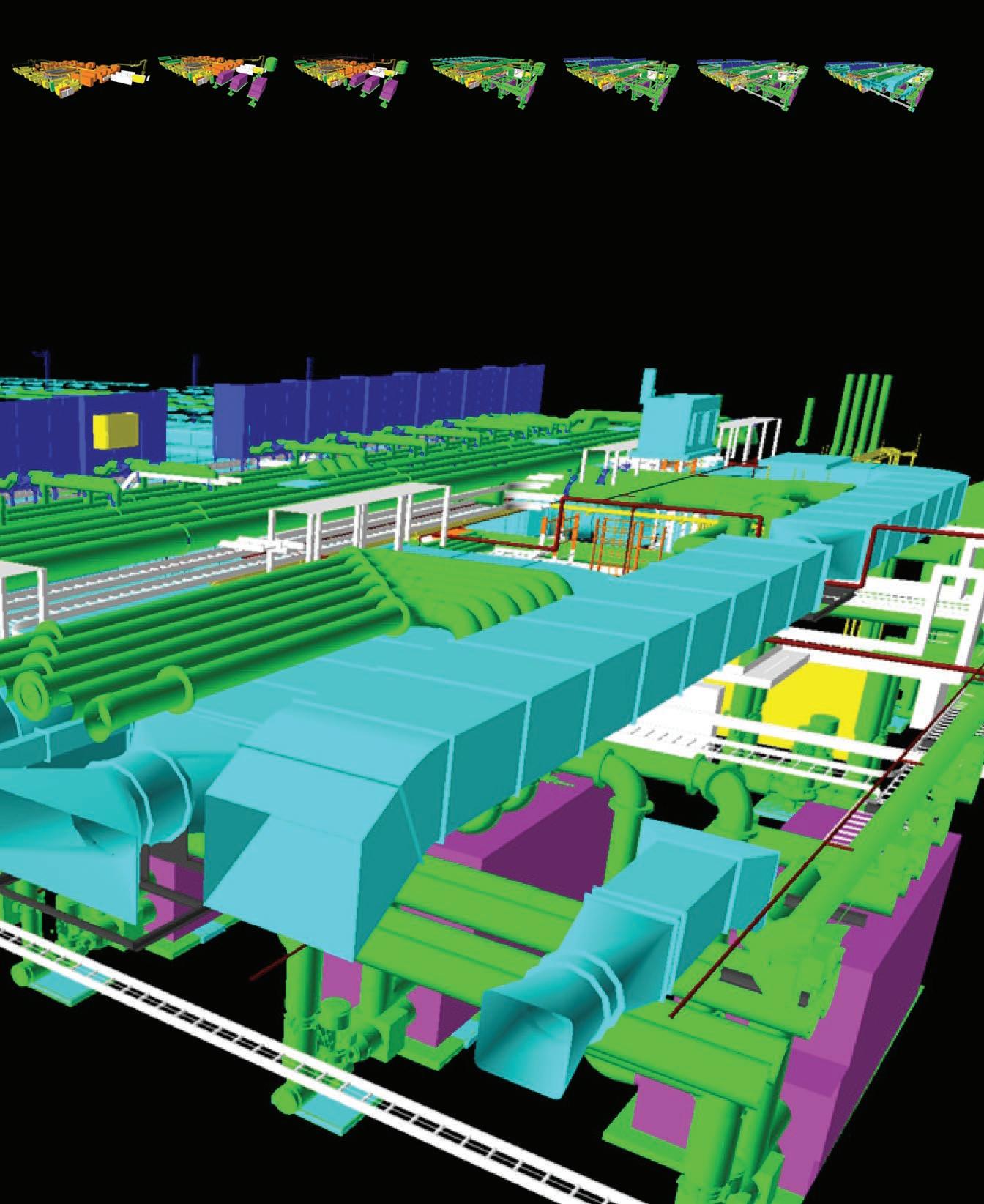
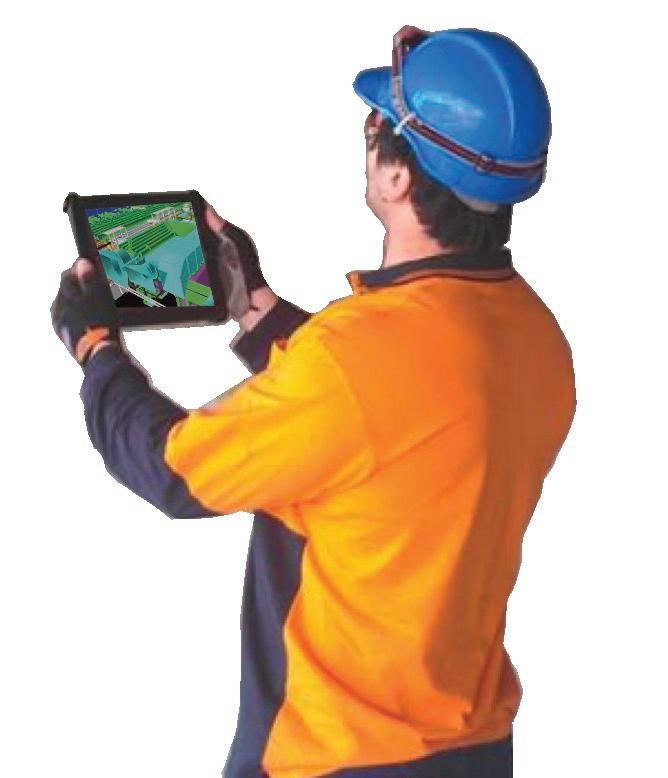
On 31 December 2012, A.G. Coombs moved away from a family-owned structure when Philip Coombs sold his remaining shares in the business to senior executives and stepped down from his position on the Board. Having played a key role in A.G. Coombs for over twenty years, he was now keen to pursue other interests, and so the transition took place in keeping with plans to ensure a greater level of employee engagement in the company’s future. Effectively a management buyout, this development was the culmination of a long-held vision to see A.G. Coombs continue as a leading force in the building services industry.
While these developments brought to a close the direct family involvement in the business after sixty-seven years, there was no doubt that the A.G. Coombs name would remain on the letterhead. It was a name that stood for something in the industry, exemplifying in eight letters a standard of service built on dedication, professionalism,
The beginning of a new year would also be the opening of a new chapter for A.G. Coombs – one enriched by core values that had been formally established in the mid-1990s. ‘Adding value’ to projects, ‘striving for excellence’ at all times, encouraging ‘two-way communication’ and being ‘community minded’ were not simply words in print, but a carefully crafted code of ethics for conducting business and interacting with employees.
For Managing Director Russell Telford, the core values provided an internal checklist, guiding everything from daily actions to high-level management decisions. “These values were established at a time when we were restructuring and introducing new services, so it was important to us that we maintained a standard of conduct, which the core values helped enshrine. From that point on, if something was perceived to be amiss, we only had to ask, ‘Are these actions in line with our values?’ ”
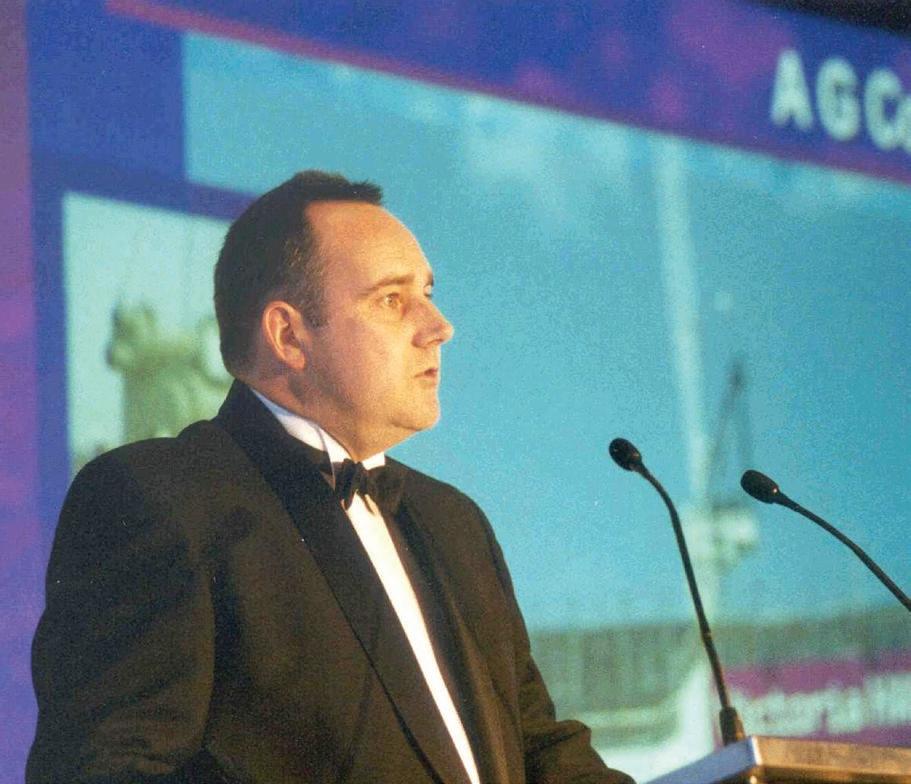
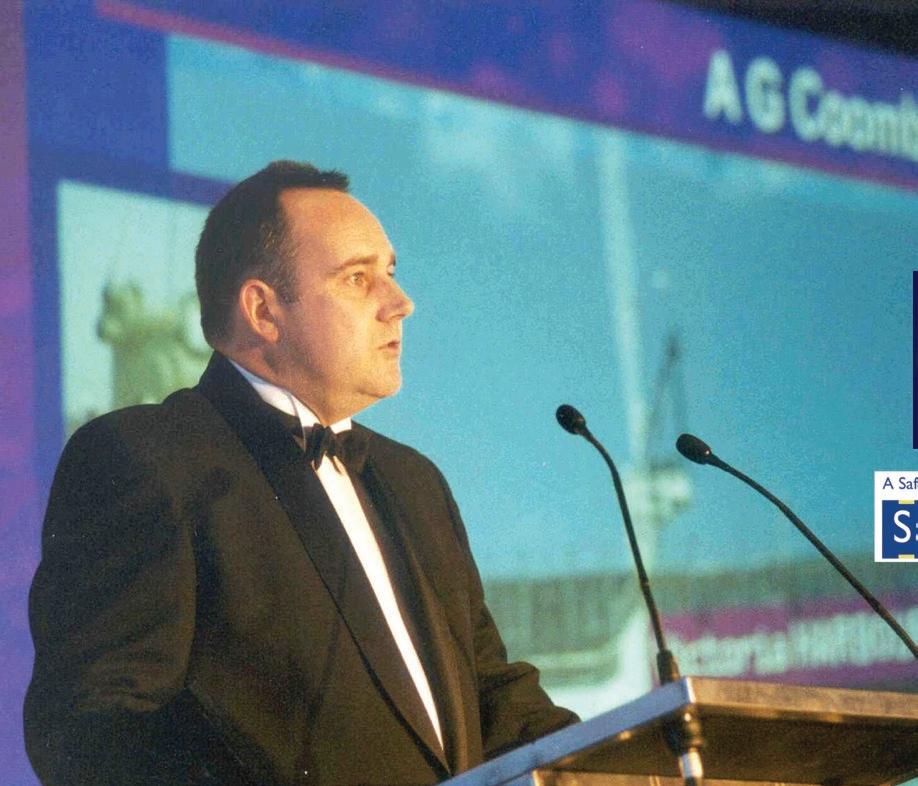
“How we train and recruit people, how we conduct performance reviews, everything is guided by our core values,” said then Group Human Resources Manager Kim Hesline, who together with Finance Director Frank Schooneveldt, had worked with Russell to develop the eight principles or core values that would also feature in the Culture Document. Both documents helped define and articulate A.G. Coombs’ value-adding ethos, teamwork philosophy and fair-minded approach, with the more expansive Culture Document encapsulating the essential elements, described earlier in this chapter, of A.G. Coombs’ workplace culture.
If anyone thought that the exhortations contained within these two documents would disappear into the corporate ether, they had little appreciation of the company’s firm commitment to ‘walking the talk’. It was an attitude cultivated over the years by long-serving employees such as Frank Schooneveldt (by 2012 Frank had served almost forty years with the company) and embraced by those who understood the stabilising influence of clearly stated values.
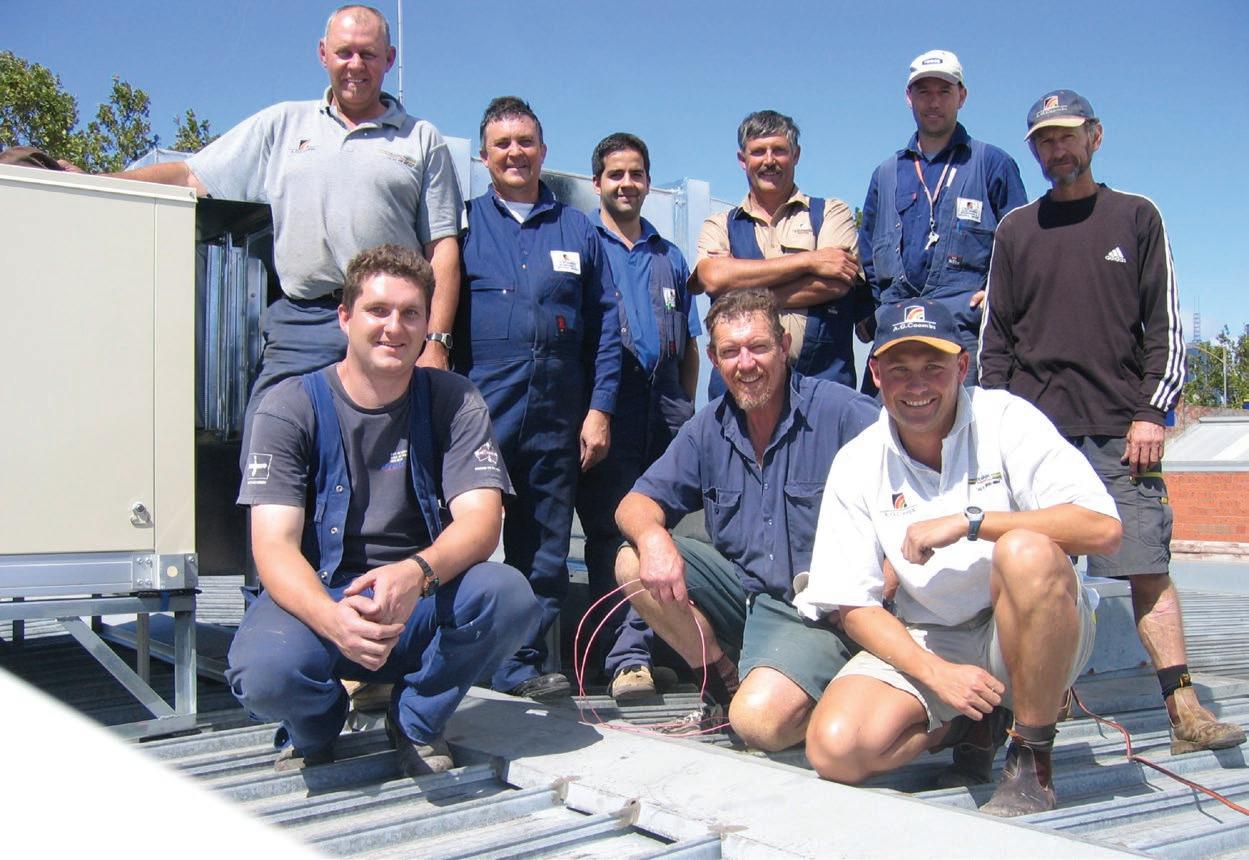
Russell distinctly recalled how Frank, one of the staunchest gatekeepers of these values, would often close out a debate at management meetings by emphatically saying, “We should go forward in this way because of core value number two!” – and everyone would get it, because it was all about results, not excuses.
The importance of having established standards of conduct and behaviour was highlighted after the company officially changed hands in 2012. Significantly, the core values helped overcome any issues that might have arisen from the change in ownership. An integral part of the company’s foundations, they ensured a seamless transition between past and present, irrespective of whether the business was owned by a family member or by its ‘family’ of employees. They also enabled A.G. Coombs to be perpetuated in accordance with standards and principles to which everyone had subscribed.
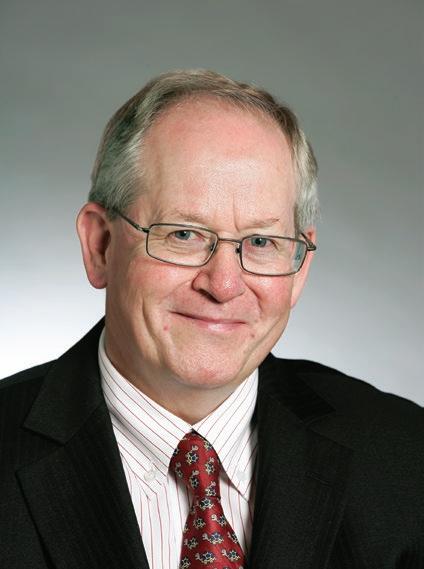
With the business poised for further growth, the need to maintain standards of professionalism and integrity became an “overarching priority” said Russell Telford. “The key question for us was always going to be, ‘How do we align ongoing growth with our core values?’ The fact that we were still referencing these documents many years after they were drafted, demonstrated that we were living our values.”
The core values are now at the heart of A.G. Coombs’ national operation – a touchstone, if you like, for measuring the company’s performance both externally and internally. Even prospective employees are shown the ‘values’ and asked for their thoughts, while those who end up working for the company are positive, happy team players – above all, ‘can-do’ people.
Importantly, the values have ensured that the planned expansion interstate would not be at the expense of perpetuating a resilient and responsible business – one that continued to attract like-minded people and that customers felt confident to engage with over the long term.
Finance Director Frank Schooneveldt played a pivotal role in steering the company financially through some testing times in the industry. After a forty-year career with A.G. Coombs, Frank was appointed Non-Executive Director on his retirement in 2013.
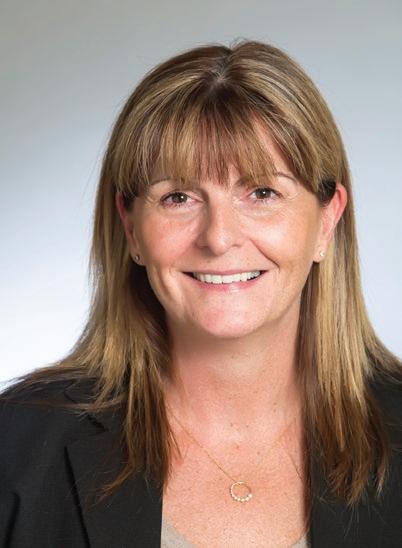
Two values held dearly by A.G. Coombs are ‘teamwork’ and ‘value to others’. In 2011 it put words into action by installing new air conditioning into the redeveloped facilities of its foundation charity Challenge, a not-for-profit organisation helping families living with cancer. The A.G. Coombs team is pictured here during the redevelopment of the Challenge Family Centre, which opened in November 2011. The company’s personnel volunteered their engineering, drafting, project management, installation and commissioning expertise. Key suppliers also donated new plant, materials and transport.
After joining Accounts Payable in 1993, Kim Hesline progressed through a variety of roles before assuming responsibility for Human Resources when the personnel function expanded to cover areas other than payroll. In 2005 she was appointed Group Human Resources Manager, a role which later evolved into Executive Manager Employee Services.
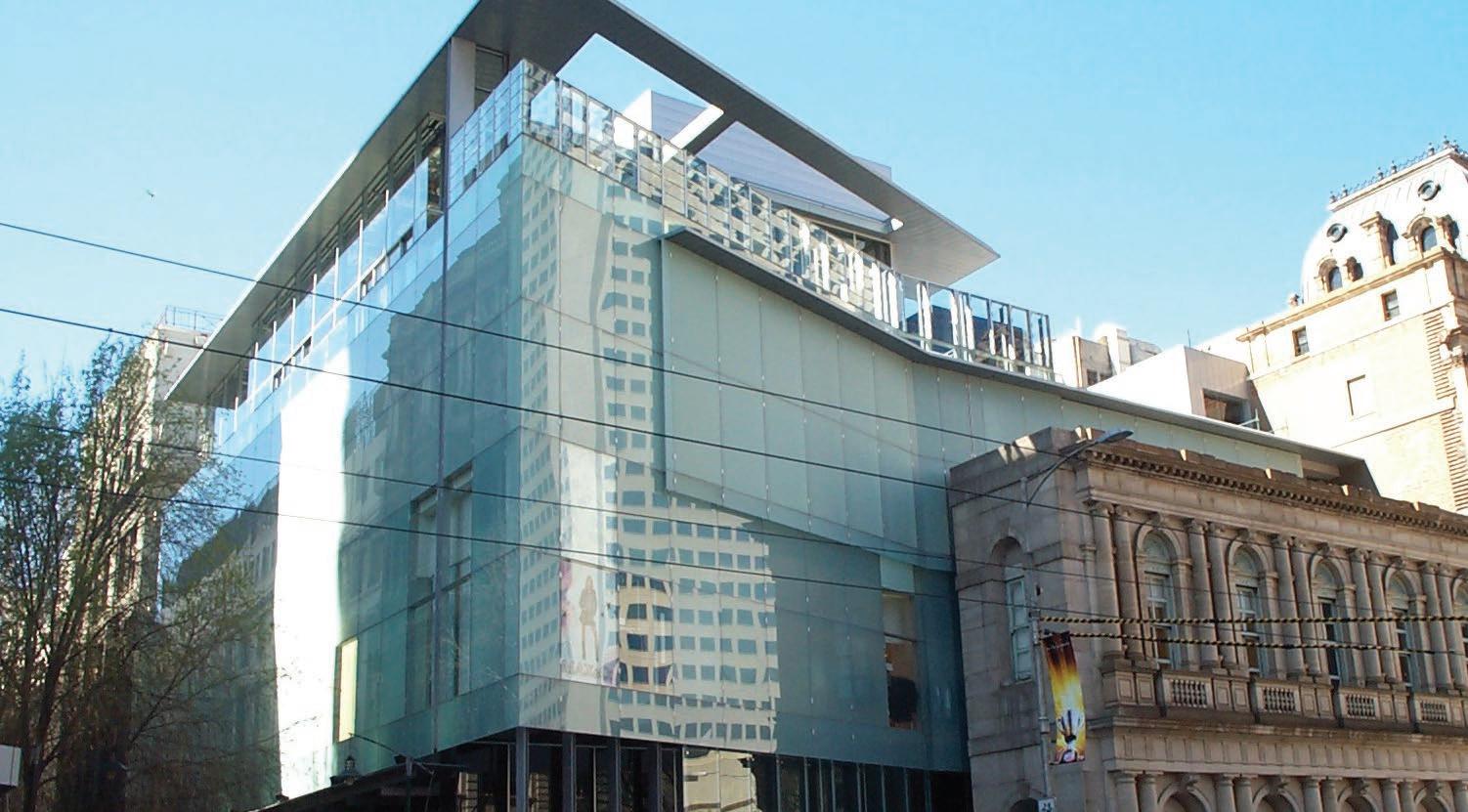
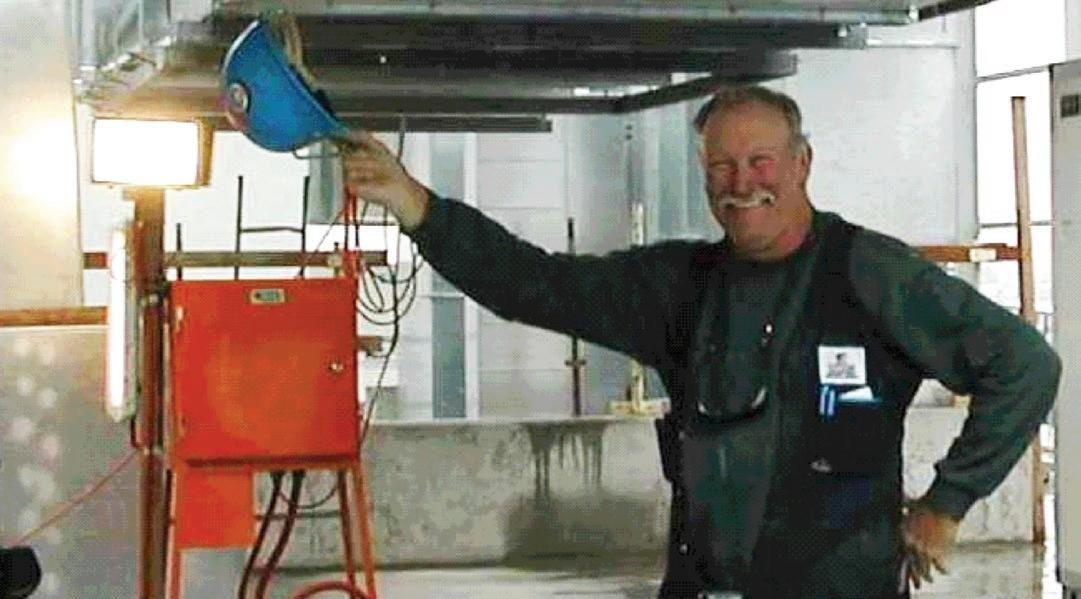
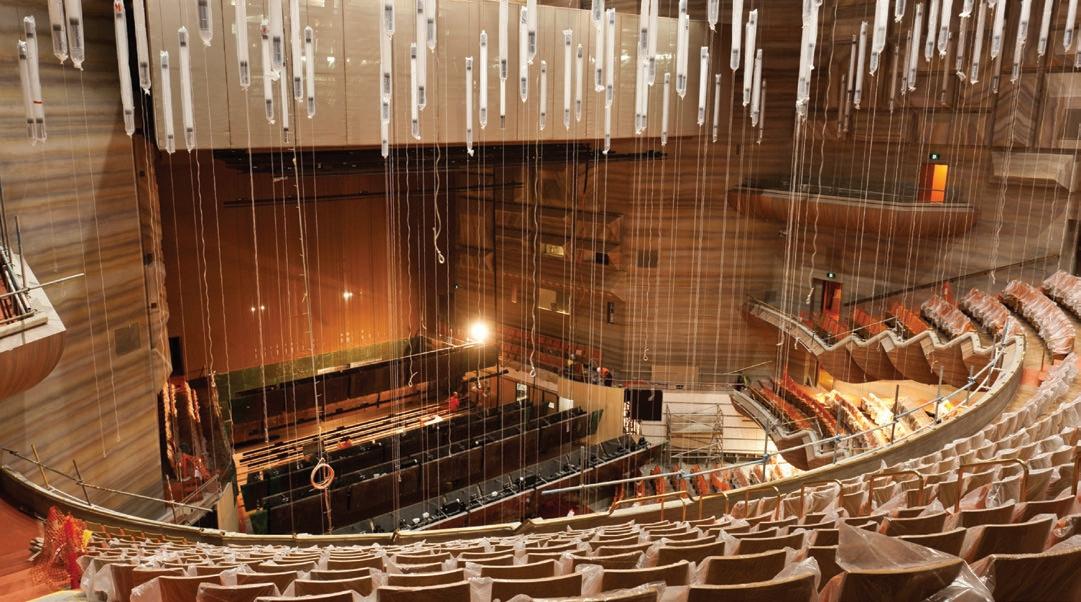
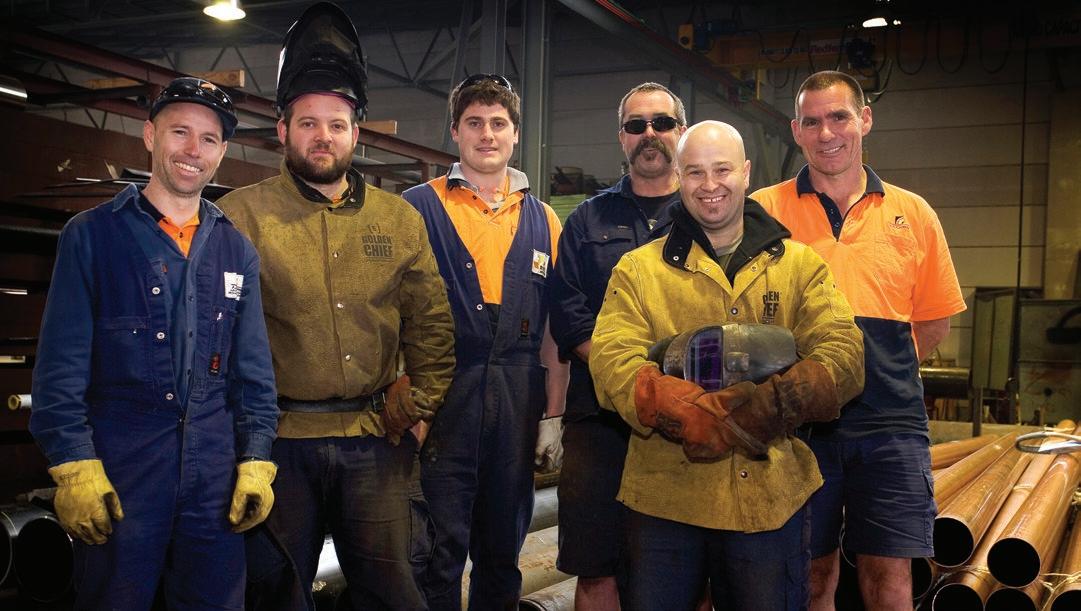
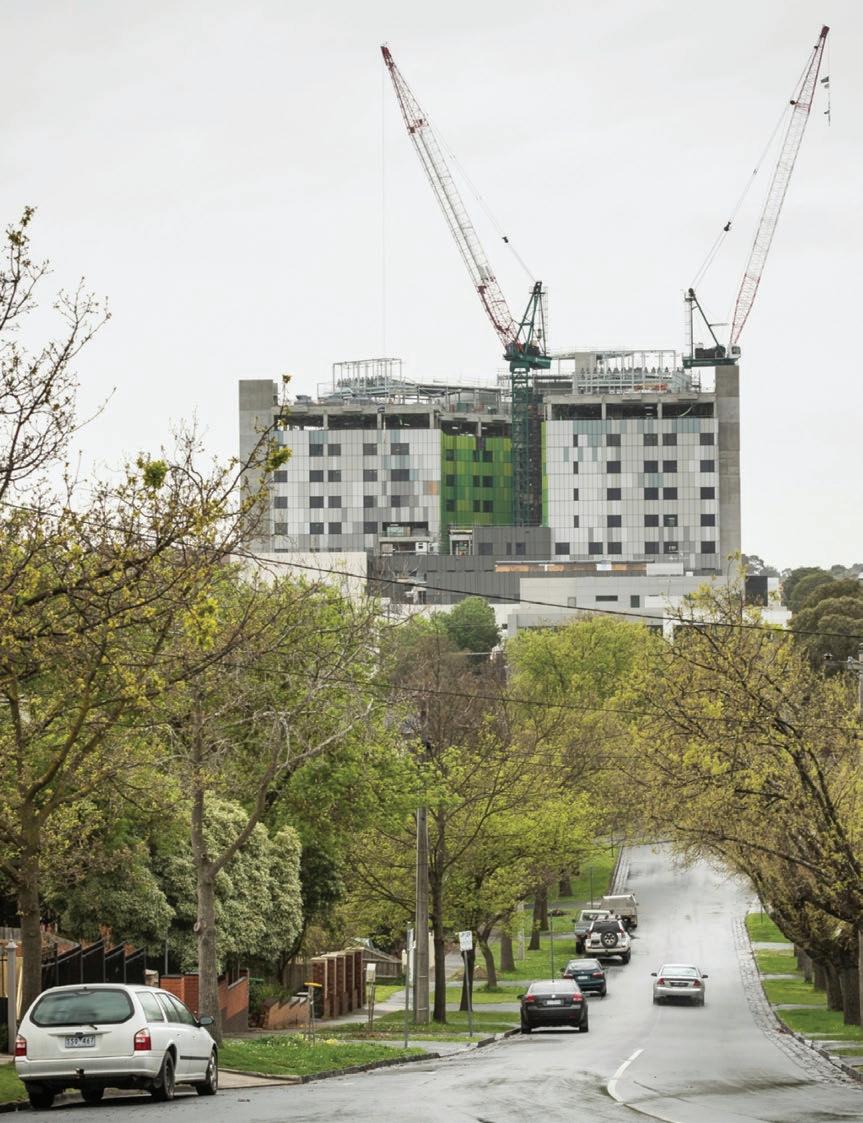
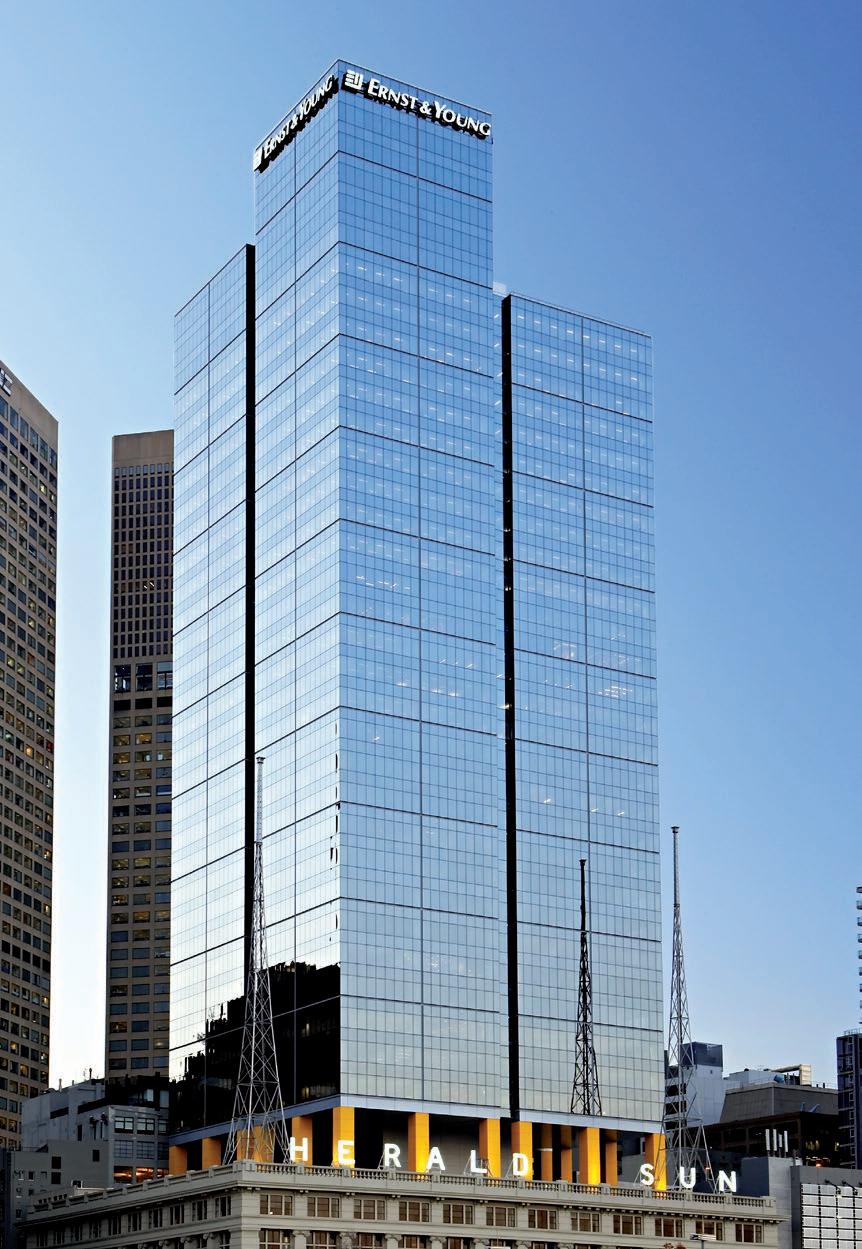
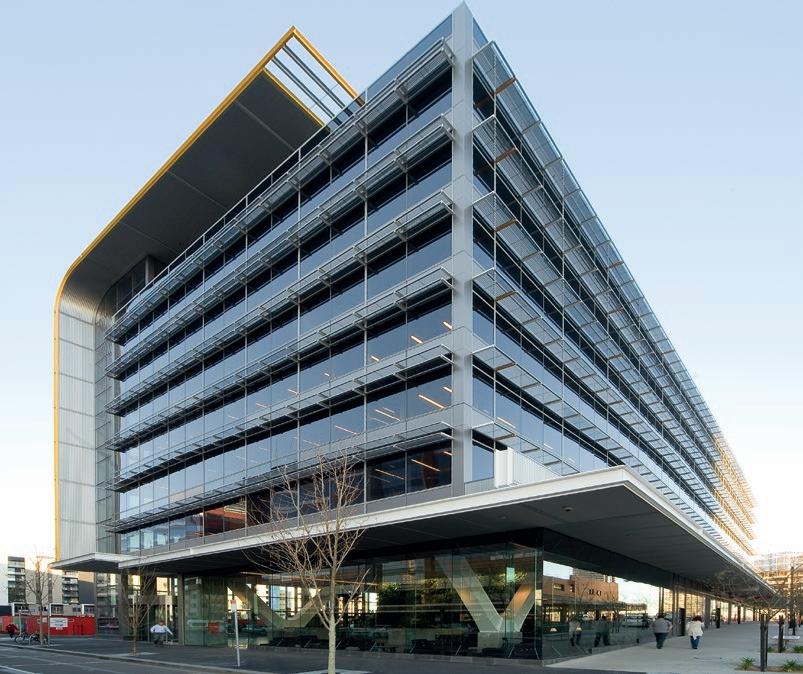
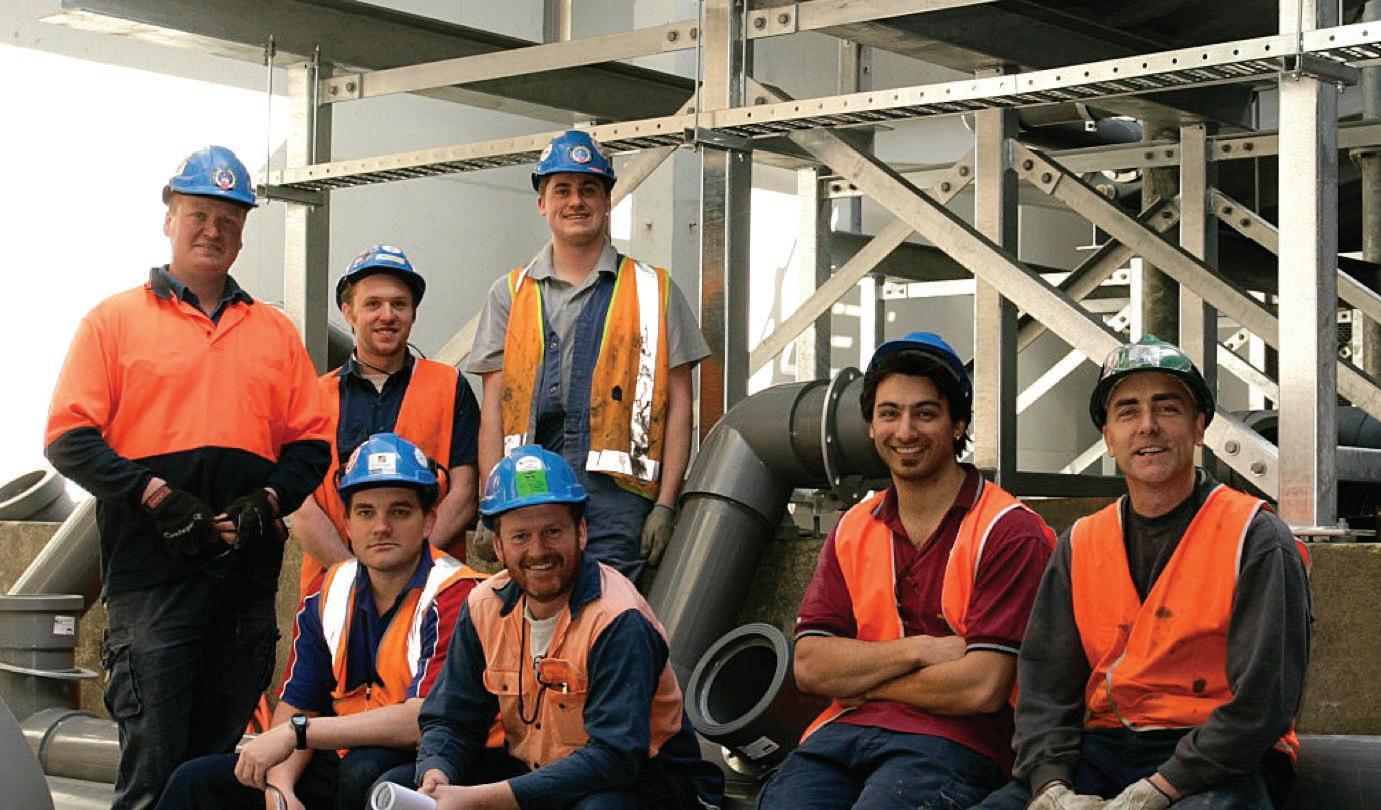
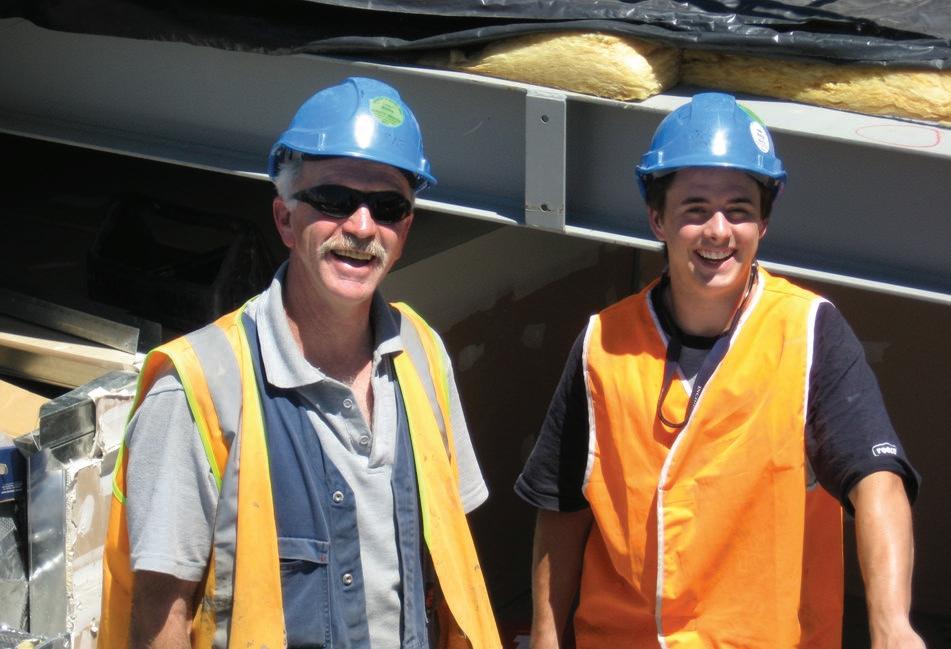
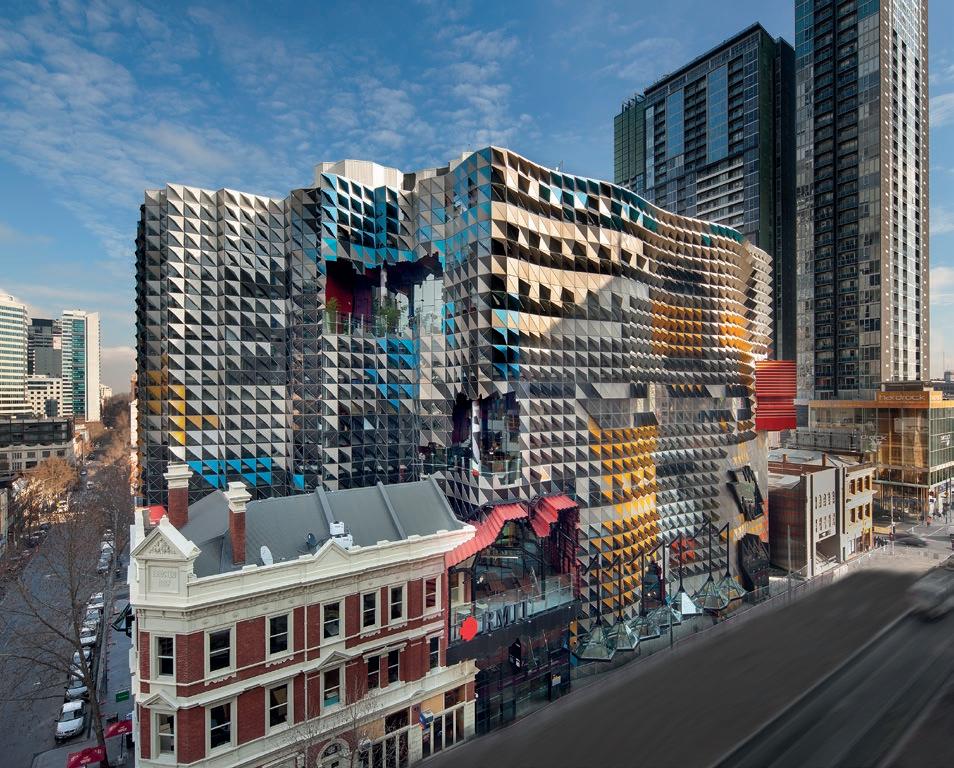
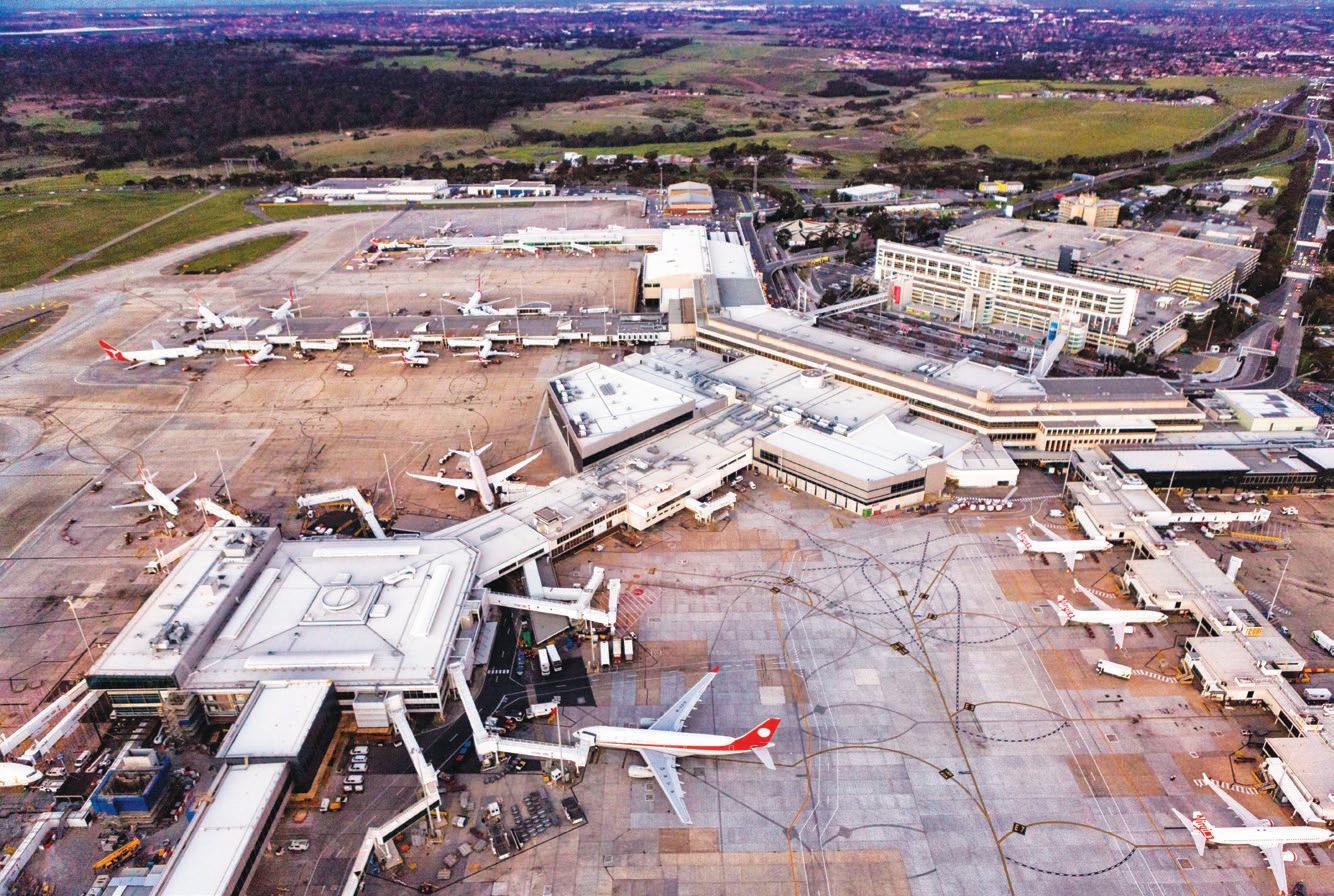
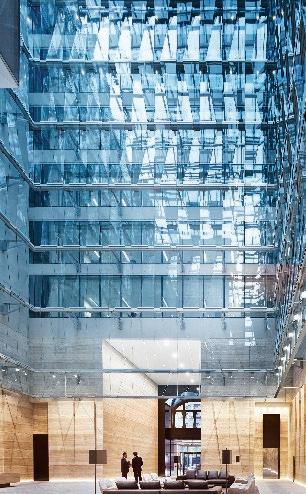
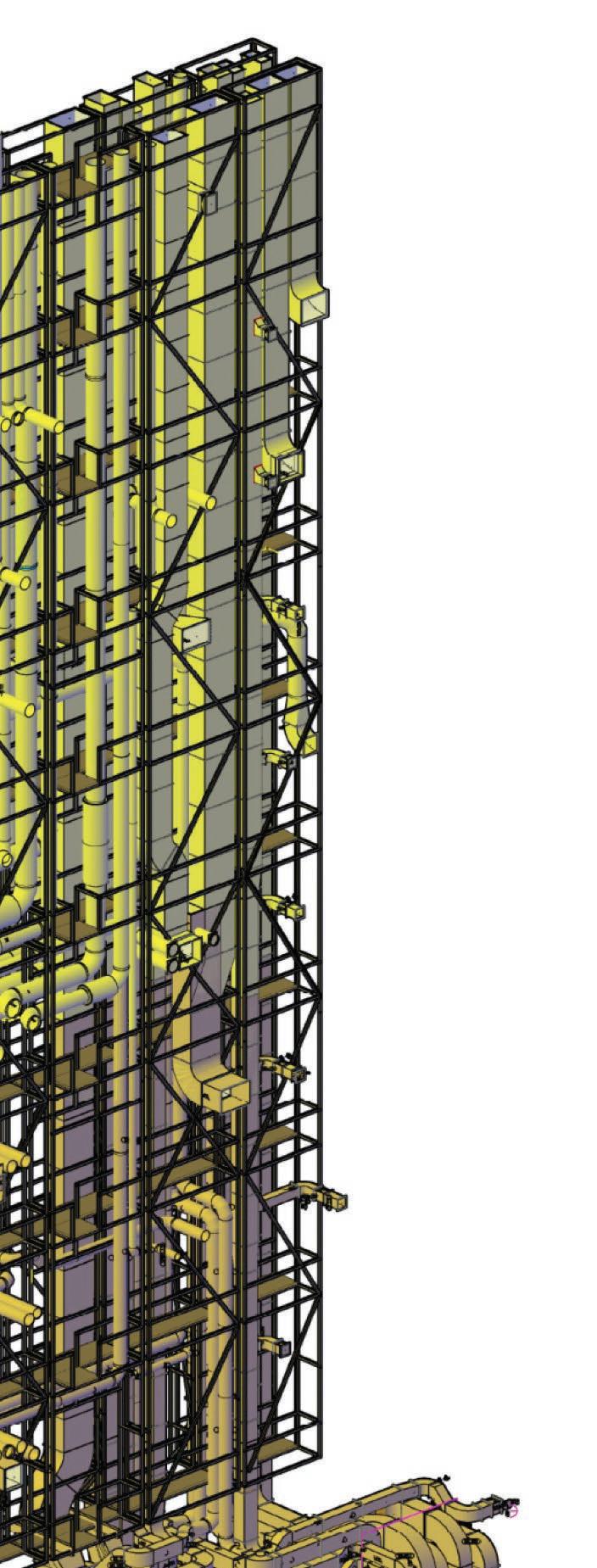
In October 2015, employees of A.G. Coombs gathered at the company’s Annual Dinner and Awards Night in Melbourne to celebrate seventy years in business. This significant milestone was further commemorated by the publication of a corporate history documenting the company’s humble beginnings as a small plumbing company and its evolution into Australia’s leading provider of mechanical and HVAC services.
Standing at the podium, Managing Director Russell Telford acknowledged A.G. Coombs’ champion team and the range of projects being delivered in Victoria, New South Wales, the Australian Capital Territory and Queensland. The company’s success, he said, could be summed up in two words –“our people” – and not just those present at the dinner, but everyone who had contributed to the company’s growth since 1945.
Teamwork and skill had seen A.G. Coombs progress from completing the installations at the Royal Children’s Hospital in the 1960s – then Australia’s largest mechanical services contract – to a lead services role in 2013 for one of Australia’s biggest commercial developments at Barangaroo in Sydney.
It was teamwork and skill that also produced, in record time, Australia’s largest prefabricated multi-services riser for the
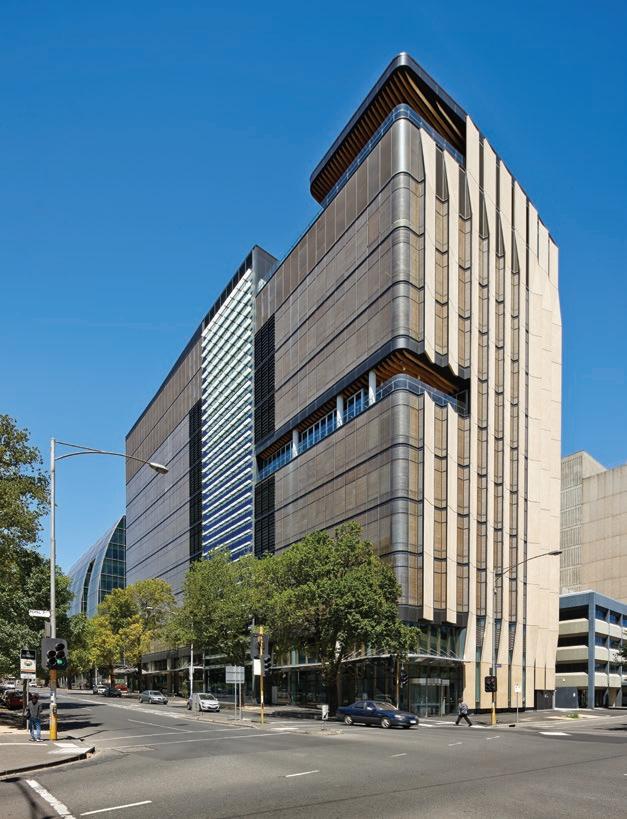
Peter Doherty Institute in Melbourne – a world-class medical facility and the first in the Southern Hemisphere to combine research, teaching and clinical services under the same roof.
These were but some examples of A.G. Coombs’ multilayered capability, which by 2015 extended beyond the installation and maintenance of building services into advisory services, prefabrication, commissioning, and the management of large and often technically complex buildings.
The building projects were but one measure of A.G. Coombs’ approach to business. Displayed at its head office in Melbourne were multiple business, employer and safety awards highlighting innovation and excellence across all the company’s operations. A.G. Coombs’ active participation in numerous industry associations also demonstrated its commitment to advancing the profile of mechanical services in Australia.
Significantly, A.G. Coombs celebrated its 70th anniversary as an employee-owned business, Philip Coombs having transferred ownership to long-serving managers in 2012. Although no longer family-owned, that sense of ‘family’ had endured – a hallmark of the strong and robust culture that bound the company together.
“Continued investment in the development of our people, their safety and wellbeing, and providing an environment that supports the teamwork required to deliver at the highest level are essential attributes of our business model,” noted Russell.
Following the company’s successful expansion interstate, and its leading role in the digital modelling space, one could easily have asked if there was anything left for A.G. Coombs to do. The answer was, unequivocally, “Yes”, because in order to grow its profile as Australia's leading building services specialist it needed to continue investing in its people and raising the bar to achieve the best possible outcomes for clients. Importantly, as A.G. Coombs looked ahead to the next decade, it had already evolved into the technical services company with trade-based capabilities first envisaged some fifteen years earlier.
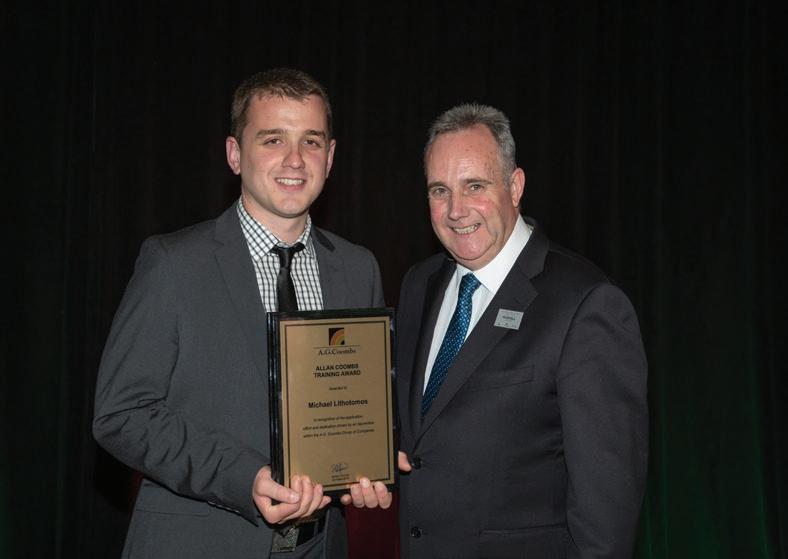
Clockwise from left: Michael Lithotomos, 2015 winner of the Allan Coombs Training Award (left) with Managing Director Russell Telford; Strategic Development Director Bryon Price (right) with Russell Telford and Marcella Hunter (centre) author of the A.G. Coombs history, A SingularVision; Jeannine Mills accepting her award for 21 years of service; and Philip Coombs, son of the company’s founder Allan Coombs.
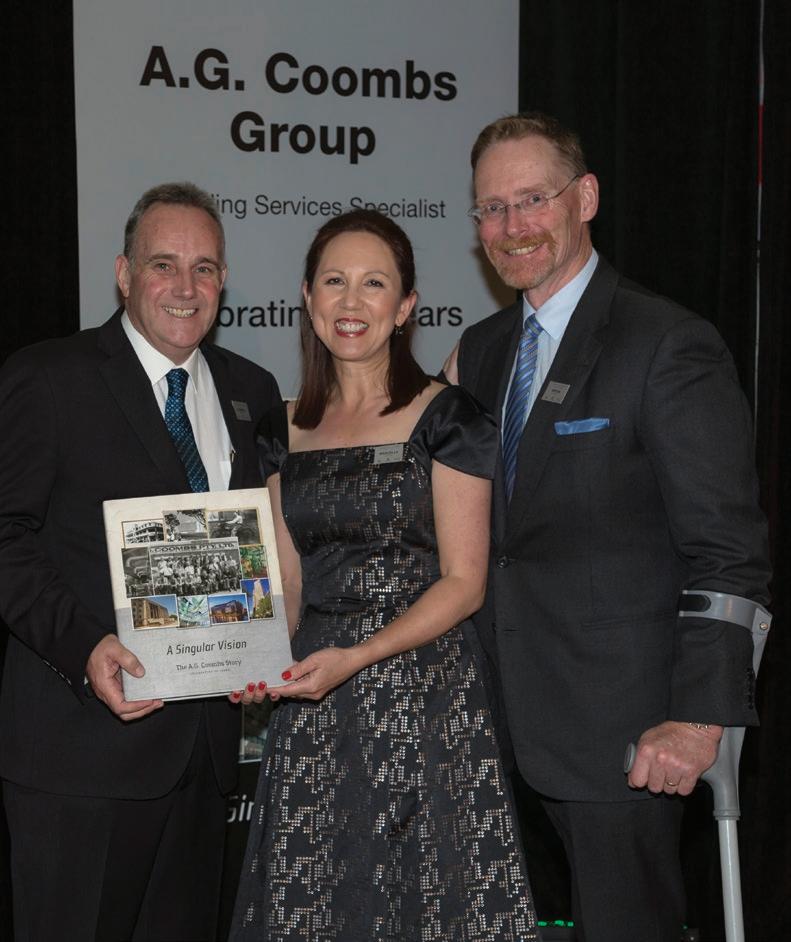
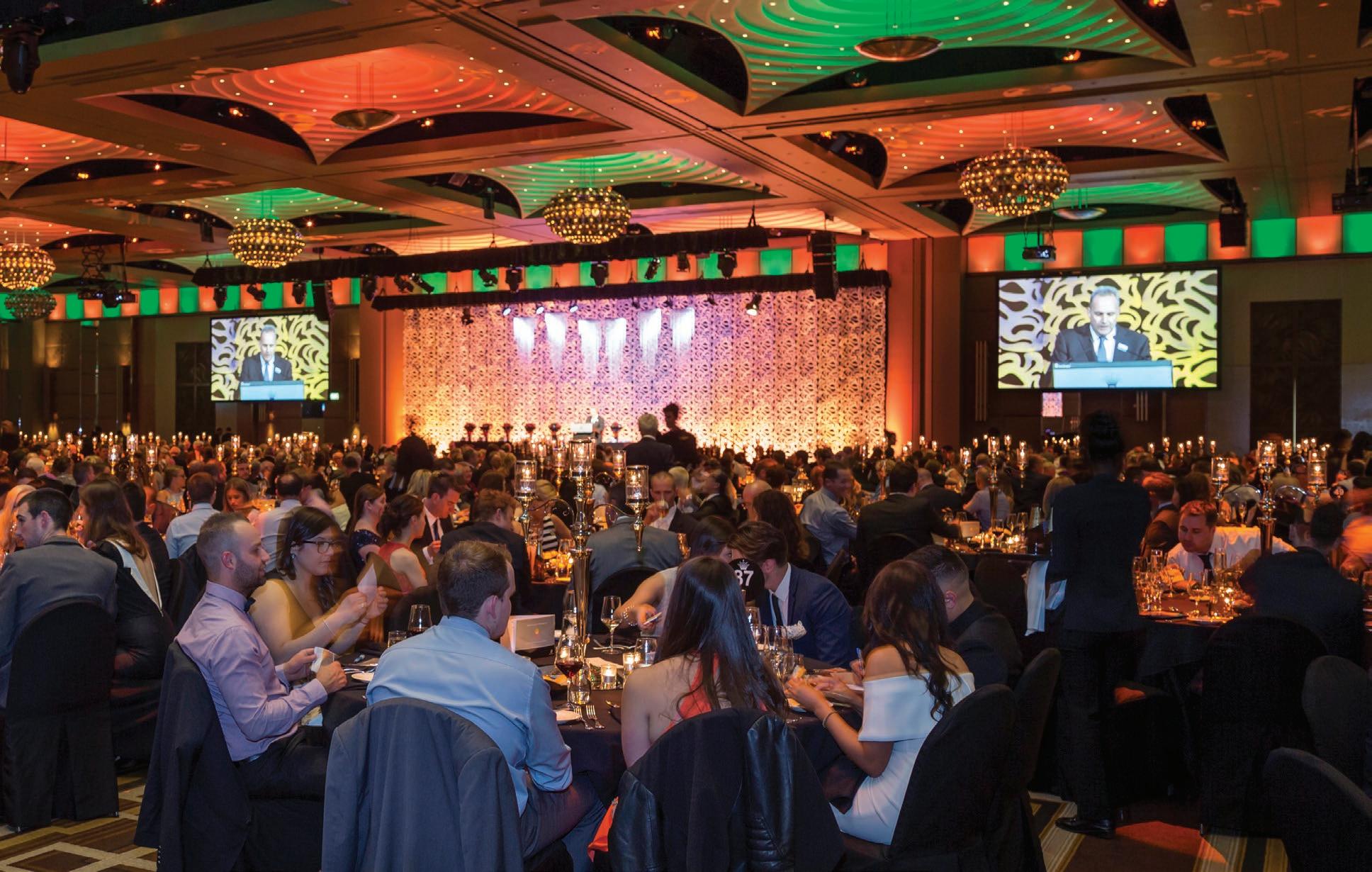
Sydney’s Barangaroo South complex – A.G. Coombs’ first major project in Sydney. From left, Tower One (completed in 2016), Tower Two (completed in 2015) and Tower Three (completed in 2016). A.G. Coombs installed the building services in Towers One and Two and would go on to maintain all three towers.
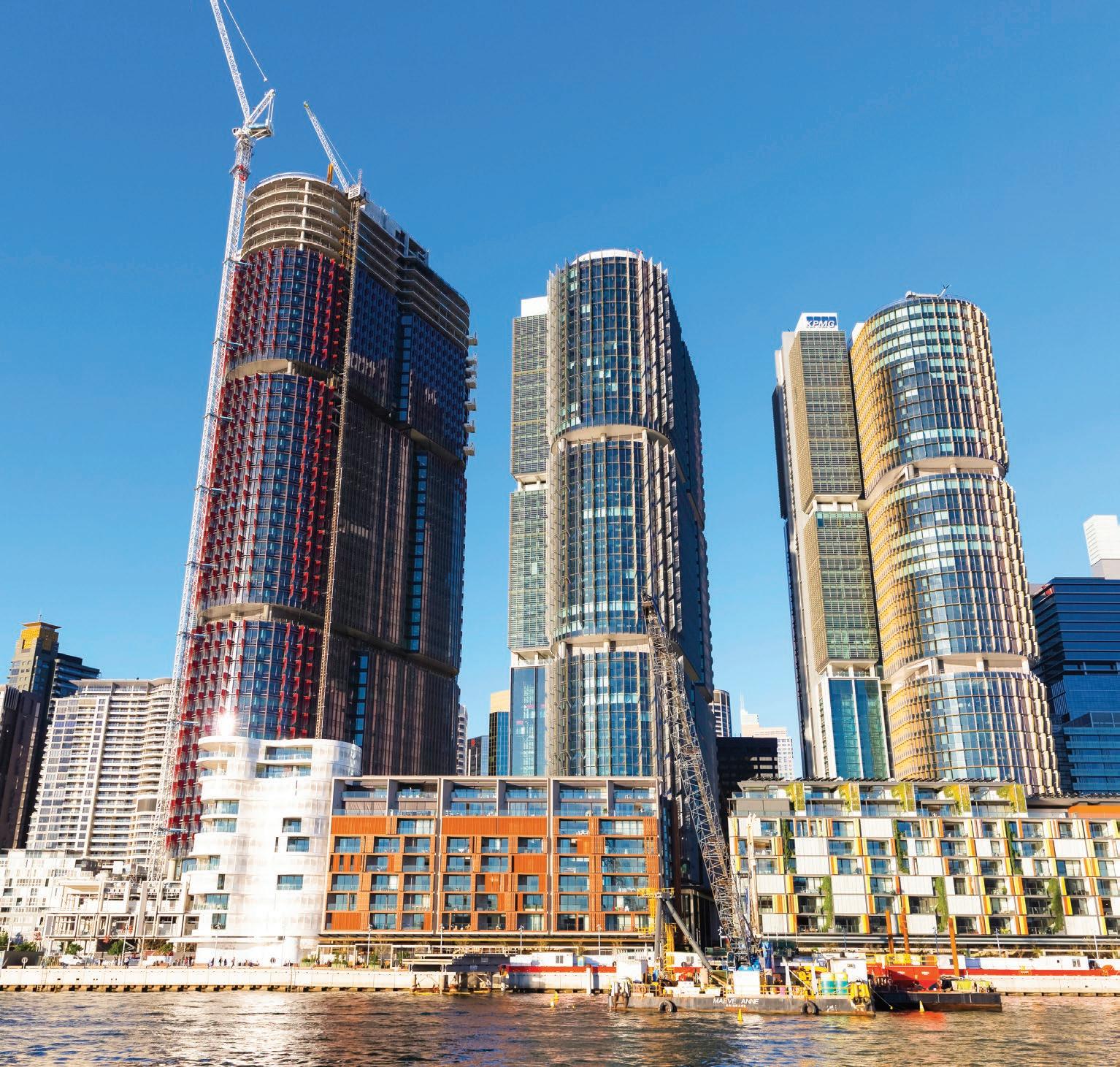
Image: imamember/iStock.com
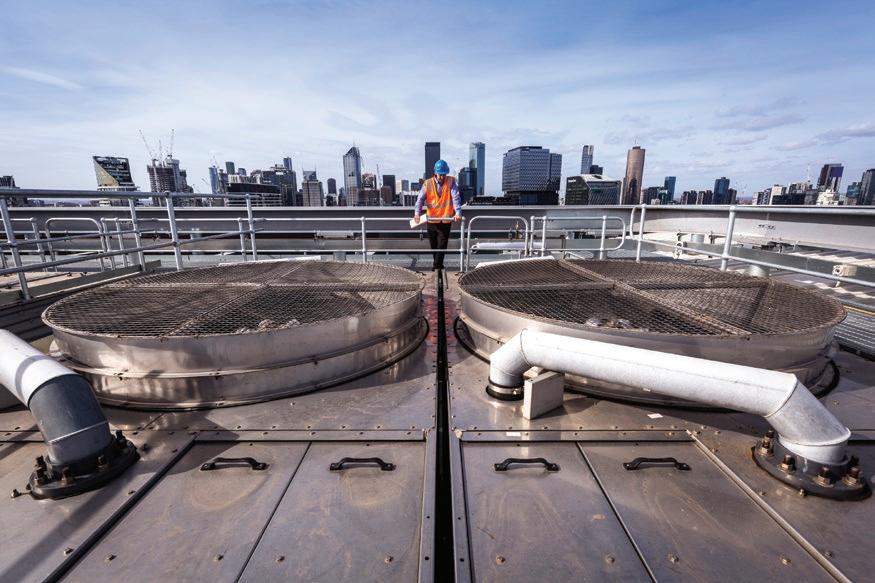
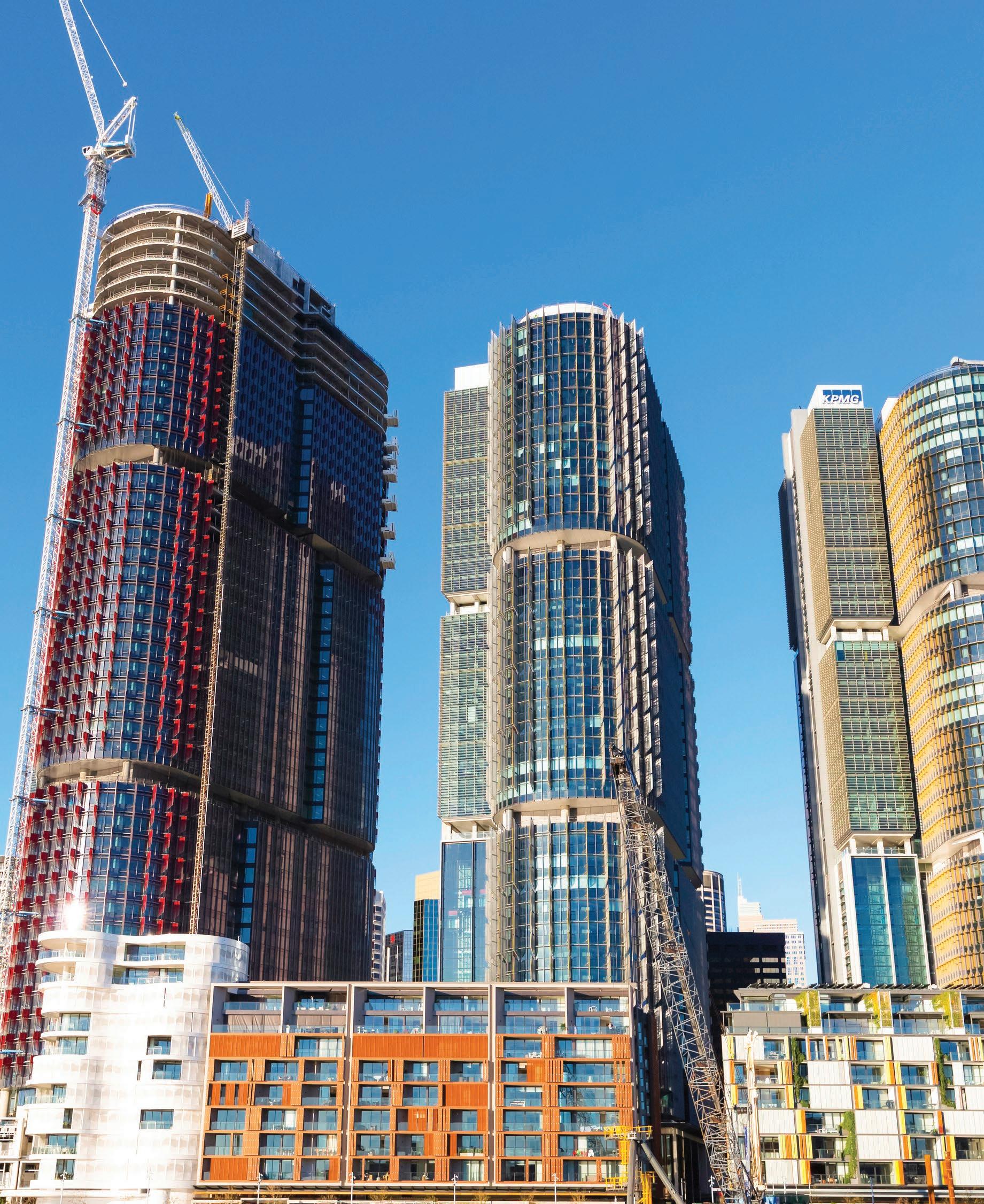
839 Collins Street, Melbourne.
In the years after celebrating its 70th anniversary, A.G. Coombs consolidated its operations along Australia’s eastern seaboard, while reinforcing its end-to-end capabilities – now encapsulated in the tagline ‘Whole of Life Building Services’.
For staff, the number of leading-edge projects being undertaken in different cities was both incredible and exciting: hospitals, universities, museums, sports stadiums and office towers – buildings the community needed for healthcare, learning, recreation and work. Some of these were massive in scale with challenging and complex requirements. The building services installed by A.G. Coombs made these facilities safe, effective and sustainable.
For management, there were important considerations going forward such as de-risking the business and increasing the employee share base.
An International Peer Group was also established and a Reconciliation Action Plan (RAP) launched, the latter affirming the company’s commitment to supporting Indigenous participation and reconciliation.
It was all hands on deck as financial projections outlined the trajectory for growth. The future looked promising and there was every reason to believe that targets would be achieved. Little did anyone know that in just over four years they would be battening down the hatches in response to a devastating global crisis.
April 2016
The Paris Climate Accords open for signature. This international treaty set a goal of keeping the rise in global surface temperature to below 2°C above pre-industrial levels.
June 2016
Brexit – the United Kingdom votes to leave the European Union.
October 2017
Uluru Statement from the Heart – a petition to the Australian people by Aboriginal and Torres Strait Islander leaders calling for constitutional recognition and structural reform to address disparities between Indigenous and non-Indigenous Australians.
March 2018
Queensland floods – a disaster is declared after several rivers burst their banks in North Queensland.
April 2018
The Commonwealth Games are held on the Gold Coast in Queensland.
June 2019 to March 2020
Bushfires devastate parts of southeastern Australia, burning more than 18 million hectares of land.
December 2019
Swedish schoolgirl and climate activist Greta Thunberg named Time Person of the Year.
General Manager
A.G. Coombs (NSW)
Gary Economos (left) and then General Manager Projects Mark Mitchell.
There was a subtle but noticeable change around the corridors of A.G. Coombs at the start of 2016. It was even noticeable the previous year, at the company’s Annual Dinner and Awards Night in October 2015. In many ways, that event proved a defining moment – not just because it was an opportunity to celebrate the company’s 70th anniversary, but because it validated A.G. Coombs’ leadership team.
For Managing Director Russell Telford and the managers who had bought out the company in 2012, it marked a ‘spiritual’ transition – as opposed to a legal one – from a family-owned firm to an employee-led business.
Although work had continued uninterrupted since the official handover, it had taken time to bed down the structure and adjust to the new dynamic of making decisions as business owners. By 2016 everything was falling into place.
“We put a bow on our history,” said Russell, referring to the decision to record and pay tribute to the company’s journey over the past seventy years with the publication of an official history. “We had confidence in everything we established in the past. We were ready to go forward into the future.”
The change of ownership had also brought a deeper reflection on the company’s corporate social responsibility (CSR).
A.G. Coombs was already a leader in the building services industry, but there was a growing
feeling across the A.G. Coombs Group that it was time to show stronger leadership in the wider community beyond what it was already contributing through its charitable endeavours.
While this attitude demonstrated a sharpened social awareness, A.G. Coombs was still the same company. The management buyout had not altered the fundamentals –the core values of the company were still the same. Yet there was no denying the new found energy that came with being in the privileged position of overseeing one’s own destiny.
“It was liberating,” said Russell.
A.G. Coombs in 2016 was a company ready for new challenges. It had experience, a deep well of talent and a much-envied company culture that occasionally reminded people of the old days – the 1960s and 1970s for example – when organisations were more closely knit. But there was nothing old about the A.G. Coombs of the 21st century. Nothing could dent the company’s culture – indeed it was something to be proud of – however words like net zero, reconciliation, and diversity, equity and inclusion were peppered throughout the company’s business plans, brochures, magazines and website.
By 2016, the highly anticipated move interstate had been accomplished, with the contract to install the services in Towers One and Two at the Barangaroo South commercial hub in Sydney as big as they get. A.G. Coombs Projects had delivered the services in Tower Two (completed in 2015), and was now working on Tower One, which would open in 2016. It was also installing the services in Sydney’s new landmark International Convention Centre at Darling Harbour, scheduled to open in December 2016.
For Gary Economos, General Manager A.G. Coombs (NSW), it was a vindication of the long hours pounding the pavement with Managing Director Russell Telford, as they sold the message that although A.G. Coombs may be the new kids in town, the company had years of experience.
“Our biggest challenge when A.G. Coombs first moved into the Sydney market in late 2008 was lack of brand awareness,” said Gary, recalling how, aside from the company’s relationship with national builder Lendlease, A.G. Coombs was virtually unheard of in Sydney. Despite this, he and Russell had persisted, and their determination was rewarded with several large maintenance contracts, including one for Sydney Airport. They also secured a major upgrade at the airport, which was undertaken by the Special Contracts Division (SCD).
However, waiting for major construction projects to materialise had required patience. “Before Barangaroo and Darling Harbour Live, we knocked on doors and took on small jobs in Sydney with Lendlease and others,” said Mark Mitchell, remembering how the Projects business had to do its fair share of pavement pounding as well. “We still had to prove ourselves,” said Mark, who would be appointed Executive General Manager Projects in 2019.
Although “brand awareness” took time, it did not take long for NSW clients to appreciate that A.G. Coombs had the experience and expertise to articulate how it could add value to a project. A.G. Coombs, you could say, was about doing things better and smarter. Clients in Victoria were already familiar with the A.G. Coombs ‘way’. Other states were beginning to understand what this really meant.
In Brisbane, the Service business was already applying the company’s whole-of-life maintenance philosophy to the mechanical assets at The University of Queensland. Similarly,
in the ACT, Integrated Technical Management (ITM) was overseeing the technical facility management and building services for three historic Canberra buildings: Old Parliament House, the High Court of Australia and the National Portrait Gallery. Meanwhile, A.G. Coombs Advisory was undertaking commissions for clients in several states and applying its expertise to managing the commissioning of projects.
There was plenty happening in Melbourne as well, not least at the construction site for the new Monash Children’s Hospital, where the Projects team was delivering the mechanical services for this specialist paediatric facility.
In other parts of Melbourne, Walker Fire Protection was inspecting and testing the fire services systems at three state-owned museums, as well as attending to new fire services installations at RMIT University. SCD was also busy working on dozens of smaller projects.
After seventy years, A.G. Coombs offered services spanning the entire lifecycle of a building from design and prefabrication through to installation, commissioning and maintenance – with the Advisory business providing expert advice and support across all technical systems within a building. There was nothing the company could not do, whether it was the small upgrades handled by SCD or the much larger and more complex mechanical installations delivered by A.G. Coombs Projects. And it approached everything from a technical mindset backed up by industryleading specialists and experienced tradespeople.
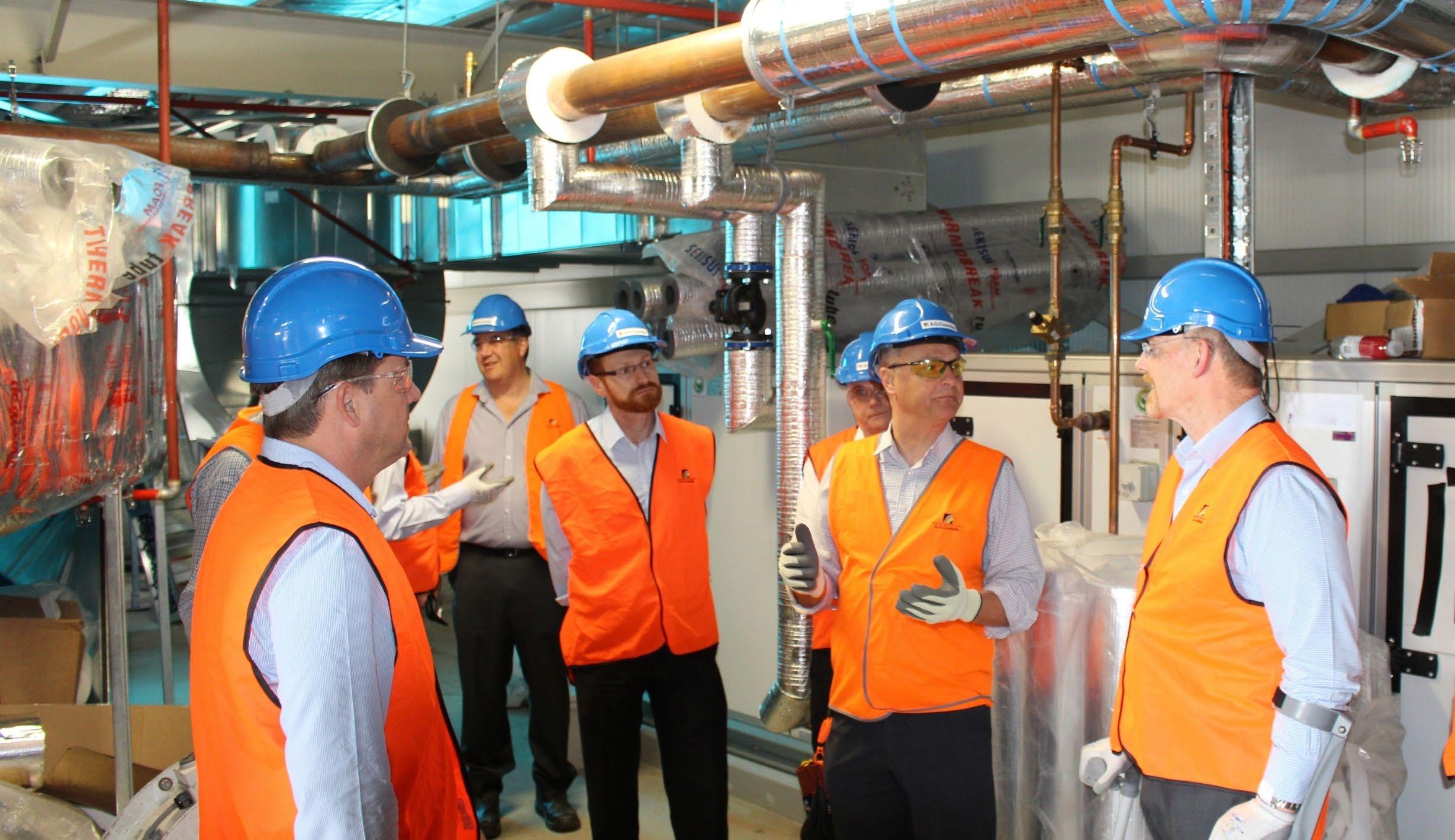
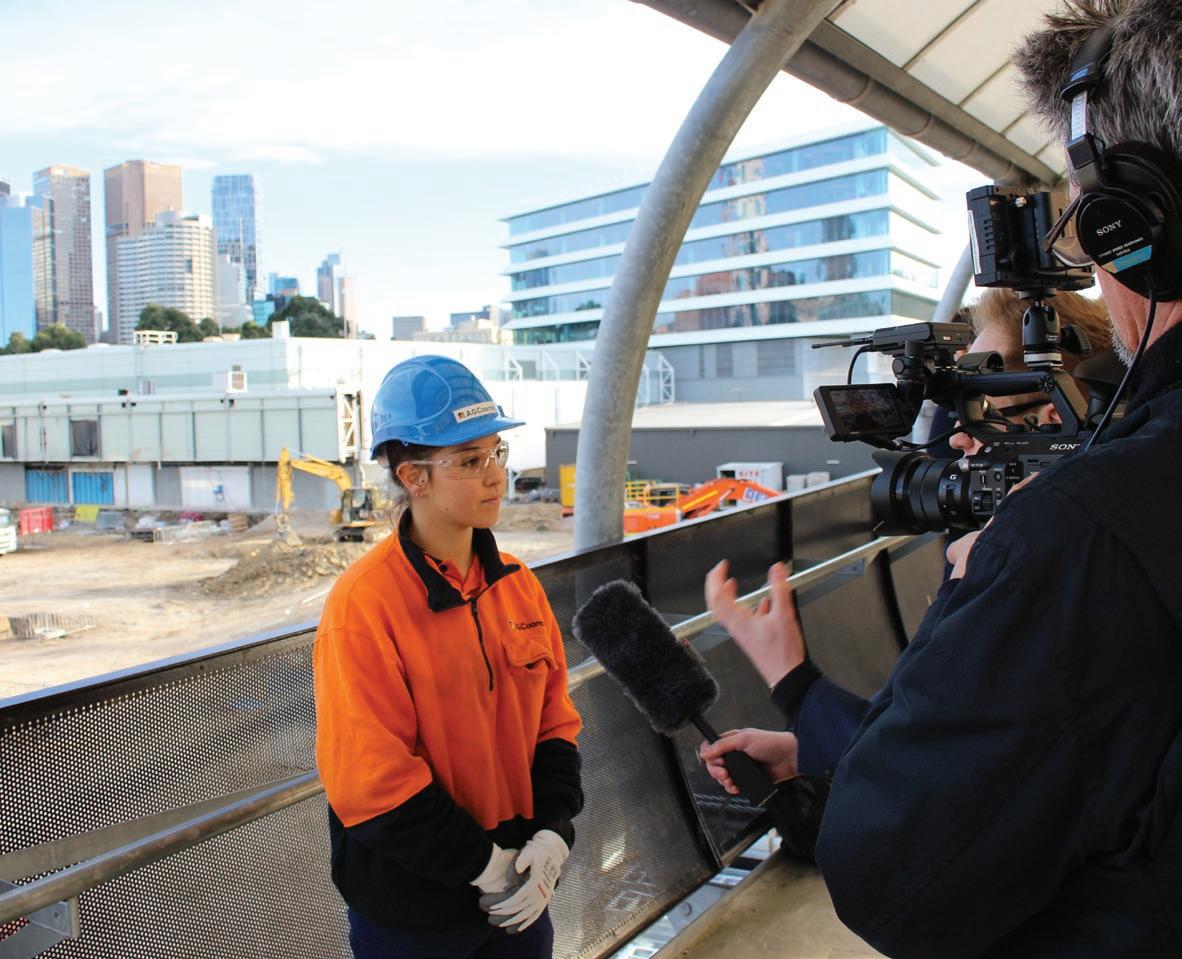
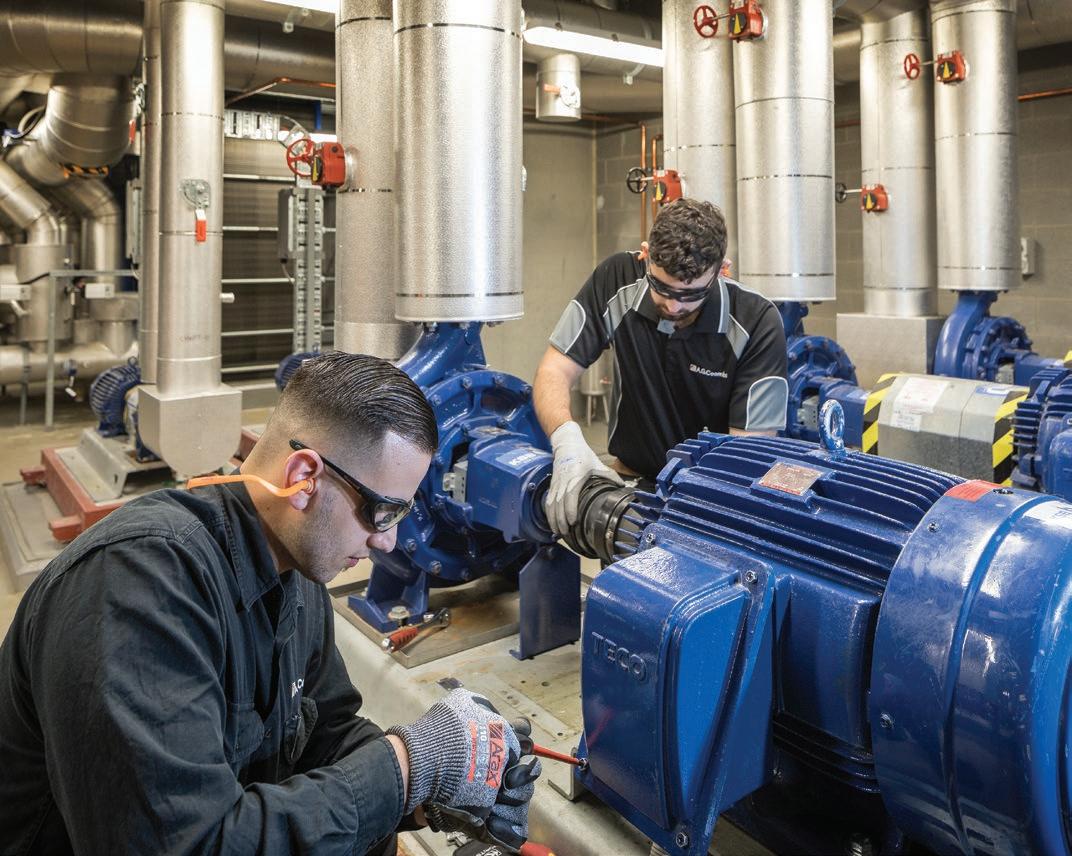
Clients could engage with just one area of the business – for example appointing A.G. Coombs Advisory as an Independent Commissioning Agent (ICA), or contracting A.G. Coombs Service to maintain the building’s services post-construction. Or they could enlist other business units – such as Integrated Technical Management and Walker Fire Protection – to deliver, maintain or operate the critical services in their building.
“They’re not just a sub-contractor,” said Geoff Moore, former General Manager Victoria for Lendlease, a longstanding A.G. Coombs client. Having worked with A.G. Coombs on a number of high-profile builds in Melbourne – among them the Royal Children’s Hospital, ANZ’s global headquarters at Docklands and the Ernst & Young Building at 8 Exhibition Street – he came to appreciate the value that A.G. Coombs brought to a project.
“They apply their smarts and their expertise,” Geoff pointed out. “They see the bigger picture and broader client requirements. They’re a safe pair of hands for large and complex projects, and they never compromise on safety.”
Peter James, Senior Asset Manager of property investment group Kador, concurred. “In my longstanding dealings, they've always focused on achieving the right outcomes,” he said.
Peter’s association with A.G. Coombs spanned more than thirty years, beginning in 1993 when he was General Manager at Melbourne Central, a large retail and office complex in the CBD. Impressed with A.G. Coombs’ skills and work ethic, Peter continued using its services when he moved to ISPT (now IFM Investors), then Charter Hall, and eventually Kador, with the relationship evolving
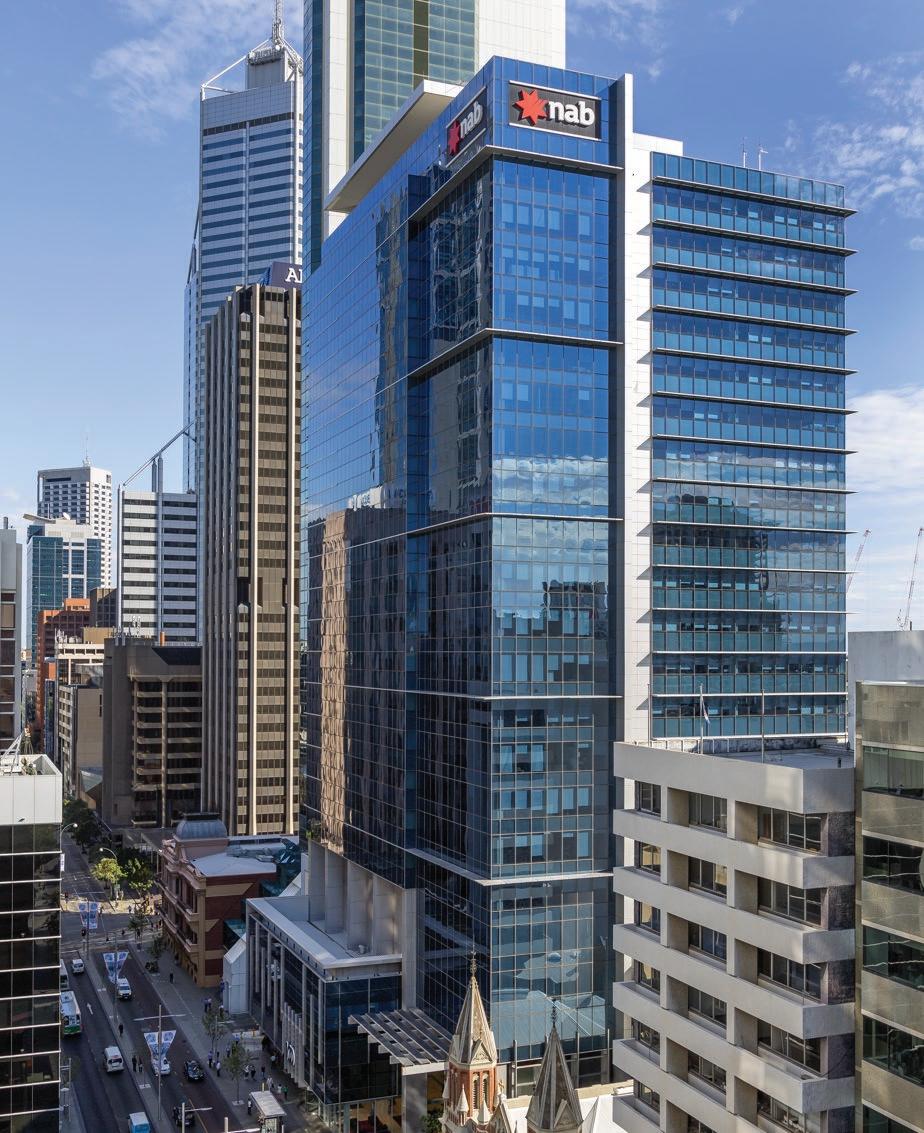
nationally on projects in Canberra (Constitution Avenue), Sydney (100 Pacific Highway) and Perth (100 St Georges Terrace) to name a few.
Reflecting on the Melbourne Central days, Peter recalled how building services at the time had largely concentrated on comfort and less on energy efficiency. This would change, however, as A.G. Coombs and other providers moved quickly to stay ahead of the growing environmental challenges facing the building industry.
Throughout the years, Peter has witnessed A.G. Coombs transition from an experienced service provider into that of “trusted advisor” – one that could present him with the best advice regarding energy efficiency optimisation, and then go on to design and install the systems that would deliver these efficiencies.
“Buildings are now driven by computerised control systems, all of which integrate,” Peter commented. “What I find helpful is that A.G. Coombs provides me with technical advice, but they also do it from a hands-on perspective of what will actually perform.”
His words underscored the vision of Russell Telford to transform A.G. Coombs into a technical company with trade capabilities. But it wasn’t just the company’s technical skills that impressed clients. There was the other side of it as well – the building of relationships and the commitment to getting the best outcome.
“A.G. Coombs was just as committed as we were,” said Geoff Moore. “If there were problems on site, we didn’t waste precious time debating who was right or wrong. We focused on getting the job done and sorted things out later.”
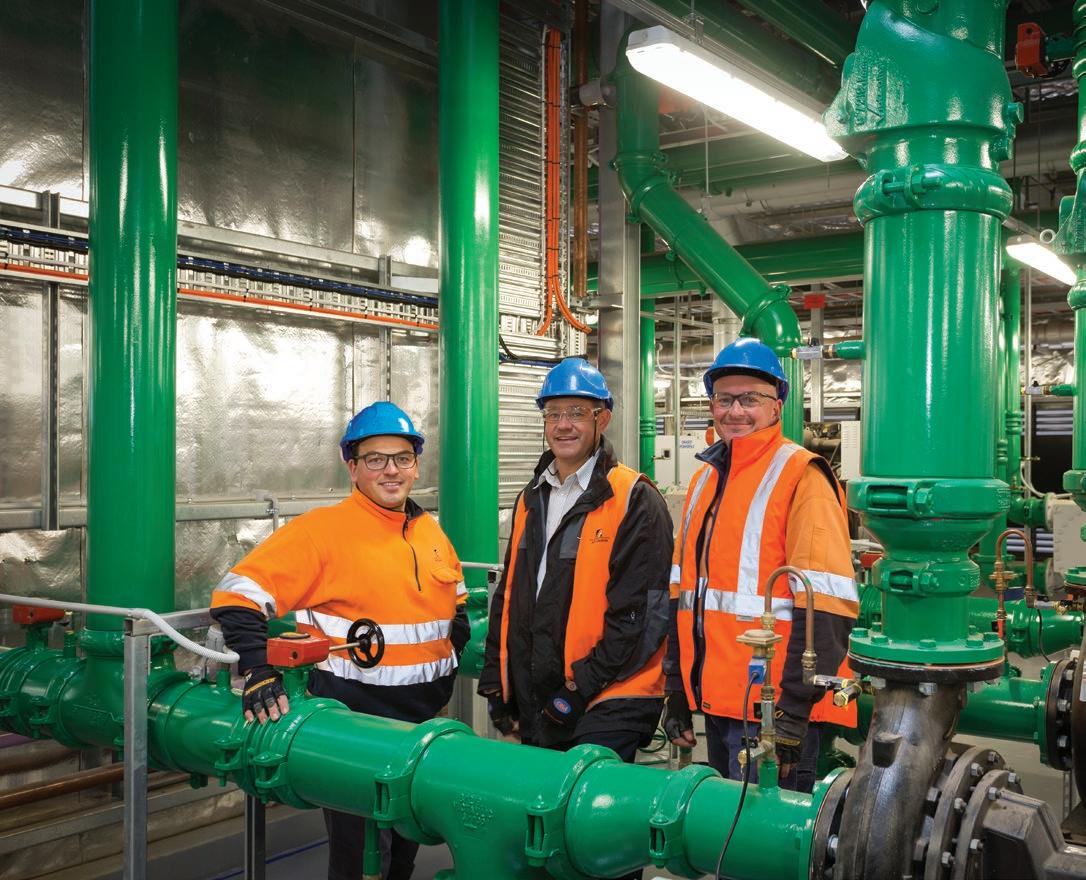
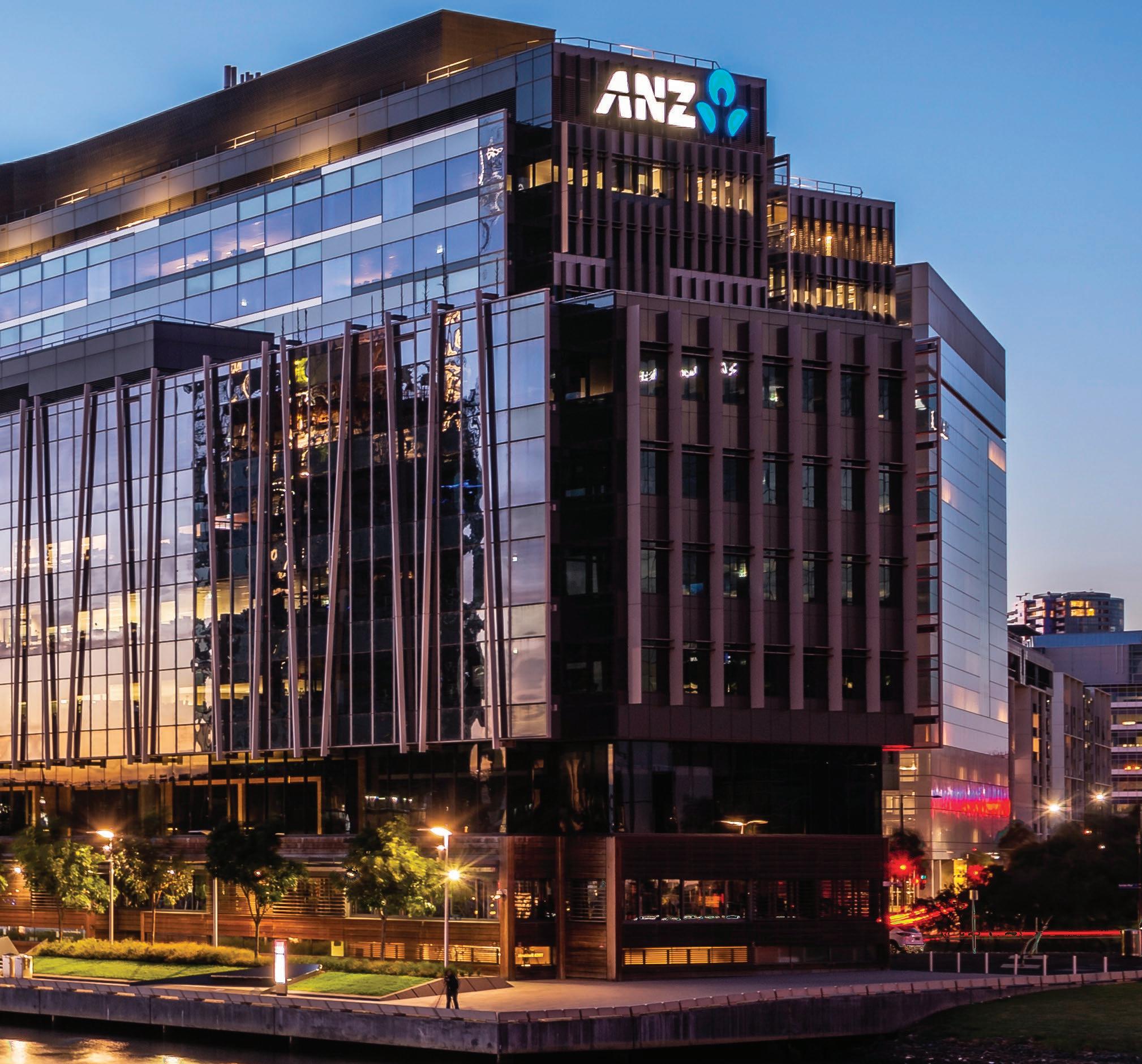
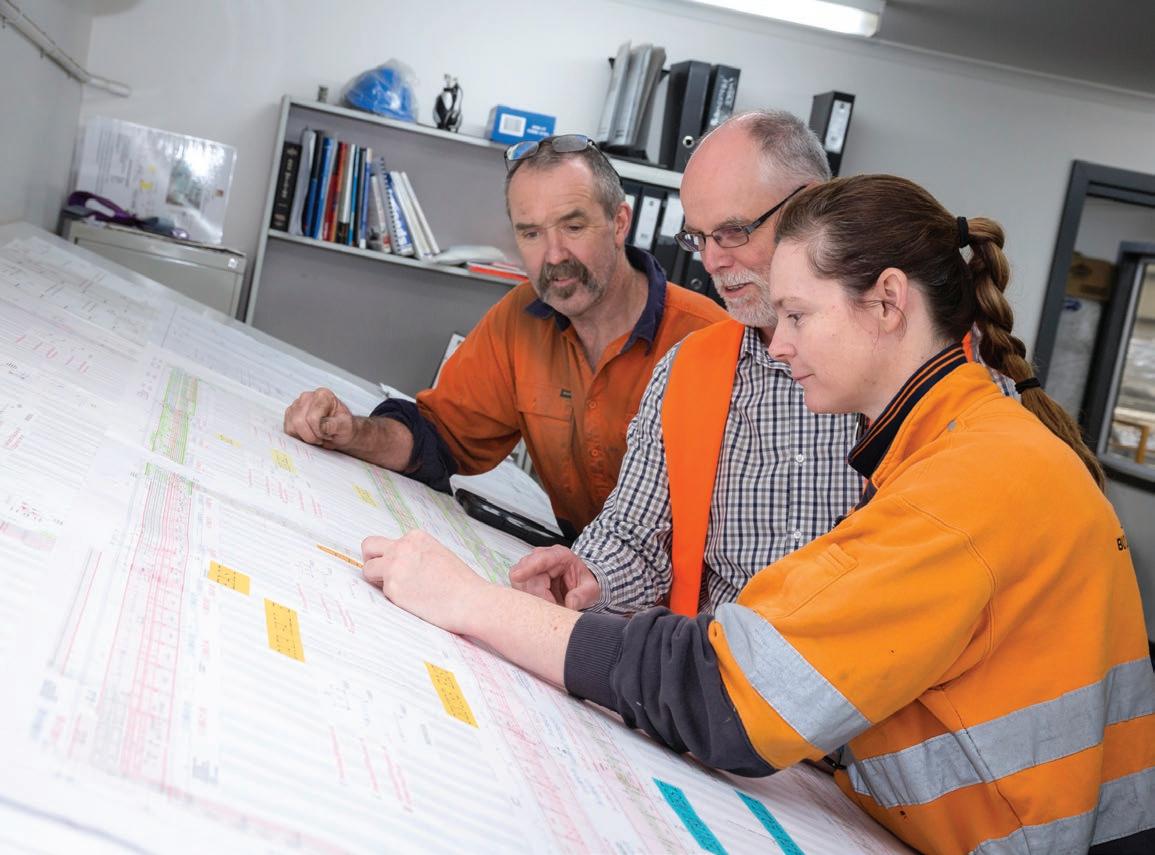
The air of quiet confidence along the corridors of A.G. Coombs by no means meant complacency. Mindful that many of their competitors had come and gone, Managing Director Russell Telford and his senior management team continued articulating what they really wanted for the business. Only the previous year, AE Smith & Son, their biggest competitor in Victoria, had been acquired by Spotless, a large integrated facilities services provider listed on the Australian Stock Exchange – and one with very deep pockets. Was this something that could happen to A.G. Coombs? It didn’t take long for answers to emerge.
“Our goal was to perpetuate the business for future generations of employees,” said Russell, recalling how some years back an overseas company had made him an offer for his shares in the business. He could not be swayed. He had spent nearly all his working life at A.G. Coombs and played a major role in its growth, and was not about to sell out to foreign interests. Needless to say, those executives got short shrift and were never heard from again.
Having backed himself and the company, Russell was convinced that A.G. Coombs could hold the line against circling buyers. “There’s no reason why we can’t be a ‘forever’ business,” he stated. His view reflected the
prevailing attitude within the company that A.G. Coombs hadn’t come this far to merge with or be acquired by anyone. That said, decisions needed to be made about future-proofing the business.
Future-proofing would mean continuous de-risking and growing organically – words that would be repeated around the boardroom table in the weeks and months ahead. Initially, the focus fell on two important arms of the company: A.G. Coombs Projects and A.G. Coombs Service.
To many in the industry, it is the high-end construction projects they most often associate with A.G. Coombs –particularly the state-of-the-art hospitals and the multi-storey commercial complexes. Over the years, these projects had enhanced A.G. Coombs’ reputation as a building services specialist and generated considerable revenue.
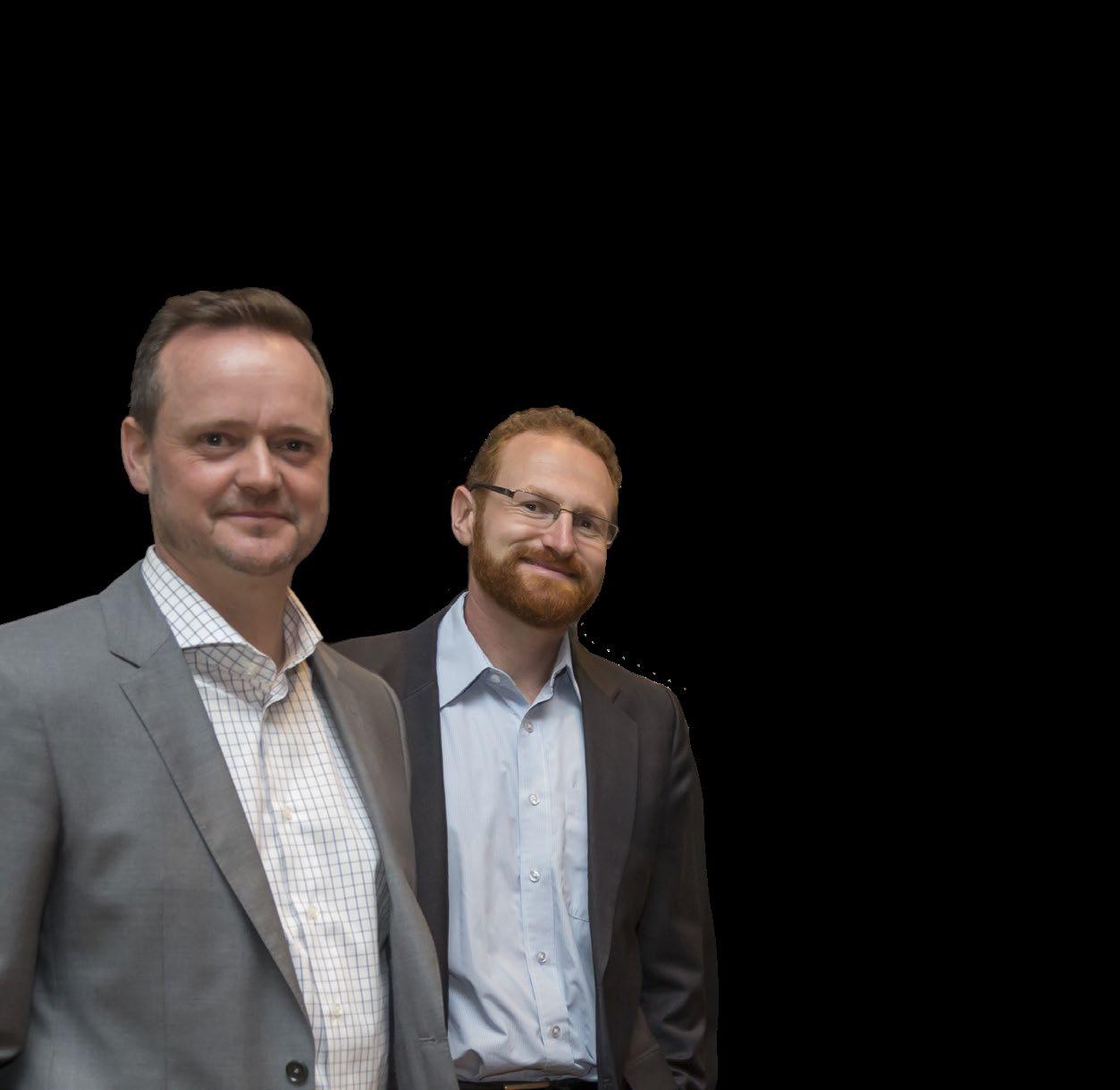
While big builds meant big dollars, revenue could fluctuate given that construction projects could be delayed for any number of reasons be they political, financial or environmental. Relying on a ‘feast or famine’ model was not sound business practice.
The way forward had been clear for some time. “We needed to grow our annuity revenue in line with the business mix goals in our longstanding whole-of-life model,” said Allan Lichomets, who after four years as joint company secretary, became Finance Director in 2017.
Analysis showed where the company could improve its financial position. The key area highlighted was Service, the company’s steady and dependable annuity business.
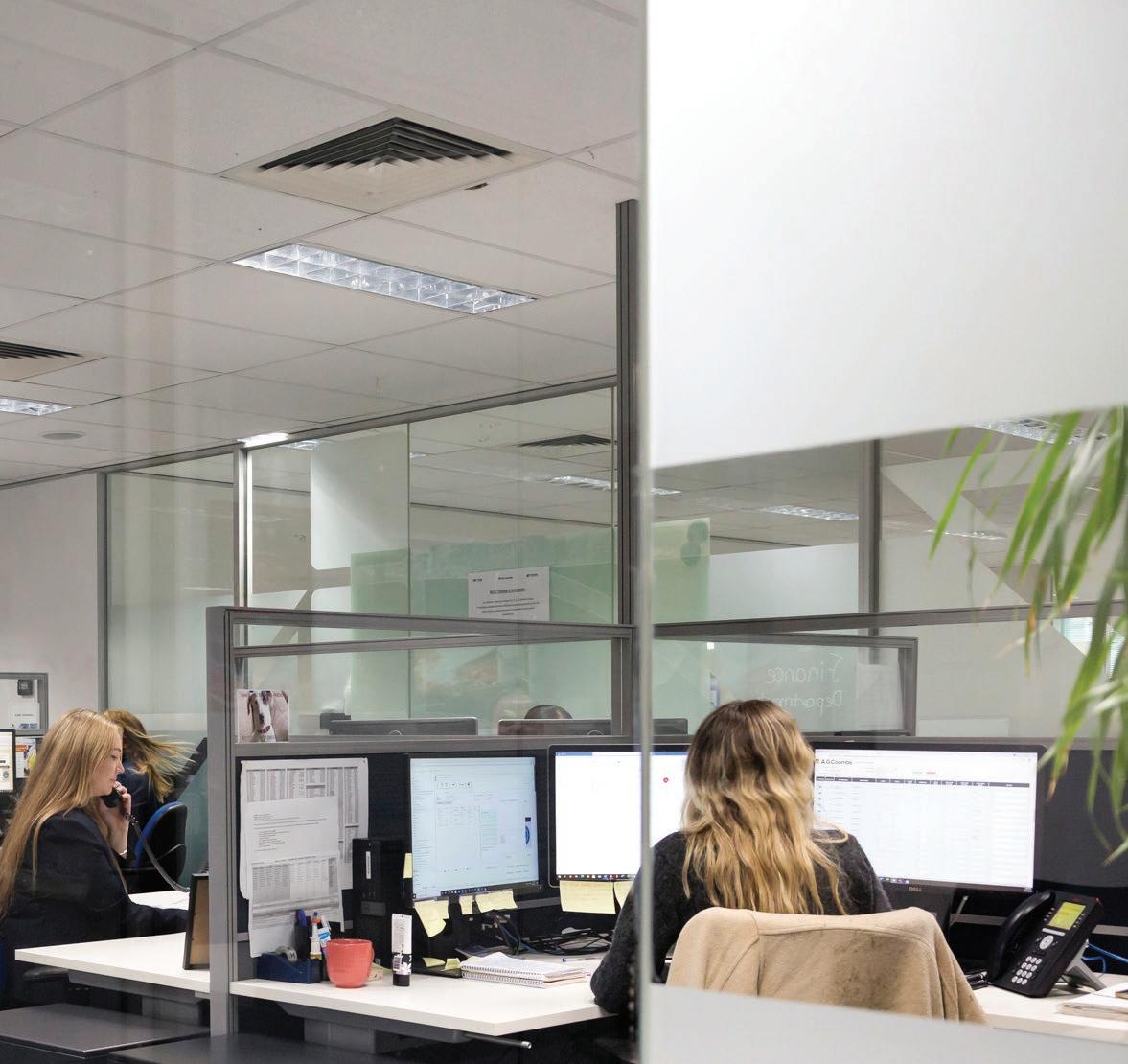
Despite sometimes playing second fiddle to the more high-profile team in Projects, A.G. Coombs Service boasted a stable turnover. Based in Port Melbourne, rather than at head office in Moorabbin, it maintained most if not all the building services installed by the Projects team. Its near perfect record in converting installation projects into maintenance contracts set A.G. Coombs apart from others in the industry.
As things stood, A.G. Coombs Service technicians were busy all year round maintaining the building services in some of the country’s most iconic and high-profile facilities. The calls coming in to the National Customer Service Centre (NCSC) attested to this. At the time, the customer service team was taking around 500 calls per day. “It’s a highpressure environment that’s unpredictable from day to day,” said Jodi Whelan, who was then National Customer Service Centre Manager. “Weather can change suddenly, so we’ll get more call outs that day.”
Established in 2010, the NCSC became an integral part of the now national A.G. Coombs Service business. It too was based in Port Melbourne, and the people who worked there had backgrounds not only in the HVAC sector, but also in security and fire protection, as well as transport and logistics. NCSC responsibilities included assigning jobs to a mobile workforce of service technicians and ensuring their safety as they moved from job to job, often on their own. Because of this, A.G. Coombs Service had worked hard to embed safety procedures into its daily operations, with technology now driving check-in and monitoring requirements.
The NCSC team was already using dispatching technology, which meant that within five minutes of a serious event happening – for example a street protest or vehicle accident – the team could locate technicians close to those areas, first to check they were okay and then to divert them away from the event. Technicians were also providing three ‘proof of life’ checks daily: in the morning, at noon and at the end of their day.
Despite the constant work, Service growth had slowed.
As some people observed, it was a good annuity business with solid contracts, but was perhaps too focused on maintaining high-end facilities delivered by the Projects business. While these maintenance contracts had provided a buffer against fluctuations in the construction industry, the fact remained that the Service business was still largely reliant on work flowing through from Projects. Yet there was no reason why it could not cultivate its own customers and be an equal driver of revenue.
To this end, Gareth Whitfield, A.G. Coombs’ General Manager Service (as he was back then) was tasked with growing the business and bringing it more in line with Projects so that both were contributing equally to growth. He and his team were more than ready for the challenge.
“There was the push around this time to operate a 50/50 annuity and construction business,” said Gareth.
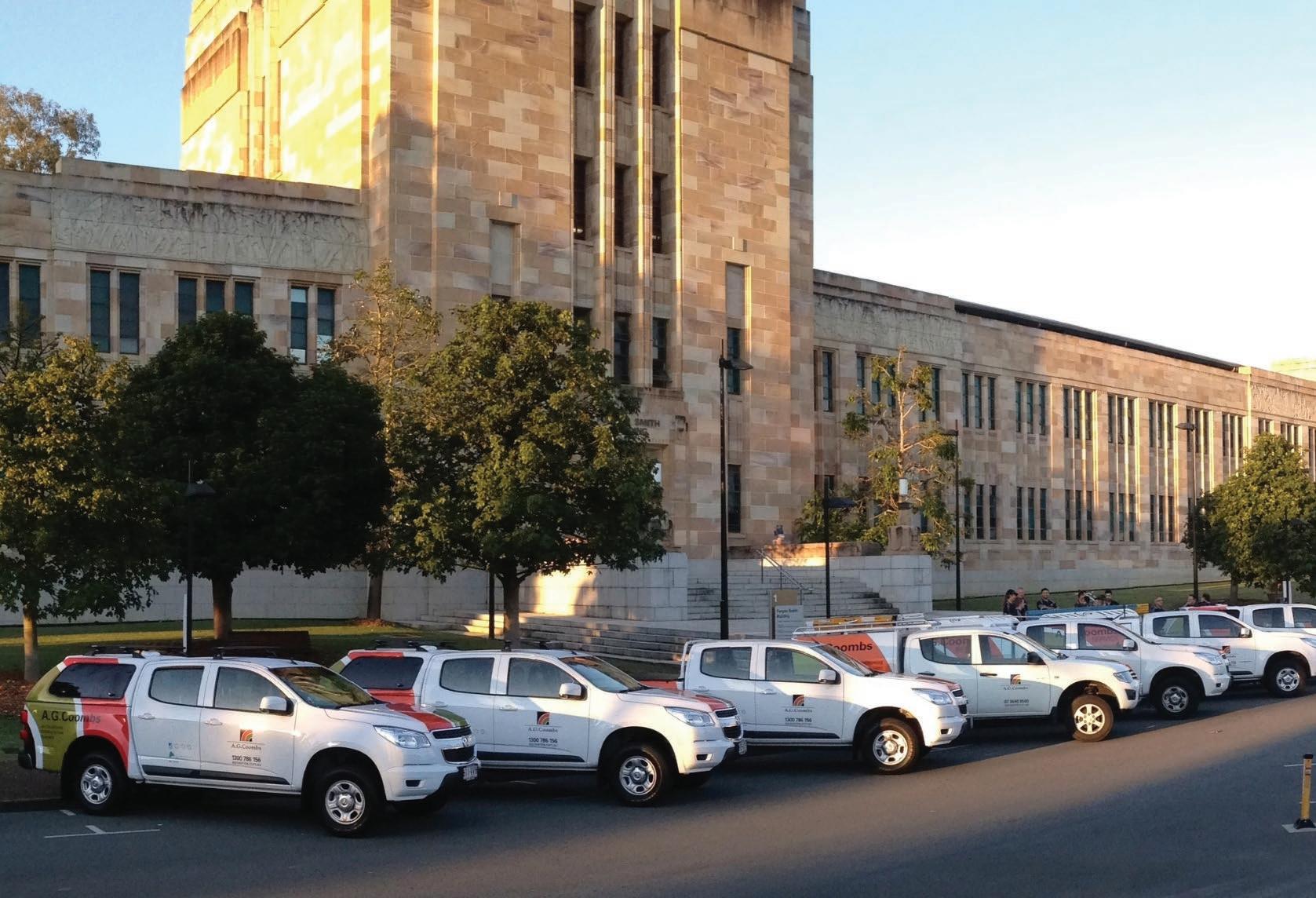

Achieving this would require broadening their customer base and seeking a more diverse portfolio of work, even if it meant servicing properties in the outer suburbs in addition to large facilities in central Melbourne, Sydney and Brisbane.
Hard work brought results and the 50/50 revenue target looked achievable even earlier than expected. Renewing and growing the national maintenance contract for the National Australia Bank (NAB) would play an important role in supporting Service growth. A massive undertaking geographically, it would ultimately involve maintaining more than 750 NAB locations around Australia. Trusted alliance partners and specialist subcontractors would help deliver the services nationwide, while smart technology would be used to triage and prioritise work in compliance with the NAB contract’s strict response and completion times.
Securing the national maintenance contract for the Australian Broadcasting Commission (ABC) in 2018 would be particularly satisfying for Gareth. Having worked on the building services at the ABC’s Melbourne studios during his apprenticeship, he was very familiar with the requirements of the national broadcaster. Indeed, Gareth was one of several senior managers at A.G. Coombs who had started out as an apprentice on the tools. The fact that he was now in charge of a building where he had worked as an apprentice many years prior highlighted the depth of experience within the company.
The evolution of national service contracts contributed to a step change in the way the Service business could operate. While there would always be maintenance work flowing through from the Projects business, these broader contracts highlighted significant opportunities in other areas.

Will Peloche and Dorothy Bakowski at the National Customer Service Centre (NCSC) – the command and control centre that assigns hundreds of service technicians daily to different customer sites (see right), where they work to maintain the building services in peak condition.
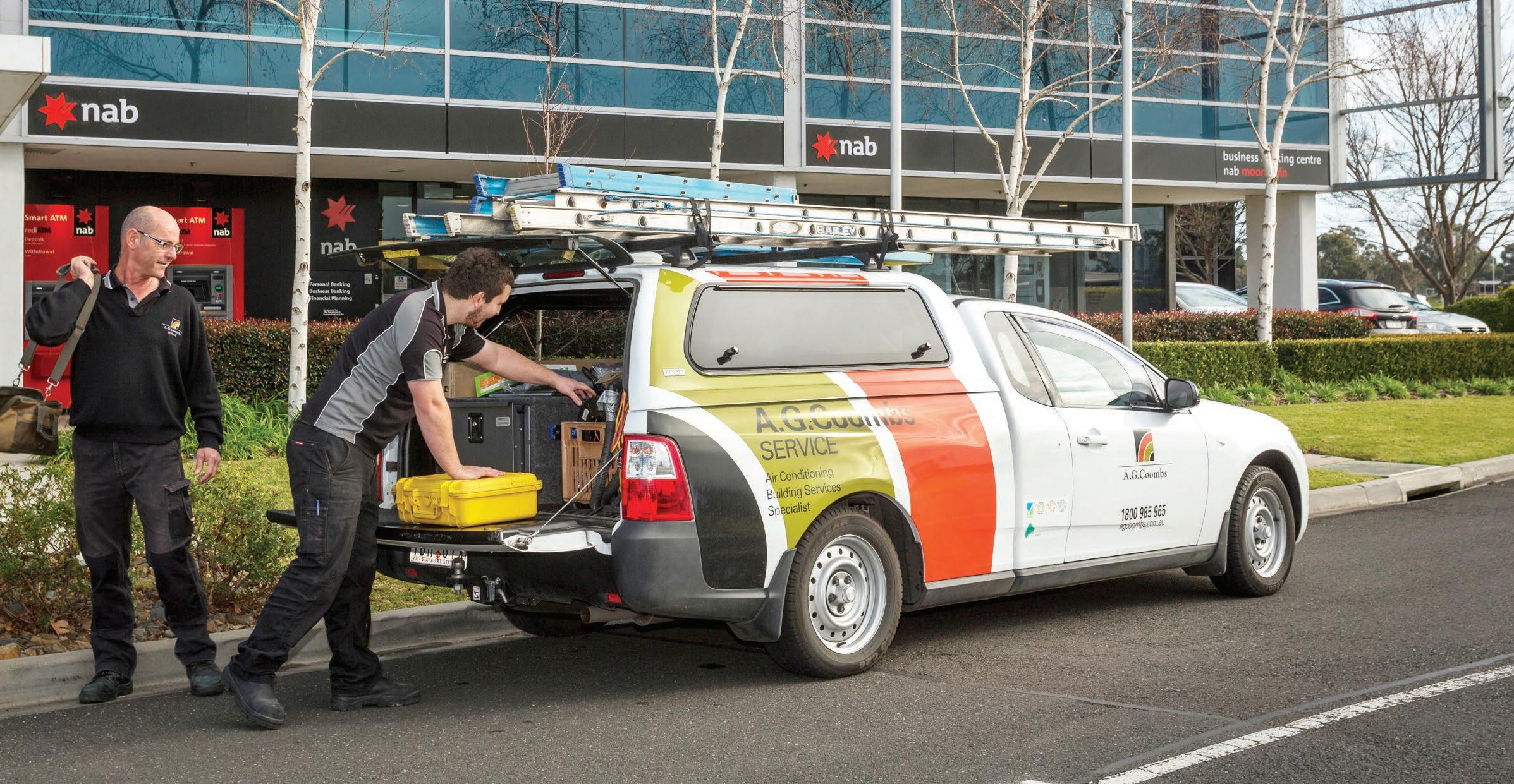
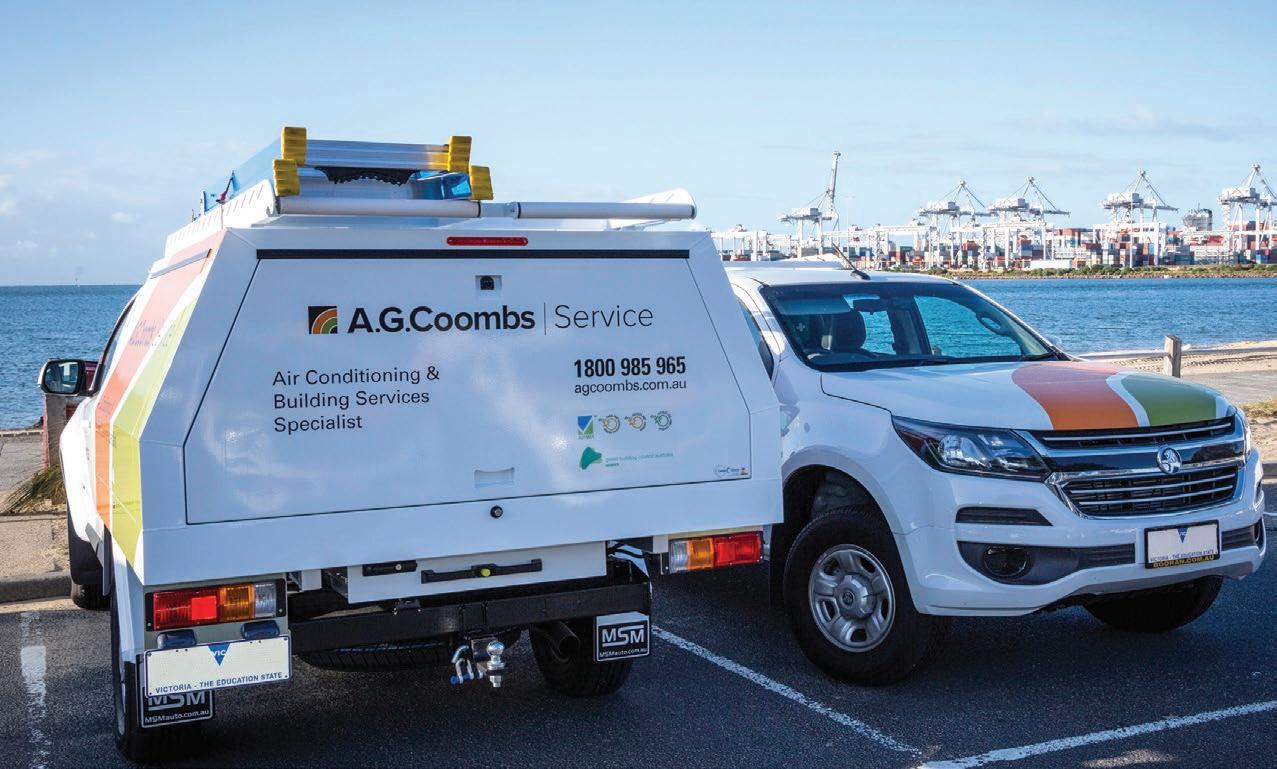
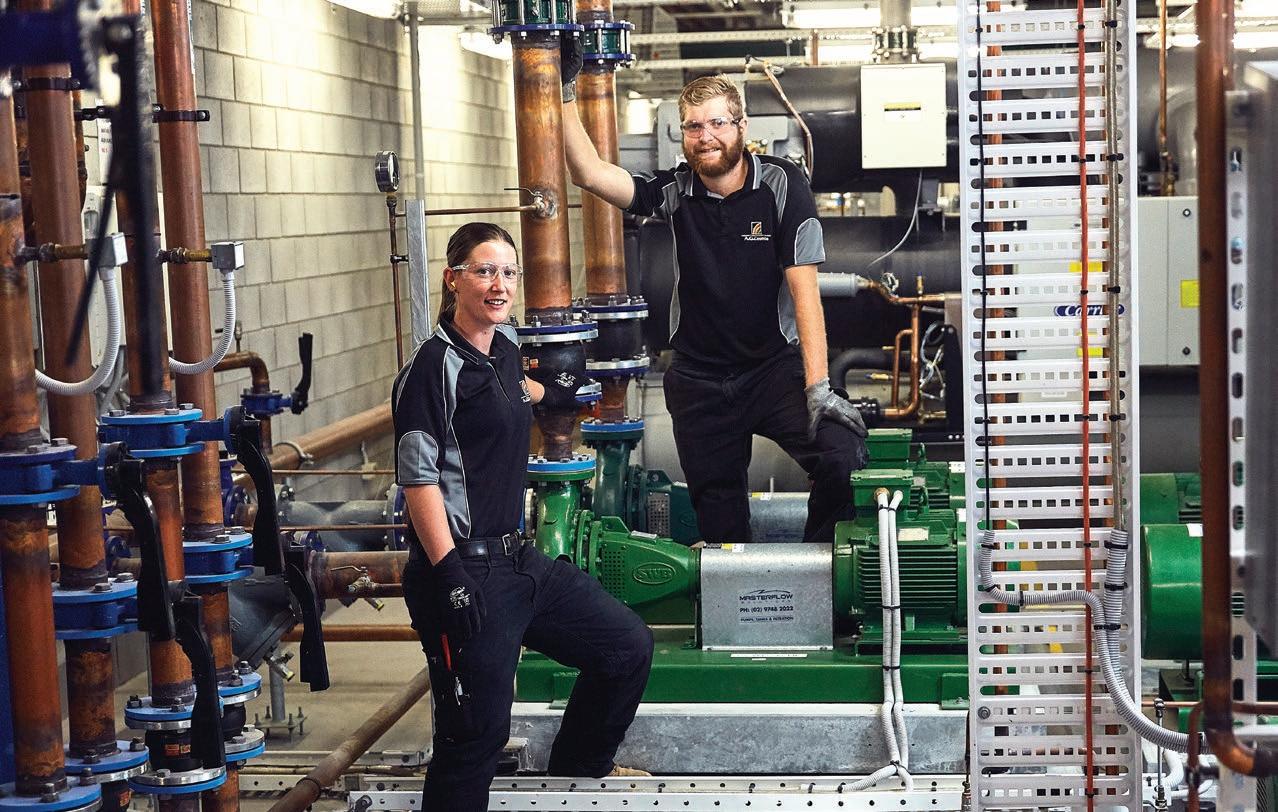
After asking some searching questions about what makes a good corporate citizen, A.G. Coombs decided it was time to do more, especially with regards to its involvement and work with Aboriginal and Torres Strait Islander communities. Having already adopted Indigenous participation policies, it took things a step further with the launch of its Reconciliation Action Plan (RAP) in February 2017.
A.G. Coombs’ RAP 2017 – entitled ‘Reflect’ – formally marked the company’s first steps on the reconciliation journey within its own business as well as with its stakeholders and suppliers. The journey would continue to strengthen and grow in the coming years, with an increased focus on measurable actions to help deliver on the vision of a reconciled, just and equitable Australia.
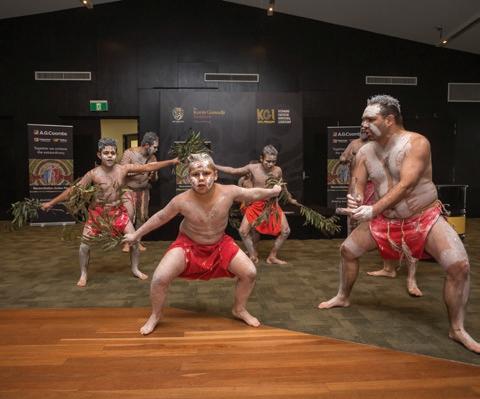
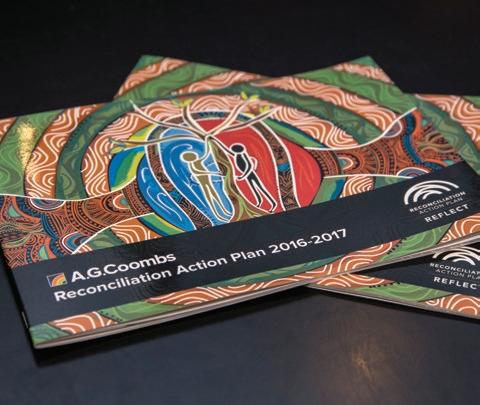
The idea of a ‘forever’ business revolved around perpetuating the company through employee share plans. These had already been introduced back in 1997, the same year that Allan George Coombs passed away.

Few people knew that, long before he died, Allan had committed his thoughts to paper, outlining what he would like to see happen should he pass away when his heirs were very young. Indeed, one of the options he offered was for employees to buy out the company. “This was the option Allan favoured,” said Russell Telford. “He had many loyal employees. They were like his family.”
The guidelines for becoming a shareholder in 2017 were the same as those established twenty years beforehand, with length of service and level of employment among the key considerations for eligibility. Ultimately, those who performed well and assimilated into the company’s culture were invited to acquire shares. These guidelines would hold true going forward.
By 2016, dozens of people held shares in the company, but this figure still needed to grow. This was underscored by then Non-Executive Chair Clive Weeks AO, who brought a wealth of experience in this area to the table. Formerly Chair of GHD consulting engineers – a global company that had successfully introduced employee share plans – Clive was clear about incentivising staff. The GHD model, which he had championed, was regarded as an exemplar of employee ownership.

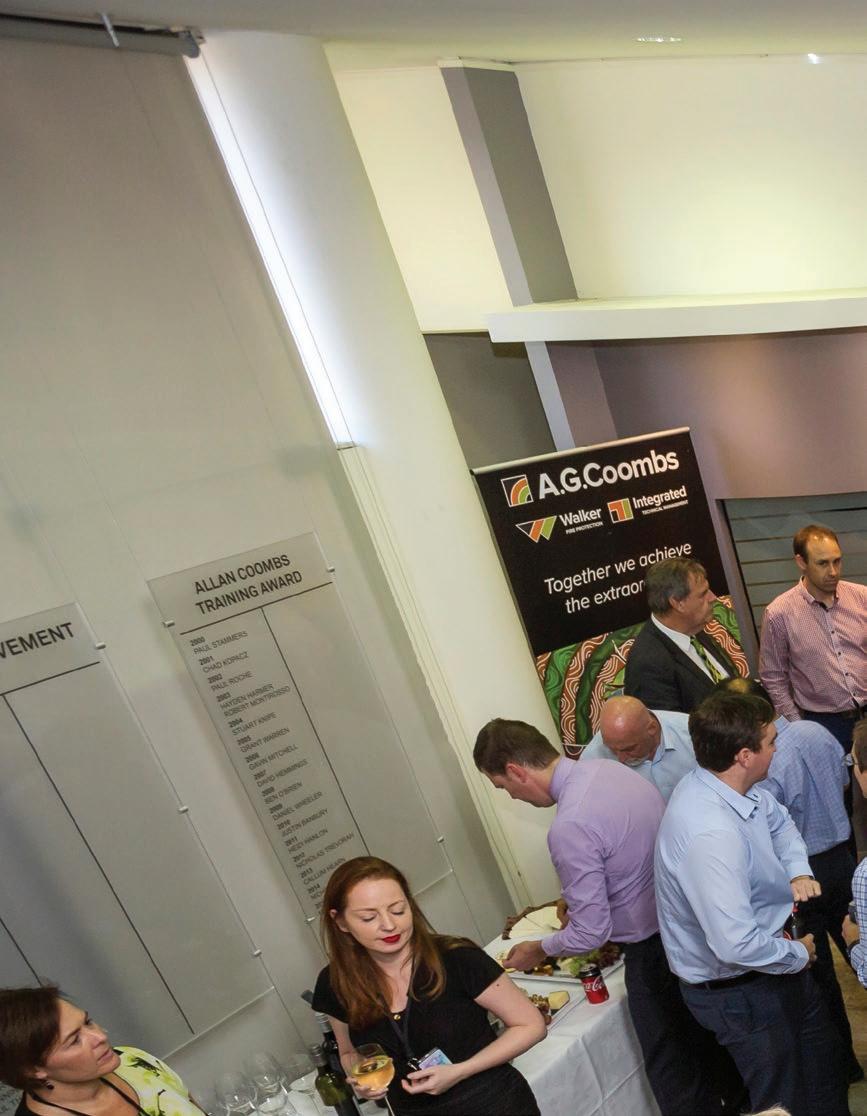
“As long as the process is right, employee share plans can underpin growth,” he explained. “You have to provide incentives, especially to people who have home loans to pay off and children to put through school.” He also encouraged the company to bring people on board at a younger age. Future Non-Executive Chair Murray Coleman OAM, who also came from a business environment where employee share plans had been widely adopted, would later provide guidance in this area. “Providing opportunities for employees to hold shares is a good, proactive model for the company. It enables them to see the bigger picture and provides material incentives to achieve greater success of the business.”
Share plans can be attractive in that you can achieve your professional goals and then move forward not just as employees but as business owners. To this end, support is provided to facilitate share ownership and to match buyers with sellers as retiring employees sell off their shareholding.
There was no question that being privately owned allowed managers, leaders and employee shareholders to take the long-term view. It was an approach that had served A.G. Coombs well through the peaks and troughs in the industry over seven decades. “We share the risks, but we also share the rewards,” said Finance Director Allan Lichomets, pointing to the unique opportunity afforded to employees to be part of the decision making for the future. With the business continuing to grow, the rewards looked promising.
In 2018, A.G. Coombs took the lead in positioning itself and the building industry for the digital future with the creation of an innovative system that could classify building-related assets in a consistent and functional way.
Recognising the importance of a unified approach to asset classification, A.G. Coombs funded and developed the system in cooperation with industry partners, with the project attracting dollarfor-dollar grant support of over one million dollars from the Victorian Government.
The result was the Virtual Buildings Information System – or VBIS – a free-to-market industry data naming standard and data access methodology. VBIS would later be recognised in the 2020 Australian Business Awards for Business Technology.

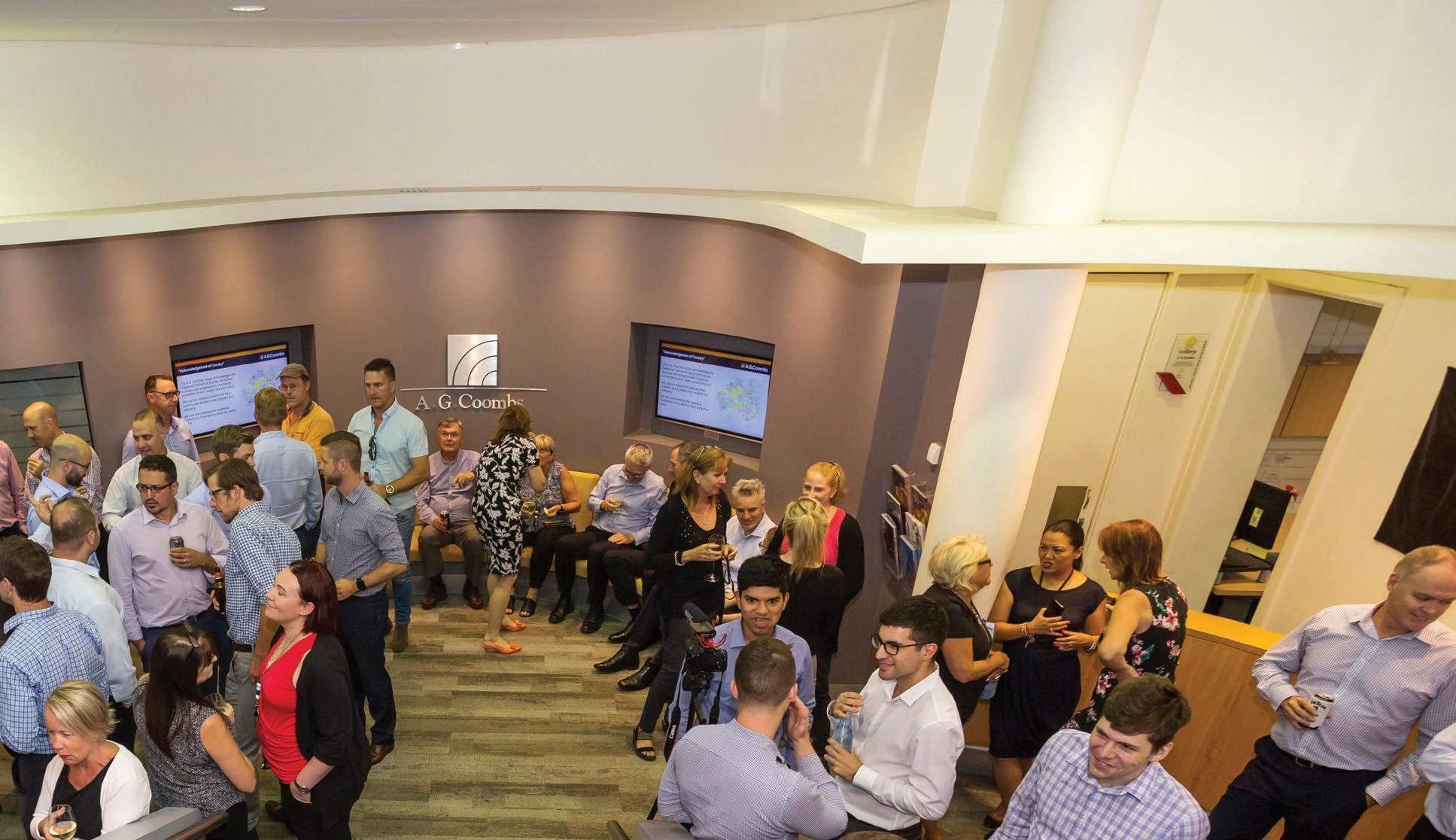
A.G. Coombs employees pictured at the unveiling of a new plaque (see below) marking the launch of the Reconciliation Action Plan at the company’s head office in Melbourne, 2019.
Over its seventy years of operation, A.G. Coombs had developed a reputation for challenging and nurturing its employees. The prestigious contracts, the caring and empowering culture, and the opportunities to grow and develop professionally made it a destination employer.
One development would extend the opportunities for professional growth further afield. It happened unexpectedly in 2017 at an industry forum in Sydney organised by Warwick Stannus, A.G. Coombs’ highly respected Group Engineering Manager. Warwick had invited Tim Moormeier, then President of U.S. Engineering, to speak at the Air Conditioning and Mechanical Contractors’ Association (AMCA) Construction Innovation Conference. At the time, Tim was also an active participant of America’s peak body for mechanical contractors – the Mechanical Contractors Association of America (MCAA) – while A.G. Coombs Managing Director Russell Telford was then President of the AMCA.
Based in Kansas City, in America’s mid-west, U.S. Engineering was in many ways similar to A.G. Coombs. As a privately owned building services specialist, U.S. Engineering offered

mechanical construction, off-site fabrication, commissioning, BIM (Building Information Modelling) and virtual construction, to name a few areas where there was common ground. Given these similarities, it was not surprising that Russell and Tim found themselves on the same page when it came to the challenges and opportunities for their respective companies.
One thing immediately struck a chord with Russell: U.S. Engineering had established a collaborative peer group with an organisation on the east coast of America. “Tim mentioned the benefits of having peers who operated in the same sector, but who were not your direct competitors,” he said. “This allowed them to freely share information.”
It was not until the following year that the concept of an international collaborative model took shape, initially with just two companies – A.G. Coombs and U.S. Engineering. But two businesses could only share so much, so Russell and Tim reached out to NG Bailey, a leading engineering and services business headquartered in Leeds in the United Kingdom.
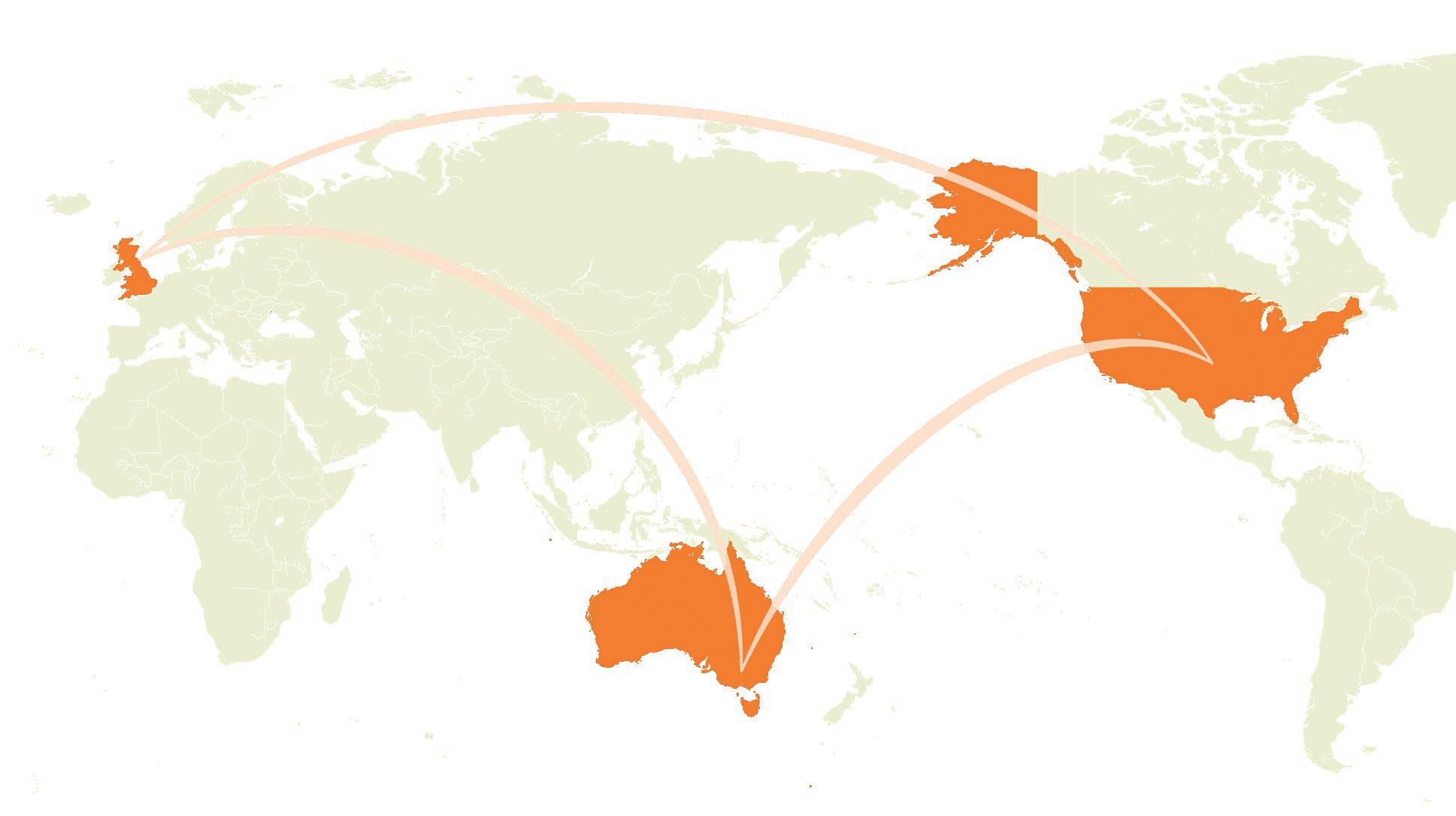

Originally an electrical business, NG Bailey had started out small, and was still privately owned like A.G. Coombs and U.S. Engineering. Russell and his senior managers were already aware of NG Bailey’s profile, not only from study tours to the UK, but also from employees who had previously worked there. An invitation was duly extended to NG Bailey’s then Chief Executive David Hurcomb, and the three-way International Peer Group was born.
Using the peer group model that U.S. Engineering already had in place, the three managing directors agreed to rotate their meetings between Melbourne, Kansas City and London. However, in-person meetings had to wait, as global events saw all international dialogue go online for almost two years between 2020–2022. It was not until mid-2022 when the three managing directors were able to meet in person.
“It’s been good to benchmark A.G. Coombs against two international companies,” said Russell, once these meetings got underway, “It’s all about looking at global best practice and bringing in fresh ideas. The sharing of knowledge has been generous.”
This generosity of spirit soon flowed into other areas of A.G. Coombs with staff keen to be part of a dynamic international exchange. “We talk about everything from strategy and culture to how you join two pieces of pipe together,” said Executive General Manager Projects Mark Mitchell. “Geographically, we're never going to compete, so it’s a free-sharing environment.”
“It’s been energising,” said Executive Manager Customer Engagement Jodi Whelan, acknowledging the rewards that come from exchanging ideas with people operating in similar environments in other countries.
“Our two peer companies are larger than us, but we’re up there with innovation,” said Strategic Development Director Bryon Price. “We learn a great deal from each other. It’s been one of the most enjoyable things I’ve done in my career.”
The success of the International Peer Group can in part be measured by the number of peer forums that have emerged across all the different businesses For example, peer groups for service and construction were formalised. Then, after peer collaboration, additional groups were formed for Human Resources, IT, BIM and Prefabrication.
Russell would later champion the introduction of a formal exchange program – an idea that immediately resonated with his global colleagues. With the HR Peer Group coordinating the logistics, the International Exchange Program would eventually be launched in 2023, with two employees from each company chosen to participate.
These exchanges would go on to create a wonderful professional development platform for employees in all three companies and reinforce the mutual benefits of peer exchanges.
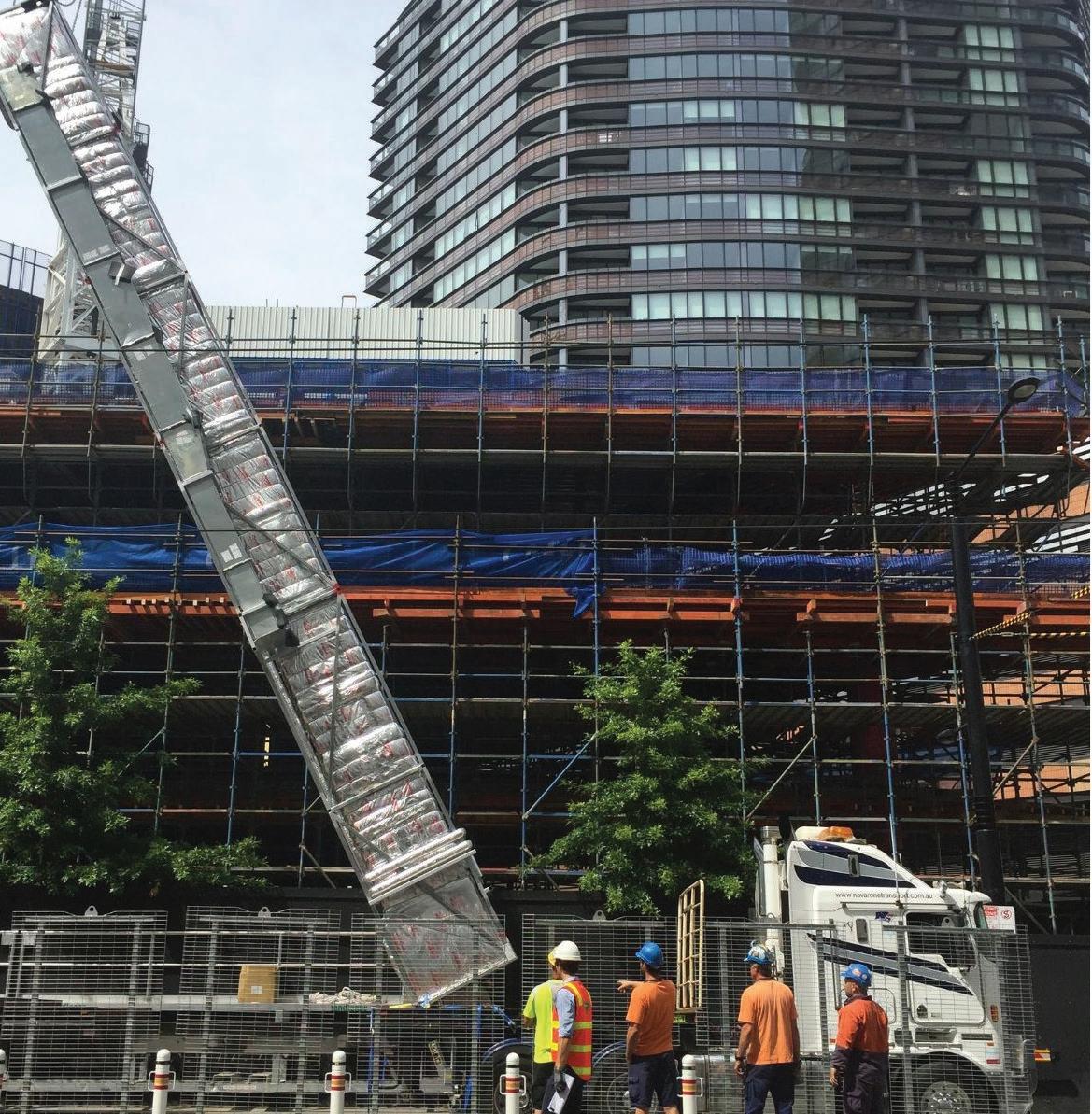
In December 2017, A.G. Coombs craned its 300th prefabricated vertical riser into position at 839 Collins Street, a 20-storey building in Melbourne’s Docklands precinct.
Vertical risers carry the HVAC, electrical, fire protection and plumbing systems floor to floor from central plant. Previously, modules in vertical services risers would have been built on site. With prefabrication, framed services modules – many of them the size of a semi-trailer – go out fully finished from A.G. Coombs’ Integrated Prefabrication Facility in Keysborough. These modules can be installed in under an hour, whereas previously it might have taken many days to install the components one piece at a time. Another advantage is that all the system elements, from pipework through to the ductwork, can also be pre-tested.
By 2019, A.G. Coombs was a company poised for growth in line with its business goals. “Our plans to de-risk the business from being project focused to one more balanced with our annuity revenue stream service were falling into place,” said Finance Director Allan Lichomets. “Encouragingly, our established business mix goals to drive improved financial performance were heading in the right direction.”
“There was growth across the entire business,” said Strategic Development Director Bryon Price. “Our consolidation along the eastern seaboard was progressing well, and our end-to-end capabilities were being recognised by more clients.”
“Importantly,” noted A.G. Coombs Non-Executive Chair Clive Weeks, “this growth was being achieved without diminishing the company’s values.”
The aim moving forward would be to win the right work, retain market share and expand the company’s national capability. There were short-term plans for the next twelve months, as well as three- and five-year projections. There was also a rolling vision to become a billion-dollar organisation. The way things were tracking, this vision looked possible, maybe sooner than planned.
Managing Director Russell Telford wrote with confidence in the company’s BE – Building Efficiency publication in 2019. “Looking to the future, the A.G. Coombs Group is very well positioned with a strong pipeline of work, respected relationships and leading in-house capabilities,” he said.
BE was published in October that year. A few weeks later, news reports began appearing about a virulent virus circulating in Wuhan, China.
Everything was about to change.
Contracts to deliver the HVAC services at Barangaroo South on Darling Harbour, placed A.G. Coombs at the centre of one of Australia’s largest precinct developments. As the specialist mechanical services contractor, its brief was to provide comfortable ambient temperatures all year round for thousands of workers in two of the precinct’s Premium Grade office buildings – both of which have achieved 6 Star Green Star ratings. Tower Two was completed in 2015 and Tower One in 2016.
Service provider: A.G. Coombs Projects Builder: Lendlease
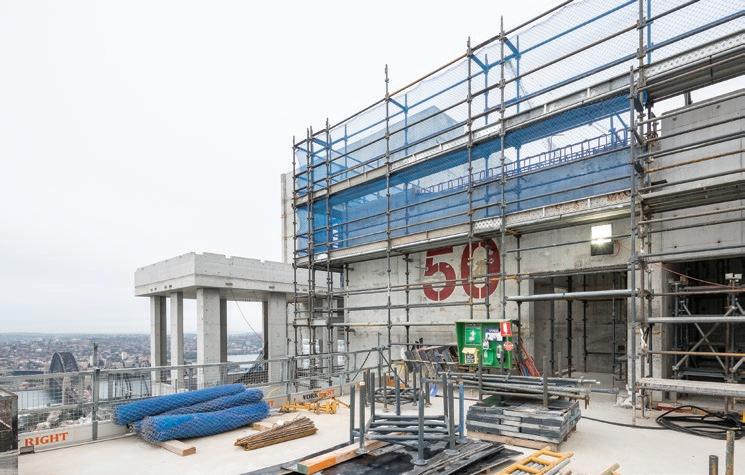
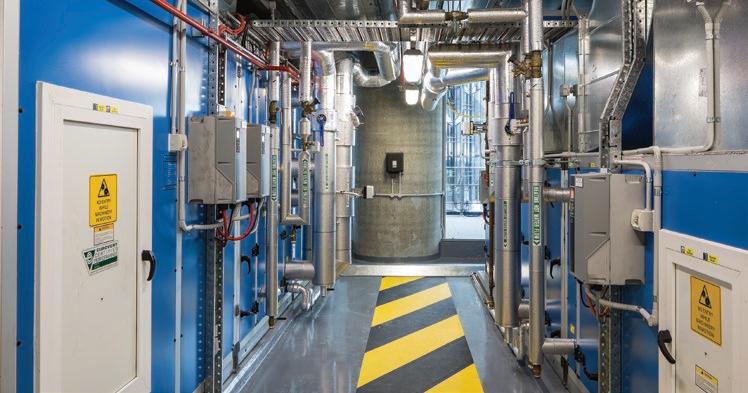
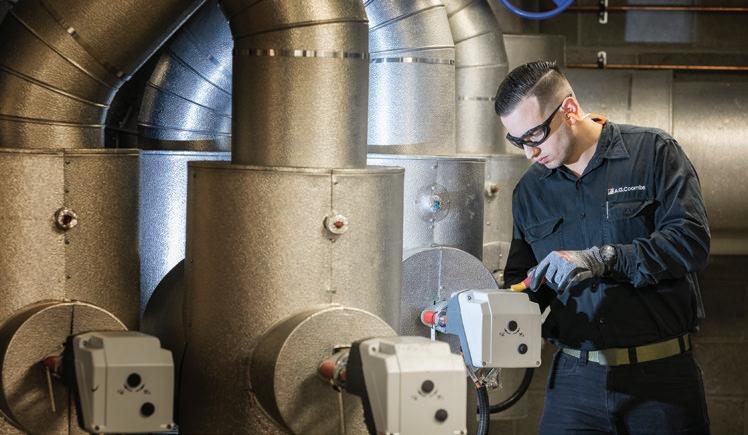
World-class commercial office towers built to accommodate 23,000 people.
First major project in Australia to implement innovative building services prefabrication initiatives and methodologies on a large scale.
Energy-efficient HVAC systems helped the precinct achieve project benchmarks of carbon neutral, water positive and net-zero waste.
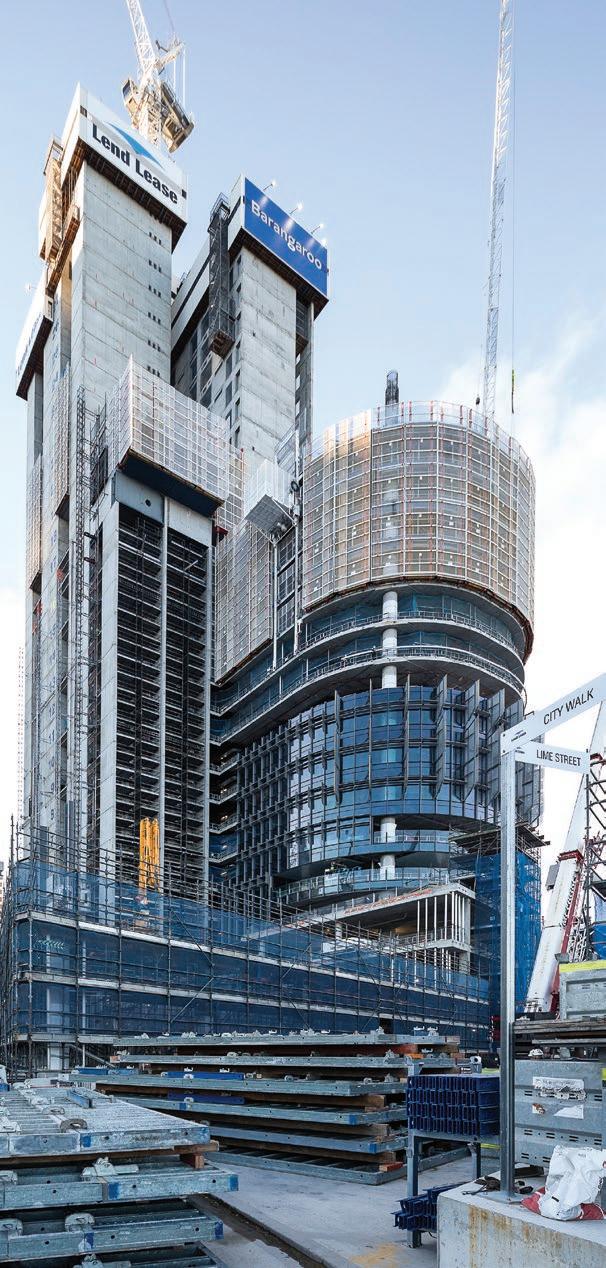
Prefabricated services risers recognised with the 2015 Property Council of Australia Award for Innovation and the 2015 Australian Institute of Refrigeration, Air Conditioning and Heating (AIRAH) Award for Excellence in Innovation.

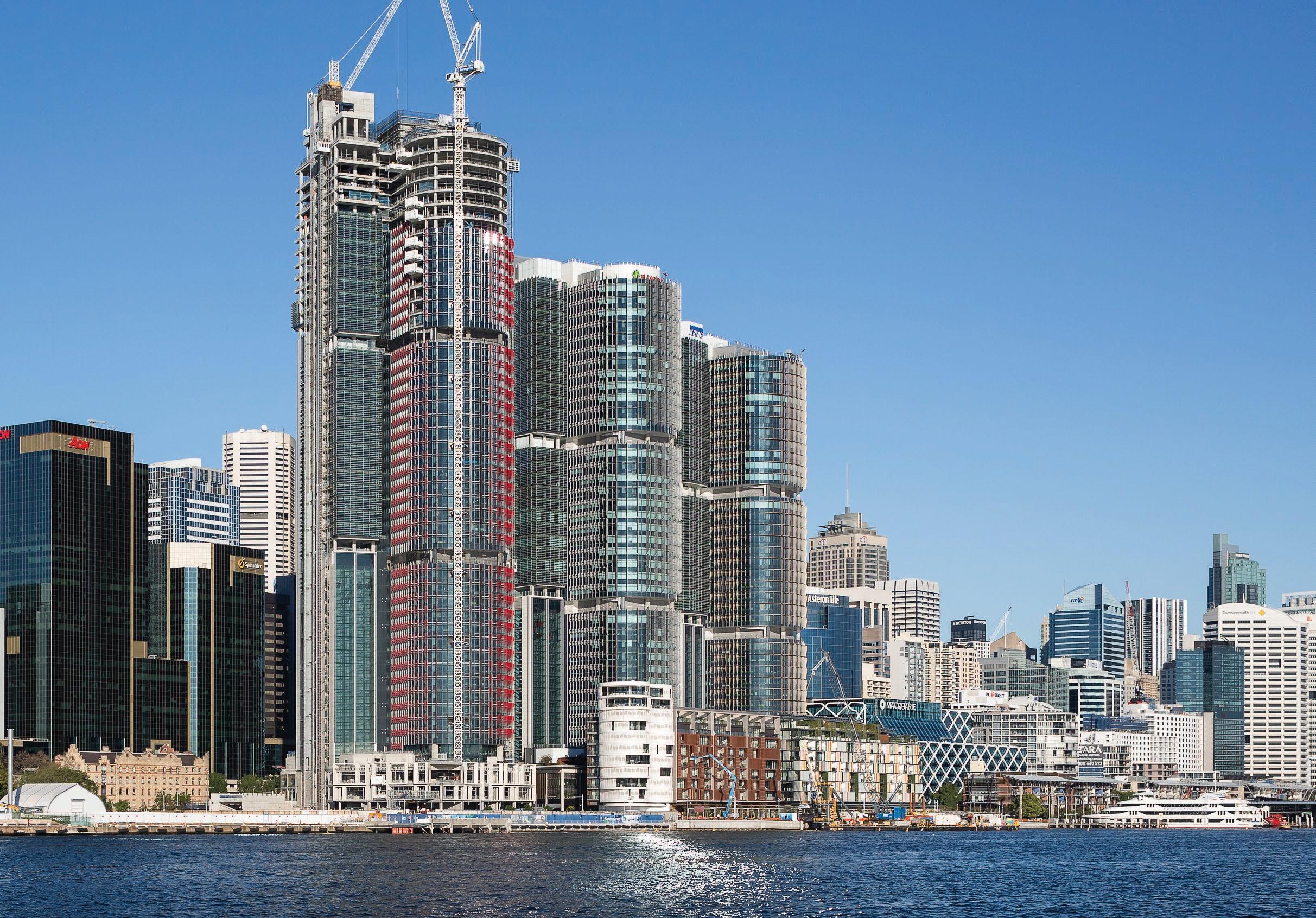
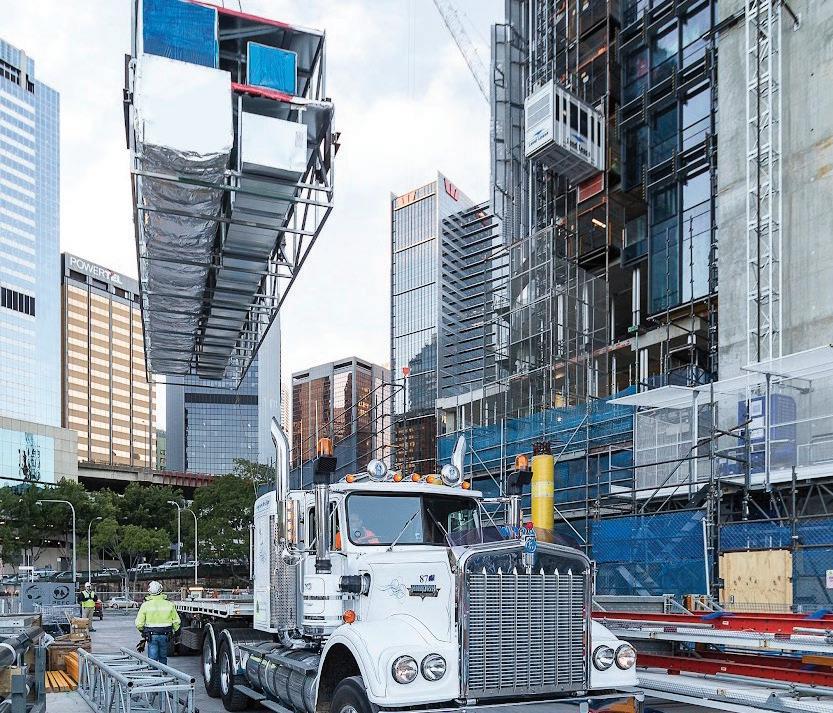
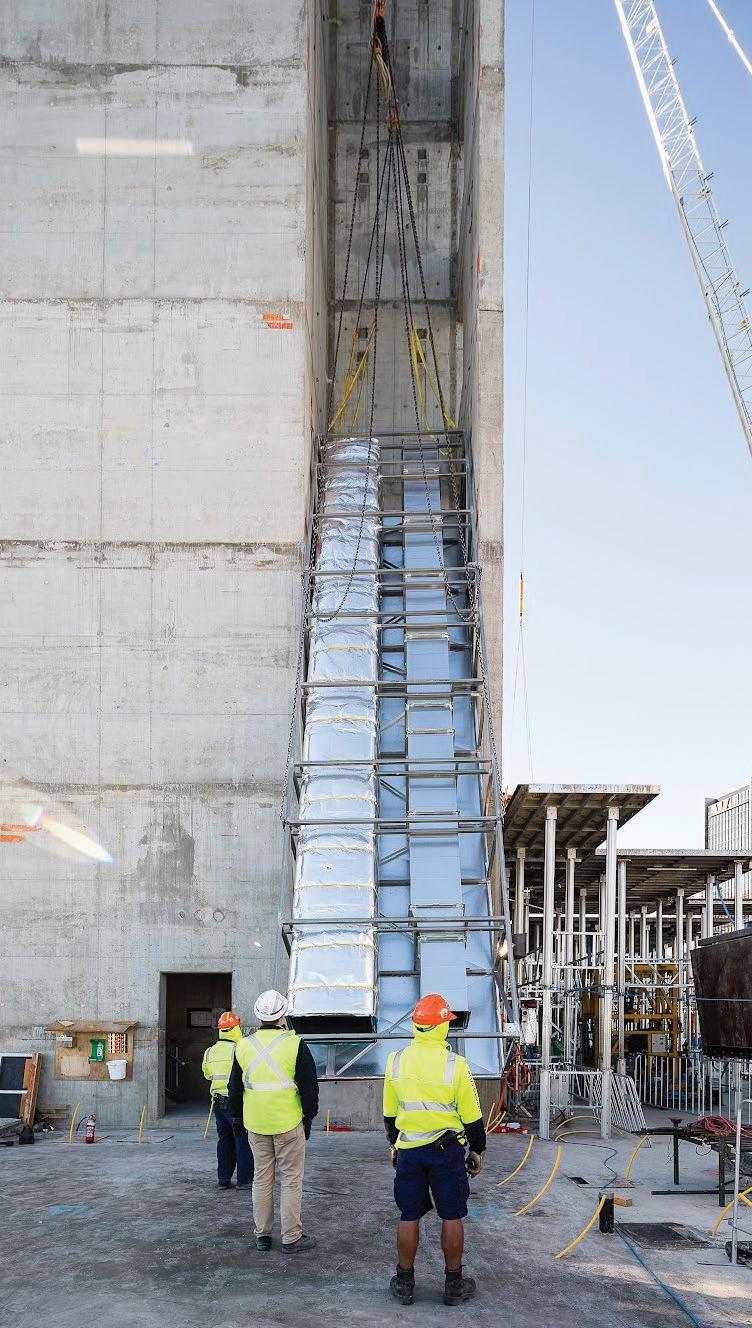
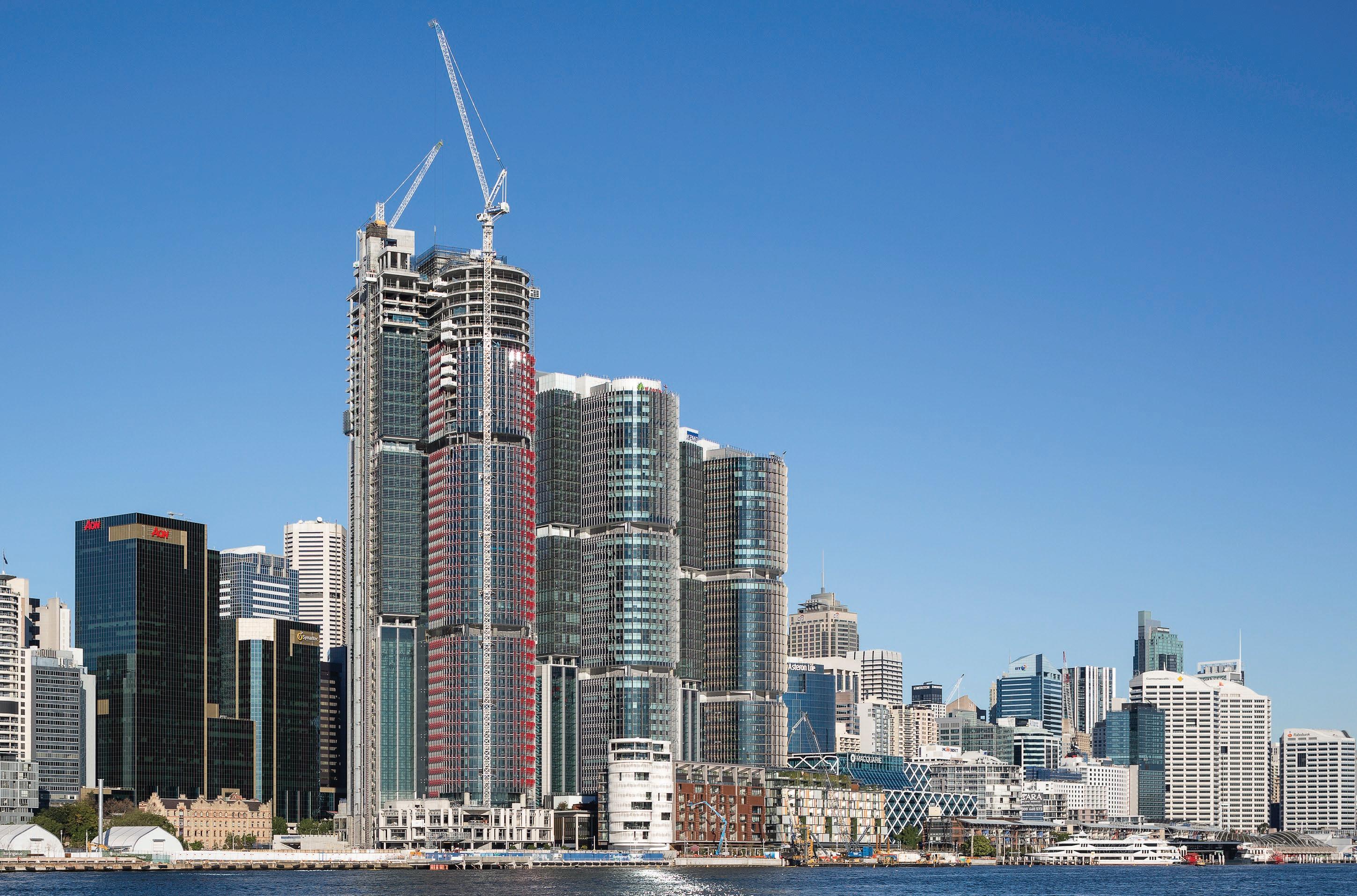
Sydney’s International Convention Centre (ICC) on Darling Harbour can host around 12,000 delegates at three concurrent events. Its facilities include a plenary hall for 8,000 attendees, a theatre with 8,000-seat capacity, a banqueting space for more than 2,000 people, and 70 meeting rooms. The challenge for a mechanical services provider would be to ensure that if all 12,000 people happened to be there at once, they would stay warm or cool as needed, and did not suffer any discomfort from poor ventilation.
Designing and installing the mechanical services for multifunctional complexes was something that A.G. Coombs had done for decades. Tapping into this experience, Lendlease appointed A.G. Coombs as the sole mechanical and HVAC services provider for the three buildings making up the new complex.
The ICC precinct opened in December 2016. It achieved LEED* (Leadership in Energy and Environmental Design) Gold certification in 2017.
Service provider: A.G. Coombs Projects Builder: Lendlease
* Awarded by the US Green Building Council, LEED-certified buildings are resource efficient. They use less water and energy, and reduce greenhouse gas emissions.
All three buildings delivered simultaneously. The entire facility has approximately 250,000 m2 of floor space.
Chilled water for cooling generated by six large chillers with total capacity of 21.4 MW.
Over 235 fans installed to provide conditioned air, ventilation and smoke exhaust.
HVAC and mechanical services recognised with the 2018 AIRAH Awards for Excellence in Innovation and Excellence in Sustainability.
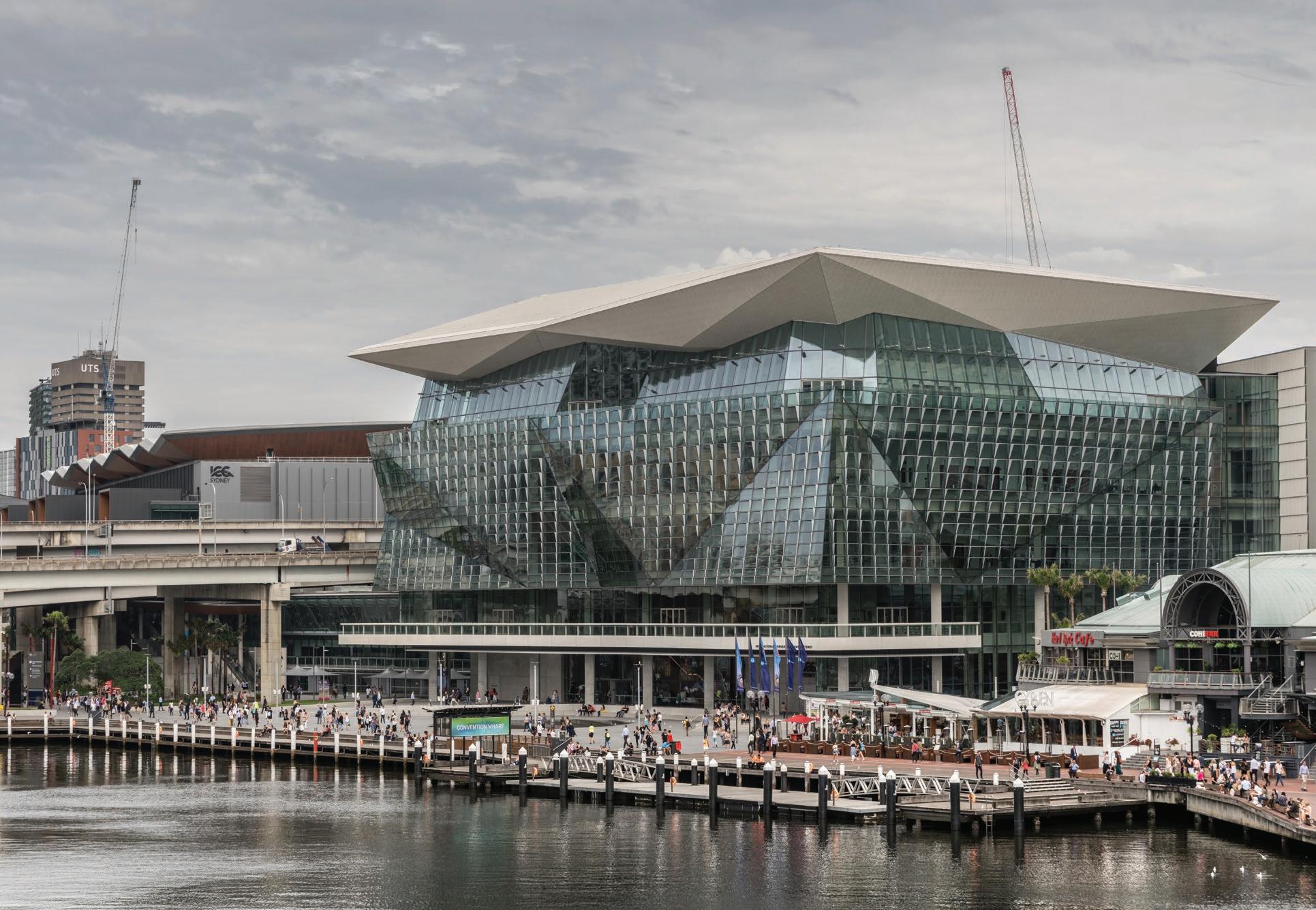

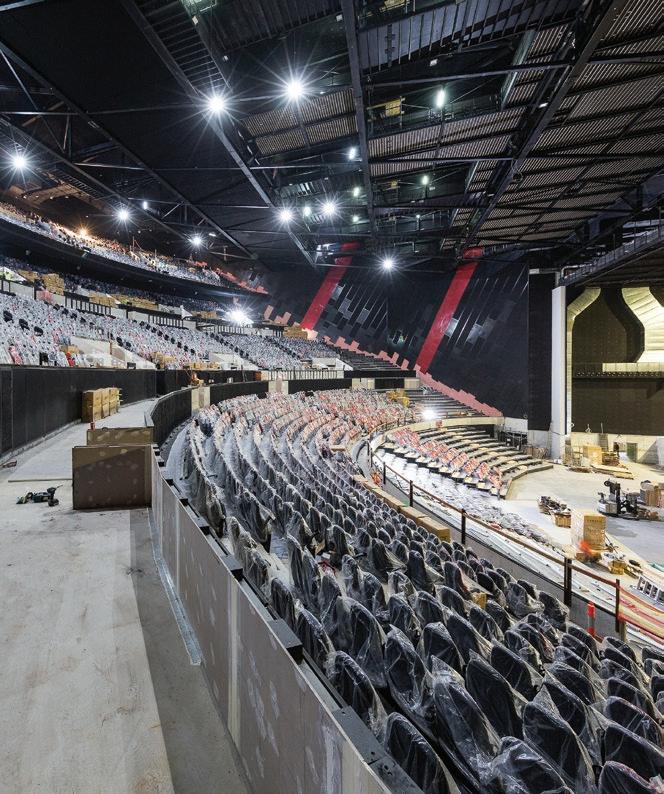
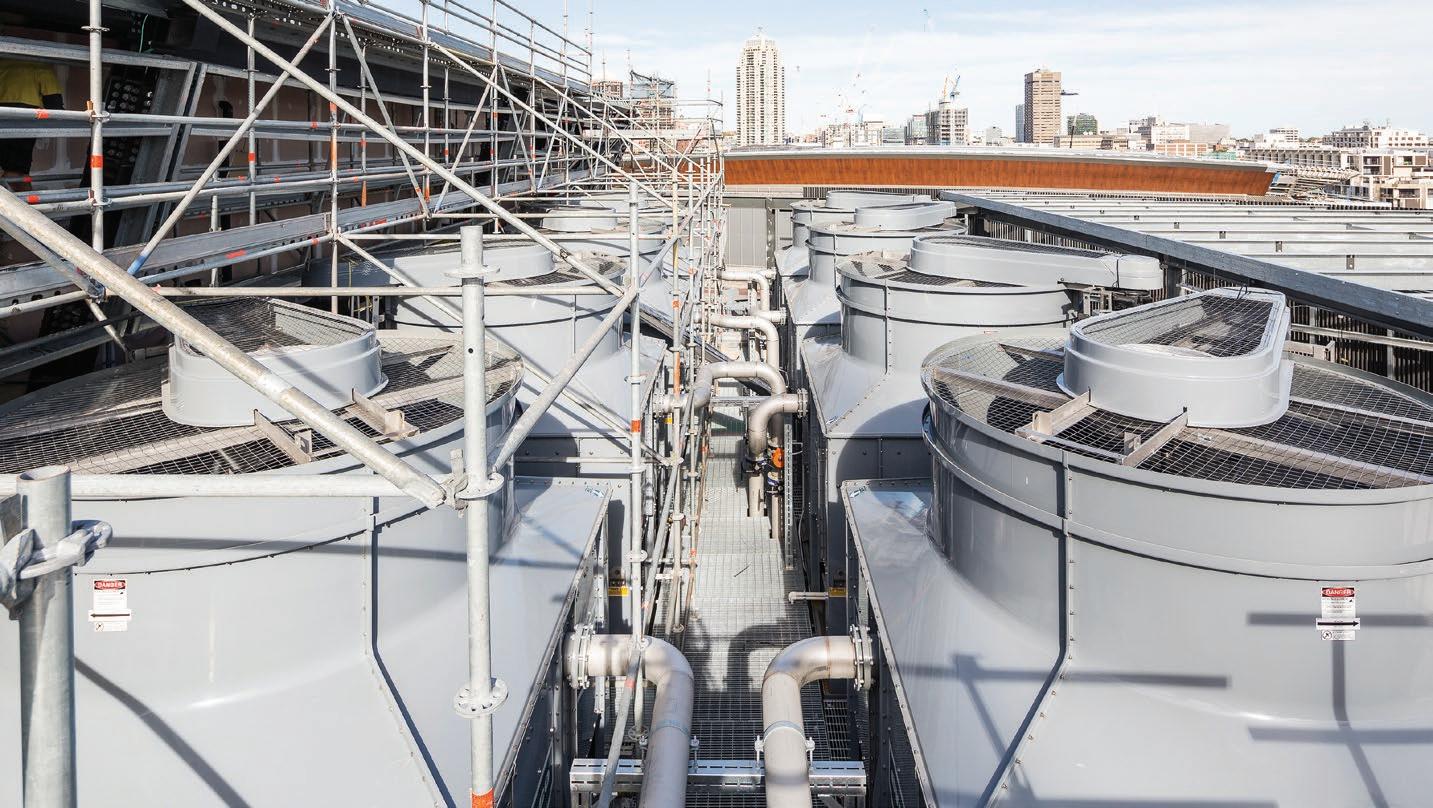
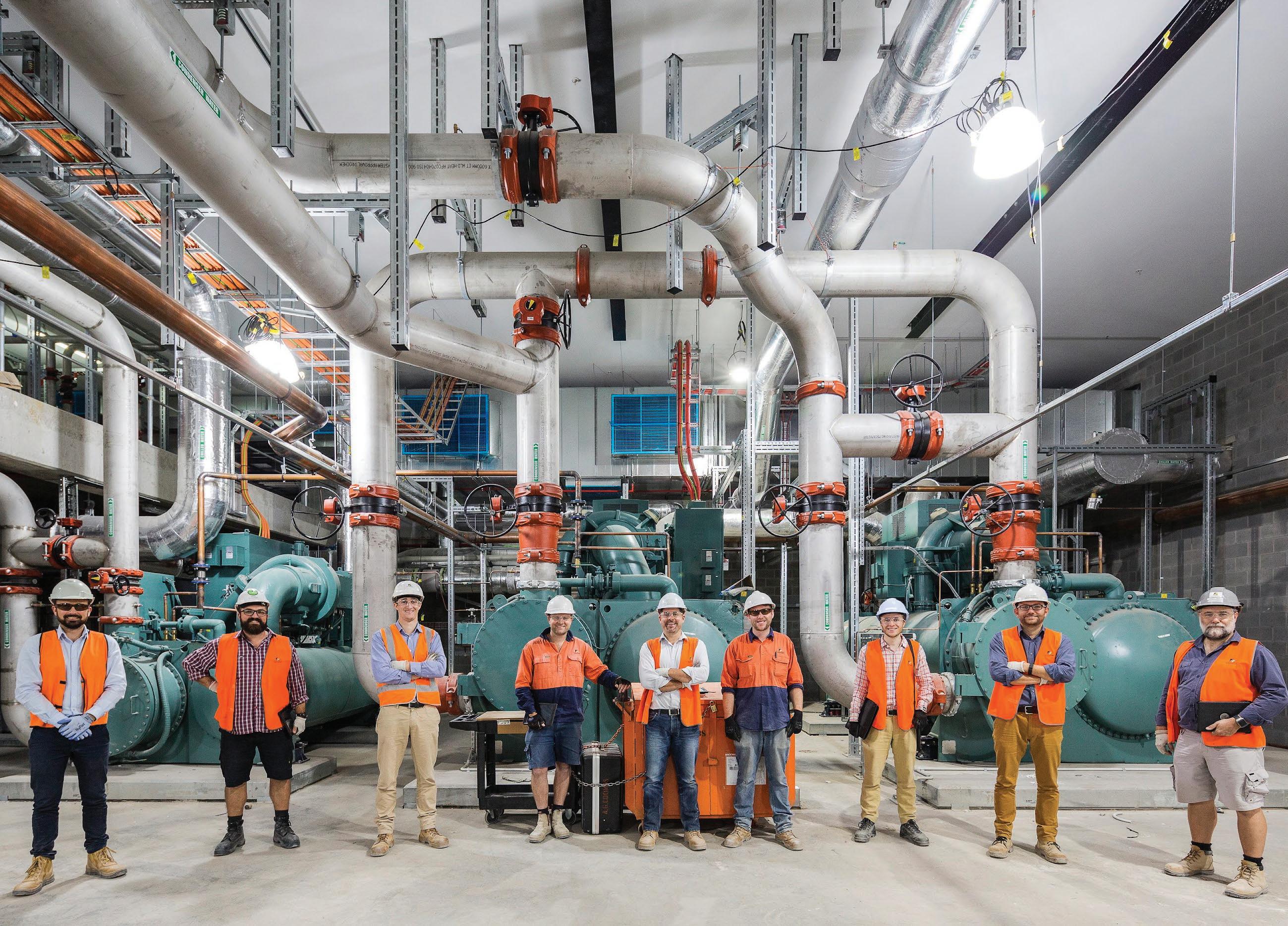
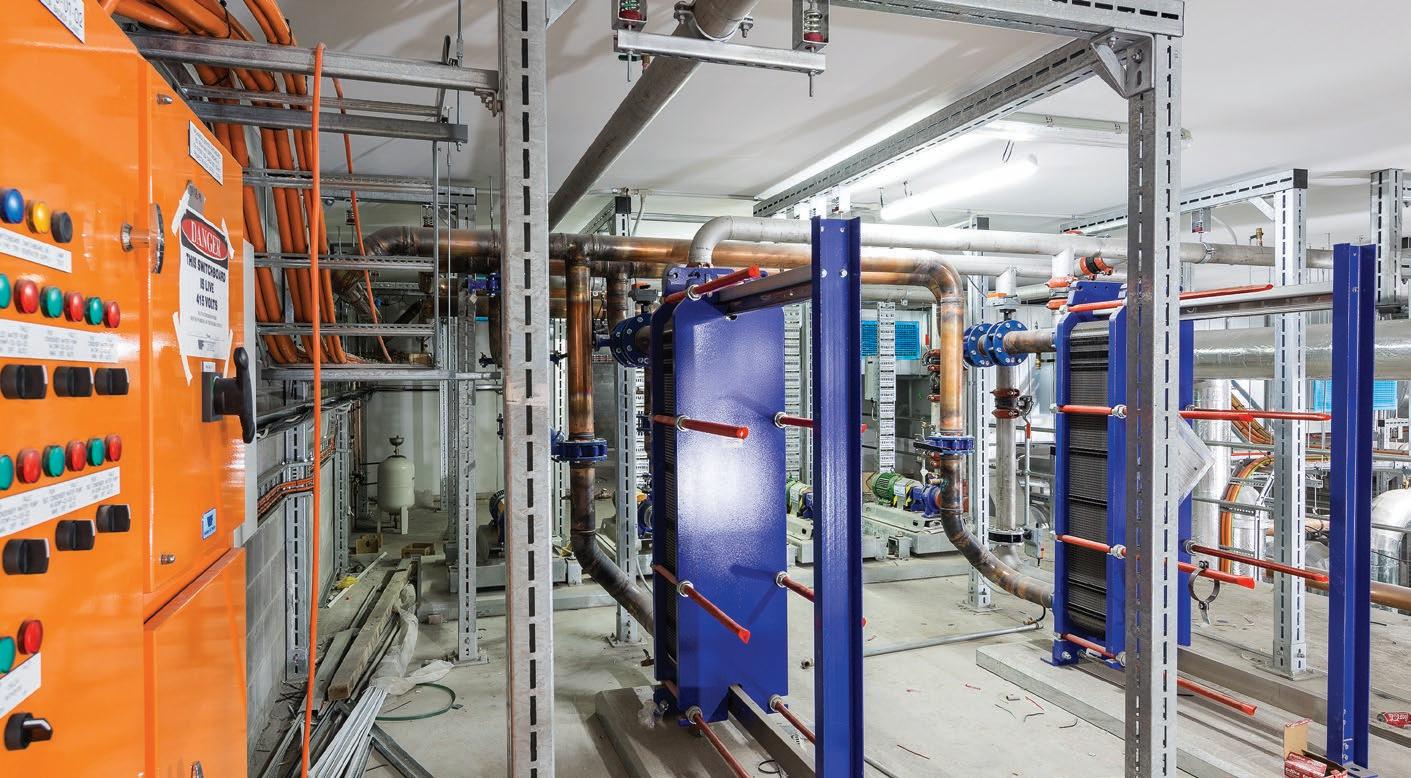
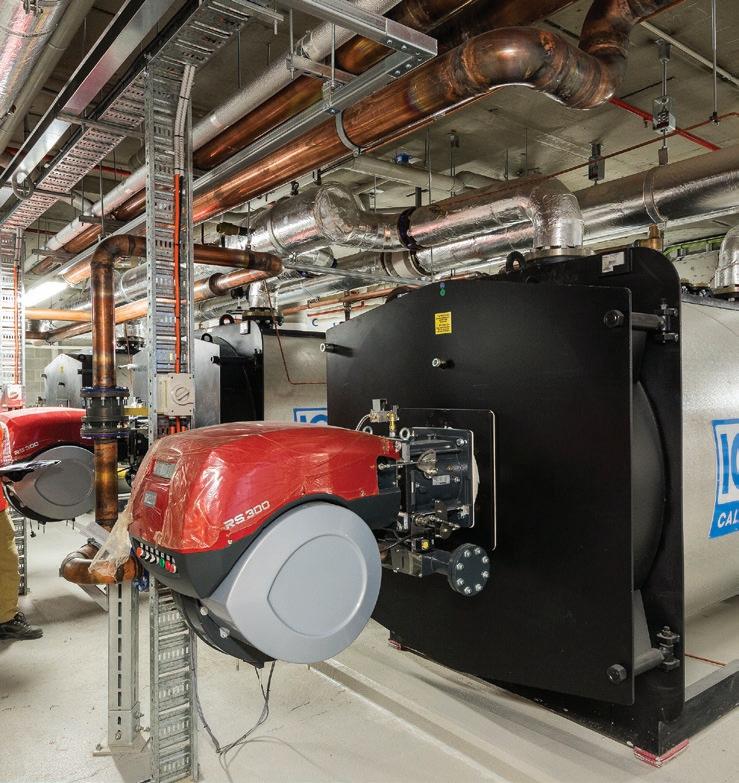
At the University of Technology Sydney (UTS), A.G. Coombs installed the building services in three important learning centres: UTS Central, UTS Thomas Street and the Dr Chau Chak Wing Building.
UTS Central houses the university’s law school. A.G. Coombs Projects delivered the mechanical services in what proved to be a very ambitious design and construction program, with the building’s twisting tower presenting many challenges, as no two floors were the same. Additionally, A.G. Coombs Advisory, as the Independent Commissioning Agent (ICA), worked with the teams involved in design, construction and building tuning to ensure a smooth handover. The first twelve-month tuning period was accomplished during the COVID-19 pandemic in 2020.
Service provider: A.G. Coombs Projects and A.G. Coombs Advisory Builder: Richard Crookes Constructions
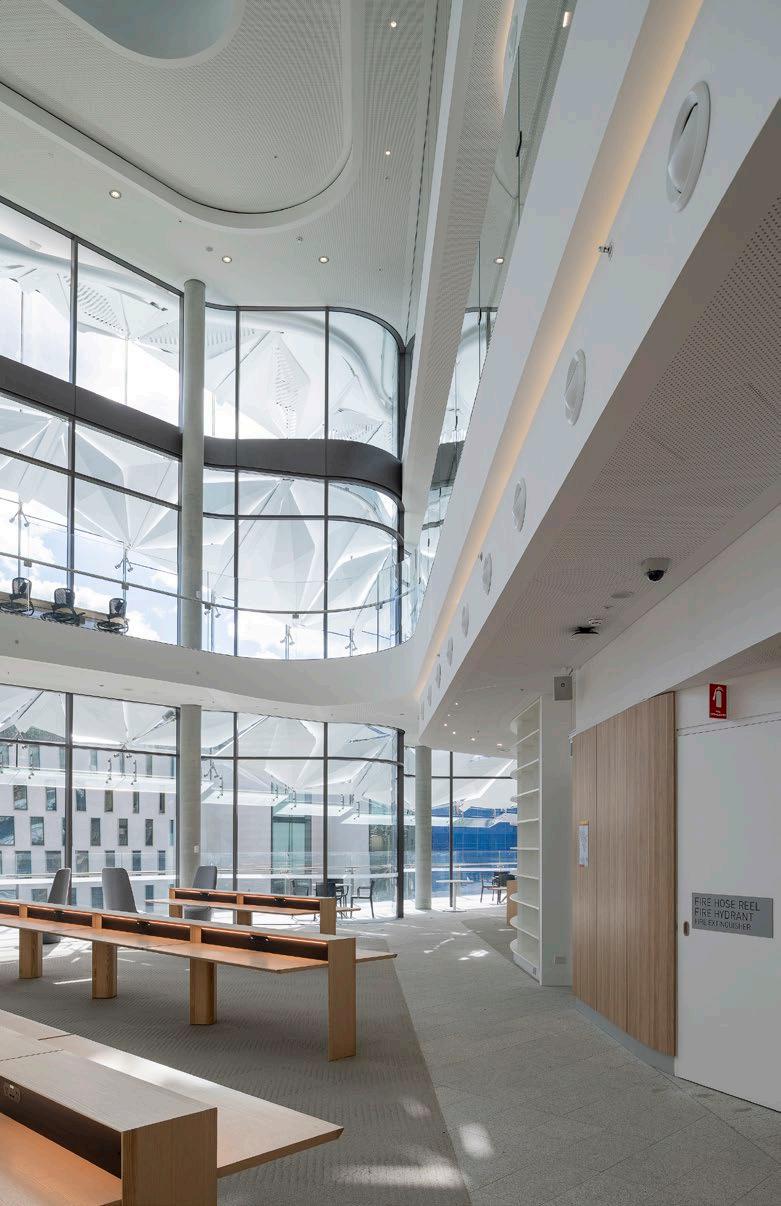
Exposed mechanical services air distribution ductwork and pipework are featured in many of the building’s spaces, demanding an extraordinarily high standard of installation.
A.G. Coombs developed a cost-effective, energy-efficient design that features a centralised low-temperature system utilising EC fan air-handling unit technology.
The Hive Superlab is located in the basement – a science laboratory with 42 pods accommodating six students each.
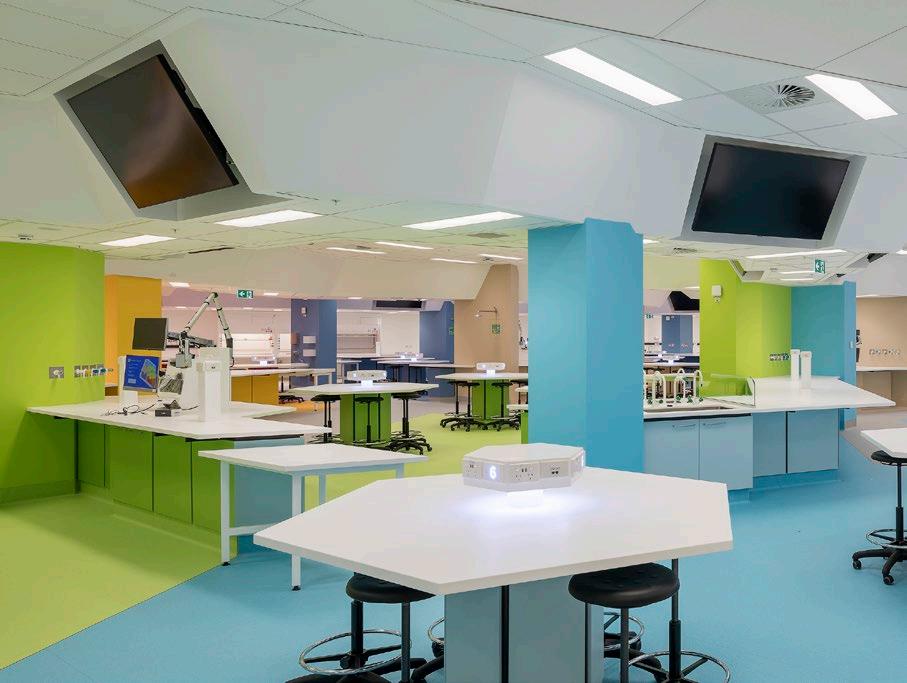
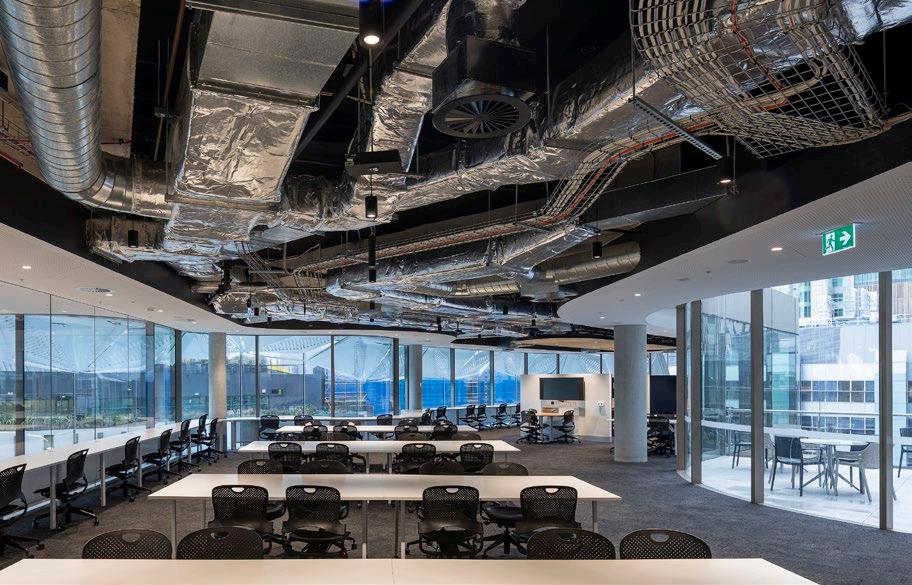
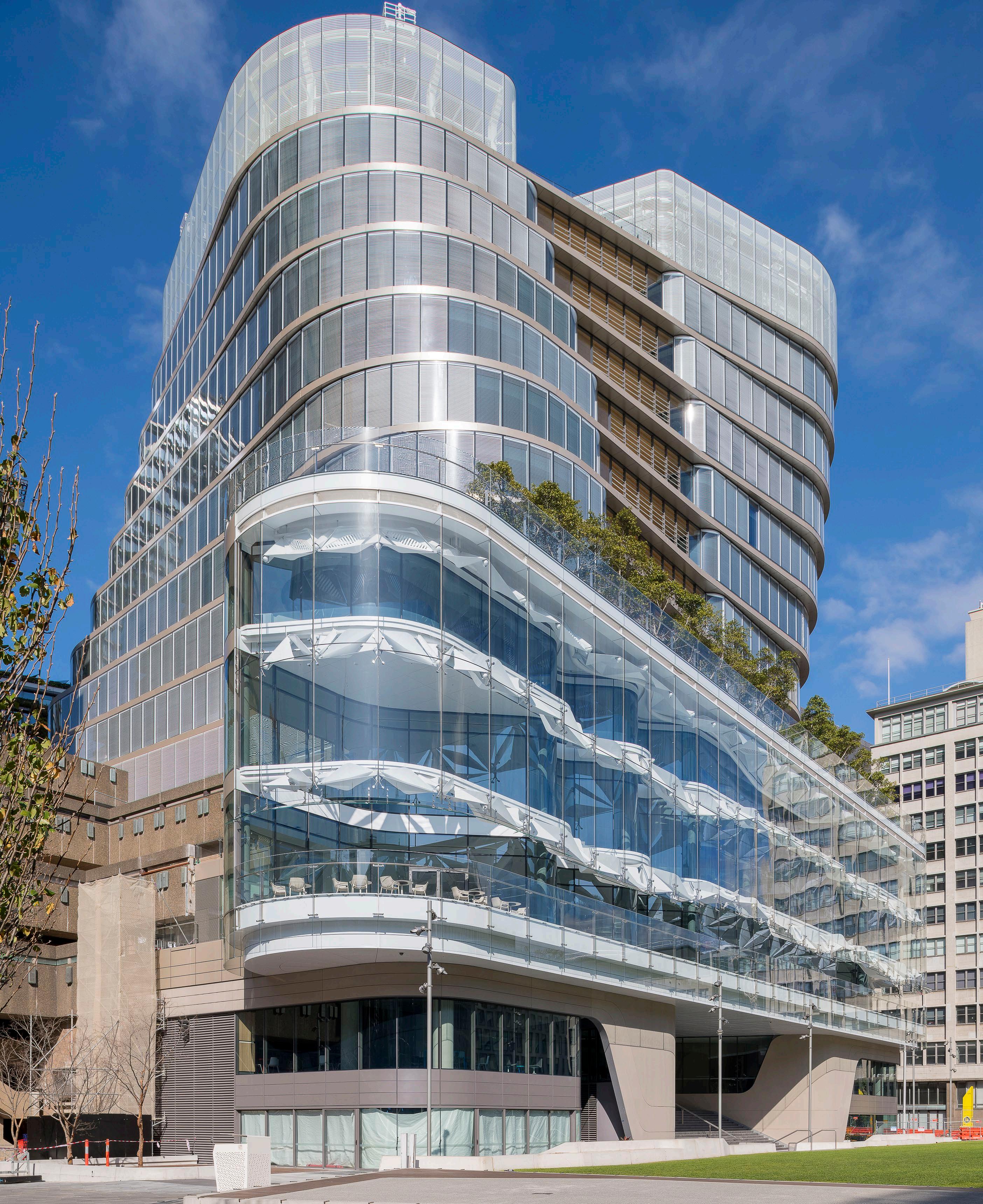
UTS Thomas Street is home to the faculties of science and health. The building’s pharmaceutical facilities, including its laboratories and fume cupboards, required specific temperature and humidity control, and an extremely high level of cleanliness. A.G. Coombs handled the complexities of the build by using Building Information Modelling (BIM) to streamline project workflow from design through to virtual build and final installation.
Completed in late 2014, UTS Thomas Street was the first building in NSW where A.G. Coombs applied Autodesk Revit software to enhance the BIM management process. The software enables users to design the structure and components of a building using 2D, 3D and 4D elements.
Service provider: A.G. Coombs Projects Builder: Richard Crookes Constructions
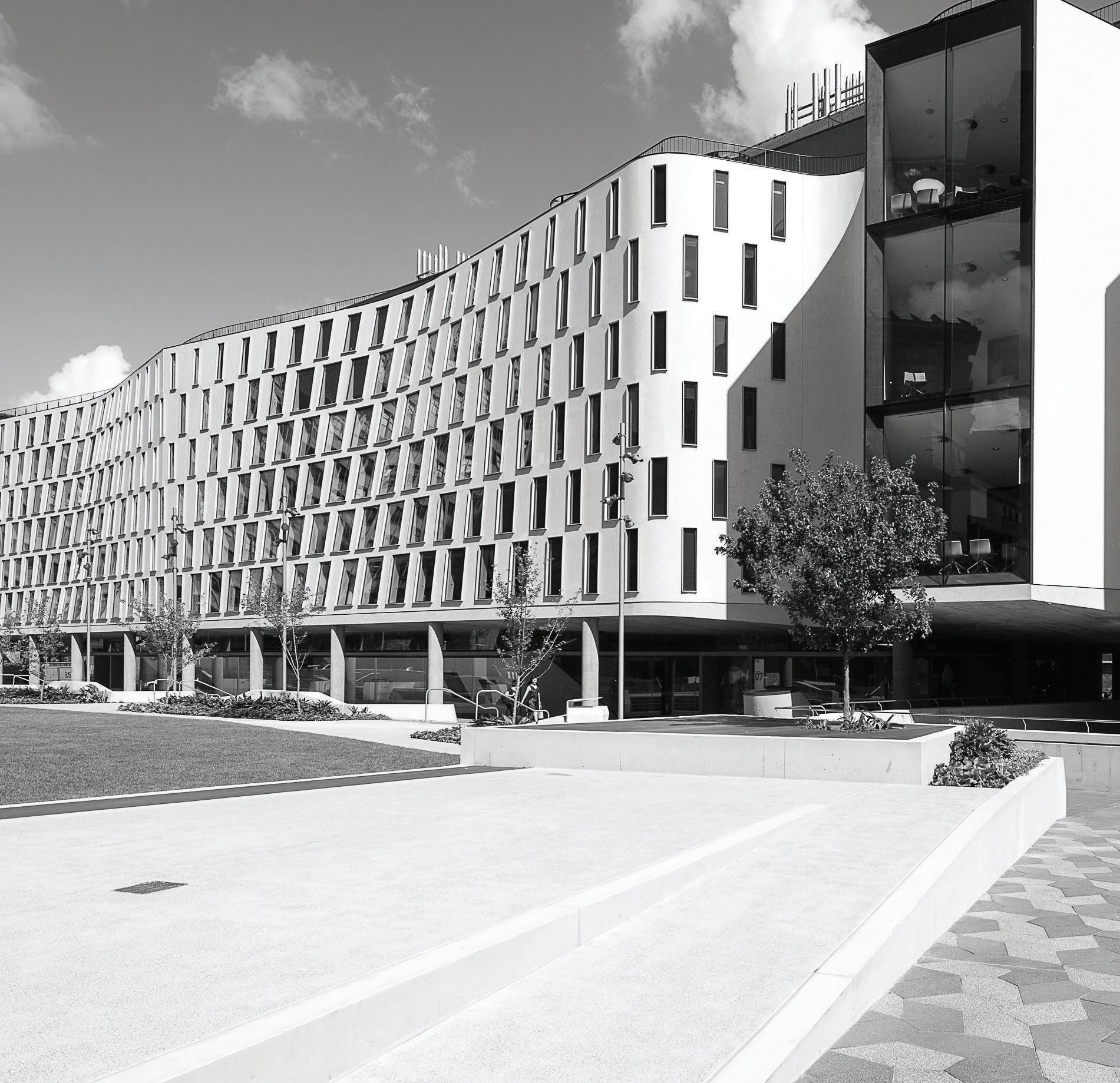
Accommodating more than 1,200 staff and students over eight occupied levels, it is an example of a 'living lab'.
The building's pharmaceutical facilities include Physical Containment Level 2 (PC2) laboratories, and clean rooms that demand specific temperature and humidity control and an exceptionally high level of cleanliness.
Features a state-of-the-art automated library storage with automatic storage retrieval machines retrieving and filing up to 900,000 items on shelves up to 14 metres high.
Incorporates a thermal labyrinth in the sandstone foundations providing pre-cooled air to the building.
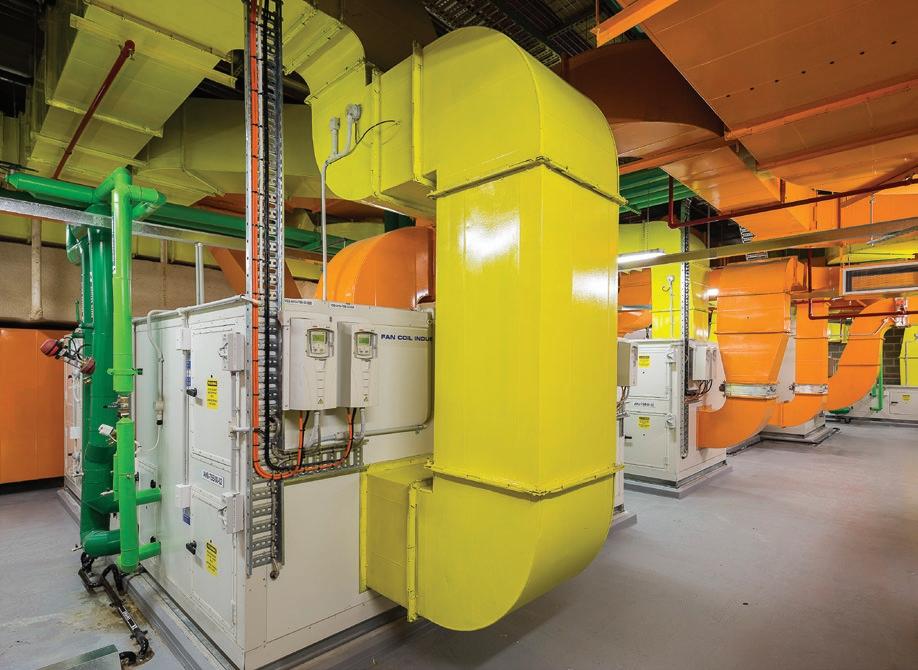
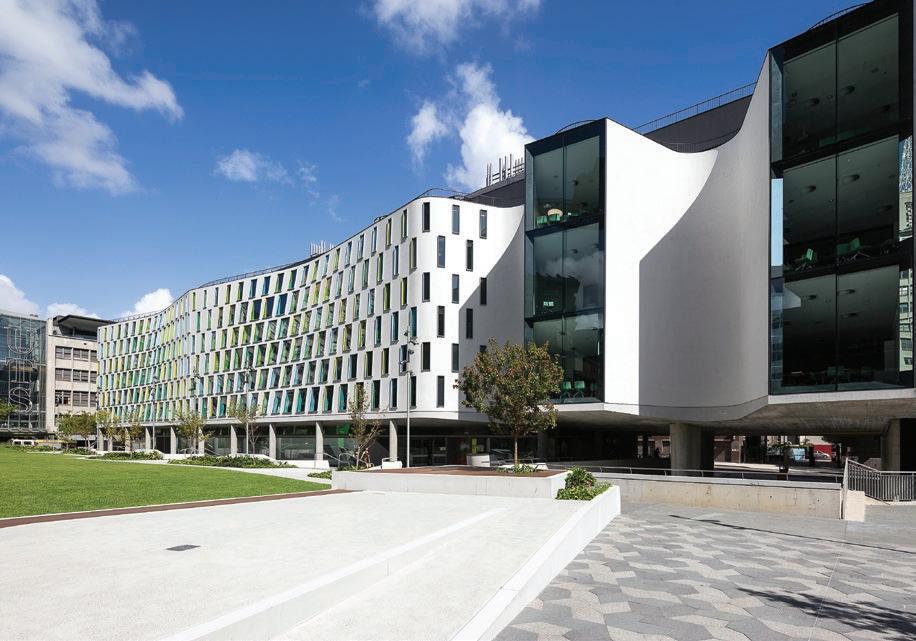
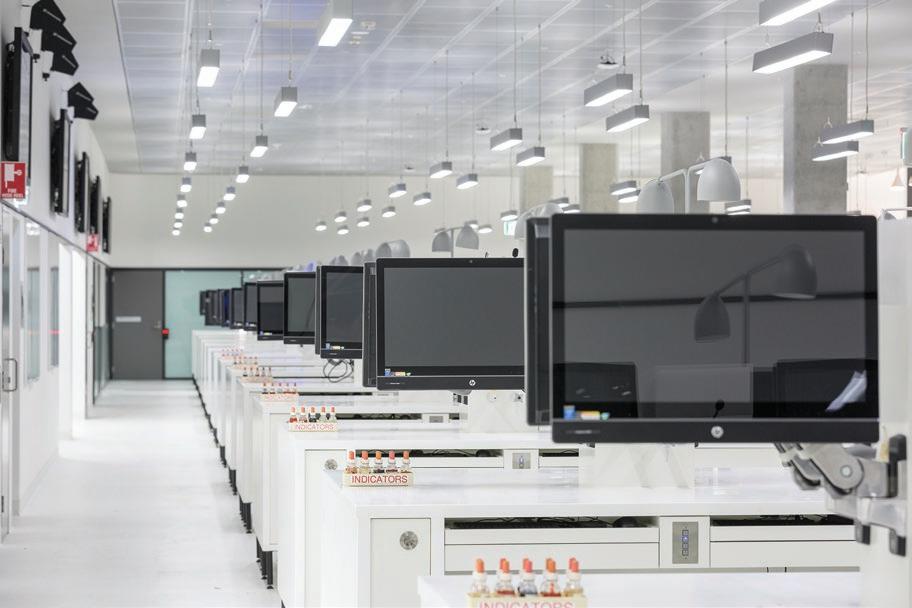
The $180 million Dr Chau Chak Wing Building at UTS was the first building in Australia designed by world-renowned architect Frank Gehry.
The unique building boasts energy-efficient features, including a smart air conditioning system that switches off in areas not in use for a period. It was opened in 2015 by Australia’s then Governor-General Sir Peter Cosgrove, who described the building as the “most beautiful paper bag” he had ever seen.
A.G. Coombs delivered the mechanical and HVAC services to this world-class facility, successfully mastering the many challenges around integrating mechanical systems into the building’s irregular shape.
Service provider: A.G. Coombs Projects Builder: Lendlease
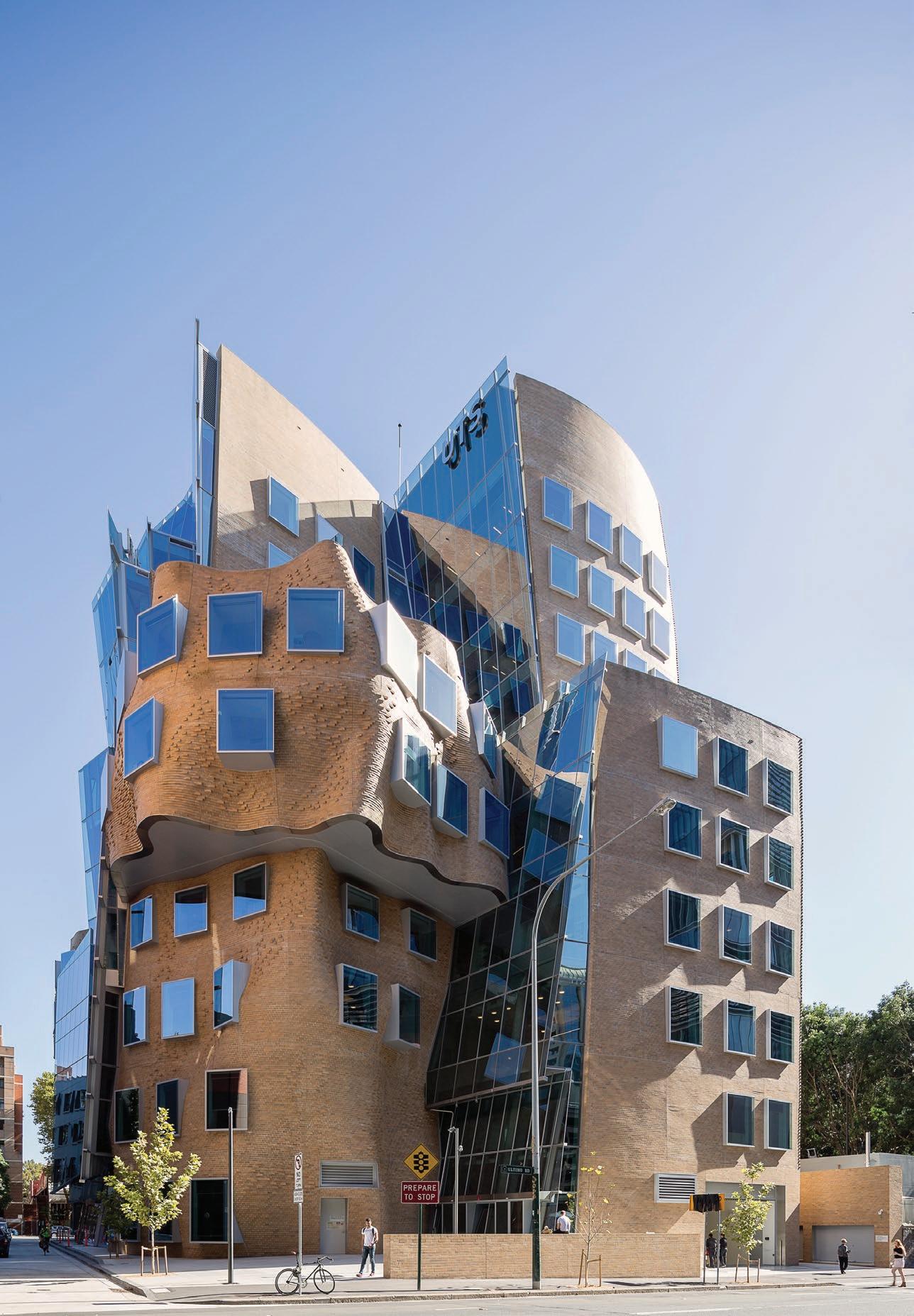
Bricklayers laid around 320,000 bricks, following a 3D construction model.
Each of the larger lower floors is divided into six floor segments and the building facade folds in between these elements bringing natural daylight deep into the centre of the floors.
To help overcome the spatial challenges created by the unusual shapes in the design, A.G. Coombs used 3D Revit modelling to coordinate the services into structure and ceiling spaces.

Digital set-out equipment was used to help overcome the challenges created by the irregular shapes in the building and the lack of easily referenced set-out points.
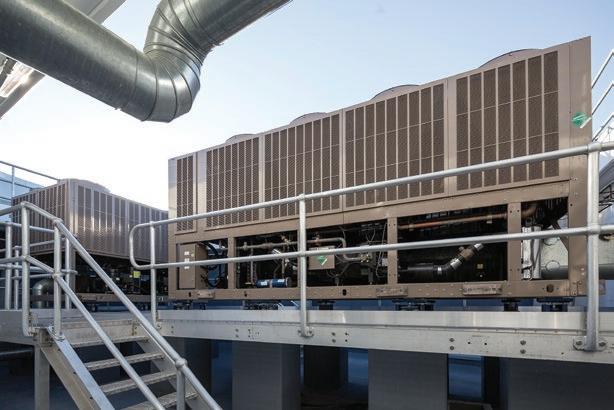
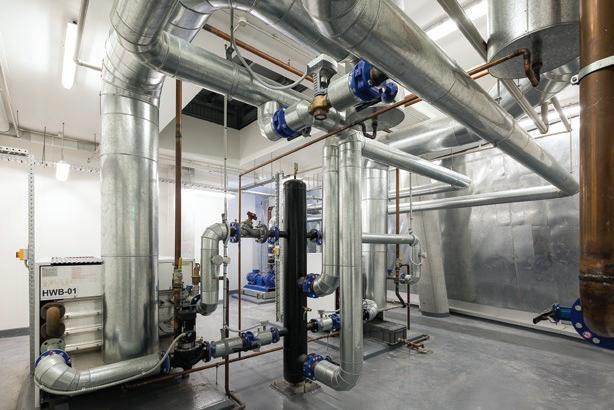
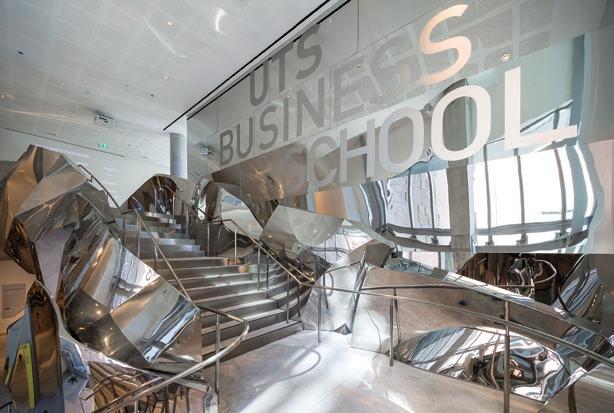
Value-added initiatives by A.G. Coombs delivered significant savings, including the rationalisation of chilled and heating water thermal plant equipment.
Eight vertical prefabricated risers (containing the services) were installed in 16 large prefabricated modules.
Digital Trimble positioning technology was used to set out cast-in supports for high-level pipework and ductwork to ensure accuracy and minimise the extent of overhead drilling into the concrete soffit.
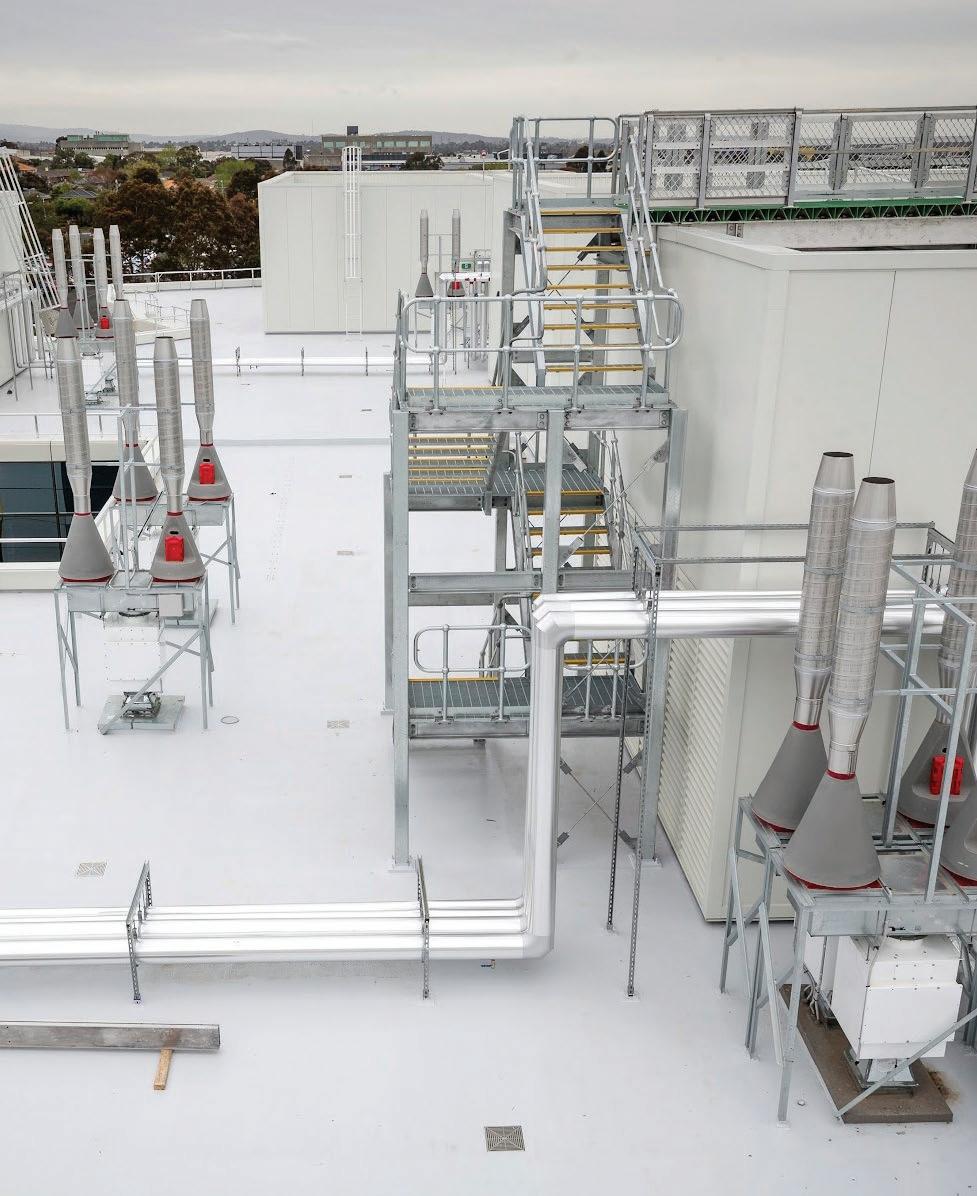
A state-of-the-art healthcare facility requires high-performing building services. In addition to in-patient wards, there are operating theatres, critical treatment rooms, laboratory areas, and administrative and communal spaces – all with different climate control requirements.
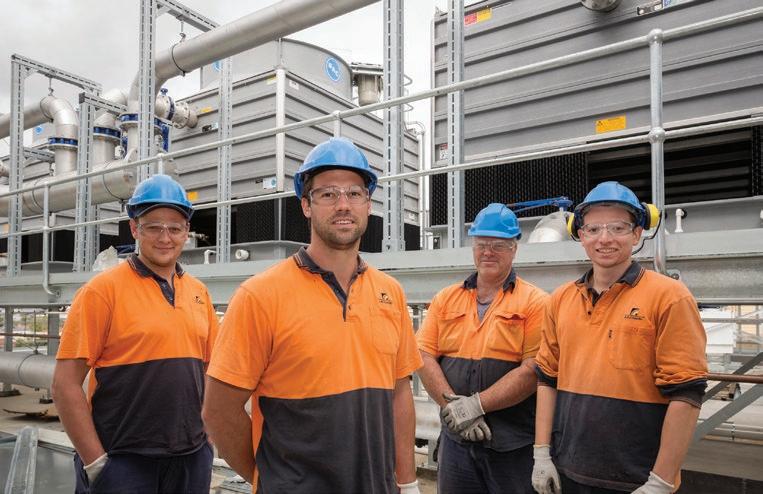
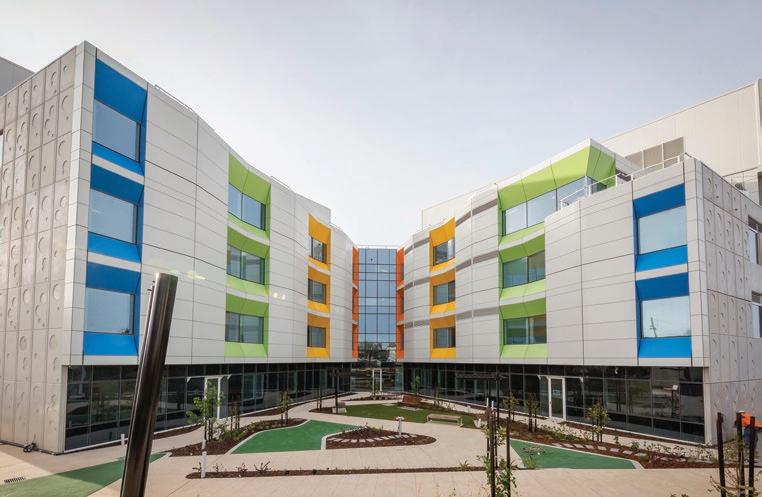
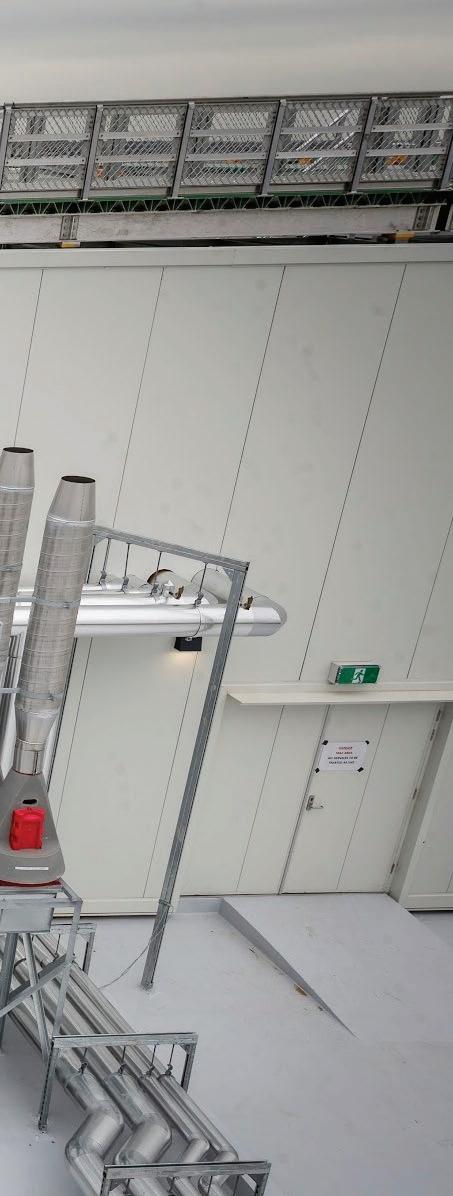
Renowned for its work in the healthcare space, A.G. Coombs drew on years of experience when installing the services at the only healthcare facility in Victoria providing foetal surgery, as well as thalassemia and paediatric cardiac electro-physiology.
A.G. Coombs delivered the HVAC and mechanical services along with the building management and controls system, the specialist systems for medical gasses, and the pneumatic tube transport system.
With the facility needing to be completed in two years – a shorter timeframe than normal – vertical risers manufactured at the A.G. Coombs Integrated Prefabrication Facility helped reduce construction time. The building officially opened in 2017.
Service provider: A.G. Coombs Projects Builder: Lendlease
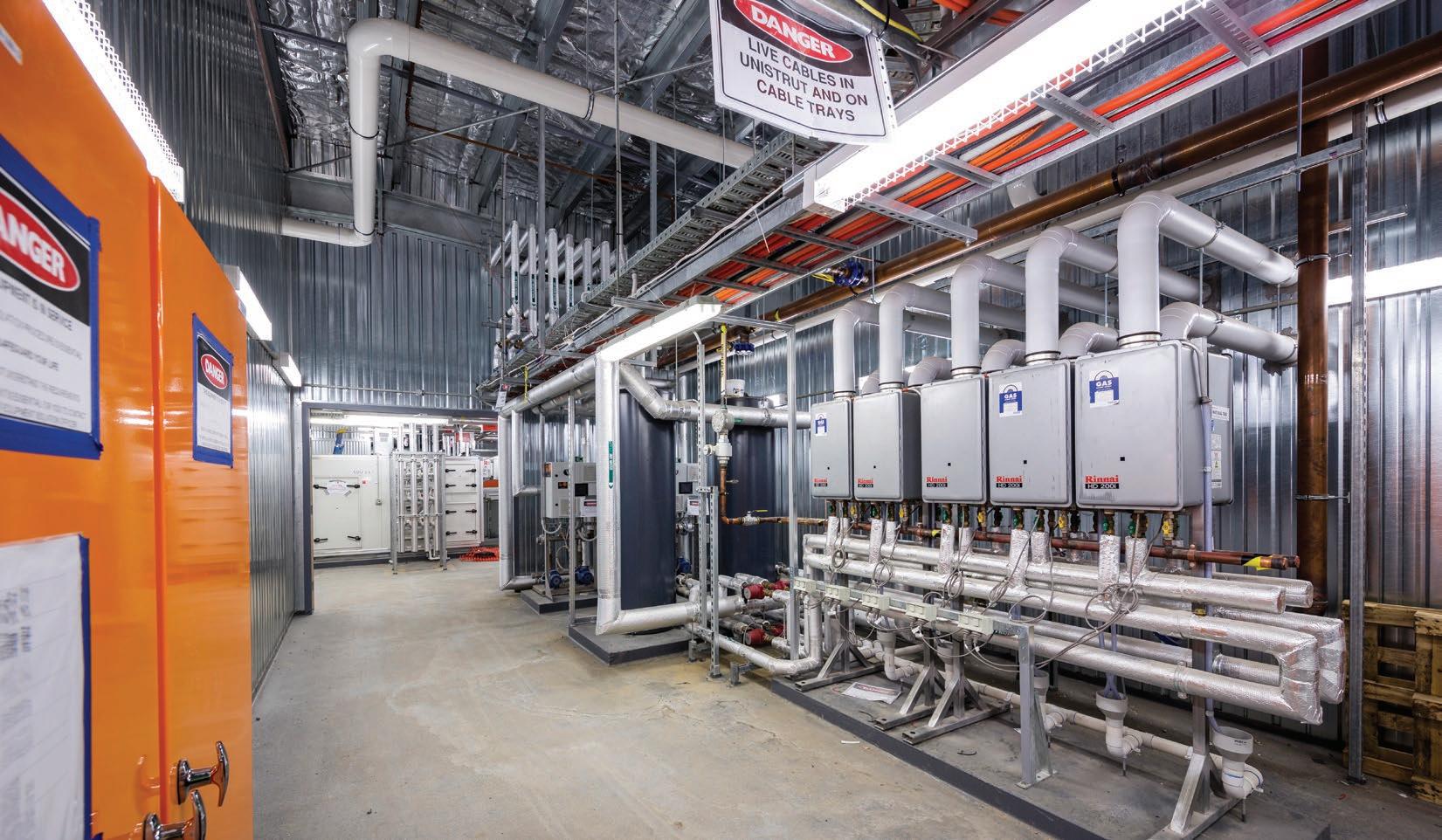
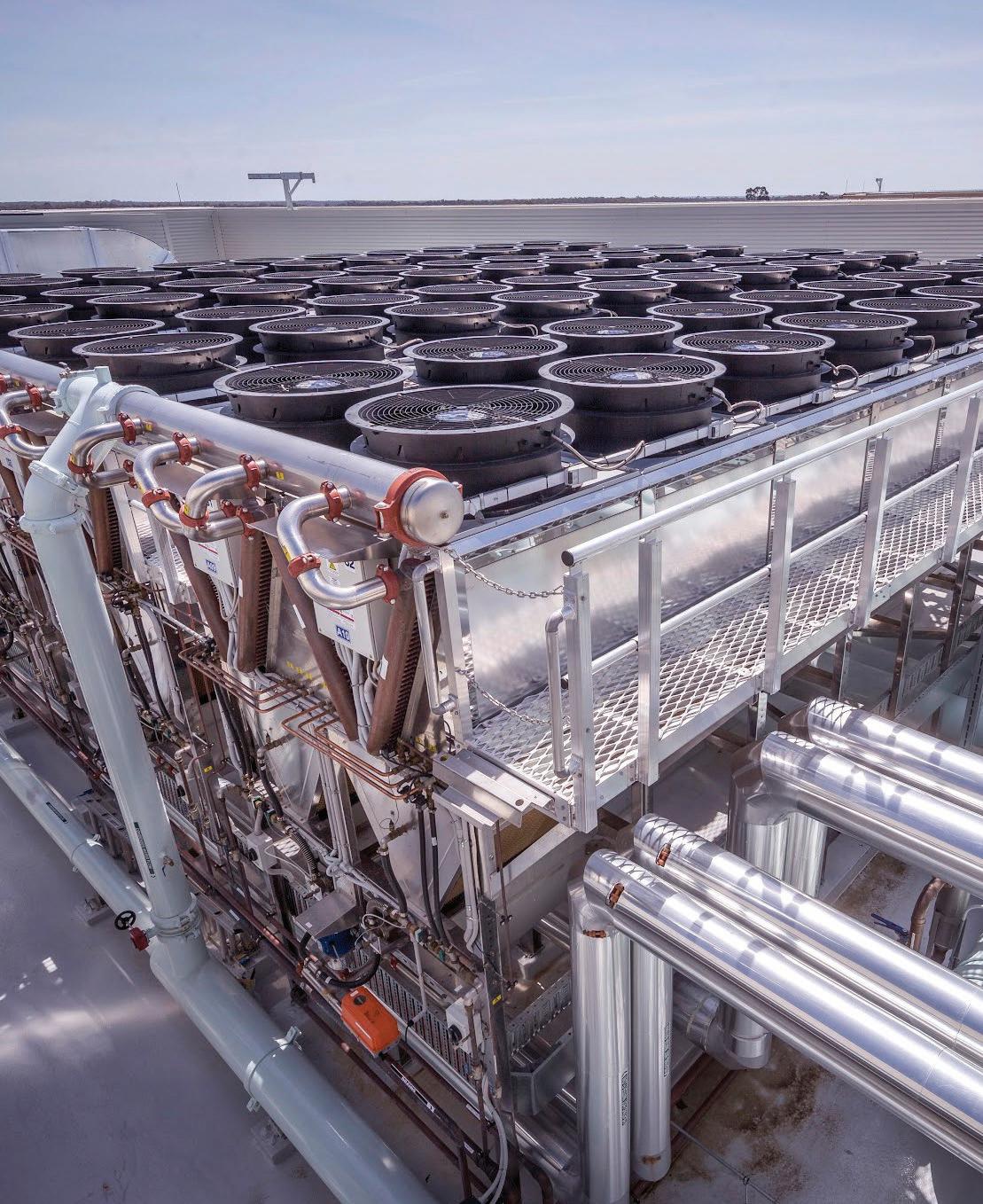
Delivering the services for acute healthcare environments is in the DNA of A.G. Coombs’ designers, technical experts and engineers. The company delivered the large-scale specialist mechanical and HVAC services to the $630 million New Bendigo Hospital project, one of the largest regional hospital developments undertaken in Victoria.
When it opened in August 2018, the hospital could lay claim to being among the most energy-efficient healthcare facilities in the State. Its gas-powered trigeneration system supplied low-carbon electrical power, heating and cooling to the entire building. Another noteworthy feature was the large dry cooler installation that eliminated the need for cooling towers.
The application of Building Information Modelling (BIM) also eliminated systems clashes on site, while the use of large-scale prefabrication almost eliminated the need for on-site hot welding, thereby minimising the safety risk.
In addition to hiring locally, A.G. Coombs relocated a significant number of its personnel to Bendigo for the duration of the project. The opportunity for local trades and professionals to work with a leading building services specialist helped to enhance the regional HVAC industry.
The hospital was named the Property Council of Australia’s Victorian Development of the Year for 2018.
Service provider: A.G. Coombs Projects
Builder: Lendlease
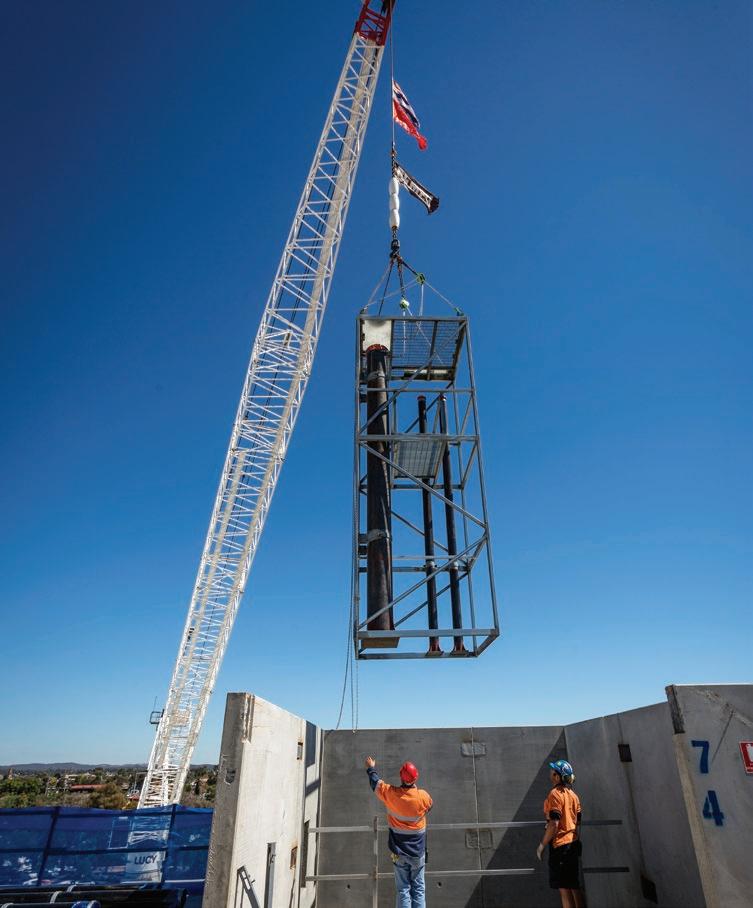
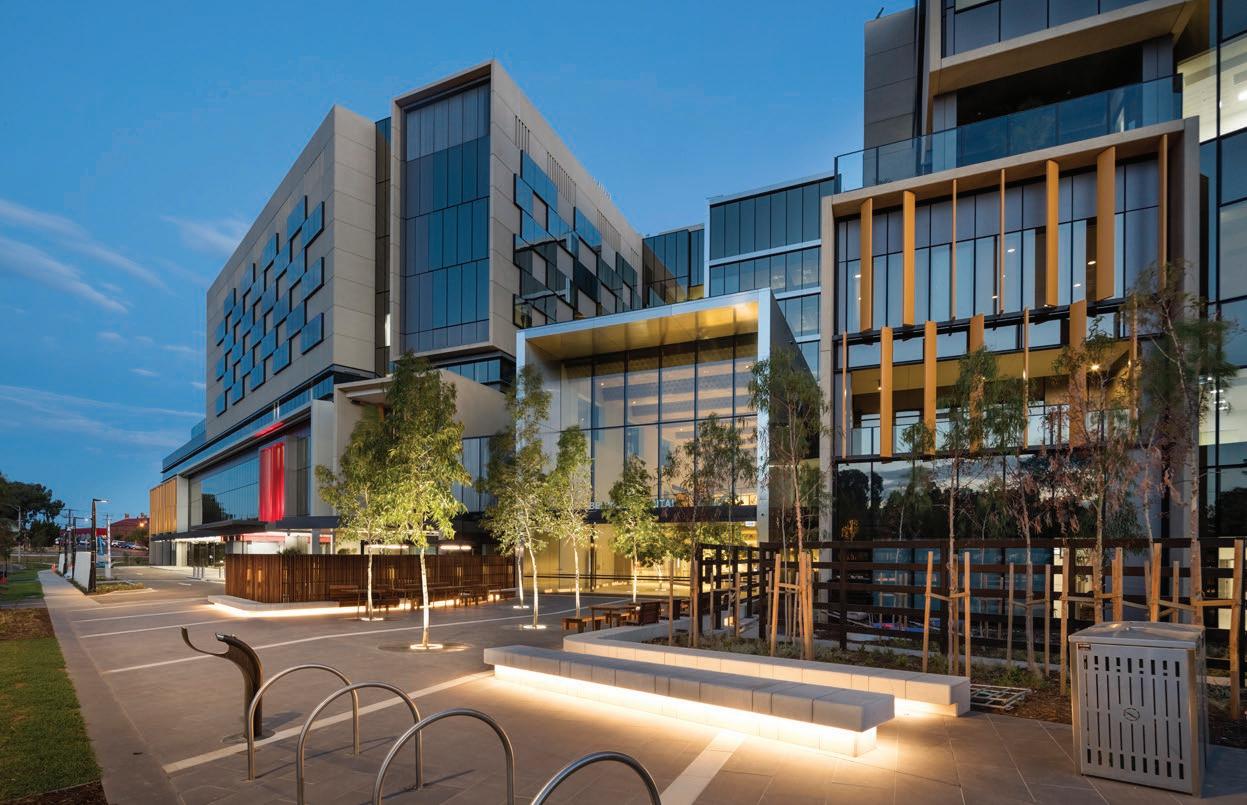
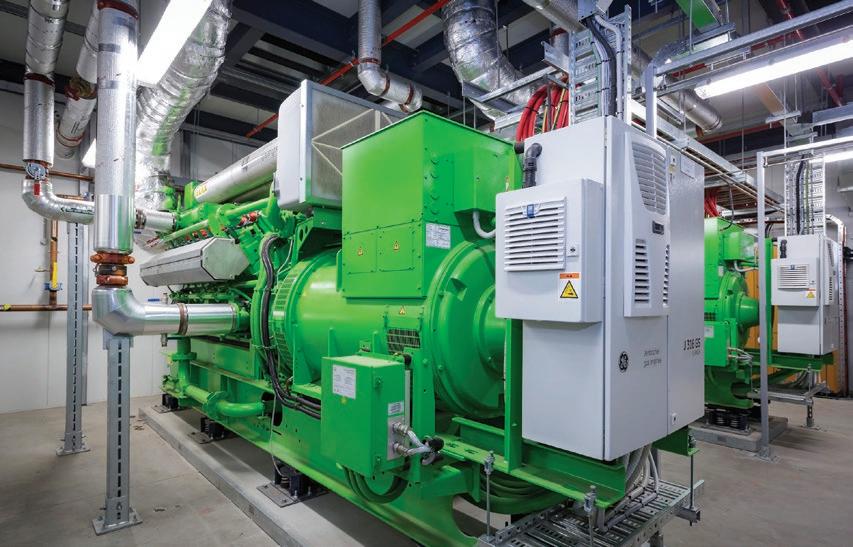
PROJECT HIGHLIGHTS
Installation of over 800 air conditioning and ventilation fans, 40 km of ductwork, around 6,000 air grilles and 5 km of pipework.
50 prefabricated vertical services riser modules and over 300 horizontal modules containing multiple services and building elements were installed.
Features a large adiabatic 'dry-cooler' heat rejection system, a first for a new acute-care healthcare project in Victoria, reducing energy and water usage compared to cooling tower systems.
Combined, the installed electric chillers and trigeneration plant provide a total 8.5 MW of available cooling capacity.
Comprising seven compounds, and set on a 144-hectare site, the state-of-the-art Post Entry Quarantine (PEQ) facility in Mickleham (a suburb of Melbourne) is designed to keep Australia safe from exotic pests and diseases.
Leighton Contractors (now CPB Contractors) engaged Walker Fire Protection to install the fire detection system and A.G. Coombs Projects to deliver the mechanical and HVAC services for the first three stages of the build.
The PEQ facility's bio-secure plant compound is the temporary home of high-risk plants imported into Australia. In the greenhouse zones, A.G. Coombs Projects installed
temperature and humidity settings that can be adjusted to mimic the different climatic regions in Australia during the post-entry quarantine period.
Cats, dogs, horses and bees also transition through the facility. Imported bees spend time here before passing into the care of beekeepers for purposes of increasing genetic diversity to improve honey production and disease resistance. The PEQ project was completed in 2017.
Service provider: A.G. Coombs Projects and Walker Fire Protection Builder: Leighton Contractors
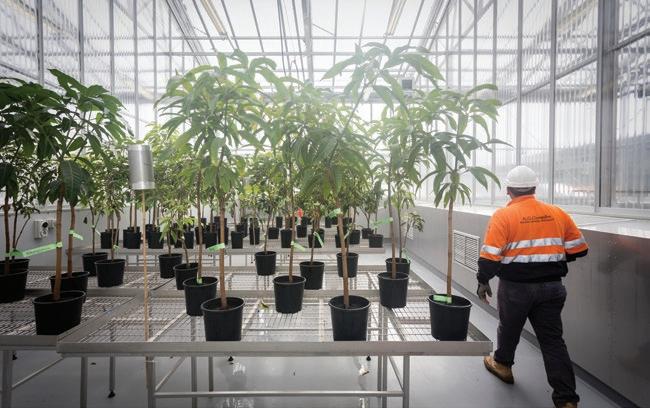
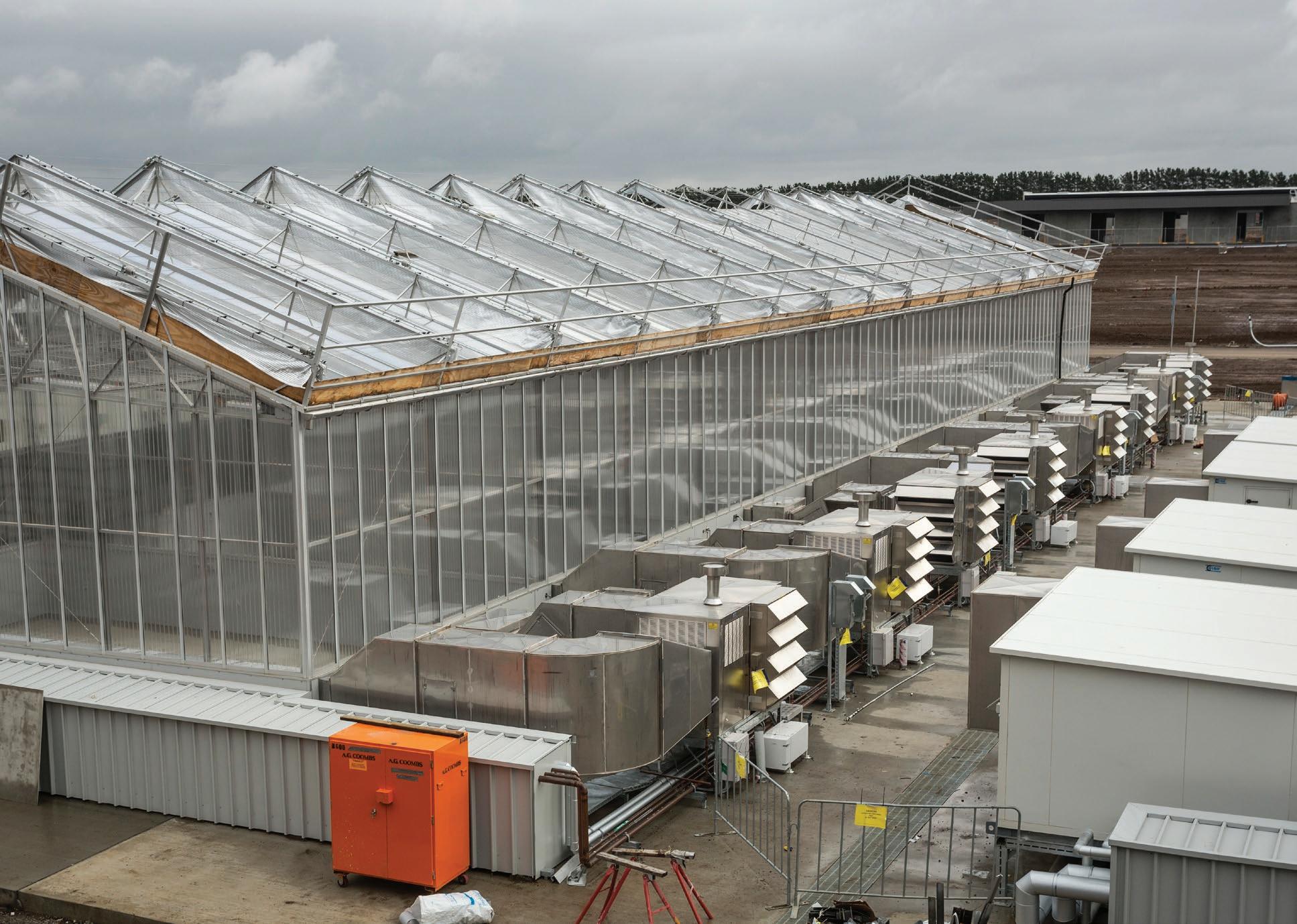
The new facility consolidated five post-entry quarantine facilities in multiple Australian states into a single location.
The most complex and demanding building on the site is the Avian facility. It includes five high criticality Bio Containment Level 3 units.
In the greenhouse zones (see inset photo), A.G. Coombs installed temperature and humidity settings that can be adjusted to mimic Australia’s climatic regions during the post-entry quarantine period.
A Central Utilities Building includes four high-efficiency condensing boilers, four high-efficiency magneticbearing chillers, steam generation, air compressors and emergency-power dual-fuel generators.
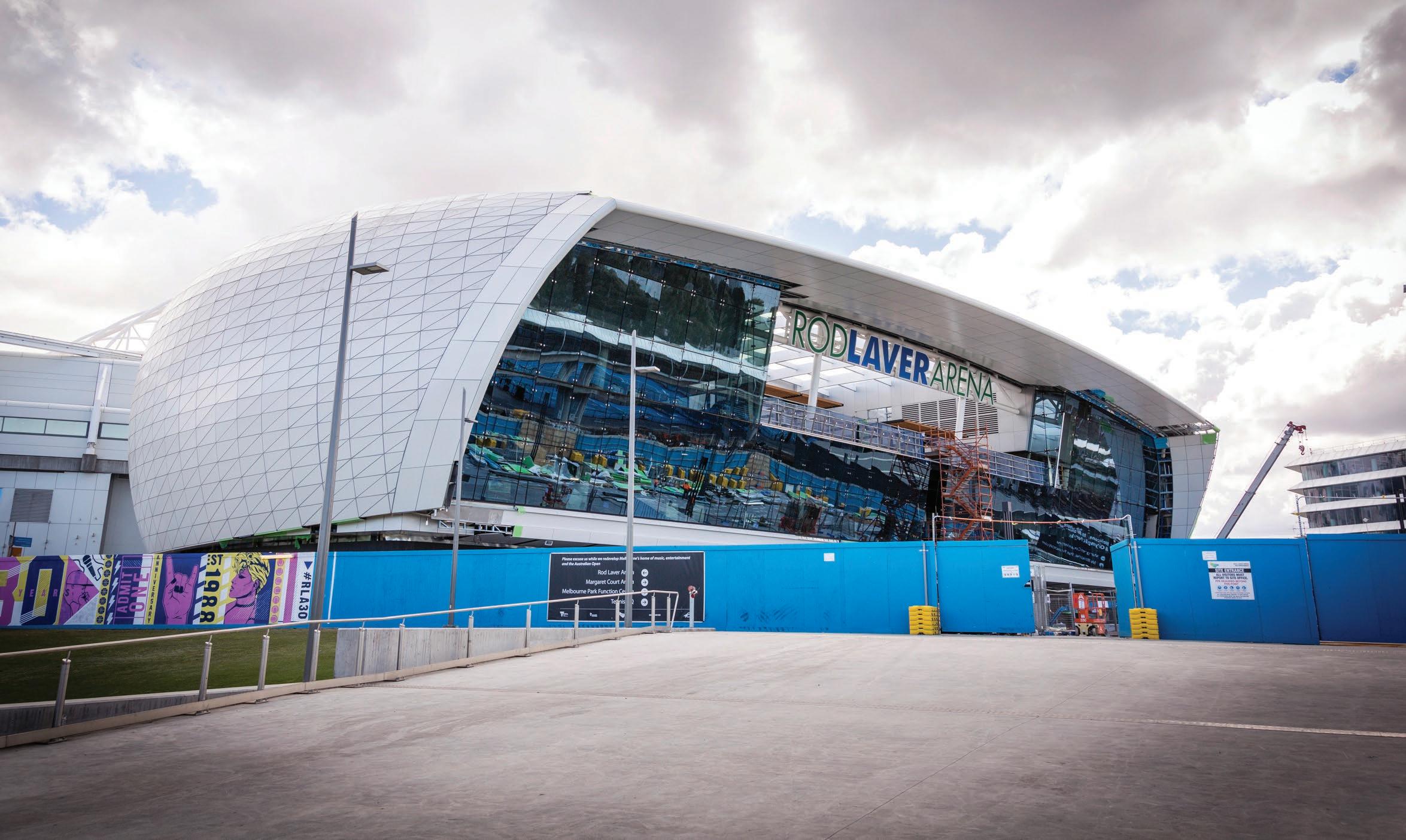
Seating nearly 15,000 people, Rod Laver Arena in Melbourne is one of Australia’s most high-profile sporting venues – the vibrant scene of Grand Slam tennis and major musical events. Having already worked with Lendlease on the redevelopment of Margaret Court Arena (completed in 2013), A.G. Coombs served as the mechanical services contractor for both new and existing infrastructure at Rod Laver Arena.
Improvements included an air conditioning system capable of zoning and adjusting air temperature in accordance with crowd levels, thereby reducing the amount of electricity needed to run fans and cooling equipment.
Completed in 2019, the multi-million-dollar redevelopment achieved LEED* (Leadership in Energy and Environmental Design) Gold certification.
Service provider: A.G. Coombs Projects Builder: Lendlease
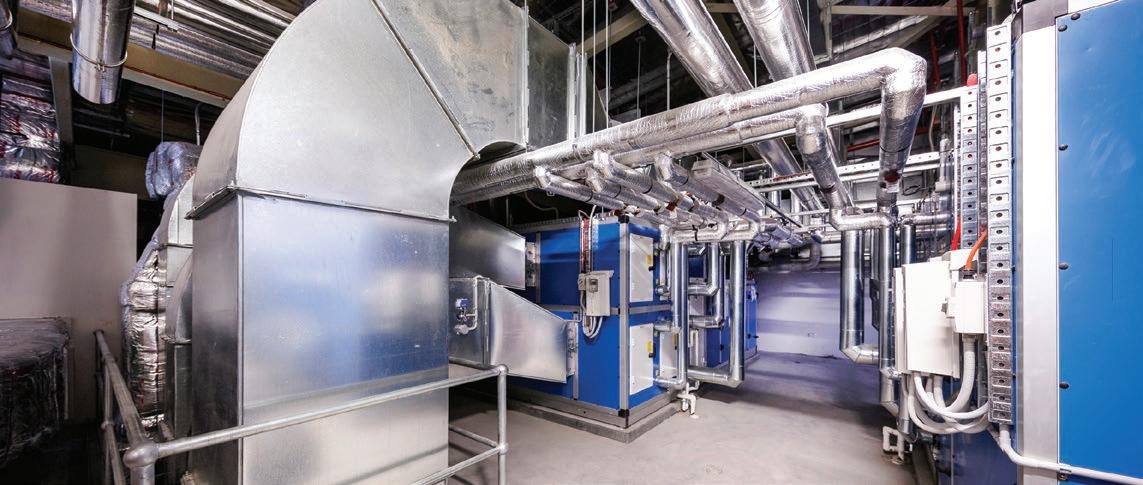
The sophisticated HVAC system satisfies a wide range of requirements, from the very low noise levels required for the Australian Open tennis matches through to concert events with cooling requirements for thousands of patrons.
Air is supplied to the arena from around 80 jet diffusers. A.G. Coombs constructed a 1:5 scale model of the diffuser arrays to confirm computer modelling and investigate throw patterns, noise and balancing issues before final installation.
Working at heights of over 16 metres to install very large unwieldy and heavy ductwork sections required specific materials-handling planning, specialist equipment and processes, and skilled on-site management.
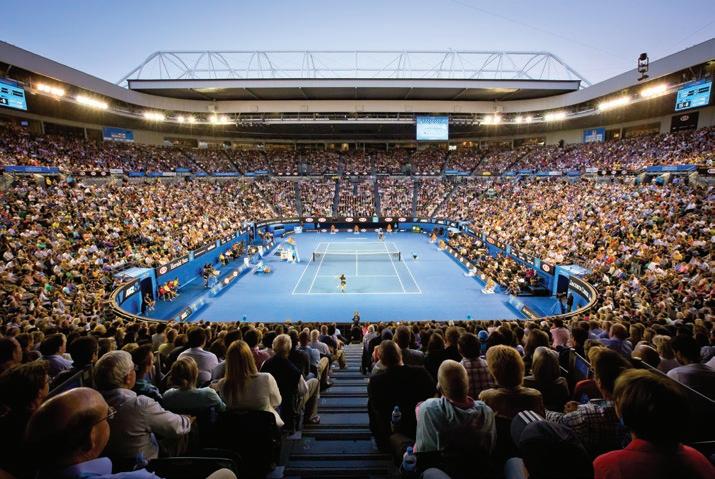
On its completion in 2018, 25 King Street in Brisbane became the world's largest and tallest engineered timber office building. Both cross-laminated timber (CLT) and glue-laminated timber (Glulum) were used in the Bates Smart designed building, which sits at the heart of the Brisbane Showgrounds redevelopment. CLT’s lowcarbon footprint is due to its production from sustainably managed forests.
As the mechanical services contractor, A.G. Coombs applied Building Information Modelling (BIM) to ensure high-level coordination of all building services and greater positioning accuracy throughout the project. The building went on to win almost every energy and environmental award in Australia – the accolades resulting in part from the innovative, energy-efficient services installed by A.G. Coombs.
Service provider: A.G. Coombs Projects Builder: Lendlease
No hot works were permitted on the site during the construction phase with no grinder cutting or welding. This required manual cutting and cold joining techniques and prefabrication where feasible.
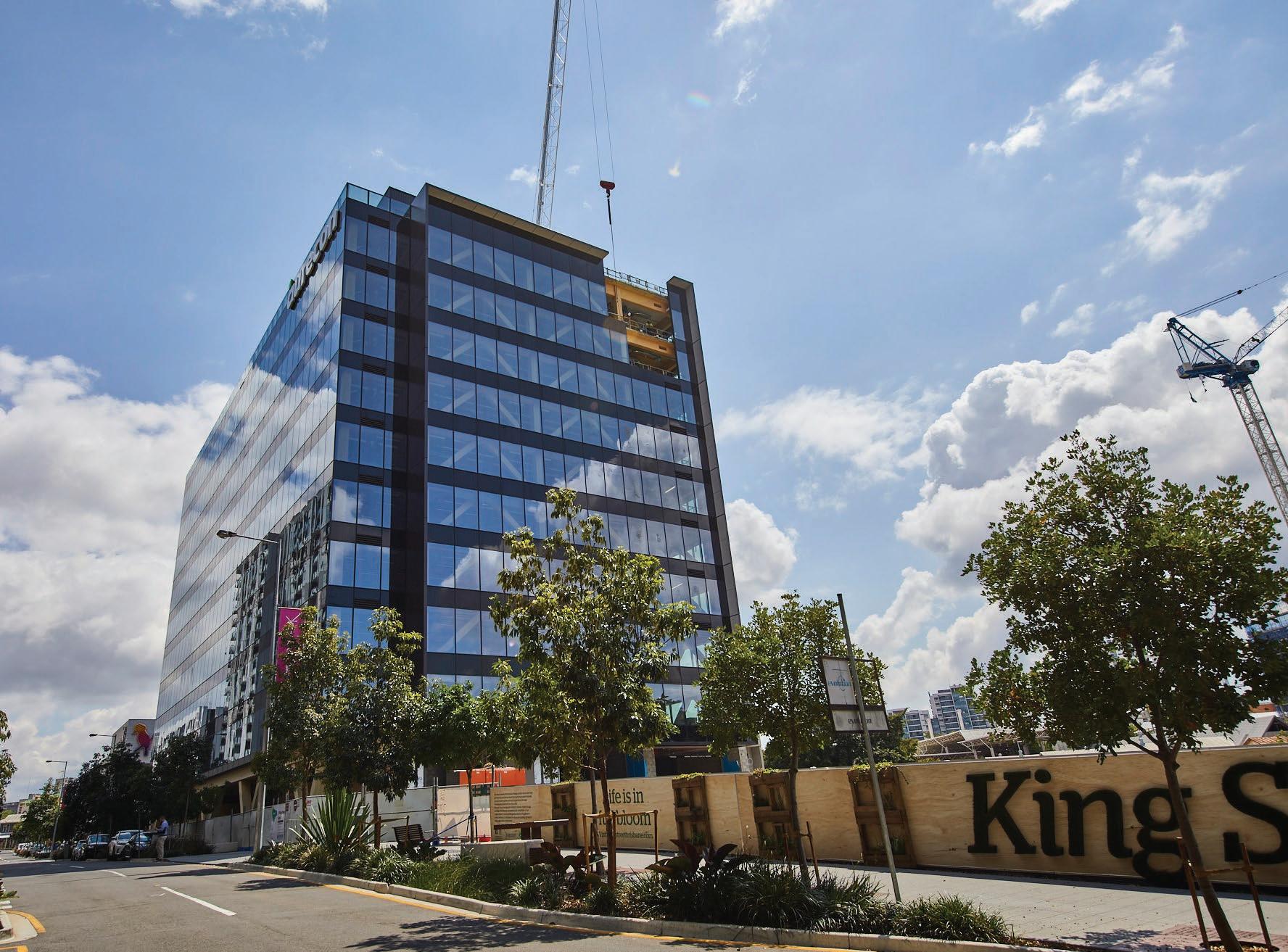
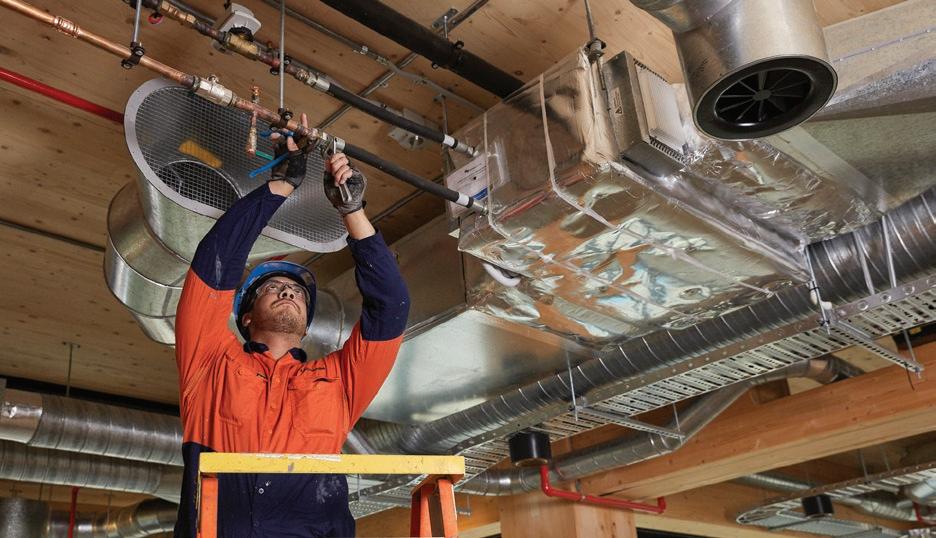
Due to the vibration response of the timber building, a specialist holistic approach to acoustics and vibration was required.
Mechanical and HVAC services, attached to exposed CLT soffits, are fully visible on the office floors, demanding a very high standard of installation and finish.
The HVAC and mechanical services were recognised with the 2022 AIRAH Awards for Excellence in Innovation and Excellence in Sustainability, and the 2022 Air Conditioning, Refrigeration & Building Services (ARBS) Award for Project Excellence.
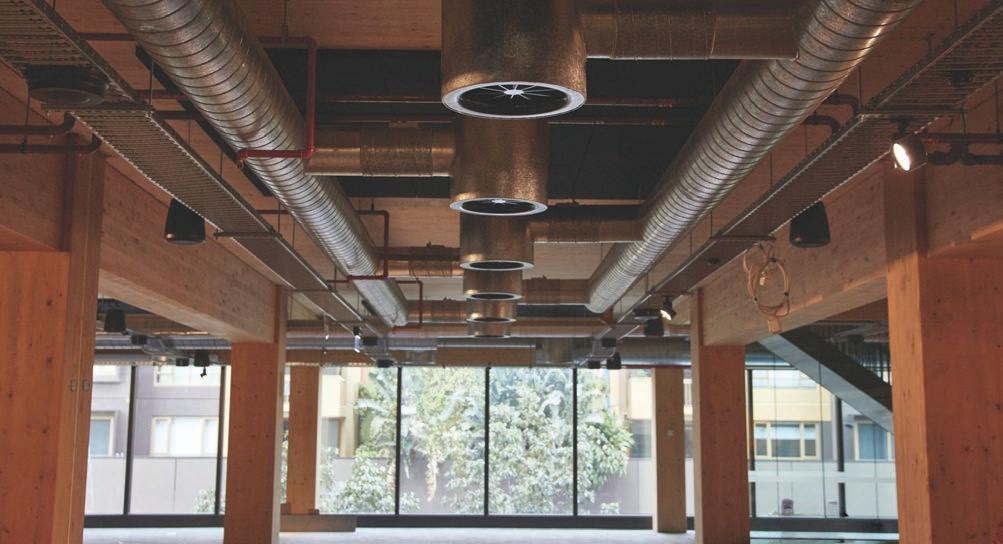
A.G. Coombs applied its expertise to the landmark Parramatta Square redevelopment – a transformational project 26 kilometres west of Sydney.
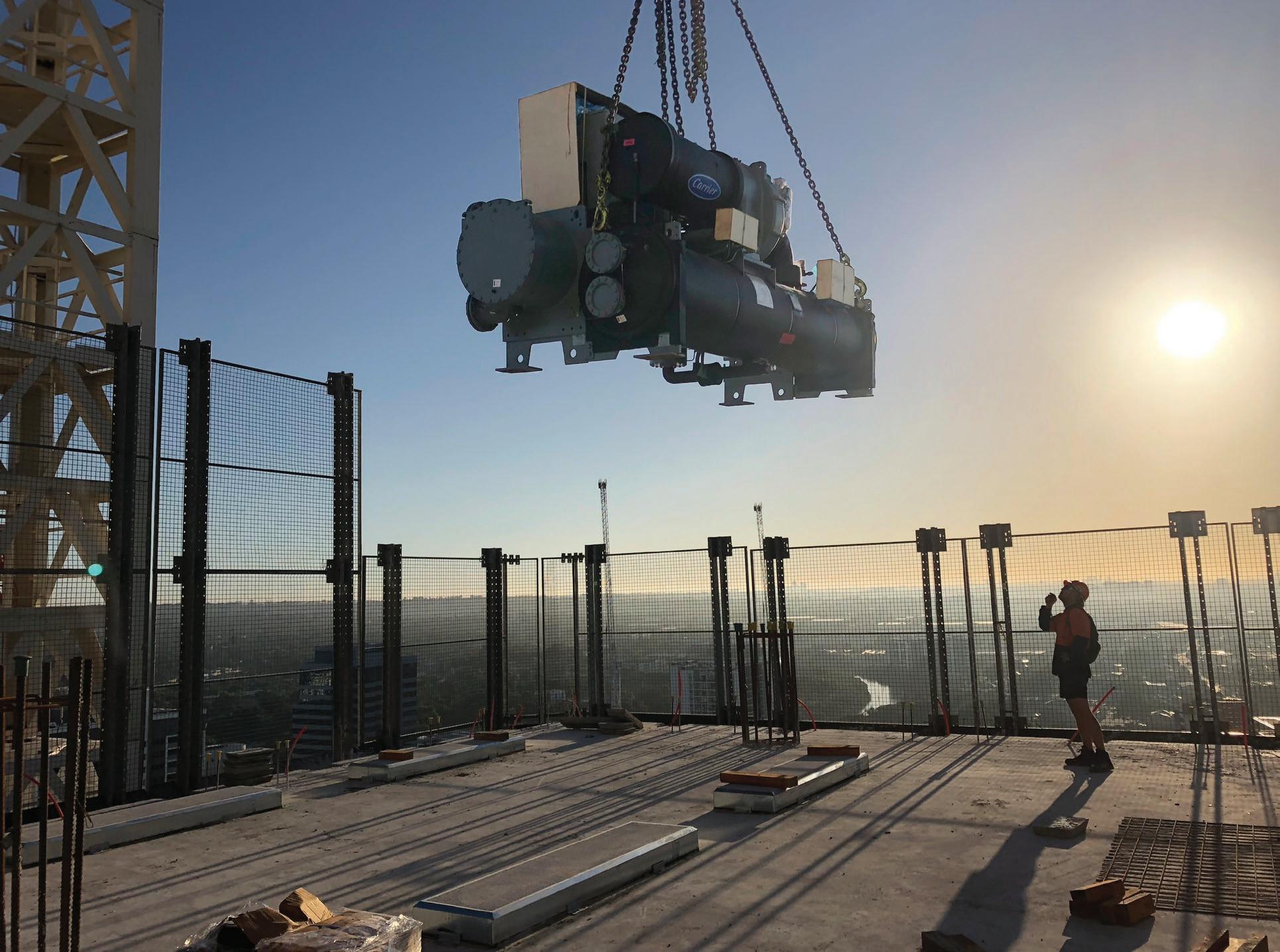
Walker Corporation’s $2.4 billion redevelopment of Parramatta Square injected new life into the suburb of Parramatta in Greater Western Sydney. At nearly 300,000 m2 it was one of Australia’s largest urban renewal projects.
Following its engagement as a full design and construct mechanical services contractor, A.G. Coombs brought 4 Parramatta Square’s thirtythree levels to life in 2019, followed by 3 Parramatta Square’s sixteenlevel tower in 2020. Both buildings offer Premium Grade office space, with 3 Parramatta Square featuring a stunning light-filled atrium.
Service provider: A.G. Coombs Projects
Builder: Built
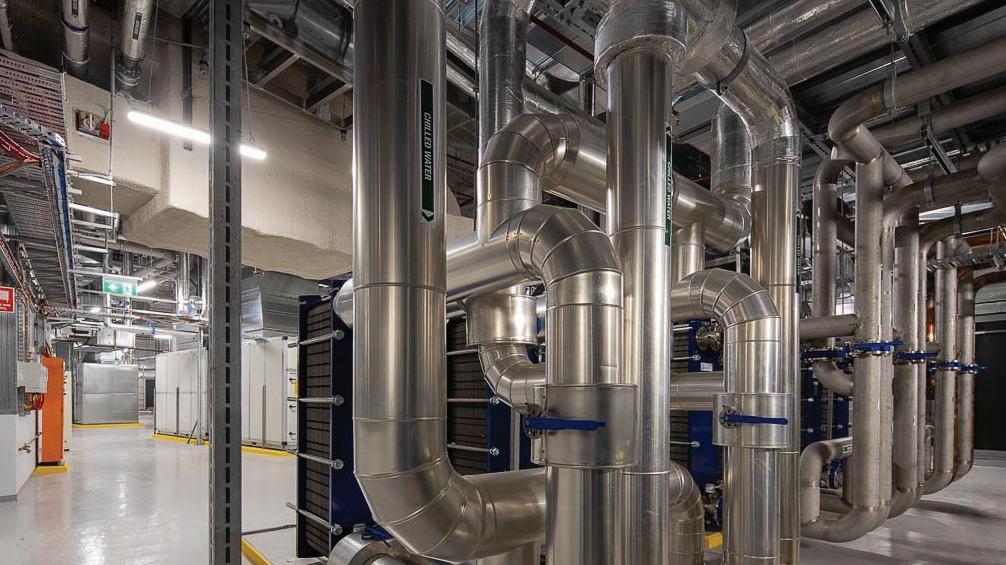
A.G. Coombs designed unique hybrid Passive Chilled Beam and Low Temperature VAV system significantly reduced ceiling head height requirements – enabling an additional floor to be added to the building.
The first buildings to use A.G. Coombs' innovative analytics instrumentation to support commissioning and ongoing operational performance.
Off-site prefabrication of hundreds of building services modules and sub-assemblies played an important role in the delivery to program.
Advanced design featuring high efficiency chillers, hybrid cooler plant and EC plug fans to achieve a 5 Star + 15% NABERS Energy base building rating.
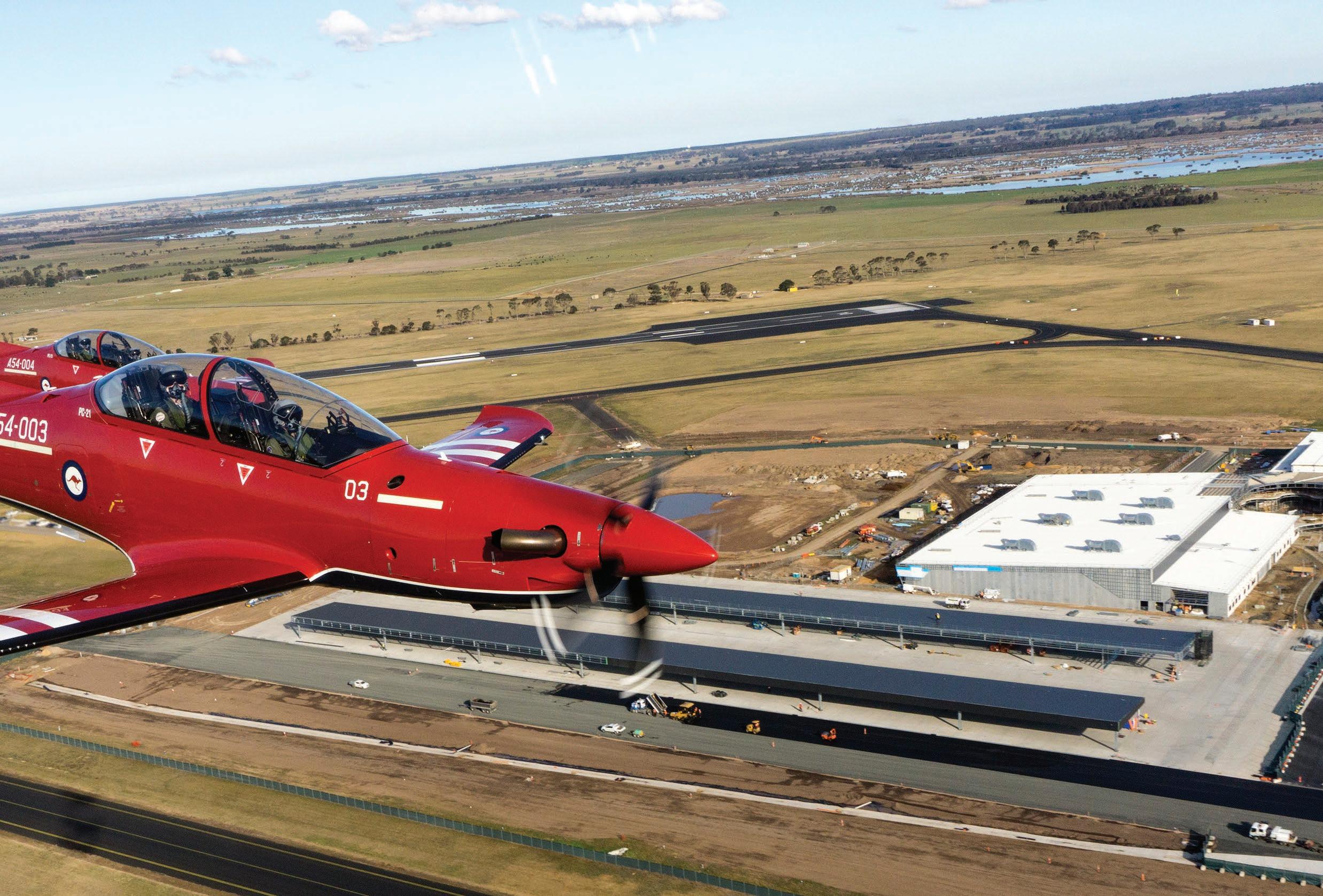
Alarms activate in-floor nozzles that pop up to disburse fire supression foam in a 360-degree pattern across the hangar floor. This cools the fire and coats any oil or fuel present to prevent the risk of combustion.
Overhead fire sprinklers and state-of-the-art flame detection devices support the foam fire suppression system.
Walker Fire Protection developed a detailed Cause and Effect Matrix during the design of the system to ensure it met the Department of Defence’s particular specifications.
Walker Fire Protection was appointed to design, install and commission fire protection systems for the new pilot training facilities at RAAF Base East Sale in Victoria.
The new training facility opened in 2019 and enhanced the Australian Defence Force’s capabilities to provide basic pilot training on PC-21 aircraft, the most advanced pilot training aircraft in the world at the time. The facility accommodates six flight simulators, twenty-eight aircraft shelters, five maintenance bays and enclosed storage for a further seventeen aircraft under almost 6,000 m² of hangar area.
As part of its brief, Walker Fire Protection installed the largest in-floor foam fire suppression system in Australia. A.G. Coombs Projects also assisted with the installation of pipework throughout the facility. Walker Fire Protection would go on to win the 2018 Fire Protection Association’s (FPA) Fire Protection Project of the Year for projects over one million dollars.
Service provider: Walker Fire Protection and A.G. Coombs Projects Builder: Laing O'Rourke Australia
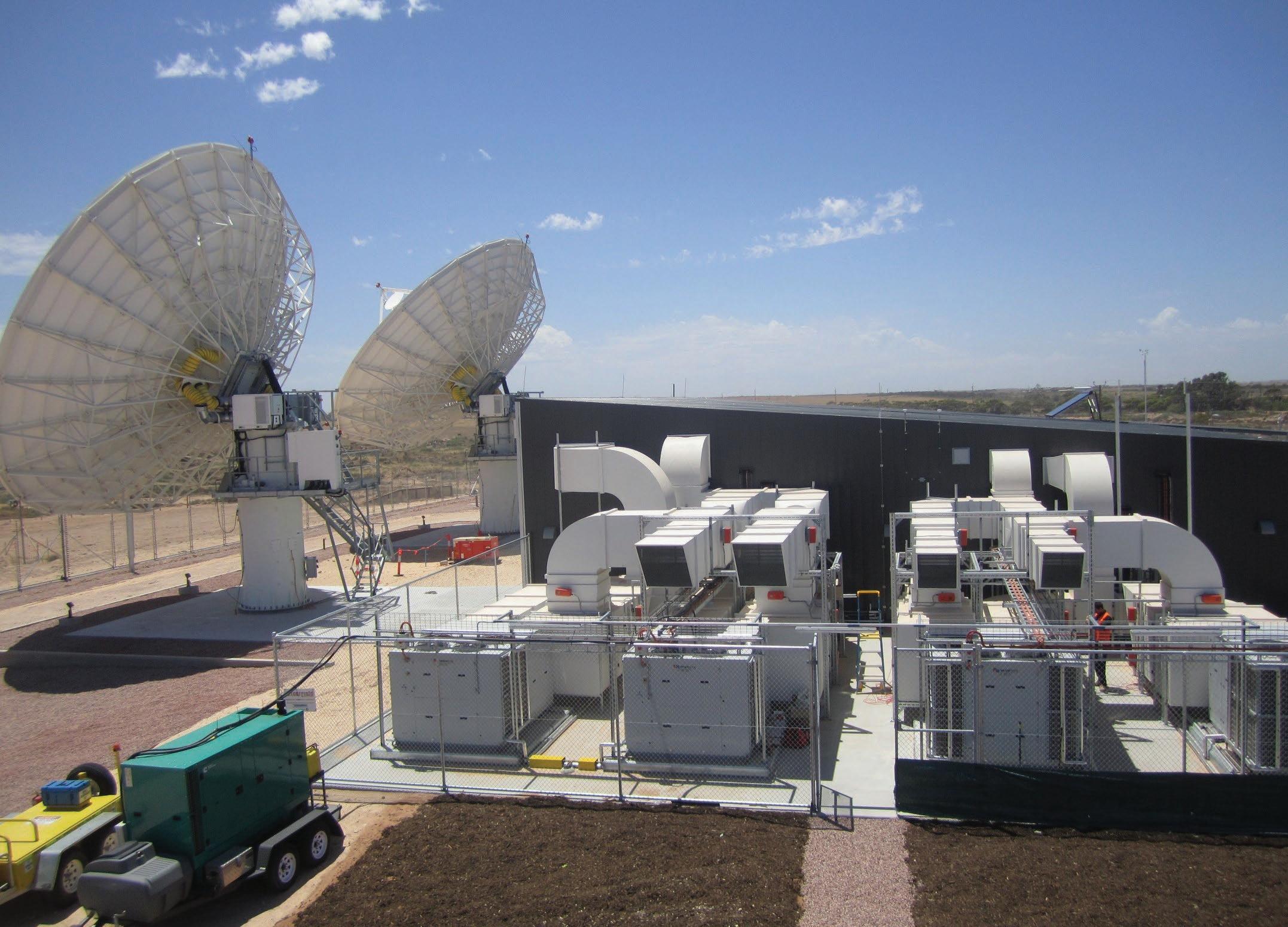
The construction of ten critical satellite ground stations in remote and rural Australia has provided faster broadband connectivity for people living and working in these areas. Cockram Corporation built six ground stations in New South Wales, Queensland and South Australia, while those in Western Australia were constructed by Perkins (WA) Pty. Ltd.
A.G. Coombs Projects delivered the HVAC services for the six Cockram-built sites, and Walker Fire Protection provided the fire detection, occupant warning and gaseous suppression systems at all ten sites. The project was completed in 2015.
Working in remote areas proved challenging logistically – particularly in places like Roma, Queensland, which is approximatively 480 kilometres by road east of Brisbane. A.G. Coombs’ expertise in delivering ‘mission critical’ facilities brought a high level of confidence to the project. Careful planning also ensured the successful delivery of systems and services across all remote locations.
Service provider: A.G. Coombs Projects and Walker Fire Protection Builder: Cockram Corporation and Perkins (WA) Pty. Ltd.
Each ground station has two 13.5 m diameter satellite dishes.
The majority of stations have on-ground solar farms, designed to offset the power consumption of the facilities.
The sites are similar to mission-critical data centre facilities, requiring highly resilient infrastructure to support the reliable operation of telecommunications equipment.
Smart use of kit-form design and prefabrication strategies were important in the efficient delivery of the fire protection systems, making for quicker, safer and smoother site installation.
This photo showing an empty Collins Street in Melbourne during a COVID-19 lockdown was taken around lunchtime, normally one of the busiest times of the day with bumper-to-bumper traffic and pedestrian-filled footpaths.

As an essential service, A.G. Coombs’ tradespeople and technicians were permitted to work on site during the COVID-19 pandemic.
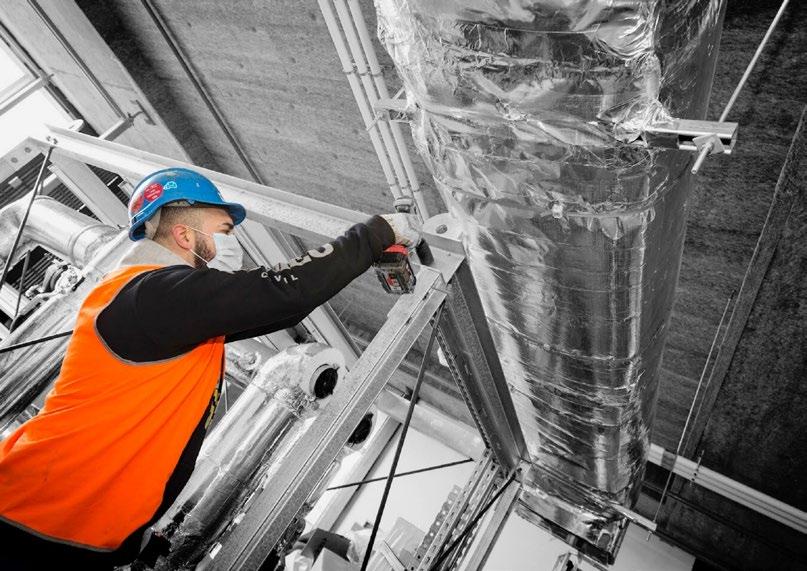
In 2020, the freedoms people normally enjoyed – particularly the freedom to travel, conduct business and socialise without restriction – were abruptly curtailed as a deadly coronavirus known as COVID-19 began spreading with alarming speed.
Within weeks of the World Health Organisation (WHO) declaring a pandemic, much of the world began shutting down. International borders closed and many cities became near ghost-towns as governments directed people to stay at home.
As pharmaceutical companies scrambled to fast-track a vaccine, people watched with uncertainty and fear as loved ones contracted the virus and the global death toll continued to rise. The upheaval throughout business and industry was on a scale not witnessed since the height of the Great Depression in 1932. Many businesses closed their doors – some for good – while employees left offices to work from home. Supply chains were severely disrupted with supermarket shelves emptying in a matter of hours after frenzied panic buying.
Lockdown, social distancing, self-isolation, close contact –these words and phrases soon became part of our everyday conversations.
Companies better equipped to handle a crisis of this magnitude were those that had already worked to develop a resilient and adaptable business – one underpinned by strong health and safety systems, good channels of communication and core values of teamwork and continuous improvement. Having spent years cementing these vital elements, the A.G. Coombs Group came together, almost instinctively, to navigate the shifting landscape of life under lockdown.
March 2020
The World Health Organisation declares COVID-19 a pandemic on 11 March. Australia closes its borders to all non-residents on 20 March.
October 2020
Richmond wins the Australian Football League (AFL) Grand Final in Brisbane. It was the first time in the 124-year history of the AFL that the final was played outside Victoria.
December 2020
On 8 December, Margaret Keenan from Coventry, England, is the first person in the world to receive a COVID-19 vaccine outside clinical trials.
January 2021
The words of the Australian national anthem, Advance Australia Fair, are changed from “For we are young and free” to “For we are one and free”.
July–September 2021
The 2020 Summer Olympic Games and 2020 Paralympic Games are held in Tokyo after being postponed due to the pandemic.
January 2022
Tennis player Ashleigh (Ash) Barty wins the Australian Open, becoming the first Australian woman since 1978 to win the title.
February 2022
Australia reopens its borders on 21 February.
A.G. Coombs held its corporate risk workshop at the end of February 2020. An annual event, the one-day workshop challenged staff to formulate responses to real and hypothetical emergencies. It could be a death or an accident in the company, or a natural disaster like the devastating bushfires that were still burning along Australia’s eastern seaboard that year. These exercises were designed to test the company’s readiness to respond in an emergency.
Despite there being no template for dealing with a global health crisis, discussions inevitably turned to the spread of a novel coronavirus originating in China. The virus had been dominating the news headlines since December 2019 when people in Wuhan, the capital of Hubei province in central China, began suffering from a pneumonia-like illness that had not responded well to standard medical treatments.
The World Health Organisation (WHO) had already published information on the “2019 Novel Coronavirus” outbreak, saying that it was caused by the SARS-CoV-2 virus. Symptoms included fever, shortness of breath, and in many cases loss of taste and smell. Worryingly, there was talk of human-to-human transmission. By mid-February, the disease had an official name: COVID-19 – the abbreviation of Coronavirus Disease 2019.

At the time of the A.G. Coombs Risk Workshop, the entire city of Wuhan was in lockdown. There were also growing reports of the virus in other countries. Managing Director Russell Telford had already been in touch with his colleagues in the International Peer Group. Their feedback was concerning. COVID-19 had been detected in the United Kingdom and the United States, with the latter having already declared a public health emergency. Worldwide deaths from COVID-19 (around 1,000 fatalities by 10 February 2020) now exceeded the SARS-CoV-1 outbreak of 2002–2003.
By the end of the workshop, Russell and the executive team deemed the situation serious enough to establish a regular working group to monitor the virus and assess its
potential impact on the company’s operations. Formed on 28 February 2020, the Extended Management Group comprised senior managers and key personnel from across the A.G. Coombs Group.
Although A.G. Coombs already had well-tested health and safety procedures in place, everyone agreed that it was important not to be complacent. “The plan at this stage was to meet fortnightly,” said Russell, recalling how they started talking about the steps they would need to take if things became serious. “We wanted to be prepared,” he pointed out. This quick mobilisation of personnel served the company well, because the proposed fortnightly schedule would soon be upended as the situation began changing almost daily.
Although bordered on all sides by sea, Australia was not immune to the virus. The country’s first case of COVID-19 was identified on 25 January 2020, when a man returning from Wuhan tested positive to the virus. The first cases of community transmission in Australia – meaning the virus had been acquired locally instead of being ‘imported’ from overseas – were reported on 2 March 2020. But things were about to get worse when more coronavirus cases arrived on the Ruby Princess cruise ship. Despite reports of people feeling unwell, passengers were allowed to disembark in Sydney on 8 March.
On 11 March 2020, the WHO officially declared COVID-19 a pandemic. Around the world, several hundred confirmed cases would soon become thousands, then tens of thousands, and, before long, hospitals were overwhelmed with gravely ill patients.
All these developments galvanised A.G. Coombs’ management team, which began meeting daily in response to a raft of federal and state government health orders.


Even before the WHO declaration, the Australian Government had started operating on the understanding that the virus was a pandemic. In Victoria, a state of emergency was declared on 16 March 2020.
As everyone tried to grapple with the situation, A.G. Coombs’ managers identified the key areas requiring immediate attention. Crucially, they needed to review the company’s information technology infrastructure and secure their supply chain as best they could. They also needed to work out the best way to support valued clients and their clients’ assets.
Front of mind, however, was the safety and wellbeing of the company’s employees. “Staff wellbeing was paramount,” said then A.G. Coombs Non-Executive Chair, Clive Weeks AO.
Four days after the state of emergency was declared, A.G. Coombs’ Extended Management Group met and identified nearly fifty urgent items to be addressed. These included drafting social distancing memos, reviewing office cleaning regimes and staggering work schedules to minimise contact between employees in the workplace. Clients also had to be updated on the status of their facilities, and a centralised register created for their enquiries.
“We pulled all our senior executives together into a central command and control framework,” said Strategic Development Director Bryon Price, who chaired the meetings. “We needed to control what we could, and we needed to be aware of what we couldn’t.”
The first meeting under this new framework took place on 20 March, the day Australia closed its borders to all non-residents. Just three days later, a nation-wide shutdown of pubs, clubs, restaurants and gyms left thousands of workers jobless.
Managing the situation was by no means easy and would only get harder as state governments began issuing a raft of directives to stay apart or stay at home. The difficulties would be exacerbated by the fact that A.G. Coombs was headquartered in Melbourne, the place that would later claim the dubious title of the most locked-down city in the world.
Everyone agreed that communication would be the key to coping with these unprecedented events. The language needed to be clear, the information needed to be comprehensive, and the delivery needed to be frequent. Indeed, the first COVID-era memo to A.G. Coombs personnel had gone out the previous day at 4:00 p.m. on 19 March 2020:
As the situation with COVID-19 continues to change, the A.G. Coombs Group of Companies has implemented a number of well-established strategies to protect the health and safety of our people, clients and our community … Internally, we have set up a cross-functional Management Team to ensure that the implementation of these directives is done swiftly, and with as little disruption to our employees, clients and partners.


In the same memo, the company announced its intention to suspend all travel domestically and internationally, while staff were instructed to limit movement between work sites.
This pledge to communicate saw A.G. Coombs email no fewer than 148 memos to its employees over the next two years. The memos clearly explained the government health orders. They also outlined what the company was doing to keep people safe and what it expected of its employees. There was information on the need for hand hygiene and how to wear a mask correctly, as well as guidance on social distancing and the importance of self-isolating if you were a close contact of a confirmed case of COVID-19. The approach at this early stage was measured and cautious.
Kim Hesline, Executive Manager Employee Services, recalled the intensity of the management sessions where everyone pooled their experience and skills to determine the best way forward. “The leadership messages coming down from the top were calming. It was a case of let’s work out what needs to be done and the timeframe in which we need to do it, and then communicate all our decisions to employees with as much information as we could.”
Bryon Price’s archived minutes from these sessions revealed the multiple issues and challenges that arose over the course of the pandemic. These were addressed under five enduring agenda items: personnel, business infrastructure, supply chain, business development, and, importantly, lessons learned.
Additionally, A.G. Coombs held virtual ‘town halls’ (public meetings) for both staff and clients, explaining how the company would be operating as an essential service and the measures it would be taking to stay viable. With the situation changing from state to state, A.G. Coombs sent out targeted memos to its interstate offices addressing the rule changes in Sydney, Brisbane and Canberra. Some managers worried that they might be over-communicating; few on the receiving end ever felt it was too much.
A.G. Coombs Work Health and Safety Manager Luke Snell realised early on that if the company’s field workers were to be given access to buildings and worksites, they needed to have the appropriate safety gear. “We started ordering surgical masks, sanitiser and personal protective equipment (PPE) kits for both site workers and office staff. We managed to get an early shipment of masks, only for the delivery van [driver] to unload and then immediately reload everything and drive off because of an urgent request from the government. We knew then that things were very serious.”
As case numbers multiplied, the government health orders became more stringent. Thankfully, due to its sea-locked border, Australia’s COVID numbers never climbed to the traumatising peaks of those seen in the United States, South America, Europe and Asia. But the fact that they were increasing was alarming. The situation was so dire that Queensland closed its state borders for the first time in 100 years.
“With an economic downturn it takes a while for negative impacts to flow through,” said Russell Telford. “But with COVID, the effects were felt immediately.”
The challenge then would be to minimise the effects of COVID-19 on the company. “We are in the problem-solving business,” said Gareth Whitfield, who was then General Manager Service. “There are always situations to manage whether projects or people. Our main goal was to keep the doors open and keep people safe.”
“A lot of our site workers were direct employees and not subcontractors or loan labour,” explained Luke Snell.
“When all the lockdowns began, they didn’t know whether they had a job. They had mortgages and bills to pay. We were very mindful of that.”
A.G. Coombs needed to pivot – something it would continue to do well into 2021, quite often overnight as state governments continued to revise their respective health orders. Significantly, the company’s field workforce, including Service technicians, were allowed to keep working. Indeed, a rapid refresh of the Essential Services Act showed that building services, such as those provided by A.G. Coombs, were required under state and territory legislation.
These services included air purification for hospitals and laboratories, maintenance of mechanical services in data centres and telecommunication facilities, and the regular inspection of fire and smoke control systems to ensure the safe operation of a building in the event of a fire. Cooling tower systems also required ongoing inspection and maintenance to control the microbiological growth that could pose further health risks. All these services were crucial to the functionality of a building and the wellbeing of its occupants.
Russell Telford admitted to being concerned about the optics of having one’s workforce moving around cities where extensive restrictions applied. Despite A.G. Coombs being deemed an essential service, the optics were important, particularly when many businesses had closed. On further review, the consensus was that A.G. Coombs Service technicians often travelled and worked alone or in pairs, so maintenance work could be carried out in full compliance with COVID safety and social distancing guidelines. Moreover, they would mainly be working in nearempty buildings. The optics should not pose a problem.
The first lockdown in Victoria came into effect on 31 March 2020. It was just twelve days after the first COVID-19 memo to all A.G. Coombs employees. The lockdown rules (which would extend into the middle of May) required all nonessential businesses to close, with cafés and restaurants limited to takeaway orders, and gatherings of more than two people banned. Home learning was mandated for all schoolchildren.
Everyone now learned the four reasons to leave home: for food and supplies, for care and caregiving, for exercise, and for work and study if these could not be done from home. Those who could work remotely were strongly encouraged to do so.
Fear was now building in the community and this had to be carefully managed. Once again, the company’s regular communication to employees helped distil the constant stream of public health orders into manageable bites of information. The company’s messaging was detailed when it needed to be, calming when required, but also clear in terms of who could work remotely and who would be required to take leave or accrued RDOs (rostered days off) if their work could not be done from home. There were also clear instructions on when employees would be expected to return to the office. Now, more than ever, A.G. Coombs’ core values became a touchstone for the teamwork and caring that would pull them through these challenging times.
Work Health and Safety Manager Luke Snell was responsible for liaising with site workers about the company’s COVID-safe procedures.
[Photographed prior to the COVID-19 pandemic.]
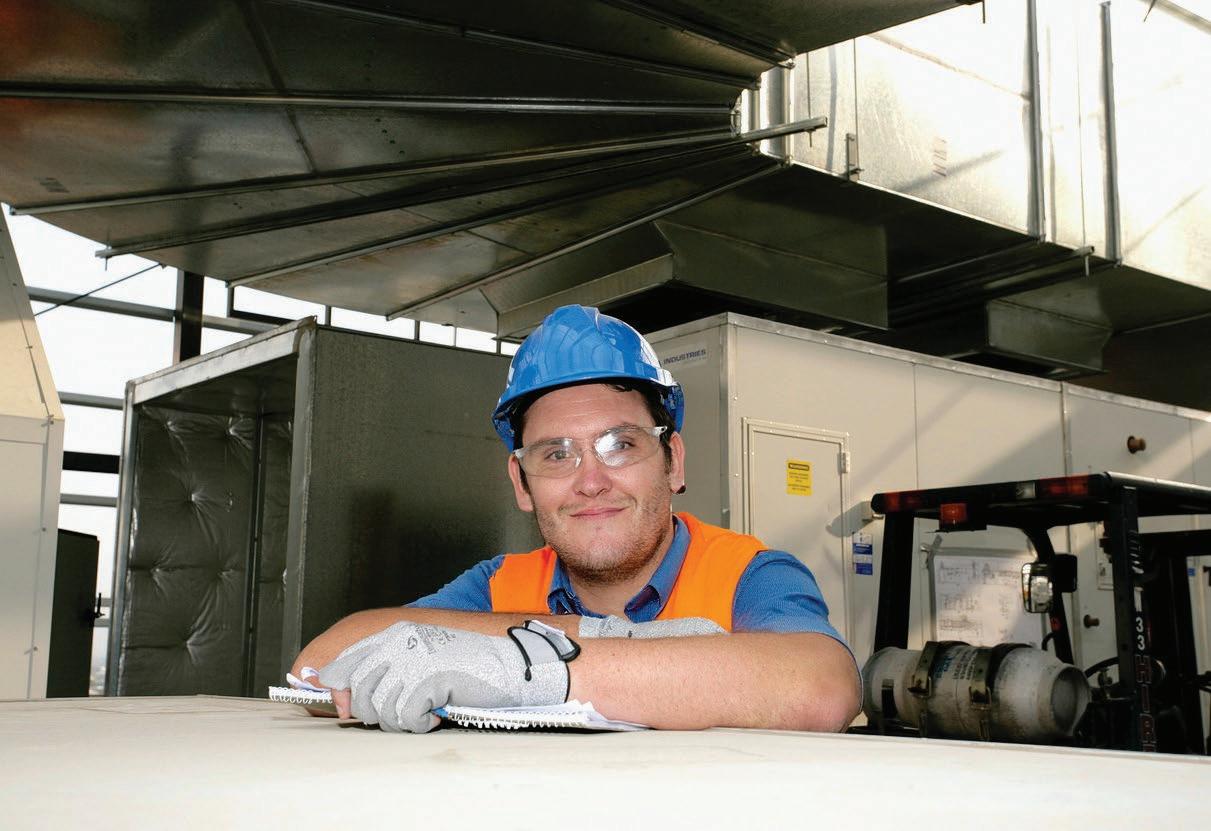
Kim Hesline and her team oversaw the COVID work-fromhome arrangements. To ensure a clear understanding of how things would unfold, special employment agreements known as Alternate and Flexible Productive Working Arrangements (AFPWAs) had to be signed by each employee. Already available to people in special circumstances, AFPWAs would now be used to manage work-from-home arrangements for A.G. Coombs office staff nationally.
These individual agreements were for a specified time only, so that when they expired, people would be required to return to the office. In the event of another lockdown, a new agreement would need to be negotiated. The exodus of staff from A.G. Coombs’ offices resulted in computers, monitors and ergonomic office chairs being taken home. All these items had to be recorded and returned at the appropriate time.
Thankfully, there were no concerns about whether the company’s information technology (IT) infrastructure could cope with a significant number of people working from home on their computers. By the first lockdown in March 2020, not only had the IT network been tested, it had also been stress tested.
Then Group Information Technology Manager Robert Ukovic, admitted to being mildly apprehensive during the stress test of the IT infrastructure. The date chosen was 12 March and all personnel with laptop computers had been asked to log
on to the Virtual Private Network (VPN) between 8:00 p.m. and 9:00 p.m. so that the IT team could assess the performance of the infrastructure under significant load.
“I remember the number of remote users steadily increasing over the hour until it peaked at 254 people on a 100 Mbps link,” said Robert.
Even before the peak had been reached, it was clear everything would be fine. The strong performance of the network under considerable stress allowed him to confirm that the IT infrastructure would be able to cope if employees were required to work from home. However, leaving nothing to chance, decisions were made to improve the network’s performance by increasing the link at head office in Moorabbin and establishing a second link at the back-up data centre in Port Melbourne, which all other A.G. Coombs offices could access.
Having the right infrastructure in place was not simply a stroke of good luck. Significant, indeed prescient, investments to upgrade IT capacity several years earlier had paid off, enabling A.G. Coombs to sustain large-scale remote working during the pandemic.
At the time, no one could have foreseen just how extensively the IT infrastructure would be tested in the future. The fact that everything was in place, and any system glitches resolved, provided a strong level of assurance to the company at a time when there was great uncertainty in the wider community.
An accountant and former CFO with IT qualifications, Robert Ukovic was not your typical IT ‘geek’. His practical nature appealed to Russell Telford, who interviewed him for the position of Group Information Technology Manager in 2006. “I believe in applying technology to solve a business problem,” said Robert, who was later promoted to Executive Manager.
A few years after he joined the company, A.G. Coombs began expanding interstate, while more work was being done in the digital space with Building Information Modelling (BIM). By then a wide area network (WAN) had been installed – allowing interstate offices to be easily linked – along with a VPN that would allow secure access to core information from anywhere in the world, day or night.
The investment in technical upgrades supported the company’s growth up the eastern seaboard and facilitated the rollout of mobile phones and technology to field personnel. These upgrades also enabled faster connectivity from project and customer sites.
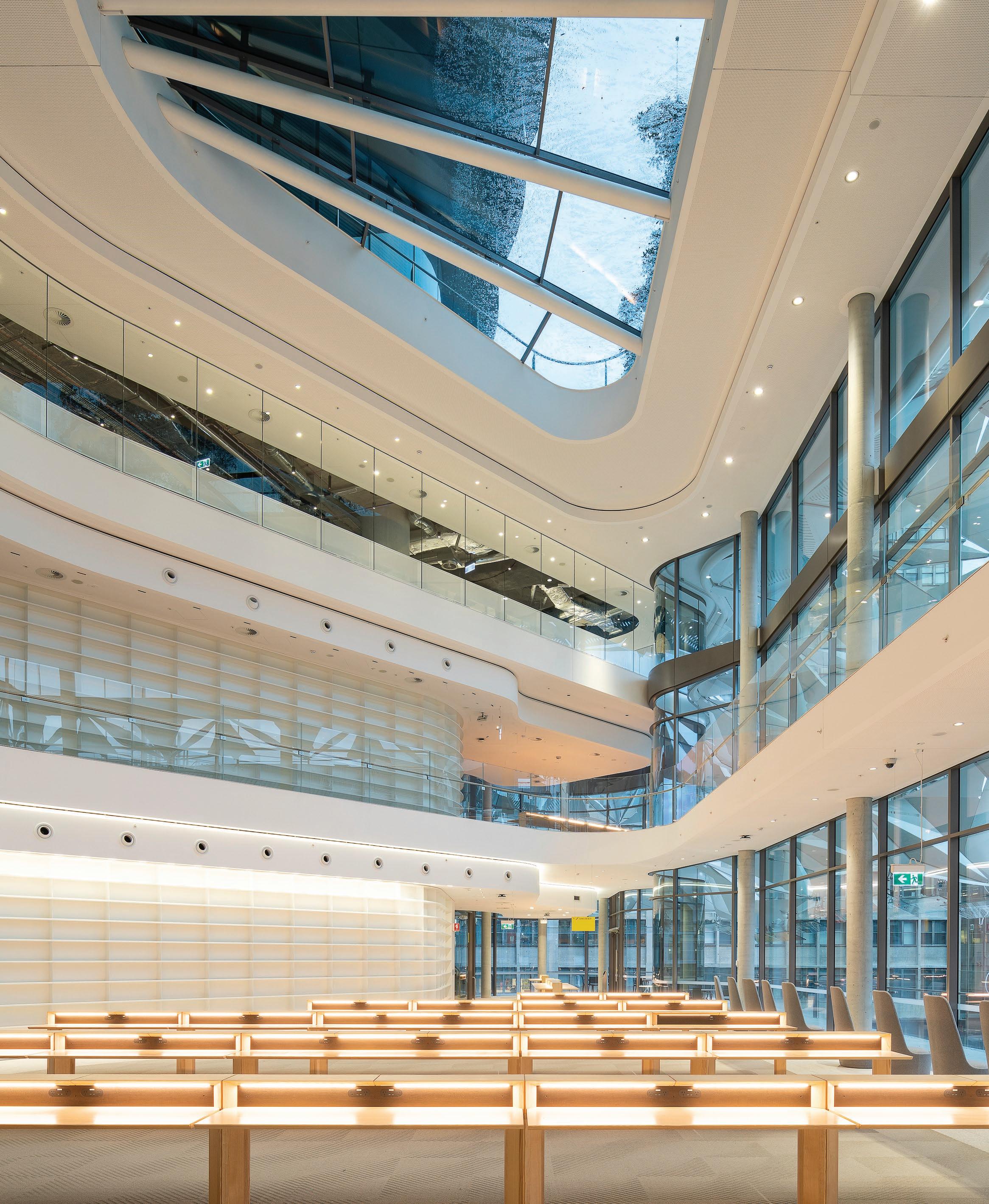
A.G. Coombs Advisory, in its role as Independent Commissioning Agent (ICA), oversaw the commissioning of UTS Central in Sydney during the first year of the COVID-19 pandemic. The building is home to the university’s law faculty.
As an essential service, the company was permitted to work on site in accordance with strict health and safety protocols. A.G. Coombs Projects also designed and installed the mechanical services at UTS Central (see further p. 218).
A.G. Coombs was one of thousands of companies affected by the work-from-home orders. It was also one of the rare few that fully appreciated the implications of shutting down a building indefinitely.
Faced with the sudden departure of staff, many businesses in Australia believed they could simply vacate the premises and wait until everything returned to normal. The general view was that if there was no one working in the office, then there was no need to maintain the building’s services.
“Some building operators assumed they could switch off the lights and air conditioning system and go home,” said Strategic Development Director Bryon Price, recounting how maintenance call-outs reduced dramatically, while asset upgrades were pushed out until further notice. “That’s when we started sending out COVID-19 focused Advisory Notes, at first explaining the serious implications of shutting down a building for a protracted time.”
As A.G. Coombs discovered, few property owners were aware of the serious consequences of shutting down cooling tower systems and other water-based systems for a protracted period. Nor were they fully aware of the regulatory requirements for shutting down a building or placing it in ‘hibernation’. For example, while systems were non-operational, occupancy of a building may not be permitted for health and safety reasons. The fire brigade also needed to be notified when the fire services on site were decommissioned.
Moreover, if a building is closed indefinitely, it needs to be done correctly, because poorly shut-down systems can have all manner of problems when restarted including corrosion, mould and pest infestation to name a few. The cost of repairs resulting from improperly shut-down building systems would therefore outweigh any advantages of shutting down in the first place.
Crucially, A.G. Coombs took the lead in keeping property owners informed about what to do during periods of low building occupancy. The Advisory Notes it published during the COVID pandemic addressed a range of issues and concerns including the regulatory protocols on the operation of cooling towers and the insurance implications if the maintenance of fire services was discontinued. They also offered advice for minimising energy consumption.
After reading the Advisory Notes, property owners began reaching out to A.G. Coombs, seeking the appropriate maintenance for their vacant buildings. But while they were now keen to have a Service technician carry out this maintenance, they were understandably wary of people entering their buildings, as potentially anyone could have the virus. To address their concerns, site-based check-ins and daily questionnaires were introduced to ascertain if Service technicians were feeling unwell or a close contact of someone with COVID.
Once everyone became familiar with the new procedures, A.G. Coombs began highlighting work that could be carried out during the pandemic. With low-occupancy levels in many commercial facilities, it was an opportune time to work on more substantial upgrades and refits. Clients proved supportive and, after a while, they too began identifying projects that could be tackled more effectively when the buildings were practically empty.
It would be fair to say that the Advisory Notes issued by A.G. Coombs during the pandemic helped many building owners, facility managers and tenants navigate the difficult months of COVID lockdown by educating them on the measures that needed to be taken to keep their properties functioning safely.
Out of all the COVID Advisory Notes issued by A.G. Coombs, it was the first one that immediately caught everyone’s attention. Titled ‘HVAC and COVID-19’ it explained what happens when an infected person coughs or sneezes and large droplets of fluid are discharged into the air. It then went on to say:
In some instances, some of the fluid can evaporate and the large droplets can transform into smaller particles called droplet nuclei and these can remain suspended in air … for hours and therefore be entrained into HVAC systems.
The Advisory Note also explained how properly maintained HVAC systems could lessen the spread of virally infected droplets. Issued in March 2020, it became the most widely read Advisory Note, downloaded more than 180,000 times worldwide over ten days. It also provided one of the first ever references to airborne (aerosol) transmission as a potential means of transmission.
Doctors and scientists had been suggesting for some time that the virus was transmitted primarily through the air and not simply by people touching contaminated surfaces. Yet it took a while for the World Health Organisation (WHO) to formally acknowledge this.
Eventually, the WHO released a report saying that the virus could be spread “when infectious particles that pass through the air are inhaled at short range” – something known as “short-range aerosol or short-range airborne transmission”.
The report went on to say that the virus could spread in “poorly ventilated and/or crowded indoor settings” where people tended to spend longer periods of time.*
This acknowledgement confirmed, at the highest level,
A.G. Coombs’ observations of how the virus could be spreading. “I believe we were one of the first [in the world] to come out in a very public and formal way and say that the virus was being spread by aerosol transmission,” Bryon noted.
Another Advisory Note – ‘Modifying HVAC Systems to Reduce SARS-CoV-2 Transmission’ – was equally significant because it set out crucial steps to help reduce aerosol transmission of the virus. At a time when a lot of commentary regarding COVID-19 was driven by fear and frustration, the Advisory Notes sought to provide considered practical information. The overall aim was to identify issues of concern and keep people focused on resolving them.
“We claim we’re leaders in the industry,” explained Bryon. “So we needed to act like leaders.”
A.G. Coombs’ nine Advisory Notes on COVID-19 were recognised in the 2021 FM Industry Awards for Excellence in the category of ‘Excellence in Management of a Pandemic’.
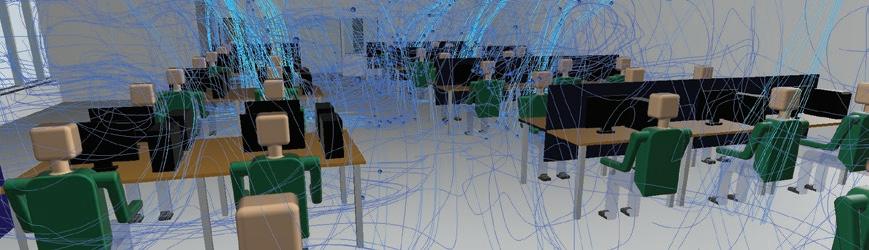
Aerosol transmission has emerged as a viable COVID-19 infection mechanism - very small particles carrying the virus –emitted by infected people breathing – hanging in the air possibly for hours - being pushed around by air flows in rooms - potentially being drawn into recirculating HVAC systems – possibly being reintroduced into occupied areas. How can HVAC systems be modified to reduce the likelihood of SARS-CoV-2 virus transmission?
The primary objectives are to dilute potential viral aerosol concentrations and move these
In deciding what to do it is important to think about the infection mechanism, what is known and what is not yet certain.
+ There is still much to discover and understand about aerosol transmission of SARS-CoV-2.
+ There is not yet a clear and accepted method for measuring the SARS-CoV-2.
+ Every building and its HVAC system is different, both in its design operational state (for an explanation of typical HVAC system operation and potential viral airborne transmission refer Advisory Note; HVAC and COVID-19). There are things that can be done with commercial built-up HVAC systems in both the base building system and in tenancy fit outs that will improve their role in mitigating the transmission of the virus. In this it is also important to remember that anything done with the HVAC system to provide a healthier indoor environment is generally a positive outcome for occupants.
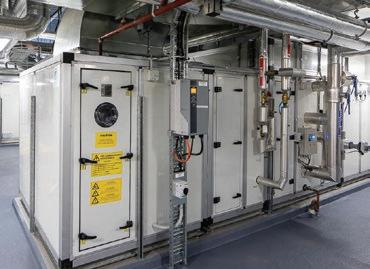
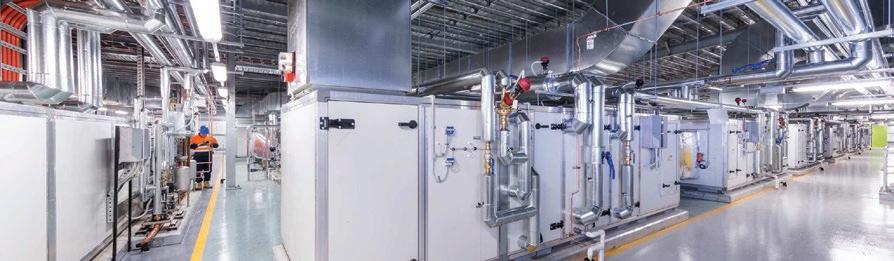
There is considerable interest in the role that HVAC may play in the transmission of COVID-19. This Advisory Note provides an overview on viral transmission, how HVAC systems work, and the practical HVAC operational measures that can be considered along with possible design changes to reduce the likelihood of the virus spreading.
Coronaviruses are a family of viruses that can cause illness to humans and animals. A new coronavirus known as COVID-19 was first reported on 31 December 2019 in Wuhan City in China.
Symptoms of the virus can range from mild illness to pneumonia. People with COVID-19 may experience fever, flu-like symptoms such as coughing, sore throat, fatigue and shortness of breath.
The journey that a virally infected droplet would experience to arrive back in an occupied space would typically include extended ducted air pathways, multiple changes in direction and air velocity, and multiple impacting surfaces including air filters, fans, dampers and grilles. There is a good likelihood that a particle would impact, entrain and dry on a surface. Whilst published research on healthcare ventilation systems and scenarios suggests that the transmission of droplets containing viral material is theoretically possible in these situations, it is thought to be less likely in a well-designed and properly maintained typical HVAC system in a public setting.
At the time of writing the transmission mechanisms are not fully understood. It is believed that the virus can be transmitted from personto-person, most likely through close contact with an infectious person, or contact with droplets of fluid from an infected person’s cough or sneeze. It is also believed that transmission can occur by touching surfaces that have droplets from an infected person, and then touching the mouth or face. It is believed that the virus may survive for up to 9 days on some surfaces in the right conditions.
When a person infected with an illness coughs or sneezes, pathogens can be encapsulated within droplets of fluid and discharged into the air. Different illnesses are known to result in differing droplet sizes. It is not yet certain what size droplets are produced by people infected with COVID-19.
The A.G. Coombs Advisory Note ‘HVAC and COVID-19’ about the aerosol transmission of COVID-19 was downloaded more than 180,000 times over ten days. This Advisory Note was syndicated by a number of industry news feeds, which multiplied the reach.
180,000
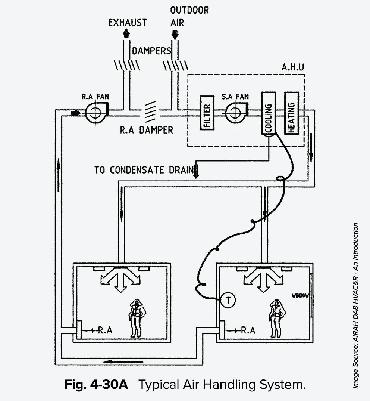
It is known that large droplets (>60 µm) normally are too large to remain suspended in the air and usually fall and land on surfaces. In some instances, some of the fluid can evaporate and the large droplets can transform into smaller particles called droplet nuclei and these can remain suspended in air. Droplet nuclei (2.5 to 10 µm) are believed to be able to remain suspended in air for hours and therefore be entrained into HVAC systems.
HVAC Systems Explained
Heating Ventilating and Air Conditioning (HVAC) systems exist in many formats. The diagram depicts a typical HVAC system commonly found in commercial and institutional buildings. It is fundamentally a recirculating system with a portion of outside air added continually whilst a similar portion is exhausted. The outside air rate can be varied in many systems. Air is filtered before recirculation and moved around the system using fans. Heating and cooling are typically provided by finned coils using heating or chilled water.
There are a number of practical HVAC operational measures that can be addressed along with possible system changes to reduce the likelihood of a virus spreading, including the following:
+ Maintenance Regimes and Essential Safety Measures
+ Cleaning and Disinfection
+ System Commissioning and Operation, and Outside Air Rates
+ Air Filtration and Cleaning Options
Buildings to Life
The ever-changing government guidelines made life challenging, but as a business owner you either adapted or you were faced with the prospect of standing down staff.
Determined not to do the latter, A.G. Coombs remained vigilant in observing the regulations, while employees diligently complied with the company’s COVID-safe plans.
The daily COVID questionnaire was an example of this.
Emailed or texted to all employees – even those working from home – the questionnaire asked, among other things, if employees had tested positive for COVID-19 or been in contact with someone who had tested positive. It was sent at 6:30 a.m. every weekday, and, encouragingly, almost everyone responded promptly. “The way our people took on new ways of working and interacting was exceptional,” said Russell Telford.
Indeed, the adaptability of employees came to the fore time and time again. For those in the National Customer Service Centre (NCSC), adapting and pivoting was something they did almost daily. Already familiar with operating under pressure, it was not surprising that the NCSC team was more than ready for the unpredictability of the COVID years. So too were A.G. Coombs Service technicians, who were accustomed to the technology that enabled them to provide details of their work location and to check in and out of jobs.
Knowing that its healthcare system would be stretched during the pandemic, the Victorian Government allocated more than a billion dollars to convert places no longer used for healthcare purposes into facilities that would help with managing the COVID-19 crisis. One of these buildings, the former Peter MacCallum Cancer Centre in East Melbourne, had lain dormant since the hospital relocated to its new Parkville facilities in 2016. It was an obvious choice for recommissioning.
With COVID-19 cases rapidly escalating, the brief from the government was urgent. The conversion of the former ‘Peter Mac’ into an 84-bed hospital for COVID patients needed to be completed in twelve weeks. A.G. Coombs helped deliver this much-needed facility on time. The refurbished building –now known as St Vincent’s Hospital on the Park – was ready to accept COVID patients in mid-July 2020.
There was one scenario, however, that needed to be addressed. If a technician happened to be a close contact of someone with COVID-19, they would automatically have to isolate. While not ideal, it was usually just one or two people affected, as technicians tended to work alone or in pairs. But it was totally different for the NCSC team, which had been working in the company’s Port Melbourne office since the start of the pandemic taking customer calls and assigning jobs, as well as supporting technicians. If just one of them was a close contact of a positive case, or displaying symptoms themselves, it would affect the entire team.
“We realised that if someone got COVID, the whole team would have to isolate,” said Executive Manager Customer Engagement Jodi Whelan. “So we separated into two hubs.”
Separating into two hubs meant that half the NCSC team remained in the Service building in Port Melbourne, while the other half moved into the facilities of Walker Fire Protection in another building. The move was accomplished over a weekend, and from then on, each NCSC hub would be deep cleaned every week.
By mid-2020, the situation in Victoria looked grim. With cases now spiralling at an alarming rate – largely due to security breaches in mandatory hotel quarantine for returned overseas travellers – the Victorian Government declared a State of Disaster on Sunday, 2 August.
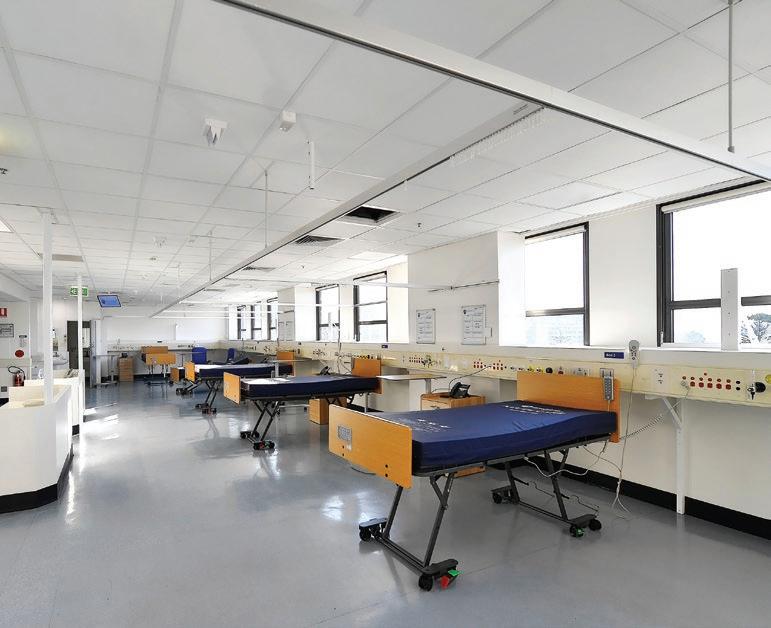
The ensuing lockdown saw Melburnians only allowed to travel within a five-kilometre radius of their home. Face masks became mandatory, non-essential stores closed again, and all Victorian students returned to remote learning. Weddings were prohibited, funerals limited to no more than ten people and a curfew introduced from 8:00 p.m. to 6:00 a.m. The infamous ‘ring of steel’ around metropolitan Melbourne also made its first appearance, with heavy fines for people attempting to cross over into regional Victoria. Initially planned to last six weeks, this hard lockdown would be extended to 28 October 2020.
The new rules meant that A.G. Coombs’ employees had to carry worker permits to travel outside the five-kilometre radius. “Victoria was the hardest hit with the lockdowns so it was very complex,” said Kim Hesline who, along with Payroll Manager Leanne Hull, ended up working until 1:00 a.m. to organise 600 individual permits. “In some cases, young A.G. Coombs apprentices didn’t have a driver’s licence, so we had to organise permits for their parents to drive them to the work site!”
As before, all site and field employees were required to complete the daily COVID-19 questionnaire. Managers also kept in touch via text. Having the capability to send out global messages helped enormously.
“We sent messages to plumbers on site,” said Luke Snell. “And when we started doing rapid antigen testing [in 2021], all our people had to complete and upload twice weekly testing, and respond via text every day confirming that they didn’t have any COVID symptoms in order to keep working away from home.”
The ability of A.G. Coombs to keep up-to-date with people’s test results was crucial with respect to managing its workforce and keeping everyone safe. “We provided all site personnel with masks,” said Luke, recalling how he spent many days standing in the carpark at worksites explaining to people why it was necessary to wear a mask, even when there was no one else around. “Life for site workers changed completely,” he said. “It was not just about doing your job, but answering constant questions about who you might have been standing next to while you were at work.”
As hard as things were, there was appreciation as well, Luke noted. “From these conversations I knew our site teams appreciated being able to keep working. In Victoria, most of them were direct employees, not subcontractors, so they appreciated earning an income.”
Restrictions varied across the country depending on COVID case numbers. In NSW, people were encouraged to maintain social distancing and observe density limits in venues. Schools, however, remained open, although parents were encouraged to keep their children at home. It wasn’t until mid-2021, with a huge spike in case numbers, that schools in Greater Sydney moved to a learn-from-home model.
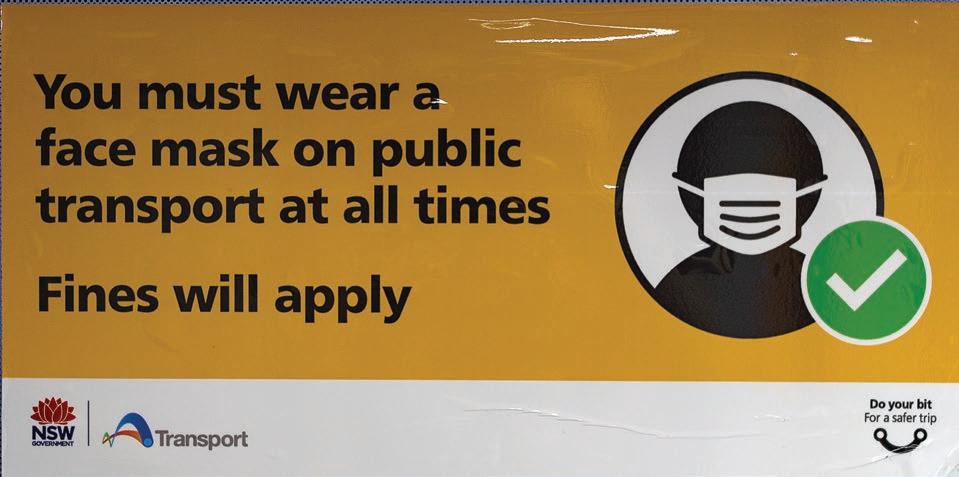
Queensland introduced social distancing and mask rules, as well as imposing limits on the number of people gathering in the same place. Its lockdowns were shorter than those in Victoria, NSW and the ACT, and its general approach to stem the spread of the virus was through border closures.
By the end of 2020, there were hopeful signs that cities in lockdown would reopen with greater freedoms allowed. In December, Russell Telford thanked everyone for their efforts to remain cooperative and productive. He particularly singled out the company’s field personnel – effectively the face of A.G. Coombs during the COVID lockdowns. In his memo of 8 December, Russell acknowledged their “resilience and commitment” and their ability to “continue with productive work” in the face of unprecedented challenges.
The second year of the pandemic brought a mixture of hope and heartache. Hope that the COVID vaccine rollout would save lives and allow people to leave home for more than four essential reasons. And heartache when it became clear that COVID-19 was not going to fade away like a regular flu season.
The 2021 year started positively for A.G. Coombs as restrictions eased around the country and all its offices reopened on 6 January. To prepare for this, the company installed air purifiers in rooms where extra ventilation was required, and arranged for 1.5-metre stickers to be affixed to the floor as a reminder to socially distance. Hand sanitisers were placed around the office, while signs clearly indicated the number of people allowed in a meeting room, with a requirement of four square metres per person. Masks were also provided and everyone given disinfectant to clean their desks and wipe down the photocopier. By way of further assurance to employees, the office was deep cleaned every thirty days or as required.
Except for those with COVID-19 symptoms, or a close contact of a confirmed case, all office-based employees returned to the office, with new employment contracts replacing the AFPWAs.
It was hoped that with the vaccines life would go back to normal – or at least COVID normal. Yet despite the vaccine rollout, COVID case numbers remained stubbornly high, particularly along Australia’s eastern seaboard.
As people rolled up their sleeves to be vaccinated, a new variant of the virus began to spread. In NSW, where the stay-at-home orders had not been as restrictive as those in Victoria, COVID-19 cases began surging. Consequently, local government areas were locked down with people not allowed to leave or enter affected areas.
With the situation worsening, Queensland closed its borders again. Meanwhile, Victoria found itself in and out of lockdown, from short circuit-breakers to an extended lockdown of seventy-seven days from 5 August to 21 October.
The August–October lockdown in 2021 – Melbourne’s sixth – gave rise to the label of the world’s most locked down city, a statement first made by Australia’s then Federal Treasurer Josh Frydenberg. Although Buenos Aires had spent 234 continuous days in lockdown, Melbourne eclipsed this with a cumulative total of 262 days over six lockdowns.
Ongoing lockdowns also affected major sporting events. At the 2021 Australian Open tennis no crowds were allowed for five days due to a snap lockdown. And a long lockdown the previous year had seen the Australian Football League (AFL) move several Victorian clubs to Brisbane for the remainder of the 2020 season.
The strengthened settings during Melbourne’s sixth lockdown saw curfews reimposed, with permits required again to travel outside the five-kilometre radius. There would now be five reasons to leave home: the same four reasons as before, plus a fifth reason – to get the COVID vaccination.
Although a government-recognised essential service, A.G. Coombs’ ability to continue operating depended on observing strict COVID-safe guidelines. Office staff resumed work-from-home arrangements, while authorised field personnel had to carry permits again when travelling to and from work. The COVID questionnaire still went out daily, however the questions varied from state to state depending on the lockdown rules being enforced in different parts of the country.
Fortunately, the lockdowns did not impact supply chains as seriously as they could have. So, while A.G. Coombs did experience supply issues, especially with overseas equipment, it managed to continue operating its Integrated Prefabrication Facility in Keysborough under a strict COVIDsafe plan. Ductmakers, the A.G. Coombs joint venture for sheet metal production, also continued operating. This came as a relief to management, because without a functioning supply chain, the business would have struggled.
The fact that the entire construction industry was considered an essential service meant work could move ahead on major projects, albeit with limits on the number of workers allowed on site at any given time. In accordance with the guidelines, construction proceeded on the Victorian COVID Hospital in East Melbourne and the Victorian Heart Hospital in Clayton. A.G. Coombs installed the services at both facilities, with the former delivered within a short timeframe to meet the urgent need for additional beds to accommodate patients with COVID-19.
Construction also continued in NSW, where A.G. Coombs’ tradespeople, partners and subcontractors worked on the redevelopment of the Sydney Football Stadium and the second stage of the Parramatta Square redevelopment. Another project, UTS Central, was completed and commissioned during the first year of the pandemic (see page 239), with A.G. Coombs Projects installing the services and A.G. Coombs Advisory providing Independent Commissioning Agent (ICA) services.
Prefabrication underpinned all these projects by minimising site labour, thereby enabling A.G. Coombs to deliver its part of the build in line with COVID-safe protocols. Scalable labour strategies also allowed the company to rotate some
of its site workforce through the prefabrication facility where they assisted with building modules and risers, some of which would be transported to job sites interstate.
In line with COVID-safe rules, workers in the prefabrication facility separated into teams, with care taken not to cross paths. “We did a COVID check-in every morning,” said Integrated Prefabrication Leader Daniel Waack. “If one person in a group tested positive then that group had to isolate for fourteen days. But at least one team could keep going while the other isolated.”
Care was also taken to maintain social distancing during lunchbreaks, not only at the prefabrication facility, but across all worksites. Strict density limits had to be observed, with A.G. Coombs personnel often using a different lunch room to other workers on site.
The move towards digitisation in the early 2000s also aided workflow in other areas. Fortunately, 3D digital scans – taken between the lockdowns of the facilities being modified –allowed project staff to continue designing and documenting the various stages of construction while working remotely. The objective from hereon would be to keep everything moving forward at a steady pace.
The ability of the construction industry to continue operating was due in no small part to the efforts of industry leaders like A.G. Coombs. At the start of the pandemic, A.G. Coombs had argued the case that construction on major projects, particularly in the healthcare sector, could be carried out safely. In Victoria, it also helped develop industry guidelines for the ventilation of site sheds and other facilities on building sites. And it led by example, with its workers completing daily COVID checks, and masking up and physically distancing as and when required.
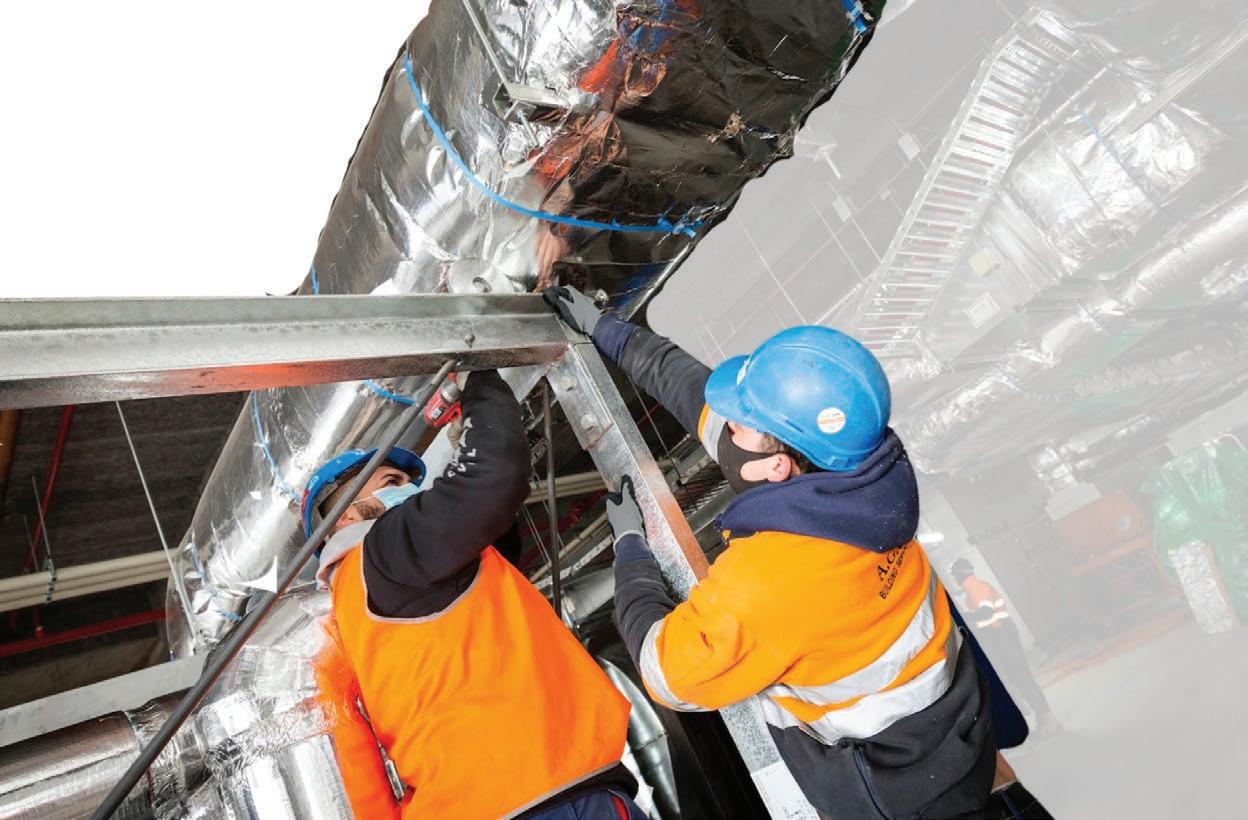
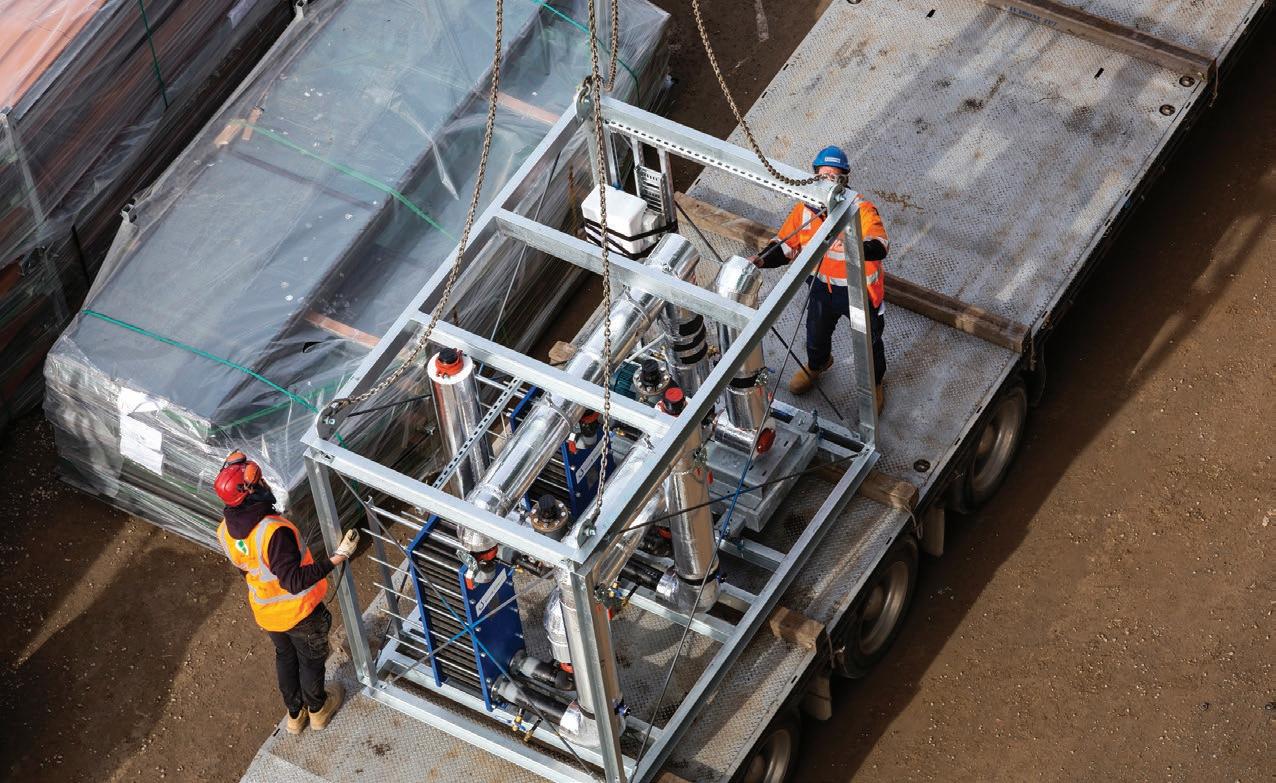
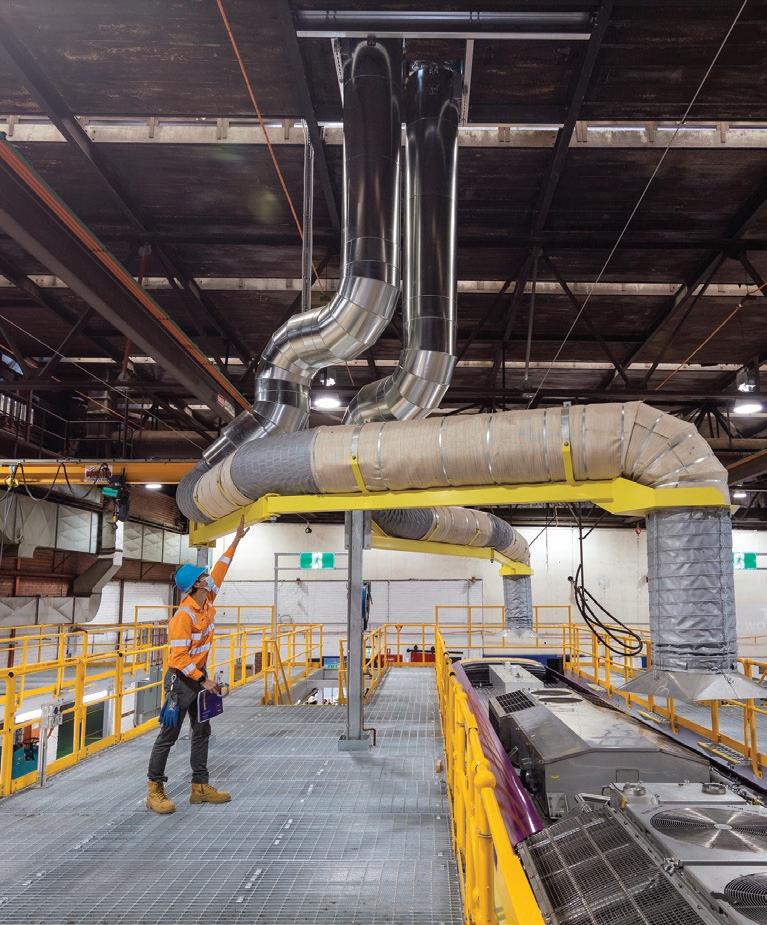
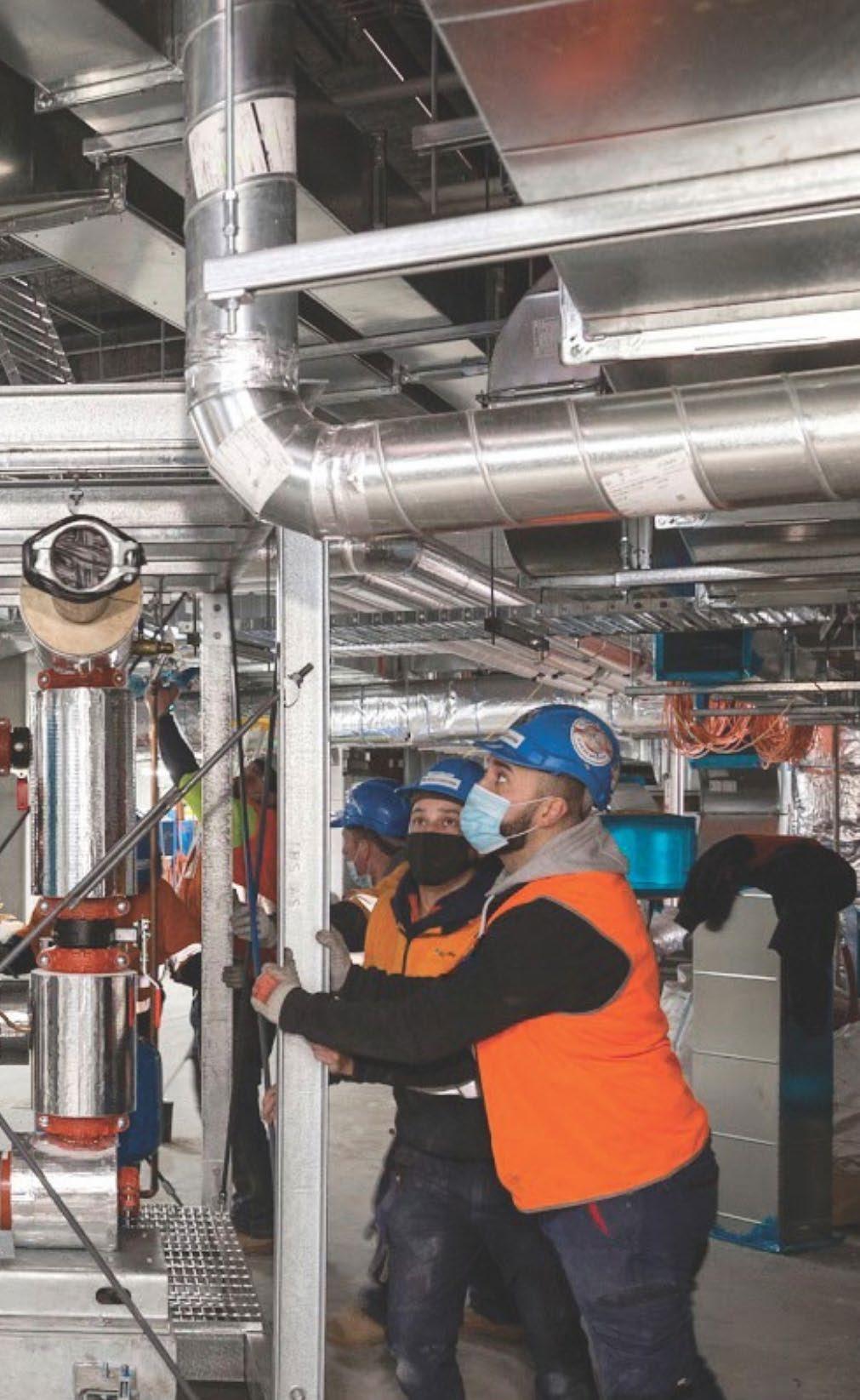
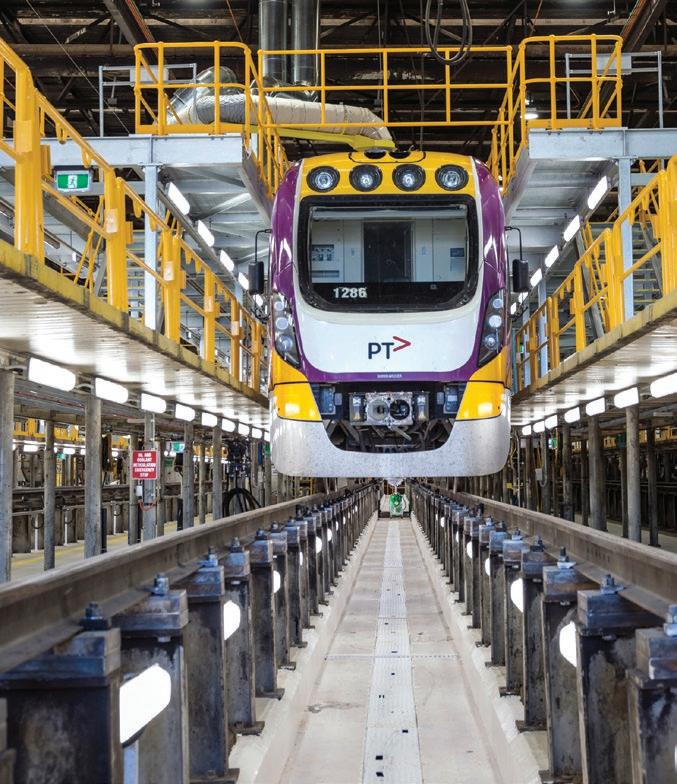
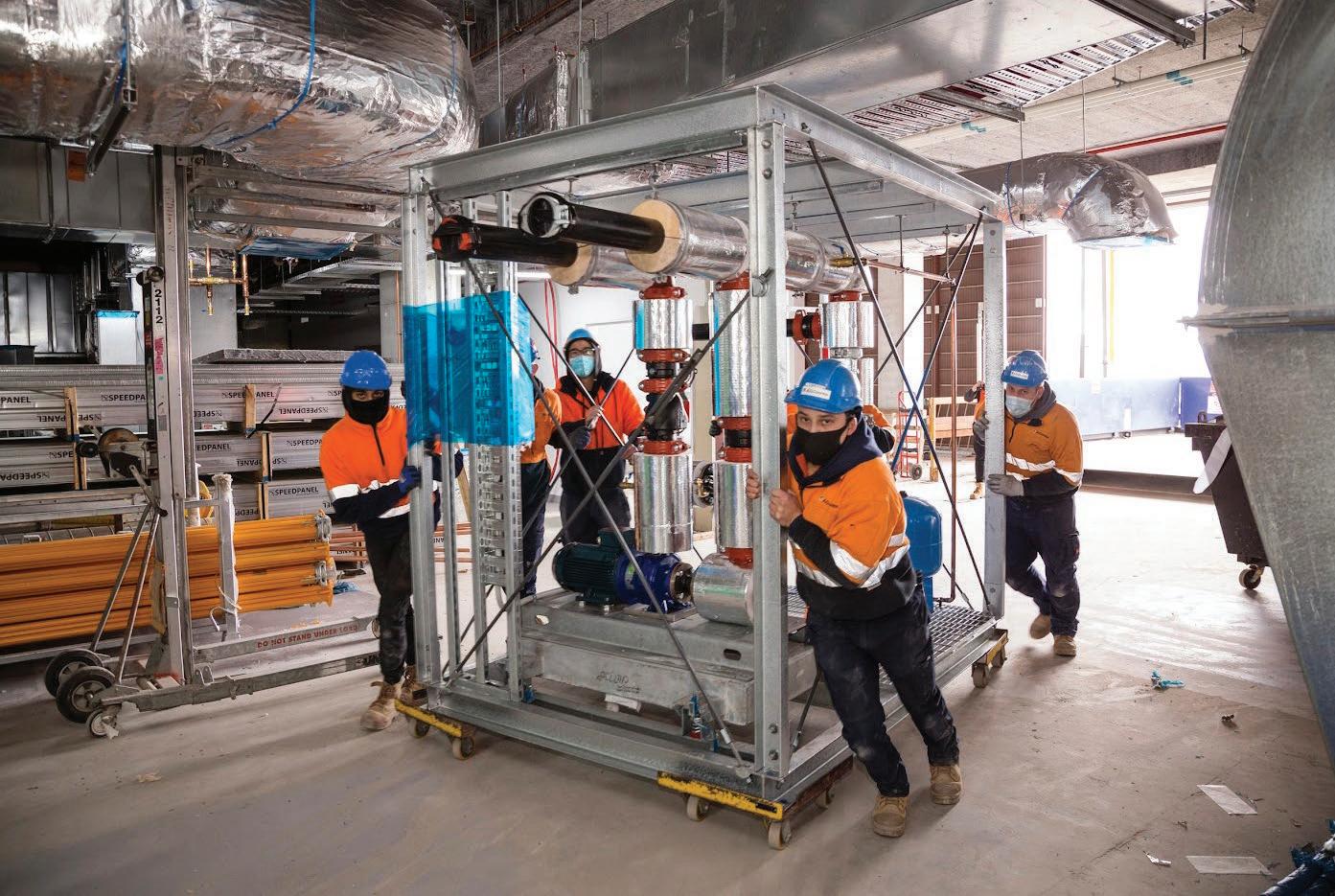
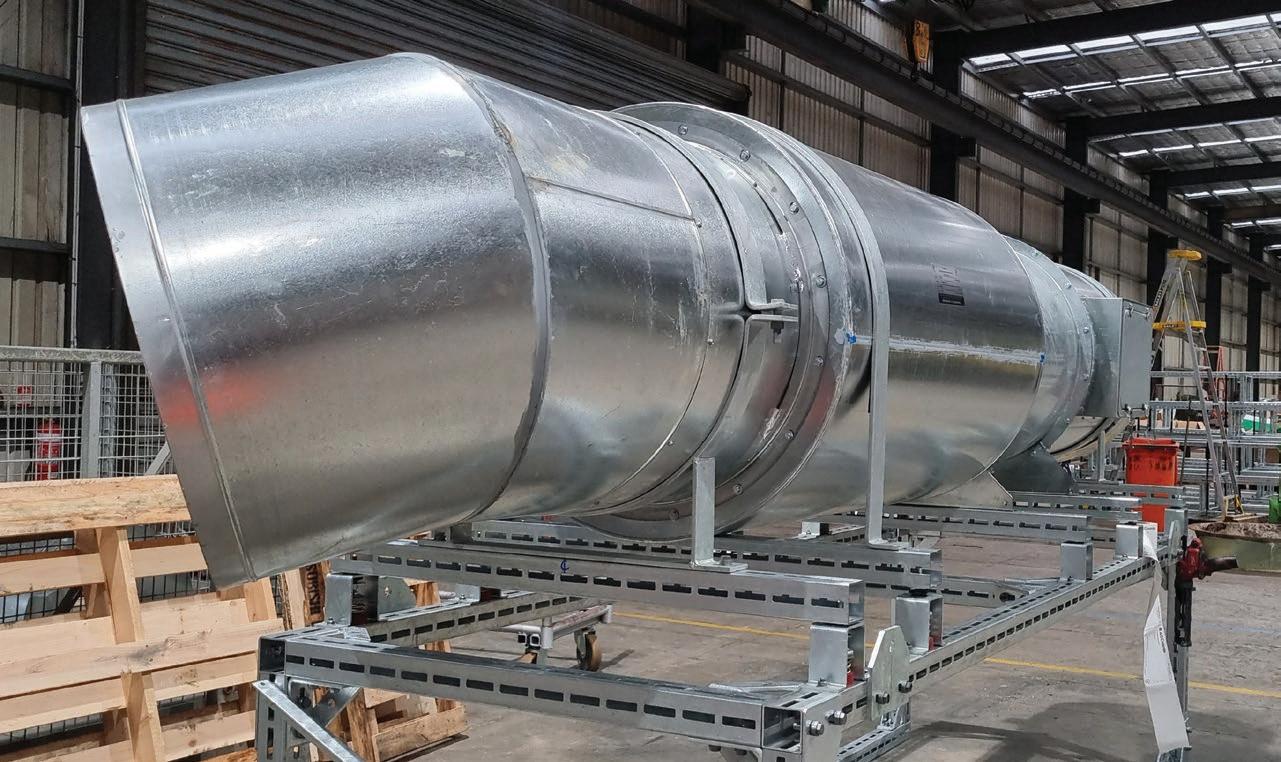
Over the course of the pandemic, the daily meetings of the Extended Management Group were scaled back to every two days, and eventually to once a week, with meetings held online via video conferencing during the hard lockdowns.
Managing Director Russell Telford was also in touch with his senior managers via text message after hours, as well as on weekends. There was an unwritten code: no one expected an immediate reply if messages were sent after hours, but if someone did respond then it was fine to start chatting. Given the arduous lockdowns, people were often keen to communicate.
The ‘to do’ list had also grown with dozens of practical items to be actioned, such as ordering hand sanitisers and ensuring the consistent display of COVID-safe signage. Drafting correspondence to key stakeholders, including the government, was another regular item, and, interestingly, COVID fatigue now appeared on the list.
Together, management team members decided that the best way to address this fatigue was to keep talking. Recognising that the lockdowns were challenging proved an important first step in coping with all the rules and regulations. Talking also helped everyone stay focused on what needed to be done to get through to the other side of lockdown.
The pandemic tested every aspect of A.G. Coombs’ health and safety procedures, as well as its communication processes and its ability to adapt and resolve issues. The much-revered company culture – the glue that held everything and everyone together – also came under the spotlight. If anyone needed reminding of what this encompassed, they only had to look at the example set by the Managing Director.
Russell Telford was aware that some people in the organisation were struggling with the government’s stay-athome orders, especially employees with young children. “We understood there were people in different boats,” he said.
Mindful of this, he asked his Executive Assistant Donna Edgecombe to block out a two-hour window for him each day for a month, and to provide him with MS Teams meeting links or phone numbers of people he wanted to speak with. “I contacted eight people each day,” he explained. “I asked them how they were doing, what they were working on and how could I help. Just three questions – it was simple.” Simple, but it said a lot.
In October 2021, the Victorian Government announced that, owing to the high uptake of the COVID-19 vaccine, restrictions would ease. Restrictions also eased in NSW, while Queensland would remove all domestic travel restrictions applying to its state borders in January 2022.
With these announcements came vaccine mandates. For example, all on-site workers in Victoria needed to be fully vaccinated by 13 November 2021. Large scale construction sites would also be allowed to return to a full-strength crew once the 70 percent double-dose vaccine threshold was reached.
Proof of vaccination would be needed at worksites, and boosters required to work in hospitals and medical facilities. At A.G. Coombs, the vaccine uptake was almost universal with 99 percent of employees either fully vaccinated by late 2021 or having received at least one dose.
With few exceptions, all office personnel in Melbourne, Sydney, Canberra and Brisbane returned to their respective workplaces in December 2021 on new employment contracts. However, AFPWAs were still available in certain circumstances for staff directly affected by COVID-19.
Owing to lockdowns in Melbourne, the A.G. Coombs Annual Dinner and Awards Night was held virtually in 2020 and 2021. Managing Director Russell Telford is pictured announcing the awards via livestream in 2021. Food hampers were sent to all staff for the virtual events. These hampers were among the many care packages (comprising socks, sanitiser and Rapid Antigen Test kits) distributed to employees and their families during the pandemic.
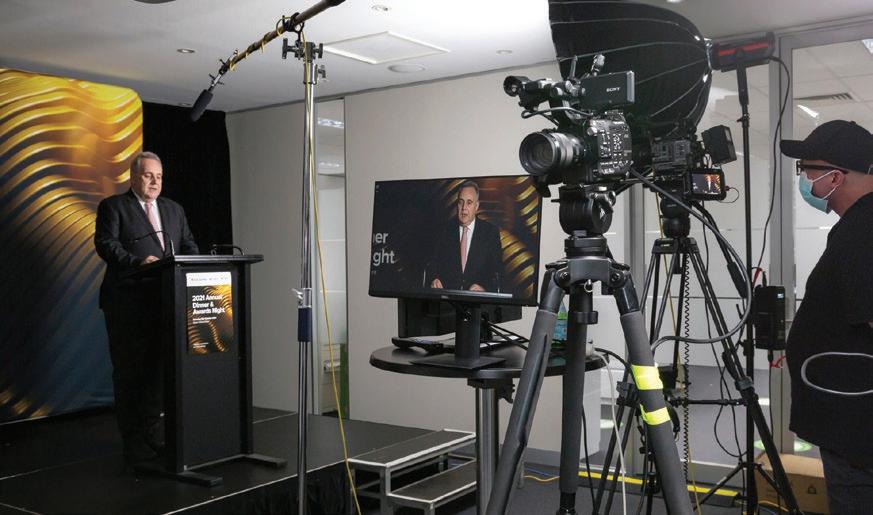
The transition back into offices progressed in fits and starts around the country. Although people were largely protected by the vaccines, the virus was still circulating. So, while many restrictions eased around Australia, masks still needed to be worn indoors.
From January 2022, COVID-safe rules still applied at A.G. Coombs’ offices, as well as on worksites. The company also introduced a program of twice-weekly rapid antigen tests (RATs) for all personnel nationally, stocking its offices with boxes of RATs so people could easily comply with the directive.
By March, with hospital admissions for COVID-19 declining, the Victorian Government further eased restrictions, including relaxing the wearing of masks in most indoor settings and supporting people returning to work in an office environment. At this point, A.G. Coombs’ widely-used AFPWAs were formally concluded; although, in reality, it was an administrative sign-off, as by then nearly all office personnel had been back at their desks for three months.
In Australia, and indeed around the world, the challenge of getting people back into the office would be the hardest aspect of transitioning out of COVID-era work arrangements. Not so at A.G. Coombs, where the sense of keeping everyone together was an intrinsic part of its culture.
“A lot of our people work on site, so we didn’t want to create two classes of people,” said Executive General Manager Projects Mark Mitchell. “When the business said ‘come back to the office,’ everyone came back.”
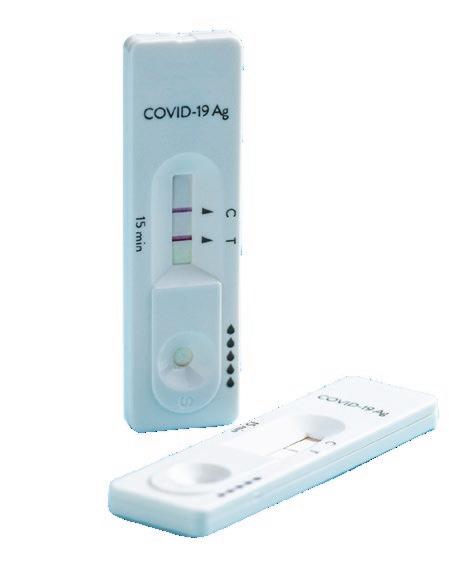
“We are a collaborative business – people become disenfranchised if they’re not connected,” said Managing Director Russell Telford, while also acknowledging that there was always room for flexibility.
Although the COVID-19 pandemic did not officially end until May 2023, the United States had started easing international travel restrictions in November 2021. Australia officially reopened its borders on 21 February 2022, and the United Kingdom removed all international travel restrictions in March 2022.
A.G. Coombs came out the other side of the pandemic in solid shape, ready to move forward with the business plans it had mothballed nearly two years ago. This did not mean to say the business hadn’t taken a hit. The company’s revenue dropped between June 2020 and June 2021, but would bounce back strongly over the 2021–2022 financial year. Importantly, A.G. Coombs did not lose contracts over the two years of the pandemic.
Like many other businesses, A.G. Coombs was supported by government assistance packages such as Jobkeeper, to retain capacity and capability. And wherever possible, it encouraged clients to bring forward substantial building services upgrades (including COVID-related ventilation upgrades), which could be tackled in a COVID-safe way while facilities stood practically empty. Being deemed an essential service certainly helped, but it also required vigilance in observing the rules, and an ability to pivot and adapt on a weekly, if not daily, basis.
Despite a decline in major project work and a subsequent dip in revenue, A.G. Coombs managed to preserve jobs, infrastructure, resources and its capabilities – clearly stated goals at the start of the pandemic. Although employee numbers did decrease, this was due to people retiring or leaving the organisation, as well as to a reduction in the number of temporary staff employed.
“We didn’t reduce our capabilities,” said Finance Director Allan Lichomets. “We kept people productive and engaged, so that when COVID ended and revenue came back, our capabilities were intact and we were ready to go.”
As challenging and exhausting as the long months of lockdown were, there were also many positives. “We became an even closer-knit team,” said Kim Hesline, remembering how they would virtually meet late on a Friday afternoon and play games and quizzes. As a team, they also drew on one another’s skills and experience to navigate the crisis. “We became even more adept at pivoting at a moment’s notice,” she said. “Every business process got tested and improved. And we tested our own skills as well.”
In no time, Kim and her team were recruiting and inducting new employees. Although they hadn’t hired any new apprentices during the pandemic, the aim now would be to hire around fifty apprentices and twenty-five graduates each year.
“Companies that were fragile became even more fragile through the pandemic,” said Russell Telford. “A.G. Coombs had a strong business going into COVID, and we got back on track quickly thanks to our risk-management processes, and above all, our people.”
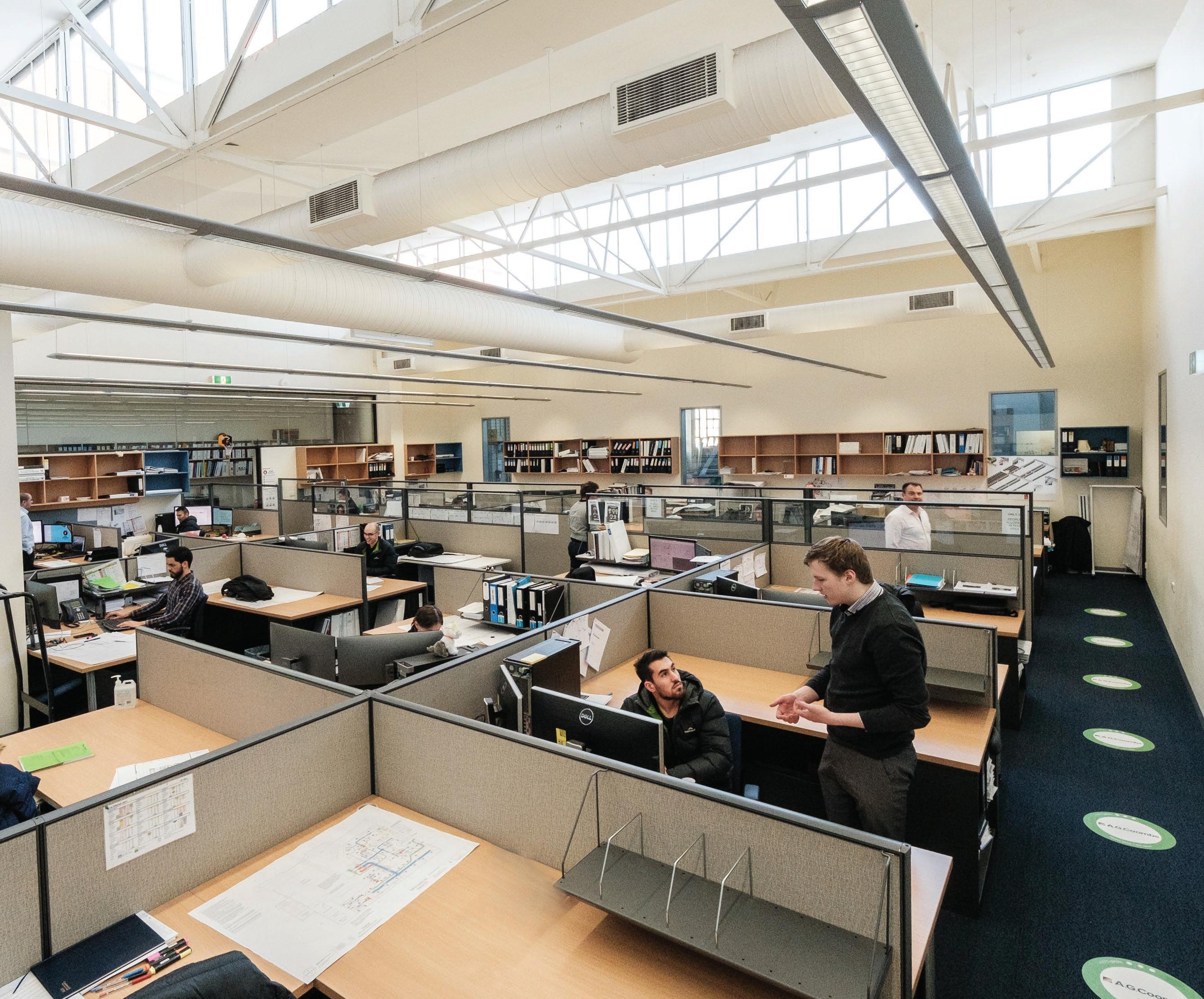
Engineer Jamie Park, A.G. Coombs Advisory’s Leader – Technical Advice (VIC), inspecting the solar panels on the roof of 101 Collins Street.

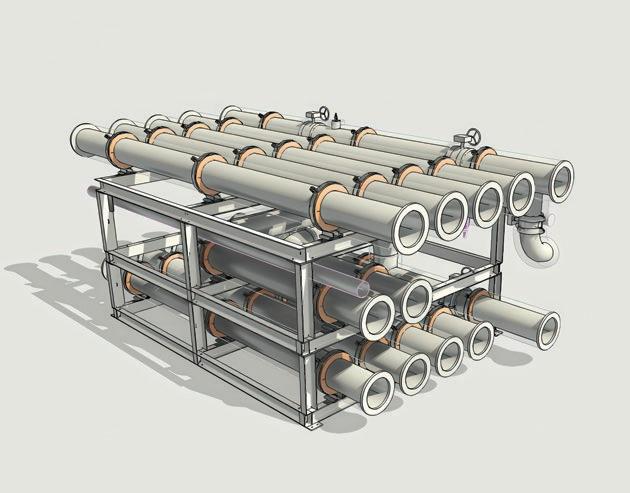
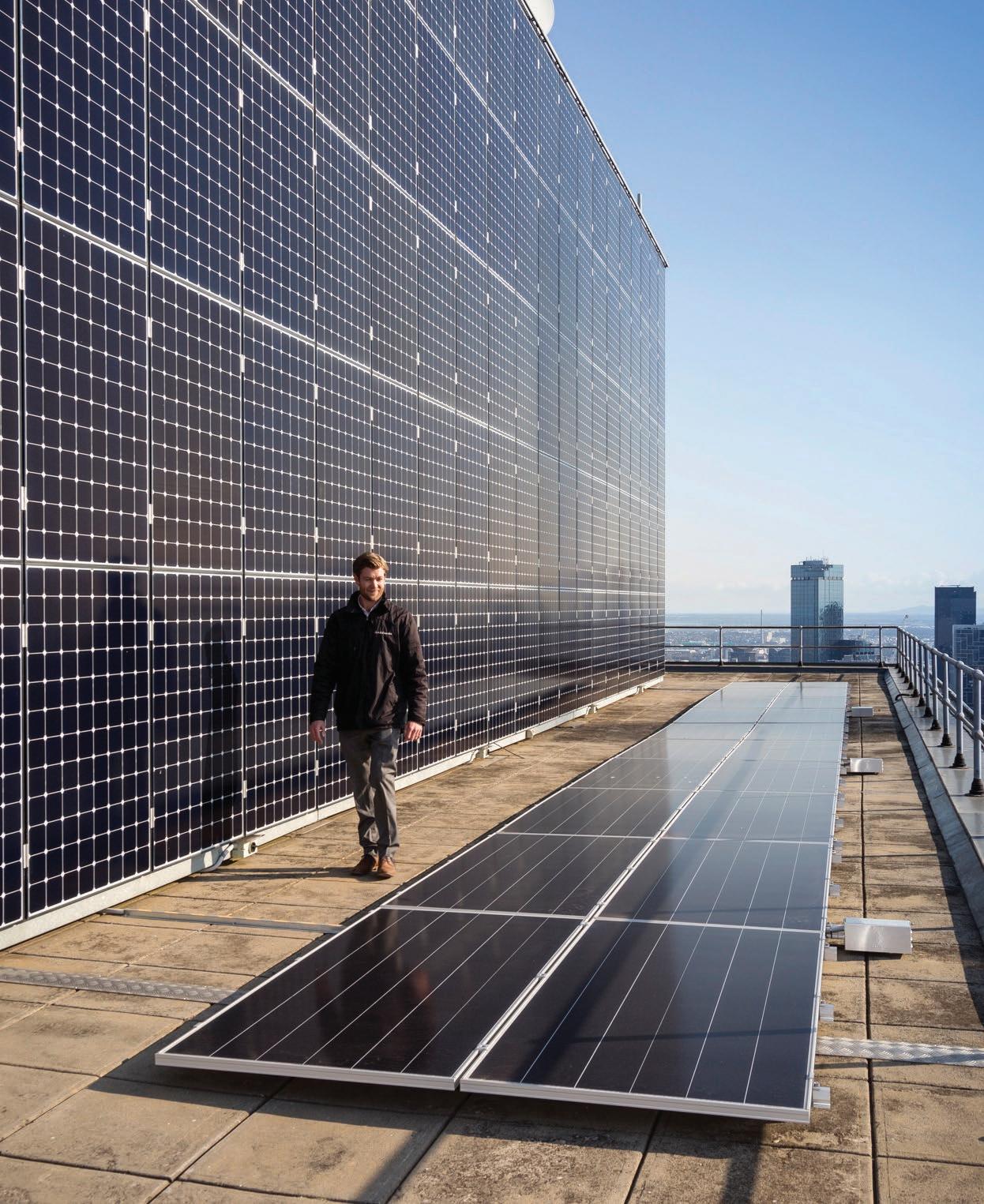
A digital model from A.G. Coombs’ innovative library of files into which years of fabrication knowledge is embedded. Models such as these enable accurate repeatability and standardisation in design and prefabrication. This award-winning Informed Design innovation has delivered significant cost savings and project certainty for clients.
As Australia took the first steps out of lockdown, businesses around the country took stock. While many were in recovery mode, some, like A.G. Coombs, were on the front foot, keen to reset and move forward.
The lessons learnt from the long months of restrictions and lockdowns would eventually be compiled into a ‘playbook’ of actions and recommendations for the future, much of it applicable in other situations. This documentation was important, because the company’s strong team culture and the specific measures it implemented helped A.G. Coombs emerge from the COVID-19 pandemic relatively unscathed, with its workforce intact.
Moving forward it was business as usual, but with an increased focus on helping building owners achieve net-zero targets by installing energy-efficient electrical services. A new office would also be opened in Townsville and Butler Electrical welcomed into the A.G. Coombs Group. Meanwhile, developments in prefabrication would change the way projects were planned, costed and delivered.
On the horizon there were three significant milestones: Integrated Technical Management’s 20th anniversary, A.G. Coombs Advisory’s 25th year of operations, and a major milestone for the entire Group as A.G. Coombs began counting down to its 80th anniversary.
Overarching these events was a heightened awareness of the future and the need to enhance training and development opportunities for the company’s current and emerging leaders. These thoughts would culminate in the launch of the A.G. Coombs Leadership Academy in 2024. The Academy’s programs and events included the Advancement of Women functions in Melbourne, Sydney and Brisbane in 2025.
September 2022
Death of Queen Elizabeth II.
November 2022
Launch of ChatGPT, a generative artificial intelligence (AI) chatbot developed by OpenAI.
May 2023
COVID-19 pandemic officially ends.
May 2023
Coronation of King Charles III.
January 2024
Tasmanian Mary Donaldson becomes Queen Mary of Denmark following the coronation of her husband King Frederik of Denmark.
August 2024
After winning three medals at the Paris Olympic Games, Australian swimmer Emma McKeon’s career haul of 14 Olympic medals made her Australia’s most decorated Olympian and the seventh most decorated athlete in Olympic history.
July 2025
Catastrophic floods cripple the NSW Mid North Coast isolating 50,000 people.
October 2025
A.G. Coombs celebrates 80 years in business at its Annual Dinner and Awards Night.
By March 2022, A.G. Coombs was ready for new challenges. Significantly, it could count on its entire team being back in the office, as well as on site. Employee numbers would also start to grow as the Human Resources team ramped up recruitment by hiring more apprentices, trainees and graduate engineers.
Having worked closely with clients and suppliers to deliver services safely and effectively throughout the COVID-19 pandemic, A.G. Coombs now shifted gear as many projects began moving forward at pace. After the uncertainty and exhaustion of the past two years, its projections for short- and long-term growth were back on track.
Major projects that A.G. Coombs had undertaken during the lockdowns were now entering the final phases of construction, among them the Sydney Football Stadium – which was scheduled to open later that year – and the Victorian Heart Hospital, due to open in early 2023.
A.G. Coombs’ technicians and tradespeople were also fully engaged on major rail infrastructure projects in both Melbourne and Sydney, while work was moving ahead at Queen’s Wharf Brisbane after several delays during the pandemic.
Although the World Health Organisation did not declare the pandemic officially over until May 2023, numerous countries, including Australia, had already opened their borders to international travellers. At A.G. Coombs, the lifting of travel restrictions enabled the International Peer Group to hold in-person meetings, while also allowing the Human Resources team to explore the possibility of establishing staff exchanges with U.S. Engineering in the United States and NG Bailey in the United Kingdom.
The rolling back of COVID restrictions meant that A.G. Coombs could reaffirm its commitment to the ‘Reconciliation’ journey, as well as articulate its vision to be diverse and inclusive.
As an industry leader, A.G. Coombs also vocalised its commitment to minimising the impact of carbon dioxide (CO2) emissions within the building industry. It demonstrated this commitment by announcing goals to achieve Net Zero Scope 1 and Scope 2 operational emissions by 2030, while also pledging to work with its suppliers, customers and industry partners to achieve Net Zero Scope 3 emissions by 2040.
By the end of 2022, the focus was not just on driving profitability, but also on empowering employees to take the company forward. With the many professional development programs A.G. Coombs now had on offer, Managing Director Russell Telford strongly believed that a leadership academy could help pull all the multi-layered aspects of leadership training together. It was something he had been thinking about for a while.
In a moment of reflection, Russell and others remembered the way Group Engineering Manager Warwick Stannus had championed the careers of younger designers and engineers within the business. Sadly, Warwick had passed away in April 2022, but the way in which he encouraged and supported people would not be forgotten. Indeed, he had been a great leader and role model for all engineering and technical personnel.
With the business growing after the pandemic, and thoughts turning once again to expanding interstate, something significant would be needed to unify all the company’s business units and regions along the eastern seaboard.
Russell’s ideas for an A.G. Coombs Leadership Academy began percolating again.
The fact that the company’s focus was as much on people as it was on profitability lined up with Russell’s vision for growing and perpetuating the business. It would take nearly two years for a concept to emerge, yet it was already becoming clear to him that he needed to take people where they hadn’t been before.

In announcing its commitment to net zero for 2030, A.G. Coombs set an example for the entire construction and property services industry. “Through their construction and operation, buildings are responsible for nearly 40 percent of annual global CO2 emissions,” said A.G. Coombs Managing Director Russell Telford. The time for “best endeavours” had passed, he pointed out. Instead, A.G. Coombs would be moving to a “definitive and transparently accounted for elimination approach” to reducing emissions. Scope 1 and 2
Appointed as Group Engineering Manager in 2003, Warwick Stannus was closely involved in the initiatives that would set A.G. Coombs apart from its competitors.
Together with Bryon Price, A.G. Coombs’ Strategic Development Director, Warwick drove the early growth of Advisory services, including developing the role of Independent Commissioning Agent (ICA), which significantly contributed to some of the early Green Star sustainabilityrated buildings in Australia. He also championed large-scale off-site prefabrication and spearheaded the world-leading BIM-MEPAUS initiative.
Warwick was influential in the broader industry, speaking at conferences and industry forums, and ultimately playing a key role in developing uniform industry standards.
emissions would be accomplished by 2030, with a Scope 3 target set for 2040.
• Scope 1 emissions: Greenhouse Gas emissions that a company has direct control over.
• Scope 2 emissions: Emissions a company causes indirectly.
• Scope 3 emissions: All emissions not directly created by the company itself, but those that the organisation is indirectly responsible for up and down its value chain.
“Warwick had a well-deserved reputation for getting the job done,” explained Bryon, who had previously worked with Warwick at consulting engineers, Lincolne Scott. “He was known for his tenacious creativity.”
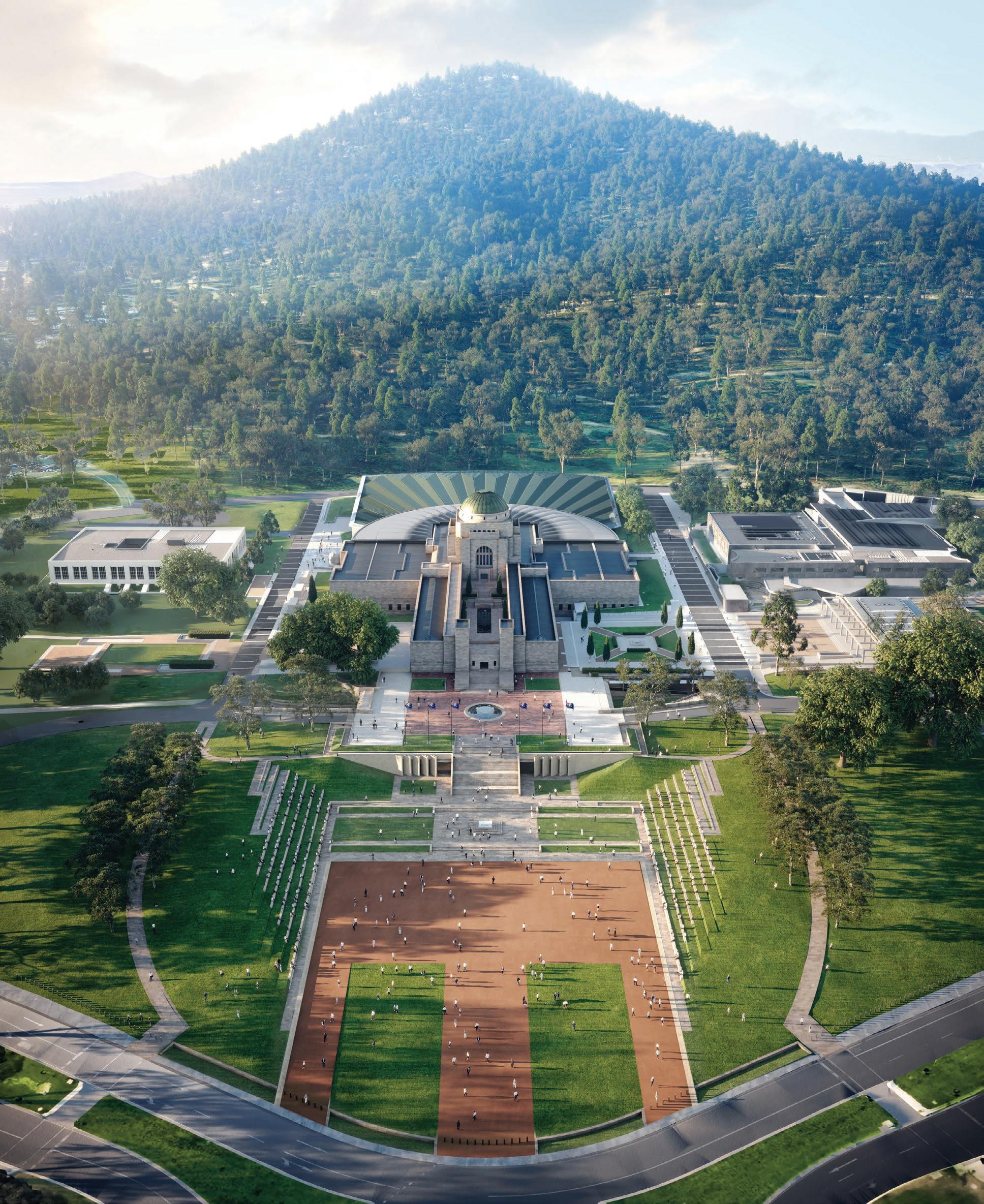
The Australian War Memorial in Canberra houses significant, and often fragile, wartime artefacts and memorabilia. Established through Federal legislation in 1925, it was originally intended as a memorial to Australians who died in the First World War. Its scope was later widened to include the Second World War and other conflicts. It now honours all Australians who died during war or peacekeeping duties.
Digitally enhanced image of the Memorial (2025). Image courtesy of Cox Architecture.
By 2023, A.G. Coombs had achieved its vision of becoming a whole-of-life technical specialist. Nothing highlighted this more than the fact that A.G. Coombs Advisory had been operating for twenty-three years and Integrated Technical Management (ITM) was about to celebrate a twenty-year milestone.
ITM had been established in 2003 in response to the growing sophistication of the technical systems in buildings. The recognition that services in certain facilities would require a higher level of technical oversight had underscored the need for on-site technical management, particularly with a view to improving the ‘mission-critical’ performance of these services over the long term.
Indeed, what ITM has gone on to do successfully is bring a high level of technical expertise to the table, while also overseeing the necessary non-technical maintenance requirements of the client.
Following its establishment, ITM found opportunities to apply its expertise across the whole spectrum of a building’s services by drawing, where needed, on the skills offered by A.G. Coombs Advisory, A.G. Coombs Service and Walker Fire Protection.
It would go on to manage some of Australia’s most well-known and widely visited facilities, among them the Australian War Memorial, the National Museum of Australia, the National Portrait Gallery, the High Court of Australia and the National Film and Sound Archive – all located in Canberra.
The data centre market has been another area where clients have come to appreciate A.G. Coombs’ understanding of the precision requirements of these mission-critical sites, where indoor environmental conditions – particularly consistency of air temperature and humidity control – are crucial for preventing equipment malfunctions.
In 2017, ITM was awarded the contract for the hyperscale AirTrunk data facilities in Melbourne and Sydney – the latter being one of Australia’s largest data facilities (by megawatts) at the time. ITM also created a quality framework for maintaining the technical assets across the network of data centres operated by ANZ (Australia and New Zealand Banking Group Limited), which together process millions of financial transactions daily.
While operating in what some would see as a niche area, ITM added another dimension to A.G. Coombs’ profile as a multi-faceted, one-stop specialist that could resolve a customer’s concerns in-house rather than leaving them to source another consultant or provider.
Integrated Technical Management paused to celebrate its 20th anniversary, but not for long. Given the proliferation of data facilities across the country, there were exciting challenges ahead, and even more opportunities to assist customers with all their technical facility management requirements over the long term.
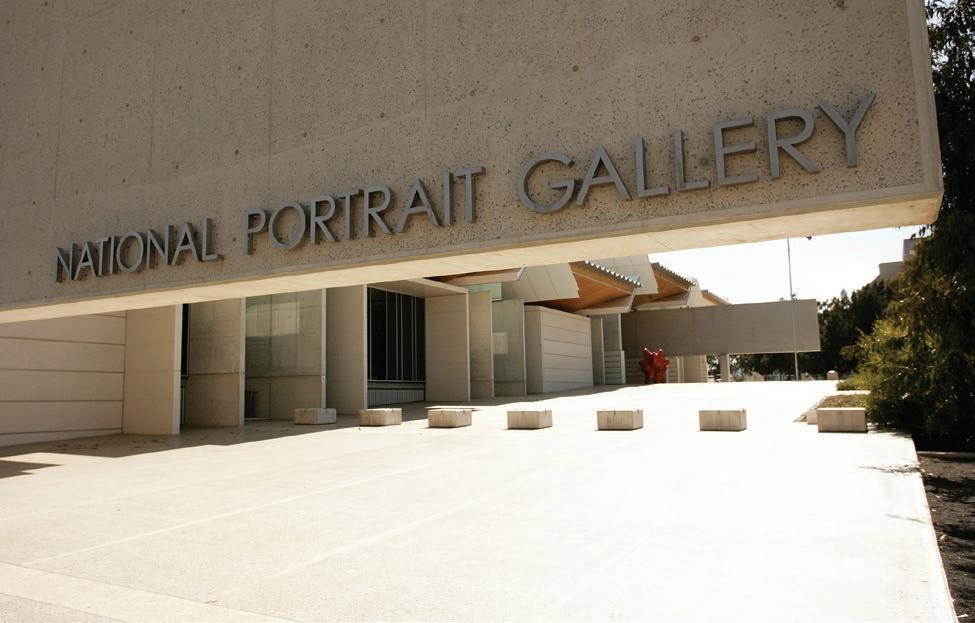
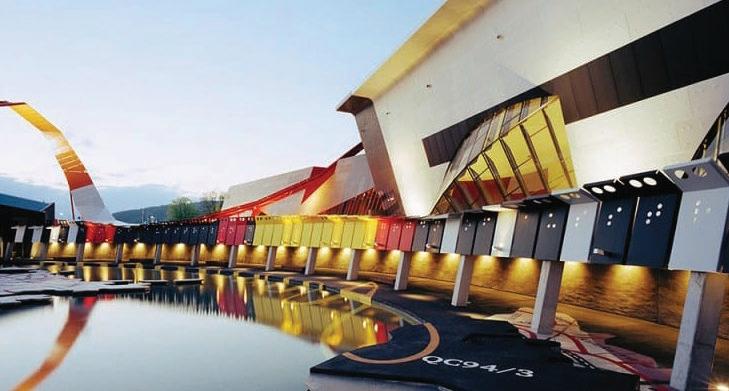
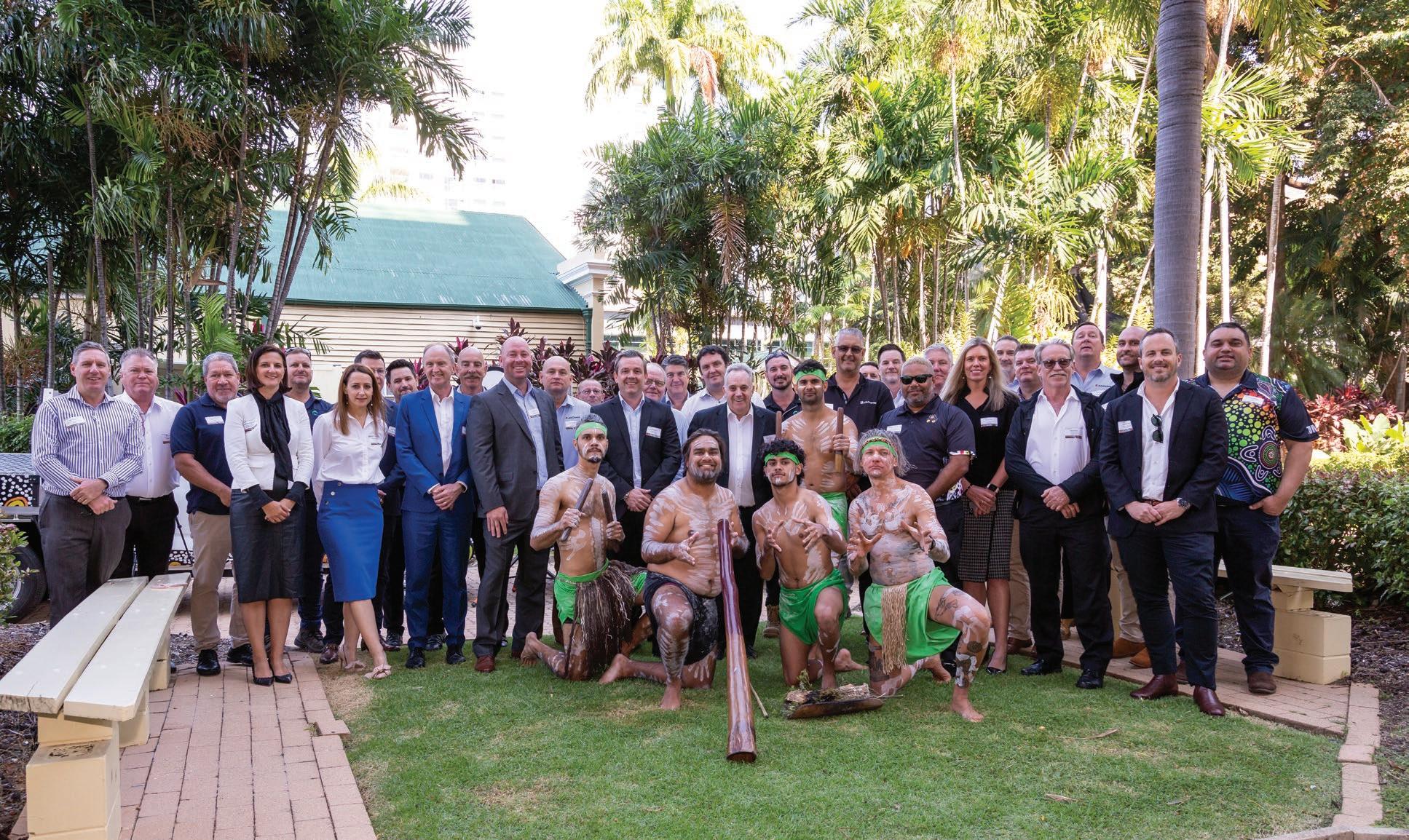
In early 2023, A.G. Coombs was in expansion mode. Twelve years had passed since the company had affixed its logo to an interstate office – the last time being the establishment in Queensland of A.G. Coombs (QLD) in 2011. Based in Brisbane, the Queensland office had been one of three facilities opened by A.G. Coombs in the space of three years.
The COVID-19 pandemic had delayed many things, not least thoughts of opening another office interstate. But plans were now moving ahead to establish a base in the north of Queensland, with its thriving regional industry spanning a variety of sectors including defence, education, healthcare and manufacturing.
Not only did A.G. Coombs have contracts for national client sites in North Queensland, but it also made sense to be closer to the action when tendering for new work in the region. Previously, most things had been run out of Brisbane; however, it was a two-hour flight from there to Townsville – the biggest city in North Queensland – or a 1,360-kilometre drive if you had the time.
Having identified a strong market for its services, A.G. Coombs decided to base its regional office in Townsville, a dynamic city at the hub of a burgeoning economy. Importantly, with a population of 167,000 people, Townsville afforded more opportunities to integrate closely with the community –something of vital importance to A.G. Coombs’ core value of being a good corporate citizen and enriching communities where it operated.
After Townsville, thoughts turned to further expanding the A.G. Coombs Group of businesses. In terms of practical services, the Group already offered mechanical plumbing, HVAC and fire protection services. It also provided electrical maintenance through A.G. Coombs Service, but not a full-service electrical offering with design and installation capabilities.
The move to integrate Butler Electrical into the A.G. Coombs Group in 2023 was strategic. More property owners were setting dates for achieving net-zero greenhouse gas emissions and were keen to explore ways to electrify the services within their buildings. Aside from augmenting the practical services offered by the Group, Butler Electrical’s expertise added another dimension to the A.G. Coombs whole-of-life approach. The benefit to clients was that A.G. Coombs Advisory could draw on Butler Electrical’s practical know-how when providing advice on the Carbon Roadmap® or when developing strategies for electrifying buildings. Butler Electrical would then be able to deliver the services in line with this advice.
After more than six decades in the industry, including a long working relationship with A.G. Coombs, Butler Electrical not only had the capability to design, install and maintain the electrical services, it was also familiar with tackling major installation projects in large commercial and industrial complexes. Multi-storey office buildings and iconic stadiums would not phase its team of more than sixty electricians.
After opening the Townsville office, A.G. Coombs went on to cultivate a strong relationship with the Gurambilbarra Wulgurukaba Traditional Owners of the region. This illustration of Garbul – which means Great Carpet Python in the Wulgurukaba language –can be seen at the company’s office. The carpet snake dreaming tells the story of Garbul creating Magnetic Island and other nearby islands on his travels from Halifax Bay.
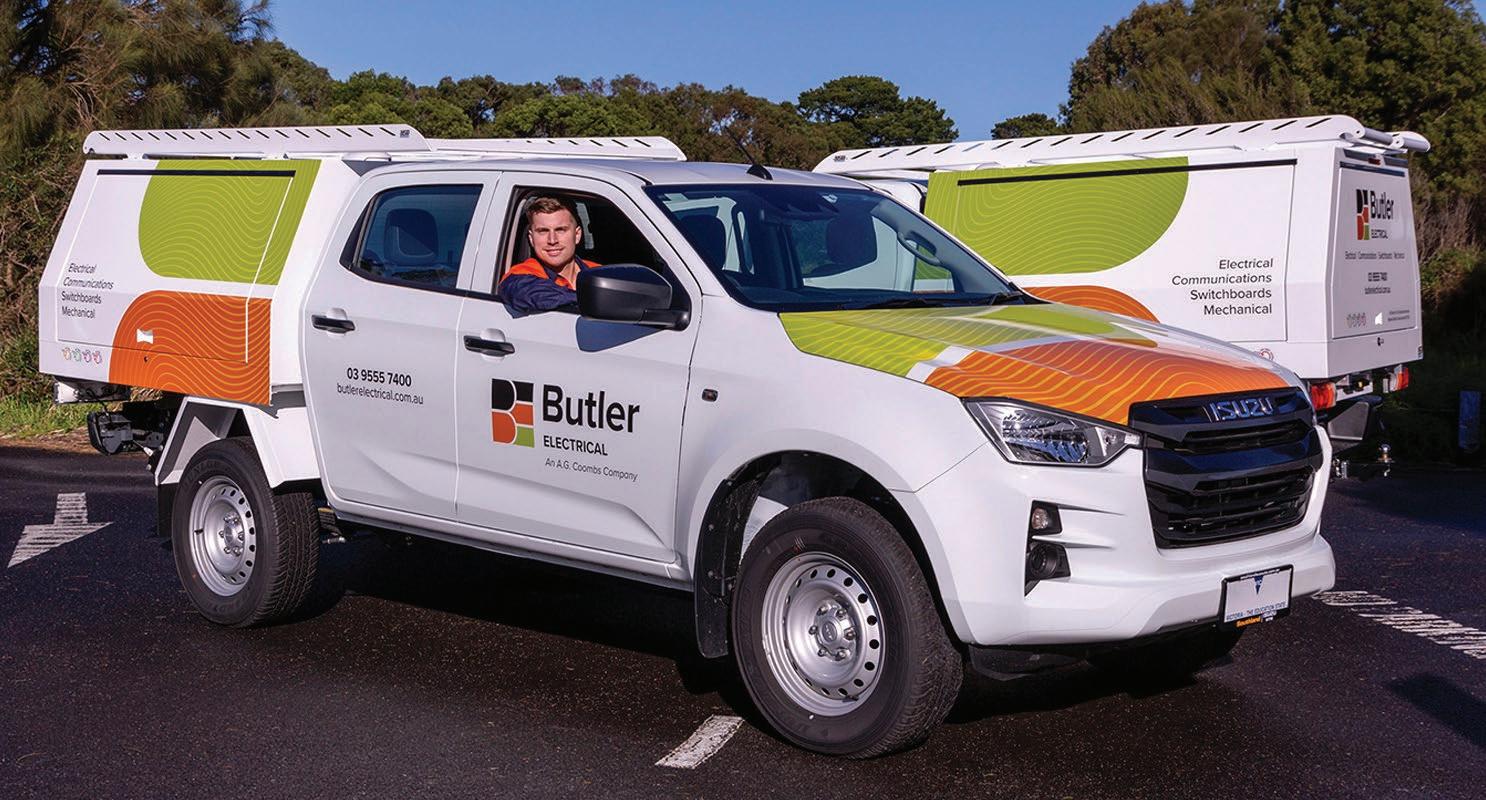
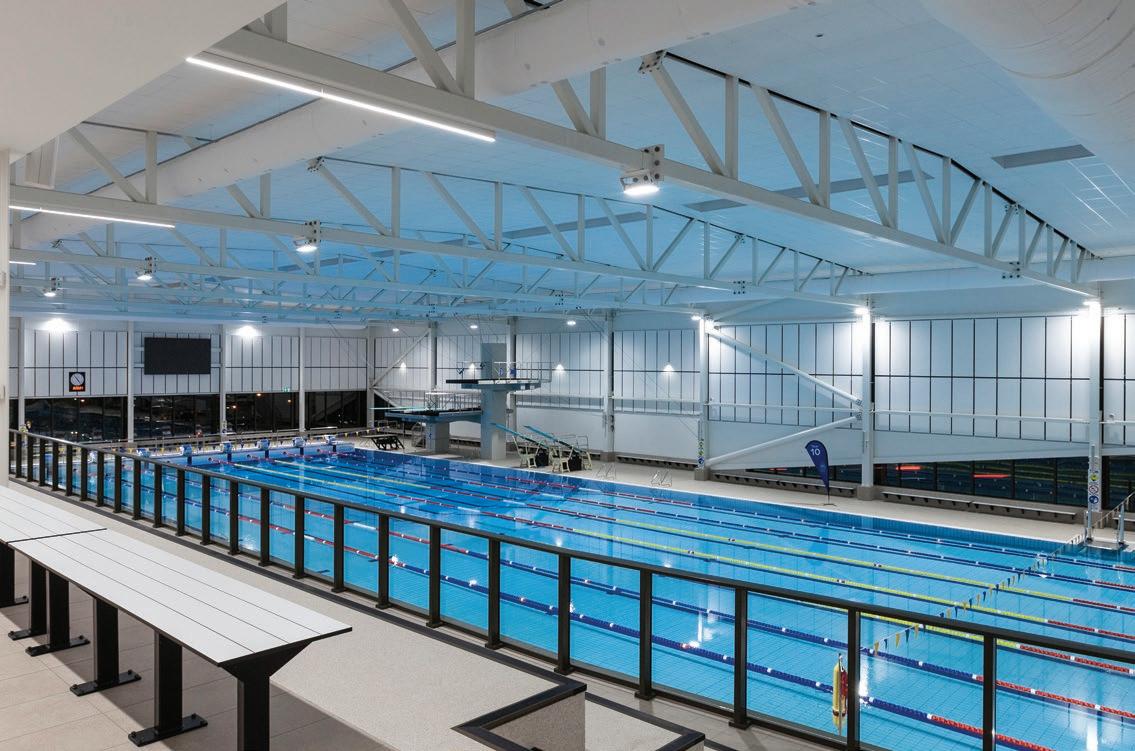
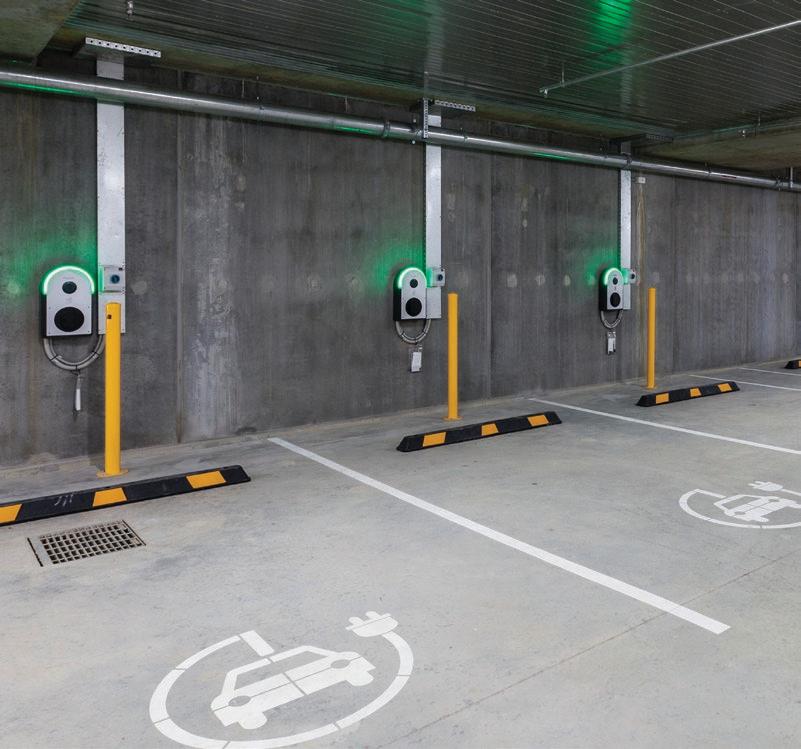
In December 2023, A.G. Coombs Group Board member Murray Coleman OAM took over as Non-Executive Chair from Clive Weeks AO, who was stepping down after ten years in the role.
Murray’s first introduction to A.G. Coombs had, in fact, taken place many years beforehand when, as a young boy, he met the company’s founder, Allan Coombs. His father was a friend and golfing partner of Allan’s, while his mother was close to Elaine Coombs, Allan’s wife. “I would have been six years old,” said Murray, “and I remember swimming in the Coombs’ pool.”
When Murray joined the A.G. Coombs Group Board in 2021, he brought nearly forty years of experience in the building and property industries to the table. He was particularly enthusiastic about modern methods of construction, especially the concept of Design for Manufacture and Assembly (DfMA) with its emphasis on prefabrication and off-site manufacturing.
Having long observed A.G. Coombs’ growth, Murray acknowledged that it was a “well-run company” with many core strengths. “DfMA – it’s the way to go,” he said. “A.G. Coombs has excelled in this area, but there is still more to do.” He had no arguments there.
A.G. Coombs’ prefabrication skills had been supporting the company’s operations since the late 1970s. Recent investments, however, would see prefabrication become an integral part of the company’s strategy to work more efficiently – indeed faster, smarter and safer.
In the early days, prefabrication was generally seen as a time-saving solution to an on-site problem. If an issue arose, A.G. Coombs’ Integrated Prefabrication Facility would design and construct something to resolve the specific issue. Some of these bespoke solutions were game changers, like the time when A.G. Coombs produced the largest vertical services riser in Australia for the Peter Doherty Institute in Melbourne. Then came the towers at Barangaroo South in Sydney, where concerns over trades working at height was eliminated by prefabricating large scale three-storey risers and transporting them to site.
“We can prefab modules before they’ve even poured concrete for level twenty,” said Executive General Manager Projects Mark Mitchell. “We move the work, not the people.”
“It’s a more controlled environment,” said Integrated Prefabrication Manager Daniel Waack. “There are lots of benefits in building off site, particularly when it comes to safety, as people ... spend less time working at heights or
There were some early challenges though, especially when it came to assuring people that prefabrication was the most efficient path. “It’s a touch and feel industry,” said Daniel, explaining how some clients preferred to see the elements for vertical services risers ‘stick built’, one component at a time. But it did not take long, he recalled, for them to appreciate the benefits of prefabrication, especially when it reduced on-site construction time – thereby improving worker safety – and allowed for more efficient planning and delivery. It was against this background that A.G. Coombs was primed to take on new challenges in design, manufacturing and installation.
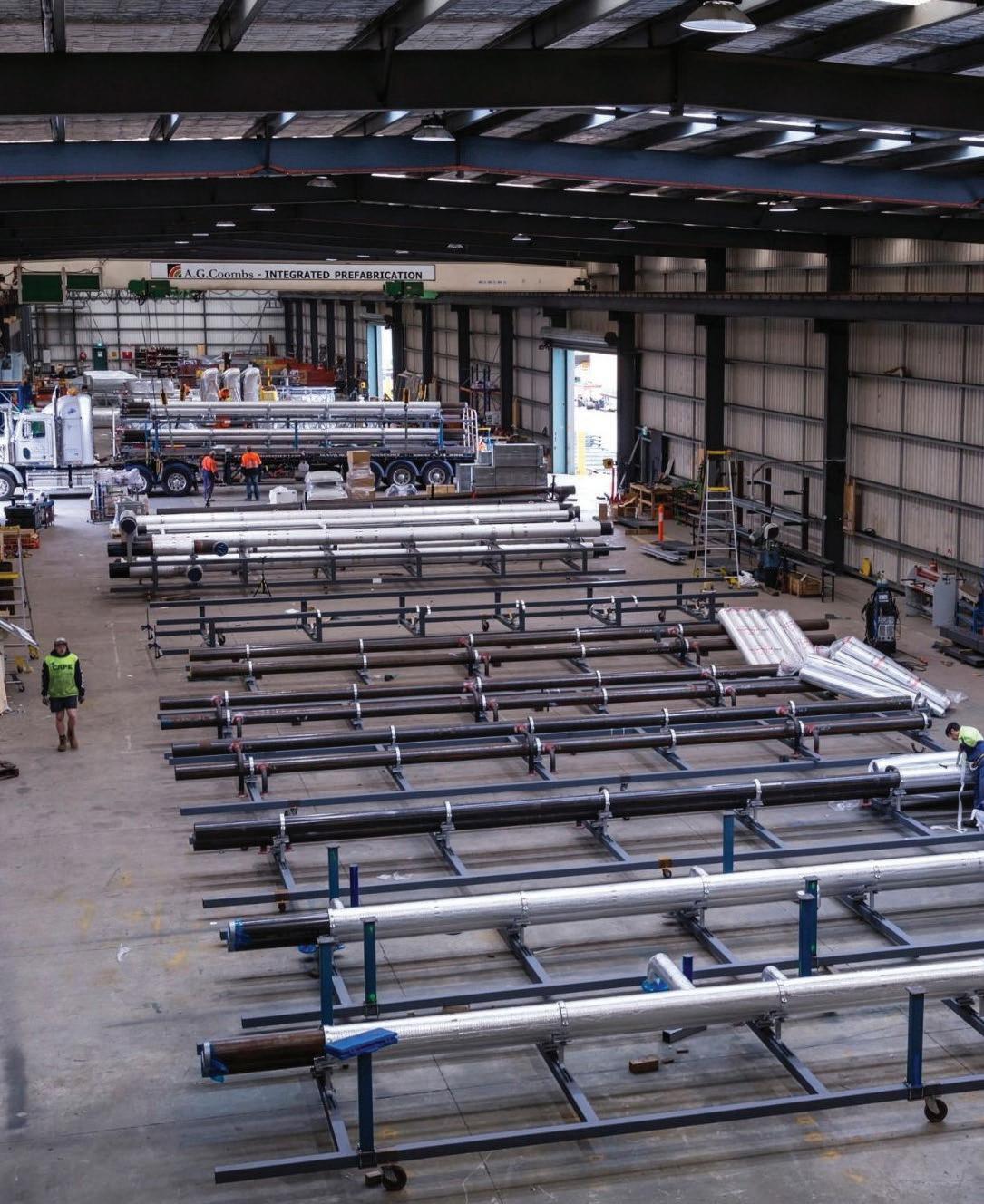
Integrated Prefabrication Manager Daniel Waack at the A.G. Coombs Integrated Prefabrication Facility in Keysborough.
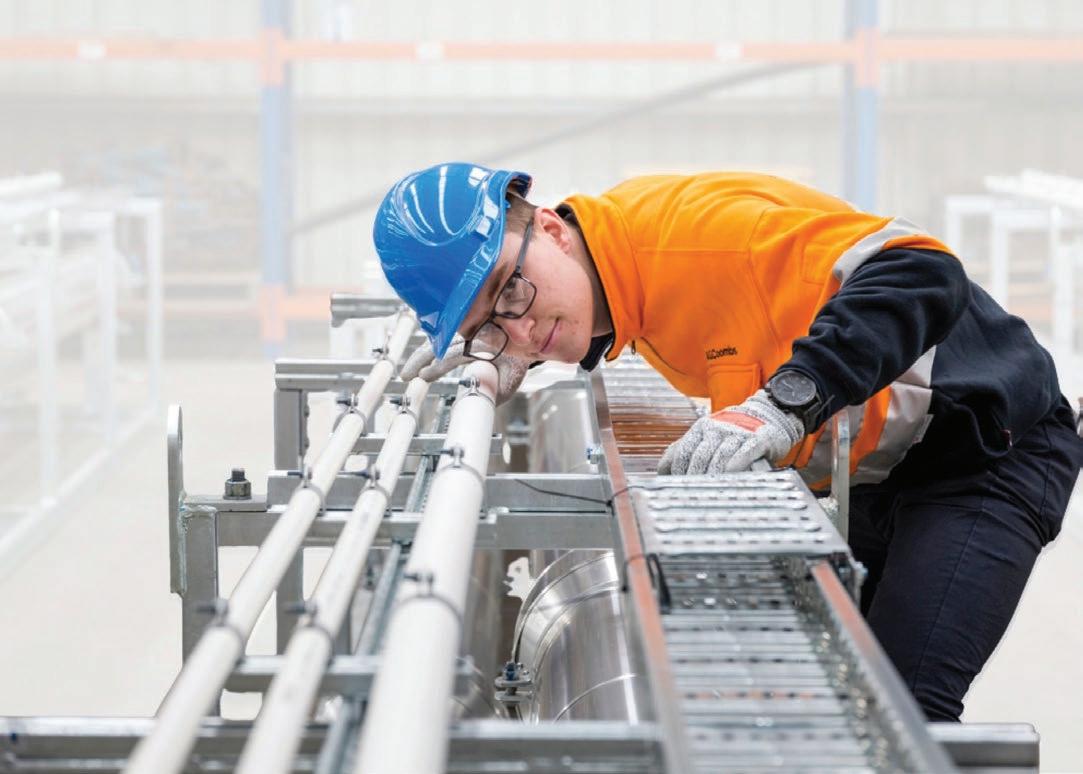
Already recognised as an innovator and industry leader, A.G. Coombs has embraced the concept of Design for Manufacture and Assembly (DfMA). The idea behind DfMA is about designing up front for off-site manufacture of significant building components, which can then be assembled reliably on site. The standardisation of components and sub-assemblies, and the creation of a standard kit-of-parts, will inevitably come out of the move to DfMA. Importantly, it means that prefabrication can be factored into planning and design at the front-end of a project, as opposed to being a response to a particular problem or a bespoke solution for a specific project.
The big picture is exciting, as DfMA brings the design processes together to realise the benefits of off-site prefabrication.
Once DfMA becomes more readily accepted throughout the industry, designers will be able to go to a catalogue of parts and then integrate what they need into their designs. Repeatable items, or an entire kit of parts, can then be priced and costed at a much earlier stage, allowing for greater certainty and cost efficiencies across the board.
At A.G. Coombs, the plan is that DfMA will elevate the role of prefabrication during the planning and cost estimation phase, thereby resulting in faster project completion times, as well as greater cost efficiencies and quality outcomes.
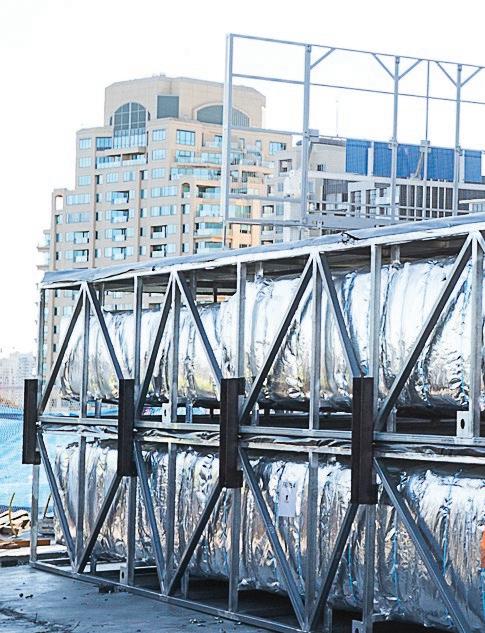
Preparing to lift a three-storey riser into position at Barangaroo South, Sydney, 2014. Prefabrication of multi-storey risers has ensured greater safety for workers.
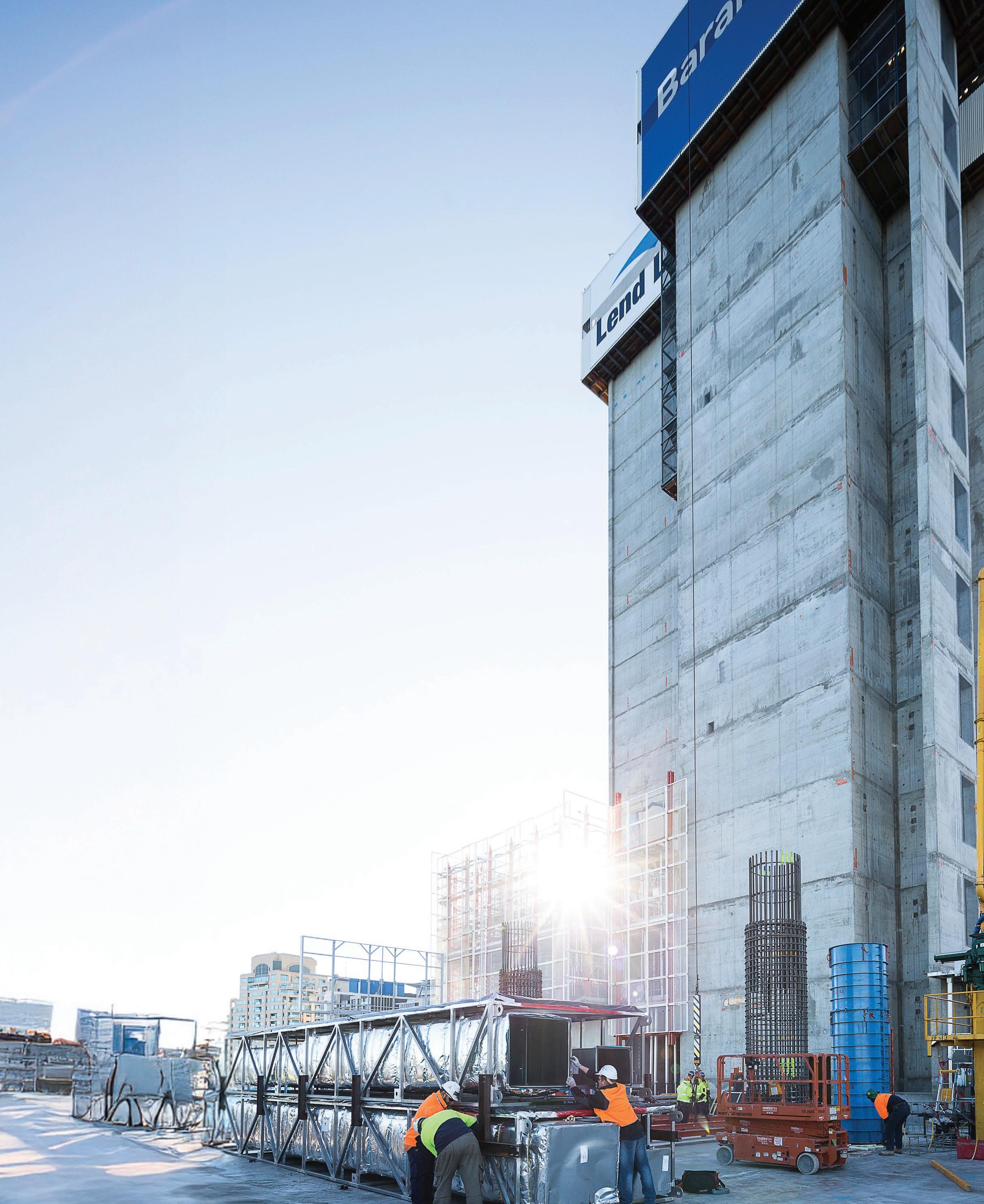
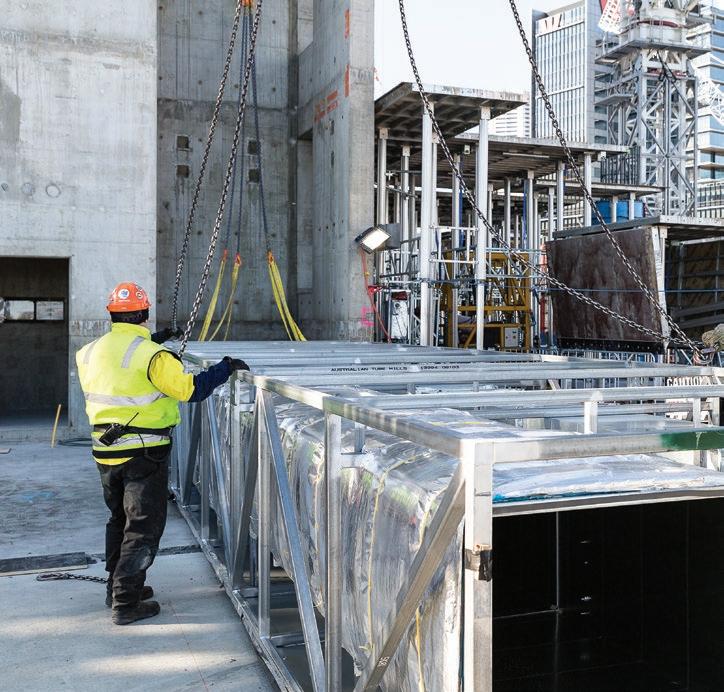
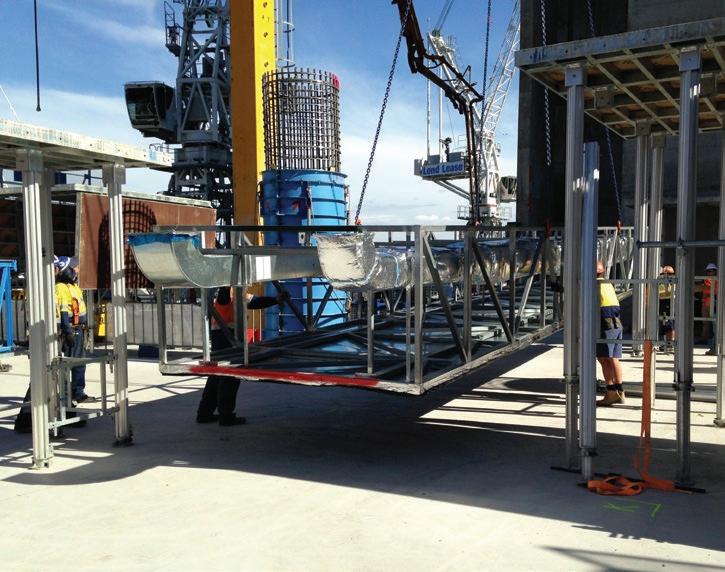
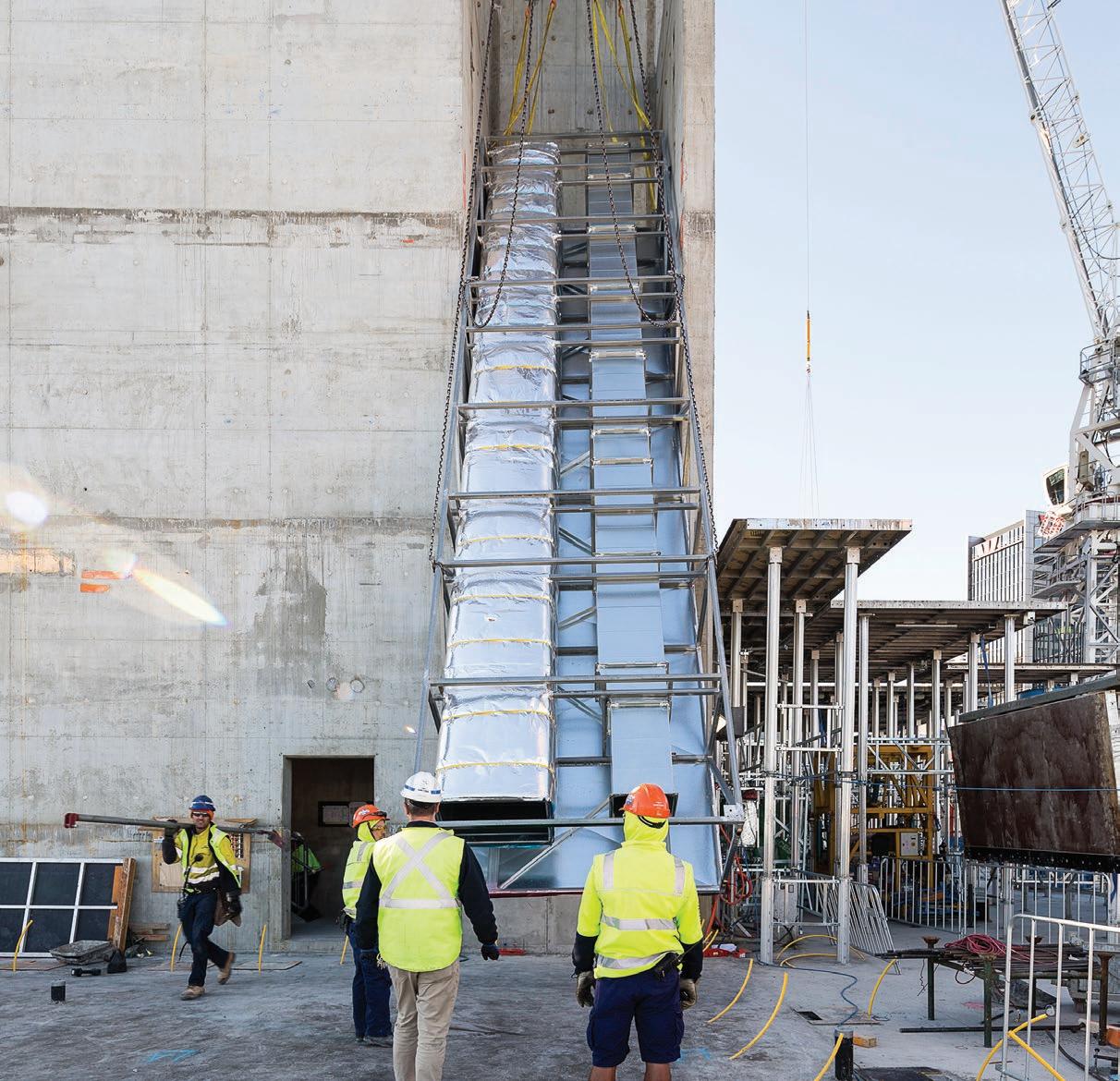
When the installation of services risers was identified as a major safety risk at the Barangaroo South development in Sydney, A.G. Coombs’ solution was to prefabricate the risers in three-storey sections and then deliver them to the site for installation. Normally, the trades would have worked on cantilevered scaffolding over the riser voids, which at Barangaroo’s T2 tower meant working at heights of up to forty-three storeys. Setting aside the significant height risk, there was also the danger of debris falling from above.
A.G. Coombs’ approach was a first in Australia for buildings of this height. Prefabricating riser modules in a controlled factory environment all but eliminated the need to work at height, and reduced the time the trades had to spend constructing these elements on site. Pioneered by A.G. Coombs, this approach became an industry standard in Australia and in 2015 was recognised with innovation awards from AIRAH and the Property Council of Australia.
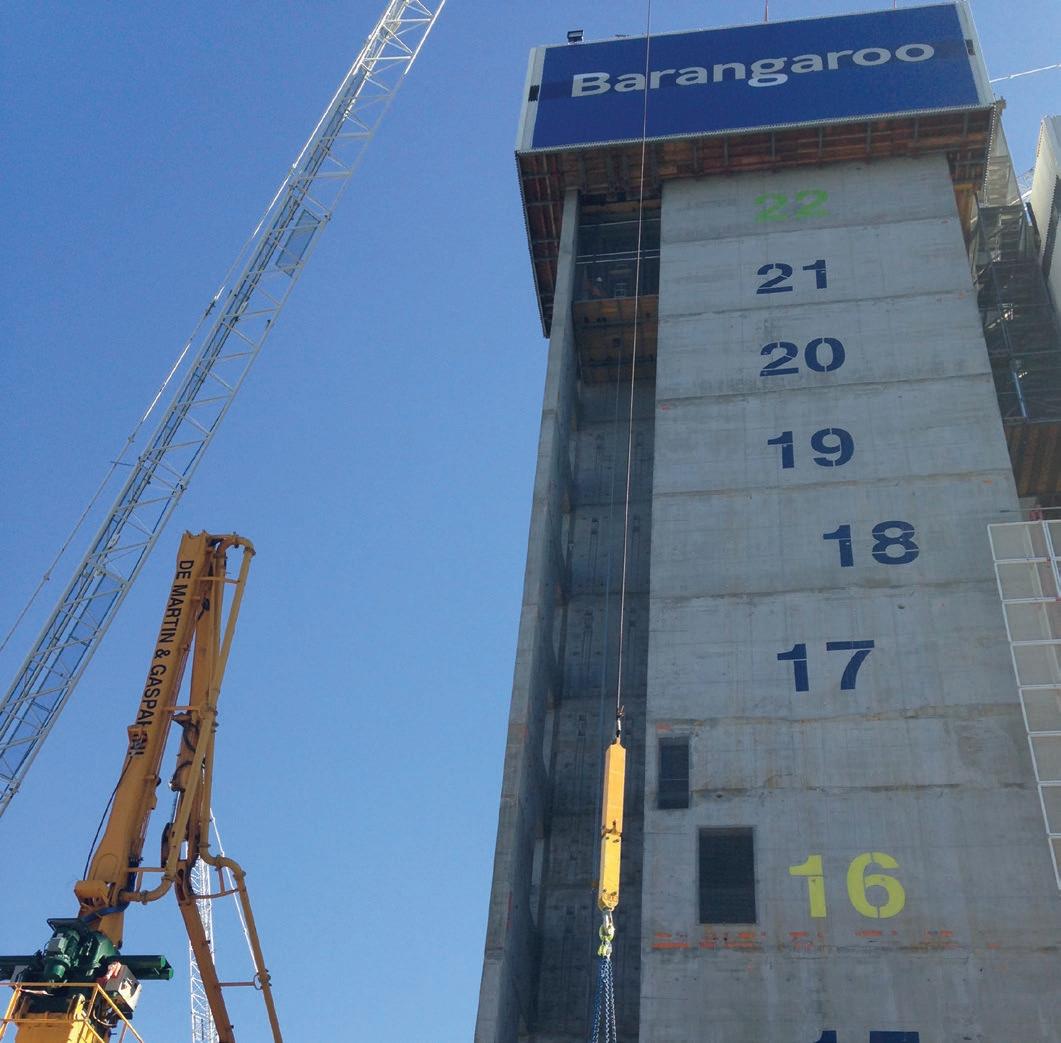
A.G. Coombs was a business that had achieved many things. The evolution into a technical services specialist had been accomplished, the move interstate had been realised, the whole-of-life offering refined, and the once family-owned company transferred safely into the hands of employee shareholders. Above all, the culture was strong. Without the resilience and unity of purpose displayed by its people over two challenging years, A.G. Coombs may not have withstood the impact of the COVID lockdowns as well as it did.
This resilience could be attributed to the company’s deeply ingrained core values, among them leadership, teamwork and continuous improvement. But how does one perpetuate these values? Especially with more than 1,000 people spread across nine locations and a new generation of employees coming through the organisation.
“We always say that our people are our greatest assets,” commented Russell. “Without their collaborative mindset and continuous desire to improve, the company could not adapt to challenging situations, let alone innovate and deliver value to our clients. For A.G. Coombs to be the best, our people need to be the best.”
The ideas that had been brewing in his mind for many years had coalesced into a feeling that everyone in the company had the potential to lead. “I wanted people to understand that leadership is a journey,” said Russell. “Everyone is capable of leadership or role model behaviour within their team.”
Although A.G. Coombs offered its employees numerous professional development programs, there was a real opportunity, he felt, to elevate these programs and give them added meaning and purpose. An all-encompassing title was needed – one with gravitas, and one that would convey learning, continuous growth and being part of a unique cohort of like-minded people.
The word ‘academy’ sprang to mind. It referred to a school or college of higher learning, but it also denoted a society of people organised to advance something, such as science or literature. So, why not have an academy for the advancement of leadership skills? Indeed, a Leadership Academy? The title had gravitas. More importantly, it would allow the company to bring all its leadership programs together under the one banner, with leadership and role model behaviour as central themes.
The next step would be to launch the Academy – not just an announcement on the company’s intranet, but more formally at a special venue, and preferably one where champions soared. A date was set, the venue selected and speakers invited. It was time to take people where they hadn’t been before, for the benefit of everyone.
Finally, on 4 March 2024, after months of preparation, Russell Telford strode up to the podium at the Melbourne Cricket Ground (MCG) and launched A.G. Coombs’ Leadership Academy to a large audience of employees and invited guests. In the audience were staff from across the company, along with selected clients, VIPs from social value partnerships including the Richmond Football Club, and international guests from U.S. Engineering and NG Bailey.
In his speech, Russell spoke about role models, peer influence and creating the right environment for others to thrive – the three pillars, he said, to successful leadership. He then invited well-known sports personalities to offer insights on how they get the best out of themselves and their teams. Among them were A.G. Coombs Cultural Ambassador and former Australian rules football star, Shane Edwards, along with Rohan Taylor, Head Coach Australian Dolphins Swim Team. Several weeks later, the Dolphins would compete successfully at the Paris Olympic Games, winning nineteen medals – seven of them gold.
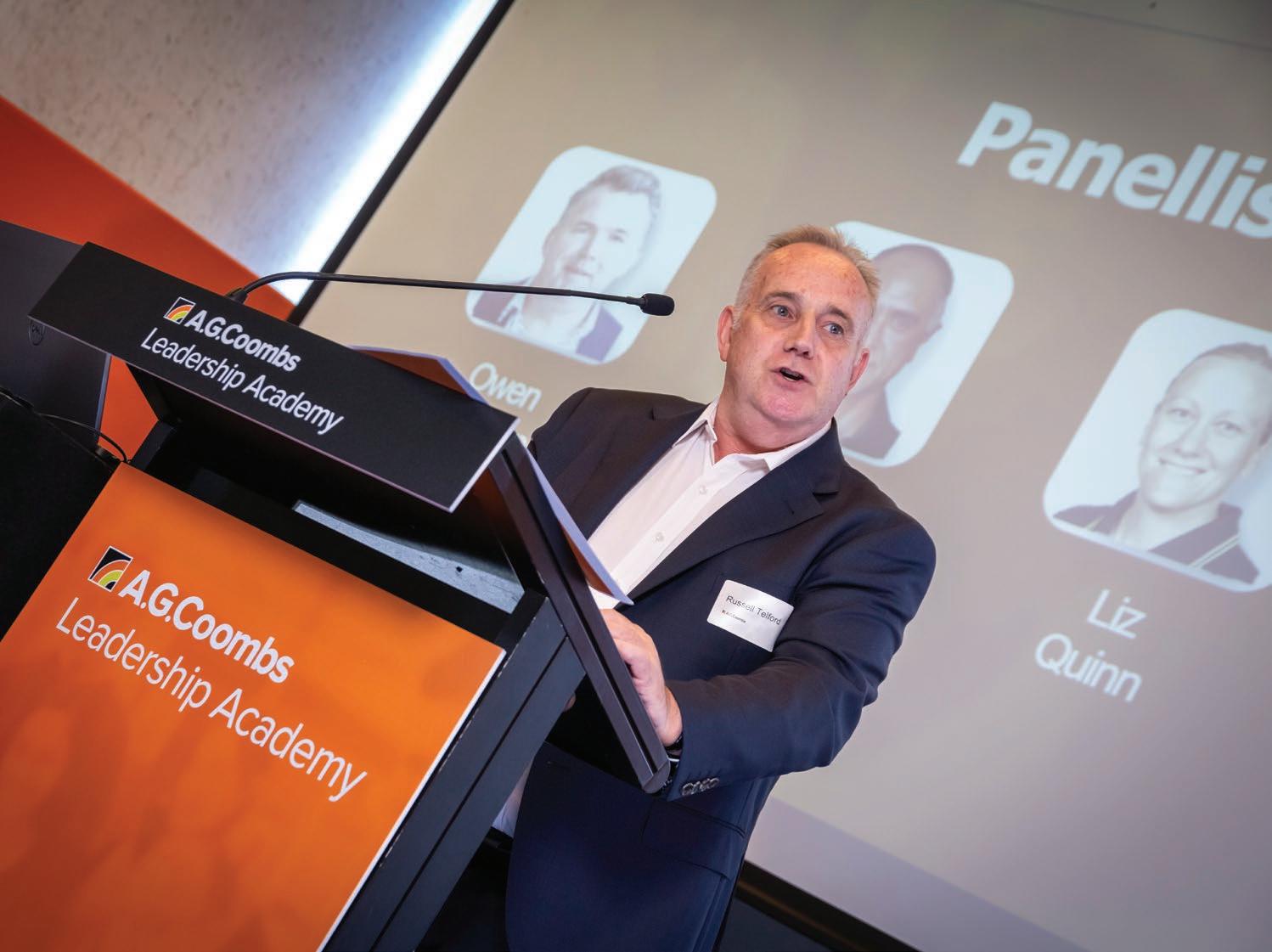
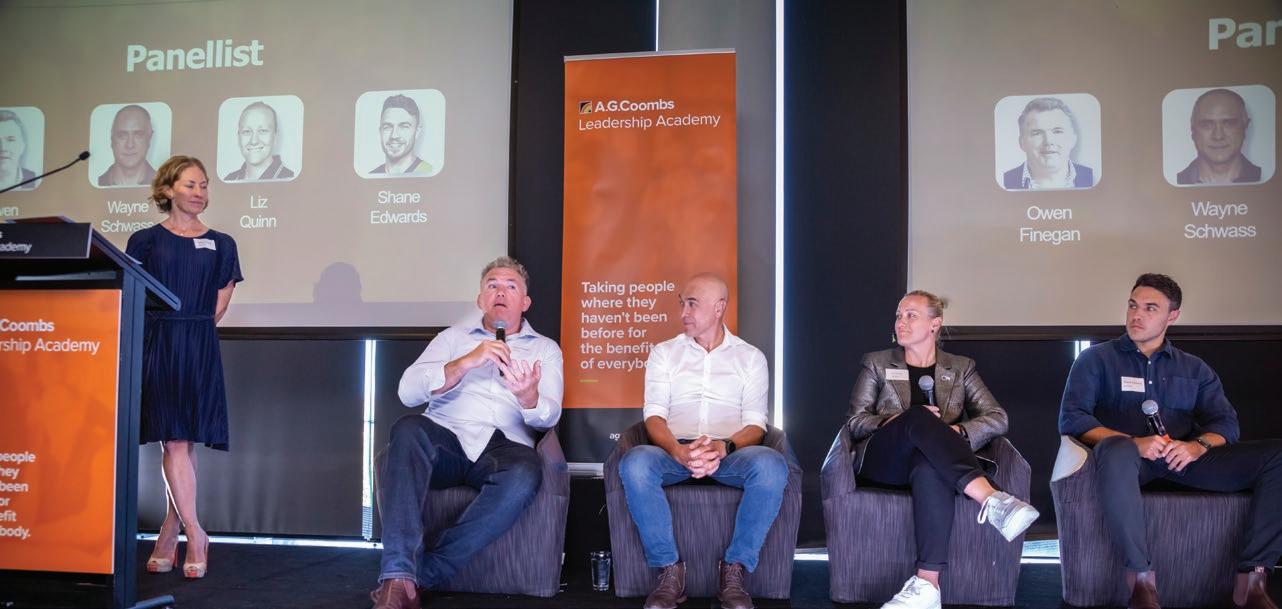
The function was preceded by an Indigenous smoking ceremony. Guest speakers included a panel of leading sporting identities.
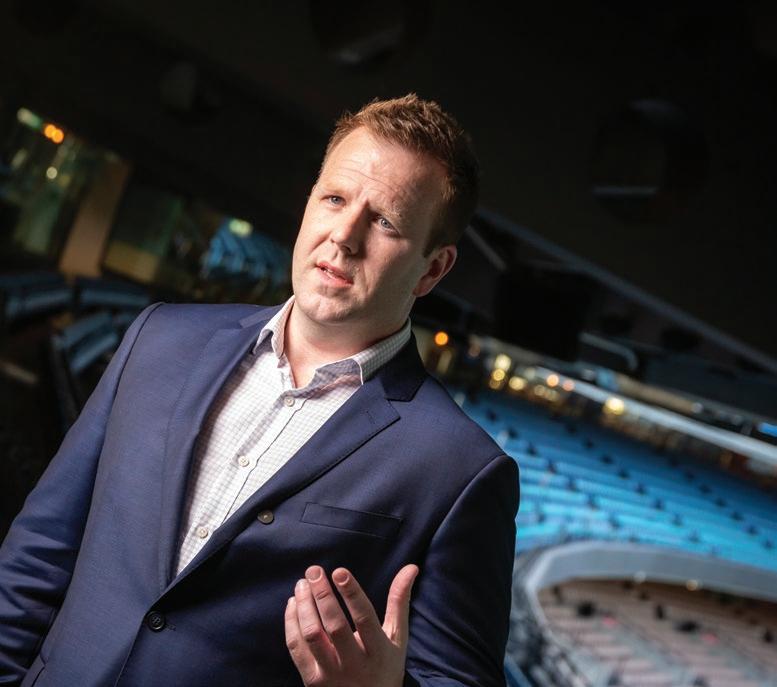
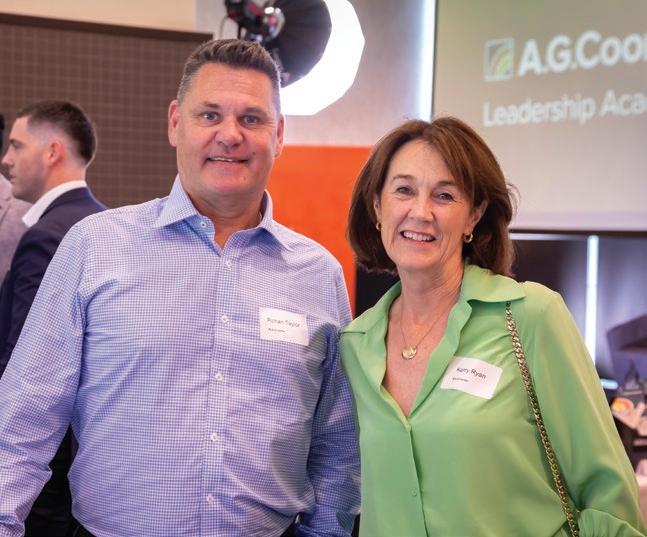
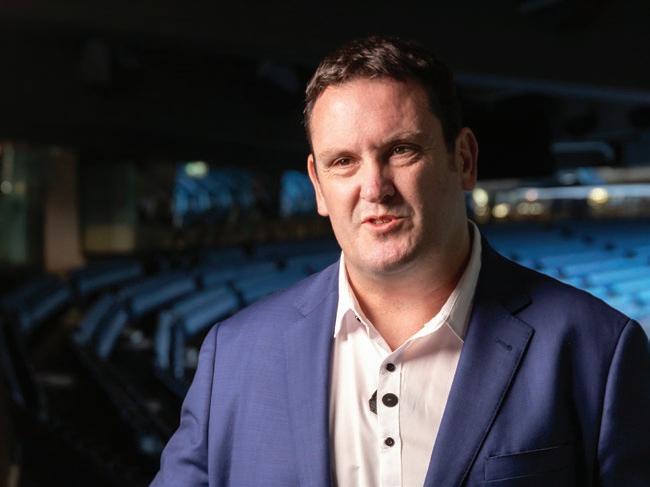
Participants at the A.G. Coombs Leadership Academy launch, 2024: Gavin Mitchell, National Service Operations Manager (top left); Keynote speaker Rohan Taylor, Head Coach Australian Dolphins Swim Team, with Kerry Ryan, A.G. Coombs Non-Executive board member (top centre); Aaron Clark, Executive Leader Social Procurement, Inclusion and Engagement (top right); Donna Edgecombe, Executive Assistant to the Managing Director (centre right); Luke Snell, Work Health and Safety Manager (bottom left); Jane Taylor, Manager Quality, Health, Safety & Environment (bottom centre) and Shane Edwards, A.G. Coombs Cultural Ambassador (bottom right).
Since the launch, the A.G. Coombs Leadership Academy has enabled employees to embark on a journey with the company – one that helps them grow professionally as well as personally. In so many ways it was an inspired idea, because while employees might be working on different projects around the country, the Leadership Academy would be something they had in common.
“As we grew and established new offices in different cities, we were mindful that a silo mentality could evolve,” said Russell. The danger with silos, he explained, was that the culture could be diluted and the core values neglected. The Leadership Academy would hopefully continue that sense of belonging and connection to A.G. Coombs nationally, in addition to helping people further their skills and enhance their leadership qualities.
To this end, new programs were introduced and existing ones revamped, with some programs requiring time away from the office. Leading Edge, for example, is an immersive residential program – one carefully curated to ensure a blend of senior leaders from around the organisation. Other courses are a mix of self-study, one-on-one training and group workshops.
Programs were also designed for employees to access whenever they choose. These included the Conversation Series featuring one-on-one interviews conducted by renowned sports journalist and A.G. Coombs Ambassador Tiffany Cherry with leaders from within A.G. Coombs, as well as with journalists, authors, and high-profile athletes and business leaders.
There was also an awareness that a person’s wellbeing was just as important as having the right skills when it came to cultivating a productive work environment. This recognition saw the inclusion of programs such as High Performance Mindfulness and the Science of Wellbeing.
The Leadership Academy programs have offered a clear structure and pathway for professional growth and improvement. Participation is not mandatory, however if the waiting lists for some of the programs are anything to go by, then the offerings have resonated with employees.
“We have a huge waiting list of up to twelve months for some of the programs,” said Claire Bennett, Manager Learning and Development. “Investing in these programs is a huge commitment – not just the direct cost to the company, but also the indirect cost of people being away from their jobs. It’s a privilege to work for a company that sees professional development as an investment, not an expense.”
“You really feel valued when you know the company wants to invest in you,” said Madeleine Moratti, who joined A.G. Coombs in Sydney as an engineering graduate in 2020, and who would go on to win the company’s Young Achiever Award in 2024. Even as a graduate, Madeleine has been able to participate in leadership programs where she has met people from other parts of the A.G. Coombs Group. “Common values run through the interstate offices,” she remarked, noting the many opportunities to interact with colleagues from other offices, not only through the Leadership Academy, but also through short-term work transfers on various projects.
Clearly the learning never stops. Even senior leaders are provided with opportunities to hone their skills through programs such as Leading Edge. Andrew McGregor, General Manager Walker Fire Protection, found value in the way the Leading Edge sessions challenged him and others to work collaboratively and to look at things from a different perspective. Having previously worked for other large organisations, he concluded that the training offered was “best in class” within the industry. “It’s next-level, high-end training,” he said.
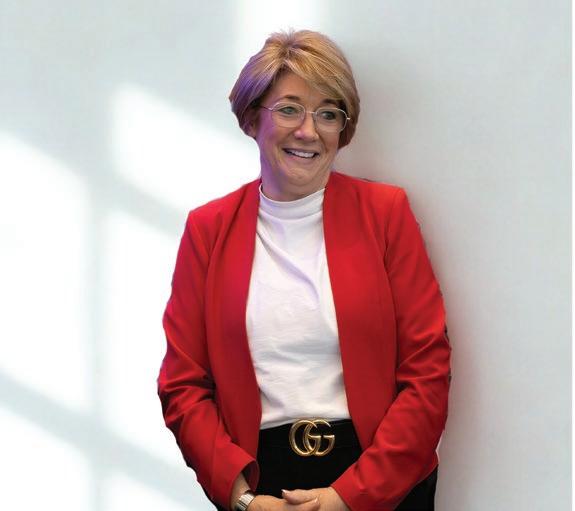
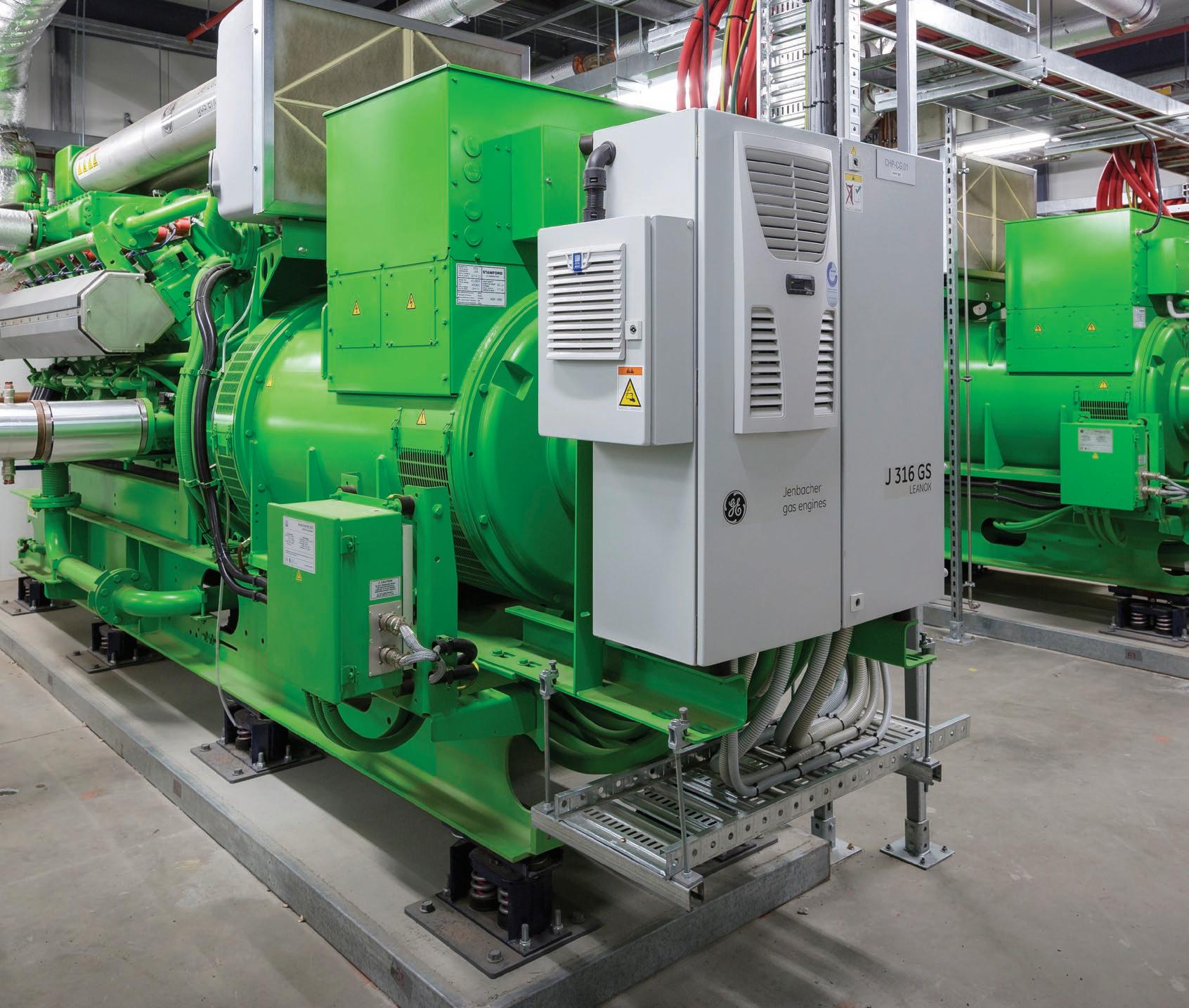
Terri Hosking, General Manager Integrated Technical Management, wholeheartedly agreed. A few minutes with Terri and it is clear that she sees “lifelong learning” as one of the keys to successful leadership. Programs like Leading Edge, she points out, are designed to feed learning back into the business. “We worked on a specific project as a team with a view to applying something tangible in our workplace post the formal learning sessions.”
There is no denying that what benefits employees also benefits the company. One only needs to hear some of the comments from A.G. Coombs’ longstanding clients to understand why the company is considered Australia’s leading building services specialist.
“They have this can-do attitude,” said Geoff Moore, former Victorian State Manager, Lendlease. “They listen and see other parties’ perspective and they bring their considered thoughts and solutions to the table.”
“Customer service is a strong point; they’re not just there to do a job,” said client Peter James, speaking of his interaction with A.G. Coombs over thirty-plus years. He has seen this willingness to engage and bring value to a project applied “seamlessly” across the board. “It’s their culture. It comes from leadership and the standards that have been set internally. These things don’t happen by accident. It takes a lot of training and a strong people ethic. It’s hard to match that sort of culture.”
The culture of which he speaks has strengthened over eighty years, supported by a leadership team committed not only to preserving it, but also to evolving it in ways that reflect changing aspirations and priorities. Today, the culture is nurtured by the company’s employees (presently more than eleven hundred people) who together form the A.G. Coombs community – a national business with a well-defined identity.
Notwithstanding A.G. Coombs’ growth into a national operation, there are still strong traces of the family atmosphere that typified the company’s workplace in the early years. “We have family days, flower deliveries to parents of newborns and birthday cards for the children –not to mention a Social Club and a Kids Club,” said Service Technician Andrew Wallbridge from A.G. Coombs (NSW). “I have worked at a few companies before A.G. Coombs and they had nothing like this.”
“The culture is one of family,” remarked Kristina Spachis, NG Bailey’s Transformation Manager, during her 2023 visit to Australia as part of the International Peer Group Talent Exchange Program. “I got that sense quite quickly.”
Things that stood out for her were the social days and the Annual Dinner and Awards Night – to which partners are invited – as well as the teamwork and camaraderie within the business. “When you come into the office, you get the sense that people like working and spending time together,” she said.
People stay with companies for several reasons: because the work is rewarding and interesting; because their contributions are acknowledged and they have opportunities to grow professionally; and because they like what the company stands for.
If anyone wants to know whether A.G. Coombs has delivered in these areas, they only need to count the number of long serving employees, with 187 people having achieved 21 years service or more by 2025.
This depth of experience is underscored by former client Geoff Moore. “A.G. Coombs doesn’t have a revolving door of employees. They invest in their people which brings loyalty and long tenure. They’re a safe pair of hands.”
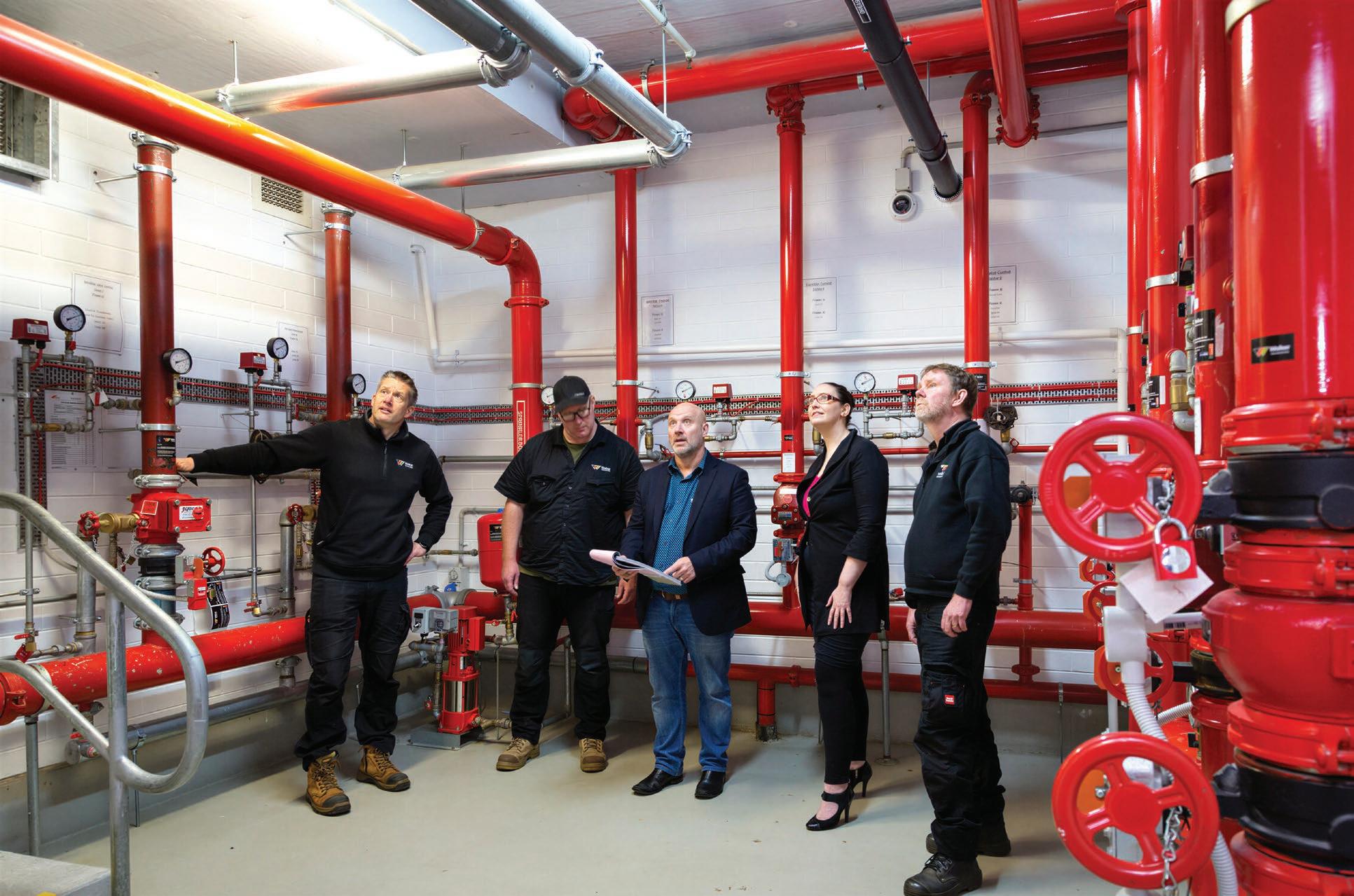
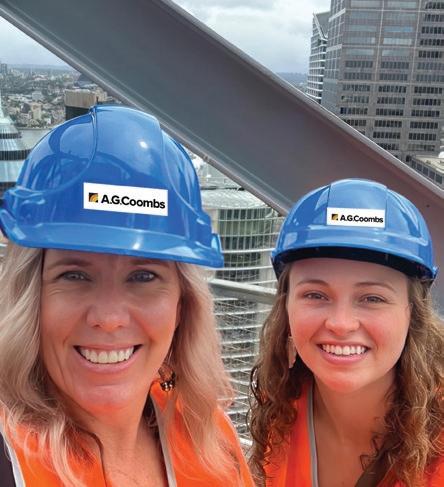
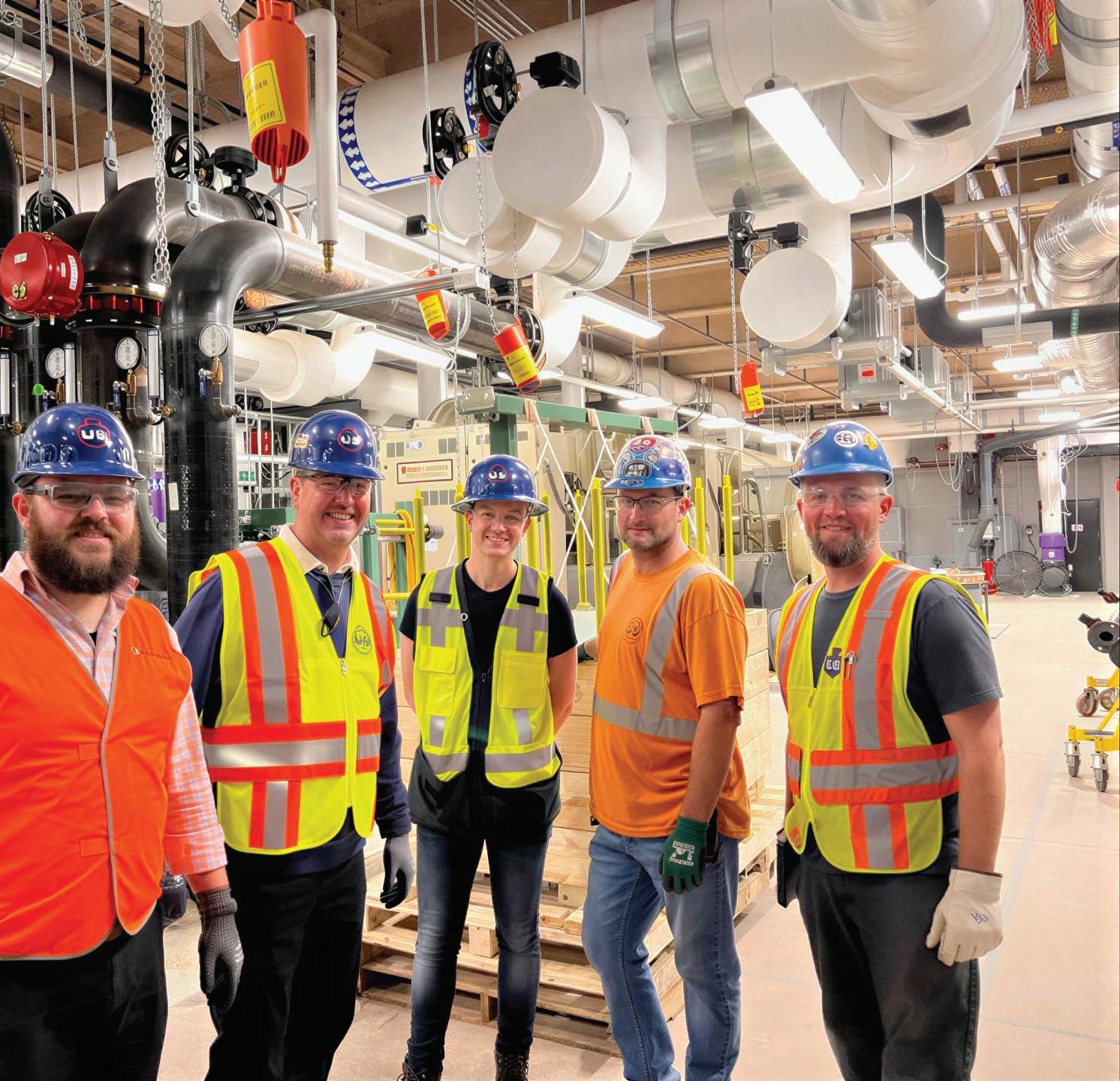
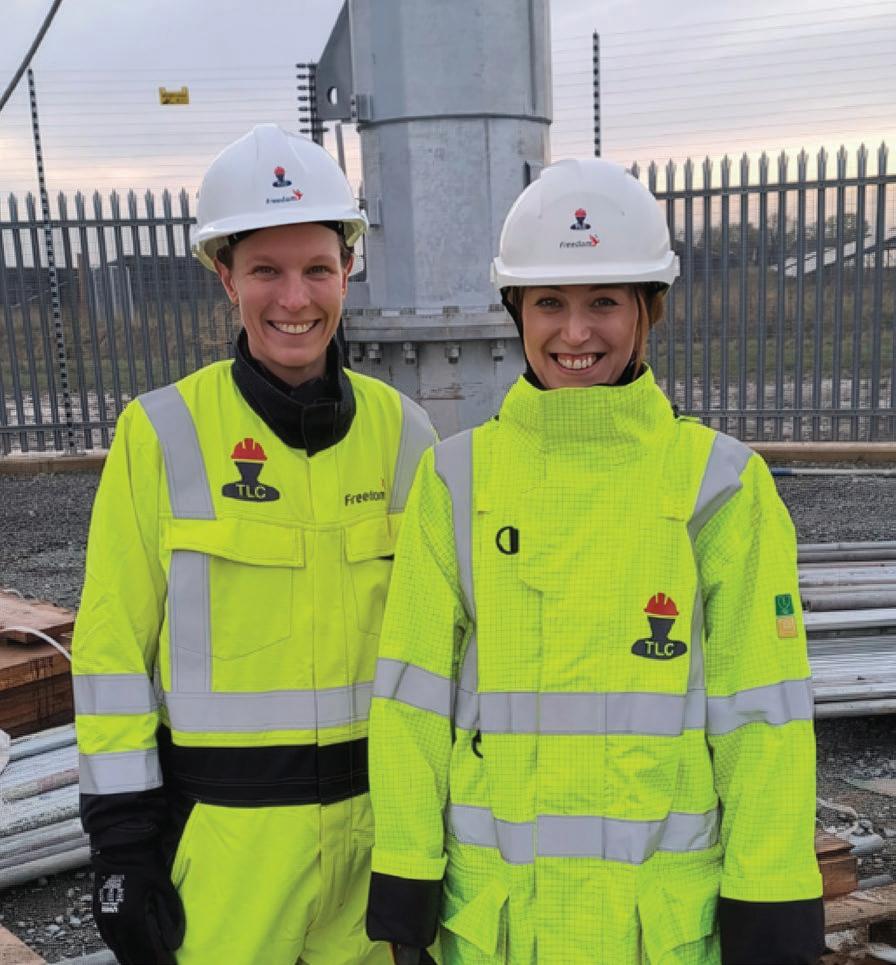
The International Peer Group has provided another avenue of professional engagement for employees, in particular the satisfaction of being part of a global fellowship of people with similar qualifications and levels of experience.
All three companies in the Peer Group have invested time and energy to help strengthen the collaboration, in particular facilitating online exchanges and face-to-face meetings. A highlight was the launch in 2023 of the International Peer Group Talent Exchange Program, which enables selected employees to spend several weeks diversifying their knowledge and skills at one of the three Peer Group companies.
The inaugural participants from A.G. Coombs were Emily McKernan, who went to NG Bailey in the United Kingdom, and Paul Adcock, who undertook his exchange at U.S. Engineering in the United States.
Meanwhile, A.G. Coombs hosted Kristina Spachis from NG Bailey and Lauren Wilson from U.S. Engineering.
1. Jodi Whelan, Executive Manager Customer Engagement, A.G. Coombs (left) with Lauren Wilson, Project Manager, U.S. Engineering. 2. Kim Hesline, Executive Manager Employee Services, A.G. Coombs (left) with Kristina Spachis, Transformation Manager, NG Bailey. 3. Paul Adcock, Project Engineer, A.G. Coombs (far left) with his counterparts at U.S. Engineering. 4. Emily McKernan, Senior Engineer, A.G. Coombs (left) with Sally Williams, HR Business Partner, NG Bailey.
5. Senior leaders of the International Peer Group in Melbourne, 2025. From left: Jonathan Stockton, CEO, NG Bailey; Mark Mitchell, Executive General Manager Projects, A.G. Coombs; Paul Aulton, Managing Director Built Environment Division, NG Bailey; Brendan Rittel, CFO & General Counsel, U.S. Engineering; Russell Telford, Managing Director, A.G. Coombs Group; Tim Moormeier, President, U.S. Engineering; Tyler Nottberg, Chairman & CEO, U.S. Engineering; Brandon Wikoff, Executive Vice President, U.S. Engineering; and Bryon Price, Strategic Development Director, A.G. Coombs Group.
In the years after the pandemic, A.G. Coombs reinvigorated its efforts to cultivate a workplace where women feel supported and valued. From the mentoring and professional development programs of the Leadership Academy to ongoing community and industry engagement, there has been a determination to address the disparity between male and female roles within its industry.
The Advancement of Women events in 2025 highlighted that A.G. Coombs had taken significant strides towards closing the gender gap. The attendance of female employees was remarkable, with apprentices, engineers, estimators, technicians and project managers filling a large function room at Crown Towers, Melbourne. Forty years ago, all these roles would have been filled by men.
Clients, suppliers and corporate partners were also in attendance, their feedback a ringing endorsement of A.G. Coombs’ commitment to advancing women within its business. “Driving meaningful change in diversity and inclusion is not optional – it is fundamental to the strength of our industry,” said Stephanie Graham, Chief Executive Officer Construction, Lendlease. “The leadership of A.G. Coombs, working alongside our customers and supply chain partners, is critical to shaping the industry we need today and for the future.”
Liz Quinn, Australian Navy officer and former Culture & Leadership Coach for Richmond AFLW, was equally enthusiastic. “Coming from another male-dominated industry, I know firsthand what it looks like when organisations genuinely commit to diversity and inclusion (D&I), and A.G. Coombs is the exemplar … D&I isn’t treated as a box-ticking exercise, it is embedded into the [A.G. Coombs] culture, ensuring women are supported and empowered.”
The Melbourne gathering, and others like it in Sydney and Brisbane, highlight the way A.G. Coombs continues to lead by example. The company’s sponsorship of women’s sport – for example Softball Australia, Richmond AFLW and North East Blaze Netball Club –has further demonstrated its resolve to put words into action.
A.G. Coombs ‘Advancing Women’ initiative won the 2025 Facility Management (FM) Industry Awards for Leadership in Environmental, Social and Governance (ESG).
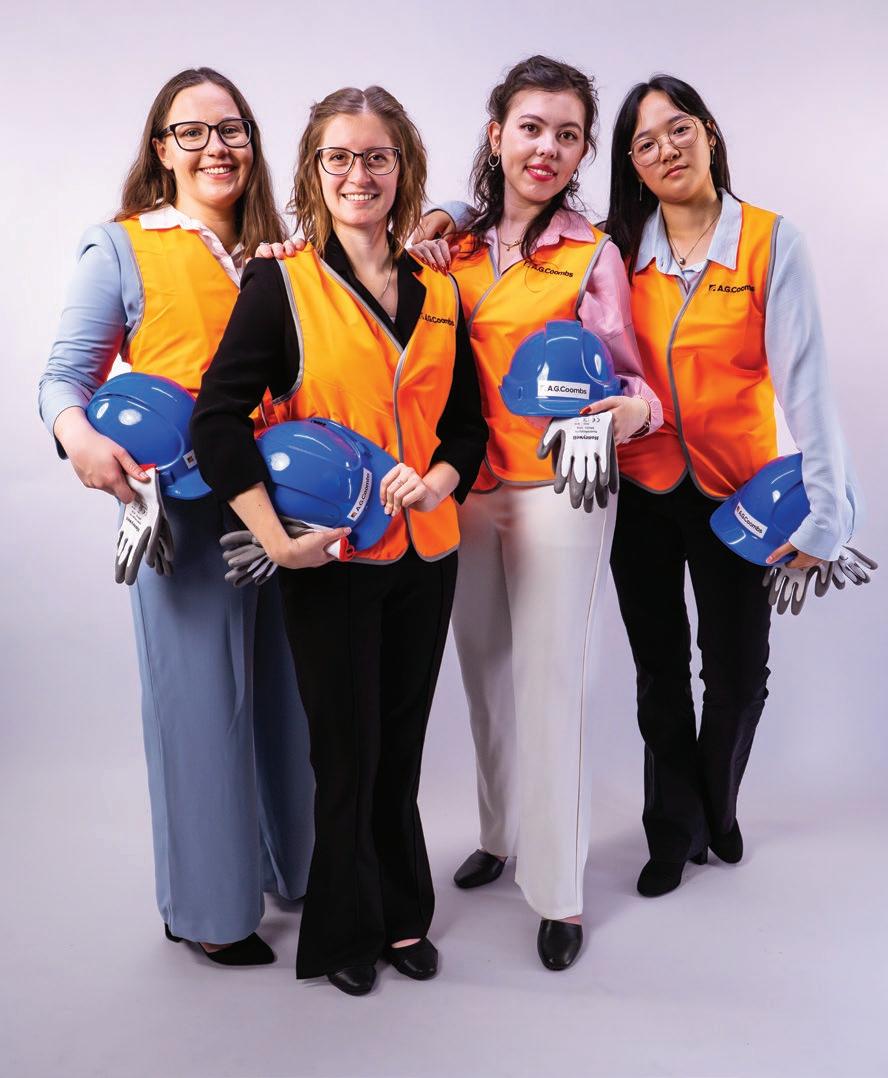
4.
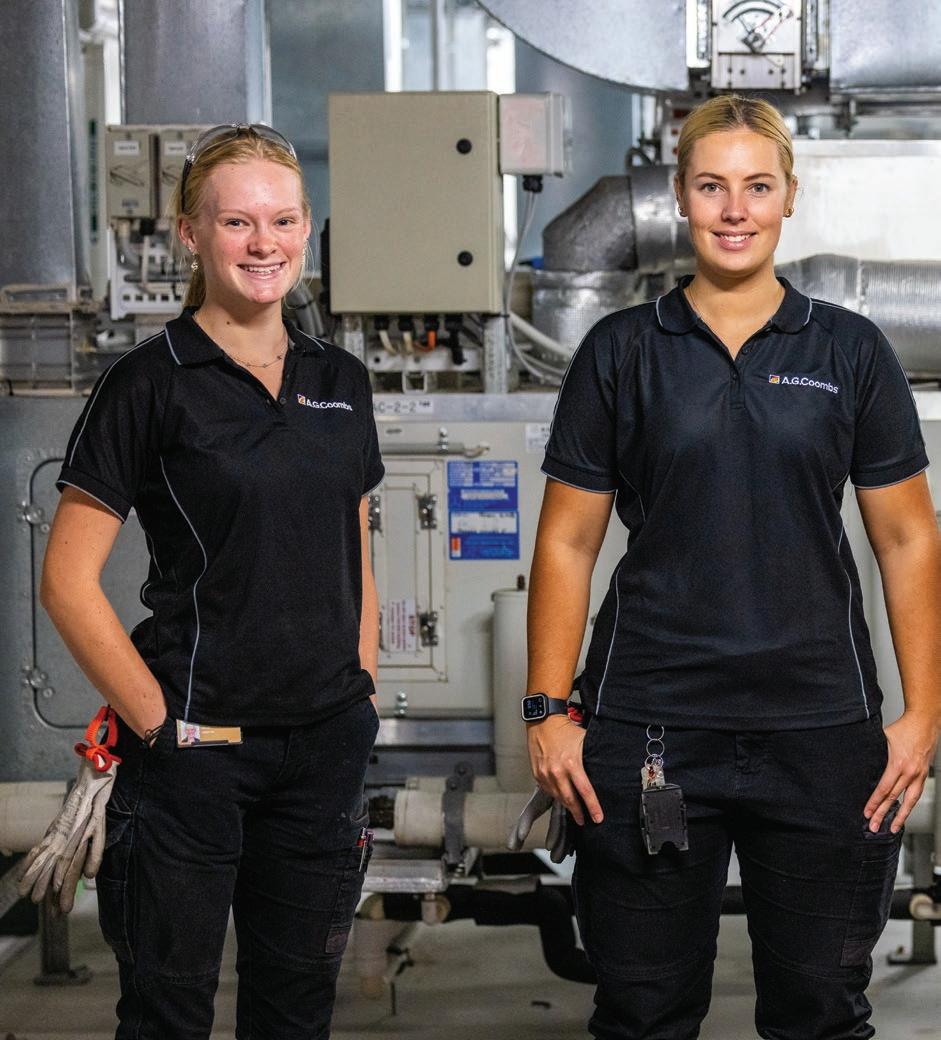
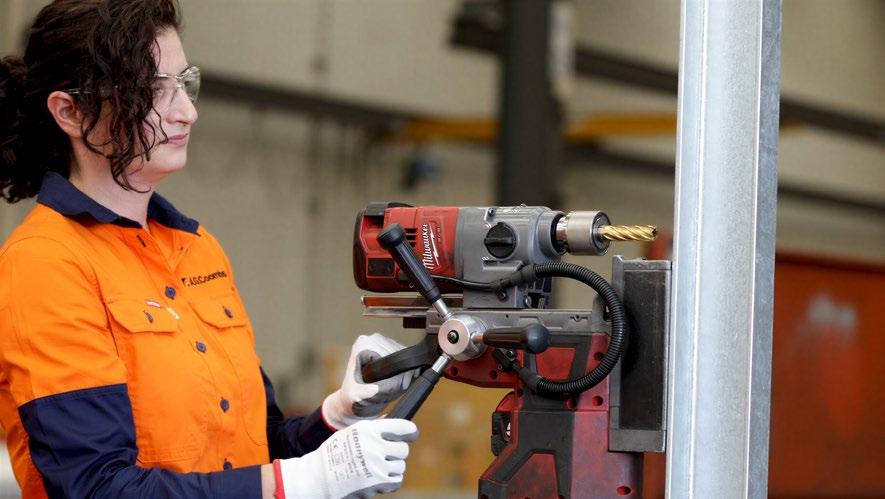
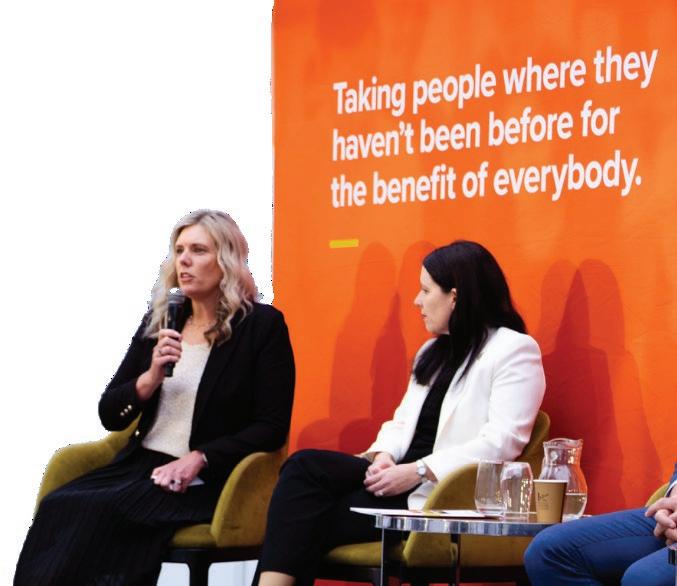
It was a bold step back in 2000 to propose that A.G. Coombs could ‘bottle’ and sell its technical expertise as a standalone service. It was not so much that the company never offered technical advice – indeed it was known for highlighting areas that could be improved and advising people accordingly –but rather a case of packaging this expertise in a way that could be formally presented to clients. The intention was that people would come to think of A.G. Coombs Advisory as more than just a consultancy, because while it would provide advice like other consultants, it would do so from a handson perspective – a crucial point of difference.
The Advisory team did not have to wait long for people to see the value in what they were offering. “It’s not just theory,” said longstanding client Peter James. “They provide technical advice and they also design and deliver the services – so [the advice offered] comes from a practical perspective.”
In 2020, A.G. Coombs Advisory marked twenty years of operations, a milestone that passed quietly given the enormous challenges facing the wider A.G. Coombs Group during the COVID-19 pandemic. But with its 25th anniversary due to be celebrated in late 2025, it was time to acknowledge Advisory’s role in positioning A.G. Coombs as the leading building services specialist in Australia.
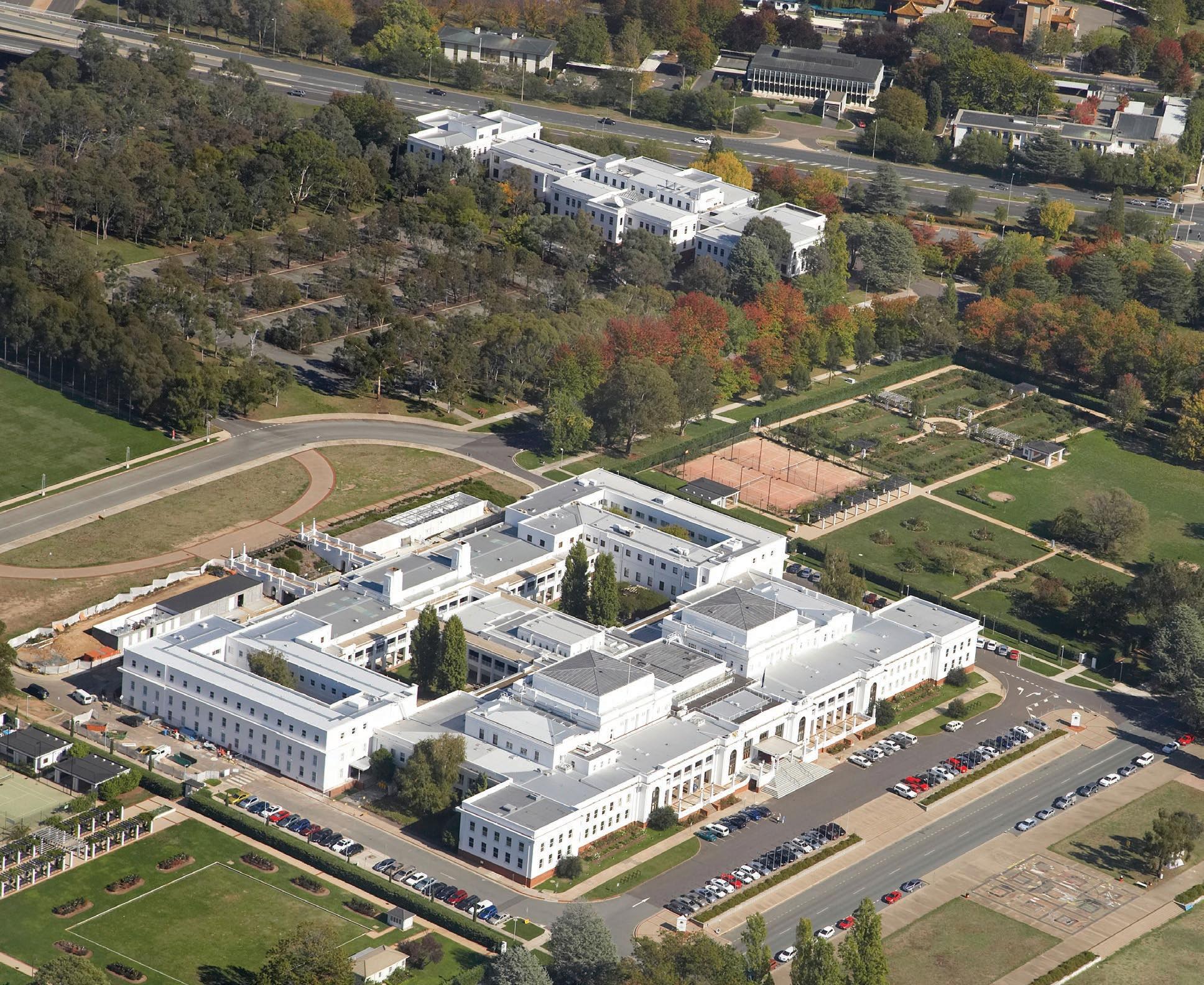
Since launching as a separate business within the A.G. Coombs Group of companies, A.G. Coombs Advisory has provided customers with cost-effective and sustainable solutions for managing the services within their buildings. Its expertise has also been called upon time and time again as an Independent Commissioning Agent (ICA) to ensure that newly constructed facilities perform efficiently and to specification. Significantly, it has also acted as the ICA on buildings where A.G. Coombs has not been involved in the design, construction and delivery of services.
At Australia’s Old Parliament House (now a museum), A.G. Coombs Advisory audited the systems used to manage the building’s engineering assets and then designed a predictive management system to replace these assets in a timely manner, thereby ensuring the smooth and efficient operation of systems and services over the life of the building. At the Melbourne Recital Centre, where acoustics can make or break a performance, it performed the vital commissioning role to ensure the fine-tuning of the low air velocity mechanical services. Its work with clients postconstruction would also open new avenues of engagement for other areas of the Group.
More recently, the quest to reduce a building’s carbon footprint and adopt net-zero targets has seen an increasing number of property owners reach out for advice on
decommissioning gas-fired plants and converting to all-electric systems, supported by renewables.
“Over the years, the ability of A.G. Coombs Advisory to provide practical multi-discipline advice and analysis through a full life cycle lens has been a unique point of difference from other providers,” said Bart Taylor, General Manager A.G. Coombs Advisory. “If needed, Advisory can also draw on the hands-on skills and expertise of the wider Group to deliver the outcomes.”
His words highlighted how the Advisory business has fulfilled the whole-of-life vision spoken about and conceptualised twenty-five years ago.
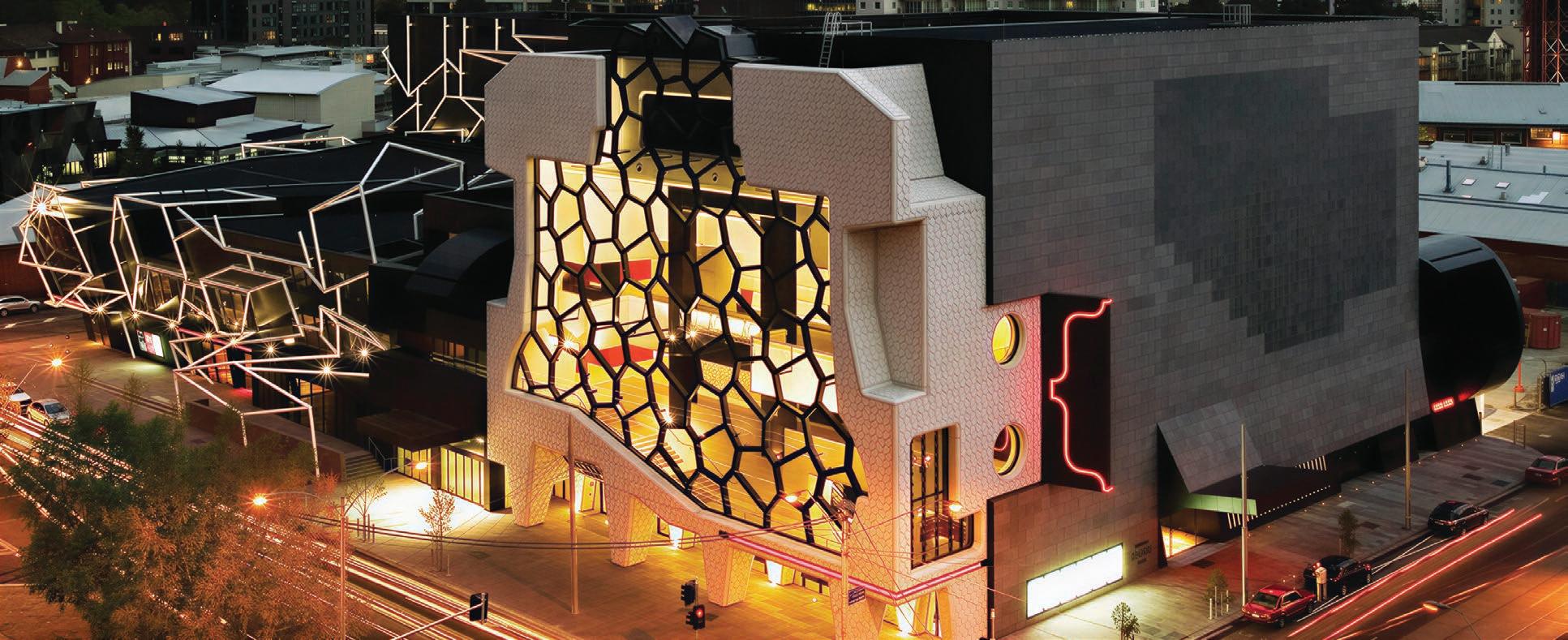
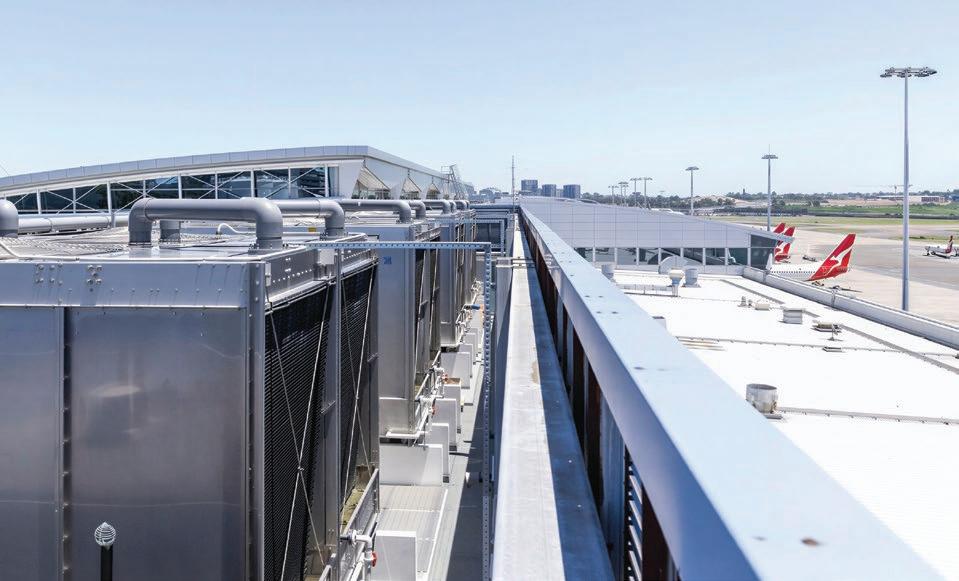
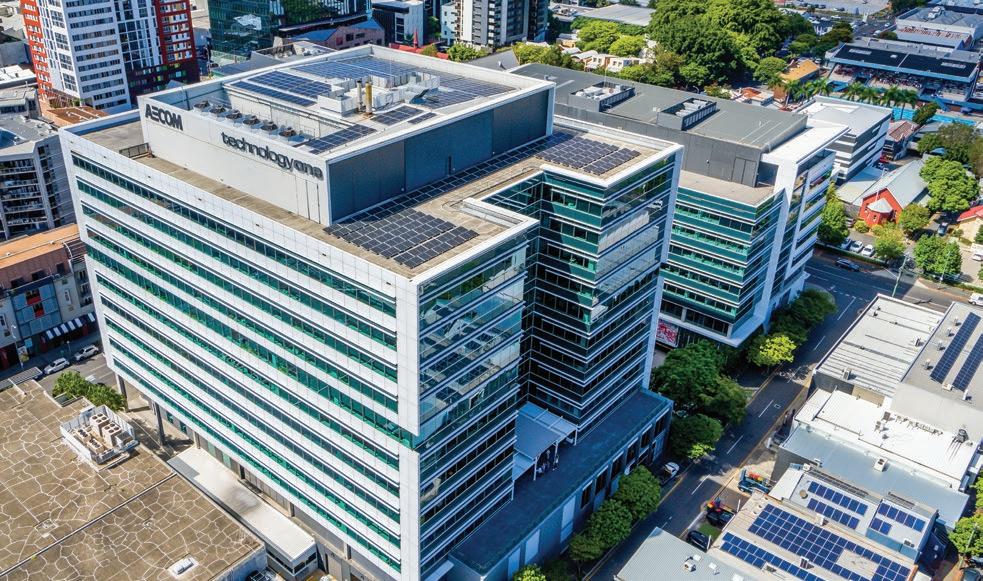
From the earliest days of the business, A.G. Coombs has sought to make a difference in the industries in which it operates. Through its leadership it has helped define industry-wide standards, pioneered prefabrication within the building services industry, and launched initiatives in response to changing community expectations in the areas of sustainability, energy efficiency and emission reduction.
Having publicly committed to net-zero targets in 2021, A.G. Coombs commenced an electric vehicle (EV) pilot program to explore transitioning its fossil fuelled fleet to one that has low or no carbon emissions.This commitment saw A.G. Coombs become the first in its industry to undertake a
transition pilot for commercial utility vehicles. The program tests the capabilities of fully electric vehicles charged with 100 percent renewable energy, while also looking at the practicalities of operating EV vehicles – for example, access to charging stations in multi-storey carparks where height limits can be an issue for utility vehicles with roof top ladder racks.
The goal of running an all-electric fleet is a likely outcome of A.G. Coombs’ Scope 1 emissions target to reduce greenhouse-gas emissions in areas over which it has direct control. With a diesel utility fleet just shy of 400 vehicles, the company’s impact on emissions is set to be significant.
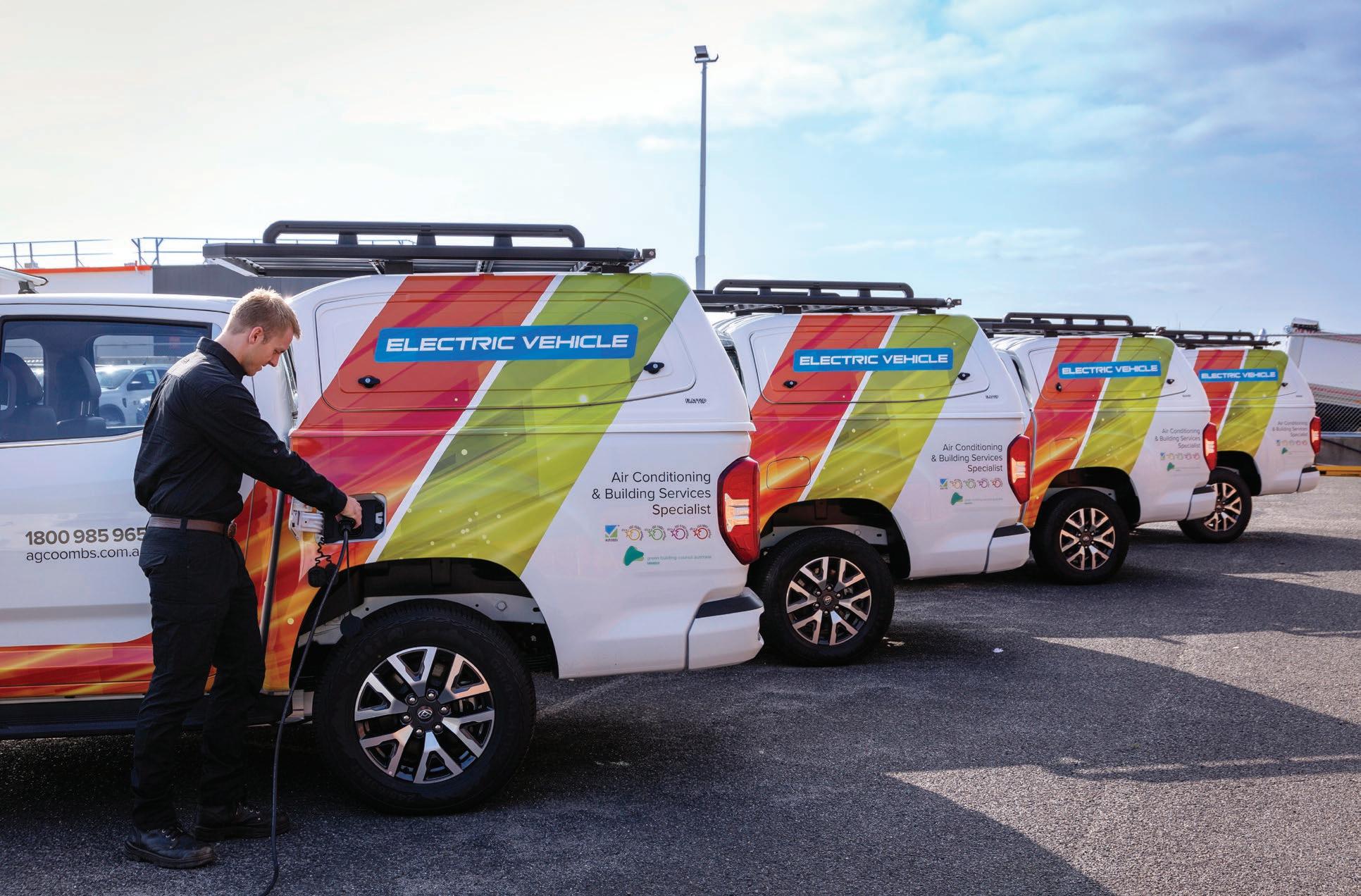
Contract Manager Jarrod Snow charging one of A.G. Coombs’ four electric utility vehicles. One of the main goals of the EV pilot program has been to establish a fleet of carbon emissions-free vehicles that will also satisfy driver preferences.
Digital drawings produced using Autodesk technologies show how A.G. Coombs is meeting the challenge of achieving economies of scale through standardisation in prefabrication. Consequently, it is transforming the industry from a bespoke design and construct approach – where every design starts from scratch – to one that is potentially capable of achieving automotive industry-scale efficiencies.
A.G. Coombs has again led the way by creating a library of files into which years of fabrication knowledge can be embedded. Multi-party workflows are now compressed into streamlined digital pipelines containing decades of engineering expertise. The benefits for clients are cost efficiencies and certainty.
Informed Design innovation by A.G. Coombs was recognised in 2024 when it received the AMCA Award in the Engineering & Technical category for its innovative combination of software and resulting efficiencies.
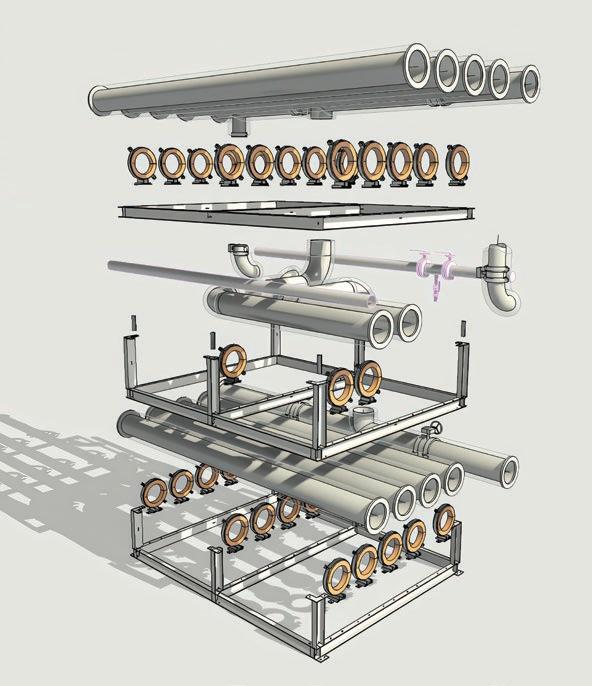
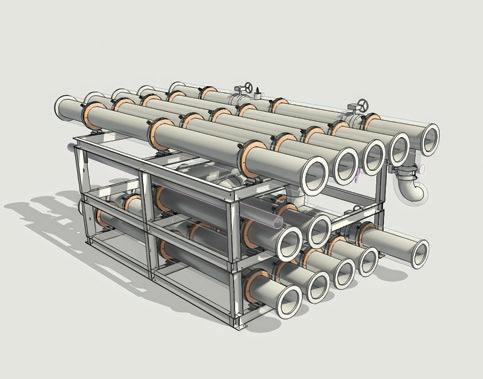
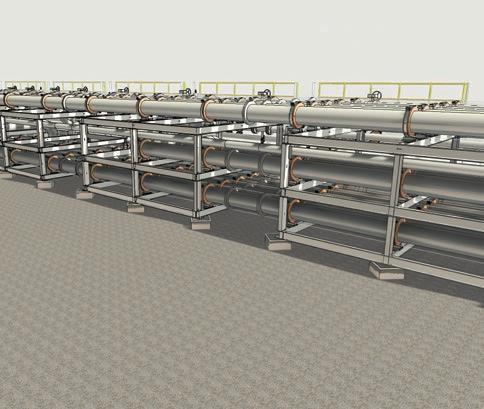
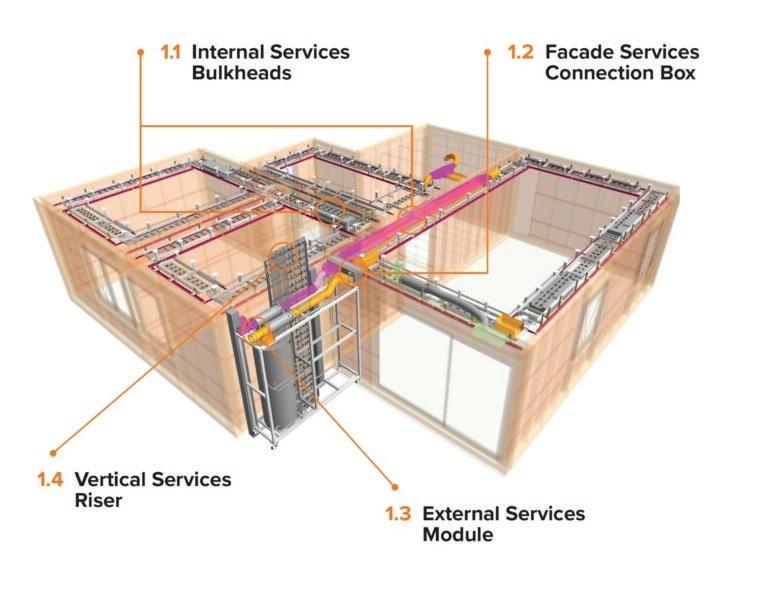
Ever since Allan Coombs co-founded the AMCA, A.G. Coombs has been a major contributor to industry development. In recent years, the company has actively participated in the Building 4.0 Cooperative Research Centre (CRC) Project. This Commonwealth Government supported initiative has seen industry leaders join forces with research organisations to work towards transforming the construction sector into an advanced, efficient and sustainable industry by leveraging digital technology, off-site manufacturing and collaborative human-centric approaches.
The CRC involvement is an important aspect of A.G. Coombs’ research and development (R&D) activities. As an industry partner in the Building 4.0 CRC, it has worked with the CRC to develop a modular prefabricated system for the installation of building services in multi-storey residential apartments.
Installing full services systems as a ‘kit-of-parts’ will overcome the inconsistencies that can occur with a traditional site-based approach, where services are installed on site. A.G. Coombs brought decades of commercial experience in prefabrication and off-site assembly to the table, while also gaining valuable insights into the potential for standardisation in modular construction.
Several years after launching its ‘Reflect’ Reconciliation Action Plan (RAP) – A.G. Coombs proudly announced the launch of its second RAP – the ‘Innovate’ Reconciliation Action Plan 2023–2025. While earlier policies reflected on the need for reconciliation with Indigenous communities, the new RAP identified clear and measurable actions to realise the company’s vision for reconciliation. A product of wideranging consultation, the Innovate RAP involved embedding the recognition of Aboriginal and Torres Strait Islander Australians within A.G. Coombs, and using the company’s industry leadership to encourage others to embrace the journey of reconciliation.
Since 2023, consistent action has underpinned the company’s commitment, with clear timelines for nearly
forty actions. These range from attending activities and recognising dates of significance for the Indigenous community to increasing the percentage of Indigenous participation in the company’s workplace. The latter involves offering apprenticeships, work experience and places in graduate programs to people of Aboriginal and Torres Strait Islander backgrounds.
A.G. Coombs also strengthened its partnership with the Korin Gamadji Institute (the Richmond Football Club’s centre for Indigenous youth) and provided facility management services to the Melbour ne Indigenous Transition School’s (MITS) boarding houses. Based in Richmond, MITS supports Indigenous students from remote and regional communities as they undertake schooling away from their families.
With the launch of its Diversity & Inclusion Action Plan 2023–2025, A.G. Coombs set forth a vision to create a more complete organisation – one that is both diverse and inclusive, and aware of its social responsibilities.
Non-Executive Group Board member and Diversity & Inclusion Committee Chair Kerry Ryan stressed how A.G. Coombs strives to live by its progressive cultural values. The Diversity & Inclusion Action Plan was “another step forward” she said of how A.G. Coombs has worked with stakeholders and the community “to evolve what is largely a traditional industry with recognised gaps in representation from specific groups”.
Once again, A.G. Coombs demonstrated leadership by concentrating its efforts on creating three pathways into the company. In addition to an Indigenous pathway, there is one for the advancement of women, as well as a third pathway committed to working with people of all abilities.
“We strive to build a workforce that reflects the diverse communities we serve,” said Aaron Clark, Executive Leader Social Procurement, Inclusion and Engagement.
“Our aim is to see [the Action Plan] flow through everything we do, so it becomes business as usual.”
A.G. Coombs today is a company shaped by its history, attuned to the expectations of the present and ready to meet whatever challenges the future may bring.
Innovative thinking has long underpinned the company’s operations. It was in the vanguard of businesses embracing Building Information Modelling (BIM), using this to streamline construction and avoid costly and time-consuming issues prior to and during the installation of services. It has also improved the way building services are constructed and delivered, with large-scale prefabricated modules built in its Integrated Prefabrication Facility and then installed in a fraction of the time it would have taken to stick build on site. And its holistic philosophy has resonated with clients, many of whom have seen the benefits of whole-of-life asset management.
A.G. Coombs has shown leadership at every turn. Since Allan Coombs co-founded the Air Conditioning and Mechanical Contractors’ Association (AMCA), the company has been an active participant in its industry, attending forums and presenting papers. The many awards it receives for technical excellence, both from industry bodies and clients, are a testament to an innovative mindset and commitment to excellence. If a measure of leadership is when people who are not necessarily your clients check to see the position you have taken on a particular issue, then A.G. Coombs’ widely read Advisory Notes – some downloaded many thousands of times – reaffirm its reputation as an industry leader.
The increasing use of prefabrication and the boom in data centres – much of it driven by a global AI revolution – will provide challenge and opportunity going forward. There will undoubtedly be a role for AI (artificial intelligence), particularly in collating and managing the vast reams of information handled by the company daily. Taking on board the principles of the circular economy and reducing the company’s carbon footprint will also shape the way A.G. Coombs moves forward into the next decade.
In areas of social engagement, A.G. Coombs strives to act in accordance with clearly defined goals. Its Reconciliation Action Plan and its contribution to Indigenous education programs reflect its commitment to do more. The recent establishment of Murrungar – a capability partnership between A.G. Coombs and Indigenous professionals – will redefine how Australia’s construction and property industries engage with First Nations peoples and businesses using a ‘profit-for-purpose’ procurement model.
A.G. Coombs’ reconciliation journey is ongoing. Its commitment to bringing the third and fourth RAPs –‘Stretch’ and ‘Elevate’ – to fruition will embed and accelerate greater Indigenous participation in its workforce as it strives for change throughout the industry.
Internally, A.G. Coombs’ workplace seeks to be diverse, inclusive and supportive of personal and professional growth. The company’s employees have, and always will be, its greatest assets – perpetuating the vision to be a company that cares, leads, innovates and inspires.


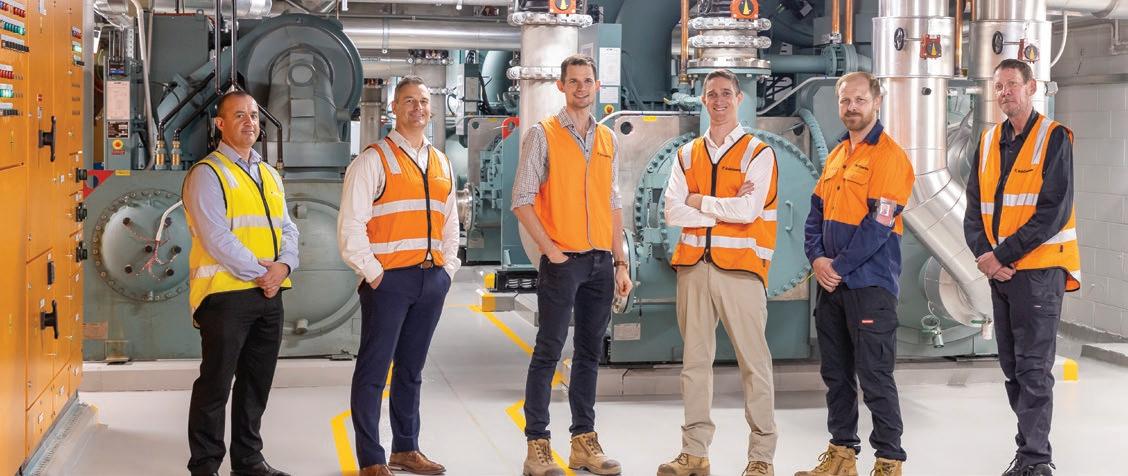


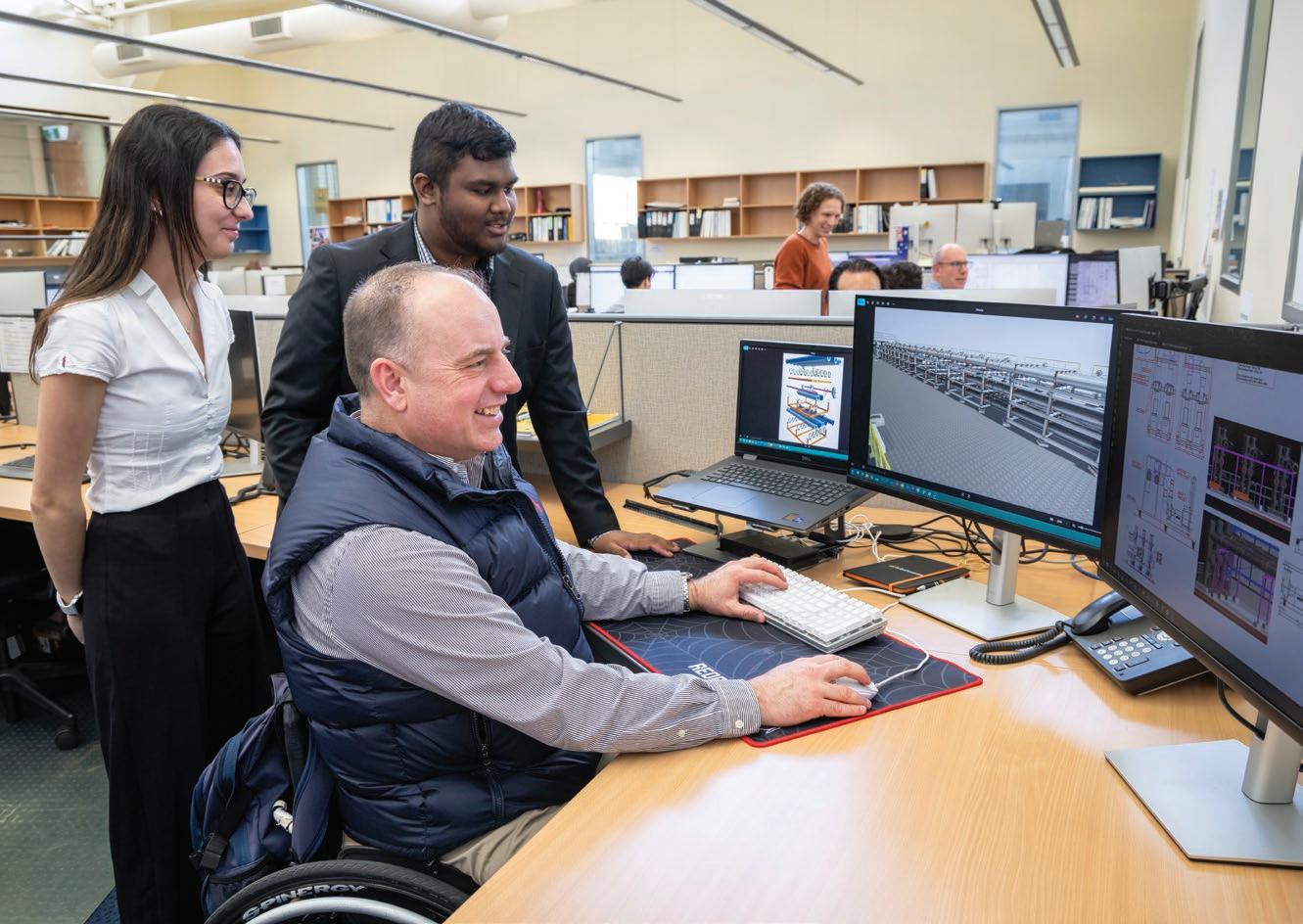

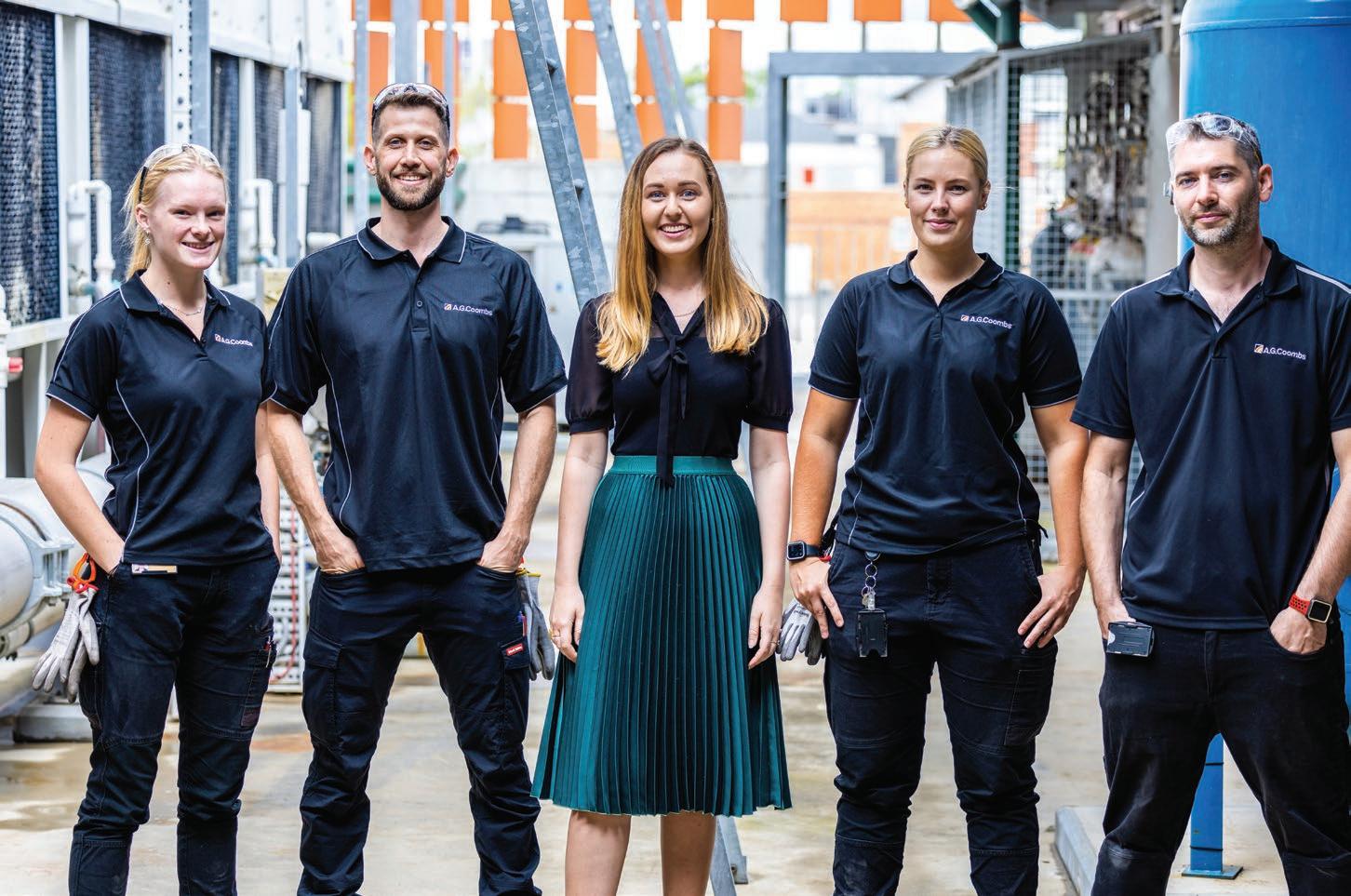
Ever since Allan Coombs hosted a dinner dance in the 1970s to celebrate the company’s success, A.G. Coombs has never lost an opportunity to ensure that its people feel appreciated. For many years, it has hosted an annual event where its employees can gather en masse to celebrate the year’s achievements and applaud individuals for their performance and years of service. Over time, the attendance at the Annual Dinner and Awards Night has grown significantly, with more than 1,100 people present at the 2025 event – a memorable occasion that also celebrated A.G. Coombs’ 80th anniversary.
Held at Melbourne’s Crown Entertainment Complex – a venue where A.G. Coombs was one of several companies that delivered the mechanical services in the 1990s – the Annual Dinner for 2025 was preceded by a Call to Country and hosted by media presenter and Indigenous culture ambassador Megan Waters (top left). The A.G. Coombs Young Achiever Award was one of several awards presented on the night. Managing Director Russell Telford then capped off the evening by presenting a cheque for $80,000 (from funds raised on the night) to David Rogers, CEO of Challenge, A.G. Coombs’ foundation charity.

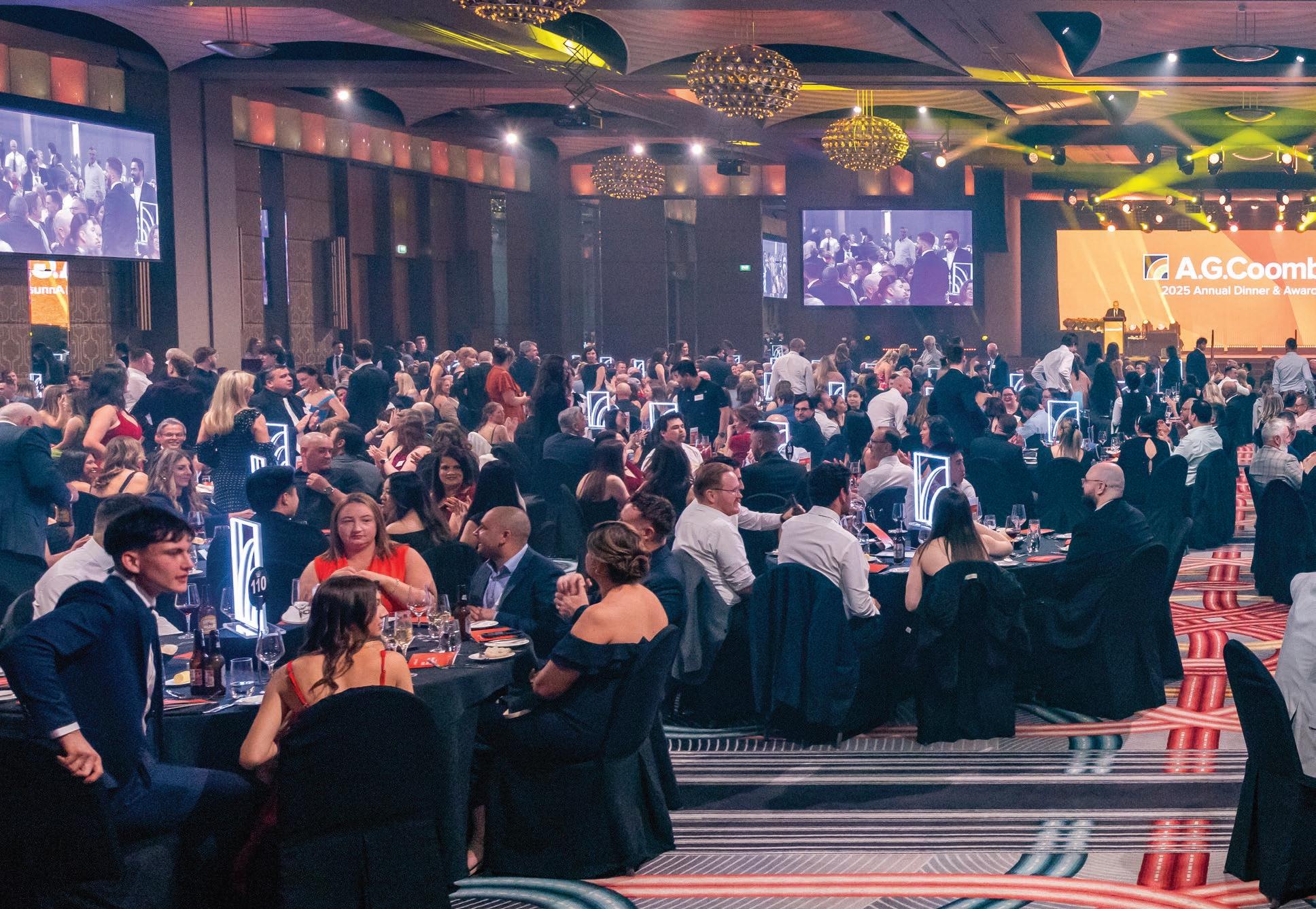
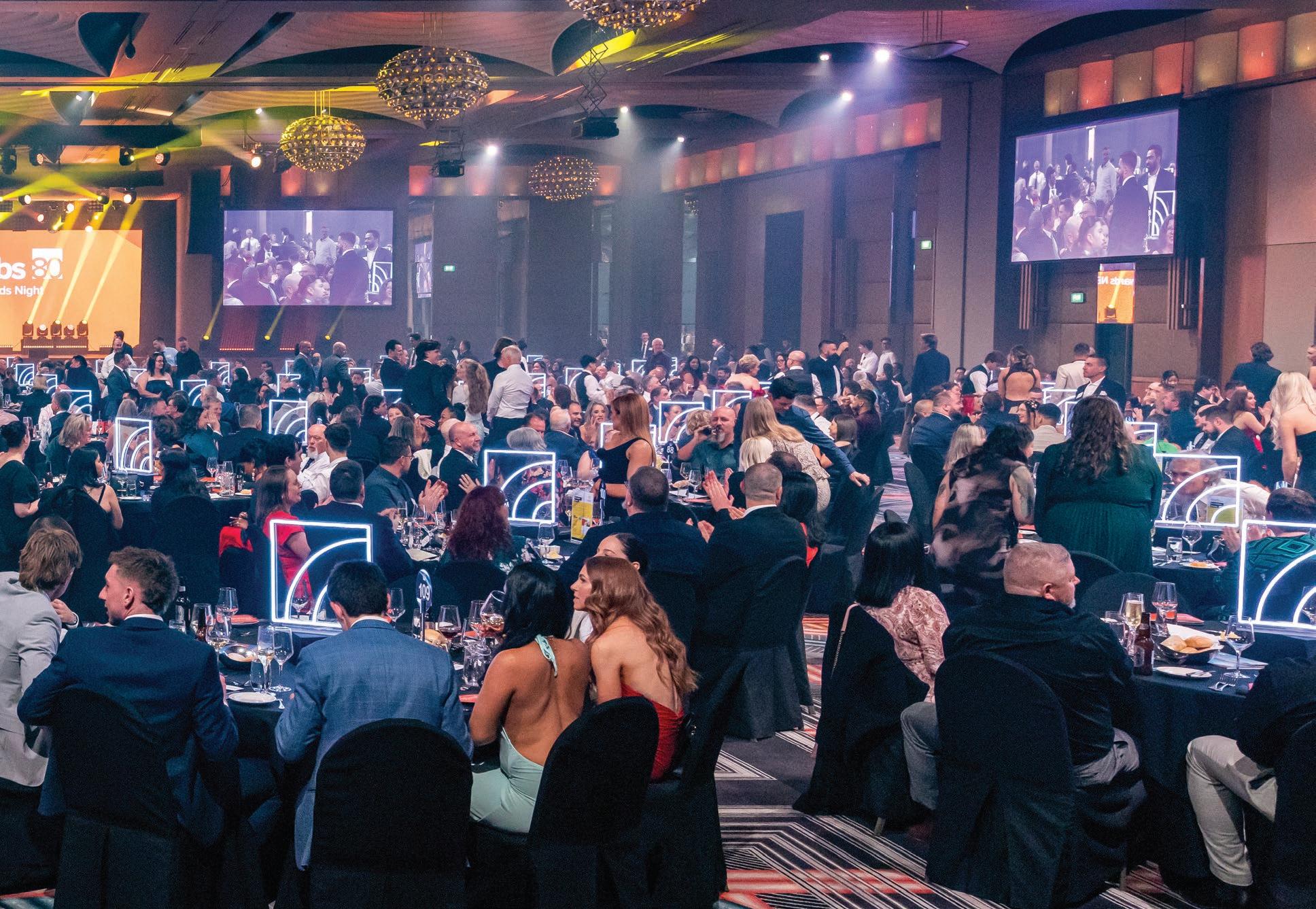
The recognition that sustainable, energy-efficient ‘green’ buildings would become the norm rather than an aspiration, has concentrated the minds of A.G. Coombs’ engineers and technicians for more than two decades. In recent times, the goals have been elevated to achieving net zero and eliminating a building’s carbon footprint.
The brief to take a brownfield site with gas-fired systems and transform it into one that is completely electrified –with all fossil fuels eliminated – was not without its challenges. The site in question was 101 Collins Street, a 33-year-old Premium Grade commercial landmark in Melbourne, which at 57 storeys high remains one of Australia’s tallest buildings.
For A.G. Coombs, the first challenge involved removing the gas-fired plant for heating hot water and domestic hot water, and replacing it with electric heat pumps. The second challenge would be to complete the task in a fully occupied building.
The electrification of 101 Collins Street in 2023 was as complex as it was exciting. A.G. Coombs Advisory provided the initial concept and feasibility studies to replace the gas-powered plant, before handing over to A.G. Coombs Projects to undertake the installation. The entire project was accomplished without negatively impacting tenants.
Service provider: A.G. Coombs Advisory and A.G. Coombs Projects
Client: 101 Collins Street
Although the empty roof of the adjoining 13-storey podium had been identified as the perfect location to install the new plant, there were still concerns as to whether the podium roof would be strong enough to support the weight of the new equipment. At A.G. Coombs, hurdles are seen as challenges and opportunities. After the Projects team consulted with the building’s engineers, A.G. Coombs’ Integrated Prefabrication Facility kept the project moving by designing a steel platform that could support the weight of the new plant. The platform was lifted onto the rooftop in sections (see right).
The new plant reduced energy consumption by 81% compared to the previous plant and reduced associated greenhouse gas emissions.
The project features Australia's first large-scale implementation of air and water-sourced heat pumps achieving 75°C delivery temperatures to serve the existing space heating infrastructure.
Thirty tonnes of roof pavers were removed carefully by hand to minimise the structural strengthening works required for the rooftop air-sourced plant.
Recognised at the Energy Efficiency Council’s 2022 National Energy Efficiency Awards with the Integrated Clean Energy Award.
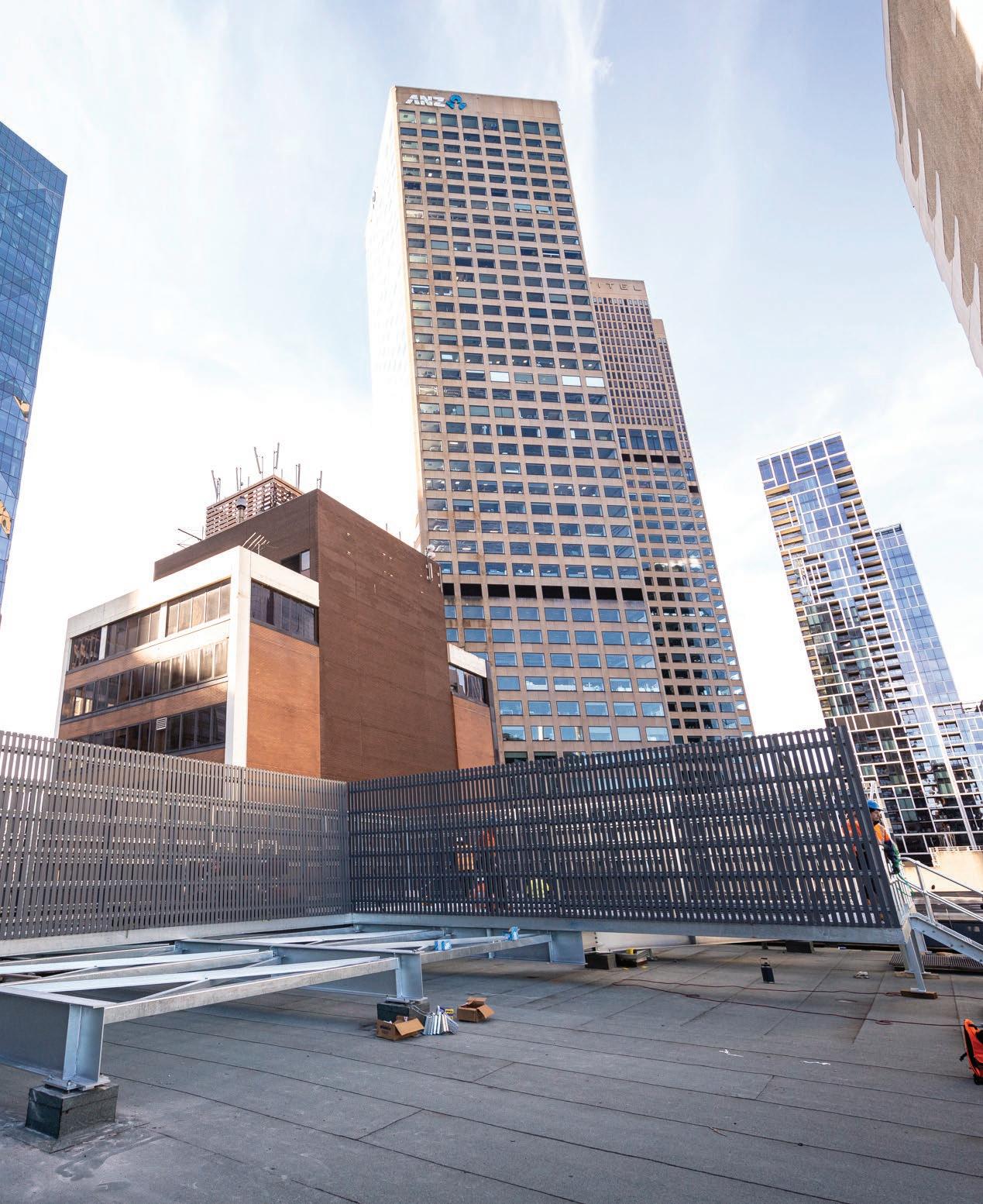
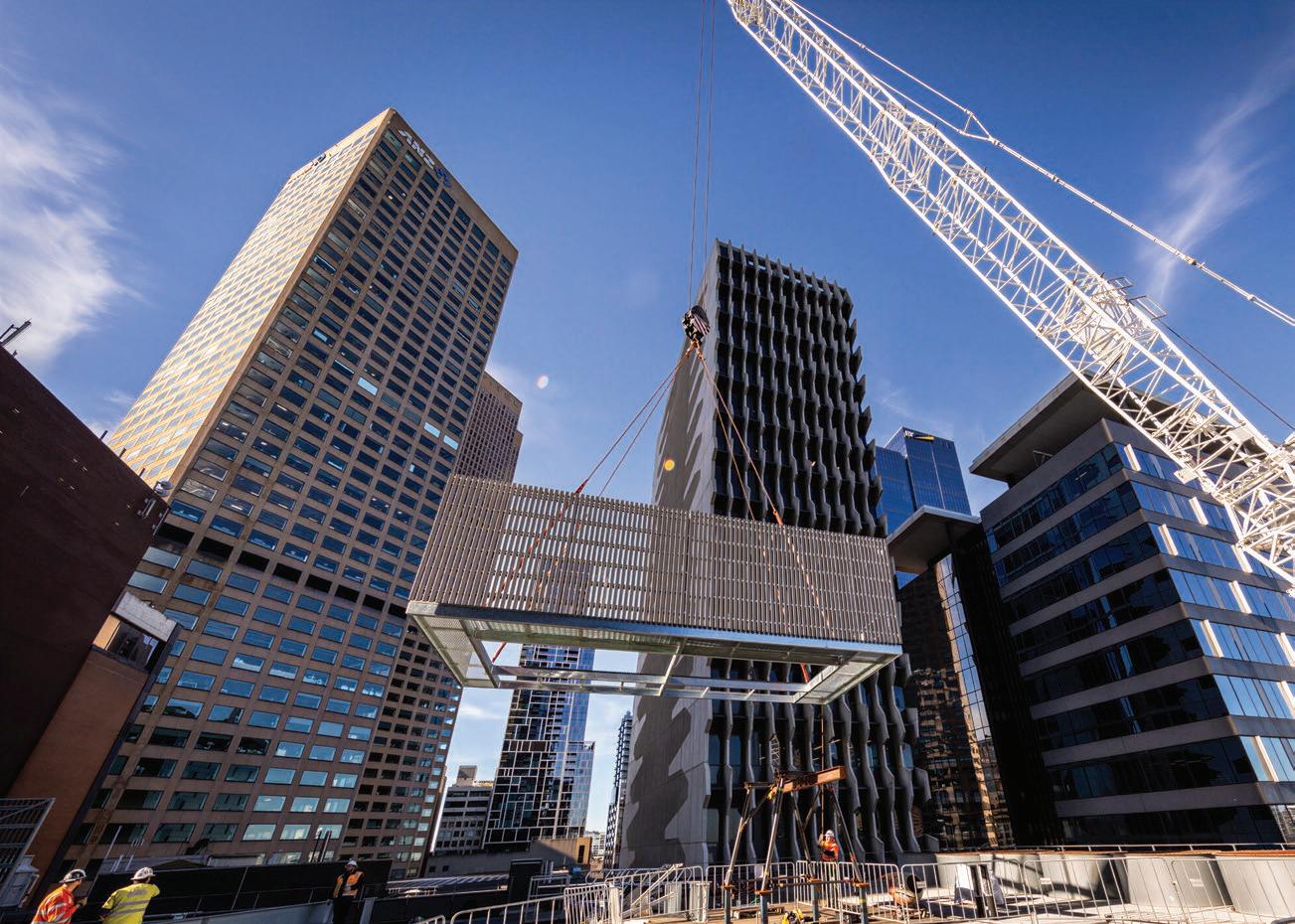
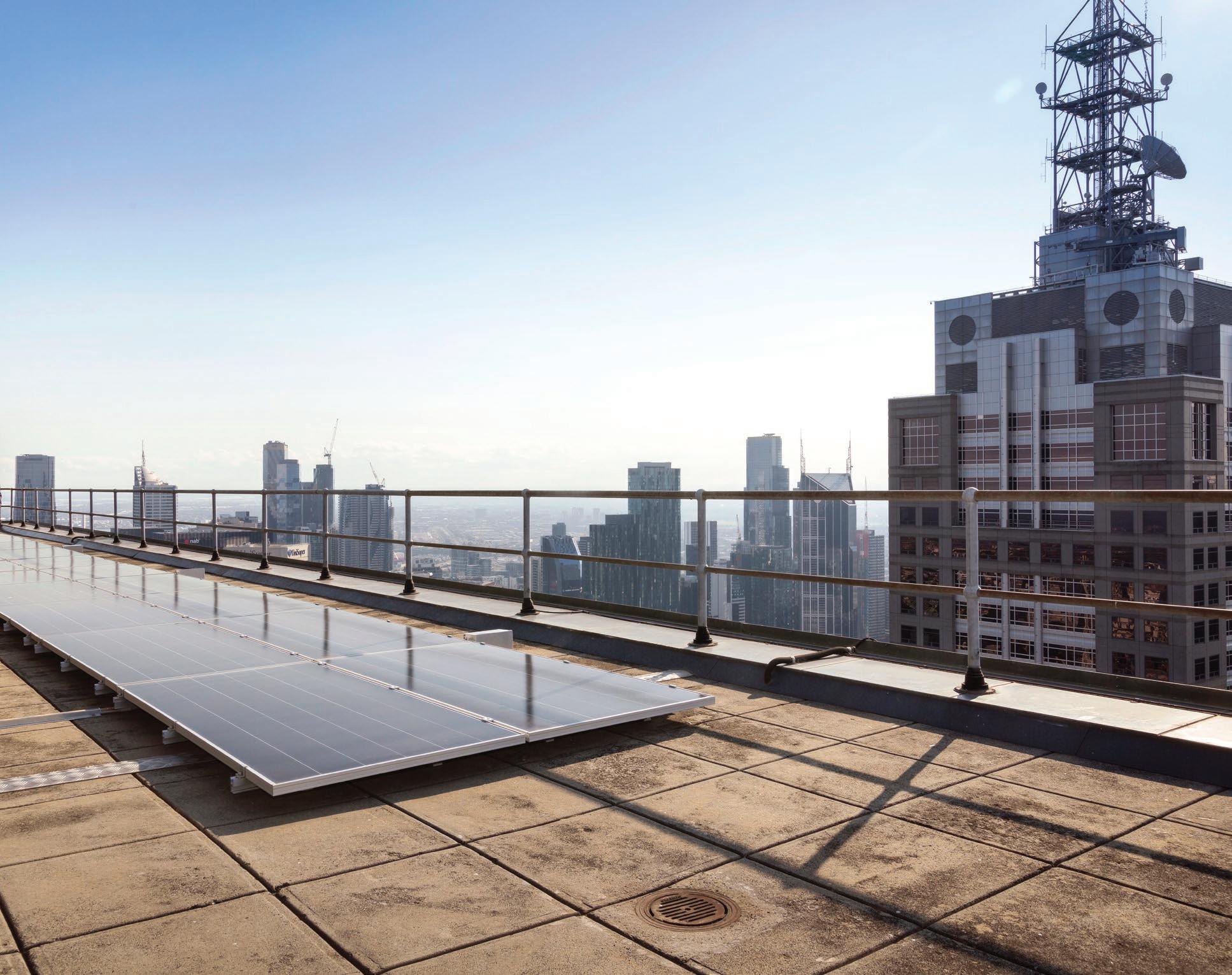
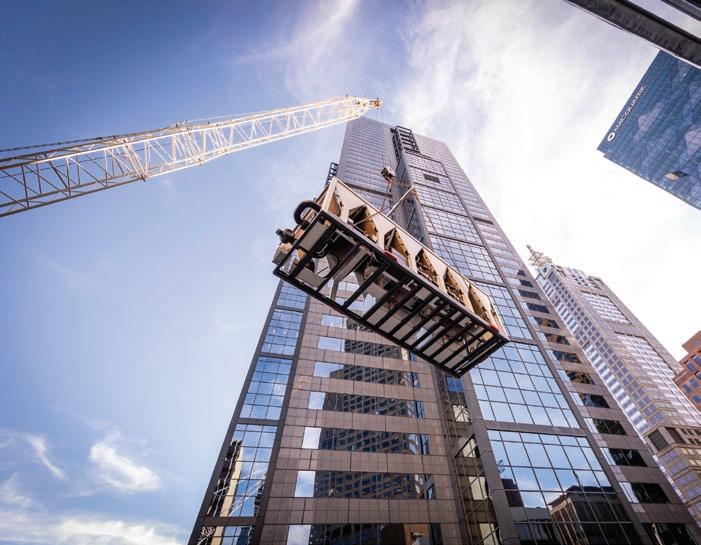
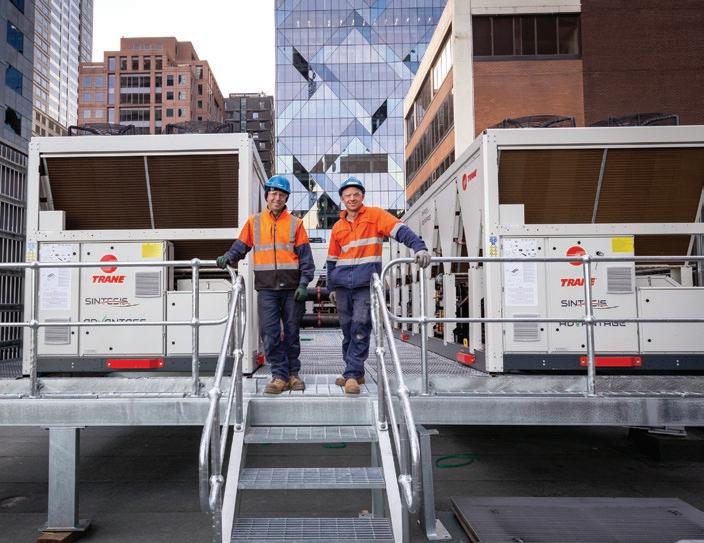
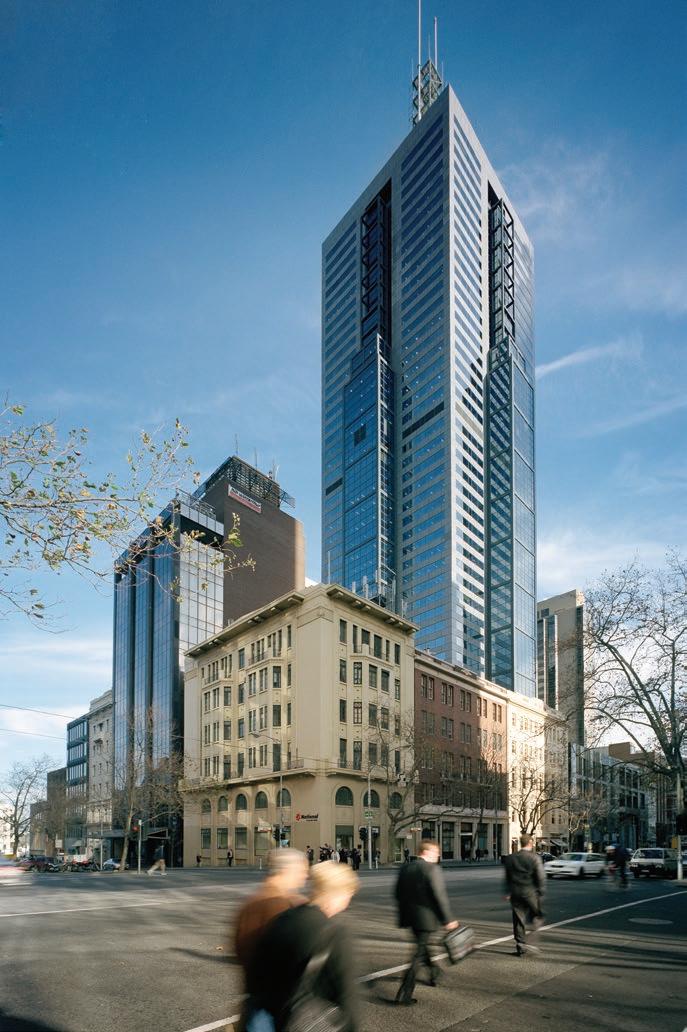
A.G. Coombs designed, fabricated and installed the mechanical services for the $1.1 billion redevelopment of Frankston Hospital, one of Melbourne’s busiest healthcare facilities. A.G. Coombs Advisory also brought its expertise to the table in a consulting role during the Public Private Partnership (PPP) bidding process.
In late 2025, Integrated Technical Management (ITM) were engaged to provide specialist maintenance services for the facility's technical building services. The redeveloped Frankston Hospital officially opened on 20 January 2026 under a new name – Peninsula University Hospital.
Service provider: A.G. Coombs Projects, A.G. Coombs Advisory, Integrated Technical Management and Butler Electrical Builder: Lendlease
The all-electric infrastructure eliminates natural gas-heated systems while maintaining the precise environmental controls required for hospital operations.
During peak construction periods, A.G. Coombs site numbers reached over 120 personnel engaged in multiple installation work fronts on multiple levels.
Electrical infrastructure for the mechanical plant and systems was provided by Butler Electrical.
The completed facility is expected to treat an additional 35,000 patients annually, serving a region where the Mornington Peninsula Shire is forecast to grow 8% by 2040.
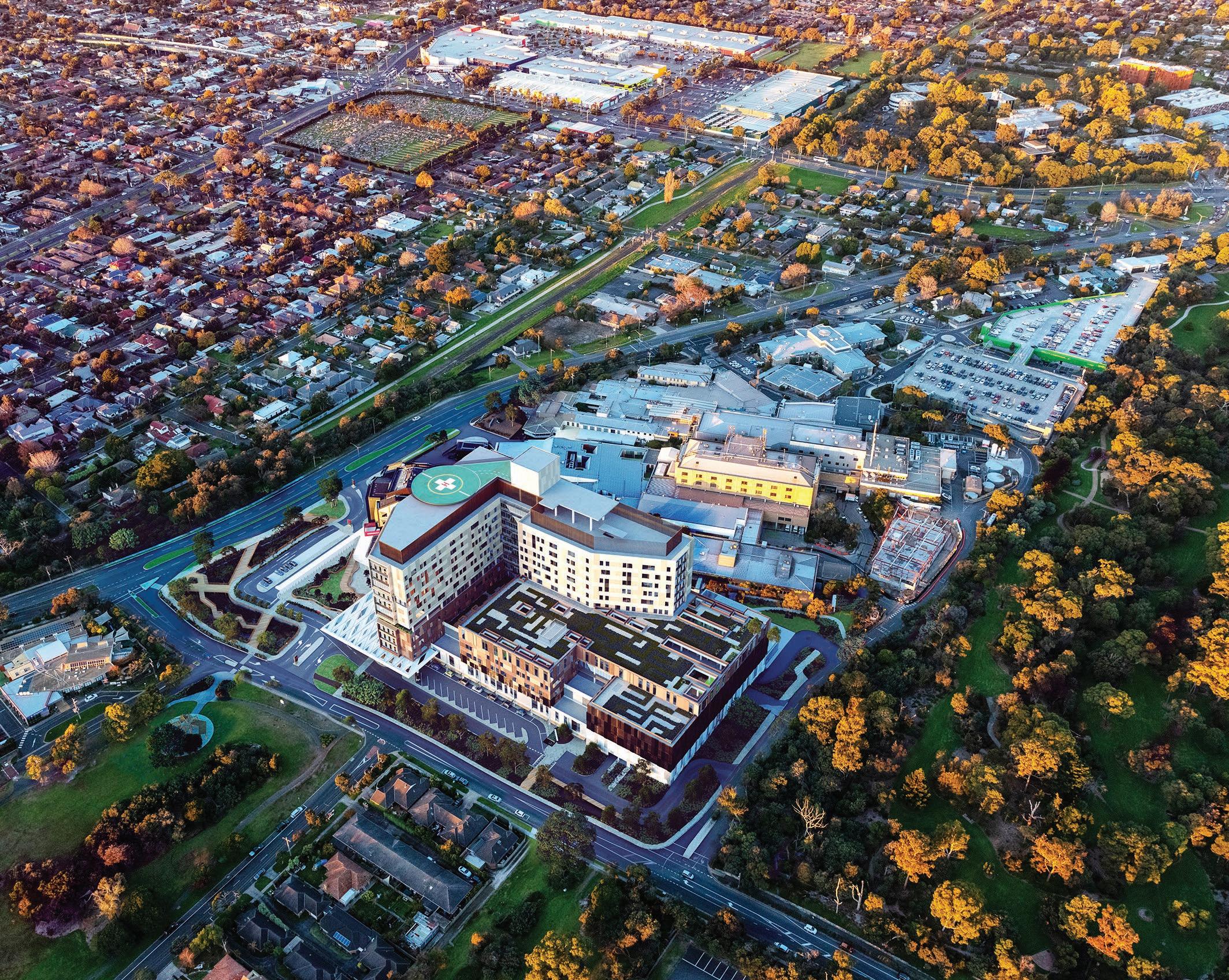
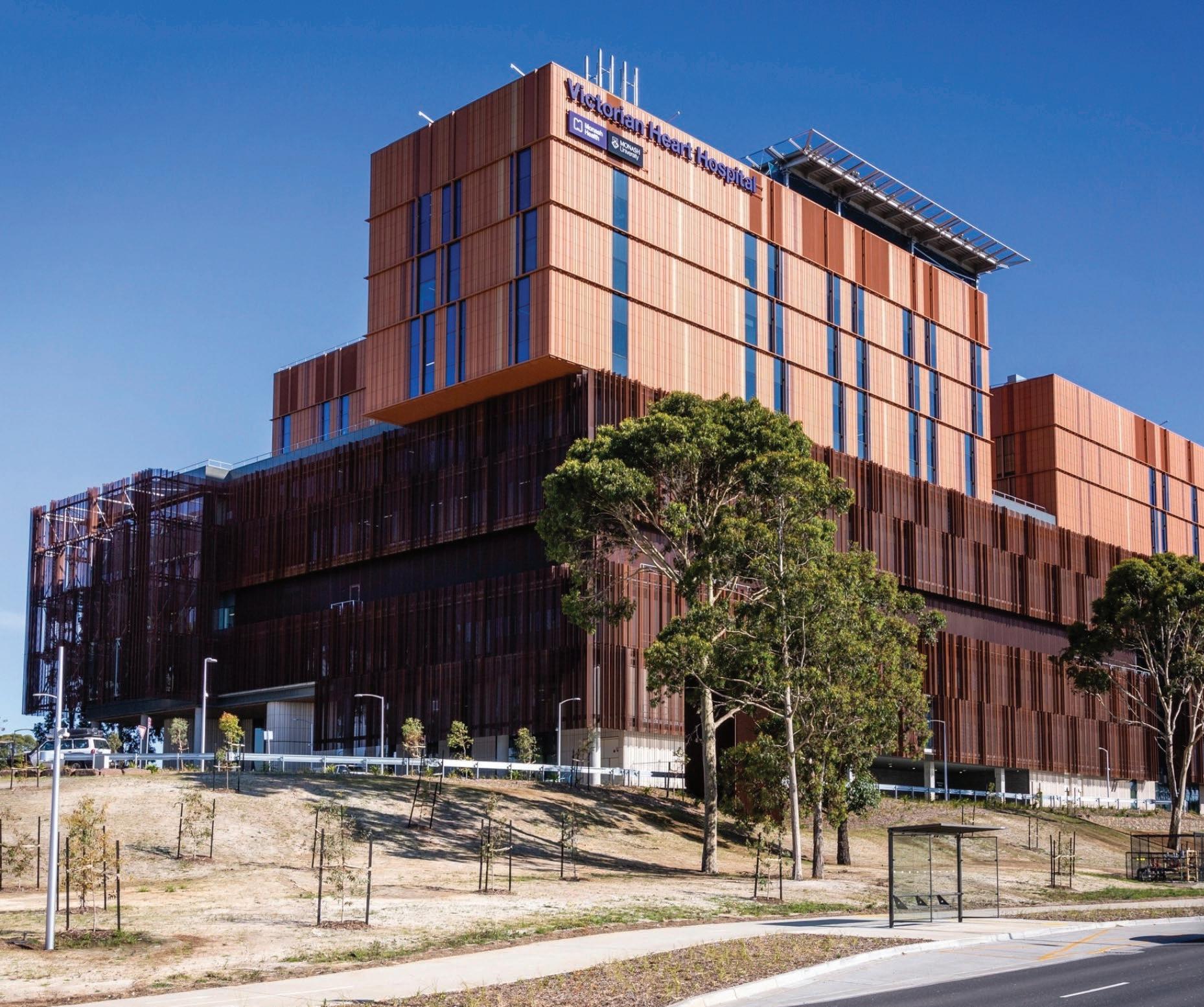
After opening in February 2023, the Victorian Heart Hospital became Australia’s first dedicated heart hospital, providing tailored cardiovascular care to the community, as well as running education programs for students and educators from the healthcare sector.
As the mechanical services contractor for the project, A.G. Coombs engaged with the project at an early stage, providing crucial input into the development and delivery of the project. Off-site prefabrication helped overcome construction challenges and ensured the project met its completion timeline despite the restrictions of the COVID-19 period.
A.G. Coombs Advisory then undertook an intensive six-week commissioning schedule to ensure the systems functioned in accordance with Australian regulations.
Service provider: A.G. Coombs Projects and A.G. Coombs Advisory Builder: John Holland for the Victorian Health Building Authority
Almost 30% of construction hours spent prefabricating mechanical services systems components off site.
A number of innovative prefabrication solutions were employed in the construction including specially developed ‘roll in’ risers – the largest measuring 12 m by 6.2 m.
Weight-bearing elements for the prefabricated mechanical roof plant are highly integrated with other services and structures to minimise redundant steel work.
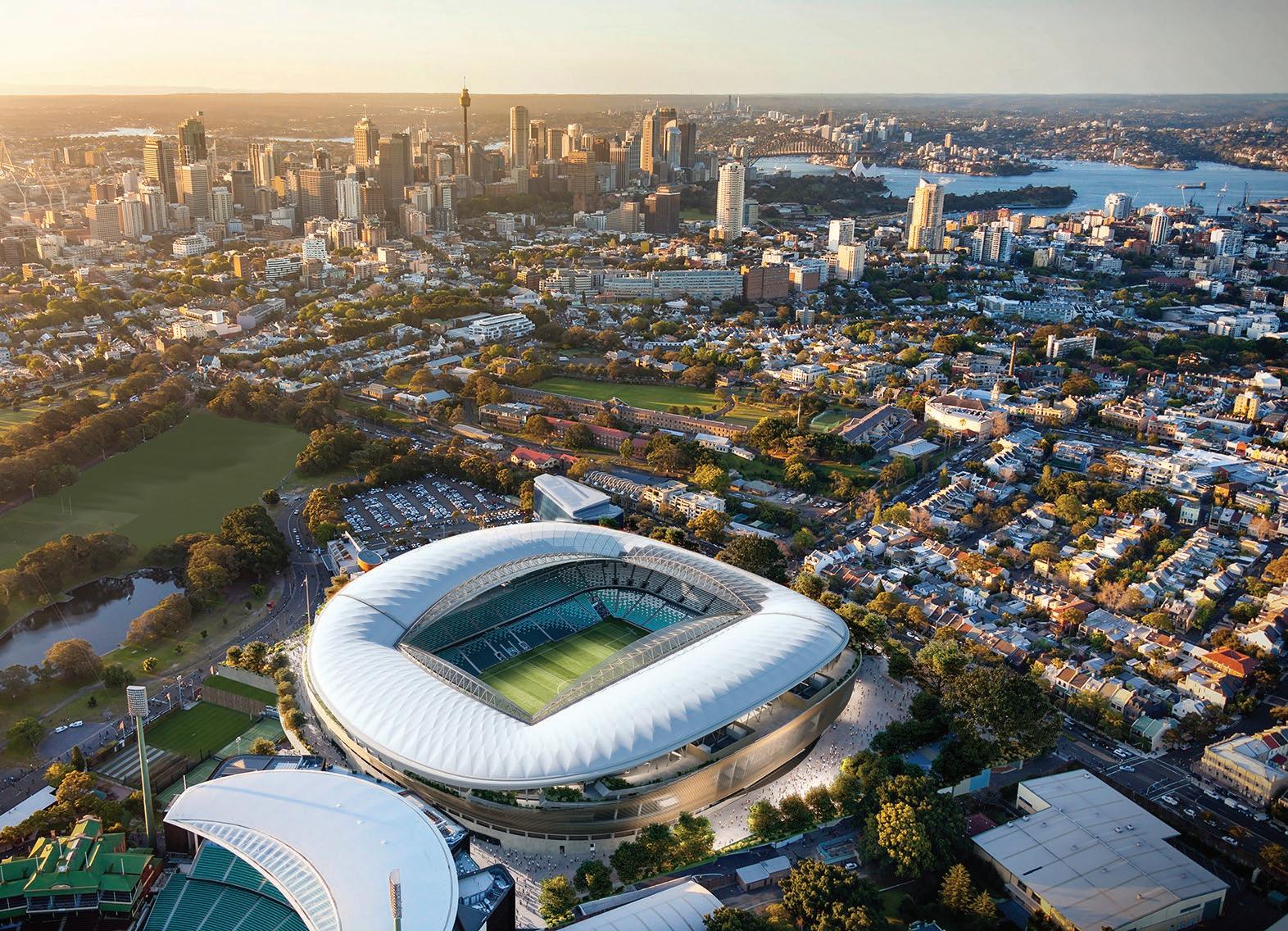
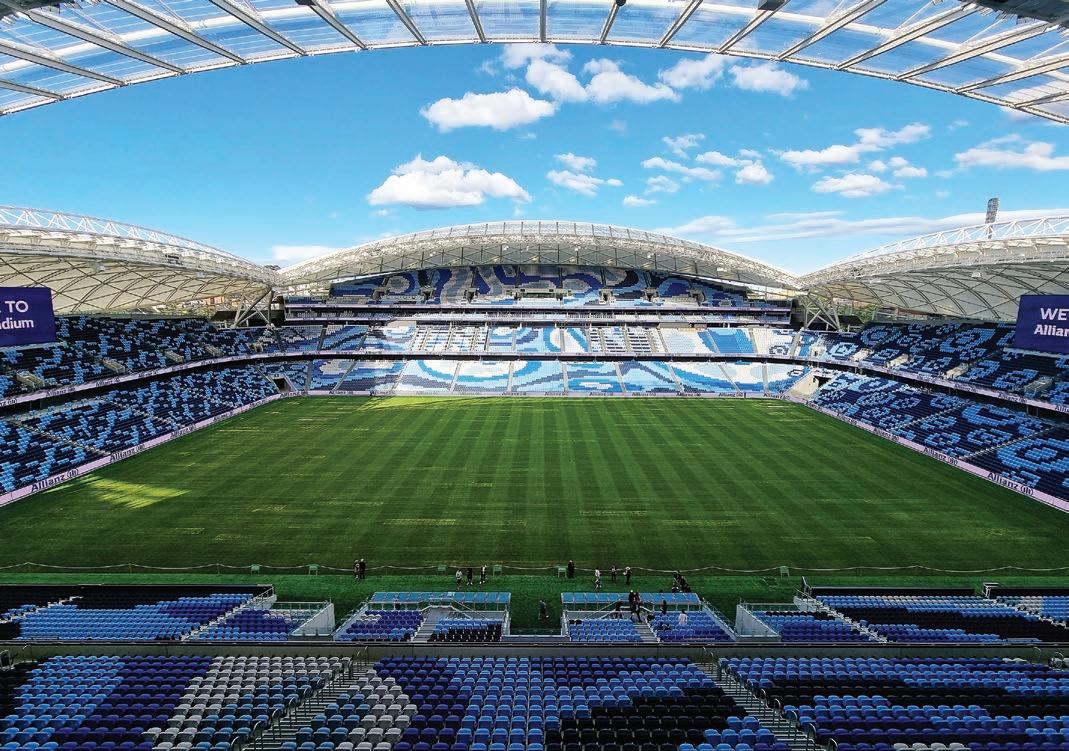
Natural ventilation to concourse areas validated through computational fluid dynamics (CFD) wind modelling and scale model wind tunnel testing saving 36,000 kWh of electrical energy per annum.
A.G. Coombs Advisory developed a world first integration interface between the event management system and the stadium’s building management control system (BMCS).
Recognised for Project Excellence at the 2024 ARBS Industry Awards, and for Excellence in Innovation and Excellence in Sustainability at the 2023 AIRAH Awards for Excellence.
As the first specialist contractor engaged for the redevelopment project, A.G. Coombs was commissioned to deliver all mechanical services for the stadium under a design and construct contract. Early contractor involvement allowed the mechanical services systems to be refined during the detailed design phase.
The redeveloped stadium provided Sydney with a worldclass venue for rugby league, rugby union and soccer well into the future. A.G. Coombs drew on its experience from working on the Western Sydney Stadium to ensure effective acoustic treatment of the stadium’s externally located chillers. It also took on the role of lead services and Building Information Modelling (BIM) coordinator for the project. The stadium opened in August 2022.
Service provider: A.G. Coombs Projects Builder: John Holland
When it opened in April 2019, Western Sydney Stadium (CommBank Stadium) became the first stadium in the world to achieve LEED* v4 Gold Certification. Built on the same site as the former Parramatta Stadium, the new stadium has a 30,000-seat capacity.
A.G. Coombs’ early engagement with the $360 million development allowed its Projects team to play a more influential role in the final design decisions. The knowledge gained from this project would feed into the redevelopment of the Sydney Football Stadium.
Service provider: A.G. Coombs Projects Builder: Lendlease
* Awarded by the US Green Building Council, LEED-certified buildings are resource efficient. They use less water and energy, and reduce greenhouse gas emissions.
The first stadium in the world to achieve LEED v4 Gold certification and the first building in Australia to do so.
On non-event days when the demand for cooling is low, the thermal inertia of the system is utilised to provide cooling to administration offices and preparation kitchens before the chiller plant is activated.
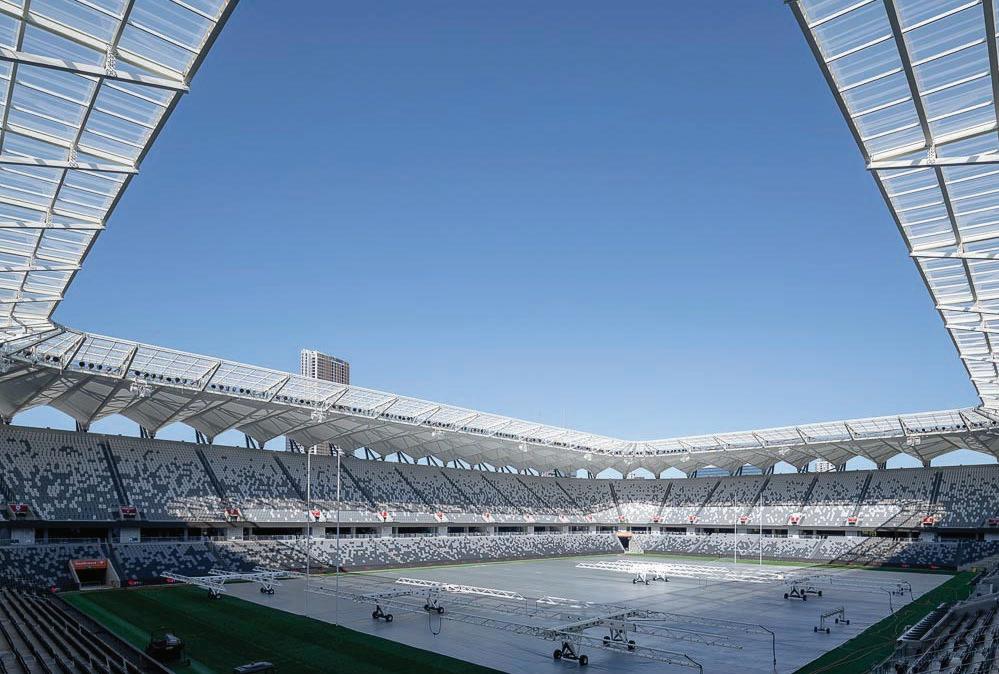
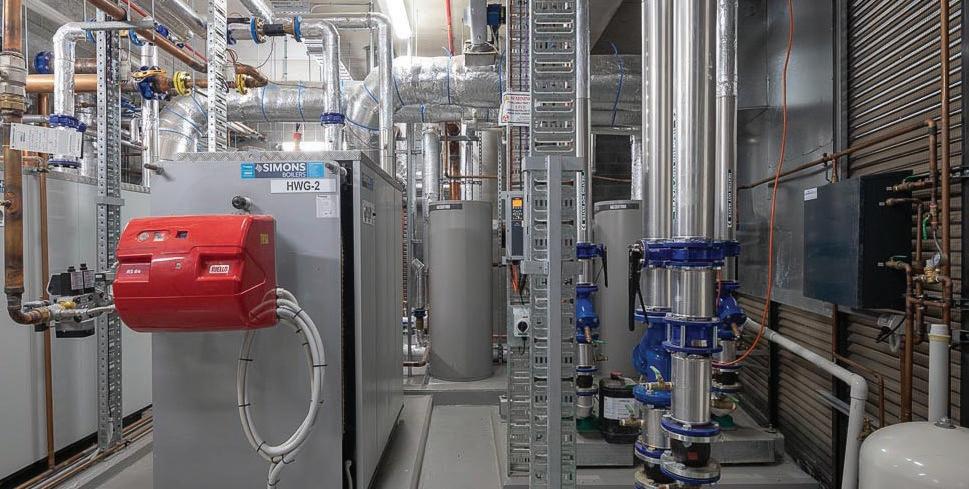
Construction methods also reduced the embodied carbon within the stadium through material selection.
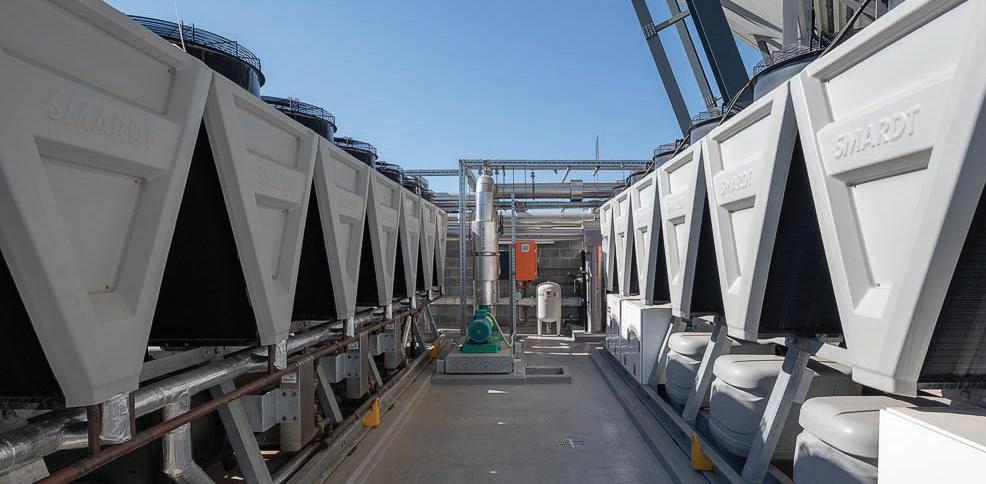
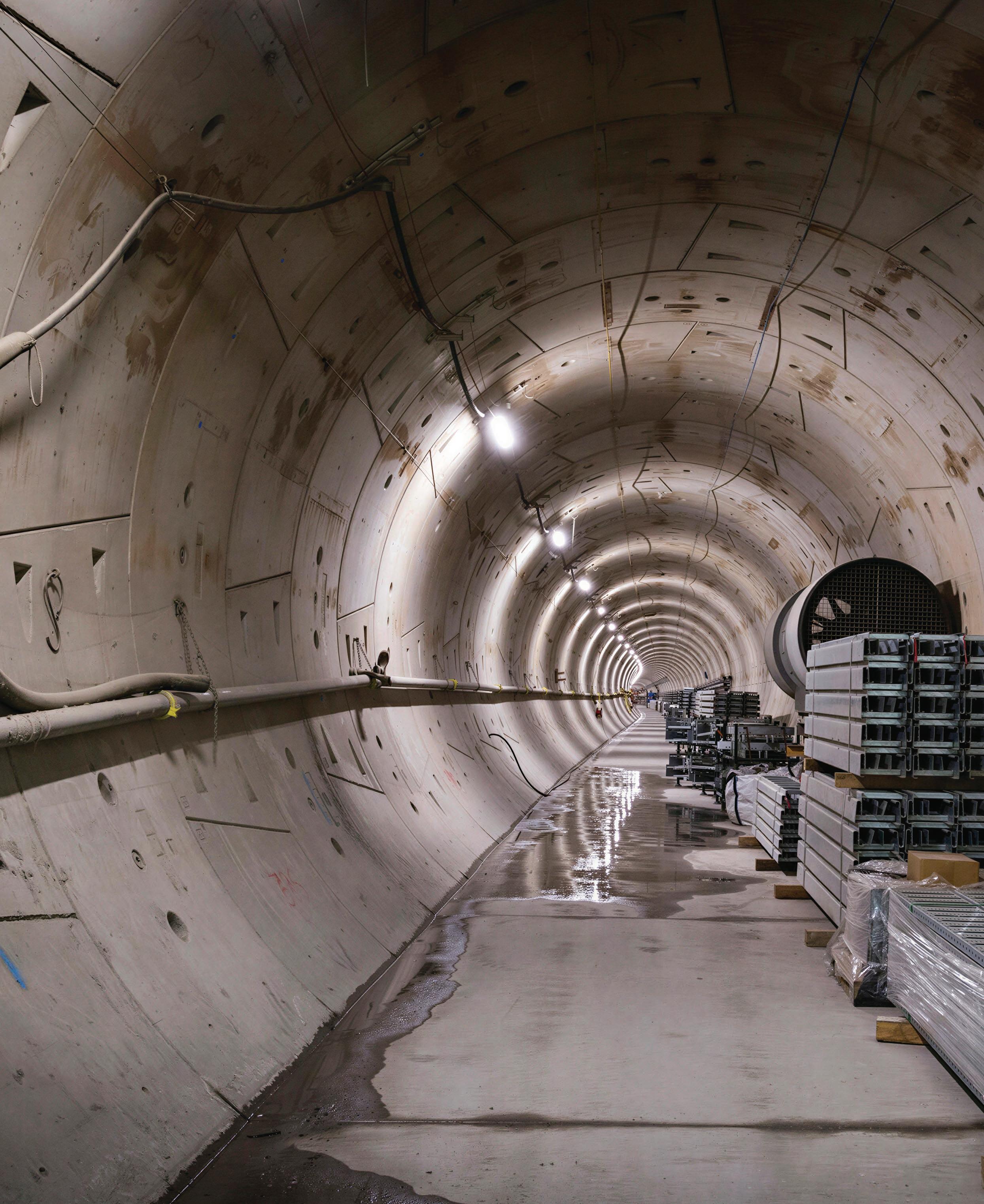
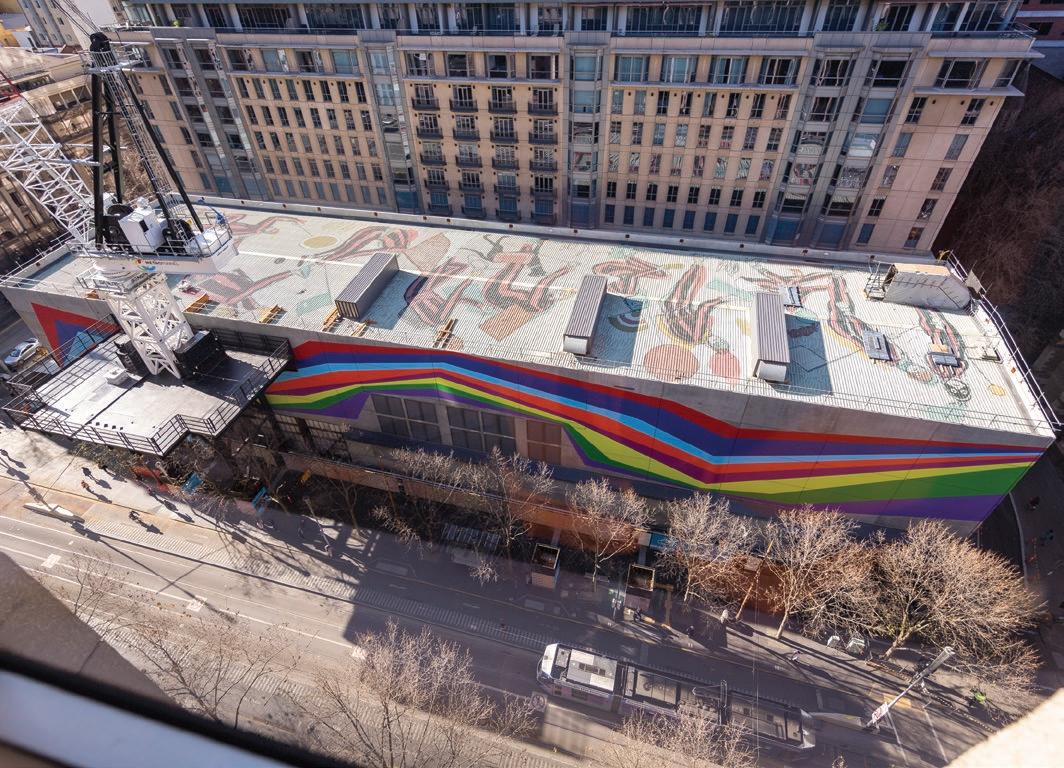
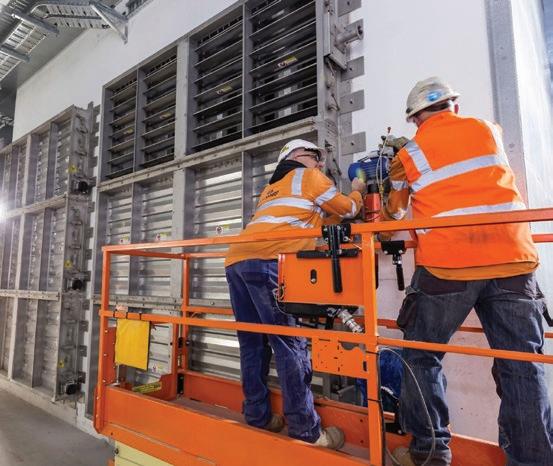
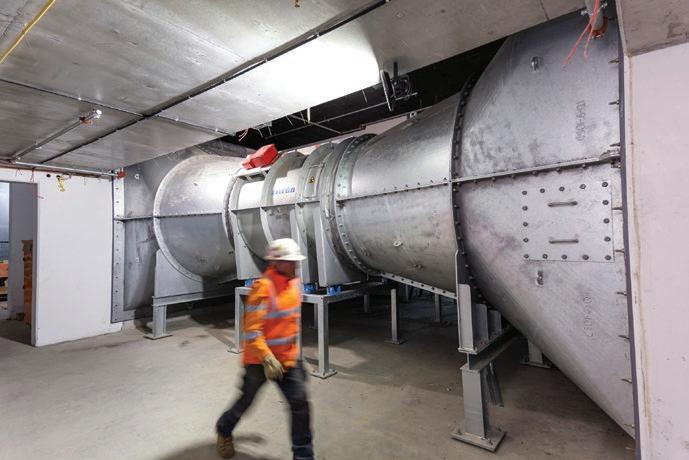
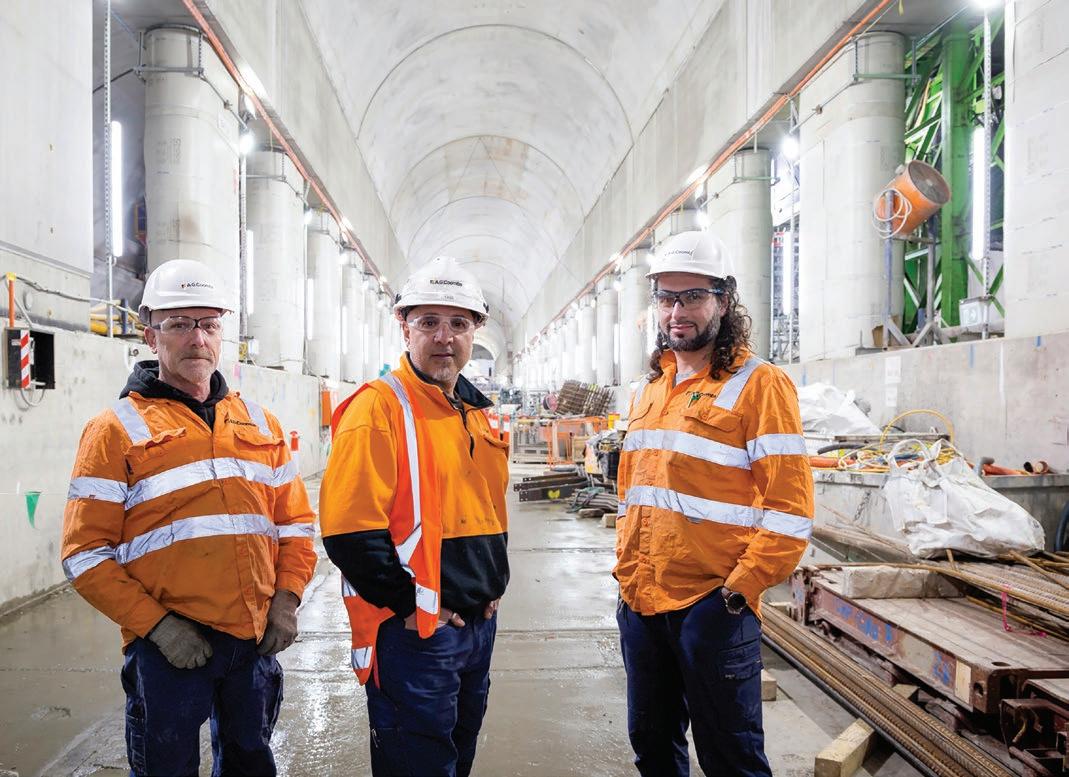
The station is located at a depth of 27 m below street level and features a cavern with three overlapping tunnels that integrate the concourse with train platforms on one single level resulting in 19 m wide platforms –some of the widest metro platforms in the world.
Pipework modules nine metres above the concourse floor were prefabricated, removing the significant risk associated with working at heights.
Unlike the 45-year old City Loop, the Metro Tunnel rail tunnels are separated from each station concourse by doors, effectively sealing the tunnel.
The plant and equipment will operate in a high humidity environment and design focused on life-cycle and corrosion prevention.
Melbourne’s Metro Tunnel Project provides for five new underground stations with twin rail tunnels of nine kilometres in length. A.G. Coombs delivered the mechanical services for the Town Hall underground station, which connects to Melbourne’s famous Flinders Street Station and allows commuters to switch between the Metro Tunnel and City Loop services. Town Hall Station opened to the public on 30 November 2025.
Service provider: A.G. Coombs Projects Builder: Cross Yarra Partnership and Lendlease
Opening in August 2024, the Victoria Cross integrated station development in North Sydney included a new metro station below Miller Street, a commercial building above the station’s southern entrance, and multiple pedestrian thoroughfares. As the specialist contractor, A.G. Coombs commenced working on site during the COVID-19 pandemic. Prefabrication played a significant role in the delivery of the over track exhaust, while Building Information Modelling (BIM) was used extensively to identify early layout and design issues.
Service provider: A.G. Coombs Projects Builder: Lendlease
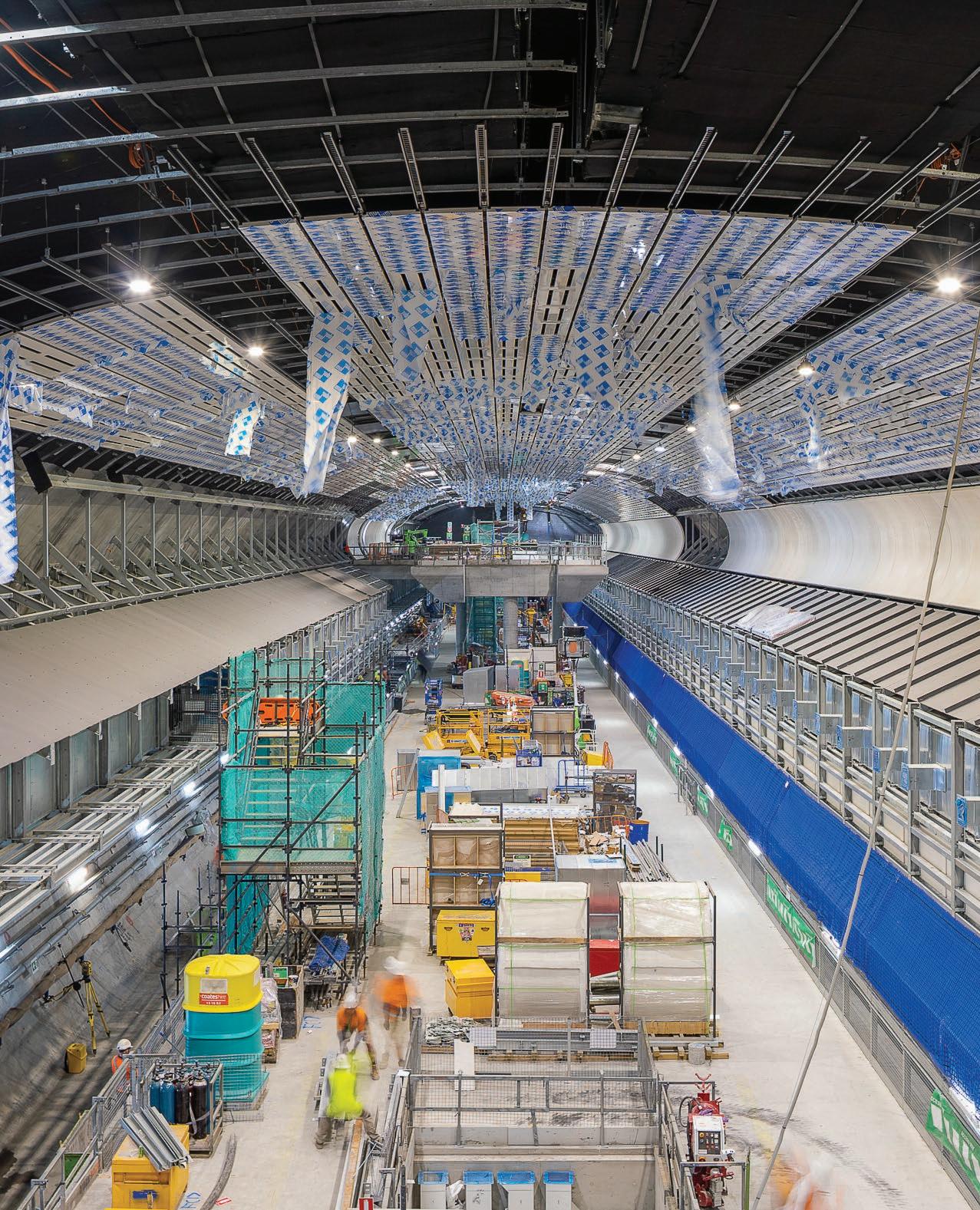
One of five new stations being built as part of the Sydney Metro infrastructure project. By 2030, Sydney will boast a network of four metro lines, 46 stations and 113 km of new metro rail allowing for a metro train every two minutes with a target capacity of 40,000 commuters per hour.
As lead services coordinator on the Metro Victoria Cross project, A.G. Coombs utilised a number of technologies including Building Information Modelling (BIM) and the Revizto+ cloud-based coordination platform.
Over 300 m of world first lightweight prefabricated Over Track Exhaust installed using a specially designed hoist system running on rail tracks.
Turning a vision into reality takes skill, creativity, tenacity and experience. Macquarie Group’s vision to develop Martin Place Station into an integrated precinct was made possible by a team of architects, engineers, builders and building services specialists.
The aim was to create a clean, sustainable, multi-purpose hub where people could commute to work, shop and dine. A central feature of the project was the redevelopment of Sydney Metro Martin Place, one of eight new train stations built as part of a multi-billion dollar transformation of Sydney’s public transport network. The precinct included two commercial towers above the new Metro station, with both towers linked by a pedestrian tunnel beneath a heritage-listed building.
A.G. Coombs was an integral part of the team that helped deliver the vision. In addition to installing the mechanical services for the underground station, it also worked on 39 Martin Place and 1 Elizabeth Street – two premier commercial addresses.
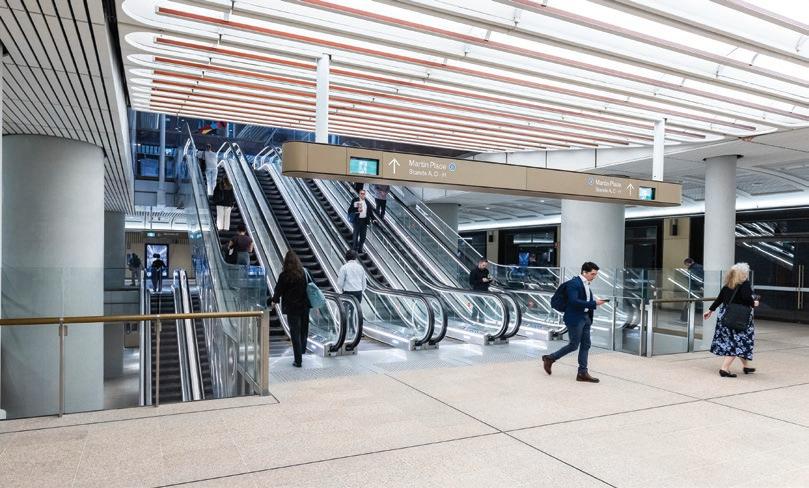
Sitting 39 storeys above the station’s northern entrance, 1 Elizabeth Street (pictured opposite page) aligns and connects with the heritage-listed 50 Martin Place – the stunning integration forming the new headquarters of Macquarie Bank.
Service provider: A.G. Coombs Projects
Builder: Lendlease
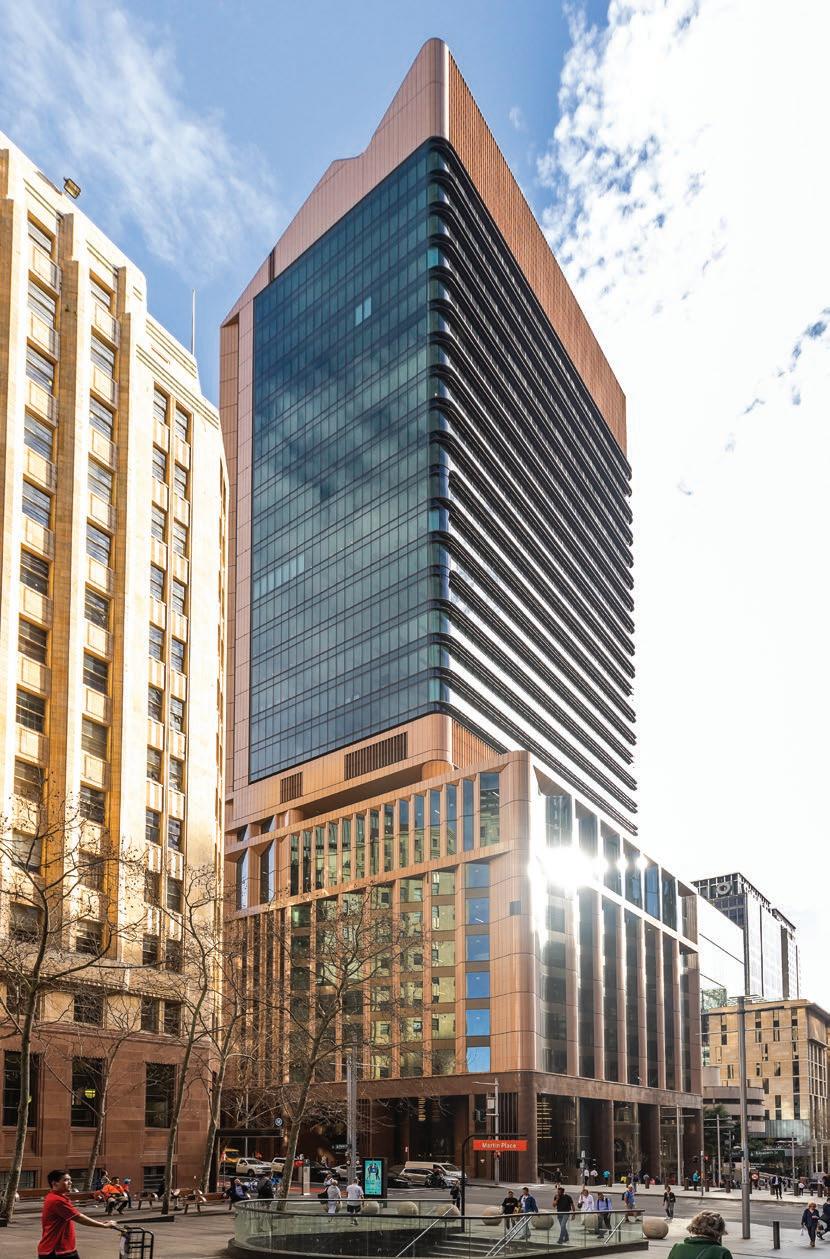
A Premium Grade office building, 39 Martin Place (pictured above) integrates with Sydney’s Metro network via the new Metro Martin Place Station. With its dining and retail spaces, this premier address expands on the vision to enhance Martin Place as the civic and commercial hub of Sydney. The 27-storey building is fully electric in its operations.
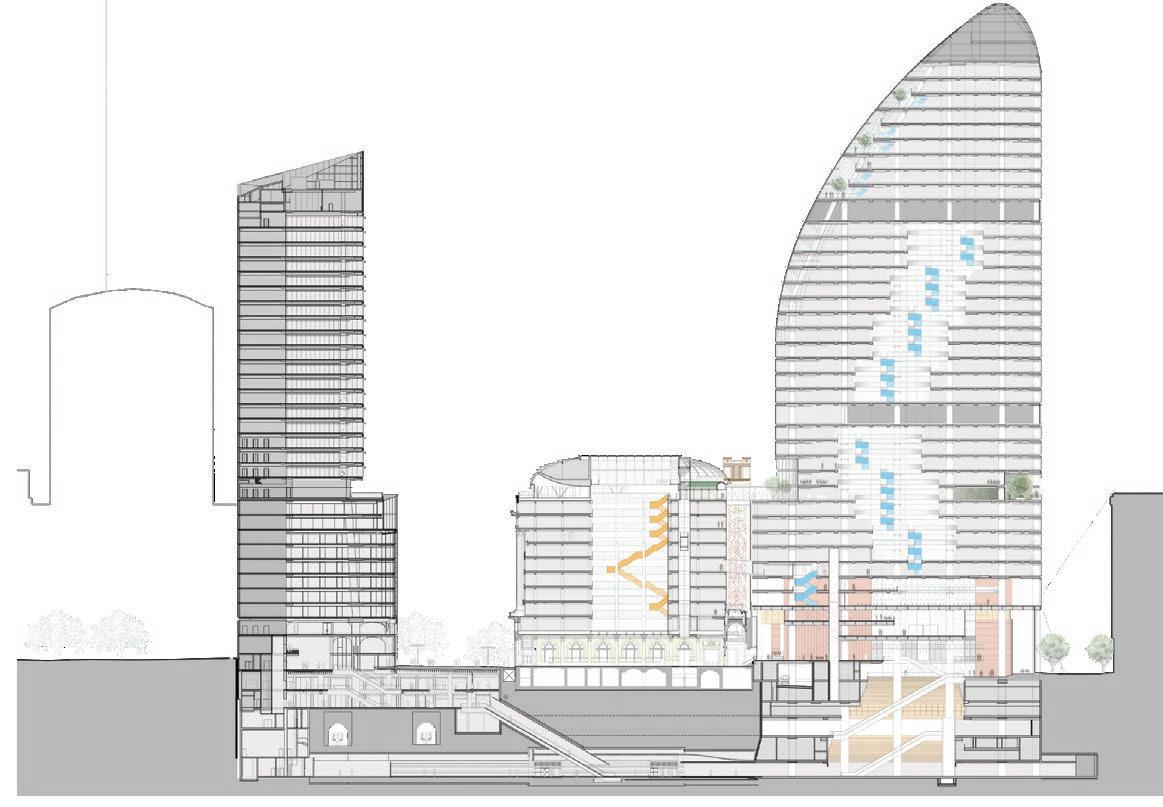
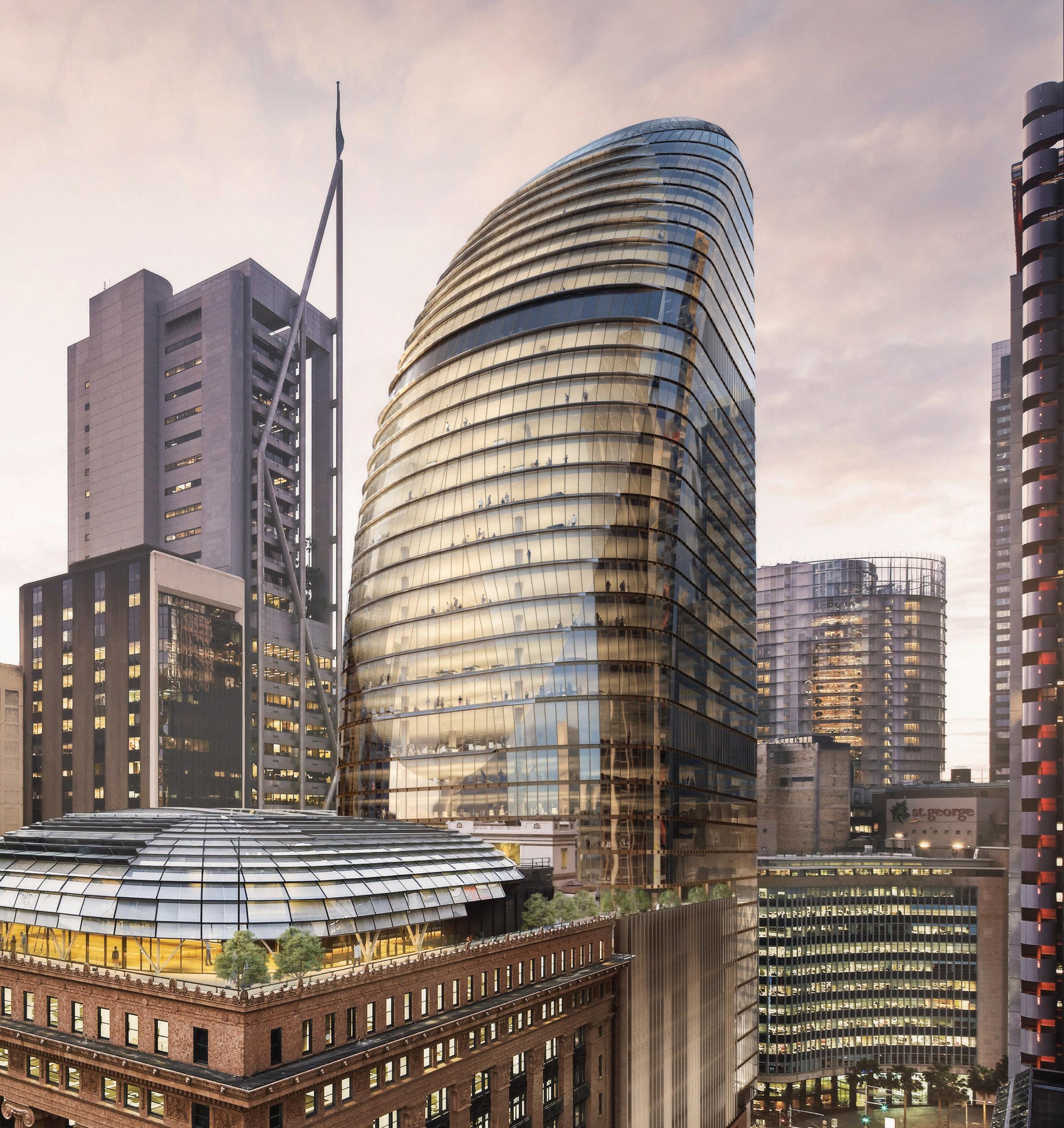
Due to its size and complicated nature, the duration of A.G. Coombs’ involvement in the design and construction phases of the project spanned over 7 years, 2017–2024.
All plant serving the project is electric – contributing to achieving 6 Star Green Star Design & As Built v1.1 ratings and 5.5 Star NABERS ratings targets for both 39 Martin Place and 1 Elizabeth Street. 6 Star Green Star Interiors v1.3 rating for the 1 Elizabeth Street Macquarie fitout, and the 6 Star Green Star Design & As Built v1.1 rating for the station.
The 1 Elizabeth Street rooftop plantroom features an industry first prefabricated modular heating hot water plant consisting of 14 large electric heat pumps.
Ventilation systems are provisioned for the installation of seasonal carbon filtration to respond to bushfire and dust storm events. UV filtration is incorporated into central air handling units to help reduce the spread of airborne viruses and bacteria.
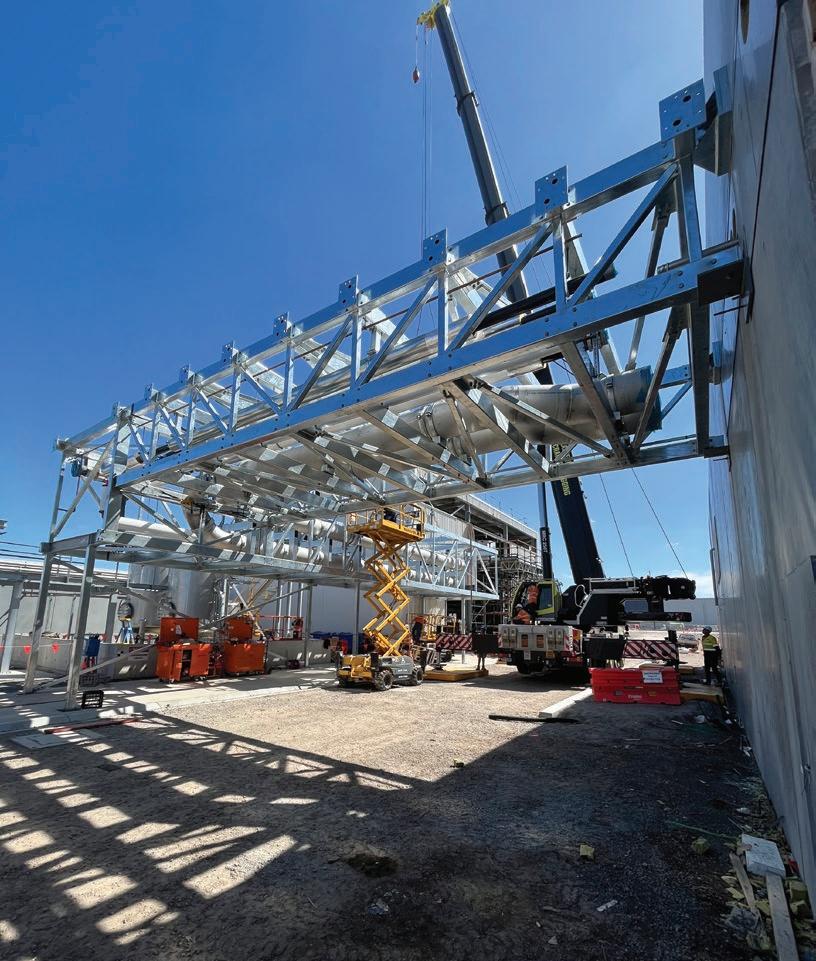
Following its early contractor involvement with the CSL Seqirus biotech manufacturing facility in Tullamarine, Melbourne, A.G. Coombs was awarded the $40 million mechanical services installation contract.
The world-class facility was built to manufacture and supply influenza pandemic vaccines over ten years. Completed in 2023, it became the only manufacturing facility of its kind in the Southern Hemisphere. A.G. Coombs Advisory undertook a detailed commissioning process in late 2023.
Service provider: A.G. Coombs Projects and A.G. Coombs Advisory Builder: BESIX Watpac
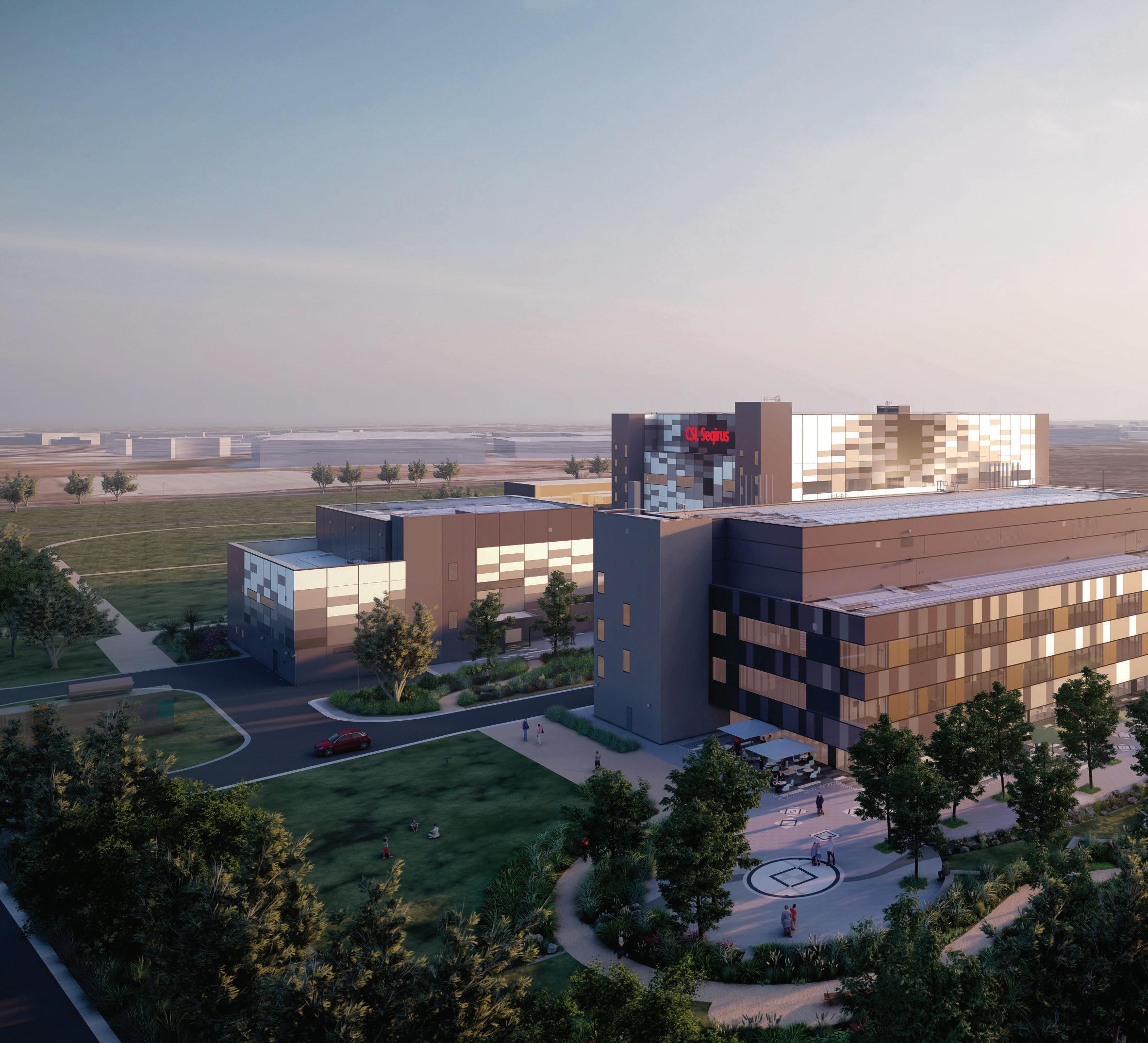
CSL Seqirus followed on from the successful completion of the AlbuRx and Aurora facilities in Broadmeadows for CSL Behring.
The project includes a very large prefabricated pipe bridge spanning a five-metre roadway that carries water services, compressed air and steam pipework. Installed within just one day alleviating the risks associated with constructing this complex component on site.
The facility was designed with best-in-class sustainable design features including heat recovery systems, electrification of plant, and solar PV on site renewable energy generation to achieve an industry first Green Star rating.
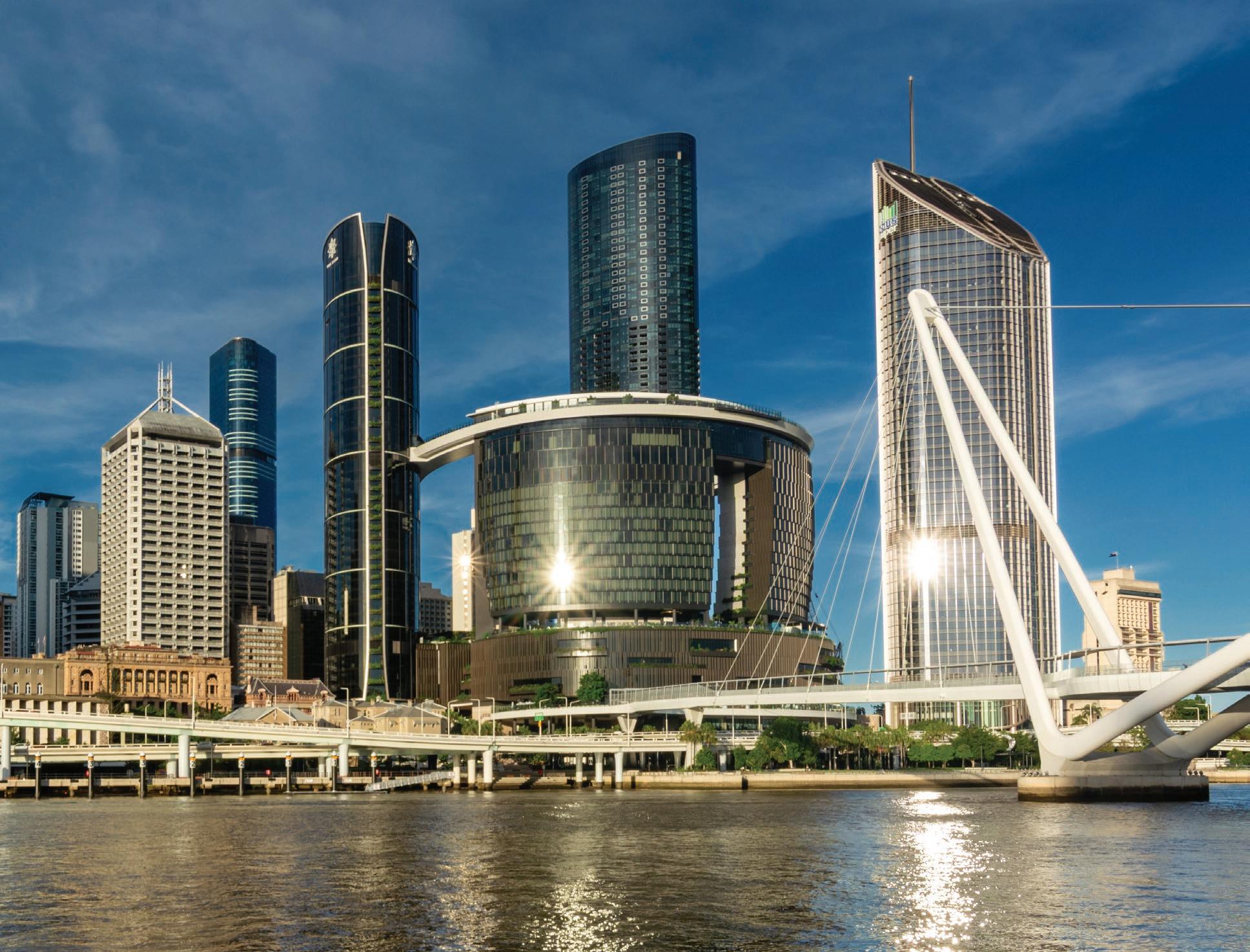
A.G. Coombs was responsible for the installation of over 12,000 pieces of mechanical services, plant and equipment across residential, hospitality and entertainment applications.
The lengthy project timeline extended through the COVID-19 global supply chain disruptions, and multiple Brisbane River flood events requiring adaptive procurement and logistics strategies.
The precinct required the integration of new mechanical systems with heritage building preservation requirements and existing infrastructure constraints initiating unique engineering solutions for mechanical system routing and installation.
134-year-old electrical cables known as ‘Edison tubes’ were unearthed during excavation of the Queen’s Wharf site in 2018, remnants of Brisbane’s very first electricity grid.
Stretching across 120,000 m2 of CBD land along the Brisbane River, the $3.6 billion Queen’s Wharf development is a prime riverfront tourism, residential and entertainment destination.
A.G. Coombs installed the mechanical services in the two 10-level hotel towers and the 65-level residential tower built by Multiplex. It was also awarded the contract for the casino gaming floor fit-out constructed by Built.
In taking the lead services coordination role, A.G. Coombs also managed the Building Information Modelling (BIM) for all stages of the build. A staged opening of the development commenced in August 2024.
Service provider: A.G. Coombs Projects Builder: Multiplex and Built
ATLASSIAN CENTRAL (right) – Sydney’s Atlassian Central – set to be the world’s tallest hybrid timber and steel building upon completion – has seen A.G. Coombs rise to the challenge of engineering mechanical services to deliver superior indoor air quality and thermal comfort, while meeting some of the most ambitious energy targets ever set for an Australian commercial building. Atlassian incorporates three distinct environmental zones, optimising performance across different space types. Everything is being considered from clothing levels and occupant activity rates to air speed and radiant effects. Working with joint-venture builders Built-Obayashi, A.G. Coombs is ventilating different zones using diffusers with ‘intelligence’ to respond to zone requirements, rather than relying on variable air volume systems serving larger areas.

STACK MEL01A (below) – Melbourne’s western suburbs have become home to one of the most significant hyperscale data centres in the Asia Pacific region – MEL01A. Appointed by STACK APAC, A.G. Coombs is ensuring that critical cooling systems meet the client’s very high reliability and energy efficiency goals, especially considering the upsurge in computing power fuelled by artificial intelligence (AI). The use of prefabrication and a staged approach to design and construction will allow data halls to go live progressively as other elements are completed.
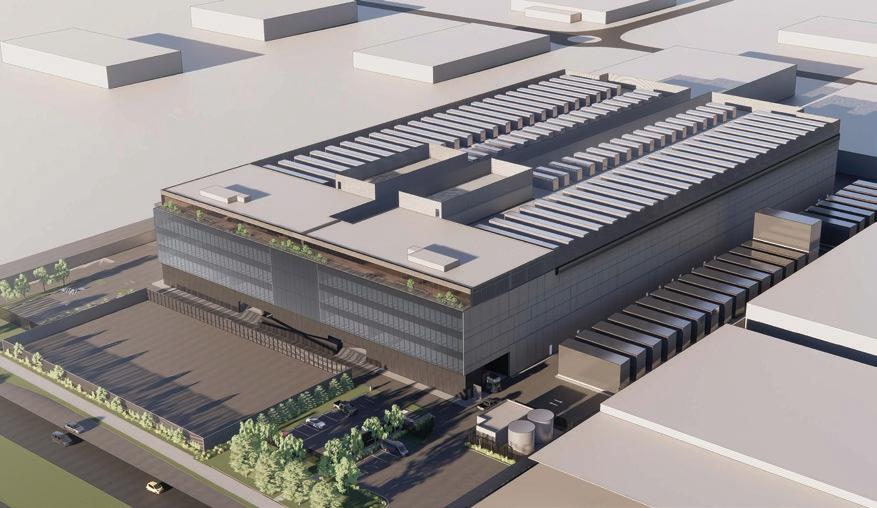

MELTON HOSPITAL (left) – A.G. Coombs, through its longstanding relationship with Lendlease, is bringing decades of technical experience in the healthcare space to the New Melton Hospital as part of a public private partnership (PPP). The project is being overseen by the Victorian Health Building Authority.
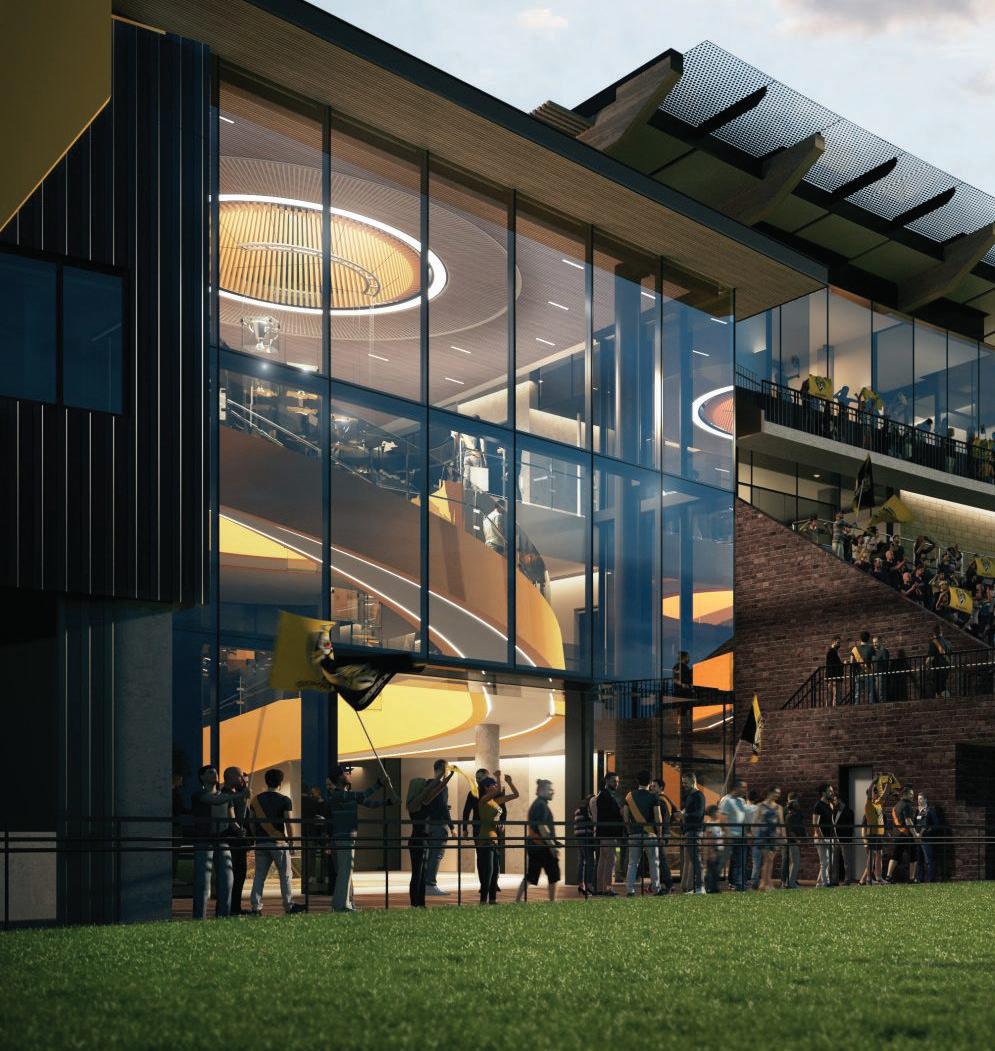
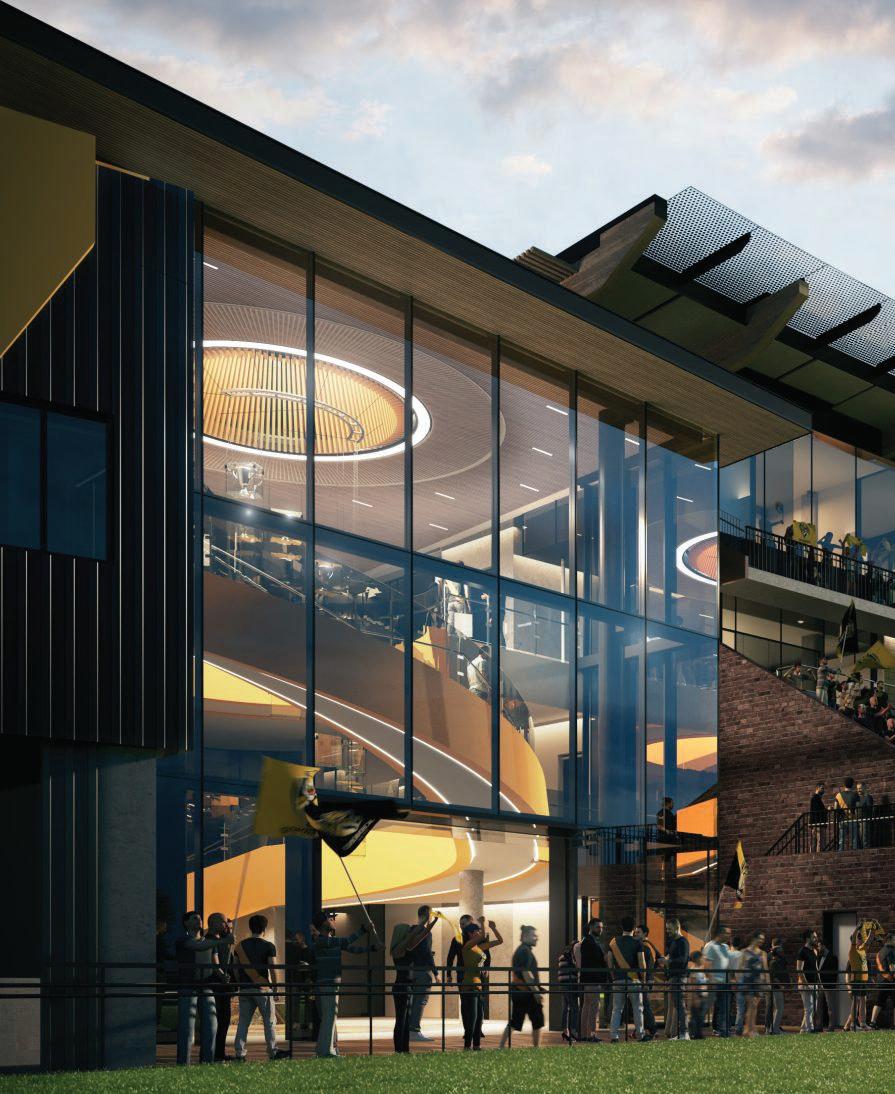
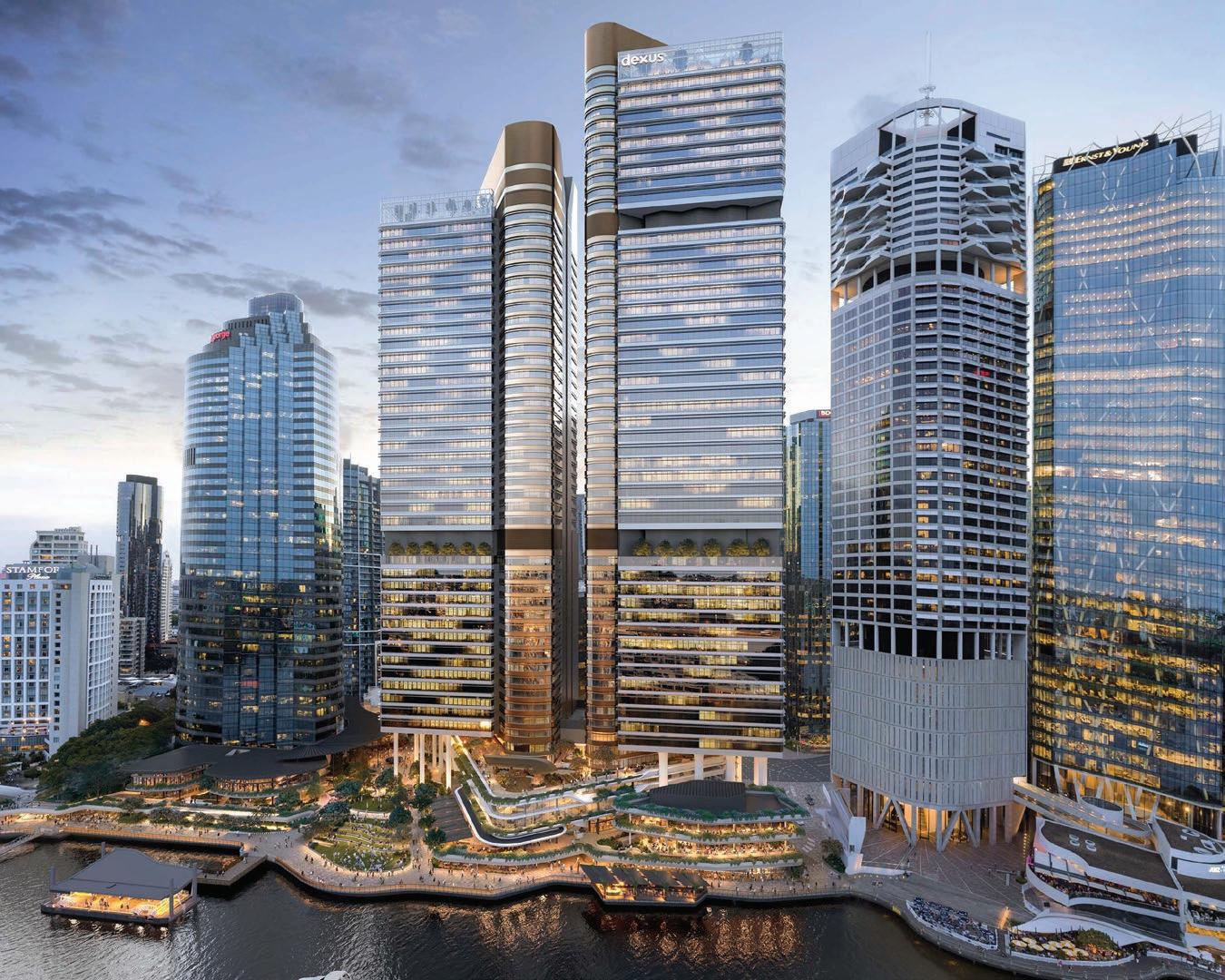
WATERFRONT BRISBANE (above) – This stunning waterfront development is set to become a focal point for overseas visitors during the 2032 Olympic Games in Brisbane. A.G. Coombs was appointed by property developers Dexus and builder John Holland to deliver the services in this prime commercial and entertainment precinct. Sustainability and energy efficiency are paramount, with the project aiming to achieve a 6 Star Green Star rating.
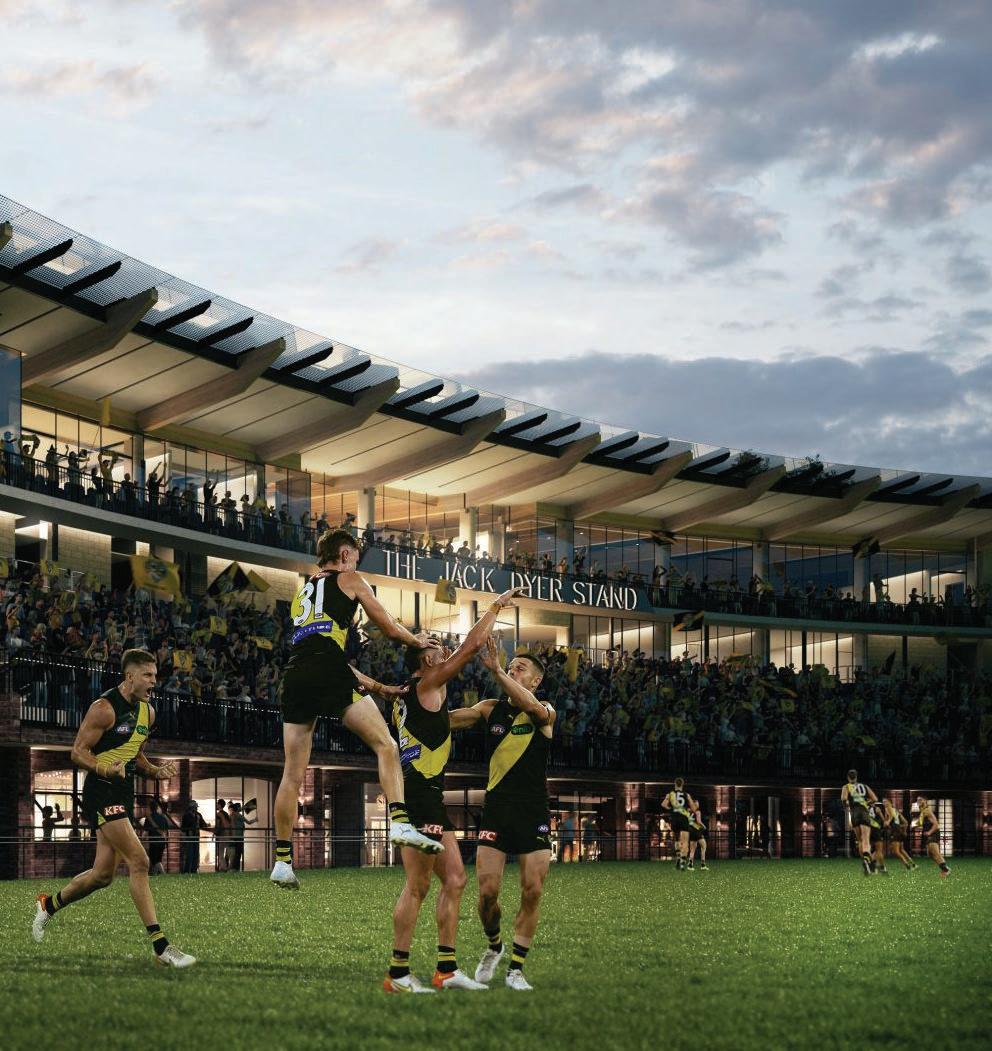
PUNT ROAD OVAL REDEVELOPMENT – The home of the Richmond Football Club is set for a major overhaul, including a new stand and a reshaping of the oval itself to match the MCG in size. Working with Build Environs, A.G. Coombs is installing the mechanical services in this exciting development for the sporting community.
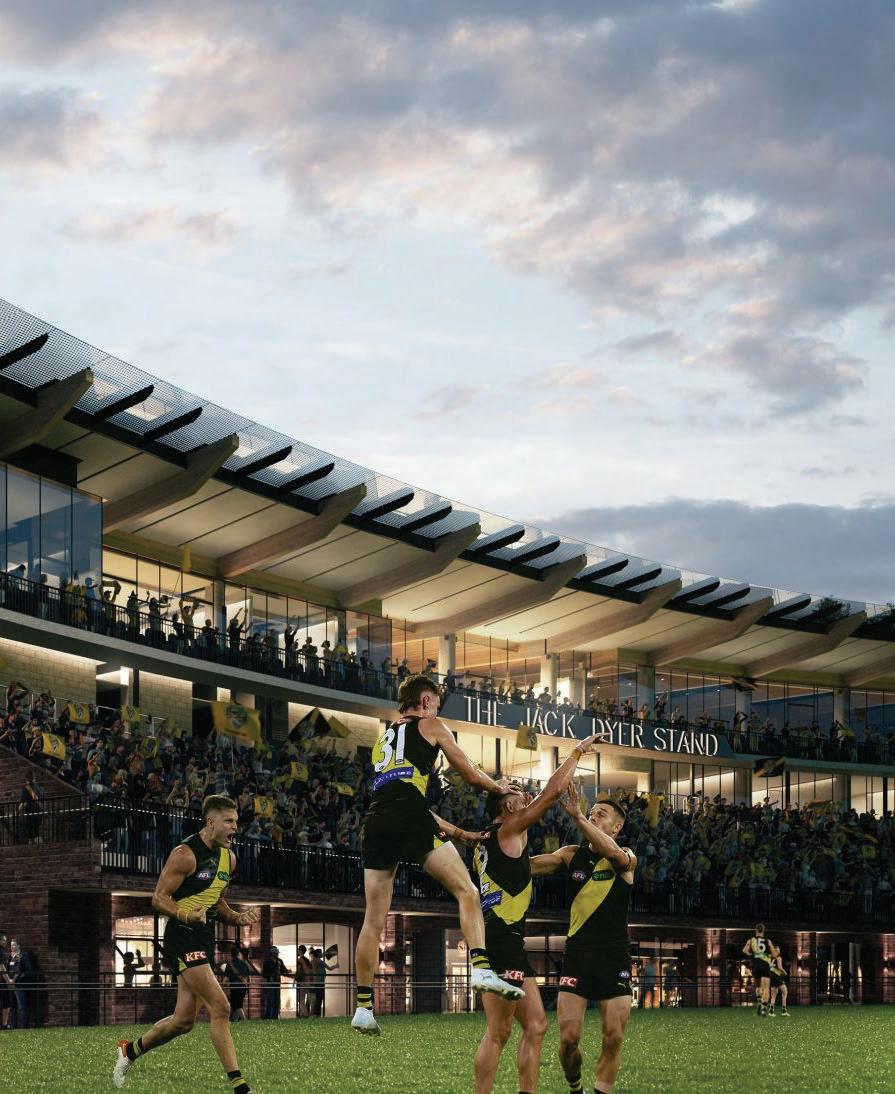
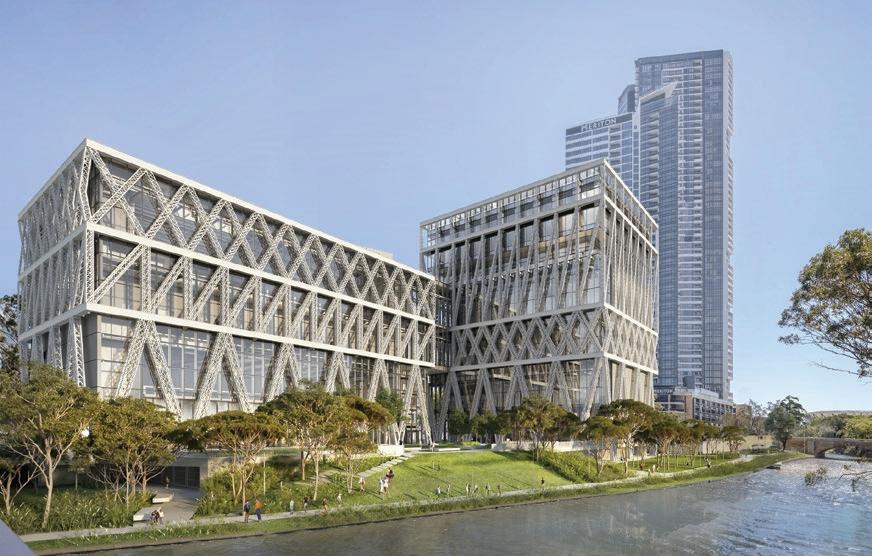
POWERHOUSE PARRAMATTA (above) – The culturally important Powerhouse Museum is expanding, with a new flagship building in Parramatta (Western Sydney) that will complement its historic Ultimo site. With challenging temperature and ventilation requirements – in an environment that includes exposed services – A.G. Coombs has drawn on expertise from across the company to value-engineer a mechanical services design that meets the specialised brief. Constructed by Lendlease, the new museum will feature Australia’s largest column-free exhibition space.
A number of past and present employees, as well as key associates of Allan Coombs and Russell Telford, were interviewed in 2015 and 2025 as part of the research for this book. Editorial Review Committees were also established to review the final manuscript. We thank everyone for sharing their memories and for devoting their time to making this publication a reality. We also thank Sean McGowan for helping to conduct the 2015 interviews.
Editorial Review Committee 2015
• Alan Collard
• Philip Coombs
• Bryon Price
• Frank Schooneveldt
• David Seedsman
• Russell Telford
• Susan Waterer
Editorial Review Committee 2025
• Kim Hesline
• Raymond Lee
• Bryon Price
• Russell Telford
• Jodi Whelan
People interviewed
• Ron Barns *
• Jim Barr *
• Claire Bennett ^
• Gerald Carter *
• Murray Coleman OAM ^
• Alan Collard *
• Elaine Coombs *
• Philip Coombs *
• Norm Davies *
• Rob Dunn *
• Gary Economos ^
• Jock Fraser *
• Kim Hesline * ^
• Terri Hosking ^
• Peter James ^
• Raymond Lee ^
• Allan Lichomets ^
• Keith Marsh *
• Chris Mason *
• Andrew McGregor ^
• Jack Melbourne
• Mark Mitchell ^
• Geoff Moore ^
• Madeleine Moratti ^
• Bill Moseley
• Bryon Price * ^
We also thank the following people and organisations for their assistance
Jennie Angliss née Luke
Ashley Barrie - UTC Building & Industrial Systems
Tony De BolfoCommunications Department, Carlton Football Club
David Eynon - Former executive director, AMCA
Bronwyn Hewitt - Royal Children’s Hospital Archives
Eric B. Schultz - Historian & author
AMP Capital
Arts Centre Melbourne
Charter Hall
City of Melbourne
Coptercam
Cox Rayner Architects
Crown Resorts Limited
Darling Harbour Live
Department of Defence
Department of Finance
DEXUS Property Group
Federal Group
Hamilton Lund
IFM Investors (formerly ISPT) Kador Group
Lendlease
• Frank Schooneveldt *
• David Seedsman *
• Ray Sherry *
• Luke Snell ^
• Ray Stephenson *
• Russell Telford * ^
• Brian Tregenza *
• Ray Twite *
• Robert Ukovic ^
• Daniel Waack ^
• Andrew Wallbridge ^
• Clive Weeks AO ^
• Jodi Whelan ^
• Gareth Whitfield ^ Melbourne Airport
Moonee Valley Racing Club
The GPT Group
Department of The Treasury
Toyota Motor Corporation
UTS
Walter and Eliza Hall Institute
of Medical Research
Paul Yunnie
* Interviewed in 2015
^ Interviewed in 2025
• Annear, Robyn, A City Lost & Found – Whelan The Wrecker’s Melbourne, Penguin Books, Australia, 2014.
• Buckrich, Judith, Collins – The Story of Australia’s Premier Street, Australian Scholarly Publishing, Melbourne, 2005.
• Carrier, Weather and the story of how it is manufactured, Carrier Engineering Corporation, New York, USA, 1919.
• Cribbin, John, Moorabbin – A Pictorial History 1862 –1994, City of Kingston, 1995.
• Flesch, Juliet and Francis, Rosemary, Spanning the Centuries – a history of AE Smith & Son Pty Ltd, AE Smith, 2008.
• Lang, W.R. (Roy), James Harrison – Pioneering Genius, Neptune Press, 1982.
• Laube, Herbert L., How to have air conditioning and still be comfortable, Business News Publishing Company, Birmingham, Michigan, USA, 1971.
• Luscombe, Geoff, Beginnings of the refrigeration industry in Australia, Australian Refrigeration, Air Conditioning and Heating, March 1993 and April 1993.
• Marvmelb.blogspot.com.au “Beside the Yarra: The Paris End of Melbourne” (17 April, 2013).
• Roberts, Brian, The Quest for Comfort, Chartered Institution of Building Services Engineers, London, UK, 1997.
• Roberts, Brian and Yunnie, Paul, The Magic of Hot Water, Andrews Water Heaters, UK, 2001.
• Schultz, Eric B., Carrier - Weathermakers to the World, Carrier, USA, 2012.
• Sheridan, N.R., Air Conditioning, University of Queensland Press, St Lucia, Queensland, 1962.
• Will, Harry (ed.), The First Century of Air Conditioning, American Society of Heating, Refrigerating & Air Conditioning, 1999.
• Yule, Peter, The Royal Children’s Hospital – A history of faith, science and love, Royal Children’s Hospital, Melbourne, 1999.
Newspaper articles and newsletters Collins Place News, May 1981; Land, Sydney, 5 October 1945; Moorabbin News, 19 October 1960; Sunday Times, Perth, 20 June 1937, 23 June 1946; The Argus, Melbourne, 7 August 1936, 15 January 1937, 5 June 1937, 17 September 1937, 22 December 1938, 22 June 1939 and 2 August 1939; The Brisbane Courier, 22 October 1929; The Courier Mail, Brisbane, 12 June 1935 and 30 March 1937; The Sydney Morning Herald, 20 June 1971.
From the A.G. Coombs archives
• BE – Building Efficiency, 2006–2025
• Marketing materials and media clippings
• The Orange and The Green staff newsletter, 1995
Websites
• www.agcoombs.com.au
• www.bigaustraliabucketlist.com/victoria-lockdowns-dates-restrictions
• www.murrungar.com.au
• www.nm.org/healthbeat/medical-advances/new-therapies-and-drug-trials/ covid-19-pandemic-timeline
• www.platinumaccounting.com.au/blog/melbourne-lockdown-dates
• www.vbis.com.au
• www.who.int
• www.wikipedia.org/wiki/COVID-19_pandemic_in_New_South_Wales
• www.wikipedia.org/wiki/COVID-19_pandemic_in_Queensland
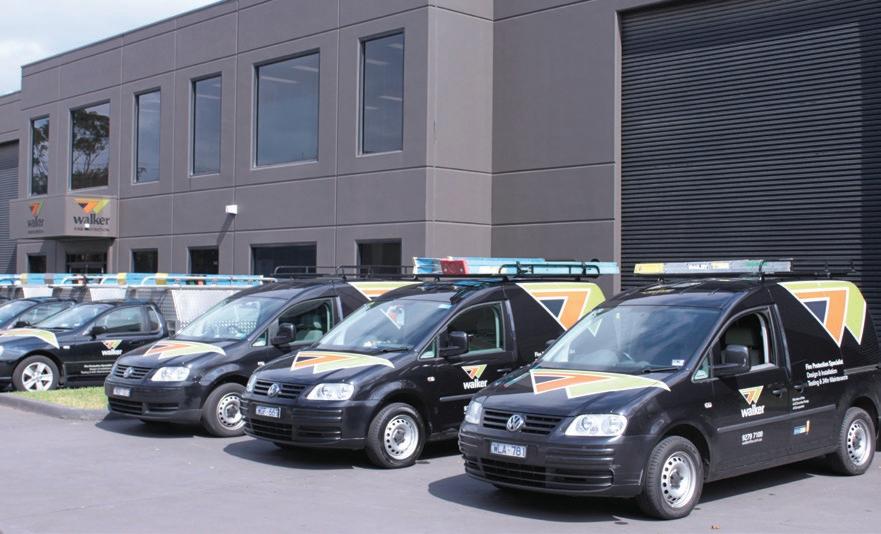
1994 Master Builders Association Victorian Excellence in Construction Awards – Subcontractor Award 120 Collins Street BHP Petroleum Plaza: A.G. Coombs.
1999 Master Builders Association ACT Excellence in Building Award – Subcontractor Division, Services, John Gorton Building: A.G. Coombs.
2001, 2002, 2003 & 2004 Master Builders Association Victorian Excellence in Health and Safety Award: A.G. Coombs.
2002 Melbourne East Group Training (MEGT) Host Employer of the Year: A.G. Coombs.
2006 Commonwealth Minister’s Award for Excellence for Employers of Australian Apprentices (Melbourne region).
2008 370 Degrees Group Plumbing Host Employer of the Year: A.G. Coombs.
2008 & 2009 BP Large Contractor Award: A.G. Coombs Service
2010 ARBS Outstanding Service and Maintenance Provider: A.G. Coombs Service.
2010 & 2011 530 Collins Management – Award of Excellence for Best Performing Contractor: Walker Fire Protection.
2011 NFIA OneSteel Fire Systems Award – Innovation in Workplace Health and Safety: Walker Fire Protection.
2013 Lendlease for The University of Queensland’s Oral Health Centre Project (Safety Performance Award): A.G. Coombs.
2014 Victorian WorkCover Authority Health and Safety Awards – Best Solution to a Specific Workplace Health and Safety Issue: A.G. Coombs.
2015 Property Council of Australia / Rider Levett Bucknall Innovation and Excellence Awards – KONE Award for Innovation: A.G. Coombs and Lendlease for International Towers Sydney Barangaroo prefabricated risers.
2015 AIRAH 2015, Excellence in Innovation, A.G. Coombs and Lendlease, Prefabrication Resets Construction Standard at Barangaroo Sydney.
2015 Jones Lang LaSalle Vendor Innovation Award Program, Winner, A.G. Coombs, Environmental Sustainability.
2015 Jones Lang LaSalle Innovation in Safety Awards 2015, A.G. Coombs.
2018 AIRAH 2018 Award W inner, Excellence in Sustainability, A.G. Coombs and AECOM, International Convention Centre Sydney mechanical and HVAC services.
2018 AIRAH 2018 Award W inner, Excellence in Innovation, A.G. Coombs and AECOM, International Convention Centre Sydney mechanical and HVAC services.
2020 The Australian Business Awards, Business Technology Winner, VBIS for outstanding achievement in business technology management.
2021 AIRAH Awards 2021, Excellence in Sustainability, A.G. Coombs and Aurecon, 25 King Street Melbourne.
2021 FM Industry Awards for Excellence – Excellence in Management of a Pandemic, A.G. Coombs Group –COVID-19 Building Services Advisory Notes.
2023 AIRAH Excellence in Innovation Award – W inner, A.G. Coombs & LCI Consultants, Allianz Sydney Stadium.
2023 AIRAH Excellence in HVAC&R Research Award –Joint winner, BREATH Project.
2024 AIRAH Excellence in Innovation Award – W inner, A.G. Coombs and Exergenics, Sydney Airport chilled water plant optimisation.
2024 AIRAH Excellence in Sustainability Award – W inner, A.G. Coombs and Exergenics, Sydney Airport chilled water plant optimisation.
2024 ARBS Industry Awards, Project Excellence Award –Winner, A.G. Coombs & LCI Consultants, Allianz Sydney Stadium.
2024 CIBSE Building Performance Awards London, Best Digital Innovation – Project Delivery – Winner A.G. Coombs and Exergenics, Sydney Airport chilled water plant optimisation.
2024 FPA Australia, Fire Protection Industry Awards, Harry Marryatt Fire Protection Company of the Year Award –Winner, Walker Fire Protection.
2024 & 2025 NFIA State Awards of Excellence, Champion in Diversity Award – Winner, Walker Fire Protection.
2025 NFIA National Awards of Excellence, Women in Fire Protection Award – Winner, Lisa Dalgleish, Walker Fire Protection.
2025 NECA Excellence Awards 2025 Victoria – Winner, Medium Commercial Project, Presbyterian Ladies College sports, aquatic and fitness facility.
2025 AIRAH Excellence in HVAC – Best Retrofit, 540 Wickham Street Brisbane Decommissioning Cogeneration Project.
2025 FM Industry Awards – W inner, Leadership in Environment, Social & Governance, Advancing Women: An Industry in Transition.
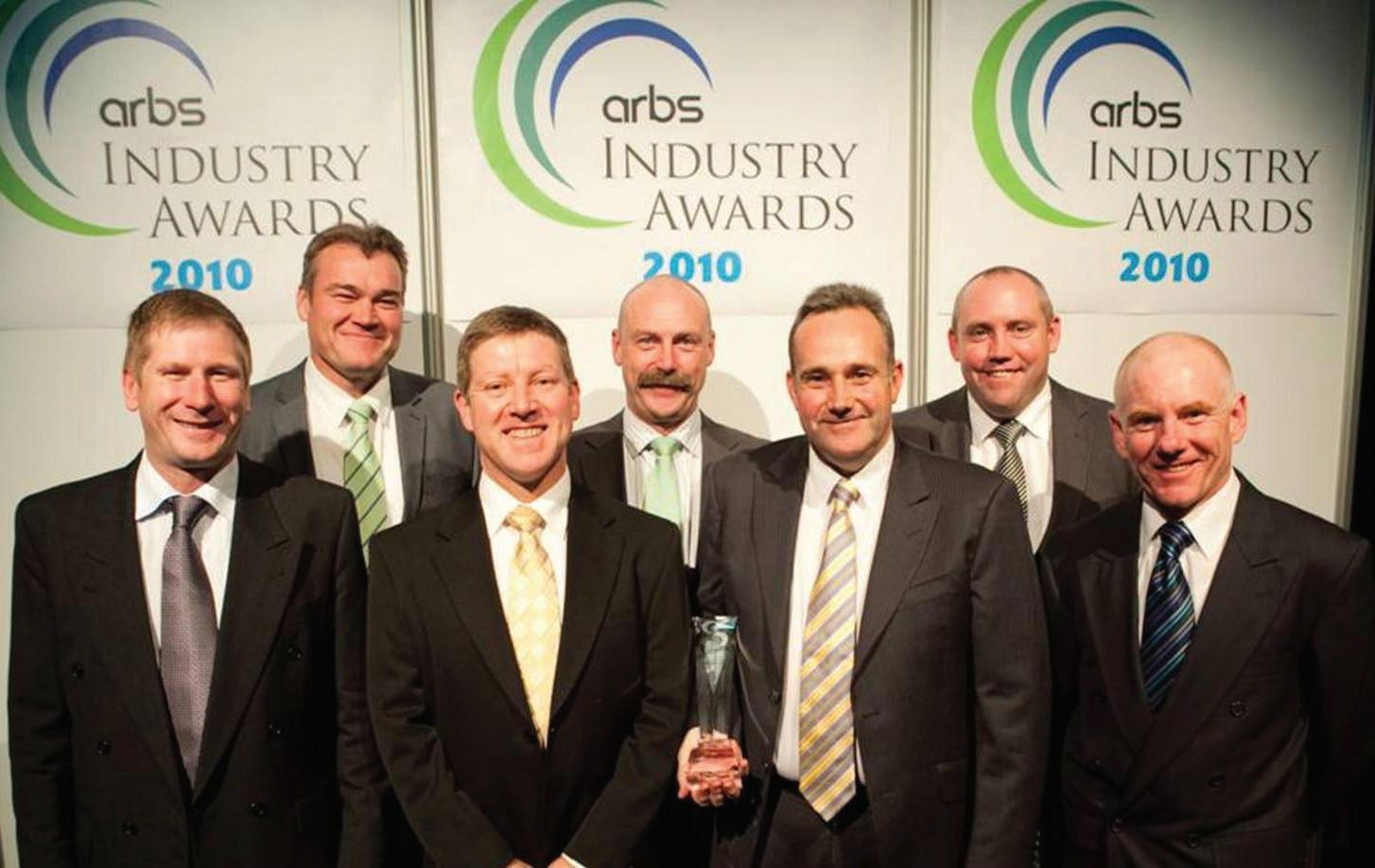
A.G. Coombs has been actively involved with a number of leading industry bodies and initiatives:
• Air Conditioning and Mechanical Contractors’ Association (AMCA)
• Australian Construction Industry Forum
• Australian Institute of Refrigeration, Air Conditioning and Heating (AIRAH)
• Air Conditioning, Refrigeration and Building Services (ARBS)
• BIM-MEP AUS
• Building 4.0 Cooperative Research Centre (CRC)
• Facility Management Association of Australia (FMA)
• Fire Protection Association Australia (FPA Australia)
• Global FM
• Materials and Embodied Carbon Leaders’ Alliance (MECLA)
• National Association of Women in Construction (NAWIC)
• National Electrical and Communications Association (NECA)
• Property Council of Australia
• Refrigeration and Climate Control Centre of Excellence
• Standards Australia
• Virtual Buildings Information System (VBIS)
1968 Jim Barr
1971 Gerald Carter, Bill Moseley
1974 Jack O’Hehir
1975 Albert Bell, Phil Buxton, Bill Goodger
1976 Alan Collard, John Zylstra
1977 Ron Ashby, Ron Barns, Percy Broadhurst, Bruce Granger, Kevin Jarvis
1978 Graeme Beattie, George Booker, Barry Fisher, Ray Smith
1979 Colin Bailey, Ron Donnison, Ted Ellis, Jock Fraser, Phil Lovelace, Noel Moylan
1981 Max Dixon
1982 Wayne Bromley, Bob Tardif, Herman Van Ooyen
1983 Ron Fisher
1984 Herbert Betz, Drago Jerecic, John John, Norm Long
1986 Russell Bray, John Fairbrother
1987 Keith Marsh, Frank Rada, David Seedsman, Laurie Thomas, Dennis Wood
1988 Peter Anderson, Ross Ferguson, Ted Harrison, Peter O’Reilly, Ray Twite
1989 Jim Alger, Charlie Cesnjaj, Bob Howard, Ray Sherry, Ray Stephenson
1990 Harry Hudson, Bob Kerr, Phil Morgan, Mato Savor
1991 Eddie Browning, Eric Gailey, Phil McMahon, Bill White, Bill Young
1992 Tino Quirillo, Malcolm Wallace
1993 David Rolph, Frank Schooneveldt
1994 Alan Foster, Tony Foti, Peter Morphet
1995 Robert Casey, John Dunne, David Hubbard, Denis Jaffe, Andrew Kincaid, Frank Natoli, Richard Sellars, Brian Tregenza, Gordon Wilson, Bruce Woodyard
1996 Paul Carroll, Lew Cotterell, Peter Natoli
1997 Keith Bryan, Philip Coombs, Ian Hawkins, Des Piper, Jocelyn Stretton
1998 Bob Shaw
1999 John Eaton
2000 Terry Bonello, John Shirley, Russell Spicer
2001 Grant Darling, Daryll Evens, Robert Knipe, Dale Reynolds, Kevin Wilson
Women have been making an important contribution to A.G. Coombs since the 1960s, with a number of female employees achieving their 21 year service milestone by 2025. They include (pictured left to right) Jeannine Mills, Lucy Angelone, Kim Hesline, Libby Atkinson and Janet Tillig. Not pictured Jocelyn Stretton, Lorraine Konstanty, Janet Mitchell, Jodi Whelan and Leanne Hull.
2002 Graeme Hay
2003 Hans Dobrautz, Paul Dorrity, Denis Moore
2004 Max Georgeson, Geoff Woodyard
2005 David Barry, Lorraine Konstanty, Darren Martin, David Shipp
2006 Bernie Kolber, Tom Norton, Paul Oakes, Janet Tillig, John Van Diemen
2007 Elizabeth (Libby) Atkinson, Con Paspalis
2008 Maurice Ekanayake, Greg Kay
2009 Craig Granger, Russell Telford, Dick Turko
2010 Mario Cipolla, Andrew Johns, Kyle Paten, Jeff Schembri, Greg Spencer
2011 Rod Bell, Trevor Eastland, Peter Smits, Ashley Trebilcock, Gareth Whitfield
2012 Steve Brough, David Kan, Brett Mann, Darrin Palmer, Rod Sunderland
2013 Lucy Angelone
2014 Darren Briggs, Kim Hesline, Paul Lewis, Tim McLean, Sean Rodgers, Martin Whitney
2015 Stuart Livingstone, Jeannine Mills, Paul Thompson
2016 Clive Davies, Chris McKeown, Barry Smith, Ross Tomblin
2017 Scott Dolman
2018 Wayne Briggs, Stuart Knipe, David Mason
2019 Paul Bruton, Janet Mitchell, Scott Peak
2020 Paul Casemore, Paul Eagling, David Johnson
2021 John Forder, Gareth Johnson, Bryon Price
2022 Paul Chasteauneuf, Andrew McGahy, Michael Scafter, Jodi Whelan, Steven Woodyard
2023 Alexander McMahon, Chris Milgate, Mark Irvine, Simon Lucas, Makoni Utatao
2024 Adam Childs, John Plowman, Leanne Hull
2025 Anthony Armstrong, Grant Brown, Robert Cotterell, Michael Crichton, Chris Gordon, Gregory Mullenger, Andrew Smith, Jason Taylor, Grant Warren
1990 Bill Moseley
1995 Alan Collard
1996 Ron Barns
2007 Ray Twite
2008 Ray Sherry, Ray Stephenson
2010 Edward Browning, Eric Gailey
2013 Peter Morphet
2014 Gordon Wilson
2015 Peter Natoli
2019 Terry Bonello
2021 Graeme Hay
2022 Grant Darling, Daryll Evens, Dale Reynolds, Kevin Wilson, Bruce Woodyard
2024 Darren Martin
2025 Paul Dorrity
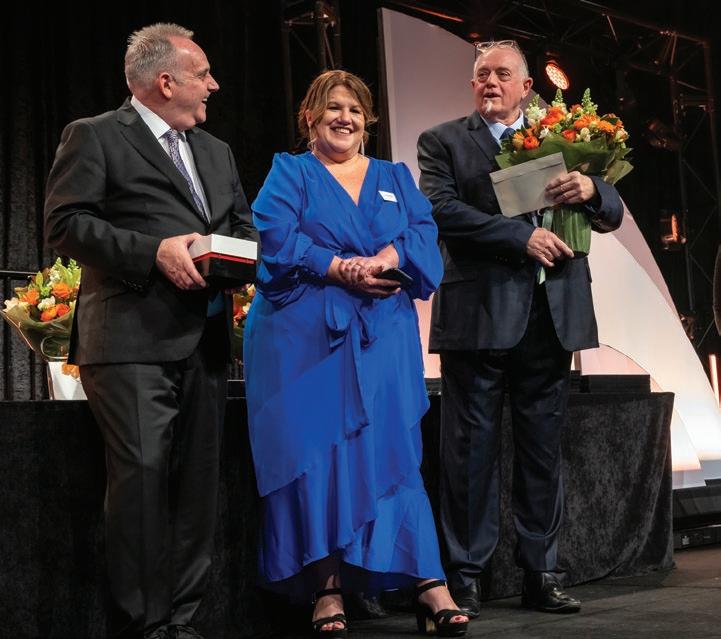
In 2024, partners Gordon Wilson and Leanne Hull were recognised at the company’s Annual Dinner and Awards Night – Leanne for achieving 21 years of service and Gordon (right) for attaining 50 years of service. Managing Director Russell Telford presented the awards.

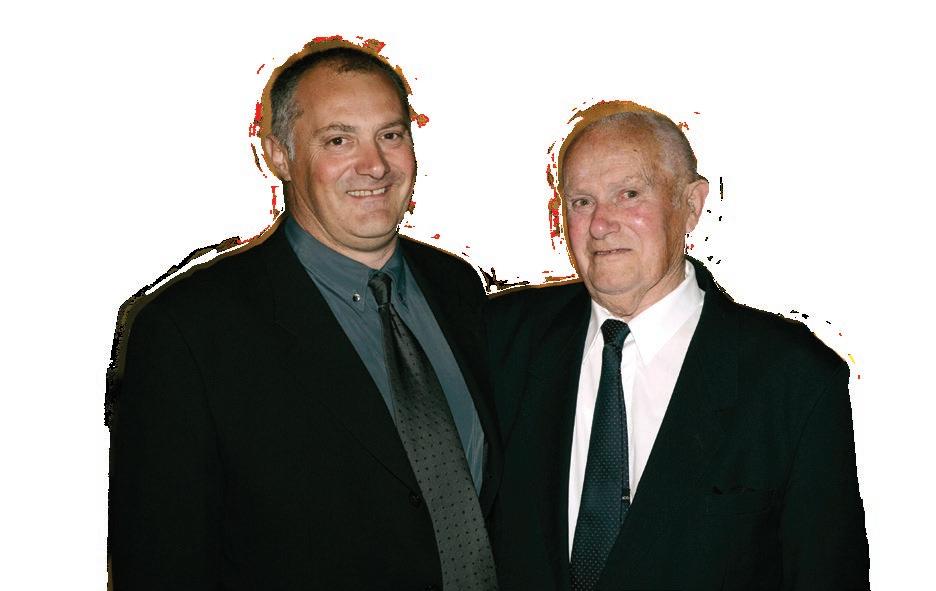
2006 Ron Barns
2018 Ray Sherry
2024 Gordon Wilson
Paul
for
When Craig Granger (left) was presented with his 21 Year watch in 2009, his father Bruce – who marked his 21 Year milestone in 1977 –was on hand to congratulate him.
Other family connections within A.G. Coombs include brothers Bruce and Geoff Woodyard (both now retired), and Geoff’s son Steven Woodyard, who marked 21 years of service in 2022.
By 2025, brothers Gordon and Kevin Wilson had attained more than 95 years of service between them – Gordon accounting for 51 years and Kevin for 45. Brothers Wayne and Darren Briggs had attained 28 and 26 years of service respectively.
Father and son duos have included Robert Knipe and his son Stuart, as well as Lew Cotterell – who marked 21 years of service in 1996 –and Lew’s son Robert, who marked 21 years in 2025.
First awarded in 2000, the Allan Coombs Training Award recognises the application, effort and dedication shown by the company’s apprentices and trainees in both their employment and personal lives. The award honours the company’s founder, Allan George Coombs AM, whose fervent belief in the value of education and training has enabled apprentices and tradespeople to improve their skills and increase their opportunities for advancement. As a leader, Allan Coombs put his beliefs into action by developing the facilities and technical training syllabus at institutions such as Swinburne Technical College (now Swinburne University of Technology), while also providing on-site training at his own company. Allan believed that training would benefit not only his company but also the industry as a whole. His conviction helped advance the profile of the Victorian building industry as well as the A.G. Coombs Group.
2000 Paul Stammers
2001 Chad Kopacz
2002 Paul Roche
2003 Hayden Harmer and Robert Montirosso
2004 Stuart Knipe
2005 Grant Warren
2006 Gavin Mitchell
2007 David Hemmings
2008 Ben O’Brien
2009 Daniel Wheeler
2010 Justin Banbury
2011 Heidi Hanlon
2012 Nicholas Trevorah
2019 Daniel Waack
2020 Daniel Fitzpatrick
2021 Daniel De Valentin
2022 Nicholas Kropf
2023 Paul Adcock
2024 Madeleine Moratti
2025 Nicholas Walsh
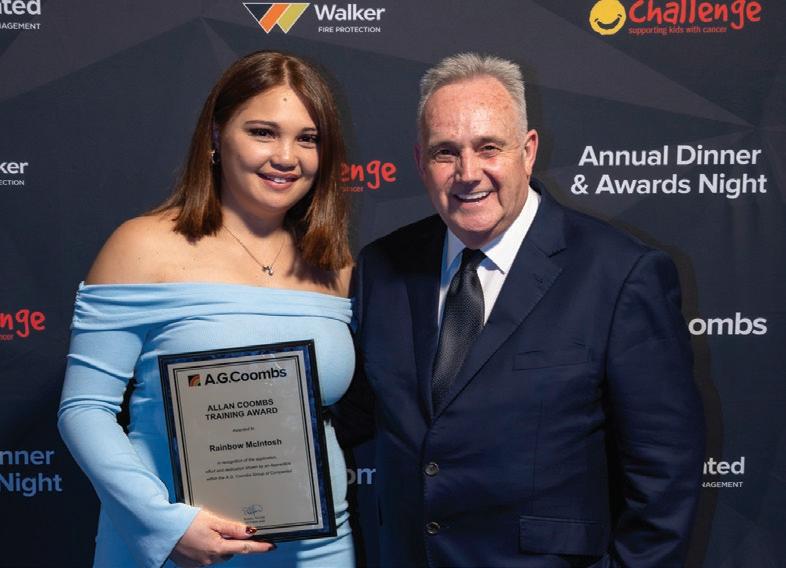
2013 Callum Hearn
2014 Nicholas Carrick
2015 Michael Lithotomos
2016 Jon Lassig
2017 Ryan Leather
2018 Maurice Barbar
2019 Jaxon Briggs
2020 Lauren Campbell
2021 Charlie O’Connor
2022 Jenna Comazzetto
2023 Ethan Jones
2024 Aidan Carr
2025 Rainbow McIntosh
Nicholas Walsh, Modelling Coordinator, winner of the 2025 A.G. Coombs Young Achievers Award.
Beginning in 2006, A.G. Coombs has released regular editions of its publication BE – Building Efficiency, showcasing major projects undertaken by the A.G. Coombs Group as well as highlighting developments and issues of importance to the Group and the wider industry. The articles in BE offer a ‘deep dive’ into the background and complexities of the featured projects. Carefully curated images also reveal the internal installations that bring these buildings to life.
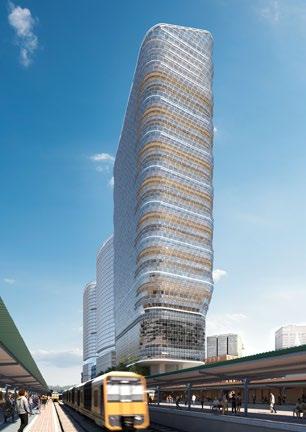
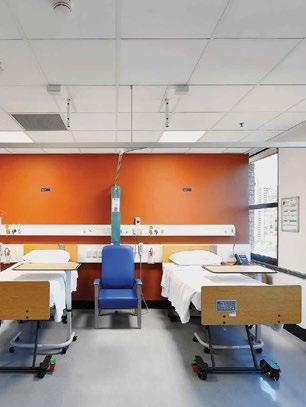
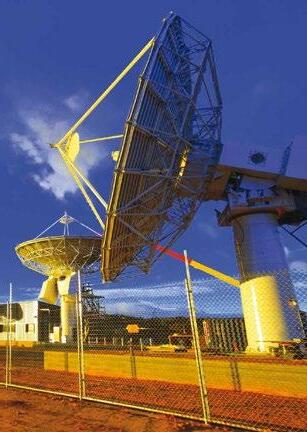


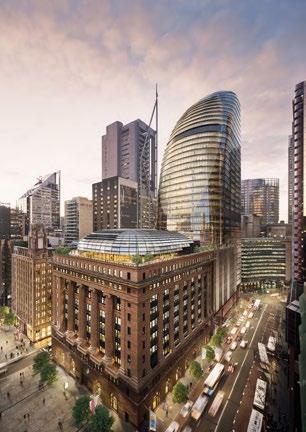
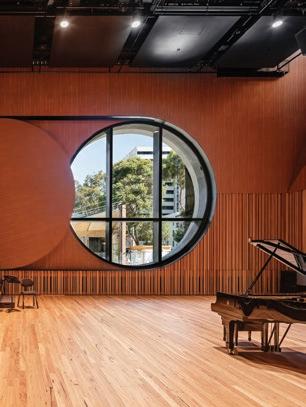
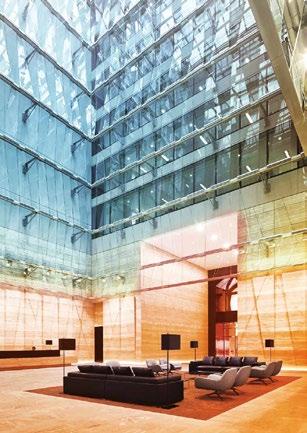


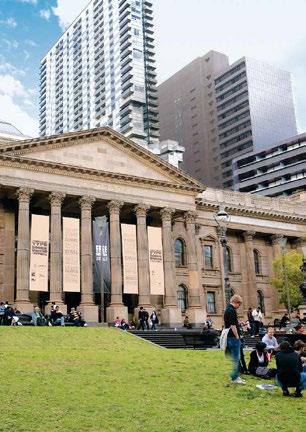


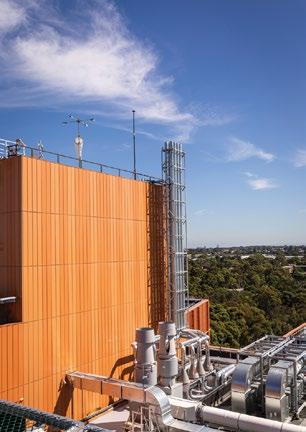
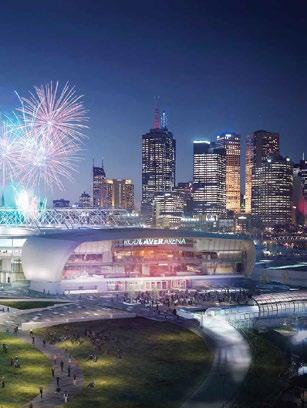
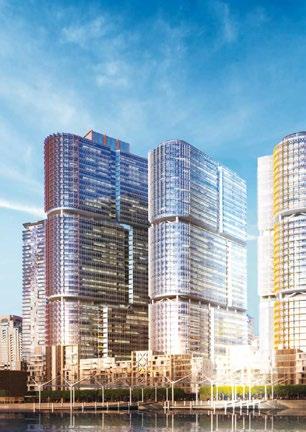


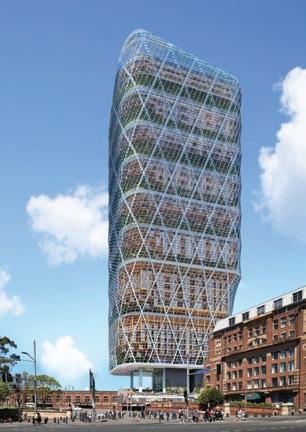
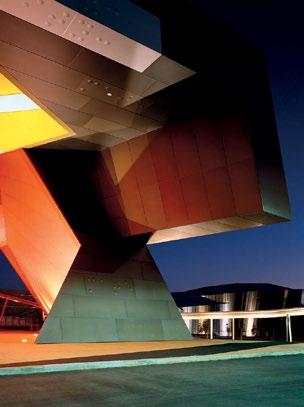
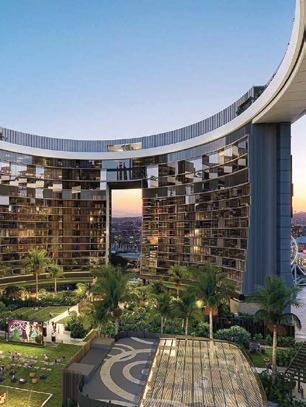
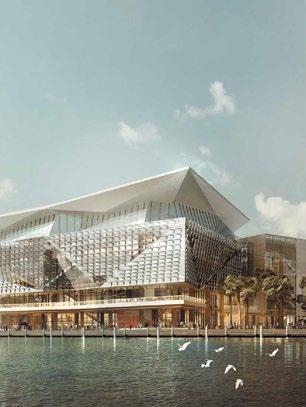


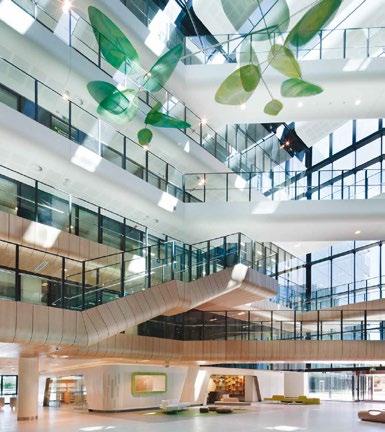

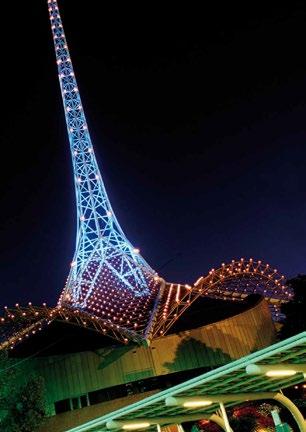





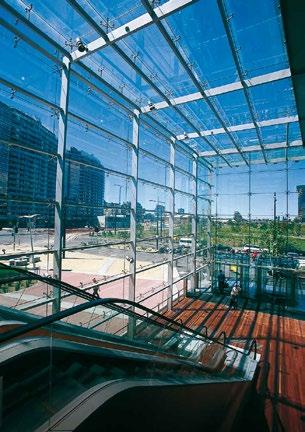



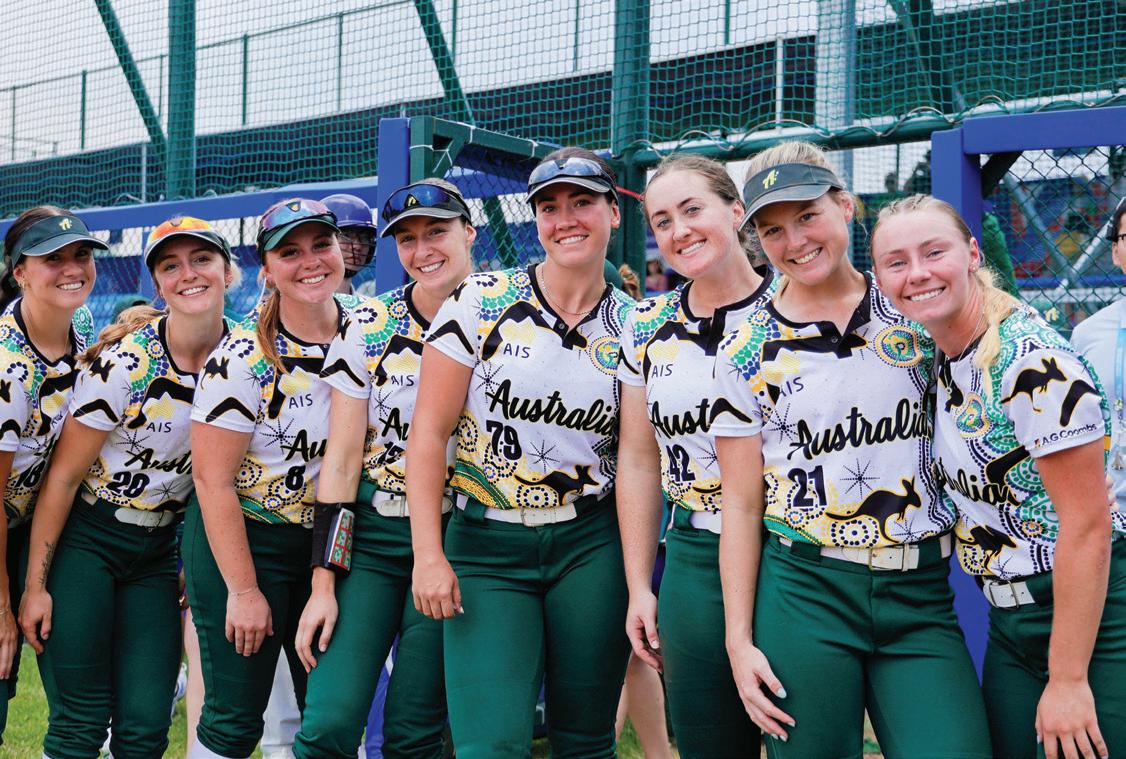
• First Peoples’ Health & Wellbeing Centre, Frankston
• Korin Gamadji Institute
• Melbourne Indigenous Transition School (MITS)
• Richmond Football Club
• Softball Australia
• Southern Aboriginal Sports Report 2023–24
• Wulgurukaba Walkabouts Women’s Indigenous Rugby League team
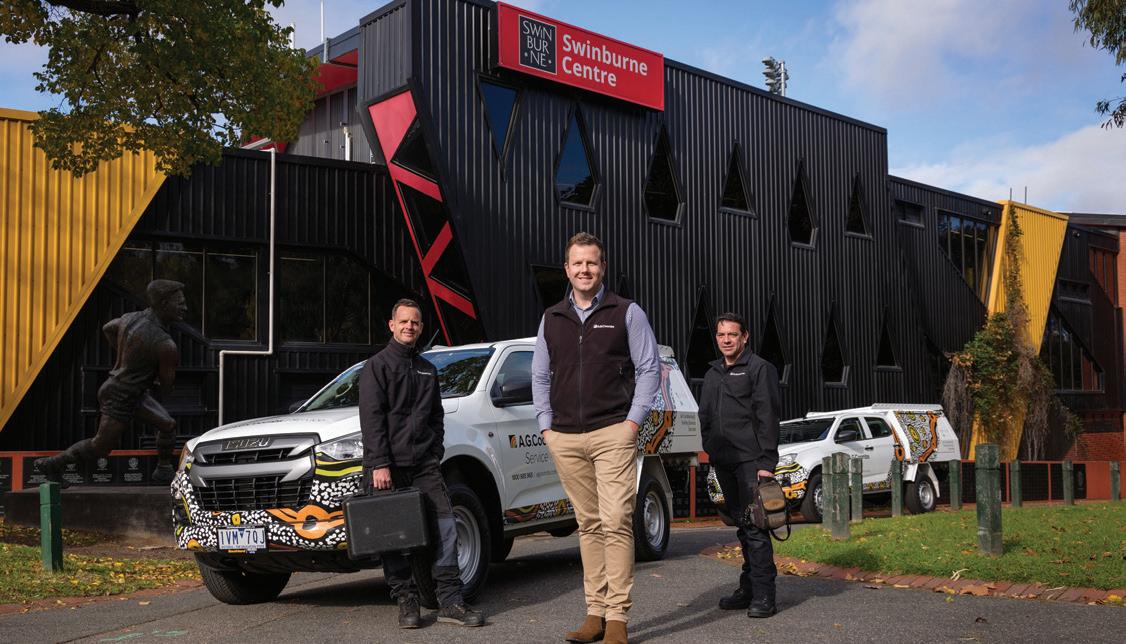
Challenge
Challenge, A.G. Coombs’ foundation charity, supports children undertaking treatment for cancer and lifethreatening blood disorders. The assistance offered to children and their families includes both recreational and support services such as camps, activity days, special outings and education.
A.G. Coombs has contributed to this important cause over many years, not only through direct fundraising activities, but also through practical, hands-on assistance. Significant upgrades to the air conditioning systems at Challenge’s Melbourne-based Family Centre, along with the provision of ongoing maintenance. (David Rogers, Challenge CEO pictured above.)


Alannah & Madeline Foundation is Australia’s trusted provider of online safety education. Its mission is to provide care, prevention and advocacy programs, to support children experiencing family violence or online bullying and to fight for the rights of young people everywhere.
In 2024, A.G. Coombs staff helped pack ‘Buddy Bags.’ Buddy Bags are backpacks thoughtfully packed by Alannah & Madeline Foundation volunteers to give to vulnerable children across Australia experiencing crisis, trauma or just doing it tough.




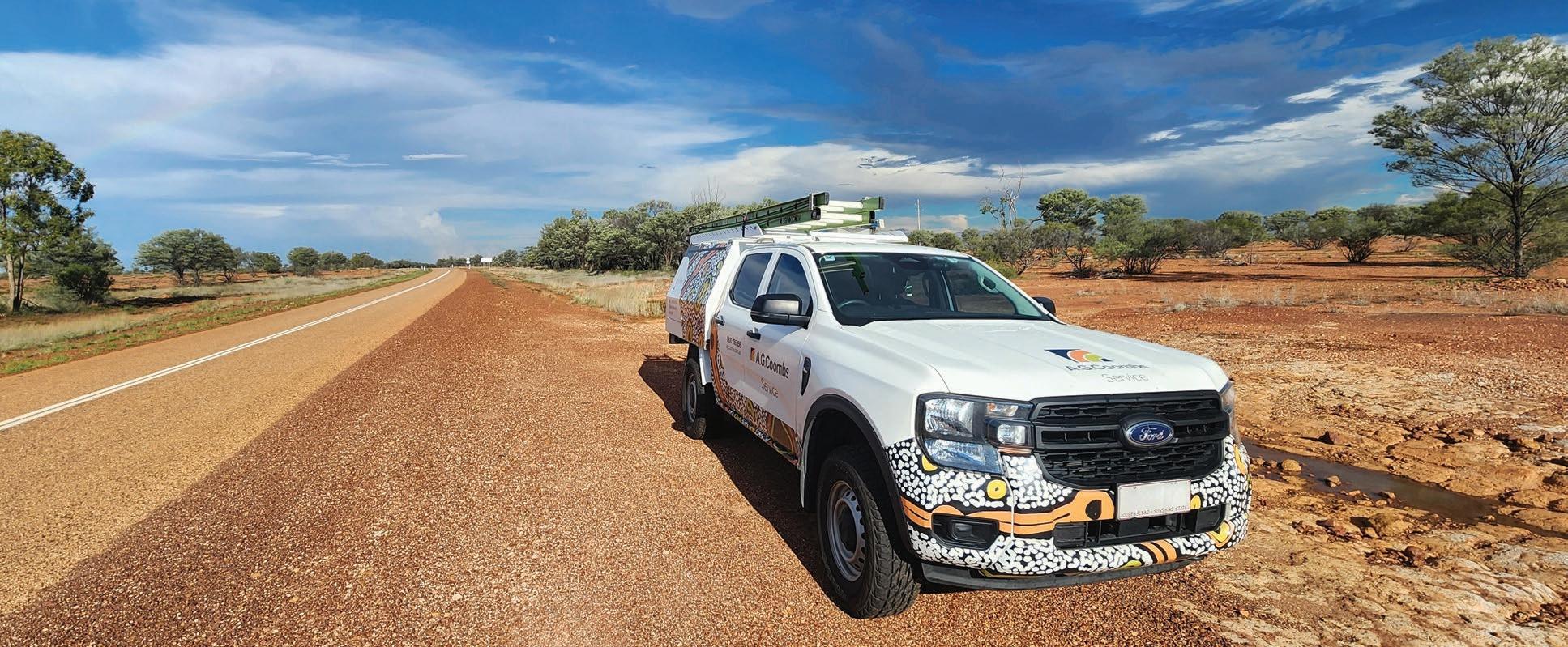
The drive to be a good corporate citizen has seen A.G. Coombs support or partner with organisations in areas of social justice, empowering people of all abilities, and encouraging Indigenous participation in business and industry.
The Kids’ Cancer Project’s mission is to provide scientists with the funding they need to make discoveries, translate pioneering research, advance treatments and build support programs that will improve survival rates for all young people with cancer and allow them to thrive after treatment.
A.G. Coombs is a longstanding supporter and held a range of fundraising activities in 2023-2024.
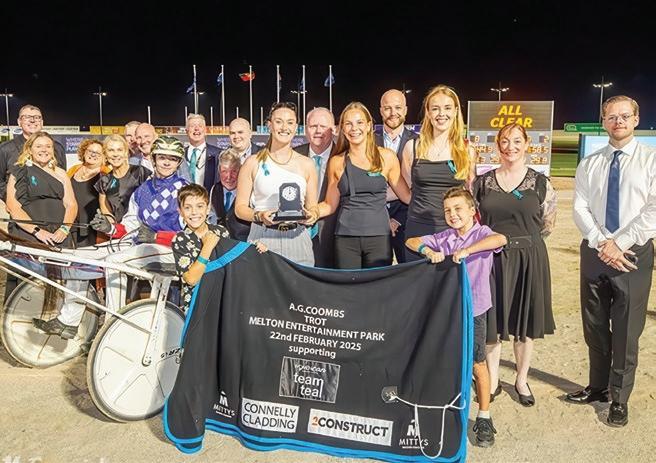
The A.G. Coombs Group is an active sponsor of the annual Team Teal ‘Night at the Trots’ event which is an initiative of WomenCan, a not-for-profit organisation that raises funds for pioneering gynaecological cancer research and prevention, and education programs through Australia New Zealand Gynaecological Oncology Group (ANZGOG).
Team Teal raises funds and awareness for women with ovarian and other gynaecological cancers, by celebrating achievements in sport. Donations and pledges are made to recognise these achievements, with further support from community fundraising and sponsorships. Teal is the international colour symbolising ovarian cancer.
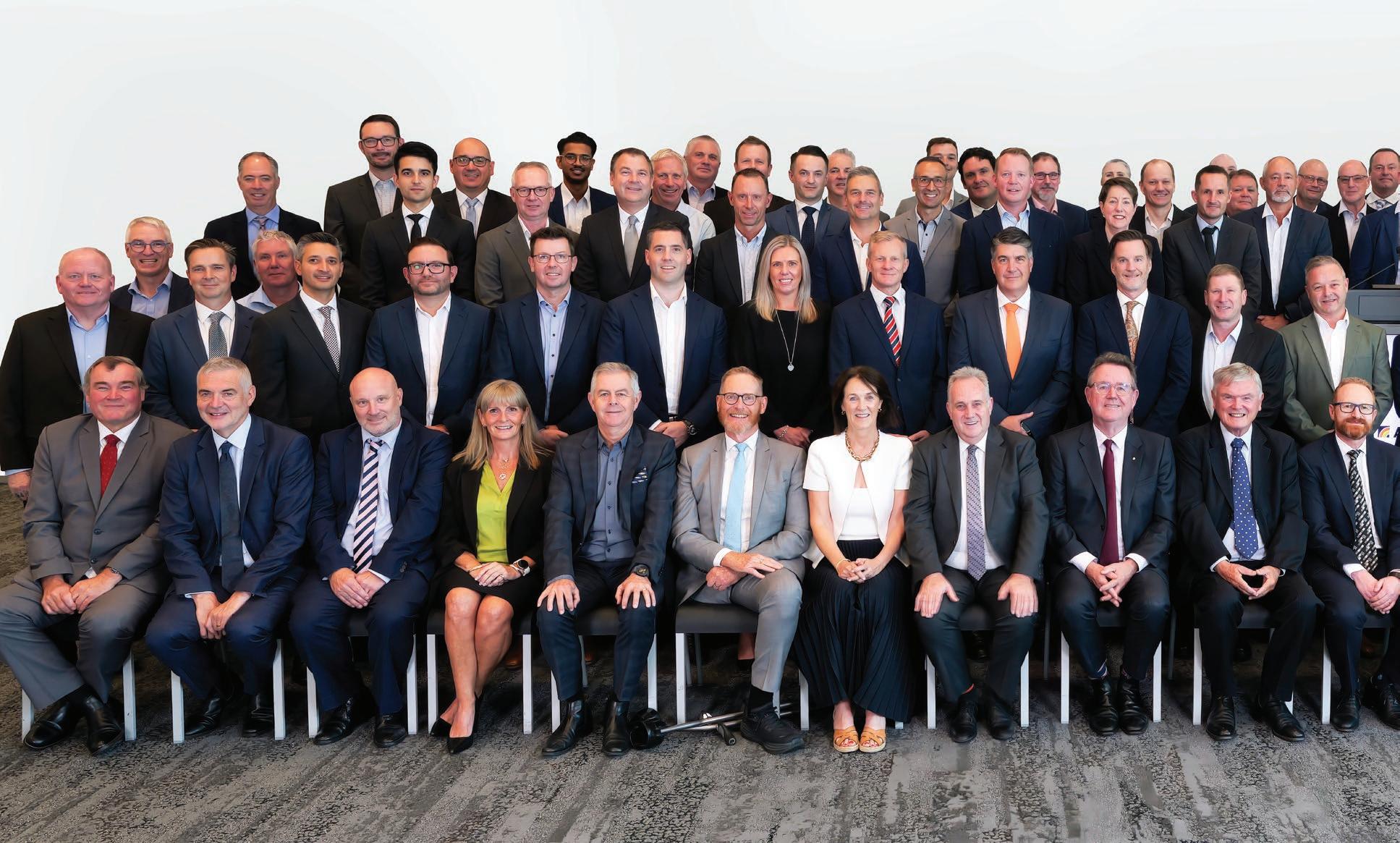
A.G. Coombs Group Board
Murray Coleman OAM – Non-Executive Chair (9), Allan Lichomets –Finance Director (11), Chris Mason – Non-Executive Director (10), Mark Mitchell – Executive General Manager (27), Bryon Price – Strategic Development Director (6), Kerry Ryan – Non-Executive Director (7), Russell Telford – Managing Director (8), Jim Walsh – Non-Executive Director (5).
A.G. Coombs Group
Con Bafitis – Asset & Data Analytics Manager (67), Claire Bennett –Manager - Learning & Development (59), Michael Burke – Program Leader (40), Gavin Cheetham – Leader Digital Engineering (18), Aaron Clark – Executive Leader Social Procurement, Inclusion & Engagement (37), Stan Draca – Senior HR Advisor (51), Donna Edgecombe –Executive Assistant to Managing Director (39), Paul Gilmore – Executive Manager Group Business Development (14), James Henshaw – Group Special Projects (19), Kim Hesline – Executive Manager Employee Services (4), Raymond Lee – Marketing Manager (not pictured), Gareth McCrystal – Special Contracts Division Team Leader (not pictured), Andrew Nagarajah – Sustainability Leader Group Engineering (45), Phillip Peacock – General Counsel (28), Adam Rotblat – Finance Manager (32), Adam Sacco – Finance Manager - Group (79), Nick Skarvellis – Finance Manager (31), Andrew Smith – National Data Driven Maintenance & Analytics Leader (47), Luke Snell – WHS Manager - Quality, Health, Safety & Environment (56), Michael Taranto – Manager - Group Procurement (17), Jane Taylor – Manager QHS&E (60), Ashley Trebilcock – Group Special Projects (65), Robert Ukovic – Executive Manager Group Information Technology (2), John VanCuylenberg – Virtual Design & Construction Leader (42), Jodi Whelan – National Customer Service Centre - Executive Manager Customer Engagement (25), Quinton Whitehead – Manager - Business Improvement (62).
A.G. Coombs Advisory
Andrew Bagnall – Leader Technical Advice (NSW/ACT) (73), John Bour ne – Leader - Sustainability (77), Daniel De Valentin – Senior Engineer (ACT) (76), Andrew Jenkinson – Manager (QLD) (58), Eoin Loughnane – Manager (NSW/ACT) (78), Andrew Oxley – Manager (VIC) (44), Jamie Park – Senior Engineer (83), Bart Taylor – General Manager (15), John Topouzakis – Leader - Electrical (54).
A.G. Coombs Projects (VIC)
Grant Brown – Virtual Design & Construction Manager (VIC) (46), Paul Carey – Senior Design Engineer (mech) (61), Scott Dolman – Senior Project Manager (34), Mark Irvine – Engineering Leader (VIC) (41), Imran Khan – Manager - Major Projects (VIC) (21), Serge Kraskov – Sales & Estimating Manager (Major Projects) (43), Emily McKernan – Senior Engineer (75), Johan Muller – Manager - Special Contracts Division Projects (VIC) (57), Kyle Paten – Senior Estimator (66), Mark Toner –Data Centre & Telecommunications Facilities Sector Lead (52), Daniel Waack – Integrated Prefabrication Leader (55), Martin Whitney –Project Manager (50).
A.G. Coombs (NSW)
Gary Aberley – Contract Manager (not pictured), Michael Burns –Manager (64), Gary Economos – General Manager (1), Adam Ewers –Sales & Estimating Manager (53), Dean Russell – Service Operations Manager (80), Robert Traino – Special Contracts Division Team Leader (NSW/ACT) (not pictured).
A.G. Coombs Projects (NSW)
Shane Durkin – Engineering Services Manager (63), Peter Powell –Manager Major Projects (NSW/ACT) (16), Andrew Robinson – Operations Manager (NSW/ACT) (22), Nathan Waugh – Manager - Sales & Estimating (NSW/ACT) (24).
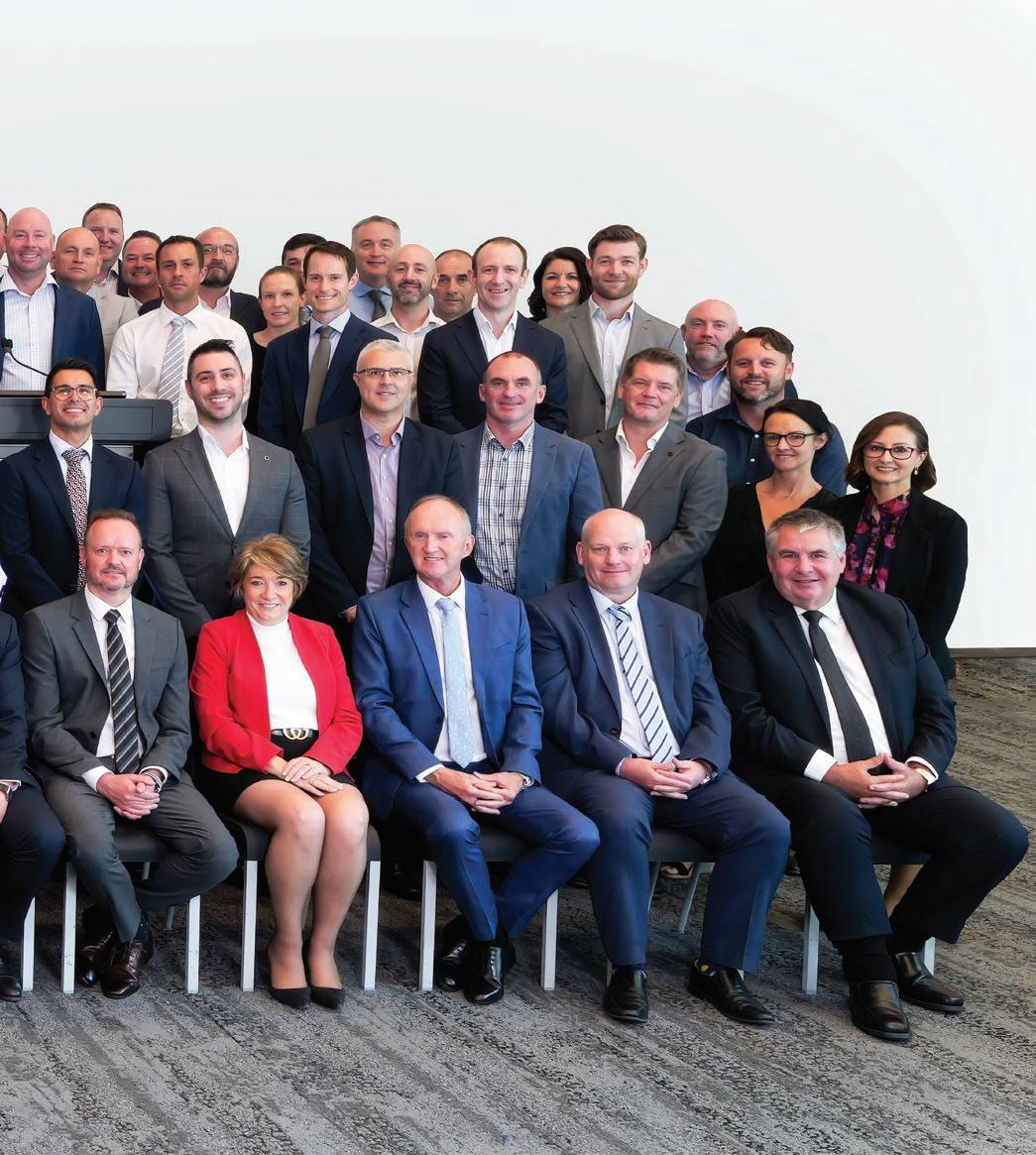
A.G. Coombs (QLD)
Chris Anderson – Engineering Leader (QLD) (35), Iain Bonnar – General Manager (74), Michael Moore – Sales & Estimating Manager (QLD) (20), Steve White – Manager - Contract Management (23).
A.G. Coombs Projects (QLD)
Lindsay Rose – Operations Manager (69), Martin Ross – Project Support (not pictured).
A.G. Coombs Townsville
Russ Sampson – Regional Leader - North QLD (70).
A.G. Coombs Service
Julie Brookhouse – National Service Administration Manager (82), Gavin Mitchell – National Service Operations Manager (49), Ken O’Brien – Senior Contract Manager (30), Jared Patt –Finance Controller - Service (81), John Plowman – ManagerField Team Development & Compliance (29), Rob Porter –Senior Contract Manager (71), Dave Rouvray – ManagerField Operations (36), Matthew Scarman – Leader - Service Sales (72), Gareth Whitfield – Executive General ManagerService (12).
Integrated Technical Management
Terri Hosking – General Manager (13), Andrew Shedden –National Operations Manager (26).
The A.G. Coombs United Leadership Group (ULG) in Melbourne on 26 February 2025 – among them new and long-serving employees, including many who have progressed from trade backgrounds into management roles. Together, the ULG remain committed to perpetuating the vision of an employee-owned, innovative, progressive company –one that lives its values while setting a standard for others.
Virtual Buildings Information System
Nathan Semos – Executive Manager VBIS (33).
Walker Fire Protection
Lisa Dalgleish – Operations Manager (Service) (38), David Haynes –Operations/Sales Manager (Projects) (48), Andrew McGregor – General Manager (3).
Butler Electrical
Darren Blake – Business Development Manager (Electrical Services) (68).
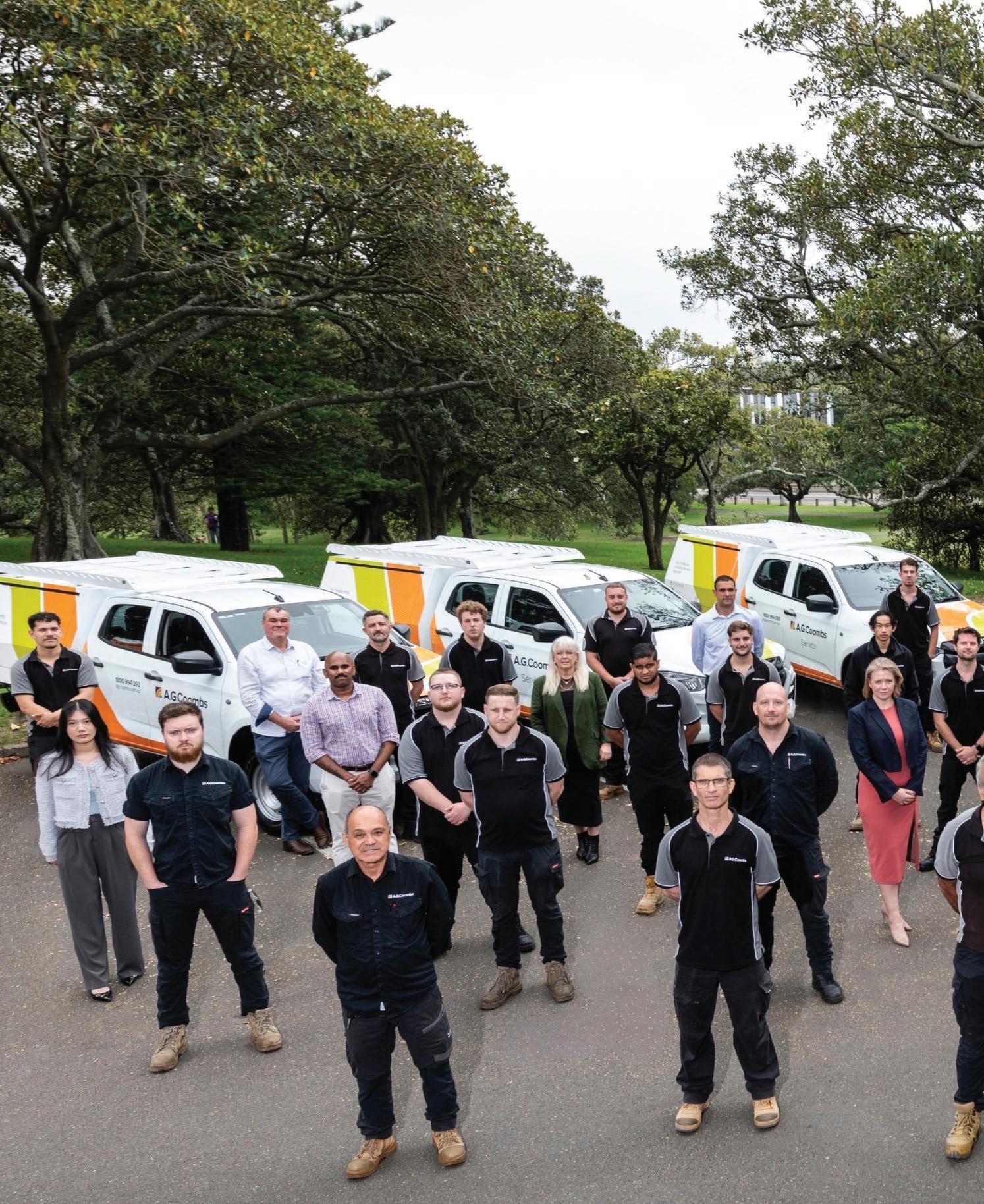
A.G. Coombs is a value-driven organisation committed to eight core values that create happy and healthy workplaces for our people. These values underpin and drive our service delivery, setting us apart from the rest.
1.Value to Others
Our success and opportunities are derived from our ability to add value to others. We must always be conscious of the need to add value in everything we do.
2.Results Not Excuses
We are a ‘can do’ organisation that continually strives for excellence and we do not accept mediocrity in any form.
3.Just Culture
We actively encourage open two-way communication between our people and reward honesty, integrity, loyalty, commitment, trust and respect.
4.Continuous Improvement
We differentiate ourselves through continuous improvement, a high level of innovation and committed customer focus.
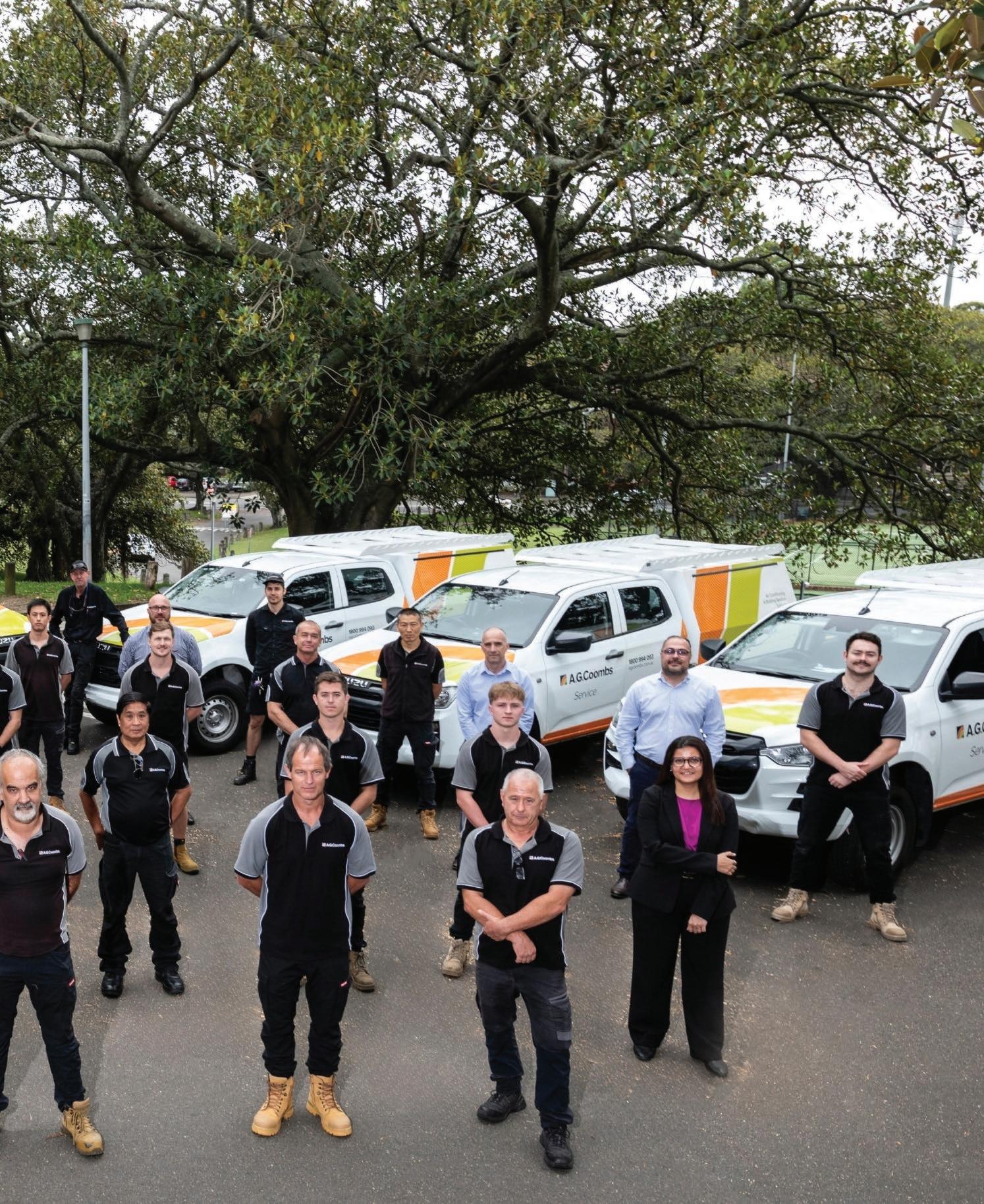
5. Good Corporate Citizenship
We are always community minded and look to add value at every opportunity through good corporate citizenship.
6. Excellence Through People
An organisation of excellence is achieved by the development and empowerment of our most important asset ‘Our People’.
A.G. Coombs — The Place to Work.
7. Leadership
Leadership is developed through a never-ending process of self-study, education, training and experience. Good leadership will take people where they haven’t been before for the benefit of everybody.
8. Teamwork
Our culture is our people and in particular our leadership people. Our team needs to trust and respect each other. We need people who are always closely aligned but not necessarily the same.
AIRAH Australian Institute of Refrigeration, Air Conditioning and Heating
AM Member of the Order of Australia
AMCA Air Conditioning and Mechanical Contractors’ Association of Australia
AO Officer of the Order of Australia
ARBS Air Conditioning, Refrigeration and Building Services
BE Building Efficiency
BIM Building Information Modelling
DfMA Design for Manufacture and Assembly
FM Facilities Management
FPA Fire Protection Association Australia
GBCA Green Building Council of Australia
HVAC Heating, Ventilation and Air Conditioning
ICA Independent Commissioning Agent
ITM Integrated Technical Management
LEED Leadership in Energy and Environmental Design
NFIA National Fire Industry Association Australia
OAM Medal of the Order of Australia
PCA Property Council of Australia
PPP Public Private Partnership
SMACNA Sheet Metal and Air Conditioning Contractors’ National Association (USA)
VBIS Virtual Buildings Information System
WHO World Health Organisation