IN THE HOT SEAT: CEO REFLECTIONS ON THE PAST 12 MONTHS
NATIONAL LARGE AIR TANKER LANDS IN AUSTRALIA
FLAMES OR FLAMBÉS? FIRES IN COMMERCIAL KITCHENS

THE PHDS CHANGING EMERGENCY MANAGEMENT
COULD LIGHTWEIGHT FIREPROOF PPE BE AROUND THE CORNER?
ISSUE ONE 2023


Pertronic Industries The Pertronic F220 Simplifies Fire Incident Management FIRE ALARM SYSTEM Brisbane Phone 07 3255 2222 sales.qld@pertronic.com.au Scan or call today to find out more about Pertronic fire alarm systems • Analogue addressable technology identifies the source of each individual alarm activation • 7-inch colour display presents information in big, easy to read text • Separate keyboard with large buttons for user-friendly operation • Three second network response MORE ABOUT THE F220 FIRE PANEL The Pertronic F220 is ActivFire listed under AS 7240.2, AS 7240.4, AS 7240.13, and AS 4428.3. Perth Phone 08 6555 3008 sales.wa@pertronic.com.au
HEADING IN THE RIGHT DIRECTION
JOHN KILGOUR CEO, FPA AUSTRALIA

Fire protection tends to fly under the radar. When most people walk into buildings, they don’t tend to look for sprinklers, detectors, hydrants, or hose reels, let alone fire walls or fire doors.
Nor is any thought given to the work required of practitioners to keep everything ready for when a fire occurs.
This is very different from other building services—you notice when air conditioning, lights, or taps aren’t working, but you shouldn’t have to wait for a fire to know if your fire
Regular checks and annual assessments give owners and occupants confidence that they can be evacuated safely and that the fire brigade has time to attend and extinguish a fire. Reporting on fire system performance and maintenance increases the accountability of practitioners and provides peace of
In NSW, until recently, there was a requirement to maintain systems but no identified standard for that maintenance. However, late in December, the Government changed the regulations to mandate AS 1851 except for where a performance
This brings a consistent process for the routine servicing and testing of fire systems, giving more certainty to owners and
For many this will not have much of an impact—AS 1851 is commonly used by the industry already. However, for some this will lead to changes to their maintenance schedules and to service costs.
While this is unfortunate, the reforms are necessary to ensure that the property sector’s fire systems are maintained and serviced regularly and effectively. And the standard is currently being reviewed to make sure that it continues to be relevant for use
Along with mandatory accreditation or licensing, an accepted standard for routine servicing helps to improve the reliability,
The NSW reforms are a successful example of industry and government working together for community safety, and a case
FPA Australia will be working with the Government to support clients and practitioners as the new regulations are progressively
IN THIS ISSUE
14 Fire Australia 2023 comes back to Sydney!
17 CEO reflections:
12 months on
20
From PhD to industry success
24 National Large Airtanker lands in Australia
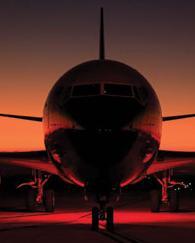
26 Setting a new direction for FPA Australia
28 Recognising resilience
30 Made light, and won’t ignite
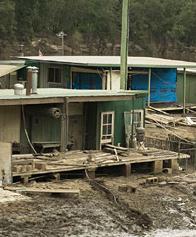
32 2022—A big year for interstate flood assistance
34 If you can’t stand the heat … facing the challenge of commercial kitchen fires
36 Sound Pressure Levels estimation
39 Caring for Mob, Caring for Country

REGULAR FEATURES
4 News
40 Q&A: Perspectives from the sector
42 Burning Ambition: Elvira Nigido, AGAS
43 Blast from the past
44 Standards update
45 Calendar
46 Movers and shakers
OUR COVER
Research by CSIRO could deliver lightweight fireproof PPE for frontline firefighters.
PHOTO: STORYBLOCKS ABOUT FIRE AUSTRALIA
Fire Australia is a joint publication of Fire Protection Association Australia and AFAC. We aim to bring the latest news, developments and technical information to the fire protection industry, fire and emergency services organisations, and hazard and emergency management agencies. Fire Australia is produced quarterly and distributed throughout Australia and New Zealand. Editorial submissions and letters to the editor are welcome and can be sent to magazine@fpaa.com.au. For more details on submitting a contribution, please contact the editors.
FOREST WOOD PRODUCTS , magazine@fpaa.com.au
JOINT EDITORS
PAUL WATERHOUSE (FPA Australia)
Tel +61 3 8892 3133 paul.waterhouse@fpaa.com.au
ALANA BEITZ (AFAC) Tel +61 3 9418 5233 alana.beitz@afac.com.au
Fire Australia magazine is printed by a printer with ISO14001 Environmental Management System Accreditation using vegetable-based inks onto FSC -certified paper.
ISSN 1032-6529 (Print)
ISSN 2200-9221 (Online)
The views expressed in this publication are not necessarily those of FPA Australia or AFAC. Articles and advertisements are published in good faith but Fire Australia magazine and its agents do not warrant the accuracy or currency of any information or data contained herein. Fire Australia magazine and its agents do not accept any responsibility or liability whatsoever with regard It is not possible for FPA Australia to ensure that advertisements published in this magazine comply in all respects with the Competition and Consumer Act 2010 Responsibility lies with the person, company or agency submitting the advertisement for publication. Material in Fire Australia magazine is subject to This publication
reproduced
printed or electronic form without permission. Contact +61 3 8892 3131
3 ISSUE ONE 2023 FIRE AUSTRALIA CONTENT
not be
may
in
28 24 32
FIRE AND EMERGENCY SERVICES ATTEND DEAF FESTIVAL
On 26 November 2022, AFAC held a stall at the Deaf Festival in Sydney to share general hazard preparedness information, including recent changes to the Australian Fire Danger Rating System and the Australian Warning System, with the Deaf community.

The Deaf Festival is one of the largest congregations of the Deaf community in the Southern Hemisphere. This was the first time it has been held since COVID-19, drawing a record attendance of over 1,000 people.
AFAC was joined at the event by the NSW Rural Fire Service, Fire and Rescue NSW and the NSW State Emergency Service. Together, they shared information and answered questions from visitors, supported by an Auslan interpreter. Deaf, hard of hearing and Auslan-signing staff and volunteers from the fire and emergency service agencies also participated in the event.
There was plenty of interest in the AFAC stall, and visitors had many insights about how to improve public information and provide warnings for Deaf and hard-of-hearing people, as well as about home fire safety and
smoke alarms. AFAC conducted a survey with stall visitors to capture feedback and provided resources to prepare for emergencies, such as the Person-Centred Emergency Planning Guide
AFAC and member agencies at the Deaf Festival found the event to be a valuable opportunity to learn first-hand from the Deaf community about their concerns. Visitors to the stall were highly engaged and enthusiastic to

learn about the fire and emergency services, and how the sector can best meet their culturally and linguistically diverse needs.
AFAC has worked with Deaf Australia to share changes to the Australian Fire Danger Rating System and the Australian Warning System and will continue to build upon this relationship to make the fire and emergency services more accessible to the Deaf community.
4 FIRE AUSTRALIA ISSUE ONE 2023
NEWS
PHOTO: AFAC
Fire and emergency service representatives at the Deaf Festival shared information about fire danger ratings, warnings, and home fire safety
AFAC Director National Projects and Innovation Dr Simon Heemstra shares information about the new Australian Fire Danger Rating System with Deaf Festival visitors
PHOTO: AFAC
SUPERIOR BREATHABILITY AND THERMAL PROTECTION — EVEN IN WET CONDITIONS














Thermal barriers provide less protection when they are wet.















That’s why we developed the GORE® PARALLON® System. Even in wet environments, it o ers high thermal protection. The layered system encapsulates the thermal barrier to protect it against moisture from the inside and the outside.

The GORE-TEX CROSSTECH® moisture barrier is highly breathable and wicks sweat away from the skin. It also prevents water from penetrating. The layers of the garment responsible for delivering protection remain drier to shield against heat and flame and minimise heat stress. Today, the GORE® PARALLON® System provides the most advanced protection for re ghters. Most advanced protection for re ghters that is fully complaint with AS 4967:2019. For further information contact Gordon Burns gburns@wlgore.com or

©2021 W. L. Gore & Associates GmbH. GORE-TEX, CROSSTECH, PARALLON, Gore and designs are trademarks of W. L. Gore & Associates. TEGT1132L01-13
WATERPROOF, WINDPROOF
HIGHLY
goretexprofessional.com
DURABLY
AND
BREATHABLE
+61
(0)428 569 630. GORE-TEX CROSSTECH® PARALLON® GARMENTS
NSW FIRE SAFETY REFORMS WILL PROTECT THE COMMUNITY: FPA AUSTRALIA
The latest fire safety reforms in NSW are an essential step towards greater community safety, according to FPA Australia.
“These reforms have been a long time coming,” said FPA Australia CEO, John Kilgour, “but they are vitally important to ensuring that fire safety systems are able to work when they are most needed.”
A new regulation—the Environmental Planning and Assessment (Development Certification and Fire Safety) Amendment (Fire Safety) Regulation 2022—has implemented the recommendations of a steering committee chaired last year by Michael Lambert.
These reforms:
clarify the powers and responsibilities of the Fire Commissioner
allow for fire safety schedules to be amended or reissued
prescribe AS 1851 as the maintenance standard for essential fire safety measures in the absence of a performance solution
introduce an accredited practitioner (fire safety) role for fire systems certification.
“As the national peak fire protection industry body, FPA Australia welcomes these reforms, which will improve the quality of fire protection installed in buildings and ensure that it continues to work in line with its design,” Mr Kilgour said.

CHANGES TO THE DESIGN AND
BUILDING PRACTITIONERS REGULATION 2021
The NSW Department of Customer Service has amended the Design and Building Practitioners Regulation 2021. The changes:

insert a definition of construction issued regulated design
exclude certain work from being considered building work
provide for documents to be lodged on the NSW planning portal if more than one construction certificate is to be issued for building work or only a portion of building work is to be completed
provide for work relating to Sydney Metro, including exemptions relating to that project
amend the qualifications, experience, knowledge, and skills required for certain classes of registration, and update
“This is a significant game changer to improve the quality and compliance of fire systems and to protect community safety.
“As an active member of the Lambert Committee, we’re pleased to see that the ideas and initiatives proposed by the industry are being acted upon by the NSW Government in the interests of the safety of NSW residents.
“FPA Australia congratulates the NSW Department of Customer Service for its work, and we strongly support these important changes,” Mr Kilgour said.
The new fire safety reforms will be progressively introduced from 13 February 2023, with the introduction of the new Fire System Certifier category set for 13 February 2025.
continuing professional development requirements for a particular pathway to registration.
The proposed expansion to classes 3 and 9c has not been included, because the Department wishes to consider late submissions, and the regulation will not commence until July 2023.
6 FIRE AUSTRALIA ISSUE ONE 2023 NEWS
PHOTO: 123RF
PHOTO: STORYBLOCKS
NATIONAL MEMORIAL SERVICE FOR FIRE AND EMERGENCY SERVICES PERSONNEL
AFAC will hold the National Memorial Service in Canberra on 12 May 2023 to honour the courage and sacrifice of fire and emergency service personnel who have died in the line of duty.

This annual event, held at the National Emergency Services Memorial on the banks of Lake Burley Griffin, is open to all AFAC members and the
public to reflect and pay respect. It coincides with St Florian’s Day— St Florian is the patron saint of firefighters.
An AFAC Memorial Medallion will be presented to families of those who have died in the line of duty. The service will also acknowledge names added to the Memorial Wall.
NEW FATIGUE EXEMPTION NOTICE REMOVES RED TAPE FOR EMERGENCY SERVICES
The National Heavy Vehicle Regulator (NHVR) has partnered with AFAC, the National Council for Fire and Emergency Services, to deliver a fatigue exemption notice enabling emergency service agencies to manage vehicle operations more effectively while preparing for emergencies.
NHVR CEO Sal Petroccitto said the National Heavy Vehicle Volunteer Emergency Services Work Diary and Record Keeping Exemption Notice 2023 (No.1)—which came into effect on 1 February—exempts drivers of fatigue-regulated vehicles from the requirement to maintain a work diary and records under the Heavy Vehicle National Law (HVNL) when they are performing an
Members of Parliament and the media are invited to attend to help promote the role of fire and emergency services and the commitment they make to keeping our communities safe.
For more information, visit www.afac.com.au/memorial.
emergency management activity for emergency services.
The annual National Memorial Service is an opportunity to reflect on the commitment and sacrifice of fire and emergency services personnel.
“Recent events have clearly demonstrated the importance of preparing for emergencies, and this notice will help by cutting administrative red tape for drivers of these vehicles, who are often volunteers,” Mr Petroccitto said.
“The exemption provides efficiency benefits in non-emergency situations, such as relocating fatigue-regulated heavy vehicles pending deployment to an emergency event, or for training and maintenance.
AFAC members already implement fatigue-management policies and controls that replicate or are more restrictive than standard hours under the HVNL, so the exemption does not pose any additional safety risks.
View the National Heavy Vehicle Volunteer Emergency Services Work Diary and Record Keeping Exemption Notice 2023 (No.2) online: www.legislation.gov.au/Details/C2023G00112.
7 ISSUE ONE 2023 FIRE AUSTRALIA
PHOTO: GARY HOOKER AFSM
NEWS
MAPPING BUSHFIRE DATA FOR NEW DATABASE
knowledge gaps, data needs, and availability, to recommend what an ideal national bushfire information database could include.
You can help map bushfire data by providing information about bushfirerelated datasets using this short online form: https://bit.ly/3XbPqrq.

Types of data being sought include:
environmental (e.g. vegetation, climate related, topography)
social (e.g. travel/daily activity diaries, demographic information, mitigation behaviours, preparedness/risk assessments)
economic (e.g. economic impacts of disasters, mitigation costs)
emergency (e.g. evacuation/public response behaviour, emergency response logistics)
The vital role of research in emergency management was central to discussions at the Natural Hazards Research Forum.
Fire agencies, land management departments, and researchers are encouraged to share their knowledge of existing bushfire data as part of Natural Hazards Research Australia’s Bushfire Information Database project.
The project, which aims to map all data related to bushfires in Australia, arises from findings by the 2020 Royal Commission into National Natural Disaster Arrangements and the 2020 NSW Independent Bushfire Inquiry,
both of which noted the absence of a national centralised bushfire information database for Australia.
A centralised database could be used to understand bushfire trends, including their intensity, extent, and the efficacy of mitigation activities, giving policy and decision-makers access to credible information for evidenceinformed practice.
The project will identify and determine current data and systems,
built environment (e.g. building damage, building and planning, utility and infrastructure access, postbushfire surveys, regulations)
bushfire (e.g. extent, ignition)
anything else contributors think might be relevant to understanding bushfires.
Find out more about this project at www.naturalhazards.com.au/ research/research-projects/bushfireinformation-database-scoping-study.
AFAC22 CONFERENCE AND EXHIBITION AWARDED FOR EVENT EXCELLENCE

AFAC22 powered by INTERSCHUTZ has been recognised by the Exhibition and Event Association of Australasia (EEAA) as the Best Association Event for 2022. This is the second consecutive time the EEEA has recognised the AFAC Conference, with AFAC19
powered by INTERSCHUTZ receiving the Best Association Event award in 2019. AFAC and our partners at Hannover Fairs Australia look forward to delivering our multi-award winning conference and exhibition in Brisbane in 2023.
8 FIRE AUSTRALIA ISSUE ONE 2023 NEWS
PHOTO: HFA AUSTRALIA
The AFAC powered by INTERSCHUTZ team celebrate the Conference and Exhibition’s second consecutive recognition as EEAA Best Association Event.
OZONE RECOVERY ON TRACK DESPITE LARGE HOLE REMAINING
The annual Antarctic ozone hole reached an average area of 23.1 million square kilometres between 7 September and 13 October 2022— around the size of North America.
While large, this is a reduction on the previous year and demonstrates a continuing shrinking trend.
Experts say that the ozone layer is recovering, and that annual variabilities are due to high altitude weather temperatures.
“We see some wavering as weather changes and other factors make the numbers wiggle slightly from day to
day and week to week. But overall, we see it decreasing through the past two decades,” said Paul Newman, chief scientist for Earth sciences at NASA’s Goddard Space Flight Centre.
The ozone layer is an important shield for the earth, blocking out almost all harmful UV radiation. Without it, increased exposure to UV radiation results in more cases of skin cancer and damaged ecosystems, and impacts crop yields, potentially leading to food shortages.
Human-driven pollution had been
UN SAYS OZONE-DEPLETING SUBSTANCES CONTINUE TO FALL
The United Nations Environment Program has released its Scientific Assessment of Ozone Depletion 2022.
The report examines progress with the Montreal Protocol and the reduction of ozone-depleting substances (ODSs) in the atmosphere. The most recent report found that:


actions taken under the Montreal Protocol continue to contribute to ozone recovery, decreasing the atmospheric abundance of ODSs and advancing the regeneration of the stratospheric ozone layer
compliance with the 2016 Kigali Amendment to the Montreal Protocol, which requires the phase down of
production and consumption of some hydrofluorocarbons (HFCs), is estimated to avoid 0.3–0.5°C of warming by 2100
the recent identification of unexpected CFC-11 emissions led to scientific investigations and policy responses
outside of the polar regions, observations and models agree that ozone in the upper stratosphere continues to recover
heightened concerns about influences on 21st century ozone include impacts of:
� further increases in nitrous oxide, methane, and carbon dioxide concentrations
� rapidly expanding ODS and HFC feedstock use and emissions
� climate change on total column ozone in the tropics
� extraordinary wildfires and volcanic eruptions
destroying ozone faster than it can form. To curtail this, the Montreal Protocol, adopted in 1987, regulates the production and consumption of ozone-depleting substances, putting the ozone layer on a path of recovery.
On current trends, the ozone layer could be fully repaired by 2070.
Read more at https://ozone.unep. org/ozone-layer-recovery-trackdespite-large-annual-hole.
increased frequency of civilian rocket launches
� the emissions of a proposed new fleet of supersonic commercial aircraft.
The report can be found at https://ozone.unep.org/scientificassessment-ozone-depletion-2022
10 FIRE AUSTRALIA ISSUE ONE 2023 NEWS
PHOTO: SHUTTERSTOCK
PHOTO: STORYBLOCKS
LITHIUM-ION BATTERY LEARNINGS NOW ONLINE

AFAC, with the support of Motorola Solutions Foundation, presented the Knowledge Event Series across nine locations in Australia and New Zealand in October 2022. Participants heard from an international lithium-ion battery failure expert, guest presenter Professor Paul Christensen, who holds the Chair of Pure and Applied Electrochemistry at Newcastle University and is Senior Advisor to the UK National Fire Chiefs Council.
UPDATED GUIDANCE ON FIRE SAFETY PERFORMANCE SOLUTIONS
Building and Energy, part of the Government of Western Australia’s Department of Mines, Industry Regulation and Safety, has published an updated guide on fire safety Performance Solutions.

Developed with the support of the Department of Fire and Emergency Services, the Society of Fire Safety, and the City of Perth, the guide provides information for building surveyors,
Professor Christensen serves on the UK Cross-government Technical Steering Group for electric vehicle (EV) fire safety, and the UK Department for Business, Energy and Industrial Strategy Energy Storage Health and Safety Governance and Fire Service Working Groups. His research includes performing ignition tests on EV batteries and EVs to investigate thermal runaway in large lithium-ion batteries, with the aim of informing the
standard operational procedures of first responders.
His expertise in this field has seen him assist fire and rescue services across the UK and worldwide.
Prof. Christensen’s presentation, slides and key messages from the series are now available on the AFAC website: www.afac.com.au/auxiliary/publications/ newsletter/article/2022-motorolaknowledge-event-series-key-messages.
fire engineers, designers, and others about what is expected of fire safety Performance Solutions in WA.
It also provides a benchmark for auditing registered building service practitioners and contractors.



This latest version reflects the introduction of the Performance Solution process in NCC 2019 Amendment 1, the Fire Safety Verification Method, and the new Australian Fire Engineering Guidelines 2021 published by the Australian Building Codes Board.
You can download the guide at www.commerce.wa.gov.au/ publications/guidance-fire-safetyperformance-solutions-0
Guidance Fire safety Performance
Theinformationiscurrentatthetimeofpublication;howeveritmaybesubjecttochange.
Prof. Christensen shared his research into and guidance for incidents involving lithium-ion batteries in every Australian state and territory and in New Zealand.

11 ISSUE ONE 2023 FIRE AUSTRALIA NEWS
PHOTO: AFAC
Thisguidehasbeenproducedtoinformbuildingsurveyors,fireengineers,designersandothers involvedindevelopingandapprovingPerformanceSolutionsrelatingtofiresafety,ofthepractice thatisexpectedbytheBuildingCommissionerwhendevelopingfiresafetyPerformanceSolutionsin WesternAustralia. Italsoprovidesabenchmarkwhenauditingregisteredbuildingservicepractitionersandcontractors.
Introduction The Building Act 2011 (the Building Act) and Building Regulations 2012 (the Building Regulations) in Western Australia adopts the Building Code of Australia (BCA) which is Volumes One and Two of the National Construction Code (NCC) as the applicable building standard. The NCC is published and maintained by the Australian Building Codes Board (ABCB) on behalf of the Australian Government and each State and Territory Thegovernment. BCA is a uniform set of technical provisions for the design and construction of buildings and other structures throughout Australia. To comply with the BCA a building solution must meet the Governing Requirements and the Performance Requirements of the code. The Governing Requirements of the BCA, set out the governing rules as to how the BCA must be used and the process that must be followed. Building solutions will comply with the BCA if it can be demonstrated that the relevant Performance Requirements have been met. Compliance with the Performance Requirements can only be satisfied by a: (a) Performance Solution; (b) Deemed-to-Satisfy Solution; or (c) combination of (a) and (b). December 2022
Solutions
FAIR WORK CHANGES— WHAT’S IN STORE?
On 6 December 2022, the GovernorGeneral assented to the Fair Work Legislation Amendment (Secure Jobs, Better Pay) Act 2022

Described as “an Act to abolish the Registered Organisations Commission and the Australian Building and Construction Commission and to amend the law relating to workplace relations, and workers’ compensation and rehabilitation, and for related purposes”, the Act amended the Commonwealth Fair Work Act 2009
The Australian Construction Industry Forum met recently with the office of the Minister for Employment
and Workplace Relations, the Hon. Tony Burke MP, who advised that “‘general building and construction work’ is excluded from multi-employer bargaining” and that ‘general building and construction work’ is defined at clause 23B.
While this sounds positive, clause 23B actually excludes “work that is plumbing, or fire sprinkler fitting, within the meaning of clause 4.2 of the Plumbing and Fire Sprinklers Award 2020 as in force at the applicable time” from general building and construction work.
In other words, plumbing or fire sprinkler fitting is still included in multi-employer bargaining.
For more information about the Bill and its changes, visit www.dewr.gov.au/secure-jobs-betterpay or read the small business fact sheet at www.dewr.gov.au/securejobs-better-pay/resources/smallbusiness-fact-sheet.
CONTINUING PROFESSIONAL DEVELOPMENT REQUIREMENTS FOR THE AFAC EMERGENCY MANAGEMENT PROFESSIONALISATION SCHEME
The AFAC Emergency Management Professionalisation Scheme (EMPS) continuing professional development (CPD) year aligns with the financial year (July to June). Practitioners must meet the requirements for CPD each financial year.
Practitioners becoming registered or certified in the last three months of the financial year do not need to record CPD hours for that year, but in all other cases, they should keep a record showing the full CPD requirement for the year of joining.

Practitioners can fulfil the requirements through activities they have undertaken before the date of registration or certification, so long as they completed these activities within the relevant financial year.
For more information on CPD requirements, including a chart of CPD hours for various professional development activities, visit www.emps.org.au/cpd/cpd-requirements

12 FIRE AUSTRALIA ISSUE ONE 2023 NEWS
PHOTO: ISTOCK
Small business What has changed? The Fair Work Legislation Amendment (Secure Jobs, Better Pay) Act 2022 amends the Fair Work Act 2009 (the Act) to provide a range of measures that apply to businesses of all sizes Fact sheets covering all amendments can be found on the Department of Employment and Workplace Relations’ website Amendments of particular interest to small business are summarised below. Bargaining Changes to the bargaining framework • A number of changes have been made to the bargaining framework aimed at making bargaining more accessible and attractive for both employees and employers These include simplifying enterprise agreement approval requirements including the Better-Off-Overall-Test, and empowering the Fair Work Commission (the Commission) to assist bargaining parties to overcome bargaining disputes and reach agreements. Cooperative Workplaces Bargaining Stream • The existing multi-enterprise bargaining stream has been renamed the Cooperative Workplaces Stream and continues to be available for businesses of all sizes but is expected to be particularly beneficial for small businesses Small businesses have often not had access to the benefits of bargaining due to limited resources at the firm level. Improved access to multi-enterprise bargaining allows small businesses, which often lack specialist human resources departments, to pool resources with other similar businesses leading to greater efficiency and economies of scale. Protected industrial action is not available under this stream. Dispute resolution options, such as conciliation and arbitration can occur with the consent of all parties. The Government has also committed $7.9 million over four years to expand the Fair Work Commission’s capacity to proactively assist small businesses to negotiate agreements with their employees





13 ISSUE ONE 2023 FIRE AUSTRALIA VOICE ALARM SPEAKERS Three additional speaker models added to the product range to meet Australian standards AS 7240.24:2018 Superior Sound. Ultimate Protection. For all product and pricing inquiries E proaudio@australismusic.com.au | W australismusic.com.au Suitable for a range of public spaces
CS-64BS
CS-154BS
CS-761BS
FIRE AUSTRALIA 2023 COMES BACK TO SYDNEY!
After 2022’s event in Melbourne, Fire Australia—the Southern Hemisphere’s largest fire protection conference and tradeshow—is coming back to the International Convention and Exhibition Centre (ICC Sydney) in Darling Harbour. From 3 to 5 May 2023, ICC Sydney will be the centre for ideas, innovation, and inspiration in fire protection.
Over 2,000 participants and more than 80 exhibitors will be returning to Sydney this May for Fire Australia 2023. There’s a huge amount of interest already, and it’s looking like it will be the biggest yet!

This year’s event will build on the success of 2022, drawing leading presenters from Australia and overseas, exploring issues and ideas in fire protection over three days of industry-leading professional development.

See the latest in the industry
Our ever-growing Tradeshow Hall will showcase some of the leading solutions for fire protection and bring suppliers and service providers together under one roof.
At this free expo, exhibitors from across the sector will be on hand to demonstrate their services and products, reveal new ways to protect the community, and show how they can help you and your business.
Free sessions on a dedicated exhibition stage, including product demonstrations, industry updates, and a soon-to-be-announced technician competition, will be a focus for visitors to the Tradeshow Hall.
Celebrating excellence
FPA Australia’s Fire Protection Industry Awards acknowledge the best in the industry and celebrate those working to improve fire protection.
The contributions of these businesses and individuals, who have demonstrated their commitment to excellence, innovation, and leadership in fire protection, are recognised at Fire Australia 2023’s Conference and Awards Gala Dinner.
After the awards, attendees can network and relax with their peers, and enjoy live entertainment.
Of course, we’ll also be collecting money on the night to support the Fiona Wood Foundation and its amazing work helping to rebuild the lives of burns victims.
Listen and learn
The team has been working hard to pull together an informative and inspiring program for this year’s event.
Ranging from the ‘perceptive’ to the ‘political’ to the ‘practical’, the conference will give delegates insights into the future of fire protection and let them contribute to the discussion, gaining continuing professional development hours in the process.
Below: Hear new ideas about interesting topics from inspiring speakers.
14 FIRE AUSTRALIA ISSUE ONE 2023 FIRE AUSTRALIA CONFERENCE
PAUL WATERHOUSE FPA Australia
Below: Find out the latest in the industry and catch up with your peers.
ALL PHOTOS: FPA AUSTRALIA
Below: Exhibitors will have experienced staff on hand to answer your questions.
Some of the topics from the Conference will include:
Where do we go now? Fire protection after Grenfell
In pursuit of national consistency: where next for the reforms?

Fire on the fringe: when bushfire comes to urban areas
Assault and battery: adapting firefighting to renewable risks
How do you assess the performance of a performance solution?
Fire protection: an international perspective


What are the consequences of poor fire protection?
But the opportunities to learn don’t end when the microphones are turned off! Join one of our off-site tours to get a look at how complex fire protection systems are designed and operate.
Announcements about these tours will be made soon.
We’ll see you in Sydney!
15 ISSUE ONE 2023 FIRE AUSTRALIA FIRE AUSTRALIA CONFERENCE
Below: Panel sessions across three breakout streams— Perceptive, Political, and Practical— will stimulate discussion.
The Conference and Awards Gala Dinner celebrates excellence in fire protection and raises money for the Fiona Wood Foundation.
Tickets are available now from www.fireaustralia.com.au.

Nominations for the Fire Protection Industry Awards are open until Friday 10 March 2023, and the shortlisted candidates will be advised by Friday 7 April 2023. If you’d like to nominate someone for an award, visit www.fireaustralia. com.au/industry-awards-selection-criteria.

If you’re interested in participating in the Tradeshow, or would like to take up one of our sponsorship opportunities, contact info. fireaus@fpaa.com.au or call +61 (03) 8892 3144.


16 FIRE AUSTRALIA ISSUE ONE 2023 FIRE AUSTRALIA CONFERENCE
Left: More than 80 exhibitors will be showcasing some of the latest the fire protection industry has to offer.
Left: Offsite tours include visits to the new Allianz Stadium and Crown Barangaroo.
Earn CPD hours from our informative conference program.
CEO REFLECTIONS: 12 MONTHS ON
Last year AFAC and FPA Australia began a new era, with Rob Webb and John Kilgour, respectively, starting as CEO. Twelve months later, we’ve asked both to give their perspectives about the organisations they lead.


ROB WEBB AFAC
1. What did you know about AFAC before you became CEO?
Spending the previous 12 months on the payroll as AFAC Director National Projects and Innovation helped me to build a picture of the organisation, but my preconceptions of what AFAC was when I looked over from the Bureau of Meteorology were a long way from reality. I had no idea of the length and breadth of where it steps in to support fire and emergency services. As I have been able to connect with more of the membership, I have learned the many ways that AFAC contributes to the emergency management sector, and in turn, how the sector contributes to AFAC.
2. What have you learned in the role?
Apart from the obvious things about just how complex and professional our sector—paid and volunteer—is, Australia and New Zealand are very lucky to have the committed workforce we have. I have learned to cherish national consistency deeply—it is a hard road because of the complexity of Australia. I suppose I have grown in respect for the sector. It’s an incredibly privileged position to be in rooms full of Australian and New Zealand experts, willingly coming together for the collective good of the community.
3. What are the biggest opportunities?
The key thing for me is connecting and amplifying. There are areas where our members grapple with many of the same problems independently. We are focused on supporting them to maximise their handling of those areas and truly leverage the might of the full sector’s intellect. Therein lies AFAC’s reason for being. This extends into the fire protection industry—if there is one thing we know, many different government agencies, business, and communities contribute to safety. The more we connect people along that value chain, the better the result.
We are nothing if we aren’t connecting with purpose and leveraging the knowledge across the sector and within industry—together we can meet the challenges of the future.
– Rob Webb
17 ISSUE ONE 2023 FIRE AUSTRALIA LOOKING BACK
PHOTOS: AFAC
4. What are the biggest challenges?
There is so much to do; any one of our members runs a complex business with many moving parts. The more we understand how we can help each other, the better it will be. With a broad mix of members and stakeholders, finding those common threads can be tricky—by trying to be everything to everyone, we can dilute the potential impact of what we do.
5. What is your key focus?
Supporting a connected and capable emergency management sector. I want to support connection, capability, and knowledge, underpinned by the creation of an environment that makes people feel proud and safe to do what they do best.
We are nothing if we aren’t connecting with purpose and leveraging the knowledge across the sector and within industry—together we can meet the challenges of the future.
We need to enhance our capability because, more and more, our communities across urban, regional, and rural Australia and New Zealand will be impacted by fires, floods, and storms that will see our emergency services calling on their colleagues from interstate and overseas for help. Truly national approaches to things make us more resilient, allowing us to embrace the future and to support innovation.
This is key because it’s imperative that we use data to be future focused, allowing us to understand trends across the sector and to ensure that we are future fit.
Finally, we must create an AFAC that is safe, inclusive, and full of people and facilities that truly allow us to be what our members need.
6. What changes have you implemented?
The key thing for me in 2022 was listening. Through this, I could better understand the AFAC our members need and can build a new strategic plan to deliver that. We will walk through the next five years with a common focus and a clarity about who we are, what we do, and why we do it.
7. If you had a single catchcry for the members, what would it be?
It’s so hard to come up with a single catchcry. Traditionally it’s been ‘we are here for you’ and, while this certainly still rings true, I would repeat the words above: ‘connected and capable emergency management’.
JOHN KILGOUR FPA AUSTRALIA

1. What did you know about FPA Australia before you became CEO?

To be honest, very little. With most CEO appointments, due diligence is undertaken by both sides so, as part of the recruitment process, I researched FPA Australia’s role, purpose, vision, and values. I found that these aligned well to my own personal aspirations and values and felt that I could make a significant contribution by setting a new course and direction for the organisation.
2. What have you learned in the role?
The fire protection industry plays an important role in protecting life, property, and the environment. With over 5,800 companies and 21,000 workers in both the fire safety and fire protection services sectors in Australia, I have learned that they are a passionate group of professionals who make our community safer. The work of our members and qualified practitioners quite often goes unnoticed, which was one of the reasons we introduced National Fire Protection Month last September to recognise and celebrate the important role played by fire protection.
3. What are the biggest opportunities?
With the release of the findings and recommendations of the Building Confidence report (Shergold – Weir 2018), we are now starting to see real regulatory reform by government, albeit at varying size, scale, and pace.
18 FIRE AUSTRALIA ISSUE ONE 2023 LOOKING BACK
Below: AFAC CEO Rob Webb works closely with the AFAC Board to guide the strategic direction of AFAC.
PHOTO: AFAC
This can be seen not only in changes to the National Construction Code and Australian standards, but also through the introduction of new professional services requirements for fire system design, installation, certification, maintenance, inspection and testing, assessment, and bushfire planning and design.
Governments, clients, and the broader community now expect professional services to be delivered to a high standard of quality, compliance, and assurance.
FPA Australia, its members, and qualified practitioners have the unique opportunity to capitalise on these reforms and to position themselves for the future.
4. What are the biggest challenges?
The single biggest challenge confronting our industry is delivering the skillsets and training that will build capacity and capability to support and strengthen our world-class fire protection sector.

Creating pathways from student to retirement and then delivering the professional skills needed to meet the increased demand is a real challenge for all in the building and construction industry. The infrastructure agenda set by government as part of the social and economic recovery from COVID-19 is ambitious. Keeping pace with this and having government recognise the important role played by industry registered training organisations, and not just TAFEs, will be critical to delivering a viable fire protection
workforce.
5. What is your key focus?
The delivery of Directions 28—FPA Australia’s fiveyear plan released in November 2022 (see page 26) is a key focus for the years ahead. This strategic plan provides the framework for our work, centred on five key strategic pillars, which we refer to as STARS— Skills development, Technical advice, Accreditation and licensing, Representation and advocacy, and Services to members. Underpinned by 20 strategic goals, this must now become an action plan and guide our future success.
6. What changes have you implemented?
Apart from the development of our new Directions 28 strategic plan, we have relocated our operations to a new headquarters, embedded our new Customer Services team, progressed our IT strategy to drive further operational efficiencies (which will result in a new FPA Australia website), and recruited key personnel to deliver our strategic agenda. This work and change management will continue throughout 2023.
7. If you had a single catchcry for the members, what would it be?
‘Relevant and local’. FPA Australia, in all that we do, must be seen to be relevant and local in its engagement with key stakeholders and to meet the needs of its discerning membership.

19 ISSUE ONE 2023 FIRE AUSTRALIA LOOKING BACK
PHOTO: FPA AUSTRALIA
Left: FPA Australia Honorary Life Member Norm Winn (centre), with 2022 President Bob Grieve (left) and CEO John Kilgour.
Above: John Kilgour awarding the Meritorious Service Award to Matthew Press from the NSW Government.
PHOTO: FPA AUSTRALIA
FROM PHD TO INDUSTRY SUCCESS
CRC PhD graduates are making waves in emergency management.
RADHIYA FANHAM
Natural Hazards Research Australia
Faced with increasingly frequent and severe natural hazards, fire, emergency and land management agencies rely upon new knowledge, information, and tools to make critical decisions now more than ever.
At the forefront of meeting these challenges are PhD candidates and graduates, who drive decision-making, pose difficult questions, and identify solutions.
Dr Claire Cooper, Director Policy and Planning, Emergency Services Telecommunications Agency
After completing her CRC PhD in 2011 with La Trobe University, Dr Cooper worked at the Country Fire Authority as an Operational Doctrine Adviser, looking at building human factors into training, and writing procedures and policies. She then moved to Emergency Management Victoria, working as a director on multi-agency projects and state-based reform initiatives.
Dr Cooper’s PhD research looked at the human factors in firefighting and developed a greater understanding of how worst cases can improve decisionmaking by bushfire fighters. She has tailored training recommendations for fire agencies that complement their existing structures, greatly improving safety in decision-making.
“One of the incredible benefits from my connection to the Bushfire CRC was having links across Victoria and nationally. It was great having that connection to end users and fire agencies, and access to people at things like the AFAC conferences and
The natural hazards postgraduate program began with the Bushfire CRC in 2003, continued with the Bushfire and Natural Hazards CRC in 2013, and is now in place at Natural Hazards Research Australia. This program has greatly contributed to current research and to the capability of the emergency management and resilience sector.
It was a central pillar of the Bushfire CRC’s work to improve Australia’s ageing emergency management research sector, and since its inception has supported 230 postgraduates: 80 with the Bushfire CRC and a further
150 with the Bushfire and Natural Hazards CRC.
These former students are providing lasting research capability for the industry, with many now filling senior roles in fire and land management agencies and academia. They are regular attendees and presenters at industry conferences, sharing the latest natural hazards science and innovation. Below is a snapshot of a few of these former students and the industry-wide impact they have had since completing their research.
other research events. It gave me a much better understanding of what’s going on across different jurisdictions. As most of the work I do is multiagency complex projects, having those skills on how to bring people together and knowing who to tap into has been really important and a key part of what I learnt through the CRC,” Dr Cooper said.
Dr Danielle Wright, Remote Sensing Analyst, Country Fire Authority
Before completing her CRC PhD with RMIT University in 2009, Dr Wright had already developed a satellite model to assess grassland curing and feed the data she collected into agency readiness and fire behaviour modelling and calculations. Her model was adopted and put into practice by the NSW Rural Fire Service.
Upon her graduation, Dr Wright was offered a position with the Country Fire Authority, where she has worked for more than ten years in the Research and Development team. There, she has been the lead end user of two Bushfire and Natural Hazards CRC projects – Fire Surveillance and Hazard Mapping, and Creation of a Grassland Curing Dataset.
Dr Wright’s main work at the Country Fire Authority has been to develop the MapVictoria satellite curing model and the Victorian Improved Satellite Curing Algorithm. These have been used by agencies in Victoria, NSW, Queensland, the ACT, SA, and Tasmania, and the data they have collected have been fed into the Australian Fire Danger Rating System for curing assessment.
20 FIRE AUSTRALIA ISSUE ONE 2023 THE NEXT GENERATION
“One of the incredible benefits from my connection to the Bushfire CRC was having links across Victoria and nationally.”
Dr Claire Cooper
“It has been a journey for grassland curing development, but I would never have got where I am now without the Bushfire CRC. In the last few months, I have been contacted by New Zealand as they now want to adopt my approach and test my satellite curing model. I’m very grateful for the CRC to have had this opportunity. Before I started my PhD, I didn’t know anything about curing or satellite remote sensing; it has become my expertise and I’m very happy with where I am,” she said.
Dr Felipe Aires, Fire Science Interpretation Officer, NSW National Parks and Wildlife Service
Dr Aires has been the lead end user on three research projects with the Bushfire and Natural Hazards CRC— Mapping Bushfire Hazard and Impacts, Optimisation of Fuel Reduction Burning Regimes, and From Hectares to Tailor Made Solutions for Risk Mitigation— guiding researchers on practitioners’ needs and working with fire and land management agencies to embed research findings into practice.
Dr Aires’ PhD investigated the leaf traits and combustion features of invasive woody plants in forests of eastern Australia, focusing particularly on olives. After completing his CRC PhD in wildland firefighting and investigation with the University of Sydney in 2014, he continued at the university as an academic tutor and then as a teaching and research assistant, collecting, processing, and analysing soil and vegetation samples. His research is helping decisionmakers take the right course of action when fighting fires in invaded areas.
Dr Rowena Morris, Senior Project Officer in Applied Bushfire Science, NSW Department of Planning and Environment

Dr Morris worked as a NSW National Parks and Wildlife Service ranger in the Illawarra before becoming an advisory member on the Service’s South Coast Regional Advisory Committee. A stint lecturing at the Australian Catholic University led to a Senior Honorary Fellowship at the University of Wollongong, followed by work as a NSW Department of Planning and Environment ranger in the Five Islands.
Through her CRC PhD, completed in 2013 at the University of Adelaide, Dr Morris looked at the effect of prescribed burning on sediment movement in the Mount Lofty Ranges. She assessed and applied existing erosion models to identify areas of high erosion potential following fire. Through this research, a network of erosion pins and sediment plots was installed to monitor sediment movement before, after, within, and adjoining proposed prescribed burns.
21 ISSUE ONE 2023 FIRE AUSTRALIA
“Before I started my PhD, I didn’t know anything about curing or satellite remote sensing; it has become my expertise and I’m very happy with where I am.”
THE NEXT GENERATION
Dr Danielle Wright
Former CRC PhD students catching up in person at AFAC22 in Adelaide, August 2022.
L–R: Dr Josh Whittaker, Dr Meaghan Jenkins, Dr Danielle Wright, Dr Jennifer Hollis, Dr Kerryn McTaggart, Dr Marco de Sisto, and Dr Claire Cooper.
PHOTO: AFAC
Dr Andrew Edwards, Charles Darwin University
Dr Edwards has been involved in vegetation sampling, burnt area mapping, data collation, and analysis of a long-term monitoring program in three of the large national parks in northern Australia, including the World Heritage-listed Kakadu National Park. His regional geographic information system, including high-resolution fire history and habitat mapping over the 28,000 sq km West Arnhem Land region, became part of the savanna burning methodology for greenhouse gas emissions abatement accepted by the Australian Government's Carbon Farming Initiative. His research continues to improve savanna health and carbon abatement programs.
Through his CRC research, spanning both the Bushfire and Natural Hazards CRC and Bushfire CRC, Dr Edwards helped to develop the Savanna Monitoring and Evaluation Reporting Framework. The Framework provides agencies with the ability to monitor their fire management activities and evaluate their effects, providing a single point to assess and compare the outcomes across 70% of the continent. Displayed on the Northern Australia Fire Information website, this is being used for operations, planning, and suppression, and is analysed to describe past and present fire regimes.
Dr Edwards graduated with a CRC PhD from Charles Darwin University in 2009, where he developed an algorithm for mapping fire impact on fire-prone tropical savannah vegetation through satellite sensing. This mapping has become part of the Darwin Centre for Bushfire Research’s North Australia Fire Information website, providing land managers of the nearly 2 million sq km of tropical savannah landscape in north Australia with additional information to better manage fire in the region. The mapping can also be included in future savannah-burning methodologies.
Dr Peter Hayes, Research Fellow, CQUniversity; sessional lecturer, RMIT University and University of Melbourne
Dr Hayes co-led the Improving Decision Making in Complex Multi-team Environments Bushfire and Natural Hazards CRC project, which developed simple, practical tools to manage teamwork, improve decision-making, and develop more creative solutions. It considered how organisations use the outcomes of research and developed a guide to help agencies do so more effectively. A guide to non-technical skills in emergency management is a first of its kind, helping practitioners to deepen their understanding and use of non-technical skills. It introduces and highlights the importance of these skills, identifies some of the issues that can occur from having inadequate skills, and describes tools that can help practitioners better use these skills in emergency situations.
Dr Hayes’ CRC PhD research, conducted at La Trobe University, investigated decision-making in incident management teams and explored the differences between pre-formed teams and those pulled together at short notice. After completing his PhD, Dr Hayes joined the Kaplan Business School, overseeing the development and delivery of undergraduate and postgraduate business statistics and business information systems subjects as the Academic Head of Quantitative Analysis, Methods, and Business Information Systems. He was also part of a Bushfire CRC research team that interviewed bushfire-affected residents around Yass, Shoalhaven, and Coonabarabran, NSW, in January 2013 at the request of the NSW Rural Fire Service.
Dr Marco de Sisto, Senior Lecturer of Human Resource Management and the Industry Engagement Coordinator, RMIT University
Dr de Sisto has developed a national grid for evaluating bushfire educational and informational messages. He focused his PhD research, which he completed in 2017, on how fire and land management agencies in Australia and Italy collaborated on intelligence from bushfire investigations. The findings of his research have provided agencies with a better understanding of knowledge sharing.
Dr Korah Parackal, Research Fellow, James Cook University’s Cyclone Testing Station
Dr Parackal has been involved with wind tunnel testing, strength testing of building products, collecting wind speed data during cyclones, and post-event damage investigations. He is also a researcher on Natural Hazards Research Australia’s new project, Streamlining SWIRLnet Data Acquisition, Analysis, Storage and Dissemination Procedures.
After completing his CRC PhD in structural engineering in 2018, Dr Parackal joined the Improving the Resilience of Existing Housing to Severe wind Events CRC project. He also led the development of a new website called Weather the Storm, (www.weatherthestorm.com.au), which informs homeowners about how to improve their home’s key structural connections against extreme wind. The website is packed with helpful information about how to improve the strength and safety of a house, guiding users through three levels of protection: general maintenance, window and door protection, and, for maximum protection, roof tie-down retrofitting.
Dr Parackal’s PhD examined the dangers of losing fasteners on the roof of a home during a cyclone. To do this, he used a wind tunnel to test the connections and surveyed past cyclone damage, then created a model that demonstrates progressive and cascading failures within a simulation. His research has led to the design and construction of more resilient structural systems and the development of techniques for retrofitting existing structures.
22 FIRE AUSTRALIA ISSUE ONE 2023
THE NEXT GENERATION
In a world where natural hazards continue to increase in frequency and severity, it is more important than ever to provide decisionmakers with the skills and capabilities they need to make critical decisions to keep our communities safe.
Dr Kamarah Pooley, Fire Research Officer, Fire and Rescue NSW
Since 2012, Dr Pooley has worked as a Senior Firefighter with Fire and Rescue NSW, first in the Community Engagement Unit and now in the Fire Investigation and Research Unit.
Most recently, Dr Pooley and her colleague Mark Owens from the Country Fire Authority took out the inaugural 2022 Disaster Challenge Final with their innovative idea to use wi-fi to inform tourists about preparing for disasters at their holiday destination.

Dr Pooley completed her PhD in 2018 with the Queensland University of Technology (QUT). Her research was an evaluation of Youth Justice Conferencing that was convened to address youth misuse of fire in NSW. The same year she was awarded an Outstanding Doctoral Thesis Award for her research and in 2022 received the Australian Fire Service Medal as part of the Queen’s Birthday Honours List in recognition of her contributions to prevention programs and community fire safety.
Since then, Dr Pooley has worked as a research assistant with the School of Justice at QUT, a senior research
analyst with the Australian Institute of Criminology and a freelance research consultant for the Department of Fire and Emergency Services.
“I feel very fortunate to have been supported by the CRC during my PhD candidature. I attended and presented at research forums and conferences around Australia, met some incredible people, accessed some very useful contacts, and made lifelong friends,” she said.
Continued support for research capability
In a world where natural hazards continue to increase in frequency and severity, it is more important than ever to provide decision-makers with the skills and capabilities they need to make critical decisions to keep our communities safe. The CRC’s postgraduate research program is one important contribution to providing that capacity. As the varied experiences and achievements of the nine graduates described here show, postgraduate and early career researchers are valued within government, academia, and the emergency service agencies for their skills in applying critical thinking to Australia’s natural hazards.
Natural Hazards Research Australia’s education program is supporting the future research capability of the emergency management sector, with 20 students already on board as either a scholar, early career research fellow, or associate student. This number is rapidly increasing as more PhD and Master’s students are applying to engage with industry leaders and gain an understanding of the emergency management sector, its opportunities, and challenges.
Explore the natural hazards education programs and projects at:
www.naturalhazards.com.au/ education-programs
www.bnhcrc.com.au/education
www.bushfirecrc.com/education.
23 ISSUE ONE 2023 FIRE AUSTRALIA THE NEXT GENERATION
PHOTO: NATURAL HAZARDS RESEARCH AUSTRALIA
Members of the CRC’s postgraduate program meeting at the Natural Hazards Research Forum in Brisbane, October 2022
L–R: Dr Korah Parackal, Dr Rowena Morris, Dr Felipe Aires, and Dr Peter Hayes.
NATIONAL LARGE AIR TANKER LANDS IN AUSTRALIA
A Commonwealth-funded Large Air Tanker has begun its service in Australia, boosting the aerial capability of Australian fire services this bushfire season. The arrangement has been secured with the help of the AFAC National Aerial Firefighting Centre.
modification and maintenance. It had also been painted in the new Coulson livery in Roswell, New Mexico.
it can operate from remote airfields where only water is available.
The customised Boeing 737 Fireliner, a Large Air Tanker (LAT) contracted through Coulson Aviation, will initially be based in WA. The National LAT will be a major support for air and ground crews and can work in locations that may not be accessible to other firefighting resources. It can reach a fire just about anywhere in Australia within hours and, when it does, can drop 15,000 L of retardant or water on the fire.
About the aircraft
The Fireliner is a modified Boeing 737-300 passenger transport aircraft— the world’s most produced passenger jetliner, used by airlines, the military, and for cargo.
Coulson Aviation is the only company in the world to convert Boeing 737 commercial airliners into the multi-mission Fireliner. The aircraft deployed to Australia, called ‘Tanker 139’, is the newest Coulson 737 Fireliner. By the time it took flight as a LAT, it had undergone 50,000 hours of
It then went on contract for the summer with the United States Forest Service. Its inaugural drop was on the Washburn Fire, with ‘Tanker 137’—the National LAT previously deployed to Australia for the 2021–22 bushfire season—nearby.
Coulson Aviation has designed and certified a modification to the Boeing 737 to integrate a 4,300 US gallon firebombing system. This derives from the Coulson RADS-XXL system carried in C130 and L100 air tankers based on the well-regarded Aero Union RADS 1 firebombing tank. A 15,142 L load of fire-retardant solution can be carried onboard the aircraft.

The modified system, called the RADSXXL/2, splits this load between two tank systems, one forward and one aft of the wings. The GPS-linked, computer-controlled firebombing system delivers a constant flow of fire retardant or suppressant to the target area.
The Boeing 737 can carry an onboard system for mixing fire suppressant solutions. This means that
Tested by fire agencies in North America and in Australia, it will be used primarily for firebombing both to attack new fires with fire suppressant and for line building with fire retardant on larger fires. This flexibility enables the Boeing 737 to work in both urban areas and in remote areas such as parks and forests.
In addition to its firebombing role, the Boeing 737 air tanker can also to transport passengers and cargo, subject to local regulatory approval.
It can operate from many airfields across Australia and in many conditions. On a 40°C day with a full retardant load and three hours’ supply of fuel, the aircraft requires a 2,300 m runway, but shorter runways can be used when there is less fuel or a lighter load, or on cooler days.
The Boeing 737 air tanker operates alongside other firefighting aircraft to support crews on the ground. Carried onboard the aircraft is sophisticated communication and tracking equipment that keeps the aircraft in constant contact with other aircraft and the crews managing fires on the ground.
24 FIRE AUSTRALIA ISSUE ONE 2023 AIRCRAFT
ALANA BEITZ
AFAC
PHOTO: COULSON AVIATION
Above: The National Large Air Tanker supports Australia’s current aerial firefighting fleet, and on-ground operations in states and territories.
Fireliner B737 specifications:
Type 1 Air tanker
Primary role: firebombing
Other roles: crew and cargo transport
Two pilot crew, up to 72 passengers
RADS-XXL/2 constant flow firebombing system
15,142 L retardant capacity

Cruise speed (loaded) up to 850 km/h
Typical cruise altitude (loaded) 25,000 ft

Typical runway required 1,950m
33 m length, 31.2 m wingspan
Up to 61,700 kg gross weight
Two 9,100 kg thrust CFM 56-3 turbo fan engines
Jet-A1 fuel consumption up to 3,400 L/hr
Two plus fire agency radios, satellite tracking
First shift of the season
The National LAT started its service in WA on 15 December 2022 at Busselton Air Base in the south-west of the state. This positioning was determined in part by the fire risk identified in the AFAC Seasonal Bushfire Outlook for Summer 2022, which highlighted this region’s higher risk early in the bushfire season. As the season progresses, the National LAT will move so it can respond to risk as agreed by state and territory fire agency chiefs and commissioners.
The WA Government will fund the operational costs for the National LAT while it is based in the state, and Department of Fire and Emergency Services WA Commissioner Darren Klemm AFSM said it will provide a valuable boost to the state’s standing capability.
“The seasonal outlook for this summer indicates that large parts of WA are going to experience an increased bushfire risk—we know that we’re going to see difficult days this season,” he said.
“Large Air Tankers are incredibly effective at building containment lines to stop the spread of bushfires, helping our firefighters on the ground to protect

lives and properties. Each day during the summer bushfire season there will be more than 30 aircraft on standby in WA, ready to be called upon in an emergency.”
Christening the aircraft
The aircraft has been named ‘Phoenix’ following a nationwide naming competition held for regional primary schools in 2022. Three schools shared the honour of naming the aircraft as all of them came up with ‘Phoenix’. Students from Bishop Druitt College in Coffs Harbour, Christian College Geelong, and St Patrick’s College in Campbelltown saw the mythological fire bird as the perfect metaphor for Australia’s new aerial firefighter.
The students identified an obvious parallel with the famous fire bird and its links to renewal and rising from the flames, with Bishop Druitt College explaining that “the lands suffered from fire, but the LAT swooped in to help put the fires out, which then gave the burnt land an opportunity to grow again”.
The name ‘Phoenix’ is featured on the livery of the aircraft as it operates through the 2022–23 bushfire season in Australia.
In addition to the National LAT, the National Aerial Firefighting Centre contracts approximately 150 aircraft on behalf of state and territory governments. This fleet is supplemented by additional state owned and contracted aircraft hired to meet peak demand across Australia. In total more than 500 aircraft, provided by over 150 operators, are available for firefighting across Australia.
View the 2022–23 fleet at www.nafc.org.au/fleet
AIRCRAFT
PHOTO: COULSON AVIATION
PHOTO: COULSON AVIATION
25 ISSUE ONE 2023 FIRE AUSTRALIA
Above: The aircraft and crew on the journey from the US to Australia to deliver the National Large Air Tanker.
SETTING A NEW DIRECTION FOR FPA AUSTRALIA
 PAUL WATERHOUSE
FPA Australia
A strategic plan for the next five years, Directions 28 is the product of extensive thought, discussion, and consultation with the FPA Australia Board, staff, members, and stakeholders about the future role and direction of the organisation.
The process sought to define how we would deliver greater safety for the community and ensure the viability and success of the industry by asking key questions:
Who are we?
What do we do?
Where do we want to be in five years’ time?
Who are we?
FPA Australia is both a national peak industry body and a charitable institution.
Our almost 1,800 members cover the breadth of the industry, from those who make and supply fire protection systems to those who design, install, or service them.
We provide services and support to around 30,000 people, all in the interests of reducing the risk of fire, and have the support of both government and industry for our key vision of a safer community.
What do we do?
FPA Australia covers several different functions:
as a member organisation, we provide a broad range of distinct services and support to our industry
as a peak body, we actively represent and advocate for fire protection
as an accrediting authority, we work to improve the quality and accountability of fire practitioners
as a technical organisation, we seek to make regulations and standards better and easier to understand
as a registered training organisation, we’re upskilling current and future fire practitioners
Where do we want to be in five years’ time?
The aim of our strategy is to position FPA Australia for ongoing success. This means that, as a memberfocused industry association, we want to:
be the first point of contact and ‘membership organisation of choice’ for all fire industry-related matters
deliver clearly defined career pathways from ‘student to retirement’
advocate successfully for the establishment of a national skills framework
deliver a fit-for-purpose membership model that delivers more value
be the ‘voice’ of members, communicating and representing their interests
be recognised by all levels of government as the pre-eminent source of fire industry advice
help to deliver simpler, more relevant regulations and standards
encourage innovation and industry improvements
contribute to tangible reforms that improve the industry.
Seeing STARS
If we are to realise our goal of becoming the trusted partner for everything to do with fire protection and prevention, we need a clear structure.
This is where the STARS comes in. STARS forms the basis for everything we do, allowing us to position ourselves as the ‘voice of the fire protection sector’ and to ensure that the services and support we provide is of tangible value and benefit for the industry.

26 FIRE AUSTRALIA ISSUE ONE 2023 STRATEGY PLANS
To provide a framework for our activities, and to adjust to a rapidly changing industry, late last year FPA Australia released Directions 28.
Right: FPA Australia’s Directions 28 strategic plan.
PHOTO: FPA AUSTRALIA
PHOTO: FPA AUSTRALIA
Right: A key focus of our strategy is to be relevant and local.
S Skills development Delivering skills-based training that builds capacity and capability and supports and strengthens a ‘world class’ fire protection industry.
T Technical advice Supporting industry knowledge by giving advice to FPA Australia members about leading practice fire protection for the Australian community.

A Accreditation and licensing
Implementing and managing professional schemes that raise standards and qualifications and provide clients with confidence across the various roles and services of the fire protection industry.
2023 priority:
To develop, implement, and promote industry skills pathways from ‘student to retirement’.
2023 priority:
To enable access to trusted, competent, and effective technical advice to protect people and prevent fire.
2023 priority:
To ensure that accreditation schemes are appropriately mapped, resourced, implemented, and communicated, with clear pathways to qualifications.
R Representation and advocacy

Being ‘the voice’ of our members and the wider industry by representing them in forums with stakeholders, government departments, and agencies, and advocating about relevant fire protection industry matters.

S Services to members Ensuring that members receive value from their membership, have access to the services they need, are able to participate in FPA Australia events, and are informed about important issues. The goal is to remain relevant and local.
2023 priority:
To be recognised as the pre-eminent source of advice in relation to fire industry matters.
2023 priority:
To deliver an enhanced value proposition to increase membership and professional accreditation.
These underpin our strategy for the future, provide a focusing lens for our work, and form our value proposition to members, ensuring that we remain relevant, local, and a great place to work.
Directions 28 will form the basis for our strategic work, goals, and objectives over the next five years, providing a framework and focus for all of our activities.
To see a copy of Directions 28, visit www.fpaa.com.au/media/344836/ fpaa_directions_28-final.pdf
Building in a BAL area?
Yes, you can build with timber on a Bushfire Attack Level (BAL) rated site.
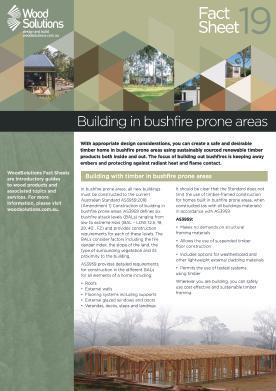

From

STRATEGY PLANS
areas.
a basic understanding of the design requirements and an online BAL calculator through to free Expert Advice, you’ll find everything you need at WoodSolutions. Get started by downloading Fact Sheet 19, Building in bushfire prone
STARS
RECOGNISING RESILIENCE
The 2022 Resilient Australia Awards National Ceremony was hosted in Hobart on 6 December 2022. This annual event celebrates resilience activities, with nominations submitted from each state and territory. The national winners are selected by the Resilient Australia Awards judging panel.
The Resilient Australia Awards is a nationwide program that celebrates, shares, and promotes initiatives that build and foster community resilience in the face of disasters and emergencies. Since 2000, the awards have showcased innovation and exemplary practice across Australia, celebrating achievements that might otherwise go unseen, and inspiring others to build greater disaster resilience within their own communities.
At the National Ceremony, sponsored by Suncorp, Resilient Australia Awards were presented in six categories: the National Award, the Community Award, the Schools Award, the Local Government Award, the Mental Health and Wellbeing Award, and the Photography Award. The winners of each category are detailed below.
Resilient Australia National Award
Multi Agency Community Resilience Films Project, Northern Territory Emergency Service

The Multi Agency Community Resilience Films Project developed films in local languages for remote NT communities, empowering them to build community resilience in areas of high risk of natural disasters. The aim of the films was to educate Aboriginal people on a number of important topics, including health, first aid, and
coping with the imminent dangers of cyclones, floods, and bushfires.
Films were created for five communities: Wugularr (Beswick), Kintore, Groote Eylandt, Wurrumiyanga, and Pirlangimpi. They were narrated in the relevant Aboriginal language with English subtitles, and the topics and solutions were appropriate to the issues occurring within the community.

They were developed by the Northern Territory Emergency Service (NTES) and funded through the National Disaster Resilience Program, with project team stakeholders including the Australian Red Cross, St Johns Australia, and the Bureau of Meteorology.
Community Based Bushfire Management—a place-based approach to reducing bushfire risk in Victoria, Safer Together
This flagship project within the Victorian Government’s Safer Together program takes a place-based, community development approach to working with the community, unlike traditional community engagement projects.
Community Based Bushfire Management (CBBM) is facilitated by a team of ten facilitators, who each work with up to three communities that remain in the program for an extended period of time—often many years.
This long-term approach means there is ample opportunity for stakeholders to develop trust and respect, leading to more meaningful conversations and more mutually acceptable approaches to risk reduction. CBBM allows any decisions made, or actions taken, to be truly community-based. This approach is not only highly effective, but also greatly appreciated by all stakeholders.
Resilient Australia National Community Award—sponsored by Suncorp
Multicultural Resilience Program, Victorian Council of Social Services (VCOSS) and Ethnic Communities’ Council of Victoria (ECCV)
During the COVID-19 pandemic, people often said, ‘We’re all in the same boat’. But this isn’t true. While we were all in the same storm, different people were in very different boats.
During pandemics and natural disasters, research shows that migrant and refugee communities are disproportionately affected, due to unfamiliarity with local hazards and language barriers. A lack of inclusive approaches by the emergency management sector is another key contributor.
The VCOSS-ECCV Multicultural Resilience Program brought together community and emergency management leaders to learn from one another. It helped to strengthen community resilience and reduced the disruptive impacts of COVID-19 in multicultural communities. It also increased mutual understanding and trust between communities and emergency management organisations, delivering greater cultural safety for all who work in and with them.
Above: Tailored community videos in language are supporting disaster resilience in remote Aboriginal communities in the NT.
Left: A new approach to community development and risk management in Victoria ensures that residents’ voices are heard at the decisionmaking table.
28 FIRE AUSTRALIA ISSUE ONE 2023
AWARDS CEREMONY
PHOTO: NT EMERGENCY SERVICE
ALANA BEITZ
AFAC
PHOTO: SAFER TOGETHER
Resilient Australia National School Award
Cairns in Your Hands, Tropical North Learning Academy Smithfield State High School
The Cairns region is a beautiful, tropical area. However, it is extremely vulnerable to natural hazards and the increasing effects of sea level rise and climate change. It is essential that the region plan to ensure the resilience, sustainability, and safety of Cairns and its citizens and to provide its youth with the creativity and critical thinking and collaboration skills to solve their city’s future problems.
‘Cairns in Your Hands’ gathers gifted, talented, and passionate students from different schools over four days to develop real-world, authentic solutions to the greatest threats Cairns faces. The project empowered the youth of Cairns through geographical inquiry and 21st-century thinking skills to develop a coastal hazards adaptation plan to protect the future of their city.
Resilient Australia National Local Government Award
AdaptNow!—Changing for Climate Change, AdaptWest (on behalf of the cities of West Torrens, Charles Sturt, and Port Adelaide Enfield)
In isolation, events like extreme heat, power outages, smoke impact, and localised flooding can be challenging. When they occur in rapid succession or as cascading, compounding emergencies, leaving little or no time to recover between, they can be disastrous. Faced with challenges like these, what would you do? What would your community do? These are the questions that the AdaptNow! Changing for Climate Change team, through a co-design process, explored in an effort to understand how diverse communities would respond. From this, the team developed resources with community representatives, key agencies, and businesses, documenting the process with a local filmmaker through interviews and storytelling.
The resources highlight messages of hope, connection and capacity building, but shining through is the message ‘know your neighbour’. Strong and resilient communities support each other—and close neighbours will be the first ones to help in a time of crisis.
Community-led Disaster Response, Bellingen Shire Council
As a regional community with limited services, Bellingen Shire Council
had to coordinate efforts to support its community through the COVID-19 pandemic. It brought together a ‘local and vocal’ group of community and service providers to respond to the crisis, focusing on clinical support, community preparedness and resilience, information, and business support.
The Pandemic Response Group came together in early March 2020 and comprised community groups, community members, chambers of commerce, clinicians, and service providers. It successfully advocated for a COVID-19 testing clinic in Bellingen and implemented initiatives for communications and to support vulnerable people.
When the Delta wave hit and vaccinations were rolling out, the Pandemic Response Group was stood up again to manage a holistic communitywide approach, supporting communityled activities and connecting people with services to help carry the region through the COVID-19 pandemic.
Resilient Australia National Mental Health and Wellbeing Award
Helping the helpers support others: Building local capabilities after the Victorian Black Summer bushfires, Phoenix Australia—Centre for Posttraumatic Mental Health
Phoenix Australia’s Victorian Bushfire Recovery Project has equipped frontline workers, health professionals, and community leaders to help people recover from the Black Summer bushfires, promote resilience, and support the wellbeing of their teams and organisations.
After consultation, Phoenix Australia tailored and delivered a suite of online and in-person training and mentoring programs that aligned with evidencebased approaches for providing support after disaster. This approach allowed it to upskill members of the community to provide the right support at the right time to match individual needs.
As a result of the project, over 1,800 participants have accessed free, expert-led, highly rated and leading practice training, through one of the 56 workshops or online courses.
Resilient Australia National Photography Award
Cracked but never broken, Rose-Anne Emmerton
They say a picture is worth a thousand words, but what you don’t see in this picture is that the volunteer pictured has recently attended a fatality and
has answered their pager to help out on another call. Emergency services volunteers answer their pagers time and time again. They are the definition of resilience—they adapt, they overcome, and they are there.
Rose-Anne is the Unit Manager of the Central Coast SES in Tasmania, which responds mostly to road crashes. She started taking photos while on call to showcase the work of volunteers and the roles they perform. She captured this image of her colleague Brodie Emmerson tarping and repairing a roof following storm damage. Just before this job, they had attended a road crash fatality. The photo’s title, ‘Cracked but never broken’, reflects the spirit of SES volunteers continuing to serve their communities despite the hardship they experience while on call.

The Resilient Australia Awards is an annual program offered through the Australian Institute for Disaster Resilience. The awards are sponsored by the Australian Government in partnership with the Australian Institute for Disaster Resilience and the states and territories.
Learn more about each of the Resilient Australia Award winners on AIDR’s YouTube channel: https://www. youtube.com/watch?v=kwOuz7W8jpE &list=PLkMUTT4zhjVo2Pnx38jiUTNhV i13djaF1.
Find out more about the Resilient Australia Awards at www.aidr.org.au/raa.
Below: ‘Cracked but never broken’ captures the commitment of SES volunteers in the face of hard work and sometimes heartbreak.
AWARDS CEREMONY
PHOTO: ROSE-ANNE EMMERTON
29 ISSUE ONE 2023 FIRE AUSTRALIA
as 30 to 40%
MADE LIGHT, AND WON’T IGNITE
A new lightweight fire-retardant material looks like it may revolutionise safety for firefighters.
PROF GUAN HENG YEOH
University of NSW
DR JITENDRA MATA AND DR ANDREW WHITTEN
ANSTO
Clothing worn by firefighters is bulky and heavy, designed to minimise the heat and risk of fire posed by bushfires. This limits movement for the wearer and saps their energy, reducing the time they can stay on the front line and increasing the number of people needed to contain a blaze.

But new research by scientists from UNSW and Australia’s Nuclear Science and Technology Organisation (ANSTO) suggests that a new range of advanced materials may offer a viable alternative.
These materials have been shown to act as lightweight fire-retardant filler, which can self-extinguish if they ignite.
The team, led by Professor Guan Heng Yeoh—Director of the ARC Training Centre for Fire Retardant
Materials and Safety Technologies and the ARC Research Hub for Fire Resilience Infrastructure, Assets and Safety Advancements at UNSW, and Thermal-Hydraulic Specialist at ANSTO—is working to commercialise advanced products that might be used for firefighting.
But they haven’t limited their focus— they are also investigating options for building protection and other potential applications, such as in energy storage devices.
MXenes
The groundbreaking research has focused on a family of two-dimensional transition metal carbides, carbonites, and nitrides, known as MXenes.
Using neutron scattering and other advanced techniques, researchers conducted detailed structural and surface characterisations of these materials to get a better understanding of how these affect their electrical, thermoelectric, magnetic, and other properties.
They found that MXenes are suspended in a colloidal solution
consisting of nanosheets of ultrathin layers that overlap each other, giving a higher level of protection.
The future of firefighting?
Protective suits made with traditional retardant are comprised of as much as 30 to 40% carbon compounds to achieve fire-retardant properties, which makes them heavy.
However, as Professor Yeoh explained, “Because we can use very low concentrations of the twodimensional material, it comprises only about 1 to 5% of the total weight of the final material.”
This reduces the need for much of the bulky material currently used, delivering a much lighter product.
“And because it can be applied as a post-treatment, it doesn’t complicate the manufacturing process,” Professor Yeoh said.
How does it work?
When heat comes from above the surface of the material, it is conducted and dispersed along the nanosheets,
A
PROTECTIVE EQUIPMENT
30 FIRE AUSTRALIA ISSUE ONE 2023
Protective suits made with traditional retardant are comprised of as much
heavy carbon compounds.
new material promises heat and flame protection through lightweight nanosheets.
PHOTO: TOBIAS REHBEIN, UNSPLASH
which also act as a heat shield.


This helps to reduce the heat transfer through the suit, giving the occupant more time before they start to feel the effects of the fire.
Ultimately, this would help to reduce the physical and mental impact upon firefighters, contributing significantly to their health and welfare.
Still more to do
According to Professor Yeoh, the amount of time currently taken to create the materials is still considerable, but work is underway to streamline and upscale production.
“We also need to look at the performance and characteristics of the material at higher temperatures up to


800°C,” he added.
However, at the macro level, early tests have found the material to be an effective fire retardant.
Chair of the AFAC PPE Technical Group, Mark Tarbett of the Country Fire Authority, commended the innovative research, and supported further testing of the material to ensure compliance for firefighting use.
“AFAC and its member agencies always look forward to the development of new and innovative firefighting components and products that provide demonstrated improvements to the safety and effectiveness of firefighters in the hostile environments in which they work,” he said.
“While we are currently unaware of any performance testing results against the Australian/New Zealand or International Standards for this emerging product, we will look to that type of independent data to confirm compliance for use across the emergency services sector in Australia and New Zealand.”
If testing is successful, MXenes may represent a great step forward in firefighting and fire protection, leading to greater safety of both the community and frontline firefighters.
A version of this article was originally published by ANSTO at www.ansto.gov.au/news/investigatinga-prospective-light-weight-fireretardant-material-superior-properties.
PROTECTIVE EQUIPMENT
ILLUSTRATION:
Above: Synthesis of MXenes from MAX phase Ti3AlC2.
ANSTO
2022—A BIG YEAR FOR INTERSTATE FLOOD ASSISTANCE
2022 saw AFAC’s National Resource Sharing Centre once again coordinating the movement of fire and emergency service personnel between states and territories to provide surge capacity for fire, flood, and severe weather events.


MOLLY PRICE
AFAC
During significant emergency and disaster events, states and territories can request assistance through the AFAC’s National Resource Sharing Centre (NRSC). The NRSC then works at the direction of the AFAC Commissioners and Chief Officers Strategic Committee and in collaboration with the NRSC Resource Managers Group to identify national capability and support personnel to move to where they are needed most.
In January 2022, the NRSC coordinated the movement of large air tankers and a lead plane from NSW, as well as an Air Attack Supervisor from Victoria, to support fire suppression efforts in WA. In February, WA requested a full incident management team (IMT) to provide extra capacity when its domestic IMT capacity was
fully deployed, and ongoing severe fire weather threatened communities. Thirty-four incident management specialists, together with a COVID Coordinator, were deployed from NSW Rural Fire Service, Fire and Rescue NSW, NSW National Parks and Wildlife Service, and NSW Forestry Corporation.
The range of hazards for which the NRSC can coordinate resource movements was demonstrated in February 2022, when Queensland requested swift water rescue crews to assist with flood rescue operations. This was soon followed by a request from NSW for swift water and flood rescue crews, storm damage operatives, and community liaison officers as well as a range of IMT personnel. Between March and June 2022, the NRSC was activated a further three times to support deployments of flood management personnel to NSW and Queensland.
In October 2022, the NRSC activated
again to support flood operations, this time in NSW and Victoria. During this operation over 650 personnel were deployed from all states and territories across Australia as well as New Zealand, filling incident management, in-water and on-water rescue, storm crew, rapid damage assessment, jurisdiction liaison and deployment manager roles. Deployments continued
Below: Significant flood activity during 2022 saw the NRSC activate to assist across multiple jurisdictions.
32 FIRE AUSTRALIA ISSUE ONE 2023 NATURAL HAZARDS: FLOODS
PHOTO: NSW SES
into late November in Victoria and late December in NSW.

This protracted flood coincided with the bushfire season in WA, the NT, and Queensland, meaning certain personnel became difficult to source, particularly in-water flood rescue personnel. With assistance from the National Emergency Management Agency, NSW arranged for 18 in-water flood rescue personnel from the Singapore Civil Defence Force to deploy for two weeks, stationed at Wagga Wagga and Parkes.
In December 2022, the NRSC activated again to support SA as flood waters moved through the River Murray from NSW and Victoria. Over 50 personnel deployed to SA in IMT and flood rescue roles.

Overall the NRSC supported the deployment of over 1,600 personnel in response to flooding events in 2022, demonstrating that national capacity to provide surge capacity for flood operations can be just as significant as it is for fire.

The NRSC thanks all fire and emergency service agencies and personnel who provided surge capacity across Australia in 2022.


NATURAL HAZARDS: FLOODS 22–25 AuguSt 2023 BriSBAne Convention & exhiBition Centre ➤ afacconference.com.au #afac23 Australia Branch Servicing these industry sectors: Fire Emergency/ rescue First responders Hazardous Mining Fire prevention Critical infrastructure Public safety
Above: Department of Fire and Emergency Services WA staff on NRSC deployment.
Top: NRSC Duty Officer attend a planning day in Hobart in November 2022.
Above: Overall the NRSC supported the deployment of over 1,600 personnel in response to flooding events in 2022.
PHOTO: NSW SES
PHOTO: DFES
PHOTO: AFAC
IF YOU CAN’T STAND THE HEAT … FACING THE CHALLENGE OF COMMERCIAL KITCHEN FIRES

Every year restaurant fires, typically starting in the kitchen, risk the lives and livelihoods of staff and diners and cost proprietors millions of dollars in lost revenue and repairs. Yet these fires are preventable with appropriate suppression systems, effective cleaning and grease removal regimes, and safe working practices.
BOB GRIEVE
Around 26,210 cafes and restaurants in Australia employ over 111,200 people and have a total value of around $14 billion. These establishments operate in a climate of tight margins and strong competition, so efficiency and cost-effectiveness have never been more important.
They can quickly become undone by an out-of-control kitchen fire.
Australian kitchen fire statistics are difficult to come by, but the National Fire Protection Association (NFPA) reports an average of 11,100 fires take place in eating and drinking establishments every year across the US, half of which originate in the kitchen.
Obviously, cooking equipment poses a particular problem, with builtup grease from flammable cooking oil in deep-fat fryers, cooking ranges, and cooking grills increasing fire risk.
This equipment needs to be cleaned and maintained regularly, but it is equally vital to protect the ductwork because grease vapours given off when cooking nearly all types of food will accumulate on the hood, in the ducts, and on the fan of the exhaust system. This residue is combustible at approximately 370°C, while a cooking appliance flare-up can
easily reach 1,100°C, potentially causing an uncontrolled fire that can be quickly ‘sucked’ through the entire length of the duct.
Protecting the cooking equipment is only part of the kitchen fire safety equation. It is equally vital to protect the ductwork.
But there are solutions: ‘tailored’, bespoke or engineered systems; pre-engineered systems; and portable hand-held extinguishers can all help to ensure that the only thing on fire in the kitchen is a flambé.
Tailored fixed fire suppression systems are, as the term implies, designed for the conditions and needs of the individual kitchen.
Pre-engineered systems do not require the involvement of a design engineer beyond the original product and system configuration. They are made of pre-designed components and are, by far, the most popular solution for commercial kitchen fire suppression.
Portable extinguishers, while no substitute for pre-engineered fixed suppression, also have a valuable role to play in ensuring kitchen fire safety.
Unfortunately, water suppression tends to be ineffective, particularly when compared with the quick
knock-down, cooling, and smothering action of wet chemical systems.
A report by the Fire Equipment Manufacturers’ Association titled Wet Chemical Pre-Engineered Restaurant System/Water Sprinkler System
Comparison concluded that:
“… water sprinkler systems do not always compare favourably with wet chemical systems, and, in fact, there are some important reasons why wet chemical systems are most often preferred by the industry’s authorities having jurisdiction and end users … … pre-engineered wet chemical systems provide complete protection to all hazards simultaneously and are UL tested and listed specifically for restaurant hazard applications. Agent characteristics, simultaneous coverage, and specific test criteria make preengineered wet chemical systems the state-of-the-art fire protection system for restaurant application and the choice of the industry’s buying influences.”
Regulatory compliance
There are a number of relevant standards that can give good guidance, depending on the type of system installed. These include:
UL 300 Fire testing of fire extinguishing systems for protection of commercial cooking equipment, first introduced in 1994, but since amended and updated
AS/NZ 1668 Set-2012 The use of
34 FIRE AUSTRALIA ISSUE ONE 2023 COMMERCIAL KITCHEN FIRES
Delta Fire Australasia
PHOTO: BOB GRIEVE, DELTA FIRE
Kitchens are at high risk of experiencing fires. Regular cleaning and maintenance of equipment is essential to protect staff and patrons.
ventilation and air-conditioning in buildings
AS 1851-2012 Maintenance of fire protection systems and equipment
AS 2118 Automatic fire sprinkler systems
AS 3772-2020 Pre-engineered fire protection systems for cooking equipment
NFPA 96-2021 Standard for ventilation control and fire protection of commercial cooking operations
NFPA 13-2022 Standard for the installation of sprinkler systems
NFPA 17a-2021 Standard for wet chemical extinguishing systems
LPS 1223 Requirements and testing procedures for the LPCB certification and listing of fixed fire extinguishing systems for catering equipment.

UL 300 is a fire test method that applies to pre-engineered extinguishing systems intended for the protection of commercial cooking areas, protecting appliances, plenums, and ducts.
It considers the characteristics of these systems, including their selfcontained supply of extinguishing agent, which is generally available in limited quantities and is discharged over a short period of time.
Pre-engineered kitchen fire suppression systems should be installed to AS 3772 and tested to UL 300 to ensure that they are able to extinguish test fires quickly, providing assurance to business owners, fire brigades, regulators, and insurance providers alike.
Assured reliability
It is vital that suppression systems are performance tested. However, this can really only be achieved with a pre-engineered system—by definition, tailored, bespoke, or engineered solutions cannot undergo any performance testing regime. Performance is substantiated only by theoretical calculation, so these solutions
do not comply with UL 300. The most sophisticated of these pre-engineered systems can be triggered automatically or manually and offer the option of either:
an ‘appliance-specific’ design, where nozzles are aimed at the particular fire hazard areas of each appliance
an ‘overlapping’ design, where discharge nozzles are configured to overlap and provide a ‘fire-free zone’ across a group of appliances, protecting them even if they are replaced or rearranged under the hood.
Both types quickly detect and suppress high-temperature cooking oil fires, using proven fusible-link, pneumatic tubing, and Linea detection and release system technology. This ensures that, when the system detects a fire, the gas or electric power to appliances is cut off immediately.
By definition, tailored or engineered solutions cannot undergo any performance testing regime. Performance is substantiated only by theoretical calculation, so these solutions do not comply with UL 300.
The ‘appliance-specific’ design invariably provides the most economical use of the suppression agent. It reduces the size or number of storage cylinders and associated hardware needed.
Agent selection
Until the early 1990s, the predominant fire suppression agent for kitchen systems was dry chemical powder but, with the advent of UL 300, these were superseded by higher-performing wet
chemical systems. No dry chemical systems have ever passed the UL 300 testing standard.
The most advanced wet chemical suppression agents used in preengineered kitchen fire suppression systems ensure that vapours in the cooking appliance, plenum, and ductwork areas are contained and cooled. These advanced formulations quickly knock down flames and cool hot surfaces, while generating a robust vapour-securing blanket that helps prevent reignition. A bonus of this suppressant is that, with a nearly neutral pH, it is exceptionally friendly to cooking equipment and does not damage stainless steel surfaces.
Portable suppression Agent selection is equally important when considering portable hand-held extinguishers, due to the nature of Class F fires that involve cooking oils and fats such as olive oil, maize oil, sunflower oil, lard, and butter.
Portable extinguishers are a valuable first line of defence and, like fixed kitchen fire suppression systems, are subject to a number of regulations and standards, including:
AS/NZS 1850-2009 Portable fire extinguishers—classification, rating, and performance testing
AS 2444-2001 Portable fire extinguishers and fire blankets— selection and location
AS/NZS 1841.1-2007 Portable fire extinguishers—general requirements
AS/NZS 1841.3-2007 Portable fire extinguishers—specific requirements for wet chemical type extinguishers
UL 300, which stipulates that because of the risk of Class K fires— the US equivalent of Australia’s Class F fires—a Class K portable fire extinguisher is now required in all commercial kitchens.
Conclusion
In Australia, pre-engineered systems are installed to AS 3772, and are supported by authorised distributors and the manufacturers. Inspection and testing is carried out every six months with mandatory component replacement and cleaning. Training is provided by the manufacturers to UL and NFPA standards.
Delta Fire Australasia Pty Ltd is a fire protection company located in Queensland, NSW, and Victoria with particular expertise in special hazards fire systems.
COMMERCIAL KITCHEN FIRES 35 ISSUE ONE 2023 FIRE AUSTRALIA
Build up of grease in duct work could have disastrous results.
PHOTO: ANSUL
SOUND PRESSURE LEVELS ESTIMATION
Following from last edition’s item on the somewhat contentious topic of Speech Intelligibility, this article continues our discussion of Emergency Warning Systems. Sound Pressure Level, while a much older and more mature concept, still occasionally causes unnecessary grief to both the experienced and the uninitiated, especially when it comes to Class 2, 3, and 4 residential buildings.
VYACHESLAV (SLAVA) SHARGORODSKY
Newsound Fire Services
On 15 June 2019, ABC News published an article with the concerning headline ‘Canberra apartment residents unable to hear fire alarms through soundproofed front doors’. According to the article, residents of a brand-new apartment complex were unable to hear emergency tones from inside their units apparently because of ‘too good’ soundproofing. It concluded that:
“ACT Fire and Rescue … found no breaches of the Building Code of Australia. The code does not require that sound levels be tested within units, as long as an alarm of no less than 85 dB is provided at the front door. …. Local authorities told the ABC they were ‘strident for change’, and that measuring 75 dB at the bedhead in apartments was a preferred procedure.”
To measure or not to measure?
The article highlighted only some of the well-known problems with controversial Building Code of Australia (BCA)
concessions for Sound Pressure Level (SPL) measurements in residential building single occupancy units (SOUs) under clause 7 of Specification E2.2a. These have been the subject of numerous heated debates among professionals, both publicly and privately, leading to the following questions:
1. Is it really an acceptable risk to construct a Building Occupant Warning System (BOWS) based on a chain of interconnected simple domestic smoke alarms within a multi-apartment Class 2 building that is not monitored for interconnection faults?
2. Is it reasonable to expect 75 dB SPL at the bedhead, if 85 dB is provided at the SOU front door by a BOWS based on interconnected smoke alarms?
3. Why is 85 dB provided at the SOU front door considered acceptable for BOWS based on smoke alarms, but for BOWS based on loudspeakers, 100 dB at the SOU front door is required?
4. On which side of the SOU front door is the SPL expected to be
measured? (Despite the common assumption that the measurement has to be taken outside the SOU, the BCA is actually silent on the matter.) Unfortunately, this article is too short to provide all technical and historical answers for these issues.
To get around these concerns, some practitioners have adopted a common sense, pragmatic approach, taking additional SPL measurements within one or two SOUs of each typical internal layout at the anticipated position of a bedhead with all doors closed, even if 85 dB or 100 dB SPL is achieved at the door providing access to the SOU. This allows them to check whether a minimum SPL of 75 dB is likely to be achieved at the bedhead.
If a minimum SPL of 75 dB is not achieved inside the SOU (despite an SPL of 85 dB or 100 dB being measured at the SOU entry door), the follow-up decisions and potential solutions should be discussed with the building certifier, building surveyor, private certifier, and so on appointed for the project.
EMERGENCY WARNING SYSTEMS 36 FIRE AUSTRALIA ISSUE ONE 2023
Typical Ceiling Mount Speaker
Polar Plot – 2kHz 0o
Ten basic tips for estimating SPL
The following acoustic tips and considerations may be useful when estimating SPL. Please note:
they represent very basic acoustic relations and involve some idealisations and simplifications they have been written in relation to loudspeakers, but most of them apply equally to smoke alarms and stand-alone sounders.
1. Every time the distance from a loudspeaker is doubled, SPL is reduced by 6 dB.
For example, if SPL is measured as 90 dB at 1 m from the loudspeaker, it will be measured as 84 dB at 2 m from the same loudspeaker under the same conditions. If the distance from a loudspeaker is doubled again (from 2 m to 4 m), the SPL will be measured as 78 dB at a distance of 4 m.
2. Where several loudspeakers are laid out in a line or grid within the same open-space compartment, the co-contribution of adjacent loudspeakers may increase the SPL.
For example, if two identical loudspeakers (producing the same SPL at the same distance) are mounted on a ceiling at some distance from each other, then the SPL mid-way between the two loudspeakers would increase by 3 dB (when compared to the SPL measurement at the same point with only one loudspeaker operating).
3. Loudspeaker SPL increases by 3 dB every time the applied electric power is doubled.
For example, if SPL is measured as 90 dB at 1 m from the loudspeaker with 1 W of electrical power applied, then it will be measured as 93 dB at the same 1 m distance from the same loudspeaker with 2 W of electrical power applied.
produces a just noticeable increase of loudness, while changing power taps from 0.33 W to 2.5 W (approximately eight times) increases the apparent loudness by slightly less than double.
Coverage area is determined by a combination of speaker polar loss and the inverse square loss off -axis. To illustrate, consider a speaker with no polar loss, i.e. the speaker’s SPL is the same over all angles. As the listener moves away from the center of the speaker, the distance to the speaker increases resulting in a lower SPL. From the Inverse Square Law, the off-axis SPL is 6 dB lower than the on-axis SPL when the distance from the speaker to the listener has doubled. From simple geometry, it can be determined that the maximum useable coverage angle is 120 degrees:
5. The SPL is reduced by both distance from a loudspeaker and the angle at which a listener is positioned in relation to the loudspeaker. The maximum SPL is usually produced at the line perpendicular to the centre of the ceiling-mounted loudspeaker (on-axis); and it drops gradually when SPL is measured at the same distance from the loudspeaker, but at different angles (off-axis).
-6dB edge of coverage area
4. A typical 100 mm (4”) loudspeaker has electrical power taps in 3 dB increments: 0.33 W, 0.66 W, 1.25 W, 2.5 W, and 5 W. Each power tap doubles the power reproduced by the loudspeaker, therefore increasing the SPL output by 3 dB for each increasing tap.
Figure 2-6
Maximum Theoretical Coverage Angle
Subjectively, an increase of 3 dB
2014 National Electrical Manufacturers Association
Both the distance from the loudspeaker and the angle at which a listener is positioned in relation to the loudspeaker define so-called ‘coverage area’ of the loudspeaker. This is usually defined as a circle within the horizontal plane (at listening height of 1.5 m above the floor) around the loudspeaker on-axis, where the SPL at the edge of the circle drops 6 dB below the on-axis SPL (measured at the same listening height of 1.5 m above the floor). See Figure 1.
EMERGENCY WARNING SYSTEMS 37 ISSUE ONE 2023 FIRE AUSTRALIA
FIGURE 1. EXAMPLE OF A TYPICAL LOUDSPEAKER COVERAGE (DISTANCES ARE IN IMPERIAL UNITS).
SOURCE: NEMA SB 50-2014, EMERGENCY COMMUNICATIONS AUDIO INTELLIGIBILITY APPLICATIONS GUIDE, NATIONAL ELECTRICAL MANUFACTURERS ASSOCIATION
Page 12 ©
93dB 93dB Floor Listener level 10' high ceiling 99dB @5' 1W
Speaker Polar Plot - 2kHz 0º 6dB/division 75ºoff axis 51ºoffaxis 97dB 93dB 97dB 93dB Coverage Diameter Distance off axis D2 D2 5.0' 10.0' Dispersion Angle Critical Polar Angle 12.8' 6dB variation
SB 50-2014
Simplex 4902-9721 Ceiling Mount
Figure 2-5 Speaker Coverage
60°
Height Ceiling Height
Listener
2xCeilingHeight-ListenerHeight
6dB/division
6. Barriers such as doors and walls could reduce the sound level by 10 dB to 60 dB or more depending on their construction. For example, a hollow core door will typically attenuate sound levels by 20–25 dB, while a fire-rated door may attenuate sound by 35–45 dB, and so on.
7. Increasing the applied electric power to a loudspeaker may increase sound distortion and decrease intelligibility.
8. A larger number of loudspeakers set at lower tap settings provides better intelligibility and more uniform sound levels than fewer loudspeakers set at high power tap settings.
9. Higher ceilings require much more power to achieve the desired sound level at listening height but require fewer speakers to achieve uniform sound distribution.
10. The listening height is normally taken during SPL measurements at 1.5 m above a floor level.
Estimating SPL for a single loudspeaker


So, how does this all get put into practice?
Imagine a single loudspeaker has been installed in the middle of a square room, where the length of each wall is twice the ceiling height of the room.
Figures 2 and 3 right represent calculated SPL values for such a configuration with varying ceiling heights and varying loudspeaker power tapping at maximum and minimum SPL locations—straight under the loudspeaker and in the corners of the room, respectively.
The figures also indicate the 75 dB minimum SPL level allowed for emergency tones in the current editions of AS 1670.1 and AS 1670.4, dated 2018.
One of the popular models currently on the Australian market—100 mm 5 W loudspeakers compliant with AS ISO 7240.24—was used as an example for the estimations above.
The FPA Australia Technical Advisory Committee TAC/2 is currently developing a Good Practice Guide on the design and installation of Emergency Warning System loudspeaker networks, which
will cover other loudspeaker layout configurations and provide some useful estimation graphs.
There are many other aspects of the SPL estimation that could not be covered in this short article, such as cable size and length, live speech SPL measurements, and so on. But
these will keep for another day and another article.
Correction: Last edition’s article on Speech Intelligibility should have read “If ambient (noise) SPL < 85dB(A) AND Live Speech Signal to Noise ratio is 10 dB or more”, instead of less.
38 FIRE AUSTRALIA ISSUE ONE 2023
FIGURE 2. SPL AT MAXIMUM SPL LOCATION (STRAIGHT UNDER A SINGLE LOUDSPEAKER INSTALLED AT THE MIDDLE OF A SQUARE ROOM).
SOURCE: SLAVA SHARGORODSKY
FIGURE 3. SPL AT MINIMUM SPL LOCATION (AT THE CORNERS OF SQUARE-SHAPE ROOM).
SOURCE: SLAVA SHARGORODSKY
CARING FOR MOB, CARING FOR COUNTRY
To support community engagement with and education about the new Australian Fire Danger Rating System, Aboriginal artist Emma Bamblett created an artwork to express the themes of the new system and to communicate the actions people should take at each fire danger rating level to stay safe.

This artwork was created to highlight the importance of communication when planning and preparing for fire risk, and of working together to ensure that families and communities are kept safe.
The green section at the bottom of the artwork represents the connection to Country. They are the hill formations representing the Land.
The white line above the green hill formations represents the No Rating scale on the Australian Fire Danger Rating System. It is there to let people know to be calm and wait.
The mid-section represents the four levels of the Australian Fire Danger Rating System. The green section with the circles connecting with curved lines represents the Moderate rating, which is the time to plan and prepare. The white dots around the circles are people meeting, gaining knowledge, awareness, and information to prepare.
The white lines with the straight lines represent moving, cleaning, and caring for Country. There are kangaroo prints across the land to represent the new life of nature and animals.
The yellow section represents the High rating. It lets the community know to be ready and act on its plans to keep safe. The lines within the section are the plans and actions that communities have prepared.
The orange section represents the
Extreme rating. This is where people take action to keep themselves and their families safe. The black cockatoo is sitting in the tree looking down and acting on the conditions; he has a bird’s eye view and is alerting everyone to the conditions on the ground. The curved grey lines with the dots are the community acting and following safety plans and announcements.
The red section represents the Catastrophic rating. This is when communities need to leave bushfirerisk areas for their survival. The lines within the section are markings on the trees that are left behind. They tell the stories of what has happened and raise awareness.
The next section above the red section is blue, representing the streams, rivers, and waterways that are used as water sources for firefighting. Rivers also represent the flow of knowledge and support that is shared when emergency services respond to bushfires.
The section with the curved blue lines represents the winds. They go in different directions to highlight the way we use them and the climate to forecast fire behaviour.
The wedge-tail eagle and the crow are birds that depict our Dreamtime creation stories. They are there to care for the people and the Land. They are our eyes in the skies, similar to the equipment and technology used in aerial firefighting.
The small blue circles are our emergency services professionals, who collaborate to support our work in research, awareness raising, and training to build resilience against the impacts of bushfires.
The figures that are gathered in the white section with the sun represent Traditional Owners and Elders. The sun influences fire behaviour with the heat it creates, and the Elders are guiding, supporting, and sharing knowledge of ways our people cared for Country. The dots streaming around them are their voices.
To the right side of the artwork is a brown section with purple circles and connecting lines. This area represents land management: working together to holistically care for land, Country, and communities, and collaborating to develop knowledge and continuously improve.
COMMUNITY ENGAGEMENT 39 ISSUE ONE 2023 FIRE AUSTRALIA
EMMA BAMBLETT, WEMBA WEMBA, GUNDITJMARA, NGADJONJI AND TAUNGURUNG WOMAN
ILLUSTRATION: EMMA BAMBLETT
PERSPECTIVES FROM THE SECTOR
In this edition, AFAC CEO Rob Webb interviews Dr Margaret Moreton, recently appointed Executive Director of the Australian Institute for Disaster Resilience (AIDR).
ROB WEBB AFAC
What are your first impressions and initial reflections since stepping into the AIDR Executive Director role?
I have been involved with AIDR since its inception, but have had an outsider’s view of the role and the work of AIDR.
I was curious to see how things would look once ‘the lid was lifted’ and I had an insider’s view. It is exciting to see the exceptional performance of the team, working with a broad range of stakeholders, producing high quality products and services, and supporting one another. I am also impressed by the partnerships we have and the strong sense of goodwill between partners as we work to enhance community resilience.
In addition to our planned and contracted deliverables, I hope to expand our reach and our priorities, and grow the business.
What was your journey before joining AIDR, and what do you want to bring from that journey into your new position?
Before joining AIDR, I spent over 30 years working in social policy with the Australian Government and a decade working in the disaster resilience field as an independent advisor and consultant.

My PhD focused on disaster resilience and analysed the views of key leaders in disaster resilience and recovery, and, most importantly, the lived experience of community leaders and members in four affected communities. Most recently I also worked with philanthropy and the corporate sector to build disaster resilience.
This all combines to give me a broad set of contacts and perspective on the state of disaster resilience in Australia. I am by nature a relationship builder and by choice an advocate for community-led engagement. I will bring all of this (and more) to the role.
What has your team been working on that you would like to celebrate, and what are you looking forward to achieving in 2023?
There is so much to celebrate and be proud about, in the achievements of the AIDR team.
We recently hosted the Resilient Australia Awards National Ceremony to showcase and recognise resilience work occurring across Australia.
The team does a wonderful job of amplifying the success of governments, NGOs, and everyday Australians through this awards program. We also coordinate the Australian Disaster Resilience Conference each year, bringing the sector together to share innovative projects and successful approaches to building resilience.
Our work with the National Emergency Management Agency, Australian Red Cross, Natural Hazards Research Australia, and many others continues to influence our thinking and action in relation to disaster resilience, across the entire sector.
I’m particularly proud of education and young people programs supporting great outcomes for children and young people—particularly through school programs and lesson plans. During 2023, I hope to add key work focused on Indigenous disaster resilience, the work of the disability sector, and further work to support children and young people.
and
You are passionate about bringing diverse voices to the table to discuss resilience. How can we open up the conversation to enhance community resilience?
We are working hard to open up this conversation. The guiding theme of our 2023 conference is hearing from new voices and including new perspectives
40 FIRE AUSTRALIA ISSUE ONE 2023
PHOTO: AIDR
AFAC Q&A
During 2023, I hope to add key work focused on Indigenous disaster resilience, the work of the disability sector, and further work to support children
young people.
Right: Dr Margaret Moreton will bring strong relationships across the emergency management sector and a passion for communityled engagement to the AIDR Executive Director role.
in the conversation, and I encourage stakeholders to submit abstracts and to share their experiences or views through the conference.
We have also showcased a variety of innovative and diverse projects through the Resilient Australia Awards— with the finalists and the winners for 2022 being announced in Hobart prior to Christmas—and I hope to further promote these perspectives and experiences even more widely.

I have become involved in several advisory committees and innovative projects focused on community-led approaches and the perspectives of diverse groups, which will help to make our conversations more open and inclusive.
We often hear that ‘resilience is everybody’s business’. What are the different ways that AIDR is supporting communities/ organisations/governments to enhance their resilience?
We deliver services and products designed to support everybody in this effort.
A great place to start is the AIDR Knowledge Hub, our extensive and open-source online platform that is regularly updated with resources and research related to disaster resilience.
Our Handbook Collection is also available online and spans a number of themes supporting individuals, groups, organisations, and the various levels of government as they put this knowledge into action. During 2022 we developed a community-facing page on our website, and we have plans in place to enhance this resource and further support community-led resilience building efforts.
Our regular webinars and online presentations—promoted on our website and through our newsletters— continue to be well attended. We support a number of networks and communities of practice, such as the Community Recovery community of practice and the Disaster Resilience Education Network.
We also work with numerous partners and organisations, supporting efforts to
enhance and celebrate the contribution and leadership of Indigenous groups, children and young people, teachers, universities, the Australian Red Cross, AFAC, and the National Emergency Management Agency. Through our involvement with these organisations, we build and enhance collaborative approaches reflecting humanitarian, emergency services, and government policy perspectives.
What are the challenges in the resilience-building space? How can we meet them?
There are many challenges that we all face in our efforts to continue to strengthen resilience to extreme weather and other hazards, and to mitigate the potential disasters they cause, including:
the increasing intensity, frequency, and compounding and cascading nature of these events. Communities, and the organisations who support them, often cannot recover from an event before the next one occurs. This increases the challenges of planning, preparation, response, and recovery. It also increases the
incidence of fatigue and stress for everyone
the emergency management sector is fully stretched as it deals with this situation. We need to continue to find ways to expand and develop the workforce in this sector and across all levels of government and the NGO sector
fundamental issues such as insurance and land use planning are now in the spotlight. These issues are complex, and it will require collaboration from a range of government, business, and other sectors of society to resolve the challenges we face
new ‘players’ are entering the disaster resilience field. Philanthropy and corporate Australia are now actively involved in programs to support community and business resilience. Existing stakeholders, such as AIDR, will need to engage effectively with these groups
the consequences for communities of all these challenges can be overwhelming. They will need support to make any changes required, to face the future.
41 ISSUE ONE 2023 FIRE AUSTRALIA
PHOTO: AIDR
AFAC Q&A
Above: Dr Margaret Moreton addresses the audience at the Resilient Australia Awards National Ceremony in Hobart in December 2022.
BURNING AMBITION: WOMEN IN FIRE AND EMERGENCY— ELVIRA NIGIDO, AGAS
This quarter, Elvira Nigido, Group Sustainability Compliance Manager at AGAS (Australia) discusses her experiences and opportunities in the world of fire suppression systems and halon gases.

Admiration: Who have been your greatest heroes or champions of your career?
I have had immense satisfaction over my nearly 30-year career supporting Australian and international efforts to protect the ozone layer and avoid climate change through various initiatives that achieve responsible life cycle management of environmentally harmful fire protection gases and refrigerants.
During this time, I’ve had the opportunity to work alongside and learn from several inspiring individuals and leaders. The strengths and qualities they’ve displayed by showing genuine care for the people they’ve been responsible for, and their commitment to the cause, especially during difficult times, has been very commendable. Furthermore, by providing safe work environments where it was OK not to get it right the first time and allowing learning to take place, they fostered positive relationships and optimised my potential and that of others.
Adversity: What hardships or challenges have you had to overcome?
Being a female in a very maledominated field has presented a few challenges over the years, especially around gender-related unconscious bias. Being spoken over in meetings or having others take credit for the work I had produced wasn’t fun at all. In the early days I was afraid to call it out. However, as my confidence grew with time, I would respectfully highlight that it wasn’t appropriate. Sometimes, despite best efforts and suitability, project opportunities or salary advancement were not always afforded to me and other female colleagues, compared with male colleagues. In the last decade I have seen a shift to more equitable and inclusive behaviours.
At the end of the day, and regardless of gender, everyone can bring something meaningful and
At the end of the day, and regardless of gender, everyone can bring something meaningful and beneficial to the table. It’s good to see more companies tackling unconscious biases in the workplace.
beneficial to the table. It’s good to see more companies tackling unconscious biases in the workplace.
Achievement: What do you see are the greatest highlights and rewards of your career?
My greatest highlight has been the positive influence I’ve had on Australia having one of the world’s most recognised national halon banks! As many may know, halon is a fire extinguishing gas that used to be found in old yellow fire extinguishers and system cylinders. Halon production has been phased out for nearly 30 years, but sectors like aviation and defence still need it for some of their fire protection systems. The Australian Government maintains a national stockpile of halon for these users—the ‘Bank’. I had the fortune of starting my career shortly after the government decided to establish the National Halon Bank and I was involved in its set up. Managing and
leading the Bank thereafter has been one of several career highlights.
In 2017, I was honoured and thrilled to be asked to be the Australian representative on the United Nations Halon Technical Options Committee, now known as the Fire Suppression Technical Options Committee (FSTOC), a voluntary role that I continue to carry out and take seriously. The FSTOC assesses the global production, consumption, and availability of halons and other fire extinguishing agent alternatives for halon, considering the challenges faced by various sectors in trying to find suitable alternatives.
Finally, I’ve been blessed with many work-related travel opportunities where I’ve had the chance to visit beautiful countries, and to meet and collaborate with a range of talented and interesting people!
Ambition: What advice would you give to women wanting to start or accelerate their career in fire and emergency?
Don’t be scared to back yourself!
Not everyone is necessarily a good communicator, transparent, or inclined to play fair, but continue to stay positive. To build your confidence and resilience:
keep an open mind to learning and never give up
if fire and emergency is where your passion lies, put actions in place to ensure you get the experience, education, and qualifications you need to get where you want to be
don’t be afraid to ask for help and guidance
enlist the support of a coach or mentor and have a vision and plan for yourself to get there
on the flip side, if you’ve been in this area for a long time, don’t underestimate what you have to offer—be a coach or a mentor, whether formally or informally. Regardless of gender and age, everyone benefits from the learnings obtained and shared from the school of the workplace and life
42 FIRE AUSTRALIA ISSUE ONE 2023 WOMEN IN FIRE
Right: Elvira Nigido, AGAS
MANCHESTER AIRPORT DISASTER—1985


On 22 August 1985, 131 passengers and six crew boarded a British Airtours Boeing 717-236 twin jet at Manchester Airport for a charter flight to Corfu, Greece.

Just after 7.00 am, the aircraft began its take-off run on runway 24. Thirty-two seconds into the run, the crew heard a loud bang. The captain ordered ‘STOP’, closed throttles and selected reverse thrust on both engines, while the first officer applied the wheel brakes. The flight deck fire alarm operated, and air traffic control spotted fire on number one engine, suggesting that passengers be evacuated from the starboard (right) side.
Number one engine (a Pratt & Whitney JT8D-15) had suffered an explosive rupture of the combustor chamber casing, which punctured the fuel tank access panel and allowed fuel (kerosine) to pour out of the leftwing tank and immediately ignite. The aircraft turned off the runway onto a taxiway link and the evacuation began.
Unfortunately, by turning this way, the prevailing wind hit its port side, effectively blowing the flames into the fuselage. Smoke and flames soon engulfed the rear of the aircraft, leading to panic in the cabin.
The right forward exit door could not be fully opened due to obstruction by the emergency slide cover, so the purser opened the left forward exit door, inflated the slide, and commenced evacuation. He managed to open the right forward door and commenced evacuation there also. All the while, acrid smoke spread forward from the rear of the cabin. Difficulties were encountered at the overwing exits. The left side was blocked by smoke and flames, while the passenger seated at the right overwing exit had difficulty understanding how to open the hatch (at that time, there was no requirement for exit-door passengers to be briefed before take-off on how to do so).
Significantly, this exit was the first exit available to the 76 passengers seated behind or close to it, and the nearest exit for 100 passengers.
The aircraft orientation with respect to the prevailing wind, combined with delays in evacuation, led to fire penetrating the cabin while passengers were still onboard. It rapidly penetrated the left side of the rear fuselage, and the tail section of the aircraft sank to the ground. It destroyed most of the cabin furnishings, large areas of the fuselage crown, and the cabin floor above the rear freight hold. Toxic smoke from burning materials such as seats and fittings filled the cabin, resulting in the deaths of 58 passengers and two crew.

This disaster, described as ‘a defining moment in the history of civil aviation’, brought about industry-wide changes to the seating layout near emergency exits. It also led to the use of fire-resistant seat covers, floor lighting, fire-resistant wall and ceiling panels and more fire extinguishers, as well as clearer evacuation procedures. Under today’s rules, an aircraft on fire will always attempt to stop on the runway itself, rather than turning off onto a taxiway link, ensuring quicker evacuation of passengers.

43 ISSUE ONE 2023 FIRE AUSTRALIA
BARRY LEE OAM
BLAST FROM THE PAST
These pictures show the extensive damage to the British Airtours Boeing 717-236 jet as a result of winds fanning flames into the plane following an engine rupture.
PHOTO: MANCHESTER EVENING NEWS
PHOTO: WIKIPEDIA
PHOTO: MANCHESTER EVENING NEWS
PHOTO: MANCHESTER EVENING NEWS
PHOTO: VT FREEZE FRAME
AUSTRALIAN STANDARDS
Australian standards update
CE-030 Maritime structures
AS 4997 Guidelines for the design of maritime structures is being drafted by the Committee.
EL-031 Alarm and electronic security systems
Public comment on the open supervised device protocol (OSDP) in AS/NZS IEC 60839.11.5 Alarm and electronic security systems, Part 11.5: Electronic access control systems closed on 3 February 2023.
FP-002 Fire detection, warning, control, and intercom systems
The Committee is drafting AS 4428.17 Fire detection, warning, control and intercom systems Control and indicating equipment, Part 17: Fire services key and AS 7240.2 Fire Detection and Alarm Systems, Part 2: Fire detection control and indicating equipment (ISO 7240-2:2017, MOD).
FP-004 Automatic fire sprinkler installations
Progress continues on drafting the revision of AS 2118.6 Automatic fire sprinkler systems, Part 6: Combined sprinkler and hydrant systems in multistorey buildings
FP-018 Fire safety
Work continues on the revisions of AS 1530.1 Methods for fire tests on building materials, components and structures, Part 1: Combustibility test for materials and AS 1530.4 Methods for fire tests on building materials, components and structures, Part 4: Fire-resistance tests for elements of construction.
FP-020 Construction in bushfire-prone areas
Work continues on the new handbook for Maintenance of construction in bushfire-prone areas (SA HB 208).
ME-002 Gas cylinders
Revisions of AS 2030.1 Gas cylinders, Part 1: General requirements and AS 2030.5 Gas cylinders, Part 5: Filling, inspection and testing of refillable cylinders are being drafted.
FPA Australia is advised about standards by our Technical Advisory Committees. Members interested in contributing can find out more at www.fpaa.com.au/ advocacy-technical/technical-advisorycommittees.aspx
TECHNICAL DOCUMENTS
FPA Australia’s technical documents can be found at www.fpaa.com.au/advocacytechnical/ technical-documents.aspx.
LITHIUM BATTERY SIG
A Lithium Battery Special Interest Group (LB/SIG) has been established, and its first meeting was held in late January. Meetings of the LB/SIG will be held prior to TAC meetings so representatives from each committee can provide an update.
TECHNICAL ADVISORY COMMITTEES
TAC dates for 2023 have been set for meetings in March, July, and November, including for the National Technical Advisory Committee.
Below are the current statuses of these committees:
National Technical Advisory Committee (NTAC)
The NTAC meeting was held on Tuesday 6 December 2022. Key topics discussed at this meeting included:
◆ rules for the operation of TACs and SIGs
◆ a review of the inter-relationships between TACs, SIGs, ARGs and state committees
◆ a 2023 review of TAC chairs, deputy chairs and FPAA standards representatives
◆ a summary and review of NCC issues and local state legislation issues
◆ a summary and status of standards under each TAC.
TAC/1 – Maintenance of fire protection systems and equipment
The Committee met on Thursday 3 November via Zoom web conference.
FPA Australia set up an AS 1851 issues register that included a significant number of comments by TAC/1. This was distributed to all other committees for input.
Based on the responses to the AS 1851 issues register, a project proposal for AS 1851 was submitted to Standards Australia on 14 October.
TAC/2 – Fire detection and alarm systems
The Committee met on Wednesday 2 November via Zoom web conference.
A key focus for the committee was setting up several issues registers to collate items for relevant standard revisions. In 2023, these registers will be used to guide work programs for any working groups formed.
Significant progress has been made on the Technical Advisory Note on Building Occupant Warning Systems, which will be published in the next few months.
Another topic of discussion was IP30 access level ratings as described in AS 7240.2-2018.
TAC/3/7 – Portable and mobile equipment
The Committee met on Thursday 8 December. The Committee progressed work with the revisions of AS 1841 and AS 1850, in preparation for a revision of AS 2444. There were also significant discussions about lithium fire extinguishers and the FPAA document TAN-09 V1 Portable Fire Extinguishers: Lithium Batteries.
TAC/4/8/9 – Fire sprinkler and hydrant systems, tanks, and fixed fire pumps
The Committee met on Tuesday 22 November.
Significant work continued with two working groups, covering the spacing of sprinkler heads in concealed spaces and the hydrostatic testing of hydrant systems. Both working groups will prepare technical documents on these topics.
Pre-action systems in AS 2118.1-2017 and the test provisions of AS 2419.1 were also discussed.
TAC/11/22 – Special hazards fire protection systems
The Committee met on Tuesday 29 November.
No actions have been assigned to this TAC at present, but updates were provided on FP-011 and FP-022.
A working group was formed to review the current FPAA technical document IB-06 V3 Selection and use of firefighting foams to update references to relevant recent reports and publications.
The TAC expressed interest in holding a future webinar or information session on AS 5062.
TAC/17 – Emergency planning
A meeting of TAC/17 and a workshop on the AS 3745 issues register was held on Tuesday 8 November.
IB-11 V2 Evacuation diagrams and IB-XX R.A.C.E. Emergency response procedures are now ready for publication.
TAC/18/19 – Passive fire protection
The Committee met on Tuesday 15 November.
Significant work continued with the working group on cavity barriers, which will lead to a technical document/National Construction Code guide to cavity barriers.
The TAC expressed an interest in developing passive fire systems training. Feedback was sought on splitting the AS 1905.1 proposal into a simple editorial clause change part (clause 5.1) and a consultation part (inclusion of fire bolts).
It was agreed that the fire door working group would reconvene in 2023.
STANDARDS UPDATE 44 FIRE AUSTRALIA ISSUE ONE 2023
FIRE AUSTRALIA 2023
Returning to Sydney on 3–5 May 2023, Fire Australia 2023 will build upon last year’s successful event with an array of interesting speakers and topics, the leading suppliers in the industry, and plenty of opportunities to mingle and network with your peers.
Thirty-five topics will be presented across three stages at ICC Sydney, covering the breadth of fire protection and prompting discussion about how to keep people, property, and the environment safe from fire.
In addition, our world-class Tradeshow will showcase the best products and solutions that the fire sector has to offer and give you insights from the distributors about how they can help you.
Mark the dates in your diaries, because you won’t want to miss this Fire Australia. Visit www.fireaustralia.com.au for more information.
FPA AUSTRALIA EVENTS
FPA Australia runs a variety of seminars and technical webinars for the fire protection industry covering a wide range of areas: wet systems, dry systems, passive fire, mechanical fire protection, special hazards, and bushfire and emergency planning. Recent topics have been baseline data, insurance, defects, and bushfire design, and we’ve got further seminars in the pipleline covering mechanical smoke control, detection systems, and sprinklers. Presented by leading experts, these events provide all the information you need about fire safety topics. They are also an opportunity to pick up continuing professional development points.
For a full list of upcoming events, visit www.fpaa.com.au/events.

FPA+
Fire practitioners are busy people who cannot always make time to attend a live event. For this reason, FPA Australia has made its recorded webinars available through a new online portal, FPA+. This user-friendly website allows members and non-members alike to purchase our content and catch up on any events they have missed, earning continuing professional development points in the process. Free FPA Australia webinars, covering popular topics such as the requirements of the Fire Protection Accreditation Scheme, can also be accessed through the portal.
FPA+ is a great way to access technical content in your own time and at your own leisure, without having to interrupt your work day. You can find it at www.fpaaplus.com.au.
2023 BUSHFIRE ATTACK LEVEL SHORT COURSE DATES
Those interested in correctly assessing Bushfire Attack Levels and determining the construction requirements that apply can attend the following short courses:
Melbourne: 22–26 May, 21–25 August, 20–24 November
Perth: 13–17 March, 24–28 July, 6–10 November
Brisbane: TBA
AFAC EVENTS
NATIONAL MEMORIAL SERVICE FOR FIRE AND EMERGENCY SERVICE PERSONNEL
AFAC invites its members and the public to attend the National Memorial Service in Canberra on 12 May 2023, to pay respects to fire and emergency service personnel who have died in the line of duty.
An AFAC Memorial Medallion will be presented to bereaved families, and the service will also acknowledge names added to the Memorial Wall, which recognises those who have died in the line of duty since records began.
The event will take place at the National Emergency Service Memorial on Rond Terrace, at the southern end of ANZAC Parade in Parkes, ACT. The memorial service will also be livestreamed via AFAC YouTube.
Find out more at www.afac.com.au/memorial.
LESSONS MANAGEMENT FORUM 2023
With an increase in emergencies, we are seeing a corresponding increase in the number of reviews, inquiries, and royal commissions about these emergencies. How do we prioritise learning from the lessons identified, while balancing the implementation and monitoring of recommendations? How do we close the loop and truly learn and understand the underlying drivers of innovations and the challenges experienced? Are we truly learning the lessons?
These are the challenges facing lesson management practitioners and the wider emergency management community, and will be explored in the 2023 Lessons Management Forum to be held in Canberra on 27–28 June 2023.
The theme of this hybrid (online and in-person) event is ‘Closing the loop: the challenges of change’.
The Lessons Management Forum is co-hosted by AFAC and the Australian Institute for Disaster Resilience. Find out more at www.aidr.org.au/events/33726
AFAC23 POWERED BY INTERSCHUTZ
Australasia’s most comprehensive emergency management conference and exhibition returns to the Brisbane Convention and Exhibition Centre on 22–25 August 2023. This year, AFAC23 powered by INTERSCHUTZ looks to the future to explore the theme ‘Creating a sustainable future: the challenges and opportunities’.
The multi-award-winning conference will include the Australian Disaster Resilience Conference, the Institution of Fire Engineers (Australia) National Conference, and the Women in Firefighting Australasia Conference, while in the expansive exhibition space, exhibitors will showcase the latest in equipment and services.
AFAC23 is supported by host agencies Queensland Fire and Emergency Services and Queensland Parks and Wildlife Service.
More information is available at www.afacconference.com.au.
CALENDAR
45 ISSUE ONE 2023 FIRE AUSTRALIA
MOVERS AND SHAKERS
MIKE WOUTERS

Mike Wouters, Manager, Fire Science and Mapping at the SA Department of Environment and Water, has announced his retirement, and plans to spend his first fire season in 37 years at home with his family. He has made a significant contribution to bushfire planning and management, predictive service, and knowledge and research utilisation through his involvement in multiple AFAC groups. Most recently he was Chair of the AFAC Predictive Services Group, navigating fast-moving changes after the 2019–20 fires and ensuring connection across the national initiatives currently underway. His personal achievements include winning the Motorola Knowledge Innovation Award in 2018 and co-editing Prescribed Burning in Australasia, released in 2020. Mr Wouters takes pride in knowing that he has encouraged new leaders to emerge and mentored them so that they could step up into working group and secondment roles, and that they now have the confidence to take the sector forward.
IAIN MACKENZIE AFSM
Natural Hazards Research
Australia has appointed
Iain MacKenzie AFSM as its new Independent Chair. He brings to the Centre a wealth of experience in emergency management and public safety across both state and federal spheres. He has been in emergency and disaster management over many years, having served as a Deputy Commissioner at Queensland Fire and Rescue Services; Queensland’s inaugural Inspector-General for Emergency Management leading reviews into several large natural hazard disasters; and most recently as Senior Advisor to the former Federal Minister for Emergency Management. Mr MacKenzie steps up from his position as Deputy Chair to replace Dr Katherine Woodthorpe AO as Chair.
JOINT EDITORS
PAUL WATERHOUSE (FPA AUSTRALIA)

Tel +61 3 8892 3133
paul.waterhouse@fpaa.com.au

ALANA BEITZ (AFAC)
Tel +61 3 9418 5233
alana.beitz@afac.com.au
JOHN RICHARDSON
John Richardson will be joining the Australian Institute for Disaster Resilience as Manager, Knowledge Development from late January 2023. He is a highly respected practitioner and advisor, having worked with the Red Cross Emergency Services team for over 16 years with his most recent role as Technical Advisor, Resilience. At the Red Cross, he was instrumental in setting the strategic direction for the Emergency Services team and coordinated response and recovery support for a range of major and minor disasters. Mr Richardson is an influential leader in the fields of preparedness, resilience, and post-disaster recovery, and his expertise is recognised both in Australia and overseas.
KATHERINE WOODTHORPE AO
Dr Katherine Woodthorpe

AO was the Independent Chair of Natural Hazards Research Australia until November 2022, having previously served as Chair of the Bushfire and Natural Hazards CRC from March 2019. She has a wealth of experience in innovation and research across many sectors. She is a Fellow of the Australian Institute of Company Directors and the Academy of Technology and Engineering and holds a PhD in Chemistry (Manchester) and an Honorary Doctorate from the University of Technology Sydney. In 2017, Dr Woodthorpe received an Order of Australia for her ongoing service to research and technology innovation in Australia.
FIRE PROTECTION ASSOCIATION

AUSTRALIA (FPA AUSTRALIA)
ABN 30 005 366 576
PO Box 1049 Box Hill VIC 3128
Australia
Tel +61 3 8892 3133
Fax +61 3 8892 3132
magazine@fpaa.com.au
www.fpaa.com.au
AFAC

ABN 52 060 049 327
Level 1, 340 Albert Street
East Melbourne VIC 3002
Australia
Tel +61 3 9419 2388
Fax +61 3 9419 2389 afac@afac.com.au www.afac.com.au
TO SUBMIT A CONTRIBUTION OR TO ADVERTISE IN FIRE AUSTRALIA, PLEASE CONTACT:
PAUL WATERHOUSE
FPA AUSTRALIA
TEL +61 3 8892 3133 magazine@fpaa.com.au
PRODUCTION AND DESIGN: CORETEXT
Tel +61 3 9670 1168 www.coretext.com.au
46 FIRE AUSTRALIA ISSUE ONE 2023
Specialised insurance cover for you and your business
Windsor Management Insurance Brokers is FPA Australia’s preferred insurance partner and manages the FPAA Insurance Program for members.
As a professional working in fire protection, you need specialised insurance to protect yourself and your business. We offer a range of insurance solutions that can be tailored to suit your specific needs.
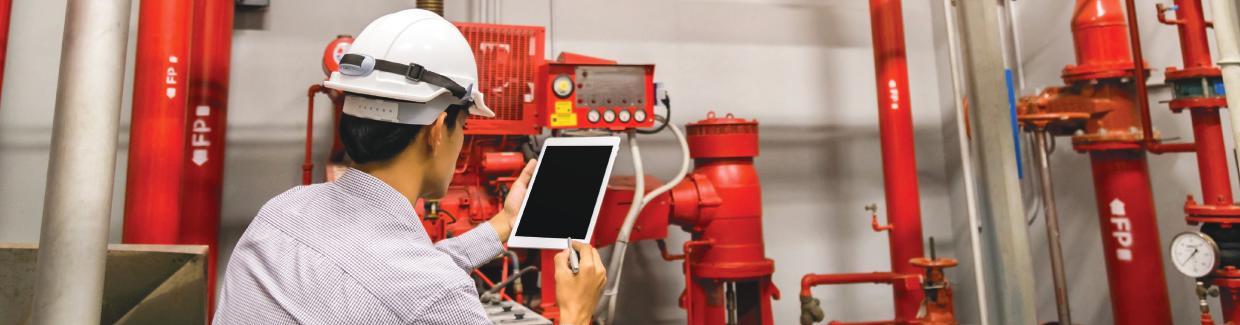
Talk to us about
• Public liability
• Professional indemnity
• Contract works
• Management liability
• Business insurance
• Motor fleet
• Tools of trade
• BPAD insurance requirements
• Any other insurance requirement
Dedicated Insurance Team
QLD, NT, NSW, ACT & TAS.
Jana Day Account Manager
(07) 3230 9312 0499 224 024
jday@wmib.com.au
WA & SA.
John Mangos Account Manager
(03) 9320 8544 0438 333 886
jmangos@wmib.com.au
VIC.
Danny Gasbarro Account Manager
(03) 9320 8542 0439 003 363
dgasbarro@wmib.com.au
wmib.com.au Strategic Partner of FPA Australia Windsor Management Insurance Brokers Pty Ltd ACN 083 775 795 ABN 93 707 887 544 AFSL Number 230747 W90.28022022
Be part of Australasia’s largest fire protection industry event

Join us at the largest and most influential fire protection event in the Southern Hemisphere. Hear from industry experts, discover new products and services, connect with suppliers and gain insights on the latest industry trends.
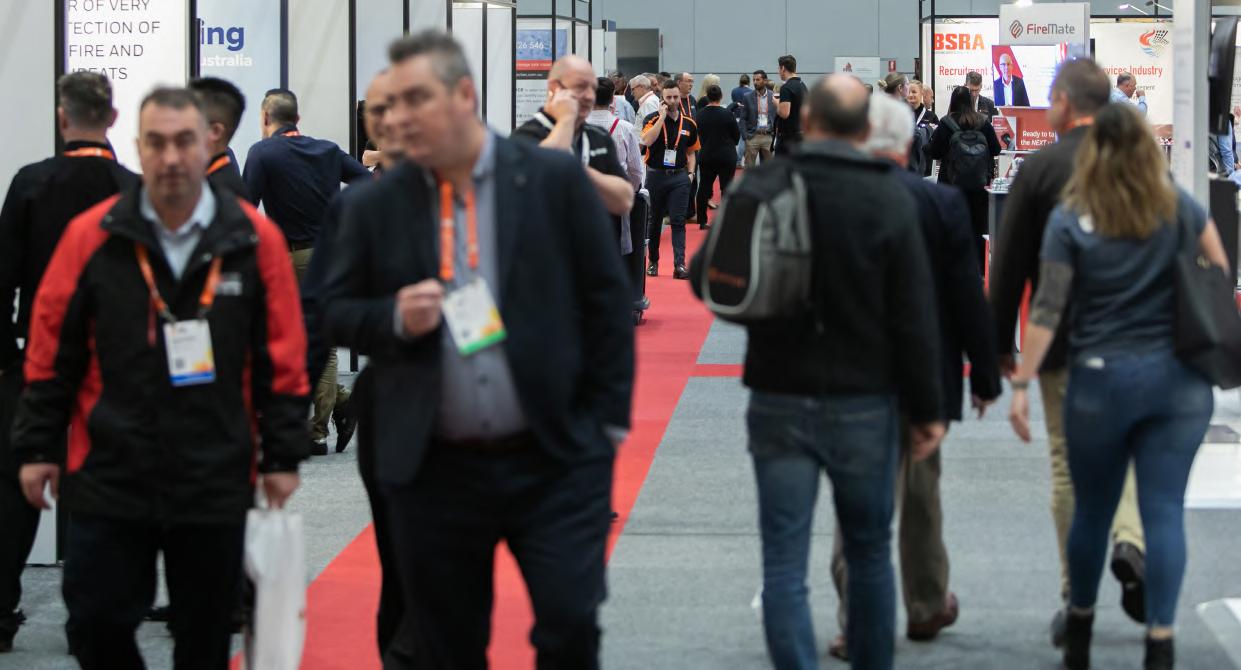
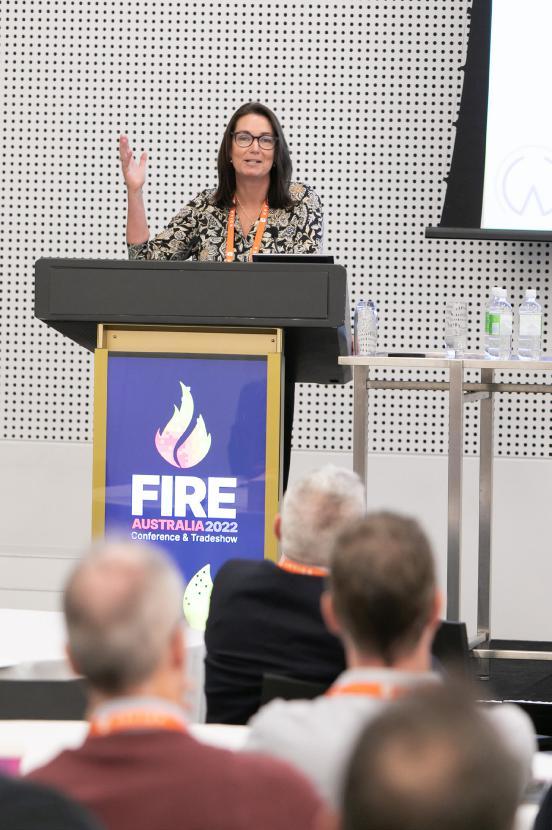
2000+ DELEGATES 80+ EXHIBITORS 3 DAYS OF LEARNING
Key Industry Experts
Learn about new trends, products and services from key industry experts, through a variety of engaging and interactive formats.
Technical Tracks
Attend our technical CPD seminars and stimulate your professional development, ignite your business opportunities and help develop the fire protection industry.
Tradeshow Hall
Connect with our 80+ local and international Tradeshow exhibitors, showcasing hundreds of industry leading products and services.
For more information visit the event website: fireaustralia.com.au
International Convention Centre, Sydney 3 – 5 May 2023
Hosted by
