


Tim Malm Profle | DIY Hat Rack | The Day of the Cowboy | Q&A with Carson Jeffrey BBQ Charcuterie Board | A Look at O Ro Ranch | Wrangler + Yellowstone
RODEOS Western Wedding INSPIRATION Q&A WITH ARTIST PEGGY JUDY THE HISTORY OF BARREL RACING THE LEGACY OF Lane Frost
THE BEST OF SUMM ER


POF-USA.COM TRUE. AMERICAN. ORIGINAL. Crisp 3.5 lb Trigger Oversized SHORT throw lever 20rd Magazine Included 1. 3. 2. POF-USA’s take on a lever-action rifle: revolutionizing the original design through radical approaches and enhancements. Tombstone is a modern lever-action chambered in a pistol caliber, initially offered in 9MM. The rifle comes with the same proven 20-round standard magazine, or optional 10-round, that accompanies the POF-USA Phoenix. WEIGHT 5.75 lbs CALIBER 9mm 36 in LENGTH TRUE AMERICANA. NOW in 9mm.

The credit for this issue’s cover photo goes to photographer, Michael Pintar. Michael is one of the most well-known Western lifestyle and rodeo photographers in the industry today. He is aptly known for capturing the true spirit of his subjects, whether it’s a cowboy, bronc, bull, or even landscape shots. We are thrilled to include him in this issue of Cowboy Lifestyle Magazine and he will be our Through the Lens feature in the Fall Issue, so keep an eye out for that. You can learn more about Michael, shop his prints, or book him for a shoot at Pintargraphy.com or find him on Facebook and Instagram.


PAGE 6 CONTENTs Summer 2023 A Look at O RO Ranch 20 Unwavering Faith, Family & Rodeo with Tim Malm 24 The Legacy of Lane Frost 30 Forney Industries DIY Hat Rack 34 You Might be a Cowboy or Cowgirl if you own These Products 36 National Day of the Cowboy 38 Q&A with Country Artist 40 Q&A With Western Artist Peggy Judy P.46 Western Wedding Inspiration P. 26 Embrace Your Inner Dutton With Wrangler 42 Krysta’s Kitchen: Barbeque Charcuterie Board 44 From the lens: Andersen CbarC Photography 52 Experience Arizona’s First Guest Ranch: Kay EL Bar 56 Meet the CLN Team: Aaron Kuhl 60 Behind the Scenes at CLN 62 The History of Barrel Racing P. 50
THE BEST OF SUMMER RODEOS
2


INSPIRING THE ADVENTUROUS. CONNECTING THE UNPLUGGED.


/CodyYellowstone /CodyYellowstone
CodyYellowstone.Org


THE BEST OF SUMMER RODEOS
WITH EVERYTHING FROM THE RICHEST SUMMER RODEO TO THE OLDEST, WE ARE GOING TO COVER THEM ALL IN THIS SERIES OF COWBOY LIFESTYLE MAGAZINE. DID YOUR FAVORITE MAKE THE LIST?
In this summer issue of Cowboy Lifestyle Magazine, we are celebrating rodeo being the true American sport. Stemming from the original working-class cowboys, rodeo has the power to not only bring people together but continually celebrate American values like grit, determination, and hard work.
Summer is about the middle of the season for cowboys and cowgirls that are competing for a spot at the National Finals Rodeo in December. The “summer run” is a huge opportunity to gain some ground in the standings, in addition to making good money depending on how they plan their route. Some athletes plan their route based on where they are geographically, such as the west coast, midwest, southwest, or even Northern rodeos; or they plan strategically where they can get the most bang for their buck. For about two months straight it’s not uncommon for cowboys and cowgirls to be on the road heading to a rodeo every weekend.
Particularly, the two weeks before and the weekend of the Fourth of July, is what we like to call “Cowboy Christmas”. Over the course of that couple weeks, there are over 30 rodeos that take place

6
A cowboy and bronc trying to make the eight at Cheyenne Frontier Days. Cheyenne hosts the largest of the summer rodeos and is featured in this section.
across the country, and it isn’t just the cowboys and cowgirls competing. The rodeos themselves are all vying to get athletes to compete in their events. With at least 2-3 other events going on at the same time, rodeos need to either put up a good amount of added money or treat their athletes really well to make it worth their time.
Whether it’s your first rodeo or your 30th, the excitement never changes. There’s something in the way the dust settles in the arena as the athletes and animals get geared up for an outstanding performance. The way the bucking horses wait patiently in the chutes as the National Anthem plays and the way we still say a prayer to protect everyone inside and outside the arena.
It’s the quiet buzz of energy as the crowds get ready to sit on the edge of their seats as they are transported back in time. Young or old, fans come away with an appreciation for this quintessential American sport that is a staple
of this country’s heritage and culture. Today, rodeo continues to captivate audiences across the country, drawing in both locals and tourists alike.

But rodeo is more than just a sport – it’s a way of life. For many Americans, rodeo represents a connection to their heritage and a celebration of their roots. It’s a chance to come together as a community and honor the traditions that have been passed down through generations. In fact, that truly is the common denominator, whether you’re a spectator, athlete, stock contractor, or committee member, the values of the sport remain the same. That is the common thread and understanding that we all live by.
As we highlight different summer rodeos between these pages and what they are known for, keep in mind that rodeos across the country are all known for something extraordinary and I encourage you to find the magic of your own hometown rodeo.
cowboylifestylenetwork.com 7
THE LARGEST SUMMER RODEO


Cheyenne Frontier Days
If you’re headed to Cheyenne, Wyoming in July then you’re going to want to set aside time for the “Daddy of em’ all!”Cheyenne Frontier Days Rodeo!
BY LINDSI RIAN
8
Every year, thousands travel to Cheyenne, Wyoming for the infamous Frontier Days. The ten-day festival, which runs July 21st30th, is the “World’s Largest Outdoor Rodeo and Western Celebration” hosting major touring artists headlining the stages, the PRCA Rodeo, a Chuckwagon Experience, a carnival, and more. Visitors get just a taste of what makes Cheyenne special during the summer festivities.
Cheyenne is uniquely situated in the southeast corner of Wyoming, making it a quick drive to major metropolitan areas while maintaining the small-town feel. Being a railroad town since its birth, Cheyenne is a melting pot of Western tradition, outdoors culture, and frontier attitude.
Beth Gunthardt, a local who’s actively involved with Frontier Days, says “My favorite thing about living in Cheyenne is the people here: the locals who make this town a welcoming and warm place (even in the winter) where neighbors still look out for one another. Strike up a conversation with a stranger when you’re visiting and you’ll more than likely find someone who becomes a new friend!”
Tips for Cheyenne Frontier Days from a local:


If you are downtown during Cheyenne Frontier Days, grab lunch at The Albany (one of the oldest restaurants in Cheyenne with tasty sandwiches), walk to Blue Raven Brewery to get a drink on their patio, and then catch some live music at The Lincoln (a historic theater turned concert venue).
If you are out at Frontier Park, grab lunch at The Buckle Club (which is manned by past Chairmen, has homemade food, drinks, and a wonderful air-conditioned atmosphere to get out of the heat!) then go listen to free live music at The Garden (also has drinks, shade, and seating) before heading to The Buckin’ A Saloon to dance the night away.
If you want to escape the crowds, swing by The Board Room for charcuterie lunches togo, drive 20min to Curt Gowdy State Park, hike to Hidden Falls, or just find a spot by the reservoir, and enjoy your lunch in nature. You can rent paddle boards and get out on the water if you have extra time!
2023 Cheyenne Frontier Days Schedule
Tunes on the Terrace: All concerts offer a VIP Ticket Experience.
• July 21- Eric Church & Paul Cauthen
• July 22- Old Dominion & Chase Rice
• July 23- Zach Bryan
• July 26- Five Finger Death Punch and Papa Roach
• July 27- Tim McGraw & Kip Moore
• July 28- Jon Pardi & Carly Pearce
• July 29- Cody Johnson & Whiskey Meyers
Chuckwagon Experience: Enjoy a traditional dining experience on July 22nd, 26th, 27th, 28th, and 29th! *This is a ticketed experience.*
Carnival Midway: All the things you love about a carnival and more! Rides, games, and the all-time favorite food vendors! Armbands are available for purchase online or in person.
PRCA Rodeo:
“The Daddy Of ‘Em All” known for its fast pace and a large number of contestants, The Rodeo ensures guests see more rodeo action than they can see at any other rodeo. Nine days of jam-packed action including bareback riding, barrel racing, breakaway roping, bull riding, saddle bronc riding, steer wrestling, team roping, tie-down roping, and wild horse racing.
FOR MORE INFORMATION ON DAILY SCHEDULES, EXPERIENCE TICKETS, AND MORE, VISIT WWW.CFDRODEO COM.
cowboylifestylenetwork.com 9
THE OLDEST SUMMER RODEO
Prescott Frontier Days

One of the most prestigious rodeos in the country is the World’s Oldest Rodeo, Prescott Frontier Days Rodeo, is set to take the stage this Fourth of July!
 BY JORDAN OWNBY
10
One of the most anticipated rodeos of the summer is right around the corner, and Prescott Frontier Days Rodeo needs no introduction. Running June 28th- July 4th located at the Prescott Rodeo Grounds in Prescott, Arizona fans will not want to miss what the 8 thrilling performances have in store! Drawing in approximately 27,000 spectators for the rodeo each year, Prescott Frontier Days rodeo is celebrating its 135th year of rodeo. This rodeo has continued uninterrupted, never missing a year, since 1888. There will be many food and retail vendors where spectators can begin the evening but by 7:30 you will want to be in your seats for rodeo time! Fans can expect to be greeted by the nostalgic voice of Randy Corley who has been the “voice of the World’s Oldest Rodeo” for 36 years! He will be joined by co-announcer James Horcasitas. Barrelman Cody Sosebee will be there, as well as specialty act John Payne, who will be there to mesmerize the crowd at halftime with his act. Prescott Frontier Days Inc is a non-profit organization that thrives on the help of the community. Composed of hundreds of dedicated volunteers of all ages from the Prescott area they work tirelessly to ensure the rodeo is perfect for fans and competitors alike. Prescott Frontier Days®, Inc has also donated thousands of dollars back into the community including scholarship funds, 4-H, Justin Cowboy Crisis Fund, and many more.
History of Prescott Frontier Days Rodeo

Prescott Frontier Days Rodeo is full of history which will come as no surprise, being trademarked as the World’s Oldest Rodeo. July 4, 1888, is the day that started it all. Becoming the birthday of professional rodeo it was the first day of the “cowboy tournament” where people from the community gathered to compete in cowboy contests for offered cash prizes. These contests continued to grow for many years, now 135 years to be exact. Hiring Harry Vold to provide top-of-the-line stock in 1972, the Vold Rodeo company continues to provide some of the best stock available today attracting top competitors within the PRCA. In 2008 the rodeo was inducted into the Pro Rodeo Hall of Fame in Colorado Springs, Colorado.
The first rodeo was organized by local business professionals and took place on July 4, 1888. The event provided the opportunity for local cowboys and ranchers to demonstrate their skills to the public. Participating winners were awarded cash prizes. Unlike today, the
old-time events played out on a simple barren tract of land in Forbing Park. Designated areas were sectioned off with ropes to contain livestock and establish the perimeter of the arena.
By 1913, the Yavapai County Fair Association named the festivities Prescott Frontier Days. The term “rodeo” is Spanish for “roundup” and was not associated with Western activities until 1916. In order to attract larger crowds celebrity cowboys, which included Tom Mix and Will Rogers often attended the PRCA events.
Event Highlights
John Payne the One-Arm Bandit
John Payne the One-Arm Bandit is a 15-time PRCA Specialty Act of the Year, a legend in the Western world and he is returning to the Prescott Frontier Days Rodeo 2023. In June 1973, the Oklahoma native was electrocuted by 7,200 volts, which led to the loss of his arm and his now infamous performance name. His one-of-a-kind act is a ‘Wild West Show Fit for a King’ and features not only horses but buffalo, cattle, mules, and zebras.
Broken Spoke Clydesdales
The Broken Spoke Clydesdales travel across the country participating in rodeo exhibitions, fairs, and tons of other fun events. Having been a staple of the Prescott Frontier Days Rodeo, they are excited to return for another year.
Schedule
Rodeo Performances: Gates open two hours before each performance offering vendors for fans to shop, eat, and listen to live music. In addition to live performances, rodeo fans can also experience the rodeo in a new way this year. Fans can now purchase tickets to view the rodeo on a live stream from Mile High Middle School in Downtown Prescott. Catch all the details below!
• Performance #1 – Wednesday, June 28 – 7:30 PM
• Performance #2 – Thursday, June 29 – 7:30 PM
• Performance #3 – Friday, June 30 – 7:30 PM
• Performance #4 – Saturday, July 1 – 1:30 PM
• Performance #5 – Saturday, July 1 – 7:30 PM
• Performance #6 – Sunday, July 2 – 7:30 PM
• Performance #7 – Monday, July 3 – 7:30 PM
• Performance #8 – Tuesday, July 4 – 1:30 PM
Rodeo Dance: Get ready to dance the night away on June 29, 30, and July 1 from 8:00 PM to 1:00 AM at the Depot Marketplace in the BMO Harris Bank parking lot. With a live band each night, there will be no shortage of entertainment!
Prescott Rodeo Parade: The Prescott Frontier Days World’s Oldest Rodeo proudly presents the 136th Annual Rodeo Parade, held annually in downtown Prescott over the 4th of July weekend! The Rodeo Parade is a wonderful tradition that celebrates rich western history, right in downtown Prescott, Arizona.
cowboylifestylenetwork.com 11
LEARN MORE ABOUT THE EVENT AND TICKETS AT WORLDSOLDESTRODEO.COM
THE SHOWIEST SUMMER RODEO


Calgary Stampede
The Calgary Stampede isn’t referred to as the “Greatest Outdoor Show on Earth” for no reason, join me as I explore why Calgary made it to our “Best of Summer Rodeo” feature.
 BY HANNAH CRANDALL
12
Home of the world’s largest outdoor rodeo, nightly concerts, the world’s premier chuckwagon event, and more, it is no wonder why Calgary Stampede is known as the ‘Greatest Outdoor Show on Earth’!
Held in September of 1912, the first Stampede was produced by Guy Weadick, the visionary who believed in the need for an event celebrating the Old West. The parade was the biggest hit at the inaugural event and drew in 80,000 people, which was double Calgary’s population at the time.
Rodeo
Today, the 10-day celebration is vibrant, exciting and still holds true to its Western roots. The competition in the rodeo arena starts at 1:30 p.m. daily, and it is one of the most spectacular demonstrations of athleticism, horsemanship, and pure grit. Each performance features both the best contestants and animal athletes in the world in six rodeo events. Legends are made at this rodeo, and it’s proven with every past winner that is inducted into the Pro Rodeo Hall of Fame.
2022 champions included Logan Hay, Rocker Steiner, Shane Proctor, Caleb Smidt, Will Lummus, and Kassie Mowry. The 2023 event has a purse of more than $1.5 million to award its contestants.
Chuckwagons
In 1923, the Stampede staged the world’s first chuckwagon race, and it has since become one of the most notable aspects of the event. Celebrating 100 years of the event inspired by cowboys racing home from camp in the Old West, the Stampede features 10 nights of chuckwagon racing with 27 drivers and nine heats per night starting at 7:45 p.m.!
The Cowboys Rangeland Derby is a sight to see with teams of trained and decorated horses thundering around the track competing for more than $1 million in prize money. No other chuckwagon race compares to the Calgary Stampede.
Evening Show and Activities

Each night, once the last chuckwagon crosses the finish line, the Bell Grandstand Show features live music, acrobatics, stunts, dazzling pyrotechnics and so much more! It is also the premier performance for the Young Canadians School of Performing Arts.
In addition to all the long-standing traditional events, the Stampede continues to bring new and fresh entertainment to Calgary each July. Whether it be live music performed by some of the most popular artists, agricultural education, shopping, art experiences, or specialty acts, the production of such a large-scale event will leave you in awe.
The 2023 Stampede will feature country music supergroup Alabama, superstar Pitbull, an All Elite Wrestling Tour stop, a new breakaway and team roping event called the Rocky Mountain Cup and so much more!
Why Calgary Is A Must
When it comes to summer rodeos that take your breath away and keep you on the edge of your seat, most professional rodeo athletes and fans alike have Calgary at the top of their list.
“There are two rodeos that give you chills before you get on, and those are Calgary and the NFR,” said Logan Hay, 2022 Calgary saddle bronc riding champion and NFR qualifier. “They are in a different league than the rest.”
“Competing at Calgary is a feeling like no other,” said Stetson Jorgensen, 2021 Calgary steer wrestling champion and NFR qualifier. “To be able to run a steer in that worldfamous arena makes the hair on the back of my neck stand up. Winning Calgary in 2021 is one of my biggest accomplishments to date.”

“There is no organization like the Calgary Stampede,” said President and Chair of the Board Will Osler. “It means so much to the community and embodies our spirit as a city.”
FOR MORE INFORMATION ABOUT THE SHOWIEST SUMMER RODEO AND TO PURCHASE TICKETS, VISIT CALGARYSTAMPEDE.COM.
cowboylifestylenetwork.com 13
THE RICHEST SUMMER RODEO

Reno Rodeo
Tagged as the “Wildest, Richest Rodeo in the West”, Reno is a must-attend summer rodeo for athletes and spectators alike.
 BY ELLEE HAGEMAN
14
The “Wildest, Richest, Rodeo in the West,” Reno Rodeo 2023 is set to kick off June 15th and run through June 26th. The Reno Rodeo is the city’s longest-running event, dating all the way back to 1919 when the community banded together looking for a way to celebrate the end of WWI, deciding on a rodeo and “carnival of the range.” Today the Reno Rodeo is the fourth richest rodeo in the PRCA, put on by almost 1,000 volunteers with over 140,000 fans in attendance. If you’re going to be in the Reno area you won’t want to miss this action-packed event!


Since 1919 Reno Rodeo has taken place in June, usually around the second weekend of the month. The event runs a little over two weeks if you include the historic cattle drive. The cattle drive takes place in the five days leading up to the Reno Rodeo, 60 guests join a team of cowboy volunteers to drive a herd of 300 head of rodeo steers from Doyle, California to Reno, Nevada. This year’s cattle drive is already sold out but the Reno Rodeo is known for being a Buckin’ Good Time with performances and events for everyone to enjoy! Let’s check out this year’s lineup!
Reno Rodeo Kick-Off Concert: Wednesday, June 14th at 7 pm, the Brothers Osbourne will be kicking off the Reno Rodeo with their signature country rock harmonies and authentic sound!
Rodeo Performances: The spotlight of the Reno Rodeo is its rodeo performances which feature some of the most talented and determined cowboys and cowgirls in the industry competing for $2,000,000 in winnings, this may be why its called the richest week in rodeo! You’re going to witness incredible animal athletes as well in events like saddle bronc & bareback riding, barrel racing, and bull riding. Performances occur nightly and kick off at 7 pm.
Wild Pony Races: You won’t want to miss Reno Rodeo’s Wild Pony Races, June 16th - 19th just before the rodeo performance. Four teams of three kids, between the ages 8-14 years old, will compete. During the race two kids have to rope and halter the pony and the third has to mount and ride. Teams are timed with the longest ride deemed the winner, it’s sure to be a good time.
The Bob Tallman Invitational: June 19th from 8 am to 5 pm in the indoor arena, the Bob Tallman Invitational is the newest major Open roping event and it’s also designed to create what team ropers dream about – a truly limited, hand-picked roster selected by Bob Tallman himself paying record dollars to the industry’s elite.
Reno Rodeo Championship Drill Team Competition: Spectators often get to enjoy the thrill of a drill team during a rodeo performance, but the Reno Rodeo has dedicated an entire event to drill teams for the 2023 championship. Ten teams will compete on Friday, June 16, 2023, at 8:00 am at the Reno Livestock Events Center Indoor Arena.
Reno Rodeo Tailgate Party: An brand new event this year is the Reno Rodeo Tailgate Party taking place on Friday, June 23, and kicking off with a cornhole tournament with proceeds benefitting the Special Kids’ Rodeo. Don’t go anywhere because the party continues on Saturday, June 24 with a fashion show. Attendees looking for a VIP experience can pay $40 for a front-row seat with complimentary mimosas and snacks as the models show off the latest Western styles.
These are just a few highlights of this rich and actionpacked rodeo, there will also be a nightly carnival opening at 4 pm, an Extreme Bulls performance, and even a group wedding ceremony dubbed “Get Hitched at Reno Rodeo! The Reno Rodeo is an event you don’t want to miss especially if you want to experience an event rich in history, exciting performances, and added money! Learn more at RenoRodeo.com.
cowboylifestylenetwork.com 15
THE MOST PICTURESQUE SUMMER RODEO
Pikes Peak or Bust Rodeo
At the eastern foot of the Rocky Mountains, lies the Pikes Peak or Bust Rodeo, making this rodeo our top pick for the most picturesque summer rodeo.
 BY ELLEE HAGEMAN
16
The Pikes Peak or Bust Rodeo is an annual event that takes place in Colorado Springs, Colorado. One of the most unique aspects of the Pikes Peak or Bust Rodeo is its location. The Norris-Penrose Event Center is situated at the base of the stunning Pikes Peak mountain, which provides a breathtaking backdrop for the rodeo. The mountain, which is part of the Rocky Mountains range, rises over 14,000 feet above sea level and is one of the most iconic peaks in the United States. The natural beauty of the surrounding landscape is a big draw for visitors, and it adds an extra element of excitement to the rodeo.
The rodeo has a rich history, dating back to the early 1900s, and it continues to draw in thousands of visitors each year. The Pikes Peak or Bust Rodeo was first held in 1937 as a way to raise money for the local Chamber of Commerce. The rodeo has since become one of the largest and most well-known rodeos in the country, attracting top competitors from all over the world. The event has evolved over the years, but it has always remained true to its Western roots and commitment to the community. This year’s rodeo promises to be as exciting as ever, with a full schedule of events!
The 2023 event will take place over four days, from July 11th to July 15th, with each day featuring a rodeo and other special events. Additionally, the rodeo has a longstanding partnership with the PRCA, which helps to ensure that the event attracts top competitors and adheres to professional standards. In fact, last year was the first inaugural NFR Open, which essentially took the place of the RAM National Circuit Finals that used to take place in Kissimmee, Florida. This event is right up there with Reno Rodeo for being one of the most lucrative rodeos of the summer run. The event brings together all 12 U.S. rodeo circuits, plus Canada, bringing more than 200 contestants to the Norris-Penrose Event Center for five competition rounds over the four days.
Schedule Highlights
Rodeo Performances: Beyond the beautiful backdrop, the Pikes Peak or Bust brings some of the best rodeo action on the west coast. With both matinee and evening performances, there are plenty of opportunities to get your rodeo fix. The grounds open at 4:00 p.m. for evening performances with a start time of 7:00 pm and open at 10:00 am for matinee performances with a start time of 12:00 pm. Plus parking is free!
Mutton Busting: One of the best highlights for the kids is the mutton busting which takes place every day. The preliminary rides will take place at 4:00 p.m. Tuesday–Saturday nights and 10 a.m. for the Friday and Saturday matinees. Then the finals will take place during each performance.
Fan Zone & Vendors: If you’re wanting to head to the rodeo early, you can check out the Fan Zone and the multitude of vendors that the event will have for you to peruse. In addition to vendors, there will be pony rides, longhorns, a barrel train, a petting zoo, roping demos, and even a horse-drawn wagon!
If you’re wanting to enjoy the beer and wine garden, there will be live music every day as follows:
• Kevin Austin—Playing Tuesday, July 11 and Wednesday, July 12
• Ashtonz—Playing Thursday, July 13
• Wirewood Station—Playing Friday, July 14 and Saturday, July 15
Of course, while the rodeo is a celebration of Western culture and tradition, it is also important to consider its impact on the beautiful environment surrounding the event. The organizers of the Pikes Peak or Bust Rodeo have made a commitment to sustainability, implementing practices such as recycling, composting, and water conservation. Additionally, the event works closely with the City of Colorado Springs and other local organizations to minimize its environmental impact.

If you’re interested in attending the 2023 Pikes Peak or Bust Rodeo, here’s what you need to know about tickets. Tickets are on sale now, and can be purchased online or at the Norris-Penrose Event Center. Prices vary depending on the day and the seating area, but there are options to fit every budget. The Pikes Peak or Bust Rodeo is a unique and exciting event that showcases the best of Western culture and tradition, hope to see ya there!

cowboylifestylenetwork.com 17
WORLD’S OLDEST CONTINUOUS PRO RODEO
Payson Pro Rodeo
For over 140 years the World’s Oldest Continuous Rodeo has never missed a beat. In Payson, Arizona, their August rodeo is steeped in tradition that holds the title of “best small town rodeo in the world.”
 BY KRYSTA PAFFRATH
18
Let’s head to the northern Arizona town of Payson, the home of the World’s Oldest Continuous Rodeo. The keyword there is continuous, every year for 140 years straight, there has been a rodeo in this quaint little traveler’s town. Starting in 1884 the Annual World’s Oldest Continuous Rodeo is a world-famous event that will celebrate its 140th consecutive year in 2023 on August 18-19.
Named the country’s Best Small Rodeo (according to the Professional Rodeo Cowboys Association), the Payson Pro Rodeo Committee continues to attract the best of the best from all over the world to compete for substantial prize money over the course of their two-day performance.
The wild west weekend kicks off with the Women’s Cactus Series Barrel Racing on Thursday, August 17th at 6 PM and it only costs one can of food for admission. Then the Payson Pro Rodeo performances start at 7:00 PM Friday and Saturday night and at 1:00 PM Saturday afternoon. Gates open 2 hours prior to the performances. Friday is the Tough Enough to Wear Pink night that helps raise funds for local breast cancer support groups. Saturday afternoon is Family Day with prizes for kids. Saturday evening is the Patriot Performance that honors our returning, fallen, and wounded veterans, with a special tribute during the Payson Pro rodeo.
Tickets are available online at paysonprorodeo.com. Tickets will also be available at the gate, but some performances sell out early so make sure to plan ahead!
Following each performance on Friday and Saturday night, make sure to stick around for the Boots and Bling Dance featuring the Western Fusion Band. The fun starts as soon as the last bull bucks. Admission is free for rodeo attendees or you can pay the $5 cover charge. Don’t forget about the Rodeo Parade held on Saturday, August 19, starting at 9:00 AM, on Historic Main Street in Payson, Arizona. The Parade is sponsored by The Rim Country Kiwanis of Zane Grey Country. It includes clowns, rodeo queens, and their courts, the Payson High School Band, local floats, riders, first responder teams, and many other great entries from all over Arizona. Join in the fun when real cowboys and cowgirls strut their stuff, along with floats, cars, tractors, team bands, and units of the El Zaribah Shriners. The parade
will go east from Green Valley Park along Main Street to Sawmill Crossing. Announcers along the parade route will keep you posted on the coming entries and provide music for your entertainment. So, bring your “mountain” chair, water, and the kids, and enjoy a great morning with some fabulous entertainment, antique cars, clowns, and horses, and help Rim Country celebrate The World’s Oldest Continuous Rodeo.
Come join the fun and experience the place where rodeo began over 140 years ago in Payson, Arizona’s Cool Mountain Town! For more information, please call 928-295-8109 or visit PaysonProRodeo.com.
History of the Payson Pro Rodeo


Founded in 1882, the town of Payson AZ was first known as Green Valley. In 1884 the town’s name was changed, honoring Illinois Representative Lewis E. Payson. “Arizona Charlie”, Abraham Henson Meadows, was one of the organizers of the first Payson Rodeo, along with John Collins Chilson. Early Payson rodeos weren’t held in fancy arenas. In fact, the original venue was a meadow near the intersection of Main Street and Highway 87/The Beeline. Wagons and later autos created barriers to line Main Street to form the ‘arena’.
When rodeo first came to Payson, it provided local ranchers and cowhands a chance to get together and compare their roping and ranching skills during the annual “downtime” before the big fall roundup. There were only a couple of events in those early rodeos, but it was not long before cowboys from all over the state and beyond were showing up to compete in new events like bronc busting, bull riding, and steer roping.
Through the years, the show still packs just as much of a punch. Payson Pro Rodeo is still providing one of the best shows in the West and deserves the title of “Oldest Continuous Rodeo” being dedicated to providing 140 years of rodeo every year to fans across the country.
cowboylifestylenetwork.com 19
A LOOK AT THE HISTORIC & INNOVATIVE
Imagine wide open spaces with nothing but brush, grass, mountains, trees, and an occasional speck of black, white, or red dot the landscape surrounding you—no fence to be seen for miles. A quiet most in our modern era rarely experience. The wagon, an old one-ton Ford truck with a chuck box attached full of food and supplies, rolls out on rugged, bumpy roads at the beginning of the working season. The rest of the crew follows soon after to gather, work, and move cows across a landscape unmarred by human hands. The camp men welcome the seasonal help to get through the load but crave the solidarity offered when winter and summer roll in. And through all of this work, from start to finish, is the horse, a valued member of the RO team.
BY TIFFANY SELCHOW
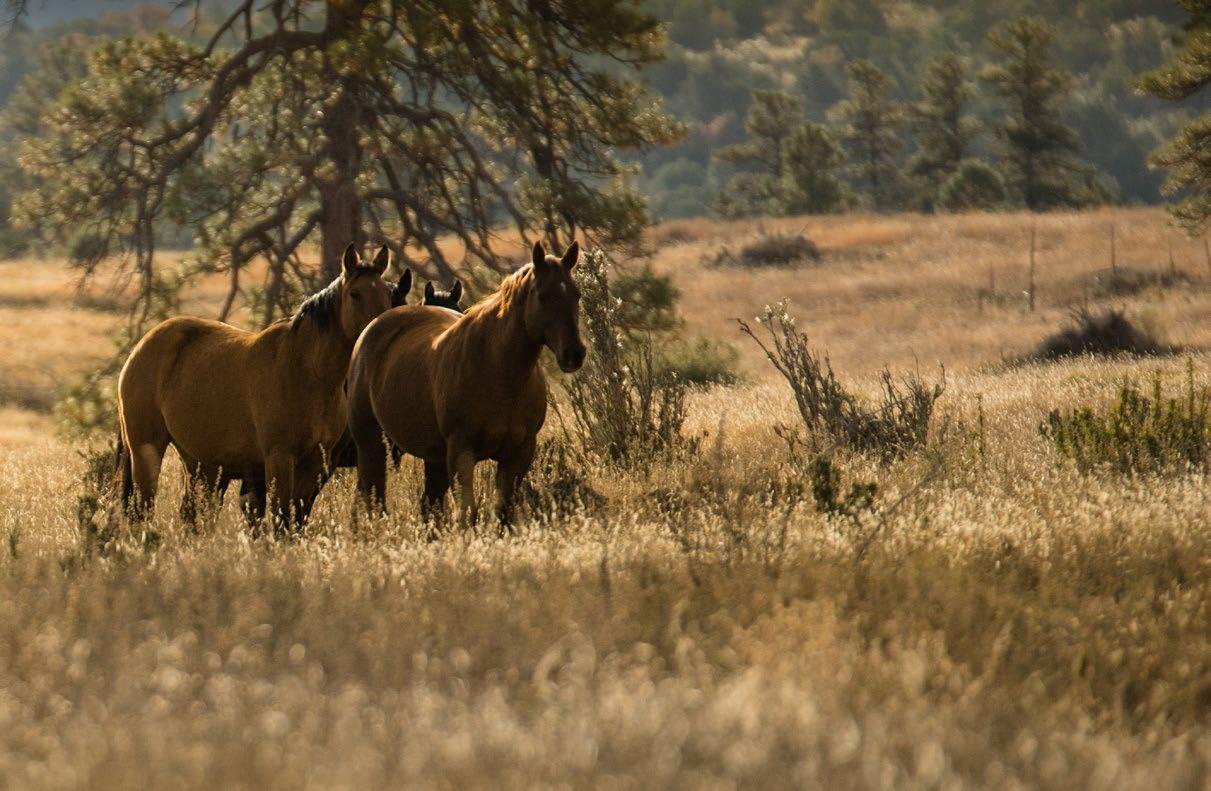
The O RO Ranch, owned by Jane and Larry Droppa and family, is steeped in Western tradition and heritage with a keen eye for modern innovations to raise the best beef possible. This ranch has used horses as their primary partners for over 125 years. A horse that is trainable but can think independently, one who is heavy-boned but can work all day, an animal who reads a cow while retaining its composure. Raising horses like this takes decades of thoughtful planning – they don’t just happen by accident. The actual O RO Ranch tells a long story, with the equine breeding program adding several chapters, if not volumes.
To truly understand what a horse needs to be, you need to understand the terrain and requirements of the ranch. The O RO Ranch is generally impassable by anything but a four-hooved vehicle, whether that be cows or horses. Stretches of dirt often passed off as roads allow minimal

While steeped in Arizona ranch history, the O RO is also a prime example of what innovation looks like in the horse industry.
20
access to things like the wagon. A single fence or naturally occurring boundaries runs the circumference of the ranch with the work of caring for the cattle and the landscape across the vast 257,00 acres, a task taken on by five year-round cow camp men, headquarters, and seasonal cowpunchers. During the spring and fall, a remuda of horses is kept with the wagon as they move across the countryside to do their seasonal tasks. The days are long, and the terrain is some of the most rugged in the Southwest.
The O RO Ranch breeds, raises, and uses horses who carry lineage taking us back hundreds of years and deep into the heart of Mexico. The ranch has registered horses with the American Quarter Horse Association since the registry’s inception eighty-plus years ago. The selection of sires who carry the traits needed for this part of the world has been in practice almost from the beginning. This work has obviously paid off and is being recognized as the ROs were named the AQHA Best Remuda of 2022. Ranch Manager Jed Roark brought an eye for stock that not only works the ranch and does that well but can also head to the show and roping pen and compete at the
top levels making these horses not just valuable on the range but elsewhere. The life of a horse on the ranch starts with a band of thirty mares who were bred and selected for their ability to sustain their lives on what the land provides. Not only are they expected to fend for themselves but also to breed and foal without assistance. These mares are in bands with three studs, duplicating a horse’s natural environment. The foals are born in the rocks, so they know nothing else, making the transition to working life simple.
As yearlings, they experience a halter but then are let loose back on the mountains to continue growing. The saddle-breaking process makes the two-year-olds’ lives slightly more exciting, but after about fifteen rides, they are turned out to roam again. Much like a young person graduating from college, life gets more serious in their three-year-old year. They are again brought in off the mountain and asked to brush up on the skills they learned as two-year-olds. From there, they are assigned to the camp men, and some are picked to be wagon horses, meaning they are the horses used during the spring and fall working times.
cowboylifestylenetwork.com 21
To truly understand what a horse needs to be, you need to understand the terrain and requirements of the ranch.
In the spring, the job of the cowboys and their equine partners is branding calves, spreading bulls to ensure they are covering all cows, and weaning off any older calves who may have missed the wagon in the fall. Each morning, cowboys saddle up and head out to gather what cows they can find in the rideable area, do the work needed, and then set out to do it all the next day. Only Sundays see rest, mainly in the form of a hot shower and maybe some laundry at the ranch headquarters. It starts all over again on Monday.
As the work is completed in one area, the camp gets packed up and moved to the next area of the ranch. This is repeated for a solid two to three months. A brief intermission called summer brings some respite, but as the days start to cool towards the end of that season, the fall works come into view. The harvest months bring weaning of the calves from the mother cows, sifting through the herd to cull or get rid of older cows, and taking the bulls off the herd. All of this work, spring and fall, and the months in between, is only suited for individuals, both human and horse, who are physically and mentally strong. This kind of work wears a body out, but in a way that leaves one satisfied at the end of the day or the end of life.
A slow start, with a chance to live life as nature intended, makes for a solid horse physically, but also has incredible

benefits for the horses mentally. All horses are rotated into the working string for a season and then turned out for a season, giving a chance for much-needed rest and recovery. This horse management method also ensures the animal’s longevity, which is a challenging task in the terrain of the ROs.
A recent win at the BFI Roping by an RO horse clearly shows the results of this program. RO Master Memphis, a horse bred, raised, and used on the O RO Ranch, currently owned by Jeff Tebow and ridden by Curry Kirchner, won one of the biggest ropings of the year at the beginning of April. Twister, as he is commonly known, started his career as a camp horse doing everyday tasks on the ranch. After his ranch working days, he was sold to the Hershberger family, who used him for roping, ranching, and picking up broncs until he was sold to his current owner. Because of the quality care given to these horses, most are sold to the public after ranch life is done and go on to make incredible partners for their new owners. Each horse is individually considered throughout their lifetime at the ranch, ensuring they are placed where it can thrive.
The American Quarter horse has long been known for its functionality, versatility, and adaptability. The AQHA Best Remuda Award recognizes the ranch-type quarter horses integral to the West’s expansion and the registry’s foundation. In places like the rugged landscape of northwestern Arizona, the qualities of the horses who built the base of the American Quarter Horse are still a requirement, not just history. The O RO Ranch gives one a feeling of stepping back in time after a glance, but upon closer inspection, one sees innovation and continuous improvement. We improve only by learning from our past and applying those lessons to the future. This lesson is fully recognized and implemented with the cattle herd on this rough terrain and in a horse program that makes exceptional horses for the job required.


22


24
UNWAVERING FAITH, FAMILY & RODEO WITH TIM MALM
BY ELLEE HAGEMAN
It was June 6th, 2010, and for Tim Malm, the 2009 National High School Final Rodeo Reserve Champion Calf Roper from Albin, Wyoming, the day had started like any other Sunday. He had just won in Kimball, Nebraska, the previous night, and after spending the morning at church and having lunch with his best friends, he prepared to trip some steers with his family that afternoon. However, something went wrong; he roped the steer, set the trip, then the rope made a figure-eight on the right front foot, jerking all four feet from under his horse when the rope came tight with the steer, resulting in a traumatic brain injury that almost took his life. The diagnosis was a traumatic brain injury caused by a brain hemorrhage at the base of the brain stem, they were told there was a zero percent chance of survival.
Today, nearly 13 years later, Tim embodies unwavering faith and positivity. He works tirelessly every day towards his goals, following and fighting for victory with Jesus to ‘walk, run, rope, and win for Him,’ with the help of his family and friends. His attitude towards his injury, progress, and life, in general, is entirely contagious.
When asked how he handles bad days, he replied, “There are no bad days, just days that aren’t quite as good.”
Tim has had the opportunity to work with a clinic called Ultimate Performance, or Unlimited Potential as Tim would call it, with Dr. Kyle Daigle in Louisiana which specializes in TBIs and has seen incredible improvements. Tim utilizes physical therapy at home,
including using a recumbent exercise bike, sit-ups, sauna time, and other floor exercises. Tim is also following a strict diet, which includes no dairy, no gluten, and low sugar. For a man who loves ice cream, he hasn’t had it in over a year, and it shows; he’s closer to walking than he’s ever been and has lost about 50 pounds.
Tim was born with a passion for ranching and rodeo in his blood. He was raised in a Christian home and church and has known and accepted Jesus Christ as his Lord and Savior since he was 11 years old. This journey has increased Tim’s faith even more, and though he thought it might be 6 months to a year before he would be back to roping, that hasn’t been the case.
His faith has sustained him to stay motivated and positive, noting Philippians 4:13 as being one of his favorite verses, which says “I can do all things through Christ who strengthens me.” Tim wanted to create a company that embodied his faith and his determination to overcome adversity. Stronger 413, the official coffee of Cheyenne Frontier Days, offers a variety of high-quality coffee blends and products, all with the goal of providing customers with a taste of Tim’s strength and resilience. Tim hopes that his coffee company will inspire others to never give up and to always trust in God and their inner strength, even in the face of adversity. Malm’s story is a powerful reminder that with faith, hard work, determination, and a great cup of coffee, anything is possible. All proceeds go towards Tim’s continuing rehabilitation.

It only took one second for Tim Malm’s life to change forever and while he could have let that run his life, he’s chosen to make the most of his second chance at life.
cowboylifestylenetwork.com 25
DREAMING
BY KRYSTA PAFFRATH

Inspired With
Brooke Ehlers-Juma
OF A WESTERN WEDDING? Get
Photographer
--------------------------------------------------------------------------------------------------------------------------26
• There’s something about a horsedrawn wagon in a wedding photo. Wagons are still used on some ranches to help with seasonal work so it’s refreshing to see a wagon that isn’t overly polished and something that looks like it has a story of its own that adds to the overall charm of the wedding.
There’s nothing dreamier than a Western wedding and I was able to collaborate with Brooke to bring some inspiration for all of you dreaming of a Western wedding. Every wedding is special and unique in its own way. It is a celebration of love, commitment, and the beginning of a new journey for the couple. When it comes to wedding themes, many couples choose to go with a traditional theme, while others opt for something more unique and personalized. In recent years, Western weddings have become increasingly more popular, with many couples embracing the rustic charm and natural beauty of ranch weddings. But what makes a true Western wedding? Let’s explore further and discover what makes them so special.

------------------------------------------------------------
------------------------------
Whether you’re a rancher, cowgirl, or just love the idea of a western wedding, I collaborated with photographer, Brooke Ehlers-Juma to give you all of the inspiration for a western wedding.
cowboylifestylenetwork.com 27


28
About Brooke Ehlers


Brooke Ehlers is a Western lifestyle & wedding photographer. She thrives off of capturing the Western industry & its people. Her passion for capturing the rich culture in the Western industry stems from growing up on a ranch in Wyoming. She has experienced the lifestyle firsthand, giving her a unique perspective of the industry’s beauty which aids in capturing its people most authentically. Nothing makes her happier than serving the Western industry & capturing its story.


CHECK HER OUT AT BROOKE JUMA PHOTOGRAPHY @_BROOKEJUMAPHOTOGRAPHY_


cowboylifestylenetwork.com 29
THE LEGACY OF Lane Frost
A tribute to a man that was taken too soon but left a legacy in rodeo like none before him.
BY KRYSTA PAFFRATH
If you’re familiar with the rodeo industry then you’ve most likely heard the household name of Lane Frost. But if you haven’t then here’s your introduction. Lane Frost was a legendary bull rider, in fact, considered one of the best of all time. His life, although largely lived and remembered, was cut short when he was tragically killed in 1989 at the age of 25 after dismounting a bull at Cheyenne Frontier Days Rodeo. His story, however, continues to live on through the many films, books, stories, documentaries, and memories that continue to circulate. Before getting to those, let’s take a walk through the life of Lane Frost.
Lane Frost was born on October 12, 1963, in La Junta, Colorado. He was the son of Clyde and Elsie Frost and had one older sister, Robin, and a younger brother named Cody. His father, Clyde was a saddle bronc and bareback rider, who at the time of his birth was on the rodeo circuit so Elsie

stayed with her parents for the delivery of Lane. The story goes that young Lane, even at the age of five was interested in the sport of bull riding, some might even say that he was born with bull riding in his blood.
Lane predominantly rode calves and steers until he was 15. From the advice of Don Gay, he waited until his bones were fully developed to dedicate himself to riding bulls. Then in 1978, Lane’s family moved from Utah to Oklahoma to escape the chilly winters. It was in Oklahoma that Lane’s early career in bull riding really took off. Throughout his high school career, he won championship after championship in associations like the Oklahoma Youth Rodeo Association and the National High School Finals Rodeo Association. Then in 1980, while competing at the National High School Rodeo Association Lane met two people that he would know for the rest of his life, Kellie Kyle (future wife) and Tuff Hedeman (best friend).
PHOTO CREDIT: SUE ROSOFF 30

Lane competed in his first full year of the PRCA in 1983 at the age of 19 and came up 16th in the world standings, just behind the number 15 spot that would have been his golden ticket to his first NFR. That same year, he was awarded “Rookie of the Year” and also earned the PRCA Prairie Circuit Bull Riding Champion. Once Lane got his feet wet on the circuit, there was no stopping him. Starting in 1984, Lane qualified every year for the National Finals Rodeo until his death in 1989.


One of Lane’s largest claims to fame in addition to being named World Champion Bull Rider in 1987, was riding the unrideable “Red Rock” during one of the infamous Challenge of Champions events, which was a vision brought to reality by the stock contractor and owner of Red Rock, John Growney. The Challenge of Champions took place in 1988 and was a series of seven matchups at seven rodeos that paired up Lane Frost with PRCA Bucking Bull of the Year, Red Rock. At the third match-up that took place during the Redding Rodeo in 1988, Lane made history and rode that unrideable bucking bull for the full eight seconds. At the time, Red Rock had not been ridden in 307 attempts and Lane went to ride Red Rock another 3 times, making the final score of the Challenge of Champions 4-3. Here’s what John Growney commented on about the Challenge during an interview with Wrangler Network,
“When this thing with Lane and Red Rock took off, Lane could stand by Red Rock and pet him while he was doing an interview and Red Rock would look right at the camera. All of a sudden all these people in the media industry started realizing that these two World Champions competing against each other was an easy sell. And Lane made it an easy sell because he was the kind of guy that they gravitated to.”
-JohnGrowney,InterviewwithWranglerNetwork
1988 would be the last year that Lane competed at the National Finals Rodeo, having come in 6th in the standings. In 1989, Lane was making big moves in his career, even outside of bull riding. He and his wife Kellie were working as stunt doubles for a movie, and he even played a part in organizing the bull riding event, now known as “Bullnanza, a Tribute to Freckles Brown and Lane Frost”. It was July, and Lane decided to take some time off to ride in Cheyenne Frontier Days, a decision that would change the course of, not only his life but rodeo as a whole. Lane rode at least three of his bulls during those ten days of Cheyenne Frontier Days, but his last one was atop a bull named, “Takin’ Care of Business”. He rode that bull for the full eight seconds, then when he dismounted, he was hit by the bull, breaking several ribs and severing an artery. (Per the Lane Frost Website). Aaron Watson sums it perfectly in his song for Lane’s mother, Elsie, “July in Cheyenne”,
-AaronWatson
The legacy of Lane Frost lives on today. Not only through numerous books, films, and documentaries but also in songs, stories, and memories of those that had the pleasure of knowing him. Lane Frost is not only remembered as one of the greatest bull riders of all time but also as a great friend, brother, and husband. He was a man of great courage and strength and he continues to inspire people to this day with his story of courage and determination. Lane Frost accepted Jesus Christ as his personal savior in 1988, the year before he died, and to this day, his mom is carrying on the message of his faith, strength, determination, and his story. In closing, in an interview with the NFR Extra Podcast, John Growney said this about the impact Lane Frost Left behind,
“Lane’s death immortalized him and a lot of us just went for the ride with him.”
-JohnGrowney
“A little part of every heart of every rodeo fan Died there in the rain and the mud in July in Cheyenne”
PHOTO CREDIT: SUE ROSOFF 32
Top shelf grooming goods for the aspiring gentleman.
“This stuff smells like a man cave.”
1821cowboy
3-1 BODY WASH, SHAMPOO AND CONDITIONER FOR MEN
Our original 3-in-1 shampoo + conditioner, beard, and body wash is inspired by the spirit of swanky, Prohibition-era speakeasy lounges.
This luxury, all-in-one body wash does the work of three products — offering fortified shampoo, sumptuous conditioner, and addictively great-smelling body wash that deeply, gently cleanses.

WWW.1821MANMADE.COM
CHRIS W.
here to learn more on our website
discount code for 25% off
Scan
Use
DIY Hat Rack
BY QUINN SWEETMAN
HOW TO CREATE A WESTERN HAT RACK

MATERIALS:
• 6 horseshoes
• 4’ of rebar
• 6 large magnets (Forney ITEM# 70715)
• Welding machine (Forney 190 MP)


• Personal protective equipment
• Angle grinder with flap discs and a cutoff wheel (Forney ITEM# 1905 & 71923)
• Wood or a board for the base
• Nails
• Propane or MAPP torch
• Wire brush (Forney ITEM# 70520)
Step 1: Prep the material. Clean up the horseshoes with an angle grinder and flap disc, especially at the toe which is where the welding will occur.


Step 2: Create the hooks. Cut the rebar into 10-12” sections, depending on the length of your cowboy hat brims.

Step 3: Align the horseshoe and rebar together with a magnet, then weld the rebar at an angle from the toe of the horseshoe. Repeat two more times for a total of 3 hooks.
Step 4: Align the horseshoes using all six magnets to create a level platform. Then, weld the other end of the rebar perpendicularly to the second horseshoe. Repeat this process two more times.
Step 5: Blacken wood for a rustic look if desired. Use a torch to completely blacken the piece of wood (ensure consistent application of heat for the best final effect).
Step 6: Use a wire brush on the burnt wood to reveal a distressed look. The more you stay in one spot the lighter the wood will get, allowing for the creation of different patterns.
Step 7: Nail your horseshoe hooks into the wood through the horseshoe nail holes. Angle the nails for a tighter hold.
Step 8: Hang your cowboy hat, baseball cap or welding helmet!
FORNEY INDUSTRIES
PRESENTS
1 2 3 5 6 7 4 34

YOU MIGHT BE A COWBOY OR COWGIRL IF YOU OWN THESE PRODUCTS
Whether you’re living life on the road in your pickup truck and horse trailer or settled down on a ranch in the country, chances are you have these products on or close to you at all times. As a gal that’s spent more than a fair share of time on the road and on horseback, this is a tried and true list of gear that most cowboys or cowgirls keep on hand at all times. In addition, to preface this list, I am leaving out all the obvious gear like saddles, boots, and hats and taking cowboy gear to another level so pull on your boots and let’s get started!

 BY KRYSTA PAFFRATH
Saddlebags
A GOOD PAIR OF SADDLEBAGS MIGHT LAST YOU A LIFETIME IF YOU’RE LUCKY. There are a couple of different kinds of saddlebags and cowboys and cowgirls usually have a combination of them depending on how much they need to have with them while riding. First, there is what’s called a “Horn Bag” which hangs over the horn of your saddle. This means that they sit towards the front of your saddle, making anything in there easily accessible. The next most popular kind of saddlebag is the traditional dual-hanging bags that hang off either side of the horse’s hips off the back of the saddle. In recent years, you can also find smaller saddle bags that either attach to the very front of your saddle or bags that sit right behind the seat of your saddle as well. It ultimately comes down to preference and what you are using them for. They come in a variety of materials, but if you’re looking for longevity, leather is always the way to go!
A Knife
STARTING WITH ONE OF THE MORE obvious picks, having a knife doesn’t automatically make you a cowboy, but every cowboy I know carries a knife on them everywhere they go. You never know when you might need to cut a rope or some leather. Having a knife prepares you for just about any situation you could be in whether out on the ranch or going down the road. You’ll find that most cowboys wear their knives on their hips, where it’s attached to their belts via a leather knife sheath.

Wild Rag
WILD RAGS ARE AN ESSENTIAL PART OF any cowboy or cowgirl’s gear bag. Wild rags are square scarves that range in size from 20 inches to 60 inches depending on what you’re using them for. They are often tied around a cowboy’s neck to either keep them warm during the cold months or to keep the sun and dirt off their neck in the warmer months. You can style and tie them in a variety of ways, depending on your preference.
Piggin’ String
YOU MIGHT BE A HARDCORE cowboy or cowgirl if you carry around piggin’ strings with you. Unlike their name, they don’t have anything to do with pigs. Piggin’ strings are usually short two-foot strands of lariat rope that have been separated into separate strings. Since a lariat rope is usually made up of several strands, you end up with a pliable yet sturdy piece of string that can be used for just about anything ranging from tying gates shut, securing trailer doors, tying up cattle legs for doctoring, the uses are truly endless!

36
“Photo supplied by ProRate Equine. ProRate Equine is located in Mantua, Utah prides itself on its handmade wild rags serving ranchers, cowboys and cowgals, influencers, and the everyday wearer. With so many patterns and size options there’s something for everyone! First time buying a wild rag? Reach out to us and we can gladly help you find the right fit!”
A Bedroll
FOR THOSE WHO MIGHT not know, a bedroll is exactly what it sounds like. It allows you to have a portable bed wherever you end up. It’s usually made up of a couple of different layers starting with a canvas sheet on the bottom. That is the foundation of your bedroll, then you can build it up from there depending on your preferences and the type of weather you expect to be sleeping in. Once all rolled up, it can be tied onto the back of your horse if you plan on staying overnight at cow camp or thrown in your truck or trailer to be used when you need it.

Fence Pliers

YOU MIGHT BE A COWBOY OR cowgirl if you have a special pair of fence pliers that go with you everywhere you go. You truly never know when you might come across a downed fence or a hole in the fence that needs some quick fixing. I could take this a step further and add a fence stretcher, but you usually come back with those to fix the big holes in the fence. You can use these in a pinch to cut, bend, and stretch wire.

About Ellis Canvas Tents

WE’VE BEEN MAKING LIGHTWEIGHT CANVAS TENTS AND BEDROLLS FOR over 30 years. Our signature designs are all handmade in our workshop in Durango, Colorado. While Ellis Canvas nods to the traditional canvas tent that built the west, our signature design improvements create better functionality and more stable shelter from the elements. We know the rigors of living and working in remote areas and we build our tents and bedrolls to withstand the most extreme conditions, keeping you warm, dry, and comfortable so you can focus on your work or simply enjoy your time in the wilderness.
Chaps
DEPENDING ON WHERE YOU HAIL from you might pronounce this word just as it’s spelled or you might pronounce it “shaps”. “Chaps” comes from the Spanish word, chaparajos, which simply means, “leather pants without a seat”. Chaps come in many different styles and are called many different things depending again on what part of the country you’re in. For example, in the southwest, you are more apt to find batwing or shotgun-style (also called leggings) chaps. These style chaps protect the entire legs from cacti, desert brush, and rough riding conditions. In the northwest, you will probably still see those styles, but you will also see chinks, which are half chaps usually with fringe, and armitas which are traditionally made from deer, elk, or moccasintanned cowhide. In addition, traditional armitas are made with no sewing and are hand laced. You can also find wooly chaps up north to keep those cowboys warm during the winter months.
Photo by Allie Medeiros
cowboylifestylenetwork.com 37
RECOGNITION FOR NATIONAL DAY OF THE COWBOY
There’s nothing quite more American than cowboys and cowgirls. So join us in recognizing the 2023 National Day of the Cowboy.
 BY ROBERT LANG
In the United States, unsurprisingly, Americans will celebrate just about anything. We celebrate New Year’s, Independence Day, Christmas, and Thanksgiving. Then, in the world of sports, there is the World Series, Super Bowl, and March Madness. Then taking it a step further, you might also find that some Americans celebrate ExtraTerrestrial Abductions Day (March 20), National Sea Monkey Day (May 16th), Left-Handers Day (August 13), and Crossword Puzzle Day (December 21). And that’s only a drop in the bucket of “official” national holidays. There is one holiday that I think deserves to be celebrated above most others and that is the National Day of the Cowboy. Since 2004 the National Day of the Cowboy has been held on the fourth Saturday in July each year.
The Cowboy is an iconic symbol of the American frontier. It’s no surprise that hard-working men and women have been a part of the landscape from the beginning, but the ones that paved the way were the American Cowboys.
Cowboys are the stuff of legends. Everything from the Gunfight at the O.K. Corral to Billy the Kid and Jesse James. Even the Texas Rangers, Bass Reeves, and Wyatt Earp are also among those legends. During the mid to late 1800s, dime novels were being written about these very figures who were larger than life. Buffalo Bill Cody helped keep the legend alive with his Wild West Show that traveled around the world. In fact, some say Bill Cody laid the groundwork for the rodeos that we know and love today.
Many of the early motion pictures were Westerns, including the Great Train Robbery from 1903. Since then, stories and cowboys of the West have been featured in movies ever since, with silver screen legends such as Gene Autry, Roy Rogers, John Wayne, Clint Eastwood, and Randolph Scott. Then in the 1950s and 1960s, Westerns dominated the television landscape with notable shows such as Bonanza, Gunsmoke, Maverick, Cheyenne, and The Rifleman. It’s safe to say that America was hooked on Cowboy culture.
Since Cowboys first started showing up in the West, there has been a constant celebration of them, their life, their culture, and their influence on America. While there are many notable historic legends, celebrities, and figures worth celebrating, the real Cowboy heroes are the working men and women who have made it their life mission to work and preserve the West.
The first National Day of the Cowboy was celebrated in 2004 and, now 19 years later, we will celebrate it again on Saturday, July 23, 2023. To me, this is truly a day worth celebrating! The National Day of the Cowboy is a day set aside to celebrate the contribution of the Cowboy and Cowgirl to America’s culture and pioneer heritage. In addition, the National Day of the Cowboy organization was founded in Wyoming, on June 5, 2005, for the purpose of seeking permanent recognition for the celebration of cowboy culture.
As the effort to have a National Day of the Cowboy was established, the organizers became aware that Congress is prohibited from declaring national holidays and can only declare Federal holidays. So although President George Bush sent a Letter of Support for the day, that was the extent
38
of the endorsement he could provide. In the words of former President Bush, “We celebrate the Cowboy as a symbol of the grand history of the American West. The Cowboy’s love of the land and love of the country are examples for all Americans.”

On Friday, June 20, 2008, the National Day of the Cowboy resolution passed in the Arizona State Legislature, making Arizona the first state to pass the resolution. In 2009, the resolution passed in New York, Texas, Oklahoma, Kansas, and Arizona. It was also proclaimed as a holiday by a number of governors, mayors, and town councils.
In March 2012, Wyoming became the first state to pass the National Day of the Cowboy as a bill, in perpetuity, making it a permanent fixture of Wyoming law. As of today, the National Day of the Cowboy the bill has been passed into law in a total of 15 states. In past years, celebrations have been held in California, Texas, Arizona, Utah, North Carolina, Oklahoma, Montana, North Dakota, Kansas, New York, Georgia,


Virginia, and many other states as well. The events take place at halls of fame, museums, heritage centers, ranches, and on main streets across the country. Even if the resolution has not passed in your state, there is a good chance that there will be a celebration near you. If there is no celebration nearby, the NDOC encourages you to start one.
The National Day of the Cowboy website is NationalDayOfTheCowboy. com. Here you can find out how you can support the ongoing effort to have more states pass the bill. You can find news and an online shop where you can purchase some memorabilia to help with fundraising and read about The Annual Cowboy Keeper Award which is bestowed upon organizations, events, projects, and individuals it determines have made, or are making, a substantial contribution to the preservation of pioneer heritage, as well as to those whose efforts support the continued growth and preservation of Cowboy culture. Please join us this year to celebrate the National Day of the Cowboy!

Q&A with Country Artist Carson Jeffrey
 BY KRYSTA PAFFRATH
It’s always a pleasure getting to discover new music talent. It’s extra special when that talent hails from Texas and is a cowboy before anything else. Carson Jeffrey is the epitome of a homegrown, Texas music artist. At a very early age, Carson was already enjoying early Texas artists such as Cross Canadian Ragweed and Ryan Bingham. Growing up in the ranching and western way of life, he was sure that his future was roping, but his journey led him to music.
It was exciting being able to sit down and learn more about Carson’s philosophy on his overall personal branding and music style. During the interview, he mentions several times that he’s just a cowboy who happens to write and play songs. His first album, Muchos Sonidos means “Many Sounds” in Spanish, and that’s just what this cowboy delivers. Check out the full interview below and give this guy a listen!
Krysta: Can you give our audience a brief introduction to yourself and your background within the western industry/ rodeo, and how you got started in music?
Carson: I was born and raised in Cat Spring, Texas which is about an hour west of Houston down here. I grew up rodeoing, my dad roped and that’s all I’ve ever done since I was itty bitty. That was the plan, I quit sports in junior high and that’s all we did, every day, I would come home and we would rope. We went to junior rodeos every weekend and I stuck to the plan that I was going to be a roper. Then I got into college and did college rodeo throughout my time at Texas A&M University in College Station. I’d always played guitar since junior high and then I started writing songs in high school. When I was in college, I started doing some open mics and taking some small gigs, mainly for fun. I started writing more songs and all of my friends started saying that I needed to record them. So the summer before my last semester of college, I made an album for fun, and one of the songs, “Ranch Girl Dream” really took off. All of a sudden I have this following and I figured, I better try to make something out of it, and the next thing I knew, we were booking shows.
Krysta: How has your lifestyle helped shape your career in music?
Carson: Really, the music world and the rodeo world
are identical besides the fact that you are doing two different things. For rodeo, you load your horse up, you’re out there all night competing, then the next morning you’re rolling out or even the same night. The music world is just the same, the traveling, the late nights, the long hauls, and the waiting around, it’s basically a hurry-up-to-wait game. We set up, then we wait around for hours for the show to kick off. It is the same with rodeo, you show up and you wait for your event, spend 8 seconds in the arena then roll out. Rodeo has taught me some key responsibilities early on that have helped me as well in the music industry.
Krysta: What does your process look like for creating new music?
Carson: My writing style has changed in the last several years. I used to get the tune first on the guitar, and let my voice match whatever melody I came up with. Here lately, I have tried writing without the guitar and letting my vocals do other things and then bringing the guitar in after the fact. That’s gotten me out of the hole of repetitive vocals and it’s allowed me to get to new levels vocally.
Krysta: What is your favorite thing about what you do?
Carson: For me, I’m just a really normal guy from Cat Spring, Texas who just so happens to sing. When I go to Tulsa, Oklahoma to play a show, and I don’t know a soul in the crowd, then I see people out in the audience singing every single one of my songs, that’s just a really cool thing. If I could do this without getting the recognition and the fame, it would be great, that just comes second for me. I’m just a really simple guy that likes to rope and just happens to sing.

Krysta: Who are some artists that have influenced your music style?
Carson: When I was little, my uncle gave me every single Cross Canadian Ragweed CD that they had put out up till that point. I remember we had a brand new truck that had a new six-disk CD player and you could plug your headphones into the backseat. I would sit in the backseat when we would go to town every day, and I would listen to those CDs over and over again. In the early days, it was Cross Canadian Ragweed, then I found Ryan Bingham in junior high so those two were the biggest influences for me until I got a bit older and found Casey Donahew, Josh Abbott, Randy Rogers, and William Clark Green.
About Carson Jeffrey
AT A VERY EARLY age, Carson discovered artists such as Cross Canadian Ragweed, Ryan Bingham, and Chris Knight. He grew up in the ranching and western way of life, spending a lot of time at his family’s ranch in Dryden, Texas, as well as his hometown of Cat Spring, Texas. Most every weekend was spent going down the highway to another rodeo to another town. With the highway as his guide, he picked up a guitar and started writing songs in his high school years. It wasn’t until college that he began to play acoustic shows and realized that people actually listened to his songs. In the summer of ’19, Carson recorded his debut album “Muchos Sonidos”, and formed a band to start trying to make his mark in the Texas Music Scene.
40
Defining Quality for Generations

For over a century, Murray McMurray Hatchery has remained a trusted, family-owned business, working tirelessly to ensure our poultry meets the highest standards. Whether you are an experienced enthusiast, or just embarking on the journey, look to McMurray Hatchery for guaranteed quality rare and Heritage breeds, low minimums, and all the supplies you need to raise your flock. MCMURRAYHATCHERY.COM | 800.456.3280


TO REQUEST A FREE CATALOG
Photography by Anna Christian, @call.it.christian
SCAN
Embrace Your Inner Dutton WITH WRANGLER’S NEW COLLAB WITH YELLOWSTONE

The Yellowstone effect is real and the iconic, western brand, Wrangler has teamed up with the hottest TV show to bring fans their own line of Yellowstone fashion.
BY LINDSI RIAN
Anyone who has a television has heard of, if not watched (all 47 episodes) the hit television series Yellowstone starring Kevin Costner, Luke Grimes, Kelly Reilly, and Cole Hauser. The series first aired in 2018 but gained rapid popularity in 2020 when many found themselves with a lot of extra downtimes while working from home. We sat down with Wrangler Executives Edyie Bryant: PR, Event and Music Marketing, and Allen Montgomery: Vice President of NAM Western & Workwear, and got the insider scoop on Wrangler’s latest collaboration with the hit TV show, Yellowstone.
Lindsi: Fans of Yellowstone have been pointing out Wrangler throughout the series, but how did the collaboration come together?
Allen: When the show first started the characters, I thought, were really true to what you’d see people wearing out in the lifestyle. You saw a combination of brands of course, but characters who work in the bunkhouse were definitely wearing Wrangler, which we would call an “authentic consumer”, and that’s who we’d expect to see wearing it. You’d see Wrangler banners in the rodeo arena scenes as well which is something we provided them.
Edyie: We did provide those banners to them because the producers wanted everything to look as authentic as possible. Obviously, we fit right into that lifestyle so we ended up working really closely with them in the looks they were going for, and the things they requested, and as the seasons have gone forward, as the characters age, we collaborated with them to make the selections in costume design to make sure they were period appropriate. We helped make sure characters, like Rip, were in the correct clothing pieces like Retro versus Cowboy cut jeans. I think the costume designer did a great job of keeping everything very authentic!
42
Allen: As the series has evolved and grown in popularity, Paramount realized that everyone could take advantage of monetizing some of these things and that’s where we became involved. We definitely saw an opportunity to highlight and expose our brand on the show as well as make and sell products through our retailers and our own .com site. We looked at it two ways, 1. Fanwear (t-shirts and hoodies that are branded for the Dutton Ranch) and 2. The authentic product carried some of the traits of the workwear. So things like jackets, work shirts, and other things that someone on the Dutton Ranch would actually wear. Another thing that Yellowstone shows is what we think is a true image of the Western lifestyle that exists out there. This is unusual because a lot of times you see stuff and can tell people are trying, but you really see some things that are happening in the show that we’d say are reflective of how we look at the Western lifestyle and what we look at to capture and develop products. We really like that the characters in Yellowstone reflect a lot of our consumers and rodeo athletes that we work with on a regular basis.
Lindsi: What has the experience been like working with the Yellowstone camp?
Edyie: Everything on our end has been working with Joanna Boone who is the lead costume designer and it’s been an amazing and positive experience! She did an awesome job with the authenticity and even when the cast had certain requests for their looks, she made sure those were met. Their looks have been consistent
throughout the series and we’re all really happy with the way it’s turned out.
Lindsi: What can fans of Wrangler and/or Yellowstone expect with this collaboration?


Allen: We’ll continue to build on what’s really true to the Wrangler brand, but it’ll have that Yellowstone twist. There’s all kinds of Yellowstone stuff out there now, but it’s not Wrangler and I think that differentiates us from everything else. There are not a lot of people out there that can do the work shirts, trucker jackets, and items that people that would be working on the Dutton Ranch would actually wear as Wrangler can. We want to stay true to the authentic western workwear that would be worn by the people that were actually there in addition to the “fan wear.” Wrangler was born out of innovation 75 years ago when the first jeans were made. It was originally workwear and in 1947 we sat down with the top rodeo athletes of the world back then and asked them what they needed to ride better. From that, we were able to create the first pair of Wranglers and we still make that same jean to this day. That’s what’s allowed us to move this brand forward. It’s born out of innovation and we still continue to innovate, but at the same time, we make sure we’re in line with culture and fashion trends to make sure the brand stays relevant.

cowboylifestylenetwork.com 43
This new Wrangler x Yellowstone Collection is out now. You can shop the full collection at Wrangler.com or find a retail store near you to shop the look!
CELEBRATE SUMMER WITH A FESTIVE BARBEQUE CHARCUTERIE BOARD

WITH KRYSTA PAFFRATH
Pick Your Sides
To balance out the meats, you will want to add some delicious sides. I ended up going with a Sweet N’ Spicy Coleslaw, Mac and Cheese Cups, and Elote Corn Ribs. I was going for easy, snackable options but some other ideas that you could include are potato salad, baked beans, or jalapeno poppers. Grilled vegetables such as zucchini, eggplant, bell peppers, and mushrooms would also make great additions!
Add Some Sauces and Condiments

Sauces and condiments are a musthave for any BBQ charcuterie board. Just like with your proteins and sides, you will want to offer a range of flavors to pair with the stars of your board. I went with two different kinds of barbeque sauce, a mustard-based one and a hickorysmoked one, but you could also do hot sauce, mustard, or honey. I also wanted to add all of the typical BBQ fixins’ such as pickles, banana peppers, and onions but if you want to add some variation, you can also include dips like hummus and guacamole to add variety to your board.
Arrange Your Board
In this issue from Krysta’s Kitchen, I am putting all of the best things about summer BBQs on a board. Say goodbye to normal charcuterie boards and say hello to BBQ charcuterie boards!
With summer in full swing, I thought what better way to ring in warmer weather than with a BBQ charcuterie board? We’ve all come to know and love the classic meat and cheese board, but I wanted to put a BBQ spin on it.
I hope by now, you’ve come to know that my goal with these features is to create something that anyone can replicate at home with their own twist. This board is a perfect party-pleaser and could easily be the main course for a smaller get-together with some additional sides.
How to Plan Your BBQ Charcuterie Board
My best recommendation is to start with your proteins. I went with the flat of a brisket, lollipop chicken drumsticks, and St. Louis-style ribs. By providing a variety of proteins, I knew there would be a little something to keep everyone happy. Some other ideas that you could do are pulled meat, chicken wings, sausages, and meat skewers. Be sure to choose a variety of textures and flavors to keep your guests happy.
Now that you have all your ingredients, it’s time to arrange your BBQ board! Start by placing the larger items such as the meats on your board first. Something to note here is that if you plan on using a true charcuterie board, you may want to use a larger one because the meat alone will take up quite a bit of space. I also used some different serving platters to create some height variations, but you could easily create a board without them. Once the meat has been placed, then you could start placing your sides. For items that need a spoon to be served, I recommend serving them off to the side or using a smaller bowl on the board to serve them. Then whatever space you have left over, you can fill it with bread, chips, or fixins’.
Once you’ve arranged your BBQ charcuterie board, it’s time to serve and enjoy! Be sure to provide plenty of napkins and plates for your guests to help themselves. This unique twist on a classic appetizer is sure to be a hit at your next backyard BBQ.
44
Sweet N’ Spicy Coleslaw

Ingredients
• 1/2 cup apple cider vinegar
• 6 Tbsp. peach nectar or juice
• 1/4 cup extra-virgin olive oil
• 2 Tbsp. vinegar-based hot sauce
• 1/2 tsp. crushed red pepper flakes
Directions
• 1/2 tsp. garlic powder
• 1/2 tsp. kosher salt
• 1/4 tsp. cayenne pepper
• 1/8 tsp. freshly ground black pepper
• 1 large head of cabbage, thinly sliced
• Whisk vinegar, peach nectar, oil, hot sauce, red pepper flakes, garlic powder, salt, cayenne, and black pepper in a large bowl to combine.
• Add cabbage and toss until completely coated in dressing.
• Cover and chill for at least 30 minutes to allow cabbage to soften and flavors to meld together.
Tender Brisket
Ingredients

• Half or Whole Brisket (I went with half)
• Favorite BBQ Spice Rub
Prep your brisket
If you’re anything like me, you might be cooking brisket for the first time. Don’t let that scare you! I ended up buying a full brisket from my local grocery store. I also knew I didn’t want to cook the whole thing, so I ended up splitting my brisket into a “point” cut and a “flat” cut. Unless you’re cooking for more than 8 people, I don’t think you need more than one-half. Then I trimmed my brisket pretty thoroughly, leaving ¼ inch of fat on all sides before splitting it in half. For this recipe and in the photos, I used the “flat” side of my brisket, which is the thinner side of your brisket. I highly recommend looking up a video on YouTube on how to split it, because unless you’ve done it, it might be pretty tricky! Once your brisket is trimmed and split, you can put one side in the freezer and use your other one.
Directions
• Place your brisket in a 13x9-inch baking dish and cover it with your favorite BBQ dry rub on both sides. Once all sides are covered, then refrigerate it overnight.
• Remove the brisket from the refrigerator. Preheat the oven to 300° then bake, covered, for 4-5 hours.

• Once the meat has cooked thoroughly, take it out and spread your favorite BBQ sauce over the top of your brisket, then continue to bake, uncovered for 15-30 minutes longer or until tender. Cut diagonally across the grain into thin slices and serve!
• This is the exact process I also used for the ribs. It’s a great alternative to using a smoker if you don’t have one. The ribs come out just as good!

cowboylifestylenetwork.com 45

46
Q A With Contemporary Western Artist Peggy Judy
 BY KRYSTA PAFFRATH
&
Peggy was born and raised in Colorado and attended Colorado State University receiving a BFA in Illustration. She married an equine veterinarian, raised two children, and had a career in breeding, raising, and training horses for thirty years. All of that left little time to pursue a career in art until the last five years or so. Now, she
is represented by top art galleries with an emphasis on contemporary Western art around the country.
What sets Peggy apart is that she uses a more graphic approach to composition and design that comes from her illustration background. She tries to describe the intensity of the West as it was lived in the past and still is today
by a select few weathered souls, in addition to portraying the animals that still grace our Western states and those that care for them.
Her work resides here in the USA as well as in the UK and Europe. She has been honored with acceptance into Major Western Art Shows and museums around the Western United States.
cowboylifestylenetwork.com 47
Peggy’s work has been recognized not only across the nation but also in Europe. She takes on the traditional and well-honored Western subject matter with a different perspective and expressive interpretation.
Q: HAS YOUR STYLE ALWAYS BEEN CONTEMPORARY WESTERN ART?

A: No, not at all. Horses were always a strong part of my work but I never really thought of telling a story until my husband and I sold the farm on the Front Range of Colorado and made the move to rural Southwest Colorado. It has been the most wonderful journey! We were lucky enough to buy a portion of The Mad Dog Ranch originally owned by Joe Cocker in Crawford, CO. It is one of the most picturesque places you have ever seen! It is a ranching community that has been very welcoming to me photographing their branding and other events for reference material for my paintings.
Q: YOUR WORK PAINTS THE PICTURE OF THE TRUE OLD WEST, IN A NEW AND MODERN WAY. HOW DOES IT FEEL TO BE ABLE TO SO ACCURATELY CREATE AND CAPTURE THAT PICTURE ON CANVAS?


A: It is a wonderful feeling, especially because I know the people I’m portraying personally. I know what their work means to them. How the families go back many generations. How they have worked through good times and bad times. Sacrificed and celebrated.
Q: WHAT DOES YOUR CREATIVE PROCESS LOOK LIKE FROM START TO FINISH AFTER YOU’VE DECIDED ON WHAT YOU WILL BE PAINTING?
A: As I photograph, for instance, a branding on a chilly spring morning, I will see an image and know at that moment that it is “the one”! The light, the subject, and the story are all there. I don’t have to do anything but get it on the canvas.
Q: HOW LONG DOES EACH PAINTING TYPICALLY TAKE FROM START TO FINISH?
A: Since my studio is in my home I pretty much live in it. When I am excited about a certain painting coming to fruition I have a hard

48
time stopping and walking away. I would say on average a painting will take me eight to ten hours. The medium (oils, in my case) is really the only thing that can hold me back. It has its limitations and doesn’t want to be rushed sometimes. It is a fantastic feeling when painting something you love.

Q: PERSONALLY, WHEN PERUSING YOUR WORKS, I AM OVERCOME WITH A SENSE OF NOSTALGIA. ALONG WITH THAT FEELING, HOW DO YOU HOPE PEOPLE COME AWAY FEELING AFTER VIEWING YOUR ART?
A: It would make me very happy if they felt drawn into the feeling of the painting. Seeing a story but realizing that this is real life. An important, but often overlooked life. A life worth recognition. I hope to bring them that.
Q: EACH ARTIST DEVELOPS THEIR OWN STYLE, BUT IS THERE AN ARTIST THAT YOU LOOK UP TO OR HAVE A SIMILAR STYLE TO THAT YOU ADMIRE?
A: I have always been drawn to illustrators. N.C. Wyeth, Frank Frazetta, and of course Maynard Dixon.


Peggy’s Closing Thoughts
I am just thrilled to be doing what I do. If it brings happiness to those that see it and bring it into their own life, well it just doesn’t get better than that!
You can learn more about Peggy and her available pieces at PeggyJudyFineArt.com or catch her on Instagram at @PeggyJudyFineArt
cowboylifestylenetwork.com 49
THE HISTORY OF BARREL RACING

Barrel racing, the original women’s rodeo event. Where did it start and how has it grown? Let’s take a look!


 BY TIFFANY SELCHOW
50
■ 1963 and 1967 Women’s Professional Rodeo Association world champion barrel racer Loretta Manuel takes her black horse, Spade, through his paces at a rodeo in Albuquerque, New Mexico in 1965.
■ Jimmie Gibbs barrel racing at the 1976 NFR. Courtesy of the Wyoming Room, Sheridan County Fulmer Public Library

The bright lights illuminate the arena, and the buzz filling the air is almost palatable. The arena men set up the barrels as the crowd eagerly anticipates the first competitor flying down the alley, spinning around the barrels. Fiery hooves pound across the arena to the barrier, hoping and working for the best time of the night. Barrel racing is one of the most anticipated of all the rodeo events for the flash of activity and excitement but also the witnessing of the symbiosis of horse and rider at top speeds.
Barrel racing has a long and fascinating history that dates back to the early 1900s. While there is no official record of how the sport started, there are many accounts and histories from which to pull. The sport is said to have originated in the American Southwest and spread like wildfire from there.


At first, the races were informal and held at local rodeos and fairs, often being judged on appearance only. In 1931 at the Stamford Texas Cowboy Reunion, girls were added to the entertainment as parade leaders, competitors in minor rodeo activities, and dancing partners for the cowboys at the social events. In the following years, the competitors were awarded the best mount, most attractive outfit, and best horsemanship. Not until 1949 was the event judged strictly on time.
As the sport grew in popularity, it began to attract more serious competitors and larger crowds. During World War II, a rash of “all-girl rodeos” were very successful. Once the men returned home, things returned to how they were before, leaving few opportunities for women to compete.

Barrel races started by using either a figure eight or a cloverleaf pattern. The figure eight pattern was eventually dropped as the cloverleaf was a more difficult choice, which is how it remains today. There isn’t an official size of the barrel pattern. Still, according to the Women’s Professional Rodeo Association, the standard is “ninety feet between barrel one and two, one hundred five feet between barrel one and three, and between barrel two and three. Sixty feet from barrels one and two to the score line. The score line should be at least sixty feet from the end of the arena, if allowed, and not less than forty-five feet.”
The sport continues to evolve, with riders experimenting with different techniques and strategies to improve their times. Erin Miller Besiel, a modern and highly successful barrel racer, is often in the limelight for her unique training methods and tools. In 2020, after a successful year of racing and two consecutive round wins at the Wrangler National Finals Rodeo, the internet buzzed about the rubber bands around her forearms connected to her saddle swells. While the technique was nontraditional, the explanation was logical. She has a habit of popping her elbows out, which opens the door for behaviors she may not find desirable in her horse. So her solution, since childhood, is the rubber bands that help her focus on keeping her elbows in the proper place.
Today, barrel racing is among the most popular events at rodeos and horse shows worldwide. It remains a challenging and demanding sport that requires a combination of skill, athleticism, and teamwork. Riders must have a strong bond with their horses, relying on them to navigate the course quickly and safely. They must also be able to make split-second decisions and adjust their speed and direction as needed to avoid knocking over a barrel or incurring penalties.
Despite the challenges, barrel racing continues to attract new generations of riders and fans alike. It is a thrilling and exciting sport that celebrates the partnership between horse and rider and the spirit of competition and adventure at the heart of rodeo culture.
cowboylifestylenetwork.com 51
FROM THE

52
Ric Andersen is known as a veteran rodeo photographer in the industry. He knows exactly how to set up so he gets the best shots of not only the human athletes but the animals ones as well. In addition, he knows the importance of taking photos that make up the bigger picture of a rodeo rather than just a moment in time. The team here at Cowboy Lifestyle Network has been working with Ric for years as he’s provided us with several photos to use for features throughout the years. This feature has been a long time coming and I’m excited to share it with you.
CAN YOU GIVE OUR AUDIENCE A LITTLE BACKGROUND ON YOURSELF AND YOU GOT INTO PHOTOGRAPHY?

It all started when I was a young boy playing with my grandfather’s cameras. I distinctly remember breaking one of his favorite cameras and he decided to buy me a camera to have for my very own. My grandfather took the time to teach me how to use the camera so we could capture wildlife photography together. He passed a few years later and I will never forget that gift he gave me. HAS YOUR STYLE OF PHOTOGRAPHY CHANGED AT ALL SINCE YOU STARTED YOUR BUSINESS? IF SO, HOW WOULD YOU DESCRIBE YOUR STYLE THEN COMPARED TO NOW?
When I first started in 1998, I was a solo photographer working professional events. Now, I’m the co-owner of Andersen CbarC Photography with my beautiful lady Val Ford. Val and I have created one of the top event photography companies across the nation. Together we are honored to be working with some of the most sought-after competitions and finals in the country. Our brand Andersen CbarC has many photographers and booth professionals that we would like to thank as they are the biggest part of our success.
There’s a lot more that goes into rodeo photography than one would imagine. I sat down with Ric Andersen to see what it takes to be a seasoned rodeo photographer.
cowboylifestylenetwork.com 53
Andersen CbarC Photography
WHAT INSPIRES YOU AS A PHOTOGRAPHER?
There are a few things that inspire me! What probably stands out the most is, customers taking time out of their day to come up to our booth, thanking us for being there and telling us that they absolutely love their photos. It’s such a great feeling of achievement and it inspires me to be more creative, always pushing the envelope in our photography business.
YOU’VE BEEN IN THE RODEO INDUSTRY FOR QUITE SOME TIME, DO YOU THINK THE STYLE OF RODEO PHOTOGRAPHY HAS CHANGED OVER THE YEARS? IF SO, HOW.
It has most definitely changed. I started with negatives in a darkroom mixing chemicals and a tabletop processor producing contact-proof sheets and print orders out of an old RV. Today’s life of a photographer is a digital world with mirrorless cameras, dry labs, and computers. To be the best at your game you must stay ahead of trends and always take time to study new equipment that may streamline your business for the better. Technology will always change and you must change with it.
WHAT’S YOUR FAVORITE RODEO EVENT TO SHOOT AND WHY?

Not a fair question! I like to be innovative and try new things when possible at all events. I try to inspire this with our photography team. Our team of photographers is always looking at new angles at our events. BFI 2023 this year was a huge success for Andersen CbarC. Val came up with a few new shooting positions at the Lazy E Arena and it looked fantastic on camera. Not every arena gives you unique opportunities but we were blessed at this show. The content was well received by many media outlets as well as the producer.
WHAT IS SOMETHING YOU WISH PEOPLE KNEW ABOUT BEING A PROFESSIONAL RODEO PHOTOGRAPHER?


You’re killing me on these tough questions.One thing I always advised upcoming photographers is to take a course on business. I’ve seen so many talented photographers that didn’t make it in the business because they didn’t understand the whole business aspect to become a long-term professional photographer. Taking great images is a small part, a business education is the largest part of success.
RIC’S CLOSING THOUGHTS
There are only a few men and women that get to live out their dreams. My dream was to be a successful sports photographer and I found my passion in rodeo. I had many ups and downs when I started this adventure in 1998 becoming a PRCA Photographer. I would most certainly do it all over again if I could. But truly, the one thing I take away from this dream of a career is all the people I became friends with over the years. The lifetime friendships and memories of the times we shared make my life complete and whole. Thank you rodeo for the lifestyle and the many friendships along the way, Ric Andersen.
54


cowboylifestylenetwork.com 55
EXPERIENCE ARIZONA’S


56
Kay El Bar
BY KRYSTA PAFFRATH
It’s always a treat to head to beautiful Wickenburg, Arizona. This trip is special, as I get to experience the hospitality of Arizona’s first guest ranch, the Kay El Bar Guest Ranch, located about an hour and a half northwest of Phoenix, Arizona. It’s easily accessible not only to locals but to anyone wanting to fly in and rent a car to experience a taste of the real west. The guest ranch season runs from late October to May, which is prime vacationing weather in Arizona, which I was able to experience firsthand.
On the drive north from Phoenix, you’ll turn off the main highway and head west, and you will be greeted with rolling desert hills. This time of the year, the wildflowers are often dotting the desert, blooming after a spring shower. There was something truly magical in the air, or maybe it was just the anticipation of what was in store for the weekend ahead. Once you get to Wickenburg, you will go all the way through town, which takes you right by one of the largest team-roping arenas in the state. It isn’t called the team roping the capital of the world for nothing. Then you will keep going a little ways until you turn off, heading down a ranch road to take you the final leg of the trip. When you pull into the driveway, you will head to the office to check in where you will be given a tour, a brief history lesson on the property, and a rundown of the schedule during your stay.
First and foremost, you should know that there are no strangers at the Kay El Bar. You will make friends in the lounge, in the dining room, around the campfire, and on horseback, it’s truly unavoidable, but that’s part of the experience. I recommend going into it with no expectations and having an open mind and heart to have a true Kay El Bar experience. Guests come from all over the world for a taste of the “real west”, much like guests did in the very beginning. They come here looking for something they didn’t even know they needed and from everything I’ve read, they find it. I came on this adventure for the sole purpose of discovering the experience of a true western guest ranch, but I left with a deeper appreciation not only for the ranch’s effort to keep a piece of Arizona history alive but also their dedication to providing a top-notch experience for the guests.
Once you get checked in and given the tour, you will have the afternoon to settle in, explore the property, enjoy one of the many lush, green lawns, take a hike, or hang out in the lodge to catch up on some of the ranch’s history and play some games. I recommend soaking in the afternoon until dinner at 6 pm. You will know it’s dinner because the cook comes out and rings the bell that can be heard across the property. The food is just what you might expect from a western guest ranch; it’s homey, rustic, and a stick-to-your-bones good kind of meal. When dinner is done, you’re once again free to start a fire in the main campfire pit, head back to the lodge for a round of Clue, Sorry! or any other board games that suit your fancy, or head to bed early to get a good night’s rest before the busy day that lies ahead of you. Make sure before you go to bed to sign up for your activities for the next day. Depending on what’s on the schedule, you might have the choice between horseback riding, shooting, or an electric bike excursion. The activities are of course optional and you can pick and choose what you want to participate in.
That’s something else I should mention, while there is a rough outline of a schedule between your meals and your activities, don’t expect your stay to be overly structured. As someone who loves having a schedule, this was a tough adjustment for me on the first day, but it didn’t take long for me to settle into slowing down and being present for the full experience. It’s rare these days to be able to get away from the hustle and bustle of our daily lives. Even when most of us go on vacation, there are still cellphones pinging, TVs everywhere, and rigid schedules of things we need to do. Now, your stay at the Kay El Bar? Unplugged. And while you do have cell phone service, you find yourself drawn to enjoying the warm Arizona sunshine or playing a round of cards with other guests, or flipping through one of the many historical books on the shelves of the lodge. Your life will still be waiting for you back wherever you came from, but the memories lined up for you to make at Kay El Bar are only there once, so make as many as you can.
Speaking of memories, being a lifetime horse girl, let’s dive into my favorite activity that the Kay El Bar offers, horseback riding! After sitting down with the ranch manager, I quickly realized that the Kay El Bar takes extreme pride in their horse program and it’s one of the reasons that make it one of the best places to stay in Northwest Arizona.

cowboylifestylenetwork.com 57
FIRST GUEST RANCH:
Horseback Riding at the Kay El Bar Ranch

What makes the dude ranch portion of the ranch so special is that the wranglers take special care to match the rider’s skill level to the level of the horse. While this sounds simple, there’s a little more to it than that. With a multitude of horses all at different levels, and having new people come in every few days, it takes careful skill to get the right pairing for when riders go on trail rides. First, the wranglers need to know all the horses like the back of their hand. What are their tendencies? Are they sensitive? Are they stubborn? Will they stop and eat? Are they too smart for a new rider? Horses have personalities just like people and those personalities matter when it
comes to their rider. Then for the riders, the Kay El Bar has horses for anyone whether you’ve never ridden in your life, or you’re an expert like me. This is a great place to mention that I wasn’t sure what to expect when it came to riding. Having ridden my whole life, I wasn’t sure what to expect beyond your regular old nose-to-tail trail ride, but I was in for a treat, starting with the horse I was put on. I was put on a hose called “Big Enough”, a short, stout little sorrel gelding who was called“Biggy” for short. He was responsive and well-behaved, not the “deadhead” type of dude horse that others might expect. We got along great, he had just enough pep to keep me entertained, and he had a quirky personality that had me smiling and laughing at his antics on our ride. For someone as skilled as me, it was refreshing to be on a horse that seemed to enjoy me as much as I enjoyed him (at least after we
58
got to know each other). Once he realized I knew what I was doing and couldn’t get away with his little shenanigans we got along like fine wine.
In addition to the great care that goes into matching riders and horses, the trail rides are also out of this world. I had never ridden in this part of Arizona and the hills of Wickenburg did not disappoint. There are 2-3 different riding options at the Kay El Bar, a regular trail ride, a fast ride, and cattle sorting. Everyone has to go on at least one regular ride before they do a fast ride and cattle sorting. This is just to make sure you’re comfortable with the horses and for the wranglers to see your skill level in action. I was able to do both a regular ride, cattle sorting, and a fast ride on the morning before I departed. To say that I was impressed would be an understatement.
While the horseback riding was the highlight for me, many other guests enjoyed the E-bike excursion and the shooting just as much as they did the horseback riding.
Regardless of where you come from, Kay El Bar gives you a perfect opportunity to both pull your boots on and kick them off to get a full western experience in one of the most historical dude ranches in Arizona. Gems like these are few and far between, and I was honored to have been a guest in the original lodge that the ranch’s first guests stayed at over 100 years ago. Become a part of history and book your stay at the Kay El Bar, you won’t regret it!
History of the Kay El Bar Ranch

The land that the ranch sits on was purchased in 1909 by 18-year-old Romaine Loudermilk, for a whopping $1.25 per acre. He named the ranch Kay EL Bar after his mother Katherine Loudermilk. That same year, the KL brand was registered and the ranch grew from the original 160 acres to 640. Fast forward five years to 1914, which was when the first adobe building was built on the property to provide housing to the original cattle wranglers of the ranch. That building still stands today and is used as a guest house to house families, or groups during their stay at the Kay El Bar.
It wasn’t until 1918 that paying guests started showing up at the ranch for an “authentic western experience”, largely in part due to an enthusiastic newspaperman who had spread the word about the ranch in town. The news spread like wildfire and even though the ranch was still a fully operational cattle ranch, they started accepting their first paying guests. Seven years later, the operation got serious, and with the help of its new partner, Henry Warbasse, added the adobe lodge that still houses guests today.
Fun fact, when you’re in the main room of the lodge, the beams running across the top are from the old El Dorado gold mine that is located about 16 miles away and was originally brought by horses to the ranch. By 1926, Kay El Bar was a full-time guest ranch, bringing in guests from all over the state. Back then, most would arrive by train in Wickenburg, and then be transported back to the ranch free of charge.

According to a brochure hanging in the main lodge, the rate for one person in one room was a whopping $60 per week or $240 per month. For two people, it was $55 per week for each person. Then if you wanted daily use of the horses, it was an additional $15 per week.
In 1970, Romaine Loudermilk passed away at the ripe age of 80, leaving behind a true legacy of guest ranches in Arizona. Then within the next ten years, the ranch was placed on the State Register of Historic Places in 1975 and then on the National Register of Historic Places in 1979. Then in 2012, after its long standing history as a guest ranch, Kay El Bar changed back to a private ranch until reopening in 2018 on its 100th anniversary of welcoming its first paying guests. The ranch, to this day, is still dedicated to providing that welcoming, adventurous experience that guests seek out.
I was thrilled with the opportunity to experience this ranch and highly encourage you to book a stay at the Kay El Bar Ranch. If you’re looking for other guest ranch experiences, you can check out all of the True Ranch Collection locations and find the perfect experience for you.
cowboylifestylenetwork.com 59
Meet the CLN Team:
 KRYSTA PAFFRATH
Cowboy Lifestyle Network was founded in 2010 by the O’Donnell brothers after they discovered rural communities had limited resources to connect individuals, information, brands, products, and services with any lasting or growing success. It wasn’t long after the company was founded that current Chief Operating Officer, Aaron Kuhl was brought on board to help build what would be the current-day Cowboy Lifestyle Network. I was thrilled to sit down with Aaron to get his personal take on his journey and what it’s been like leading up to where the company is today.
KRYSTA: CAN YOU TELL ME ABOUT HOW YOU STARTED WITH COWBOY LIFESTYLE NETWORK AND WHAT IT WAS LIKE IN THE BEGINNING?


Aaron: I started with Cowboy Lifestyle Network (CLN) after graduating from The University of Arizona in the beginning days of the company. My mother, Lori, who had worked for Wrangler for over 30 years, reached out to the Vice President at the time, Joe Hertz, to see if he had any connections in the industry.


One person came to Joe’s mind, Patrick “OD” O’Donnell, who had his finger on a lot of businesses in the Western industry stemming from founding Bull Riders Only (BRO) in the early 90s. I met OD and his brother Danny at a party down the street from my house, and I’ve been working with the O’Donnells every single day since.
KRYSTA: WHAT HAS IT BEEN LIKE TO GROW WITH A COMPANY FROM THE VERY BEGINNING?
Aaron: Joining a company from its early stages has been an incredibly exciting and rewarding experience. When a company is just starting, there is a lot of energy, enthusiasm, and a sense of purpose among the founders and the team members. Everyone is working towards a common goal, and there is a strong sense of camaraderie and collaboration.
As the company grows and evolves, the challenges and opportunities certainly change as well. In the early stages, the focus consisted of establishing the company’s identity, building a customer base, and refining the
Chief Operating Officer, Aaron Kuhl has been with CLN almost from the beginning. We sat down with him to see what his journey with our company has been like.
BY
60
Aaron Kuhl
KRYSTA: WHAT IS YOUR FAVORITE MEMORY OF BEING ON THE CLN TEAM?
Aaron: My favorite memory of being on the CLN Team was in December 2013 when I was at the Wrangler National Finals Rodeo (WNFR) in Las Vegas. After gathering content all day at Cowboy Christmas, covering the NFR performance at Thomas & Mack Center, our team headed to a party at Gary Leffew’s Bucking Ball at the Gold Coast Casino. There I met the love of my life, Lindsay, whom I am now married to with two beautiful boys: Jaxson, and Stockton.

KRYSTA: CAN YOU DESCRIBE YOUR OWN FEELINGS ABOUT THE IMPORTANCE OF KEEPING OUR WESTERN LIFESTYLE ALIVE AND WELL IN TODAY’S WORLD?
Aaron: I am very passionate about this, and I can’t stress enough how important it is to keep our Western lifestyle alive and well so that these American faith-based traditions are not infringed upon. The Western lifestyle represents cultural tradition in America and a way of life that celebrates the hard-working rancher and farmer, as well as the skills and horsemanship of cowboys and cowgirls.
product or service. As the company matured, the focus shifted to scaling the business, managing growth, and ensuring that the company stays competitive in a rapidly changing market.
I have a lot of confidence, pride, and ownership in the company’s success. In addition, I have an understanding of the company’s history, culture, and values, and feel a sense of loyalty and commitment to the CLN Team and organization. Overall, growing with a company from its early stages has been a fulfilling and exciting experience, but it requires a willingness to adapt to change, including a commitment to the company’s vision and values, and a willingness to learn and grow with the organization.
KRYSTA: CAN YOU GO INTO A LITTLE MORE DETAIL ABOUT YOUR ROLE WITH COWBOY LIFESTYLE NETWORK?
Aaron: As Chief Operating Officer (COO) at Cowboy Lifestyle Network, I am responsible for overseeing the day-to-day operations of the organization, including production, distribution, and revenue generation. I work closely with other executives and senior managers to develop and implement strategies that support the company’s overall goals and objectives.
I’ve enjoyed developing and implementing operational plans that align with the company’s overall strategy along the side of our CEO daily.
In addition, I oversee the production and distribution of the company’s content, working closely with production teams to ensure that content is produced on time, on budget, and to the highest quality standards. Other areas include managing revenue generation, relationships with partners and vendors, and ensuring compliance with regulations and industry standards.
In summary, my role as COO at CLN is multifaceted and requires strong leadership, strategic thinking, and a deep understanding of the digital media landscape, as I am responsible for ensuring that the company’s operations are efficient, effective, and aligned with the company’s overall goals and objectives.
Promoting Country Music, rodeos, and Western apparel, as well as promoting other industry-related services/ products, are all effective ways to preserve a part of Western heritage and culture and pass it down to future generations. Additionally, rodeos can provide a source of entertainment and a way to bring communities together, and really that’s what we are all about here at CLN. I hope to have a part in inspiring future generations to become rooted in the Western lifestyle and show my own children that hard work pays off.
KRYSTA: WHAT ARE YOU MOST LOOKING FORWARD TO WITH THE FUTURE OF COWBOY LIFESTYLE NETWORK?
Aaron: I most look forward to having the opportunity to expand the company’s reach and impact. As the company grows, CLN will be able to attract new audiences, expand into new markets, and produce more content that resonates with our audience. This is all very exciting as I am extremely passionate about creating high-quality content and reaching a wider audience through digital advertising.
I am very passionate about building and leading high-performing teams that share the desire for the opportunity to create a culture of innovation, collaboration, and excellence.
Aaron’s Closing Thoughts
For anyone looking to pursue a brandnew venture as an entrepreneur, the key during my own personal journey has been to take everything one step at a time and never give up or quit despite any difficult situations or failures that arise along the way. Success takes time and effort. Remember it is a journey, and occasionally take the time to have fun, while taking pride in what you’ve built along the way.
cowboylifestylenetwork.com 61
EHIND THE S CENES
This is How We Roll!
Your friends at the Cowboy Lifestyle Network take you behind the scenes to a typical day covering the scene. Learn more about us at cowboylifestylenetwork.com

Danny O’Donnell at the Sacramento PBR bull riding with Redding Rodeo Committee member, Erick Mattson and his wife.


CEO OD O’Donnell at the Cowboy Downhill back in January 2023. Him and COO Aaron Kuhl go every year!

“Where’s Danny?!” Danny hanging out at the Coors Bus at the Legends of the West Rodeo in Wickenburg, Arizona.
 BDanny O’Donnell taking a selfie with a little fan.
62
SUBSCRIBE AT COWBOYLIFESTYLEMAG.COM

B EHIND THE S CENES
Danny O’Donnell at the American Rodeo 2023 at Globe Life Field in Ft. Worth, Texas.


CEO OD O’Donnell on the back of the chutes at Tucson Rodeo 2023.
Behind the Scenes of the Mile High PBR with Desert Dandy Photography. JC Mortensen with the Championship Buckle.

CEO OD O’Donnell with PRCA Team Roper, Derrick Begay (left) and Veteran Pro Bull Rider, Charlie Sampson (Middle) at the Payson Pro Rodeo.
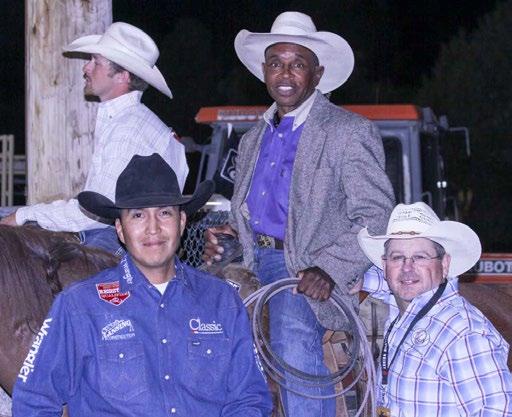
64


NEW LIMITED EDITION BLEND Get 2X rewards on every can, plus 100 bonus points when you collect all four symbols* online at LonghornSnuff.com/Americana See LonghornSnuff.com/Rewards for terms and conditions. 21+. Min. purchase of 18 participating products required to claim reward. Limit of 60 codes per account per month. *Purchase 4 participating products of the Americana Limited Edition Blend to earn 100 bonus points (one time). Moist Snuff ©2023 Pinkerton Tobacco Co. LP THE TASTE OF FREEDOM.
This product
WARNING:
is not a safe alternative to cigarettes.
8.36” Overall Length
3.35” Blade Length M390 Blade Steel ALU 6061-T6 Handle Material
3.5 Ounces Drop Point Blade in Satin Finish
The Microtech Ultratech S/E knife sets the standard in craftsmanship and quality. It’s a dual action out-the-front automatic with a thumb slide open and lock.Built with a premium blade and handle materials.
The handles are anodized 6061-T6 aircraftgrade aluminum with an ambidextrous stainless steel pocket clip, a glass breaker, and a lanyard hole.

For more information about the Microtech Ultratech S/E or other Microtech Knives see microtechknives.com
Microtech® Ultratech S/E®
