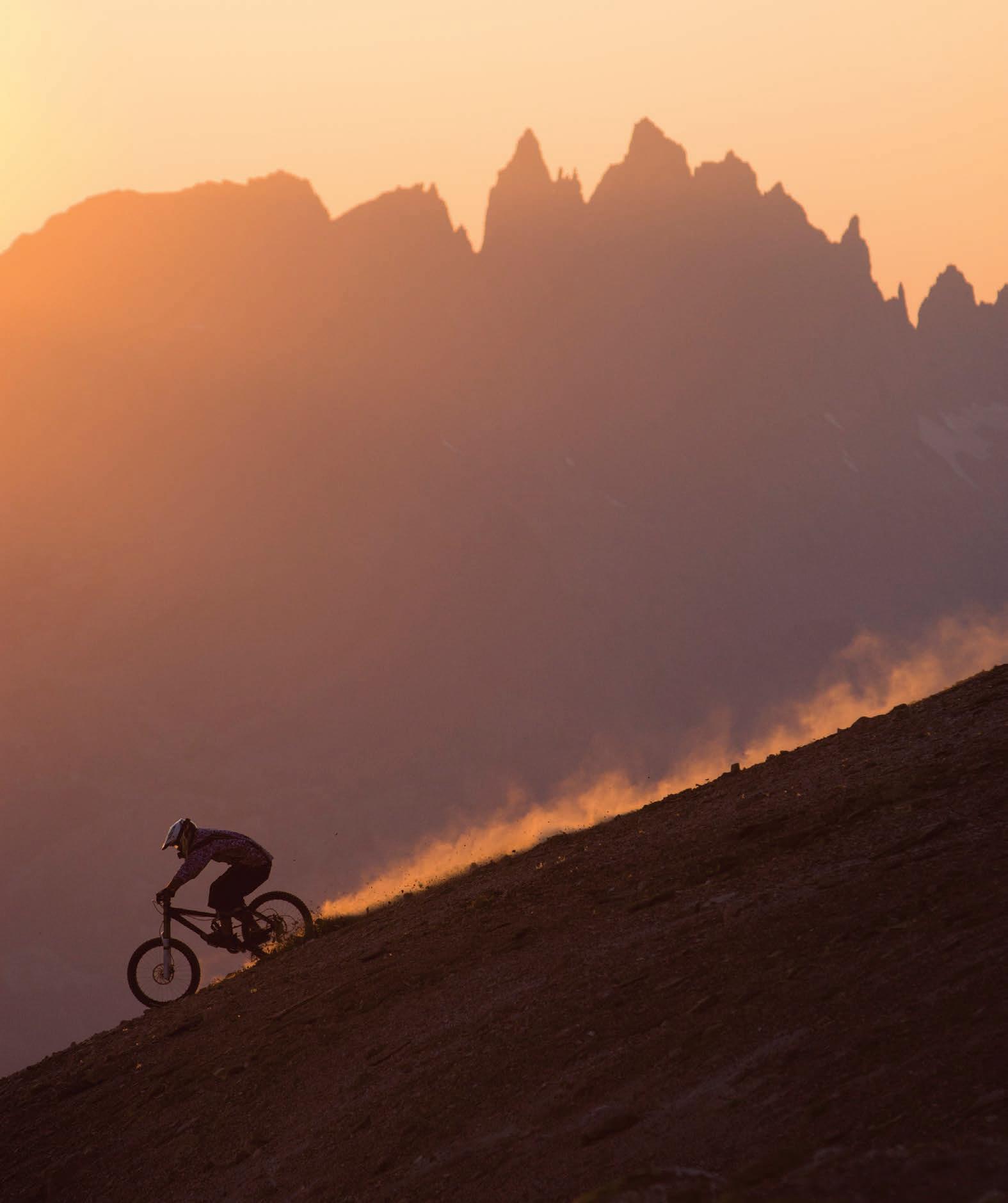
LAUNCH YOUR SEASON AT MAMMOTH

Athlete Tucker Keating Photographer Cody Mathison
LAUNCH YOUR SEASON AT MAMMOTH






PUBLISHING + EDITORIAL
PUBLISHER
Cathy Claesson cathy@adventuresportsjournal.com
EDITOR-IN-CHIEF
Matt Niswonger matt@adventuresportsjournal.com
COPY EDITORS
Michele Lamelin & Jennifer Stein
CONTRIBUTING PHOTOGRAPHERS
Anthony Cupaiuolo / First Tracks Productions, Matt Johanson, Gear Hut, Andrew Burr / Patagonia, Dodge Ridge Mountain Resort, Central California Adaptive Sports Center, Alpenglow Expeditions, Ryland West / Diamond Peak, Roy Dunn / humanstohummingbirds.com, Katey Hamil / Tahoe Donner XC, Anthea Raymond, James Murren
COVER DESIGN
Lauren Worth
INDUSTRY NEWS & SOCIAL MEDIA
Ella Suring news@adventuresportsjournal.com
EVENTS MARKETING & DISTRIBUTION
Krista Houghton & Lee Houghton events@adventuresportsjournal.com
ACCOUNT EXECUTIVE
Cathy Claesson I 831.234.0351 cathy@adventuresportsjournal.com
DESTINATION MARKETING MANAGER
Pamela Coffey I 619.887.9937 pamela@adventuresportsjournal.com
LAND ACKNOWLEDGEMENT
Our office resides in Aulinta (‘place of the Red Abalone’) in the larger region called Popeloutchom (‘paradise’) by the Amah Mutsun Tribe.
How do you keep your spirits up as daylight wanes?
This winter I’m running away to Bhutan and Thailand to hike, SUP and teach yoga. But when I get back playing capoeira will keep me happy and positive — it’s musical, physical and joyful in a welcoming community.
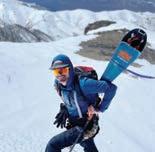
Wake up and get the day started an hour earlier. This time of year is about quality, not quantity, of time spent outside.
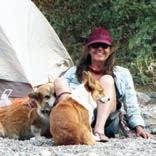
I go outside, sometimes on the water but also every day with my dogs. I also think drumming helps!
When days are shorter, I adjust my schedule to make sure I still exercise. That means running right after work instead of later in the day.
I enjoy the waning daylight with a pile of books. Also, desert nights with the starry sky keep the spirits up.
ADVENTURE SPORTS JOURNAL PO BOX 35, Santa Cruz, CA 95063 staff@adventuresportsjournal.com
Opinions expressed are those of the authors and not necessarily those of Adventure Sports Journal or our advertisers. We usually agree with our articles, but sometimes we don’t. We welcome all contributions.
All content © Adventure Sports Journal 2024 - 2025. No part of this publication may be reproduced without permission of the editors.


I rise early so I turn to things that don’t need sunlight, writing, prepping skis, or practicing skills in the garage. There’s always things needing attention because they don’t get done, when we can play outdoors.
I try to get outside early with my dogs and make plans in the evening with friends at least a couple of nights a week. Prioritizing connection fills my cup!
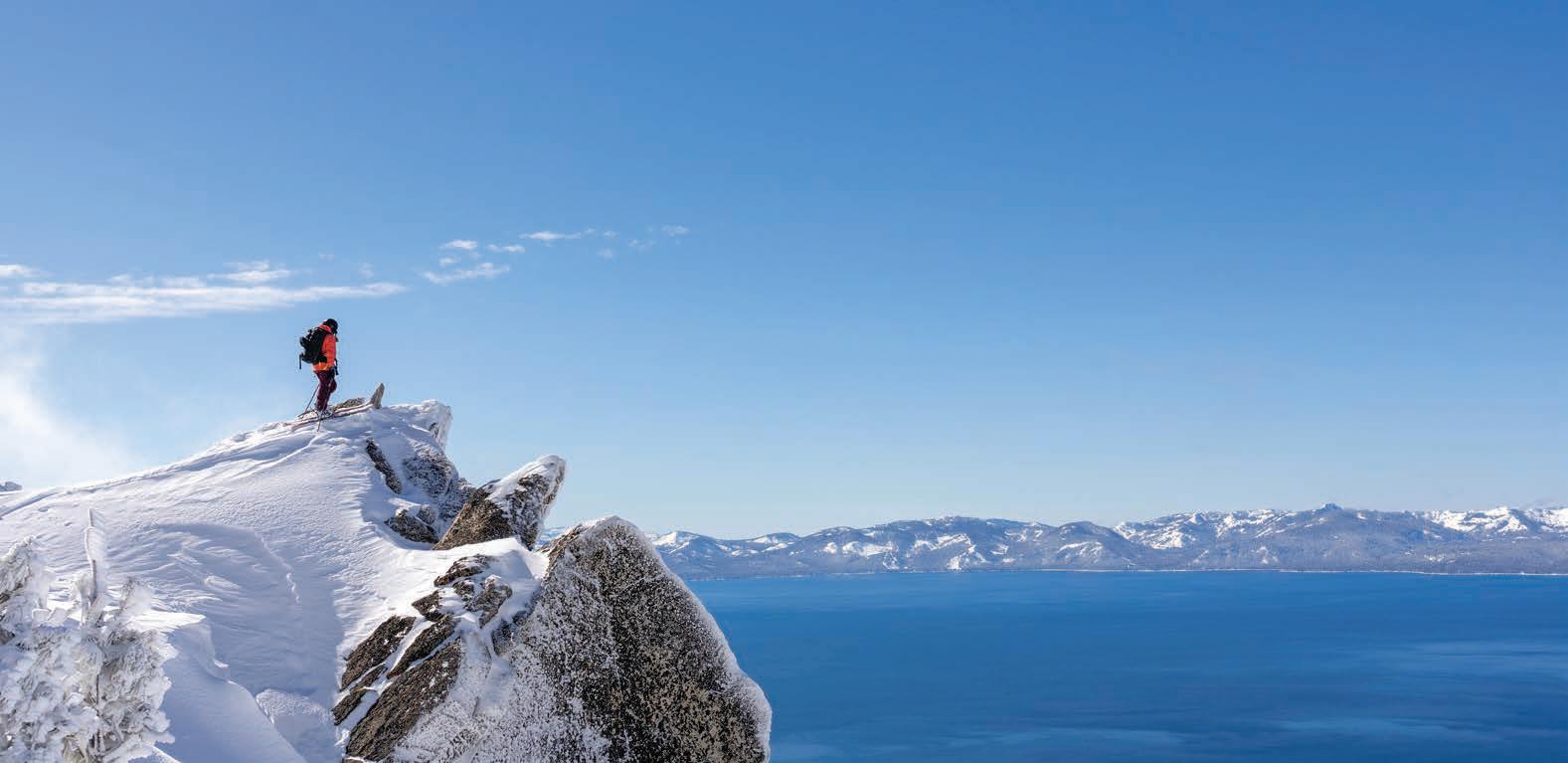




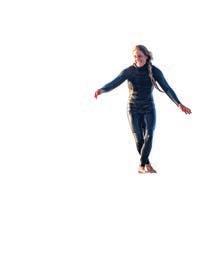

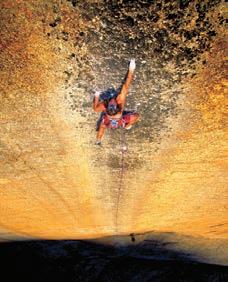
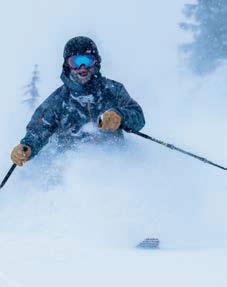
Claire HewittDemeyer topping out on dalá?ak, aka Mt. Tallac — whose name means “big mountain” in Washo, and is the most iconic peak in the Tahoe region.
by Anthony Cupaiuolo / First Tracks Productions









California’s winter landscapes hold a quiet power. Whether draped in fresh snow or kissed by salt spray from the Pacific, they beckon us with their stark beauty and promise of solitude. In these colder months, as the mountains, coasts, and valleys settle into their seasonal rhythms, there’s an invitation for all of us to step into the stillness they offer and find something deeper—something beyond the endless noise of modern life.
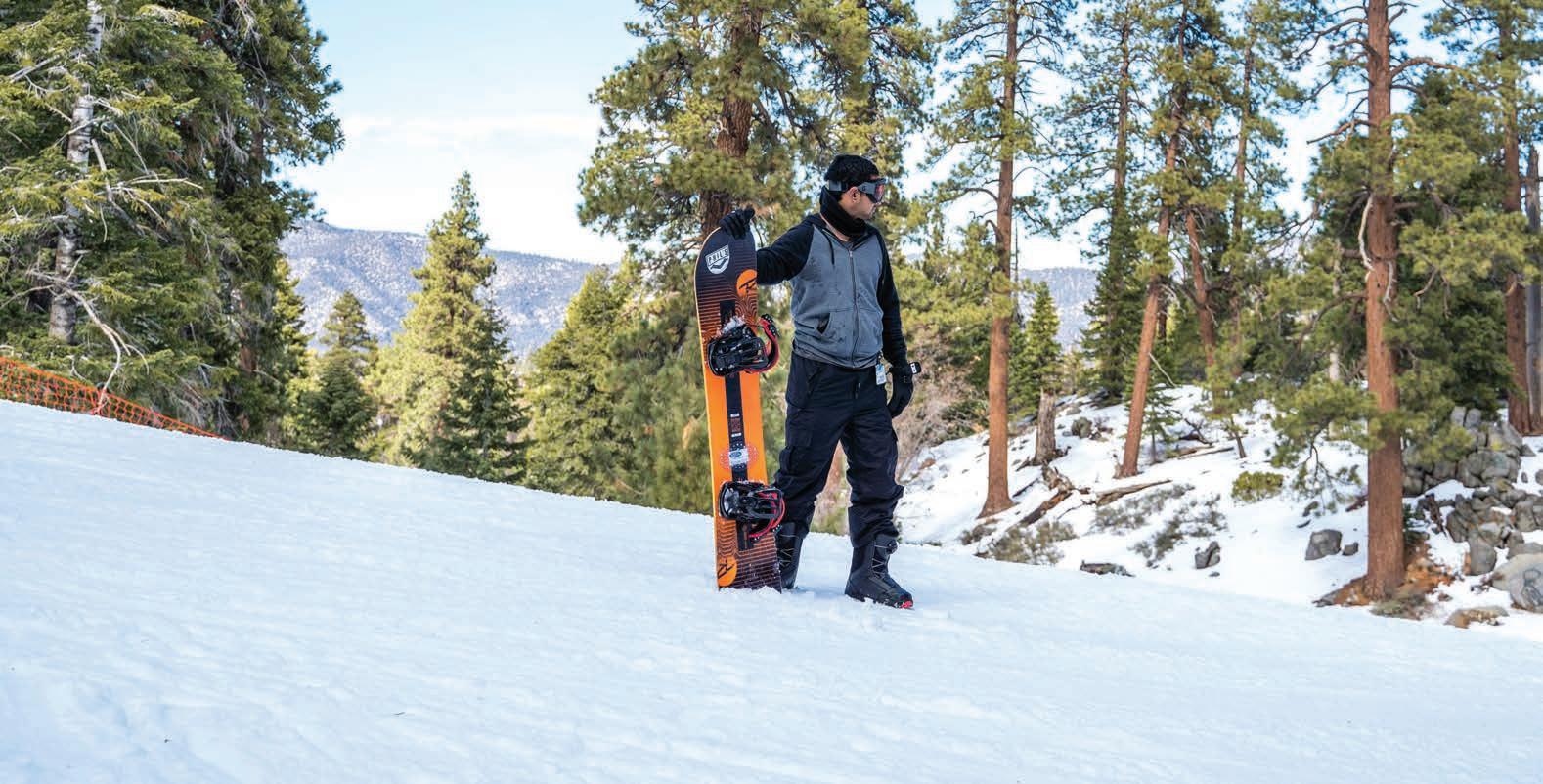
It doesn’t matter how you move through these spaces. Maybe you carve the powder on skis or a snowboard, slicing clean lines into snowfields that seem to stretch into eternity. Perhaps you strap on snowshoes or boots, trekking into high alpine forests where the only sound is the crunch of your footsteps. You might find yourself chasing winter swells, paddling out into icy surf under the pale light of a winter sun. Or maybe your solace lies in pedaling empty trails, feeling the bite of cold air on your cheeks and the pulse of your heartbeat in your chest. Whatever your mode of adventure, what we truly seek is the same: the silence waiting beyond our cluttered minds.
It’s not just a break from noise; it’s something more profound. Call it outdoor satori, or a natural metanoia—a shift in perspective that renews not just the body, but the spirit. In the chill of winter, amidst its quiet majesty, we are stripped of our illusions. The illusion of control. The illusion of separateness. The illusion of a self apart from the world around us. Out there, in the heart of California’s winter wilderness, we are reminded of a simple truth: we are part of something infinite.
This kind of nothingness isn’t empty. It’s the most nourishing thing you’ll find. The silence heals. It clears away the clutter, the digital distractions, the
to-do lists, and the endless striving. It connects us to the essence of life itself. We push into the silence of winter not to escape the world, but to meet it fully, with all its beauty and mystery. We come back not just refreshed, but transformed.
Here at Adventure Sports Journal, we exist to celebrate this kind of connection. We are not here to tell you what gear to buy or to count your Instagram likes. We are not cool. We are not cutting-edge. And, truthfully, we don’t care to be. What we do care about is this: creating a space for stories and ideas that open the door—however narrow—to the quiet spaces within and without. Think of us
as a humble guide, a simple signpost pointing toward infinite space, infinite freedom, and infinite connection.
Whether you are an athlete, an adventurer, or simply someone who finds joy in moving through the outdoors, we are grateful you’ve chosen to read Adventure Sports Journal. It’s a privilege to be part of your journey, however small a role we may play. You, our readers, are the reason we exist.
This winter, may you find the time to seek out the silence. Whether you’re gliding over frozen lakes, ascending snow-covered peaks, or simply standing on a windswept beach staring out at the horizon, let the quiet surround you. Let it seep into your bones and remind you of who you are beneath all the noise. Here’s to finding satori in the season’s stillness. Here’s to nourishing the soul in nature’s infinite embrace. Thank you for trusting us to walk this path with you. May your adventures this winter lead you somewhere vast, quiet, and true. Thanks and be safe.We hope you enjoy this issue and embrace the outdoors!
MattNiswonger
matt@adventuresportsjournal.com
Adventure Sports Journal is one of the last independent outdoor magazines in the country. We are in direct competition with corporate media and online platforms. We depend on the support of our advertisers and people like you.
We think ASJ is an important voice for the outdoor community in California. If you agree then please consider helping us continue our work by becoming a member today.









DON’T MISS AN ISSUE! Have ASJ delivered to your home. Memberships as low as $5 per month and includes a subscription. adventuresportsjournal.com/membership
The Yosemite Climbing Association (YCA) launches its latest membership drive, dedicated to preserving Yosemite’s rich climbing legacy. “Without new members, we cannot fully realize our mission to catalog and preserve Yosemite’s climbing history,” said YCA director Ken Yager. The YCA’s archives house climbing gear from the late 1800s to the present, all requiring historical assessment for the Yosemite Climbing Museum. Yager’s team also needs to video document each item — a meticulous process reliant on member and sponsor support. Board member and longtime climber Jim Thomsen highlighted the urgency: “As the generation of climbers from the 1960s to 1980s ages, we risk losing vital stories that connect us to this history.” Your support as a YCA member can help preserve Yosemite’s climbing heritage for future generations. yosemiteclimbing.org
The much-loved Wildflower Triathlon returns to Lake San Antonio on May 2-4. Known as the “Woodstock of Triathlons,” this legendary event features long course, Olympic, sprint, and gravel sprint triathlons, alongside trail runs, fun runs, and open-water swims. The event also offers family-friendly activities, live music, and camping under the stars. With a legacy dating back to 1983, Wildflower continues to blend endurance sports, community, and nature in a unique festival atmosphere. Led by race director Colleen Bousman, daughter of founder Terry Davis, the event carries forward a tradition of excellence and community spirit. wildflowerexperience.com
This November, the League to Save Lake Tahoe has achieved a significant milestone in its efforts to protect the lake’s environment with the completion of the removal of lead-sheathed telecommunication cables from Lake Tahoe’s waters. This multi-year project, conducted in partnership with AT&T and other collaborators, involved stringent environmental safeguards to ensure the lake’s water quality, aquatic life, and natural beauty were preserved. The cables were carefully extracted and sent for recycling, honoring Lake Tahoe’s status as an Outstanding National Resource Water. The League continues its mission to Keep Tahoe Blue for future generations. keeptahoeblue.org
Homewood Mountain Resort, a beloved ski destination on the west shore of Lake Tahoe, has announced it will not operate for the 2024-2025 ski season. The decision follows years of controversy that began in 2022 when the idea of privatizing the resort was floated, sparking significant public opposition. In response, the nonprofit Keep Homewood Public has stepped
In a historic environmental milestone, threatened coho salmon have returned to the Upper Klamath River Basin for the first time in over 60 years. This resurgence follows the removal of the Iron Gate Dam in October 2024, which had obstructed salmon migration since its construction in the early 1960s. On November 13, seven coho salmon were observed at California Department of Fish and Wildlife’s (CDFW) new Fall Creek Fish Hatchery in Siskiyou County, marking a significant step in restoring the species to its historic habitat. The hatchery aims to raise 75,000 coho salmon annually to bolster populations in the Upper Klamath River Basin postdam removal. This development is a promising indicator of ecological restoration and the effectiveness of recent conservation efforts.



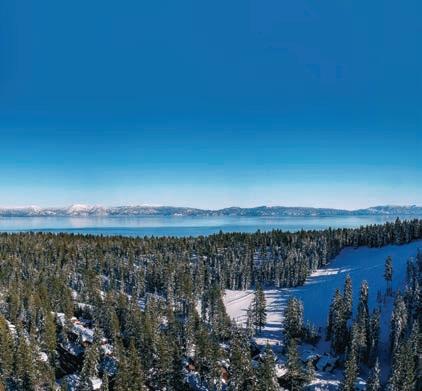
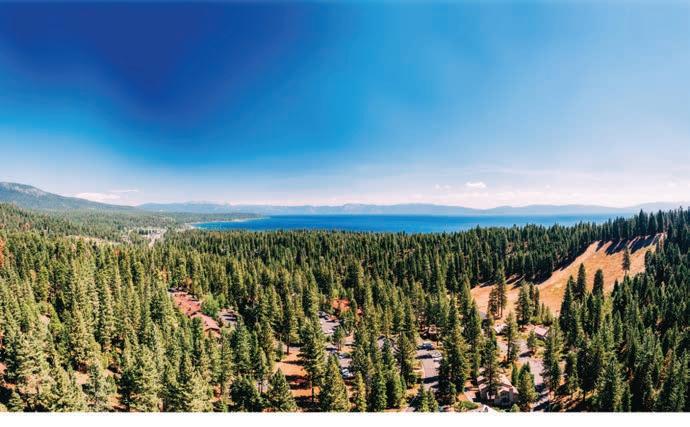
For nearly 100 years, outdoor enthusiasts from around the world have visited the mountain retreat that is Granlibakken Tahoe.
For nearly 100 years, outdoor enthusiasts from around the world have visited the mountain retreat that is Granlibakken Tahoe.
From year-round activities and amenities to authentic alpine lodging options, experience one of the most historic resorts at North Lake Tahoe.
For lodging packages, upcoming events & more visit Granlibakken.com.
725 Granlibakken Road, Tahoe City, CA 96145 • 530-583-4242 For lodging, experience planning, events & more visit

outdoor athletes and five nonprofit beneficiaries. Since its inception, this free event has raised more than $1.7 million for Tahoe non-profits, with up to $75,000 generated per show. The 202425 lineup includes snowboarders Leanne Pelosi and Kimmy Fasani, skier Greg Hill, guide Angela Hawse, and mountaineer Dave Nettle. With a vibrant in-person atmosphere and a global livestream component, this free series is a winter highlight. alpenglowsports.com
The Great Ski Race returns to Tahoe City on March 2, featuring its traditional 26-kilometer loop around Mt. Watson. A new 10k course option follows the 26k course for the first 5k before branching off through the Tahoe XC trail system. Skiers will loop back to the finish line on immaculately groomed trails, passing through the spectacular Burton Creek Meadow. Skiers can expect a festive atmosphere with post-race celebrations and camaraderie. thegreatskirace.com
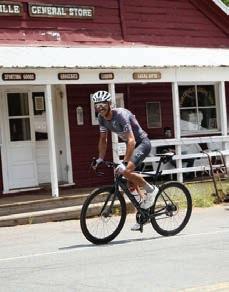
The Grasshopper Adventure Series, the world’s first and longest-running gravel and mixed-terrain series, returns January 26 to May 10, 2025. This iconic Northern California series features five events: Low Gap, Huffmaster Hopper, Lake Sonoma MTB, Ukiah-Mendo Gravel Epic, and the finale, King Ridge Hopper. Each course blends challenging terrain with breathtaking landscapes, offering a mix of pavement, dirt, and single-track trails. Known for its adventurous spirit and vibrant community, it’s a favorite for cyclists seeking camaraderie and a test of endurance. Registration is open for single events or a series pass. grasshopperadventureseries.com
The California Enduro Series (CES), presented by Specialized, is thrilled to announce its 2025 race schedule, featuring five exciting events across top venues. Kicking off May 17, riders will tackle diverse challenges, from technical singletrack to big mountain terrain, as they compete at iconic locations like China Peak, Dodge Ridge, Northstar, and the Ashland Mountain Challenge. Renowned for fostering a vibrant community and delivering world-class racing experiences, CES welcomes riders of all skill levels. californiaenduroseries.com
Mammoth Mountain saw a recordbreaking start to the winter season in November, with over 60 inches of snowfall — the highest total for the month since 2010. The early accumulation created excellent conditions for skiers and snowboarders, drawing visitors eager to enjoy the slopes. Tahoe also benefited from the storm system, with substantial snowfall boosting excitement for winter sports across the region. Although forecasters noted that early snowfall doesn’t always predict a full season’s outcome, Mammoth and Tahoe remain hopeful for a strong season ahead.
The Placer County Board of Supervisors has approved the Village at Palisades Tahoe Specific Plan, paving the way for a significant expansion of the resort’s base area. The plan includes up to 850 lodging units, 297,733 square feet of commercial space, and housing for 386 employees. Proponents argue that the development will enhance the resort’s offerings and boost the local economy. However, opponents, including environmental groups like Keep Tahoe Blue, express concerns about increased traffic, environmental degradation, and impacts on Lake Tahoe’s clarity. The approval marks a pivotal step in a project that has been under consideration for over a decade, with ongoing debates about its potential benefits and drawbacks.
The bipartisan ‘America the Beautiful Act’ was introduced in the US Senate on November 21, 2024. The proposed legislation seeks to reauthorize the National Parks and Public Land Legacy Restoration Fund and increase funding for public land management to address maintenance backlogs. Outdoor Industry Association President Kent Ebersole called it ‘an investment Americans have treasured for generations,’ emphasizing its importance for conservation and recreation. The bill is currently under consideration, and the public is encouraged to contact their senators to show support.
Scan the QR code and keep up with the latest news and information from our industry partners.

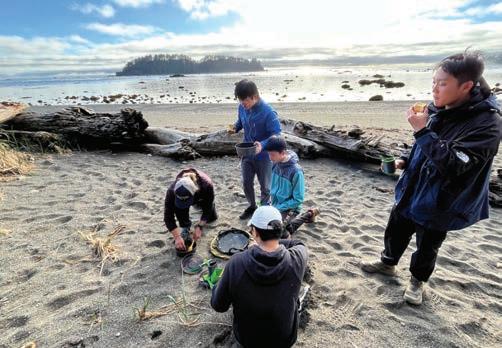
For many, the Pacific Northwest is synonymous with adventure. Its rugged coastlines, snow-capped peaks, and dense forests have long called to those with a spirit of exploration. For students at Annie Wright Schools in Tacoma, Washington, this landscape isn’t just a backdrop — it’s an essential part of their education. Through the Great Outdoor Adventure Team (GOAT) program, students in Grades 9-12 experience a unique blend of academic rigor and outdoor adventure.
At Annie Wright, students go beyond the classroom with the GOAT program, which combines the prestigious International Baccalaureate (IB) diploma with outdoor learning in the Pacific Northwest. From kayaking in Commencement Bay to exploring Mt. Baker’s glaciers, the program fosters resilience, leadership, and a passion for the outdoors.
Ninth graders begin with foundational skills like land navigation and environmental stewardship, while seniors learn backcountry travel and work together to summit a Cascade volcano. These experiences are key to Annie Wright’s holistic education, pushing students to expand their limits, gain new perspectives, and grow through adventure.
“What I love about the outdoors is that it often pushes people outside of their comfort zone,” says Betta Hanson, GOAT Co-Director and Residential Faculty at Annie Wright Schools. “And then — when students are ‘comfortably uncomfortable’ — that is when the learning happens. It’s about equipping students with life skills and confidence that will serve them well beyond their time here.”
The GOAT program’s focus on leadership, adaptability, and problem-solving aligns with the values of the IB curriculum, which emphasizes critical thinking and global citizenship. The result is students who are not only academically prepared, but also equipped to navigate the complexities of the world with confidence.
The community at Annie Wright is another cornerstone of the GOAT experience. As a boarding school, Annie Wright brings together students from around the world, creating a tight-knit environment where friendships are formed around campfires and on mountain trails. This sense of camaraderie extends beyond graduation, as GOAT alumni carry with them memories of shared adventures and the lessons learned along the way.
For those who see the world as their classroom and believe that true growth happens outside of comfort zones, Annie Wright Schools’ GOAT program offers a high school experience like no other. Here, adventure isn’t an extracurricular — it’s an integral part of a journey that prepares students for whatever challenges lie ahead.

To learn more about the GOAT program and how it shapes future leaders, visit aw.org/GOAT.











ideas to celebrate every moment, from the holidays to Valentine's Day
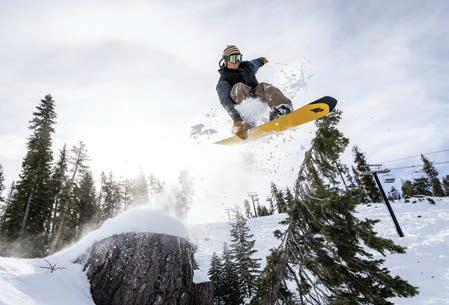
The Dodge Ridge 4 Day Pass allows your loved one to enjoy all 1,600 vertical feet of Dodge Ridge Mountain Resort at up to 25% off or more of the daily ticket price.
Good every day this winter season, including weekends and holidays, these adult and teen tickets can be used by one person only. It’s the perfect holiday gift!
DodgeRidge.com
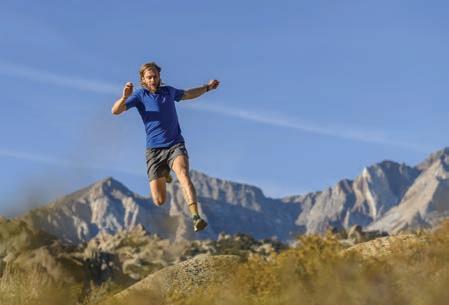
Did you hear? Fly direct into Bishop, California this winter from SFO or DEN.
If you've been dreaming of fishing, climbing, trail running or an epic ski trip to Bishop, call your buddies, now you’re closer than ever.
BishopVisitor.com
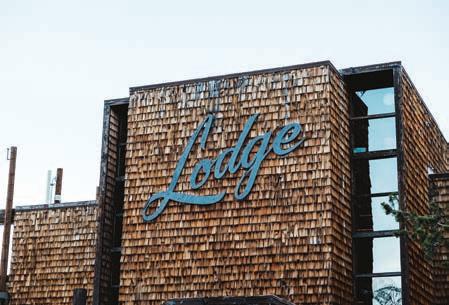
Stay at Bear Valley Lodge and save up to 25% with our Ski & Stay Package!
Packages include one night with two lift tickets or two nights with four lift tickets. Lift tickets are valid the day after check-in.
Plan your mountain escape at Bear Valley.
BearValley.com
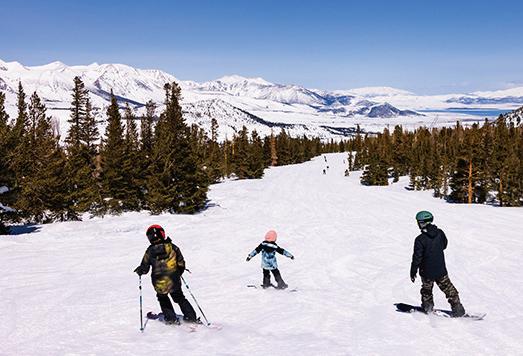
Embrace the adventure at June Mountain. With 1,500 acres of vast slopes and family-friendly beginner terrain, it’s your ideal Eastern Sierra ski day or holiday escape. Enjoy stunning vistas and gift a memorable experience – purchase a gift certificate online for your loved ones today.
JuneMountain.com


Give the gift of wildlife, salt water and magic this year. Surprise your loved one with a gift certificate good for rentals, tours, classes, and gear. With two waterfront locations to choose from — Santa Cruz Harbor and the Elkhorn Slough — Kayak Connection is the favorite gateway to explore the Monterey Bay Marine Sanctuary. Come paddle with us today!
KayakConnection.com


Celebrate every occasion with custom t-shirts from Midtown Print Works! Our DTG printer produces vibrant, full-color designs — from custom art and family photos to pet portraits. We specialize in small-batch and one-off prints. Perfect for gifts, gatherings, or festive celebrations. Contact us for your gift and print needs!
MidtownPrintWorks.com

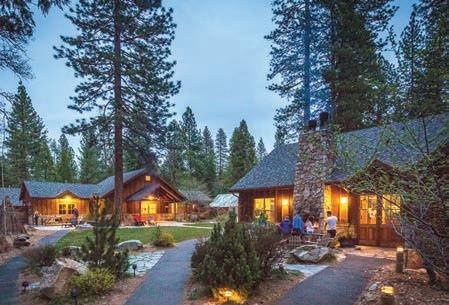
A Frommer’s Guide “Favorite” and “Highly Recommended” by Fodor’s, the Evergreen is an idyllic mountain resort with cozy cabins in the woods, indoor/outdoor dining, tavern, pool/hot tub, daily activities, guided recreation, massage and wellness programs. For best rates, book direct online and receive two complimentary welcome drinks upon check-in. (209) 379-2606
EvergreenLodge.com
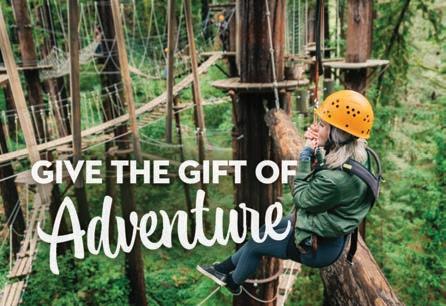
Join us for a 2-hour Zip Line Tour through the Santa Cruz Mountain Redwoods, or an unforgettable experience on our 40-element high-ropes course 80 feet above the forest floor. It ’s the perfect gift for your adventure lover! Gift certificates are available for both adventures. Use code ASJ15 for 15% off of your purchase.
MountHermonAdventures.com/Gifts

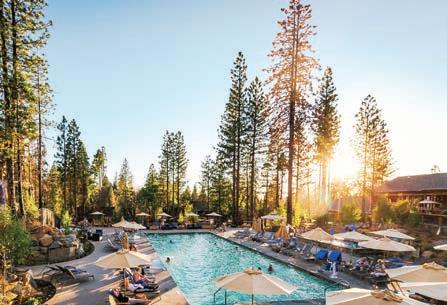
A relaxed, yet sophisticated experience at the Highway 120 West entrance to Yosemite National Park — featuring Lodge Rooms, Suites and Hillside Villas, restaurant, tavern, saltwater pool, hot tubs, recreation guide service, daily activities, and Yosemite-inspired spa. For best rates and service, book direct online and receive two complimentary welcome drinks upon check-in. (209) 379-2373
RushCreekLodge.com
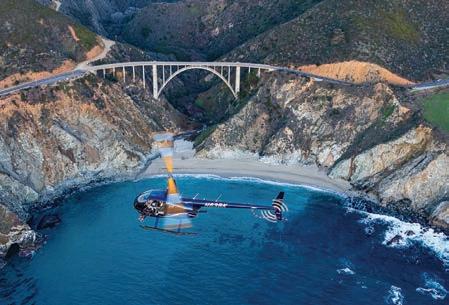
Take gift-giving to new heights with unforgettable aerial adventures. From scenic airplane and helicopter tours to hands-on flight lessons, this is the perfect way to thrill any aviation enthusiast. Explore the skies and create lasting memories with unique experiences designed for adventure lovers this holiday season. (831) 763-2244
SpecializedHeli.com

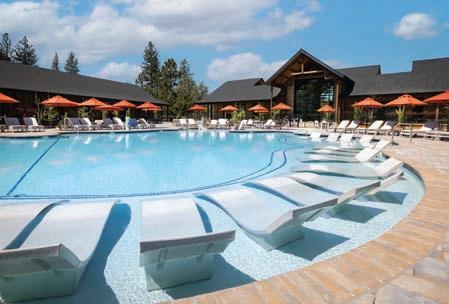
New to the Yosemite landscape in summer 2024, this luxurious 300-acre resort features striking design flourishes throughout its 55 cottages and villas, pool area, restaurant, tavern, wine room, and stunning event center. Enjoy daily activities with no hidden resort fees. For best rates and service, book direct online and receive two complimentary welcome drinks upon check-in. (209) 379-6820
FirefallRanch.com
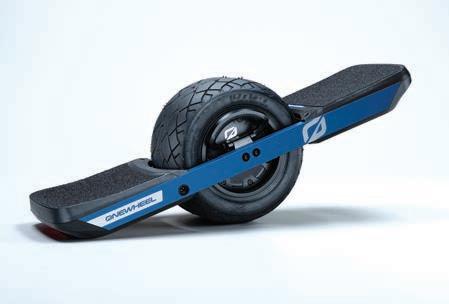
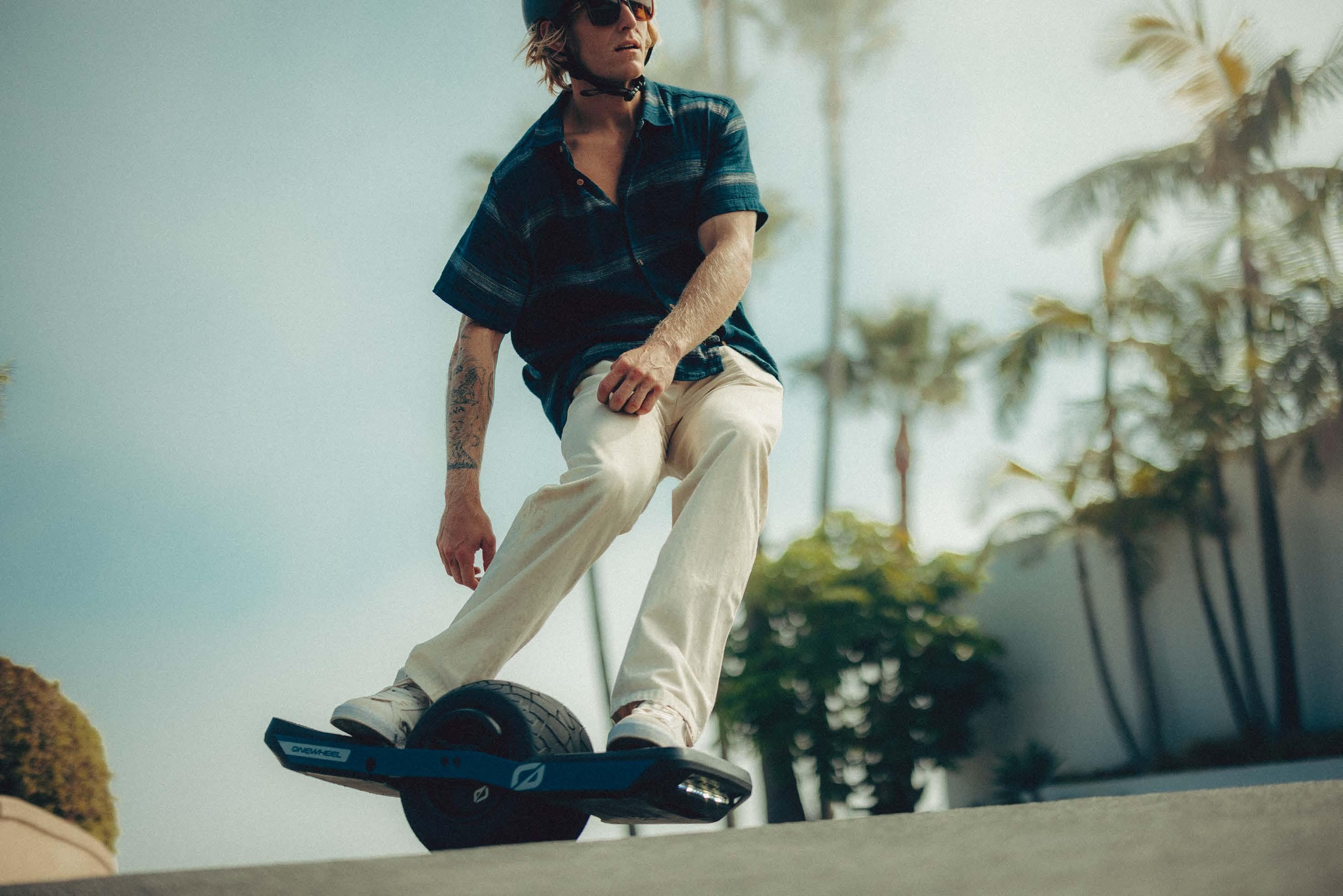
The new Onewheel XR Classic is the board you have been waiting for. Goldilocks proportions create a low, stable platform making it easy to ride without being bulky, while the state-ofthe-art performance will keep even the most advanced riders coming back for more. Made in California.
Onewheel.com
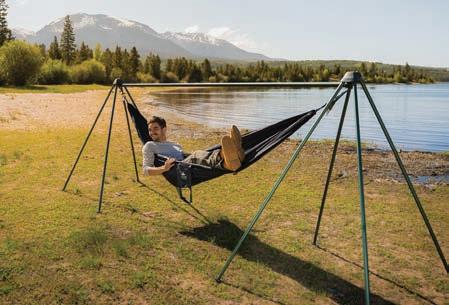
No trees? No Problem. Make hammock camping and adventure travel more comfortable and accessible with the New ENO Nomad Hammock Stand. Perfect for your backyard, the beach, or basecamp, this portable hammock stand lets you create your own hammock oasis, from mountains to sea and everywhere in between.
EnoNation.com

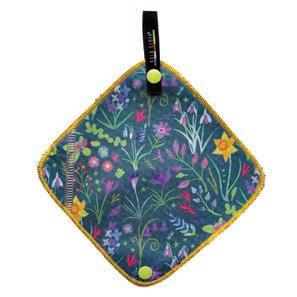
Kula Cloth® is the first of its kind — an antimicrobial pee cloth for all the places you “go.” No more drip drying or hauling in and out a ton of toilet paper on adventures. Kula makes the perfect gift for all of your adventurous friends. (And maybe even get one for yourself!)
KulaCloth.com

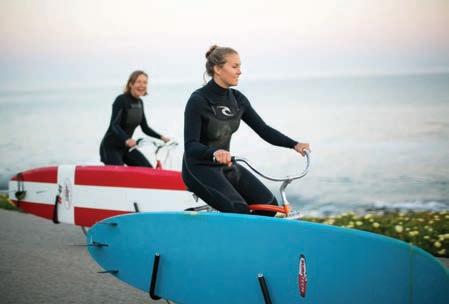
Help the surfer in your life cruise to the beach with Moved By Bikes’ innovative Surfboard Rack. These racks feature patented quick-release bars that securely mount to your bike or e-bike frame, accommodating longboards, shortboards, and even SUPs up to 25 lbs. Built from rust-resistant materials for coastal adventures. Custom options available.
MovedByBikes.com

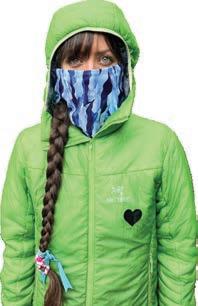
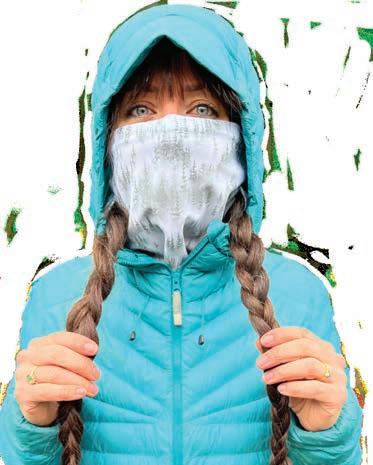
The FIRST gaiter designed for people with long hair! This patent-pending, double-layered, fleecelined neck gaiter is mindfully designed with three unique 'pigtail ports' to keep you warm and your skin covered while recreating in cool temperatures. Wear with a single side braid or ponytail, pigtails (or double ponytails), and a back braid (or ponytail). Free your braids forever and STAY WARM!
KulaCloth.com

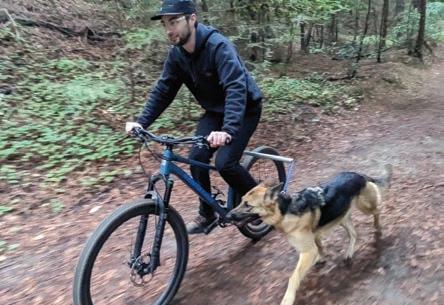
Looking for the perfect gift for the bike-and-dog lover in your life? The Dog Runner is a gamechanger! Its seat post-mounted bar and springloaded leash keep rides safe and fun. Plus, it’s compatible with surf rack mounts, making it a versatile must-have for active adventurers and their furry friends!
MovedByBikes.com
By Anthea Raymond
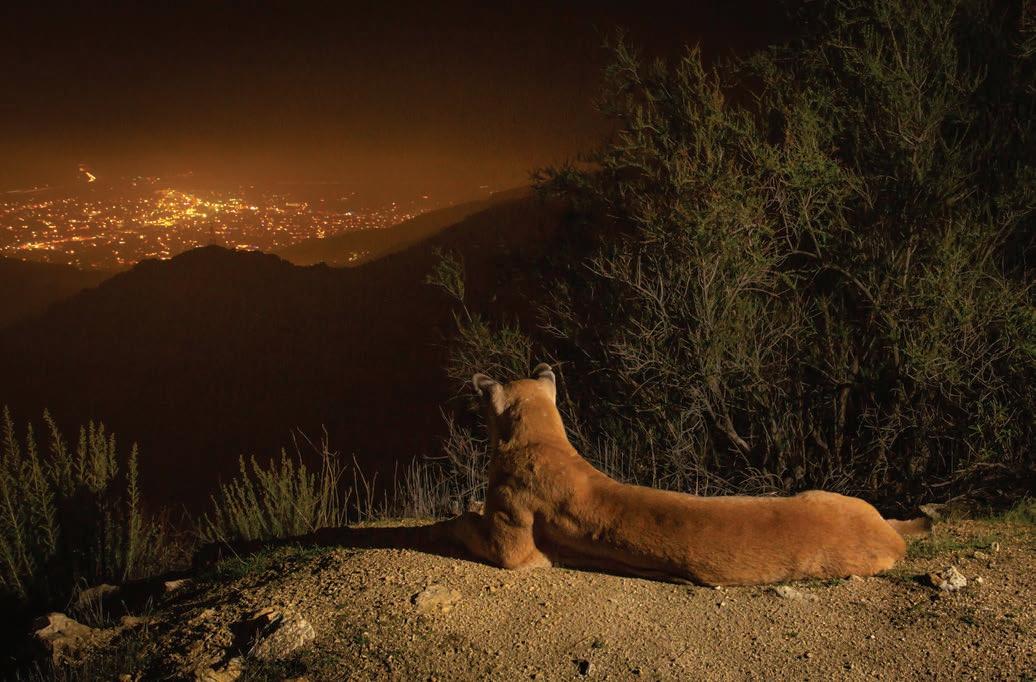
Wildlife is all around us, whether we spot them directly or find traces of their presence, like scat, remains, or tracks. These signs are especially evident in the backcountry and at the urban-wildland interface, where animals have to navigate both natural habitats and human developments.
0ne tool that has significantly enhanced our understanding of wildlife is the trail camera, also known as a camera trap. These devices are heat and motionactivated, often placed in remote locations, hidden from view, and designed to capture the movements of animals without disturbing them. From researchers to photographers, conservationists to hobbyists, camera traps are providing valuable insights into how animals, like the elusive mountain lion, use our landscapes.
In Southern California, a variety of projects are leveraging trail cameras to monitor wildlife, preserve land, and evaluate recovery from environmental disruptions. Through these efforts, we gain a closer look at how animals move through our world, offering vital data that supports conservation and land management strategies.
The Santa Monica Mountains Project: Tracking Recovery and Wildlife Movement
Trail cameras are being used in the Santa Monica Mountains National
Recreation Area (SMMNRA), where cameras are part of a long-term project to monitor wildlife recovery after the destructive Woolsey Fire in 2018. Since 2019, 60 cameras have rotated through over 180 locations within the park, many of them positioned in remote areas far from popular recreational zones. Managed by the National Park Service and partnered with various nonprofits and agencies, this project tracks the movement of animals like mountain lions, bobcats, and deer, while also assessing how new wildlife crossings, like the Wallis Annenberg Wildlife Crossing over the 101 Freeway, are impacting these populations.
“We’re getting a sneak peek at wildlife without worrying about disturbing them,” said Miroslava Munguia Ramos, the project lead, in an interview with the Malibu Times. The project’s findings not only contribute to wildlife recovery research but also support the ongoing study of how wildlife crossings influence animal behavior and population dynamics.
Beyond wildlife recovery, trail cameras play a pivotal role in land preservation efforts. Organizations like the Arroyos and Foothills Conservancy (AFC) use camera traps to monitor wildlife movement and determine which areas around Los Angeles are critical for preserving natural passageways for animals. Cameras are deployed on both preserved land and private property (with permission), helping AFC demonstrate to state agencies the importance of maintaining corridors for wildlife in increasingly urbanized regions.
Barbara Goto, AFC’s Director of Operations, noted, “When we approach the state for funding, we can show that the land could provide a wildlife passageway through urban areas.” These efforts not only support conservation but also help prevent unwanted development that would fragment these natural habitats.
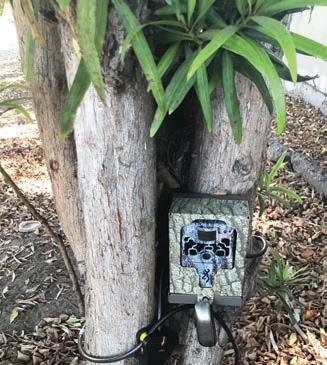
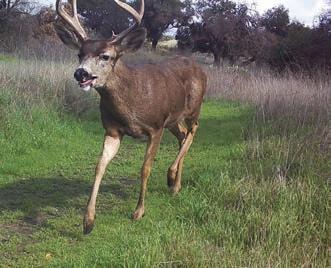
the Verdugo Hills on Christmas Eve 2018 (Roy Dunn / humanstohummingbirds.com); Browning trail camera locked in metal case for urban wildlife study near the Los Angeles River (Anthea Raymond). Opposite page, top to bottom: Short-eared owl drinks at a natural spring in the Antelope Valley, where desert springs are a magnet for wildlife and their photography (Roy Dunn / humanstohummingbirds.com); Rare daytime shot of coyote on Orange County trail (California State Long Beach Mammal Lab). Small images, left to right: Grey fox, one of a pair frequenting Westlake Village in 2019 (Roy Dunn / humanstohummingbirds.com); Mule deer captured by Bushnell Trophy Camera mid-day in winter (California State Long Beach Mammal Lab).
Trail camera images also serve as powerful tools for engaging the public and generating interest in
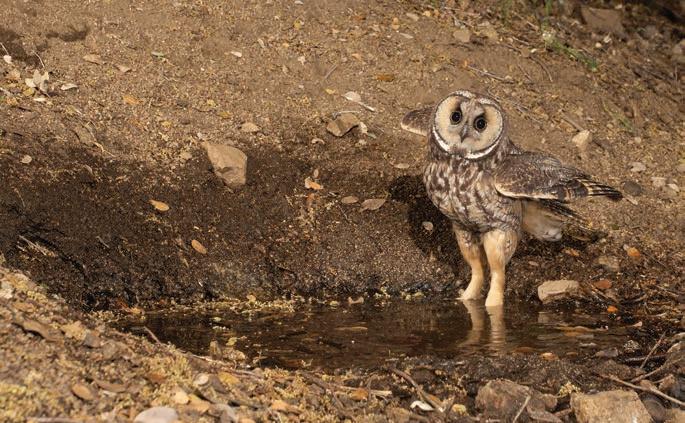
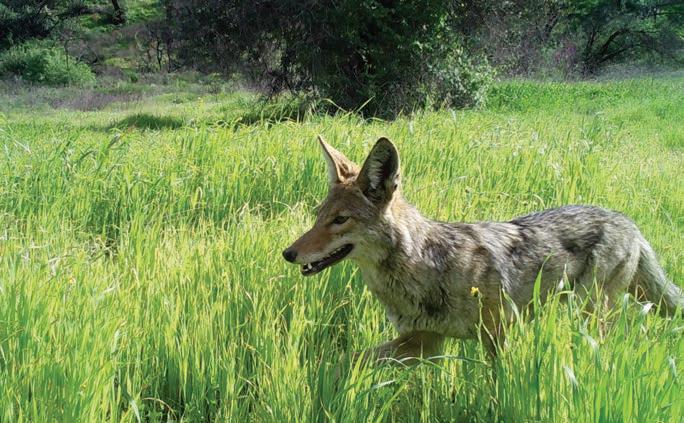
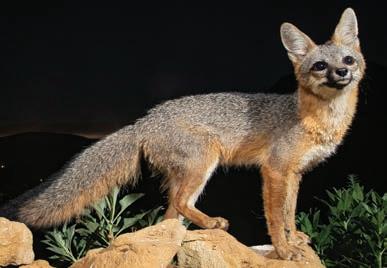
conservation. By sharing stunning photos of wildlife, organizations like the Watershed Conservation Authority can inspire a deeper connection to the local environment. “It’s a way to celebrate the local and the unique,” said Jane Tsong, from the authority, “and we want to get the public involved in our conservation efforts.”
Photographer Roy Dunn: Capturing the Hidden Lives of Mountain Lions
Alongside these scientific and conservation-focused projects, wildlife photographers like Roy Dunn are also using trail cameras to document animal behavior. Dunn, a former engineer, is known for his work with mountain lions, and he was among the first to capture video footage of P-22, the famed mountain
lion of Los Angeles. He now uses his custom-designed cameras to study mountain lions on the Central California coast, where he’s observed that these animals are more active during the day compared to those near heavily trafficked urban parks.
Though Dunn places high-end cameras in remote areas to protect his equipment, he also uses lowcost cameras to monitor for theft and vandalism. He’s learned firsthand how human interference, like theft and damage, can disrupt camera operations. His advice to adventure sports enthusiasts: “If you come across a camera, stay clear.” For those curious about wildlife photography, Dunn suggests starting small: “Spend $50 on a camera for your backyard. It’s a great way to get started.”



Serene beauty and solitude
beyond summer crowds
By Matt Johanson
Before Lassen Peak gave me a great day on my skis, it gave me a rude awakening in my sleeping bag. Heavy snow fell all night during my first winter outing to Lassen Volcanic National Park. Time after time, my buddy and I took turns braving the storm to unbury our tent. Unwisely, we both fell asleep. Then the weight of the falling snow snapped our tent’s main pole around 2am. A truckload of white fell on us, forcing us to unbury ourselves in the icy dark. After the night finally ended, our party labored to break three miles of trail back to our cars. Lassen’s summit would have to wait.
Americans flock by the millions to their national parks in summer, though these premier destinations see far less traffic in winter. Snow and cold aren’t for everyone, but they create adventure opportunities for those willing to tough out long nights and winter conditions. Consider these outings which national parks offer visitors during the winter season.
YOSEMITE NATIONAL PARK
Yosemite sports an abundance of snowy sojourns. Day outings include out-and-backs at Tuolumne and Mariposa giant sequoia groves. When snow falls deep enough, one can make a nice tour through Yosemite Valley on skis or snowshoes.
For a great day trip, trek seven miles from Badger Pass Ski Area to Dewey Point and back. A marked, well-traveled trail from Badger Pass leads to a spectacular vista and an especially good view of El Capitan. The rolling route meanders through a peaceful meadow
and forest before descending to the valley rim where visitors can see deep into the snow-capped backcountry.
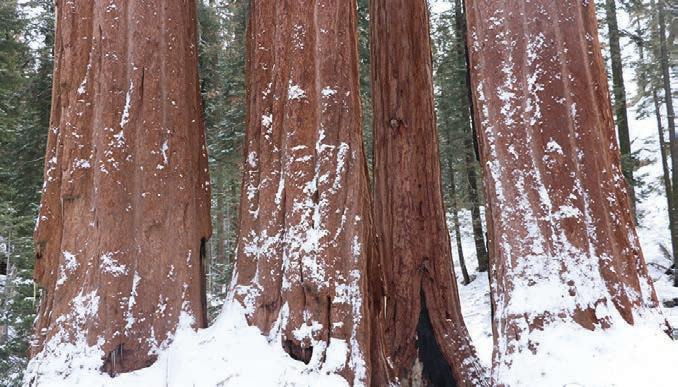
In Kings Canyon National Park, check out General Grant Loop Trail. This fourmile outing, which takes two to four hours, leads through a wondrous grove of ancient giant sequoias, including General Grant Tree, the largest in the park and second-largest in the world. Follow green trail markers north past the stables. After about a mile, the trail splits as the loop begins. Turn left for the shortest trip to General Grant Tree. From here, you can simply return the way you came, or continue the loop for the full experience.
Other worthy Kings Canyon outings include Panoramic Point, Buena Vista Peak and Big Baldy. All three are achievable on skis or snowshoes in half a day or less during good conditions.
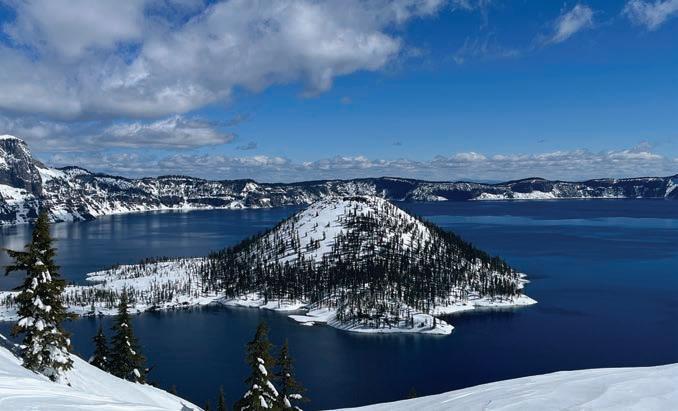
In Crater Lake National Park, the primary attraction is Crater Lake itself,
and earning a grand winter vista of the scenic gem is an attainable goal. Enter the park on Highway 62 and park at Steel Visitor Center. From here, one can take the rugged Raven Trail one mile to the lake rim near the lodge. Alternatively, follow the much easier Rim Drive for 2.5 miles. A breathtaking lake view rewards this effort and may inspire the ambitious to return for a 31-mile tour on roads surrounding the lake.
Now we shift our focus from mountains to desert, where summer temperatures make exertions dangerous but mild winter conditions create inviting opportunities.
In Death Valley National Park, snow falls on high peaks though visitors can enjoy exploring the lower regions comfortably in t-shirts.
Artists Drive provides a look at a marvelously colorful landscape on the western edge of the Black Mountains. A nine-mile drive takes visitors through an explosion of colors. There are multiple places to stop and admire the geology.
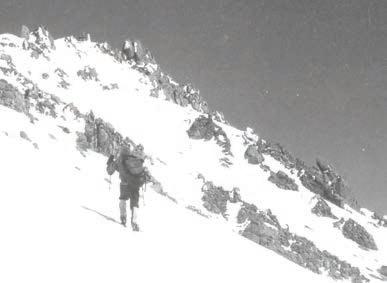
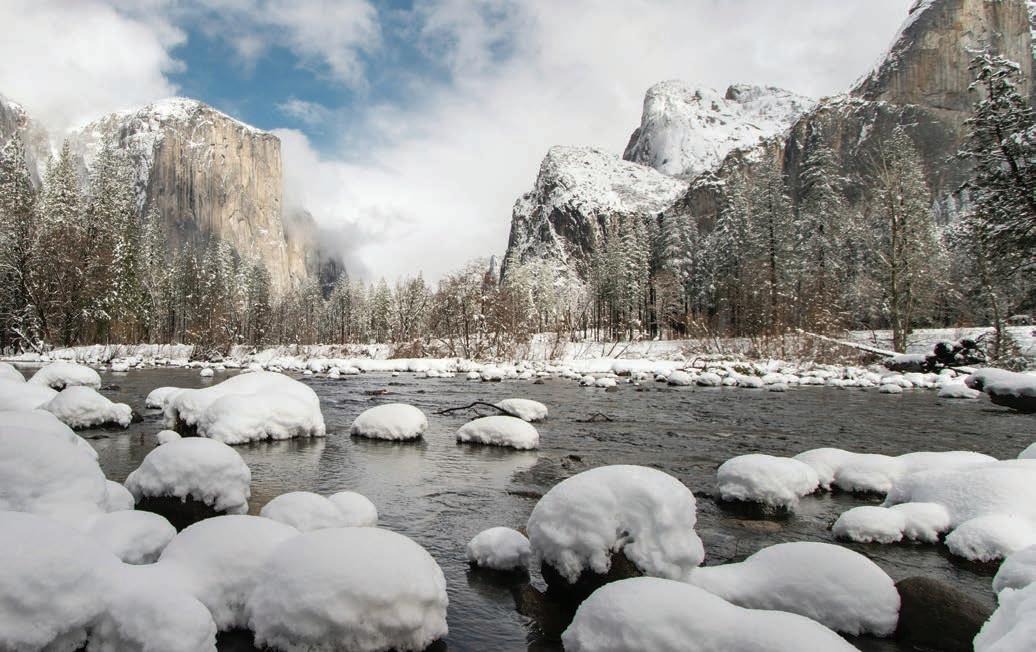
This page, from top to bottom: Winter’s beauty captured in Yosemite’s snowy embrace (Jeremy Bishop / Unsplash); A skier ascends a snowy Lassen Peak (Matt Johanson). Opposite page, clockwise from top left: General Grant Loop Trail leads through a picturesque giant sequoia grove (Matt Johanson); Yosemite sports snowy sojourns both short and long (Matt Johanson); Unlike summer tourists, winter visitors must earn this view of Crater Lake (Matt Johanson).
Badwater Basin, just south of Artists Drive, marks the lowest dry elevation in North America at 279 feet below sea level. Enjoy a short out-and-back walk on the large salt flat where a lake existed thousands of years ago.
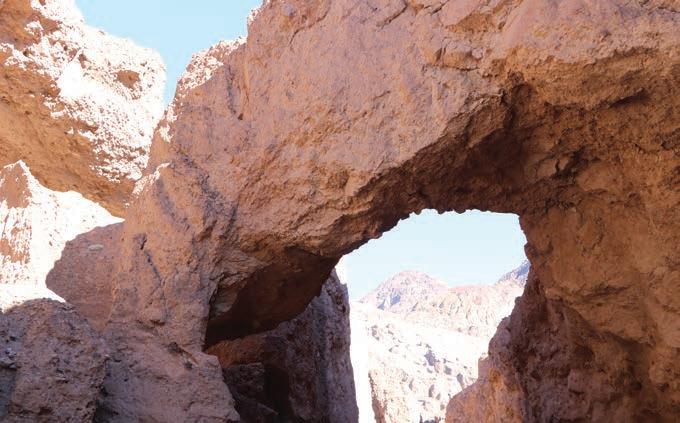
For a slightly longer trek, try Natural Bridge Canyon beside Badwater Road. A path leads up a narrow canyon with high walls, reaching a natural bridge in a half mile. Other interesting formations abound. Hikers can continue another half mile until the canyon ends with a wall of rock.
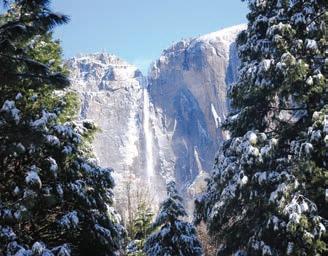
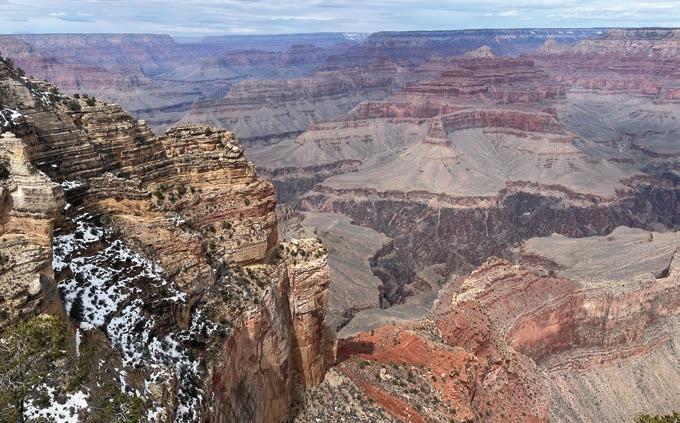
Backpacking in Grand Canyon National Park normally involves perilous heat and difficulty in obtaining permits. Winter visitors get relief on both fronts. When I arrived at the South Rim in March with no reservation, I was able to get a campsite and an overnight permit to hike through and camp within the canyon.
A companion and I descended from South Kaibab Trailhead, quickly passing through snow near the rim which at other times requires crampons or microspikes. The Colorado River roared as we crossed Black Suspension Bridge, a remarkable feat of 1920s engineering. We spent a night at Cottonwood Campground and another at Havasupai Gardens before finishing our 30-mile trek at Bright Angel Trailhead. Light rain which fell bothered us not at all. One couldn’t find a more rewarding three-day tour.
Americans flock by the millions to their national parks in summer, though these premier destinations see far less traffic in winter.
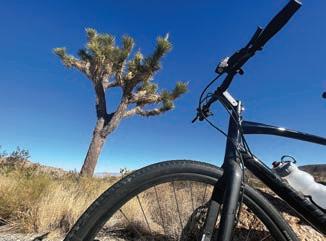
When passing through Joshua Tree National Park, I’ve often thought that this desert jewel would make a prime bike tour if not for heat and lack of water. A fellow cyclist and I finally proved this theory during a January visit.
One could make an easy out-and-back ride almost anywhere in the park. For a full-day loop ride of about 50 miles, start from the town of Joshua Tree, ride through the most scenic features on Park Boulevard, exit the park in Twentynine Palms, and return to your vehicle on Highway 62. My friend Bob and I took it a step further, starting and finishing in Palm Springs on a four-day, 175-mile loop which we greatly enjoyed.
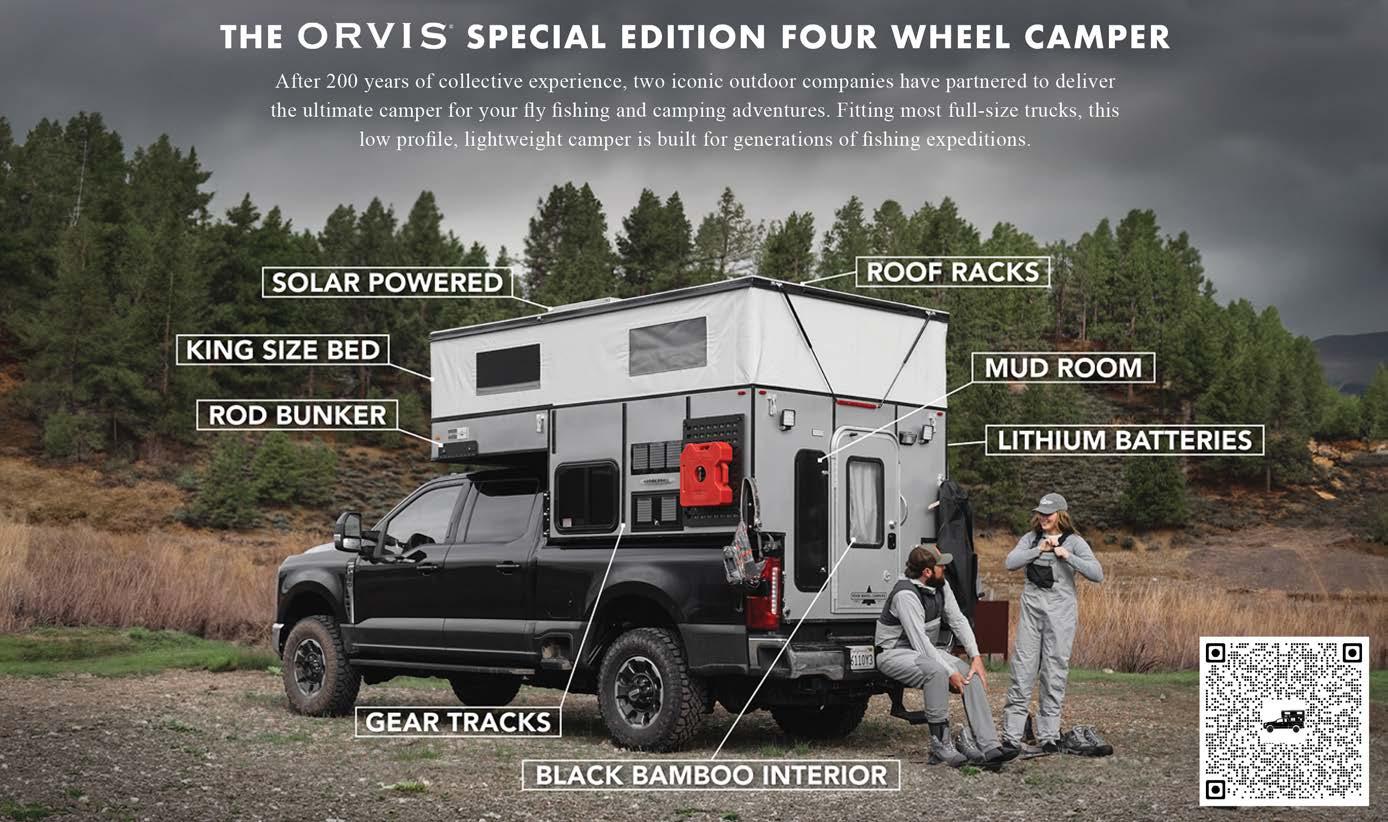
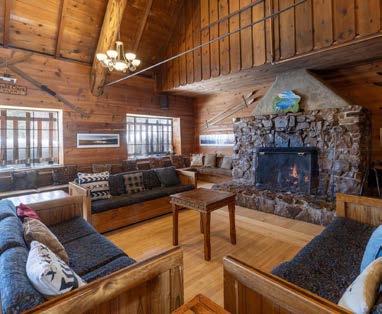
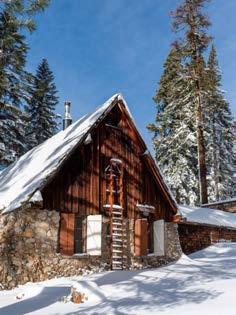
Venture out into nature and experience one of the most extraordinary stays in our mountain lodge.
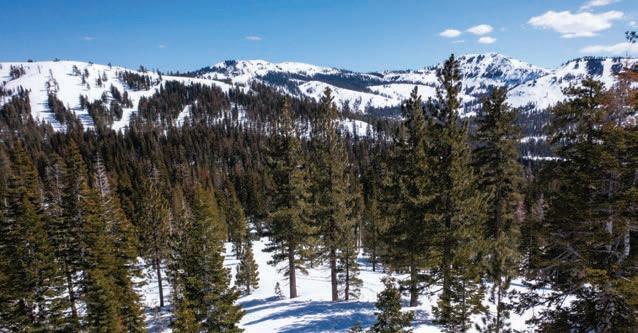
We’re nestled amongst the trees with Donner Pass as a stuning backdrop to our mountain lodge, the Hutchinson Lodge, or one of our back country huts. With rustic accommodations, Clair Tappaan is the perfect place to stay for any traveler who wants to be close to nature.
Ideal for groups or single travelers, we have unique event spaces, a convenient location to Lake Tahoe, and a commitment to sustainability where we uphold the integrity of the natural environment around us. 19940 Donner Pass Rd, Norden, CA 95724 (530) 426-3632 ClairTappaanLodge.com
Venture out into nature and experience one of the most extraordinary stays in our mountain lodge. We’re nestled amongst the trees where we have Donner Pass as a stunning backdrop in our mountain lodge, the Hutchinson Lodge or one of the back country huts. With rustic accommodations, Clair Tappaan is the perfect place to stay for any traveler who wants to be close to nature.
When I returned to Lassen Peak with my cousin Andy, we made a strategic improvement by arriving later in the season after Highway 89 had reopened. That allowed us to approach Lassen Peak from its base in half a day, instead of hauling camping gear on a multiday effort.
A skier’s dream greeted us. We enjoyed perfect weather, 2,000 vertical feet of virgin powder, and no one else on the mountain. Ascending the 10,457-foot volcano earned us a spectacular view of Mount Shasta and the snow-capped Sierra Nevada range. Next came the
long drop down the mountain’s steep southeast face.
Andy flew down the mountain, cutting tight telemark turns as he descended to the road in five minutes. I tried to follow, but a face full of snow rewarded me the first time I turned down the slope. That wasn’t my only fall, and soon I resorted to zig-zagging. Dividing the slope into about 20 switchbacks, I slowly but painlessly reached the road in half an hour.
I’ve still got lots to learn about skiing but I’m glad I’ve discovered that outdoor enthusiasts can do that and much more at national parks in winter.

By James Murren
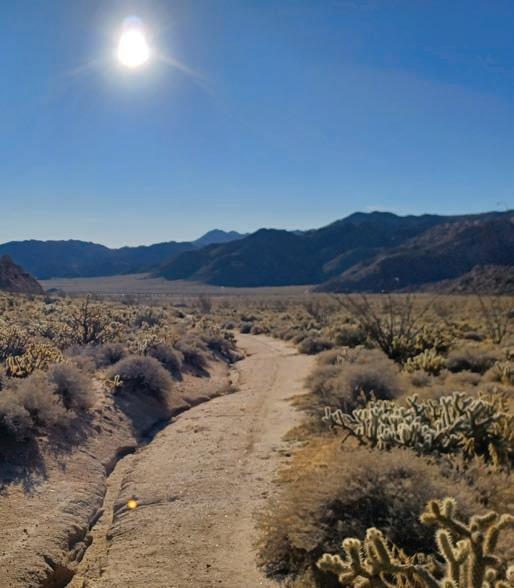
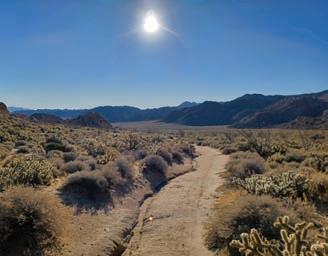
When the days grow shorter and a chill descends from Alaska, it signals desert season in Southern California. Many of us revel in this time of year. Stretching from the high Mojave east of the Sierra Nevada to the Colorado Desert near Mexico, this region invites exploration on foot or wheels. Camping under inky skies and twinkling stars makes for a perfect ending to a desert day, a coyote’s yip and the emergence of the Milky Way adding to the wonder. Many moons ago, I lived in Ridgecrest. While there, I got to know
the Trona Pinnacles. I’ve hiked, biked, and camped there, soaking in every moment, from sunrise to the dark winter nights, with views of snowcapped Telescope Peak in the distance. The terrain demands a slow, deliberate pace—perfect for savoring its beauty.
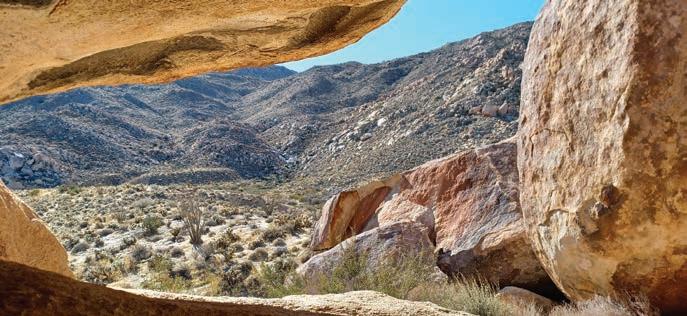
Now in San Diego, Anza-Borrego Desert State Park feels like a winter home to me. Its vast landscapes, from Fish Creek Wash to Pinyon Mountain, offer endless discoveries. If I could recommend one true adventure, it would be to seek out Blue Sun Cave.
After years of research and exploration, I found its entrance, marked by ancient Kumeyaay pictographs, including a stunning blue sun. These mystical symbols, no more than 500 years old, are of the La Rumorosa style. Some pictographs in the cave are of the San Luis Rey style. Exactly who painted them is unknown, but they are of the Kumeyaay people’s ancestral lineage. California’s deserts are places of wonder and magic. They are also spaces for people to get away … to go into the wide open … to slow down.
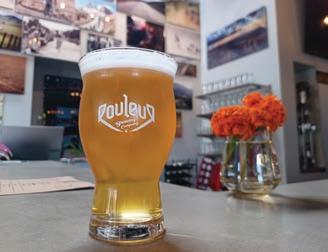
Rouleur Brewing is one of San Diego’s lesser-known success stories, I’d argue. Bikes and beer are their passion, and they support local cycling efforts across all disciplines—road, gravel, and dirt. Their “Beers Earned” program is a clever nod to the cycling community. Strava activities scroll across a screen at the brewery, showing how many beers participants earned for their rides. It’s a fun and fitting way to celebrate the connection between effort and reward.
Start with Domestique Blonde Ale, a multi-award-winning Belgian Blonde that’s perfect for a post-ride toast in the desert. Bonkeur Pale Ale, another multi-award winning standout, offers a light, citrusy refreshment that pairs beautifully with a day spent exploring under wide desert skies. Rouleur Brewing ships their creations nationwide. rouleurbrewing.com


Story by Leonie Sherman
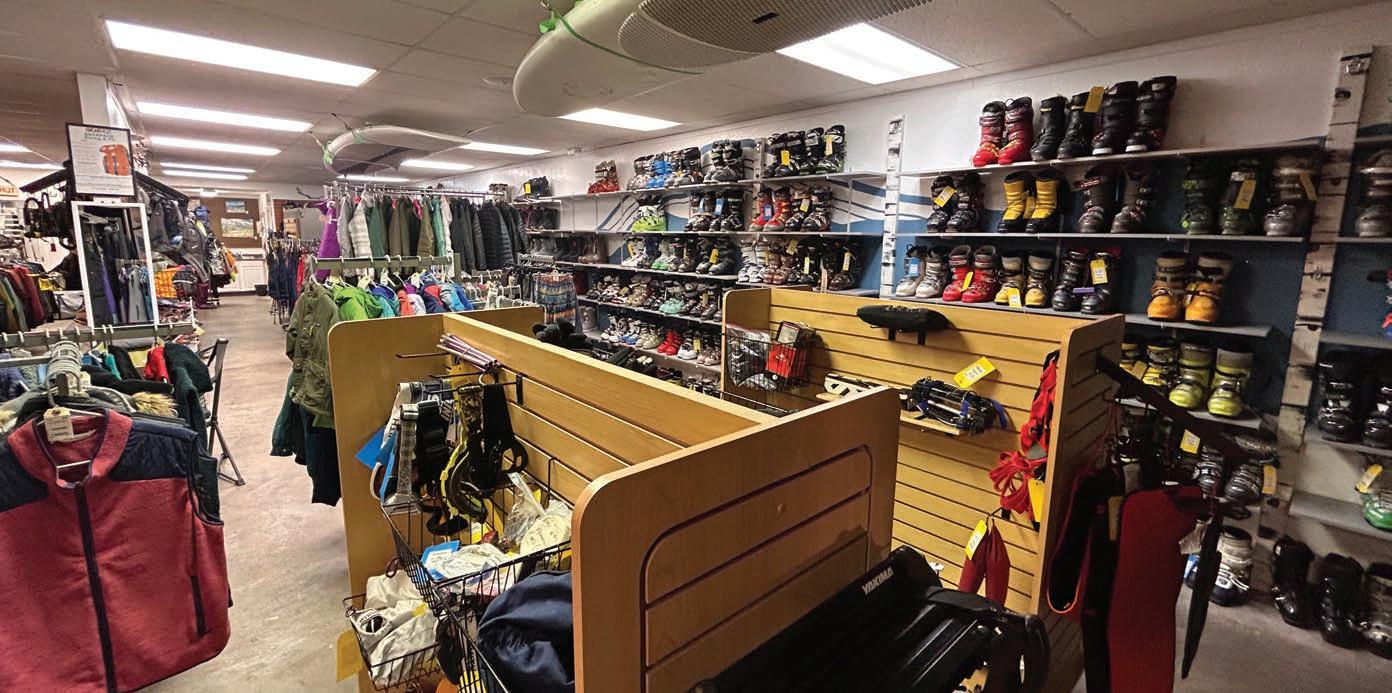
I don’t know how normal people socialize when they roll through a new town on a road trip. I suppose they hit up a brewery or a cafe. But I don’t drink coffee or alcohol, or enjoy sitting down inside. So whenever I find myself in an unfamiliar town, I search for a consignment gear store. For the price of a latte I can walk away with a cool trucker hat, some info about the local scene and maybe a new friend.
For the uninitiated, a consignment gear store is like if REI and a thrift store had a baby. Picture aisles of assorted used outdoor clothing, shoes, packs, sleeping bags and assorted swag. Folks come in and sell their old gear; sometimes the store sets the price, sometimes the seller does. When the gear sells, the seller can collect a percentage in cash, or a higher percentage in trade.
Because outdoor gear is designed to be durable, it can last long after the initial buyer has a use for it. Consignment gear shops keep it in circulation. They are a rapidly growing segment of the outdoor industry; building community and increasing accessibility. Here are five reasons to love consignment gear stores, and five consignment gear outlets to love.
Consignment gear stores employ the coolest folks
photographers and crusty outdoor loving dirtbags than behind the counter at a consignment gear store. Want some beta about the local crag, great hiking trails or a river adventure? Talk to the fine folks at the consignment stores instead of consulting your handheld anti-social screen. If you visit often enough and ask enough questions you might make a friend. I met two climbing partners at a consignment gear store.
2
Consignment gear stores make the outdoors more accessible
Sierra lust extended beyond backpacking season, I found skis, skins and poles for less than $200 at the sadly shuttered Marmot Mountain Works in Berkeley. I still have the skis and skins over a decade later, though a friend snapped one of the poles in half coming over Alpine Col.
3
Consignment gear stores are environmentally responsible A lot of us talk a mean game about saving the planet. But we still crave the latest shiny object. Used gear stores let you indulge your lust for outdoor gear without increasing your carbon footprint. When you bring your stuff to a consignment store, you’re reducing waste, keeping that stuff in circulation and out of the landfill. It’s like driving an electric car. And if you trade your stuff for credit and use that credit for new-toyou gear, it’s like riding a bike right out of the dumpster fire of late stage capitalism and into some circular gift economy outdoor gear utopia.
It’s not like shopping on Amazon; you can’t order by brand or model. It’s more like thrifting — you have to embrace the journey, instead of focus on the destination. You may strike out and not find anything you fancy. But you might strike gold and find a precious rare gem. I found a limited edition 6-ounce Camp climbing harness for $10 at Mammoth Mountaineering; they only made 600 of them.
5 1
Never will you find a finer collection of climbers, cyclists, aspiring
Outdoor gear is stupid expensive. The more specialized the activity the pricier the gear. And we all want the outdoors to be more accessible, right? Some of that happens on a personal level — bring new folks on your outdoor adventures, support adventures that focus on BIPOC, differently abled folks and women. But some of making the outdoors more accessible happens at a used gear store, where high quality gear becomes affordable. You can outfit a whole youth group or classroom for a fraction of what you’d pay for new gear. When my
Consignment gear stores have the coolest stuff
Consignment gear stores can outfit you with more than just gear
You can find souvenirs, gifts, work clothes and yoga apparel at used gear stores. They often carry maps, locally made climber salve, stickers and postcards from local artists. Go ahead, make your friend’s day by buying them a $5 windbreaker or a $10 backpack. The most comfortable pair of leggings I own came from a used gear store, and I found my go to sports bra for $15 at a consignment store. That maroon tank top with the ram skull print? $3 at a consignment store.
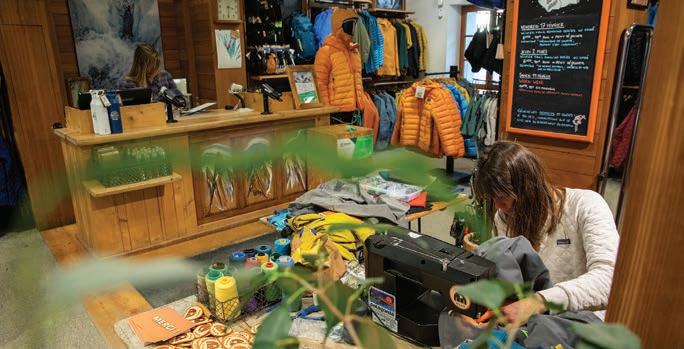
When the owner of Mammoth Mountaineering Supply realized folks down the valley were feeling left out, he opened the community-based Gear Exchange in Bishop. The OG of California consignment gear stores, it’s been going for over a decade. Folks drive many hours to sell their gear and pick up bargains from the overflowing racks. “I love interacting with folks and helping facilitate their adventures,” explains manager David Pearson. “We live in one of the most beautiful places to recreate, Bishop is ideal for skiing climbing, mountaineering. And the credit folks get from selling their gear can go towards new stuff at our Mammoth store, used stuff at our Bishop store, or cash in hand.”
Opened just a year and a half ago, the Tahoe Gear Exchange already has plans to double the size of their store to 3,000 square feet. Serving the greater Tahoe Basin, they are attracting sellers and buyers from as far away as Hawaii and Europe. “We started this more as a community resource. A lot of us had been driving our used gear to Bishop or Reno to sell!” explains founder Andrew Zaslove. “It’s so expensive to live here, but this store is one way we can give back to the community, get people some cash and checks for gear. That way they don’t have to work quite as much and they get to play a bit more.” With so many sponsored athletes, the Tahoe area is awash in high quality samples and gear that ends up in Zaslove’s store and could end up in your backpack.
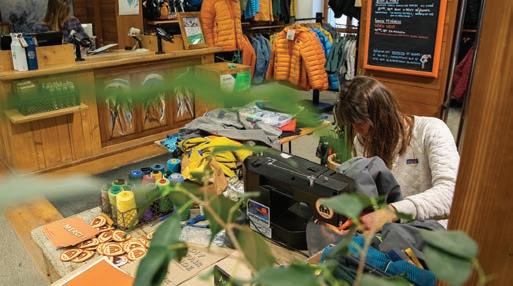
OK, it’s not a gear store, but Patagonia Worn Wear makes their exquisitely crafted outrageously expensive gear more accessible. Over a decade ago Patagonia began buying back carefully inspected used gear and offering it at serious discounts; like all Patagonia
products it comes with over the top customer service, an ironclad guarantee and is fully refundable. And in 2022 they decided to donate all profits not reinvested in the company to a trust dedicated to addressing the climate crisis. Sure, clicking through pages on a website is not as much fun as strolling the aisles, and the gear you’ll find there is not quite as cheap as most consignment stores, but if you want to support Patagonia’s climate-change fighting ethos without breaking the bank, Worn Wear can help.
REI used to hold annual garage sales, where they sold all the gear their members had returned. During COVID they introduced Re/Supply, selling gently used gear to coop members at a fraction of the manufacturers suggested retail price. Members can trade in gear up to six years old for an REI gift card. It’s like each REI store now has a small thrifting section as well, but only available to members. They’ve kept thousands of pounds of gear out of landfills and in circulation.
5
When the pandemic shut down global supply chains, the Gear Hut in Reno, Nevada became the best stocked gear shop in town. “Because our supply chain is 100% community based, the pandemic actually increased our business,” explains co-founder Leah Wzientek. “REI was sending people to us!” She loves knowing where an item has been and imagining where it will go with its new owner. “All consignment stores are special, because removing any barriers to getting outside is amazing,” she says. “Getting more people outside means more people will care and more people will work to protect these places we love and play. All consignment gear stores are working together to make getting outdoors more accessible.”


A roundup of updates for regional ski resorts
By Jess Weaver
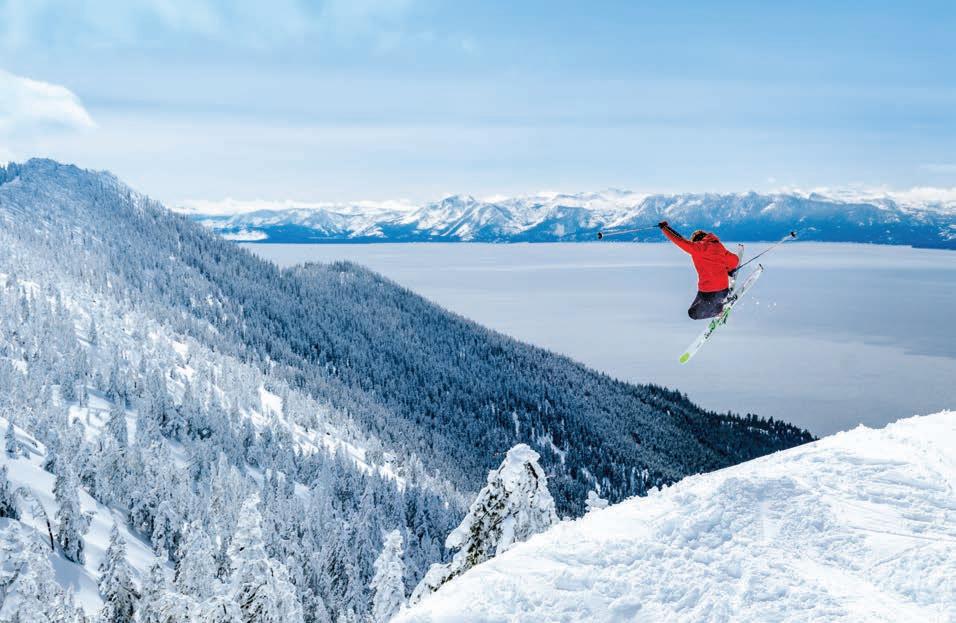
Last winter brought record-breaking snowfall to resorts across California and Nevada, with 20 feet of snow falling in February and March alone. It was one of the best seasons on record, drawing millions of visitors and reinforcing the region’s reputation as a premier destination for winter sports.
Building on that momentum, resorts are making major investments to enhance the guest experience. From cutting-edge lifts and expanded terrain to reimagined dining options and innovative programs, there’s something new for everyone. And it’s not just about fun—resorts are also ramping up safety initiatives and sustainability efforts to ensure a safe and eco-friendly season. Here’s a look at what’s new for the 2024-25 season:
BEAR VALLEY
Guests will find a new triple chair for beginners and a quad chair for intermediate and advanced terrain. Food service has been revamped, including a pizza bar in the day lodge. Extensive trail clearing and exciting events will keep the slopes lively this season. bearvalley.com
BIG BEAR MOUNTAIN RESORT
This season includes the introduction of the new Midway highspeed 6-passenger lift at Bear Mountain, and the season-long celebration of Snow Valley’s history and Fish Camp rec area. bigbearmountainresort.com
In addition to this being Boreal’s 60th anniversary season, Play Forever Fridays return this year, offering $25 lift tickets once a month for everyone, with $5 from every ticket supporting a charity. rideboreal.com
Changes this season include doubling terrain park features, new food service at Mainstream Station, and expanded snowmaking on Chair #7 and Lakeview Run. The 805 Banked Slalom returns, along with a packed event lineup. Last season’s Canyon Quad also continues to enhance the on-mountain experience. skichinapeak.com
This season, skiers and snowboarders can explore backcountry terrain via a new access gate near the Crystal Express Chairlift. The 3-Day Flex Pass, offering three direct-to-lift days, is also available starting at $120 for adults, $100 for youth/seniors, and $50 for children. diamondpeak.com
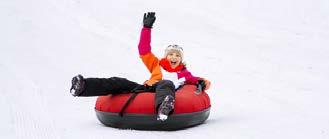
This season features River’s Otter Run Tubing, a new rental system, and a resort app. Popular events like Santa Sunday, B4BC, Grom Fest, the Pinecrest Invitational, and the Cali Pass Banked Slalom return, bringing excitement for skiers and snowboarders alike. dodgeridge.com
Among the oldest and most iconic ski areas in the Western US, Donner Ski Ranch is a family-friendly resort that features a wide variety of terrain, inviting skiers and riders of all abilities to enjoy the fully-featured mountain oasis. donnerskiranch.com
New this season is “My Epic Gear,” offering top ski and snowboard gear with valet services. A 9-week Adult Development Team program focuses on advanced skills, while Ski & Ride School provides lessons in 10 languages. California Lodge debuts Golden State Kitchen, featuring healthier fare. skiheavenly.com
With 1,500 acres of uncrowded slopes, beginner-friendly terrain, and breathtaking views, the whole family will enjoy a ski day at June Mountain. Kids 12 and under ski and ride free. junemountain.com
This winter brings new parking options, including a reservationsbased system on weekends and peak periods. Returning events include the New Year’s Eve Celebration, Banked Slalom, and Slush Cup. Ski and Ride School offers everything from first turns to advanced backcountry coaching through Expedition programs, alongside expanded sustainability initiatives. kirkwood.com
A new 300-foot conveyor lift completes Lee Canyon’s beginner terrain expansion, joining the new quad lift and 500-foot conveyor lift installed last season. Lift access ranges from $19 to $129+, while kids ages 12 and under ski free with no restrictions. leecanyonlv.com
This season features a new 6-seat Broadway Express, boosting uphill capacity by 25%, and upgrades to Face Lift and Unbound Express lifts. A $3.5M investment enhances snowmaking with new fan and tower guns. Woolly’s Adventure Summit debuts, and Tamarack Lodge celebrates its 100th anniversary. mammothmountain.com
Despite challenges presented by the Bridge Fire, Mountain High intends to open this year and celebrate the resort’s 100th season. mthigh.com
This season, Westside Chair #4 will offer up and downhill loading, with lift tickets starting at $29. Limited edition “Built for Baldy” merchandise will support Bridge Fire relief, with proceeds benefiting Mt. Baldy Ski Lifts and the Mt. Baldy Village Church relief fund. mtbaldyresort.com
MT. ROSE SKI TAHOE
For its 60th anniversary, $2.2 million in upgrades include a renovated dining area with a Taco Bar, enhanced snowmaking, trail improvements, and a new snowcat. The popular ‘Open Late’ schedule will expand to Fridays
and Saturdays starting February 2025, offering more evening skiing opportunities. skirose.com
Reloadable RFID cards now make online transactions easier. On-site upgrades in rental, food & beverage servies will enhance the guest experience. Starting in January, a Saturday shuttle from Mt. Shasta adds even more convenience. skipark.com
This season introduces “My Epic Gear,” offering access to top ski and snowboard gear with valet services. Reservation-based parking continues for premium lots, while Castle Peak remains free. Returning events include Women’s Weekend, the Spring It On pond skim, Winter Wonders, and a winter music series. northstarcalifornia.com
For its 75th anniversary, the resort has invested $1.4M in snowmaking upgrades and switched to renewable diesel for snowcats, reducing emissions by up to 80%. The new Little Bear Cafe will feature house-made pastries, coffee, and locally sourced fare, enhancing the on-mountain experience. palisadestahoe.com
As an Ikon Pass partner, the resort offers expanded Tahoe access. Pre-season upgrades include new haul ropes, repaved parking lots, and enhanced snowmaking. Signature events like Subaru Winterfest return. Lift tickets start at $85, season passes at $389, and First Responder passes debut at $259. sierraattahoe.com
Located on the Mt. Rose Highway, 20 minutes from Reno, Sky Tavern is home to the oldest non-profit ski and snowboard training facility in America and the nation’s largest youth learnto-ski program. The Junior Ski Program begins in mid-January. Financial assistance is available to those who qualify. skytavern.com
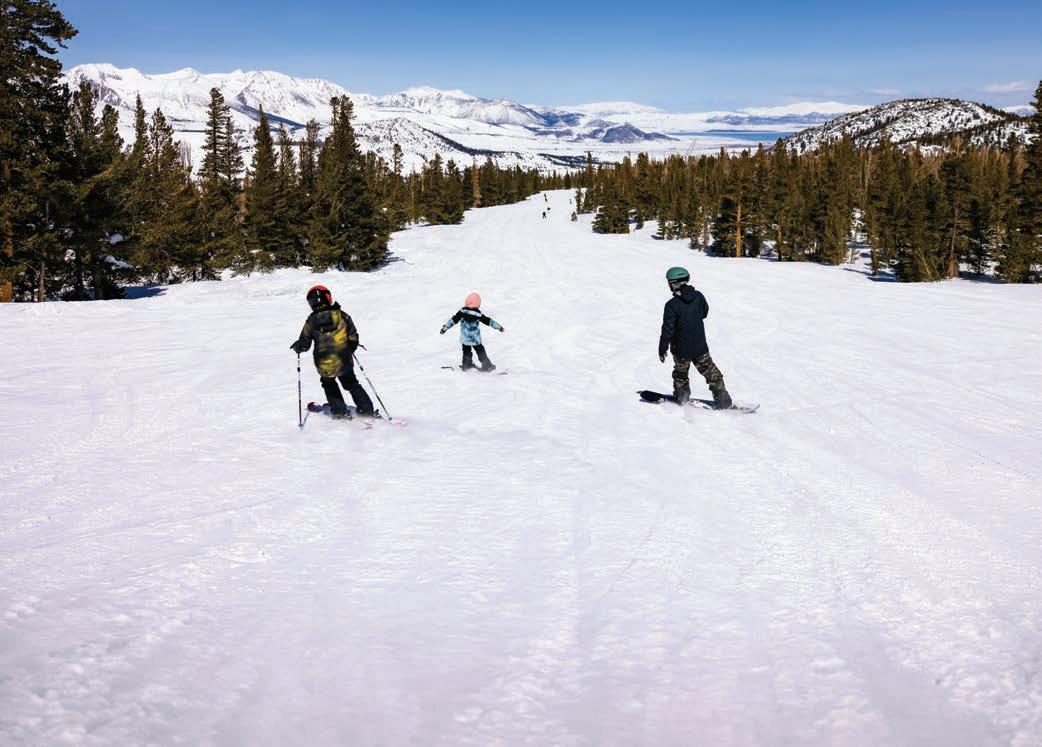
This season brings a reimagined park experience and progress on a world-class athlete training facility. Snowmaking at Sugar Rush Tubing is up 400%, and Village Lodge renovations continue with a refreshed espresso bar, lobby, and luxurious Deluxe Suite, enhancing the resort’s rich 85year tradition of athletic excellence. sugarbowl.com
A new ski lodge will be under construction, so this winter guests will find all resort operations housed in temporary facilities. Still a great option for learn to ski and ride programs, lift tickets are expected to average $85 for adults / $40 for kids. tahoedonner.com
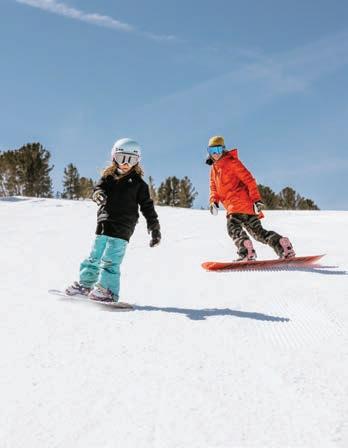


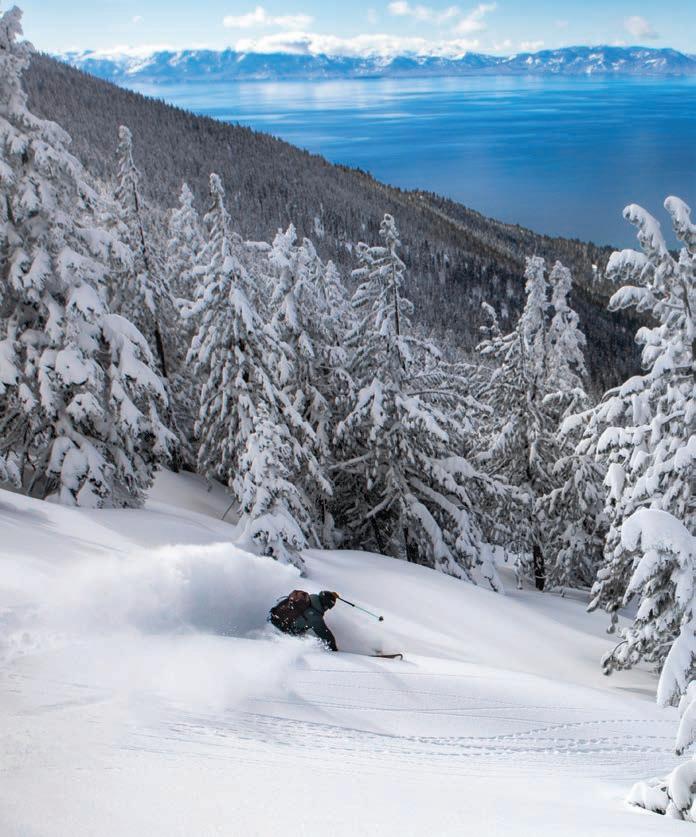
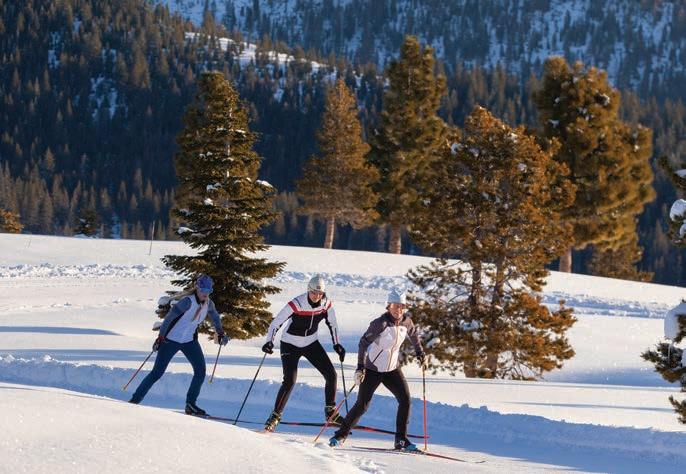
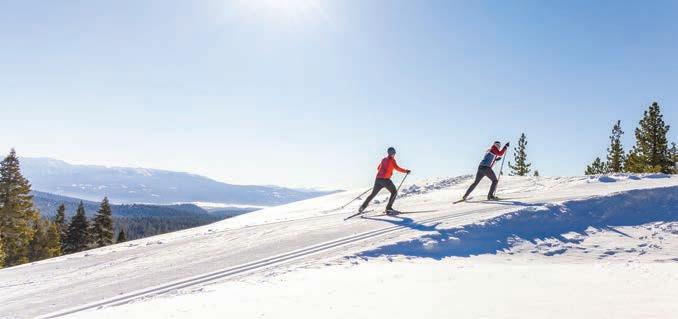
ASC XC TRAINING CENTER
This season marks the 96th year ASC has offered snow sports to the region. New this season, additional energy-efficient LED lighting has been added to the trail network, enhancing night XC skiing opportunities on the 1.5km loop. asctrainingcenter.org
BEAR VALLEY ADVENTURE CO.
Extensive trail clearing took place this summer. Trailblazers, the youth cross-country ski team, returns for its second season of skiing, training, and fun. New this season, third graders get a free season pass and lesson, plus discounts on tubing and sledding. bvadventures.com
GRANLIBAKKEN
One of the very first hills cleared for skiing and sledding at Tahoe. Affordable beginner-level skiing and snowboarding, with the best sledding area around. The sled hill offers two slopes for all ages. Discounts for lodging guests. granlibakken.com
KINGVALE RESORT
Enjoy thrilling sledding with 12 lanes and a smaller hill for beginners. Snow play areas provide fun for all ages. Sled rentals available, and tubing sessions offered. Perfect for a family day in the snow. kingvaleresort.com
KIRKWOOD CROSS-COUNTRY
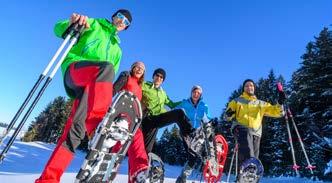
The resort offers over 80 acres of cross-country trails suitable for all skill levels, along with designated snowshoeing areas. Family-friendly sledding zones, equipment rentals, and guided tours are also available. kirkwood.com
NORTHSTAR CROSS-COUNTRY
Over 35 kilometers of groomed cross-country trails with beautiful views. Snowshoeing and fat biking are also available, with rentals provided onsite. northstarcalifornia.com
RIM NORDIC
Located in San Bernardino Mountains, Rim Nordic is the only cross-country ski area in Southern California with machine groomed trails. rimnordic. rimnordic.com
ROYAL GORGE
North America’s largest crosscountry ski area with 92 trails spread across 6,000 acres. Trails cater to all skill levels. Eight warming huts are available along the routes, providing a rest stop with scenic mountain views. royalgorge.com
SODA SPRINGS
Cross-country skiing, snowshoeing, and a dedicated snow play area for families. Play Forever Fridays return this season, offering $25 lift tickets once a month for everyone, with $5 from every ticket supporting a charity. skisodasprings.com
TAHOE DONNER XC
In collaboration with Ski for Light, a nonprofit teaching visually- and mobility-impaired adults to ski, a 5K and 10K loop will be available for skiers and guides. Advanced skiers can race, while others can enjoy a XC ski rally for a more relaxed touring experience. tahoedonner.com
TAHOE CROSS-COUNTRY
Celebrating 25 years, Tahoe XC offers $25 Tuesdays for adults and free XC skiing for those under 19 and 70+. The new Lifetime Legacy Pass includes unique perks for 70+. Youth programs, lessons, and events. tahoexc.org
TAMARACK CROSS-COUNTRY
With over 19 miles of groomed trails, Tamarack Cross-Country Ski Center offers skiing, snowshoeing, and rentals. Trails cater to all levels, with options for private lessons, clinics, and family-friendly races. Guided snowshoe tours and naturalist-led excursions are also available throughout the season. mammothmountain.com/xc

Most of these resorts are part of Ski California, a nonprofit trade association representing 36 ski areas in California and Nevada. Learn more about Ski California, its member resorts, and view the award-winning Ski California Mountain Safety Guide at skicalifornia.org
By Riego Maarten
I’m standing by the window with a hot cup of coffee, watching the steam
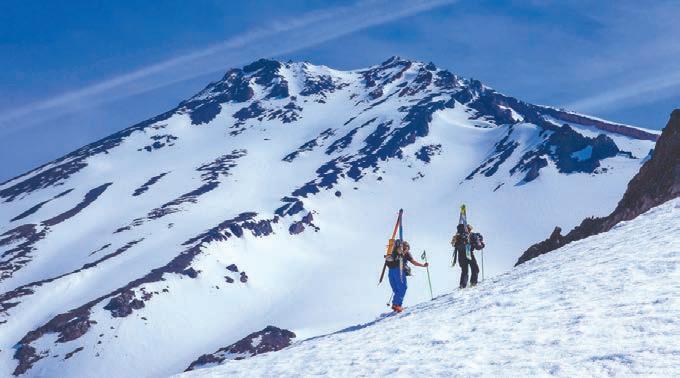
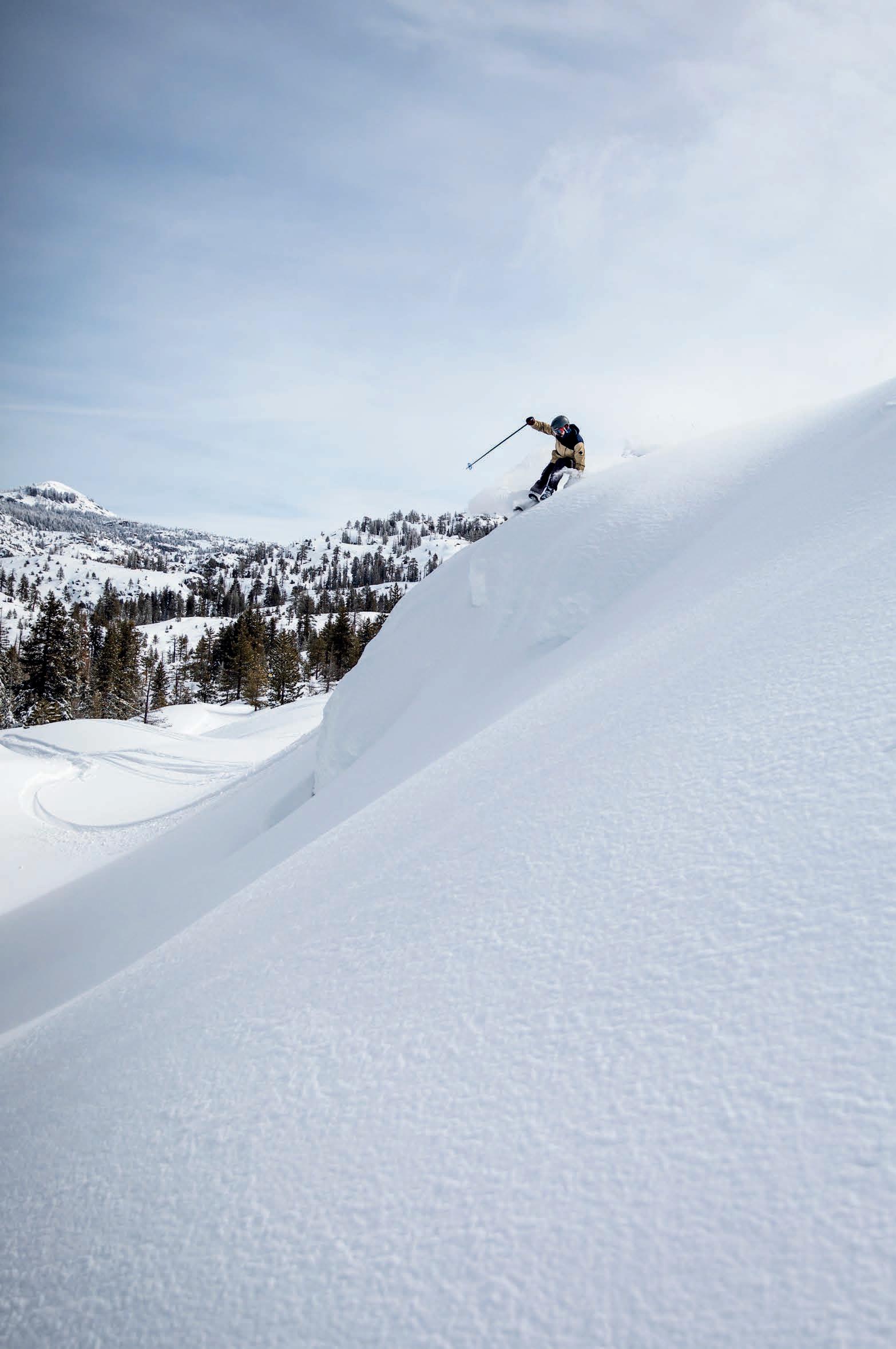
Alpine Guides and, most, if not all, Lake Tahoe ski resorts offer tours through a collaboration with outfitters: contact those nearest you and ask questions. More importantly if you have never been out, it is a formative way to get “first” experiences on skins, and switchback turns. In California, there are many peaks and routes, all along the Sierra, north and south, so don’t let location limit you.
The crucial idea was choosing a guided, multi-day excursion. I highly recommend this as a cost-effective beginning exposure to backcountry skiing, especially if you have reservations or other beginner questions about how to get started. This is the option for you especially if you want to explore this activity without making a full commitment to continuing it as a hobby. This choice allows for
1,600

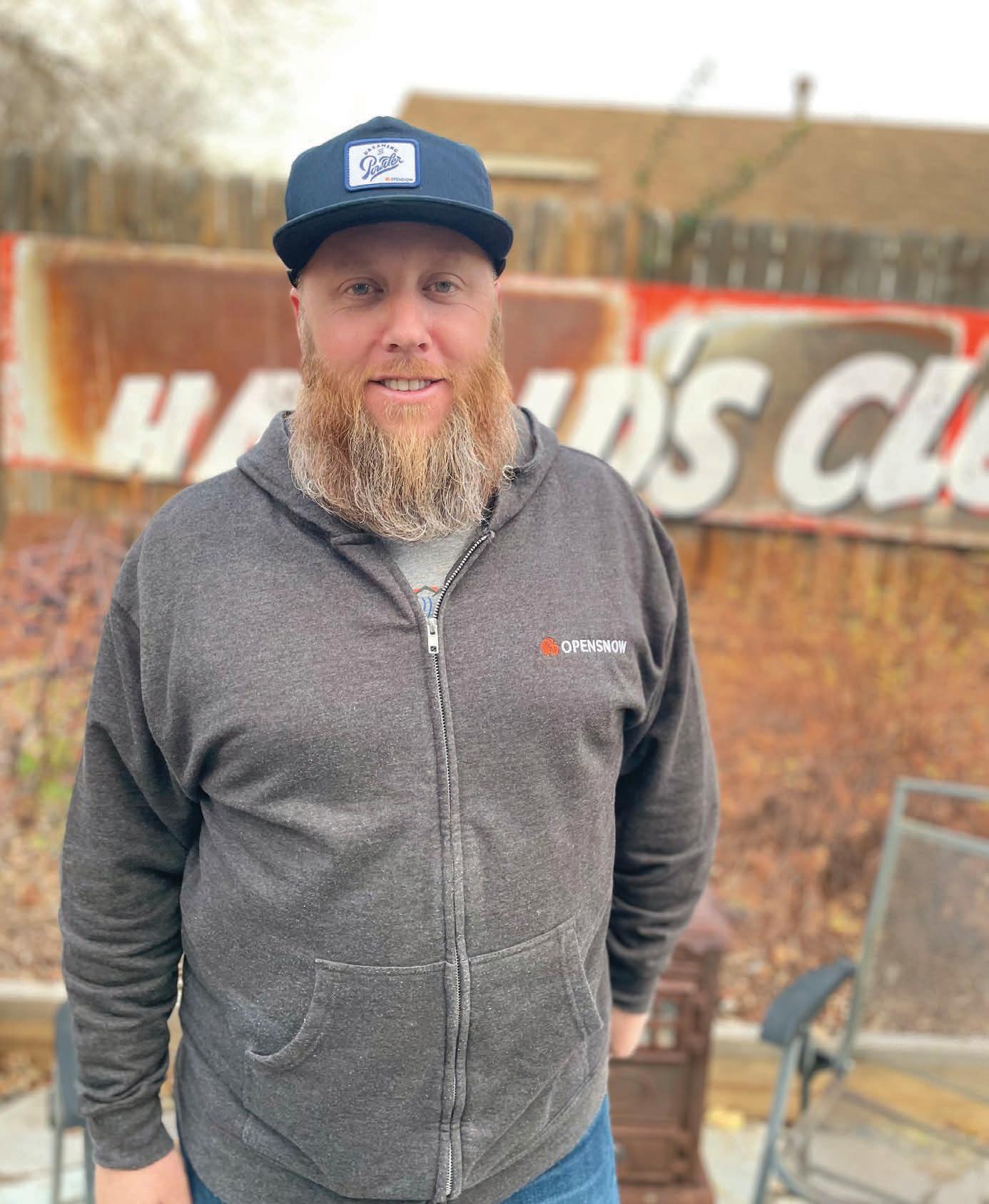
When it comes to predicting pow, Bryan Allegretto of OpenSnow Tahoe consistently delivers
By Kurt Gensheimer
If there’s one person in the Lake Tahoe region who can create a traffic jam of skiers on Interstate 80 East with a single headline, it’s Bryan Allegretto of OpenSnow Tahoe. Known by his fans as BA, Allegretto is part owner of OpenSnow and the snow forecaster for the Lake Tahoe region. Over the last 15 years, Allegretto has become the most respected source of information about where it’s going to snow and exactly how much. Allegretto’s snow forecasts are remarkably accurate, and he even grades himself on every storm to make sure he stays that way.
Allegretto is entrepreneurial minded with a background in business and meteorology, a native of Philadelphia, Pennsylvania. Allegretto was originally a surfer and skateboarder and didn’t really have access to snowboarding, but he loved to snowboard and had a desire to work in the ski industry, and in 2006, moved to Truckee, California right out of college. He was working at Booth Creek Resorts, a company focused on ski resort operations and administration. Due to Allegretto’s obsession with skiing pow, he started forecasting snow for fun. Because his employer depended on snowfall for business, co-workers began paying attention to Allegretto’s personal snow forecasts, and they realized he was really accurate. Soon Allegretto was being brought into company meetings to share his observations and predictions for upcoming snowstorms.
Blogging was popular at the time, so Allegretto opened his own Blogspot site for snow forecasting. Soon Allegretto’s blog forecasts found their way onto Northstar’s website, then Sierra-AtTahoe. In 2009, Allegretto expanded into
Tahoe Weather Discussion, covering the record-breaking winter of 2010-2011, when his readership exploded. Suddenly everyone in Tahoe was reading forecasts marked with the initials “BA.”
Allegretto’s business partners, Joel Gratz and Andrew Murray, were working on the launch of OpenSnow in the fall of 2011. Gratz and Murray heard of Allegretto’s snow forecasting accuracy and wanted him to join OpenSnow.
Allegretto’s friends told him he should do his own thing because his readership was growing, but Allegretto had a fulltime job, a family and not a lot of time.
“I just wanted to ski, chase powder and write about it in the morning,” recalled Allegretto on Episode 25 of Mind the Track podcast. “This guy’s telling me he’s going to build the website, he’s going to deal with the advertisers, I just have to write.”
Gratz and Murray offered Allegretto to buy in as a partner, but the year OpenSnow launched, the next couple winters were terrible. Despite the lack of snow, Allegretto observed that during the drought winters, the longer the dry spell, the more people logged in to read the forecast. And to keep
people engaged, Allegretto came up with novelties like the “beard shaver” challenge, where he grew his beard until a two-foot snowfall in 24 hours hit Lake Tahoe. Some years his beard started resembling ZZ Top before the big storm would force him to shave.
As a proud weather nerd and powder hound, I always read both the National Weather Service (NWS) forecast and Allegretto’s OpenSnow Tahoe forecasts, and Allegretto is consistently more accurate than the NWS. However, that doesn’t stop critics from posting mean comments, sending nasty emails and accusing OpenSnow of being in cahoots with ski resorts for the advertising dollars.
“The big lie is that we overstate snowfall, because ski resorts will work with us and we make more money, but that’s the inverse of how it works,” said Allegretto. “They advertise because we have a lot of followers. We have a lot of followers because we are accurate. If we were wrong all the time, nobody would come to our site and we would get no advertising.”
According to Allegretto, the reason why OpenSnow is more accurate than the
NWS is because a lot of NWS employees who write the forecast discussions are recent graduates or newer to the Sierra Nevada. Allegretto has 17 years of observational experience watching storms and model runs day after day, year after year. After a while, Allegretto began picking up on patterns that computer models couldn’t recognize, leading to more accurate forecasts.
“I am snow and ski obsessed,” said Allegretto. “Before I was paid to, I was working my butt off to write these forecasts for free from the obsession of it. Looking at thousands of model runs every season for 17 years, your eye starts to catch things.”
Other forecasters rely heavily on computer models, and when they are wrong, the forecaster will just blame the model. But because of how seriously Allegretto takes his work, he relies on his own observational experience to hone in forecasts more accurately. Allegretto hates to be wrong, so he spends the extra time, waking up at 2am to write his forecasts.
But forecasting snowfall goes beyond just looking at computer modeling and weather patterns.

According to Allegretto, ocean temperatures also play a significant factor in Tahoe winter snowfall. When ocean temperatures off the coast of California are colder, it tends to push more storms into the Sierra Nevada, resulting in more snowfall. The drought years are generally associated with warmer ocean temperatures, creating
stubborn high pressure systems that block storms from dropping down from Alaska, storms that deliver the cold snow skiers go crazy over.
There’s a lot of talk about El Niño and La Niña, but does either weather phenomenon have an effect on Lake Tahoe? According to Allegretto, in a
more likely to receive above average snowfall. El Niño usually leads to warmer and drier conditions in the northern Sierra Nevada, while southern California and the Southwest receive the majority of precipitation.
Allegretto also observes webcams to guide his forecasts, especially when elevation is in question.
In addition to incorporating AI, OpenSnow is now pulling in weather model data from the American GFS, Euro, Canadian and the North American Mesoscale Forecast System (NAM) models, creating OpenSnow’s own model to eventually have accurate forecasts down to pinpointed GPS locations.
“Sugar Bowl always has been one of my favorites because of the tables at the base,” said Allegretto. “I check a lot of cams when I’m trying to figure out where the snow level is. When snow levels are fluctuating between 7,000 and 9,000 feet in a storm, how do you know where it’s sitting at that current moment?”





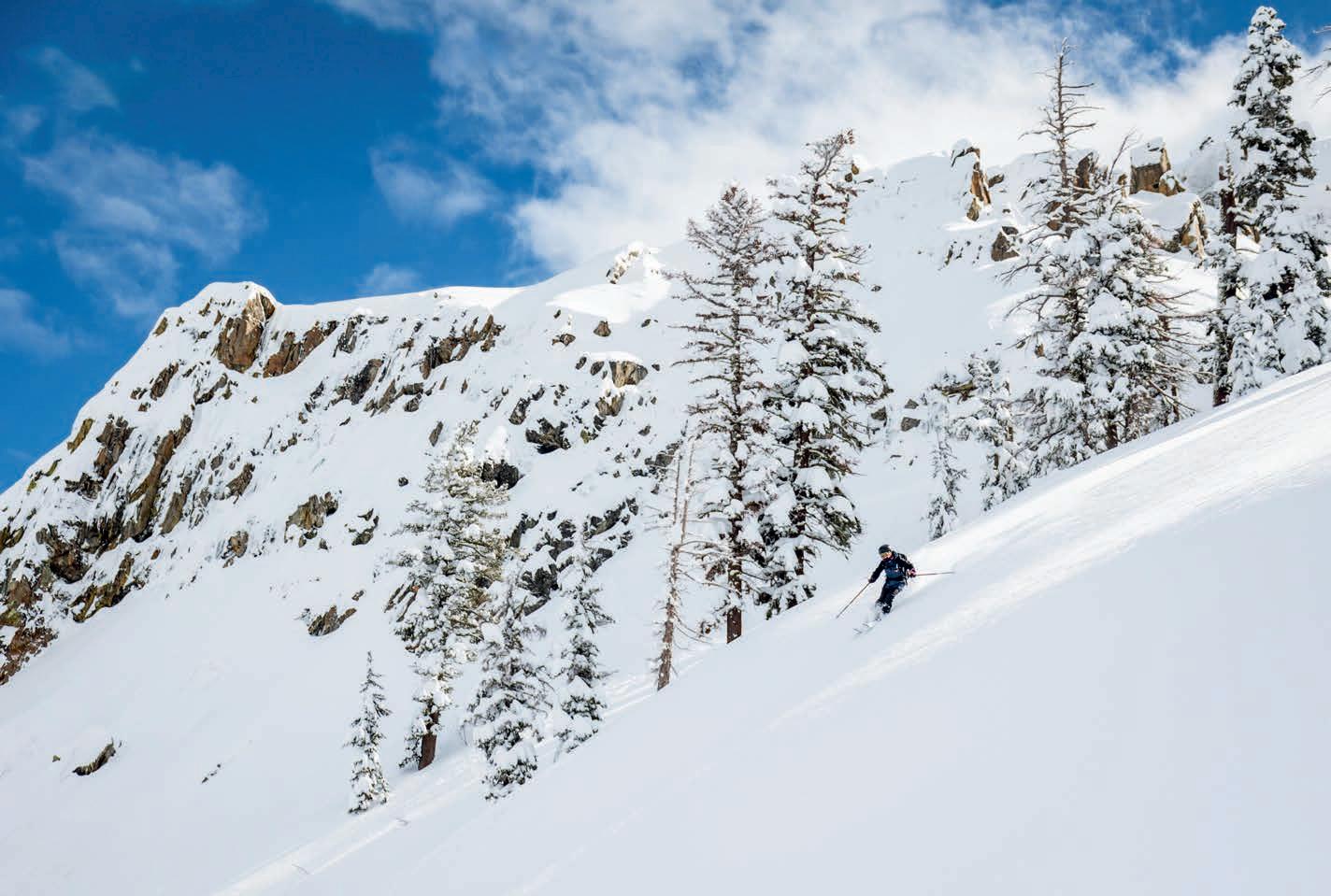
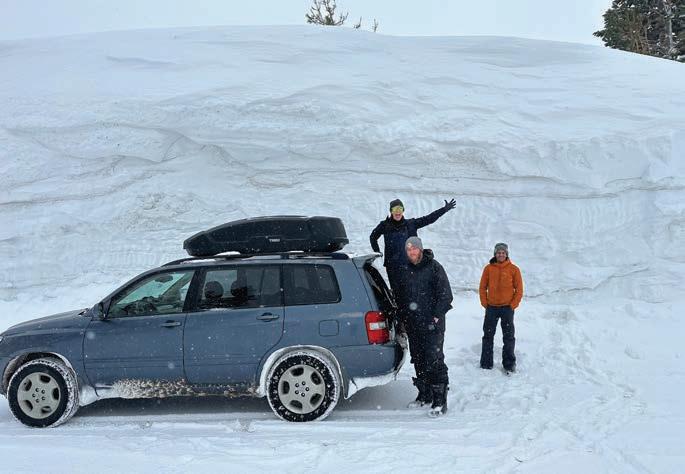
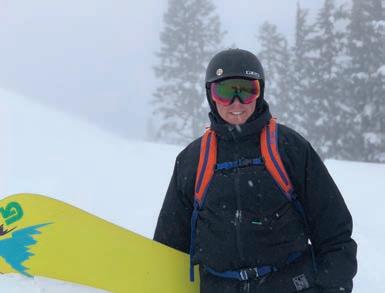
Opposite page: Brian Allegretto knows that forecasting snowfall goes beyond just looking at computer modeling and weather patterns. This page, clockwise from top: Allegretto and friends relish the glory of a huge snowpack; A good luck charm reminds Allegretto that forecasting is a mix of art and science; Allegretto ready to feed the stoke of winter.
Another popular question for Allegretto is, where does it snow the most in the Lake Tahoe region?
“It snows the most northwest of the lake,” said Allegretto. “Sometimes Kirkwood, but the farther west you are and the higher you are, the more the mountains lift and squeeze out the moisture. When the clouds clear the crest and come over the lake, they start to sink and warm and hold more moisture.”
In a modern world of advanced technology and computer modeling, Allegretto’s accuracy is living proof that human observational weather forecasting is still relevant. But the rise of Artificial Intelligence (AI) may change all of that because of its ability to learn and adapt like a human does. But Allegretto isn’t worried about AI. In fact, he’s excited to harness AI’s learning powers so that OpenSnow subscribers can receive even more accurate forecasts. In addition to incorporating AI, OpenSnow is now pulling in weather model data
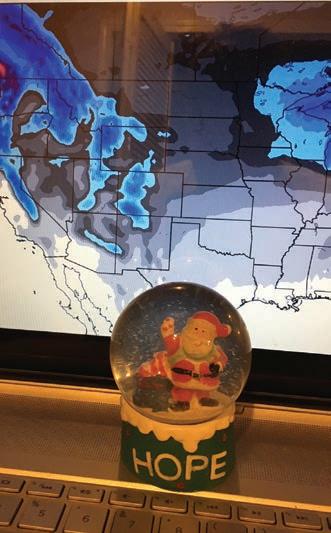
from the American GFS, Euro, Canadian and The North American Mesoscale Forecast System (NAM) models, creating OpenSnow’s own model to eventually have accurate forecasts down to pinpointed GPS locations, all from the convenience of a smartphone.
There’s been a lot of talk about a big La Niña winter coming, so what does Allegretto think is going to happen?
“We are cautiously optimistic. Everything we are looking at points to above-average snowfall for this season, “ said Allegretto. “Always risky to say that. I am thinking a cold winter with at least near to slightly above average snowfall.”
But whatever is in store for us this winter, powder hounds across the northern Sierra Nevada take Allegretto’s forecasts as gospel, because he is as much a powder hound as his readers are.
Currently for a single season, an OpenSnow subscription is $31. As far as this snow-obsessed skier is concerned, it’s worth every dollar.
By Leonie Sherman
If the best
skier
is the one having the most fun, Noah Habib wins every time. He can’t walk, talk or feed himself, but he can express joy. And when he’s bombing down a bunny slope in a sit ski yelling with pure exhilaration, everyone can tell he’s having the time of his life. Not everyone can tell that adaptive skiing knit his family back together after a decade of struggle.
Twenty-eight years ago Noah was born four weeks early. “That wouldn’t have been a problem except he wasn’t breathing,” explains his mother Heidi Cartan. During the course of intubation, Noah suffered a fracture of his C2, or cervical vertebrae. In a fully grown human that fracture would have severed the spinal cord, making respiration impossible. But because babies have more cartilage than bone, Noah’s fractured spine wasn’t even identified for three months.
Noah spent his first month in the Neonatal Intensive Care Unit and came home on his due date. But he wasn’t thriving. “He couldn’t eat, wasn’t putting on weight and he cried all the time,” says Cartan. “It seemed like he couldn’t even swallow. In the course of tests they found the fracture.”
So at three and a half months and nine and a half pounds, Noah had a successful spinal fusion. According to his neurosurgeon, he was the smallest child in the US to successfully undergo that operation.“They took bone from his left leg and grafted it to the back of his neck, fusing his C1 through C3 vertebrae and saving his life,” explains Cartan.
The operation saved his life, but the injury left him a quadriplegic. “Noah has some movement in his left arm and hand, and very limited use of his right arm and hand,” explains Cartan. “But he has no ability to control his muscles for standing or walking. He’s never been ambulatory. He can’t bear his own weight and he’s never sat up by himself.”
Cartan and her husband Philippe were avid backpackers and Sierra lovers but abandoned many of their favorite activities as they adapted to Noah’s special needs, providing constant care. At eight years old he was diagnosed with a genetic syndrome called Kabuki. With long eyelashes, low ears, broad noses, and a very specific set to the eyes, folks with this genetic syndrome resemble the actors in Kabuki theaterat least the Japanese physician who first identified it thought so. People who have Kabuki are non-verbal but tend to be very good natured, “almost abnormally happy,” according to Cartan. It’s frequently misdiagnosed as cerebral palsy (CP), but though the two conditions share some characteristics they are distinct.
For years, the young family’s sole focus revolved around Noah’s needs and their own survival. But at work, Philippe’s colleague, Timothy Miller, a
fellow engineer and adaptive athlete with CP, began to advocate for adaptive skiing. He was going to Bear Valley every weekend and raving about this time on the slopes.
Even an hour long car ride with Noah was rough, so two years passed before they were able to drive to the mountains.
After the drive, the next hurdle was finding a place to rent. Their first choice was only accessible by snowmobile and the one they settled for required Philippe to carry Noah up a flight of stairs to use the bathroom.
Before hitting the slopes, they had to bundle Noah up in multiple layers with heating pads in mittens and shoes — being non-ambulatory leads to very poor circulation. And they had to lay down over $300 for a 90 minute lesson.
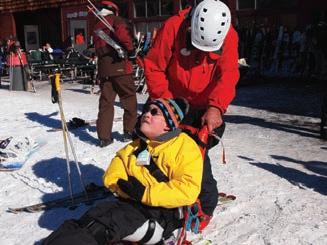
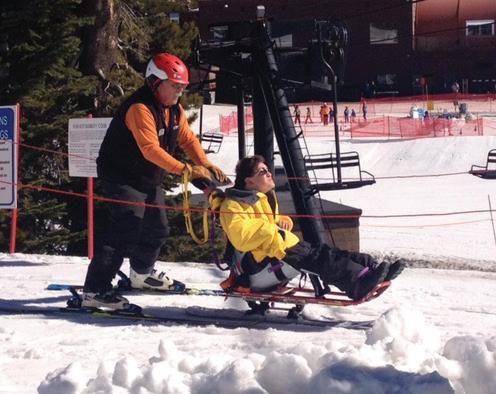
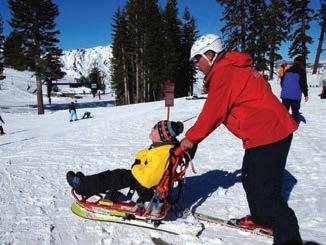
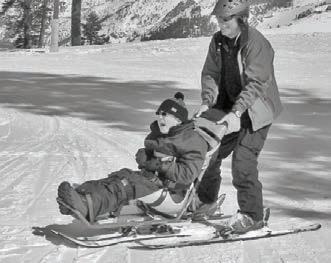
The ski instructor met them outside the lodge with a sit ski, which consists of two skis welded together, a molded seat on top and a handle like a stroller. The instructor holds the handle and skis down with complete control over the occupant’s descent. But first they have to get up the hill. The molded seat has a small hydraulic pump; at the lift, they pump the lever and it separates the ski from seat; the chairlift goes into that space, they strap the adaptive skier in and whisk them to the top.
“The first time I saw it I was so amazed I couldn’t even take a photo,” admits Cartan.
“Noah wasn’t going to ski, he can’t hold onto anything, he was just going for a ride,” explains Cartan. “But he was going for the same ride on the same slope as everyone else.”
The only difference was that Noah was hollering at the top of his lungs all the way down the slope. “He was just yelling ‘Yay’ and ‘Aaah’, I couldn’t see him but I could hear him,” recalls Cartan. “Everyone on the chairlift could hear him! They all started cheering, total strangers, he was clearly just ecstatic. It was the happiest I’d ever seen him. All he wanted to do was go again. He kept using sign language to tell the instructor ‘more’ and ‘faster’!” Cartan pauses to wipe away tears before continuing. “Watching Noah ski was our best parenting moment with him in ten years of a lot of struggle and hard times.”
“I think being out on the slopes, doing something Philippe and I had done together and being able to include our child normalized our family,” Cartan continues. “It allowed us to feel like a family instead of a struggling family. Everything we’d done up to that point, even swimming, had been therapeutic, but this was just pure fun. We got to
play, we got to enjoy outdoor recreation together, really for the first time.”
They’ve taken him every winter since then. Sometimes they all ski together. It’s the highlight of Noah’s year. Cartan and Philippe took second jobs so they could buy a piece of land, build an accessible cabin and go to the mountains whenever they want.
“Our back country experience stopped really abruptly when we had Noah. Adaptive skiing got us back into
our beloved Sierra,” reflects Cartan.
“Being on top of Bear Valley mountain, back in the Sierra, all of us having fun together, it’s hard to describe how profound that was. Honestly, parenting someone with such significant health problems, we hadn’t experienced that joy together. Adaptive skiing opened up fun and recreation in a way we expected to enjoy with our children but hadn’t experienced yet. It transformed our family.”
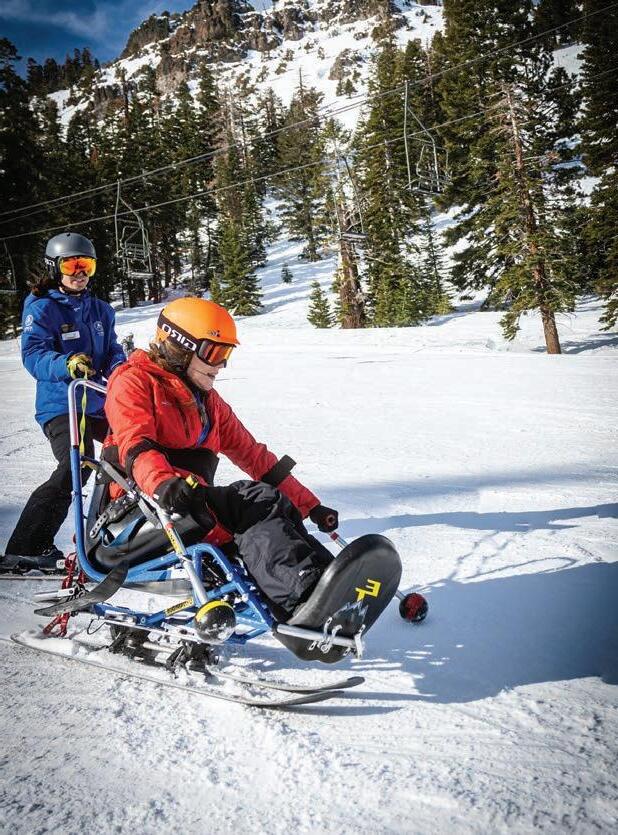
Adaptive skiing gave Noah Habib the best day of his life and helped bring his family together after years of struggle. His smile on the slopes said it all.
After participating in a range of adaptive sports, Timothy Miller, who inspired Noah’s dad to take him skiing, quit his engineering job, went to grad school and became a Certified Therapeutic Recreational Therapist. His story is just one example of how adaptive sports can change lives, as seen in the work of others who have dedicated themselves to helping individuals with disabilities thrive. Below is a partial list of organizations and individuals making a significant impact in the world of adaptive sports.”
Foster Andersen also transformed his disability into a career. After an accident severed his spinal cord between C5 and C6, Andersen started Shared Adventures, which allows thousands of disabled folks to enjoy outdoor activities every year. Shared Adventures sponsors a five day adventure camp, horseback riding, swimming, whale watching, art classes and more.
For 30 years, they’ve been celebrating the anniversary of Andersen’s motorcycle accident by hosting Day on the Beach, where hundreds of disabled folks get to try SCUBA diving, outrigger canoeing, surfing, or just lounge on the beach with friends listening to live music. sharedadventures.org
>
Decades of service brought Randy Coffman to adaptive skiing. After retiring from 32 years as a National Park Ranger, Coffman volunteered at an adaptive ski program in Colorado and decided to start something similar back home in Shaver Lake, California. Eleven years later Central California Adaptive Sports Center offers outdoor programs to hundreds of persons with disabilities each year, and they have never turned anyone away due to lack of funds. “Honestly, we aren’t sure who benefits most, the participants or the instructors,” says Coffman. “It has a deep effect on us to see participants challenge themselves while enjoying the outdoors.” centralcaladaptive.org
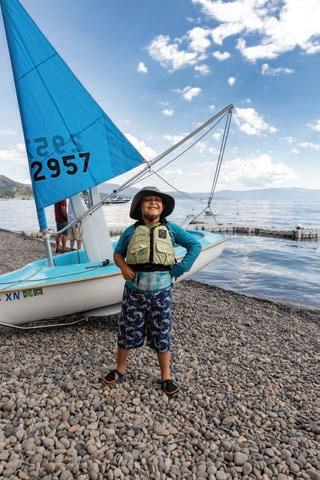
ACHIEVE TAHOE offers year-round adaptive, inclusive recreation programs designed to serve people with intellectual, sensory, and physical disabilities. We strive to serve all ages and all disabilities in their individual quest to build health, confidence, and independence through outdoor recreation.
Learn more at AchieveTahoe.org or contact us today at 530.581.4161 or info@achievetahoe.org

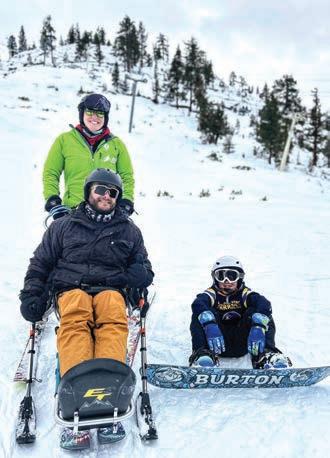
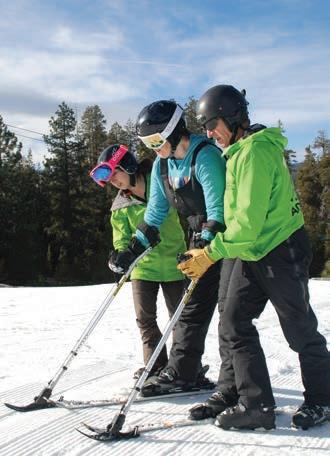
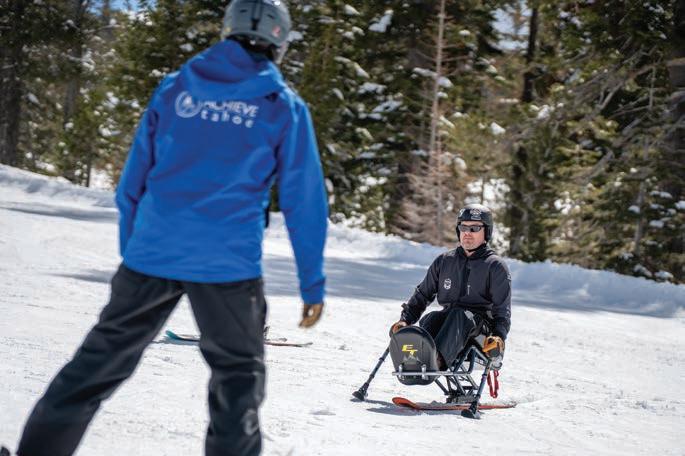
This page, left to right: Bi-skier enjoying a day on the slopes with his son (Central California Adaptive Sports Center); Stand-up skier being instructed in the use of hand-held outriggers (Central California Adaptive Sports Center); Achieve Tahoe helps people with disabilities build confidence and independence through sports (Chris Bartkowski).
> Achieve Tahoe
Some adaptive sports non-profits focus on the challenge. Achieve Tahoe believes encouraging disabled folks to go beyond their perceived limits brings tremendous growth. They focus on high risk sports like rock climbing or alpine skiing.
“If someone walks through our door there’s a 90% chance they will stand up and ski. If they roll through the door
they’ll use equipment we have that will help them achieve their potential based on their disability,” explains Program Director Michael Hunter. “We believe that as people gain independence they gain confidence and that benefits their overall health.” achievetahoe.org
> High Fives
High Fives Foundation focuses on helping athletes who have sustained
life-altering injuries get back to doing what they love. By providing support and adaptive sports opportunities, they help individuals regain their confidence and enjoy the thrill of outdoor activities once again.
Founded by Roy Tuscany, who himself experienced a life-changing injury, the organization embodies his belief that “Injuries don’t stop and we don’t ever want to stop someone’s recovery, so
by providing them financial assistance we’re able to have them set goals and get to where they want to be.” highfivesfoundation.org
Adaptive sports programs are united by love, service and a commitment to making the transformative power of nature and outdoor recreation more accessible. They also all need your help. Please consider volunteering or donating. Your generosity will change lives, including your own.

6-7 — Dirty 30 & E-Dirty Cross / Poway / QuicknDirtyMTB.com
12 — MTB Kickstart - XC MTB Race / Folsom Lake / TotalBodyFitness.com
18 — Gravel & Wine / Temecula / thegravelandwine.com
26 — Low Gap / Ukiah / Part of the Grasshopper Adventure Series / 48 mi & 6164 ft / half pavement and half dirt / GrasshopperAdventureSeries.com
26 — MTB Classic – Cross Country Mountain Bike Racing / Folsom Lake / 5K & 12K / TotalBodyFitness.com
8 — Tour de Palm Springs / Coachella Valley / Ebikes are welcome / tourdepalmsprings.com
8 — Rock Cobbler & Pebble Cobbler / Bakersfield / NOT a gravel race, it IS a challenging ride / RockCobbler.com
9 — MTB Challenge / Folsom Lake SRA / TotalBodyFitness.com
15 — Camino Real Double Century / Lake Forest / About 11,600’ of climbing / PlanetUltra.com
22 — Huffmaster Hopper / Maxwell / Two routes / Each route is half pavement and half dirt / GrasshopperAdventureSeries.com
23 — MTB Madness / Folsom Lake SRA / XC MTB race / TotalBodyFitness.com
8 — Solvang Century / Buellton / PlanetUltra.com
8 — Shasta Gravel Hugger / Montague / GravelHugger.com
9 — MTB Showdown / Folsom Lake SRA / TotalBodyFitness.com
15 — Gran Fondo Hincapie / Merced / hincapie.com
22 — Lake Sonoma MTB / Lake Sonoma / Challenging and flowy singletrack / Easier short course option available / GrasshopperAdventureSeries.com
23 — MTB Championship / Folsom Lake SRA / TotalBodyFitness.com
29 — Solvang Double Century / Buellton / PlanetUltra.com
29 - 30 — Sagebrush Safari/ Lake Morena / QuickNDirtyMTB.com
.
5 — Mulholland Challenge / Agoura Hills /planetultra.com
5 — Party Pardee / Ione / Three routes / bikehikers.com
6 — Granfondo San Diego / San Diego / SDGranFondo.com
10 - 13 — Sea Otter Classic / Monterey / seaotterclassic.com
19 — Marinenduro / Fairfax / Access4Bikes.com
25 - 27 — Belgian Waffle Ride / Del Mar / belgianwaffleride.bike
27 — Ukiah-Mendo Gravel Epic / Ukiah / Three routes / Group rides, fundraisers and festivities / GrasshopperAdventureSeries.com
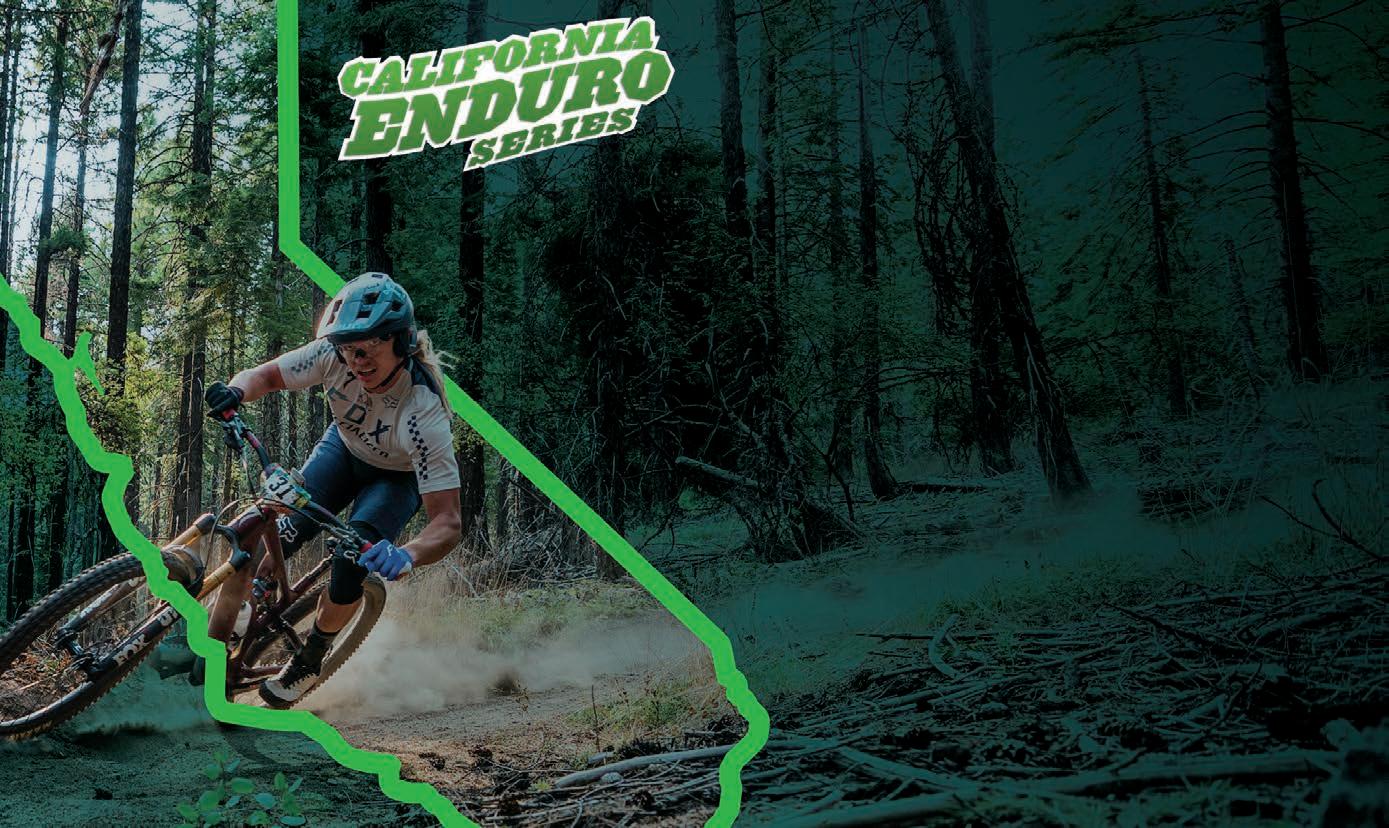
3 — Breathless Agony Century / Redlands /planetultra.com
10 — King Ridge Hopper / Sonoma / Two routes / Three segment (two for the short course) all-road adventure / GrasshopperAdventureSeries.com
17 — Georgetown Enduro / Georgetown / CaliforniaEnduroSeries.com
12 — Tour of the California AlpsDeath Ride / Alpine County / Three Sierra Passes / DeathRide.com
12 — China Peak Enduro / Lakeshore / CaliforniaEnduroSeries.com
7 — Peacock Gap Trail Run / San Rafael / 10K, Half, 30K / InsideTrail.com
14 — Folsom Lake Trail Half Marathon / El Dorado Hills / TCTRuns.com
14 — Summit Rock Half Marathon / Saratoga / 5K, 10K, Half / BrazenRacing.org
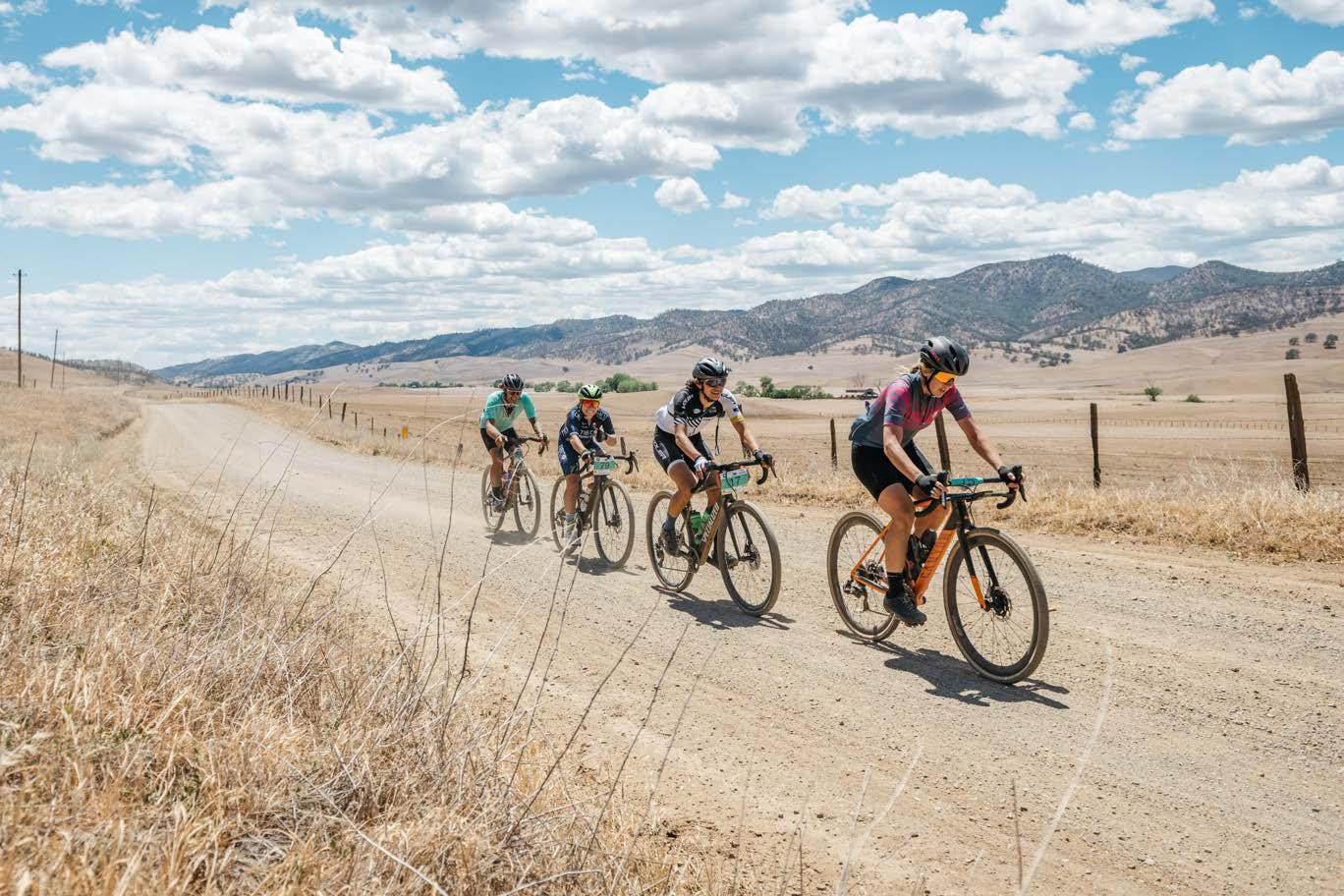
21 — Woodside Ramble / Huddart County Park / 10K, Half, 35K, 50K / InsideTrail.com
28 — New Year’s Eve / Castro Valley / 5K, 10K, Half / BrazenRacing.org
29 — Run in the New Years / Huntington Beach / 5K, 10K, Half / CarenWareEvents.com
1 — New Year’s Day Half Marathon / Castro Valley / 5K, 10K, Half / BrazenRacing.org
11 — IPA Trail Runs / Folsom Lake / 5K & 12K / TotalBodyFitness.com
11 — No Hands Trail Run / Auburn / 8K, Half, 35K, 50K / InsideTrail.com
11 — Avalon Benefit Run / Catalina / 50Mi and 50K / RunCatalina.com.
11 — SD50 Trail Marathons / Escondido / ElevationCulture.com
19 — Carlsbad Marathon, Half Marathon & 5K / Carlsbad / InMotionEvents.com
25 — Coyote Hills / Fremont / 5K, 10K, Half / BrazenRacing.org
25 — Fort Ord Trail Run / Monterey Bay / 10K, 25K, 50K / InsideTrail.com
8 — Catalina Island Marathon / Catalina / Marathon, 10K & 5K / RunCatalina.com.
8 — Chanoko 50K, 31K, 5-Mile Trail Runs / Folsom Lake SRA / TotalBodyFitness.com

22 —The Mighty DogTrail Runs / Folsom Lake SRA / TotalBodyFitness.com
22 — Knickerbocker Canyon / Auburn / 5K, 10K, Half, 35K / InsideTrail.com
22 — Valencia Trail Race / Santa Clarita / 10K, Half, 50K / ValenciaTrailRace.com
22 — South Hills Single Track Trail Run / San Jose / TCTRuns.com
23 — GOVX San Diego Half Marathon & 5K / San Diego / InMotionEvents.com
29 — Western Pacific / Fremont / 5K, 10K, Half / BrazenRacing.org
5 — American River 50 / Folsom and Auburn / NorCalUltras.com
5 — Diablo Trails Challenge / Walnut Creek / 5K, 10K, Half / BrazenRacing.org
cont.
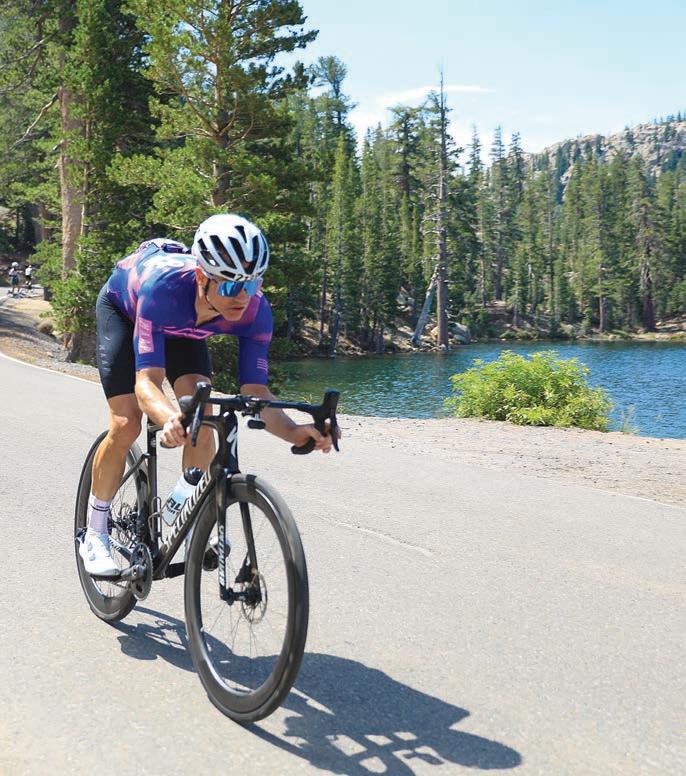

12 — Woodside Crossover / Auburn / 10K, Half, 35K, 50K / InsideTrail.com
19 — Badger Cove Trail / Del Valle Regional Park / BrazenRacing.org
26-27 — Badwater Salton Sea / Anza-Borrego State Park / 81 miles / BadWater.com
27 — Surfer’s Path Half Marathon / Santa Cruz to Capitola / RunSurfersPath.com
12 — Winter Speaker Series #1 with Leanne Pelosi / Tahoe City / AlpenglowSports.com
2 — Winter Speaker Series #2 with Kimmy Fasani / Tahoe City / AlpenglowSports.com
24 — Winter Speaker Series #3 with Greg Hill / Tahoe City / AlpenglowSports.com
1 — Ashland Ski Mo Summit / Ashland / MtAshlandSkiMo.com
7 — Winter Speaker Series #4 with Angela Hawse / Tahoe City / AlpenglowSports.com
28 — Winter Speaker Series #5 with Dave Nettle / Tahoe City / AlpenglowSports.com
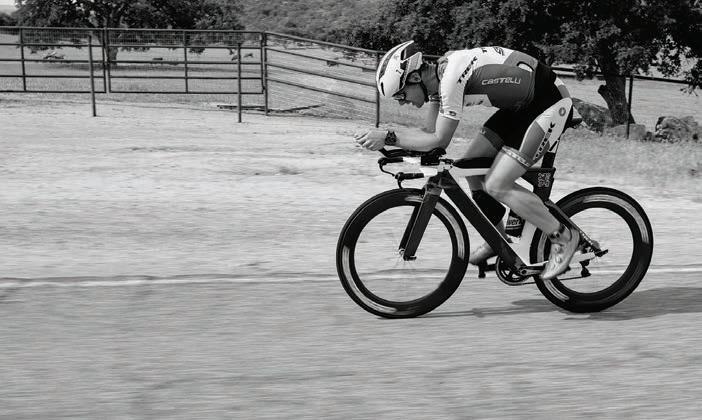
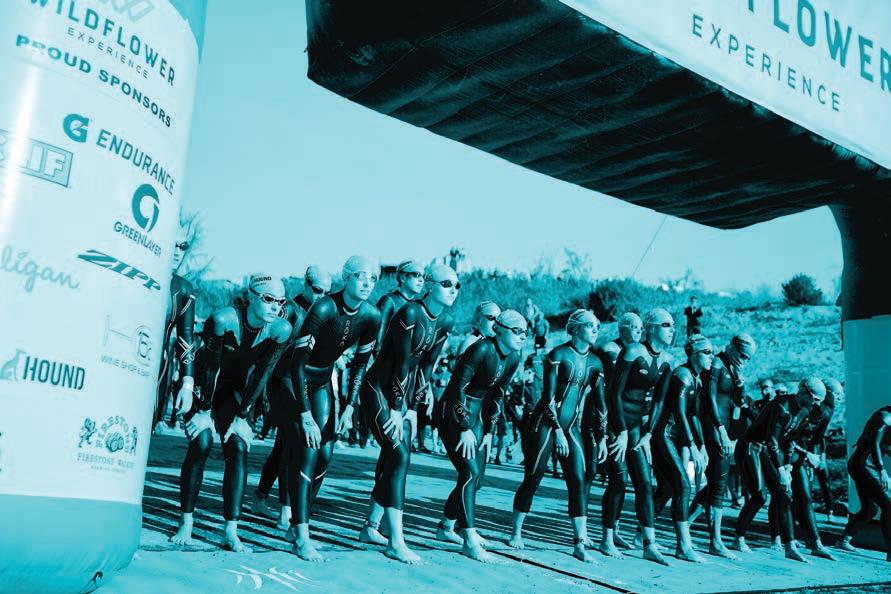

2 — The Great Ski Race / Tahoe City / 16.2 mi and new 10K short course / Live music, food, beer / TheGreatSkiRace.com
8-9 — Bjornloppet XC Ski Race / Bear Valley / The oldest race in the West / 5K, 10K & 20K / BVAdventures.com
22 - 23 — Luggi Foeger Uphill/ Downhill SkiMo Race & Festival / Diamond Peak / Race up & race down / Fun activities & music / DiamondPeak.com/events
25 — Tritonman / San Diego / Draft legal sprint / Tritonman.com
8 — The Double Duathlon / Folsom Lake / TotalBodyFitness.com
8 — Pasadena Triathlon / Pasadena / PasadenaTriathlon.com
12 — The ICE Breaker Triathlon / Folsom Lake SRA / TotalBodyFitness.com
2-4 — Wildflower Experience / Lake San Antonio / Long Course 70.3 Triathlon, Olympic Distance Triathlon, Sprint Triathlons, 10K Run, 5K Run, Trail Runs, Open-water Swims and Kids Fun Run / Full weekend festival with live entertainment, race clinics, and more / WildflowerExperience.com




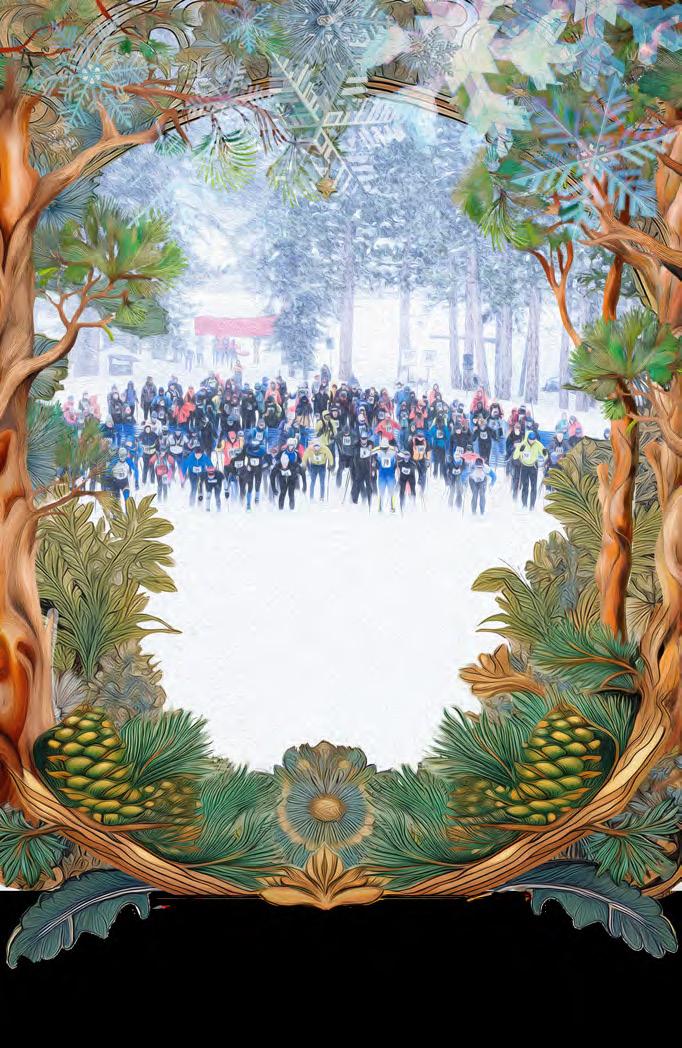
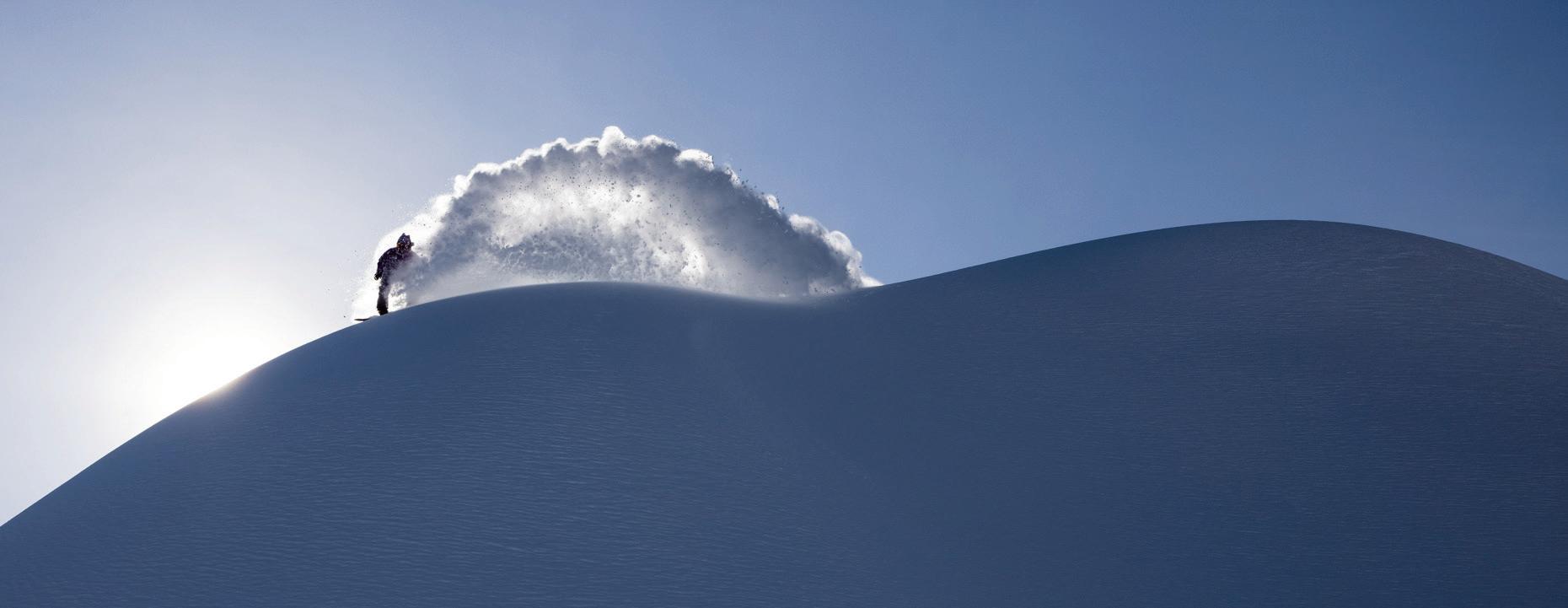


















5 FREE SHOWS 5 NONPROFIT BENEFICIARIES WATCH LIVE FROM HOME OR ATTEND IN-PERSON
DEC. 12, 2024

JAN. 2, 2025
JAN. 24, 2025


THOUSANDS IN PRIZE GIVEAWAYS EACH SHOW
FEB. 7, 2025


FEB. 28, 2025






Crush single-track, fly up hills, or just zip into town for a co ee at speeds up to 25mph. Unleash powder day vibes every day. With the new Onewheel XR Classic there’s never been a better time to get a Onewheel.