

VETERANS

AWARENESS MONTH
VETERANS
The AI Revolution is Here From Fighter Jet to Front Office
TRANSITION TO CIVILIAN LIFE
CAREER STRATEGIES
MENTAL HEALTH
Veteran Resources
Veteran Community Matters After Service
Workplace Health and PTSD Awareness
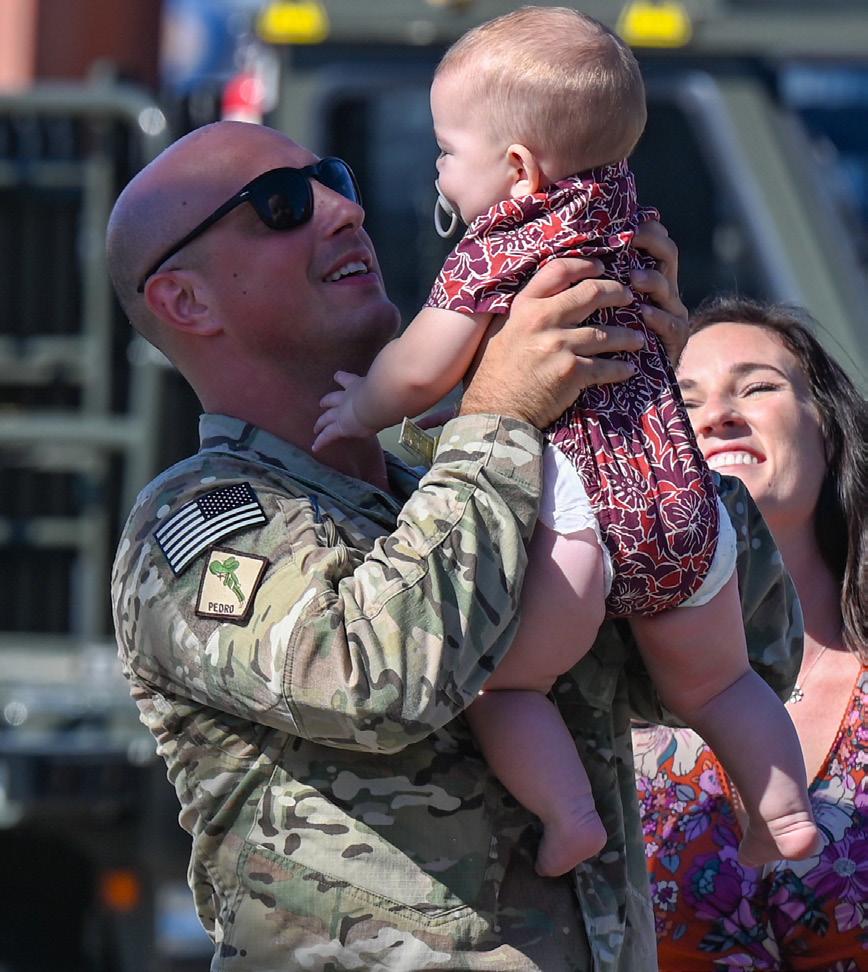
DADS & DEPLOYMENT A Talk with Military Fathers


HTTPS://ANGELCITYGAMES.ORG/SPECIAL-EVENTS-2025/


www.SanDiegoVeteransMagazine.com

Welcome to San Diego Veterans Magazine!
SDVM is a veteran-focused magazine throughout ALL San Diego & Southern California. It serves to assist all veterans, active military as well as their spouses and families.
It is the leading veteran magazine emphasizing resources & support and focusing on topics and issues facing today’s veteran community. SDVM focuses on resources, support, community, transition, mental health, inspiration and more...
The content is the driving force behind our magazine and the connection it makes with our veterans, service members, military families, and civilians.
The magazine is supported by the city of San Diego and a distinguishing list of veteran organizations & members, resource centers, coalitions, veteran advocates, and more. We are honored to share the work of so many committed and thoughtful people.
Despite all the challenges, our team has upheld their focus and let not one opportunity go to provide resources and support to our veterans & military personnel.
On behalf of our team, we wanted to take this moment to say THANK YOU to the readers and our military-veteran community for supporting our magazine. With that support we aim to make a difference and continuing to make a profound impact on the quality of life for our veterans, military personnel and their families.
If you want to catch up on the current and past issues, please visit: www.sandiegoveteransmagazine.com/archives
Mike Miller
Editor-In-Chief
mikemiller@sdvetsmagazine.com
www.sandiegoveteransmagazine.com
Publisher
Editor-In-Chief
Mike Miller
Monthly Columns
What’s Next In Transition
Eve Nasby
Human Resources
Paul Falcone
Franchise Dreams
Doug Dwyer
Successful Transitioning Stories
Dr. Julie Ducharme
Veterans in Business
Barbara Eldridge
Risky Business
Hadley Wood
Real Talk: Mental Health
Hope Phifer
PTSD: Reclaiming Control
Robert ‘Bob’ Cuyler, PhD
Legal Eagle
Kelly Bagla, Esq.
Veterans Chamber Commerce
Joe Molina
Midway Magic
David Koontz
Veterans Chamber Commerce
Joe Molina
Contributing Writers
Wounded Warrior Project
Disabled American Veterans
(In-House) Correspondents
Holly Shaffner
CJ Machado
Lori Noonan
mikemiller@SDVetsMagazine.com
FIGHTING PTSD


Adding a Little Spice to a Sea Story
Even though they haven’t flown a Navy or Marine Corps aircraft in decades, when you gather together a group of former naval aviators on the flight deck of the USS Midway Museum, museum guests are apt to hear a lot of incredible stories. Now, it’s quite possible that the stories they tell are no longer 100 percent true, but they do make for much more exciting accounts of adventures in the sky and on the high seas.
Such verbal hijinks on the part of these former fliers reinforces Mark Twain’s old adage of never letting the truth stand in the way of a good story.
“Well, at my age, I don’t think there’s many people left who can really fact-check my stories anymore,” said a smiling Pence Parsons, a 79-year-old volunteer docent

at the USS Midway Museum and a former Navy E-2C Hawkeye naval flight officer. “Are we prone to stretch the truth a tad, well maybe. But a little embellishment here and there can add some extra spice to a story. It’s funny how memories start to wander the older you get. Sometimes I can almost convince
myself that’s the way things might have really happened.”
“Meet the Aviators” is a one of the highlights of Midway’s annual Legacy Week activities over the Memorial Day Weekend. On one day each year, more than 100 former naval aviators, as well as few ex-Air Force and Army pilots and aircrew, wedge themselves into their old flight suits and flock to their old aircraft exhibited on the ship’s flight deck to extol and entertain
the museum’s holiday-weekend visitors with thrilling yesteryear yarns of their flying days.
“I want our guests to learn something and have fun,” said Scott Smith, a former U.S. Army National Guard aviation mechanic and helicopter crew chief who has been a Midway volunteer docent since 2022. “Sometimes that involves a little lying for a laugh. Most stories involve the people we served with and that shows camaraderie and having fun. It’s a cool way to portray patriotism.”

Creating a completely fictional story, however, is verboten. Any trivial aggrandizement needs to be grounded in reality. The additional minor constructs are merely enhancements to a real story that can help inspire and excite.
“A slightly exaggerated story still has to have plausible elements of truth,” said Tom Finley, a Midway docent with more than 8,500 volunteer hours who flew SH-3 Sea King helicopters during his 30-year Navy career. “Sometimes you have to make the story a little more interesting and fun enough for everyone, especially kids. If they can understand that an average person like me can be lucky enough to do really interesting things, they get psyched up about flying. They see that if they work hard, they can grow up to do exciting things too.”
Scott Smith and Tom Finley
“The nature of what we do can be seen as a dangerous and tough job,” said Julie Jackson, who flew SH-3 Sea King and MH-53E Sea Dragon helicopters during her two decades in the Navy. “We don’t want to alarm the public with our stories, so sometimes we need to soften the edges of the story or experience a bit. This makes what we do more relatable and humorous.”
The former aviators who volunteer on Midway each have a pocketful of favorite stories they love to regale guests with during their visits to the ship. For Willis King, a former Marine Corps CH-46 Sea Kight helicopter pilot, one of his standby tales transports museum visitors to the east coast of Africa.

“You always have to start the story with ‘it was a dark and stormy night,’” laughed King, a Midway docent since 2013 with more than 6,000 volunteer hours. “It’s not hard to forget some of the key ingredients to the real story after a while.”
This flying story of choice for King actually does take place on a dark night, just not a stormy one. He quickly has guests glued to his chronicle of a night vision goggles training flight near Mombasa, Kenya in 1985 when his squadron was deployed on the amphibious assault ship USS New Orleans (LPH-11).
When flying with night vision goggles, a pilot’s field of view is significantly narrowed. As such, they are able to primarily focus on what is directly in front of them, and not what may ordinarily be seen in their peripheral vision. After flying a series of training maneuvers, King’s crew chief told him and his co-pilot they really need to see the bigger picture. Once they took off the goggles, they saw that they were inadvertently chasing a large herd of 30 or more elephants.
As King finished the story with a broad grin, he tells his captivated listeners that it was one of his most memorable flights and a once-in-a-lifetime experience. King’s story is excitingly told and is definitely plausible, but is it completely true? You be the judge.

www.midway.org/contact/volunteer-opportunities
www.midway.org

JUNE 2025


JUNE 2025

Real Talk: Mental Health
By Air Force Veteran Arturo Antonio Garcia, Clinician & Marine Corp Veteran Shawn Grant, Clinician
The Steven A. Cohen Military Family Clinic VVSD, San Diego
www.cohenveteransnetwork.org


Dads & Deployments: A Talk with Military Fathers
As Father's Day is celebrated this June, we turn to military fathers to gain insight into what it's like being a dad while on deployment. Their experiences are unique, and often challenging, as they balance their duties being in the military with their responsibilities as fathers. Through their answers to our questions, we hope communities learn about the difficulties they face, the joys they experience, and the ways they stay connected to their families while serving their country. These stories are a reminder of the sacrifices made by military families and the strength of the human spirit in the face of adversity.
What is it like preparing a family for deployment?
Shawn: Preparing for deployment can be tough. But it also provides a time to reflect on what is important. My family is the most important. But I also signed a military contract to serve my country, and that must be fulfilled. My family is anxious because there is so much going on with everyone: the children are involved in activities I will miss because of deployment, my wife is worried because she is going to have to take care of everything on her own while I am away, and the biggest worry for my family is me being in danger while I am overseas. There are so many things to worry about, yet there is so little time to address all the worries. I think separating the deployment into 1) beginning, 2) middle, 3) and “daddy is coming home soon” phases. This separation of time helps everyone cope with such a long deployment period.
Arturo: A big part of my career was spent on standby or in a status that led us to believe we could go out the door any time. I know, this sounds funny coming from someone in the Air Force, but it is true. Bottom line upfront, I would do my best to focus on my family while I was at home because it is difficult to do that when we are away. One way that we stayed prepared was by automating payments as much as possible. This might be common practice for some but for others paying bills can be a daunting task. I know this isn't game-changing information, but our families must continue their daily activities without us. Another thing we would do is take advantage of the time together, including using Leave. It wasn't always easy, but I would be present at home. Random phone calls from work and deadlines for assignments at work would often derail that, but I would try to be as present in the moment as possible when spending time with my family. Then when I would take Leave, it was important to try detaching from work and focus on family time.
What is it like being away from family for long periods of time?
Shawn: Life on deployment is much different now compared to many years ago. Technology has opened a way to stay connected with family through vivid video connection to families. The connection to my family with social media was very helpful in passing the time. We would exchange letters, send each other gifts, and try to communicate as much as possible about updates on what my family was doing and what I was doing on deployment. One of my favorite things to do with my children was to encourage them right before sports activities or even pray together when they asked me to.
Arturo: We had our first baby later in my military career. By that time, holidays and milestones had lost their significance. Luckily, they were not for my wife, and she made sure that we celebrated in unique ways. One year, she ordered a life-sized cardboard cut out of me so that I could “attend” a party. Afterward, we would laugh looking at the photos of people dancing with “me.”

Cohen Veterans Network focuses on improving mental health outcomes, operating a network of outpatient mental health clinics in high-need communities, in which trained clinicians deliver holistic evidence-based care to treat mental health conditions.

Father's Day was founded in Spokane, Washington in 1910 by Sonora Smart Dodd. In 1966, President Lyndon Johnson signed an executive order that the holiday be celebrated on the third Sunday in June. Under President Richard Nixon, in 1972, Congress passed an act officially making Father's Day a national holiday. (Six years later, Sonora died at age 96.)
Father’s Day 2025 will occur on Sunday, June 15.
Veterans Chamber of Commerce
By Joseph Molina veteransccsd@gmail.com www.vccsd.org

What Is a Veteran Father?
A veteran father is a unique blend of strength, sacrifice, and service—qualities deeply rooted in both his military background and his role as a parent. He is not only a protector of the nation but also a guardian and protector of his Family. His identity is shaped by experiences few others can understand, yet he channels those into fatherly-love, discipline, and guidance for his family.
A Dual Role of Duty and Devotion
Veteran fathers have worn the Military uniform, often facing the harsh realities of separation, and sacrifice. Their sense of duty, are directed toward defending national freedoms, are also identified in their commitment to protect, defend and provide for their family. This dual responsibility shapes their motivations in some very powerful ways:
• Service Beyond: For a veteran father, the mission doesn’t end with discharge from service. Protecting his family becomes his new calling—fighting now with wisdom, hard work, and family love.
• Discipline and Structure: Military training instills habits of order, responsibility, and resilience. These become tools for parenting, teaching children the importance of integrity, respect, and accountability.
• Sacrifice Reimagined: Having already endured the ultimate test of sacrifice, a veteran father applies this mindset to family life—often placing his family’s needs above his own without hesitation.
What Motivates a Veteran Father?
A veteran father is driven by deeply rooted values, many of which were forged in military service but have grown even stronger through fatherhood:
• Protection of Family and Freedom
The instinct to shield loved ones parallels the commitment once made to defend the nation. Whether it’s ensuring their physical safety or providing emotional support, his protective instincts are always active.

• Legacy of Service
Many veteran fathers aim to instill in their children a sense of honor, patriotism, and community service. Their own sacrifices become life lessons that inspire their kids to live with purpose and integrity.
• Desire for Stability
Having faced instability during deployments, a veteran father often strives to create a stable, secure environment at home. This includes financial responsibility, emotional presence, and consistent parenting.
• Healing Through Fatherhood
Raising children provides a sense of healing and purpose. Many veteran fathers find renewed strength and identity through nurturing and mentoring their children.

Conclusion
A veteran father is a man of courage, commitment, and compassion. His military past doesn’t just inform his parenting—it enriches it. Through discipline, protection, and fatherly-love, he continues his service— this time, on the home front.
If you would like direct assistance, feel free to contact us, we will be happy to help! just send us an email at: veteransccsd@gmail.com
The National Veterans Chamber will be more than happy to meet with you and provide some guidance. Check us out at: www.vccsd.org (Our Chamber of Commerce Membership is FREE for all Military/Veterans and their extended families)




Real Talk: Mental Health
By Giselle Vallejo, LPCC, NCC, Associate Director/Lead Clinician The Steven A. Cohen Military Family Clinic at VVSD, San Diego
ALetterforYourSupportSystem DealingwiththeEffectsofPTSD

Dear supporter,
If you’re reading this, it means you’ve likely devoted significant time and effort to supporting a loved one living with PTSD. You may feel unsure about how to help, overwhelmed by sadness or frustration, or questioning whether your efforts are making a difference. Supporting someone with trauma is complex, and it’s okay to feel uncertain, exhausted, or lost along the way.
This message is for you—to remind you that your feelings are valid and to encourage you to care for yourself as much as your loved one. Your well-being is essential in this process, and you matter.
How PTSD Affects Relationships
Communication challenges
PTSD can disrupt communication. Your loved one may struggle to express emotions, avoid conversations, or easily become irritable. You might not always understand their triggers or emotional states, leading to misunderstandings. They may also fear vulnerability, making openness difficult.
Emotional distress
Being close to someone with PTSD can feel emotionally draining. You may experience feelings of helplessness or confusion, and emotional burnout is common. Their emotional numbness or detachment might leave you feeling neglected, and anxiety or depression can affect you both.
Common
stressors in relationships
Relationships with someone experiencing PTSD often face added stress. Trust issues may arise, financial struggles could emerge if they face work challenges, and social isolation might occur as they withdraw. Parenting conflicts may also surface due to differences in coping styles or emotional availability.
Caring
for Yourself
1. Give yourself grace
You don’t need to know everything about PTSD or handle every situation perfectly. Allow yourself to make mistakes, feel uncertain, or even frustrated. Selfcompassion is just as important as the compassion you give others.
2. Make time for yourself
Caring for someone can make it easy to lose yourself. Dedicate time to activities that bring you peace and joy, like reading, exercising, or spending time with friends. Taking care of yourself isn’t selfish—it’s essential.
3 Set boundaries
Establishing boundaries around your time and energy helps protect your well-being. Healthy boundaries also foster mutual respect and create stability in your relationship.
4.Build a support system
You don’t need to face this alone. Seek support from friends, family, or groups that understand your experience. Support networks can provide encouragement and a sense of community.

Supporting Someone with PTSD
1. Learn about PTSD
Educate yourself on PTSD symptoms and triggers, such as avoidance or distress. This knowledge can help you respond with empathy and reduce confusion or frustration.
2. Show understanding and empathy
Your loved one’s reactions might seem distant or unpredictable. Try to respond with compassion rather than judgment. Offer validation through simple phrases like, “I’m here for you” or “That must be really difficult.”
3. Plan activities you both enjoy
Healing can happen through shared positive moments. Encourage safe, enjoyable activities like walking, cooking, or watching a movie together. These can help rebuild trust and foster connection.
4. Practice better communication
Effective communication is key. Use active listening, “I” statements to express your feelings, and pay attention to nonverbal cues like tone and body language. When tensions rise, calmly ask for space in a respectful way.
Seeking Professional Support
Remember, you are not alone. Professional support for both you and your loved one can provide valuable tools and strategies. Organizations like Cohen Veterans Network (CVN) offer accessible resources, including clinics tailored to post-9/11 veterans, activeduty service members, and their families. If talking with a professional isn’t an option, consider online tools like CVN’s Tools for Stress & Worry.
Caring for someone with PTSD is challenging, but you don’t have to do it alone. By prioritizing your own wellbeing, building support systems, and working toward healthier communication, you can foster a more supportive and balanced relationship.
Sincerely,
Giselle Vallejo, LPCC, NCC
Healing Through Water: New Research Confirms Aquatic Therapy's Impact on Veterans with PTSD Transformative Results for
Non-
Exposure PTSD Treatment at Healing Wave Aquatics
By Healing Wave Aquatics Editorial Team
Healing Wave Aquatics has witnessed the transformative effects of trauma-informed aquatic therapy on veterans struggling with Post-Traumatic Stress Disorder (PTSD) for the past 14 years. As the only nonprofit in the nation providing aquatic therapy to address PTSD symptoms, Healing Wave Aquatics is committed to a high level of care. Now, we have scientific validation from evidence-based research: our aquatic therapy program significantly reduces PTSD symptoms among military veterans.
A groundbreaking study published in the prestigious journal Stress and Health earlier this year provides compelling evidence for the effectiveness of our traumainformed aquatic therapy approach. The research, conducted in collaboration with the VA San Diego Healthcare System and University of California San Diego, tracked 105 veterans and six active-duty service members who participated in our program during 2023.
The results were remarkable: participants who completed at least four sessions showed an average reduction of 14.4 points on the PTSD Checklist Military Version (PCL-M), representing a clinically significant improvement in their PTSD symptoms. More impressively, 64% of participants achieved a clinically significant response (≥10 points), and more than onethird showed symptom decreases exceeding 20 points.
"The magnitude of these PTSD symptom reductions compares favorably with effect sizes reported for established evidence-based treatments," notes Dr. Thomas Rutledge, PhD, ABPP, Staff Psychologist at VA San Diego Healthcare System and Professor of Psychiatry, UC San Diego and lead author of the study. "The large effect size we served (Hedge's g = 0.99) represents approximately a one standard deviation reduction in symptoms, which is remarkable for an 8-week intervention."
This raises an important question: How do these results compare to traditional PTSD treatments?
Conventional talk therapies like Cognitive Processing Therapy (CPT) and Prolonged Exposure (PE) typically require 12-16 weekly sessions before showing significant improvement. Similarly, medication treatments for PTSD, such as SSRIs, often take 6-12 weeks to reach full effectiveness and may produce more modest symptom reductions. The rapid and substantial improvement seen in just 8 weeks of aquatic therapy represents a potentially more efficient path to symptom relief for veterans challenged with Post-Traumatic Stress.
Different Approach to Healing
Unlike traditional PTSD treatments that often involve medication or exposure therapy, our trauma-informed aquatic therapy offers a gentle alternative that focuses on creating safety, trust, and relaxation in a supportive environment. During each session, participants work one-on-one with trained practitioners in a heated pool, experiencing carefully guided movements that promote physical and emotional well-being.
Conventional treatments have their limitations. Talk therapies like Cognitive Processing Therapy often require veterans to repeatedly confront traumatic memories - a process that, while effective for some, can be too overwhelming for others, leading to high dropout rates. Many evidence-based PTSD treatments show dropout rates of 30-40%, due to the discomfort of

exposure-based therapies or medication side effects. Medications may also help manage symptoms but frequently come with unwanted side effects and do not address the underlying trauma. In contrast, the trauma-informed aquatic therapy program at Healing Wave Aquatics provides a non-exposure alternative that works with the body to create feelings of safety and connection without requiring veterans to verbally process their trauma or manage medication side effects. Referring psychologists have noted that when the program is combined with traditional talk therapy, progress can be accelerated.
Not only does Healing Wave Aquatics have a 76% completion rate, but the study also highlighted the program's exceptional participant satisfaction, with an average rating of 4.9 out of 5, indicating that veterans not only experienced symptom improvement but also genuinely appreciated the therapeutic experience.
"You can say – based on our data – not only that veterans get meaningful improvements in their PTSD symptoms, on average, but actually enjoy the process of getting better. Your satisfaction numbers might be higher than I've ever seen for a PTSD treatment!” -- Dr. Rutledge
Our trauma-informed aquatic therapy achieves these results in an 8-week program; this highlights faster progress comparable to traditional treatments that often require 12+ weeks to show similar magnitudes of improvement.
Looking Forward
As we continue our work with veterans and others affected by trauma, this research reinforces our commitment to providing innovative, evidence-based care. Looking ahead, we are expanding our PTSD program to First Responders who are dealing with PTSD.
Healing Wave Aquatics offers its 8-week program at no cost to low cost for qualifying veterans, active duty members and First Responders who provide ID, proof of PTS symptoms from a mental health provider, and income statement. We also offer a 4-week benefit program to caregivers who provide full care of a loved one with PTSD.
For the thousands of veterans struggling with PTSD, these findings offer hope: a gentle, non-medication, non-exposure treatment option.
To learn more about Healing Wave Aquatics' traumainformed aquatic therapy program or to support our work with veterans, visit healingwaveaquatics.org or contact us at info@healingwaveaquatics.org, 619-453-0953. healingwaveaquatics.org

psychedelic treatments for veterans with PTSD in recovery for addiction
There’s a moment every operator knows—when adrenaline sharpens the senses and time fractures into clarity. A flash of movement. A teammate’s blood on your hands. The dull ache in your chest as you steady your breath and carry on. These moments don’t just pass—they imprint themselves into your nervous system. You come home, but your body stays in the field. For many veterans, that’s where the real war begins.
The Tactical Toll of Trauma
Post-traumatic stress Disorder (PTSD) isn't weakness. It’s an injury—one that rewires the brain’s threat detection system. In combat, it keeps you alive. At home, it turns a car backfiring into a full-body alert. Add substance use—a survival tactic turned rogue— and you’ve got a mission with no clear exit.
Traditional treatments—SSRIs, CBT, exposure therapy—help some. But many remain stuck in the loop: hypervigilance, insomnia, rage, shame, numbness. The VA does what it can, but can’t always move fast. So some go off-grid, crossing borders in search of healing.
Ibogaine: The Operator’s Psychedelic
Jess Quezada, a Marine Corps veteran, knows the war doesn’t end when the uniform comes off. After years of battling alcoholism—despite yoga, therapy, and CBT— she flew to Cancun for something different.
At Beond, an ibogaine retreat with clinical oversight and ceremonial care, she experienced a breakthrough.
“Ibogaine is a medicine, not a drug. It one million percent worked,” Jess told me. “It showed me why I became an alcoholic. I felt it—the link between my trauma and addiction. It helped me break old patterns.”
That’s not just poetic—it’s neuroscience. Ibogaine interacts with NMDA, kappa-opioid, serotonin, and dopamine receptors. It reduces cravings, resets withdrawal symptoms, and promotes neuroplasticity. Studies confirm what Jess experienced: a single highdose treatment can reduce opioid and alcohol cravings for months or longer.
But it’s not magic. It requires medical screening, psychological readiness, and expert execution. Jess’s treatment was safe and intentional. What struck me wasn’t just her sobriety—it was her clarity. Her command presence returned. Her mission shifted. Now, she helps others heal.
The Battlefield Brain and Psychedelics
PTSD and addiction damage the brain’s circuitry. The amygdala—the threat radar—goes haywire. The hippocampus, which holds memory and context, weakens. The prefrontal cortex—your rational center— dims. Psychedelics don’t erase trauma, but they help reprocess it.
• Psilocybin enhances neuroplasticity and loosens trauma patterns. In JAMA Psychiatry, it reduced depression by 71% in treatment-resistant patients.
• MDMA, in late-stage FDA trials, reduces fear and enhances trust—allowing trauma to surface without overwhelm. In one study, 67% no longer met PTSD criteria.
• Ayahuasca and 5-MeO-DMT offer catharsis and spiritual clarity. They’re not recreational—they’re powerful, and for the right veteran, they can be lifechanging.
• Ketamine, already FDA-approved, provides rapid relief from depression and may disrupt addictive loops via NMDA modulation.
These aren’t party drugs. They’re tools—like NVGs or suppressed rifles. Used carelessly, they’re dangerous. Used with precision, they save lives.
Behind Enemy Lines: Access and Advocacy
Despite growing evidence, most psychedelic therapies remain illegal in the U.S. Ibogaine is unavailable domestically, forcing veterans to travel abroad—often to Mexico, Costa Rica, or Peru—for access.
That’s unacceptable.
Why should warriors be forced into medical exile to receive care that works? Bureaucratic delay shouldn’t be a death sentence. Veterans have already gone behind enemy lines for this country. They shouldn’t have to do it again to heal.
Groups like MAPS are pushing for change. MDMAassisted therapy may receive FDA approval this year. Psilocybin could follow. Ketamine is here but underused. Still, access is fragmented, and insurance rarely covers it.
We must do better.
The Path Forward
As a double board-certified psychiatrist and addictionologist running a veterans program, I don’t chase trends—I follow evidence. I’ve seen the failures of our current system. I’ve watched warriors spiral despite their strength. I’ve also seen what happens when the right tools are used with precision and purpose.
Jess’s story isn’t a miracle; it’s what happens when innovation meets courage.
For veterans reading this: you’re not broken. You’re wounded, and wounds can heal. There are tools—some ancient, some new—that honor your strength, your intelligence, and your pain.
For clinicians and policymakers: the science is here. The need is urgent. The question isn’t whether psychedelics work—it’s whether we’ll build the infrastructure and access fast enough to meet the moment.
From the Shadows
War leaves marks—on bodies, minds, and hearts. But healing is possible. Psychedelic therapies like ibogaine are helping veterans come home—not with false hope, but with neuroscience, integrity, and transformation.
Jess didn’t just get her sobriety back. She got herself back.
And that, in the end, is the mission: not just to survive, but to come home whole.

Lucas Trautman, MD, MPH, ABPN, ABPM is a double board-certified psychiatrist and addictionologist, and the medical director of Oxford Treatment Center’s Veteran’s Treatment Program. oxfordtreatment.com


Mental Health disorders does not always allow the affected to seek help. Lend a hand and provide them with methods of help, listen and be a friend.
San Diego Veterans Magazine works with nonprofit veteran organizations that help more than one million veterans in lifechanging ways each year. At San Diego Veterans Magazine you can visit our website for all current and past articles relating to mental health, PTSD, symptoms, and resources.
Resources & Articles available at:

PTSD: Reclaiming Control
By: Robert ‘Bob’ Cuyler, PhD Psychologist and Trauma Expert


We’ve been observing PTSD Awareness Month each June since 2014, after Congress designated it following the suicide of a National Guard member following two tours in Iraq. Estimates from the National Center for PTSD are that about 13 million adults currently are experiencing the symptoms and burden of PTSD, and about six percent will have a lifetime episode. In the years since, we have made progress on several fronts. Recent research on suicide has reported declines in rates for some groups, including female veterans and younger veterans. Availability of the Veterans Crisis Line (988-1 or 1-800-273-8255) has shown decreased suicide rates for users.
Recognition that PTSD is not just a military or combat condition is an important one. The media has been more active in discussing the impact on civilians, from mass events like hurricanes and wildfires to individual events like sexual assault and violent crime. The pandemic started the first honest discussions of trauma in medical settings, when an unexpected and terrifying new illness emerged suddenly, and previously healthy people were on ventilators surrounded by doctors and nurses suited up like astronauts. We also have increased awareness that trauma can come from a single, major event, an accumulation of earlier minor traumas or losses (especially early in life), or both.
It is also important to be mindful that trauma does not equal PTSD. Most people, including combat veterans exposed to traumatic events, do not develop PTSD, even though that trauma exposure may have been initially quite stressful and memories of the events may stay with them forever. Along these lines, the increased awareness of trauma has led to a broadening of the concept to the point that the term can lose some of its relevance and specificity. Similarly, the looseness of the definition of attention deficit disorder over time has led to concerns about overuse of stimulants and the blurred lines between health conditions and normal overexuberance.
But by far, today’s challenges are with access and options for those with PTSD. We have a significant shortage of practitioners, particularly in non-urban areas. Half of all Americans live in Mental Health Professional Shortage Areas, a problem compounded by the lack of specialty training in evidence-based PTSD therapies. Yet another challenge is that stigma and reluctance to engage in therapies that involve exposure to reminders of trauma deter many from seeking care. Options that increase choice and
respect the individual needs of each user have seen increased adoption as of late. Our work with the FDA-cleared Freespira treatment for PTSD symptoms represents one of a handful of emerging evidencebased therapies that complement talk therapy or medications.
We are hearing about the current turmoil in the VA, with some reports of challenges in accessing timely care or using telemedicine. Veterans, however, have options through Community Care networks if their local VA does not provide the specific care they need or if wait times or distance are a factor. More information is available at https://news.va.gov/124302/community-care-whoeligible-how-can-access-it
We hope that the increased awareness of PTSD can result in individuals and their families increasingly acknowledging the problem, seeking information on options, and pursuing care vigorously. Healing news.va.gov/124302/community-care-who-eligible-how-can-access-it

Awareness Month

Dr. Cuyler is chief clinical officer of Freespira, an FDA-cleared non-medication treatment that helps people with panic and PTSD manage their symptoms by learning how to regulate their breathing. www.freespira.com

www.freespira.com/veterans


PTSD Through the MST Lens
By Amber Robinson
According to a website run by nonprofit, Unbroken Warriors, over 540,000 veterans have been diagnosed with PTSD. What the military is not talking about is how many of those cases were caused by Military Sexual Trauma? The VA reports that 1 in 3 women and 1 in 50 men said “yes” when screened for MST in its most recent report.
Although combat PTSD is no joke, and something I struggle with, the PTSD load from sexual trauma is heavier. Sarah Blum, Vietnam veteran, licensed therapist and author of “Women Under Fire: Abuse in the Military”, says the depth of PTSD from MST is because a sexual assault is experienced as a breach in a person’s sense of self and bodily integrity. Thus, she says the victim’s feelings of safety, self-worth and self-trust deteriorate, making them question their safety, themselves and others constantly.
In service, assaults are doubly damning in that it undermines the much-needed trust between military brothers and sisters in arms. What does it mean if you can’t trust the service member to your left or right during training or a deployment?
“To those who see their military unit or core as family, which that is encouraged, then the violation equates to incest,” said Blum.
Once the trauma of an assault has damaged the brain, the survivor can become haunted by the event as their brain triggers them back to it over and over again. Triggering as well as dissociation during and after the event leaves survivors with an inability to connect to self and others.
“Our thinking brain is shut down during trauma,” said Blum. “Survivors of MST become emotionally numb, unresponsive to the world around them, and thus they cut themselves off from resources.”
Without the ability to connect to themselves and others, MST survivors can flounder. Many are often forced out of service for personality disorders that are actually acute PTSD. Symptoms such as anger, depression or issues with self-perception and relationships can easily be classified as personality disorder symptoms and often are.
Unfortunately, for many survivors, a personality disorder is enough to separate them from service, many with an other than honorable discharge. Without honorable service on their record, most are ineligible for their

a survivor of
earned benefits. This, coupled with the symptoms of their PTSD, are sometimes enough to push survivors into homelessness, addiction or suicide attempts. Sometimes these survivors lose the fight and become one of the 22 a day. But, more often, they find a path to healing.
In past issues, I’ve highlighted the healing journeys of veterans such as Marine veteran, artist and advocate Luz Helena Stacey Thompson, who was given an other than honorable discharge for alerting a local politician to her case. Discharged without benefits, she fought the VA for 16 years to get back what she’d earned.
Now, Thompson, along with many others I’ve met in my advocacy journey, have turned over a new leaf. Thompson is now an artist, surfer and art and surf teacher. She’s happily married with three beautiful kids.
“I still struggle,” said Thompson. “I may always struggle. But I know there’s always going to be a brighter day ahead if I can just get through it.”
Thompson says she credits her healing to her family, art, the ocean and her service dog, Reefer.
What Thompson accomplished took guts and resilience, especially after suffering and being discharged for a sexual assault. Air Force veteran Darci Standefer used that same guts and resilience to find healing after she was assaulted by an Air Force sergeant on a long bus trip.
After service her PTSD symptoms would erupt in angry outbursts at work, her family life suffered, and she would eventually lose her apartment and be at the mercy of family and friends for a place to stay. Standefer would make her first attempt with a steak knife in her kitchen, dragging it clumsily across her wrist. Luckily, she did not cut hard enough.
Her second attempt would be a few years later.
“I just remember thinking, ‘You know, If I killed myself, everything will be ok,” said Standefer. “It seemed like the most logical decision I could make right then.”
Standefer would drive up into the mountains, park and plug her tail pipe, with the intention of asphyxiating via carbon monoxide poisoning. Luckily, her second attempt also failed and would prompt her to finally go to the VA for help.
“I went in and told them I needed help, that I had just tried to kill myself,” said Standefer.
Standefer would do a “week in the psych ward”, as she says, but would come out with a better understanding of how to heal. From there she would begin taking medication and going to counseling. Initially, she says she thought meds and therapy would fix her, but soon learned who was really responsible.
“I started figuring out who had to do the actual work, the actual ‘fixing’, said Standefer.
Now, Standefer is in stable housing, and lives with her cat and dog. She says she still doesn’t date and doesn’t know if she ever will. But her life is still a far cry from where it was when she made an attempt to end her life.
Both Thompson and Standefer have learned that healing and often justice, take time and lots of patience. Both women will forever be changed, each living down a legacy of sexual violence that has plagued the service for far too long.
If you are a survivor of Military Sexual Trauma, please know that you are not alone. You can heal, you just have to take the first step.
If you or someone you know has suffered MST and needs help, call the DoD Safe Helpline at 877-995-5247 for immediate support and guidance or go to Connect and Find Support through DoD Safe Helpline
Visit Safe helpline for more information at: www.safehelpline.org/look-inside-Safe-Helpline

For California locals call your local Vet Center, most of which host MST group therapy. There is no better place to start than with others just like you.


benefitsquestions.org


Learn “Fight Club” rules
Fight but fight fair. Figure out what works for you and your partner. If Scott can leave the room for a bit, he’s willing to address a resolution when he returns. So now, instead of an argument lasting days, we resolve it in 15-20 minutes.
Learn your partner’s comfort zone
What do they like? What makes them nervous? Scott doesn’t like crowds, and he prefers to sit facing a door. So even now, even though he’s changed and grown, it’s his preferred place, so I will sit with my back to the door so he can face it.
Be mindful of your partner
Be aware of your partner and how he or she may react in certain situations. When you focus on each other –as opposed to watching a movie and scrolling on your phone – you may be able to identify subtle changes that could indicate things are bubbling to the surface.
Try something different
During Project Odysseys, couples are often challenged to try new things that may be uncomfortable for them. The objective is to help people process differently. Getting out of your comfort zone is hard, but that is where you grow and learn. For instance, Scott learned to kayak. I had no desire, as there was nothing about it that I wanted to like, but I tried it. Now, we have our own kayak and take multiple trips to a local lake when the season is right.
Embrace the new normal
We are not the same people we were 25 years ago. Everyone changes, whether through lived experiences in the military or otherwise. You must decide if you will embrace your new normal and how to be most effective.
To learn more, visit woundedwarriorproject.org or call 888.ALUM (997.2586) to connect with the WWP Resource Center.


Warrior Foundation Freedom Station: Hope,
Healing, and a Home.
At the heart of Warrior Foundation Freedom Station is a simple, yet profound mission: to support ill and injured post-9/11 service members as they transition from military service into their next chapter. Fulfilling this mission requires compassion, commitment, and an unwavering sense of honor. The transition from the battlefield to the home front is often fraught with uncertainty, physical pain, psychological injuries, and a daunting sense of isolation. Freedom Station provides a place where these Warriors can heal, regroup, and rebuild their lives with dignity and purpose.
Unlike many transitional housing programs, Freedom Station is uniquely structured. It is not a shelter or a temporary fix. It is a thoughtfully designed, community-oriented residential solution. Located in San Diego, the three Freedom Stations offer a
welcoming neighborhood of private, furnished cottages and shared spaces, where camaraderie flourishes and healing begins. Here, Warriors are surrounded by fellow peers who understand their challenges, as well as a support network that includes mentors, counselors, and staff dedicated to cultivating their success.
The Foundation’s wraparound approach is what sets them apart. Residents are not only provided with safe, affordable housing, but also the tools to succeed for the rest of their lives. From job training and educational assistance to counseling and life skills workshops, the support is comprehensive. Even more powerful is the personal mentorship that residents receive from those who have walked a similar path. This peer support becomes the glue that binds the community and fosters resilience.
“We are excited to offer 29 affordable housing cottages coupled with an individually tailored transitional housing program designed to make the Warrior win. Through mentorship, peer to peer support, and counseling, each are designed to enrich the residents’ lives allowing them to thrive and become success stories.” – Andrew Gasper, CEO, Warrior Foundation Freedom Station
Freedom Station is also an incubator for purpose. Many of the residents, once stabilized and supported, go on to become Legacy Warriors,
“We Vow to be a Hand-up; Not a Hand-out.”
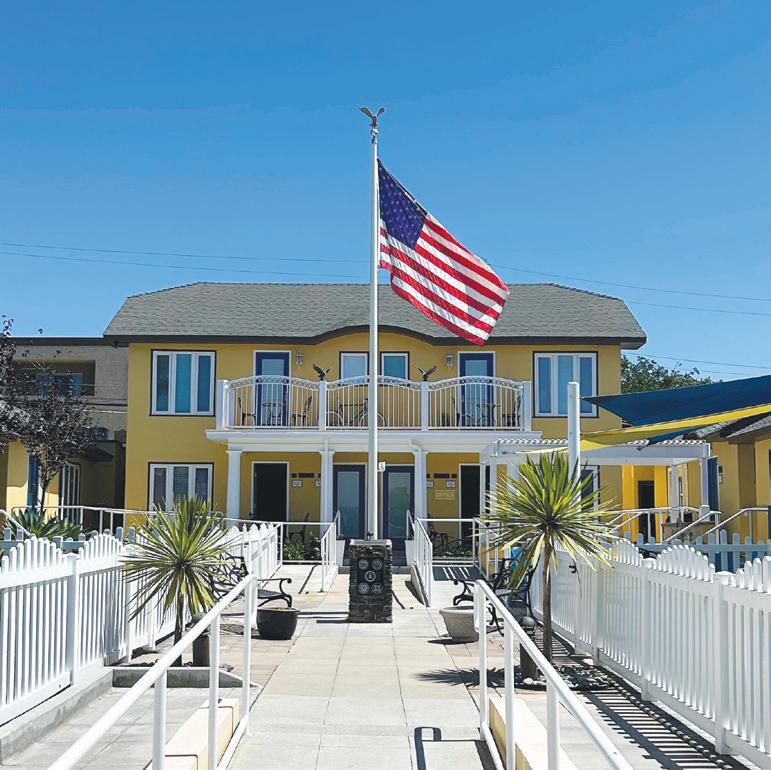


advocates, and role models for our next residents. The sense of purpose once carried with the uniform is powerfully rediscovered in new and meaningful ways. Whether it is through education, employment, or volunteerism, these men and women emerge stronger, determined to contribute again.
The true impact of Warrior Foundation Freedom Station is revealed not through statistics, but through the powerful personal journeys of those it serves. Men and women who once faced uncertain futures now hold their heads up high. Injured Warriors, some with life-altering injuries, have become competitive athletes. Individuals who arrived quiet and broken have rediscovered their voice, regained their confidence, and reclaimed their future. These are more than transitions — they are profound transformations.
In an era where public support for veterans is often vocal but not always tangible, Warrior Foundation Freedom Station offers a blueprint for what real support looks like. It is tangible, personal, and effective. It acknowledges the complexity of transition and meets it with a multifaceted, deeply human response. Warrior Foundation is a testament to what can be achieved when we commit not only to saying “thank you for your service,” but to showing it in real, life-changing ways.
“The foundation is awesome. You know the road I have walked is far from easy. It was time for something good to come my way. The foundation got me into a stunning home—a place that’s peaceful, safe, and beautiful. This isn’t just a house, it’s a new beginning. A space where I can breathe again, heal, and start dreaming forward. Better days are ahead. The hope you provide is real.”
- Glenn H., FS III resident
That is the essence of Warrior Foundation Freedom Station: not just homes, but hope. Not just support, but strength, and most importantly, not just words, but unwavering action. Visit WarriorFoundation.org for more information, to donate, or to get involved.


Education Built a New Future
- Veterans: The AI Revolution Is Here
- Veteran Community Matters After Service
- From Fighter Jet to Front Office
- Your Franchise Journey
- Photography Businesses for MilSpouses
- Entrepreneurs can Dominate their Market
- Workplace Health and PTSD Awareness
- You Must Protect Your Assets
- Careers in Law Enforcement


For editorial & monthly columns regarding transition, career advice, tips, workshops, transition to education, entrepreneurship, straight-forward legal tips for military and veteran business owners and more, visit Veterans In Transition. sandiegoveteransmagazine.com/category/veterans-in-transition


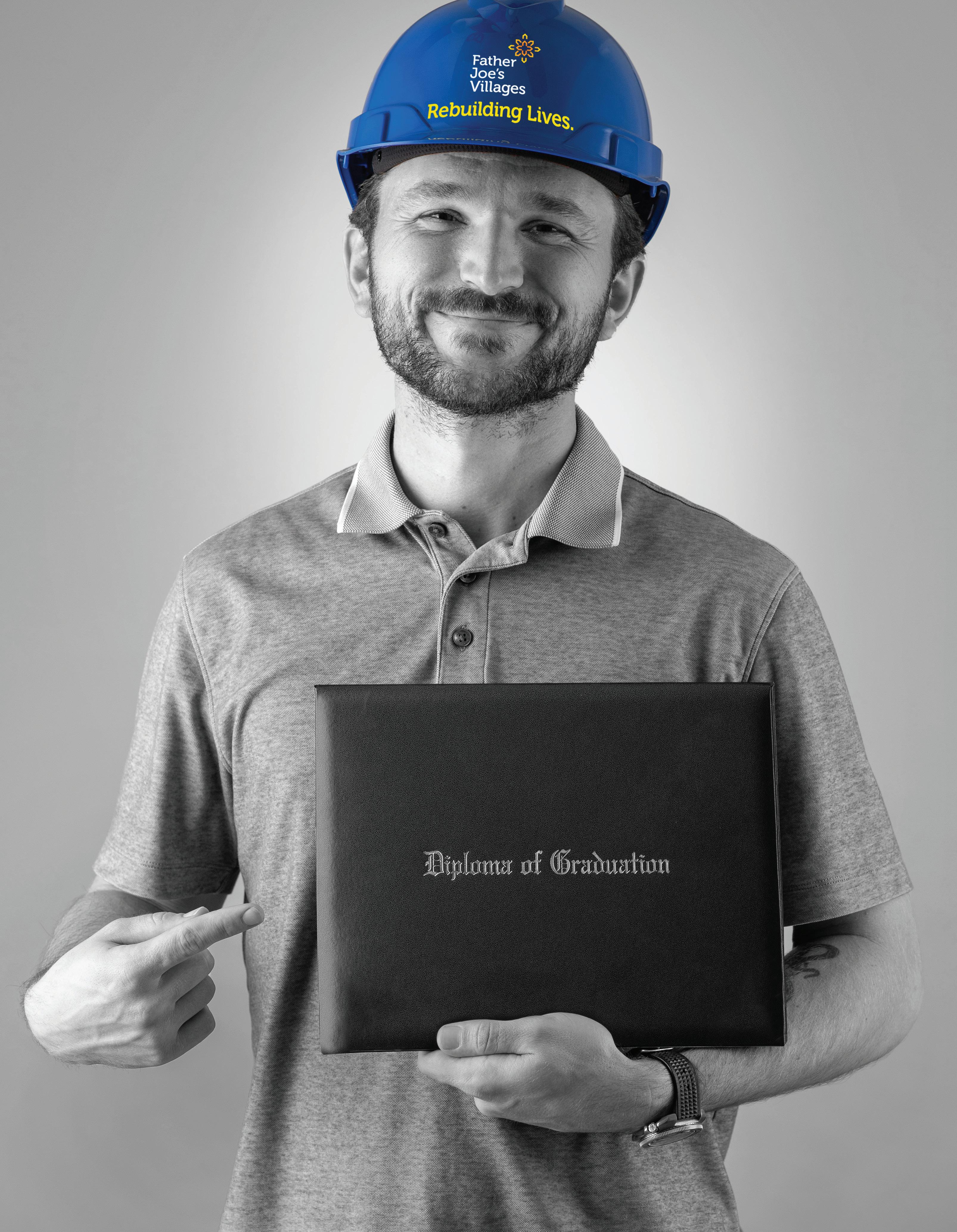
Military life is always moving—your education should move with you. At Los Angeles Pacific University, we offer 100% online, flexible programs designed for military members, spouses, veterans, and dependents. Wherever duty calls—on base, deployed, or at home—LAPU goes with you. Study anytime, anywhere!*
• Maximize Your Benefits – GI Bill®, Tuition Assistance & Spousal Aid
• Earn Credit for Military Experience – CLEP, DSST, JST & More
• Faith-Based Support – Military-Friendly Coaches Who Care
• Fully Accredited – Associate, Bachelor’s and Master’s Degrees Your Mission. Your Education. Your Pace. Take the Next Step


Voted #1 Military Friendly School & #1 Spouse School
*LAPU is currently unable to offer distance programs in select states. Visit website for details.



Veterans: The AI Revolution Is Here —Time to Take Action
By Maurice Wilson, MCPO (Ret) President & Executive Director, NVTSI (REBOOT) Maurice@nvtsi.org
The AI revolution is no longer on the horizon—it’s here, reshaping industries and redefining job roles. A recent Forbes article highlighted a stark truth: companies like Klarna, UPS, Duolingo, and Cisco are rapidly integrating AI systems that are replacing hundreds, even thousands, of jobs.
So, what does this mean for veterans? Opportunity. Veterans have always adapted to meet the mission— this is no different. Your discipline, resilience, and ability to operate in high-stakes environments make you an ideal candidate to thrive in AI-driven workplaces. But to lead in this next phase, you must act now to upskill in artificial intelligence and digital technologies.
- Why Veterans Must Upskill in AI & ICT
• AI is Replacing Jobs: Klarna’s AI chatbot now does the work of 700 employees. This shift isn’t theory—it’s happening.
• Veterans Are Ideal Candidates: Your mission-focus and tech-savvy background make you a strong fit for data, cybersecurity, and automation roles.
• San Diego is a Hotspot: The region’s Information & Communications Technology (ICT) sector is one of the fastest-growing in California—veterans should be leading in it.
- Three Things You Can Do Right Now
1. Enroll in Free Coursera AI Courses via NVTSI Learn AI fundamentals, machine learning, prompt engineering, and more—all at no cost for veterans.
• Start here - REBOOT On-Demand Learning Program www.coursera.org
2. Get Involved with VetsInTech – San Diego Chapter Network with fellow veterans in tech, attend live events, and plug into real hiring pipelines. VetsInTech helps bridge the gap between military service and highdemand tech careers.
Follow their chapter page and attend their next networking mixer - www.facebook.com/vetsintechSD
3. Explore the ICT Sector in San Diego
From cybersecurity to cloud computing, the ICT industry is booming. Learn what roles are in demand and where your military experience fits in. Check out resources via www.SanDiegoLifeChanging.org
Final Word
AI isn’t coming—it’s already here. And it’s transforming the job market in ways we haven’t seen since the Industrial Revolution. If you're a veteran, this is your time to pivot, retool, and take command of your future
Get started today at www.nvtsi.org and take your place in the ICT workforce of tomorrow.


Rooted: Why Veteran Community Matters After Service
By Anna Standrowicz
For me, being rooted as a veteran means being surrounded by people who just get it. There’s no need to explain, no pressure to talk, just that shared understanding in the silence. I felt that kind of connection most during hikes with the SVA group at PLNU when I was pursuing my degree. We’d be out in nature, walking side by side, not saying much, but feeling completely seen and understood. That quiet sense of belonging, that’s what rootedness feels like to me.
I’ve met some amazing veterans just by staying curious, reaching out through social media, and being open to what’s out there. When we leave the military, we often don’t realize how deeply we’re uprooted until we’re already drifting. I remember wanting nothing more than to be “free” when I got out, free from the schedule, the rules, the constant grind. But the further I got from it, the more I realized there’s nothing like the people you serve with. That bond doesn’t end when you hang up the uniform. It just waits for you to find it again...if YOU put in the effort to find it again.
One of the hardest things after transitioning out was losing the rhythm the military gave me, that built-in structure, both mental and physical. I used to be up before the sun, working out with my command, already fully dressed and in motion by the time most people were waking up. That kind of intensity, the unity that comes from sweating and struggling together, it’s rare out here to find again. But it is out here.


Whether it’s joining a veterancentered event like Veteran’s Sailing, pushing through a Tough Mudder with college vet friends (highly recommend), hiking, or volunteering in the community, the camaraderie that comes from shared experiences is powerful. Some of my friends, especially fellow women veterans, have found real connection and support in fitness communities like NXPT and Performance 360 in San Diego, both of which go out of their way to uplift

those who’ve served. I’ve learned that veterans can be stubborn. I know I can be. Opening up or stepping into a new group isn’t always easy. But the grit and unity we carried in uniform is still within us. Rediscovering that on the outside has been life-changing for me.
One of the most meaningful parts of my transition has been finding new ways to serve outside the uniform. For me, that began with my faith journey after getting out. I found a home at the Rock Church in Point Loma, located in a former Navy building near Liberty Station, a place rich with military history and deeply connected to our community. It’s not uncommon for me to run into other veterans or active-duty folks there, and that sense of familiarity always makes me feel at home. Through volunteering and taking the LIFE class, I began to rediscover my purpose. It reminded me that even though my military service had ended, the heart to serve never really goes away. It just finds new forms.
So here’s what I’ll say:
Your journey after service will look different from mine. We each walk our own path, but we all carry something only a small percentage of the population will ever truly understand. That bond doesn’t disappear when you take off the uniform. It’s still there on the outside, just waiting to be reclaimed.
When you get out, the silence can be loud. I used to laugh about how fast my phone would blow up if
I missed formation. Now? Nothing. That accountability, that sense of being seen, vanishes almost overnight. And with it can come loneliness, isolation, even depression. I’ve been there.
That’s why finding your people matters. Seeking out community might take time, and yes, it will take intentional effort. But I promise you, it’s worth it.

Just remember, we may not wear the uniform anymore, but the call to serve doesn’t go away. It simply changes shape. Out here, it looks like checking in on a buddy, showing up for a veteran event, reaching out to someone on social media who has served in your community and asking for help. You never know whose life you might impact or even save, including your own, just by taking that first step to put yourself out there and connect.
Please don’t choose to be alone when there are veteran communities out there ready to welcome you, support you, and remind you that you still belong.
Tough Mudder - toughmudder.com/events Veteran’s Sailing - www.vetsailing.org
NXPT - www.nxptfit.com
Performance 360 - https://perform-360.com
Rock Church - libertystation.com/go/rock-church

WHAT’S NEXT
Transition to Civilian Life
By Eve Nasby eve@infused.work

From Fighter Jet to Front Office: Lessons from 1,000 Miles Over Shark-Infested Waters
By Ed Rush


You haven’t truly experienced loneliness until you’re in a broken F-18, 1,000 miles fromland, with only one good engine and a lot of ocean between you and the nearest cold beer.
It started with a sound: “deedle-deedle”—the emergency tone pilots know and love (but mostly don’t love). Iglanced down and saw “L ENG PR” blinking like a neon sign at a bad motel. Translation: My left engine was about to become a very expensive paperweight.
So, like any good Marine pilot, I shut her down, trimmed the jet, and started doing math—airborne math. Which, if you’ve ever tried it, is like calculating your mortgage while skydiving. I figured I had about 800 miles to Wake Island and enough fuel to get there if I flew smart and prayed hard.
Meanwhile, my entire squadron flew off into the sunset like a patriotic screensaver. I was alone, slow, and possibly shark bait.
But I made it. And when I finally landed, the crew chief crawled out from under the jet and said, “Well sir, you’re lucky. That engine was seconds away from exploding. Good thing you shut her down.”
Now, what does this airborne horror story have to do with transitioning from the military to civilian life? Everything.
See, leaving the service can feel a lot like that flight— things go dark, your support system disappears, and you’re left doing life math at 500 mph. But just like I trusted my training in that jet, you can trust what you’ve already learned in uniform.
Here are three things you already know that will save your bacon on the ground:
1. Fly the Jet – In chaos, do the next right thing. When everything feels uncertain, just fly the jet. Make the call. Send the email. Show up. Action beats paralysis every time.
2. Debrief Everything – After every flight, we’d debrief what went right and what didn’t. Life’s no different. Learn from what worked, laugh at what didn’t, and keep moving.
3. Trust Your Wingmen – You’re not meant to do this alone. Find your people. Your new tribe might not wear flight suits, but they’re out there. And they’ll help you navigate the new terrain.
You Are Still the Mission
One of the hardest things to do after hanging up the uniform is realizing that your mission hasn’t ended—it’s just changed. The world needs your leadership, your clarity, your grit. It needs your voice.
When I started helping business owners and leaders, I realized something profound: the same skills that kept me alive at 20,000 feet were the ones helping people transform their companies—and their lives—on the ground.
And that’s where God came in.
When I was flying on one engine, there was a moment I stopped white-knuckling the stick and just asked, “God, what now?” That little prayer didn’t fix the engine, but it fixed my mindset.
Years later, I call that a “God Talk”—a simple conversation with the One who knows the whole flight plan. If you’re not sure what’s next, try asking. You’ll be surprised what you hear.
In fact, I wrote a whole book about it called God Talks. Not only will you have a fun conversation with your Creator, but you’ll also hear the full story of that engine failure.
Anyway, here’s the truth: You may be out of the service, but your mission isn’t over.
You’ve still got altitude left.
And trust me—if I can make it 1,000 miles on one engine, you can make it through this next chapter with both feet on the ground and your eyes on the horizon.
Jim

P.S. Oh—and if an airplane ever tries to kill you… smile. You’ve already been trained for that.

P.P.S. Your Call Sign Still Matters
You may not wear the uniform anymore, but the world still needs what you’ve got. You’re not a “former” anything. You’re a leader. A warrior. A protector. And if you let Him, God will show you the next mission—and it might just be your most important one yet.
So, take off the cammies, but keep the code. Lead with honor. Move with purpose. And when the lights go out and everything goes dark?
Ed Rush is a fighter pilot and a card-carrying member of the Million Mistake Club. Despite failing kindergarten, Ed graduated from Top Gun. Despite typing like a chicken on amphetamines, Ed wrote several best-selling books.
Ed’s hobbies include hiking, golf, fly fishing, and writing his own bio in the third person. He lives in San Diego with his wife, four offspring, and a bearded dragon named Smaug.
Ed’s superpower is showing entrepreneurs how to use their messages to change the world by creating more income and impact. Ed usually commits one big embarrassing failure per week online, so following him is a hoot. You can find him at: GodTalks.com and edrush.com
michael.morabe@crumilitary.org


www.infused.work
eve@infused.work
Your Franchise Journey Starts Here:
Free Expert Guidance
Franchise Wealth Consultants is dedicated to helping you achieve your entrepreneurial dreams and secure your financial future through business ownership.
Our Ideal Franchise Candidates Include:
• Aspiring entrepreneurs eager to control their future.
• Professionals aiming to transition from the corporate world.
• Investors seeking semi-absentee or passive income opportunities.
• Experienced operators looking to expand their portfolios.
• Veterans, public service professionals nearing retirement, and former corporate management professionals represent the largest segment of our franchisee base.
We Help You Find The Opportunity For Success!
• Franchising offers a proven business model and brand recognition
• FWC helps you successfully navigate the world of franchising, which can be overwhelming if you are not familiar with the process.
• We have access to the largest inventory of top-performing franchises through the IFPG network, the largest franchise network available.
Our
Consultations
& Services Are FREE TO YOU!
Why is it free? Our consultation comes at no cost to you because we’re compensated by the franchise companies—not by our clients. This means you get unbiased guidance and support, with your best interests as our top priority. So, there is not only no fee, but no obligation on your part.
We Can Find The Right Fit For Success - For You!
• Always personalized recommendations and expert guidance
• We’ll help you find the perfect franchise that aligns with your lifestyle, personality, goals, and budget - at no cost to you
• Clear, honest answers to your questions
• Need to explore financing options for your franchise? We can connect you with trusted partners.
We’re more than just consultants. We are your strategic partner.

Franchise Wealth Consultants, Ltd.
Visit us at franchisewealthconsultants.com Call us at 833-MY-NEWBIZ (833-696-3926) Contact us at Info@franchisewealthconsultants.com franchisewealthconsultants.com


Nonprofit Trains MilSpouses to Build Portable Photography Businesses
Sponsored by Navy Federal Credit Union, Portraits For Patriots® helps military spouses launch professional photography businesses, which they can run from any location.
Gabriel A. Pabellón Morales, a government contractor serving the US Marine Corps, was recently nominated for a job-related award. There was one catch, though: To proceed, he had to submit a professional headshot, something he hadn’t needed in his previous position with the Army’s storied 82nd Airborne Division.

For assistance, Pabellón Morales, a disabled Veteran, turned to his friend, Aidinés Medina Matheu, a member service representative at a Navy Federal Credit Union branch in Maryland. Medina Matheu arranged a complimentary photo shoot at her home studio, made possible by Portraits For Patriots®, a nonprofit that supports the military community.
In addition to providing free head shots for transitioning servicemembers, military spouses and Gold Star family members seeking employment, the nonprofit runs an academy that trains military spouses to be professional photographers permanent change of station (PCS)
orders arrive. The skills they develop during the program—along with the portable equipment—help them earn an income when moving across state or national lines.
"It’s really rewarding,” says Medina Matheu, one of 10 spouses enrolled in this year’s cohort, which is sponsored by Navy Federal.
Since January, she and her colleagues have taken a series of self-paced courses in portraiture and lighting. The credit union covers the cost of inhome studio equipment, editing software and other materials and provides expert financial guidance around entrepreneurship and business ownership. Military spouses aren’t the only beneficiaries: Veterans like Pabellón Morales walk away with a free set of professional headshots for use in cover letters, social media sites and other job-related materials.
“The Portraits For Patriots program not only honors our stories—it helps us reconnect with our purpose,” Pabellón Morales said. “It’s a powerful initiative that brings visibility and value to the sacrifice of Veterans and servicemembers and reminds us that our mission doesn’t end when we take off the uniform—it just takes a new form.”
Jerome Tennille, a Veteran who manages Navy Federal’s equity and corporate social responsibility programs and partnerships, echoes the sentiment. “This partnership aligns with Navy Federal’s mission to support military families and transitioning servicemembers to find meaningful careers after service,” he said.
Supporting MilSpouse Entrepreneurship
Medina Matheu got her first formal taste of snapping pics a few years ago while earning a bachelor’s degree in biology at the University of Puerto Rico. On a whim, she enrolled in a wildlife photography class—and fell in love with the craft.
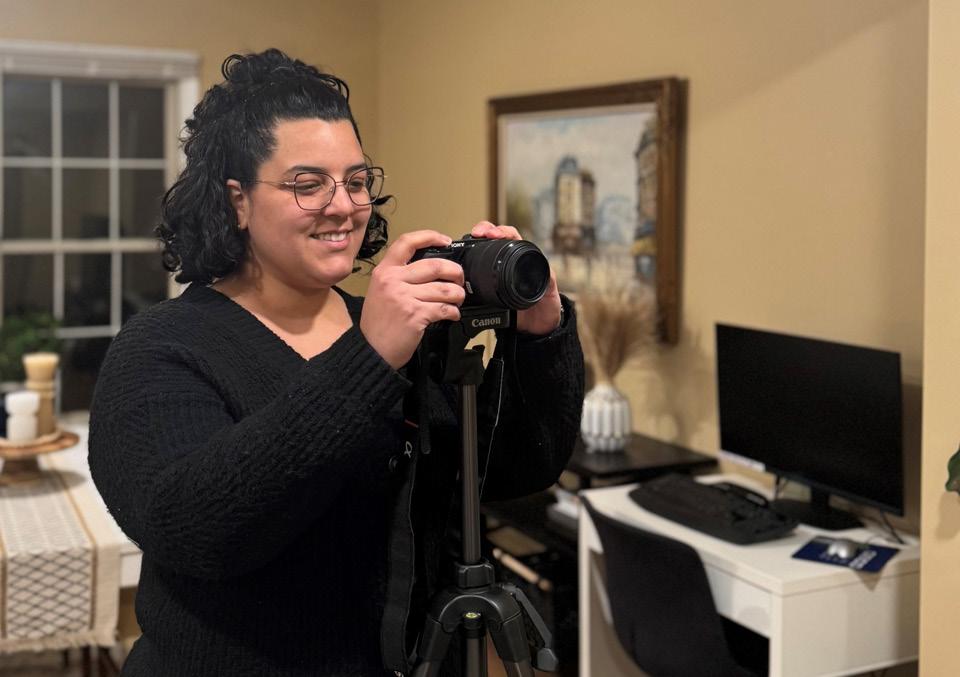
Navy Federal’s Aidinés Medina Matheu participates in The Portraits For Patriots® Academy™ for military spouses
Gabriel A. Pabellón Morales poses at Aidinés Medina Matheu’s home portrait studio
Capturing flora and fauna on film taught her to appreciate the beauty of everyday landscapes, like the symmetry of water and sky cut through by a wedge of forest. It taught her to be still in a busy world so she could capture purple-headed dragonflies resting on a plant blade. To be patient, so as to glimpse rare species like parrots and boas native to her island home.
Her parents hoped she would become a doctor, but Medina Matheu began to dream of a life of art, not science. She launched a business specializing in outdoor portraits and event planning but then discovered another love: Christopher Morales Ortíz, a US Marine.
The couple married and, in 2020, Medina Matheu left her budding business to accompany Ortíz to Japan, per his new station orders. She initially tried to keep her business active but, like so many military spouses, had trouble building her client base in her new home.
“A
Great Opportunity”
Fortunately, she landed a position with Navy Federal, which operates numerous branches in Japan. She kept up photography as a hobby—and continued to practice it when Ortíz received his next PCS orders, this time to Maryland.
Medina Matheu transferred to a Maryland branch of Navy Federal, which supports military spouses who face frequent moves. There, she learned about the credit union’s support for the portrait academy, which she applied for last year. “I’m a very creative person,” she said, “and this was a great opportunity to get professional training in my craft.”
After she graduates, she’ll take referrals for volunteer sessions with Veterans from Portraits For Patriots. Doing so will enable her to continue to use the equipment professionally—in Maryland and wherever she moves next.
“It’s been an amazing experience,” she said. The “cherry on top” is that she’s able to use Navy Federal’s paid volunteer leave to support the Veteran photo shoots. “I’ll continue with them as long as I can,” she beams. “It’s fun, and it’s a great cause.”
Medina Metheu isn’t alone, notes Sarah Firth, director of programs at Portraits For Patriots and also a military spouse-turned-photographer. “The Portraits For Patriots® Academy™ gave me more than just skills; it helped me discover a new way to serve with purpose. Thanks to Navy Federal’s support, I’ve been able to grow into a role I love—and I’m proud to … help other military families feel seen and supported.”
https://portraitsforpatriots.org/academy

Finding a job in the civilian workplace may seem easy at first. After all, you have learned skills, practiced leadership and demonstrated initiative that will make you successful wherever you go.
The reality, though, is that it can be difficult. In fact, it can be downright depressing demotivating and you may feel totally disillusioned. We can help
In our Veterans In Transition archives you will find helpful and informative articles about what’s next in transition, veterans in business, career, advice, tips, workshops, transition to education, entrepreneurship, veteran franchises, legal tips & resources for veteran businesses and much more...
For assistance in your journey please visit: SDVMagazine-Veterans-In-Transition sandiegoveteransmagazine.com/category/veterans-in-transition


BUSINESS FOR VETERANS
By Barbara Eldridge www.mindmasters.com

Stand Out or Step Aside: How Small Business Entrepreneurs Can Dominate Their Market
Running a small business in today’s fast-moving world is not for the faint of heart. You’re managing operations, marketing, finances—and trying to stay ahead of the curve. But while many small business owners are stuck reacting to problems, the most successful entrepreneurs are doing something different: they’re leading their markets.
They’ve learned to rise above the noise by sharpening their message, increasing visibility, and staying closely connected to their customers' evolving needs. So, ask yourself—is your business thriving, or just getting by?
Think Like a Market Leader, Not Just a Business Owner
Look at Southwest Airlines. Sure, they’re a big company now—but they started as a scrappy underdog, challenging the status quo. By flying out of smaller airports, offering affordable fares, and creating a new category of travelers, they didn’t just compete—they changed the game.
Small businesses can do the same. In fact, they’re often in a better position to move fast, adapt quickly, and build loyal communities. But you have to know what business you’re really in.
Clarity Is Power: Know What You Actually Deliver
Customers aren’t buying a service—they’re buying a result
• A personal trainer isn’t just selling workouts—they’re selling energy, confidence, and a healthier life.
• A local bakery isn’t just selling bread—they’re selling comfort, celebration, and community.
• A freelance designer isn’t just offering logos—they’re offering identity, professionalism, and trust.


The clearer you are about the real outcome you deliver, the easier it becomes to market your business, attract the right clients, and raise your value.
Visibility + Consistency = Influence
You don’t need a massive budget or a big PR team to be visible. But you do need consistency and clarity in how you show up.
• Are you regularly sharing insights, tips, or client stories?
• Are you networking (online or in person) with people in your industry or community?
• Are you communicating what sets you apart—not just what you do, but why it matters?
Remember: people do business with people they know, like, and trust. And if you’re not visible, you’re invisible.
Your Brand Can Stand for More Than Profit
Today’s customers care about why you do what you do. One of my clients launched a jewelry business based entirely on fair-trade principles. He partnered with artisans from developing countries, ensured ethical sourcing, and gave a portion of the profits to
organizations fighting human trafficking. It wasn’t just about selling jewelry—it was about creating change. And that brand story helped him stand out in a crowded market.
As a small business, your values can be your secret weapon. When you align your business with a cause or mission, it creates emotional connection and brand loyalty.
Refocus Without the Fear
The biggest myth about evolving your business is that it’s complicated and risky. In reality, growth often comes from making small but strategic changes:
• Offering a new service your customers are already asking for.
• Packaging your expertise into a digital product.
• Updating your website or social media to better reflect your values.
• Streamlining your offerings to focus on what’s most profitable and in demand.
You don’t need to overhaul your whole business. You just need to be willing to adapt with purpose.

Barbara Eldridge has built a solid reputation as a Results strategies specialist, within industry and business over the past 40 years. Her unique message, since starting Mind Masters 30 years ago for entrepreneurs and small business owners, continually stresses vision, purpose and values as the key elements of business philosophy. Her undying compassion for the entrepreneur’s journey, her tireless capacity to listen, and her sincere enthusiasm for other’s success have insured her growing influence and her own mastery with MIND MASTERS www.mindmasters.com

Finding a job in the civilian workplace may seem easy at first. After all, you have learned skills, practiced leadership and demonstrated initiative that will make you successful wherever you go.
The reality, though, is that it can be difficult. In fact, it can be downright depressing demotivating and you may feel totally disillusioned. We can help.
In our Veterans In Transition archives you will find helpful and informative articles about what’s next in transition, veterans in business, career, advice, tips, workshops, transition to education, entrepreneurship, veteran franchises, legal tips & resources for veteran businesses and much more...
For assistance in your journey please visit: SDVMagazine-Veterans-In-Transition sandiegoveteransmagazine.com/category/veterans-in-transition
VETERANS IN TRANSITION
Transition to Business HUMAN RESOURCES
By Paul Falcone PaulFalconeHR.com

What’s Trending in Workplace Health and PTSD Awareness?
Mental health and wellness in the workplace are experiencing a significant transformation, moving beyond reactive measures to proactive, holistic, and integrated strategies. Companies are increasingly recognizing that employee wellbeing encompasses not just mental health, but also physical, financial, social, and even spiritual aspects. The days of siloed wellness programs are fading, replaced by integrated approaches that address the "whole person."
Prioritizing employee mental health isn't just about being a good employer; it's also a critical business strategy. Research consistently shows that robust mental health support leads to increased productivity, higher employee engagement, and better retention, and employers are paying attention. In fact, there's a growing demand for and awareness of preventative and proactive strategies. Instead of only intervening when employees are in crisis, employers are investing in tools and policies that support wellbeing before challenges escalate, recognizing that early identification and support are more sustainable and effective.

Much Wider Acceptance among Employers and Workers
Gen Z “Zoomers”—the 27-and-under crowd—fully embrace mental wellness and wellbeing in the workplace and access employer benefits willingly and much more openly than in the past. Gen Z is the first truly “digital” generation. As such, research shows that the generation, as a whole, suffers from social isolation, loneliness, and depression, even more so than retirees in retirement homes. Combine that with the general sense of burnout and overwhelm facing many workers, and corporate America recognizes that it has a problem on its hands: employee engagement and discretionary effort are down, while resentment is up, leading to a significant swath of workers looking to change jobs. That poses a serious threat to retention and loss of employee institutional knowledge, so today’s wisest employers are meeting their employees “in the moment” by adding mental health benefits that workers welcome and embrace.
PTSD Awareness Trends
There's a growing push to normalize conversations around mental health, including PTSD. Brands and organizations are increasingly embracing mental health as a core value, which helps to break down long-standing stigmas. Social media movements like #stopthestigma and #silencetheshame are helping to reduce the shame and embarrassment often associated with mental health conditions.

Awareness is expanding beyond military veterans to acknowledge that PTSD can affect anyone who experiences a traumatic event, including survivors of sexual assault, natural disasters, accidents, and even those exposed to mass violence or institutionalized oppression.
The impact of current events, such as civil unrest, political polarization, and the lingering effects of the COVID-19 pandemic on individuals with PTSD is likewise recognized as a factor that can exacerbate symptoms.
Further, the VA's National Center for PTSD actively promotes understanding and encouraging individuals to seek help. Campaigns emphasize that effective treatments are available and can significantly improve quality of life. Local communities and mental health centers likewise play a crucial role in organizing events, workshops, and support groups to create safe spaces and to connect individuals with resources. Specific attention is being paid to how trauma affects different age groups, with resources being developed for children and adolescents.
Advances in Treatment and Personalized Care
Research and clinical practices highlight innovative treatments. These include trauma-focused therapies, technology-assisted therapies, and emerging therapies like Accelerated Resolution Therapy (ART) that focuses on rapid symptom alleviation. Overall, there’s a shift towards more personalized care, with neurobiological advances allowing for treatments tailored to individual neural patterns and new medications that can stabilize neurotransmitters involved in triggering PTSD events. The surge in digital health platforms and teletherapy services is making mental healthcare more accessible, particularly in underserved regions. Collaborative care models, including telehealth, are improving patient compliance and outcomes.
The corporate bottom line: companies always strive to be “good corporate citizens.” The workplace is evolving to treat mental health not as a separate issue but as an integral part of overall employee wellbeing and a strategic component of business success. Many organizations are following the trend in PTSD awareness that is characterized by a concerted effort to break down stigma, improve access to diverse and advanced treatments, and broaden the public's understanding of the condition's causes and widespread impact. If this challenge is part of your reality now, speak with your company’s Human Resources team for EAP (Employee Assistance Program) access, benefits programs, and other resources that are available to support you through your journey.
You can connect with Paul on LinkedIn at www.linkedin.com/in/paulfalcone1
Paul Falcone (www.PaulFalconeHR.com) is a management trainer, executive coach, and bestselling author on hiring, performance management, and leadership development.

www.HarperCollinsLeadership.com
legal Eagle
Straight-forward legal tips for Military and Veteran Business Owners
By Kelly Bagla, Esq. www.BaglaLaw.com

Every year I’m in practice, I’m further convinced that fundamental asset protection begins with implementing affordable, tried and true strategies and simple habits. There are laws on the books you can easily implement that will provide you with incredible protection in the event of a claim or lawsuit.
Here are 5 critical strategies to consider as part of your personal asset protection plan:
1. CHOOSE THE RIGHT BUSINESS ENTITY. There will certainly be multiple tax-planning considerations, but operating as a sole proprietorship definitely isn’t your best choice for asset protection. As a sole proprietorship, your personal assets are completely exposed to a potential lawsuit. Setting up an entity, such as an S corporation or a limited liability company is an important step in the development of your business and protection of your assets.

5 THINGS YOU MUST DO TO PROTECT YOUR ASSETS PROTECT YOUR ASSETS
2. MAINTAIN YOUR CORPORATE VEIL. If you’ve set up an entity, don’t think that just having the entity’s articles of incorporation in your drawer will save you when a lawsuit comes knocking. You need to maintain a separate bank account, use the company name on all documents, title the property in the name of the company, and most important, maintain corporate records and along with the minutes of your annual meeting.
3. USE PROPER CONTRACTS AND PROCEDURES. One of the easiest ways for creditors to pierce the corporate veil and attack your personal assets is if you act negligently or fraudulently. This can be avoided by having good lease agreements for your rentals, placing property and equipment titles in the company name, having independent contractor agreements and if hiring employees, make sure you know the employment laws for your State.

4. PURCHASE BUSINESS INSURANCE. Insurance is an important part of your business and should be included in your startup budget. Insurance gives you the ability to take care of an incident in your business, which could cost you thousands of dollars you don’t have. Make sure you get the correct insurance policy for your business as insurance policies are not all the same.
5. CONSIDER THE HOMESTEAD EXEMPTION. One of the most powerful exemptions available is the protection afforded to our individual personal residence, commonly referred to as the homestead exemption. This is a statutory exemption available in most states that protects a certain amount of the value of a person’s home from a creditor or bankruptcy.
If you need help determining the best real estate asset protection strategies, we can help. Click here https://baglalaw.com/contact/ to schedule your consultation. Becoming a business owner, you control your own destiny, choose the people you work with, reap big rewards, challenge yourself, give back to the community, and you get to follow your passion.
Knowing what you’re getting into is smart business because the responsibility of protecting your business falls on you.

For more information on how to legally start, grow, and exit your business please visit my website at www.BaglaLaw.com

When it comes to investing in real estate, your hard-earned assets are at risk! YOU NEED THE RIGHT ATTORNEY ON YOUR SIDE!
Kelly Bagla, Esq., and her team at Bagla Law Firm, APC, a Business Formation and Asset Protection firm, have over twenty years of experience protecting real estate for rental owners. They customize your asset protection plan to ensure that your rentals are protected in case of a lawsuit.
Build your real estate empire with confidence through legally proven strategies.
Disclaimer: This information is made available by Bagla Law Firm, APC for educational purposes only as well as to give you general information and a general understanding of the law, and not to provide specific legal advice. This information should not be used as a substitute for competent legal advice from a licensed professional attorney in your state.
By Hadley Wood www.hlinwood-insurance.com

Conversations With Your Broker/Agent

After 20 years working in the insurance industry, I have had many conversations with all types of clients over the years. I wanted to share a few pointers to ease the process and help facilitate a productive conversation that may save you some frustration and might even save you some money.
One of the first things to understand is that your Agent or Broker is known in the insurance world as a ‘Field Underwriter’ and is the first check point in the process of approving your specific risk. Our primary role is to understand what you and your business does, in precise detail, in order to relay this information over to the formal insurance company underwriters for clearance and rates. Every business is different and the more clarity you can share with your Broker/Agent will reflect a more accurate quote for you and ensure that you have the proper type of coverage to manage your risk. Here are my suggestions to help guide the insurance conversation:
1) Ask the Broker/Agent about their background and experience in dealing with your type of business risk so you know if they have access to the particular insurance markets that would be best for you.
2) Discuss your overall operations and then get specific with what your average day looks like so they will have a full picture of your business.

3) Discuss your future plans and growth projections so your Broker/Agent can build that into the risk evaluation and offer suggestions for additional coverage options.
4) Share your biggest concerns and greatest fears with your Broker/Agent. Insurance is not meant to cover EVERY hiccup your business comes across (that would be financially unfeasible) – but should cover the primary risks and concerns you have.
5) Honesty is hugely important. If the policy is written on untruths and a claim were to happen, the insurance company can deny the claim payout.
6) When you receive the insurance quote(s), make sure to go over them in detail and ask about the exclusions of coverage. Each policy will have exclusions and Amendments that affect your coverage. You need to know what you are covered for and also what is not covered in the policy.
7) Ask about the ‘What-ifs’. What if I need to cancel my policy – is there a charge or minimum earned premium? What if I move my company to another state? What if I acquire another company? You get the idea. This information will help you plan for future changes.
8) Most policies are written on a 12-month basis so it is easy to lose touch with your Broker/Agent over the course of a year. Make sure to check in with them and let them know if you have any operational changes, payroll changes, address or entity changes throughout the year. This information is critical to your insurance coverage and needs to be kept up to date.
Your relationship with your insurance Agent/Broker should be personal. They should be a strategic partner in the growth plan of your business. The more they know, the more they can help protect you and your business - and hopefully save you money and hassle along the way!
If you have any questions about business insurance, please reach out to me. www.hlinwood-insurance.com

THE SAN DIEGO VETERANS COALITION IS A COALITION OF OVER 150 UNIQUE NON-PROFITS, BUSINESSES, GOVERNMENT AGENCIES AND EDUCATIONAL ENTITIES ALL UNITED BY THE GOAL OF SUPPORTING MEMBERS OF OUR COMMUNITY WHO SERVED OUR COUNTRY IN THE ARMED FORCES, THEIR FAMILIES, AND THEIR CARETAKERS.
SAN DIEGO VETERANS COALITION
The San Diego Veterans Coalition was organized in 2009 and incorporated as a non-profit on May 24, 2011. Using the Collective Impact Model, SDVC is a premier San Diego County-wide monthly convener of over 150 unique member and participating organizations, businesses, and agencies, as well as convening many of that body in our four action groups, and other activities and events. The Collective Impact Model is based on leveraging relationships with other veteran and family serving organizations so that we may provide veterans and their families with a complete array of services and other opportunities.
Many of the organizations that belong to SDVC specialize in one field (education, housing, employment, healthcare). Knowing what services each other provides, we can offer comprehensive support to our local Veteran community. We are proud to work alongside a wide variety of non-profit and for-profit organizations, as well as governmental agencies and individuals. The SDVC is a catalyst that inspires collaboration and cooperation among service partners to deliver premier support for Veterans in the San Diego region and beyond.


SDVC is proud to have partnered with ONWARD OPS, which has partnered with the Veterans Administration, the Department of Defense, and local communities to support service members through the process from military to civilian life by matching them with one-on-one sponsors in their specific community.
ONWARD OPS Sponsors all complete a VA-Certified Sponsor Training Course and the Community Integration Coordinators are all validated as best-in-class, trusted, and capable partners in their local region. Our national network, working with the department of defense, the department of veterans affairs, and the department of labor, brings a team together in one common mission: to securely provide the information and relationships needed to help every transitioning service member successfully make the journey out of the military and into civilian life.


Welcome to the Veterans Association of North County
HERE FOR YOU WHEN YOU NEED US
Here you will find several resources, programs, services and opportunities for Veterans, Service Members and their families. Our goal is to be your one stop shop for all things, so don’t hesitate to contact us at any time. Programs and services vary, and include additional information for each. We have two Veteran Services Representatives (VSR) here at VANC, read all about them below in Addtional Services at: (www.vanc.me/services-programs)
OUR MISSION
VANC is a 501(c)(3) non-profit organization created and operated by Veterans as a one-stop resource center for all active-duty military, Veterans, and their families. We centralize services from diverse agencies to assist with jobs, education, finances, health, and wellness.
OUR VISION
We seek to honor and support those who have served our country, bridging the past, present, and future. VANC is a vibrant gathering place in North San Diego County, where all Veterans, active-duty military, and their loved ones can reach out for help and community. VANC engages and informs local Veterans organizations, service providers, and individuals, helping them work together. VANC seeks to be a model for other organizations that serve the military community.
JOIN US FOR AMAZING UPCOMING EVENTS
There’s always engaging things happening at VANC and with our partners. Check our calendar here for regularly scheduled events, meetings and opportunities here at VANC (www.vanc.me/events#calendar)
WE LOVE OUR ASSOCIATION MEMBERS AND THEY’RE HERE FOR YOU TOO. VANC is open to all military, veterans and friends of the military. If you would like to become a Veterans Association member, Contact Lori at lori@vanc.me to learn more.


OPPORTUNITIES IN LAW ENFORCEMENT
You’ve served your country, now serve your community!
Military and law enforcement have had a longstanding relationship with overlaps in training exercises, equipment, and, most important, personnel.
It is not uncommon for a service member to make the jump from the military to law enforcement as both professions look for the same characteristics; leadership, fidelity, chain of command, and teamwork are all common themes in both professions.
Quite understandably, many American military veterans often gravitate to a career in law enforcement when the time comes to rejoin the civilian workforce.
The two professions have many fundamental similarities; from the uniforms they wear with pride, to the firm command structure they serve under, to great personal risk they endure while protecting those who cannot protect themselves.
VETERANS IN LAW ENFORCEMENT

The following agencies are actively hiring & proudly support our veterans, active military and the families that keep together.


From Navy Sailor to San Francisco Police Officer
By Holly Shaffner


Changing careers can be exciting, exhilarating, and filled with trepidation. Meet Officer Cindy Ovares who has made the transition numerous times – from active-duty service member, to student, massage therapist, teacher, and now police officer.
The life experience she gained in those previous longterm jobs set her up to be successful today. She is doing what she’s always wanted to do – have a career that is challenging and rewarding.
Cindy was like many seniors in high school as she contemplated what she would do after graduation. When the Navy recruiter called the house looking for her brother, the recruiter instead got an eager, independent 17-year-old woman who wanted to find adventure. Just a few months later, she was off to “see the world” and start her first career.
As an Aviation Machinist’s Mate, Petty Officer Ovares was a jet engine mechanic. It was a male-dominated job, and she wanted to prove that anything a man could do, she could do better. She attended military schools in Florida and Virginia to learn her trade, and was later stationed in Lemoore, California. She was attached to VFA-22, an F/A-18 Super Hornet squadron, that deployed on ships. After serving four years on active duty, she earned Post 9/11 GI Bill education benefits, and chose to leave the Navy to attend college.
After completing her bachelor’s degree in Secondary Education and being a fluent Spanish speaker, she was hired to be a high school Spanish teacher. The job was gratifying; but also, under resourced, understaffed, and had little room to grow professionally. She wanted something new and challenging, was drawn to the community where she grew up, so, in her late 30s she applied to be a police officer.
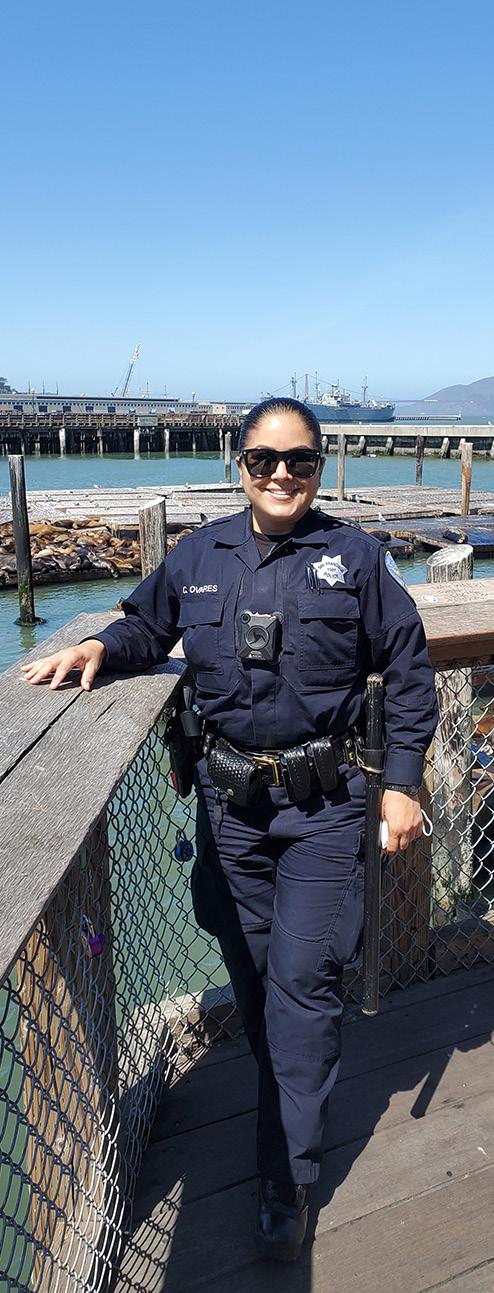
“Being able to talk to people, figure out what they are going through, and what they need is a huge portion of the job. I enjoy interacting with the public, and engaging in what I call verbal judo.”
- Officer Cindy Ovares
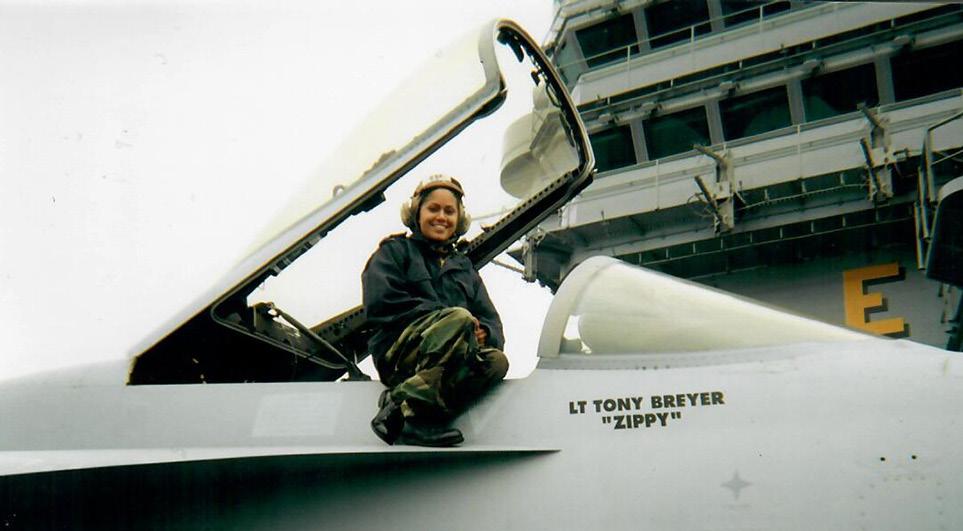
Officer Ovares was accepted to the San Francisco Police Academy and has been an officer for the last three years. She is a foot patrol officer working in the Tenderloin District – a 50-block area that has a storied history, and has been known for homelessness, drugs, and crime.
“Being able to talk to people, figure out what they are going through, and what they need is a huge portion of the job. I enjoy interacting with the public, and engaging in what I call verbal judo,” said Officer Ovares.
For Officer Ovares, the parallels between serving in the military and serving in law enforcement made the transition go smoothly:
• Routine – You know what to expect before your shift begins (what time to report, what uniform to wear, the structure of the day).
• Camaraderie – The bond between fellow officers is like the bond between your fellow military brothers and sisters.
• Variety – Every day is different with different assignments and duties, so the job is never boring.
• Benefits – Include a competitive salary, paid vacation days, floating holidays, and sick days, healthcare, retirement, and special pay for certain assignments and being bilingual.


As a Latina giving back to her community, she admits that the job comes with highs and lows. Officer Ovares recommends a career in law enforcement for those military members looking to make a smooth transition to a new chapter.
To learn more about the San Francisco Police Department, or to connect with recruiter, go to: www.sanfranciscopolice.org/your-sfpd/careers


SDPD Ride Along: A Story of Two Marines
By Amber Robinbson San Diego Veterans Magazine
When I asked to go on a ride along with the San Diego Police Department, making a special request for any veterans-turned-cops, I expected a really serious, possibly dangerous, afternoon of shadowing our city’s toughest crime fighters.
What I got was an afternoon of heartfelt service to our San Diego community, honorable humility and a lot of respect.
When I asked whether former Marine Sergeant Major, Mark Wright, and his partner, former Marine Staff Sergeant, Sean Bunch, had rank or titles he said their titles were just San Diego police officers. They are relatively new partners, but act like they’ve known each other for years, which is usually the case when you get Marines together.
Wright is a newer addition to the force, coming on board two years ago, with Bunch only having two years left.

Currently, these brothers-in-arms spend their days patrolling the entirety of Balboa Park.
Although neither men are taking fire or kicking in the enemy’s door on this beat, like during their time in Iraq or Afghanistan, they still work hard to serve their local community. Service which can range from tracking down criminals to answering questions from lost pedestrians, to giving out stickers to kids and never backing down from a chance to turn on those flashing red and blues just to make one of them smile.
Most of our particular day was cruising around beautiful Balboa Park running car tags to see if they were current, from cars not displaying proper plates and placards to those double parked. Bunch says they often catch parole violators or even stolen cars doing just this. I was struck as I watched both officers go out of their way to look in and around vehicles to find plates or disability placards not displayed correctly so as to avoid issuing superfluous tickets.
“We try to give everyone the benefit of the doubt,” said Wright. “We’re not out to get anybody.”
Although, both officers confirm that enforcing even the most basic of park rules can yield large payoffs. During a recent patrol Bunch spotted an individual smoking in the park, which is illegal. As he circled back round, the individual turned and rapidly tried to walk away, which activated immediate suspicion. He was detained and came back with a warrant for numerous kidnapping and child molestation charges.

Both men say a lot of what they do is talk with museum owners and those living in the neighborhoods surrounding the park about their concerns. A shared concern by all is the park’s homeless population.
Bunch says their posture towards the homeless is mostly that of assistance, adding there are many resources available for those who would take them.
Officer Sean Bunch
Officer Mark Wright
The city spends a lot of money on resources,” said Bunch. “The biggest problem we run into is whether or not the [homeless] people want them, and a lot of them don’t.”
Thus, the men tend to run into the same issues with the same people pretty often. Although frustrating, they have learned that respect goes a long way when challenged with these repeat offenders. Bunch recalls spotting one such offender in the park, who was in violation of his parole and wanted on warrant. He was unable to get to the offender immediately, but still apprehended him with a verbal request. The parolee waited patiently to be hand-cuffed and arrested, simply out of the respect he held for the law man.
“Being respectful of everyone despite their lot in life goes a long way in this job,” said Wright.
Both men say a huge part of their work is being able to connect and communicate with the myriad of people they meet daily.
Bunch says he feels he and Wright are lucky to come to the force later in life, given it means they have a wider frame of reference for those they meet and serve daily. “We deal with people who are going through all kinds of things in life,” said Bunch. “And it’s helpful to be able to say, ‘hey I know what you are going through, I’ve been there.”
As the day progressed, I realized that both gentlemen definitely had a long list of tough and unique life experiences to pull from. Both proudly served the United States Marines for years, traveling to war and all over the world, experiences that yield much wisdom as well as many a story.

Bunch, for instance, did not come to the force straight from the Marines, but from Hollywood. Surprisingly, he is a member of the Screen Actors Guild, working as a military advisor on various productions, like Lonestar 911, and appearing in some as well, such as one of the most recent Men in Black movies.
“I grew up outside of LA,” said Bunch. “So, I’ve always just kind of been around the business and found a place for myself there with all my military experience.”
Bunch hopes to return to work in Hollywood after he leaves the force, bringing with him a new level of experience and respect.
Wright, who retired from the Marines as a Sergeant Major never worked in Hollywood, but he does have plenty of stories about being a proud grandfather, father and new amputee. When I entered the Central Division Station and met him, he said he was just getting back to work after some time off after losing his leg.
Wright remained unscathed during his over-20-years in service, overseas deployments and endless combat train ups. It wasn’t until after service that he lost his leg in a motorcycle accident late one foggy night a little over a year ago. Wright says it had been an eventful second watch and he was leaving the station about 2 AM on his motorcycle when it happened.
“It was only about two minutes from work,” said Wright. “I was coming around a curve and entered into what I thought was fog, and as I’m entering, I see a headlight and side mirror in my lane.”
That headlight and mirror became an entire car that was blocking Wright’s entire side of the road.
“I was a heuy crew chief in the Marines and reverted to my training from that, grabbed my shoulders, braced for impact and went flying like a human lawn dart over my handlebars,” said Wright.
Wright landed in the ditch on the side of the road. He says he realized immediately that he had a back and leg issue. He learned that a bystander had called 911, but he requested they call back and state that the injured motorcycle rider was a policeman with the San Diego Police Department and expedite services. This one request would become pivotal in saving Wright’s life.
Continued on next page >
“What I didn’t know at that time was that I had severed two arteries in my leg, and I was bleeding out,” said Wright.
What Wright would learn later is his heel had also been torn off on the wrecked car as he sailed past it into the ditch. After much pain and many surgeries, Wright would finally lose his leg from the knee down. says he doesn’t let it get him down, though. He’s proud to continue to serve as one of our city’s finest.
Both he and Bunch take much pride in their time as Marines and as San Diego Police Officers. Each officer comes from strong military stock, with Wright’s grandfather being a World War II veteran and Prisoner of War and Bunch’s father a decorated veteran of Vietnam.
All in all, this Army vet’s afternoon with two Marines was an impressive one. Both seasoned public servants, these honorable men have discovered you must give respect to get it, that violence is often not the answer and the most important thing to keep in mind along the way, is a good, human dose of empathy.

more information visit www.joinSDPDnow.com or email us at SDPDrecruiting@pd.sandiego.gov

Officer Sean Bunch - Amber Robinson (SDVM) - Officer Mark Wright


