Military-Veterans
IN TRANSITION
Careers & Education
Rebuilding After Job Loss
A Blueprint for Veterans
Transitioning to Civilian Life
MENTAL HEALTH
THE REMARKABLE HISTORY OF SERVICE DOGS
Tribute to Working Service Dogs

Military-Veterans
Careers & Education
Rebuilding After Job Loss
Transitioning to Civilian Life
Tribute to Working Service Dogs
Because you served your country, you’re eligible for the special mortgage benefits of a VA loan. As a top VA lender,1 we’ll guide you through the home-buying process and help you take advantage of the benefits you’ve earned.
• Options with no down payment2
• No Private Mortgage Insurance required
• Cash-out and interest rate reduction refinance options
• Access to our RealtyPlus® program—you could earn up to $9,000 cash back3


Scan4 to learn more or visit navyfederal.org/VALoan navyfederal.org/valoan
Navy Federal is federally insured by NCUA. Navy Federal Credit Union was included in 8 Best VA loan Lenders in May 2026 by money.com (www.money.com/best-va-loans). 2100% financing subject to all VA rules, guidelines, and additional program requirements. All loans subject to approval. VA loans may include a funding fee, which may be financed up to the maximum allowed loan amount. Navy Federal has no affiliation with the U.S. Department of Veterans Affairs or any other government agency. ³The program is only available for individual home purchases/sales in the contiguous US, Alaska, and Hawaii, excluding Iowa and all employer-sponsored relocations. You are not required to receive financing through Navy Federal Credit Union in order to receive the benefits of this program. The cash back is only available with the purchase or sale of your home through the use of a program-referred and -approved real estate agent, and is offered in most states, with the exception of Iowa, Alaska, and Oklahoma, and is not available in certain transactions with restricted agent commissions (including many new constructions, For Sale by Owner, or For Sale by iBuyer transactions). Your assigned agent can help you identify any transactions where the cash back would not be available. The amount of your cash back depends on the value of the property you are buying or selling. Obtaining the full $9,000 cash back requires transacting in a property valued at $3 million or greater. To calculate your potential cash-back amount, please visit the RealtyPlus website: https://navyfederalrealtyplus.com/. The cash-back offer is limited to one cash back per property with no limit on the number of times you may use the program. In some states, a gift card or commission credit at closing may be provided in lieu of the cash back. In Kansas and Tennessee, a Mastercard® MAX gift card will be issued with preloaded points that are ready for spending at specified retail establishments after closing. State regulations in Kansas limit the dollar amounts and the type of incentive. In Mississippi, New Jersey, and Oregon, a commission reduction may be available at closing in lieu of cash back. Please check with the program coordinator for details. All real estate commissions are negotiable. Contact RealtyPlus for terms and conditions. Seller listing fees apply. This program is offered, in part, by Anywhere Leads Inc., which may receive a co-operative brokerage fee as a result of a referral to any affiliated real estate companies, including Better Homes and Gardens® Real Estate, Coldwell Banker®, Century 21®, ERA® Real Estate, and Corcoran. Program terms and conditions are subject to change at any time without notice. Additional terms, conditions, and restrictions apply. This is an advertisement and not a solicitation for agent representation if your property is currently listed with an agent. Anywhere Leads Inc., 175 Park Avenue, Madison, NJ 07940. Licensed broker in the state of Texas. Broker license #9009191. 4Message and data rates may apply. Visit navyfederal.org for more information. © 2026 Navy Federal NFCU 10299 (5-26)


Homeland is a veteran-focused magazine throughout the country. It serves to assist all veterans, active military as well as their spouses and families.
It’s the leading veterans magazine emphasizing resources, support and focusing on topics and issues facing today’s veteran community. Homeland focuses on resources, support, community, transition, mental health and inspiration for our veterans, & military personnel.
The content is the driving force behind our magazine and the connection it makes with our veterans, service members, military families, and civilians.
The magazine is supported by a distinguishing list of veteran organizations & members, resource centers, coalitions, veteran advocates, and more.
We are honored to share the work of so many committed and thoughtful people.
Despite all the challenges, our team has upheld their focus and let not one opportunity go to provide resources and support to our veterans & military personnel.
On behalf of our team, we wanted to take this moment to say THANK YOU to the readers and the military and veteran community for supporting our magazine. With that support we aim to make a difference and continuing to make a profound impact on the quality of life for our veterans, military personnel and their families.
If you want to catch up on the current and all past issues please visit: www.homelandmagazine.com/archives
Mike Miller
Editor-In-Chief
mikemiller@homelandmagazine.com www.homelandmagazine.com
Publisher
Editor-In-Chief
Mike Miller
mikemiller@homelandmagazine.com
Monthly Columns
What’s Next In Transition
Eve Nasby
Human Resources
Paul Falcone
Veterans in Business
Barbara Eldridge
Risky Business
Hadley Wood
Real Talk: Mental Health
Hope Phifer
PTSD: Reclaiming Control
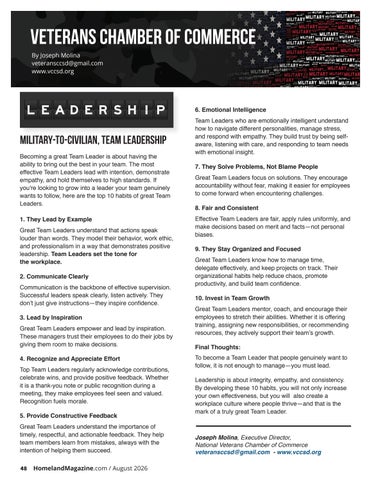
Robert ‘Bob’ Cuyler, PhD
Aging & End of Life Care
Shelly Dew
Legal Eagle
Kelly Bagla, Esq.
Midway Magic
David Koontz
Cartoons For Veterans
Jerry King
Contributing Writers
Wounded Warrior Project
Disabled American Veterans
(In-House) Correspondents
Holly Shaffner
CJ Machado
Lori Noonan
Homeland Magazine 9528 Miramar Road, #41 San Diego, CA 92126 (858) 275-4281
mikemiller@homelandmagazine.com
monthly. Submissions of photographs, Illustrations, drawings, and manuscripts are considered unsolicited materials and the publisher assumes no responsibility for the said items. All rights reserved
“Everyone thinks they have the best dog. And none of them are wrong.”







www.midway.org/contact/volunteer-opportunities www.midway.org
By Lori Noonan, Navy Veteran, Army Spouse, and Nonprofit Expert
By August, summer has lost a little of its sparkle. The heat lingers, motivation droops, and the ambitious plans we made in January may be sitting somewhere between “in progress” and “we should probably stop pretending.”
Welcome to the dog days of summer.
The phrase describes the hottest, most sluggish stretch of the year, when energy is low and cooler days remain frustratingly out of reach. August can feel like the year’s waiting room. Vacations are winding down, routines have been disrupted, and it is tempting to postpone anything meaningful until fall.
But the dog days do not have to be downtime.
For veterans, military families, nonprofit professionals, and anyone navigating a demanding season, August can offer something valuable: an operational pause.
In the military, an operational pause is not an abandonment of the mission. It is a deliberate break in activity to assess conditions, restore readiness, examine resources, and determine what must happen next.
Civilian life rarely gives us permission to do that. Instead, we are encouraged to keep moving, producing, serving, and saying yes. Veterans may be especially susceptible to this mindset. We learned to adapt, overcome, and complete the mission—qualities that serve us well until perseverance quietly becomes exhaustion.
The nonprofit sector has its own version of this problem. Organizations take pride in doing more with less, stretching every dollar, and finding one more way to meet an urgent need. Staff carry expanding workloads because the mission matters. Leaders postpone investments in infrastructure because direct services feel more pressing.
Resourcefulness is admirable. Chronic overextension is not.
There is a point at which “doing more with less” becomes doing too much with too little. No mission, job, or personal goal is strengthened by pretending depleted people and fragile systems are sustainable.
An operational pause creates room to tell the truth about what is working, what is not, and what we have tolerated for too long.
Most veterans are familiar with some form of an afteraction review. What was supposed to happen? What actually happened? What worked? What should change?
We apply those questions to missions, exercises, programs, and projects. We are less likely to apply them to our own lives.
August is an excellent time to change that.
Look back at the first seven months of the year and ask:
• What has gone well that I should continue?
• What has taken more from me than it has contributed?
• Am I making progress, or am I simply staying busy?
• What decision have I delayed because it is uncomfortable?
• Where do I need information, training, or support?
• What must I stop doing to make room for what matters most?
These are not signs of doubt or weakness. They are readiness questions.
For someone transitioning from military service, the answers may involve employment, education, finances, health, relationships, or identity. For a military spouse, they may reveal how much personal ambition has been postponed while supporting everyone else’s mission. For a nonprofit leader, they may uncover a strategic priority buried beneath meetings, emergencies, and an inbox with expansionist ambitions.
The purpose is not to criticize every decision made since January. It is to identify what the next season requires.
Military service teaches us to carry what is necessary. Experience should also teach us that carrying everything is neither necessary nor wise.
Many of us continue holding responsibilities because we have always held them. We become the person who solves the problem, remembers the details, fills the gap, and keeps everyone moving. Eventually, competence becomes a trap: because we can carry something, everyone assumes we should.
What belongs to you? What can be delegated or shared? What should be eliminated?
The same questions apply to organizations. A strong nonprofit should not depend on a handful of heroic
employees performing miracles indefinitely. Heroics may get an organization through a crisis, but they are not an operating model. Sustainable missions require clear priorities, capable teams, reliable systems, sound governance, and enough capacity to deliver on their promises.
Good intentions are important. They are not infrastructure.
An operational pause also allows us to assess our connections.
Veterans are often encouraged to “check on a battle buddy.” It is good advice, but it cannot be reduced to an occasional text saying, “Let me know if you need anything.” Most people will not.
Meaningful connection requires specificity. Invite someone to coffee. Ask how the job search is really going. Follow up about the medical appointment they mentioned. Offer to make an introduction. Notice when someone has withdrawn from the relationships that once kept them connected.
Then turn the question inward: Who is checking on you?
Independence is valuable, but isolation can disguise itself as self-sufficiency. Asking for assistance does not erase resilience. It is one of the ways resilience is maintained.
A useful pause must eventually lead to action.
Choose one or two objectives for the remainder of the year—not ten and not a color-coded reinvention of your entire life. Select the priorities that would make the greatest difference.
Your next objective might be updating a résumé, scheduling an overdue health appointment, reconnecting with someone important, addressing an organizational weakness, or saying no to an obligation that no longer fits.
Define success. Identify the first action. Determine what support you need. Then put a date on it.
Reflection without action becomes rumination. Action without reflection becomes motion without direction. We need both.
The dog days may slow our pace, but they do not have to stall our progress. August can be the moment we reassess the terrain, lighten the load, reconnect with our people, and prepare for what comes next.
Rest is not retreat. Reflection is not inaction. Sometimes the most important step forward begins by standing still long enough to make sure we are headed in the right direction.
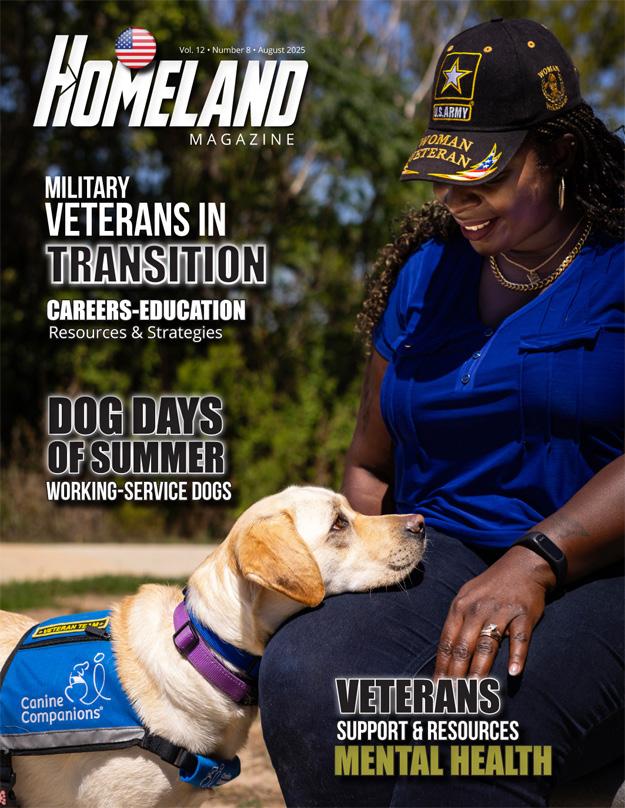
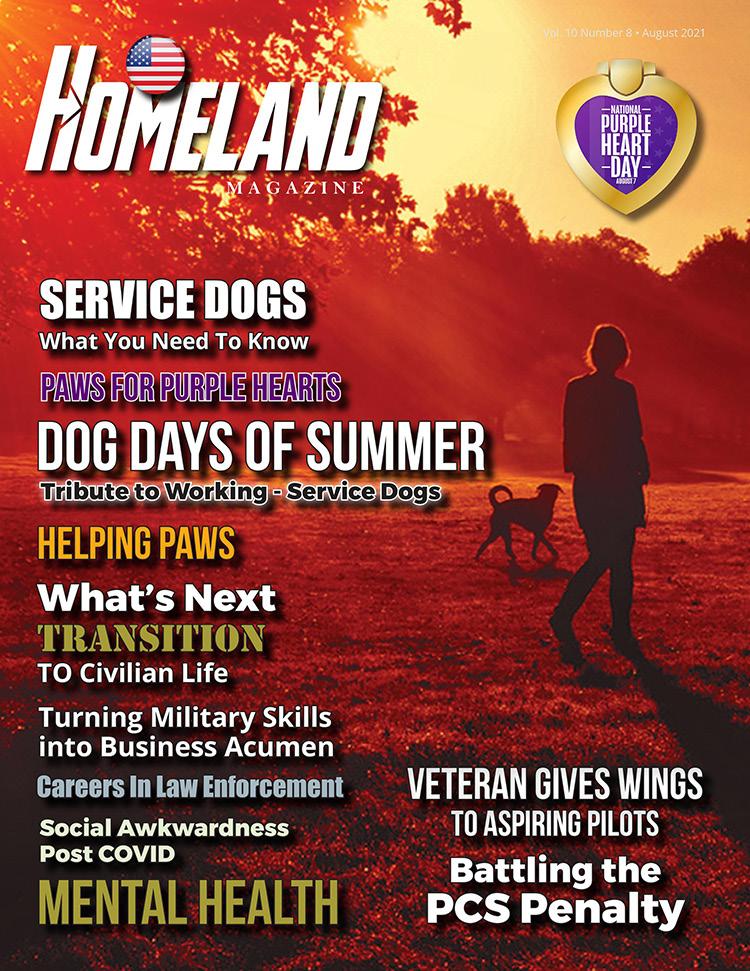
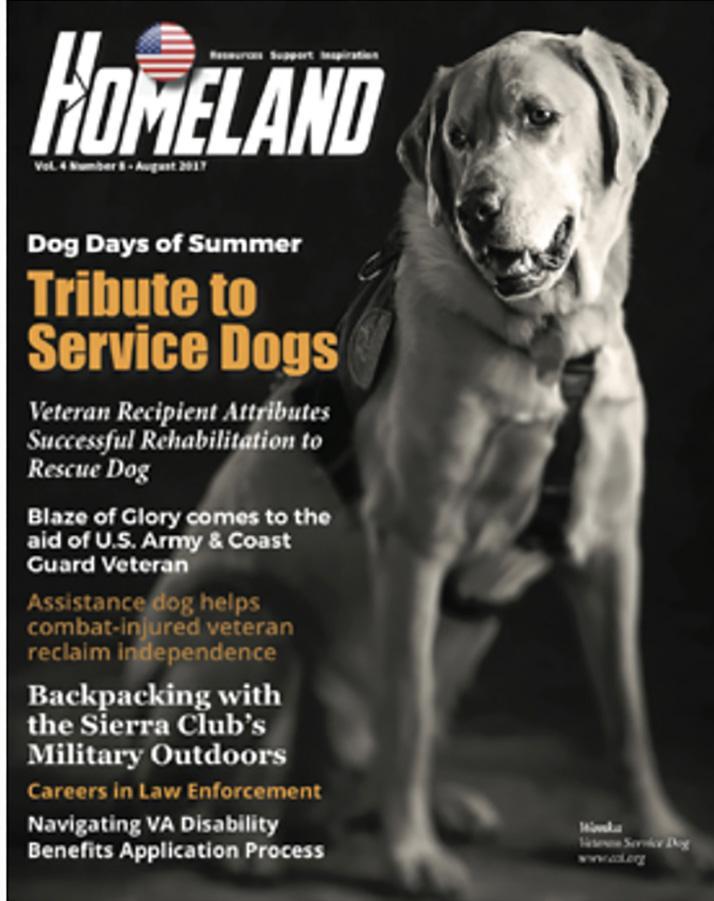
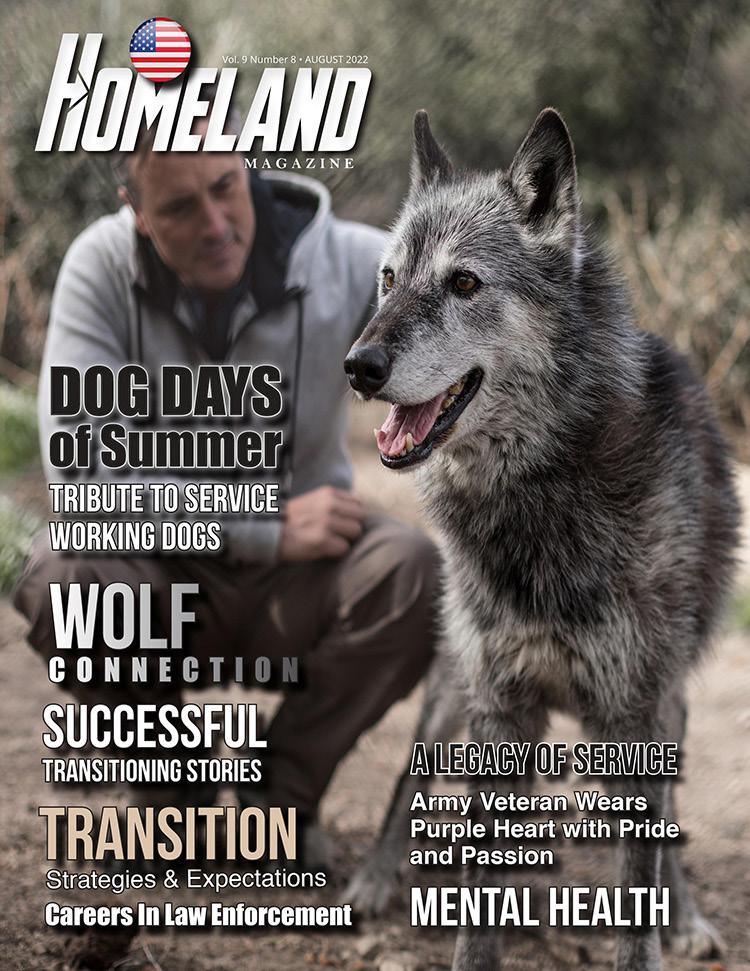
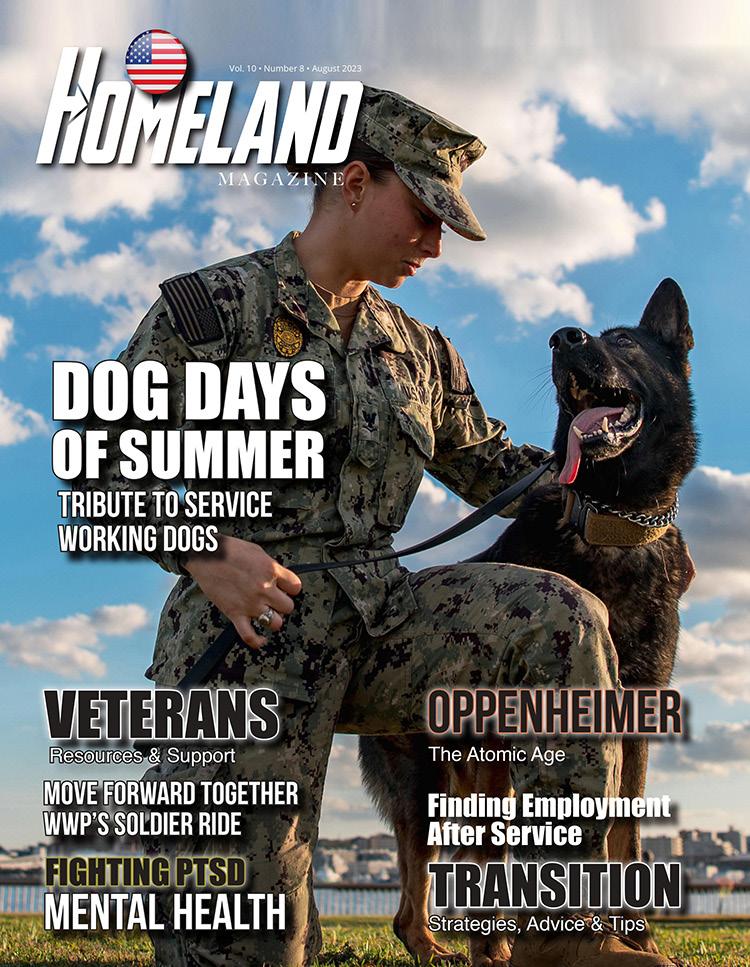
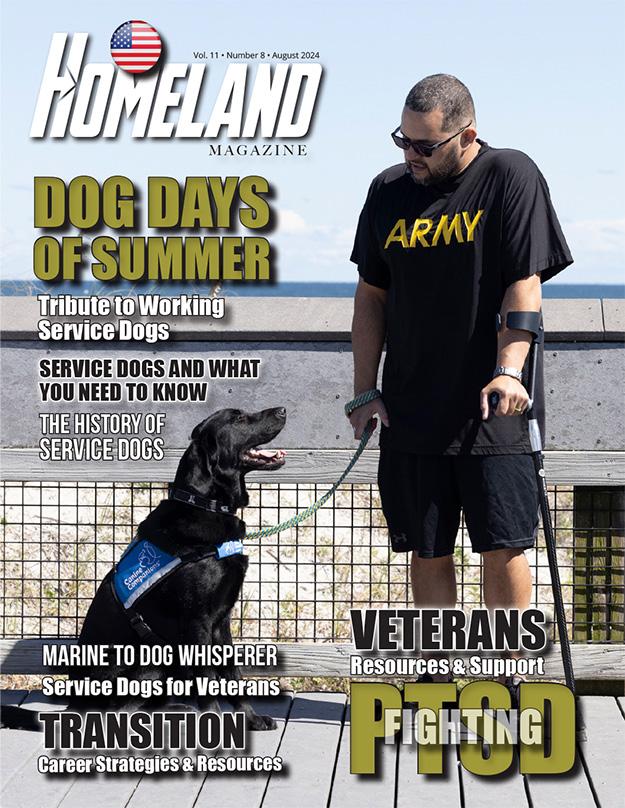
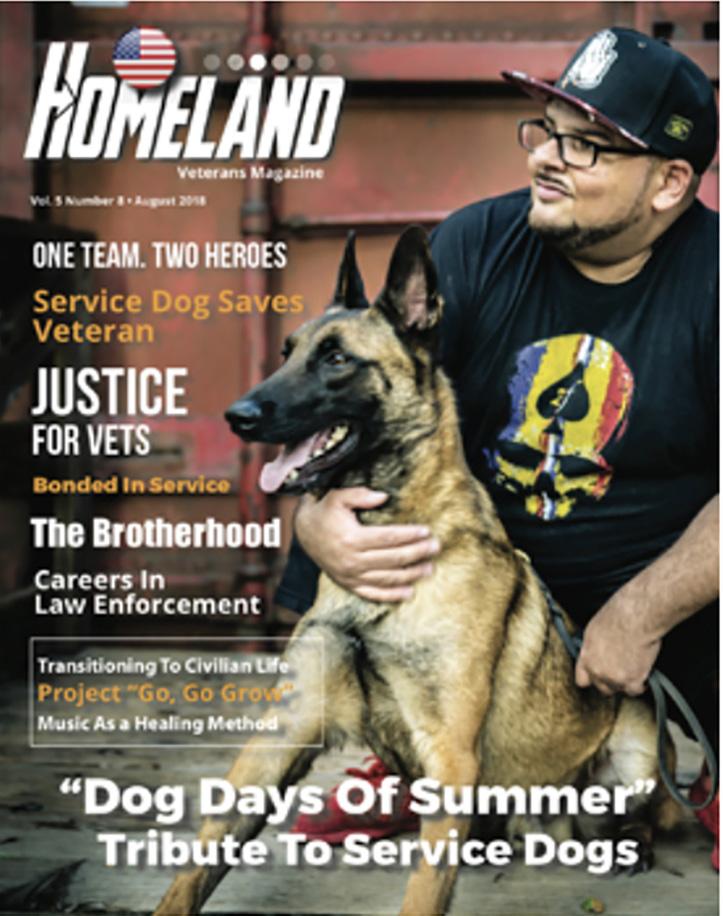
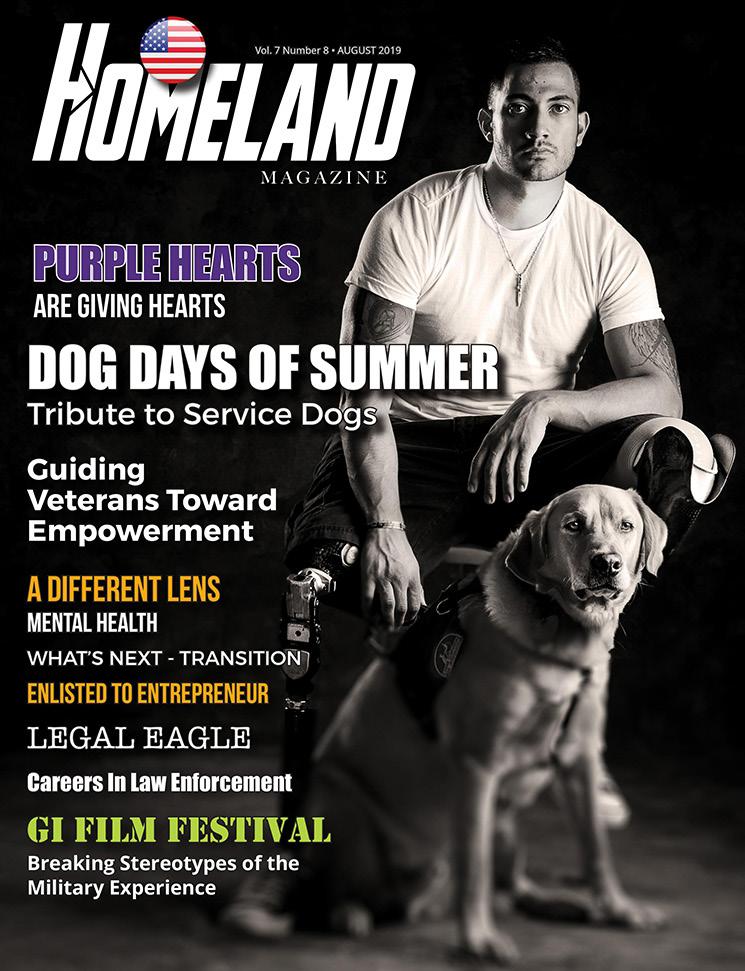
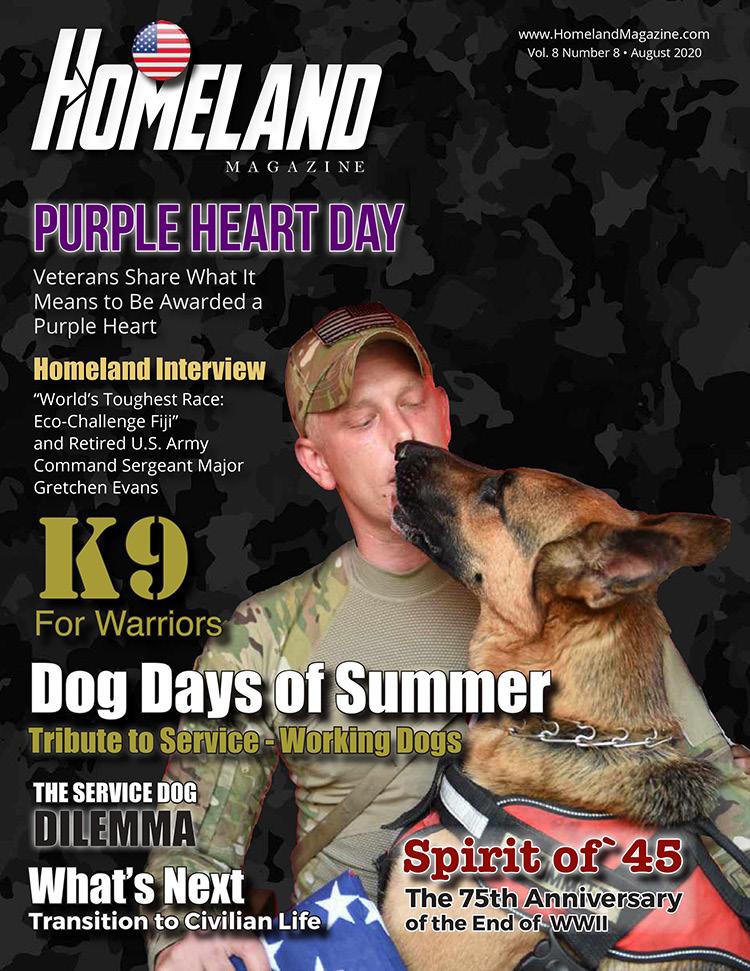
Our FIRST Issue of ‘Dog Days’ of Summer started in 2017, and is now one of our most popular issues every year.
DAYS OF SUMMER (COVERS) 2017-2026
“Service dogs show us that it’s not our disabilities that define us, but our abilities to overcome them.”


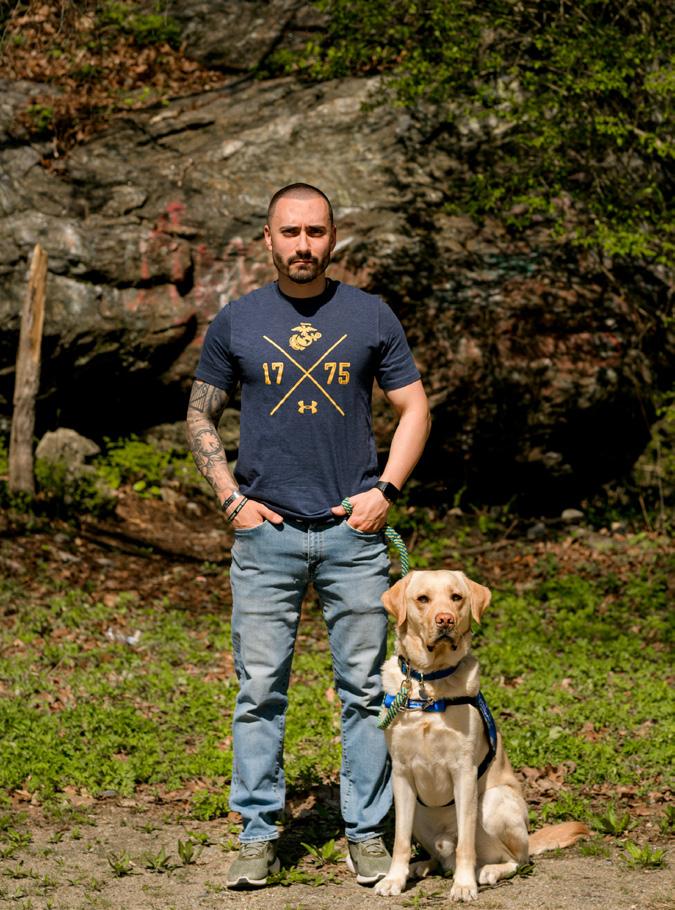
“I got my service dog when I was medically retired out of the military, and it was the best thing that ever happened to me. I wish every medically retired serviceman could have a service dog. He’s amazing. He’s my best bud. I go everywhere and anywhere with him.”
- Marcus Luttrell
Why is this time of year, approximately forty days from early July to early September, referred to as the ‘Dog Days’ of Summer?

any people believe the phrase “dog days of summer” stems from the fact that dogs tend to be a bit on the lazy side during the hottest days of summer.
Of course, who can blame them? With that much fur, dogs that exercise during the hot days of summer can overheat easily.
We have all heard the myths about Dog Days, most of which focus around our canine friends, which is why the old folks say this time of year is called Dog Days.
Some of the myths are:
Hunting dogs will not hunt, dogs go mad and foam at the mouth for no apparent reason, snakes go blind and strike at anything that comes near them, (dogs in particular), no use in going fishing because the fish will not bite, wounds and sores will not heal, if it rains on the first day of Dog Days, it will rain every day for the next 40 days, or the opposite-if it does not rain on the first day of Dog Days then it will not rain for 40 days, and the list of myths goes on.
Sometimes myths are just myths. Handed down from generation to generation, but the real origination of this time of year being dubbed Dog Days, is based on a partial myth also.
The term Dog Days was coined in ancient Rome, and was named after the star Sirius, the Dog Star, which is the brightest star besides the sun. It was thought that due to the rising and setting of Sirius at around the same time of the sun each day this time of year, that Sirius added its heat to the sun’s heat, thereby making the days hotter. Hence the term Dogs Days.
Our modern day usage of the term has little to do with Sirius or his alleged wrath. We use the term Dog Days to refer to anything that is slow, lazy or languishing.
I think the best way to appease the wrath of Sirius is to gather up my canine friends and find a hilltop breeze or go stagnate on the couch in front of the air-conditioning or maybe hit the beach and enjoy the San Diego cool ocean breeze.
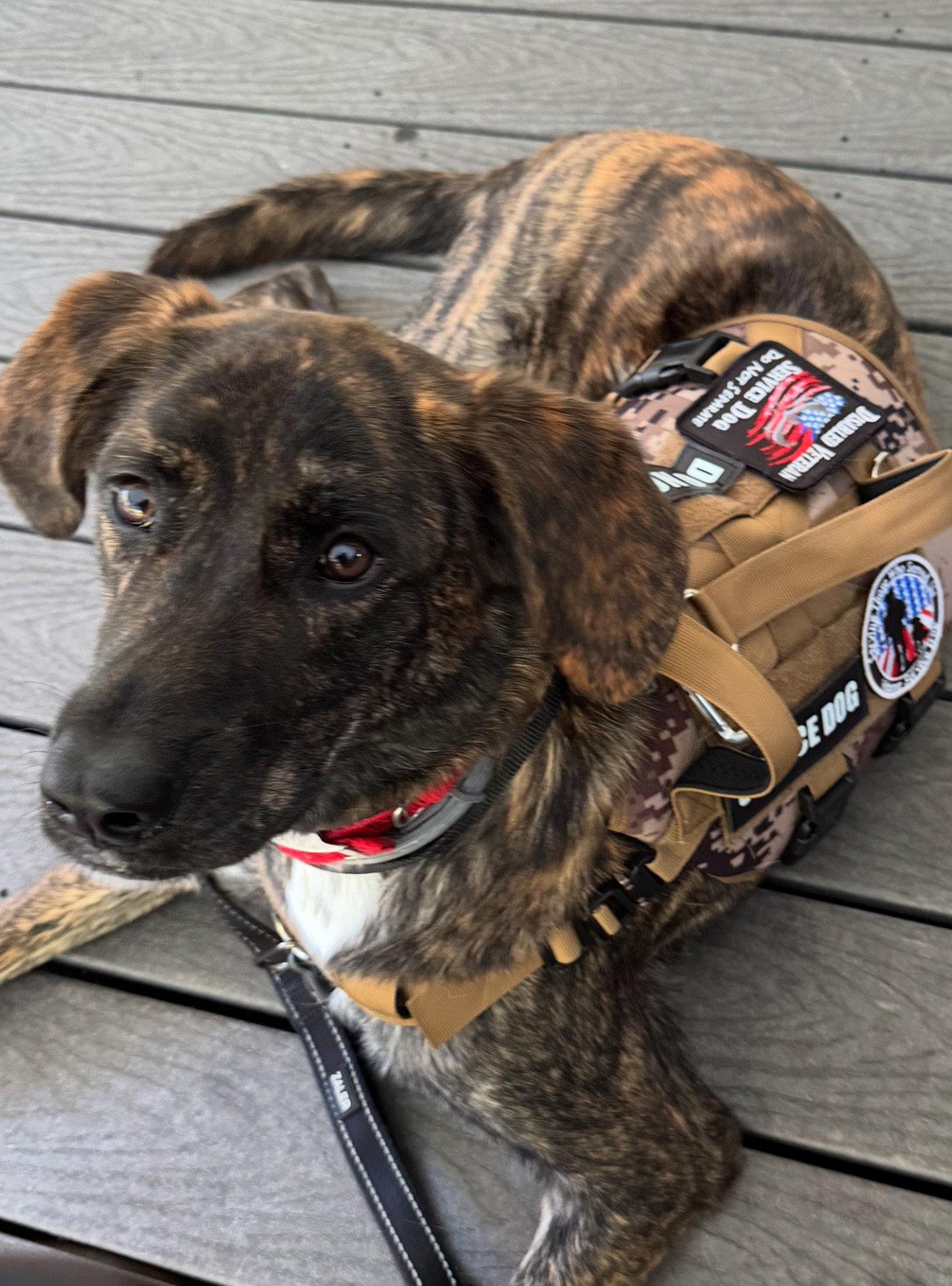
How one veteran is fighting to protect service animal rights
By Jonathan Kaupanger

For many veterans, a service dog is more than a companion. It’s a vital tool for navigating daily life with a disability. However, as Army veteran William McCasland recently discovered, public understanding of the Americans with Disabilities Act (ADA) still lags behind the law.
While traveling for a family reunion, McCasland, who is a member of DAV Chapter 11 in Waterbury, Connecticut, and his service dog, Kobe, were initially welcomed at several hotels and restaurants. That changed at a hotel in Mississippi when staff informed him that “pets” aren’t allowed in the dining area.
“I said, ‘Well, you have to understand this is not a pet. This is a service dog,’” McCasland said. Despite his explanations and Kobe’s well-trained behavior, McCasland was asked to leave the area, an experience he described as deeply embarrassing.
The confrontation highlights a common hurdle: Businesses often conflate highly trained service animals with emotional support animals or pets, despite clear legal distinctions.
The incident in Mississippi was particularly jarring for McCasland because it followed a week of seamless travel. The confusion began when a hotel staff member noticed McCasland practicing a controlled entrance—a training routine where Kobe sits and waits for a treat before entering a building. When asked if the dog was training, McCasland, a firm believer that a service animal’s proficiency requires constant reinforcement, replied that Kobe is “always training.” This simple statement was later used by the hotel to justify his ejection from the dining room, with management claiming the dog was merely a service dog in training and therefore not protected by the ADA.
Angelica Williams, an Air Force veteran and community outreach coordinator for the Department of Justice (DOJ) Civil Rights Division, emphasized that the ADA is designed to protect access for individuals with disabilities. According to Williams, there are four basic things you need to know: The definition of a service animal: Under the ADA, a service animal is a dog individually trained to perform specific tasks that directly relate to a person’s disability. Tasks versus support: Tasks can include alerting a person with post-traumatic stress disorder to an oncoming panic attack or providing deep pressure therapy. Critically, providing only comfort or emotional support doesn’t qualify a dog as a service animal under the law.
The two-question rule: When it isn’t obvious what service a dog provides, staff at a business may only ask two questions:
1. Is the dog a service animal required because of a disability?
2. What work or task has the dog been trained to perform?
Prohibited inquiries: Staff can’t ask about the nature of the disability, require a demonstration of the task, or demand documentation like certification or a doctor’s note.
Williams highlighted that the ADA’s protections are contingent on the handler maintaining effective control of the animal. This goes beyond obedience and includes specific legal standards for how a service dog is handled in public.
Under DOJ regulations, a service animal must generally be harnessed, leashed or tethered. However, if a handler’s
disability prevents the use of a leash or if a tether interferes with the dog’s safe and effective performance of its work, the handler isn’t required to use one. In these cases, the handler must still maintain control through voice commands, hand signals or other effective means.
A handler can be legally asked to remove their service dog from the premises if it’s out of control—behaviors like growling, biting or excessive barking—and if the handler doesn’t take effective action to correct it.
Williams acknowledged that legitimate service dog teams often face unfair scrutiny due to the presence of poorly behaved pets or fake service animals in public spaces. To handle these high-tension moments, she suggests that veterans should calmly restate the two-question rule and explain the specific task the dog is trained to perform to distinguish them from a pet. If a business owner remains confused about the law, veterans can refer them to the DOJ’s published fact sheet available at servicemembers. gov. If a veteran is still denied access despite the dog being under control and performing a task, they may file a formal ADA complaint through the portal at ada.gov.
A major point of confusion for both veterans and businesses is the rise of online registration services. Williams warns that these services are unnecessary and can be intentionally misleading, noting that veterans are often inundated with ads for licensing and registration. According to Williams, because of their military background, veterans may feel more pressure than civilians to have proper documentation.
This confusion is further fueled by recent changes in air travel. While the U.S. Department of Transportation updated its rules in 2021 to allow airlines to exclude emotional support animals and require specific forms, those rules don’t apply to hotels, restaurants or shops. Business owners may learn about these airline requirements and mistakenly overcorrect, demanding the same documentation in spaces where the ADA guarantees access without it.
It’s critical for veterans to understand that private companies offering these certifications often prey on their desire to follow the rules, according to Williams. These documents have no legal weight under the ADA.
“The ADA explicitly states that service animals are not required to be certified or go through a professional training program,” Williams said. This means a dog that a veteran personally trains, provided it’s under control and trained for a specific task, meets the same service dog requirements as one trained by an accredited organization.
For McCasland, the goal of sharing his story is education. By pursuing a formal complaint and seeking compliance training for the hotel staff, he hopes to ensure the next
veteran who walks through the hotel’s doors is met with understanding rather than confrontation.
“I want to make it about all our veterans that have service dogs that are out there in the community,” McCasland said.
While veterans like McCasland fight for their right to public access under the ADA, many others struggle just to obtain a service dog. To bridge this gap, DAV is advocating for the Service Dogs Assisting Veterans (SAVES) Act (H.R. 2605/S. 1441). This legislation would create a pilot program at the Department of Veterans Affairs to fund the training and placement of service dogs for veterans with conditions like traumatic brain injury and military sexual trauma. The veterans would pay nothing and would also receive veterinary insurance to ensure these lifesaving animals can get the care they need. n
For more information about the ADA, visit ada.gov For information on service members and veterans initiatives, visit servicemembers.gov
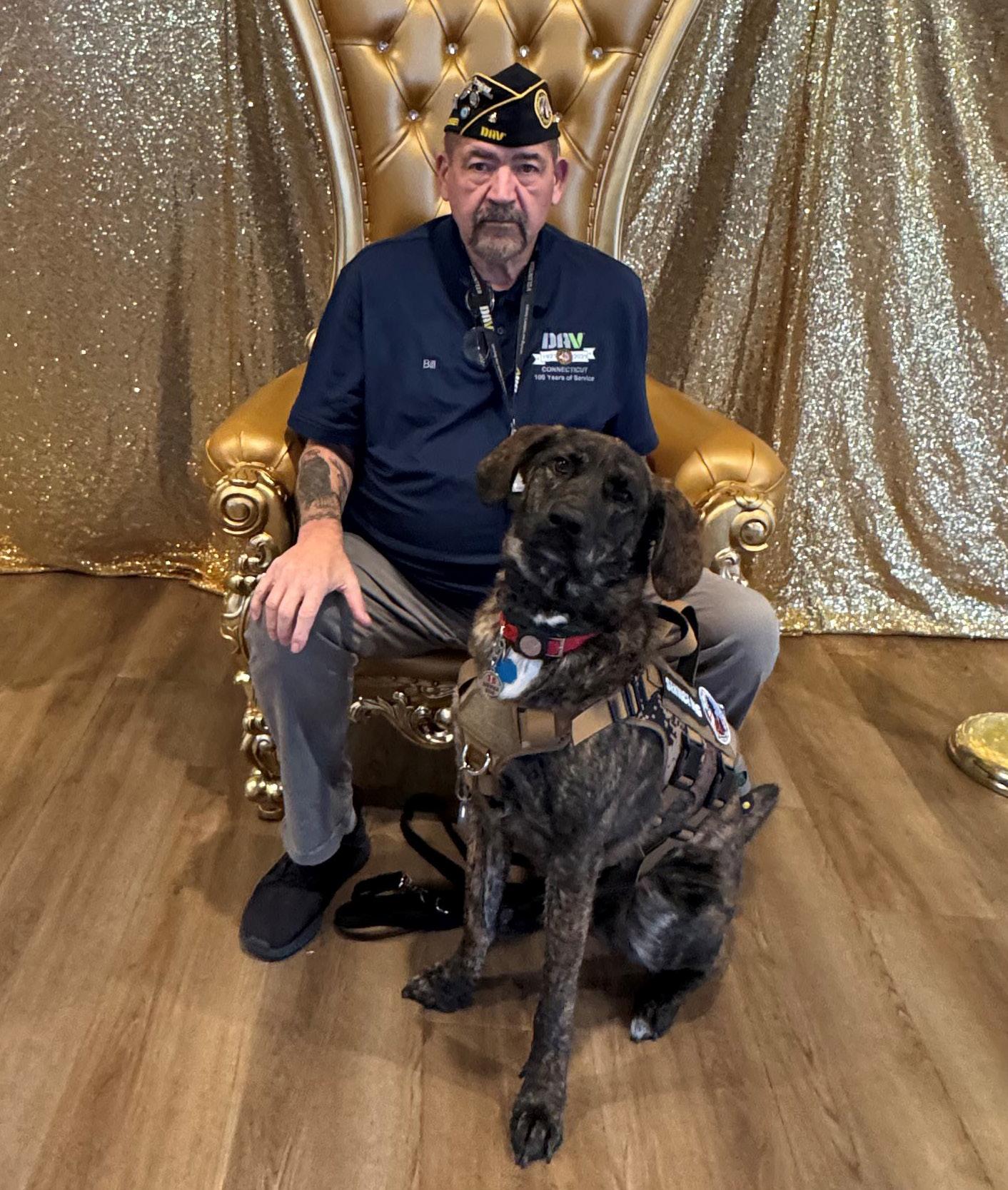

After Kobe’s handler, Army veteran William McCasland, was barred from a hotel dining area in Mississippi, the pair turned the embarrassing confrontation into a mission to educate others on the Americans with Disabilities Act.
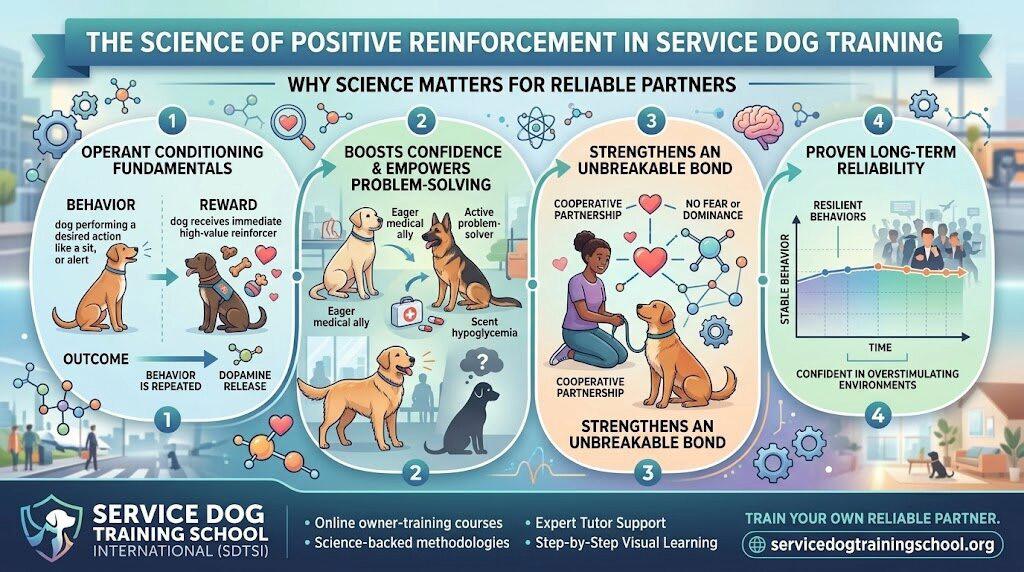
The image of a service dog flawlessly navigating a crowded grocery store, ignoring dropped food, and remaining entirely focused on their handler is nothing short of incredible. But behind that polished behavior lies hundreds of hours of training. Historically, the dog training world was heavily fractured by differing methodologies. Today, however, canine behaviorists, veterinarians, and elite trainers agree: the most effective, reliable, and ethical way to train a working dog is through positive reinforcement.
When training a dog for tasks that could literally save your life—like alerting to a blood sugar crash or interrupting a panic attack—the methods you use matter. Here is a look at the science behind positive reinforcement and why it is the gold standard for service dog training.
At its core, positive reinforcement (often abbreviated as R+) is rooted in the behavioral science of operant conditioning. The principle is elegantly simple: behaviors that are rewarded are more likely to be repeated.
When a dog performs a desired action (like making eye contact or sitting politely) and immediately receives a high-value reward (a treat, a toy, or enthusiastic praise), their brain releases dopamine. This neurochemical reaction creates a powerful, positive association with the behavior. Instead of learning to avoid a punishment, the dog learns to actively seek out the reward by offering the correct behavior.
While any pet benefits from reward-based training, the stakes are exponentially higher for service dogs. Here is why the science of positive reinforcement is nonnegotiable for working teams:
A service dog and their handler must operate as a seamless unit. Methods that rely on "alpha" dominance, fear, or physical corrections (aversives) fundamentally damage the trust between human and canine. Positive reinforcement, on the other hand, builds a cooperative, joyful partnership. The dog learns to view their handler not as a source of stress, but as the ultimate source of good things.
Service dogs are asked to work in highly unnatural, overstimulating environments—from loud airports to cramped restaurants. A dog trained with corrections often performs out of fear of making a mistake, which
can lead to anxiety, stress, and eventually, burnout or "learned helplessness" where the dog simply shuts down. Reward-based training builds a confident dog who views novel environments as exciting opportunities to earn rewards.
When a Psychiatric Service Dog needs to recognize the subtle signs of an impending anxiety attack, or a Diabetic Alert Dog needs to detect a shift in blood sugar, they must be actively engaged in their environment. Positive reinforcement creates dogs that are eager to work and willing to try new things because they know their efforts will pay off. They aren't just robots avoiding a leash pop; they are enthusiastic problem-solvers.
Science shows that behaviors trained through positive reinforcement are far more resilient over time. When a dog genuinely understands why a behavior is beneficial to them, that behavior sticks, even under high-stress, real-world conditions.
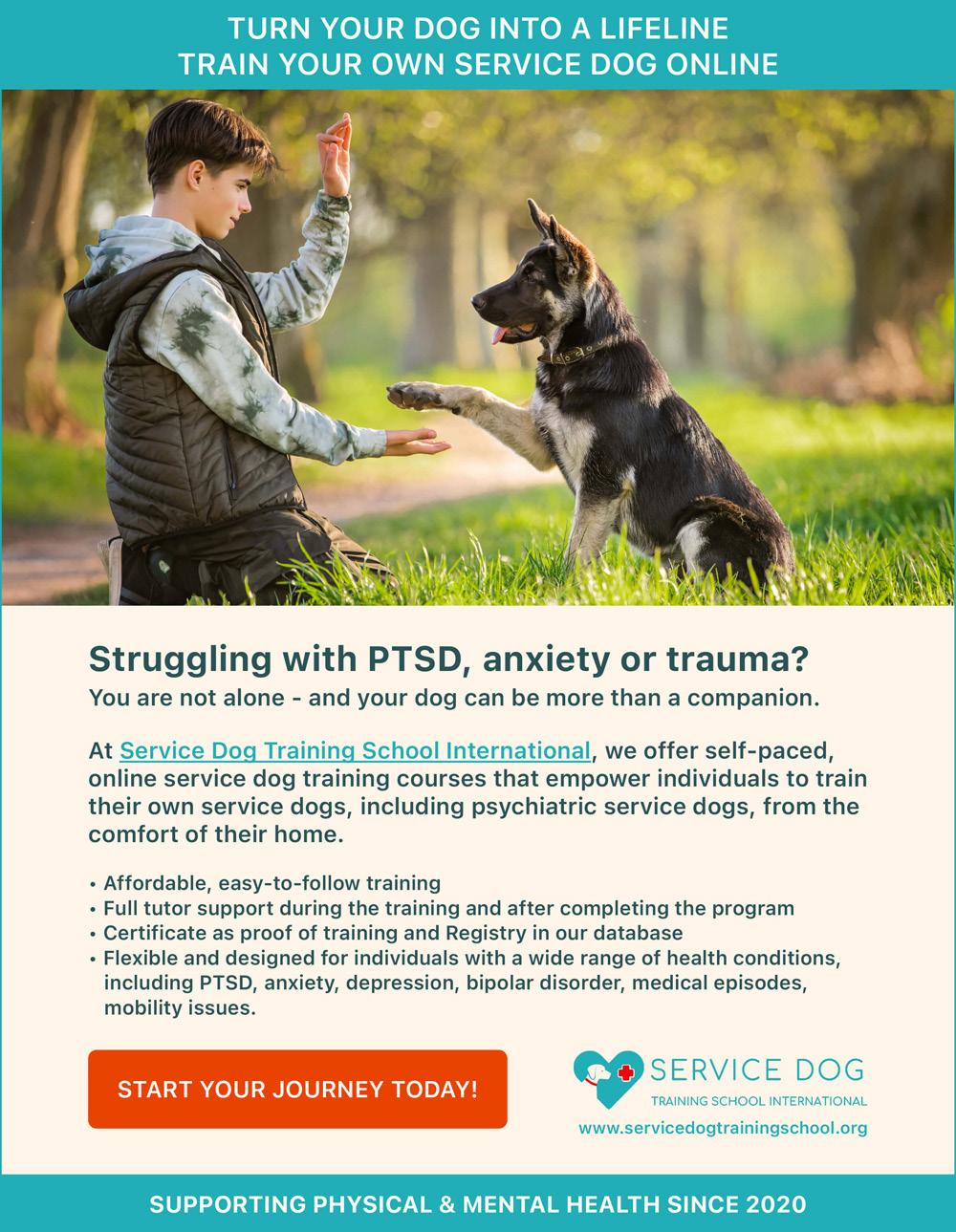
At Service Dog Training School International (SDTSI), we are committed to the most current, effective, and compassionate training methodologies. We believe that owner-training your service dog should be an empowering experience that strengthens your bond, which is why our entire curriculum is rooted in positive reinforcement.
Our comprehensive, 100% online programs are designed to give you the expert tools you need to train your own life-saving partner from home.
• Step-by-Step Visual Learning: Our platform features updated training videos that clearly demonstrate positive reinforcement techniques, so you can see exactly how to time your rewards and read your dog’s body language.
• Specialized, Reward-Based Courses: Whether you are teaching complex scent detection in our Diabetic Alert Dog Course, deep pressure therapy in our Psychiatric Service Dog Course, or flawless manners in our Public Access Training, every module sets you and your dog up for success without the use of fear or force.
• Expert Tutor Support: You are never alone in your journey. Our certified trainers are available to provide one-on-one guidance, review your video submissions, and help you troubleshoot using proven, sciencebacked solutions.
When you train with positive reinforcement, you aren't just teaching commands; you are building a willing, confident, and joyful medical ally.
Ready to transform your dog into a reliable service partner using methods you can feel good about?
Discover our full range of courses and start your journey today by visiting Service Dog Training School International servicedogtrainingschool.org
servicedogtrainingschool.org
Have you ever wondered where service dogs first came from? Who trained the earliest working dogs, and what kinds of tasks did they perform? Were they treasured companions like many are today, or were they simply valued for the jobs they could do?
The bond between humans and dogs has evolved over thousands of years, transforming from survival partners to trusted family members—and, for many, indispensable service animals. Let's take a brief journey through the fascinating history of service dogs and discover how these incredible animals became some of our most loyal and capable partners.
No one knows exactly when humans and dogs first formed their extraordinary relationship, but archaeologists believe it stretches back many thousands of years.
One remarkable discovery was a perfectly preserved puppy found frozen in the Siberian permafrost. Scientists estimate the animal lived approximately 12,000 years ago, offering a remarkable glimpse into one of the earliest known human-canine connections.
Ancient civilizations also recognized the importance of dogs. The Egyptians not only kept dogs as companions and protectors but honored them enough to include them in burial rituals. Dog mummies dating back to the sixth century B.C. have been discovered, reflecting the respect these animals earned. In Peru, archaeologists uncovered a cemetery dating to around 900 A.D. where dogs were buried in individual graves alongside their owners—clear evidence that the human-dog bond has deep roots across many cultures.
Throughout history, dogs have served as hunters, guardians, protectors, and loyal companions, proving that their place beside humanity has always been far more significant than that of a simple working animal.
As time went on, the role of service dogs continued to evolve. Beyond assisting individuals with visual or hearing impairments, specially trained dogs began helping children with autism and veterans and active-duty service members living with Post-Traumatic Stress Disorder (PTSD).
Today, service dogs perform an extraordinary range of life-changing tasks, including:

• Recognizing and responding to the onset of seizures. Alerting their handlers to dangerous changes in blood sugar levels.
• Providing balance and mobility support.
• Retrieving dropped items, opening doors, activating light switches, and assisting with countless other daily activities.
The modern definition of a service dog was firmly established with the passage of the Americans with Disabilities Act (ADA) of 1990. While the law prohibits discrimination against individuals with disabilities, it also clearly defines the rights and responsibilities surrounding service animals.
Under the ADA, a service dog is one that has been individually trained to perform specific tasks for a person with a disability. These highly skilled animals are much more than loyal companions. They are caregivers, medical assistants, protectors, and partners who provide greater independence and improve their handlers' quality of life every day.
As awareness of service dogs has grown, so too has confusion about the different types of assistance animals. Today, many businesses and public places face challenges when individuals attempt to bring untrained pets or emotional support animals into areas where only trained service dogs are permitted.
While emotional support animals can provide meaningful comfort and companionship, they are not considered service animals under the ADA unless they have been individually trained to perform specific tasks related to a person's disability. This distinction is important because trained service dogs undergo extensive instruction to remain calm, focused, and reliable in virtually any public environment.
www.servicedogtrainingschool.org
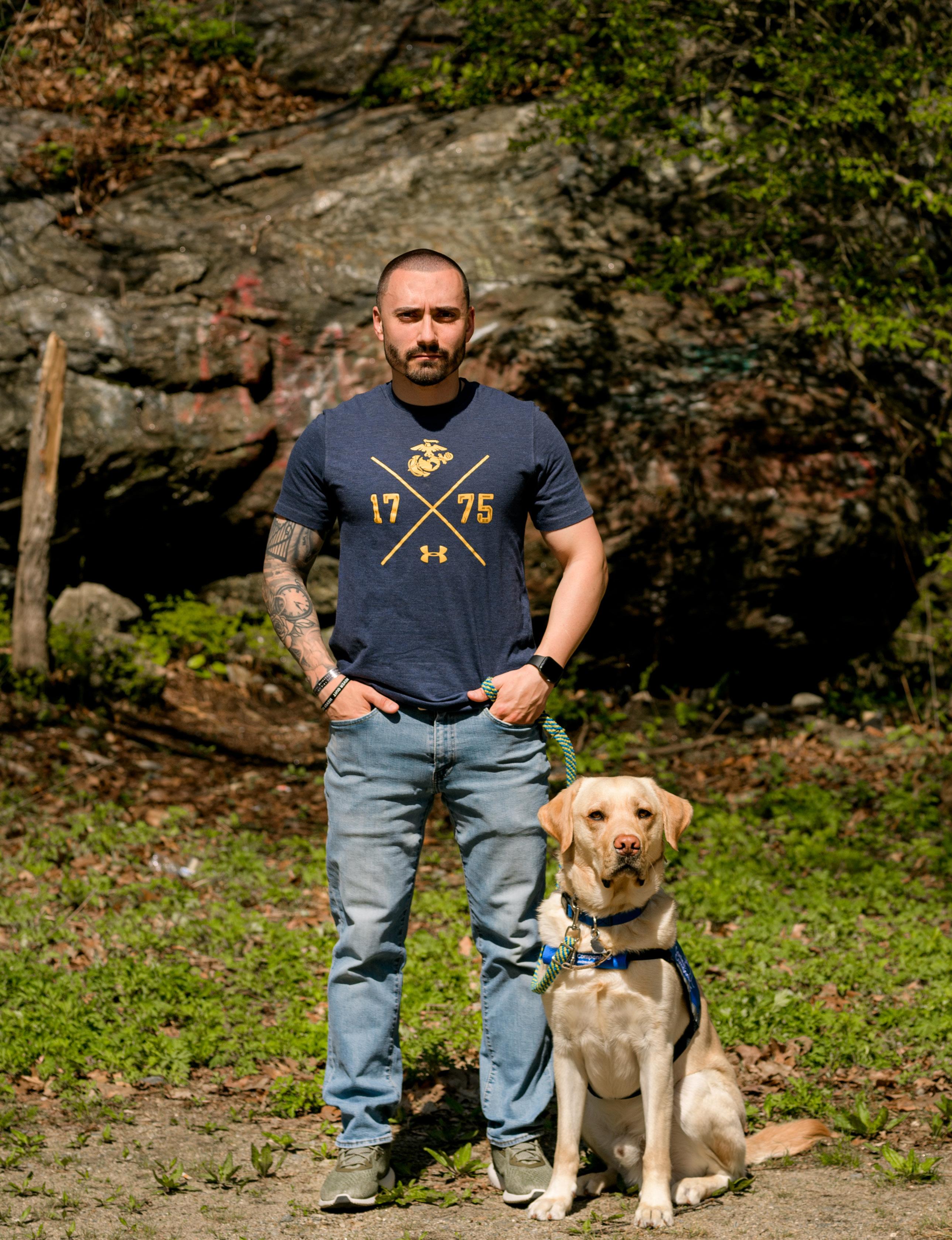
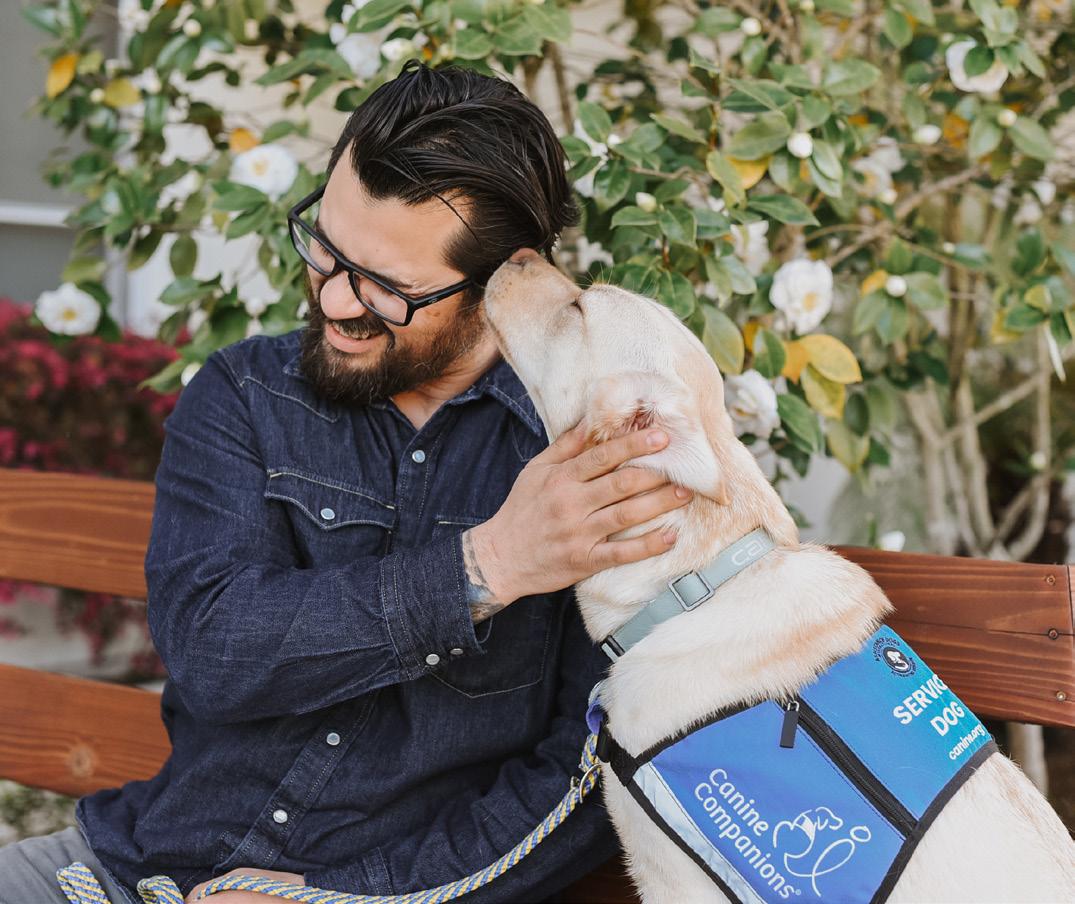
In 1975, Canine Companions® pioneered training dogs to assist people with disabilities to enhance independence and self-reliance, creating the service dog. Over fifty years later, the organization has provided over 8,750 service dogs to adults, children and veterans with disabilities in addition to facility dogs to professionals working in healthcare, criminal justice and educational settings - entirely free of charge.
The specially bred, raised and trained Labrador and Golden Retrievers assist with physical tasks, including pulling manual wheelchairs, opening doors, retrieving dropped items, alerting to important sounds and interrupting posttraumatic stress disorder-related anxiety and nightmares.
• Donate: As a nonprofit Canine Companions relies on donations from individuals and organizations to ensure all service dogs are provided to clients free of charge
- Start a fundraiser at canine.org/diy
- Attend an event at canine.org/events
- Sponsor a puppy at canine.org/sponsorapuppy
- Make a donation in honor of a friend, family member, dog or veteran at canine.org/donate
• Volunteer: Expertly trained service dogs don’t happen without the support of dedicated volunteers. Learn how you can support Canine Companions at canine.org/get-involved
- Support Canine Companions at events, through local volunteer chapter activities or at one of the organization’s training centers
- Puppy raisers across the U.S. teach future service dogs crucial socialization and foundational exercises for 18 months to prepare them for expert training by Canine Companions to enter a life of service.
- Canine caretakers care for breeder dogs and newborn Canine Companions puppies for the first eight weeks of life
• Apply. Learn more about receiving a free service dog at canine.org/apply
Canine Companions is committed to helping veterans thrive through best-in-class service dogs and ongoing innovation. The recently released CanineAlert™ Device is designed to do just that - revolutionize the way service dogs support individuals with disabilities.
Developed in-house in collaboration with experts in the field, the patented CanineAlert System uses biometric data, monitoring the handler’s heart rate through
wearable technology that wirelessly communicates with the service dog’s collar device with the help of an app. When irregularities in the wearer’s heart rate are detected, the device triggers a gentle vibration, prompting the service dog to intervene.
Through specialized training, the service dog performs specific tasks tailored to the handler’s needs, such as interrupting a nightmare or aiding in their recovery process.
“Not every nightmare I have am I vocalizing or moving around. That’s what Service Dog Dubs watches for. Sometimes there are nightmares where that doesn’t happen. That’s why love the CanineAlert device - it just takes my heart rate rising to get him to react. Before, he may not have noticed that.” - U.S. Army veteran Megan and Canine Companions Service Dog Dubs.
This innovative approach not only provides essential assistance but also enables the service dog to respond faster and more effectively, ultimately preventing escalation.
It was U.S. Air Force veteran Jon’s first night in the dorms at Canine Companions. He sat in the corner with his hat pulled low. Even though he had already visited the large campus, everything about being there felt unfamiliar. Jon kept scanning the room, counting exits, checking doors, making sure he knew where to go if he needed to get out.
“The truth is, I didn’t want to be there,” Jon says. “But that wasn’t a new feeling. For years, I had been avoiding people, avoiding places, avoiding anything that made me feel like I wasn’t in control.”
After serving nine years in the United States Air Force, something inside him had changed.
“I felt… broken. Like pieces of me were missing.”
But after waiting more than two years from first applying to Canine Companions to arriving at two weeks of Team Training, Jon knew he had to try. That’s when he met Service Dog Bernice.
Bernice wasn’t what Jon expected at first. She was smaller than he imagined. Quiet. Steady. But over those two weeks of training, Jon started to see something different.
“Bernice had a way of noticing what I felt before I said a word. When I got overwhelmed, she grounded me. When I felt that urge to pull away, she kept me present. For the first time in a long time, I felt a sense of calm.”
And Jon felt something even more important: he felt hope.
Provided entirely free of charge and trained in physical tasks to assist with symptoms of PTSD, Bernice is making a huge difference in Jon’s life. Whether she’s physically interrupting anxiety or flashbacks with a hard nudge to the leg, waking Jon from nightmares or providing a buffer in crowds, partnering with Bernice provides peace of mind.
Jon dreams of going out to dinner with his wife and actually enjoying it. He wants to walk into a store without feeling on edge. He wants to experience new places without anxiety taking over. Now, those hopes seem more in reach.
“Bernice is helping me get there,” he remarks. “She’s helping me put the pieces back together. I’ve been going out and doing things I wouldn’t have done without her by my side.”
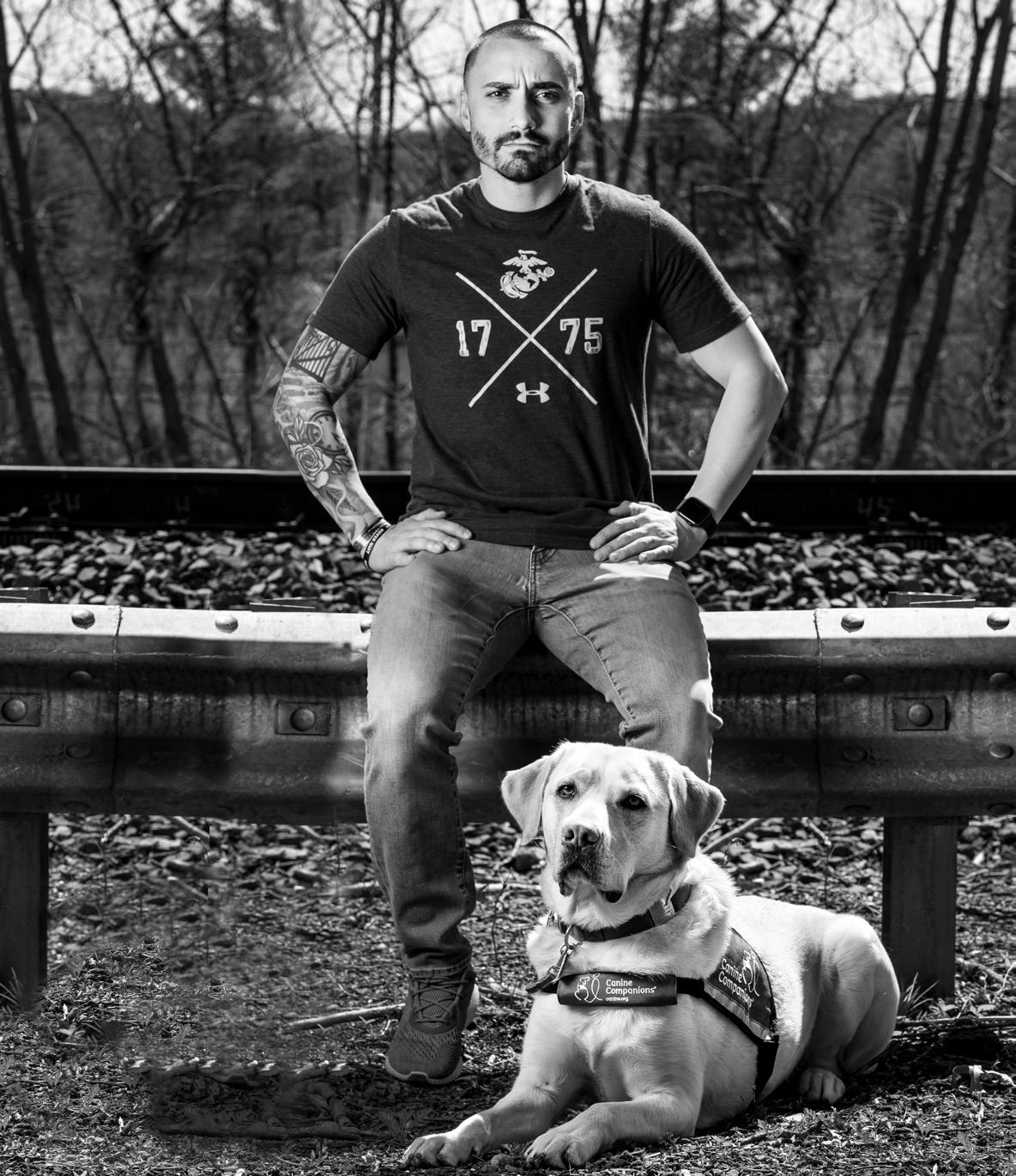
Help Our Nation’s Veterans Regain Independence Through FREE Service Dogs
• Volunteer to raise a future service dog
• Help raise awareness at events
• Join your local volunteer chapter
APPLY FOR A FREE SERVICE DOG
• Learn more about Canine Companions and our best-in-class service dogs for veterans
• Make more matches possibleDonate now!
canine.org/veterans
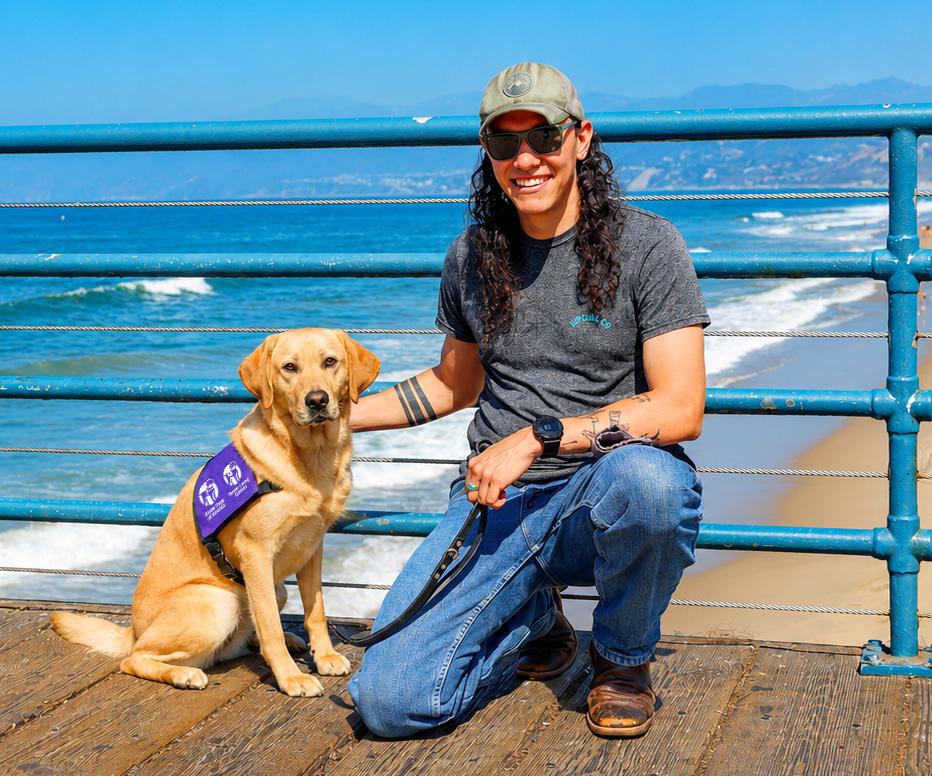
For many veterans living with post-traumatic stress disorder (PTSD), traumatic brain injury (TBI), or mobility challenges, the hardest battles begin after military service ends.
"Being in crowded places, unfamiliar environments, dealing with anxiety," said disabled veteran Anthony Lott. "Not being in control, and there being a perceived threat."
That constant state of hypervigilance once made everyday life overwhelming. Today, Anthony faces those moments with Marley, his service dog from Guide Dogs of America | Tender Loving Canines (GDA | TLC), by his side.
"A service dog provides a way of grounding you in moments of crisis," Anthony said. "They provide a sense of calmness."
Marley not only helps Anthony navigate daily life but also supports him in his role as a veteran’s program manager for a tribal nation, where listening to other veterans' experiences can sometimes trigger his own.
"Marley can alert me even before I notice I'm being triggered," he said. "Knowing how much Marley has changed my life, I would only want this for many more people."
That transformation is exactly what we strive to make possible for every veteran we serve. In addition, because GDA | TLC is accredited by Assistance Dogs International (ADI) and the International Guide Dog Federation (IGDF), veterans partnered with a GDA | TLC Service Dog may qualify to apply for the VA's Veterinary Health Benefit, which helps eligible veterans cover the ongoing medical care of their service dog.
Today, that mission extends beyond placing service dogs. Through a growing partnership with the Veterans Moving Forward program at the Vista correctional facility and the San Diego VA, GDA | TLC therapy dog teams and puppies in training make regular visits to incarcerated veterans working through PTSD, trauma, substance dependency, and other mental health challenges connected to their military service.
These visits create opportunities for healing through connection. As the dogs move through the room, conversations begin, anxiety softens, and emotional barriers start to come down. The dogs offer something profoundly simple – unconditional acceptance. They don't see criminal records or past mistakes. They simply respond to the person in front of them.
For many participants, those moments become an important step toward rebuilding trust, processing trauma, and reconnecting with others.
Whether providing a highly trained service dog that changes the comfort and hope through therapy dog outreach, GDA | TLC believes healing begins with partnership.
Because every veteran deserves the opportunity to move forward with confidence – and no one should have to make that journey alone.
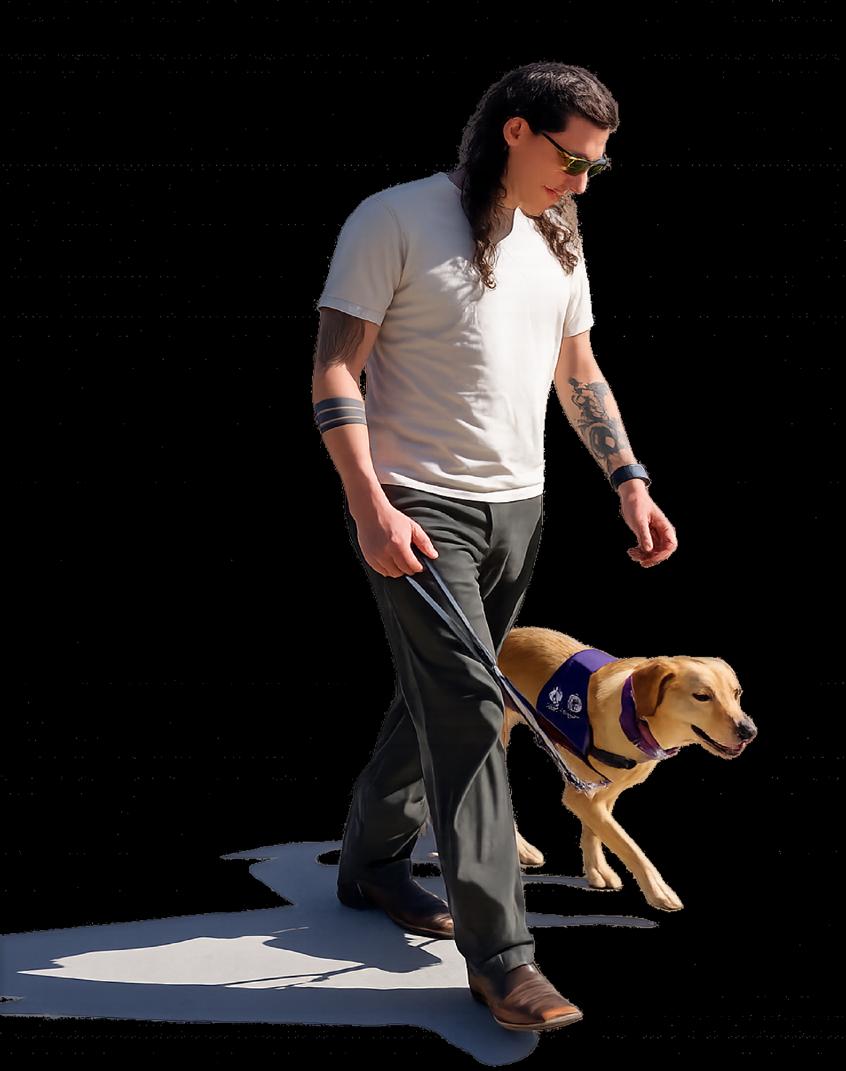
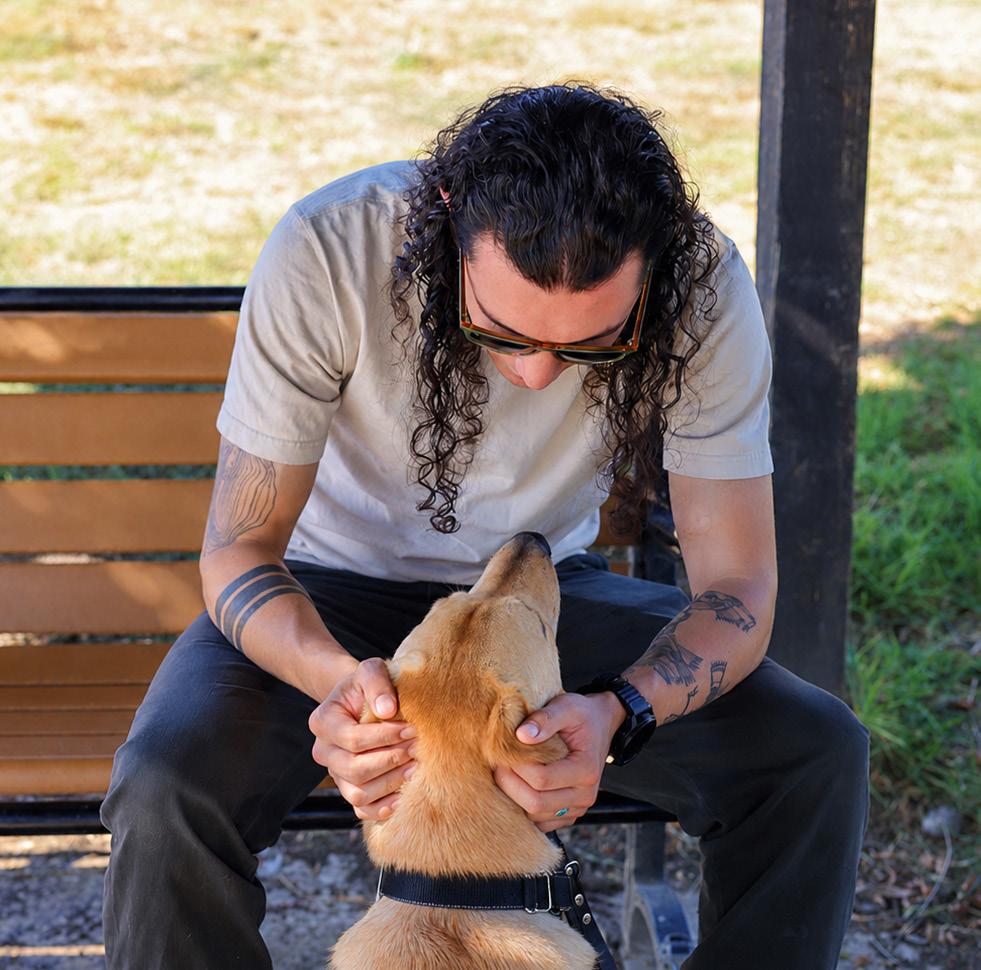
Why GDA | TLC Service Dogs Are Different Purpose-Bred for Success
Every GDA | TLC service dog begins life on our 7.5-acre Sylmar, California campus, where health, temperament, and confidence are carefully cultivated from birth.
Raised by Volunteers
For approximately one year, dedicated puppy raisers welcome each puppy into their homes, providing socialization, foundational training, and countless realworld experiences that help build confident, resilient future service dogs.
Expert Training
After returning to campus, every dog completes approximately nine months of advanced, task-specific training to support veterans living with military-related PTSD, traumatic brain injury (TBI), and mobility disabilities.
Accredited Excellence
GDA | TLC is fully accredited by Assistance Dogs International (ADI), meeting the highest international standards for breeding, training, placement, and lifetime support.
No Cost to Veterans
Every qualified veteran receives their service dog, personalized training, equipment, lodging, meals during team training, and ongoing support at no cost – made possible through the generosity of donors, volunteers, and community partners.

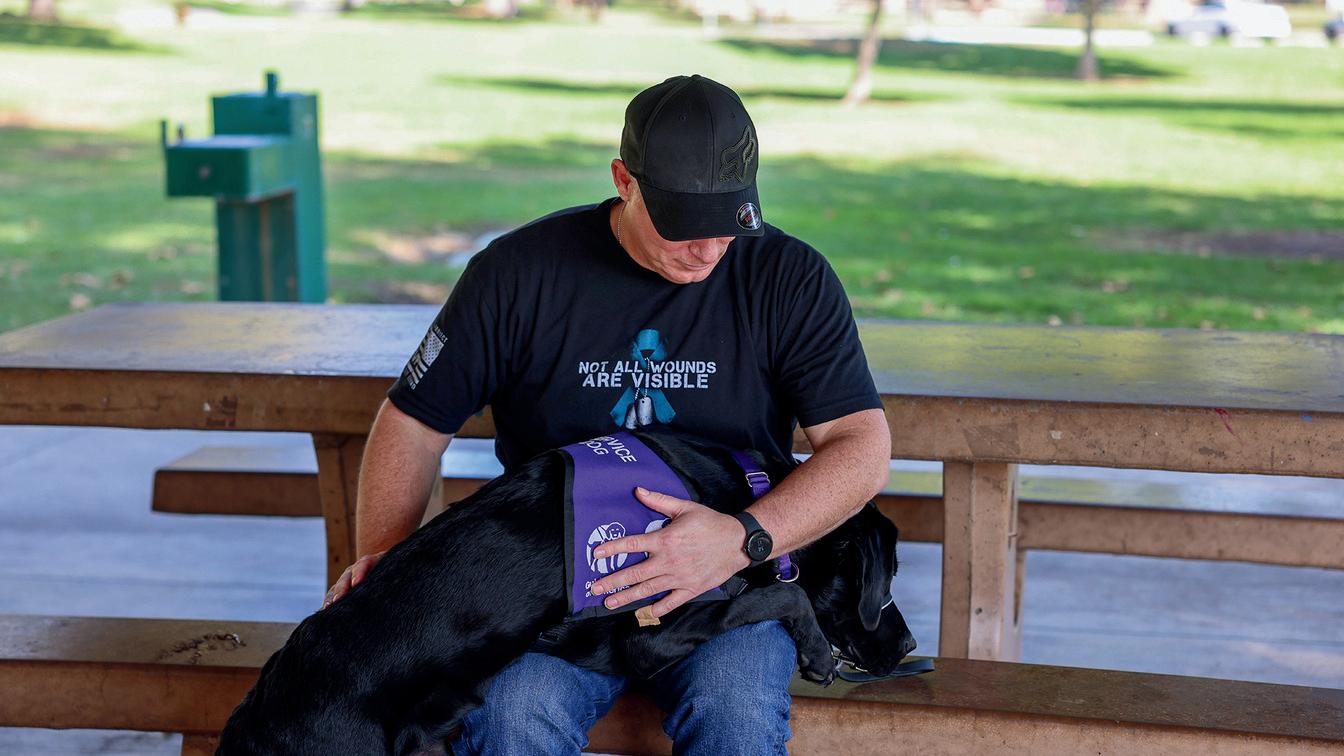
For veterans living with military-related PTSD, TBI, MST, mobility disabilities, and other service-related challenges, a highly trained service dog can be life-changing.
At Guide Dogs of America | Tender Loving Canines, every Veteran Service Dog is professionally trained and provided AT NO COST to qualified veterans.
As an Assistance Dogs International (ADI) accredited nonprofit, we are committed to the highest standards of service dog training and support, helping veterans build strength and resilience, one partnership at a time.
No Cost to Qualified Veterans Purpose-Bred. Professionally Trained Incarcerated Trainer Program with a Proven 0% Recidivism Rate*

Photos by Nicole Mancuso

Paws for Purple Hearts improves the lives of America’s Warriors (Veterans and active-duty service members) facing mobility challenges and trauma-related conditions such as Post-traumatic Stress Disorder (PTSD) and Traumatic Brain Injury (TBI) by providing the highest quality assistance dogs and canine-assisted therapeutic programs; and by building public awareness about the important role dogs play in helping Warriors along the road to recovery.
At Paws for Purple Hearts, we train and place two different types of assistance dogs. Facility Dogs can be found in a VA, DOD, or similar office visiting Veterans to bring joy throughout a facility. They bring happiness and essential assistance to Veterans, enriching their lives and promoting greater independence. Service Dogs are trained specifically for a Warrior in-need. They provide crucial support and aid to those who require their unique skills and companionship.
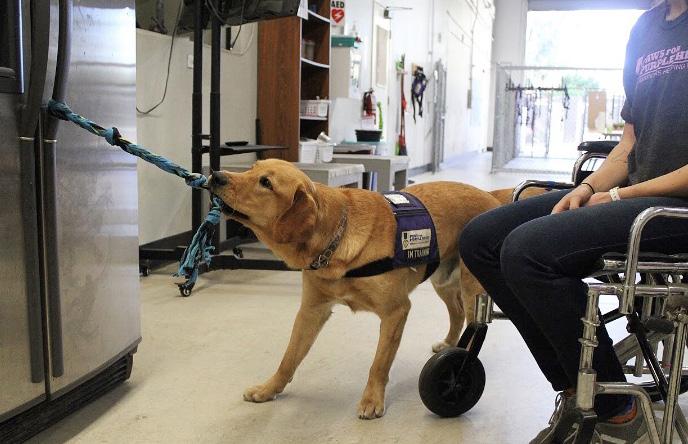
Our Service Dogs learn over 110 commands making them more than capable of serving the most demanding category of mobility impaired Warrior, a quadriplegiclevel patient. This provides the Military Caregiver dramatic respite and logistical relief because our dogs can carry out many routine, repetitive and physically demanding tasks that would otherwise have to be accomplished by the caregiver, including picking up dropped objects, retrieving items, opening refrigerator doors, assisting with undressing, switching lights and other devices on and off, opening and closing doors, providing assistance moving to and from wheelchairs, etc.
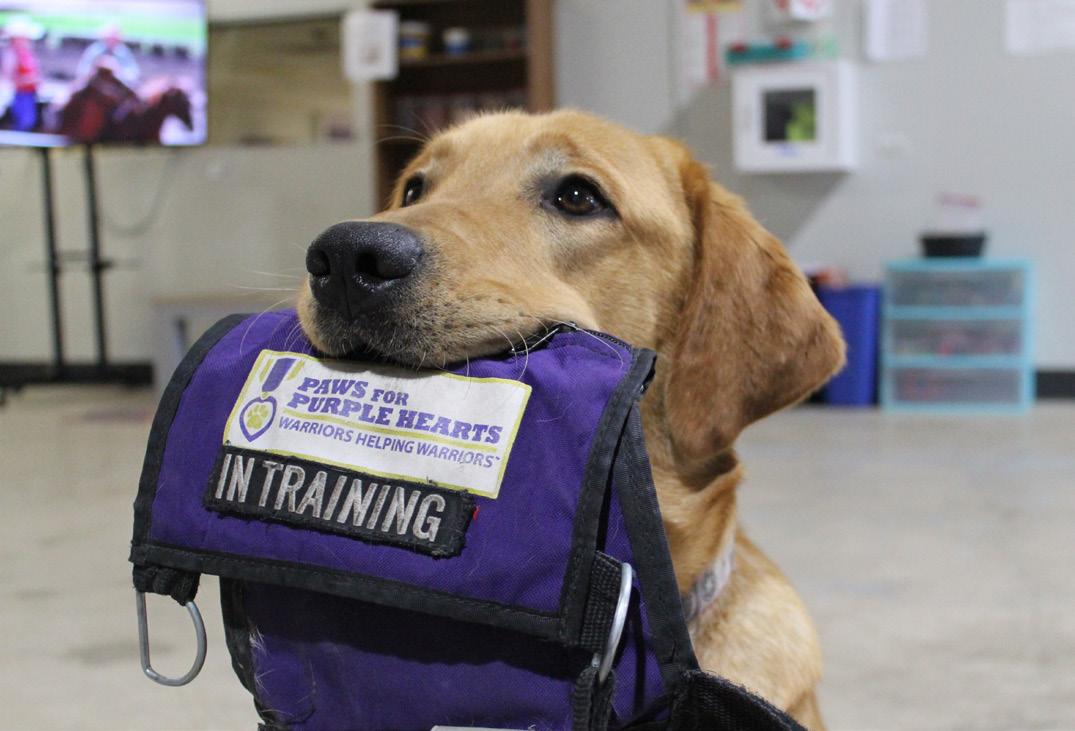
We provide our dogs to Warrior recipients and their families, free of charge. This provides immediate and significant financial relief to the Warrior and to their Military Caregivers, as they are not burdened with bearing the cost of our Service Dogs in order to benefit from the services and companionship gained. This is a significant benefit given that it takes about $35,000 to raise a toptier Service Dog. Our Service Dogs are also involved in programs throughout their training that help more Veterans other than the ones they are being placed with.
Canine-Assisted Warrior Therapy® is a unique therapeutic intervention. This Program focuses on creating opportunities for positive meaningful interaction with our service dogs in-training. Guided by our highly experienced Program Instructors, in partnership with professional therapists, Warriors get the chance to reinforce commands and behaviors that are vital for a service-dog-in-training. They regain a sense of purpose in accomplishing a critical mission - training a life-long service companion for another comrade. Through this program, each dog will positively impact the lives of 40 – 60 Warriors.
Social Therapy uses the unique skills of our Service Dogs in-training to bring comfort and joy while reducing stress in the lives of America’s heroes. Versions of these programs are developed for both Veterans and active-duty service members. Our trainers and dogs will travel directly to our Warriors for this therapy or we host it directly at our sites. This interaction is also very imperative to our dog’s training, as this helps them learn positive interactions and gets them comfortable with meeting new people.
In 2004, Rosa Perez and her three children were stationed on a military base in Hawaii while her husband, Carlos, was fighting in Iraq. He had always dreamed of serving his country and embraced life with joy.
As a first-generation American, he was so grateful for all the opportunities our country provides and wanted to give back.
After re-upping his enlistment in the Army after 9/11, Carlos was in a convoy outside of Kirkuk, Iraq when an IED went off right under his Humvee. Returning home and burdened with severe PTSD, Carlos was struggling to find peace.
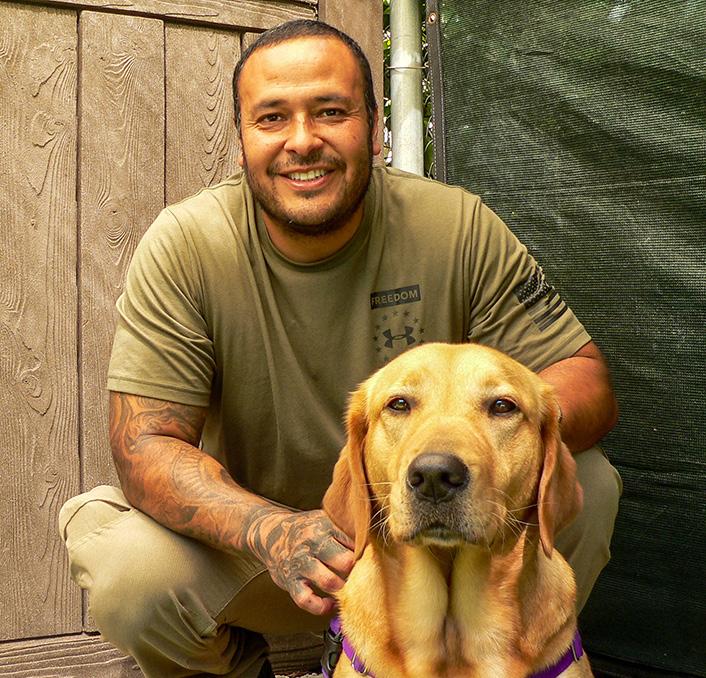
After years of suffering, hope appeared when Rosa heard about Paws for Purple Hearts psychiatric Service Dogs that could help people cope with PTSD. When hearing of how badly Carlos was suffering from PTSD, Paws for Purple Hearts toldhim to come out to San Diego and meet some of the dogs. He was immediately drawn to Service Dog Liberty right away, and the Golden Lab somehow sensed his pain and became the perfect companion to help him heal. With Liberty’s support, Carlos found solace, and his family saw a remarkable transformation. While we can never repay injured Warriors for their extraordinary sacrifices, we can show our gratitude by giving them the crucial support they need.
The San Diego Paws for Purple Hearts location has dutifully served the military community for a decade now. This location proudly serves as the headquarters for the Southwest region spanning from California all the way to Colorado providing unique canine intervention services to our Servicemembers and Veterans.
These hours were not just implemented amongst San Diego native Veterans, but Veterans who had traveled from all parts of the country. Thanks to the wonderful team at Solara Mental Health, we’ve been able to be a part of countless Veterans' journeys to healing through this therapeutic programming.
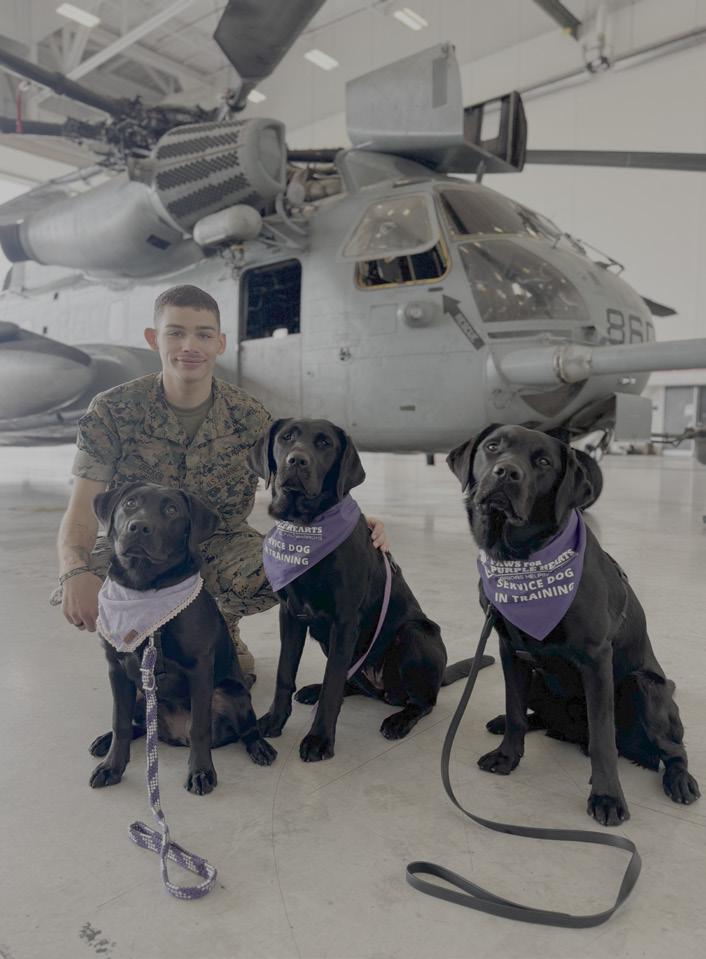
Not only has our CAWT® programming made a significant impact in our communities, but our Social Therapy also serves a variety of individuals. We are proud to provide this service to Marine Corps Station Miramar’s active duty Marines on a monthly basis in different hangers on base and to military children at their YMCA. This service allows our Dogs in Training to socialize and relax with these individuals decreasing their stress levels and bringing a positive change to their day to day environment
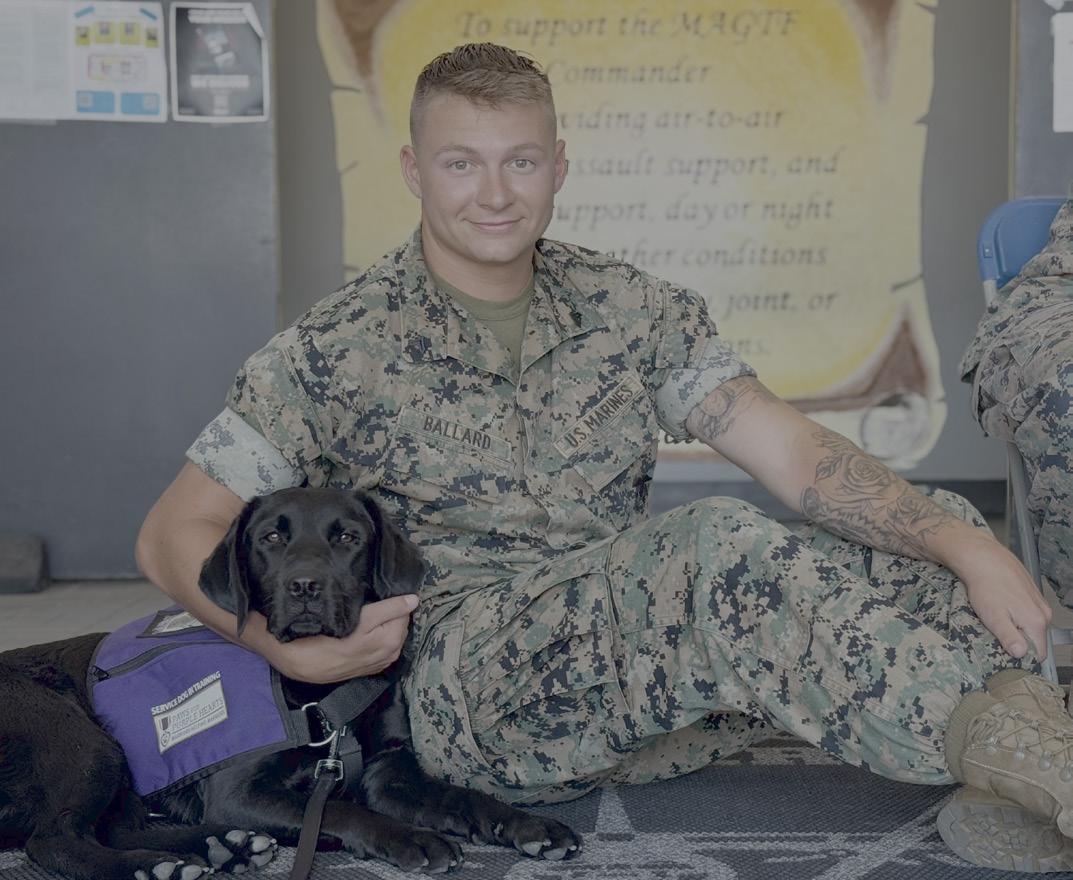
We’ve worked hard to start expanding our reach to assist more Veterans struggling from the lasting effects of fighting in the armed forces. Since its inception, our San Diego office has delivered over 20,000 hours of our unique Canine Assisted Warrior Therapy®.
Thanks to countless contributions in the region and volunteers who make our mission possible, we have been able to hire more training staff who then produce more high-quality Service Dogs in Training for our nations Veterans. In the 2025-2026 calendar year alone, the Southwest has graduated seven Service or Facility Dogs to assist in the everyday struggles our Warriors face. We could not provide our life saving mission without readers like you.
If you are able, please consider donating today to help us continue providing these services to both local and national Veterans. Join the Paws for Purple Hearts family where your contributions can make a difference.
For more information or to donate please visit https://pawsforpurplehearts.org
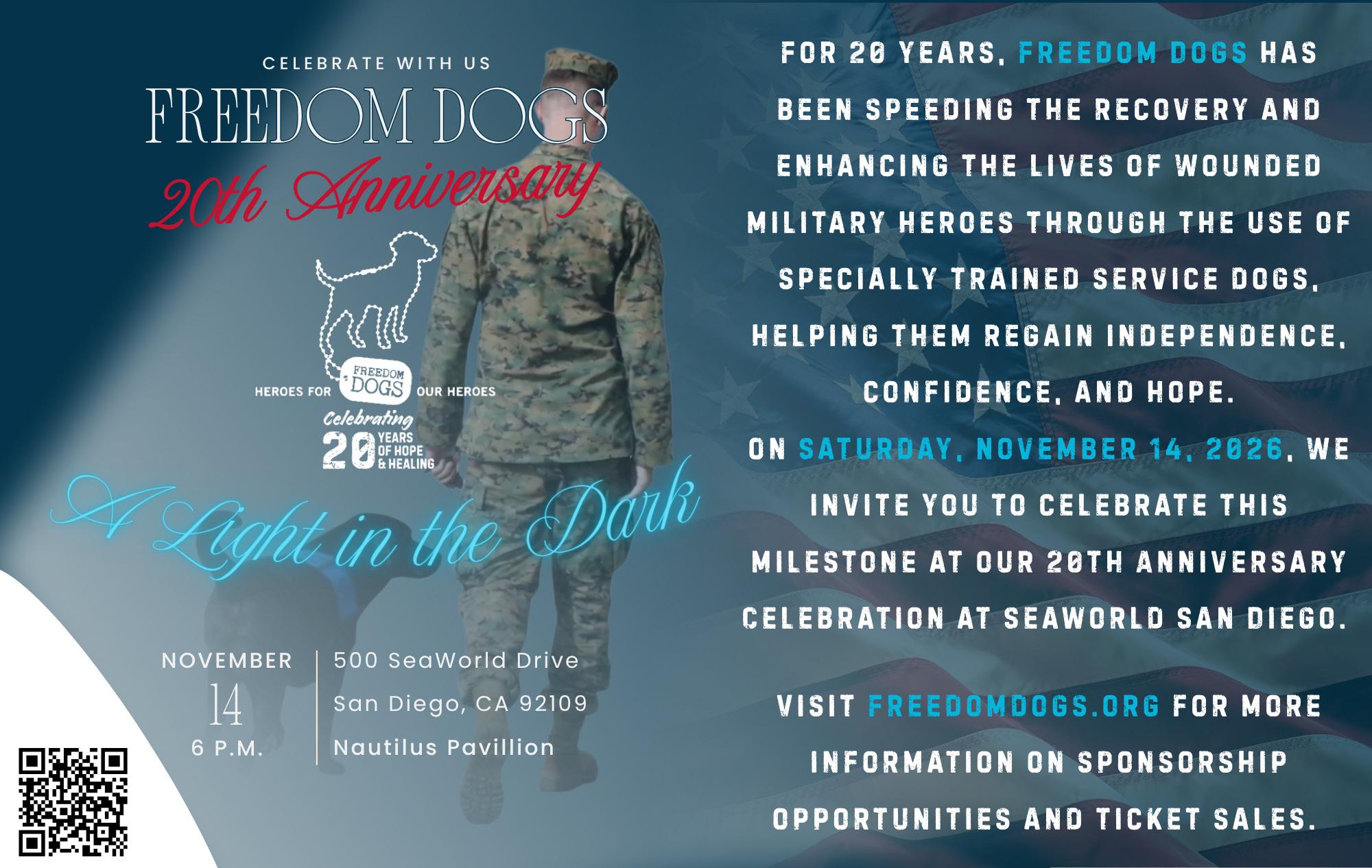
For many of our nation’s warriors, the battle doesn’t end when they return home. The invisible wounds of war—post-traumatic stress, traumatic brain injuries, anxiety, and depression—can be just as debilitating as any physical injury. One San Diego-based nonprofit is stepping up in a powerful way to help those warriors reclaim their lives: Freedom Dogs.
Founded in 2006, Freedom Dogs provides specially trained service dogs to support both active-duty military and veterans as they navigate the long road to recovery. These dogs do more than offer companionship. They are trained to perform critical tasks like interrupting panic attacks, easing nightmares, creating physical space in crowds, and providing a calming presence during stressful medical appointments.
What sets Freedom Dogs apart is its direct partnership with the Wounded Warrior Battalion at Camp Pendleton. It is the only accredited service dog organization embedded with active-duty military, allowing it to address needs in real time and customize training for each warrior. The nonprofit also supports veterans as they transition to civilian life, helping them regain independence and experience renewed hope.
“Our model is flexible because healing looks different for everyone,” explains Executive Director Peggy Poore. “Some warriors complete the program and continue on without a dog. Others are eventually matched with a lifelong canine partner. Some come back months or years later when they’re ready for that next step.”
Freedom Dogs operates on a progressive training model that includes warriors early in the service dog’s development. These in-training dogs become therapeutic tools, while participants—known as Freedom Dogs partners—take part in the dog’s education. The process builds confidence, emotional regulation, and a renewed sense of purpose for the warrior.
“Freedom Dogs gave me my life back,” says retired Staff Sgt. Richard Gonzalez, a Purple Heart recipient. “Before I met my dog, I wouldn’t leave my house or go into crowds. I was in a very dark place. But that dog looked at me like I mattered—and suddenly, I did.”
Freedom Dogs recognizes that every warrior’s path is different. Some dogs are eventually placed permanently through the Partner for Life program, with the organization funding the dog’s lifetime care. Others remain with trainers and accompany warriors only during therapy sessions or transitional periods. Each match is made based on the warrior’s personality,
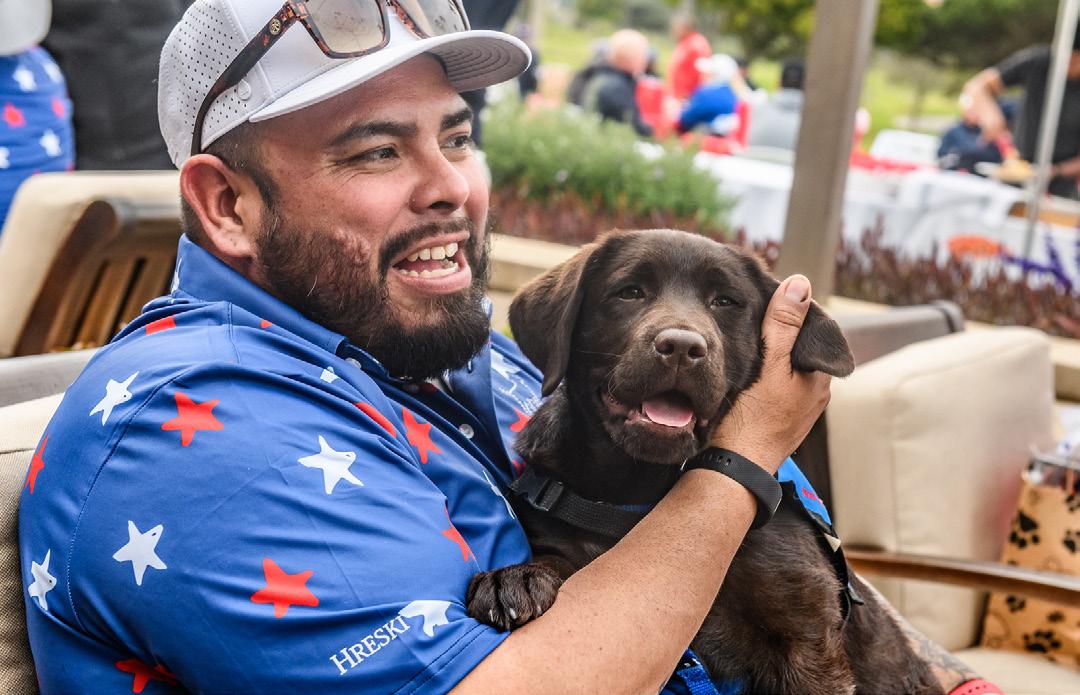
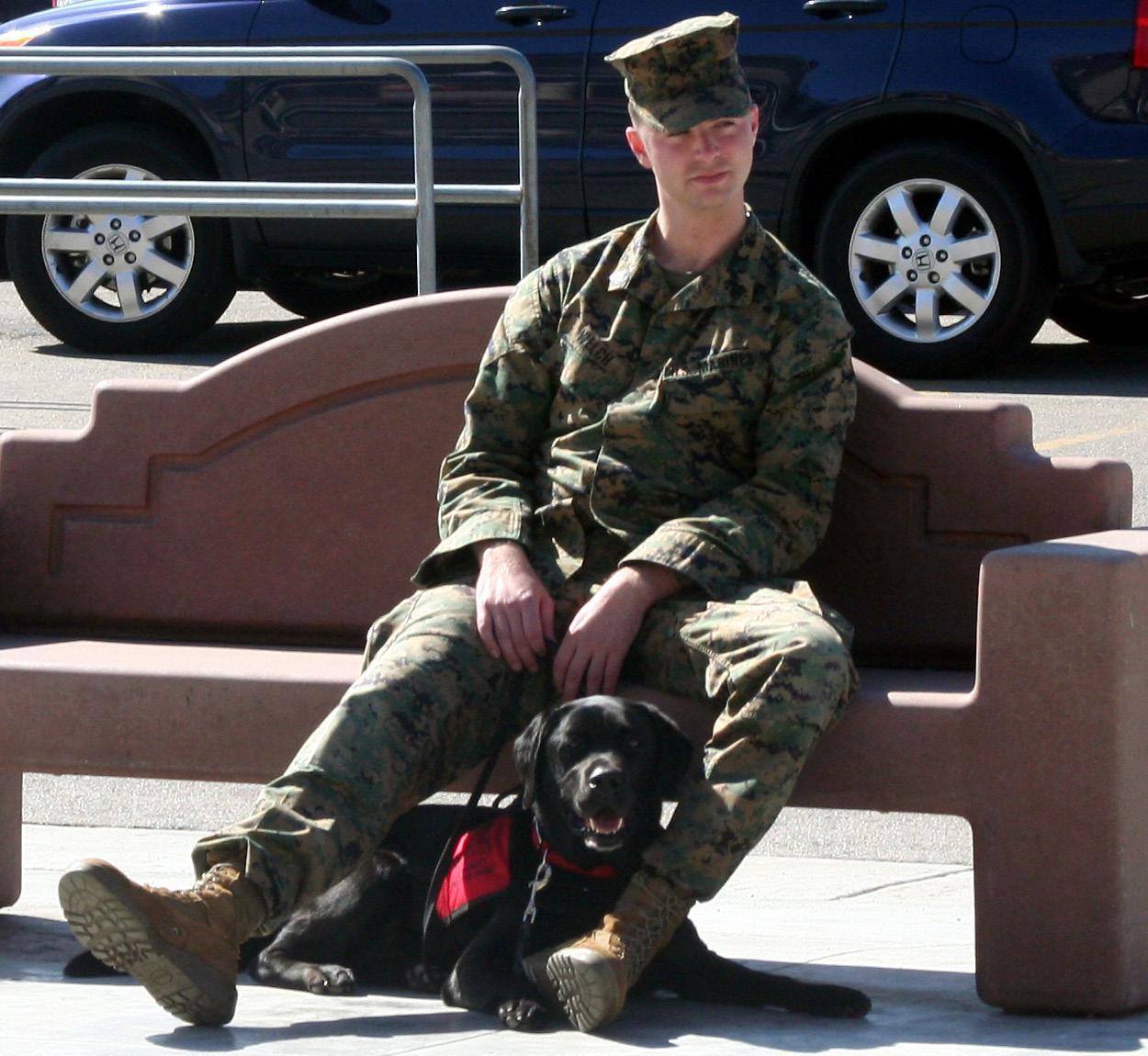
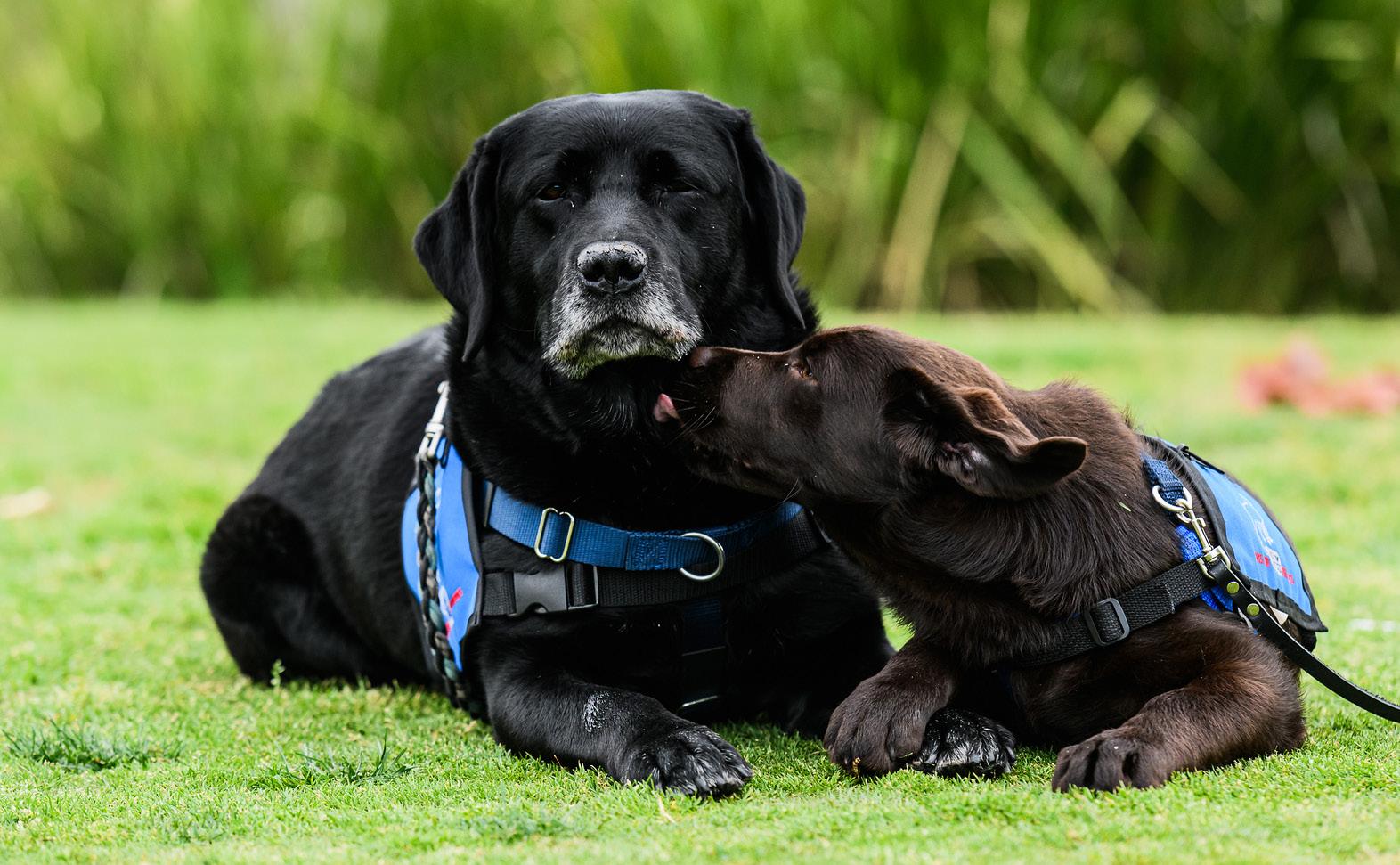
lifestyle, and clinical needs—ensuring the bond is rooted in trust and mutual healing. The impact of these bonds can be life-changing. Veterans who once struggled to leave their homes are now rebuilding relationships, pursuing careers, and reconnecting with the world around them—with a dog by their side, or thanks to the strength they gained during the program.
Behind every Freedom Dog is a team of dedicated trainers and volunteers—and it starts with the Puppy Raiser Program
These volunteers provide early socialization and basic training in a loving home environment, helping puppies gain confidence and discipline before entering advanced service training.
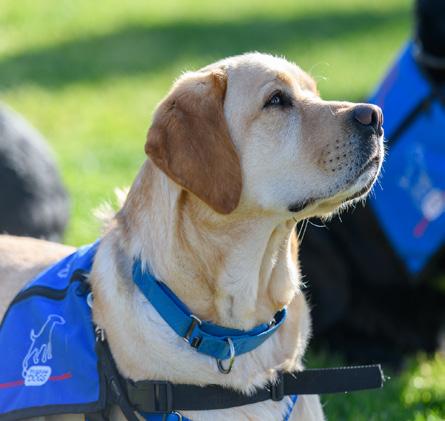
Recent changes in federal funding have left many service dog programs under increased financial pressure. Freedom Dogs, which provides all services at no cost to participants, relies on community donations, fundraising events, and corporate sponsorships to sustain and grow its impact.
“The cost to train and support each dog through its lifetime can exceed $50,000,” says Poore. “We never want to turn away a warrior in need—but to keep that promise, we need ongoing support from the community.”
Ask anyone involved with Freedom Dogs and they'll tell you: it’s about far more than training dogs. It’s about walking alongside those who’ve sacrificed for our freedom—offering skilled support, healing, and dignity at every step.
“These volunteers give our dogs their very first experiences in trust, responsibility, and structure,” says Poore. “They are truly the unsung heroes of the Freedom Dogs family.”
Puppy raisers receive full training and support from the organization. It’s a powerful way for individuals and families to contribute directly to a warrior’s healing journey.
Freedom Dogs meets each warrior where they are—at their pace, on their terms—for as long as they need. Because healing isn’t one-size-fits-all. And every warrior deserves a path that works for them. To learn more, visit www.freedomdogs.org
If you or someone you know is in crisis or at risk, dial 988 — the Suicide & Crisis Lifeline.
By Clinician Ryan Michael Purvis, PsyD., MS
The Steven A. Cohen Military Family Clinic at VVSD, San Diego


One of my favorite memories as a United States Air Force Security Forces Military Working Dog Handler was walking into the kennels at the start of the day. Before I even reached my dog’s kennel, I could hear the barking and excitement echoing through the building. Then I would spot him, a ball of fur bouncing with enthusiasm, somehow knowing by scent alone that his handler had arrived.
The moment I clipped on his leash, his excitement grew. To him, it meant freedom from the kennel and the start of another day together. Watching a dog light up simply because you showed up is something special. No matter how stressful a day might be, their enthusiasm is contagious. A Military Working Dog could erase a bad mood faster than most people ever could. More than once, I found myself talking through life’s challenges with the best therapist I ever had riding beside me in the patrol vehicle.
The bond between a handler and a Military Working Dog is unlike any other relationship. Even for people who own dogs at home, working alongside one creates a deeper connection. On most shifts, it was just me and my dog. We relied on each other, spending long hours together with few other companions. Building that trust could take days, weeks, or even longer. Some dogs welcomed a new handler immediately, while others made it clear they were not interested. But over time, a partnership formed, built on patience,consistency, and mutual respect.
Military Working Dogs are also full of personality. They have good days and bad days, moments of boundless energy and times when they would rather not work at all. One of the best ways to strengthen the bond was through play.Sometimes you simply have to let a dog be a dog.
. While stationed in Hawaii, I occasionally took my dog to a remote beach. He would race into the water, swim farther than I was comfortable with, and enjoy every minute of it. There was usually a hidden agenda, bath time, but he never seemed to mind. Those moments reminded me that despite their demanding jobs, these dogs deserved time to simply enjoy life.
Military Working Dogs embody the motto “work hard, play hard.” We spent countless hours training, patrolling, and responding to missions in every kind of weather. Yet no matter the conditions, their safety came first. Vehicles were equipped to keep them comfortable, and often it felt as though the dogs received more attention than their handlers. People frequently focused on the dog and forgot there was a human standing at the other end of the leash.
Life as a Military Working Dog team involved long hours, travel to unfamiliar places, and the constant responsibility of caring for another living being. It was demanding work, but every challenge was worth it. Military service takes a significant toll, both physically and mentally, and that reality shaped much of my perspective on mental health.

Unfortunately, many service members still face significant stigma when it comes to seeking mental health support. Military culture often emphasizes toughness and self-reliance, leading some to believe they should handle struggles on their own. Fear of career consequences, misunderstandings about mental health, and pressure to appear strong can prevent people from seeking help when they need it most.
While traditional mental health treatments can be highly effective, some veterans and service members find it difficult to connect with providers who are unfamiliar with military culture and experiences. As a result, mental health professionals are increasingly looking for complementary approaches that resonate with the military community. One of the most promising is the use of service dogs.
Research has shown that service dogs can provide meaningful support for individuals coping with a variety of mental health challenges. Unlike pets or emotional support animals, service dogs receive specialized training to assist with specific symptoms and conditions. For many veterans, these partnerships help reduce stress, improve emotional regulation, and support longterm recovery alongside traditional treatment.
Looking back, spending nearly 16 years alongside Military Working Dogs was one of the greatest privileges of my military career. Every day, I looked forward to seeing those eager faces waiting for me. At the end of the shift, I could see the disappointment when it was time to return to the kennel, only to be greeted by the same excitement the next morning.
Today, I no longer have a dog of my own, but organizations like Love on a Leash and various service-dog programs continue to remind me of the healing power animals can provide. Across the country, dedicated organizations are working to break down barriers and help veterans access the support they deserve.
It has been more than 12 years since I retired from the Air Force, but one thing remains true: once a dog handler, always a dog handler. The lessons those dogs taught me about loyalty, resilience, and unconditional support continue to stay with me, and they remain some of the most valuable lessons of my life.
By Clinician Ryan Michael Purvis, PsyD., MS
The Steven A. Cohen Military Family Clinic at VVSD, San Diego
LEARN MORE vvsd.net/cohenclinics
By: Robert ‘Bob’ Cuyler, PhD Psychologist and Trauma Expert
As a psychologist, I have focused on understanding PTSD, its symptoms, and the widening variety of evidence-based treatments in this column. This month, here’s a detour that I hope you will find meaningful. Since about 5 years old, I’ve been a near-fanatical fisherman (growing up in South Louisiana makes that easy to do). My hobby has taken me places near and far, from fishing Bayou Saint John in the Big Easy as a kid to flats fishing in Mexico, Belize, Honduras and the Bahamas. For me, the outdoors has been soul soothing, friend making, and skill building in equal proportions.
Recently, I’ve assisted a dear friend (fishing guide, musician, and Episcopal priest) who does weekend programs for Joni and Friends https://joniandfriends.org/warrior-getaway/), a foundation dedicated to providing a variety of healing experiences for special needs kids, veterans and others. Our next weekend is in a few weeks, for veterans and their families who spend a few days in the beautiful pine forests of Camp Allen near Houston. Our fishing venue is pretty low key, looking for panfish, bass and catfish in a pretty lake. At this event, I’m not a psychologist, but instead a hook baiter, line untangler, or whatever our guests need. Among the veterans, there maybe is as much cigar smoking as fishing, but the comradery among the participants is so evident. Conversation is simple, and I believe the vibe of bonding among peers in an outdoor setting represents a real healing event.
A number of other organizations offer similar programs, to veterans, law enforcement, and first responders. One group (Project Healing Waters, https://projecthealingwaters.org) focuses on fly fishing experiences, with nationwide programs and presence in Department of Defense and VA Medical Centers. Another group, (Heroes on the Water, https://heroesonthewater.org/) focuses on kayak fishing, with a chapter on the Texas Gulf Coast organized by a wonderful fishing guide and his wife.


A report sponsored by Heroes on the Water found clear evidence of improved stress management, self-efficacy, and improved self-image and relationships.
I love many things about these approaches. Offering a fun, enriching, skill-building, and social bonding experience provides a wonderful ‘wrap around’ to the other services available to veterans. We need options that go beyond our health care systems. These activities are free, non-clinical, and isolation-reducing. Many times, these experiences foster creation of new and enduring friendships that will endure past these formal weekends. At a personal level, these organizations provide an opportunity for people like me who want to give back to our protectors by sharing time, skills, good conversation, and support. I hope this information may open a window to a healing experience.

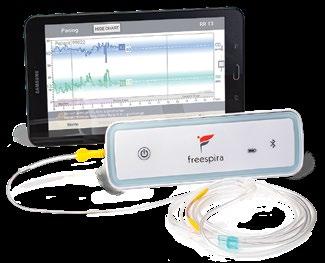
Dr. Cuyler is chief clinical officer of Freespira, an FDA-cleared non-medication treatment that helps people with panic and PTSD manage their symptoms by learning how to regulate their breathing. www.freespira.com





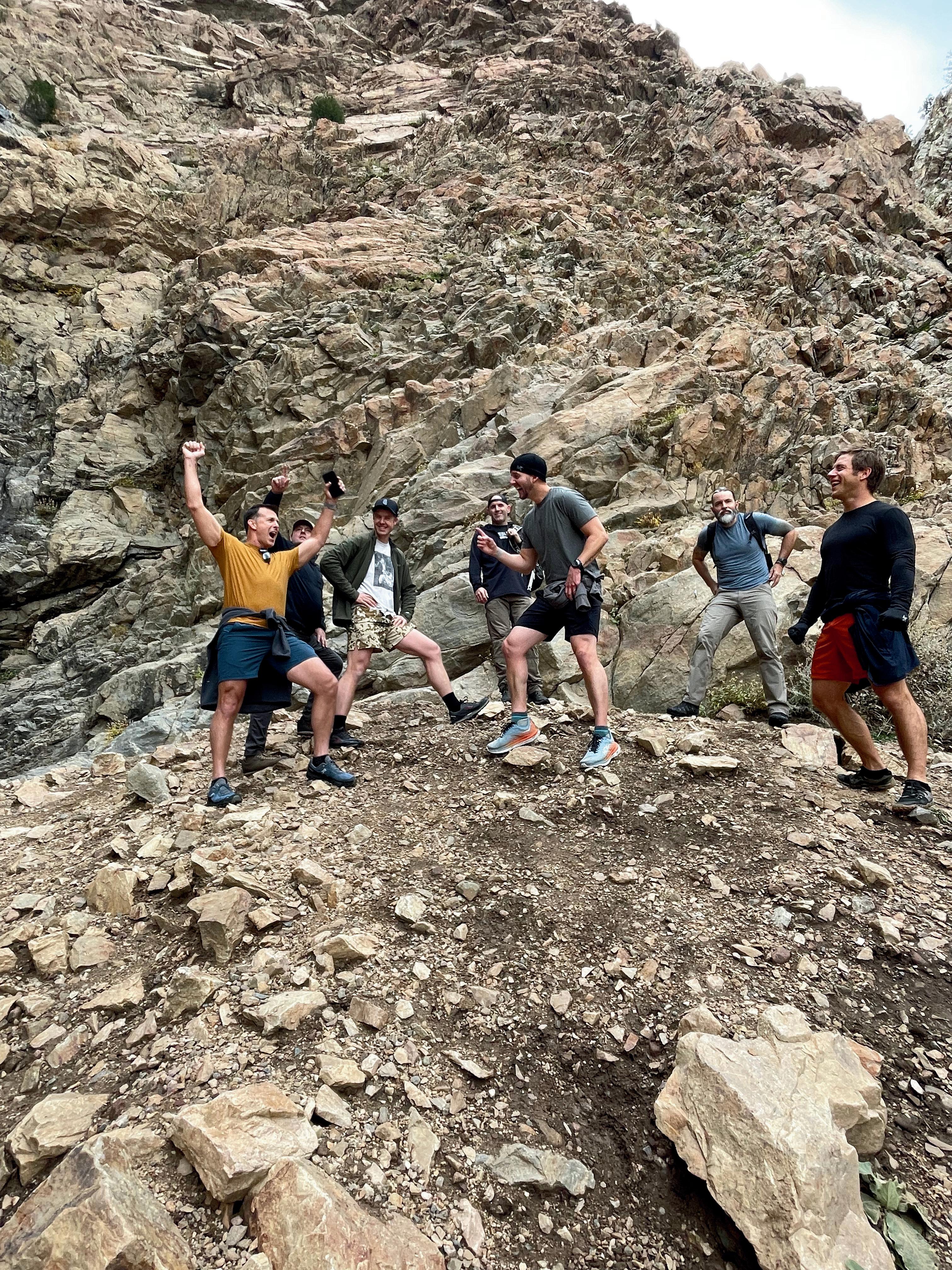
https://tinyurl.com/apply-mosiac
themosaicfoundation.org themosaicfoundation.org
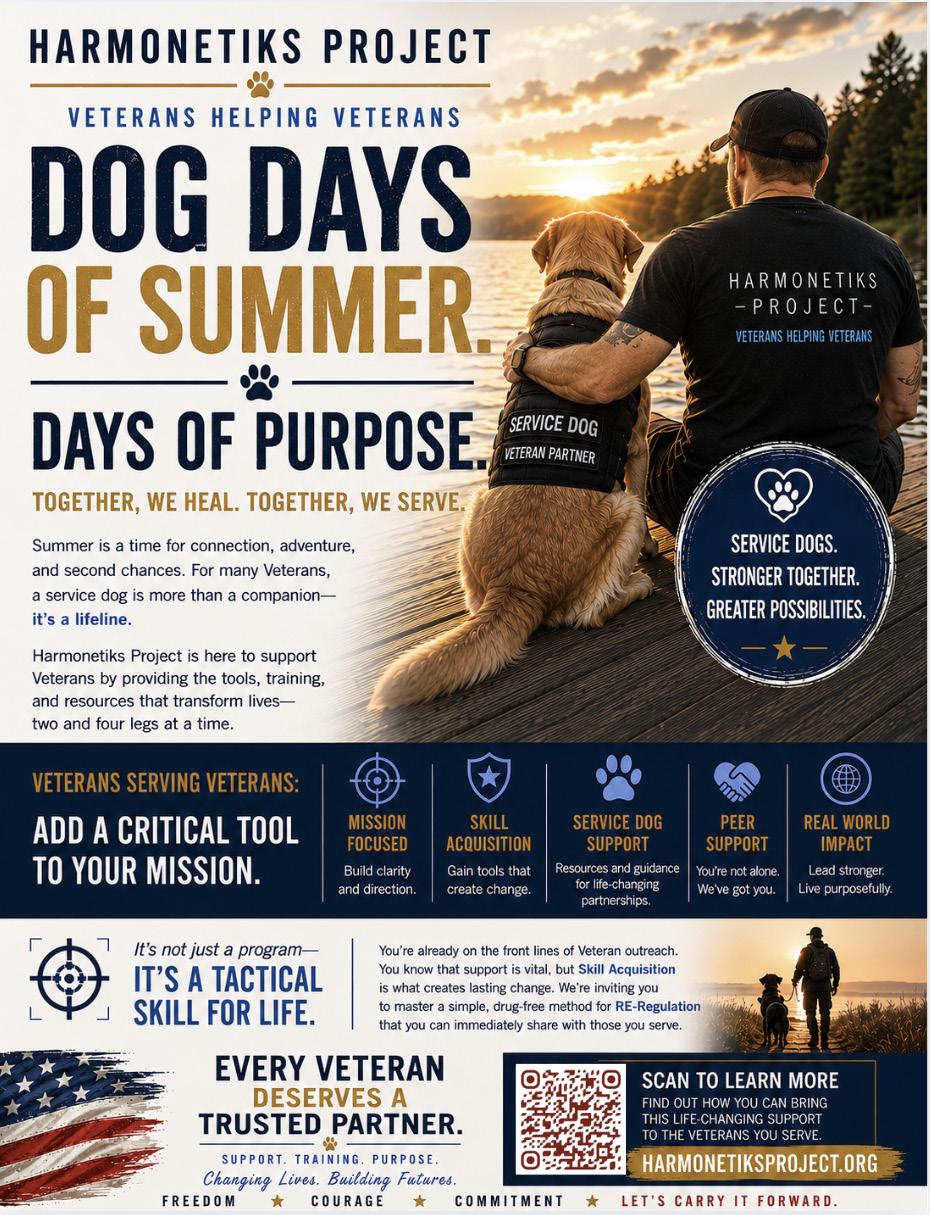
As America continues to celebrate its 250th anniversary, Nashville singer-songwriter Woody Bradshaw is inviting listeners to reflect on the values that have long united the nation. His latest single, “Who’s Proud They’re From the USA,” serves as a heartfelt tribute to the veterans, active-duty military, first responders, and everyday Americans whose dedication and sacrifice continue to protect the freedoms many enjoy today.
In a time when conversations about patriotism can often become divisive, Bradshaw’s message is refreshingly simple. Rather than taking a political stance, the song focuses on gratitude, service, and the shared American spirit. It asks a straightforward question: Who’s still proud they’re from the USA? For veterans, that question carries a deeper meaning, one rooted in commitment, sacrifice, and love of country.
Bradshaw’s appreciation for America’s military extends well beyond songwriting. Throughout his career, he has had the opportunity to work alongside the U.S. Navy Blue Angels, experiences that gave him firsthand insight into the discipline, professionalism, and dedication required of those who serve. Those moments left a lasting impression and ultimately inspired many of the themes found throughout the song.
“’Who’s Proud They’re From the USA’ came about more organically than any other song I’ve ever written,” Bradshaw shares. “I’ve never served, but I’ve always been very patriotic, loved America’s history, and the older I’ve gotten the more I’ve appreciated what this country stands for and the freedoms we have.”
Inspired by the official branding for America’s 250th anniversary celebration, the song came together quickly, fueled by what Bradshaw describes as a deeply personal moment of inspiration. He believes the release is about far more than music. It’s an opportunity to encourage reflection on the values that continue to unite Americans, regardless of background or political affiliation.
For veterans and military families, that message may resonate in a unique way. Service members understand that freedom has always required sacrifice, resilience, and a willingness to place others before oneself. Bradshaw’s lyrics honor that commitment while recognizing the countless individuals, both in uniform and in their communities, who continue answering the call to serve.
As Homeland Magazine readers know, patriotism is often expressed through action rather than words. Whether wearing the nation’s uniform, supporting military families, serving as a first responder, or simply giving back to a local community, acts of service help strengthen the fabric of America every day. Bradshaw hopes “Who’s Proud They’re From the USA” reminds listeners of those shared values and encourages a renewed appreciation for the people who continue to protect them.
As the nation marks this historic milestone, Bradshaw’s latest release stands as a musical reminder that while opinions may differ, gratitude, courage, faith, and service remain timeless ideals worth celebrating.
For more information and to connect with Woody Bradshaw, please visit:
Website: WoodyBradshaw.com
Facebook: @WoodyBradshawMusic
Instagram:@WoodyBradshaw
Stream Music Video at https://tinyurl.com/Bradshaw-Proud-Video

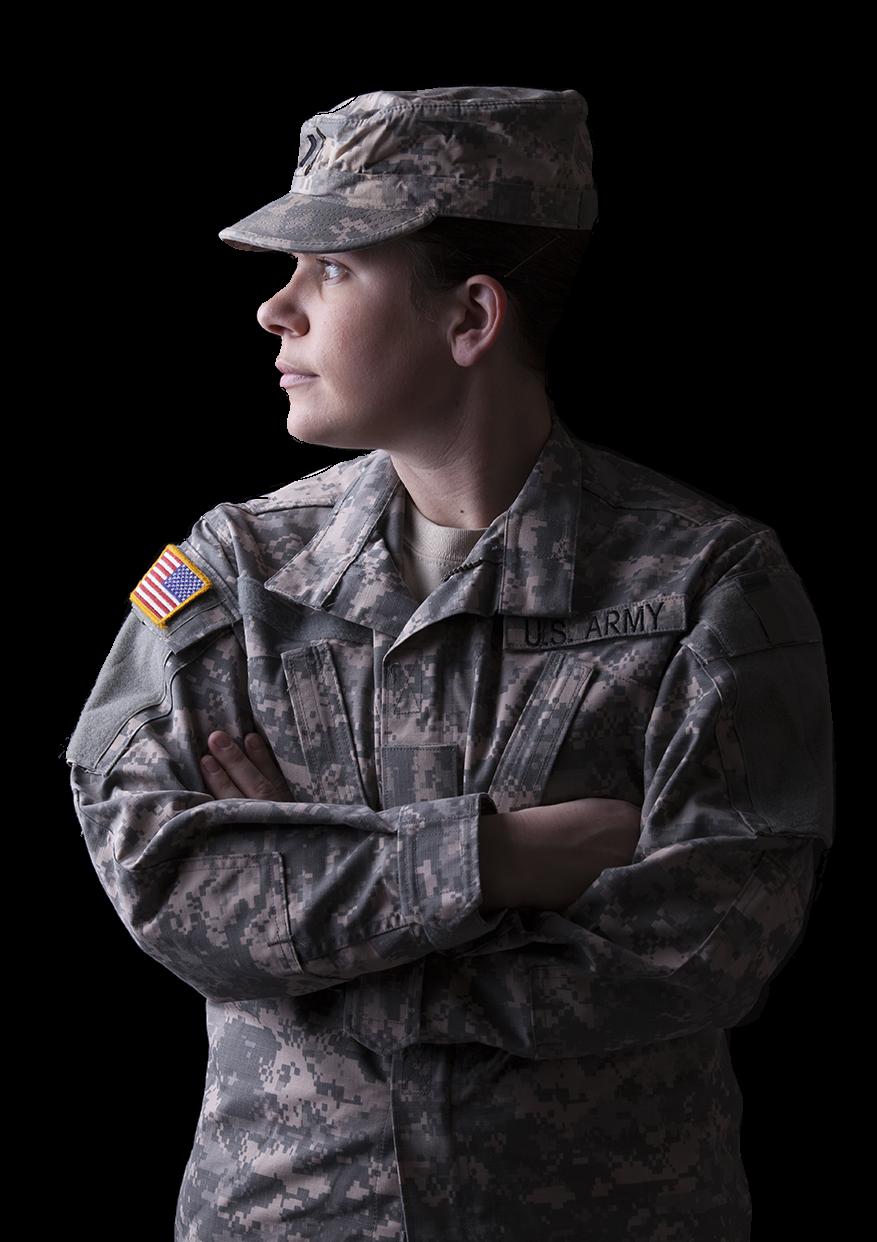
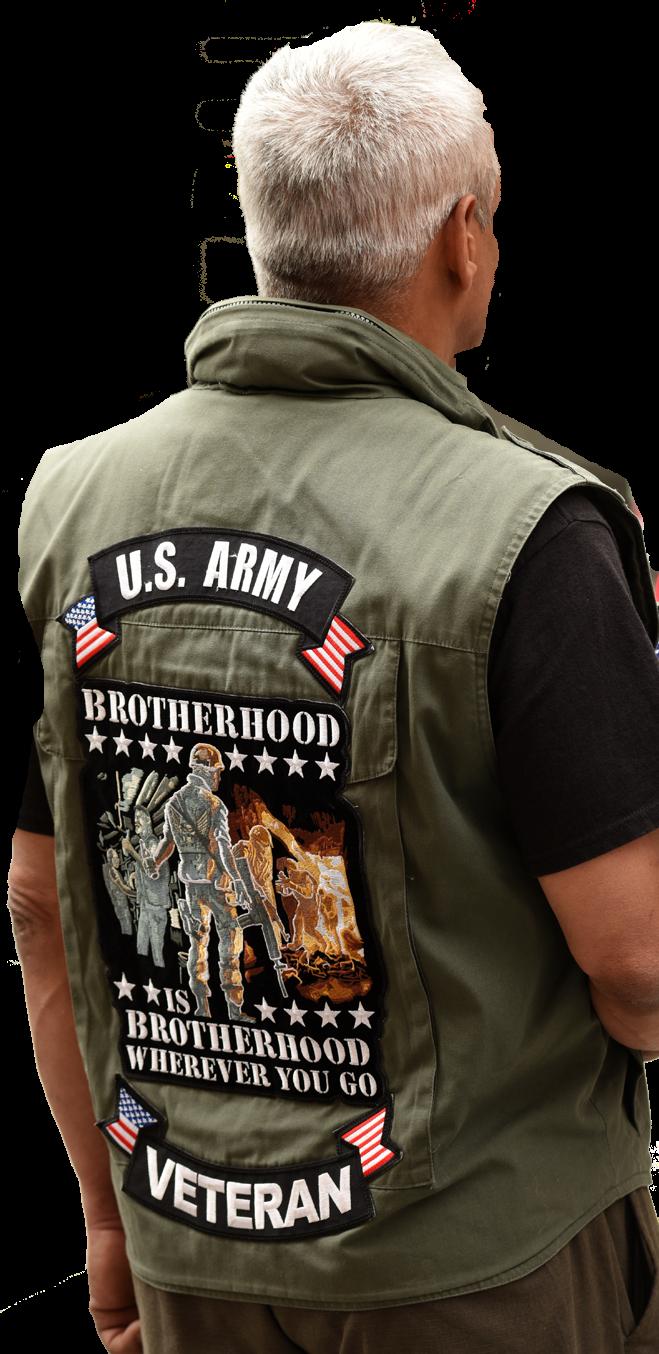

Your next mission starts here. Whether you're pursuing a new career, higher education, entrepreneurship, or trusted legal resources for veteran business owners, you'll find the support, insights, and practical guidance you need from successful transitioning service members, veterans, military-friendly employers, and schools. Visit Veterans In Transition and take the next step with confidence.
https://homelandmagazine.com/category/veterans-in-transition
36 From Uniform to Civilian Life
38 Transition Is More Than a Job Change 40 Rebuilding After Job Loss 43 Infused. Recruiting. Simplified.
44 LA Pacific University 45 HealthStaff Training Institute 46 A Blueprint for Veterans Transitioning 48 Military-to-Civilian, Team Leadership 49 Knauss School of Business USD
50 Get Out of Your Comfort Zone 51 ICOHS College
52 Importance of Offshore Trust
58 Worksop For Warriors
59 AGTS Evangel University
60 Law Enforcement
By Eve Nasby eve@infused.work

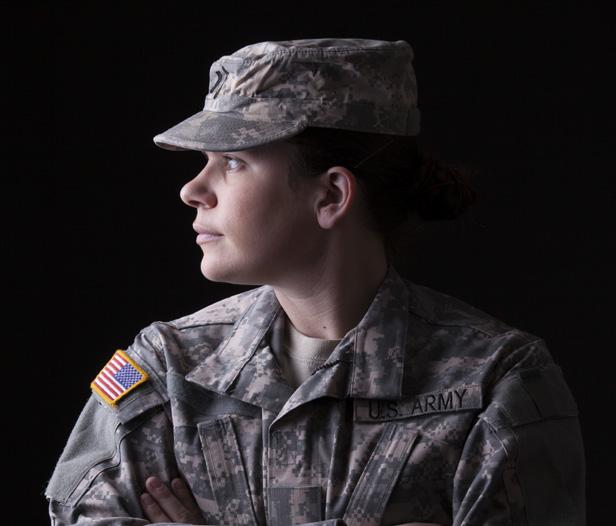
A look at how one San Diego college, and two Navy veterans, are navigating the hardest transition in a service member's life.
By the time Evan stepped off active duty, he had spent years answering to a chain of command that told him where to be, what to wear, and what the mission required. Then, almost overnight, none of that existed. “Getting out, you’re really on your own,” he says. “Who do I want to be with my skills? Who do I answer to now?” It is a question that confronts nearly every one of the roughly 200,000 service members who separate from the U.S. military each year, and it is the question a small, faith-based college in downtown San Diego has built its mission around answering.
ICOHS College does not look like a typical stop on the veteran transition pipeline. Founded in 1984 and now operating as a nonprofit accredited institution on 4th Avenue, it built its early reputation on holistic health and massage therapy training. In recent years, though, the school has expanded into information technology, cybersecurity, AI-driven business technology, and medical billing and coding — and, notably, into the business of helping veterans figure out who they want to be next.
The school’s pitch is unusual in a crowded marketplace of for-profit certificate programs: it is faith-based, accredited, and built around the idea that a job offer is not the finish line. “We don’t want to just get people jobs,” the college’s leadership says. “We want to build more than that.” That means career coaching that starts the day a student walks in the door, mock interviews, resume workshops, and a placement model in which the school does not collect certain veteran funding until a graduate is actually employed — a structural bet on outcomes rather than enrollment.
“It’s okay to feel alone. It’s okay to not be okay. Don’t make it worse than what it is.”
For veterans specifically, ICOHS has leaned into VAbacked programs like VET TEC, which can cover tuition, books, and a monthly housing stipend during training. The benefit can cover tuition, housing, and books for CompTIA A+ and Network+ training for eligible veterans pursuing high-tech training. Eligibility is straightforward by VA standards: veterans discharged under conditions other than dishonorable, or active-duty members within 180 days of separating, with at least 36 months of service. No prior use of VA education benefits is required, which matters for veterans who assumed they had already spent their GI Bill allotment on a degree that never translated into a career.
That flexibility is what brought Evan and Daniel through ICOHS’s doors. Both are Navy veterans, and both arrived with the same disorientation that defines the first months of civilian life. Daniel, who deployed and came home to a compressed, chaotic separation timeline, says he never got the chance to sit down and map out what came next.


“When I got out, I was so lost. I had no idea what I wanted to do.” His path eventually pointed toward content creation — not the most obvious landing spot for a sailor, but one he had been quietly circling for a while. “I felt embarrassed to even say it,” he admits. Now, supported by GI Bill benefits while training in ICOHS’s AI and digital media coursework, he posts short-form content built with AI-assisted tools and is set to graduate this August. His advice to the next sailor who walks off the ship with no plan: “It’s okay to feel alone. It’s okay to not be okay. Don’t make it worse than what it is.”
Evan’s transition carried its own gravity. After leaving the military, he found himself pulled toward San Diego almost by instinct, a decision he now describes in spiritual terms — a sense that the city, and the dream he wanted to chase there, had been waiting for him. His turning point came less from a single class than from community: a church, a temple, conversations with people who had walked the same disorienting road. “Have a plan,” he says, “but it’s okay if you don’t.”
What both men describe is less a curriculum than a scaffold — something to hold onto while the rest of an identity gets rebuilt. ICOHS supplies hands-on labs, industry certifications like CompTIA A+, and faith-based wraparound support that includes prayer requests and mentorship alongside job placement. It is an unusual combination, but for veterans staring down their own version of “what’s next,” unusual may be exactly the point.
Their shared advice for transitioning service members is almost identical, regardless of military branch: start the research early, lean on VA.gov rather than waiting for a single three-day transition briefing to cover everything, and resist the fear of the unknown. As Evan puts it, staying in uniform is never the wrong choice — but neither is walking away from it. “Don’t do sixteen years and wish you’d done something else just because staying was easy.” For the veterans coming through ICOHS’s doors, the goal isn’t simply employment. It’s arrival.
Get Started at ICOHS College Accredited Programs. Real Careers. Rooted in Purpose. icohs.edu
Veterans go back to school to ease their transition to civilian life, gain better career opportunities with higher earning potential, develop new skills, find a supportive community, and translate their valuable military experience into a meaningful civilian path.

www.HomelandMagazine.com
Need help with your transition?
Reach out to Eve at eve@infused.work
Moving into the civilian workforce or returning to school might look easy at first. After all, you’ve developed real-world skills, strong leadership, and the initiative to thrive anywhere.
Yet the transition can be tougher than expected. Many veterans face challenges that feel overwhelming or isolating. That’s where we come in—to support you every step of the way.
Our Veterans in Transition archives provide trusted guidance and insights on life after service—education options & resources, career advice, business and entrepreneurship resources, workshops, legal tips, veteran franchises, and much more to help you move forward with confidence.
For assistance in your journey please visit:
https://tinyurl.com/vet-in-transition
homelandmagazine.com/category/veterans-in-transition
Preparing for civilian life requires more than a résumé. It requires a renewed identity, a clear sense of purpose, and a community committed to helping veterans succeed.
By National Veterans Transition Services, Inc. (NVTSI/REBOOT)
For many service members, the final months in uniform are filled with checklists: complete TAP, update a résumé, apply for benefits, attend a career fair, and begin searching for employment. Those steps are important, but they do not tell the whole story.
Leaving the military is not simply the end of one job and the beginning of another. It is a significant life transition that can affect identity, purpose, family, relationships, health, finances, and a person’s sense of belonging.
That is why National Veterans Transition Services, Inc., also known as NVTSI/REBOOT, has spent more than 15 years advancing a simple but powerful message:
Military service shapes how people think, communicate, lead, solve problems, build relationships, and define success. From the beginning of their service, military members are taught to place the mission and team ahead of themselves. Rank, occupational specialty, command, uniform, and daily responsibilities provide structure, identity, and a clear sense of purpose.
Then, sometimes after decades of service, that structure suddenly disappears.
The civilian world may not recognize a military job title, understand the scope of a service member’s responsibilities, or fully appreciate the leadership required to perform under pressure. Veterans can find themselves confronting difficult questions:
Who am I without the uniform? Where do I belong? What is my next mission? How do I explain my value? What career will provide purpose—not merely a paycheck?
Those questions cannot be answered by a résumé alone.
A successful transition begins on the inside. Before veterans can convincingly tell an employer who they are, they must understand it themselves. They need time, support, and practical guidance to separate their identity from their rank, translate their experiences into civilian value, and develop a clear picture of the person they want to become.
At NVTSI, we describe this process in three words:
RELEARN. REBUILD. REBRAND.
Relearning means understanding how the civilian environment works. Military and civilian workplaces often use different language, expectations, hiring practices, and measures of performance. Veterans must learn how
civilian organizations operate while recognizing that adapting does not mean abandoning the values that made them successful in uniform.
Rebuilding means creating a new foundation for life after service. That foundation includes confidence, purpose, family stability, wellness, professional relationships, and a realistic transition plan. It also means giving veterans permission to explore new possibilities. Their next career does not have to be a direct translation of their military occupation. Leadership, technical expertise, discipline, resilience, adaptability, and teamwork can open doors to industries they may never have considered.
Rebranding means communicating military experience in ways that civilian employers, educators, investors, and community leaders can understand. Veterans are not starting over. They are moving forward with a powerful portfolio of experience. The challenge is learning how to present that experience in the language of competencies, accomplishments, outcomes, and organizational value.
To make this support more accessible, NVTSI and its community partners are offering free, three-day REBOOT Lite workshops every month at rotating locations throughout San Diego County. REBOOT Lite focuses on three essential elements of transition: establishing a new identity, defining a renewed mission and purpose, and discovering one’s Career DNA and civilian brand. The program is available at no cost to transitioning service members, veterans, National Guard and Reserve members, and military spouses.
For the August edition of this magazine, upcoming workshops include August 5–7 at National University’s Spectrum Center Campus and August 26–28 at the South Metro Career Center. Both workshops are scheduled from 9:00 a.m. to 4:00 p.m.
www.nvtsi.org/events/categories/seminar
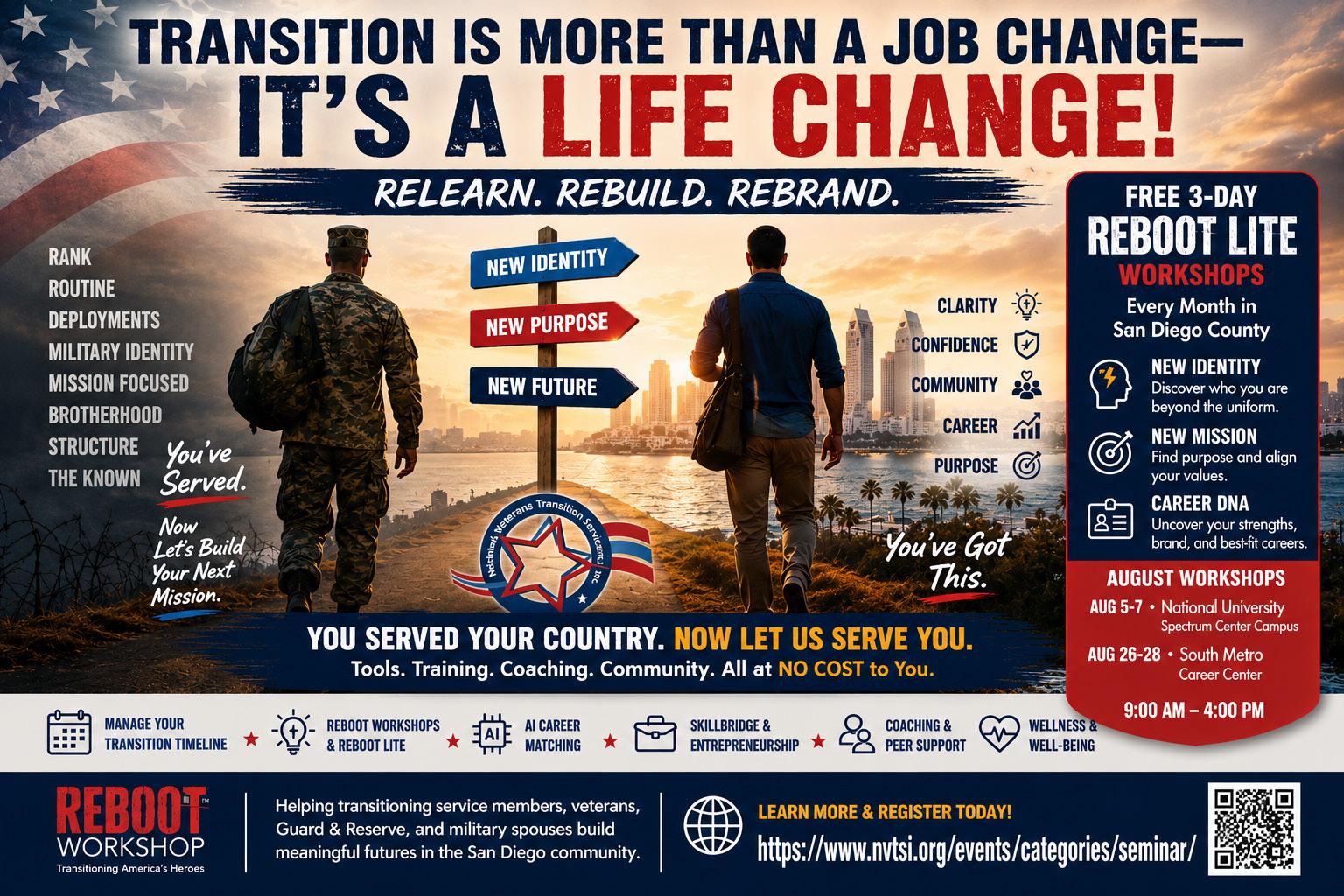
Current dates, locations, enrollment information, and future workshop schedules are available through the Events and Seminar page at NVTSI.org
During REBOOT Lite, participants move beyond traditional employment preparation. They examine how thoughts, beliefs, habits, and military experiences influence their transition. They begin building new professional networks, connect personal values to future opportunities, explore new career pathways, and learn how to communicate their strengths to civilian employers.
Participants also receive exposure to career planning, networking strategies, artificial intelligence-driven career insights, real-time job matching, résumé development, coaching, peer support, and community resources. The goal is not simply to help someone find a job. It is to help that person develop a sustainable plan for civilian life.
Just as importantly, transition should not be attempted alone.
Military service is built on teams, yet too many veterans enter civilian life without a trusted network. The loss of connection can make ordinary setbacks feel overwhelming. A rejected application, delayed benefit, financial problem, family challenge, or unexpected career obstacle can quickly become a crisis when there is no one to call.
San Diego has an opportunity to become a national model for veteran reintegration by connecting military commands, employers, colleges, workforce agencies, veteran organizations, healthcare providers, peer-support professionals, and community leaders into a coordinated system of support.
Preparation must also begin early. The best time to start is not 30, 60, or 90 days before separation. It is one to two years in advance, while there is still time to assess, explore, train, network, save, and make informed decisions.
A veteran’s next chapter should not be defined by confusion or isolation. It should be guided by purpose, supported by community, and built upon the strengths developed through military service.
The uniform may come off, but the mission continues.
The next mission is to build a meaningful civilian life—and no veteran or military family should have to do it alone.
For more information E-mail: Maurice@nvtsi.org | www.nvtsi.org
Mission: To REBOOT the Lives & Careers of Transitioning Military, Veterans, and Spouses
Schedule a Meeting: https://calendly.com/maurice-nvtsi
Join our Mailing List - lp.constantcontactpages.com/sl/3k3zpLP
Get Assistance: Transitioning Active Duty - cmvr.infojiniconsulting.com
Veterans, Spouses - www.tfaforms.com/5040929
By Paris Moulden Wounded Warrior Project
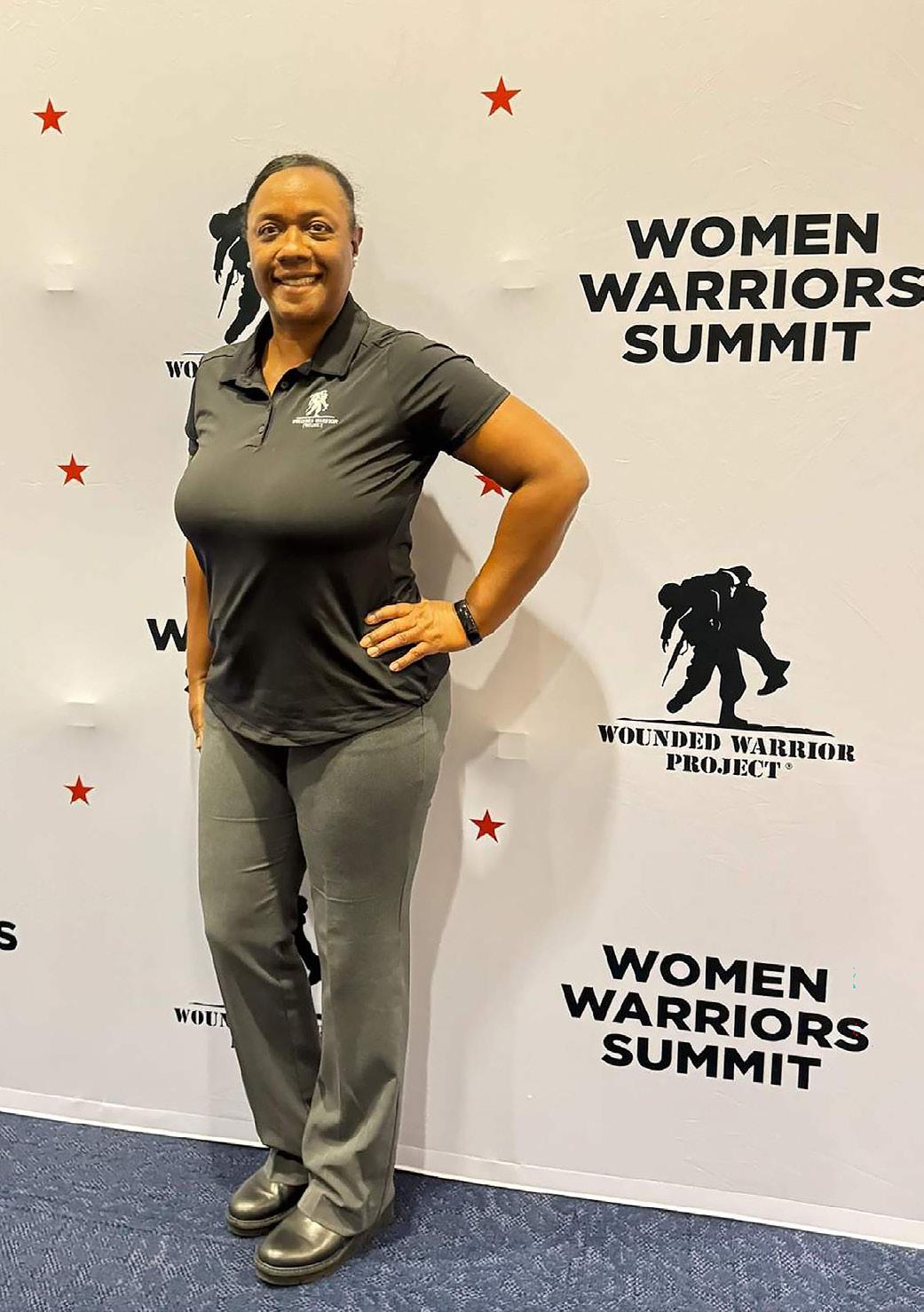
When Air Force veteran Alethea Chatman received news that she had lost her civilian job, the moment didn’t feel real. After more than a decade of military service and years working in federal investigations, she suddenly found herself without the stability she had built her life around.
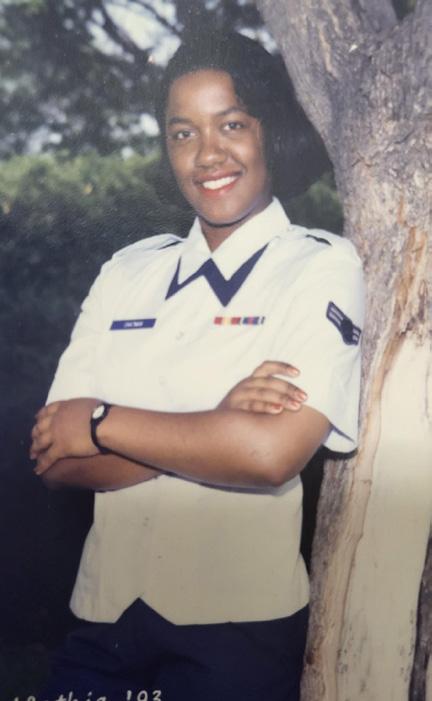
“There are no words to describe the emotions, the trauma,” Alethea recalled. “You’re just standing still, and somebody snatches the rug out from under you.”
The loss didn’t only impact her finances — it struck at her identity, her confidence, and her sense of security.
She remembered thinking, “How did I get here and what do I do now?”
Alethea served in the Air Force Reserves for a decade before moving into civilian investigative roles that demanded accuracy, leadership, and integrity.
She continued that work with the Department of Defense and the National Institutes of Health, focusing on civil rights and administrative investigations. But when federal cutbacks hit her office, everything changed. The job loss wasn’t something she could prepare for emotionally — or practically.
“It was devastating,” she said. “We were just blindsided.”
The job loss affected more than Alethea’s finances Already feeling isolated after years of remote work and major life changes at home, she leaned on therapy and her long-standing connection with Wounded Warrior Project® (WWP).
“I was at a low point then … and it was life changing, really, everything I’ve experienced through Wounded Warrior Project,” Alethea said.
WWP® gave her connection, community, and an outlet. One of the biggest benefits was engaging her in a sport she was previously unfamiliar with.
“Wounded Warrior Project introduced me to golf,” she said with a smile. “Being outdoors, being in tune with what’s right infront of you … when you’re out there, you’re not thinking about any issues.It’s therapy.”

As she searched for a new job, Alethea quickly realized the job market had changed. In her words, the biggest barrier was “getting past AI.”
“I could apply for something at 5 pm, and by 10 pm, it would say they’d selected someone else,” she explained.
“People say, ‘I’ll put your résumé on top,’ but you never hear back,” she said. “It felt like a waste.”
Translating Military Experience into Civilian Confidence
Eventually, Alethea turned to Warriors to Work, WWP’s career counseling and job placement program. It became the turning point she desperately needed.
Warriors to Work provides one-on-one career support, including resume help, interview preparation, salarynegotiation education, and dedicated career counseling.
For Alethea, that individualized support made all the difference. She connected with a Warriors to Work specialist, Sodia Thompson, who guided Alethea as she rebuilt her career and maintained support throughout the process.
Finding a New Direction with Warriors to Work
Sodia and WWP introduced Alethea to new training options, including a pharmacy technician course — something she had never considered.
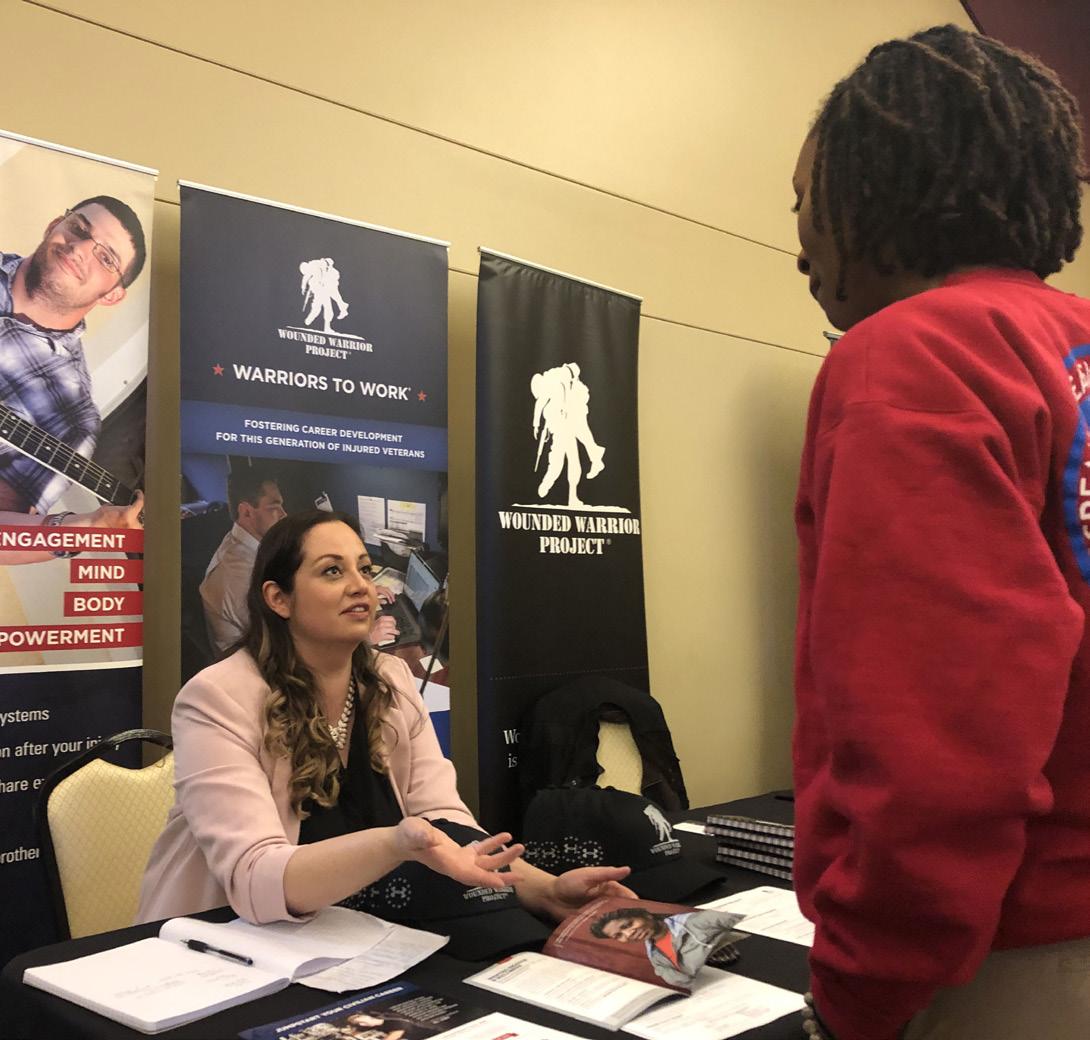
She was also encouraged to attend a Deloitte career boot camp in Washington, DC. After international travel and multiple flight delays, she arrived exhausted but determined.
“I was exhausted,” Alethea said. “But I told myself: I’m going. I need a job.”
“The speakers were great. The activities were great. And the mock interviews — that’s what I took away the most,” she said.
Her VA experience caught the attention of a Deloitte representative.
“She said, ‘I think I’ve got something for you.’ I didn’t think much of it … but the next day, the recruiter called me,” Alethea said.
Soon after, Deloitte offered her a job.
“It was just amazing — exciting,” Alethea said.
“Her perseverance is a huge success story,” Sodia said.
Redefining
Finding a new job gave Alethea a renewed sense of purpose and stability. It also taught her that success isn’t just about holding a title — it’s about feeling grounded, healthy, and whole.
“My therapist told me, ‘You have to take care of you,” she said
This shift in mindset helped Alethea reframe her job loss. She began to see it not only as an obstacle but as an opportunity to rebuild her life with intention. Instead of focusing on what she lost, she started paying attention to what she needed.
“Maybe this happened because I needed to prioritize my health — mental and physical.”
Opening up, asking for support, and letting others walk beside her were among the bravest steps Alethea took. She discovered that strength isn’t about going at it alone.
“Sometimes you just need something or someone to help you realize what you need to do,” she said.
To learn more, visit woundedwarriorproject.org or call 888.997.ALUM (2586) to connect with the WWP Resource Center.
1. Build financial savings.
Having a nest egg or rainy-day fund can help alleviate some of the immediate financial stress that comes with the loss of income.
2. Be open to change.
Don’t be afraid to explore new paths. Alethea qualified for a pharmacy technician class and decided to give it a try, expanding her job skills outside of what she’d been doing. “Sometimes you have to have an open mind to try something different instead of hanging on to what’s comfortable,” she said.
3. Network as much as possible.
Connections matter. Job fairs, workshops, and even online events can help you meet people across industries and open doors to new opportunities. “Networking is No. 1,” Sodia said. “You’ve got to get out there.”
4. Use available resources.
Veterans service organizations like WWP can help warriors translate their military skills into civilian jobs, practice interviews, and set career goals.
To learn more, visit woundedwarriorproject.org or call 888.997.ALUM (2586) to connect with the WWP Resource Center.

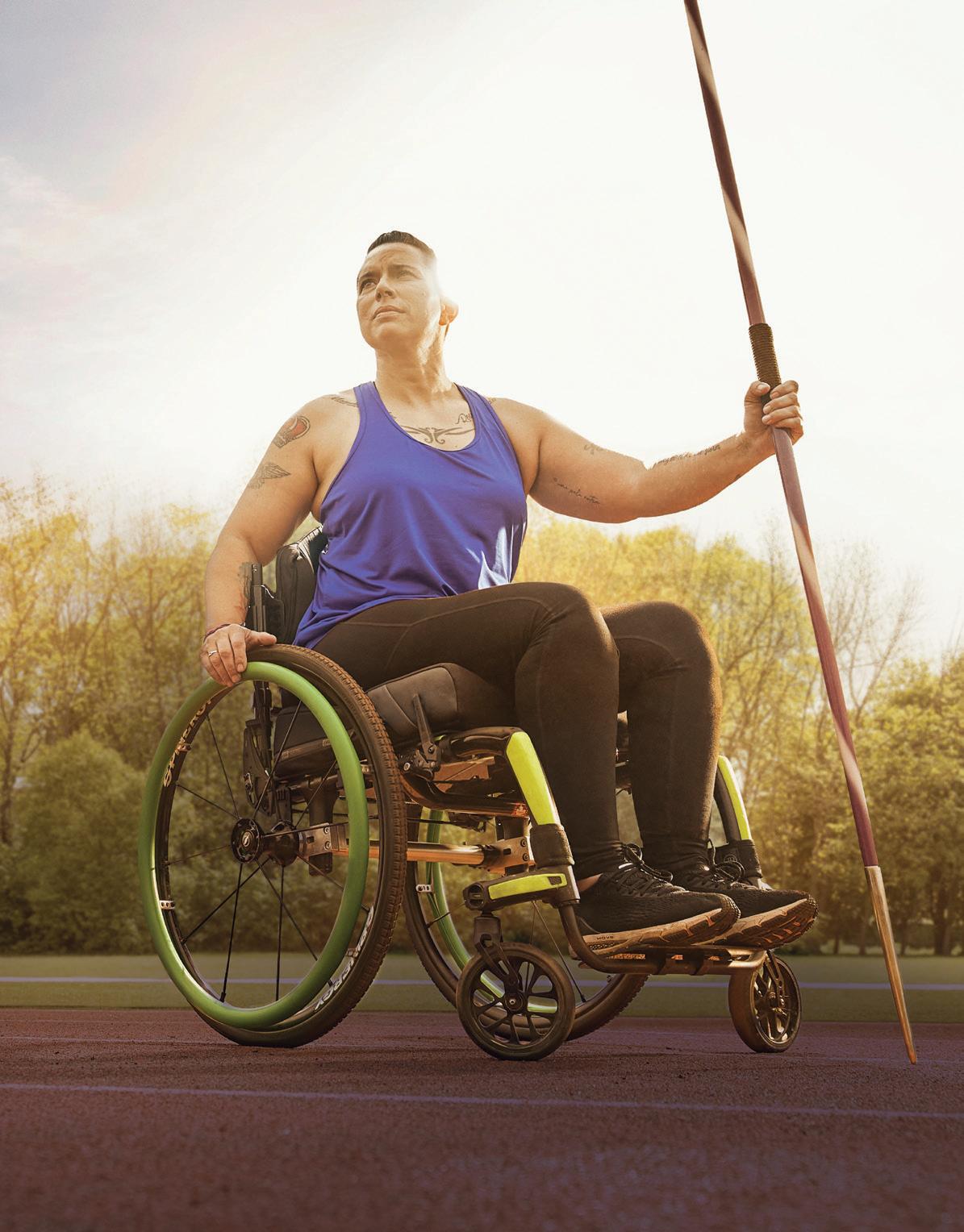
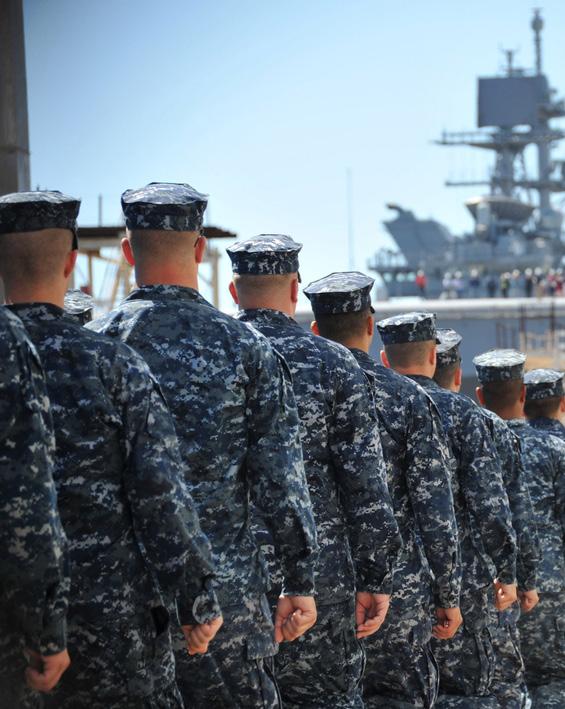
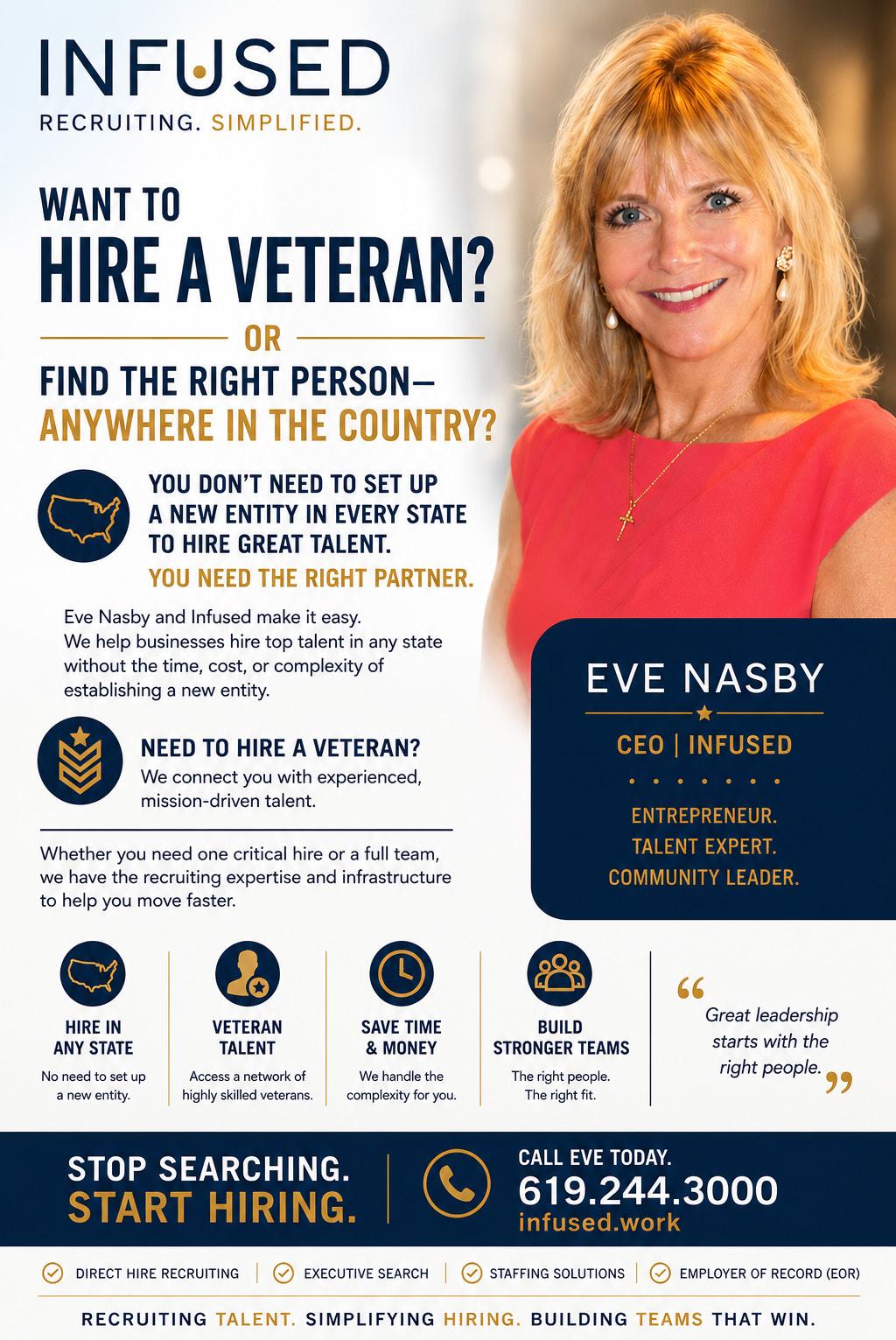

Earn Your Degree Anytime, Anywhere. Flexible, Affordable, and 100% Online!* LAPU.edu
Military life comes with constant changes—deployments, PCS moves, and unpredictable schedules. But your education doesn’t have to wait. At Los Angeles Pacific University, we understand the unique challenges military members, spouses, veterans, and dependents face. That’s why our fully online programs offer the flexibility you need to study at your own pace, no matter where life takes you. Whether you’re on base, deployed overseas, or at home, your degree moves with you!
• 100% Online & Flexible: Learn from anywhere, on a schedule that fits your life.
• Maximize Your Benefits: Use GI Bill®, tuition assistance, and spousal benefits.
• Earn Credit for Your Experience: Take advantage of CLEP, DSST (DANTES), and AARTS/JST to turn your military training and knowledge into college credit.
• Fully Accredited: LAPU offers fully accredited associate, bachelor’s, and master’s degrees through the WASC Senior College and University Commission (WSCUC).
• Faith-Based & Supportive: Dedicated military-friendly success coaches who care about your journey.
Your Future Starts Today! Take the Next Step
*At this time, LAPU is unable to offer distance programs or courses to students residing in the following states and districts: Alabama, Arkansas, Connecticut, the District of Columbia, Indiana, Kansas, Maryland, Minnesota, New Mexico, New York, North Carolina, Oregon, Wisconsin, and Wyoming.

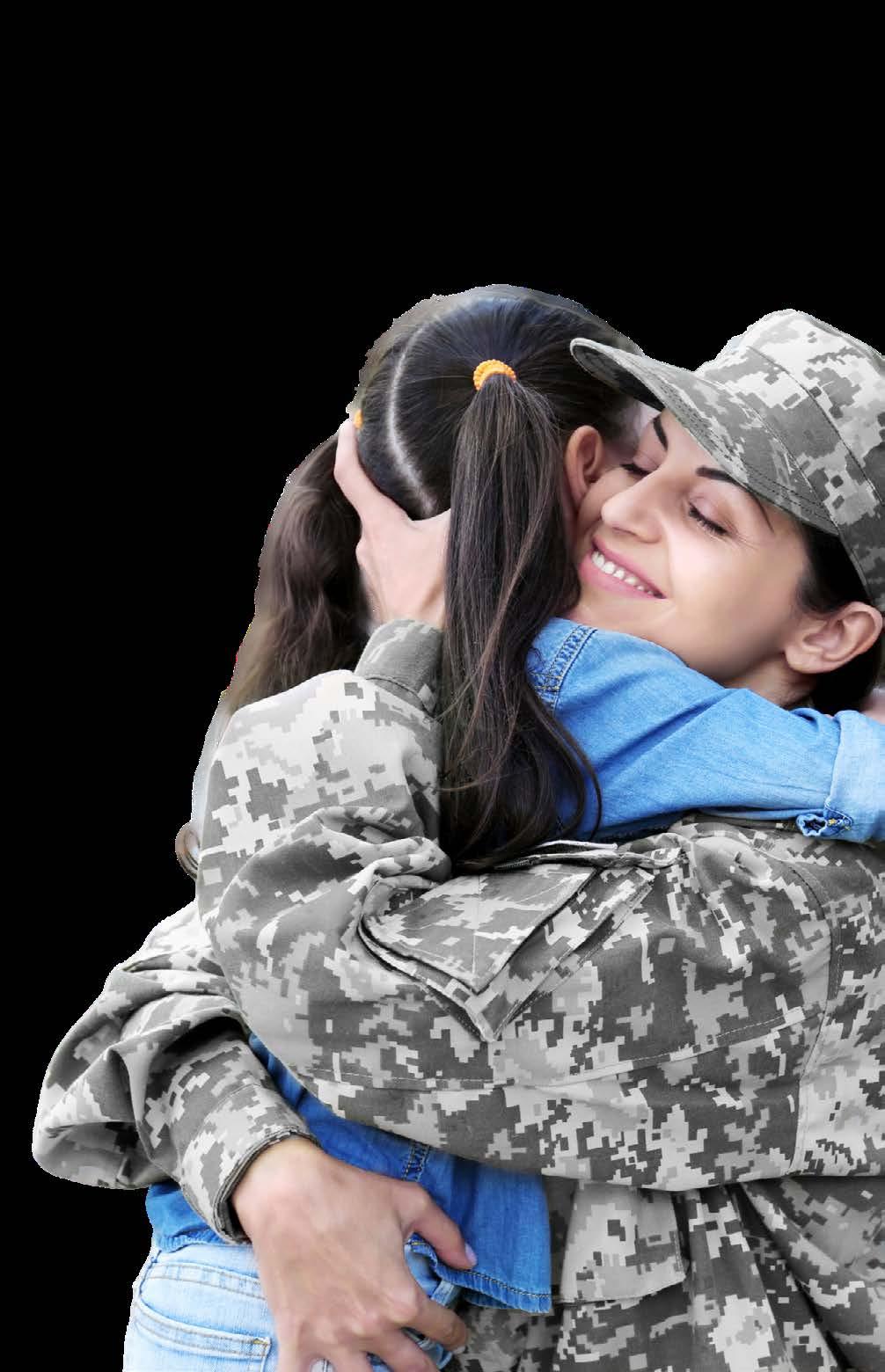


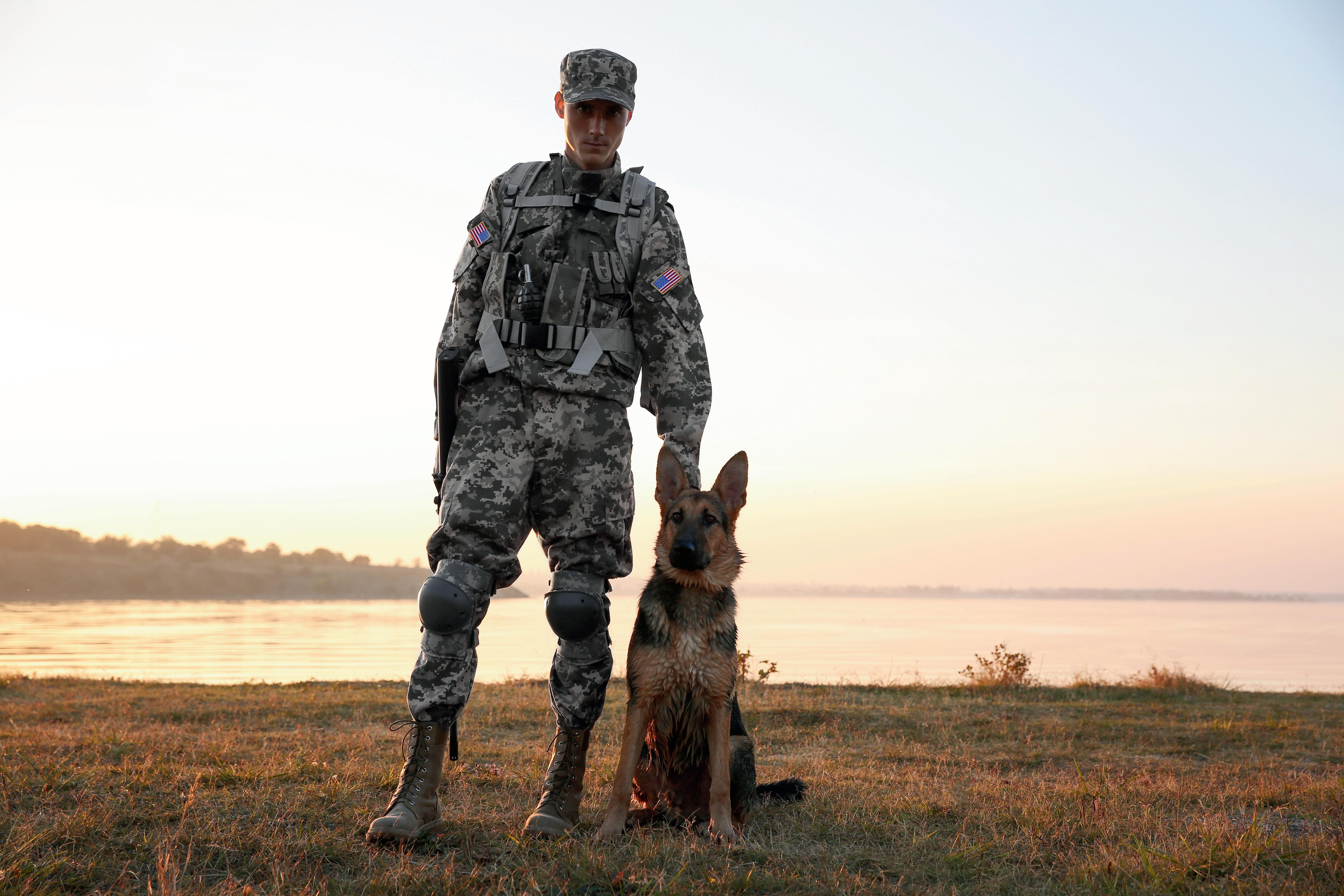


Homeland Magazine sat down with Dr. Jeff Harley Senior Director of Military Engagement, Western Governors University to share his story and blueprintfor veterans transitioning.
HLM: What influenced your decision to join the United States Navy?
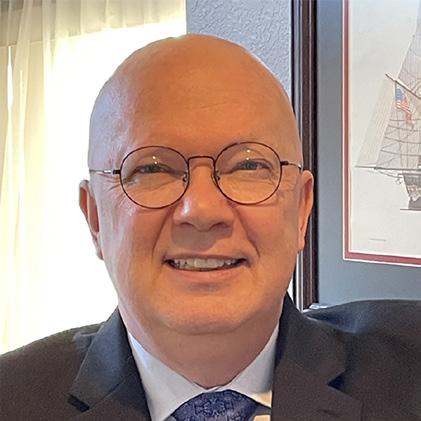
Dr. Harley: I was very blessed to serve the United States for 37 years. I enlisted in the Navy right out of high school because it felt like a chance to give back and be part of something bigger than myself, to learn a skill trade and to serve my great nation.
HLM: What were your responsibilities and duties during your time in the service?
Dr. Harley: I began my career as an E1 and worked my way up to Rear Admiral Upper Half. I was blessed along the way to command six different organizations, including serving as Director of the White House Situation Room and President of the U.S. Naval War College.
In the military, responsibilities revolve around collaborative team building and leading others. I had the privilege of doing challenging, demanding work alongside extraordinary individuals who shared an unwavering sense of camaraderie and dedication to the mission. “Honor, courage, commitment” is what we called it in the U.S. Navy. That sense of purpose and teamwork was the most rewarding part of my role.
HLM: Describe the transition from being a highly dedicated military leader to having a career outside the military and challenges you faced.
Dr. Harley: That transition is difficult. Military members are part of a world built on strong camaraderie and shared values, and that sense of connection is something you deeply miss after leaving. You miss interacting with so many young people whose lives you feel you can positively impact, which is really what everybody wants to do.
One of the biggest challenges I faced was applying for jobs. Translating military skills into terms that resonate with employers can be incredibly tough. Many of us are also naturally humble, which makes it harder to confidently speak about ourselves—which is an essential skill in the interview process. Translating a commendation medal into the civilian equivalent is incredibly hard.
HLM: Were there any mentors or resources that helped guide you through your transition from service to civilian life?
Dr. Harley: I had an extraordinary number of mentors and some of them were people who were in the military, and some weren’t. Mentors are critically important during the transition phase because they work to help you understand how to highlight your value and how to translate your skills meaningfully to employers. It’s a value proposition, after all.
In addition to mentors, there are a lot of helpful resources for veterans that provide valuable support with resumés, mock interviews and connecting with potential employers. Transitioning from a military structure to the ambiguity and uncertainty of a civilian job search makes having a strong support system essential to a successful transition.
HLM: What inspired you to pursue a career in higher education?
I was eager to find a role where I could continue giving back. I like the idea of education as a way to work with young people and help be a part of creating the future.
HLM: Why did you choose Western Governors University?
Dr. Harley: There are a lot of elements that make WGU special. The degree programs are designed to accommodate students’ different life circumstances, including those of the military community. 85% of military students pursue their education online. WGU’s real differentiator, though, is its competency-based education model, which allows students to progress toward their degrees at their own pace based on how quickly they meet the competencies.

I’ve found that the camaraderie and teamwork at WGU are as extraordinary as when I was in the military. I also appreciate that students gain practical skillsthat can be immediately applied to current, in-demand roles.
HLM: As senior director of military engagement at WGU, how do you support veterans in their educational journey?
Dr. Harley: My team manages the entire military student journey ecosystem—from pre-enrollment to graduation and beyond. Many military students want tuition assistance and scholarships, but they also need a support organization that understands them and their needs. My team’s job is to provide that one-on-one support based on shared experience. We help military students navigate their educational requirements to ensure their retention, success, and achievement of their degree.
HLM: Why is it important for veterans to continue learning?
Dr. Harley: Lifelong learning paves the way for greater opportunities. With each degree I earned, my career advanced, opening new doors for success. For example, achieving a high school degree allowed me to join the Navy. Once I earned my bachelor’s degree, I had the ability to become an officer in the military. Once I obtained my master’s, I had access to even more senior roles. It’s about continuously seeking and achieving more for your future.
HLM: What advice would you give to veterans and active-duty service members about pursuing higher education or translating their military skills into civilian careers?
Dr. Harley: Regardless of whether you’re pursuing a degree or a civilian career, your skills are transferable. Skills that are critical in the military, like the ability to be on time, work with a team and communicate effectively, will translate across almost any job and are attributes that most employers seek out. If you’re still struggling, education can be another way to transfer those skills – don’t be afraid to pursue both job opportunities and education opportunities.
Be less humble in defining what value you can bring to other organizations; what veterans can offer is so extraordinary.

Veterans are a great fit for companies because they bring unparalleled discipline, work ethic, leadership, and adaptability, honed through rigorous military training, translating to mission focus, teamwork,
Finding a job in the civilian workplace may seem easy at first. After all, you have learned skills, practiced leadership and demonstrated initiative that will make you successful wherever you go.
The reality, though, is that In fact, it can be downright depressing, demotivating, and you may feel totally disillusioned. We can help
In our Veterans In Transition archives you will find helpful and informative articles about what’s next in transition, veterans in business, career, advice, tips, workshops, transition to education, entrepreneurship, veteran franchises, legal tips & resources for veteran businesses and much more...
For assistance in your journey please visit: Veterans-In-Transition https://tinyurl.com/vet-in-transition homelandmagazine.com/category/veterans-in-transition
By Joseph Molina veteransccsd@gmail.com www.vccsd.org

Becoming a great Team Leader is about having the ability to bring out the best in your team. The most effective Team Leaders lead with intention, demonstrate empathy, and hold themselves to high standards. If you're looking to grow into a leader your team genuinely wants to follow, here are the top 10 habits of great Team Leaders.
1. They Lead by Example
Great Team Leaders understand that actions speak louder than words. They model their behavior, work ethic, and professionalism in a way that demonstrates positive leadership. Team Leaders set the tone for the workplace.
2. Communicate Clearly
Communication is the backbone of effective supervision. Successful leaders speak clearly, listen actively. They don’t just give instructions—they inspire confidence.
3. Lead by Inspiration
Great Team Leaders empower and lead by inspiration. These managers trust their employees to do their jobs by giving them room to make decisions.
4. Recognize and Appreciate Effort
Top Team Leaders regularly acknowledge contributions, celebrate wins, and provide positive feedback. Whether it is a thank-you note or public recognition during a meeting, they make employees feel seen and valued. Recognition fuels morale.
5. Provide Constructive Feedback
Great Team Leaders understand the importance of timely, respectful, and actionable feedback. They help team members learn from mistakes, always with the intention of helping them succeed.

6. Emotional Intelligence
Team Leaders who are emotionally intelligent understand how to navigate different personalities, manage stress, and respond with empathy. They build trust by being selfaware, listening with care, and responding to team needs with emotional insight.
7. They Solve Problems, Not Blame People
Great Team Leaders focus on solutions. They encourage accountability without fear, making it easier for employees to come forward when encountering challenges.
8. Fair and Consistent
Effective Team Leaders are fair, apply rules uniformly, and make decisions based on merit and facts—not personal biases.
9. They Stay Organized and Focused
Great Team Leaders know how to manage time, delegate effectively, and keep projects on track. Their organizational habits help reduce chaos, promote productivity, and build team confidence.
10. Invest in Team Growth
Great Team Leaders mentor, coach, and encourage their employees to stretch their abilities. Whether it is offering training, assigning new responsibilities, or recommending resources, they actively support their team’s growth.
Final Thoughts:
To become a Team Leader that people genuinely want to follow, it is not enough to manage—you must lead.
Leadership is about integrity, empathy, and consistency. By developing these 10 habits, you will not only increase your own effectiveness, but you will also create a workplace culture where people thrive—and that is the mark of a truly great Team Leader.
Joseph Molina, Executive Director, National Veterans Chamber of Commerce veteransccsd@gmail.com




By Barbara Eldridge www.mindmasters.com


It is easy in any economy to get stuck in a comfort zone. When things are going well, you stop doing the necessary things consistently; prospecting, following up and saying thank you, In a slow economic time, fear sets in, you stop investing in the things that keep you visible; networking, advertising, asking for testimonials. Your Success is built on a variety of choices you make, review the following to tap the potential you have barely scratched the surface of.
Redefine your Goals: Get crystal clear about the goals that motivate you to do the work it takes to grow your business. Also know the reason why you want it. If it's to make a certain amount of money every month, you need to have a reason. No reason or desired reward, no motivation, more complacency.
Recognize the effects of not taking action: Get very clear about the cost of not achieving that goal. If you don't get this goal, there are consequences. Know what they are.
Make commitments to others: Use the power of what Napoleon Hill called a driving force- a master mind group helps you be accountable, as you hold your employees/ subcontractors accountable. Valuable support is provided by other business leaders who know what it takes to stay focused.
Acknowledge your fears: When you acknowledge your feelings of fear it points your awareness to areas where you need to improve and grow. Do something to move you in the direction of growth.
Ask for Help: Asking for what you need is the most underutilized tool for unlocking that comfort zone complacency. Whether its money, information, support, assistance, or time, don’t be afraid to ask for what you need in order grow.
Learn to say “No”: Do you spend too much of your time on projects and activities that you really don’t want to do simply because you fall into the trap of pleasing others?
(an easier comfort zone then focusing on your own goals). You are going to have to create stronger boundaries about what you will and won't do.
Do 1 thing that makes you uncomfortable every day – work toward stretching those “goal achievement muscles”.
Create something new for your business: Be open to change. Change is good—it helps you grow. Develop a new product, a better system, redo your work space, makeover your marketing. They can reignite your momentum and your speed at which you succeed at your goals.
Set and meet deadlines for yourself: Set reasonable deadlines for all jobs and stick to them. Hold yourself accountable, it’s true that work expands to fill the available time, so set expectations.
Invest in Win-Win Relationships: A great way to build the foundation for a relationship with referral partners is to hook them up with others in your network. Invite them to a workshop, seminar or networking function where they can make valuable new contacts themselves. This keeps you alert and aware of other’s needs.
Barbara Eldridge has built a solid reputation as a Results strategies specialist, within industry and business over the past 40 years. Her unique message, since starting Mind Masters 30 years ago for entrepreneurs and small business owners, continually stresses vision, purpose and values as the key elements of business philosophy. Her undying compassion for the entrepreneur’s journey, her tireless capacity to listen, and her sincere enthusiasm for other’s success have insured her growing influence and her own mastery with MIND MASTERS
www.mindmasters.com







Straight-forward legal tips for Military and Veteran Business Owners
By Kelly Bagla, Esq. www.BaglaLaw.com


An offshore trust is the strongest form of asset protection. An offshore trust is a legal arrangement created in a foreign jurisdiction, outside the settlor’s home country, that involves transferring assets to a licensed trustee who assumes legal ownership and manages these assets. A creditor cannot force the foreign trustee to hand over assets, produce records, or comply with domestic court orders. The only path is to hire a lawyer in the offshore jurisdiction, post a $100,000 bond, and relitigate the claim under the rules that heavily favor the settlor.
In the Cook Islands, where most U.S. offshore trusts are established, no creditor has ever recovered assets through local proceedings. An offshore trust is the strongest asset protection structure available for people, CEOs, and businesses with substantial wealth.

An offshore trust is governed by the law of the country where it is established. The settlor signs a trust deed naming a licensed foreign trust company as trustee and transfers assets into the trust. Assets can move directly into the trust or into a holding entity, typically formed offshore also, which will be owned by the trust. Once funded, the trustee holds legal title and manages the assets under the terms of the trust deed.
The settlor is usually the primary beneficiary. The trust deed gives the trustee discretion over distributions, and when to release funds. It’s the trustee’s discretion that makes the trust assets truly protected. If the settlor could withdraw assets at will, a court could simply order the withdrawal and redirect the funds to a creditor. The settlor can request distributions from the trustee, but the trustee has no legal obligation to comply. When a lawsuit or creditor threat arise, the trustee’s ability to say “no” is the mechanism that keeps the asset out of reach.
An offshore trust protects assets only when specific structural conditions are met. A plan that misses any of them is vulnerable to U.S. court enforcement.
• The settlor cannot act as trustee. A settlor who holds trustee power can be ordered to act on the trust’s behalf.
• The trustee must be a licensed foreign trust company, not an individual and not a U.S. entity. Licensed trust companies in the Cook Islands are regulated, bonded, and experienced in asset protection.
• The trustee must have discretion to withhold distributions. The anti-duress clause directs the trustee to refuse distributions when the settlor is under legal duress from a U.S. creditor.
• The choice-of-law clause must name the offshore jurisdiction. The trust deed must state that the laws of the Cook Islands govern the trust’s validity and administration.
• Assets must move offshore or into an offshore entity controlled by the trustee. Assets physically located in the United States remain subject to U.S. court jurisdiction regardless of who holds title.
Offshore trusts provide four primary advantages: creditor protection, financial privacy, estate planning, and jurisdictional diversification.
• Creditor Protection. An offshore trust puts assets beyond a creditor’s practical reach by placing them under the control of a foreign trustee who does not answer to U.S. courts.
• Financial Privacy. Offshore trusts are not listed in any public database. The trust deed is a private document executed in a foreign country. No U.S. public filing reveals who owns a Cook Islands trust or what assets it holds. The IRS knows about the trust through required tax filings, but creditors, business competitors, and the general public do not.
• Estate Planning. An offshore trust directs how assets pass to beneficiaries at death without probate, and the creditor protection continues for the next generation.
• Jurisdictional Diversification. A person whose entire net worth sits within the U.S. legal system is fully exposed to its courts and political environment. An offshore trust moves a portion of those assets to a country whose laws favor the asset owner.
The major disadvantage of an offshore trust is the loss of control. The settlor gives up direct access to the assets. This is by design. When a court orders a settlor to repatriate assets, the defense is that the settlor genuinely cannon comply, as the trustee controls the assets and is not subject to U.S. jurisdiction. This protection and defense only work if the loss of control is real.
Offshore trusts are appropriate for individuals whose litigation exposure and asset level justify the cost. The people who benefit most hold $5,000,000 or more in assets, face above average creditor risk from their profession or business activities and have exhausted the domestic planning alternatives available in their state. Physicians, business owners, real estate investors, contractors, and other high-risk professionals each face distinct liability patterns that can be protected through a well structured and funded trust.

If you need help determining the best asset protection strategies, we can help. Timing is NOW. Contact us at https://baglalaw.com/contact/ to schedule your consultation. Becoming a business owner, you control your own destiny, choose the people you work with, reap big rewards, challenge yourself, give back to the community, and you get to follow your passion. Knowing what you’re getting into is smart business because the responsibility of protecting your business falls on you.
For more information on how to legally start, grow, and exit your business please visit my website at www.BaglaLaw.com
Disclaimer: This information is made available by Bagla Law Firm, APC for educational purposes only as well as to give you general information and a general understanding of the law, and not to provide specific legal advice. This information should not be used as a substitute for competent legal advice from a licensed professional attorney in your state.
By: Shelly Dew, CFRE, CDE Director of Philanthropy Hospice of the North Coast www.hospicenorthcoast.org

Veterans understand the meaning of service, sacrifice, and leaving the world better than they found it. While many people support charitable organizations during their lifetime, fewer realize they can continue making a difference for generations through planned giving.
Planned giving, also known as legacy giving, is a way to include charitable organizations in your estate plan while also providing for the people you love. With thoughtful planning, you can care for your family and leave a lasting gift to the causes that reflect your values. These gifts are often made through estate assets rather than current income, making planned giving an option for many individuals – not just the wealthy – and allowing you to meet your personal, financial, and charitable goals.
Charitable gifts of every size help strengthen nonprofits by providing future resources that allow them to sustain programs, respond to community needs, and continue their missions for years to come. Whether supporting veterans, healthcare, education, conservation, or other causes, a planned gift can create an impact that extends well beyond a donor’s lifetime.
There are many ways to create a charitable legacy, including:
• A gift in your will or living trust. You can designate a specific dollar amount, a percentage of your estate, or the remainder of your estate to a charitable organization.
• Beneficiary designations. Retirement accounts, bank or investment accounts, and life insurance policies can often be updated to include a charitable organization as a beneficiary and may provide tax advantages depending on your circumstances.
• Charitable Gift Annuities (CGAs). A CGA can provide fixed lifetime income payments to you or a loved one while ultimately benefiting a charitable organization.
• Gifts of appreciated assets. Donating appreciated securities or other assets may provide financial or tax benefits while supporting a meaningful cause.
One of the greatest benefits of planned giving is its flexibility. Many planned gifts remain under your control during your lifetime and can often be adjusted as circumstances change.

As with any estate planning decision, it is important to consult your attorney, financial advisor, or tax professional to determine the approach that best aligns with your goals.
For many veterans, service is a lifelong commitment. A planned gift can be a meaningful way to continue that spirit of service by ensuring that the causes and communities important to you continue to receive support for generations to come.
At Hospice of the North Coast, we are honored to serve veterans and recognize the unique experiences, sacrifices, and needs of those who have served our country. Through our We Honor Veterans program, we provide specialized support and resources to ensure veterans receive compassionate, respectful care that recognizes their service and honors their individual stories.
To learn more about legacy giving opportunities that support compassionate hospice care, contact Hospice of the North Coast. Our team can provide information about planned giving options and help you explore ways to create a gift that reflects your values, your service, and the legacy you wish to leave.

"With thoughtful planning, you can care for your family and leave a lasting gift to the causes that reflect your values."
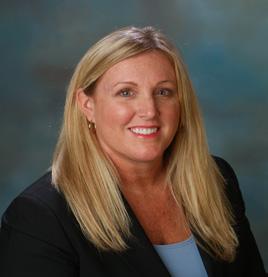
Shelly Dew serves as Director of Philanthropy and Community Outreach at Hospice of the North Coast, a community-based nonprofit dedicated to compassionate end-of-life care, comfort, and support for patients
sdew@hospicenorthcoast.org | hospicenorthcoast.org

By Hadley Wood www.hlinwood-insurance.com
The hot, sultry days of porch lemonade with friends, beach parties with S’mores, BBQ and pool parties always come to mind when I think of summer.
But what are the ‘Dog Days of Summer’ and what does it mean? It is widely accepted that the meaning derives from the Greek belief that the summertime months of July and August would bring drought, bad luck, unrest and extreme heat. With the rise of the star system Canis Majoris (Greater Dog) otherwise known as Sirius (in Greek - meaning scorching), which rises in the months of July and August, it makes sense that the Greeks would connect the Dog with the Summer months and connect the dots, as they are. We can see Sirius in the sky as our brightest star in the July and August months.
So, the ‘Dog Days of Summer’ does have a deeper meaning - and one we can relate to the rising cost of insurance many of us may be feeling these days. Because rising heat in the summer months brings an increase of fires, floods, landslides, angry tempers – that increases theft, homicides, rape, etc.
• The rate of violence tends to double between June-September
I get calls all the time about this. ‘Why are my insurance rates going up’ OR ‘Why is my insurance canceling me’? Here is a breakdown of the behind-the-scenes logic:
The Insurance business is a business to make money. There are many people involved projecting probable events and possible scenarios that dictate the risk factor for each category of risk. Insurance companies have Re-Insurance Companies and Actuarial reports behind them to back them up with financials and capitalization – to share the risk of claims. Typically, the Re-Insurance carrier is funding 40%-60% of claims. If the ReInsurance companies decide that the risk in a certain area is too high, they will back out. That will in turn force the underlying carrier to pull out of the market because they cannot promise the shared capitalization needed to fund the expected risk.



Now I know that is all goby-gook to many people but the bottom line is this:
• If insurance companies find that any risk is too high, they will back out of a market or state. They may keep current policies but not accept new policies until the risk is lifted.
• If there is an imminent or current hazard (fire/flood/ earthquake/etc.) insurance companies will put a hiatus on writing new business in that area or for that risk.
• If your rates have /are increasing – this is not necessarily because of any action or claim you may have. This is likely because the insurance company has found that your industry or operations or location has had many claims and they have to consider you a higher risk.
• If your rates have gone up significantly, call your broker or agent and ask why. Make sure you let them know you are doing your due diligence to keep risks down (fire suppression, alarms, etc.) Have your Broker/Agent check alternate markets – maybe there is a better package out here for you.
Sadly, significant climate changes over the last 35 years has resulted in increased risk of flooding in many states, warming of the oceans which results in more hurricanes in the southern states (and future hurricanes in the Pacific), fire damage in the West and South-West areas and severe drought across many states. The risk factor is higher now and will only increase and insurance rates are likely to increase across the board in the future years.
If you have any questions about business insurance, please reach out to me. www.hlinwood-insurance.com
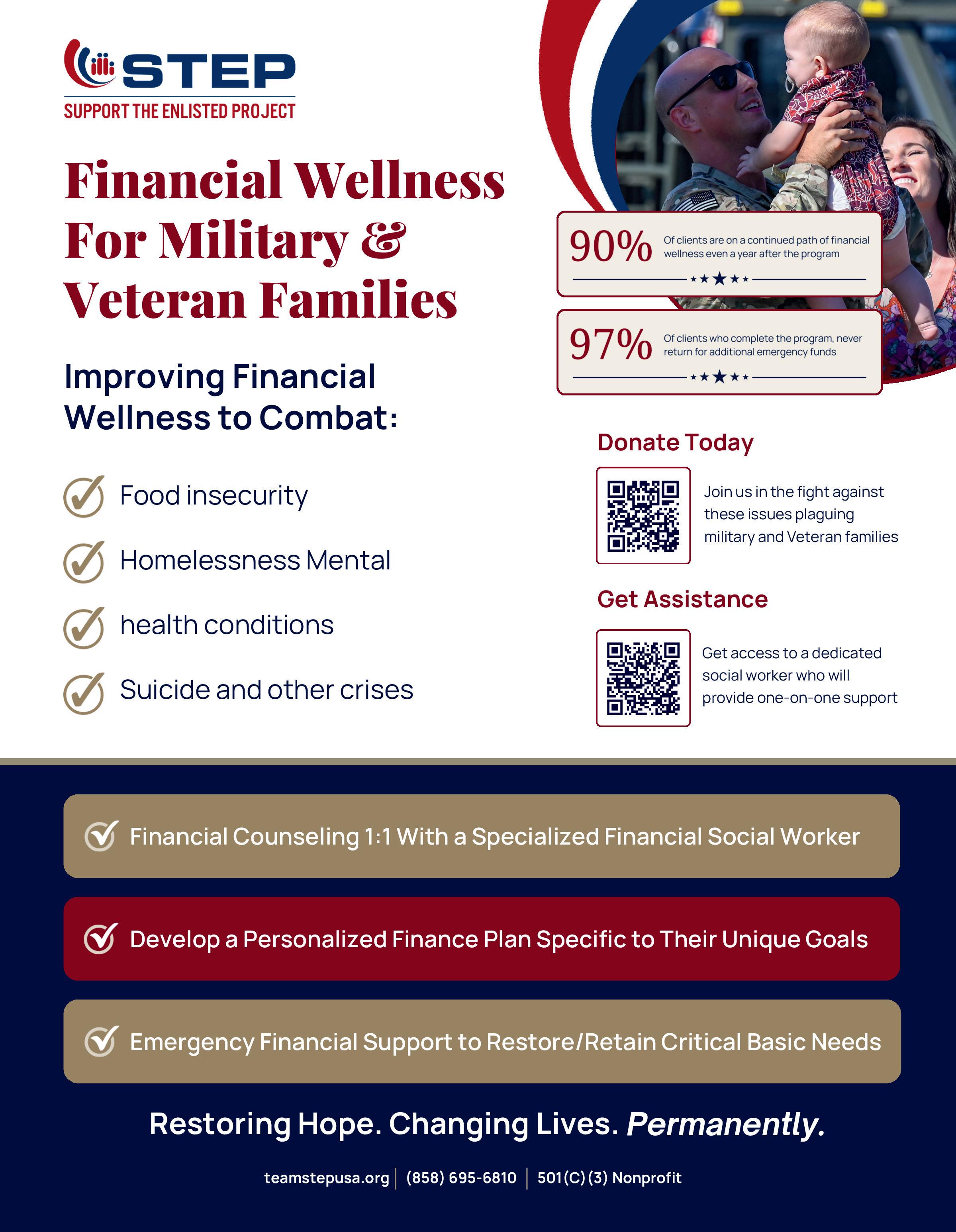
teamstepusa.org