ACS Athens is a student-centered international school, embracing American educational philosophy, principles and values. Through excellence in teaching and diverse educational experiences, ACS Athens challenges all students to realize their unique potential: academically, intellectually, socially and ethically - to thrive as responsible global citizens.
Main Number:
+30 210 6393200
Reception Desk: Ext. 206, 233
Office of the President: Ex t. 201
Office of Enrollment Management, Communications & Technology: Ext. 263
Admissions: Ext. 263, 251
Finance: Ext.202, 207
Business Procurement: Ext. 207
Human Resources: E xt. 204,256
Cashier: Ext. 208
Bookstore: Ext. 214
Transportation: Ext. 239
Health Office: Ext. 217
Cafeteria: Ext. 236
Academy: Ext. 222
Academy Citizenship: Ext. 404
Middle School: Ext. 261
Middle School Citizenship: Ext. 267
Elementary School: E xt. 229
Student Affairs: E xt. 226
IB/AP Programs: Ext. 247, 248
Academy/MS Library: Ext. 219, 220
ES Library: Ext. 293
Athletics: Ext. 327, 401
The Institute: Ext. 402
Optimal Learning Suppor t Program: Ext. 237, 265
Theater: Ext. 331, 302
Security: Ext. 240
Security (After Hours): +30 210 6393555
Our Vision: Empowering Individuals to become Architects of their Own Learning to Thrive as Conscious Global Citizens and Improve Life and Living on the Planet.
Ethos is an annual publication showcasing the life and activity of the Institution of ACS Athens.
Publisher:
ACS Athens
Managing Editor: Demi Aroni
Art Director: Leda Tsoukia
Copy editing: Annie Angelidou
Contributors:
ACS Athens Faculty, Staff, Students, Parents and Alumni, Professional
Photography: Yannis Vardaxoglou, web issue Editor: Maria Matakia
14 Rooting Conscious Citizenship Values with ACS Athens Early Childhood Mascot
46 ACS Athens Middle School Students Celebrate UN Day
28 Why Does Emotional Intelligence Matter And How Do We Teach It?
56 The Youth-To-Youth Educational And Social Integration Program; From Refugee Camp To College Scholarship
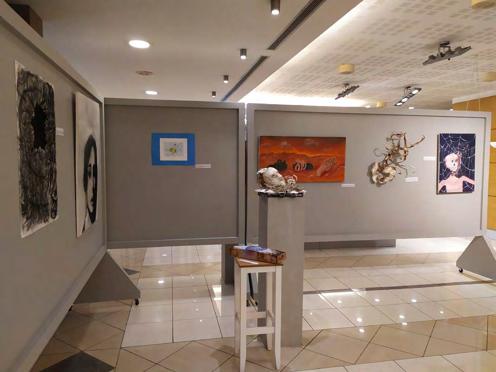
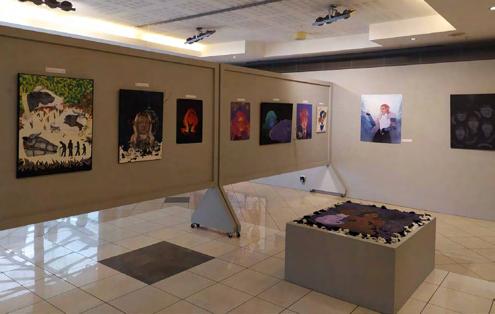
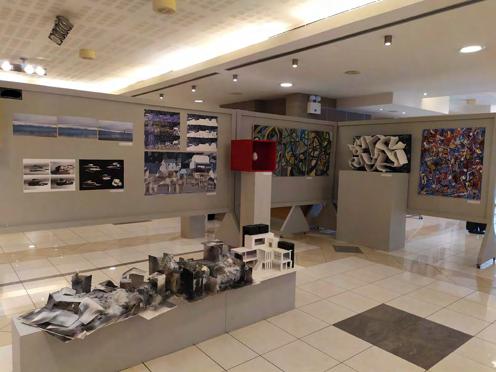
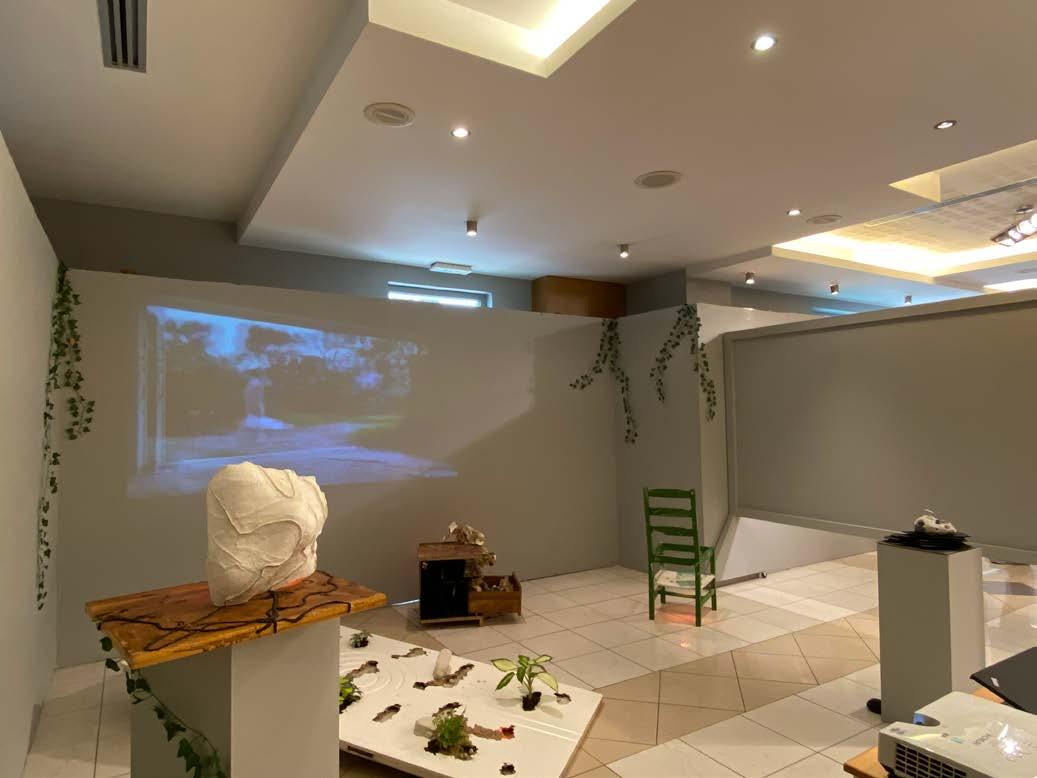
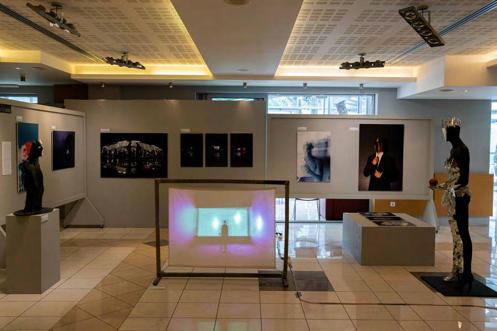
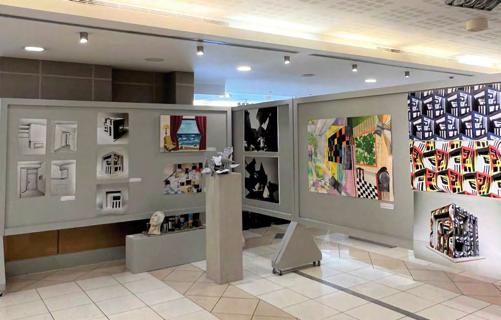
64 2022 IB Visual Arts Exhibitions
50 ACS Athens Recycling Program
we measure
do How
INTELLIGENCE
Engaging The Minds And Hearts Of All Academic Institution Stakeholders
ANote From President Dr. Peggy Pelonis
t the onset of the 21st Century, it was evident that the world was developing in manifold and multifaceted ways suggesting the need or rather the necessity for a different type of citizen. The values and ethics oftentimes guiding social and political institutions are more so under examination and are being directly challenged as life and living on the planet become endangered. The United Nations Global Goals agenda adopted in 2015 by 193 countries suggests that unless sustainability is accomplished by 2030 (UN, 2015), life and living will drastically deteriorate. Whether or not one acknowledges the Global Goal agenda, simply noticing the harmful effects of inequality, lack of access to education, climate change, or polluted oceans and land suggests that humanity is on a course that will ultimately adversely affect all humans. Thus, 21st-century global and societal needs require an educational trajectory
that strives “to empower individuals to transform the world as architects of their own learning to thrive as conscious global citizens to improve life and living on the planet” (ACS Athens vision); an educational philosophy that presupposes that knowledge is individually and socially constructed by learners who are active observers of the world, active questioners, agile problem posers, and critical and creative problem solvers; an educational philosophy that embraces conscious citizenship by recognizing that young learners, as all human beings, are constantly in a ‘state of becoming’ and that developing mindsets and ways of being in harmony with all living things, will ultimately develop citizens whose acts reflect such a higher purpose.
Developing internationally minded students who are ‘comfortable’ anywhere in the world and who take their rightful place as global citizens; confident in their ability to use knowledge effectively and able to make ethical and moral, political, social, aesthetic, and economic choices, is the aim of institutions such as ACS Athens. Individuals are socially rooted; survival depends to a large degree on cooperating with others and usually others with whom similar values, principles, and beliefs are shared. Furthermore, succeeding in today’s world is synonymous with continuous competition, and competition presupposes a winner and a loser; diametrically opposed to the idea that man is social and needs others to survive, thus requiring cooperation. The rate at which technology is advancing and at which Artificial Intelligence is influencing and facilitating our daily living is unprecedented. Thus, empowering human intelligence infused with the above-mentioned values is necessary more than ever and can be seen through the lens of conscious citizenship.
A conscious citizen is (s)he who places value on being fully human while connecting with a higher purpose; one who values human life and the relationship with all living things and takes responsibility for turning knowledge and skill into action to ultimately improve life and living on the planet. Conscious citizenship, ultimately, is more a way of being and living rather than doing and is developed by creating the conditions to expand awareness of social, global, and environmental conditions while being encouraged to self-reflect on how one contributes daily to a better world, contributes to a worse world or makes no contribution. A Conscious Citizen of the world ‘sees’ the interconnection of their own actions and the consequences of these and strives towards a higher purpose of creating harmonious and optimal living. A conscious citizen is continuously in a state of ‘becoming’ and ideally reaches a developmental, emotional, and spiritual level of ‘being’ in harmony with life. This way of being naturally and effortlessly translates into action because it is just the way one lives.
Questions educators must continuously reflect on are: what kind of educational institution could effectively respond to the changing social, political, ethical, and psychological demands of a complex globalized landscape? What type of model could encompass the ability to cope with and thrive with contin-
uous transformation? What kind of student could be developed in an institution effectively responding to constant change, societal demands, and global challenges while allowing for and applauding the unique individuality of each student? In other words, how can young people be better prepared for the demands of living in a globally aware world? What should their educational experience encompass? What habits of mind and heart should they possess? And what principles and values should guide their actions, personally and professionally?
The answer comes from engaging the minds and hearts of all academic institution stakeholders; students, faculty, administrators, specialists, staff, parents, and friends who are prepared to engage in and commit to serving a higher purpose; the family, community, nation, world so as to ensure sustainability. Thus developing the type of education that relates to this type of world is the focus of schools like ACS Athens, an academic institution that meets students where they are and guides them towards achieving excellence by designing programs with intentional excellence; an institution that contributes to a well-rounded society; where differences are respected and differing views are encouraged and seen as enriching the community; where collaboration among different nationalities is a natural unfolding mindset, and international mindedness is encouraged.
Likewise, schools focused intentionally on developing Conscious world citizens follow the conviction that educators not only provide the platform for all students to acquire the skills and knowledge to succeed in a competitive world but also acquire the values and mindsets to make ethical decisions and work toward improving human lives and life on the planet. Thus school programs integrate civic engagement and social responsibility and provide a standard to strive towards, such as the Global Goals, allowing students to contribute to a higher purpose by taking care of things at home. Such an educational philosophy rethinks the school as a professional learning laboratory where a student model develops a leadership identity guided by ethical decision-making. Action then not only creates opportunity for profit and career advancement or entrepreneurship but deliberately designs innovation for the good of the whole; the community, the planet, and the whole of humanity by starting in one’s “corner” of the world. Ultimately and ideally, cultivating such mindsets leads to a way of being in the world and in relation to the world and all living things. Schools that encourage and empower this type of ‘becoming’ will ultimately send out into the world a conscious global citizen.
Elementary adventures
How Can Leadership Qualities Be Infused Through SDGs?
by Dr. Jenny E. Grigoropoulos Elementary School Faculty
To understand the mantle of leadership, one needs to explore plentiful characteristics that a leader should possess and embrace in order to be a whole and educated person. A true leader must be capable and willing to behave and act in a responsible manner, guided by a desirable and anticipated vision, as well as ethical principles and values. Additionally, a leader must be educated and well-informed. As Robin Barrow (1981) articulated, the essential qualities that educated individuals possess must begin with awareness. First, historical awareness, which includes, but is not limited to, history and culture, individuality, sound judgments, respect for others, and the awareness to be active in civic engagement and the personal and social responsibility experienced toward self, community, and the world we live in.
Today’s youth, already eager and passionate to make a difference in the world, while embracing the responsibility for doing so (Jacoby, 2013), will be tomorrow’s leaders, whilst their children and grandchildren will be the leaders of future generations. To ensure that today’s students are prepared to assume their potential leadership roles effectively, we need to provide them with an understanding of the responsibility this entails, and to upscale their emerging
leadership skills into desirable actions that contribute positively and sustainably to the world.
Student leadership must be developed to expand individuals’ horizons, shake complacency, and stir the imagination along with the character idiosyncrasies necessary for leaders and leadership. The goal is to produce citizens who are informed about their society and recognize and appreciate the roots of ethics and moral philosophies guiding human behavior. They must also acknowledge people’s natural position in their current community, understanding the human impact on the world in which they live, while applying cognition, reason, and evidence in decision-making (Barrow 1980).
Moreover, these global citizens should feel personally responsible for making a difference in the world, through their commitment to tackling society’s most pressing issues and problems, not only for their generation but for many generations to come. It is imperative to note, that when leadership skills are infused by educational institutions with ethics, empathy, and compassion through mentoring, modeling, and facilitating, students have a better chance to be prepared to assume desirable leadership roles, not only in their own learning but also in their current and future lives. Opportunities to demonstrate and model leadership in the educational setting are available at all times, and when carried out consciously and consistently, the results manifested are profound. Moreover, involving students in their education, putting them in charge of activities and undertakings, as well as inspiring them to be involved in the improvement of their school environment and practices, gives them the groundwork to develop leadership skills and guides them to make good choices for themselves and others. This occurs because leadership consists of learned characteristics, acquired knowledge and skills, and informative daily behavior and actions guided by ethical principles and common sense.
For these purposes, it is essential that lessons taught must be cross-disciplinary and enriched with values and principles guided by the development of desirable knowledge, skills, and ethical principles. Moreover, holistic thinking, meaningfulness, and ethics, must be integrated into the lesson plans and delivery in a harmonious way.
As mentioned previously, vast research shows that student leadership ought to be integrated into curriculum and teaching practices as early as elementary school. However, although this may sound logical, it is not always feasible, given that educators are not trained on how to instill these qualities in practice. During the challenging year of 2020-2021, I decided to enrich my ESL teaching content with the Sustainable Development Goals of the United Nations. My first goal was to teach my 5th-grade students the SDGs through research, reading, and writing while employing presentation and collaboration skills. The following paragraphs will present my lesson plans as designed, implemented, and presented to my students.
The lesson started with the exposure of the students to the 17 SDGs through videos and documentaries, followed by their summary writing. In continuation, they read articles, which described the 17 goals and chose one goal each to research and write an essay about, which would later be, transformed into a presentation in class. Upon the completion of the presentation, students were called upon to choose the five SDGs that they would like to collaborate on to create their final project. The lesson lasted three months, with some sessions being online during school closure and others being face-to-face. The collaboration of the students was phenomenal. They were setting up Google Meets to work on their projects after school hours; they collaborated and presented online as there was a student who was overseas, and guided and assisted each other in multiple ways as the groups were heterogeneous, involving students with different levels of English proficiency. The outcome was amazing, and students were very satisfied with their work and with what they had learned in the process.
The fifth-grade students who participated were ESL students of varying levels of English knowledge. The idea was inspired by the schoolwide recycling initiative that I had organized with my colleague Stephanie Maxwell in the Middle School. During the entire three months, the students were challenged “to realize their unique potential, academically, intellectually, socially, and ethically to thrive as responsible global citizens” as per the mission statement of ACS Athens. Moreover, aligning with the ACS Athens vision, the project empowered the students to see and seek ways “to transform the world as architects of their own learning,” contributing to the graduate profile of our school: our students are inquirers, knowledgeable, thinkers, communicators, principled, open-minded, caring, risk takers, balanced, reflective and decision-makers. In my lesson planning and delivery, I always kept in mind that students should face real-life problems and use creative methods to become critical thinkers and problem solvers, thus de -
veloping capacities and skills of the leaders of tomorrow: knowledgeable and conditioned to activate the best results with reference to sustainability for themselves, the community, animal and plant life and our planet as a whole for present and future generations.
The publication of Ethos makes the projects available to the ACS Athens community, breaking away from the limitations of the classroom. Furthermore, I believe that this information should be shared in order for students to recognize their work and feel proud, confident and acknowledged. In addition, by sharing their work, people in our community may be inspired to follow the path created by the students, thus creating a ripple effect and attracting more individuals to join in working towards the achievement of the 17 Sustainable Development Goals.
Artificial Intelligence In The ACS Athens Elementary School
by Katherine Bibidakis & Pinelopi Dimitroula, Elementary School Faculty
Exploring Artificial Intelligence (AI) within the Conscious Citizenship (CC) framework was one of the most fascinating, innovative, and educating initiatives during the 2021-2022 school year. As part of the AI Elementary team, our focus was to guide our faculty in broadening our understanding, expanding our comfort level, and building connections with the future of AI at ACS Athens. Through several meetings, our faculty members, including ourselves, familiarized themselves with the process of investigating what initially seemed uncharted waters of AI.
As we embarked on the AI exploration journey, we first guided the faculty
in investigating existing and prospective AI relations within their respective area of expertise.
Next, the ACS Athens faculty members reflected on the current role of AI in their discipline and how they, as experts in their field, have experienced AI. Subsequently, the meeting was steered toward discussing the importance of AI and student learning in the 21st century. One of the commonalities within the groups’ discussions was that AI use is already around us!
As a segue to the topic of the next meeting, the faculty began considering the possibilities of integrating AI into their classes. At this point, the AI Curriculum Progression Charts, as developed
within ACS Athens, and their collaborative analysis from the Elementary faculty, played a crucial role in considering their potential in designing future lessons. Initially, the faculty was given ample time to carefully examine the contents of the charts, followed by the opportunity to think about how their current teaching practices related to these progression charts. Lastly, the faculty considered new potential applications they could integrate into daily lessons and ultimately into the curriculum. From these discussions, the faculty came up with concrete ideas on how they can use AI to help students in the 21st century and to create a supportive environment that meets the needs of all students.
Lastly, the Iterative Phase was designed by merging the goals presented in the progression charts with the goals outlined in the syllabi of each discipline. The meetings were structured in a way that allowed us to facilitate as the faculty researched and made connections based on progression charts and specific scope and sequence. As this process was successfully concluded, some of the main questions yet to be explored are:
◉ What is the big picture of AI?
◉ How is AI making living and life on the planet better?
◉ How is education changing? What does this progression mean, and how are we to interpret it?
Overall, the faculty were extremely receptive to the topic of AI! We are impressed and proud to witness how welcoming our colleagues were to this new initiative. As the next cycle begins this school year, we are excited to see how AI will be integrated into the ACS Athens community. We believe that this new technology will be transformative for the way students learn. In this fast-changing world, we will always strive to be the best educators for our students, and we thank the ACS Athens community for all their support.
Rooting Conscious Citizenship Values with ACS Athens Early Childhood Mascot
by Sophia Moros, Director of Early Childhood and Development, JK - Grade 2
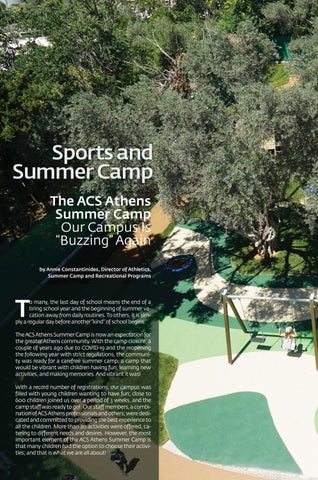
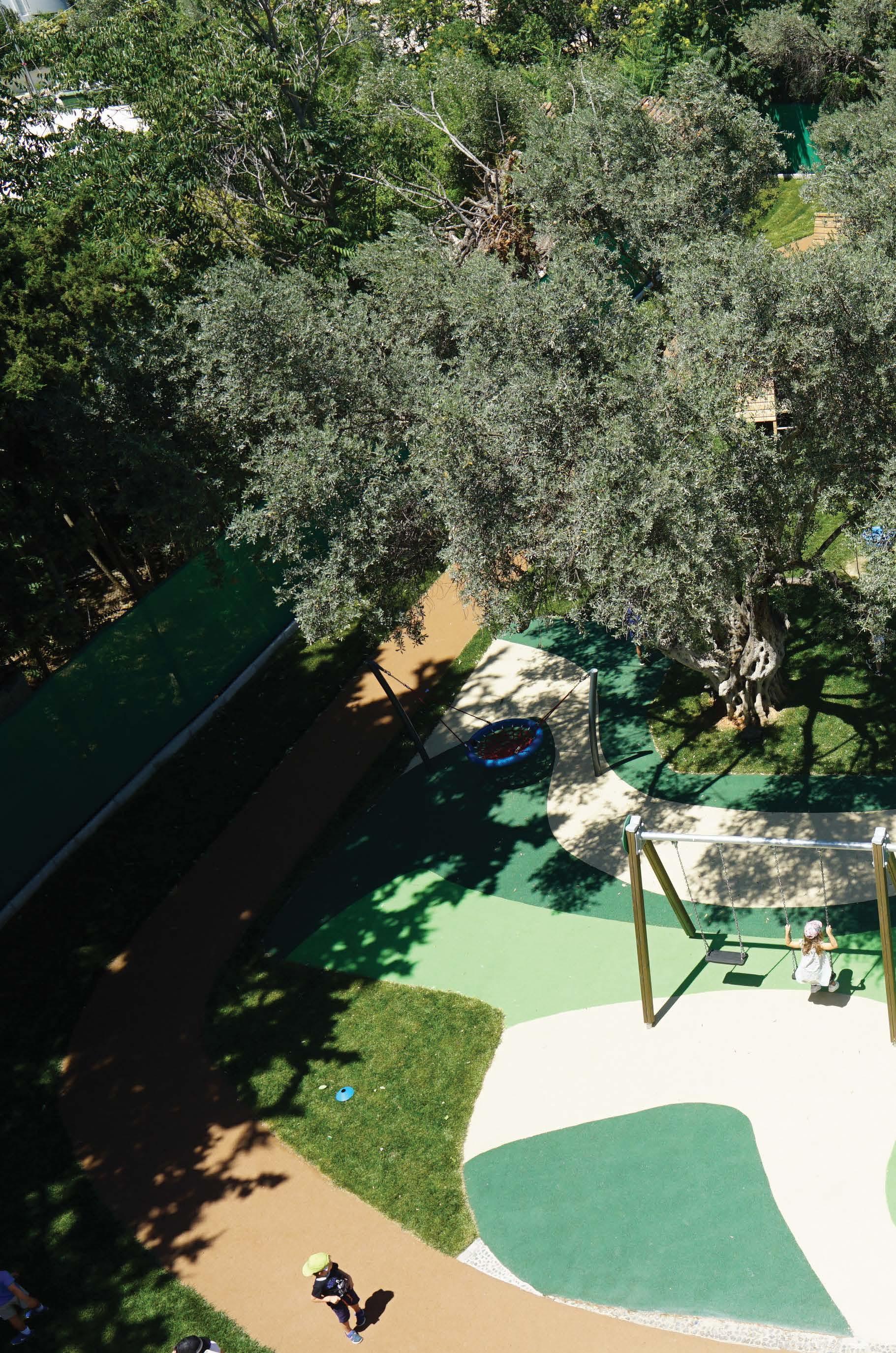
ACS Athens Early Childhood Department continues to meet the increasingly diverse needs of our youngest students by tapping into creative and innovative approaches to learning. In the Spring of 2022, a new, state-of-the-art playground was inaugurated. This playground was specially designed to boost students’ physical and cognitive skills, promote free exploration opportunities, ignite creativity, and foster positive and constructive social interaction. The playground equipment provides ample opportunities for developing our early childhood students’ emotional, sensory, and gross motor skills. The landscape was intentionally designed to optimize independent and cooperative play and offers children plenty of options to utilize developmentally appropriate equipment to engage in free exploration.
The sustainable and inclusive play environment promotes inclusion, so all students feel welcome and safe while enticing their imagination. The playground environment encourages children to recognize their own unique abilities and the characteristics they share with each other. This actively promotes equal opportunities so that all children feel included and
valued while learning to participate in conversations and listen to each other. These rich outdoor learning opportunities not only help children understand their own capabilities but also helps them increase critical thinking and academic skills, and learn social and communication skills. Therefore, the various ways that children experience play in outdoor environments benefit their educational attainment and the development of resilience and self-confidence.
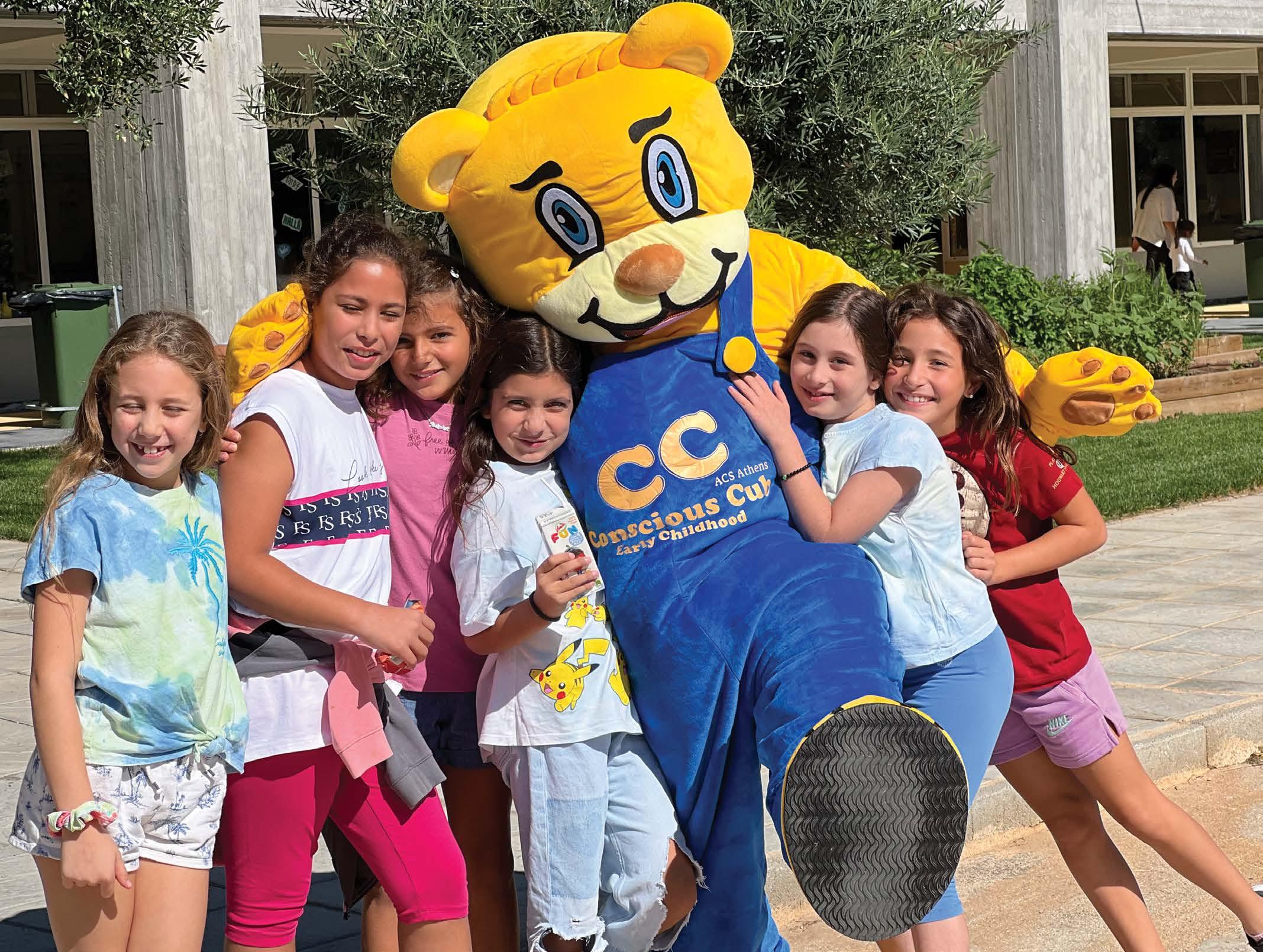
Coming this fall, we are proud to introduce our new Early Childhood mascot. A comfortably dressed bear named Conscious Cub will help communicate our school philosophy in a child-friendly manner. He will bring the “Portrait of ACS Athens Graduates” and the core beliefs of our school mission and vision to life during community events and school performances. Conscious Cub will create an approachable environment that will help new students adjust to the community and feel more comfortable and receptive to the topics they will learn. Besides helping build concrete definitions and modeling actions for a greater understanding of school concepts, Conscious Cub will create lasting memories and build school traditions. Increasing school traditions through spirit events will build a deep-rooted sense of pride for our school, making it easy and attractive for students to emulate positive behaviors. In turn, the Conscious Cub mascot will be seen as a buddy who increases confidence and encourages students to make positive choices and understand what it means to be a conscious citizen.
At ACS Athens, educators focus on developing conscious citizenship through daily examples during the school day and place value on connecting behaviors to a higher purpose. Such opportunities include how students learn to problem-solve with each other through our school’s restorative approach. Children are guided to communicate through a four-step process, “Own It, Fix It, Learn from it, and Move on” from peer conflict. We emphasize the importance of human life and the relationship with all living things and model the various ways to take responsibility for transforming skill into action through ethical decision-making that will improve life and living on the planet. Conscious Cub will be an excellent role model who will sport the importance of Global Goals and sustainability to instill these traits in early childhood students.
■
Class of 2034 Are Digital Natives
by Valeria Laitinen, former Director of Early Childhood, JK-G2
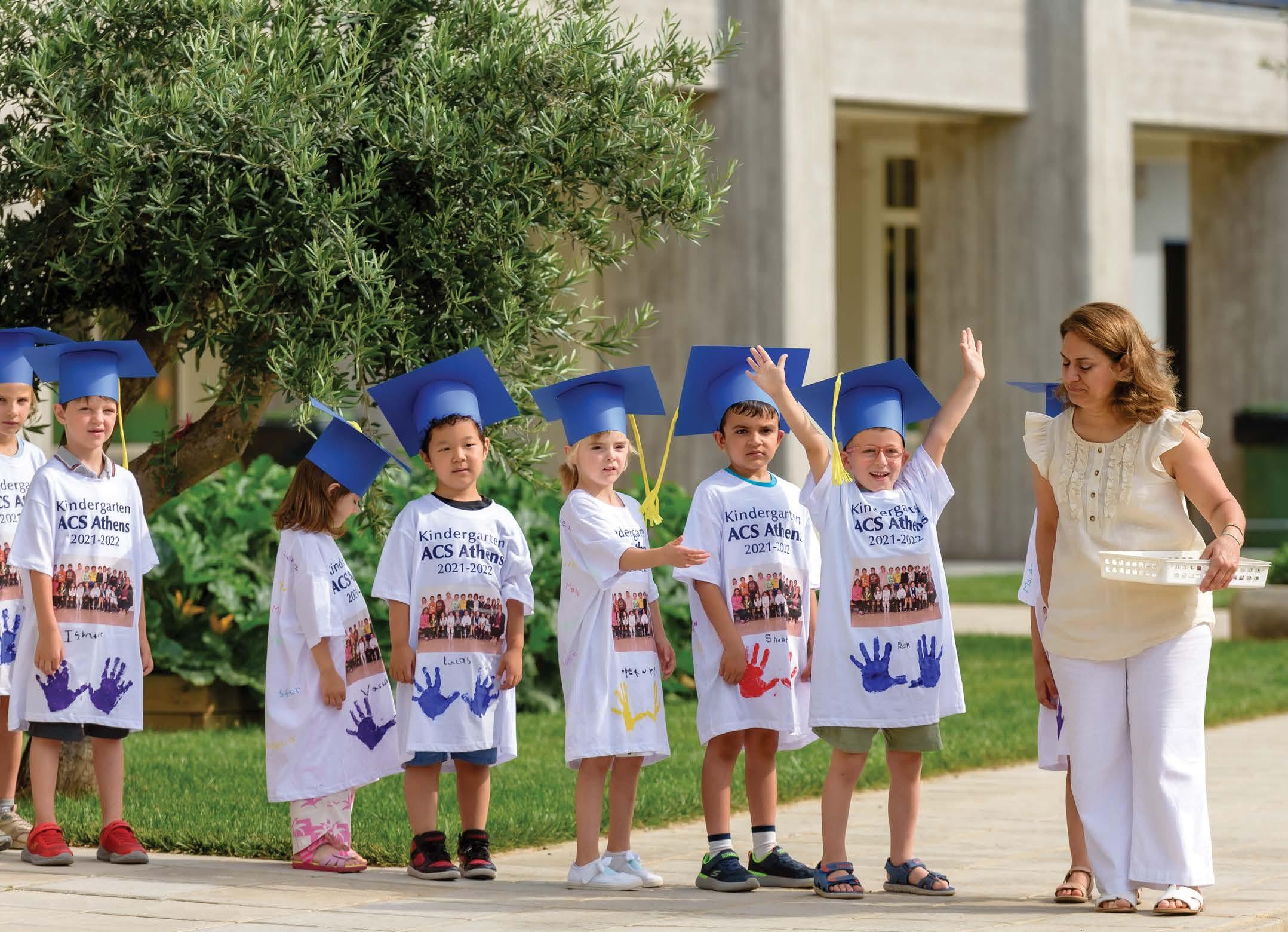
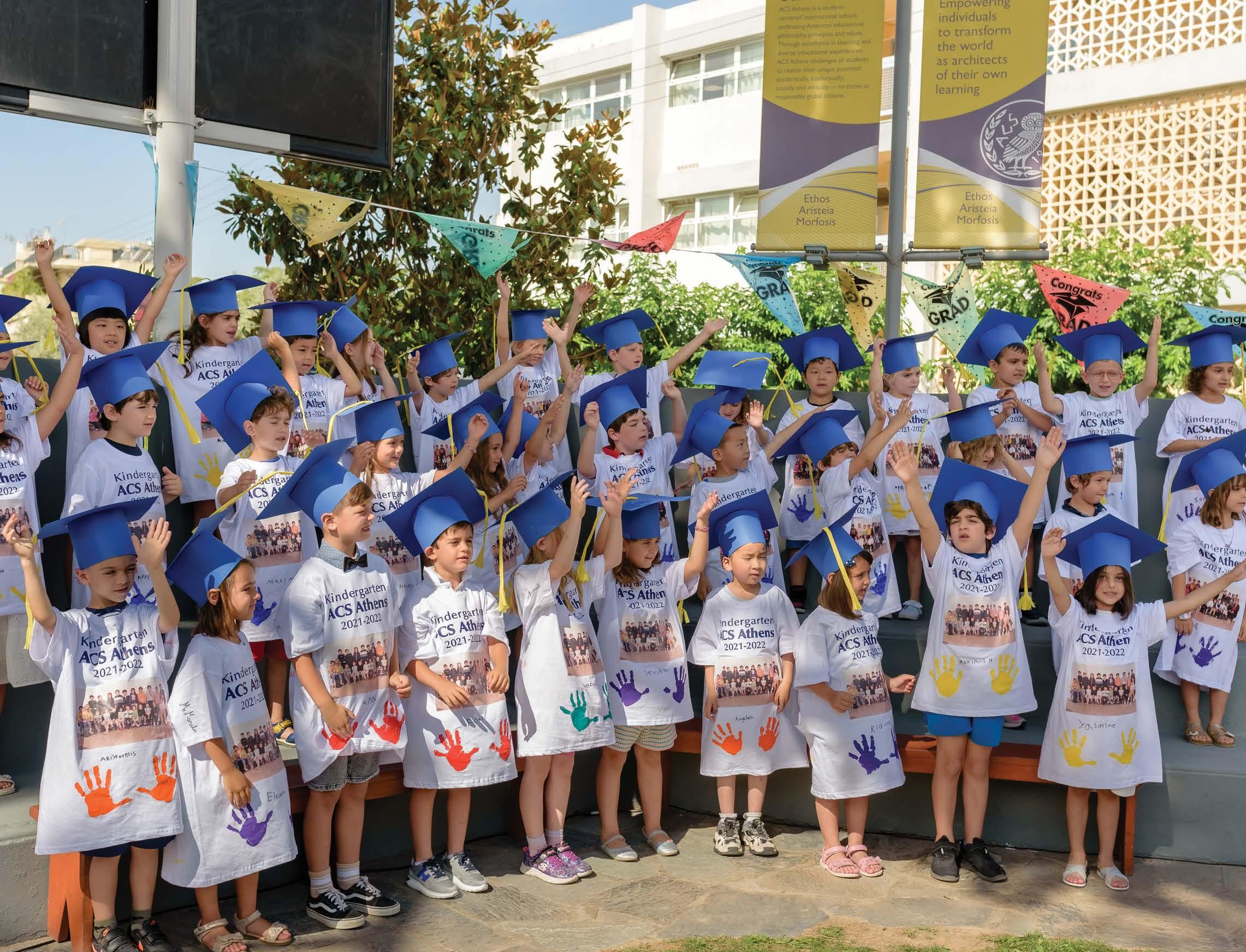
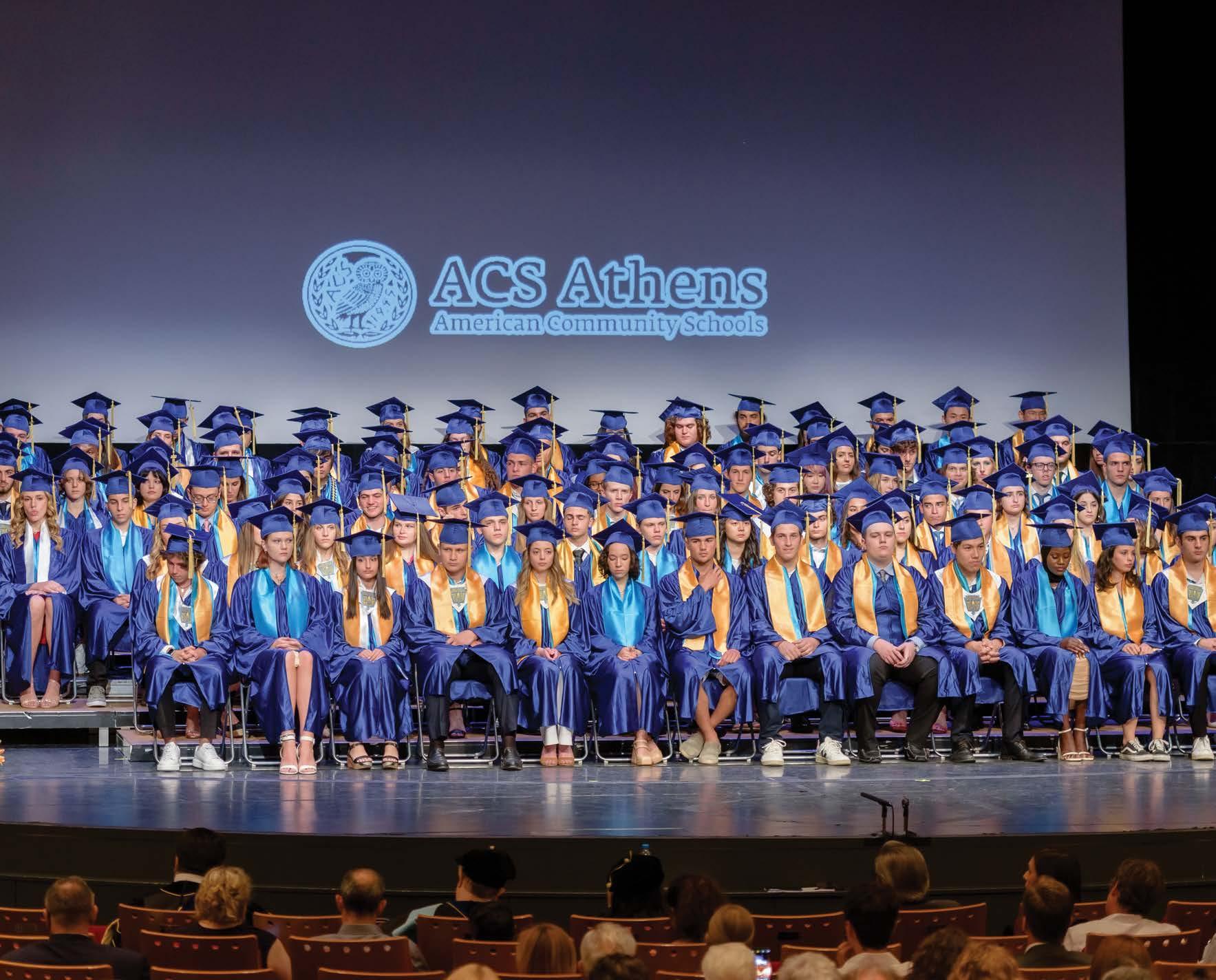
The ACS Athens class of 2034 graduated from Kindergarten on June 9, 2022. Dressed in T-shirts signed by all of their classmates and handmade graduation caps, Ms. Venos’ and Ms. Dimitri’s students filed into the elementary amphitheater accompanied by “We Are the World,” a timeless call to action and positive change by U.S.A. for Africa. Excited by the opportunity to be on campus for the first time since 2020, parents stood and snapped photos of their adorable graduates. Students performed a heartwarming rendition of the song “First Grade, First Grade” based on the tune of Frank Sinatra’s “New York, New York.” Complete with body movements, students sang that they know their ABCs and 123s, and
viting them to “take the technology of today to new dimensions.” She stated that “We call you ‘technology natives’ because you already know how to scroll on devices with ease, read books, do work online, and have advanced social networking skills that will shrink our world so we can always be connected. You are the ones who will bring solutions to environmental concerns and care for our world by paying attention to it and showing it love. Someone among you may find cures for illness. And who knows? There may come a time that some of you live on a space station circling the earth.”
rotating centers following whole class lessons, kindergarten students learned the foundational skills needed for reading, writing, and math. Students developed presentation skills as well as active listening skills by sharing special toys and items from their homes. Students also had daily opportunities to explore their interests during free exploration time. Afternoon lessons in Greek, Music, Art, P.E., Library, and Technology rounded out the weekly kindergarten schedule.
more importantly, they learned to share and get along with their friends.
ACS Athens President, Dr. Peggy Pelonis, welcomed parents and family members and encouraged them to spend as much time with their children as possible as time passes so quickly. She congratulated the graduating students and welcomed them to first grade. Special thanks were given to the teachers, aides, counselor and citizenship coordinator, nurses, and cleaning staff for contributing to the growth, development, and health of our students and to the parents for their continued collaboration and trust.
Ms. Moros, Elementary School Principal, spoke directly to the graduating kindergartners in-
The ACS Athens kindergarten curriculum includes units of study on developing classroom citizenship skills and learning about community helpers, interdependent relationships within ecosystems, and weather, which all contribute to building empowered and informed global citizens. Students began the year co-creating classroom rules and, throughout the year, continued practicing courtesy, honesty, and fairness in working with others, building an understanding of how classroom rules promote equity and help resolve conflicts, and contributing to making and maintaining community decisions.
In the community helpers unit, students engaged in systems thinking mapping to understand how all members of a community are connected and work together to contribute to their success, safety, health, and enjoyment within their community. Working in
The kindergarten graduation in June celebrated the culmination of a successful year of in-person learning that included the opening of the new early childhood playground, an outdoor space specifically designed for exploration and creative play. As one of the first events open to parents post-COVID, it also provided parents the opportunity to see all of the learning spaces their children inhabited throughout the year. The ceremony emphasized the role our soon-to-be first graders will play in shaping our world and our future. It also highlighted the importance of empowering our students to become lifelong learners who care for others, identify and solve problems, and shape how we develop and use technology for positive change.
Oh, The Places You’ll Go!
by Stavi Dimas, Elementary School Faculty
Congratulations! Today is your day. You’re off to Great Places! You’re off and away! You have brains in your head. You have feet in your shoes. You can steer yourself in any direction you choose.
Dr. Seuss 1990
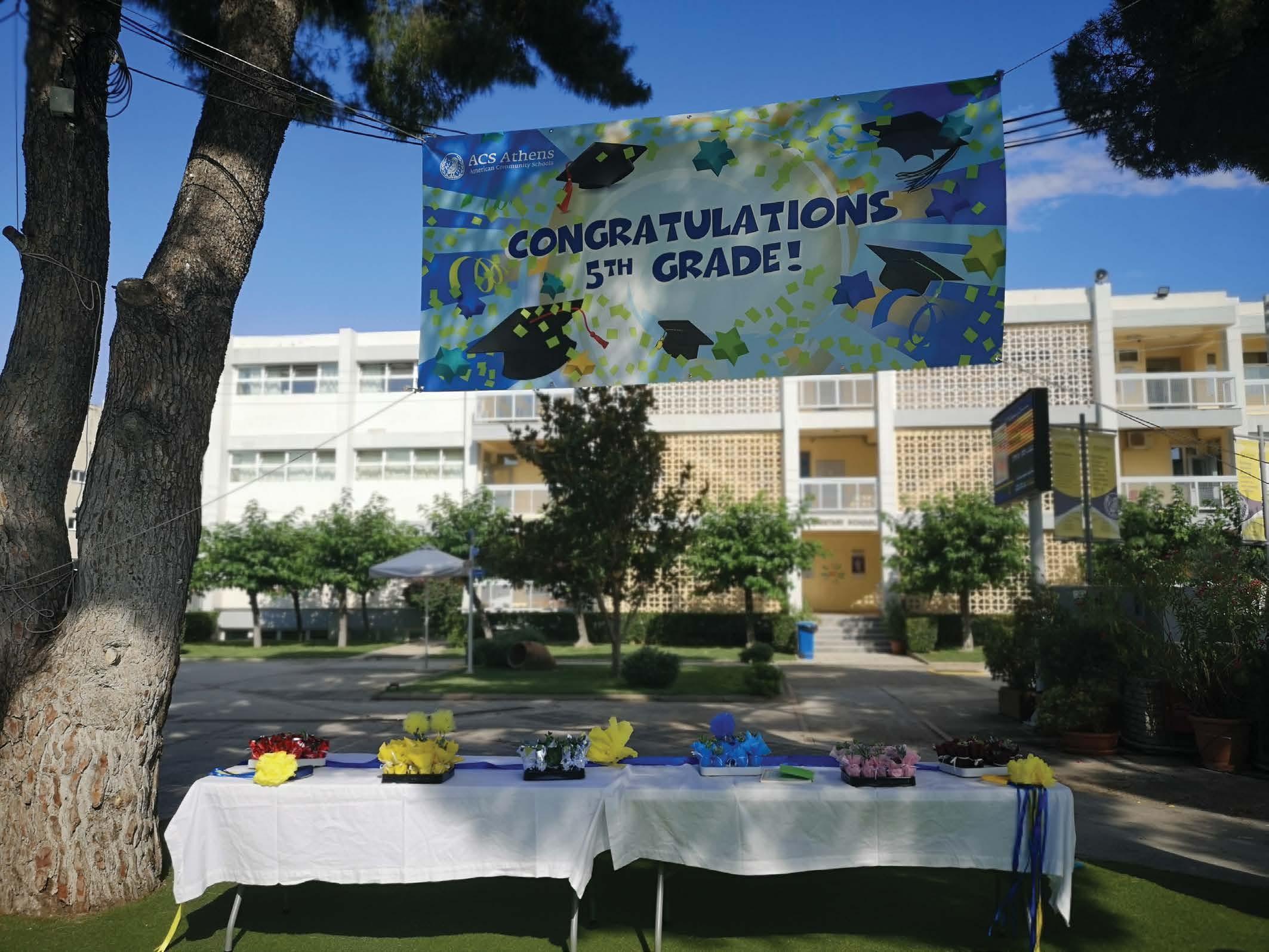
This year, on the morning of Tuesday, June 14, 2022, the graduating class of 2029 ‘Stepped-Up’ into Middle School. Although an event enjoyed annually, every June, it provides a unique opportunity for a new group of students to leave their mark on the legacy of the ACS Athens Fifth Grade. Signaling the completion of elementary school, ‘Step-Up Day,’ previously known as Fifth Grade Graduation, is a significant long-standing academic milestone for our students. Yet five years ago, when I first joined the fifth-grade team, I had not fully understood the significance of this event until I finally experienced it firsthand.
Step-Up Day is a celebration of the transformation we observe in our students throughout the year as they morph into self-reliant, responsible, and accountable fifth graders prepared to navigate the challenges of middle school. On the first day of school, the students arrive in the fifth-grade wing in awe of the fact that they have such a beautiful space, nestled among the trees, which has been built solely for their learning. Simultaneously they are shocked that Middle School
is now only 20 paces away, a constant reminder of what is coming just a few months down the road. As the year progresses, they ease into their new role as senior students in the ACS Athens Elementary School and work diligently to meet the high expectations of a demanding curriculum. And in the end, they finish the school year full of hope, anticipation, self-confidence, and a bit of melancholy that they are leaving their elementary school years behind them.
Therefore, ‘Step-Up Day’ can be thought of as a celebration of our fifth-grade students’ accomplishments and personal growth. This year, speeches from ACS Athens President, Dr. Pelonis, and Elementary School Principal, Ms. Moros touched the hearts of the students and their families as they led us through a reflection on the year, and shared with us the pride they felt for the fifth grade class and all that they have achieved.
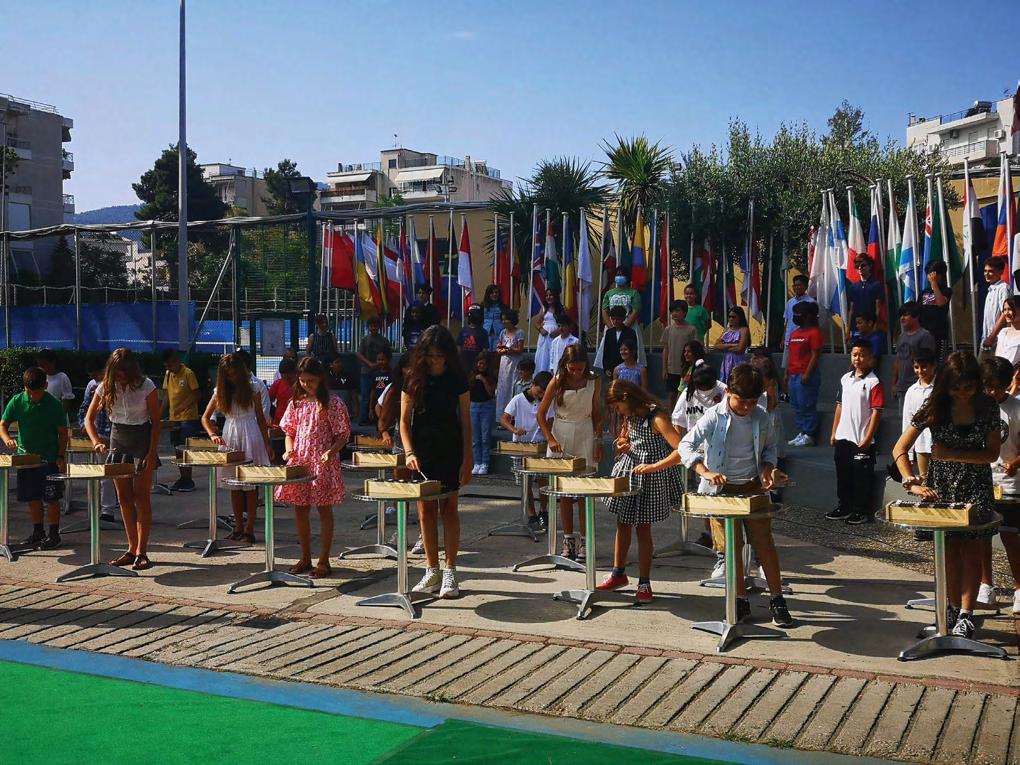
We were also honored to have the current US Ambassador to the Hellenic Republic come to the podium to offer bits of wisdom to our wide-eyed fifth graders. Then the students captivated their audience with a vocal performance showcasing their impressive xylophone skills by paying tribute to the late musical magnate James Brown through a rendition of his hit song, I Feel Good.
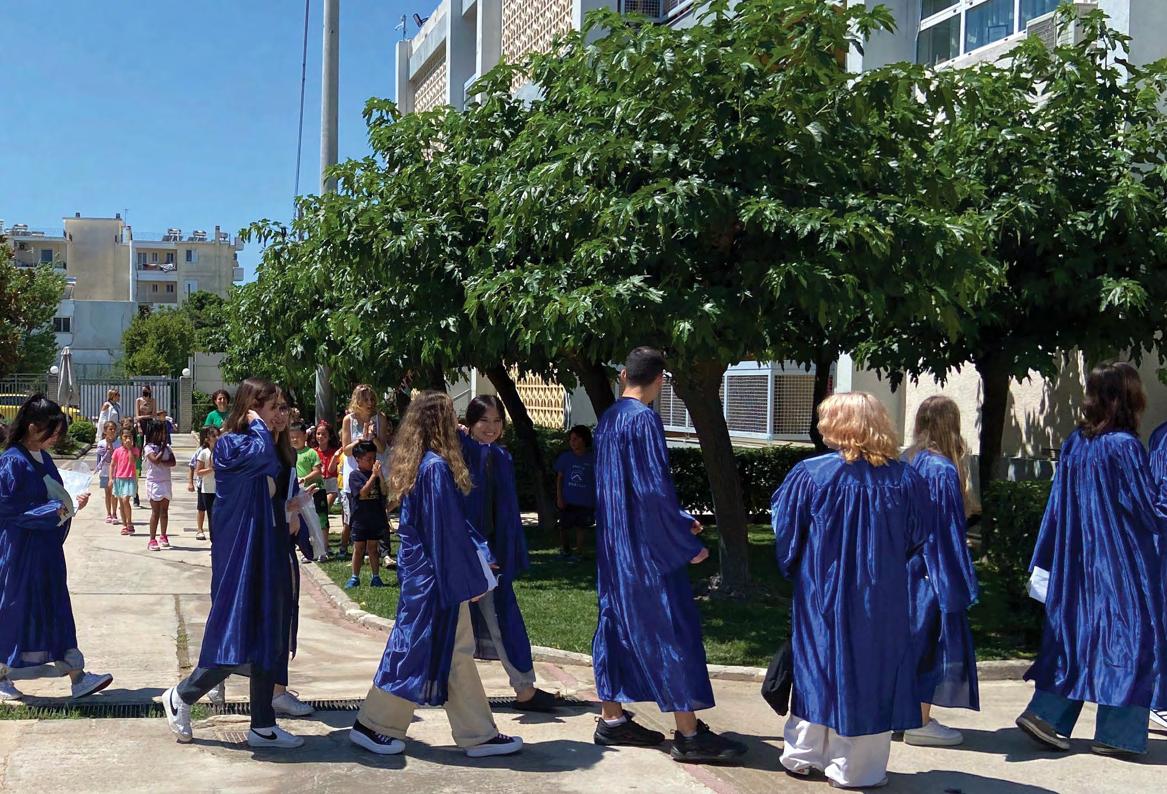
Once the students received their certificates honoring their giant ‘step’ into middle school, a short reception was enjoyed by the fifth graders and their families. However, the fun was not quite over. The rest of the students’ memorable day had been carefully planned by the Middle School office to welcome students to the ACS Athens Middle School. They spent the day touring classrooms, meeting teachers and students, and of course, the highlight, eating in the ‘big’ cafeteria with their assigned middle school buddies. Ultimately, we all agreed it was definitely a day to remember.
In closing, I return to the Dr. Seuss poem quoted above, Oh, the Places You’ll Go! I was reminded of this poem as I sat down to write this article, not only because the words are so well suited to describe the shift from fifth grade to middle school, but also because this was the poem I read at ‘Graduation’ the first year I taught in fifth grade. At the time, my colleagues had established a tradition of reading this poem as part of their gift to honor the students’ hard work and celebrate the next steps in their academic journey. I consider myself privileged to have lived the experience of ‘Graduation’ with these talented, caring women who made this event always about the students and never about themselves. Like the fifth graders, as we move forward, we always carry with us the life lessons and the people who have taught us along the way. Therefore it can be said that it is the collective pulse of years of dedicated educators that have made ‘Step-Up Day’ into the special student-centered event that it is today.
Professional development Professional Development And Evaluation Coming Of Age At ACS Athens
by Dr. Julie Crain, Coordinator of Professional Development and Andromachi Fragkou, Director of Services and Employee Development (K-12)
Reflection has always been a huge part of the review and evaluation process at ACS Athens, more so for faculty but also for staff. Since the 1970s, ACS Athens had various reflective summaries and rubrics, but none tied directly to the employee’s professional development or tied to metrics overall for evaluation. Over the past two years, the Professional Development Team’s goals were to connect employees’ goals to professional development, craft a competency-driven evaluation plan, add protocols, and draft an evaluation guide specifically for faculty and an additional guide for staff.
Professional Development
The PD Request Process now focuses on individual goals and meeting those goals that advance the employee and the institution. The supervisor guides the employee in connection with professional development, desired or prescribed, to goals and improvement in the Individual Professional Development Plan, IPDP, required of all ACS Athens Members. As an educational institution, we work to keep our
members up to date with the best practices in the pertinent fields that come together to improve ACS Athens; fields such as teaching, learning, technology, legal, business, facility management, conscious citizenship, health, research, recruitment, safety, activities, artificial intelligence, meta-verse, fundraising, the environment, etc.
Typically, as conscientious professionals at ACS Athens, we keep up with changes and improvements in our fields through professional listservs or subscriptions to specific online journals and member organizations. When we need additional, specific training, we might reach out to our PD Team for ideas or online resources.
As in all fields, teaching and learning have changed in the last 2-5 years, and so has employee learning. Gone are the days of ‘going’ somewhere for a PD session, or ‘sitting and getting.’ This is evident in our change in the philosophy of our weekly PD choices and offerings and our connection of Action Research to overall professional development for faculty and staff. Like we empower our students to be Architects of Their Own Learning, so goes it for our ACS Athens Members. As we teach our students to meet and exceed competencies, so goes it for our Members.
Similar to best practices in the classroom, best practices for adult PD involve interaction; mostly online learning or a blended approach; sharing PD with others in the same field within the institution, and application of learning back into the work environment in a timely fashion. This is the model of best practices at ACS Athens for Professional Development that we attempt to follow every day.
Competency-Driven Evaluation Plans
The Principals began this process of developing an overall evaluation plan in 2019 with the direction of President Pelonis and the help of the Dean of Academics, Julia Tokatlidou. As is seemingly tradition at ACS Athens, we like to ‘grow our own’ policies based on best practices but with heavy input and consensus from our stakeholders. Such is the case with the 2022 Review and Evaluation Processes at ACS Athens. Hours of research into best practices, open sources of evaluation plans, discussions with similar institution leaders, and expert knowledge from current ACS Athens leaders led to a draft of competencies and growth scale scrutinized and edited by the faculty in the spring of 2021. With that faculty input, the first version of the Professional Review and Evaluation Process, PREP, was implemented in the fall of 2021. Feedback from faculty and principals led to the updated version for fall 2022.
Part of the review process for faculty is the supervisor Walk-Through. In addition to formal, preplanned evaluation of teaching, the supervisor also walks through the classroom and uses a digital form to note teaching practices. These ‘snapshots’, are additional elements the supervisor can use to keep informed about the practices, competencies, and growth that they see within the teaching environment.
Concurrently, Ms. Fragkou and Dr. Crain were also working on the draft of the staff version of the review and evaluation process. Similar to the creation of the faculty version, best practices in the field were reviewed and taken into consideration to craft a ‘home-grown’ model for ACS Athens. In the spring of 2022, the draft of the Professional Review and Evaluation Model, PREM, was presented to the staff leaders, who added their input to the plan. After training for all staff, there was a ‘soft’ roll-out of the PREM in the spring of 2022. The plan will be fully implemented in fall 2022 and revised for fall 2023 after data and feedback are reviewed.
It could be that we transition our plans to a purchased electronic source, or we are able to find inhouse solutions that digitize our information and data to meet our needs. We are continuing to investigate these options as we begin the second year of the formal process for faculty, and the first formal year for staff connecting our ACS Athens’ Members learning with goals, reflection, best practices, and data compilation for informed leadership.
CompetencyDriven Evaluation Plans
Intelligence and emotions differentiate humans from machines. Emotion is part of a person’s behavior and certain feelings can affect human performance. For instance, emotions could prevent a person from producing an intelligent outcome. As machines are trained to “think,” many tasks that previously required human intelligence are becoming automated through artificial intelligence. However, it is more difficult to automate emotional intelligence, and this is where an individual’s competitive advantage over machines currently lies.
Skills will be the currency of the future.
Human Intelligence vs. Artificial Intelligence
Empowering Human Intelligence Through Understanding Artificial Intelligence
by Andromachi G. Fragkou, Director of Services and Employee Development (K-12)
Many discussions are going on about how we live in interesting times, how chaotic our world is and how new crises on multiple levels are coming upon us. In this reality, the only constant is change. The booming growth of machine learning and artificial intelligence (AI), like most transformational technologies, is both exciting and scary. It’s exciting to think about all the ways our lives may improve, but it’s scary to consider the social and personal implications. It seems like, in the future, machines will prevail.
But what is it that makes us human? And why will human intelligence never be replaced by artificial intelligence?
Soft skills like curiosity, passion, patience, perseverance, and persistence will make the difference between a human being and a robot. Persuasion, social understanding, and empathy are going to become differentiators as artificial intelligence, and machine learning will take over other tasks. It’s these human capabilities that will become more and more prized over the next decade. The outcome will be a ‘Feeling Economy’ that provides new opportunities for everybody who acts on one simple fact: in the future, AI will do the thinking, and humans will do the feeling, as Bernd Schmitt as Robert D. Calkins Professor of International Business, Columbia University mentioned in their book*.
Education has the responsibility to shape humans holistically (body, mind, and soul); humans who are self-directed, conscious, knowledgeable, and not only resilient but capable of navigating and initiating change.
Academics are the foundation, but it is not enough. Music, classics, art, and literature promote critical and ethical thinking. This kind of education can build the psychological muscle of young individuals to cope with the changing world and make conscious decisions, with empathy and compassion. Education is not about college acceptance. Education translates into life because it offers humans choices; how to live their lives, how to make an impact in their communities, and how to make this world a better place.
At a school like ACS Athens, students are immersed in technology, not only promoting learning and developing skills but also reflecting on its use and the new possibilities that lie ahead. ACS Athens is empowering individuals to become architects of their own learning to thrive as conscious, global citizens and improve life and living on the planet.
Our Teachers hold the key to cultivating the human factor.
By molding young mindsets, they are fostering change, they are shaping the future.
*The Feeling Economy: How Artificial Intelligence Is Creating the Era of Empathy, Palgrave Macmillan; 1st ed. 2021 edition (January 19, 2021)
Human Intelligence vs. Artificial Intelligence
What Is Intelligence?
by Mark McGowan, Director of IB/AP Programs
Each year, on July 5th, the results of the International Baccalaureate (IB) exams are released. Students, teachers, and parents wait anxiously for the scores. It can determine a student’s admission to university, and it can also mark a student’s success in an extremely rigorous program. But what do the results actually tell us about our students?
The maximum score in the IB program is 45 points. If a student achieves such a score, do we consider him or her intelligent? Many could say yes, and they may be correct. It is a significant achievement. However, just because a student obtains perfect scores in physics, mathematics, Greek, English, economics, and history, does that mean the same student would be considered the most intelligent member of a tribe living in the Amazon? Can they fix a car, make bread or know how it feels to be blind? The answers to these questions are probably “no,” and that is because intelligence is relative. Students should definitely be proud of their successes in school, but they should also be taught the variety and complexity of intelligence.
At the end of the 19th century, there was an attempt to measure intelligence with the well-known IQ (intelligence quotient) test. The IQ test has evolved and improved over the years. However, the focus of the test is on people’s cognitive and verbal abilities. It measures how people reason and solve problems. There is value in obtaining this knowledge, and there are also limitations. It can be biased – not all people reason the same way, and not all people have access to the same opportunities for learning. In addition, there is a lot that the test cannot measure.
In 1983, Howard Gardner popularized the idea of “multiple intelligences” in his book Frames of Mind, which discussed different types of intelligence, such as spatial, musical, intrapersonal, interpersonal, logical, linguistic, and bodily intelligence. In 1995, Daniel Goleman wrote Emotional Intelligence: Why It Can Matter More Than IQ, where EI was linked to leadership performance, offering another evaluation of a different type of intelligence. However, with every new iteration of the examination of intelligence, there are always the limitations of subjectivity, cultural relevance, and whether such intelligences can be learned or are biological. Consequently, the ultimate definition or explanation of intelligence remains elusive.
Nowadays, a popular topic is Artificial Intelligence. Ironically, the name itself is an oxymoron: “unreal” intelligence. Nevertheless, AI is deemed to be an important part of our futures. Already AI has introduced driverless cars, robots that can build cars and do household chores, and computer programs that write poetry and beat world-champion chess players. Unlike other industrial revolutions that developed the manufacture of machines that transformed our lives, these machines can “think”, or at least respond to humans. Blake Lemoine, a Google engineer, recently claimed that the company’s AI chatbot generator, LaMDA, had become sentient, meaning it was conscious of its own existence, but this is highly debatable . The debate centers around the idea that just because a machine can linguistically express a thought does not mean it can feel or have experiences that developed that thought.
There is no denying AI’s usefulness. AI machines are excellent at deep mining data that can save valuable time and solve important problems. Recently, DeepMind uncovered the structure of 200 million proteins, which could have enormous benefits to people’s health care . Yet, the eternal question remains: What is intelligence? Is it mining data? Is it applying knowledge? Is it adapting to different situations and environments? It is hard to escape the notion that no one knows everything, so how can a machine?
Each year, when the IB results are released, we are proud to promote our students’ achievements, as we should be. This year, 31% of our students scored 40 or more points, and five students achieved a 44. That is incredible. Those scores are the result of a lot of hard work and intelligent, creative thinking. However, we always have one message for our students: you are more than a number. Whether you score a 45 or a 25, there is so much more to you, your abilities, and your intelligence. In fact, the best part of you can never be captured by a test. It’s important to keep that in mind
a bridge between cognition and emotion, allowing individuals to navigate different situations. Cultivating emotional intelligence from an early age would be beneficial in the fulfillment of a happy life.
The impact of emotional intelligence cuts across personal and professional lives and is a crucial competence that facilitates personal success and advancement in different areas of life. Bar-On et al. (2006) suggest that emotional intelligence is just as important as intelligence quotient. He further demonstrates that emotionally intelligent individuals can navigate life better than those with higher IQs.
And How Do We Teach It?
by Evelyn Pittas, Academy Vice Principal
Do you recognize what you are feeling? Can you effectively manage these feelings without getting swamped? Can you respond to others’ emotions effectively? Living in our fast-paced world means that sometimes we may not have the bandwidth to respond to emotions appropriately. However, if you have answered the questions above in the affirmative, you have a degree of emotional quotient.
Emotional intelligence involves the capability to identify and acknowledge emotions and their impact and uses this knowledge to determine thoughts and behaviors towards oneself and others. Specifically, emotional intelligence facilitates resilience, motivation, stress management, reasoning, emotional control, and empathy (Bar-On et al., 2006). It forms
Education on emotional intelligence from early childhood education promotes and ensures positive future personal and societal outcomes for children. The most significant years in a child’s life are the early years, which provide a solid base for learning and cognitive and social abilities. Teaching EI in early childhood education creates the basis for a child’s development and acquisition of life skills needed to be a functional member of society. It also translates to children growing up knowing how to deal with modern world challenges.
EI capacity is a prerequisite in most vocations, but especially in disciplines involving high-intensity emotions, such as education, management, hospitality, medicine, and other social sciences. Such elements stem from self-management and regulation and an ability to liberate oneself from impulse-driven emotions and other impulses detrimental to emotional stability. In turn, it translates into developing meaningful relationships through the exercise of empathy, cooperation, and better social skills, which are immensely useful in life.
Educating on emotional intelligence and how to respond to others appropriately is a crucial part of the academic curriculum. Below are elements to employ in the curriculum to teach emotional intelligence.
Embed Social and Emotional Learning into the Curriculum.
Like other forms of teaching, SEL is crucial in educating students on emotional intelligence and reducing harmful behaviors such as bullying while effectively promoting academic access. In their study, Cristovao et al. (2017) found that SEL reinforces positive behavior by allowing students to understand how their behavior impacts those around them and either impedes or promotes good interpersonal relationships. Conversely, perhaps the greatest benefit of embedding SEL into the curriculum is that it helps students realize that EI is just as important as their IQ since it translates into creating trust with superiors and colleagues later in life. Still, educators should also ensure that they embed SEL in their lesson plans.
Active Listening
Student participation also fosters the development of active listening, an effective tool for effective communication. Active listening involves being attentive and showing interest in what a speaker portrays, and actively participating in the conversation. Weger et al. (2014) demonstrate that active listening transcends merely listening and extends into feedback, whether positive or constructive criticism. This element of communication enables learners to show empathy, remain polite, and be more receptive and understanding to the speaker facilitating good relationships. Therefore, educating students on the relevance of active listening increases their emotional intelligence.
Have Educators that Model EI
Classroom learning comprises several critical dimensions to facilitate learning. Due to increasing diversity, educators must adapt to the ongoing demographic changes and develop new strategies that accommodate diverse groups of learners (Bredtmann, 2021). Educators must become cultural reconciliation agents, translators, and transformers to accommodate culturally and linguistically diverse students. Understanding these complex issues allows them to tailor learning experiences to individuals and promote effective learning. Modeling emotional intelligence encourages learners to develop ethical and responsible behavior. It allows students to respect each other’s opinions, remain respectful regardless of disagreements, and understand that they disagree with the problem, not the person. It allows students to hone these skills and be better versions of themselves.
Self-Regulation
Conversely, perhaps the most crucial aspect of educating on EI is to teach students the relevance of self-regulation. Cullinane & Montacute (2017) demonstrate that supporting students transitioning from childhood to adolescence is the most effective technique to foster emotional intelligence. Since this period is an experimental time for most teenagers, implementing techniques such as self-reinforcement, monitoring and goal setting go a long way in developing EI. Doing so allows students to learn that emotional intelligence is a gradual process requiring patience from all involved parties and learning daily.
Finally, several dimensions play a significant role in facilitating academic achievements and social integration. Understanding the impact of emotional intelligence and how to teach promotes the likelihood of a better society. Education expands perspectives and demonstrates that emotional intelligence is a gradual, continuous process since one does not stop learning. It allows society to do away with components that embody emotional stuntedness and promote emotional intelligence.
Works Cited
Bar-On, R., Handley, R., & Fund, S. (2006). The impact of emotional intelligence on performance. In: Druskat VU, Sala F, Mount G, editors. Linking Emotional Intelligence and Performance at Work: Current Research Evidence with Individuals and Groups. Mahwah, NJ: Lawrence Erlbaum; pp. 3–19. Bredtmann, J., Sebastian, O., and Christina, V. (2021). Linguistic diversity in the classroom, student achievement, and social integration, Education Economics, 29:2, 121 142, DOI: 10.1080/09645292.2020.1866499
Cullinane, C. & Montacute, R. Life Lessons: Improving essential life skills for young people. The Sutton Trust. Cristóvão, A. M., Candeias, A. A., & Verdasca, J. (2017). Social and Emotional Learning and Academic Achievement in Portuguese Schools: A Bibliometric Study. Frontiers in psychology, 8, 1913. https://doi. org/10.3389/fpsyg.2017.01913
Weger, H., Castle Bell, G., Minei, E.M., & Robinson, M.C. (2014). The Relative Effectiveness of Active Listening in Initial Interactions. International Journal of Listening, 28, 13 - 31. https://www.tandfonline.com/doi/full/1 0.1080/10904018.2013.813234
including education, healthcare, painting, and politics. Nevertheless, human-centered AI would not exclude humans while performing varying tasks. Instead, it would focus on empowering humans and promoting human benefits through cooperation. In this regard, coexistence would be pegged on trust. For instance, it would be ideal for fostering an understanding of what conditions AI systems would work in candidly and the contexts through which AI decisions would be made (Mind AI, 2020).
Intelligence Co-Exist?
by Evelyn Pittas, Academy Vice Principal
People typically used to do everything with their own hands. However, the development of machines came in handy in assisting humans with some tasks. Technology has emerged as a core aspect of the contemporary globe through tools like smartphones. In regions like Japan, robots are utilized at significantly high levels in offering a wide array of services. An epitome is
that there are AI flower shops, robot hotels, and even robot barista cafes. It will not be long before humans, and artificial intelligence start to coexist in the contemporary globe.
Artificial intelligence is deeply entrenched in modern lives, so there are concerns that it will overcome human intelligence. The reason is that AI is integrated into core areas,
Moreover, it would facilitate a balanced attitude while dealing with the AI frameworks. A perfect analogy regarding coexistence would involve the healthcare sector. The human-centered approach would play a critical role. Instead of replacing professionals like nurses and doctors, human-centered AI could enhance the number of patients a doctor can examine. AI would also come in handy in lowering misdiagnosis rates, for instance, by empowering doctors with the ideal tools. For instance, robotics are utilized in the healthcare system to assist patients with mental disorders.
The coexistence would also lie in the identification of the grievances of humans. AI would translate and resolve issues accurately while being rational regarding decisions. The need to curb the climate change issue has accelerated efforts toward adopting electric vehicles in the motor vehicle sector. Manufacturers like Tesla are already rolling out level 2 and 3 autonomous vehi-
cles that depend heavily on artificial intelligence. These are going to be trusted with human lives in the transport industry. Moreover, cities across the globe are becoming connected through the internet of things. It would mean that an autonomous vehicle would end up scanning for a free parking space within a city, to the owner’s relief. Moreover, AI comes in handy in repetitive jobs, for instance, within manufacturing companies (Jiacheng, 2020). Another aspect is that AI facilitates predictive analysis as it can master big data and assist in future planning.
Currently, AI is being leveraged in areas such as enhancing customer experience. In this regard, the lag between customer needs and business responses is eliminated through triggered emails, chatbots, and other personalized frameworks. Moreover, errors are reduced as machines only understand accuracy. Entities like Amazon are utilizing AI in the management of warehouses. At the same time, speech recognition
technologies allow customers to shop anytime. AI will also enhance creativity through human coexistence with AI, which artists can utilize, for instance, in designing 3D items (Jiacheng, 2020). The use of human-centered AI would foster development in the right direction. It is also critical to assert that human nature and ethics tend to be emerging issues regarding AI integration. The reason is that robots and AI tend to perform repetitive tasks for the el-
derly and even special populations like those in mental hospitals.
Overall, humans should strive to utilize artificial intelligence to enhance life by bringing positive development while establishing active interactions. The reason is that with the right AI tools, overall productivity is bound to be enhanced due to reduced errors, increased oper-
ational efficiencies, and customer satisfaction. A wide array of stakeholders, such as governments, should come in handy in ensuring that data and privacy become safeguarded, for instance, through establishing ethical codes. Machine learning and AI will also be pivotal in ensuring that companies scale and expand. They will also ensure that decision-making and communication aspects get streamlined. Humans
should strive to embrace human-centered AI as the co-existence will be beneficial.
■
Works Cited Jiacheng, D. (2020) Society capable of coexisting with AI: From my research perspective. https://www.st.sophia. ac.jp/chardin/pdf/19_Dong. pdf
Mind AI. (2020, May 18). How will humans and AI coexist? Medium. Retrieved June 29, 2022, from https:// medium.com/mind-ai/ how-will-humans-and-ai-coexist-b741a4df25f9#:~:text=Mind%20AI%20also%20considers%20human,more%20 beneficial%20results%20 for%20humanity.
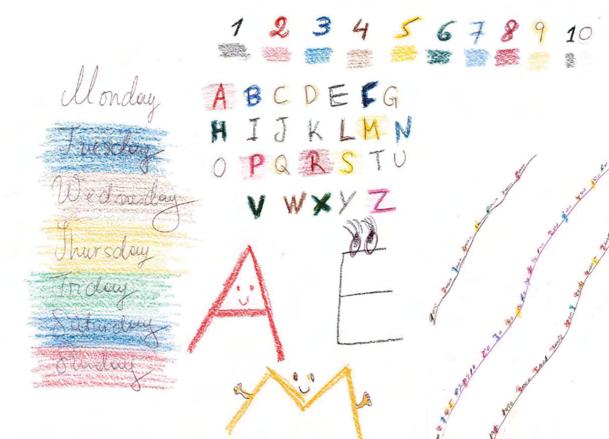
Synesthesia is a neurological condition in which the brain has the ability to connect senses to each other in a unique combination. For example, while we listen to music, a Synesthete could see it just as vividly. While we may look at a picture, there are some forms of Synesthesia that give its viewer the sensation of taste as well as image.
In Synesthesia, the phenomenon of mixing the senses is not a strange ordeal. There are already 80 registered types of Synesthesia, and the most common form is when people associate words, numbers, letters, months, or days of the week with colors (grapheme-color Synesthesia). For example, 5 may be yellow, while Tuesday is blue. There are different versions in the emotional color palette, so Thursday can be yellow for some, while for others, it may be associated with a different color. These combinations depend on the individual and can lead to a charming dialogue between Synesthets!
by Effie Zografou-Elgabry Fellow of the Institute, ACS Athens
To some, it may seem scary and weird to feel that a robot can serve a human and can algorithmically sense and manage situations and relationships like humans. Although many people still look at it with suspicion, Artificial Intelligence is steadily entering our daily lives in a ubiquitous process.
It surprises us, scares us, excites us, and yet serves us. New things, new knowledge, additional information. A blending combination of Artificial and Real. This blend makes us wonder when the Real stops and the Artificial begins. An amalgamation of Senses, Practices, Theories, and Algorithms.
But before the new intelligence and artificial “natural” abilities become ever-present, let us discover together the quietly existing Synesthesia that looks just as artificial but instead combines human feelings and sensations in a charismatic way that is magical and wholly human!
What colors do your days and months have?
Monday White uesday Blue
Wednesday Brown
Thursday Yellow Green day Avatar blue
Sunday Red
January Black
February Brown
March Orange
April Green Mai Gold Orange
June Black
July Dark brown
August Red
September Yellow- Gold
October White – Cherry red
November
Avatar Blue
December Cream
Do words have scent? Can you taste music or listen to a painting? Do sounds produce colors?
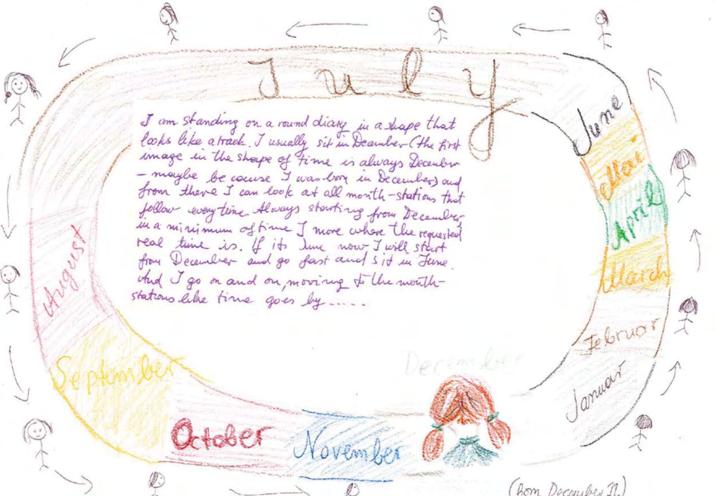
Synesthesia diary Effie
[I am standing on a round diary in the shape that looks like a track. I usually sit in December (the first image in the shape of time is always December – maybe because I was born in December), and from there, I can look at all month-stations that follow every time. Always starting from December, in a minimum of time, I move where the requested real-time is. If it’s June now, I will start in December and go and sit in June. And I go on and on, moving to the month-stations like time goes by.]
The Synesthetes themselves are often unaware that other people do not perceive the world in the same way as they do and assume that others can see what they see. It’s funny, but most of the time they don’t realize that they have Synesthesia; they consider their perceptions to be standard and can often believe everyone has the same experience, such as thinking everyone sees Friday as green, A being red, and that October tastes like cherries.
The great effort nowadays is to enlighten Synesthetes (individuals, parents, kids) about their synesthesia to embrace their gift.
In Synesthesia, senses are combined in such an unusual way that one would think it is artificial; since Artificial Intelligence is based on algorithms but also on the combination of information coming from different areas, theories, and practices, this combined form of perception looks like a common ground between Artificial Intelligence and Synesthesia!
We would almost expect artificial intelligence to generate this extraordinary experience and capability: seeing sound; hearing color; tasting touch; associating colors with words and numbers, or shaping time before your eyesit sounds like a state-of-the-art algorithm.
This is not the work of a machine, however; synesthesia is the magic of the senses.
[Peter Brook, the legendary British theatre director, who recently died at 97, explored the world of people with Synesthesia. He got on stage with many synesthetes and tried to show that communication with diversity, including, for example, fighting as a form of colors or numbers as the love of musical sound, is a necessary condition to
reach to deep contact with ourselves and with the other normal people (Valley of Astonishment). His pioneering work left an era!]
It is almost certain that we all know at least three or four people who have Synesthesia; we just do not know who they are. Let’s go find them…
SYNESTHESIA: A Human Gift beyond Artificial Intelligence!
How AI is changing the audiovisual production process.
AI has been used in audiovisual production for many years now, and there are a number of ways that it is helping to improve the efficiency of the process. One such method is by using machine learning algorithms to help identify potential shots and scenes early on in the production process. This can save time and money, as well as make sure that all content is shot to high quality. Additionally, AI can also be used to help identify any potential audio issues early on in the production process, which can then be fixed before filming
Production Process – From Shooting To Post-Production
by Thanasis Palos,Media Studio Coordinator
Introduction
Whether you’re a filmmaker or just starting out, it’s important to understand how AI is impacting the audiovisual production process. In recent years, AI has become increasingly powerful in shaping how movies are made. From shooting to post-production, AI is quickly changing the way we produce films and TV shows. Here, we outline some of the ways AI is changing the audiovisual production process – from shooting to post-production.
How AI is helping to improve the quality of audiovisual content
AI has also been used to help improve the quality of audiovisual content. One way this is done is by using artificial intelligence algorithms to analyze footage and images for errors or problems. These algorithms can then suggest solutions or improvements, which can result in a higher level of quality for your video content. Additionally, AI can be used to identify different aspects of audiovisual production, such as sound design and Foley work. By understanding these areas better, you can reduce the cost and time needed to produce high-quality audiovisual content.
How AI is helping to reduce the cost of audiovisual content
In addition to improving the efficiency of audiovisual production, AI also helps reduce costs associated with Audiovisual Content Production. One way this is done is by using computer vision technology to interpret digital photos and videos taken during audiovisual production and automatically classify them into relevant categories based on certain criteria. This allows for a more accurate portrayal of events and characters within your video content, which often reduces overall costs associated with audiovisual productions by up 50%.
How AI is changing the audiovisual production process – from shooting to post-production.
AI is helping to improve the efficiency of shooting audiovisual content by providing filmmakers with more opportunities for accuracy and slower editing times. For example, AI can help to reduce the time it takes to capture images, videos, and audio files. In addition, AI can help to improve the quality of shooting audiovisual content by reducing noise and frame rates.
AI is also helping to improve the quality of shooting audiovisual content by using machine learning algorithms to predict how a scene will look before it is filmed. This helps filmmakers create more realistic visuals without having to spend time training models.
Finally, AI is helping to reduce the cost of filming audiovisual content by using software that predicts
when shots will need to be cut or changed in order to maintain film equipment or shot schedules. By doing this, filmmakers can save money on post-production costs while still maintaining high-quality audio and video footage.
Tips for Successfully Shooting Audiovisual Content.
The first step in shooting an audiovisual project is to have a good shooting plan. Make sure you know what shots you will need and where they will be needed on the video. You should also study the footage you are going to use and make sure you are able to shoot it in a way that meets your desired outcome.
Make sure you have the right equipment, too. You’ll need a camera, microphone, lighting equipment, and
other necessary tools. Make sure you have everything you need before starting the shoot so that your production team can get started smoothly.
And finally, make sure you are able to handle the stress of shooting. Shooting audiovisual content can be highly demanding and tiring, but with a well-planned shot sequence and correct equipment, your team can get the job done perfectly every time.
Conclusion
Shooting audiovisual content is a complex and expensive process, but with the help of AI, it can be improved significantly. By following tips for success, you can ensure that your content is of the best quality and costs less in the long run.
As many experts in educational technology suggest, the ’20s will surely be the decade of Artificial Intelligence as it’s peeking through the educational models around the world, attempting to assert its value, advantages, and practicality. The Media Studio has employed Artificial Intelligence in its practices and methods since its inception in the previous decade.
AI is used to make tasks easier and provide better services to more diverse groups of media consumers. From journalistic projects that require faster access and media sources through specialized algorithms, to accessibility options that serve everyone, AI can bring tedious tasks to fruition with a click of the mouse or tap of the finger – or even with the movement of the
Media Literacy Through AI
by John Papadakis, Director of Communications, Enrollment and Technology
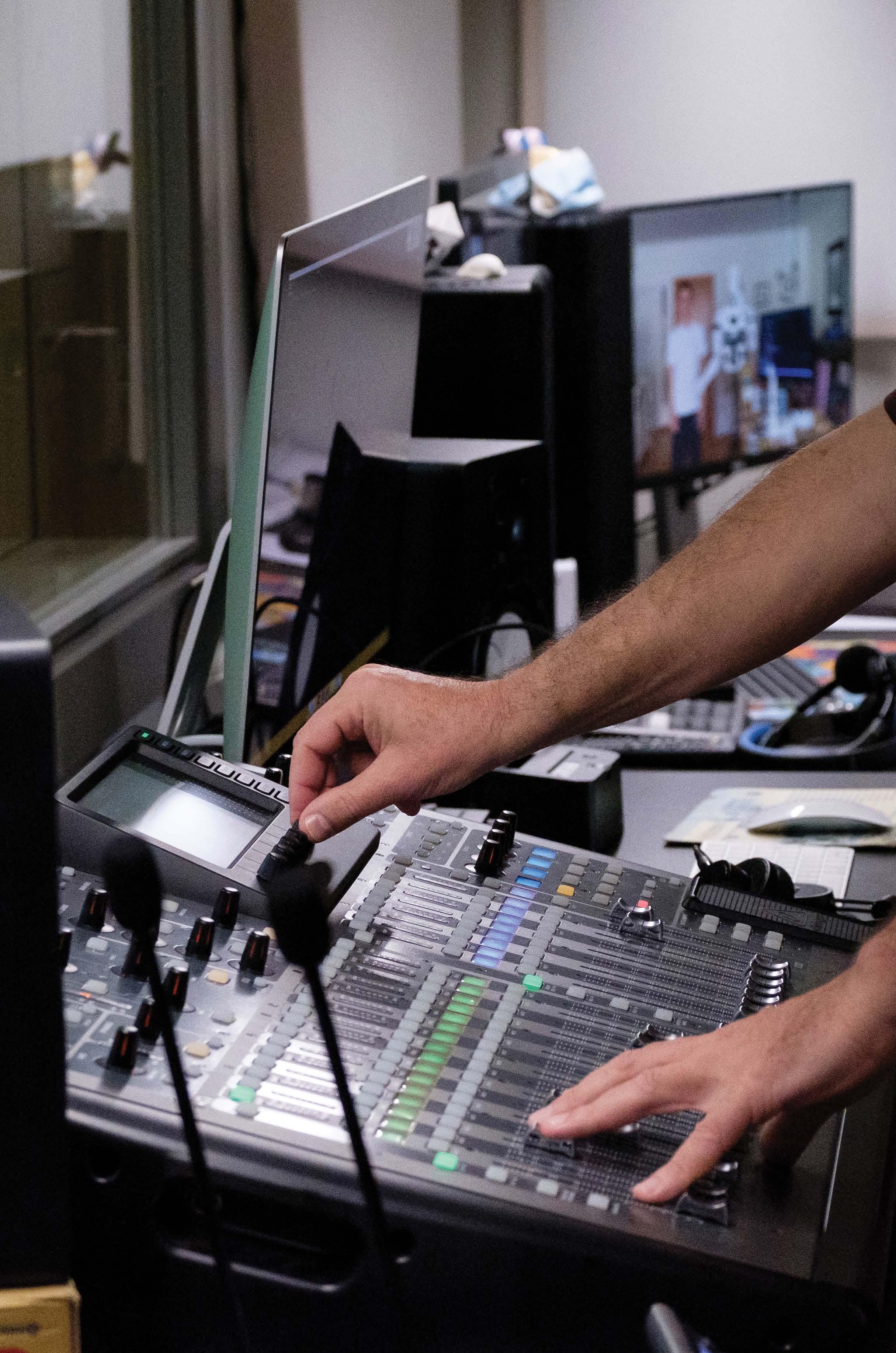
Multimedia production has been part of the ACS Athens education model for many years. However, since the founding of the “Suheil Sabbagh Media Studio” in 2017, students have come to the Learning Commons to delve into a wealth of resources and ideas. They get inspired to discover the amazing new and continuously renewed world of the Media Studio productions that ultimately transform their journey through international education. With over 400 student and faculty projects a year, the Media Studio provides the school’s learning community with the latest digital tools and methodologies for video and audio production.
Students can utilize AI tools to collect content for projects and classroom assignments through specialized data pools, and its distribution can serve more purposes. At this point, the advice and guidance from the Media Studio experts keep them away from what’s known as “automated journalism,” (where stories are produced automatically by computers rather than human reporters), but rather curate and re-produce with logic and critical thinking skills.
AI can be an invaluable tool, especially when it comes to transcribing video for editing and re-writing purposes. Speech recognition is a staple AI function in media production that employs ASR technology (Automatic Speech Recognition). Using this makes it easier to caption videos and audio productions, serving the accessibility goal of the Media Studio. This leaves more time for creativity in the precious free time of students and faculty.
Video production software that employs AI can analyze entire footage to select the best possible shots for a proper color scheme, the right emotion, the best place to cut or merge scenes, etc. Streaming of content is also important. AI utilities are also used here, to ensure that the best possible image quality is streamed with fewer data streaming faults for the most optimal network usage and speed.
As the new AI / Innovation Lab comes to the Learning Commons in the 2022-23 academic year, the tools of Virtual or Augmented Reality will make the Media Studio services much more relevant. Productions in the metaverse will increase, providing the media producers of the community with the tools to explore the next level of human activity. The Media Studio has been exploring and utilizing tools to produce mixed reality and augmented reality projects, robotics and human-computer interaction, computer vision, and others. By learning how the metaverse works, young people - who are the most impressionable - will now be less prone to accept the buzz of virtual life, but rather use it to their advantage to make their life and the life of their community better designing better applications and improving the workflows of their projects, focusing more on their goal than the process.
The Institute
A Digital Career Bank Guiding Students Towards Tomorrow’s Careers
by Carla Tanas, Dean of the Institute
Exponential technologies and organizations are drastically changing tomorrow’s working landscape, bringing a shared global challenge in guiding students toward future careers.
“Effective career guidance enables young people to develop informed, critical perspectives about the relationship between education and employment, helping them to visualize and plan their transitions through schooling and into attractive work” (OECD Career Readiness Project).
But how can we guide students when “an estimated two billion jobs are expected to disappear by 2030”, estimates futurist Thomas Frey? There could be an upside, however, as billions of new types of jobs could potentially be created within the next two decades, potentially even exceeding the number of jobs lost.
The world of work is more dynamic and chaotic than ever.
The global population is changing demographics with a significant impact on the workforce needing alternative ways of working. An increase in life expectancy is outliving pension schemes; diverse age groups are working on the same team; women in leadership positions are increasing diversity in perspectives; millennials and GEN Z are craving meaning and ownership in their work and prefer alternative working environments rather than an office desk job.
The global pandemic has forced organizations to envision new ways of working through remote and virtual practices. In addition, with many organizations increasing cross-border collaboration and enhancing an international footprint, more digital innovations bring opportunities for flexible working models.
With the accelerated global need for new product and service solutions, over 100 million new businesses per year are being created shifting large corporation dynamics into a more entrepreneur-driven society.
Future work trends are shifting, requiring career guidance to expand knowledge on expected labor market demands, essential skill sets, up-and-coming industries and technologies, as well as options for entrepreneurial success.
While we may not be able to guide students to future proof their job, we can; however, guide them to future proof their inspired professional paths through a digital career bank bridging today’s world with tomorrow’s potential careers. This is the inspiration for creating the KNOWLEDGE SERIES (theinstitute.gr/ks).
The KNOWLEDGE SERIES consists of five-minute career videos featuring industry experts across all fields and all nations that briefly highlight their career, what makes it interesting, the skills it requires, and how the profession is anticipated to change in the future. The content heavily focuses on future insights with creative direction to offer visual imagination. This career bank offers students a platform to explore career options in each field as well as opportunities for discussions with their families, career guidance experts, teachers, and other stakeholders.
The digital career bank aims to house a volume of videos as we believe every expert has a piece of the ambiguous puzzle of what the future holds. Acting as a living organism, new videos are added to the career bank, offering diverse perspectives and new ways of thinking in this fast-changing world.
Ultimately, the KNOWLEDGE SERIES aspires to provide a connection between experts and students in hopes of developing a mentorship relationship where students can even contact their expert of preference through our platform and gain further guidance.
With an extensive network of influential experts, leaders, and professionals, we can begin to delve deeper into what our new world might look like in the coming decade.
In an increasingly globalized world, international-mindedness and the need for intercultural understanding have seen unprecedented growth in the number of international schools worldwide in recent years. Chapman Master of Arts students enjoyed insights about the opportunities of international schools and how the curriculum is shaped internationally vs. a state-based approach.
by Carla Tanas, Dean of the Institute
Building alignment between K-12 and higher education institutions is a pathway to encourage constructive collaboration and address the current nature of our fragmented learning ecosystem.
K-12 and higher education cannot avoid the fact that they need one another to meet the changing workforce requirements while serving all students’ educational needs. The pandemic has created new possibilities for reform and institutional transformation.
The Institute at ACS Athens is proud to announce that it has successfully completed its first collab -
orative partnership for graduate students with Chapman University, which took place on June 20th – 22nd, 2022.
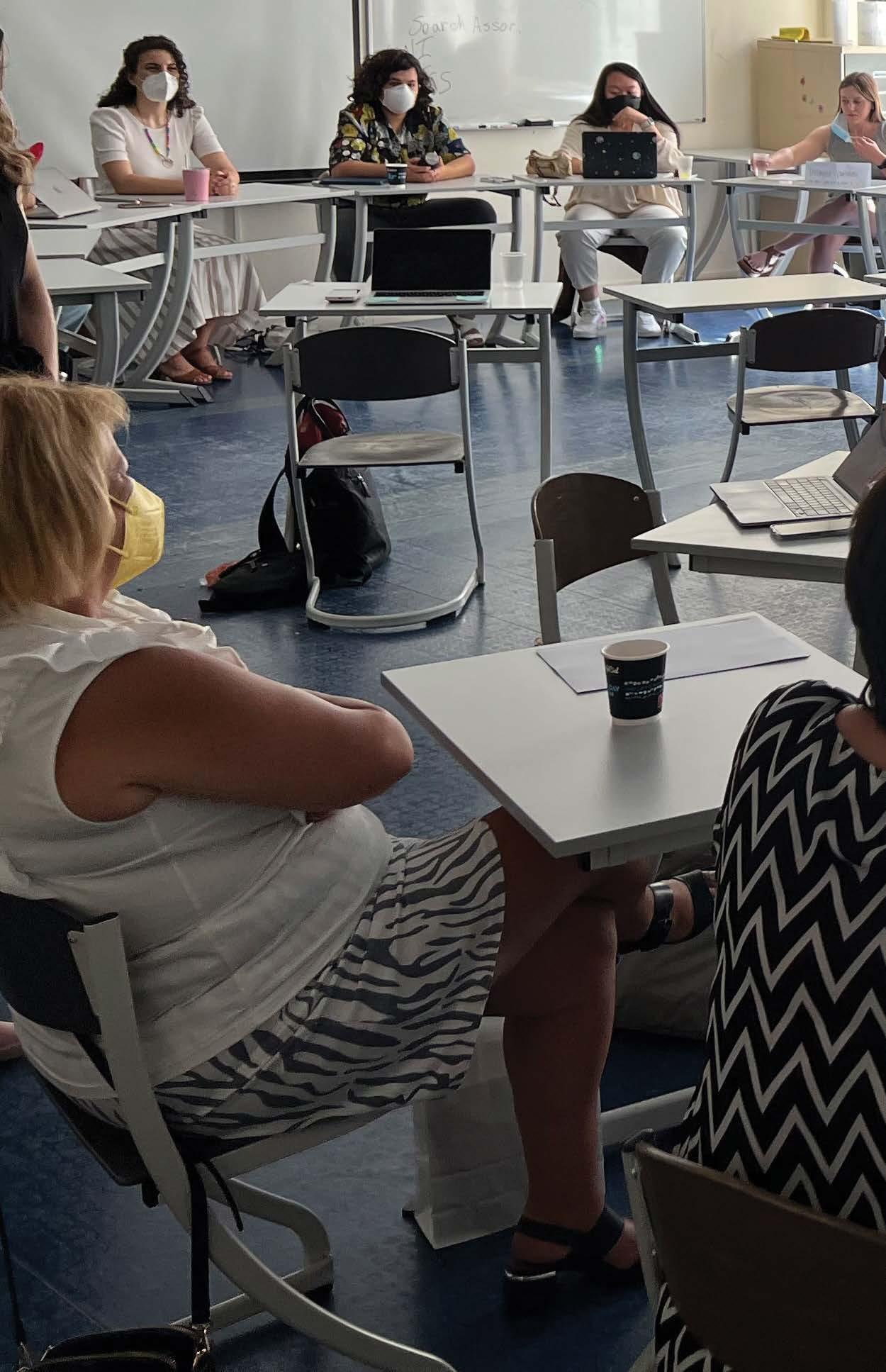
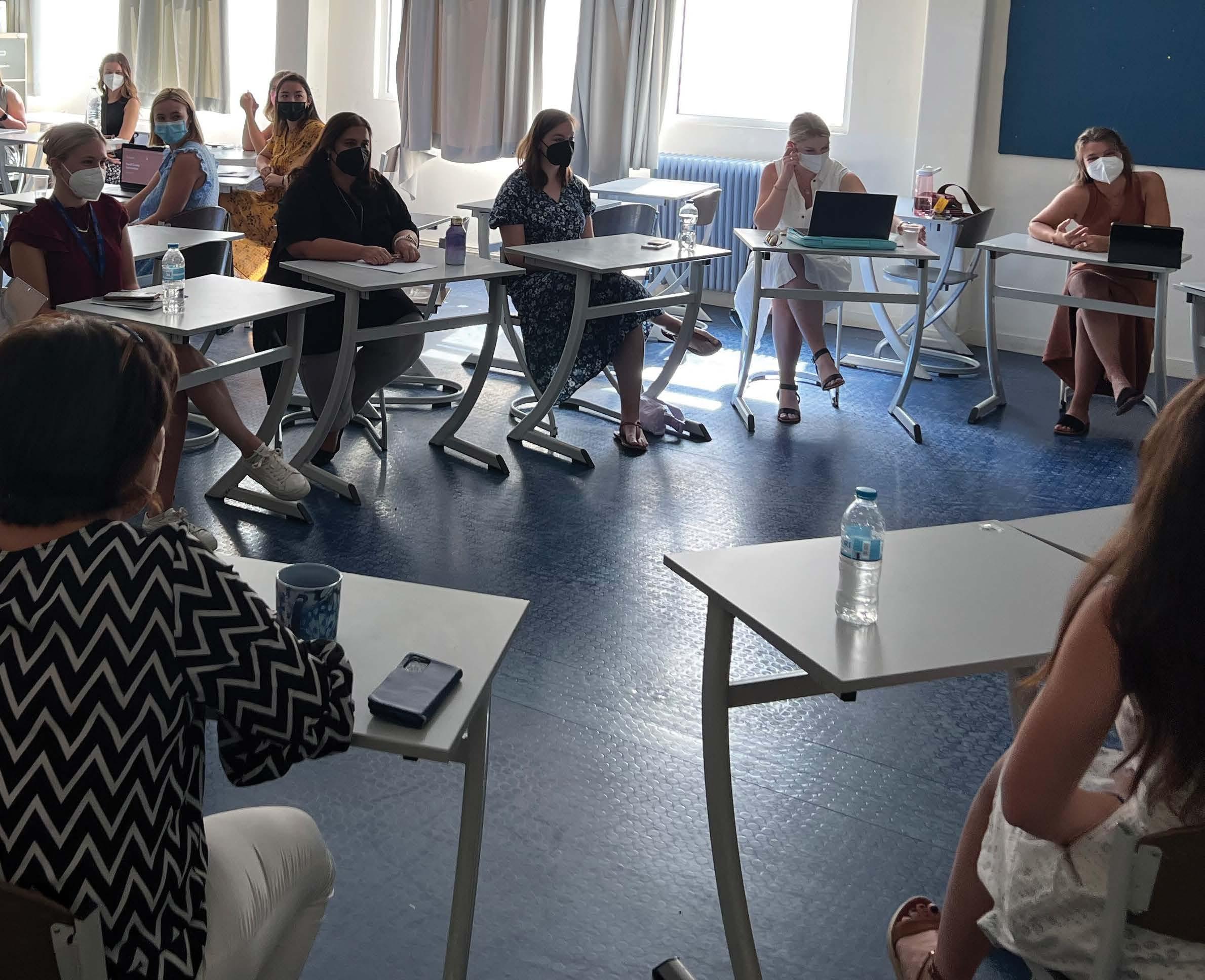
Fifteen Master of Arts students completing their degree at the Donna Ford Attallah College of Educational Studies (a dual credential general education + special education degree at Chapman University) came to visit ACS Athens. While also having finished a year of student teaching, they came to learn firsthand about international schools, action research, and inclusivity from administrators, staff, faculty, students, parents, and friends of ACS Athens.
In addition, with an institutionalized action research culture at ACS Athens, which has
built the pathway for MSA’s Sustaining Excellence protocol , which is now being conducted in a number of leading schools across the globe, Chapman University Master of Arts students learned first-hand about processes, and experiences from both administrators and faculty members.
Finally, with a diversity of programs for inclusivity across the school, ACS Athens highlighted its Youth 2 Youth program, an innovative educational and social integration program that was devel-
oped in the midst of a crisis to meet the needs of an ever-growing refugee population.
An exchange of information and knowledge was the focal point of all the sessions, and our guests, as well as our administration, staff, and faculty, left the sessions enriched through new perspectives.
We wholeheartedly enjoy these collaborative opportunities because they always leave behind food for thought and allow us to reflect on how we can upgrade and fur-
ther enhance our educational system. Education and knowledge have no end and are always ongoing processes fueled by inquisition and curiosity.
We look forward to continuing our ongoing partnership with Chapman University.
ACS Athens is accredited by the Middle States Association of Colleges and Schools. ACS Athens has received a “Sustaining Excellence” stamp of approval and was one of seven schools worldwide, and the only international school to have achieved this level of accreditation. In November 2012, ACS Athens was approved to use the Sustaining Excellence Protocol, making it the first -and only- international school considered for re-accreditation with this top level protocol. Our school has thus become a de-facto model school for international education. Furthermore, οur school initiated, implemented and presented the Action-Research component for the Sustaining Excellence protocol. The Sustaining Excellence Protocol is now offered to leading schools that have a demonstrated commitment to excellence and have demonstrated that the systems and structures necessary to support the Middle States Association standards are securely in place. This is a mark of distinction. Sustaining Excellence has schools commit to an action research project focused on a single, overarching area of learning.
where artificial intelligence makes it possible for machines to learn from experience, adjust to new data and perform human-like tasks.
To adapt to this new complex system, we need to be able to identify the multitude of factors, perspectives, or interactions that might be associated with or contribute to particular outcomes. The context of the larger system is made up of networks of systems we can see as well as those we can’t (values, biases and decision-making rules that influence the way people think).
Include Both Artificial Intelligence And Conscious Citizenship
by Carla Tanas, Dean of the Institute
Artificial Intelligence (AI) has progressed rapidly, and the future is arriving faster than expected predictions. AI has become an integral part of our lives, and it is time to prepare for the age of AI by investing in education and training.
AI has many advantages: minimizing human error, reducing risk-taking on humans, around-the-clock availability, help in ordaining jobs, digital assistance, and faster decision-making. AI may even have a
lower error rate than humans if coded accurately.
The best examples of AI in daily life could be seen in agriculture, finance, healthcare, navigation, criminal justice, and security, to name a few. Yet, AI does pose future threats, including invasion of privacy, autonomous weapons, loss of human jobs, and AI terrorism.
It remains up to us to choose how to upgrade our skills and knowledge and be part of a world
Education plays a vital role in transitioning sustainably and peacefully into this new realm. A holistic educational approach is a necessity to be able to focus on the constituent parts that interrelate and define how systems will work over time. Preparing our youth for the age of AI requires enhancing a schoolwide curriculum where incorporating artificial intelligence goes beyond our technology classes, where it belongs academically, but rather permeates the skills, concepts, and dispositions of AI in all other academic areas across our school in every grade (from K-12) and every discipline (math, science, history, art, literature, physical education, foreign language, social studies, psychology, and so on).
As our world transforms and machines become more intelligent, we must redefine our humanity and existence to include relationships with intelligent machines and each other. Defining the guidance that we need to provide humans is the role of today’s educational institutions, more importantly, K-12 institutions where children are defining their identity, character, and fundamental way of being. Empowering students for the future goes beyond helping them develop skill sets, but rather a way of thinking.
In January 2020, I developed and led a framework to integrate Artificial Intelligence and Conscious Citizenship (AICC) across our schoolwide curriculum so that we may empower our students to increase their human intelligence, including mindfulness, creativity, and interconnectedness, so they are prepared to engage with, manage and lead tomorrow’s advances and innovation for the good of humanity to improve life and living on the planet.
To bring this framework from an idea into a schoolwide reality, a think tank and implementation team were both created to include administration, faculty, and staff members1 who, as a team, worked hard to create a new holistic way of thinking within the school.
Beginning with the basics of defining our meaning of Artificial Intelligence and Conscious Citizenship that represented our vision at ACS Athens, we concluded that:
Artificial Intelligence (AI)” is a human-like intelligence demonstrated by machines, and
Conscious Citizenship (CC) is one who places value on being fully human while connecting with a higher purpose; one who values human life and the relationship with all living things, and takes responsibility for transforming skill into action, through ethical decision making, to ultimately improve life and living on the planet.
Our common definition laid the foundation for devising themes and topics around AI and CC, separately, which framed our processes to onboard faculty members across the school to make connections to their class curriculum. Faculty spent the academic year of 2021/22 during their selected professional development days to constructively research, envision the knowledge they wanted students to gain, assess the key questions they wanted to ask students, as well as, the potential ways to evaluate the success of student learnings.
After a two-year journey behind the scenes, we continue to grow our AICC strategic plan by including the introduction of an Innovation Lab that will include virtual reality, augmented reality, robotics, STEAM (within a makerspace), and artificial intelligence, which will allow for further hands-on learning, experimenting, and exploring from in-
sightful research to solution-oriented products. Our vision for the Innovation Lab is that it will serve as a hub for AICC development for our students, as well as for those in the surrounding community since we hope to welcome other students in the coming years.
Some additional growth projects that we have planned include the introduction of a new AICC digital library which to date already includes over 600 titles and continues to grow. Furthermore, additional programs under the AICC umbrella will be offered across the school to our students as we continue providing professional development processes for our faculty and staff members, who are directly responsible for educating our students. In addition, educational opportunities for our parents and the community as a whole are all in the pipeline.
1 A special thanks to ACS Athens President Peggy Pelonis, Academic Dean Julia Tokatlidou, Academy Principal David Nelson,Assistant Academy Principal Evelyn Pittas, Middle School Principal Joletta Galozzi, Elementary School Principal Sophia Moros, Assistant Elementary School Principal Valeria Laitinen, People Manager Andromachi Fragkou, Coordinator of Professional Development and Accreditation Adviser Julie Crain. Many thanks to Teacher and Staff Antonios Karampelas, Spyros Arsenikos, Christos Pakos, Liana Tsigaridi, Tabitha Newton, Zoe Karatza, Victoria Poulou, Angela Chamosfakidis, Sophia Thanopoulou, Stavi Dimas, Christina Venos, Pinelopi Dimitroula, Katherine Bibidakis, Christina Rocha, Natalia Dadidou, Venie Gaki, Sophia Tsinakis, Panagiotis Mologousis, Stephanos Achilleas.
Transitioning to an AI-centric world
Our world is transforming as more companies build AI-based solutions. We are encountering systems of change. Below is a birds-eye view of one example on the horizon, autonomous vehicles, which will impact many industries. How should education react to new labor needs, resources, infrastructure, policies, and economic models that will expand to include more roles supporting the production, mainte-
Resources
From petrol and gas to electricity. Can corn become a fuel source?
Infrastructure
From roads, bridges and traffic lights to all of it becoming smart. Can you create an app to support the system?
Manufacturing Jobs
Designers, engineers, mechanics focused on safety, speed, and design as key performance indicators. Now philosophers are joining product design conversations to write algorithms. Do ethical discussions and idealistic perspectives control our future?
nance and operation of self-driving cars? What questions should we begin asking students when the driver seat transforms from being human-centric to AI-centric?
Service Jobs
From taxi drivers, chauffers, bus drivers, delivery drivers, heavy truck drivers what new jobs can these individuals transfer to with their capabilities? What upskilling do they need?
Emerging Economies Policies
From human centric policies regarding speed and safety, who will be responsible for accidents by autonomous cars?
As car companies will become mobility companies vehicles will be shared or rented for very short periods. A new sharing economy emerges. How can you imagine this new transformation impact other industries? What additional services can a mobility company offer?
As Maslow suggests, self-actualization transcends the self.
It’s a tough call, and given the psychology of the adolescent, it becomes much harder; adolescents can be frivolous, immature, spontaneous, and seem inconsiderate at times. How stereotypical this might sound, yet, it is true! However, all this is part of their search to discover their identity. In their effort to do so, this is when we, as educators and parents, have an obligation to intervene and lead them toward the right path.
Teaching Adolescents That They Are Part Of A Whole; How To Help Middle School Students Become Conscious Citizens Middle School adventures
by Venie Gaki, Middle School Faculty
“A
conscious citizen is someone who reflects on their value of being and personal responsibility to define and achieve their higher purpose, builds awareness, interconnectivity, and relationships among all living things in our community and our world, and empowers a harmonious engagement in committing resources and initiating actions to positively impact a sustainable quality of life.”
This is what we at ACS believe in, and this is the definition we decided upon after several meetings as a Conscious Citizenship Committee. But how can an adolescent reach the point of self-actualization to be selfless and contribute to something purposeful that is greater than themselves?( (Greene, & Burke, 2007).
And indeed, this is an educator’s ultimate goal: to instill knowledge, not only to facilitate the learning process but to instill in the students the desire and the passion for serving a bigger purpose.
This is the reason why I expose my students to the Declaration of Human Rights and scaffold the text, analyze it and paraphrase it. They do love the process; they truly enjoy trying to comprehend and simplify such difficult discourse. However, it does not connect to their world; it does not activate their schemata; a 14-year-old adolescent of Generation Z cannot relate to what was happening in the world in 1948. Indeed, it is an invaluable document, a precious resource, and a necessary tool for everyone in order to comprehend the importance of human rights.
So, how could they make the declaration theirs? How could they connect and relate to it?
How could they find a bigger purpose to serve after having read it?
The answer was reached after a very long discussion in class that concerned how we could apply this text to our reality, community, and everyday life.
English Language Learners at the advanced level (ESL 2) read the Declaration of Human Rights, drafted in 1948, and went on to write their own Manifesto with which they would help Middle School students understand their rights, but also their responsibilities and obligations as members of the school community. With this Manifesto, they would be able to publicly declare their intentions, motives, and views in an effort to help students become conscious citizens and make sure that every student in the school feels included. It was easy; after all, our students are familiar with democratic processes where they collectively develop classroom rules.
Of course, not every single right could relate to student life; they picked the articles with which they could connect and made them applicable to school life.
They worked on it collectively, in groups, as they had to simplify and group them and also made a poster to promote this document and make it known to the public.
One might ask why students found it necessary to
draft such a document, or one might claim that we know all this, that we, in the 21st century, are aware of children’s rights and respect them, but I wonder; is there a chance we might take them for granted? Is there a chance that we might be good in theory but not in practice and neglect implementing them at all times? After all, isn’t this why the declaration of human rights was drafted? TO REMIND HUMANS THAT
WE ARE ALL EQUAL and to avoid past atrocities. And this is what ESL students wanted to do; to REMIND STUDENTS THAT THEY ARE ALL EQUAL and avoid unfortunate incidents of the past, such as cyber-bullying or exclusion and taunting.
The result was incredible, but most importantly, it was meaningful.
Dr. Pazartzis spoke about the foundation treaty of the UN, the three pillars, and specifically the Human Rights Committee, in which she has been unanimously elected as Chair. Students were able to understand how the United Nations Sustainable Development Goals (UN SDGs) are linked to the three pillars.
Acs Athens Middle School Students Celebrate UN Day With The Chair Of The UN Human Rights Committee
by Christina Bakoyannis, Middle School Faculty and UN Day Advisor
“How long have you worked in the UN?”
“What made you want to work in the UN?”
“How can one begin to work in the UN?”
These were some of the questions that middle school students had the opportunity to ask the Chair of the UN Human Rights Committee and ACS Athens alumnus Dr. Photini Pazartzis. Eighth-grade students followed the presentation in the theater, while sixth and seventh-graders had a live stream presentation in their advisory classes.
Dr. Photini Pazartzis, an ACS Alumnus, Professor of International Law at the University of Athens, and the Chair of the UN Human Rights Committee, honored us with her presence to speak to middle school students about the United Nations and the UN SDGs.
“ACS Athens is a small United Nations,” Dr. Pazartzis told students.
“You are very lucky to be in this school; you have people from all over the world that are your friends and will remain your friends.”
She also stressed the importance of how having a goal in mind could help one develop their future career.
The guest speaker was introduced by Dr. Pelonis, who also gave the message to middle school students that the purpose of education is for you to take positive action to improve life and living on the planet.
Students were also involved in this day’s event. Specifically, a member of the Student Council spoke about the UN SDG advisory work and how sustainability can be achieved through personal commitments to the UN SDGs. The Middle School Honor Code shared information about the World International Day for Tolerance and how tolerance is an integral part of our ACS community and one of the club’s goals. The day also had a touch of music as Ms. Mancl’s Intermediate Instrumental Music class played This Land Is Your Land, and a member of the Student Council read the lyrics.
A beautiful event with many powerful messages and a strong sense of community and belonging.
ACS Athens Middle School Students Make Commitments to the UN SDGs
The ACS Athens Middle School has a strong tradition of celebrating United Nations Day as a commemorative event. This day has a theme, and for the past three years , the theme has been “Imagine the Future. Be a Changemaker”. This theme aims to develop students that are the future changemakers to improve life and living on the planet.
In order to prepare for UN Day, students explore and discuss the 17 SDGs in their advisory classes. Furthermore, each advisory is assigned one SDG, and students are challenged to explore it in depth in order to take action by making a personal commitment to their specific UN SDG. Students share their commitments on a discussion forum in the moodle shell that hosts all of the UN SDG resources.
During these restricted times, students have posted personal commitments to the UN SDGs based on the UN Guide called “170 Daily Actions to Transform Our World”. Here are some examples of personal commitments:
“I chose action 14 for Zero Hunger which is to minimize
meat and dairy consumption.”
“I believe that installing a solar panel for your home would be a very good idea because fossil fuels result in polluted air.”
“In our advisory class, we are focusing on Goal 6: Clean Water and Sanitation. We chose to turn off the tap when brushing our teeth and taking a shower.”
“The action I chose was to support local farmers’ markets and eat local food.”
Students mentioned how they could convince their friends and family and also use social media to spread awareness.
There is a thematic spiral so that three main themes of the UN SDGs are touched upon during their threeyear middle school experience. Through this continuum, students thus gain a holistic perspective of local and global issues, which could help them think critically about solutions.
The MS Student Council spoke about the UN SDG advisory work and how sustainability can be achieved through personal commitments to the UN SDGs.
Ms. Bakoyannis with Dr. Photini Pazartzis, Dr. Peggy Pelonis and Ms. Carla Tanas at the Middle School United Nations Day
Dr. Photini Pazartzis, an ACS Alumnus, Professor of International Law at the University of Athens and the Chair of the UN Human Rights Committee speaks to middle school students about the United Nations and the UN SDGs.
◉ To use technology and/or other engineering models to represent findings
◉ To present final product(s) based on learning preferences -how best students can demonstrate their learning-
Connecting SchoolWide Goals Through The Sustainable Development Goals In Mathematics
by Dora Andrikopoulos, former Middle School Faculty, currently, Elementary School Principal
This year The Sustainable Development Goals Project was extended to all my middle school classes (6-8), focusing on connecting mathematics to real-world problems.
Expectations of this project were:
◉ To enhance conceptual understanding, procedural fluency, and use of problem- solving strategies in mathematics through applications to real-life problems.
◉ To develop an awareness of environmental issues and changes (morphing conscious citizens)
◉ To use a logical structure to present the information.
◉ To use critical thinking and reasoning to analyze the information and make logical suggestions
◉ To write a stor y reflecting on the process and the learning
The project included the following steps in alignment with our school goals.
A. School Goal: Teaching Literacy through critical thinking and logical structure
◉ Research Focus Question / Literature Review
B. School Goal: Teaching Mathematics through applications, connections, identifying patterns and reaching conjectures
Students were guided following a checklist
Write and Understand the fact
◉ Read your fact and visualize the information given
◉ Identify the given information in the fact- 2 different units-
◉ Write a Word Problem
◉ Using the given information, turn the fact into a question (Word Problem)
◉ In which STANDARD does your word problem belong?
◉ Use words if , what, where, when, how.........to begin writing your word problem
Plan and Select a Strategy
◉ Solve the problem
◉ Show all steps (procedural fluency)
Evaluate your work
◉ Check accuracy of your calculations
◉ Make sure the answer makes sense and is reasonable
C. School Goal: Teaching Science through applications in engineering and technology
◉ Researching, collecting and organizing information and data
◉ Synthesizing and solving mathematical problems using the data
◉ Representing/ Analyzing data and findings
◉ Qualitative/Quantitative Analysis of data
D. School Goal: Morphing Conscious, Responsible Citizens
◉ Evaluating the results and suggesting environmental improvements
E. School Goal: Matching students with ‘best fit’ learning preference
◉ Presentation of final project-allowing for differentiation
F. School Goal: support for ESL/EFL and OLP students through language development and use of inclusion models of instruction
◉ Assessment of Project accommodated accordingly taking into consideration ESL/EFL /OLP groups
◉ Reflection Writing: To write a story reflecting on the process and the learning through Discussion Forum
Students shared highlights of their work in the ACS Media Studio with the help of Mr. Palos..
The Link to the video will be shared on the ACS Website.
Enjoy watching!
Despina Iliopoulou and Teo Joomyung during Peer Evaluations exchanging ideas how to improve their research projects on Quality Education and Clean Water and Sanitation
Greg Sietis evaluating his mathematical procedures to his created word problems on Affordable Clean Energy
Ameer Bibi displaying his created model on No Poverty
Paavni Strivastava displaying her Art work representing Life in the Ocean
cling, through learning, action, and partnerships.
ACS Athens Recycling Program Vision
The Athens Recycling Program’s vision is to inspire the school community to embrace the values of environmental education, take action to promote recycling, and contribute towards the creation of a sustainable campus environment.
ACS Athens Recycling Program A Closer Look At The Process Of Its Design And Accomplishments
by Panos Mologousis, Citizenship Coordinator & Program Manager
◉ The vision - mission of the program
◉ Recycling Program Strategic Map – Core pillars
◉ Recycling Program Goals
◉ Accomplishments for the 2021 – 2022 academic year
You cannot inspire a school community if the vision and mission of your program are not aligned with the values of your organization. The recycling program was designed with a student-centered philosophy, focusing on inspiring students to practice recycling on campus daily and contributing to them thriving as conscious global citizens.
ACS Athens Recycling Program Mission
The ACS Athens Recycling Program aims to implement various recycling mechanisms on campus - both inside and outside of the classrooms - to educate and engage students and the school community on recy-
The ACS Athens recycling program is based on three core pillars. These pillars are particularly important as, according to them, all the goals and activities of the program are being designed. Not only does this support the continuous development of the recycling program, but it also inspires students to participate actively in these. The power of defining the core pillars allows the program to maintain a holistic identity, being as inclusive as possible.
Any goals of the recycling program are SMART (Specific - Measurable - Attainable - Relevant - Time Based). Thus, data is an important part of what we do with recycling to monitor the progress of each goal. Looking at the data, students are more motivated and will be inspired to act since they appreciate the school noticing their efforts. This will inspire them to keep going and be consistent along the way, facilitating the achievement of the recycling goals and the growth of the recycling program.
ACS Athens Recycling Program SMART Goals
Learning Pillar
◉ Raising awareness for recycling through advisory classes
◉ Asynchronous Online Learning opportunities for Environmental Education
Experiential Pillar
◉ Lunch Time Recycling Mechanism
◉ Daily Measurement of recyclable materials by student volunteers
◉ Paper recycling
◉ Recycling Batteries on Campus
◉ ACS Athens Environmental Clubs
◉ Student Council initiatives
Networking Pillar
◉ Participation in 1st Panhellenic Tournament for Recycling Batteries
◉ Participation in the Eco-Schools program
◉ Collaboration with various environmental NGOs
2. Accomplishments for the 2021 – 2022 academic year
◉ A lunchtime recycling mechanism was created for Middle school and High school.
◉ Middle School and High School student volunteers measured the total amount of recyclable materials daily, resulting in useful data related to their ecological footprint (1087.83kg).
◉ An in-classroom recycling mechanism was created for Middle School in May 2022 only for the collection of paper (11kg). Student Council Volunteers collected the paper weekly and measured its total amount.
◉ The Middle School Student Council collected funds and purchased recycling bins for all middle school classrooms to support the above-mentioned mechanism.
◉ Old textbook recycling started in February 2022 (1570 kg).
◉ ACS Athens received second place in the 1st Panhellenic Recycling Batteries Competition.
◉ Middle School Advisory lessons were dedicated to the recycling process, and middle school students created recycling action plans.
◉ An environmental online course was offered to IB CAS students, “Environmental Journalism and Photography,” to serve as a means of raising awareness about the importance of recycling and other environmental issues through the “ecoschool program.”
◉ The Middle School environmental club conducted an evaluation of the existing recycling mechanism during lunchtime, taking pictures of the recycling bins’ content.
◉ The Middle School environmental club organized an advisory lesson around the topic of recycling, inviting an expert guest speaker who discussed the impact of plastic on animals.
◉ The Middle School environmental club collected plastic water bottles for recycling purposes.
◉ The Academy environmental club raised awareness for the recycling batteries competition in all middle school and high school classrooms.
OLP
How Does Inclusion Of All Learning Abilities Ultimately Empower Students To Make Change?
by Chara Kouppa, OLP Inclusion Specialist and Sarah Kaldelli, OLP Coordinator
“The human mind, overstretched to a new idea, never goes back to its original dimensions.”
(Oliver Wendell Holmes)
How often do we ask our children and students to generate solutions for much bigger problems of the world, such as climate change and gender equality? Students have incredible ideas and solutions that adults have neither thought of nor considered. Inclusion in education makes an essential contribution to building inclusive and democratic societies, where a wide range of voices can be heard, in pursuit of social cohesion and a sustainable world that celebrates diversity.
Problem-solving and finding creative ways to circumnavigate a difficulty are at the heart of the Optimal Learning Program (OLP). We do this by maintaining systematic collaboration with parents, faculty, and staff to provide support services that meet the social, emotional, and full range of cognitive needs of all students. Crafting structured opportunities for students in OLP to collaborate with each other on individual goals provides them with multiple avenues toward the achievement of their learning. By giving students opportunities to present their learning growth within mainstream classrooms and by creating a safe environment for risk-taking, OLP assists in empowering all learners to problem solve, think creatively, and actively contribute their strengths to the community. Through the different models of support offered through OLP (Full OLP, Consultation, Individual Support Plan, Advanced Learning Plan, and Inclusion), students participating in this program are able to ask more questions and thus initiate more answers and solutions.
At the heart of the ACS Athens’ mission are the UN’s 17 Sustainable Development Goals (SDG), which are an urgent call for action for the planet and all beings depending on it. Education, the environment, health, hunger, gender equality, animals below water and on land, and reduced inequalities are all different parts of what the world must focus on if it’s meant to survive longer. Following the Conscious Citizenship model, we strive to develop balanced students who can make responsible decisions to render our planet a better place. Based on our students’ metacognition, which is the encouragement to think about thinking, OLP strives to offer all learners appropriate learning experiences to explore further areas they find interest in. We strongly believe in our student’s strengths, and by offering multiple levels of support, we create an impressive environment of inclusivity. Our driving force is for our students to reach their potential and showcase their progress and strengths. We encourage them to challenge existing ways of doing and thinking about things as a means of stimulating new ideas, and ultimately, we strengthen their opportunities to improve life and living on the planet. We believe each of them can be a navigator of positive change.
Let’s Talk About It...
by Sarah Kaldelli, OLP Coordinator
At the 2019 CIS Child Protection and Safeguarding Conference in The Hague, just at the break of the pandemic, a profound yet simple statement was made by several speakers: “if you’re not talking about it, you’re not doing enough.” That statement was a hook that has stayed with me ever since.
During the March 16th Professional Development day of this year, we were given the opportunity to present to the entire ACS Athens Faculty and Staff. This included all our key players: teachers, supporting staff, maintenance, security, Administration, and financeall departments were online and connected. The best result of our presentation was that our community members started coming forward, asking questions, pointing things out, and sharing their experiences or knowledge in this area. Some colleagues came forward to talk about how uncomfortable they had been with certain subjects and asked direct questions regarding how they could navigate discussions with students or
Many of the questions don’t have immediate answers, yet they all contributed to that single commonality: we need to talk about it. Talking about what situations our students are experiencing at home, what they’re experiencing in school, and talking about what systems are in place to keep everyone safe on our campus is vital. Without these conversations, we’re not “conscious,” and without the connections we’re making, we’re not active citizens of our community either.
ACS Athens has steadily expanded and solidified its Child Protection policy and has many systems in place to respond to issues that relate to children’s safety, protection, and well-being. One of the key connections we made as the Child Safeguarding Liaisons was between Child Safety, the Conscious Citizenship model, and that one single phrase stated above.
Our aim and process have been to educate our teachers and students by giving them tools to empower themselves when they’re in difficult situations. We want our students to feel safe among us, while also knowing that whatever situation they share with us, we will first know how to respond to it, and secondly, we will maintain high confidentiality in that response. At ACS Athens, we’re doing our best to talk about the difficult issues revolving around child safety.
We’re starting those conversations that leave people feeling uneasy, yet with greater awareness of what they should be looking out for. We want colleagues to be able to fully talk to each other when something feels “off”. As I learned at the CIS conference, the uncomfortable conversations are the ones we need to be having.
I like to find connections in ideas and relationships, and I see meaningful ones among our Child Safeguarding policy and ongoing development in this area, and in our Conscious Citizenship model. The Child Safeguarding Liaisons at ACS Athens invite all members of our community to be conscious, alert, and as active as the Conscious Citizenship model invites us to be. Through this model, we strongly advocate that we need to be “creating the conditions to expand awareness of social [...] conditions while being empowered to assume personal responsibility, by engaging in, committing to and initiating positive impact”. As a strong educational institution, it is our responsibility to be vigilant over our younger community members, so they are safe and empowered to develop into citizens of the world who, in turn, will be the next custodians of the future generations.
In addition to their astounding success, these four Youth-to-Youth Program ACS Athens graduates have also been accepted to colleges on scholarships: two to The American College of Greece, one to Southeastern University in Athens, and one to Bethany College in Kansas, USA.
SOCIAL awareness
The Mindset And Commitment To Create Innovative Programs
The Youth-To-Youth Educational And Social Integration Program; From Refugee Camp To College Scholarship
by Julia Tokatlidou, Dean of Academics
ACommencement ceremony is always a sentimental celebration both for students and parents. It marks success, pride, and the anticipation of a better future. The 2022 commencement ceremony at ACS Athens was exceptionally moving for our community as it celebrated among its 112 graduates four unique students.
Four children who traveled thousands of miles without their parents to escape war, persecution, and poverty to seek refuge in western countries. Today, Amie, Chanel, Irsa, and Tayebe, all students of our Youthto-Youth Educational and Social Integration Program, are proud graduates of ACS Athens.
Could they have ever imagined that despite the many challenges and risks, their boat journey to Greece would bring them to such a high-caliber and reputable international school as ACS Athens and a full scholarship to an American university? Undoubtedly, their journey through ACS Athens was beyond even the most optimistic expectations they could have had for their lives in their new country.
How did this all come to be, one might ask? Could other individuals and organizations follow the lessons from this success story to provide meaningful opportunities to more underprivileged children? What is the necessary mindset and skill that individuals and organizations must possess to build inclusive educational programs?
Luckily, these students were placed under the care of The HOME Project, a newly established non-governmental organization. I say luck because of the mindset and holistic care approach the organization adopted from the onset. They changed the narrative of relief organizations. Instead of building shelters for “refugee unaccompanied minors,” they built homes for children.
This approach promoted the development of trusting relationships with the children, which facilitated further socioemotional support and identified the importance of education in
the social integration of the children.
When the HOME Project sought collaborations with educational institutions in Athens, ACS Athens was willing and ready to act; thus, the partnership began in December 2016.
With its great tradition of involving its students in community service projects and its commitment to serving humanity, ACS Athens had the ideal mindset required for undertaking the project. Combining our community’s exceptional talent and professional skills, ACS Athens and The HOME Project Organization launched the Youth-to-Youth Educational and Social Integration Program on February 8, 2017.
Approximately 60 faculty members and an equal number of students volunteered to participate in the program, indicative of our community’s mindset in taking action to improve people’s lives.
When designing the parttime (Saturday) Youth-toYouth program, our main objective was to create a program that would be meaningful both to our students and the children from The HOME Project.Thus, we chose the student-to-student instructional approach. This instructional approach greatly facilitated the educational and social integration objectives for both groups of students. Furthermore, the curriculum design based on the needs of the Youth-toYouth students and with a built-in adaptive curriculum progression helped steepen the learning curve for all participants.
This rapid growth of student learning and socioemotional development increased the program’s value for all.
In turn, this was acknowledged and appreciated by kind sponsors such as the IKEA Foundation and The Shapiro Foundation. The latter provided scholarships to 18 students to attend ACS Athens. Thus, in 2018, ACS Athens developed a highly inclusive learning program, the Full-time Youth-toYouth Program.
The design of the full-time Youth-to-Youth focused on addressing curriculum differentiation and adaptive progression to facilitate their gradual inclusion into ACS Athens courses. The student-to-student teaching model was used when possible and social integration was encouraged through participation in sports and student clubs. With intensive English language courses, an emphasis on learning skills development, and motivational support by the school and the HOME Project professionals during the first two years, the Youth-to-Youth students were fully integrated into the ACS Athens courses by the third year of their studies. At this point, it is worth noting that this was a formidable task for these children, our heroes. Nevertheless, they overcame obstacles, fears, and uncertainty, and with their teachers, counselors, friends, and the ACS Athens family’s support, they accomplished their dreams.
Thus, what are the lessons learned from the sustainability and expansion of this program during these last five years? First, the program’s success lies in the meaningful and synchronized collaboration of all parties involved. For our program, this collaboration involved The HOME Project Organization, The Shapiro Foundation, and ACS Athens. The continuous communication among the
three organizations regarding the well-being and education of the children was fundamental in overcoming challenges and motivating students to work hard to achieve their academic dreams.
Second, the mindset and commitment of ACS Athens to actively engage its community to create innovative programs to promote wellness for those in need were equally fundamental for the program’s success. Active engagement ensures that the impact of the social interest of the community goes beyond awareness and active participation to the creation of new knowledge.
Third, the professional expertise and skill of ACS Athens educators, combined with their high empathy and caring approach, brought to the forefront the capability of educators to think outside of the box to create meaningful educational and social programs.
Lastly, the ACS Athens parent community’s continuous engagement and support allowed the growth and expansion of the program to reach the magnificent outcomes we all witnessed during the 2022 commencement ceremony.
The words one of our Youthto-Youth graduates wrote to her teachers on the first day of college serve as the best reflection on the impact of the program:
“Hello to my dearest teachers,
I hope you all had a wonderful summer and have a perfect school year. Today the direction of my class was different than last year, which was strange for me. My first day at college was unforgettable. I got into college.
I got lost, but I could find my class as well as I was on time. Don’t worry, my kind teachers. I met my classmates and the teacher. You cannot imagine how happy I was. My dream came true, and it was unbelievable for me. All the time, I was telling myself that I would be a psychologist in the future. As you know, I didn’t talk much in class because I felt shy to speak up; however, I spoke, answered, and introduced myself to my class, and I had confidence.
Well, I don’t know how but it happened. I wrote all these to you, my best teachers, and I want to say it’s because you and your help pushed me to be active. It worked. I cannot find any words to say and be enough for whatever you have done for me, but I can say thanks to all of you from the bottom of my heart. I will try very hard to be successful. I hope you never give up on the students like me. I know it is hard, but we need such help to show ourselves and the world that we can be successful like other people.”
As ACS Athens, our promise to children in need is to continue empowering individuals to become architects of their own learning to thrive as conscious global citizens and improve life and living on the planet.
migration, especially for unaccompanied minors, is an emotionally complex process involving mediated experiences and expressions of emotions and affect. (Neag, Supa, 2020)
“Place
Is Security And Space Is Freedom (Tuan)” Integration Of Migrants Via Artificial
Intelligence In Media Production
by Vana Αlexopoulou, Media Production Specialist
One of the many challenges in a refugee’s everyday life is the process of integrating into a new environment. Digital media plays an essential role in helping migrants to become vital members of their host country. Furthermore, the ongoing migration flux has triggered the rapid development of media technology and digital applications to tackle the issue of refugee integration in Europe. (Alencar, 2017)
Social integration is fundamental for the personal development of the refugees, and not only. Migrants cannot continue their life journey without being a piece of the local’s society puzzle, without feeling familiar with the people around them. Furthermore,
To provide a better future for unaccompanied refugee youth, ACS Athens has been offering the Youth-toYouth program, an educational and social integration project. Y2Y provides a meaningful, holistic and harmonious educational experience to unaccompanied refugee minors. The beauty of the program is that ACS Athens faculty and student volunteers act as mentors and teachers to the Y2Y students, and this is what enables successful and effective social integration.
The Media Studio of ACS Athens supports the Y2Y program and its participants with its technical expertise. The studio uses specific Artificial Intelligence tools for face recognition, in order to track faces. Once this process has been confirmed as accurate, immigrants’ facial characteristics are tracked, blurred, and hidden. This way, we keep their identities safe. From the very first moment that minors enter the school as Y2Y participants, they know that they are in a safe environment where they can learn, be creative, and behave like children of their age. The studio has also employed AI to provide creative tools for numerous media projects, helping these minors to be a part of the school’s society in an innovative and collaborative way. Thus, specific applications are used to transcribe students’ audio and/or video productions and turn voices into text. After confirming that the text is correct, subtitles are added to productions, making the audiovisual pieces accessible and easier to follow by non-native speakers. Finally, AI software can also be used for color correction, video auto-crop for social media, clarity of speech, voice isolation, etc.
Technology can help us democratize media in various aspects of modern life. Migrant youths of Y2Y have the opportunity, by using all the tools provided by the Media Studio, to be free and inventive in a safe and welcoming environment. After all, as the American-Chinese geographer, Yi-Fu Tuan says, “Place is security and Space is freedom” (Tuan:2001).
Bibliography
Alencar, A. (2017) Refugee integration and social media: a local and experiential perspective, 1588)
Neag A., Supa M (2020) Emotional practices of unaccompanied refugee youth on social media, International Journal of Cultural Studies, Volume 23, Issue 5
Tuan, Y.F (2001) Space and Place: The Perspective of Experience
Considering Responsible Artificial Intelligence In The Classroom Academy
by Dr. Antonis Karampelas, Academy Faculty
“Aconscious citizen is one who places value on being fully human while connecting with a higher purpose; one who values human life and the relationship with all living things, and takes responsibility for transforming skill into action, through ethical decision making, to ultimately improve life and living on the planet.” [1]. Any such future of conscious citizens living in harmony with their environment is hard to imagine without the consideration and proper use of technology. Equally, a data-driven future that would benefit humanity is hard to imagine without the responsible deployment of technology.
The Fourth Industrial Revolution is transforming societies and economies, while the pandemic has accelerated the transition to a more digitized future. Artificial intelligence (AI) lies at the center of this transformation, promising the solution to persisting problems of humanity with the help of machines that can mimic aspects of human intelligence. With UNESCO recommending “the development of values and skills for life and work in the AI era” [2], AI teaching and learning needs to be incorporated into K12 curricula. Moreover, any relevant instructional design needs to consider the algorithmic biases, limitations, and ethi-
cal dilemmas intrinsic to AI.
Responsible AI is a term used to indicate the principles that are sufficient to achieve human-centered, fair, and safe Artificial Intelligence. OECD recommends five principles for responsible AI [3]:
◉ inclusive growth, sustainable development, and well-being
◉ human-centered values and fairness
◉ transparency and explainability,
◉ robustness, security, and safety
◉ accountability
Key AI actors call for responsible AI as well. Microsoft states that fairness, reliability, safety, privacy, security, inclusiveness, transparency, and accountability principles drive their AI development [4], while Google reports the utilization of responsible AI practices, including fairness, interpretability, privacy, and security [5].
Artificial Intelligence is part of the ACS Athens curriculum since 2018 as a unit of the Academy STEAM course [6-11]. In this course, students become aware of and brainstorm the potential impact of responsible AI. Similar learning opportunities for all three schools are growing over time. In STEAM, there is an intentional progression from the awareness of the impact and limitations of AI to more technical knowledge and skills later in the unit, to reflect the societal importance of this disrupting technology.
In a typical AI unit, students would showcase their learning by answering, among others, the following questions:
◉ What is AI’s impact, limitation, and good use in employment, transportation, healthcare, entertainment, and education?
◉ What could the tasks, technical limitations, and safety concerns associated with a vehicle moving autonomously inside the ACS Athens campus be?
◉ How could a machine learning model trained by a student be developed to be inclusive and fair?
Students exhibit imaginative, creative, and critical thinking while working on their answers to the questions above, working both independently and in groups. Relevant work is showcased in the Figures. More specifically, Figure 1 shows a slide of a group presentation about the impact of AI on healthcare (image credit: https://www.hyro.ai/covid-19); Figure 2 demonstrates a 3D design of a self-driving vehicle in SketchUp; Figure 3 presents an instance of testing an AI model created in Google’s Teachable Machine.
Responsible AI and Conscious Citizenship will remain at the center of the AI unit of the STEAM course for the foreseeable future. Hopefully, the students will turn skills into action in the coming years, thus contributing toward enabling a more sustainable, fair world.
Bibliography
[1] Business Partners (2021). Conscious Citizenship: The Role of Education in Creating a Fair and Sustainable Future. American-Hellenic Chamber of Commerce.
[2] UNESCO (2019). Beijing Consensus on Artificial Intelligence and Education. ‘Planning education in the AI era: Lead the leap’ International Conference on Artificial Intelligence and Education.
[3] OECD (2022). Recommendation of the Council on Artificial Intelligence. OECD/LEGAL/0449
[4] Microsoft. Microsoft responsible AI principles. URL: https://www.microsoft.com/en-us/ai/ our-approach?activetab=pivot1:primaryr5
[5] Google. Responsible AI practices. URL: https://ai.google/ responsibilities/responsible-ai-practices/?category=general
[6] Karampelas A. (2021). Why Adopt a K-12 Artificial Intelligence Framework? Ethos, Fall 2021
[7] Karampelas A. (2021). Building a design-centered STEAM course. IGI Global, Handbook of research on K-12 blended and virtual learning through the i2Flex classroom model
[8] Karampelas A. (2020). Artificial Intelligence and Machine Learning in the STEAM classroom: Analysis of performance data and reflections of international high school students. Hellenic Journal of STEM Education, Vol. 1, No 2
[9] Karampelas A. (2020). Developing and Delivering a High School Artificial Intelligence Course in Blended and Online Learning Environments. Human and Artificial Intelligence for the Society of the Future, European Distance and E-Learning Network (EDEN) Proceedings, 2020 Annual Conference
[10] Karampelas A. (2019). The S.T.E.A.M. course at ACS Athens, Artificial Intelligence, and a Space Experiment. Ethos, Fall 2019
[11] Karampelas A. (2018). Introducing Artificial Intelligence and Machine Learning in Secondary Education. Astrolavos Journal of New Technologies, Hellenic Mathematical Society, Issue 29-30
Figure 1. A slide of a presentation about the AI impact on healthcare (work by Sydney Pina, Taleen Deeb, Michelle Bouri, and Ariadne Daskalaki)
Figure 2. A 3D design of a self-driving vehicle (work by Fanny Mikropandremenou)
Figure 3. Testing an AI model (work by Iuliana Ciubotaru) copy
The fall semester was led by the Writing and Research Studio. Four original presentations were created:
◉ Workshop 1: SDG Exploration provided current data and insights from 17 SDG’s cross-referenced with previous year students’ chosen variables. Beginning with the big picture and sharing the startling realities of the world alongside solutions from their classmates served as the initial emotional pull into a project about working on challenges larger than themselves.
Empowering Human Intelligence Through Learning And Design Thinking
◉ Workshop 2: College & Career Exploration connected future opportunities to the SDG’s. One student shared how the presentation helped her choose SDG 3, Health and Well-being, “because of my hopes to study psychology and helped motivate me to [in the second semester] research student mental health during the pandemic.” One artificial intelligence tool that was utilized, in partnership with the Media Studio, was Descript, an audio and video editing tool, where 11th-grade students shared their experiences on how their SDG research related to their career and college pathway interests.
◉ Workshop 3: How to formulate a research question had students narrow down their self chosen topics for time, place, group, and aspect.
◉ Workshop 4: How to conduct high quality research was described by one student as, “an experience which helped me understand how research papers could look like in the future.”
A second artificial intelligence tool to empower human intelligence was FrameVR, a tool to collaborate and communicate in 3D environments. This novel tool allowed students to have interactive access to the materials for constant reference as they completed their independent work.
Hby Michael Januzzi, Writing Studio Coordinator
uman intelligence is empowered through learning experiences that are novel, emotional, and seen as bigger than oneself. The Capstone Project carefully considered these components within the theme of the 21-22 academic year: celebrating learning. The Capstone Project is a 10th-grade initiative using the United Nations Sustainable Development Goals (SDG’s) as guideposts for learning sound research techniques, exploring college/career options, and improving academic writing. Example student research ranged from the impact of plastic pollution in the Bay of Bengal to the primary problems in the Nigerian education system and how artificial intelligence is affecting traffic systems. In the 21-22 academic year, two major changes were made: extending the project from one semester to two, and creating a Capstone Showcase of student demonstrations focused on take-home messages about their chosen SDG.
The second semester deepened the collaboration with Advisory as well as all middle and high school faculty, who served as mentors. The goal of the second semester was to finalize the writing component of the Capstone and to create the showcase. Sixteen classroom visits conducting workshops or providing small groups and 1:1 writing and research support was approved in advance of the second semester by faculty and their departmental heads. One student described the second semester as, “a way to make class time useful and having three teachers meant all of us could make real progress on our work. We felt supported!” To that end, mentors also met with students 1:1 to build relationships and provided feedback on the students’ writing. Over 85% of students said mentor support was ‘very helpful’ in completing their Capstone Project. Collaborative planning to provide time for faculty to develop relationships with students is as important to empowering human intelligence as the materials provided to students.
The student showcase focused on the “take-home” message students wanted to convey from their re -
search. Student projects included songs, interactive experiments, posters, games, physical models, and more. A design thinking approach was used and pushed students to consider key questions as they built and iterated:
◉ What is the one take-home/central message you hope others understand from your research?
◉ What was the most memorable or surprising aspect from your research?
◉ How has your research changed the way you see the world?
◉ Who is your target audience?
◉ What means would you use to symbolize/ demonstrate the message so that your audience understands?
The Capstone project sought to empower Human intelligence through learning experiences that were novel, emotional, and seen as bigger than oneself.
Anastasia Riga’s original art on the Nigerian education system
Kyveli Hartzler’s visual poster on habitat fragmentation and poaching effects of the Saola population.
Matilda Beligiannis’ showcase on plastic pollution in the Indian
FrameVR screenshot of all first semester workshops by the Writing Studio
2022 IB Visual Arts
ital photographs, fashion pieces, videos, and installations. This reflected the professional direction they wanted to follow, whether this was Fine Arts, Architecture, Illustration, Fashion, Photography, or Film.
Complying with the IB requirements, all exhibitions managed to form coherent bodies of works, showing both technical competence and conceptual qualities. All exhibits included curatorial rationale and exhibition texts beneath all work that justified the selection, arrangement, and exhibition of their artworks within the designated space and reflected on how the exhibition conveyed an understanding of the relationship between the artworks and the viewer.
In 2022 we had two consecutive but equally exceptional IB Visual Arts Exhibitions showcasing the works of fifteen talented young artists. Both exhibitions took place in the Theatre Lobby. The first was held between March 29th and April 1st and the second was from April 5th to April 8th, 2022. The students who participated in the exhibition are as follows: Adamopoulou Arianna, Chatzioti Anna, Kassalia Steleeza, Kefala Anna, Korsakova Liza, Kyriakousi Asimina, Lousides Markella, Makarigakis Max, Michaelidou Ellie, Papaioannides Jason, Perakis Gaby, Rocco Jelena, Stamoulakatou Maria Tsakiris Ellie and Emma Bello (SL).
The last two years have been very challenging for our IB Visual Arts students, who managed to create some of their art remotely from home during the lockdowns, often with scarce materials. They ended up curating high-standard exhibitions with remarkable art. Some pieces showed areas of isolation, loneliness, destruction, and suffocation, displaying the underlying feelings they were experiencing at the time. Their exhibitions touched on a multitude of other topics as well, such as identity, family, beauty, femininity, conformity, order, chaos, transformation, time, space, nature, and mythology.
The plurality of concepts and approaches in their art was also shown in the different media they used, which included drawings, paintings, sculptures, dig-
Following are small sections of each student’s curatorial explaining the rationale behind their exhibitions.
Arianna Adamopoulou’s artworks are preoccupied with identity in an evolving world. The following text is part of her curatorial rationale:
“Our modern world is continuously evolving and changing, and major important issues are brought to our attention on a daily basis. This influx of displeasing information significantly disrupts the environment in which identity thrives, making it harder for people to differentiate and determine their identity from others. For these reasons, I use my exhibition as a medium to see how the essence and feeling of identity may endure the test of time. My pieces begin as paintings and then move into more sculptural work, with a focus on garments.”
Anna Chatzioti’s primary focus is nature in relation to humans. She wrote:
“I saw the connection between flowers and human organs. I explored the relationship between the two proving how similar they are. Humanity and nature go beyond the extent to which an individual believes or feels part of nature. It can also be understood as our adaptive synergy with nature with our actions, memories, and experiences.”
Steleeza Kassalia wrote in her curatorial rationale :
“Through my composition of pieces, I chose to reflect the theme of transformation and surreal metamorphosis. This theme resonated with me, considering my own experience with acceptance and growth; I personally believe that growth is a more abstract concept that cannot fully be grasped by the individual and is instead a journey of events rather than an instantaneous change. This is what I wanted to reflect through my works, a reflection of the sequence of events that lead to a metamorphosis.”
Anna Kefala mentioned in her curatorial that:
“she has always been intrigued by the binary hierarchical oppositions of order and chaos, as they are observed in architectural buildings, nature, and the way the world around her is formed. The idea
Steleeza Kassalia
Korsakova Liza
Adamopoulou Arianna
Chatzioti Anna
for the theme was born from the observation of the natural environment and developed through the exploration of architecture and the hidden structures of the universe.”
Liza Korsakova wrote in her curatorial that:
“People are tempted to disregard the amount of dependency we put on nature and the animals around us. In my exhibition, I wanted to combine the personal issues I experienced with my view of the world and its inconsistencies. We as people depend on animals for various things. Humans depend on animals for emotional support. […] I combined these ideas with an individualistic connection to me as an artist and as a person part of that society.”
Asimina Kyriakousi raised in her curatorial rationale that:
“The overarching concept that dominates her exhibition is the impact of time on human experience and overall existence. As the viewer flows from one piece to the next, various underlying themes unfold, addressing different aspects of life: the effects of the past on the present, the creation of memories and relationships, an exploration of the complex mental world of individuals as well as the overall connection between nature and humans.”
Markella Lousidis mentioned in her curatorial that the preoccupation of her exhibition was Femininity. She specifically wrote:
“Femininity is a social construct dictating what defines. In reality, femininity is not dictated by gender and cannot be tied to one. In today’s society, women are conditioned to act according to certain norms and standards. There are proper and improper ways to act, look and think. I believe these norms only harm women, especially those with expectations of how one should dress. Through my art, I wanted to express the power of femininity.”
Max Makarigakis mentioned in his curatorial that:
“We tend to conform within a group to find connection and avoid rejection; two deeply instinctive emotional needs we are born with. In earlier times, this was the difference between life and death. Nowadays, even though our circumstances are very different, this rudimentary mindset is still prevalent. Forces with influence and power use this need to conform to condition things to their desired form. Conformity and conditioning are explored in this exhibition through several approaches in various mediums.”
Ellie Michaelidou explained in her curatorial rationale that:
“The persistence of time is a defining force in human/natural life. Through my artworks, I decided to utilize my favorite theme of time to convey the
perseverance and progression of humans, both positively and negatively. I wished to convey our power over time, as we are able to preserve it, hence “overcoming the persistence of time. My work is viewed through contrasting reliable/objective documentation of events through technology and subjective/emotional memories. The artworks connect with the theme of time alongside humanity and take the viewer on a journey, whether through a static period in time or through fastpaced dream states.”
Jason Papaioannides wrote in his curatorial that:
“This collection of work is focused on exploring and deconstructing the emotional oscillations that we as individuals experience as we traverse the landscape of life.
Through digital photography and sculpture, this exploration of the human frame of mind is pursued through a unified narrative, beginning with work inducive of calm serenity, and finishing with pieces defined by overwhelming distress.”
Gaby Perakis worked around Mythology. She mentioned:
“In my art, I question and examine the relationship between nature and mythology as well as the consequences of modern society on mental health and the environment. More specifically, my works share similar emotional meanings, such as uncertainty, introspection, inner turmoil, and ambition. The meaning and passing of time are criticized and questioned as well as their relation to emotional growth. The relationship between humans and nature is evident in these pieces, highlighting our dependence on it and reminding the viewer of our origin.”
Jelena Rocco’s art relates to transformation. As she said:
“Within my art, the mechanical aspect and the desire to explore architecture were my primary influences which led me to question how far we can take what we know and transform it. In how many different ways can we take a concept familiar to us and push it? This is what I attempt to do with my art, combining mechanics, architecture, faces, landscapes, and different colors. In each painting, I try something different that is outside of my comfort space, keeping a defining line that follows my pieces: transformation.”
Maria Stamoulakatou works around the notion of beauty. In her curatorial, she says:
“As humans, beauty is something that we highly value in society. It can make or break a person, and it heavily impacts our everyday life. Not only that, but beauty is an asset in today’s society, yet it’s viewed differently by many. Through my exhi-
bition, I aim to show the different ways in which beauty is represented, the main symbolism revolving around wings and cages. Wings represent the freedom that society doesn’t allow you to explore through beauty standards. Cages symbolize being trapped in a world where your actions are judged consistently.”
Ellie Tsakiris interest in interior design was expressed in her curatorial rationale. She mentioned:
“As an aspiring interior designer, my two years journey in IB Visual Arts focused on my exploration of spaces. This was somehow influenced by the unfortunate extensive lockdowns that made me extra observant of the same spaces. This, merged with the distorted reality of everyday life, made me search for “intangible spaces.” My exhibition revolves around the experimentation of the notion of space in literal, metaphorical, and spiritual terms.”
Emma Bello’s unique work was explained in her curatorial. She wrote:
“This curation surrounds the concept of what it means to remember how it feels to grow up and become a part of a home and how each experience within those walls is emotionally significant to how someone perceives who they have become. At the same time, my pieces emphasize the connection between the self and their past, present, and future environments, which is represented through the use of old furniture, plants, and other materials like clay and wood stain to add age and feelings of abandon to my pieces.”
Bello Emma
Jason Papaioannides
Tsakiris Ellie
provided an opportunity to acknowledge everyone participating on our school teams and to congratulate the special award winners for each team in the presence of their peers and coaches, as well as their parents and loved ones.
The event ended with a video including photos from the year’s athletic events and the presentation of the final special awards for Scholar Athletes for the Academy and the Athletes of the Year for the Middle School and the Academy.
Sports and Summer Camp
Annual Sports Celebration
by Annie Constantinides, Director of Athletics, Summer Camp and Recreational Programs
20
These are numbers worth celebrating! The ACS Athens Athletic Department is proud of its competitive program and all its constituents: the student-athletes, the coaches, and all those supporting them. A strong legacy has been created by all our student athlete-alumni and a great history that has carried through the years, inspiring so many students.
This past year was very refreshing as it was the first year after the COVID years when sports competition was allowed. Even though travel was prohibited, just having our teams in uniform and competing locally was a “breath of fresh air”. Our annual sports banquet, a “gala” event that has been taking place year after year, was also halted, much to everyone’s disappointment. Yet despite the limitations imposed during the seasons, this past year, our student-athletes were strongly in favor of having a sports celebration to honor their efforts.
The Sports Celebration, which took place on June 3rd,
by Annie Constantinides, Director of Athletics, Summer Camp and Recreational Programs
To many, the last day of school means the end of a tiring school year and the beginning of summer vacation away from daily routines. To others, it is simply a regular day before another “kind” of school begins.
The ACS Athens Summer Camp is now an expectation for the greater Athens community. With the camp closure, a couple of years ago due to COVID-19 and the reopening the following year with strict regulations, the community was ready for a carefree summer camp, a camp that would be vibrant with children having fun, learning new activities, and making memories. And vibrant it was!
With a record number of registrations, our campus was filled with young children wanting to have fun; close to 600 children joined us over a period of 3 weeks, and the camp staff was ready to go! Our staff members, a combination of ACS Athens professionals and others, were dedicated and committed to providing the best experience to all the children. More than 20 activities were offered, catering to different needs and desires. However, the most important element of the ACS Athens Summer Camp is that many children had the option to choose their activities; and that is what we are all about!
Celebrations
Celebrating The Class Of 2022
by Evelyn Pittas, Academy Vice Principal
As you are about to embark on the next stage of your life, one that I hope will be exciting and gratifying for you, it brings me great pleasure to speak to you, our graduating class of 2022.
As you enter a world that is always evolving, but also one that is a bit frightening, where nothing is truly secure, I sincerely hope you attempt to seize the lives that are rightfully yours. Your independence, willpower, and perseverance will all be required for this. This implies that you will surely experience disappointments and encounter moments when life may feel unjust. Adventure, thrill, wisdom, and mystery are all promised by these experiences. These are the kinds of opportunities that may confound people of all ages, but you may bewilder yourself the most because you may travel to places you have never been before.
Teenagers today have the freedom to live casually, happily, and without concern about the future. Whereas young adults must make decisions that could alter their course in life. Adolescents must balance ambition with passivity, cause and effect, and action with reaction. Young adulthood entails being free to make decisions, being morally and legally autonomous, and being ethically and consciously responsible. Your experiences and education during the first 18 years of your lives have shaped your character, and it is this character that is now gradually paving the route into maturity. Never lose sight of the fact that the set of
values you have worked so hard to create is a significant component of this character. Open-mindedness, empathy, honesty, ethos, diligence, and solidarity should not just be “tags,” but rather essential truths and guiding principles that serve as a reminder of your moral code as you extend your wings and soar into the future. After graduating from ACS, Athens, you must map a new course and create your own vision. I sincerely hope you never give in to others’ attempts to dissuade you from pursuing the goals that you truly desire in life. I sincerely hope you will not be so adamant in your demands for rights that you fail to fulfill your commitments. I hope you will keep in mind that what you say and do has consequences. I hope you have big goals! Aiming high and falling short are both acceptable outcomes; but, failing because you never tried is a waste of time. And always remember, in order to avoid regrets, dare to dream.
I hope you can laugh more. Find new challenges to overcome, uncharted lands to go to, and fresh faces to meet. I have faith that when you look back on your life, you will be proud of the kindness you showed others, and the softness you noticed in their demeanor. Keep others in mind when you venture out into the world. You need to have some place in your heart where you can remember that your country, your family, and your friends depend on you. Keep ACS, Athens close to your heart. Maintain a growth mindset and treat others and yourself with respect! Keep in mind that in addition to being an individual, you are also a responsible citizen who needs to stay informed of what is happening in the world; be critical of the evidence, and always look for the truth.
Keep your integrity complete while you confront and handle the inevitable changes. Keep your work ethic, morals, intellectual curiosity, and, most importantly, your humility intact. I am sure that when you look back on your life, you will realize that it was one filled with joy! Best of wishes to you all!
by Chris Perakis Evloyias, Learning Support & Testing Center Consultant
The Institute of ACS Athens
It seems like yesterday that we were planning with a dynamic and dedicated dream Team for the long-awaited ACS Athens Grand Reunion. The anticipation from a two-year wait due to Covid was finally over, and we finally came together, from near and far, for an unforgettable event to be remembered for many years to come. The reflections and comments from the 300-plus attendees continue to bring out strong emotions from all the fun we had reminiscing about our ACS Athens stories told during the twoday celebrations.
The team effort of the organizing team made it all possible by ensuring this was an unforgettable event. The teacher/student art exhibit, the buffet dinner, token gifts, and the live music organized by an alumnus with many alumni performing still have us dreaming of that night and remembering how ACS Athens brings everyone together. We danced, we laughed, we reminisced, we thought of all those no longer among us, and overall we had an unforgettable evening.
A touching moment, one of many, was the standing ovation given to the retiree teachers there. Each retiree felt the warmth of every one of their students and was delighted to hear about their accomplishments and memories of how they touched the students’ hearts by caring.
On behalf of the organizing committee, I would like to thank everyone for contributing with their time, donating items for the silent auction, providing food and beverage for the previous day’s gathering, and just making the impossible possible!
May these unforgettable moments and events we experience at ACS Athens continue to grow and be with us always! We are ACS Athens! We are a family!
I quote Dr. Pelonis’ remarks, “The ACS Athens 2022 Grand reunion may now be over, but the memories will continue to warm and inspire our hearts for many years to come”
I am looking forward to seeing everyone again soon!