Get HI6032 Leveraging IT for Business Advantage Assignment with HND Assignment Help at an affordable price
and quality delivery on time. We have experts on the team.
Assessment Details and Submission Guidelines
Trimester 2023
Unit Code HI6032
Unit Title Leveraging IT for Business Advantage
Assessment Type Group Assignment
Assessment Title Group Presentation and Case Study
Purpose of the assessment (with ULO Mapping)
Each group will be allocated a topic and will prepare a presentation to discuss the topic associated issues and trends.
1. Critically evaluate how technology can enable an organisation’s core business processes and support the strategic goals.
2. Analyse and comprehend the issues that arise with the acquisition and adoption of technology and recommend possible solutions.
3. Critically evaluate the ways in which information technology can contribute to organisational innovation, efficiency and overall corporate performance.
4. Critically analyse and evaluate the key issues, challenges and opportunities associated with the latest developments in Information Systems.
Weight 50% of the total assessments (2 components)
Total Marks 50
Word limit 1500 words (case study)
Due Date
Submission Guidelines
Group video presentation and slides (30%): Group Video presentation and Slides: Week 11 Friday 5pm
Case study (20%): Week 12 Friday 5pm
All work must be submitted on Blackboard by the due date along with a completed Assignment Cover Page.
The case study must be in MS Word format, 1.5 line spacing, 12-pt Times New Roman font and 2 cm margins on all four sides of your page with appropriate section headings.
Reference sources must be cited in the text of the report, and listed appropriately at the end in a reference list using Harvard style.
Assignments 2 Group Presentation and Case Study
Objective(s)
This assessment item relates to the unit learning outcomes as in the Unit of Study Guide. This assessment is designed to enhance students’ skills in cooperation in a group environment on critically analyzing and evaluating key issues and challenges in recent IS technologies and how they can be acquired and contribute to business core processes. The assessment helps develop presentation and problem-solving skills, and an ability to work in groups
Instructions
For this assignment students will be divided into small groups (the size will depend on class size), and each group will be given a specific technology/ topic to research. Each group will first be required to prepare a set of slides and a video presentation on this topic which they will upload on Friday of week 11
Each group will then be required to research a real-life company and write a case study. The case study must be directly . relevant to the group presentation
Additionally, if this unit of study is running in block mode (compressed mode) then time will be further limited. Thus conditions may change depending on the mode. In standard mode, student may be given latitude to form their own groups, however in compressed mode, groups may be randomly assigned as there will be little time before the first presentations are due.
Points to Note:
• The assignment is worth 50% of the assessment divided into the two components
o The video presentation and slides: 30%
o The case study: 20%
• Each group should select a member to make the video presentation on behalf of the group
• The presentation should be for approximately 20 minutes
•
• The video presentation and slides are due for submission on the Friday of week 11
HI6032 Assignment 2 – Group Presentation and Case Study Page 2 of 13
HI6032 Assignment 2 – Group Presentation and Case Study
• The case study is due for submission on the Friday of Week 12.
• If you miss your group presentation, your slides will be graded zero.
Page 3 of 13
HI6032 Assignment 2 – Group Presentation and Case Study
The Key elements of the case study
From a broad perspective, a case study is an in-depth analysis of a particular subject. Generally, the study covers a problem-solution-results format. When applied to this unit, a case study examines how a real-life company had a problem, found a solution using a particular information technology, and shares the results of the solution.
The following eight elements must be included in your case study:
1. Executive Summary/Synopsis
2. Introduction
o introduce the selected company, including the background and any previous studies of the issue (literature review); briefly describe the key problem and its significance
3. Challenges
o explain the challenge the selected company faced before using the presented technology;
4. Discussion
o discuss how the selected company found the presented technology; discuss the selected company’s decision process and the steps they went through before discovering the solution
5. Implementation
o explain how the solution was implemented; discuss if the implementation meets the expectations, and who was involved in the implementation process
6. Conclusion
o conclude your case study with the end results; sum up the main points from the challenges, discussion and recommendations
7. Recommendations
o provide proposals for future action to solve the problem or improve the situation
8. References
Note on Group Work
As this is a group assignment, by default all members of the group will receive the same grade. However, this is assuming that all members of the group contribute equally. If during the course of the assignment a group member is not contributing their fair share of work, for whatever reason, the group should contact their unit coordinator or tutor as soon as possible. Arrangements will then be made to grade each member differently based on input to the project. If the group is satisfied with the level of input from each member, then there is no need to contact the unit coordinator or tutor. In the absence of any advice from the group members on such matters, all members will receive the same final grade.
It may be possible that the unit coordinator or tutor will decide to grade the group members differently based on their own observations of contact, file sharing and messaging within the group folder.
Page 4 of 13
Group Presentation Marking Scheme
Visual Appeal There are no errors in spelling, grammar and punctuation. Information is clear and concise on each slide. Visually appealing/engaging.
There are some errors in spelling, grammar and punctuation. Too much information on two or more slides. Significant visual appeal.
There are many errors in spelling, grammar and punctuation. Too much information was contained on many slides. Minimal effort made to make slides appealing or too much going on.
There are many errors in spelling, grammar and punctuation. The slides were difficult to read and too much information had been copied onto them. No visual appeal.
Comprehens ion
Extensive knowledge of topic. Members showed complete understanding of assignment. Accurately answered all questions posed.
Most showed a good understanding of topic.
All members able to answer most of audience questions.
Few members showed good understanding of some parts of topic. Only some members accurately answered questions.
Presenters didn’t understand topic. Majority of questions answered by only one member or majority of information incorrect.
Presentation Skills
Regular/constant eye contact, the audience was engaged, and presenters held the audience’s attention. Appropriate speaking volume & body language.
Most members spoke to majority of audience; steady eye contact. The audience was engaged by the presentation. Majority of presenters spoke at a suitable volume.
Members focused on only part of audience. Sporadic eye contact by more than one presenter. The audience was distracted. Speakers could be heard by only half of the audience. Body language was distracting.
Minimal eye contact by more than one member focusing on small part of audience.
The audience was not engaged. Majority of presenters spoke too quickly or quietly making it difficult to understand. Inappropriate/disinterested body language.
HI6032 Assignment 2 – Group Presentation and Case Study
13
Page 4 of
Group Presentation Marking Scheme 6 4 2 1 Mar k
/6
/6
/6
Content The presentation was a concise summary of the topic with all questions answered. Comprehensive and complete coverage of information.
Preparednes
s/ Participation / Group Dynamics
All presenters knew the information, participated equally, and helped each other as needed. Extremely prepared and rehearsed.
Some fidgeting by member(s).
The presentation was a good summary of the topic. Most important information covered; little irrelevant info.
Slight domination of one presenter. Members helped each other. Very well prepared.
The presentation was informative but several elements went unanswered. Much of the information irrelevant; coverage of some of major points.
The presentation was a brief look at the topic but many questions were left unanswered. Majority of information irrelevant and significant points left out.
Significant controlling by some members with one minimally contributing. Primarily prepared but with some dependence on just reading off slides.
Unbalanced presentation or tension resulting from overhelping.
Multiple group members not participating. Evident lack of preparation/rehearsal. Dependence on slides.
HI6032 Assignment 2 – Group Presentation and Case Study
Page 5 of 13
/6
/6
Case Study Marking Scheme
Criter ia Missing or Unacceptable (039) Developing (40-49) Accomplished (50-74) Exemplary (75-100)
Introduction: background, literature review, references (5%)
Incomplete research and associations between the problems or questions and key course concepts and no use of corroborating sources.
Limited research and associations between the problems or questions and key course concepts and little (1 or more) use of corroborating sources.
Good research and documented associations between problems or questions and key course concepts and some (2 or more) use of corroborating sources.
Excellent research with clearly documented associations between problems or questions and key course concepts and good (3 or more) use of corroborating sources.
Challenges: identification of the main issues and/or problems (3%)
Discussion: analysis of the key issues. (3%)
Implementation (3%)
Recommendations and conclusion (3%)
Identifies and understands few of the main issues in the case study.
Identifies and understands some of the main issues in the case study.
Identifies and understands most of the main issues in the case study.
Identifies and understands all the main issues in the case study.
Incomplete analysis of the key issues.
Insightful and thorough analysis of some of the key issues.
Insightful and thorough analysis of most of the key issues.
Insightful and thorough analysis of all the key issues.
Limited description of the implementation
Superficial observations and recommendations on effective solutions to a few of the problems/issues. Limited conclusion
Adequate description of the implementation
Shallow observations and recommendations on effective solutions to some of the problems/issues.
Adequate conclusion
Clear description of the implementation
Solid, well-thought out observations and recommendations on effective solutions to many of the problems/issues.
Appropriate conclusions
Detailed description of the implementation.
Well-reasoned, logical, relevant observations and recommendations on effective solutions to most of the problems/issues. Detailed and appropriate conclusions
Writing Skills There are many spelling There are several spelling There are few spelling or Writing is totally free of
Page 6 of 13
HI6032 Assignment 2 – Group Presentation and Case Study
(3%) errors and grammatical mistakes. Ideas are hard to follow. References are not used.
or grammatical errors. Some ideas are clearly presented. References are sporadic or not used.
grammatical errors. Most ideas are clearly presented and references are used.
grammar and spelling errors. Clear, concise and creative presentation of ideas and properly referenced.
HI6032 Assignment 2 – Group Presentation and Case Study
of 13
Page 7
Submission Guidelines
Your submission document should be a single word document containing your case study, and a PPT or pdf document containing your slides.
WHAT IS NOT ACCEPTED:
The following submissions are not accepted and will be graded zero:
Photos, screen shots or handwritten answers
Emailed submissions
Submission for a different assessment
Submission for a different unit
Submission not in Microsoft Word (case study)
Submission without a name and Student ID Number
Submission with a different student name / ID number listed (these submissions are treated as academic misconduct and penalties may apply)
Blank or empty documents
All submissions are to be submitted through the safeAssign facility in Blackboard. Submission boxes linked to SafeAssign will be set up in the Units Blackboard Shell. Assignments not submitted through these submission links will not be considered.
Submissions must be made by the due date and time (which will be in the session detailed above) and determined by your unit coordinator. Submissions made after the due date and time will be penalized per day late (including weekend days) according to Holmes Institute policies.
The SafeAssign similarity score will be used in determining the level, if any, of plagiarism. SafeAssign will check conference web-sites, Journal articles, the Web and your own class members submissions for plagiarism. You can see your SafeAssign similarity score (or match) when you submit your assignment to the appropriate drop-box. If this is a concern you will have a chance to change your assignment and resubmit. However, resubmission is only allowed prior to the submission due date and time. After the due date and time have elapsed your assignment will be graded as late. Submitted assignments that indicate a high level of plagiarism will be penalized according to the Holmes Academic Misconduct policy, there will be no exceptions. Thus, plan early and submit early to take advantage of the resubmission feature. You can make multiple submissions, but please remember we only see the last submission, and the date and time you submitted will be taken from that submission.
Assessment Design – Adapted Harvard Referencing: Holmes will be implementing as a pilot program a revised Harvard approach to referencing. The following guidelines apply:
1. Reference sources in assignments are limited to sources which provide full text access to the source’s content for lecturers and markers.
2. The Reference list should be located on a separate page at the end of the essay and titled:
References.
3. It should include the details of all the in-text citations, arranged alphabetically
A-Z by author surname. In addition, it MUST include a hyperlink to the full
Assignment 2 –
Page 8 of 13
HI6032
Group Presentation and Case Study
HI6032 Assignment 2 – Group Presentation and Case Study
text of the cited reference source. For example;
P Hawking, B McCarthy, A Stein (2004), Second Wave ERP Education, Journal of Information Systems Education, Fall, http://jise.org/Volume15/n3/JISEv15n3p327.pdf
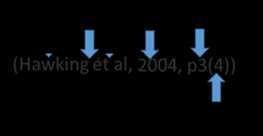
4. All assignments will require additional in-text reference details which will consist of the surname of the author/authors or name of the authoring body, year of publication, page number of contents, paragraph where the content can be found. For example;
Page 9 of 13
“The company decided to implement a enterprise wide data warehouse business intelligence strategies (Hawking et al, 2004, p3(4)).”
Non-Adherence to Referencing Guidelines
Where students do not follow the above guidelines:
1. Students who submit assignments which do not comply with the guidelines will be asked to resubmit their assignments.
2. Late penalties will apply, as per the Student Handbook each day, after the student/s have been notified of the resubmission requirements.
3. Students who comply with guidelines and the citations are “fake” will be reported for academic misconduct.
Academic Integrity
Holmes Institute is committed to ensuring and upholding Academic Integrity, as Academic Integrity is integral to maintaining academic quality and the reputation of Holmes’ graduates. Accordingly, all assessment tasks need to comply with academic integrity guidelines. Table 1 identifies the six categories of Academic Integrity breaches. If you have any questions about Academic Integrity issues related to your assessment tasks, please consult your lecturer or tutor for relevant referencing guidelines and support resources. Many of these resources can also be found through the Study Sills link on Blackboard.
Academic Integrity breaches are a serious offence punishable by penalties that may range from deduction of marks, failure of the assessment task or unit involved, suspension of course enrolment, or cancellation of course enrolment.
Table 1: Six categories of Academic Integrity breaches
Plagiarism Reproducing the work of someone else without attribution. When a student submits their own work on multiple occasions this is known as self-plagiarism.
Collusion Working with one or more other individuals to complete an assignment, in a way that is not authorised.
Copying Reproducing and submitting the work of another student, with or without their knowledge. If a student fails to take reasonable precautions to prevent their own original work from being copied, this may also be considered an offence.
Impersonation Falsely presenting oneself, or engaging someone else to present as oneself, in an in-person examination.
Page 10 of 13
HI6032 Assignment 2 – Group Presentation and Case Study
HI6032 Assignment 2 – Group Presentation and Case Study
Contract cheating Contracting a third party to complete an assessment task, generally in exchange for money or other manner of payment.
Data fabrication and falsification
Source: INQAAHE, 2020
Manipulating or inventing data with the intent of supporting false conclusions, including manipulating images.
Page 11 of 13
