Daghbandan
Timing Is Everything

The Official Magazine of AAPL | Spring 2023 FUND MANAGEMENT Investor Entry and Exits Page 6 OPERATIONS Environmental Due Diligence Page 28 AAPL Committee Appointments Page 86 LENDER LIMELIGHT Nema
Daghbandan
Timing Is Everything




We are dedicated to helping our customers build wealth through real estate. By securing the right financial solution on each real estate investment in their portfolio, ResCap Borrowers have more control over their funds and their future.




KAT HUNGERFORD Executive
EditorDAVID RODRIGUEZ Design
CONTRIBUTORS
Katie Bean
Gregory Becker
Daren Blomquist
Alex Breshears
Arthur Budimir
Alex Buriak
Dyan Cole
Dana Georgiou
Anthony Geraci
Vidur Gupta
Elizabeth Morales
Romney Navarro
Jack O’Flaherty
Kathryn Peacock
Chris Ragland
Lucas Sambrook
John V. Santilli
Jeff Spiegel
COVER PHOTOGRAPHY
BlushPix Photography
Private Lender is published quarterly by the American Association of Private Lenders (AAPL). AAPL is not responsible for opinions or information presented as fact by authors or advertisers.
SUBSCRIPTIONS
Visit aaplonline.com/subscribe.
BACK ISSUES
Visit aaplonline.com/magazine-archive, email PrivateLender@aaplonline.com, or call 913-888-1250.

For article reprints or permission to use Private Lender content including text, photos, illustrations, and logos: E-mail PrivateLender@aaplonline.com or call 913-888-1250. Use of Private Lender content without the express permission of the American Association of Private Lenders is prohibited.
www.aaplonline.com
Copyright © 2023 American Association of Private Lenders. All rights reserved.
We’ve talked about the current private lending market as a crucible. Higher interest rates, low housing inventory, the skilled trade pinch, supply chain disruptions, inconsistent capital, inflation hikes, and economic uncertainties are all fusing to reveal fault lines in the foundation of our industry. In taking the temperature of the market, we’ve found two distinct camps: those who see opportunity and those who perceive threat.
This is not “optimist” versus “pessimist.” It is a representation of how varied private lending businesses can be when it comes to infrastructure and operations. It’s also indicative of how much our industry has come to rely on a certain kind of market and economic climate.
If you are among the camp who sees opportunity, we are relieved and happy. We want to hear your success stories, and how you’ve found that path through. We know you still have questions and concerns and that it can be hard to find answers when much of the market is focused on the wolf at the door. We are here for those questions and concerns, whatever they may be.
If you are experiencing that wolf firsthand, know that you are not alone and not without resources. Regardless of your AAPL membership status, we want to help you keep that wolf at bay and shore up the cracks in your business. Reach out to let us know what you’re going through. We have thousands of connections and a commitment to helping you. We cannot offer a magic wand solution, but we can offer direction, perhaps help you with a mindset shift, or even lend an ear that will keep your confidence.
One resource we want to highlight immediately is our committees. Our Education, Ethics, and Government Relations committees are made up of professionals from across the industry with a multitude of backgrounds and subject matter expertise. All are dedicated to giving back to the industry and volunteering to help steer the ship.
What’s more, we selected our 2023-2024 cohort with an eye on the changing tides on what our members and the industry will need from these unique individuals in the current climate. They are your voice and AAPL’s representatives who guide our initiatives and next steps. Importantly, they are also resources for you to lean on. Learn who they are and what drives them on page 86. Then take the next step: Reach out to us to make that connection and continue the journey to exit the crucible stronger than before.
Managing Director, American Association of Private Lenders
Answering this question is a critical first step in successfully launching your debt fund.
▶ Jack O’FlahertyWhen launching a debt fund, you must understand when and how investors will enter and exit the fund. In addition to being one of the key mechanics behind the operations of your fund, it will be one of the questions investors and other stakeholders commonly ask.
Neglect in this area can lead to misallocation of profits and losses, incorrect distributions to investors, and issues with your audit, all of which can erode investor and regulator trust. With the guidance of your legal and compliance team, you must be proactive and intentional about structuring entry and exit appropriately before accepting investors into your fund.
Your fund’s operating agreement and term sheet are the documents that dictate how investors will be able to enter and exit your fund. The attorney who helps you with the formation of your fund will walk you through the different options and help formalize your
decision in the agreement. Finding a legal partner who is specifically knowledgeable in both fund formation and the intricacies of the private debt industry is key.
Including your fund administrator and, if relevant, your external accountants (e.g., tax and audit) in the discussion is also important. Your fund administrator will record the investors entering or leaving the fund in accordance with the agreement, and your auditors will verify that capital transactions are properly recorded. One of fund managers’ most common pitfalls is lack of alignment with all necessary parties before operations begin.
Generally, one of the first decisions you’ll need to make is whether your fund will be open-ended or closed-ended. As with all fund formation topics, there are exceptions and hybrids. Funds can be customized in many different ways, but most funds start with these two well-defined options.
A closed-ended fund has a finite life and is commitment-based. Generally, over a period stipulated in the operating agreement (e.g., 1-2 years), investors will commit to a certain amount of capital that can be “called” over the life of the fund (usually 5-10 years). Typically, this capital cannot be withdrawn until the fund winds down. The amount of capital called from each investor will be pro-rata; therefore, each investor’s ownership percentage over the life of the fund will stay the same.
The process of letting investors in and out of a closed-ended fund is simpler than for an open-ended fund, because they all enter and leave the fund pro-rata on the same dates. Closed-ended funds have been historically popular for managers strategically investing in illiquid investments (i.e., private equity, venture capital, real estate equity).
A classic open-ended fund, on the other hand, has an open-ended term (usually limited only by ongoing investor funding and manager discretion) and accepts investor contributions when the fund manager chooses, generally at the beginning of each month or quarter. These funds often reinvest capital from paid-off loans. Some open-ended funds that reinvest capital from matured investments and continue to bring in more investor contributions over-time are referred to as “evergreen funds” due to their continuity and natural growth over time.
The process of letting investors in and out of an open-ended fund can be complicated, as detailed below.
One of my previous Private Lender magazine articles explored whether your debt fund qualifies as an investment company (“Does Your Debt Fund Qualify as an “Investment Company?, Q4 2022, p. 16). The most important point for investment companies to remember is you will report a Net Asset Value (NAV) at fair value. This article assumes you have made the determination that your fund qualifies as an investment company.
Striking a NAV and
Liquidation. As noted previously, best practice for an open-ended fund that reports as an investment company is to allow investors in and out of the fund only on the date when a NAV for the fund has been struck. Generally, this is monthly or quarterly.

The fund’s NAV represents the fair value of all your assets, minus the fair value of
all your liabilities, at a given point in time. A helpful way to think of the NAV is that it’s the value that would be received upon a hypothetical liquidation of the fund’s assets and liabilities.
The reason the NAV is so important on the date an investor enters or leaves the fund is that it ensures that all investors are “buying in” or “selling out” of the fund at its current value and, therefore, the correct price.
NAV can increase or decrease for any number of reasons. It may increase as cash is accumulated from interest payments from loans. It may decrease for accrued interest that hasn’t yet been paid on the fund’s line of credit. It may increase when you foreclose on a loan and end up owning a property that is worth more than the par value of your loan. More rarely, the NAV may decrease if the fair value of an underperforming loan decreases.
Note that it is common in the debt space for fund managers making short-term loans to target a constant NAV equal to the par value of the loans. They do this by distributing profits monthly and making a determination that the fair value of their loans are equal to par. This generally works in practice when loans are performing and GAAP (Generally Accepted Accounting Principles) books are being kept, but if you are structured to use this methodology, it is important for you and your investors to understand how the fund will be impacted if your NAV deviates from par (e.g., through a foreclosure, material change in comparable market rates, etc.).
For example, imagine you have an openended, investment company, debt fund that allows investors to enter the fund on the first of every quarter, as you strike a NAV at the end of each quarter. Let’s say you also distribute profits quarterly to return the fund’s NAV back to par. At the end of the fund’s second
of value restricted investor redemptions in their open-ended fund. They did this when redemption requests went well beyond their 2% of NAV redemption limit. Imagine the impact that this sort of action has on all stakeholders in the fund.
Knowing how you will let investors enter and exit your fund is a critical first step in successfully launching your debt fund. Although it can seem like an overwhelm ing and daunting task given the many complexities and options, your legal counsel, fund administrators, and external accountants are great resources to lean on as you make your decisions.
year, you have a NAV of $30 million, which also equals the value of your outstanding loans. In the first quarter of the fund’s third year, a $5 million loan goes into foreclosure and your fund takes control of the underlying property. Despite your rigorous underwriting and LTV standards, the value of the property is significantly less than the previous par value of the loan. A third-party expert indicates that the property is worth 50% of the previous loan, or $2.5 million. Now, let’s say a prospective investor wants to contribute to the fund at the beginning of the second quarter of the year. That investor is now purchasing into a fund that has a “hypothetical liquidation” value, or NAV, of $27.5 million, not $30 million. Because of this, their money will buy a larger portion of the overall fund and its future profits than if the loan was performing and the NAV had remained at $30 million. Note that some funds use units to track and calculate investor capital (“unitized”),

and others do not (“non-unitized”). It is a concept your legal counsel will likely consider and discuss with you as you set up your fund.
Additional
Often, additional restrictions are added around redemptions in open-ended funds. A variety of different provisions are used in practice, but some examples are requiring a period of 1-2 years of investment before being eligible to redeem, only allowing a certain percentage of the NAV to redeem in any given year, and general manager discretion. You and your team will need to determine what criteria are important to ensure you can appropriately manage liquidity.

A timely example of how these terms impact operations is occurring in the debt market currently. In January of this year, a Blackstone lending REIT with $69 million
Before HDM, O’Flaherty managed the financial reporting for Columbia Pacific Advisors’ bridge lending funds. Prior to that, he was an auditor in the alternative investment practice at PwC.








Second in a series detailing how one lender is navigating the daunting task of establishing a private money fund.
▶ By Gregory BeckerIn Phase I of our fund management journey, my fund partner Eric Saiki and I relied heavily on the American Association of Private Lenders (“AAPL”) as a resource. AAPL provided the tools and connections to help us spot issues material to fund establishment. Integral to our research was our attendance at the 2022 AAPL annual conference in Las Vegas. There, we completed our Fund Manager I and II certifications. We spotted many large bandwidth issues, including the need for a management entity for the private money fund, the fund itself, ethical issues addressed by AAPL’s Code of Ethics, securities laws, taxation, marketing, licensing, and technology, to name just a few things we found valuable. As we moved forward toward our goal, these issues were merely the tip of the iceberg. More questions were raised than answered. Fortunately, the more we
learned, our intrigue grew and our desire to move forward gained momentum.
Phase II has involved analyzing various software platforms, identifying strategic pathways to build a brand while closing loans through white-label lenders, establishing the management entity, interviewing securities lawyers specializing in establishing private money funds, and licensing issues with the California Department of Real Estate.
Let’s work our way through each of these.
Eric and I decided to meet with the technology vendors in the fund management space. All of them attended the annual AAPL convention. Through these meetings, we hoped to find a vendor that
provided the four major functions of software platforms:
01. Client relationship manager (CRM)
02. Front-end loan origination
03. Back-end servicing
04. Back-end relationship software
We were looking for a solution that provided efficiency through the integration of information. We did not, for example, want to update multiple platforms if an email address changed.
What we learned is that no one provider satisfied our goal.
CRMs can be immensely powerful, and we knew the CRM we selected would need to be a marketing workhorse. Some of the vendors we met with did have competent CRMs, but we were pursuing a solution that is purely focused on CRM and the marketing avenues it can open up.
Once we recognized a CRM would need to be a standalone vendor for us, we shifted to shopping for two providers that could meet our four areas of interest: one to handle CRM and the other to handle the remaining three functions, or so we thought. We could have eliminated the need for back-end software by hiring a third-party fund provider with their own back-end software. But, because Eric and I intend
to be more hands on, we decided not to subcontract back-end responsibilities. Our intention is to build strong bonds with investors and borrowers that will last for years. Because our investors and repeat borrowers are the lifeblood of our fund, we want to interact with them. So, we decided to hold off on selecting the back-end provider until later in our journey when our fund blossoms.
After analyzing the CRM and back-end issues, we had one decision remaining: Which platform would we select for origination? Before we could select one, another option emerged. We found a lender that has allowed us to “white label” their product, meaning we are licensing their product under our name and following their underwriting guidelines. They fund the loan. And, we use their origination

software, but we do not have to pay for it since it’s included in the licensing agreement. We created this arrangement outside of a fund structure so we could begin establishing borrower relationships and get some cash in the door to continue building the fund.
For now, we are holding off on the frontend and back-end software for a few months. Ultimately, we will select a vendor that specializes in front-end software and a vendor that specializes in back-end software. So much for dreaming—instead of one provider, we are resigned to using three platforms after all of our research.

White labeling is like correspondent lending and table funding. It is using another lender’s platform and money to fund our borrowers’ loans. Their brand is masked , and our brand is used instead. Once our fund is established, we can still white label loans that do not fall within the parameters set forth in our fund’s private placement memorandum. The solution is a win-win.

Large lending operations that have a back office and other systems in place to fund their loans exist throughout the country.

In an effort to close more loans, they have set up separate entities that mask their brand. These masked entities attract smaller, less established lenders who use the larger lender’s lending products and origination services.
The smaller, less established lender is permitted to apply its brand to larger lender’s products and services to make it appear as if the smaller lender produced the products and services. The arrangement allows the smaller entity to use its own logo, colors, and design without reference to the larger mothership company. Imagine opening a McDonald’s, but using your organization’s name and colors and being able to have

your employees wear tuxedos while serving Big Macs.
We decided on this option for several reasons. For starters, the costs of establishing a fund can be large. Our white-label revenues can be invested into the growth of our fund. Also, during this time, we will not need to rush through the fund establishment process. Instead of using our time and energy making those decisions right now, we can focus on building borrower relationships. Those relationships will go a long way when we begin soliciting investors.
White labeling offers many other benefits that I won’t go into here, but there is one final one I want to address. Although the delay in establishing the fund is not ideal, there is no need to rush into lending our fund’s money. Currently, real estate values are projected to decline as the Fed’s
interest rate increases maintain a stranglehold on mortgage rates. You may disagree with the “sky is falling” analysis, but the premise remains true. If values do fall, the loans our fund invests in will become riskier. Through white labeling, we can shift liability to the mothership while the economy corrects.
Ultimately, white labeling allows us to build our brand, generates revenue to pay for fund establishment costs and fees, shifts liability, and provides an avenue for us to close loans in the future that do not

meet our fund’s guidelines. It makes a lot of sense for us.
As we moved forward toward white labeling, we prioritized establishing the fund management entity. This is the entity that will take loans to white label lenders, and it is the same entity that will manage the private mortgage fund down the line. Establishing the management entity involved selecting a name, researching entity options such as LLCs and corporations, establishing a corporation as required by the California Department of Real Estate,
“Ultimately, white labeling allows us to build our brand, generates revenue to pay for fund establishment costs and fees, shifts liability, and provides an avenue for us to close loans in the future that do not meet our fund’s guidelines. It makes a lot of sense for us.”
licensing it through the Department of Real Estate, and licensing my partner so that he can do more than sit in the back room doing nonlicensed activities.
After we formed our fund management entity, we shifted our focus to the website and logo. Our white-label lender has a plug-in we can use to direct borrowers to start the loan origination process. Domains, emails, and social media are all part and parce l of this process, so we will convey the desired look and feel of our organization. Eric and I are not in a rush. We have our day jobs. We are methodical attorneys who like to overthink things. Accordingly, we are building our brand so that we hit the ground running during the white-label period.
As our brand takes shape, our presence goes online, and we generate white-label income, we will hire securities counsel. This means the hiring of the lawyers to establish our fund took a backseat for a couple of months.
Certain tax laws intrigued us, however, so we also bounced tax issues off a popular accountant familiar with the space. We learned that the legal issues raised in the private lending space are unique to the securities legal field. What we now know is that a general run-of-the-mill securities lawyer is probably not going to cut it for our needs. While most securities lawyers will understand the available exemptions under the Securities Act, there are components to funds that can make the fund more dynamic. This is where the lawyers
in private lending earn their fees.
We also learned about the importance of creating a sub-REIT along with our fund. By so doing, our investors can be paid out dividends. This is significant for two major reasons. First, our payroll-related issues will be much simpler because we only need to 1099 the investors after year-end. More importantly, under the current tax laws—laws that may expire in 2025—there is a 20% deduction for dividend income. I am not sure which is more significant:
(1) not paying taxes on 20% of net revenue, or (2) being able to tell investors we will pay them an 8-10% return, 20% of which is not subject to federal income tax. For those not interested in creating a sub-REIT, it is important to note that the provisions can be created during the fund establishment phase and put to sleep. Later, the sub-REIT can awaken. If we do not add a sub-REIT and want to later, we will need to go back to square one and begin the fund establishment process over. There are many other issues that factor into the selection of counsel. Of course, legal fees are important as they differ among attorneys. As far as timing is concerned, they all seem to spend a few months to establish the funds and collect payment. A gray area is whether additional fees will be generated during the ensuing months as the fund managers try to figure everything out. Will you be billed for quick-and-simple questions not raised during the establishment process? How about reviewing marketing materials created after fund establishment? What about asking screening questions for accredited and non-accredited investors?
Although there are many minor issues that need to be ironed out before engaging counsel, Eric and I have concluded that we need to hire a team that specializes in private lending. We need to make sure that after our fund is established , we can call our attorney, ask questions, and not get slapped in the back of the head with a heavy legal bill.
As we move into Phase III, our issues will be paired down. Research will turn into action, and we will begin generating revenue under our brand. By the end of Phase III, we hope to have a brand, a track record, and a securities lawyer helping us establish our fund. Stay tuned! ∞
Gregory Becker is a wills and trusts lawyer as well as a mortgage broker with an office in Redondo Beach, California. With more than 20 years’ experience in these areas, Becker is looking to start a PLF and researching various private lending associations.
As a law school student, he wrote for the school newspaper and now publishes a monthly article in his current city’s local magazine.

Filing, withholding, and composite regulations can change from year to year — and from state to state.
▶ By Jeff Spiegel and Dyan ColeFund managers need to understand the tax impacts, withholding obligations, and filing requirements of conducting business or owning property in multiple states. A private lending fund is generally set up as a limited liability company (LLC) or limited partnership (LP), and its tax-related responsibilities vary by state.
Besides the entity’s filing requirements and withholding obligations, each investor (also referred to as partner throughout this article) in an LLC or LP may also have tax-related responsibilities in those states. Entities can alleviate some of their investors’ state obligations, however. Two of the methods we’ll discuss here are composite returns and subsidiary real estate investment trusts (REITs). It’s important to have a general understanding
of each method’s implications in order to approach a fund’s short- and long-term objectives strategically.
Each state has the right to tax a business that earned revenue within the state. When a business operates in more than one state, the allocation of the taxable income in each state is determined using the “apportionment” method rather than the exact income earned or deductions. Apportionment requires assigning a percentage of a company’s gross revenues and specific expenses to each state in which it operates in order to determine the company’s income tax in each state.
The three apportionment factors used to determine the percentage of taxable income reportable to each state are:
▶ Revenue (sales) considers gross revenue (sales) within the state, also known as total gross revenue.
▶ Payroll uses payroll within the state, also referred to as total payroll.
▶ Property assesses property owned within the state, known as total property.
Understand, however, that use of the apportionment method varies by state, as does the definition of the three factors.
In the private lending space, revenue would generally be interest income, fee income, and servicing income, essentially what the entity shows as gross income by
state before any expenses. Most funds are set up on an accrual basis, so receivables recorded as income (e.g., accrued interest receivable) are included as gross income. For foreclosed real property, there is the possibility of income at the time of foreclosure. It would be the difference between the fair value of the property and amount of the note and accrued interest, and it would be included in gross income for that state at the date of foreclosure. Second, if the property sells subsequently for an additional gain, the gain amount would be included in the revenue factor amount.
The payroll factor is based on wages; it does not include guaranteed payments or independent contractors. This factor is strictly based on the state in which an employee works, not the state in which the entity operates. An entity with remote employees working outside the entity’s home state pays wages to the employee in the employee’s state, giving rise to the payroll factor in multistate tax returns.
Some states “weight” each apportionment factor equally. Often, however, greater weighting is given to revenue because sales are likely to be more prevalent. Certain
states may double the weighting factor for sales, or perhaps consider only the sales factor. Note that many states have thresholds regarding minimum sales amounts that must be met in the state in order for a filing requirement to exist. Because of the minimum filing requirement, in some states you may not have to file if you don’t meet their minimum, despite having revenues.
Because of states’ differing definitions, weightings, and filing thresholds for the three apportionment factors, the total apportionment percentages may not equal

100%. Net losses are also apportioned across different states in the same manner as net income. However, the application of losses, either carrying back or forward, is determined by each state.
If you have multistate activities, one approach is to schedule the apportionment factors by state and then do an analysis to determine which states have required filings. Once you establish that, you can determine composite or withholding requirements (discussed later in this article).
Six states—Georgia, Missouri, New Jersey, New York, Oregon, and Pennsylvania—impose a filing requirement without regard to revenue, payroll, or property amounts. Instead, the entity has a tax filing requirement if there are any investors living in those states.
One common misconception about state filing obligations exists for states that do not have income tax. Forming an entity in a state that does not impose income tax (e.g., Delaware) alleviates the filing requirement in the state (or states) where business is conducted, including the entity’s home state. But, as previously stated, other states can tax an entity if it generated revenues in the state, regardless of the income tax status of the entity’s state of formation. Failure to timely file and pay tax at the entity level comes with penalties and interest, some of which can be steep, depending on the state and the number of investors.
For an LLC or LP, the term “withholding” is typically an annual payment made at year-end versus the traditional pay-asyou-go tax collection method. Withholding
requirements can be complex, varying by state and by classification of the partner (corporation, individual, etc.). Although many states require withholding on behalf of nonresident partners, some states impose an entity withholding requirement for resident partners. Conversely, when certain minimum distributive shares of income or tax thresholds are not met, some states do not subject the entity or a partner to withholding.
Exemption waivers are one way to mitigate withholding obligations and, therefore, can be appealing to nonresident partners. Many, but not all, states allow nonresident, non-tax-exempt partners to be treated as withholding-exempt, provided the entity maintains a completed waiver. Such waivers are essentially an agreement by the partner to timely pay and file tax obligations. Besides maintaining the waiver, it is best practice for the entity to procure a separate agreement from each nonresident partner. Because ownership interests have the tendency to shift among different partners, it can be an administrative challenge for an entity to accurately track and maintain such waivers and agreements.
Practically speaking, most funds are single-state initially. As they grow and potentially lend in more states, they transition to multistate. Entities with activities in multiple states will first turn to composite tax filings to avoid the withholding for investors. For states that do not allow a composite filing or for an entity with investors whose state prohibits them from being included in a composite return, a withholding for the investors may be an option. The fund pays the withholding with the state partnership return and reports the amount on the investors’ Schedule K-1 for their individual tax filing.
Withholding amounts can vary from minimal to quite large, depending on the amount of business an entity does in a particular state. Overall, business activities outside an entity’s home state tend to be small, and the withholding amounts reflect this.
Are there ways to relieve investors of having to file in all the states in which the fund conducts operations?
Yes. There are several feasible solutions for fund managers to research and evaluate with the help and guidance of a professional adviser.
A state composite return is one that a passthrough entity files. It reports the state income of all nonresident partners as a single group. This means the nonresident partners do not have to file an individual tax return.
It is important to be aware of each state’s tax laws. Each state has its own rules around eligibility and the availability of filing a composite tax return. Nebraska, Oklahoma, Tennessee, and Utah currently do not allow composite tax filings. Arizona, New York, and Vermont have restrictions around which companies may use the composite method. The greatest benefit of filing a composite state tax return is the convenience of filing only one return at the entity level rather than filing individual returns for each nonresident partner. Not having to file multiple returns will result in lower tax preparation fees. Another advantage is the responsibility of tax notices and assessments is diverted away from the nonresident partner; the entity handles them instead.
Although these benefits can make the fund more attractive to investors, the convenience of filing a composite return can be offset by certain disadvantages, including:
▶ Tax rate. Most states have their tax rate for composite tax filings set at the highest marginal rate, which means higher taxes compared to filing an individual tax return in that state.
▶ Deductibility. The tax payment made on behalf of the nonresident partners is not deductible at the entity level; instead it is treated as a distribution and payment on behalf of the nonresident partner.
Composite tax returns are elective each year, so it is necessary to assess the filing benefits annually. Although you file a composite tax return in one year, doing so in the subsequent tax year may not be advantageous. The entity must inform the non-resident partners accordingly to ensure they meet their individual filing requirements.
It is important to emphasize that filing a composite tax return does not replace a state filing requirement at the entity level. State composite and state income tax are two separate filings.

Another option for keeping nonresident partners from needing to file in multiple states is to set up a subsidiary REIT. A REIT is considered to be the entity conducting business activities in the multiple states instead of the fund and its investors. REITs, taxed as a C corporation, can deduct dividend distributions, avoiding double taxation at both the
corporate and the personal income tax levels. The REIT files in all the states in which there is business activity, not the investors.
Since a REIT is eligible to develop and own most real estate property types, this may be a viable option for fund managers to consider. REITs have other benefits as well. A REIT pays passive income as dividends to its investors who get taxed in their state of residence only, which can produce higher yields and increase the deductibility of dividends the investors earn. Other advantages (and disadvantages) are associated with REITs; you should discuss them with a professional adviser as you evaluate whether to form a REIT.
Private lenders face complex tax and withholding rules for multistate activities.
Consulting with an experienced accounting professional with multistate tax expertise helps ensure a private lending fund:
▶ Complies with the various state withholding and filing requirements at the entity and partner levels.
▶ Takes advantage of potential tax-saving strategies that may be appealing to its investors.
▶ Reduces its exposure to examination by state taxing authorities.
Filing, withholding, and composite regulations can change from year to year—and from state to state. Both established fund managers and those new to the industry should secure the services of an accounting professional who specializes in multistate tax preparation. ∞
JEFF SPIEGEL
Jeff Spiegel’s career as a certified public accountant began to escalate when he established his own boutique firm in 1990. Spiegel Accountancy Corp is a full-service CPA firm focusing on the mortgage banking and private equity lending and real estate industries.

Spiegel developed a team of seasoned leaders dedicated to developing strong client relationships while providing exceptional service that helps clients develop forward-thinking business solutions.
Spiegel is sought out for speaking engagements, industry webinars, and content for national publications.
DYAN COLE
Dyan Cole joined Spiegel Accountancy Corp in 2012. As director of operations, Cole plans, coordinates, and oversees operational activities to ensure processes and systems align. She is integrated with Spiegel’s marketing and business development strategies, quality control and risk management systems, client retention and talent strategy programs, and employee leadership development.
Cole specializes in content creation and writes technical and human-interest articles for Spiegel’s blog.
These communication strategies streamline your processes and mitigate inefficiencies.
▶ By Alex BuriakThis is the first in a short series of articles covering the practical aspects of creating and maintaining efficient operations processes. Operations is a living, breathing “entity” that evolves with the size, speed, and growth of your business. They are fluid, not a one-and-done task.
Like many companies, you likely created your processes, or operations, on the fly as the company got started. You continued to build them out as needs changed. Then the company got bigger. And you got busier and did whatever seemed to work to keep the train running. Now, 10 years have passed and your team is weighed down by a disorganized mess of complex tasks and little to no communication processes. Your company is stagnating as a result.
The solution to this situation is developing a well-run lending operation. As you might guess, this is where many business leaders—and businesses—fail. Rather than looking at operations as all the processes required for managing loans from start to finish, they simply view it as originations. Let’s consider a simple analogy. Think of operations as your entire human body. The body is comprised of many parts and systems, each with their own name and functions, but they cannot complete any function without overlapping with other systems and parts.
Your operations are no different. You likely have teams for collections, draw management, originations, fund management, analytics, underwriting, processing, insurance, extensions, modifications, note
sales, and other tasks. These teams must work together to convert a lead to a customer, close and service the loan, and then discharge it. Even if you are using a third party for some of these tasks, you must still manage that third-party process and tie into your operations.
As you may be beginning to see, lending operations isn’t just about numbers and spreadsheets. It’s about navigating a labyrinth of departments and people to making the seemingly endless stream of paperwork, phone calls, and emails efficient. Solid lending operations help limit irate customers or employees as well. Most important, effective operations will help you exponentially grow your company.
One key component of an effective operating system is communications. If you made
no other changes to the way your company operates, shoring up your communications would make you more money, hands down.

So, picture this: Your top-notch asset-based lending company has been running smoothly—or you think it has—for years. But as you reflect, you have to admit there are always fires, emergencies, and something that could ensure smoother closings. Most of the time, these situations result from a breakdown in communication among departments, co-workers, and borrowers. The miscommunication often results in an uncoordinated mess and unhappy customers. It’s a scenario that plays out all too often in businesses.
That’s why communications is so critical to your operations. It’s the oil that keeps the gears of a successful operation turning. Clear and concise communication ensures everyone is on the same page. Let it be known internally that your company’s policy is to state even the obvious. And state it specifically: who you are, what you want, when you want it, and any consequence of not doing so.
Let’s place this in context:
“Hi, this is Alex. I need some additional information on your 30-year DSCR loan to fully quote you. I need answers to the following questions (state questions) by 3 p.m. today. If I don’t get them, your quote and closing will be delayed. Will I have these by 3 p.m.?”
Both you and your staff must communicate with purpose and direction, internally
among yourselves and externally with prospects, clients, and vendors. Someone in the conversation must drive the conversation to get the results you want. Let’s face it, all communication is a negotiation—of persuading the parties involved to spend their time to do something mutually beneficial.
There is a difference between communication and effective communication. Effective communication requires time, effort, and good listening skills.
People who communicate effectively spend more of time listening than talking and giving orders. They are, first and
foremost, problem solvers, which requires listening skills. Understand that any dialog in your office about actual work is a problem-solving negotiation.
Train your staff to effectively communicate problems, listen to others who are conveying information about problems, and try solutions to fix the issue. These actions will increase the conversion rates of loans closed versus loans lost.
At its essence, effective communication involves listening to a problem, repeating the problem to make sure you have correctly understood everything that was conveyed, and then offering a collaborative solution to the problem. Getting your loan officers to help borrowers do the same will exponentially increase your closings.
Here’s an example that illustrates how effective communication and active listening can be used to solve problems in your operations:
Despite reaching out through numerous emails and phone calls, your originations team hasn’t heard back from a prospective borrower after the initial phone call in which the team finalized all the necessary details for the application. The application appeared to be ready to move on to the next stage toward closing the loan. So, the problem is the borrower didn’t follow up, right?
Wrong.
Yes, your team attempted to communicate, but was it effective? No. You can get to the real problem by examining what happened during the initial phone call. Sure, your origination team went line-by-line through
the application to get the missing information, but in doing so, it relegated the phone call to a transaction instead of using the call as a relationship-building opportunity. Because the borrower perceived your team to be simply transactional, when the borrower got a better offer (or better interaction) from someone else, that’s who they went with.
To prevent potential buyers from “ghosting” you, train your origination team to turn that initial phone call into a listening opportunity. Ask them to hunt for what your borrower really cares about (e.g., money out of pocket, terms, rate, closing date, etc). The fact that you asked and then listened to their needs changes the relationship dynamic. The borrower now feels they have some control or are at least on more equal footing (meeting of the minds). Even if they responded “low interest rate,” suddenly that might not be as important as working with a lender who “gets me.” When that type of relationship dynamic occurs, the borrower is much more receptive and may stay with you even if offered a lower interest rate elsewhere. The borrower feels understood and taken care of by your team. This kind of communication takes active listening. As it is in closing loans, communication is paramount when you make adjustments in your operations. With a staff that can effectively communicate issues and problems, you can make minor—and sometimes major—adjustments to your procedures without the angst that usually accompanies change. When you have everyone working as a team moving
in the same direction, you have growth ahead of you. ∞
Alex Buriak is the senior vice president of Jet Lending. He has a demonstrated history of working in the investment and real estate industry. After graduating from the University of Pennsylvania and National University of Health Sciences, he spent three years running multiple clinics. His search for a better avenue to raise capital to start another practice led him to real estate.
Buriak became the highest-producing loan officer and business developer at Jet Lending, closing more than 630 loans and selling an average of 18 houses a year as well as evaluating countless other deals in Texas. Since those accomplishments, Alex has helped expand real estate companies to other markets and states and has solidified and modernized operations to achieve efficiency and ease of business. He regularly speaks on panels, addressing lending, business, and underwriting operations and strategies.
Buriak has a bachelor’s degrees in emergency medicine and natural sciences (focus in medical sciences) and a doctorate degree in chiropractic, rehabilitation, and natural medicine.


Today’s private lender sales teams lack experience in true credit risk analysis, making pre-qualifying harder in a market that is producing tougher deals with less experienced sponsors. Here’s how to fix it.
▶ By Dana GeorgiouIt’s 2023. You may be sitting at your desk wondering, “How has everything changed so much?” Where are the days of our originator’s phones ringing? Why aren’t our capital partners interested in buying loans?
Unfortunately, your questions shouldn’t start with how, why, or where, but with what. What do you have to do in this market to remain successful and relevant in the private lending space?
Private lenders must understand today’s credit environment. Put aside the pricing
aspect and just focus on this one piece for a moment. Our industry, some will say, is still in its infancy; therefore, some of the talent we have seen lacks deep-tenured experience in true credit risk analysis. If this is the case in your shop, you have two options:
01. Bring in new talent that does have deeply tenured credit analysis expertise to replace the check-the-box mentality. Think back to the days of mortgage lending when the ability to repay, the capacity to repay, and the willingness to repay were all part of the thought process.
02. Bring in new talent that can quickly help you train current talent into true credit analysts.
What should resonate here is is that this challenge is not just operational. Lenders whose sales teams lack deep credit analysis skills in pre-qualifying deals will struggle in this market. The days of vanilla fix-and-flip or rental property loans are over. The market is producing tougher deals with less experienced sponsors, riskier collateral , and thinner margins
Investors are scrambling to find deals with an acceptable ROI, and some are moving to asset classes they aren’t familiar with; others just accept lower profits. For any deal, ask yourself what the exit strategy looks like. Is your lending shop a good steward to your partners for both current and future loans?
If your originations and operations teams don’t have the right experience, your credibility with partners and ability to raise capital could suffer. Long-term relationships with your borrowers/sponsors will also be impacted. Both groups must be equally strong to balance risk and create a harmonious and thriving shop. (Traditionally, capital markets is also part of a lending shop’s business, but that isn’t the focus here.)
The tenure of folks sitting in sales seats has increased, but there’s a lack of confidence
that originators have the credit risk analysis skills needed to be successful in the current market. Many, at best, have been order takers: a warm body who answers the phone, asks a series of prescripted questions, checks off boxes, and moves paper to the next group for review.
If you have been operating under this model, you will and should experience turnover. In today’s market, your sales/ origination team needs to be the front line of defense. They must have a deep understanding of guidelines and, more importantly, the intellectual curiosity to dissect that information before that deal hits the pipeline.
Here are the key areas sales/originators should focus on:

▶ Profitability. Is this deal profitable for the borrower/sponsor? Margins have gotten thinner, so if an originator doesn’t know how to pencil a deal to help the borrower/ sponsor understand how the deal will or won’t make money, what value is the originator bringing?
▶ Documentation . Do you have a clearly defined process for deal submission and review before moving that deal into an operational review? An originator needs to analyze the collateral—as well
as the sponsor. Do they have tools available for pre-valuation determinations? Have they been trained in reading credit reports, background reports, and key documents like bank statements, entity documents, or others? Each of these could reveal potential pitfalls.
We all want our originators hunting new business, but if they can’t quickly define or vet what a good loan looks like , their deal conversion will be low, and their frustration will be high.
▶ Ownership . Do you have the right compensation structure that provides incentives for originators to take on an ownership mentality and drive the right deals into your shop? Do you have strong leadership that can teach, advocate for, and hold your originators accountable?
If the expectations for the sales team are high, you better have folks in your operational roles who can help originators find ways to close deals. Yes, to be successful in this market, your sales team must operate in tandem with your operations team. The days of one ruling over the other should be long gone.
The most successful lenders categorize this as “production” versus “sales and

operations.” You can still have a head of sales and a head of operations, but those leaders should view any given deal not just as volume, but as volume that will perform and be profitable.
An ownership mindset is also key to the operations team. Have you established a compensation structure that incentivizes not only a balance for credit risk but also for urgency and commitment to a process? Operations needs to be as invested in making good deals to great sponsors and to having great collateral as your originators are. If they aren’t, your scale will be unbalanced.
There is just no substitute in this market for having the right skill set in the right seats. If you have not already begun an analysis for a successful model, the time is now. You will need to act with courage and deliberate intent. Some of you will just go through a tuneup, while others will need to undertake a complete rebuild. Either way, the time for action is now. Right now. Following “old school rules” doesn’t mean you lose sight of innovation or pioneering new lines of business. We must all continue to do those things to keep the private lending space a viable option in the overall lending market. Nonetheless, you must keep the basics of evaluating risk at the forefront of everything you do. Doing so will help protect your frontend customer as well as your back-end partnerships—and set you up to be a preferred partner for both. ∞
DANA GEORGIOU
Dana Georgiou is a seasoned mortgage professional with nearly 30 years of mortgage lending experience that includes roles as a senior/executive manager in sales, marketing, and lending operations for the last 15 years. Her expertise includes development of high-performing teams, creating sales growth and strategy, perfecting and implementing solutions to streamline new loan production, new program and product development as well as managing large-scale mortgage operations. She has a deep background in mortgage consulting and has worked in all channels of the mortgage business, including the private lending/business purpose entity lending space. Her experience is unique in that it covers operations, credit/risk, and sales and marketing. Georgiou is an avid speaker at numerous mortgage industry events and is a staunch advocate for education in the mortgage lending space. She is a published author, with some of her most recent articles appearing in Mortgage Women Magazine and DealMaker Magazine. She is actively involved with Habitat for Humanity in her local area as a financial counselor helping families achieve their dreams of homeownership.
We help brokers and lenders scale their business with our software.
Streamline your private and commercial loan operations from application to servicing with a modern, white-labeled experience.

CRM: Manage leads and referral partner relationships with built-in tools for email, SMS, dialers, and more.
LOS: Close more loans faster with webforms, doc/file upload portal, and doc generation engine.
Marketplace: Match your loans with lenders based on eligibility across verticals like bridge, fix & flip, construction, DSCR, CRE, SBA, equipment, term loans, line of credit, MCA, and factoring.
Price Engine: Industry’s first automated pricing engine for bridge, fix & flip, construction, DSCR, and business loans.

Loan Servicing: Manage all loan servicing activity including draws, payments, escrows, payoffs, fractional investors, and more.

Turnkey, cloud-based and fully customizable platform – no software download needed.
Multi-level broker channels for correspondents, net branches, and referral partners.


Prepopulate loan docs, forms, and disclosures in Word or PDF with unlimited e-signatures.
Third-party integrations and APIs for credit, AVM, BPO, income/asset verification, inspections, and more.
Environmental due diligence is the process of evaluating and identifying environmental risk associated with real estate collateral. Lenders require it to be performed for a variety of reasons, including the impact of contamination on collateral value and the liability protections it affords. Many types of environmental due diligence tools are available.
We’ll review these reasons and tools in further detail.
Collateral value. One of the primary reasons lenders require environmental due diligence is to determine whether environmental contamination will have an effect on the collateral’s value.
Remediation of contamination is costly and can often far exceed the borrower’s capabilities or even the value of the property. Lenders want to ensure that a borrower is not going to be burdened with remediation obligations and cleanup costs that will affect their ability to repay a loan. In the worst-case scenario—a borrower default—the collateral may not be worth its appraised value due to environmental issues. Borrowers may have difficulty selling the contaminated site without a significant discount or indemnity.
Liability protections. Another important reason for performing environmental due diligence is it gives both the borrower and the lender Comprehensive Environmental Response, Compensation and Liability Act (CERCLA) protections when acquiring property. Historically, the current owner or operator of a contaminated property could be held responsible for its cleanup, regardless of
when the contamination occurred. However, if a borrower performs a Phase I ESA prior to purchase and unknowingly acquires a property with contamination, the borrower can qualify for the “Innocent Landowner Defense” to liability, assuming they follow their other obligations. In addition, lenders are granted secured creditor liability exemptions under CERCLA with the caveat they are not directly engaged in the management of a property during the course of a loan.
Even so, in the event contamination exists, these exemptions don’t protect either party from the reduction in property value that may occur. It is important to keep in mind that potential expenses may extend beyond remediation costs and can include expenses related to preventing exposures, third-party agreement transfer of environmental cleanup liability to the borrower, legal claims for cleanup or other damages, consent or administrative order
obligations, expenses related to unacceptable exposure from site operations, and compliance fees or other violations.

Private lenders are less strictly regulated than banks and other traditional lenders in the Federal Reserve system. Accordingly, they often have more intrinsic flexibility and can have less built-in policy around environmental due diligence, which leads to a varied approach. Whatever the approach, the primary focus should be to identify existing and
potential environmental liabilities that could divert the borrower’s cash flow.
As noted, developing environmental policies and procedures should be integral for every lender to ensure a loan can be repaid and that assets or guarantees pledged are sufficient to cover the loan amount in the event of default. The foundation of a good, well-balanced environmental policy takes into consideration the following three categories:
01. Type of loan (e.g., new loan, renewal, refinance, foreclosure, etc.)
02. The property’s collateral risk category (e.g., property type, including current and historical uses)
03. Loan amount
Due diligence often differs based on those three categories. For example, the level of due diligence conducted for a refinance on a multifamily development with robust prior due diligence may differ from due diligence conducted for a new loan for an auto repair facility with lengthy operations or a strip mall with a dry-cleaner tenant. The goal of proactive due diligence is to prevent default. All due diligence should be conducted with the goal of being able to divest of a property in the event of default without taking losses due to a costly environmental issue.
A well- written policy provides lenders with a due diligence process tailored to their carefully outlined risk tolerance.
Figure 1 shows an example of an environmental policy matrix that clearly defines screening levels and offers a tiered approach to reporting requirements.
Let’s take a closer look at category No. 2 in the previous list: property types and features. The environmental risk of collateral is often
determined by its current and historical uses. There are several uses known to be environmentally risky. Historical use is sometimes more problematic, especially if these uses were conducted prior to modern regulatory oversight, which is generally considered to have commenced in the early 1980s.
Understanding these uses and the potential risks they present can help guide the environmental due diligence process from the beginning stages. Lenders often use the NAICS Codes of Environmentally Sensitive Industries (currently found in Appendix 6 of SBA’s SOP 50 10 6) to
1 All of the following are satisfied:
▶ Loan amount is less than $150,000
▶ Review of the completed environmental questionnaire (EQ) reveals no conditions requiring additional screening
1a All of the following are satisfied:
▶ Loan amount is more than $150,000
▶ Review of the completed EQ reve
2
All of the following are satisfied:
▶ Loan amount is greater than $250,000 and less than $1,000,000
▶ Review of the completed borrower EQ reveals no conditions requiring Level 3 screening
▶ Commercial use has been limited to office or multifamily activities
3
Any of the following applies:
A completed EQ was not submitted by the borrower
▶ The loan amount is $1,000,000 or more
▶ Ground-up construction or significant excavation is planned (except that Level 2 due diligence is allowable where the loan amount is less than $1,000,000)
▶ Past or present contamination is known to have occurred, even if currently present under controlled conditions
▶ One or more underground storage tanks containing hazardous substances or petroleum products are or has been present, except for liquefied petroleum gas USTs for on-site use as heating fuel
▶ Past or present activities at the property include the use, storage, manufacture, repackaging, extraction, emission, treatment, disposal or release of hazardous substances or petroleum products in commercial quantities
▶ The NAICS code for any current or past activity at the property is included on the list provided at [your customized appendix].
Environmental Questionnaire (EQ) only
EQ and Records Search with Risk Assessment (RSRA)
EQ and Transaction Screen Assessment (TSA)
EQ and Phase I ESA
determine the risk associated with a property type or use.
Some of the more common environmentally risky uses are described in Figure 2.
It is also important to be aware that environmental liabilities can originate from off-site sources. Off-site issues can include regional groundwater plumes, dry cleaners, gas stations, and other commercial and industrial properties that might impact
occupants. Off-site issues can often cause a threat to human health that can be equal to or exceed an on-site issue. It may be surprising to learn that an environmental issue that didn’t even originate on your property could pose a threat; however, it is important to remember that contamination travels beneath the ground surface through groundwater and through the air spaces that exist between soil particles.
Gas Stations and Underground Storage Tanks (USTs)
Auto Repair
There are many types of environmental due diligence tools and many ways to perform it. The most diligent are Phase I and Phase II ESA. They lower liability and manage risk for the stakeholders involved. But not all loans require or
Manufacturing/ Industrial Use
Gas stations, both current and historical, typically store fuel underground in USTs. In certain parts of the country, heating oil is also stored in USTs. USTs degrade over time, resulting in releases of fuel to the subsurface that can impact soil, groundwater, and soil gas. The releases and any associated cleanup are often regulated by local and state agencies.
Auto repair operations typically use petroleum products and chlorinated solvents. Over time, these contaminants can reach the subsurface through features like floor drains, sumps, oil water separators, and sand traps.
Manufacturing and industrial uses typically include the use of petroleum products and solvents that can impact the subsurface through operational use and storage or through features like floor drains and separators. Often, these types of facilities are overlooked, especially if they operated during a time prior to regulatory oversight.
Dry cleaning chemicals, even when properly used, managed, and disposed of, are hazardous to the environment and human health. The main chemical of concern associated with drycleaners is PERC, which became the nation’s predominant drycleaning chemical in the 1930s due to its cleaning efficacy. Prior to that, petroleum-based solvents were used.
In 2008, the EPA identified PERC as a probable human carcinogen; almost all exposure from PERC is by air. Presently, there are more than 27,000 dry cleaning operations in the U.S. About 85% use PERC as the primary cleaning solvent. Though most dry cleaners use less than 140 gallons of PERC per year, the cumulative impact from these numerous facilities is significant. Of note, in 2006, the EPA made a final ruling that requires a phaseout of PERC machines co-located in residential buildings by 2020. In addition, California enacted a law in 2007 that requires all PERC drycleaning to be phased out by 2023.
warrant full Phase I and II ESA for underwriting purposes.
A tiered approach to environmental due diligence involving streamlined environmental reports that are more limited in scope can be a cost-effective and efficient tool for screening some properties. These types of reports are often used for smaller loans or loans involving lower-risk properties.

Phase I ESA. The gold standard is the Phase I Environmental Site Assessment (ESA) conducted in accordance with the current ASTM 1527-21, with the goal of identifying the presence or likely presence of contamination. Many lenders rely on
a Phase I ESA to determine the impact, or potential impact , of environmental contamination on a collateral’s value and to identify liability exposure.
Environmental concerns identified during the due diligence process can represent significant risk exposure. Using the ASTM 1527-21 standard is important because it meets the Environmental Protection Agency’s ( EPA ) All Appropriate Inquiry (AAI) requirements and provides CERCLA liability protection to the user, as noted previously.
Phase II ESA. When a Phase I ESA identifies a recognized environmental condition (REC) or the potential for impacts at
a property, the next step is to evaluate the presence, or absence, of contaminants in the subsurface of a property. This is done by performing a Phase II ESA, or subsurface investigation, which tests soil, soil gas, and/or groundwater to identify sources of environmental impacts. A Phase II ESA can help determine liabilities and longterm costs associated with a property.
Environmental Questionnaire (EQ). The environmental questionnaire was developed for Small Business Administration (SBA) loans, but it has been adopted in the ASTM E1527 Phase 1 Standard and can be a sound way for a lender to initially screen for risk. The EQ allows smaller loans on
less risky properties to get by without doi ng comprehensive environmental due diligence—at least at first. If the loan amount is under a predetermined threshold and the site use is not listed as an environmentally sensitive operation, the EQ is a great place to start. The EQ is typically filled out by a lender who has visited the property and by an owner or occupant. If the EQ identifies any risk, a higher level of due diligence is usually required.
Transaction Screen Assessment (TSA) Report. A TSA is a cost-effective limited environmental due diligence report, but slightly more detailed in scope than the RSRA report (see below) and does require a site visit. It is essentially a scaled down version of the Phase I ESA; however, it follows an alternative ASTM method (E1527-14). A TSA report is appropriate for lower risk properties. Because it adheres to an alternative standard, the TSA does not meet the requirements of the EPA’s AAI and will not offer the borrower protection from CERCLA liability.
Records Search with Risk Assessment (RSRA) Report.
Sometimes a lender may begin due diligence with an RSRA report, or it may be performed after an EQ is completed. An RSRA is performed by an Environmental Professional (EP) who assesses whether a property is at low risk or high risk for contamination based on a records search. It includes a search of government databases and a search of historical use records dating back to 1940 or first developed use. It should be noted that the RSRA does not include a visit to the collateral or any interviews. This repor t is often appropriate in refinance situations,
low dollar amount loans, or low-risk category properties.
For any of the previously described reports, if a significant environmental concern is identified, then the evaluation may be elevated to a more comprehensive report such as the Phase I ESA. If further investigation is warranted, some EPs will offer a full credit of fee paid to go toward the Phase I ESA.
Environmental due diligence is an important step for both lenders and borrowers. It protects the real estate collateral’s value and prevents any liability for contamination in the future. In addition, if contamination is found, environmental due diligence can help the buyer decide whether to purchase the asset or request a commensurate reduction in price.
Because each loan transaction may require a different approach, conducting due diligence early in the process can help
prevent delays if issues arise. Knowing the property type and use may be beneficial, as it allows lenders to anticipate what due diligence is needed early in the underwriting process. For example, environmental policies often require both a Phase I and a Phase II ESA for properties with dry cleaners or gas stations. In the event both reports are needed in a timely manner, some EPs may be able to offer semi-concurrent Phase I and II reports.
Remember, when conducting environmental due diligence, it’s important to work with experienced environmental professionals who provide thorough reports and understand the needs of your institution and its reporting requirements.
The presence of a recognized environment condition (REC) or impact from completion of one of the reports discussed previously can greatly reduce a property’s value. When contamination is identified, several tools are available to help determine next
“A tiered approach ... involving streamlined environmental reports that are more limited in scope can be a cost-effective and efficient tool for screening some properties.”
in the loan, the strength of the borrower and their level of experience with similar projects, and the level of comfort relative to the level of risk should all be taken into consideration.
It is also important to clearly identify all requirements in the loan terms, including timelines and borrower deliverables, scopes of work and/or regulatory action plans, and provide clear timeframes for work to be completed. ∞
steps that can assist in the credit risk decision-making process for a particular loan. For example, a Remedial Cost Estimate, which is tailored to an individual property, can provide a potential range of costs associated with remediating a property. Having these costs in hand when underwriting a loan on collateral with documented contamination is imperative, because it can guide the lender in decision-making around loan-to value-ratios and potential amounts to be set aside to cover future cleanup costs and related expenses. Remedial costs associated with environmental contamination can vary greatly. Often, costs can be significant, depending on the type and extent of contamination and use of the property. The presence of contamination does not always translate into a dead deal. Some environmental issues are easily addressed, but understanding the costs associated with these issues is imperative. Figure 3 is an analysis of 145 remedial cost reports of the more significantly risky property uses. Having a remedial cost estimate developed for a contaminated property will help you accurately identify the borrower’s ability to address the problem while maintaining solvency.
T he remedial cost estimates in the table consist of the cost to investigate and remediate a site, but they do not include other significant costs, damages, and other expenses such as loss of revenue due to inhabitability of the site, stigma damages, diminution in value, potential liability associated with the contamination migrating beyond the boundaries of the site, and implicating property damage claims from adjacent landowners.
Many lenders require borrowers to resolve contamination issues prior to loan closing, especially those that may be costly or involve the approval of regulatory agencies. Some environmental provisions can be post-closing events, however. This may be the case when thorough due diligence has been conducted and an understanding of the risk informs loan structure in a proactive way that incentivizes a borrower to complete the required post-closing actions. The post-closing process in these cases should include setting an escrow amount that addresses the remedial needs of the property and provides a reasonable contingency relative to the risk, including cost and time budget. The amount of equity
Kathryn Peacock serves as principal and national client manager for Partner Engineering and Science Inc. With more than 20 years of experience under her belt, Peacock has worked on thousands of transactions, subsurface investigations, and site remediation projects for some of the nation’s largest lenders and investors.
She holds a bachelor’s degree in soil science from Prescott College and a Master’s in Education from the Arizona Teachers Institute. Peacock speaks and writes frequently on a wide range of environmental due diligence topics, and she is dedicated to advancing standards and best practices through her active involvement with industry associations such as ASTM.










Making it rain is one thing — knowing how to manage the rainwater is another. You should never need to turn otherwise qualified leads away.
▶ By Arthur BudimirThe first challenge in any business, including private lending, is creating consistent lead flow. This challenge is learning how to “make it rain.”
The second, and much more daunting challenge, is to create a system that turns leads into deals. This challenge is learning how to “manage the rainwater.”
As lenders, we must constantly learn new ways to say “yes” instead of “no” to our leads by eliminating the restrictions of our current business models. That means constantly adjusting our business models to be increasingly efficient.
We spend a lot of time discussing how to create lead flow. And rightfully so! It’s only logical to start from square one.
Here are some ways to include marketing tactics in your business model that will “make it rain.”
Market to your niche and/or specialty. When it comes to marketing, it is essential to have a message-to-market match. Your marketing efforts shouldn’t attract just any lead; they should create leads you know you can monetize.
For example, if your underwriting guidelines don’t require a minimum credit score and/or borrower experience, and you know most other lenders do, make sure your marketing conveys that message. As a marketer, your goal is to “stop the scroll.” When a client has a specific pain point (e.g., a low credit score or lack of experience), seeing an ad that focuses specifically on that issue will “stop their scroll” because it addresses their need.
Focus your marketing efforts on reputational capital. Though intangible, reputational assets refer to things like your clients’ successes, including examples of successes from their previous experience or even the success they attain working with you.
For example, you may choose to decrease the cost of capital for your clients when they leverage their success by offering lower rates and terms for repeat borrowers. You may also start clients with better rates and terms if they can show enough recent experience. This approach allows you to match or beat your competitors when you are working to earn more business.
Marketing in this way allows you to appeal to new investors as well as focus on building long-term relationships with your current clients, ensuring sustained lead flow from these borrowers.
Highlight the value adds you offer beyond the capital. This approach forces you to take a close look at your unique selling propositions (USPs). USPs are the unique benefits you offer clients that put you ahead of your competitors; in other words, what distinguishes you or sets you apart.
Remember: Clients are always tuned in to WIFM (What’s In It For Me). Never focus on the capital.
Although you may be a private money lender and your primary product is your capital, you must be able to market additional value. For example, you may consider offering consultation on off-market acquisition strategies. You can market to the common challenges clients often have before they qualify for asset-based financing. If you service your loans in-house, this is also a USP—you can give clients peace of mind they will work with the same company throughout the lending process rather than needing to
begin a new relationship with a third-party loan servicer.
Communicate benefits you can offer your leads as they move through the approval process. These benefits engage your leads and encourage their continued participation with you.
For example, if you are an asset-based lender and you require the deal to be under contract before you can offer financing, what happens to the leads that don’t have a contract in hand? Perhaps you

can offer them a proof-of-fund letter to continue moving them through your sales funnel no matter what stage they are in the buying process. Essentially, you are “gamifying” the loan process by having consistent, achievable objectives for your leads that keep them moving forward and engaged, even if they don’t yet meet all the criteria necessary to receive financing.
Gamifying allows you to build rapport, provide value, and establish your credibility in the industry.

Create a self-sustaining machine. Remember: It is never your client’s responsibility to remember you. It is your job

as the marketer to make sure they never forget you.


To do that, you must develop a self-sustaining ecosystem with interwoven channels that prompt prospects to respond to a CTA , or call to action.
For example, at the end of all your marketing materials, include a clear demand for commitment. You cannot simply create an ad that talks about your business and leave it at that. Instead, you must direct the prospect to reach out to you. Without a direct invitation to connect with you, the prospect rarely will.
Be sure to focus your CTAs on the niches that set you apart from your competitors


and require the prospect to take action for more information. Remember, your marketing must remind every prospect how you answer the WIFM question. Doing so will create quality leads to high probability prospects.
Focus on creating a broker channel. A broker channel allows you to accept loans from brokers looking to fund their clients’ deals. As a lender, if you allow brokers to bring you deals and charge a broker fee on your loans, you will be getting a lot more deal flow coming directly from brokers—deal flow that you did not need to market to or acquire on your own. A broker channel, therefore, allows you to extend your team outside your company walls.

Since brokers can ensure their borrowers meet your initial criteria prior to sending the lead to you, a broker channel allows you to qualify and close a bigger percentage of your leads and make them repeat borrowers. The advantages of a broker channel are numerous, and the disadvantages are few. One possible challenge would be winning over the brokers so you are their first and preferred stop when shopping a borrower. One method to encourage this is to market to brokers by offering to teach them the business. You can offer them ongoing training and mentorship as a bonus. By teaching and certifying your brokers, you ensure they will bring their deals to you first.
Brokers are free assets to your company—if you put in the time and effort.

If you follow the strategies for generating quality leads, you’ll have consistent lead flow. You’ve made it rain!
But how do you manage all that rainwater? What tactics should you implement to balance incoming deal flow, or leads, with the capital you have available to fund loans?
Think about this: As a lender (especially an asset-based lender), how often have you said no to a perfectly good deal—one in
which the numbers made sense, the borrower seemed strong , and the risk seemed low? Why did you say no?
Quite simply, it’s usually because the deal didn’t fit your “underwriting box.” As a result, you threw away a great lead that you spent time and resources capturing.
As private lenders, we do this consistently! Every. Single. Day. We need to figure out what we can adjust in our business model to account for leads that fall outside our loan criteria.
The solution is simple. Your business model shouldn’t just account for how you can make a deal work; it should also reflect who you need to know to make a deal work.
Let’s look at how creating different partnerships can allow you to create a better alignment between your lead flow and your deal flow. Include correspondent lender connections. Creating correspondent relationships is a popular strategy private lenders use to say yes to deals normally outside their wheelhouse. In correspondent lending, you still do most of the work, collecting all the paperwork and communicating with the client throughout the process—essentially white labeling another lenders’ product, with that lender still funding the loan. The beauty of correspondent relationships is they allow you to extend your loan program menu. By partnering with lenders who target different niches or even geographic areas you do not cover, you can say yes to leads you might otherwise have rejected. You can turn them into deals
without major changes to your loan underwriting criteria or risk model.

For example, just last year, about 15% of our total deployed loan volume was through deals we had said no to in the p ast. We got them funded through correspondent lenders. Embracing this strategy has transformed a lot of leads from unmonetized prospects into repeat clients. Include referral or JV connections. Another way to say yes while still monetizing leads (and requires less work than correspondent lending): referral partnerships. These relationships allow you to hand the lead off to someone else to do all the work, and you still get paid.
A referral relationship is vastly different from a correspondent relationship. In a referral, your work ends after you hand your partner the contact information. You
are free to keep the client in your book of business for future services, but in the current deal, you hand off all responsibility to your referral partner. These relationships are also called joint-venture connections because cross-marketing commonly is involved. Referral relationships shouldn’t be earth-shattering news for most of us. We kno w they should be part of our plan; however, we rarely put a formal process in place. We will say no to a lead and do the work of referring that deal to another lender without getting paid for it, or we just say no to a well-qualified lead and lose a potential repeat, experienced borrower. If a borrower knows you will always work to find a home for your deal, even if it isn’t with you, you will always be their first stop when they need funding.
Begin your joint-venture connections by putting together actual partnerships with like-minded lenders and companies that you have either already been referring to or know would be a good partner. Then, get paid for simply giving them a name and a number!
One note: As you begin forming these partnerships, be sure to reach out to a trusted local real-estate attorney or someone similar to ensure you comply with any and all state and federal regulations, everyone gets paid correctly, and everything in your agreement is compliant.
There is one final, but important, consideration when you don’t have the proper balance between lead flow and deal flow. That imbalance is the single biggest cost in your lending business . Do you know what that cost is?
It’s opportunity cost.
The lead must convert to a deal. If the D and the L don’t switch places, you’ve wasted time, energy, and resources. But if you can find a way to say yes, you reap the ultimate reward! ∞
Arthur Budimir has been working with Cogo Capital & Secured Investment Corp since 2019 under the tutelage of Lee Arnold. Leveraging his more than 10 years in sales and management, he has rapidly scaled up during his time with the company. As an account executive for Cogo Capital, Budimir is solely dedicated to forging new relationships with like-minded lenders to accelerate the continual growth and expansion of the organization.

Keeping abreast of the latest technology tools and how to use them efficiently can help you grow—and retain—your client base.
▶ By Elizabeth MoralesMarketing tools are always changing. For a private lender without a dedicated marketing team, keeping up with the latest developments can be tricky. Using them to create trusted long-term relationships can be even more challenging.
Let’s start with some of the basic tools that allow you to market to a broad audience. Keep in mind that most of these are free or cost a minimal amount of money. But you’ll likely need to invest a bit of time familiarizing yourself with them and setting them up if you aren’t already using them.
▶ Don’t overlook online directories. Every search—ranging from “best burger joint” to “private lender”—starts or ends online. There is a plethora of search engines available these days—Google, Bing, DuckDuckGo, Siri, Alexa and more. People will use all of them, depending on their preferences, to look for you. Get your company listed in every directory possible.
▶ Become a member of an association in your state—and at the federal level as well. Being a part of these associations will catapult your status as a lender and help you with search engine optimization (SEO). Your name and your firm’s name will likely be listed on the association’s website. In addition,
the association may issue online press releases, etc., containing your name.
▶ Write blogs with content people are searching for. For example, what is of interest to professionals in your industry? A different way of lending? Better rates? Better ways to fund a deal? The different deals you are willing to fund?
▶ Pay attention to reviews they are today’s business currency. We live in a world where your reputation is at the fingertips of people who leave online reviews, star rankings, and comments. When people search for you, they generally will come across reviews of your business and read at least some of them.
Google is one platform where people can leave reviews. Those reviews not only help build (or harm!) your reputation, but they also help with SEO. Make sure your Google profile is accurate and up to date. Note that early last year, Google renamed Google My Business to Google Business Profile, so head to the latter to manage your profile.
You really have no control over who says what about your business; anyone can leave a review, good or bad. Make sure you provide great customer service to improve your odds of getting great reviews.

▶ Create a social media presence that represents your company, culture, and overall business. Don’t constantly post promotional material. Include employee activities in the community, highlight employee
accomplishments, engage with those who post on your feeds, provide a behind-the-scenes look that might be interesting to your customers, etc.
▶ Optimize your website for mobile and provide a positive user experience. Make it easy for visitors to learn who you are and what you can do for them in the first three seconds.
▶ Maintain a clean list of client email addresses and use it to send emails that speak to clients’ needs. A clean list means people you are in contact with and have permission to send to. Don’t purchase lists. If you send emails around the world, emails from purchased lists violate the European Union’s General Data Protection Regulation (GDPR). California already has a similar law. Be sure to know your state’s email laws, but generally it’s wise not to purchase lists.
Successful emails consist of an enticing subject and a message with no grammar, syntax, or spelling errors. The message must also contain information the recipient deems important along with a clear call to action and your logo (for branding). Be sure to personalize the email. Don’t address your recipients generically if you don’t have their first name. Instead, familiarize yourself with the steps for including personalization for email addresses for which you don’t have a first name. (This is another reason it’s important to keep clean lists!)
Email is the marketing cockroach. It will never die. Keep your readers engaged and interested in your communications. Always check open and click-through rates to find out what content your readers enjoy by reviewing where they spend the most time. Email metrics provide
a wealth of information that can help make your business more successful.
▶ Consider online paid ads. If you want to try paid ads, Google and Bing will be happy to take your money. The idea is people are going to search for “Private lender in (whatever state you are in).” Make it easy for them to find you.
Be transparent with investors and borrowers. It’s the one thing you must do above all. How can you achieve that one borrower and one investor at time? Software offers a variety of ways to transparently market your lending entity so investors and borrowers feel they are receiving an individual experience. Here are a few:
▶ Convenience and accessibility. Investors enjoy keeping track of their funds round-the-clock. Supply them with a gateway that always makes portfolio analysis available. Also, when tax season comes along, upload tax forms to their portal so they can readily access them. Do you have fresh investment opportunities available? Upload to the portal all relevant images and details about the properties so investors can quickly make an offer or contact you about the investment.
Likewise, you can use software to establish transparency with your borrower base. Borrowers need an easy way to apply for your loans. Create a link to the application on your website. Give borrowers a secure portal to
upload documents, communicate with you, and check on the status of their application. Don’t overlook convenience and simplicity—make it possible for borrowers to text or chat with you. Borrowers appreciate being able to make recurring or one-time phone payments too—make that possible. And, like investors, during tax time, borrowers want to be able to download and print their tax forms at their convenience.
▶ Cybersecurity transparency. Providing additional levels of security is no longer just a smart idea; it’s a required one given the prevalence of cybercrime. Borrowers and lenders will be giving you sensitive information such as their Social Security numbers. Make sure you provide an encrypted platform and let them know the platforms they are using to upload their information is monitored by the highest security available. It’s also a good idea to add a service for email encryption so you can send secure emails to your customers.
▶ Reports. How can reports help you market your business? You can distinguish yourself from the competition and improve the reputation of your business by presenting stunning reports that accurately depict investor earnings, for example.
▶ Additional software functionality. Software remembers to pay your investors, invoice your clients, upload tax forms to their portals, tie loans to different indices, establish sophisticated amortization plans, break down construction budgets and expenses, electronically transfer cash, collect, track escrow payments, and so forth.
The software platform you use has the potential to make a lasting, trust-fostering impression that will create repeat clients for years to come. With that said, it can be difficult to sort through the various platforms and their features to decide which one is right for you and your clients. To start, make a list of all the absolute nonnegotiable features and functions you need. Every company will tell you they are the best. Your task is to prove that for yourself. Talk to representatives and ask pointed questions, read reviews, talk with other lenders you have a good relationship with, ask to be walked through a demo, etc. Have fun and enjoy the search. ∞
Elizabeth Morales is the chief marketing officer at Applied Business Software, makers of The Mortgage Office. Morales has a proven record in senior operational roles and is known as an inspirational leader and a data-driven marketer. She has created full-scale marketing platforms and handles media, public relations, and brand management. A strategic planner and forward thinker, Morales is a published author, professional translator, former adjunct faculty, and forever music lover.



New York’s new foreclosure statute of limitations will start the clock at the initial filing.
▶ By Lucas SambrookThe mortgage industry, like many others, has experienced a rather tumultuous couple of years. The recent passage of New York’s Foreclosure Abuse Prevention Act (FAPA) has brought about another layer of complexity to private lenders focused on investor loans. Although FAPA presently pertains only to New York state, its enactment may pave the way for similar legislation elsewhere. Regardless, private lenders will be smart to adapt their loss mitigation strategies to adhere to an increasingly challenging regulatory environment with implications across the United States.
For many real estate investors, private lenders are the conduit to purchasing single-family and multifamily
investment properties. These types of loans are commercial in nature, like a traditional consumer loan, but there are explicit covenants that, if not adhered to, rightfully afford the lender avenues of recourse to recoup monies they have expended.
The most common of these covenants is the borrower’s obligation to make mortgage payments, typically monthly, toward the loan. If these payments are not made in a timely manner, or any other covenant is breached, the lender generally has authority to declare the loan in default, accelerate the debt owed, and pursue its recourse— most notably, through foreclosure.
Foreclosure is a necessary tool for lenders, but it varies, often quite dramatically, depending on the state where the property
is located. California, for example, is a non-judicial foreclosure state whereby a foreclosure is prosecuted not through the court system but via the filing of a Notice of Default. In contrast, New York foreclosures operate through the judicial system, whereby the secured lender would bring a lawsuit to foreclose and sell the property that secures the loan.
Judicial states like New York tend to experience drastically longer timelines than their non-judicial counterparts, but New York also notably endured a two-year moratorium that barred lenders from foreclosing in response to COVID-19. As a result, the system is now inundated with the volume from two years of moratoriums. FAPA brings a new consideration private lenders should be mindful of.

FAPA changes the current law in New York by instituting a six-year statute of limitations by which a lender must begin and complete a foreclosure action. This means that from the moment a lis pendens
is filed against a property for the first time, the clock will start ticking. Should the lender temporarily halt the foreclosure and then later resume, the lender will still be restricted by the six-year period that went into effect from the initial filing of the lis pendens. Thus, once a lender makes the decision to exercise its right to accelerate the loan and file a lis pendens, it has six
years to complete the action before it loses its right to recover on the debt at all. This bill also applies retroactively to any pending action for which a final judgment and order of sale has not been granted. Although the six-year statute of limitations may seem like plenty of time to complete a foreclosure, the reality is more nuanced. Construction bridge loans, by their nature,
tend to go in and out of short-term delinquent status with some frequency. The category has a high rate of loans that may extend beyond the original maturity
As with any lawsuit, after starting an action, a lender may choose to discontinue it and reinstate the loan to good standing if, for example, the borrower agrees to cure the default in return for a discharge of the lawsuit. There are positive implications to this: For the borrower, ownership of the property remains intact, and the lender can recoup the monies owed to them and maintain a low default rate.
With lenders eager to avoid unnecessary litigation and maintain a book of performing loans, an in-and-out-of-default scenario may come to fruition; therefore, FAPA may potentially have an outsized effect on this asset class, specifically. Under FAPA, the lender will have a much shorter time frame to prosecute and recover on its loan and, therefore, reconsider accepting a payment once a default has been initiated.
Consider this example: A lender files a lis pendens against a property Jan. 1, 2017, initiating the foreclosure. The lender then discontinues this action Jan. 1, 2018, after allowing a reinstatement of the loan. One year later, the borrower again goes into default, prompting the lender to restart the foreclosure action. The effective date, for purposes of the statute of limitations, began Jan. 1, 2017, leaving the lender with a much shorter timeframe to complete the action. You may be thinking: What about other avenues of recourse afforded to the lender such as the pledge of equity or personal guaranty? That too, under FAPA, is subject to the statute of limitations.
Undoubtably, the strategies surrounding mortgage lenders with respect to this facet

of the business will be impacted. In a state many lenders have historically shied away from given the existing challenges and timelines surrounding their recourse, this legislation will add another hurdle.
As the trend for an increasingly complex regulatory environment continues across the U.S., what can private lenders do to mitigate the impact of new bills such as FAPA? In addition to working with associations like AAPL that provide a platform and voice for private lenders to make their case to federal and state legislatures, there are other avenues to mitigate the impact of an increasingly complicated regulatory environment.
Most notably, private lenders and loan originators can leverage a white-label table funding solution through a capital provider that i s better equipped to handle an ever-changing regulatory environment. Additionally, by doing so, loan originators can avoid the representations and warranties that a traditional loan sale arrangement includes. The table funding model is balance-sheet-light, operationally efficient, and a much less risky capital source for those looking to diversify their product offerings, scale their business, and better align with the needs of entrepreneurial fix-and-flip and landlord investors. The capital provider not only provides the funding but also underwrites, closes, services, and takes on the risk of the loan all while navigating the complexities of a changing regulatory environment. The loan can be closed in
the loan originator’s name, allowing them to maintain their relationship.
A white-label table-funding solution should allow loan originators to feel comfortable navigating this increasingly fluid landscape to get their loans funded, without taking on the shifting regulatory environment on their own and allowing them to focus on what they do best identifying borrowers and lending to them. ∞
Lucas Sambrook is a director and real estate counsel at Roc360, responsible for heading the firm’s closing and special servicing departments. Previously, Sambrook was an attorney at a Manhattan real estate law firm, representing large institutional lenders on various financing-related matters. He holds a J.D. from New York Law School and an honors bachelor’s degree from the University of Toronto.
Roc Capital, part of the Roc360 family of companies, has funded more than $8 billion of residential real estate investor loans across the U.S. since 2014. It is positionally and financially poised to continue offering its multitude of real estate services, including a turnkey, white-label table-funding platform.













Private lending attorney has capitalized on serendipitous opportunities throughout his career.
▶ By Katie BeanReflecting on his career, Nema Daghbandan can see that luck has played a large part in his success.
Today, he is a partner at Garaci Law Firm in Irvine, California, general counsel for the American Association of Private Lenders, and CEO of Lightning Docs, an automated loan document solution. The events leading him to law, to his firm, and to a specialty in private lending have a basis in hard work, of course, with some fortuitous timing thrown in.
Raised in Orange County, California, Daghbandan said he grew up following in the footsteps of his brother, Reza, who was five years older.
“I felt like most of my youth was copying what my brother did,” he said.
So when Reza chose law school, the idea appealed to Daghbandan as well. He was
living at home and saw Reza often; he perceived his brother as having a “really relaxed life” during his law school tenure, he said. Daghbandan concluded that law school couldn’t be that hard.
“What I didn’t realize was that my brother is basically a genius, and so I didn’t realize that I am not as smart as my brother—my parents did a fantastic job of hiding that fact from me,” he said. “I basically spent my first year in law school crying most days, terribly depressed and miserable.” Though it was more intense than he imagined, Daghbandan said he enjoyed the “intellectual exercise” and reading cases. “Even though it was extremely difficult, I really loved learning about the law, and it was an immediate passion for me,” he said.
He attended the University of Miami School of Law, where he met his wife, Natalie. They were in the same cohort, which Daghbandan explained as “like being in elementary school, which means that you have the same classes with these people the entire time.” He and Natalie
were in a study group together their first semester and started dating their second semester.
“We basically spent every second with each other for years until we graduated , and we got engaged after,” Daghbandan said.
He chose Miami because he wanted to experience a new place. He’d spent nearly his entire life in Southern California “within a 30-square-mile radius” up to that point, attending University of California – Irvine for his bachelor’s degree. What he didn’t consider before choosing a school across the country was that it would be much more challenging to get a job back home: The school had ample connections to help place students in Southern Florida but fewer in California.
Realizing this during his first year, Daghbandan asked his brother, a district attorney in California, to put out a few feelers for him, hoping to land an internship in private practice for his summer break. His brother happened to be in the right place at the right time when he asked some friends
at a poker game. One player, Anthony Geraci, had a small firm (at the time) and offered to pay Daghbandan $18 an hour.
“My brother told me about this and I’m like, ‘What? You’re kidding me! I’m gonna get money—this is the best thing that ever happened!’” Daghbandan had expected to have to work for free just to get his foot in the door somewhere. “I thought I had hit the jackpot.”
Daghbandan started his internship at Geraci Law Firm in 2008. It was his first encounter with private lending—and the beginning of the financial meltdown that caused the Great Recession. He called it an informative and fascinating experience. Although it took Daghbandan time to grasp the full picture of private lending, he learned a lot of practical skills that summer.
“I was intrigued, and I really loved working with Anthony,” he said. “It felt very empowering. … I had tangible skills that I would walk away with, and I felt like I actually learned a little bit about practicing law for the first time.”
Though he had a positive experience with Geraci’s small firm, Daghbandan pursued a job with a larger firm in his second summer of law school in hopes of setting himself up for a career. He landed an internship that could lead to a full-time practice. But once he started working there, Daghbandan discovered it was depressing. Everyone sat in offices behind closed doors, and no one collaborated. But the paycheck was big, and that’s what he thought he wanted at the time, he said. When he received an offer from the firm
after graduation, Daghbandan said he felt proud and accomplished.
Then reality collided with his plans. Before he was set to start the job in fall 2010, the firm rescinded its offer. It happened to many law students at the time, he said, as the recession tightened its grip on the economy.
Daghbandan was devastated, because he had entwined his identity with the big firm job he had hoped for. Picking himself up, he reached out to Geraci, who offered to hire him part-time. He joined the firm in 2010 and hasn’t looked back.

He can see how his experience graduating during a recession has instilled loyalty to his employer. After losing his first offer, Daghbandan said, he was eager to find security. But he’s also had great experiences and opportunities to grow with the firm. That has kept him there for his entire career, he said.
Daghbandan points to two mentors who taught him much of the practical
foundation of his practice. One of the attorneys he worked with was general counsel for a mortgage lender.
She “poured into me,” he said. “Her only mission was to put out incredibly high-quality legal product and to never cut corners and to be very thoughtful about being a great advocate when representing clients.”
From her, he got a crash course in how to practice law. At the same time, the firm’s founder, Geraci, whom he called a skilled entrepreneur, taught Daghbandan the business of being a lawyer.
“I was being fed both the business of law and the practice of law by two great mentors, and so I was getting just this incredibly nuanced legal training and such hands-on application,” he said. “Everything was learned by being thrown into the fire. I worked insane hours because we had to—there was just no alternative because the volume of work was there. But I learned
TEXT OR CALL?

My better self says call; my real self says text.
PEN OR PENCIL?
Pencils are for monsters. Pen.
COMEDY OR MYSTERY?
SNEAKERS OR FLIP-FLOPS?
Depends on the occasion. I’m a pretty casual human, so I’m in one or the other every day. It just kinda depends on the temperature.
T-SHIRT OR BUTTON-DOWN?
You can guess that one. (To his partners’ chagrin, he said he still wears shorts to the office, a habit he started during the pandemic.)
DINING INDOORS OR AL FRESCO?
Al fresco. I’m in Southern California for a reason.
READ OR PLAY A GAME?
NIGHT OWL OR EARLY BIRD?
I am the oldest young-ish man. I go to bed at 8 o’clock. Everyone makes fun of me for it, and I have zero qualms about doing it, so I will pumpkin on anyone. This guy does not stay out late.
a lot about a lot of things, and that made me a very useful professional in a very short period of time.”


One of the many lessons Daghbandan learned early on was how to prepare loan documents. At first, he used a Word


MOVIES: I love classic comedies “Office Space,”
“The Big Lebowski.” Those are movies I’ve watched a thousand times.
PLACE YOU’VE TRAVELED: My wife and I went on a Mediterranean cruise for our honeymoon. That was the first time I had ever traveled outside the country. It really just blew our minds about the history of the world and what civilizations have built over time.
SEASON: Summer. There’s a little manmade lake right by where we live. My family probably spends two days a week there, at least. There’s so much restorativeness in sand in between your toes and relaxing in some warm water. In general, we love being in the water in the summer, whether that’s the beach or the lake or the pool. That’s where we find rest.
I get mocked all the time for this. In addition to car reviews, I also watch a ton of RV reviews. I could tell you all sorts of useless facts about fifth-wheels and RVs and travel trailers. I don’t plan on buying one, I’m not gonna own one, but I could tell you a lot about them right now.
template and carefully filled in each client’s specific terms. Then he started streamlining his templates to make them easier to fill in accurately. The more documents he created, the more he looked for automation to increase efficiency. He learned how to use mail merge to make the documents more versatile and to create them more quickly.
As the firm’s client base grew, its lender clients wanted to begin making loans outside of California. Too many variables were introduced to effectively scale using the mail-merge method. In addition, Daghbandan was named a partner at Geraci in 2015, which meant he managed a team and had to figure out how to devote less time to creating documents.

The firm found existing software to create the increasingly complex documents being requested. Then it hired a consultant to help create the correct conditions for the software to do everything the firm required. This was Daghbandan’s first foray into creating what he called the business logic of software.
The software helped the firm grow, but eventually its capabilities hit a wall. In 2018, the company hired a full-time document coder who helped the firm create everything from the simplest to the most complex loan documents. The coder spent a year working on the back end to create consistently good documents and experience—and produce a proprietary software that decreased the time spent to 10 minutes per transaction.
The internal software provided the firm “significant competitive advantage,” in creating error-free documents quickly, Daghbandan said, noting that no other firm was investing in similar technology.
His goal was to make the firm profitable by creating documents through scale and efficiency. The timing was good. As the firm’s clients started providing more fix-and-flip loans, there was no margin to create documents on these smaller loans. The partners decided to license the software to clients, and Lightning Docs was born. Daghbandan describes it as “Legal Zoom for loan documents.”
The documents and software can be customized to specific needs for each client. “I feel like we’re really solving their actual problems and we really care about them, and if we don’t become fabulously wealthy, that ’s OK,” he said.
Daghbandan understands that simplifying workflows for his team and clients not only allows them to be more profitable but also frees up time for life outside of work.

“It is a joy. My absolute favorite thing right now in life is spending time with my family. They are amazing,” he said. “My job has afforded me a great opportunity to spend time with them.”
Daghbandan and his wife have two children, seven-year-old Troy and five-year-old Cora. He said they love to travel and build memories together. His parents and brother live nearby, so he sees them often as well. He has a somewhat unusual hobby, which he says was partly inspired by his “fun” uncle, a “car nut” who let Daghbandan drive a car when he was 7 years old. (“Totally irrational and stupid and you should never let someone do that,” he now says). He loves researching cars and talking about cars.
“My entire YouTube feed is all car review videos,” he said. “If you’re ever looking to buy a car or want to know what car’s right for you and your family, let me know. I will happily give you lots of thoughts.”
He may have brought up the topic one too many times at work.
“My partner is always like, ‘you should get a real hobby—you know, you should go golfing,’” he said. “I don’t have enough time yet in my life for those things.” ∞
KATIE BEAN
Katie Bean is a former newspaper and magazine editor who loves telling the stories of businesses and great leaders. She is based in Kansas City.

Lenders can better use real estate data to analyze the impact of rent changes and inflation on loan performance.
▶ By Vidur GuptaInflation impacts both the top lines and the bottom lines of investors in apartments and single-family homes. Rising inflation influences rent prices and also impacts landlords’ input costs (e.g., wages, utilities, insurance, etc). Other market forces also play a role in determining rent: supply and demand for homes, house prices, migration trends. Rent, therefore, is slightly different from other consumer goods.
Statistically, shelter is 35% of the weight of the Consumer Price Index (CPI), which measures the price changes of a marketbasket of goods over time. However, the current methods of measuring rent are lagging due to manual survey-based data collection, small sample size, and bias.
Only 20% of the total surveys are sent to renters for measuring CPI; the remaining are homeowners who are asked to guess what the rent would be for their homes.
The good news is investors and lenders can use contemporary and historical rent data, CPI, and rental indices to make loans more prudently and monitor their portfolios for stress.
To demonstrate, let’s apply rental data to a model loan portfolio. The portfolio is comprised of loans to properties in every state in order to analyze the impact of rent changes and inflation on loan performance. We’ll also analyze possible stress in debt service due to falling rents and rising costs for properties.
Investment activity peaked in 2021 for both apartments and homes. Per CBRE, U.S. apartment investment volume in 2022 decreased by 19% year-over-year to $278.8 billion, with the fourth quarter of 2022 falling by 34% quarter-over-quarter and 70% year-over-year to $48 billion. The sagging transaction volume and rising interest rates have impacted going-in capitalization rates from 3.4% in fourth quarter 2021 to 4.09% in third quarter 2022, per CBRE. This in itself would erode asset value by nearly 20% during this period.
Throughout 2021, keeping lending policy constant due to higher transaction volume and rising asset value prepandemic,
lenders would have lent higher total dollar amounts and dollar per home to developers and investors looking to transact.
In this scenario, rent data creates a dynamic signal on market fundamentals lenders can use to understand and predict future trends. It allows lenders to make a thorough comparative analysis of markets and spot patterns required for both expanding lending activity and areas of stress.
Historically, price indices are used to compare home values across markets. For example, the Case Shiller indices cover home price changes for 20 metropolitan areas in the United States. They use a
repeat-sales measure and collected data starting 1987.

Several research groups, including internet listing sites such as Zillow and Zumper provide average rents for cities in monthly rental insight reports. This information is useful for understanding relative pricepoints across cities and trends, but it has natural biases. More properties rent in the summer months versus winter (larger samples) and bigger properties (more bedrooms) rent for different prices per square feet than smaller ones, for example. An index like Case Shiller or CPI removes such skews.
Beekin’s rental indices measure the repeat-rent changes for properties when they are listed for rent again. A city (MSA), state, and national index of price changes
is then created to update this index. The methodology is similar to CPI for empirical comparison purposes. Through big data, millions of homes can be indexed, monitored, and statistically separated for insights every month. Data science can truly shed a light on the changing face of rent, in near real time.
Finally, it is vital to recognize that single-family and multifamily properties behave differently. You can see from the U.S. Multifamily and SFR Recent Movers Index graph presented here that the multifamily price index is more growth-driven and has shown better rental consistency than single-family rental properties. From first quarter 2015 to fourth quarter 2022, the data show rent increased until 2022 for homes and apartments. Due
MULTIFAMILY: YEAR-OVER-YEAR RENT PRICE INCREASES



MULTIFAMILY: YEAR-OVER-YEAR RENT PRICE DROPS
SINGLE-FAMILY: YEAR-OVER-YEAR RENT PRICE INCREASES

SINGLE-FAMILY: YEAR-OVER-YEAR RENT PRICE DROPS

to household formation increasing in the prepandemic years, apartments commanded more premiums than single-family homes. Single-family homes remained resilient throughout the pandemic as more renters moved out of apartments to suburbs and homes due to remote working and the need for space. In the aftermath of the pandemic in 2021, stimulus gave renters more liquidity. The housing supply shortage was exacerbated by an eviction moratorium in several states, causing a demand-supply imbalance and a spike in apartment rental rates, outpacing single-family homes.
MULTIFAMILY: DSCR (LOAN MADE IN 2015)



Real estate is hyperlocal, and rents follow the same pattern. During the past eight years, apartments traditionally grew more than single-family homes. It is vital to understand homes are preferred by a demographic that is less transient (e.g., families) than apartment dwellers. However, rising home prices can edge out several first-time buyers, forcing them to rent for longer.
During the past 12 months, both apartments and single-family homes have seen a significant slowdown in rent growth, with single-family homes observing a bigger
drop in rents versus apartments. This occurred because more single-family rental housing supply hit the market in 2022 when developers and fix-and-flip investors rented their homes as demand for purchase sagged.
In addition, credit card debt hit an all-time high at the end of 2022, eclipsing 2008. With rising delinquency in the 20-39 age group, rising affordability concerns directly impact the future outlook for rent and rent growth.
Apartment rent values showed the biggest increases in December 2022 over December 2021 for states with inbound migration (Sun Belt) but drops for the West Coast, where work from home and rising costs forced renters to other states.

MULTIFAMILY: DSCR (LOAN MADE IN 2021)
SINGLE-FAMILY: DSCR (LOAN MADE IN 2015)
MULTIFAMILY: DSCR (LOAN MADE IN 2021)
$100* (rental index value change over 2021-2015 for the state, MF or SFR)
To demonstrate, let’s consider two model loan portfolios—one secured against apartments in all states and the other with single-family rental units (see chart above). For ease of illustration, these models use round numbers, not actual rent values.
The models use 2015 as a base year for both rent and expenses. The assumptions for debt service are conservative. Per the St. Louis Fed multifamily price index, the asset value increased 209% between first quarter 2015 and fourth quarter 2022.
Next, rent indices by state were applied on the two portfolios to trend revenue. The value of the index represents the change in rent during the period. This, as well as the inflation-adjusted expenses, help simulate the overall impact to NOI (net operating income). In both cases, debt service coverage ratio (DSCR) was assumed to be constant at 1.25x, which is market standard. The following charts illustrate how the DSCR for the two model portfolios stood in 2022 (for the initial loan in 2015 and the new loan in 2021).
The loans made in 2015 were helped by generous rent growths, allaying the impact of an increase in operating costs in most states. However, the two 2021 loan portfolios for
apartment and single-family show a stark contrast. Lower NOI in 2022 and higher opening leverage create a double whammy.
In the single-family market, you can see that by year-end 2022, in line with recent falls in rental prices, there are no longer any regions in the safe zone. As apartments in general have shown better rental resilience than single-family homes, both historically since 2015 and in recent times, debt coverage stands much stronger for apartment loans. States like Florida, Massachusetts, North Carolina, and New Mexico are among those with apartment loans that maintain healthy cash flow and debt coverage despite higher debt service versus 2015.
Broadly speaking, the West Coast and southeastern states of Georgia and Florida present themselves as safer regions, while Midwestern states (reaching out into the South and mid-Atlantic) may pose more risk.
As you can see, rent is a leading signal of where portfolio stress exists as well as where new lending can be a better risk-return. City-level rental indices are a great tool for quickly assessing market movement trends. Such tools allow underwriters, producers, mortgage brokers, and portfolio managers to quickly synthesize information without digging through mound s of
data pools and aggregating spreadsheets to find a modicum of signal. These insights not only will be statistically rigorous and realtime but also allow lenders to outperform in their respective markets. ∞
Vidur Gupta is the founder and CEO of Beekin, a rental housing analytics company that services the world’s largest asset managers, lenders, and homebuilders. Before starting Beekin, Gupta spent 15 years working at Deutsche Bank in investment banking and HIG Capital as a credit and real estate investor. He was also an executive at a Blackstone and Goldman Sachsbacked consumer lending business.
Gupta has been a visiting lecturer at Oxford University and Imperial College and has served on the board of a $30 billion UK affordable housing operator. He is the co-author of two U.S. patents on machine learning in real estate.

Network with professionals in our packed vendor hall and at the Cocktail Reception. Meet exhibitors specializing in real estate investor tools, products, and services.

Attend sessions and specialty workshops on a variety of investment strategies.
Access deal-making opportunities with the biggest names in the business. Sign
Local community developers are less vulnerable to downturns because they add value through renovation.
▶ By Daren BlomquistLed by tech- and venture capital-fueled upstarts coronated as iBuyers, home-flipping profits plummeted in the second half of 2022 as the housing market slowed to a crawl. But community-focused, low-volume investors bucked the trend by stubbornly sticking with the sustainable strategy of buying low and adding value.
It’s yet another example of how old-fashioned responsible investing by local
community developers is the tortoise that ultimately beats out the hare of algorithm-driven investing employed by far-away institutions. It turns out too that old-fashioned responsible investing results in a healthier housing market and more stable neighborhoods.
“It is a very passionate business. In addition to working here, I also own several investment properties. In addition to making money, I am also helping families,”
said Austin Kerr, senior vice president at Equity & Help , a Clearwater, Florida-based company that connects mission-driven investors with distressed properties in often-overlooked markets, primarily in the Midwest and Rust Belt. “We also deal in small markets because we find it’s what works. … Our investment model becomes really the only way that those properties can get more life out them.”
Unlike Kerr and other local community developers like him, investors employing a home-flipping strategy that is highly dependent on home price appreciation are much more susceptible to housing market slowdowns like the one occurring in the second half of 2022.
As U.S. home price appreciation rapidly decelerated to single digits in the fourth quarter of 2022, overall home-flipping profits plummeted to the lowest level in 13 years. Properties flipped (sold for the
second time within a 12-month period) in the fourth quarter of 2022 sold for $55,873 more than what they were purchased for, a 16.3% average gross flipping return, according to data from ATTOM. That 16.3% return was the lowest since fourth quarter 2009, when it dropped to a record low of 9.5%.
High-volume home flippers relying on algorithm-driven pricing and light rehab were most susceptible in the 2022 real estate slump. An analysis of more than 6,000 homes flipped in fourth quarter 2022 by Opendoor, the largest iBuyer, illustrates this vulnerability. Those homes sold for an average of $22,668 less than Opendoor
purchased them for, representing an average gross flipping loss of 5.1%.
The soft underbelly of the iBuyer flipping strategy lies in its divergence from the first half of the old-school investing maxim: buy low, sell high. Homes flipped by Opendoor in the fourth quarter were originally purchased by Opendoor for 98% of estimated full market value on average, a discount of just 2%. Opendoor sold the homes for 102% of estimated full market on average, but that 2% premium was not enough to make up for the loss in market value that occurred between the purchase and resale because of the slumping market.
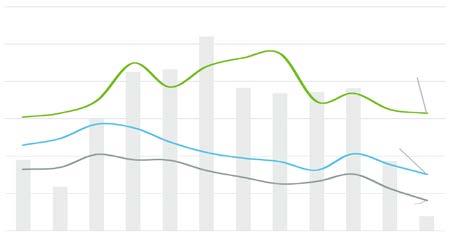
Kerr said investors using the Equity & Help model are undeterred by a slowing housing market because the model does not rely heavily on rapid home price appreciation to succeed.
“The model was born out of 2008. Situations where there are a lot of dilapidated properties,” said Kerr, noting that foreclosure and bank-owned (REO) auctions are an important acquisition source. “We’re making sure those properties actually get in the hands of families rather than being left on the wayside.”
That’s evident in a subset of the ATTOM home flipping data where the original purchase was for a distressed property, either in foreclosure or REO. Although average
gross flipping returns on these distressed property flips decreased to a three-and-ahalf-year low of 30.3% in the fourth quarter of 2022 , that 30.3% return was still nearly double the average return for all home flips—and infinitely better than the negative gross returns realized by Opendoor.
Local community developers like Kerr, who are reselling renovated properties originally purchased on Auction.com fared even better, with an average gross return of 63% in the fourth quarter of 2022. These investors are cushioned against a market downturn because their returns are based
less on how the market behaves and more on how much value they add between purchase and resale.

“The last two I’ve completely gutted the houses,” said Rick Starnes, who said he has purchased seven investment properties since he started buying in 2018, five of them on Auction.com and all of them in the Richmond, Virginia, area. “When I walk away from (the homes), I want (buyers) to think they are buying a new house. I’m an engineer and I don’t want to do it halfway.”
High renovation expenses result in net returns that are far below the average 63% gross returns for Starnes and value-add investors like him. But the dollars they
spend on renovation come back in the form of a higher resale price.
“You’re wasting your time if you’re not doing a good job and expecting to get top dollar for the house,” said Starnes, providing as an example his most recent renovation. “It was in a lot of need of some love. It needed $170,000 worth of love.”
With often-extensive but responsible renovations, local community developers like Starnes and Kerr are improving neighborhood home values without inflating them. Renovated homes originally purchased on
Auction.com sold slightly below estimated full market value—97.4% on average—in the fourth quarter of 2022.
Auction.com renovators who resold in fourth quarter 2022 added an average of 35 points in value between purchase

and resale, based on the price-to-afterrepair-value ratios at those two points. By comparison, all home flippers added only 15 points in value between purchase and resale and all distressed property flippers added 20 points in value.
“ Local community developers ... who are reselling renovated properties originally purchased on Auction.com ... are cushioned against a market downturn because their returns are based less on how the market behaves and more on how much value they add between purchase and resale.”
Formerly distressed homes also tend to land in the more affordable segment of the housing market, even post-renovation. The average resale price of a renovated resale originally purchased on Auction.com was $287,851 in fourth quarter 2022, more than $100,000 below the average resale price of all home flips in the fourth quarter.
Kerr said the Equity & Help model focuses on adding value between distress and resale by providing a more accessible and affordable path to homeownership for
underserved buyers who often don’t qualify for traditional financing. The model incorporates necessary rehab but still aims to resell homes to buyers for at least 25% below the estimated “after-repair” value.
“We’re selling that property at a discounted rate to a family,” he said, noting that gives the family plenty of home equity from the start. “We’re not charging families an arm and a leg … they are able to take that extra money … they can pass that on to their children.”
Whether the added value comes primarily through renovation or through more accessible and affordable homeownership, local community developers are reselling mostly
to owner-occupants rather than other investors. Sixty-two percent of the fourth quarter resales went to owner-occupant buyers. Since 2016, 72% of all resales of renovated homes originally purchased on Auction.com are owner-occupied, according to an analysis of county tax assessor data from ATTOM.
“The truth is most of the families who buy our homes had given up on homeownership,” Kerr said. ∞

Daren Blomquist is vice president of market economics at Auction. com. In this role, Blomquist analyzes and forecasts complex macro and microeconomic data trends within the marketplace and greater industry to provide value to both buyers and sellers using the Auction.com platform.
Blomquist’s reports and analysis have been cited by thousands of media outlets nationwide, including all the major news networks and leading publications such as The Wall Street Journal, The New York Times, and USA TODAY. He has been quoted in hundreds of national and local publications and has appeared on many national network broadcasts, including CBS, ABC, CNN, CNBC, FOX Business, and Bloomberg.


Small private lenders tend to have a different business model and deal flow than their larger counterparts. For example, smaller lenders tend to focus on a few geographical areas and know their markets well. Smaller lenders also develop deeper connections in the markets where they operate. Those connections can benefit borrowers when it comes to referrals and networking.
Small private lenders may have limited liquidity and tend not to sell their loans after origination. They have to be a bit choosier about the loans they make because they become the assets to their businesses. As lenders, they must be prepared to be involved in the relationship with their borrower for at least the maximum term of the loan, which could be anywhere from 6 to 12 months.
Since borrowers are the central component of the ecosystem for small lenders,
how do smaller lenders successfully find great borrowers?
Some of the metrics that are most important are on the qualitative side, the ones you gain through genuine conversations with the borrower: What is their experience in that type of project? What expectations do they have for the transaction and project timeline? Do they take ownership for their actions and mistakes?
How do you evaluate borrower experience? What level of experience would you want as a lender? The range of acceptable answers is very case- and deal-specific.
The individual lender’s risk tolerance plays an important role in framing this conversation with the borrower. Lenders often evaluate experience based on how much
history and time the borrower has with the type of project the loan being considered resembles. If the borrower seeks funding for a fix-and-flip but has owned only turnkey rentals, their schedule of real estate owned may be misleading, because it looks like they are an experienced investor. They may have five rental properties on their schedule of real estate owned; however, in a conversation with the borrower about their history with those properties, the lender could discover they have not had to manage a renovation project before the deal under consideration.
As a small lender, would you be willing to take on a first-time flip? The borrower may need more guidance than others (e.g., referrals to trustworthy vendors and reminders of how the construction draw process works).
On the other hand, a borrower that has executed at least a few renovation projects
likely has a few battle scars and stories to tell about past experiences. The school of hard knocks has taught them a few things about renovations. The risk profile of a borrower who does 25 flips a year with their own contractor crew is very different from a borrower who is doing their first flip ever!
So, ask potential borrowers about their involvement with past properties, specifically what they did, who else participated in the project, and what they would do differently in the future.
All private lenders have had borrowers that were overzealous and pinging for updates about their loan every hour. There are also borrowers who drop off the radar
for weeks at a time and then show up two days before closing wondering why their loan hasn’t been approved yet.
Borrowers’ actions reflect their expectations. When lenders have the opportunity to get to know borrowers before the loan closes, they can determine whether the expectations match, are complimentary, or not even in the same ballpark.

You need to be clear about expectations set for how much capital a borrower is expecting to put into the project, when capital for renovations will be received, frequency and reasons for communication throughout the loan, the method and intervals for paying interest on the loan, and what may trigger a default in the loan. Establish your expectations as a lender early on to weed out borrowers that, realistically, won’t fit into your loan box at all. A borrower with
expectations that are not in line with your own as a lender won’t be a good match for a loan for you to fund or they’ll become one of your problem files, eating up your time and energy over the life of the loan.
Another important aspect to gauge is the borrower’s expectations about the property’s timeline. The business plan for a borrower who expects to refinance or sell the property very quickly may be unrealistic, for example, if extensive renovations are required that could take several months.
Also find out how the borrower is planning to execute the work. Will they be doing a lot of the work themselves? Are they employed full time? If so, will this be a “nights and weekends” project? Do their costs and timeline include having a skilled, knowledgeable service provider complete
the work, or are they going to get a “good deal from a friend of a friend”?
The expectations the borrower brings to the loan request will dictate the decisions and actions they take throughout the life of the loan, should you decide to fund it. Assessing whether those expectations are reasonable and accurate is crucial in deciding whether the loan will be successful.
The “ownership of actions” screening is likely to be the most nuanced and subjective of the tools a private lender will use to assess a borrower. Usually only the smallest and most hands-on private lenders use it.

This criteria gauges how well a borrower will own up to the failures and successes of past deals. Does a borrower start explaining how a previous business partner led them astray and that’s why a previous project ended in a deed in lieu? Is every contractor in town a bad person? Do they blame the listing agent for not doing their job in marketing the property in their last flip, causing them not to hit the expected ARV?
Listen to what the borrower says and where they start placing blame. A strong borrower can own up to their actions. They say they chose the wrong business partner or didn’t hire the right contractor the first time. Or, they acknowledge the property didn’t appraise for as much as they thought it would and they’ve adjusted
the evaluation criteria accordingly. These answers indicate a confident borrower who realizes they have control of their ecosystem and processes. The buck stops with them. When lending out your own capital, wouldn’t you want someone who takes ownership and feels like they can steer the ship?
Assessing how much responsibility a person takes for their actions isn’t quantitative. It will be a gut check for most people. This tool reveals mindset of a person—one that will ultimately guide them as they make decisions throughout the course of the loan. When things get tough, are they going to buckle down and get it done? Will they bury their head in the sand and pretend the problem isn’t there? A borrower with the mindset of owning up to their actions will likely be successful no matter what because they give themselves the power to fix the problem instead of relying on others to address it for them.
The more traditional criteria for lending—credit scores, liquid reserves, and income—are far easier to evaluate in the paperwork a lender collects from a borrower. Should considering those quantitative metrics be part of your own review criteria? Absolutely! Don’t replace them with the more qualitative factors addressed here; rather the qualitative criteria should be an adjunct to the traditional criteria.
Evaluating a borrower involves assessing the entire loan file, person, and property. Not all those evaluations can be completed
with the information gathered through the typical documents involved in the loan origination and processing phases. Old-fashioned communication with a borrower can probably tell you more about them as a borrower and how they perceive their deal than reading through 30 pages of paperwork ever could. The real story is likely going to be a bit different from what the numbers, checkboxes, and words on a page tell you.
ALEX
Alex Breshears is a private lending community leader, a BiggerPockets author (“Lend to Live: Earn Hassle Free Passive Income in Real Estate with Private Money Lending” with co-author Beth Johnson), and an AAPL Certified Fund Manager. She started in private lending nearly 20 years ago and became a more formalized business during the early stages of COVID when real estate investors in her network were losing deals due to lenders and pausing their operations as risks were assessed in the market. Johnson and Breshears run a large educational group of new private lenders, helping to educate the lender and borrower for successful loan deployment.
Raising capital can be a crucial step in growing your private lending business and expanding your lending operations.
▶ By Anthony GeraciOne way to raise capital is to seek it from third-party providers such as institutional investors or high net worth individuals. However, before embarking on this path, it is important to understand the securities laws and regulations that apply to the offering and sale of securities, as well as common objections and exemptions. This article will provide a primer on these topics and discuss mortgage fund structures, SEC Rule 506 , and reporting requirements.
Securities laws and regulations are designed to protect investors and ensure they have access to accurate and complete information when making investment decisions. The primary federal securities laws that
govern the offering and sale of securities are the Securities Act of 1933 (Securities Act) and the Securities Exchange Act of 1934 (Exchange Act).
The Securities Act requires that all securities offered for sale to the public be registered with the Securities and Exchange Commission (SEC) unless an exemption from registration is available. One such exemption is Regulation D, which provides exemptions for certain private offerings of securities. These offerings are not required to be registered with the SEC, but they are subject to certain disclosure and filing requirements.
One of the most commonly used exemptions under Regulation D is Rule 506. There are two common Rule 506 structures. Rule 506(b) allows for the sale of securities to an unlimited number of
accredited investors and up to 35 non-accredited investors, provided that certain conditions are met. One of these conditions is that the issuer must not use general solicitation or advertising to offer the securities. Rule 506(c) allows for general solicitation and advertising, but you may not have any non-accredited investors in the fund.
A note on general solicitation or advertising: At its base level, this is advertising the securities to people you do not have a preexisting relationship with. Although this is prohibited by 506(b), it is allowed under 506(c). The most common example is if you’re speaking at a conference and talk about your fund and how to invest in it. Unless you have a preexisting relationship with everyone who is listening to you , that would be generally soliciting to the audience. This particular area is very nuanced.
Although this is written by a lawyer, it should not be construed as legal advice. Every situation is differently nuanced, and your facts could result in different advice. Always seek competent counsel to advise you of your specific situation.
Reach out to your counsel to discuss and get an opinion on what you’re doing.
One of the most common objections private money lenders may encounter when seeking capital from third-party providers is the lack of liquidity in their investments. Investors may be hesitant to invest in private lending funds because they cannot easily sell their investments on a secondary market. To address this objection, lenders can explain that private lending funds are typically structured as long-term investments and that investors should be prepared to hold their investments for an extended period. Further, investors are being compensated with a higher yield than they generally can find elsewhere.
Another common objection is the lack of transparency in private lending funds. Investors may be concerned they do not have access to the same level of information they would have if they were investing in a publicly traded company. To address this objection, lenders can provide detailed reports on their lending operations and performance, including information on the types of loans they make, the terms of those loans , and the loan-to-value ratios.
Exemptions to securities laws and regulations can also help private money lenders overcome common objections. For example, the SEC’s Regulation A+ provides an exemption for certain securities offerings of up to $50 million. This
exemption allows for general solicitation and advertising, which can help private money lenders reach a larger pool of potential investors. Further, Regulation A+ allows for a smaller net worth and income of accredited investors.
An important consideration for private money lenders is the structure of their mortgage funds. Several different structures can be used, including:
▶ A standalone mortgage fund. This structure involves creating a separate entity that is responsible for issuing and managing the loans. Larger private lending firms typically use this structure.
▶ A pooled fund structure. This structure involves multiple investors pooling their funds to make loans. Smaller private lending firms typically use this structure.
▶ A fund-of-funds structure. This structure involves investors investing in a fund that, in turn, invests in
other funds. Larger private lending firms typically use this structure.
Raising capital using debt instruments, also known as debt financing, is a common way for private money lenders to obtain additional funding for their business. Debt financing involves borrowing money from investors or lending institutions and agreeing to pay back the borrowed amount plus interest over a specified period of time. One of the benefits of debt financing is that it allows private money lenders to retain ownership and control of their business. Unlike equity financing, where investors receive a stake in the business in exchange for their investment, debt financing does not dilute the ownership of the existing shareholders. Additionally, the interest payments on the debt are tax-deductible, which can help to lower the overall cost of borrowing.
Private money lenders can use several types of debt instruments to raise capital, including:

▶ Bonds. Bonds are a type of debt instrument involving the issuance of a bond by the lender, which is then sold to investors. Bondholders are entitled to receive regular interest payments and the return of their principal investment when the bond matures.
▶ Loans. Loans can be obtained from banks, credit unions , or other lending institutions. Private money lenders can also obtain loans from individuals or groups of individuals, known as private investors.
▶ Lines of credit. A line of credit is a type of revolving credit that allows the borrower to draw on the line as needed, up to a certain limit. Interest is paid only on the amount borrowed.
When raising capital using debt instruments, private money lenders should be aware of the terms and conditions of the debt (e.g., the interest rate, repayment schedule, and any covenants or restrictions that may be placed on the lender’s operations). It’s also important to consider the lender’s ability to repay the debt as well as the overall impact on the lender’s financial position.
As mentioned earlier, Rules 506(b) and 506(c) of Regulation D are commonly used exemptions for private offerings of securities. Under 506(b), private money lenders
can raise an unlimited amount of capital from an unlimited number of accredited investors and up to 35 non-accredited investors. Under 506(c), private money lenders can raise an unlimited amount of capital from accredited investors. However, with both, there are certain disclosure and filing requirements that must be met.
One of the key requirements of Rule 506 is the issuer must provide certain disclosures to potential investors, such as financial statements and information about the management team. The issuer must also file a Form D with the SEC, which includes information about the offering and the issuer.
In addition to the requirements of Rule 506, private money lenders must also comply with the reporting requirements or rely on an exemption of the Exchange Act. These requirements include filing periodic reports, such as annual and quarterly reports, and providing information about material events that may affect the value of the securities.
Most private money lenders will fall under a federal exemption of the Exchange Act, but they may need to register with their state.
Raising capital from third-party providers can be a valuable way for private money lenders to grow their business and expand their lending operations. However, it is important to understand the securities laws and regulations that apply to the offering and sale of securities, as well as common objections and exemptions. By structuring their mortgage funds appropriately,
complying with SEC Rule 506 and reporting requirements, and providing detailed information to potential investors, private money lenders can increase their chances of successfully raising capital from thirdparty providers. ∞
Anthony Geraci, Esq., is the CEO and a partner at Geraci, in charge of firm strategy and development of Geraci’s team and culture. Named to the 2022 Southern California Super Lawyers® list, a designation given to only 5% of attorneys.

Geraci is skilled in mortgage lending and securities law and has written numerous articles on real estate finance and security subjects. He is a leader in creating national mortgage pools and mortgage funds as well as sophisticated net branching arrangements among several mortgage companies. He currently manages Geraci’s litigation team.
Geraci also serves as a mentor to the various legal and media departments, spearheading problem-solving, growing his employees, and coaching other lawyers to perform to the best of their abilities. In 2018, he authored the book “Earning Money While You Sleep,” and he is an avid public speaker.


Ru nning a successful private lending company means working with borrowers to try to meet expectations about the performance of their loans. That requires planning for mutual success. Anyone selling and servicing loans knows that offering the right product starts with the qualification procedure, then educating and communicating the process, and having the tools and infrastructure to support a successful outcome for all involved.
Both investor and lender must remember that structuring and servicing a loan
begins with the very first phone call. The first mistake a lender can make is to start the clock but wait to define “servicing” until after the loan closes. By gathering enough information, building rapport, clearly defining loan qualifications, and setting draw management expectations (and requesting a precise budget for the transaction), the lender can structure a deal that makes sense for the investor from initial contact to payoff of the loan. Asking for a specific list of expenses should be the beginning of everything. When it comes to a fix-and-flip or fix-torent loan, it’s critical to examine all the details (e.g., addition of square footage, changes that may cause significant permitting delays, the schedule for purchasing and receiving materials to
complete a project on time within the correct cost). In addition, ground-up construction projections magnify the need for a detailed budget, starting with the categories, descriptions, details, and phases or timing of work, including supporting the contractor and subcontracting cost. All this and more must be considered before addressing the servicing component. The budget should be allocated by product type. The more information the investor provides, the better. The line item requested to draw on should be included in the budget or statement of work. It is essential to manage expectations: One of the significant challenges of servicing is communicating how and what percentage of line items are released. Because most lenders have their own rules, when people
For both lenders and borrowers, all aspects of loan servicing are critical for success — from initial contact to loan repayment.
don’t accurately detail their budget and request a partial release, issues may arise.

Borrowers need to separate their line items into two components: one for rough work and the other for the finish. Consider, for instance, a budget for plumbing for a three-story townhouse. The lender might grant a draw of $25,000, as stated in the budget. However, the inspector discovers the first and second floors are completed
but the third floor still needs to be finished. That’s why separating the budget by floor or by rough and finish is suggested. That way the inspector can review the work, document it as complete, and give a draw based on the information provided. Generally, the more detailed the budget, the easier the draw release. Many lenders provide their own template for investors to use to detail the work to be done.
Remind new investors they can evolve after proving they can stick to a plan, manage projects down to the dollar and yield consistent margins.
A responsible lender tries to educate novice investors about the value of having a plan and adhering to it. The
terms buy, hold, and sell cost may seem straightforward, but there is a roadmap to profitability within them. Once a budget is established, it must be strictly followed. Lenders will often ask for reserves either at the time of closing or as a part of their underwriting process to ensure the borrower can afford the loan. Even though a lender cannot prevent the borrower from using credit cards to pay for materials or contractors, the lender can ensure the investor is aware of the potential risks. Many investors take on too much debt, have a lower FICO score, exceed the budget, and eventually fail to make the profit they were expecting from the flip, leaving the lender
with an extended loan or, worse, one that is in default.
Most lenders will use credit or FICO scores as well as experience as their primary underwriting drivers. Often, the amount of the rehab budget compared to the purchase price matters. Lenders generally price loans with the cost of funds in mind. An open discussion about a borrower’s wants, needs, and general plan helps determine the proposed loan structure. These conversations lead to the final determinations of the terms ( i.e. , 12, 18, or 24 months) and interest computation. Then, along with a borrower’s projected
timeline, everyone involved can begin calculating expenses and profits. Therefore, it is essential to communicate clearly with the customer. The language in the closing documents or post-closing communication should ensure the borrower knows who to contact and what the loan entails.
As a lender exploring the ideas of self-servicing, you must ensure an effective loan servicing process for all stages of the loan.

For more information about our current product offerings, email us at BD@toorakcapital.com

The fact remains that there is a lot involved in loan servicing, whether you are servicing 10, 20, 200, or 2,000 loans. Remember, this is a small, mutually supportive industry. Do not be afraid to call on your peers for operational advice.
The real estate investment loan industry operates in a world with high-touch, highlevel customer service. Lenders servicing loans may need help to match customer service expectations. The questions lenders must answer include:
▶ Can you manage the draw processes, payments, accounts payable, accounts receivable, and all processes the industry requires?
If the answer to either question is “no,” then outsourcing is the best alternative. Customer service methods for loans always have a cost/benefit aspect. For example, determining the costs based on the organization’s size and portfolio of loans, combined with the level of service customers expect, shape the approach to handling loan servicing.
Lenders must be aware of their financial and personnel capabilities when servicing loans. During the past 15 years, the market for resales and repairs has become more intense and challenging. Any lender considering servicing must think through long-term and short-term objectives. Don’t
overlook the ability to respond to draw requests, select the right inspection partner, get lien releases if needed, grant loan extensions, and do collections.
Poor servicing is a guarantee an investor will not return to the lender for the next loan. Setting up the servicing system properly requires discipline, clearly defined roles, customer service standards, and the right personnel (e.g., for asset and draw management, accounting, and collections).
Too many borrowers go through the process of being qualified and signing final documents without fully understanding how draw processes or lien releases work. Additional communications explaining these key topics, sent post-closing, is always a good idea.
Another example of loan servicing includes issuing a lien release when sending a draw. The lien release is like a certificate of completion, assuring that everything is complete, and all the payments have been made to those doing the work. This should be filled out and signed by the general contractor or the property owner (if they will be doing the work). When dealing with a ground-up construction project, the lender should get a list of subcontractors from the general contractor and have them sign
the waiver releases. This is beneficial for both the lender and the investor, because it ensures the county will not find liens when the house is ready to be sold. Otherwise, the lender will end up with a property with many unpaid bills.
For both lenders and borrowers, all aspects of loan servicing are critical for any real estate investment financing and project success. Clear expectations and open communication are important to all parties being able to fulfill their responsibilities. ∞
John V. Santilli is chief revenue officer of Rehab Financial Group. He joined RFG in July 2019 and maintains a pivotal role directly influencing the future of the company. He covers new business sales, client retention, operations, and marketing. In addition, Santilli works to expand sales channels and maximize all opportunities that drive growth. Prior to joining RFG, Santilli spent 25 years in lending and marketing executive leadership roles across multiple private and public marketing-dependent companies.

A lesondra Mora, assistant vice president of marketing at Streamline Funding, recently sat down with two of the private lending industry’s thought leaders: Romney Navarro and Chris Ragland. In this casual Q&A, they offer their (sometimes differing) perspectives about how to scale a private lending business, including how to prepare to scale and the best markets for doing so.
Mora: What’s the difference between scaling and growth?
Ragland: I think growth is a bit unpredictable, whereas scaling is more methodical. It’s more quantifiable. It’s predicted, whereas growth is kind of organic. Sometimes organic growth can be good; sometimes it can be dangerous. Growth is what should happen if you’re doing your job. Scaling a business is more deliberate and intentional.
Navarro: You took the words right out of my mouth. Scale is deliberate. You don’t scale without a plan and without action. Growth happens if you’re running your business correctly. Every business needs to grow, but not every business needs to scale. When it’s time to scale, it’s not the same set of rules. Scale has a plan.
Ragland: T hat leads me to something else we’ve talked about before, which is “grow or die.” Growth could be in a number of ways—in volume, being more efficient, or maybe growing as a person. So grow;
otherwise, somebody that has a better way of doing things will take your place.
Mora: How do you decide whether to scale?
Navarro: Scale has a bit more of the end in sight: There is a defined goal, a defined target. Why does somebody decide to scale? They want to achieve something. There is also a personal component. Some people are built to grow, and some people are built to work. For those who are built to scale and want to achieve something, that’s the point where they’re saying, “OK, next stop, exit. Next stop, some level of wealth, importance, significance. It’s the next big hurdle in that person or that organization.
Ragland: Not everyone’s really built to scale. I know people who excel in small teams and work groups but fail in large enterprise organizations. Sometimes person is the owner—and that’s not a good day. But sometimes it can be a salesperson or an operations person—not everybody
is meant to be in an organization that’s truly scaling.
Mora: What should you have in place before moving forward with scaling your business?
Ragland: If you want an academic answer, it’s: Here’s the well-articulated plan, resource allocation, budgets, Porter ’s Five Forces—all the academics. Another way to answer the question is your resources, which for me is human capital and actual dollars, most of the time. I’m either going to spend money to scale, or I’m going to recruit the right people to scale. If I have the right team that can execute, I can attract the capital to scale my business. So, the short answer for me is ensuring that I have the right people with enough diversity of skill sets to survive. If you’re going on a mission, you don’t want four people to know how to do the same thing. You need people to have a broad variety of skill sets so you can get to the other side.
Navarro: I’m going to take this in a little different direction. I continue to hit this hurdle of scale versus startup scale—totally different conversations. You need some baseline stuff to scale. You can go into product and all the things a business needs, but if you do not have profits, it’s not time to scale. There’s a place for a startup to start with no cash and get to revenue. However, I still think it’s No. 1 profits and then No. 2 some form of an operating system. Finally, No. 3 is. technology. Scale means different things to different people. It could mean $1 million to $10 million or even to $100 million, depending largely on where you’re at in technology. So, profits, an operating system, and technology.
Ragland: I will disagree that you need profits to scale. In the startup and venture capital worlds, the scale moment is when you prove your product for the first time. You might be losing money on a run basis, but “We actually sold our first product
ever this month!” With that sale, you’ve validated the marketplace with your product. I believe that’s actually when you want to scale. You know it works. You have a viable product. You know people want it, you know the marketplace—now go sell 100,000 of them.
Navarro: Again, startup versus scale, I think the people who live in our community of private lenders are generally operators already. We’re not talking about a blank book, “How do you start a business?” I’ll agree to say scale probably is going to be triggered by some type of product. Sure, you could sell the same thing you’re selling right now a bunch of times, but it’s the next frontier when you sell the next thing 100,000 times. Take the product to market; if it works, then multiply.
Mora: Which market is more favorable for scaling a business — one that’s up or down?

Navarro: There’s opportunity in both, depending on what you’re working with. In a down market, if you’ve got something people need, you might actually have an opportunity to scale and just kind of fly by people. In an up market, again, if you have all those key things—revenue/profits, tech , and a real operating system—I think what you’re working with at that point is going to be a real double, triple heavy push on sales and marketing. I always go back to sales and marketing because that’s the fuel that feeds the machine.
Ragland: I think it really depends on your resources at hand in those two marketplaces. Either market could be better than the other depending on your resources.
Mora: Regardless of the market cycle, you need to be able to articulate your value to the market. How does a business find its niche?
Ragland: What makes you unique, your niche, if you will—a lot of it boils
down to trial and error. You should be AB testing, kind of like a marketing campaign. If you’re going to scale and you’ve decided it’s going to be through product differentiation, then you really need to AB test. You have to find out what appeals to the market and what can you build that’s unique, because part of scaling is also essentially winning. What I mean by “winning” is if you’re selling the same thing everybody else is, then you’re only able to compete on price; you’re a commodity. So, you have to figure out how can you differentiate yourself in the marketplace. That’s an organic process over time. What made you unique today
and why people want to contract with you will be different from what it is in a couple of years.
Navarro: It’s almost impossible to keep pressing the same button or running the same play for years. You need some sort of innovation. Set a calendar timer every six months or so to do some sort of innovation. To establish your niche, you have to figure out product. This is what separates the mom-and-pop shops from the others. There’s features and there’s benefits. Innovating is just turning those features into benefits that are unique to you and that are meaningful to the consumer.
Mora: What do you need to keep in mind when trying to find your niche market?

Ragland: When you’re searching for your differentiator, there’s two things going on. Your competition is learning from you and effectively emulating you to beat you. Simultaneously, the market and the needs of the market are changing. So your strategy is outdated the moment you deploy it. Defining your niche is less important than constantly modifying it.
It’s kind of like skeet shooting. When you shoot clay pigeons, you don’t aim at the pigeon, you aim in front of it to hit the pigeon. However, you see a lot of people
who’ve had a lot of practice using clay pigeons get out in the real world and go duck hunting. They’re like, “Oh, my gosh, it moved on me.” Welcome to the real world.
Navarro: Sometimes the pigeon actually doesn’t move. That’s going to typically be true of some type of flagship product. Keep in mind that flagship product still needs to grow, and it’s usually through additional product innovation. So, when you talk about a niche, you can simply be known for that flagship. You just do the most basic thing perfectly.
Mora: Innovation is the most common strategy when trying to break away
from the pack. What advice do you have about finding your path?
Ragland: Let me tell you something, and this is going to be counterintuitive. Breaking from the pack is not always good. Sometimes when you live in the ivory tower and build your own thing, you innovate and plow way out ahead. But there’s a reason the pack is where it is. So, when you look at everybody in the industry and they’re in a certain zone, it’s OK to be with the pack. You probably want to be on the fringe, where the grass hasn’t been trampled, but you still want to be kind of close to the pack.
Navarro: At no matter at what stage of business—$0 in revenue or a billion— the competition’s always emulating and the market’s always changing. I think emulating is important, in general. But to stand out, there’s nothing wrong with studying the ones that are doing it the best and then just tweaking it ever so slightly. Get on the fringe, or turning a 4 to a 4.1. What they’re doing is working for a reason—there’s no need to turn it on its head.
Mora: To go from 4 to 4.1, how large a role does technology play?


Ragland: It’s massive. It’s a really big part of scaling a company, not necessarily growing your company. If you want to scale

and don’t have the right technology in place, get ready to fail. It’s that simple. If you try to scale without the right technology, you will fail. It’s OK to grow organically without it. You’re just going to be less efficient. But I don’t think you can scale because there’s no foundation and support to hold up that infrastructure —that scale.
Navarro: It depends on why you want to scale. For some, it’s to exit. Is there an exit that exists in today’s day and age without tech? Sure. You’re just going to get a lower multiple, a lower valuation. In our world of private lending, we’re just scratching the tech surface. A lot of proprietary stuff is now starting to be created. Who knows where it’s going to go, but somebody’s going to get it right—and a few people already have.
Mora: When talking about resources like tech, how do you leverage existing businesses/partnerships to scale versus start from scratch?
Navarro: Chris calls this build or buy. I’m not saying reinvent the wheel, but always improve the wheel. There’s a cost to build and there’s a cost to buy. You have the triangle of price, speed, and quality. Pick two; you can’t have all three. If you’re sprinting, and we’re in the middle of a sprint of sorts right now, buy is not a bad option.
Ragland: I’ll be your contrarian deliberately. Right now, we’re in a down market. If you are capitalized, if you’re sitting on reserves, right now is a great time to be building. You can save money. You can have something that’s more custom to your needs. When things
level out and we start to accelerate again, you will have a competitive advantage.
Mora: Final question: Ready, aim, fire”? Or ready, fire, aim?
Navarro: In today’s kind of crazy marketplace, there’s opportunity. We catch ourselves putting a lot of things in writing for future generations. I think it’s time to put our pencils down, take our guns up and “ready, fire, aim.”
Ragland: It depends on what you’re trying to do. If you’re trying to scale your company, you have to aim. You can’t just shoot; you have to be deliberate. That’s the only way you’re going to scale successfully.

Navarro: I heard somebody say the other day that “money likes speed.” I started thinking about that—the things we think about that we don’t do anything with, don’t monetize. Those things don’t translate into anything except good conversation. But the things that we think about and take action quickly on—those do monetize.
Ragland: I do think ready, fire, aim works— if you have another bullet. That’s another important part. If you’ve only got one shot to scale, you don’t get to aim again. It’s over. Your chances are gone. Some people in our industry did scale improperly and are now closed because they had only one bullet. So, it depends on how many lives you have, your ability to adjust, and then scale again. Bottom line, it’s unique for everyone. ∞
Romney Navarro has participated in the origination of more than $1 billion in nonconsumer investment loans during his 20-year career. His journey has led him to his current position as CFO of Streamline Funding, a Texas-based private lender. He’s also a partner at Noble Capital, Streamline’s parent company. He’s previously launched networking groups reaching more than 5,000 members and is the host of the Firestarters podcast, known among real estate investors and developers as a premier source for those looking to scale their businesses. Romney is a member of the American Association of Private Lenders.
Chris Ragland has managed real estaterelated businesses for the past 20 years, including brokerage, disposition, insurance, management, finance, and development. He has exposure to all aspects of real estate, but his favorite role is investment mentor. Ragland continues to grow his portfolio of properties while he builds up those around him. In addition to real estate, Ragland serves on several nonprofit boards and is active in the Austin, Texas, start-up community.






The American Association of Private Lenders’ Education, Ethics, and Government Relations committees provide direction for initiatives that shape the industry, its best practices, and safeguard future growth.
The following are just a few key highlights they’ve delivered to the private lending industry.
▶ They helped inform innovations such as our Certified Private Lender Associate and Certified Fund Manager courses, which today have armed more than 500 professionals with foundational knowledge and association-backed credentialing.
▶ They built the industry’s first Code of Ethics, a continually evolving set of standards that protects the industry’s reputation and viability without unnecessarily burdening membership with impractical expectations.
▶ They crafted our grassroots mobilization process to fight harmful legislation, which has earned a 100% track record of success on outcomes with more than 20 bills across the nation.
Our committee members are the industry visionaries and your day-to-day voice guiding our next steps.
Interested in adding your voice to the direction of the private lending industry? Find out more about our committees and submit your application at aaplonline.com/committees.

I have worked with Secured Investment Corp, The Lee Arnold System of Real Estate Investing, and Cogo Capital for over three years as a business development consultant, broker success advisor, and account executive. I specialize in developing and training our certified and master brokers to scale their business. I also represent Cogo Capital and am responsible for forging new relationships with lenders. To date, we have deployed more than 12 million in additional loan volume as a result of these correspondent relationships.
I have more than 28 years of experience in financial accounting and reporting, assurance, and business consulting. Throughout my career, I’ve worked to share my extensive knowledge with clients, peers, and industry professionals by developing resource documents and presentations for numerous internal and external training courses with the purpose of educating and providing progressive solutions.


Before starting my private lending company, I spent over 25 years in the commercial finance and banking industries. Lending personal and bank capital, I focus primarily on funding fix-and-flips, rent/rehabs, cash-out refinancings, and commercial properties. I also have completed a handful of my own rehabs to hold as rentals and recently ventured into being a residential homebuilder. I look forward to bringing the perspective of a small lender using personal funds. I believe educating, growing, and inspiring the small lender community is critical to our industry’s evolution.
DANA GEORGIOU, Executive Vice President of Lending, Foundation CREF

I have nearly 30 years’ mortgage lending experience supporting teams in credit, secondary, compliance and sales. I have a passion for education and training and believe knowledge is meant to be shared. I have created training and education content used by AllRegs in the conventional and government lending spectrum and have been a certified master trainer in their program. I also served with the Texas Mortgage Bankers Association in advocacy for education in mortgage lending. We all have to be advocates for advancing the education in private lending.
SAM KADDAH, President & CEO, Liquid Logics

Building on my strong desire for teaching and advising, I bring a unique combination of 30 years’ experience in technology, fintech, in-depth process optimization and streamlining, Big Four consulting, and Fortune 500 executive leadership. And, as a founder, I am well-versed in building sales and topline growth to enhance knowledge and best practices in the industry.
I am responsible for planning, developing, and implementing RCN Capital’s strategic marketing plan. With more than a decade of experience in private lending and financial marketing, I strive to bring valuable insights about real estate market conditions and industry trends, as well as expertise in developing and overseeing internal processes for a private lending company. I am currently a member of AAPL’s Education Advisory Committee and am marketing and communications chair for AREAA Boston.
As a CPA and debt fund specialist, I co-founded High Divide Management, a fund administrator and consulting firm, to fill a need I witnessed in the private debt industry. I directly provide clients fund administration and outsourced CFO services. I specialize in building back offices, driving investor and financial reporting, and working with tax and audit teams. I started my career at PwC and have over 10 years of experience in asset management, with over five years in the direct lending space.


With 27 years’ experience, I possess a well-rounded knowledge of the mortgage industry. Ranging from consumer, A paper lending to subprime, to asset management, loss mitigation, NPL/PL’s, and private sector, I can contribute to most industry-related topics.
JOHN SANTILLI, Chief Revenue Officer, Rehab Financial Group

My career started in sales and evolved into leading a sales team of over 130 and training over 500. Through growth and acquisition, I became president of a leading publicly traded lending company in the early 2000s. I then spent 10 years building and training internal and external marketing-dependent companies (unrelated to lending). I’ve focused the last four years building a niche lending company specializing in fix-and-flip/ rent. I’ve been in the small to mid-sized entrepreneurial space my entire career.
After 25 years in private lending, I have a deep knowledge of of our industry. I love this space for the growth and opportunity it creates for investors and communities. The main thing needed, especially now; is clear and defined education along with mentorship. That is especially what AAPL offers. I want to shape the best practices for those who want to do things the right way and also help those with questions.
I bring legal expertise to AAPL’s Education Advisory Committee. In my day job, I advise lenders, brokers, and other members of the private lending industry on how to lend nationwide and remain compliant. I know how to balance legal concerns with business decisions to help private lenders navigate through issues no matter where or how they operate. I use this expertise and experience when working with AAPL and the committee to help advise best practices for our industry.

As a CPA, I help keep clients out of trouble. My first year as a tax advisor was during the 20072008 financial crisis, working primarily with private lending funds, and I witnessed the impact of bad lending practices on investors and borrowers.
I was privileged to serve on the education committee and share my insights into the issues lenders face. It is an honor to join the ethics committee and work with professionals who hold each other to such a high standard.

After 20 years career at institutions like Credit Suisse and Deutsche Bank, I’m aware of the discrepancy between the need for versus the availability of financing for entrepreneurs looking to develop and renovate homes across.
I launched Toorak Capital Partners in 2016 to buy high-quality loans shortly after origination from lending partners, freeing up lenders’ capital to make more loans—creating a Fannie Mae for the rehab space, if you will.
We have funded $10+ billion in loans and made 50,000+ units.

I have been in the real estate, investment, and banking arena for more than 40 years. I have supported clients and associates and observed competitors in the best and worst of times. The AAPL Ethics Committee gives me the opportunity to shape best practices in our industry. My thanks to the committee for including me, as we work together to practice, enforce, participate, and grow in the principles of our industry.
I started as a residential lender at a correspondent broker in 2003. I continued with a profitable net branch until 2009 and then brought my team to a large national bank. During the mortgage crash, I started focusing on private lending, becoming an underwriter for a small private lender. In 2019 I started creating a fund. Currently, I am a GP of a $50 million fund focusing on cold storage and multifamily. We have a $20 million fund for SFR fix-and-flip, ground-up construction.

I can help represent newer private lenders who are looking to grow their business. I also practiced corporate and securities law for 18 years with investment banks like JPMorgan Chase and Credit Suisse. I bring a perspective of a private lender’s two clients: investors and borrowers. I’ve purchased and improved single-family homes, land, and multifamily properties, and I’ve syndicated multifamily property investments. I am glad to contribute and find great value in AAPL membership.
My career in the real estate industry brought me to private lending. In 2008 I started working with a large real estate attorney’s office that introduced me to several investors. After experiencing the challenges of getting a loan from a traditional bank , I made a conscious decision to never be like that. I believe in lending primarily based off the value in the asset. In 15 years, I have never foreclosed on anyone. There are always alternatives.
DAVID ROSENBERG, Principal & Co-Founder, FUTURES Financial


I bring 15 years of on-the-ground experience and knowledge in the private lending sector. It has always been extremely important to me to make sure all my deals and actions are transparent. This is something I’ve always done to build trust. It has enabled me to build unique relationships. This is also why my investors rarely leave.
JACOB THERRIEN, Business Development Specialist, Bridge Loan NetworkI help brokers and lenders grow their businesses with Bridge Loan Network’s cloudbased origination software. I have a strong knowledge of the industry, the legislation, and the negative connotations associated with private lending I’ve helped countless brokerages understand the ethics and best practices in this sector. My experience gives me a unique perspective to share with the Ethics committee and an understanding of how to educate brokers.


I’ve been an attorney serving the private lending industry for nearly 10 years. I’ve also served AAPL as an adviser, instructor, and sponsor. This background gives me a unique insight into the ethical and acceptable practices of a private lender.

I have experience heading social action groups, nonprofit committees, and educational groups in and out of the private lending sector. I’ve also presented to large groups on a variety of topics and am an advocate for small private lenders across the U.S.

I have over 30 years experience’ as an attorney, investor, and mortgage servicer, assisting clients with default legal representation and vendor management on residential and commercial loans. In 1994, I co-founded a company that purchases nonperforming first mortgage loans and REO. The company expanded nationally as a lender, NPL purchaser, and specialty mortgage loan servicer. I was a licensed mortgage loan originator in 22 states and a licensed collection agency manager.

As a direct private lender operating in Kentucky, Indiana, and Ohio for 17 years, we’ve developed deep relationships with many leaders and investors, providing us with a good perspective of the challenges our investors face. It also enables us to to respond to legislative proposals. This experience enables me to collaborate effectively with the strong legal resources on the GRC to advocate for the private lender community.


I graduated law school and practiced for several years.I have lobbied in Washington, D.C. several times during the past 10 years on behalf of causes important to me. During my 25-year mortgage career, I have dealt with several legal/regulatory issues.

I am looking forward to serving on the Government Relations Committee. I believe in the power of trade associations to contribute to the legislative process and make a difference. I can bring my years of knowledge about the legislative process to this committee to help make a difference: I have been engaged in government for many years, worked on Capitol Hill during college and staying involved in various groups.

Aside from my 30+ years of CPA services focusing on the private lending industry, I’ve been actively involved with multiple industry associations. I have worked in tandem with them to share my tax and business consulting experience, advocating for and helping resolving issues impacting private lenders at the federal and state levels.
I have worked in the private lending industry for more than seven years as an attorney, both in-house as general counsel for one of the country’s largest private lenders and, more recently, as counsel for the banking and finance department of Geraci Law Firm. During my career, I have promoted and defended the industry in state and federal legislative and administrative bodies. I’ve been a member of the GRC since 2018 and served as the legal chair before becoming an ex officio member in 2022.
We now offer our signature Certified Fund Manager and Certified Private Lender Associate courses online, so you can earn your AAPL-backed certified status from the comfort of anywhere — and promote it everywhere.
CPLA Modules
• Intro to Business-Purpose Lending
• Legal Documentation
• Underwriting
• Loan Servicing
• Workouts
• Intro to Securities
CFM Modules
• Pros, Cons, & Considerations
• Structure
• Creation & Launch
• Administration
AAPL Certifications are members-only. Enroll online at aaplonline.com/courses for $349.

Industry professionals are invited to contribute to academic research exploring risk attitudes and decision-making in private real estate lending.
Res earchers at Webster University , a private, non-profit institution founded in 1915, have created a survey to identify the relationship between risk appetite and entrepreneurial orientation in private-lending decisions. AAPL has partnered with the university to deliver the survey to industry professionals.
Private lending is an increasingly significant sector within financial services, but it has largely been ignored in academia. This study will be the first test of a new cross-discipline model between strategic management and finance.
Leading the study are Mark Fellhauer, a candidate for a doctorate in management,
and John Orr, project chair and emeritus professor of management at Webster University.
“We are pleased to partner with Webster in this first foray of academic research into the private lending industry,” said Linda Hyde, managing director of AAPL. “We’ve worked closely with Mark and John in reviewing the survey and its applicability to private lending decision-making.”
The anonymous, 20-minute survey will be administered online through Qualtrics and includes a decision-making scenario on commercial real estate lending.
Participant emails will be quarantined from responses to preserve anonymity during data collection, analysis, and study publication.
The survey will be open through April, with initial summary of findings released at the end of May. Survey participants will the receive the summary by email.
In addition to contributing to graduate dissertation research, the results of the study will be used by Webster University professionals at academic conferences, in journal papers , and in other associated academic presentations. In partnership with Webster, AAPL will share relevant findings with its membership. ∞




If you’re looking for a service provider who has real experience working with private lenders, this guide is your starting point.
Each issue, we publish a cross section of specialties. These providers do not pay for inclusion. Instead, we vet them by reviewing their product offerings and talking to private lender references.
AAPL members can access all service providers online at aaplonline.com/vendors. If you’re not a member, keep an eye on this publication for future updates. Then consider joining AAPL to support this and other initiatives!
Accounting
Business Consultants
Default & Loss Mitigation
Legal Services
Warehouse Lenders
Appraisers & Valuations
Capital Providers
Data
Environmental Services
Lead Generation
Note Buying/Selling
Brokers
Funds Control
Investor Reporting
Loan Origination Services

Loan Servicing
Loan Underwriting
Development Cost Estimates
Education
Fund Administration
Insurance
Marketing
APPRAISERS & VALUATIONS
Appraisal Nation

https://www.appraisalnation.com
(866) 735-0901
Products & Services: Residential and commercial appraisals , conventional products, desktop appraisals, desk reviews, re-certs of value/draw inspections, BPO interior/BPO exterior, commercial BPO, rental portfolios, As is + ARV, ARV only, hybrid appraisals, flood certs

APPRAISERS & VALUATIONS (CONT.)
Bernhardt Appraisal
https://portlandresidentialappraisal.com
(971) 288-1328
Products & Services: Divorce appraisal, probate court proceedings, bankruptcy appraisal, tax/IRS appraisal, property tax appraisal, estate planning appraisal, date-ofdeath appraisal, planning for purchase, FSBO
APPRAISERS & VALUATIONS (CONT.)
Boxwood Means, LLC

BoxwoodMeans.com
(203) 653-4100
Products & Services: Reliable, on-time and cost-effective commercial evaluations, restricted appraisals, and property and environmental inspections for most CRE property types nationwide
PCV Murcor
Secondary Specialty: Default & Loss Mitigation
https://www.pcvmurcor.com
(855) 819-2828
Products & Services: Appraisal management, BPOs and alternative valuation management for residential and commercial, disaster inspections, asset management and disposition, title and settlement services, risk exposure
Rice Park Capital
riceparkcapital.com
(847) 567-6600
Products & Services: Private equity firm specializing in the mortgage industry; investing equity in and buying top private lenders
Private Lender Link
http://privatelenderlink.com
(650) 226-4277
Products & Services: Private lender directory for companies offering shortterm financing secured by residential and commercial real estate
RicherValues
richervalues.com

(480) 296-6554
Products & Services: Providing institutionalgrade valuations and condition-based analytics with a 3- to 5-day turnaround on full-interior reports; reports provide clients with a major advantage and differentiation in the marketplace to deliver faster close times and improve their risk mitigation

Investor Funding Network
www.investorfunding.org
(630) 640-9060
Scotsman Guide
https://www.scotsmanguide.com

(800) 297-6061
Vista Capital
www.vista-capital.net
(760) 779-8900
Products & Services: Ranked mortgage originators and lenders for residential lending (prime mortgage, FHA, USDA, & VA; Non-QM; hard money; construction), commercial lending (prime commercial, multifamily property, hard money, construction), mortgage banking (correspondent line, warehouse line)
ProDeal
prodeal360.com

(646) 387-4047
Zelman & Associates
https://zelmanassociates.com
ENVIRONMENTAL SERVICES
PeerStreet
Secondary Services: Note Buyer/Seller, Lead Generation
https://www.peerstreet.com

(844) 733-7787
Products & Services: Capital available for purchasing funded SFR and MFR bridge, capital for table funding/brokered loans in long-term rental
Western Technologies Group, LLC

www.westerntechnologiesgroup.com
(908) 725-1143
Products & Services: Flood determination services, elevation certificates, and LOMA filing with FEMA for private lenders
CIX cix.com
(888) 249-1112
REI Network LP
www.myhousedeals.com

(713) 701-5144
NOTE BUYER/SELLER
Montvale, LLC

www.montvale.co
(302) 526-0200
Ihave been on the same mission for as long as I can remember: It’s growth. Period. I fully expect to be on that mission for the rest of my life. I plan to continue to grow personally, professionally, financially, physically, socially, spiritually, etc. It’s just how I’m wired. I am a mission-driven person who wants to execute and, as a result, win.
If I ever stop growing , then I’ve failed my life’s mission. That is simply not an option. As they say, “If you are not growing, you are dying,” and I totally subscribe to that belief.
Recently someone asked me how I got where I am today. Given how mission-oriented I am, I thought, “To stay the course on a mission, you need drive.” Then I realized the person was not asking what “within me”’ got me where I am. They were asking about the thing or event in my life that was a turning point.
That question proved to be a little more difficult because mission-oriented people like me don’t always take the time to acknowledge those things or moments. Our focus is on conquering the next milestone.
As I processed all the inflection points in my life that should be called out and celebrated, my thoughts immediately led me to one constant: people. People are what got me where I am today. It always comes down to the people who cross your path, more specifically, the partnerships you form with those people. So, the “‘thing” that happened that boosted my professional growth and got me where I am today actually repeatedly happened. And, it’s still happening: I open myself to partnerships.
Back in the day, before I started experiencing true success, I had the mindset that a partner was just someone to divide assets with, leaving me a smaller piece of the pie. During this time early in my career, I was in a role—a very responsible and valuable one at that—of a loan originator. I was a good producer, had decent people skills, some sales chops , and a slightly above-average way of knowing how to get a deal done. Naturally, I knew I could be doing so much more on my own. As my career advanced, I tried to do that “so much more” all by myself. To no one’s surprise, I failed and stumbled several times along the way.

Then one day life threw me a bone. I started working with a few guys. We started vibing. We started winning alongside each other. Things became easier, and my success started to grow. Of course, we wanted to continue down this road, to “keep the band together,” so to speak. I found myself asking, “Why don’t we go into a partnership?” My perception of partnership had shifted. Yes, partnerships do divide things, but not just dollars and cents. It also divides workload and responsibilities, allowing each partner to focus on their specialized skills rather than having to be everything to everyone.
If you are looking for an opportunity to grow, I encourage you to look within your network and find some people you can flow with and grow with. Perhaps, consider entering a partnership with them. Of course, not all partnerships are guaranteed to be homeruns, nor are they all created equal, but the ones that are good. So worth it. Without partners, I would be a fraction of who I am today. With partners, I am a better version of myself several times over. ∞