Technicians Bring the Magic
A Look Back at Tech Week 2023
Animal Research
Planning and Designing
Vivarium Lighting
Caring for the Research
Mouse
May/June 2023

Protect you and your animals with fast, effective and safer disinfectants. ALWAYS ON GUARD Peroxigard com Peroxigard™ is a member of the Virox family of brands. * Applicable to Peroxigard Ready-to-Use and Wipes only (except C.bovis claim with a 2-minute contact time). You must read and follow the instructions on the label for our product and use the product for the particular applications specified on the product label. Product shots have been digitally altered and are not accurate as shown. Refer to product label or reference sheet for a complete list of disinfection claims and additional features. Accelerated Hydrogen Peroxide® and Design are trademarks of Diversey, Inc. B-010923-8292-02F © 2023 Virox Technologies Inc. 1 Minute Disinfect in * Creators of
2 Laboratory Animal Science Professional May 2023 May/June 2023 Animal Research Planning and Designing Vivarium Lighting Caring for the Research Mouse Technicians Bring the Magic A Look Back at Tech Week 2023 16 INSIDE THIS ISSUE... May/June 2023 Vol. 11 Issue 3 16 10 24 Featured are technicians who work at North Carolina State University in Raleigh, NC. 24 28 32 34 38 Technicians Bring The Magic Honoring our hard working technicians for this year’s International Tech Week Let There Be Light The relationship between research and lighting in vivariums Sustaining Research and our Environment A conversation with JB&B Understanding Digital Transformation And why your company needs an assessment Enrichment Impacts on Breeding What’s best for pup’s health Time in Motion Studies and charge back rates
Catheter Lock & Flush Solutions
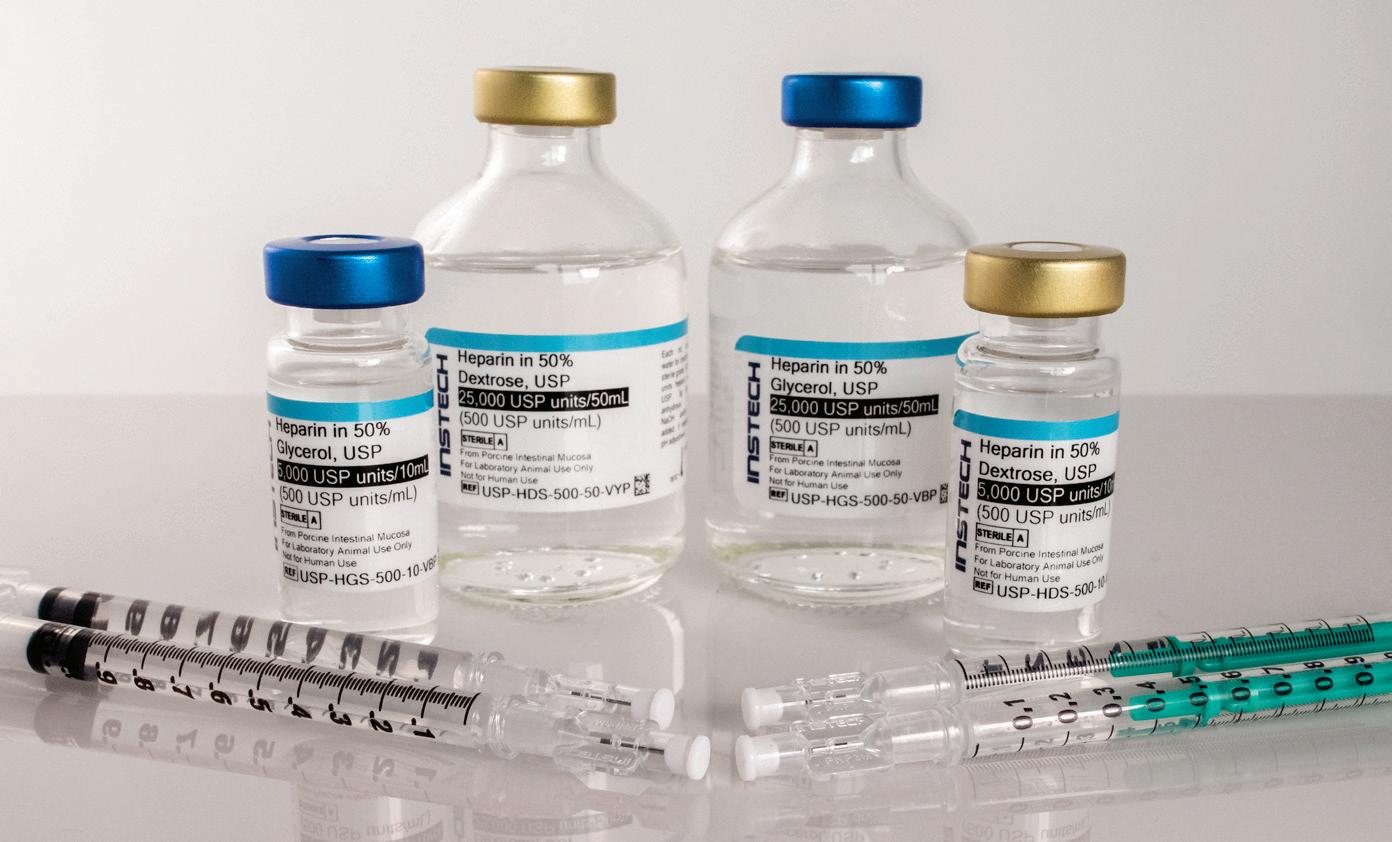
Pharmaceutical-grade, start to finish.
Beginning with sterile ingredients does not guarantee sterility of the lock and flush solutions you are infusing into your animals. Look for “USP” on the label to ensure they have been prepared to pharmaceutical-grade standards. It’s good for your science, good for animal welfare, and recommended by AAALAC.
www.instechlabs.com
4 Laboratory Animal Science Professional May 2023 DEPARTMENTS 64 48 5 The Leadership Corner Tech Week celebrations 6 People & Places New hires, promotions, awards, memorials 14 PROfiles Meet Linnea Morley 41 Crossword – LATG #3 44 Tech Tips Insights on techniques and tactics 58 AALAS Connection 2023 AALAS Awards 60 AALAS Foundation Keep Public Outreach Going 62 Ad Index 64 Pet Talk Thanos and VALkyrie 44
THE LEADERSHIP CORNER
Thank You, Technicians!
At the end of January, and in some cases, early February, many of us set aside time to honor our exceptional professionals who have dedicated themselves to providing the care and well-being of the animal heroes in their charge. For those new to our industry, the Committee on Technician Affairs created National Laboratory Animal Technician Week in 1999. This annual celebration recognizes laboratory animal technicians’ essential contributions as research team members. In 2002 it was renamed International Laboratory Animal Technician Week, allowing technicians worldwide to participate in the event.
This year, International Laboratory Animal Technician Week was celebrated officially from January 29 through February 4. Like many companies and institutions, we decided to extend the week to celebrations once a week for a month. We incorporated some ideas that many of you have shared in the past through LAS Pro. Our management team and others prepared and served breakfast for the technicians, invited business partners for lunch and learn sessions, and had an ice cream social and movie day! Our department also came up with some really fun giveaways. Planning these types of events takes coordination by some people. We recognize how much our technicians do for the animals, working seven days a week, 365 days a year, through holidays, terrible weather events, and even the most recent pandemic.
What did you do for your technicians? As a technician, what was your favorite type of recognition? Do you like a week, month, or even a full year of celebrations? I can’t wait to get this copy of LAS Pro to read about all the success stories!
Laboratory animal technicians are the backbone of animal welfare programs worldwide and positively impact biomedical advances. All technicians deserve a big THANK YOU for their dedication to our animals and profession.
Staff Publisher Thomas L. Joseph
Associate Publisher Chris Lyons
Managing Editor Matt Coffey
Associate Editor Morgan McCloud
Ad Sales Heather Lampi

Design/Production Zara Garza
Editorial Advisory Board
Leslie Birke Louisiana State Univ
Andrew Burich Benaroya Research Institute
Bob Dauchy Tulane Univ School of Medicine
David DeOrnellis Champions Oncology
Penny Devlin Pennsylvania State Univ College of Med
Sonia Doss Duke Univ Medical Center
Kelly Ethun Emory University
Glenn Jackson Cornell University
Richard Marble Alpha Genesis Inc
Elizabeth Nunamaker Charles River Laboratories
Sara Oglesby Abbvie
Jane Olin Edwards Life Sciences
Karuna Patil Seattle Children's Research Institute
Amy Pierce Tulane Univ School of Medicine
Stacy Pritt UT Southwestern Medical Center
Robin Tucker Georgetown Univ
Mission Statement
Laboratory Animal Science Professional (LAS Pro) is the official magazine for American Association for Laboratory Animal Science members. LAS Pro provides a wide range of useful resources and knowledge to the association’s 15,000 laboratory animal science professionals who are involved in advancing responsible laboratory animal care and use to benefit people and animals. All signed articles, including, committee reports, news, and commentary, reflect the individual views of the authors and are not official views of AALAS.
Authorization to photocopy portions for personal or internal use is granted by the American Association for Laboratory Animal Science. Photocopying for purposes of resale or outside distribution is prohibited unless written approval is obtained from the AALAS Director of Communications.

Copyright 2023 by the American Association for Laboratory Animal Science.
Laboratory Animal Science Professional (USPS 010-730) is published bimonthly by the American Association for Laboratory Animal Science, 9190 Crestwyn Hills Drive, Memphis, TN 38125. Periodicals Postage paid at Memphis, TN 38101 and additional mailing offices.

POSTMASTER: Send address changes to AALAS, 9190 Crestwyn Hills Drive, Memphis, TN 38125-8538.
American Association for Laboratory Animal Science 9190 Crestwyn Hills Drive Memphis, TN 38125-8538
Phone: 901-754-8620
Fax: 901-753-0046
E-mail: info@aalas.org
Web: www.aalas.org
May 2023 Laboratory Animal Science Professional 5
Pamela Straeter President
American Association for Laboratory Animal Science
Celebrating Certifications
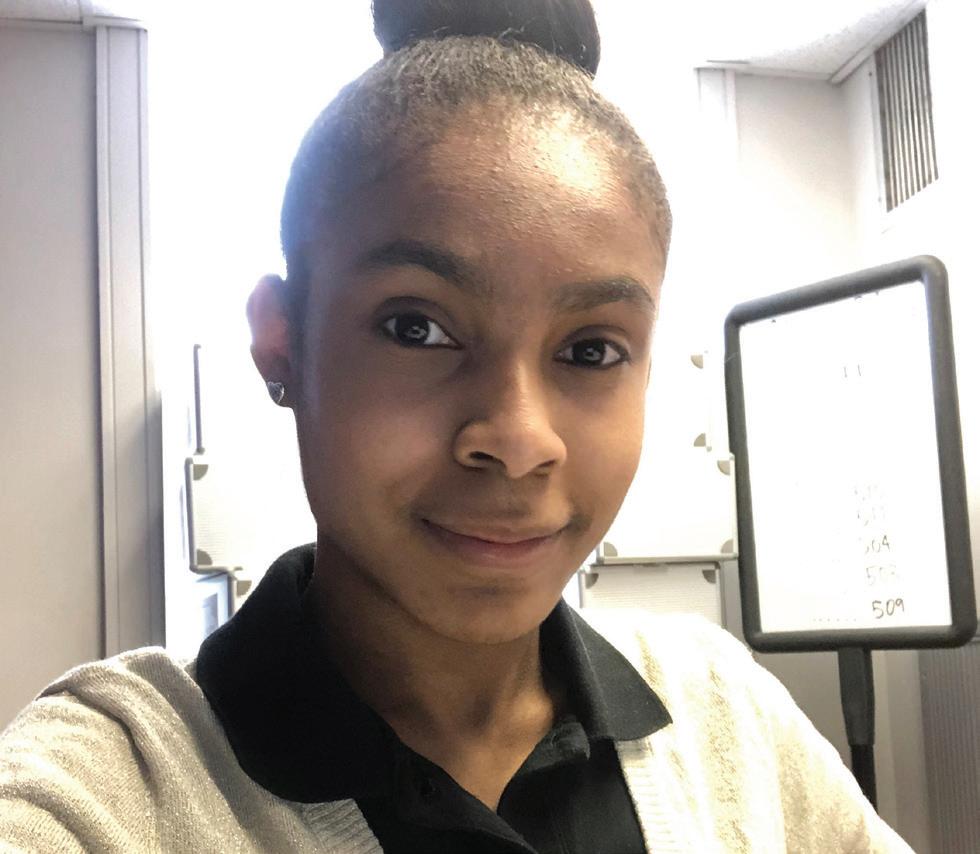
Dean Gibson recently obtained his LATG certification. “I'm excited to earn my LATG certification because it's a symbol of the effort I've made to grow and learn in this career, which I never expected to enter but have grown to love. Having been very hands-on with the animals so far, it has been great to learn more about the operations of the facilities and it gives me more perspective into the problems and considerations that are dealt with by those above me. The deeper understanding of the field makes me even more invested in the importance of how we care for these animals, and inspires me to continue to contribute.”
Beau Murray obtained his ALAT/RALAT and said, “being a licensed veterinary technician requires me to have a wide range of skills for an even wider range of species. Obtaining ALAT/RLAT certification adds another layer to my skillset to give me confidence when working with animals.”

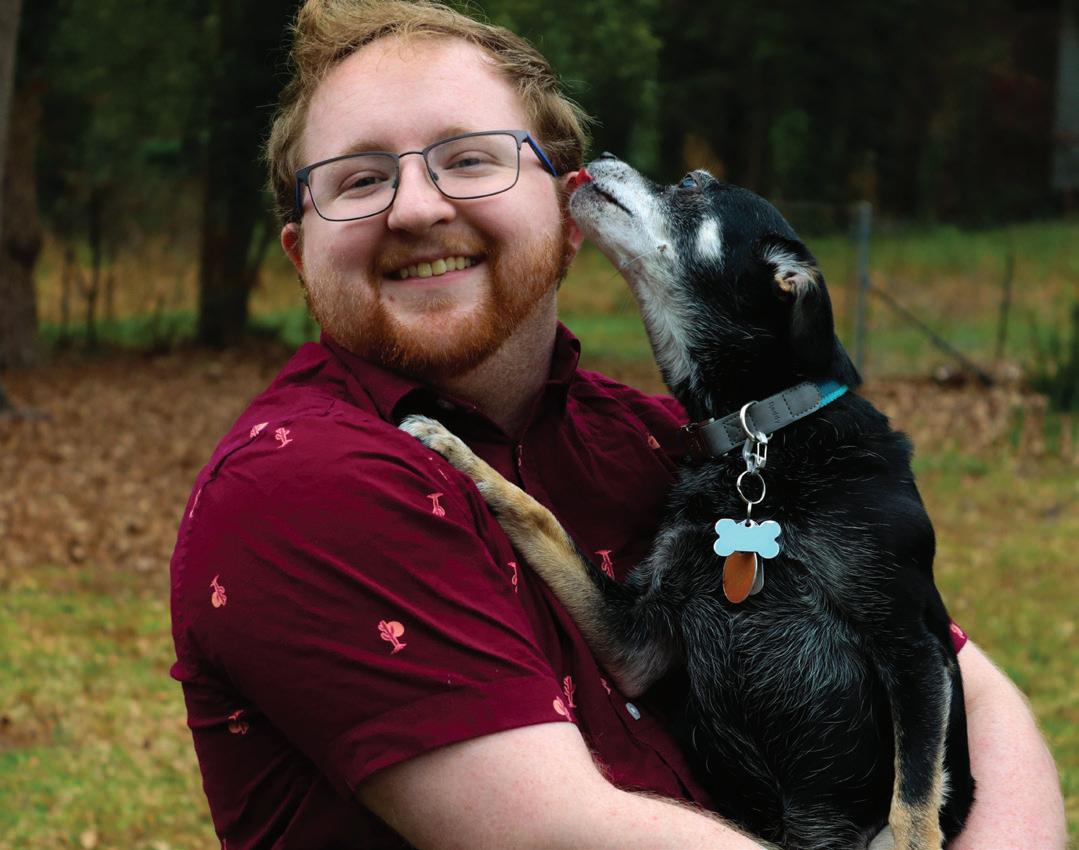
Peyton Mitchell recently obtained her RALAT. “Becoming AALAS certified means so much to me. I am very proud to have earned the title of RALAT because it serves as a reminder of my hard work and dedication to caring for animals.”
6 Laboratory Animal Science Professional May 2023 !
PEOPLE & PLACES - NEW HIRES, MEETING UPDATES, AND
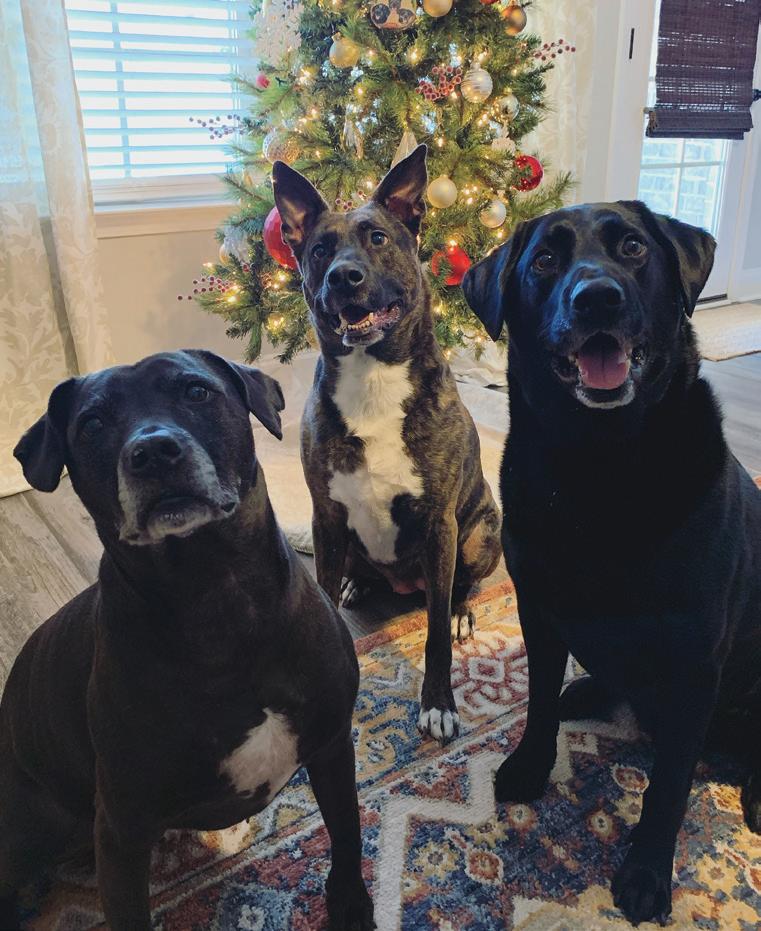
RECOGNITION
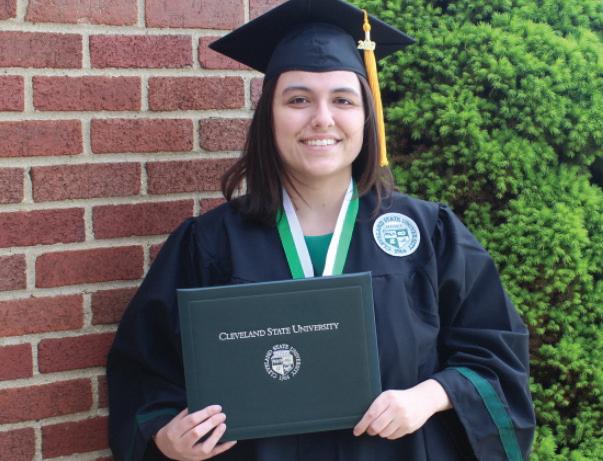
Allison Smith says that “getting my LAT has been a personal goal of mine for a while, and I look forward to continuing my journey with the LATG and expanding my knowledge in the animal husbandry field.”
Danielle Seaman recently obtained her RLATG. “I am so grateful for this achievement that I have accomplished, and I am looking forward to all the doors this will open for me in my career in laboratory animal science!”


May 2023 Laboratory Animal Science Professional 7
! New Jobs M
ila Christen has started a new role! Starting a new role as the Director of In Vivo Sciences is both exciting and daunting. As a new hire, I feel energized as I am onboarding and learning about the way that Janssen cares for its animals and its staff. Being responsible for a vivarium of animals, I remind myself daily that they are the reason for my career path, and I re-commit each day to providing them with the best care possible. I’m most excited about the new ways I will be collaborating with investigators in the various therapeutic areas- learning about new animal models, partnering in 3Rs initiatives, and sharing my expertise as well. It can be intimidating to be the new person at work, but luckily I joined an organization with a welcoming culture where I feel empowered to ask questions and bring my ideas forward.

IN MEMORIAM
Written by Matthew Ricci, PhD
We first met Karen when she was our contact at Merck for purchasing animal diets. We quickly came to know her as a very organized, professional, warm human being who would call weekly to order diets for many different labs at Merck. She was always fun to talk to and you could hear her smile through the phone. She was at Merck for 16 years when in 2005, as part of a huge layoff, they let her go. Their loss.
Knowing her as we did, we wanted to hire her and we were not alone. One of our competitors, Bio-Serv, had the same idea. Luckily for us, she accepted our offer. I still remember that phone call I made offering her the job. Two very happy people hung up the phone that day. We fondly talked about that call many times over the years.
Karen worked with us from January 2006 until the Spring of 2020 when she made the decision to retire.
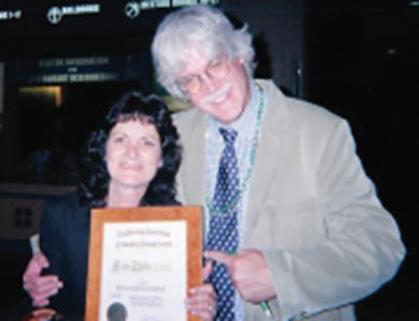

I can’t possibly list all the good things Karen brought to Research Diets. She had a huge amount of institutional knowledge about the lab animal industry which helped us immensely in many ways, such as preparing for customer visits. She was one of the most organized people I’ve known and she created and matured so many processes we use today. She helped make RDI better and was somehow never short of energy in her efforts.
As good as she was at her job, Karen gave us far more than knowledge and organization. She was a caring, sensitive, wonderful friend. Her integrity was without question and she
always had the time and patience to help any of us or listen to our problems. Anyone who worked with her learned something good as a result. There’s so much more than that and I can’t begin to summarize all the things that made her who she was. All of you who knew her well – you know. She loved music (especially Bob Dylan), flowers, laughter and of course her family. I laughed and cried with my friend over the years and her friendship was a source of great comfort to me. Let’s thank Karen for all the good things she brought out in each of us. We will miss her.
Richard Eric “Rick” Fish
Rick Fish, 72, passed away on Saturday, March 11, 2023. Rick held an undergraduate degree from Cornell, an MS degree from Rutgers, and a doctorate in veterinary medicine and a PhD from the University of Tennessee, Knoxville. He retired in 2018 after a long tenure on faculty at NC State College of Veterinary Medicine. Rick was a many-faceted man and took pleasure from many different things. He loved teaching, mentoring and advocating for others. He helped to mold and promote the careers of countless veterinary professionals at the University of Missouri, Columbia and in the Research Triangle Lab Animal Residency Program. He was a fierce defender of anyone who was treated unfairly and was fondly known for his wicked red pen when reviewing research papers and editing professional texts. Upon retirement, he became a volunteer at the Wake Tech Community College Beltline Center, where he was known as a kind and patient tutor. Rick was also a skilled cocktail mixer and barbecue master who reveled in serving up wicked margaritas and the most mouth-watering ribs and steaks you’ll ever eat. Rick also had a great appreciation for local microbrews, as he and Peg were in pursuit of completing their Raleigh Beer Trail passport. He was a skilled sailboat captain and he and Peg loved spending many hours together sailing their boat, the SV MUGSY. He was an avid sailor, bicyclist and hiker. His dog and pal, Snoopy, always stayed close by him on the boat and on the trails. Rick, and his signature mustache, will be sadly missed and fondly remembered. An informal celebration of life gathering will be held later in the spring.
8 Laboratory Animal Science Professional May 2023
Karen Ruffo
Credit: Thomas Funeral Home
PEOPLE & PLACES - NEW HIRES, MEETING UPDATES, AND RECOGNITION


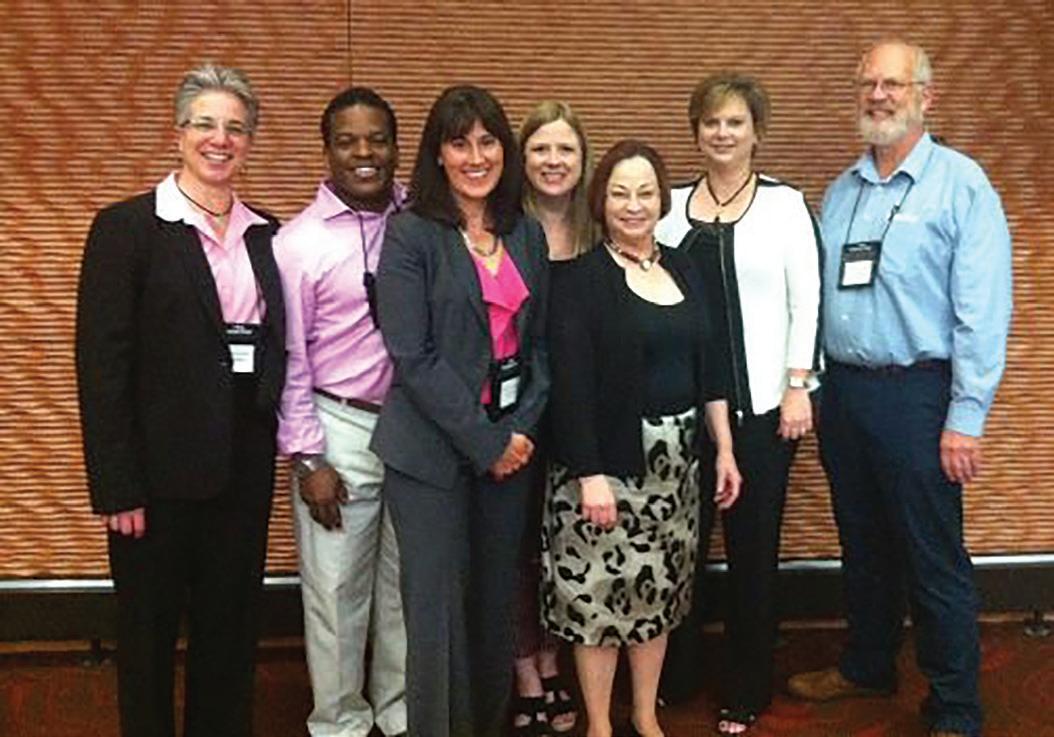
A Tribute to Nicole Duffee, DVM, PhD
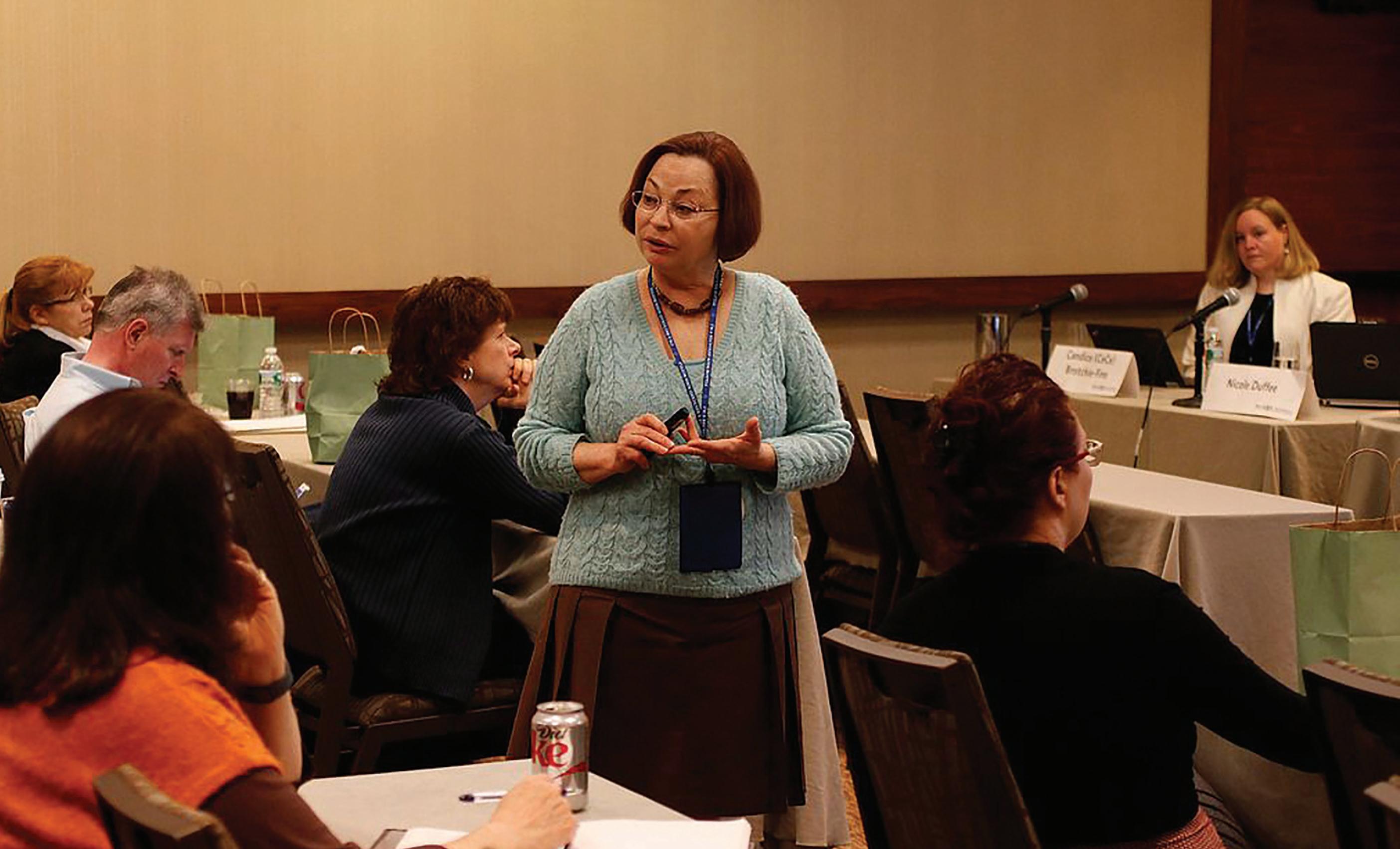
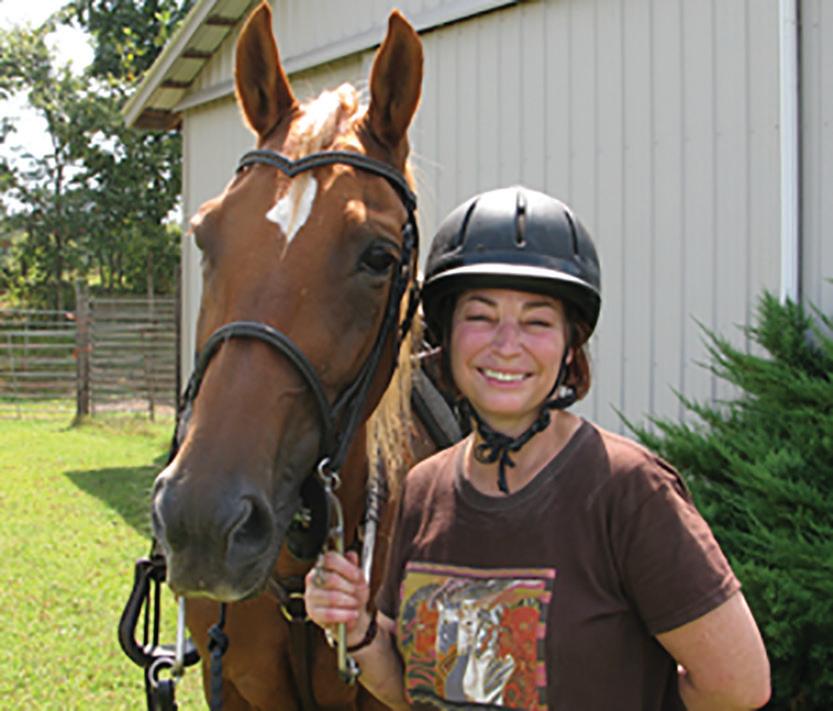
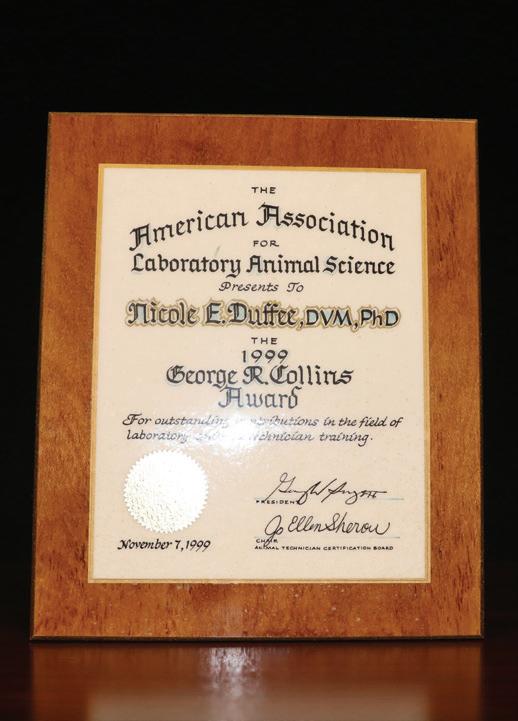
Nicole Duffee, DVM, PhD, worked at AALAS for twenty one years, starting on February 26, 2001. By then, she was well established in the laboratory animal science world, having obtained her PhD and DVM at the University of Illinois Urbana-Champaign. She also received the George R. Collins Award at the 1999 AALAS National Meeting. One of her most significant accomplishments was creating the AALAS Learning Library, which continued her passion for educating the world on laboratory animal science. With her recent departure from AALAS due to health issues, we asked friends and colleagues to share some of their most cherished memories of Nicole.
“I had the distinct pleasure and honor to work with Nicole on a training project during the years immediately before she joined AALAS, then again to consider her as a friend and colleague during her distinguished AALAS career. Nicole was always full of energy, extremely smart, yet very compassionate toward both animals and people. Her heart has always been in training and helping people. Her contributions to AALAS are readily apparent in the AALAS Learning Library website and the countless manuals, atlases, courses, and training materials she shepherded at AALAS. But her continuing legacy is her profound and touching influence on so many people across our community. We should all strive for something that meaningful.”
Written by Michael Fallon.
“Even before veterinary school, I knew I wanted to go into laboratory animal medicine. As a veterinary student, I was funded by the American Veterinary Medical Association Foundation (AVMF) to spend a summer with the veterinarians at Washington University in St. Louis. It just so happened that I was also provided an opportunity to shadow the laboratory animal veterinarian at a nearby company as well. While it had been easy for me to secure housing at the university, I didn’t have housing for the two weeks while I was at the company. Enter Nicole! I was told by the folks at Washington University that she lived close to the company and after talking to her, she graciously opened up her home to me for those two weeks, including transportation! I will never forget the kindness and generosity she showed me while I was a struggling veterinary student. In fact, she gave me the best
10 Laboratory Animal Science Professional May 2023 PEOPLE & PLACES - NEW HIRES, MEETING UPDATES, AND RECOGNITION
example I could I ever have about how to support veterinary students and veterinarians as they work toward their professional goals.
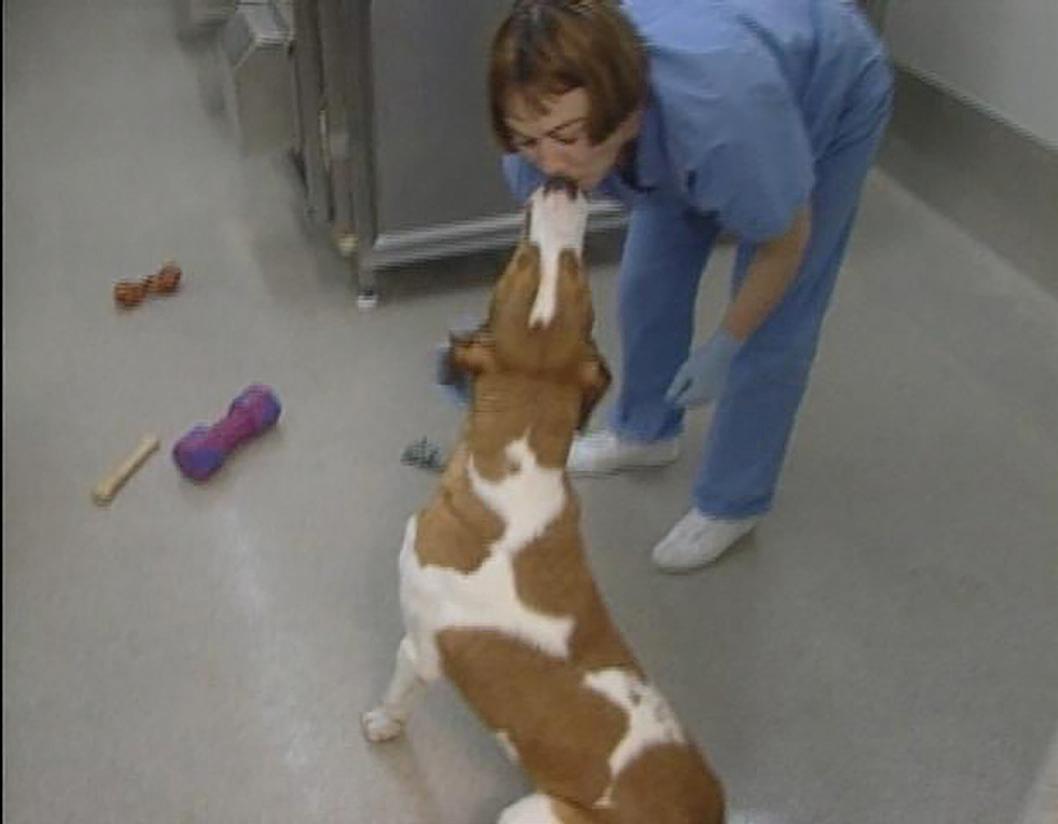
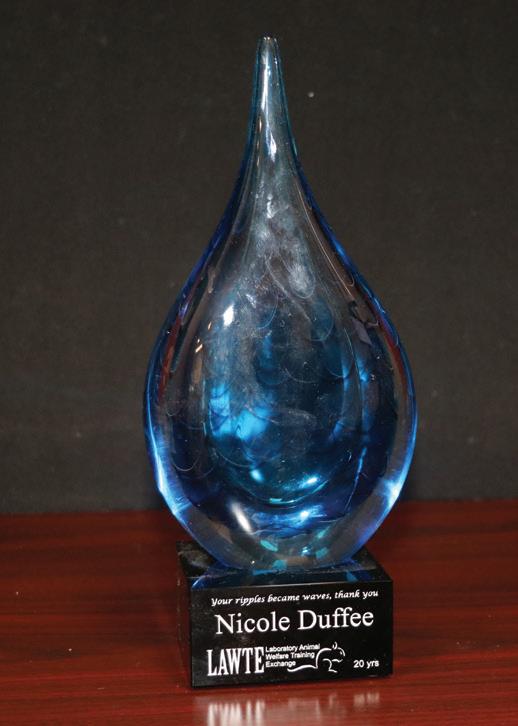
Who knew that after I entered laboratory animal medicine, I would work with Nicole on the Online Learning Committee as we worked to establish and grow the AALAS Learning Library as a premier training program for animal research programs across the world? I have also had the distinct honor of serving as President of the Laboratory Animal Welfare Training Exchange (LAWE) years after she served as one of its first Presidents! At about that same time, I also had the honor of co-authoring an ILAR Journal about standards and guidelines for animal care technicians and veterinary technical staff training within laboratory animal science.
Nicole was driven by education. It was her passion to provide the best training to animal care and veterinary technicians to improve animal research and animal welfare continually.”
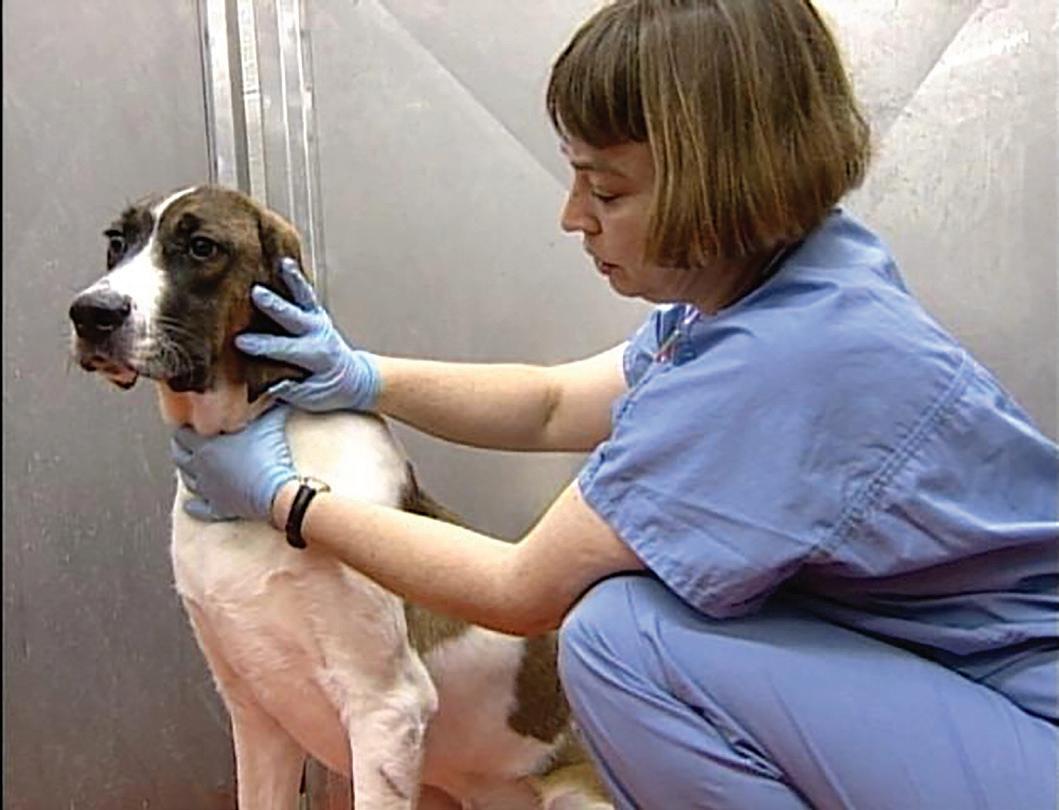 Written by Stacy Pritt.
“Nicole was one of the first people to welcome me to the AALAS community at my first national meeting when I started work with UGA in 2010. She was so incredibly warm, welcoming, and funny. She was fascinated with my experience with chickens and before I knew it, I was drafting an AALAS Learning Library course on working with laboratory poultry. It wasn’t long before I was on the Educational Resources Committee, where I was able to work closely with her for many years. My stint with the ERC was followed by years on the Online Learning Committee. I think it was the opportunity to work so closely with Nicole and Pam that made those volunteer experiences so enjoyable. Nicole was always so eager for fresh ideas and appreciative of everyone on her committees. Personally, she became my friend. I was honored to have known her beautiful daughter. There were so many lovely evenings of wine and terrific conversation through the years. She is an amazing lady and a true mentor in laboratory animal science education. I feel so fortunate to call her my friend.”
Written by Lisa Kelly.
“Nicole is, without doubt, the dearest of human beings and most important of friends and colleagues who I’ve come to know in our field of laboratory animal science. As life would have it, on our first encounter, while sitting next to Nicole preparing for a talk in the speaker ready room of the AALAS National Meeting in Salt Lake City in November, 2007, she was doing what she has always done best: helping a fellow member. Nicole discussed a new program, the AALAS Online Learning Library, that she thought might help the member with her work. This old scientist impulsively spoke out loud that it was, without doubt, the finest educational program AALAS offered. Both spontaneously looked over at me, resulting in Nicole’s characteristic bright, warm smile and a moment in time remembered to this day. Her work complete, our fellow member departed and we spent the next hour in an engaging discussion regarding the ALL program, our backgrounds, and the future of AALAS. During the course of our conversation, Nicole mentioned another new AALAS program to be announced at the meeting, the AALAS Grants for Laboratory Science Program (GLAS). Little did this fellow realize at that time that our lives would be forever intertwined and changed. But such has always been Nicole’s special gift in life and with AALAS – engaging and growing forward the AALAS membership and its programs. For this scientist member, the result in the years ahead were to be so many fulfilling AALAS GLAS-supported investigations, and a wonderful association with AALAS that exists to this day, including work with her as my sage advisor and skilled liaison as Chair on the SAC, Nominations and Governance Committees, as well as the AALAS Journals Editorial Board and LAS Pro Editorial Advisory Committee among many other activities at both the National and Branch levels. Nicole’s brilliant mind and keen intuition, persistence, and determination are her outstanding character-
May 2023 Laboratory Animal Science Professional 11
istics so many of us in AALAS have certainly come to know and enjoy over many years. She has been the consummate “leader” in AALAS, enabling and growing forward so many of us, our careers and personal lives over time – with unsurpassed elegance and humility, never asking anything in return. Nicole – our remarkable bright, ‘Shining Star’- truly represents, without question, all of the finest qualities and attributes of our great organization AALAS.”
 Written by Robert Dauchy.
“I’ve had the pleasure of knowing Nicole since she joined AALAS (2001). Being local to Memphis, I invited Nicole to our offices at the University of Tennessee Health Science Center on several occasions to speak with our residents and discuss filming educational videos. Nicole was always a delight to work with and so enthusiastic about AALAS and education in laboratory animal science. She has been a good friend and colleague over the years.
In 2008 I was asked to chair a committee to develop courses in animal biosafety for the AALAS Learning Library. Nicole was my primary AALAS staff contact who organized our teleconferences, made sense of our course outline, and spearheaded the effort toward making these courses come to life. This was a huge undertaking, but Nicole’s passion for this project and her ability to synchronize all of the moving parts was amazing. I’m indebted to Nicole for this effort and still amazed at all of her contributions to AALAS.”
Written by Tim Mandrell.
“Nicole always had an optimistic attitude and enthusiasm for her work. Her dedication to providing the best support for members was unwavering, and she always went the extra mile
12 Laboratory Animal Science Professional May 2023
to ensure their satisfaction. Nicole was a conscientious staff member who approached every task with a positive outlook and a can-do attitude, never shying away from a challenge or an opportunity to learn and grow.
Her enthusiasm was contagious, and she inspired her coworkers to strive for excellence in their own work. She was always willing to lend a helping hand, share her expertise, and support her colleagues in any way she could. Her positive attitude and approach to work made her an invaluable member of the team, and her contributions were greatly appreciated by everyone who worked with her.
Nicole's commitment to providing the best support for members was admirable. She understood the importance of building strong relationships with members, and she always went above and beyond to ensure their needs were met.
In short, Nicole embodied the qualities that every employer looks for in their staff. Her optimistic attitude, enthusiasm for her work, and commitment to providing the best support for members made her a true asset to the team, and her legacy will continue to inspire others for years to come.”
Written by Chris Lyons.
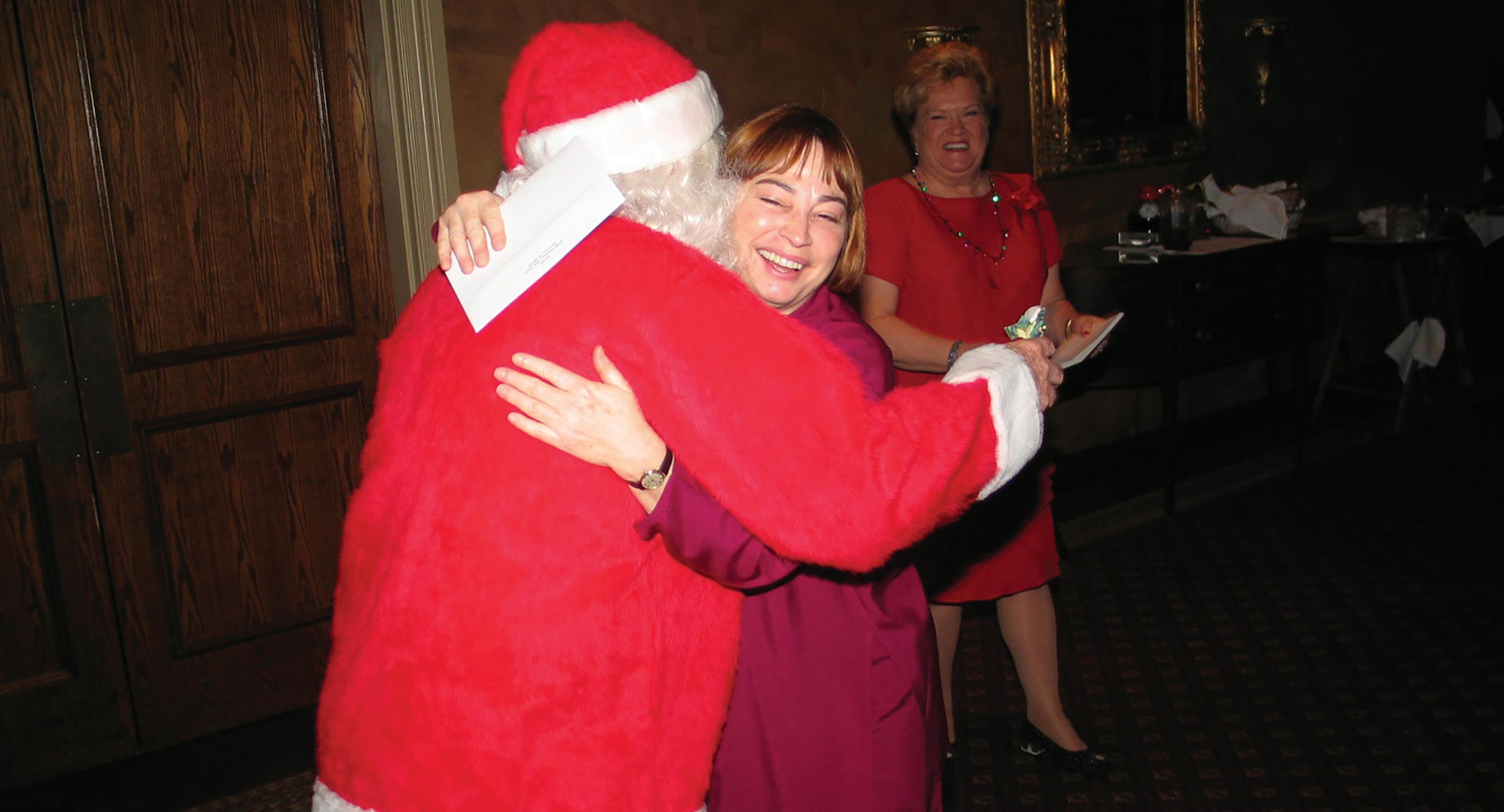
“I remember when I was here to interview for my position, and as I was leaving, she used both hands to place some Hershey kisses into my hand and wished me the best. Nicole always showed a great sense of humor. She could see and point out the funny side of any situation. She enjoyed talking about her pets and our pets. Nicole was a good boss; she always gave and shared recognition of a job well done and did not get angry about mistakes or place blame. She offered to go to my house to feed my dogs when my mom was having open-heart surgery in 2007. I had only worked for AALAS for 6 months at that time! I will never forget when she offered to come and sit with me when I was in the ER to rule out sepsis on a Saturday night in the winter of 2018. She always made time to listen when we had family or pet concerns, and she was adamant about keeping us up to date on Covid-19 information and vaccines.”
Written by Brenda Johnson.
“I met Nicole in February 2003. She was my boss in the Education and Scientific Affairs department. What immediately stood out to me was how passionate she was about sharing her love for laboratory animal science with everyone. She was so dedicated to education and assisting member growth. Nicole is one of the reasons I grew to love AALAS and why I have stayed here for so long. She consistently inspired pride in our organization. As she transitions into her next phase of life, I will continue holding onto the years of laughter, friendship, and endless energy.”
Written by Sally Westlake.
Once again, AALAS thanks Nicole for her significant contributions to not only our organization, but to everyone in the laboratory animal science community.
May 2023 Laboratory Animal Science Professional 13
Getting Personal
Best binge-watching TV series?
Schitt’s Creek and Parks and Rec.
What are your favorite hobbies?
Pottery, gardening, houseplants, and I’m working on a small off-grid solar project for fun and hope to run my fish tank.
Where is your dream vacation spot?
Anywhere warm and sunny but doing a bucket list African safari soon!.
What is your favorite dessert?
Everything chocolate, especially chocolate ice cream with more chocolate in it.
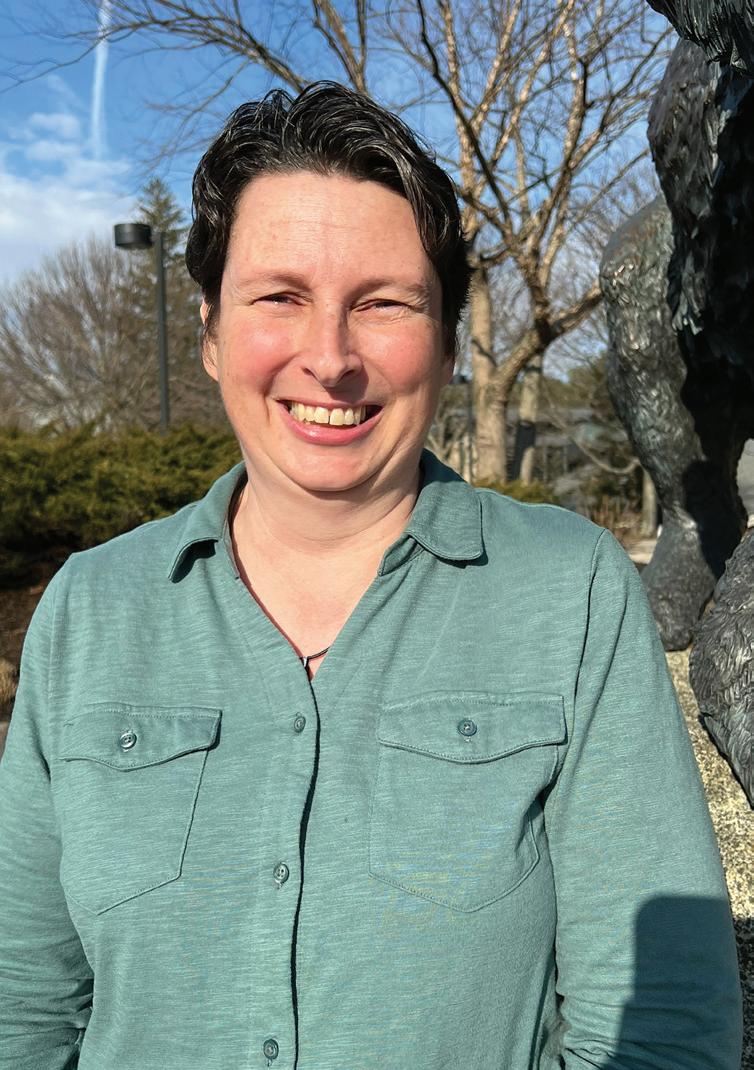
minutes with... Linnea Morley, DVM, DACLAM, LATG 5
LAS PRO-files
Facility/Employer: University of New Hampshire
Job Title: Associate Director, Animal Resource Office
How did you get in this field? Charles River Labs called me for an interview while I was working as a vet tech in small animal. I figured I should go on the interview since I had never had one. I ended up liking the idea of working with mice and not lifting or restraining heavy dogs. I took the position of technologist in the Transgenic Services department and never looked back!
Who were your mentors? Every lab animal vet and veterinary pathologist that I worked with at CRL, Tufts, Princeton, the GCC residency program in Houston, TX, and here at UNH. I still reach out to many of them and love catching up with them at conferences.
What are your current interests in animal science? Training students in mouse handling, and guest lecturing in a variety of undergraduate animal science or vet tech classes. I also love going to high schools and speaking to animal science classes, and showing that we love the animals that we care for.
Where do you see yourself in 5 years? Hopefully, being able to do more lab animal outreach to the local community, both at high schools and here within the UNH community.
What is your favorite part of your job? Giving tours of our animal facility to people who are unaware of what goes into animal research. I give tours to many students, faculty, staff. I even invited the university president to our BRAD event last year and loved showing off our research. My goal for the next year is to get our state and local representatives here for a tour.
What advice do you have for others just beginning their animal science career? Don’t be afraid to ask for a new role or responsibilities if there is something new you want to try. If that thing you want involves going back to school, go for it! I didn’t go to vet school until I was 35 years old, and so glad I did. I’ve loved my career.
What is the most rewarding aspect of your career? When a student comes to me and says, “You spoke in my class last semester, and it really changed the
way I feel about animal research.” That student is going to be doing her senior year research project with us next year.
What is something unexpectedly interesting about your career? I was once a mascot for a professional sports team. I had done it in college, (GO Rhody Rams!), and missed being in the costume, so I sent an email asking if they needed someone for the position, and I ended up getting an interview and being hired the following week. I always say that it never hurts to ask, and sometimes you get exactly what you want!
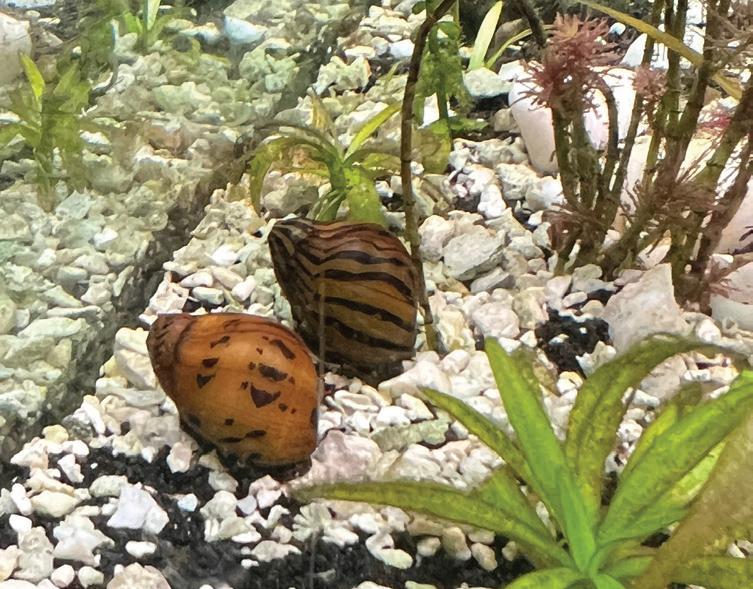
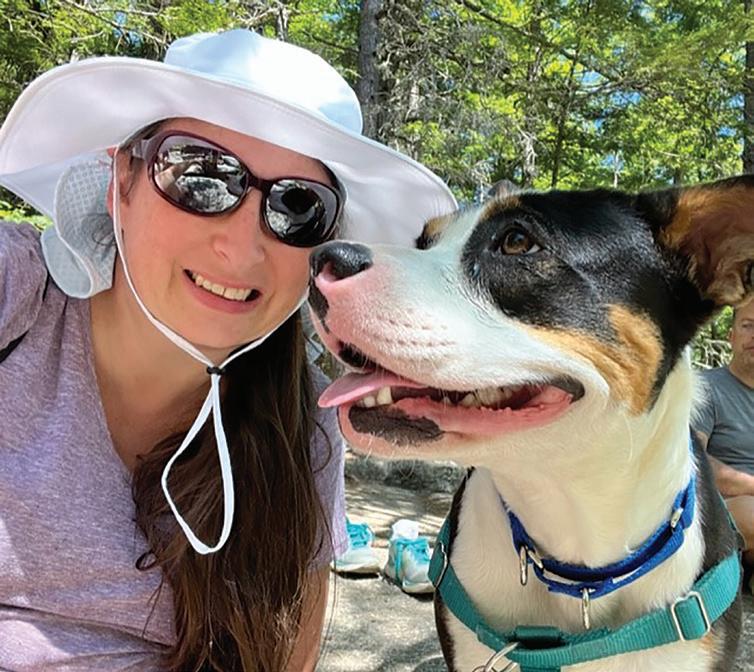
What companion animals do you have? If you have none, then what kind of pet would you like to have? I have a 2-year old pittie named Pebbles, and a fish tank with a variety of fish, and 3 snails named Steve Rogers, Tony Stark, and Peter Parker.
14 Laboratory Animal Science Professional May 2023



CLEARH2O.COM 1-888-493-7645 AquaPak® HydroGel DietGel MediGel® LabGel FiberBites® AquaFeed® Z The Clearly Better Solution • Ready-to-Use Pouches • No Capital Investment • Reduced Labor Pre-filled Pure Water AquaPak® INTRODUCING OUR LATEST INNOVATION
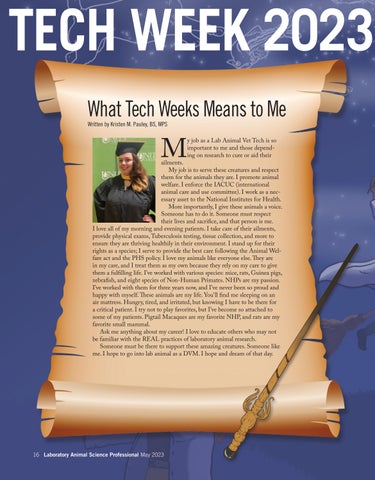
What Tech Weeks Means to Me
Written by Kristen M. Pauley, BS, MPS
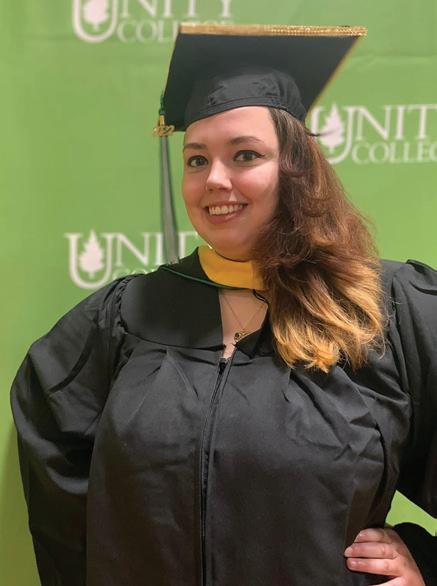



My job as a Lab Animal Vet Tech is so important to me and those depending on research to cure or aid their ailments.
My job is to serve these creatures and respect them for the animals they are. I promote animal welfare. I enforce the IACUC (international animal care and use committee). I work as a necessary asset to the National Institutes for Health.
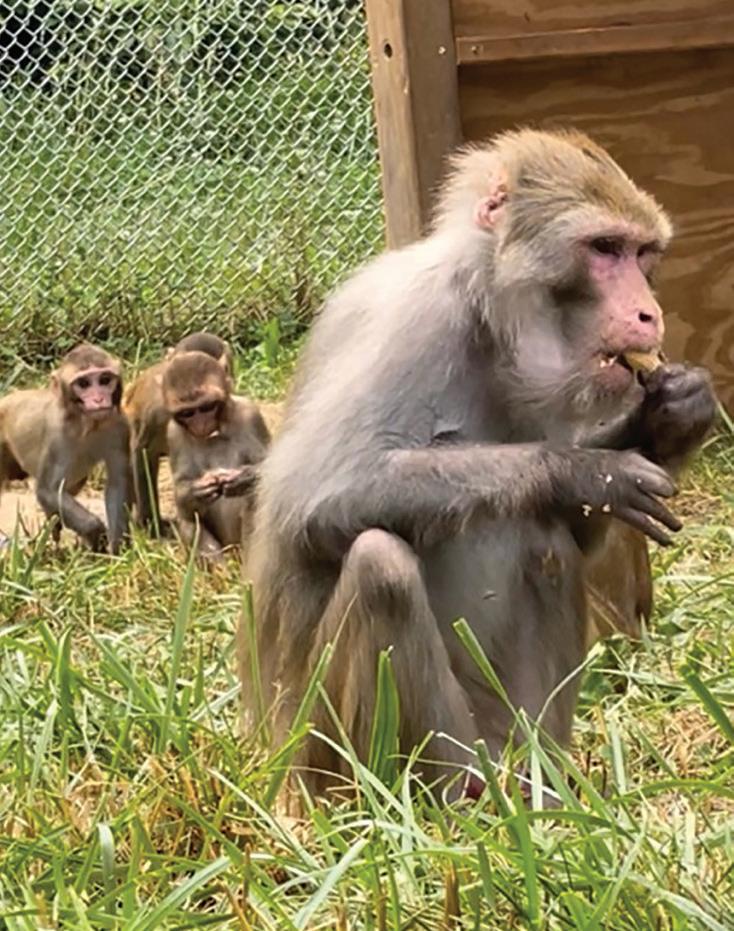
More importantly, I give these animals a voice. Someone has to do it. Someone must respect their lives and sacrifice, and that person is me. I love all of my morning and evening patients. I take care of their ailments, provide physical exams, Tuberculosis testing, tissue collection, and more to ensure they are thriving healthily in their environment. I stand up for their rights as a species; I serve to provide the best care following the Animal Wel fare act and the PHS policy. I love my animals like everyone else. They are in my care, and I treat them as my own because they rely on my care to give them a fulfilling life. I’ve worked with various species: mice, rats, Guinea pigs, zebrafish, and eight species of Non-Human Primates. NHPs are my passion. I’ve worked with them for three years now, and I’ve never been so proud and happy with myself. These animals are my life. You’ll find me sleeping on an air mattress. Hungry, tired, and irritated, but knowing I have to be there for a critical patient. I try not to play favorites, but I’ve become so attached to some of my patients. Pigtail Macaques are my favorite NHP, and rats are my favorite small mammal.
Ask me anything about my career! I love to educate others who may not be familiar with the REAL practices of laboratory animal research. Someone must be there to support these amazing creatures. Someone like me. I hope to go into lab animal as a DVM. I hope and dream of that day.
16 Laboratory Animal Science Professional May 2023 TECH
2023
WEEK
TECH WEEK 2023
Tulane National Primate Research Center: Covington, Louisiana
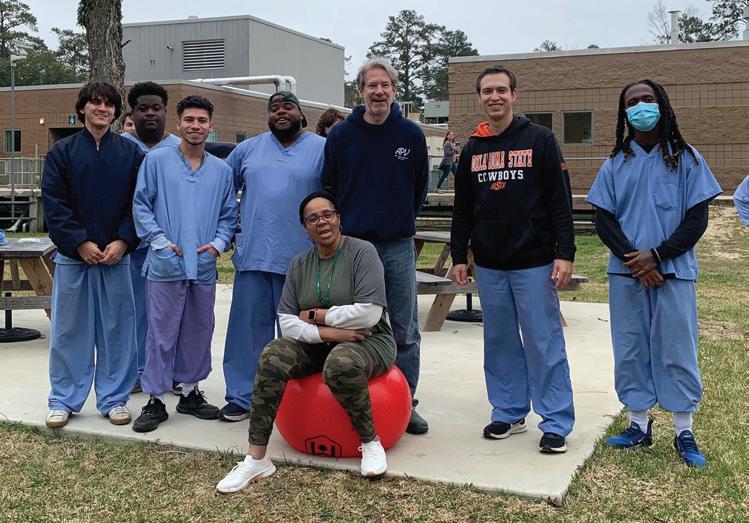
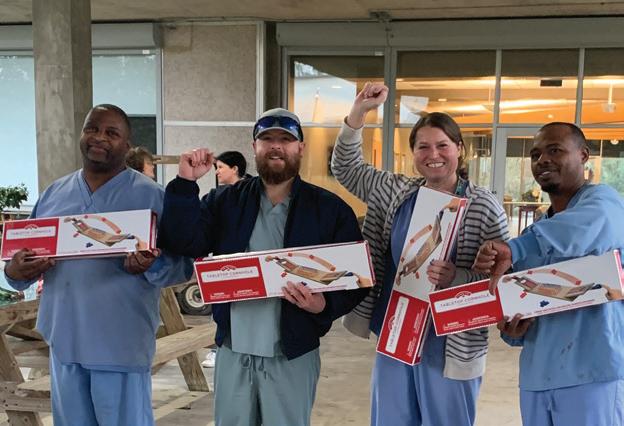
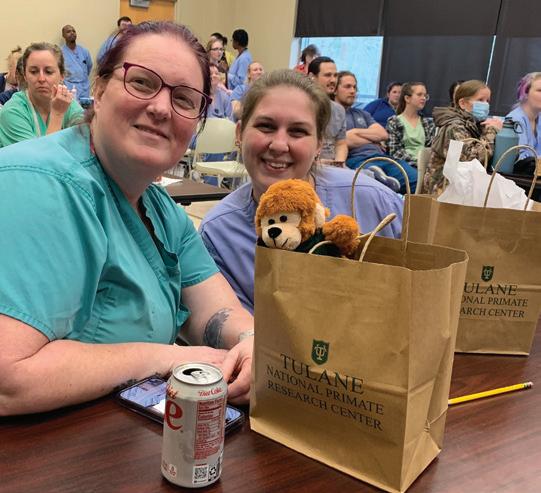
TNPRC technicians received loaded swag bags, fresh popped popcorn, extended lunch breaks, cotton candy, candy “survival kits,” pizza, and king cake all week. We raffled donations off to our techs and awarded Best Of prizes at a cupcake bar event. Thank you post-its from TNPRC employees to our techs were displayed in our café. Techs received a canvas to paint for a community mural and participated in a scavenger hunt, gathering items on campus and virtually that had something to do with magic. Kickball and bean bag toss championships were held, too. The weather was great, and the techs had so much fun!
Note: Unfortunately, tragedy struck the Tulane NPRC twice. The week prior to Tech Week, Sedia Hebert passed unexpectedly from aggressive cancer. A few weeks later, Zuriel Pryor passed in a wreck on his way in to work. Zuriel had only been with TNPRC for three months, but he was already known as an up and coming employee. Sedia was loved by so many and was a positive force during her eight years. This portion of Tech Week is dedicated to their memory.

Submitted by Shannon Aicklen
Washington State University: Pullman, Washington
For the week, we had something special each day.
• Donuts and ice cream sandwiches magically appeared in the tech’s breakrooms.


• Bags of tricks and spells were given to each tech
• Some potions and concoctions were served up for a hardy breakfast
• A Friday lunch with pizza, photo booth fun, and games were conjured up for all!
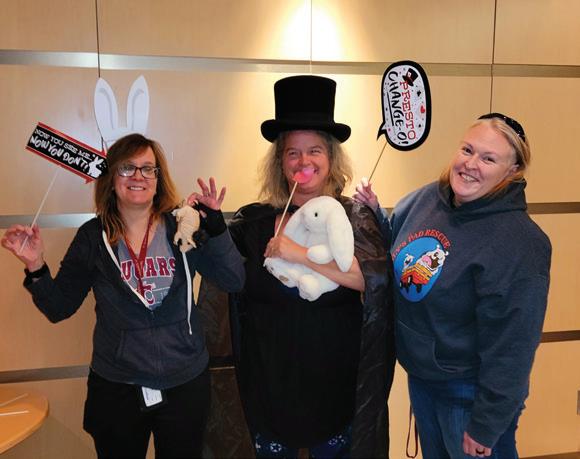
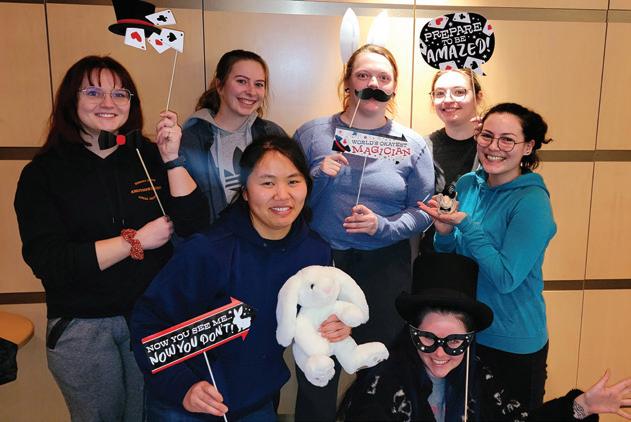
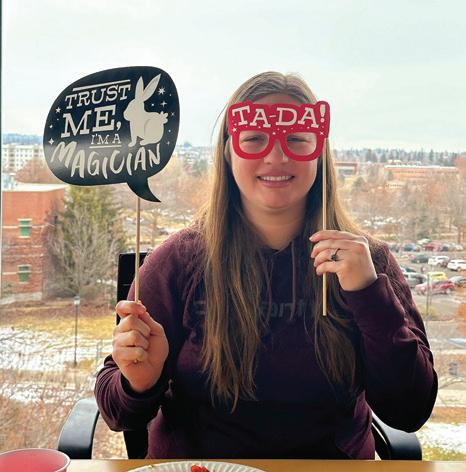
Submitted by Gwen Marie Anderson and Johnathan DenHerder
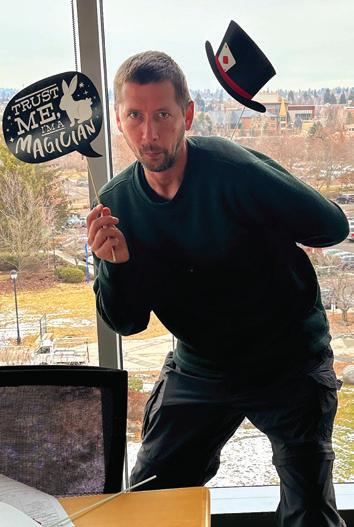
Bristol Myers-Squibb: Redwood City, California

Collaborators sponsored breakfasts, thank you cards, a “snack break cube,” and management/vendor goodie bags. We also had a Lunch and Learn sponsored by Allentown.
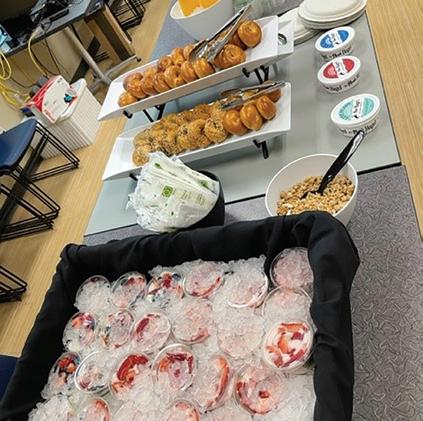
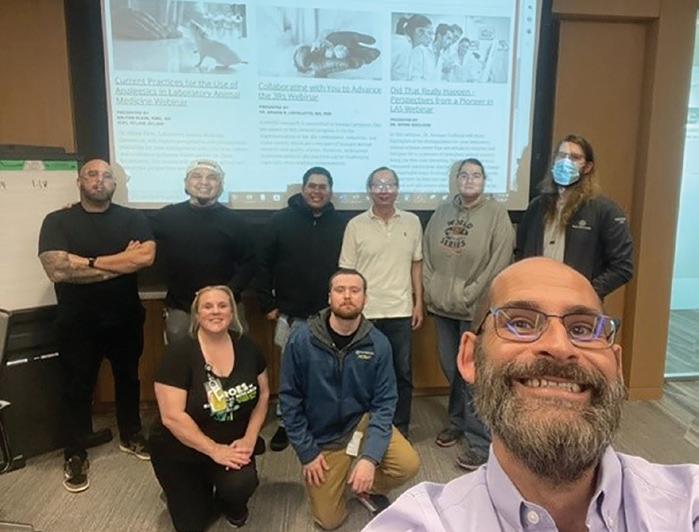
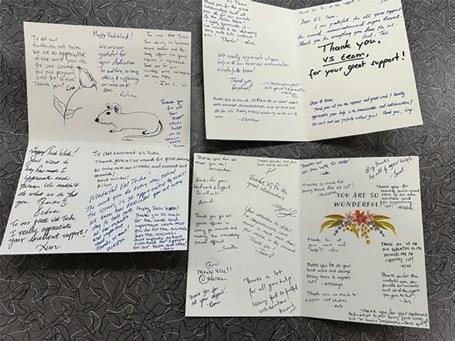
Submitted by Deborah Calantropio-Covington
May 2023 Laboratory Animal Science Professional 17
Charles River Laboratories: Horsham, Pennsylvania



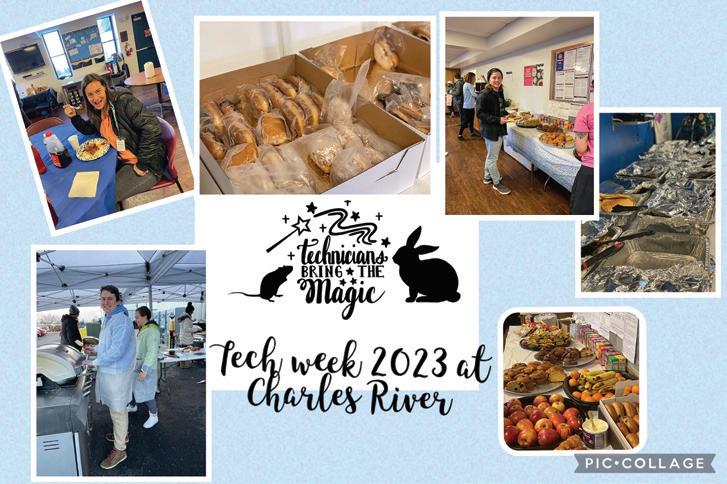
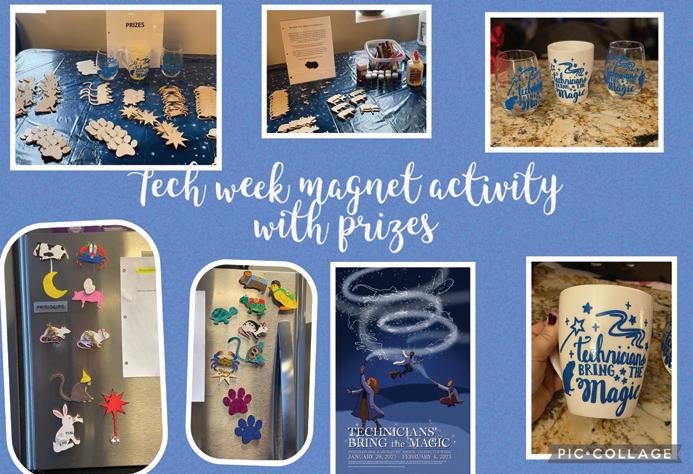
We had a great Tech week filled with games and activities, such as a scavenger hunt, Who’s My Pet, word search, daily trivia, SOP Bingo, guess how much candy in the jar, and decorating wooden animals with great prizes. We also had a Tech Breakfast, where management cooked us breakfast. Everyone seemed to enjoy the week. Thank you to all the Technicians out there for all you do. You all deserve a celebration!
Submitted by Colleen Dyson
Cincinnati Children’s: Cincinnati, Ohio
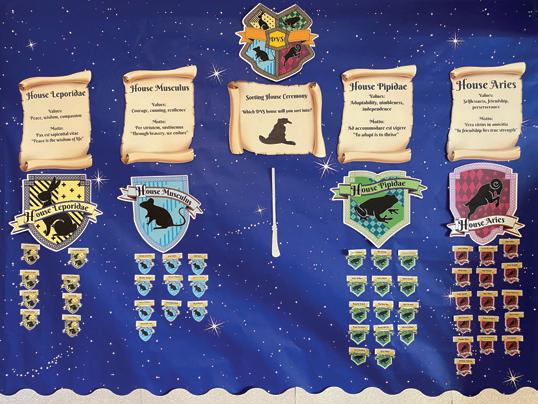
We created “houses” and had our techs sorted into them. We decorated break rooms with the theme, raffled off prizes during the week, and provided free lunch or snacks each day.
Submitted by Carolyn Doerning
Massachusetts Eye and Ear: Boston, Massachusetts
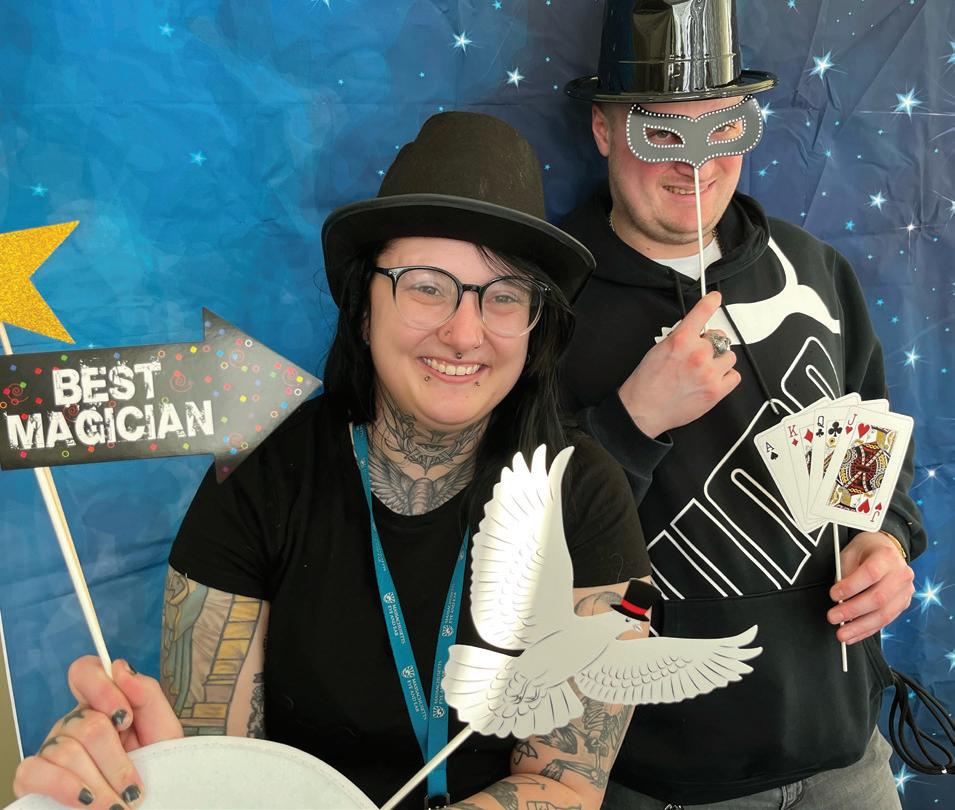
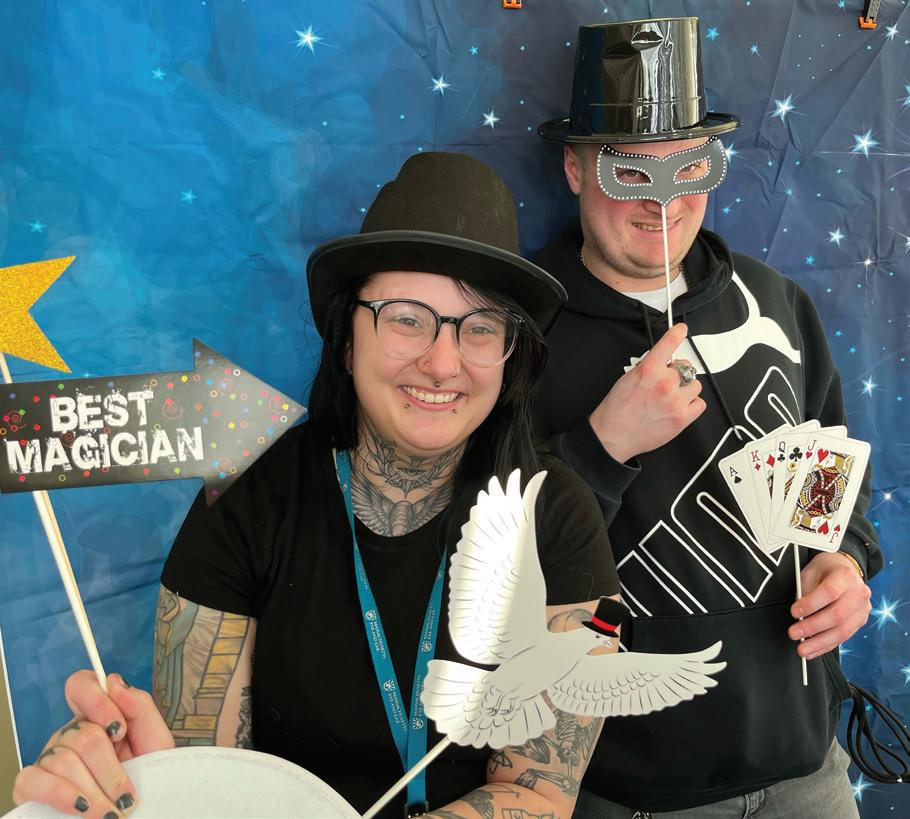
Our techs are such awesome magicians. They turned it into a two week celebration. We had daily raffles for cafeteria gift cards, mystery cash drawings, lunches, and a final event to end the month that included our leadership’s speeches, food, a photo booth, board games, and a red rose for each technician.
Submitted by Marie-Angelee Ortega, Kerry Norton, and Matthew Benson
18 Laboratory Animal Science Professional May 2023
Marquette University: Milwaukee, Wisconsin
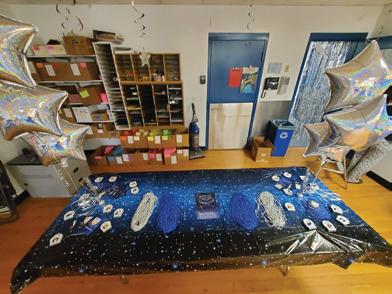
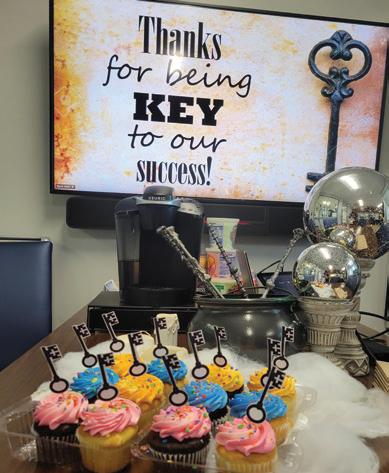
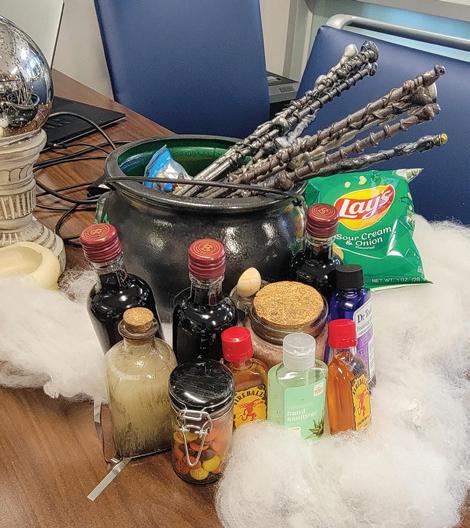
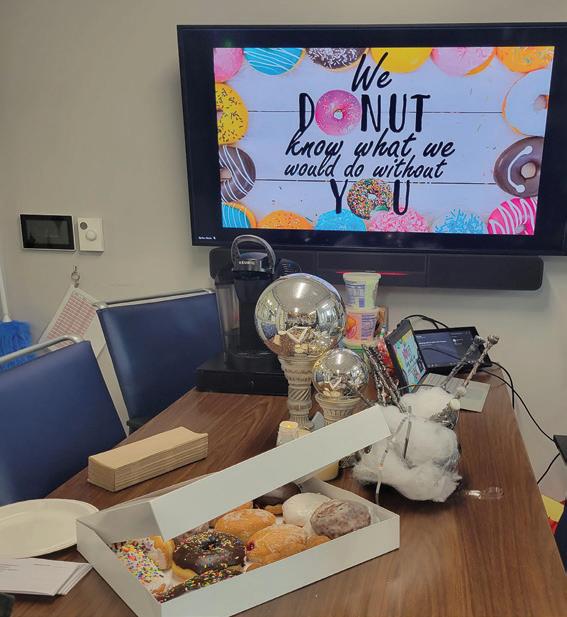
We loved the theme! The office was decorated with wizard rats, mice, and geckos for each technician. Along with floating candles, crystal balls, and a “Did You Know” board about our technicians!!
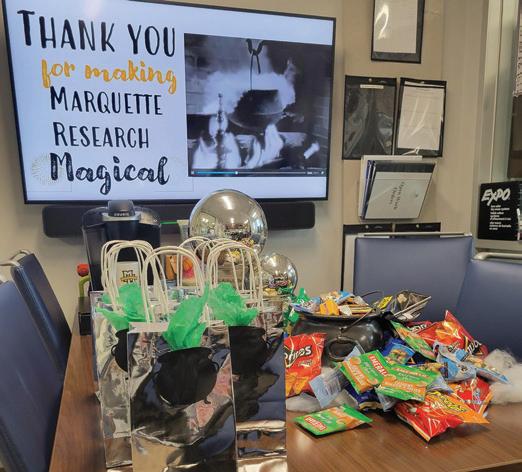
We gifted our technicians doughnuts, a cauldron overflowing with snacks, special potions, cupcakes, wand pens, homemade bread, and we finished the week with a lunch celebration. Our technicians are also excited to receive their AALAS Tech Week T-shirts!
Submitted by Alecia
Bjerke


Charles River Laboratories: Spencerville, Ohio
The Harry Potter fans were excited about the theme. During lunch Monday, provided by the lab, technicians took House Quizzes to see which house they would compete with in Jeopardy rounds over the next two days. Hufflepuff won. Materials were also provided for folks to develop their magic trick, and a few presented them on Thursday. Donuts were provided through a donation by a vendor (Marshall) and were individually distributed. Friday special drinks (non-alcoholic Butter Beer, Amortentia, Polyjuice Potion) were provided. Goody bags (pens, post it notes, measuring spoons, and candy) were supplied by vendors (LabDiet, Bio Serv, Marshall).
Submitted by Linda
Bryan
University of Tennessee, Knoxville
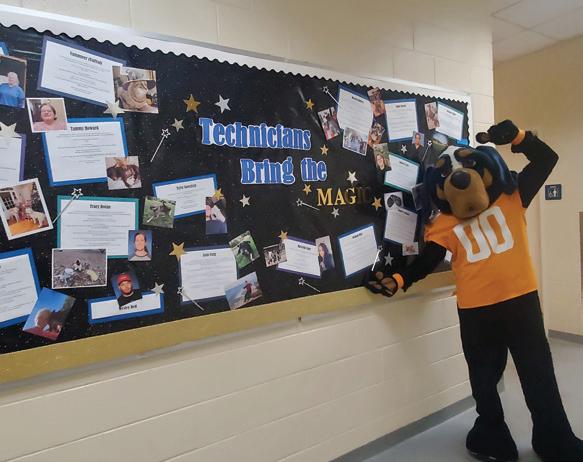
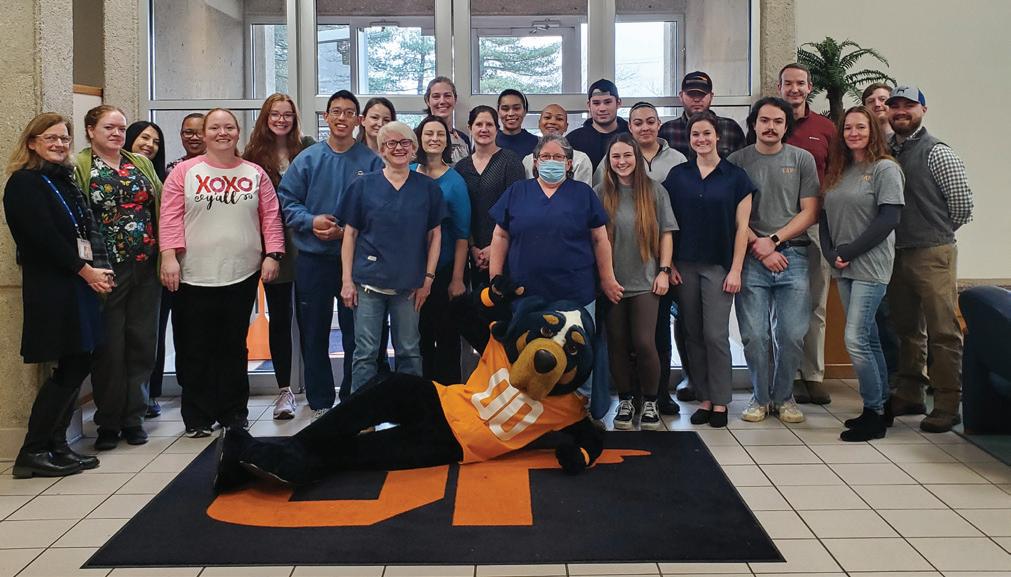
Smokey stopped by the UTK Tech Week celebration to honor our techs and make a mess of the bingo balls. Thank you to the vendors who helped make it such a fun week, including Charles River, Rochester Midland Corporation, Inotiv, Jax, Bioserv, and Allentown!
Submitted by Kelsey
Finnie
May 2023 Laboratory Animal Science Professional 19
St. Jude Children’s Research Hospital: Memphis, Tennessee
Our week started the week of International Tech Week. However, it was cut short after day one due to an ice storm that hit the Memphis area. We picked up the following week with the following to complete all of our planned activities.


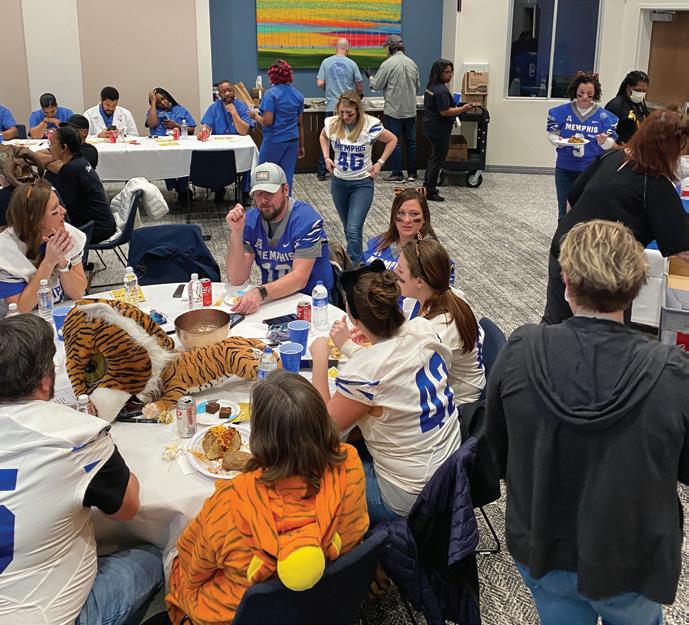

1) Supervisors and managers served the staff as if we were in a real restaurant.
2) Given supplies to build an egg drop basket (borrowed from ILAM) and points awarded as they dropped from one of our parking garages, each surviving egg was moved up to the next floor, etc.
3) Sit-com photo scavenger hunt
4) Team mascots and encouragement for bringing out the themes daily.
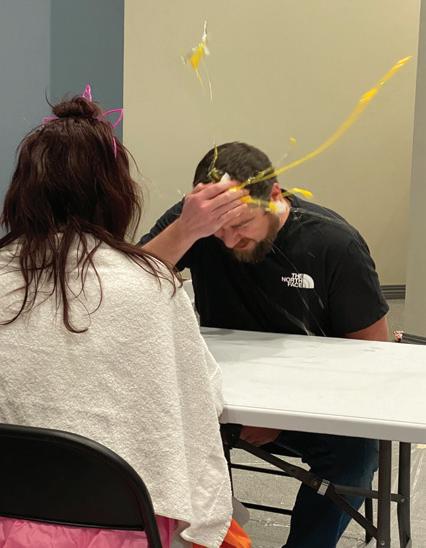
5) Egg Roulette. (From The Tonight Show). Supervisors went head to head and even talked me into going against one of the supervisors.
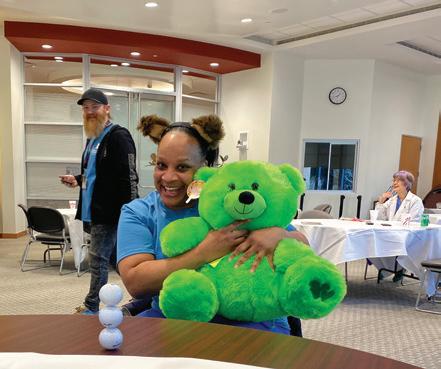
6) And last but not least: Minute to Win it. As seen in the pic of one of our Bears successfully stacking three golf balls.
Submitted by Chandra Savage
Massachusetts General Hospital: Charlestown, Massachusetts
We celebrated 2023’s Tech Week using the Technicians Bring the Magic theme. This year we were excited to get back together as a group in-person to celebrate. We hosted activities during the work week, which included individualized treat bags, word searches, coloring books, and lab animal videos. There were daily raffle tickets and a finale event with a Chinese buffet, jeopardy, board games, a photobooth, and magic tricks! As always, staff were acknowledged by the CCM Animal Care Director and Chief Academic Officer of MGH for their role in advancing medical breakthroughs specific to the MGH program. Activities are organized by the department’s Committee of Appreciation, Recognition, and Education (known as the CARE team).

Submitted by Laura Vanparys, Clifford Gibbons, and Jennifer Camacho
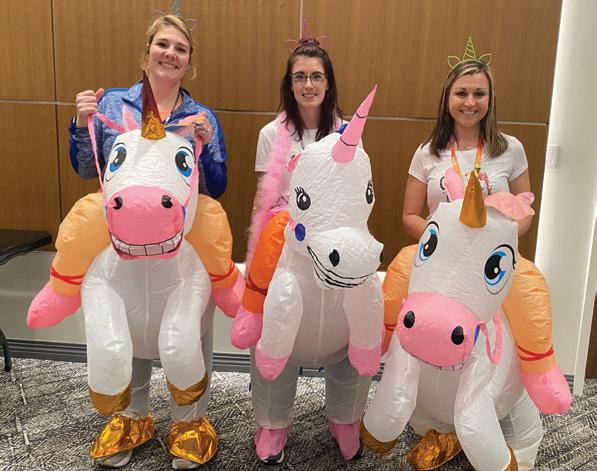
John Hopkins University: Baltimore, Maryland
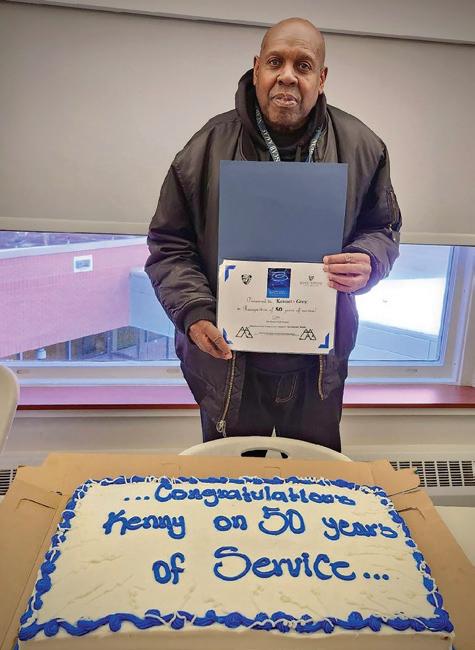
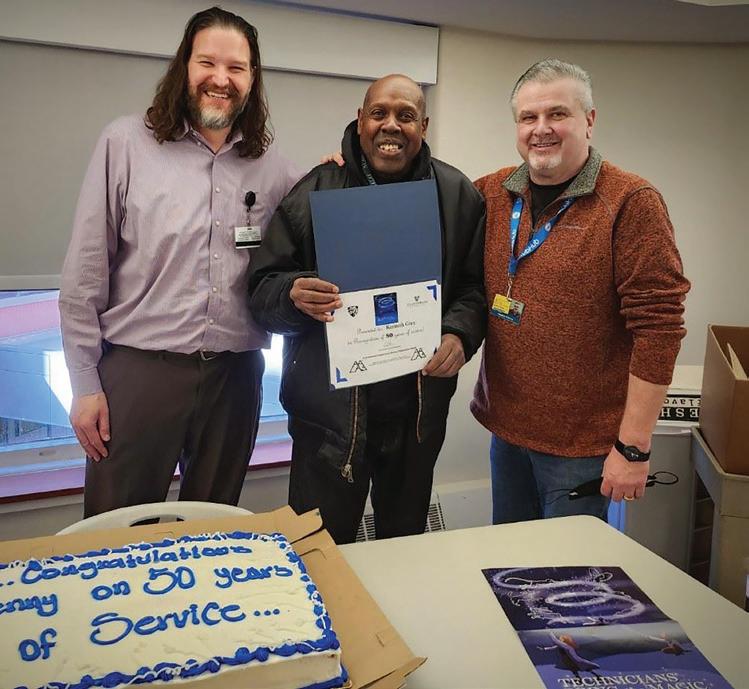
In coordination with Research Animal Resources, our office would like to submit a few photos for LAS Pro to consider including as part of their 2023 Tech Week Recap showcase. During Tech Week, we honored our dedicated technicians with celebratory gifts, raffles, and certificates of appreciation. We have a wonderful group of individuals caring for our animals, whose experience ranges from a few weeks to decades. This year was even more special as we took the opportunity to recognize one technician even further. Kenneth Grey, one of our animal care technicians, is currently in his 50th year of employment at Hopkins!
Submitted by Jonathan Harrold
20 Laboratory Animal Science Professional May 2023
Mayo Clinic: Scottsdale, Arizona

We had an awesome 2023 International Laboratory Animal Technician week at Mayo Clinic in Arizona. Our appreciation and electronic kudo boards had many wonderful comments, written by our research staff. A bulletin board featured the theme for the week, “Technicians Bring the Magic” and included photos of the DCM staff members. The week started with breakfast from Senor Taco, with a selection of Burritos, Chilaquiles, and Huevos Rancheros. Similar to previous years, other breaks included fruit & veggie trays, ice cream, and fruit bars! We had fried chicken with all the fixings mid-week for lunch and went to Chompie’s Restaurant, Deli, and Bakery on Friday for lunch. An AALAS crossword puzzle was completed by our staff to be entered into a drawing for a variety of gift cards. Everyone was a winner, receiving a gift card and packet full of “swag” with items from AALAS and Americans for Medical Progress. Finally, a survey was completed by the staff to make recommendations for next year’s celebration!
Submitted by Naomi M. Gades
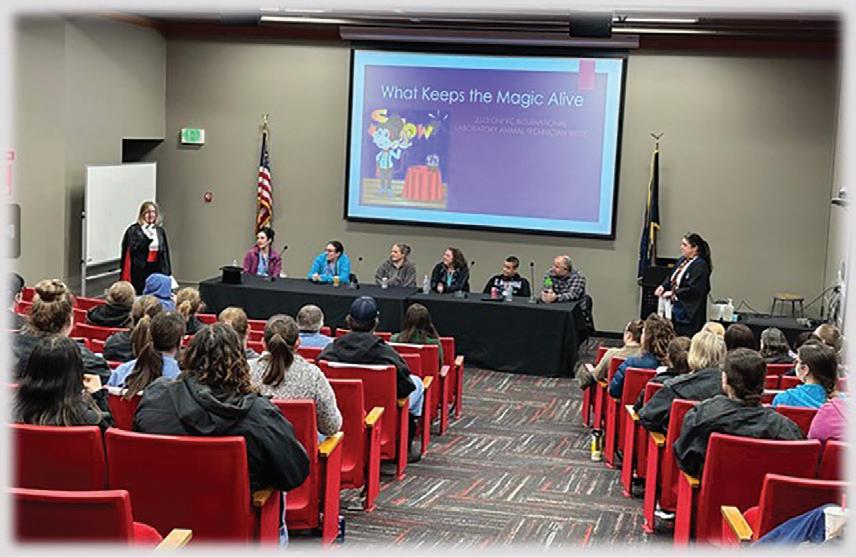

Oregon National Primate Research Center: Beaverton, Oregon
Animal Resources and Research Support recognized our outstanding laboratory animal technicians with a weeklong celebration during International Laboratory Animal Technician Appreciation Week! This year’s theme was “Technicians Bring the Magic.” We started the celebration on Sunday by delivering Einstein bagels, juice, and coffee. On Monday, Margot Monte, CVT from the Oregon Zoo, presented “25 Lessons from 25 years: Synopsis of Elephant Veterinary Care at the Oregon Zoo.” Tuesday, the Employee Recognition Committee distributed a red roll-up picnic blanket to all ARRS employees. Cindy Buckmaster gave a dynamic presentation on Wednesday, “It’s Time to GetReal! About Animal Research.” On Thursday, we hosted an ONPRC speaker panel on “What Keeps the Magic Alive.” During this panel, discussion panelists shared their individual career journeys at ONPRC. We held a pizza luncheon on Friday, and Dr. Martin presented Breanna Kolwitz as the ARRS 2022 Technician of the Year! We ended the weeklong celebration with milk and cookies for our technicians working on Saturday. This was truly a week to celebrate!
Submitted by Tiah Schwartz
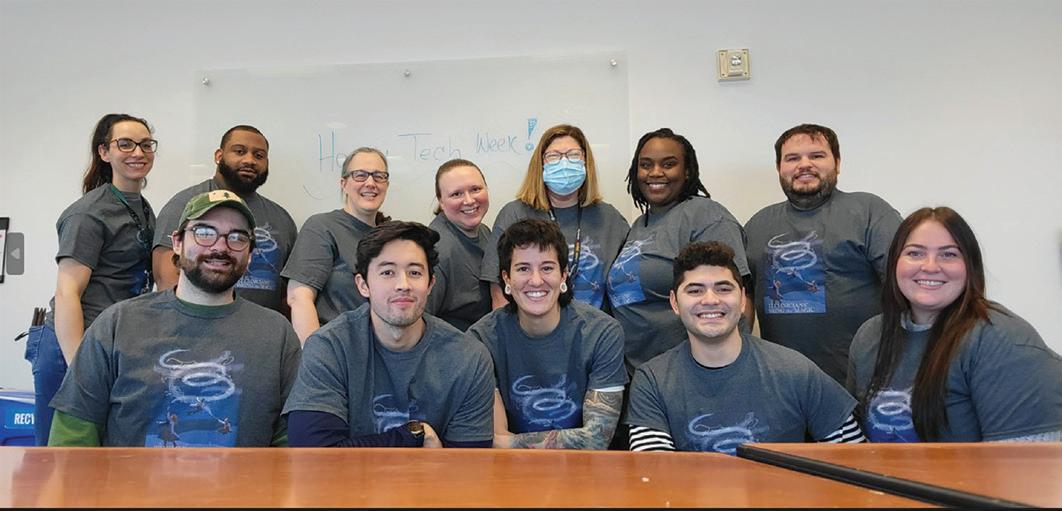
Merck Research Laboratories: Boston, Massachusetts
We gave our techs the Tech Weekinspired t-shirts!
Submitted by Ayahna Sanders.
May 2023 Laboratory Animal Science Professional 21
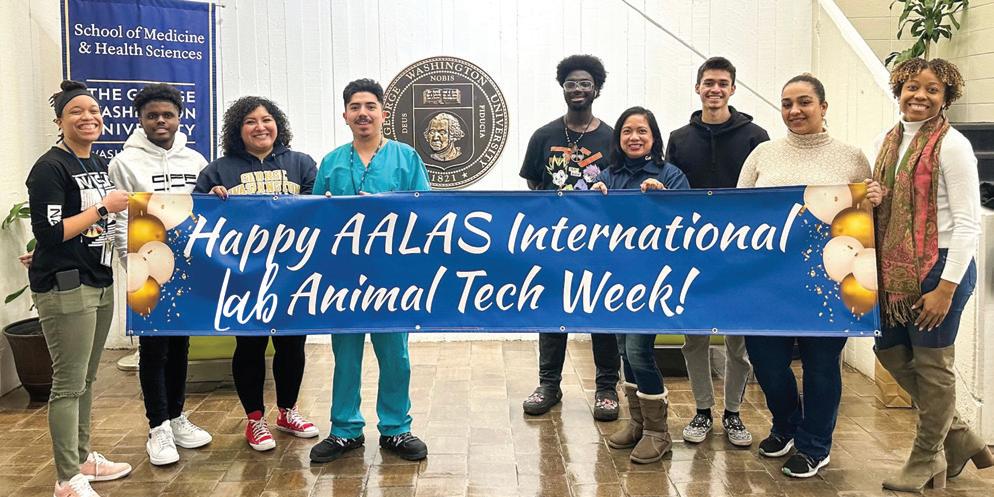
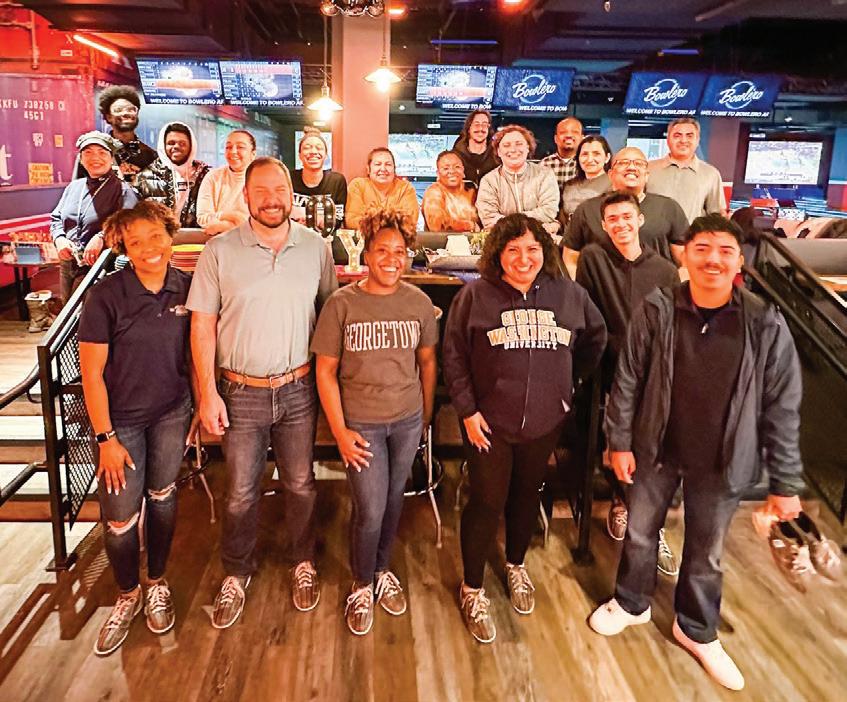
George Washington University: Washington, DC
Our animal care team at The George Washington University truly “bring the magic” everyday! This year’s AALAS tech week was nothing short of amazing. The team enjoyed lunch and learns from our NCAB-AALAS branch president on career paths and opportunities to get involved with NCAB-AALAS, VRL Diagnostics on animal health monitoring, and Avidity Science on animal watering systems. Of course, we also carved out time to have some fun, with friendly games of bingo and jeopardy and swag bags from our vendors. To close out the week, we met up with neighboring institution Georgetown University, along with our Tecniplast vendor representative, for a social outing. The team was inspired and motivated and is looking forward to next year’s events.
Submitted by Tia Bobo.
North Carolina State College of Veterinary Medicine: Raleigh, North Carolina
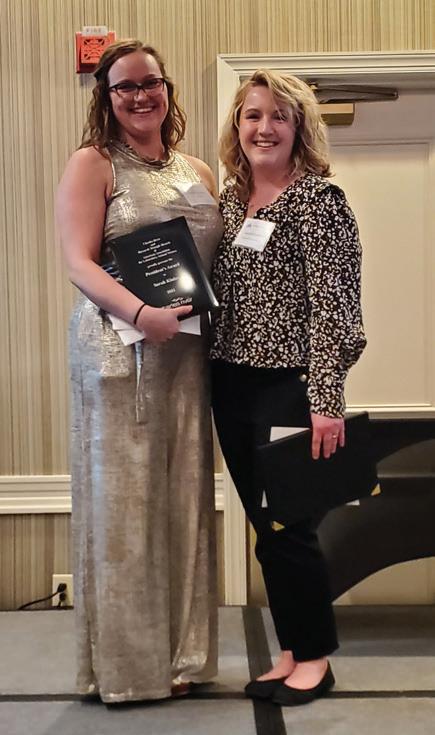



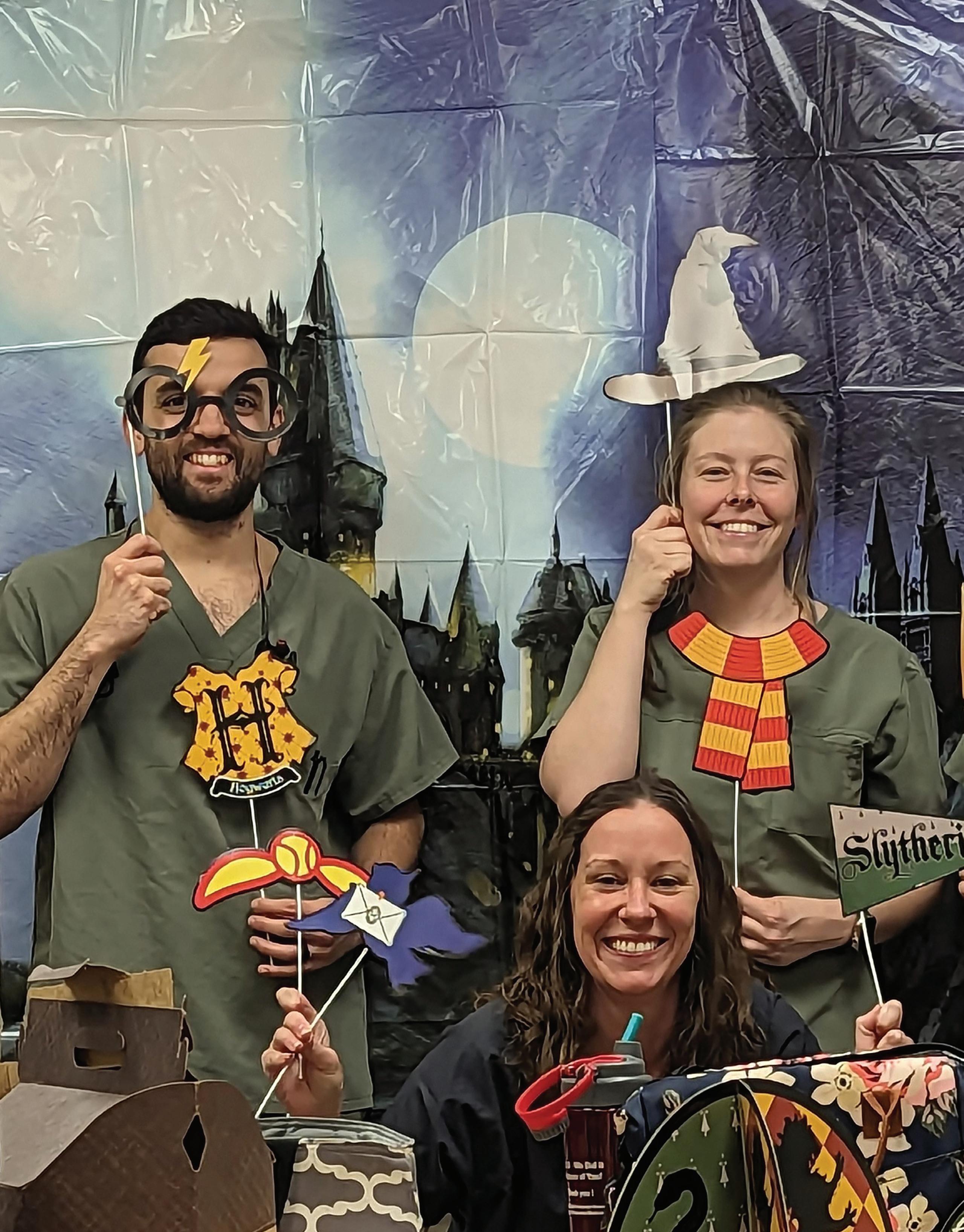
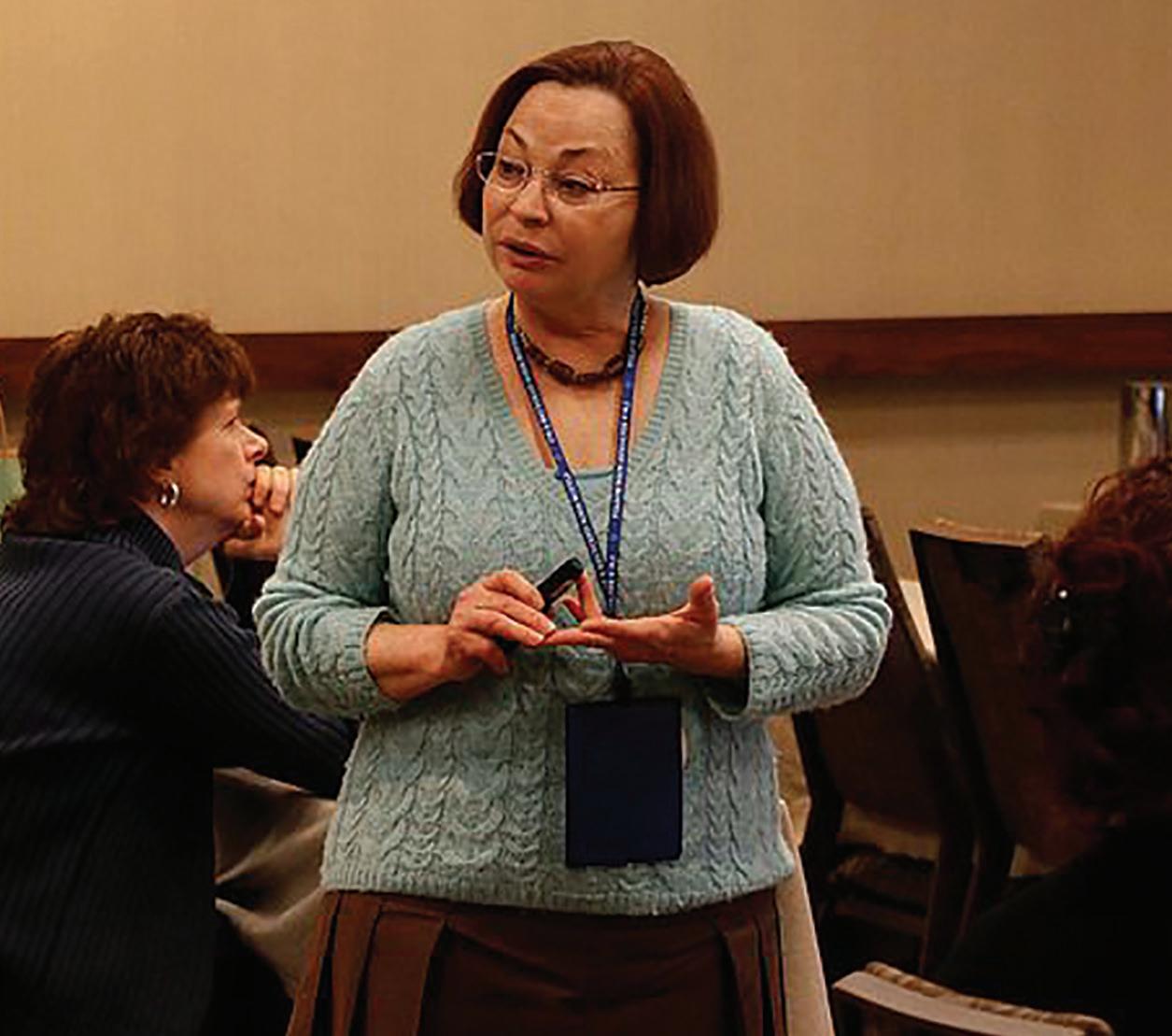
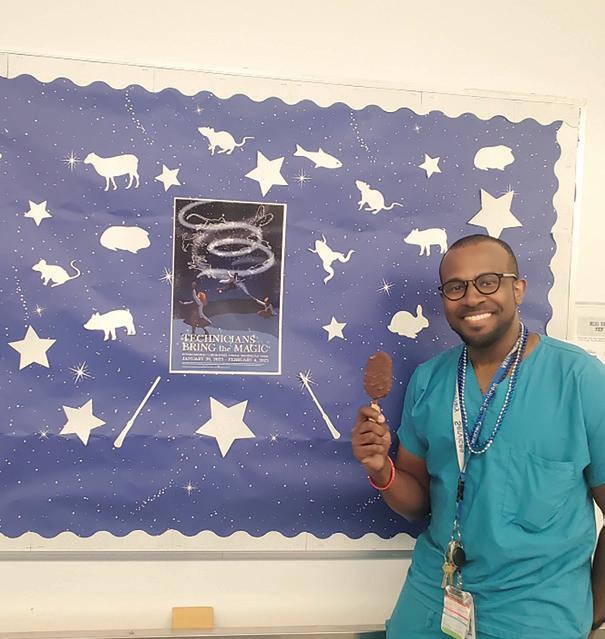
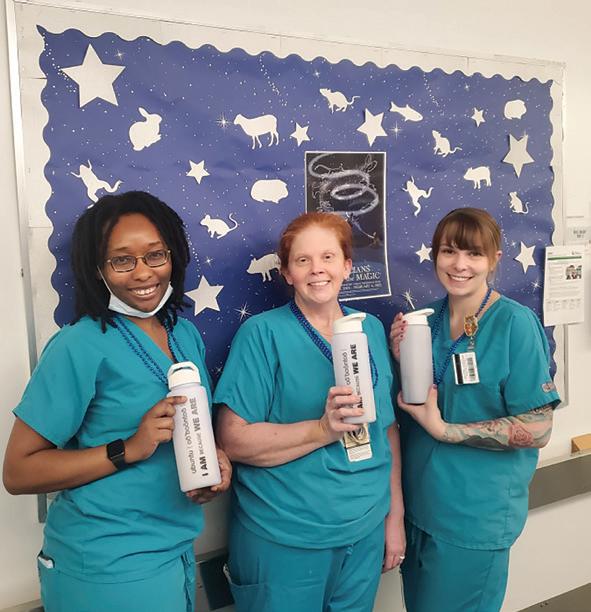
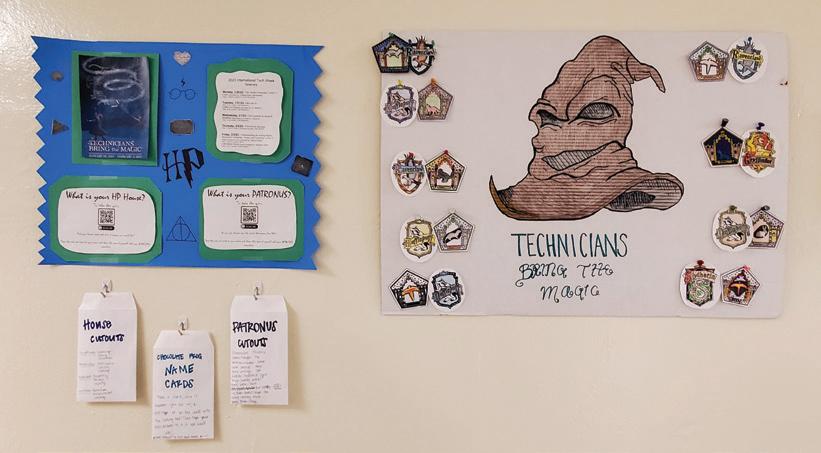
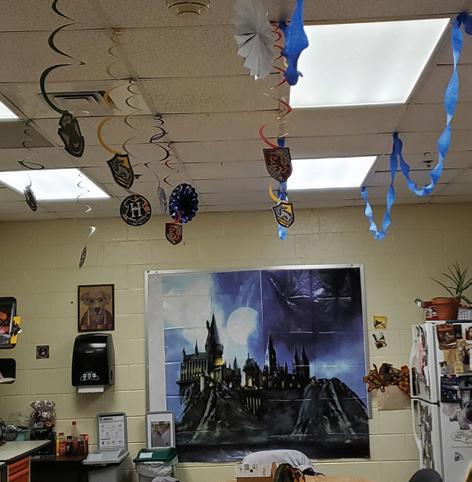
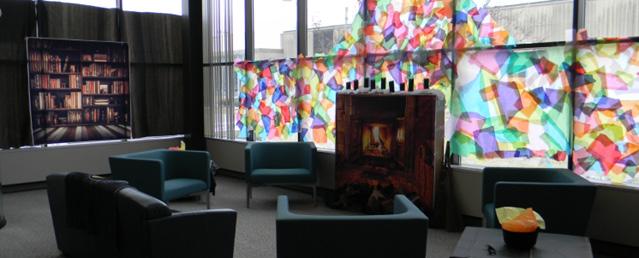
For tech week 2023, we celebrated the theme “Technicians bring the magic!” by having our technicians scan a QR code for a Harry Potter house sorting quiz and a “What is your patronus?” quiz. Then we each decorated our respective house crest and patronus cut-out and placed them all together on a poster in the main hallway for all to see. Our break room was decorated with a Harry Potter theme and a photo-booth backdrop! We had breakfast provided by one of our veterinarians and a fun homemade department-related “Jeopardy” game created by our Lab Animal Resident. We celebrated our annual RTB-AALAS Awards Banquet on Thursday evening with the rest of our Research Triangle Branch colleagues. Congrats again to our very own Sarah Kinlaw for her award. We concluded the week with a CVM Dean’s Office-sponsored Hibachi Lunch ‘n’ Learn, where we watched the recording of “Understanding the Animal Rights Movement: Yesterday, Today and Tomorrow” from the National AALAS website.

Submitted by Andrea Murr.
Dr. D.Y. Patil Medical College and Research Center: Pune, India
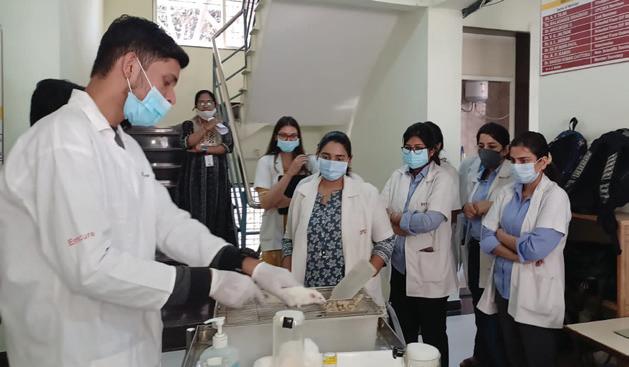
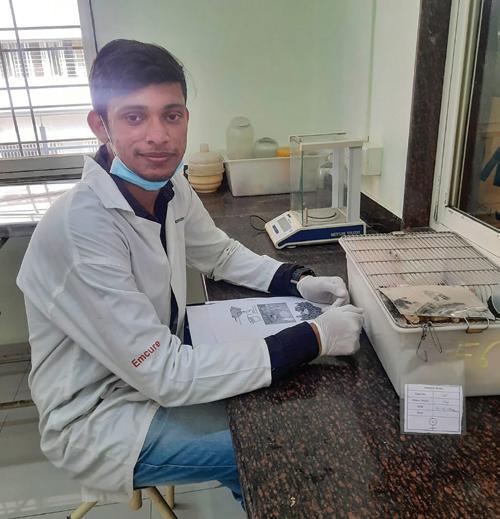
We celebrated Tech Week in our college by giving information about laboratory animal science and facility tours to the Doctoral students.
Submitted by Dhansing Patil.
22 Laboratory Animal Science Professional May 2023
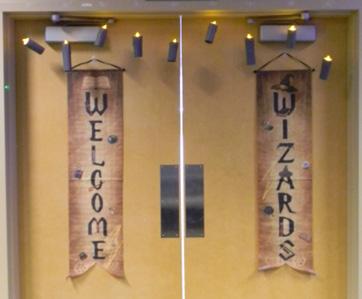
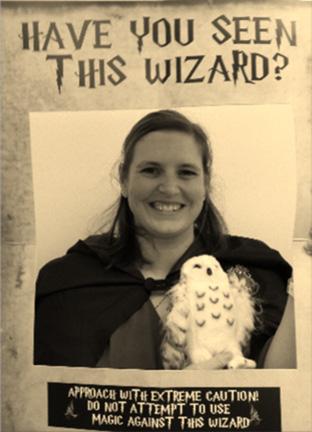
Labcorp: Greenfield, Indiana

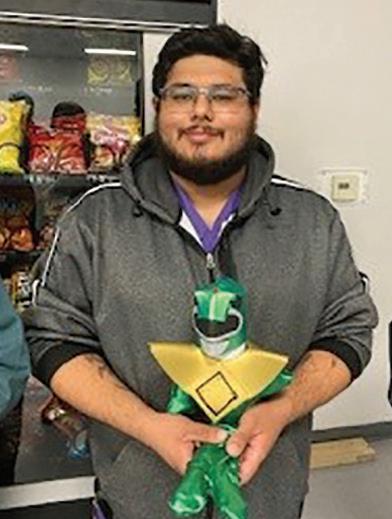
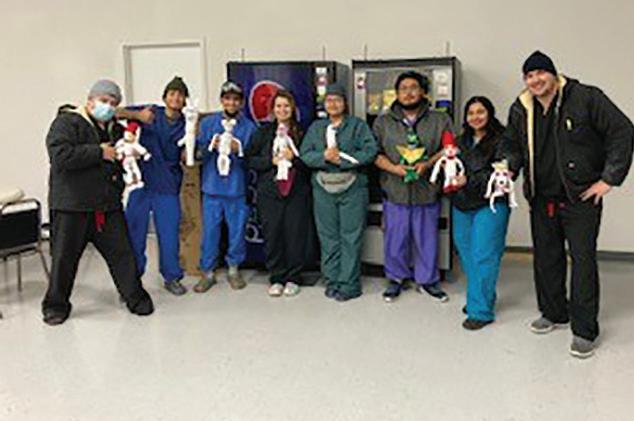
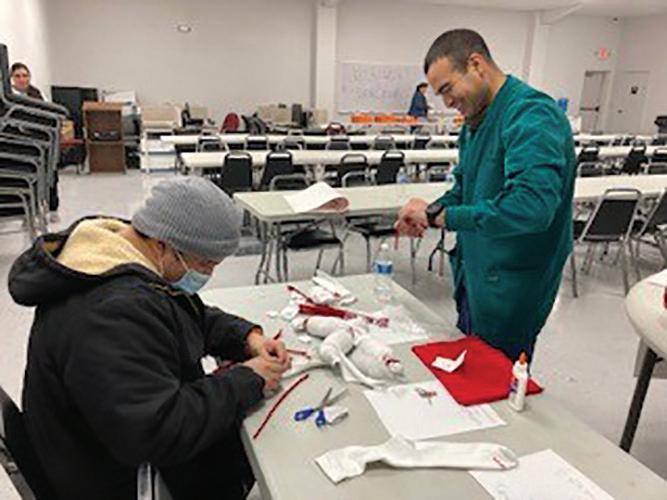
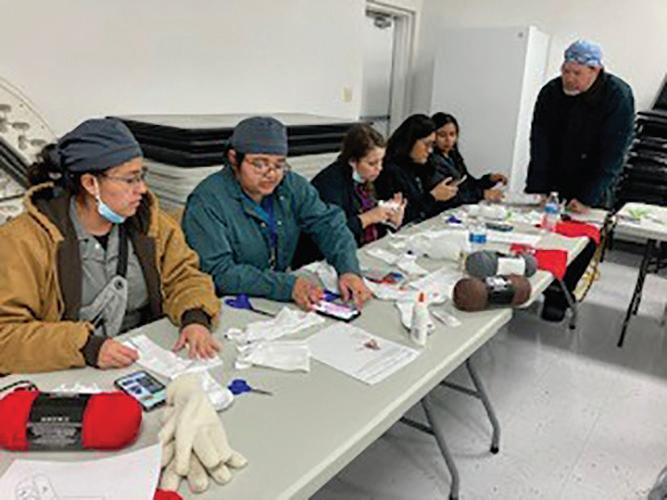
At Labcorp in Greenfield, IN, the Animal Operations Department decided to bring a little “Hogwarts Magic” to their 2023 Tech Week. In order to align with the AALAS theme of “Technicians Bring the Magic,” the operational management team transformed their facility into the Hogwarts School of Witchcraft and Wizardry. The technicians were notified of tech week festivities by receiving their own Hogwarts acceptance letter and were given instructions to form teams to create a Team Crest in order to participate in the Tech Week Trophy at the end of the week. All week the technicians were able to enjoy different activities and competitions and were served lots of delicious snacks and beverages. Some of the activities and competitions throughout the week included: crest creation & presentation, wand creation stations, sorting house surveys, AALAS Harry Potter trivia, dobby sock toss, Bertie Botts Every Flavour Bean competition, and a Horcrux scavenger hunt. Chick-Fil-A was a major hit for lunch on one of the days, and technicians were also served a homemade breakfast provided by our wonderful study directors, popcorn and polyjuice potion, chocolate frogs, and golden snitches throughout the week. At the end of the week, we were able to have an awards ceremony celebrating the 1st, 2nd, and 3rd place teams, where all technicians could relax and enjoy a movie while snacking on popcorn, ice cream, and homemade butter beer.
Submitted by Beth Collins

Inotiv: West Lafayette, Indiana
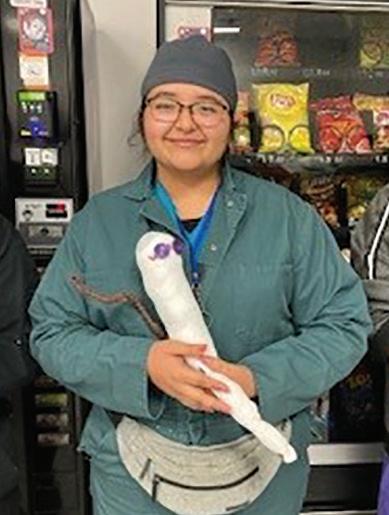

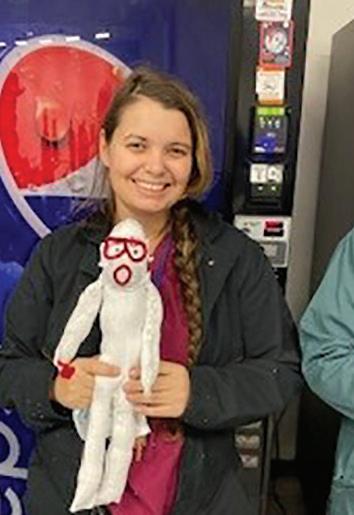
It was a fun week celebrating the magic and passion our technicians bring to work every day at Inotiv! During the week, our Texas sites (pictured) celebrated with luncheons and games, including a sock monkey making contest using random craft items provided by the company. It was truly magical seeing what everyone created in just 30 minutes! The week concluded with our two Texas sites coming together and having some fun competing in basketball, volleyball, Karaoke, cornhole, and a tug-of-war competition led by the attending veterinarians. The fierce tug-of-war battle ended with East triumphing over West - Congratulations, Team East!
Submitted by Luke Smoot and Nicki Stone.
May 2023 Laboratory Animal Science Professional 23
Vivarium Lighting and Animal-Based Research
 By Robert Dauchy, MS, CMAR, RLATG
Light, an extrinsic factor, profoundly influences the circadian regulation of neurohormonal and neurobehavioral rhythms in all life. This is no less so regarding research animals in the vivarium setting. All life differs in its capacity to utilize visible and nonvisible photic energy. In all mammals, light exerts its influence via the Primary Optic Track (POT, visual system), as well as the Retinohypothalamic Track (RHT)/intrinsically photosensitive Retinal Ganglion Cell (ipRGC) non-visual system regulating circadian rhythms of physiology and metabolism.6 It is the alternating cycle of light and darkness that entrains our master biologic clock, the suprachiasmatic nuclei, located in the anteriobasal portion of the hypothalamus of the brain. Light exposure at the wrong time of day, in an intensity-, duration-, and wavelength-dependent manner, can cause disruptions in the regulation of these normal circadian rhythms affecting animal health and wellbeing. My early work determined that rodents exposed to broad-spectrum white fluorescent dim light at night (dLAN) of as little as 0.2 lx (0.08 µW/cm2) (within cage; animal microenvironment) was sufficient to disrupt circadian rhythms of metabolism and physiology in rodent normal and neoplastic tissues.8,11 These included disruptions in circadian patterns of arterial plasma neurohormones, such as melatonin that regulates the circadian clock (the suprachiasmatic nucleus,
SCN), corticosterone, insulin, and leptin, as well as fatty acids, glucose, lactic acid, pO2, and CO2 levels. Physiologic nocturnal circulating melatonin levels inhibit normal and neoplastic tissue metabolism (oxidative phosphorylation and Warburg effect) via a melatonin-receptor mediated suppression of tissue linoleic acid, the most prominent fatty acid in the Western diet, as well as most rodent diets.2,3,8 Due to AALAS Grants for Laboratory Science (GLAS)-supported work, the World Health Organization (WHO) classified light at night as a probable Class II carcinogen, followed by the American Medical Association.5, 20
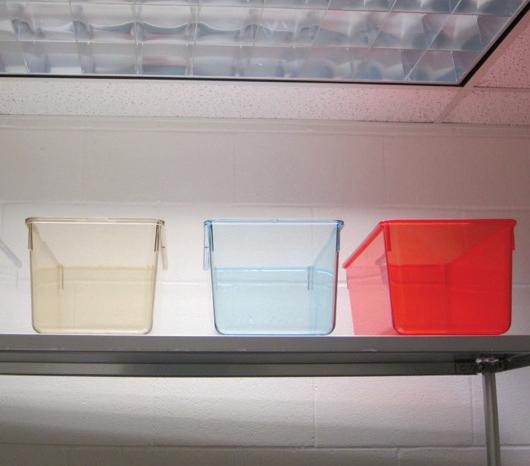
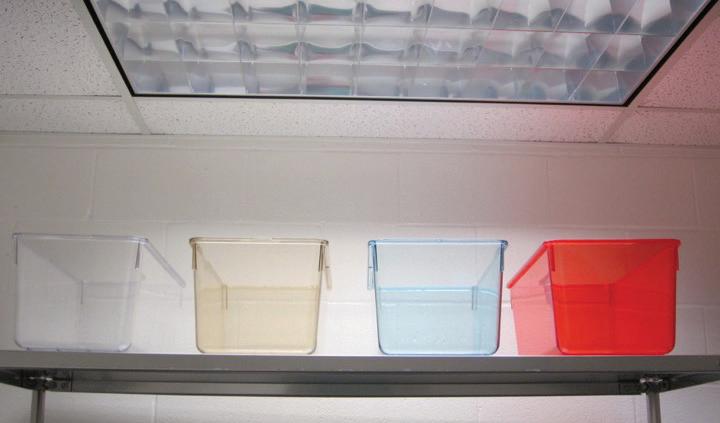
During these IACUC-approved studies, our investigative team, which includes the Laboratory of Chrono-neuroendocrine Oncology at Tulane Medical School and the Jefferson University Light Laboratory, further determined that the spectral quality (color) of light passing through standard laboratory animal cages is an important consideration for researchers in the development of future protocols and scientific publications. Our initial approach was to house rodents in several types of standard rodent cages currently utilized in research animal facilities worldwide and to evaluate the circadian rhythms (24-h/day) of the aforementioned neurohormonal and neurobehavioral parameters. Caging differed in tint (translucent clear, amber, red, and blue), thereby exposing
24 Laboratory Animal Science Professional May 2023 FEATURE – EDUCATION IN LAS
Figure 1. Tinted rodent cages on static animal rack, Left-to-Right: clear, amber, blue, red.
rodents during the light phase to different spectral transmittances (wavelengths) of light within the cages; intensity and duration of light exposure remained constant for all animals.9,12 Pigmented and non-pigmented male and female rats (n = 12/ group) were maintained under broad spectrum (400-740 nm) cool white (2700 lm; 4100 color correlated temperature, CCT) fluorescent (CWF) light in the different cage types having identical dimensions and wall thicknesses in a 12L (300 lux [illuminance]; 123 µW/cm2 [irradiance]):12D (0 lux) within room environment, 1 meter above the floor in front of each of the cages, well within standards recommended by The Guide in an AAALAC-accredited facility.17 Within cage lighting measures for the translucent clear, amber, blue-, and red-tinted cages (Figure 1) were nearly identical at 91.98 ± 5.31 lx (37.71 ± 2.18 µW/cm2) (n = 266 measures/cage type). Statistical difference testing among groups were determined by utilizing Prism 8 (GraphPad Software, La Jolla, CA).
Results revealed that plasma melatonin levels (mean ± 1 SD) were significantly different (P < 0.001) among groups: low (1.0 ± 1 pg/mL) during light phase in all groups but higher at nighttime in rodents maintained in blue (928.2 ± 39.5 pg/ mL) compared with amber (256.8 ± 6.6 pg/mL), clear (154.8 ± 9.3 pg/mL), and red-tinted (105.0 ± 2.4 pg/mL) cages. There were major differences in rodent circadian patterns of plasma measures of endocrine physiology and metabolism in animals
maintained in tinted cages, compared to those maintained in clear cages. The findings suggested that the spectral transmittance of light through the colored cages, compared to the clear translucent cages, significantly affects rodent circadian regulation of neuroendocrine, metabolic, and physiologic parameters. Animals maintained in the blue-tinted cages, compared to all others (amber > clear > red), revealed a 4- to 6-fold elevation of plasma circadian nighttime melatonin levels and concomitantly decreased levels of other circulating neurohormones and blood metabolites, all features positively influencing animal health and wellbeing.
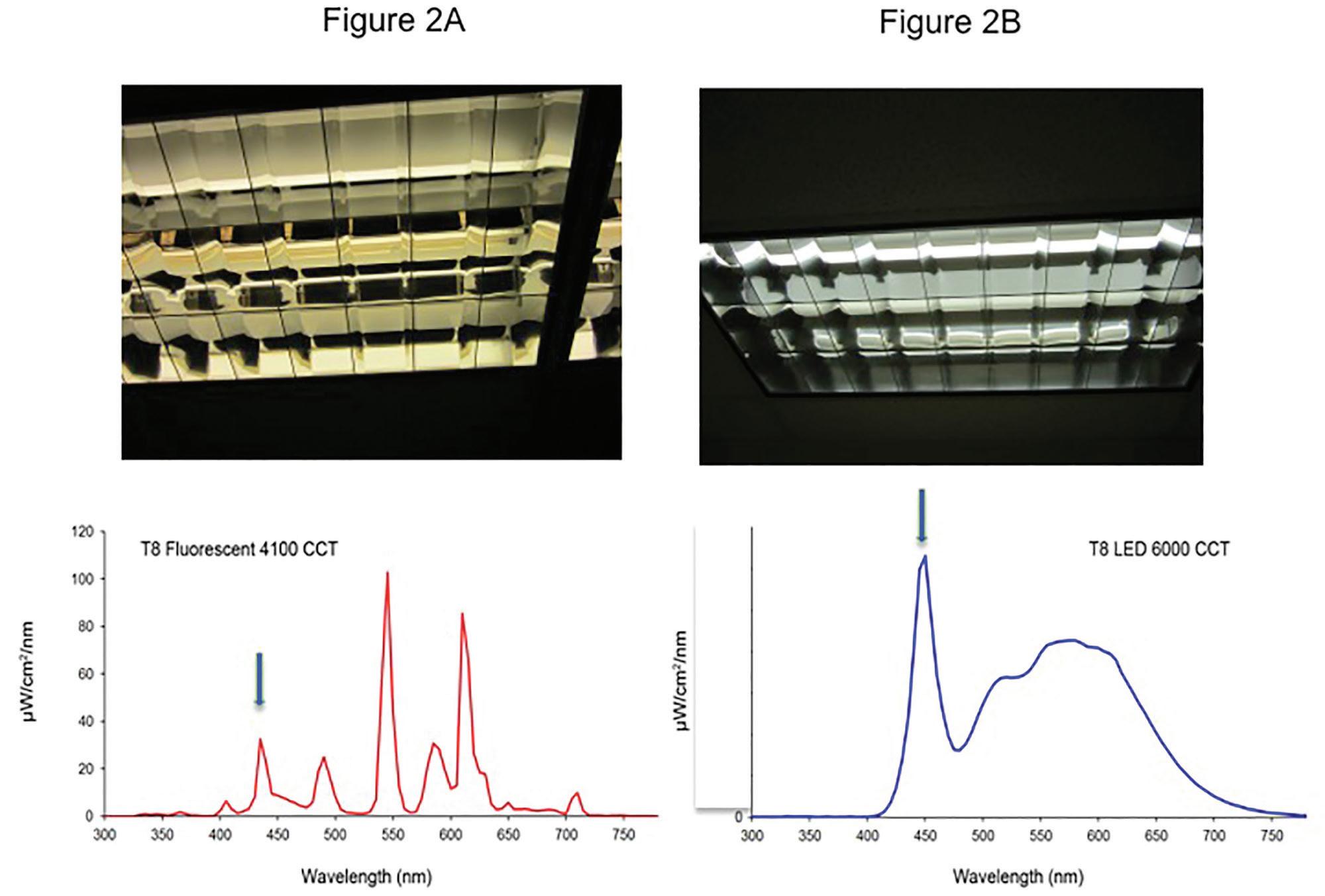
Subsequently, the question arose to the team regarding the potential influence of animal daytime exposure to blue-enriched (465-485 nm) light-emitting diode (LED) light (bLAD), compared to standard broad-spectrum CWF light (200- 740 nm), on rodent metabolism and physiology (Figure 2). Blue-enriched LED lighting is the most commonly transitioned lighting technology from CWF light in the community, home, workplace, and, interestingly, vivariums.4, 15, 18 Currently, LED lighting technology reflects approximately 30% of the current lighting technology globally by industrialized nations, and is estimated to grow to 86% usage by 2035 in the US alone, decreasing electricity consumption by approximately 75%. The new technology is cost-effective, energy-efficient, produces less heat and virtually no noise or vibration, has sus-
May 2023 Laboratory Animal Science Professional 25
Figure 2B. Image of blue-enriched light-emitting diode (LED) light luminaire (above) with corresponding light power distribution measures (µW/cm2/nm) versus light wavelength (nm) (below).
Figure 2A. Image of broad-spectrum cool white fluorescent (CWF) light luminaire (above) with corresponding light power distribution measures (µW/cm2/nm) versus light wavelength (nm) (below).
tained spectral quality, and lamps last up to 40 years without replacement, compared to traditional incandescent or cool white fluorescent (CWF) lighting technologies. Additionally, LED lighting today in the vivarium and workplace may easily be regulated for intensity and color rendition to provide a wide range of “warmth” and visual preferences for animal handlers and researchers in the laboratory science and biomedical research communities. While there is significant information regarding the use of LED technology at nighttime in the home and workplace for humans, a paucity of information exists regarding its daytime use, particularly with research animals.


In a series of AALAS GLAS-supported studies in pigmented and non-pigmented male and female rats (n = 86/ group) and mice (n = 180/group) maintained in the clear, translucent polycarbonate cages, the investigators demonstrated that rodent exposure to bLAD (65.14 ± 6.91 Lux; 29.59 ± 1.44 µW/cm2, within-cage), compared with exposure to daytime CWF lighting (72.5 ± 3.52 Lux; 26.05 ± 2.76 µW/ cm2 ) promotes the circadian regulation of neuroendocrine, metabolic and physiologic parameters that are associated with optimizing homeostatic regulation of health and wellbeing.7, 10, 13, 14 The data revealed that although photon flux (number of light photons/cm2/sec stimulating rodent photoreceptors) and irradiance were similar between the CWF and LED light sources, there were marked differences in stimulation of the rodent photoreceptors. In terms of potential light stimulation to the melanopsin-containing ipRGCs of the non-visual system, the LED lamp had more than 43% higher emissions than the CWF lamp (P < 001). Compared with rodents maintained under CWF light during light phase, animals maintained under bLAD evinced over a 6-fold higher peak plasma melatonin levels at the mid-dark phase. The absence of enhancement in melatonin-non-producing strains suggested that hyperproduction of the circadian nighttime melatonin surge may be the key component of the physiology. These studies were repeated and verified by two independent investigators.1,19 Further studies in other species, including those now ongoing in humans, are warranted to gain an improved understanding regarding the beneficial effects of exposure to daytime blue-enriched LED light and elevated nocturnal melatonin in enhancing the homeostatic regulation in mammals and fostering improvement in their health and wellbeing.16





In February 2023, our team participated in an expert working group in Manchester, England, on the effects of light on rodent physiology and behavior. The problem has been that the units commonly used to measure light in the vivarium setting (i.e., lux) are inappropriate as they are based on human visual sensitivity and do not affect what animals, particularly rodents, see or how light affects their biology.6,16 The aim of the international meeting was to develop simple lighting measurement guidelines for improved housing and testing research animals, particularly rodents, based on a scientific consensus of the published data, keeping in mind the 3Rs and the ARRIVE Essential 10 guidelines (see Review 1). The results of this important meeting will soon be forthcoming.
Our improved understanding regarding the influence of the extrinsic factor of light, particularly as it influences our research animals in the vivarium setting, relies on accurate measurements using the best and most current technologies. We are honored and pleased that the AALAS GLAS Program has supported our work over many years in the investigation of light as an extrinsic factor in the vivarium setting. As light technologies and lighting guidelines evolve for housing and testing our research animals, based on the scientific consensus of the published data, we hope this information may be incorporated into vivarium planning and cage design. Clearly, at some point in the near future, the Guide parameters will require revisiting in much greater detail. In the meantime, our continued goal and challenge in the laboratory animal science community remains to improve our understanding of how light as an extrinsic factor can positively influence the health and wellbeing of our research animal heroes.17

Robert Dauchy MS, CMAR, RLATG, is the Co-Director of the Laboratory of Chrono-Neuroendocrine Oncology at Tulane University in New Orleans, LA.



REFERENCES



1. Allen AA, Pierce AT, Dauchy RT, Voros GB, Dobek GL. 2022. Influence of light phase exposure to LED lighting on circadian levels of neuroendocrine hormones in Sprague-Dawley rats. J Am Assoc Lab Anim Sci 61(4): 333-343.


2. Blask DE, Brainard GC, Dauchy RT, Hanifin JP, Davidson LK, Krause JA, Sauer LA, Rivera-Bermudez MA, Dubocovich ML, Jasser SA, Lynch DT, Rollag MD, and Zalatan F. 2005. Melatonin-deplet-
26 Laboratory Animal Science Professional May 2023
Somno Low-Flow Electronic Vaporizers kentscientifi c.com/somnofl o Ad_Half_LASPro_May.indd 1
ed blood from premenopausal women exposed to light at night stimulates growth of human breast cancer xenografts in nude rats. Cancer Res. Cancer Res. 65: 11174-11184.
3. Blask DE, Dauchy RT, Dauchy EM, Mao L, Hill SM, Greene MW, Belancio VP, Sauer LA, and Davidson LK. 2014. Light exposure at night disrupts host/cancer circadian regulatory dynamics: impact on the Warburg effect, lipid signaling and tumor growth prevention. PLoS One. 9(8):102776
4. Council on Science and Public Health. Report 2-A-16. Human and environment effects of light emitting diode (LED) community lighting. American Medical Association Annual Meeting, Chicago, Illinois, 10-15 June 2016. AMA Policy Resolution 907-I-16. AMA Policy Database. Available at: https://www. ama-assn.org/sites/ama-assn.org/files/corp/media-browser/public/about-ama/council/Council%20Reports/council-on-sciencepublic-health/a16-casph2.pdf
5. Council on Science and Public Health. Report 4-A-12. Light pollution: adverse health effects of nighttime lighting. American Medical Association of Delegates Annual Meeting, Chicago, Illinois. 2012. AMA Policy H-135.937, AMA Database. Available at: http://circadianlight.com/images/pds/newscience/ American-Medical-Association-2012-Adverse-Health-Effects-of-Light-at-Night.pdf
6. Dauchy RT, Blask DE. 2023. Vivarium lighting as an important extrinsic factor influencing animal-based research. J Am Assoc Lab Anim Sci 62(1): 3 – 25.
7. Dauchy RT, Blask DE, Hoffman AE, Xiang S, Hanifin JP, Warfield B, Brainard GC, Anbalagan M, Dupepe LM, Dobek GL, Belancio VP, Dauchy EM, Hill SM. 2019. Influence of daytime LED light exposure on circadian regulatory dynamics of metabolism and physiology in mice. Comp Med 69(5): 350-373.
8. Dauchy RT, Blask DE, Sauer LA, Brainard GC, Krause JA. 1999. Dim light during darkness stimulated tumor progression by enhancing tumor fatty acid uptake and metabolism. Cancer Lett. 144: 131-136.
9. Dauchy RT, Dauchy EM, Hanifin JP, Gauthreaux SL, Mao L, Beleancio VP, Ooms TG, Dupepe LM, Jablonski MR, Warfield B, Wren MA, Brainard GC, Hill SM, Blask DE. 2013. Effects of spectral transmittance through standard laboratory cages on circadian metabolism and physiology in nude rats. J Am Assoc Lab Anim Sci 52: 146-156.
10. Dauchy RT, Hofffman AE, Wren-Dail MA, Hanifin JP, Warfield B, Brainard GC, Xiang S, Yuan L, Hill SM, Belancio VP, Dauchy EM, Smith K, Blask DE. 2015. Daytime blue light enhances the nighttime circadian melatonin inhibition of human prostate cancer
growth. Comp Med 65(6): 473-485.
11. Dauchy RT, Sauer LA, Blask DE. 1997. Light contamination during the dark phase in photoperiodically-controlled animal facilities: Effect on tumor growth and metabolism in rats. Lab. Animal Science 47: 511-518.
12. Dauchy RT, Wren MA, Dauchy EM, Hanifin JP, Jablonski MR, Warfield B, Brainard GC, Hill SM, Mao L, Ooms TG, Dupepe LM, Blask DE. 2013. Effects of spectral transmittance through red-tinted cages on circadian metabolism and physiology in nude rats. J Am Assoc Lab Anim Sci 52: 745-755.
13. Dauchy RT, Wren-Dail MA, Dupepe LM, Hill SM, Xiang S, Anbalagan M, Belancio VP, Dauchy EM, Blask DE. 2018. Effect of daytime blue-enriched LED light on the nighttime circadian melatonin inhibition of hepatoma 7288CTC Warburg effect and progression. Comp Med 68(4): 269-279.
14. Dauchy RT, Wren-Dail MA, Hoffman AE, Hanifin JP, Warfield B, Brainard GC, Hill SM, Belancio VP, Dauchy EM, Blask DE. 2016. Effects of daytime exposure from blue-enriched light-emitting diodes on the nighttime melatonin amplitude and circadian regulation of rodent metabolism and physiology. Comp Med 66(5): 373-383.
15. Elliott C, Yamada M, Penning J, Schober S, Lee K. 2019. Energy Savings Forecast of Solid-State Lighting in General Illumination Applications. Washington (DC): U.S. Department of Energy.
16. Hanifin JP, Dauchy RT, Blask DE, Brainard GC. 2020. Relevance of electrical light on circadian, neuroendocrine, and neurobehavioral regulation in laboratory animal facilities. ILAR J 60(2): 150-158.
17. Institute for Laboratory Animal Research. 2011. Guide for the care and use of laboratory animals, 8th ed. Washington (DC): National Academies Press.
18. Pattison PM, Tsao JY, Brainard GC, Bugbee B. LEDs for photons, physiology and food. 2018. Springer Nature 563: 493-500.
19. Voros GB, Dauchy RT, Myers L, Hill SM, Blask DE, Dobek GL. 2021. J Am Assoc Lab Anim Sci 60(3):259-271.
20. World Health Organization. International Agency for Research on Cancer (IARC) monographs on the evaluation of carcinogenic risks to humans: painting, firefighting, and shiftwork. International Agency for Research on Cancer. 2012; 98. Lyon, France.
May 2023 Laboratory Animal Science Professional 27
Features & Benefi ts of Low-Flow: • Flow rates as low as 50mL/min Saves money by using less than 1 mL/hr of isoflurane • Built-in air compressor Uses ambient air or compressed gas • No servicing or calibration needed Cost-e ective, reliable equipment 4/6/23 3:19 PM
this life science renovation despite making up just 13% of the project floor area.
CB: Wow, I knew it was a lot, but this is astounding. If this were an experimental treatment, these results would qualify for a breakthrough discovery. Unfortunately, the breakthrough here is the knowledge that our facilities are disproportionately contributing to harmful emissions. So, what are some of the main contributors that drive this elevated energy consumption?
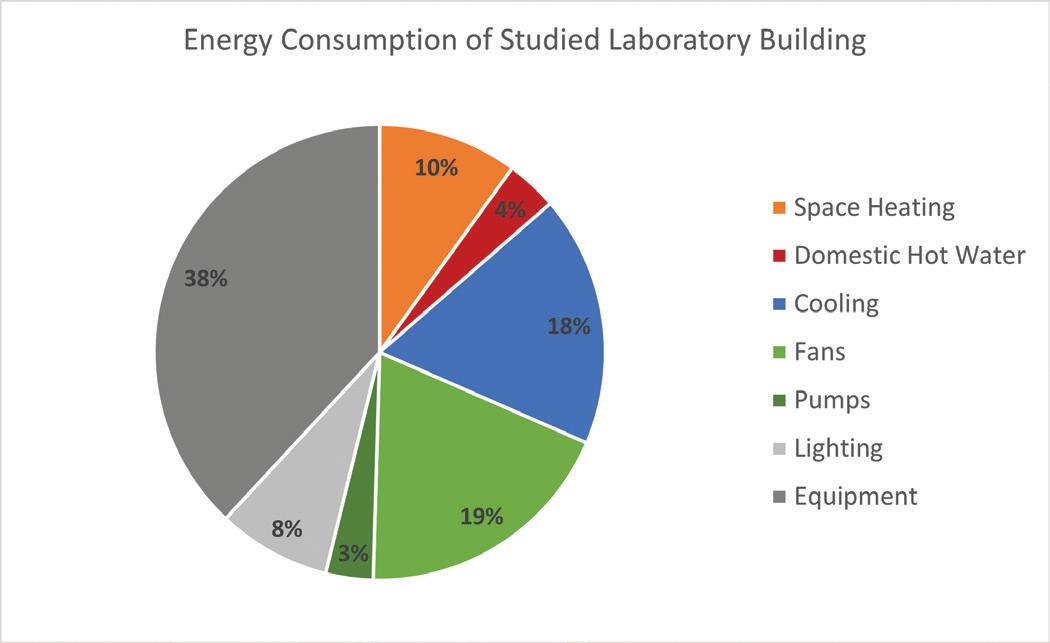
JB&B: The most significant drivers of the high energy consumption in vivariums are the large airflow rates, which in turn are driven by codes and standards, all of which focus on reducing the concentration of contaminants and odors in the air. While high air changes reduce those concentrations, they have an adverse effect on energy use. All of this air is once-through, meaning that it’s pulled directly from the outdoors rather than recirculated within the building. As more outside air is brought into the building, more energy is used to heat, cool, and move that air around the building. With our case study project, the vivarium is divided into two parts: animal holding and non-critical vivarium spaces. Animal holding maintains 15 air changes (ACH) at all times, as recommended by AAALAC International and other industry standards, while the non-critical vivarium spaces maintain 10 ACH at all times.
While airflow rates are the most important drivers of high energy consumption, there are other notable ones. Vivariums are typically used in them. Vivarium spaces often have species-specific humidification requirements.
implement when renovating an existing animal facility or building a new facility to reduce this trend?
JB&B: The first step toward implementing a sustainable option is to understand the cost-benefit and value proposition to the institution against some of the limitations the solutions might pose. These facilities are critical to research; keeping them online during power outages and equipment failures is paramount, so as not to compromise ongoing and previous research. Each new technology needs not only to be reviewed from an energy conservation standpoint but also from a reliability perspective. The key is realizing that numerous measures must be tested, since many of them may not make it to the final installation. Early on in the design phase, the design team will prepare an exhaustive list of energy conservation measures (ECMs) and will share the results with all of the project’s stakeholders. This approach can be applied to new builds and even major renovations for existing animal facilities. The key to retrofitting into existing facilities is to layer in how they’re implemented in order to minimize downtime in the facility. The design and construction team needs to plan for a method of procedure to provide a seamless implementation.
For the case study noted above, here’s the list of ECMs that were investigated in the early schematic phase of design. Their relative costs and benefits varied.
CB: Given the high energy demands of animal facilities, this appears to be a great opportunity to implement energy savings, but even new builds aren’t consistently choosing sustainable options when it comes to decisions on building materials, infrastructure, and design. What are some of the common obstacles to implementing a sustainable design, and how do we overcome these?
JB&B: The main reason many of the ECMs are not implemented is the construction cost. A simple cost-benefit analysis showing payback savings over time is one way to ensure that ECMs are implemented in the final build.
Unlike typical office space, in which spaces are usually allowed to become drier over the winter, specific levels of humidity must be maintained for the animals in vivarium spaces to avoid confounding research results.
Finding Solutions
CB: With regulatory requirements trending toward stricter parameters that require more energy, higher energy use in animal facilities may be, to some extent, unavoidable. What are some of the solutions we can
Opportunely, these long-term cost savings can be an essential resource for supporting an institution’s environmental social governance (ESG) goals as well as understanding how city, state, and federal regulatory compliance is currently evolving and where it might be heading in the future. There’s no doubt that the trend in many locales is toward pursuing more stringent energy conservation measures as well as reducing operational carbon emissions from facilities. You can think of cost savings motivation as the carrot and regulatory repercussions as the stick to overcoming sustainability barriers.
Another critical obstacle that needs to be overcome is bridging the gap between the design team and the facility operators. The operators need to be involved with the project design at the very inception of the project so that they can understand the various ECMs and offer feedback on the pros and cons of each. Breaking down
May 2023 Laboratory Animal Science Professional 29
Figure 2: Fraction of energy use attributable to components of the studied HVAC system
Energy Conservation Measures (ECM)

1 Animal Holding with 6 - 10 ACH
The use of ventilated cages in animal holding facilities allows for a reduction in the overall amount of air delivered to the space from 15 ACH to 10 ACH.
Significant reductions in heating, cooling, and fan energy.
3 Non-critical vivarium space with 6 ACH
The airflow rate in non-critical vivarium spaces, such as storage or supply areas, is reduced from 10 ACH to
Similar to ECM 1, this saves on heating, cooling, and fan energy beacause airflow rate through this air handling unit is the main driver of high energy use in this space.
4 Aircuity
This provides active feedback by sensing contaminants in the exhaust air in order to increase or reduce air change rate within the space based on real-time air quality feedback.
Maximizes reductions in heating, cooling, and fan energy while ensuring quality of air.
5 Konvecta heat recovery
6 Steam heat recovery for sterilization
7 DOAS with local recirculation boxes
This form of heat recovery provides a boost to the dehumidification ability of the system.
Steam condensate is recovered from the sterilization process, and the heat in that condensate is used to preheat incoming water.
Air handler flow rate is reduced by local DOAS boxes with enhanced filtration capabilities that run at 9 ACH in the animal holding and 4 ACH in the non-critical spaces to achieve a resulting 15 ACH and 10 ACH required in these spaces.
Reduces the amount of heat lost to reheat.
Increases the efficiency of the sterilization system.
Reduced energy consumption by running high air changes locally so that pressure drops in the main air handling system are minimized and reduces outside air rate, which contributes to lower heating and cooling energy.
8 Occupancy sensors for setback
The non-critical spaces are able to set back to 4 ACH during unoccupied hours.
Reduces heating, cooling and fan energy during unoccupied hours.
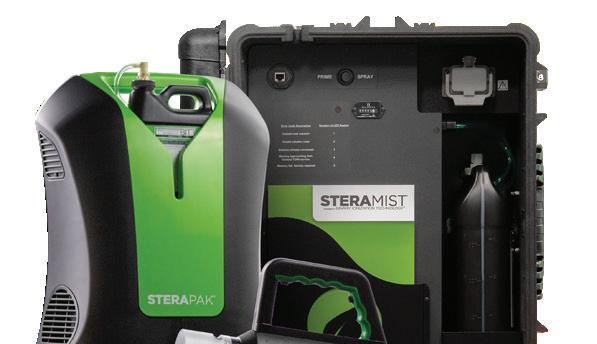
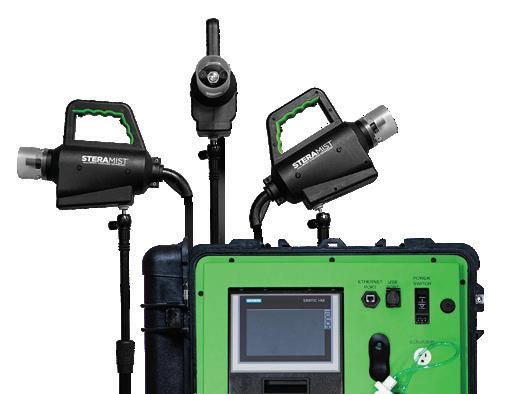
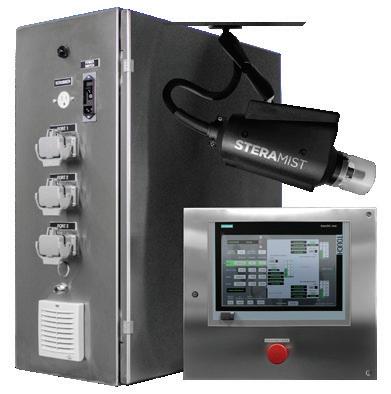
EVOLVING LAB SPACES, MEET i HP DECON.
Easily conform to Annex 1 and meet standards like cGMP, GMP, ISO 35001 & 9001, & GLP!
EPA-registered SteraMist decontamination accommodates classic, custom, and modular lab environments via seamless integration, 4x faster high-log results, and superior compatibility.
NEED DECON SERVICE? CONTACT US FOR ONE-TIME & REPEAT SCHEDULED SERVICE!
30 Laboratory Animal Science Professional May 2023
ECM Implementation Method Energy Reduction Relative Implementation Cost
$
$
$$$
$$
$$
$$$
$
DISINFECTION & DECONTAMINATION
Banner Spread.indd 1
barriers and socializing all considerations is critical to the success of the project. The last thing the project team wants to see is that operators override various ECMs because they don’t meet the needs of the facility, and there’s concern about maintaining stable environments within the facility. One example would be if the amount of supply and exhaust air provided to the animal holding spaces is lowered to a point that the odors within the space are not palatable for the operators. CB: Since we all share this planet, any successful approach will require a coordinated effort across different industries, cultures, and governments. In the U.S., there have been multiple efforts to reduce energy consumption nationally, including President Biden’s bold commitment to ensure that the U.S. achieves a 100% clean energy economy and reaches net-zero emissions no later than 2050. How does this, and other changes in regulations, affect how we build vivariums?
JB&B: That’s a great question, and the landscape is changing every day. We’re seeing new regulations springing up all over the country; all focused on energy use in the built environment. Where we typically only had to think about meeting local Energy Codes, we now have to think about numerous other aspects of energy performance throughout the life of a building. Just recently, in cities such as New York and Boston, we’ve seen new regulations that limit the number of carbon emissions an existing building can produce, with potential financial penalties if the building exceeds its allotted carbon. The financial penalties from these new laws are front and center in every conversation about how to build out new vivarium spaces and are having the effect of driving more efficient solutions than would have been considered even a couple of years ago.
On a broader scale, we’re seeing state governments committing to “greening” their electricity grids at a rapid
pace. States are planning to phase out their fossil fuel-burning power plants and replace them with sustainable alternatives such as solar, wind, and hydropower. By greening the grid, it allows buildings to source carbon-free electricity from the grid as well as to implement alternative solutions (heat pumps, for example) that can heat and cool buildings using only electricity. This has resulted in reducing carbon emissions at the building level and helping buildings meet stringent carbon reduction goals. It all circles back to taking the time and effort to investigate possible energy conservation measures at the start of the project in the context of the specific project and location to implement the most sustainable measures.
Where We Go From Here
Now more than ever, we need to consider every design element and its concomitant energy use implications in order to meet more stringent Energy Codes and reduce our global impact. To successfully achieve proper functioning and sustainability, vivarium users and operators in concert with design professionals, need to be aligned with the goals and objectives of these facilities. It is unarguably daunting, but new innovations and our deliberate strategic collaboration with industry partners and experts such as JB&B provide good reason to think that sustainable animal facilities are something we CAN achieve.
When not every project can get the green light, choosing your animal facility for sustainable change is a great place to start because the reduced carbon impact from these changes is predictably significant.
Dr. Corinna Beale, DVM, SRS, DACLAM, is the Director of Preclinical Services for Comparative Medicine and Adjunct Faculty at Tufts Medical Center in Tufts University Middlesex County, MA.
May 2023 Laboratory Animal Science Professional 31
DISCOVER YOUR SOLUTION. STERAMIST.COM | 800.525.1698 PORTABLE DISINFECTION WHOLE-ROOM DECON CUSTOM PRODUCTS 4/18/23 11:20 AM
What is a Digital Transformation (DX) Assessment and Why You Need One
 By Gennifer Caesar, BS, ALAT
Digital transformation (DX) is the integration of digital tools that significantly changes the way a business operates and achieves its goals.1 As laboratory animal research facilities embark on DX initiatives, it is critical to assess their current state of digital maturity and identify areas for improvement. Digital maturity as a metric refers to a set of measurements that can be used to assess how well a laboratory animal research facility has integrated digital technologies and processes into its overall strategy and operations. For instance, digital maturity metrics may include the percentage of experiments conducted using digital tools or the number of digital systems integrated into the facility’s operations. Other examples of digital maturity metrics may consist of the percentage of staff that have received digital training, or the amount of funding allocated to digital initiatives. By using digital maturity metrics, laboratory animal research facilities can evaluate their progress toward digital transformation and identify areas for improvement. This can help them to optimize their use of digital tools and processes, improve their research outcomes, and ultimately enhance their ability to achieve their goals.
A DX assessment in a vivarium involves a comprehensive evaluation of the facility’s current digital capabilities to identify gaps and opportunities for improvement. This process includes reviewing the vivarium’s existing technology infrastructure, such as animal identification systems, digital animal monitoring systems, and electronic animal health records. The assessment also involves evaluating the vivarium’s data collection and analysis processes and data privacy and security policies. Finally, the assessment examines the vivarium’s management practices, including governance structures for digital initiatives, resource allocation and budgeting for digital projects, and integration of digital strategies into overall business planning and decision-making. These are just a few examples, and the specific technologies, processes, and management practices evaluated during a DX assessment will depend on the particular goals and needs of the vivarium. The evaluation aims to identify areas where digital transformation can help the vivarium operate more efficiently and effectively and to create a roadmap for implementing digital solutions.
Here are some critical steps to consider when conducting a DX assessment in the vivarium:
1. Define the scope and objectives: It is essential to clearly define the scope of the assessment and identify the specific objectives that the vivarium hopes to achieve through the process. This may include improving operational efficiency, enhancing animal welfare, or enabling new research models.
2. Evaluate the current state: Conduct a thorough review of the vivarium’s existing technology infrastructure, processes, and data management practices. This may include assessing software and hardware systems, data management practices, security protocols, and staff skills and capabilities.
3. Identify areas for improvement: Based on the assessment findings, identify areas where the vivarium can improve its digital capabilities. This may involve implementing new technologies, streamlining processes, or developing new skills among staff.
4. Develop a roadmap for DX: Once areas for improvement have been identified, develop a roadmap for DX that outlines specific actions, timelines, and resources required to achieve the desired outcomes. For example, digital tools such as electronic animal health records or automated animal behavior monitoring systems can help streamline operations and enhance animal welfare.
5. Monitor progress and adjust as needed: It is essential to continuously monitor progress against the roadmap and adjust course as necessary to ensure that the vivarium is progressing towards its DX goals. For instance, if a new tool or system is not delivering the expected results, revising the implementation strategy or exploring alternative options may be necessary.
A DX assessment can provide vivariums with valuable insights into their current state of digital maturity and help them identify areas for improvement. By taking a systematic approach to digital transformation and developing a clear roadmap for change, vivariums can successfully navigate the challenges of DX and achieve long-term success in laboratory animal research.
Gennifer Caesar, BS, ALAT, is the founder and Chief Digital Transformation Consultant for Vivalytics Consulting in Las Vegas, NV.
REFERENCE:
1. Caesar, G. (2022). Misconceptions about Technology Adoptions in the Laboratory Animal Research Community. Laboratory Animal Science Professional, November 2022.
32 Laboratory Animal Science Professional May 2023 FEATURE – EDUCATION IN LAS
SPECIAL NEEDS
NUTRITIONAL
MEDICATED
ENRICHMENT
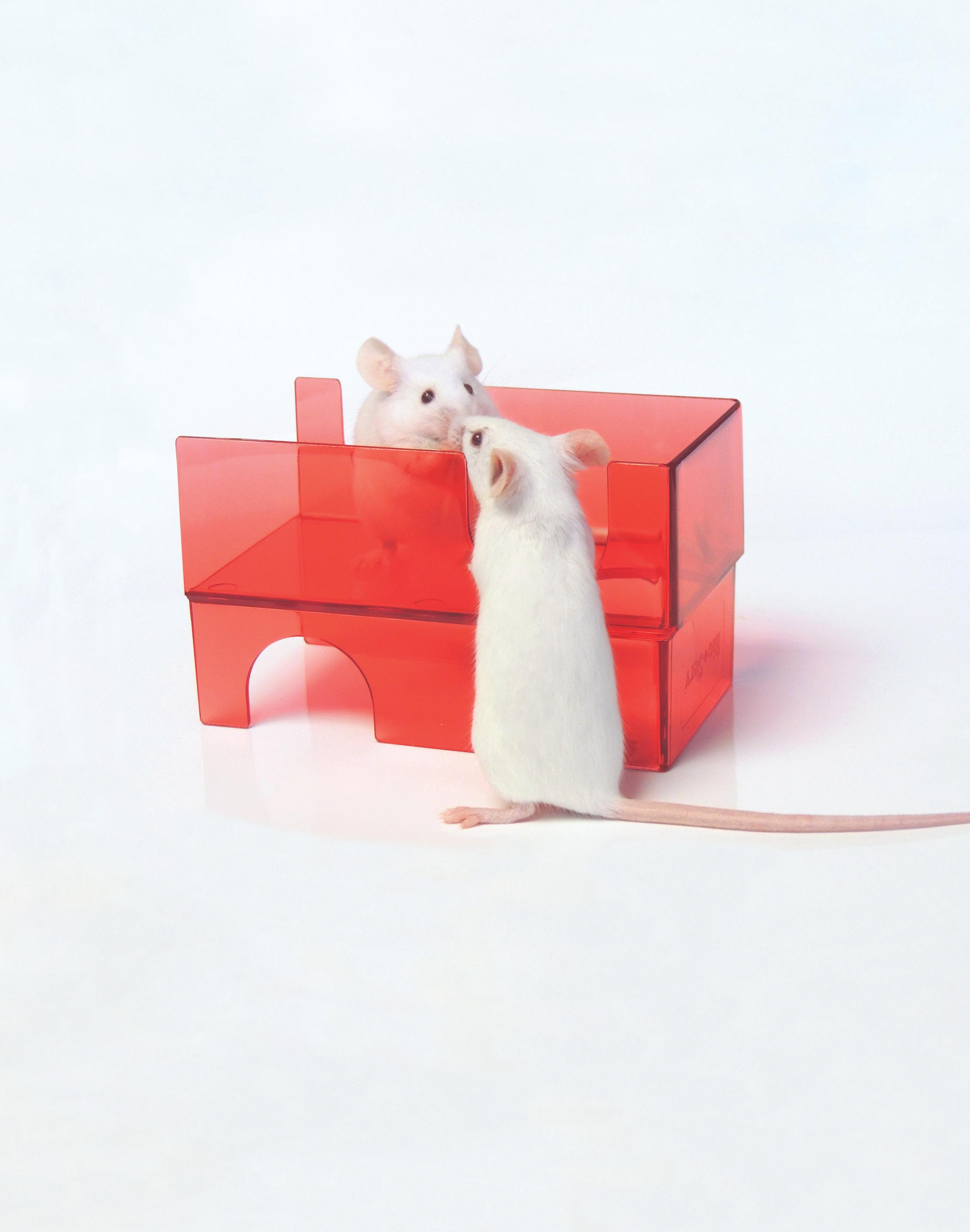
Enrichment Impact on Breeding Metrics in a NOD SCID Gamma (NSG) Breeding Colony
By Nelly Mex Canul, Madelyn Carr, BS, Audrey-Jo Santo, BS, Christopher Wessel, BS, Ekram Gad, PhD, Maura Parker, PhD, Cassie Miller, DVM,
Introduction
Mouse dam and sire well-being is vital to pups’ health in a breeding colony. If parental health varies, inconsistencies in critical breeding metrics such as the number of litters, litter sizes, pup weights, and percent of pup mortality will arise.3,5 Fred Hutchinson Cancer Center Comparative Medicine shared resource (CMSR) provides NOD scid gamma (NSG) and other immunodeficient strains to researchers using the animal facility. The health of the breeding stock is critical to maintaining the production values necessary to meet the high demand for these mice for the cutting-edge cancer-related research of Fred Hutch. Recently, we have observed cases of barbering that progress to wounding in some of our NSG breeders, impacting the health of the breeders and reducing production metrics. Barbering does not normally cause injury as a dominant behavior. However, it has been compared to trichotillomania, a compulsive hair-pulling disorder in humans.2 An underlying linkage between trichotillomania and barbering may indicate unrecognized changes in welfare.2 We sought to curb this behavior and simultaneously restore or improve breeding metrics by identifying preferential enrichment conditions as previous studies have found that increasing enrichment can reduce intra-mouse aggression and male anxiety-like behavior.4
Materials and Methods
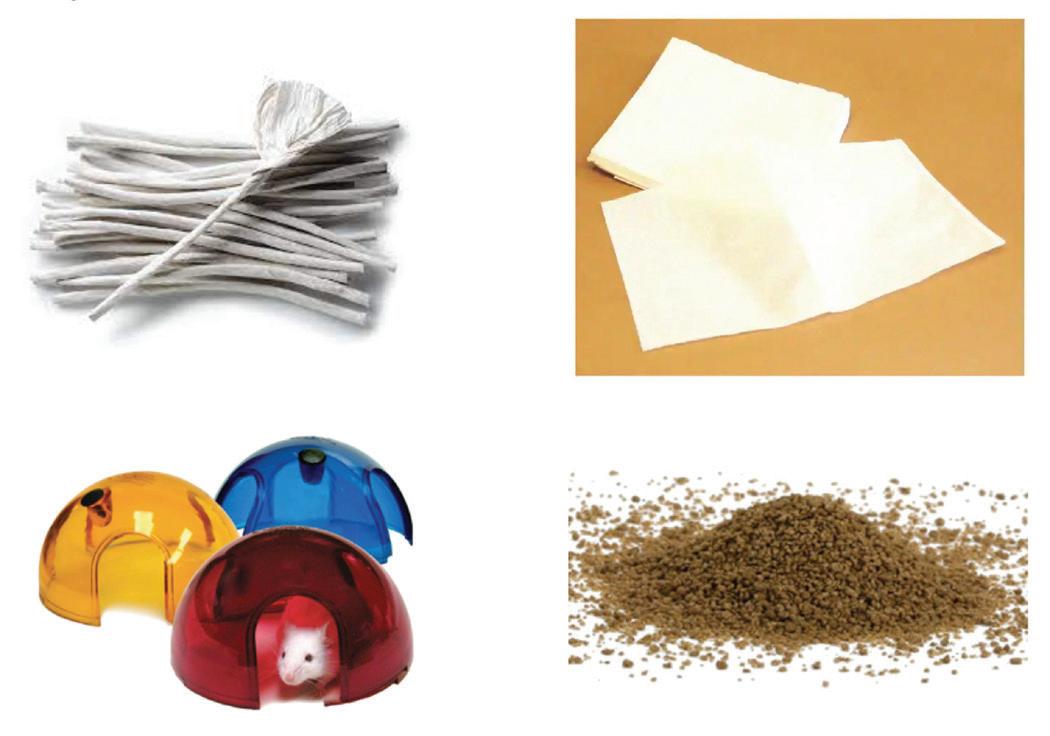
Animals
All work was performed under an existing Institutional Care and Use Committee-approved protocol. CMSR is an AAALACi-accredited facility and holds a PHS animal welfare assurance. As noted in Table 1, a specific number of cages of trio breeders (1 male: 2 females) NSG (NOD.CgPrkdcscid Il2rgtm1Wjl/ SzJ) between 6 to 8 weeks of age were assigned to each of five different treatment groups varying by enrichment item(s) provided and described here and seen in Figure 1. (1) Supplemental nesting (Rodent Nesting Sheets, Bioserv, Flemington, New Jersey), (2) foraging treats (Rodent Foraging Crumbles, Bioserv, Flemington, New Jersey), (3) shelter (Mouse Igloo/ Mouse Arch, Bioserv, Flemington, New Jersey or MOUSE HOUSE, Tecniplast, West Chester, Pennsylvania), (4) shelter and nesting (Mouse Igloo/Mouse Arch/MOUSE HOUSE, Rodent Nesting Sheets), and (5) all three (Mouse Igloo/ Mouse Arch/MOUSE HOUSE, Rodent Nesting Sheets, and Rodent Foraging Crumbles). All enrichment devices were autoclaved prior to use. Cages also contained the facilities standard enrichment, an irradiated paper twist (Twist-n’Rich,
The Andersons’, Maumee, Ohio), and 1/8” pelleted cellulose bedding (Biofresh, Patterson, New York). Shelters were replaced once a month, nesting sheets (2 sheets per cage) every two weeks following cage change, and foraging treats (1/8 to 1/4 teaspoon) provided at cage setup, birth of new litters, sex-determination (10 days old), weighing (21 days old), and weaning (21-28 days old), or every Tuesday and Thursday when no pups were in the cage. It is important to note that our standard for breeding at Fred Hutch is a breeder shelter, which makes them our control. Considering we were seeing barbering in all cages, with or without huts, we didn’t include a group just with the nesting twist.
The mice were housed in Tecniplast Green Line cages (Tecniplast GM500 77.66 in2 / 501 cm2, West Chester, Pennsylvania) on a 12:12hr light-dark cycle and provided a high fat diet (Labdiet PicoLab Mouse Diet 20 #5058 irradiated, St. Louis, Missouri) and RO-acidified water ad libitum. Two litters were allowed in a cage at a time and pups were separated at 28 days of age or when a third litter was born. Mice received 28 gm recovery gel (DietGel Recovery, ClearH2O, Woodburn, Oregon) following the birth of new litters, or when manipulations occurred, such as sex-determination, weaning, weighing, or for health-related reasons.
Breeding Metrics
New breeders were purchased from a commercial breeder (Jackson Laboratories) or selected from the offspring of current breeders. When selecting mice from the existing colony to breed, mice no greater than three generations from
34 Laboratory Animal Science Professional May 2023 FEATURE – EDUCATION IN LAS
DACLAM, Gordon Roble, DVM, MBA, DACLAM
Figure 1: Clockwise from upper left are images of the standard irradiated paper twist, supplemental nesting, shelter, and foraging treats.
Figure 2: In assessing visible skin abnormalities overall, we qualitatively scored all mice in a cage as changes appeared during the study. For each experimental condition, a breeding cage is assigned the value of the highest score for any one mouse. For example- if one mouse had barbering over a large area, but all other mice minimal or light barbering, that cage received a score of 2. If mice were found dead in cage and showed apparent signs of cannibalization, we did not count that as aggression since we could not tell if the injuries were inflicted pre or postmortem. Pups that were euthanized due to barbering were noted, and if they were small compared to littermates, they were counted as not surviving to weaning since this indicated a failure to thrive.
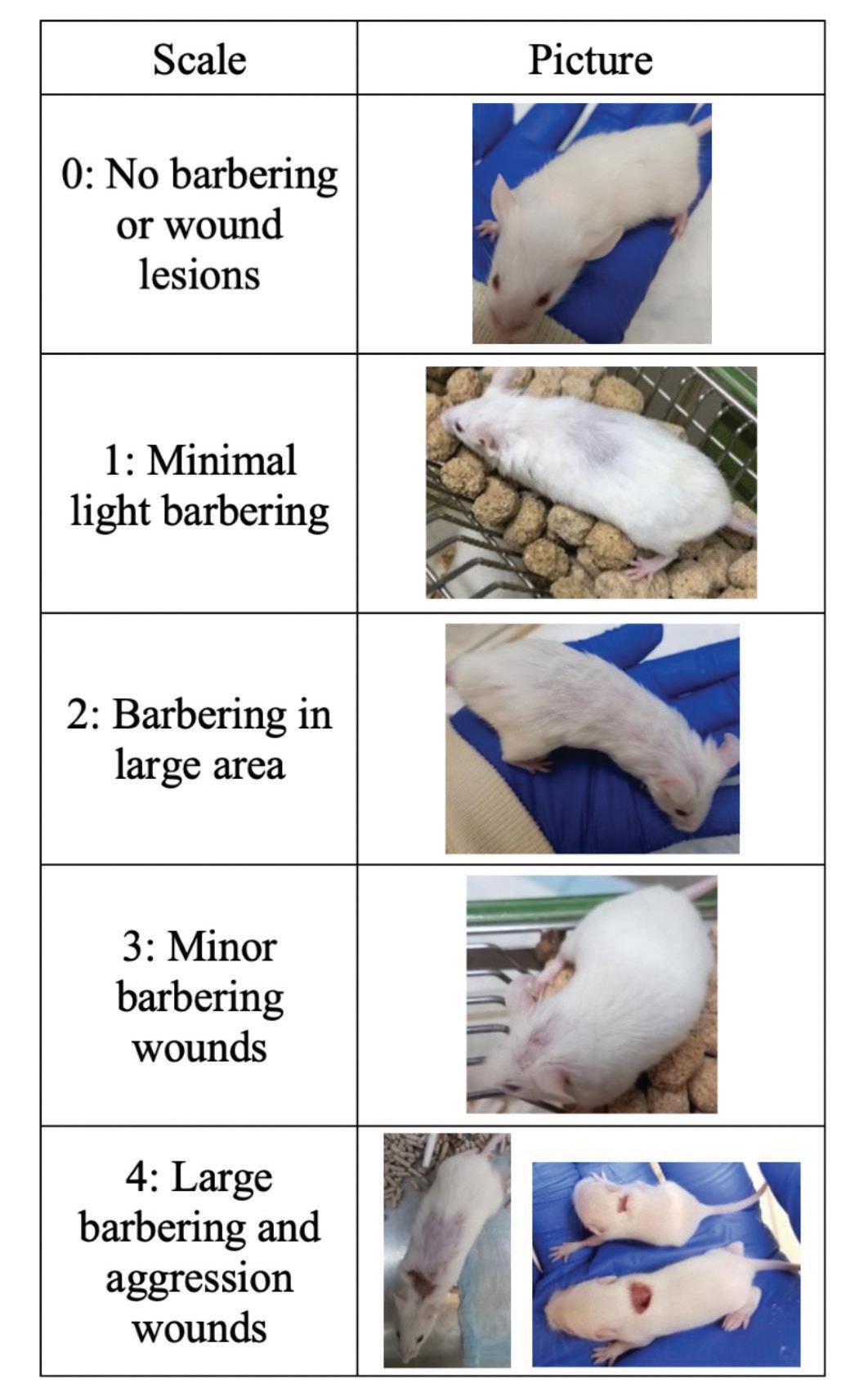
founder animals were used. This reduced the risk of genetic drift. Breeders were retired and replenished after three generations. Breeder behavior was monitored (including signs of aggression, excessive barbering, and pups found missing or
dead) weekly, and each time cage was manipulated. Additional monitoring and/or veterinary intervention occurred when clinically warranted. Barbering-related skin changes on adults and pups were monitored on a 5-point scale (0-4) (figure 2); mice scoring 3-4 were monitored while presumed aggressors were separated into another cage. When deemed clinically necessary, injured mice were euthanized. The total number of litters born per trio, the average total number of pups born per trio, the average total number of pups weaned per trio, and the average weight of pups at twenty one days were recorded. Breeders that had been set up for 13 weeks (from the time of setup) and above were included in data collection, with the goal to include breeders that had been set up long enough to have gone through halfway or more of their breeder lifespan. Data were graphed and analyzed in GraphPad Prism using a two-way ANOVA statistical test where significance was defined as having a p-value less than 0.05.
Results
To compare breeder well-being across groups, we focused on parent health in addition to breeding metrics such as pup weights, litter sizes, and percent of pup mortality. When assessing parent health, barbering and wounding data showed no significance, but it is interesting to note that group 3 showed the highest incidence of mild barbering (Figure 3).
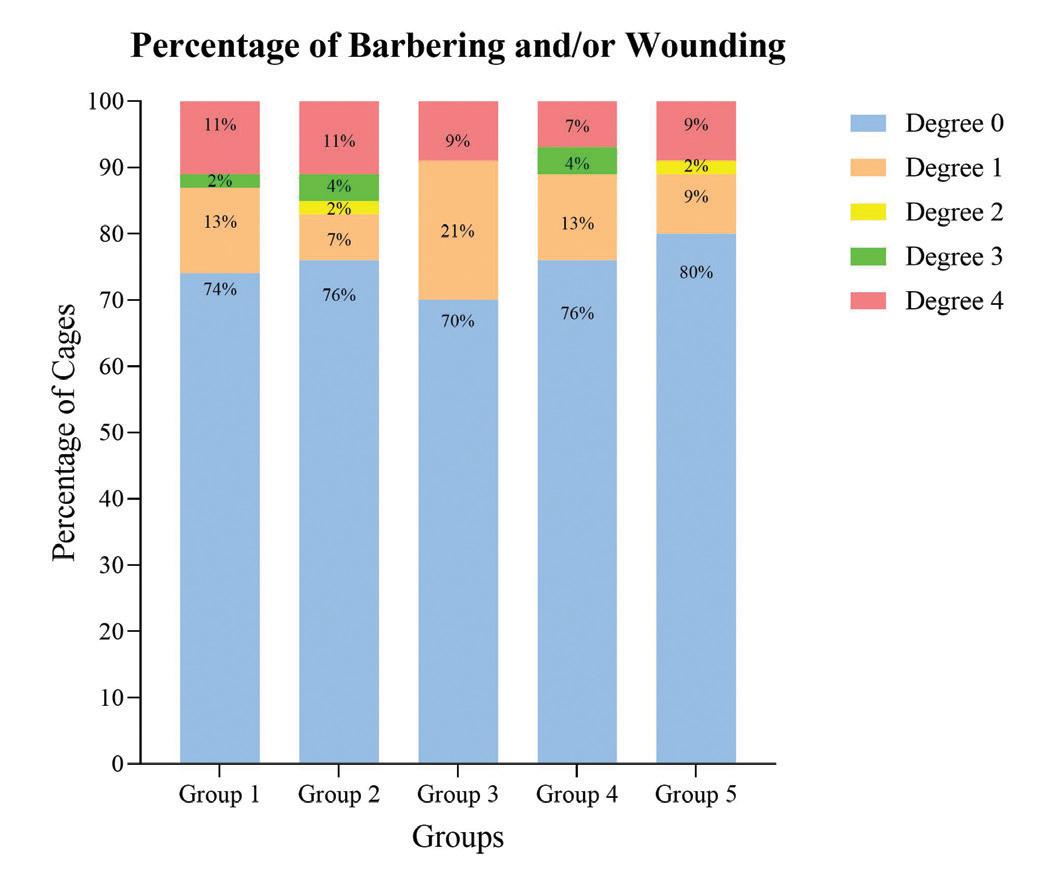
May 2023 Laboratory Animal Science Professional 35
Group
Total Number of Litters 313 288 323 346 284 Pups Weaned Per Litter 3.7 3.5 3.7 4.1 4.1 Percent Missing Before 10 days 24.36% 24.83% 22.11% 18.83% 20.82% Percent Missing After 10 days 4.36% 3.59% 2.37% 3.16% 2.25% Total Number of Cages 45 45 46 45 43
1 Group 2 Group 3 Group 4 Group 5
Table 1: Cage productivity metrics as a reflection of pup and adult health. The term “missing” refers to pups that are found dead, not found, or euthanized due to barbering injuries.
Figure 3: The graph illustrates the distribution of scores being mostly the same, but group 3 shows the highest incidence of mild barbering. Breeders that wound their pups are culled from the breeding population.
Figure 4: In comparisons of total pups (2A), the group 2 weanlings were smaller compared to group 1, 3, or 5. In the males and females alone (2B and 2C), there was no significant effect in group 5 with all three enrichment conditions. For all comparisons, shelter alone appears to have a bigger advantage for pup weight than shelter with enhanced nesting material. Data presented are mean + SEM.
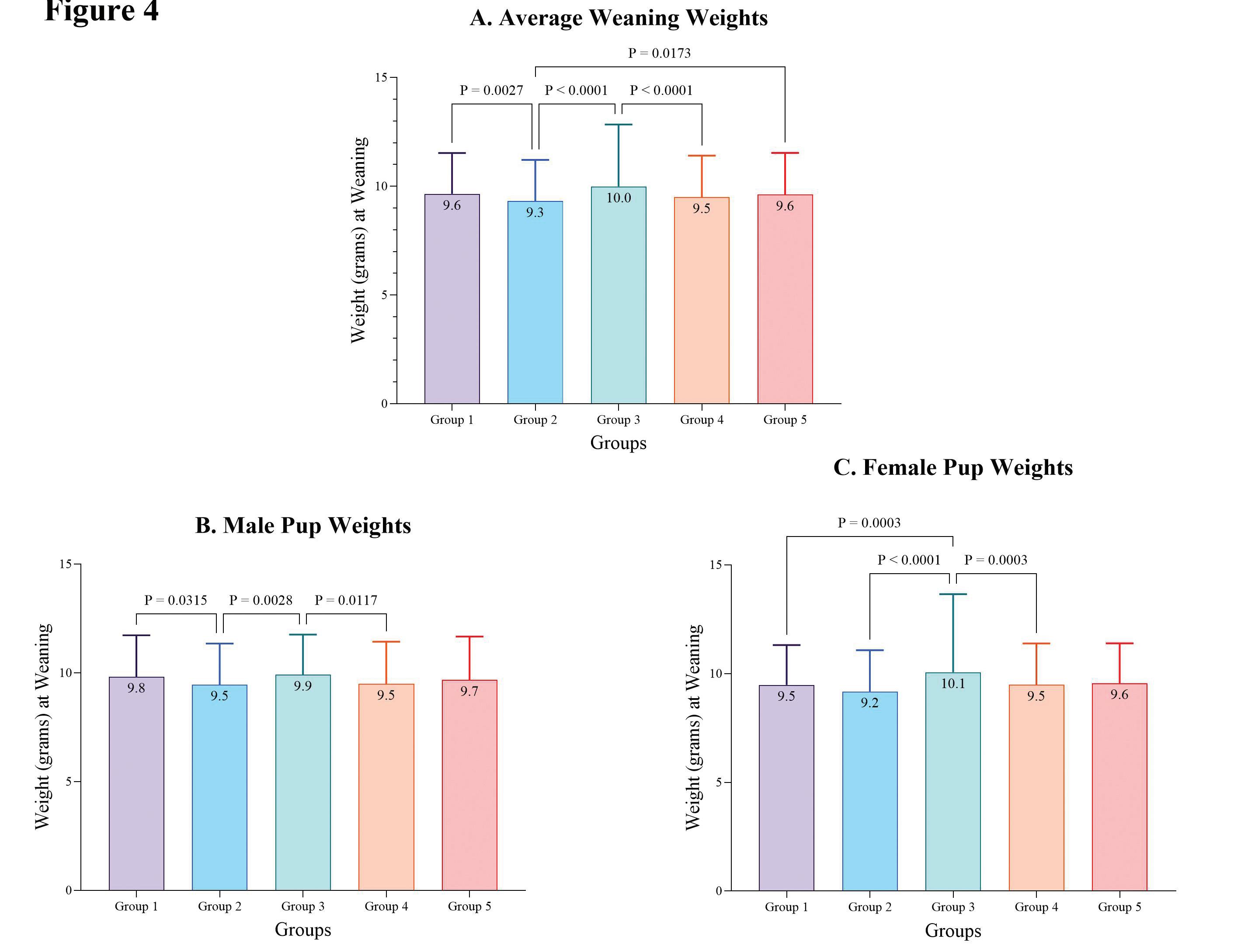
Figure 5: In terms of total pups born to a breeding unit (5A), there is no difference between groups. However, when comparing weaned pups (5B), group 2 (foraging) had a significant decrease in pups that survive to weaning compared to group 4 (shelter with supplemental nesting). Data presented are mean + SEM.
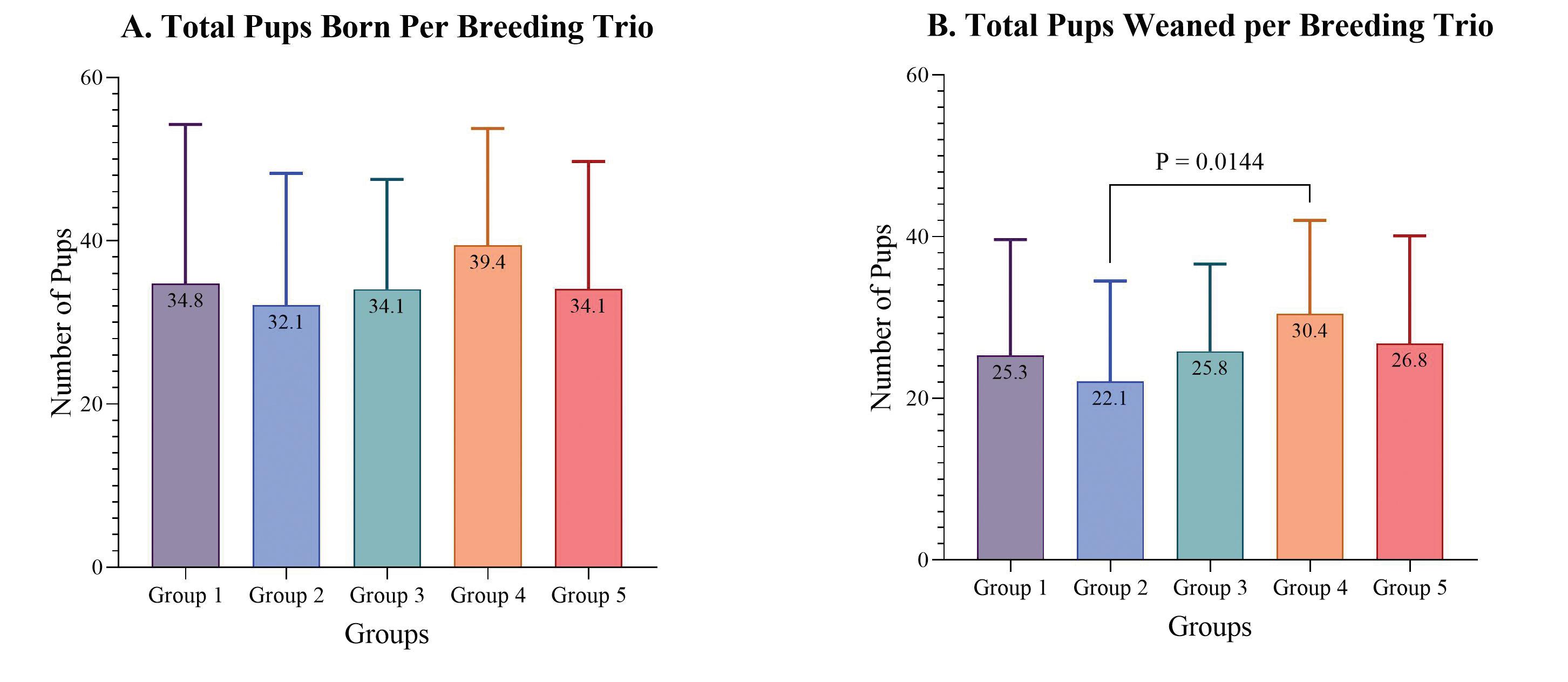
36 Laboratory Animal Science Professional May 2023
Compared to groups 1, 3, and 5, group 2 had lower average pup weights at weaning (Figure 4A). In the males and females alone (4B, 4C), group 3 had greater average pup weights at weaning than group 2. Results indicated that the use of a shelter promoted the greatest average weight at weaning. There were no statistical differences in the average total number of pups born per treatment group (Figure 5A). However, when compared to group 4, the average total number of pups weaned was significantly lower in group 2 (Figure 5B). Foraging treats appear to have a detrimental effect on pup health, as seen by data in Table 1, indicating group 2 had the lowest number of litters produced, the lowest average pup weaning rate, and the highest pup loss before 10 days. Although pups found missing shows no significance (Table 1), group 4 had the lowest incidence of pups missing before 10 days, and group 5 had the lowest number of pups missing after 10 days.
Discussion and Conclusion
A plausible explanation for the results is that the regular addition of forage materials distracted dams from nurturing their pups. This effect may be mitigated with the addition of a shelter and supplemental nesting (Group 5, figure 4). Additionally, the study held inconsistencies in the type of foraging treats, which could have impacted the results. However, the majority of the data collected came from mice that received the bacon foraging crumbles. This means our data best reflects the effect of this type of treat compared to the others we trialed. It is important to note that on occasion mice were euthanized for various health reasons, but this was not closely tracked or recorded. This effect is present across all groups, which would not significantly impact the data unless enrichment was the cause. In conclusion, we propose that supplying shelter, or a combination of shelter and nesting that replicates the mouse’s natural environment and supports thermoregulation in pups, is of greater benefit than foraging.1,5
Future Research
Additional data may show differences in diverse types of foraging options. For future studies, we plan to continue with the same treatment groups except for the addition of a group with two shelters. The additional shelter (Safe Harbor Mouse Retreat, Allentown, Allentown, New Jersey) will allow mice to choose whether to share parenting roles or have their own nests. We will continue having trio breeders, but with increased floor space beyond duo standard cage size (NexGen Mouse 900 142 in² / 916 cm², Allentown, Allentown, New Jersey), which we will then directly compare to the results of this study to determine the effect of increased floor space on barbering behavior. We want to compare the effects of combined enrichment on different cage sizes while only changing one group because it is made possible with bigger cages (two huts). Although the incidence is low, we continue to monitor for cases of aggressive behavior. The differences in age of pups at the time of loss/death is an interesting finding, but overall
incidence of aggression is too low to draw a conclusion at this time. We hope to continue to track pup barbering and wounding over time to monitor for trends, both as a possible progression and also for potential heritability in the colony.
Acknowledgments
All experiments were conducted in Fred Hutch OLAW-assured, USDA-registered, and AAALAC-accredited facilities under an approved IACUC protocol. Comparative Medicine shared resource of the Fred Hutch/University of Washington Cancer Consortium is supported by a Cancer Center Support Grant (P30 CA015704).
Nelly Mex Canul is a second-year undergraduate student studying biochemistry at the University of Washington in Seattle, WA.
Madelyn Carr, Audrey-Jo Santo, and Christopher Wessel, BS, are research technicians II at Fred Hutchinson Cancer Center in Seattle, WA.
Ekram Gad, PhD, is a staff scientist at Fred Hutchinson Cancer Center in Seattle, WA.
Maura Parker, PhD, is a staff scientist at Umoja Biopharma in Seattle, WA.
Cassie Miller, DVM, DACLAM, is the former associate director of Comparative Medicine at Fred Hutchinson Cancer Center in Seattle, WA.
Gordon Roble, DVM, MBA, DACLAM, is the associate vice president of shared resources at Fred Hutchinson Cancer Center in Seattle, WA.
REFERENCES
1. Gaskill BN, Pritchett-Corning KR, Gordon CJ, Pajor EA, Lucas JR, Davis JK, Garner JP. Energy reallocation to breeding performance through improved nest building in laboratory mice. PLoS One. 8(9).
2. Garner JP, Dufour B, Gregg LE, Weisker SM, Mench JA. 2004. Social and Husbandry Factors Affecting the Prevalence and Severity of Barbering (‘Whisker Trimming’) by Laboratory Mice. Applied Animal Behaviour Science,Volume 89, Issues 3–4 (263-282.)
3. Leidinger CS, Thone-Reineke C, Baumgart N, Baumgart J. 2019. Environmental Enrichment Prevents Pup Mortality in Laboratory Mice. Laboratory Animals. 53(1):53-62.
4. Whitaker J, Moy SS, Godfrey V, Nielsen J, Bellinger D, Bradfield J. 2009. Effects of Cage Size and Enrichment on Reproductive Performance and Behavior in C57BL/6Tac Mice. Lab Anim (NY). 38(1):24-34.
5. Whitaker JW, Moy SS, Pritchett-Corning KR, Fletcher CA. 2016. Effects of Enrichment and Litter Parity on Reproductive Performance and Behavior in BALB/c and 129/Sv Mice. JAALAS. 55(4):387-99.
May 2023 Laboratory Animal Science Professional 37
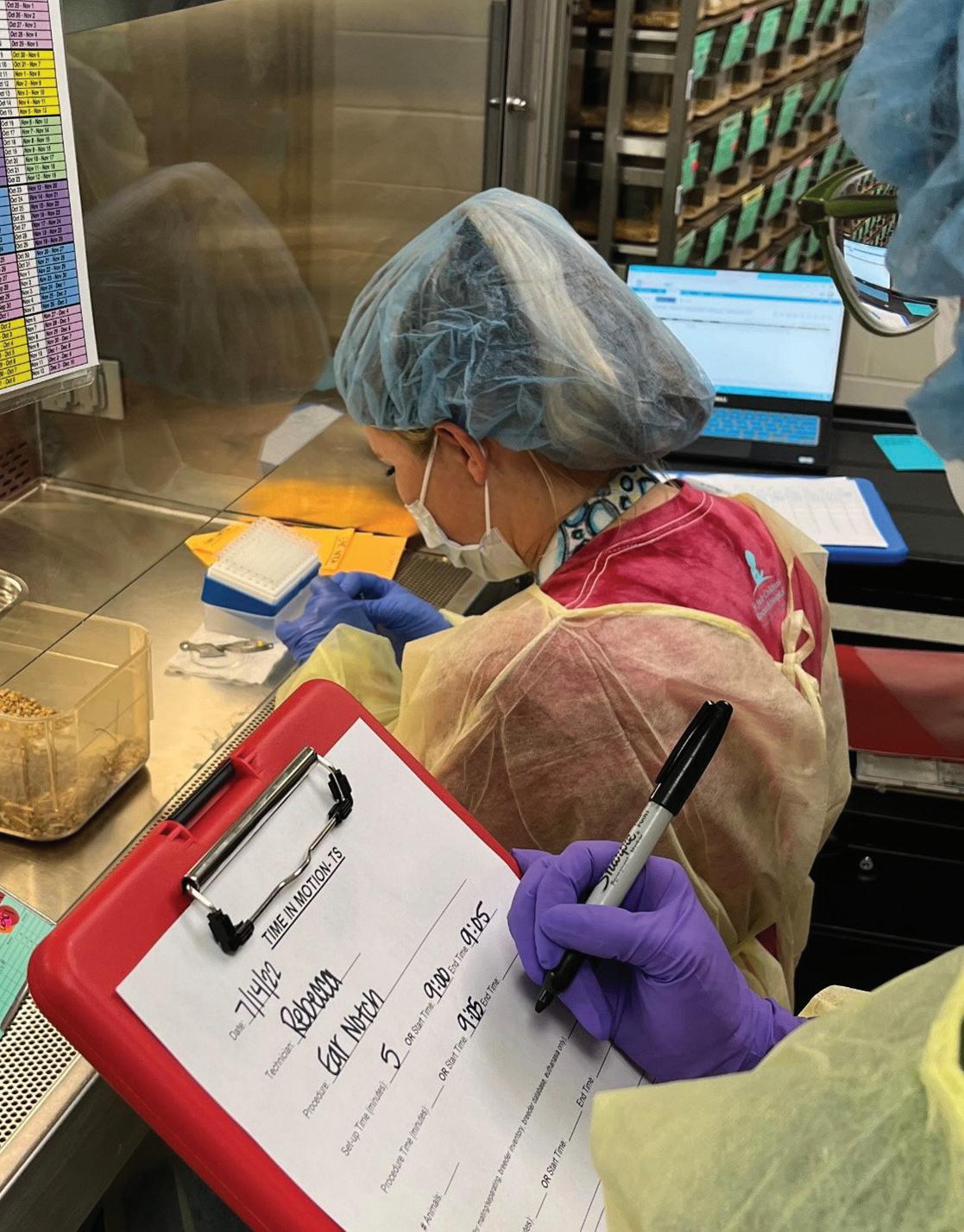
The Importance of Time in Motion Studies and the Effects on Charge Back Rates
By John Harper RALAT, and April Keith BS, LVMT, RALAT
Research Services (RS) is a fee for service unit within the Animal Resource Center at St. Jude Children’s Research Hospital (SJCRH) in Memphis, TN. We provide a diverse range of technical services on various laboratory animal species to our research community, such as colony maintenance, surgical procedures, drug dosing, pharmacokinetic and pharmacodynamic studies, advanced breeding procedures, etc. This service helps to improve experimental rigor and reproducibility. Currently, we support 50 different research labs housed in two separate vivaria, each with multiple animal housing floors. Over the last ten years, we have experienced a 45% increase in staffing. This increase was a welcomed necessity, but with all growth comes growing pains.
As a shared resources core unit, we use a home-built system called Shared Resource Management Systems or SRM for requesting and charging for our services. SRM allows the labs to submit technical service requests as needed. Once RS technicians complete the task, they enter the charges in SRM. Within the SRM system, we began to see the growing pains. We discovered inconsistencies within the billing practices between each technician. Technicians performing the same task for the same lab would bill differently often. We hypothesized this was due to outdated billing terminology, lack of training, and the need to update our Time in Motion study (TIM). This, along with the growth of the unit, prompted the need for quality assurance (QA). It was decided that our first task was to complete a Time in Motion study (TIM).
A TIM study calculates the time spent and supplies used on a specific task to determine how much to charge. We needed to evaluate chargeback rates critically. Most of our TIM studies came from 2011 based on technicians self-reporting TIM data while completing a requested service. We recognized this as an opportunity for inaccurate data collection. Balancing the task at hand, collecting data for TIM, and dealing with other distractions ongoing within the workspace would contribute to consistency and skew the TIM results. As part of QA, we assigned a separate individual to this task while a different technician performed the requested task, thus improving the accuracy of data collection.
QA went through all the original data that was previously collected to determine a good starting point. We prioritized by deciding which tasks were more frequently used within colony maintenance, drug dosing, and bleed requests to start. Eventually, we would perform TIM on all services offered. Next, we set minimum parameters for our TIM data. We decided to time three technicians at least twice or five technicians once to determine the average.
Additionally, we decided to capture data from seasoned and less seasoned technicians was essential to represent the average accurately. QA scheduled appointments with each technician and collected the TIM data as they performed their scheduled work typically. Below, you will find the timing structure we used. Additionally, an example of the TIM log can be seen in Figure 1.
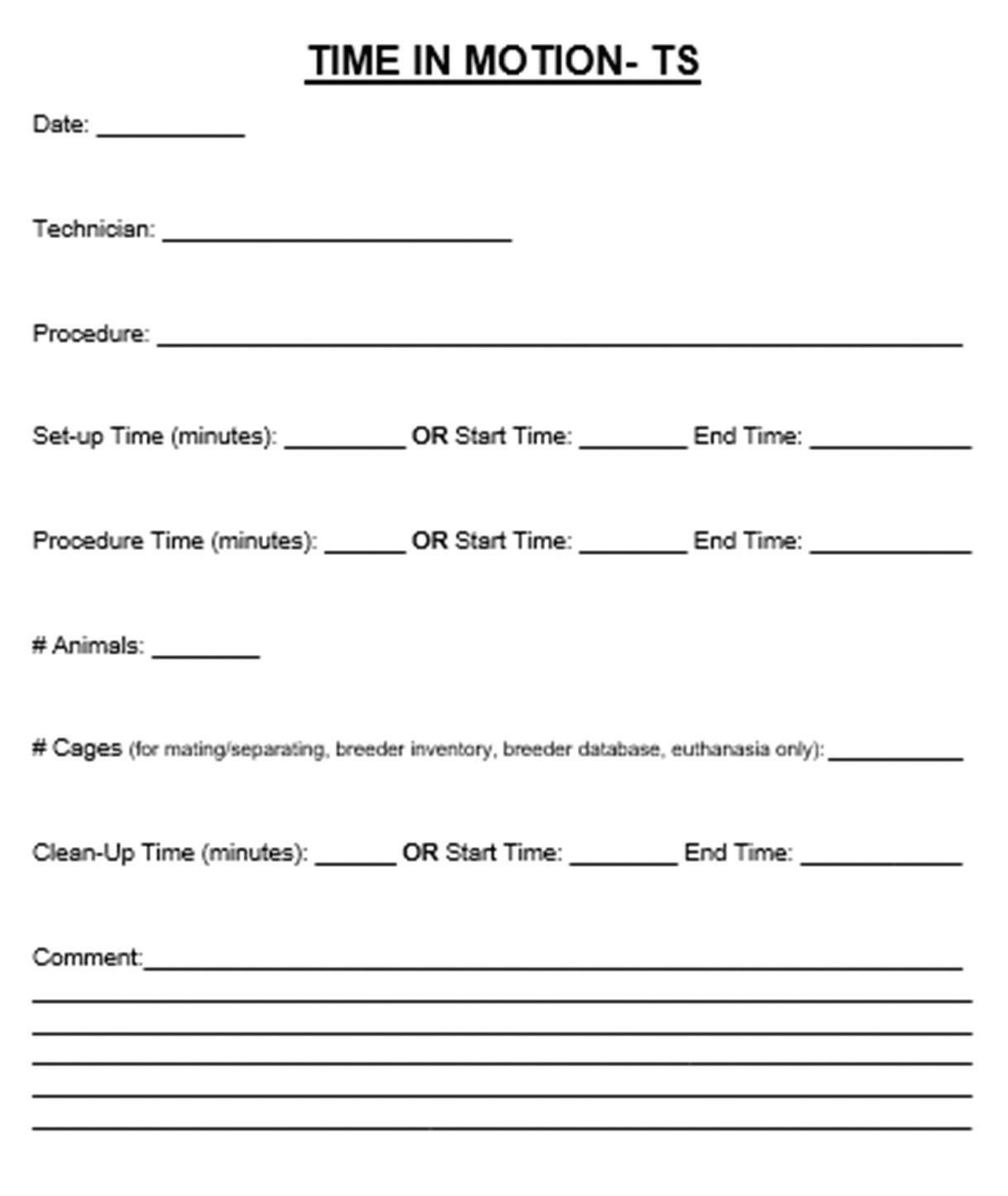
May 2023 Laboratory Animal Science Professional 39 FEATURE – EDUCATION IN LAS
Figure 1
Step one (set up): Begin timing in the anteroom while the technician dons PPE. Stop timing once the technician sets up the workstation and locates the animals. Log the amount of time taken.
Step two (task): Begin timing when the technician picks up the first animal and begins the requested service. Stop timing once the last animal is placed back into its home cage. Log the amount of time taken.
Step Three (clean up): Begin timing as the technician returns the animals and cleans up the workstation. Stop timing once this is completed and the technician doffs PPE to exit the corridor.
Once the above steps were completed, QA used the collected data to determine how long it took to complete the task. A constant rate was multiplied by the total time to complete the job. The per unit fee would be per animal or cage, depending on the request. For example, harem checks would be per cage, and oral gavage dosing would be per animal. We also calculated a setup fee by adding the set-up and clean-up time of each task from steps 1 and 3. This fee is in place to cover the cost of setup/cleanup time and the supply cost of PPE. Lastly, we factored in technical request supply costs such as needles, syringes, drugs, gauze, tubes, etc. We calculated the per unit cost of these supplies before averaging the total price per unit, animal, or cage. Once all the new time points and data were collected, the individual tasked with QA responsibility compared the
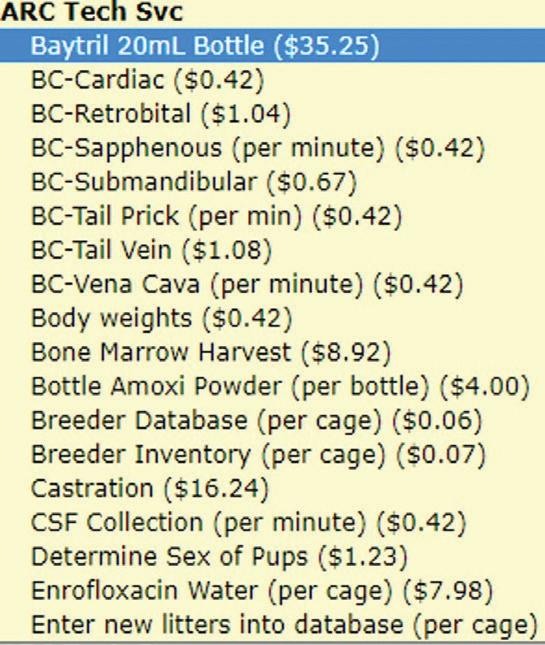
new data to the original TIM completed in 2011. We saw a significant difference in chargeback rates with a +/- 75% average fluctuation. We had to correct this from both ends. The entire process took approximately six months to complete.
The last puzzle piece was making more accurate definitions for each charge. We sent out a survey asking technicians how they charge for our services. We listed each possible answer as a multiple choice. The results showed a significant difference in how each technician was set differently for the same type of request. Figure 2 shows an example of one of the responses. The survey showed us the two most common ways to charge for neonatal toe clipping being used in the following example. Technician A charges for a “Neonatal Toe Clip” per 28 pups for $24.36. Technician B charges for “Neonatal Toe Clip” and “Determine Sex of Pups” per 28 pups for $38. We realized we needed to simplify the choices for charges in SRM and create a document of clearly defined billing terms.
A small committee of technicians and supervisors met to discuss how to define each billing term. The goal was to create terms that were self-explanatory with minimal training involved. Once the document was finalized, it was sent out to each technician. Next, we updated and organized the dropdown menu of listed available charges in SRM, as seen in Figure 3. After approximately three months of trial, using the new terminology document and the updated SRM drop-down menu, we re-evaluated the data. QA looked through each technician’s charges and saw that most were correctly inputting them for the same request. We also sent out an updated survey and could see a similar trend. These two changes helped eliminate inconsistencies in times and subsequently billed services.
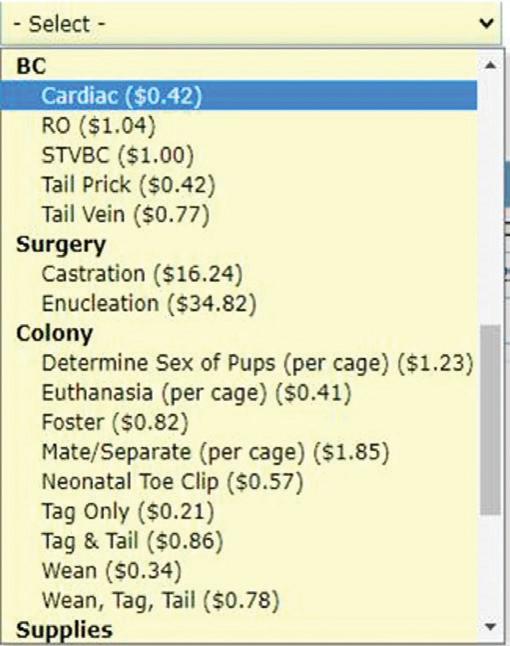
By undertaking TIM, defining billing terminologies, and updating the electronic SRM tool, we have improved the accuracy of time spent on a task and the recharge rates. These initiatives will require periodic updating as we continue to grow as a unit while adding new services. The QA initiative has allowed us to gain confidence from researchers and a mechanism to direct (re)training initiatives to the technician as needed. Similar units that engage in technical services will benefit from our insights and processes designed to streamline the rate setting for such services.
John Harper, RALAT, is the Research Services Technologist I at St. Jude Children’s Research Hospital in Memphis, TN.
April Keith, BS, LVMT, RALAT, is the Research Services Technologist for St. Jude Children’s Research Hospital in Memphis, TN.
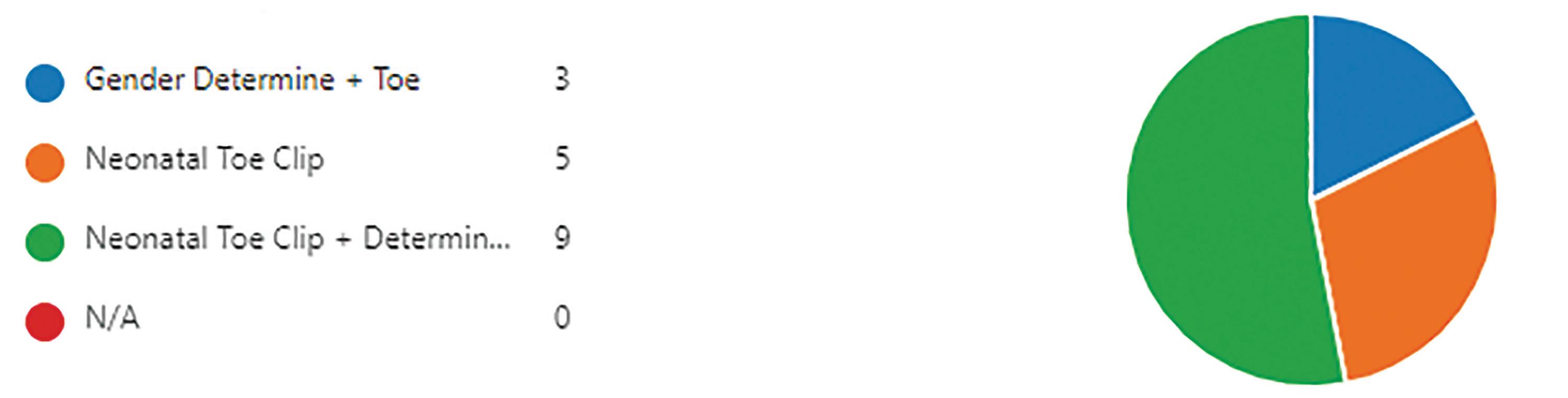
40 Laboratory Animal Science Professional May 2023
Figure 2
Figure 3. (Before organizing (Left), After (Right)
AALAS Crossword
By Kari Buchanan, RLATG
ACROSS
3 A male ferret is called a ________.
7 What is the scientific name of the common house mouse?
10 What is the term used for items that can cause a skin puncture or a laceration?
12 Who reviews all animal use protocols at the institution before studies using animals can begin?
14 _________is a dietary additive for birds made of oyster shell and granite.
16 What is the scientific name of the laboratory rabbit?
17 How many compartments are in a ruminant stomach?
18 What is the amount of moisture in the air is called:
19 The process of removing the horns of a young goat is called __________.
21 Who submits the animal welfare assurance of compliance that the animal research program meets all relevant regulations and standards?
22 The scientific name of the Syrian hamster is:
23 The surgical removal of the wing tips of a bird is called?
24 What are nonliving items or materials that transmit infectious organisms called?
25 What are female sheep called?
DOWN
1 Which parasite can be transmitted to humans through the handling of cat feces?
2 What is the term that describes the disease that does not cause any visible signs?
4 What drug formulation is used for enteral administration when the animal is prone to vomiting?
5 Facilities housing NHPs should have a regular surveillance program to screen for:
6 What is the hand-held instrument that is used to measure air flow called?
8 Which rat is known as the hooded rat?
9 Investigating the nature and cause of a disease is called obtaining a: 11 What is it called when only unrelated animals are mated with each other?
13 What device can be used to handle and restrain a cow for an injection in a large corral?
15 Which of these involves the development of methods for uniquely recognizing humans based upon physical features?
20 Which amphibian species is the most widely used in research?
May 2023 Laboratory Animal Science Professional 41
ALAT #2
1 2 3 4 5 6 7 8 9 10 11 12 13 14 15 16 17 18 19 20 21 22 23 24 25
Opioid Analgesic
For subcutaneous use in mice and rats only.
CAUTION: Federal law restricts this drug to use by or on the order of a licensed veterinarian.
LEGAL STATUS--In order to be legally marketed, a new animal drug intended for a minor species must be Approved, Conditionally Approved, or Indexed by the Food and Drug Administration. THIS PRODUCT IS INDEXED--MIF # 900-014. Extra-label use is prohibited.
This product is not to be used in animals intended for use as food for humans or food-producing animals.
WARNING: ABUSE POTENTIAL, LIFE-THREATENING RESPIRATORY DEPRESSION, and ACCIDENTAL EXPOSURE
Abuse Potential
Ethiqa XR contains buprenorphine, a high concentration (1.3 mg/mL) opioid agonist and Schedule III controlled substance with an abuse potential similar to other Schedule III opioids. The high concentration of Ethiqa XR may be a particular target for human abuse. Buprenorphine has opioid properties that in humans may lead to dependence of the morphine type. Abuse of buprenorphine may lead to low or moderate physical dependence or high psychological dependence. The risk of abuse by humans should be considered when storing, administering, and disposing of Ethiqa XR. Persons at increased risk for opioid abuse include those with a personal or family history of substance abuse (including drug or alcohol abuse or addiction) or mental illness (suicidal depression).
Because of human safety risks, this drug should be used only with veterinary supervision. Do not dispense Ethiqa XR
Life-Threatening Respiratory Depression
The concentration of buprenorphine in Ethiqa XR is 1.3 mg/mL. Respiratory depression, including fatal cases, may occur with abuse of Ethiqa XR Ethiqa XR has additive CNS depressant effects when used with alcohol, other opioids, or illicit drugs that cause central nervous system depression.
Because of the potential for adverse reactions associated with accidental injection, Ethiqa XR should only be administered by a veterinarian or laboratory staff trained in the handling of potent opioids.
DESCRIPTION
Ethiqa XR is an injectable suspension of extended-release buprenorphine. Buprenorphine hydrochloride, an opioid analgesic, is the active ingredient in Ethiqa XR. Lipid-bound buprenorphine hydrochloride is suspended in medium chain fatty acid triglyceride (MCT) oil. Lipids encapsulate the buprenorphine limiting diffusion which provides for larger doses and prolonged action.1,2 Ethiqa XR has a slightly yellow to white opaque appearance. Each mL contains approximately 1.3 mg buprenorphine hydrochloride. The sterile product contains cholesterol, benzyl alcohol, glyceryl tristearate, and buprenorphine hydrochloride suspended in MCT oil.
Drug Abuse, Addiction, and Diversion of Opioids:
Controlled Substance: Ethiqa XR contains buprenorphine, a mu opioid partial agonist and Schedule III controlled substance with an abuse potential similar to other Schedule III opioids. Ethiqa XR can be abused and is subject to misuse, abuse, addiction, and criminal diversion. Ethiqa XR should be handled appropriately to minimize the risk of diversion, including restriction of access, the use of accounting procedures, and proper disposal methods, as appropriate to the laboratory setting and as required by law.
Abuse: Abuse of Ethiqa XR poses a hazard of overdose and death. This risk is increased with concurrent abuse of alcohol and other substances including other opioids and benzodiazepines. Buprenorphine has been diverted for non-medical use into illicit channels of distribution. All people handling opioids require careful monitoring for signs of abuse. Drug abuse is the intentional non-therapeutic use of a prescription drug for its rewarding psychological or physiological effects. Abuse of opioids can occur in the absence of true addiction.
Storage and Discard: Ethiqa XR is a Class III opioid. Store in a locked, substantially constructed cabinet according to DEA and local controlled substance guidelines. Discard broached vials after 28 days. Any unused or expired vials must be destroyed by a DEA registered reverse distributor; for further information, call 1-833-384-4729.
Physician information: Ethiqa XR injectable suspension is a mu-opioid partial agonist (1.3 mg buprenorphine/mL). In the case of an emergency, provide the physician with the package insert. Naloxone may not be effective in reversing respiratory depression produced by buprenorphine. The onset of naloxone effect may be delayed by 30 minutes or more. Doxapram hydrochloride has also been used as a respiratory stimulant.
PRECAUTIONS
Mice
The safety of Ethiqa XR has not been evaluated in pregnant, lactating, neonatal, or immune-compromised mice. As with other opioids, buprenorphine may cause sedation, decreased blood pressure, decreased heart rate, decreased gastrointestinal mobility, and respiratory depression. Use caution with concomitant administration of Ethiqa XR with drugs that cause respiratory depression. The use of paper or soft bedding for up to 3 days following administration of Ethiqa XR should be considered.
Normal mice may exhibit an obtunded response to stimuli up to 4 hours after receiving Ethiqa XR
Buprenorphine is excreted in the feces (see Clinical Pharmacology section below). Coprophagy may lead to ingestion of buprenorphine or its metabolites by mice treated with Ethiqa XR and untreated cage mates.
Rats
The safety of Ethiqa XR has not been evaluated in pregnant, lactating, neonatal, or immune-compromised rats. As with other opioids, buprenorphine may cause sedation, decreased blood pressure, decreased heart rate, decreased gastrointestinal mobility, and respiratory depression. Use caution with concomitant administration of Ethiqa XR with drugs that cause respiratory depression.
Rats may exhibit signs of nausea including pica up to 3 days post-treatment. Rats should be maintained on paper or soft bedding to avoid ingestion of wood chip-type bedding after administration of Ethiqa XR Pica involving wood chip-type bedding can be lethal in rats.
Buprenorphine is excreted in the feces (see Clinical Pharmacology section below). Coprophagy may lead to ingestion of buprenorphine or its metabolites by rats treated with Ethiqa XR and untreated cage mates.
ADVERSE REACTIONS
Mice
No adverse reactions were observed in 20 to 25 gram young adult male and female mice after a single subcutaneous injection of Ethiqa XR at a dose 5 times the indicated dose. Laboratory parameters evaluated in the study included hematology and clinical chemistry; histopathology was also performed. In a second study, adult male and female mice received Ethiqa XR subcutaneously at 5 times the indicated dose for three doses at four day intervals. A surgical procedure was performed on the study mice prior to receiving each of the three doses of Ethiqa XR Mortality was seen in two male mice after the third surgical procedure and dose of Ethiqa XR (total dose of 49 mg buprenorphine/ kg body weight in 8 days).
INDICATIONS
Ethiqa XR is indicated for the control of post-procedural pain in mice and rats.
MOUSE DOSAGE AND ADMINISTRATION
Wear protective clothing when administering Ethiqa XR (see Human Safety Warnings) Shake the vial briefly before each use to ensure uniform suspension. If stored refrigerated, bring to room temperature before use.
Use aseptic techniques to withdraw the dose into a disposable 0.5 or 1 mL syringe. A 20 to 23 gauge needle should be used for injections due to the viscosity of the drug suspension.
The dosage of Ethiqa XR is a single subcutaneous injection of 0.05 mL per 20 gram mouse (3.25 mg/kg body weight). Therapeutic drug concentrations are maintained for 72 hours after the initial dose. If needed, a single repeat dose may be administered 72 hours after the initial dose.
Secure the mouse in a scruff-of-the-neck hold. Insert the needle into the dorsal subcutaneous space created by the scruff hold.
Inject the entire dose into the dorsal subcutaneous space. An oily sheen may be observed in the dorsal fur of the mouse after injection due to leakage of the oil-based drug suspension from the injection site. The oily sheen may last for 4 to 5 days postinjection. Leakage from the injection site can be minimized by slowly injecting Ethiqa XR into the subcutaneous space. The mouse can be returned to its cage immediately after receiving Ethiqa XR
Do not return any unused drug suspension from the syringe back into the vial.
Once the vial is broached, Ethiqa XR can be stored at 15° and 25°C +/- 2°C (59° and 77°F +/- 2°F) or refrigerated for 56 days.
DO NOT FREEZE.
Product could change its physical properties if not stored within the specified storage conditions and original vial container.
RAT DOSAGE AND ADMINISTRATION
Wear protective clothing when administering Ethiqa XR (see Human Safety Warnings) Shake the vial briefly before each use to ensure uniform suspension. If stored refrigerated, bring to room temperature before use.
Use aseptic techniques to withdraw the dose into a disposable 0.5 or 1 mL syringe. A 20 to 23 gauge needle should be used for injections due to the viscosity of the drug suspension.
The dosage of Ethiqa XR is a single subcutaneous injection of 0.1 mL per 200 gram rat (0.65 mg/kg body weight). Therapeutic drug concentrations are maintained for 72 hours after the initial dose. If needed, a single repeat dose may be administered 72 hours after the initial dose.
Secure the rat in a passive restraint tube or by holding with a heavy glove with one person to secure the rat and a second person to administer the drug. Insert the needle in the dorsal subcutaneous space. Inject the entire dose into the dorsal subcutaneous space. An oily sheen may be observed in the dorsal fur after injection due to leakage of the oil-based drug suspension from the injection site. The oily sheen may last for 4 to 5 days post-injection. Leakage from the injection site can be minimized by slowly injecting Ethiqa XR into the subcutaneous space. The rat can be returned to its cage immediately after receiving Ethiqa XR See
CONTRAINDICATIONS and Rat PRECAUTIONS for additional information on bedding.
Do not return any unused drug suspension from the syringe back into the vial.
Once the vial is broached, Ethiqa XR can be stored at 15° and 25°C +/- 2°C (59° and 77°F +/- 2°F) or refrigerated for 56 days. DO NOT FREEZE.
Product could change its physical properties if not stored within the specified storage conditions and original vial container.
CONTRAINDICATIONS
Only administer Ethiqa XR by subcutaneous injection. Ethiqa XR is not intended for intravenous, intra-arterial, intrathecal, intramuscular, or intra-peritoneal injection.
Do not use on mice or rats with pre-existing respiratory deficiencies.
Do not keep rats on wood chip-type bedding after administration of Ethiqa XR
HUMAN SAFETY WARNINGS
Not for use in humans. Keep out of the reach of children.
Human User Safety while handling Ethiqa XR:
Two trained staff for administration: Ethiqa XR should only be handled and administered by a veterinarian, veterinary technician, or laboratory staff trained in the handling of potent opioids. To prevent human adverse reactions or abuse, at least 2 trained administrators should be present during injection of Ethiqa XR
Protective covering: To prevent direct contact of Ethiqa XR with human skin or mucous membranes when handling the suspension, protective clothing is recommended.
Mucous membrane or eye contact during administration: Direct contact of Ethiqa XR with the eyes, oral or other mucous membranes of humans could result in absorption of buprenorphine and the potential for adverse reactions. If accidental eye, oral or other mucous membrane contact is made during administration, flush the area with water and contact a physician.
Skin contact during administration: If human skin is accidentally exposed to Ethiqa XR, wash the exposed area with soap and water and contact a physician. Accidental exposure could result in absorption of buprenorphine and the potential for adverse reactions.
Weight loss has been observed in mice treated post-procedurally with Ethiqa XR
Rats
Adverse reactions were evaluated in 180 to 200 gram young adult male and female rats after a single injection of Ethiqa XR A surgical procedure was performed on the rats prior to administration of a single dose at the intended dose of 0.65 mg/kg or a single dose of 2, 6 or 10-fold excess dose. Adverse reactions also were evaluated in male and female rats administered 2, 6 and 10 times the intended dose for three doses at four day intervals.
A surgical procedure was performed on the rats prior to administration of the first of three doses. Laboratory parameters evaluated in the study included hematology, clinical chemistry, urinalysis, histopathology, and bodyweight.
Signs of nausea were observed at all dose levels within 24 hours of the dose. Signs included self-licking, self-gnawing and efforts to eat wood-chip bedding.
Mortality was seen in 1 of 36 rats exposed to wood chip bedding. Necropsy revealed the stomach and esophagus were compacted with bedding, the bladder was abnormally distended and the urine contained blood.
Mortality was seen in 3 of 222 rats treated with Ethiqa XR due to technical complications with serial bleeding of the jugular vein. For technical assistance, or to report an adverse drug reaction, please call Fidelis Animal Health, Inc. at 1-833-384-4729. For additional information about adverse drug experience reporting for animal drugs, contact FDA at 1-888-FDA-VETS or http://www.fda.gov/AnimalVeterinary/SafetyHealth.
CLINICAL PHARMACOLOGY3
Buprenorphine can act as an agonist and antagonist at different classes of opioid receptors. Agonism at the mu opioid receptor and, in some cases, antagonism at the kappa or delta opioid receptors are possible underlying mechanisms for the ceiling effect and bell-shaped dose-response curve of buprenorphine. Studies with knockout mice have shown that the antinociceptive effect of buprenorphine, which is mediated primarily by the mu opioid receptor, is attenuated by the ability of the drug to activate the opioid receptor like (ORL-1) receptor. The drug can be described as a ‘full’ and a ‘partial’ agonist at the same receptor depending on the specific assay. There appears to be no ceiling effect for analgesia, but there is a ceiling effect for respiratory depression. Pharmacokinetic studies with bolus injections of buprenorphine in mice and rats provide similar models. After bolus intravenous administration, plasma levels decline tri-exponentially. The drug is n-deakylated in the liver to norbuprenorphine (NBN), an active metabolite. Studies have shown that glucuronide metabolites of buprenorphine and NBN are also metabolically active, and can approximate or exceed the concentration of the parent drug. Un-metabolized drug excreted in the urine and feces one week after injection was 1.9 and 22.4% of the dose, respectively, and 92% of the dose was accounted for in one week.3
Mice
Pharmacokinetic parameters of Ethiqa XR were studied in 6-8 week old male and female Balb/c mice following a single subcutaneous injection of 3.25 mg/kg bodyweight. Clinically significant blood levels were observed up to 72 hours after subcutaneous injection.
Rats
Pharmacokinetic parameters of Ethiqa XR were studied in 8 week old male and female Fischer rats following a single subcutaneous injection of 0.65 mg/kg bodyweight. Clinically significant blood levels were observed up to 72 hours after subcutaneous injection.
HOW SUPPLIED
Ethiqa XR is supplied in a 5 mL glass vial containing 3.0 mL of injectable drug suspension (NDC 86084-100-30).
U.S. Patent Nos. 10,555,899; 11,058,629
STORAGE INFORMATION
Store between 15° and 25°C +/- 2°C (59° and 77°F +/- 2°F) or refrigerated. DO NOT FREEZE. If stored refrigerated, bring to room temperature before use. Once broached, the multi-dose vial should be discarded after 56 days.
Product could change its physical properties if not stored within the specified storage conditions and original vial container.
REFERENCES
1. Mishra et al., Drug Delivery and Transl. Res, 2:238-253; 2012.
2. Bethune et al., The role of drug-lipid interactions on the disposition of liposome-formulated opioid analgesics in vitro and in vivo. Anesth Analg. 93(4):928-33; 2001.
3. Guarnieri et al., Lab Animal, 41(11): 337-343; 2012.
Manufactured for:
Fidelis Animal Health™ 675 US Highway One, Suite B113 North Brunswick, NJ 08902
833-384-4729 www.EthiqaXR.com Fidelis, Fidelis Animal Health , and EthiqaXR® are registered trademarks of Fidelis Animal Health, Inc., a Delaware Corporation. September 2022. FID-ETH-PIMA009
Buprenorphine Formula C29H41NO4
An upgrade in quality that upholds your high standards…
Ethiqa XR® .

for post-procedural pain in mice and rats

Ethiqa XR® is the only pharmaceutical grade extended-release buprenorphine that’s FDA-indexed to control post-procedural pain for mice and rats up to 72 hours with just one injection.

WARNING: ABUSE POTENTIAL, LIFE-THREATENING RESPIRATORY DEPRESSION, and ACCIDENTAL EXPOSURE
Abuse Potential
This formulation contains buprenorphine, a high-concentration (1.3 mg/mL) opioid agonist and Schedule III controlled substance with an abuse potential similar to other Schedule III opioids. The high concentration may be a particular target for human abuse. Buprenorphine has opioid properties that in humans may lead to dependence of the morphine type. Abuse of buprenorphine may lead to low or moderate physical dependence or high psychological dependence. The risk of abuse by humans should be considered when storing, administering, and disposing of Ethiqa XR. Persons at increased risk for opioid abuse include those with a personal or family history of substance abuse (including drug or alcohol abuse or addiction) or mental illness (suicidal depression). Because of human safety risks, this drug should be used only with veterinary supervision. Do not dispense Ethiqa XR.
Life-Threatening Respiratory Depression
The concentration of buprenorphine in Ethiqa XR is 1.3 mg/mL. Respiratory depression, including fatal cases, may occur with abuse of Ethiqa XR. Ethiqa XR has additive CNS depressant effects when used with alcohol, other opioids, or illicit drugs that cause central nervous system depression. Because of the potential for adverse reactions associated with accidental injection, Ethiqa XR should only be administered by a veterinarian or laboratory staff trained in the handling of potent opioids.
Important Safety Information for Rats and Mice
For Rats and Mice: Only administer Ethiqa XR by subcutaneous injection. Ethiqa XR is not intended for intravenous, intra-arterial, intrathecal, intramuscular, or intra-peritoneal injection. Do not use on mice or rats with pre-existing respiratory deficiencies. Do not keep rats on wood chip-type bedding after administration of Ethiqa XR. Use caution with concomitant administration of Ethiqa XR with drugs that cause respiratory depression. For Humans: Ethiqa XR should only be administered by a veterinarian or laboratory staff trained in the handling of potent opioids. Protective clothing is recommended to avoid direct contact with human skin or mucus membranes which could result in absorption of buprenorphine and adverse reactions. Not for use in humans.
For more information, consult the Prescribing Information including the boxed warning located on the next page.
ethiqaxr.com 833-EthiqaXR (833-384-4729) 2023 Fidelis Animal Health, Inc. All Rights Reserved March 2023 JA.EthiqaXR.022.03.23
Order Today
Aced It! Performing Large Volume Survival Bleeds in Rabbits
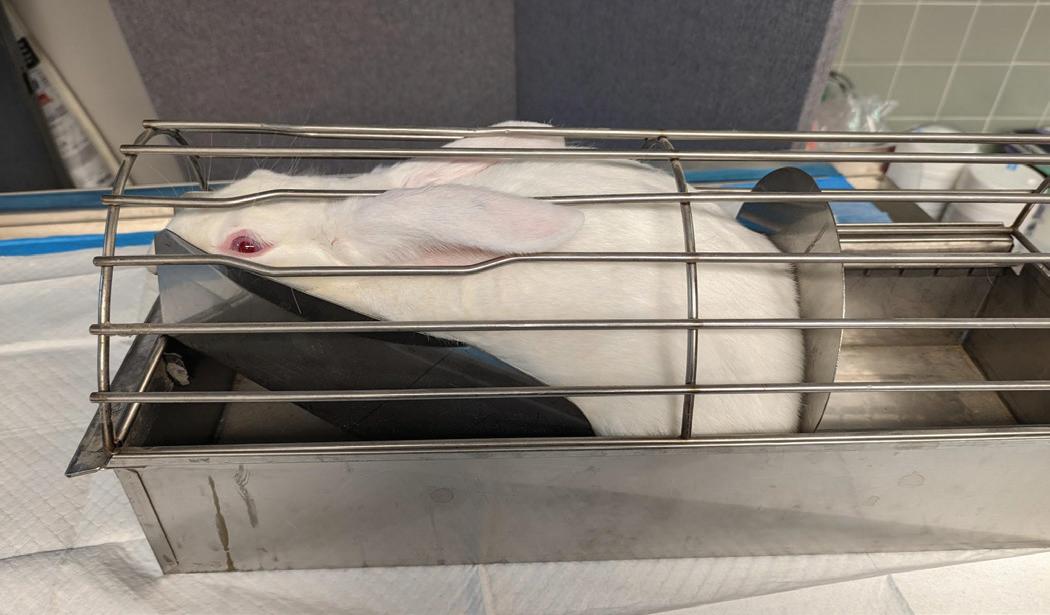 By Alyssa Brown, BA, CVT, LATG
New Zealand White rabbits are commonly used for polyclonal antibody production, which can require collecting no more than 10% of total body weight every two weeks (approximately 20 ml of blood for a 4 kg rabbit). In order to collect this volume, staff technicians needed to develop an efficient, repeatable process that maintains the integrity of the blood vessels used and ensures the safety of both animals and researchers. Additionally, the process can often be performed by a technician working alone.
Materials and Methods
All rabbits that underwent this procedure were on a University of Chicago IACUC-approved study that required serial blood collection.
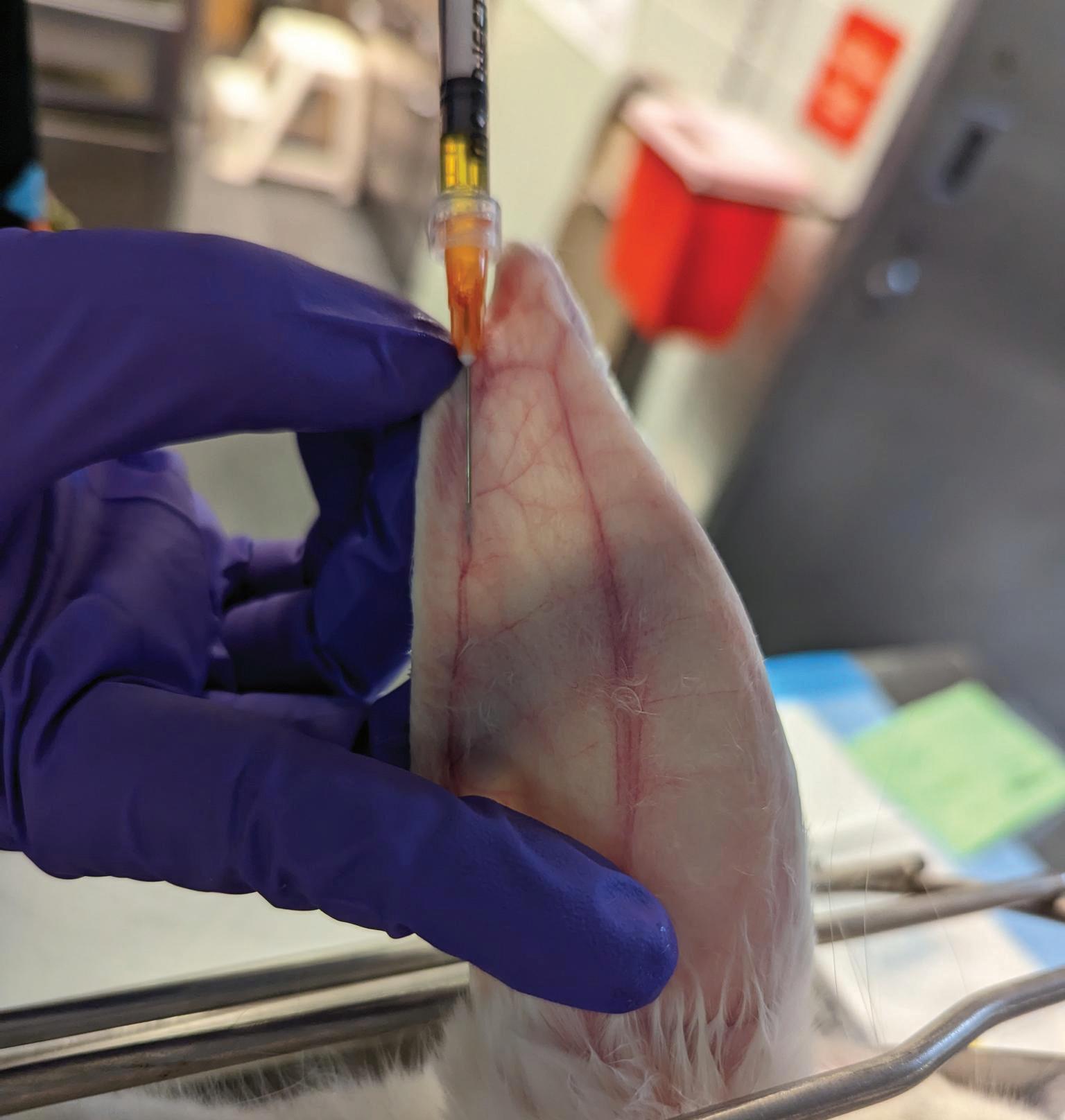
The rabbit is placed into a metal rabbit restrainer that allows it to hide its face while exposing its ears for manipulation. The rabbit is secured snugly with the back and top plates so it cannot kick, but not so tightly that it can’t breathe or adjust its position (Figure 1). Lidocaine/prilocaine cream is applied to the ear. Then the fur is plucked or shaved over the lateral auricular vein and the central auricular artery. The ear is swabbed with isopropyl alcohol to both clean the skin and help visualize the vessel. The vein is occluded proximally either between two fingers or with a tourniquet. Acepromazine is injected into the auricular vein at a dose of 0.3 mg/kg (approximately 1 mg per 4 kg rabbit). (Figure 2) and allowed to circulate for 30-60 seconds before proceeding. Acepromazine, when administered IV, not SQ or IM, has the immediate effect of both mild sedation and peripheral vasodilation (Figure 3 A-B), making visualization and sampling much easier to achieve.
The ear should be held in as natural of a position as possible. Bending or rotating the ear significantly forward or back can occlude blood flow and make the sample more difficult to draw. If blood flow stops during a successful draw, shifting the position of the ear is sometimes all that is needed to get it flowing again.
Large volume blood samples are easiest to take from the central auricular artery. Because of the high-pressure blood flow through the artery, this
44 Laboratory Animal Science Professional May 2023
Figure 1: Rabbit in metal restrainer, positioned for ear manipulation. The back plate should hold the rear limbs in place without causing discomfort to the animal.
TECH TIPS - HUSBANDRY, ENRICHMENT, NEW TECHNIQUES AND TACTICS
Figure 2: The technician occludes the auricular vein between two fingers while stabilizing the ear for the injection of acepromazine.
method doesn’t require a second person to occlude upstream flow. It is also less likely to collapse while applying suction to the syringe. A 21-gauge butterfly catheter is inserted into the distal portion of the artery until blood begins flowing through it. A 12- or 20-ml syringe is attached to the catheter, and gentle suction is applied to draw the blood into the syringe (Figure 4). Changing to a smaller syringe is recommended if the artery appears to collapse. It can be helpful to have a second person controlling the syringe while the primary technician holds and adjusts the butterfly as needed to maintain flow. Once the appropriate volume has been withdrawn, the butterfly is removed, and firm pressure is held over the cannulation site until hemostasis is achieved; keep in mind that this is significantly longer than needed for a venous sample.
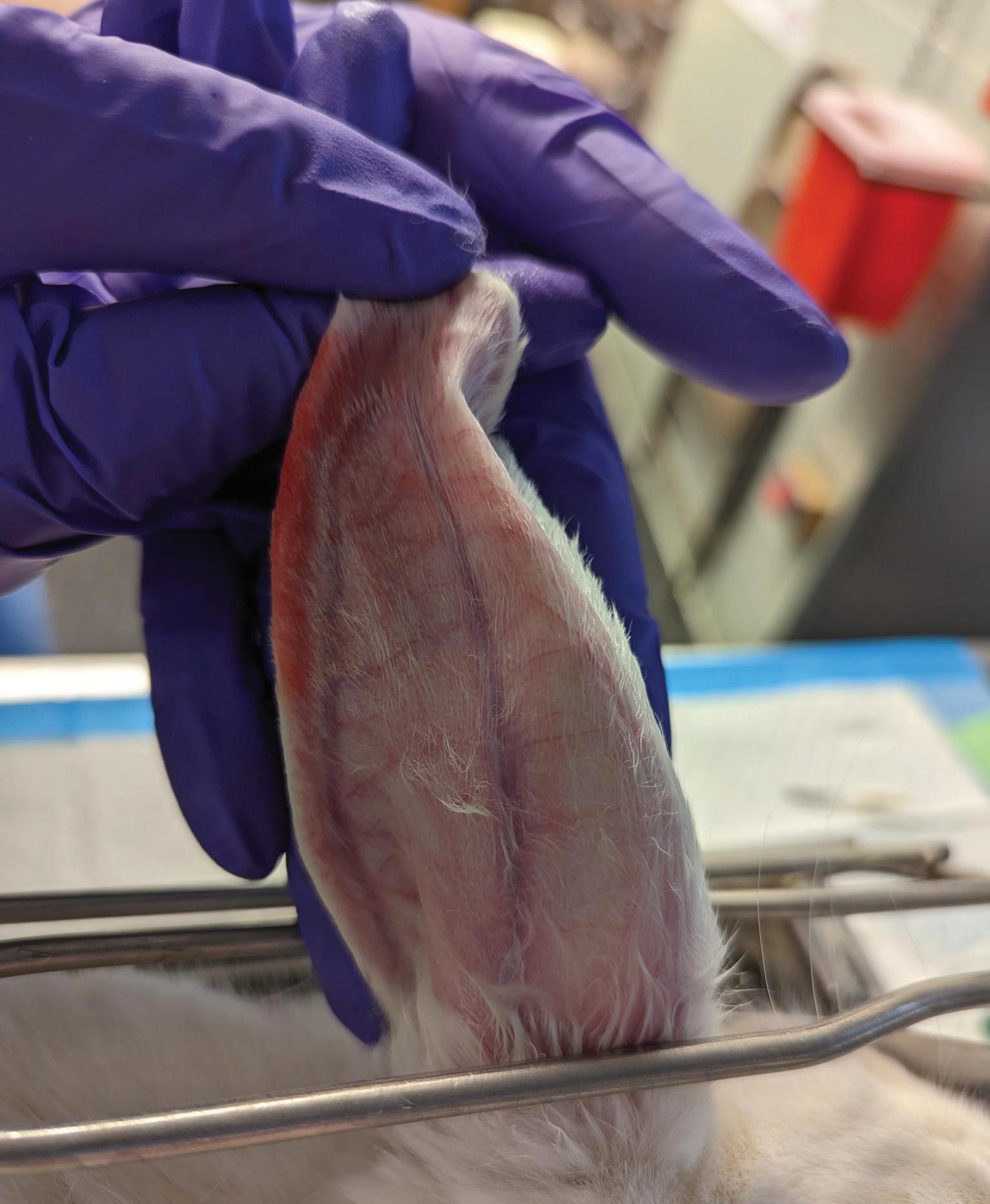
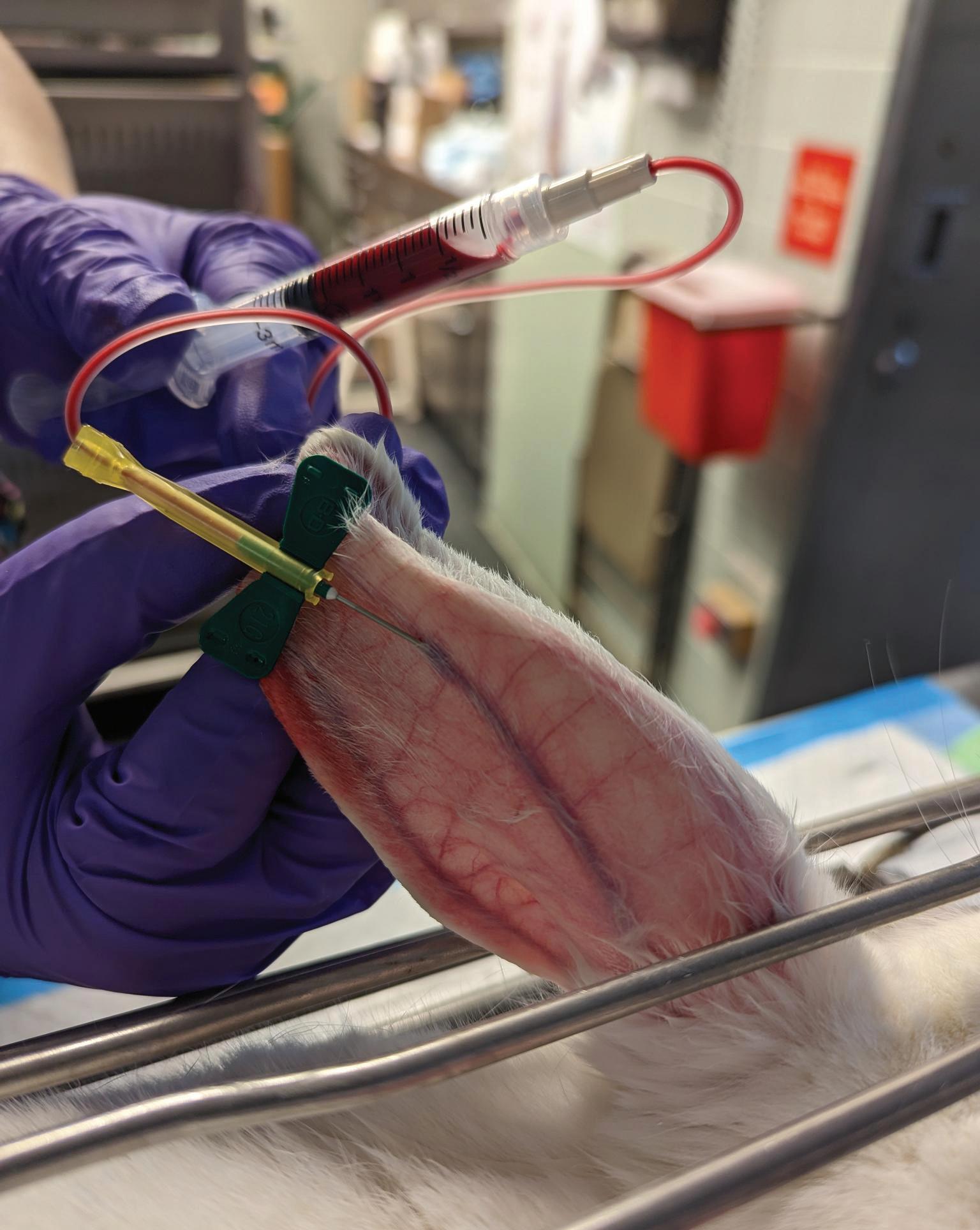
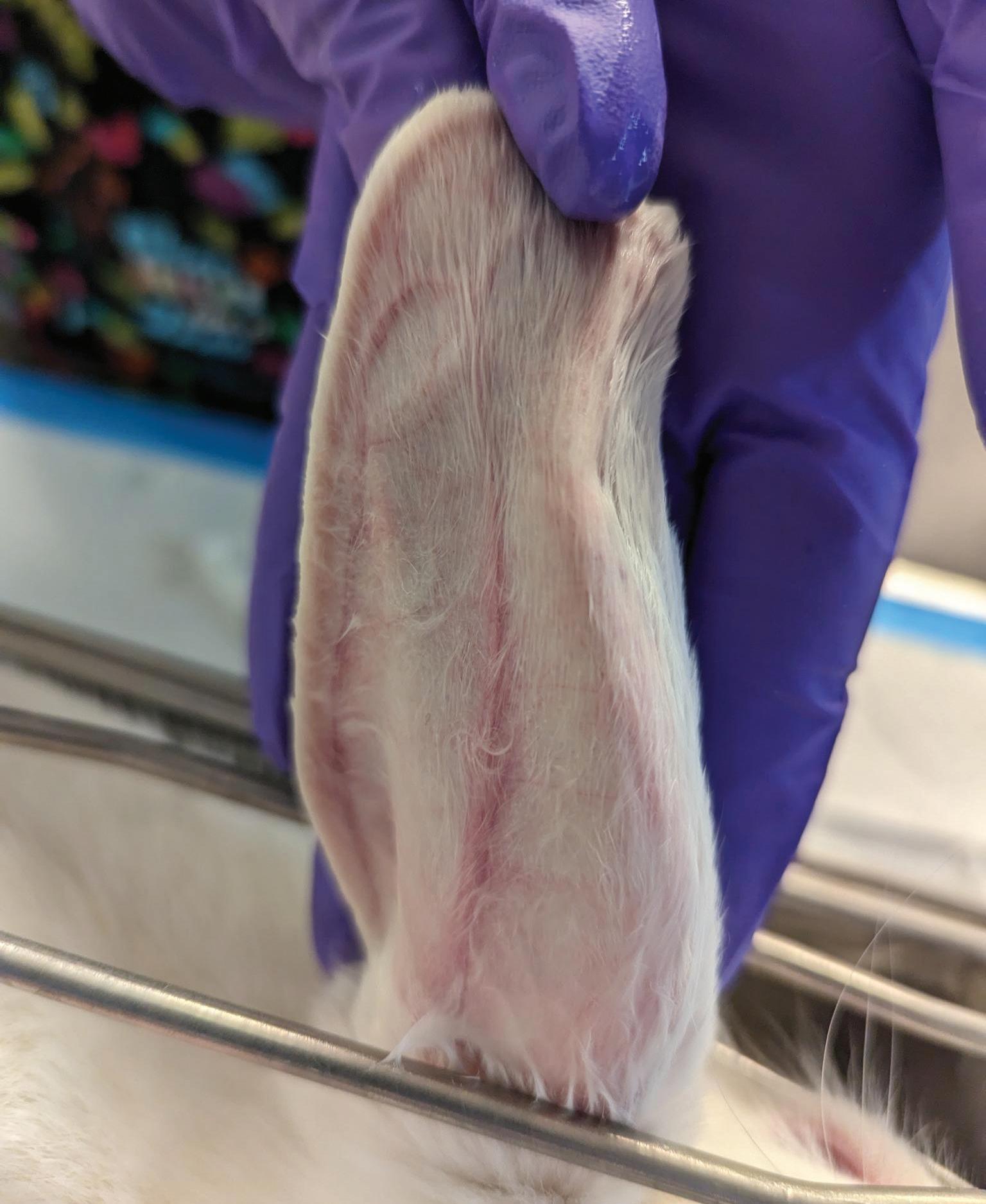
Potential Complications and Possible Solutions
Young or small rabbits may not fit snugly into a restrainer and must be restrained manually. This can be done by wrapping the rabbit in a towel with just the ears poking out and either having a second person supporting its rear limbs or placing the rabbit burrito into a small box to prevent kicking and
May 2023 Laboratory Animal Science Professional 45
Figure 3A–B: Before (a) and after (b) injection of acepromazine. Note the increased size and visibility of the vessels in the second image.
Figure 4: The technician braces the needle with one hand and controls the syringe with the other. Notice that the needle does not need to be inserted very far into the vessel.
harm (figure 5).
Rabbits may flinch during the initial injection of acepromazine, either dislodging the needle entirely or causing extravascular injection. Applying lidocaine/prilocaine cream to the ear 5 minutes before venipuncture can prevent this reaction. The extravascular injection will not harm the rabbit but will not provide the desired results of sedation and vasodilation.
Flow may decrease or stop during the collection period. You can change the position of the ear, rotate the needle a small amount, or change suction techniques.
If the vein or artery in the ear is ruptured, pressure must be immediately applied and held. A small hematoma is likely to resolve quickly, but a large hematoma can cause tissue necrosis or require surgical intervention.
After repeated sampling from the same artery, the vessel may become more difficult to hit. If possible, alternate ears and minimize the number of attempts per collection.
Conclusion
Studies involving serial blood draws rely in part on the quantity and quality of the sample taken. Creating this standardized process for large-volume blood sampling in rabbits has reduced the number of cannulation attempts per procedure and the length of time each rabbit is handled and restrained. This, in turn, preserves the vessels’ integrity, allowing for a longer and more comfortable term of study for each animal.
46 Laboratory Animal Science Professional May 2023
Alyssa Brown, BA, CVT, LATG, is a certified veterinary technician at the University of Chicago in Chicago, IL.
Figure 5: Rabbits too big or small for a metal restrainer can be wrapped in a towel inside a rigid container for stability, with the ears visible for sampling.
Strategies for the In-place Retirement of Surplus and Former Research Nonhuman Primates
By Lydia M. Hopper, Jaclyn V. Allen, Melissa C. Painter, Kristy L. Koenig, Amanda R. Maxwell, Jessica M. Izzi,
For animals used in biomedical research protocols that do not require a terminal endpoint, we must evaluate each animal’s cumulative life experience and whether it is appropriate to assign them to additional research protocols.10 Another consideration is whether retirement is a viable option. Indeed, interest in finding retirement solutions for former research nonhuman primates has been growing in recent years.4,12
Potential Barriers to Retirement
While domestic species used in research are more typically rehomed, retirement of primates is not common practice.13 This is likely due to a number of factors.6,7,11 For example, there are only a limited number of sanctuaries that can rehome former research primates. The cost of retiring primates can be prohibitive, including costs associated with transport, caging, and lifetime care. There may also be concerns about public perception and messaging surrounding retired animals and the research that they were formerly enrolled in.
Planning for Retirement
When retiring research primates, careful planning is essential.1,12 The health of the animal, including legacy issues from the research, the animal’s age, their behavioral wellbeing, and their social experience should be assessed so that any special care requirements can be planned for.11 A suitable facility must be identified – one that can provide the required expert care has the capacity to allow for socialization and has the financial sustainability to ensure long-term care.2,9,11,12 Once the facility has been identified, the translocation of the animal, the sharing of health and behavior records, the transfer of ownership, and long-term care costs must all be determined. There must also be coordination of messaging by all parties and agreement about what information can and should be shared with the public and other stakeholders about the animals and their histories.
Retirement In Place
An alternative to relocating primates to sanctuaries is to retire them in place. This can remove many barriers and costs associated with retirement to a new facility and allows for continuity of care. Perhaps the most ambitious example of retirement in place is the Kumamoto Sanctuary, Japan, which is currently home to 47 chimpanzees.3 This facility was formerly a biomedical research facility, but when chimpanzee research was ended in 2006, the site converted to a sanctuary, ensuring continued care for all resident animals.5,8 Although this wholesale approach is not widely applicable, at Johns Hopkins University,
we have successfully implemented various strategies for the inplace retirement of macaques. Here, we share three examples.
At our breeding facility, we maintain single-male, multi-female breeding groups of rhesus (Macaca mulatta) and pigtail (M. nemestrina) macaques. To facilitate retirement, we introduce former research vasectomized males to our breeding groups. This allows retirees to live in a social setting and increases the social complexity of the breeding group while maintaining paternity certainty. An example case is a male pigtail macaque who had been enrolled in a research protocol from 2013 to 2020. At the conclusion of the study, he was deemed suitable for retirement, and in April 2022, he was vasectomized. In June 2022, he was translocated to our breeding facility and introduced to a 12-year-old breeding male (Figure 1). The introduction was successful, and the 11-year-old retiree is socially housed for the first time since 2013 after previously being singly housed for experimental reasons. The pair will be introduced to a breeding group of females in Spring 2023. This pairing benefits not only the retired animal. We typically
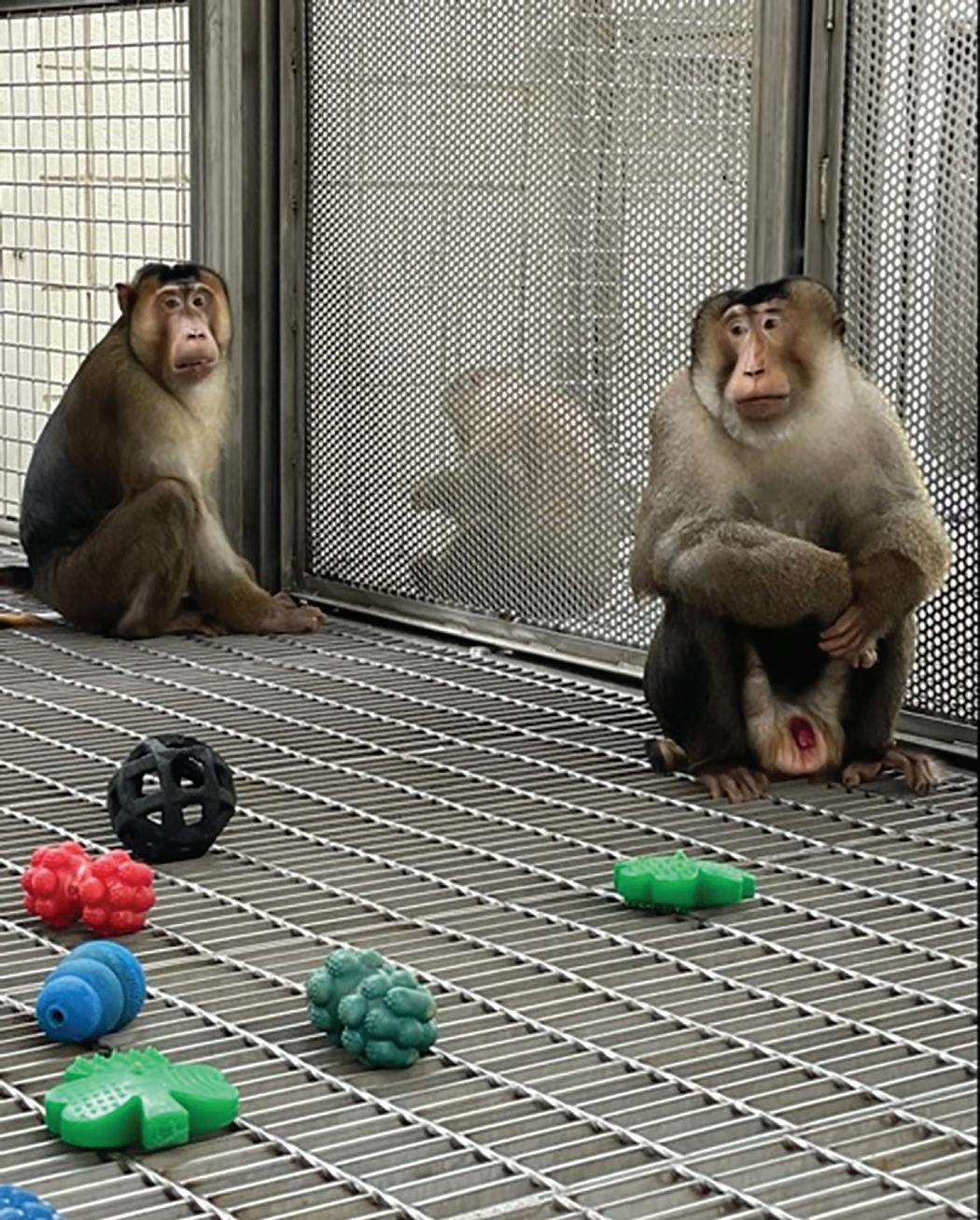
48 Laboratory Animal Science Professional May 2023
and Eric K. Hutchinson
TECH TIPS - HUSBANDRY, ENRICHMENT, NEW TECHNIQUES AND TACTICS
Figure 1. An adult male pigtail macaque retiree co-housed with a conspecific breeding male at the Johns Hopkins University primate breeding facility.
rotate male pigtail macaques between breeding groups but avoid introductions into groups with young infants to prevent potential infanticide. Therefore, the breeding male would have been singly housed during this rotation period, but he now has a social partner (the retiree).
Retiree males can also be housed with groups of weanlings. For example, a 24-year-old male rhesus macaque housed at our breeding facility had been a productive breeder. However, he showed signs of reduced fertility, only siring two live offspring in 2021 and none in 2022. Therefore, we decided to retire him from breeding, and in June 2022, we introduced him to a newly formed group of 16 juvenile male rhesuses (Figure 1). This not only allows the adult male to live in a social group post breeding use but also offers the juveniles a more dynamic and naturalistic social group with the inclusion of an adult male. We have also successfully housed retired adult female breeders with juvenile cohorts.
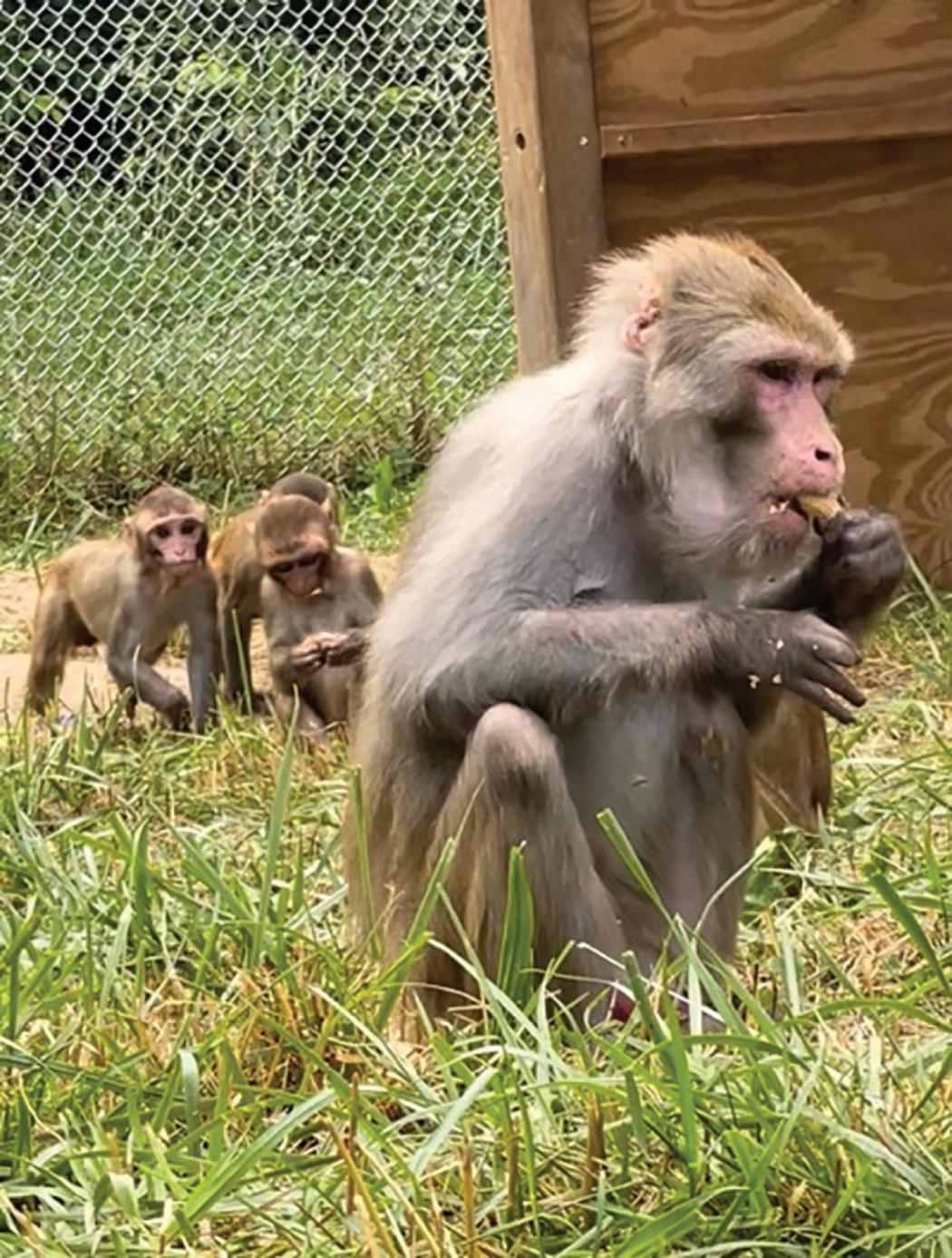
We recognize that many facilities do not have breeding colonies and may not have options to house retirees in large social groups. Therefore, we next share two examples of retirement within a more typical research setting via our “buddy monkey” program.
The first example is a 5-year-old male pigtail macaque who was deemed not to be suitable for research. We elected to house him at our research facility to provide companionship to singly housed conspecifics enrolled on research protocols or requiring clinical care. In July 2021, he was vasectomized so that he could be housed with males or females. In March 2022, a 2-year-old male was brought from the breeding facility to the research facility for clinical care. He was successfully paired with the 5-year-old until his recovery (June 2022). In September, the retiree was then paired with an 18-month-old female who is awaiting assignment to a research protocol. Second, a 3-year-old male rhesus macaque, also deemed unsuitable for research, has been a social partner to three individuals. He provided social companionship for two animals on short-term research protocols. Most recently, this male, also vasectomized, was paired with an 11-year-old female rhesus who was enrolled in a long-term neuroscience protocol. The lab only acquired one animal so the female would have been singly housed were we not able to pair her with the retiree male. We (Research Animal Resources) cover the costs of care for this retiree, further incentivizing the lab to house their animal socially. While such costs may be seen as a potential barrier at some facilities, our financial analysis has shown that the marginal cost of adding a single animal or two is quite small relative to the fixed costs of maintaining a larger colony.
Benefits of Retirement in Place
In all examples, the animals were successfully retired in place and now live with social partners. Moreover, in some cases, they offered social partnerships to individuals who might otherwise have been singly housed. Given the importance of social housing for the wellbeing of primates, this retirement program has multiple benefits. While we cover the expense of care for these animals, we do not incur the costs or risks associated with retiring animals to external organizations, and we
can ensure continuity of care for these animals. We continue to seek out and evaluate innovative retirement solutions for our primates.
All animal work was approved by the Johns Hopkins University Institutional Animal Care and Use Committee. Photo credits: JV Allen.
Lydia M. Hopper, PhD, is the Director of Behavioral Management for Research Animal Resources, and an Associate Professor in the Department of Molecular and Comparative Pathobiology, Johns Hopkins University School of Medicine in Baltimore, Maryland
Jaclyn V. Allen, BS, RALAT, is the Breeding Colony Coordinator for Research Animal Resources, Johns Hopkins University School of Medicine in Baltimore, Maryland
Melissa C. Painter, MS, is the Behavioral Management Coordinator for Research Animal Resources at Johns Hopkins University School of Medicine in Baltimore, Maryland
Kristy L. Koenig, RVT, BS, is the Manager of the Nonhuman Primate Breeding Facility at Johns Hopkins University School of Medicine in Baltimore, Maryland
Amanda R. Maxwell, DVM, is a third-year Clinical Postdoctoral Fellow in Laboratory Animal Medicine in the Department of Molecular and Comparative Pathobiology, Johns Hopkins University School of Medicine in Baltimore, Maryland.
May 2023 Laboratory Animal Science Professional 49
Figure 2. An adult male rhesus macaque retiree living with a group of 16 juvenile male rhesus macaque weanlings at the Johns Hopkins University primate breeding facility.
Jessica Izzi, DVM, MLAS, DACLAM, is the Director of Large Animal Medicine and Surgery for Research Animal Resources at Johns Hopkins University School of Medicine in Baltimore, Maryland.
Eric K. Hutchinson, DVM, DACLAM, is the Attending Veterinarian and Assistant Vice Provost for Animal Research, Director of Research Animal Resources, and Assistant Professor in the Department of Molecular and Comparative Pathobiology at Johns Hopkins University School of Medicine in Baltimore, Maryland.
REFERENCES
1. American Society of Primatologists. n.d. Tips and information to assist with the retirement of monkeys from research settings to private sanctuaries. https://www.asp.org/welfare/retirement/ [Cited 9 Dec 2022.]
2. Fleury, E. 2017. Money for monkeys, and more: ensuring sanctuary retirement of nonhuman primates. Anim Stud J 6(2): 30-54.
3. Great Ape Information Network n.d. https://shigen.nig.ac.jp/ gain/index.jsp [accessed 12 7 2022]
4. Grimm, D. 2019. Ready to retire? Science 366(6470): 11821185.
5. Hirata, S, Morimura, N, Watanuki, K, and Ross, SR. 2020. The establishment of sanctuaries for former laboratory chimpanzees: challenges, successes, and cross-cultural context. Pp.
For more than 30 years
Our priority has been to ensure our clients accessibility to the highest level of expertise and customer service in the industry. We are dedicated to providing you non-biased high-quality results with fast turnaround times with unmatched customer service.
208-229. In Hopper LM and Ross SR, editors. Chimpanzees in Context. Chicago (IL): University of Chicago Press.
6. Kerwin, AM. 2006. Overcoming the barriers to the retirement of old and new world monkeys from research facilities. J Appl Anim Welf 9(4): 337-347.
7. McAndrew, R and Tillery, SIH. 2016. Laboratory primates: their lives in and after research. Temperature 3: 4.
8. Morimura, N, Idani, G, and Matsuzawa, T. 2011. The first chimpanzee sanctuary in Japan: an attempt to care for the “surplus” of biomedical research. Am J Primatol 73: 226-232.
9. North American Primate Sanctuary Alliance n.d. https://primatesanctuaries.org/about/retire-your-primate/ [accessed 1 3 2023]
10. Nunamaker, EA, Davis, S, O’Malley, CI and Turner, PV. 2021. Developing recommendations for cumulative endpoints and lifetime use for research animals. Animals 11(7): 2031.
11. Prescott, MJ. 2006. Finding new homes for ex-laboratory and surplus zoo primates. Lab Prim News 45(3): 4-8.
12. Seelig, D and Truitt, A. 1999. Postresearch retirement of monkeys and other nonhuman primates. Lab Prim News 38: 1-4.
13. Skidmore, T and Roe E. 2020. A semi-structured questionnaire survey of laboratory animal rehoming practices across 41 UK animal research facilities. PLoS ONE 15(6): e0234922.]
For a complete range of products and services, request our catalog or view it online at www.vrl.net



Laboratory Animal Science Professional May 2023
ANIMAL HEALTH DIAGNOS TICS Animal Health Monitoring • Virology • Chemistry • Bacteriology • Aquatics • Parasitology • Environmental Testing Visit our new improved website for your testing needs www.vrl.net THE VRL ADVANTAGE Reliable Results • Fast Turnaround Times Knowledgeable Scientific Staff Customer Focused Independent Laboratory Client & Technical Service Diagnostic Testing Fast Turnaround Times Quality Diagnostics

Thinking Outside the Polycarbonate: Critical Care of the Research Mouse
By Larraine Lage, LVT, ALAT, VTS (ECC)
The use of research animals, particularly mice, offers enormous benefits to the knowledge available in both human and veterinary medicine. With a small size and wellknown genome sequence, mice are a valuable asset when studying diseases. But the critical care management of mice, particularly in the research arena, must be better studied.
Mice that become ill are quickly euthanized in accordance with Institutional Animal Care and Use Committee (IACUC) guidelines as their illness usually presents a variable that can undesirably affect research outcomes, and trying to treat illnesses over any term beyond an acute occurrence commonly compromises their quality of life. It can create a genuine animal welfare issue.
In the case of transgenic mice, however, losing even one mouse can create a loss that represents months of work and cause delays to potentially lifesaving results. Many transgenic strains can take months to breed for a particular genotype.4,13 If purchased directly from a commercial breeder, they cost 1000.00 USD per mouse.13 When these individuals become ill, knowledge of critical veterinary care can prevent an irreversible loss of time and research results.
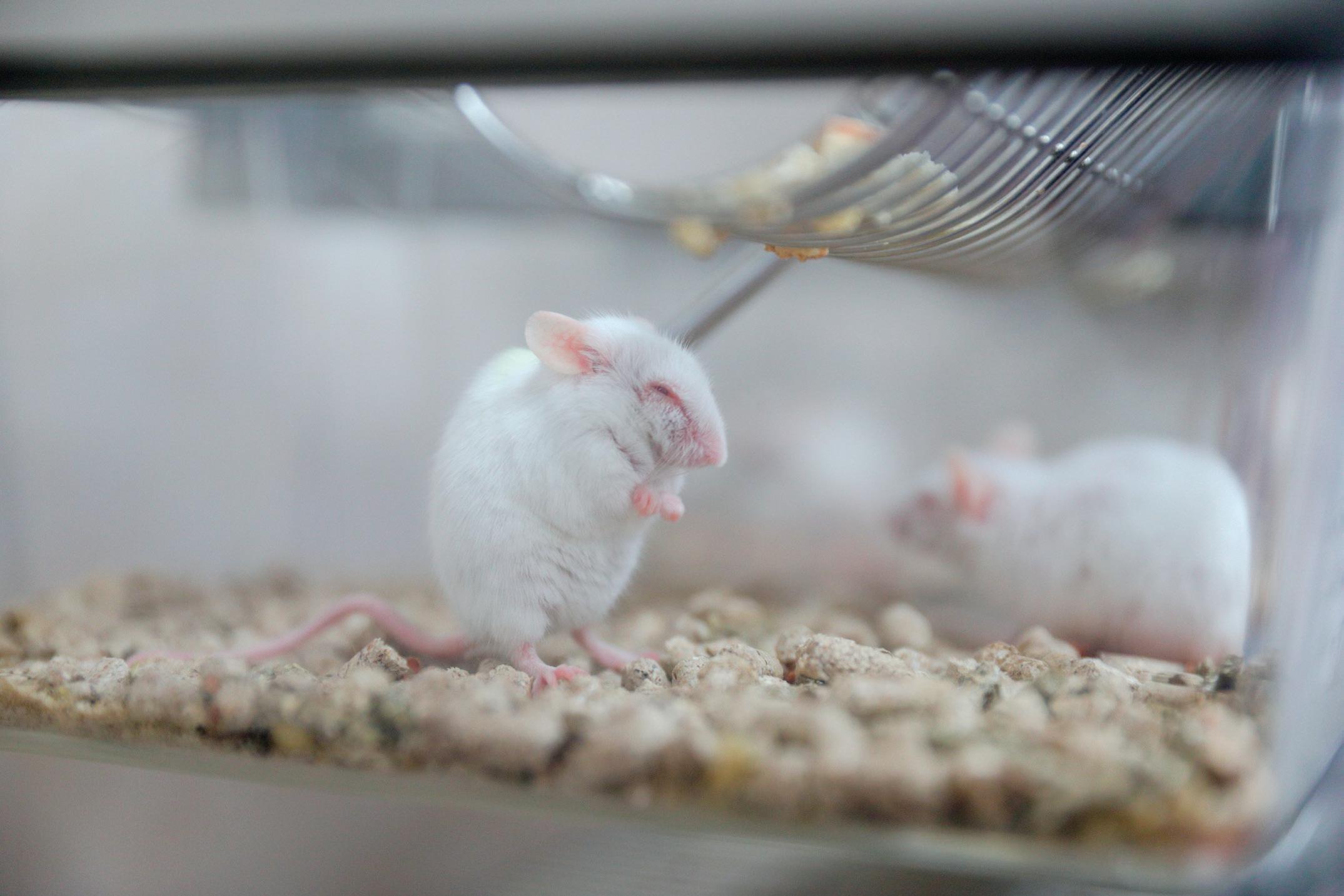
Survival blood work is difficult, if not impossible, to acquire in mice, even in ideal scenarios and in such a precarious condition as hypovolemic shock, the most common form of shock seen in non-human animals; the stress of blood collection can cause death.8,18 When approaching the case of an acutely sick
mouse, it’s essential to understand how hypovolemic shock presents in mice fully.Even if you have clinical experience with dogs and cats, mice and rodents in general can present much differently; especially since it’s hard to measure an increased heart rate in an animal that already has a heart rate in excess of 500-700 beats per minute on a normal day.
Shock is defined as the body’s inability to perfuse oxygen and nutrients properly to body organs, which can happen for various reasons. In hypovolemic shock (which will just be referred to as shock for the remainder of this article), several physiologic “phases” happen as things go from mild to critical to death. It’s important to note that the changes can be subtle and sudden. The initial phase is called compensatory, which
52 Laboratory Animal Science Professional May 2023 TECH TIPS - HUSBANDRY, ENRICHMENT, NEW TECHNIQUES AND TACTICS
occurs as the body engages multiple physiologic systems to improve the chances of perfusion and keep the body functioning normally. These include increasing vasoconstriction to improve blood pressure, increased cardiac contractility to increase blood movement throughout the body, and tachycardia. Also, as capillary vessels are constricted, more fluid is kept in the vasculature, and secondary organs (any organ that isn’t the heart or brain) will see reduced blood flow. This triggers the kidneys to start their cycle, the renin-angiotensin-aldosterone system, which further increases sympathetic nervous system involvement (activating the fight or flight response) and helps keep fluid in the vasculature and maintain the patient’s blood pressure within an available range. Patients in compensatory shock can initially appear utterly normal with no outward signs at all. Mice are specially designed for survival in all kinds of environments and are well prepared to hide any symptoms of distress until they can no longer maintain the facade. If the cause of shock is not corrected within a specific timeframe, compensatory shock moves into the next phase, decompensated shock. This is the final stage of shock, where all the body’s attempts up until now to reverse the effects of dehydration can no longer keep up with the cause of loss and the lack of organ perfusion, especially those of the heart and brain. This can lead very quickly to death.
Mice can adapt well to chronic, even progressive, dehydration with minimal ill effects. However, acute dehydration in mice can show much more profound deleterious changes than in other species.1,22 Dehydration studies show changes at 24 hours in mice that are mirrored only at 72 hours in rats, animals that are ten times larger than mice.1,10,11 Mice consumed water faster than larger species and down more than double the amount of water per body weight than larger species.1 Signs of dehydration include significant weight loss, increased plasma osmolality and plasma sodium, decreased white blood cell counts, higher platelet counts, and significantly higher corticosterone levels.1 Human studies also show cognitive deficiencies in dehydration, including increased tiredness and a sensation of greater significant fort expenditure to complete tasks.3,19,24 Water loss may present a more significant physiological/psychological challenge for mice. This is due not only to dehydration’s stress on the body but also to dehydration anorexia.
In times of limited water supply resulting in dehydration, most animals have developed the adaptation of reduced feeding to compensate for higher serum osmolality and decreased water availability for digestion. This phenomenon is known as dehydration anorexia. The number of feedings stays the same during this time, but the amount of food consumed per feeding is less.27 If the mouse is debilitated by dehydration, the impetus to obtain food, which must be chewed through an elevated metal grill, may be decreased. This will deprive cells of nutrients, particularly glucose, and can cause nervousness
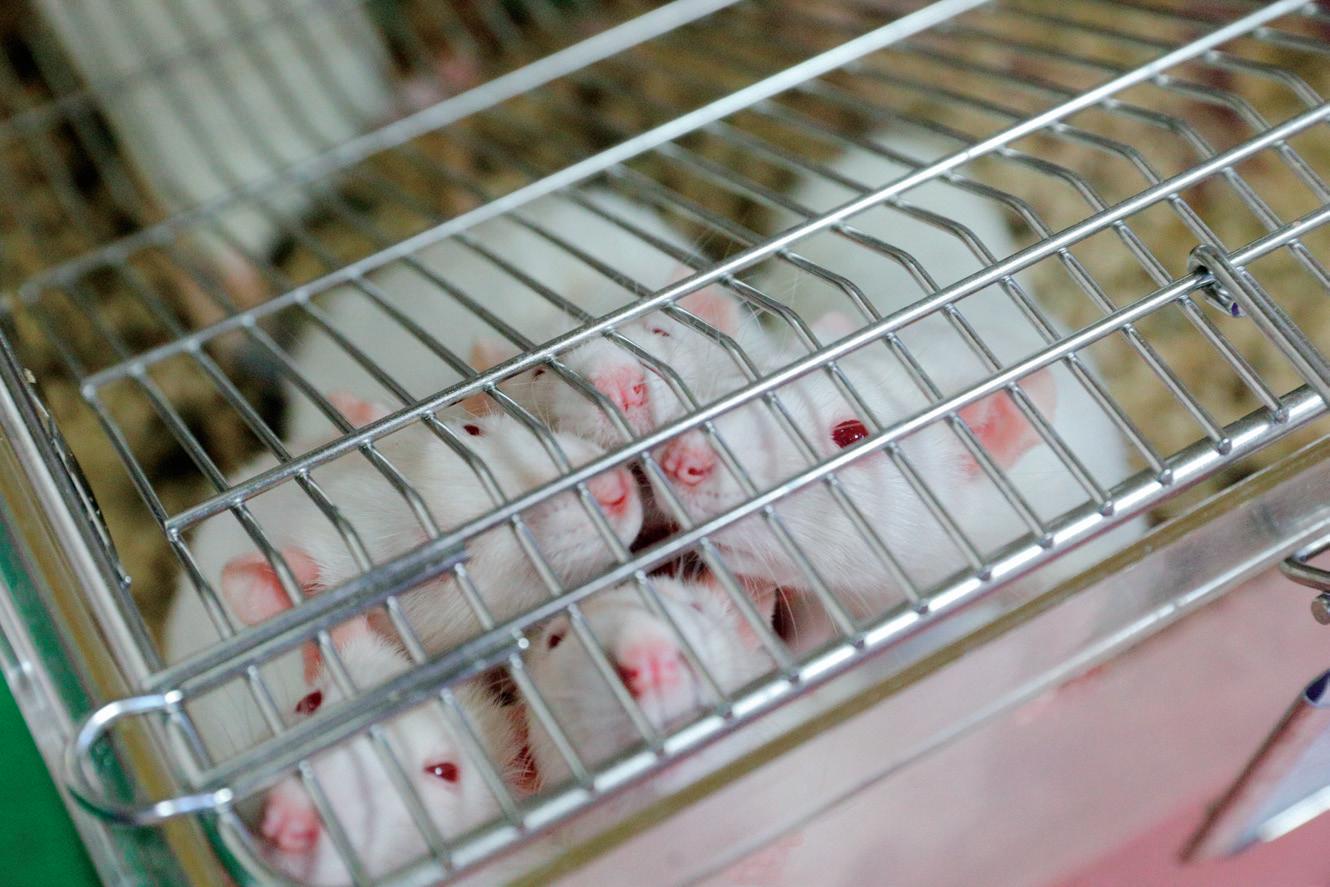
and further weakness. Such continued deprivation can lead to seizures, coma, and even death.17 Transgenic mice, in particular, may be more susceptible to a declining health status in the face of adversity if their genetics cause phenotypic changes in either physiology, behavior, or both.
The main outward signs of shock in mice can be very similar to the mouse grimace scales published by Langford in 2010.15 As dehydration escalates in mice, musculature will lose condition, and skeletal features will become more prominent, particularly around the eyes and along the spine. Another helpful guide for this is the Massachusetts Institute of Technology body condition scoring system.26 Hunched posture in the mouse typically indicates a mouse in severe distress. Like most wild or non-domesticated social animal species, mice will hide any symptoms of illness/discomfort until they are debilitated and can no longer feign normal function.11,25 At a minimum, any mouse with visible skeletal features should be presumed to be at least 10% dehydrated and treated as critically ill. Skin tenting can also be utilized to assess dehydration status but is likely only useful in very early stages of hypovolemic shock where other symptoms have not yet been presented. Most mice present in early decompensatory shock, the most common stage in which rodents and other exotics present during hypovolemic shock.21 During early decompensated shock, blood volume is decreased to the point of decreased cardiac output, and there is reduced organ perfusion and severe peripheral vasoconstriction.21 This typically presents as reduced mentation and cold extremities.1,10,21 In normal wild-type adult mice, weight loss of up to 12% can be noted.10
The main goal of treating the critical mouse is to return fluid balance to the intracellular and extracellular fluid spaces. The immediate goal during the crisis is to increase intravascular volume, which resolves hypotension, increases cardiac output, and restores organ perfusion to normal levels.7,9,20 Resolution of hypotension in the critical patient must be considered of utmost importance. Increased mortality in the face of extended hypotension is well documented in both human and veterinary studies.7,14,20,28
May 2023 Laboratory Animal Science Professional 53
step process. The first step is to compensate for the fluid losses that have already occurred. The first step is to calculate the amount of fluid loss and replace that volume immediately.
mouse weight (kg) x % dehydration = current fluid loss
While IV injections are possible in mice, they are difficult even with skill in the healthy adult mouse and practically impossible in the critically ill mouse. Intraperitoneal injections are comparable to IV injections in terms of time to effect, require much less time to administer, and are the preferred route for bolusing larger volumes.5,25 Physiologic balanced solution, such as Plasmalyte or lactated Ringer’s, is the primary choice for fluid replacement, although sodium chloride 0.9% is also frequently used. The general recommendation for IP injections is 10mL/ kg but doses up to 80mL/kg are reported as acceptable.6,12 All fluids should be warmed to about 36.6°C (97.9°F), which is the average mouse body temperature.
The next step, equally as critical to replacing primary fluid deficiency, is to compensate for the fact that a sick mouse will not likely eat or drink appropriately until they are more stable. Typically this is fluid replacement meant to sustain an animal for at least 12 hours.
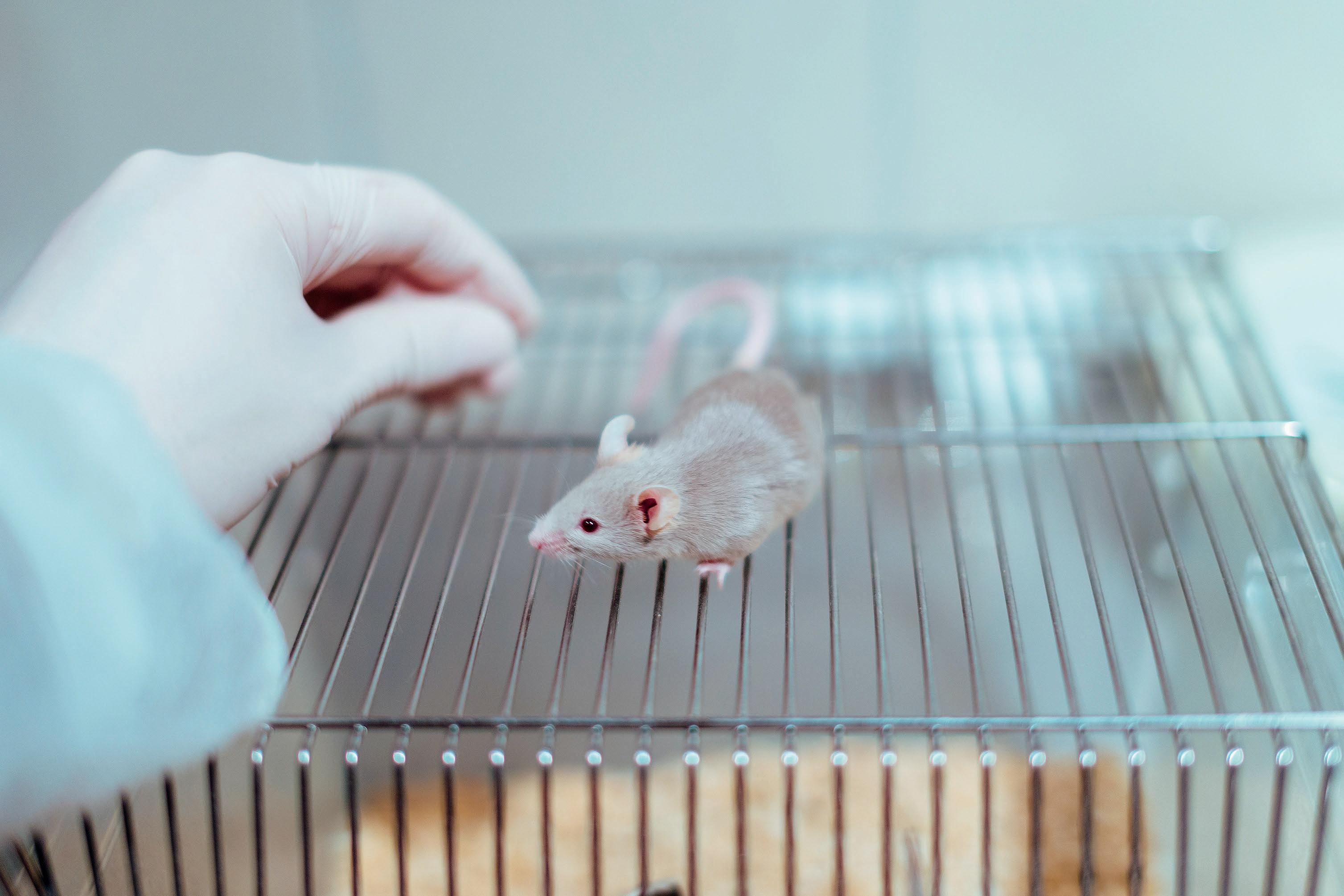
mouse weight (kg) x 75ml = maintenance fluid requirement
Because this fluid is meant to be absorbed over a slower amount of time, it is typically given as a subcutaneous injection. Additional fluids like this should be given after the initial
patient. This time period can be as short as anywhere from 30 minutes to 1 hour.
Heat support is actually quite complicated in mice and should occur very carefully. Mice do not tolerate being overheated to any degree, so an incubator or other heat source should not be set above 26.6°C (80°F).
Even mild to moderate hypoglycemia in the face of escalating dehydration can prove fatal to mice. While treating hypovolemic shock is an absolute priority, any suspected nutrient deficiencies must also be corrected. Supplemental dextrose administered orally is an easy and efficient way of adding energy to a critically depleted mouse when venous access is not reliable or possible. Lower body condition scores and malnutrition in the critically ill are associated with higher mortality rates.2 In addition, various studies in veterinary and human literature show that the prognosis of any critical care case is improved when the patient can be returned to self-feeding and watering as soon as possible.2,16,23 Supplemental feeding of soaked chow or a high-moisture rodent food can help maintain moisture and nutrition in the following days of convalescence.
The goal of patient care in the research setting is to balance out the animal’s welfare with the goals of the research being conducted. If the animal in distress cannot be utilized post care, the best option is to euthanize the animal and save it from the distress of treatment. But in cases where saving the patient results in improving the quality of life of your patient as well as helping the researchers complete their study to solve
54 Laboratory Animal Science Professional May 2023











the larger issues that affect both humans and animals, the satisfaction gained from the application of knowledge in the critical care field is immeasurable.
Acknowledgments
The author would like to acknowledge the support of Damon Page and Julien Sejourne, for their support and encouragement in preparing this article. Also equally important are Jen Devey and Jess Erace for regularly reminding me to finally publish this.
Larraine Lage, LVT, ALAT, VTS (ECC), is a veterinary technician specialist and owner of Ronin Veterinary Nursing
REFERENCES:
1. Bekkevold CM, Robertson KL. 2013. Dehydration Parameters and Standards for Laboratory Mice. Journal of the American Association for Laboratory Animal Science: JAALAS 52(3), 233.G.
2. Brunetto MA, Gomes MO, Andre MR, Teshima E, Gonçalves KN, Pereira GT, Ferraudo AS, Carciofi AC. 2010. Effects of nutritional support on hospital outcome in dogs and cats. Journal of Veterinary Emergency and Critical Care 20(2).
3. Cia C, Koulmann N, Barraud PA, Raphel C, Jimenez C, Melin B. 2000. Influences of variations in body hydration on cognitive function: Effect of hyperhydration, heat stress, and exercise-induced dehydration. Journal of Psychophysiology 14(1), 29
4. Connor AB. 2007. Schematic and Time Line for the Generation of Knockout Mice. Koch Institute for Integrative Cancer Research at MIT Retrieved from http://ki.mit.edu/files/ki/cfile/ sbc/escell/timeline-complete.pdf.
5. DiBartola. 2011. S. P. Fluid, Electrolyte, and Acid-Base Disorders in Small Animal Practice. Elsevier Health Sciences.
6. Diehl KH, Hull R, Morton D, Pfister R, Rabemampianina Y, Smith D, Vidal JM, van de Vorstenbosch C. 2001. A good practice guide to the administration of substances and removal of blood, including routes and volumes. Journal of Applied Toxicology 21(1), 15-23.
7. Driessen B, Brainard B. 2006. Fluid therapy for the traumatized patient. Journal of Veterinary Emergency and Critical Care, 16(4), 276-299.
8. Fowler ME. 2009. Restraint and Handling of Wild and Domestic Animals. John Wiley & Sons.
9. Hall JE, Guyton AC. 2011. Textbook of Medical Physiology. Saunders.
10. Hankenson, FC. 2014. Critical Care Management for Laboratory Mice and Rats: A Volume in the Laboratory Animal Pocket Reference Series. CRC Press.
11. Hart, BL. 1988. Biological basis of the behavior of sick animals.Neuroscience & Biobehavioral Reviews 12(2), 123-137.
12. Holgate B, Morton DB, Jennings M, Buckwell A, Ewbank R, Godfrey C, Inglis I, James R, Page C, Sharman I, Verschoyle R, Westall L, Wilson AB. 2001. Refining procedures for the administration of substances. Laboratory Animals, 35.
13. JAX Mice Database. [Internet] The Jackson Laboratory. [Cited 13 Mar 2014] Available at http://jaxmice.jax.org/ strain/013129.html
14. Kumar A, Roberts D, Wood KE, Light B, Parrillo JE, Sharma S, Suppes R, Feinstein D, Zanotti S, Taiberg L, Gurka D, Kumar A, Cheang M. 2006. Duration of hypotension before initiation of effective antimicrobial therapy is the critical determinant of survival in human septic shock. Critical Care Medicine 34(6), 1589-1596.
15. Langford DJ, Bailey AL, Chanda ML, Clarke SE, Drummond TE, Echols S, Glick S, Ingrao J, Klassen-Ross T, Lacroix-Fralish ML, Matsumiya L, Sorge RE, Sotocinal SG, Tabaka JM, Wong D, van den Maagdenberg AM, Ferrari MD, Craig KD, Mogil JS. 2010. Coding of facial expressions of pain in the laboratory mouse. Nature methods vol. 7,6 (): 447-9.
16. Liu DT, Brown DC, Silverstein DC. 2012. Early nutritional support is associated with decreased length of hospitalization in dogs with septic peritonitis: A retrospective study of 45 cases (2000–2009). Journal of Veterinary Emergency and Critical Care, 22(4), 453-459.
17. Loose NL, Rudloff E, Kirby R. 2008. Hypoglycemia and its effect on the brain. Journal of Veterinary Emergency and Critical Care, 18(3), 223-234
18. Paterson J. 2007. Capture Myopathy .Zoo Animal and Wildlife Immobilization and Anesthesia. G. West, D. Heard, and N. 23. Caulkett, ed. Blackwell Publishing Ltd. 115-122.
19. Petri NM, Dropulic N, Kardum G.2006. Effects of voluntary fluid intake deprivation on mental and psychomotor performance. Croatian Medical Journal47(6), 0-861.
20. Prittie J. 2006.Optimal endpoints of resuscitation and early goal-directed therapy. Journal of Veterinary Emergency and Critical Care 16(4), 329-339.
21. Quesenberry KE, Carpenter JW. 2012. Ferrets, Rabbits, and Rodents: Clinical Medicine and Surgery. Elsevier Saunders.
22. Rowland NE. 2007. Food or fluid restriction in common laboratory animals: balancing welfare considerations with scientific inquiry. Comparative Medicine57(2), 149-160.G.
23. Stapleton RD, Jones N, Heyland DK. 2007. Feeding critically ill patients: what is the optimal amount of energy? Critical Care Medicine, 35(9), S535-S540.
24. Szinnai G, Schachinger H, Arnaud MJ, Linder L, Keller U. 2005. Effect of water deprivation on cognitive-motor performance in healthy men and women. American Journal of Physiology-Regulatory, Integrative and Comparative Physiology, 289(1), R275-R280.
25. Turner PV, Brabb T, Pekow C, Vasbinder MA. 2011. Administration of substances to laboratory animals: routes of administration and factors to consider. Journal of the American Association for Laboratory Animal Science: JAALAS, 50(5), 600.
26. Ullman-Culleré MH, Foltz CJ.1999. Body condition scoring: a rapid and accurate method for assessing health status in mice. Comparative Medicine 49.3, 319-323.
27. Watts AG, Boyle CN. 2010. The functional architecture of dehydration-anorexia. Physiology & Behavior 100(5), 472-477.
28. Zenati MS, Billiar TR, Townsend RN, Peitzman AB, Harbrecht BG. 2002. A brief episode of hypotension increases mortality in critically ill trauma patients. Journal of Trauma-Injury, Infection, and Critical Care 53(2), 232-237.
56 Laboratory Animal Science Professional May 2023
Controlled Warming with Thermacage
High quality, accurate animal warming cabinets with simple 3-step user instructions and precision temperature control. Perfect for post-operative care and blood taking procedures.

Mini Thermacage with Diffuser
For use where space is at a premium. Works with standard cage change stations or procedure cabinets. Increases it’s gentle airflow to the set temperature and then maintains it while the unit remains switched on.
Four individual compartments – dividers provide 2, 3 or 4 compartment configurations
High front, spring loaded, hinged access doors for easy access and animal security
Accurate 0ºC to 50ºC internal temperature control
Unique diffuser element ensures equal temperature is reached in all compartments
Maxi Thermacage
Type 4 cage base, floor area and height make Maxi Thermacage suitable for larger animals such as rats and guinea pigs.
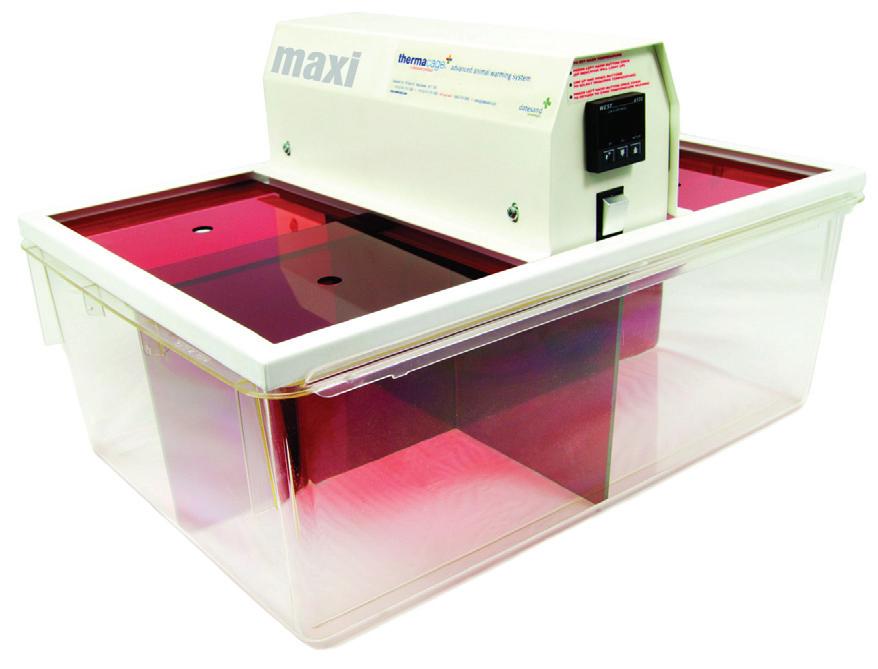
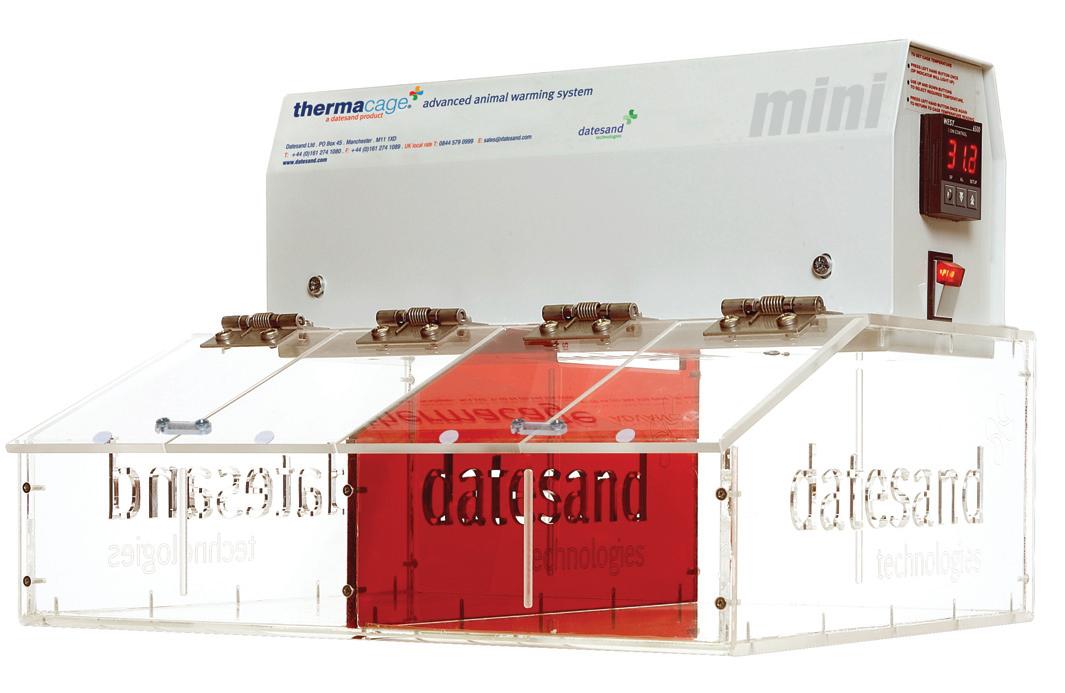
Four separate compartments each fitted with a sliding lid and vent control
Dividers allow for adjustable compartments –2 or 4 compartment configurations
Accurate 0ºC to 50ºC internal temperature control
Strong polycarbonate base (autoclavable)
Comes in 3 parts for easy assembly, cleaning and storage
Mini Thermacage with Diffuser
Maxi Thermacage
LAB RESEARCH PRODUCTS 781.917.9526 | info@braintreesci.com | braintreesci.com
Request your Braintree Scientific catalog today! Scan to learn more about Thermacage
Oh, the Places You’ll Grow: The Importance and Impact of Mentorship A Tribute to Harriet Burgess
By Jessica Hunt
Mentoring, according to the Merriam-Webster Dictionary, is “a trusted counselor or guide;” it can also mean “tutor” or “coach.” Mentors can be an essential part of one’s career as they guide to help their mentee meet their goals and act as role models. According to the Association of Talent Development, “Often the mentor and mentee are internal to the organization, and there is an emphasis on organizational goals, culture, career goals, advice on professional development, and work-life balance.” I would not be the person I am today if I had not crossed paths with Harriet Burgess.
When I stumbled (yes, stumbled) into the field of biomedical research at the tender age of twenty, I had no concrete career plan. I was, however, inquisitive, hard-working, dedicated, tenacious, and resilient. I had a thirst and hunger for knowledge and wanted to know everything there was to know about the field. Harriet saw something special in me from the very beginning and took me under her wings. Early in our relationship, Harriet was my direct manager, and I often wondered why she was so hard on me. I later realized why Harriet pushed me so hard; she wanted me to be the best person that I could be, both professionally and personally. I realized this is the way that children often recognize after they reach adulthood why their parents were so hard on them. Harriet pushed me to get my full potential. I remember us sitting at the high-top tables overlooking the lake and having bi-weekly work meetings. We discussed everything from our families to career goals, difficult conversations, professional development opportunities, safety and compliance (a topic very near and dear to my mentor’s heart), and volunteerism. One of my favorite activities to do during our mentoring sessions was role-playing. If I were having an issue with someone or needed to have a difficult conversation, we would role-play so that I could work through it. Even after our company decided to close its RTP location and I was laid off, and my mentor retired, we continued our bi-weekly mentoring sessions. Unfortunately, we lost Harriet unexpectedly in December of 2021.
Harriet Burgess was not only a mentor to me; she was a mother figure, confidante, manager, prayer partner, and most of all, friend. Several times since Harriet’s death,

I wished she was still here with me. Her advice was invaluable. I can still hear her voice saying, “Now Jess,” in her sweet Southern voice.
Harriet was passionate about biomedical research and outreach and encouraged me to be involved. Harriet volunteered with the North Carolina Association for Biomedical Research (NCABR) by helping with the STEM conference each year and continued her volunteerism even after retirement. Harriet was very supportive as my mentor and manager when I requested time off to do outreach. She was supportive and encouraged me to be active in the local and national AALAS branches. When I asked to attend ILAM, I was not sure I would get a “yes” because while I aspired to one day be in management, I was a technician. Harriet allowed me to attend without hesitation. Each time I decided to further my education, Harriet was my biggest cheerleader. There are
58 Laboratory Animal Science Professional May 2023 AALAS CONNECTION
several lessons that Harriet imparted that I carry with me daily; I’ll share a few:
• Networking is essential.
• Answer emails within 24 hours to acknowledge receipt and say you are thinking about it.
• Write the email angry and then erase it.
• Often face to face communication is better.
• Always live life and work like a news camera is watching you. If you wouldn’t do it on camera, don’t do it.
• Two of our favorite quotes were “People may forget what you said, but they will never forget how you made them feel,” by Maya Angelou, and “People don’t care how much you know until they know how much you care,” by John C. Maxwell.
I hope you get a mentor to help guide you on this incredible journey as a laboratory animal professional. I am at the point in my career where I not only have mentors, but I am a mentor to many. I can only hope to impact lives the way that Harriet impacted mine. I also encourage you to mentor others. Share your knowledge, wis-
dom, and experience so future generations of lab animal professionals can be the best versions of themselves that they can be.
The American Association for Laboratory Animal Science now has a mentoring program. The AALAS CareerMentor program is an online network designed to connect industry professionals and establish mutually agreeable short-term engagements to advance career knowledge, negotiate a career path, share experiences, and more. Getting started is easy - whether you are a mentee seeking advice or a mentor ready to offer your time, complete a short registration to be considered.
To get started, log into the AALAS website or AALAS community and then go to this link to create your mentee or mentor profile: https://careercenter.aalas.org/ ementor/.
RESOURCES
1. Association for Talent Development. (2022). Retrieved on November 12, 2022, from https://www.td.org/talent-development-glossary-terms/what-is-mentoring
2. Merriam-Webster Dictionary Online. (2023). Retrieved on March 15, 2023, from https://www.merriam-webster.com/dictionary/mentor
We Like To Socialize.
May 2023 Laboratory Animal Science Professional 59
American Association for Laboratory Animal Science
Want to get to know us better? It’s easy. Just search for AALAS on Facebook, LinkedIn, and Twitter. socialmedia.indd 1 9/25/2013 11:23:51 AM
Support the AALAS Foundation!
“Boot Up for Research” Contest
The “Boot Up for Research” contest challenges contestants to paint/ decorate a wooden 11” Cowboy Boot creatively!
The contest includes four categories: Individual, Corporate, Branch, and Institution/Organization. A winner will be selected from each category. Additionally, a “Best of Show” winner will be selected by members of AALAS leadership, and a “Fan Favorite” will be awarded to the entry whose photo receives the most “likes” in the “Boot Up for Research” contest photo gallery on the AALAS Foundation’s Facebook page.
All winners will be announced, and prizes awarded, at the AALAS Foundation’s Appreciation Reception to be held October 25th, 2023, at the AALAS National Meeting in Salt Lake City, Utah. Visit our website under the National Meeting header for more information and to register for the contest. The deadline to enter the contest is August 31, 2023.
“Celebrate the Rat” Mental Health Awareness!
The AALAS Foundation is excited to announce that Charles River is sponsoring the 2023 “Celebrate the Rat” public awareness program!
The “Celebrate the Rat” public awareness program includes the creation of a “Celebrate the Rat” lapel pin – recognizing the Rat and its role in mental health research.
Anyone making a $5.00, or more, in-person donation at the AALAS Foundation booth during the National Meeting in Salt Lake City, Utah, will receive a “Celebrate the Rat” mental health awareness lapel pin.
Silent & Live Auction
The AALAS Foundation is excited to offer a hybrid Silent Auction this year!
All auction donation items will be displayed at the National Meeting in Salt Lake City, Utah; however, all bidding on the items will be conducted via mobile device! This means that even if you’re not able to attend the 2023 National Meeting, you will still have an opportunity to bid on any of the items in the Silent Auction!
We do need your support in making our 2023 Silent Auction a success! Please consider donating an auction item! Not sure what to donate? Items that always prove popular are animal-related gifts, event tickets, jewelry, gift baskets, gift certificates, hotel getaways, travel packages, sporting goods & memorabilia, unique items from your area and, of course, the latest ‘must have’ electronics.
If you would like to donate, you can do so right away. Go to https://tinyurl.com/2023-AF-Auction to pledge your auction item donation. Auction donation pledges received by August 15th will be recognized in the AALAS National Meeting Final Program.
All auction donation items must be shipped to the AALAS Foundation office no later than Friday, September 22nd, 2023, at the following address:
AALAS FOUNDATION
Attn: 2023 Silent Auction
9190 Crestwyn Hills Drive
Memphis, TN 38125
Alternatively, you may drop off your auction item donation at the AALAS Foundation Silent Auction Booth in Salt Lake City, Utah, beginning Sunday, October 22, 2023.
Please email a photo of your auction donation to foundation@ aalas.org so it may be included in our Auction photo gallery on our Facebook page.
The Appreciation Reception is always a fun and lively event. This year’s Appreciation Reception theme is “The Wild West,” so plan on wearing your favorite Western attire and join us for an incredible evening!
We are excited to have Priority One Services as one of our Appreciation Reception & Live Auction sponsors this year.
There are still many AALAS Foundation sponsorship opportunities available to help support the AALAS Foundation at this year’s National Meeting. Please contact Vicki Campbell at vicki.campbell@ aalas.org to learn more about how you and your organization might support the AALAS Foundation.
The monies raised through the annual contests and auctions help support the AALAS Foundation and its mission to inform the public about the critical role of animals in research and to educate the public about all the compassionate professionals that work in the laboratory animal science field (psst…that’s all of YOU!).
60 Laboratory Animal Science Professional May 2023
A A L A S 2023
OCTOBER 22-26 SALT LAKE CITY, UT


see you in salt lake city! see you in salt lake city!
Join us for the 74th AALAS National Meeting in Salt Lake City, Utah. Each fall since 1950, the American Association for Laboratory Animal Science has held its annual National Meeting. During the five days of the meeting, members and nonmembers come together to enjoy the workshops, lectures, poster sessions, and exhibits. The program is designed to have topics relevant to the entire membership. Exhibitors have an opportunity to interact with AALAS members from the academic community, research institutions, government organizations, and commercial companies.
The AALAS National Meeting is the largest gathering in the world of professionals concerned with the production, care, and use of laboratory animals.

74TH NATIONAL MEETING


















































































Learn more at www.AllentownInc.com 03-2023 ◼ Offering you a full line of washing and sterilization equipment solutions ◼ Providing you with technical support at all stages of your projects
Our highly experienced washing and sterilization professionals are here for you
Your trusted provider for all of your servicing needs
◼
◼
Visit our online store at Store.AllentownInc.com
Capital Equipment Division