V S I LL I U O
E
ENDLESS DISCOVERIES
L
TM
73rd AALAS National Meeting Preliminary Program
FINE SURGICAL INSTRUMENTS FOR RESEARCH
PRELIMINARY PROGRAM
S C A N T H E Q R C O D E T O R E Q U E S T A C ATA L O G F I N E S C I E N C E .C O M | I N F O@F I N E S C I E N C E .C O M | +1 8 0 0 - 5 21-210 9
Somno
We back each other up for your emergency needs.
Low-flow electronic vaporizers Features & Benefits of Low-Flow:
We are an alliance of proven suppliers to the industry. We are spread out across the country and globe to serve our local markets with LabDiet® and other supplies; and in times of troubles...service yours!
• Flow rates as low as 50mL/min
Saves money by using less than 1 mL/hr of isofl urane
• Built-in air compressor
• We are positioned to provide feed, bedding, and more like no other supply-chain in the industry
• No servicing or calibration needed
• We have clean, organized, and safe facility environments.
Uses ambient air or compressed gas Cost-effective, reliable equipment
• We are skilled professionals, trained and focused on your research standards.
ANIMAL SPECIALTIES INC.
W.F. FISHER & SON INC.
CINCINNATI LAB SUPPLY
NEWCO
ANIMAL SPECIALTIES & PROVISIONS
TRLAST
ANIMAL SPECIALTIES & PROVISIONS
GATEWAY LAB SUPPLY
LAB SUPPLY
LAB SUPPLY
kentscientifi kentscientific.com/somnofl c.com/somnofloo
LAB SUPPLY
TUSCULUM FEED
NEWCO
See us at Booth #132
SCOTTPHARMA SOLUTIONS
FRONTIER DISTRIBUTION
WALDSCHMIDT & SONS
STEWARTS FEED
LAB SUPPLY
©2022 LABDIET. ALL RIGHTS RESERVED.
Your Global Solutions Provider ◼ ANIMAL HOUSING ◼ WORKSTATIONS ◼ WASHING
Solutions for multiple research program areas, from a partner you can trust.
◼ GLASSWARE WASHING ◼ STERILIZATION ◼ CONTAMINATION CONTROL ◼ ENRICHMENT ◼ RESEARCH ANESTHESIA ◼ HOME CAGE MONITORING ◼ COLONY HEALTH MONITORING ◼ VIVARIUM SOLUTIONS
Social icon
Rounded square Only use blue and/or white. For more details check out our Brand Guidelines.
Visit our online store at Store.AllentownInc.com
05-2022
Learn more at www.AllentownInc.com
CONTENTS AALAS 73RD NATIONAL MEETING
PROGRAM COMMITTEE
WELCOME Program Chair’s Message 4 President’s Message 4 Meeting/Registration Information 5
EXHIBITORS & SPONSORS Exhibitors & Sponsors
12
EDUCATION PROGRAM & MEETING SCHEDULE Program Overview Opening General Session and General Membership Meeting Sunday Monday Tuesday Wednesday Thursday
6 8 14 18 26 34 44
MEETING NEWS & EVENTS Registration & Travel Info Technician Events Race for Research Contest Branch & District Information
48 48 49 51
Chair: Temeri Wilder-Kofie Vice Chair: Jennifer S Wood Seminars Chair: Sean C Adams Vice Chair: Karen L Lencioni Special Topic Lectures Chair: Crystal Howard Johnson Vice Chair: Tanya L Herzog Panel Discussions Chair: Sarah Hansen Vice Chair: Derek Fong Workshops Chair: Fakhrid-deen S Muhammad Vice Chair: Kristin D Evans Facilitators Chair: Verda A Davis Vice Chair: Erin McWhorter Local Arrangements Chair: Stacy R Cantrell BOT Liaison, President, ex oficio: Marc Hulin Abstract Review Subcommittee Chair: Karen Strait Platform Session: Wanda West Poster Session: Sharoll L’Italien Karuna Patil, James B Finlay, Lauren Habenicht, Adam Murphy, Kristin Weisbrod
EXHIBITOR ADVISORY COUNCIL Chair: Eugene Marino Vice Chair: Perry Spires Warren Ball, Merryl Cramer, Karen Froberg Fejko, William McDonald, Donna Monroe, Temeri Wilder-Kofie, Joseph Guider Past President: Doug Taylor BOT Liaison: Kenneth Shapiro
EXECUTIVE DIRECTOR Ann Turner
ADVERTISER INDEX Allentown 1 Ancare 29 Bio-Serv 21 Datesand Ltd 9 E-Z Systems 3 Elm Hill Labs 32 Fidelis Pharmaceuticals 36/37
2
Fine Science Tools BC Hilltop Lab Animals Inc 43 Kent Scientific Corp IBC Marshall BioResources 33 PMI LabDiet IFC Priority One Services Inc 47 Systems Engineering 25
Best Methods • Best Science • Best Brands... For Over 30 Years!
AD-5000 Digital Anesthesia System Digital Flow Control & Heating Beds Surgery Stations - Exhaust Cube & Chamber AD-5000 Features: • Touch screen display • Complete turnkey system • Simple to set-up • Digitally control 3 warming beds • Individual temperature control • Temperature safety monitoring • High performance all brass vaporizer • Digitally control flow rates • Independent timers for each breathing circuit
®
SMALL ANIMAL ANESTHESIA AND EUTHANASIA EQUIPMENT
Surgery Station Features: • 304 Stainless steel construction • 3 standard sizes • Non-skid feet • Built in hand rest • Works with heated and non-heated beds • LED light • 6X Magnifying glass • Built in suture mounts
Toll-Free: 1.877.559.0159 Phone: 610.882.3800
www.ezsystemsinc.com
LOUISVILLE, KENTUCKY AALAS 73RD NATIONAL MEETING
EXCITING PROGRAM PLANNED FOR ATTENDEES! It is my absolute pleasure to welcome you to the 73rd AALAS National Meeting in Louisville, KY! The National Meeting Program Committee has put together an exciting and informative lineup of educational talks covering a broad array of cutting edge and current topics in our industry. I am grateful for all the hard work they have done to make this happen. I would also like to thank AALAS leadership and staff, all of whom keep this a well-oiled machine. While you are at the National meeting, enjoy some personal time (before or after educational programs) and take in the wonderful sights and attractions that Louisville has to offer such as the Big Four Bridge and the Louisville Zoo. The past few years have been challenging for all of us, personally and professionally, so please take this time to get recharged, learn about topics you’re passionate about, and reconnect with dear friends and colleagues. If this pandemic has taught us anything, it is that connection is essential to life. I am looking forward to greeting you all, giving hugs, if you are comfortable, and sharing a glass of water (or bourbon) with you. Please be safe and enjoy the meeting!
Temeri Wilder, DVM, MPH, DACLAM Program Chair, NMPC
LOOKING FORWARD TO LOUISVILLE! Are you all ready to get back to the real national AALAS normal world? Well, if you are exhausted and fatigued from sitting on the side lines over the past 2+ years, I welcome you to join me in the amazing city of Louisville, KY for the 73rd annual AALAS National Meeting in late October. This year we are planning for a full on face-to-face meeting with our laboratory animal science community. In fact, the National AALAS Program Committee led by Dr. Temeri Wilder-Kofie has completed the education program and it’s packed with all of the expansive training, education, and information sharing that has made the AALAS National meeting the preeminent event for our profession for the last 73 years. The focus for my presidential platform in 2023 has been to bring the “science” back into laboratory animal science and move beyond the COVID-19 pandemic, so we have a Spotlight Forum focused on oncology for the first time in 15 years. To kick off this special meeting at our Opening General Session, we have a keynote speaker, Tobias Janowitz, who is a medical oncologist that will be sharing with us the value of animal models in translational medicine for cancer patients in the clinic. Following the Opening General Session, Stacy Cantrell and the Local Arrangements Committee are proud to host you at the Welcome Reception to enjoy spirits, networking, and music by the Crashers. Finally, this is the first time Louisville has hosted the AALAS Meeting and there is a plethora of activities and entertainment in the local Louisville community for you and your family to enjoy, such as Churchill Downs home of the world famous Kentucky Derby, The Urban Bourbon Trail, The Louisville Slugger Museum and The Muhammad Ali Center just to highlight a few unique opportunities. Louisville has also been the home of some of America’s icons including Thomas Edison, Diane Sawyer, Muhammed Ali, Tom Cruise, and Jennifer Lawrence. We look forward to seeing you in Louisville for the 73rd National AALAS Meeting. You don’t want to miss this historic event and party to get back to normal for our community.
Marc S. Hulin, DVM, DACLAM 2022 AALAS President
4
GENERAL MEETING INFORMATION GETTING READY FOR LOUISVILLE Looking for quick info on Louisville and the AALAS National Meeting? Here are some tips and links to help you plan for the meeting. Remember, the most current information will be loaded on the AALAS website: www.aalas.org/national-meeting, and in the mobile app once it is launched in early October.
COVID-SAFETY: AALAS strongly encourages you to be up-to-date with vaccinations before participating in the National Meeting.During the meeting, everyone will need to comply with CDC and the local Louisville/Jefferson County requirements/recommendations at are in place at that time.
REGISTRATION Pre-registration fees are $350 for AALAS national members and $445 for nonmembers. AALAS will again offer up to 100 hours of session recordings. Adding this option at the time you register will give you the lowest rate option for the recordings of $125 for members and $200 for nonmembers. Note: You must be a current member at the time you register to get the membership discount. Access the online registration portal here: https://www.aalas.org/national-meeting/general-information/registration.
WORKSHOP REGISTRATION Descriptions for the 2022 workshops are available throughout this program or here: https://www.aalas.org/national-meeting/general-information/registration. Workshops may be purchased online during the registration process for those who select to attend the national meeting on-site in Louisville.
BADGE PICK-UP AND ONSITE REGISTRATION Saturday, October 22, 2 – 6 p.m. Sunday, October 23, 7:30 a.m. – 7 p.m. Monday–Wednesday, October 24 – October 26, 7:30 a.m.– 5 p.m. Thursday, October 27, 7:30 a.m. – noon
PRESENTER AND FACILITATOR INFORMATION Looking for speaker tips, session instructions, and facilitator/moderator guidelines, and more? Visit here: https://www.aalas.org/national-meeting/submission/presenter-information The National Meeting always needs facilitators. Access the facilitator sign-up form on the above website page. Help us make this the best meeting yet by being a volunteer!
COMMITTEE MEETINGS AND EVENTS A complete list of committee meetings and events will be added to www.aalas.org in July and will be included in the Attendee Hub and Mobile App, which are set to launch in early October.
EXHIBIT HALL SET-UP AND EXHIBIT HALL HOURS Exhibit Hall set up will take place Saturday, October 22, 10:00 a.m. – 6:00 p.m. through Sunday, October 23, 7:30 a.m. – 7:00 p.m. The Exhibit Hall Ribbon Cutting will take place on Monday, October 24 at 8:30 a.m. Exhbit Hall hours are: Monday, October 24: 8:30 a.m. – 5:00 p.m. Tuesday, October 25: 9:00 a.m. – 5:00 p.m. Wednesday, October 26: 9:00 a.m. – 1:00 p.m. The Exhbit Hall dismantling will take place Wednesday, October 26 from 1:00 p.m. to 10:00 p.m.
5
PROGRAM OVERVIEW AALAS 73RD NATIONAL MEETING
SUNDAY OCTOBER 23
Afternoon Track I
Are You Gelling? Get the Most Out of Your Colony with Nutritional Gel Supplementation: Jay Palmer. 1:00 PM - 1:20 PM (TTP) Optimizing the Use of Catheter Access Buttons and Ports: Understand the Basics for Better Studies and Improved Animal Welfare: Brad Gien. 1:20 PM - 1:40 PM (TTP) Understanding Differences between Inhalant Anesthesia Systems for Small Animals: David Poldiak. 1:40 PM - 2:00 PM (TTP) The Use of Alfaxalone in Biomedical Research Models: Karen Kerr. 2:00 PM 2:20 PM (TTP) Best Data and Conduct Practices for Improving Animal Study Reproducibility: Eric M Ibsen. 2:20 PM - 2:40 PM (TTP) How DigitalTransformations Are Improving In Vivo Workflows: Charles Donnelly. 2:40 PM - 3:00 PM (TTP)
It's Foggy Business: Understanding Proper Implementation of Gaseous Biodecontamination in Your Unique Facility: Frances M Grinstead. 2:20 PM - 2:40 PM (TTP) Understand All Options for Upgrading Your Autoclaves: David Larson. 2:40 PM 3:00 PM (TTP) The Possible Effects of Bedding Enrichment on Research Reproducibility: Joel Shepherd. 3:00 PM - 3:20 PM (TTP) The Change Station as a Hub of Communication in the Animal Room: Stephan E Hammelbacher. 3:20 PM - 3:40 PM (TTP) Humanized Immune System Mice: How to Maximize Experimental Success: Emily Shako. 3:40 PM - 4:00 PM (TTP)
Alternate Lighting Conundrums: Addressing an Institution's Needs: E Douglas Allen. 1:20 PM - 1:40 PM (TTP) Peroxigard Disinfectants: Your First Line of Defense against Corynebacterium bovis: Matthew Buccioni. 1:40 PM - 2:00 PM (TTP)
OCTOBER 24
Morning
Bats: Animal Models for Emerging Diseases: Lon V Kendall. 8:00 AM - 10:15 AM (S) Flowing into Aquatics: Marcus J Crim. 8:00 AM - 10:15 AM (S)
Saving the Planet, One Vivarium at a Time: Sharron M Kirchain. 12:30 PM - 2:00 PM (P)
Charles C Hunter Lecture: Tissue Vaccines for Cancer: Leslie S Bird. 11:00 AM - 12:00 PM (STL) Two Adult Education Tools for Managing Complex Problems in Laboratory Animal Science: Lisa Michelle Kelly. 11:00 AM 12:00 PM (STL) Understanding the Animal Rights Movement: Yesterday, Today, and Tomorrow: Eva C Maciejewski. 11:00 AM - 12:00 PM (STL)
BiomedicalResearch,Medicine,andMethodology
Celebrate Animal Research & Education (CARE): Ann T Turner. 2:45 PM - 5:00 PM (S) Current Trends in Gnotobiotics: Alton G Swennes. 2:45 PM - 5:00 PM (S)
ILAR Town Hall: Introduction of the Standing Committee on Care and Use of Animals in Research. 3:30 PM - 5:00 PM
Pathology Quiz Bowl: Marcia L Hart. 8:30 AM - 10:00 AM (P)
AnimalWelfare,RegulatoryCompliance,andPublicEducation
W-05 Teaching Monkeys to Cooperate with Restraint: Using Positive Reinforcement Training and Temperament Testing Methods: Jaine E Perlman. 1:00 PM - 5:00 PM (W)
Oncology Modeling in a Downsized Sinclair Minature Swine: Michael Swindle. 2:45 PM - 5:00 PM (S)
The Critical Role of Social Media in Forming Animal Research Opinions and Evolving Our Own Strategies to Improve Effectiveness: Paula A Clifford. 8:00 AM 10:15 AM (S)
ApplicationsforIncorporatingUltraviolet Light Disinfection into a Vivarium: Emily Lorcheim. 2:00 PM - 2:20 PM (TTP)
6
Principles of Animal Research Ethics in Oncology Studies: Margaret S Landi. 12:30 PM - 2:00 PM (P)
MONDAY
W-02 Perioperative Monitoring during Anesthesia with Large Animals: Cholawat Pacharinsak. 8:00 AM - 12:00 PM (W)
Listening to Washroom Planning Stakeholders: How Understanding Inputs Can Transform Standard Equipment into InnovativeSolutions:AndrewArvanites.1:00 PM - 1:20 PM (TTP)
Diversity and Inclusion within AALAS:The Next Steps: Janet Lynn Steele. 12:30 PM 2:00 PM (P)
W-04 Occupational Health and Safety Considerations in Animal Research: Learning through Interactive Case Studies: Lesley A Colby. 1:00 PM - 5:00 PM (W)
Achieving GreaterWelfare Compliance in the Measurement and Analysis of Subcutaneous Tumors by Using a 3D and Thermal Imaging Platform: Karl Turley. 3:20 PM 3:40 PM (TTP)
Track II
Burning Questions in Laboratory Animal Anesthesia and Analgesia: Rebecca A Johnson. 12:30 PM - 2:00 PM (P)
W-03 Countering Animal Rights Disinformation Campaigns in the Media: A Crisis Communication Workshop: Eva C Maciejewski. 1:00 PM - 5:00 PM (W)
W-01 Impacting the Outcome: Enhancing Motivation and Conflict Resolution: Alf Johnson. 8:00 AM - 12:00 PM (W)
Software Alone Won't Fix Vivarium Management Process Challenges: A Case Study on Optimizing Oncology Research Projects: Mathew D Sanderson. 4:00 PM - 4:20 PM (TTP)
Afternoon
Introduction to Microsurgical Instruments: Alloys and Unique Tools for Research: Edward Dy. 4:00 PM - 4:20 PM (TTP)
Scientific Virtual Assistants for Animal Science and Operations: Steve McCoy. 3:00 PM - 3:20 PM (TTP)
Modernizing Research: A Connected Platform: Lindsay Andrews. 3:40 PM - 4:00 PM (TTP)
MONDAY
TUESDAY OCTOBER 25
Morning
W-04 cont Occupational Health and Safety Considerations in Animal Research: Learning through Interactive Case Studies: Lesley A Colby. 8:00 AM - 12:00 PM (W) W-05 cont Teaching Monkeys to Cooperate with Restraint: Using Positive Reinforcement Training and Temperament Testing Methods: Jaine E Perlman. 8:00 AM - 12:00 PM (W)
FacilityDesign,Management,andOpterations
Oncology
W-06 A Collaborative Approach to Investigating Diversity, Equity and Inclusion (DEI) in Biomedical Research: Crystal H Johnson. 8:00 AM - 12:00 PM (W)
Rodent Oncology Studies: How Automated Rodent Housing Systems Could Improve Outcomes: John J Hasenau. 2:45 PM - 5:00 PM (S)
W-07 Would You Like to Improve Your Suturing and Rodent Surgery Aseptic Treatment Technique?: Marcel I Perret-Gentil. 8:00 AM - 12:00 PM (W)
WEDNESDAY
Mitigating the Risks of Microbial and Genetic Contamination of Biological Materials in Oncology Research: Robert S Livingston. 8:00 AM - 10:15 AM (S) Presentation-Ready Slide Decks and Guidance to Support Research Advocates in Community Outreach: Paula A Clifford. 8:00 AM - 10:15 AM (S) School of Fish: Establishing and Optimizing a Zebrafish Facility: Wai Hanson. 8:00 AM - 10:15 AM (S) Charles River Ethics and Animal Welfare Lecture: Sharing Care-Full Stories? Interventions for Human and Animal Wellbeing in Research Facilities: Patricia V Turner. 11:00 AM - 12:00 PM (STL)
OCTOBER 26
Morning
W-08 Animal Facility Design, Processes, Decisions, and Technology: Mark A Corey. 8:00 AM - 12:00 PM (W) W-09 LAS Pro Article Writing Boot Camp: John Farrar. 8:00 AM - 12:00 PM (W) W-10 Zebrafish Husbandry and Facility Management 101: Raphael Anthony Malbrue. 8:00 AM - 12:00 PM (W) Ongoing Changes within the Animal Research Oversight Environment: B Taylor Bennett. 8:00 AM - 10:15 AM (S) Prevalence of Pathogens in Lab Rodents Over the Past Two Decades: Wai Hanson. 8:00 AM - 10:15 AM (S)
The Importance of Being Engaged with Your State Lawmakers: Richard J VanDomelen. 11:00 AM - 12:00 PM (STL)
Rodent Thermoregulations at the Housing Level: Why Does It Matter?: John J Hasenau. 8:00 AM - 10:15 AM (S)
Wallace P Rowe Lecture: TBN. 11:00 AM 12:00 PM (STL)
Rollback, Repurpose, Rethink, and Realign: Four Rs of Increased Efficiency: Judy Hickman-Davis. 8:00 AM - 10:15 AM (S)
TUESDAY
Nathan E Brewer Lecture: Satish Adusumilli. 11:00 AM - 12:00 PM (STL)
Afternoon
AALAS and FELASA: Global Nature of Research: Scott Mischler. 12:30 PM - 2:00 PM (P) Emerging Role of Translational Digital Biomarkers in Home Cage Monitoring Technologies for Preclinical Drug Discovery andDevelopment:MeganRLaFollette.12:30 PM - 2:00 PM (P) Emotional Labor: An Interactive Discussion: Annabella J Williams. 12:30 PM - 2:00 PM (P) Responsibilities, Realities, and Rollercoasters for the Veterinary Technician in a Non-Human Primate Facility: Victoria R Elam. 12:30 PM - 2:00 PM (P) Making the Switch to Environmental Health Monitoring: Evidence, Data, and Practicalities: Megan R LaFollette. 2:45 PM - 5:00 PM (S) Neonatal Anesthesia in Research Animals: Cholawat Pacharinsak. 2:45 PM - 5:00 PM (S)
Synthetic Lethality: The Future of Cancer Treatment: Temeri D Wilder-Kofie. 11:00 AM - 12:00 PM (STL) Why IACUCs Are Not and Should Not Be Allowed to Become Ethics Committees: B Taylor Bennett. 11:00 AM- 12:00 PM (STL)
WEDNESDAY Afternoon
Growing the Comparative Medicine Veterinarian Pipeline: Katie Emmer. 12:30 PM - 2:00 PM (P) How to Avoid Treading Water - Recruitment and Development of Aquatics Technicians: Joshua Barber. 12:30 PM - 2:00 PM (P) The U.S. Animal Research Openness (USARO) Initiative - Status an Intent of a Formal OpennessAgreement:PaulaAClifford.12:30 PM - 2:00 PM (P) Study Design Concerns and Needs for NHP Space Determinations: John J Hasenau. 12:30 PM - 2:00 PM (P)
W-11 Rodent Outbreak Management: Did You See the Positive Results? What Do We Do?: Jason S Villano. 1:00 PM - 5:00 PM (W) W-12 Successful Operation of a Gnotobiotics Facility: Alton G Swennes. 1:00 PM - 5:00 PM (W) An Insight into the Fun and Challenges Working with Unusual Critters: Sylvia Ines Gografe. 2:45 PM - 5:00 PM (S) Caring for Our People, Caring for Our Animals, NA3RsC's Compassion Fatigue Resiliency Initiative: Megan R LaFollette. 2:45 PM - 5:00 PM (S) Practical Considerations in Supporting and Managing Mouse Oncology Models: Marcus J Crim. 2:45 PM - 5:00 PM (S)
THURSDAY OCTOBER 27
Morning
3Rs Improvements in Strategic Rodent Colony Management and Reproductive Techniques: Bernard J Doerning. 8:00 AM 10:15 AM (S) ASAP: Assessment and Surveillance of Adverse Phenotypes in Genetically Engineered Models: Philip Dube. 8:00 AM - 10:15 AM (S) Corynebacterium bovis: New Insights, Extraordinary Challenges: Neil S Lipman. 8:00 AM - 10:15 AM (S) An Overview of the AVMA Working Group on the Psychological Impacts of Humane EndingsandRelatedGuideanceDocuments: Nathaniel Socrates Kollias. 11:00 AM - 12:00 PM (STL) Evaluation of Pharmacokinetic Profiles and Safety of Immediate- and Extended-Release Buprenorphine: Steven L Leary. 11:00 AM - 12:00 PM (STL) Operational Excellence begins with Respect for People and Humanity: Mary C Tetreault. 12:30 PM - 2:00 PM (P) Our Common Vision: What Can Research andAnimalActivistCommunitiesAccomplish if They Work Together?: Cindy Buckmaster. 12:30 PM - 2:00 PM (P) Refined Mouse Handling: Practical Applications: Megan R LaFollette. 12:30 PM - 2:00 PM (P) The CUSP Sharing Site....Coming Soon to an Institution Near You!: Aubrey Schoenleben. 12:30 PM - 2:00 PM (P)
7
OPENING GENERAL SESSION/ GENERAL MEMBERSHIP MEETING Kentucky International Convention Center | Sunday, October 23, 2022 5:00-6:00 PM | Kentucky International Convention Center, Ballroom C • Welcome from AALAS President, Marc Hulin • AALAS Awards presentations • Recognition of guests and Board of Trustees members • Gavel ceremony introducing the new president
• • • •
Introduction of new trustees Incoming president, Pam Straeter’s address Keyote Speaker Tobias Janowitz, MD, PhD Welcome Reception from 6:00-7:30 PM, Marriott Ballroom, Ballroom C
Welcome Reception, Marriott Ballroom C, Sunday, October 23, 2022 District membership meetings will be held on Monday, October 24 at 5:15 PM. See the mobile app for room numbers.
Meet Tobias Janowitz, MD, PhD, Our National Meeting Keynote Speaker! Dr. Tobias Janowitz, a lead researcher and clinician scientist at Cold Spring Harbor Laboratory, is a passionate communicator of biomedical research. His research has led him to receive multiple awards and honors, and he recently co-led a team to be selected for the Cancer Grand Challenges Award.
WIN $200 Drawings will be held during the General Membership Meeting. Must be present to win. Badges must be printed by 5:00 p.m. on Sunday to be entered into the drawing.
PROGRAM SPONSORS AALAS 73RD NATIONAL MEETING
10
daniolab
WELCOME TO LOUISVILLE AND THE 73RD AALAS NATIONAL MEETING! Batter Up! It’s hard to think of Louisville without making the association to the home of the iconic Louisville Slugger® baseball bat. Arguably it’s the bat that is the main driver in the game of baseball, and similarly, we can think of the AALAS National Meeting as the main driver for our community. Here is the place where we gather to share ideas, experiences, research, and to renew the friendships that make our community so vibrant. Exactly what does this mean for each of us and how will we all benefit from the experience? These are interesting questions to ponder as we anxiously prepare for the 73rd AALAS National Meeting this October in Louisville, KY. Without too much rearview examination of our pandemic experiences, we all share a sense of anticipation at the prospect of coming together as a community of professionals who are passionate about and dedicated to our work with laboratory animals. Our shared experiences over the recent past have shed bright light on the importance our research has in combating disease, developing new therapies and improving human welfare, as well as the significant contribution that animals provide in these efforts. We in our field understand that we have the privilege and honor to work with animals to advance science; with that comes the great responsibility for their care and welfare. Our members devote their careers to ensuring that animals are housed and fed properly, provided with healthy and enriched environments, are treated humanely and with dignity in their service to science. The AALAS National Meeting is the venue for us to celebrate this shared connection. The ability to bring our community together and share our experiences, research, best practices, and new product information is a vital component to advancing science and enriching the quality of our work. The AALAS National Meeting remains the epicenter for the exchange of information, ideas, and technology on a large scale. As we emerge from the challenges of the recent past, this year’s meeting promises a growing number of attendees and exhibitors, as well as a full schedule of poster sessions, presentations, scientific talks, and workshops in great AALAS tradition, all in the historic setting of beautiful Louisville, KY. Be sure to use this Preliminary Program to plan out your activities ahead of the meeting so you’re sure get the most from your experience there. Here you’ll find the info t plan which sessions you want to attend and what exhibitors you’ll want to visit. With all of this in mind, we look forward to seeing everyone this year in Louisville! Let’s play ball!
Eugene Marino III Chair, Exhibitor Advisory Council
DON’T MISS THE AALAS NATIONAL MEETING EXHIBIT HALL! Approximately 200 companies (almost 400 booths) exhibiting at the AALAS National Meeting. Exhibitors interact with people from the academic community, research institutions, government organizations, and commercial companies. Visit the Exhibitors section of nationalmeeting.aalas.org for a prospectus, a list of previous exhibitors, sponsorship opportunities, and other information.
RIBBON CUTTING CEREMONY COMMERCIAL COMPANY BOOTHS AFFILIATE BOOTHS
Monday, October 24, 8:30 a.m. Learn about the latest products and services offered by vendors in the field. Visit with our affiliate members and check out their public outreach and educational materials.
REFRESHMENT BREAKS
Monday: 8:30 a.m. – 10:30 a.m. (sponsored by NEPCO) 1:00 p.m. – 3:00 p.m. (sponsorsed by Bio-Serv) Tuesday: 9:00 a.m. – 11:00 a.m. (sponsored by Cayuse) 1:00 p.m. – 3:00 p.m. (sponsored by Bio-Serv) Wednesday: 9:00 a.m. – 11:00 a.m. (sponsored by TBD)
POSTER SESSIONS
Come view this year’s poster sessions, and don’t miss the Poster Reception on Tuesday from 2:00 p.m. – 4:00 p.m. Meet the authors, enjoy some refreshments, and see who won this year’s Poster Awards.
(Located in the Exhibit Hall Lounge)
EXHIBIT HALL HOURS
Monday, October 24: 8:30 a.m. – 5:00 p.m. Tuesday, October 25: 9:00 a.m. – 5:00 p.m. Wednesday, October 26: 9:00 a.m. – 1:00 p.m.
11
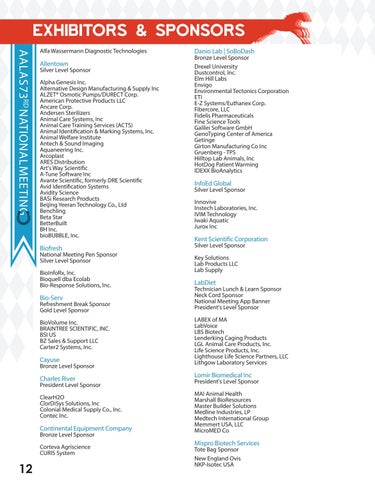
EXHIBITORS & SPONSORS AALAS 73RD NATIONAL MEETING
Alfa Wassermann Diagnostic Technologies
Allentown
Silver Level Sponsor Alpha Genesis Inc. Alternative Design Manufacturing & Supply Inc ALZET® Osmotic Pumps/DURECT Corp. American Protective Products LLC Ancare Corp. Andersen Sterilizers Animal Care Systems, Inc Animal Care Training Services (ACTS) Animal Identification & Marking Systems, Inc. Animal Welfare Institute Antech & Sound Imaging Aquaneering Inc. Arcoplast ARES Distribution Art's Way Scientific A-Tune Software Inc Avante Scientific, formerly DRE Scientific Avid Identification Systems Avidity Science BASi Research Products Beijing Yeeran Technology Co., Ltd Benchling Beta Star BetterBuilt BH Inc. bioBUBBLE, Inc.
Biofresh
National Meeting Pen Sponsor Silver Level Sponsor BioInfoRx, Inc. Bioquell dba Ecolab Bio-Response Solutions, Inc.
Bio-Serv
Refreshment Break Sponsor Gold Level Sponsor BioVolume Inc. BRAINTREE SCIENTIFIC, INC. BSI US BZ Sales & Support LLC Carter2 Systems, Inc.
Cayuse
Bronze Level Sponsor
Charles River
President Level Sponsor ClearH2O ClorDiSys Solutions, Inc Colonial Medical Supply Co., Inc. Contec Inc.
Continental Equipment Company Bronze Level Sponsor Corteva Agriscience CURIS System
12
Danio Lab | SoBoDash
Bronze Level Sponsor Drexel University Dustcontrol, Inc. Elm Hill Labs Envigo Environmental Tectonics Corporation ETI E-Z Systems/Euthanex Corp. Fibercore, LLC Fidelis Pharmaceuticals Fine Science Tools Galilei Software GmbH GenoTyping Center of America Getinge Girton Manufacturing Co Inc Gruenberg - TPS Hilltop Lab Animals, Inc HotDog Patient Warming IDEXX BioAnalytics
InfoEd Global
Silver Level Sponsor Innovive Instech Laboratories, Inc. IVIM Technology Iwaki Aquatic Jurox Inc
Kent Scientific Corporation Silver Level Sponsor Key Solutions Lab Products LLC Lab Supply
LabDiet
Technician Lunch & Learn Sponsor Neck Cord Sponsor National Meeting App Banner President's Level Sponsor LABEX of MA LabVoice LBS Biotech Lenderking Caging Products LGL Animal Care Products, Inc. Life Science Products, Inc. Lighthouse Life Science Partners, LLC Lithgow Laboratory Services
Lomir Biomedical Inc
President's Level Sponsor MAI Animal Health Marshall BioResources Master Builder Solutions Medline Industries, LP Medtech International Group Memmert USA, LLC MicroMED Co
Mispro Biotech Services Tote Bag Sponsor New England Ovis NKP-Isotec USA
Northeastern Products Corporation (NEPCO) Refreshment Break Sponsor Silver Level Sponsor
NuAire Oak Hill Genetics, LLC Patterson Scientific P.J. Murphy Forest Products Corp. Pharmacal Research Laboratories, Inc. PLAS-LABS PreLabs Premier BioSource PRI Bio
Quip Laboratories
Turner Scientific Tuttnauer USA UID Identification Solutions UNO Life Science ValuMax Verona Safety
VetEquip Inc
Tote Bag Sponsor Vetland Medical Sales & Services, LLC VetTRENDS Vital Sign Monitors ViraTek, Inc. Visron Design Inc
National Meeting Pen Sponsor Exhibit Hall Isle Sign Sponsor Gold Level Sponsor
VRL Laboratories
Rad Source RapID Lab Red Plank Software Research Diets, Inc. Res-Tek, Inc. RICA Surgical Products, Inc. Ridglan Animal Care Systems Ridglan Farms Rochester Midland Corporation RockStep Solutions SAI Infusion Technologies Sanitation Strategies, LLC SARSTEDT Shepherd Specialty Papers Shoe Cover Magic Sika Corporation Sinclair Bio Resources, LLC SmartLabs SoftMouse.NET Somark Innovations Spectral Instruments Imaging Spire Integrated Solutions ssniff Spezialdiaeten GmbH Steelco USA SteraMist by TOMI Stoelting Co Studylog Animal Study Workflow Software Suburban Surgical Co Inc Systems Engineering (SE Lab Group) Taconic Biosciences Tecniplast USA The Andersons Lab Bedding The Jackson Laboratory Thoren Caging Systems, Inc. TOPAZ
WF Fisher & Son Woodburn Laboratory Worldwide Primates, Inc. XpressBio Zeigler Bros., Inc Zoologix ZooPharm/Wedgewood Pharmacy
Transnetyx
President's Level Sponsor
AI Chat Bot Sponsor Gold Level Sponsor
AFFILIATE EXHIBITORS
AAALAC International American College of Lab Animal Medicine (ACLAM) American Society of Laboratory Animal Practitioners (ASLAP) Americans for Medical Progress (AMP) Association of Primate Veterinarians (APV) Federacion De Sociedades Y Asoc Hispanas De Amer Del Norte Foundation for Biomedical Research (FBR) Institute for Laboratory Animal Research (ILAR) Institute of Animal Technology (IAT) International Council For Laboratory Animal Science (ICLAS) International Society for Transgenic Technologies (ISTT) Laboratory Animal Breeders Association (LABA) Laboratory Animal Management Association (LAMA) Laboratory Animal Welfare Training Exchange (LAWTE) National Association for Biomedical Research (NABR) North American 3Rs Collaborative (NA3RsC) Public Responsibility in Medicine and Research (PRIM&R) Scientists Center for Animal Welfare (SCAW) Thai Association For Laboratory Animal Science (TALAS) Vivarium Operational Excellence (VOE) Network Zebrafish Husbandry Association
NON-EXHIBITING SPONSORS Animal Specialties and Provisions LLC Tote Bag Sponsor
13
SUNDAY AFTERNOON AALAS 73RD NATIONAL MEETING
TECHNICAL TRADE PRESENTATIONS – STRATEGIC INNOVATIONS TRACK I Are You Gelling? Get the Most Out of Your Colony with Nutritional Gel Supplementation
1:00 PM - 1:20 PM Speaker: Jay Palmer Moderator: William Thomas Genetically engineered rodent strains or strains that are historically difficult to breed and maintain oftentimes can benefit from nutritional gel supplementation. Nutritional gel products, such as DietGel®, are soft and highly palatable, providing animals with purified ingredients, wholesome nutrition, and extra hydration. DietGel® provides many benefits for colonies that experience cannibalism, poor litter size, or weak or small weanlings. In this presentation we’ll explore the different nutritional characteristics of DietGel® products and discuss studies that demonstrate their effectiveness in supporting colony performance. This Technical Trade Presentation is sponsored in part by ClearH2O.
Optimizing the Use of Catheter Access Buttons and Ports: Understand the Basics for Better Studies and Improved Animal Welfare
1:20 PM - 1:40 PM Speaker: Brad Gien Moderator: Merryl Cramer In recent years, buttons have become the preferred way to infuse and sample from rodents. These miniaturized ports are implanted at the externalization point of the catheter; this protects the catheter from interference while creating a clean, easy port to access the blood vessel. Use of buttons in rats and mice has improved animal welfare by permitting group housing and has also extended catheter patency. While many labs have adopted this technology with success, there are some common questions, such as when to choose a button versus a port, what to know when implanting the device in-house versus working with a vendor, how to optimize the setup for tethered animal studies, and what kinds of studies are the best fit for these tools. While there are some limits to how and where these ports can be used, the technology could improve animal welfare while making studies safer and easier for both animals and researchers. The target audience are those who perform awake animal studies that require dosing and sampling. The data will also be relevant to any animal researchers that are struggling with catheter patency issues, tethered animal studies, reducing animal stress, or making blood collection more efficient. This Technical Trade Presentation is sponsored in part by SAI Infusion Technologies.
Understanding Differences between Inhalant Anesthesia Systems for Small Animals
14
1:40 PM - 2:00 PM Speaker: David Poldiak Moderator: Eugene Marino III Until recently, researchers who required inhalant anesthesia for their small animal procedures and surgeries typically chose traditional canister-style vaporizers. A ubiquitous device in most labs, these AnimalWelfare,RegulatoryCompliance,andPublicEducation
workhorse anesthesia systems were originally designed for larger animals and adapted for use on smaller ones despite their inability to deliver flow rates appropriate for rodents and other small animals. Now, using new and innovative designs, researchers have more choices: low-flow electronic systems can deliver just the right amount of anesthesia based on a small animal’s body weight. These systems use less anesthetic and produce less waste anesthesia gas, creating more precise delivery while minimizing exposure to users. Our talk will highlight the pros and cons for each type of anesthesia systems, illustrate which are most appropriate to ensure successful outcomes, and guide both new and veteran researchers on the best system choice for their application. This Technical Trade Presentation is sponsored in part by Kent Scientific Corporation.
The Use of Alfaxalone in Biomedical Research Models
2:00 PM - 2:20 PM Speaker: Karen Kerr Moderator: Amanda Calla Anesthesia may be required in biomedical research models to facilitate handling, prevent patient movement during imaging, and perform procedures that are inappropriate in conscious animals. In many situations, the anesthetic protocols employed aim to maintain patient homeostasis and avoid confounding effects on study outcomes. Alfaxan Multidose IDX (alfaxalone 10 mg/mL) is an anesthetic and sedative that has been indexed for use in over 50 minor, non-food-producing species, and is being increasingly incorporated into research models. Alfaxalone is a GABAergic anesthetic that can be administered by multiple routes of administration and offers a wide safety margin with minimal cardiorespiratory depression. The speaker will review models where alfaxalone is currently being used, with a focus on neurological, pregnancy/preterm/neonatal, and cardiovascular studies in a variety of species. Participants will learn about alfaxalone’s efficacy, versatility, and reliability in a variety of situations and species, based on published literature. The target audience for this presentation is veterinarians, researchers, and technicians. This Technical Trade Presentation is sponsored in part by Jurox Inc.
Best Data and Conduct Practices for Improving Animal Study Reproducibility
2:20 PM - 2:40 PM Speaker: Eric M Ibsen Moderator: Jens Ibsen Researchers have found that 50% to 90% of published in vivo studies were not reproducible. The difficulty across the field of in vivo research of generating results with a high level of integrity, detail, and reproducibility on a consistent basis underscores the need to critically examine, improve, and standardize processes for animal study conduct. Researchers must understand the factors contributing to poor data quality and irreproducible study results and implement effective best practices for data integrity, study conduct, and scientific rigor. Researchers attending this presentation will gain an understanding of some success factors, practical approaches, and study workflow software approaches to make animal studies more reproducible. This Technical Trade Presentation is sponsored in part by Studylog Animal Study Workflow Software.
BiomedicalResearch,Medicine,andMethodology
Facility Design, Management, and Operations Oncology
How Digital Transformations Are Improving In Vivo Workflows
2:40 PM - 3:00 PM Speaker: Charles Donnelly Moderator: Julie Morrison In vivo studies are complex, and the results are sensitive to numerous operational and biological variables. Studies are expensive to run and often produce outcomes that are not repeatable resulting in uncertainty, re-work, and delays. Adding to the challenge, data captured from in vivo studies are usually stored in spreadsheets, binders, and point solutions creating disconnected data silos, each with unique data formats that are difficult to harmonize, quality check, and aggregate for analysis. The resulting data chaos puts a drag on operational efficiencies and slows discovery while wasting research resources. Until recently, digitalizing in vivo workflows has been a promise of the future. New tools are now transforming how in vivo research workflows are conducted such that operations are becoming more efficient, and data are harmonized and aggregated from the point of data capture. We will discuss how research labs are experiencing efficiency gains with the potential to reduce the burden on research animals and speed drugs to market. We will look at how study teams, including scientists, planners, and lab technicians, work seamlessly within one digital ecosystem across business sites, departments, and therapeutic areas.The new tools offer streamlined communications, chain of custody tracking, real-time situational awareness, and 360-degree views into data. We propose that labs embarking on digital transformation efforts will have a market advantage and have increased discovery output. This Technical Trade Presentation is sponsored in part by Rockstep Solutions.
Scientific Virtual Assistants for Animal Science and Operations
3:00 PM - 3:20 PM Speaker: Ian Kerman Moderator: Eugene Marino III Working with animals often requires two hands, making it difficult to do other tasks like record data or write down notes. Virtual assistants help with animal research and operations by allowing scientists and technicians to use their voice, freeing their hands to work with the animals. The speaker will cover what exactly defines a scientific virtual assistant, how scientific virtual assistants differ from Alexa or Siri, what defines “hands-free data capture” and “guided process execution,” and various applications of virtual assistants in vivarium, animal research, and more. This Technical Trade Presentation is sponsored in part by LabVoice.
Achieving Greater Welfare Compliance in the Measurement and Analysis of Subcutaneous Tumors by Using a 3D and Thermal Imaging Platform
3:20 PM - 3:40 PM Speaker: Karl Turley Moderator: Jason Steed We will discuss using a 3D and thermal imaging system and cloudbased data workflow to monitor, automate, and standardize welfare management when conducting tumor growth oncology efficacy studies in mice. This Technical Trade Presentation is sponsored in part by Fuel3D – BioVolume.
Modernizing Research: A Connected Platform
3:40 PM - 4:00 PM Speaker: Lindsay G Andrews Moderator: Lindsay G Andrews Modernizing research oversight can be a challenge, but the benefits of a connected, fully integrated operation are significant and result in efficient operations and better compliance programs. One approach to modernizing a research operation is through adopting technology that will integrate cross departmental research operations. This discussion will cover the integration points on the Cayuse platform, with other vendors like CITI and AALAS, even Cayuse competitors, and how we partner with organizations to successfully implement this integrated technology. This Technical Trade Presentation is sponsored in part by Cayuse.
Software Alone Won't Fix Vivarium Management Process Challenges: A Case Study on Optimizing Oncology Research Projects
4:00 PM - 4:20 PM Speaker: Mathew Sanderson Moderator: Eric Y Rieux Running an animal facility and keeping all staff happy can be a daunting challenge. Researchers need animal models in time, animal technicians need clear and concise instructions to manage their day-to-day task lists, veterinarians need to be alerted promptly when animals need care, and facility managers need visibility in real time and the ability to plan for supplies, cage/room capacity, and more. We will share common organizational challenges and how to address them, such as substandard documented processes, training, expectations, and communications. The speaker will cite examples from oncology studies and how processes can be implemented in an animal management software. Topics covered will include generation of specific mice models, setting criteria for study inclusion, and easily and accurately collecting data with implantable chip readers, electronic scale, and Bluetooth calipers. The target audience is technicians, veterinary care staff, facility managers, and researchers, with a special focus on those working on oncology studies. This Technical Trade Presentation is sponsored in part by Brain & Software International.
TECHNICAL TRADE PRESENTATIONS – STRATEGIC INNOVATIONS TRACK II Listening to Washroom Planning Stakeholders: How Understanding Inputs Can Transform Standard Equipment into Innovative Solutions
1:00 PM - 1:20 PM Speaker: Andrew Arvanites Moderator: Massimo Ferrari We will explore how redesigned washing machine technology will positively impact vivarium operations and expenditures through collected input from important stakeholders. A growing awareness of the total cost of ownership (TCO), which includes cost per item, cost per cycle, and conscious energy use, has led facility managers,
SUNDAY# OCTOBER21, 23,2021 2022 15
SUNDAY AFTERNOON AALAS 73RD NATIONAL MEETING
architects, planners, washroom operators, maintenance staff, and validation engineers to envision the washing machine of the future. This Technical Trade Presentation is sponsored in part by Tecniplast USA.
Alternate Lighting Conundrums: Addressing an Institution's Needs
1:20 PM - 1:40 PM Speaker: E Douglas Allen Moderator: Perry Spires Managing space and resources in a laboratory animal facility often requires adapting to everchanging institutional needs. Unique studies requiring an alternate lighting schedule, lighting intensity, defined wavelengths, or astronomical conditions that are inconsistent with the general lighting plan for the majority of animals may pose a unique problem in meeting the protocol objectives. Space availability, protocol scope, the influence of external light sources, and other critical needs factors associated with the protocol may be confounding factors and are among the many complications presented. Solutions can be as simplistic as allocating a space of adquate size and complexity to meet the study objectives. However, it may be a more complex solution is required. This presentation focuses on alternate approaches that can address space allocation and utilization, mitigate these factors, and meet protocol objectives. This Technical Trade Presentation is sponsored in part by Lab Products, LLC.
Peroxigard Disinfectants: Your First Line of Defense against Corynebacterium bovis
1:40 PM - 2:00 PM Speaker: Matthew Buccioni Moderator: Perry Spires With the potential to cause devastation to lab animal research, Corynebacterium bovis (C. bovis) has deservedly earned a reputation as one of the top pathogens of concern to life sciences facilities, often claiming a spot on facility bioexclusion lists. Also known as “scaly skin disease," this bacterial infection causes dermatitis in mice and rats and can also cause include weight loss and decreased transplantable tumor take C. bovis can be transmitted from one animal to the next through contaminated surfaces and equipment. As such, cleaning and disinfection are a vital cornerstone in preventing infection. Despite this, environmental surfaces are too often overlooked in the fight against C. bovis and a wide range of other pathogens, leaving a critical gap in facility biosafety protocols. Selecting a disinfectant such as Peroxigard, that is effective against C. bovis and other key pathogens, plays a critical role in preventing infection but it is equally important to pair your disinfectant with the proper protocols. By revisiting the basics of implementing cleaning and disinfection protocols, outbreaks of C. bovis and a multitude of other pathogens of concern can be successfully prevented and controlled, helping laboratory professionals safeguard their research. This Technical Trade Presentation is sponsored in part by Lighthouse Life Sciences (Proudly Representing Peroxigard).
Applications for Incorporating Ultraviolet Light Disinfection into a Vivarium
2:00 PM - 2:20 PM Speaker: Emily Lorcheim Moderator: Kevin Lorcheim Ultravioletlightoffersarapid,chemical-freedisinfectionapplication that vivaria can apply in many areas of the facility. The first component to be understood is the way that ultraviolet works to achieve
16
AnimalWelfare,RegulatoryCompliance,andPublicEducation
kill. ClorDiSys will detail the mode of action and what happens during an exposure. Also detailed are the considerations needed to be taken in order to achieve proper kill. This will include an understanding of the best type of device to choose and how to position it, as well as the time expose needed. Alongside these considerations are what the potential impact the addition of ultraviolet light could have to your facility. Potential benefits include a reduction of costs, increased effectiveness due to a lack of potential human error, and increased disinfection of applications facility do not currently consider. The speaker will also cover innovative methods for bringing items into a vivaria that save time and increase efficacy and improve sanitation. This includes how to design a UV-C disinfection room, passthrough, conveyor system for bedding bags or other tools, chambers, and more. Also being discussed will be ways to validate the UV-C disinfection process to help show that the facility is indeed showing improvement in its sanitation. The main benefits to ultraviolet light disinfection are speed, effectiveness, and lack of chemicals needed. It is simple and can increase a facilities sanitation efforts in a dramatic way without needing to exhaust time or expenses. This Technical Trade Presentation is sponsored in part by ClorDiSys Solutions, Inc.
It's Foggy Business: Understanding Proper Implementation of Gaseous Biodecontamination in Your Unique Facility
2:20 PM - 2:40 PM Speaker: Frances M Grinstead Moderator: Richard Mullen Understanding the differences between gaseous biodecontaminationtechnologiescanbeconfusing,andimplementingthesepotent, but necessary, systems can be intimidating. Some facilities may employ legacy products not fully understood by newer staff; other facilities may have seldom-used equipment lurking in their closets for fear of implementing them; still more may be considering replacing discontinued systems or upgrading to new, lower-concentration technologies. Join us for a candid presentation comparing the most used gaseous systems to discern the challenges and attributes associated with each, as presented in peer-reviewed articles. Through this compilation of data, we will explore new emerging HHP™ technology to see how it measures against legacy products in necropsy suites, laboratories, and equipment found in animal life science facilities. Using fact-based, science-driven data, attendees will clarify key factors that affect safety, efficacy, and feasibility, such as chemistry, concentration, and delivery method. This presentation is ideal for facility directors, veterinarians, and researchers in charge of maintaining the integrity of the research environment, from whole-laboratory spaces to specific equipment. This Technical Trade Presentation is sponsored in part by CURIS System, LLC.
Understand All Options for Upgrading Your Autoclaves
2:40 PM - 3:00 PM Speaker: David Larson Moderator: Perry Spires Investing in simple and reliable autoclaves for proper sterilization is an essential component of laboratories and vivariums. As equipment ages it becomes less energy efficient, interrupts workflow, and parts fail with increased frequency. Eventually the autoclave becomes obsolete altogether. For many organizations, there is a convention that the only option is to purchase a new autoclave. The problem with this idea is twofold: retiring an existing autoclave before true end of usable life expectancy can be a waste of viable
BiomedicalResearch,Medicine,andMethodology
Facility Design, Management, and Operations Oncology
parts and components. In addition, removal and installation of new equipment adds unnecessary disruptions and expenses. However, Beta Star specializes in a systematic evaluation of your current autoclave. Control systems, piping systems, components, and chamber integrity are thoroughly evaluated. While each evaluation is unique to tailored to each autoclave, we follow a systematic process to verify the usability of all autoclave components. This evaluation includes verifying existing utilities for functional quality, capacity, and pressures. Pending the viability of the chamber and jacket, Beta Star presents two paths for autoclave refurbishment: A control upgrade or a control rebuild. A control upgrade improves the operator’s user experience, with updated software and hardware, but reuses the autoclaves piping and components. Alternatively, a control rebuild is completed by Beta Star when component and/or piping is beyond usable life. The control system and required components and piping are replaced for new autoclave functionality. Both options reduce waste and create a reliable autoclave, with less disruption, at a fraction of the cost of a new autoclave. This process can be followed for any autoclave, regardless of the original manufacturer. Come learn about our process, and how it could be applied to autoclaves in your facility. This Technical Trade Presentation is sponsored in part by Beta Star Life Science Equipment.
The Possible Effects of Bedding Enrichment on Research Reproducibility
3:00 PM - 3:20 PM Speaker: Joel M Shepherd Moderator: Perry Spires There is a reproducibility crisis in NIH funded animal research. Shepherd will be exploring possible contributors and/or solutions to this crisis that may come from bedding and rodent enrichment items. Areas of focus in the discussion will include chemical and biologicalcontaminants,materialcomposition,andenrichmentvalue. Attendees will learn that several commonly held views in the industry regarding bedding and rodent enrichment, need to be modernized and updated. Our target audience is directors, veterinarians, operations management, and curious animal technicians. This Technical Trade Presentation is sponsored in part by Shepherd Specialty Papers.
The Change Station as a Hub of Communication in the Animal Room
3:20 PM - 3:40 PM Speaker: Stephan E Hammelbacher Moderator: Perry Spires A substantial part of the communication concerning animals in experiments takes place in/at the change station. By communication, we mean the creation and the exchange of data concerning these animals and signaling of special states, services, and discrepancies, etc. This internal and external communication with other partici-
pants has a direct influence on the refinement of the animals. Since communication in a clean room takes place under difficult working conditions, the efficiency of information exchange is very important. Here, the type of communication, standardization, and especially automationplay animportant role. Different systemswithincompatible interfaces are often an obstacle to communication. Additional electronic equipment carries the risk of additional contamination bridges and interrupted hygiene. We will show the status of development and considerations using electronic cage cards as dynamic representatives of cages and contents and their integration into a modern change station as a communication hub. The targeted audience is researchers, animal welfare officers, and animal caretakers. This Technical Trade Presentation is sponsored in part by Galilei Software GmbH.
Humanized Immune System Mice: How to Maximize Experimental Success
3:40 PM - 4:00 PM Speaker: Emily Shako Moderator: Terrance Receveur Humanized immune system (HIS) mice are powerful tools for preclinical research, particularly in immuno-oncology. HIS mice can support the engraftment of both human immune cells and human tumors, from cell lines to patient-derived xenografts (PDX), allowing efficacy assessment and mechanistic investigation of immune-modulating therapies. However, these valuable models are very sensitive and require special housing, husbandry, and care for maximum experimental success. This presentation will cover practical matters related to use of HIS mice from the perspective of one of the world’s largest humanization labs. It will also touch on study design considerations related to use of slow growing tumors in xenograft efficacy studies with HIS mice. The intended audience for this presentation includes both lab animal professionals and researchers who are interested in using HIS mice. This Technical Trade Presentation is sponsored in part by Taconic Biosciences, Inc.
Introduction to Microsurgical Instruments: Alloys and Unique Tools for Research
4:00 PM - 4:20 PM Speaker: Edward Dy Moderator: Perry Spires There are various alloys used to make microsurgical instruments for research with each having certain properties that would be advantages in particular environment or application. We will introduce these alloys, describe their benefits, and highlight unique tools for particular procedures that may be ergonomical, easier, and reproducible for your studies or protocols. This Technical Trade Presentation is sponsored in part by Fine Science Tools.
SUNDAY# OCTOBER21, 23,2021 2022 17
MONDAY MORNING AALAS 73RD NATIONAL MEETING
WORKSHOPS
SEMINARS
W-01 Impacting the Outcome: Enhancing Motivation and Conflict Resolution
8:00 AM - 12:00 PM Leader: Alf C Johnson Faculty: Jo R Craig, Clifford R Roberts, Elizabeth V Roberts Facilitator: TBN Workshop Fee: $150 Workshop Limit: 50 The most reliable indicators that vivarium services will develop and sustain excellence is whether or not employees feel supported, motivated, and enrolled in the mission and vision of the vivarium. This workshop will show how vivaria leaders and managers can enhance the motivation and participation of their staff in identifying and resolving conflicts that impact operations, mission, and vision. A specific goal will be to provide vivaria leaders and managers innovative methods to accomplish these tasks. We will use an interactive approach, with attendees asked to apply the concepts that will be introduced. Together, we will focus on determining and implementingfacility-specificcorevaluesandbehaviorstoenhance cooperation among vivaria staff and address challenges that confront leadership and management. The challenges of diversity, equity, and inclusivity; changing nature of the work; allocation of limited resources; and growth, training and development of staff are all impacted by unrealized employee values. This workshop will encourage discussion through illustrations of the effective use of employee agreed-on core values for maximizing participation in building an effective organizational culture. Target audience is directors or managers of vivaria, veterinary nurses, senior to mid-level supervisors, and vivarium staff interested in improving collaborative efforts Attendees will learn that core values and behaviors developed collaboratively are a valuable method to enhance cooperation and cohesion. To improve teamwork and ownership of roles and responsibilities in the vivarium.
W-02 Perioperative Monitoring during Anesthesia with Large Animals
8:00 AM - 12:00 PM Leader: Cholawat Pacharinsak Faculty: Patrick E Sharp Facilitator: TBN Workshop Fee: $150 Workshop Limit: 25 Anesthetic monitoring is one of the key components for providing safer anesthesia. Safer anesthesia starts with anesthetists monitoringpatients frompremedication to recovery. Anesthetic monitoring can alert anesthetists to developing complications so they can take the necessary actions to correct complications before they become irreversible.Therefore,appropriatemonitoringrequiresanesthetists to have a thorough understanding of the various monitoring equipment, including the interpretation of the information generated. This workshop will focus on basic laboratory animal (including, pigs, sheep,NHPs,rabbits,anddogs)monitoringmethods,includingECG, direct and indirect blood pressure, ETCO2, %SpO2, and body temperature. This dry workshop is suited for veterinarians, veterinary technicians, IACUC members, and scientists. This Workshop is sponsored in part by Kent Scientific.
Exhibit Hall Refreshment Break! 8:30 a.m.– 10:30 a.m. Sponsored by NEPCO
18
AnimalWelfare,RegulatoryCompliance,andPublicEducation
Bats: Animal Models for Emerging Diseases
8:00 AM - 10:15 AM Leader/Moderator: Lon V Kendall Facilitator: TBN Pathogens transmitted by bat vectors continue to burden the health of humans around the world and put us at risk of emerging zoonotic diseases. Many zoonotic viruses have been shown to originate from bats, including SARS-CoV, MERS-CoV, Ebola virus, Marburg virus, Nipah virus, and Hendra virus. It is highly likely that SARS-CoV-2, the coronavirus responsible for the COVID-19 pandemic also originated in bats.These models provide unique perspectives on viral pathogenesis. Bats have also been used to study indigenous diseases and ecology. Housing of these models can also be challenging which prompted the creation of the Chiropteran Research Facility to serve as a national resource for bat models. Attendees will gain an understanding of design features of animal facilities to meet the unique needs of various species of bats and how these models can advance our understanding of health, disease, and ecology. Speakers/Topics: 8:00
Lon V Kendall
Welcome and Introductions
8:05
Lon V Kendall
Facility Design for the Bat Resource Center
8:30
Jon Epstein
Bat Reservoirs for Zoonotic Diseases
8:55
Tony Schountz
Bats as Models for Emerging Diseases
9:20
Elizabeth Falendysz Big Brown Bats as Research Models
9:45
DeeAnn M Reeder
Bats: Animal Models for Emerging Diseases
Flowing into Aquatics
8:00 AM - 10:15 AM Leader: Joshua R Barber Moderator: Marcus J Crim Facilitator: Christine Archer Our goal to standardize and further the widespread use of zebrafish in the laboratory. The laboratory zebrafish (Danio rerio) continues to expand into many biomedical research areas, including oncology research. Many institutions are housing zebrafish colonies for the first time, whereas other institutions are now transitioning from small, decentralized principal investigator-run facilities into larger, centralized, multi-investigator zebrafish core facilities. This seminar will address practical considerations in several key areas, including research support, water quality parameters and life support systems, husbandry, documentation practices, and colony health management. We will equip the audience with the necessary information to start and maintain a successful zebrafish colony with an emphasis of avoiding major pitfalls that commonly occur without proper expertise. We will first cover regulations and documentation as it relates to zebrafish work as well as common staffing paradigms. Second, we will teach proper husbandry practices such as feeding, breeding, cleaning, and enrichment. Thirdly we will cover facility design, maintenance of zebrafish systems, and water quality parameters. Lastly, we will delve into animal health concerns and sentinel monitoring in aquatics. The target audience will include
BiomedicalResearch,Medicine,andMethodology
Facility Design, Management, and Operations Oncology
laboratory animal veterinarians, facility managers, and animal husbandry staff, as well as animal welfare policy and compliance personnel.
8:45
Wendy J Jarrett
How Social Media Has Changed the Protest Landscape for Better and Worse in the UK
Speakers/Topics:
9:05
Logan K France
Personal Experience and Strategies Using Social Media to Celebrate Animal Research Contributions
9:25
Lisa Newbern
Social Media and Public Opinion
8:00
Marcus J Crim
Welcome and Introductions
8:05
Diana P Baumann
Management, Regulations, Documentation, and Staffing Your Aquatics Facility
8:30
Logan Fehrenbach
Zebrafish Husbandry and Feeding
8:55
Hugh Hammer
Physical Plant and Life Support Systems Overview
9:20
Marcus J Crim
Animal Health and Technical Procedures in Aquatics
This Seminar is sponsored in part by Americans for Medical Research (AMP) and Understanding Animal Research.
PLATFORM SESSIONS Monday, October 24, 8:00 AM - 10:45 AM
This Seminar is sponsored in part by Zebrafish Husbandry Association (ZHA).
Platform Session abstracts will be available on www.aalas.org in July. They will also be included in both the mobile app and the National Meeting Final Program.
The Critical Role of Social Media in Forming Animal Research Opinions and Evolving Our Own Strategies to Improve Effectiveness
PANEL DISCUSSION
8:00 AM - 10:15 AM Leader/Moderator: Paula A Clifford Facilitator: TBN Social media is a powerful communications tool allowing organizations and private citizens to rapidly and broadly express their views. Animal research opponents have used social media to share messages and images aimed at influencing public opinion.They also use various social media channels to organize protest events and raisefunds.Because,unliketraditionalmedia,thesecommunications vehicles lack editors or other systems to filter out misleading or false information,misinformationcampaignsareincreasinglyinfluencing public perceptions about animal studies in a negative way. These social media campaigns frequently capitalize off existing political biases and controversies. For example, several groups have sought to use false claims about the pandemic and the COVID-19 vaccines to their advantage. This session will explore how social media impacts public opinion and how the research community needs to urgently evolve strategies to counteract false messages and damaging claims. Presenters will cite case studies from events in the US and the UK to illustrate social media’s strong influence and what our community can do about it. For example, after many quiet years, the UK is currently seeing a rise in animal rights protest and activism. Social media is helping the protestors organize and publicize their campaigns. But the animal research community is also using social media tools to counter misinformation and explain why and how animals are used in cancer research, vaccine development, and other vital medical progress. Tips will be offered on connecting animal research to medical advancements along with advice for addressing unwanted attention on social media. The target audience for this program is anyone in the animal research community who takes part in social media, professionally or personally, or would like to. It is also for those who wish to gain a better understanding of how social media influences public opinion. Speakers/Topics: 8:00
Paula A Clifford
Welcome and Introductions
8:25
Jim Newman
Strategies and Tips for Animal ResearchCommunicationsOnline
Pathology Quiz Bowl
8:30 AM - 10:00 AM Leaders: Marcia L Hart, Bettina A Gentry Moderator: Craig L Franklin Facilitator: Sarah Hansen Panelist: Marcia L Hart, Craig L Franklin, Bettina A Gentry This panel discussion will consist of an informal review of the pathology of laboratory animals in the form of an image-based quiz. Topics will include lesions of well described infectious and noninfectious diseases, pathological manifestations of emerging diseases, and selected phenotypic characteristics of important genetically engineered animal models. The images will be educational and challenging to laboratory animal specialists at all levels of pathology expertise.Targeted audience is comparative medicine trainees, laboratory animal veterinarians, pathologists, and scientists. Participants from comparative medicine training programs can receive a fabulous cash prize for the highest score. A participation cash prize is also provided. Participants will learn gross and histologic pathology of laboratory animals.
SPECIAL TOPIC LECTURES Charles C Hunter Lecture: Tissue Vaccines for Cancer
11:00 AM - 12:00 PM Speaker: Mark A Suckow Moderator: Leslie S Bird Facilitator: TBN The idea that the immune system can be strategically harnessed as an approach to cancer treatment has recently received great attention. A significant challenge is posed to this approach by the antigenic diversity and evolutionary capability of many tumors. While tumors may share some common antigens, all may not be therapeutically relevant. Indeed, tumors can be complex tissues that carry many antigenic targets. For this reason, preparations derived directly from harvested tumor tissue have been used to stimulate
# OCTOBER24,2022 19 MONDAY
MONDAY MORNING AALAS 73RD NATIONAL MEETING
the immune system against cancer. This lecture will describe the discovery and development of tissue vaccines, beginning in rodent models through initial commercialization as a product for the treatment of cancer in dogs. Targeted audience would be anyone attending the meeting who would like to learn more about developing treatment and vaccines for cancer.
is appropriate for any LAS individual or team that regularly faces complex challenges. Session attendees will learn how to administer an Action Learning Framework to collectively generate new approaches for complex problems and how to use Polarity Mapping to maintain balance when challenged by competing commitments.
This Special Topic Lecture is sponsored in part by Committee for Technician Awareness and Development (CTAD).
Understanding the Animal Rights Movement: Yesterday, Today, and Tomorrow
Two Adult Education Tools for Managing Complex Problems in Laboratory Animal Science
11:00 AM - 12:00 PM Speaker/Moderator: Lisa M Kelly Facilitator: Teresa Neubauer For most every problem, there is a solution that is quick, easy, and completely ineffective. Two years of pandemic have underscored the complexity of the issues that we face in the laboratory animal science industry, both personally and professionally. Our challenges are multifaceted, complicated, and often frustratingly difficult to solve. How do we increase speed and efficiency, without sacrificing animal welfare or succumbing to human burnout? How do meet the demands of researchers, the policies of our institutions, the expectations of our regulatory and accreditation bodies, while also maintaining a positive public image? How do we love animals, participate in euthanasia, and stay tender, yet strong in the face our conflicted emotions? These are just a few examples of the polarities that we must regularly navigate, in addition to unlimited daily questions that defy timely resolution. In this modern reality, we must determine how to address problems without answers. This session will focus on two adult education tools that can be used to help manage these convoluted challenges. First, we will discuss the power of Collaborative Action Inquiry, as described by Bill Torbert. We will look at how triple loop learning can help us reconsider the very nature of problems. Specifically, we will cover how an Action Learning Framework, as described by researchers O’Neil and Marsick, can be used as a collective-thought tool to generate new insights into complex situations. Next, this session will demonstrate how Barry Johnson’s Polarity Mapping can be a visual instrument to find balance in completing commitments. Using Polarity Mapping, we can learn to quickly identify thoughts and actions that are counterproductive to managing our dichotomies. This seminar will provide ideas and examples on how these two adult learning exercises may serve as useful problem management tools. This session
11:00 AM - 12:00 PM Speaker: Matthew R Bailey Moderator: Eva C Maciejewski Facilitator: Leah Yonkovich For years the Foundation for Biomedical Research (FBR) maintained a record of illegal incidents to track tactics used by some of those involved with the animal rights movement. That all changed with the passage of Animal Enterprise Terrorism Act in 2006. Today the movement relies more on the use of various forms of communication to influence—and misinformation to mislead—the public and elected officials to generate targets/campaigns and influence policy initiatives. Some groups have weaponized the use of the federal FOIA and state open records acts to target both individuals and institutions. The one thing that has not changed over the years is the ever present“donate”button that appears in nearly all postings and messaging campaigns. More recently several of the groups have been effective in persuading members of Congress to introduce what can best be described as“messaging bills”because they often amount to no more than a catchy title with no substance and no chance of passing. Yet these bills can be used to mislead the public to generate additional funds to support the sense of what the bill could accomplish. While such efforts may fool some of the public some of the time, what the public really wants to hear is facts and a positive story. This can be demonstrated by recent focus groups and polling data conducting by FBR that puts the use of animals in research in context. In this presentation the changes to the tactics of the animal rights movement will be reviewed with an emphasis on the current tactics and what tactics could be used in the future, what has been learned from recent focus groups and polling data, and how the research community has been responding to the change in tactics, as well as what they should do to respond in the future. The target audience is all who are involved in animal based biomedical research. This Special Topic Lecture is sponsored in part by Foundation for Biomedical Research (FBR).
MARK A. SUCKOW
HUNTER LECTURE
Mark Suckow, DVM, DACLAM has over 30 years of experience in laboratory animal medicine,IACUCoperations,management,andresearch. Hehasconductedresearchfocused on cancer, wound healing, and biomaterials. Some of this work has resulted in eight issued patents and formed the basis forTorigen Pharmaceuticals, a company he co-founded to commercialize cancer treatment for companion animals. Currently, Dr. Suckow is AssociateVice President for Research, AttendingVeterinarian, and Professor of Biomedical Engineering at the University of Kentucky. His idea that the immune system can be strategically harnessed as an approach to cancer treatment has recently received great attention. A significant challenge is posed to this approach by the antigenic diversity and evolutionary capability of many tumors. That is, while tumors may share some common antigens,allmaynotbetherapeuticallyrelevant.Thus,preparationsderiveddirectlyfrom harvested tumor tissue have been used to stimulate the immune system against cancer. Thislecturewilldescribediscoveryanddevelopmentoftissue,beginninginrodentmodels through initial commercialization as a product for treatment of cancer in dogs.
20
AnimalWelfare,RegulatoryCompliance,andPublicEducation
BiomedicalResearch,Medicine,andMethodology
Facility Design, Management, and Operations Oncology
RESEARCH Reliable Relevant Reproducible Measurable
ESSENTIAL PRODUCTS NUTRITIONAL ENRICHMENT MEDICATED
ANIMALS Saving Lives Animal Welfare Natural Behaviors Minimal Stress
SPECIAL NEEDS
s
l
Visit us at Booth# 536 (800) 996-9908 - U.S. & Canada (908) 284-2155 - International
www.bio-serv.com ISO 9001:2015 Certified Quality System
MONDAY AFTERNOON AALAS 73RD NATIONAL MEETING
PANEL DISCUSSIONS Burning Questions in Laboratory Animal Anesthesia and Analgesia
12:30 PM - 2:00 PM Leader/Moderator: Rebecca A Johnson Facilitator: TBN Panelist: Cholawat Pacharinsak, Urshulaa Dholakia We will provide answers to audience questions pertaining to the newest, yet most practical anesthetic and analgesic techniques used in laboratory animal species. Dialogue may begin with panelist-led casescenarios focused on commonly challenginganesthetic cases. Topics will include novel and validated pain scoring systems, innovative advances in clinical anesthetic and analgesic techniques and agents, and the most useful anesthetic and analgesic monitoring for specific procedures as prompt/accurate diagnosis/treatment of physiological disturbances to improve animal morbidity/ mortality and experimental outcomes. Participants should obtain a deeper understanding of appropriate and current anesthetic techniques and how to properly recognize/treat acute and chronic pain states in various laboratory animals using the most up-to-date analgesic techniques. Target audience will be veterinary personnel caring for laboratory animal species including those responsible for providing anesthetic techniques pre and intraprocedure as well as personnel involved in postprocedural care.
Diversity and Inclusion within AALAS: The Next Steps
12:30 PM - 2:00 PM Leader: Janet L Steele Moderator: Tracy A Parker Facilitator: TBN Panelist: Jose I Espinal, Janet L Steele, Mark A Suckow, Temeri Wilder-Kofie, Luis M Zorrilla At the 2022 National Meeting, the D&I Ad Hoc Subcommittee presented its pilot survey findings regarding diversity and inclusion within AALAS and gathered real-time feedback from those who attended. Panel attendees' suggestions, ideas, opinions, and thoughts were collected, discussed, and noted by the subcommittee and AALAS Board of Trustees. We concluded that more could be implemented at all levels of AALAS. During this panel discussion, we will present D&I plans for AALAS and open the floor for more conversations as we move towards and accept the challenge of the words written in the AALAS Diversity & Inclusive Statement.
Principles of Animal Research Ethics in Oncology Studies
12:30 PM - 2:00 PM Leader: Margaret S Landi Moderator: Margaret Foster Riley Facilitator: Gina Wilkerson Panelist: David DeGrazia, John Gluck, Margaret S Landi This panel is based on the six principles of animal ethics as outlined in the book by T. Beauchamp and D. DeGrazia. The first speaker will discuss the three principles of social benefit: no alternative method, expected net benefit, and sufficient value to justify harm. The second speaker will address the three principles of animal welfare: no unnecessary harm, basic needs, and upper limits to harm. Using oncologic studies as an exemplar, the third presentation will be on the limitations of the utilitarian approach in debating the upper limits of harm, along with additional ethical approaches for decision making and methodologic tools in reducing harm. The target audience is all members of the animal research community, including IACUC members, technicians, researchers, and veterinarians.
22
The presentation will be different approaches to discussions and decisions on the upper limit of harm in animal oncology studies.
AnimalWelfare,RegulatoryCompliance,andPublicEducation
Exhibit Hall Refreshment Break! 2:00 p.m.– 4:00 p.m. Sponsored by Bio-Serv
Saving the Planet, One Vivarium at a Time
12:30 PM - 2:00 PM Leader: Sharron M Kirchain Moderator: Gerald M Cronin Facilitator: Steven J LaMacchia Panelist: Sharron M Kirchain, Michael J Huerkamp, Maya E Meeks, Gerald M Cronin It’s time to rethink how we operate our programs, from HVAC to PPE to animal & materials waste streams. Twentieth century vivarium management strategies were designed with zero risk tolerance to eliminate threats such as biosecurity and research animal disease outbreaks, regulatory findings and citations, waste stream consequences, and more. In the twenty-first century, we have learned that there is no such thing as zero risk; all systems have an inherent failure rate beyond which attempts to prevent every incident become increasingly costly, time consuming, and frustrating. When we think about our current climate crisis as a system, we begin to realize that there is a much higher probability for substantial consequences of climate change to our personal and professional lives. The risk analysis calculation has flipped, and we find ourselves facing a planetary threat much greater than the threats to regulatory and animal biosecurity threats of the past. In this session, attendees will learn about behavioral changes necessary to achieve more sustainable practices, adjust operations to incorporate eco-friendly processes, and apply principles of operational excellence to improve efficiency and sustainability at their institutions. The panelists will look at several opportunities for environmental3Rs(reduce,reuse,recycle),includingcompostingof bedding and tissues, PPE usage, and HVAC efficiencies. Participants will engage in dialogue about challenges and opportunities faced at their own institutions and how we can work collectively as an industry to foster safe and environmentally sustainable progress in vivarium operations.
WORKSHOPS W-03 Countering Animal Rights Disinformation Campaigns in the Media: A Crisis Communication Workshop
1:00 PM - 5:00 PM Leaders: Eva C Maciejewski, Kirk Leech Faculty: B Taylor Bennett Facilitator: Leah J Yonkovich Workshop Fee: $150 Workshop Limit: 50 Does the traditional adage “the best defense is a good offense” hold true for institutional crisis communication plans in response to misinformation campaigns by animal rights activist groups? Or does the opposite, “the best offense is a good defense” apply? We will enact real-life scenarios to answer this question. We will
BiomedicalResearch,Medicine,andMethodology
Facility Design, Management, and Operations Oncology
explore how a research institution’s external affairs department can strategically respond to false allegations in the news media and on social media about animal research at their institution. Workshop participants will learn communication best practices to dispel allegations and educate the public about the importance of animal research. The target audience are those who specialize in public affairs, communications, and government relations at institutions that conduct research with laboratory animals. This Workshop is sponsored in part by Foundation for Biomedical Research (FBR) and European Animal Research Association (EARA).
W-04 Occupational Health and Safety Considerations in Animal Research: Learning through Interactive Case Studies
(8-hour workshop continued Tuesday 8:00 AM) 1:00 PM - 5:00 PM Leaders/ Faculty: Lesley A Colby, Susan B Harper Facilitator: TBN Workshop Fee: $150 Workshop Limit: 50 The animal research environment poses a multitude of potential risks to personnel health and safety. In partnership with environmental health and safety professionals, animal care and support personnel are instrumental in identifying and controlling these risks to ensure a safe environment for themselves, their staff, and others who enter or work within animal facilities. This two-part (8-hours) workshop will focus on the identification, assessment, and control of biological, chemical, radiological, and physical hazards commonly encountered in animal research programs. Topics that will be discussed include how to conduct a risk-assessment; management of animals administered infectious agents and chemicals; nanoparticles;humanizedanimals;ergonomics;equipment-relatedhazards; and safe housing and handling of agricultural, aquatic, nonhuman primate, and wildlife species. Facility design and disaster planning, as they pertain to occupational health and safety considerations, will be briefly discussed, while high containment (ABSL3 and ABSL4) will not be addressed. The workshop will be highly interactive, providing opportunities for participants to work in small groups and participate in discussions using web-based polling and survey tools. Through a mixture of case studies, group discussions, and interactive exercises, participants will evaluate real-world examples and be guided through strategies for identifying potential hazards, assessing the magnitude and extent of induced risks, and developing effective and cost-efficient control measures that protect the safety of workers, animals, and the environment. The targeted audienceincludesvivariummanagers,supervisors,leadtechnicians, trainers, animal care and veterinary technicians, as well as biosafety professionals.
W-05 Teaching Monkeys to Cooperate with Restraint: Using Positive Reinforcement Training and Temperament Testing Methods
(8-hour workshop continued Tuesday 8:00 AM) 1:00 PM - 5:00 PM Leader: Jaine E Perlman Faculty: Lisa A Houser, Kristine Coleman, Mollie A Bloomsmith Facilitator: Mark J Prescott Workshop Fee: $250 Workshop Limit: 50 The workshop includes 8-hours of instruction on using positive reinforcement training (PRT) to teach monkeys to cooperate with various restraint procedures and provide information about using temperament testing to assist in selection of subjects and planning
for their training. Participants will learn approaches to training laboratory primates to cooperate with restraint for sample collection (e.g., blood) and administration (e.g., injections) and for chair restraint. PRT is an important refinement in the care of nonhuman primates and an effective means of improving their welfare. However, animals respond differently to restraint and measuring temperament provides insight into how individuals might respond to these procedures, allowing for individualized and more effective training plans. Workshop goals are to introduce participants to animal training terminology and techniques; teach PRT techniques as they apply to restraint procedures, such as the use of the cage squeeze back mechanism and chair restraint; teach methods to assess and quantify temperament in monkeys and to use this information to develop individualized training plans. Participants will learn how to establish a strong foundation for successful restraint training using PRT techniques, and how to incorporate alternative techniques such as negative reinforcement to meet research timelines. They will learn to identify monkeys who are engaged in the training process and how to increase the involvement of monkeys who seem uninterested in training. Participants will learn how to shape behavior and apply desensitization techniques, how to maintain trained behaviors over time, and how to transfer trained behaviors among multiple staff members. Participants will learn how temperament can impact training approaches and the anticipated timelines for training to cooperate with restraint. Understanding the intersection of individual differences in temperament and animal training will aid in the design of more efficient animal training programs. This workshop is designed for those experienced in working with primates including behavior specialists, animal caregivers, research technicians, animal managers, veterinarians, and investigators. This Workshop is sponsored in part by Lomir Biomedical Inc, BH Inc, Carter2 Systems Inc, National Centre for the Replacement, Refinement, and Reduction of Animals in Research (NC3Rs), and North American 3Rs Collaborative (NA3RsC).
PLATFORM SESSIONS Monday, October 24, 2:15 PM - 5:00 PM Platform Session abstracts will be available on www.aalas.org in July. They will also be included in both the mobile app and the National Meeting Final Program.
SEMINARS Celebrate Animal Research & Education (CARE)
2:45 PM - 5:00 PM Leader/Moderator: Ann T Turner Facilitator: Vicki C Campbell In an effort to assist facilities, branches, and individuals to educate the public about the important role mice, pigs, monkeys, and other animal species play in discovering treatment options and cures for catastrophic diseases, the AALAS Foundation has a rich history in developingandprovidingprogrammaterials,resources,andmodels for public outreach. One such program was established seven years agowhichprovidesscientificallysoundinformationinaninteresting presentation and comes complete with pins and handouts. The AALAS Foundation's "Celebrate Animal Research & Education” (CARE) Public Outreach Program offers fully scripted, speaker-ready,
# OCTOBER24,2022 23 MONDAY
MONDAY AFTERNOON AALAS 73RD NATIONAL MEETING
"What's Happening in Research?" PowerPoint presentations to serve as free tools to help persuade survivors of catastrophic diseases, and the public, to embrace and become advocates for biomedical research! The CARE program currently offers seven free presentations: breast cancer research, heart disease research, diabetes research, Alzheimer's research, arthritis research, organ transplant research, and COVID-19 research. Presenters will lead the audience in an interactive discussion about how to engage community audiences, handle difficult questions, and conduct community programs. Everyone interested in public outreach and knowing about the tools that the AALAS Foundation has readily available, and ways you can participate in public outreach for all ages, are welcome to attend. Speakers/Topics: 2:45
Ann T Turner
Welcome and Introductions
2:55
Ann T Turner
Get to Know the AALAS Foundation and What It Does for the Community
3:25
Patricia J Sikes
A Resource for Branch Outreach
3:55
Sarah J Gilliam
Sharing Our Passion: Everyday Outreach
4:25
Larry J Shelton
Public Speaking: How I Overcame Shaking in My Boots
This Seminar is sponsored in part by AALAS Foundation.
Current Trends in Gnotobiotics
2:45 PM - 5:00 PM Leader: Allison R Rogala Moderator: Alton G Swennes Facilitator: Joshua Frost Long considered the gold standard to examine host-microbial relationships, gnotobiotic mice are an extremely important research model. Recently, their use has expanded beyond intestinal disease studies as we recognize the impact of the microbiota on myriad other host systems. This expansion has led to challenges in managing contemporary gnotobiotic facilities due to the increased demand for resources such as germ-free facility space, genetically modified germ-free mice, and availability of skilled staff to perform complex manipulations while maintaining gnotobiotic status. This session brings together leaders of three of the largest and longest-running gnotobiotic facilities in the country to present current trends in the field of gnotobiotics, discuss how to incorporate advanced technical manipulations into a germ-free setting, and share how these facilities keep up with increased demand by expanding their husbandry and technical procedures outside traditional gnotobiotic isolators. Participants will learn about recent scientific advancements resulting from the use of gnotobiotic rodents and how to address current challenges including: strategies to identify and train qualified staffing, the use of hermetically sealed ventilated cage technologies to expand the scope of work and optimize space utilization, and how to keep animals germfree during complex manipulations such as surgical interventions, irradiation, anesthesia and more. The target audience is directed towards attendees with any level of interest in gnotobiotics including technicians, veterinary staff, managers, students, and scientists.
3:25
Betty R Theriault
Maintaining Sterility of Germ-Free Mice When Experimental Risks for Contamination Are High
4:00
Lucy Kennedy
Creating Accessibility in Gnotobiotic Research Through the Use of Positive-Pressure Individually Ventilated Cages
This Seminar is sponsored in part by Association for Gnotobiotics.
Oncology Modeling in a Downsized Sinclair Miniature Swine
2:45 PM - 5:00 PM Leader: Michael M Swindle Moderator: Derek Brocksmith Facilitator: Vikki Wehmeier As the miniature swine gains popularity as a nonrodent species for the evaluation of test compounds and devices safety, their use as animal models of efficacy remains broad and constantly expanding. The recent progresses in gene editing combined with the magnified knowledge of swine immunology make them a very malleable species for broader base of research applications. The topics for this seminar are representative of the flexible use of the miniature swine as an oncology model. Historically, rodent models have been used in oncology modeling. However, the miniature swine have been proven to have high predictability in several oncology research areas. Participants can expect to gain knowledge in swine oncology modeling and imaging; gene editing and mapping for oncology purposes; immunophenotyping; selective breeding and nutritional management for downsizing a lineage of miniature swine that will make oncology modeling more relevant in this species; and anesthesia, postoperative care, and surgery for the model induction and data collection. We expect a broad audience will benefit from these presentations, including laboratory animal veterinarians, attending veterinarians, veterinary and animal technicians, facility managers, graduate students, and scientists interested in miniswine model research and use. Speakers/Topics: 2:45
Michael Swindle
Welcome and Introductions
2:50
Bhanu Teluga
Gene Editing and Modeling of Cancer
3:20
Mano Sahoo
ImmunophenotypingBiomarkers in Miniature Swine
3:50
Guy Bouchard & Derek Brocksmith
Downsizing of the Sinclair Miniature Swine and Compound Kinetics
4:20
Michael Swindle
Surgery, Anesthesia, and Common Peri/Postoperative Complications
Speakers/Topics:
24
2:45
Allison R Rogala Welcome and Introductions
2:50
Allison R Rogala Recent Advancements inTranslational Research Using Gnotobiotic Mice
AnimalWelfare,RegulatoryCompliance,andPublicEducation
BiomedicalResearch,Medicine,andMethodology
Facility Design, Management, and Operations Oncology
TUESDAY MORNING AALAS 73RD NATIONAL MEETING
WORKSHOPS
W-07 Would You Like to Improve Your Suturing and Rodent Surgery Aseptic Treatment Technique?
W-06 A Collaborative Approach to Investigating Diversity, Equity, and Inclusion in Biomedical Research
8:00 AM - 12:00 PM Leader: Crystal H Johnson Faculty: Crystal H Johnson, Temeri Wilder-Kofie, Dondrae J Coble, Donna M Jarrell, Sally Thompson-Iritani, Erin NZ Yu, Tanise L Jackson, Sharron M Kirchain Facilitator: TBN Workshop Fee: $150 Workshop Limit: 50 Diversity, equity, and inclusion (DEI) within biomedical research continues to be an ongoing topic that requires actionable steps to achieve progress. Many laboratory animal research affiliations addressed this topic by developing DEI statements and organizing committees within their respective organizations. While each of the organizations (AALAS, APV, ACLAM, ASLAP, VOEN) have developed individual plans to move their respective agendas forward, a collaborative approach can lead to sustainability and increased impact to achieve like-minded initiatives. This workshop is a collective effort between AALAS, ACLAM, APV, ASLAP, and the VOEN to provide an intimate setting for a collegial discussion about diversity, equity, and inclusion. The workshop will encompass breakout sessions that foster small group discussions inclusive of real-life case-based scenarios on the DEI responsibilities of management and leadership in the workplace; unconscious bias and the barriers associated; and parameters for allyship. Attendees are expected to gain practical knowledge and understanding of diversity, equity, and inclusion and tools that can be applied daily within the biomedical research industry, helping to advance a more inclusive culture and workplace. The target audience includes veterinarians, technicians, animal care staff, researchers, IACUC staff, vendors, and others that are interested in contributing to this discussion and learning more about this important topic.
W-04 cont Occupational Health and Safety Considerations in Animal Research: Learning through Interactive Case Studies (8-hour workshop continued from Monday 1:00 PM) 8:00 AM - 12:00 PM Leaders/Faculty: Lesley A Colby, Susan B Harper Facilitator: TBN See Monday 1:00 PM for pricing and description.
W-05 cont Teaching Monkeys to Cooperate with Restraint: Using Positive Reinforcement Training and Temperament Testing Methods (8-hour workshop continued from Monday 1:00 PM) 8:00 AM - 12:00 PM Leader: Jaine E Perlman Faculty: Lisa A Houser, Kristine Coleman, Mollie A Bloomsmith Facilitator: Mark J Prescott
26
8:00 AM - 12:00 PM Leader: Marcel I Perret-Gentil Faculty: Marcel Perret-Gentil, Laurie Long, Miguel Torres, Szczepan W Baran, Raphael Malbrue, Erin Grove, Mary Walker, Vittoria Capria, Elen Hernandez, Jeremy Jeffrey Facilitator: TBN Workshop Fee: $150 Workshop Limit: 30 You may feel proficient, even confident in performing rodent surgery; however, you may be surprised how small improvements can have a huge impact to your animal’s recovery and data. During this workshop, participants will learn and refine commonly used suture, knot-tying, and rodent surgical draping techniques. The workshop will focus on appropriate hand-eye coordination to improve suturing skills and provide updates from recent scientific studies on the benefits of using Press’n Seal® and Reynolds Wrap® aluminum foil in routine rodent surgical aseptic procedures. A state-of-theart inanimate model will be introduced and used during the suture practice. Easy to apply hands-on exercises will be put into practice that have been shown to significantly improve aseptic technique with Press’n Seal® and Reynold Wrap®. This workshop is designed for individuals who have minimal or no suturing skills but is also a great opportunity for those with considerable experience wanting to upgrade their skills and teach others enhanced technique. It is also for those that wish to improve and teach rodent surgery aseptic technique with quite simple to implement methods. This Workshop is sponsored in part by Kent Scientific.
SEMINARS Mitigating the Risks of Microbial and Genetic Contamination of Biological Materials in Oncology Research
8:00 AM - 10:15 AM Leader: Marcus J Crim Moderator: Robert S Livingston Facilitator: TBN Cancer cell lines, cell line-derived xenografts (CDX), and engrafted tissues all play important roles in preclinical oncology research. However, contamination of these materials with other types of cells, human or rodent pathogens, can introduce confounding variability that leads to invalid and misinterpreted experimental results. Moreover, pathogens in biological materials further introduce risk for laboratory-acquired human infections or rodent infections if biological materials are used in animal models. This seminar will provide insight into the adverse impacts of contaminated biological materials in oncology research with respect to reproducibility, animal health, and human health, as well as practical considerations for an institutional approach to a comprehensive biosecurity program. The targeted audience is laboratory animal veterinarians, facility managers, and animal welfare policy and compliance personnel. Speakers/Topics:
See Monday 1:00 PM for pricing and description.
8:00
Robert S Livingston Welcome and Introduction
This Workshop is sponsored in part by Lomir Biomedical Inc, BH Inc, Carter2 Systems Inc, National Centre for the Replacement, Refinement, and Reduction of Animals in Research (NC3Rs), and North American 3Rs Collaborative (NA3RsC).
8:05
Marcia L Hart
AnimalWelfare,RegulatoryCompliance,andPublicEducation
BiomedicalResearch,Medicine,andMethodology
Impact of Infection with Human and Murine Viruses in Mouse Models
Facility Design, Management, and Operations Oncology
8:30
Marcus J Crim
Adverse Effects of Mycoplasma Infection and Practical Considerations for Bacterial and Fungal Cell Line Contaminants
8:55
Sarah Hansen
The Importance of Cell Line Authentication for the Integrity of Oncology Research
9:20
James Sheets
Practical Considerations for Stakeholder Conversations/ Buy-in, Risk Assessment, and Mitigation Strategies
9:50
Robert S Livingston Questions & Answers
Presentation-Ready Slide Decks and Guidance to Support Research Advocates in Community Outreach
8:00 AM - 10:15 AM Leaders: Tom Leach Moderator: Paula A Clifford Facilitator: Jim Newman As misinformation campaigns continue to erode public trust in science and impact public opinion on animal research, the need for expanded research advocacy increases. A lack of access to effective communication resources is often a hurdle for those interested in participating in outreach. Lab animal professionals will be provided online access to existing resources that can be integrated into outreach events, increasing the number of people involved in community education on the importance of animal research. Speakers will prepare attendees to give their own presentations on various topics related to animal research. For each of the topics below, a presentation-ready slide deck will be shared by the speaker and made available to attendees. Speakers will give an overview of the content and the central messages of the presentation, along with tips for tailoring the presentation for specific audiences. Presentations are designed for various audiences including medical students, NIH trainees, middle and high school students, undergraduates, and animal law students. Topics covered include (1) animal rights and advocacy with a focus on recent animal rights campaigns impacting animal research, finding local campaigns, pro-research organizations and initiatives and creating elevator speeches to advocate for yourself and animal research; (2) career opportunities in laboratory animal medicine, certifications available for various positions, incorporating your experience into the presentation, and resources for finding positions; (3) animal models with an overview of animal research and examples of animal models, finding information about animals involved in the discoveries of specific drugs/treatments, and available resources that may be incorporated into presentation; and (4) animal research ethics and regulations covering the role of animals in advancing science and medicine, an overview of the laws/regulations and governing bodies protecting research animals, and ethics and considerations when evaluating animal research protocols and the risk-benefit ratio. Speakers/Topics: 8:00
Paula A Clifford
Welcome and Introductions
8:15
Logan K France
Animal Rights & Advocacy
8:45
Rachelle L Stammen Animal Models in Research
9:15
Thomas D Prevot
Animal Research Ethics & Regulations
9:45
Deborah Calantropio-Covington
Careers in Laboratory Animal Science
School of Fish: Establishing and Optimizing a Zebrafish Facility 8:00 AM - 10:15 AM Leaders: Tannia S Clark Moderator: Wai Hanson Facilitator: Allison Williams Zebrafish are trending in biomedical research! The number of scientific publications resulting from work done in zebrafish has expanded significantly over the past 10 years, and ACLAM recently reclassified zebrafish as a primary laboratory animal species alongside mice and rats. Zebrafish are an exciting animal model due to the ease of producing unique genotypes and their growing use in a wide array of research areas. With the increasing interest in zebrafish, new research programs are being established in institutions across the country. However, managing zebrafish in a research setting presents unique challenges for laboratory animal professionals. There is a lot to learn when starting up a new zebrafish facility and much the field is continuing to discover as more users get involved. We will provide a guide for establishing and maintaining a high-quality zebrafish program. Attendees will learn about starting up a brand-new facility, best practices for zebrafish rearing and colony health monitoring to ensure optimal health and welfare of the animals, and how to troubleshoot common problems and meet the needs of researchers that work with zebrafish. The target audience is veterinarians, veterinary technicians, aquatic facility managers, aquatic husbandry staff, and researchers that work with zebrafish. Speakers/Topics: 8:00
Tannia Clark
Welcome and Introductions
8:05
Shraddha I Cantara
Starting a Zebrafish Program: Novice Successes and Lessons Learned
8:30
Stephen Frederickson
Zebrafish Feed and Rearing
8:55
Joshua Barber
Troubleshooting Common Facility Problems and Meeting the Needs of Zebrafish Researchers
9:20
Tannia Clark
ABC, Easy as 123: Simple Zebrafish Health Monitoring for You and Me
This Seminar is sponsored in part by American College of Laboratory Animal Medicine (ACLAM) and American Society for Laboratory Animal Practitioners (ASLAP) Program Committee.
PLATFORM SESSIONS Tuesday, October 25, 8:00 AM - 10:45 AM Platform Session abstracts will be available on www.aalas.org in July. They will also be included in both the mobile app and the National Meeting Final Program.
Exhibit Hall Refreshment Break! 9:00 a.m.– 11:00 a.m. Sponsored by Cayuse
TUESDAY# OCTOBER25,2022 27
TUESDAY MORNING AALAS 73RD NATIONAL MEETING
SPECIAL TOPIC LECTURES Charles River Ethics and Animal Welfare Lecture: Sharing Care-Full Stories? Interventions for Human and Animal Wellbeing in Research Facilities
11:00 AM - 12:00 PM Speaker: Beth Greenhough Moderator: Patricia V Turner Facilitator: TBN While a concern for animal welfare and the 3Rs is well established, there is increasing recognition that this alone is insufficient. The past decade has seen those working in animal research growing more and more concerned about workplace culture and the impact of workplace pressures on both staff and animal wellbeing. Around the world, this is coalescing around efforts to sustain a culture of care in animal research establishments. A culture of care refers to an organizational culture that supports and values caring and respectful behavior towards animals and co-workers. It is both a collective and individual responsibility to ensure that all those working in animal research seek to ‘do the right thing’ ethically and continuously improve their practice. But how do you culture care? Is it about having a strategic vision of a good research facility? Is it about procedures, protocols, and training? How do you seek to change it? As a social scientist who has spent over 10 years talking to those working in animal research in the UK about their experiences, I have found that for animal care staff, managers, and researchers, sharing stories served as an essential way of thinking through the ethical and emotional challenges of their work, including what counts as good care. Inspired by this and working with a group of key stakeholders from the animal research community, I have designed and piloted a new training resource, Care-full Stories, successfully demonstrating how storytelling offers an innovative approach to teaching a culture of care. In this session, participants will be introduced to the culture of care and how it is being used to reimagine and reshape workplace cultures in UK animal research, given an overview of the new training resource and its development, and invited to reflect on how we might seek to culture care in animal research in the future. Participants will learn how social science methods can offer insights into workplace cultures within animal research and how these can inform the design of interventions to improve institutional cultures of care.
The Importance of Being Engaged with Your State Lawmakers
11:00 AM - 12:00 PM Speaker: Matthew R Bailey Moderator: Richard VanDomelen Facilitator: Steve Burkholder Laboratory animal breeders are an essential part of the health research and discovery process. In the last decade there have been increased efforts by animal rights groups to eliminate or limit the use of animals used for research purposes by having legislation introduced and passed at the federal, state, and local level which makes it more difficult for researchers to obtain the animals necessary for their studies. Many of these laws are aimed at putting restrictions on the lab animal breeders. Animal rights groups believe that if they can eliminate or make it difficult for the businesses that produce animals for research, they can reduce or even eliminate animal studies completely. The purpose of this presentation is to better inform the research community of past and recent efforts by animal rights groups to hinder or eliminate the breeding and sale of animals for research purposes through legislation. It will also give them guidance on how they can help protect the ability of the biomedical research community to ensure that they are able to obtain the animals needed so that their necessary work can continue. The target audience for this session includes all members of the research community, including those representing organizations with business interests or research requirements that depend on the availability of animal models either directly or indirectly. This Special Topic Lecture is sponsored in part by The North American Laboratory Animal Breeders Association (LABA).
Wallace P Rowe Lecture
11:00 AM - 12:00 PM Moderator: Kathleen P Storves Speaker and description will be available after the Award Selection Committee selects the Bhatt Award Recipient. This session information will be available in the mobile app and in the Final Program. This Special Topic Lecture is sponsored in part by Committee for Laboratory Animal Research and Teaching (CLATR).
This Special Topic Lecture is sponsored in part by Charles River.
BETH GREENHOUGH
CHARLES RIVER LECTURE
Dr. Beth Greenhough is associate professor of geography and Fellow of Keble College, University of Oxford, UK. Her research examines the social implications of scientific innovations in the areas of health, biomedicine,andtheenvironment.BethisoneoftheleadresearchersontheWellcomeTrustAnimalResearch Nexus project and has led the development of the Care-full Stories training resource. She has published widely on topics including the culture of care and everyday ethics in animal research, and is co-author of Bodies Across Borders (2015, Ashgate), Health Geographies: A Critical Introduction and Bioinformation.
28
AnimalWelfare,RegulatoryCompliance,andPublicEducation
BiomedicalResearch,Medicine,andMethodology
Facility Design, Management, and Operations Oncology
At Ancare, we don’t shy away from custom, from special, or from different. The only thing we insist on is quality. Contact Ancare for all of your stainless steel needs.
29
TUESDAY AFTERNOON AALAS 73RD NATIONAL MEETING
PANEL DISCUSSIONS AALAS and FELASA: Global Nature of Research
12:30 PM - 2:00 PM Leader/Moderator: Scott A Mischler Facilitator: TBN Panelist: Scott A Mischler, Marc S Hulin, Belen Pintado The Laboratory Animal Science (LAS) community represented by the Federation of European Laboratory Animal Science Associations (FELASA) in Europe and the American Association for Laboratory Animal Science (AALAS) in the United States have been working together to harmonize animal care and research recommendations. This session will provide an overview of the structure and relationship between FELASA and AALAS, and the value of this harmonization effort to the laboratory animal community. Brief updates on ongoing joint activities of the associations will be presented. Finally, there will be ample time provided for Panel and Audience participation to explore future collaborative efforts between the associations.
Emerging Role of Translational Digital Biomarkers in Home Cage Monitoring Technologies for Preclinical Drug Discovery and Development
12:30 PM - 2:00 PM Leader/Moderator: Megan R LaFollette Facilitator: Sally Thompson-Iritani Panelist: Matthew Ruiter, Eleanor M Karlsson, Angela P King-Herbert, Sheba R Churchill, Szczepan W Baran In drug discovery and development, traditional assessment of patients and preclinical subjects occurs at limited time points in unnatural and stressful surroundings (i.e., the clinic or a test arena), potentially impacting data and welfare. Recent advances in remote digital monitoring technologies enable the assessment of patients and preclinical subjects across multiple time points in familiar surroundings. This provides a more relevant and efficient diagnosis by monitoring disease progression and better assessing drug efficacy and safety. For in vivo animal models, these digital technologies allow for continuous, longitudinal, and non-invasive monitoring in the home cage. This panel discussion will provide an overview of digital monitoring technologies, including the history and evolution of the technology, current engagement through use cases, and the impact of digital biomarkers on drug discovery and the 3Rs. We will discuss barriers and solutions to implementation and adoption, as well as data consistency and technology standards from the perspective of technology providers, end-users, and regulators. Overall, this presentation establishes an improved understandingofthevalueandimplementationofdigitalbiomarker technologies in research. The target audiences for this presentation are researchers, research support staff, IACUC members, animal care staff, veterinarians, and vivarium managers that are interested in translational digital biomarkers. This Panel Discussion is sponsored in part by The North American 3Rs Collaborative (NA3RsC).
the emotions of those working in animal facilities form a key part of their work. The way that staff in all roles manage their emotions with one another can lead them to care for their animals deeply. But when appropriate outlets, support, or recognition of their emotional challenges are not provided, institutional work and culture can be affected, leading to the hallmarks of compassion fatigue: emotional burn-out, sickness, and stress. The Covid-19 pandemic exacerbated the emotional dissonance felt by care staff as institutional strategies stretched the reality and efficacy of their care. In this session, three speakers will introduce key approaches to emotion-work and invite the audience to engage with and reflect on the complex emotions involved in animal care. We will consider the value of emotional labor and how staff can be supported to deal with challenges, including grief and loss. The session extends the ideas discussed in the session Emotional Labor at AALAS, Denver 2019. Through interactive tools and facilitated discussion, experts in this field will lead a conversation about dealing with the tricky, emotionally focused aspects of care and think deeply about providing necessary support. Issues associated with the current pandemic might emerge. Group discussion can help us explore our own and understand different approaches to see emotionally challenging work and care as an asset, rather than a cost, of working in an animal facility. Those familiar with and new to this topic will have the opportunity to share experiences in approaching the emotional dimensions of animal care work. They will learn new ways to work with care, emotional labor, and compassion fatigue. The target audience includes animal facility managers, veterinarians, and technical staff.
Responsibilities, Realities, and Rollercoasters for the Veterinary Technician in a Non-Human Primate Facility
12:30 PM - 2:00 PM Leader/Moderator: Victoria R Elam Facilitator: Beth Ann Skiles Panelist: Joanna M Swerczek, Jodi M Ternes, Diana Medina, Madison S Wheaton This panel discussion will present opportunities, challenges, and experiences working with NHPs from the viewpoint of the veterinary technician, support specialist, and carestaff. Topics discussed include ideal clinical round methods to reduce errors and maximize efficiency, safety for humans and animals, animal care and use protocol consultation, risk mitigation, species-specific care needs, and complex social behaviors. Additionally, there will be discussion on how technicians can best prepare for research project support, logistical concerns, housing specifics, animal stress reduction, and self-injurious behavior reduction enrichment plans. NHPs are unique in the relationships that their carestaff develop with them. Learning their personalities and recognizing their unique behaviors allows for the best possible care and research environment. However, carestaff must be aware of the effects of their own behaviors, mental wellness states, and emotional investment as they care for these amazing animals. The target audience is veterinary technicians, caretakers, husbandry staff, veterinarians, and others supporting research with NHPs. This Panel Discussion is sponsored in part by Academy of Laboratory Animal Veterinary Technicians and Nurses.
Emotional Labor: An Interactive Discussion
30
12:30 PM - 2:00 PM Leader: Annabella J Williams Moderator: Kathryn Bayne Facilitators: Paula A Clifford, Matthew J Gallacher Panelist: Annabella J Williams, Keith Davies, Anneke Keizer Emotional labor is experienced when a professional's work necessitates showing feelings that may be at odds with their own true emotionsandexperiences.Frequentlyoverlookedandundervalued, AnimalWelfare,RegulatoryCompliance,andPublicEducation
BiomedicalResearch,Medicine,andMethodology
Exhibit Hall Refreshment Break! 2:00 p.m.– 4:00 p.m. Sponsored by Bio-Serv
Facility Design, Management, and Operations Oncology
ILAR Town Hall: Introduction of the Standing Committee on Care and Use of Animals in Research 3:30 p.m.– 5:00 p.m. Sponsored by AALAS
PLATFORM SESSIONS 2:15 PM - 5:00 PM Platform Session abstracts will be available on www.aalas.org in July. They will also be included in both the mobile app and the National Meeting Final Program.
SEMINARS Making the Switch to Environmental Health Monitoring: Evidence, Data, and Practicalities
2:45 PM - 5:00 PM Leader/Moderator: Megan R LaFollette Facilitator: Kenneth S Henderson Institutions across North America are increasingly switching away from using soiled bedding sentinel rodents to environmental health monitoringtechniques.Thesereplacementtechniqueshavemultiple positive impacts by completely replacing live sentinel rodents, giving more accurate results, reducing staff emotional fatigue, and even reducing program costs. But how strong is the scientific evidence? How common are the techniques? What are common challenges (and solutions)? And what about facilities with multiple caging systems? Or facilities with static cages or those that filter air at the cage level? Participants will learn the results of a systematic review of environmental health monitoring, updated data from the North American 3Rs Collaborative’s benchmarking survey (including highlighting common barriers and solutions), and perspectives into the practicality of switching in both academic and pharmaceutical institutions that have multiple caging types including static cages or cage level filtration systems. The target audience for this presentation are veterinarians and vivarium managers that are familiar with rodent health monitoring programs. Speakers/Topics: 2:45
Megan R LaFollette
Welcome and Introductions
2:50
Megan R LaFollette
Systematic Review Evidence for Environmental Health Monitoring
3:10
Kerith R Luchins
Benchmarking, Barriers, and Solutions for Environmental Health Monitoring
3:30
Caroline Winn
Industry Perspectives on Making the Switch across Sites and Caging Types
3:55
Wai Hanson
Cage Level Filtration and Environmental Health Monitoring
4:10
Chris A Manuel
Academic Perspectives on Making the Switch across Caging Types
4:30
All Presenters
Questions & Answers
This Seminar is sponsored in part by The North American 3Rs Collaborative (NA3RsC).
Neonatal Anesthesia in Research Animals
2:45 PM - 5:00 PM Leader: Samuel W Baker Moderator: Cholawat Pacharinsak Facilitator: Katherine Y Gates This seminar will cover neonatal anesthesia in a variety of commonly used research animal models. Participants will learn about the specific challenges faced when anesthetizing neonates and will be provided with practical species-specific suggestions for inducing, monitoring,andrecoveringneonatalanimalsundergoinganesthesia. There will be time for audience questions and answers at the end of each presentation, as well as at the end of the seminar session. This seminar targets veterinarians and veterinary technicians working in the field of laboratory animal anesthesia and will provide theoretical and practical guidance that will be of interest to those new to the field as well as those more experienced. Speakers/Topics: 2:45
Sam Baker
Welcome and Introductions
2:50
Cholawat Pacharinsak
Introduction to Neonatal Anesthesia
3:00
Monika Huss
Rodent Neonatal Anesthesia
3:30
Alexandra Blaney
Rabbit Neonatal Anesthesia
4:00
Sam Baker
Pig Neonatal Anesthesia
Rodent Oncology Studies: How Automated Rodent Housing Systems Could Improve Outcomes 2:45 PM - 5:00 PM Leader/Moderator: John J Hasenau Facilitator: TBN In oncology studies the study designs and accumulated data collections are critical to be able to correlate results to human medicine. Our rodent models are nocturnal and are exhibiting digital biomarkers and other indications of oncology concern during their higher activity levels. The concept of transitional digital biomarkers (physiological/behavioral data that are collected and measured by a digital tool) and their use in automated home housing systems will be discussed. Incorporation of these concepts can improve the animal welfare component as well as the study outcomes, both on efficacy and safety aspects. We will also discuss bioexclusion studies and appropriate housing to maintain the animals’status, as required. An overarching goal in these studies (as well as biocontainment studies) is to minimize the requirement to open these housing units for routine examinations or evaluations. The use of automated home housing systems allows adherence to this goal while still maintaining animal welfare and care. We will discuss an example of a melanoma model and the variables in housing that impact a specific model. We will also share how rodent models of solid tumor and PDX work can be improved to integrate early endpoints of tolerance and/or safety. The active use of an automated home housing system to monitor animal activity (a group of transitional digital biomarkers) will be pre-
TUESDAY# OCTOBER25,2022 31
TUESDAY AFTERNOON AALAS 73RD NATIONAL MEETING
sented as to how it allowed continuous, longitudinal, and non-invasive monitoring in the environment while establishing an improved understanding of the value of digital biomarker (DB) technologies for preclinical research. The target audience includes all individuals engaged in research involving animal models, including animal facility managers, lab animal and research technicians, staff, veterinarians, IACUC members, and scientists and facility directors. Speakers/Topics: 2:45
John J Hasenau
Welcome and Introductions
2:50
John J Hasenau
The Pandemic and TranslationalDigitalBiomarker Use in Studies
3:05
Betty R Theriault
Sterile Housing in Bioexclusion and Appropriate Biocontainment Housing: Possible Benefits with Automated Home Housing Systems
3:40
Vyara Matson
Influence of the Gut Microbiota on the Efficacy of Immunotherapy for Melanoma
Pierre Lainee
Solid Tumor PDX Models and Use of Automated Home Housing for Preclinical Study Efficacy, Safety, and Animal Welfare
All Presenters
Questions & Answers
4:15
4:50
ai162973132535_ElmHillLabs_ad.pdf
1
8/23/2021
10:08:48 AM
Virus-Antibody-Free Guinea Pigs C
• Excellent quality • Outstanding service • Genuine concern for each customer’s particular needs
“Serving the research community for over 60 years. Guinea Pig Production is Our Business... Our Only Business”
M
Y
CM
MY
CY
CMY
K
32
Elm Hill Labs
7 Kidder Road Chelmsford, MA 01824
Phone. (800) 841-4349 Fax. (978) 256-2545 Email. elmhill@elmhilllabs.com Web. www.elmhilllabs.com
AnimalWelfare,RegulatoryCompliance,andPublicEducation
BiomedicalResearch,Medicine,andMethodology
Facility Design, Management, and Operations Oncology
Thank you animal care workers Already wearing PPE everyday
WEDNESDAY MORNING AALAS 73RD NATIONAL MEETING
WORKSHOPS W-08 Animal Facility Design, Processes, Decisions, and Technology
8:00 AM - 12:00 PM Leader: Mark A Corey Faculty: Chad Zuberbuhler, Lauri Tyrrell, Clifford R Roberts, Laura Halverson, Kathleen L McGimpsey Facilitator: TBN Workshop Fee: $150 Workshop Limit: 50 This session will benefit those involved with animal facility design and operations by describing the process, decisions, and technologies involved in the design and construction of animal facilities. The workshop will begin with a discussion of the facility design process— who should be involved, the objectives and level of effort by stakeholders, milestone decisions to be reached, and anticipated duration of the various design phases. Current trends in the industry will be explored through discussions about planning, interior construction, acoustics, and finishes. We will frame the discussion from the occupant’s perspective and real-world experiences. We will include critical mechanical, electrical, and piping (MEP) design and operations. This section will focus on the MEP systems and how the design of these systems mitigates risks associated with animal welfare, loss of research, and continuous facility operation. The lessons learned will help enable participants to make more informed decisions as they develop and operate their own facilities. Conversations will focus on vivarium operations and facility sanitation and safety. We will also discuss strategies regarding energy and water conservation that arebeingeffectivelyimplementedinanimalfacilitiesandthederived long-term benefits.
W-09 LAS Pro Article Writing Boot Camp
8:00 AM - 12:00 PM Leader/ Faculty: John Farrar, Morgan McCloud Facilitator: TBN Workshop Fee: Free Workshop Limit: 50 Laboratory Animal Science Professional (LAS Pro), the flagship AALAS publication, features articles highlighting the latest developments and strategies in management, professional development, husbandry/enrichment, as well as technician tips and feature stories on the diverse professionals who work in our field. Do you want to be a part of your association’s magazine? Bring your concepts or an article outline, and we will help you get started down the road to publication! The magazine’s Editorial Advisory Board will be on hand to offer encouragement and expert advice. The targeted audience for this workshop is any AALAS member looking to publish, particularly those who have not published previously. Participants are encouraged to bring their own laptops to the session. This is a free workshop and limited to 50 participants. This Workshop is sponsored in part by AALAS.
W-10 Zebrafish Husbandry and Facility Management 101
8:00 AM - 12:00 PM Leaders: Raphael A Malbrue, Logan Fehrenbach Faculty: Raphael A Malbrue, Logan Fehrenbach, Genevieve Kendall, Christina Camson, Elen Hernandez, Mary Evelyn White Facilitator: TBN Workshop Fee: $150 Workshop Limit: 30 Faculty will provide attendees with introductory, hands-on experience working with zebrafish in a research setting. The target audience are laboratory animal professionals who are new to working with zebrafish or searching for a refresher course to review
34
AnimalWelfare,RegulatoryCompliance,andPublicEducation
current practices. Attendees will gain exposure to daily husbandry, clinical, and operational duties from laboratory animal veterinarians and aquatic technical staff to accomplish various learning objectives, such as the history of zebrafish research and their role in biomedical research; introduction to zebrafish biology; introduction to zebrafish husbandry; zebrafish facility management; zebrafish nutrition and feeding programs; biosecurity and health surveillance programs; and regulations, policies, and guidelines pertaining to zebrafish in research. The workshop will incorporate a series of interactive lectures focused on the listed objectives (i.e. case studies and virtual video simulations). Attendees will also receive handson experience setting up rotifer/brine shrimp cultures for feeding protocols and performing water quality testing. This Workshop is sponsored in part by VRL Animal Health Diagnostics and Zeigler Bros.
SEMINARS Ongoing Changes within the Animal Research Oversight Environment
8:00 AM - 10:15 AM Leader/Moderator: B Taylor Bennett Facilitator: Brandon Morton The past year has been a busy one when it comes to keeping up with issues that impact the animal research oversight environment. There has been an unprecedented number of bills introduced at the state and federal level with the potential to impact animal research. There have been revisions to the AnimalWelfare Regulations and the enforcement process. At the same time, the process for addressing the proposed actions in The NIH’s Final Report on Recommendations to Reduce Administrative Burden on Researchers (released 8/28/2019) continues and AAALAC has revised several FAQs and issued some new ones. In addition, there are ongoing discussions on the process for updating the Guide for the Care and Use of Laboratory Animals. All of this either has had or will have an impact on how animal care and use programs are managed going forward. This seminar will provide the attendees with an opportunity to hear from representatives of the USDA, OLAW, AAALAC International, the DOD, and NABR regarding these ongoing issues, possible changes within their organizations, and to discuss with those representatives how their organizations’ activities impact the environment in which we work and what changes to expect in the future. Questions for the speakers can be submitted to btbdvm@yahoo.com. The target audience will be those who need to keep current with the regulations andrequirementsforconductinganimalbasedbiomedicalresearch. Speakers/Topics: 8:00
B Taylor Bennett
Welcome and Introductions
8:10
Elizabeth Theodorson
USDA Update
8:25
Patricia Brown
OLAW Update
8:40
Kathryn Bayne
AAALAC International Update
8:55
Christian C Hofer
DOD Update
9:10
Matthew Bailey
NABR Update
9:25
All Presenters
Questions & Answers
This Seminar is sponsored in part by United States Department of Agriculture (USDA), National Institutes of Health (NIH), Department of Defense (DOD), Association for Assessment and Accreditation of Laboratory Animal Care International (AAALAC International), and National Association for Biomedical Research (NABR).
BiomedicalResearch,Medicine,andMethodology
Facility Design, Management, and Operations Oncology
Prevalence of Pathogens in Lab Rodents Over the Past Two Decades
8:00 AM - 10:15 AM Leaders: Theresa Albers, William R Shek Moderator: Wai Hanson Facilitator: Allison M Williams Rodents used in biomedical research are maintained as specific pathogen-free (SPF) by employing biosecurity measures that eliminate and exclude infectious agents shown to confound research. The efficacy of these practices is assessed by laboratory testing referred to as health monitoring (HM). We will present prevalence levels for rodent pathogens from 2003 to 2020. Summarizing this large amount of data has been made practicable by the recent advent of end-user business intelligence software. These data substantiate the elimination of once common respiratory pathogens, such as Sendai virus, and reductions in the prevalence of other agents considered common. Conversely, the prevalence levels of certain pathogens, e.g., Helicobacter spp. and murine norovirus, spread through the increasing exchange of genetically engineered mutant models among researchers, remain high. Data presented will also document the growing role of molecular diagnostics, specifically the polymerase chain reaction (PCR), in HM. This is because PCR is applicable to all pathogen types and is exquisitely sensitive; moreover, PCR can detect pathogens in samples collected directly from colony animals (e.g., feces and swabs) and from the environment (e.g., ventilated rack exhaust air dust filters or swabs), thereby improving detection of host-adapted and environmentally unstable pathogens inefficiently transmitted in soiled bedding to sentinels. Finally, advances in molecular diagnostic methods have facilitated the identification of additional indigenous rodent viruses such as rat polyomavirus and mouse kidney parvovirus. Biosecurity practices for the production and maintenance of SPF rodents focuses on mitigating the risks of adventitious infection from direct and indirect sources. These practices include rederivation to eliminate infections and disinfection of supplies, filtration of air and water, and wearing of PPE by personnel to exclude them. Notable comparatively recent improvements to biosecurity have been the advent and widespread adoption of microisolation caging and rederivation by embryo-transfer. Approaches for monitoring and assuring the efficacy of biosecurity measures will be discussed. Speakers/Topics: 8:00
Theresa Albers & Welcome and Introductions William Shek
8:05
William Shek
Prevalence of Pathogens by Type and Diagnostic Methodology
8:35
Kenneth S Henderson
Growing Role of Molecular Diagnostics in HM
9:05
Theresa Albers
Impact of Common and Emerging Rodent Pathogens
9:35
Guy Mulder
Biosecurity Program Implementation and Monitoring
This Seminar is sponsored in part by American College of Laboratory Animal Medicine (ACLAM) and American Society of Laboratory Animal Practitioners (ASLAP) Joint Program Committee.
Rodent Thermoregulations at the Housing Level: Why Does It Matter?
8:00 AM - 10:15 AM Leaders: John J Hasenau, Claire F Hankenson Moderator: John J Hasenau Facilitator: TBN Thermoregulation is one of the greatest energy expenditures for rodents, but, until recently there has not been much information on the effects of these energy expenditures on study outcomes. Thermoneutral zones (TNZs) are well documented and are also defined by the lower critical temperatures (LCTs) and upper critical temperatures (UCTs). Distinguished scientists will discuss the background of thermoregulation and the TNZs, and the more recently explored effects on study outcomes, specifically in the areas of immunology and oncology, including why this issue is critical to the translation of preclinical findings to the clinic. The animal welfare component, a highly important consideration in all of this, will also be addressed. Rodent housing unit designs have a tremendous impact on the ability of animals to thermoregulate. Assurance of the housing units’ design specifications that allow thermoregulation should be periodically monitored but this is rarely done. We will discuss the monitoring of the microenvironment to assure the housing design specifications are still appropriate in relationship to the operating environment. Additionally, newer designs have allowed zones of thermal gradients in housing units. The management of the research groups housing units that are requiring thermoneutral environments for metabolism studies will be discussed. The Guide as established room temperatures for maintenance of these species (based on the LCTs), but although these mandated temperatures are assumed to be optimal for mice, this is debatable. This seminar will discuss the basis for the selection of these temperatures, the effects of these temperatures on the animals, and how a future Guide might be revised to improve experimental outcomes rather than being strictly an engineering standard. The target audience includes all individuals engaged in research involving animal models, including animal facility managers and directors, lab animal and research technicians, staff, veterinarians, IACUC members, and scientists. Speakers/Topics: 8:00
John J Hasenau
Welcome and Introductions
8:10
John J Hasenau
Rodent Housing Designs and Why Air Velocity at the Animal Level Matters
8:30
F C Hankenson
Supplemental Intracage Heat: The Takeaways
8:50
Elizebeth Repasky
Understanding How Mildly Cool Housing Temperatures Drive Immunosuppression and Regulate ImmunometabolismintheTumor Microenvironment
9:10
Bonnie Hylander
The Role of Housing Temperature in Shaping the Microbiome of Research Mice
9:30
Sai Tummala
Management of Metabolism Studies that Incorporate Cage/ Ambient Temp Modifications
9:55
All Presenters
Questions & Answers
WEDNESDAY# OCTOBER26,2022 35
Opioid Analgesic FFor subcutaneous use in mice and rats only. CAUTION: Federal law restricts this drug to use by or on the order of a licensed veterinarian. LEGAL STATUS--In order to be legally marketed, a new animal drug intended for a minor species must be Approved, Conditionally Approved, or Indexed by the Food and Drug Administration. THIS PRODUCT IS INDEXED--MIF # 900-014. Extra-label use is prohibited. This product is not to be used in animals intended for use as food for humans or food-producing animals. WARNING: ABUSE POTENTIAL, LIFE-THREATENING RESPIRATORY DEPRESSION, and ACCIDENTAL EXPOSURE Abuse Potential Ethiqa XR contains buprenorphine, a high concentration (1.3 mg/mL) opioid agonist and Schedule III controlled substance with an abuse potential similar to other Schedule III opioids. The high concentration of Ethiqa XR may be a particular target for human abuse. Buprenorphine has opioid properties that in humans may lead to dependence of the morphine type. Abuse of buprenorphine may lead to low or moderate physical dependence or high psychological dependence. The risk of abuse by humans should be considered when storing, administering, and disposing of Ethiqa XR. Persons at increased risk for opioid abuse include those with a personal or family history of substance abuse (including drug or alcohol abuse or addiction) or mental illness (suicidal depression). Because of human safety risks, this drug should be used only with veterinary supervision. Do not dispense Ethiqa XR. Life-Threatening Respiratory Depression The concentration of buprenorphine in Ethiqa XR is 1.3 mg/mL. Respiratory depression, including fatal cases, may occur with abuse of Ethiqa XR. Ethiqa XR has additive CNS depressant effects when used with alcohol, other opioids, or illicit drugs that cause central nervous system depression. Because of the potential for adverse reactions associated with accidental injection, Ethiqa XR should only be administered by a veterinarian or laboratory staff trained in the handling of potent opioids. DESCRIPTION Ethiqa XR is an injectable suspension of extended-release buprenorphine. Buprenorphine hydrochloride, an opioid analgesic, is the active ingredient in Ethiqa XR. Lipid-bound buprenorphine hydrochloride is suspended in medium chain fatty acid triglyceride (MCT) oil. Lipids encapsulate the buprenorphine limiting diffusion which provides for larger doses and prolonged action.1,2 Ethiqa XR has a slightly yellow to white opaque appearance. Each mL contains approximately 1.3 mg buprenorphine hydrochloride. The sterile product contains cholesterol, gl yceryl tristearate, and buprenorphine hydrochloride suspended in MCT oil. Buprenorphine Formula C29H41NO4
INDICATIONS Ethiqa XR is indicated for the control of post-procedural pain in mice and rats. MOUSE DOSAGE AND ADMINISTRATION Wear protective clothing when administering Ethiqa XR (see Human Safety Warnings). Shake the vial briefly before each use to ensure uniform suspension. If stored refrigerated, bring to room temperature before use. Use aseptic techniques to withdraw the dose into a disposable 0.5 or 1 mL syringe. A 20 to 23 gauge needle should be used for injections due to the viscosity of the drug suspension. The dosage of Ethiqa XR is a single subcutaneous injection of 0.05 mL per 20 gram mouse (3.25 mg/kg body weight). Therapeutic drug concentrations are maintained for 72 hours after the initial dose. If needed, a single repeat dose may be administered 72 hours after the initial dose. Secure the mouse in a scruff-of-the-neck hold. Insert the needle into the dorsal subcutaneous space created by the scruff hold. Inject the entire dose into the dorsal subcutaneous space. An oily sheen may be observed in the dorsal fur of the mouse after injection due to leakage of the oil-based drug suspension from the injection site. The oily sheen may last for 4 to 5 days post-injection. Leakage from the injection site can be minimized by slowly injecting Ethiqa XR into the subcutaneous space. The mouse can be returned to its cage immediately after receiving Ethiqa XR. Do not return any unused drug suspension from the syringe back into the vial. Once the vial is broached, Ethiqa XR can be stored at 15° to 25°C (59° – 77°F) or refrigerated for 28 days. DO NOT FREEZE. Product could change its physical properties if not stored within the specified storage conditions and original vial container. RAT DOSAGE AND ADMINISTRATION Wear protective clothing when administering Ethiqa XR (see Human Safety Warnings). Shake the vial briefly before each use to ensure uniform suspension. If stored refrigerated, bring to room temperature before use. Use aseptic techniques to withdraw the dose into a disposable 0.5 or 1 mL syringe. A 20 to 23 gauge needle should be used for injections due to the viscosity of the drug suspension. The dosage of Ethiqa XR is a single subcutaneous injection of 0.1 mL per 200 gram rat (0.65 mg/kg body weight). Therapeutic drug concentrations are maintained for 72 hours after the initial dose. If needed, a single repeat dose may be administered 72 hours after the initial dose. Secure the rat in a passive restraint tube or by holding with a heavy glove with one person to secure the rat and a second person to administer the drug. Insert the needle in the dorsal subcutaneous space. Inject the entire dose into the dorsal subcutaneous space. An oily sheen may be observed in the dorsal fur after injection due to leakage of the oil-based drug suspension from the injection site. The oily sheen may last for 4 to 5 days post-injection. Leakage from the injection site can be minimized by slowly injecting Ethiqa XR into the subcutaneous space. The rat can be returned to its cage immediately after receiving Ethiqa XR. See CONTRAINDICATIONS and Rat PRECAUTIONS for additional information on bedding. Do not return any unused drug suspension from the syringe back into the vial. Once the vial is broached, Ethiqa XR can be stored at 15° to 25°C (59° – 77°F) or refrigerated for 28 days. DO NOT FREEZE. Product could change its physical properties if not stored within the specified storage conditions and original vial container. CONTRAINDICATIONS Only administer Ethiqa XR by subcutaneous injection. Ethiqa XR is not intended for intravenous, intra-arterial, intrathecal, intramuscular, or intra-peritoneal injection. Do not use on mice or rats with pre-existing respiratory deficiencies. Do not keep rats on wood chip-type bedding after administration of Ethiqa XR. HUMAN SAFETY WARNINGS Not for use in humans. Keep out of the reach of children. Human User Safety while handling Ethiqa XR: Two trained staff for administration: Ethiqa XR should only be handled and administered by a veterinarian, veterinary technician, or laboratory staff trained in the handling of potent opioids. To prevent human adverse reactions or abuse, at least 2 trained administrators should be present during injection of Ethiqa XR. Protective covering: To prevent direct contact of Ethiqa XR with human skin or mucous membranes when handling the suspension, protective clothing is recommended. Mucous membrane or eye contact during administration: Direct contact of Ethiqa XR with the eyes, oral or other mucous membranes of humans could result in absorption of buprenorphine and the potential for adverse reactions. If accidental eye, oral or other mucous membrane contact is made during administration, flush the area with water and contact a physician. Skin contact during administration: If human skin is accidentally exposed to Ethiqa XR, wash the exposed area with soap and water and contact a physician. Accidental exposure could result in absorption of buprenorphine and the potential for adverse reactions.
Drug Abuse, Addiction, and Diversion of Opioids: Controlled Substance: Ethiqa XR contains buprenorphine, a mu opioid partial agonist and Schedule III controlled substance with an abuse potential similar to other Schedule III opioids. Ethiqa XR can be abused and is subject to misuse, abuse, addiction, and criminal diversion. Ethiqa XR should be handled appropriately to minimize the risk of diversion, including restriction of access, the use of accounting procedures, and proper disposal methods, as appropriate to the laboratory setting and as required by law. Abuse: Abuse of Ethiqa XR poses a hazard of overdose and death. This risk is increased with concurrent abuse of alcohol and other substances including other opioids and benzodiazepines. Buprenorphine has been diverted for non-medical use into illicit channels of distribution. All people handling opioids require careful monitoring for signs of abuse. Drug abuse is the intentional non-therapeutic use of a prescription drug for its rewarding psychological or physiological effects. Abuse of opioids can occur in the absence of true addiction. Storage and Discard: Ethiqa XR is a Class III opioid. Store in a locked, substantially constructed cabinet according to DEA and local controlled substance guidelines. Discard broached vials after 28 days. Any unused or expired vials must be destroyed by a DEA registered reverse distributor; for further information, call 1-833-384-4729. Physician information: Ethiqa XR injectable suspension is a mu-opioid partial agonist (1.3 mg buprenorphine/mL). In the case of an emergency, provide the physician with the package insert. Naloxone may not be effective in reversing respiratory depression produced by buprenorphine. The onset of naloxone effect may be delayed by 30 minutes or more. Doxapram hydrochloride has also been used as a respiratory stimulant. PRECAUTIONS Mice The safety of Ethiqa XR has not been evaluated in pregnant, lactating, neonatal, or immune-compromised mice. As with other opioids, buprenorphine may cause sedation, decreased blood pressure, decreased heart rate, decreased gastrointestinal mobility, and respiratory depression. Use caution with concomitant administration of Ethiqa XR with drugs that cause respiratory depression. The use of paper or soft bedding for up to 3 days following administration of Ethiqa XR should be considered. Normal mice may exhibit an obtunded response to stimuli up to 4 hours after receiving Ethiqa XR. Buprenorphine is excreted in the feces (see Clinical Pharmacology section below). Coprophagy may lead to ingestion of buprenorphine or its metabolites by mice treated with Ethiqa XR and untreated cage mates. Rats The safety of Ethiqa XR has not been evaluated in pregnant, lactating, neonatal, or immune-compromised rats. As with other opioids, buprenorphine may cause sedation, decreased blood pressure, decreased heart rate, decreased gastrointestinal mobility, and respiratory depression. Use caution with concomitant administration of Ethiqa XR with drugs that cause respiratory depression. Rats may exhibit signs of nausea including pica up to 3 days post-treatment. Rats should be maintained on paper or soft bedding to avoid ingestion of wood chip-type bedding after administration of Ethiqa XR. Pica involving wood chip-type bedding can be lethal in rats. Buprenorphine is excreted in the feces (see Clinical Pharmacology section below). Coprophagy may lead to ingestion of buprenorphine or its metabolites by rats treated with Ethiqa XR and untreated cage mates. ADVERSE REACTIONS Mice No adverse reactions were observed in 20 to 25 gram young adult male and female mice after a single subcutaneous injection of Ethiqa XR at a dose 5 times the indicated dose. Laboratory parameters evaluated in the study included hematology and clinical chemistry; histopathology was also performed. In a second study, adult male and female mice received Ethiqa XR subcutaneously at 5 times the indicated dose for three doses at four day intervals. A surgical procedure was performed on the study mice prior to receiving each of the three doses of Ethiqa XR. Mortality was seen in two male mice after the third surgical procedure and dose of Ethiqa XR (total dose of 49 mg buprenorphine/ kg body weight in 8 days). Weight loss has been observed in mice treated post-procedurally with Ethiqa XR. Rats Adverse reactions were evaluated in 180 to 200 gram young adult male and female rats after a single injection of Ethiqa XR. A surgical procedure was performed on the rats prior to administration of a single dose at the intended dose of 0.65 mg/kg or a single dose of 2, 6 or 10-fold excess dose. Adverse reactions also were evaluated in male and female rats administered 2, 6 and 10 times the intended dose for three doses at four day intervals. A surgical procedure was performed on the rats prior to administration of the first of three doses. Laboratory parameters evaluated in the study included hematology, clinical chemistry, urinalysis, histopathology, and bodyweight. Signs of nausea were observed at all dose levels within 24 hours of the dose. Signs included self-licking, self-gnawing and efforts to eat wood-chip bedding. Mortality was seen in 1 of 36 rats exposed to wood chip bedding. Necropsy revealed the stomach and esophagus were compacted with bedding, the bladder was abnormally distended and the urine contained blood. Mortality was seen in 3 of 222 rats treated with Ethiqa XR due to technical complications with serial bleeding of the jugular vein. For technical assistance, or to report an adverse drug reaction, please call Fidelis Pharmaceuticals LLC at 1-833-384-4729. For additional information about adverse drug experience reporting for animal drugs, contact FDA at 1-888-FDA-VETS or http:// www.fda.gov/AnimalVeterinary/SafetyHealth. CLINICAL PHARMACOLOGY3 Buprenorphine can act as an agonist and antagonist at different classes of opioid receptors. Agonism at the mu opioid receptor and, in some cases, antagonism at the kappa or delta opioid receptors are possible underlying mechanisms for the ceiling effect and bell-shaped dose-response curve of buprenorphine. Studies with knockout mice have shown that the antinociceptive effect of buprenorphine, which is mediated primarily by the mu opioid receptor, is attenuated by the ability of the drug to activate the opioid receptor like (ORL-1) receptor. The drug can be described as a ‘full’ and a ‘partial’ agonist at the same receptor depending on the specific assay. There appears to be no ceiling effect for analgesia, but there is a ceiling effect for respiratory depression. Pharmacokinetic studies with bolus injections of buprenorphine in mice and rats provide similar models. After bolus intravenous administration, plasma levels decline tri-exponentially. The drug is n-deakylated in the liver to norbuprenorphine (NBN), an active metabolite. Studies have shown that glucuronide metabolites of buprenorphine and NBN are also metabolically active, and can approximate or exceed the concentration of the parent drug. Un-metabolized drug excreted in the urine and feces one week after injection was 1.9 and 22.4% of the dose, respectively, and 92% of the dose was accounted for in one week.3 Mice Pharmacokinetic parameters of Ethiqa XR were studied in 6-8 week old male and female Balb/c mice following a single subcutaneous injection of 3.25 mg/kg bodyweight. Clinically significant blood levels were observed up to 72 hours after subcutaneous injection. Rats Pharmacokinetic parameters of Ethiqa XR were studied in 8 week old male and female Fischer rats following a single subcutaneous injection of 0.65 mg/kg bodyweight. Clinically significant blood levels were observed up to 72 hours after subcutaneous injection. HOW SUPPLIED Ethiqa XR is supplied in a 5 mL glass vial containing 3.0 mL of injectable drug suspension (NDC 86084-100-30). U.S. Patent No. 8,461,173; 10,555,899 STORAGE INFORMATION Store between 15° and 25°C (59° – 77°F) or refrigerated. DO NOT FREEZE. If stored refrigerated, bring to room temperature before use. Once broached, the multi-dose vial should be discarded after 28 days. REFERENCES 1. Mishra et al., Drug Delivery and Transl. Res, 2:238-253; 2012. 2. Bethune et al., The role of drug-lipid interactions on the disposition of liposome-formulated opioid analgesics in vitro and in vivo. Anesth Analg. 93(4):928-33; 2001. 3. Guarnieri et al., Lab Animal, 41(11): 337-343; 2012. Manufactured for: Fidelis Pharmaceuticals 675 Highway One Suite B113 North Brunkswick, NJ 08902 833-384-4729 www.EthiqaXR.com Fidelis Pharmaceuticals® and EthiqaXR® are registered trademarks of Fidelis Pharmaceuticals LLC, a Delaware Corporation. August 2021 FID-ETH-PI007
In long-acting analgesia for mice and rats…
Ethiqa XR . ®
An upgrade in quality that upholds your high standards.
Ethiqa XR® is the first and only pharmaceutical grade extended-release buprenorphine that’s FDA-indexed to control post-procedural pain for mice and rats up to 72 hours with just one injection. WARNING: ABUSE POTENTIAL, LIFE-THREATENING RESPIRATORY DEPRESSION, and ACCIDENTAL EXPOSURE Abuse Potential This formulation contains buprenorphine, a high-concentration (1.3 mg/mL) opioid agonist and Schedule III controlled substance with an abuse potential similar to other Schedule III opioids. The high concentration may be a particular target for human abuse. Buprenorphine has opioid properties that in humans may lead to dependence of the morphine type. Abuse of buprenorphine may lead to low or moderate physical dependence or high psychological dependence. The risk of abuse by humans should be considered when storing, administering, and disposing of Ethiqa XR. Persons at increased risk for opioid abuse include those with a personal or family history of substance abuse (including drug or alcohol abuse or addiction) or mental illness (suicidal depression). Because of human safety risks, this drug should be used only with veterinary supervision. Do not dispense Ethiqa XR.
Order Today
Life-Threatening Respiratory Depression The concentration of buprenorphine in Ethiqa XR is 1.3 mg/mL. Respiratory depression, including fatal cases, may occur with abuse of Ethiqa XR. Ethiqa XR has additive CNS depressant effects when used with alcohol, other opioids, or illicit drugs that cause central nervous system depression. Because of the potential for adverse reactions associated with accidental injection, Ethiqa XR should only be administered by a veterinarian or laboratory staff trained in the handling of potent opioids.
Important Safety Information for Rats and Mice For Rats and Mice: Only administer Ethiqa XR by subcutaneous injection. Ethiqa XR is not intended for intravenous, intra-arterial, intrathecal, intramuscular, or intra-peritoneal injection. Do not use on mice or rats with pre-existing respiratory deficiencies. Do not keep rats on wood chip-type bedding after administration of Ethiqa XR. Use caution with concomitant administration of Ethiqa XR with drugs that cause respiratory depression. For Humans: Ethiqa XR should only be administered by a veterinarian or laboratory staff trained in the handling of potent opioids. Protective clothing is recommended to avoid direct contact with human skin or mucus membranes which could result in absorption of buprenorphine and adverse reactions. Not for use in humans.
For more information, consult the Prescribing Information including the boxed warning located on the next page. ethiqaxr.com 833-EthiqaXR (833-384-4729) © 2022 Fidelis Animal Health, LLC April 2022 FID-ETH-024
All Rights Reserved
WEDNESDAY MORNING AALAS 73RD NATIONAL MEETING
Rollback, Repurpose, Rethink, and Realign: Four Rs of Increased Efficiency
8:00 AM - 10:15 AM Leader: Judy M Hickman-Davis Moderator: Valerie K Bergdall Facilitator: Vittoria M Capria The need for efficiency is the very essence of the lab animal facility. The recent shutdown(s) due to the SARSCoV2 pandemic and the altered job market have created new challenges and intensified the urgency of old challenges. Academic and private institutions are struggling to obtain or maintain supplies and hire qualified staff to support the animal care program. At our large academic institution there is a 400% decrease in applicants for animal care positions across the board. This large gap in personnel and difficulty in acquiring new equipment has caused us to rollback some requirements, rethink our work practices, repurpose our job tasks, and realign how we communicate. This session will discuss new practices to conserve supplies and decrease documentation of standard husbandry tasks; the trainee to trainer process and how to harness the skills of technicians to expand versatility and optimize training programs; how to apply lean 6 sigma management methods to increase productivity of standard practices; and harnessing existing electronic systems to improve communication between research staff and animal care workers. The goal of quality animal care remains unchanged, yet our work practices have adapted to meet these new challenges. This session will discuss practices used at different academic institutions for increasing efficiency and communication within the animal care program.The target audience is program directors, veterinarians, facility trainers, and managers/supervisors. Speakers/Topics: 8:00
JudyHickman-Davis Welcome and Introductions
8:05
JudyHickman-Davis Rollback: Maintaining Quality while Decreasing Documentation and Requirements
8:30
Katherine Nolan
8:55
Denise M Ostmeyer Rethink: Using Lean/6 Sigma Methods to Improve Success
9:20
Katie Emmer
Repurpose:OptimizingTraining Program Outcomes and Improving Technician Versatility
Realign: Opportunities for Communication in the Electronic Age
PLATFORM SESSIONS 8:00 AM - 10:45 AM Platform Session abstracts will be available on www.aalas.org in July. They will also be included in both the mobile app and the National Meeting Final Program.
SPECIAL TOPIC LECTURES Nathan E Brewer Lecture
11:00 AM - 12:00 PM Moderator: Satish Adusumilli Speaker and description will be available after the Award Selection Committee selects the Nathan Brewer Award recipient. This session information will be available in the mobile app and in the Final Program. This Special Topic Lecture is sponsored in part by AALAS Awards Selection Committee (ARS).
Synthetic Lethality: The Future of Cancer Treatment
11:00 AM - 12:00 PM Speaker: Marc S Hulin Moderator: Temeri Wilder-Kofie Facilitator: Janet L Steele Cancer is a leading cause of death worldwide, accounting for nearly 10 million deaths in 2020. Cancer is the second leading killer of people in the United States at a rate of 600,000 annually. Cancer is a generic term for a large group of diseases that can affect any part of the body. Other terms used are malignant tumors and neoplasms. One defining feature of cancer is the rapid creation of abnormal cells that grow beyond their usual boundaries. Metastases are the primary cause of death from cancer. The standard therapies for cancer treatment still include chemotherapy, radiation therapy, and surgery. Significant communication is lacking in new innovative forms of therapy that are producing a higher quality of life and saving lives of many cancer patients. Current research has uncovered the power of the genetic mutations in certain cancers combined with DNA repair inhibitors to cause cancer cell death by a modality known as Synthetic Lethality (SL). SL is growing increasingly in popularity to attack cancer at the heart of its mechanism to grow within the patient by various mutations. The development of SL therapy and animal models in cancer treatment provides a new tool in the toolbox to fight cancer. SL is being developed as a first-line therapy in high-grade serious cancers of ovary including epithelial ovarian, fallopian tube, and primary peritoneal cancer. The presenter will provide a foundation on this new therapy for cancer patients and how animal models are used to exploit research opportunities in this arena and begin the process of communicatingdifferenttreatmentoptionsforcancerpatients.The targeted audience for this presentation is anyone who is personally a cancer patient or who have family and friends affected by cancer plus individuals who work in an animal care and use program where oncology biomedical research is conducted so that they can understand and appreciate the value of the work their daily work in the care and welfare of research animals.
Exhibit Hall Refreshment Break! 9:00 a.m.–11:00 a.m. Sponsored by TBD
38
AnimalWelfare,RegulatoryCompliance,andPublicEducation
BiomedicalResearch,Medicine,andMethodology
Facility Design, Management, and Operations Oncology
Why IACUCs Are Not and Should Not Be Allowed to Become Ethics Committees
11:00 AM - 12:00 PM Speaker: Jerrold Tannenbaum Moderator: B Taylor Bennett Facilitator: Brandon Morton This presentation will examine one of the most significant and potentially dangerous recent developments facing the future of biomedical research. An increasing number of IACUCs, professional associations, commentators, and government regulators are advancing the view that IACUCs should assess the ethical appropriateness of animal research projects. Advocates typically express this view by calling IACUCs “ethics committees,” a term that has proved so appealing to so many in the research community that few appear to appreciate its implications. The presentation will explain the history of the classification of IACUCs as ethics committees, beginning with declarations by Congress in enacting the 1985
amendments to the Animal Welfare Act and the Health Research Extension Act that IACUCs should not be ethics committees. We will examine how and why key members of the research community and government have strayed from Congress’ original intent, with calls for IACUCs to engage in so-called “harm-benefit analysis” and in assessment of the scientific merit of research projects with the aim of ensuring appropriate animal welfare. The presentation will discuss why IACUCs are not qualified to engage in such scientific merit assessment, harm-benefit analysis, or ethical evaluation of animal research generally. We will explore why turning IACUCs into ethics committees would make it impossible for IACUCs to do what they do best, would impede serious consideration of ethical issues in animal research, and would threaten continuing progress in animal research itself. This Special Topic Lecture is sponsored in part by National Association for Biomedical Research (NABR).
We Like To Socialize. Want to get to know us better? It’s easy. Just search for
AALAS on Facebook, LinkedIn, and Twitter.
American Association for Laboratory Animal Science socialmedia.indd 1
9/25/2013 11:23:51 AM
WEDNESDAY# OCTOBER26,2022 39
WEDNESDAY AFTERNOON AALAS 73RD NATIONAL MEETING
PANEL DISCUSSIONS Growing the Comparative Medicine Veterinarian Pipeline
12:30 PM - 2:00 PM Leader: Kathryn M Emmer Moderator: Valerie K Bergdall Facilitator: Vittoria M Capria Panelist: Valerie K Bergdall, Erin NZ Yu, Lon V Kendall, Kathryn M Emmer, Judy M Hickman-Davis Application numbers are down for veterinary jobs and residencies in comparative medicine. From 2019 to 2022, lab animal residency positions in the Veterinary Internship and Residency Matching Program (VIRMP) increased by 24%, while the total number of applicants decreased by 33%. If this trend continues, it is worrisome for meeting demand while maintaining high standards in the field. Lab animal medicine remains a specialty minimally covered in veterinary school courses. Opportunities open to veterinary students include membership in a local American Society for Laboratory Animal Practitioners (ASLAP) student chapter and Summer Fellowships.Vet students may participate in externships/preceptorships near the end of their veterinary education, which is valuable for seeing different ways to approach field specific challenges. These learning opportunities also allow for institutions to meet the next generation of lab animal vets that may return for internships, residencies, and job opportunities. Finding a good match for their program ultimately helps the host institution in return. This session will discuss how institutions may utilize different opportunities to engage and support the next generation of lab animal vets. We will review how some institutions started programs such as ASLAP student chapters, preceptorships, and summer fellowships. We will also provide ideas for structuring these experiences to maximize learning opportunities for visiting students. Finally, we will explore how to use this information to navigate the VIRMP match process. The target audience is animal care program directors, veterinarians, veterinary students, veterinary training program directors, and organizers.
How to Avoid Treading Water—Recruitment and Development of Aquatics Technicians
12:30 PM - 2:00 PM Leader: Joshua R Barber Moderator: Christine Archer Facilitator: Hugh S Hammer Panelist: Joshua R Barber, Diana P Baumann, Logan Fehrenbach, Christine Archer Our goal is to standardize and further the widespread use of zebrafish in the laboratory. We have about 400 American members and continue to grow every year. The aim of this talk is to teach new managers/directors of aquatic facilities how to staff their rooms and where to find good technicians. We will also cover a "day in the life of an aquatics tech" as well as some tips for how to calculate the number of full-time employees for different sized rooms. That target audience is supervisors and veterinarians in charge of personnel in aquatics facilities. First, we will discuss outreach and recruitment: where to find good candidates, zoo and aquarium groups, and relevant job boards withTexas A&M,World Aquaculture Society, ZHA, and agriculture/aquaculture schools. We will also discuss interviewing and hiring, understanding the scope of work in manual labor, euthanasia, working with scientists, and regulations. Next is a walk through a day in the life of a tech, vet, vet tech, and manager. Professional development and conferences will cover certain opportunities that are better for fish/aquatic staff. Salary and
40
AnimalWelfare,RegulatoryCompliance,andPublicEducation
staffing justification goes over how to benchmark salary as skill set/ prior experience is unique, be transparent by posting salary with job descriptions and calculating average staffing required per tank, per number of users, and per service. This Panel Discussion is sponsored in part by Zebrafish Husbandry Association (ZHA).
The U.S. Animal Research Openness (USARO) Initiative—Status an Intent of a Formal Openness Agreement
12:30 PM - 2:00 PM Leader: Tom Leach Moderator: Paula A Clifford Facilitator: Jim Newman Panelist: Wendy J Jarrett, Gaylen L Edwards, Sally Thompson-Iritani, Nicole Navratil Significant progress has been made in ongoing efforts to establish a US openness agreement. This proposed agreement fosters meaningful public conversations about animal research by clearly explaining why, when, and how animal studies occur. Over 80 members of the research community are currently working on aspects of the USARO Initiative. Together, they are addressing the following: what a USARO should include ensuring research institutions are providing access to answers to common questions the public has about animal research, ways to recognize and celebrate institutions that serve as models of openness, the need to increase the number of research ambassadors that engage in public dialogue about animal research with a wide variety of audiences, an annual assessment of the current state of openness by institutions in the US, and the development resources to explain the benefits of expanded openness about animal research for the public and institutional leadership. A statement of intent will serve as a stepping stone towards the actual Agreement. This Statement is geared toward institutions with their own public educational programs about animal studies or is currently working to increase efforts in this area. A discussion between panelists and audience members will help to inform the USARO Initiative as it continues to move towards a formal US Animal Research Openness Agreement. Participants will learn the importance of openness about animal research, how other countries used a statement of intent as a step towards a country-wide animal research openness agreement, how the USARO’s statement of intent is currently worded, and how individuals, institutions and other organizations can get involved. The target audienceisallresearchcommunitymembers,includingtechnicians, directors, animal care researchers, scientists, and administrators.
Study Design Concerns and Needs for NHP Space Determinations
12:30 PM - 2:00 PM Leaders/Panelist: John J Hasenau, Lavonne D Meunier, Kristine Coleman, Mollie A Bloomsmith Moderator: John J Hasenau Historically there have been few scientific, performance-based studies on space needs in housing NHPs. Initial designs for NHP housing were predominantly based on existing enclosures for other species, basic care needs, available materials, efficiencies, and resources. Based on engineering standards, older cage designs are being questioned by behavioral scientists, colony managers, and veterinarians. Developments in science-based guidelines have emphasized the need for more focus on animal welfare in housing and environmental requirements. Still, more progress needs to be made through robust scientific performance-based studies. The performance-based approach specifies the desired outcome and provides criteria for assessing it, but it does not specify how to
BiomedicalResearch,Medicine,andMethodology
Facility Design, Management, and Operations Oncology
achieve it. With the opportunity to define gaps in the current Guide and address them in a newer version, the space allocation and how the space is enriched has become a larger discussion point, especially regarding differences in European Standards vs. North American Standards. Input by key stakeholders is important in developing housing strategies for NHP colonies. This panel will discuss factors that should be incorporated in study design, define performance standards, and prioritize which performance standards might be used in such study designs. The panel acknowledges that some of these concepts are still in their infancy and that data collection and interpretation are needed to produce lasting changes in time. With this realization, the panel aims to help design direct, impactful, and meaningful studies to answer these questions. The target audience includes all individuals engaged in research involving NHPs, and especially those involved in housing and study designs (DVMs, behaviorists, animal care technicians, animal study technicians, facility managers, exhibitors/vendors, and facility directors).
WORKSHOPS W-11 Rodent Outbreak Management: Did You See the Positive Results? What Do We Do?
1:00 PM - 5:00 PM Leader: Jason S Villano Faculty: Jason S Villano, Kenneth S Henderson Facilitator: Natalie Castell Workshop Fee: $150 Workshop Limit: 50 Mice and rats constitute most animals used in biomedical research. The maintenance of healthy and pathogen-free animals is crucial to animal welfare, as adventitious pathogens may cause clinical signs especially in immunodeficient animals, and may confound research, from cancer to immunologic studies. The presence of pathogens in a vivarium also limits the institution’s ability to export animals. Ultimately, outbreak management, which may include testand-cull, depopulation, treatments, breeding, and animal transfer moratorium, are costly for the animal care and use program and can significantly delay research studies. The workshop will start with short presentations on various common rodent pathogens, advancements and refinements in rodent surveillance programs, and considerations for outbreak management. The bulk of the workshop will focus on discussion of case studies with the participants, highlighting the pathogens, various rodent colony traits, and unique challenges, and management approaches and growth opportunities for the animal care and use program. We will feature not only common pathogens like mouse pinworms, fur mites, and parvovirus, but also those that are unique and emerging (e.g., C. bovis and mouse chapparvovirus) and can have other detrimental effects to the animals and personnel (e.g., zoonoses related to C. difficile and tropical rat mite). While each outbreak and each institution are unique, there are commonalities and general considerations for outbreak management. By the end of the workshop, participants will have the necessary mindset and tools they can use to deal with disease outbreaks in rodent colonies. The workshop targets a wide array of participants, including veterinarians, husbandry, veterinary and husbandry technicians, and researchers. This Workshop is sponsored in part by Charles River.
W-12 Successful Operation of a Gnotobiotics Facility
1:00 PM - 5:00 PM Leaders: Alton G Swennes, Betty R Theriault, Joshua Frost Faculty: Amanda R Bumber, Joshua Frost, Christina M Gaytan, Alton G Swennes, Betty R Theriault Facilitator: Lucy H Kennedy, Allison R Rogala Workshop Fee: $150 Workshop Limit: 50 This workshop is designed to provide guidance to those in the early stages of developing or expanding a gnotobiotics facility. The workshop will provide background on facility design and requirements, sterilization techniques and their limitations, and the effective use of equipment. Discussion will focus on the use of common housing systems like flexible film and semi-rigid isolators (sterilization cylinder packing and port entry) and integrating newer technologies like positive-pressure IVC systems and NKP isotec cages, including key procedural aspects that enable the maintenance of germ-free or gnotobiotic animals. Participants will gain perspective from workshop faculty that have developed research investigator facilities and large academic centrally managed programs. This workshop target audience is for those that are currently or might become involved in setting up a gnotobiotics facility. This includes managers, veterinarians, research scientists and program administrators. The workshop will introduce attendees to the variety of equipment options available and the current standards in the field of gnotobiology. This Workshop is sponsored in part by Association for Gnotobiotics (AG).
PLATFORM SESSIONS 2:15 PM - 5:00 PM Platform Session abstracts will be available on www.aalas.org in July. They will also be included in both the mobile app and the National Meeting Final Program.
SEMINARS An Insight into the Fun and Challenges Working with Unusual Critters
2:45 PM - 5:00 PM Leader/Moderator: Sylvia I Gografe Facilitator: Carrie S List This session will introduce the audience to a few uncommon research species! No matter what your role is in your institution's animal care and use program, you will be surprised by the ideas and work solutions your colleagues have found to help facilitate the use of these unusual animal models. The speakers will focus on the significant research contributions of four unusual research species and will discuss the specialized care requirements, behavior, anatomy and physiology, and common clinical conditions, as well as safety and regulatory challenges, often spanning continents. The sea lamprey (Petromyzon marinus) has unique immunological characteristics, not to mention the long eely body, the oral disk, and their teeth! Learn all about the biology and husbandry care for this impressive ancient creature of the deep. The African dwarf frog (Hymenochirus boettgeri) can shed light on cutaneous chytridiomycosis, a fungal skin disease of a multitude of frog species and major cause of their rapid decline. Understand how this tiny, but certainly loud, critter can be maintained and bred in captivity. The
WEDNESDAY# OCTOBER26,2022 41
WEDNESDAY AFTERNOON AALAS 73RD NATIONAL MEETING
Lesser Egyptian Jerboa (Jaculus jaculus) has adapted to its arid living conditions by surviving without drinking liquid water and is now leading us to understand the neuroscience of thirst. Learn about how the unique biology impacts the husbandry needs and veterinary care for this rare research model. The American alligator (Alligator mississippiensis) presents many challenges and considerations regarding wild capture, transportation, permitting processes with multiple state agencies. The speaker will cover housing and husbandry adaptations that were developed to safely house, hold and study this unique research model. This session will certainly appeal to a broad audience including lab animal technicians, vet techs, veterinarians, and training coordinators as well as IACUC members and administrators. Speakers/Topics: 2:45
Sylvia I Gografe
Welcome and Introductions
2:55
Rebeccah Wood
The Loveable Lamprey: A Guide to the Care and Research Uses of Sea Lamprey
3:20
Peggy Yang
A Frog so Tiny Can Croak Big Science: A Model for Chytridiomycosis in African Dwarf Frogs
3:45
Karen L Lencioni
Caring for the Tiny T-Rex of the Desert, the Lesser Egyptian Jerboa
4:10
Robert Banks
The Juvenile Alligator: Considerations,Adaptations,andLessons Learned
Caring for Our People, Caring for Our Animals, NA3RsC's Compassion Fatigue Resiliency Initiative
2:45 PM - 5:00 PM Leader/Moderator: Megan R LaFollette Facilitator: TBN Working with research animals can lead to compassion fatigue due to challenging work such as euthanizing animals, animal pain/ distress, difficulty publicly discussing work, and feeling undervalued by society. However, institutions can work to promote compassion fatigue resiliency through comprehensive programs. The North American 3Rs Collaborative has created a starter pack and support system for institutions to support forming this program. Participants will learn what compassion fatigue is and what is unique to our field. They will also learn practical tips for setting up an institutional program including details on formal assessment, setting up a committee, guidance for managerial support, activity ideas, and information about passive learning resources. The target audience for this presentation are any individuals working with research animals, but especially those that have a special interest in compassion fatigue or a leadership role in their institution. Speakers/Topics:
42
2:45
Megan R LaFollette
Welcome and Introductions
2:50
Megan R LaFollette
Promoting Compassion Fatigue Resiliency: Introduction & Program Overview
3:10
Sally Thompson-Iritani
Setting up a Program: Committees, Budgets, & Leadership Buy-In
3:30
Vanessa Lee
Guidance for Managers: Policies and Procedures
AnimalWelfare,RegulatoryCompliance,andPublicEducation
3:50
Rhonda P MacAllister
Activities to Support Resiliency
4:10
Sarah E Thurston
Passive Learning Resources for Resiliency
4:30
All Presenters
Questions & Answers
This Seminar is sponsored in part by The North American 3Rs Collaborative (NA3RsC).
Practical Considerations in Supporting and Managing Mouse Oncology Models
2:45 PM - 5:00 PM Leader/Moderator: Marcus J Crim Facilitator: Robert S Livingston Patient-derived xenografts (PDX) models are a critical component of oncology research. Unlike immortalized cell lines and cell line-derived xenografts (CDX) cultured on plastic in vitro, PDX tumors are horizontally passed from mouse to mouse as a 3-dimensional tissue fragment or tumor brei.This methodology improves the retention of the original features of the tumor and helps maintain aspects of the original microenvironment. However, quality control for oncology research using transmissible tumors can be challenging and includes several important facets.We will provide insight into several of these areas, including changes in tumor characteristics as tumors are serially passaged in mice, murine cell replacement of human tumor cellular structure, murine and human lymphoma outgrowths, clinical pathology considerations within the animal models, microbial contamination of transplantable tumors and prevention, and institutionalmaintenanceofseverelyimmunocompromisedmiceto support oncology research. The targeted audience is researchers that use PDX models in preclinical research, laboratory animal veterinarians, animal care technicians, facility managers, and husbandry staff that support these essential mouse models. Speakers/Topics: 2:45
Marcus J Crim
Welcome and Introductions
2:50
Melinda G Hollingshead
PDX Models and Changes in Characteristics of Passaged Tumors
3:10
Marcia L Hart
Histopathology of Complications of Oncologic Mouse Models
3:25
Valerie Wong
General Considerations for Clinical Pathology in Oncology Models
3:40
Chris A Manuel
Aseptic Tumor Harvest, C. bovis Contamination, and Antibiotic Prophylaxis
4:00
Sarah Hansen
Traditional and Molecular Approaches to Identify Tumor Contaminants
4:20
Rodolfo Ricart
Institutional Maintenance of Mouse Oncology Models
4:40
All Presenters
Questions & Answers
BiomedicalResearch,Medicine,andMethodology
Facility Design, Management, and Operations Oncology
THURSDAY MORNING AALAS 73RD NATIONAL MEETING
SEMINARS 3Rs Improvements in Strategic Rodent Colony Management and Reproductive Techniques
8:00 AM - 10:15 AM Leaders: Bernard J Doerning, Barbara J Stone Moderator: Bernard J Doerning Facilitator: Sarah Srodulski Strategic vivarium management can be achieved using methods which provide 3Rs benefits for technique refinement and reduction in the number of animals used. Specifically for rodents, colony management is key to implementation of the 3Rs. This session will focus on colony management strategies and procedures which can be used to reduce animal numbers. First, mouse breeding will be discussed, including important practices and helpful tips for production. Reduction of wasted cage space and improved lab efficiency using colony management software will also be reviewed. Next, the benefits of assisted reproduction techniques (ARTs) including gamete cryopreservation, in vitro fertilization (IVF), artificial insemination, and embryo transfer will be considered. Cryopreservation is critical for disaster recovery, reducing genetic drift, and reducing the number of animals bred which are not actively used for research. How and when to cryopreserve rodent models as embryos or sperm will be discussed as will the advantages of sharing strains and stocks through mouse repositories. Age-matched cohorts can be produced using IVF, artificial insemination, or embryo transfer. Rederivation, or the removal of pathogens using embryo transfer techniques, will be outlined. Last, the use of nonsurgical alternatives for artificial insemination and embryo transfer (for mice and rats) will be presented. During this session, participants will learn about the 3Rs benefits and practical applications of ARTs in vivarium management. The target audience is personnel involved with rodent vivarium management and transgenic core facility management as well as researchers and technicians responsible for animal care and use. Speakers/Topics: 8:00
Bernard J Doerning Welcome and Introductions & Barbara Stone
8:10
Carrie LeDuc
Increasing Breeding Efficiency with Software
8:50
Robert Taft
The Benefits of Cryopreservation and IVF for Rodent Colony Management
9:25
Barbara Stone
3Rs Applications for Rodent Embryo Transfer and Artificial Insemination
10:00
All Presenters
Questions & Answers
ASAP: Assessment and Surveillance of Adverse Phenotypes in Genetically Engineered Models
8:00 AM - 10:15 AM Leader/Moderator: Megan M MacBride Facilitator: TBA Generation of genetically engineered models (GEMs) is associated with animal welfare challenges due to adverse phenotypes that may manifest because of the genetic modification, a change in genetic background, and/or a change in health status or microbiome. Depending on the phenotype, special husbandry or observations may be required and humane endpoints developed. The Guide states “determination of humane endpoints should involve the PI, the veterinarian, and the IACUC, and should be defined when
44
AnimalWelfare,RegulatoryCompliance,andPublicEducation
possible before the start of the study.” To meet and exceed regulatory and industry standards, we sought to develop and implement a process to evaluate novel and established models for adverse phenotypes, including a communication plan to animal care staff on clinical observations and humane endpoints. Our panelists will discuss how we assembled a collaborative problem-solving method (Sprint Method) to quickly develop the best solution to our GEMs welfare concerns. We will discuss our novel questionnaire that requests essential details from researchers and allows us to categorize the line by organ system, examples of our global severity scoring system and assessments for models, plus how we conductpostapprovalmonitoringforsuchlines.Anotherimportant aspect of our program is when unforeseen adverse phenotypes or unexpected escalation of expected adverse phenotypes occur. In these circumstances, there is rapid formation of a response team with all stakeholders for an ASAP (assessment and surveillance of adverse phenotypes) meeting to quickly mitigate the issue and prevent further distress in our animals. At the end of the seminar, we welcome discussion and ideas from the audience on other ways to predict adverse phenotypes and communicate them to the staff and IACUC. This presentation should be of interest to veterinarians in clinical and regulatory roles, IACUC members, and researchers and animal care staff that work with GEMs. Speakers/Topics: 8:00
Megan M MacBride Welcome and Introductions
8:05
Bart Smits
Genetic Assessments for Potential Adverse Phenotypes in GEMs
8:45
Briony D Smith
Using SPRINT Problem-solving to Develop ASAP
9:25
Mila C Kundu
EstablishingHumaneEndpoints and Postapproval Monitoring for GEMs
10:05
All Presenters
Questions & Answers
Corynebacterium bovis: New Insights, Extraordinary Challenges
8:00 AM - 10:15 AM Leader/Moderator: Neil S Lipman Facilitator: Morganne Campbell Since its initial discovery more than 4 decades ago, Corynebacterium bovis (Cb) has posed significant challenges to institutions using immunodeficient mouse models in oncology and other disciplines whose murine models require the engraftment of allografts and xenografts. As the use of these models increase, the problems associated with Cb infections are of even greater significance. Cb is highly infectious and once present in a vivarium it is extraordinarily challenging to eradicate. Introduction almost always leads to endemic infections that require intensive husbandry and clinical management. Despite the associated scourge and years of challenges, our understanding of the biology of the bacterium and the associated disease remains limited. The presenters in this seminar will share novel experimental findings and management tools that will shed new light on Cb, it's containment, and our eventual ability to eradicate the bacterium from infected colonies. The seminar will be of high interest to veterinarians, scientists, managers, and technicians supporting the use of immunodeficient mouse models. Speakers/Topics: 8:00
Neil S Lipman
Welcome and Introductions
8:05
Neil S Lipman
Current State of Knowledge
BiomedicalResearch,Medicine,andMethodology
Facility Design, Management, and Operations Oncology
8:25
Gerardo Mendoza
Dissecting the Relationship between Bacterial Isolate, Mouse Strain, and Disease.
9:05
Chris A Manuel
The Environmental Stability of C. bovis
9:20
Anthony Mourino
Designing and Implementing a Program to Effectively Detect C. bovis in Production Colonies
9:50
Rodolfo Ricart
Approaches to Managing C. bovis in an Endemically Infected Vivarium
10:10
All Presenters
Where Do We Go from Here? Questions & Answers
PLATFORM SESSIONS 8:00 AM - 10:45 AM Platform Session abstracts will be available on www.aalas.org in July. They will also be included in both the mobile app and the National Meeting Final Program.
SPECIAL TOPIC LECTURES An Overview of the AVMA Working Group on the Psychological Impacts of Humane Endings and Related Guideance Documents
11:00 AM - 12:00 PM Speaker: Nathaniel S Kollias Moderator: Sally Thompson-Iritani Facilitator: Lisa M Kelly The psychological impacts of humane endings on veterinarians, animal health and production personnel, and support staff are a growing concern within the veterinary community. The COVID-19 pandemic has further highlighted the need for resources, understanding, and compassion for our colleagues involved in the care and wellbeing of animals. Whether humane endings activities are related to humane endings of animals, the veterinarian plays an important role in these determinations. The AVMA has led and continues to lead in providing guidance on humane endings, including their three documents: AVMA Guidelines for the Euthanasia of Animals, AVMA Guidelines for the Humane Slaughter of Animals, and AVMA Guidelines for the Depopulation of Animals. Recently, the AVMA formed a working group on the psychological impacts of humane endings to address the needs of veterinarians and other animal health professionals. They reviewed the existing literature to lay the foundation and rationale for improved preparation and
development of mental health resources and to offer recommendations on pragmatic ways to support and prepare veterinary professionals impacted by depopulation events. While there are mental health challenges shared by those involved in euthanasia, slaughter, and depopulation, there are some stressors specific to depopulation, which is those that this group is addressing first. This lecture will have participants develop an understanding of the historical role the AVMA has played in humane endings, including the development of the three documents. Participants will also learn about the formation of the working group on the psychological impacts of humane endings and the resources under development by the group. The target audience for this lecture includes veterinarians, veterinary technicians, and all other animal support staff involved in the research community.
Evaluation of Pharmacokinetic Profiles and Safety of Immediate- and Extended-Release Buprenorphine
11:00 AM - 12:00 PM Speaker: Niora Fabian Moderator: Steven L Leary Facilitator: TBN The common marmoset (Callithrix jacchus), a New World nonhuman primate (NHP), is an important animal model used in neuroscience, transgenesis, and other research areas. Pain control is essential to all animal species' clinical management and welfare, including marmosets. Buprenorphine is the most used analgesic in marmosets and is available in immediate release and several long-lasting formulations. There is limited information in the literature supporting current dosing regimens for buprenorphine in marmosets. In addition, the metabolism of buprenorphine in marmosets and the effects on activity and behavior are not well understood. This lecture will showcase recent research to define evidence-based recommendations for various formulations of buprenorphine in marmosets for a target audience of veterinarians, veterinary technicians, NHP researchers, neurobehaviorists, and pharmaceutical developers. In addition to highlighting recent studies evaluating buprenorphine use in marmosets and other NHPs, I will present research studying immediate- and extended-release buprenorphine in marmosets at MIT, which includes 1) pharmacokinetic analysis of buprenorphine and its metabolite, 2) in vitro hepatic models for defining species-specific buprenorphine metabolism, 3) safety information, including histopathological characterization of injection site reactions, and 4) machine learning models of video-recorded marmoset activity and behavior as a non-invasive refinement to study drug-induced effects. The findings presented in this lecture will expand the current knowledge base of pain management options for marmosets and provide novel insights into buprenorphine metabolism, potential adverse effects, and drug effects on marmoset activity and behavior. This information will enable veterinarians and researchers to refine analgesic strategies, which will optimize research outcomes and the welfare of laboratory marmosets. This Special Topic Lecture is sponsored in part by Fidelis Animal Health.
THURSDAY # OCTOBER 27, 2022 45
THURSDAY AFTERNOON AALAS 73RD NATIONAL MEETING
PANEL DISCUSSIONS Operational Excellence begins with Respect for People and Humanity
12:30 PM - 2:00 PM Leaders: Mary C Tetreault, Tanise L Jackson Moderator: Mary C Tetreault Facilitator: TBN Panelist: Gerald M Cronin, Sharron M Kirchain, Donna M Jarrell Full employee engagement and creativity are unleashed in an environment of trust, empathy, and empowerment. Operational excellence is achieved when every employee is supported by clearly defined processes and tasks and leaders in the organization practice providing such support. Bringing employee engagement, employee creativity, and leaders who demonstrate servant leadership together is the right recipe for a truly inclusive and agile organization. We will explore how commitment to respect for people and humanity is the foundation for creating a lean operational excellence culture during this panel session. Our panelists will discuss how respect is defined and put into practice at their institutions, servant leadership’s definition and how to put it into practice, how creativity can be enhanced through full employee engagement, how operational excellence drives creativity, and the culture of care, successes, failures, and what we’ve learned. Signals that may indicate that your culture is suffering include low employee morale, quality of work concerns, interpersonal conflict, excessive sick callouts, attrition, and possibly even sabotage. Employees who feel valued become more engaged and more productive, leading to realizing a true learning organization. Institutional leadership’s commitment to a “people first”culture with unwavering trust in their workforce is the DNA of an OpEx environment. As such, many of the techniques presented in this panel discussion require minimal cost to implement. The target audience is leadership and upper management. This Panel Discussion is sponsored in part by Vivarium Operational Excellence Network.
Our Common Vision: What Can Research and Animal Activist Communities Accomplish if They Work Together?
46
12:30 PM - 2:00 PM Leader/Moderator: Cindy A Buckmaster Facilitator: Teresa L Neubauer Panelist: Cindy A Buckmaster, Jodi Salinsky, Tara M Jackson There is currently a great divide between the research and animal activist communities in the US on how to decrease and replace the use of animals in research aimed at benefitting humans. This has generated decades of fear, stress, frustration, attacks on researchers, mistrust on both sides, and mixed messages to the public and lawmakers. Is any of this really helping our animals or moving us closer to a day when they are truly not needed for biomedical progress? The tactics and campaigns of the past were not realistic and compassionate toward all living beings, and we believe that the existing mentality is hampering our progress toward stronger science, faster cures, and fewer animals. There are distinct differences between the goals of those working in the fields of animal-based research and those generally opposed to it. Still, our goal is to truly improve life for people and animals. We propose a new concept that allows research and animal activist communities to work together to achieve mutually beneficial outcomes in animal-based research. In this session, we will discuss our current issues, the potential for healthier relationships modeled on what has been occurring in New Zealand over the past few years, and hope that this encourages robust and proactive discussion that allows us to move forward with love and compassion for people and animals and shape our medical AnimalWelfare,RegulatoryCompliance,andPublicEducation
future - together. Target audience: members of the AALAS and research animal communities.
Refined Mouse Handling: Practical Applications
12:30 PM - 2:00 PM Leader/Moderator: Megan R LaFollette Facilitator: Sarah E Thurston Panelist: Donna L Goldsteen, Elizabeth A Nunamaker, Mark J Prescott, Erin Straley, Shaina R Wallach Rather than traditional tail handling, strong evidence indicates that it is advantageous to pick mice up with tunnels or cupped hands before standard procedures. Refined mouse handling improves animal welfare, scientific quality, and ease of handling. Furthermore, it is fully compatible with procedures such as cage change, injection, oral gavage, and anesthesia. However, switching the mouse handling practices of an entire institution or even research group can come with challenges such as retraining, tunnel purchasing, and changing operations. In this panel, participants will briefly learn about the evidence for refined mouse handling, followed by a more in-depth discussion of its application with plenty of time for participant questions.The target audiences for this presentation are research staff, IACUC members, animal care staff, veterinarians, and vivarium managers that work with mice. This Panel Discussion is sponsored in part by The North American 3Rs Collaborative (NA3RsC).
The CUSP Sharing Site: Coming Soon to an Institution Near You!
12:30 PM - 2:00 PM Leader: Aubrey Schoenleben Moderator: Scott D Bury Facilitator: Sally Thompson-Iritani Panelist: Michelle Brot, Thomas E Todd, Melanie A Lucas, Aubrey Schoenleben The CUSP database is a repository for standard methodologies and procedures that are being used at research labs at institutions across the country. Submitted procedures are collated and organized in the database. They are available for the larger research community to peruse and potentially integrate after they are reviewed and approved at the user’s home institution. This project is a burden reducing initiative of the 21st Century Cures Act and is supported by the National Institutes of Health and the Federal Demonstration Partnership. In this session, panelists will present an overview and update on the progress of the CUSP project. Benefits of using CUSP include reduced administrative burden and increased consistency across similar research groups. Participants will learn how their institution can utilize the procedure library for both submitting and accessing procedures, details about the system’s security, and the important role of institutional representatives, individuals designated by each institution who will facilitate the implementation of CUSP at their institution. Another topic covered will be the planned inclusion of procedures related to wildlife studies, and additionally, to the husbandry and veterinary care for non-typical research species, such as cephalopods, bats, marsupials, songbirds, etc. An interactive session will encourage audience members to try out a live version of the database by calling out procedures and species of interest. This will provide a clear picture of how the system works to encourage more institutions to participate in the CUSP project. The target audience for this presentation should be anyone interested in learning more about the CUSP project and how it can help to reduce administrative and researcher burdens. This Panel Discussion is sponsored in part by Federal Demonstration Partnership (FDP) and National Institutes of Health (NIH).
BiomedicalResearch,Medicine,andMethodology
Facility Design, Management, and Operations Oncology
MEETING NEWS & EVENTS AALAS 73RD NATIONAL MEETING
REGISTRATION
REGISTER EARLY AND SAVE
Attendees who register for the 2022 National Meeting before August1willreceivea$125discountofftheadvanceregistrationfee. Attendees who register between August 2 and October 3 save $125 off the onsite registration fee. Besides the cost savings, another advantage to registering early is the time you will save once you get to Louisville. You will receive your badge and registration materials by simply showing your photo identification at the registration counter.
YOUR NAME BADGE AND MEETING CARD
Name badges are issued to all registered attendees to access education sessions, access the exhibit hall, and to record your contact information at vendor booths. You will be issued a card if you have registered for a workshop which will be encoded with your contact information. Your badge holder, which is issued with your badge and any card at the registration booth, is a great way to store and display your card.
LOST BADGE FEE
There is a $50.00 fee to replace a lost, misplaced, or forgotten badge.
MEETING DETAILS
FIRST NATIONAL MEETING? START HERE!
Attending your first National Meeting can be an overwhelming experience. Join us for the National Meeting orientation session on Sunday, October 23 from 2–3 p.m. This session is for first-timers, new members, international members, and anyone else who wants to get the most from the National Meeting. You will receive tips on how to plan your week as well as information on AALAS programs and opportunities.
AVOID HOTEL PENALTIES
Before you reserve your hotel room, be sure to finalize your travel plans! Fees may apply if you cancel your reservation or check out early.
VISA APPLICATIONS AND INVITATION LETTERS
International registrants who plan to attend the AALAS National Meeting are urged to research visa application requirements for their country and to apply early. AALAS cannot assist with visa applications or with the embassies but will gladly provide invitation letters to attend the meeting. To request an invitation letter, send an email to sally.westlake@ aalas.org; include in the request the applicant’s full name and complete mailing address. Submit your request by August 15 to allow for timely visa application, facilitate advance registration for the meeting at a lower rate, and increase the chances of booking a hotel in the AALAS block. Invitation letters will be mailed via regular U.S. post; if expedited delivery is desired, you must prepay for this service.
DON’T MISS THE NATIONAL MEETING ORIENTATION
International attendees are invited to join us for the National Meeting orientation on Sunday, October 23, from 2–3 p.m. See the Final Program for location.
TECH EVENTS
BEGIN YOUR TECH WEEK PLANNING
The 23rd Annual International Laboratory Animal Technician Week will be held from January 29-February 4, 2023. All Tech Week items are available at the AALAS Bookstore. For those facilities wanting to do a little something extra for their technicians, additional International Laboratory Animal Technician Week gifts will be available for purchase in the AALAS Bookstore. Let your technicians know you appreciate them. The Charles C Hunter Lecture will take place on Monday, October 24 from 11:00 a.m to 12:00 p.m. The topic is “Tissue Vaccines for Cancer” presented by Leslie S Bird and Mark Suckow from the University of Kentucky.
2022 TECHNICIAN FUN FAIR WHO: All technicians!
AIRLINE WEBSITES
WHEN: Starting Monday, October 24 thru Wednesday, October 26,
Air Canada: www.aircanada.com Alaska Airlines: www.alaskaair.com Allegiant Air: www.allegiantair.com American: www.aa.com Delta: www.delta.com Frontier: www.flyfrontier.com Southwest: www.southwest.com Spirit: www.spirit.com United: www.united.com
2022
SESSION RECORDINGS
Select the session recordings at the time you register for the National Meeting, and you will have access to up to 100 hours of recorded educational sessions (as released for inclusion). Bonus: When you use the recorded sessions to teach a seminar, both the presenter and attendees receive CEUs for use in maintaining your technician certification registry status or CMAR certification.
48
INTERNATIONAL ATTENDEES
WHERE: Fun Fair registration will be onsite at the Technician Fun Fair Booth. You will visit the onsite exhibitor booths to find the answers to the questions. The exam will be accessed through the link provided when you register or scan the QR code to open the exam. WHY: To learn more about AALAS and your field, meet other technicians and make new friends, check out exhibitors’ new products and services, win cool prizes, become active in your organization, and earn CEUs! For more details, visit www.aalas.org/national-meeting or email Nancy Dorcy at nancy.dorcy@aalas.org.
TECHNICIAN LUNCH & LEARN
Are you a technician and attending the National Meeting in Louisville? If so, here is a great opportunity for you. Hosted by CTAD and sponsored by PMI LabDiet, the Lunch and Learn is on Monday, October 24 at 12:30–2:00 p.m. This is an excellent way to enjoy a complimentary lunch and hear educational talks This year we will have a representative from the Kentucky Reptile Zoo, Kristen Wiley. She will be bringing some of her friends from the zoo. Seats are limited so preregister soon, but reservations can only be taken after you have registered for the National Meeting. Reserve your spot today by registering online at https://www.aalas.org/nation-
al-meeting/meeting-features/special-eventsorbycontactingNancy Dorcy at nancy.dorcy@aalas.org. KRISTEN WILEY Kristen Wiley has been at Kentucky Reptile Zoo since 1998. She is responsible for the daily husbandry of a wide variety of venomous snakes, as well as permitting, licensing, and antivenom importation for the zoo. Kristen has a master’s degree from Eastern Kentucky University, where she studied the microhabitat use of timber rattlesnakes. Outside of the zoo, Kristen is an avid equestrian, and participates in the sport of eventing.
FORUM
EMERGENT LEADERSHIP
TheEmergentLeadershipForum(formerlytheLeadershipAcademy) isdesignedtoprovidebackgroundpreparationforAALASleadership positions at the branch and national levels and will be held Sunday, October 23. It is open to branch representatives and other potential leaders at no cost to the individuals. Attendees will get an overview of association structure and governance including legal policies, tips on how to function as a board or committee member, and guidance in dealing with the media and public relations. Branches will be given priority to reserve seats for one attendee. These registrations must be received by July 15 to guarantee a seat. Interested candidates representingbranchleadershipshouldcontacttheirbranchpresidentto be nominated. After July 15 registration for the forum will be open to any AALAS member who is interested in serving in a leadership role within the association. Registrations must be received by September 1, 2022. For more information, please contact John Farrar at ELF@ aalas.org or (901) 754-8620.
CAREER CENTER
Post resumes and job openings on the Career Center bulletin board. Looking for a job? Post your resume and check back for notes from potential employers. Looking for new employees? Post your openings and browse resumes to find the perfect candidate. If you cannot attend the National Meeting, we will post your job opening ad for you. Please send your poster to Heather Lampi, AALAS, 9190 Crestwyn Hills Dr, Memphis, TN 38125-8538. Your document should be no larger than 11 × 17 inches and must be received no later than September 10, 2022.
MOBILE APP
Partnering with one of the leading conference platform providers, Cvent,ourmobileappprovidesuserswiththefollowingfeatures,plus many more. • General meeting information • Schedule by day, tracks, session type, and speaker • Posters and platforms • Exhibitor listings by name and category • Maps
• Social media access • QR scanner • Speaker listings
AALAS FOUNDATION AALAS FOUNDATION “RACE FOR RESEARCH” CONTEST
Gather your paintbrushes, put on your creative thinking cap, and register to enter the “Racing for Research” contest! The“Race for Research”contest challenges contestants to creatively paint/decorate a wooden 11” horse! The contest includes four categories: Individual, Corporate, Branch, and Institution/Organization. A winner will be selected from each category. Additionally, a Best of Show winner will be chosen by members of AALAS leadership. A Fan Favorite will be awarded to the entry whose photo receives the most likes in the “Race for Research” contest photo gallery on the AALAS Foundation’s Facebook page. All winners will be announced and prizes awarded at the AALAS Foundation’s Appreciation Reception, held on October 26, 2022, at the AALAS National Meeting in Louisville, Kentucky. Visit our website for more information and to register for the contest. The deadline to enter the contest is August 31, 2022
AALAS FOUNDATION SILENT AUCTION
The AALAS Foundation is excited to bring back its in-person Silent Auction at the National Meeting in Louisville, Kentucky, and we need your help to make it a huge success. Please consider donating an auction item! Not sure what to donate? Items that always prove popular are animal-related gifts, event tickets, jewelry, gift baskets, gift certificates, hotel getaways, travel packages, sporting goods & memorabilia, unique items from your area, and the latest electronics. Visit the silent auction page on our website to pledge your auction item donation and more information. Auction donors making pledges by August 15, 2022, will be recognized in the AALAS Final National Meeting Program.
“AALAS FOUNDATION APPRECIATION RECEPTION & LIVE AUCTION”
TheAALASFoundationwillbeconductingitsAppreciationReception & Live Auction on Wednesday, October 26th, from 6:30-8:30 pm at the AALAS National Meeting in Louisville, KY. The Appreciation Reception & Live Auction is always a fun and lively event. This year’s Appreciation Reception theme is “Kentucky Derby,” so plan on wearing your most enormous, funniest hat and your wackiest silks (tie, scarf, socks)and join us for a casual and fun evening! We are thankful for the following sponsors and supporters of this year’s Appreciation Reception & Live Auction: $5,000 LEVEL SPONSORS Priority One Services Transnetyx, Inc. The Jackson Laboratory $1,000 LEVEL SUPPORTERS Ancare Animal Care Systems BetterBuilt
AALAS73rdNATIONALMEETING 49
MEETING NEWS & EVENTS AALAS 73RD NATIONAL MEETING
The money raised through the AALAS Foundation’s annual contests andauctionshelpssupporttheAALASFoundationanditsmissionto inform the public about the vital role of animals in research, the vast career opportunities available in biomedical research, and to educate the public about all the compassionate professionals working in the field of laboratory animal science.
“CELEBRATE THE MONKEY” ALZHEIMER’S DISEASE AWARENESS LAPEL PIN!
The AALAS Foundation is also excited to announce that it is celebrating the Monkey and its role in Alzheimer’s disease research this year! A new “Celebrate the Monkey” lapel pin has been designed. Anyone making a five-dollar or more in-person donation at the AALAS Foundation booth during the National Meeting in Louisville, Kentucky, will receive a“Celebrate the Monkey”Alzheimer’s disease awareness lapel pin. Anyone making a ten dollar or more online donationtotheAALAS Foundation between November 1, 2022, and December 31, 2022, will also receive a“Celebrate the Monkey”lapel pin while supplies last.
We’re very thankful to the National Primate Research Centers for sponsoring our 2022“Celebrate the Monkey”program. Check them out at @NPRCnews – nprc.org
DISTRICT MEETINGS
Learn about recent actions taken by the AALAS Board of Trustees and provide feedback to AALAS national leadership by attending your district membership meeting, conducted by your district trustees. They will lead discussions on recent board decisions, issues, policies, and procedures. Check the list to see which district you are in and who your trustees are; for example, individuals living in Maryland belong to District 3. District membership meetings will beheldMonday,October24,from5:15–6:15p.m.;roomassignments will be listed in the Final Program. International members of AALAS will have a designated meeting room as well and will meet at the same time as the districts.
INTRODUCING ZELDA THE ZEBRAFISH! YOUR MEETING CONCIERGE AALAS will be using an AI chatbot to answer attendee questions and provideinstantaccesstoinformation on our website and via text messaging onsite. Brought to you by VRL Laboratories, “Zelda the Zebrafish” will serve as your personal meeting concierge. Before the meeting, you can ask her about registration, exhibiting, and the program. Onsite, she will be your guide for all things Louisville! Stay tuned for more information.
50
1
6 8
2 5
3
4
7
LearnaboutrecentactionstakenbytheAALASBoardofTrusteesandprovidefeedbacktoAALASnationalleadershipbyattendingyourdistrict membershipmeeting,conductedbyyourdistricttrustees.Theywillleaddiscussiononrecentboarddecisions,issues,policies,andprocedures. Checkthelisttoseewhichdistrictyou’reinandwhoyourtrusteesare;forexample,individualslivinginMarylandbelongtoDistrict3. DistrictmembershipmeetingswillbeheldMonday,October24,from5:15–6:15p.m.;roomassignmentswillbelistedintheFinalProgram.InternationalmembersofAALASwillhaveadesignatedmeetingroomaswellandwillmeetatthesametimeasthedistricts.
District 1
Branches:
States:
Trustee:
District 2
Branches:
States:
Trustee:
District 3
Branches:
States:
Trustee:
Metro New York New England Northern Mountain Southern New England Upstate New York
Delaware Valley New Jersey Three Rivers
Greater Virginia National Capital Area
Connecticut, Maine, Massachusetts, Jennifer Asher New Hampshire, New York, Rhode Island, Vermont
Delaware, New Jersey, Pennsylvania, Erin Vogelsong West Virginia
Maryland, Virginia, Washington, DC
Donna Tignor
AALAS73rdNATIONALMEETING 51
MEETING NEWS & EVENTS
52
District 4
Branches:
States:
Trustee:
District 5
Branches:
States:
Trustee:
District 6
Branches:
States:
Trustee:
District 7
Branches:
States:
Trustee:
District 8
Branches:
States:
Trustee:
At Large Trustees:
Deb Hickman Kenneth Shapiro Sonja (Scout) Chou James Macy
Appalachian Florida Mid-South Research Triangle Southeastern
Central Ohio Indiana Kentucky Michigan
Central Illinois Chicago Iowa Minnesota Nebraska
Louisville Louisiana Mid-Missouri Mile High Oklahoma Texas
Arizona Hawaii Northern California Northern Rocky Mountain Oregon Sacramento Valley San Diego Southern California Mountain West Washington
Alabama, Florida, Georgia, MissisMark Sharpless sippi, North Carolina, South Carolina, Tennessee, US Commonwealth of Puerto Rico
Indiana, Kentucky, Michigan, Ohio
Illinois, Iowa, Minnesota, Nebraska, North Dakota, South Dakota, Wisconsin, Wyoming
Arkansas, Colorado, Kansas, Louisiana, Missouri, New Mexico, Oklahoma, Texas
Alaska, Arizona, California, Hawaii, Idaho, Montana, Nevada, Oregon, Utah, Washington
A A L A S 73 R D N AT I O N A L M E E T I N G
Lisa Brossia-Root
Stephen Levin
Amy Pierce
Tom Chatkupt
Somno
We back each other up for your emergency needs.
Low-flow electronic vaporizers Features & Benefits of Low-Flow:
We are an alliance of proven suppliers to the industry. We are spread out across the country and globe to serve our local markets with LabDiet® and other supplies; and in times of troubles...service yours!
• Flow rates as low as 50mL/min
Saves money by using less than 1 mL/hr of isofl urane
• Built-in air compressor
• We are positioned to provide feed, bedding, and more like no other supply-chain in the industry
• No servicing or calibration needed
• We have clean, organized, and safe facility environments.
Uses ambient air or compressed gas Cost-effective, reliable equipment
• We are skilled professionals, trained and focused on your research standards.
ANIMAL SPECIALTIES INC.
W.F. FISHER & SON INC.
CINCINNATI LAB SUPPLY
NEWCO
ANIMAL SPECIALTIES & PROVISIONS
TRLAST
ANIMAL SPECIALTIES & PROVISIONS
GATEWAY LAB SUPPLY
LAB SUPPLY
LAB SUPPLY
kentscientifi kentscientific.com/somnofl c.com/somnofloo
LAB SUPPLY
TUSCULUM FEED
NEWCO
See us at Booth #132
SCOTTPHARMA SOLUTIONS
FRONTIER DISTRIBUTION
WALDSCHMIDT & SONS
STEWARTS FEED
LAB SUPPLY
©2022 LABDIET. ALL RIGHTS RESERVED.
V S I LL I U O
E
ENDLESS DISCOVERIES
L
TM
73rd AALAS National Meeting Preliminary Program
FINE SURGICAL INSTRUMENTS FOR RESEARCH
PRELIMINARY PROGRAM
S C A N T H E Q R C O D E T O R E Q U E S T A C ATA L O G F I N E S C I E N C E .C O M | I N F O@F I N E S C I E N C E .C O M | +1 8 0 0 - 5 21-210 9