Articles appearing in Common Sense are intended for the individual use of AAEM members. Opinions expressed are those of the authors and do not necessarily represent the official views of AAEM or AAEM/RSA. Articles may not be duplicated or distributed without the explicit permission of AAEM. Permission is granted in some instances in the interest of public education. Requests for reprints should be directed to AAEM, 555 East Wells Street, Suite 1100, Milwaukee, WI 53202, Tel: (800) 884-2236, Fax: (414) 276-3349, Email: info@aaem.org
Table of Contents
As part of AAEM's antitrust compliance plan, we invite all readers of Common Sense to report any AAEM publication or activity which may restrain trade or limit competition. You may confidentially file a report at info@aaem.org or by calling 800-884-aaem.
Mission Statement
The American Academy of Emergency Medicine (AAEM) is the specialty society of emergency medicine. AAEM is a democratic organization committed to the following principles:
1. Every individual, regardless of race, ethnicity, sexual identity or orientation, religion, age, socioeconomic or immigration status, physical or mental disability must have unencumbered access to quality emergency care.
2. The practice of emergency medicine is best conducted by a physician who is board certified or eligible by either the American Board of Emergency Medicine (ABEM) or the American Osteopathic Board of Emergency Medicine (AOBEM).
3. The Academy is committed to the personal and professional well-being of every emergency physician which must include fair and equitable practice environments and due process.
4. The Academy supports residency programs and graduate medical education free of harassment or discrimination, which are essential to the continued enrichment of emergency medicine, and to ensure a high quality of care for the patient.
5. The Academy is committed to providing affordable high quality continuing medical education in emergency medicine for its members.
6. The Academy supports the establishment and recognition of emergency medicine internationally as an independent specialty and is committed to its role in the advancement of emergency medicine worldwide.
Membership Information
Fellow and Full Voting Member (FAAEM): $525* (Must be ABEM or AOBEM certified, or have recertified for 25 years or more in EM or Pediatric EM)
Associate: $150 (Limited to graduates of an ACGME or AOA approved emergency medicine program within their first year out of residency) or $250 (Limited to graduates of an ACGME or AOA approved emergency medicine program more than one year out of residency)
Fellow-in-Training Member: $75 (Must be graduates of an ACGME or AOA approved emergency medicine program and be enrolled in a fellowship)
Emeritus Member: $250 (Please visit www.aaem.org for special eligibility criteria)
International Member: $150 (Non-voting status)
Resident Member: $60 (voting in AAEM/RSA elections only)
Transitional Member: $60 (voting in AAEM/RSA elections only)
International Resident Member: $30 (voting in AAEM/RSA elections only)
Student Member: $40 (voting in AAEM/RSA elections only)
International Student Member: $30 (voting in AAEM/RSA elections only) Pay dues online at www.aaem.org or send check or money order to: AAEM, 555 East Wells Street, Suite 1100, Milwaukee, WI 53202 Tel: (800) 884-2236, Fax: (414) 276-3349, Email: info@aaem.org
COMMONSENSE
Featured Articles
2
President’s Message: Corporatization has EM Reeling
13
Creating the Best Year of My Life...in the Middle of My Academic Career
Like it or not, and you probably do not like it, the practice of medicine is inextricably linked to the business of medicine. In this issue’s President’s Message, Dr. Frolichstein discusses the corporatization of medicine and shares a few examples of the negative impact it has had on the field of emergency medicine and encourages you to share your stories.
4
Editor’s Message: All Kinds of Emergencies
Did you read Dr. Jack Perkins’ first article in the March/April issue of Common Sense about how he and his family were living and working in New Zealand for a year? Did you think, “I wish I could do that?” Did you wonder, “how can I do that?” If you did, you are in luck! In this article, Dr. Perkins shares how the trip came to be and some suggestions and tips on how to make your adventure possible.
17
It’s Time to Rethink How We Approach the Unmatched
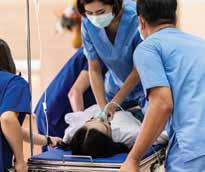
The word “emergency” means different things to different people—from the flashing light-bar of ambulances to the young person on the road who suddenly ran out of insulin to the pregnant patients who can’t get to the right hospital in the right amount of time. It makes the emergency physician a hybrid—but that’s okay, says Dr. Leap in his Editor’s Message— we’ve always been mutts and we know it.
Did you go unmatched? Do you know somebody who went unmatched? It can be a lonely place as an unmatched applicant but you should know that you are not alone—there are others sharing this unfortunate reality. Fortunately, there are options. Dr. Justin Doroshenko went unmatched and decided to follow an unconventional path for a year and shares his thoughts on the unmatched.
23
Mitigating the Risks and Burdens of Night and Rotating Shiftwork in Emergency Medicine: Part I
Night shifts, rotating shifts, and working as a nocturnist are, for many emergency physicians, an integral and unavoidable part of our commitment to being part of this team. Unfortunately, fulfilling this responsibility brings us health risks, due to the chronic circadian rhythm disruption inherent to our work. Part I of this two-part series will highlight and explain some of the risks associated with chronic circadian rhythm disruption.
27
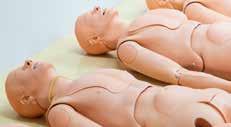
AAEM/RSA Editor’s Message: “What Do You Mean this Manikin Costs $10,000?!”: A Practical Guide to Equipment Acquisition for the Poor Simulation Enthusiast
From the first surgical simulators made from leaves and clay to virtual reality and complex manikins, the means on which medical students practice their skills has evolved. And with that evolution in technology came at an exorbitant cost that can make advanced simulation-based training inaccessible. In this issue’s RSA Editor’s Message, Mel Ebeling, BS, shares some ways that simulation equipment can be acquired on a budget.
Cover photo: Mount Taranaki summer photo from Lake Mangamahoe
Corporatization has EM Reeling
Robert Frolichstein, MD FAAEM
On July 7, 2024, Dr. Kenneth (Kenny) Nugent was tragically killed in an automobile accident. Kenny was in the prime of his career. He was just six years out of his EM residency at Christiana. He quickly established himself as a star within our group—Greater San Antonio Emergency Physicians (GSEP). He was the medical director at our flagship hospital Methodist Hospital (MH)—one of the largest and most complex in Texas. Kenny was admired and respected by both his GSEP colleagues and MH administrative colleagues. Delicately and expertly walking the line between supporting the physicians and understanding and supporting the needs of the hospital. He was fantastic. Everyone loved him. He was my friend. He is gone.
GSEP is reeling from this loss and it feels like we cannot survive or go on without him. We can and we will. Why? Because GSEP is bigger than Kenny. We have a job to do. We will cry on each other, help each other, and help his young, beautiful family as best we can. We will show up for our shifts (and his
shifts) and take care of our patients. That is what we do. We are emergency physicians. Why do I tell such a tragic tale? Well, one reason is to pay a small tribute to a great man and emergency physician. Another is to draw the analogy to what GSEP is going through right now and what emergency medicine as a specialty is going through. EM has fallen on some tough times. We lead the league in burnout in many surveys. ED volume is going up and pay is down. It feels like everyone wants to tell us what to do or how to practice medicine. Many if not most emergency physicians are employed by corporate entities. I contend that nearly all are influenced by the corporatization of emergency medicine. I define the corporatization of emergency medicine as the influence on the clinical practice of EM by entities that are not owned by the local practicing physicians. It is most obvious and perhaps most direct and formidable in the case of EPs being employed by private equity backed physician staffing companies. Other sources of influence may not be as direct. It could be a hospital or insurance company exerting their influence. Corporatization exists to some degree in all emergency medicine
practice settings. It can be helpful in some instances if it transforms underperforming departments and draws needed attention to improving patient care in the emergency department.
Like it or not, the practice of medicine is inextricably linked to the business of medicine. Physicians offer a service and expect and deserve to be reimbursed for that service. That transaction produces a lot of revenue both directly between the payer and physician and also indirectly between the payer and the source of whatever service that develops from that interaction. Examples include physician employer, laboratory services, radiology services, hospital admissions, etc. All involved want, and in most cases, deserve a portion of that revenue. Unfortunately, all that receive any of that revenue want to influence the amount and flow of that revenue. Only the physicians at the bedside have a duty and obligation to do what is best for the patient even if it is not what is best for themselves. That does not mean that others involved in this “transaction” do not care about the patient. However, they do not and cannot know what is best for the
Frankly, most of us don’t care that we aren’t appreciated. We just want to be free from outside influence and be allowed to do what we trained to do and love to do—care for patients.”
patient. In fact, all the others involved ultimately have a fiduciary duty to the owners of the company for which they work. A hospital CEO certainly cares about patients. Their fiduciary duty lies with the owners of the hospital.
What must be recognized is there is a friction that exists between doing what is right for the patient and what is best for the business we are in. Another term for this that I have heard and like is elegant tension. It is easy to say “always do what is best for the patient” but in reality we all make these choices. One could argue that it would be better for the patients if EPs only saw one patient per hour. I don’t know of any group that makes that choice. The benefit of doing that is weighed against the cost and an appropriate patient per hour is what is chosen to create the schedule. This decision is best made by the physician who is working those shifts. Outside influence on those types of decisions is corporatization.
Depending on what data you look at, around 140 million people per year have utilized the ED in the U.S. in the last few years… We all know the ‘system’ would fail without us.”
We have a very difficult job. Corporatization makes it harder and I believe is a large contributor to the high burnout and, anecdotally at least, a higher than expected attrition of emergency physicians.
All that to say, EM is reeling. Perhaps not with the acute agony that my group has, but it is reeling in its own agony leading some to question if EM will survive. We can and we will. Because we are emergency physicians. Within the house of medicine EM is a relatively new specialty but has evolved within the “system” to
be essential. Depending on what data you look at, around 140 million people per year have utilized the ED in the U.S. in the last few years. The ED is responsible for the majority of admissions to U.S. hospitals each year. We all know the “system” would fail without us.
Yet we are oft treated like an unwelcome necessity. We cost too much. We are not fast enough. Anybody could do what we do 90% of the time. We have heard it all. Frankly, most of us don’t care that we aren’t appreciated. We just want to be free from outside influence and be allowed to do what we trained to do and love to do—care for patients. I think our challenge and the path from reeling to recovery is to decrease the amount of outside influence we all feel on a daily basis. AAEM has fought against lay ownership of EP groups for decades. As evidenced by the recent announcement concerning the AAEM-PG lawsuit against Envision Healthcare, we are starting to make some progress.
Employment setting is not the only battleground. Insurance companies have initiated their own clinical review committees. Hospitals have metrics developed without the input of emergency physicians working at the site. I am sure there are influences beyond these few examples that I have listed. A collection of examples of the corporatization of emergency medicine would be a good place to start. I would love to hear your stories. Send your story as a letter to the editor of if you don’t want it to be published send it via email to corporatization@aaem.org.
One thing that is helping my group recover from this tragedy is helping each other out. There is something about helping others that helps oneself. I think each of you will feel better about the state EM has found itself in by helping The Academy battle the corporatization of emergency medicine.
EDITOR’S MESSAGE
All Kinds of Emergencies
Edwin Leap II, MD FAAEM
Ihave heard our specialty referred to as “emergentology.” We call ourselves “emergency physicians,” and say that we work in the “emergency department.” Some of us who are older still use the time-honored “emergency room.”
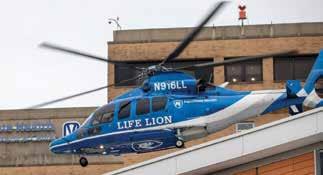
We pride ourselves on that word, “emergency.” It means so many things. Early in our careers it likely meant the flashing light-bar of ambulances, the whoop-whoop of the rotor blades on a helicopter, the rush of monitors and the sound of the defibrillator charging. We were entranced by the chaos brought to our doors, where we stopped the bleeding from knife or gunshot wounds, rescued overdoses and delivered babies (hopefully as few as possible). “Emergency” came to define our job and ultimately our collective personalities.
We learned that “emergency” sometimes meant different things to different people, and we may or may not have agreed. But in time, many of us have learned that “emergency” is a much bigger idea than we ever imagined.
Emergencies can indeed be immediately life-threatening illnesses or injuries. However, as the very idea of primary care (and the availability of it) have waned, as the old professional ethics of specialists have been replaced by the expediency of EMTALA and “just go to the ER,” emergencies have taken on a new meaning.
The emergency department is an emergency village. And the harder we fight… the healthier that complicated village, and its citizens, will be.”
Now, our patients are beset by whole new categories of emergencies. Indeed, for the family with a combative, demented loved-one who is unmanageable at home, admission or placement is pretty much an emergency. The young person on the road, suddenly out of insulin? And unable to afford it? That’s an emergency; and I speak as the father of an insulin dependent diabetic son.
When an addicted loved one continues to escalate their drug use and has near-death experiences but will not pursue therapy for their
addiction, a family faces an emergency; unless they are so exhausted that they simply can’t care anymore.
And when the psychotic veteran, living on the street, faces impending winter weather, then for him or her, there’s a genuine emergency that has more to do with location and environment than a particular medical problem.
Our EDs are the place of possibility and rescue, where the renal failure patient goes when he misses dialysis. We staff the place where the frightened parent goes who, despite their best efforts, can’t get their child into a specialist—as they were instructed to do.
We come to the rescue when the patient with the recently diagnosed lung nodule just can’t seem to find an oncologist who takes their insurance (or their lack of insurance). And more and ever more, our departments will be the de-facto labor and delivery units for people who either had no pre-natal care or who live too far away from their OB/Gyn to get to the right hospital in the right amount of time.
The suicidal often have no other option but to come to the ED, even though many prove to be less suicidal than lonely and desperate. The depressed and anxious fill our rooms and hallway beds with inner emergencies that cause great turmoil in their lives. Mental health care is scant, especially in rural America.
During COVID our facilities were the default locale where everyone else in healthcare, frightened out of their wits, sent the sickest, and even the not-so-sick. Not all of those situations were emergencies. But someone needed to lay eyes, and hands, on all of them. Those were emergencies of a sort as well. Emergencies if only because nobody really had any idea what to do.
Continued on page 5 >>
It is a world of genuine and perceived emergencies. And it is a world of individuals who have limited access to care and limited finances. Our emergency departments, our emergency rooms, our fellow “emergentologists” (I’m sorry, I just can’t get used to that), are the only hope that many patients have at all.
Sometimes it seems mundane, these less than emergent emergencies. But it’s a gift, the opportunity to be available to those whose daily lives are filled with struggle. It makes us hybrids, part emergency physician, part primary care physician, part social worker, and part chaplain. But then, we’ve always been mutts and we knew it.
We learned that ‘emergency’ sometimes meant different things to different people, and we may or may not have agreed. But in time, many of us have learned that ‘emergency’ is a much bigger idea than we ever imagined.”
Of course, the problem is that our patients are affected not only by their afflictions and personal dramas. They are beset by things like corporate medicine, which forces them to seek care in places with poor staffing. Or thanks to non-competes, limits the number of physicians potentially
available to help them. It also drives up the already crushing cost of their care.
When AAEM fights the good fight, when this amazing organization slings the stones at the corporate Goliaths of the world, it does so for many reasons. It does it because its members and board believe in justice and fairness. It does it because physicians deserve to be treated fairly, especially in a job as taxing as ours.
But in the end, those fights, those victories, allow us to respond more effectively to all of the emergencies that come through our door. From arterial bleeding to anxiety, from hypertension to homelessness.
The emergency department is an emergency village. And the harder we fight, the more successes we attain, the healthier that complicated village, and its citizens, will be.
PS: Do you have a story of an emergency that isn’t your typical emergency? Would you like to write about it? Do you have another idea for a Common Sense column? Please let me know! edwinleap@gmail.com
Penn State Health Emergency Medicine
About Us:
Penn State Health is a multi-hospital health system serving patients and communities across central Pennsylvania. We are the only medical facility in Pennsylvania to be accredited as a Level I pediatric trauma center and Level I adult trauma center. The system includes Penn State Health Milton S. Hershey Medical Center, Penn State Health Children’s Hospital and Penn State Cancer Institute based in Hershey, Pa.; Penn State Health Hampden Medical Center in Enola, Pa.; Penn State Health Holy Spirit Medical Center in Camp Hill, Pa.; Penn State Health Lancaster Medical Center in Lancaster, Pa.; Penn State Health St. Joseph Medical Center in Reading, Pa.; Pennsylvania Psychiatric Institute, a specialty provider of inpatient and outpatient behavioral health services, in Harrisburg, Pa.; and 2,450+ physicians and direct care providers at 225 outpatient practices. Additionally, the system jointly operates various healthcare providers, including Penn State Health Rehabilitation Hospital, Hershey Outpatient Surgery Center and Hershey Endoscopy Center.
We foster a collaborative environment rich with diversity, share a passion for patient care, and have a space for those who share our spark of innovative research interests. Our health system is expanding and we have opportunities in both academic hospital as well community hospital settings. Benefit highlights include:
• Competitive salary with sign-on bonus
• Comprehensive benefits and retirement package
• Relocation assistance & CME allowance
• Attractive neighborhoods in scenic central Pa.
AAEM Foundation Contributors – Thank You!
AAEM established its Foundation for the purposes of (1) studying and providing education relating to the access and availability of emergency medical care and (2) defending the rights of patients to receive such care and emergency physicians to provide such care. The latter purpose may include providing financial support for litigation to further these objectives. The Foundation will limit financial support to cases involving physician practice rights and cases involving a broad public interest. Contributions to the Foundation are tax deductible.
Levels of recognition to those who donate to the AAEM Foundation have been established. The information below includes a list of the different levels of contributions. The Foundation would like to thank the individuals below who contributed from 1/1/2024 to 7/1/2024.
Contributions $1000 and above
Bruce M. Lo, MD MBA RDMS FAAEM
Fred Earl Kency, Jr., MD FAAEM FACEP
Jonathan S. Jones, MD FAAEM
Kimberly M. Brown, MD MPH FAAEM
Kraftin E. Schreyer, MD MBA FAAEM
Peter G. Anderson, MD FAAEM
Tom Scaletta, MD MAAEM FAAEM
Contributions $500-$999
Daniel F. Danzl, MD MAAEM
Lillian Oshva, MD FAAEM
Nate T. Rudman, MD FAAEM
William E. Franklin, DO MBA FAAEM
Contributions $250-$499
Catherine V. Perry, MD FAAEM
Charles Chris Mickelson, MD FAAEM
Charlotte A. Ransom, MD FAAEM
Christopher R. Grieves, MD FAAEM
David S. Rosen, MD MPH FAAEM
Joseph M. Reardon, MD MPH FAAEM
Kevin Allen, MD FAAEM
Scott P. Marquis, MD FAAEM
Teresa M. Ross, MD FAAEM
Travis J. Maiers, MD FAAEM
Contributions $100-$249
Alexander Tsukerman, MD FAAEM
Alexandra Terskiy, MD PhD FAAEM
Bradley K. Gerberich, MD FAAEM
Brian R. Potts, MD MBA FAAEM
Chaiya Laoteppitaks, MD FAAEM
David C. Crutchfield, MD FAAEM
David R. Steinbruner, MD FAAEM
Eric J. Muehlbauer, MJ CAE
Eric S. Kenley, MD FAAEM
Ernest L. Yeh, MD FAAEM FAEMS
Jalil A. Thurber, MD FAAEM
Jeffrey A. Rey MD, MD FAAEM
Joseph Roarty, MD FAAEM
Katrina Kissman, MD FAAEM
Kevin C. Reed, MD FAAEM
Kevin Robert Brown, MD FAAEM
Marianne Haughey, MD FAAEM, MAAEM
Mark A. Foppe, DO FAAEM FACOEP
Mark E. Zeitzer, MD FAAEM
Michael M. Dickerson, MD FAAEM FAPWCA
Nancy L. Kragt, DO FAAEM
Paul M. Clayton, MD FAAEM
Paul W. Gabriel, MD FAAEM
R. Lee Chilton III, MD FAAEM
Robert A. Frolichstein, MD FAAEM
Robert Bruce Genzel, MD FAAEM
Robert J. Feldman, MD FAAEM
Sarah B. Dubbs, MD FAAEM
Susan T. Haney, MD FAAEM FACEP
Yamila Vazquez-Gonzalez, MD FAAEM
Contributions up to $99
Amanda Dinsmore, FAAEM
Ameer Sharifzadeh, MD FAAEM
Andrew M. Flanagan, DO FAAEM
Anthony Catapano, DO FAAEM
Brian Knight
Christopher C. Lorentz, MD FAAEM
Donald L. Slack, MD FAAEM
AAEM PAC Contributors – Thank You!
Edward T. Grove, MD FAAEM MSPH
Eric M. Ketcham, MD MBA FAAEM FASAM
Irving Jacoby, MD FAAEM
James P. Alva, MD FAAEM
Justin L. Berkowitz, DO FAAEM
Katherine Ryan, MD FAAEM
Kevin Barber, FAAEM
Michael Loesche, MD, PhD
Neal Handly, MD
Noel T. Moore, MD FAAEM
Peter H. Hibberd, MD FACEP FAAEM
Peter J. Benson, MD FAAEM
Regan Wylie, MD FAAEM
Rex Villanueva, DO FAAEM
Rian Pillitteri, MD FAAEM
Ric Roc
Stephen P. Stewart, MD FAAEM
Thomas J. Grosheider, MD FAAEM
Walter M. D’Alonzo, MD FAAEM
Contributions $500-$999
Fred Earl Kency, Jr., MD FAAEM FACEP
Contributions $250-$499
Joseph M. Reardon, MD MPH FAAEM
Travis J. Maiers, MD FAAEM
Contributions $100-$249
Alexander Tsukerman, MD FAAEM
Brian R. Potts, MD MBA FAAEM
Catherine V. Perry, MD FAAEM
AAEM PAC is the political action committee of the American Academy of Emergency Medicine. Through AAEM PAC, the Academy is able to support legislation and effect change on behalf of its members and with consideration to their unique concerns. Our dedicated efforts will help to improve the overall quality of health care in our country and to improve the lot of all emergency physicians.
All contributions are voluntary and the suggested amount of contribution is only a suggestion. The amount given by the contributor, or the refusal to give, will not benefit or disadvantage the person being solicited.
Levels of recognition to those who donate to the AAEM PAC have been established. The information below includes a list of the different levels of contributions. The PAC would like to thank the individuals below who contributed from 1/1/2024 to 7/1/2024.
Chaiya Laoteppitaks, MD FAAEM
Cynthia Martinez-Capolino, MD FAAEM
David R. Steinbruner, MD FAAEM
Emile El-Shammaa, MD FAAEM
Jeffrey A. Rey MD, MD FAAEM
Katrina Kissman, MD FAAEM
Lillian Oshva, MD FAAEM
Mark A. Foppe, DO FAAEM FACOEP
Paul M. Clayton, MD FAAEM
Peter G. Anderson, MD FAAEM
R. Lee Chilton III, MD FAAEM
Robert A. Frolichstein, MD FAAEM
Robert Bruce Genzel, MD FAAEM
Scott P. Marquis, MD FAAEM
Steven Parr, DO FAAEM
Zachary J. Sletten, MD FAAEM
Contributions up to $99
Alex Kaplan, MD FAAEM
Amanda Dinsmore, FAAEM
Ameer Sharifzadeh, MD FAAEM
Anthony Catapano, DO FAAEM
Donald L. Slack, MD FAAEM
Elizabeth Lojewski, DO FAAEM
James P. Alva, MD FAAEM
Kevin C. Reed, MD FAAEM
Marc D. Squillante, DO FAAEM
Patricia Phan, MD FAAEM
Peter H. Hibberd, MD FACEP FAAEM
Peter M.C. DeBlieux, MD FAAEM
Thomas A. Richardson, MD
LEAD-EM Contributors – Thank You!
The AAEM Institute for Leadership, Education & Advancement in the Development of Emergency Medicine, Inc. (LEAD-EM) was established after the tragic and unexpected death of AAEM president, Dr. Kevin G. Rodgers.
The Kevin G. Rodgers Fund and the Institute will LEAD-EM just like Dr. Rodgers did. The funds will support important projects such as development of leadership qualities, and clinical and operational knowledge of emergency physicians with a view toward improving and advancing the quality of medical care in emergency medicine, and public health, safety and well-being overall. LEAD-EM would like to thank the individuals below who contributed from 1/1/2024 to 7/1/2024.
AAEM is featuring the following upcoming conferences and activities for your consideration. For a complete listing of upcoming conferences and other meetings, please visit: aaem.org/education/events
AAEM Events
2024 Oral Board Review Courses
Course Set Two: August 27, August 28, September 5
Course Set Three: November 12, November 13, November 21 aaem.org/education/oral-boards/
4th Annual GLAAEM Educational Symposium October 10 8:00am-4:30pm CT
31st Annual Scientific Assembly
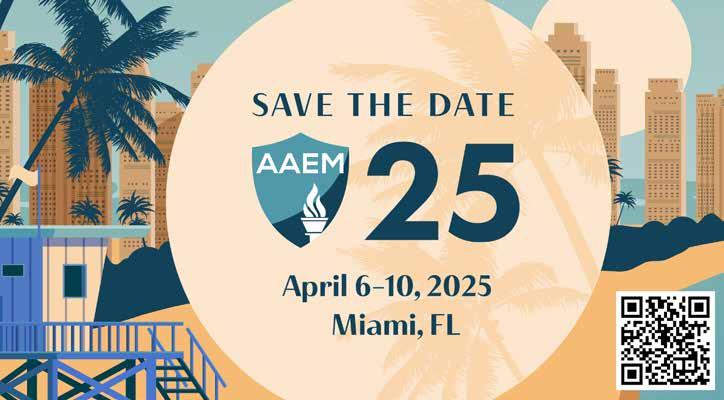
April 6-10, 2025 (Miami, Florida) https://www.aaem.org/aaem25/
Jointly Provided
Re-Occurring Monthly Spanish Education Series*
Jointly provided by the AAEM International Committee https://www.aaem.org/committees/international/spanish-education-series/ (CME not provided)
July 24-26, 2024
Coalition for Physician Well-Being Joy & Wholeness Summit
Jointly provided by the Coalition for Physician Well-Being https://www.forphysicianwellbeing.org/annual-national-conference
October 21-25, 2024
19th Annual Emergency Medicine Update: Hot Topics 2024
Jointly provided by UC Davis Health
Recommended
The Difficult Airway Course: EmergencyTM
September 6-8, 2024 (San Diego, CA) November 8-10, 2024 (Orlando, FL) theairwaysite.com/a-course/the-difficult-airway-course-emergency/
Xth World Academic Congress of Emergency Medicine (WACEM 2024)
November 6-9, 2024 (Rome, Italy) https://www.wacem2024.org/
Online CME
Recognizing Life-Threatening Emergencies in People with VEDS thesullivangroup.com/TSG_UG/VEDSAAEM/
Are All of Your Eggs in One Basket?
Chris McNeil, MD
Iwanted to cover a more specific topic this time: investment risks. On the surface, these concepts are rather intuitive, although their implications for our personal investments may not be so straightforward. I will also discuss the one risk I see most often unrecognized by people when I’m providing financial advice. Every investment we make comes with risks. The risks we take should be commiserate to the rewards we anticipate receiving, often referred to as risk-adjusted returns. In general, this correlation is linear. If an investment has a lower risk, we accept a lower reward. For example, there is little to no risk in owning a U.S. government treasury bond and our reward is the stated interest rate plus any appreciation in value should interest rates drop from our initial purchase. If an investment has a higher risk, we must demand a higher potential reward for
market. Can we sell our investment for the best price when we need the money? Unfortunately, it is not always possible to sell your investment at your desired price. This is most commonly found in private investments and real estate markets.
Interest rate risk is fluctuations or rising interest rates that can cause an asset’s value to decline. Interest rate-sensitive investments such as growth stocks, property, and bonds are most susceptible to this risk.
Business risk is risk based on decisions made by an individual business or unique business circumstances that may result in lower profits or a drop in the company’s stock price. Examples of this may be an unexpected firing or illness of a company CEO or if a software company has an unexpected bug in their latest software upgrade and release.
risk has a significant impact on investor psychology. Everyone wants to buy discounts at the shopping mall, but no one wants to buy discounts in the stock market.
Valuation risk is the risk that you have paid more for an investment than it is fundamentally worth, and the price will eventually fall to meet its fundamental value. This is usually the result of fear of missing out (FOMO) buying.
Concentration risk occurs when keeping all of your eggs in one basket. Hopefully, nothing happens to your basket. In my experience, this is the most common unrecognized risk.
Here are two quick examples of unrecognized concentration risk that I have seen recently. Can you relate?
the embedded higher risk. The concept of risk reward is fairly intuitive, but what exactly are these nebulous risks?
Here is a brief review (not comprehensive) of the most common risks to our investments.
Credit risk is the probability that a borrower cannot repay a loan or will default on the debt. High-yield and corporate bond investments are the most sensitive to credit risks.
Liquidity risk occurs when sellers have a difficult time finding buyers in a thinly traded
Concentration risk occurs when keeping all of your eggs in one basket. Hopefully, nothing happens to your basket.”
Market risk occurs when fluctuations in broad markets impact the prices of our assets. These market fluctuations can be caused by geopolitical events, structural market dynamics, investor sentiment shifts, and interest rate changes. Almost everyone is exposed to market risks in one way or another.
Volatility risk is the risk associated with the price changes of an asset over time. Even if companies are not going to fail, the prices of assets may fluctuate up or down significantly. Prices of good assets sometimes drop. This
Physician A has a passion for real estate and has accumulated almost 10 rental properties in the last five to six years. In addition, when reviewing their investment accounts, almost 75% of their stock investments are in dividend-paying real-estate investment trusts (REITs). Dr. A has almost all of their eggs in a real estate basket.
Physician B and their spouse are 60 years old and have accumulated a total of $4 million. Their only investment is an S&P 500 index fund that they hold in all of their accounts. Dr. B and their spouse have done a great job accumulating a sizable nest egg. However, they are holding it in one basket. While the S&P 500 index fund is invested in 500 stocks, currently, over 30% of the index is composed of the largest 10 U.S. stocks. It is more concentrated than most people recognize, which puts all of their eggs in one basket
The above examples highlight unrecognized concentration risk. This does not mean they are poor choices. Concentrated investments can gener-
Concentrated investments can
evaluating our net worth and assets for the other risks listed above, is a good starting point for preserving wealth. Risk is not something that should be avoided
Relationship Resuscitation
Amanda Dinsmore, MD, Kendra Morrison, DO, and Laura Cazier, MD
As emergency physicians, work can be stressful. For some, our relationships serve as a soft landing after a shift. But for others, coming home adds more distress with strained significant relationships. Research suggests happy marriages and stable relationships positively impact mental health. Good partnerships are associated with lower stress and less depression. That said, single people have better mental health outcomes than unhappily married people.1 So it’s worth it, if you’re in a significant relationship, to ensure it’s a healthy companionship.
Unfortunately, research suggests that while physician marriages tend to have lower divorce rates, our marriages sometimes are less happy.2 Presumably, this is due to a “strategy of postponement,” a fancy way of saying that we avoid dealing with relationship problems, using expectations of medical training, practice, and the standards set by colleagues as an excuse to avoid emotional intimacy. Attention to covert marital discord gets postponed indefinitely while we compulsively prioritize work.
This tendency may come from our training. One source cites that until the mid-1900s, “it was not unusual for surgical programs to prohibit married physicians from entering surgical residencies. These educational programs were based on the belief that a residency should occupy the physician’s total attention and energy. There was no question but that the future surgeon—once he entered practice—would automatically place the practice of medicine first and marriage second.”3 Sure, we’re “allowed” to get married now, but have we progressed much from the expectation that it’s medicine above all else? Is that just how it has to be? It’s worth considering if that’s what we want going forward.
Committed relationships, even when a top priority, can be challenging at baseline. However, additional potential threats to our marriages can stem from our expectations, coping patterns, and type-A behavior.4 It’s worthwhile to be proactive to avoid resentment, power struggles, and marital instability.
Now comes some bad news. You can’t change your partner. As an adult, your companion gets to be who they are. You can only change how you show up in this partnership. If feeling extremely passionate about your partner’s “improvement” worked, it would have yielded results already, right? You have
control over yourself, though, and being the best version of yourself gives your relationship its best chance of success.
Extrapolating from Gabor Mate’s advice regarding addictions, there are three choices when dealing with any problematic relationship:5
y The first sane option is to know that the person’s behaviors are the best way they’ve found to cope so far. Some of their behaviors are painful, but you understand this is their journey. You have no say in how their journey should go. It’s their journey. You can decide to stay with them through it, however difficult it is, because you choose to be part of their life.
y The second sane option is to say, “I’m not going to judge you… but I can’t be around what you’re doing. It hurts me too much. I don’t know what to do with it. I can’t be in your life.” You can still love someone dearly and not have them in your life. That is a loving, healthy boundary.
y The insane option is to stay in another adult’s life but try to control them—to beg, encourage, push, manipulate, shame, bribe, or force them to be different. This choice misuses your energy, undermines your partner’s autonomy, and ultimately doesn’t work. It also keeps you captivated by a potential person who doesn’t exist rather than accepting the exis ting person.
Knowing this, what are some unique pitfalls for physicians in relationships?
Wayne Sotile, PhD, and Mary Sotile, MA, have worked with thousands of physician couples since 1979. They suggest that, at times, the very characteristics that make us great doctors can be harmful to our significant relationships.6 For example:
y the ability to relentlessly work hard leaves us exhausted and drains the energy we have left to give to our relationship
y perfectionism leaves our partners feeling criticized and alienated
y chronically hurrying damages our connection and makes the relationship seem like one more burden on our to-do list
y competitiveness leaves us feeling like rivals rather than teammates
y talent of multitasking leaves others feeling like we’re never fully present.
Sure, we’re ‘allowed’ to get married now, but have we progressed much from the expectation that it’s medicine above all else? Is that just how it has to be?”
They go on to mention twenty myths that plague high-achieving couples. Some of these are:
y “My stress hurts more than yours.” Stress isn’t a contest, and working in medicine doesn’t make our stress more “noble” than a partner’s. We can solicit support for ourselves while simultaneously being nurturing.
y “Apologizing shows weakness.”
The Sotiles assert that the three most powerful words in any relationship are: I. Am. Sorry.
y “When dealing with others, I should take advantage of every teachable moment.” Often, being “taught” feels more like being lectured, criticized, or controlled. Instead, offer encouragement, support, and admiration when possible. It can be helpful to ask a partner if they need you to listen or give advice.
y “If it doesn’t come naturally, then it’s fraudulent.” Changing a stuck relationship will feel awkward at first. That doesn’t mean it’s inauthentic. Most things in life require practice before feeling natural. Let it be uncomfortable. Do it anyway, to grow.
y “It is far better to express anger than to hold it in.” How and when anger is expressed matters. Unchecked hostility can have lasting negative consequences, but don’t mistake aggression with appropriate assertiveness. Their advice: “Act, not strike, when the iron is warm, not hot.”
Here are some practices the Sotiles mention that make high-powered partnerships work. See if any of these could improve your connection.
y Develop and maintain a relationship work ethic. Loving a partner is not for the faint of heart. It takes sustained effort, dedication, and courage. Could your relationship benefit from ongoing attention?
y Protect the boundaries that separate your partnership from the rest of the world. Staff shortages may be the norm for a while but consider not picking up extra work when you need time to be with your person. Refuse to worry about work when you need to be present. Protect your precious time together. True, we still need great examples of how to do this. But know that since time is our most limited resource, every “yes” is a “no” to something else.
y Declare your commitment again and again, knowing that commitment is not just words—it’s how you act.
y Have FUN. If you can’t remember the last time you enjoyed each other’s presence, plan something immediately.
y Forgive. If you choose to stay in this relationship, forgiveness—for yourself and your partner—might be required to move forward.
y Cherish each other. When was the last time your partner got the message that you’re happy they’re with you? Primary relationships need admiration, acknowledgment, the benefit of the doubt, and appreciation.
Brene Brown says, “When you love someone unconditionally, you accept them for who they are, flaws and all.”7 Surprisingly, this starts with ourselves. In a world where many feel perfect performance is the only way to “earn” love, radical self-acceptance can feel foreign. When we can accept ourselves as we are, we can extend that compassion toward our partners. If this relationship isn’t salvageable, it doesn’t mean you have to keep it in your life. It may be more loving for everyone involved to part ways. But practicing unconditional love from near or far can be healing. Elie Wiesel says in “Night” (1960), “Unconditional love is an act of defiance against hatred and intolerance, bringing light into the darkest of times.”8 Wishing you more love, light, and happiness in your significant relationships.
References
1. Holt-Lunstad, J., Birmingham, W., & Jones, B.Q. (2008). Is There Something Unique about Marriage? The Relative Impact of Marital Status, Relationship Quality, and Network Social Support on Ambulatory Blood Pressure and Mental Health. Annals of Behavioural Medicine, 35, 239–244.
2. Gabbard GO, Menninger RW. The psychology of postponement in the medical marriage. JAMA. 1989 Apr 28;261(16):2378-81. PMID: 2704090.
3. Segraves K, Segraves RT. When the physician’s marriage is in trouble. Med Aspects Hum Sexuality. June 1987: 148-149.
6. Sotile, W., Sotile, M. (2023, Sept 15) Supercouple Syndrome: How Overworked Couples Can Beat Stress Together (G Marx & M MacRae, Narr.) [Audiobook]. Phoenix Books. thewholephysician.com
Creating the Best Year of My Life...in the Middle of My Academic Career
Jack Perkins, MD FAAEM
Ten years ago, the foundation was laid for the once-in-a-lifetime adventure I am currently enjoying in New Zealand with my family. The two physicians who inspired me had worked in Australia and New Zealand respectively after completion of residency training in the States. I created a mental placeholder in my mind’s calendar for a similar adventure but knew it would be slightly more complicated as I intended to interrupt my academic career to make this happen. And while this took some legwork on my end and creativity from the leadership in my department, the end result has been the best year of my life. My intention is to inspire you to follow in my footsteps and convince you that the ideal time for this adventure is in the middle of your career, regardless of whether you are in academics or in the community.
Making it Work Within the Institution
During my annual review with the Chair of our department in 2019, I mentioned that I would be spending a year in New Zealand beginning in July of 2023. Understandably, he was a bit skeptical as this had never been done at our institution let alone for a member of the emergency
of creating a formal sabbatical pathway. A colleague was able to find a few examples of other hospital systems that have sabbatical pathways, although it is not as common in the medical field as in university systems. Part of our proposal was to incorporate a sabbatical into the recruitment and retention of physicians, with the concept being that part of the marketing budget could be woven into a sabbatical pathway with the purpose of increased retention of physicians and decreased recruitment cost.
New Zealand seemed like an optimal choice for our family. The true testament to that being the right decision can be summed up by stating we can’t even justify leaving New Zealand this year to visit Australia.”
medicine core faculty (I was one of the Assistant Program Directors when I left in June of 2023). He was also curious about the very specific departure window I had selected. I explained this was the most important aspect of our family’s planned adventure. I explained that my oldest child would be headed into 8th grade in the summer of 2023 and my wife and I had the intention of permitting our kids to be as old as possible without interrupting their high school experience.
At the time my goal was simply an adventure with my family while allowing myself a chance to step back from emergency medicine in the States for a year. Little did I know at the time that my family would benefit as much as I did from New Zealand and that it was personally invaluable to work in a different healthcare system.
Since we had four years prior to my departure, we explored the possibility
Interestingly, New Zealand has incorporated a sabbatical program into the emergency medicine physician contract structure precisely for well-being and career longevity as part of the benefit package the New Zealand government provides. COVID’s disruption of our hospital’s finances and normal operating systems made it much less appealing for our hospital system to create a novel sabbatical pathway when short-term financial viability was paramount. Consequently, our department Chair and our senior business manager creatively designed an avenue for me to take a 12-month leave of absence. They expanded recruitment of our non-ACGME accredited fellowship candidates and hired two additional fellows through this pathway to cover the clinical shifts created by my absence.
New Zealand or Australia?
Both New Zealand and Australia were the most obvious choices for a one-year leave of absence as locum physician recruiters have been working for decades placing physicians from all over the world in those two countries on one- or two-year contracts. After some brief research, New Zealand seemed like an optimal choice for our family. The true
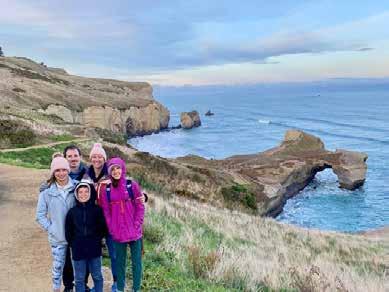
Tunnel Beach in Dunedin
testament to that being the right decision can be summed up by stating we can’t even justify leaving New Zealand this year to visit Australia. There are too many spectacular places to visit in New Zealand and we will simply have to return to see Australia!
New Zealand offered my family a one-year visa if I signed on to work at least 0.7 FTE anywhere in the country. I received interview invitations from about a half-dozen hospitals and ended up selecting Taranaki Base Hospital in New Plymouth, more so because of the city than the emergency department. New Plymouth is situated in the Taranaki region on the West Coast of the North Island and is known for its spectacular beaches and associated surfing opportunities. It is an outdoor enthusiast’s paradise and suited our family well as we have enjoyed many of the picturesque hiking trails within 60 minutes of New Plymouth.
Emergency Medicine in New Zealand
And while the above may certainly seem like unfavorable aspects of working in EM in New Zealand, there are some tremendous benefits to working here as well. Violence against any ED staff member is almost non-existent and the vast majority of patients are gracious and appreciative of the care provided. I have been amazed by how pleasant every specialist registrar or consultant (cardiology, orthopedics, neurosurgery, ENT, etc) has been on the phone or in person anytime day or night. The definitive text on optimal collaborative patient management and inter-specialty communication should be based on the atmosphere of collegiality here.
My wife and I did not know what to expect of a year in the New Zealand school system for our children…And now in retrospect, I am not sure we could have provided them with a more valuable experience that will contribute to their personal growth, desire to explore the world, and understanding of other cultures.”
I spent most of my time working at Taranaki Base Hospital in New Plymouth and a smaller portion of my time at the small community Hawera Hospital. The ED at Taranaki Base Hospital serves as roughly the equivalent of a level two trauma center in the States. On most days, two consultant EM physicians (equivalent to attending) see their own patients and teach medical students and registrars (equivalent to residents). In general, critically ill patients are less common compared to the States and the need for procedures such as intubation, central line placement, and lumbar puncture are infrequent. It is difficult to see more than one patient per hour as the electronic medical record is not designed for efficiency and the entire physician note must be finalized to discharge patients. Stroke alerts are managed primarily by the internal medicine registrars and we are only involved if airway intervention is required. The waiting room fills up during the weekday afternoons and it is not unusual for some patients to wait three to five hours to be seen during peak hours.
Most poignantly for me, New Zealand has made a concerted effort to recognize that the indigenous Māori population (roughly 18% of the entire New Zealand population) has less healthcare access and worse health outcomes across almost every metric of population health. A major barrier to equitable healthcare in the Māori population is the distrust of non-Māori healthcare practitioners based on decades of systemic racism from sections of the European heritage New Zealand population. Consequently, we see a disproportionate number of Māori patients in the ED who do not have access to primary care or elect not to use primary care out of distrust of the government run healthcare system. In the ED we have access to a Māori patient representative that is able to engage the patient and search for resources in the community to support the patient’s medical, mental health, and social needs. Government legislation has prioritized Māori healthcare initiatives such as making some non-formulary medications accessible to Māori patients if those medications have evidence supporting improved diabetes or cardiovascular outcomes.
The Ideal Personal Wellness Plan...A MidCareer Hiatus
By the time I was making final plans for the year in New Zealand in the spring on 2023, I was somewhat concerned that I would find all aspects of the New Zealand healthcare system superior to my experience in the States. In particular, 2022-2023 was
Maori Traditional Song Celebration Primary School
exceptionally demoralizing given the nursing shortage, escalating struggle with bed holds, and the consequent explosion of “waiting room medicine.” It was a challenging environment in which to practice medicine and provide education to the next generation of emergency medicine physicians who were now wondering if half of their career would be spent in the waiting room. Personally, I was most distressed by the environment that made it challenging to provide optimal care for each patient in our ED.
What I did not consider at the time was that perhaps I did not need a break from my work as an emergency medicine physician, but rather what I needed was the opportunity to work in a different healthcare system that would provide a window through which I could appreciate the functioning aspects of our American healthcare system.
In order to obtain a 12-month work visa in New Zealand, I needed to sign a contract working at least 0.7 FTE. I agreed to this bare minimum and it says a lot about how much I have garnered out of my experience working here in the emergency department that I regret not working closer to 0.9 FTE. The very first patient I cared for in New Zealand was seen in the waiting room as I quickly discovered that there is a nursing shortage here as well and the ED boarding time for admitted patients can sometimes exceed 24 hours. Oddly, I was surprised by my own sense of relief to recognize the substantial ED barriers to patient care are not uniquely American. The pace of care is slower here as noted previously but this presents the opportunity to spend more time at the bedside with patients. Advanced imaging is more difficult to obtain as CT or MRI imaging must be approved by the radiologist and they weigh cost and radiation exposure into their decision on imaging. While bedside ultrasound is readily available for emergency medicine physicians to perform, formal ultrasound is markedly limited by availability.
While consultant specialists such as cardiology are often readily available by phone, follow up in their clinic rarely happens within a week and may often result in a delay of months to be seen in follow up. We also do not have admitting privileges in the ED which means the internal medicine
registrar ultimately can decide that your request for admission is denied. This is in my opinion never “obstructionist” in nature or driven by any desire to avoid additional work. Conversely, the internal medicine registrar often weighs the potential benefits of admission in the context of what resources are available for the patient. For example, one Friday night
I tried to admit a young adult patient with newly diagnosed acute decompensated heart failure and was told he would not benefit from admission as there was no echocardiographers working that weekend. The registrar recommended starting the patient on an oral dose of furosemide and advising him to return if his dyspnea worsened.
This case helped me understand a few aspects about the New Zealand healthcare system and their comfort with having patients return for re-evaluation if the discharge plan was ineffective. This was quite disconcerting to me initially but eventually I understood that I needed to adapt to a Kiwi style of emergency medicine where some patients who would certainly be admitted in the States will not be admitted in New Zealand.
It was roughly the eight-week mark when I truly settled into my comfort zone and embraced their novel approach to patient care with very little consideration given to medicolegal consequences. This was a liberating and honestly euphoric moment that brought me back to medical school when I formulated plans of care that did not factor in any medicolegal risk as is customary in the U.S. practice of emergency medicine. Since that two-month mark, I have been able to focus on delivering patient care that accounts for the numerous barriers to care encountered throughout New Zealand. For example, I often take into account that some patients will be unable to follow up with their general practitioner (primary care physician) and it is not uncommon for a patient to state they have no option for general practitioner follow up. In contrast to the States, this lack of follow up options is not due to insurance and cost barriers, it is a due to a dearth of physicians who can serve as a general practitioner. Some communities rely on locum physicians and are without a source or primary care when that locum position is unfilled. As a result, I have longer and more detailed discussions at the bedside and have created more extensive plans of care in the outpatient setting accounting for the barriers to follow up.
While it would seem like this would create bitterness and dissatisfaction for Kiwis, I discovered this was not the case. In fact, I have not ascertained any sense of entitlement from any patient I have cared for
White Cliff Beach Walk in Taranaki
Suspension Bridge on Timber Trail North Island
and an almost uniform understanding of the limitations of the New Zealand healthcare system. For example, I have cared for more than a handful of patients who have known CAD and present with chest pain while on the outpatient waiting list to be seen by interventional cardiology. I have now become accustomed to discharging those patients without speaking to cardiology if they are pain free, have two unremarkable high-sensitivity troponins, and non-ischemic ECGs. When I have discussed such patients with cardiology it invariably results in a recommendation to further optimize their medical therapy for CAD and advise the patient to return if they have another episode of chest pain.
One patient in particular had been waiting almost 12 months for interventional cardiology to re-evaluate him for angiography given his recurrent chest pain in light of his prior CABG. Upon relaying to the patient that I was unable to expedite his evaluation, he was not the least bit upset but rather expressed what I have become familiar with in my time here. He stated he would of course like to be seen more expeditiously but understood the limitations of the system and that every Kiwi had the same barriers to specialty care so why should he be upset? Not ideal from the patient perspective but since it was perceived as equitable, even this disappointment ended with the patient thanking me for my time and effort to provide care.
And if I Haven’t Convinced You Yet…the Invaluable Experience for my Children
My wife and I did not know what to expect of a year in the New Zealand school system for our children who are 10, 12, and 14 respectively. And now in retrospect, I am not sure we could have provided them with a more valuable experience that will contribute to their personal growth, desire to explore the world, and understanding of other cultures.
My son (10) is in the New Zealand equivalent of elementary school and spends a large part of his school day outside. The Kiwi philosophy of education emphasizes time outdoors for children before (roughly) age 13 to 14 when most children enter high
school. Neither of my younger children receive homework and both are receiving education on Māori language, culture, and history. My son is actually in a “Māori immersion” class where 50% of his education focuses on Māori language, culture, and history. New Zealand has undertaken significant efforts to become a “bicultural” country and bring together the European heritage citizens and Māori heritage citizens. However, I foresee the investment in education as being the most insightful method to molding future generations of Kiwis who can begin to undo the systemic racism and healthcare inequities as a result of British colonization in the 1800s. My son has become proficient at a number of Māori traditional dances and has even begun signing in the shower…in Māori.
The focus on spending time outdoors as children seems to have resulted in the desired effect as Kiwis of all ages tend to be active well into the late stages of life. The benefits of this early engagement in activity are evident in the ED as there is a constant flow of orthopedic injuries sustained by geriatric patients who have been tramping (Kiwi for long distance hikes) about the magnificent landscape.
My oldest daughter (14) is in the girls’ high school here in New Plymouth and while she is having a more traditional experience in terms of time spent in the classroom and homework, she pointed out the vast differences between educational content delivery. The New Plymouth Girls High School has more than 1000 students from 13 to 18 years of age (they start high school at an earlier age) and while many students are Kiwis, most continents are well represented. There continues to be a focus on Māori education in high school as evidenced by the bilingual graduation ceremony we attended.
Continued on page 18 >
New Plymouth Beach at Sunset with Friends
Sunset overlooking New Plymouth and Tasman Sea
It’s Time to Rethink How We Approach the Unmatched
Justin Doroshenko, DO M.Ed. Paramedic FAWM*
As everyone welcomes their new classes of interns, this time of year also marks the beginning of audition season. Fourth-year medical students filled to the brim with excitement, anxiety, and curiosity as they finally begin their residency match season. In the minds of many medical students, the residency match is the true culmination of medical education. Matching into residency means being on the pathway to board certification, attending physician income, and realizing a dream of working as a physician. There are myriad articles and opinion pieces out there extolling the gains that EM made in the 2024 Match compared to the previous couple years, and this success should absolutely be celebrated. But it’s important to remember that there are still more residency applicants than positions.1 So, for thousands of residency applicants every year, going unmatched is an unfortunate reality.2 After all the time and money spent on applications and interviews, even after navigating the existential wormhole that is the Supplemental Offer and Acceptance Process (SOAP), these applicants are left wondering what to do next. So, it’s important to pause, take a few breaths, and think broadly (and perhaps unconventionally) about what to do next.
Take time to feel everything. There are likely to be a lot of emotions around going unmatched, and it’s important to allow yourself to feel them. Denying any of those feelings just might make things more difficult moving forward. Be angry. Be embarrassed. Be upset. Be confused. Be indignant. Talk to friends and loved ones and say what you’re really feeling. While it is important to start planning and preparing for what comes next, you should plan for your own health and safety, too.
or organizations that are really invested in helping unmatched applicants. There are dozens of individuals on Twitter who offer expert mentorship and advice. Talk to people who have experienced this side of the match process before you. Leverage the experience and willingness from organizations who champion the unmatched applicants and avoid predatory services that “guarantee” match results and publications for often steep prices.
Talk to the program directors that interviewed you. This can be a crucial step to identify any problem areas in the application and interview process. Politely email them and ask if they would be willing to chat with you for a few minutes. Ask them if they are willing to share why you weren’t ranked higher, what they think might have happened, and what their advice is. But also keep in mind that it may not have been one thing you did wrong or were deficient in—sometimes it’s just a product of the match system we have.
For thousands of residency applicants every year, going unmatched is an unfortunate reality…it’s important to pause, take a few breaths, and think broadly (and perhaps unconventionally) about what to do next.”
Know you’re not alone. It can be a lonely place as an unmatched applicant. It’s not easy to watch classmates celebrate their match knowing that you may not be sharing in their joy. But there are many others in positions like yours, and there are even more who have experienced it before you. Find those people. Lean on those people.
Find mentors and advisors who have experience in this space. Some applicants have great advising resources at their school for navigating life after not matching, and some simply don’t. But everyone should look beyond those immediate resources to individuals
What are your options? The common advice usually revolves around a few approaches: find a still unfilled preliminary or transitional position, do a research fellowship, pursue an MPH or similar degree, or defer medical school graduation for a year. These are all approaches taken by many applicants in the past, and all have value. But there are more options than you think. Contrary to what you might think, there are absolutely no requirements for what unmatched applicants must do for the next year. Many applicants have found great success with creative approaches to their year. With that being said…
What do you want to do with your year? This is the big question, and it’s important to think broadly. Is it all about clinical medicine for you? Prelim years can sharpen those clinical and procedural
skills. Did you have experience or a career before school that you can leverage? Maybe those contacts can get you involved in something rewarding and productive. Did you develop any skills in school that you want to pursue? Are there parallel interests in medicine that you can pursue? Certainly, one consideration is that of income and personal expenses, but consider starting with broad thoughts of what you want for yourself and ways to feel fulfilled. Choosing a nontraditional path can be a risk, but it also gives you something to talk about and maybe even stand out.
Be on the lookout for open PGY-1 positions. Openings after the match do occur regularly, and you should be ready for them. Matched applicants change their mind. New programs get approval to recruit residents after match season. Keep those application materials and camera-ready faces handy, as things can move very quickly.
Remember that failure is an option, and we need to be okay with it. It may not be easy to be open about going unmatched but try to do it if you can. It’s important we continue to destigmatize the conversation around not matching. You probably didn’t intend it this way, but this is a part your story now. In many ways, medical education has created a system where a failure is viewed as
an endpoint rather than a tipping point—a time where great change and growth can occur.
Justin graduated medical school after going unmatched during the 2021 cycle, and he decided to follow an unconventional path for the year following medical school. Engage with him or hear more about his experience on Twitter at @dorojustin or via email at justin.doro@gmail.com. His views and opinions do not represent those of his employers or affiliations. This article was adapted from a 2022 blog post for “Inside the Match.”
References
*PGY-2, UT Health San Antonio Emergency Medicine; Director of Education, Hawk Ventures (hdegawkventures.com)
1. “NRMP® Celebrates Match Day for the 2024 Main Residency Match®” NRMP. Published March 15, 2024. Accessed May 29, 2024. https://www. nrmp.org/about/news/2024/03/nrmp-celebrates-match-day-for-the-2024main-residency-match-releases-results-for-over-44000-applicants-andalmost-6400-residency-programs/
2. Mock J. “Unmatched Doctors: How Big Is the Problem, and What Can Be Done?” Medscape. Published June 24, 2021. Accessed March 5, 2022. https://www.medscape.com/viewarticle/953675
CREATING THE BEST YEAR OF MY LIFE...IN THE MIDDLE OF MY ACADEMIC CAREER
Continued from page 16
More poignantly, the education is taught in an objective manner without political, religious, or parental pressure on restricting content or ability for the teachers to engage their class. Consequently, my daughter has had classes where the discussion topics included global warming, gun violence, human trafficking, and substance abuse among other topics that might not find a forum in American high schools. However, the main difference as pointed out by my daughter, is that the topics are introduced and the discussion led by her teachers is objective with no intention other than to stimulate student engagement and ability to explore difficult topics from a variety of cultural backgrounds. There is also a significant focus on wellness discussions that in my opinion is complimentary to the commitment to having school age children spend much of their school day outdoors. The end result has been an immersion in a different approach to education, which my children have stated they appreciate in that they have a comparison for their experience in the States.
How Can You Create a Similar Adventure?
There is no easy answer to creating an experience such as the one I am going to conclude this coming July. However, nothing is lost by simply
exploring the potential to spend a year abroad. And while I will be returning to Virginia this July, I have no regrets and find myself inspired to pay it forward to my colleagues who may also be able to create the best year of their lives. You are most welcome to reach out to me anytime by email at JackPerkins37@gmail.com
Editor’s Note: You can read Dr. Perkins first article about his adventure in New Zealand in the March/April 2024 issue of Common Sense on page 36. You can read his article by scanning the QR code.
issuu.com/aaeminfo/docs/cs24_marapr_vf2/38
It Can’t Be Cancer
Alice Lee, MD FAAEM
“It’s adenocarcinoma,” said the voice on the other end of the phone.
I couldn’t believe it.
“Lung cancer? Me? How could that be? I’ve never smoked!”
It all began three months prior to that call in April of 2021. I had gone to my PCP in January 2021 after developing a nagging dry cough due to lisinopril which I started eight months prior, during the first months of COVID. I concluded that it was just an ACE inhibitor-induced cough. My PCP agreed with me, changed me to an ARB, and then, just to rule out Valley Fever1 (I live in Arizona), ordered a chest X-ray. And I figured that would be the end of it.
Well, completely unexpectedly, the chest X-ray showed a 1.4cm “suspicious” nodule in the apex of my right lung. Oh, yes, you know, the word you don’t want to see when reviewing a radiologic study. It simply has to be a hamartoma2 or a benign Valley Fever nodule, right? It can’t be cancer.
Oh, boy.
It’s funny how as an ER doctor, I am fairly aggressive with workups and resuscitation, always thinking ahead and “doing” something before it’s too late. But, when it comes to my personal health, I’m a minimalist. So, even though my pulmonologist recommended the EBUS3 and needle biopsy at the same time, I declined wanting one procedure at a time. I think I was still hoping that the biopsy would be negative hence no need to look at those thoracic lymph nodes via EBUS, right?
Or, can it?
As you might guess, over the next couple of months, I searched online and read voraciously everything I could find on lung cancer. I was searching for proof that my yet-to-be biopsied “suspicious” lung nodule was going to be benign. It has to be. I have never smoked. No smoker in my home except my father who quit when I was a child. No family history of lung cancer. It made no sense. “It’s going to be benign,” one of my pulmonologist friends told me. Another pulmonologist friend said to me hamartomas are rarer than lung cancer, and sorry, it doesn’t look like one on your CT.
Lung cancer is the leading cause of cancer-related deaths worldwide as well as in the U.S. Every year, more than two million people around the world are diagnosed with the disease. According to the American Cancer Society, about 234,580 will be diagnosed with lung cancer just in the U.S. alone in 2024.4
Despite practicing medicine for more than 30 years, this was the first time I’d heard of a very little-known cohort of lung cancer patients into which I fit like a square peg in a square hole—the female Asian American never-smoker. The term “Asian American” encompasses a wide heterogenous swath of the U.S. population numbering roughly 20 million who fall under the group labeled AANHPI (Asian American Native Hawaiian Pacific Islander). Even though the number one risk for lung cancer in the U.S. and worldwide is smoking, 10 to 20 percent of lung cancer sufferers in the U.S. are non-smokers.5 Lung cancer in non-smokers occurs more frequently in women and at a younger age than lung cancer in smokers. Most lung cancers are of the non-small cell histological type (NCSLC6) and adenocarcinoma is the most common subtype in non-smoker lung cancers.
While 10 to 20 percent of all females with lung cancer in the U.S. are nonsmokers, an estimated 57 percent of Asian American females with lung cancer are nonsmokers.7 Even more peculiar is that a whopping 95 percent of Chinese American females with lung cancer have never smoked. I am one of these women.8
The most profound change of all is this. I empathize more deeply and I understand more viscerally. I reach out with a comforting hand more often. I hug my patients and their families more sincerely. I move their dinner tray table closer. I allow my heart to break.”
Sadly, most NCSLC when discovered is already in stage III or IV.9 The USPSTF (U.S. Prevention Services Task Force) currently recommends routine screening only for lung cancer in smokers between the ages of 50 to 80.10 Herein lies a glaring cancer screening disparity. There is no such recommendation for nonsmokers. Hence, Asian American female nonsmokers like me are at significantly increased risk of late diagnosis because we don’t think we can get lung cancer. There are multiple tragic stories of Asian American female nonsmokers who were diagnosed with lung cancer too late and succumbed.11 How do we expect the everyday AANHPI nonsmoker to advocate for themselves when I, a physician, wasn’t even aware of this?
To address this health disparity, there are currently two studies recruiting Asian American female never-smokers. The New York Female Asian Nonsmoker Screening Study (NYFANSS12) is led by Dr. Elaine Shum. This study is offering up to three annual free low-dose CT scans (LDCT) to screen for lung cancer. In June of 2023, Dr. Shum, et al, published preliminary results of the NY-FANSS positively supporting the feasibility of screening female nonsmokers of AANHPI descent.13 The second study is out of UCSF.14 This study is led by Scarlett Lin Gomez, PhD. The study will look at possible causes of lung cancer in this population. You can view a quick YouTube post explaining this particular study (link in references).15
It’s a cliché.
“Doctor becomes patient and they are a better doctor now!”
Well, clichés are clichés for a reason—they are generally true! Being on that side of the white coat made it crystal clear to me that the little things in patient care matter. I’ve always been the “nice” doctor, loved for my demeanor, and respected for my competence. But I realized that I can be even kinder and more gentle. The staff demonstrated this by helping me hold the foley and the chest tube as I gritted my teeth through excruciating pain with every movement. The nurses moved at my pace. They spoke kindly and warmly. They tucked me in. They moved the dinner tray table closer to me. It’s the little things.
What about me? I was very fortunate. The cancer was diagnosed at early stage. I had a right upper lobe lobectomy deemed “curative” in May 2021. I was 59 and healthy at the time of my surgery and did well. I am near completion of a three-year course of Tagrisso, a targeted therapy specific for EGFR mutation-positive NSCLC identified on genetic testing. All of my follow-up CTs and labs have been negative.
The most profound change of all is this. I empathize more deeply and I understand more viscerally. I reach out with a comforting hand more often. I hug my patients and their families more sincerely. I move their dinner tray table closer. I allow my heart to break.
Apostle Paul in the Bible said, “We rejoice in our sufferings, knowing that suffering produces endurance, and endurance produces character, and character produces hope.”16 I feel tremendously blessed to have been given a second chance at life having being spared of the devastation of cancer, the devastation I am reminded of on every shift and on social media. By the grace of God and from a deep place of gratitude, I will run the remainder of my race with steady endurance and renewed hope, serving humanity with reinvigorated purpose.
In 2018, in Emergency Medicine News, AAEM’s current Common Sense Editor Edwin Leap, MD, wrote of the hazards of everyone in a group adopting the same idea, while devaluing any dissenting views. That article was called “Groupthink.”1
Dr. Leap noted, “Groupthink…has to do with having homogenous views on social, cultural or political issues that determine whether one is the ‘right sort of physician’ or the ‘wrong sort.’”
Dr. Leap further noted, “Physicians, by the very nature of our similar educational journeys, learn to fit in and please (generally speaking) our colleagues and the people in authority over us.” However, Dr. Leap went on to strongly defend the idea that dissent from “Groupthink” is not only valuable, but necessary to enable honest and thorough discussion of important issues and concepts.
The clear message of Dr. Leap’s “Groupthink” column was that avoidable adverse outcomes become more likely when “contrarians” are not given the opportunity to engage and attempt to persuade the groupthink acolytes.
I write to suggest that during the past four years, we have lived through a particularly galling and harmful example of groupthink, executed not by doctors, but instead by hospital administrators. Like doctors, hospital administrators have also undergone similar educational journeys, and seek greatly to fit in. Contrarians in the administrative world tend not to be highly valued. Such contrarians, whether they be an administrator, or a physician impacted by administrators’ decisions, risk being considered to be disruptive, and even risk being eliminated from the group.
However, such contrarian opinions, if heeded, could have helped administrators avoid a huge, avoidable, and self-induced problem that resulted from their actions early in the COVID-19 pandemic. That problem is the creation of a huge class of “traveler” nurses. More on that in a bit.
To be fair, during first quarter of 2020 (Q1 2020), COVID-19 represented a new and unfamiliar problem. Our nation and our world became engaged in an antimicrobial war against this new and very strange viral enemy. We began in a “learn as you go” mode, understanding that the virus was good at causing death and disability, while not yet understanding its basic biology and characteristics.
The good thing about Q1 2020 was how the medical world became a borderless, sharing community. For example, the first reports of loss of taste and smell due to COVID-19 shared to the world originated from the Islamic Republic of Iran.2 The genome of the COVID19 virus was reported to the world during the second week of January of 2020 from the Peoples Republic of China,3 the same nation in which the first response to the COVID-19 alarm provided by Dr. Li Wenliang (who died of COVID in February of 2020) was to basically tell him to shut up and stop disrupting the public order by posting COVID on WeChat, or else face the prospect of loss of employment (or worse).4
rather than continue their full employment. This was pure folly. It was not as if new cases of chronic disease would stop occurring, or that patients with chronic diseases would not require ongoing medical management.
This short-sighted administrative budgetary choice has led to predictable outcomes. Nurses greatly resented the loss of security of a regular paycheck when they were furloughed, all in the name of helping hospitals to avoid shortterm capital losses. Resentments compounded when loyal employee nurses were later forced to work alongside much more highly-paid “travelers” performing the same jobs. Is it any wonder that 100,000 members of the nursing workforce in place at the start of the pandemic have not returned to work?5 Is it any wonder why hospitals that minimized their short-term bottom line financial deficits were later confronted by wage rates for “travelers” that ripped large holes in their budgets?
We have lived through a particularly galling and harmful example of groupthink, executed not by doctors, but instead by hospital administrators.”
Also, to give credit where credit is due, most hospital leaders did a commendable job scrambling to resource us to engage in anti-viral combat. COVID-specific nursing units were created, and after a few weeks, sufficient personal protective equipment (PPE) became sufficiently secured in most locations, despite initial shortages that were especially problematic in the Pacific Northwest and the metropolitan New York region.
However, nearly all of us witnessed administrators choosing to furlough large portions of their employees early in the COVID-19 pandemic,
It is those of us who provide emergency department care who have been left to pick up a disproportionate share of the pieces of administrators’ very short-sighted groupthink choices. Once loyal hospital nurses’ morale became disrupted by the “travelers,” an unprecedented level of nurse resignations followed, and many hospitals became unable to staff all of their licensed inpatient beds. This resulted in unprecedented difficulties in moving to-be-admitted patients from our emergency departments to those inpatient beds. Thus, the ultimate harm, foisted upon all of us by short-sighted administrators, has been an exacerbated and unprecedented level of emergency department
boarding and crowding (EDB&C), a factor that negatively impacts our worksites for us and for our patients.
It seems that it is time for us as emergency physicians to extract a bit of revenge upon administrators who have caused the current and unprecedented levels of EDB&C. I believe we have earned the opportunity to publicly shame the cadre of hospital administrators who have engaged in their groupthink folly and caused us avoidable pain.
That revenge would be to prepare a clear chronologically-arranged summary of how short-sighted financial decisions during the first quarter of 2020, decisions that comported with the groupthink of the time, have had such a devastating set of consequences. That summary could then be offered to various schools of business in the world, to provide a case study of how short-sighted and groupthink-congruent decisions that are mindful of the short-term financial bottom line while failing to the logical long-term consequences, can have adverse outcomes that could have easily been anticipated, if only those short-sighted system leaders would have lent an ear to the contrarians.
It is those of us who provide emergency department care who have been left to pick up a disproportionate share of the pieces of administrators’ very short-sighted groupthink choices.”
References
1. Leap E. Groupthink. Emergency Medicine News; January, 2018. https:// journals.lww.com/em-news/Fulltext/2018/01000/Life_in_Emergistan__ The_Dangers_of_Groupthink.1.aspx Accessed May 14, 2024.
2. Bagheri S et al. Coincidence of COVID-19 epidemic and olfactory dysfunction outbreak in Iran. Med J Islam Repub Iran, 2020; 34: 62.
Wouldn’t it be great if our children or grandchildren who pursued a degree in a school of business learned of the poor decision-making executed by most hospital administrations via such a case study, rooted in a dissection of the events that accompanied and then followed the onset of the 2020 COVID-19 pandemic?
Administrators have caused us significant pain in so many ways in the past. However, now, we emergency physicians have an unprecedented opportunity to shine a bright light on a massive groupthink-enabled administrative folly. Don’t get mad, get even, I say. Who’s with me?
3. Dillinger K. Genetic sequence of COVID-19 virus was submitted to US database two weeks before China’s official disclosure, documents show. CNN, January 17, 2024. https://www.cnn.com/2024/01/17/health/ coronavirus-sequence-database/index.html Accessed May 14, 2024.
4. BBC News. Li Wenliang. Coronavirus kills Chinese whistleblower doctor. February 6, 2020. https://www.bbc.com/news/world-asia-china-51403795 Accessed May 14, 2024.
5. National Council of State Boards of Nursing. NCSBN research projects significant nursing workforce shortages and crisis. NCSBN News Release, April 13, 2023. https://www.ncsbn.org/news/ncsbn-research-projectssignificant-nursing-workforce-shortages-and-crisis Accessed May 14, 2024.
Mitigating the Risks and Burdens of Night and Rotating Shiftwork in Emergency Medicine: Part I
Vik Wall, MD FAAEM
For those who chose the responsibility of becoming an emergency physician, to be part of a team that is fully available for their community is a sacred commitment. That commitment involves providing team members who are ready to help whenever needed by distressed individuals, 24 hours a day, 7 days a week, 365 days a year. We have inherited this commitment from the healers of old. Thus, we now stand at the most recent end of a long line of these healers. In this sense, any emergency physician can be viewed as one of the last “real doctors.” Night shifts, rotating shifts, and working as a nocturnist are, for many of us, an integral and unavoidable part of our commitment to being part of this team.
Unfortunately, fulfilling this responsibility brings us health risks, due to the chronic circadian rhythm disruption inherent to our work. In this two-part series, some of these risks will be highlighted and explained, followed by an exploration of potential mitigating strategies to help you remain a part of this vibrant specialty of “real doctors.”
The Industrial Revolution, which began in about 1750, displaced large swaths of the population from the previously predominant rural agrarian feudal lifestyle. Before this revolution, few people were compelled to remain awake all night (unless they worked in jobs such as shepherds, were on guard duty, or were on watch while at sea). Industrialization led to a progressively more urban population. Industrialization also brought the advent of shift work to keep the machines of production running. This process brought ever larger portions of the work force into work schedules that disrupted circadian rhythms, schedules which were eventually demonstrated to cause demonstrable harm. By the early twentieth century, it had become noted that steel workers on the night shift rotation made more mistakes and had more fatal accidents than workers who did not rotate shifts. By the mid twentieth century, the National Health Service in Britain noticed that matched controls living in same neighborhood as London bus drivers, but not working rotating shifts as did the bus drivers, had fewer health problems and lived longer. These two examples demonstrate that the risks of circadian rhythm disruption
have been known for over a century and confirmed by subsequent observations.
Toward understanding these adverse effects of circadian disruption, by the 1970s the mechanisms of the mammalian diurnal rhythms began to be elucidated, giving birth to the field of chronobiology. Genes such as “clock,” “cycle,” “whitecollar,” and “timeless,” which were discovered in flies, worms, algae, and fungi, became also noted to have analogs in mammals. The feedback provided by products of these genes resulted in circadian rhythms. Considered from the point of view of pelagic photosynthesizing organisms which can only store energy when it is light, for humans to be most active during the daytime, when there is sunlight, not only makes perfect sense, but also appears to have flowed up the evolutionary path from lower organisms to humans.
In the ensuing decades it became noted that many cells and tissues have their own indigenous circadian mechanisms, which in many cases are different from the central control mechanisms and central cycle length. In humans photic and non-photic stimuli are centrally coordinated in the suprachiasmatic nucleus (SCN). From the SCN neural outputs help synchronize the autonomic nervous system (ANS) and the hormonal systems which are linked to behavioral, psychological, and immunological systems. As humans age the function of the SCN and the integration of the other systems deteriorates. While this is not, as yet, directly linked to specific diseases, there seems little question that many immunologic, oncologic, cardiovascular, and especially neurodegenerative diseases (among others) are indirectly linked to this decline. The ensuing paragraphs summarize concepts from chapters in the referenced books. Those who wish to explore further are encouraged to review the references, and to read the two books represents good starting point. This is an evolving field, as even the definition of sleep versus rest is sometimes the object of academic contention.
Night shifts, rotating shifts, and working as a nocturnist are, for many of us, an integral and unavoidable part of our commitment to being part of this team.”
Focusing upon some of the human body’s individual systems, interesting effects of circadian disruptions
have been described.
Liver cells have their own clock mechanisms which impact the liver’s capacity to metabolize glucose and lipids, and to detoxify harmful sub stances. Administration or ingestion of a hepatic poison at different times across the circadian rhythm cycle of the liver impacts the dosage of that poison that would be lethal, because the liver’s detoxification ability may be less effective at some times of the day than at others. In the case of an orally absorbed poison such as acetaminophen, this hepatic met abolic circadian rhythm will further interact with the separate circadian rhythm that governs intestinal absorption. Obesity and diabetes occur at increased prevalence among nightshift and rotating shift workers, and this is thought to be at least in part a consequence of circadian disruption and its impact upon intestinal absorption and hepatic metabolism.
In the cardiovascular system, endothelial cells and platelet adhesion are controlled by a complex control system that is adversely impacted when the circadian system is disrupted. The ANS and hormonal system interact to control the blood pressure. This delicate balance is disrupted by shift work, resulting in increased risk for stroke or heart attack.
To chronically disrupt one’s circadian rhythm also results in more cancers, breast and prostate being prominent among these. Further, the timing of the delivery of chemotherapeutic agents to treat cancers would ideally be coordinated with the circadian rhythm of the cancerous tissue or organ, and not with the convenience of the infusion center or oncologist, because efficacy and toxicity are related to these rhythms.
One’s susceptibility to infectious diseases is also impacted by circadian disruption. Immune system constituents such as CD4 and CD8 activities, as well as those of cytokines such as Tumor Necrosis Factor-alpha, IL 6, interferon-gamma, to mention a few, follow a circadian rhythm. Susceptibility to infection such as COVID-19 and influenza is increased among nightshift workers in general, and in also other circadian rhythm disrupted patients.
The neurologic system is also impacted by circadian disruption. Clock disruption not only increases workplace errors in the short term, as noted in steel workers a century ago, but accumulating evidence shows that this disruption results in learning and memory issues which conceivably
Selected Readings
One approach when considering working rotating shifts or being a nocturnist could be that these options should be shunned with the same fervor as smoking, because the magnitude of the health risks are similar.
Simply
do not do it, if possible.”
like dropsy was conceived to be a few hundred years ago, rather than a single disease. There is evidence that Alzheimer’s disease risk and other immune-neuro-degenerative diseases are likely increased in those with chronic circadian rhythm disruption.
Having illustrated the importance of the circadian rhythms on the health of humans in general, the question for emergency medicine physicians becomes: What can be done to obviate those risks? Is there a pill, is there a diet, is there a mantra one can utter that makes it all go away?
The short answer is no. Thus, one approach when considering working rotating shifts or being a nocturnist could be that these options should be shunned with the same fervor as smoking, because the magnitude of the health risks are similar. Simply do not do it, if possible. To those for whom emergency medicine is not your calling, I suggest that you get yourself retrained. Find a specialty without so much circadian rhythm disruption that you enjoy and get out of emergency medicine immediately.
For those who are committed EM physicians, however, kudos to you. The next installment of this series, which will be in the September/ October issue of Common Sense, will examine some strategies to make your career and life better.
1. Shift work and Breast Cancer Sara Gehlert et.al. International Journal of environmental Research and Public Health, Volume 20, December 2020
2. Association of Circadian Rhythms and Neurodegenerative Diseases Yue Leng PhD et al. Lancet Neurology 2019 18 307-318
3. Metastatic Spread of Breast Cancer Accelerates during Sleep. Zoi Diamantopoulou et al. Nature Vol. 607 July 7 2022
4. Circadian Rhythm Disruption as a Possible Contributor to Racial Disparities in Prostate Cancer Sonali S Dasari et al. Cancers 2022 14, 5116
5. Circadian Immune System Chen Wang et.al. Science Immunology 7 eamb2465. June 3 2022
6. Personal Communication Dr Clete Kushida editor of Encyclopedia of Sleep and Circadian Rhythms 2nd edition in six volumes January 10, 2023 Elsevier
7. Circadian Medicine edited by Christopher S. Colwell John Wiley Sons ISBN 978-1-118-46778-7 copyright 2015
I Street Advocates
Sue Emmer, JD
5. https://leginfo.legislature.ca.gov/faces/billTextClient.xhtml?bill_ id=202320240AB3129 GOVERNMENT
IStreet Advocates joined the American Academy of Medicine (AAEM) team on February 1 of this year. Founded 25 years ago by Sue Emmer, JD, as Emmer Consulting, the I Street Advocates health practice has grown into a small, boutique government affairs firm that offers comprehensive federal and state government relations and public policy services. I Street Advocates provides a broad range of services such as advocacy, policy development, coalition management, and strategic advice.
Like our clients, we are mission-driven, so our top priority is to promote their values and translate those values into tangible public policy. Sue Emmer leads the I Street Advocates health practice and uses her experience as a former Senate health aide and Department of Health and Human Services staff person to understand and respond to the specific needs of Congressional and Administration principals and staff. Brian Hess is the I Street state and grassroots advocacy expert who is handling AAEM state work. Brian Young brings experience from the consumer advocacy world to AAEM’s work with the Federal Trade Commission.
I Street Advocates believe in the power of a small team. Each team member owns the project, values the client, and feels a personal responsibility for serving the client’s needs. We have brought this approach to AAEM and have enjoyed getting to know the AAEM Board, Government Affairs Committee, and AAEM staff. We attended the recent Austin Scientific Assembly and learned more about AAEM member experiences and policy needs.
Like our clients, we are mission-driven, so our top priority is to promote their values and translate those values into tangible public policy.”
I Street has prioritized AAEM’s signature legislative effort and primary goal—the introduction of due process legislation for emergency medicine physicians. On May 6, U.S. Senators Roger Marshall, M.D. (R-KS) and Elizabeth Warren (D-MA) and Representatives Raul Ruiz, M.D.
(D-CA), John Joyce, M.D. (R-PA), Katie Porter (D-CA), and Greg Murphy, M.D. (R-NC) introduced S.42781/H.R.83252 the Physician and Patient Safety Act to restore due process rights for physicians.3 Unlike in prior years, the bill extends to all hospital staff physicians. AAEM led the effort on bill introduction. The bicameral, bipartisan press release included a quote from AAEM President Dr. Frolichstein.4 We plan to feature the bill at our early June Hill Day as well. We ask AAEM members to reach out to their Member of Congress requesting bill cosponsorship.
In our short time with AAEM we have worked on other important issues including opposing state corporate practice of medicine efforts and other scope of practice proposals. At the state-level, we have engaged in several states on CPoM legislation. In California, the bill (AB-31295) we endorsed overwhelmingly passed the Assembly and is on the way to the Senate. We have also worked with the Federal Trade Commission (FTC) on significant milestone initiatives like the final non-compete rule which includes physicians and supporting our former AAEM President’s participation in a recent FTC workshop on private equity and corporate influence on health practice. At the FTC Workshop, the FTC, DOJ, and HHS announced a Request for Information on private equity impact on the healthcare system. I Street worked with AAEM to submit detailed comments in this proceeding.
We look forward to getting to know AAEM and its members better and continuing our important policy work on behalf of AAEM.
I am deeply honored and excited to step into the role of President of the AAEM Resident and Student Association (AAEM/RSA). This organization holds a special place in my heart, and I am committed to continuing our mission to advocate, educate, and elevate the next generation of emergency medicine physicians.
Our Mission and Vision
At AAEM/RSA, we stand as the steadfast advocacy association for emergency medicine residents and students. Our mission is to support and empower our members through:
Advocacy: We fight for optimal training and practice environments, ensuring that every emergency medicine (EM) resident and student has the support they need to thrive. We also advocate for unencumbered patient access to high-quality emergency care, delivered by residency-trained, board-certified emergency physicians.
Education: We are dedicated to the professional growth of our members. Our educational initiatives focus on fostering clinical excellence, promoting sustainable business practices, and encouraging career longevity. Our goal is to equip you with the tools and knowledge necessary to provide the best possible care for your patients while maintaining your own well-being.
Eleation: We believe in cultivating future leaders in emergency medicine. Through our mentorship programs, wellness initiatives, and professional development opportunities, we aim to elevate our members, helping them to become the pioneers and changemakers of tomorrow.
A Personal Commitment
Emergency medicine is not just a profession; it is a calling that demands resilience, compassion, and an unwavering commitment to patient care. As your president, I pledge to uphold these values and work tirelessly on your behalf. Together, we will continue to advocate for our profession, advance our education, and elevate our leadership.
I encourage all members to reach out with any questions, ideas, or areas where we can offer support and collaboration. Your input is invaluable as we work together to shape the future of emergency medicine.
Let us embrace the future with enthusiasm and determination, knowing that we are shaping the future of emergency medicine together.”
I am incredibly grateful for the opportunity to serve as your president and look forward to the incredible journey ahead. Thank you for your trust and support. Let us embrace the future with enthusiasm and determination, knowing that we are shaping the future of emergency medicine together.
With warm regards, Mary Unanyan, DO, AAEM/RSA President
“What Do You Mean this
Manikin Costs $10,000?!”: A Practical Guide to Equipment Acquisition for the Poor Simulation Enthusiast
Mel Ebeling, BS
Medical simulation as an educational technique for enhancing patient safety has evolved significantly throughout history. Thousands of years ago, leaf and clay models were utilized as some of the first surgical simulators.1 Today, we have virtual reality and high-fidelity manikins capable of replicating complex human movements and responses. However, with these technologies comes an exorbitant cost, a cost that can make this advanced simulation-based training inaccessible without institutional financial support. A single combat application tourniquet trainer costs over $30. One virtual reality headset costs hundreds of dollars. Some high-fidelity manikins are priced at more than a new car! For the poor simulation enthusiast like me without thousands or millions of dollars of institutional funding behind one’s name who is just trying to develop their own simulations, this can be frustrating. There must be a loophole, right? Actually, there might be a few. Here I review four platforms or modalities through which one can acquire their own simulation equipment (i.e., manikins, moulage, props, etc.) on a budget.
eBay.com
it is my opinion that you can get exceptionally better deals on this site versus eBay. As a personal example, I was recently able to acquire a decommissioned high-fidelity manikin from a nearby university for $50 on GovDeals! Like eBay, some items are auctioned off while others can be purchased straight away at one price. However, many agencies on GovDeals do not offer shipping and require in-person pick-up of purchases within a certain number of business days. This can obviously make it challenging to acquire equipment outside of your geographic
For the poor simulation enthusiast like me without thousands or millions of dollars of institutional funding…There must be a loophole, right?”
One man’s junk is another man’s treasure. eBay requires little introduction given its popularity but deserves recognition as a mainstay platform for browsing deals on used and, nowadays, even new simulation equipment. Due to potential shipping costs, I have found that eBay may be the optimal place for finding cheap, off-brand consumables for your simulations (e.g., combat gauze) as opposed to larger equipment like full-body manikins. Because anyone can be a seller on eBay, reliability of delivery is an important consideration, especially when money is tight. Fortunately, eBay’s money back guarantee policy and the ability to review sellers’ ratings takes some of the stress off purchasing from this website.
GovDeals.com
GovDeals is an online marketplace where government agencies auction off all their surplus equipment, and it is what I would consider to be the holy grail of good deals. Because the primary goal of these government agencies is to get rid of their surplus rather than make a huge profit,
region. That being said, new items are constantly being listed, and you never know when the local simulation center, technical college, or first responder agency is trying to do away with their old simulation equipment on GovDeals.
Rent
Chances are that it might be more difficult to find fully functioning simulation equipment in great condition on sites like Ebay or GovDeals, unfortunately. If you need high-fidelity manikins or trainers for a specific simulation session (as opposed to a long-term, longitudinal curriculum), it may be worth trying to rent the equipment instead. If you are affiliated with an institution that has a simulation center, it is possible that they offer free or discounted equipment loans. I have personally taken advantage of this opportunity to obtain hemorrhage control leg trainers for teaching STOP THE BLEED® courses on my university campus. However, renting naturally comes with more restrictions, so be sure to check to see if there are any limitations on the type of learner using the equipment and/or
Continued on page 36 >
Wellness Committee Recap of AAEM24 in Austin, TX!
Neha Bhatnagar, MD FAAEM*
The AAEM Wellness Committee was thrilled to see our members and leaders in person again at AAEM24 in Austin, TX! We cannot thank Dr. Al’ai Alvarez enough for his inspirational leadership these past many years, and we welcome Dr. Jennifer Kanapicki as new co-chair. We look forward to continuing momentum on our many endeavors!
Here are some AAEM24 Wellness Event Highlights:
Airways Storytelling
A huge thanks and kudos goes to Dr. Janae Hohbein and Dr. Chris Colbert for emceeing the Airways event again this year! It was another packed house of attendees gathering to share moments of laughter, tears, and awe. A special heartfelt gratitude goes out to AAEM’s Immediate Past President Dr. Jonathan Jones.
Paint & Sip
The third year of this event was another smash! Thank you to Dr. Robyn Hitchcock and her daughter Nadia for helping lead participants through a Texas themed painting. Attendees had a blast painting and conversing in the peaceful, creative space of our Wellness Room.
Wellness Walk
Thanks to Dr. David Hoyer for leading a walking tour to the Congress Avenue Bridge to see the city’s famous bats fly at sunset.
Mental Health Action Plan Workshop
New this year, we hosted an interactive workshop where participants designed personalized plans for fostering their own wellness—whether they’re having “good/green,” “neutral/yellow,” or “difficult/red” days! Deep conversation and camaraderie was had by all.
We also had several other social events for members to mingle, including our bigger-than-ever New Attendee Welcome, our early morning Coffee Meetup with the Women in EM Section, and of course our Committee Meet & Greet!
You can get involved with the Wellness Committee this year by:
y Attending our next meeting to share your wellness ideas!1
y Get Published: Submit an article to Common Sense about important wellness topics that mean a lot to you! The next deadline is August 1 for the September/October issue.2
We look forward to working with you this year and seeing you again at SA25 in Miami, FL!
References
*Co-chair, Wellness Committee, @nbhatnagar_md
1. https://www.aaem.org/committees/wellness/
2. Find out more here: https://www.aaem.org/publications/common-sense/ submissions/
Emergency Ultrasound Section Recap of SA24 in Austin, TX!
Neha Bhatnagar, MD FAAEM FPD in US*
The Emegency Ultrasound Section (EUS) leadership and members hada wonderful conference at SA24 in Austin, TX, this spring, and we have lots to report back on all our projects:
y First, we would like to thank our 2023-2024 Council and welcome new Council members!1
y We had a variety of fun events at SA, including our successful Sono Sleuthing medical student competition led by our incoming Section Chair Dr. Alexis Salerno, MD FAAEM, our free open Hands-On Practice Session, our “Choose your Own Adventure” RSA Workshop, and multiple Small Group Clinics. The Section also commends the Ultrasound Pre-Conference team on yet another wonderful year for their courses!
y Our Secretary/Finance Chair Dr. Shawn Sethi, DO FAAEM, gave an excellent review of the Rapid Ultrasound for Shock and Hypotension (RUSH) protocol during the “Eight Docs Walk into a Shift Show” case presentation with speakers from all eight of AAEM’s sections.
y Our Section Meeting Meet & Greet had quite a turnout, and the EUS social event downtown as well as the engagEM social networking event were both a blast! Can’t wait to get these eager new members involved!
y There were over 40 poster submissions related to ultrasound, and your judges are hard at work deliberating who will win the top prizes! Winners will be announced in the coming weeks.
y And there were multiple breve dulce and track talks related to ultrasound and/or presented by our EUS members!
Key EUS Member Benefits
y Unmute Your Probe: This virtual lecture series is free to members, counts for CME, and includes the past three full years of lectures on both basic and advanced ultrasound topics, as well as this past year’s more administrative and FPD-focused content. Keep an eye out for season four coming soon!
y Speaker’s Bureau for medical student EM interest groups: Submit
a request and one of our qualified lecturers will give your group a talk on a topic of your choosing! We’ve already given five successful lectures with strongly positive feedback! Request a speaker at tinyurl. com/2w3xt3yd
y Regional Courses: Are you practicing in a community where multiple docs at your site want more ultrasound training, but you’d rather not travel and pay thousands of dollars for courses at conferences or private teaching companies? Request a regional course, and the EUS leadership will bring the education course to you! Find out more at aaem.org/get-involved/sections/eus/resources/regional-us-course
Ways to get involved with EUS
y Join a Section Workgroup: Education, Communication, Social Media, and more!
y Get Published: Submit a thought-provoking article or interesting case to the POCUS Report and/or to Common Sense!
– The next deadline for Common Sense is August 1 for the September/October 2024 issue. Find out more at aaem.org/ publications/common-sense/submissions
– The next deadline for the POCUS Report is August 14 for the Winter issue. Find out more at aaem.org/get-involved/sections/eus/ resources/pocus-report
y Become a speaker for our Speaker’s Bureau. Sign up at tinyurl.com/ bd5f8uyu
y Apply for our research grant at aaem.org/get-involved/sections/eus/ resources/research-grant
y Find out more about all of these offerings and more at our Emergency Ultrasound Section site: aaem.org/get-involved/sections/eus
We’re looking forward to an exciting year leading up to SA25 in Miami, FL!
Quest and Quandary: Salter-Harris Type 1 Fracture?
James Webley, MD FAAEM FACEP*
The Salter-Harris classification of epiphyseal fractures is a classic. It is on every emergency board exam and presented at every pediatric orthopedic talk. So, what do emergency physicians need to know about this classification scheme? Let’s see…One, orthopedists use it to predict outcomes and surgical interventions.
Two, in most instances emergency physicians refer fractures to orthopedists. Maybe the classification system isn’t very important to us. Except, the Type 1 fracture. The problem with the Type 1 fracture was originally described in Salter and Harris’s landmark article.1 While the deforming force is being applied, the bones displace. When the deforming force is removed, the bones may return to their original positions. Thus, a SalterHarris Type 1 fracture through the physis might appear entirely normal in the x-ray. A dilemma for us all.
How have emergency physicians dealt with this dilemma? They used the physical examination to guide them. If the point of maximum tenderness was directly over the physis a Type 1 fracture was assumed to be present and the patient treated accordingly. That usually meant a cast and referral to the orthopedist—inconvenience, expense, and time spent obtaining medical care for the patient.
If it looks like a duck and walks like a duck…it’s a sprain.”
Boutis, et al, rocked my world and—whether you know it or not— maybe yours also.2 They collected 130 children who were thought to have a Salter-Harris Type 1 fracture by history and physical examination. These patients were treated with an air splint and activity as tolerated—this is the usual treatment at Toronto Hospital for Sick Children as discussed in a 2007 article.3 All the children had an MRI a week later as part of the study. The MRI results were not available to the orthopedist until the four week visit.
The results? Only four children had MRI evidence of a physeal fracture and all of those were associated with significant ATFL (anterior talofibular ligament) tears. There was no difference in outcomes at one and three months in those with and without Type 1 fractures!
Recap. Applying the usual definition of Salter-Harris Type 1 fracture of the distal fibula, 130 children had a Type 1 fracture. When checked by
MRI only four actually had the problem and the patient outcomes were the same as those without a fracture.
Additional information that was gleaned from this article: the MRI showed 38 patients with a cartilage avulsion associated with severe ATFL tears. They had also been treated with an air splint and activity as tolerated. The results? Yes, you guessed it. No difference in outcomes at one and three months.
Recap: The MRI showed lots of lesions but there was no difference in patient outcomes.
Did you feel the earth move under your feet? (Please use Carol King’s tune.)
Wait, before we get too excited let’s put this in context. Although this is compelling evidence of a lack of Type 1 fractures of the distal fibular physis it may not apply in other joints. There may be something special about the distal fibula. Further, there are only four fractures included in these 130 patients so it is somewhat presumptuous say that the outcomes are the same. Yet, additional data indicate the Boutis trial is not an outlier.4 Further studies of other joints are needed to see if this information is generalizable.
Nevertheless, if it looks like a duck and walks like a duck…it’s a sprain. Salter-Harris Type 1 fractures of the distal fibula are—for all intents and purposes—nonexistent.
References
* Michigan State University College of Osteopathic Medicine
1. Salter RB, Harris R. Injuries Involving the Epiphyseal Plate. JAAOS 1963, 45-A; 587-621
2. Boutis K, et al. Radiograph-Negative Lateral Ankle Injuries in Children: Occult Growth Plate Fracture or Sprain? JAMA Pediatrics, 170(1) 2016 January (Article e154114)
3. Boutis K, et al. A Randomized, Controlled Trial of a Removable Brace Versus Casting in Children with Low-Risk Ankle Fractures. PEDIATRICS Volume 119, Number 6, June 2007
4. Tay, et al. Non-surgical interventions for isolated Salter-Harris type I distal fibula fractures: A systematic review. J Ortho Reports Vol 3, issue 3, 2024
Xylazine: Coming to an ER Near You
Jessica Moore, MD FAAEM
Depending on where you work, you may have encountered xylazine, or heard the term “tranq.” What is xylazine, and how does xylazine use present? This article describes the clinical manifestations of xylazine use that are relevant to the emergency physician.
At this point in time, xylazine is principally a drug adulterant: the majority of people are not necessarily using it by choice, but rather, it is contaminating other commonly used substances, namely opioids. Xylazine may be added to the drug supply for a variety of presumed reasons: to cost cut, to increase dependence potential, or to prolong drug effect. While there
Currently, the mainstay of treatment for xylazine use is treatment of the underlying opioid use disorder”
Background
Xylazine is an alpha-2 adrenergic agonist with a mechanism of action similar to that of clonidine or dexmedetomidine.1 Xylazine is not approved by the U.S. Food and Drug Administration (FDA) for use in humans, but is used as a sedative in veterinary medicine. It is not currently a controlled substance.
Xylazine first emerged as a recreationally used substance in Puerto Rico in the early 2000s. It has since become an increasingly common adulterant in the U.S. opioid drug supply, primarily in the Northeastern United States.2 Xylazine’s spread across the country seems to be following a geographic pattern similar to that of fentanyl—first the Northeastern U.S., then the Southern U.S., and finally the Western U.S.3 Xylazine has been detected in 48 states, leading the Drug Enforcement Administration (DEA) to issue a public safely alert.4 Many suspect that it will continue to become more prevalent with time.
Colloquially, xylazine is most commonly referred to as “tranquilizer” or “tranq.” Other terms used to refer to the drug include “horse tranquilizer,” “tranq dope,” or “anestesia de caballo.”
is a subset of patients who seem to prefer xylazine, studies suggest that most patients consider xylazine an unwanted adulterant rather than a substance of choice.5-7 In other words, most people would prefer to use opioids without the xylazine.
Intoxication
Sedation is the hallmark of xylazine intoxication. While hypotension and bradycardia have been variably reported, these findings are uncommon in clinical practice.1
Currently, there is no antidote for xylazine reversal in humans. As xylazine is not an opioid, naloxone will not reverse its effects. However, as noted previously, it is important to remember that xylazine is almost exclusively used in combination with opioids, and mortality from combined opioid/xylazine overdoses is due to opioid-induced respiratory depression. As such, suspected combined opioid/xylazine overdoses should be treated in the same manner as a pure opioid overdose: naloxone titrated to respiratory rate (not mental status), as well as good supportive care.
Withdrawal
Chronic xylazine use seems to lead to physical dependence and a characteristic withdrawal syndrome that is distinct from opioid withdrawal. In patients with xylazine dependence, withdrawal begins approximately 6 to 12 hours after cessation of use.1 The primary symptoms of xylazine withdrawal are anxiety, restlessness, and dysphoria. Its significant overlap with opioid withdrawal syndrome can make it easily missed by an unfamiliar physician. Fortunately, xylazine withdrawal does not seem to cause life-threatening complications. However, xylazine withdrawal can be so uncomfortable and distressing that left untreated, it may limit a patient’s ability to tolerate hospitalization to receive necessary medical care. Consider xylazine withdrawal when a patient with opioid use disorder is being treated adequately for opioid withdrawal and has no objective signs of opioid withdrawal but continues to report severe symptoms of anxiety and dysphoria.
While there are not yet studies comparing treatment modalities for xylazine withdrawal, medications including benzodiazepines, clonidine, gabapentin, ketamine, and other sedatives have been used in its management.1,8 Adequate control of concomitant opioid withdrawal (for example, with medications for opioid use disorder (MOUD) such as buprenorphine or methadone) is also considered mainstay of treatment.
Wounds
Chronic xylazine use leads to wounds that are distinct from abscesses and wounds historically seen with injection substance use.1,9 The pathophysiology of wound development remains unclear, but several mechanisms such as peripheral vasoconstriction, cytotoxicity, and vasculitis-type reactions have all been proposed by experts.
Xylazine is principally a drug adulterant: the majority of people are not necessarily using it by choice, but rather, it is contaminating other commonly used substances, namely opioids.”
Classic xylazine wounds are located on extensor surfaces of the distal extremities. Wounds may be distant from typical injection sites or develop even with only intranasal xylazine use. Large, necrotic ulcers develop from small blisters and eschars that coalesce. While the wounds themselves are not due to acute infection, the wounds can develop secondary infections. Chronic untreated xylazine wounds can further erode, leading to exposure of tendon and bone and related complications such as osteomyelitis.
To an unfamiliar eye, xylazine wounds may raise concern for life-threatening conditions such as necrotizing skin and soft tissue infections. However, many wounds are not acutely infected, and respond well to meticulous local wound care and debridement.1,9 Surrounding cellulitis, purulent drainage, systemic infectious symptoms, as well as fever or other vital sign abnormalities may help distinguish infected xylazine wounds from noninfected ones.
References
Long-Term Treatment Options
Currently, the mainstay of treatment for xylazine use is treatment of the underlying opioid use disorder. Remember to offer patients evidence-based treatments for opioid use disorder, such as buprenorphine. Naloxone should be prescribed or dispensed to all patients using xylazine. Patients may be informed of community wound care and harm reduction services, to reduce complications of xylazine use.
Xylazine test strips have also been cited as a strategy to mitigate harms related to xylazine use, although their utility may be related to the prevalence of xylazine in the area drug supply. For example, as over 90% of the opioid supply in Philadelphia now contains xylazine, those using opioids in Philadelphia might assume they are essentially using xylazine whenever they are using opioids. In areas with less xylazine presence, test strips may allow patients to avoid contaminated samples.
1. D’Orazio J, Nelson L, Perrone J, Wightman R, Haroz R. Xylazine Adulteration of the Heroin-Fentanyl Drug Supply : A Narrative Review. Ann Intern Med Oct 2023;176(10):1370-1376. doi:10.7326/m23-2001
2. Friedman J, Montero F, Bourgois P, et al. Xylazine spreads across the US: A growing component of the increasingly synthetic and polysubstance overdose crisis. Drug Alcohol Depend. Apr 1 2022;233:109380. doi:10.1016/j. drugalcdep.2022.109380
3. The Growing Threat of Xylazine and its Mixture with Illicit Drugs: DEA Joint Intelligence Report (2022).
4. Administration USDE. Public Safety Alert: DEA Reports Widespread Threat of Fentanyl Mixed with Xylazine. 2024. https://www.dea.gov/alert/deareports-widespread-threat-fentanyl-mixed-xylazine
5. Spadaro A, O’Connor K, Lakamana S, et al. Self-reported Xylazine Experiences: A Mixed-methods Study of Reddit Subscribers. J Addict Med Nov-Dec 01 2023;17(6):691-694. doi:10.1097/adm.0000000000001216
To learn more about xylazine, its complications, and related management:
• Xylazine Adulteration of the HeroinFentanyl Drug Supply : A Narrative Review
D’Orazio J, Nelson L, Perrone J, Wightman R, Haroz R. Xylazine Adulteration of the Heroin-Fentanyl Drug Supply: A Narrative Review. Ann Intern Med. 2023 Oct;176(10):1370-1376. doi: 10.7326/M23-2001. Epub 2023 Oct 10. PMID: 37812779.
• Xylazine-associated Wounds: Clinical Experience From a Low-barrier Wound Care Clinic in Philadelphia McFadden R, Wallace-Keeshen S, Petrillo Straub K, Hosey RA, Neuschatz R, McNulty K, Thakrar AP. Xylazineassociated Wounds: Clinical Experience From a Low-barrier Wound Care Clinic in Philadelphia. J Addict Med. 2024 Jan-Feb 01;18(1):9-12. doi: 10.1097/ ADM.0000000000001245. Epub 2023 Nov 29. PMID: 38019592; PMCID: PMC10967264.
• Opioid and Xylazine Withdrawal in the Hospital Watto MF, D’Orazio J, Okamoto E, Williams PN. “#392 Live! Opioid and Xylazine Withdrawal in the Hospital”. The Curbsiders Internal Medicine Podcast. thecurbsiders.com/category/ curbsiders-podcast April 26, 2023.
6. Tan M, Nassau T, Kuncio D, et al. Xylazine Use Among People Who Inject Drugs, Philadelphia 2022. J Addict Med. Mar-Apr 01 2024;18(2):194-200. doi:10.1097/adm.0000000000001264
7. Hochheimer M, Strickland JC, Rabinowitz JA, Ellis JD, Dunn KE, Huhn AS. Knowledge, Preference, and Adverse Effects of Xylazine Among Adults in Substance Use Treatment. JAMA Netw Open. Feb 5 2024;7(2):e240572. doi:10.1001/jamanetworkopen.2024.0572
8. Ehrman-Dupre R, Kaigh C, Salzman M, Haroz R, Peterson LK, Schmidt R. Management of Xylazine Withdrawal in a Hospitalized Patient: A Case Report. J Addict Med. Sep-Oct 01 2022;16(5):595598. doi:10.1097/adm.0000000000000955
9. McFadden R, Wallace-Keeshen S, Petrillo Straub K, et al. Xylazineassociated Wounds: Clinical Experience From a Low-barrier Wound Care Clinic in Philadelphia. J Addict Med. Jan-Feb 01 2024;18(1):9-12. doi:10.1097/adm.0000000000001245
AAEM Job Bank
Promote Your Open Position
To place an ad in the Job Bank: Equitable positions consistent with the Mission Statement of the American Academy of Emergency Medicine and absent of restrictive covenants, will be published (upon approval). All ads run for a six month period or until canceled and will appear in the AAEM member magazine Common Sense and online. For pricing and more information visit www.aaem.org/membership/benefits/ job-bank.
Complete a Job Bank registration form, along with the Criteria for Advertising Section, and submit payment. If you are an outside recruiting agent, the Job Bank Criteria for Advertising must be downloaded and completed by a representative from the recruiting hospital/group.
Direct all inquiries to: www.aaem.org/membership/benefits/job-bank or email info@aaem.org.
Positions Available
For further information on a particular listing, please use the contact information listed.
Section I: Positions listed in Section I are in compliance with elements AAEM deems essential to advertising in our job bank. Fairness practices include democratic and equitable work environments, due process, no post contractual restrictions, no lay ownership, and no restrictions on residency training and have been given the AAEM Certificate of Workplace Fairness.
Section II: Positions listed in Section II are in compliance with elements AAEM deems essential to advertising in our job bank. Fairness practices include democratic and equitable work environments, due process, no post contractual restrictions, no lay ownership, and no restrictions on residency training but have not been given the AAEM Certificate of Workplace Fairness.
Section III: Positions listed in Section III are hospital, non-profit or medical school employed positions, military/government employed positions, or an independent contractor position and therefore cannot be in complete compliance with AAEM workplace fairness practices.
SECTION I: POSITIONS RECOGNIZED AS BEING IN FULL COMPLIANCE WITH AAEM’S JOB BANK CRITERIA AND GIVEN THE AAEM CERTIFICATE OF WORKPLACE FAIRNESS
KANSAS
Kansas Emergency Physicians (KEP) is seeking physicians to join our practice serving the Greater Kansas City area. Our team staffs five community Emergency Departments within the AdventHealth system. Our contract with AdventHealth spans over 50 years. In 2025, we will be adding a new location in Lenexa, Kansas and are looking for enthusiastic physicians to join our group. KEP is an independent, democratic physician owned practice. We offer a highly competitive compensation/ benefits package and a 3-year partnership track. Must be BC/ BE in Emergency Medicine. (PA 2058)
Email: rmesserli@kansasemergency.net
MISSISSIPPI
Join ER Group LTD on the Mississippi Coast! No buy-in or noncompete. Equal RVU/volume based pay AND group ownership from day one! Local SDG, 100% physician ownership! Seeking to add several partners as we have recently taken over another ED (from a CMG!). We use Epic EMR/Dragon, 8 and 10 hour shifts. Currently averaging between $250-300/hr gross pay. Most partners live in Ocean Springs, a beautiful small town with great schools and very low crime! If you have any questions or are genuinely interested and feel like our group would be a good fit for you, please reach out! (PA 2048)
Email: jasonleeblack@mac.com
Website: https://sites.google.com/view/ERGroupLTD
CALIFORNIA
Private Democratic Group in California! This is an incredible opportunity that almost never comes along. Be a part of a private democratic group from the beginning. Shasta Regional Medical Center is a 226-bed tertiary care center in Redding, California. Democratic groups are incredibly rare in California. Redding has a cost of living that is almost 30% less than the rest of California. We still have all the benefits of California with a great climate, world class fishing, skiing, backcountry skiing, boating, hiking, rock climbing, mountaineering, kayaking, etc... One of the last places in the state where you can still buy a beautiful home. Physicians will all start out at $300 per hour! You will be paid as an independent contractor so you will be able to keep more of the money you make! Profit sharing immediately upon making partner. (PA 2072)
Email: robby@ruralpacmed.com
VIRGINIA
Fredericksburg Emergency Medical Alliance is seeking fulltime, board-certified or board-eligible emergency physicians to join our team in Fredericksburg, Virginia, located just an hour outside Washington D.C. and Richmond, VA. FEMA Inc. is an independent democratic physician-owned and led practice. We are 30 equal physician owners and 15 PAs that staff two hospitals and two freestanding emergency departments. Our partnership track is a quick two years and compensation is highly competitive, including an incentive/benefits package, 401K with match, and a profit sharing. Apply online at https://www.femainc. com (PA 2051)
Email: ashelyalker@gmail.com
Website: https://www.femainc.com/careers
SECTION II: POSITIONS RECOGNIZED AS BEING IN FULL COMPLIANCE WITH AAEM’S JOB BANK CRITERIA
CALIFORNIA
EMERGENCY MEDICINE FACULTY URGENT CARE MEDICAL
DIRECTOR University of California San Francisco The University of California San Francisco, Department of Emergency Medicine is recruiting for a full-time faculty member to serve as the Medical Director of our new Urgent Care based on the Mission Bay campus, opening in Fall of 2024. We seek individuals who meet the following criteria: emergency medicine faculty with administrative leadership experience and/or advanced administrative training (e.g., administrative fellowship training, MBA, MPP) and outstanding clinical and interpersonal skills. Rank, step and series will be commensurate with qualifications. UCSF Health - The Department of Emergency Medicine provides comprehensive emergency services to a large local and referral population at multiple academic hospitals across the San Francisco Bay Area, including UCSF Medical Center at Parnassus Heights, Zuckerberg San Francisco General Hospital, and the UCSF Benioff Children’s Hospitals in San Francisco and Oakland. The Department of Emergency Medicine hosts a fully accredited 4-year Emergency Medicine residency program and multiple fellowship programs. This opportunity will involve clinical work at both the UCSF Parnassus ED campus and the new Urgent Care at the Mission Bay campus, and the Urgent Care Medical Director will work closely with the emergency medicine leadership team at Parnassus. Board certification in Emergency Medicine is required. All applicants should excel in bedside teaching and have a strong ethic of service to their patients and profession. The University of California, San Francisco (UCSF) is one of the nation’s top five medical schools and demonstrates excellence in basic science and clinical research, global health sciences, policy, advocacy, and medical education scholarship. The San Francisco Bay Area is well-known for its great food, mild climate, beautiful scenery, vibrant cultural environment, and its outdoor recreational activities. PLEASE APPLY ONLINE AT: https://aprecruit.ucsf.edu/apply/JPF04867
UCSF seeks candidates whose experience, teaching, research, and community service has prepared them to contribute to our commitment to diversity and excellence. UCSF is an Equal Opportunity/Affirmative Action Employer. The University undertakes affirmative action to assure equal employment opportunity for underrepresented minorities and women, for persons with disabilities, and for covered veterans. All qualified applicants are encouraged to apply, including minorities and women. For additional information, please visit our website at http://emergency.ucsf.edu/ (PA 2044)
Email: susan.whigham@ucsf.edu
Website: https://emergency.ucsf.edu/
CALIFORNIA
Loma Linda University Faculty Medical Group, Department of Emergency Medicine is seeking full-time Emergency Medicine physicians to join our dedicated faculty. Candidates must be BE/ BC and Emergency Medicine trained. Loma Linda University Medical Center is a Level 1 Trauma Center. Our institution offers a variety of opportunities for professional growth and development, along with an academic appointment with the Loma Linda University School of Medicine. Our benefits include: Generous Retirement Contribution, Comprehensive Medical/ Dental Coverage, Competitive Vacation & Sick Days, CME Days and Funds, Relocation Assistance (if applicable), Paid Malpractice Insurance, Paid Life Insurance, as well as Loan Repayment/State & Federal (If eligible). The compensation range listed is for starting base compensation only and is adjusted based upon years of experience and/or faculty rank: $230,000 - $275,000. This amount does not include variable compensation or extra productivity and is subject to the individual department compensation plans. More information on compensation is discussed with the departments during the recruitment process. We are a California Employer - Please note that a California residency is required upon start date. This opportunity is not eligible for a J1 Waiver. (PA 2070)
Trinity Health Of New England seeks BC/BE EM Physicians to join our emergency medicine teams at Mercy Medical Center in Springfield, Massachusetts, Saint Francis Hospital and Medical Center in Hartford, Connecticut and Saint Mary’s Hospital in Waterbury, Connecticut. Our practice model empowers our physicians to work at their highest level, while allowing time for professional development and family life. Whether you are focused on providing outstanding patient-centered care or driven to grow into a leadership role, you will thrive at Trinity Health Of New England. To learn more, visit our provider portal at www. JoinTrinityNE.org (PA 2055)
Email: dhowe@TrinityHealthofNE.org
Website: https://www.jointrinityne.org/Physicians
MASSACHUSETTS
MASS EYE AND EAR and the DEPARTMENT OF EMERGENCY MEDICINE MASSACHUSETTS GENERAL HOSPITAL Emergency Medicine Positions Mass Eye and Ear, in conjunction with the Department of Emergency Medicine at Massachusetts General Hospital, is seeking BC/BE emergency physicians for FT/ PT academic faculty positions. Candidates must be committed to excellence in clinical care and teaching; both traditional and nocturnist schedules are available. Academic appointment will be at the instructor, assistant professor, or associate professor level at Harvard Medical School. MEE is a world-renowned Harvard teaching hospital focusing on evaluating and treating ocular and otolaryngologic conditions. The ED at MEE treats approximately 30,000 adult and pediatric patients annually and is adding 24/7 emergency medicine coverage for ENT and lower-acuity ocular patients. Ophthalmologists will continue to evaluate and treat higher-acuity ocular patients, and subspecialist ophthalmology and otolaryngology consults will remain available. The ED will also continue to be staffed by ophthalmology and otolaryngology residents and APPs. MEE is connected to MGH, a high volume, high acuity level 1 adult and pediatric trauma and burn center caring for over 120,000 patients annually. Patients can readily be transferred between the hospitals as necessary. Inquiries for these novel positions should be accompanied by a curriculum vitae and may be submitted by email (LNentwich@ mgh. harvard.edu) to: Lauren Nentwich, MD Vice Chair for Clinical Affairs Department of Emergency Medicine Massachusetts General Hospital Boston, Massachusetts 02114 We are an equal opportunity employer, and all qualified applicants will receive consideration for employment without regard to race, color, religion, sex, national origin, disability status, protected veteran status, gender identity, sexual orientation, pregnancy and pregnancy-related conditions, or any other characteristic protected by law. (PA 2049)
The American Board of Emergency Medicine (ABEM) is seeking their next Executive Director, Professional and Clinical Affairs. Candidates must hold an M.D., or D.O., and be ABEM certified in Emergency Medicine (EM). They will have served at least ten years of full-time work experience as an EM physician with a track record of outstanding mentorship and leadership qualities, strong and successful experience in program building, policy development, external relations and engagement, advancing diversity, equity, and inclusion initiatives, and integration across programs and institutions. Please email ABEM_ExecDirector@ wittkieffer.com for more information. (PA 2040)
Email: ABEM_ExecDirector@wittkieffer.com
Website: https://www.abem.org/public
MISSOURI
Mercy Emergency Medicine is currently seeking multiple board certified or board eligible Emergency Medicine Physicians to join our practices in Cape Girardeau, Dexter, and Perryville, Missouri. These positions offer: • Competitive, shift-based model • Comprehensive, day one benefits including health, dental, vision and CME. • System-wide Epic EMR • As a not-for-profit system, Mercy qualifies for Public Service Loan Forgiveness (PSLF) • These locations are eligible for J1 and H-1B sponsorship. • Select locations can accept Family Medicine trained physicians. Your life is our life’s work For more information, contact: Camryn Rivenburgh, Physician Recruiter Phone: 573-902-2676 Camryn. Rivenburgh@Mercy.net (PA 2061)
Emergency Medicine Physician Opportunity Benefis Health System, a large trauma center in Great Falls, MT, has a rare opening for an Emergency Medicine Physician to join our team. Department Information: - 33 bed Emergency Department, recent $12m remodel - 9 bed RME Unit - 11 bed Critical Care Unit - 13 bed Clinical Decision Unit - Well run, high functioning department, 30-35% admission rate - Large air ambulance program - fixed wing jet and helicopter completing 3-4 missions a day, 1100-1200 flights annually – flight team is based in ED (Adult, OB and NICU specific flight teams on call) - Always 2 board certified EM Physicians on shift as a resource – great staffing model to promote dedicated, safe patient careInnovative technology throughout department including: - IV pumps programed by chars - Bedside ultrasound in all trauma bays - CT, x-ray and ultrasound live in ED footprint - 2 way radio real time communication - Tele-stroke, tele-neuro servicesDedicated ED communication center for all transports/external transfers - Extremely low turnover, our first posted physician opening in over 7 years due to changes in staffing model CONTACT US TODAY! (PA 2065)
The Institute for Critical Care Medicine of the Mount Sinai Health System seeks dynamic fellowship-trained Intensivists to join its faculties in the Medical Intensive Care Unit and Rapid Response Team service at the Mount Sinai Hospital site! The ideal candidate will provide state-of-the-art, evidence-based, critical care at MSHS by investigating, diagnosing, and treating acutely ill patients. Compensation ranges from 300K to 375K (not including bonuses / incentive compensation or benefits). Full job description: https://www.healthecareers.com/job/criticalcare-physician-rapid-response-team-nicu-and-icu-manhattanny/3268823 Please specify Job Title of interest and send CV with Cover Letter to: Alex Cano Executive Director Physician Recruitment Mount Sinai Health System Alex.cano@mountsinai. org (PA 2053)
Email: Alex.cano@mountsinai.org
ONTARIO, CA
Located in beautiful Windsor, Ontario, Canada, our client, Windsor Regional Hospital (WRH), is situated directly across the border from Detroit, Michigan. WRH is the regional provider of advanced care in complex trauma, renal dialysis, cardiac care, stroke and neurosurgery, and intensive care. WRH is seeking full-time or part-time Emergency Medicine Physicians to contribute to the top tier care provided in the Department of Emergency Medicine. Pathway licensure is easily available for US Board Certified Physicians through WRH and the College of Physicians of Ontario without requirement for supervision. Please forward a CV in confidence to: Robb Callaghan, E-mail: rcallaghan@medfall.com (PA 2068)
Email: rcallaghan@medfall.com
Website: https://www.medfall.com/
PENNSYLVANIA
Thomas Jefferson University Hospital (TJUH) at Sidney Kimmel Medical College in Philadelphia, Pennsylvania is looking for a medical director for our 54-bed department. We serve as the main academic training center for SKMC and serve a diverse urban population of over 72,000 patients/yr. Applicants must have a minimum of 5 years of clinical experience, board certification in EM, a minimum of 3 years of clinical leadership/administrative experience, be eligible for licensure in Pennsylvania and have a track record of effective team leadership and strong communication skills. Prior experience at academic or large health center preferred. Deadline to apply is 08/31/2024. (PA 2066)
Email: theodore.christopher@jefferson.edu
PENNSYLVANIA
Jefferson Health Northeast (JHNE) in Philadelphia seeks a highly motivated Emergency Medicine Ultrasound physician to join our dynamic team as Associate Director. The department boasts EM, EM/IM and EM/FM residencies. The position offers an exciting opportunity to contribute to our institution’s commitment to excellence in emergency medicine education, patient care, and research. Candidates must be BE/BC in Emergency Medicine and will participate in training residents and students in ultrasound techniques, advancing clinical practice, and fostering academic growth within our department. Core responsibilities include teaching, curriculum development, quality assurance, image archiving and credentialing. Compensation is competitive for the region. (PA 2074)
Email: Amanda.neeson@jefferson.edu
Website: https://www.jeffersonhealth.org/home
TEXAS
McGovern Medical School at UTHealth Houston invites applicants for its Chair of Emergency Medicine. Our department’s mission is to deliver state-of-the-art, compassionate, and equitable emergency and acute in-patient care to the community while implementing cutting-edge research; all while preparing the next generation of physicians. The department has a vibrant working environment characterized by an atmosphere of supportive, interdisciplinary collaboration. Candidates with a proven track record of implementing clinical/educational programs, faculty development and scholarship, and promoting innovative research are encouraged to apply. To confidentially request additional information or nominate a colleague, please email us at ChairEM@uth.tmc.edu. EOE, INCLUDING DISABILITY AND VETERANS (PA 2063)
The University of Virginia School of Medicine is pleased to announce a national search for the Vice Chair for Research in the Department of Emergency Medicine. This is an opportunity to lead and advance the department’s research portfolio and efforts, work closely and collaboratively with the Emergency Medicine Research Office to execute clinical studies, and serve as the departmental steward in improving patient outcomes and emergency care through driving impactful research and training the next generation of Emergency Medicine researchers. Qualified candidates will have earned an MD or MD/PhD (or equivalent), be board certified in Emergency Medicine, and be eligible for licensure in the state of Virginia. Further, candidates must be eligible for a faculty appointment at the Associate or Full Professor level, have a strong record of research accomplishments, productivity, and peer-reviewed extramural funding, and a track record of program development and faculty and trainee recruitment and development. All application material should be submitted to: Tara Vittese Senior Associate, Healthcare Practice Korn Ferry tara.vittese@kornferry.com (PA 2054)
Email: tara.vittese@kornferry.com
Website: https://med.virginia.edu/
AAEM/RSA EDITOR’S MESSAGE
Continued from page 27
where the equipment may be used (e.g., are you allowed to bring that equipment off campus or out-of-state for a course?). If you are not at an institution affiliated with a simulation center, a simple Google search will reveal several companies that offer rental programs for their equipment (particularly manikins). For training first responders, for example, the TacMed™ Simulation Rental Program offers both high- and low-fidelity human and K9 simulators to replicate realistic traumatic injuries.
Do It Yourself (DIY)
If you are unable to acquire the simulation equipment you need via the routes above or are unable to find equipment that will help you accomplish your learning objectives, you may have to start a DIY project. If that is the case, you are luckily not alone in your efforts! Developing simulation equipment in low-resource environments is a niche in the realm of simulation-based learning, and there are many individuals
interested in how to develop resources for these environments. If you have an idea for a task trainer, manikin, prop, or other piece of simulation equipment, it is worth joining the Society for Simulation in Healthcare’s Low-Cost & Low-Resource Affinity Group. Here you can engage with others who may have creative ideas for constructing that equipment for a fraction of the price of the commercial version (although the final product may be inherently more low-fidelity or lower-quality). Secondarily, you can usually find great instructional videos and discussions on platforms like YouTube or Reddit as well for DIY-ing your own simulation equipment.
References
1. Badash I, Burtt K, Solorzano CA, Carey JN. Innovations in surgery simulation: a review of past, current and future techniques. Ann Transl Med. 2016;4(23):453. doi:10.21037/atm.2016.12.24