


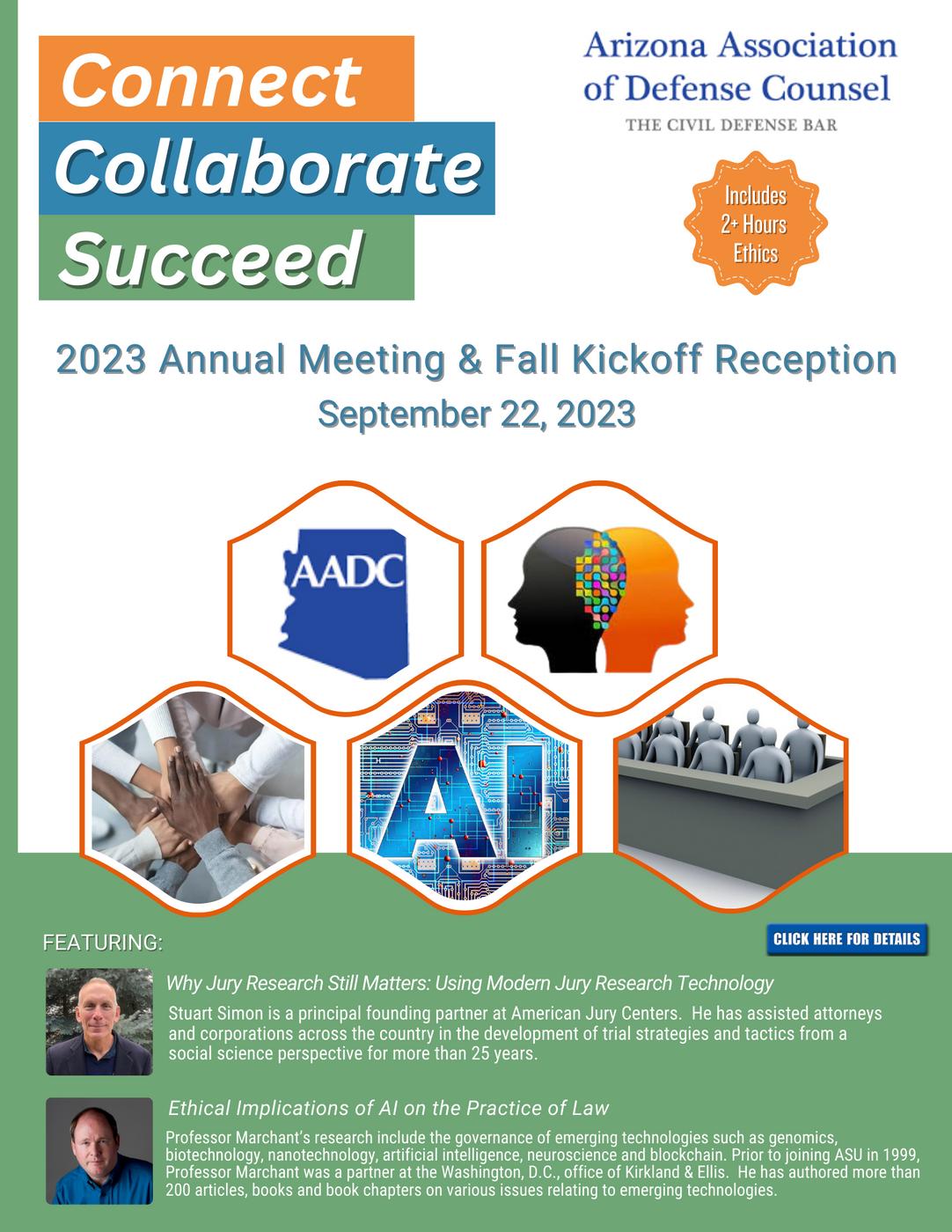
Succeed Succeed Collaborate Collaborate S u m m e r 2 0 2 3 INSIDETHIS ISSUE AADC 2023 Annual Meeting & Fall Kickoff Message From The President Connect Connect Respondeat Superior Claims 2023 Annual Meeting & 2023 Annual Meeting & Fall Kickoff Reception Fall Kickoff Reception Save The Date Save The Date September 22, 2023 Defense COMMON The Arizona Association of Defense Counsel Newsletter
Page 2 - Message From the President
Page 4 - Respondeat Superior Claims
Page 5 - Upcoming Events
Page 6 - From the Bench
Page 8 - Sidebar


Page 9 - Check Your Spelling
Page 10 - YLD Update
Page 12 - ASU Oplinger Blake Competiton
Page 13 - For the Defense
SUMMER2023NEWSLETTER
INDEX
1 COMMON DEFENSE | Summer 2023 | azadc.org
AMessageFromthePresident
Farewell,ButNotGoodbye
ThankyoutoallthemembersoftheArizonaAssociationofDefenseCounselforrecommitting andreengagingwithmeoverthepastyearinthisincredibleorganization.Ithasbeenagreatyear!

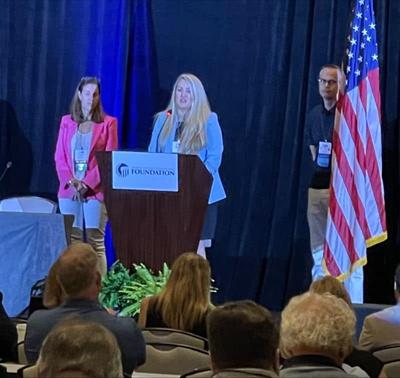
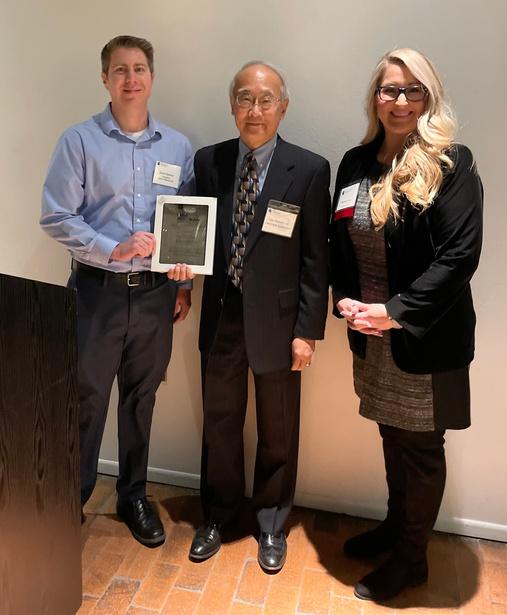
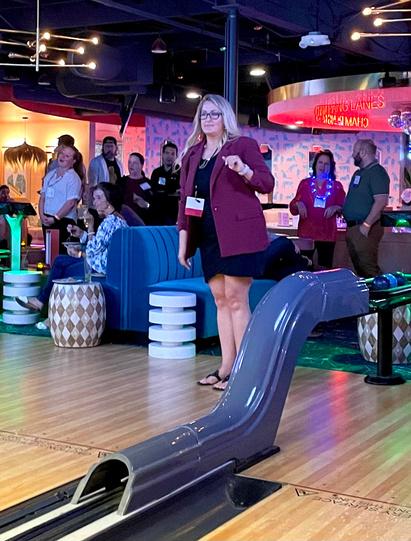
We had a blast returning to in-person events and connecting with our defense colleagues at the Annual Meeting & Fall Kickoff, Phoenix Judicial Reception, and Tucson Judicial Reception. The Young Lawyers Division Charity Softball Tournament’s roaring comebackraisedmoneyforSouthwestHumanDevelopmentthroughfriendlycompetitionandfun.Then,weroundedouttheyear celebratingourdedicatedsponsorswithanightofbowlingandcamaraderie.
AsIwrapupmyyearasPresidentandlookbackatmytimewiththeAADC,Iambeyondgrateful.IbeganparticipatingintheAADC whileIwasstillinlawschool,spentyearsintheYoungLawyersDivision,thenwasthrilledwhentheopportunityarosetoserveon theBoard.FosteringtheAADC’sevolutionandgrowthhasbeensuchaprivilege.Ourcontinuedfocusonmeaningfulcollaborations and connections, as well as diversity, equity, and inclusion initiatives makes me so excited about the future of the AADC and its membership IencouragememberstogetinvolvedinoneoftheAADC’scommitteesorconsiderservingontheBoard It’sbeena rewardingexperiencethatallowedmetodevelopconnectionsandfriendshipswithinthedefensecommunityandbeyond

Thankyouforyourmembershipandsupport
Ilookforwardtoseeingyouallatfuture
AADCeventsandmeetings!
2 COMMONDEFENSE|Summer2023|azadc.org
ann Pepe, Jaburg Wilk President 2023
I (May) Survive:
A RESPONDEAT SUPERIOR CLAIM MAY SURVIVE DESPITE DISMISSAL OF A CLAIM AGAINST AN EMPLOYEE
 By: Maria R. Kupillas, Esq. Tyson Mendes
Plaintiffs alleged the employee’s negligent driving caused the accident, and the driver was in the course and scope of his employment at the time of the accident As such, plaintiffs alleged SRP was negligent under the theory of respondeat superior

Because SRP is a political subdivision of the State of Arizona, a claim against SRP must be filed within one hundred and eight (180) days.[2] Plaintiffs timely filed a claim against SRP but did not file a claim against the employee driver until almost fifteen (15) months postaccident. The superior court granted the employee driver’s motion for summary judgment against Laurence due to failure to timely file the claim.[3]
When a tort claim against an employee is dismissed, can a claim against the employer for respondeat superior be maintained? This is the question the Supreme Court of Arizona recently addressed in Laurence v. Salt River Project Agricultural Improvement & Power District.[1] The answer is, it depends.
In Laurence, the Arizona Supreme Court held dismissing a claim against an employee with prejudice, for reasons unrelated to the merits of that claim, does not require the dismissal of the respondeat superior claim against the employer. This decision overturned a 1945 decision to the contrary.
Background
Jacob Laurence and his minor son were injured in a motor vehicle accident involving a truck owned by Salt River Project (“SRP”) and driven by its employee.
SRP then filed a motion for summary judgment, arguing since the claim against its employee was dismissed, SRP could not be held vicariously liable for the employee driver’s negligence. In making its arguments, SRP relied on DeGraff[4]. The plaintiffs responded that since summary judgment was granted for reasons unrelated to the merits, SRP could still be found vicariously liable.

In DeGraff, the Court held dismissing a claim against an employee with prejudice for any reason exonerates the employee from negligence and simultaneously adjudicates the claim against the employer.[5] The superior court agreed with SRP and the Court of Appeals affirmed.
Under DeGraff, the claims against SRP were properly dismissed, however, the plaintiffs asked the superior court be reversed and the precedent overturned, urging the Supreme Court to conclude dismissal of a claim against an employee for reasons not related to the case’s merits does not foreclose a respondeat superior claim against the employer.
I (May) Survive continued on page 11 4 COMMONDEFENSE|Summer2023|azadc.org
Marial R Kupillas is Senior at Tyson Mendes’ Scottsdale, AZ office Ms Kupillas has extensive litigation experience working in-house at several large insurance companies handling both personal and commercial lines Ms Kupillas’ practice includes defending homeowners’ associations, handling construction defect matters, representing parties before the EEOC and Attorney General in discrimination matters, and representing insurance companies in subrogation cases.
Webinar: Loss of Earnings Capacity and Future Medical Care Cost Analyses


August 30, 2023 at 12pm
Reconnectwithfriendsandcolleaguesat the2023AADCAnnualMeetingandFall KickoffReceptiononSeptember22,2023!


5 COMMON DEFENSE | Summer 2023 | azadc.org Register
From The Bench
1 In oral argument, what is one thing lawyers who appear in front of you should always do?
Answer every question directly If a question calls for a yes or no answer, respond with a yes or no and then explain If you cannot answer yes or no, say so and explain Once you answer the question, then pivot back to your argument
2. Is there anything lawyers should avoid during oral argument?
Do not guess at an answer Prepare so you never have to say, “I don’t know ” But it will happen We understand And we prefer candor over creativity Apologize, offer to provide supplemental briefing, and move on You have not lost the argument You just did not know the answer to a question
3. What is your biggest pet peeve in written motions?
Not asking for specific relief and not getting to the point Do not bury the lead
4. If you were to recommend one book to a young lawyer (fiction or non-fiction) regarding the legal profession, which would it be?
As lawyers, we must accept our limitations We cannot control what has brought someone to our offices Rarely is it a happy event But we can control how we respond Though the book titles reference males, the books discuss universal concepts of value to all humanity


 INTERVIEW OF HON. DAVID B. GASS Arizona Court of Appeals (Division 1)
With that, I offer two books: A law clerk (J William VanDehei) gave me a copy of The Little Prince by Antoine de Saint-Exupéry I recommend it as a short but insightful journey Many of our clients feel they are little princes And many lawyers do too We all need perspective


I also recommend Man’s Search for Meaning by Viktor Frankl It explores the effects of trauma, helps us reflect on our own lives, and lets us see how we can be there for others
5. Who is your favorite Supreme Court Justice and why?

I cannot answer that question with one name (see Answer 1) because my answer depends on why a Justice is my favorite best writer (Kagan), most direct effect on my life (O’Connor and McGregor you did not specify which Supreme Court), most inspirational story (Sotomayor) I will go with inspiration for the moment I have used Justice Sotomayor’s books about her life to inspire young people to pursue their dreams, particularly if they are considering a career in the law On the juvenile bench, I gave copies to young people, many of whom had never been given a book One of those young people recently attended a Legal Futures event put on by the Arizona Supreme Court’s Commission on Diversity, Equality, and Justice. She won a signed copy of the book, and she hopes to pursue a legal career.
When Justice O’Connor was appointed, she did the same for so many young people, particularly women. I remember her appointment, but I had no idea it would directly affect my life. She hired Ruth V. McGregor as her first law clerk. And after her appointment to the bench, Judge McGregor hired me as her law clerk. I also appreciate the keen insight and focus both Justice O’Connor and Justice McGregor brought to the bench. And Justice O’Connor quoted a Broadway musical in an opinion.

7 COMMON DEFENSE | Summer 2023 | azadc.org
JamesD.Smith,Esq. Osborn Maledon

“May I offer you some advice?” Often, someone asking that question leads to eyerolls because it is about to lead to an insultorathreat Butthiswasasincerequestion,andIwas happytoaccept.
A high school-age girl who is a great swimmer is another regular at the pool. You see the same faces there and everyoneisfriendly,soitisn’tasifatotalstrangerposedthe question She saw a flaw with my head position during butterfly and offered some advice I’m 53 years old In my bestdaysinhighschoolmystrokewasn’tassmoothashers, soIwashappytoacceptherinput Andshewasgraciousto spendafewminutescoaching
Welawyers andImeantheolderfolkslikeme,inparticular needtobebetteraboutacceptingadviceattimes.Wecan’t assume that we know everything about how a case or argumentwillsoundtoajudgeorjurysimplybecausewe’ve been living with the case for months or years After all, your jurywon’thaveyoursameexperience they’recomingtothe case fresh, too Take the input from your colleague, spouse, orfriend Maybethey’llhelpyouthinkofwaystobetterreach youraudience
When we’re living with a case, we can lose the neutral perspective that an outsider brings. When I’m swimming, I certainly*think*Iknowwhatmystrokelookslike.Nomatter how certain I am, however, someone viewing from the deck or another lane sees other aspects that I’ll never see That viewcanbeinvaluable
And just as that high schooler at the pool had valuable insight,don’tthinkthatonlygrizzledveteranhassomething toshare. Lately, I’ve been astonished at the perceptiveness and intellect of young lawyers I’m encountering. I doubt I madethesamecontributionsattheirage.

Last, use every mistake as a learning opportunity. I’d been making the same mistake with my head position for a long time NowIcanfixit,though,andhaveabetterstroke Life as a lawyer can be similar Trust me we all identify questions blown at trial, ways we could’ve improved a deposition, or arguments in briefs we should’ve rephrased You don’t want to dwell on them forever, but they’re often the most powerful and important lessons we can learn to improveourpractice.

SIDEBAR
8 COMMONDEFENSE|Summer2023|azadc.org
Check Your Spelling
YOUNG LAWYERS DIVISION
 By: Seraphim D. Sparrow, Esq. Jones, Skelton & Hochuli
There is a lot of legal advice on the internet Experienced lawyers take to LinkedIn or their own blogs to post advice to the younger generation of attorneys While these experts do not always agree on the pathway to a successful legal career, all seem to agree a young lawyer’s work product is crucial Unless you start your own law firm right out of law school, the chances are high that a supervising attorney will be reviewing your work And this supervising attorney should be checking your work for issues you don’t have the experience to know yet how a local jury might value the case, whether experts are necessary, whether a specific judge might grant your motion, etc.

But you, as the young attorney, already have all the tools you need to spell words correctly, use the correct grammar, and to eliminate formatting errors When I was a law student, I thought I understood this concept I thought it was important to do good work for good work’s sake To stand out, even And while this is true, I didn’t realize that there was more to this idea
Remember that, at the end of the day, you and the supervising lawyer will be charging a client for your work Not only is the supervising attorney’s time wasted on correcting basic mistakes like spelling, but the client should not have to pay for this When your supervisor has to correct these errors, it adds time and money to the client’s bill.


Additionally, each written project you submit to your supervisor represents an opportunity to make a good impression When you take care of the little things, your supervisor will trust you more And this increased trust will lead to bigger assignments and more responsibility. So if you wouldn’t trust someone who recommends suing the “Untied States of America,” neither will your supervisor trust you when you write a memorandum about the “Govenor’s power to regulate local businesses ”
With this in mind, I have provided a few tips that I follow when proofreading my work:
Finish your work the day before it is due and proofread it the next morning with a fresh set of eyes.
Print your work out and proofread a physical copy. You might be surprised to see what errors you missed when you were reading on your computer
Don’t rely on spellcheck In the above examples, spellcheck did not catch the word “Untied” because it is a real word
When you have spent countless hours on a long project, proofread it backwards Start with the last sentence and work your way backwards until you reach the beginning Our brains start to skip words when we are used to reading something, and this trick will force your brain to read your sentences in a new way
Check your word processor’s settings to ensure spellcheck is enabled for capitalized words. This is particularly important for briefs with capitalized headers.
The Young Lawyer’s Division is happy to announce the return of the AADC/YLD Softball Tournament on April 1, 2023 was a success! The YLD raised $5,000 to support early childhood development services offered by Southwest Human Development in Arizona Eight firms fielded teams including Burch & Cracchiolo; Carpenter Hazlewood; The Cavanagh Law Firm; Gordon Rees; Jaburg Wilk; Jones, Skelton & Hochuli; Sanders & Parks and Snell & Wilmer Competition was fierce throughout the tournament, but the Sanders & Parks team prevailed taking home the 2023 tournament trophy with the Jaburg Wilk team taking Second Place Special thanks to all the firms who participated and helped support this great cause The Softball Tournament will be back again next spring, so keep an eye out for details and start recruiting your team!


The YLD will also host multiple CLE events this coming year More details will be provided in the fall We look forward to seeing everyone at these upcoming events!

10 COMMONDEFENSE|Summer2023|azadc.org
The Ruling
The Supreme Court of Arizona found several compelling reasons to overturn DeGraff First, the Supreme Court found the ruling in DeGraff to be “clearly erroneous or manifestly wrong ”[6] The DeGraff majority correctly treated the dismissal of the claim against the employee with prejudice as an “adjudication on the merits”[7] but, according to the majority in Laurence, it failed to explain why that meant the employee had “been adjudged as not guilty of any negligence”[8] so as to preclude a respondeat superior claim against the employer.
In Laurence, the Supreme Court ruled that a dismissal with prejudice does nothing more than bar refiling the same claim in the same court, no matter the basis for the dismissal The dismissal does not bar a separate claim against another party
Second, the Court had already previously abrogated DeGraff in part, severely undercutting the efficacy of what remained. In Kopp, the Court “disavow[ed] [their] holding in DeGraff insofar as that case and its progeny conclude that a stipulated dismissal with prejudice operates as an adjudication that the dismissed party was not negligent in the treatment of the plaintiff ”[9] The Court reasoned that “[c]ontinuing to apply DeGraff to respondeat superior claims while carving out a different meaning for issue preclusion purposes would be confusing and unnecessary ”[10]
Third, the Court found that DeGraff conflicts with Arizona statute and case law which provide that, under the doctrine of respondeat superior, an employer is vicariously liable for its employees’ tortious acts, not adjudicated liability [11]

Fourth, the Court found DeGraff in opposition to the recognition that employers sued under respondeat superior cannot assert defenses that are personal to the employee. The respondeat superior claim, the Court explains, is “freestanding.”[12] When a plaintiff violates an employee’s procedural rights, that defense is personal to the employee and cannot be asserted by the employer Fifth, the Court found that public policy does not support upholding DeGraff Unless the finder of fact finds the employee did not commit a tort, or possibly that plaintiff released the employee from liability, it is fair to allow the respondeat superior claim to proceed [13]
For these reasons, the Arizona Supreme Court overturned DeGraff and held the superior court incorrectly entered summary judgment in favor of SRP since the claim was dismissed solely because plaintiff failed to timely file the claim


I (May) Survive continued...
11 COMMON DEFENSE | Summer 2023 | azadc.org
ASU Oplinger Blake Competiton

The ASU Oplinger-Black Closing Argument Competition was held April 3-6, 2023 at Sandra Day O’Connor School of Law Volunteer judges representing the AADC included Retired Judge James Smith (Osborn Maledon), J P Harrington Bisceglia (Christian, Dichter & Sluga), David Schmidt (Clark Hill), and Steven Crocchi (Gordon Rees) The AADC provided students with a fact pattern, evidence, and jury instructions for the competition
According to Matthew Story, the 1st place winner, timing was by far the most challenging aspect of this competition. Competitors had 10 minutes total for closing argument, and the plaintiff's side could reserve a portion of that time for rebuttal. “Briefly, I had to legitimize my clumsy plaintiff's injuries and simultaneously paint the corporate defendant as careless and apathetic Brevity was our ally as we forcefully reduced complex arguments into palatable, bite-size forms Still, it was difficult to balance brevity against clarity while also threading a common theme throughout all of it Juries are a finicky bunch, a jury of lawyers is no different I was fortunate to have a captivated jury that appreciated my argument I am grateful for the opportunity to improve my advocacy skills against such great competitors and to receive in-person feedback from experienced litigators ”
The AADC provided monetary awards for the top three winners: Matthew Story (1st place), McKenna Hunter (2nd place), and Adam Bixby (3rd place). Congratulations to the winners and the competitors on a job well done! We’re excited for Arizona’s future litigators!


 ADAM BIXBY - 3RD PLACE
MATTHEW STORY - 1ST PLACE
ADAM BIXBY - 3RD PLACE
MATTHEW STORY - 1ST PLACE
12 COMMONDEFENSE|Summer2023|azadc.org
MCKENNA HUNTER - 2ND PLACE
FortheDefense
Gordon Rees Partner Matthew Kleiner and Associate Steven D Crocchi prevailed on a motion to dismiss and a motion for summary judgment in a breach of contract and insurance fraud case A small house fire caused minor damage to the plaintiff’s living room wall, carpet, piano, and odds and ends Plaintiff sued insurer for breach of contract, insurance fraud, consumer fraud, and requested punitive damages The plaintiff stipulated to dismiss the consumer fraud claim and the Gordon Rees team successfully moved to dismiss the insurance fraud claim based on a statute of limitations defense and on the plaintiff’s punitive damage request The court found plaintiff lacked evidence proving she was underpaid for her loss



Gordon Rees Co-Managing Partner Kira N Barrett and Associate Steven D Crocchi prevailed on a motion to dismiss on behalf of a social worker in a $15 million § 1983 case The plaintiffs, a mother and her minor child, were involved in a dependency action in the

13 COMMON DEFENSE | Summer 2023 | azadc.org
juvenile court that was resolved in the mother’s favor Thereafter, the mother, individually and on behalf of her minor child, sued all involved in the dependency, including the social worker, and alleged a conspiracy amongst all of the participants to violate her constitutional rights The Gordon Rees team moved to dismiss the complaint arguing that the plaintiffs failed to state a claim against the social worker The District Court dismissed the complaint as to all defendants finding that the plaintiffs’ claims were not plausible
Gordon Rees Co-Managing Partner Kira N Barrett and Associate Steven D Crocchi prevailed on a motion to dismiss on behalf of a court-appointed guardian ad litem in a $16 million § 1983 case The plaintiffs, a father and his minor children, were involved in a dependency action where the minor children were removed from father’s care After the dependency was dismissed, the plaintiffs sued various defendants, including the court-appointed GAL, asserting causes of action for malicious prosecution and violation of the plaintiffs’ constitutional rights under § 1983 The Gordon Rees team successfully obtained a dismissal with prejudice after the Court found that the GAL was absolutely immune from suit





THANKYOUFORYOURSUPPORT

WeextendourheartfeltgratitudeforthisgroupsoutstandingeffortsincuratingourCommonDefensenewsletter Yourdedicationtoproviding valuableinsightstoourmembersistrulycommendableandgreatlyappreciated.Thankyouforcontributingtothesuccessofourorganization.

 EadieRudder, Carpenter Hazlewood
DanCoumides, GustRosenfeld
StevenCrocchi, GordonRees
MariaMcKee, Carpenter Hazlewood
DoreenMyles, AADCExecutive Director
EadieRudder, Carpenter Hazlewood
DanCoumides, GustRosenfeld
StevenCrocchi, GordonRees
MariaMcKee, Carpenter Hazlewood
DoreenMyles, AADCExecutive Director
TheArizonaAssociationofDefenseCounsel 6711E.CamelbackRoad,Suite64,Scottsdale,AZ85251 602-743-3700 |admin@azadc.org
