2016 COLLEGE RODEO EDITION 6
TAKING THE NEXT STEP: INSIDE COLLEGE RODEO
M
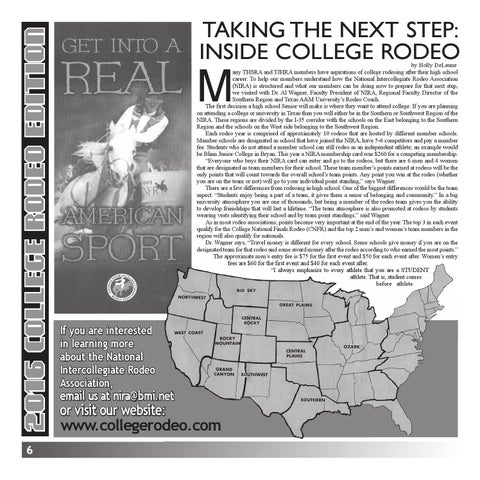
by Holly deLaune any THSRA and TJHRA members have aspirations of college rodeoing after their high school career. To help our members understand how the National Intercollegiate Rodeo Association (NIRA) is structured and what our members can be doing now to prepare for that next step, we visited with dr. Al Wagner, faculty President of NIRA, Regional faculty director of the Southern Region and Texas A&M University’s Rodeo Coach. The first decision a high school Senior will make is where they want to attend college. If you are planning on attending a college or university in Texas then you will either be in the Southern or Southwest Region of the NIRA. These regions are divided by the I-35 corridor with the schools on the East belonging to the Southern Region and the schools on the West side belonging to the Southwest Region. Each rodeo year is comprised of approximately 10 rodeos that are hosted by different member schools. Member schools are designated as school that have joined the NIRA, have 5-6 competitors and pay a member fee. Students who do not attend a member school can still rodeo as an independent athlete; an example would be blinn Junior College in bryan. This year a NIRA membership card was $260 for a competing membership. “Everyone who buys their NIRA card can enter and go to the rodeos, but there are 6 men and 4 women that are designated as team members for their school. These team member’s points earned at rodeos will be the only points that will count towards the overall school’s team points. Any point you win at the rodeo (whether you are on the team or not) will go to your individual point standing,” says Wagner. There are a few differences from rodeoing in high school. One of the biggest differences would be the team aspect. “Students enjoy being a part of a team, it gives them a sense of belonging and community.” In a big university atmosphere you are one of thousands, but being a member of the rodeo team gives you the ability to develop friendships that will last a lifetime. “The team atmosphere is also promoted at rodeos by students wearing vests identifying their school and by team point standings,” said Wagner. As in most rodeo associations, points become very important at the end of the year. The top 3 in each event qualify for the College National finals Rodeo (CNfR) and the top 2 men’s and women’s team members in the region will also qualify for nationals. dr. Wagner says, “Travel money is different for every school. Some schools give money if you are on the designated team for that rodeo and some award money after the rodeo according to who earned the most points.” The approximate men’s entry fee is $75 for the first event and $50 for each event after. Women’s entry fees are $60 for the first event and $40 for each event after. “I always emphasize to every athlete that you are a STUdENT athlete. That is, student comes before athlete.
if you are interested in learning more about the national intercollegiate rodeo Association,
email us at nira@bmi.net
or visit our website: www.collegerodeo.com