





































For three decades, you’ve made us laugh, think, debate, explore, and show up.
You’ve given voice to Vermont’s culture and built something that feels less like a media outlet and more like a trusted neighbor (if that neighbor also happened to be an awardwinning journalist who never missed a beat).
Thanks for being a true original. Vermont’s better because you’re in it.
With admiration and applause, Your friends at the Vermont Community Foundation
LOVES LONG WALKS, LOCAL NEWSPAPERS, AND LASTING IMPACT.

Ourprofilewritesitself,becausegivingjustfeelsgood.Youknowthefeeling: whenacausespeakstoyourheart.We’reheretohelpyoumakethatmatch. Findyourphilanthropicmatch: vermontcf.org/giving-quiz















































































COMPILED BY SASHA GOLDSTEIN & MATTHEW ROY
On October 7, 2009, Seven Days debuted the “Last 7” that’s usually in this space — a digestible display of facts and figures that attempts to wrap up the previous week’s news. e first stat, in the top-right corner, was, appropriately seven. at’s how many tons of pigeon poop had just been removed from Burlington’s Moran Plant. e main write-up was about the Vermont Pumpkin Chuckin’ Festival, for which people used medieval siege weapons called trebuchets to hurl the orange gourds. e winning distance: 139 feet, 2 inches.
Life-or-death stuff. We reasoned: ere is no shortage of depressing news in the paper. Why not start the section on a light note?
e page has evolved over the years. We started by singling out a Twitter account in “Now we’re following,” for instance, which morphed into “Tweet of the Week” — a Vermonty quip or observation gleaned from the social media platform. When Fletcher Allen Health Care changed its name to University of Vermont Medical Center in 2014, we republished a tweet from an account called @FletcherAllen that said simply: “AVENGE ME.”
en Elon Musk bought Twitter, rebranded it to X and ushered in changes that drove many users from the platform. Finding witty Vermont news and comments became more difficult. Last February, we dropped what had become the “X Post of the Week” and replaced it with “Town
















Seven Days has contracted with four printing presses during our 30-year run. Québecor Media Printing, located just outside Montréal, now prints 35,000 copies each week.


















That’s how many sta ers, including Pamela Polston and Paula Routly, launched Seven Days in 1995. Today, a total of 53 employees work on the newspaper, 15 of whom are parttime circulation drivers.
1. “Give and Take”: is exhaustive 2018 report dissected Vermont’s $6.8 billion nonprofit sector. IRS data revealed that some nonprofits provide lucrative executive salaries and perks. Nonprofits are so prolific in Vermont that even the Olde Northender Pub has one.


Crier” — a synopsis of a vetted news story published elsewhere. It’s a chance to call attention to some of the great journalism in Vermont’s smalltown papers.




Remember “News Quirks”? Seven Days carried Roland Sweet’s syndicated column for years — until he died in 2015. After his death we tried something similar with “Po-Po Platter,” which we described as “a sampler of citizen shenanigans,” but it got stale — fast. We settled on a short feature we first called “802 Much,” then “True 802”: a brief, quirky story that could only happen in Vermont. Sweet certainly would have appreciated “A Farting Bear Caught on Camera Is What We All Needed to See.” It went viral, of course.
MATTHEW ROY
The first o ce was a windowless room in the basement of Miller’s Landmark on Burlington’s Church Street — where CVS is now. In 1997, HQ moved to South Champlain Street, near Handy’s Lunch. We’ll take fries with that, Earl!

We’re finally old enough to have two sta ers who weren’t yet born when Seven Days launched. A few others were still in diapers…

The first issue of Seven Days ran 28 pages. The paper you are holding has 120. No other alternative weekly in the country is as thick with stories, listings and advertisements.
2. “Worse for Care”: ese 2019 stories, jointly reported with Vermont Public Radio, were rooted in analysis of inspections of stateregulated eldercare facilities. Poor practices and mistakes have harmed residents, sometimes fatally. Seven Days made that information public by building a searchable database.
3. “Hooked”: Writer Kate O’Neill’s 2019 series shared compassionate stories from Vermont’s opioid crisis — including that of her own sister, the late Madelyn Linsenmeir — and explored community solutions.
4. “Locked Out”: is 2022 series detailed how homeownership has become increasingly out of reach for a growing number of Vermonters, which hampers opportunity and economic growth.
5. “ is Old State”: Our 2024 stories examined the profound social and economic impacts of having one of the oldest populations in the U.S.
LOCALLY SOURCED NEWS
Dating App Fatigue? In Vermont, Personal Ads Still rive.
Personal ads have largely gone the way of the buggy whip, according to the New York Times — except for in Seven Days. “For decades, the ads have been reliably quirky, surprisingly effective and, well, very Vermont,” its November 25, 2024, story reported. “Nowadays, Seven Days has a thriving online personals section to go with the print version. In a recent entry, one man in his 70s boasted of his several hundred maple sugar taps.”
www.nytimes.com/2024/11/25/style/ seven-days-personals-vermont.html

























When Matthew Roy first came to Seven Days in 2014 to interview for what became his news editor position, publisher Paula Routly showed him around the office. at included the bathroom, but not in an offhand, “Oh, there’s the loo” way; the room was the highlight of the tour. Painted Pepto-Bismol pink, it was and still is crammed with religious art — primarily Catholic. ink statuettes of saints, devotional items, sacred hearts, a puppet of a nun wearing boxing gloves, an antique DIY reliquary.
Roy recalled being surprised and tickled. “ at’s because, these days, it takes a wedding or a funeral to compel me to enter any kind of house of worship.” Still, the former altar boy
added, when leaving “the Shrine” he felt a pang of guilt.
I did not grow up Catholic and felt no remorse during my yearslong obsession with objects from what I consider an esoteric, extravagant faith. I was drawn to Mary/Madonna, the pantheon of saints, angels, Day of the Dead figurines and the like. (I even got a Sacred Heart tattoo.)
e Seven Days bathroom became an auxiliary site for my collection. Over the years staffers have added such gems as an “I Honk for Jesus” bumper sticker and a startling priapic figure that is suspiciously pagan. e trove grew slightly more pan-religious. As art director Diane Sullivan put it, “I think the Shrine leans a little Unitarian Universalist and is welcoming to all religions. I’m 99 percent certain there are representatives of Judaism, Buddhism and Hinduism in there.”
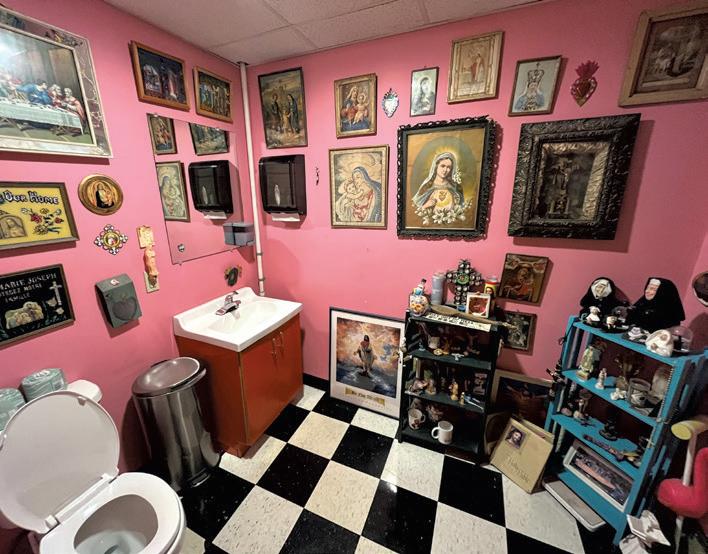
Still, in a room where one might sit, or stand, and contemplate the wild range of human beliefs, one item stands out: the Last Rites box. I found this in an antique store decades ago and
was fascinated by its emergency supply of deathbed accoutrements — a tiny vial of holy water, a linen napkin, candles and so on. e wooden box is delicate, so I attached to it a sticky note that reads: “Fragile. Do not open. Unless last rites are needed.” e note has clung, er, religiously to the box ever since.
When I retired last year, I bequeathed the care of the Shrine to Sullivan, another lapsed Catholic. Even though cleanliness is next to godliness, the room has not been dusted lately. But she aspires to paint the walls “a good holy color like deep red or rich purple.”
Meantime, the Shrine remains a popular must-see on office tours — except for that one visitor, a human resources consultant, who told deputy publisher Cathy Resmer that it was “an HR nightmare.”

Three decades of keeping Vermonters informed and entertained. Here’s to the next chapter, Seven Days! -The team at Pomerleau Real Estate
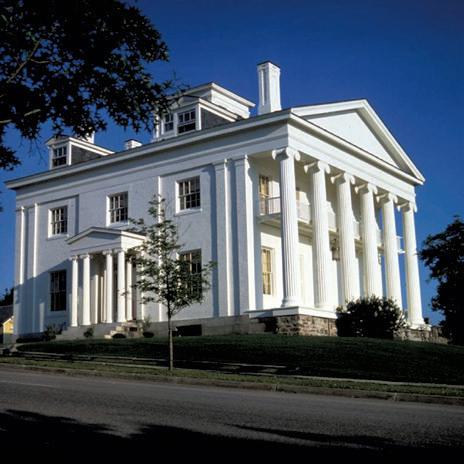

PARTY LIKE IT’S 1995.
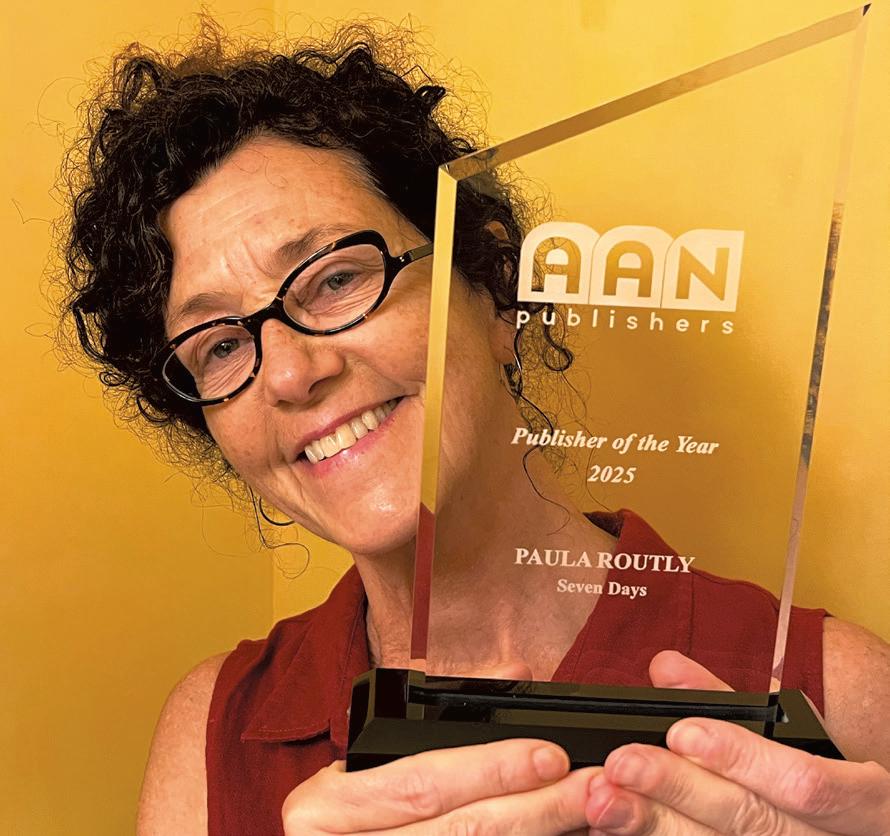
Paula Routly
Cathy Resmer
Don Eggert, Colby Roberts
NEWS & POLITICS
Matthew Roy
Sasha Goldstein
Ken Ellingwood, Candace Page
Hannah Bassett, Derek Brouwer, Colin Flanders, Courtney Lamdin, Kevin McCallum, Alison Novak, Lucy Tompkins
ARTS & CULTURE
Dan Bolles, Carolyn Fox
Chelsea Edgar, Margot Harrison, Pamela Polston
Jen Rose Smith
Alice Dodge
Chris Farnsworth
Rebecca Driscoll
Jordan Barry, Mary Ann Lickteig, Melissa Pasanen, Ken Picard
Alice Dodge, Angela Simpson
Katherine Isaacs, Martie Majoros
DIGITAL & VIDEO
Bryan Parmelee
Eva Sollberger
Je Baron DESIGN
Don Eggert
Rev. Diane Sullivan
John James
Je Baron SALES & MARKETING
Colby Roberts
Robyn Birgisson
Michelle Brown, Logan Pintka, Kaitlin Montgomery
Maguire
Marcy Stabile
Gillian English
Sam Hartnett
CONTRIBUTING WRITERS
Jordan Adams, Justin Boland, Alex Brown, Erik Esckilsen, Anne Galloway, Steve Goldstein, Amy Lilly, Bryan Parmelee, Suzanne Podhaizer, Samantha Randlett, Jim Schley, Carolyn Shapiro, Xenia Turner, Casey Ryan Vock
CONTRIBUTING ARTISTS
Luke Awtry, Daria Bishop, Sean Metcalf, Tim Newcomb, Jeb Wallace-Brodeur FOUNDERS
Pamela Polston, Paula Routly
CIRCULATION: 35,000
Seven Days is published by Da Capo Publishing Inc. every Wednesday. It is distributed free of charge in greater Burlington, Middlebury, Montpelier, the Northeast Kingdom, Stowe, the Mad River Valley, Rutland, St. Albans, St. Johnsbury and White River Junction. Seven Days is printed at Quebecor Media Printing in Mirabel, Québec.
DELIVERY TECHNICIANS
Joe Abraham, Harry Applegate, James Blanchard, Joe Bou ard, Pat Bou ard, Colin Clary, Elana Coppola-Dyer, Matt Hagen, Nat Michael, Frankie Moberg, Liam Mulqueen-Duquette, Dan Nesbitt, Dan Oklan, Ezra Oklan, Matt LaDuq Perry, Danielle Schneider, Andy Watts, Tracey Young With additional circulation support from PP&D.
SUBSCRIPTIONS
$158.
$250.
Please call 802-865-1020, ext. 132 with your credit card, contact circ@sevendaysvt.com or mail your check to: Seven Days, c/o Subscriptions, 255 S. Champlain St., Ste. 5, Burlington, VT 05401
Seven Days shall not be held liable to any advertiser for any loss that results from the incorrect publication of its advertisement. If a mistake is ours, and the advertising purpose has been rendered valueless, Seven Days may cancel the charges for the advertisement, or a portion thereof as deemed reasonable by the publisher. Seven Days reserves the right to refuse any advertising, including inserts, at the discretion of the publishers.

This is not referencing a specific article, but I wanted to reach out to say thank you for sending your paper all the way to two Vermonters in Oregon. My partner and I left for a brief hiatus to the Pacific Northwest, and I found myself oddly missing Seven Days, maybe even more than Cabot Extra Sharp? Maybe.
I dutifully pick up the local weekly here, but despite their best e orts and my Vermont bias, it’s just not the same. Mostly, though, I just don’t think I realized how lucky we are to have such a robust weekly paper.
I ended up subscribing to the print version of the paper, and now the stack of unread Seven Days on the co ee table, taunting me to catch up on 3- to 4-weekold news, has me feeling right at home. The huge range of reporting, from silly to informative — plus a crossword puzzle I can actually get close to fi nishing — have my slow Saturday mornings feeling complete again. Thank you!
Tabitha Tice EUGENE, OR
Thirty years for Seven Days! The most noteworthy story is one that you have never published: that two women created another “alternative” startup that was supposed to fail but that has not only thrived but become a paper of record, supplanting the legacy newspapers such as the Burlington Free Press, the Rutland Herald and the BarreMontpelier Times Argus Wowser.
John Franco BURLINGTON
Paula Routly mentioned the 1995 Highgate show as being her first — and only — Grateful Dead show [From the Publisher: “‘Ripple’ Effect,” August 6].
For me, it was my second — and last — show; San Francisco 1984 was the first. I was very slow to warm up to the band despite having heard it regularly since I was probably 10.
But something else happened that day in Highgate (other than Bob Dylan being there, which is why I went): I met Paula for the first time. I remember her standing in the parking lot, camera around her neck.
Two months later, as she said, Jerry Garcia was dead and Seven Days was born. The rest is history.
Rick Woods COLCHESTER
Editor’s note: Woods was our first sales manager at Seven Days. He managed to sell ads into the paper before it even existed — and enough of them so that we could a ord to create a decent product. He stayed at the paper, as general manager, until 2009. Seven Days would not be here without him.
In [“Different Strokes: In Historically Accurate Boats, Lake Champlain Maritime Museum Rowing Clubs Share a Niche Passion,” August 6], the heavy wooden boats shown were near the Palisade cliffs and 300-foot-deep water without life jackets on. With an approaching storm “not one of the rowers reached for the life jackets by their feet, knowing that their boats were built for even rougher seas.” Sounds like the Titanic
Very fit dragon boat rowers use life jackets on short sprints in shallow waters. The Lake Champlain Maritime Museum needs to promote safer nautical boating, as recommended by the U.S. Coast Guard.
Richard Ryder SHELBURNE
BRING BACK ‘WTF’ COLUMN
I think you should revive the “WTF” column or maybe instead start “You Gotta Be Kidding Me!” So many stories have elicited this reaction from me, but I don’t get around to submit a timely feedback comment. Stories include the “progressive” mayor of Burlington terminating long-term employees, DOGE-like [“Burlington Lays O 18 City Workers to Help Close Budget Gap,” May 9, online]; treating the obvious and major pollution of Lake Champlain by Panton farmers as a neighbor dispute and leading to a bill to protect farmers from so-called nuisance suits [“Flowing Downhill,” April 16]; and your recent excellent reporting by Hannah Bassett on the wasted time and resources on all these legislative studies [“Filed and Forgotten,” August 6]. Thanks, Seven Days!
Alan Quackenbush NORTH DUXBURY
Editor’s note: See “Bygone Bylines” on page 56 for our tribute to the retired “WTF” column.
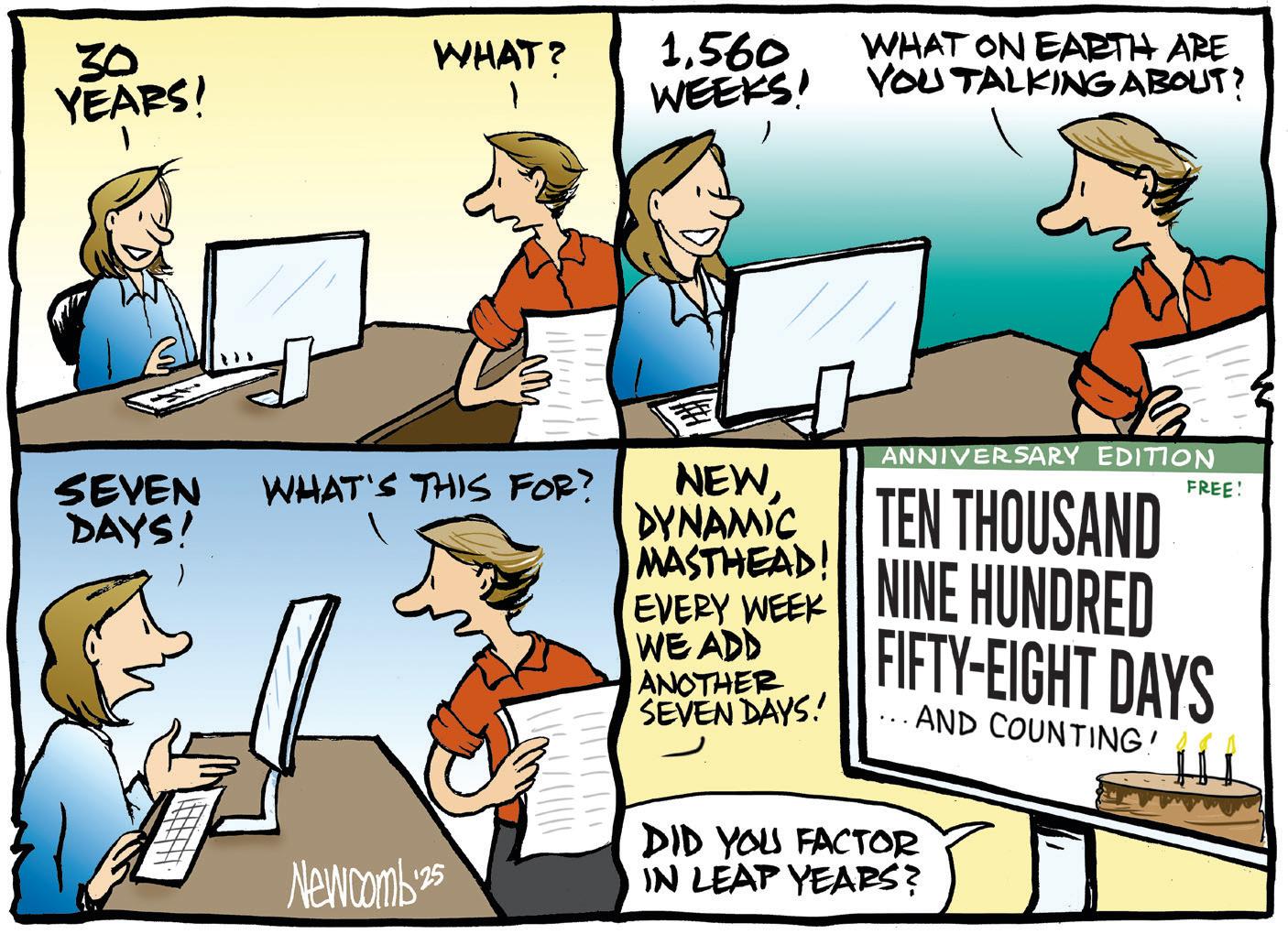
[“Tent City,” August 13] is a classic documentary that every Vermonter should read.
Peter Chilos RUTLAND
Here’s an imagined eulogy for the statue of Chief Greylock by the statue of Major General William Wells [“Chief Concerns: The Debate Over Abenaki Authenticity Complicates Plans to Replace a Statue in Burlington’s Battery Park,” August 13]:
The moon is bright enough tonight to turn the lake silver, bright enough to make me remember. You should be here.
The years we stood in this park together.
Wet August heat like now or February ice, the time passed slowly through us both
Made of different materials but we had the same job. To clocklessly keep watch.
We didn’t talk much. We just shared the nights. Watched the lovers sneak down to the water, Watched the storms roll across the lake.
And on nights like this — full moon, calm air —
we’d just stand here and breathe in the quiet.
Now it’s just me.
They said you were rotting. Said your wood couldn’t hold together anymore. They came with their ladders and their ropes, and one day you were gone.
An empty pedestal. Like you’d never been here at all.
But you were here. I remember.
The gulls still circle, the lake still sparkles under the moon, but it all feels thinner without you.
Thinner in spirit but heavier of heart, in the weight of this new loneliness.
Michael Nedell BURLINGTON
Seven Days wants to publish your rants and raves. Your feedback must... be 250 words or fewer; respond to Seven Days content; include your full name, town and a daytime phone number.
Seven Days reserves the right to edit for accuracy, length and readability. Your submission options include: • sevendaysvt.com/feedback feedback@sevendaysvt.com Seven Days, P.O. Box 1164, Burlington, VT 05402-1164
















Legislation, STAT! Health care expenses were not the main focus of the legislative session. Lawmakers say that may have helped them address the problem.
Regulators Seek Audit of Burlington Electric Department
Early Dismissal
A national food service company
started a food fight when it fired a popular Williamstown school chef
Drug Debt Prompted Fatal Burlington Beating, Police Say
Ask Us Anything
Publisher Paula Routly opens up about Seven Days’ three-decade evolution and quest to stay in business
Read All About It irty standout stories from Seven Days 30 years
On the Same Page
How the partnership between Pamela Polston and Paula Routly built Seven Days
The Next 30
With products and people, Seven Days is preparing for the future

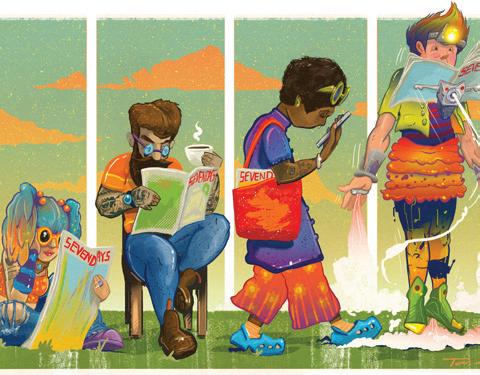
Feeling the Love
Why Super Readers choose to pay for Seven Days
Alive and Kicking irty reasons Seven Days is still here
Bygone Bylines
Paying our respects to Seven Days columns, publications and gimmicks past Best Sta Ever!
Cover to Cover e “wacky” wisdom behind Seven Days cover images, from photos to illustrations to suggestive foldable art
Papers to the People
Meet the drivers who crisscross Vermont to deliver Seven Days
Behind the Lens
Seven Days most frequent photographers reflect on their favorite assignments
Food
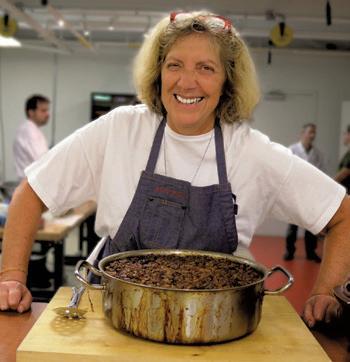

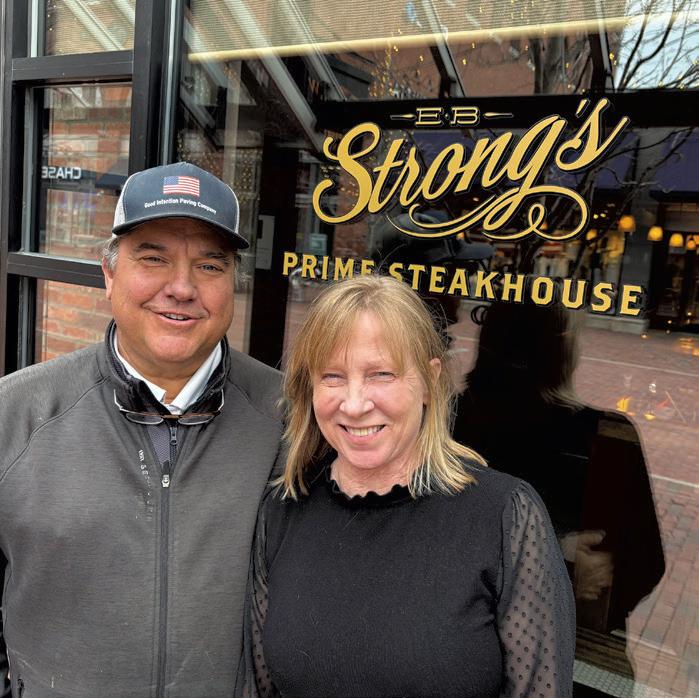
We have been operating Halverson’s Upstreet Cafe since 1979, three years before Church Street became the Marketplace.
We have been running EB Strong’s Steakhouse since 2012.
We are so optimistic about the future of Church Street that we are increasing our seating capacity at EB Strong’s by 30%.

We love doing business on Church Street. We love the vibe and being part of one of the most successful walking malls in the country, in one of the most beautiful small cities in the world.
Come on down and enjoy yourself. Bring your friends. We’ll be here waiting for you





















MUST SEE, MUST DO THIS WEEK BY REBECCA DRISCOLL
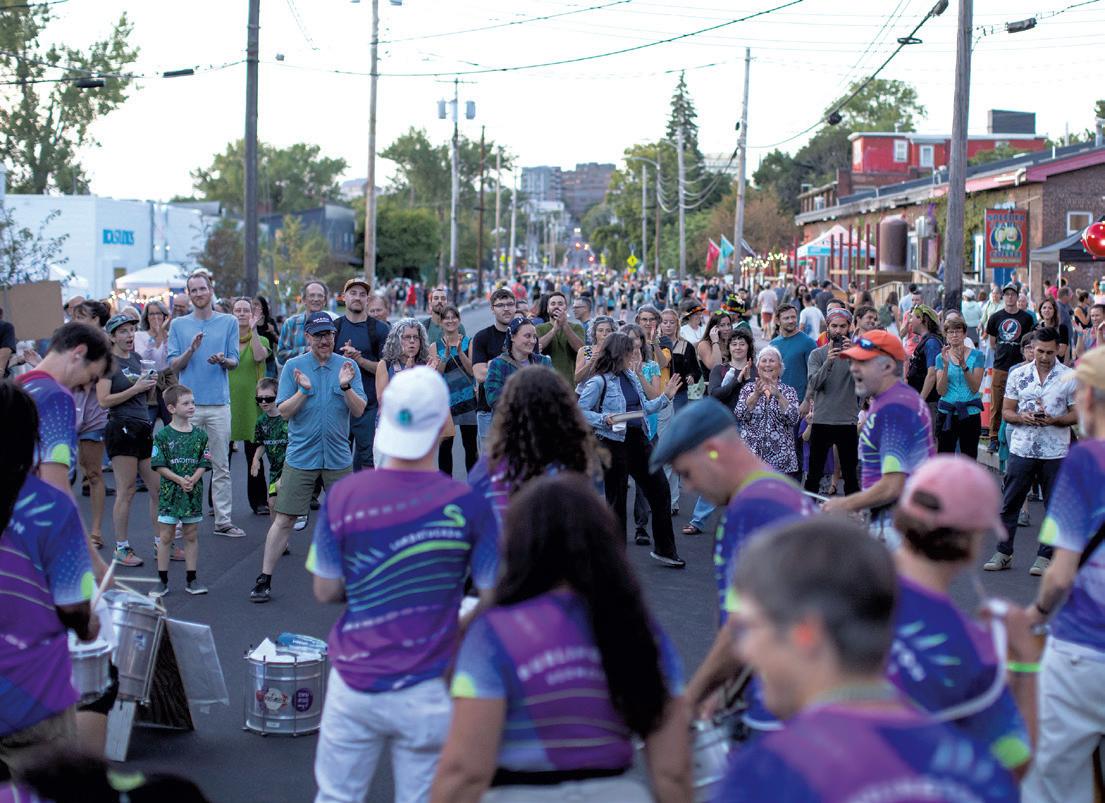
SUNDAY 7


FRIDAY 5-SUNDAY 7
e South End Art Hop transforms Burlington’s South End Arts District into a veritable hive of creativity. e hoppin’ happening promotes the interdependence of artists and businesses in the region, shining a light on the district’s unique aspects. More than 100 locations spanning two miles open their doors for guests to peruse and purchase.
SEE THE SEVEN DAYS GUIDE TO THE SOUTH END ART HOP, IN THIS ISSUE

All Revved Up
e Ladies’ Rally beckons motorists (gents allowed!) to start their engines at the Vergennes Green and hit the road for a scenic cruise of Addison County for a cause: e annual affair supports the Vergennes Opera House. Drivers in vehicles vintage or modern receive directions, highlights and guidelines, then take to the area’s byways for a picturesque excursion to remember.
SEE CALENDAR LISTING ON PAGE 95

THURSDAY 4
From
e Ben & Jerry’s Concerts on the Green series continues with a sold-out show by Australian singer-songwriter Vance Joy at the Shelburne Museum. Joy garnered global attention in 2013 with his ukulele-fueled earworm “Riptide” — which is now stuck in your head. A permanent fixture of the alt-indie world, the multiplatinum artist charms listeners with an intimate blend of folk and pop.
SEE CALENDAR LISTING ON PAGE 92


THURSDAY 4
Foodies flock to Bristol Village Cohousing for the rare opportunity to make Momos With the Monks is special fundraising event offers a casual culinary experience with six touring monks from the Gaden Shartse Monastery in India. Attendees craft — and, of course, consume! — succulent steamed dumplings while conversing with the honored guests.
SEE CALENDAR LISTING ON PAGE 92
SATURDAY 6
Apple season is nigh! e Peacham Farmers Market honors the occasion with its Apples & Arts celebration on the town green. e brand-new bash invites locavores to a mecca of late-summer harvest offerings, live music and activities, made more autumnal by pressing demos and fresh cider. Home bakers, don’t miss the pie contest and a chance to win prizes — and bragging rights!
SEE CALENDAR LISTING ON PAGE 93
SATURDAY 6
Handcyclists and bikers pedal with purpose at the 20th annual Kelly Brush Ride, beginning at Middlebury College’s Student Center. Choose from 10-, 20-, 50- or 100-mile routes — or take the road less traveled and embark on a 30-mile gravel option — to help people with spinal cord injuries enjoy active lifestyles. Post-ride, friends and neighbors gather for barbecue, brews, music and prizes.
SEE CALENDAR LISTING ON PAGE 94
SATURDAY 6
Stowe Cider and Vermont Parks Forever present Jam for the Parks at Waterbury Center State Park, supporting the preservation of the Green Mountain State’s 55 vital green spaces. e all-day music jubilee includes local food and drinks, familyfriendly activities, and groovy tunes by homegrown faves the likes of the Ryan Montbleau Band and Zach Nugent’s Dead Set.
SEE CALENDAR LISTING ON PAGE 93



In the early years of Seven Days, writers hand-delivered their stories on physical floppy disks, and the designers “pasted up” the paper using hot wax as adhesive. For a time, every Tuesday night cofounder Pamela Polston and I transported a box of soon-to-be newspaper pages to a parking lot in Barre, where we handed them o to an ink-stained emissary from the Bradford press. The paper would get printed overnight, while the two of us, driving north on Interstate 89 in the dark, hatched all the story ideas for the next issue. Everything had to be ready for editing in three days — five, if writers could work over the weekend. This wasn’t a leisurely brainstorm session but a weekly gun-to-the-head, pants-shitting moment.














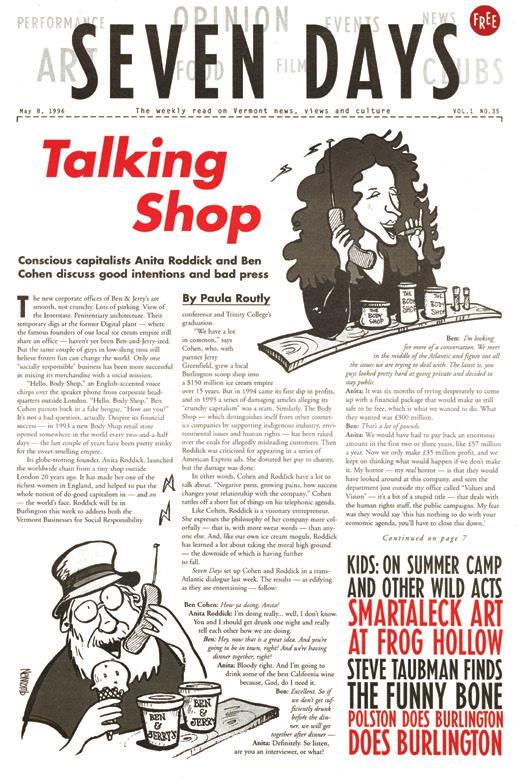
I remember one night, for example, when we had to come up with a cover story for the next week’s paper. We noted that Anita Roddick, the British founder of the Body Shop cosmetics company, was coming to Burlington to give two talks: for the Vermont Businesses for Social Responsibility conference and the Trinity College graduation. We knew that she and Ben Cohen of Ben & Jerry’s were friends and that their respective businesses had recently faced some common headwinds — “negative press, growing pains, how success changes your relationship with the company,” according to Cohen. Why not preview Roddick’s visit by getting the two “crunchy capitalists” on the phone together and printing their conversation as a cover story? Eureka.
That’s exactly what we did for the issue of May 8, 1996. Illustrated by Tim Newcomb, “Talking Shop” was a tantalizing, f-bombfilled eavesdrop on two business giants. I mean, they dished. I transcribed and edited the conversation and wrote an intro to put it all in context.
The Seven Days archive is full of such gems — wildly creative, seat-of-the-pants stories that, mixed in with all the serious stu we’ve covered, have made the paper a delightful read, week after week, year after year, for three decades.
Yes, I’m biased. And, like most publishers, usually too busy to look back. But this issue marks the big 3-0 for Seven Days, so we’re celebrating it. Combing through past issues, I’m struck by both the sustained invention and the vibrancy of voices in all those pages, from Peter Freyne writing about politics in his “Inside Track” column to rants by Peter Kurth, Ron Powers and Judith Levine.
For the first seven years, Pamela and I each wrote at least one story a week alongside some of the best writers in the state, who worked for us as freelancers: Bryan Pfei er, John Dillon, Erik Esckilsen, Ruth Horowitz, Nancy Stearns Bercaw, Amy Rubin, P. Finn McManamy, Rick Kisonak, Anne Galloway, Kevin J. Kelley, Molly Stevens, Marialisa Calta, Barry Snyder, Jeanne Keller and David Healy, among others.
In the 23 years since, as finances have allowed and the Burlington Free Press has shrunk, we slowly assembled a hardworking team of full-time sta writers and editors to anticipate the news that can be planned for — and to jump on the kind that can’t. There’s no other way to operate this kind of publication. The in-depth, long-form cover stories now regularly
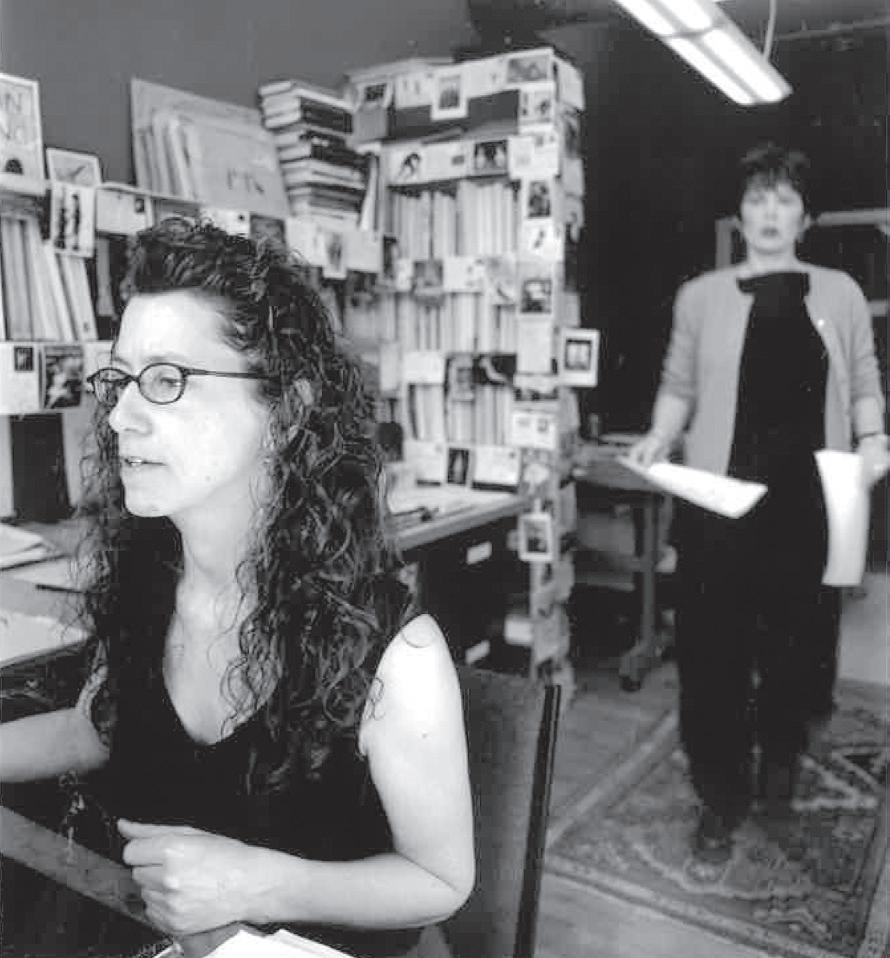
published in Seven Days often take weeks to report, and for almost as long as we’ve had a website, circa 2000, we’ve tried to respond to breaking news online.
I remember Freyne’s surprising embrace of the digital realm, which disrupted his longtime habit of holding back juicy news items for his column in the Wednesday paper. Although it amounted to
“scooping” himself, he learned to blog and came to enjoy it. When he was diagnosed with lymphoma, in January 2007, Freyne wrote about the experience in detail from his hospital bed at Fletcher Allen Health Care, now the University of Vermont Medical Center, complaining the whole time about its poor connectivity. Two years earlier, he had relentlessly covered the hospital’s $367 million Renaissance Project and the criminal role its president and CEO played in misrepresenting its cost. As a result of his reporting, Bill Boettcher was fired and sentenced to two years in a minimum-security prison for defrauding a state agency.
Too bad Freyne didn’t live long enough to have a podcast. Or to cover the current Burlington City Council. When he died, in January 2009, we gave him a secular Irish funeral, complete with speeches from the politicians he skewered and the daughter of UVM prof and political observer Garrison Nelson singing “Danny Boy.”
So much has happened in Vermont since the first issue of Seven Days, on September 6, 1995, and the paper has documented most of it, including the presidential campaigns of governor Howard Dean and U.S. Sen. Bernie Sanders, the locavore food movement, the opioid and homelessness crises. We’ve listed, previewed and reviewed countless shows, exhibits and events. No other media outlet in the state has devoted so much ink to local culture. Ditto cartoons, original photography and illustration. And the ads! In the early 2000s, almost every small business in downtown Burlington had a regular presence in our pages. Some have gone; others have shrunk or cut back on traditional marketing.
While it’s a chronicle of local history, for me, the archive is also personal — an emotional journey through my life’s work, some of which I’m starting to forget. As we embarked on the impossible task of choosing 30 stories that best represent Seven Days, I relived the experience of capturing a changing community through its highs and lows. I rediscovered projects and stories — including my own!
A timeline of Seven Days’ three decades snakes through this week’s 30th Birthday Issue. Compiled
by deputy publisher Cathy Resmer, it calls out some highlights in our history. The past 10 years have been rough, but despite the challenges of the pandemic and its continuing economic aftermath, the paper has steadily stepped it up and produced some of its
most important, ambitious work. Before the COVID19 lockdown, we published the “Our Towns” issue and award-winning series such as “Worse for Care,” “Hooked,” and “Give and Take.” More recently, we took on two of the state’s most intractable problems in separate, yearlong reporting projects: “Locked Out,” an exploration of the state’s housing crisis, and “This Old State,” about the demographic reality that exacerbates so many problems in Vermont. In 2023, Joe Sexton gave us his shocking exposé of child abuse at Woodside Juvenile Rehabilitation Center.
From those first, story-hatching drives in the dark, it’s been a wild ride, indeed.
One thing hasn’t changed: Every week we have to bring in enough money from advertising, sponsorships and event ticketing to pay for our journalism. Our sales reps hustle to pay the bills, and, since the pandemic, generous readers and local foundations have pitched in, too.
The result is the miracle before you: a deeply reported, well-written, relevant and lively local print publication in the age of AI news summaries, social media influencers and Donald Trump.
Pamela and I couldn’t have imagined this reality on those long-ago drives, and no one can predict with certainty what’s around the next bend. But as long as you continue to read, engage, advertise and donate, Seven Days will keep on. As the rich and readable archive of this paper proves, stranger things have happened in Vermont.
Join the Ride!
Seven Days is 30, and we need your help to celebrate. Please donate today and become a Super Reader. With your support we’ll stay on track, delivering rigorous reporting on Vermont news and culture. A recurring gift will really grease our wheels. Give $30 monthly to receive a fetching 30th birthday tote bag with artwork by New Yorker and Seven Days cartoonist Harry Bliss (see design on page 27).
Want to send a check?
Include your address, phone, email and “30th Birthday.” Send it to: SEVEN DAYS, C/O SUPER READERS, P.O. BOX 1164, BURLINGTON, VT 05402-1164
Or contact Gillian English for more info: 802-865-1020, EXT. 115, SUPERREADERS@SEVENDAYSVT.COM
Health care expenses were not the main focus of the legislative session. Lawmakers say that may have helped them address the problem.
BY HANNAH BASSETT • hbassett@sevendaysvt.com
While the Statehouse buzzed in late spring with debate over how to govern and pay for Vermont’s schools, members of the House and Senate health committees pulled together novel reforms that are among the most consequential of the year.
The legislation, conceived and passed in the final weeks of the session with little fanfare, capped the prices hospitals can charge for outpatient prescription drugs. The new law has already been credited with slashing some proposed health insurance rate increases by more than half. Additional savings are anticipated in coming years under a separate late-session bill that will empower the Green Mountain Care Board to limit what hospitals can charge for care by tying prices to Medicare reimbursement rates.
For years, Vermont has tried to rein in soaring health costs with little e ect.
But this legislative session, in the shadow of the all-consuming education debate, lawmakers pushed through a measure that delivered results almost immediately. The success, legislators say, was possible in part because their policy making was not in the spotlight.
That provided an opportunity for lawmakers with expertise to take control of the issue, said Rep. Alyssa Black (D-Essex), chair of the House Health Care Committee. Black has served on the committee since she was elected to the legislature in 2021; this is her first year as chair.
“I sort of feel grateful in the end,” Black said, “because I think we got an enormous amount of work done because it wasn’t the priority.”
The bills have gained attention, however, in the months since they became law.
The new cap on hospital outpatient prescription drug prices has already

BY KEVIN MCCALLUM kevin@sevendaysvt.com
Vermont regulators are recommending an outside audit of the Burlington Electric Department, saying it showed a “troubling pattern of regulatory errors, inconsistencies, and shortfalls.” e suggestion, made last Friday by the commissioner of the Department of Public Service, follows a public rebuke of BED’s management by the threemember Public Utility Commission. e utility commissioners, in a scathing July 31 letter, outlined 11 examples of significant mistakes or oversights.
As Seven Days reported in July, the utility lost nearly $1 million in renewable energy credits due to a lack of recordkeeping. It has also made more mundane missteps, such as underpaying property owners for the power their solar arrays generated. e commissioners found the errors to be part of a troubling pattern that may require “a more holistic approach” to address.
bent the cost curve more than previous policies, according to Sen. Ginny Lyons (D-Chittenden-Southeast), who has served in the legislature for 25 years and has chaired the Senate Committee on Health and Welfare since 2019.
“I worked on this for many years, but having this one change have such an e ect is outstanding,” Lyons said.
In the early 2010s, then-governor Peter Shumlin pursued plans for a single-payer health system that would have been the nation’s first. He pulled the plug on the e ort in 2014, citing economic modeling that showed higher-than-anticipated costs.
Since then, policy makers have pursued an all-payer system that reimbursed providers a set amount per patient with hopes of encouraging preventative care. The model never took o , however, and analysis by state regulators found that it may have cost more than it saved. The system, known as OneCare Vermont, will shut down at the end of 2025.
Kerrick Johnson, the new leader of the Department of Public Service, proposed that BED hire an outside firm to perform a “focused management audit of BED’s key business practices.” e audit should explore whether the utility has the right systems in place to ensure it complies with regulations. It should also examine its operational and financial protocols, as well as employee qualifications, training and performance, Johnson wrote.
He noted that BED does some things well, such as deliver power reliably, and the state receives few complaints about BED. Most customers appear to support it, as evidenced by recent successful bond votes.
“ ese are some of the reasons why the Department finds their poor performance in the identified areas so frustrating: they can do better, they know they should, and yet to date they have not,” Johnson wrote.
In a statement to Seven Days, BED general manager Darren Springer said he and his team “acknowledge and take accountability” for instances of BED “not performing to expectations.”
“We take our regulatory responsibilities seriously and will be fully cooperative with the third-party review proposed by the Department of Public Service,” he wrote. ➆
BY ALISON NOVAK • alison@sevendaysvt.com
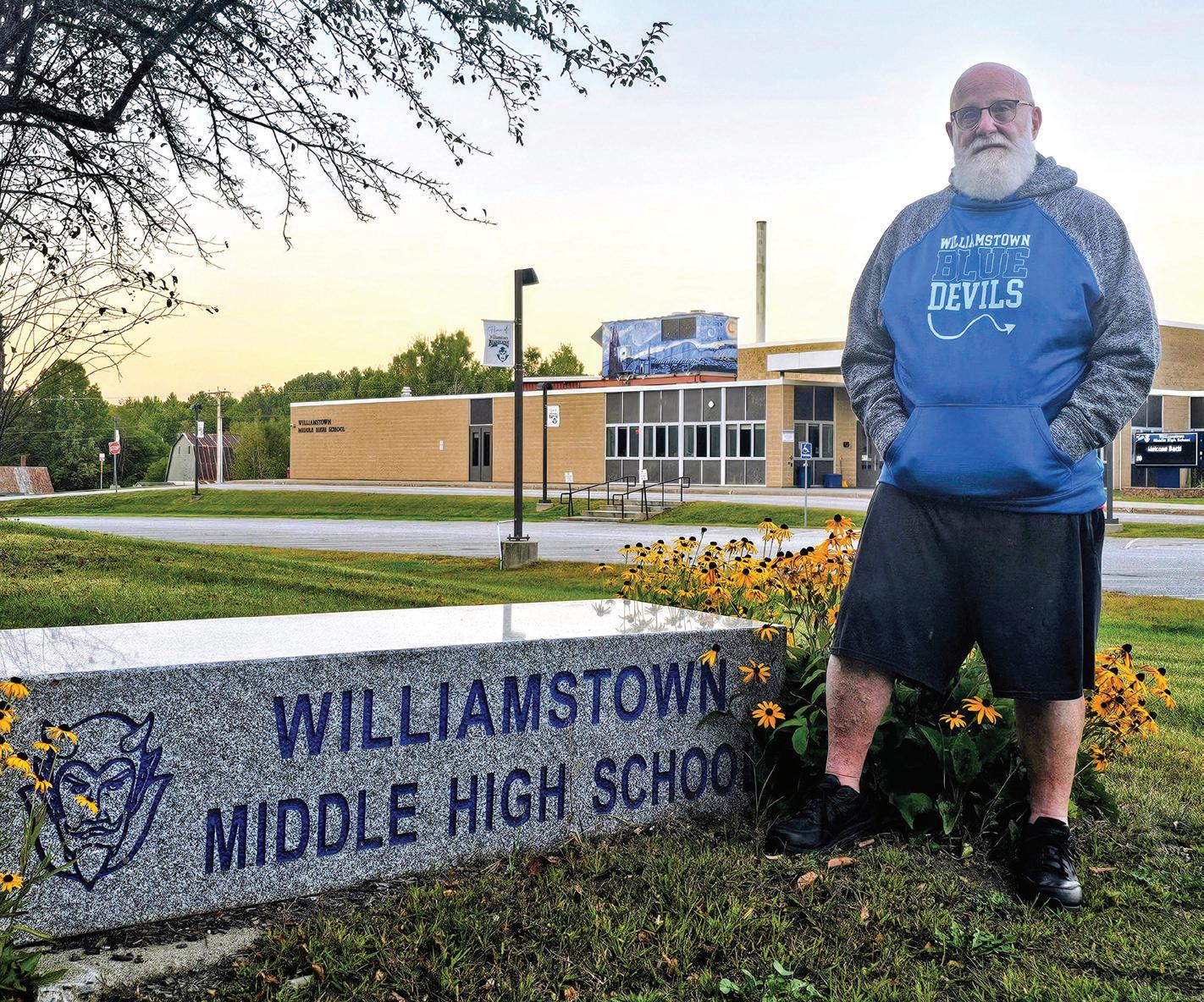
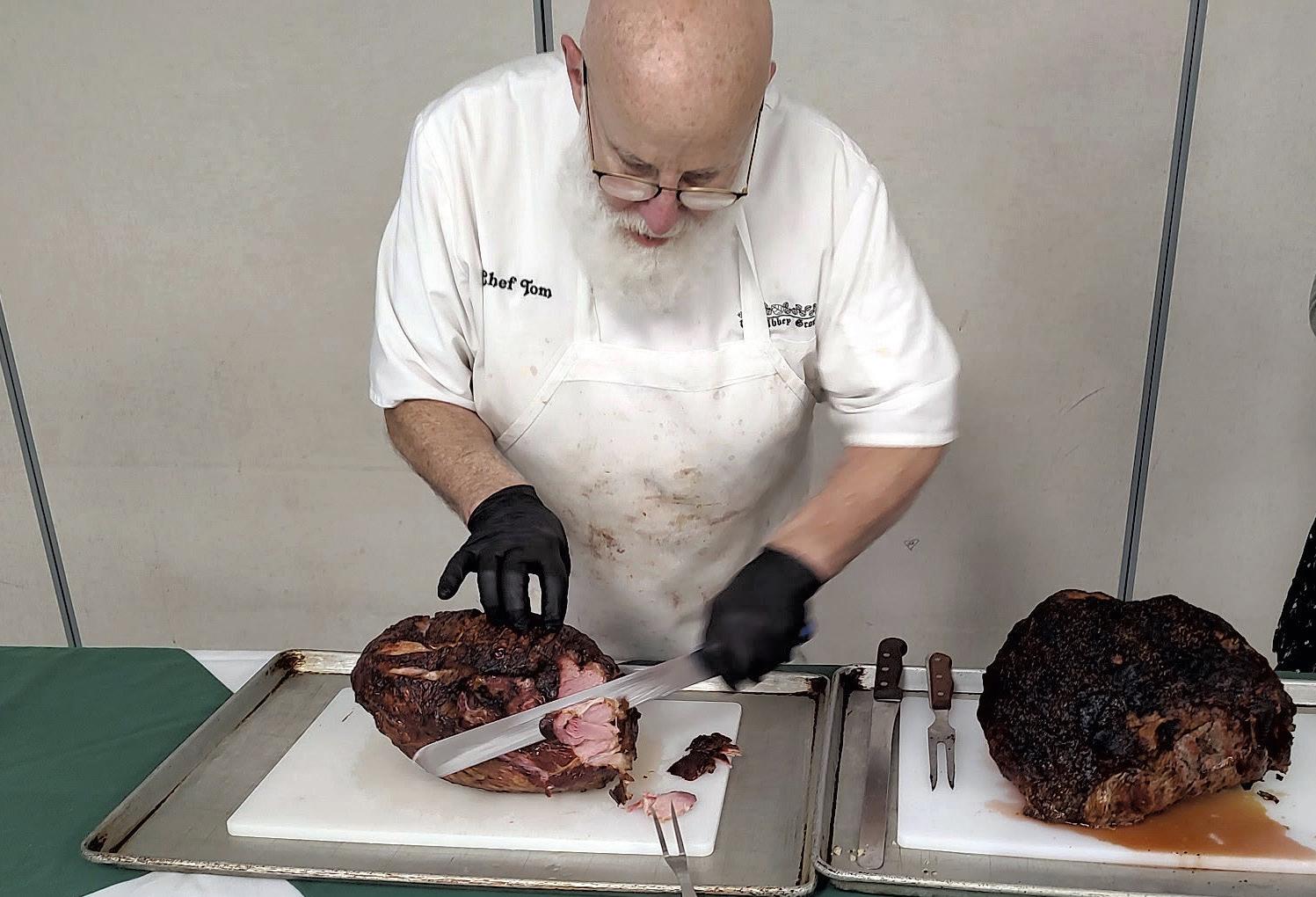
At age 69, Tom Corbett has racked up decades of experience in Vermont’s food service industry, preparing meals since he was a young teen at restaurants and country clubs, summer camps, and even the Statehouse.
For the past 12 years, Corbett has made his living in the kitchen of Williamstown Middle High School. Better known as Chef Tom, he’d come into school on Sundays to prep from-scratch pizza dough. He baked fresh bread daily and served up an especially kid-pleasing version of mac and cheese. More than anything, though, Corbett — with his bushy beard and bald head — was a friendly and familiar presence in the cafeteria.
Corbett has moved on — for now. Within a day of his firing, he got a job in the kitchen at Hartford High School, where his new employer is the New York-based Whitsons Culinary Group, a private equity-backed food service provider which acquired the Abbey Group this summer. He now drives 50 miles to work.
He declined to comment for this story because of new workplace rules.
Corbett’s plenty busy in Hartford but still smarting about the way he was treated in his hometown of Williamstown, according to his daughter, Tiffany Mason, who spoke to Seven Days on his behalf.
“Dad was just stunned,” Mason said. “He hates the fact that maybe kids [at Williamstown] think he just kind of blew it off and left.”
There’s been no clear reason given for Corbett’s firing, but it came just a few months after the Central Vermont Supervisory Union’s April vote to sign a contract with Genuine, a Boston-based company that provides meals for more than 100 schools and health care facilities in 16 states. The five-year contract must be reapproved by the school board annually.

This summer, Corbett worked at a camp in Woodbury. He was looking forward to going back to his regular job at the end of August. But on the Friday before school began, he was fired. The decision was made by Genuine Foods, a national company that, in July, took over the district’s school meals operations from the Abbey Group, which was until recently a Vermont-owned company.
The firing has created a stir in this central Vermont community, lovingly called “Billtown” by residents. Hundreds of them have signed a petition urging Genuine to rehire Chef Tom, and the dismissal was debated last week during a Central Vermont Supervisory Union school board meeting. Students, parents and former coworkers have spoken out, saying they’ll miss Corbett’s goodnatured personality and tasty food.
Though there’s no comprehensive data, other Vermont school districts in recent years have turned to national food service firms that promise more consistency, competitive pricing and diverse menu options.
The school board based its decision to choose Genuine on a Vermont Agency of Education rubric that assigns points to companies’ bids in categories such as scratch cooking, local procurement and employee wages, according to Central Vermont superintendent Matthew Fedders.
Genuine scored best — by a smidge — but its annual cost came in slightly higher than the Abbey Group.
Joshua Dobrovich, the lone school board member to vote against Genuine, said he essentially saw the two plans as “apples to apples.” He believed that, for continuity, it was better to stick with the company the district already used.








Today, Vermont has some of the highest health insurance premiums in the country. In 2024, the monthly premium on the state’s insurance marketplace for a bronze plan, the least expensive tier, averaged $808. That’s nearly three times the cost in New Hampshire and more than twice the national average, according to the Centers for Disease Control and Prevention.
renovate or buy a health care facility. It also addressed the cost crisis and granted the Green Mountain Care Board emergency authority to adjust hospitals’ reimbursement rates if an insurer is facing insolvency. That’s because Blue Cross Blue Shield of Vermont had warned it was in dire financial straits.
could charge for outpatient prescription drugs at 120 percent of average sales prices as calculated by the Centers for Medicare & Medicaid Services.



A confluence of factors is responsible for Vermont’s eye-popping premiums, but chief among them is the state’s aging population. The number of Vermonters over the age of 65 has nearly doubled since 2000. Health care facilities are treating patients with increasingly complex and costly health care needs while navigating workforce shortages, high labor costs and supply chain challenges that are particularly acute in rural communities. In the past five years, Vermont’s hospitals report spending 50 percent more — an additional $3.4 billion — to provide care.

In the Senate, Lyons drove forward another reform to bend the health care cost curve: reference-based pricing, a payment model that ties health care billing to Medicare rates. The policy was a top recommendation laid out in a 2024 report commissioned by the legislature.
Lyons said she introduced the concept as a framework, rather than a bill, to minimize attention from the press and foster conversation with her committee about how reference-based pricing could lower Vermont’s health costs. The reform, which Scott ultimately signed into law in June, won’t be implemented until 2027 at the earliest.
Elsewhere in the building, lawmakers were finishing work on education reforms, many of which are not anticipated to take e ect until the 2030s — and that is only if lawmakers can agree on major implementation milestones such as school redistricting maps. In contrast, Black’s committee proposed that its price restrictions take e ect in January.
Despite opposition from health care providers, the committee backed the new language 11-0 in a straw poll after little more than a week of debate. Members knew that their decision could irk powerful interest



Legislators on the health committees knew reining in costs would be one of their top priorities when they convened in January. Some representatives are intimately familiar with the problem: Several members of the House Health Care Committee, including Black, are bracing to go without health insurance next year, she said, because of high monthly premiums. (Lawmakers do not receive state health benefits.) But almost as soon as the session began, it became clear the rest of the legislature was not going to be similarly focused on the crisis.
Other states have adopted this model. In 2016, Montana limited what its public employee health plan pays for services at a little more than twice Medicare’s reimbursement rates. Referenced-based pricing typically applies to all types of health services and items provided by a hospital — not just medication.
Oregon adopted the model in 2019, limiting hospital prices to double Medicare rates for state employees and teachers. Evaluations concluded that this saved more than $100 million without impacting hospital operations, according to a 2024 study in Health A airs.
THE NEW CAP ON HOSPITAL OUTPATIENT PRESCRIPTION DRUG PRICES HAS ALREADY BENT THE COST CURVE ON INSURANCE PREMIUMS.

Sweeping education reform proposed by the Scott administration quickly dominated conversations in the Statehouse. Health care costs were part of the equation, since rising health insurance costs for school employees are one reason school budgets have increased. But most of the debate centered around school governance.


Working on urgent, complex reforms without the legislature’s full attention has benefits, Lyons said. While the spotlight can lead to more buy-in and pressure to act, it can also attract opposition that derails a proposal before a committee has worked out the kinks, she said.

High-profile bills often falter when politics gets in the way of policy reform, said Darren Allen, communications director of the Vermont-National Education Association.
“When something’s out in the forefront, there’s more grandstanding, there’s more attention being paid,” Allen said. “And it becomes maybe a little harder for folks to work and achieve the objective.”
The House Health Care Committee took on systemic challenges, including removing red tape to make it easier to build,
In May, representatives from Blue Cross Blue Shield of Vermont told the House Health Care Committee that the nonprofit insurer anticipated raising health premiums on the individual marketplace by more than 20 percent. Because federal tax credits that have helped ease the financial burden in recent years are likely to be discontinued, the committee concluded that Vermonters would not be able to weather such steep price hikes.
“We were looking for a way to very quickly pull money out of the system,” Black said.
Experts testifying before the committee repeatedly presented a chart from a RAND study that showed Vermont hospitals charged insurance companies the nation’s highest outpatient drug prices — more than five times the average sales price.
“It was just like this gentle curve, one through 49, and then number 50 was Vermont, and it was just this huge spike,” Black said.
Black felt the practice was immoral. It also gave the committee a rare opportunity to bring down costs quickly. The committee proposed capping the amount hospitals

groups looking to maintain the status quo.
“I was scared doing that, and I know other members on my committee were,” Black said. “In the end, frankly, I know we did the right thing.”

Mike Del Trecco, president and chief executive o cer of the Vermont Association of Hospitals and Health Systems, said the association expressed concern about this aspect of the bill and had hospital representatives reach out to share impacts and o er alternatives.
Defying the health care industry was a bold break from tradition, according to Chris Pearson, a former Chittenden County legislator and current board member of Vermont Healthcare 911, a bipartisan coalition established in January 2025 to advocate for lower health care costs.
“I am hard-pressed to think of a time when the legislature thought of a health care reform proposal, heard that the hospitals opposed it across the board, by the way, and then went ahead and passed it anyway,” Pearson said.
Scott signed the bill into law less than
two weeks after the House Health Care Committee voted in favor of the cap. The new limits on drug prices are already being credited for helping to drive down insurance premiums for Blue Cross Blue Shield Vermont and MVP Health Care, the two insurers that sell plans on the state marketplace.
On August 22, the Green Mountain Care Board approved a rate increase for the individual insurance market of 9.6 percent, down from 23.5 percent requested by Blue Cross earlier this year. The board approved a 1.3 percent increase for MVP, down from the 6.2 percent initially requested. The lower increases are a welcome change after near double-digit growth in recent years.


Care Board. The board was created by the legislature in 2011 as an independent oversight body to regulate major areas of Vermont’s health care system.
The di erence with the bill, Foster said, is “it was real, it was bankable, and it was immediate.”
Not all insurance plans will see such stark relief from premium rate increases. Employer group plans will have di erent premium rate increases depending on their size. Blue Cross will raise insurance premiums for small group plans by 4.5 percent (down from the 13.5 percent initially sought), but it is not yet clear how much rates will increase for large group plans. Increases for plans can vary depending on how services are used, the age of patients, and whether people enroll individually or as a family, among other factors.
Del Trecco said the lower premiums will reduce hospital revenue by an estimated $130 million. Hospitals are exploring approaches to handle the change, from dipping into their reserve funds to finding new ways to lower expenses. The association is advocating for payment reforms, including changes to the current revenue model to switch from fee-for-service to value-based payments, to balance out the new price caps.
And so far, as hospitals prepare their budgets for fiscal year 2026, which starts October 1, it appears that despite the recent legislative change, most facilities have found a way to stay within the budget guidance standards set by the Green Mountain Care Board. The board, Vermont’s health care regulator, sets annual benchmarks for hospitals’ budgets. This year, it capped hospitals’ growth for both operating expenses and commercial insurance charges at 3 percent.
The board is expected to make its final hospital budget determinations later this month.
While the reference-based pricing reform won’t go into effect until 2027, Foster is optimistic that it will help curb rates further. Legislators have cautioned, however, that the timeline may be pushed back because of how complex the process will be.
Ample evidence suggests referencebased pricing will allow hospitals to be profitable while still lowering costs for insurers and patients, Pearson said. He applauded the legislature for teeing up a long-term solution in addition to the more immediate relief provided by the pharmaceutical bill.
Lyons is confident that both policies will help.
“The combination of those two is going to be ongoing savings. There’s just no doubt about it,” Lyons said.
Pearson said the reforms were proof that Vermont’s legislature, despite its part-time structure and flighty attention span, can still act decisively on complex issues — even while it tackles other major reforms.
“This is the best thing about the Vermont legislature,” he said. “People are learning, they’re hearing from experts, they’re hearing from the public, and they’re getting a better sense of what’s actually going on.” ➆
The “Ways and Means” project details the inner workings of the Vermont legislature and explores how well it represents the interests of citizens. The yearlong series is funded by Vermont philanthropists through the nonprofits GroundTruth Project and Journalism Funding Partners.










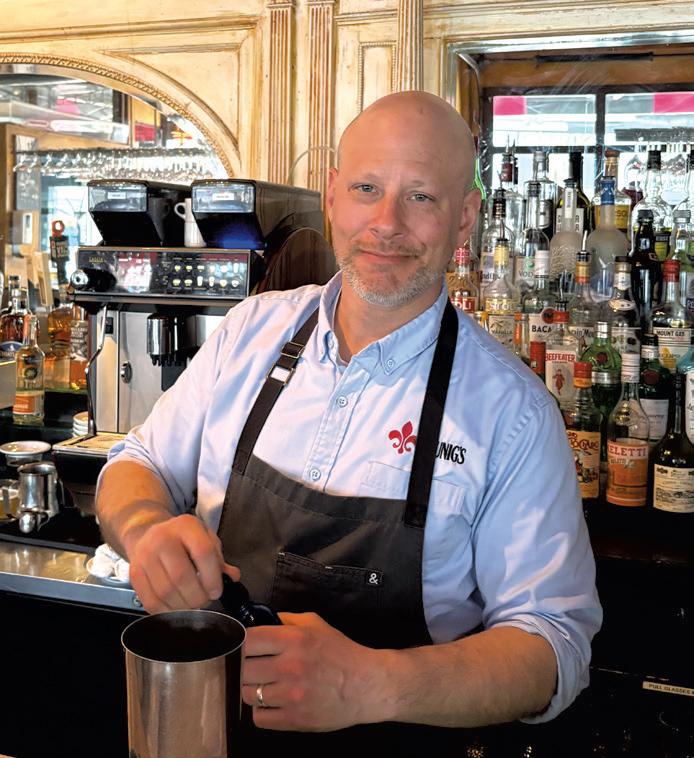
Hello, my name is Matt Grant.
I have been behind the bar at Leunig’s Bistro for 16 years!
The customers are great, the staff is fantastic and I treasure all of my daily interactions. Church Street is the beating heart of one of the best small cities in the country.
So come on down, make the scene, stroll, shop, and come by and visit us at Leunig’s.
I promise to mix you one of the best cocktails you’ve ever had.
Hope to see you real soon!





















Mon-Sat 8-4 Closed Sundays





Though the vote didn’t go Dobrovich’s way, he and others took comfort in the verbal assurance of a Genuine staffer at April’s school board meeting and in its written proposal to the district that all current kitchen staff would have the option of staying on.
2638 Ethan Allen Hwy, New Haven greenhavengardensandnursery.com @greenhavengardensvt 802-453-5382
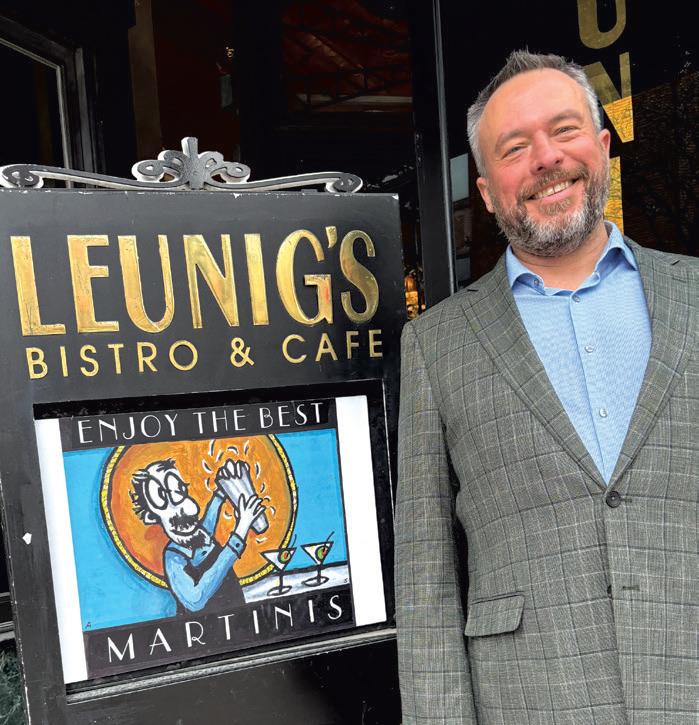
Hello, my name is David Plante.
I have been working as host/ maitre d’ at Leunig’s Bistro for 18 years.
I love my job. The thing I like most is pleasing our guests. I get to work with a really great staff who, like me, are dedicated to providing a high-quality dining experience for our guests.
It gives me great pleasure to know that many people who dine here feel like they have been transported briefly to a fine café on the left bank in Paris, France.
It really is like a theatrical performance, where the audience actually gets to eat the food. The food is great, the atmosphere is top-notch and the people-watching is second to none.
So come on down anytime, and bring your friends. We’re here waiting for you.
After you’ve had a good time here in this beautiful little city by the lake, please tell all your friends.
While Corbett had a longstanding relationship with the Abbey Group, his daughter said, he decided to sign with Genuine because he loved working at Williamstown; he was born and raised in the community, and two of his grandchildren attend the school.
But then Corbett received a text message from Genuine’s regional director of operations, Rebecca Sosvielle, instructing him to call their Boston office, according to Mason. When he did, she told him that he was not a good fit for “the Genuine family,” and, as he was still under the company’s 90-day probationary period, he was fired, Mason said.
Sosvielle, in an email to Seven Days, said the company doesn’t comment on personnel matters “out of respect for privacy.”
“All employment decisions at Genuine Foods are made after careful review and in accordance with established policies,” she wrote.
Sosvielle was more forthcoming in an email to an upset parent, saying the company “did not make the decision to part ways with Tom lightly” and characterized it as “a business decision, not a personal one.”
But residents of Williamstown are taking it personally. News of Corbett’s firing has garnered scores of sympathetic comments on the “Billtown Residents Chat” Facebook page. And close to 300 people have signed an online petition that Mason started, asking that her father be reinstated.
At Central Vermont Supervisory Union’s school board meeting last week, several board members said they were concerned about Corbett’s dismissal.
“In our communities, we value our employees so much, and we know that those employees, especially the ones that have been in the building for so long, have really important relationships with our kids,” board member Dan Morris said. “You can say on paper it’s Genuine Foods’ decision to make staffing moves, but it’s not consistent with what I take to be our values.”
At public comment during the meeting, Mason read a statement urging the community to take her dad’s firing as an opportunity to support companies that put human beings over profits and “contracts that protect the people who are the fabric of our schools and have invested their lives here.”
CHEF TOM WAS ONE OF THE FEW PEOPLE … THAT MADE ME FEEL
In an interview, Dobrovich, who also represents Williamstown and Chelsea in the Vermont legislature, said he’s grown more concerned about the district’s deal with Genuine. He’s heard negative feedback about the new food from people who work in the district, and he’s dismayed by Corbett’s firing, though he said he doesn’t know the specific circumstances behind it.
Genuine likely had the right to fire the chef “as long as they did their legal due diligence,” Dobrovich said, but his dismissal is a loss to the community.
“When you have someone like Tom who goes out of their way to show kids love and create good food,” Dobrovich said, “[those] humans are few and far between these days.”
Brenna Lee, a 2024 graduate of Williamstown Middle High School, feels similarly. As a vegetarian, she found it a challenge to navigate food options in the cafeteria, but Corbett always took time to explain the menu and suggest things she might like, Lee wrote in an email to Seven Days
“Chef Tom,” she wrote, “was one of the few people at WMHS that made me feel seen.” ➆
BY DEREK BROUWER • derek@sevendaysvt.com
A $400 drug debt set off a chain of retribution that left a man dead and two others — including a 16-year-old boy — facing murder charges for the assault that began on Burlington’s Church Street Marketplace last month.
Court records made public on Tuesday shed some light on the circumstances behind the “mob-style assault” that a group of five men, four of them juveniles, carried out against 42-year-old Scott Kastner during a weekday afternoon along the city’s busy pedestrian mall.
Kastner’s killing was cited by Burlington city councilors when they voted recently to enhance crime and code enforcement, including against homeless people, at nearby City Hall Park. But a newly released police affidavit points to more complex entanglements between local youth, drugs and guns that underlie the crime. Kastner’s life is not the first in Burlington to be claimed by that combustible cocktail in recent years.
Police say a group led by Isaiah Argro, 26, and the 16-year-old boy cornered Kastner at gunpoint on August 11, knocked him to the ground and struck him in the head more than 20 times. Kastner died several days later at the University of Vermont Medical Center from complications of blunt-force head trauma, the state medical examiner concluded.
Following the medical examiner’s finding, the Chittenden County State’s Attorney’s Office charged both Argro and the 16-year-old boy with second-degree murder.
Vermont Superior Court Judge Tim Doherty on Tuesday ordered both defendants imprisoned pending further proceedings. Seven Days generally does not identify juveniles charged with crimes, even if they are prosecuted as adults.
Kastner was walking down Church Street with his girlfriend, Alisha Crosby, on August 11 when Argro and the 16-year-old approached them, she later told police. The pair accused Kastner of striking the 16-year-old’s mother several weeks earlier, leaving her with a black eye. Crosby told authorities that, in fact, she had been the one who struck the woman. She had given the teen’s mother $400 to buy drugs, but the woman “kept the money,” so Crosby told police she beat her up, twice.
Surveillance cameras outside City Hall captured the retributive assault that prosecutors allege the woman’s teenage son and his associates carried out. Argro grabbed Kastner’s shoulder and punched him in the head, sending him to the ground. Argro then pinned Kastner to the ground as the 16-year-old and two

other juveniles, ages 14 and 15, kicked and punched him.
Kastner broke free and began to retreat toward City Hall Park through an alleyway. A fifth juvenile, police said, ran from a Church Street restaurant where he worked and joined the pursuit of Kastner.
Around that time, the 16-year-old boy pulled out a handgun, pointed it toward Kastner and racked it. Argro managed to grab Kastner again in the alley, and the blows continued. One of the teens pulled out a cellphone to record the beating.
As the assault continued toward City Hall Park, Crosby cried for help. That got the attention of police officers, who happened to be patrolling the park. Argro and several of the teens fled, prompting foot chases through the city’s downtown core.
As officers pursued the attackers, Kastner and Crosby also left the scene. More than two hours later, however, Kastner approached a private security guard at a bank near the park and asked him to call 911. He was experiencing excruciating head pain and losing vision, according to the affidavit. By the time Kastner was placed in an ambulance, he appeared to be seizing, an officer wrote.
Kastner had internal bleeding and swelling in his brain. He died on August 16, five days after the assault.
Following the assault, the 16-year-old defendant contacted relatives of Crosby to inquire about Kastner’s health, according to a police affidavit. “When informed that Kastner’s prognosis was not promising,” the teen “stated something to the effect of not regretting assaulting Kastner and that he would do it again if Kastner survived,” the document says.
State’s Attorney Sarah George said on Tuesday that she decided to bring murder charges against the two people who were “primary aggressors” in the assault, both of whom are also accused of possessing or brandishing firearms during it. Seconddegree murder, which does not require evidence of premeditated intent, carries a minimum sentence of 20 years in prison and a maximum of life.
“It was not a decision we take lightly,” George said. “I don’t take pride in charging a 16-year-old as an adult.” ➆
DECEMBER 22, 1966AUGUST 25, 2025
SALISBURY, VT.
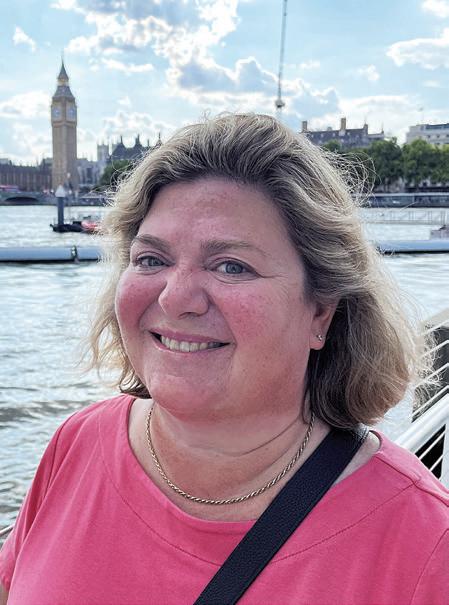
Diana Lynn Berthiaume, age 58, passed peacefully on August 25, 2025, at the Pines in Rutland. Diana was born in Ridgewood, N.J., on December 22, 1966, the daughter of John and Rita (Wozniak) Arnott. She grew up in Charlotte, Vt., and graduated from Champlain Valley Union High School in the class of 1985. She went on to attend Roger Williams University and later earned her LPN from the Fanny Allen School of Nursing. Diana began her career in health care, working at Porter Hospital and Neshobe Family Medicine in Brandon. She later expanded her professional path, earning her real estate broker’s license. After the passing of her father, she stepped into his role as president of Ladd Research. She loved to travel; London, England, was a favorite to visit.
She is survived by her husband, Vern Berthiaume; a son, Jack Berthiaume, and her daughter, Katie Berthiaume; her mother, Rita Arnott; and one brother, John Arnott. Her nephew Julian Arnott and niece Johanna Arnott also survive her. In addition, she will be missed by many other beloved family members and close friends.
A private funeral service will be held at Miller & Ketcham Funeral Home in Brandon, followed by a private graveside committal and burial at West Salisbury Cemetery.
A celebration of life will take place on Sunday, September 7, noon to 3 p.m., at the Brandon Inn. All who loved Diana are warmly invited to join in honoring and remembering her.
In lieu of flowers, memorial contributions may be made in Diana’s memory to MD Anderson Cancer Center, where Diana received treatment.
Donations may be made online at mdanderson.org/donate or sent by mail to 1515 Holcombe Blvd., Houston, TX 77030.
JUNE 5, 1938-AUGUST 8, 2025
BURLINGTON, VT.
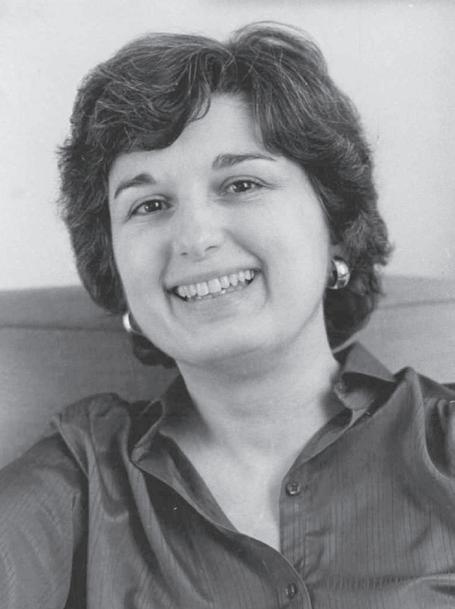
Nancy (Clapp) Martenis, 87, of Burlington, Vt., died surrounded by family on August 8, 2025. She was born on June 5, 1938, in New York City to Lewis C. Clapp and Lois (Halliday) Clapp. After her first three months in their crowded Greenwich Village apartment, they moved to Brooklyn Heights and more space.
e Heights was like a rather small village at that time, from Atlantic Avenue to the Brooklyn Bridge in one direction and the New York Harbor to City Hall in the other. Growing up, Nancy walked one block to Grace Church, where she sang in the choir. It was five blocks to the Packer Collegiate Institute, where she was a student for 12 years before matriculating at Wellesley College, where she received a BA in English in 1960.
Five months later they had the good fortune to live at Fort Ethan Allen in University of Vermont faculty housing, where the family met lifelong friends.
After one Vermont winter, Nancy decided she would have to learn to ski or go back to school. School seemed safer, so she enrolled in a master of arts in teaching program in English at UVM and graduated one baby later after welcoming their second child, Elizabeth, in 1968, at which point the family moved to Burlington.
In 1961, she married Allen G. Shepherd, teaching at the Lincoln School in Providence while he did graduate work at Brown University and at Friends Select in Philadelphia while he earned a PhD at the University of Pennsylvania. It was there that their first child, Sarah, was born.
Nancy was a wonderful, devoted mother and friend. She spent happy years at home raising Sarah and Elizabeth, whom she enjoyed taking to the movies, summer visits to Michigan, and for whom she sewed great Halloween costumes. She instilled in her daughters a love of family tradition including cider ice cubes at anksgiving and Christmas cookie frosting parties using her mother’s molasses cookie recipe and copper cookie cutters made by her father. Nancy returned to work in 1978 at a federally funded program for firstgeneration college students at UVM as a writing skills instructor. is led to her earning a second master’s degree at Saint Michael’s College in teaching English as a second
Want to memorialize a loved one?
We’re here to help. Our obituary and in memoriam services are affordable, accessible and handled with personal care.
Share your loved one’s story with the local community in Life Lines.
language and creating courses for international students at UVM. Nancy loved her students and enjoyed hosting potluck dinners at the end of each semester, encouraging students to bring their favorite dish, music or game to share with their classmates. Much fun ensued!
Nancy was a wonderful cook and always a gracious, welcoming hostess. She threw terrific, themed birthday parties, including Sarah’s sixth birthday with real turtles as party favors! Over the years, she made curtains for just about every one of her daughters’ apartments and houses, which always made them feel at home.
Nancy married omas W. Martenis in 1985, who predeceased her in 2014. Tom and Nancy had a happy marriage and enjoyed each other, their families and friends, and quite extensive travel, including a month in Zimbabwe just after her retirement from UVM in 1996.
Nancy is survived by her two daughters, Sarah Shepherd (Mike Barnes) of Milton, Vt., and Elizabeth Montemayor (Jose) and grandsons Henry and Charlie Montemayor of Natick, Mass.; her brother, James Clapp of Elberta, Mich., and his children: Jennifer Clapp, Deborah Halliday, Daniel Clapp and Becky Hunt, and their children and spouses; and Tom’s five children and nine grandchildren.
e family wants to thank the Converse Home and Bayada Hospice for the kind and compassionate care they provided Nancy and her family.

Post your obituary or in memoriam online and in print at sevendaysvt.com/lifelines Or contact us at lifelines@sevendaysvt.com or 865-1020 ext. 121.






60 Lake St., 1st Floor, Burlington
His Girl Friday (1940) reached a pinnacle in screwball comedy. Star reporter Hildy Johnson (Rosalind Russell) is leaving the news biz to get married, but her ruthless editor (and ex-husband) Walter Burns (Cary Grant) isn’t having it. Hildy agrees to cover one more story — the execution of murderer Earl Williams — and the dominoes start falling. is Howard Hawks film manages to satirize journalistic practices while also upholding the institution of the fourth estate.
INTRODUCED BY SASHA GOLDSTEIN, DEPUTY NEWS EDITOR
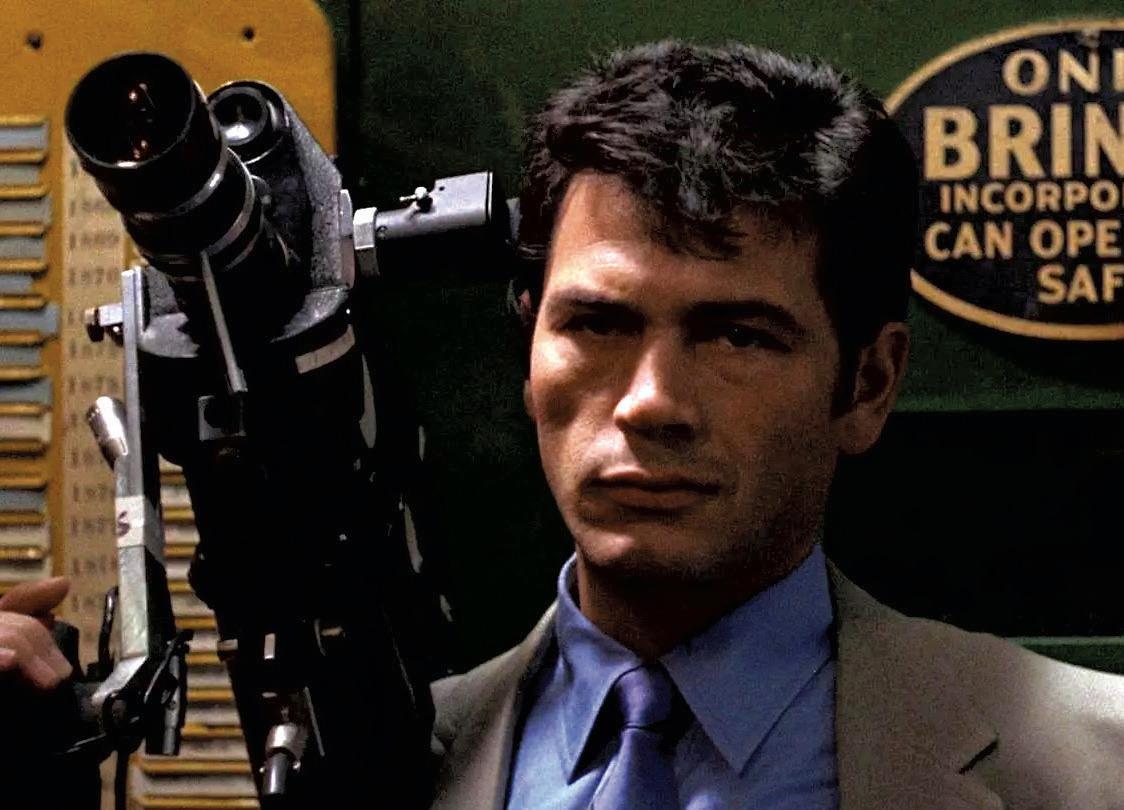
With its mix of fictional storytelling and cinema vérité, Haskell Wexler’s Medium Cool (1968) depicts the working world and romantic life of a television cameraman. It’s a cinematic snapshot of an era of U.S. social upheaval, climaxing with an extended sequence shot in the middle of the riots surrounding the Democratic National Convention in Chicago. A commentary on the pleasures and dangers of wielding a camera, Medium Cool is as prescient a political film as Hollywood has ever produced.
INTRODUCED BY CATHY RESMER, DEPUTY PUBLISHER
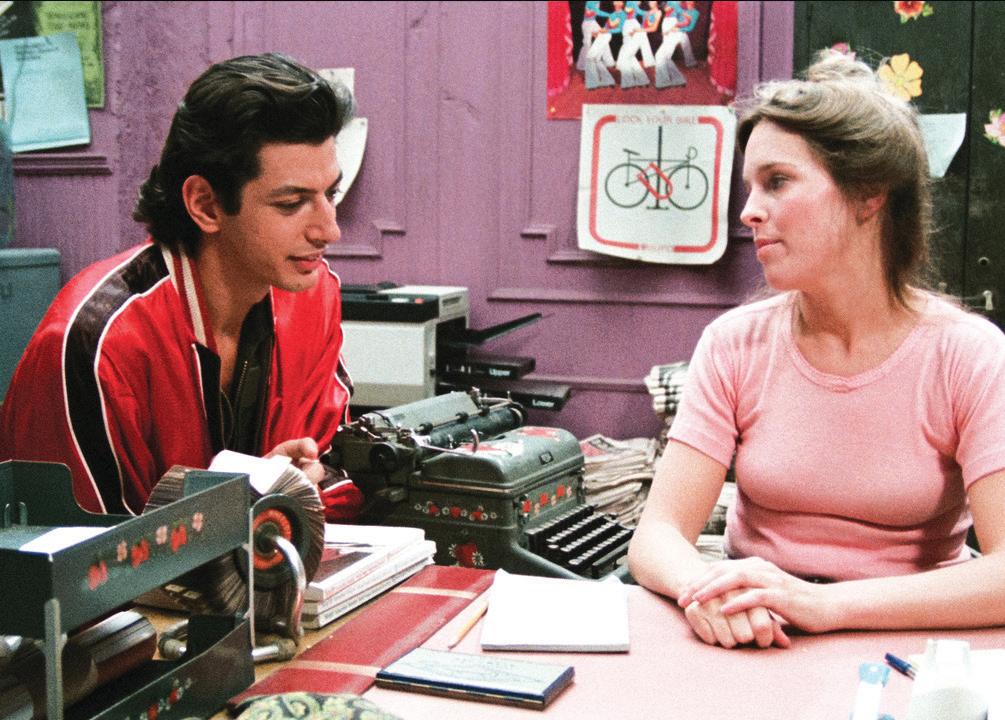
From director Joan Micklin Silver (a Village Voice writer before her Hollywood career), Between the Lines (1977) spotlights the offices of a fictional Boston alt-weekly before it’s sold to a major publishing company. Supposedly based on the Boston Phoenix — where screenwriter Fred Barron worked — the film features an all-star cast, including a very young Jeff Goldblum.
INTRODUCED BY DAN BOLLES, CULTURE COEDITOR
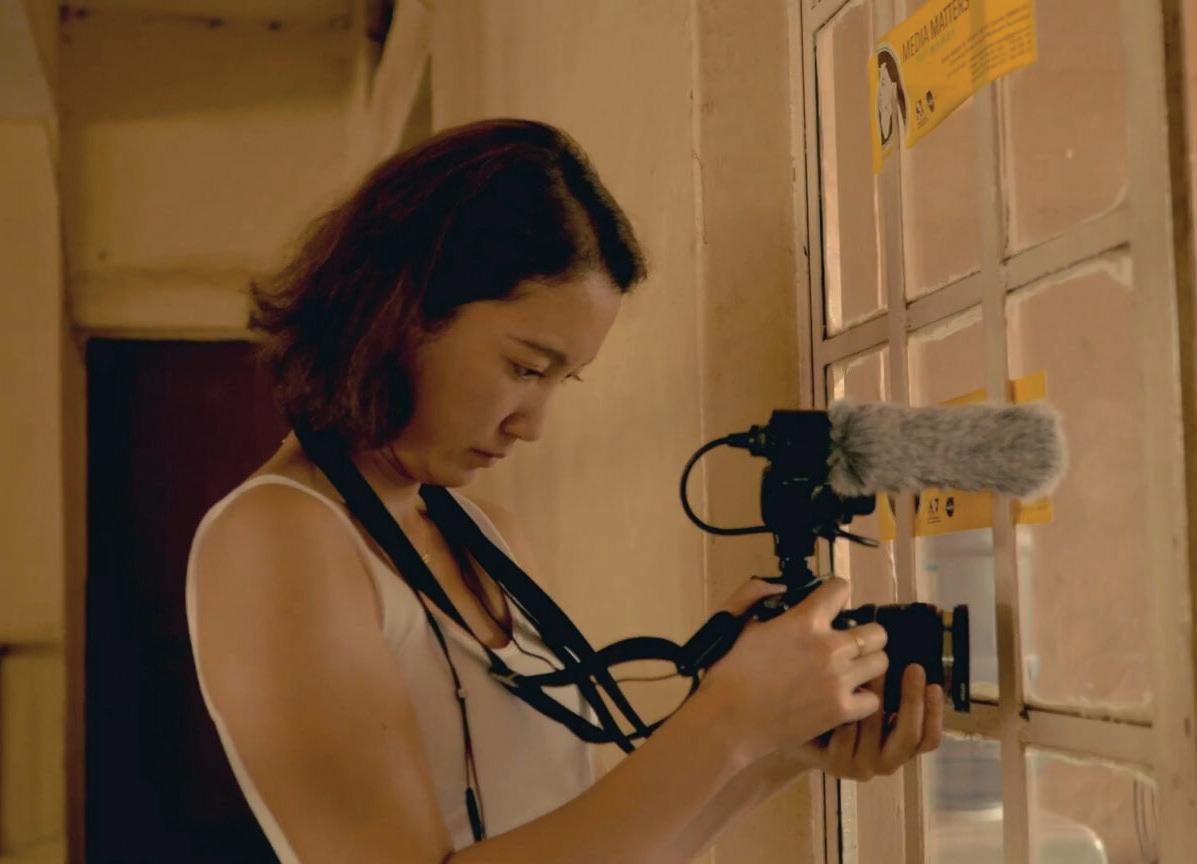
Shiori Ito directs Black Box Diaries, a 2024 Oscar-nominated documentary about her own sexual assault — and the fallout from her very public accusation, which rocked Japanese society and changed the country’s antiquated sexual assault laws. As both victim and journalist investigating her own case, Ito captures her tumultuous and ultimately triumphant journey, going behind the headlines to reveal what it has been like to walk in her shoes.
INTRODUCED BY DEREK BROUWER, NEWS REPORTER
BY CATHY RESMER
To chronicle three decades of Seven Days, we dug deep into our archives and inboxes, finding meaningful and whimsical milestones along the way. The result isn’t just a timeline of our paper but also the evolving story of the place we all call home. As the saying goes: To know where you’re going, you gotta know where you’ve been. Enjoy this blast from the past.
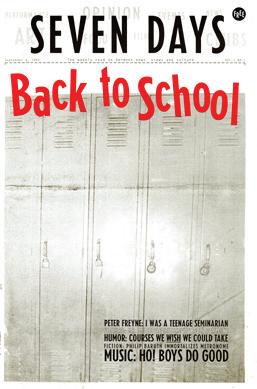
SEPTEMBER 6: The first, 28-page issue of Seven Days is published with an essay by Peter Freyne, a short story excerpt by UVM prof Phil Baruth and a pizza survey headlined “The Pies Have It.” (The winner? Leonardo’s.) The calendar spotlights Rusty DeWees. The paper’s sole comic strip is dug Nap’s “Duane.”
SEPTEMBER 13: Seven Days gets an email address, sevendays@ together.net, and a classifieds section. The first of more than 1,000 mottos is: “Better read than dead.”
OCTOBER 18: The cover story is prescient: “Fermenting Revolution: Vermont’s Beer Biz Hops to It” spotlights Long Trail, Otter Creek, Catamount and Magic Hat.
Writer Irving Shelby Smith predicts: “The word ‘Vermont’ may soon also say ‘great beer’ to the rest of the nation.” Peter Freyne’s “Inside Track” debuts in Seven Days

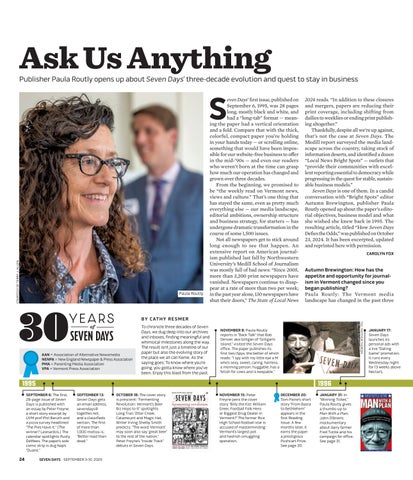
Seven Days’ first issue, published on September 6, 1995, was 28 pages long, mostly black and white, and had a “long-tab” format — meaning the paper had a vertical orientation and a fold. Compare that with the thick, colorful, compact paper you’re holding in your hands today — or scrolling online, something that would have been impossible for our website-free business to offer in the mid-’90s — and even our readers who weren’t born at the time can grasp how much our operation has changed and grown over three decades.
From the beginning, we promised to be “the weekly read on Vermont news, views and culture.” That’s one thing that has stayed the same, even as pretty much everything else — our media landscape, editorial ambitions, ownership structure and business strategy, for starters — has undergone dramatic transformation in the course of some 1,500 issues.
Not all newspapers get to stick around long enough to see that happen. An extensive report on American journalism published last fall by Northwestern University’s Medill School of Journalism was mostly full of bad news: “Since 2005, more than 3,200 print newspapers have vanished. Newspapers continue to disappear at a rate of more than two per week; in the past year alone, 130 newspapers have shut their doors,” The State of Local News
NOVEMBER 8: Paula Routly reports in “Back Talk” that Bob Denver, aka Gilligan of “Gilligan’s Island,” visited the Seven Days office. The paper publishes its first two iSpys, the better of which reads: “I spy with my little eye a M who’s sexy, sweet, caring, hairless, a morning person, huggable, has a fetish for cows and is keepable.”
NOVEMBER 15: Peter Freyne pens the cover story “Billy the Kid: William Greer, Football Folk Hero or Biggest Drug Dealer in Vermont?” The former Rice High School football star is accused of masterminding Vermont’s largest pot and hashish smuggling operation.
2024 reads. “In addition to these closures and mergers, papers are reducing their print coverage, including shifting from dailies to weeklies or ending print publishing altogether.”
Thankfully, despite all we’re up against, that’s not the case at Seven Days . The Medill report surveyed the media landscape across the country, taking stock of information deserts, and identified a dozen “Local News Bright Spots” — outlets that “provide their communities with excellent reporting essential to democracy while progressing in the quest for stable, sustainable business models.”
Seven Days is one of them. In a candid conversation with “Bright Spots” editor Autumn Brewington, publisher Paula Routly opened up about the paper’s editorial objectives, business model and what she wished she knew back in 1995. The resulting article, titled “How Seven Days Defies the Odds,” was published on October 23, 2024. It has been excerpted, updated and reprinted here with permission.
CAROLYN FOX
Autumn Brewington: How has the appetite and opportunity for journalism in Vermont changed since you began publishing?
Paula Routly: The Vermont media landscape has changed in the past three
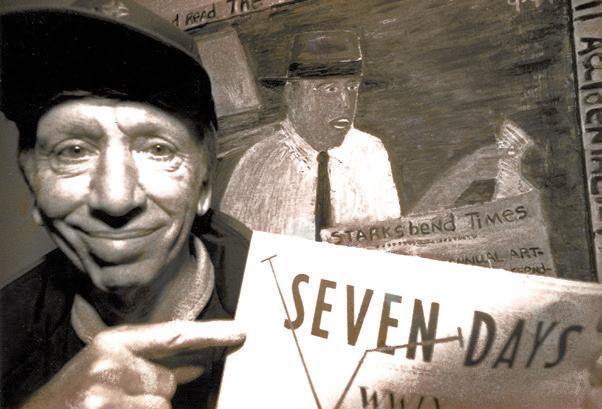
DECEMBER 20: Tom Paine’s short story “From Basra to Bethlehem” appears in the first Reading Issue. A few months later, it earns the paper a prestigious Pushcart Prize. See page 30.
JANUARY 31: In “Winning Ticket,” Paula Routly gives a thumbs-up to Man With a Plan John O’Brien’s mockumentary about dairy farmer Fred Tuttle and his campaign for office. See page 31.
JANUARY 17: Seven Days launches its personal ads with a live “Dating Game” promotion. It runs every Wednesday night for 13 weeks above Nectar’s.

decades — though not as dramatically as in some other states. Here, there’s still a strong appetite for local news, served by community weeklies and the emergence of a very popular social media platform that connects rural communities called Front Porch Forum. The two statewide dailies that once dominated here — the Gannettowned Burlington Free Press and the Rutland Herald — are shadows of their former selves. The AP bureau has also been hollowed out.
Seven Days has expanded to fill the local news void. For the first seven years, it was primarily an arts and culture newspaper — a free weekly in the tradition of “alternatives” such the Boston Phoenix and the Village Voice. As we have grown and have built an enterprising news team — including many journalists who left or were laid o from the Burlington Free Press — we have become much more than that. Seven Days is now the largest print-circulation newspaper in Vermont and, some would say, the paper of record. We have steadily taken on more and more ambitious projects. Readers notice and appreciate it. Though we’re still free in print and online, thousands of readers now make fi nancial contributions that help sustain us.
Autumn Brewington: How do your goals differ today from your objectives in 1995 — in terms of journalism or growth?
Paula Routly: When we started Seven Days, Pamela Polston and I created the local newspaper we wanted to read on Vermont culture. We both came from arts backgrounds. For years the paper’s news “coverage” was limited to a popular political columnist. We didn’t employ a single sta writer until 2002.
JUNE 5: Seven Days publishes the first installment of its shortlived music quarterly, 4/4, with a story on the 15th anniversary of punk club 242 Main and a comic by James Kochalka.

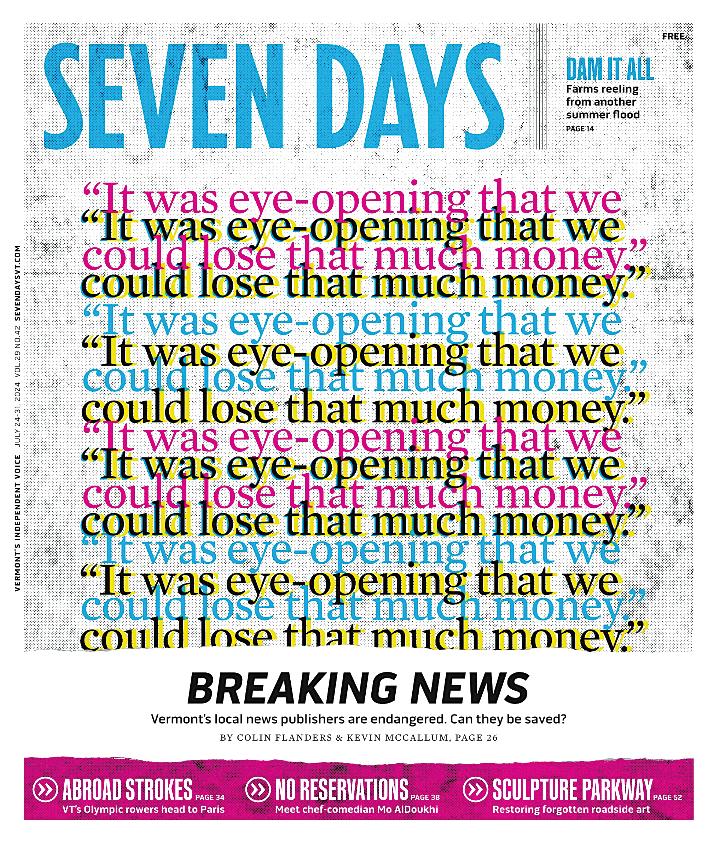
In other words, the paper evolved slowly from an upstart, sometimes snarky weekly to a rigorous and reliable practitioner of serious journalism.
We are still fully committed to the arts. Seven Days employs seven full-time news reporters and the same number of culture writers.
We do chase some daily stories, especially food news and stories about Burlington. But we’re generally more selective, focusing on quality over quantity. Today our objective is to publish the kinds of stories you’d expect to find in a national magazine.
Attracting and retaining writers is a big priority. Young people are hearing that the industry is dying, so fewer are pursuing print journalism. The ones we employ get the opportunity to write long form as well as the training to do it properly.
All of it is part of a larger e ort to bring

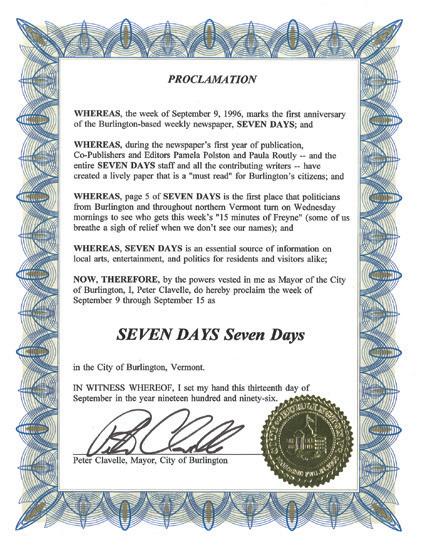
SEPTEMBER 9: In honor of the paper’s first anniversary, Burlington Mayor Peter Clavelle issues a proclamation and calls Seven Days a “must read.”

up the next generation of reporters and editors.
Autumn Brewington: When conceiving events such as Vermont Tech Jam, what’s the strategy driving your approach to community engagement?
Paula Routly: We want to be useful to our readers in as many ways as possible. Whether they are looking for a place to eat or hear music; if they need a date, a job, a summer camp for their kids or an obituary — we want them to come to us.
Anticipating their needs has guided our product innovations, from a pandemicera quarterly called Staytripper, geared to Vermonters vacationing within their own state, to our ticketing service, which gives event organizers a local box o ce option that includes promotion in the paper and on the Seven Days website.
When we found ourselves in the path of
totality for last year’s solar eclipse, we produced an online and print guide — and licensed some of the content to the state’s tourism website. We come up with events that serve our advertisers and readers alike. In other words, there has to be enough potential revenue and su cient audience to justify the significant work involved.
Autumn Brewington: When did employees become part of the ownership model, and how does that work?
Paula Routly: Until 2010, Pamela Polston and I owned Seven Days 50-50. She is
SEPTEMBER 11: Seven Days’ first anniversary issue contains a local sex advice column by Lola the Love Counselor and a new monthly column: Peter Kurth’s “Crank Call.”
OCTOBER 30: Kevin J. Kelley profiles developer Jeff Davis, aka “The Man Who Malled Williston.” Pamela Polston reports on the music scene in a new column, “Rhythm & News.”

NOVEMBER 6: Seven Days first Animal Issue debuts a readersubmitted pet photo contest called “Paw Prints.”

| 1997
MARCH 19: Seven Days introduces “Webwise,” a monthly column about the internet, by Margaret Levine Young and Jordan Young, the Cornwall authors of Internet for Dummies
JANUARY 29: The first Cyber Issue contains reviews of Vermont websites. In “Inside Track,” Peter Freyne notes that the Burlington Free Press doesn’t have a website. Turns out bfp. com goes to an S&M site called Bound for Pleasure.
MAY 14: “Webwise” explains how to write an email.
MAY 28: Pamela Polston interviews a 23-year-old Burlington woman in “What Happens After Rape? A Survivor of Sexual Assault Has Her Say.” (NENPA, 1st place, human interest feature)

JULY 16: Seven Days adds two new comic strips: “Dykes to Watch Out For” by Alison Bechdel and “Life in Hell” by Matt Groening.
DECEMBER 3: Peter Freyne reports on Howard Dean in “Inside Track”: “I’d say the guy’s got a serious case of presidential fever.”
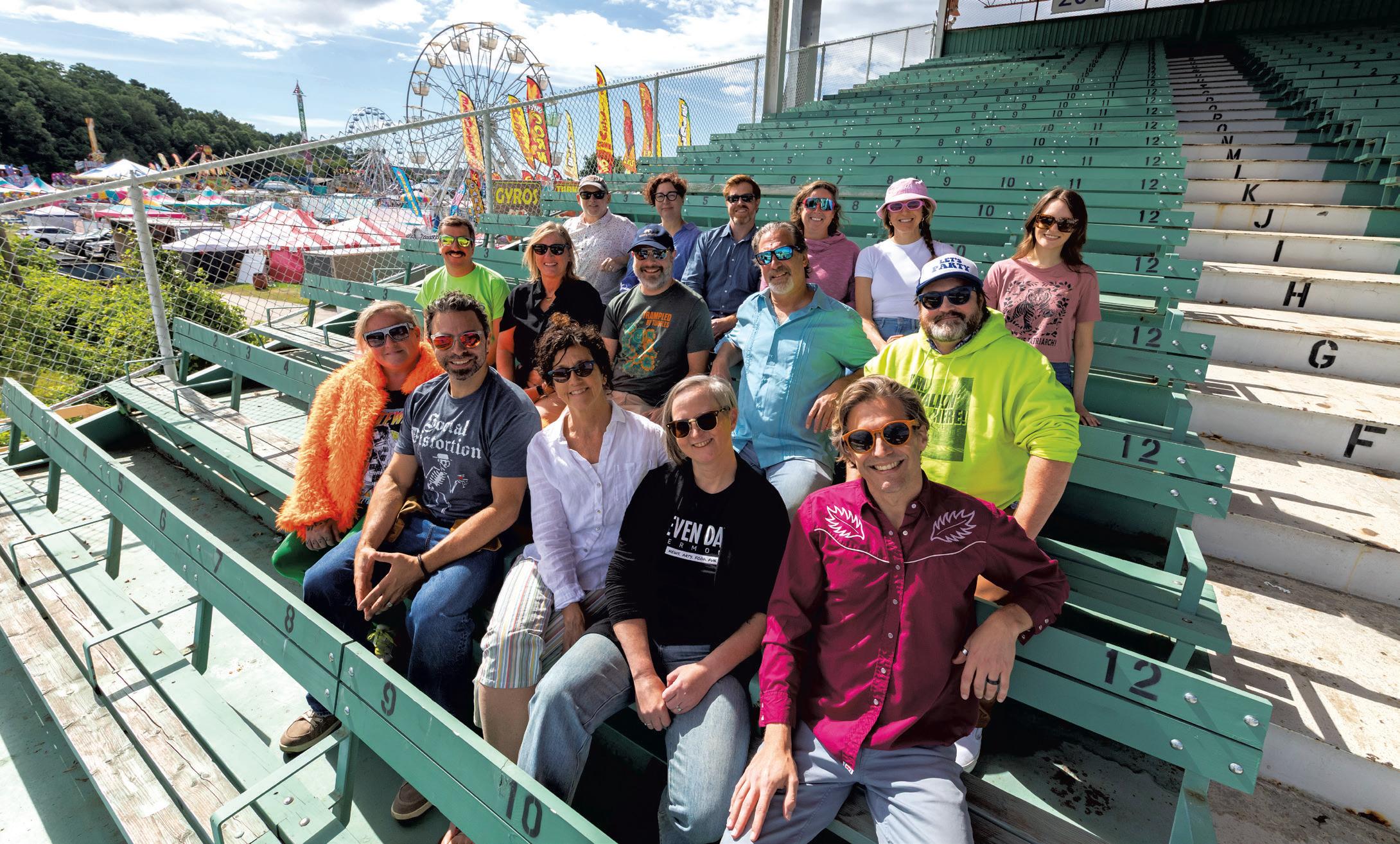
their respective departments. Each year, we bonused the trio through earnings to slowly buy out Pamela’s shares.
In 2019, right before the pandemic, we widened the net to include our 13 longestserving employees. They “bought” the balance of Pamela’s shares. Cathy, Don and Colby now each own 12 percent of the company. The other 13 each own 1 percent. I have 51 percent.
us hold things together during the dark days of the pandemic.
Autumn Brewington: Has that business structure changed your approach to covering Vermont?
Autumn Brewington: Is there anything you have learned in the past five years that you wish you had known in 1995 or 2005, or even 2015?
Paula Routly: Running Seven Days for the past 30 years, through one of the most disruptive periods in media industry history, has required every brain cell and ounce of energy in my body. I’m not sure that knowing more than I did at specific times would have resulted in better decisions. Do I wish I’d invented Craigslist? Sure, though it would have meant cannibalizing our classified section, some of which remains viable.
As for the internet, I knew early on that it would imperil our business model. In retrospect, we rushed into some things that we could have taken longer to think through. But at the time, the digital revolution felt existential. While we didn’t have to immediately put everything online, and on phones and tablets, readers expected us to; the effort became a sign of future viability. Both the success we’ve had, combined with an enduring will to survive, have motivated me to push the paper to be better and better — and, always, to find new ways to pay for it.
11 years older than me, so I figured she would retire first and began to strategize how I might replace her. Three invaluable employees stood out: Sales manager Colby Roberts, creative director Don Eggert and deputy publisher Cathy Resmer had already emerged as essential associates for me and company leaders in

JANUARY 8: An epic ice storm paralyzes Vermont for almost a week.
The goal was to reward these loyal employees but also to create a multigenerational group representing various departments who feel seen and appreciated and who act like owners, coming up with cost-cutting and revenue-generating strategies. Not sure we’re totally there yet, but the 1 percenters definitely helped
FEBRUARY 11: The weekly crossword puzzle makes its first appearance in Seven Days — along with the results of our first sex survey. See page 31.
MARCH 25: Pamela Polston reports in “Rhythm & News” that Agents of Good Roots will play the grand opening of Higher Ground on April 15 in Winooski.
Paula Routly: I don’t think that hybrid employee ownership has changed our approach to covering Vermont — except perhaps to make us aware of how few companies plan for succession. We haven’t asked much of our employeeowners beyond serving on a few committees — the pandemic got in the way — but most of them are still with us.
More than a half dozen “Seven Dayzers” have worked at the paper for more than two decades.

Autumn Brewington: Seven Days provides content free thanks to support from advertisers and Super Readers. Have you noticed any encouraging trends in reader support?
Paula Routly: When we reluctantly started our Super Reader program in 2018, we didn’t feel too comfortable asking our readers for financial support; we thought it might be viewed as a sign of weakness that could potentially turn off advertisers. The pandemic fixed that.
NOVEMBER 4: In “Back Talk,” Paula Routly notes Fred Tuttle’s appearance on “The Tonight Show With Jay Leno,” during which he held up a copy of Seven Days to show his sole campaign ad.
1998 | 1999
FEBRUARY 4: Seven Days publishes the first monthly restaurant review by nationally known critic Marialisa Calta of Calais.
MARCH 11: Vermont lawmakers vote Peter Freyne “Best Statehouse Print Reporter.” Says Sen. Peter Shumlin: “Peter Freyne is the only columnist in Vermont who is consistently intriguing. Legislators grab Seven Days every week like kids in a candy shop — mostly out of fear, of course.”
FEBRUARY 18: Seven Days gets its own domain name: sevendaysvt.com.
SEPTEMBER 8: Fred Tuttle defeats Jack McMullen in the Republican primary election for U.S. Senate.
OCTOBER 21: Seven Days art critic Marc Awodey wins the John D. Donoghue Award for arts criticism. (VPA)
DECEMBER 19: The U.S. House of Representatives impeaches President Bill Clinton.
DECEMBER 9: In “Rhythm & News,” Pamela Polston writes: “Now that Dennis Wygmans has confirmed the imminent sale of Club Toast to Club Extreme, everyone is getting all misty-eyed about their ‘last gig at Toast’ this month.”
JUNE 3: Vermont Pub & Brewery honors Seven Days founders Pamela Polston and Paula Routly for “making Burlington a better place to live and play” with an award ceremony at the downtown brewpub.
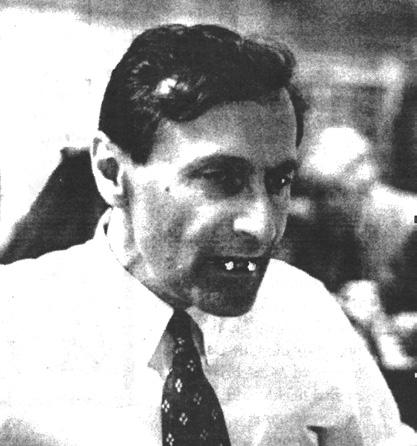
MAY 12: Seven Days apologizes for the “vampire fangs” that appeared on the photo of Sen. Vince Illuzzi in the previous week’s cover story by Paula Routly: “It was a couple of ill-placed dust specks in the camera room at B.D. Press that made him look so ‘long in the tooth.’ Our apologies for the bizarre, but accidental, foul-up.”


It hasn’t all been fun and games as we’ve navigated myriad media industry challenges. But Seven Days is still learning and evolving. We took a break from the constant roller-coaster ride to visit the Monkey Maze fun house at the Champlain Valley Fair. As we enter our next decade, we’ll do everything we can to keep bringing you news, views and amusements.
Sam Hartnett, Matt Weiner, Bryan Parmelee, Candace Page, Jordan Barry, Alice Dodge, Jeff Baron, Logan Pintka, John James, Rev. Diane Sullivan, Mary Ann Lickteig, Ken Picard, Chris Farnsworth, Colin Flanders, Rebecca Driscoll, Lucy Tompkins, Derek Brouwer, Courtney Lamdin, Hannah Bassett
Bottom: Eva Sollberger, Sasha Goldstein, Matthew Roy, Carolyn Fox, Gillian English, Alison Novak, Kaitlin Montgomery, Robyn Birgisson, Marcy Stabile, Kevin McCallum, Dan Bolles, Melissa Pasanen, Angela Simpson, Julia Maguire Front, clockwise from bottom: Paula Routly, Cathy Resmer, Colby Roberts, Don Eggert
Not pictured: Michelle Brown, Andy Watts
Photo: Luke Awtry




Seven Days is 30, and we need your help to celebrate. Please donate today and become a Super Reader. With your support, we’ll stay on track, delivering rigorous reporting on Vermont news and culture. A recurring gift will really grease our wheels. Give $30 monthly to receive a fetching 30th birthday tote bag with artwork by New Yorker and Seven Days cartoonist Harry Bliss.
Want to send a check?
Include your address, phone, email and “30th Birthday.” Send it to: Seven Days, c/o Super Readers, P.O. Box 1164, Burlington, VT 05402
Need more info?


Contact Gillian English at 802-865-1020, ext. 115, superreaders@sevendaysvt.com

Special thanks to Brad Hunt, Strates Shows and the Champlain Valley Fair
















In 2020, after we lost 50 percent of our advertising overnight, suddenly there was no shame in asking for help. Donations poured in. We learned who was actually reading the paper and how they felt about it.


our overall expenses. Philanthropy is up 100 percent over last year.
As the COVID threat receded, we worried about losing the monthly recurring donors who had been supporting us through the pandemic, to the tune of $2,500 a week. By all indications, they are sticking with us, and new ones sign up every week. We are on track to earn $250,000 in reader revenue in 2025, though that’s still a drop in the bucket of
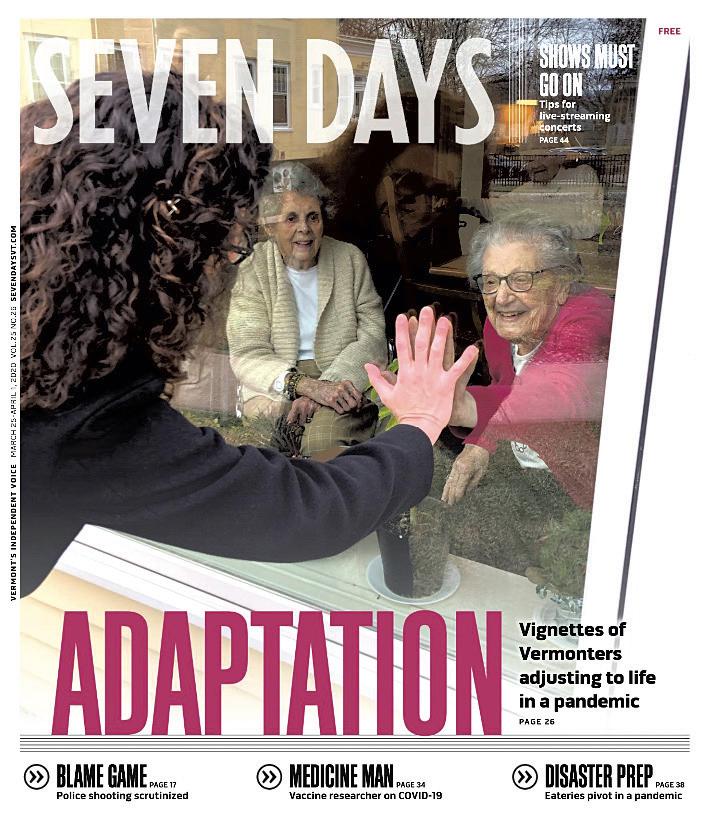









We’ve found that donors generally don’t need to receive perks to be convinced to give — they just want the paper and the journalism we do to survive. The main way we communicate with them is through my weekly “From the Publisher” column, which I started writing in March of 2020. It started as a series of letters to readers to reassure them we weren’t going under. Over time, it evolved into a useful way to humanize Seven Days — I wrote about my mom dying of cancer during the pandemic, for example, which was cathartic and also, sadly, very relatable. We’ve also used it to peel back the curtain on our process. We think it helps our Super Readers feel connected to us, and it’s been useful as a fundraising tool.


JUNE 23: Burlington’s “already-sizzling housing market” is beginning to overheat — so says Kevin J. Kelley in “Gimme Shelter.” He writes: “Any Hill Section or South End home not requiring extensive renovations and priced for less than $175,000 will be snapped up almost overnight, local realtors report.”
From bottom: A Seven Days rack; a March 25, 2020, cover showing Paula Routly visiting her mother at the Converse Home; Routly during the pandemic
don’t want the paper in that form, we’ll keep producing a print product.
Autumn Brewington: Are there other platforms on which you plan to connect with people?
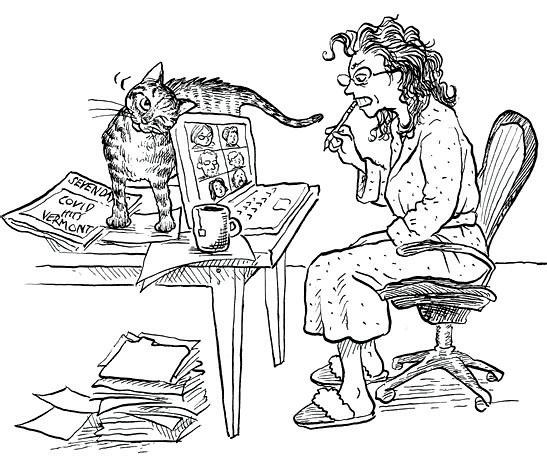
Paula Routly: Seven Days has long been a multimedia company. We employ a fulltime video journalist, Eva Sollberger, who has been telling stories with images since 2007. Our current media partners include Vermont Public, WCAX-TV and Front Porch Forum. We’re also on Facebook, Instagram, X and LinkedIn. We haven’t ventured onto TikTok or Substack yet, but we may.
Autumn Brewington: What do you wish people knew or would ask you about Seven Days?
AUGUST 11: In “Rhythm & News,” Pamela Polston notes that Burlington expat Eugene Hutz is taking New York City by storm as a runway model — and making mustaches cool. His new band, Gogol Bordello, is a big hit.
But the very best fundraising tool remains to find compelling local stories and report the hell out of them. Readers respond.

Autumn Brewington: What is your commitment to print in the next five years?


Paula Routly: We print 35,000 copies of Seven Days every week and distribute them free of charge within two hours of Burlington. Our circulation is audited, and the return rate is between 2 and 4 percent — our readers and circulation director would like us to print more papers, not less. Until the return rate suggests readers
OCTOBER 13: In “Inside Track,” Peter Freyne labels the controversy surrounding the selection of City Market as Burlington’s downtown grocery store “the biggest political food fight of the modern era.”

Like many local news publishers, we’re trying to reach audiences where they are — and we’re creating new ways to engage when we see an opportunity. For example, in 2018, we launched a nonpartisan youth civics project called the Good Citizen Challenge. It invites kids in grades K-8 to do various activities that help them learn about and connect with their communities — things like going to the library or a community event, researching a deed at the town clerk’s o ce, and reading the news … We’ve built a connection with hundreds of Vermont families this way and underscored the link between civics and keeping up with local news. We’ve raised money from foundations through our fiscal sponsor to support it.
OCTOBER 20: In “Back Talk,” Paula Routly reports on Harrison Ford’s Vermont visit during the filming of What Lies Beneath: “Nectar’s doesn’t take credit cards — not even from Harrison Ford. When the fun-loving star of What Lies Beneath found himself out of money at the end of a night of carousing in Burlington, he proffered the plastic. No go. Word has it one of his ‘body guards’ coughed up the cash.”

MARCH 15: Seven Days adds “Hackie,” a biweekly column by Jernigan Pontiac.
DECEMBER 1: Notable Vermonters reveal how they plan to spend the last night of the century in “Dropping the Ball? Celebrating New Year’s Eve, the Y2K Way…” by Paula Routly.
DECEMBER 20: The Vermont Supreme Court rules in Baker v. State of Vermont that same-sex couples are entitled to the benefits of marriage under the state’s constitution.
JANUARY 25: Hundreds of Vermonters flock to the Statehouse for a public hearing on same-sex marriage.
MAY 3: Tim
first editorial

Paula Routly: It takes a crushing amount of work and dedication to produce Seven Days each week. It starts with good intel and story ideas and involves many hands to report, edit, fact-check, illustrate, design and sell ads into a quality publication. We push ourselves to deliver compelling, responsible journalism and never stop hustling to pay for it. None of us earns as much as we might elsewhere, but those who stay do so because they appreciate the chance to do meaningful work alongside creative, talented and discerning colleagues. We care about words and wordplay; we value great design. We collaborate across departments. We strive to get it right, and we own up to our mistakes when we don’t.
Many of our readers understand the value of our e orts, too. Will their appreciation pay the bills to the extent that advertising once did? If not, this country needs to devise another way — before every reliable media outlet, including Seven Days, disappears. ➆
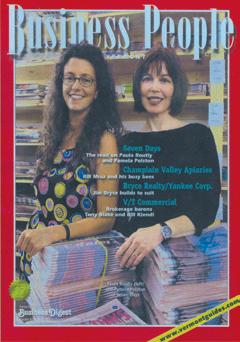
NOVEMBER
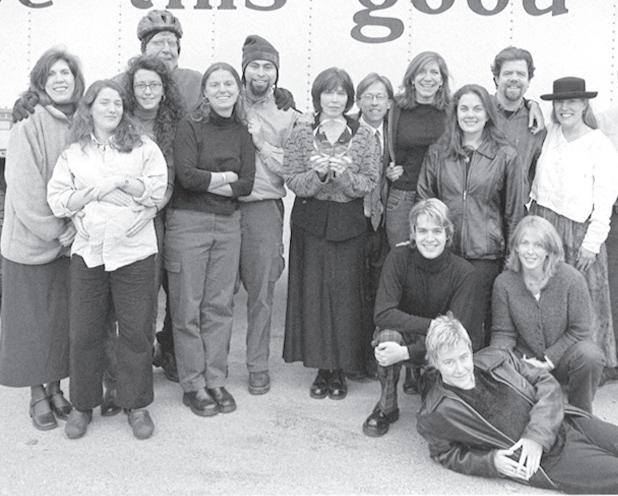

























































COMPILED BY CAROLYN FOX & PAULA ROUTLY
Here’s some simple math: A new issue of Seven Days has dropped every week for 30 years, often with 100-plus pages of local content. That’s thousands of articles, columns, reviews and previews published over the decades. Which ones best tell the tale of an upstart arts paper that, against all odds, has become Vermont’s largest-circulation newspaper? Could we pick 30 articles that collectively sum up the story of Seven Days?
WHICH STORIES BEST TELL THE TALE OF AN UPSTART ARTS PAPER THAT, AGAINST ALL ODDS, HAS BECOME VERMONT’S LARGEST-CIRCULATION NEWSPAPER?
Not easily, as it turned out. What defines the “best”? The biggest scoop, the most shocking exposé, the most artfully crafted tale, the most thoroughly reported series? Or does it make more sense to judge a story by its impact, including actions taken and the number of follow-up stories it engendered?
Another approach might be to pick stories that represent the wide range of things Seven Days covers — food, for example, or things to do in Montréal. Also an option: calling out those pieces that turned into something significant. The introduction of columnist Peter Freyne, for example, shaped the history of this paper and, one might argue, some local political careers.
Our story selections include some of each — a sampling of local journalism that made a splash when it was published and, for myriad reasons, has also stood the test of time. All together, these only scratch the surface of our rich archive. Want more? You can read these stories in full and dive deeper into our digital stacks at sevendaysvt.com/archives. ➆
October 18, 1995 |
By Peter Freyne
Peter Freyne thought Seven Days would be a good fit for his shit-kicking political column, “Inside Track.” He was right! Two months after the paper’s launch, we published the first of hundreds, in which he raked an uppity side judge over the coals. It was the beginning of a beautiful, 13-year publishing relationship. New readers started picking up Seven Days for Freyne’s insightful, funny, sometimes vicious takes on the “talented and colorful cast of characters on the Vermont political stage,” as he once put it. When Howard Dean and later Bernie Sanders ran

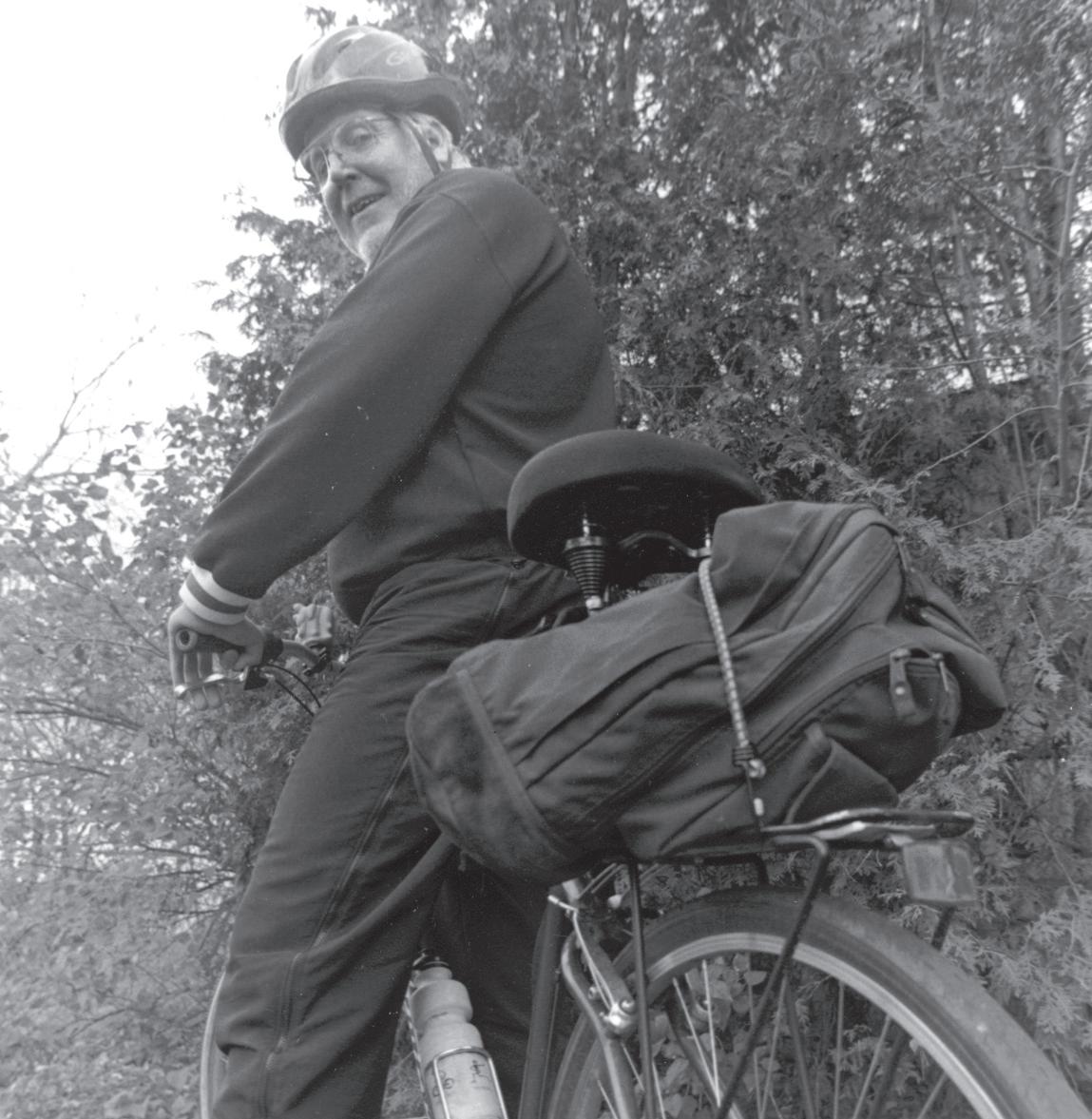
for president, national reporters found and studied Freyne’s oeuvre, which also included memorable cover stories about local drug kingpin Billy Greer and reporter Paul Teetor’s lawsuit against the Burlington Free Press. When he sank his teeth into a story, Freyne did not let go. He died in 2009 — along with the nicknames he bestowed on the people he wrote about — and no Vermont writer since has managed to make local politics as entertaining.
MAY 24: U.S. Sen. Jim Jeffords stuns the nation by leaving the Republican Party, handing off control of a closely divided Senate to the Democratic Party for the next 18 months.
21: Paula
an
SEPTEMBER 11: Nineteen Islamic terrorists fly four commercial jets into the World Trade Center, the Pentagon and a field in Pennsylvania, killing almost 3,000 people.
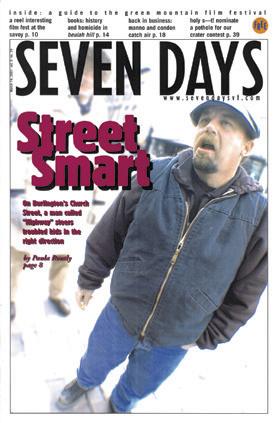
“From Basra to Bethlehem: A Short Story for the Season”

December 20, 1995 | By Tom Paine





Although it was timed for Christmas, Seven Days’ first published work of fiction was hardly a holiday story. Narrated in the voice of a disillusioned Desert Storm vet, it was a taut take on modern desert warfare. Vermont author Tom Paine contributed the piece, and Seven Days a Pushcart Prize for it, a total surprise. The Reading Issue was born. Fiction — and poetry — have always been part of the paper. The very first

OCTOBER 7: The U.S.-led invasion of Afghanistan begins.
SEPTEMBER 19: Seven Days art critic Marc Awodey writes about his architect father, who helped design the World Trade Center. The original blueprints for the towers accompany the story.
SEPTEMBER 12: In “Inside Track,” Peter Freyne analyzes the Bush administration’s chaotic response to the previous day’s attacks.



APRIL 17: Pamela Polston passes the torch to new music editor Ethan Covey.


edition featured a short story by University of Vermont English professor and current state Senate President Pro Tempore Phil Baruth. Many of our past and present contributors — Margot Harrison, Samantha Hunt, Erik Esckilsen, Ruth Horowitz, Emily Hamilton — are published authors. From 1997 to at least 2002, the paper hosted an annual Emerging Writers Contest. More recently, culture coeditor Dan Bolles compiled a pandemic literary journal, Green Mountain Quaranzine, to run in Seven Days. A few weeks into lockdown, it was just what the doctor ordered.



JUNE 19: Paula Routly interviews parttime Vermonter Judith Levine about her radical writings and the national reaction to her new book, Harmful to Minors: The Perils of Protecting Children From Sex. Levine later becomes a columnist for Seven Days writing about “the uses and abuses of emotion” in “Poli Psy.”

SEPTEMBER
JULY 31: In “Inside Track,” Peter Freyne outlines an “Enronstyle conspiracy” in financing major renovations at Fletcher Allen Health Care (now the University of Vermont Medical Center), overseen by CEO Bill Boettcher.
NOVEMBER 5: Republicans win majorities in both the U.S. House and Senate. Jim Douglas is elected governor.
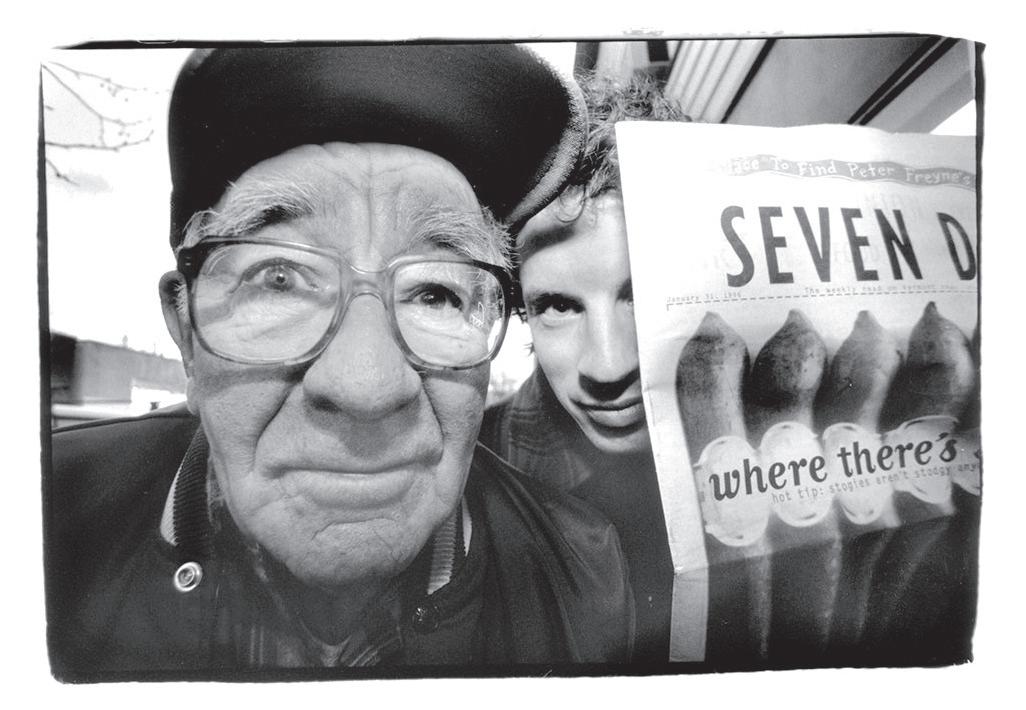
“Winning
January 31, 1996 |
By Paula Routly
“Spread Fred” was one of the slogans to emerge from Man With a Plan, John O’Brien’s brilliant mockumentary about a dyed-in-the-wool Vermont dairy farmer who decides to run for Congress. Seven Days couldn’t help spreading the word about the growing celebrity of lead “actor” Fred Tuttle, O’Brien’s Tunbridge neighbor, who played himself in the charming movie described in this story. Although his formal schooling ended in the 10th grade, Tuttle became a real-life candidate for Vermont’s U.S. Senate seat — the one long held by Patrick Leahy. Tuttle ran against a Harvardeducated carpetbagger in the Republican primary — and won because so many Vermonters embraced his campaign for what it was: a clever publicity stunt for the movie. Tuttle might have made it all the way to Washington, D.C., if he hadn’t endorsed Leahy. He became a local icon, appeared on “The Tonight Show With Jay Leno” and, in 2003, got a proper New York Times obituary. Since 2018, O’Brien has represented Tunbridge in the Vermont House.
June 12, 1996 |
By Nancy Stearns Bercaw
In 1995, Burlington native Peter Kurth came home to Vermont to die. The acclaimed author of Anastasia: The Riddle of Anna Anderson had tested positive for HIV in 1989, at which time there was no e ective treatment to manage the condition. Everything changed in 1996, the year Nancy Stearns Bercaw profiled him for Seven Days. The medical establishment rolled out antiretroviral therapy that worked, and Kurth began what he called his “second life.” He described the resurrection in a June 18, 1997, first-person piece titled “Positive Thinking: Swapping a Death Sentence — for Life.” In it he wrote: “Now I’m up to my ears in projects and plans. I’m Charles E. Lindbergh, Helen Keller and La Pasionaria all rolled into one. I’m Scarlett O’Hara after the intermission.” Kurth had so much to say, in fact, that he became a culture columnist for Seven Days. His witty and wise “Crank Call” ran biweekly for five years, until September 2002.
“All
July 24, 1996 | By
Seven Days contributors
“Whether your fancy runs to creemees or crème caramel, fish sticks or filet mignon, food is more than just sustenance. It can be social, political, artistic, sensual,” began our first-ever Food Issue — also our largest paper up to that date, at 40 pages. In recognition of Vermont’s nascent locavore moment, we served up a heaping plate of stories, covering the farm-to-table trend, the emergence of artisanal bread, the popularity of Plainfield’s River Run restaurant and more. Over the years we’ve dished out other treats, from the annual 7 Nights dining guide and Vermont Restaurant Week (both discontinued since the pandemic) to Burger Week (still happening, still delicious). We bring back the Food Issue on occasion, but it’s less necessary now that we have a robust weekly food section powered by two full-time writers. As Ina Garten would say, “How good is that?!”
“The Seven Days Sex Survey”
February 11, 1998 |
By Seven Days staff

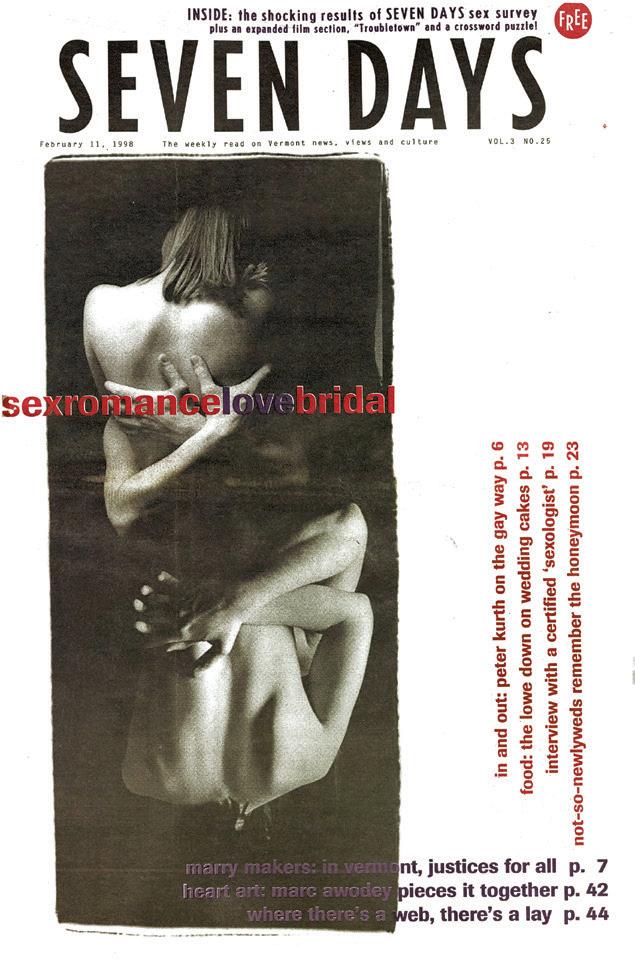
In February 1998, with Valentine’s Day love — or lust — in the air, Seven Days launched our first-ever Sex Survey. It became a red-hot biennial tradition through 2013; you can’t say we don’t deliver on what readers want. The “shocking results” of this first survey are a bit of a time capsule: Men and women alike named Howard Dean the most bangable public figure, and Dave Matthews Band were considered an unironic aphrodisiac, for example. The only-in-Vermont answers are entertaining, too: How to keep things spicy in a marriage? “Plenty of fruits and vegetables.” Locations of a memorable sexual experience? Huntington Gorge and the Stowe gondola. It’s been 15 years since our last Sex Survey. Do tell: Are you hot and bothered for us to bring it back?
FEBRUARY 13: In “Inside Track,” Peter Freyne reports that all but one of Fletcher Allen Health Care’s board of trustees resigned after Gov. Jim Douglas called on them to step down.
| 2003
NOVEMBER 6: Acclaimed poet, National Book Award winner and former Vermonter Hayden Carruth is honored with four readings around the state — and a spot on the cover of Seven Days. Paula Routly delivers “The Whole Carruth.” (VPA, 1st place, best feature)
MARCH 12: Ethan Covey profiles DJ A-Dog in “Vinyl Answer”: “A-Dog spins with casual, effortless grace. As the evening winds down, he remains on stage, chatting with well-wishers, demonstrating his techniques and pushing forth a smooth mix of funk-filled grooves.”
MARCH 19: The U.S. invasion of Iraq begins. APRIL 2: In “Local Matters,” a new biweekly column, Ken Picard chronicles Vermont news.

JUNE 23: Howard Dean announces he’s running for president.



JUNE 26: Music editor Ethan Covey wins the John D. Donoghue Award for arts criticism. (VPA)
OCTOBER 4: Fred Tuttle dies of a heart attack on the same Tunbridge farm where he was born.

OCTOBER 22: Seven Days writers ask, “Whither Winooski? Is the Onion City Becoming Burlington’s Brooklyn?” “Downtown Winooski is essentially a parking lot,” Higher Ground co-owner Alex Crothers says, “and it has so much potential.”


JUNE 18: Ken Picard documents the increasing presence of Mexican farmworkers in Vermont in “Green Mountain Campesinos.” See page 32. (VPA, 1st place, best local story, non-daily)





SEPTEMBER 17: Before Facebook and MySpace, there was Friendster. Cathy Resmer explores the early social media site in “Best Friendsters?”
Zephyr Teachout, Howard Dean’s director of online organizing and outreach, is “excited” about its potential: “It’s even better for organizing than it is for dating,” she says.
OCTOBER 29: Paula Routly retires her long-running “Back Talk” column and passes the arts and culture torch to contributing editor David Warner, whose new column is called “State of the Arts.”
“
March 18, 1998 | By
Jeanne Keller

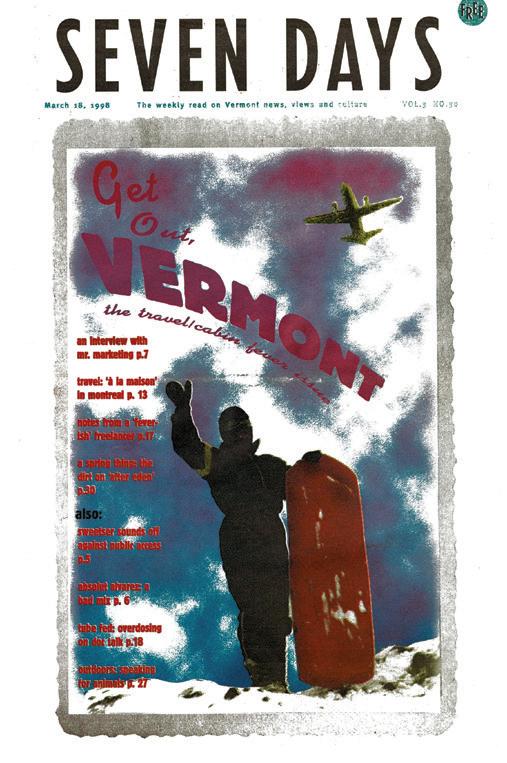
Christmas in Chinatown. Grocery shopping at Marché Jean-Talon. First-class fireworks. Burlington resident Jeanne Keller perfectly described the lure of Montréal in this piece that explained why she and her husband finally decided to rent an apartment there: to avoid the midnight drive back to Vermont. From a downtown pied-à-terre, Keller had the helpful perspective of being a Vermonter in Canada. Her mission, as she saw it? “Learn about this city and tell others,” she wrote. And that’s exactly what Keller did, starting in May 1998, with a column called “Real Ville” that ran biweekly through that summer and then less regularly for years. Seven Days editor Candace Page still keeps a tattered one about IKEA, complete with driving instructions, in the glove box of her car. Keller’s enthusiastic travel writing led the way to our current Québec coverage, expertly guided by another adventure-seeking Vermonter, Jen Rose Smith.
“Green
Mountain Campesinos:
and More
June 18, 2003 | By
Ken Picard
Back in 2003, Vermont had a big secret: Its dairy farms relied increasingly on Mexican farmworkers to milk their cows. But no one in the state would talk about this growing shadow labor force, so the paper’s first news writer, Ken Picard, hired a translator and went out to see for himself. Going farm to farm, he found Mexican campesinos, all of whom were undocumented, toiling long hours for meager wages. Many were totally dependent on their employers for housing, health care and transport to the grocery store. If a conflict arose, such as a pay dispute, they had nowhere to turn. Picard described the appalling conditions in which these men lived and worked — and shared their personal stories to explain what led them to Vermont’s most thankless jobs. Moving and prescient, the piece won a first-place award from the New England Newspaper & Press Association.



JANUARY 18:
Former Fletcher Allen Health Care CEO Bill Boettcher pleads guilty to conspiracy charges.
JANUARY 19: Presidential candidate Howard Dean places third in the Iowa caucuses, gives a speech to supporters during which he pledges to keep fighting — and shrieks in what will become known as “the Dean scream.”
MARCH 10: Paula Routly starts writing a monthly feature, “Edible Complex,” to cover Vermont’s growing food scene.
MAY: Seven Days publishes the first 7 Nights, an annual dining and nightlife guide with listings for every restaurant and bar in northern Vermont. The edition is 100 pages. See page 56. (AAN, honorable mention, special section)
NOVEMBER 10: The U.S. defense budget could surpass $500 billion in 2005. How much of that comes back to Vermont? Ken Picard and Cathy Resmer do the math in “War Gains: Vermont’s Pentagon Payout — What’s Our Bang for the Buck?” (VPA, 2nd place, best state story)






NOVEMBER 2: George W. Bush is reelected president.

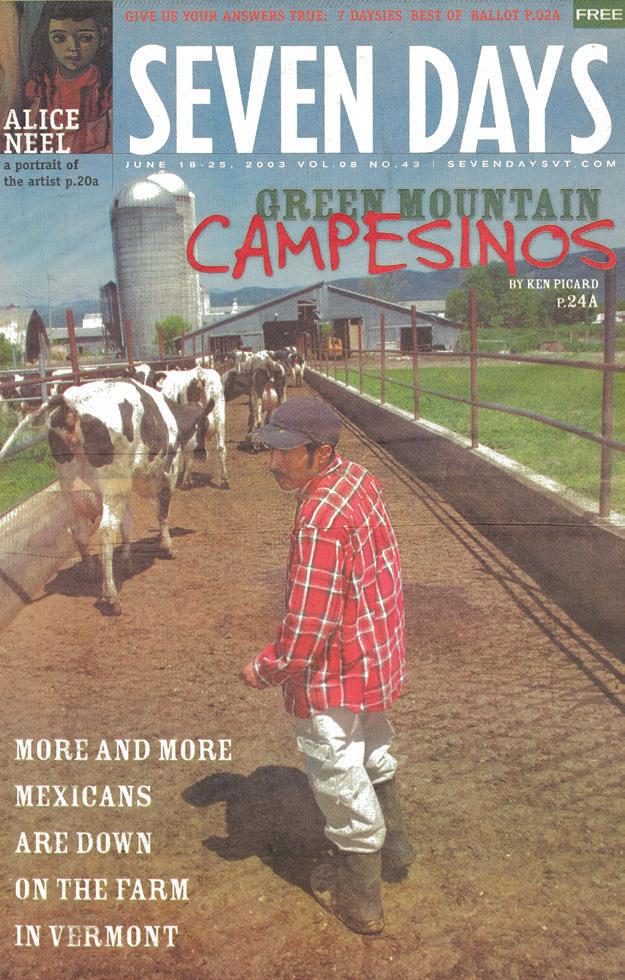
“Life
May 31, 2006 | By
Margot Harrison
When Margot Harrison sat down with Alison Bechdel in 2006, it was in between the “Dykes to Watch Out For” cartoonist’s photo shoots with People and Entertainment Weekly. The celeb treatment was new for Bechdel, as was her latest project — a debut graphic memoir, Fun Home, that “has the potential to catapult her into the big time,” Harrison wrote. It did, of course: The story about Bechdel’s complicated relationship with her father, set against the backdrop of her family’s funeral home, went on to become a Tony Award-winning musical less than a decade later. In this revealing cover article, Bechdel opened up about her newfound fame, creative process and insecurities, noting that “People who write graphic novels are clinically insane.”

FEBRUARY 9: Vermont musicians honor the late “Big Joe” Burrell in “Ode to Big Joe: Remembering the Man With the Mellow Saxophone” by Pamela Polston. Burrell died a week before.
MAY 4: Music editor Casey Rea interviews rocker Grace Potter in “Grace Notes”: “It probably won’t be long before the rest of the world knows about Grace Potter & the Nocturnals.”
APRIL 20: U.S. Sen. Jim Jeffords decides not to run for reelection; U.S. Rep. Bernie Sanders enters the Senate race.
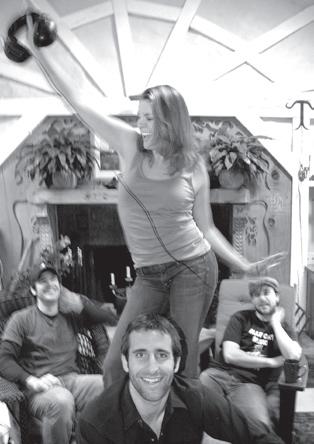
APRIL 28: Seven Days launches its first blog, 802 Online, by Cathy Resmer.

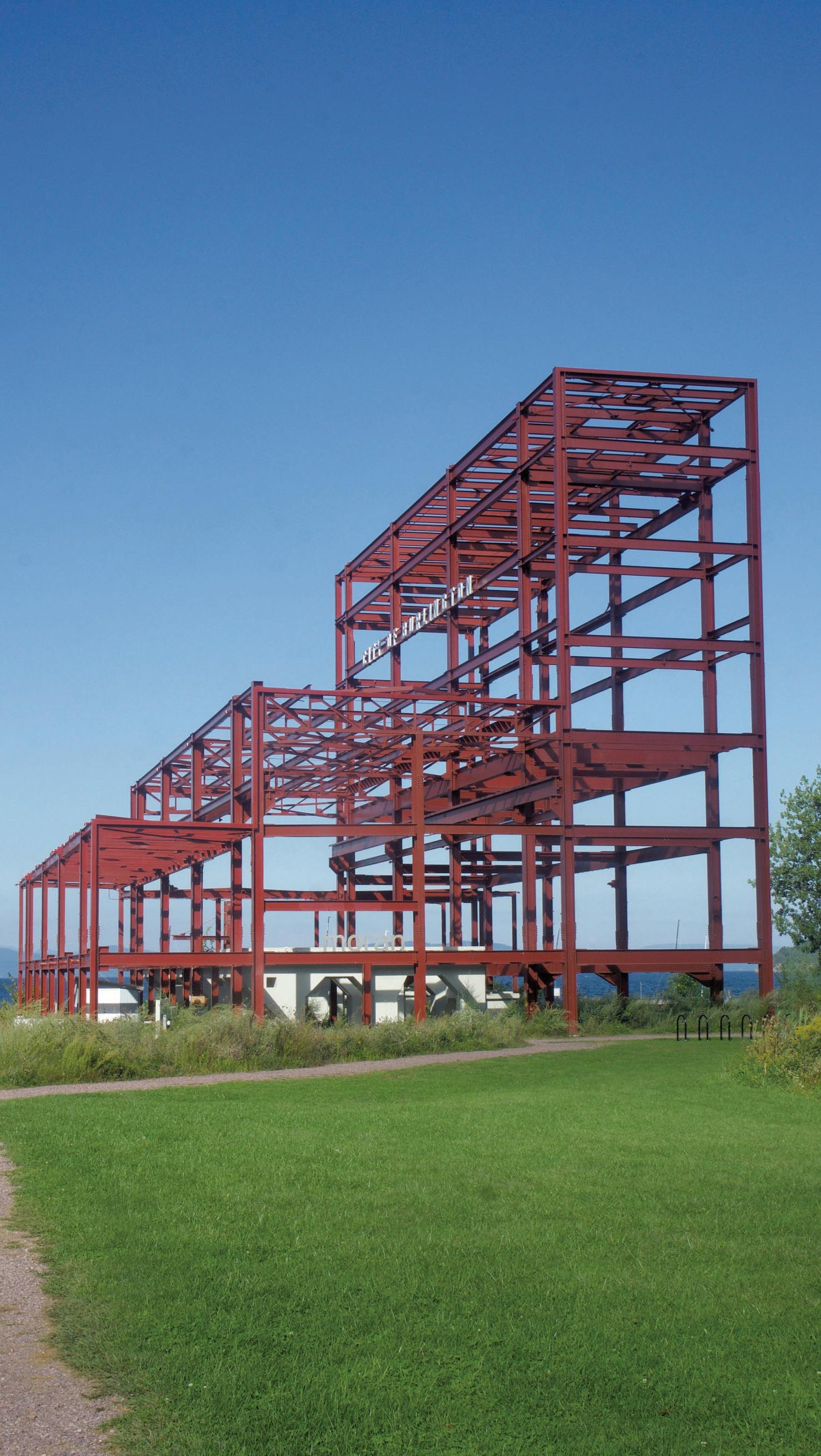

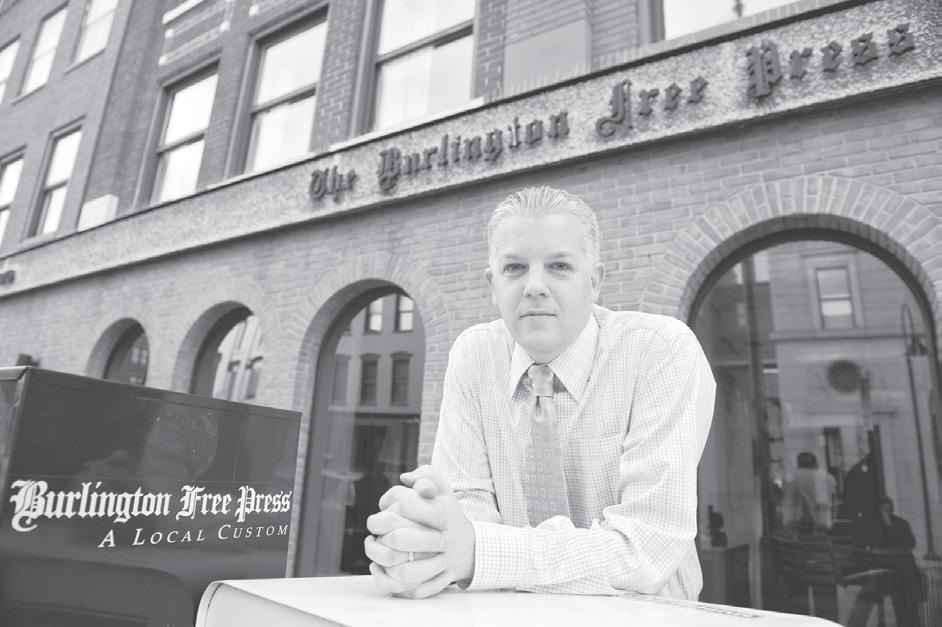
“High
January 28, 2009 | By
Cathy Resmer & Paula Routly
To the extent that Seven Days is an “alternative” weekly, it has been in relationship to the daily Burlington Free Press, which once employed hundreds. Especially in the first 15 years, the rivalry was intense. The Free Press ignored our work and our reporters as if Seven Days didn’t exist. We, in turn, regularly criticized and poked fun at the “Freeps,” as we called it — until 2009, when Cathy Resmer wrote a deeply reported business story about the Gannett-owned daily, which was downsizing and innovating in response to an economic recession and the rise of the internet. The piece explained the changes a young, digitally savvy publisher, Brad Robertson, was making — and why. His wisest words? “How it all shakes out as far as at the end of the day and what it all looks like, I don’t think anybody knows.” The piece included a fun sidebar listing the “Free Press Writers We Love,” three-quarters of whom Seven Days wound up hiring.


AUGUST 29: Hurricane Katrina makes landfall in New Orleans.
“The Breakout: Reunited and Revitalized, Death Keep on Knocking”
October 6, 2010 | By
Dan Bolles
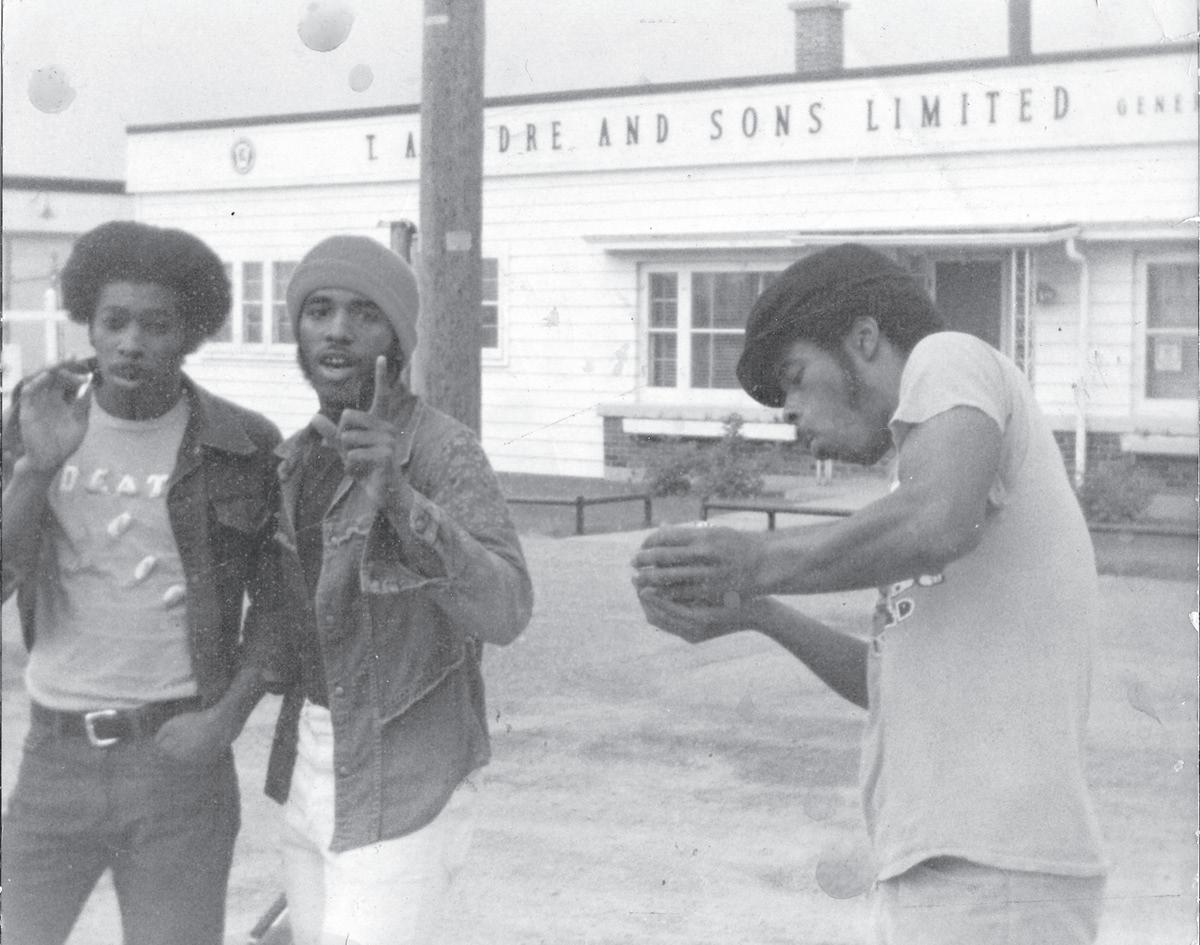
Two years before the rockumentary A Band Called Death — which chronicled the rediscovery and subsequent rebirth of pioneering 1970s punk band Death for all the world to see — music editor Dan Bolles told the tale in Seven Days. “The story is the stu of rock and roll legend,” he wrote. Indeed, descendants of Death — Hackney family members living in Jericho — unearthed the band’s tapes in the attic, sparking the release of “lost” material and a string of reunion shows that caught the ear of the national media and celebs such as Mos Def (quoted in this article). The young Hackneys formed the storied Burlington band Rough Francis in tribute. Seven Days covered it all, right up to Rough Francis’ final show in 2025 — but word is that they’ll be back soon under a new moniker. We’ll be among the first to cover that, too.




| 2006
NOVEMBER 7: The Vermont Press Association gives Ken Picard the Mavis Doyle Award for excellence in news reporting. Music editor Casey Rea and associate editor Margot Harrison tie for the John D. Donoghue Award for arts criticism. Seven Days is named the best non-daily newspaper in Vermont, winner of the 2004 General Excellence Award.
MAY 30: Alison Bechdel discusses her forthcoming book, Fun Home, in “Life Drawing.” See page 32.

MARCH 1: Seven Days introduces readers to the concept of instant runoff voting by inviting them to pick which comics the paper should keep. Lloyd Dangle’s “Troubletown” is eliminated in the first round.
MARCH 7: Burlington voters elect Progressive Bob Kiss as mayor in two rounds of instant runoff voting.
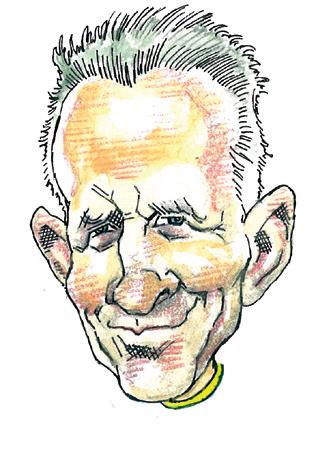




“Are You There, God? It’s Me, Vermont: Finding Religion in America’s Most Godless State”
March 27, 2013 | By Dan Bolles, Andy Bromage, Kathryn Flagg, Megan James, Kevin J. Kelley, Alice Levitt, Ken Picard, Pamela Polston & Paula Routly
When it comes to God, Vermont’s just not that into Him. Or Her. In 2013, our ranking as America’s least religious state was rea rmed by a Gallup poll that indicated only 23 percent of Vermonters considered religion an important part of their daily lives. Among the 50 states, only New Hampshire was as godless. And yet, there are signs of religion everywhere in Vermont, starting with the ubiquitous and iconic white church steeples across the state’s landscape. So how godless are we, really? In a group cover story, Seven Days sent its sta to places of worship large and small, public and private, to meet the faithful and discover the religious pulse of Vermont. That involved meditating with Buddhists, praying with Muslims, singing with Mennonites, eating snacks with Greek Orthodox and admiring some pagan power animals.
SEPTEMBER 28: Seven Days hires its first food writer, Suzanne Podhaizer, and establishes a weekly food section.
MAY 24: In advance of a reunion concert, the Pants talk with music editor Casey Rea in “Classic Fit: Vintage but Not Distressed, Burlington’s Beloved ’90s Band the Pants Roll Up Their Cuffs for One More Show.”
DECEMBER 27: Burlington residents have discovered a new way to communicate, Cathy Resmer writes in “Neighbors Congregate in Front Porch Forums.” “The free service allows people to receive email newsletters containing announcements from their neighbors. Forum users write about everything from petty crime to politics to lost cats.”
AUGUST 15: “Inside Track” columnist Peter Freyne launches a blog called Freyne Land.
NOVEMBER 7: Democrat Peter Welch wins Vermont’s sole U.S. House seat; Bernie Sanders is elected to the U.S. Senate.




Lake Point provides a broad range of property management services for both residential and commercial property owners. As a locally owned company, Lake Point can manage anything from 24/7 emergency response, capital projects, leasing, and more. With a proactive, hands-on approach, Lake Point maximizes the value of your property. Having access to the property management side allows our team to assess potential real estate acquisitions for improvements and redevelopment. This full-service approach ensures we deliver value and results for every property we manage.
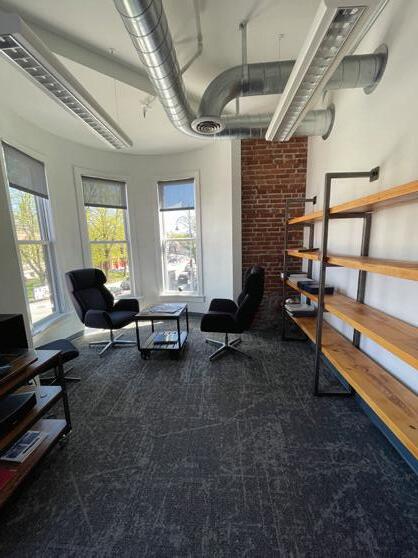




June 5, 2013 | By
Ken Picard
“Here’s how I landed the seediest assignment of my journalism career — and wound up naked on a massage table in Williston, turning down sex from a Korean woman in a pink thong.” So began Ken Picard’s bombshell exposé of Asian massage parlors in Vermont that serve as fronts for prostitution and likely human tra cking. Although he got his leads from a nationwide online guide for erotic services called Rubmaps, Picard did his own local research. He went to three di erent establishments and asked for a massage. Then he described each encounter in detail, including being o ered various sexual services. He also tried to engage the women in conversation and discovered that some work all day, every day, just for tips. Another was clearly confined to her place of employ. Most shocking of all: In this and follow-up stories, Picard learned that landlords were largely looking the other way and federal law enforcement wasn’t interested in busting these illegal operations. When one gets shut down, another just pops up elsewhere.





“Threats, Lawsuits and Dead Animals: An Ongoing Feud in Victory Illustrates the Dark Side of Small-Town Life”
March 18, 2015 | By


Mark Davis

In the late 1990s, the Boston Globe twice sent a reporter to Victory, Vt., to document nasty personal feuds between neighbors who couldn’t even recall what precipitated them. Describing the tiny Northeast Kingdom town as “less Norman Rockwell and more Edgar Allan Poe,” the Globe reported on threatening letters, lawsuits, a pet ram that appeared to have been killed and accusations of financial shenanigans. In 2015, Seven Days sent Mark Davis to report on two more recent skirmishes that had intensified the conflict. “While the stakes are laughably small, the enmity is huge,” Davis wrote. “The Essex County Sheri ’s Department provides security at every Victory selectboard meeting.” Last we heard, the feuding continues. As former town clerk and treasurer Carol Easter put it: “We’re screwed up, basically.”
“‘Summer
July 15, 2015 | By Paul
Heintz
“Ber-nie! Ber-nie! Ber-nie!” By the time U.S. Sen. Bernie Sanders (I-Vt.) arrived in Madison, Wis., in 2015 at the start of a three-state, four-day presidential campaign tour of the Midwest, CNN had declared it the “summer of Sanders.” By the time he departed,

new polls and fundraising reports showed him gaining on Democratic front-runner Hillary Clinton. Sanders had been training for this race all his life, and political editor Paul Heintz was there to see the self-described democratic socialist during the moment the campaign caught on. His story captured voter excitement in the Corn Belt, giving meaningful insight into Sanders’ appeal before he became taken seriously nationally. Because few media outlets were covering Sanders like this, the story was reprinted in papers in California, South Carolina, Ohio and Pennsylvania.
JANUARY 11: Seven Days publishes its first weekly email newsletter, Notes on the Weekend.

FEBRUARY 4: The first episode of Eva Sollberger’s web video series, “Stuck in Vermont,” debuts on the Seven Days website. It spotlights a comics exhibit at the Helen Day Art Center in Stowe.

JANUARY 25: “Inside Track” columnist Peter Freyne is diagnosed with lymphoma and begins blogging about his impending chemotherapy on Freyne Land: “Let me tell ya, after all those years of writing about the bloody monster of an underground garage that Bill Boettcher and the Boys stuck four stories deep into Hospital Hill, I’m finally getting to become intimately familiar with it.”

MAY 30: Ken Picard documents abusive labor practices in “Hot and Soured: Slave Wages and Unsafe Housing — Exposing the Unsavory Side of Cheap Chinese in Vermont.” (AAN, 3rd place, investigative reporting)
AUGUST 1: Rusty DeWees takes off his clothes for the cover of the Daysies issue. See page 70.
SEPTEMBER 20: Seven Days theater critic Elisabeth Crean wins the John D. Donoghue Award for arts criticism. (VPA)
JANUARY 26: Seven Days is a lead organizer of the first Vermont 3.0 Creative/Tech Career Jam, a “job fair on steroids” that draws 1,800 people to the Main Street Landing Performing Arts Center in Burlington.
DECEMBER 19: Suzanne Podhaizer sucks down seafood with oyster expert Rowan Jacobsen in “Shuck and Awe.” (AAN, 1st place, best food writing)
MARCH 19: Peter Freyne pens his last “Inside Track.” Seven Days launches Blurt, the staff blog.
APRIL 9: The Burlington Business Association names Seven Days Business of the Year, citing the company’s financial success and contributions to the community and promotion of Burlington.
APRIL 29: Seven Days introduces “Fair Game,” a political column by Shay Totten, founder and former editor of the Vermont Guardian
AUGUST 27: Seven Days publishes the first edition of What’s Good: The OffCampus Student Guide to Burlington. See page 56. (AAN, 1st place, special section)







































Fair
June 15, 2016 | By
Paul Heintz
The day after 49 people were killed with a military-style rifle at a nightclub in Orlando, Fla., political editor Paul Heintz asked governor Peter Shumlin whether the massacre had changed his views on gun rights. The gov said no. Five hours later, to viscerally illustrate the laxity of Vermont’s gun laws, Heintz bought an AR-15 from a stranger in a Five Guys parking lot in South Burlington. He paid in cash — $500 — and completed no paperwork or background check.
“In Vermont, home to the nation’s most permissive gun laws, everything I did was perfectly legal,” Heintz wrote. Less than two years later, a school shooting plot in Fair Haven caused the new governor, Phil Scott, to radically rethink his stance on gun control. Heintz and reporter Taylor Dobbs followed up with “In Range: The Week That Changed Vermont’s Gun Politics.”
“To Hadestown and Back: Following Anaïs Mitchell’s Musical From Vermont to O -Broadway”
June 22, 2016 | By
Pamela Polston
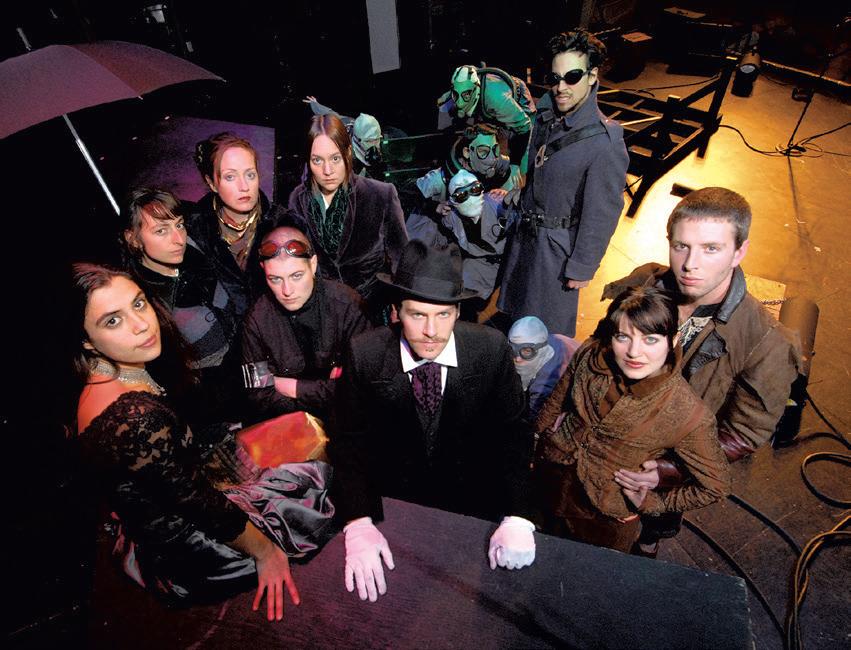
Taking readers from “500ish BC” all the way to a June 17, 2016, o -Broadway performance of Hadestown, Pamela Polston charted a creative timeline of Anaïs Mitchell’s Vermont-born musical, which went on to win eight Tony Awards when it hit Broadway proper just three years later. As Mitchell told Polston: “It started in the random, cosmic way most art things start, I’d say: A few lines came into my head ... [The songs] seemed to be about the Orpheus myth.” Incorporating Greek mythology, interviews with early collaborators and reviews from national press, the story described the players who, working with dark material as old as drama itself, “elevated this Hades to a little slice of heaven.” The Broadway version finally came home to Vermont in fall 2024, touring at the Flynn in Burlington — “a miracle, honestly,” Mitchell told Seven Days


“Lucky
a

February 22, 2017 | By
Sasha Goldstein
Ski bum (noun): “Simply defined, those are individuals who move to a ski town, get a job that provides a ski pass as compensation, and then ski all winter — when they’re not working or partying,” Sasha Goldstein wrote in this cover story about the hundreds of young, college-educated people who moved to Vermont in the 1960s and ’70s. Unlike the estimated 40,000 backto-the-landers and hippies who flocked to the state during the free-love era, ski bums weren’t motivated by idealism; they just wanted to have a good time. But those who embrace the pejorative term argue that the wintersports lovers did shape Vermont’s economy, politics and culture. Seven Days shared the colorful histories of several Mad River Valley skiers who were lured by the Green Mountains — and never left.
NOVEMBER 19: Tiny-house builder Peter King of Bakersfield appears in Episode 105 of Eva Sollberger’s “Stuck in Vermont.” The video goes viral.
JANUARY 7: Peter Freyne dies on the first day of the legislative session. Lawmakers recognize him with a moment of silence.
| 2009
NOVEMBER 4: Seven Days hosts its first election-night live blog on sevendaysvt.com. Barack Obama is elected president.




JANUARY 16: Pamela Polston and Paula Routly designate a Seven Days succession team: Creative director Don Eggert, online editor Cathy Resmer and sales director Colby Roberts become associate publishers.
JANUARY 28: “This is the wild, wild West media-wise, and nobody knows what the future holds,” says Brad Robertson, the 36-year-old publisher of the Burlington Free Press. Cathy Resmer takes on the competition in “High Noon for the Burlington Free Press ” See page 34. (AAN, 2nd place, media criticism)
MARCH 3: Burlington voters reelect Progressive Mayor Bob Kiss in the third round of instant runoff voting.
APRIL 23: Pamela Polston and Paula Routly deliver a tech-related keynote address at the Women Business Owners Network conference in Burlington. Seven Days announces a media partnership with WPTZ Newschannel 5: Its reporters will appear on-air three nights a week.
APRIL 7: The Vermont legislature overrides Gov. Jim Douglas’ veto and legalizes same-sex marriage.
MAY 20: Ken Picard asks a hard question in the cover story “Continuing Ed: Three and a Half Years After His Near-Fatal Car Crash, Is Sen. Ed Flanagan Still Up to the Job?”




OCTOBER 7: Seven Days switches to a short tabloid size with no fold. The move to Upper Valley Press allows for full color on all pages.




JULY 24: After the June 25 death











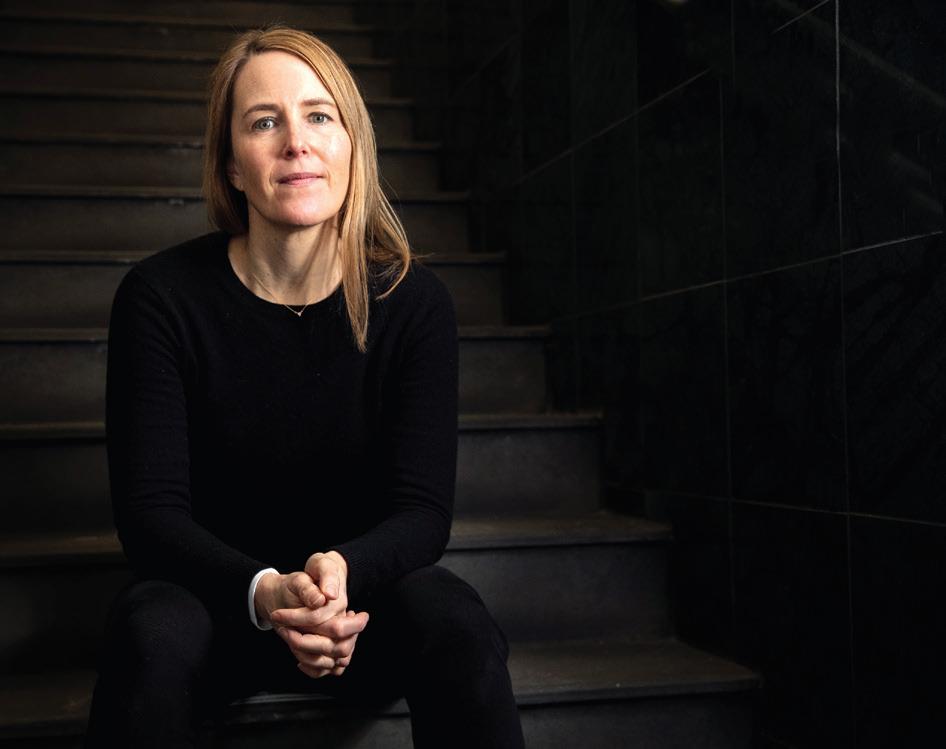
February 20, 2019 | By
Kate O’Neill
Why are so many people addicted to opioids in Vermont? How did this happen?

These were the questions Kate O’Neill sought to answer in “Hooked,” her award-winning yearlong series sharing stories and solutions from Vermont’s drug crisis. O’Neill’s credentials included wrenching personal experience. In an obituary for her sister, Madelyn Linsenmeir, O’Neill wrote candidly about the young woman’s struggle with opioiduse disorder: “To some, Maddie was just a junkie — when they saw her addiction, they stopped seeing her . And what a loss for them.” In this first installment of the series, O’Neill told her sister’s story and that of the pill that hooked her and countless others. Later that year, Seven Days launched All Our Hearts, an online project helping families memorialize loved ones lost to the opioid epidemic.
“Milking It: Seven Days Finds Out Firsthand Why U.S. Workers Aren’t Employed on Vermont Dairy Farms”
March 13, 2019 | By
Chelsea Edgar
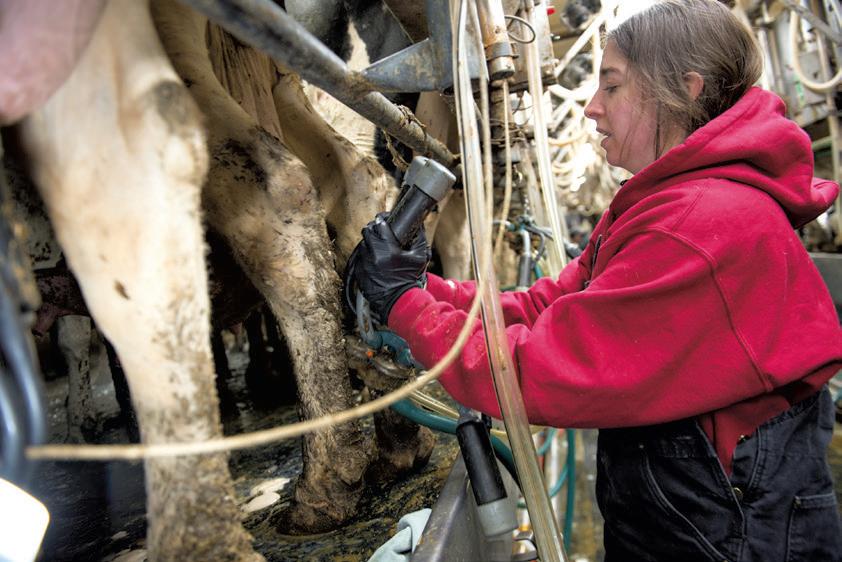
“Without workers willing to spend upwards of 15 hours a day engaged in the business end of a 1,500-pound animal,” Chelsea Edgar wrote in this cover story, “Vermont’s $2 billion dairy industry would collapse.” To fully understand the labor, she spent a week with 1,300 cows in the milking parlor on Vorsteveld Farm in Panton. “At some point, I realized that I had stopped seeing cows,” Edgar writes. “I registered only the relevant parts: udders, tails, hooves.” She toiled in muck boots and coveralls, avoiding projectile poop, alongside predominantly young Latino men who had made the perilous trek from Mexico and Central America. “The writer has done considerable digging — literally and figuratively — to bring a microscope to everyday life at a dairy facility,” New England Newspaper & Press Association judges said of the story, which won first place for business/economic reporting.
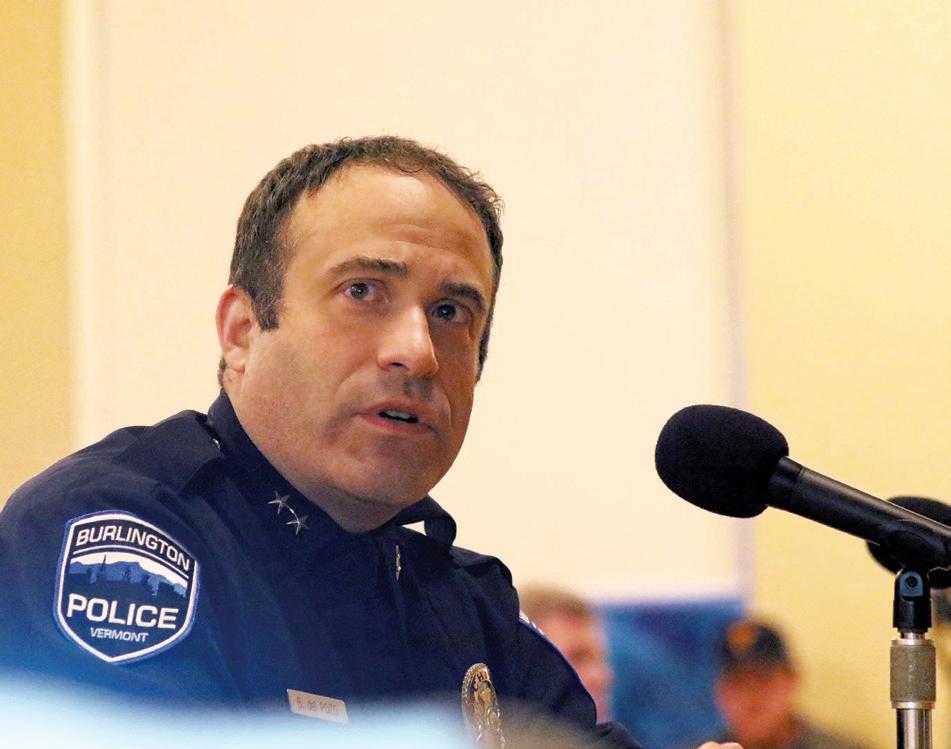
“Burlington
December 12, 2019 | By
Courtney Lamdin
When reporter Courtney Lamdin asked Burlington police chief Brandon del Pozo if he had created an anonymous Twitter account to mock a local activist and provocateur, the police chief lied on tape nearly a dozen times and said he had nothing to do with it. But after Seven Days’ questioning, del Pozo confessed what he had done to mayor Miro Weinberger, who placed the chief on administrative leave; del Pozo subsequently sought mental health treatment. “He’s lost the trust of the public,” city councilor Max Tracy said at the time. “This will follow him wherever he goes.” Days after Lamdin’s scoop was published, del Pozo resigned. Then the scandal expanded: His replacement, Jan Wright, lasted just hours as acting chief after she, too, admitted to operating an anonymous social media account.
JANUARY 25: Seven Days launches the Daily 7 — a weekday email newsletter featuring the top seven Vermont stories across all media.
JANUARY: Don Eggert, Cathy Resmer and Colby Roberts become minority owners of Seven Days

FEBRUARY 1: Some readers are confused by Cathy Resmer and Don Eggert’s Twitter parody cover of Seven Days first Media Issue, so Eva Sollberger makes a video explaining tweets, hashtags and trending topics. (AAN, honorable mention, innovation/format buster)

FEBRUARY 17: In a group reporting project, Seven Days writers fill an issue with stories about the Vermont Yankee nuclear power plant.
FEBRUARY 24: The Vermont Senate votes to close Vermont Yankee.



MARCH 3: On Town Meeting Day, Burlington voters repeal instant runoff voting.
DECEMBER 6: Seven Days purchases Kids VT, Vermont’s free monthly parenting magazine. “We have great confidence that we are leaving our ‘baby’ in the best possible hands,” Kids VT editor and copublisher Susan Holson says.
MAY 14-20: Seven Days organizes the first-ever Vermont Restaurant Week, during which more than 50 restaurants offer prix-fixe meals.
APRIL 27: Megan James and Margot Harrison analyze the state of local public broadcasting in “Boxed In: Can Vermont Public Television Survive in a Changing Media Landscape?” (AAN, 2nd place, media criticism)
MAY 2: Osama bin Laden is killed.


NOVEMBER 16: In “Three-Bird Night,” Alice Levitt gets a wrap on turducken, one layer at a time. (AAN, 1st place, food writing)






FEBRUARY 1: The first issue of the redesigned Kids VT hits the streets. (PMA, 1st place, best cover illustration, newsprint)














“‘It’s in the Building’:
June 3, 2020 | By
Derek Brouwer & Colin Flanders
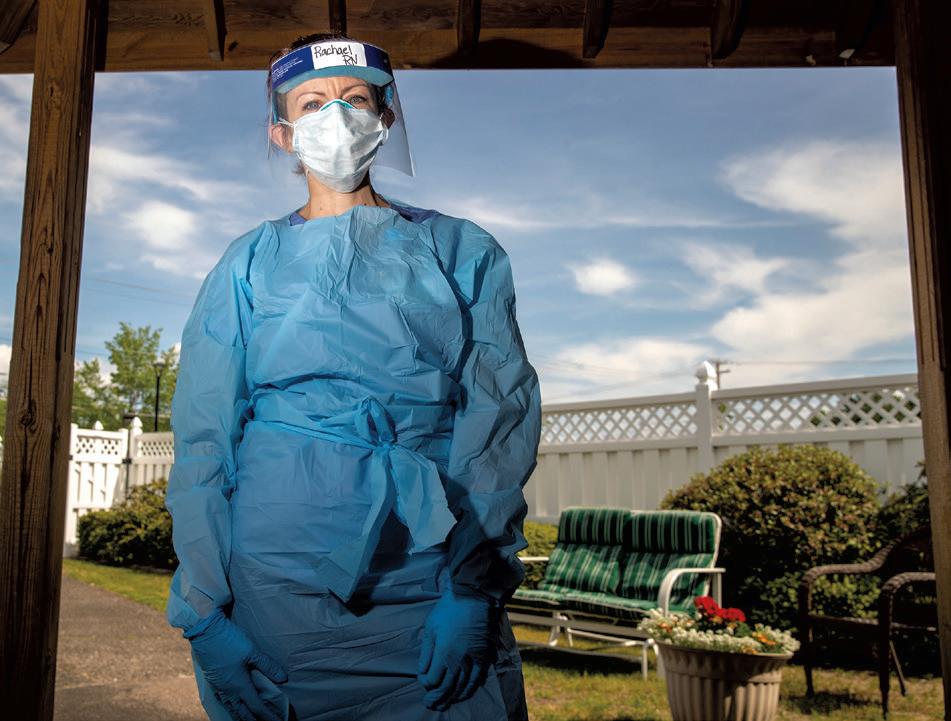
On March 30, 2020, Burlington’s Birchwood Terrace Rehab and Healthcare became the second eldercare facility in Vermont with a confirmed case of COVID-19. The outbreak was already out of control: Over the next six weeks, Birchwood would become fully engulfed. Sixty-one of the home’s 112 residents, plus 30 employees, would test positive for the virus. The total estimated number of infected residents would top 80. One in five residents would die. To understand how the unthinkable toll advanced, Seven Days gave a detailed account of the virus’ asphyxiating grip in the chilling early days of the pandemic — despite COVID-19 protocols preventing reporters from stepping foot inside the facility. According to Underhill reader Amy Bombard, whose mother experienced the Birchwood outbreak, “Writers Colin Flanders and Derek Brouwer conveyed every sense of the surreal emotions.”

September 23, 2020 | By
Chelsea Edgar
For approximately 35 days in late summer 2020, Black Lives Matter activists camped out in Burlington’s Battery Park to demand police reform, fueled by fury over police violence against Black people in Vermont and beyond. Reporter Chelsea Edgar hoped to tell, through organizers’ eyes, the story of Vermont’s largest public manifestation of the national reckoning with racism. But the story became about the activists’ ideological clashes and antipathy toward the media. After its publication, protesters rounded up copies of Seven Days and burned a small pile in the street to denounce the coverage. The following week the encampment was over, not without its victories: The movement led to a resignation package for a Burlington police o cer accused of excessive force, as well as the hiring of a new, temporary director of police transformation.











“The Doctor Won’t See You Now:
September 1, 2021 | By Chelsea Edgar & Colin Flanders


OCTOBER 17: Shay Totten reports on the local Occupy Wall Street movement in “Two Days, Two Rallies Bring Hundreds to ‘Occupy’ Burlington.” “On Saturday, the roughly 500 protesters filled a city block as they moved, en masse, up Church Street.”
AUGUST 28: Tropical Storm Irene brings widespread, historic flooding to Vermont.
JANUARY 11: Andy Bromage takes over “Fair Game” from departing political reporter Shay Totten.
FEBRUARY 1: Burlington Mac maker Jerry Manock remembers his old boss, the late Steve Jobs, in “iWitness” by Paula Routly: “Jobs wasn’t in favor of focus groups, which were very popular at that time. He’d say: ‘They’re going to base their knowledge on what exists now. I know what is going to exist five years from now, and they’re not going to understand that.’”
| 2012
OCTOBER 28: Seven Days organizes the fifth Vermont Tech Jam at the newly vacant Borders bookstore.

JANUARY 16: Seven Days starts a media partnership with WCAX Channel 3. The evening newscast features new episodes of “Stuck in Vermont” and writers three nights a week.
MARCH 3: The Parenting Media Association honors Kids VT with six awards in its circulation class, including best overall writing and design.
Wait times for specialty care at the University of Vermont Medical Center had long been a problem, but 18 months into the pandemic the situation seemed to have reached a crisis point. While no state agency regularly tracked those waits, Seven Days crowdsourced patients’ stories and received an avalanche of responses, learning that some waited up to a year to see specialists. Response to Chelsea Edgar and Colin Flanders’ groundbreaking reporting was swift: State officials announced an investigation into the issue just a few hours after the story dropped; the probe later confirmed that Vermont wait times were far worse than in neighboring Northeast states. As a member of the investigation put it, “We’re learning some hard truths.”
MARCH 6: Democrat Miro Weinberger is elected mayor of Burlington.
JUNE: Seven Days publishes the first issue of BTV: The Burlington International Airport Quarterly, with articles in English and French to appeal to Canadian tourists.
JUNE 27: Seven Days promotes Andy Bromage to news editor; Paul Heintz takes over “Fair Game.”

6:

SEPTEMBER 17: RIP Blurt, Seven Days staff blog. Writers now post to politics and news blog Off Message, food blog Bite Club, and arts blog Live Culture.








“Capitol
January 31, 2022 | By
Derek Brouwer & Colin Flanders
Nicholas Languerand was riding high after the January 6, 2021, U.S. Capitol riots. On social media, he posted a selfie from the Capitol terrace of himself wearing a Trump beanie and QAnon sweatshirt; in a video, he called the melee “legendary.” Just over a year later, the Vermonter was sentenced to 44 months in prison. Because his arrest occurred in South Carolina, “His case has gone virtually unnoticed in his home state,” Derek Brouwer and Colin Flanders wrote. “But he is further proof that insurrectionists come from all corners of the country.” The reporters broke the news that a Vermonter had been charged in the wake of the ignominious event and tracked how he got swept “into a vortex of far-fetched conspiracy theories and radical politics.” The piece earned first place for right-wing extremism coverage from the Association of Alternative Newsmedia; judges called it “one of the best examples of journalists capturing a confusing, contradictory, and often inscrutable period of our nation’s history.”
“Circus of Life: Inside Bread and Puppet Theater as Founder Peter Schumann, 89, Contemplates His Final Act”
August 30, 2023 | By
Chelsea Edgar
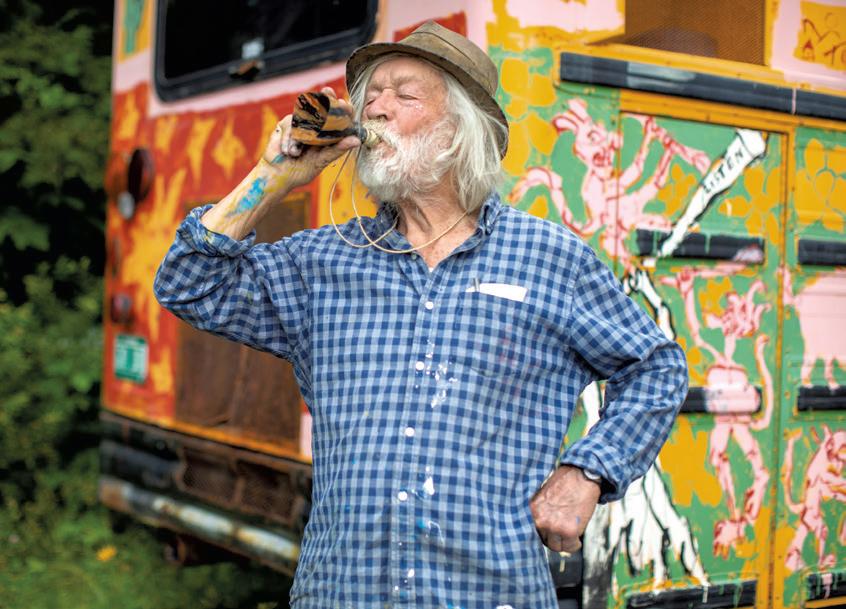
Not since a 1983 Vanity Fair piece had Glover’s Bread and Puppet Theater allowed a journalist such unfettered access to its inner workings as Seven Days reporter Chelsea Edgar was granted 40 years later. She embedded with the troupe and spent a full month reporting during a particularly fraught moment — as members of the leftist quasi-commune in the Northeast Kingdom, including 89-year-old founder Peter Schumann, considered its future. In masterful storytelling, Edgar wove together her findings from those intimate interviews with a vivid first-person account of her own puppeteering experiences, including as a papier-mâché-headed garbageman (“You must, at all costs, resist the urge to sneeze”) and almost being trampled by the behemoth contraption of Mother Earth (“So this is what it’s like to die in a stampede”).

“The Loss of Grace: In Vermont’s Juvenile Lockup, a Girl Endured Violence and Isolation. She Wasn’t the Only One. And It Was No Secret.”
October 25, 2023 | By
Joe Sexton
Sixteen ad-free pages — that’s the record-breaking space we devoted to this important and disturbing story by Joe Sexton, a reporter and editor who had worked for 25 years at the New York Times and eight years at ProPublica. Newly living in Waitsfield, the self-described “lifelong journalist, muckraker and shit-stirrer” went looking for untold stories on our behalf and came back with this one — about a girl named Grace Welch and the chilling abuse she and other young Vermonters endured at the Woodside Juvenile Rehabilitation Center in Essex. Exhaustively reported from hundreds of pages of court, medical and police records; audiovisual materials; and interviews with Welch’s family, Vermont officials and others, Sexton determined that “what happened in the North Unit at Woodside was allowed to go on for years — much of it known to the most senior officials at the Department for Children and Families.”
MARCH 4: Editor & Publisher magazine selects Seven Days as one of “10 Newspapers That Do It Right.”
JUNE 27: Seven Days, Kids VT and Birnam Wood Games create Runoff, an educational video game about water pollution. The arcade version lives for a few years at ECHO Leahy Center for Lake Champlain.
JULY 30: Seven Days begins printing paid obituaries, starting with that of Vermonter and “world citizen” Garry Davis, who died on July 24.
2013 | 2014
JANUARY 9: Legislators, lobbyists and reporters mingle at the Vermont Statehouse during the first Seven Days “Off the Record Mixer” in honor of Peter Freyne.

JULY 3: Seven Days gets graphic. Writers and cartoonists collaborate on news and arts stories for the first-ever Cartoon Issue.

SEPTEMBER 20: Atlantic writer James Fallows notes Seven Days unusual success in “Strange Tales From the North Country: A Profitable (Print) Newspaper.”
DECEMBER 12: Seven Days wins the Vermont Press Association’s General Excellence Award in the nondaily category — for the sixth time. The judges praise the paper’s “huge sense of place” and “terrifically readable and well-presented articles.”
“Kudos to the New Yorker of the North!”

MAY 14: Seven Days publishes the first issue of Nest, a quarterly home, design and real estate supplement.


JANUARY 8: Musicians and friends reminisce about DJ A-Dog, who died of leukemia on December 26, 2013, in “Burlington Remembers Andy ‘A-Dog’ Williams” by Dan Bolles.
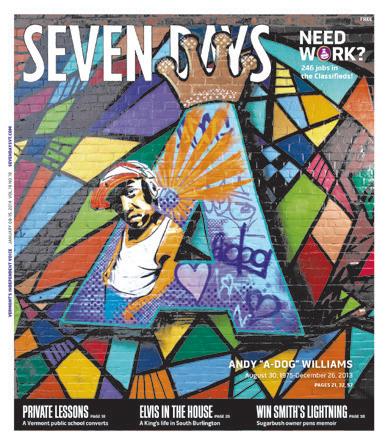
JUNE 5: Ken Picard goes undercover to report the shocking exposé “Unhappy Endings: Getting a Grip on Vermont’s Asian Sex Market.” See page 36. (VPA, 1st place, feature story, non-daily)


“Noah’s Arc: Stra ord Songwriter Noah Kahan Is Vermont’s Biggest
January 31, 2024 | By
Chris Farnsworth

There was just one problem with crafting this cover story about the meteoric rise of Grammy-nominated singer-songwriter and Stra ord native Noah Kahan: He wasn’t in it. Coming off a wildly successful year of charttopping hits and sold-out world tours, the artist wasn’t available for an interview with music editor Chris Farnsworth. So instead, he wrote about the “Kahan phenom” — the perfect storm of songwriting savvy and extreme relatability that spawned a musical breakout the likes of which the Green Mountain State hadn’t seen since Phish — by talking to die-hard fans, aka the Busyheads, and locals who knew him when. Farnsworth did catch Kahan playing at the University of Vermont Children’s Hospital, where the global star swapped out lyrics about alcohol and smoking weed with “apple juice” and “climbing trees.” Can’t beat that Northern Attitude.
JUNE 11: More than 3,300 pages of emails between the Burlington School Board and the district’s departing top administrators shed light on the city’s school budget crisis in “Emails Reveal Tensions, Doubt as Burlington School Budget Deficit Emerged” by Alicia Freese. (VPA, 1st place, best local story)





SEPTEMBER 18: Seven Days gets a shout-out on “Hardball With Chris Matthews” for unearthing U.S. Sen. Bernie Sanders’ 1987 recording, We Shall Overcome










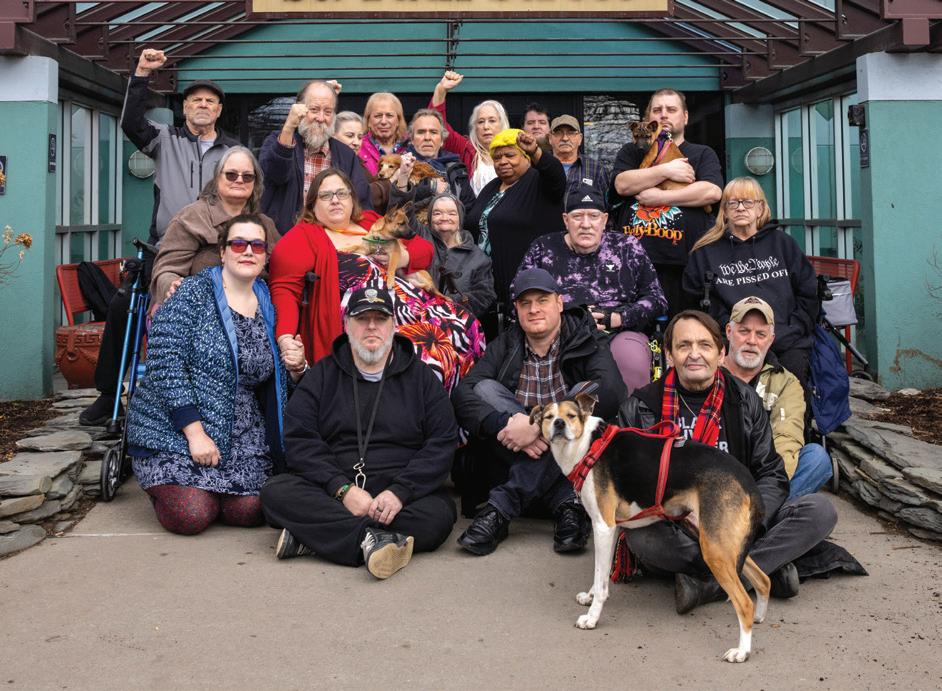
“The Fight for Decker Towers: Drug Users and Homeless People Have Overrun a Low-Income High-Rise. Residents Are Gearing Up to Evict Them.”
February 14, 2024 | By
Derek Brouwer
“A grim battle is being waged inside Decker Towers,” began Derek Brouwer’s eye-opening cover story, which sensitively portrayed a Burlington apartment complex full of vulnerable tenants and the shelter-seeking homeless people and drug users who had overwhelmed its hallways, laundry rooms and stairwells. The unflinching exposé on the horrible living conditions earned a coveted Excellence in Journalism award from the Association of Alternative Newsmedia, with a judge calling it “a great example of public service journalism.” Indeed, the story and residents’ dogged activism brought a flurry of attention to the safety debacle; subsequent response from public o cials led to hundreds of thousands of dollars in new security spending. Attending a tenants’ karaoke night 10 months after Brouwer’s story was published, resident Debbie Phelps said: “It feels safe. I don’t have the stun gun or the pepper spray or any of that.”
SEPTEMBER 17: In “‘Run, Bernie, Run,’” political editor Paul Heintz follows U.S. Sen. Sanders to Iowa to gauge support for a possible presidential run. Seven Days launches Bernie Beat, an online repository of archival materials from Vermont’s alternative media spanning Sanders’ political career, from 1972 to the present.
| 2015
FEBRUARY 20: Pamela Polston and Paula Routly are inducted into the New England Newspaper Hall of Fame.
DECEMBER 13: Kids VT produces the first-ever “Spectacular Spectacular: A Talent Show for Vermont’s Rising Stars” at Higher Ground in South Burlington.
NOVEMBER 26: Seven Days hires veteran Burlington Free Press Statehouse reporters Terri Hallenbeck and Nancy Remsen.
“Year of
the Dogs:
Stories of Grit and Grace From UVM Men’s Soccer’s Championship Run”
January 29, 2025 | By
Joe Sexton

When Max Kissel of the University of Vermont men’s soccer team scored a heart-stopping goal on a chilly mid-December night in Cary, N.C., what had been unthinkable since UVM’s 1791 founding suddenly became certain: Vermont was going to win its first-ever national crown in any sport other than skiing. To fully appreciate that NCAA championship required digging into the stories of the coaches and players who, over long years and in dramatic recent moments, made it happen. Veteran reporter Joe Sexton did just that, giving an inside account of the culture and characters of the Vermont team through tales of hardship and triumph, of doubt and faith, of recovery and tenderness. “The piece reads like a page-turning thriller,” reader Michael Caldwell of North Wolcott wrote in. “Who will make the movie?”
APRIL 24-MAY 3: More than 100 restaurants participate in Seven Days sixth Vermont Restaurant Week, which raises more than $20,000 for the Vermont Foodbank.

APRIL 15: Seven Days publishes the results of its first “Weeders Survey.”
JUNE 8: On the Live Culture blog, Pamela Polston reports that “Fun Home Wins Big at the Tonys!” The musical based on Alison Bechdel’s graphic memoir earns five Tony awards, including Best Musical.


JULY 16: The Vermont Press Association gives its John D. Donoghue Award for arts criticism to Pamela Polston and its Mavis Doyle Award for news reporting to Paul Heintz, for his series of stories on the influence of money in politics.
BY PAULA ROUTLY • paula@sevendaysvt.com
Before we cofounded Seven Days, Pamela Polston and I were friends. We had also worked together, and apart, on parallel job tracks. As arts editor at the Vanguard Press, she had the final word on my dance reviews; a few years later, I had that same role at Vermont Times and Pamela was freelancing for me. We even had the same side gig — at di erent times — marketing a Burlington-based international publication
called Toward Freedom. Our job, to increase the number of subscribers, proved Sisyphean. For every new reader who signed up, a longtime one would cancel.
That was the extent of our business experience in publishing before launching this weekly newspaper 30 years ago. But what we lacked in know-how the two of us made up for in nerve and vision. And, crucially, we had each other. Neither of us would have attempted to do this alone.
They say picking the right partner can make or break a business, and I wholeheartedly agree. While Pamela and I could not be more di erent — she is cool and reserved; I’m an open book and bossy — on the subject , we were on the same page. Specifically: We agreed on what constituted good writing and design and shared a comparable work

Paula Routly and Pamela Polston at a press conference in the 1990s
SEPTEMBER 6: Seven Days turns 20 and celebrates with a party during the South End Art Hop.

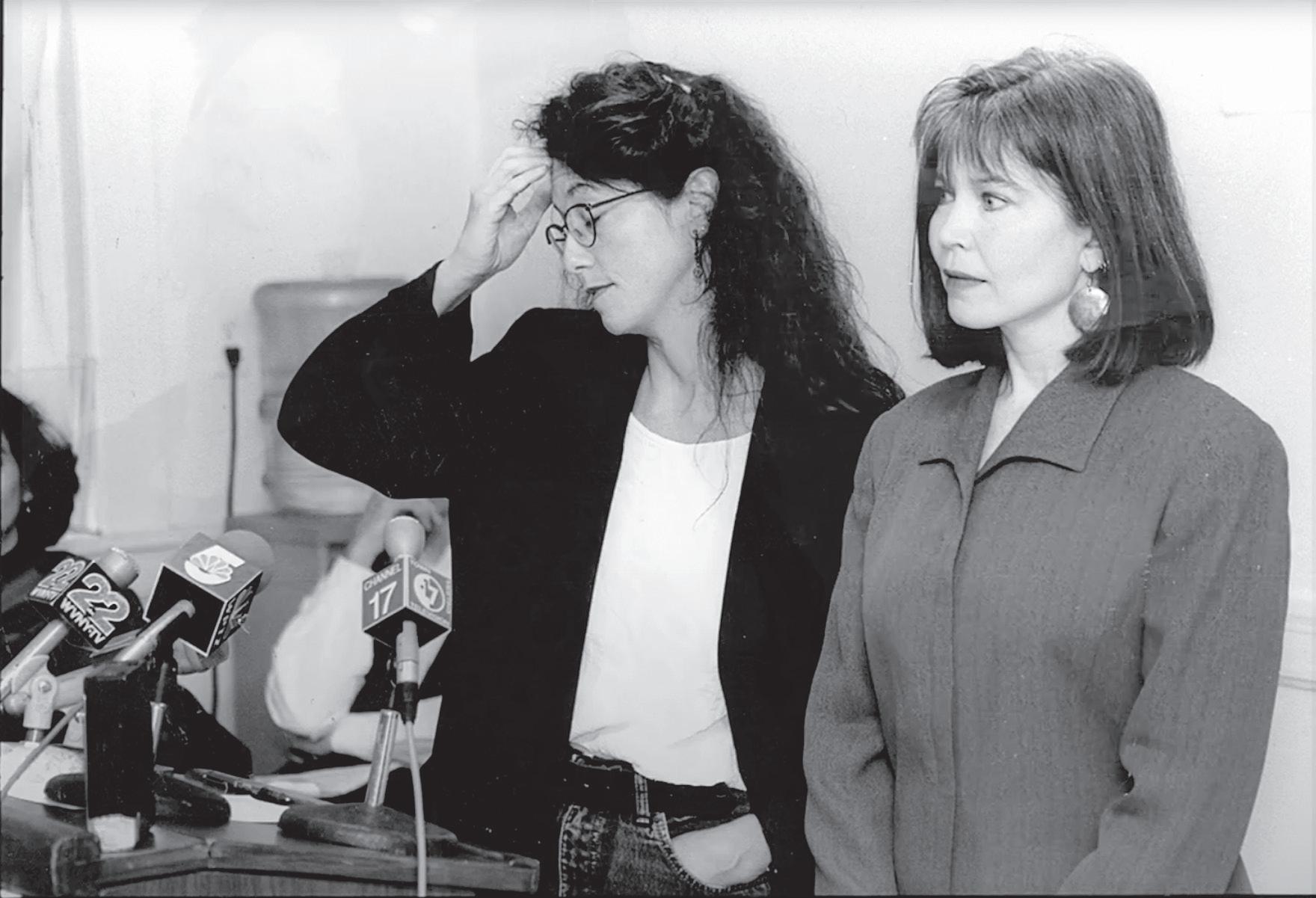







I’d spend nights and weekends working, routinely disappointing friends and family, knowing full well that Pamela was, too. No job was beneath us: proofreading legal notices, compiling


calendar listings, collecting money from delinquent advertisers. At the end of every day, Pamela did the dishes that our employees left in the o ce sink. For years she also took home the dirty dish towels and washed them — without a word, like an elf.
THEY SAY PICKING THE RIGHT PARTNER CAN MAKE OR BREAK A BUSINESS, AND I WHOLEHEARTEDLY AGREE.
Of course, we developed areas of


expertise. Pamela does not like math, so I took charge of the finances and product development — and, later, the news section. She became the managing editor, making sure we had enough stories to fill the paper every week. This took charm and coercion. Before we had reliable sta writers, the








OCTOBER 14: U.S. Sen. Bernie Sanders debates Hillary Clinton on live TV.











NOVEMBER 4: In









SEPTEMBER 30: Future Burlington mayor Emma Mulvaney-Stanak models a locally designed T-shirt in a story by Mark Davis about the popularity of U.S. Sen. Bernie Sanders merch.
OCTOBER 21: For the Tech Issue, Seven Days creates Vermont emojis for a farm, a growler, Bernie Sanders and the phrase “Jeezum crow.”

“Becoming Christine,” Terri Hallenbeck describes transgender Vermont Electric Co-Op CEO Christine Hallquist’s very public transition. Hallquist later becomes the 2018 Democratic nominee for governor.
DECEMBER 23: In “Soundbites,” Dan Bolles notes the opening of Vermont Comedy Club. Server Martha Snyder looks back on 39 years at Bove’s in “Last Supper,” published on closing day for the Italian eatery.
NOVEMBER 25: Dan Bolles pens “It’s All Gravy: Nectar’s, Burlington’s Landmark Nightclub, Turns 40.”





job involved finding freelancers to say yes on a tight deadline; that’s one reason we had so many regular columnists. To spot and assign stories week after week, for decades, required stellar organizational skills and gut-busting endurance. A Nebraska native and daughter of a schoolteacher, Pamela managed the chaos with poise and good taste.

Somehow, she also found time to go out, meet people and engage in the community. She wrote regularly about visual art and interesting local personalities, organizing her own reporting around editing others who weren’t as skilled or disciplined. For years we shared the burden of running the growing paper, and there were times for both of us when it felt too
JANUARY 13: Marc Nadel’s caricature of Donald Trump as Elvis commemorates the Republican presidential candidate’s January 7 rally in Burlington. An estimated 3,000 fans and foes gathered on either side of police-patrolled Main Street. “For one night only, the Queen City’s main artery was a political DMZ,” Paula Routly writes in “Trump Roast.” (VPA, 1st place, general news photo)
FEBRUARY 10: Presidential candidate
U.S. Sen. Bernie Sanders qualifies for a Secret Service detail, and agents move into Burlington’s New North End. In a news story, Alicia Freese writes: “The agents introduced themselves door-todoor, handed out business cards and encouraged people to let them know about any suspicious activity.”
heavy. We fought — like sisters — while our employees saw us as “Mom” and “Dad.” They chose their preferred parent and collectively nicknamed us “the Ps.” Meanwhile, despite our di erent styles and roles, to many readers we were indistinguishable. Some saw our close business partnership and assumed we were lesbians. Others mixed up our names — and still do — so much that we stopped correcting them.
Just the other day, someone enthusiastically approached me at an art event saying, “Paula, you’re the reason I moved to Vermont 40 years ago!” I knew immediately that he had mistaken me for Pamela, who was the lead singer in a punk-rock band, the Decentz, before she got into journalism. Back then she was Vermont’s Debbie Harry. Years into our relationship I realized I had seen her perform at a local roadhouse called the Alibi when I was a student at Middlebury College. Pamela was such a compelling performer I couldn’t take my eyes o her.


Carolyn Fox and food assignment editor Melissa Pasanen.
In April 2024, she handed the visual art gig — complete with gallery listings, spotlights and reviews — over to Alice Dodge, who still can’t figure out how Pamela did it “part time.” Alice’s predecessor continues to contribute regularly and fills in as a guest editor when people are on vacation. I am in awe of the grace with which Pamela has stepped back to make way for our next generation of editorial leaders. And, on occasion, usually on the weekend, I reach out to her with a question — usually to check my memory of an old story or a former employee or some experience we shared. Her speedy replies, which are always thoughtful, reassure me that, after all these years, I can still count on her. ➆
MARCH 19: Seven Days presents “Spotlight on Journalism: A Media Movie Marathon” at the Main Street Landing Film House in Burlington.
I never would have believed that woman in the spotlight would become my business partner. Or that, after giving up the stage, she would prove to be equally dazzling as a writer and editor, winning all manner of awards, including Vermont’s Walter Cerf Medal for Outstanding Achievement in the Arts.


Pamela has “sort of” retired from Seven Days, as she puts it in her author bio. In 2021, she shrunk her role to visual art editor — and it took three people to manage her old job: culture coeditors Dan Bolles and


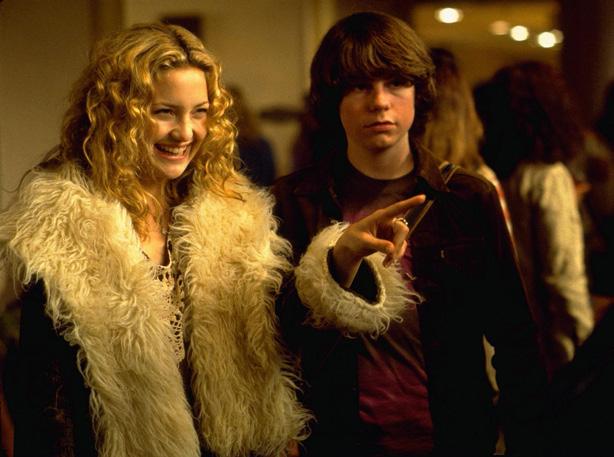
APRIL 20: In “Fair Game,” Paul Heintz reports on the federal raid of Jay Peak and Q Burke Mountain Resort. The massive EB-5 visa fraud investigation would eventually land Ariel Quiros and Bill Stenger in prison.






MAY 1: Kids VT earns three gold Parenting Media Association awards, including one for overall writing — for the fifth year in a row.
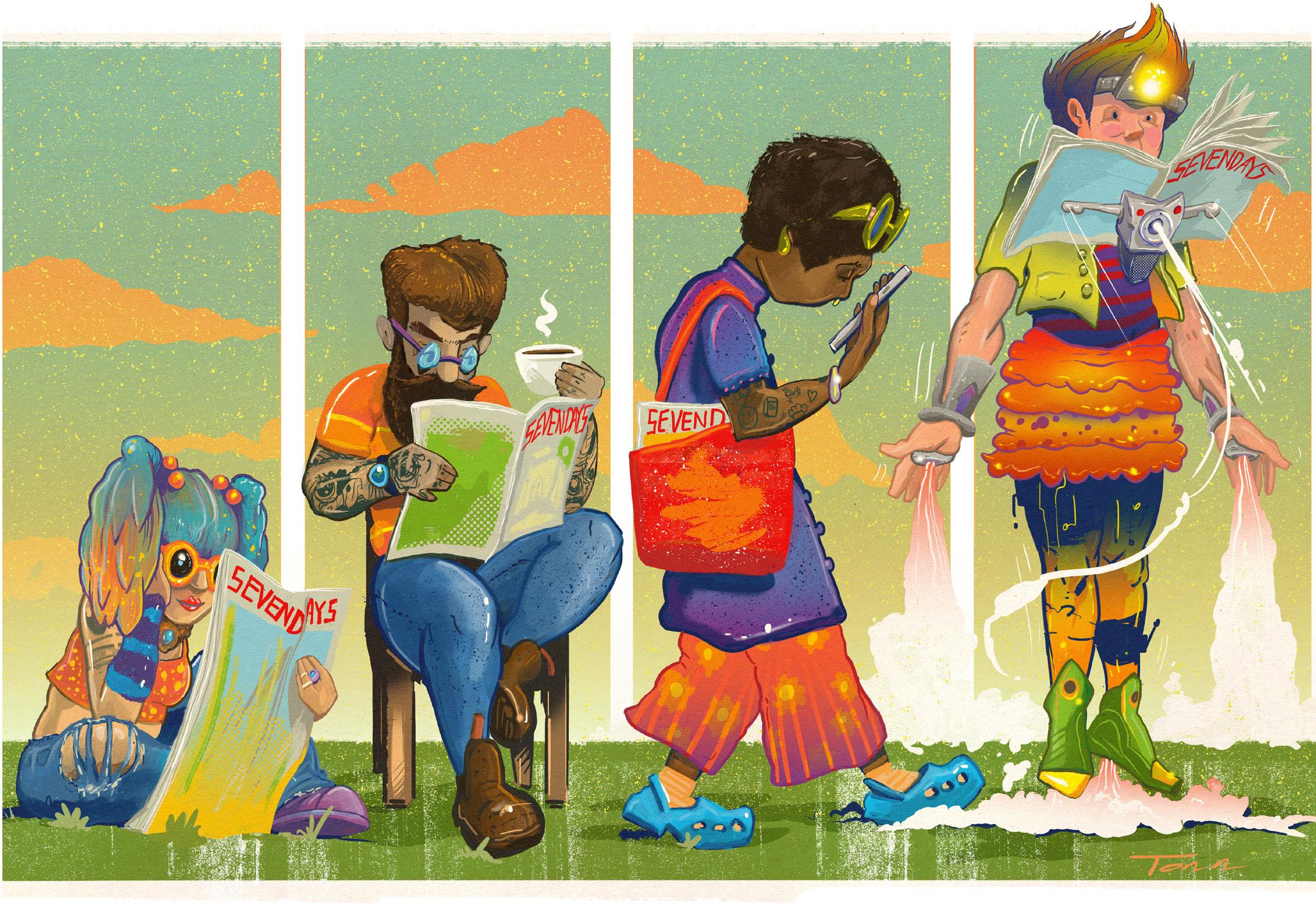
Make products “with hair.”
That’s one of many insights, mostly on tech tools and the evolving nature of journalism, that I’ve scribbled while attending conferences for Seven Days over the past 20 years. Thinking about the future has always been part of my job here, from when I was our first blogger to now as deputy publisher.
That handwritten note stands out in part because it was about our original product: the newspaper. The remark came from Gen X writer, cultural critic
and early internet adopter Virginia Heffernan at Vermont Humanities’ 2017 conference on “The Double-Edged Sword of Technology.”
Heffernan’s talk, in a conference room at the University of Vermont’s Davis Center, focused mainly on the positives of digital connectivity. During the Q&A, I asked what advice she’d give to a media business navigating the rapidly changing technological landscape. Focus on tactile experiences, she advised. As more and more of our lives migrate to screens, people will crave objects that they can

touch and interact with physically — products “with hair.”
Seven Days is obviously bald, but the idea stuck with me. Heffernan was essentially predicting that people will want to pick up our newspaper as a welcome escape from the online experience.
Eight years later, I’ve come to believe she was right. The pickup rates of our print editions are as high as they’ve ever been, and we hear from people all the time who read Seven Days online but love the paper. I just met a social media strategist
With products and people, Seven Days is preparing for the future
BY CATHY RESMER cathy@sevendaysvt.com
in her early thirties who, unprompted, described her weekly reading ritual: Every Wednesday she goes to a coffee shop to sit down, without distractions, and savor the latest issue. She reads it cover to cover and feels a sense of satisfaction when she’s finished — something that’s elusive when scrolling online. We hear variations of this from our Super Readers, too. (See page 50.)
Of course, we’re still investing and innovating in the digital realm. Just last week we launched our redesigned website. As a result, it’s easier to read Seven Days








JUNE 22: In “To Hadestown and Back,” Pamela Polston explains how Anaïs Mitchell’s Vermont-made update of the Orpheus myth became a Tony Award-winning musical. See page 38.
JUNE 15: In “Fair Game,” Paul Heintz pays a stranger $500 for an AR-15 in a Five Guys parking lot, showing just how easy it is to get a gun in Vermont. See page 38. (VPA, 1st place, best state story)

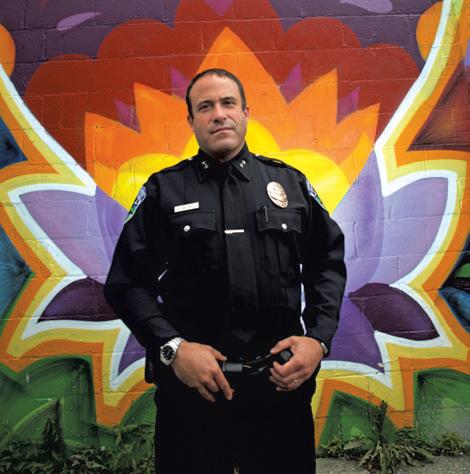
JULY 13: Alicia Freese profiles Burlington’s new top cop, Brandon del Pozo, in “Scholar in Chief”: “Burlingtonians might not have fully understood what they were getting: a chief with big ambitions to position this small city at the vanguard of American policing reform.”
AUGUST 3: The Daysies issue coincides with the August primary elections. Depicted as flowers, the gubernatorial candidates say, “Pick Me!”: Matt Dunne, Sue Minter and Peter Galbraith for the Dems; Bruce Lisman and Phil Scott for the GOP.












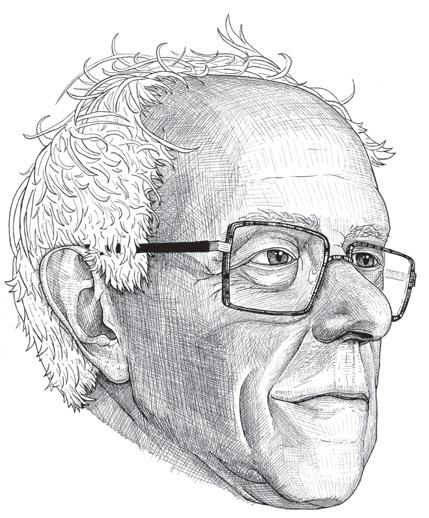
JULY 20: Paul Heintz elegizes U.S. Sen. Sanders’ 2016 presidential bid in “After Bern: How Bernie Sanders Stunned the Establishment.” We publish the winners of Feel the Bern: An Adult Coloring Contest.
on a phone or tablet, which is how most people find our content online.
The hot topic on the conference circuit now is how to ethically integrate artificial intelligence tools into our workflow. We’re having those conversations at Seven Days, guided by our commitment to producing local journalism powered by human intelligence.
Training young readers and writers is a big part of that. In 2018 we launched the Good Citizen Challenge, our youth civics project for kids in grades K through 8. This summer we invited participants to do 25 activities to win prizes, including a trip to Washington, D.C. Four of the tasks were about getting to know trusted sources of local news.
Entries poured in from kids who read their community newspaper, watched the news on TV, or found the masthead of their paper or news website, which lists who owns it, who writes it and where it’s located. Hopefully turning to local media becomes a habit!
Better yet, those kids will develop enough curiosity to pursue careers in journalism. Seven Days hosted three interns this summer, two from Middlebury College and one, Sam Hartnett, who just graduated from the University of Vermont; we’ve kept him on as an editorial and marketing assistant.
And we partnered with the first Green Mountain Summer Journalism Institute, a four-week program for high school students interested in the field. The teens spoke with some of our reporters and editors, sat in on a news meeting, and each wrote a story for the Back-to-School Issue of our parenting magazine, Kids VT.



Maryn Kerrigan, a sophomore at Burlington High School, described thrifting her school wardrobe — a story illustrated with sassy and confident photos of her modeling what she found. After it was published, she said, “One of my friends told me it was giving 2000s girl-fashion-magazine chic, and I just fell in love with that.”
A woman from the Department of Environmental Conservation saw Kerrigan’s story and invited her to be part of a new network supporting the state’s reuse and repair economy. Not bad for a first foray into journalism.
Jasper McGibney, a junior at South Burlington High School who writes for his school paper, the Howling Herald , let students around the state sound off about the new bell-to-bell cellphone ban coming to Vermont schools next year. He told me that he got positive feedback about the piece from friends — and from a stranger who recognized him from his photo in the paper.
Seeing his work in print was rewarding, he said: “It made it feel very real.”
Both of them are eager to do the program again next summer. Who knows? One of them may end up on our masthead someday. ➆


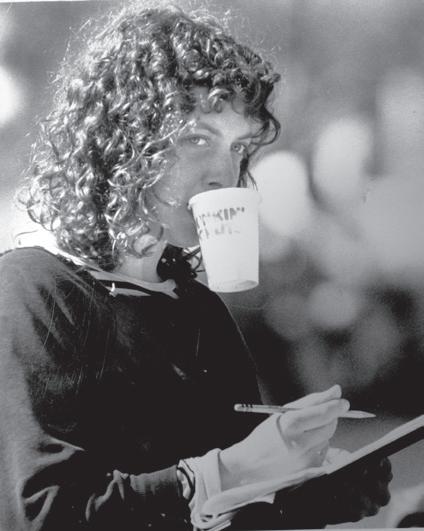
NOVEMBER 9: Sally Pollak writes “Last Word,” about being laid off from the Burlington Free Press by an HR flunky. She’d worked there for 25 years. In 2017, she joins the staff of Seven Days
Let us keep the wheels rolling along with your mojo! Call for an appointment today!
NOVEMBER 8: Donald Trump is elected president. Phil
• alignments • tire repair • brake service • oil changes


• exhaust systems • inspections

girlingtongarage.com • diagnostics

CAR CARE, DELIVERED WITH RESPECT.



BY GILLIAN ENGLISH • gillian@sevendaysvt.com
When Seven Days started our Super Reader program in 2018, we were a little shy about it. Up to that point, our revenue came from advertisers, and we weren’t totally comfortable suggesting that readers pay for the paper, which has always been free. But fans of ours had started to ask how to support us and show appreciation for what we do. We responded by o ering a way for them to donate — simple as that.
Our donor base remained small until 2020 turned our business, and everyone else’s, upside down. Suddenly we had to figure out how to produce the paper in the midst of a pandemic. Ad sales plummeted overnight, and we knew we needed to start actively asking our readers for help to make it through those tough times.
We’re so grateful to report: Readers showed up for us.
And, lucky for us, they’ve kept it up. We may be out of the pandemic, but Seven Days is still feeling its e ects and then some. Advertising revenue has never completely recovered: The fl ooding in 2023 and 2024 hurt businesses in central Vermont; downtown Burlington advertisers are struggling with construction and other issues; tari s and a drop in Canadian tourism haven’t helped, either.
We can’t maintain a healthy news operation in the midst of these challenges
without Super Reader support, which now accounts for roughly 5 percent of our annual revenue. Super Readers help keep us going week after week. In this changing and unpredictable time for media companies large and small, our readers are helping sustain this remarkable public service.
Today we have 5,398 Super Readers. Some contribute a one-time donation, either through our website or a check in the mail. With those checks come the most amazing handwritten notes of thanks and encouragement, which we hang up around the office and share with our team. And 1,097 of those Super Readers give a monthly, recurring donation, which provides steady revenue we can count on as we plan for the future — namely, how to continue to bring you the news for years to come.
This week, we’re giving Super Readers the floor. We asked them to tell us why they love Seven Days and offer a birthday wish — here’s what they had to say.
Thanks, as always, for reading. ➆
PS: Become a Super Reader at sevendaysvt.com/super-readers. And if you’d like to make a major gift through your donor-advised fund, we have a fiscal sponsor; let’s talk. Email paula@sevendaysvt.com or cathy@sevendaysvt.com.

source for finding live music!
BEN SANDERS, NORTHFIELD
It’s current, informative, friendly and humorous. I donate to support something that adds pleasure to my life in Vermont ... like a good friend, good book or good conversation.
BUD HAAS, BRADFORD
Seven Days is led by entrepreneurs at heart who started Vermont Tech Jam to showcase hope and career opportunities. #Respect.
DAVID BRADBURY, STOWE
I read it all week. It is worth a good donation. I can find it every week at Nick’s Gas N Go in the Kingdom.
MARTHA ELMES, LYNDONVILLE

JANUARY 11: Blogger
John Walters takes over “Fair Game” from political editor Paul Heintz.

JANUARY 23: After 10 years as front man of Seven Days music section, Dan Bolles passes the mic to Jordan Adams and becomes assistant arts editor.
JANUARY 25: Seven Days finds that 100 Vermonters died of fatal opioid overdoses in 2016, and Mark Davis memorializes them in a moving piece, “Death by Drugs.” (NENPA, Publick Occurrences award, 1st place, crimes and courts reporting)

FEBRUARY 22: In “Lucky Bums,” Sasha Goldstein profiles some of the people who put the “mad” in Mad River Valley. They came, skied and stayed to create something unique. See page 38. (NENPA, 1st place, human interest feature)
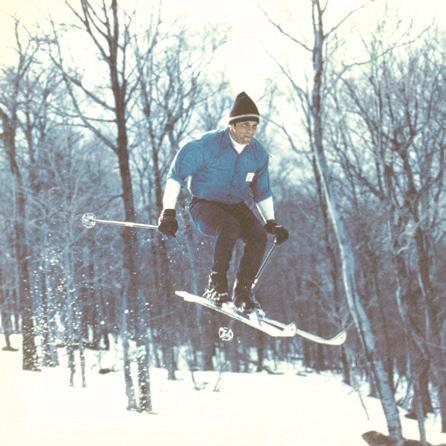


MARCH 1: Seven Days wins 10 first-place awards from








FEBRUARY 20-26: Seven Days





Vermont Yoga Week, offering $7 drop-in classes at 12 participating studios.


Well-written, unbiased local journalism, as found in Seven Days, is dying. I donate to try to save its life!
LANCE BROY, JEFFERSONVILLE
How could I not love Seven Days? It has been my window to Vermont’s arts, culture and politics for 30 years. I look forward to Wednesday, when each new issue comes out. I’m incredibly grateful for the coverage you give our state and region.
NEL EMLEN, CALAIS
Seven Days isn’t just great journalism for Vermont, it’s great journalism period. What Ben & Jerry’s is to ice cream and Heady Topper is to beer, Seven Days is to long-form reporting that actually helps us understand the place we live and the people we share it with.
BILL MCKIBBEN, RIPTON
I love Seven Days for 1,000 reasons but mostly because I remember when we first started it and we were toiling away in a basement on Church Street, and none of it felt like work, as every minute was full of passion, joy, struggle and commitment to make something wonderful together. Happy 30th birthday, and thank you, brave newspaper!
SAMANTHA HUNT, TIVOLI, N.Y.
Hunt was an early art director and freelance writer at Seven Days.
Seven Days covers a lot of topics that define Vermont, and I learn many things I didn’t know. I really enjoy the special issues.
JOE CHOQUETTE, BARRE
MAY 31: Katie Jickling pens
“Ghost-Town Center: The Dying Days of Burlington’s Downtown Mall.”
Demolition of the mall begins in December.
Long before 5,000-plus Super Readers chipped in to support what we do, there was only one: Kevin Lumpkin. The 39-year-old Burlington resident donates $21 per month. He’s a local attorney at Sheehey Furlong & Behm and the husband of former Seven Days data editor Andrea Suozzo, who now works for ProPublica. Our very first Super Reader is passionate about local theater and puzzles of all kinds — including the Seven Days crossword, which he does every week. We asked Lumpkin about his connection to our paper.
How did you first encounter Seven Days?
I had a vague awareness of Seven Days since the days of [political columnist] Peter Freyne, but it really became a big part of my life when my now-wife worked as its data editor for many years.
Why did you start giving as a Super Reader?
Seven Days is a local institution, and it’s an institution worth keeping, so I wanted to put my money where my mouth is. I’ve kept my recurring donation steady from the very first month because sustaining donations are so important — those funds can be counted on and used to plan to make sure Seven Days is around for the next 30 years.
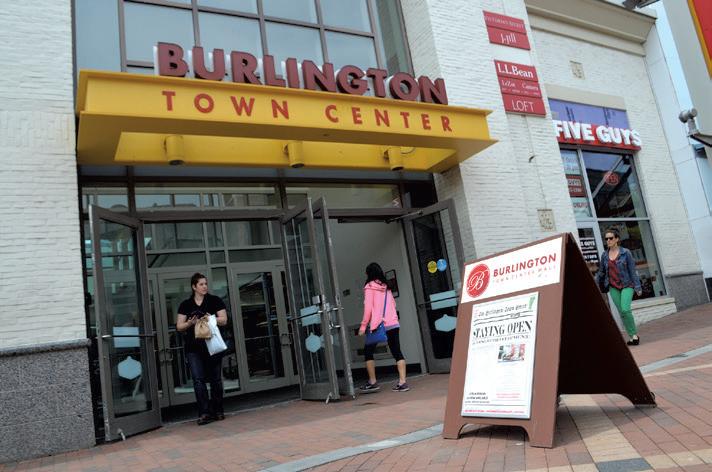
JULY 29: AAN honors Seven Days with a free-speech award for stories by Terri Hallenbeck and Paul Heintz. They wrote about the paper’s decision to fight subpoenas issued to news staff involved in covering the sexual assault investigation of Sen. Norm McAllister.


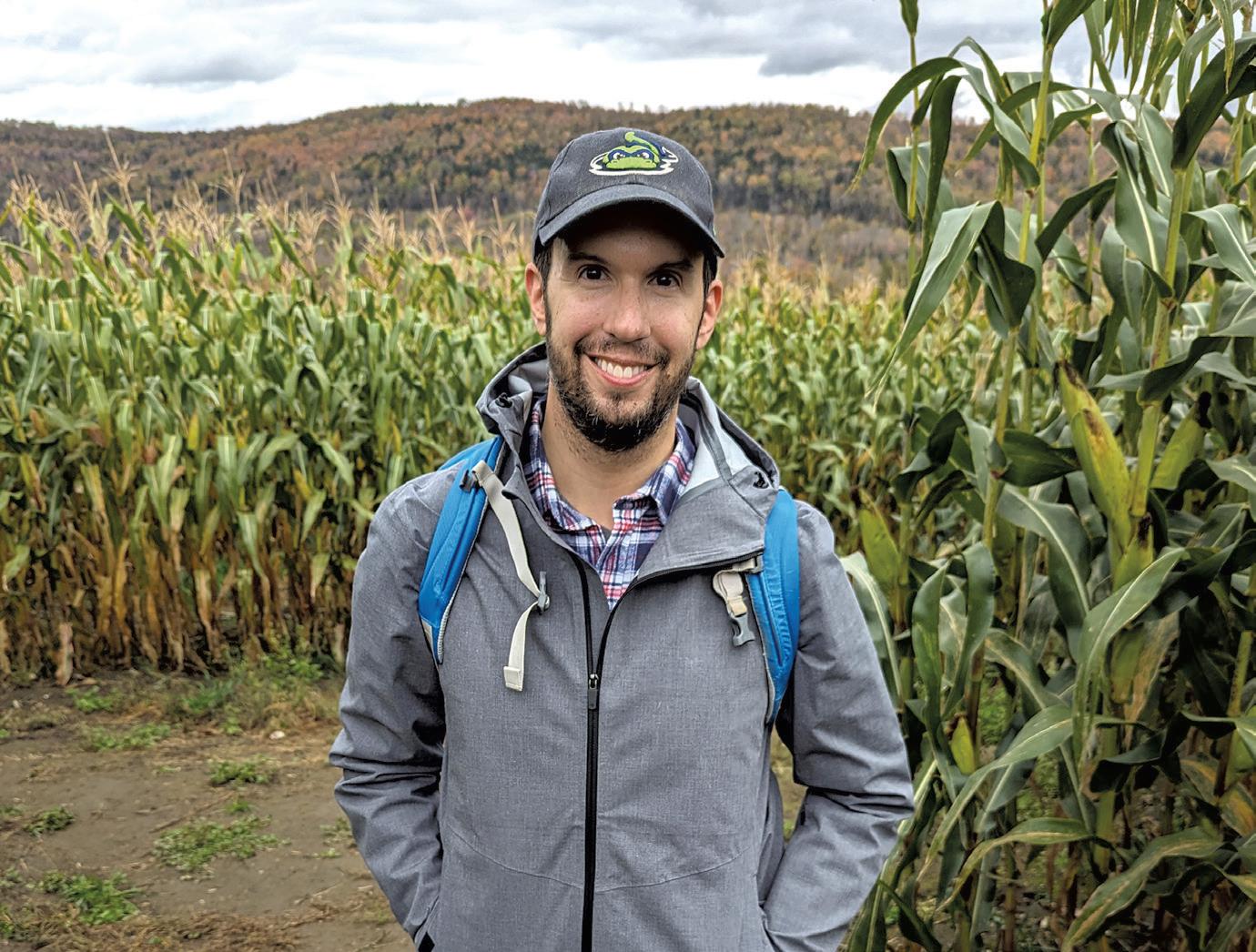
KEVIN LUMPKIN
What are your favorite things to read in the paper?
I really enjoy the long-form cover stories by reporters like Derek Brouwer, Courtney Lamdin, Colin Flanders and Chelsea Edgar that dive deep into complex topics. It’s like reading a New
AUGUST 18: Eva Sollberger throws a premiere party at Hotel Vermont for the 500th episode of “Stuck in Vermont.”





Why is it important to you to support local media?
Local media — and local everything — is the lifeblood of a community. The local media landscape helps members of our community to have a common language and understanding, keeps local businesses vibrant and thriving, and helps to define the culture. Vermont wouldn’t feel the same without the influence of Seven Days
This interview has been edited for clarity and length.






DECEMBER 4: The VPA hands out journalism awards for work dating back to 2015, and Seven Days wins 30 of them. The paper’s arts staff sweeps the John D. Donoghue Awards for arts criticism. Jordan Adams wins Rookie of the Year for 2016, and Alice Freese gets the Mavis Doyle Award for her Statehouse reporting two years prior.
OCTOBER 13: Paul Heintz is named AP Sevellon Brown New England Journalist of the Year by the New England Society of News Editors for his political reporting and successful efforts to pass a media shield law in Vermont. Heintz and Seven Days also receive the Morley L. Piper First Amendment Award.
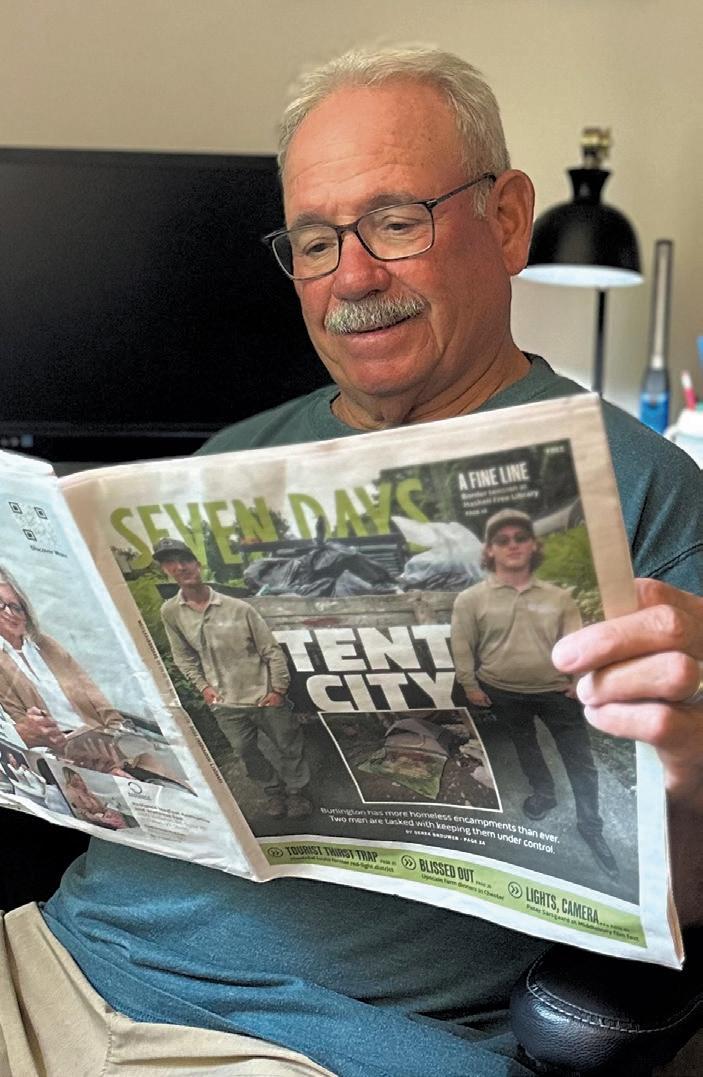
Seven Days does incredible and essential work, keeping the public informed and providing a rare place of authentic human connection.
JULES SHACKMAN, BURLINGTON
I have loved reading Seven Days for so many years! I donate because it is the best information I can get that includes news about what is happening in Vermont: politics; music; dining in unique restaurants, snack bars and farm communities; travel to our neighbors in Montréal; great cartoons; great information about where to find yoga, dance, kids’ camps and a bazillion other things going on in our beautiful and independent state!!! Seven Days is the BEST!
TARI SCOTT, WOLCOTT
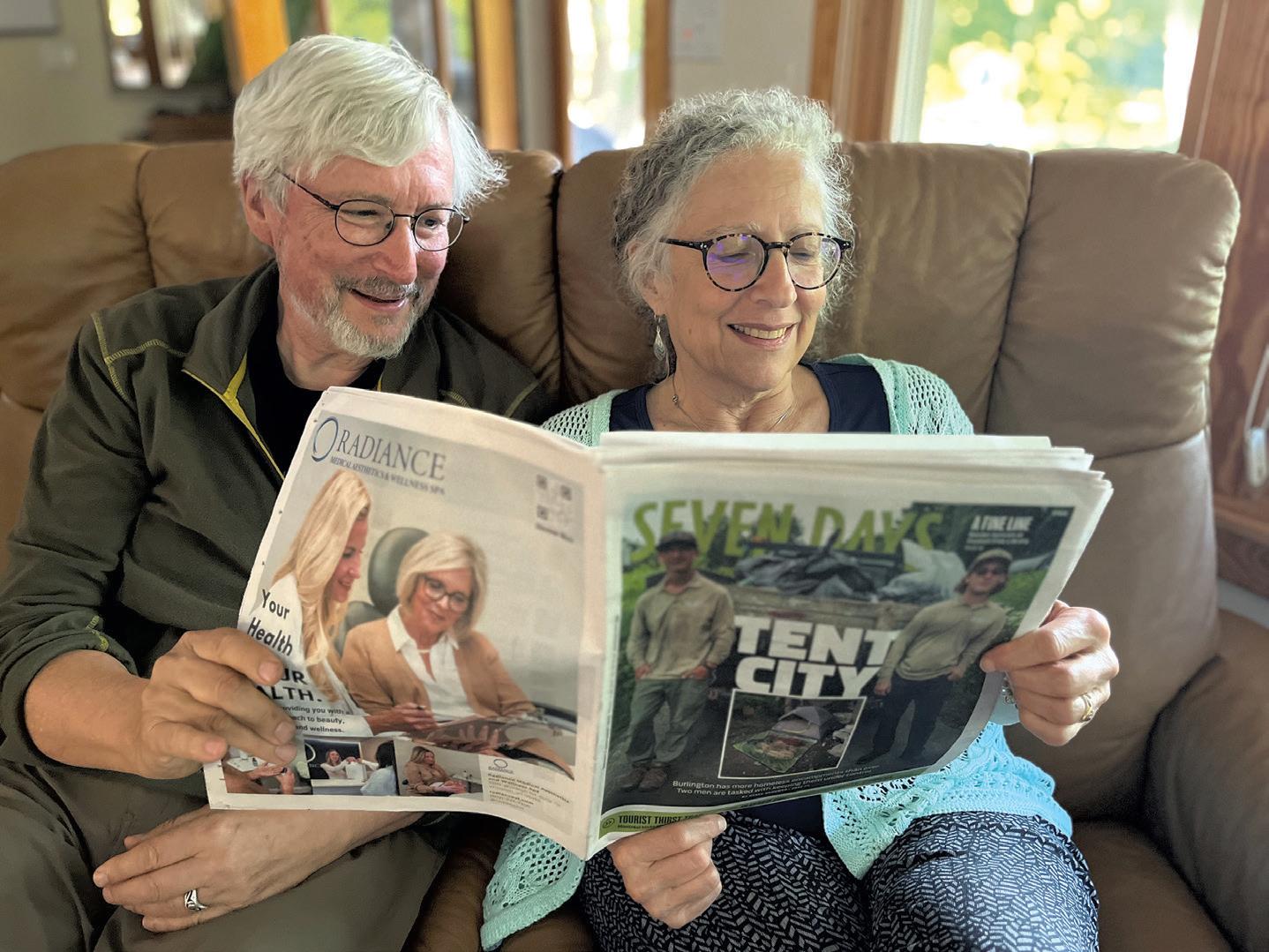
I support Seven Days because the dedication the paper has to the local community is really significant and admirable, particularly in this day and age.
PHIL DUTTON, WASHINGTON, CONN.
It’s really incredible how much every issue of Seven Days has in it: letters, wellresearched news stories, humor ... lots of humor, even the obits are remarkable. Information like where to eat, travel, shop, go to concerts, movies and so many events.
WENDY SCOTT, ENOSBURG FALLS
Love the diversity of content, from in-depth investigations to lighthearted exploration of life in Vermont to keeping up with the arts and culture scene. Each week is quite the package.
GLENN AND HOLLIE MCRAE, BURLINGTON




FEBRUARY 26: Seven Days wins 14 first-place awards in NENPA’s New England Better Newspaper Competition, including best feature video, for “Stuck in Vermont 471: Muslim Girls Making Change,” and best illustration, for Harry Bliss’ cover drawing of President Donald Trump, inspired by the classic Attack of the 50 Foot Woman film poster.




FEBRUARY 21: Alice Freese profiles Vermont House Majority Leader Becca Balint, a “Woman on the Rise.” In 2023, Balint becomes the state’s first U.S. congresswoman.

I am just blown away by how lucky we are to have such high-quality local journalism. It’s worth paying for!
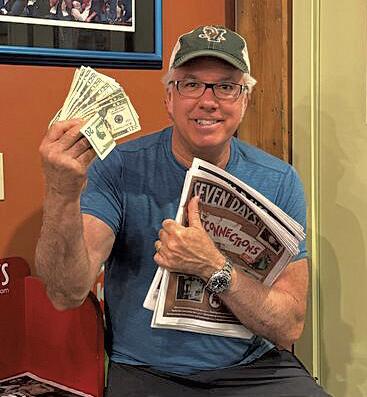


JASON VAN DRIESCHE, BURLINGTON
Seven Days keeps me connected to Vermont from all the way across the country. The journalism is top-notch, and the long-form stories are always compelling. The research! The restaurant news and reviews help me plan my trips to Vermont around the food I look forward to trying. The dedication of the Seven Days staff is evident in all that you do, and the fact that your work is devoted to Vermont — well, that’s simply a gift. I cherish your labor.

MARCH 23: Seven Days begins accepting donations from Super Readers who want to help pay for the journalism we give away for free. “To those of you who understand the essential role of local media and want to help, our response is: Thanks, we’ll take it!” See page 50.
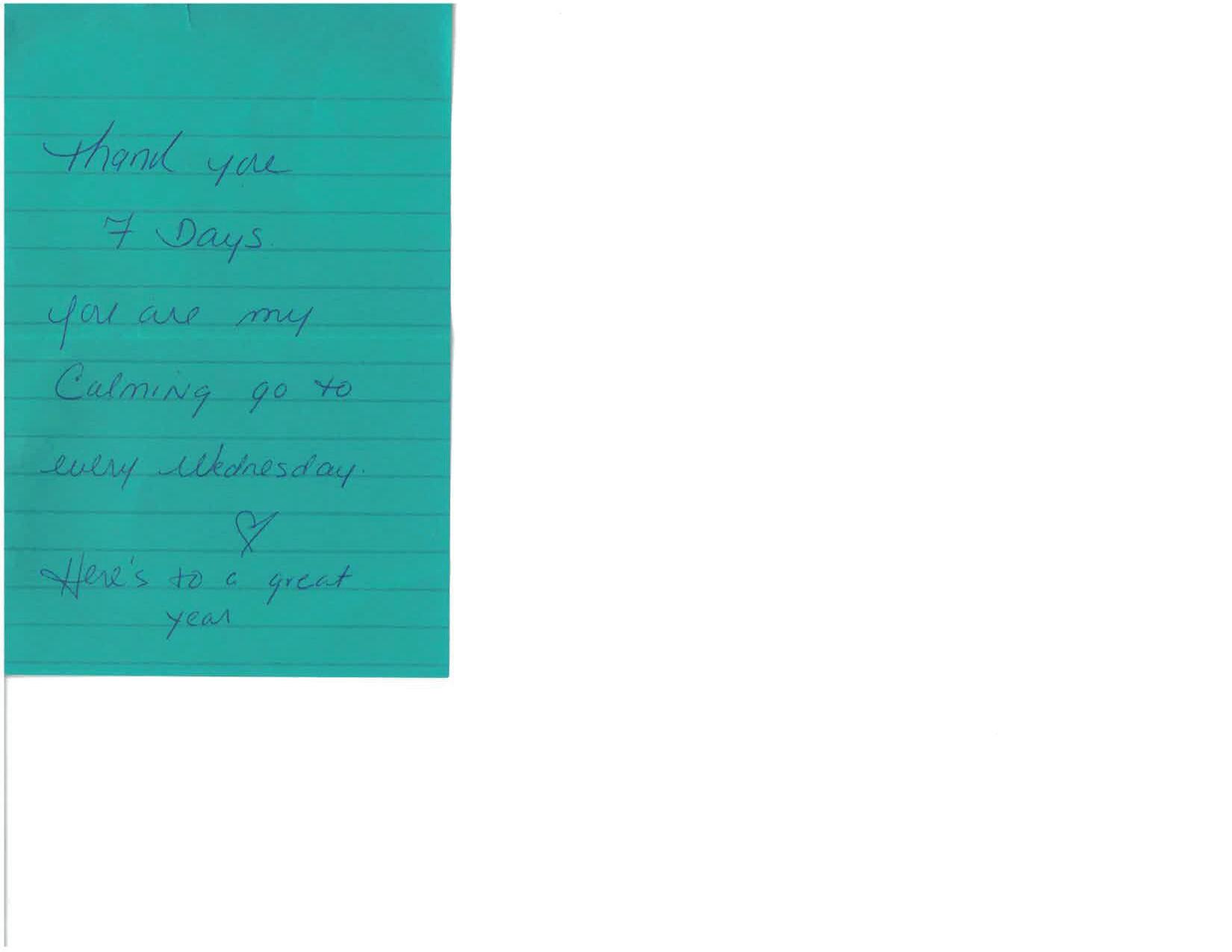
JUNE




Scout Motors salutes the towns, cities and neighborhoods that shaped our earliest employees—the places that taught them to lead with grit, to go first and go further. To roll up their sleeves. To get their hands dirty. To break new ground and never forget where they came from. Because of them, w e’re well on our way t o developing the Scout ® Tr av e l e r ™ an d Scout ® Terra , ™ and b uilding a fact ory in South Carolina t hat aims to hire 4,000 more bold trailblazers. Because of them, w e’r e building something that lasts.


So here’s to Isaac Cohen , our 464th employee, and to you, for helping them get here.








Thirty reasons Seven Days is still here BY
KEN PICARD • ken@sevendaysvt.com
The newspaper industry looked very different when the first issue of Seven Days rolled off the press in September 1995. Websites, email, search engines and smartphones didn’t exist yet or were still years away from widespread use. Reporters, salespeople and delivery drivers navigated the state using folded paper maps, not GPS, and “social media” meant going to the places where clients and sources hung out.
Thirty years later, Seven Days presses on. In an era when so many other news outlets have thrown in the towel or become shadows of their former selves, here are 30 reasons we’ve lived to tell the tale:
Seven Days is still free. When others built paywalls, we built bridges.
Our faithful advertisers, who week after week keep our lights on because they know that local matters.
What’s a 15-letter phrase for blackand-white wild game? Crossword puzzle! Ours has a loyal following.
We need print media: You’re not going to start your woodstove with a rolled-up tablet.
Seven Days is chock-full of news you can use, including politics, art listings and a preview of that new punk-Cajun-polka-grass band playing at your local dive bar.
iSpys. Maybe this week, right?
We’re locally owned by our publishers and staff. That means we answer to our readers, not Wall Street or some megalomaniacal billionaire.
We offer deep dives into issues that matter, not simplistic splashing around in the shallow end.
Our living, breathing Vermont journalists report stories about real people who live here. They don’t “generate content for algorithmic optimization.”
Speaking of AI, Seven Days is always hallucination-free — during regular business hours, anyway.
Are we willing to quote the occasional potty mouth? Fuck, yeah!
Being Stuck in Vermont isn’t so bad through the lens of Eva Sollberger and her award-winning videos.













OCTOBER 14: Kate O’Neill was a copy editor and proofreader at Seven Days from 2008 to 2012. When her sister, Madelyn Linsenmeir, died on October 7, O’Neill wrote an obituary and submitted it to the paper. Her candid account of the young woman’s struggle with opioid-use disorder goes viral, attracting more than 1,000 heartbreaking comments from around the globe.































DECEMBER 5: Seven Days publishes “Our Towns,” an entire issue devoted to the plight of the state’s rural communities, many of which are in critical condition. New Yorker cartoonist and Brookfield resident Ed Koren draws the cover.





















JANUARY 9: The year’s first cover story, “Thorever and Ever,” remembers staff photographer Matthew Thorsen, who died of cancer on January 1 at age 51.










FEBRUARY 20: Seven Days hires former proofreader Kate O’Neill to write a yearlong series on Vermont’s opioid crisis and kicks it off with “Hooked: How So Many Vermonters Got Addicted to Opioids.” See page 40. (NENPA, Publick Occurrences; AAN, 1st place, health care reporting)
What other newspaper in America devotes an entire issue each year to journalistic cartoons?
Our events calendar has it all. No other Vermont outlet employs a full-time calendar writer to wrangle all those deets.
Jobs, jobs, jobs! Our employment listings are all local and scam-free.
We’re not afraid of pointed critiques. If it’s relevant, under 250 words and includes your real name, we’ll run it in our Feedback section.
“Alternative weekly” doesn’t mean we publish every other week. It means we have moxie, grit, snark and a wicked sense of humor.
Would you rather get restaurant reviews from trusted writers who’ve authored cookbooks and earned advanced degrees in food science — or from Reddit?
Our “Life Stories” keep alive the memories of locals we’ve lost. If you didn’t know them already, you’ll wish you did.
Margot Harrison’s movie reviews. Whip-smart and entertaining, she’ll never steer you wrong.
Seven Days has a personality — because our staffers do. Just check out the office bathroom: It’s like a Hieronymus Bosch painting, with lots of biblical references. Not for prudes or the easily offended.
MARCH 13: To test the theory that dairy farmwork is too grueling for Americans, Chelsea Edgar spends a week milking cows in Panton and writes all about it — and her Mexican colleagues. See page 40. (NENPA, 1st place, business/economic reporting)
JUNE 19: The Greater Burlington Industrial Corporation honors Seven Days five owner-publishers with the C. Harry Behney Award for economic development, lauding the Vermont Tech Jam and the creation of “Hooked” — “a catalyst to help Vermonters come together as a community to find meaningful ways to address the challenges of addiction.”
The Daysies. More than a popularity contest, these best-of awards are an annual celebration of our state — the antidote to bad news.
We’re still local, organic, non-GMO and gluten-free! (Except on Bagel Tuesdays.)
Snopes has never debunked a single one of our articles — and international news outlets have picked up multiple stories that we got first.
We respect none of Vermont’s sacred cows, including its beloved bovines.
Our design team makes everything eye-catching — ads included.
Does anal-retentive have a hyphen? Rest assured that the grammar nerds on our proofreading team know the answer.
None of us is getting rich doing this work, so we must love what we do.
Super Readers help pay for our free journalism — without ’em there’d be a lot less of it. Haven’t donated yet? $30 a month makes a great 30th birthday present.
After three decades, we still have issues. Our state may be small, but we’ve never run out of interesting and unique Vermonters to write about.
















JUNE 27: At the Democratic presidential debate, MSNBC host Rachel Maddow questions U.S. Sen. Bernie Sanders about his record on gun control, citing a quote from Paul Heintz’s cover story that week: “Stickin’ to His Guns? The NRA Helped Elect Bernie Sanders to Congress. Now He’s Telling a Different Story.”
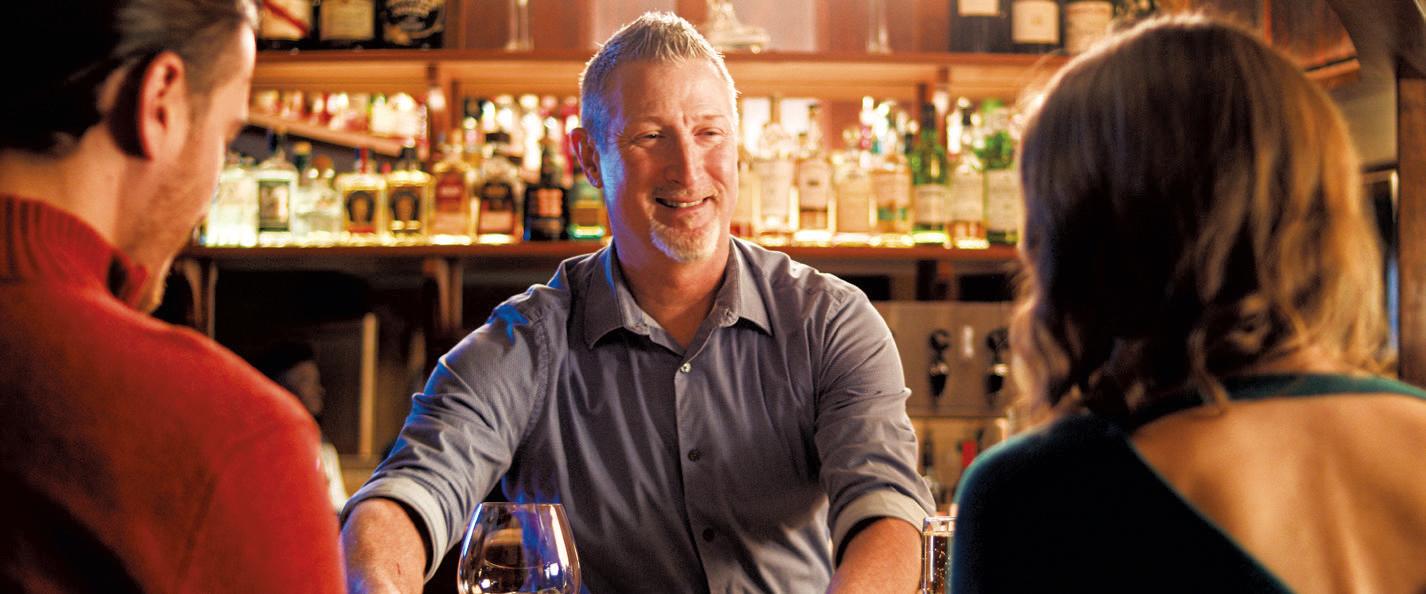









































































































































Paying our respects to Seven Days columns, publications and gimmicks past
BY DAN BOLLES • dan@sevendaysvt.com
In its 30 years, Seven Days has tried a lot of di erent things. We’ve run more weekly columns than we can recall, on everything from politics to TV to sex. We’ve launched special publications aimed at college kids, Canadian tourists and foodies. We gave out frontline-hero awards to “Pandemic All-Stars.” Cofounder Pamela Polston once “interviewed” a zebra mussel.
Many of those gambits worked out great. A few, not so much. (Remember our Burlington-focused smartphone app, Burlapp? Of course you don’t.)
Even the best ideas have a shelf life and eventually run their course. So as Seven Days enters its fourth decade, here’s a look back at some memorable columns, publications and gimmicks that are no longer with us. And because sometimes the best ideas are also the ones you steal, we’ve included epitaphs inspired by another Vermont institution: the Ben & Jerry’s Flavor Graveyard.
1997-2008, 2017
Bolton cartoonist Alison Bechdel’s landmark comic strip “Dykes to Watch Out For” appeared in hundreds of publications worldwide and predated Seven Days by many years. But we still like to think of it as our own. The Fun Home author retired the strip in 2008. But in March 2017, she revived “Dykes” for one week to take on President Donald Trump in his first term. She published the strip in Seven Days , and it promptly crashed our website.

Alison is our hero, and her Dykes were the best. But did this poem pass the Bechdel Test?


AUGUST 6: John Walters pens his final “Fair Game” column.

2000-2020
For 20 years, Seven Days ’ roving cabbie-philosopher Jernigan Pontiac traveled the highways and byways of Vermont, ferrying fares near and far. Whether to or from mundane locations such as the airport and remote Green Mountains locales, he dispatched wisdom and wit in equal measure in his “Hackie” column and chronicled a true cross-section of Vermont.
Always good for a ride or a perspective shift.
To our dear old pal Hackie — thanks for the lift.




AUGUST 21: Seven Days introduces All Our Hearts, an online memorial documenting lives lost to the opioid crisis. BuzzFeed covers the project, sharing Frank Cioffi’s devastating account of losing his daughter, Alexa Rose Cioffi in 2016.








SEPTEMBER 18: For “Pit Happens: How Readers Would Fill the Hole That Is CityPlace Burlington,” nearly 300 Vermonters send in creative solutions for the gaping void left by the demolition of the Burlington Square Mall.
NOVEMBER 27: Seven Days publishes the first story in a new series: “Worse for Care: When Elder Homes Stumble, Frail Vermonters Get Hurt” by Derek Brouwer, Andrea Suozzo and Emily Corwin of Vermont Public Radio. The series later wins the national Edward R. Murrow Award for investigative reporting.















DECEMBER 12: A bombshell from Queen City reporter Courtney Lamdin, “Burlington Police Chief Admits He Used an Anonymous Twitter Account to Taunt a Critic,” forces Brandon del Pozo to resign. See page 40.

JANUARY 21: Sasha Goldstein reports that U.S. Sen. Bernie Sanders’ felted mittens made an impression at the Women’s March in Portsmouth, N.H., and spawned their own Twitter feed, @BerniesMittens. He interviewed mitten maker Jen Ellis — a year before her creations went truly viral.





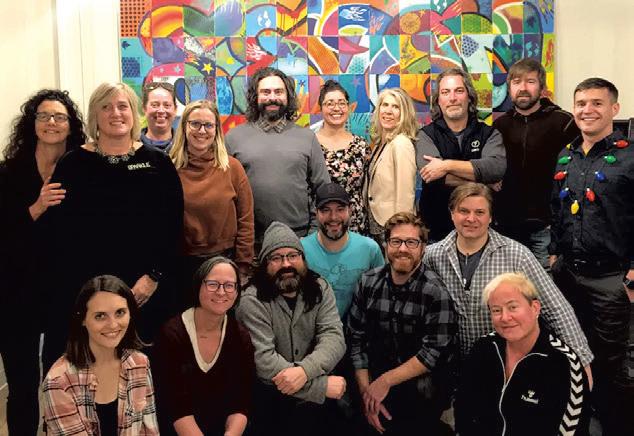
JANUARY 6: Seven Days adds 13 veteran employees to its ownership team, giving them stock in the company as cofounder Pamela Polston relinquishes her shares. See page 24.
2008-2019
Seven Days’ annual guide to Burlington evolved over the years from a crash course on the Queen City produced by and for college kids to a general primer for BTV newcomers of any demographic. We like to think it was useful for townies, too, with dozens of in-the-know recs for dining, recreation and shopping. And coupons. So many coupons.
We stopped publishing What’s Good when the pandemic hit because, well, nothing was good anymore. If the city’s downtown construction is ever finished, maybe we’ll bring it back.
New to our town?
Then you should know this: There’s more to the city than Bernie and Phish.
2008-2021
There was only one Peter Freyne — which was probably a blessing for his editors. But when Seven Days’ fiery political columnist retired his indispensable “Inside Track” in 2008, someone had to pick up the pen and hold Vermont politicos to account. Over the next decade-plus, a procession of noble scribes — Shay Totten, Andy Bromage, Paul Heintz, John Walters, Dave Gram and Mark Johnson — spoke truth to power in the “Fair Game” column.
Republicans are red, Democrats are blue.
The truth’s black and white, and newsprint is, too.
















2004-2019
You know what’s really hard? Compiling every restaurant in Vermont into a comprehensive and readable guide that’s informative, up to date and entertaining. You know what’s even harder? Doing it again the next year. And yet for 16 years, Seven Days food writers produced the annual 7 Nights dining guide. Starting in 2010, its print date coincided with Vermont Restaurant Week, a statewide foodie fest they also helped organize. Talk about working up an appetite.
Seven Days readers are hungry for news on politics, arts and especially food. They crave tasty insights you can’t get on Yelp, and our talented team is happy to help.

2010-2022
In journalism, most good stories start with a question, and that question usually boils down to: WTF? In 2010, Seven Days launched a biweekly column called “Whiskey Tango Foxtrot,” or “WTF,” to satisfy the curiosity of our writers and readers by answering head-scratchers that maybe didn’t demand Spotlight-level investigative rigor. For example: “How Is Midget Wrestling Still a Thing?,” “Who Chooses That Annoying Music on Ice Cream Trucks?” and “Why Can’t Vermonters Get Four-Way Stops Right?” (We’re still wondering about that last one, actually…)
Not sure who goes first?
My friend, you’re in luck. When in doubt, honk your horn and yell, “What the fuck?!”




MARCH 17: Four days after he declared a state of emergency, Gov. Phil Scott orders all bars and restaurants to end in-person dining to slow the spread of COVID-19.

FEBRUARY 12: Seven Days and Kate O’Neill receive the Jack Barry Communications Award from Recovery Vermont for All Our Hearts and “Hooked,” which “inspired, educated, and brought awareness, compassion and stigma-free information to help the state of Vermont grapple with substance-use disorder, loss and recovery.”
MARCH 2: For the second time, Editor & Publisher recognizes Seven Days as one of “10 News Publishers That Do It Right.”








1995-??



BY KATHRYN FLAGG






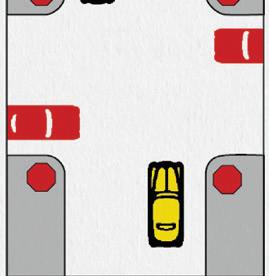







MARCH 23: Seven Days lays off seven employees, five temporarily. The number of Super Readers doubles, from 250 to 500.


If there’s one editorial gimmick Seven Days has relied on more than any other, it’s packaging things in groups of seven. (Like, for example, this list.) What can we say? It’s our favorite number. Over the years, such septets have included bands to watch, books to read, local comedians to check out, profiles of third-shift workers and even ways to find Seven Days. To be honest, we’ve probably overdone it. So, outside of our weekly “Magnificent 7” events roundup, in recent years we’ve tried to be more judicious about employing the tactic — like, say, for major anniversaries. We’ll never totally abandon our a nity for septuples, but we have tried to scale it back.
Like dwarves, deadly sins and shining blue seas, at this little paper the best things come in … um, sevens.
MARCH 25: Paula Routly pens her first “From the Publisher” column, noting how Seven Days is responding to the pandemic on multiple fronts. One is the creation of a takeout directory called Good To-Go Vermont. Routly reminds readers: “Supporting local businesses is the best way to ensure the return of the community we all love.”


MARCH 18: The entire Seven Days editorial staff shifts to covering the pandemic. The first group cover story is “Vermont’s Defensive Line: These COVID-19 Fighters Wield Information, Medicine and Disinfectant.”

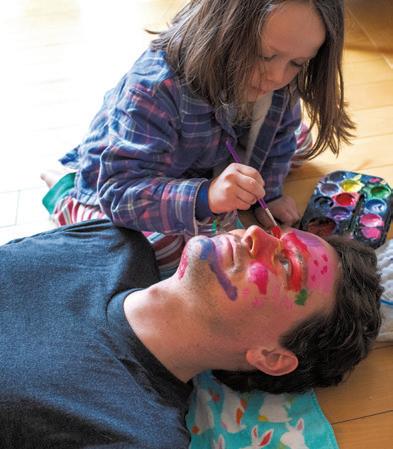
APRIL 8: The April issue of Kids VT is all about adapting to the pandemic and school closures — and it’s inserted in Seven Days for the first time to save on printing and distribution costs. In 2023, the magazine goes quarterly.
JOSEPH ABRAHAM • JORDAN ADAMS • MADELEINE AHRENS • MARK AIKEN • KEEGAN ALBAUGH
BENJAMIN ALESHIRE • LARRY ALEXANDER • ANNE WALLACE ALLEN • RILEY ALLEN • TERRY ALLEN
MICHAEL AMATO • EMILY ANDREWS • PAUL ANTONSON • MARYELLEN APELQUIST
HARRY APPLEGATE • ROB ARENA • LOU ARMISTEAD • NATHANAEL ASARO • TIM ASHE
JULIA ATHERTON • ALICE AUSTIN • MARC AWODEY • LUKE AWTRY • BARBARA BABCOCK
KYM BALTHAZAR • JAMES BANDLER • LUKE BAYNES JEFF BARON • MICHAEL BARRETT
COREY BARROWS JORDAN BARRY • HANNAH BASSETT • KRISTI BATCHELDER JUDY BEAULAC
ALISON BECHDEL • ARTHUR BELL SASHA BELL VIOLET BELL • NANCY STEARNS BERCAW
JARRETT BERMAN • JESSICA BERNSTEIN ELLEN BIDDLE CHRIS BILLUPS ROBYN BIRGISSON
DARIA BISHOP • JENNIFER BLAIR • JAMES BLANCHARD • ROB BLEVINS • HARRY BLISS
ALEXIA BRUE • JUSTIN BOLAND • DAN BOLLES • DAVE BOOTH • STINA BOOTH • DIANA BOLTON
MATT BORS • DAVID BOUFFARD • JANE BOUFFARD • JOE BOUFFARD • PAT BOUFFARD
BROOKE BOUSQUET • CINDY BOYCE • BRITT BOYD • NATALIE BOYLE • ADAM BRADLEY
MICHAEL BRADSHAW • STACEY BRANDT • JULIANNA BRAZILL • MEG BRAZILL • ROB BREZSNY
JEB WALLACE-BRODEUR ANDREW BROMAGE • BERNE BROUDY CALEB BRONZ
DEREK BROUWER • PHIL BROWN ALEX BROWN KATHERINE BROWN MICHELLE BROWN
CHERYL BROWNELL JONATHAN BRUCE • ANDREW BRUMBAUGH • ROBERT BRUNELLE JR
JAMES BUCK STEFAN BUMBECK • BRIDGET BURNS MATT BUSHLOW • MARK BUSHNELL
ROB CAGNINI • ROD CAIN • MARIALISA CALTA • LENA CAMILLETTI • JESS CAMPISI
FRANCES CANNON • MAX CANNON • LIZ CANTRELL • ANNELISE CAPOSSELA • ASHLEY CARNEY
JUSTIN CASH • TOM CATTANEO • GARY CAUSER • MACIEJ CEPLOWSKI • KANAD CHAKRABARTY
MEGAN CHAMBERLAIN • XIAN CHIANG-WAREN • ALICE CHRISTIAN • BEAR CIERI
ANTHONY CINQUINA • JULIA CLANCY • CHELSEA CLARK • CHARITY CLARK • COLIN CLARY
ASHLEY CLEARE MEREDITH COEYMAN • MAEVE COHEN MICHAEL COLBY JULIE COPLEY
COURTNEY COPP • ELANA COPPOLA-DYER BENJAMIN CONWAY HOPE CORBIN ETHAN COVEY
ELISABETH CREAN • SARAH CRONIN • CELESTE CROWLEY JUSTIN CROWTHER
CATHERINE CUTILLO • ANNIE CUTLER SARAH CUSHMAN • LLOYD DANGLE IAN DARTLEY
MARK DAVIS • ALLISON DAVIS • BEN DEFLORIO • MICHAEL DEFORGE • ETHAN DE SEIFE
DONNA DELMOORA • ASHLEY DELUCCO • GUY DERRY • BILL DERWAY • JAMES DESHLER
NICOLE DESMET • MEGHAN DEWALD • TOM DEWITT • AMELIA DEVOID • MIKE DIBIASIO
JOHN DICKER • DAVID DIEFENDORF • PETER DIFONZO • JOHN DILLON • TAYLOR DOBBS
ALICE DODGE • ROBERT DONNELLY • BROOKE DOOLEY • MATT DOUGLAS • LINDZEY DRAPER
JEFF DREW HEATHER DRISCOLL • REBECCA DRISCOLL • GABRIELLE DROLET • ANDY DUBACK
MICHEL DUBOIS • LORI DUFF TED DUNAKIN • SARAH TUFF DUNN • JIM DUVAL ROBIN EARLE
LUKE EASTMAN • CHELSEA EDGAR • HANNAH PALMER EGAN • DON EGGERT CHARLES EICHACKER
KENNETH ELLINGWOOD • JOHN ELWORT GILLIAN ENGLISH • JAY ERICSON • KATHY ERICKSON
ERIK ESCKILSEN • CHRIS FARNSWORTH • GLYNNIS FAWKES • HANNAH FEUER • TODD FIELD
MICHAEL FISHER • DANIEL FISHEL • LARS-ERIK FISK • EMILY FLAKE • KATHRYN FLAGG
ASHLEY FLANAGAN • JOHN FLANAGAN • COLIN FLANDERS • KRISTIN FLETCHER
HEATHER FITZGERALD • RHONDA FORCIER • JEREMY FORTIN • CAROLYN FOX • OLIVER FRANK
GARY FRANKEL • JANET ESSMAN FRANZ • JOHN FREEMAN • ALICIA FREESE • PETER FREYNE
DAKIN FULLER KATHERINE FUTTERMAN • SARAH GALBRAITH ANNE GALLOWAY BECKY GATES




APRIL 9: U.S. Sen. Bernie Sanders drops out of the presidential race and backs Joe Biden.
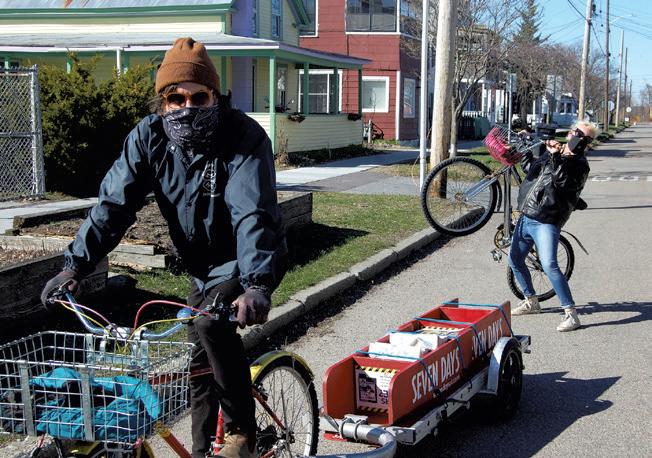


APRIL 19: Seven Days receives a $443,547 Paycheck Protection Program loan.
APRIL 14: Circulation deputy Jeff Baron borrows a bike and a trailer from Burlington’s Old Spokes Home, loads it up with stacks of Seven Days, and hits the Queen City streets with art director Rev. Diane Sullivan for the first two-wheeled pandemic paper delivery.
Bold type indicates a current staffer. Sincere apologies to anyone we inadvertently omitted!
Editors and staff writers
Design, production and web staff
Sales and marketing staff
Circulation staff and drivers
Administrative staff
Freelance writers
Freelance illustrators, cartoonists and photographers Interns
KAREN GARDINER • GWEN GARLAND • JOHN GENTILE • PHILIP GERIGSCOTT • PAUL GIBSON
ELIZA GILES • GRETCHEN GILES • LINDA GIONTI • BETH GLASPIE • THOM GLICK • ABIGAIL SYLVOR
GREENBERG • KEVIN GODDARD • STEVE GOLDBERG • SASHA GOLDSTEIN • STEVE GOLDSTEIN
REBECCA GOLLIN • COLLEEN GOODHUE • MYESHA GOSSELIN • DAVID GRAM • MARGARET GRAYSON
MIKEY GONGWER • DIANA GONSALVES • JUSTIN GONYEA • JEFF GOOD • JARAD GREEN
SUSAN GREEN • LEO GRIFIN • BOBBY HACKNEY JR. STEVE HADEKA MATTHEW HAGEN
CHARLES HAGY TERRI HALLENBECK • EMILY HAMILTON • ERIN HANLEY CHERYL HANNA
STEFAN HARD • ABE HARRISON MARGOT HARRISON • JUSTIN HART SAM HARTNETT
MELISSA HASKIN PAUL HAWKINS RYAN HAYES CELIA HAZARD PAUL HEINTZ
RACHEL HELLMAN • PAUL HESS • JOSH HIGHTER • CORIN HIRSCH • SOPHIA HODSON
STEVE HOGAN • DAVID HOLUB • SOPHIE HOROWITZ • RUTH HOROWITZ • SAMUEL HOROWITZ
LUCY HOWE • JOE HUDAK • ALEXANDRA HUDSON • BRETT HUGHES • PIP VAUGHAN HUGHES
KARISSA HUMMEL • SAMANTHA HUNT • JASON HUNTER • TOM HUNTINGTON • HELEN HUSHER
KRISTEN HUTTER • DAVID HYMEN • KATHERINE ISAACS • MICHAEL IVES • EMILY JACOBS
PAUL JAFFE JOHN JAMES • MEGAN JAMES • THOMAS JAMES • ELISA JÄRNEFELT
EVE JAROSINSKI • MATT JENKINS MARK JOHNSON • KATHRYN WYSOCKEY-JOHNSON
KATIE JICKLING • ANN-ELISE JOHNSON • EMILY JOHNSON • SALLY WEST JOHNSON
RACHEL ELIZABETH JONES • GLYN JONES • DAVID JUNKIN • MADELEINE KAPTEIN
KIRK KARDASHIAN • JENN KARSON • MARCY KASS • TITO KEEFE • JEANNE KELLER
MARISA KELLER • KEVIN J. KELLEY • CALEB KENNA • BOB KILPATRICK • STACY KIM
NICK KIRSCHNIT • RICK KISONAK • JAMES KLEIMANN • ALLIE KLEIN • SARAH KNEEZLE
KEITH KNIGHT • JAMES KOCHALKA • ED KOREN • LEAH KRASON • FRAN KRAUSE • LEE KROHN
JOSH KUCKENS • SAM KUNZ • PETER KURTH • KATE LADDISON • ASTRID HEDBOR LAGUE
HAYLEY LAMBERSON COURTNEY LAMDIN • DAVID LAPP • SUSAN LARSON JOLIE LAVIGNE
JACQUELINE LAWLER • CAROL LAY CRESTON LEA DEBORAH LEDUC • GRACE PER LEE
STEVE LEGGE • JUDITH LEVINE ALICE LEVITT • AARON LEWIS • THEA LEWIS MARY ANN LICKTEIG
JASON LIGGETT AMY LILLY PETER LIND • RACHEL LINDSAY • ANNE LINTON SHAWN LIPENSKI
JIM LOCKRIDGE • CHRISTINE LOWELL • JACK LUTZ • TYLER MACHADO • KIM MACQUEEN
DAVID MAGNANELLI • JULIA MAGUIRE • LYNDA MAJARIAN • MARTIE MAJOROS • ABBY MANOCK
JON MARGOLIS • MIKE MARTIN • REV. ROGER ANTHONY YOLANDA MAPES • CYPRESS MARRS
T.J. MARTIN • LISA MATANLE • HALEY MATHIS • JOSEPH MAUNTLER • ALEX MAUSS • JOANNA MAY
MATTHEW MAZZOTTA • KEVIN MCCALLUM • MARIA MCCORMICK • CHRIS MCDONALD
ADELLE MCDOWELL • DAKOTA MCFADZEAN CHARLIE MCGANN JACK MCGUIRE • BILL MCKIBBEN
LEA MCLELLAN ERNIE MCLEOD • BRYAN MCNAMARA • TOM MCNEILL • STEPHEN MEASE
JOSH MECHAM • KRISTEN MELVILLE • MELANIE MENAGH SEAN METCALF NAT MICHAEL
MATT MIGNANELLI GARY LEE MILLER • JONATHAN MINGLE ANNE MINDELL • MEREDITH MIOTKE
FRANKIE MOBERG • BRIAN MOHR • KAITLIN MONTGOMERY • CINDY MORGAN
MATTHEW MORRIS • BILL MULLINS • LLU MULVANEY-STANAK • LIAM MULQUEEN-DUQUETTE
GLEN NADEAU • MARC NADEL • DUG NAP • ANDREW NEMETHY • HEIDI NEPVEU • DANIEL NESBITT
TIM NEWCOMB • HILARY NILES • SUSAN NORTON • ALISON NOVAK • LAUREN OBER
JANICE OBUCHOWSKI • DOUG OGG • LESLIE O’HALLORAN • KATE O’NEILL • MO OH
DANIEL OKLAN EZRA OKLAN • JONATHAN OLENDER • KATHERINE OLSON BILL ORLEANS


MAY 13: Seven Days launches the Register, a guide to shopping locally online.



MAY 25: Minneapolis police restrain and murder an unarmed Black man, George Floyd, sparking nationwide protests.














JUNE 24: In response to travel restrictions, Seven Days creates Staytripper “the road map to rediscovering Vermont,” edited by Carolyn Fox and filled with local things to do and places to visit. JULY 22:






ERIC ORNER • MAX OWRE • SAM OYER • CANDACE PAGE • TED PAPPADOPOLOUS • STEPH PAPPAS
OLIVER PARINI CHARLEEN PARISEAU LINDA PARISH • BRYAN PARMELEE
MELISSA PASANEN NANCY PAYNE • BARBARA PEABODY • DAN PERKINS • MELODY PERCOCO
MATT PERRY • EMILY PETERS • E.J. PETTINGER • KEN PICARD • AIMEE PICCHI
JESSICA PICCIRILLI LOGAN PINTKA SIMON PLUMPTON SUZANNE PODHAIZER
SALLY POLLAK • PAMELA POLSTON • JOSH POMBAR • SARAH POTTER • SABINE POUX
RON POWERS • KAZ PRAPUOLENIS • SARAH PRIESTRAP • JOHN PRITCHARD • RENEE PROULX
ALDETH PULLEN AMY RAHN SAMANTHA RANDLETT ROBIN RANON KRISTEN RAVIN
THOMAS RAWLS • CASEY REA • CRAIG REARIC • TOBY RECORD • KATHERINE REILLY-FITZPATRICK
NANCY REMSEN • CATHY RESMER • ROBERT RESNIK • MAGGIE REYNOLDS • LILLY RICKNER
RYAN RIDDLE • KATIE RIEGELMAN • PATRICK RIPLEY • COLBY ROBERTS KATRINA ROBERTS
HEATHER ROBINSON • GORDON ROBISON • BENJAMIN ROESCH • REBECCA ROGERS
SHEM ROOSE • EMILY ROSE • GAIL ROSENBERG • ELIZABETH ROSSANO • PAULA ROUTLY
JESSICA ROWSE MATTHEW ROY • AMY RUBIN TOMAS RUPRECHT • GLENN RUSSELL
SARAH RYAN • NINA SABLAN • DAN SALAMIDA • GABRIELLE SALERNO • MARK SALTVEIT
JESSE SARGENT • KYMELYA SARI • ANDREW SAWTELL • KIM SCAFURO • MATT SCANLON
SHAWN SCHEPS • JIM SCHLEY • DANIELLE SCHNEIDER • WARREN SCHULTZ
CHARLOTTE SCOTT • TODD SCOTT • JOANNA SCOTT • GLENN SEVERANCE • JOSEPH SEXTON
ELIZABETH SEYLER CAROLYN SHAPIRO • JOHN SHAPPY • TIM SHARBAUGH • DAVID SHAW
KAREN SHIMIZU JULIA SHIPLEY AARON SHREWSBURY JORDAN SILVERMAN • ERINN SIMON
ANGELA SIMPSON • ANDY SINGER • MICHAEL SIPE • ETHAN SLAYTON • FRANK SMECKER
JEN ROSE SMITH • EVA SOLLBERGER • FRED SOLOMON • JEN SORENSON • MARCY STABILE
BRETT STANCIU • STEVE STANLEY MAGGIE STARVISH STACEY STEINMETZ ZACHARY STEPHENS
RACHEL STEARNS • MOLLY STEVENS • BILL STONE • HEIDI STONE • MERYL STONEHOUR
ROB STRONG • REV. DIANE SULLIVAN • ANDREA SUOZZO • JENNIFER SUTTON • ERIK SWANSON
ROLAND SWEET • TOM SYKAS ANNA SYRELL TIFFANY SZYMASZEK SARA TABIN
NEEL TANDAN • JON TAYLOR • GEORGE THABAULT • BECKY THARP • DAN THAYER
KIRSTEN THOMPSON • LEON THOMPSON • MATTHEW THORSEN JESSICA LARA TICKTIN
KATIE TITTERTON DIANA TODISCO • LUCY TOMPKINS • LEATH TONINO MICHAEL TONN
SHAY TOTTEN • AMY TRUEX • CLOVE TSINDLE • MEREDITH BAY-TYACK
MARIA VALIENTE SARAH VAN ARSDALE MICHAEL VAN TASSEL TARA VAUGHAN-HUGHES
RICK VEITCH • STEVE VERRIEST • GINGER VIEIRA • TIM VIZE • CASEY RYAN VOCK
TRISTAN VON DUNTZ • BOB WAGNER • JEB WALLACE-BRODEUR • BRIAN WALLSTIN
KEENAN WALSH MOE WALSH MOLLY WALSH • JOHN WALTERS • DAVID WARNER • ANDY WATTS
STEVE WEIGL • ANDREW WEINER MATT WEINER • JOSH WEINSTEIN LINDSAY WESTLEY
DAVID WHITE • OLIVIA WHITE • BRUCE WHITEHALL • SANDRA WHITEHALL • CAROLANN WHITESELL
AUDREY WILLIAMS NATALIE WILLIAMS SADIE WILLIAMS • JOHN WILSON • DON WHIPPLE
RICK WOODS KRYSTAL WOODWARD • IONA WOOLMINGTON • JUSTIN WYGMANS
SARAH YAHM • STEVE YARDLEY • JORDAN YOUNG • RICHELE YOUNG • TRACEY YOUNG
MARGARET LEVINE YOUNG DELIA ZAMORA-CROSBY MOLLY ZAPP KIRT ZIMMER


SEPTEMBER 9: Seven Days is “25 and Stayin’ Alive!” Paula Routly writes in “From the Publisher.”






















SEPTEMBER 14: In the New Yorker, Ripton writer Bill McKibben salutes Seven Days for continuing to cover the news — and for its April 6 decision to suspend online comments to avoid spreading misinformation.
SEPTEMBER 23: Chelsea Edgar spends almost a month reporting “Battery Power,” an unvarnished inside look at the Black Lives Matter encampment that has occupied Burlington’s Battery Park all summer. See page 42.
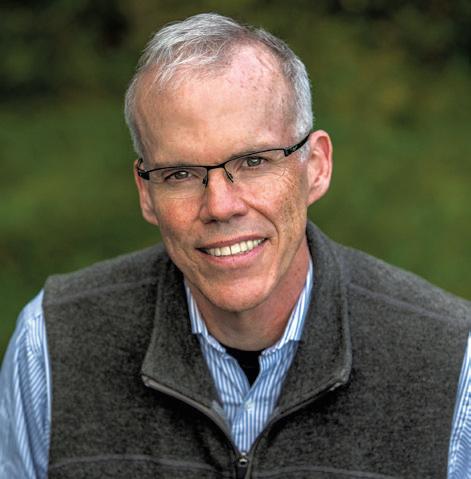





ENC E THE M AL L
Development projects and evolving streetscapes are shaping our city—but it’s the people behind our local businesses who give it heart. Yes, we’re talking about the business owners—but also the baristas, sales associates, chefs, and countless others who make every restaurant, boutique, and salon run smoothly.
Burlington’s businesses connect neighbors, inspire visitors, and keep our streets alive, even in the face of challenges. Love Burlington exists to help you discover Burlington, celebrate Burlington, and support Burlington, making it easy to stay connected with the people and places that make this city one of a kind.
Whether it’s helping a new business get noticed or showcasing longtime favorites, Love Burlington strives to be a resource that strengthens our community.
In addition to free webpage listings and social media spotlights, our knowledgeable support team gives Burlington businesses the tools they need to thrive.
“ W i l
t h r o u g h s o c i a l m e d i a f e a t u r e s , w e b s i t e
h i g h l i g h t s , a n d o n e - o n - o n e s u p p o r t . T h a t
s u p p o r t h a s c o n t i n u e d w i t h o u r e x p a n s i o n ,
“ Si n c e f oll owi n g L ove B u rli n gt o n o n
I n st a gr a m , I’ ve f o u nd s o m a n y n ew
r e st a u r a nt s , sh o ps , a nd hidd e n ge m s t o
ex pl o r e i n th e a r e a! Th ei r eve nt s c al e nd a r
h a s al s o b e e n a r e all y gr e at r e s o u r c e f o r
wh e n I’ m l o oki n g f o r n ew a nd ex citi n g
“SincefollowingLoveBurlingtonon Instagram,I’vefoundsomanynew restaurants,shops,andhiddengemsto exploreinthearea!Theireventscalendar hasalsobeenareallygreatresourcefor whenI’mlookingfornewandexciting thingstodowithfriends.”
thi n gs t o d o with f ri e nd s . ”
-EmilyKobus,UVMClassof2026
- E mil y Kob u s , UVM Cl a s s of 2026
“Wilderisawoman-ownedwinebarandshop createdtoshareourloveofwineandcelebrate Burlington’svibrantcommunity.LoveBurlington hassupportedusfromdayone,whenwewere inourfirstlittlebrick-and-mortarlocation, throughsocialmediafeatures,website highlights,andone-on-onesupport.That supporthascontinuedwithourexpansion, helpingsmallbusinesseslikeminetrulythrive.”
h e l p i n g s m a l l b u s i n e s s e s l i k e m i n e t r u l y t h r i v e . ”
—Sipha,OwnerofWilderWines
— S i p h a , O w n e r o f W i l d e r W i n e s
LoveBurlingtonisn’tjustforbusinesses—it’s foreveryone.Whetheryou’replanningavisit, lookingforthebestlocalspots,orjustwantto knowwhat’shappeningthisweekend,wemake iteasytoexperienceBurlingtonatitsbest.



Burlington’seventsarewherethecitycomes alive.FromtheweeklyPasseggiataandlivemusic performancestofamily-friendlyactivitiesand communitygatherings,there’salwayssomething happening!
ors, and
FollowLoveBurlingtononsocialmediaorexplore ouronlineeventcalendartodiscoverhundreds ofwaystogetout,meetyourneighbors,and experiencethebestofBurlington.




Popintoyourfavoritebusiness andsayhi: Asmilegoesalong way!


Grabalittlesomething: Coffee, snacks,oratinytreat.
Leavearavereview: Tellthe worldwhyyoulovethem.
“ T h e i d e a o f o r g a n i z i n g a w e e k l y p a s s e g g i a t a w a s b o r n o u t
o f a d e s i r e t o s u p p o r t B u r l i n g t o n ' s l o c a l b u s i n e s s e s . T h e
s i m p l e r i t u a l o f g a t h e r i n g i n t h e h e a r t o f o u r c i t y e a c h w e e k
p r o v i d e s a n o p p o r t u n i t y t o m e e t f r i e n d s a n d g r e e t
s t r a n g e r s , b u i l d i n g a s t r o n g e r, m o r e c o n n e c t e d c o m m u n i t y
P e r s o n a l l y , I ' v e r e c o n n e c t e d w i t h f o r m e r c o l l e a g u e s a n d
m e t m a n y n e w p e o p l e a s I ' v e m a d e m y w a y u p a n d d o w n
C h u r c h S t r e e t . L o v e B u r l i n g t o n w a s w i t h m e f r o m t h e s t a r t ,
a n d t h a n k s t o t h e i r s u p p o r t , p a r t i c i p a t i o n h a s g r o w n t o
“Theideaoforganizingaweeklypasseggiatawasbornout ofadesiretosupportBurlington'slocalbusinesses.The simpleritualofgatheringintheheartofourcityeachweek providesanopportunitytomeetfriendsandgreet strangers,buildingastronger,moreconnectedcommunity. Personally,I'vereconnectedwithformercolleaguesand metmanynewpeopleasI'vemademywayupanddown ChurchStreet.LoveBurlingtonwaswithmefromthestart, andthankstotheirsuppor t,participationhasgrownto includemorebusinessesofferingpasseggiataspecials.”
i n c l u d e m o r e b u s i n e s s e s o f f e r i n g p a s s e g g i a t a s p e c i a l s . ”
- L i s a D e N a t a l e , O r g a n i z e r o f P a s s e g g i a t a a n d
-LisaDeNatale,OrganizerofPasseggiataand BurlingtonResident KEEPINGTHECOMMUNITYCONNECTED
B u r l i n g t o n R e s i d e n t






s p r e a d s f a s t !
l l o v e
Follow,like,share: Sociallove spreadsfast!
J o i n t h e f u n a t e v e n t s : M a r ke t s ,
m u s i c , o r p o p - u p s . T h e r e ’s t r u l y
s o m u c h t o d o h e r e .
Jointhefunatevents: Markets, music,orpop-ups.There’struly somuchtodohere.
B r a g a b o u t yo u r f a v e s :
R e c o m m e n d b u s i n e s s e s t o yo u r
f r i e n d s a n d f a m
Bragaboutyourfaves: Recommendbusinessestoyour friendsandfam.
T i p l i ke a h e r o : S h o w s t a f f yo u
a p p r e c i a t e t h e m .
Tiplikeahero: Showstaffyou appreciatethem.



S i g n u p f o r t h e s c o o p :






N e w s l e t t e r s ke e p yo u i n t h e l o o p
Signupforthescoop: Newsletterskeepyouintheloop.
S n a g a g i f t c a r d : G i v e a g i f t t h a t
s u p p o r t s l o c a l l o v e .
Snagagiftcard: Giveagiftthat supportslocallove.
D i v e i n t o l o c a l p r o g r a m s :
P a r t i c i p a t e , v o l u n t e e r , o r c h e e r o n
c o m m u n i t y i n i t i a t i v e s .
Diveintolocalprograms: Participate,volunteer,orcheeron communityinitiatives.

Food writers past and present share unforgettable eats from Seven Days’ 30 years
The first meal I ate on Seven Days’ dime was terrible. For a 2002 freelance article on church suppers, I choked down salty, gray meat and boiled potatoes at a St. Patrick’s Day dinner in Richmond. The food, in this case, was mostly beside the point; the story was as much about the culture and community around the table.
Until 2006, when the paper hired its first full-time food writer, cofounder Paula Routly chased most of the food news, including all the restaurant openings and closings that now go into our weekly “Side Dishes.” And freelancers such as myself contributed a smorgasbord of stories. They included Molly Stevens, who would later win multiple James Beard Foundation cookbook awards; nationally syndicated columnist Marialisa Calta; and food magazine editor Jim Romano .
Over almost two decades since, our seven food sta writers have eaten thousands of meals across Vermont, at snack shacks, high-end restaurants and everything in between. While some were as lackluster as my church supper, we’ve enjoyed plenty of excellent food and drink.
Here are our food critics’ picks for their most memorable meal.
MELISSA PASANEN

“Swine Tasting: At Shelburne Farms, a Food Writer Goes Whole Hog,” October 31, 2007
Asked about dining at Shelburne Farms, many might mention the serene beauty of a preprandial lakeside stroll or the grandeur of the buildings. For me, it’s all about the crispy pig ears.
A year into my role as Seven Days’ first full-time food writer, I had yet to experience a nose-to-tail dinner. That night, with chef Rick Gencarelli and sous chef Aaron Josinsky in the kitchen — and Josinsky’s partner, Laura Wade, holding sway in the elegant dining room — I was treated to a mizuna salad with the aforementioned ears, peppered pasta with cured jowl and lard-enriched gingerbread.
Gencarelli later moved out of state, but I became
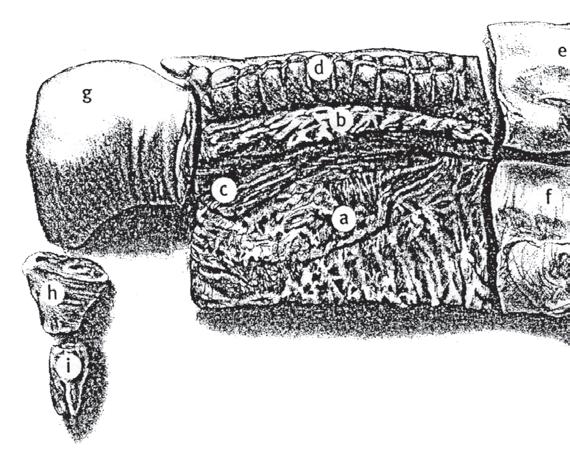

a devoted Josinsky and Wade fangirl during their stints at Burlington’s Bluebird Tavern and especially their own Misery Loves Co. (After my tenure, they launched another Winooski spot, Onion City Chicken & Oyster.) Close to two decades after that first meal, I calculate that I’ve eaten more of Josinsky’s cooking than anybody else’s, save my mom’s and my own.
SUZANNE PODHAIZER, 2006-2010
SEPTEMBER 24: To protest Chelsea Edgar’s Black Lives Matter exposé, activists gather papers from downtown Burlington and burn them in a demonstration on Main Street.
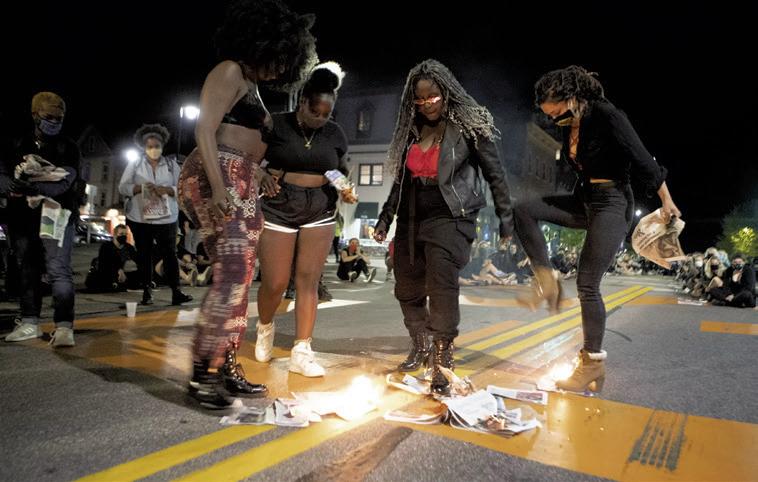
SEPTEMBER 25: Readers chip in to reprint that week’s paper, and Seven Days redistributes 5,000 copies around Burlington. Says publisher Paula Routly in a statement: “Clearing out newsstands because you don’t like what a paper is reporting is a disturbing tactic that has no place in a free, democratic society. The individuals carrying out these retaliatory actions are exhibiting the very authoritarian behavior they are protesting.”

NOVEMBER 3: Joe Biden defeats Donald Trump to win the U.S. presidency; the counting of absentee ballots delays the final results until November 7.
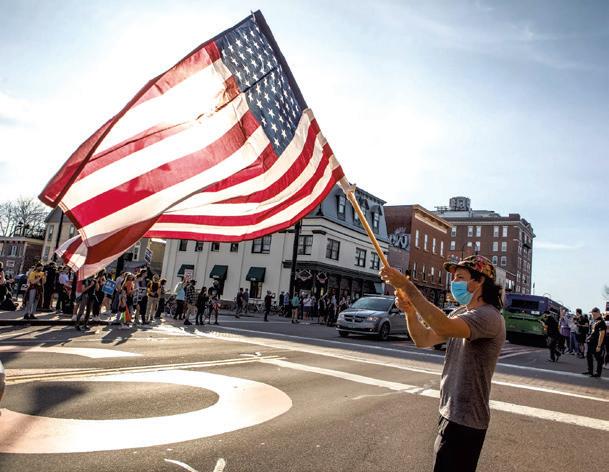
DECEMBER 28: The Boston Globe highlights Seven Days and VTDigger in a story titled, “How Two Nontraditional Newsrooms in Vermont Are Winning Readers: Could Their Examples Hold the Keys to Fixing ‘the Expanding News Desert’?”
| 2021

DECEMBER 23: Seven Days announces that Paul Heintz is leaving to become the managing editor at VTDigger.

JANUARY 6: Supporters of President Donald Trump storm the U.S. Capitol building.
“Alice Eats: A Food Writer’s Weekend,” September 10, 2013
Though I’ve gone on to larger publications in bigger cities, I met more culinary celebrities through my work at Seven Days than anywhere else.
Chalk it up to the pull of Vermont, but I am proud to have shared meals with Judith Jones, Marian Burros and Alice Waters.
Still, the badass woman who looms largest in my memory is Ariane Daguin, the founder of D’Artagnan Foods, a premier meats distributor.




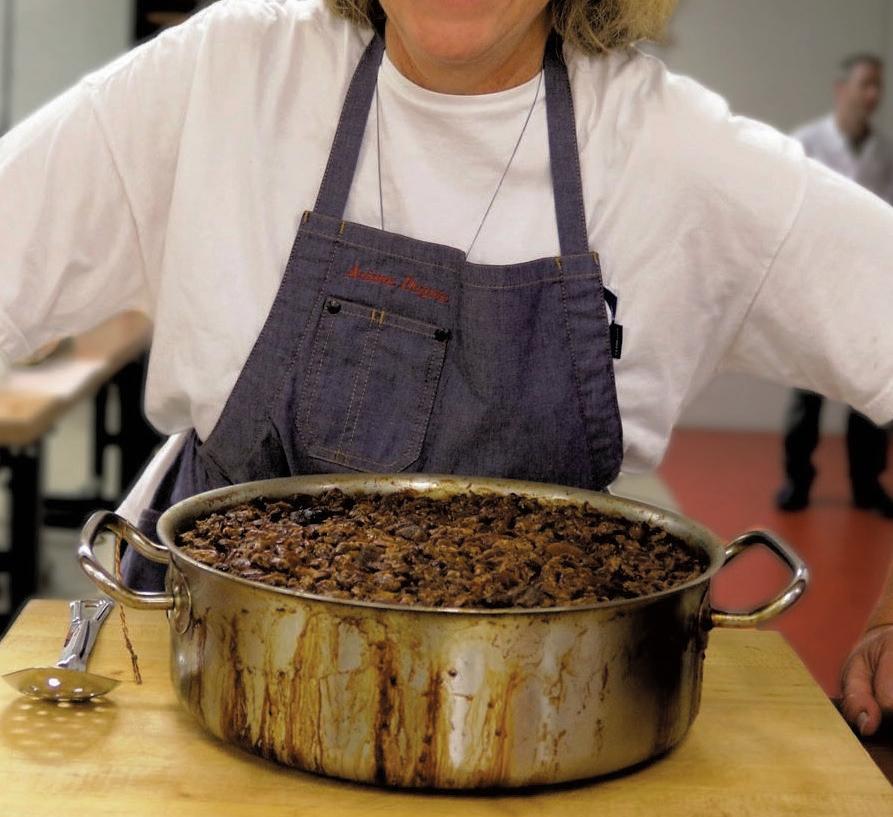
At the late, great New England Culinary Institute’s Chef’s Table in Montpelier, I watched Daguin facilely excise foie gras from a duck, which she and executive chef Jean-Louis Gerin then turned into three meaty courses, followed by an Armagnac-flavored pastis Gascon. Though the rosy breast was rendered crisp and almost absent of fat, my favorite course was a kale salad punctuated with crisp confit leg and gizzards.
ALICE LEVITT, 2007-2015

“Savor SoLo Farm & Table’s Global Gastronomy in South Londonderry,” 7 Nights, 2013-14
In 2012, I visited SoLo Farm & Table barely a year after wife-and-husband team Chloe and Wesley Genovart (host and chef, respectively) opened the restaurant in a rambling colonial house in South Londonderry.
More than a decade later, the memory of that summer night still feels enchanted, from the lush outdoor garden at its August peak to the exacting, Technicolor experience at the table: the pop of a lime mignonette spooned over oysters; the neon of gazpacho dressed up with papery radishes, dill fronds and crispy jamón crumbles; the crunch of tempura zucchini blossoms beside a quail egg with a yolk of molten sunshine.
I hadn’t expected to encounter a chef at the very top of his game in a setting that felt more like a home than
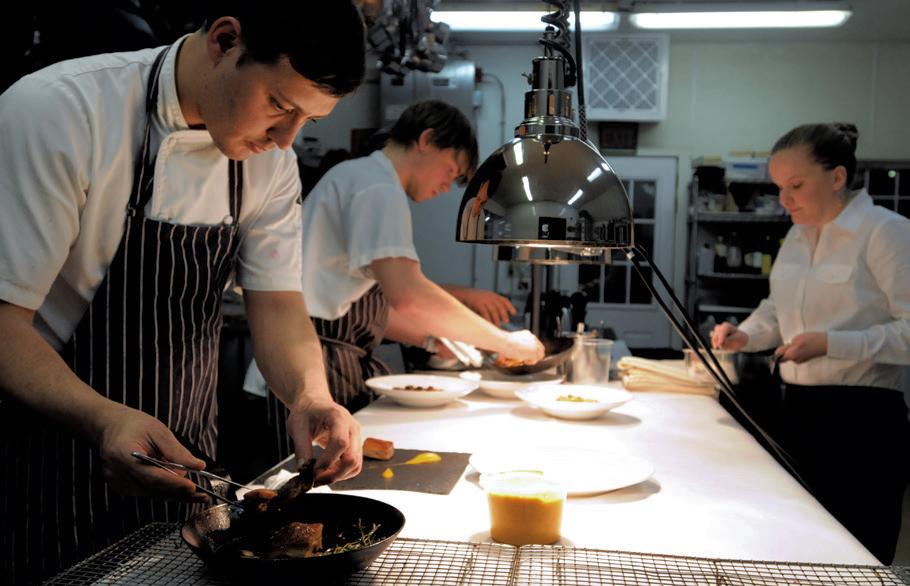
JANUARY
13: Former Associated Press journalist Dave Gram revives the “Fair Game” political column.
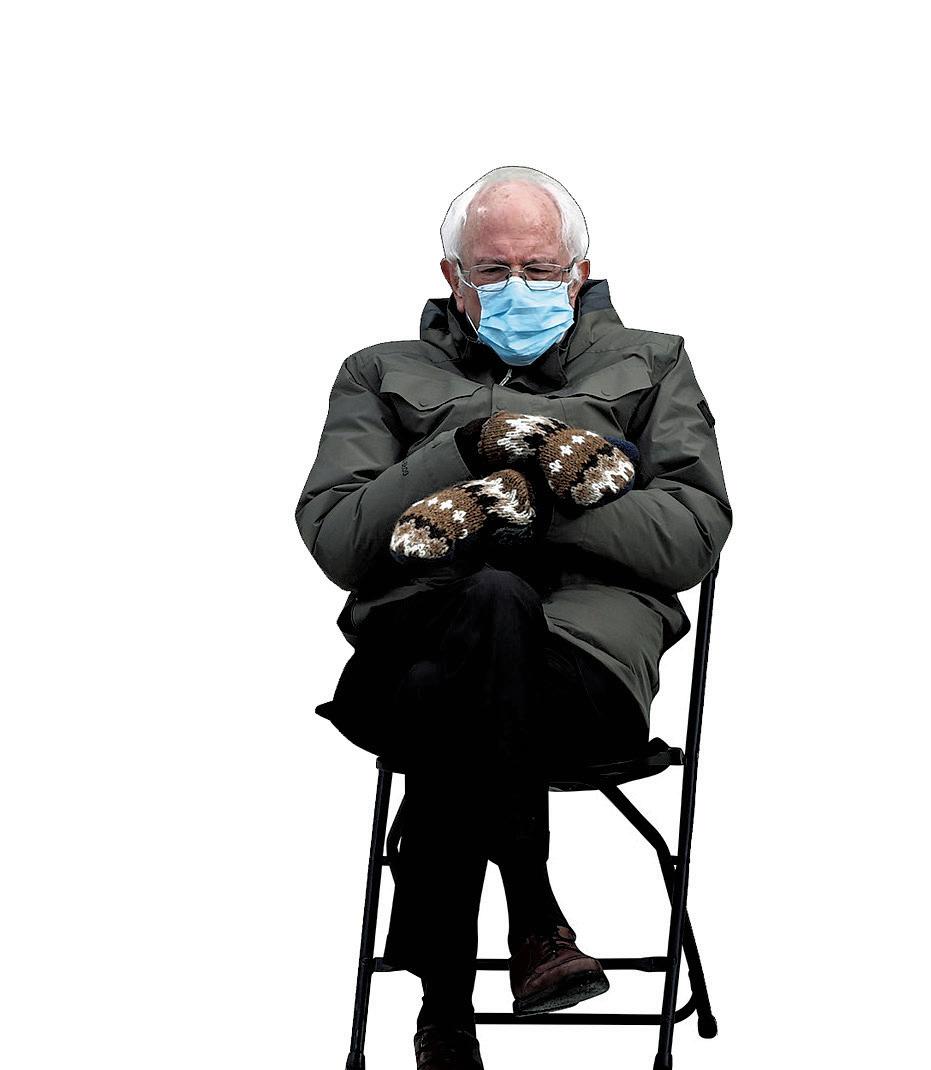
MAY 26: Dave Gram reveals he’s stepping down from “Fair Game” to focus on his health and announces his successor, Mark Johnson.












JANUARY 21: U.S. Sen. Bernie Sanders wears a surgical mask and a pair of Vermont-made felted mittens to Joe Biden’s presidential inauguration, spawning a million memes.
MARCH 3: The pandemic and the discovery of PCB contamination shut down Burlington High School in 2020. When students return to school, it’s a makeshift operation in the former Macy’s downtown. Alison Novak reports the story, and BuzzFeed, People magazine and the Daily Mail pick up images and video by freelancer Cat Cutillo.
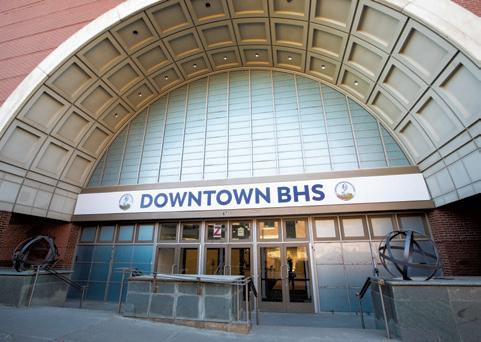
a high-end dining destination. That tucked-away SoLo still hums along 13 years later, when the world around it has shifted profoundly, feels like a small triumph. CORIN
JUNE 9: Instead of the Daysies, which are on hiatus, Seven Days publishes an issue recognizing Vermont’s “Pandemic All-Stars.”

JUNE 2: Kids VT managing editor Alison Novak shares in her final “Editor’s Note” that she’s joining the Seven Days staff as its first K-12 education reporter.

2011-2016
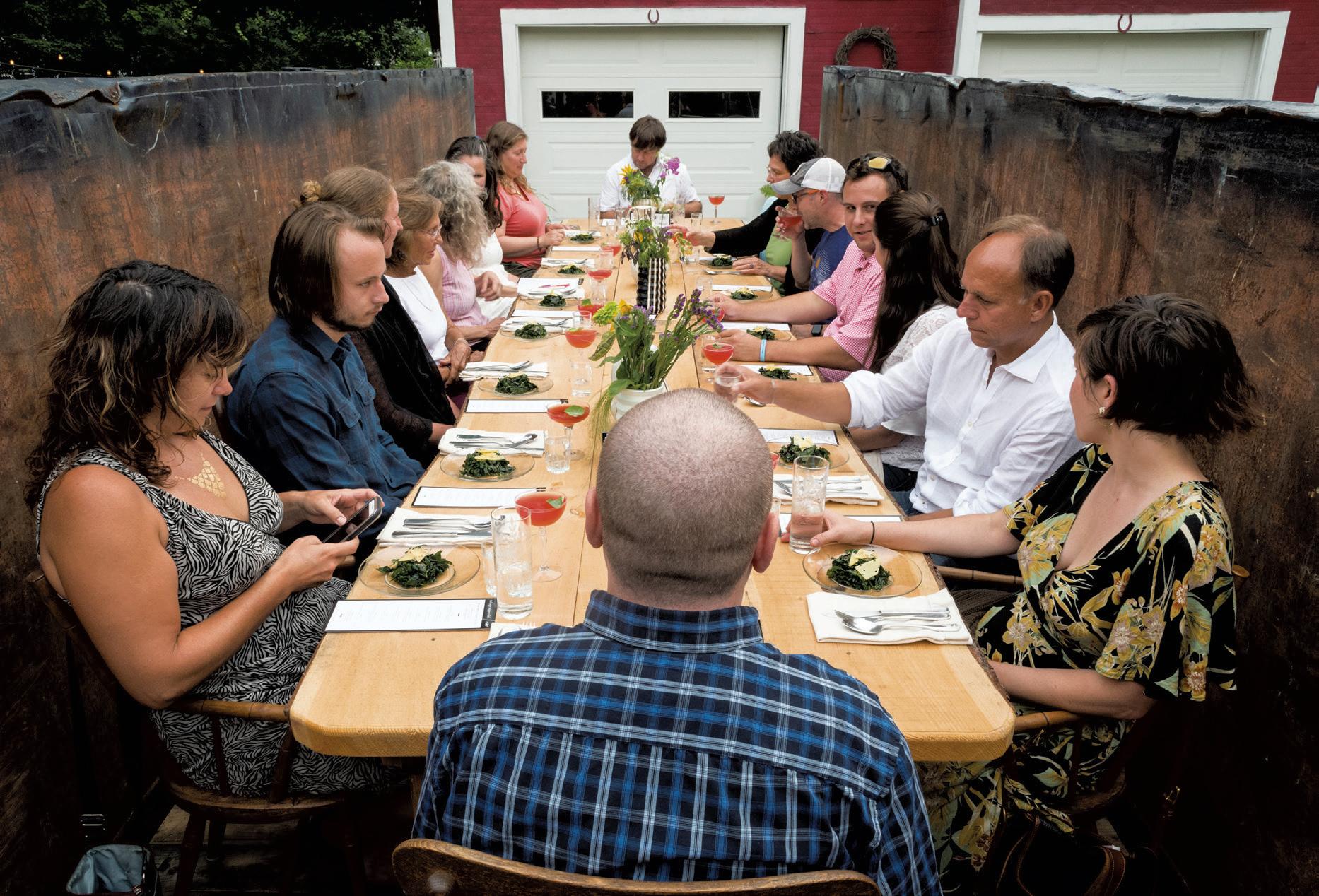
“Dumpster Dining: At a Gourmet Event in Waterbury, a Taste of Food Waste,” August 22, 2018
A few weeks ago, before I threw out my food waste, I weighed it. The six-pound haul included stale bread, rotting fruit and expired cottage cheese. Where was Francis Stellato when I needed him?
A former chef at Prohibition Pig, Stellato demonstrated one night seven years ago that food scraps and would-be compost can be used to make a firstrate, nutritious meal. At a Waterbury event called Salvage Supperclub, Stellato made pâté from mushroom stems and beet pasta from veggie seconds and flour previously used to test a millstone. Cocktails were infused with the juice of spent fruit.
But the evening’s main pairing referenced excess and waste: We ate at a communal table (built from a

tree downed in a storm) in a dumpster, the setting a not-so-subtle reminder that too much food is thrown out.
SALLY POLLAK, 2017-2023


SEPTEMBER 1: Chelsea Edgar and Colin Flanders weave together crowdsourced stories from patients who report waiting months for treatment at the UVM Medical Center in “The Doctor Won’t See You Now.” The day it’s published, the Agency of Human Services announces an investigation into the problem of long wait times for medical appointments across the state. See page 42. (NENPA, 1st place, health care reporting)
JULY 7: In a cover story with art riffing on Edvard Munch’s “The Scream,” Colin Flanders reports on how Vermonters’ lives have changed since the F-35s came to town. Paula Routly writes in “From the Publisher” about having to wait 10 months to see a neurologist after an April trip to the ER — and asks readers to share their own stories of trying to see a specialist. Responses pour in.

“High-Low Fusion: Food as Geography at Maya’s Kitchen & Bar,” April 16, 2019
Of the roughly 1,300 meals I ate on the job, few stand out like those at Maya’s Kitchen & Bar in Burlington’s New North End.
The food was riveting. Sunny yellow mango lassis, rich with yogurt and tropical fruit, cooled the burn of chile-laden chopped chicken stir-fries and tomato-tinged flat-noodle sautés.

Through their menu, married co-owners Maya Gurung-Subba and Suk Subba shared their lives in the political and tectonic hotbed where India, China and Southeast Asia meet. I loved everything about their story: how the two met as Bhutanese kids in a Nepali refugee camp; how they reconnected after emigrating separately; how Maya learned professional cooking at the Vermont Foodbank’s Community Kitchen Academy while Suk cooked at A Single Pebble.
Maya’s closed in early 2021 (thanks, COVID-19), but it served as a textured, gorgeous reminder that food is lives and livelihoods, geography and stories. It’s so much more delicious when we welcome new neighbors — and eat at their tables.
HANNAH PALMER EGAN, 2014-2019














SEPTEMBER 15: The Vermont Arts Council announces that Seven Days cofounder Pamela Polston is the recipient of the Walter Cerf Medal for Outstanding Achievement in the Arts. While semiretired, Polston continues to assemble the visual arts section until 2024.
SEPTEMBER 22: Mark Johnson writes his final “Fair Game” column.
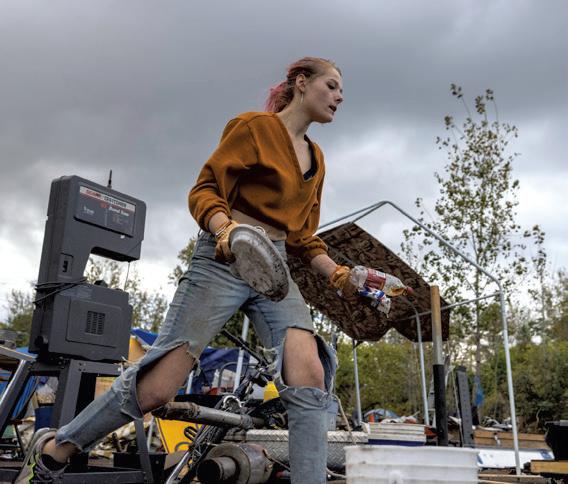
OCTOBER 27: Photographer James Buck compiles a photo essay on homeless Vermonters evicted from an encampment at the end of Burlington’s Sears Lane. (NENPA, 1st place photo story; AAN, 1st place, photography) Of “‘We’re Nobodies,’” the judges said: “Powerful photojournalism that tells an important story, humanely, with dignity for photo subjects.”
OCTOBER 23: After a pandemic pause, the Vermont Tech Jam returns — to Hula, Burlington’s brand-new lakeside tech campus. For the keynote presentation, Chelsea Edgar interviews Beta Technologies founder Kyle Clark and Sirius XM Radio inventor and Beta board member Martine Rothblatt.
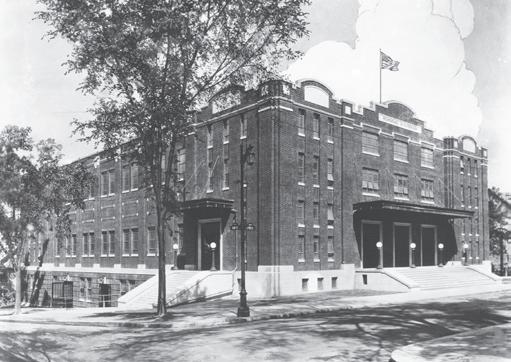
DECEMBER 1: In “Memorial Days,” Chris Farnsworth recaps the illustrious history of Burlington’s Memorial Auditorium. Six days later, in a special election, the bond measure to fund building repairs and improvements fails.








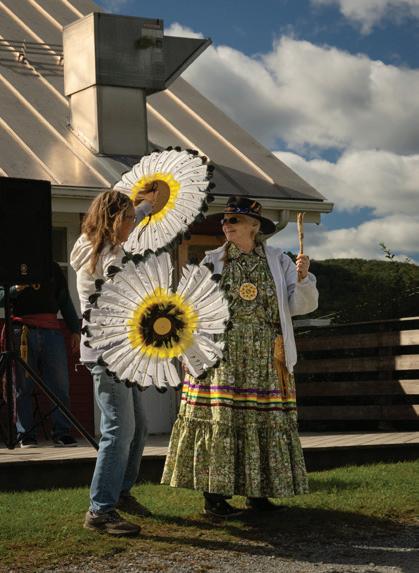

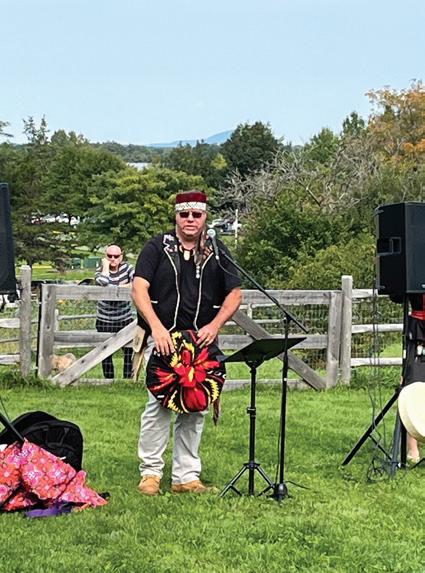



























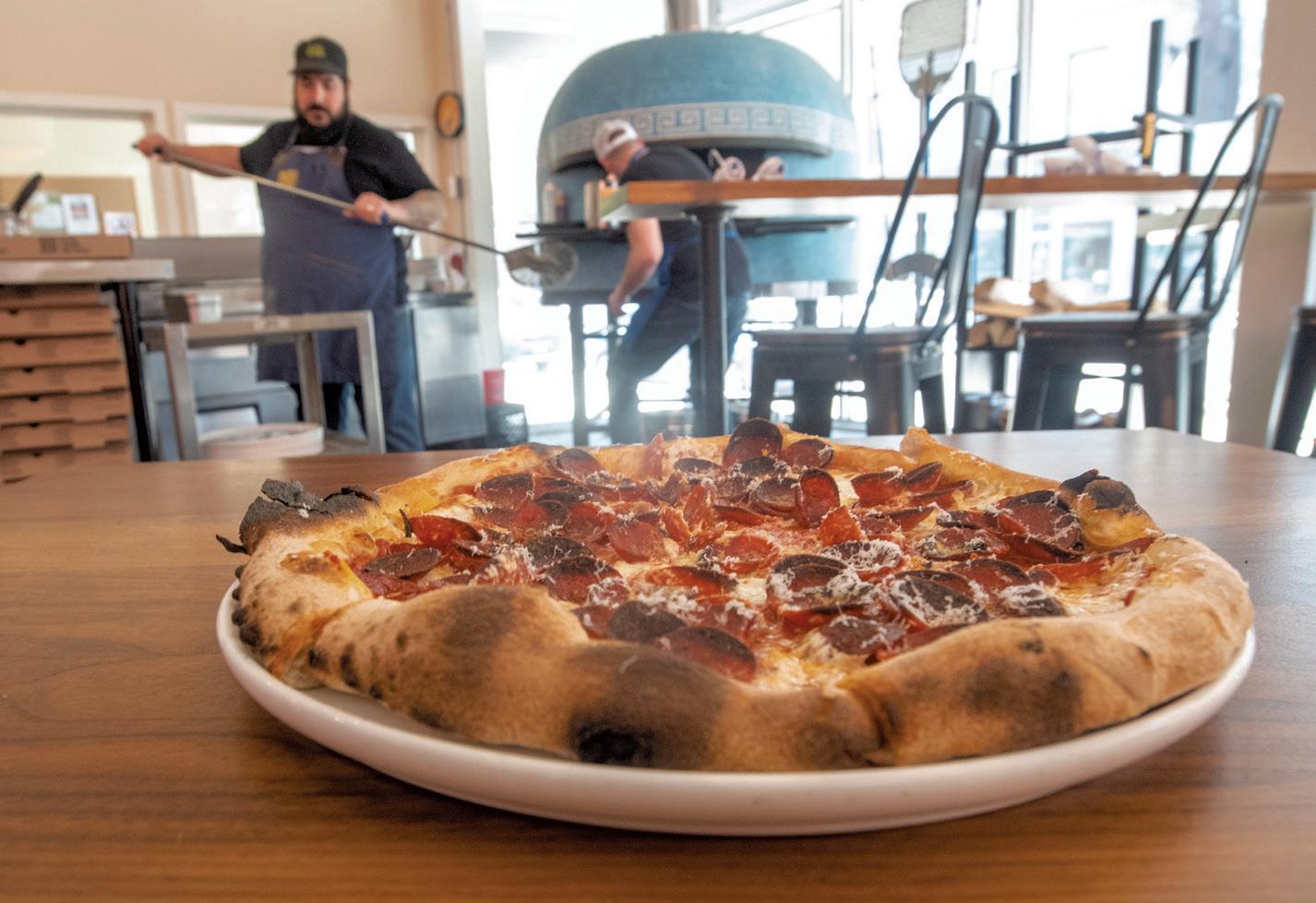
“Granite City Strong: Inundated Barre Restaurants and Bakery Dig Out — With Help,” July 19, 2023
There’s a lot of pizza. Our first issue, in 1995, rated nine Burlington-area pizza spots; four of six local brands are still at it. In 2021, we did a similar review of 13. Much of the pizza is adequate but not memorable. Occasionally, a pizzeria stands out.
Shortly after opening in Barre in 2022, Pearl Street Pizza earned our kudos for its chewy-crusted, wood-fired Neapolitan pies and pan-baked, grandma-style slabs boasting a pillowy crust with a crunchy, oily bottom.
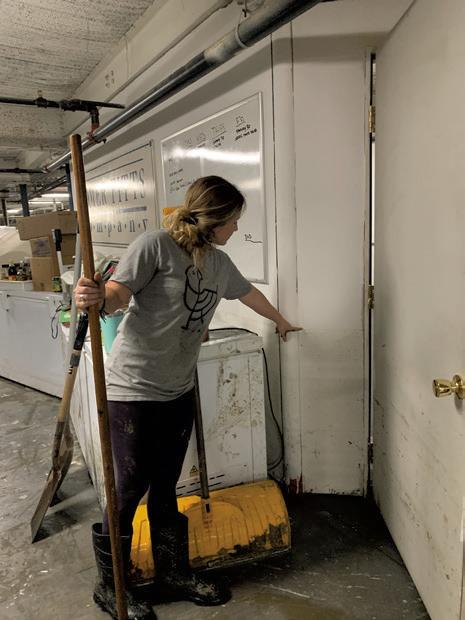
A couple of days after July 2023’s devastating flooding, I drove to Barre. River silt caked the sidewalk in front of Pearl Street Pizza, where the basement storage had been trashed. Thankfully, upstairs was spared, and co-owner Stefano Coppola had fired up the ovens to make some money and feed people. I bought a grandma pie topped with tangy-sweet housemade sauce, the signature cheese blend and lightly charred pepperoni.
Pizza will survive the apocalypse. We can only hope it’s this good.
MELISSA PASANEN,
2020-PRESENT
“A Penny Saved: Burlington’s Favorite Brunch Is Now at Deep City,” April 30, 2024














JANUARY 18: Seven Days inks an agreement with a nonprofit fiscal sponsor, Journalism Funding Partners, that allows the paper to accept tax-deductible donations of $2,000 or more.
JANUARY 31: Derek Brouwer and Colin Flanders tell the story of a Vermonter involved in the January 6 riots in “Capitol Offense: Nicholas Languerand’s Quest for ‘Belonging’ Led Him to QAnon, the Insurrection — and Now Prison.” See page 44. (AAN, 1st place, right-wing extremism coverage)
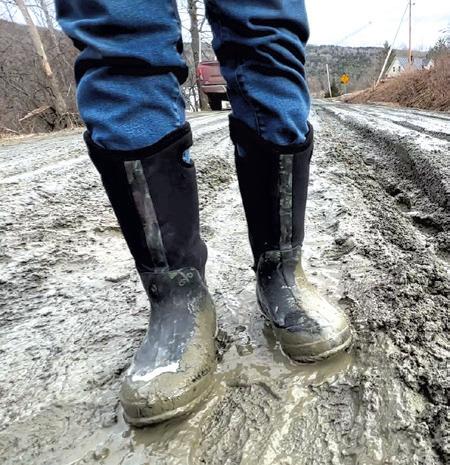
APRIL 7: Eva Sollberger publishes “Stuck in the Mud,” a video about the East Barnard Village Crier, which helps residents avoid perilous routes during mud season. (AAN, 1st place, multimedia) Said the judges: “The storytelling, photography and editing make this story suitable for a PBS special.”
MARCH 9: News editor Matthew Roy launches a yearlong “Locked Out” series on Vermont’s housing crisis — 12 stories ranging from a survey of efforts to bolster the state’s construction workforce to a look at how land-use regulations impede development. (NENPA, Publick Occurrences)
In November 2022, co-owners Charles Reeves and Holly Cluse closed their landmark Burlington breakfast and lunch spot after almost 25 years. There was no more Penny Cluse Café.








Technically, there still isn’t. But I’ve never felt relief so profound as when I walked into Deep City in April 2024 and saw Reeves in the kitchen — and the chile relleno, tofu scram and biscuits slathered in herb-cream gravy on the menu.
Now food director for both Foam Brewers and Deep City, Reeves revived all the hits, some





renamed to fit their Lake Street location. (I will never order the Bucketo-Spuds as House of Spudology.)
That first meal back, I shared a table pancake with my 10-monthold and whispered, “You don’t know what this pancake means.” He certainly hadn’t been around long enough to get the 24 years of nostalgia baked into it. But he really liked the pancake.
JORDAN BARRY, 2019-PRESENT
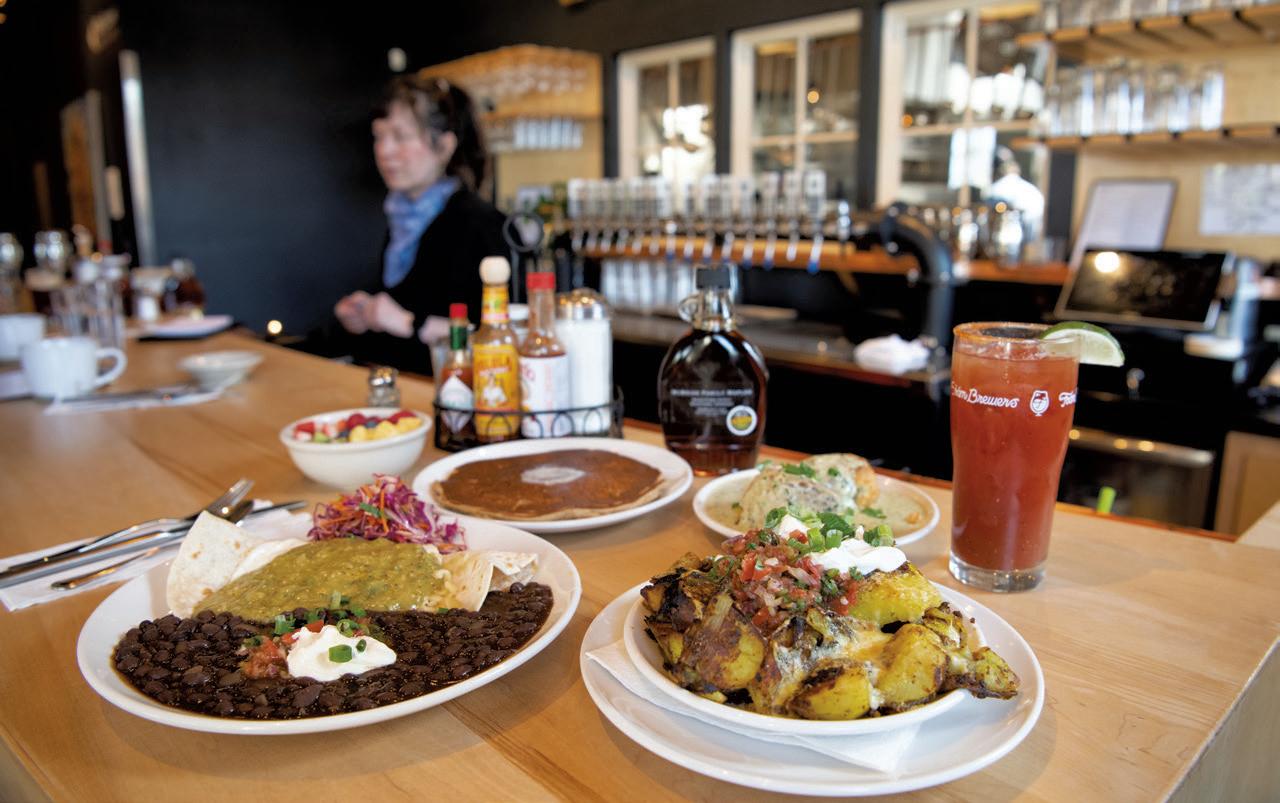
MAY 6: Seven Days wins 23 first-place NENPA awards — including top honors in investigative, climate change and religious issue reporting, as well as the prize for general excellence. Staff writer Chelsea Edgar is named Reporter of the Year. Publisher Paula Routly’s weekly column wins in a new category: “Combatting Misinformation and Restoring Trust.” of
JUNE 1: Rachel Hellman joins Seven Days as its first Report for America corps member; the national service program places reporters in newsrooms and subsidizes them for three years. Hellman begins her beat covering Vermont’s rural communities.
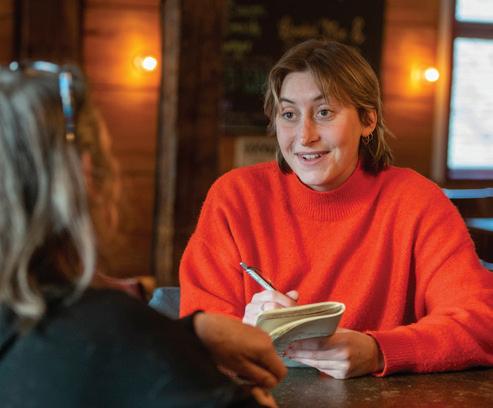

AUGUST 3: A mythical creatures-themed






All the Best heralds the return of the Seven Daysies after a pandemic pause.








JULY 28: Seven Days wins six firstplace AAN awards. Honorees include food writer Melissa Pasanen, senior multimedia producer Eva Sollberger and cartoonist Tim Newcomb.


OCTOBER 22:












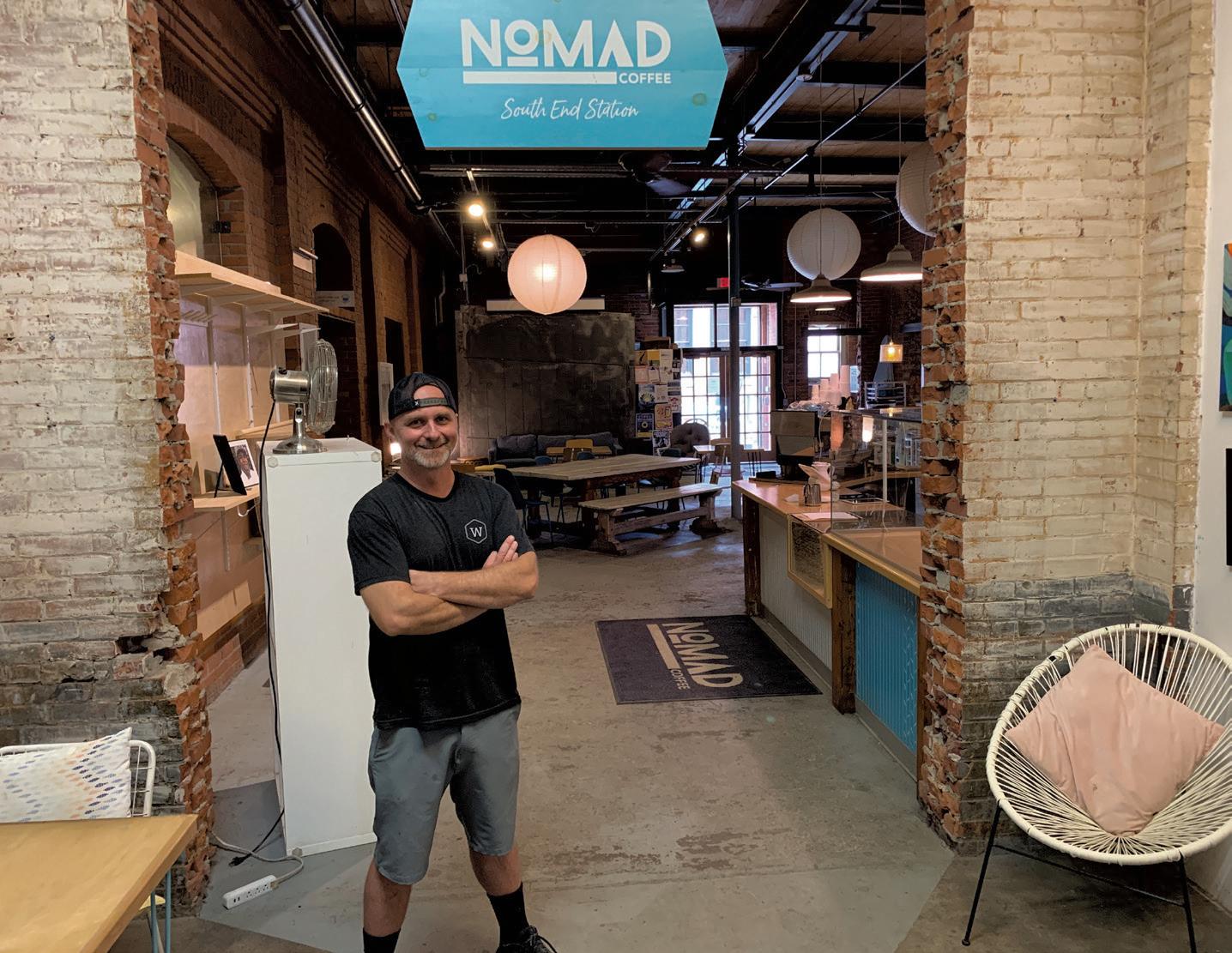
ERIC KELLEY, owner of WILLISTON COFFEE SHOP, has bought NOMAD COFFEE at 208 Flynn Avenue in Burlington’s South End. He and his sta have been baking pastries for Nomad since the café reopened following the unexpected death of baker-owner Chris Johnson in March. Kelley bought the business for an undisclosed price from Johnson’s partners, MAGDA and NATE VAN DUSEN, and a silent third investor.
Kelley, 45, founded Williston Co ee Shop at 400 Cornerstone Drive more than a decade ago. He knew the Van Dusens through their BRIO COFFEEWORKS business.
“I really like this space. It has a super-cool vibe with the brick and high ceilings,” he said of Nomad. “And it’s in a nice, up-and-coming area of Burlington.”
Nomad will continue to serve pastries baked from scratch in Williston, such as scones, biscuits, mu ns and croissants with house-laminated dough. So far, Kelley said, he’s been too busy getting the café set up with newly hired manager RHONNE FAGNER to look through Johnson’s recipe books. He never met Nomad’s former owner but knew “Chris was a big croissant guy.”
Johnson moved to Vermont in 2021, soon after placing second on Food Network’s “Chopped Sweets.” He had baked in New York City for the inventor of the Cronut, Dominique Ansel, and at the Michelin-starred restaurant Per Se. The baker was known for his deeply caramelized, flaky kouign amanns — a pastry that Kelley’s team also makes, sometimes filled with housemade berry jams.
Kelley said the initial focus will be on pastry and co ee, but Nomad will most likely add soups and other items this winter. “I’m here to grow the business,” he said.
MELISSA PASANEN
A New York-style pizzeria and slice shop is set to open in Burlington’s Old North End in mid-September. LA DI DA PIZZA will take over the former Despacito space at 294 North Winooski Avenue, with seasonal pies and pizza by the slice.
Founder CELINE EID — a New York native — ran a successful weekly pizza pop-up in New York City in 2023 and 2024. There, she o ered classic pies and ever-changing toppings such as squash blossoms, oyster mushrooms and potato with garlicky greens.
“It was the best part of the week,” Eid said of the pop-ups. Their success, and the fun she had doing them, cemented her longtime plan to open a pizza shop.
In Burlington, Eid will serve a limited, rotating menu with toppings sourced from local farms. Like the New York



Da will be counter service, though it will have seating and serve wine and beer. The restaurant will be open for lunch and dinner five days a week to start.
“I love the casual, grab-and-go vibe of a slice shop,” Eid said. “The Old North End is becoming a fun place to go out at night, with more late-night spots, and it felt like a great space for it.”
JORDAN BARRY
POPPY CAFÉ & MARKET in Burlington’s Old North End has landed a $50,000 grant from a program that aims to help small, independent restaurants across the U.S. renovate their buildings and grow their business.
To apply for the American Express and National Trust for Historic Preservation “Backing Historic Small Restaurants” grant, Poppy owner ABBY PORTMAN consulted local historian Bob Blanchard for the chronology of the century-old building at 88 Oak Street, a former corner market. Despite that background, she thought her application was “a long shot,” said Portman, 31. “We’re not a historic restaurant yet.” Portman opened the sandwich shop in November 2020 with her sister Emily, who has since moved away. They originally shared the space with CAFÉ MAMAJUANA, which closed in 2023 and reopened in Colchester in January. The owners of the two eateries and Matt Cropp of the Vermont Employee Ownership Center established the Oak Street Cooperative in 2020 and purchased the building with about 70 co-op members.
Currently, Poppy serves its roster of creative sandwiches during the day, and chef PAUL TROMBLY’s FANCY’S restaurant o ers an innovative, veg-forward menu in the evenings. ALL SOULS TORTILLERIA rents part of the space to produce its flour tortillas.

an awning, and creating a vestibule to minimize cold air flow in the winter. She does not anticipate closing the shop to complete the work. M.P.
LIV DUNTON and DONI CAIN have announced that FOXY’S, the café-bar-restaurant they opened in Barre late last fall, will close after a farewell party on Friday, September 26. The duo is also planning changes at FOX MARKET AND BAR, their 4-year-old business in East Montpelier.
“This decision is being made for a wide variety of reasons, although most prevalently, financial,” Dunton wrote in a newsletter on August 25. “After a year without getting paid, after watching Foxy’s lose money every single month ... Doni and I have both run out of anything to give.”
The journey to opening Foxy’s involved the yearlong — and somewhat contentious — purchase of the 19th-century Wheelock House, a massive DIY renovation, and two major floods that filled the basement. Cain and Dunton are now seeking someone to take over the space.
Changes at Fox Market aren’t finalized, but the newsletter hinted at “a full espresso bar, more baked goods, and shorter hours.”
“We hope that this change will be for the best, both for the community Fox Market serves, but also for us,” Dunton wrote.
MUNCHA PICCHU, a Peruvian takeout restaurant that opened last fall at 3 Ferry Road in South Hero, will also close at the end of September. Owner DIANA CAMIZAN — who worked mostly solo to prepare comfort-food classics from her native Peru — shared the news in a Facebook post.









Portman credited Burlington’s “incredible” Community and Economic Development O ce with bringing the grant to her attention. She said the money will be used mostly for muchneeded structural and exterior improvements, such as fixing siding and window seals, upgrading outdoor seating, installing
“My rheumatoid arthritis has been getting worse, and this has a ected the consistency of our service,” Camizan wrote.
She will celebrate the end of summer with a “dance pollada” featuring Peruvian music and grilled whole chicken with potatoes, salad and sauces on Sunday, September 7. Tickets are $30; to reserve, call 518-364-9893. J.B.

Follow us for the latest food gossip! On Instagram: Jordan Barry: @jordankbarry; Melissa Pasanen: @mpasanen.

























e “wacky” wisdom behind Seven Days’ cover images, from photos to illustrations to suggestive foldable art
BY MARY ANN LICKTEIG • maryann@sevendaysvt.com
Cofounders Pamela Polston and Paula Routly scrimped, scrounged and labored to bring Seven Days into the world. And when their baby finally arrived, they took one look at its cover and cringed.
“Paula and I were both just so appalled,” Polston remembered.
It was “hideous,” Routly agreed. That first issue, published in early September 1995, had a back-to-school theme, so Polston and Routly hired a guy they knew to take a picture of lockers, which they published in black and white. “A) It was a really boring photo,” Polston said. “And B) it just turned to total mud at the printers.”
Most recently, in July, the Association of Alternative Newsmedia awarded Sean Metcalf first place for his illustrations for our 2024 Daysies awards magazine.
Seven Days’ cover is the fresh face it puts on each week to greet the world. It needs to be eye-catching, relevant to the issue’s content and able to convey a message at a glance.

The cofounders “watched in horror” as the “way-too-gray lady” rolled o the press, Routly said.
But there was great stuff inside the issue, and the covers quickly improved.
Among the hundreds of awards Seven Days has collected in its 30 years are many (we haven’t counted) given for design.
Lars-Erik Fisk was art director for the first year, creating the newspaper’s look and designing its early covers. When he left to pursue a career in sculpture, he passed the torch to Jim Lockridge of Big Heavy World, who subsequently handed it to Samantha Hunt, then a recent University of Vermont grad. For two years she designed the paper and also wrote for it on occasion. Hunt has since held a design job at the Village Voice and published several books.
Current creative director Don Eggert, who joined the paper in 1998, has designed a slew of covers. For the past decade-plus, the job has largely fallen to Diane Sullivan,
APRIL 5: Chelsea Edgar profiles “Rumble Strip” podcaster Erica Heilman in “The Conversation Artist.” (NENPA, 1st place, local personality profile)




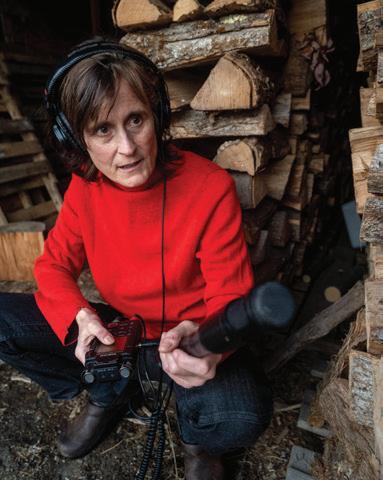
JANUARY 18: In the Wellness Issue, Paula Routly documents the decline of Burlington’s former YMCA building: “Once a symbol of a healthy community, the building is now a glaring illustration of what ails Burlington: uncaring property owners, stalled development, rampant homelessness, unchecked vandalism and a growing sense that this beautiful small city has lost a step.”






































56, who joined Seven Days in 1999 and became art director in 2006. Sullivan thinks with a pen in her hand, doodling during meetings.
Human-interest stories featured on the cover often get illustrations. Sullivan sketches a concept, hands it off to an illustrator and lets them render her vision in their own style. She rarely asks for changes. The tattooed lead singer in the company house band Enemy of the People (see page 82), Sullivan is as colorful and relaxed as the kimono jackets she wears to the o ce. She was married to Matthew



























MAY 3: Sally Pollak retires from Seven Days. Paula Routly recaps her “40 years on deadline” in “From the Publisher.”
MAY 10: Seven Days wins 20 first-place NENPA awards, for arts and entertainment, business, education, environmental, and food writing, as well as election coverage and government reporting.





























MAY 24: In “From the Publisher,” Paula Routly introduces consulting editor Ken Ellingwood, a 20-year Los Angeles Times veteran who now leads Lunch & Learn sessions for Seven Days editorial staff alongside former Burlington Free Press editor Candace Page.




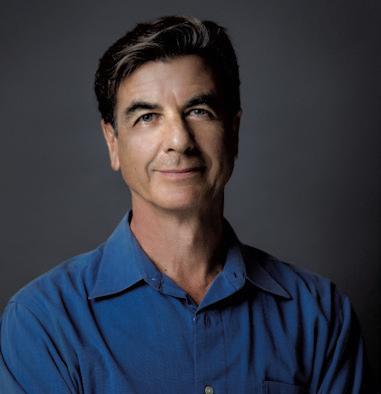





















JUNE 21: Now that Vermonters are free to travel to Canada again, Seven Days publishes a Québec Issue, guiding them north.






































1. SEX ISSUE (FEBRUARY 23, 2011): “I always wanted to do a foldy,” Sullivan said, referencing Mad magazine fold-ins.
2. THE ANIMAL ISSUE (MARCH 24, 2010): at’s Sullivan’s cat Sturgis. She put out a fresh litter box, “and he just walked in, sat down, looked up and meowed,” she said. “And I made the Seven Days’ look like cat turds.”
3. HEALTH & FITNESS ISSUE (JANUARY 19, 2011): Late staff photographer Matthew orsen jumped in front of the camera for this one.




4. THE DEATH ISSUE (OCTOBER 26, 2022): A single leaf wafts to the ground in this Harry Bliss illustration. “It’s just perfect,” Sullivan said, “’cause we’re all gonna die. ere’s that one leaf on its journey.”
5. ANY COVER JEFF DREW HAS EVER DONE. As Sullivan put it, “I don’t understand how he does what he does, ’cause it’s magic.”
6. “Z-Z-Z-ZONED OUT” (AUGUST 15, 2007): Municipal zoning can be wacky? “I couldn’t believe they actually let me do it,” Sullivan said.
7. “DEATH BY DRUGS” (JANUARY 25, 2017): “It was a tough subject,” Sullivan said. e text of family members’ last memories of their loved ones forms the skull.



JULY 11: Flooding devastates homes and businesses across Vermont. Seven Days responds by pulling together a last-minute cover story, “‘Historic and Catastrophic’: Unrelenting Rain Swamped Vermont’s Cities, Towns and Hamlets. The Recovery Is Just Beginning.” (NENPA, 1st place, best spot reporting, best photography)











SEPTEMBER 28: Eva Sollberger of “Stuck in Vermont” wins the Margaret L. Kannenstine Award for Arts Advocacy, one of the Governor’s Arts Awards.
| 2024
SEPTEMBER 6: After months of reporting, Derek Brouwer and Colin Flanders share the tragic saga of former high school athlete Mbyayenge “Robbie” Mafuta in “From Room 37 to Cell 17: A Young Man’s Path Through the Mental Health Care System Led to Prison — and a Fatal Encounter.” (NENPA, Publick Occurrences, 1st place, crimes and courts reporting)

OCTOBER 25: Seven Days devotes 16 pages to “The Loss of Grace,” Joe Sexton’s staggering exposé on abuse at Woodside Juvenile Rehabilitation Center. See page 44. (NENPA, Publick Occurrences; AAN, 1st place, investigative reporting)













MARCH 6: Colin Flanders launches “This Old State,” a yearlong series on Vermont’s aging demographic, with a cover story: “Getting On: An Aging Population Is Transforming Vermont’s Schools, Workplaces and Communities.” (NENPA, Publick Occurrences)























FEBRUARY 14: Derek Brouwer delivers “The Fight for Decker Towers”; see page 45. (NENPA, Publick Occurrences; AAN, 1st place, long-form news story, Excellence in Journalism Award) Seven Days introduces Cardy-o-grams, love notes from readers on Valentine’s Day. Mary Ann Lickteig captures the passing of a torch: “Last Drag: Before a New Host Steps In, the House of LeMay Throws Its Final Drag Ball.”

Thorsen, our longtime sta photographer, until he died in 2019.
For Sullivan, aka “Sully,” news covers pose a creative challenge. Serious stories that make the cover usually require a photograph, a bit straightforward for someone who uses “Wacky!” as a compliment.
Sometimes Sullivan wriggles out of it. On February 11, 2015, the Burlington mayoral race was supposed to go on the cover. S-news-ville!
“I mean, I know it’s important,” Sullivan said. But that issue also included a story about the 20th anniversary of the Winter Is a Drag Ball, then produced by the beloved drag queens of the House of LeMay. So Sullivan suggested putting them on the cover telling people to vote, an actual cause for which the LeMays advocated. Illustrator Marc Nadel produced caricatures of the queens toting signs that said, “Make Up your mind and VOTE!” and “ReDress Your Grievances — VOTE!” and a balloon emblazoned “House of LeMayor.”
Nadel is among several nationally known cartoonists and illustrators whose work has appeared on Seven Days covers. Others include Alison Bechdel, Harry Bliss, Jeff Drew, James Kochalka and the late Ed Koren.
Early on, artists were limited by the fact that only one color could be added to an otherwise black-and-white cover. And for the first 14 years, the paper was folded, challenging designers to fit the most pertinent information above the fold so it would be visible on the newsstand.
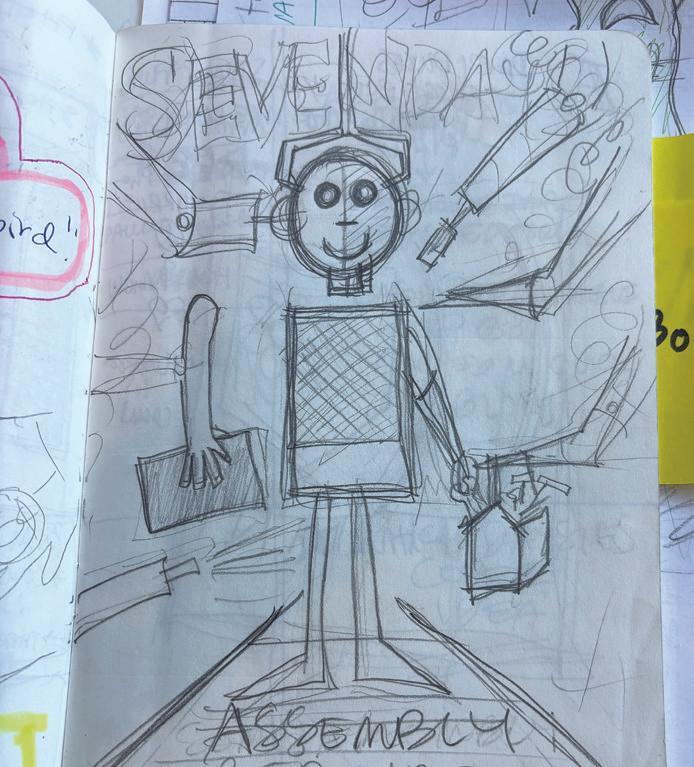


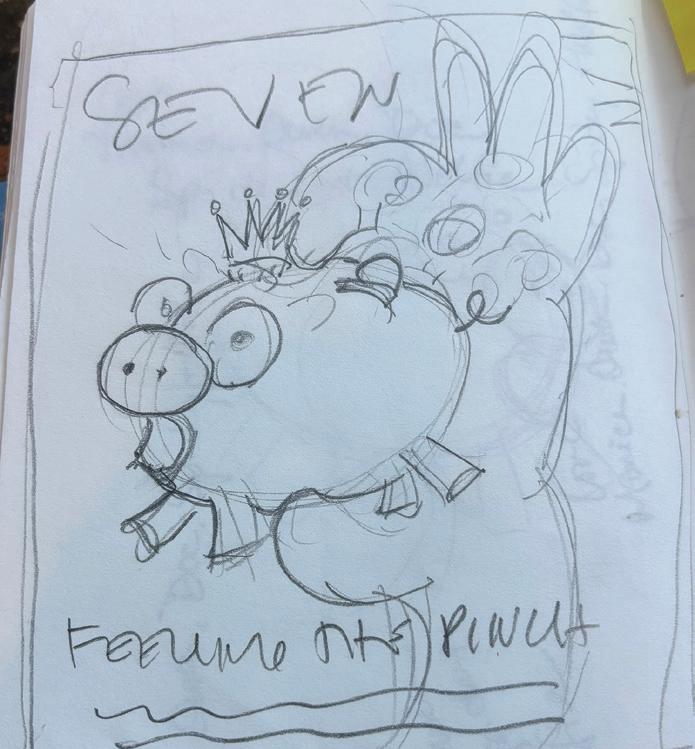
































































Left: A sampling of Sullivan’s doodles and the final covers
The fold also presented the sort of opportunity an alt-weekly is compelled to seize. In 2007, when readers voted Rusty DeWees the Vermonter they’d most like to see naked, Seven Days delivered. The Logger’s mirrored shades, cheeky grin and sculpted torso appeared above the fold. Readers had to pick up the paper to see more.
Covers have certainly stirred controversy, Polston said, noting that the paper’s annual theme issues used to include one on sex. “We were — and still are — in the alt-weekly family, and we were always trying to go for something not necessarily provocative but definitely edgy and creative.”































Like interactive covers. For the 2011 Sex Issue, headlined “In and Out,” the cover featured a certain hand gesture and included instructions to fold Line A to meet Line B to complete the motion. Award-winning publication designer Robert Newman named it one of the top 10 alternative newsweekly covers of the year, and Sullivan counts it among her favorites.
Picking those now is like trying to pick a favorite child. That first ugly baby is tucked away in the archives, and so many more have come along, each lovable in its own way. Well, that’s the goal, anyway. “They can’t all be super-duper winners,” Sullivan said, but they’re only out for a week. As of this writing, she had not created the cover for this issue. Hopefully, it lands in the “wins” column. If not, she gets another crack at it next week. ➆


In “Born Mary Ann Lickteig profiles Vermonter




















JULY 21: Joe Biden drops out of the presidential race and endorses Vice President Kamala





Shaina Taub, creator of the musical on to win two Harris.






The show goes Tony Awards.

APRIL 10: Seven Days reporters fan out across the state to document a once-in-a-lifetime occurrence in “Totally Transfixed: A Rare Eclipse on a Bluebird Day Dazzled Crowds in Northern Vermont.” (NENPA, 1st place, general news story; overall design and presentation; 1st place, spot news video for “Stuck in Vermont During the Eclipse”) for Broadway,”






APRIL 24: New proofreader and visual art editor Alice Dodge joins Seven Days, finally allowing Pamela Polston to retire. Mostly.

31:


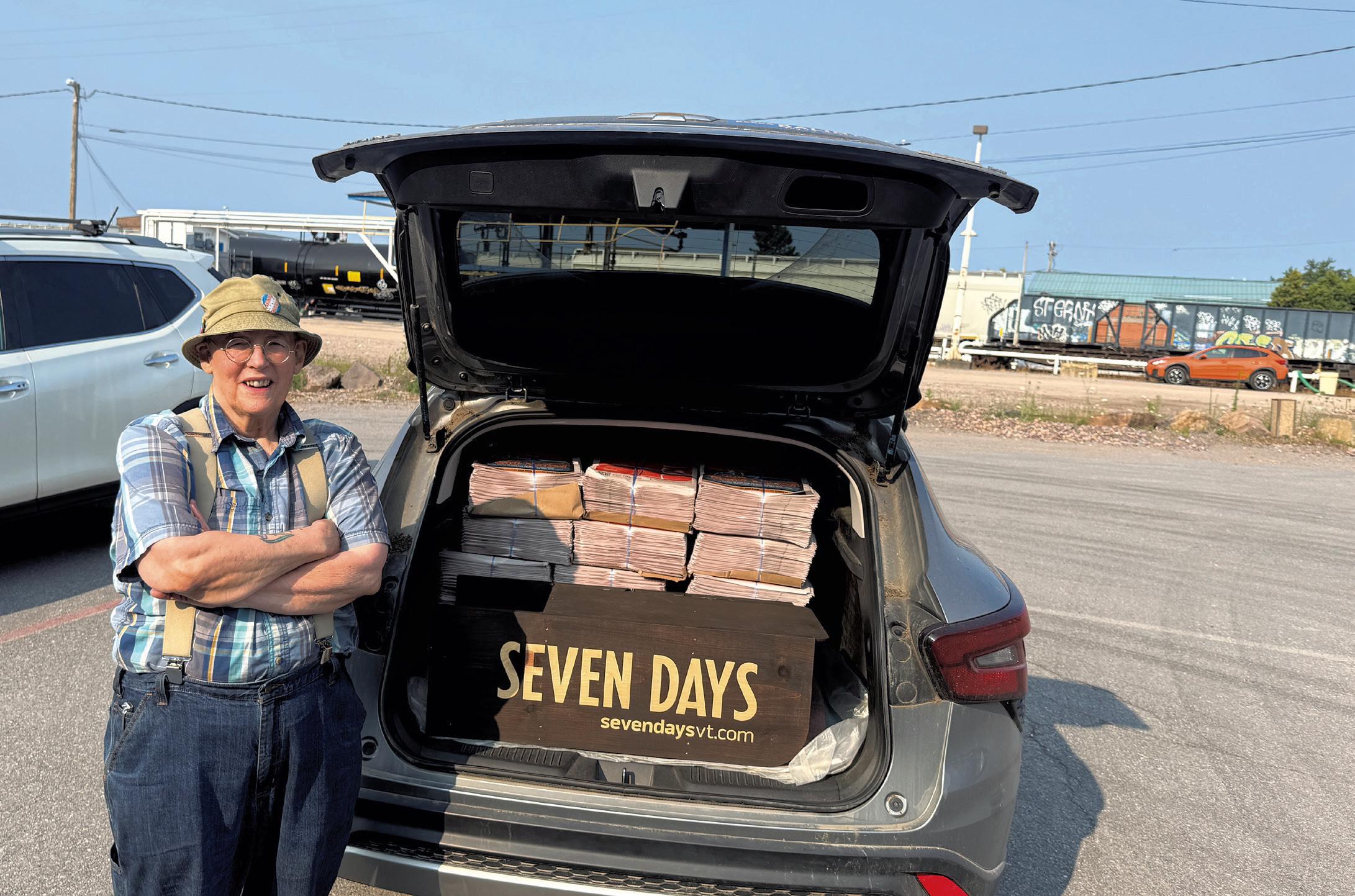

749: Delivering Seven Days
their vehicles with papers and set o to 1,000 locations across Vermont.
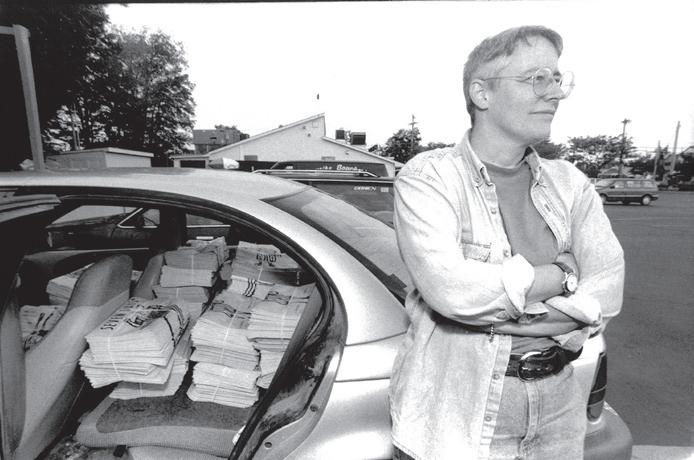
On September 6, 1995, in the former Magic Hat Brewing parking lot in South Burlington, Seven Days founders Pamela Polston and Paula Routly helped Nat Michael load bundles of the first issue into her car. Michael has since delivered the paper nearly every Wednesday for 30
years, sometimes with a dog as copilot. She estimates that she’s only missed two issues.
The contents, size and look of the paper have changed over those three decades, but the independent, punk-rock essence remains. And the pages wouldn’t reach our readers without our dedicated crew of delivery technicians.




AUGUST 21: In “Reel Drama,” Mary Ann Lickteig reports that Burlington is about to lose its only first-run movie theater, Merrill’s Roxy Cinemas. (AAN, 1st place, long-form arts feature)

In the latest episode of “Stuck in Vermont,” Seven Days senior multimedia producer Eva Sollberger visited our Burlington loading dock on a Wednesday morning to see the semitruck deliver 35,000 papers and 15,000 Daysies magazines from Québecor Media in Mirabel, Québec. Eighteen delivery techs fi lled
Brothers Pat and Joe Bou ard were there alongside Michael; they’ve also been delivering the paper since the early days. Matt Hagen, a well-known local musician who has been delivering Seven Days for almost 10 years, had arrived as well. Sollberger followed Hagen’s Nissan Rogue on his 100-mile loop, dropping o papers at 52 locations in 11 towns. Their travels took them through construction zones, along the interstate and down country roads.
Sollberger spoke with Seven Days about filming the episode.
Why did you feature our Seven Days drivers?
Because they are amazing, and I wanted to see what a day in their lives was like. I arrived at 6:30 a.m. to see the truck with Canadian plates pulling up to our loading dock. Then I followed Hagen around as he made deliveries from 9 a.m. to 1:30 p.m., and I didn’t even film at all of his dozens of stops. When I got home, I had to take a nap. These delivery technicians work hard!
What is Hagen’s route like?
He started o by delivering papers to both City Market locations in Burlington — it took one carload to fill the racks at both stores. After refilling his car, we headed





NOVEMBER 6: Donald Trump defeats Kamala Harris to win the presidency a second time. Colin Flanders produces an “Urgent Scare” of a different kind in his deep dive on Vermont’s soaring health care costs.


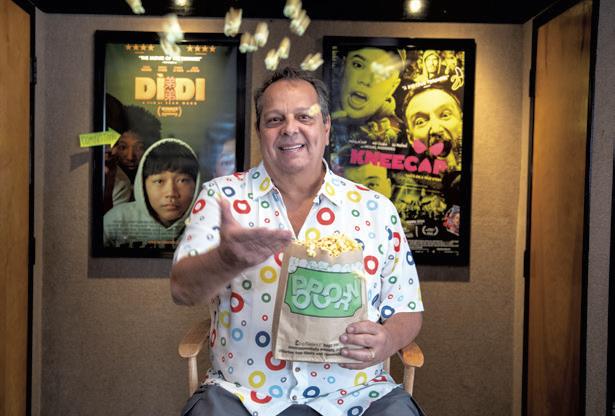
SEPTEMBER 26: NENPA names Seven Days Newspaper of the Year among large-circulation weeklies in the region.
JANUARY 8: Seven Days introduces a new series: “Ways and Means,” a yearlong, in-depth look at the efficacy of the Vermont legislature.
JANUARY 29: Joe Sexton’s
“Year
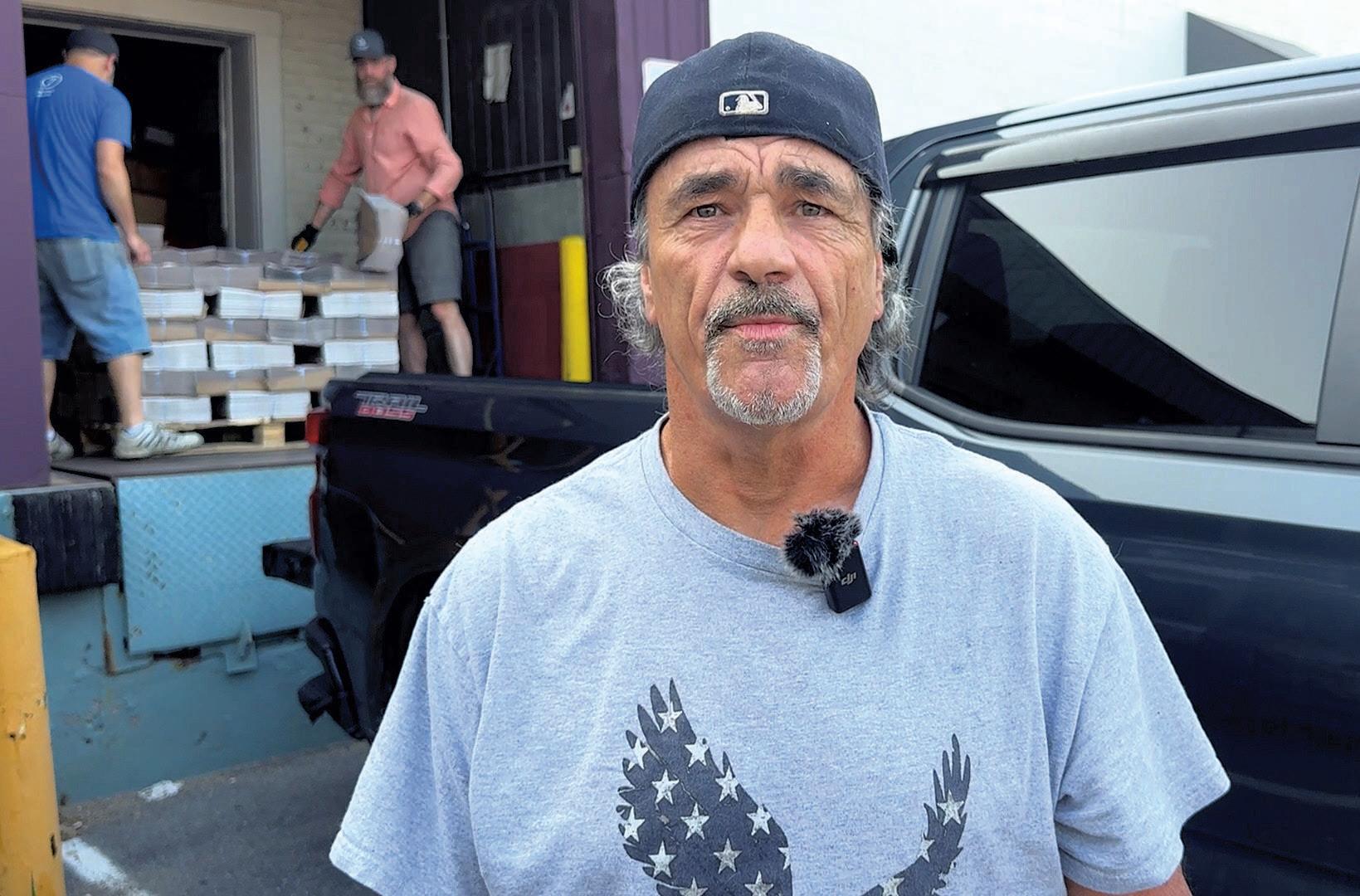
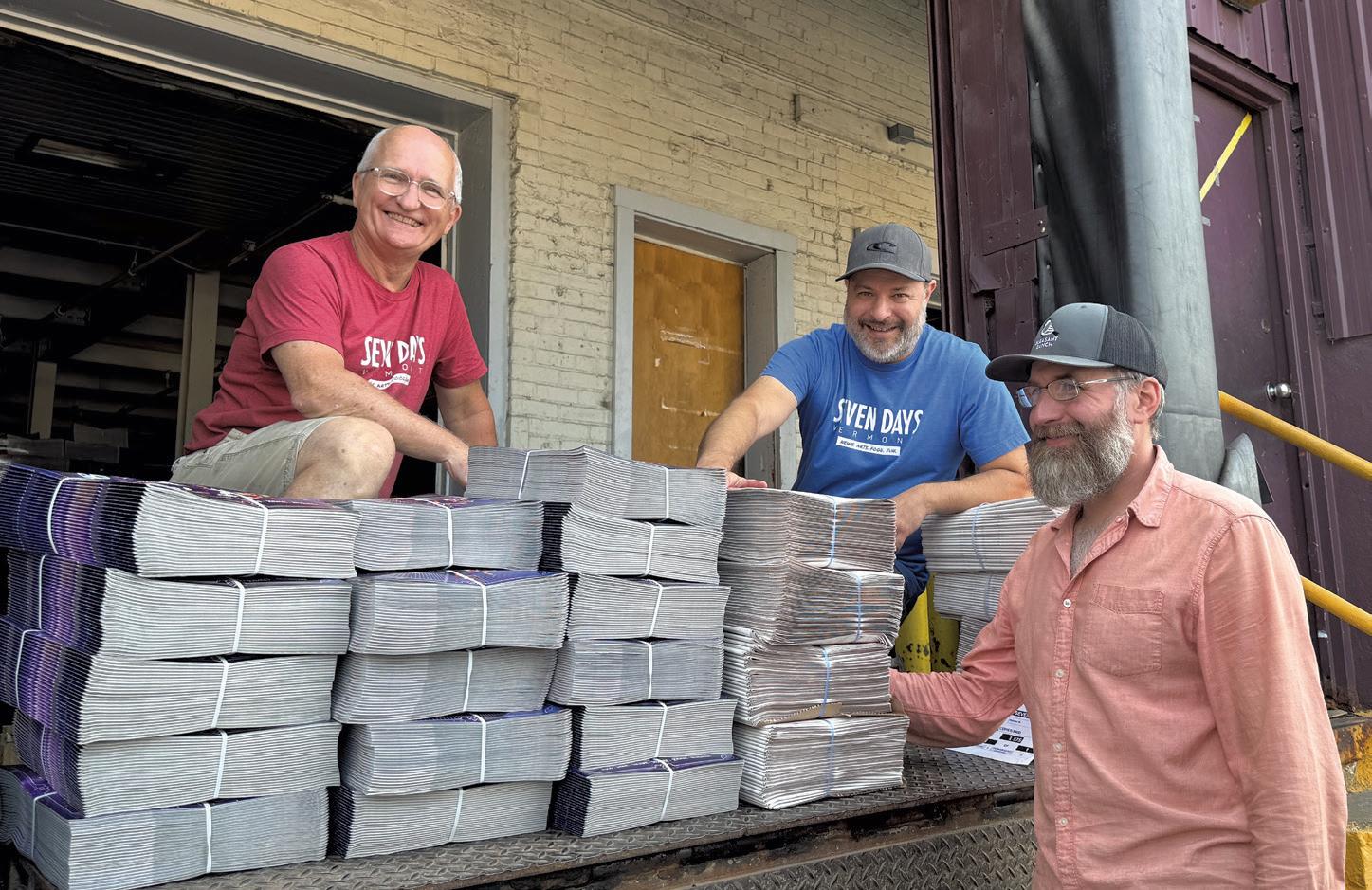

FEBRUARY 26: U.S. Sen. Bernie Sanders is back in the national spotlight. Kevin McCallum follows him on a Midwestern tour and comes back with “Bern Rekindled: In a New Trump Era, Bernie Sanders’ Crusade Against Oligarchy Is Resonating With Americans Once Again.”


MARCH 12: Vermont has just 70 remaining general stores; in “If We Don’t Have It, You Don’t Need It,” Seven Days reporters examine how communities are working to revitalize them. Also: Ken Picard writes about Life Became Very Blurry, an oral-history book recounting the pandemic experiences of more than 110 Vermonters — including Seven Days Paula Routly and Cathy Resmer.
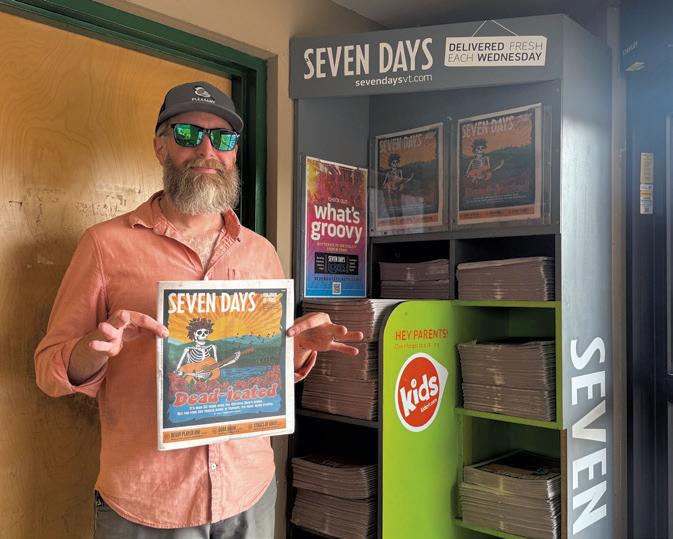
I WAS IMPRESSED BY THE DIVERSITY OF LOCATIONS THAT DISTRIBUTE OUR PAPER.
to Simon’s Mobil in the small town of St. George — which I promptly checked o my 251 Club list. From there, I followed Hagen along country roads as he made endless stops. I was impressed by the diversity of locations that distribute our paper: country stores, a bank, libraries, gas stations, inns, businesses, taverns, restaurants, senior housing and a drug store. Everyone was happy to see us, and it felt satisfying to see so few papers left over from last week.
What was your takeaway at the end of the day?
Seven Days is a weekly miracle. I’m not sure if readers comprehend all that goes into every issue. I’ve seen firsthand all the complex steps that it takes to write, edit, design, sell, print and deliver it to 1,000 locations. How has this been happening every week for 30 years?! ➆
APRIL 16: Seven Days’ first Vermont Cannabiz Guide helps readers find their best buds.

Over the years, Eva Sollberger has covered many sides of Seven Days from our founders’ origin stories to the printing press in Canada. Find the online version of this story at sevendaysvt.com for a video playlist.
1. ‘THE PAPER THE PS BUILT’ (2015): To celebrate Seven Days 20th anniversary, Sollberger sat down with cofounders Pamela Polston and Paula Routly to find out how two performing artists created a multimillion-dollar media company.
2. ‘FOLLOWING SEVEN DAYS’ PAPER TRAIL TO QUÉBEC’ (2023): For our Québec Issue, Sollberger visited Québecor Media, where we have printed the paper since 2018, to watch 35,000 papers fly off the press.
3. ‘PETER FREYNE’ (2008): What made Seven Days original columnist Vermont’s most renowned political journalist? Shortly after Freyne retired from “Inside Track,” he and others, including U.S. Sen. Bernie Sanders, looked back at his legacy.
4. ‘THE NEW FAB FORMAT OF SEVEN DAYS (2009): Creative director Don Eggert introduced the new magazine-style look of the paper, which launched on October 7, 2009. No longer folded, the new format offered color on all pages.

JULY 11: AAN presents Paula Routly with its Publisher of the Year Award and gives Seven Days five first-place prizes, more than any other outlet.
6. ‘A DECADE OF DAYSIES’ (2012): Ten years into Seven Days’ readers’ choice awards, Sollberger filmed the Daysies party at Burlington’s ECHO aquarium. Local luminaries in attendance included the House of LeMay, Tom Messner and dug Nap.
6. ‘PHOTOGRAPHER MATTHEW THORSEN GETS THE LAST WORD’ (2018): Seven Days quirky staff photographer, who died of cancer a few months after this video was made, opened up about life, art and dying.
7. ‘HAPPY BIRTHDAY, SEVEN DAYS’ (2007): For the paper’s 12th anniversary, partygoers gathered at our Burlington office to kick off the South End Art Hop with snacks, booze and original T-shirt designs.
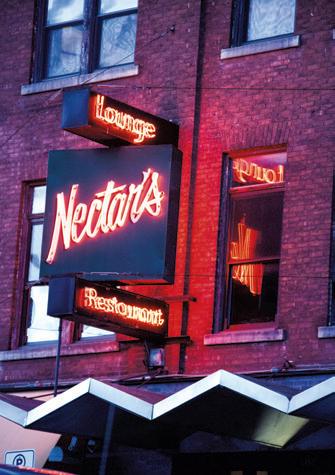
APRIL 23: Twenty-five years after the signing of the civil unions bill, Mary Ann Lickteig revisits the contentious debate in a comprehensive cover story, “From This Day Forward.” Stan Baker (pictured left), one of the plaintiffs who sued the state for the right to marry, dies two months later.
JULY 22: Two weeks after starting at Seven Days, new Report for America corps member and immigration reporter Lucy Tompkins gets a big scoop: Winooski’s superintendent has been detained and questioned by border officials after a recent trip — part of President Donald Trump’s immigration crackdown. Within a week, the story is viewed more than 40,000 times on the Seven Days website.


For its 30th birthday, Seven Days has partnered with the Vermont International Film Foundation to present Media in the Movies, a month of films celebrating journalists and their work. Starting on Friday, September 19, the weekly screenings include two fictional narratives, one documentary and one classic that straddles both (see sidebar for details). All screen at the Screening Room @ VTIFF at Main Street Landing Performing Arts Center in Burlington. Black Box Diaries, which will close the series on Friday, October 10, at 7 p.m., is a Peabody Award-winning, Oscar-nominated 2024 documentary with a subject ripped from the headlines. It opens with a trigger warning for discussion of sexual assault from the director, Shiori Itô, who is also the main character.
The deal
“Black box.” That’s the term police investigators used for a slice of time that young journalist Itô couldn’t remember — the hours during which she allegedly was raped by Noriyuki Yamaguchi, then Washington, D.C., bureau chief for the Tokyo Broadcasting System. The police said they lacked su cient evidence to arrest Yamaguchi, who was a
close friend of then-prime minister Shinzo Abe. But in phone calls that Itô secretly recorded, an investigator who’d been removed from the case told her a higher-up had halted the proceedings.
Itô went public with her allegations in 2017, two years after the incident. Though her testimony coincided with the groundswell of the #MeToo movement, it defied long-standing cultural norms in Japan, where only 4 percent of rapes are reported, according to a government survey. “I had a problem with this norm,” Itô says in the film. To change it, she wrote a memoir and brought a civil suit against Yamaguchi.
Presented as an investigation combined with an informal video journal, Black Box Diaries chronicles how Itô faced online harassment, a countersuit and opposition to her openness even within her family. The documentary still has not screened in Japan, where Itô’s lawyers in the civil suit have accused her of using recordings in the film without permission.
Will you like it?
By her own admission in press notes, Itô was a “novice investigator” rather than a seasoned journalist when she made Black Box Diaries. The documentary portrays her sometimes-floundering e orts to build a

rape is a very personal crime, and bringing perpetrators to justice almost always requires the painful testimony of survivors. By taking center stage in her memoir and Black Box Diaries, Itô used her experiences as a wedge to budge antiquated laws that made sexual assault almost impossible to prosecute. Her e orts had some success, but at a price.
In one telling scene in the film, Itô bonds with a group of street protesters, elder feminists who support her cause. It’s a positive interaction. But after she leaves, the women point her out to a friend as “the girl who was raped.”
In public shorthand, the crime has become Itô’s identity, the attention economy robbing her of her humanity just as the rape did. (“To him, I was just a small object,” Itô says of Yamaguchi in her courtroom testimony.) Black Box Diaries is a riveting e ort to take back her personhood.
MARGOT HARRISON margot@sevendaysvt.com
case by ambushing the police chief and recording her conversations with the chatty “Investigator A,” who supplied much of the evidence for a cover-up. In one scene, when she asks him to go on record, he jokes that he’d be happy to — if she’ll marry him.
This isn’t textbook journalism. In another scene, when Itô consults with veteran reporters, they tell her that a victim should only investigate her own case as a “last resort.” But I suspect many journalists can relate to the tricky interview situation described above, in which Itô gamely builds a rapport with her flirtatious source while promising nothing.
This reporter is learning on the job, and her real-time, immersive narrative (without narration or talking-head commentary) o ers plenty of drama. Aided by Swedish filmmaker Hanna Aqvilin (who produced) and videographer friends, Itô pairs footage of Tokyo with audio of revealing conversations with the police, lawyers and her family. In her self-filmed video confessionals, she makes no pretense of neutrality, instead capturing her turbulent emotions on camera — including a tearful message to her parents during a mental health crisis.
Itô’s critics accuse her of seeking personal fame, and the documentary has only heightened those accusations. But
HIS GIRL FRIDAY (Friday, September 19, 7 p.m., Screening Room @ VTIFF, Main Street Landing Performing Arts Center, in Burlington): e Media in the Movies series kicks off with Howard Hawks’ 1940 screwball comedy, in which Cary Grant and Rosalind Russell play newshounds who also happen to be exes. Many of our clichés of hard-boiled journalists — such as fast-talking unflappability — started here.
MEDIUM COOL (Friday, September 26, 7 p.m., Screening Room @ VTIFF): For this all-too-relevant film from 1969, director Haskell Wexler wove together real footage of police violence at the 1968 Democratic National Convention with the fictional story of a journalist to create what New York Times critic Vincent Canby called “a picture of America in the process of exploding into fragmented bits of hostility, suspicion, fear and violence.”
BETWEEN THE LINES (Friday, October 3, 7 p.m., Screening Room @ VTIFF): Hollywood has rarely portrayed the once-thriving world of alternative journalism, but this 1977 dramedy from Joan Micklin Silver (Crossing Delancey) is an exception. Young Jeff Goldblum plays the music critic at a scrappy Boston paper fighting a corporate takeover. Silver and cowriter Fred Barron had both worked at alt-weeklies.

THE CONJURING: LAST RITES: Ed and Lorraine Warren (Patrick Wilson and Vera Farmiga) investigate one last case of demonic activity that supposedly raises the ante in director Michael Chaves’ (The Nun II) latest contribution to the horror franchise. (135 min, R. Bijou, Essex, Majestic, Star, Sunset, Welden)
DON’T LET’S GO TO THE DOGS TONIGHT: Embeth Davidtz cowrote, directed and stars in this drama based on Alexandra Fuller’s memoir of growing up on a Rhodesian farm in the 1980s, with Lexi Venter and Zikhona Bali. (99 min, R. Catamount)
SPLITSVILLE: Four friends attempt to remedy one couple’s impending separation with a little swapping in this comedy from Michael Angelo Covino (The Climb), who stars with Dakota Johnson, Adria Arjona and Kyle Marvin. (104 min, R. Majestic)
THE BAD GUYS 2HHH In the sequel to the animated animal adventure hit, a squad of reformed villains gets pulled back into the life of crime. With the voices of Sam Rockwell, Marc Maron and Craig Robinson. (104 min, PG. Bijou, Capitol, Essex, Majestic)
CAUGHT STEALINGHHH1/2 A former baseball player (Austin Butler) gets embroiled in crime in 1990s New York City in Darren Aronofsky’s dark comedy/thriller. Regina King and Zoë Kravitz also star. (107 min, R. Bijou, Capitol, Essex, Majestic, Star, Stowe, Sunset, Welden)
THE FANTASTIC FOUR: FIRST STEPSHHH The Marvel superhero quartet gets a second reboot set on an alternate Earth with a retro vibe, starring Pedro Pascal, Vanessa Kirby and Ebon MossBachrach. (115 min, PG-13. Majestic, Sunset)
FOLKTALESHHH1/2 This documentary from Heidi Ewing and Rachel Grady profiles students of a “folk high school” in Norway, where sled dogs help open paths to coming of age. (105 min, NR. Savoy)
FREAKIER FRIDAYHHH Jamie Lee Curtis and Lindsay Lohan reprise their roles 22 years after the hit comedy about a magical mother-daughter body swap. (111 min, PG. Capitol, Essex, Majestic, Sunset)
HIGHEST 2 LOWESTHHH1/2 A music mogul deals with ethical dilemmas and a ransom plot in this crime thriller from Spike Lee, loosely based on Akira Kurosawa’s High and Low and starring Denzel Washington and Jeffrey Wright. (133 min, R. Savoy [Fri-Sun & Wed], VTIFF [Wed 3 only])
HONEY DON’T!HH1/2 A small-town private investigator (Margaret Qualley) examines deaths related to an enigmatic church in this dark comedy from director Ethan Coen. Aubrey Plaza and Chris Evans also star. (88 min, R. Capitol, Playhouse; reviewed 8/27)
JURASSIC WORLD: REBIRTHHH1/2 In the seventh installment, a pharmaceutical research team seeks out the surviving dinosaurs on a remote island. (134 min, PG-13. Sunset; reviewed 7/9)
THE LAST CLASS: Former U.S. Secretary of Labor and political economist Robert Reich gives his final lecture on “Wealth and Poverty” in this documentary from Elliot Kirschner. (71 min, NR. Savoy)
THE NAKED GUNHHHH Liam Neeson plays the son of Leslie Nielsen’s character in a belated sequel to the action-comedy franchise about a bumbling cop. (85 min, PG-13. Capitol, Majestic, Stowe, Welden)
NOBODY 2HHH Bob Odenkirk returns as an assassin turned suburban dad in the sequel to the 2021 action hit. (89 min, R. Stowe)
THE ROSESHHH Benedict Cumberbatch, Olivia Colman and Kate McKinnon star in this remake of the 1989 dark comedy The War of the Roses about an escalating spousal battle. Jay Roach directed. (Capitol, Essex, Majestic, Savoy, Star)
SKETCHHHHH A young girl’s drawings come to life and wreak havoc in this fantasy comedy directed by Seth Worley. (92 min, PG. City Cinema)
SUPERMANHHHH The DC Comics superhero gets another reboot, this time directed by James Gunn. (129 min, PG-13. Majestic; reviewed 7/16)
THE TOXIC AVENGERHH In this reboot of the beloved Troma Entertainment horror franchise, Peter Dinklage plays the janitor transformed into a smelly superhuman vigilante. (102 min, R. Essex, Sunset)
WEAPONSHHHH The bizarre disappearance of every kid in an elementary school class rips their town apart in this psychological horror film from Zach Cregger (Barbarian). Julia Garner and Josh Brolin star. (128 min, R. Bijou, City Cinema, Essex, Majestic, Paramount, Star, Sunset; reviewed 8/13)
DO THE RIGHT THING (VTIFF, Sat only)
EAST OF WALL (VTIFF, Thu only)
HAMILTON (Essex, Majestic, starts Thu)
HIGH AND LOW (VTIFF, Fri only)
INHERIT THE WIND (Catamount, Wed 3 only)
JAWS 50TH ANNIVERSARY (City Cinema, Essex, Paramount, Savoy [Mon only], Sunset, Welden)
THE MALTESE FALCON (Catamount, Wed 10 only)
PUPPY LOVE (Savoy, Tue only)
(* = upcoming schedule for theater was not available at press time)
BIJOU CINEPLEX 4: 107 Portland St., Morrisville, 888-3293, bijou4.com
*CAPITOL SHOWPLACE: 93 State St., Montpelier, 229-0343, fgbtheaters.com
CATAMOUNT ARTS: 115 Eastern Ave., St. Johnsbury, 748-2600, catamountarts.org
*CITY CINEMA: 137 Waterfront Plaza, Newport, 334-2610, citycinemanewport.com
ESSEX CINEMAS & T-REX THEATER: 21 Essex Way, Suite 300, Essex, 879-6543, essexcinemas.com
MAJESTIC 10: 190 Boxwood St., Williston, 878-2010, majestic10.com
MARQUIS THEATER: 65 Main St., Middlebury, 388-4841, middleburymarquis.com. Closed through September 10.
*PARAMOUNT TWIN CINEMA: 241 N. Main St., Barre, 479-9621, fgbtheaters.com
PLAYHOUSE MOVIE THEATRE: 11 S. Main St., Randolph, 728-4012, playhouseflicks.com
SAVOY THEATER: 26 Main St., Montpelier, 2290598, savoytheater.com
THE SCREENING ROOM @ VTIFF: 60 Lake St., Ste. 1C, Burlington, 660-2600, vtiff.org
STAR THEATRE: 17 Eastern Ave., St. Johnsbury, 748-9511, stjaytheatre.com
*STOWE CINEMA 3PLEX: 454 Mountain Rd., Stowe, 253-4678, stowecinema.com
SUNSET DRIVE-IN: 155 Porters Point Rd., Colchester, 862-1800, sunsetdrivein.com
*WELDEN THEATRE: 104 N. Main St., St. Albans, 527-7888, weldentheatre.com












assignments
BY ALICE DODGE • adodge@sevendaysvt.com
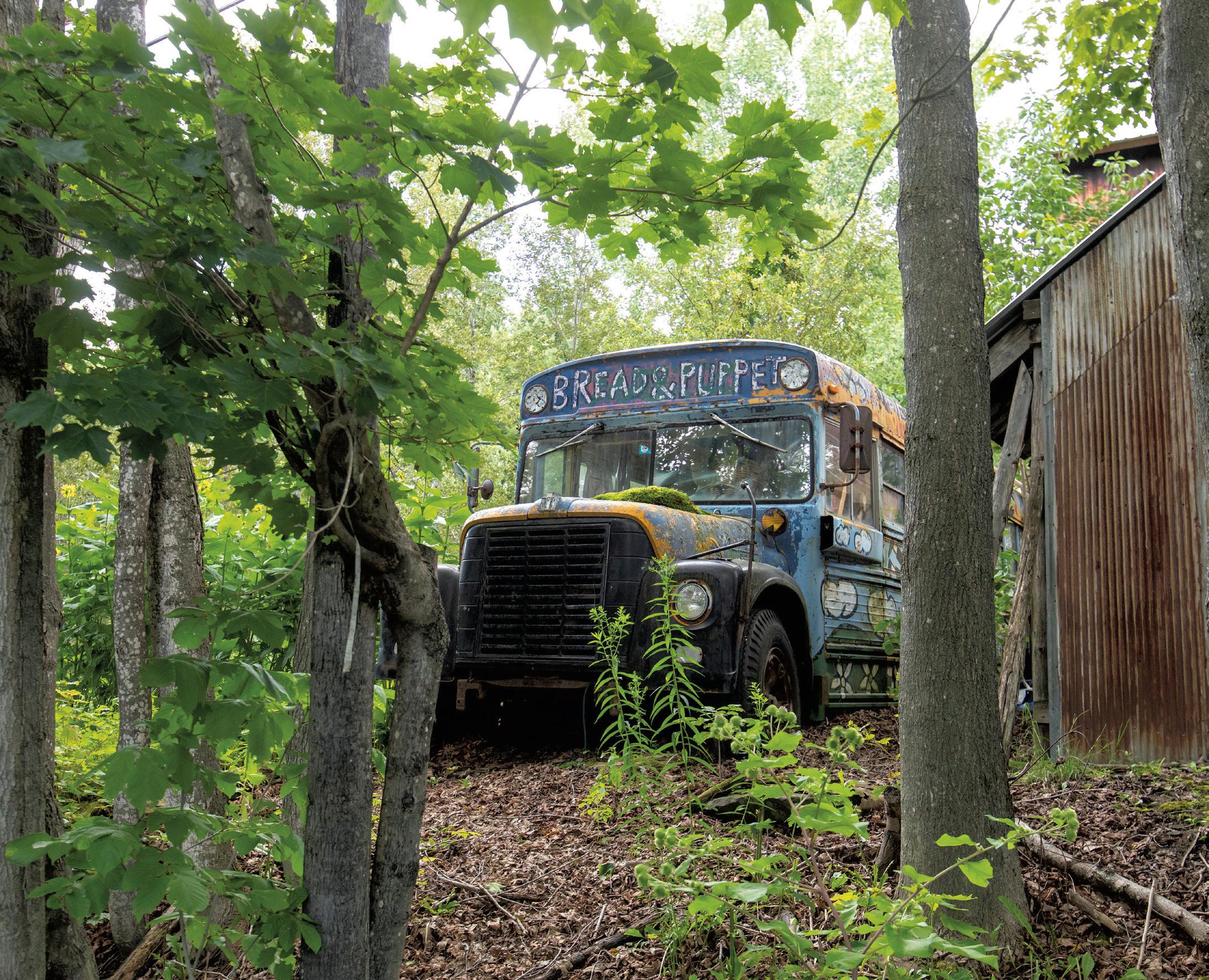
Over the past 30 years, photography has changed more than it did in the previous 100. Digital photography and smartphones allow many of us to take thousands of images in a given year — and to see even more. So how does Seven Days get readers to pay attention to a picture?
Simple: We have really, really great photographers.
The late Matthew Thorsen was one of the best. Seven Days’ only full-time
staff photographer, he was with the paper from the beginning until his death in 2019, defining its style with his arty, edgy images. His creative approach to taking photos — embracing all kinds of technology, settings and poses, often with gallery-worthy results — has served as an inspiration to all the photographers who contribute their vision to Seven Days on a regular basis. Here are a few whose images have kept you looking over our three decades.
lukeawtryphotography.com
If you are part of the Vermont music scene, chances are Luke Awtry has taken your picture.
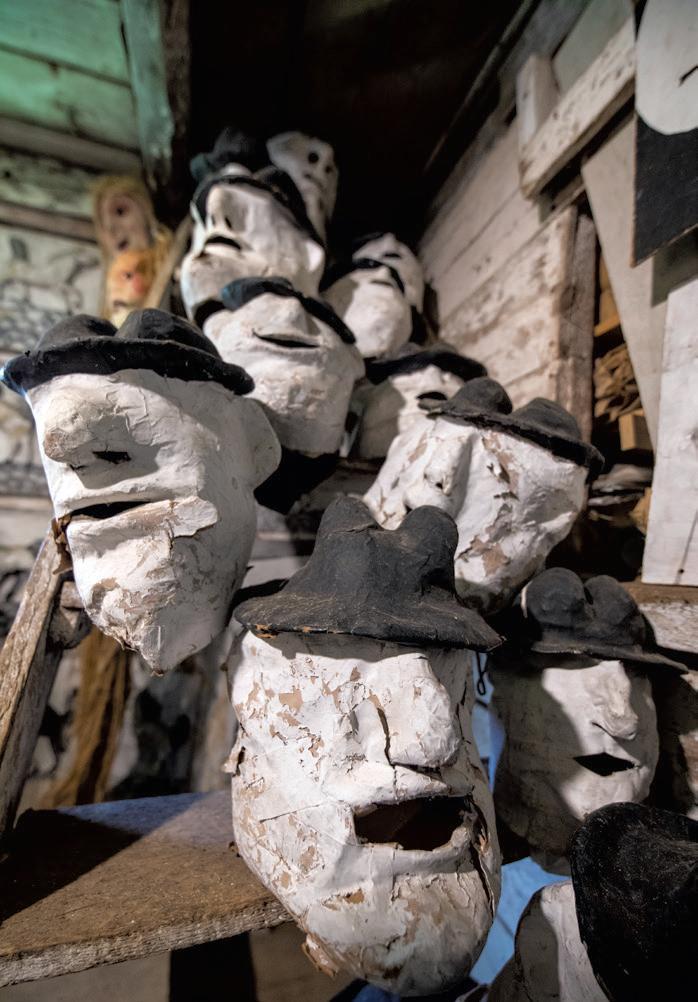
live music almost exclusively. “That’s home to me,” he said.
Awtry, 45, of Burlington, has photographed and written more than 100 “Eye on the Scene” spotlights for Seven Days — experiential mini-essays on what it’s like to be at those shows. But his assignments are not limited to music. He shoots everything from culture to news, including Derek Brouwer’s recent cover story about Burlington’s homeless encampments. Awtry is also the o cial photographer for the South End Art Hop, which takes place this weekend; look for a collaborative photo project on display outside his studio at 4 Howard Street.
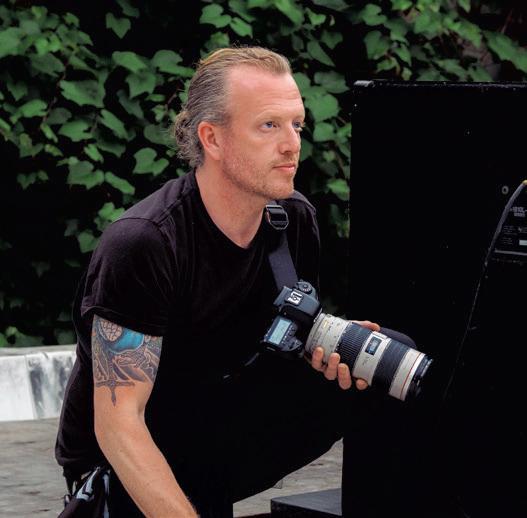
“One of my favorite things is live music, and getting a photo pass is basically the best seat — the best of every seat — in the house,” he said. Even though it can be hard to get a good shot (“Things are moving fast; things are dark; things are chaotic,” as Awtry put it), he spent his first two years of professional-level photography shooting
The arts, Awtry said, are his passion. One of his favorite Seven Days assignments was Chelsea Edgar’s 2023 cover story on Bread and Puppet Theater (see page 44). While exploring barns full of puppets, he said, he came across luggage and road cases with labels on them from all over the world — objects that told the troupe’s story. “I really, really love the things that make the production work, that make the art come to life,” he said.
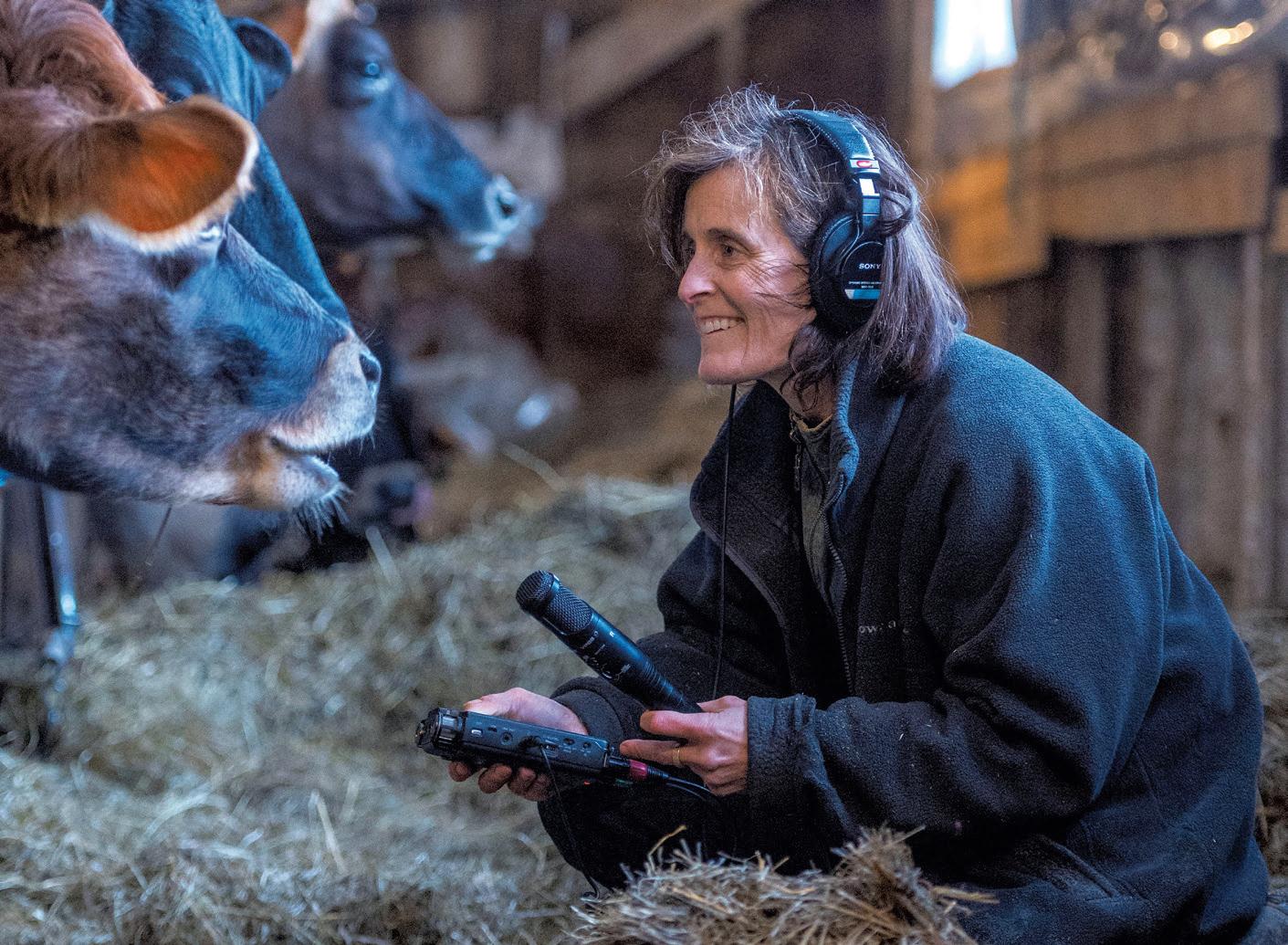
@jebphoto on Instagram
Central Vermont photojournalist Jeb Wallace-Brodeur, 59, often seems to be everywhere all at once. On a recent weekend, he shot the Shepherd’s Hearth vendors at Capital City Farmers Market in Montpelier, the No Kings protest at the Statehouse and portraits of cancer survivors in nearby Hubbard Park. “It was a busy day,” he said.
Wallace-Brodeur’s work often takes him to the Statehouse, where he guessed that he’s taken photos every week for at least 30 years. It’s a challenging space that demands creativity. “I know every nook and cranny of the building,” he said, but the lighting is bad and there’s not much action. “For shooting people, it’s just not a terribly interesting place.” Nonetheless, he
has captured compelling portraits there, such as for Hannah Bassett’s recent cover story about rookie reps.
Wallace-Brodeur excels at picturing people. The assignments that stand out, he said, are ones where “I get to know the subject pretty well and really enjoy being with them.” That was the case for cover stories on podcaster Erica Heilman, sign maker Sparky Potter and Lt. Gov. John Rodgers.
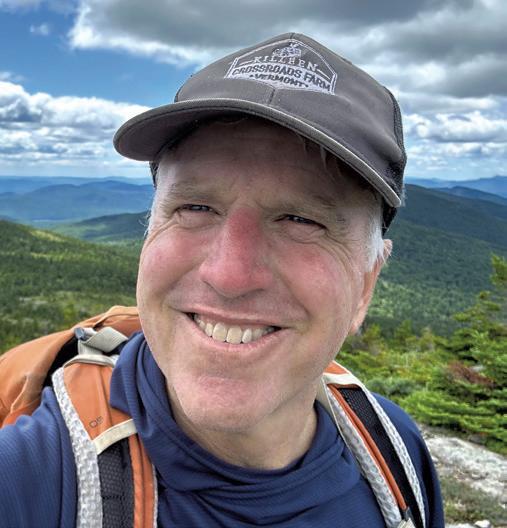
For Joe Sexton’s story on Enough Ministries in Barre, Wallace-Brodeur made five or six trips to meet the congregants. He always starts by talking to his subjects.
“If I show interest in who they are and what they’re doing, they tend to chill out and trust that I’m going to put them in a good spot,” he said. He can sometimes get chatty on a shoot, he said jokingly, before he realizes, “Oh, I guess I should take some pictures now.”
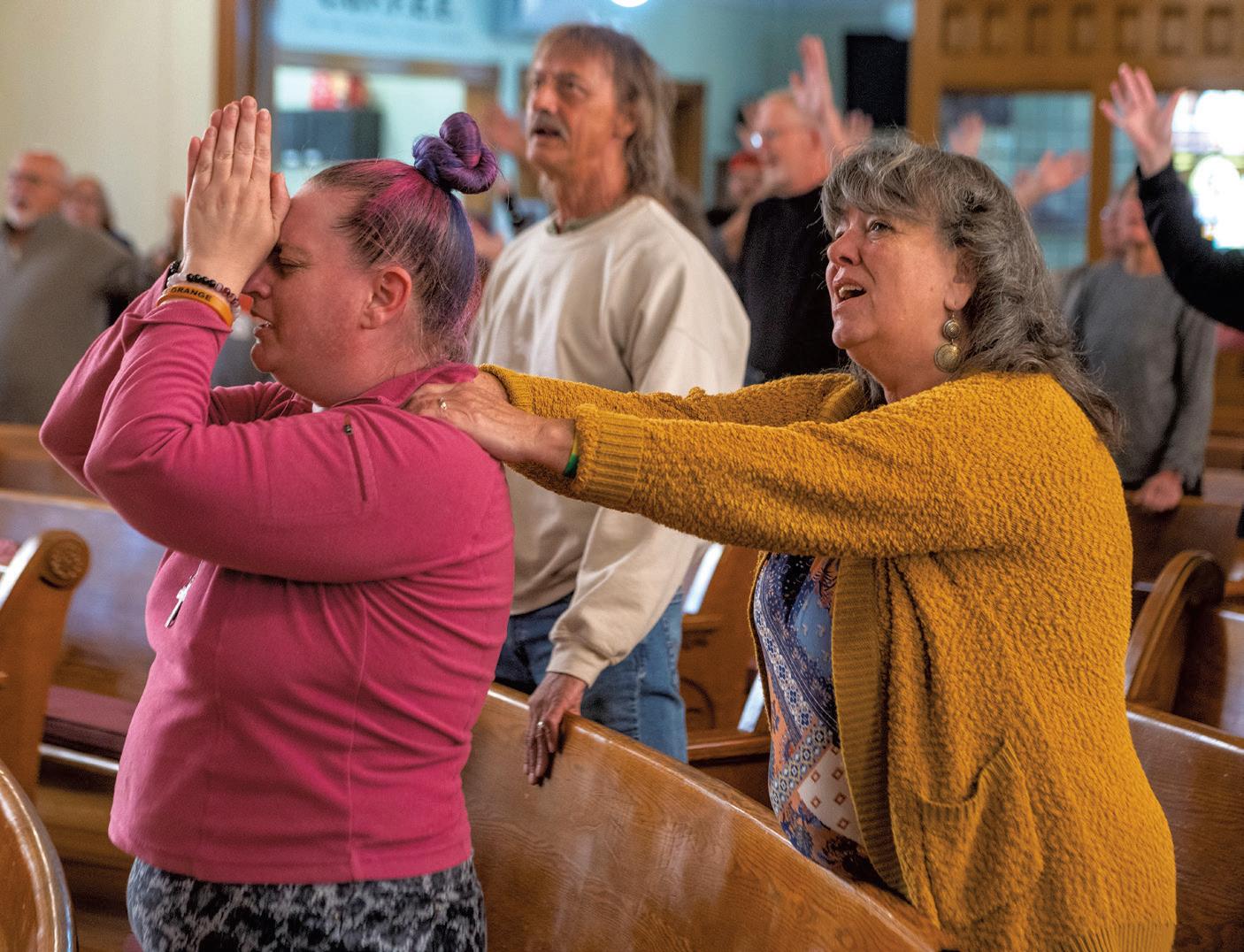







































bearcieri.com
Bear Cieri, 50, of Shelburne, has been shooting for Seven Days since 2018, covering everything from news to food to home tours. He admitted that, while many of the specific assignments bleed together in his memory, “I love doing it, and I love being a part of the community.”

Cieri’s practice straddles photojournalism and fine art. His community spirit is on full view in some of his larger personal projects, such as an ongoing series on Barre that he began in 2013. Those blackand-white photos combine portraits with
event photography, images of quarries and still lifes of everyday objects to offer viewers a larger, not strictly narrative vision of the city, a style Cieri describes as “post-documentary.”
One of his favorite assignments was shooting “Carbon Quandary,” Kevin McCallum’s 2019 cover story on biomass fuel. While the subject might not sound like the most photogenic, Cieri said, “I’m really intrigued by the ingenuity needed to create the industrial infrastructure that keeps our society running.” Plus, he enjoyed getting a private, behind-the-scenes tour. The opportunities for interesting shots, he said, were everywhere.
“Whenever anyone asks me what my favorite photo is,” Cieri said, “it’s always the next one.”
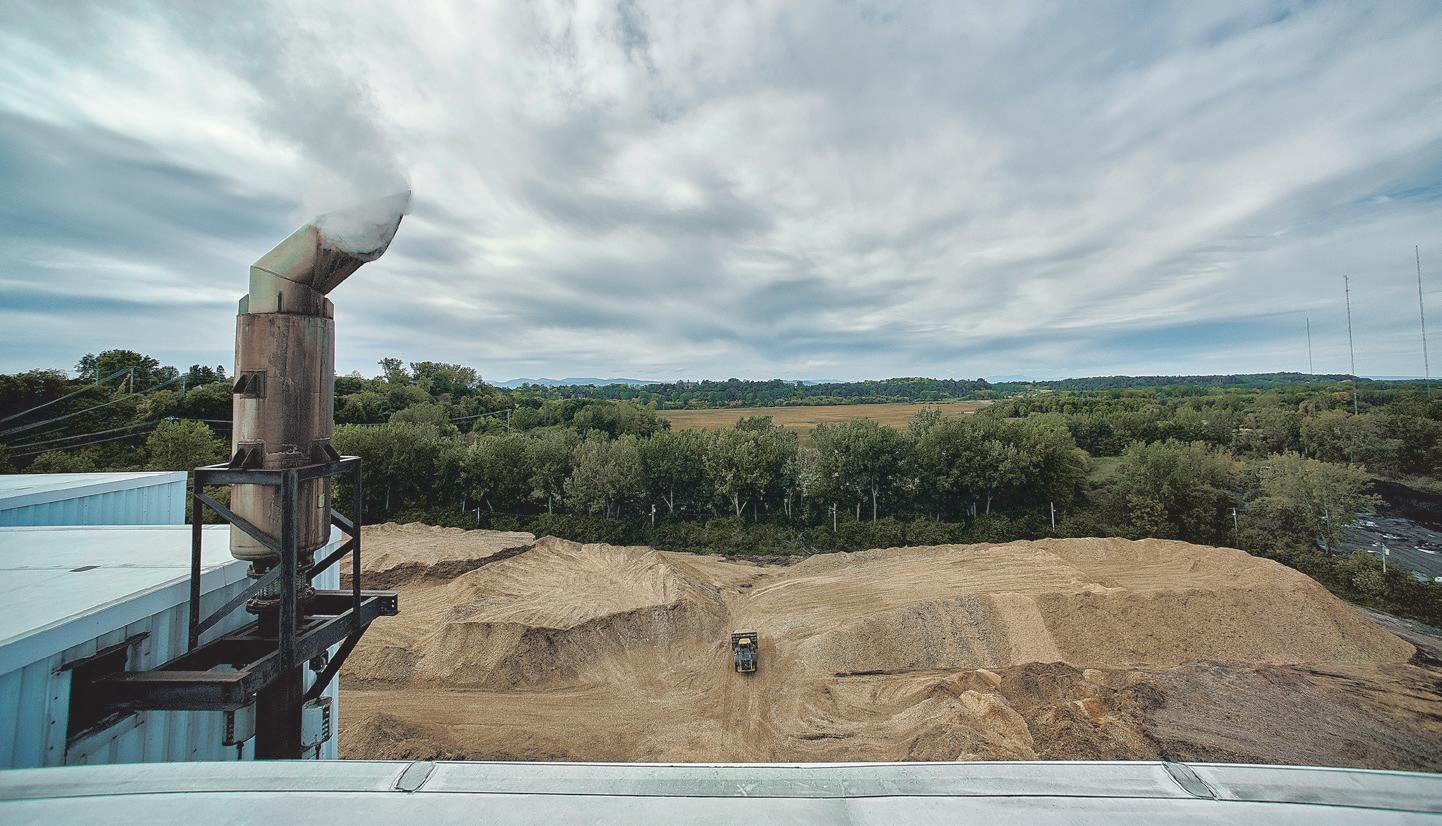
‘THE VOICE OF HUMAN INSTINCT’: Seeking submissions of two-dimensional artwork that explores the subconscious, liminal realms, and the uncanny or intuitive for an upcoming exhibition in the Contemporary Hall Gallery. Please submit three to five images of recent artwork via email; accepted work must be delivered on September 24 or 25. T.W. Wood Gallery, Montpelier. Deadline: September 6. Free. Info, info@twwoodgallery.org.
HOWARD CENTER ARTS COLLECTIVE: The collective’s 2025 Art Hop exhibition, including more than 90 works of art by more than 40 artists reflecting on themes of compassion, kindness and love. Presented in memory of Susan M. Coates. Reception: Thursday, September 4, 4:30-6 p.m. Flynndog Gallery, Burlington, through November 2. Info, artscollective@howardcenter.org.
‘LAND & LIGHT & WATER & AIR’: The gallery’s annual flagship exhibition of traditional landscape and plein air works. Reception and award ceremony: Thursday, September 4, 5-7 p.m. Bryan Memorial Gallery,

dariabishop.com
Daria Bishop, 58, of Burlington, never aspired to be a food photographer. But since her first Seven Days assignment, shooting the Daily Planet in Burlington for “We’re Still Open,” a 2019 survey of long-lived Vermont restaurants, she has pictured many meals.

She enjoys those assignments, she said, and getting to know Vermont restaurateurs. She’s shot some of them multiple times as they’ve started new projects. “When I meet them again, it’s like connecting with a friend,” she said.
Asked about a favorite assignment, Bishop pointed to a nonfood story: Colin
Flanders’ 2023 profile of Gene Richards, owner of Johnson Woolen Mills. “I got full creative license to do what I liked,” she said, “and I thought, Wouldn’t it be a hoot if we wrapped him all up in all his woolens?” Bishop said she appreciates Seven Days’ deep dives, such as 2022’s “Locked Out” series on the housing crisis, for which she photographed mobile home parks. “It was just really eye-opening,” she said. She tries to capture each subject as authentically as possible.
Even with food photography, she said, she’s always thinking about how much heart and soul goes into a restaurant. “I see the humanity behind the food,” she added.
Jeffersonville, through October 26. Info, info@ bryangallery.org.
‘VISIONS IN BLUE’: A group show exploring the color blue. Reception and award ceremony: Thursday, September 4, 5-7 p.m. Bryan Memorial Gallery, Jeffersonville, through October 26. Info, info@ bryangallery.org.
‘CTRL + ART + DEL’: A group show highlighting the creativity of the studio’s staff. Driven Studio, Burlington, September 5-7. Info, hello@drivenstudio. com.
GERALD K STONER: “Sculpture on Tap,” an exhibition of hand-forged steel sculptures during Art Hop. Switchback Beer Garden & Smokehouse, Burlington, September 5-7. Free. Info, geraldkstoner@ yahoo.com.
CHERYL BETZ: “From the Mud,” mixed-media paintings and large drawings completed during the past year and using layered imagery to reflect on the unseen. Reception: Friday, September 5, 4-7 p.m. The Front, Montpelier, September 5-28. Info, info@ thefrontvt.com.
‘UNCERTAINTY: A CREATIVE PRINCIPLE’: A group show featuring works by seven painters: Tina Olsen, Ellen Cone Maddrey, Gayle Robertson, Leonard Ragouzeos, John Loggia, Liza Cassidy and Mary Therese Wright. Reception: Friday, September 5, 5-8 p.m. 118 Elliot, Brattleboro, September 5-25. Info, 118elliot@gmail.com.
DOMINIQUE REMY ROOT: “Unbound,” works in acrylic on canvas influenced by the artist’s travels. Reception: Friday, September 5, 5-9 p.m. Artspace 106 at the Men’s Room, Burlington, September 5-January 1. Info, info@mensroomvt.com.
JEREMY VAUGHN: “In Différance,” an exhibition of drawings and paintings on paper and plastic exploring the unfixed nature of meaning. Reception: Friday, September 5, 5:30-7:30 p.m. The People’s Gallery, Randolph, September 5-28. Info, 929-461-6124.
NATALIE JONES: “Song for the Sea,” a video installation using digital grain, layered imagery and manipulated audio recordings to explore the textures and sounds of various bodies of water filmed across Vermont and in Maine. Reception: Friday, September 5, 5:30-7:30 p.m. Junction Arts & Media, White River Junction, through September 30. Info, 295-6688.
RAINER MARIA WEHNER: “MENETEKEL,” an exhibition juxtaposing human intimacy with an increasingly virtual world, through the use of X-rays, steel construction and ancient texts. Reception: Friday, September 5, 5:30-7:30 p.m. The Carving Studio & Sculpture Center, West Rutland, September 5-28. Info, 438-2097.
CYNTHIA ROSEN: “Across the Spectrum,” new work reflecting experimentation with color and abstraction. Reception: Saturday, September 6, 5 p.m. Bryan Fine Art Gallery, Stowe, September 3-November 2. Info, 760-6474.
KEVIN ROSE: An exhibition of photographs highlighting elements of the rural landscape. Reception: Saturday,
September 6, 3-5 p.m. The Tunbridge General Store Gallery, September 6-October 26. Free. Info, 889-3525.
DEBORAH BROWN: “Use Everything Assemblage,” sculptural works by the artist. Reception: Saturday, September 6, 2-4 p.m. Northeast Kingdom Artisans Guild Backroom Gallery, St. Johnsbury, through October 8. Info, 748-0158.
MELISSA DETROY: “Nature in Portrait — Finding Joy in the Natural World,” an exhibition of oil and gouache paintings portraying botanical subjects with a sense of identity and personality. Frog Hollow Vermont Craft Gallery, Burlington, September 7-October 1. Info, 863-6458.
‘GREEN MOUNTAIN PHOTO SHOW’: The 35th annual exhibition of photographs ranging from black-andwhite to color, realism to abstraction and small to large format. Reception: Sunday, September 7, 5-7 p.m.; children welcome. Red Barn Galleries at Lareau Farm, Waitsfield, September 7-October 12. Info, info@ madrivervalleyarts.org.
‘ART FOR EVERYONE: GATHERING’: A display of objects from the permanent collection celebrating shared human experience and including works by artists such as Hilda Belcher, Francis Ray Hewitt and Paul Sample. Reception: Wednesday, September 10, 5-7 p.m. Fleming Museum of Art, University of Vermont, Burlington, opens September 4. Info, 656-0750.
‘ROOTED IN NATURE: COLLECTING HISTORIES AT UVM’: A permanent collection exhibition highlighting themes of people and planet throughout the
calebkenna.com
Of all the alternative newsweeklies, Seven Days probably pictures the most cows. With his portraits and aerial photos, Caleb Kenna offers a fresh and unexpected perspective on Vermont’s rural landscape and how we interact with it.
landscape; in another, an orchard casts dramatic blue diagonal shadows. In 2020, the New York Times published 17 of Kenna’s photos; in 2022, they were collected in a book, Art From Above Vermont
oliverparini.com
Kenna, 55, of Middlebury, started working for Seven Days as a rookie: “I did some really early assignments in the late ’90s in black-and-white film, if you can believe it,” he said. “I was such a new, unexperienced photographer that I didn’t even know how to use flash.” But he stuck with it and adapted to photography’s changing technologies.
In 2017, he started using a drone — “a fantastic addition to the camera bag,” he said, “because I could explore perspectives.”
Many of his drone images appear almost abstract. In one, a snow-covered field of tires creates a ghostly geometry over the
Still, what Kenna most enjoys is portraiture. “There’s something so classic and simple about approaching someone, talking to them, making a connection in a really short amount of time,” he said, “using the environment and the light and the gestures.”
For a 2015 cover story on Vermont’s game wardens, Kenna recalled going out on Lake Champlain at sunrise; the photo shows the fog rising just above the water. Another favorite image, he said, from 2019, is of Geraldo Velasco, a migrant farmworker at Vorsteveld Farm in Panton (see page 40). “One of the great things about assignments isthat you get to meet all kinds of cool people,” Kenna said. “You never know where that’s going to lead.”

Fleming’s history. Reception: Wednesday, September 10, 5-7 p.m. Fleming Museum of Art, University of Vermont, Burlington, through May 16. Info, 656-0750.
‘BEYOND RED BARNS’: A juried group show of works by members of the Northern Vermont Artist Association picturing ideals of gathering and community. Reception: Wednesday, September 10, 5-7 p.m. Fleming Museum of Art, University of Vermont, Burlington, September 4-May 17. Info, 656-0750.
‘KIMONO: GARMENT, CANVAS, AND ARTISTIC MUSE’: An exploration of the iconic garment as embodied through works of textiles, ceramic, glass, metal and in other mediums by contemporary artists such as Itchiku Kubota, Karen LaMonte and Michael F. Rohde. Reception: Wednesday, September 10, 5-7 p.m. Fleming Museum of Art, University of Vermont, Burlington, September 9-December 6. Info, 656-0750.
MARISA GREEN: “Fruiting Bodies,” an exhibition of cut-paper and multimedia works exploring the natural systems and emotional connections between people and plants by the 2024-2025 artist-in-residence, on view in the Second Floor gallery. Reception: Saturday, September 20, 4-5:30 p.m. Studio Place Arts, Barre, September 10-October 25. Info, 479-7069, info@studioplacearts.com.
‘ROCK SOLID XXV’: The 25th annual exhibition, in the Main Floor gallery, showcasing stone sculptures and assemblages by area sculptors and works that depict the qualities of the material. Reception: Saturday,
September 20, 4-5:30 p.m. Studio Place Arts, Barre, September 10-October 25. Info, 479-7069.
SUSAN SMEREKA: “Constant continuum,” an exhibition of small book projects, watercolors, collages and prints that recount the artist’s loss of her brother. In the Third Floor gallery. Reception: Saturday, September 20, 4-5:30 p.m. Studio Place Arts, Barre, September 10-October 25. Info, 479-7069.
LIFE DRAWING AND PAINTING: A drop-in event for artists working with the figure from a live model. T.W. Wood Gallery, Montpelier, Thursday, September 4, 7-9 p.m. Free; $10 suggested donation. Info, 262-6035.
ART HOP OPEN HOUSE: An exhibition featuring BCA teaching artists, studio assistants and BCA members and a celebration of a new mural created through BCA’s Artist Apprenticeship program. With DJ Le J spinning live and food from Vamo Arriba. BCA Studios, Burlington, Friday, September 5, 5-8 p.m. Free. Info, 865-7166.
COMMUNITY DAY: A day of free museum admission, including a 165th birthday party for Grandma Moses, live music by Silverback Swing, and the museum’s annual meeting and awards ceremony, at which museum trustees will present the Arnold Ricks Award to Joe Chirchirillo. Bennington Museum, Saturday, September 6, 10 a.m.-4 p.m. Free. Info, 447-1571.
Oliver Parini, 39, grew up in Weybridge, where he lives today. He started shooting for Seven Days when he moved back to Vermont in 2010 after college and a stint of travel photography in Asia. As a photojournalist, he gets to see things that “everyday people don’t always get to know about,” he said. “That’s part of the thrill for me.”
That was the case, he said, when he shot Melissa Pasanen’s 2022 story on chef turned fly-fishing guide Jamie Eisenberg. “I’m also a fly-fisher,” Parini said, “and she showed me some of her secret spots near her house — she ended up catching some beautiful fish, too.”
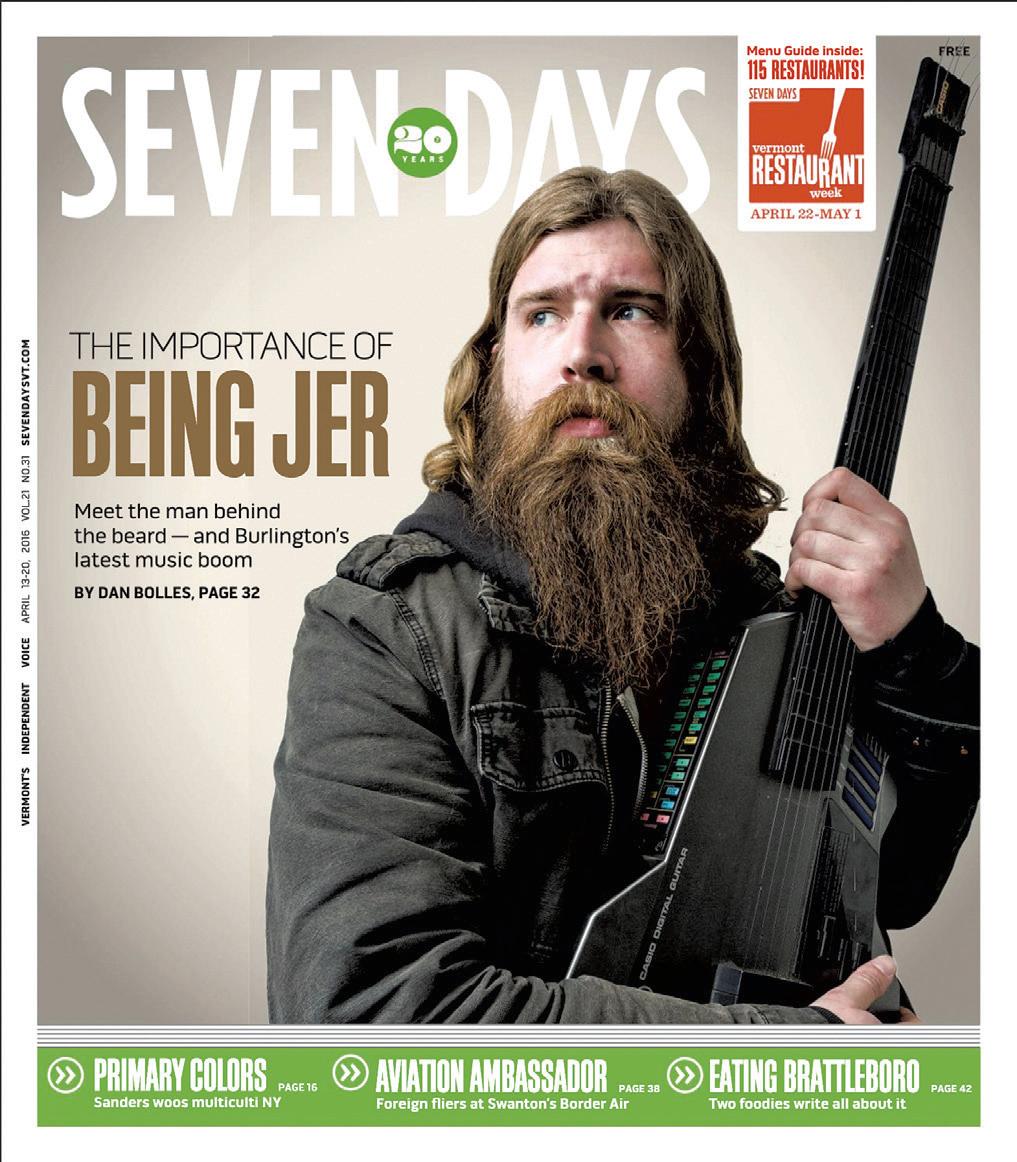
Another favorite assignment was a 2016 cover story on musician Jer Coons. Parini said one of the perks of the job is meeting fascinating people who “maybe are not always famous per se but have really interesting stories.”
STUDENT SATURDAYS: Free museum admission for college students every Saturday in September, including access to the Museum’s temporary exhibitions, permanent collection, 39 historic buildings and 45-acre grounds. Shelburne Museum, Saturday, September 6. Free. Info, 985-3346.
‘GUIDING QUEST’ EXHIBITION TOUR: As part of the South End Art Hop, professor Jonathan Ferguson leads an hourlong tour of the exhibition and discussion of the evolution of game design, followed by hands-on gaming. Champlain College Art Gallery, Burlington, Saturday, September 6, noon-1 p.m. Info, jferguson@champlain.edu.
SOCIAL SUNDAY: An opportunity for children and caregivers to stop in and complete a 15- to 30-minute activity during the two-hour workshop. Milton Artists’ Guild Art Center & Gallery, Sunday, September 7, 1-3 p.m. Free. Info, 891-2014.
‘ART MAKING ON THE LAND WALKING TOUR’: An introduction for first-time visitors and a fresh way for return visitors to engage with the art on view. Registered participants will receive an email if the tour is canceled due to inclement weather. Info and registration at coldhollowsculpturepark.com.
Cold Hollow Sculpture Park, Enosburg Falls, Sunday, September 7, 1:15 p.m. Free; registration required. Info, info@coldhollowsculpturepark.com.
PORTRAIT DRAWING AND PAINTING: A drop-in event where artists can practice skills in any medium. T.W. Wood Gallery, Montpelier, Monday,
Like many freelancers, Parini said he increasingly books weddings, commercial shoots and marketing images for nonprofits. “The industry is changing quickly,” he said, with fewer outlets for photojournalism. But he still thinks it’s great work, and it’s important to him to cover essential news. “I’ve always loved shooting for Seven Days ,” he said. “It’s just really a fun vibe.” ➆
September 8, 10 a.m.-noon. Free; $10 suggested donation. Info, 262-6035.
SUMMER WATERCOLOR SERIES: A class suitable for novice and experienced painters, taught by Pauline Nolte. Supplies provided for beginners. Waterbury Public Library, Tuesday, September 9, 10:30 a.m.-12:30 p.m. Free; preregister. Info, judi@ waterburypubliclibrary.com.
CARVING CIRCLE: A space for printmakers to carve, glue or incise blocks together. Studio tools available; no printing takes place. Two Rivers Printmaking Studio, White River Junction, Tuesday, September 9, 6-8 p.m. Free. Info, 295-5901.
FALL OPEN HOUSE: A reception and exhibition preview, including “Kimono: Garment, Canvas, and Artistic Muse,” “Beyond Red Barns,” “Rooted in Nature” and “Gathering,” with remarks by new University of Vermont president Marlene Tromp. Fleming Museum of Art, University of Vermont, Burlington, Wednesday, September 10, 5-7 p.m. Free. Info, 656-0750.
ASSETS FOR ARTISTS WORKSHOPS: ‘PROJECT MANAGEMENT’: An online workshop with Ana Tinajero in which artists learn to build and execute successful plans for projects of any size, in all disciplines. Participants are asked to attend both sessions. Register via Zoom at assetsforartists.org/workshops. Vermont Arts Council, Montpelier, Wednesday, September 10, 6-8 p.m. Free. Info, assetsforartists@massmoca.org. ➆

BY CHRIS FARNSWORTH
The line between Burlington’s music scene and the Seven Days sta has always been a fuzzy one.
For starters, the paper’s cofounder and first music editor (among her many other hats), PAMELA POLSTON, was the front woman of the DECENTZ, a muchloved post-punk/new-wave act in the 1980s Queen City scene. Many of her music editor successors were also local musicians. (Fun Seven Days trivia: Former music editor and current culture coeditor DAN BOLLES and I both appeared with our old bands — the MIDDLE EIGHT and LOBOT, respectively — in an October 20, 2004, story called “7 Bands to Watch,” penned by then-music editor CASEY REA also a musician.)
ROUGH FRANCIS vocalist BOBBY HACKNEY JR. had to navigate the weirdness of laying out stories about his own band during his time as a graphic designer at the paper. And because our Wednesday paper delivery allows for evening and weekend gigs, our drivers are often Burlington musicians, from the HIGH BREAKS’ MATT HAGEN (see page 74) to the SMITTENS’ COLIN CLARY to my DINO BRAVO bandmate, the inimitable MATTHEW STEPHEN PERRY
Contributing photographer LUKE AWTRY (see page 78) is in at least 15 bands at all times. Freelance music writer JUSTIN BOLAND has been a massive presence in the 802 hip-hop scene, rapping as WOMBATICUS REX and running
the now-defunct vermonthiphop.com, a much-missed repository of local rap news. There have been many other examples in Seven Days’ three decades. The paper doesn’t just cover the local music scene — it’s part of it.
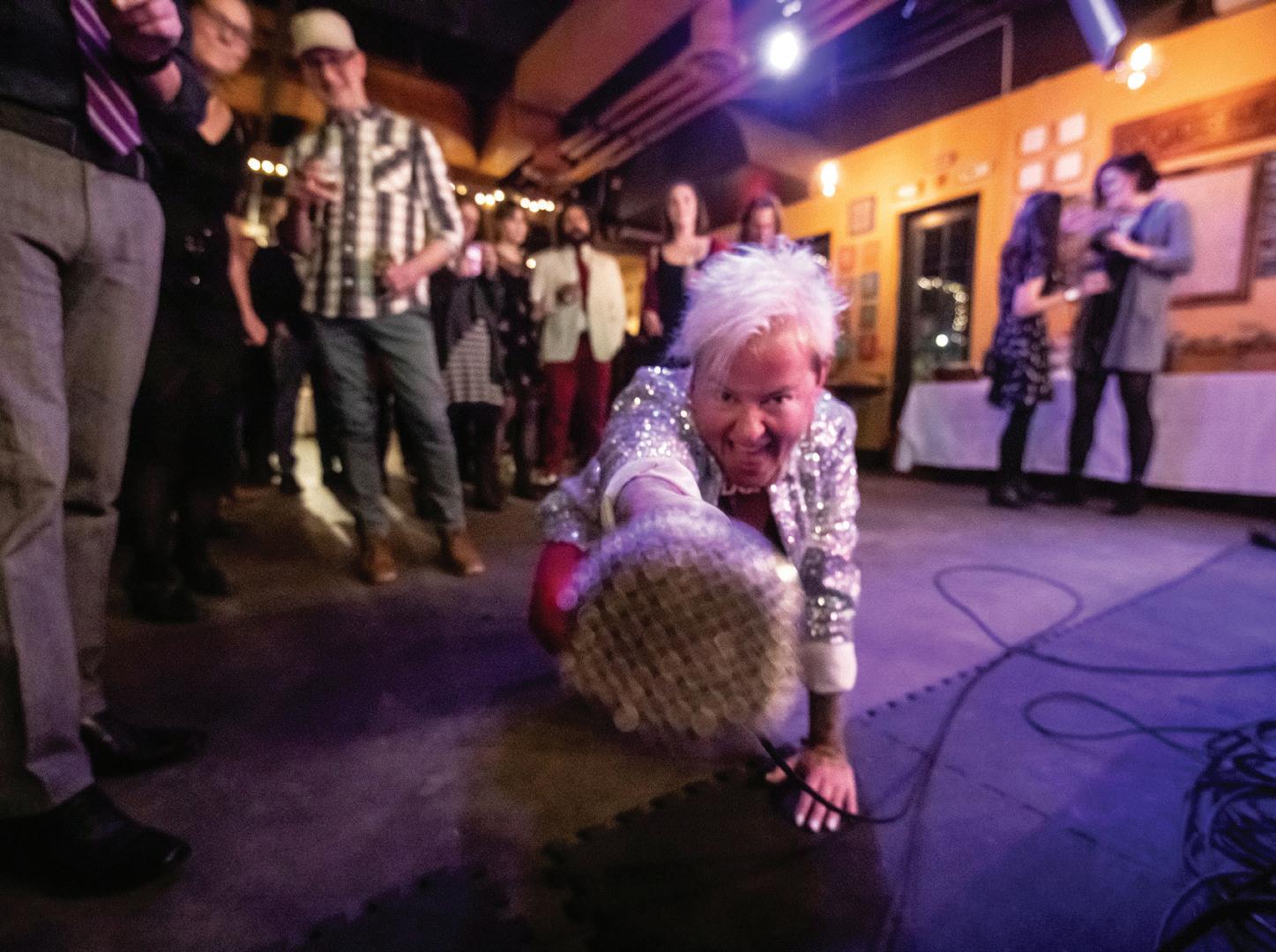
So it’s not surprising that Seven Days has its own house band, ENEMY OF THE PEOPLE. Though maybe don’t tell the band that.
“I want to get one thing straight: Enemy of the People is not the fucking Seven Days house band.”
So spoke no less an authority on the subject than the band’s lead singer, Seven Days art director DIANE SULLIVAN (see page 70).
“Look, I get crazy on that stage and absolutely cannot be held responsible as a representative of anything, do you know what I’m saying?” Sullivan explained. “Who cares, anyway? You’re getting ahead of yourself, Farnsworth.”
It’s true, I am. Let’s start at the beginning.
It was Christmas 2019. I was still just a freelance writer, but my music editor predecessor JORDAN ADAMS had invited me to the company holiday party at the Skinny Pancake on the Burlington waterfront. I had developed a raging crush on the calendar writer at the time and was determined to do something about it, only to find out upon arriving to the party that she had moved to Michigan a few months earlier. (Maybe I should have iSpied her.)
Still, I was at my first sta party, having a blast and meeting so many people who would become my coworkers and friends over the next six years. Before long, I noticed a band setting up. Sullivan, production manager JOHN “JINGLES” JAMES, designer JEFF BARON and digital production specialist BRYAN PARMELEE all hopped onstage, grabbing instruments and gripping microphones.
I knew most of them from the local music world already. Baron was part of the killer Burlington indie-rock scene of the ’90s as a guitarist with GUPPYBOY and later the ESSEX GREEN. I’d seen Parmelee’s excellent indie projects PARMAGA and POURS multiple times. And the number of shows I’d played with Sullivan’s boozedup hard-rock outfit the DIRTY BLONDES could only be defined as “too drunk to count.” Even James, one of the most dedicated concertgoers I’ve met, had recently joined Sullivan’s St. Patrick’s Day outfit, EVERYBODY’S FAVORITE IRISH DRINKING SONGS BAND, as the harmonica player.
I’d never seen Parmelee on the kit — he’s better known as a guitarist, keyboardist and vocalist — nor did I know James could play bass. But as I watched them launch into a hardcharging set of original garage-rock songs, I realized I was looking at a proper band, not just some outfit thrown together to play a party. Better still:
All the songs were composed about specific coworkers in attendance or in-jokes only Seven Dayzers could truly appreciate.
Sullivan, or “Sully” when she’s onstage, bellowed into the microphone with her signature booming, gravelly voice as Enemy of the People ripped through “Sasha’s Getting Drunk,” an ode to deputy news editor Sasha Goldstein. That one was especially hilarious considering that, in all my time at the paper, I’ve never seen the dude tipsy.
The band’s name most likely derived from a right-wing slur popularized by (who else?) President Donald Trump. In his first term, he’d become fond of labeling the press the “enemy of the people” — taking a cue from those famed champions of freedom and democracy before him, Joseph Stalin and Mao Zedong.
“Thankfully, all those attacks on the press stopped,” Parmelee quipped with a smirk when I recently spoke with the band about its beginnings.
Sullivan, however, o ered an alternate origin of the band’s name: “It’s from the Henrik Ibsen play that explored the conflict between personal integrity and societal norms, OK?” she said. I was polite enough not to reply with, “Bullshit, Di.”
Whatever led to the name, the members all agree the beginning was simple: The four musicians gathered in the basement of Sullivan’s house in Essex Junction, made some food, got pretty drunk and started to play. They wrote songs such as “Rutland Hookers,” which the band stresses is pro sex work; “Paper Jam,” an ode to a very hated o ce printer; and “Petunia,” a slowyour-roll-Diane anthem about what happens when Sullivan overindulges at practice.
“I saw her tokin’ on the bong / she hasn’t eaten all day long,” Sullivan roars, singing about her own excess. “Drinking vodka and lemonade / she thinks she’s got it made.”
The group started to play weekly, getting tighter and tighter.
“It was so awesome, but we were just getting way too drunk for weeks,” Baron recalled with a laugh. “We had to check ourselves a little and make pizzas first, that sort of thing.”
Once the band found a way to balance its rock-and-roll excess, it started to gather momentum and move out of the basement. Enemy of the People played a few real gigs and were even booked for the 2020 Waking

Since 1995, a procession of Seven Days music editors — that’d be cofounder Pamela Polston, Ethan Covey, Casey Rea, Dan Bolles, Jordan Adams and now Chris Farnsworth — have covered the best, worst and decidedly pretty OK of Vermont’s bustling music scene. From the rise of Phish, Anaïs Mitchell, Grace Potter and Noah Kahan to long-forgotten bands and songwriters playing their hearts out on the smallest stages in the most remote corners of the state, we’ve heard it all in our collective three decades on the job.
To celebrate the scene that’s entertained us, challenged us and kept us employed, Seven Days music editors past and present have racked our rock-addled brains to compile a Spotify playlist of Vermont music from the past 30 years. And let us tell you: It’s been a blast revisiting older bands like the Pants, Belizbeha and Five Seconds Expired alongside newer acts such as Rough Francis, THUS LOVE and Lutalo. We hope you’ll give it a listen. But before you do, there are a few caveats:
• e list is necessarily weighted toward Vermont acts from the past 20 or so years, since that’s largely what’s available on Spotify, which was founded in 2006. So bands from the 1990s and early 2000s are underrepresented, aside from those who’ve uploaded music to Spotify — which several have!
• is is not a “best of” list. Inclusion on the playlist is not an endorsement. By the same token, exclusion doesn’t mean we hate your band. irty years of music is a lot to keep track of — we included what was most memorable to us.
• We’ll be adding to the list through the end of the year, so keep checking back. And if you have a fave local track we missed, feel free to let us know at music@sevendaysvt.com.
DAN BOLLES

Windows festival in Winooski. They began laying down basic tracks for a debut album with producer JOE EGAN at his Colchester recording studio.
Then came the pandemic, and the band lost any traction it had. The quartet did, however, play a set from Sullivan’s basement for a virtual work party during quarantine.
I wouldn’t see Enemy of the People again until Polston’s retirement party in 2021, when they played an acoustic ode to the cofounder in the Burlington backyard of the other cofounder, Paula Routly. Clad in a leopard-print jacket, Sullivan sang directly to Polston, belting out: “DEBBIE HARRY’s got nothing on you!”
The band has played only sporadically since and doesn’t get together in Sullivan’s basement as much as it used to. That hasn’t stopped the four of them from having endless debates on Slack, text threads and even out loud across the office about when Enemy of the People might finally release their debut.
“C’mon! Egan wants to know when

we’re going to finish the goddamn thing!” Sullivan barked during one group hang last month.
“I mean, I’m down to get back in there in November, maybe Decem—,” James said before Baron’s laugh cut him off.
“It’s only August!” Baron protested.
“Yeah, but I’ve got a few vacations coming up.”
“I’m pretty sure we just have to finish overdubs,” Parmelee, the band’s resident producer, pointed out. “Basic tracks are good.”
“Listen,” Sullivan said. “I think we should shut up about it, pick a fuckin’ date in September—”
“That’s next month!” Baron said, laughing again.
“OK, OCTOBER THEN!”
“Let’s get NOAH KAHAN and GRACE POTTER to guest on it,” Baron offered, clearly having a good time winding up his bandmates.
They never did nail down plans to finish the long-delayed debut, so the world will have to continue waiting for Enemy of the People’s opening salvo. In the meantime, they’re still writing songs and even broadening their horizons — a new tribute to WCAX-TV anchor Darren Perron is in the works. They’re also recruiting other Seven Dayzers to join the crew. Or trying to.
James heard a rumor that staff writer Colin Flanders was a decent rapper. When I asked the intrepid news reporter about that, the speed with which Flanders left the room was uncanny. “That was 10 years ago, man!” he shouted as he fled the scene.
Hopefully the band will drop its album before Seven Days’ 40th anniversary, but Enemy of the People answer to no master but their own limited attention span. And if Flanders doesn’t end up dropping some bars on the record, they’ll probably just write a song about him. ➆


































































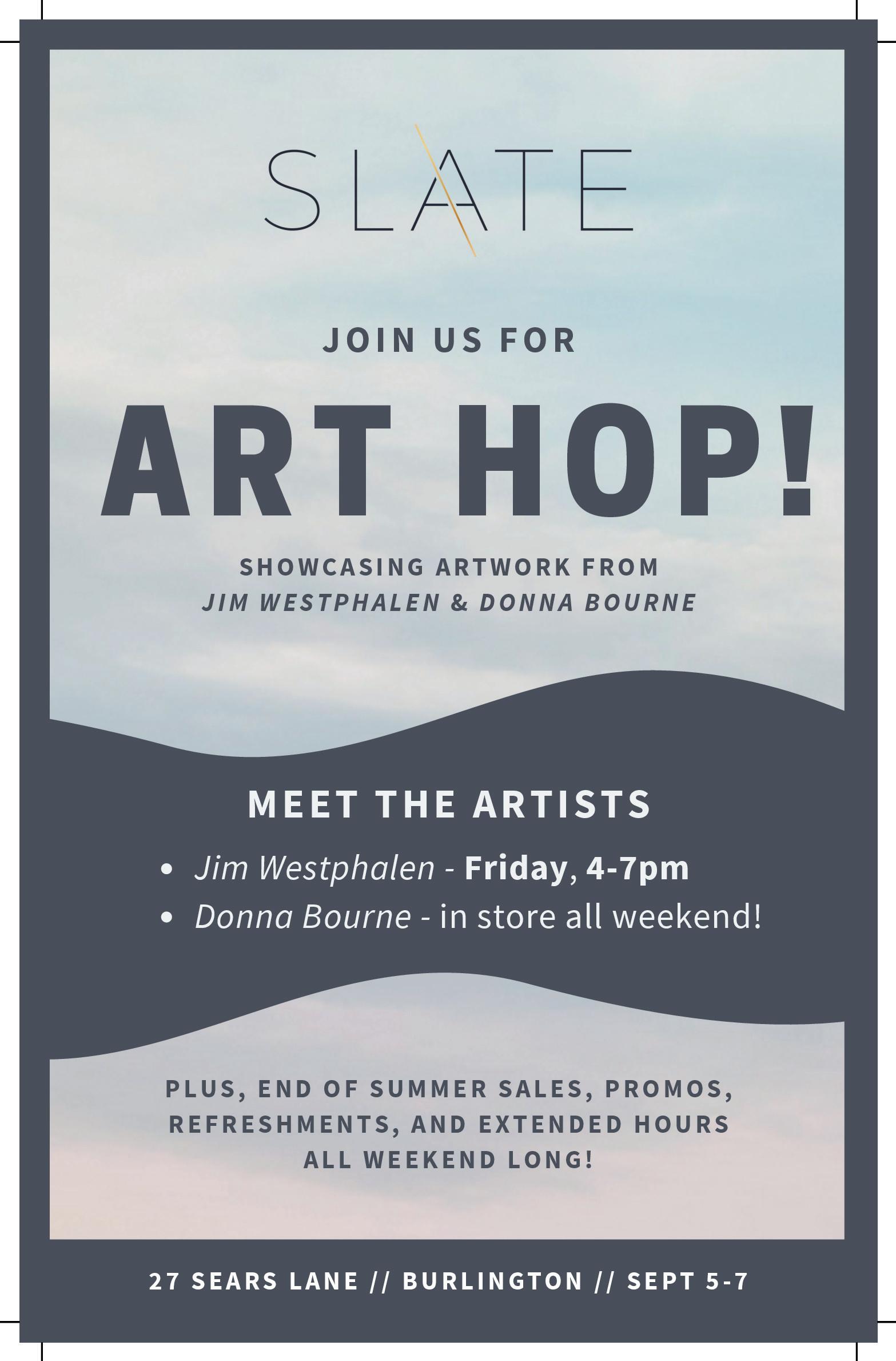



WED.3
BBQ and Bluegrass (bluegrass) at Four Quarters Brewing, Winooski, 6:30 p.m. Free.
D Davis & Marc Gwinn (jazz) at Hugo’s, Montpelier, 7:30 p.m. Free.
Irish Night with RambleTree (Celtic) at Two Brothers Tavern, Middlebury, 7 p.m. Free.
Jazz Night with Ray Vega (jazz) at Hotel Vermont, Burlington, 8:30 p.m. Free.
Jazz Sessions (jazz) at the 126, Burlington, 9 p.m. Free.
Waves of Adrenaline, Everblue (folk) at Radio Bean, Burlington, 6 p.m. $5/$10.
Wednesday Night Dead (Grateful Dead tribute) at Zenbarn, Waterbury Center, 7 p.m. $10. Wet Denim, Intervale (indie) at Radio Bean, Burlington, 8:30 p.m. $5/$10.
Zak Loy, Troy Millette & the Fire Below (rock) at Higher Ground Showcase Lounge, South Burlington, 7 p.m. $19.84.
THU.4
Alex Stewart & Friends (jazz) at the 126, Burlington, 7 p.m. Free.
Eric George (folk) at the Skinny Pancake, Burlington, 6 p.m. Free.
Familiar Faces Funk Jam (funk, jazz) at the 126, Burlington, 9 p.m. Free.
Frankie & the Fuse (indie pop) at Radio Bean, Burlington, 6 p.m. Free.
Good Gravy (bluegrass) at Two Heroes Brewery Public House, South Hero, 6 p.m. Free.
Live Music Series (live music series) at Folino’s Pizza, Northfield, 5 p.m. Free.
PONS, Remi Russin, Brunch (indie rock) at Radio Bean, Burlington, 9 p.m. $10.
Red Hot Juba (jazz) at Black Flannel Brewing & Distilling, Essex, 6 p.m. Free.
SHEBAD (soul, funk) at Foam Brewers, Burlington, 7 p.m. Free.
Uncle Baby Duo (covers) at On Tap Bar & Grill, Essex Junction, 6 p.m. Free.
FRI.5
Bob Gagnon (jazz) at Bleu Northeast Kitchen, Burlington, 7:30 p.m. Free.
Colin McCaffrey & Friends (indie pop) at Hugo’s, Montpelier, 7:30 p.m. Free.
Dancin’ in the Streets with Local Strangers (Grateful Dead tribute) at the Skinny Pancake, Burlington, 8 p.m. Free.
Dave Miller (acoustic) at Bravo Zulu Lakeside Bar, North Hero, 5 p.m. Free.
Dave Mitchell’s Blue’s Revue (blues) at Red Square, Burlington, 2 p.m. Free.
Duncan MacLeod Trio (covers) at On Tap Bar & Grill, Essex Junction, 5 p.m. Free.
Find the most up-to-date info on live music, DJs, comedy and more at sevendaysvt.com/music. If you’re a talent booker or artist planning live entertainment at a bar, nightclub, café, restaurant, brewery or coffee shop, send event details to music@sevendaysvt.com or submit the info using our form at sevendaysvt.com/postevent.
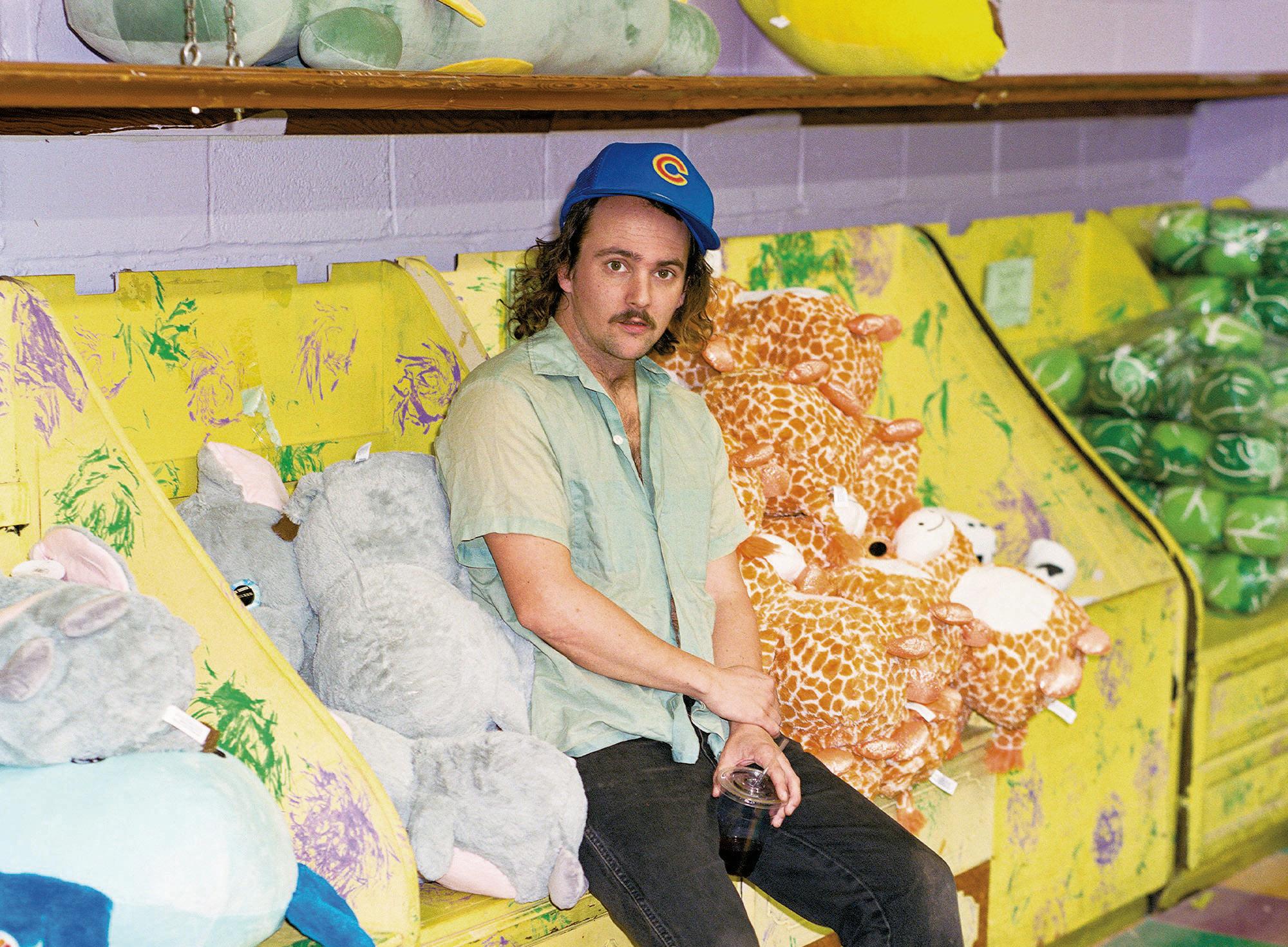
New Orleans singer-songwriter CHRIS ACKER carries on the tradition of idiosyncratic troubadours such as John Prine, adding a country barband energy that underscores much of his work. On swinging tracks such as “Mahogany,” laid-back vocals and drawling harmonies converge with pedal steel guitar and a shuffling country-rock beat, a perfect mix of folk and honky-tonk. Speaking of honky-tonk, Acker and his band the GROWING BOYS host the weekly Honky Tonk Tuesday series at Radio Bean in Burlington this Tuesday, September 9. They’re joined by Vermont country rockers WILD LEEK RIVER, who often host the series themselves.
The Eames Brothers, High Summer (blues, soul) at Zenbarn, Waterbury Center, 8 p.m. $19.51/$22.81.
The EDD, Jime & Dime (jam) at the Stone Church, Brattleboro, 8 p.m. $18.62/$24.70.
Everblue (singer-songwriter) at the Whammy Bar, Calais, 7 p.m. Free.
Goodnight Nobody, Peddle, Sad Turtle (indie rock) at Monkey House, Winooski, 8 p.m. $10. Granville Daze (acoustic) at Afterthoughts, Waitsfield, 5 p.m. Fundraiser.
Hokum Brothers (rock) at Venetian Cocktail & Soda Lounge, Burlington, 7 p.m. Free.
Jaded Ravins (Americana) at Two Heroes Brewery Public House, South Hero, 6:30 p.m. Free.
Kraatz Carromato (jazz) at Hugo’s, Montpelier, 7:30 p.m. Free.
Mean Waltons (bluegrass) at Poultney Pub, 6 p.m. Free.
Mihali, Roots of Creation (jam) at the Green at the Essex Experience, 7 p.m. $45.
Pluto Rising (dance) at Bent Nails Bistro, Montpelier, 8:30 p.m. Free.
Rap Night Burlington (hip-hop) at Drink, Burlington, 9 p.m. $5.
Ryan Sweezey Live (singersongwriter) at Vermont Cider Lab, Essex, 6 p.m. Free.
Shane McGrath (acoustic) at Gusto’s, Barre, 6 p.m. Free.
The Stragglers (bluegrass) at 14th Star Brewing, St. Albans, 6 p.m. Free.
Swamp Frog (covers) at On Tap Bar & Grill, Essex Junction, 9 p.m. Free.
VT Bluegrass Pioneers (bluegrass) at Jericho Café & Tavern, 7 p.m. Free.
SAT.6
Bella Joan (jazz) at Venetian Cocktail & Soda Lounge, Burlington, 6 p.m. Free.
Ben Cogan Band (jazz) at Hugo’s, Montpelier, 7:30 p.m. Free.
The Bruce Sklar Trio with Jeremy Hill, Andy Gagnon & Josh Bruneau (jazz) at the Phoenix, Waterbury, 7 p.m. $20 suggested donation.
Carrie Nation & the Speakeasy, Lung, Marxist Jargon (folk, rock) at Radio Bean, Burlington, 8 p.m. $12/$15.
content clown, Polkarobics, Tub Time (electro pop, indie) at Light Club Lamp Shop, Burlington, 9 p.m. $10.
The E-Block (funk, soul) at Zenbarn, Waterbury Center, 8 p.m. Free.
EDW Band (rock) at Gusto’s, Barre, 9 p.m. Free.
Fai Laci, the Eyetraps (indie) at Higher Ground Showcase Lounge, South Burlington, 7 p.m. $16.01.
Geoff Kim (jazz) at Bleu Northeast Kitchen, Burlington, 7:30 p.m. Free.
HiFi (house) at the Alchemist, Waterbury, 5 p.m. Free.
Jenny Porter (singer-songwriter) at Poultney Pub, 6 p.m. Free.
Mad Mojo (rock) at Jericho Café & Tavern, 7 p.m. Free.
Mat Maneri & Lucian Ban : Transylvanian Dance (folk, dance) at the Mill, Westport, N.Y., 7:30 p.m. $30.
Moonbird (covers) at On Tap Bar & Grill, Essex Junction, 9 p.m. Free.
Piper Hall (singer-songwriter) at the Den at Harry’s Hardware, Cabot, 7 p.m. Free.
Reid Parsons (folk) at Shelburne Vineyard, 6 p.m. Free.
SUN.7
Barbacoa (surf rock) at Back Nine Indoor Golf Lounge, South Burlington, noon. Free.
Bird Week, Dogface, Comatose Kids (indie) at Monkey House, Winooski, 7 p.m. $10.
Hard Scrabble (bluegrass) at Lawson’s Finest Liquids, Waitsfield, 3 p.m. Free.
Mountain Grass Unit (bluegrass) at Higher Ground Showcase Lounge, South Burlington, 7:30 p.m. $26.42.
Phil Henry, Erin Ash Sullivan (singer-songwriter) at Stage 33 Live, Bellows Falls, 3 p.m. $20.
Seth Yacovone (acoustic) at the Alchemist, Waterbury, 4 p.m. Free.
Shannon Lay & Meernaa, Elie McAfee-Hahn (indie) at the Stone Church, Brattleboro, 6 p.m. $19.73.
Sunday Brunch Tunes (singersongwriter) at Hotel Vermont, Burlington, 10 a.m.
TUE.9
Bettenroo (folk) at Lawson’s Finest Liquids, Waitsfield, 5 p.m. Free.
Big Easy Tuesdays with Jon McBride (jazz) at the 126, Burlington, 9 p.m. Free.
Bluegrass Jam (bluegrass) at Poultney Pub, 7 p.m. Free.
Cosmic the Cowboy, Fuzzy Bones (indie) at Radio Bean, Burlington, 7 p.m. $5/$10.
Dead Is Alive with Dobbs’ Dead (Grateful Dead tribute) at Einstein’s Tap House, Burlington, 8 p.m. $15.
Honky Tonk Tuesday with Chris Acker & the Growing Boys, Wild Leek River (country, folk) at Radio Bean, Burlington, 9 p.m. $15.
Houndmouth, Boyscott (blues, rock) at Higher Ground Ballroom, South Burlington, 7 p.m. SOLD OUT.
Sprezzatura (jazz) at Original Skiff Fish + Oysters, Burlington, 9 p.m. Free.
TATO (jazz, folk) at Monkey House, Winooski, 7 p.m. Free.
WED.10
Ada Lea, Audrey Pearl (singer-songwriter) at Radio Bean, Burlington, 7 p.m. $15.
BBQ and Bluegrass (bluegrass) at Four Quarters Brewing, Winooski, 6:30 p.m. Free.
Jazz Night with Ray Vega (jazz) at Hotel Vermont, Burlington, 8:30 p.m. Free.
Jazz Sessions (jazz) at the 126, Burlington, 9 p.m. Free.
Maya Manuela, Frankie White (singer-songwriter) at Higher Ground Showcase Lounge, South Burlington, 7 p.m. $16.16.
Portittor, Neighbors, Fundamental Issue (punk) at Radio Bean, Burlington, 8:30 p.m. $10.
Wednesday Night Dead (Grateful Dead tribute) at Zenbarn, Waterbury Center, 7 p.m. $10.
THU.4
Eli, DJ Chaston (DJ) at Red Square Blue Room, Burlington, 9 p.m. Free.
DJ JP Black (DJ) at Red Square, Burlington, 8 p.m. Free.
DJ Paul (DJ) at Red Square Blue Room, Burlington, 9 p.m. Free.
DJ Two Sev (DJ) at Red Square, Burlington, 11 p.m. Free.
Local Dork (DJ) at Foam Brewers, Burlington, 6 p.m. Free.
Vinyl Night with Ken (DJ) at Poultney Pub, 6 p.m. Free.
Vinyl Thursdays (DJ) at Hotel Vermont, Burlington, 6 p.m. Free.
FRI.5
DJ CRE8 (DJ) at Red Square, Burlington, 6 p.m. Free.
DJ Eric LaFountaine (DJ) at Gusto’s, Barre, 9 p.m. Free.
DJ Taka (DJ) at Light Club Lamp Shop, Burlington, 11 p.m. $10/$15.
Friday Dance Party with NasteeLuvzYou (DJ) at the Alchemist, Waterbury, 7 p.m. Free.
SAT.6
Blood Moon Rising: Goth/ Industrial Dance Night (DJ) at Bent Nails Bistro, Montpelier, 8 p.m. Free.
DJ KDT (DJ) at Monkey House, Winooski, 9 p.m. Free.
DJ Myth (DJ) at Afterthoughts, Waitsfield, 8:30 p.m. Free.
DJ Raul (DJ) at Red Square Blue Room, Burlington, 6 p.m. Free. HAVEN (DJ) at MothershipVT, Burlington, 10 p.m. Free.
Matt Payne (DJ) at Red Square Blue Room, Burlington, 10 p.m. Free.
Molly Mood (DJ) at Red Square Blue Room, Burlington, 8 p.m. Free.
TUE.9
Bashment Tuesday (DJ) at Akes’ Place, Burlington, 6 p.m. Free. open mics & jams
WED.3
Celtic Jam (open jam) at Bent Nails Bistro, Montpelier, 6 p.m. Free.
Open Mic with Danny Lang (open mic) at Poultney Pub, 7 p.m. Free. The Ribbit Review Open Mic & Jam (open mic) at Lily’s Pad, Burlington, 7 p.m. Free.
THU.4
Open Mic (open mic) at Brookfield Old Town Hall, 6:30 p.m. Free. Open Mic Night (open mic) at Parker Pie, West Glover, 6 p.m. Free.
Open Mic with Artie (open mic) at the Whammy Bar, Calais, 7 p.m. Free.
FRI.5
Red Brick Coffee House (open mic) at Red Brick Meeting House, Westford, 7 p.m. Free.
SUN.7
Olde Time Jam Session (open jam) at the Den at Harry’s Hardware, Cabot, noon. Free.
WED.10
Open Mic with Danny Lang (open mic) at Poultney Pub, 7 p.m. Free.
WED.3
$5 Improv Night (comedy) at Vermont Comedy Club, Burlington, 7 p.m. $5. Standup Open Mic (comedy open mic) at Vermont Comedy Club, Burlington, 8:30 p.m. Free.
THU.4
Live, Laugh, Lava: A Comedy Showcase (comedy) at Radio Bean, Burlington, 7 p.m. Free.
Strapped-In: A Queer Comedy Showcase (comedy) at Vermont Comedy Club, Burlington, 7:30 p.m. $17.99.
FRI.5
Laura Peek (comedy) at Vermont Comedy Club, Burlington, 7:30 & 9:30 p.m. $25.
Steve Hofstetter (comedy) at Higher Ground Showcase Lounge, South Burlington, 8:30 p.m. $37.24.
SAT.6
Laura Peek (comedy) at Vermont Comedy Club, Burlington, 7:30 & 9:30 p.m. $25.
TUE.9
Open Mic Comedy with Levi Silverstein (comedy open mic) at the 126, Burlington, 7 p.m. Free.
WED.10
$5 Improv Night (comedy) at Vermont Comedy Club, Burlington, 7 p.m. $5.
Standup Open Mic (comedy open mic) at Vermont Comedy Club, Burlington, 8:30 p.m. Free.
WED.3
Karaoke Friday Night (karaoke) at Park Place Tavern & Grill, Essex Junction, 8 p.m. Free.
Karaoke with Autumn (karaoke) at Monopole, Plattsburgh, N.Y., 9 p.m. Free.
Trivia (trivia) at Two Heroes Brewery Public House, South Hero, 6 p.m. Free.
Trivia (trivia) at Alfie’s Wild Ride, Stowe, 7 p.m. Free.
Trivia Night (trivia) at Parker Pie, West Glover, 6:30 p.m. Free.
Trivia Night (trivia) at Dumb Luck Pub & Grill, Winooski, 7 p.m. Free.
Trivia Night (trivia) at Rí Rá Irish Pub & Whiskey Room, Burlington, 7 p.m. Free.
Trivia Night (trivia) at Venetian Cocktail & Soda Lounge, Burlington, 7 p.m. Free.
THU.4
Disney Karaoke (karaoke) at Venetian Cocktail & Soda Lounge, Burlington, 7 p.m. Free.
Karaoke Friday Night (karaoke) at Park Place Tavern & Grill, Essex Junction, 8 p.m. Free.
Line Dancing & Two-Step Night (dance) at Zenbarn, Waterbury Center, 6 p.m. Free.
Trivia (trivia) at Four Quarters Brewing, Winooski, 6 p.m. Free.
Trivia Night (trivia) at Bent Nails Bistro, Montpelier, 8 p.m. Free.
Trivia Thursday (trivia) at Einstein’s
Tap House, Burlington, 8 p.m. Free.
FRI.5
Karaoke Friday Night (karaoke) at Park Place Tavern & Grill, Essex Junction, 8 p.m. Free.
Karaoke with DJ Big T (karaoke) at McKee’s Original, Winooski, 9 p.m. Free.
Late Night Queer Karaoke with Goddess (karaoke) at Radio Bean, Burlington, 11:30 p.m. $10.
Pride Ball (drag) at Higher Ground Ballroom, South Burlington, 7:30 p.m. $37.24.
SAT.6
Queeraoke with Goddess (karaoke) at Standing Stone Wines, Winooski, 9 p.m. Free.
SUN.7
Family-Friendly Karaoke (karaoke) at Old Soul Design Shop, Plattsburgh, N.Y., 5 p.m. Free.
Sunday Funday (games) at 1st Republic Brewing, Essex, noon. Free.
Venetian Karaoke (karaoke) at Venetian Cocktail & Soda Lounge, Burlington, 7 p.m. Free.
MON.8
Retro Game Night (gaming) at the Den at Harry’s Hardware, Cabot, 6 p.m. Free.
Trivia Monday (trivia) at Black Flannel Brewing & Distilling, Essex, 6 p.m. Free.
Trivia Monday with Top Hat Entertainment (trivia) at McKee’s Original, Winooski, 7 p.m. Free.
Trivia with Brain (trivia) at Charlie-O’s World Famous, Montpelier, 8 p.m. Free.
Trivia with Craig Mitchell (trivia) at Monkey House, Winooski, 7 p.m. Free.
TUE.9
Karaoke with DJ Party Bear (karaoke) at Charlie-O’s World Famous, Montpelier, 9:30 p.m. Free.
Taproom Trivia (trivia) at 14th Star Brewing, St. Albans, 6:30 p.m. Free.
Trivia Tuesday (trivia) at On Tap Bar & Grill, Essex Junction, 7 p.m. Free.
Tuesday Trivia (trivia) at Vermont Comedy Club, Burlington, 7 p.m. Free.
WED.10
Karaoke Friday Night (karaoke) at Park Place Tavern & Grill, Essex Junction, 8 p.m. Free.
Karaoke with Autumn (karaoke) at Monopole, Plattsburgh, N.Y., 9 p.m. Free.
Trivia (trivia) at Alfie’s Wild Ride, Stowe, 7 p.m. Free.
Trivia Night (trivia) at Parker Pie, West Glover, 6:30 p.m. Free.
Trivia Night (trivia) at Dumb Luck Pub & Grill, Winooski, 7 p.m. Free.
Trivia Night (trivia) at Rí Rá Irish Pub & Whiskey Room, Burlington, 7 p.m. Free.
Trivia Night (trivia) at Venetian Cocktail & Soda Lounge, Burlington, 7 p.m. Free. ➆
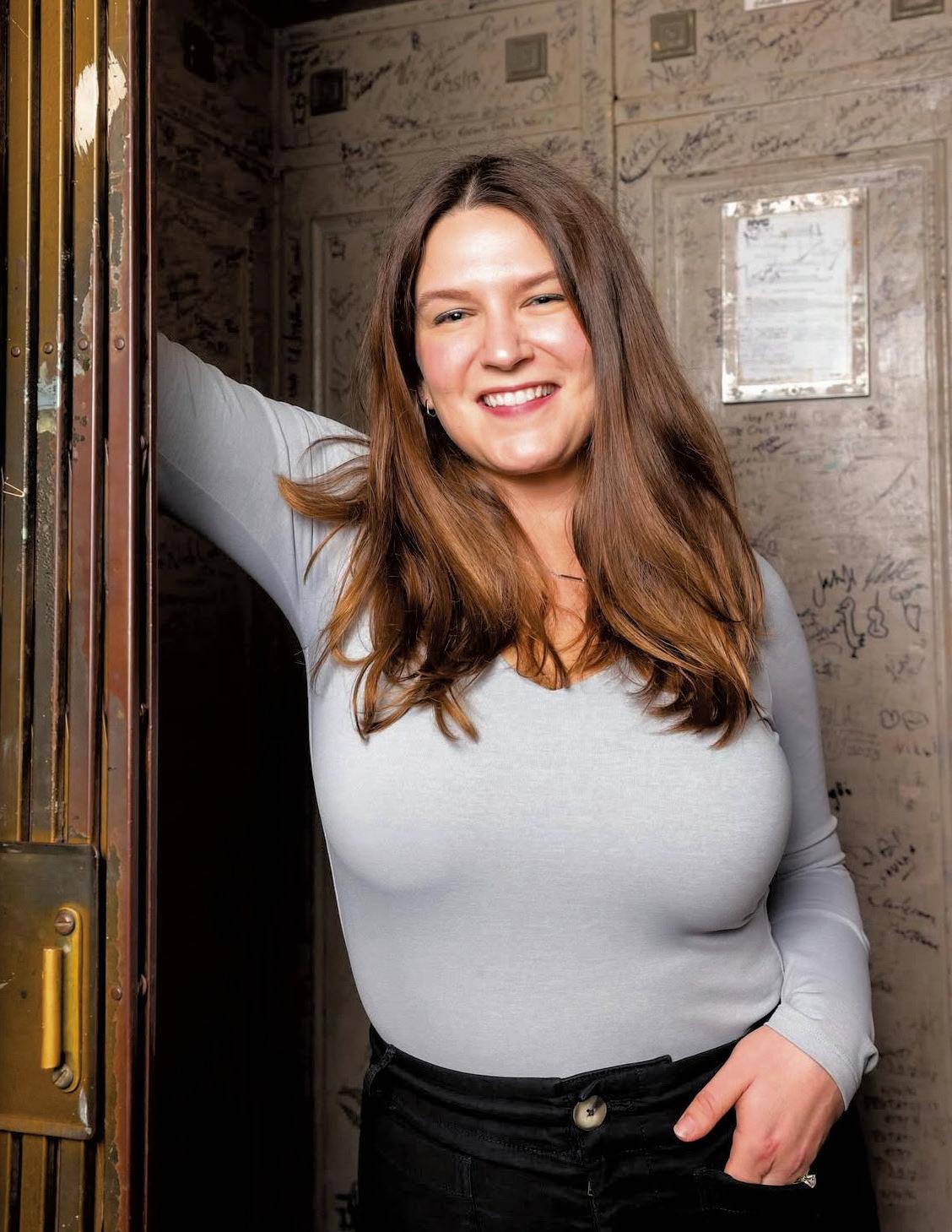
Originally coming out of the bustling Nashville scene, comedian LAURA PEEK has been on a steady ascent since she was named one of the “New Faces of Comedy” at the 2022 Just For Laughs Festival in Montréal and a comic “You Should and Will Know” by Vulture the same year. Now based in Los Angeles, the standup has appeared on “The Tonight Show Starring Jimmy Fallon” and toured with the likes of Marc Maron and Iliza Shlesinger, cracking up audiences with her witty, hyper-observational brand of comedy. She performs four sets at the Vermont Comedy Club in Burlington this Friday and Saturday, September 5 and 6.































































































































































DISABLED ACCESS & ADVOCACY OF THE RUTLAND AREA MONTHLY
ZOOM MEETING: Community members gather online to advocate for accessibility and other disability-rights measures. 11:30 a.m.-noon. Free. Info, 779-9021.
PUBLIC HEARING: Concerned citizens attend a community discussion of best management practices for neonicotinoids, hosted by the Vermont Agency of Agriculture, Food and Markets. Virtual option available. Brooks Memorial Library, Brattleboro, 5-7 p.m. Free. Info, pharmrules@vermont.gov.
VERMONT WOMENPRENEURS BIZ
BUZZ ZOOM: A monthly virtual networking meetup provides a space for female business owners to connect. 10-11 a.m. Free; preregister. Info, 870-0903.
SHARING HOPE
CONVERSATION SERIES: NAMI Vermont hosts a community-driven evening
focusing on mental health and accessing culturally competent care, led by volunteer facilitators from Black and African communities. Light refreshments provided. 20 Allen St., Burlington, 5:30-7 p.m. Free; preregister. Info, 876-7949, ext. 102.
FIBER NIGHT: Clever crafters make progress on projects while soaking up creativity and connection. Kellogg-Hubbard Library, Montpelier, 5:30 p.m. Free. Info, 223-3338.
YARN CRAFTERS GROUP: A drop-in meetup welcomes knitters, crocheters, spinners, weavers and other fiber artists. BYO snacks and drinks. Must Love Yarn, Shelburne, 5-7 p.m. Free. Info, 448-3780.
etc.
CHAMP MASTERS
TOASTMASTERS CLUB: Those looking to strengthen their speaking and leadership skills gain new tools. Virtual option available. Dealer. com, Burlington, 6-7:30 p.m. Free; preregister. Info, champmasterstm@gmail.com.
film
See what’s playing at local theaters in the On Screen section.
These community event listings are sponsored by the WaterWheel Foundation, a project of the Vermont band Phish.
LIST YOUR UPCOMING EVENT HERE FOR FREE!
All submissions must be received by Thursday at noon for consideration in the following Wednesday’s newspaper. Find our convenient form and guidelines at sevendaysvt.com/postevent
Listings and spotlights are written by Rebecca Driscoll Seven Days edits for space and style. Depending on cost and other factors, classes and workshops may be listed in either the calendar or the classes section. Class organizers may be asked to purchase a class listing.
Learn more about highlighted listings in the Magnificent 7 on page 13.
Stone Valley Arts, Poultney, 7 p.m. Free. Info, stonevalleyartscenter@ gmail.com.
‘HIGHEST 2 LOWEST’: Crowdfavorite cinema collaborators Denzel Washington and Spike Lee reunite for the first time in nearly 20 years for an interpretation of Akira Kurosawa’s classic noir thriller High and Low. Film House, Main Street Landing Performing Arts Center, Burlington, 4 & 7 p.m. $6-12. Info, 660-2600.
COMMUNITY COOKING: Helping hands join up with the nonprofit’s staff and volunteers to make a yummy meal for distribution. Pathways Vermont, Burlington, 6-8 p.m. Free. Info, 777-8691.
CHAIR YOGA: Waterbury Public Library instructor Diana Whitney leads at-home participants in gentle stretches supported by seats. 10 a.m. Free. Info, 244-7036.
language
SPANISH
CONVERSATION: Fluent and beginner speakers brush up on their vocabulario with a discussion led by a Spanish teacher. Presented by Dorothy Alling Memorial Library. 5-6 p.m. Free; preregister. Info, programs@damlvt.org.
music
HUNGER MOUNTAIN CO-OP
BROWN BAG SUMMER
CONCERT SERIES: Live music by local talent comes to the heart of downtown Montpelier, showcasing a diverse mix of artists and genres throughout the season. Christ Episcopal Church, Montpelier, noon-1 p.m. Free. Info, 223-9604.
JAZZ CAFÉ: Fans of the genre savor a showcase of live tunes performed by professional and up-and-coming Vermont musicians in an intimate setting.
MAMUSE: A duo rooted in folk and gospel traditions shares songs new and old with lush harmonies and heartfelt lyrics. Chandler Center for the Arts, Randolph, 7:30-9:30 p.m. $20-47. Info, 728-9878.
SCARLET ANNIE & THE INDIVIDUALS: An eclectic band brings to life a delicious mix of soul, rock and funk covers, as well as original songs. The Tillerman, Bristol, 5-8 p.m. Free; cash bar. Info, 643-2237.
CABOT CHEESE-E-BIKE TOUR:
Cyclists roll through a pastoral 20-mile trail ride, then enjoy artisan eats, including Vermont’s award-wining cheddar. Lamoille Valley Bike Tours, Johnson, noon-4 p.m. $120. Info, 730-0161.
GREAT VERMONT CORN MAZE: With a new design every year, this sprawling labyrinth presents a fresh challenge for fall-time revelers. Great Vermont Corn Maze, Danville, 9 a.m.-3 p.m. $1530; free for kids 4 and under. Info, 397-8574.
GUIDED SHORT TRAIL HIKE: Green Mountain Club staff lead hikers on a 0.7-mile trek, offering up useful tips and tricks along the way. Dogs welcome. Green Mountain Club Headquarters, Waterbury Center, 2-3 p.m. Free. Info, 244-7037.
‘BIG STUFF’: Acclaimed comedy duo Matt Baram and Naomi Snieckus deliver a signature mix of storytelling and improvisation in this hilarious and heartfelt exploration of what we leave behind. Sylvan Adams Theatre, Segal Centre for Performing Arts, Montréal, 7:30 p.m. $33-80. Info, 514-739-7944.
sports
GREEN MOUNTAIN TABLE TENNIS CLUB: Ping-Pong players swing their paddles in singles and doubles matches. Rutland Area Christian School, 7-9 p.m. Free for first two sessions; $30 annual membership. Info, 247-5913.
FIND MORE LOCAL EVENTS IN THIS ISSUE AND ONLINE: art
Find visual art exhibits and events in the Art section and at sevendaysvt.com/art. film
See what’s playing in the On Screen section. music + nightlife
Find club dates at local venues in the Music + Nightlife section online at sevendaysvt.com/music.
= ONLINE EVENT
= GET TICKETS ON SEVENDAYSTICKETS.COM
analysis of Kevin Adler and David Burnes’ When We Walk By. Fletcher Free Library New North End Branch, Burlington, 4-5:30 p.m. Free; preregister. Info, bshatara@burlingtonvt.gov.
EVE ALEXANDRA: A Vermont poet celebrates the release of her new book, None of Us in White, in conversation with fellow writer Sarah Audsley. Phoenix Books, Burlington, 7-8:30 p.m. Free. Info, 448-3350.
NANCY Y. LEVINE & RACHEL
LEVINE-SPATES: The motherdaughter coauthors launch their poignant nonfiction book, Light: A Mother and Daughter Memoir of Anorexia, in conversation with therapist Suzanne Adams. A signing follows. Pierson Library, Shelburne, 6:30-8 p.m. Free. Info, 985-5124.
SUMMER SPEAKER SERIES: KERSTIN LANGE: In “The Berlin Wall and the Iron Curtain: Germany 35 Years Later,” an author shares experiences and observations from her 2024 book, Phantom Border. Worthen Library, South Hero, 6:30 p.m. Free; preregister. Info, 372-6209.
GROW YOUR BUSINESS: Shelburne BNI hosts a weekly meeting for local professionals to exchange referrals and build meaningful connections. Connect Church, Shelburne, 8:30-10 a.m. Free. Info, 377-3422.
COMMUNITY PARTNERS DESK: Neighbors connect with representatives from the Burlington Electric Department and receive answers to questions about its services. Fletcher Free Library, Burlington, 3-5 p.m. Free. Info, 863-3403.
KNIT FOR YOUR NEIGHBORS: All ages and abilities knit or crochet hats and scarves for the South Burlington Food Shelf. Materials provided. South Burlington Public Library & City Hall, 2-5 p.m. Free. Info, 846-4140.
BTV CLEAN UP CREW: Good Samaritans dispose of needles, trash and other unwanted objects. BYO gloves encouraged. Top of Church St., Burlington, 7:30-10 a.m. Free. Info, 863-2345. etc.
COMMUNITY OPEN MIC NIGHT: Anything goes (well, almost) at this night of live entertainment in a supportive and welcoming environment. BYO food and beverages. Brookfield Old Town Hall, 6:30-8 p.m. Free. Info, abelisle2@ comcast.net.
NIGHT OWL CLUB: Astronomers and space exploration experts discuss the latest in extraterrestrial news with curious attendees. Presented by Fairbanks Museum & Planetarium. 7 p.m. Free. Info, 748-2372. NIGHTMARE VERMONT KICKOFF: Interested in volunteering with the beloved scream factory? Prospective performers learn more about what the spooky role entails. First Unitarian Universalist Society of Burlington, 7-9:30 p.m. Free. Info, info@ nightmarevermont.org.
fairs & festivals
ORLEANS COUNTY FAIR: The historic grandstand hosts harness races, tractor pulls and demolition derbies at an annual community celebration complete with agricultural displays, live entertainment, and a beer and wine garden. Orleans County Fairgrounds, Barton, 8:45 a.m. $18-22. Info, 525-3555.
film
See what’s playing at local theaters in the On Screen section.
‘ANIMAL KINGDOM 3D’: Audience members are guided through an exploration of stunning animal worlds, from frozen snowy forests to the darkest depths of the ocean. Dealer.com 3D Theater, ECHO Leahy Center for Lake Champlain, Burlington, noon, 2 & 4 p.m. $3-5 plus regular admission, $17-23; free for members and kids 2 and under. Info, 864-1848.
SPEAKERS BUREAU SERIES: REBECCA RUPP: In “Wolf Peaches, Poisoned Peas and Madame Pompadour’s Underwear,” an author and biologist unravels stories of how common garden vegetables got their names. Milton Grange, 7 p.m. Free. Info, 309-8665.
AMY KLINGER: An author leads local readers in a lively Q&A at this book club-style discussion of her Vermont-based novel, Ducks on the Pond. Bridgeside Books, Waterbury, 5:30-6:30 p.m. Free. Info, 244-1441.
BOOK DISCUSSION SERIES: Concerned community members share thoughtful dialogue about homelessness — and society’s response to it — at this four-part
KNITTING GROUP: Knitters of all experience levels get together to spin yarns. Latham Library, Thetford, 7 p.m. Free. Info, 785-4361.
WOODWORKING LAB: Visionaries create a project or learn a new skill with the help of mentors and access to tools and equipment in the makerspace. Patricia A. Hannaford Career Center, Middlebury, 5-8 p.m. $7.50. Info, 382-1012.
CURRENTLY SPEAKING SERIES:
POLLY MOTLEY: A professional dancer and choreographer leads attendees in a body-mind session titled “How to Move as Easily as Possible.” The Current, Stowe, 9-10 a.m. Free; preregister. Info, 253-8358.
‘EAST OF WALL’: Kate Beecroft’s 2025 drama set in the Badlands of South Dakota offers an authentic portrait of female resilience in the “New West,” inspired and played by the women who live it. Film House, Main Street Landing Performing Arts Center, Burlington, 7 p.m. $612. Info, 660-2600.
‘GONE GUYS’: Community members gather to watch a documentary film drawing on information from author Richard V. Reeves’ 2022 nonfiction book, Of Boys and Men. A discussion follows. Barre Opera House, 6-8 p.m. By donation. Info, 476-8188.
MOVIES ABOUT CHANGING THE WORLD SERIES: Cinephiles file in for a four-week showcase of Vermont-made documentaries centered on activism, including post-screening discussions with the filmmakers. Bellows Falls
Check out these family-friendly events for parents, caregivers and kids of all ages.
• Plan ahead at sevendaysvt.com/family-fun Post your event at sevendaysvt.com/postevent.
‘CHAMP: AMERICA’S LAKE MONSTER’: Museumgoers dive into the science and history of Vermont’s most iconic legend at this family-friendly exhibit featuring interactive games, a design studio, multimedia displays, a 30-foot sculpture and photo ops. ECHO Leahy Center for Lake Champlain, Burlington, 10 a.m.-5 p.m. Regular admission, $17-23; free for members and kids 2 and under. Info, 864-1848.
TEEN DROP-IN VOLUNTEERING: Helpful adolescents ages 12 to 18 stop by the library to lend a hand with tasks such as book inventorying, tidying or dusting, and preparing brochures and flyers. Snacks provided. Fletcher Free Library New North End Branch, Burlington, 4:30-5:30 p.m. Free. Info, 863-3403.
chittenden county
CONNECT & PLAY: A Theraplay-inspired drop-in group strengthens parent-child bonds through joyful structured activities. Brownell Library, Essex Junction, 10-10:30 a.m. Free. Info, 878-6956.
GAME ON!: Kids take turns collaborating with or competing against friends using Nintendo Switch on the big screen. Caregivers must be present to supervise children below fifth grade. South Burlington Public Library & City Hall, 5-6 p.m. Free. Info, 846-4140.
BABY & CAREGIVER MEETUP: Wiggly ones ages birth to 18 months play and explore in a calm, supportive setting while adults relax and connect on the sidelines. Jaquith Public Library, Marshfield, 10:3011:30 a.m. Free. Info, 426-3581.
FAMILY CHESS CLUB: Players of all ages and abilities test their skills with instructor Robert and peers. KelloggHubbard Library, 2nd Floor, Children’s Library, Montpelier, 3:30-5 p.m. Free. Info, 223-3338.
mad river valley/ waterbury
TEEN QUEER READS: LGBTQIA+ and allied youths get together each month to read and discuss ideas around gender, sexuality and identity. Waterbury Public Library, 6-7 p.m. Free; preregister. Info, 244-7036.
randolph/royalton
PLAYING FIELDS: The Flynn presents a back-to-school party for students, families and neighbors, featuring a raucous street show by Compagnie OFF. See calendar spotlight. Sharon Elementary School, 6 p.m. Free. Info, 863-5966.

The Flynn takes family-friendly entertainment on the road with its fantastical back-to-school project Playing Fields, traveling to venues all around the Green Mountain State. The rollicking annual affair makes stops at school districts from Sharon to Hyde Park and invites neighbors to reconnect, reflect and bond in a celebration of community ties. This year, France’s Compagnie OFF brings its wacky and whimsical street show Les Girafes to Vermont viewers. Expect a playful wonderland replete with circus arts, vaudeville tropes, clowns and a towering herd of crimson giraffes, all backed by music and stellar special effects. C’est magnifique!
PLAYING FIELDS
Wednesday, September 3, through Saturday, September 6; and Tuesday, September 9, 6 p.m.; and Wednesday, September 10, 4 p.m., at various locations statewide. See website for additional dates. Free. Info, 863-5966, flynnvt.org.
‘CHAMP: AMERICA’S LAKE MONSTER’: See WED.3.
BABY & ME CLASS: Parents and their infants ages birth to 1 explore massage, lullabies and gentle movements while discussing the struggles and joys of parenthood. Greater Burlington YMCA, 9:45-10:45 a.m. $10; free for members. Info, 862-9622.
chittenden county
MUSIC & MOVEMENT WITH MISS EMMA: Little ones and their caregivers use song and dance to explore the changing seasons and celebrate everyday joys. South Burlington Public Library & City Hall, 10:30-11 a.m. Free. Info, 846-4140.
PRESCHOOL MUSIC WITH LINDA BASSICK: The singer and storyteller extraordinaire guides wee ones ages birth to 5 in indoor music and movement. Dorothy Alling Memorial Library, Williston, 10:30-11 a.m. Free. Info, 878-4918.
PRESCHOOL PLAY TIME: Pre-K patrons play and socialize after music time. Dorothy Alling Memorial Library, Williston, 11-11:30 a.m. Free. Info, 878-4918.
POKÉMON CLUB: I choose you, Pikachu! Elementary and teenage fans of the franchise — and beginners, too — trade cards and play games. Kellogg-Hubbard Library, Montpelier, 3:30-5 p.m. Free. Info, 223-3338.
STORY TIME: Kids and their caregivers meet for stories, songs and bubbles. Kellogg-Hubbard Library, 2nd Floor, Children’s Library, Montpelier, 10:30-11 a.m. Free. Info, 223-3338.
PLAYING FIELDS: See WED.3. Lamoille Union Middle & High School, Hyde Park. WEE ONES PLAY TIME: Caregivers bring kiddos under 4 to a new sensory learning experience each week. Morristown Centennial Library, Morrisville, 10 a.m. Free. Info, 888-3853.
mad river valley/ waterbury
BUSY BEES PLAYGROUP: Blocks, toys, books and songs engage little ones 24 months and younger. Waterbury Public Library, 10-11:30 a.m. Free. Info, 244-7036.
middlebury area
SHIPWRECK TOURS: What lies beneath? Spectators view real-time footage of a sunken craft transmitted from a robotic camera. Lake Champlain Maritime
programs for the fall, play games and eat snacks. Brownell Library, Essex Junction, 4-5 p.m. Free. Info, 878-6956.
BASEMENT TEEN CENTER: A drop-in hangout session welcomes kids ages 12 to 17 for lively games, arts and crafts, and snacks. Kellogg-Hubbard Library, Montpelier, 2-8 p.m. Free. Info, 223-3338. LEGO CLUB: Budding builders create geometric structures with snap-together blocks. Kellogg-Hubbard Library, Montpelier, 3:30-5 p.m. Free. Info, 223-3338.
STORY TIME & PLAYGROUP: Participants ages 5 and under enjoy themed science, art and nature activities. Jaquith Public Library, Marshfield, 10:30 a.m. Free. Info, 426-3581.
STORY TIME: Preschoolers take part in tales, tunes and playtime. Latham Library, Thetford, 11 a.m. Free. Info, 785-4361.
PLAYING FIELDS: See WED.3. Hazen Union School, Hardwick.
PRESCHOOL STORY TIME: Youngsters and their caregivers delight in beautiful books, silly songs, creative crafts and unplugged play in the library’s cozy children’s room. Craftsbury Public Library, Craftsbury Common, 10 a.m. Free. Info, 586-9683.
‘CHAMP: AMERICA’S LAKE MONSTER’: See WED.3.
Museum, Vergennes, 10 a.m.-noon. $2545; preregister. Info, 475-2022.
ACORN CLUB STORY TIME: Youngsters 5 and under play, sing, hear stories and color. St. Johnsbury Athenaeum, 10:15-10:45 a.m. Free. Info, 745-1391.
‘CHAMP: AMERICA’S LAKE MONSTER’: See WED.3.
KIDS HOP: Little art lovers get creative alongside their caregivers with crafty activities ranging from a Design a Beanie contest to live screen printing. South End Arts District, Burlington. Free. Info, outreach@seaba.com.
county
LEGO BUILDERS: Mini makers explore and create new worlds with stackable blocks. Recommended for ages 6 and up. South Burlington Public Library & City Hall, 3-4:30 p.m. Free. Info, 846-4140.
MUSIC TIME: Patrons ages birth to 5 sing and dance with legendary local musician Linda Bassick. Brownell Library, Essex Junction, 10:30-11 a.m. Free. Info, 878-6956.
TEEN ADVISORY GROUP: Students in grades 6 through 12 gather to plan
AIKIDO FOR KIDS WORKSHOP: MARTIAL ARTS & PEACEFUL CONFLICT RESOLUTION: Students ages 7 to 12 discover the power of a noncompetitive Japanese martial art that emphasizes falling skills, pins and throws rather than strikes and kicks. Aikido of Champlain Valley, Burlington, 11 a.m.-noon. Free. Info, bpincus@burlingtonaikido.org.
BCA FAMILY MAKE-N-TAKE: Little artists pop by the center’s Kids Hop craft station to create their own masterpiece. BCA Studios, Burlington, 10 a.m.-1 p.m. Free. Info, 865-7166.
KIDS HOP: See FRI.5.
SPLASH DANCE: Kiddos soak up sunshine and fun in the fountain while DJs spin family-friendly tracks. Burlington City Hall Park, 2:30-4:30 p.m. Free. Info, eindorato@burlingtoncityarts.org.
PLAYING FIELDS: See WED.3. Essex High School, Essex Junction.
BABY BRUNCH: Infants make new friends while caregivers enjoy tasty treats and find out more about the library’s “1000 Books Before Kindergarten” program. Brownell Library, Essex Junction, 10:3011:30 a.m. Free. Info, 878-6956.
barre/montpelier
MEET TEDDY THE THERAPY DOG: Animal lovers pop by the library to make friends with a very good boy, learn about his therapy duties and see some of astounding tricks. Kellogg-Hubbard Library, 2nd Floor, Children’s Library, Montpelier, noon12:45 p.m. Free. Info, 223-3338.
Opera House, 6:30 p.m. $18-54. Info, 463-3964, ext. 1120.
‘OCEAN PARADISE 3D’: Viewers travel to the far reaches of the Pacific Ocean for a glimpse into the pristine environments vital to our planet’s health. Dealer.com 3D Theater, ECHO Leahy Center for Lake Champlain, Burlington, 11 a.m., 1 & 3 p.m. $3-5 plus regular admission, $17-23; free for members and kids 2 and under. Info, 864-1848.
‘SEA MONSTERS 3D: A
PREHISTORIC ADVENTURE’: Footage of paleontological digs from around the globe tells a compelling story of scientists working as detectives to answer questions about an ancient and mysterious ocean world. Dealer.com 3D Theater, ECHO Leahy Center for Lake Champlain, Burlington, 10:30 a.m., 12:30, 2:30 & 4:30 p.m. $3-5 plus regular admission, $17-23; free for members and kids 2 and under. Info, 864-1848.
‘SPACE: THE NEW FRONTIER
3D’: Viewers witness history in the making — from launching rockets without fuel to building the Lunar Gateway — in this 2024 documentary narrated by Chris Pine. Dealer.com 3D Theater, ECHO Leahy Center for Lake Champlain, Burlington, 11:30 a.m., 1:30 & 3:30 p.m. $3-5 plus regular admission, $17-23; free for members and kids 2 and under. Info, 864-1848.
food & drink
MOMOS WITH THE MONKS: Foodies join up with monks visiting from the Gaden Shartse Monastery to craft — and consume — steamed, filled dumplings. Bristol Village Cohousing, 6-7:30 p.m. $40; preregister. Info, rachelbaird9@gmail.com.
ST. ALBANS BAY FARMERS
MARKET: Local vendors’ art and crafts, live music, and a wide array of eats spice up Thursday afternoons in the region. St. Albans Bay Park, 4:30-7:30 p.m. Free. Info, 524-7589.
VERGENNES FARMERS MARKET: Locavores delight in handmade products, live music, hot food and a new beer tent. Vergennes City Park, 3-7 p.m. Free. Info, vergennesfm@gmail.com.
games
BRIDGE CLUB: A lively group plays a classic, tricky game in pairs. Waterbury Public Library, 12:304:30 p.m. Free. Info, 522-3523.
DUPLICATE BRIDGE GAMES: Snacks and coffee fuel bouts of a classic card game. Burlington Bridge Club, Williston, 12:30-4 p.m. $6. Info, 872-5722.
WEEKLY CHESS FOR FUN: Players of all ability levels face off and learn new strategies. United Community Church, St. Johnsbury, 5:30-9 p.m. Free; donations accepted. Info, lafferty1949@gmail.com.
health & fitness
COMMUNITY
MINDFULNESS: Volunteer coach Andrea Marion guides
attendees in a weekly practice for stress reduction, followed by a discussion and Q&A. 5:30-6:30 p.m. Free; preregister. Info, andreamarion193@gmail.com.
language
MANDARIN CONVERSATION
CIRCLE: Volunteers from Vermont Chinese School help students learn or improve their fluency. South Burlington Public Library & City Hall, 11 a.m.-noon. Free. Info, 846-4140.
lgbtq
POP-UP HAPPY HOUR: Locals connect over drinks at a speakeasy-style bar, hosted by OUT in the 802. Lincolns, Burlington, 5:30-7 p.m. Free. Info, 860-7812.
music
BEN & JERRY’S CONCERTS ON THE GREEN: VANCE JOY:
SOLD OUT. The Australian singer-songwriter best known for his 2013 alt-indie hit “Riptide” takes the stage for an unforgettable performance. Shelburne Museum, 6:30 p.m. $59.50-63.50; free for kids 12 and under. Info, 652-0777.
FEAST & FIELD: TIMBERMASH:
A bluegrass-inspired band from the Upper Valley delivers a high-energy performance packed with dynamic harmonies, driving bass lines and heartfelt solos. Fable Farm, Barnard, 6 p.m. $5-25. Info, 234-1645.
THE GRIFT: The beloved local band performs an end-of-summer show for the ages, backed by beautiful views and Two Son’s Pizza. Tälta Lodge Bluebird, Stowe, 5-8 p.m. $15. Info, 253-7525.
JOCELYN PETTIT & ELLEN GIRA:
An award-winning fiddle and cello duo delights listeners with nuanced interplay, dazzling vocal harmonies, lively step dancing and French Canadian foot percussion. York Street Meeting House, Lyndon, 7-9 p.m. $15-20. Info, 748-2600.
MUSIC IN THE VINEYARD SUMMER CONCERT SERIES: PHIL ABAIR BAND: A Vermont five-piece gets toes a-tappin’ with catchy hits while local food trucks serve up tasty treats. Snow Farm Vineyard, South Hero, 6-8 p.m. Free. Info, 372-9463.
ON THE DOOR RADIO: A laid-back summer series features tantalizing food-truck fare and a rotating pair of local DJs backed by sunset cocktail vibes. Coal Collective, Burlington, 5-9 p.m. Free. Info, info@thepineryvt.com.
THURSDAYS BY THE LAKE: ALL NIGHT BOOGIE BAND: A Burlington blues, soul and rock outfit cooks up lively tunes that make downtown listeners shake their hips. Union Station, Burlington, 5:30-7:30 p.m. Free. Info, 540-3018.
outdoors
E-BIKE & BREW TOUR: Pedal lovers cycle through scenic trails and drink in the views with stops at four local breweries. Lamoille

The University of Vermont School of the Arts Faculty Spotlight event, “UnSettled Domains,” inspires attendees of all stripes at Cohen Hall for the Integrative Creative Arts in Burlington. Choreographer and professor Paul Besaw leads local collective Dance Tramp in a full-length hybrid dance and theater show, with help from out-ofstate colleagues. The contemplative original work explores the idea of space — and how human beings claim it — through three distinct yet interconnected two-person vignettes. The powerful performance calls upon audience members to pause and reflect on the importance of mutually occupied places and collective atmospheres in their own communities.
Friday, September 5, 7:30 p.m., and Saturday, September 6, 5 & 7:30 p.m., at the University of Vermont, Cohen Hall for the Integrative Creative Arts, in Burlington. $5-20. Info, pbesaw@uvm. edu, events.uvm.edu.
Valley Bike Tours, Johnson, 11 a.m.4 p.m. $85. Info, 730-0161.
GREAT VERMONT CORN MAZE: See WED.3.
HULA STORY SESSIONS: FOUR PINES FUND: Panelists share personal and professional insights into the factors that drive suicide and offer innovative pathways toward recovery. Hula, Burlington, 3 p.m. Free; preregister. Info, 540-8153.
TALKING ARCHAEOLOGY: ‘ARCHAEOLOGY OF CANAL BOATS’: Experts share details about Lake Champlain’s history and dive deep into the discoveries, artifacts and unique stories they’ve uncovered. Lake Champlain Maritime Museum, Vergennes, 7-8 p.m. Free; preregister. Info, 475-2022.
‘SAVING TINDERELLA’: Rough & So Ready theater company mounts
an original tragicomedy about one millennial’s search for love in the world of online dating. Capital City Grange, Berlin, 7-9:30 p.m. $15-20 sliding scale. Info, 498-7927.
words
GEOFFREY DOUGLAS: An author reads selections from his new novel, Love in a Dark Place, set amid the decadence and violence of Atlantic City in the 1980s. The Norwich Bookstore, 7 p.m. Free. Info, 649-1114.
JUDITH YARNALL: A Vermont poet celebrates the release of her new collection, The Central Eye, exploring the luminous small moments embedded in everyday life. Phoenix Books, Burlington, 7-8:30 p.m. Free. Info, 448-3350.
FIRST FRIDAY FIBER GROUP: Fiber-arts fans make progress
of Vermont, Cohen Hall for the Integrative Creative Arts, Burlington, 7:30 p.m. $5-20. Info, pbesaw@uvm.edu.
etc.
QUEEN CITY GHOSTWALK: DARKNESS FALLS TOUR: Paranormal historian Holli Bushnell highlights haunted happenings throughout Burlington. 199 Main St., Burlington, 8 p.m. $25. Info, mail@ queencityghostwalk.com.
ORLEANS COUNTY FAIR: See THU.4.
See what’s playing at local theaters in the On Screen section.
‘ANIMAL KINGDOM 3D’: See THU.4.
‘HIGH AND LOW’: Akira Kurosawa’s masterful 1963 crime drama follows an executive of a shoe company who becomes a victim of extortion. The Screening Room @ VTIFF, Main Street Landing Performing Arts Center, Burlington, 7 p.m. $6-12. Info, 660–2600.
‘OCEAN PARADISE 3D’: See THU.4. ‘SEA MONSTERS 3D: A PREHISTORIC ADVENTURE’: See THU.4.
‘SPACE: THE NEW FRONTIER 3D’: See THU.4.
WRJOLLYWOOD II: ‘WRJOLLYWOOD GOES TO SPACE!’: Area film buffs settle in for an outdoor screening of eclectic, hyperlocal short films. Lyman Point Park, White River Junction, 8-9 p.m. Free; preregister. Info, 295-6688.
RICHMOND FARMERS MARKET: An open-air marketplace complete with live music connects cultivators and fresh-food browsers. Volunteers Green, Richmond, 3-6:30 p.m. Free; cost of goods. Info, rfmmanager@gmail.com.
on projects while chatting over snacks. GRACE, Hardwick, 10:30 a.m.-1:30 p.m. Free; donations accepted. Info, info@ruralartsvt.org.
dance
ART HOP: BCA DANCE PARTY: The energy of the annual festival continues after the sun goes down with beats spun by DJ Taka, funky lighting and groovy projections by Dan Ribaudo. BCA Studios, Burlington, 8-11 p.m. Free. Info, 865-7166.
LINE DANCING: Instructor Patti Bourbeau gets bodies in sync to the beat of pop and country songs. BYO water bottle. Gihon Valley Hall, Hyde Park, 6 p.m. $10. Info, gihonvalleyhall@gmail.com.
‘UNSETTLED DOMAINS’: University of Vermont faculty member Paul Besaw leads performance group Dance Tramp in original choreography exploring the concepts of space and people-place relationships. See calendar spotlight. University
DUPLICATE BRIDGE GAMES: See THU.4, 10 a.m.-1:30 p.m.
MAH-JONGG: Tile traders of all experience levels gather for a rousing game. Dorothy Alling Memorial Library, Williston, 1-3 p.m. Free. Info, 878-4918.
THE ARTHRITIS FOUNDATION
EXERCISE PROGRAM: Pauline Nolte leads participants in a low-impact, evidenced-based program that builds muscle, keeps joints flexible and helps folks stay fit. Waterbury Public Library, 10:30-11:30 a.m. Free; preregister. Info, 241-4840.
GUIDED MEDITATION ONLINE: Dorothy Alling Memorial Library invites attendees to relax on their lunch breaks and reconnect with their bodies. Noon-12:30 p.m. Free; preregister. Info, programs@ damlvt.org.
MAITREYA BUDDHA
EMPOWERMENT: Monks
visiting from the Gaden Shartse Monastery lead community
members in guided meditation at this “collective heart healing” ceremony. Holley Hall, Bristol, 6 p.m. $20 suggested donation. Info, rachelbaird9@gmail.com.
MINDFULNESS MEDITATION:
Neighbors gather for an informal session combining stimulating discussion, sharing and sitting in silence. Pathways Vermont, Burlington, 1:15-2:15 p.m. Free. Info, 777-8691.
language
ITALIAN CONVERSATION:
Advanced and intermediate speakers practice their skills at a conversazione based on the “News in Slow Italian” podcast. Pickering Room, Fletcher Free Library, Burlington, noon-1:30 p.m. Free. Info, 863-3403.
lgbtq
RPG NIGHT: Members of the LGBTQ community get together weekly for role-playing games such as Dungeons & Dragons and Everway. Rainbow Bridge Community Center, Barre, 5:308:30 p.m. Free. Info, 622-0692.
music
ANA GUIGUI: An acclaimed pianist and vocalist entertains listeners with a wide variety of styles and genres. The Brandon Inn, 7-8 p.m. Free. Info, 747-8300.
CONCERTS IN THE COURTYARD:
Music aficionados of all ages tune in to a weekly summer series featuring live outdoor performances by noteworthy talent. See benningtonmuseum.org for lineup. Bennington Museum, 5-7 p.m. Free. Info, 447-1571.
FRIDAY NIGHT MUSIC: New vinos, hopping live tunes, tasty food truck provisions and picnic blankets make for a relaxing evening among the vines. See lincolnpeakvineyard.com for lineup. Lincoln Peak Vineyard, New Haven, 6-8 p.m. Free. Info, 388-7368.
MIDDLEBURY CARILLON SERIES: Bells ring out across the campus in weekly performances by a rotating cast of extraordinary carillonneurs. See middlebury. edu for lineup. Middlebury Chapel, 6 p.m. Free. Info, 443-3168. outdoors
CABOT CHEESE-E-BIKE TOUR: See WED.3.
E-BIKE & BREW TOUR: See THU.4. GREAT VERMONT CORN MAZE: See WED.3. tech
MORNING TECH HELP: Experts answer questions about phones, laptops, e-readers and other devices in one-on-one sessions. South Burlington Public Library & City Hall, 10 a.m.-1 p.m. Free; preregister. Info, 846-4140. theater
‘SAVING TINDERELLA’: See THU.4.
PUBLIC TRUTH-TELLING
SESSION: The Vermont Truth and Reconciliation Commission invites marginalized locals impacted by state systems — past or present — to share their stories. U-32 High School, Montpelier, 9 a.m.-2 p.m. Free. Info, vtrc@ vermont.gov.
bazaars
MAKER’S MARKET: Shoppers discover unique, handmade goods and meet the talented people behind them at a weekly showcase of local artists, bakers, distillers and crafters. Addison West, Waitsfield, 10 a.m.-2 p.m. Free; cost of items. Info, 528-7951.
SISTERHOOD CAMPFIRE: Women and genderqueer folks gather in a safe and inclusive space to build community through journaling, storytelling, gentle music and stargazing. Leddy Park, Burlington, 7-9 p.m. Free. Info, sisterhoodcampfire@gmail.com.
dance
BERLIN CONTRA DANCE: Dancers of all ages and abilities learn at a gathering that encourages joy, laughter and friendship. Bring clean, soft-soled shoes. See website for callers and bands. Capital City Grange, Berlin, 8-11 p.m. $520 sliding scale. Info, 225-8921.
‘UNSETTLED DOMAINS’: See FRI.5, 5 & 7:30 p.m. etc.
FRIGHT BY FLASHLIGHT: Adventurous attendees become experts in vintage ghost-hunting techniques and scholars of paranormal lore. Ages 12 and up. Lakeview Cemetery, Burlington, 7 p.m. $25; preregister. Info, 413-426-7572.
Find even more local events in this newspaper and online: art
Find visual art exhibits and events in the Art section and at sevendaysvt.com/art. film
See what’s playing at theaters in the On Screen section.
music + nightlife
Find club dates at local venues in the Music + Nightlife section online at sevendaysvt.com/ music.
Learn more about highlighted listings in the Magnificent 7 on page 13.
= ONLINE EVENT =
LUCKY DUCKY DAYS: Attendees “adopt” rubber duckies and don quacky attire for a parade around the park, followed by a drawing for fabulous cash prizes. Proceeds benefit the Rotary Club of St. Albans. Taylor Park, St. Albans, 10 a.m. $10-50. Info, 309-0693.
NIGHTMARE VERMONT KICKOFF: See THU.4. Fletcher Free Library, Burlington, 3-5:30 p.m.
SAND MANDALA CEREMONY: Community members observe the activation, dissolution and distribution of a sand mandala created by monks visiting from the Gaden Shartse Monastery. Holley Hall, Bristol, 3 p.m. Free; donations accepted. Info, rachelbaird9@gmail.com.
EAST BARNARD LINEN FAIR: Flax gets its moment in the sun at this annual harvest jubilee, featuring spinning, weaving and indigo paint-making demonstrations, as well as crafts, live music and tasty treats. East Barnard Community Club, 10 a.m.-4 p.m. Free. Info, admin@greenmountainlinen. com.
JAM FOR THE PARKS: Music lovers party down to a lineup of beloved acts, including Moondogs, Zach Nugent’s Dead Set, and the Rock and Roll Playhouse. Partial proceeds benefit Vermont Parks Forever. Waterbury Center State Park, noon-7 p.m. Various prices; preregister. Info, 253-2065.
NEW HOME FAIR: Looking for new digs? Attendees receive a wealth of information from industry experts at this exhibition of building and design. Plainfield Town Hall Opera House, 2-4:30 p.m. Free; preregister. Info, 828-2733.
ORLEANS COUNTY FAIR: See THU.4.
PEACHAM FARMERS MARKET: APPLES & ARTS: Autumn admirers celebrate the start of the season with pressing demos, fresh cider, live music and an apple pie contest. Peacham Farmers Market, 1-4 p.m. Free. Info, 309-1947.
SEPTEMBERFEST: The Poultney Area Chamber of Commerce hosts an annual arts and music extravaganza complete with painting demos, live performances, an artisan market, and food and drink specials. Downtown Poultney, 10 a.m. Free. Info, 294-3220.
film
See what’s playing at local theaters in the On Screen section.
‘ANIMAL KINGDOM 3D’: See THU.4.
‘DO THE RIGHT THING’: Spike Lee’s 1989 dark comedy zooms in on the Bedford-Stuyvesant section of Brooklyn, where hate and bigotry explode into violence on a hot summer day. The Screening Room @ VTIFF, Main Street Landing Performing Arts Center, Burlington, 7 p.m. $6-12. Info, 660–2600.
‘NO ONE CARES ABOUT CRAZY PEOPLE’: Bob Odenkirk narrates


this riveting mental health documentary inspired by Vermont author Ron Powers’ acclaimed book of the same name. A discussion with the author and director follows. See calendar spotlight. Town Hall Theater, Middlebury, 2 p.m. $5-17. Info, 382-9222.
‘OCEAN PARADISE 3D’: See THU.4.
‘SEA MONSTERS 3D: A PREHISTORIC ADVENTURE’: See THU.4.
‘SPACE: THE NEW FRONTIER 3D’: See THU.4.
food & drink
BURLINGTON FARMERS MARKET:
Dozens of stands overflow with seasonal produce, flowers, artisanal wares and prepared foods. 345 Pine St., Burlington, 9 a.m.-2 p.m. Free. Info, 560-5904.
CHAMPLAIN ISLANDS FARMERS
MARKET: More than 35 vendors showcase their farm-fresh veggies, meats, eggs, flowers, honey and other goodies, backed by sets of live local music. Champlain Islands Farmers Market, Grand Isle, 10 a.m.-2 p.m. Free. Info, champlainislandsfarmersmkt@ gmail.com.
MARSHFIELD FARMERS MARKET:
Locavores find much to do at an outdoor offering replete with live music by the Vermont Fiddle Orchestra, a foraged flower arrangement workshop with Sarah Graves and a canning supply resource swap. Jaquith Public Library, Marshfield, 10 a.m.-1 p.m. Free. Info, 426-3581.
NORTHWEST FARMERS MARKET:
Locavores stock up on produce, preserves, baked goods, and arts and crafts. Taylor Park, St. Albans, 9 a.m.-2 p.m. Free. Info, 242-2729.
ST. JOHNSBURY FARMERS
MARKET: Growers, bakers, makers and crafters gather weekly at booths centered on local eats. Pearl St. & Eastern Ave., St. Johnsbury, 9 a.m.-1 p.m. Free. Info, cfmamanager@gmail.com.
games
CHESS CLUB: All ages and abilities face off and learn new strategies. South Burlington Public Library & City Hall, 11 a.m.-2 p.m. Free. Info, 846-4140.
D&D & TTRPG GROUP: Fans of Dungeons & Dragons and other tabletop role-playing games embark on a new adventure with a rotating cast of game masters. Virtual option available. Waterbury Public Library, 1-5 p.m. Free. Info, judi@ waterburypubliclibrary.com.
MAH-JONGG: Tile traders face off in the ancient Chinese game often compared to gin rummy and poker. Waterbury Public Library, 10:30 a.m.-12:30 p.m. Free; preregister. Info, judi@ waterburypubliclibrary.com.
AIKIDO AND THE POWER OF HARMONY: MARTIAL ARTS
WORKSHOP: Adults and teens discover how flowing, circular movements cultivate core strength, fitness and resilience. Wear loose, comfortable clothing. Aikido of
Champlain Valley, Burlington, 1:302:45 p.m. Free; preregister. Info, bpincus@burlingtonaikido.org.
HIT THE TRAIL: Participants lace up their running shoes or climb onto their bicycles to raise funds for Central Vermont Council on Aging. Oxbow Park, Morrisville, 9 a.m.-1 p.m. $30; free for kids 12 and under; preregister. Info, 479-0531.
language
AMERICAN SIGN LANGUAGE CLASS: All skill levels gather to practice the system of communication using visual gestures. Lawson’s Finest Liquids, Waitsfield, 4-5 p.m. Free. Info, 496-4677.
lgbtq
LGBTQIA+ CANCER EXPERIENCES STORY LISTENING WORKSHOP: Participants share their experiences in a conversational workshop focused on sharing and listening without judging or offering advice. Refreshments provided. University of Vermont, Burlington, 10 a.m.-4 p.m. Free; preregister. Info, qtcancer@uvm.edu.
music
ANA GUIGUI: See FRI.5.
BANDWAGON SUMMER SERIES: CROCODILE RIVER MUSIC:
An internationally acclaimed ensemble featuring artists from Mali, Senegal, Guinea and other countries weaves together the vibrant rhythms, dances and stories of Africa. Living Memorial Park, Brattleboro, 5 p.m. $24-28; free for kids under 12. Info, 387-0102.
COOLER IN THE MOUNTAINS
CONCERT SERIES: Top regional and national acts delight audience members of all stripes at a weekly summer offering backed by unparalleled views. See killington.com for lineup. K-1 Lodge, Killington, 3-5:50 p.m. Free. Info, 800-621-6867.
RAD FOLK SONGS: Fans of the genre receive a booklet with chords, lyrics and historical context, then sing along with the traditional tunes. Peace & Justice Center, Burlington, 2-4 p.m. Free. Info, 863-2345.
ROGER CLARK MILLER: The acclaimed multi-instrumentalist of Mission of Burma and Alloy Orchestra performs compositions from his newest album, Curiosity for Solo Electric Guitar Ensemble Union Hall, Newfane, 7 p.m. By donation. Info, 257-0124.
SUMMER MUSIC SERIES: MANGO JAM: An energizing zydeco band takes the stage for a dynamic performance of upbeat tunes, while attendees fill their tanks with light fare and succulent desserts. Meeting House on the Green, East Fairfield, 5-7 p.m. $10; free for children under 12. Info, 827-6626.
AUTUMN BIRD-WATCHING: The Green Mountain Audubon Society invites avian enthusiasts to observe flying, feathered friends before they depart for warmer climes. Cold Hollow Sculpture Park, Enosburg Falls, 8-10 a.m. Free; preregister. Info, info@ coldhollowsculpturepark.com.
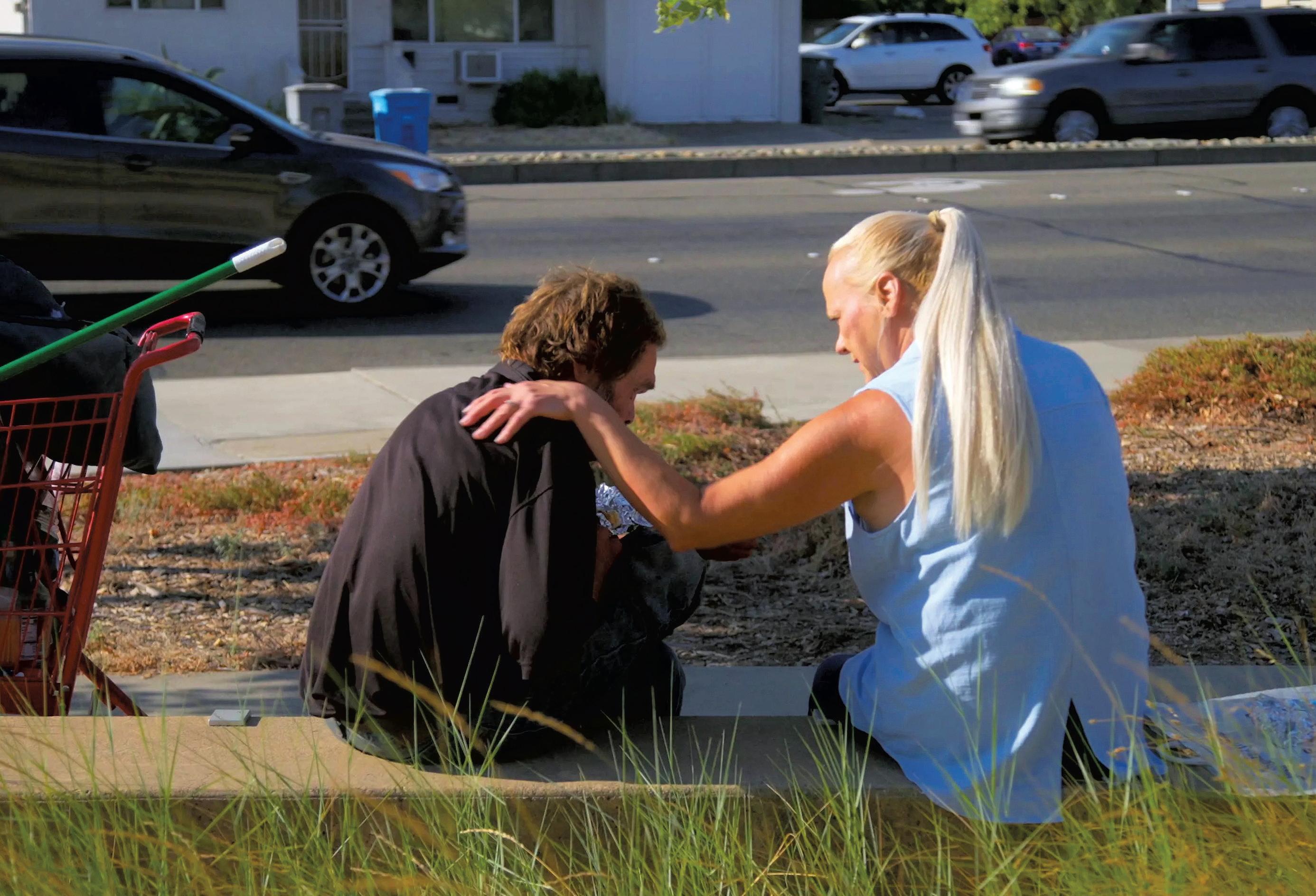
Middlebury’s Town Hall Theater presents the Vermont premiere of director Gail Freedman’s riveting documentary No One Cares About Crazy People, based on Pulitzer Prize-winning local author Ron Powers’ book of the same name. The timely film — narrated by Bob Odenkirk of “Breaking Bad” fame — immerses viewers in the complex world of individuals with severe psychiatric disorders, shining a light on the nation’s growing mental health crisis and the inadequate systems in place to address it. Backed by a poignant soundtrack from Wilco’s Jeff Tweedy, the feature employs a hybrid narrative style to combine one family’s heartbreaking memoir with America’s social history. Post-screening, Freedman and Powers engage the audience in a powerful discussion.
‘NO ONE CARES ABOUT CRAZY PEOPLE’ Saturday, September 6, 2 p.m., at Town Hall Theater in Middlebury. $5-17. Info, 382-9222, townhalltheater.org.
CABOT CHEESE-E-BIKE TOUR: See WED.3.
E-BIKE & BREW TOUR: See THU.4. GREAT VERMONT CORN MAZE: See WED.3.
‘BIG STUFF’: See WED.3.
NEW MEMBER ORIENTATION: Curious creatives and multimedia enthusiasts get a tour of the facilities and check out available gear. The Media Factory, Burlington, 1-3 p.m. Free; donations accepted; preregister. Info, 651-9692.
KELLY BRUSH RIDE: Handcyclists and bikers pedal for a purpose through the Champlain Valley to raise funds for the Kelly Brush Foundation. Barbecue, live music and family activities follow. McCullough Student Center, Middlebury College, 7:30,
9:30, 9:45 & 10:30 a.m. Various prices; preregister. Info, sarah@ kellybrushfoundation.org.
theater
‘SAVING TINDERELLA’: See THU.4. words
POETRY TRIBUTE: Sundog Poetry invites lit lovers to a special evening spent sharing works in remembrance of late cofounder Mary Jane Dickerson. Community Center in Jericho, 4 p.m. Free. Info, 585-8502.
SUMMER READING BINGO PARTY: Bookworms gather for drinks and snacks, good company, and the chance to tell everyone what they read this summer. The Norwich Bookstore, 5-7 p.m. Free. Info, 649-1114.
USED BOOK SALE: Lit lovers peruse a wide array of like-new titles to replenish their “to read” stack. Proceeds benefit Ilsley Public Library. Middlebury United
Methodist Church, 10 a.m.-2 p.m. Free; cost of books; cash or check only. Info, 388-4095. WRITE NOW!: Wordsmiths of all experience levels hone their craft in a supportive and critique-free environment. Kellogg-Hubbard Library, Montpelier, 10 a.m.-noon. Free. Info, 223-3338.
MY DENTIST’S SON: Participants gather to swap mystical experiences at a facilitated storytelling circle. Ferrisburgh Town Offices & Community Center, 3-4:30 p.m. Free. Info, connect@mydentistsson.com.
crafts
ART PUP BEAD NECKLACEMAKING PAWTY: Creative crafters use silicone beads to make wearable jewelry for their
beloved four-legged friends. Materials provided; no pups allowed. Houndstooth, Burlington, 10-11 a.m. $20; preregister. Info, 540-0762.
YARN CRAFTERS GROUP: See WED.3, 1-3 p.m. etc.
CHAMBER CALCUTTA: Hopefuls enter for a chance at cash prizes while enjoying brunch and a silent auction. Proceeds benefit Central Vermont Chamber of Commerce. Farr’s Field, Waterbury, 11 a.m.-2 p.m. Various prices; preregister. Info, 229-5711.
Find even more local events in this newspaper and online: art
Find visual art exhibits and events in the Art section and at sevendaysvt.com/art.
film
See what’s playing at theaters in the On Screen section.
music + nightlife
Find club dates at local venues in the Music + Nightlife section online at sevendaysvt.com/ music.
Learn more about highlighted listings in the Magnificent 7 on page 13.
LADIES’ RALLY: Start your engines! Drivers hit the road for a scenic cruise through Addison County to benefit the Vergennes Opera House. Vergennes Green, 8:30 a.m. $75-250; preregister. Info, 877-6737.
RENEWING OUR LOVE OF
EARTH: EARTH CHARTER 25TH
ANNIVERSARY: Attendees celebrate community and the planet at an uplifting gathering featuring empowering speeches and live music. Shelburne Farms Breeding Barn, 9:15 a.m.-4 p.m. Free; preregister. Info, tmccarney@shelburnefarms.org.
VERMONT NATIONAL GUARD
OPEN HOUSE: An impressive lineup of military and civilian aircrafts and vehicles, flight and driving simulators, demos, live music, food trucks, and interactive exhibits makes for an action-packed day. Vermont Air National Guard, South Burlington, 10 a.m.-3 p.m. Free. Info, 158fw.pa.publicaffairs@ us.af.mil.
EAST BARNARD LINEN FAIR: See SAT.6.
ORLEANS COUNTY FAIR: See THU.4, 8 a.m. film
See what’s playing at local theaters in the On Screen section.
‘ANIMAL KINGDOM 3D’: See THU.4.
‘OCEAN PARADISE 3D’: See THU.4.
‘SEA MONSTERS 3D: A
PREHISTORIC ADVENTURE’: See THU.4.
‘SPACE: THE NEW FRONTIER 3D’: See THU.4.
AFTERNOON TEA & TEA
ETIQUETTE TALK: Refined guests enjoy a proper English setup — complete with warm scones and clotted cream — while learning about the tradition’s history. Governor’s House in Hyde Park, 3-4:30 p.m. $48; preregister. Info, 888-6888.
ROYALTON FARMERS MARKET: Local farms find support at a summerlong market celebrating the most abundant season of the year. South Royalton Town Green, 10 a.m.-1 p.m. Free. Info, royaltonfarmersmarket@ gmail.com.
VERSHIRE ARTISAN & FARMERS MARKET: Foodies, farmers and their friends buy and sell freshgrown produce and handmade treasures at this “teaching market” that provides youth vendors with essential business skills. Vershire Town Center, 12:30-3:30 p.m. Free. Info, 331-0434.
WINOOSKI FARMERS MARKET: Area growers and bakers offer ethnic fare, assorted harvests and agricultural products against a backdrop of live music. Winooski Falls Way, 10 a.m.-2 p.m. Free. Info, info@downtownwinooski.org.
DUPLICATE BRIDGE GAMES: See THU.4, 1-4:30 p.m.
health & fitness
KARUNA COMMUNITY
MEDITATION: A YEAR TO LIVE (FULLY): Participants practice keeping joy, generosity and gratitude at the forefront of their minds. Jenna’s House, Johnson, 10-11:15 a.m. Free; donations accepted. Info, mollyzapp@live.com.
NEW LEAF SANGHA
MINDFULNESS PRACTICE: New and experienced meditators alike practice together in the Plum Village tradition of Thich Nhat Hanh. Hot Yoga Burlington, 6-7:45 p.m. Free. Info, newleafsangha@ gmail.com.
lgbtq
PRIDE VERMONT PARADE & FESTIVAL: LGBTQ+ folks and allies paint the town rainbow with a procession starting at the bottom of Church Street and ending in a joyful bash at Waterfront Park. Downtown Burlington, noon-5 p.m. Free. Info, 860-7812.
WOMEN’S DANCE: LGBTQ+ partygoers who identify as female socialize, go for a dip and get groovy at this inclusive evening backed by DJ-spun sets. Burlington St. John’s Club, 4-8 p.m. $15 suggested donation; cash bar. Info, laniravin@gmail.com.
THE ALEX RILEY COMBO: Lit lovers enjoy live tunes by the local jazz guitarist and his musical friends. The Norwich Bookstore, 1-2 p.m. Free. Info, 649-1114. EK DUO: Bassoonist Rachael Elliot and percussionist Thomas Kozumplik deliver haunting avant-chamber music replete with folkloric, minimalist and electronic elements. York Street Meeting House, Lyndon, 3-5 p.m. $15-20. Info, 748-2600.
‘MUSIC AND POETRY’: A group of talented musicians ushers in cooler weather with dynamic works befitting the season. A reception follows. Donations ben efit Capstone Community Action. First Congregational Church of Berlin, 4-5:30 p.m. Free; dona tions accepted. Info, 229-0338. THE STEPH PAPPAS
EXPERIENCE: A musician known as the “psychedelic cowboy chick” delivers a performance of ener getic, genre-busting tunes to lo cal listeners. Charlotte Historical Society, 1-2:30 p.m. By donation. Info, info@charlottevthistory.org.
outdoors
GREAT VERMONT CORN MAZE: See WED.3.
québec
‘BIG STUFF’: See WED.3, 2 & 7:30 p.m.
talks
the spotlight to share funny and true stories about his life and career. Flynn Main Stage, Burlington, 7 p.m. $42.75-102. Info, 863-5966.
‘OUR DOMESTIC RESURRECTION REVOLUTION IN PROGRESS CIRCUS!’: Bread and Puppet’s spectacular summer show mystifies and delights with colorful puppetry, towering stilters and papier-mâché beasts. Addison County Fairgrounds, New Haven, 4 p.m. $20 suggested donation. Info, 382-9222.
‘SAVING TINDERELLA’: See THU.4.
COLLAGE COLLECTIVE: Creatives of all experience levels cut, paste and make works of wonder. Virtual options available. Expressive Arts Burlington, 6:309 p.m. Free; donations accepted. Info, 343-8172.
FUSE BEADS CLUB: Aspiring artisans bring ideas or borrow patterns to make beaded creations. Kellogg-Hubbard Library, Montpelier, 3:30-5 p.m. Free. Info, 223-3338.
dance
ECSTATIC DANCES: A free-form boogie session allows participants to let loose in a safe space under the full moon and around the crackling fire. Dreamland, Worcester, 7-9 p.m. $10. Info, 505-8011.
film
See what’s playing at local theaters in the On Screen section.
‘ANIMAL KINGDOM 3D’: See THU.4.
‘OCEAN PARADISE 3D’: See THU.4.
‘PUPPY LOVE’: This 2023 grassroots documentary tells the story of a litter of Labradors who suddenly become paralyzed and four






AN EVENING WITH PHIL ROSENTHAL: The award-winning television writer, New York Times best-selling author and star of “Somebody Feed Phil” assumes

















Pathways Vermont, Burlington, 1:15-2:15 p.m. Free. Info, 777-8691.
language
GERMAN LANGUAGE LUNCH: Willkommen ! Speakers of all experience levels brush up on conversational skills over bagged lunches. Kellogg-Hubbard Library, Montpelier, noon-1 p.m. Free. Info, 223-3338.
lgbtq
BLAIR PETERS: An Oregon Health & Science University associate professor of urology delivers this year’s ImbascianiDiSalvo LGBTQ Health Equity Lecture, titled “The Current State of Gender-Affirming Surgery: Medical, Social, Political.” Virtual option available. University of Vermont Robert Larner College of Medicine, Burlington, 5-6:30 p.m. Free. Info, inclusive. excellence@med.uvm.edu.
QTPOC SUPPORT
GROUP: Pride Center of Vermont facilitates a safe space for trans and queer folks of color to connect, share experiences, process current events and brainstorm ideas. 6:30-8 p.m. Free; preregister. Info, 863-0003.
outdoors
GREAT VERMONT CORN MAZE: See WED.3.
québec
‘BIG STUFF’: See WED.3. talks
‘IN OUR OWN VOICE’: Jodi Girouard of NAMI Vermont leads this powerful and enlightening discussion featuring personal experiences shared by individuals living with mental health conditions. Kellogg-Hubbard Library, Montpelier, 5:30 p.m. Free. Info, 223-3338.
words
HARRY BLISS: The New Yorker cover artist and New York Times best-selling author draws a crowd for a discussion of his witty graphic memoir, You Can Never Die , in conversation with fellow writer Sue Halpern. Town Hall Theater, Middlebury, 6 p.m. Free; preregister. Info, 382-9222.
READ LIKE A WRITER: New England Readers &
Writers hosts a virtual reading group for lit lovers to chat about short stories, both contemporary and classic. 6:30-8 p.m. Free. Info, 372-1132.
SCRIPTWRITERS’ GROUP: Got a story to tell? Talented local writers swap techniques and constructive critiques. Junction Arts & Media, White River Junction, 5:30-7 p.m. Free; preregister. Info, 295-6688.
MEMBERSHIP MEETING: The Junior League of Champlain Valley welcomes prospective members to learn more about its mission to advance women’s leadership through volunteer action, collaboration and training. Pierson Library, Shelburne, 6-8 p.m. Free; preregister. Info, info@jlcv.org.
agriculture
SUMMER FARM TOUR: BLACKBIRD ORGANICS: Vermont Land Trust invites locavores to explore a certified organic farm that grows strawberries and bedding plants. Blackbird Organics, Plainfield, 5-7 p.m. Free; preregister. Info, 262-3765.
COMMUNITY DINNER & FORUM:
Neighbors share a delicious barbecue meal, followed by an informative panel discussion about opioid misuse prevention. Essex High School, Essex Junction, 5-8:30 p.m. Free; preregister. Info, hello@essex.org. CURRENT EVENTS
DISCUSSION GROUP: Brownell Library holds a virtual roundtable for neighbors to pause and reflect on the news cycle. 10-11:30 a.m. Free. Info, 878-6955.
LAKE CHAMPLAIN MEMORY
CAFÉ: Those living with dementia and their caregivers gather to make friends and have fun. Fletcher Free Library New North End Branch, Burlington, 11 a.m.noon. Free. Info, 863-3403.
THE MOTH STORYSLAM:
THEMELESS: The award-winning NPR series heads to Middlebury to shine a light on local storytellers in an open-mic format. Town Hall Theater, Middlebury, 7-9 p.m. $15. Info, 382-9222.
ALL HANDS TOGETHER
COMMUNITY CRAFTING GROUP:
Marshfield spinning maven
Donna Hisson hosts a casual gathering for fiber fans of all abilities to work on old projects or start something new. Jaquith Public Library, Marshfield, 4:306 p.m. Free. Info, 426-3581.
COZY CRAFTING CLUB: Hobbyists get together to hone their skills and make new friends. South Burlington Public Library & City Hall, 5-6:45 p.m. Free; preregister. Info, 846-4140.
CRAFTERS DROP-IN: Community members converse and connect through knitting, crocheting, mending, embroidery and other creative pursuits. Fletcher Free Library, Burlington, 6-8 p.m. Free. Info, 863-3403.
DRINK N’ DOODLE: Attendees of all ages and abilities learn fun lettering techniques to up their drawing game. Four Quarters Brewing, Winooski, 6-8 p.m. $20-25; includes one drink; free for kids under 10. Info, riotcraftstudio@gmail.com.
dance
SWING DANCE PRACTICE
SESSION: All ages and experience levels shake a leg in this friendly, casual environment designed for learning. Bring clean shoes. North Star Community Hall, Burlington, 8-9:30 p.m. $5. Info, 864-8382.
See what’s playing at local theaters in the On Screen section.
‘ANIMAL KINGDOM 3D’: See THU.4.
‘OCEAN PARADISE 3D’: See THU.4.
‘PUPPY LOVE’: See MON.8. Savoy Theater, Montpelier, 7 p.m. $8.50-12.
‘SEA MONSTERS 3D: A PREHISTORIC ADVENTURE’: See THU.4.
‘SPACE: THE NEW FRONTIER 3D’: See THU.4.
CHESS TIME: Neighbors partake in the ancient game of strategy. Brownell Library, Essex Junction, 5-6 p.m. Free. Info, 878-6956.
DUPLICATE BRIDGE GAMES: See THU.4.

COMMUNITY MEDITATION: All experience levels engage in the ancient Buddhist practice of clearing the mind to achieve a state of calm. First Unitarian Universalist Society of Burlington, 5:15-6 p.m. Free; donations accepted. Info, 862-5630.
FRENCH CONVERSATION
GROUP: French-speakers and learners meet pour parler la belle langue . Burlington Bay Market & Café, 5:30-8 p.m. Free. Info, 343-5493.
ITALIAN LANGUAGE LUNCH: Speakers hone their skills in the Romance language over bagged lunches. Kellogg-Hubbard Library, Montpelier, noon-1 p.m. Free. Info, 223-3338.
INTERPLAY JAZZ JAM NORTH:
Instrumentalists tune in for a night of melodies, bringing six to eight copies of sheet music to pass around. Faith United Methodist Church, South Burlington, 6:30-9 p.m. Free. Info, 578-8830.
GREAT VERMONT CORN MAZE: See WED.3.
GUIDED SHORT TRAIL HIKE: See WED.3, 10-11 a.m.
‘BIG STUFF’: See WED.3.
TENANT SKILLS
WORKSHOP: The Champlain Valley Office of Economic Opportunity brings renters up to speed on the fundamentals of tenant rights and responsibilities. 5-6:30 p.m. Free; preregister. Info, 660-3456.
AFTERNOON TECH HELP: Experts answer questions about phones, laptops, e-readers and other devices in one-on-one sessions. South Burlington Public Library & City Hall, 1-4 p.m. Free; preregister. Info, 846-4140.
BURLINGTON LITERATURE GROUP: Bookworms analyze Vladimir
Nabokov’s 1969 novel Ada, or Ardor: A Family Chronicle over the course of eight weeks. 6:30-8 p.m. Free. Info, info@ nereadersandwriters.com.
WRITING CIRCLE: Words pour out when participants explore creative expression in a low-pressure environment. Virtual option available. Pathways Vermont, Burlington, 4-5:30 p.m. Free. Info, 777-8691.
MENTORSHIP PROGRAM FOR JUSTICE-INVOLVED WOMEN: Mercy Connections facilitates this five-week training for prospective mentors seeking to provide guidance, encouragement and support to women affected by the criminal justice system. Mercy Connections, Burlington, 5:30-7:30 p.m. Free. Info, 846-7063.
CURRENT EVENTS: Neighbors have an informal discussion about what’s in the news. Dorothy Alling Memorial Library, Williston, 10:30 a.m.-noon. Free. Info, 878-4918.
SHINE: A PARTY WITH A PURPOSE: Vermont Network Against Domestic and Sexual Violence hosts an evening of connection, music, food and drinks as attendees envision a violence-free future. Burlington Beer, 6-9 p.m. $50-150 sliding scale; preregister. Info, charlie@ vtnetwork.org.
CREATING PERSONAL
NARRATIVES THROUGH ART: Vermont artist Ferene Paris leads attendees in crafting their own unique book covers that visually and textually represent their identities. KelloggHubbard Library, Montpelier, 5:30 p.m. Free; preregister. Info, 223-3338.
GREEN MOUNTAIN CHAPTER OF THE EMBROIDERERS’ GUILD OF AMERICA: Anyone with an interest in the needle arts can bring a project to this monthly meeting. Holy Family Parish Hall, Essex Junction, 9:30 a.m.-1 p.m. Free. Info, gmc.vt.ega@gmail.com.
YARN CRAFTERS GROUP: See WED.3.
TOASTMASTERS OF GREATER BURLINGTON: Those looking to strengthen their speaking and leadership skills gain new tools. Virtual option available. Generator Makerspace, Burlington, 6-7:30 p.m. Free; preregister. Info, 233-4157.
See what’s playing at local theaters in the On Screen section.
NXT ROCKUMENTARY FILM SERIES: ‘THE T.A.M.I. SHOW’: Steve Binder’s 1964 music documentary captures the raw energy of the era’s “teenage music,” showcasing electric performances by James Brown and the Rolling Stones. Next Stage Arts, Putney, 7 p.m. $8. Info, 387-0102.
COMMUNITY COOKING: See WED.3.
PIZZA SOCIAL: Foodies scarf down dinner baked in NOFA-VT’s wood-fired oven, followed by a tour of the certified organic vegetable farm. Trillium Hill Farm, Hinesburg, 5:30-7:30 p.m. $1530 sliding scale; free for BIPOC; preregister. Info, 419-0082.
VERMONT CHEESE ADVENTURE DINNER: A four-course feast celebrates the products of 10 different Green Mountain State creameries, from Jasper Hill and Cabot to lesser-known hidden gems. Shelburne Farms, 5:30-8:30 p.m. $181. Info, sas@adventuredinner.com.
CHAIR YOGA: See WED.3.
lgbtq
QUEER WRITERS’ GROUP: LGBTQ authors meet monthly to discuss their work, write from prompts, and give each other advice and feedback. Rainbow Bridge Community Center, Barre, 5:30-7 p.m. Free. Info, 622-0692.
THE ALBANY SOUND: A local band plays a rich combination of country, folk and rock originals, paired with renditions of rarities by John Prine, Bobby Charles and other noteworthy names. The Tillerman, Bristol, 5-8 p.m. Free; cash bar. Info, 643-2237.

HUNGER MOUNTAIN CO-OP
BROWN BAG SUMMER CONCERT
SERIES: See WED.3.
CABOT CHEESE-E-BIKE TOUR: See WED.3.
GREAT VERMONT CORN MAZE: See WED.3.
‘BIG STUFF’: See WED.3, 1 & 7:30 p.m.
SUSTAINING THE RENT WORKSHOP: The Champlain Valley Office of Economic Opportunity helps tenants financially prepare and
access resources to meet their housing needs. Noon-1:30 p.m. Free; preregister. Info, 660-3456.
GREEN MOUNTAIN TABLE
TENNIS CLUB: See WED.3.
caregivers learn tips and tricks for focusing the mind, building self-confidence, and maintaining energy. Vermont Transcendental Meditation Center, Williston, 1-2 p.m. Free; preregister. Info, 923-6782.
mad river valley/ waterbury
SATURDAY STORY TIME: Stories and songs help children develop social and literacy skills. Waterbury Public Library, 10:30 a.m. Free. Info, 244-7036.
‘CHAMP: AMERICA’S LAKE MONSTER’: See WED.3.
KIDS HOP: See FRI.5.
MASKS ON! SUNDAYS: Elderly, disabled and immunocompromised folks get the museum to themselves at a masks-mandatory morning. ECHO Leahy Center for Lake Champlain, Burlington, 9-10 a.m. Free; preregister. Info, 864-1848.
chittenden county
SOCIAL SUNDAYS: Families participate in fun and educational art activities with diverse mediums and themes. All supplies and instruction provided. Milton Artists’ Guild Art Center & Gallery, 1-3 p.m. Free. Info, 891-2014. STUDENT SUCCESS THROUGH MEDITATION: Kiddos and their
stowe/smuggs
CHILDREN’S AFTERNOON TEA PARTY & TEA ETIQUETTE TALK: Tots don their finest dress-up outfits for a spot of history and sumptuous snacks, including mini sandwiches, warm scones with clotted cream and jam, and bite-size sweets. Governor’s House in Hyde Park, 1-2 p.m. $20-48; preregister. Info, 888-6888.
randolph/royalton
COOKING AFTER-SCHOOL SNACKS:
King Girls Kitchen invites little chefs ages 10 to 15 to partake in an afternoon of experimenting with food, learning culinary skills, customizing recipes and trying new things. Brookfield Old Town Hall, 1-4 p.m. Free; preregister. Info, 363-2598.
‘CHAMP: AMERICA’S LAKE MONSTER’: See WED.3.
chittenden county
POKÉMON CLUB: Players trade cards and enjoy activities centered on their
HENRY MARCKRES: A retired maple specialist from the Vermont Department of Agriculture shares a career’s worth of fascinating and entertaining stories in his talk “All Things Maple.” Brookfield Old Town Hall, 7-8:30 p.m. Free. Info, abelisle2@comcast.net.
favorite strategic game. Dorothy Alling Memorial Library, Williston, 4-5 p.m. Free. Info, 878-4918.
TODDLER TIME: Little ones ages 5 and under have a blast with songs, stories, rhymes and dancing. Waterbury Public Library, 10:30 a.m. Free. Info, 244-7036.
upper valley
STORY TIME WITH BETH: A bookseller and librarian extraordinaire reads picture books on a different theme each week. The Norwich Bookstore, 10 a.m. Free. Info, 649-1114.
‘CHAMP: AMERICA’S LAKE MONSTER’: See WED.3.
SING-ALONG WITH LINDA BASSICK: Babies, toddlers and preschoolers sing, dance and wiggle along with the local musician. Fletcher Free Library, Burlington, 11-11:30 a.m. Free. Info, 863-3403.
chittenden county
CRAFTYTOWN: Kiddos express their inner artist using mediums such as paint, print, collage and sculpture. Recommended for ages 6 and up. South Burlington Public Library & City Hall, 3-4 p.m. Free. Info, 846-4140.


theater
‘OUR DOMESTIC RESURRECTION REVOLUTION IN PROGRESS
CIRCUS!’: See SUN.7. Camp Meade, Middlesex, 5:30-8 p.m. $20 suggested donation. Info, info@campmeade.today.
STORY TIME: Youngsters from birth to 5 enjoy a session of reading, rhyming and singing. Dorothy Alling Memorial Library, Williston, 10:30-11 a.m. Free. Info, 878-4918.
PLAYING FIELDS: See WED.3. U-32 High School, Montpelier. BASEMENT TEEN CENTER: See FRI.5, 2-6 p.m.
mad river valley/ waterbury
WATERCOLOR FOR KIDS: Artist Pauline Nolte leads little painters in grades 2 to 4 in exploration and expression. Waterbury Public Library, 3-4 p.m. Free; preregister. Info, 244-7036.
kingdom
LAPSIT STORY TIME: Babies 2 and under learn to love reading, singing and playing with their caregivers. Siblings welcome. St. Johnsbury Athenaeum, 10:15-10:45 a.m. Free. Info, 745-1391.
PRESCHOOL STORY TIME: See FRI.5.
‘CHAMP: AMERICA’S LAKE MONSTER’: See WED.3.
words
ANGELA PATTEN & SCUDDER
PARKER: Two renowned Vermont poets share their latest volumes of prose and verse, Feeding the Wild Rabbit and The Poem of the World respectively. Phoenix Books, Burlington, 7-8 p.m. Free; preregister. Info, 4483350. ➆
BABY TIME: Infants and their caregivers enjoy a slow, soothing story featuring songs, rhymes and lap play. South Burlington Public Library & City Hall, 10:30-11 a.m. Free. Info, 846-4140. CONNECT & PLAY: See WED.3. GAME ON!: See WED.3.
barre/montpelier
BABY & CAREGIVER MEETUP: See WED.3.
FAMILY CHESS CLUB: See WED.3. HOMESCHOOL BOOK GROUP: Kids ages 10 to 15 who learn at home bond over books. Kellogg-Hubbard Library, Montpelier, 1-2 p.m. Free. Info, 223-3338.
PLAYING FIELDS: See WED.3. Middlebury Union Middle School, 4 p.m.
SENSORY STORY HOUR: APPLES: Little learners gather in the orchard for a hands-on adventure using special tools for picking, peeling and preparing the autumnal fruit. Billings Farm & Museum, Woodstock, 9:30-10:30 a.m. $10-12; preregister. Info, 457-2355. K

For 60 years, VSAC has remained committed to a single mission: empowering Vermont students of all ages with the guidance, resources, and funding they need to reach their education and career goals.

Travel through Time: scan the QR code or visit the online gallery on our homepage for 60 years of education milestones!
THE FOLLOWING CLASS LISTINGS ARE PAID ADVERTISEMENTS. ANNOUNCE YOUR CLASS HERE FOR AS LITTLE AS $21.25/WEEK (INCLUDES SIX PHOTOS AND UNLIMITED DESCRIPTION ONLINE).
NEWSPAPER DEADLINE: MONDAYS AT 3 P.M. POST CLASS ADS AT SEVENDAYSVT.COM/POSTCLASS. GET HELP AT CLASSES@SEVENDAYSVT.COM.
WOODWORKING CLASSES: Learn from a professional furniture maker with 39 years in the business. Classes include Kitchen Chair: Build a Windsor Side Chair; Shaker Bench: Cutting Dovetails by Hand; Step Stool: Intro to Simple Pine and Cut Nail Projects; and High Work Stool: Intro to Chair Making in Cherry and Ash. Starting in Sep./ Oct., generally 9 a.m.-5 p.m. Cost: Most classes are around $200250 per day. Location: Workshop of Timothy Clark, cabinetmaker/ chairwright, 2111 Green St., Waltham (near Vergennes). Info: 802-989-3204, tim@ timothyclark.com, timothyclark. com/classeshome.html.
A TASTE OF INDIA: Cook, taste and enjoy — Indian-style! Join our hands-on class and master two flavorful favorites: aromatic egg curry and colorful vegetable fried rice. Learn the secrets of spice, cook alongside others and enjoy your delicious creations together. Sat. Sep. 6, 4-6 p.m. Cost: $60. Location: Richmond Community Kitchen, 13 Jolina Ct. Info: 802-434-3445, sevendaystickets.com.
ADULT LIVE SPANISH E-CLASSES: Learn Spanish online via live, interactive video conferencing. High-quality, affordable instruction in the Spanish language. Fall
small-group classes starting soon. Individual instruction conveniently scheduled. Maximum participation and speaking. We’re a Vermont small business in our 19th year; see our website for complete information or contact us for details. Group classes begin the week of Sep. 8. Cost: $325 for 10 classes, 90+ mins. each, 1/ week. Private instruction anytime, Location: Online. Info, Spanish in Waterbury Center, 802-585-1025, spanishparavos@gmail.com, spanishwaterburycenter.com.
FRENCH CLASSES CHEZ
WINGSPAN : Parlez-vous français?! Join our small group classes live or Zoom in to jump-start French learning this fall! Options from beginner to conversational/ advanced intermediate. Privates available aussi! Fall schedule coming bientôt! Classes start in late Sep. Location: Wingspan Studio & School, 4A Howard St., Burlington. Info: Maggie Standley, 802-2337676, maggiestandley@gmail.com, wingspanstudioeduc.com.
NEW TAI CHI BEGINNERS CLASS IN BURLINGTON Long River Tai Chi Circle is the school of Wolfe Lowenthal, student of professor Cheng Man Ching and author of three classic works on Tai Chi Chaun. Patrick Cavanaugh is a longtime student and assistant of Wolfe’s and a senior instructor at Long River Tai Chi Circle in

Vermont and New Hampshire and will be teaching the class in Burlington. Starts Oct. 1, ongoing on Wed. mornings, 9-10 a.m. Registration will remain open until Oct. 29. Cost: $65/mo. Location: Saint Anthony’s Catholic Church (in the gym), 305 Flynn Ave., Burlington. Info: Patrick Cavanaugh, 802-490-6405, patricklrtcc@gmail.com, longrivertaichinewengland.com. AIKIDO: THE POWER OF HARMONY: Cultivate core power, aerobic fitness and resiliency. e dynamic, circular movements emphasize throws, joint locks and the development of internal energy. Join our community and find resiliency, power and grace. Inclusive training, gender-neutral dressing room/bathrooms and a safe space for all. Visitors are always welcome to watch a class! Vermont’s only intensive aikido programs. Location: Aikido of Champlain Valley, 257 Pine St., Burlington. Info: bpincus@burlingtonaikido. org, burlingtonaikido.org.
ABUNDANCE MEDITATION WITH AROMATHERAPY: Allow yourself to be led into receiving more abundance during this relaxing guided meditation and workshop while experiencing aromatherapy and nurturing sounds. Tue., Sep. 9, 6:30-7:30 p.m. Cost: $50. Location: Ladies Social Group, 11 Pearl St., Ste. 206,
Essex Jct. Info: 802-316-8885, sevendaystickets.com.
TAIKO TUESDAYS, DJEMBE WEDNESDAYS!: Drum with Stuart Paton! New sessions each month. Community Taiko Ensemble Beginner’s Class, Mon., 5:30-7 p.m. Taiko on Tue.: Kids & Parents Taiko, 4-5:30 p.m.; Adult Intro Taiko, 5:30-7 p.m.; Accelerated Intro Taiko, 7-8:30 p.m. Djembe on Wed.: Intermediate Djembe, 5:30-7 p.m.; Beginner Djembe, 7-8:30 p.m. Drums provided. Cost: $92/4 weeks; 90-min. classes; $72 per person for Kids & Parents class. Location: Burlington Taiko, 208 Flynn Ave., Suite 3-G. Info: Stuart Paton, 802-448-0150, burlingtontaiko.org.
RECLAIMING TRADITIONS: GREEN
BURIAL, HOME FUNERALS AND SHROUDING Join end-of-life
doula Lindsey Warren to explore at-home death care as an active form of grief processing. Begin to develop your own green burial and end-of-life care plans based on your values and priorities. Gain information to make fully informed decisions or to help your doula clients through the process. Also, practice hands-on shrouding skills in this workshop intensive. Sat., Sep. 20, 1:30-5:30 p.m. Cost: $60. Preregistration

required. Need-based discount available. Location: First Unitarian Universalist Society of Burlington, 152 Pearl St. Info: Lindsey Warren, 802-498-5700, lindseywarrendoula@gmail.com, journeywithcompassion.com/ workshops.
JOURNEY INTO ANCIENT
SHAMANISM: A rare opportunity to apprentice locally in a shamanic tradition. Meet in St. Albans, Vt., five weekends over a year. e first weekend is 0ct. 24-26. To learn more about this offer, go to heartofthehealer.org. Dates: Oct. 24-26, Jan. 16-18, Apr. 3-5, Jul. 10-12, Sep. 25-27; first day: 6:309:30 p.m. Cost: $1,375, includes attendance at five 3-day weekend sessions. Location: Northwest TV access station, 616 Franklin Park W., St. Albans, Vt. Info: thomas. mock1444@gmail.com or text 802-369-4331.
BOTANICAL PERFUME BLENDING
BAR: Discover the art of botanical perfumery and create your very own custom fragrance, designed to reflect your unique personality and style. Sat., Sep. 20, 10 a.m.-3 p.m. Cost: $70. Location: Revive Hair + Lash Lounge, 4 Carmichael St., Essex. Info: Bloom Lab, bloomlabvt@gmail.com, sevendaystickets.com.
“T
he Vermont Tech Jam is a way for us to tell VELCO’s story. There are people who come back to our booth every year and ask what we’re up to. When I was tabling last year, I had a conversation with someone that was so great, and then fast-forward five months and she started a job at VELCO in April. Now, she can table with me at this year’s Tech Jam.”
Jarrod Harper Manager of IT Enterprise Systems at Vermont Electric Power Company (VELCO), Rutland SPACE IS LIMITED. REGISTER BY 9/15 FOR THE EARLY-BIRD RATE! WANT TO EXHIBIT? EMAIL: TECHJAM@SEVENDAYSVT.COM.
Buy & Sell »
ANTIQUES, FURNITURE, GARAGE SALES
Community »
ANNOUNCEMENTS, LOST & FOUND, SUPPORT GROUPS
Rentals & Real Estate »
APARTMENTS, HOMES, FOR SALE BY OWNER
Vehicles »
CARS, BIKES, BOATS, RVS
Services »
FINANCIAL, CHILDCARE, HOME & GARDEN
Musicians & Artists »
LESSONS, CASTING, REHEARSAL SPACE
Jobs » NO SCAMS, ALL LOCAL, POSTINGS DAILY

AGE/SEX: 15-year-old neutered male
ARRIVAL DATE: July 21, 2025
SUMMARY: Pumpkin is a super senior gentleman who’s ready to charm his way into your lap. He recently went through a tough loss when his lifelong feline best friend crossed the Rainbow Bridge, but he’s ready to find a family to help heal his heart. He may seem a bit reserved at first, but with a little time you’ll discover the most loving muffin you could ever hope to meet. He’s mellow and easygoing but still gets the occasional zoomies to remind you there’s a playful spark in that senior soul. If you’re looking for a calm, affectionate companion, Pumpkin might just be your new best friend!
Visit the Humane Society of Chittenden County at 142 Kindness Court, South Burlington, Tuesday through Friday from 1 to 5 p.m. or Saturday from noon to 5 p.m. Call 862-0135 or visit hsccvt.org for more info.
Most cats are actually lactose intolerant! e age-old myth that cats love milk has been debunked by veterinarians and cat experts, and milk can often lead to an upset tummy. So instead of a saucer of milk, treat your kitty to a purée or lickable cat treat!
Sponsored by:

Post ads by Monday at 3 p.m. sevendaysvt.com/classifieds Need help? 802-865-1020, ext. 115 classifieds@sevendaysvt.com





HOME GOODS



NASCAR AUCTION
Public NASCAR auction. Fri., Sep. 12, noon- 8 p.m. Noon preview, 3 p.m. start. 12 Prince St., Randolph. Rain or shine. Details at rumorhasitvt.com.
TREES/SHRUBS FOR SCREENING & LANDSCAPING
Arborvitae, evergreen, hardwood, apple, fruit. Field grown/ container grown, state inspected, 1-year warranty. Eden, Vt. $20. Info, 802-309-4063, arborhilltreefarm@ outlook.com.
Sofa, $400; 2 wing chairs, $300 each; kitchen table & 2 chairs, $350; 43-inch Samsung TV, $70; Honda snowblower (electric start/wheel-driven, clears 24” wide, used twice), $2,400. Info, 802-660-9843, olberg. agnes2gmail.com.
TOP CASH PAID FOR OLD GUITARS
Looking for 1920-1980 Gibson, Martin, Fender, Gretsch, Epiphone, Guild, Mosrite, Rickenbacker, Prairie State, D’Angelico & Stromberg guitars + Gibson mandolins & banjos. ese brands only! Call for a quote: 1-855-402-7208. (AAN CAN)
All real estate advertising in this newspaper is subject to the Federal Fair Housing Act of 1968 and similar Vermont statutes which make it illegal to advertise any preference, limitations, or discrimination based on race, color, religion, sex, national origin, sexual orientation, age, marital status, handicap, presence of minor children in the family or receipt of public assistance, or an intention to make any such preference, limitation or a discrimination. The newspaper will not knowingly accept any advertising for real estate, which is in violation of the law. Our








GUITAR INSTRUCTION
All styles/levels. Emphasis on building strong technique, thorough musicianship, developing personal style. Paul Asbell (Big Joe Burrell, Kilimanjaro, UVM & Middlebury College faculty, Seven Daysies winner). Info, 802-233-7731, pasbell@ paulasbell.com.

convenient location on Rte. 100 between Stowe & Waterbury, privately located behind another business. 3 bays for deliveries. Gravel driveway & lot. Shared trash/recycling. Separately metered electric, propane heating system. Unique property w/ large refrigerated storage (no freezer) & truck bays large enough to accommodate 18-wheelers if needed for delivery/ distribution of goods. Option to subdivide into smaller units. $13/sq.ft. NNN. Email 802emvet@ gmail.com for info.
AFFORDABLE, COMFORTABLE HOMESHARE
living situation would be a rural, private living space, dog-friendly. I am conditioned to living in remote locations w/ limited amenities. My vehicle is AWD. I am looking to move before Oct. 1, 2025. I hope to live in/near Chittenden County. I would like to barter my services in exchange for cheaper rent. I have 5+ years’ experience in childcare, elderly support & dog sitting. I am experienced in property management & lawn care. I am respectful, reliable & medically trained, so I am a good safeguard to have on property. ank you for any leads! Email meg.johnson837@ gmail.com.

now: 1-877-247-6750. (AAN CAN)
STOP OVERPAYING FOR AUTO INSURANCE
A recent survey says that most Americans are overpaying for their car insurance. Let us show you how much you can save. Call now for a no-obligation quote: 1-833-399-1539. (AAN CAN)
ACUWELL BURLINGTON

































BURLINGTON HILL SECTION, SINGLE ROOM FOR RENT
Furnished 1-BR at 27
Latham Ct. Single furnished room w/ a shared BA. No cooking, NS & no pets. Sheets & towels provided. On the bus line. $200/ week or $867/mo. Call 802-862-2389.
WATERBURY CENTER
REFRIGERATED WAREHOUSE SPACE
3,000-sq.ft. space avail. Contains 2 large refrigerated coolers, approximately 750 sq.ft. each. Remaining space is dry storage & loading docks. Private BA. Excellent,
readers are hereby informed that all dwellings advertised in this newspaper are available on an equal opportunity basis. Any home seeker who feels he or she has encountered discrimination should contact:
HUD Office of Fair Housing 10 Causeway St., Boston, MA 02222-1092 (617) 565-5309 — OR — Vermont Human Rights Commission 14-16 Baldwin St. Montpelier, VT 05633-0633 1-800-416-2010 hrc@vermont.gov
1-BR, 1-BA in Middlebury. Share a comfortable home w/ a senior woman who enjoys reading & connection w/ her faith. Seeking housemate to drive her occasionally & share some conversation. $650/ mo. Private BA. Call 802-863-5625 or visit homesharevermont. org for application. Interview, refs. & background checks req. EHO.
WAKE UP TO LAKE VIEWS
1-BR, 1-BA in Alburgh. Lake Champlain views from your window in a home shared w/ senior couple & their dogs. Enjoy a furnished, separate unit on beautiful property. No rent in exchange for help w/ transportation 2-3 times/week, assistance w/ light handyperson projects, yard work & light snow removal. A well-behaved pet would be considered! Call 802-863-5625 or visit homesharevermont. org for application. Interview, refs. & background checks req. EHO.
FEMALE 1ST RESPONDER SEEKING UNIQUE HOUSING
Asking for help from my community, as I save to buy a property of my own! My name is Meg. I work as a mental health outreach worker w/ local police. I am a volunteer EMT w/ a local backcountry rescue team. My dog is a 9-year-old schnauzer-Lab mix. In his youth, he was a certifi ed therapy dog. He is friendly. I am looking for a cohabitation situation (all-season camp, cabin, in-law suite, duplex, long-term housingsitting). My ideal





Acupuncture, bodywork & facial rejuvenation for balanced wellness & preventative care. Back-to-school special: 20 percent off all services. Insurance accepted. Located at 28 Howard St., Suite 210, Burlington. Book online: acuwellburlington. com. Info, 802-777-7817, acuwellburlington@ gmail.com.





PROTECT YOUR HOME
FALL HAIRCOLOR EVENT
New season, new color! Fall color event at Mariposa Collective in Essex Jct. Jess is building her portfolio & looking for models to feature in photo shoots. Book now & receive 30 percent off all color services. Info, mariposacollectives@ gmail.com,802-3188926, mariposa collectives.com.
AFFORDABLE TV & INTERNET
If you are overpaying for your service, call now for a free quote & see how much you can save: 1-844-588-6579. (AAN CAN)
GET TAX RELIEF
Do you owe more than $10,000 to the IRS or state in back taxes? Get tax relief now! We’ll fight for you! Call 1-877-7036117. (AAN CAN)
GET DISABILITY BENEFITS
You may qualify for disability benefi ts if you are between 52 & 63 years old & under a doctor’s care for a health condition that prevents you from working for a year or more. Call
Home break-ins take less than 60 seconds. Don’t wait! Protect your family, your home, your assets now for as little as 70 cents a day! Call 1-833-881-2713.
BEAUTIFUL BATH
UPDATES
Beautiful bath updates in as little as 1 day! Superior quality bath & shower systems at affordable prices. Lifetime warranty & professional installs. Call now: 1-833-423-2558. (AAN CAN)
PEST CONTROL
Protect your home from pests safely & affordably. Roaches, bedbugs, rodents, termites, spiders & other pests. Locally owned & affordable. Call for a quote, service or an inspection today: 1-833-237-1199.
(AAN CAN)
24-7 LOCKSMITH
We are there when you need us for home & car lockouts. We’ll get you back up & running quickly! Also, key reproductions, lock installs & repairs, vehicle fobs. Call us for your home, commercial & auto locksmith needs: 1-833-237-1233. (AAN CAN)
AGING ROOF? NEW HOMEOWNER? STORM DAMAGE?
You need a local expert provider that proudly stands behind its work. Fast, free estimate. Financing avail. Call
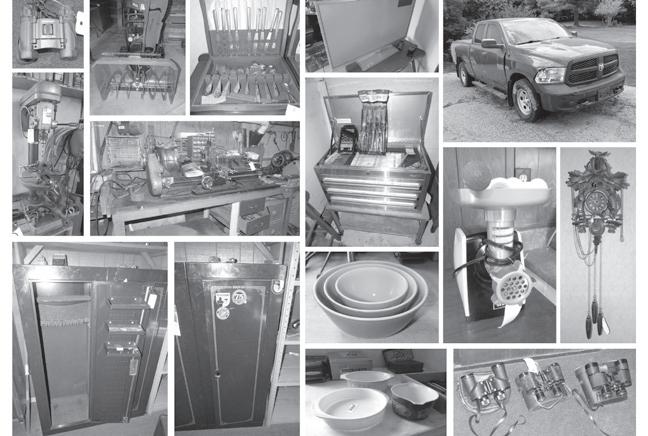
1-888-292-8225. (AAN CAN)
NEED NEW WINDOWS? Drafty rooms? Chipped or damaged frames? Need outside noise reduction? New, energyefficient windows may be the answer! Call for a consultation & free quote today: 1-877-2489944. (AAN CAN)
MOVING
Markoski’s has established a local reputation for being a team of friendly professionals who treat their customers like family. Based out of Chittenden County, we go across Vermont & out of state. Please inquire at markoskismoving.com.






GOT AN UNWANTED CAR?
Donate it to Patriotic Hearts. Fast, free pickup in all 50 states. Patriotic Hearts’ programs help veterans fi nd work or start their
CLASSIFIEDS » Show and tell. View and post up to 6 photos per ad online. Open 24/7/365. Post & browse ads at your convenience.
Using the enclosed math operations as a guide, ll the grid using the numbers 1 - 6 only once in each row and column.
Complete the following puzzle by using the numbers 1-9 only once in each row, column and 3 x 3 box.
Extra! There’s no limit to ad length online.
Try these online news games from Seven Days at sevendaysvt.com/games.
Put your knowledge of Vermont news to the test. NEW ON FRIDAYS:
JOSH REYNOLDS
DIFFICULTY THIS WEEK: HH
Fill the grid using the numbers 1-6, only once in each row and column. The numbers in each heavily outlined “cage” must combine to produce the target number in the top corner, using the mathematical operation indicated. A one-box cage should be filled in with the target number in the top corner. A number can be repeated within a cage as long as it is not the same row or column.
DIFFICULTY THIS WEEK: HH
Place a number in the empty boxes in such a way that each row across, each column down and each 9-box square contains all of the numbers one to nine. The same numbers cannot be repeated in a row or column.
ANSWERS ON P.102 H = MODERATE H H = CHALLENGING H H H = HOO, BOY!
WRITING SWEET NOTES
ANSWERS ON P.102 »
See how fast you can solve this weekly 10-word puzzle.
TOWN OF RICHMOND DEVELOPMENT REVIEW BOARD (DRB) AGENDA
SEPTEMBER 10, 2025 AT 7:00 PM
THIS IS A HYBRID MEETING WITH ON-SITE AND REMOTE ACCOMMODATIONS
3rd floor Meeting Room A, Richmond Town Offices, 203 Bridge Street Richmond, VT
PLEASE NOTE: In accordance with Act 1 (H.42) 2023, this meeting will be held onsite, via Zoom or by phone. You do not need a computer to attend this meeting. You may use the “Join by Phone” number to call from a cell phone or landline; this is a toll-free number. When prompted, enter the meeting information provided below to join by phone. For additional information and accommodations to improve accessibility of this meeting, please contact Keith Oborne at 802 336-2289 or preferably at koborne@richmondvt.gov
Join Zoom Meeting:
https://us02web.zoom.us/j/88457271013?pwd=q taD6LmVLouMJQalwNTzhPugni0yh1.1
Join by phone: 1 929 205 6099 US (New York) Meeting ID: 884 5727 1013 Passcode: 771583
Application materials for review: Development Review Board 9/10/25 - Town of Richmond, VT
PUBLIC HEARING:
Item 1
CUR 2025-03 Jean-Paul Lavoie Parcel ID# WM0167
Project description: The applicant seeks approval for a second residential structure through the Residential Planned Unit Development (PUD) process. Project is located at 167 West Main Street, a 0.46-acre lot, no subdivision is proposed.
CITY OF BURLINGTON IN THE YEAR TWO THOUSAND TWENTY-FIVE A REGULATION IN RELATION TO RULES AND REGULATIONS TO THE TRAFFIC COMMISSION –16; BUS STOPS
Sponsor(s): Public Works Commission
Action: Approval
Date: 1/15/2025
Attestation of Adoption:
Phillip Peterson, PE
Senior Transportation Planner, Technical Services
Published:09/03/25
Effective: 09/23/25
It is hereby Ordained by the Public Works Commission of the City of Burlington as follows:
That Appendix C, Rule and Regulations of the Traffic Commission, 16 Bus stops., of the Code of Ordinances of the City of Burlington is hereby amended as follows:
16 Bus stops.
(a) The following spaces are hereby designated as bus stops:
(1) Reserved On the west side of Ethan Allen Parkway starting at the southernmost driveway to 332 Ethan Allen Parkway and extending south fifty (50) feet, to be effective Monday through Friday between the hours of 7:00 a.m. to 9:00 a.m. and 1:30 p.m. to 4:00 p.m., holidays excepted.
(2) – (25) As written.
(b) – (c) As written.
** Material stricken out deleted.
*** Material underlined added.
/ER: BCO Appx.C, Section 16 1/15/25
CITY OF BURLINGTON IN THE YEAR TWO THOUSAND TWENTY-FIVE A REGULATION IN RELATION TO RULES AND REGULATIONS OF THE TRAFFIC COMMISSION –3; STOP SIGN LOCATIONS
Sponsor(s): Public Works Commission Action: Approval Date: 2/19/2025
Attestation of Adoption:
Phillip Peterson, PE
Senior Transportation Planner, Technical Services Published: 09/03/25; Effective: 09/23/25
It is hereby Ordained by the Public Works Commission of the City of Burlington as follows:
That Appendix C, Rule and Regulations of the Traffic Commission, 3 Stop sign locations., of the Code of Ordinances of the City of Burlington is hereby amended as follows:
3 Stop sign locations.
The following locations are hereby designated as stop sign locations:
(1) – (319) As written.
(320) At the intersection of Pitkin Street and North Street, causing traffic on Pitkin Street to stop.
(321) At the intersection of Blodgett Street and North Street, causing traffic on Blodgett Street to stop.
(322) At the intersection of Drew Street and North Street, causing traffic on Drew Street to stop.
(323) At the intersection of Front Street and North Street, causing traffic on Front Street to stop.
(324) At the intersection of Murray Street and North Street, causing traffic on Murray Street to stop.
** Material stricken out deleted.
*** Material underlined added.
/ER: BCO Appx.C, Section 3 02/19/25
CITY OF BURLINGTON IN THE YEAR TWO THOUSAND TWENTY-FIVE A REGULATION IN RELATION TO RULES AND REGULATIONS OF THE TRAFFIC COMMISSION –SECTION 7 NO PARKING AREAS, 7A ACCESSIBLE SPACES DESIGNATED.
Sponsor(s): Department of Public Works Action: Approved Date: 3/19/2025
Attestation of Adoption:
Phillip Peterson, PE Senior Transportation Planner, Technical Services Published: 09/03/25 Effective: 09/23/25
It is hereby Ordained by the Public Works Commission of the City of Burlington as follows:
That Appendix C, Rule and Regulations of the Traffic Commission, Section 7, No-parking areas. and Section 7A, Accessible spaces designated., of the Code of Ordinances of the City of Burlington is hereby amended as follows:
Section 7 No-parking areas.
No person shall park any vehicle at any time in the following locations:
(1-21) As written.
(22) Reserved On the west side of Hungerford Terrace beginning at Pearl Street and extending south two hundred forty-nine (249) feet.
(23-57) As written.
(58) On the east side of Hungerford Terrace between Pearl and College Streets beginning at Buell Street and extending north two hundred fifty-three (253) feet.
(59-134) As written.
(135) Reserved On the west side of Hungerford Terrace between Buell Street and Bradley Street. (136-312) As written.
(313) Reserved On the west side of Hungerford Terrace beginning at College Street and extending north one hundred eighty-seven (187) feet.
(314) Reserved On the east side of Hungerford Terrace beginning at Bradley Street and extending south one hundred fifty-nine (159) feet. (315-591) As written.
Section 7A Accessible spaces designated. No person shall park a vehicle at any time in the following locations, except automobiles displaying special handicapped license plates issued pursuant to 18 V.S.A. § 1325, or any amendment or renumbering thereof:
(1-47) As written.
(48) Two (2) spaces designated on the west side of Hungerford Terrace in front of 61 Hungerford Terrace and 65 Hungerford Terrace and extending forty (40) feet north Reserved (49-173) As written.
** Material stricken out deleted.
*** Material underlined added.
TD: BCO Appx.C, Section 7 & 7A 03/19/2025
CITY OF BURLINGTON IN
Sponsor(s): Public Works Commission Action: Approval Date: 04/16/2025
Attestation of Adoption: Phillip Peterson, PE
Senior Transportation Engineer & Planner, Technical Services
Published: 09/03/25
Effective: 09/23/25
It is hereby Ordained by the Public Works Commission of the City of Burlington as follows:
That Appendix C, Rule and Regulations of the Traffic Commission, 7 No parking areas., of the Code of Ordinances of the City of Burlington is hereby amended as follows:
7 No parking areas.
No person shall park any vehicle at any time in the following locations:
(1)-(478) As written
• (479) Reserved On the south side of Archibald Street between the driveway to 41 Archibald Street and the driveway to 45 Archibald Street.
(480) – (591) As written.
** Material stricken out deleted.
*** Material underlined added.
/ER: BCO Appx.C, Section 7 04/16/25
CITY OF BURLINGTON
IN THE YEAR TWO THOUSAND TWENTY-FIVE A REGULATION IN RELATION TO RULES AND REGULATIONS OF THE TRAFFIC COMMISSION –
7; NO PARKING AREAS,
9; FIFTEEN-MINUTE PARKING, 12-1; NO PARKING EXCEPT VEHICLES LOADING OR UNLOADING, 16; BUS STOPS, 17; DESIGNATION OF PARKING METER ZONES. It is hereby Ordained by the Public Works Commission of the City of Burlington as follows:
That Appendix C, Rule and Regulations of the Traffic Commission, 7 No parking areas., 9 Fifteen-minute parking., 12-1 No parking except vehicles loading and unloading., 16 Bus stops., 17 Designation of parking meter zones., of the Code of Ordinances of the City of Burlington is hereby amended as follows:
7 No parking areas.
No person shall park any vehicle at any time in the following locations:
(1) – (4) As written.
(5) On the north side of Bank Street for 50 feet east of Pine Street and 50 feet west of St. Paul Street.
(6) – (591) As written.
9 Fifteen-minute parking.
(a) No person shall park a vehicle longer than fifteen (15) minutes, between the hours of 8:00 a.m. and 10:00 p.m., Sundays and holidays excepted, in the following areas:
(1) – (10) As written.
(11) Up to two spaces in the first two metered spaces on Bank Street just east of Pine Street for the extents of SRF construction.
(12) – (126) As written.
(b) – (c) As written.
12-1 No parking except vehicles loading or unloading.
No person shall park a vehicle at the following locations unless engaged in loading or unloading the vehicle:
(1)– (9) As written.
(10) Reserved On the north side of Bank Street in the first four (4) spaces west of Saint Paul Street for a maximum time limit of fifteen (15) minutes.
(11) – (17) As written.
(18) On the north side of Bank Street for approximately forty (40) feet in the first space east of Pine Street between the hours of 8:00 a.m 6:00 a.m . and 5:00 p.m 9:00 p.m ., for a maximum time limit of thirty (30) minutes.
(19) – (50) As written.
(51) On the north side of Bank Street beginning directly east of the vehicle loading zone and extending east four (4) parking spaces, effective between the hours of 7:00 a.m. to 10:00 a.m. and 2:00 p.m. to 4:00 p.m. Monday through Friday, from August 20 of any year to June 20 of the succeeding year Reserved
(52) – (54) As written.
16 Bus stops.
(a) The following spaces are hereby designated as bus stops:
(1) – (3) As written.
(4) Reserved. On the south side of Bank Street, for fifty (50) feet east of Pine Street.
(5) – (25) As written.
(b) – (c) As written.
17 Designation of parking meter zones.
(a) – (f) As written.
(g) Designated streets with no time limit metered parking: The following streets or portions of streets are hereby designated as no time restriction metered parking zones:
(1) – (12) As written.
(13) On the north side of Bank Street beginning one hundred forty (140) feet west of Saint Paul Street and extending west one hundred fifteen (115) feet.
** Material stricken out deleted.
*** Material underlined added.
/ER: BCO Appx.C, Section 7, 9, 12-1, 16 & 17. 04/16/25
CITY OF BURLINGTON IN THE YEAR TWO THOUSAND TWENTY-FIVE A REGULATION IN RELATION TO RULES AND REGULATIONS OF THE TRAFFIC COMMISSION –7A; ACCESSIBLE SPACES DESIGNATED.
Sponsor(s): Public Works Commission Action: Approval Date: 7/16/2025
Attestation of Adoption: Phillip Peterson, PE
Senior Transportation Engineer & Planner
Technical Services Published: 09/03/25
Effective: 09/23/25
It is hereby Ordained by the Public Works Commission of the City of Burlington as follows: That Appendix C, Rules and Regulations of the Traffic Commission, 7A Accessible spaces designated., of the Code of Ordinances of the City of Burlington is hereby amended as follows:
7A Accessible spaces designated. No person shall park any vehicle at any time in the following locations, except automobiles displaying special handicapped license plates and placards for individuals with disabilities issued pursuant to 18 23 V.S.A. § 1325 304a or any amendment or renumbering thereof: (1) - (40) As written.
(41) On the west side of Russell Street in front of number 21 from March 2 to December 31 On the west side of Russell Street in front of number 33 from March 2 to December 31, as marked by
signage installed by the director of public works or designee.
(42)-(76) As written.
(77) Reserved On the south side of Buell, in the first legal parking space east of the driveway to 125 Buell St. (78)-(170) As written.
(171) On the east side of Russell Street in front of number 20 from January 1 to March 1 On the east side of Russell Street in front of number 32 from January 1 to March 1, as marked by signage installed by the director or public works or designee. (172) - (173) As written.
** Material stricken out deleted.
*** Material underlined added.
/ER: BCO Appx.C, Section 7A 07/16/25a
CITY OF BURLINGTON
IN THE YEAR TWO THOUSAND TWENTY-FOUR A REGULATION IN RELATION TO RULES AND REGULATIONS OF THE TRAFFIC COMMISSION –20 PROHIBITION OF TURNS ON RED SIGNAL.
Sponsor(s): Public Works Commission
Action: Approved
Date: 03/19/2025
Attestation of Adoption:
Phillip Peterson, PE
Senior Transportation Planner, Technical Services
Published: 09/03/25
Effective: 09/23/25
It is hereby Ordained by the Public Works Commission of the City of Burlington as follows:
That Appendix C, Rule and Regulations of the Traffic Commission, 20 Prohibition of turns on red signal of the Code of Ordinances of the City of Burlington is hereby amended as follows:
20 Prohibition of turns on red signal. Notwithstanding any general authorization otherwise contained in the statutes of the State of Vermont, the ordinances of the City of Burlington or the regulations of the board of traffic commissioners, it shall be unlawful at the following intersections within the City of Burlington for an operator of a motor vehicle to make a right-hand turn against a traffic signal which is indicating red:
(b) At times when an illuminated sign indicating “No Turn On Red” is displayed to drivers at the following locations:
(1)-(21) As written. (22) Home Avenue and Shelburne Street, eastbound.
(23) Farrell Street and Shelburne Street, westbound.
** Material stricken out deleted.
*** Material underlined added.
BCO Appx.C, Section 20 3/19/25
STATE OF VERMONT
SUPERIOR COURT PROBATE DIVISION CHITTENDEN UNIT DOCKET NO.: 25-PR-04580
In re ESTATE of Devon M. Morder
NOTICE TO CREDITORS
To the creditors of: Devon M. Morder, late of Burlington, Vermont
I have been appointed to administer this estate. All creditors having claims against the decedent or the estate must present their claims in writing within four (4) months of the date of the first publication of this notice. The claim must be presented to me at the address listed below with a copy sent to the Court. The claim may be barred forever if it is not presented within the four (4) month period.
Dated: July 15, 2025
Signature of Fiduciary: /s/ Heidi Paniaha
Executor/Administrator:
Heidi Paniaha, 1131 Rachel Street, Johnstown, PA 15904 814-288-8871 heidipaniaha@atlanticbb.net
Name of Publication: Seven Days Publication Date: 08/27/2025
Name of Probate Court: State of VermontChittenden Probate Division
Address of Probate Court: 175 Main Street, Burlington, VT 05401
NOTICE OF SELF STORAGE LIEN SALE BURLINGTON SELF STORAGE, LLC 1825 SHELBURNE ROAD SOUTH BURLINGTON, VT 05403
Notice is hereby given that the contents of the self storage units listed below will be sold at public auction by sealed bid.
Name of Occupant, Storage Unit#, unit size: Mcknight, Unit #305, 5x5
Said sales will take place on Friday 09/05/25, beginning at 10:00am at Burlington Self Storage (BSS), 1825 Shelburne Road, South Burlington, VT 05403. Units will be opened for viewing immediately prior to auction. Sale shall be by sealed bid to the highest bidder. Contents of entire storage unit will be sold as one lot. The winning bid must remove all contents from the facility at no cost to BSS, on the day of auction. BSS, reserves the right to reject any bid lower that the amount owed by the occupant or that is not commercially reasonable as defined by statute.
ENFORCEMENT OF LIEN, CHAMPLAIN VALLEY SELF STORAGE, LLC
In accordance with VT Title 9 Commerce and Trade Chapter 098: Storage Units 3905. Enforcement of Lien, Champlain Valley Self Storage, LLC shall host a private auction of the following units on or after September 13, 2025: Location: 2211 Main st Colchester , VT
Contents: household goods
DjoDjo Elumba: #574
Location: 78 Lincoln St. Essex Jct. , VT Contents: household goods Stephen Thompson: #215 Auction pre-registration is required, email info@ champlainvalleyselfstorage.com to register. CVSS,llc reserves the right to reject any bid lower than the amount owed by the occupant or that is not commercially reasonable as defined by statute. Any person claiming a right to the goods may pay the amount claimed due and reasonable expenses before the sale, in which case the sale may not occur.
STATE OF VERMONT
SUPERIOR COURT FAMILY DIVISION
FRANKLIN UNIT DOCKET NOS. 24-JV-746
In re: M.J.
NOTICE OF HEARING
TO: CALVIN JIRON, father of M.J. (dob 06/06/2020), you are hereby notified that a hearing to consider the termination of all your parental rights to M.J. will be held on October 21, 2025 at 10:00. a.m. at the Franklin Superior Court, 36 Lake Street, St. Albans, Vermont. You are notified to appear at this hearing. Your failure to appear and defend will result in a judgment being entered against you and your parental rights will be terminated.
Other parties to this case are the child, M.J., his guardian ad litem, M.J.’s mother, and the Vermont Department for Children and Families. DCF is represented by the Attorney General’s Office, 280 State Drive-HC2N, Waterbury, Vermont 05671-2080.
8/21/2025
Electronically signed pursuant to V.R.E.F. 9(d)
/s/ Elizabeth Novotny
Elizabeth Novotny
Franklin Superior Court Judge
STATE OF VERMONT
SUPERIOR COURT PROBATE DIVISION
CHITTENDEN UNIT DOCKET NO. 25-PR-02261
IN RE: ESTATE OF JANET M. FRANK
NOTICE TO CREDITORS
To the creditors of Janet M. Frank, late of Colchester, Vermont
I have been appointed to administer this estate. All creditors having claims against the decedent or the estate must present their claims in writing within four (4) months of the date of this publication of this notice. The claim must be presented to me at the address listed below with a copy sent to the Court. The claim may be barred forever if it is not presented within the four (4) month period.
Dated: August 19, 2025
/s/Jennifer F. Gamage, Executrix
c/o Harry C. Parker, Esq. Parker Law, PLLC
38 Community Lane, Suite 4 South Hero, VT 05486 harry@parkerlawvt.com
Name of Publication: Seven Days Publication Date: 9/3/25
Probate Court: Chittenden Probate Court 175 Main Street, Burlington, VT 05401
PUBLIC HEARING NOTICE — CITY OF BURLINGTON ANNUAL REPORT TO HUD
The City of Burlington is submitting its Consolidated Annual Performance and Evaluation Report on the expenditure of Community Development Block Grant and HOME Investment Partnership Act funds for the program year ending June 30, 2025 to the U.S. Department of Housing &Urban Development (HUD).
A draft report will be available on September 10, 2025, at the Community & Economic Development Office (CEDO), 149 Church Street, Room 32, City Hall, Burlington, and online at www. burlingtonvt.gov/cedo. The public is encouraged to review the Report and to comment through September 25, 2025. A Public Hearing on the Report will be at the Community Development and Neighborhood Revitalization (CDNR) Committee meeting on Wednesday,September 17, 2025, at 6:30 p.m. More information on how to access the meeting can be found online at https://burlingtonvt.portal.civicclerk.com or by contacting ccurtis@ burlingtonvt.gov. Comments will be heard at the Hearing on the Report and on housing and community development needs. Written comments can also be submitted directly to the Community &Economic Development Office at the above address or by e-mail to bwhitlock@ burlingtonvt.gov.
For more information, or information on alternative access, contact Bethany Whitlock, Community & Economic Development Office, at (802) 865-7021.
STATE OF VERMONT
SUPERIOR COURT PROBATE DIVISION
CHITTENDEN UNIT DOCKET NO.: 25-PR-04728
IN RE ESTATE OF JAMES LUISI
NOTICE TO CREDITORS
To the Creditors of James Luisi, late of Burlington, Vermont
I have been appointed to administer this estate. All creditors having claims against the decedent or the estate must present their claims in writing within four (4) months of the first publication of this notice. The claim must be presented to me at
PLACE AN AFFORDABLE NOTICE AT: SEVENDAYSVT.COM/LEGAL-NOTICES OR CALL 802-865-1020, EXT. 142.
the address listed below with a copy sent to the Court. The claim may be barred forever if it is not presented within the four (4) month period.
Dated: 26/08/2025
Signature of Fiduciary: /s/ Kimberly Luisi
Executor/Administrator: Kimberly Luisi 12 Poplar Street, Burlington, VT 05401
Phone Number: 610-790-9717
Email: kimberlyluisi@gmail.com
Name of Publication: Seven Days Publication Date: 9/3/25
Name of Probate Court: VT Superior Court, Chittenden Unit – Probate Division
Address of Probate Court: 175 Main St, Burlington, VT 05401
CITY OF BURLINGTON IN THE YEAR TWO THOUSAND TWENTY-FIVE AN ORDINANCE IN RELATION TO ESTABLISHING CITY CIRCLE
BCO CHAPTER 1, SECTION 10
ORDINANCE 4.4
Sponsor: Office of the City Attorney, Ordinance Committee
Public Hearing Dates: First reading: 07/14/25
Referred to: Ordinance Committee Rules suspended and placed in all Stages of passage: Second reading: 08/25/25
Action: adopted Date: 08/25/25
Signed by Mayor: 08/28/25
Published: 09/03/25
Effective: 09/23/25
It is hereby Ordained by the City Council of the City of Burlington as follows:
That Chapter 1, General Provisions, of the Code of Ordinances of the City of Burlington be and is hereby amended by amending Section 10, Prosecution Where Different Penalties Exist for Same Offense; to include a new subsection regarding City Circle to read as follows:
1-10 Prosecution and City Circle where different penalties exist for same offense
(a) Prosecution where different penalties exist for same offense. In all cases where the same offense may be made punishable, or shall be created by different clauses or sections of the ordinances of the city, the city attorney may elect under which to proceed; but not more than one recovery shall be had against the same person for the same offense.
(b) City Circle. The Office of the City Attorney, in consultation with the Community Justice Center shall create a restorative justice program to address criminal and civil ordinance violations in the city of Burlington. This program shall be referred to as the “City Circle.”
(1) Rules and Regulations. The Community Justice Center shall consult with the City Attorney’s Office to establish the rules and regulations which will govern this restorative justice program. Such rules and regulations, and any future amendments thereto, shall be subject to approval by the City Council. Once approved, the rules and regulations shall be posted on the webpage maintained by the Community Justice Center.
(2) Citations. A person who is found by a Law Enforcement Officer to be in violation of Burlington Code of Ordinances 21-24; 21-29; 21-30; 21-37; 21-38; 21-45; 21-46; 21-47; 21-48; 21-49; or any other ordinance as deemed appropriate by the Office of the City Attorney in consultation with the Community Justice Center shall be issued both a citation informing them of the ordinance that they have violated as well as a
citation informing them that they must report to the next meeting of the City Circle. The City Circle citation is to include the time and place in which the City Circle is to occur.
(3) Meetings. City Circle Meetings shall be held on a weekly basis at a location to be determined by the City Attorney and the Community Justice Center.
(4) Failure to attend. If an individual fails to attend their City Circle meeting as scheduled, civil ordinance violations will be forwarded to the Judicial Bureau. Criminal ordinance violations will be forwarded to the Superior Court, and the individual will be expected to appear for an arraignment on a misdemeanor violation of city ordinance. If the individual fails to appear at Superior Court, the assigned prosecuting attorney may request a warrant.
* Material stricken out deleted.
** Material underlined added.
EW/Ordinances 2025/City Circle/BCO Ch. 1, Subsection 10
Sec. 1-10
7/17/2025
TOWN OF JERICHO — DEVELOPMENT REVIEW
BOARD
NOTICE OF PUBLIC HEARING
The Jericho Development Review Board will hold the public hearing at 7:00 pm on WEDNESDAY September 24, 2025, at the Jericho Town Hall to consider the following applications
• A request to the DRB by KCS, LLC, CF trust & Kingdom Ventures LLC for a conditional use review for the development of a four plex. The property is located at 20 Morgan Road which is located in the Low-Density Residential Zoning District.
• A request to the DRB by Leslie Dunn & Cody Marx for an appeal related to a supposed ZA action.
All interested persons may appear and be heard. Additional information related to this application may be viewed at the Jericho Planning and Zoning Office during regular business hours.
Chris Flinn
Zoning Administrator cflinn@jerichovt.gov
WARNING POLICY ADOPTION
CHAMPLAIN VALLEY SCHOOL DISTRICT
The Board of School Directors gives public notice of its intent to act on local district policies dealing with the following at its meeting scheduled on September 12, 2025: Code G13 - Selection of Library Materials Code E20 - Behavioral Threat Assessment Teams Copies of the above policies may be obtained for public review at the Office of the Human Resources Dept. in Shelburne, VT.
CITY OF ESSEX JUNCTION
DEVELOPMENT REVIEW BOARD
PUBLIC HEARING
THURSDAY, SEPTEMBER 18TH, 2025
6:30 P.M.
This meeting will be held in person at Lincoln Hall, 2 Lincoln Street in the Meeting Room and remotely via Zoom. The meeting will be livestreamed on Town Meeting TV.
• JOIN ONLINE: Visit www.essexjunction.org/DRB for meeting connection information.
• JOIN BY TELEPHONE:
Dial 1(888) 788-0099 (toll free) Meeting ID: 839 2599 0985 Passcode: 940993
PUBLIC HEARING
Variance application requesting relief from the minimum lot frontage of 60 feet at the future
site of Lot 6A, adjacent to 29 Taft Street in the R1 District by the Center for Technology, Essex, owners.
Appeal of Administrative decision regarding the issuance of a Notice of Violation for a cannabis cultivation operation at 8 Taft Street in the R1 District by Jason Struthers, owner.
This DRAFT agenda may be amended. Plan documents will be available on www.essexjunction.org/DRB five days prior to the meeting. Any questions re: above please call Michael Giguere or Terry Hass – 802-878-6944
NOTICE OF SELF STORAGE LIEN SALE, JERICHO MINI STORAGE 25 NORTH MAIN STREET, JERICHO, VT 05465
The contents of the following self storage unit will be sold at public auction, by sealed bid, on September 24, 2025 at 12:00 PM. Kim Morrill #100.
Units will be opened for viewing for auction, sale by sealed bid to the highest bidder, cash only. Contents of entire storage unit will be sold as one lot.
NORTHSTAR SELF STORAGE WILL BE HAVING A PUBLIC AND ONLINE SALE/AUCTION FOR THE FOLLOWING STORAGE UNITS ON SEPTEMBER 18, 2025 AT 9:00 AM
Northstar Self Storage will be having a public and online sale/auction on September 18, 2025 at 9am EST at 205 Route 4A West, Castleton, VT 05735 (C54), 615 Route 7, Danby VT 05739 (D53), 3466 Richville Rd, Manchester Center, VT 05255 (24), 681 Rockingham Rd, Rockingham, VT 05151 (R61) 1124 Charlestown Road, Springfield, VT 05156 (Units S23, S26, S79, S99, S122, S123), and online at www.storagetreasures.com at 9:00 am in accordance with VT Title 9 Commerce and Trade Chapter 098: Storage Units 3905. Enforcement of Lien
2
7 S79 Deborah Jackson
8 S99 James Flack
9 S122 Kimberly Quimby






















































POST YOUR JOBS AT: JOBS.SEVENDAYSVT.COM/POST-A-JOB PRINT DEADLINE: NOON ON MONDAYS (INCLUDING HOLIDAYS) FOR RATES & INFO: MICHELLE BROWN, 802-865-1020 X121, MICHELLE@SEVENDAYSVT.COM
















8/29,

Seeking motivated and energetic home design maven to help run a growing, values-based fabrics and furnishings shop in South Burlington. Strong customer service, administrative, and technology skills a must. Requires design talent and skills; experience with home textiles a bonus. This is an opportunity for the right person who is ready to become proficient in the home fabrics industry and be an integral part of the business’s growth and success. Training provided. Seeking someone who is reliable, can balance following protocol with good judgement, offers a strong work ethic, and has a sense of perspective and humor. Must be able to lift and move up to 50 lbs. Starting at 30 hours/week with full-time possibilities ahead. $25/hour starting wage. Send resume and cover
to


The ideal candidate would demonstrate a storyteller’s mindset first and foremost. This would mean someone who loves to dig deep to uncover the story beneath the surface, and can demonstrate their ability to identify the strongest and least predictable interview moments within a project. We’re also looking for:


This is a key leadership role that manages the operational and strategic aspects of Copley’s medical practices over multiple locations:
• Manage complex patient interactions, drive development of processes and systems, and manage staff.

• Someone excited about being mentally invested in a story and is not shy about coming up with ideas on how to improve on the footage made available for any edit. This could mean suggesting additional interviews or suggesting specific interview content that could add to the impact of the story. This could also mean taking initiative to brainstorm creative shot lists that would add to the depth and unpredictability of a project.
• Someone who has a proven track record of seeing things through. This would mean not only brainstorming and considering additional content, but demonstrating an ability to ensure that content is captured with the support of your team.
• The ideal candidate would also be comfortable in an environment where everyone strives to review and improve their work, understanding that with that input comes the support of a creative team ready to contribute to meet our shared goals.
• Our ideal candidate would show a senior level of proficiency in editing techniques and experience with Adobe Premiere.
Send resumes to: admin@mtmansfieldmedia.com 5v-MtMansfieldMedia082725.indd

At Bin There Dump That Burlington, VT, we believe renting a dumpster should ALWAYS be a simple and friendly experience! Each experience almost always begins on the telephone. As such, the role of a Dumpster Consultant is to answer the phone with a smile, in a positive manner, while providing stellar customer service. The Dumpster Consultant consults with customers and estimates the appropriate dumpster size needed, based on the customer’s project and expectations. The Dumpster Consultant offers waste removal solutions, outlines the unique value of service that Bin There Dump That provides, and works to establish a great rapport over the phone and build lasting customer relationships. The Dumpster Consultant tracks sales and close ratios, and follows up on leads and estimates. Qualifications include:
• Provide leadership for day-to-day operations.
• Exhibit strong managerial skills and an understanding of medical office procedures.
We are seeking a highly organized individual with previous leadership experience in a hospital or healthcare setting. Full-time. Excellent salary and benefits package.
For more information visit copleyvt.org/careers or contact Kaitlyn Shannon, Recruiter, at 802-888-8144 or kshannon@chsi.org.
Blue Heron Building, one of the top residential renovation/remodelers in the area is looking for a part time carpenter to join the team. Competitive pay and benefits dependent on applicant qualifications and experience. Flexible scheduling options a must. This part-time position has the potential to become a full-time position.
Requirements:
• Interested in renovation/remodel work.

• Good physical condition and endurance level with the ability to lift and move typical heavy construction materials.
• Ability to adhere to agreed upon work schedule.
• Have flexibility with work schedule.
• Have own transportation and be comfortable commuting to the southern half or so of Chittenden County.
• Comfortable and personable with clients.
• Maintain a professional appearance.
• Skill level commensurate with experience.
To apply, please visit: blueheronbuilding.com/contact-careers, fill out the form and include a resume. Blue Heron is an Equal Opportunity Employer.
Stark Mountain Foundation (SMF) seeks a Foundation Coordinator to become an integral contributor to its events, fundraising, communications, and operations.
Village Wine and Coffee is looking for a few talented Baristas. We are the heart of Shelburne and have been building community with coffee and wine since 2005.
A good work ethic and the ability to work well with others is important. Interest and love of coffee is essential.
A minimum of 1 year experience as a working barista is helpful. This is a great job for anyone in college, grad school or in a gap year.
Email: vwacvt@gmail.com 3v-VillageWine&Coffee090325.indd

The Foundation Coordinator will help to ensure stakeholder satisfaction and bolster organization efficiency & effectiveness to fuel SMF’s growth and evolution.

Additional Skills: Professional and personable demeanor. Experience in customer service and sales is a plus. General knowledge of the towns, roads/highways, and other local insights will be very helpful.
Email ryan.m@bintheredumpthat.com to apply.
Founded in 2000, SMF is a charitable 501(c)(3) organization. SMF promotes education, environmental and historic preservation, and recreation to help preserve the environment and character of General Stark Mountain in Fayston, Vermont. SMF partners with organizations including The Preservation Trust of Vermont, The Green Mountain Club, and Mad River Glen.
Part-time, flexible hours, reports to the president of SMF’s board.
Visit StarkMountain.org/positions for application instructions.
4t-StarkMountainFoundation082025.indd
Case Managers support older Vermonters in the community to stay as independent as possible in the environment of their choice by promoting health, rights, independence, and economic well-being.

They are responsible for field-based, direct provision Person-Centered Options Counseling to clients in our 54-town service area.
Pay Range: $24-$26 per hour.
For the full job description and to apply, please visit: https://cvcoa.org/employment

Milton Rents in Richmond, VT is a leading provider of construction equipment and rental services, committed to delivering top-tier service and operational excellence.
We are New England’s exclusive rental source for CAT equipment – plus over 70 trusted brands.
We are currently hiring:
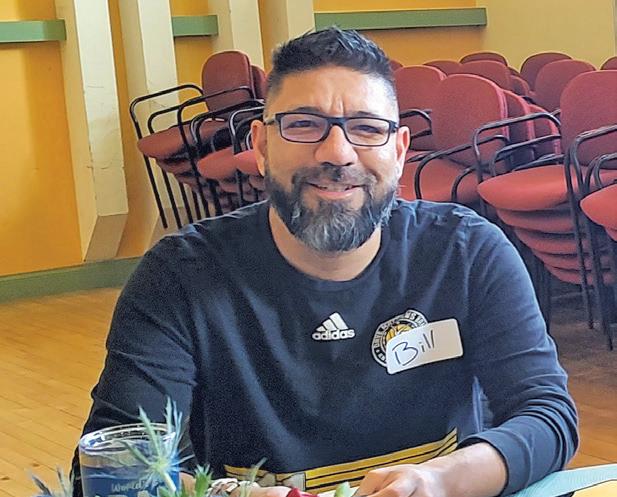
“The best thing about working at CCS that I really love is the sense of family and community. ”
– Bill Goldwyn, Outreach Coordinator
Great jobs in management and direct support at an award-winning agency serving Vermonters with intellectual and developmental disabilities.
Benefit package includes 29 paid days off in the first year, comprehensive health insurance with premium as low as $30 per month, up to $6,400 to go towards medical deductibles and copays, retirement match, generous sign on bonus and so much more.
And that’s on top of working at one of the “Best Places to Work in Vermont” for seven years in a row. Join our team today!

Counseling Service of Addison County | Middlebury, Vermont Lead with purpose. Build community. Transform lives.
Join the leadership team of our Developmental Services Program to lead change, ensure service quality and make a lasting impact -while honoring the strength and choice of the clients we serve.
Key Responsibilities:
• Provide leadership and oversight to Service Coordinators and direct service teams.
• Guide program development and innovation, including supported employment, residential options, and community-based services.
• Support staff growth through supervision, training, and professional development.
• Build strong partnerships with families, guardians, schools, and community providers.
• Contribute to system-wide planning, budgeting, and payment reform initiatives.
Qualifications:
• Bachelor’s degree in human services or related field required; Master’s preferred.
• 3+ years of progressive leadership experience in developmental or human services.

• Strong knowledge of Vermont’s developmental services system, Medicaid rules, and person-centered planning preferred.
• Excellent skills in supervision, program management, and collaboration.
• Ability to balance compliance and innovation in a changing system.
40 hours per week, starting at $71,000. Comprehensive benefits package.
To apply, visit csac-vt.org/careers/careers.html. E.O.E.
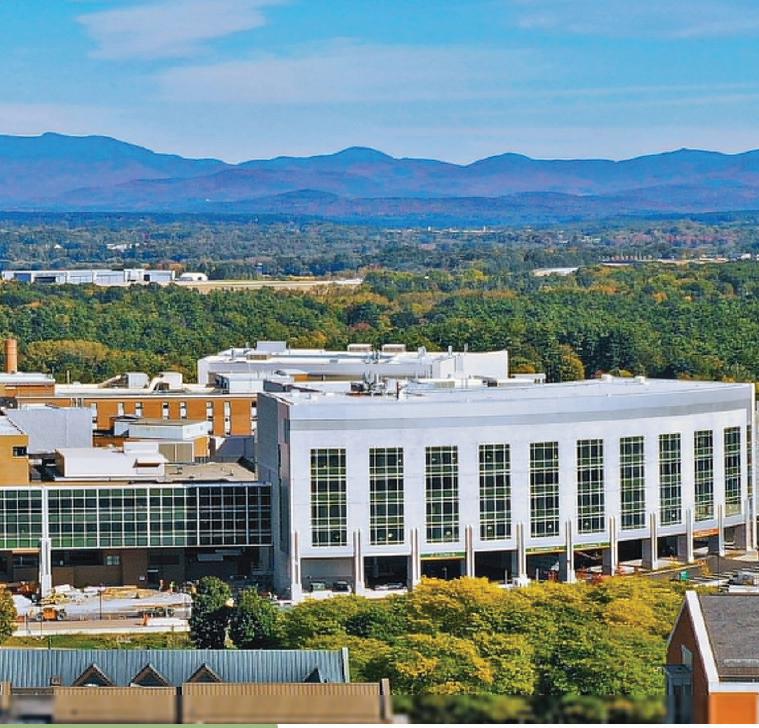
INVEST IN YOURSELF
Our apprenticeship program is a paid opportunity to become a phlebotomist with no experience required.
APPLY NOW jobforward.org/phlebotomy
REGISTRATION DEADLINE Wednesday, Sept. 17, 2025
$2,000 SIGN ON BONUS
External candidates are eligible for a one-time sign-on bonus paid over 3 installments. Amounts reflect gross pay, prior to applicable tax withholdings and deductions required by law. Current University of Vermont Health Network employees are excluded and additional terms and conditions apply.
Questions?
Call or Email 802-399-8243 lida.hope@jobforward.org



• Guaranteed paid employment on day one of training
• Direct patient care
• Team environment
• Full Benefits
• Dedicated support during the 5-week program
• Paid Certified Phlebotomy Technician Exam


SEPTEMBER 3-10, 2025
Pine Forest Children’s Center (PFCC) has provided high-quality, play-based early childhood education in Burlington’s South End since 1988. We are currently hiring for multiple positions, including licensed preschool teachers (full-time or part-time) and early childhood educators to join our infant–preschool teams. At PFCC, we value imagination, curiosity, and integrity, and believe children learn best through emergent, play-based experiences connected to their community and natural world. Our teachers collaborate to design engaging, child-led curriculum, partner closely with families, and receive strong professional development support to grow in the field.


Essex CHIPS (Community Health Initiatives and Programs for Students) is hiring an Executive Director for our youth-centered nonprofit in Essex Junction.

Vermonters for Criminal Justice Reform (VCJR) is seeking a Service Coordinator to join our team!

New Learning Journey is seeking a Business Manager at the Knoll Farm location.
Pay: $20–$26/hour plus a $1,000 sign-on bonus
Benefits include: health savings account, dental, vision & life insurance, retirement plan, paid time off, tuition reimbursement, ongoing training, and more.
To apply, send your resume and cover letter to Julie LaFountaine at julie@thepineforest.org. PFCC is an equal opportunity employer.

Up to $5,000 Sign-On Bonus Available Through October 1st. Wages ranging from $22-$35/hour, depending on work experience.
Jay Peak Resort is looking for a full-time Lift Mechanic to join the team. Responsibilities include lift equipment maintenance (winter and summer), and performing daily checks through the winter season to ensure that equipment runs e ciently and safely.
To support the mission of “uniting the community in an environment where people are empowered to make healthy choices through youth-adult partnerships, youth leadership, and civic engagement,” the ED will work with staff, volunteers, and partners to create and implement a strategic plan; develop resources; manage finances; hire and supervise staff; serve as primary contact and representative to the public; strengthen relationships with the community.
For full description, please email office@essexchips.org
Provide case management and related services for people living with substance use disorders. Some driving required with mileage reimbursement provided.
Job Type: Full-time in person (Burlington, VT).
Anticipated starting salary: $43,000 - $45,000 per year, plus benefits for full-time 40 hour per week employment. Please request a full job description or submit a cover letter and resume to Jess Kirby via email at jess@vcjr.org.

Essex Westford School District (EWSD) has opportunities for cafeteria workers in our child nutrition department at Essex High School. EWSD is pursuing candidates with a genuine commitment to providing nutritious food options to students of all ages within the district! This dayshift position has flexible start and end times.
Pay: $20.75+ based on experience
Schedule available: Monday-Friday, 5:45 a.m.-1:45 p.m.
Primary job duties include but are not limited to the following:
We are seeking a passionate and detail-oriented business manager, a key leadership role responsible for managing the fiscal health of our $1.2 million dollar nonprofit organization dedicated to social justice.
Details and to apply use the QR Code:


To apply, please visit our careers page at: jaypeakresort.applytojob.com/apply
Trusted, local employers are hiring in Seven Days newspaper and online. Browse 100+ new job postings each week.





• Maintain a clean work environment in accordance with the State Sanitation Guidelines.
• Prepare and serve food
• Assist with maintaining inventory.
• Assist in ensuring that students conduct themselves in line with established cafeteria rules. Report unusual problems to the building administrator or Food Service Director.

• Perform cashier duties: set up cash drawer; operate cash register; cash out at the end of the day.
For additional information and a copy of the full job description, please visit: https://ewsd.schoolspring.com/?jobid=5350140
See who’s hiring at jobs.sevendaysvt.com Follow us on Facebook /sevendaysjobs for the latest postings PERK UP!


Do you have a passion for emergency response, crisis management, and community impact? Join CVOEO as our Emergency Services Director (ESD) a key leadership role responsible for shaping and strengthening our emergency shelter network and crisis response services across our programs and communities.
The Emergency Services Director, a member of CVOEO's Administrative Team, leads the planning, implementation, and evaluation of our emergency services programs — especially during extreme climate events and other crises. You will be at the forefront of CVOEO’s emergency shelter response, supporting our team, facilities, and community with clarity, compassion, and strategic leadership.
Key Responsibilities: Oversee CVOEO’s emergency shelter operations and support teams responding to homelessness and extreme weather events. Provide supervision and strengthen collaboration among CVOEO shelters to optimize resources and services. Ensure agencywide emergency and safety planning across all CVOEO locations, facilitate CVOEO's Risk Committee and maintain essential safety plans. Deliver training on emergency preparedness, workplace safety and risk management. Serve as on-site manager for shelters activated during emergencies and act as leadership support for shelter operations as needed.
What We're Looking For: Bachelor’s degree in Social Work, Human Services, Public Administration, Emergency Preparedness or a related field plus a minimum of two years of experience in program management, with at least two years specifically in homeless services or emergency assistance programs, or a combination of education and experience from which comparable knowledge and skills are acquired. Proven leadership in emergency services, crisis response, or shelter management; ability to lead under pressure and coordinate complex, cross-functional responses; experience in risk assessment, safety planning, and emergency training; and strong interpersonal, communication, and supervisory skills. Commitment to equity, dignity, and empowerment — the values at the heart of CVOEO’s mission and vision.
Why Join CVOEO?: At CVOEO, we are committed to addressing fundamental issues of economic justice, housing, food security, and more. As part of our team, you’ll help lead innovative, life-saving responses for Vermonters facing crisis — and play a vital role in building a stronger, more resilient community.
When you come to work for CVOEO you’re getting so much more than a paycheck! We offer a great working environment and an excellent benefit package including medical, dental and vision insurance, paid holidays, generous paid time off, a retirement plan and discounted gym membership.
Ready to Apply?: If you're ready to lead with purpose and make a lasting impact, we'd love to hear from you! Visit www.cvoeo.org/careers to apply and view the full job description. We are one of the Best Places To Work in Vermont! Join us to find out why!












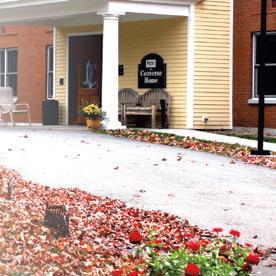


Are you a nurse looking for a position that brings joy and fulfillment both personally and professionally? The Converse Home, a nonprofit Assisted Living Community located in downtown Burlington, is seeking a Director of Nursing (DON). As the longest-running assisted living community in Vermont, The Converse Home is renowned for its warm, welcoming, and home-like atmosphere. This is a rare opportunity to join a compassionate and supportive team in an exceptional community.
Key Responsibilities:
• Collaborate with Co-Executive Directors, Nurse Educator, and department directors to ensure residents receive high-quality care with respect and dignity.
• Lead the traditional assisted living and memory care nursing teams by maintaining and implementing policies and procedures in compliance with all local, state, and federal regulations.
• Supervise and work closely with the nurse educator, Memory Care Manager, and licensed nurses and care staff to ensure best practices and ongoing education.
• Work closely with the Co-Executive Directors to monitor and address financial considerations and the nursing departments budget.
• Ensure resident charts and nursing documentation are accurate and in compliance with state regulations.
• Participate in pre-admission screenings for prospective residents, visiting prospective residents in the building and off site, providing input to the admissions team.
• Serve as the primary point of communication for families, residents, staff, hospitals, rehabilitation communities, and providers, ensuring a collaborative and transparent environment.
• Responsible for ensuring adequate sta ng levels for the nursing department by working closely with the Clinical Administrative Assistant, share on-call responsibilities and
provide occasional evening, night, or weekend coverage when necessary.
Qualifications:
• Bachelor of Science in Nursing (BSN) required; Master of Science in Nursing (MSN) preferred.
• Valid Vermont Registered Nurse (RN) license and a valid driver’s license.
• Strong background in Med-Surg and chronic long term care nursing, healthcare operations management, with a solid understanding of skilled nursing standards of care and Vermont state assisted living regulations.
• Exceptional communication, organizational, and leadership skills, with a compassionate approach to the nursing team, department staff, residents, and families.
• Flexibility to travel occasionally and adapt to occasional weekend or after-hours needs.
Salary and Benefits:
• Salary range: $100,000–$120,000.
• Competitive benefits package, including medical, dental, eye, life insurance, retirement, and paid vacation.
• Retention bonus of $10,000 paid out quarterly over the first year.
About The Converse Home:
The Converse Home is a private nonprofit assisted living and memory care community located in a quiet residential neighborhood in Burlington. We provide a homelike, serene, and engaging environment for our residents to thrive.
To learn more about The Converse Home and apply online, please visit conversehome. com or send your resume and letter of interest to kristen@conversehome.com. The Converse Home is an Equal Opportunity Employer
Location: Keen’s Crossing Apartments, Winooski, VT 05404
Hours: Full Time 30 hours per week

The ideal candidate will enjoy becoming involved in a variety of tasks in a team-based supportive environment. You would assist with the leasing and marketing initiatives at Keens Crossing. Some of these tasks include: conducting property tours, communicating with prospective renters, processing and managing applications, meeting with applicants, taking work orders from residents, providing extraordinary customer service to current residents, scheduling appointments, taking the lead on the marketing efforts and community outreach, planning resident events and several administrative tasks such as filing, copying, making phone calls and supporting the property manager in the needs of the property. Must be able to multitask and thrive in a fast-paced environment. Strong sales aptitude and computer proficiency is required.
The work schedule is Monday – Friday 10:30-5:00. Candidate must be flexible and willing to work as needed. HallKeen offers a generous benefits package! In order to be considered for this position, we will need for you to email us a resume and cover letter including your salary requirements. In your cover letter tell us about yourself and what strengths you could bring to the position.
Please email your cover letter/resume to dfinnigan@hallkeen.com

THE TOWN OF JERICHO is accepting applications for a Highway Maintenance Worker Level II. This is a full-time position that requires a CDL (min Class “B”) and the ability to work outside of regular working hours routinely. The ideal candidate will have at least two years of experience in highway maintenance, snow plowing, construction procedures, and methods at the municipal level. Equipment operation experience is a plus.
The starting hourly wage is dependent on qualifications. The Town of Jericho offers excellent benefits, including health and dental insurance, as well as a retirement plan.
An application and job description can be downloaded from www.jerichovt.org. They are also available at the Jericho Town Hall, at 67 VT Rt. 15, Jericho, M-TH 8:00 a.m. – 3:00 p.m. Completed applications can be submitted to Linda Blasch in person, via email at lblasch@jerichovt.gov or mail to PO Box 39, Jericho, VT 05465.
The position is open until filled.









HUNGER FREE VERMONT IS HIRING! We’re seeking two new team members to support our mission to end hunger for all Vermonters:
Director of Development: A strategic leader to guide fundraising efforts, manage grants and donor relations, and drive long-term financial sustainability.
Operations & Program Support Specialist: A detail-oriented team member to provide administrative, logistical, and program support across the organization.

Join a collaborative, mission-driven workplace committed to equity and systemic change. Learn more and apply at hungerfreevt.org/employment
3h-HungerFreeVT082725.indd
Salary range is $85k to $105k.
About the Position: The VSEA Communications Director is the manager of the two-person VSEA Communications Department, which also includes the Communications Specialist position. The Department is responsible for ensuring the union’s membership is being provided with pertinent information in a timely and professional manner and that the union’s message of the day/week/month is being disseminated effectively via any one, or all, of the numerous communications vehicles available to the union. The Director is also responsible for:
• Administering department budget, as dictated by membership.
• Writing, editing and producing materials for some of VSEA communications/public relations’ projects and campaigns. Assisting Organizing Dept. with others in progress;
• Drafting leadership correspondence, op-eds, speeches, messages to membership, etc.;
• Drafting brochure and flyer copy, web copy, fact sheets and talking points;
• Drafting press releases and developing press kits;
• Building working relationships with members of the Vermont press corp., pitching ideas, educating on issues and sometimes providing quotes to, on behalf of the VSEA;
• Generating press around member issues and assembling press conferences, as needed;
• Monitoring the press daily, both in Vermont and nationally, for stories featuring leaders/members, stories of interest to the membership and stories that support VSEA campaigns and ideology;
• Serving as primary editor for VSEA

material and correspondence, acting in a gatekeeper capacity prior to information being disseminated to membership;
• Primary administrator of the VSEA App and creator of content for VSEA’s Facebook and Twitter pages, the VSEA website, the VSEA Week In Action and the VSEA VOICE;
• Administering the VSEA Website’s “Member-Only” section, vetting sign-up requests every other day and helping members experiencing problems;
• Ensuring VSEA communications’ policies are adhered to by meeting timelines dictated by them, particularly related to print and online material needs tied to union elections;
• Creating ad content for VTDigger running ad buy and other VSEA ad needs, print, online, radio and television. Includes scripting on an as-needed basis;
• Facilitating VSEA media buys on an asneeded basis;
• Assisting as VSEA photographer/ videographer, and having some knowledge of editing to finalize product;
• Serving as point person for Freedom of Information requests generated by members and staff, including drafting requests, reviewing material received and deciding if there is information in there that supports a VSEA campaign, grievance, theory or something else; and
• Serving as point person for VSEA, when members/staff need to order Americanand union-made VSEA tchotchkes;
• Other Duties as Assigned
Resumes and cover letters can be sent to vsea@vsea.org
Build your skills – with support.
Kickstart your nursing career with the support you need at our not-for-profit, rural critical access hospital.

Apply for our Summer 2025 program on the Medical-Surgical Unit. Receive hands-on training with experienced preceptors, exposure to diverse patient populations, and education on essential nursing skills in a mentorship-driven atmosphere. Why NVRH? Collaborate with a dedicated team, gain valuable experience, and enjoy work-life balance in a welcoming rural community while making a meaningful impact on patients’ lives.
Requirements: Enthusiastic new graduates with a Bachelor’s or Associate’s Degree in Nursing and eligibility for a Vermont or multi-state Compact RN license. Benefits Include: Competitive compensation, student loan repayment, tuition reimbursement, paid time off, and more. About Us: Located in St. Johnsbury, Northeastern Vermont Regional Hospital serves over 30,000 people in a picturesque, bustling community. Apply Now! nvrh.org/careers.


Join our new grounds crew at Leahy BTV-- our new cafe at the airport opens this month!
$24-$28/hr starting pay; no tips
Join a supportive, highstandards, passionate team! kestrelcoffees.com/ employment
2v-KestralCoffee090325.indd

The Mitzvah Fund seeks a nimble and creative problem solver to fill the new role of Operations Director to manage the nonprofit’s daily work including the mobile veterinary hospital. This is a full-time position with benefits located in Central VT. $60,000 starting salary.
For more information: themitzvahfundvt. org/jobs

All Souls seeks part-time (four hours per week) Bookkeeper for oversight of financial and business transactions of the organization.
Responsibilities:
• Maintain financial and employment records.
• Log revenue in Quickbooks; make bank deposits.
• Regularly assess internal controls.
• Enter invoices, cut checks, submit for signature.
• Balance and reconcile checking account and investment accounts.
• Prepare quarterly reports for the Board of Directors.
• Compile annual donor giving records.
• Process payroll on a twice monthly basis.
• Prepare payroll tax forms, W-2s, and 1099s.
• Prepare for internal reviews, compilations, or audits.
• Attend staff meetings once a month.
Requirements:
• Previous bookkeeping success
• Handle confidential information professionally
• Proficiency in MS Office Suite
• Degree from two or four-year institution preferred
Experience/Skills:
• Experience in account reconciliation.
• Proficiency in Quickbooks, MS Word, Excel.
• Attention to detail and precision in report generation
• Good interpersonal skills and a commitment to teamwork and support of All Souls ministries.
• Commitment to confidentiality regarding all account records.
Hourly Rate: $22 to $24 per hour
To apply, send resume, letter, and three references to Pastor Don Chatfield: dchatfield@allsoulsinterfaith.org. All Souls is an E.O.E.

Vermont Legal Aid is seeking a full-time HR Administrator in our Burlington office. The HR Administrator provides services to two related public interest law firms, Vermont Legal Aid and Legal Services Vermont. The HR Administrator handles and manages all aspects of payroll and benefits, maintains personnel records, oversees labor law compliance, and addresses performance issues.
We are committed to building a diverse, social justice-oriented staff, and encourage applicants from a broad range of backgrounds. We welcome information about how your experience can contribute to serving our diverse client communities. We are an equal opportunity employer committed to a discrimination- and harassment-free workplace.
Responsibilities include: ensuring that all VLA and LSV practices are administered appropriately, consistently, and in compliance with relevant laws; investigating employee complaints; processing bi-monthly payroll; administering benefits; consulting with









“Seven Days sales rep Michelle Brown is amazing! She’s extremely responsive, and I always feel so taken care of. I can only imagine how many job connections she has facilitated for local companies in the 20 years she has been doing this.”
CAROLYN ZELLER, Intervale Center, Burlington
benefits broker on the employee benefits plan; overseeing wage and data reporting; maintaining knowledge of human resource developments; collaborating with Accounting and HR assistants on HR-related tasks; and participating in bargaining with our staff union.
A bachelor’s degree in human resources and HR certification is preferred. A minimum of 5 years of relevant work experience is required.
Benefits include starting salary of $75,00087,000 (commensurate with experience), four weeks paid vacation, retirement, and excellent health benefits.
Application deadline is 12pm Tuesday, September 9th. Applications should include a cover letter, resume, and three references combined into one pdf, sent by e-mail to hiring@vtlegalaid.org with “HR Administrator” in the subject line. The full job description can be found at vtlegalaid.org/ about-vla/jobs. Please let us know how you heard about this position.

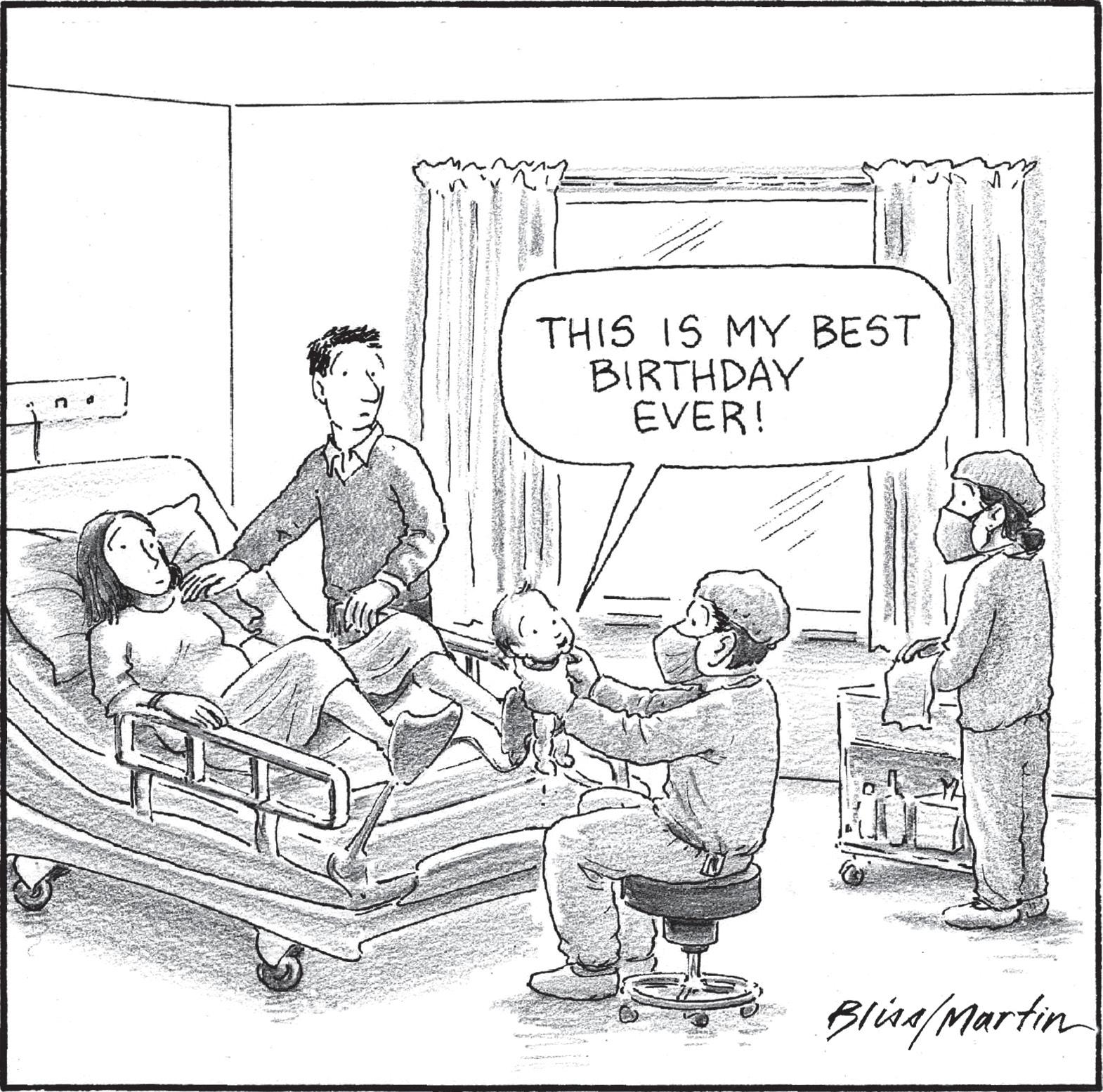

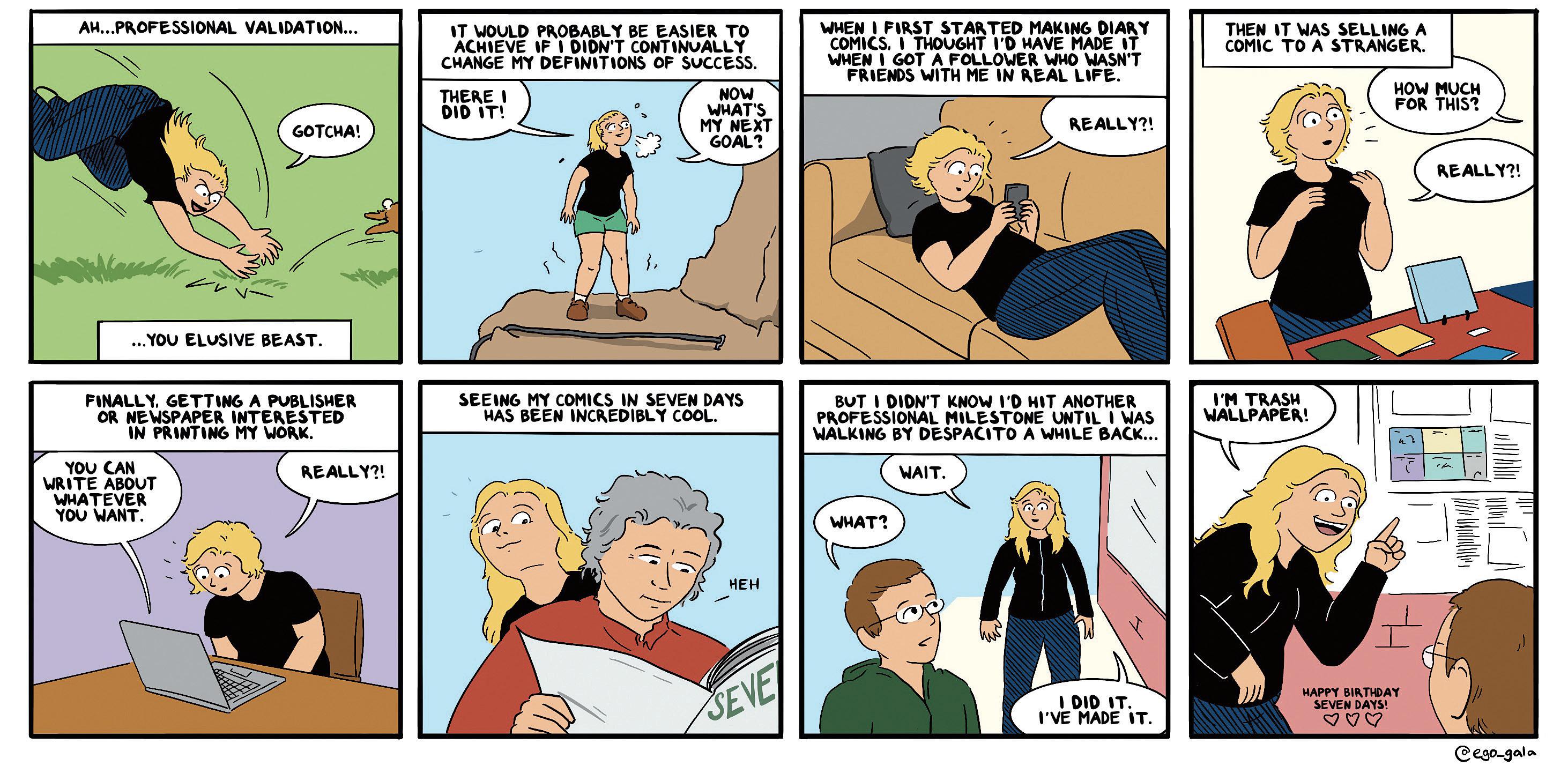

(AUG. 23-SEP. 22)
The gross national product (GNP) is a standard of economic success by which countries gauge their health. It reflects the world’s obsession with material wealth. But the Buddhist nation of Bhutan has a different accounting system: gross national happiness (GNH). It includes factors such as the preservation of the environment, enrichment of the culture and quality of governance. Here’s an example of how Bhutan has raised its GNH. Its scenic beauty could generate a huge tourist industry. But strict limits have been placed on the number of foreign visitors, ensuring the land won’t be trampled and despoiled. I would love to see you take a similar GNH inventory, Virgo. Tally how well you have loved and been loved. Acknowledge your victories and awakenings. Celebrate the beauty of your life.
ARIES (Mar. 21-Apr. 19): Austin Curtis was a prominent Black scientist whose work had spectacularly practical applications. Among his successes: He developed many new uses for peanut by-products, including rubbing oils for pain relief. His work exploited the untapped potential of materials that others neglected or discarded. I urge you to adopt a similar strategy in the coming weeks, Aries: Be imaginative as you repurpose scraps and

leftovers. Convert afterthoughts into useful assets. Breakthroughs could come from compost heaps, forgotten files or half-forgotten ideas. You have the power to find value where others see junk.
TAURUS (Apr. 20-May 20): In Polynesian navigation, sailors read the subtle rise and fall of ocean swells to find islands and chart their course. They also observe birds, winds, stars and cloud formations. The technique is called wayfinding. I invite you to adopt your own version of that strategy, Taurus. Trust waves and weather rather than maps. Authorize your body to sense the future in ways that your brain can’t. Rely more fully on what you see and sense rather than what you think. Are you willing to dwell in the not-knowingness? Maybe go even further: Be excited about dwelling in the not-knowingness. Don’t get fixated on plotting the whole journey. Instead, assume that each day’s signs will bring you the information you need.
GEMINI (May 21-Jun. 20): The umbrella thorn acacia is an African tree whose roots grow up to 115 feet deep to tap hidden water beneath the desert floor. Above ground, it may look like a scraggly cluster of green, but underground it is a masterpiece of reach and survival. I see you as having resemblances to this tree these days, Gemini. Others may only see your surface gestures and your visible productivity. But you know how deep your roots run and how far you are reaching to nourish yourself. Don’t underestimate the power of your attunement to your core. Draw all you need from that primal reservoir.
CANCER (Jun. 21-Jul. 22): To make a tabla drum sing, the artisan adds a black patch of iron filings and starch at the center of the drumhead. Called a syahi, it creates complex overtones and allows the musician to summon both pitch and rhythm from the same surface. Let’s imagine, Cancerian, that you will be like that drum in the coming weeks. A spot that superficially looks out of place may actually be what gives your life its music. Your unique resonance will come not in spite of your idiosyncratic pressure points but because of them. So don’t aim for sterile perfection. Embrace the irregularity that sings.
LEO (Jul. 23-Aug. 22): There’s a Zen motto: “Before enlightenment, chop wood, carry water. After enlightenment, chop wood, carry water.” I hope you apply that wisdom in the coming weeks, Leo. Your breakthrough moments of insight have come or will come soon. But your next move should not consist of being self-satisfied or inert. Instead, I hope you seek integration. Translate your innovations into your daily rhythm. Turn the happy accidents into enduring improvements. The progress that comes next won’t be as flashy or visible, but it’ll be just as crucial.
LIBRA (Sep. 23-Oct. 22): In Japanese haiku, poets may reference the lingering scent of flowers as a metaphor for a trace of something vivid that continues to be evocative after the event has passed. I suspect you understand this quite well right now. You are living in such an after-scent. A situation, encounter or vision seems to have ended, but its echo is inviting you to remain attentive. Here’s my advice: Keep basking in the reverberations. Let your understandings and feelings continue to evolve. Your assignment is to allow the original experience to complete its transmission. The full blossoming needs more time to unfold.
SCORPIO (Oct. 23-Nov. 21): In the Australian desert, there’s a phenomenon called desert varnish. It’s a thin, dark coating of clay, iron and manganese oxides. It forms over rocks due to microbial activity and prolonged exposure to wind and sun. Over time, these surfaces become canvases for Indigenous artists to create images. I like to think of their work as storytelling etched into endurance. In the coming weeks, Scorpio, consider using this marvel as a metaphor. Be alert for the markings of your own epic myth as they appear on the surfaces of your life. Summon an intention to express the motifs of your heroic story in creative ways. Show the world the wisdom you have gathered during your long, strange wanderings.
SAGITTARIUS (Nov. 22-Dec. 21): In Indigenous Australian lore, the Dreamtime is a parallel dimension overlapping the material world, always present and accessible through ritual and listening. Virtually all Indigenous cultures throughout history have conceived of
and interacted with comparable realms. If you are open to the possibility, you now have an enhanced capacity to draw sustenance from this otherworld. I encourage you to go in quest of help and healing that may only be available there. Pay close attention to your dreams. Ask your meditations to give you long glimpses of the hidden magic.
CAPRICORN (Dec. 22-Jan. 19): Saturn is your ruling planet and archetype. In the old myth of the god Saturn, he rules time, which is not an enemy but a harvester. He gathers what has ripened. I believe the coming weeks will feature his metaphorical presence, Capricorn. You are primed to benefit from ripening. You are due to collect the fruits of your labors. This process may not happen in loud or dramatic ways. A relationship may deepen. A skill may get fully integrated. A long-running effort may coalesce. I say it’s time to celebrate! Congratulate yourself for having built with patience and worked through the shadows. Fully register the fact that your labor is love in slow motion.
AQUARIUS (Jan. 20-Feb. 18): In Greek mythology, the constellation Aquarius was linked to a heroic character named Ganymede. The great god Zeus made this beautiful man the cupbearer to the gods. And what drink did Ganymede serve? Ambrosia, the divine drink of immortality. In accordance with astrological omens, I’m inviting you to enjoy a Ganymedelike phase in the coming weeks. Please feel emboldened to dole out your gorgeous uniqueness and weirdness to all who would benefit from it. Let your singular authenticity pour out freely. Be an overflowing source of joie de vivre and the lust for life.
(Feb. 19-Mar. 20): In 1932, trailblazing aviator Amelia Earhart made a nonstop solo flight across the Atlantic, steering through icy winds and mechanical trouble. When she landed, she said she had been “too busy” to be scared. This is an excellent motto for you now, Pisces: “too busy to be scared.” Not because you should ignore your feelings, but because immersion in your good work, mission and devotion will carry you through any momentary turbulence. You now have the power to throw yourself so completely into your purpose that fear becomes a background hum.






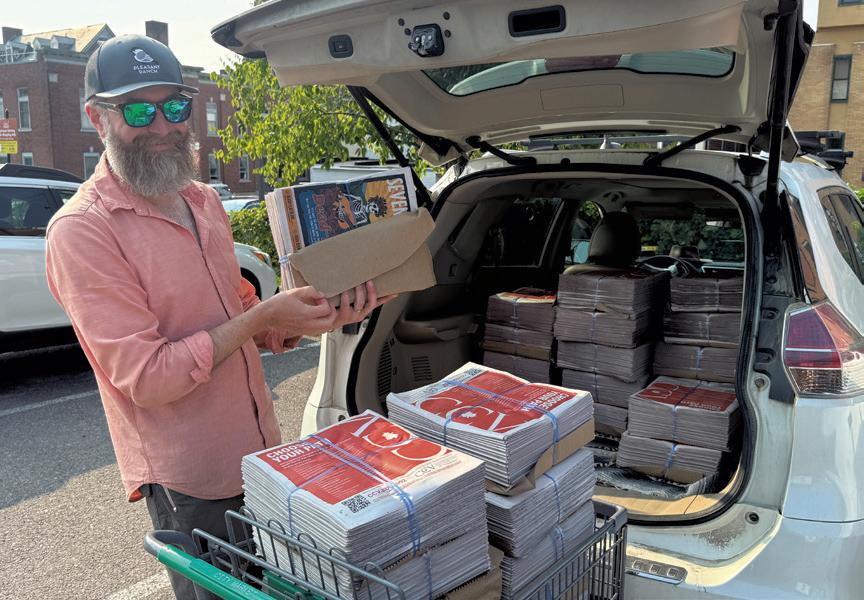
For 30 years Seven Days delivery technicians have crisscrossed the state bringing newspapers to people at a wide variety of locations every Wednesday. Seven Days’ Eva Sollberger talked to drivers, some of whom have been with the paper from the start, and followed one on his route.
A BUDDY WOULD BE NICE
Just muddling along like everyone else. Thankful to live in a beautiful corner of the world. Adventurous, generally optimistic (but that is certainly being tested these days), single for a long time, would enjoy the company of an interesting and kind man. Pondering, 64 seeking: M, l
UNPRETENTIOUS, CARING WORD-LOVER
Outdoorsy retired journalist seeking intelligent irreverent soul to share mutually enjoyable pursuits. For me these include music — roots, alt-folk, blues; cold winters, summer sun, hiking, skiing, cycling. I’m drawn to those who don’t take themselves too seriously. My son, grandkids and Labrador Nina mean everything. Treading lightly after losing my life partner, seeking friendship that may evolve into something deeper. elkaytee 68 seeking: M, l
NEW IN TOWN, SEEKING COMPANION
I am seeking a kindred spirit — someone to explore with. I love the outdoors — hiking, skiing, paddling — and I love cultural things: art galleries, vintage shops, indie films. I like going out for coffee, shopping, music, and also hanging out at home watching TV with my pup. I am healthy and active and seek the same. newVTher 63, seeking: M, l YOU?
Statuesque. Celtic. Worth it. OceanMaeve, 70, seeking: M
You read Seven Days, these people read Seven Days — you already have at least one thing in common!
All the action is online. Create an account or login to browse hundreds of singles with profiles including photos, habits, desires, views and more. It’s free to place your own profile online.
l See photos of this person online.
W = Women
M = Men
TW = Trans women
TM = Trans men
Q = Genderqueer people
NBP = Nonbinary people
NC = Gender nonconformists
Cp = Couples
Gp = Groups
AUTHENTIC, CREATIVE, CURIOUS
Active and social introvert new to and smitten with the North Country looking for a like-minded partner to continue exploring it with. Mom to three adult children, all out on their own. Passions include yoga, hiking, gardening, learning, reading and creating. Scienceminded, politically liberal, spiritually grounded and emotionally available for friendship and, if we’re a fit, more. annwithane 55, seeking: M, l
DOWN-TO-EARTH NATURE LOVER
Looking for sincere, real spirituality connected to nature, and friends for hiking and exploring the outdoors. Theotherside, 51 seeking: M, NC, NBP, l
SPIRITED AND CURIOUS, NO DRAMA
Hi! I’m looking for someone to share life’s adventures with and a relationship that brings out the best in each other. No drama on either end. Kindness, truthfulness and appreciation for the beautiful things in life are a must. Friendship first and then let’s see where it goes! genX25 57, seeking: M, l
SOMEONE TO LAUGH WITH
I am looking for interaction! I’m very social. I miss fun. I miss sharing life experiences. I have a wicked sarcastic sense of humor. Be forewarned! I can make a joke (usually a bad one) about anything. Hard no to anyone that supports the orange monster. If you are interested in chatting, send me an email.
Yikestheworldisnuts 65, seeking: M, l
THIS IS ME
Moved to Burlington after many years inside the beltway. I have secured living quarters with a balcony, procured a Subaru and an ice scraper, and taken my dog on a lot of woodsy walks. Seeking someone to have dinner with and see how it goes.
New2Subarucountry, 52, seeking: M, l
LIVING MY NEW LIFE
I am recently — in the last year — living as a single woman again. My life is good but not full. There is a void. A companion, a friend maybe. It would be fun to have someone to do things with, be it a walk, go to flea markets, antiques shops, museums, road trips, movies. Newlife2025, 64, seeking: M, l
EXPLORING THIS LIFETIME MOMENT
Interested in meaningful conversations and activities. Accepting of differences. Require quality time outdoors daily. INFJ, 65 seeking: W
CURIOUS, CREATIVE, CARING, HOPEFUL
I’m a teacher soon to retire, mother to two young adults. Well traveled but at heart a homebody addicted to writing. I love swimming in the ocean, intelligent conversation, people who make me laugh, cats and wild elephants. I work out four to five days a week, eat too much ice cream, live with Lancelot. I once rode an ostrich. I hope to fall in love again. Helen 66, seeking: M, l
LIVING WITH PURPOSE
Seeking a true partner for the best that is to come. itry, 44, seeking: M
CLEVER, INTUITIVE, CREATIVE, OUTDOORSY, SENSUAL
In search of a woman with similar characteristics for outdoor and indoor play. And, if it feels right, to join me and my male playmate for discreet playdates. CompassRose, 59, seeking: W
FUN-LOVING, INDEPENDENT, HONEST, FUNNY, GREGARIOUS
Healthy, active, semiretired. I enjoy trying new things and seeing new places. Many interests: back roads of Vermont or New England, a foreign cruise. Lakeside with family and friends, food, and a bonfire; or festivals, farmers market, music. Quiet dinner, a movie or Scrabble. I’m game. The friendship of an equal who’s fun-loving, honest and independent. Winter breaks to warmer climates, as it’s not my favorite season. Am I missing something? MsPaisley 71 seeking: M, l
CREATIVE, DARK-HUMORED REALIST
I’m a fantastic storyteller, but it turns out describing myself here feels impossible (and a lot like torture). Meeting Vermont folks should be easy — I’m a creative looking to spend more time doing stuff outdoors with intelligent and kind people. So, here goes: getting outside my comfort zone to get closer to a life I’ve imagined for myself. GULP. itcantrainallthetime47, 47, seeking: M, l
ROAD LESS TRAVELED
I’ve lived a life outside the mainstream, guided by a belief in right-livelihood. Neurodivergent in the ADD kind of way; I am a curious, opinionated audiophile with a background as a librarian. I like to think I can laugh at myself (kindly) and look for the best in others. Looking for new friends: open to a potential long-term partnership. Kindred, 58, seeking: M, W, TM, TW, Q, NC, NBP, l
HAPPY, OPTIMISTIC, INTELLIGENT, CARING, ADVENTUROUS
I’m fun, healthy, outdoorsy. Love cooking, gardening, theater, wine, music, candles. Not perfect but happy with who I am. Enjoy good, honest conversation, others’ perspectives about life. Sensitive, compassionate, attractive, very young at heart. Optimist: value others with positive energy. Appreciate the simple things in life. Looking for quality time with someone to evolve together into long-term relationship. Vizcaya7 70 seeking: M, l
DIRTY HANDS, CLEAN SOUL
I am a hardworking, genuine person. I am kind of old-fashioned. I have way too many hobbies: I enjoy working on vehicles and small engines, working on firewood, maple sugaring, welding, and four-wheeling. In the winter I like snowmobiling and snow plowing. I am looking for a committed relationship with a down-to-Earth country girl. Blacktruckman 29, seeking: W, l
MONOGAMOUS
Loyal and lots of fun. LoyalLove, 47, seeking: W, l
FUN, HONEST AND HARDWORKING
Semi-retired arborist living in the Adirondacks looking to continue loving. Looking for an emotionally mature woman who is looking to be loved and respected, and to have fun. Love to cook, listen to music, walk in the woods, garden, take road trips to New Orleans and out West, and volunteer time to help others. Healthy, active and always trying to learn more. Treedude 70 seeking: W, l
SEVENTY-ONE AND STILL ROCKING Semiretired, widowed and would like to meet someone to walk, hike, bike and see concerts and events with. The still rocking refers to my performing locally with several music groups, mainly classic and bluesy rock. But I enjoy pretty much all expressions of music, dance and art! Epiphone335 71, seeking: W, l
ALWAYS IN A GOOD MOOD/HAPPY Independent, self-employed builder/ woodworker. I like history and museums, travel, games, cooking. I like to read, probably watch too much TV. I’m looking for a woman who is smart, works hard, looks nice, is self-confident, has a sense of humor, is happy and not too moody. Someone who knows the value and enjoyment of life’s simple pleasures, friends, family and good food. 2nd_ Gen_Irish_Italian, 63 seeking: W, l
LAID-BACK
I am a 67-year-old widower. I think that having a life without someone to share it with is no life. Looking for a woman who has old-time values. tdl1711 67 seeking: W, l
RENAISSANCE PERSON HOPELESSLY ROMANTIC
To do justice, love, kindness and walk humbly with my God. Clapham, 55, seeking: W, l
KIND, FUNNY (LOOKING), SENSITIVE
Age 54, happy, insightful, kind, good listener, well-read, open-hearted lover of animals and nature seeks intelligent and compassionate woman for laughs, good times, friendship, connection and maybe more. I live close to the land, love to garden, hike and camp, but also go out often to restaurants, plays and art. I enjoy all things human and beautiful. 2Baldman 54, seeking: W, l
CURIOUS, COMPASSIONATE AND CONSIDERATE
Presently in an open marriage. Looking for women who like to be with a married man (who has permission). MrSteelandBrawn, 64, seeking: W, l
ADVENTURE MIXED WITH CHILL
Have fun, hang out and refuse to stop learning! Let’s grow plants, connection and much more. I love snowboarding but am nervous around people who don’t blaze or people who ski, or who ride bicycles in tight outfits. But outdoorsy adventure sports and learning and teaching about soil. Passion for Pachamama, as well. Lots of good food combined with foraging. Snowmalpickles 36, seeking: W, l
LOOKING FOR A FRIEND
Looking for a friend to do outdoor adventures. Cario1965, 60, seeking: W, l
ACTIVITY PARTNER
I am looking for someone to enjoy each other’s company and see where it goes. friendfirst 60, seeking: W, l
OPEN AND EXPLORING
Looking for someone open to exploring some femdom stuff. GreenMnt802 34, seeking: W
LET TRY SOMETHING DIFFERENT
It’s hard to describe oneself. I’m told that I have a great sense of humor. I am well read, love to talk about history, politics and lots more. I like music: blues, rock, some classic — depends on the mood, I guess. I like swimming, kayaking, going for a ride to nowhere. In winter I like going on a walk on a bright sunny day. Vtman52 73, seeking: W, l
MYSTERY MAN
I enjoy everything that nature has provided us. I spend 95 percent of my days outdoors. Hiking, biking, kayaking and downhill/XC skiing. My ideal partner would share in some of these activities and share with me the activities that encompass their life. It’s so important to share and grow. MisteryMan, 63 seeking: W, l
HONEST AND OPEN-MINDED
I’m a retired history teacher looking for a companion/partner to enjoy life with me. I’m in good health physically and mentally. Looking for honest, kind and intelligent woman for companionship exploring back roads and local history as well as finding the best cup of coffee, conversation and taking in local sports events. CW38, 75, seeking: W, l
ADVENTURER
Former wanderer building an off-grid homestead in Newport. Spent my time between western Mass. and NEK. Looking for an outdoor lover, skinny dipper, cuddler, star gazer, camper, movie watcher for potential LTR. Grab coffee, go for a walk and chat? Homesteader86 39, seeking: W, l
MUSICIAN/WRITER/DANCER SEEKS CONNECTION
I love writing, making music, dancing, being out in nature, understanding new things, stepping up, learning what other folks care about and trying to make a positive difference in the world. I’m an incorrigible optimist who predicts dire things, a gentle person with a steel core, an introverted social butterfly. Seeking creative, compassionate, joyful connection! Sylph, 56, seeking: M, W, TM, TW, Q, NC, NBP, l
TRANS WOMAN LOOKING
Hello, trans woman in my 30s simply looking for hookups and friends with benefits. If you’re a woman or trans woman and interested, message me.
TransRebecca 32 seeking: W, TW, l
seeking...
ADVENTURE, CREATIVITY, NATURE, COMMUNITY, LOVE
Join me for woods, water, volunteering, karaoke, or crafting! Me: nonbinary male ADHD extrovert who loves wildlife and most people. I like alone time, but miss sharing a bed (and life). No kids but would happily adopt/etc. You: open-minded, active, curious, tough, cuddly and communicative. You have goals but can be spontaneous. Learning Spanish or ASL? Practice with me. WildWeirdWonderful, 41, seeking: W, Q, NC, NBP, l
COUPLES seeking...
KNOTTEE COUPLE
Complicated couple looking for woman or couple for friends with benefits. We would like to boat and grab a beverage with like-minded couple or woman and see where it goes from there. knotteecpl 66, seeking: W, Cp
SHAW’S
KIND PHOTOGRAPHER
Photographer I met today, handsome and healthy. I am wondering if you are single? I was surprised you were not waiting for someone when you talked with me while I worked on my project. If you can say where we were and what my project was, maybe we can continue our conversation and you can have someone to go with you. When: Sunday, August 31, 2025. Where: outdoors. You: Man. Me: Woman. #916424
LOWE’S ESSEX MST ASSOCIATE
Who’s that MST Associate at Lowe’s in Essex with the blond ponytail? Always enjoy seeing her when I’m shopping at the Lowe’s in Essex. When: Tuesday, August 26, 2025. Where: Lowe’s Essex. You: Woman. Me: Man. #916423
LOWE’S
You were shopping for mini blinds or shades. Later, you were at the self-checkout at the same time I was. As we were walking out you kindly offered to help me carry a long bulky item to my car. I wish I had accepted your help so we could have talked a bit. If you see this, please respond. anks! When: Saturday, August 23, 2025. Where: Lowe’s in Essex. You: Woman. Me: Man. #916421
SHANNON AND DWEEB
My heart speaks your name in every moment. You are the softest light in my darkest hours, the calm in the chaos, the dream I never dared to wish for. Loving you feels like breathing — effortless, essential, infinite. With you, even silence feels like music, and time slows just to let me stay in your arms a little longer. When: Sunday, September 29, 2024. Where: Cambridge. You: Woman. Me: Man. #916420
If you’ve been spied, go online to contact your admirer!
B., those are some mighty fine legs you have! When: Tuesday, August 26, 2025. Where: Shaw’s. You: Woman. Me: Man. #916422
SILVER FOX, MAPLE STREET POOL
I noticed you noticing me, and I wanted to give you notice that I noticed you back. When: ursday, August 21, 2025. Where: Maple Street Pool with your son. You: Man. Me: Woman. #916419
SHOPPING AT MICHAEL’S
To the lovely lady shopping at Michael’s today: You smiled at me when you saw me, and I thought you were beautiful. I wish I hadn’t been too shy to talk to you. When: ursday, August 21, 2025. Where: Michael’s. You: Woman. Me: Man. #916418
BEAUTIFUL WOMAN IN WHITE
Beautiful blond woman in white dress, white shoes with a red scarf tied around her. You were walking in Middlebury and then sitting in the park. I smiled as I drove by in work truck. Tried to come back just to tell you how beautiful and confident you looked, sitting there. You were gone. You are stunning! When: ursday, August 21, 2025. Where: Middlebury. You: Woman. Me: Man. #916417
DEDICATED RECYCLER FOR HELPFUL
SHOPKEEP
I stopped by your store on the way back from a bike ride and asked a question about recycling. e lights kept going out. Was it a sign? A helpful poltergeist? Maybe you were just being friendly, but on the off chance you were interested, let me know where we met and we can keep the banter going over a coffee! When: Saturday, August 16, 2025. Where: while you were working at a store. You: Woman. Me: Man. #916416
PIZZA AND PLAY?
A couple who loves our weekly slice at Two Brothers Pizza, where service is nice! Hey, with your charming light, join us for some fun and a magical night? If you’re down for laughter and a little spice, let’s join up after you’re done with your slice? When: Tuesday, August 12, 2025. Where: Two Brothers Pizza. You: Woman. Me: Couple. #916414
HONEST, FAITHFUL, LOYAL
No offense to anyone! How you live your life is your business, but I would love to know: Are there men out there who still believe in the oldfashioned ways? Loyalty, honesty, faithfulness, and dating women your own age because you feel secure in your age and you don’t need a young girl to feel like a man. When: Friday, August 15, 2025. Where: everywhere. You: Man. Me: Woman. #916413
To the man who helped me through a tough time: You made me laugh and actually had me believing that maybe not all guys are jerks. We talked for many months. en you just blew me off and I heard it was because you were dating someone. Why couldn’t you just be honest? I only asked you for your friendship. Dishonesty sucks! When: Friday, August 15, 2025. Where: under Road. You: Man. Me: Woman. #916412
BOULE CAFÉ: BIRD TATTOO GUY
You: bird tattoo (swallow?), Birkenstocks, red Honda, super cute. Me: flustered laptop goblin at Boule Bakery in St. Johnsbury, too shy to say hello when you sat nearby. I kept stealing glances, wondering if you were doing the same. Felt like something there — or maybe just caffeine. Either way, if you see this: would love to meet you. When: ursday, August 14, 2025. Where: Boule Bakery in St. Johnsbury. You: Man. Me: Woman. #916409
RAVENS GIRL
I saw you at JP’s this past Saturday and we caught a glance. You smiled as you ate your French toast. You were wearing a Ravens Jersey with the number 52 on it. I was sitting close to you, also wearing a Ravens Jersey, and we shared a moment. Would love to catch a game with you sometime! When: Saturday, August 2, 2025. Where: JP’s. You: Woman. Me: Man. #916411
Rev end,
Summer is pretty much over, and I feel like I didn’t enjoy any of it. I did a few fun things, but nothing much to mention. It’s supposed to be the best time of the year, but lately summer just puts me in a funk. What is my problem?
Saul Stice (MAN, 37)
MEMORIES OF KIND MOTORISTS
In 2020 or 2021 my nervous system had been completely destroyed by complex trauma. I was sitting on the side of the road by Community Bank in Jericho, and a kind man pulled over. He really wanted to help me and I wanted to let him, but I trusted no one. Other motorists also pulled over. ank you all! I’m safe now. When: Friday, June 5, 2020. Where: Community Bank in Jericho (can’t recall the exact date). You: Group. Me: Woman. #916408
SNOW FARM VINEYARDS STUD MUFFIN
You were in back of me in line at Snow Farm Vineyards when my kiddo smacked my ass. You: male, blue shirt, blue hat, sunglasses, facial hair. Me: blond hair, white shirt, jeans, sassy kid. Saw you while I was dancing. You were under the white tent. Single? Going to A House On Fire on August 14? Will look for you! When: ursday, August 7, 2025. Where: Snow Farm Vinyards Wine Down. You: Man. Me: Woman. #916407
YOU MADE MY DAY!
“Of all the gin joints in all the towns in all the world, he walks into mine.” Of all the grocery stores, you walked into mine! I gleamed your boyish grin, twinkling eyes and that familiar goatee standing behind me. Time froze. I embraced you in that serendipitous moment. I’ll never forget it! What a day!
“As Time Goes By.” When: Saturday, August 2, 2025. Where: Hannaford Shelburne Rd., South Burlington. You: Man. Me: Woman. #916406
YOU TOOK A DOUBLE TAKE!
Oakledge Park, around 5:30 on Saturday. Our eyes touched. You were with someone, and I was pushing a stroller up the ramp with my awesome beard. You took a double take. I am available, and you? When: Saturday, August 2, 2025. Where: Oakledge Park. You: Woman. Me: Man. #916403
SHANNON AND DWEEB
I met you and Dweeb. You walked into my life; please walk home. We miss you, T, so much. Forever barefoot. You don’t have to call 911, you can look me up. 33&3, Daddy D When: Friday, July 11, 2025. Where: Cambridge, Vt. You: Woman. Me: Man. #916400
HEATED
An attitude stemming from abusers within the age range: for some, “just giving a compliment” is the toxic masculinity that perpetuates the deaccession of mankind. Maybe if you complimented women your own age, they wouldn’t be siphoning the life energy of women younger and/or sexualizing themselves. When: Monday, August 4, 2025. Where: everywhere not listening. You: Group. Me: Woman. #916405
BJORN
We were supposed to be best friends and finish watching e Hobbit together. You wanted to domesticate a dinosaur. Have you changed the world yet, with your brilliant mind and chalkboard calculations? Remember the great condiment exchange? Have you danced naked in your house yet? How are your plants and fish doing? How are you? Miss having you around. — Bro When: Sunday, August 3, 2025. Where: a few years ago. You: Man. Me: Woman. #916404
I’M STILL WAITING
You’ve asked me to keep the door open, / To just be chill and wait and see. / But I don’t know what I’m waiting for. / For you to finally see? / To see what we had was that thing people chase their whole lives? / Or for you to get lost in someone else’s eyes? / Why wait, when we have such little time? When: ursday, October 13, 2022. Where: Cambridge. You: Man. Me: Woman. #916402
IDX SECURITY MAN
You opened the door for me to let me in for my IT appointment. You: extraordinarily polite and even more handsome. Me: blond, tattoos, probably seemed extremely stressed. I just have to try to connect with you, though probably not brave enough to talk to you. Are you single? Am I crazy, thinking this could work? When: Friday, August 1, 2025. Where: South Burlington. You: Man. Me: Woman. #916401
OSCAR WILDE
Last August you were coming down Worcester Mountain wearing earphones. We talked about Oscar Wilde and the names Mary and Joseph. I didn’t have the nerve to ask if you were single. If you are and want to get in touch, I’d love to meet you somewhere! When: Friday, August 30, 2024. Where: Worcester Mountain. You: Man. Me: Woman. #916399


End-of-summer blues are very common, but if you feel down during the dog days, something else may be afoot.








Everyone has heard about seasonal affective disorder (SAD), which can happen to people in winter, but summertime can have negative effects on mood, too. While winter SAD is triggered by a lack of sunlight, the summer version is basically the opposite. Longer days with more sun can impact the body’s circadian rhythm and brain chemistry and leave you feeling not so hot.





As with many body issues, some of the best ways to combat the problem are to make sure you’re getting enough sleep and exercise, staying hydrated, and eating healthy food. If you really feel depressed and think you need more help to beat it, you may want to talk to your doctor.



ere’s no shame in the self-care game.












It’s also quite possible that you’re setting the bar too high for the season. Any time you expect something is going to be the best thing ever, you’re bound to be disappointed. During the summer months, you may want to take a break from social media because seeing people’s curated posts about vacations and days at the beach only add fuel to the FOMO fire.

Luckily, summer doesn’t officially end this year until the autumnal equinox on September 22. ere’s plenty of time left to lower your expectations and enjoy it.
September lower it.
Good luck and God bless, The Rev end




Gracious, attentive, educated, humorous soul seeks a fit, tender and unassuming female counterpart (58 to 68) for woodland walks, shared meals and scintillating conversation. Won’t you join me? #L1885
Warning: is offer is not available online. All-natural male sex athlete seeking female training partner. Exclusivity possible. Ready to work out? #L1883
I’m a 44-y/o bi male seeking a male, female or bi couple for casual sex. I am clean, easygoing and anything goes. No judgment here. Let’s talk. Call/text. #L1877
I’m a 19-y/o male college student seeking a kind, curious, adventurous woman around my age. I enjoy meditating, being outside and long conversations. Looking for someone I can value and appreciate who can help me to value and appreciate life. #L1881
I’m a 43-y/o male seeking a woman, 30 to 50. Adventure seeker building an off-grid cabin in Newport. I’m 5’8”, redheaded, fit, living between western Mass. and Vt. I like to cook, bathe, hike, camp and travel. Seeking fit, fun-loving, cuddly companion for potential future together. #L1880
Seal your reply — including your preferred contact info — inside an envelope. Write your pen pal’s box number on the outside of that envelope and place it inside another envelope with payment. Responses for Love Letters must begin with the #L box number.
MAIL TO: Seven Days Love Letters PO Box 1164, Burlington, VT 05402
PAYMENT: $5/response. Include cash or check (made out to “Seven Days”) in the outer envelope. To send unlimited replies for only $15/month, call us at 802-865-1020, ext. 161 for a membership (credit accepted).
1 Submit your FREE message at sevendaysvt.com/loveletters or use the handy form at right.
We’ll publish as many messages as we can in the Love Letters section above.
I am looking for an 81-y/o woman. #L1884
I’m a SWM, 60s, 5’7”, 165 lbs. seeking slim males who enjoy a nice, long, slow, relaxing blow job or a regular one, if desired. NSA, just pleasure. #L1882
I’m a 74-y/o male. It’s been a long, long time without feeling a woman’s touch. I miss sex. I would love to meet a single, divorced or widowed woman in her 70s or 80s. Did I mention I miss sex? Phone number, please. #L1879
I have the dreams; you have the sugar. Let us maybe travel a bit and figure out what this country needs. F, 24, seeking someone intellectual, active and financially afloat. #L1878
I’m 65 y/o and gay. Male, seeking my partner/lover and best friend. Gregarious and fun-loving. Laughter and a sense of humor are the cornerstones of my life. As Jimmy Buffet says, “If we couldn’t laugh, we would all go insane!” #L1875
Divorced white female, 66 y/o. Looking for a single male, 45 to 60, who is tall, not big. Who is loving, caring and fun to be with. I like being outdoors. I am disabled and use a wheelchair. I am loving, caring and honest and don’t play games. Like animals, and I am easy to get along with. I live in Winooski. Hope to hear from someone soon. #L1876
Bist du mein B.G.G. (Big Gentle German)? 40, ehrlich, kreativ und naturluver. Suche liebevollen, bewussten DEU Mann für zweisprachiges Leben zwischen VT und DEU. Ich bin liebevoll, gesund und bereit. Du und Ich: Lass uns die Welt mit unserer Liebe verändern. #L1873
I’m a 72-y/o Eastern European woman with a young lifestyle. Seeking a man, age not important. I am a writer, and I like studying foreign languages. I would like to meet a man from Germany, France or Spain/South America to practice language skills. I am not expecting romance; friendship would be sufficient. #L1872
Single M, 60, youthful blond, blue-eyed appearance, wanting mutual attraction with F, 45 to 60, for connection/intimacy. Dinners, talks, walks, nature, TV, entertainment, day trips, overnights, spontaneity, hobbies, more. Ideally seeking BDSM kinky playmate, open-minded, curious to explore kinky side and fantasies. #L1870
Describe yourself and who you’re looking for in 40 words below: (OR, ATTACH A SEPARATE PIECE OF PAPER.)
I’m a
AGE + GENDER (OPTIONAL) seeking a
AGE + GENDER (OPTIONAL)
I’m a SWF, 71 y/o, seeking a man 60 to 70 y/o. I live in Woodstock, Vt. I want a serious relationship with a man. Phone number, please. Best to call after 6 p.m. Would like to meet in person. #L1874
Spunky couple, 70s, adventurous, love travel, camping, and anything on or near the water. We also enjoy the great array of music in Vermont. We’ve enjoyed some M and F singles and couples involving sensual, relaxed experiences. Interested? Let’s chat. #L1871
52-y/o male seeking a female, 40 to 50, who is lively, intellectually curious, passionate and an adventurous soul. ings I like: hiking, exploring new places, cycling, personal growth and cooking memorable meals. #L1869
I’m an 81-y/o woman seeking companionship and romance. I am a widow of five years. I have one son (married). Love fishing and travel. I’m good at cooking, knitting and sewing. #L1867
Required confidential info: NAME ADDRESS
(MORE)
MAIL TO: SEVEN DAYS LOVE LETTERS • PO BOX 1164, BURLINGTON, VT 05402 OPTIONAL WEB FORM: SEVENDAYSVT.COM/LOVELETTERS HELP: 802-865-1020, EXT. 161, LOVELETTERS@SEVENDAYSVT.COM
THIS FORM IS FOR LOVE LETTERS ONLY. Messages for the Personals and I-Spy sections must be submitted online at dating.sevendaysvt.com.










Hula Story Sessions: Four Pines Fund
THU., SEP. 4
HULA, BURLINGTON
Cider Donut Muffins Workshop
THU., SEP. 4 RED POPPY CAKERY, WATERBURY 'STRUT!' Art Hop Fashion Show FRI., SEP. 5 400 PINE STREET, BURLINGTON A Taste of India
SAT., SEP. 6
RICHMOND COMMUNITY KITCHEN Mini-Vulture Needle Felting Workshop