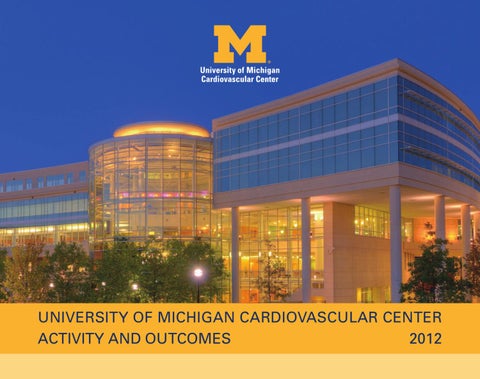
University of Michigan Cardiovascular Center Activity and Outcomes 2012
Contents From the Directors........................................1 The Cardiovascular Center...........................2 Coronary Heart Disease...............................4 Heart Failure..................................................6 Cardiac Arrhythmia......................................8 Valve Disease..............................................10 Inherited Cardiomyopathies......................14 Aortic Disease.............................................16 Vascular Surgery.........................................18 Venous Health.............................................19 Peripheral Vascular Disease.......................20 Pulmonary Hypertension...........................22 Adult Congenital.........................................24 Women’s Heart Disease.............................25 Preventive Care...........................................26 Cardiac Rehabilitation................................27 Stroke...........................................................28 Vascular and Interventional Radiology.....30 Cardiaovascular Imaging...........................32 Research......................................................34 Education.....................................................36 Quality and Safety......................................37 Physician Listing.........................................38 Locations.....................................................41
To make a referral or speak with one of our specialists, contact M-LINE 24 hours a day, 7 days a week.
M-LINE 800-962-3555 For additional referral information see the UMHS Health Provider website. www.med.umich.edu/umhs/ health-providers
Now is the time.
From the Directors We are pleased to share our Outcomes and Activities report for the University of Michigan Cardiovascular Center. This summary includes data from all of our areas. This summary also includes information on innovative technologies and research initiatives at the Cardiovascular Center. There is a common thread in all we do: Teamwork, something for which the Cardiovascular Center is renowned. Visitors come from around the world to learn from our model of collaboration and our multidisciplinary approach to patient care. Teamwork is what fuels our continued success — from early-career scientists partnering with established experts to uncover the genetic origins of congenital heart defects; to surgical teams collaborating to perform high risk life-saving procedures; to a game-changing initiative uniting faculty, staff, patients and family members to improve the quality and transparency of the care we deliver. These stories reflect a fundamental truth of the University of Michigan Health System and the Cardiovascular Center: Every step forward is a step we take together.
Top: Kim A. Eagle, M.D., Linda R. Larin, M.B.A. and David J. Pinsky, M.D. Bottom: Richard L. Prager, M.D. and James C. Stanley, M.D.
This is the place. M-LINE 800-962-3555
Activity and Outcomes 2012 • 1
The Cardiovascular Center Nationally Known, Locally Trusted The University of Michigan Cardiovascular Center (CVC) is ranked among the most prestigious hospitals in the United States for heart, vascular and stroke care. We offer nationally-known programs in heart failure, heart transplantation, stroke, children’s heart disease, valve surgery, aortic disease, implanted heart-assist devices, heart rhythm disorders, preventive heart care and vascular medicine and surgery.
A Team Approach to Patient- and Family-Centered Care and Research Our team approach ensures patients are exposed to specialists in their condition, leading to an early, accurate diagnosis and comprehensive care — from treatment to follow-up. With teams of physicians and scientists collaborating across multiple fields, we are leading the way in providing innovative treatment options. We have more than $205 million in research grant funding and have conducted more than 700 cardiovascular clinical trials in the last five years.
Advanced Clinical Building and Highly Trained Staff Our clinical building features hybrid operating rooms with fluoroscopy for endovascular procedures, interventional procedure suites (two equipped with 64 slice CT). We have 132 inpatient beds dedicated to cardiovascular patients throughout our facilities and our specialized inpatient care includes 24-hour in-house physician coverage in our ICU and telemetry units.
CVC Overview* Inpatient Discharges Clinic Visits
6,799 56,189
Cath Lab Procedures
5,530
EP Lab Procedures
5,589
Adult Cardiac Surgery Volume Vascular Surgery Volume
939 1,286
* All data is CY 2011 unless otherwise noted.
2
•
University of Michigan Cardiovascular Center
UofMHealth.org/cvc
Our surgeons and interventional specialists perform the most complex procedures on a daily basis, and our nurses are specially trained in the cardiovascular care of their patient population, from pulmonary hypertension to heart transplantation.
Each year, our CVC staff: • Treats more than 6,000 hospital inpatients • Sees more than 55,000 outpatients • Performs almost 1,000 open-heart operations on adults and nearly 800 on children • Performs more than 1,200 vascular surgery procedures
• Performs more than 5,500 interventional cardiology procedures • Performs more than 5,500 electrophysiological studies and procedures • Conducts more than 1,800 interventional radiology procedures and thousands of diagnostic imaging studies
The University of Michigan Health System’s Heart and Heart Surgery programs are the best among Michigan hospitals. The Health System is also on the Honor Roll. —The 2012 U.S. News & World Report’s Best Hospitals
M-LINE 800-962-3555
Activity and Outcomes 2012 • 3
Coronary Heart Disease Surgical Options There are multiple options for the treatment of ischemic heart disease. With our collaborative approach, improved medical treatment and improved understanding of interventional approaches, the number of patients considered for Coronary Artery Bypass Grafting (CABG) has declined. At the same time, risks and comorbidities have increased in this group of patients. Despite these facts, mortality at University of Michigan for CABG is significantly lower than the national benchmarks.
Angioplasty and Stenting The Advanced Interventional Cardiology Program offers patients comprehensive and individualized care, utilizing the latest technologies currently available for angioplasty and stenting. Our skilled team of interventional cardiologists performs almost 600 percutaneous coronary interventions yearly, with low mortality rates. For acute myocardial infarction patients, our time from door to intervention is 53 minutes, well below the national goal of 90 minutes, utilizing a team approach and in-house staff.
Acute MI Process Measures 99%
99%
Aspirin on Arrival
100%
99%
100%
97%
Aspirin at Acel/ARB Discharge for LVSD n CVC n National Average
98%
93%
PCI within 90 Minutes
July 2010 – June 2011 Source: www.hospitalcompare.hhs.gov
4
•
University of Michigan Cardiovascular Center
UofMHealth.org/cvc
We also offer multiple assist device technologies, if required, to maintain blood supply to the heart tissue during angioplasty, including: • The TandemHeart™ Percutaneous Ventricular Assist Device: Provides short-term support from a few hours up to 14 days, giving the heart time to recover and regain function. • The Impella 2.5 and 5.0 Catheters: FDA-approved minimally invasive left ventricular assist devices, which provide circulatory support for up to six hours.
Coronary Artery Bypass Mortality
Structural Heart Program The CVC’s Structural Heart Program is a multidisciplinary heart team consisting of interventional cardiologists and cardiac surgeons working together to provide innovative treatments to patients with valve and structural heart disorders. Our program has implanted over 100 transcatheter aortic valves since its start in April of 2011 and the program continues to grow with the addition of treatments for mitral valve disease. A transcatheter approach to reduce mitral regurgitation clips the
mitral valve leaflets together to improve valve function and increase options for select patients. As the program continues to expand, there will be further collaboration between heart teams to close atrial appendages, PFOs and ASDs.
PCI Mortality
Door to Balloon Time 65
2007 n CVC Observed Operative Mortality n STS Expected Operative Mortality
Source: STS National Database
M-LINE 800-962-3555
53
54
53
2009
2010
2011
1.9%
1.9%
66
1.3%
1.1%
n CVC Observed Mortality n BMC2 Expected Mortality
2008
National goal is 90 minutes or less.
Source: BMC2 Registry
Activity and Outcomes 2012 • 5
Heart Failure The CVC’s Heart Failure Program serves patients with mild to severe forms of chronic heart failure, those whose lives are threatened by acute heart failure, and those who are candidates for or are recipients of a heart transplant as the result of any form of heart failure. Our physicians have extensive expertise in the evaluation and management of patients with many varieties of cardiomyopathy.
management for the treatment of heart failure; a telemanagement team of nurses; and an inpatient team of nurse practitioners and physician assistants to assure safe, collaborative, patient- and family-centered care. Our approach is shared care with referring physicians, taking advantage of proximity and access to local physicians while partnering to provide advanced treatment options.
We have Michigan’s leaders in advanced heart failure, circulatory support and heart transplantation. Heart failure services include expert medical
Cardiac Transplant Program Our Cardiac Transplant Program is the leading cardiac transplant center in Michigan. We perform an average of
Heart Transplant
Heart Transplant Patient Survival
2011
6
27
2010 2009 2008 2007
100% 95.8% 8
33
n Adult Cases
•
1 Year
3 Year
5 4
30 Day
n Pediatric Cases
Includes 11 multi-organ transplants. Source: STS National Database
6
86.7% 82.2%
As a high volume transplant center, we offer the multidisciplinary care required for the complex transplant patient, encompassing specialists in advanced circulatory support, cardiac critical care, nutrition, social work, congenital heart disease, inherited cardiomyopathies and transplant infectious disease. Our posttransplant telemanagement team of
9
35 29 28
88.3% 89.8%
30 adult cardiac transplants a year and have three adult cardiac transplant surgeons as well as seven heart failure and transplant cardiologists with advanced training in managing the complexities of this patient population.
n Observed
n Expected
Source: Scientific Registry of Transplant Recipients. 1 Year data for 7/1/08 –12/31/10. 3 Year data for 1/1/06 – 6/30/08.
University of Michigan Cardiovascular Center
UofMHealth.org/cvc
nurses and inpatient nurse practitioners and physician assistants work together to provide the patient with safe and seamless care. As a result of our multidisciplinary approach, our patients’ three-year posttransplant survival is 86.7% compared to an expected survival of 82.2%. Center for Circulatory Support (CCS) and Ventricular Assist Devices (VAD) Program The CCS is one of only a few programs worldwide with access to many investigational and FDA-approved VADs
Right: In addition to tracking inpatient heart failure quality measures, we closely monitor adherence to heart failure guidelines with over 93% of heart failure outpatients prescribed indicated medications.
capable of pumping blood to restore circulation to vital organs. This allows for the selection of the most appropriate device based on each patient’s individual needs.
Care Certification for Advanced Ventricular Assist Devices by The Joint Commission. We received recertification by The Joint Commission in March 2012.
We also have one of the largest VAD programs in the country. In 2011 we implanted 49 VADs and are following more than 100 patients as long-term outpatients.
Extra Corporeal Life Support (ECLS) The University of Michigan is the world leader in ECLS, which was pioneered at the University. Our team is capable of instituting Extra Corporeal Membrane Oxygenation (ECMO) within minutes or, under special circumstances, traveling to referring institutions to initiate ECMO for a safer transport to our center.
Our CCS earned the Gold Seal of Approval® for health care quality in 2008, and was one of the first centers to be awarded Disease-Specific
Heart Failure Process Measures 99%
91%
100%
98%
98%
Long-term Implantable VAD Volume 95%
76
36
Discharge Evaluation Acel/ARB Instructions Given of LVSF for LVSD n CVC n National Average
2007
41
2008
49
49
2009
2010
2011
July 2010 – June 2011 Source: www.hospitalcompare.hhs.gov
M-LINE 800-962-3555
Activity and Outcomes 2012 • 7
Cardiac Arrhythmia Comprehensive Care for A-Fib Atrial fibrillation is the most prevalent type of arrhythmia and affects more than 4 million people in the U.S. The Heart Rhythm Program at the University of Michigan has been a national and international leader in the treatment of this common yet life-altering condition for more than 30 years. The focus of the Heart Rhythm Program is the diagnosis and treatment of all types of arrhythmias including atrial fibrillation and flutter, sick sinus
syndrome, sinus tachycardia, sinus bradycardia, ventricular tachycardia and prolonged QT syndrome. As a national and international tertiary referral center for the treatment of complex arrhythmias, we have the experience, team, equipment and infrastructure to perform even the most complex procedures, including 1,000 catheter ablations each year. We can perform MRIs in patients with cardiac devices using a collaborative program developed by our electrophysiologists and cardiothoracic radiologists.
We offer a variety of treatment options, depending on the condition of the patient, including:
Volume by Procedure
Surgical A-Fib Correction
Pacemaker Procedures
245
ICD Procedures
369
RF Ablations Cardioversions
1,072 452
• Drug therapy • Implantable cardiac defibrillator • Electrical cardioversion • Pacemaker • Catheter ablation • AV node ablation
with CABG • 2% with Valve & CABG • 12% with Other Procedure • 2% Isolated MAZE • 6% with Valve • 78%
8
•
University of Michigan Cardiovascular Center
UofMHealth.org/cvc
Surgical Options For those patients requiring a surgical intervention, we offer minimally invasive, stand-alone procedures and concomitant surgery at the time of other major cardiac operations. We have performed over 500 surgical atrial fibrillation ablation (MAZE) operations, with 87 performed in 2011. Center for Arrhythmia Research The Heart Rhythm Program has been at the forefront of catheter ablation of atrial fibrillation for several years, and played a key role in understanding
M-LINE 800-962-3555
the mechanisms of this condition and developing new treatment strategies. Our physicians have performed crucial studies that have helped to perfect the tools used in ablation. We handle large volumes of patients and have conducted extensive studies to prove that ablation is effective in the long term. These research efforts have resulted in more than 150 published peer-reviewed studies on atrial fibrillation over the last decade, and we have developed novel intellectual property and filed for ten patents on catheter ablation.
The Center for Arrhythmia Research is looking at viable options other than ablation to treat the estimated six million Americans we expect will have atrial fibrillation by 2020. While ablation helps some people, those with chronic atrial fibrillation are very difficult to treat, so we’re working with innovative technologies at the molecular level.
Activity and Outcomes 2012 • 9
Aortic Valve Distribution 2011 2010
60
249
2009
44
228
2008 2007
65
297
n AV Replacement
34
26
35 12
189 167
25
37
15
n AV Repair/Resuspension
n Valve Sparing
Isolated AVR Operative Mortality 1.1% STS National Benchmark Operative Mortality 2.6%
10
•
University of Michigan Cardiovascular Center
UofMHealth.org/cvc
Valve Disease The nationally ranked University of Michigan CVC is a leader in the care and surgical treatment of patients with valve disease. Aortic Valve Disease With one of the largest aortic and aortic valve programs in the country, our physicians see patients with some of the most complex aortic valve problems. Our decade of experience in performing valve-sparing operations on the aortic root has improved the quality of life for many patients. In
Primary vs. Redo Valve
addition, many patients have concomitant aortic disease, and our surgeons have excellent outcomes treating both diseases. Our multidisciplinary approach enables us to determine which patients would benefit from different treatment options, ranging from valve-sparing operations to percutaneous valve replacement. Our surgeons maintain one of the largest practices in North America for patients with aortic valve disease. We have the most experience in the region
Valve Distribution
5-Year Valve Volume
Primary Valve • 79%
Valve Only • 61%
Redo Valve • 21%
Combined Valve • 39%
M-LINE 800-962-3555
with the placement of stentless aortic valves, valve-sparing operations on the aortic root, and the use of hypothermic circulatory arrest procedures. In addition, we are involved in multiple clinical trials investigating alternative treatment options for our patients.
496
481
2007
2008
520
2009
580
2010
630
2011
Activity and Outcomes 2012 • 11
Valve Disease Transcatheter Aortic Valve Replacement (TAVR) The University of Michigan is the only hospital in the state to offer both the FDA approved Edwards SAPIEN Heart Valve and Medtronic CoreValve ® Trial, transcatheter options for aortic stenosis patients who have limited surgical options. Without aortic valve replacement, 50 percent of these patients will not survive more than an average of two years after symptoms begin.
(continued)
We are among 40 sites in the nation for the Medtronic CoreValve ® U.S. Pivotal Trial, a study that is examining an alternative to open heart surgery for patients with severe aortic stenosis.
Each year we perform over 600 surgical valve procedures — more than any other hospital in the state. In 2011 we performed 27 TAVR procedures and have done over 100 procedures to date.
These transcatheter procedures allow access to the diseased aortic valve via a minimally invasive approach and are designed for patients with severe aortic stenosis who are not good candidates for surgery due to age or other health issues.
We have used this experience to build a comprehensive program for treating all aspects of aortic disease. Offering the Edwards Valve and CoreValve ® Trial adds to our treatment options for people with severe aortic stenosis, giving them a chance for a better quality of life.
Since initiating our TAVR Program in 2011, we have performed over 100 procedures to date and average six of these procedures a week.
12
•
University of Michigan Cardiovascular Center
UofMHealth.org/cvc
Mitral Valve The CVC is home to one of the largest mitral valve practices in the country. Our high volume translates to extensive experience in treating mitral valve disease. With a multidisciplinary approach that includes cardiologists and cardiac surgeons who specialize in valve disease, our mitral valve experts have successfully repaired thousands of mitral valves.
Our goal is mitral valve repair, which has better long-term outcomes than mitral valve replacement. The average number of mitral valve repair surgeries per surgeon in the U.S. is four per year. Our surgeons perform more than 200 mitral valve repairs per year and have performed more than 3,500 mitral valve repairs to date. Our degenerative mitral valve repair rate is over 99%, more than double the U.S. rate of 41%.
Mitral Valve Operative Volume
In 2011, 73% of mitral valve procedures were repairs while 27% were replacements. Our 5 year mitral valve repair rate for degenerative mitral disease is 99.5%.
243
2007
220
229
2008
2009
M-LINE 800-962-3555
266
2010
285
2011
Activity and Outcomes 2012 • 13
Inherited Cardiomyopathies Hypertrophic and Other Inherited Cardiomyopathies Hypertrophic cardiomyopathy is a common genetic cardiac disorder affecting 1 in 500 people. It affects both men and women of all ages, and is characterized by abnormal thickening of the heart muscle. The University of Michigan has one of only 14 clinics in the country and it is the only one in Michigan specializing in the treatment of this challenging disorder, offering a multidisciplinary approach that
is both comprehensive in diagnosis and treatment, and individualized for every patient. Our team includes skilled practitioners from many fields, including physicians and nurses specializing in cardiology, cardiac surgery and genetics. This allows us to provide coordinated treatment, including the latest imaging techniques, medication-based therapies, interventional and surgical procedures, family screening, sophisticated genetic testing and genetic counseling.
We have recently expanded our practice beyond hypertrophic cardiomyopathy to include other genetic cardiac disorders, including: • Left ventricular noncompaction • Arrhythmogenic right ventricular cardiomyopathy • Familial dilated cardiomyopathy
The CVC has one of only 14 clinics in the United States specializing in the diagnosis and treatment of hypertrophic cardiomyopathies (HCM).
14
•
University of Michigan Cardiovascular Center
UofMHealth.org/cvc
Alleviating Symptoms, Preventing Complications There is no cure for hypertrophic cardiomyopathy, therefore treatment is aimed at alleviating symptoms and preventing complications. Treatment generally begins with medical management, such as a beta blocker. If medical management does not provide the necessary results, other treatment options are available, including a septal myectomy, which reduces the muscle thickening. improving symptoms in 90% of patients. For patients with
life-threatening heart rhythm abnormalities, a pacemaker or implantable cardiac defibrillator may be necessary.
Myectomy
EP Procedures
Because so much still needs to be learned about hypertrophic cardiomyopathy, and about how best to treat it, our clinic has an active research program. Patients and families can assist in this search for new options by agreeing to participate in clinical trials and to allow their tissues, genetic samples and/or data to be used in research.
26 19
18
2009
2010
HCM Clinic Visits
55 47
44
41
416
2011
2008
479
528
563
9
2008
M-LINE 800-962-3555
2011
2008
2009
2010
2009
2010
2011
Activity and Outcomes 2012 • 15
Aortic Disease The Multidisciplinary Aortic Program brings together a team of specialists from six different areas to deliver a truly innovative treatment plan for better patient care. This team collaborates to formulate the best comprehensive plan, which could include an intervention, surgery and/or a medical approach. Our mortality rates are among the lowest in the country, even after factoring in the high volume of complex cases we handle.
We approach each situation based on the needs of the individual patient, and our solutions may include surgery for aortic aneurysms; minimally invasive aortic stent grafting; or long-term medical care of patients with aneurysms and dissections, particularly management of hypertension and associated cardiovascular disease.
and dissection, performance of valve sparing operations on the aortic root, use of hypothermic circulatory arrest procedures and endovascular repair of the aorta. Specialists at the University of Michigan CVC provide treatment and therapy for all types of aortic disease: • Aortic valve disease (stenosis, insufficiency)
The CVC maintains one of the largest practices for patients with thoracic and thoracoabdominal aortic disease. We have the largest regional experience with the treatment of aortic aneurysm
• Bicuspid aortic valve • Ascending and descending thoracic aneurysms
Thoracic Aorta Procedures 2011
201
36
2010
201
35
2009 2007
23
153 85
16
50 44
30
178
2008
56
40
31
n Open Asc/Arch with or without AVR n Open Desc/TAA n Endovascular Repair
16
•
University of Michigan Cardiovascular Center
UofMHealth.org/cvc
• Aortic arch and abdominal aortic aneurysms • Aortic dissection • Arteriosclerotic aortic disease • Aortic-related connective tissue disorders (e.g., Marfan’s, Ehlers-Danlos and Loey-Dietz)
Abdominal Aortic Disease Distribution
Right: Advanced imaging 24 hours a day aids in the diagnosis and treatment of complex aortic disease.
Endovascular AAA • 69% Open AAA • 31%
M-LINE 800-962-3555
Activity and Outcomes 2012 • 17
Vascular Surgery The Vascular surgeons at the University of Michigan have significant experience in traditional open vascular surgery and the use of minimally invasive endovascular procedures, allowing them to care for a wide range of conditions including: • Abdominal aortic aneurysm • Carotid artery disease • Peripheral arterial disease
• Varicose veins • Venous disease • Vertebrobasilar disease Our vascular surgeons and research faculty are also leaders in the study of vascular disease, helping to identify the causes of and new treatments for venous thromboembolism, aortic aneurysms, carotid artery disease and peripheral arterial disease.
• Renal artery disease
Overall Vascular Surgery Volume 1,486
1,482
Open vs. Endovascular Arterial Vascular Surgery
1,575 1,366
1,354
1,114
Open • 59% Endovascular • 41%
2007
2008
2009
2010
2011
2012
FY 2012 data July – June.
18
•
University of Michigan Cardiovascular Center
UofMHealth.org/cvc
Venous Health The Venous Health Program is a single, all-inclusive resource for the treatment of venous disease. It brings together established and experienced vascular surgeons, vascular medicine specialists, interventional radiologists and nurse practitioners to provide seamless multidisciplinary care. We also offer consultative and educational programs for referring physicians, especially those who are some distance from Ann Arbor, to help them manage venous disease patients locally.
The conditions we treat include: • Venous Thromboembolism (VTE) • Deep Vein Thrombosis (DVT) • Pulmonary Embolism (PE) • Varicose Veins • Chronic Venous Insufficiency • May-Thurner Syndrome
Our Venous Health Program is well connected to world-class research. Some of our physicians have multiple NIH awards studying basic mechanisms of venous thrombosis formation and resolution while others are working on the prophylaxis and treatment of DVT and aggressive therapies for iliofemoral DVT.
Right: Specialized venous care is important in preventing acute pulmonary embolism.
M-LINE 800-962-3555
Activity and Outcomes 2012 • 19
Peripheral Vascular Disease The Peripheral Vascular Disease Program at the CVC is a multidisciplinary team of experts from Interventional Cardiology, Interventional Radiology, Cardiovascular Medicine, Vascular Medicine and Vascular Surgery. Patients are evaluated by this team of providers who create individual treatment plans. The clinic provides patients with access to professionals and programs in
exercise rehabilitation, smoking cessation, dietary counseling, wound care and prosthetics. We also offer educational programs for all physicians. Services provided include: • Immediate access for critical limb cases
• Treatment of acute symptoms, including rest pain and non-healing ulcers due to arterial insufficiency • Catheterization lab featuring stateof-the-art angiographic equipment and expertise in multiple minimally invasive endorevascularization modalities
• Comprehensive testing protocol for initial diagnosis • Treatment of non-acute symptoms, including claudication
Type of Peripheral Vascular Cases
Peripheral Vascular Procedures
Femoral-popliteal • 45% Below the Knee • 8%
326
354
341
2010
2011
Subclavian • 2% Renal • 8% SMA/Celiac • 6% Aorto-iliac • 31%
20
•
University of Michigan Cardiovascular Center
2009
UofMHealth.org/cvc
M-LINE 800-962-3555
Activity and Outcomes 2012 • 21
Pulmonary Hypertension The multidisciplinary Pulmonary Hypertension (PH) Program was developed to diagnose and manage patients with primary and secondary forms of pulmonary hypertension. We are a referral center for hospitals and physicians throughout Michigan, Northern Ohio and Indiana. The team — from Cardiology, Pulmonary and Critical Care Medicine, Radiology, Cardiac Surgery, Hematology and Rheumatology — has fostered significant enhancements in patient care
and research in the diagnosis, risk stratification and management of: • Pulmonary arterial hypertension • Thromboembolic hypertension • Pulmonary hypertension associated with congenital heart disease, liver disease and collagen vascular diseases. Our physicians and nurses have expertise in the evaluation and management of patients with many varieties of pulmonary hypertension
and extensive experience with some of the highly specialized and complicated medical therapies for this condition. Our treatment options include medical therapies, clinical trials, pulmonary thromboendarterectomy and lung transplantation. We consider referring physicians our partners in the care of all pulmonary hypertension patients. Together, we can ensure the symptoms that impact a patient’s quality of life are managed for the best outcome.
Our Pulmonary Hypertension Program is the largest and most experienced referral center in the region.
22
•
University of Michigan Cardiovascular Center
UofMHealth.org/cvc
M-LINE 800-962-3555
Activity and Outcomes 2012 • 23
Adult Congenital The Adult Congenital Heart Program is a comprehensive, full-service program providing patients with our extensive experience in congenital heart imaging, electrophysiology, interventional catheterization and cardiac surgery. Our surgeons perform the most heart surgeries on adults and children with congenital heart disease and treat the largest number of adult patients with the disease in the state of Michigan. We also participate in ongoing research related to congenital heart disease in adults.
The program collaborates with other specialties to ensure patient care is comprehensive. • High risk obstetrics • Pulmonary hypertension • Cardiomyopathy (genetics) • Electrophysiology/arrhythmia • Heart failure/transplant • Aortic disease/aortic surgery This clinic provides outpatient evaluation and follow-up for patients 18 and over with congenital heart disease. Services
include: adult structural and interventional cardiac catheterization services; specialized adult congenital MRI with interpretation by specialists trained in the detection of congenital heart disease; multidisciplinary adult congenital arrhythmia services providing joint visits with congenital cardiology, adult electrophysiology specialists and pediatric cardiology specialists; and clinical social work. The University of Michigan Congenital Heart Center has performed over 50 percutaneous pulmonary valve replacements.
Adult Congenital Heart Clinic Visits
The Congenital Heart Center is a leader in percutaneous pulmonary valve replacements and has performed over 50 of these procedures.
24
•
University of Michigan Cardiovascular Center
490
498
2007
2008
580
614
638
2009
2010
2011
UofMHealth.org/cvc
Women’s Heart Disease The Women’s Heart Disease Program provides a personalized approach to patient care that involves a team of highly skilled practitioners from many fields who specialize in women’s heart care. The team includes a cardiologist, nurse practitioner, dietitian, exercise physiologist and a stress management coordinator — each trained to understand the unique characteristics of women’s heart conditions. As a team, we provide comprehensive evaluation and treatment to our patients.
M-LINE 800-962-3555
Our researchers are conducting studies to advance the understanding of cardiovascular and coronary heart disease in women and the role of medical and lifestyle interventions in prevention.
Activity and Outcomes 2012 • 25
Preventive Care The CVC provides a unique and comprehensive approach to the prevention of cardiovascular disease and the rehabilitation of these patients. Stress management specialists, exercise physiologists, dietitians and nurse practitioners, among others, make up the multidisciplinary team of experts who work together to help modify a patient’s lifestyle to improve health. The Lipid Management Program is a leader in the management of fats and cholesterol in the blood.
Our physicians in the field of cardiovascular disease prevention are among the most respected in the country, and while each is a prevention specialist, some have a special focus on women’s health, vascular medicine, hypertension, obesity, metabolic syndrome or lipid disorders. Our cardiology nurses and nurse practitioners have extensive training in cardiology and ambulatory-care nursing. Working as a team, they are actively involved in patient care, education and research.
Right: The Lipid Management Program offers multidisciplinary services including nutrition and exercise counseling.
26
•
University of Michigan Cardiovascular Center
UofMHealth.org/cvc
Cardiac Rehabilitation The Cardiac Rehabilitation Program has a major role in cardiovascular disease prevention and treatment at the University of Michigan. The team of experts includes physicians, exercise specialists, dietitians, and nurses who offer a comprehensive array of services. Following heart surgery, angioplasty, and myocardial infarction, cardiac rehab participants have supervised ECG monitored sessions that include mini-teaching sessions focused on a heart healthy diet and stress management. For more targeted
needs, we offer a medical foods weight loss program and yoga for stress management. Cardiac rehab graduates often continue in our Fitness Center and a follow up program to help with continued success. Patients who participate in cardiac rehab have improvement in each of the heart disease risk factors and are at less risk for re-hospitalization, complications of heart disease and sudden death.
For patients with angina not controlled with medication, angioplasty or bypass surgery, we offer external counterpulsation (ECP), a non-invasive treatment that increases blood flow to the heart. When used alone or combined with cardiac rehab, ECP can markedly improve quality of life for patients with angina.
Total Patients 646 518 400
318 211
2008
217
2009
241
218
2010
2011
n Total Patients Referred n Referred Patients that start CR
M-LINE 800-962-3555
Activity and Outcomes 2012 • 27
Stroke A Specialized Team The Stroke Program at the University of Michigan brings together specialists in Neurology, Neurosurgery, Neurointerventional Radiology, Emergency Medicine, Vascular Surgery, Physical Medicine and Rehabilitation and Cardiology to offer the highest level of comprehensive stroke care to patients. This ranges from providing the most advanced stroke treatments to working with patients to identify ways they can reduce their stroke risk. The team offers a depth of knowledge
including 10 Board Certified vascular neurologists, several of whom are active in national stroke guideline development. Timing is critical in treating stroke. Our emergency response services, including Survival Flight, bring patients to our hospital quickly and safely, with the emergency room staff being an instrumental member of the stroke team. Four of our emergency medicine faculty are internationally known for clinical stroke research.
Dedicated Care Stroke patients are cared for in our dedicated Stroke Unit and NeuroIntensive Care Unit. Stroke units have been shown to improve survival and functional outcomes following stroke, as well as decrease complications and the length of hospital stays. Patients begin working with therapists as soon as they are medically ready. If therapy is needed after discharge, we work with patients and their families to plan the best recovery strategies.
Stroke Quality
CVC
Received IV t-PA within 180 minutes of onset
92.3%
85.0%
100.0%
85.0%
99.7%
85.0%
100.0%
85.0%
At risk patients received DVT prophylaxis
99.7%
85.0%
Eligible patients discharged on cholesterol reducing medication
98.2%
85.0%
Smokers received smoking cessation advice
96.2%
85.0%
Received antithrombotic medication within 48 hours Discharged on antithrombotics A-fib patients discharged on anticoagulation therapy
GWTG Goal
Source: ASA Get With The Guidelines
28
•
University of Michigan Cardiovascular Center
UofMHealth.org/cvc
The Stroke clinic provides screening and preventive care to patients who are at high risk for stroke. We work with patients to diagnose and treat conditions that increase risk for stroke. Our location in the CVC promotes collaboration with cardiologists and vascular surgeons. Together we put the best stroke prevention plan into action for each patient. This may range from lifestyle changes to the most sophisticated testing and treatment to decrease stroke risk.
M-LINE 800-962-3555
Our Commitment to Excellence We are accredited as a Primary Stroke Center by The Joint Commission. We also participate in the American Stroke Association “Get With The Guidelines®” (GWTG) Quality Initiative and have been awarded Gold Plus status in quality. This award recognizes hospitals that consistently provide excellent care following evidence based guidelines. The AHA has recognized the quality of stroke care provided at UMHS since 2005.
Forefront of Research The U of M Stroke Program is at the forefront of research to make a difference in the lives of stroke patients and their families. Much of our research is supported by the National Institutes of Health. We are involved in multiple studies for prevention and treatment of ischemic stroke, including researching new medications to dissolve clots and new techniques that restore blood flow to the brain before significant damage is done.
Activity and Outcomes 2012 • 29
30
•
University of Michigan Cardiovascular Center
UofMHealth.org/cvc
Vascular and Interventional Radiology The multidisciplinary Vascular and Interventional Radiology Program evaluates and treats vascular disease using a variety of diagnostic angiography techniques including digital subtraction and interventional procedures we have developed that provide non-surgical alternatives to a variety of problems. Specialties include:
• Arterial embolization • Vascular occlusion therapies • Inferior vena cava filter placement • Central venous recanalization and stenting • Infrapopliteal arterial recanalization • Treatment for arteriovenous malformations
• Stent placement • Percutaneous transcatheter angioplasty
Our Interventional Radiologists are an integral part of our multidisciplinary teams to treat complex aortic and other vascular diseases.
Interventional Radiology Procedures 1,795
2008
M-LINE 800-962-3555
1,900
2009
1,793
1,851
2010
2011
Activity and Outcomes 2012 • 31
Cardiovascular Imaging Nuclear Cardiology The CVC Nuclear Cardiology laboratory and PET imaging center in University Hospital are fully equipped with advanced SPECT/CT and PET/CT imaging systems. In addition to standard exercise and pharmacologic stress testing with standard imaging, the Nuclear Cardiology laboratory offers innovative PET/CT stress testing, that is not widely available. The high definition images obtained with PET imaging improve diagnostic accuracy, while also drastically lowering radiation exposure. PET stress testing is the most
32
•
accurate way to measure blood flow to heart muscle non-invasively, dramatically improving our ability to tailor treatment to a patient’s individual needs. We also offer a variety of specialized nuclear tests to diagnose rare causes of cardiac disease, such as sarcoidosis and myocarditis. Cardiovascular Computed Tomography Patients at the CVC receive CT imaging of the heart and vascular system on advanced CT scanners that use powerful computer processing
University of Michigan Cardiovascular Center
techniques allowing us to lower radiation exposure by up to 80%. These advances help us to acquire images with the lowest possible radiation dose and the highest possible image quality to provide the most accurate assessments for our patients. Our cardiac CT exams allow us to accurately image plaque and blockages in the coronary arteries in a single breath. CT is essential to determine the best approach to complex cardiovascular conditions, and determine whether patients are better suited for surgical or percutaneous
UofMHealth.org/cvc
approaches, such as transcatheter aortic valve implantation, aortic endografts, catheter guided ablation of cardiac arrhythmias and in the treatment of peripheral vascular disease. In partnership with our advanced image processing laboratory, we are able to routinely generate three-dimensional models to aid in diagnosis and treatment decisions, 24 hours a day. Cardiac MRI Our cardiac MRI program offers a wide spectrum of exams which are tailored to individual patient needs. Whether it’s
Left: We are at the forefront of research in new imaging technologies for the diagnosis and management of heart disease.
ischemic heart disease, cardiac valve disease, adult congenital heart disease, thoracic aortic disease, or less common cardiomyopathies, the high resolution images obtained with cardiac MRI allow us to skillfully demonstrate cardiovascular anatomy, to make extremely accurate measurements of cardiac function and to identify areas of cardiac scar. These techniques provide an evaluation and diagnosis of many cardiac diseases which are difficult if not impossible to identify with any other non-invasive test.
Imaging Procedures 2-D ECHO
18,660
Stress ECHO
4,528
TEE
1,922
CT
10,981
Nuclear Medicine
3,121
Cardiac MRI
1,353
Diagnostic Vascular Studies
M-LINE 800-962-3555
Echocardiography Our Echocardiography Laboratories perform over 20,000 echocardiograms a year. This includes 2-D, stress and newer, advanced echocardiographic techniques, such as strain imaging and 3-D transesophageal echocardiography. Strain imaging provides a sensitive measure of cardiac contraction, while 3-D echocardiography allows detailed real time assessment of the heart valves and chambers, providing additional information than is found by conventional echocardiography.
23,190
Activity and Outcomes 2012 • 33
Research Research is a vital part of the work of the CVC. With more than $205 million in research grant funding, more than 700 cardiovascular clinical trials in the last five years and a multidisciplinary team of scientists and physicians collaborating across multiple fields, the CVC is leading the way in understanding the cardiovascular system and providing our patients with innovative new treatment options. We’re learning more about how different women’s heart attacks are, how early to intervene with heart-assist
34
•
devices for those with heart failure, how aneurysms occur and the viability of minimally invasive valve replacement for people with aortic stenosis. Aortic Biobank The Aortic Biobank is a large-scale initiative to establish a biorepository for clinical information, DNA, plasma and aortic tissue samples from patients with aortic disease. In addition, the Aortic Biobank aims to implement healthy controls to further empower our investigators and promote resource sharing. A multidisciplinary group of
University of Michigan Cardiovascular Center
experts, including personnel from Human Genetics, Cardiovascular Medicine, Radiology and the Multidisciplinary Aortic Program, are launching this project for the CVC. Once the Aortic Biobank has been successfully established within the CVC, future expansion to other cardiovascular diseases such as cardiac arrhythmia, peripheral arterial disease and heart failure will be initiated.
UofMHealth.org/cvc
Medtronic CoreValve ® Trial The CoreValve ® is an investigational device for the treatment of severe aortic stenosis in patients deemed to be high risk for conventional surgery. The University of Michigan began enrolling patients in the Pivotal trial in early 2011 and has grown to be one of the top implanting sites. The trial has been extended to include patients with concomitant valve disease and other comorbidities and will soon grow to include moderate risk patients. This new phase will launch in early 2013.
Amorcyte PreSERVE AMI Study A large percentage of patients remain at high risk for adverse cardiac events after a heart attack despite ensuring patency of coronary arteries. The University of Michigan has been selected to participate in the Amorcyte PreSERVE AMI Study which aims to determine the safety and effect of stem cell infusion on blood flow to the heart muscle.
REVIVE-IT The CVC and University of Pittsburgh have been awarded a National Institutes of Health grant to explore the potential benefits of implantable heart devices for the large group of Americans with heart failure. The REVIVE-IT researchers will compare whether patients with less advanced heart failure than current LVAD recipients but who are not eligible for transplant, have better outcomes with LVAD than with current medical therapy.
Left: The North Campus Research Complex with 28 buildings comprising 2.1 million square feet of office, research and manufacturing space, including cardiovascular research which will bring investigators from medicine, surgery, engineering physiology and biology together to develop new approaches to heart disease.
M-LINE 800-962-3555
Activity and Outcomes 2012 • 35
Education The CVC’s mission is to be the premier center creating an understanding of cardiovascular disease across the life span, through multidisciplinary collaboration between clinicians and scientists, to achieve superior compassionate patient care, innovative science and discovery and excellence in education.
a wide range of training programs for early-career health professionals.
From cardiologists to surgeons, radiologists to anesthesiologists, and nurses to radiologic technicians and cardiac rehabilitation specialists, the University of Michigan CVC provides
• Cardiology update
The CVC offers several continuing medical education courses for physicians each year, along with continuing education opportunities for nurses. Courses include: • Arrhythmia update For more information, visit http://cme.med.umich.edu
Top Left: The CVC’s Mardigian Wellness Resource Center is available to provide quality, reliable health information about cardiovascular health in patient-friendly language. Our goal is to help patients and families understand their health condition, make informed decisions and become active members of their health care team.
36
•
University of Michigan Cardiovascular Center
UofMHealth.org/cvc
Quality and Safety The CVC is committed to providing the highest quality and safest patient care. We utilize a quality dashboard to monitor performance on key indicators, and this dashboard drives quality improvement efforts. We believe in transparency and have made our data available to staff and also to the public at www.uofmhealth.org/quality-safety. Examples of quality improvement projects include digital checklists in the operating room, visual patient pathways, blood conservation in cardiac surgery and cardiac procedure unit scheduling delays.
M-LINE 800-962-3555
Patient satisfaction scores for the CVC are among the highest at the University of Michigan Health System in both inpatient and outpatient areas. We believe providing the ideal patient care experience stems from a partnership between patients, their families, physicians and staff. As a result, the CVC created a patient- and family-centered care program (PFCC), which provides a platform for patients and families to share personal experiences and provide input on how the CVC can improve care for future patients and family members.
CVC Quality Dashboard
Activity and Outcomes 2012 • 37
Physician Listing Adult Cardiac Surgery Steven F. Bolling, M.D. G. Michael Deeb, M.D. Jonathan W. Haft, M.D. Francis D. Pagani, M.D., Ph.D. Himanshu J. Patel, M.D. Richard L. Prager, M.D. Matthew A. Romano, M.D. Bo Yang, M.D., Ph.D. Cardiovascular Anesthesiology Patrick E. Benedict, M.D. Matthew D. Caldwell, M.D. Pema Dorje, M.D. Anna V. Dubovoy, M.D. Timur Z. Dubovoy, M.D. Patrick Horn, M.D. Paul E. Kazanjian, M.D. Wei C. Lau, M.D. Sean Neill, M.D. Erin E. Payne, M.D. Jennifer Vance, M.D. Bryant Wu, M.D. Amy E. Young, M.D.
38
•
Cardiothoracic Imaging Prachi Agarwal, M.D. Naama Bogot, M.D. Philip Cascade, M.D. Aamer Chughtai, M.D. Paul Cronin, M.D. Luba Frank, M.D. Maryam Ghadimi Mahani, M.D. Barry Gross, M.D. Ella Kazerooni, M.D. Aine M. Kelly, M.D. Jean Kuriakose, M.D. Troy M. LaBounty, M.D. Gisela Mueller, M.D. Smita Patel, M.D. Perry Pernicano, M.D. Leslie Quint, M.D. Jadranka Stojanovska-Nojkova, M.D. Baskaran Sundaram, M.D. Dharshan Vummidi, M.D.
University of Michigan Cardiovascular Center
Congenital Cardiac Surgery Edward L. Bove, M.D. Jennifer C. Hirsch-Romano, M.D. Richard G. Ohye, M.D. Ming Sing Si, M.D. Critical Care Faculty Jehad I. Albataineh, M.D. Ross Blank, M.D. James M. Blum, M.D. Yasser El Kouatli, M.D. Milo C. Engoren, M.D. Jonathan W. Haft, M.D. Michael D. Maile, M.D. Matthew A. Romano, M.D. Brian J. Woodcock, M.D.
UofMHealth.org/cvc
Echocardiology William F. Armstrong, M.D. David S. Bach, M.D. Anna M. Booher, M.D. Peter G. Hagan, M.D. Theodore J. Kolias, M.D. Troy M. LaBounty, M.D. Sara Saberi, M.D. Kenneth J. Tobin, D.O. Elina Yamada, M.D. Electrophysiology Frank M. Bogun, M.D. Aman Chugh, M.D. Thomas C. Crawford, M.D. Hamid Ghanbari, M.D. Eric D. Good, D.O. Krit Jongnarangsin, M.D. Rakesh Latchamsetty, M.D. Fred Morady, M.D. Hakan Oral, M.D. Frank Pelosi Jr, M.D.
M-LINE 800-962-3555
General Cardiology Mark R. Benson, M.D., Ph.D. Martin L. Bocks, M.D. Brian Byrd, M.D. Timothy B. Cotts, M.D. Melinda B. Davis, M.D. Sharlene M. Day, M.D. Kim A. Eagle, M.D. Daniel T. Eitzman, M.D. Peter M. Farrehi, M.D. James B. Froehlich, M.D. Santhi K. Ganesh, M.D. Anuhav Garg, M.D. Sascha Goonewardena, M.D. Adam S. Helms, M.D. Elizabeth A. Jackson, M.D. Fareed U. Khaja, M.D. Michael H. Lehmann, M.D. Monika J. Leja, M.D. Vallerie V. McLaughlin, M.D. Venkatesh Murthy, M.D. Mark Morris, M.D. David J. Pinsky, M.D. Melvyn Rubenfire, M.D. Michael J. Shea, M.D. Preshant Vaishnava, M.D. Scott Visovatti, M.D.
Heart Failure/Transplant Keith D. Aaronson, M.D. Jennifer Cowger, M.D. David Bradley Dyke, M.D. Reema Hasan, M.D. Scott Hummel, M.D. Todd M. Koelling, M.D. John M. Nicklas, M.D. Maryse Palardy, M.D. Adam B. Stein, M.D. Audrey H. Wu, M.D. Hypertension Robert Daniel Brook, M.D. Kenneth A. Jamerson, M.D. Ralph H. Stern, M.D., Ph.D. Alan B. Weder, M.D. Interventional Cardiology Eric R. Bates, M.D. Stanley J. Chetcuti, M.D. Claire S. Duvernoy, M.D. Paul Michael Grossman, M.D. Hitinder Singh Gurm, M.D. Daniel S. Menees, M.D. Brahmajee K. Nallamothu, M.D. Michael Thomas, M.D.
Activity and Outcomes 2012 • 39
Physician Listing Interventional Radiology Kyung Cho, M.D. Narasimham Dasika, M.D. Joseph J. Gemmete, M.D. Venkataramu Krishnamurthy, M.D. Paula M. Novelli, M.D. James J. Shields, M.D. Ranjith Vellody, M.D. David M. Williams, M.D. Zishu Zhang, M.D. Nuclear Radiology Richard Brown, M.D. James Corbett, M.D. Kirk Frey, M.D., Ph.D. Venkatesh Murthy, M.D., Ph.D. Monrand Piert, M.D.
Vascular Surgery Ramon Berguer, M.D., Ph.D. Dawn M. Coleman, M.D. Enrique Criado, M.D. Emily Wilcox Cummings, M.D. Jose A. Diaz, M.D. Jonathan L. Eliason, M.D. Guillermo A. Escobar, M.D. Katherine A. Gallagher, M.D. Peter K. Henke, M.D. Daniel D. Myers, D.V.M. Lisa E. Pavone, M.D. John E. Rectenwald, M.D. James C. Stanley, M.D. Thomas W. Wakefield, M.D.
Stroke Neurologists Eric E. Adelman, M.D. Devin L. Brown, M.D., M.S. James F. Burke, M.D., M.S. Lewis B. Morgenstern, M.D. Lesli E. Skolarus, M.D., M.S. Michael M. Wang, M.D., Ph.D. Darin B. Zahuranec, M.D., M.S.
40
•
University of Michigan Cardiovascular Center
UofMHealth.org/cvc
M5
Locations I9 6
1. Cardiovascular Center 1500 E. Medical Center Drive Ann Arbor, MI 48109 2. Domino’s Farms 4000 Ave Maria Drive, Lobby A, Suite 1300 Ann Arbor, MI 48106
4
M5
3. Briarwood Health Associates 325 Briarwood Circle, Building 5 Ann Arbor, MI 48108
8
4. Brighton Health Center 8001 Challis Road Brighton, MI 48116
6
B M 23
1
I 94
M-LINE 800-962-3555
Canton
5
2
Ann Arbor
2• M1
M 52
3
hi g Mic
ve an A
I 94
9
M
12
•M
ic h
i
n ga
e Av
I 275
Saline
8. Livonia Vein Center 19900 Haggerty Road Livonia, MI 48152 9. Saline 700 Woodland Drive Saline, MI 48176
Livonia
I 275 • I 96
M 14
Chelsea
6. Chelsea 14700 E. Old US 12 Chelsea, MI 48118 7. Livonia 20321 Farmington Rd Livonia, MI 48152
7
I 96
M 23
5. Canton 1051 N. Canton Center Road Canton, MI 48187
I 696
I 96
M 23
Brighton
Activity and Outcomes 2012 • 41
To make a referral or speak with one of our specialists, contact M-LINE 24 hours a day, 7 days a week.
M-LINE 800-962-3555 For additional referral information see the UMHS Health Provider website. www.med.umich.edu/umhs/health-providers
Executive Officers of the University of Michigan Health System Ora Hirsch Pescovitz, M.D., Executive Vice President for Medical Affairs; James O. Woolliscroft, M.D., Dean, U-M Medical School; Douglas Strong, Chief Executive Officer, U-M Hospitals and Health Centers; Kathleen Potempa, Dean, School of Nursing. The Regents of the University of Michigan Mark J. Bernstein, Julia Donovan Darlow, Laurence B. Deitch, Shauna Ryder Diggs, Denise Ilitch, Andrea Fischer Newman, Andrew C. Richner, Katherine E. White, Mary Sue Coleman (ex officio). The University of Michigan, as an equal opportunity/affirmative action employer, complies with all applicable federal and state laws regarding nondiscrimination and affirmative action. The University of Michigan is committed to a policy of equal opportunity for all persons and does not discriminate on the basis of race, color, national origin, age, marital status, sex, sexual orientation, gender identity, gender expression, disability, religion, height, weight, or veteran status in employment, educational programs and activities, and admissions. Inquiries or complaints may be addressed to the Senior Director for Institutional Equity, and Title IX/Section 504/ADA Coordinator, Office of Institutional Equity, 2072 Administrative Services Building, Ann Arbor, Michigan 48109-1432, 734-763-0235, TTY 734-647-1388. For other University of Michigan information call 734-764-1817. Š 2013, The Regents of the University of Michigan.
1500 E. Medical Center Drive Ann Arbor, MI 48109 UofMHealth.org