Football in Exile
ֆուտբոլ աքսորում
Sürgündəki Futbol Dirk-Jan Visser & Arthur Huizinga
OFFSIDE Football in Exile
ֆուտբոլ աքսորում
Sürgündəki Futbol Dirk-Jan Visser & Arthur Huizinga
Gori
GEORGIA
Nagorno-Karabakh Line of contact (frontline)
Tbilisi
Zone under Armenian military control Railroad
Zaq
Obsolete railroad Armenian diaspora highway (Lachin corridor) Baku-Tbilisi-Ceyhan (BTC) pipeline Capital
† Monasteries Boundary representation is 25 km not necessarily authoritative. 10 mile
Sadakhlo
Qazakh Kura River
Tovuz
Mingach R
Ijevan Vanadzor
Gyumri
Ganja
Bashkend (Artsvashen) Chambarak Drakhtik Hrazdan
ARMENIA
Ashağı Ağcakend (Shahumyan)
Terter
Lake Sevan
Mar (A
Yerevan Kelbajar
Gandzasar
†
Vank
NAGORNO KARABAK Mount Ararat
Lachin
TURKEY
Goris
AZERBAIJAN Nakhichevan
Gu
Kapan
A
IR
RUSSIAN FEDERATION
qatala
Qusar Quba
Sheki
Qabala
hevir Reservoir
Mingachevir
Goycay Yevlakh
Merdakan Barda
Dörd Yol-settlement
Nemirli
Baku
AZERBAIJAN
Kura River
Terter
r River
Memorial Hill Ağdam-region
rtakert Agdere)
OKH
Bilgeh
Sumgayit
Guzanli
Ağdam
Karkar River
Ali Bayramli
Askeran Nakhichevanik
Araxes River
Khojaly
Stepanakert (Khankendi)
Shushi (Shusha)
Amaras
Martuni (Khojavend)
Kura River
†
Fizuli
Tug Hadrut
Salyan Araxes River
ubatly
Khanlik
Masalli
Araxes River
Lenkaran
RAN Ardebil
Caspian Sea
David Martirosyan
Yasem Guliyev
Levonid Oganisyan
Born in Stepanakert, 1993 Lives in Stepanakert, 2012
Born in Nemirli (Ağdam), 1965 Lives in Dörd Yol settlement, 2012
Born in Ağdam, 1946 Lives in Stepanakert, 2012
David Martirosyan, a KarabakhArmenian schoolboy, has one dream: to become a professional football player. He turns up for practice every day at the NagornoKarabakh stadium, the only remaining structure of the once proud FK Karabakh Stepanakert, where a man who used to be his father’s best friend coaches him. David was only three months old when his father was reported missing during the war in Nagorno-Karabakh.
Yasem Guliyev, an Azerbaijani refugee that used to hold a respectable position as a scientist in the Ağdam-winefactory, was forced to flee Ağdam in 1993 and found refuge with his family in a train carriage on the frontline. When his oldest son was born, Yasem set out to improve living conditions and built a mudhouse. His main objective is to see his sons work their way out of the refugee settlements.
Levonid Oganisyan, a former Armenian football player, was born in Ağdam and played for FK Qarabağ Ağdam before his transfer to FK Karabakh Stepanakert in 1977. The war forcibly cut short the close friendships with his teammates from Azerbaijan.
PAGE 6
4
PAGE 48
PAGE 98
Valide Bağirova
Geghtsik Kirakosyan
Aslan Kerimov
Born in Zangishaly (Ağdam), 1963 Lives in Baku, 2012
Born in Artsvashen, 1939 Lives in Chambarak, 2012
Born in Baku, 1973 Lives in Baku, 2012
Valide Bağirova is the widow of Allahverdi Bağirov, a former FK Qarabağ Ağdam player and coach, and commander of Ağdam during the war. Despite being recognised as a National Hero of Azerbaijan, Allahverdi Bağirov’s legacy has not improved Valide’s living conditions. She still dreams of a proper monument dedicated to her deceased husband that she can visit.
Geghetsik Kirakosyan, an Armenian refugee, was forced to flee during the Azerbaijani counteroffensive of 1992 from her home in Artsvashen, an Armenian enclave inside Azerbaijan. She resettled in the border town of Chambarak, but never really adapted to her new life.
Aslan Kerimov, an Azerbaijani football player, started his career at FK Qarabağ Ağdam in 1993 in a warzone. Over the next two decades, he played a record number of games for the Azerbaijani national team and became one of the country’s most famous football players. At the age of 37, the team captain still led FK Qarabağ Ağdam on its return to the refugee settlements of the Ağdam region and in Europe. Aslan retired from football in 2012.
PAGE 140
PAGE 182
PAGE 232
5
David Martirosyan
No senior league football is allowed in an unrecognised country. Չճանաչված երկրին թույլատրված չէ ունենալ ֆուտբոլի բարձր լիգա։
6
Rəsmi olaraq tanınmayan ölkədə professional futbola icazə yoxdur.
David Martirosyan Unknown past, blurred future David Martirosyan (Stepanakert, 1993) turns up every day for football practice at the stadium in Stepanakert. The boy has no memories of his father, but he knows that his father would have approved of his commitment to football. At around the same age as his son is now, Vartan also played football every day with his best friend Hamlet. David was three months old when Vartan went missing in action. The autumn of 1993 had announced itself as exuberantly as ever. The trees on Karabakh’s steep slopes had turned red and brown. It marked the end of a hot summer, in which the Armenian forces had succeeded in pushing the Azerbaijani Army as far back as the city of Ağdam. The war was not over yet, but victory loomed on the doorstep. Vartan Martirosyan (Ganja, 1970), a young fighter in the KarabakhArmenian volunteer army, had promised his relatives he would return before the winter. David has heard the stories over and over again, but still the 17-year-old treasures every word his grandmother Svetlana tells him about his father. Stories about the valour he displayed when he joined the Krunk movement and rallied on the streets of Stepanakert to force a union between Nagorno-Karabakh and Armenia. Or the account of the six months he spent in the dreaded Shusha prison for his involvement in the demonstrations. Sporadically, Svetlana tells her grandson about his father’s days in battle. Vartan used to be quite reserved about the horrors of war. Svetlana does not keep many things from her grandson; in sharp contrast to his mother. It is one of the reasons why he loves being with her. There is one story David is not keen on hearing, though. It is about the romance that led to his birth. Ramilla Ghazaryan, David’s mother, was a close friend of Svetlana. The two used to meet every day for coffee. At a party, Ramilla and Vartan fell in love and spent the night together. When it turned out that Ramilla was pregnant, Vartan panicked. Not only had he impregnated a woman with whom he had no official relationship, she was also much older and a close friend of his mother’s. Vartan asked his best friend Hamlet what to do. An abortion – which was a humiliating, but also a rather standard procedure in the Stepanakert hospital at the time – was considered. Svetlana noticed her son’s troubled mood, and Ramilla had been avoiding her for several days as well. When Vartan finally asked his mother’s opinion – suggesting one of his friends was contemplating an abortion – she figured it out without saying so and told her son: ‘A pregnancy is not a nuisance, it’s a gift from God. Tell your friend to welcome the child and have trust in the happiness the child will bring to his family and friends.’ When David was born, Vartan was still away fighting. The first time Vartan saw his son was when he and Ramilla found a priest and entered into a fictive marriage to be able to register their son, not uncommon during the years of conflict. The official marriage for state and church was planned for after the war. On 1 September 1993, Vartan was granted leave to attend his sister’s birthday and went home to visit his family and the newborn boy he had hardly seen. Three days later he had to report back to his garrison. Morale was high among his 7
David Martirosyan fellow fighters after they had succeeded in occupying Gubatly, an Azerbaijani district to the south of the Nagorno-Karabakh Autonomous Oblast, on 31 August 1993. There were still Azerbaijani soldiers in the area, though. On his way back, Vartan was ambushed by an Azerbaijani militia near the village of Khanlik. Vartan’s remains were never found. Svetlana tried – and keeps on trying – to get information about her son, irrespective of the rumours that vary from former combatants confirming his death to confusing reports about a man with a similar appearance in a prison in Baku. Since the Azerbaijani government officially denies any captives in its custody, she occasionally travels to the black market in the Georgian border town of Sadakhlo, where Georgians, Armenians and Azerbaijanis meet. Ramilla lives and works in a suburb of Stepanakert. David sleeps at his mother’s place, although he spends most of his time at his grandmother’s. From there he makes the daily 15-minute walk to the city’s stadium, with his trainers in one hand and his goalkeeper’s gloves in the other. He never misses a training session. Playing for FC Lernayin Artsakh is his life. ‘David is a talented goalkeeper,’ his coach explained, ‘but he has two big disadvantages. One is his limited eyesight; you must have noticed that David squints. The other one is time. David turns 18 next year. For a football player born in Nagorno-Karabakh, there hardly is a future.’ There is a youth league and the best youth teams sometimes compete with professional Armenian teams. When the boys reach 18, however, they face the international ban by UEFA and FIFA. No senior league football is allowed in an unrecognised country. Some talents make it to a professional club in Yerevan. But most of the boys follow the usual road: first the army and then a struggle for a job in a region with no work. With the exception of a few benefactors from the Armenian diaspora, nobody is prepared to invest in the volatile region. Most young men therefore leave the region anyway in search of work. Since David will soon turn 18, it is unlikely that his future will be in professional football. His coach is remarkably emotional about him. Of course he knows about David’s background, everybody does: ‘My name is Hamlet. David’s father was my best friend.’
8
Gandzasar
†
Vank
NAGORNOKARABAKH
Ağdam Askeran Nakhichevanik Khojaly
Stepanakert (Khankendi)
Shushi (Shusha) Lachin
Amaras
Martun (Khojav †
David Martirosyan
Fizu
Tug Hadrut
is
apan
Karkar Riv
Gubatly
Khanlik
ver
ni vend)
uli Araxes River
11. Ghazanchetsots Cathedral in Shushi (Shusha), also known as the Cathedral of Christ the Holy Savior; Shushi (Shusha), Nagorno-Karabakh, March 2010. 13. David Martirosyan during football practice of Lernayin Artsakh (FK Karabakh Stepanakert) inside the stadium of Stepanakert; Stepanakert, NagornoKarabakh, March 2010. 14. Drivers’ licence-picture of Vartan Martirosyan in 1988; personal archive of Svetlana Martirosyan, Stepanakert, Nagorno-Karabakh, March 2010. 15. Svetlana Martirosyan (1944) and her mother Arusyak Marutyan (1916-2010) inside their home; Stepanakert, Nagorno-Karabakh, March 2010. 17. Soviet apartment blocks in Stepanakert; Stepanakert, NagornoKarabakh, March 2010. 19. Backyard of Svetlana Martirosyan’s home; Stepanakert, Nagorno-Karabakh, March 2010. 21. David Martirosyan (1993) during football practice inside the stadium of Stepanakert; Stepanakert, NagornoKarabakh, March 2010. 22. Football practice of Lernayin Artsakh (FK Karabakh Stepanakert) inside the stadium of Stepanakert; Stepanakert, NagornoKarabakh, March 2010. 24. Hamlet Harutyunyan warms his hands after practice. David’s football coach used to be one of Vartan’s best friends; Stepanakert, Nagorno-Karabakh, March 2010. 26. Football stadium of Martakert; Martakert, Nagorno-Karabakh, March 2010 27. Hamlet Harutyunyan and Vartan Martirosyan around 1988; personal archive Svetlana Martirosyan, Stepanakert, Nagorno-Karabakh, March 2010. 28. David Martirosyan and his nephew Artur Nalbandyan in front of their grandmother’s house; Stepanakert, NagornoKarabakh, March 2010. 30. Svetlana Martirosyan; Stepanakert, Nagorno-Karabakh, March 2010. 31. David Martirosyan and his nephew Artur Nalbandyan watching English Premier League football inside their grandmother’s home; Stepanakert, Nagorno-Karabakh, March 2010. 33. David and his teammates of FK Lernayin Artsakh (Karabakh Stepanakert) getting ready for football practice in the stadium of Stepanakert; Stepanakert, Nagorno-Karabakh, March 2010. 35. The youth of FK Lernayin Artsakh (Karabakh Stepanakert) during football practice in the stadium of Stepanakert; Stepanakert, Nagorno-Karabakh, March 2010. 36. Picture made by Vartan Martirosyan of his comrades at the frontline in 1991 or 1992; personal archive Svetlana Martirosyan, Stepanakert, Nagorno-Karabakh, March 2010. 37. David’s great grandmother Arusyak Marutyan (1916 - 2010); Stepanakert, Nagorno-Karabakh, March 2010.
39. Picture of Vartan Martirosyan several months before he would be reported ‘missing’ near the village of Khanlik in September 1993; personal archive Svetlana Martirosyan, Stepanakert, Nagorno-Karabakh, March 2010. 40. David and Artur dry their boots after training inside their grandmother’s home; Stepanakert, Nagorno-Karabakh, March 2010. 42. Memorial complex of Stepanakert, which includes monuments dedicated to the Armenian Genocide (1915-1923), the Great Araxes Patriotic War (1941-1945) and the Karabakhconflict (1987-1994); Stepanakert, NagornoKarabakh, March 2010.
Riv
13
14
17
18
19
20
23
26
27
28
29
30
31
32
35
36
37
39
40
41
Դավիթ Մարտիրոսյան 11. Շուշիի Ղազանչեցոց եկեղեցին, որը նաև հայտնի է Սուրբ Ամենափրկիչ մայր տաճար անվամբ. Շուշի, Լեռնային Ղարաբաղ, մարտ 2010։ 13. Դավիթ Մարտիրոսյանը «Լեռնային Արցախ»-ի («Ղարաբաղ Ստեփանակերտ» ՖԱ) ֆուտբոլային մարզումների ժամանակ՝ Ստեփանակերտի մարզադաշտում. Ստեփանակերտ, Լեռնային Ղարաբաղ, մարտ 2010։ 14. 1988-ին Վարդան Մարտիրոսյանի լուսանկարը վարորդական իրավունքի արտոնագրի վրա. Լուսանկարը՝ Սվետլանա Մարտիրոսյանի անձնական պահոցից. Ստեփանակերտ, Լեռնային Ղարաբաղ, մարտ 2010։ 15. Սվետլանա Մարտիրոսյանը (1944) և նրա մայրը՝ Արուսյակ Մարությանը (1916-2010)՝ իրենց տանը. Ստեփանակերտ, Լեռնային Ղարաբաղ, մարտ 2010։ 17. Սովետական բնակարանային շենքեր Ստեփանակերտում. Ստեփանակերտ, Լեռնային Ղարաբաղ, մարտ 2010։ 19. Սվետլանա Մարտիրոսյանի տան հետնաբակը. Ստեփանակերտ, Լեռնային Ղարաբաղ, մարտ 2010։ 21. Դավիթ Մարտիրոսյանը (1993) Ստեփանակերտի մարզադաշտում ֆուտբոլային մարզումների ժամանակ. Ստեփանակերտ, Լեռնային Ղարաբաղ, մարտ 2010։ 22. «Լեռնային Արցախ»-ի («Ղարաբաղ Ստեփանակերտ» ՖԱ) ֆուտբոլային մարզումները Ստեփանակերտի մարզադաշտում. Ստեփանակերտ, Լեռնային Ղարաբաղ, մարտ 2010։ 24. Համլետ Հարությունյանը տաքացնում է ձեռքերը մարզումից հետո։ Դավիթի ֆուտբոլային մարզիչը Վարդանի մոտ ընկերներից էր. Ստեփանակերտ, Լեռնային Ղարաբաղ, մարտ 2010 26. Մարտակերտի ֆուտբոլային մարզադաշտը. Մարտակերտ, Լեռնային Ղարաբաղ, մարտ 2010։ 27. Համլետ Հարությունյանը և Վարդան Մարտիրոսյանը՝ մոտ 1988-ին. Լուսանկարը՝ Սվետլանա Մարտիրոսյանի անձնական պահոցից. Լեռնային Ղարաբաղ, մարտ 2010։ 28. Դավիթ Մարտիրոսյանն ու իր զարմիկ Արթուր Նալբանդյանն՝ իրենց տատու տան առջև. Ստեփանակերտ, Լեռնային Ղարաբաղ, մարտ 2010։ 30. Սվետլանա Մարտիրոսյան. Ստեփանակերտ, Լեռնային Ղարաբաղ, մարտ 2010։ 31. Դավիթ Մարտիրոսյանն ու իր զարմիկ Արթուր Նալբանդյանը տատու տանը անգլիական պրեմիեր-լիգայի խաղերը դիտելիս. Ստեփանակերտ, Լեռնային Ղարաբաղ, մարտ 2010։ 33. Դավիթն ու «Լեռնային Արցախ» ՖԱ-ի («Ղարաբաղ Ստեփանակերտ» ՖԱ) իր թիմակիցները պատրաստվում են Ստեփանակերտի մարզադաշտում ֆուտբոլային մարզումների. Ստեփանակերտ, Լեռնային Ղարաբաղ, մարտ 2010։ 35. Լեռնային Արցախ» ՖԱ-ի («Ղարաբաղ Ստեփանակերտ») պատանեկական հավաքականը Ստեփանակերտի մարզադաշտում ֆուտբոլային մարզումների ժամանակ. Ստեփանակերտ, Լեռնային Ղարաբաղ, մարտ 2010։
43
Անհայտ անցյալ, աղոտ ապագա Դավիթ Մարտիրոսյանը (Ստեփանակերտ, 1993) ֆուտբոլ պարապելու համար ամեն օր Ստեփանակերտի մազրադաշտ է գնում։ Տղան հորից հիշողություններ չունի, բայց գիտի, որ հայրը կողջուներ ֆուտբոլի հանդեպ իր հակումը։ Գրեթե նույն տարիքում, ինչ հիմա իր որդին է, Վարդանը նույնպես ֆուտբոլ էր խաղում իր լավագույն ընկերոջ՝ Համլետի հետ։ Դավիթը երեք ամսեկան էր, երբ Վարդանն անհայտ կորավ ռազմական գործողությունների ժամանակ։ 1993-ի աշունն իրեն այնքան բեղուն արտահայտեց, որքան երբևէ։ Ղարաբաղի զառիթափ լանջերի ծառերը կարմիր ու շագանակագույն էին ներկվել։ Տոթ ամռան վերջն էր նախանշվում, երբ հայկական ուժերին հաջողվել էր ադրբեջանական բանակը դուրս մղել՝ ընդհուպ մինչև Աղդամ։ Պատերազմը դեռ չէր ավարտվել, բայց հաղթանակն արդեն դռան շեմին էր։ Վարդան Մաթևոսյանը (Գյանջա, 1970)՝ ղարաբաղահայկական կամավորական ջոկատի երիտասարդ ռազմիկը, բարեկամներին խոստացել էր մինչև ձմեռ վերադառնալ։ Դավիթն այս պատմությունները արդեն հազար անգամ լսել է, բայց միևնույն է՝ 17-ամյա պատանին գանձի պես փայփայում է յուրաքանչյուր բառը, որ մտապահել է տատիկի՝ Սվետլանայի, իր հոր մասին արած պատմություններից։ Թե ինչ քաջություն էր հայրը ցուցաբերել, երբ անդամակցել էր «Կռունկ» շարժմանը և դուրս էր եկել Ստեփանակերտի փողոցներ՝ պարտադրելու համար Լեռնային Ղարաբաղի և Հայաստանի միավորումը ։ Կամ պատմությունն այն վեց ամիսների մասին, որոնք նա անցկացրել էր Շուշիի սարսափելի բանտում՝ ցույցերին մասնակցելու համար։ Ստեպ-ստեպ Սվետլանան թոռանը պատմում է հոր մարտական օրերի մասին։ Պատերազմի սարսափի վերաբերյալ Վարդանը բավականին լռակյաց է եղել։ Սվետլանան թոռ(ան)ից շատ բան չի թաքցնում՝ նրա մորն ի խիստ հակադրություն։ Սա է այն պատճառներից մեկը, ինչու է թոռը սիրում նրա հետ ժամանակ անցկացնել։ Կա մի պատմություն, սակայն, որը Դավիթը շատ չի բոցավառվում լսել։ Սիրավեպի մասին է, որի արդյունքում ինքը ծնվեց։ Ռամիլլա Ղազարյանը՝ Դավիթի մայրը, Սվետլանայի մոտ ընկերուհին էր։ Նրանք ամեն օր միասին սրճում էին։ Մի խնջույքի ժամանակ Ռամիլլան և Վարդանը սիրահարվեցին ու գիշերը միասին անցկացրեցին։ Երբ պարզվեց, որ Ռամիլլան հղի էր, Վարդանը խուճապի մատնվեց։ Ոչ միայն հղիացրել էր մի կնոջ, ում հետ պաշտոնական հարաբերությունների մեջ չէր՝ կինը տարիքով շատ ավելի մեծ էր և իր մոր մտերիմ ընկերուհին էր։ Վարդանն իր ամենամոտ ընկերոջը՝ Համլետին հարցրեց՝ ինչ անել։ Քննարկվում էր աբորտի տարբերակը, որը նվաստացուցիչ էր, բայց նաև՝ սովորական ընթացակարգ Ստեփանակերտի հիվանդանոցում։ Սվետլանան նկատել էր, որ տղան մտահոգ էր, և որ Ռամիլլան նույնպես իրենից օրերով խուսափում էր։ Երբ Վարդանն ի վերջո հարցըրեց մոր կարծիքը՝ ասելով, թե ընկերներից մեկը աբորտի տարբերակի շուրջ էր մտածում՝ մայրն, ամեն ինչ հասկանալով բայց որդուն դրա մասին չհայտնելով, ասաց. «Հղիությունն անախորժություն չէ, այլ ընծա Աստծուց։ Ընկերոջդ ասա՝ թող ողջունի երեխային և վստահի այն երջանկությանը, որ երեխան կբերի իր ընտանիքին ու ընկերներին»։ Երբ Դավիթը ծնվեց, Վարդանը դեռ հեռու էր՝ կռվում էր։ Երբ Վարդանն առաջին անգամ տեսավ որդուն, ինքն ու Ռամիլլան քահանա գտան ու ֆիկտիվ ամուսնացան՝ որդուն գրանցելու համար, ինչը հակամարտության տարիներին արտառոց բան չէր։ Պաշտոնական ամուսնությունը պետության և եկեղեցու համար պլանավորվում էր պատերազմից հետո։ 1993-ի սեպտեմբերի 1-ին Վարդանին թույլատրեցին բացակայել քրոջ ծննդյան տարեդարձին մասնակցելու համար, և նա գնաց տուն՝ այցելելու
Դավիթ Մարտիրոսյան ընտանիքին ու նորածնին, ում նա գրեթե չէր տեսել։ 3 օր հետո նա պետք է վերադառնար իր վաշտ։ Իր զինակից ընկերների ոգին բարձր էր,, երբ 1993-ի օգոստոսի 31-ին գրավել էին Գուբալդինը՝ ադրբեջանական մի բնակավայր, Լեռնային Ղարաբաղի ինքնավար շրջանի հարավում ։ Ադրբեջանցի զինվորները, սակայն, դեռ տարածքում էին։ Վերադարձի ճանապարհին՝ Խանլիք գյուղի մոտ, Վարդանը գերեվարվեց ադրբեջանական միլիցիայի կողմից։ Վարդանի դին այդպես էլ չի գտնվել։ Սվետլանան փորձել է, և մինչ այժմ էլ փորձում է տեղեկություններ ստանալ իր որդու մասին՝ անտեսելով ասեկոսեները, որոնք բազմազան են՝ մահվան մասին զինակիցների պնդումներից մինչև նման արտաքինով Բաքվի բանտում պահվող մարդու մասին շփոթեցնող տեղեկությունները։ Քանի որ ադրբեջանական կառավարությունը պաշտոնապես մերժում է գերիներին կալանքի տակ պահելը, նա ժամանակ առ ժամանակ ճամփորդում է դեպի վրացական սահմանային Սադախլո քաղաքի սև շուկա, ուր հանդիպում են վրացիները, հայերն ու ադրբեջանցիները։ Ռամիլլան ապրում ու աշխատում է Ստեփանակերտի արվարձանում։ Դավիթը քնում է մոր տանը, թեև ժամանակի մեծ մասն անցկացնում է տատու մոտ։ Այնտեղից նա օրեկան 15 րոպե քայլելով գնում է մարզադաշտ՝ հասնելու համար միաժամանակ իր մարզիչներին ու դարպասապահի ձեռնոցներին։ Նա երբեք բաց չի թողնում մարզումները։ «Լեռնային Արցախ» ՖԱ-ի համար խաղալը նրա կյանքն է։ Դավիթը տաղանդավոր դարպասապահ է, բացատրում է մարզիչը, - բայց նա երկու մեծ բացասական հանանգամանք ունի. մեկը նրա սահմանափակ տեսողությունն է՝ երևի նկատել եք, ինչպես է Դավիթը շլում։ Մյուսը ժամանակն է։ Մյուս տարի Դավիթը 18 տարեկան կդառնա։ Լեռնային Ղարաբաղում ծնված ֆուտբոլային մարզիկի համար գրեթե ապագա չկա։ «Մենք երիտասարդական լիգա ունենք և մեր լավագույն երիտասարդական թիմերը երբեմն մրցակցում են պրոֆեսիոնալ հայկական թիմերի հետ։ Սակայն, երբ տղաները 18 են դառնում, նրանք բախվում են UEFA-ի և FIFA-ի միջազգային արգելքին։ Չճանաչված երկրին թույլատրված չէ ունենալ Ֆուտբոլի բարձր լիգա ։ Որոշ տաղանդներ տեղ են գտնում Երևանի պրոֆեսիոնալ ակումբում։ Բայց տղաների մեծամասնությունը սովորական ճանապարհով է ընթանում՝ սկզբից բանակ, ապա՝ պայքար աշխատատեղ չունեցող շրջանում գործ գտնելու համար։ Հայկական սփյուռքի մի քանի բարերարների բացի՝ ոչ ոք պատրաստ չէ ներդրում կատարել անկայուն շրջանում։ Ահա թե ինչու երիտասարդների մեծ մասն, այսպես թե այնպես, աշխատանք որոնելու ճանապարհին լքում է երկրամասը»։ Քանի որ Դավիթը շուտով 18 կդառնա, դժվար թե նրա ապագան լինի կապված պրոֆեսիոնալ ֆուտբոլի հետ ։ Նրա մարզիչը ծայրահեղ զգացմունքային է նրա մասին խոսելիս։ Իհարկե, նա գիտի Դավիթի ընտանեկան կենսագրությունը՝ բոլորը գիտեն.— «Իմ անունը Համլետ է։ Դավիթի հայրն իմ ամենամոտ ընկերն էր»։
44
36. Վարդան Մաթևոսյանի ՝ 1991 կամ 1992-ին շփման գծում իր զինակիցներին
պատկերած լուսանկարը. Լուսանկարը՝ Սվետլանա Մարտիրոսյանի անձնական պահոցից. Ստեփանակերտ, Լեռնային Ղարաբաղ, մարտ 2010։ 37. Դավիթի մեծ տատիկ Արյուսյակ Մարությանը (1916 - 2010). Ստեփանակերտ, Լեռնային Ղարաբաղ, մարտ 2010։ 39. Վարդան Մաթևոսյանի լուսանկարը՝ արված 1993-ի սեպտեմբերին Խանլիկ գյուղի մոտակայքում նրա «անհետանալու» լուրից մի քանի ամիս առաջ. Լուսանկարը՝ Սվետլանա Մարտիրոսյանի անձնական պահոցից. Ստեփանակերտ, Լեռնային Ղարաբաղ, մարտ 2010։ 40. Դավիթը և Արթուրը մարզումներից հետո չորացնում են իրենց սպորտային կոշիկները՝ տատու տանը. Ստեփանակերտ, Լեռնային Ղարաբաղ, մարտ 2010։ 42. Ստեփանակերտի հուշահամալիրը, որը ներառում է Հայոց ցեղասպանությանը (1915-1923), Մեծ հայրենական պատերազմին (1941-1945) և Լեռնային Ղարաբաղի հակամարտությանը (1987-1994). Ստեփանակերտ, Լեռնային Ղարաբաղ, մարտ 2010։
David Martirosyan 11. Şuşada Qazançetsots, həm də Müqəddəs Xilaskar Kilsəsi tanınan kilsə; Şuşa, Dağlıq Qarabağ, mart, 2010-cu il. 13. David Martirosyan Lernayin Artsakh (FK Qarabağ Stepanakert) futbol klubunun Xankəndi stadionunda məşqi zamanı; Xankəndi, Dağlıq Qarabağ, mart, 2010-cu il. 14. Vartan Martirosyanın sürücülük vəsiqəsi üzərindəki şəkli. 1988-ci il; Svetlana Martirosyanın şəxsi arxivindən, Xankəndi, Dağlıq Qarabağ, mart, 2010-cu il. 15. Svetlana Martirosyan (1944) və onun anası Arusyak Marutyan (1916-2010) onlara məxsus evdə; Xankəndi, Dağlıq Qarabağ, mart, 2010-cu il. 17. Xankəndidə Sovet dövründə tikilmiş mənzillər; Xankəndi, Dağlıq Qarabağ, mart, 2010-cu il. 19. Svetlana Martirosyana məxsus evin həyəti; Xankəndi, Dağlıq Qarabağ, mart, 2010-cu il. 21. David Martirosyan (1993) Xankəndi stadionunda futbol məşqi zamanı; Xankəndi, Dağlıq Qarabağ, mart, 2010-cu il. 22. Lernayin Artsakh (FK Qarabağ Stepanakert) futbol klubu Xankəndi stadionunda məşq zamanı; Xankəndi, Dağlıq Qarabağ, mart, 2010-cu il. 24. Hamlet Harutyunyan məşqdən sonra əllərini isidərkən. Davidin futbol məşqçisi Vartanın ən yaxın dostlarından biri idi; Xankəndi, Dağlıq Qarabağ, mart, 2010-cu il. 26. Martakertdə futbol stadionu; Martakert, Dağlıq Qarabağ, mart, 2010-cu il. 27. Hamlet Harutyunyan və Vartan Martirosyan. 1988-ci ildə çəkilmiş şəkil. Svetlana Martirosyanın şəxsi arxivindən, Xankəndi, Dağlıq Qarabağ, mart, 2010-cu il. 28. David Martirosyan və onun bacısı oğlu Artur Nalbandyan nənələrinə məxsus evin qarşısında; Xankəndi, Dağlıq Qarabağ, mart, 2010-cu il. 30. Svetlana Martirosyan; Xankəndi, Dağlıq Qarabağ, mart, 2010-cu il. 31. David Martirosyan və onun bacısı oğlu Artur Nalbandyan nənələrinə məxsus evdə İngiltərə Premier Liqasının matçına baxırlar; Xankəndi, Dağlıq Qarabağ, mart, 2010-cu il. 33. David və onun FK Lernayin Artsakh dan (Qarabağ Stepanakert) olan komanda yoldaşları Xankəndi stadionunda futbol məşqinə hazırlaşarkən; Xankəndi, Dağlıq Qarabağ, mart, 2010-cu il. 35. FK Lernayin Artsakh(Qarabağ Stepanakert) klubunun gənc oyunçuları Xankəndi stadionunda məşq zamanı; Xankəndi, Dağlıq Qarabağ, mart, 2010-cu il. 36. Vartan Martirosyanın dostlarının elə Martirosyanın özü tərəfindən 1991 və ya 1992-ci ildə cəbhə xəttində çəkilmiş şəkli; Svetlana Martirosyanın şəxsi arxivindən, Xankəndi, Dağlıq Qarabağ, mart, 2010-cu il. 37. Davidin böyük nənəsi Arusyak Marutyan (1916-2010); Xankəndi, Dağlıq Qarabağ, mart, 2010-cu il. 39. Vartan Martirosyanın 1993-cü ilin sentyabr ayında Xanlıq kəndi yaxınlığında itkin düşdüyü elan olunmasından bir neçə ay əvvəl çəkilmiş şəkli; Svetlana Martirosyanın şəxsi arxivindən, Xankəndi, Dağlıq Qarabağ, mart, 2010-cu il.
45
Naməlum keçmiş, dumanlı gələcək David Martirosyan (Xankəndi, 1993) hər gün futbolla məşğul olmaq üçün Xankəndidəki stadiona gedir. Bu oğlanın atası haqda xatirələri yoxdur, amma bilir ki, atası həyatda olsaydı, onun futbola olan marağını alqışlayardı. Oğlu yaşında olanda elə Vartan da hər gün yaxın dostu Hamletlə futbol oynayardı. Vartan döyüşlərdə itkin düşəndə Davidin üç yaşı vardı. 1993-cü ilin payızı yaddaşlarda əməlli-başlı iz qoydu. Qarabağın sıldırım yamaclarındakı ağacların yarpaqları qırmızı və qəhvəyi rəngə boyanmışdı. Bu, erməni silahlı qüvvələrinin Azərbaycan ordusunu Ağdam şəhərinə qədər geri çəkdiyi isti yay günlərinin sonu idi. Müharibə hələ sona çatmamışdı, lakin qələbə uzaqda deyildi. Qarabağ-Ermənistan könüllü ordusunun gənc döyüşçüsü olan Vartan Martirosyan (Gəncə, 1970) qohumlarına söz vermişdi ki, o, qış gəlməmiş qayıdacaq. 17 yaşlı David nənəsi Svetlananın atası haqqında danışdığı hər sözü yaddaşına yazır. Nənəsi ona atasının Krunk hərəkatına qoşularkən göstərdiyi cəsarət, Dağlıq Qarabağla Ermənistanın birləşməsi tələbilə Xankəndinin küçələrinə axışan etirazçılara qoşulmasından və etiraz aksiyalarında iştirakına görə altı ay qorxunc Şuşa həbsxanasında məhbus həyatı yaşamasından danışıb. Arabir Svetlana öz nəvəsinə oğlunun döyüşdə keçirdiyi günlərdən də söz açır. Vartan müharibənin dəhşətlərini soyuqqanlılıqla qarşılayırdı. Svetlana Davidin anasından fərqli olaraq nəvəsindən heç nə gizlətmir. Bu səbəbdən də David nənəsilə vaxt keçirməyi çox sevir. Lakin bir əhvalat da var ki, bu haqda eşitmək Davidin ürəyincə deyil. Bu, onun dünyaya gəlməsinə səbəb olan eşq macərasıdır. Davidin anası Ramilla Ğazaryan Svetlananın yaxın rəfiqəsi olub. Hər iki rəfiqə hər gün görüşüb birgə qəhvə içərdilər. Bir gün şənliklərin birində Ramilla və Vartan bir-birinə aşiq olurlar və gecəni bir yerdə keçirirlər. Ramillanın hamilə olduğu məlum olanda, Vartan çaşqınlıq içində idi. O, hər hansı rəsmi əlaqəsi olmayan bir qadının hamilə qalmasında səbəbkar idi. Üstəlik, Ramilla ondan yaşca çox böyük idi və Vartanın anasının ən yaxın rəfiqələrindən biri idi. Vartan ən yaxın dostu Hamletdən nə edəcəyini soruşdu. Qadının uşağı saldırması (nə qədər təhqiredici olsa da, bu, Xankəndi xəstəxanasında standard bir əməliyyat idi) təklif olundu. Svetlana oğlunun əhvalının korlandığını görmüşdü. Ramilla isə bir neçə gün idi ki, ondan qaçırdı. Vartan, nəhayət, bu barədə anasının fikrini bilmək istədi; O guya dostlarından birinin abort etdirməyi düşündüyünü bildirəndə Svetlana oğluna dedi: “Hamiləlik sadəcə xoşagəlməz hadisə deyil, bu, Allahın verdiyi paydır. Dostuna de ki, uşağı qəbul etsin və əmin olsun ki, uşaq onun ailəsinə və dostlarına xoşbəxtlik gətirəcək”. David anadan olanda Vartan hələ də döyüşlərdə iştirak edirdi. Vartan ilk dəfə oğlunu Ramilla ilə saxta nikaha girmək üçün keşişin yanına gedəndə görmüşdü. Münaqişənin davam etdiyi dövrdə bu cür hadisələr nadir hallarda baş verərdi. Onlar müharibə qurtardıqdan sonra rəsmi nikaha girməyi və kilsədə qeydiyyatdan keçməyi planlaşdırırdılar. 1993-cü il sentyabrın 1-də bacısının ad günündə iştirak etmək üçün məzuniyyətə buraxılan Vartan evə gələrək ailəsinə və hələ də görə bilmədiyi oğluna baş çəkdi. Üç gündən sonra o, öz qarnizonuna hesabat təqdim etdi. 1993-cü ilin avqustun 31-də döyüşçü yoldaşları Dağlıq Qarabağ Muxtar Vilayətinin cənubunda yerləşən Qubadlı rayonunu işğal edəndən sonra orduda
David Martirosyan əhval-ruhiyyə yüksək idi. Buna baxmayaraq, Azərbaycan əsgərləri bu ərazini hələ tərk etməmişdilər. Geri dönərkən Vartan Xanlıq kəndi yaxınlığında pusquda durmuş Azərbaycan milisinin hücumuna məruz qalmışdı. Vartanın cəsədinin qalıqlarını tapmaq mümkün olmadı. Döyüşçülərin onun öldüyünü iddia etməsi və oxşar görünüşə malik bir adamın Bakıdakı həbsxanaların birində saxlanması ilə bağlı çaşdırıcı xəbərlərə baxmayaraq Svetlana hələ də oğlu barədə məlumat əldə etməyə çalışır. Azərbaycan hökuməti rəsmi olaraq əsirlikdə heç bir girovun saxlanılmadığını bildirir. Svetlana arabir gürcülərin, ermənilərin və azərbacanlıların bir araya gəldiyi Gürcüstanın sərhəd Sadaxlı rayonunundakı qara bazara baş çəkir. Ramilla Xankəndinin ətraf ərazisində yaşayır və elə orada da işləyir. Davidin anasıyla yaşamasına baxmayaraq o, vaxtının çox hissəsini nənəsinin yanında keçirir. O, hər gün bir əlinə idman ayaqqabıları, o biri əlinə qapıçı əlcəklərini alaraq piyada şəhər stadionuna yollanır. David heç vaxt məşqlərdən yayınmır. Lernayin Artsax Futbol Klubunda oynamaq onun həyatıdır. “David istedadlı qapıçıdır”, deyə onun məşqçisi bildirir. “Amma onun iki böyük qüsuru var: birincisi onun zəif görmə qabiliyyətidir; yəqin görmüsünüz, Davidin bir gözü çəpdir. Digəri isə onun yaşıdır. Gələn il Davidin 18 yaşı olacaq. Dağlıq Qarabağda doğulmuş futbolçunun çətin ki, gələcəyi olsun. Bizim gənclər liqamız keçirilir, burada ən yaxşı komandalar bəzən peşəkar erməni komandaları ilə yarışırlar. Onlar 18 yaşa çatdıqda isə UEFA və FİFA tərəfindən tətbiq olunan beynəlxalq qadağa ilə üzləşirlər. Bu tanınmamış respublikada heç bir futbol liqasının keçirilməsinə imkan verilmir. Bəzi istedadlı oyunçular isə Yerevanın peşəkar komandasına keçirlər. Lakin oğlanların əksəriyyəti adəti üzrə bu yolu seçirlər: orduda qulluq edir və sonra heç bir iş imkanları olmayan regionda iş axtarışına çıxırlar”. Erməni diasporundan olan bəzi xeyriyyəçilər istisna olmaqla, heç kim bu təhlükəli regiona sərmayə qoymağa risk etmir. Bu səbəbdən də gənclərin əksəriyyəti iş axtarışı ilə regionu tərk edir. Tezlikə 18 yaşını qeyd edəcək David çox çətin ki, gələcəkdə peşəkar futbolla məşğul olacaq. Onun məşqçisi bu barədə narahatlıq keçirir. O, əlbəttə ki, David haqqında hər şeyi bilir: “Mənim adım Hamletdir. Davidin atası mənim ən yaxın dostum olub”.
46
40. David və Artur nənələrinin evində məşqdən sonra çəkmələrini qurudarkən; Xankəndi, Dağlıq Qarabağ, mart, 2010-cu il. 42. Xankəndidə 1915-1923 illərdə törədilməsi güman edilən erməni soyqırımı, Böyük Vətən Müharibəsi (1941-1945) və Qarabağ müharibəsinə (1987-1994) həsr olunmuş abidələr kompleksi; Xankəndi, Dağlıq Qarabağ, mart, 2010-cu il.
47
The history of the Karabakh horse reads like the history of Ağdam and its main protagonists. The breed attained its current shape and characteristics in the realm of the Karabakh khans, who kept their herds near the graves of their ancestors in the Imaret in Ağdam. From the 19th century onwards, this breed became increasingly popular in Europe. In one of the first big sales in 1823, an English company purchased 60 pure Karabakh mares from Mehdi-Kulu Khan, the last ruler of the Karabakh khanate. The horse-breeding enterprise, established by the Karabakh khans and developed by their heirs, was destroyed in 1905 amidst civil and ethnic unrest in the region.
Karabakh horse: a small mountain-steppe racing and riding horse. The breed is hardy, strong, tough, sure-footed and noted for its good temper and speed. As well as being fast and agile, the Karabakh horse is reputed to have good endurance and loyalty to its master.
Horses
After the Second World War the breed was revived at a stud farm in Ağdam. In 1956, the Soviet government presented a Karabakh stallion by the name of Zaman to Elisabeth II, Queen of Britain. The breed suffered another blow during the NagornoKarabakh war. In 1993, hundreds of Karabakh horses had to be rescued from the Ağdam stables. The evacuation was undertaken by two separate groups of horse keepers, who risked their lives re-entering the farm while the area was under bombardment by Armenian forces. The keepers managed to load most of the horses onto trucks and sent them to Baku’s hippodrome. A combination of war, negligence and crossbreeding with Arabian horses diluted the country’s breeding stock, threatening the Karabakh horse with extinction. It was as if the country had forgotten about its national symbol, which features in numerous stories and is depicted so proudly on the country’s stamps. Not the refugees from Ağdam. FK Qarabağ Ağdam embodies
their hope, represents their identity. The team’s official nickname is the ‘stallions’ and the club emblem portrays two fiery Karabakh horses. Football and horses do not always match though. As the team prepared for a deciding League game in May 2010, the pitch in the stadium in Guzanli was put to the test by festivities in honour of the former president Heydar Aliyev. To conclude the celebration, two golden-brown Karabakh horses were led onto the field. Within minutes, the pounding hooves had torn up the grass. Two days later, FK Qarabağ Ağdam beat Khazar Lenkaran 2-1 in the crucial match, despite the half-destroyed pitch. Now the focus is on preserving the ‘internally displaced horses’, both in numbers and ethnic purity. In 2007, Azerbaijan’s Ministry of Agriculture drew up a 15-year plan for preserving and publicising the breed. The first step was to create a unique, genealogical profile using DNA from the Karabakh horses Azerbaijan still has in its
possession. The government may have anticipated yet another cultural race with the breakaway region of Nagorno-Karabakh, as Levon Hayrapetian, a wealthy and influential investor from the Armenian diaspora, announced plans for a stable and hippodrome to be built in the village of Vank. The aim is to breed the fastest, purest ‘Golden Coat’; the rightful heir of the mythical Karabakh horses of Armenian princes in the Middle Ages. The odds are still with Azerbaijan when it comes to purity, judging by the Republic of Nagorno-Karabakh’s intention to request DNA samples from the offspring of Zaman, the Ağdam horse in the British royal stables. As for speed, the world speed record for horses was established in 2004 by a horse named Kishmish. The Ağdam stud ran 1,000 metres in 1 minute 9 seconds. Place your bets, folks. Ready. Set. Go.
Yasem Guliyev
When all attempts to change your destiny have failed, what would you do? Öz qismətini dəyişmək üçün bütün cəhdlərin boşa çıxıbsa, sən nə edərdin?
48
Երբ թվում է, թե ճակատագիրը փոխելու բոլոր փորձերդ տապալվում են, ի՞նչ կանեիր։
Yasem Guliyev Life is a lottery From the moment that an Azerbaijani national newspaper announced a special lottery, Yasem Guliyev (Nemirli, 1965) has bought two tickets every week. The main prize is a furnished apartment in Baku. He has never won anything in his life, and he is not a gambler by nature, but for the chance of a decent home he is willing to put his principles aside. Yasem was born in the village of Nemirli in the Ağdam highlands. He used to hold a respectable position as a scientist in the Vinzavod Ağdam, which produced the popular sweet Ağdam port wine as well as some cognac of questionable reputation. During the ’80s, the wine factory was the main sponsor of FK Qarabağ Ağdam and all the workers were free – and expected – to attend home games. A special feature on match days was the lottery that was drawn at half time. Even when the game itself was particularly dull, no one left the Imaret stadium thanks to the lottery. Thus, Yasem saw many of the local team’s games, although he can hardly be called a football fan. His interests lie in nature, biology and geology in particular, which he teaches with great patience to anyone who will listen to him. Yasem has fond memories of his childhood. He spent most summers in the communist Young Pioneer camps in Nagorno-Karabakh. The Young Pioneers usually settled high up in the mountains at one of the many sanatoria in Shusha, the region’s vibrant cultural capital. Surrounded by the architectural splendour of the old mosque, the Khan’s palace and the Armenian Cathedral of the Holy Saviour, Yasem enjoyed some of the most attractive aspects of socialism. For several weeks the boys were educated in socialist ideology, literature and natural science in the mornings. After lunch, the youngsters gathered for sports and play on a field designated for horse racing on a cliff overlooking a spectacular canyon. In the few remaining hours before sunset, Yasem loved to take the 40 steps down the cliff that led to the ‘cave of treasures’. At the foot of the cliff, on the bank of the Dashalti River, he could spend hours on end trying to catch small fish, snakes and salamanders. Yasem had to bury his father when the war reached the Ağdam area in the early ’90s. His father had a weak heart and could not cope with the prospect of things to come. Fortunately, his mother Naile was blessed with amazing strength and vitality. She ran the local library, which served five villages. Reading was her greatest passion, from Russian literature to French poems and Persian tales. She took Yasem’s wife Kamale to a safer place when her son was called upon to fight. They would not see each other again until Ağdam’s fate was sealed. On 23 July 1993, Armenian tanks took the city and have held it ever since. The family stayed in tents next to the road to Barda for several months. Despite the harsh conditions, Kamale gave birth to a son, Ramin. Yasem realised he could not raise a baby living in a tent and managed to claim an abandoned train carriage on the now-defunct track that used to run from inside Karabakh to Baku. In summer, the temperature inside the carriage was blistering, forcing the family to live outside. In winter, the cold was unbearable. The family survived by growing vegetables and keeping chickens in the backyard, while Yasem tried to earn some 49
Yasem Guliyev money as a teacher. When Kamale announced a second pregnancy, a boy they would name Kenan, Yasem knew he had to find alternative accommodation. This was easier said than done on Ağdam’s open plains, which were still filled with refugee tents. Some people started to build their own dwellings from mud and canvas along the roads. Yasem followed their example, building just beneath the sign that still indicated ‘Ağdam’ as a straightforward ride down the road. Nowadays the tents have disappeared and only a few families still live in train carriages. Those who were lucky – or had the right connections – got a prefab house from the government in the new settlements of Dörd Yol (which translates as ‘Four Roads’). Although the geometric banality of these settlements must do little to alleviate a gloomy mind, the new dwellings were a vast improvement for thousands of remaining refugees. Yasem, Kamale and their sons were not among the lucky ones. Everyday life in the refugee settlements is still dominated by boredom and a total lack of prospects. This explains to some extent why many cling to football for hope and 90 minutes of joy. In May 2009, FK Qarabağ Ağdam returned to the Ağdam region from Baku where they had been playing since 1994. Since then the team has undertaken the long, unpopular journey to the settlements every two weeks to play its home games in the new stadium in Guzanli, only a few miles from Yasem’s mud hut. Each time the team is in town, Yasem’s son Ramin begs his father to be allowed to go to the game. Yasem does not approve of his sons attending football matches at all. He dislikes the bad manners and coarseness of the people in the stands. Yasem shed his communist feathers a long time ago. But the values he was taught as a pioneer – discipline, eagerness to learn and respect for nature – are still at the core of the way he tries to raise his two sons. More than anything, he wants his sons to work their way out of Dörd Yol. Out of the mud huts that crumble in the heat and wash away in heavy rain. Ever since war broke out in Karabakh, Yasem has had to adapt to the mixed blessings that fate has bestowed on him. He has never been a gambler, but he recently decided to take a few chances in life. When all attempts to change your destiny seem to have failed, what would you do? Check the newspaper for the latest lottery numbers.
50
Barda Terter
Terter River
Nemirli
Yasem Guliyev
Dörd Yol-settleme
Martakert (Agdere)
Memorial Hill Ağdam-regio
Guzanli
ank
NOAKH
Ağdam
Karkar River
Askeran Nakhichevanik Khojaly
Stepanakert (Khankendi)
Shushi
Martuni (Khojavend)
Kura River
ent
on
AZERB 53. Redundant railroad carriages on the former railway which used to connect Baku to Ağdam and Stepanakert near Dörd Yolsettlement; Dörd Yol-settlement, Azerbaijan, May 2010. 55. Yasem Guliyev; Dörd Yol-settlement, Azerbaijan, August 2009. 57. Kenan Guliyev, Yasem’s youngest son, in the backyard of their house; Dörd Yol-settlement; Azerbaijan, May 2010. 58. The museum of bread in Ağdam; March 2010. 60. Television registration inside the Museum of Bread in Ağdam during the ‘Natavan’- anniversary celebration in 1985; personal archive of Surkhay Alibeyli, Baku, Azerbaijan, May 2010. 61. Mudhouse near Dörd Yol-settlement; Dörd Yol-settlement, Azerbaijan, May 2010. 62. Yasem’s mother Naile Mammedova inside their house; Dörd Yol-settlement, Azerbaijan August 2009. 64. Yasem Guliyev at the carriage he lived in during the first years after the war in Karabakh; Dörd Yol-settlement, Azerbaijan, May 2010. 65. Protection against a leaking roof inside the Guliyev’s home; Dörd Yolsettlement, Azerbaijan, May 2010. 67. Traffic sign near the A317-road between Ağdam and Barda; Dörd Yolsettlement, Azerbaijan, May 2010. 69. Kamale Guliyeva and her oldest son Ramin outside their home; Dörd Yolsettlement, Azerbaijan, May 2010. 70. Inside the Guliyev’s home; Dörd Yol-settlement, Azerbaijan, May 2010. 72. The Guliyev family; Dörd Yolsettlement, Azerbaijan, August 2009. 73. Celebration in one of the sovkhozvineyards near Agdam around 1981/1982; personal archive of Surkhay Alibeyli, Baku, Azerbaijan, May 2010. 74. Thunderstorm over Dörd Yolsettlement; Dörd Yol-settlement, Azerbaijan, May 2010. 76. Yasem’s mother Naile shows her Lenin-embroidery, one of the few things she took when fleeing Ağdam; Dörd Yolsettlement, Azerbaijan, May 2010. 78. View on the Karabakh hills as seen from the road between Stepanakert and Skhtorashen; Nagorno-Karabakh, April 2011. 80. Kenan Guliyev, Yasem’s youngest son inside their home; Dörd Yol-settlement, Azerbaijan, May 2010. 81. Wrestling in the Imaret-stadium in Ağdam as part of the ‘Natavan’ anniversary celebration in 1985; personal archive of Surkhay Alibeyli, Baku, Azerbaijan, May 2010. 82. On the road in the Ağdam-district near Dörd Yol-settlement; Ağdam-district, Azerbaijan, May 2010. 84. Kenan Guliyev, Yasem’s youngest son, in their house; Dörd Yol-settlement, Azerbaijan, May 2010. 86. Dörd Yol-settlement, Azerbaijan, August 2009. 87. Remains of Soviet sanatoria in Shushi (Shusha), which were used for Young Pioneer youthcamps; Shushi (Shusha), Nagorno-Karabakh, April 2011
89. Kenan Guliyev, Yasem’s youngest son outside their mudhouse; Dörd Yolsettlement, Azerbaijan, July 2011. 90. Yasem Guliyev; Dörd Yol-settlement, Azerbaijan, May 2010. 92. The sun sets behind the mountains of Nagorno-Karabakh as seen from Yasem Guliyev’s primitive house; Dörd Yolsettlement, Azerbaijan, July 2011.
A
55
56
57
60
61
62
63
64
65
66
69
70
71
72
73
76
77
80
81
82
83
84
85
86
89
90
91
Yasəm Quliyev 53. Dörd Yol qəsəbəsi yaxınlığında bir vaxtlar Bakını Ağdamvə Xankəndi ilə birləşdirən dəmir yolu üzərində sıradan çıxmış qatarlar; Dörd Yol qəsəbəsi, Azərbaycan, may, 2010-cu il. 55. Yasəm Quliyev; Dörd Yol qəsəbəsi, Azərbaycan, avqust, 2009-cu il. 57. Yasəmin kiçik oğlu Kənan Quliyev onlara məxsus palçıqdan tikilmiş evin həyətində; Dörd Yol qəsəbəsi, Azərbaycan, may, 2010-cu il. 58. Ağdamda çörək muzeyi; mart, 2010-cu il. 60. Ağdamda Çörək Muzeyində 1985-ci ildə Natəvanın ildönümünün qeyd edilməsi zamanı televiziyaların qeydiyyatının aparılması. Surxay Əlibəylinin şəxsi arxivindən, Bakı, Azərbaycan, may, 2010-cu il. 61. Dörd Yol qəsəbəsi yaxınlığında palçıqdan tikilmiş ev; Dörd Yol qəsəbəsi, Azərbaycan, may, 2010-cu il. 62. Yasəmin anası Nailə Məmmədova onlara məxsus evdə; Dörd Yol qəsəbəsi, Azərbaycan, avqust, 2009-cu il. 64. Yasəm Quliyev Qarabağ müharibəsindən sonrakı bir neçə ildə yaşadığı vaqonda; Dörd Yol qəsəbəsi, Azərbaycan, may, 2010-cu il. 65. Quliyevin evində tavandan sızan suyun qarşısını almaq üçün vasitə; Dörd Yol qəsəbəsi, Azərbaycan, may, 2010-cu il. 67. Ağdam və Bərdə arasında A317 yolu yaxınlığında yol hərəkət nişanı; Dörd Yol qəsəbəsi, Azərbaycan, may, 2010-cu il. 69. Kəmalə Quliyeva və böyük oğlu Ramin onlara məxsus evin həyətində; Dörd Yol qəsəbəsi, Azərbaycan, may, 2010-cu il. 70. Quliyevin evinin daxildən görünüşü; Dörd Yol qəsəbəsi, Azərbaycan, may, 2010-cu il. 72. Quliyevlər ailəsi; Dörd Yol qəsəbəsi, Azərbaycan, avqust, 2009-cu il. 73. Ağdam yaxınlığında sovxoz üzümlüklərindən birində təxminən 19811982-ci illərdə keçirilmiş tədbirdən çəkilən şəkil; Surxay Əlibəylinin şəxsi arxivindən, Bakı, Azərbaycan, may, 2010-cu il. 74. Dörd Yol qəsəbəsində tufan; Dörd Yol qəsəbəsi, Azərbaycan, may, 2010-cu il. 76. Yasəmin anası Nailə Ağdamı tərk edərkən özü ilə götürdüyü bir neçə əşyadan biri olan Lenin ordenini göstərir; Dörd Yol qəsəbəsi, Azərbaycan, may, 2010-cu il. 78. Xankəndi və Sxtoraşeni birləşdirən yoldan Qarabağ təpəliklərinin görünüşü; Dağlıq Qarabağ, aprel, 2011-ci il. 80. Yasəmin kiçik oğlu Kənan Quliyev onlara məxsus evdə; Dörd Yol qəsəbəsi, Azərbaycan, may, 2010-cu il. 81. Natəvanın ildönümü ilə bağlı tədbirlər çərçivəsində Ağdamdakı İmarət stadionunda güləş turniri. 1985-ci ildə çəkilmiş şəkil. Surxay Əlibəylinin şəxsi arxivindən, Bakı, Azərbaycan, may, 2010-cu il. 82. Dörd Yol qəsəbəsi yaxınlığında, Ağdam rayonunda yol; Ağdam rayonu, Azərbaycan, may, 2010-cu il. 84. Yasəmin kiçik oğlu Kənan Quliyev onlara məxsus evdə; Dörd Yol qəsəbəsi, Azərbaycan, may, 2010-cu il. 86. Dörd Yol qəsəbəsi, Azərbaycan, avqust, 2009-cu il.
93
Həyat lotereya oyunudur Azərbaycan qəzetlərinin birində xüsusi lotereya oyunu elan edildiyi gündən Yasəm Quliyev (Nəmirli, 1965) hər həftə iki lotereya bileti alır. Əsas mükafat Bakıda təmirli mənzildir. O, həyatında bircə dəfə də nəsə udmayıb və təbiətcə qumarbaz deyil. Lakin o, ev əldə etmək xətrinə öz prinsiplərindən vaz keçməyə hazırdır. Yasəm Ağdamın dağlıq hissəsində yerləşən Nəmirli kəndində anadan olub. O, bir vaxtlar Ağdan şərabı və müəyyən qədər şübhəli reputasiyaya malik olan konyak istehsal edən Ağdam Şərab Fabrikində alim kimi çalışıb. 1980-ci illərdə bu şərab fabriki Qarabağ Ağdam Futbol Klubunun əsas sponsoru idi və fabrikin bütün işçiləri şəhərdə keçirilən bütün matçlara getməli idilər. Matçın yarısında adətən lotereya oyunu oynanılardı. Hətta matçın özünün cansıxıcı olduğu günlərdə belə heç kim lotereya xətrinə “İmarət” stadionunu tərk etməzdi. Beləliklə, Yasəm futbol azarkeşi olmasa da yerli komandanın oyunlarının bir çoxunu izləmişdi. O, daha çox təbiət, biologiya, xüsusilə də geologiya ilə maraqlanır və bu elmləri ona qulaq asmaq istəyən hər kəsə çox böyük səbr ilə öyrədir. Yasəmin gözəl uşaqlıq xatirələri var. O, yay tətillərini Dağlıq Qarabağdakı Gənc Pionerlər düşərgəsində keçirərdi. Gənc Pionerlər düşərgəsi adətən regionun mədəni mərkəzi olan Şuşa şəhərini əhatə edən dağlardakı sanatoriyalardan birində təşkil olunurdu. Qədimi məscidin, Xan Sarayının və ermənilərə məxsus Müqəddəs Xilaskar kilsəsinin gözəlliyinin şahidi olan Yasəm sosializmin ən vacib ideyalarından dərs alırdı. Bir neçə həftə ərzində oğlanlar səhər sosialist ideologiyası, ədəbiyyat və təbiət elmlərindən biliklər öyrənərdilər. Qəlyanaltıdan sonra gənclər heyranedici gözəlliyə malik kanyonun kənarında yerləşən qayalığın üzərindəki Cıdır meydanda idman oyunları oynayardılar. Gün batmazdan bir neçə saat əvvəl Yasəm qayalıqdan 40 metr aşağı düşərək “Dəfnələr mağarasına” yetişərdi. O, qayalığın aşağı hissəsində, Daşaltı çayının sahilində saatlarla balıq, ilan və salamandr tutardı. Yasəm müharibənin 1990-cı illərin əvvəlində artıq Ağdama yetişdiyi bir vaxtda atasını itirdi. Atasının zəif ürəyi baş verən hadisələrə dözə bilmədi. Xoşbəxtlikdən anası Nailə güclü və çox qıvraq bir qadın idi. O, beş kəndə xidmət göstərən kitabxanaya başçılıq edirdi. Nailə rus ədəbiyyatı nümunələrini, fransız şerlərini və fars nağıllarını çox sevərdi. Oğlu müharibəyə çağırılanda gəlini Kəmaləni daha təhlükəsiz bir yerə göndərmişdi. Onlar Ağdamın taleyi birdəfəlik həll olunanadək bir-birini görmədilər. Ermənilər şəhəri 1993-cü il 23 iyulundan bu günə qədər işğal altıda saxlayırlar. Ailə bir neçə ay Bərdəyə aparan yolun yaxınlığında salınmış çadırlarda qaldı. Çətin həyat şəraitinə baxmayaraq, Kəmalənin Ramin adlandırdıqları oğlu doğuldu. Çadırda uşaq böyütməyin mümkün olmayacağını anlayan Yasəm ailəsilə birlikdə Qarabağdan Bakıya çəkilmiş, indi isə fəaliyyətsiz olan dəmir yol xəttinin üzərində yerləşən vaqonların birinə köçməyə nail olmuşdu. Yay aylarında hava çox isti olduğundan ailə vaqonun həyətində yaşayardı. Qışda isə bura kəskin dərəcədə soyuq olurdu. Ailə tərəvəz yetişdirmək və vaqonun həyətində toyuq-cücə saxlamaqla dolanırdı. Yasəm isə müəllimliklə məşğul idi. Kəmalə ikinci uşağı (onu Kənan adlandırdılar) gözlədiyini bildirəndə, Yasəm alternativ yaşayış yeri axtarmağa başladı. Bu, Ağdamın hələ də qaçqın şəhərcikləri ilə dolu olan düzlərində çox çətin görünürdü. Bəziləri yol boyunca palçıq və brezentdən öz şəxsi evlərini
Yasəm Quliyev tikməyə başladılar. Yasəm də eyni addımı ataraq məhz elə Ağdam sözünün yazıldığı lövhənin altında öz evini tikməyə qərar verdi Hazırda çadırlar mövcud deyil və cəmi bir neçə ailə hələ də vaqonlarda yaşayır. Bəxti gətirən – müvafiq əlaqələrə malik olan - ailələr isə dövlətdən Dörd Yol ərazisindəki yeni qəsəbələrdən standard evlər əldə etdilər. Bu standard görünüşlü qəsəbələr qaçqın düşmüş ailələrin əhval-ruhiyyəsini yüksəltməsə də, minlər- lə qaçqın üçün böyük bir irəliləyiş idi. Lakin Yasəm, Kəmalə və onların övladları şanslılar arasında deyildilər. Qaçqın şəhərciklərində hökm sürən cansıxıcı həyat olduqca ümidsiz görünür. Ona görə də çoxları yeganə ümid yeri kimi gözlərini 90 dəqiqəlik futbol oyununa dikib. “Qarabağ” Futbol Klubu 1994-cü ildən bəri qərar tutduğu Bakı şəhərindən Ağdam rayonuna 2009-cu ilin mayında dönüb. O vaxtdan bəri komanda həftədə iki dəfə uzun yol qət edərək Quzanlıdakı yeni stadionda futbol oynamaq üçün bu qəsəbələrə yola düşür. Stadion Yasəmin palçıqdan tikilmiş komasının yaxınlığında yerləşir. Hər dəfə klub qəsəbəyə gələndə Yasəmin oğlu Ramin oyunu izləmək üçün atasından ona icazə verməsini istəyir. Yasəm heç də oğlunun futbol matçlarına getməsinə razı deyil. O, stadiondakı insanların kobud davranışlarını bəyənmir. Yasəm artıq kommunist ideyalarından əl çəkib. Lakin o, hələ də iki oğlunun tərbiyəsində pioner olarkən öyrəndiyi prinsiplərə - nizam-intizam, öyrənmək həvəsi və təbiətə hörmətə əsaslanır. Onun ən çox istədiyi bir şey varsa, o da bir gün oğlanlarının Dörd Yoldan, istidən dağılan, güclü yağışdan yuyulan bu palçıq komadan uzaqlaşmağa nail olmasıdır. Qarabağda müharibənin başladığı gündən Yasəm talenin ona rəva gördüyü hər şeylə barışmalı olub. O, heç vaxt lotereya həvəskarı olmayıb. Amma bu yaxınlarda o da başqaları kimi bəxtini sınamaq qərarına gəldi. Öz qismətini dəyişmək cəhdlərin boşa çıxarsa, sən nə edərdin? Əlbəttə ki, son lotereya rəqəmlərini yoxlamaq üçün qəzeti əlinə alardın.
94
87. Şuşada bir vaxtlar gənc pioner düşərgələri tərəfindən istifadə olunan və Sovet dövrünə aid sanatoriyanın qalıqları; Şuşa, Dağlıq Qarabağ, aprel, 2011-ci il. 89. Yasəmin kiçik oğlu Kənan Quliyev onlara məxsus palçıqdan tikilmiş evin həyətində; Dörd Yol qəsəbəsi, Azərbaycan, iyul, 2011-ci il. 90. Yasəm Quliyev; Dörd Yol qəsəbəsi, Azərbaycan, may, 2010-cu il. 92. Günəş Dağlıq Qarabağ dağlarının arxasına doğru çəkilir. Yasəm Quliyevə məxsus palçıq evdən açılan mənzərə; Dörd Yol qəsəbəsi, Azərbaycan, iyul, 2011-ci il.
Յասեմ Գուլիև 53. Լքված երկաթգծային վագոններ՝ նախկին երկաթուղու վրա, որը Բաքուն կապում էր Աղդամի և Ստեփանակերտի հետ՝ Դյորդ Յոլի մոտակայքում. Դյորդ Յոլ, Ադրբեջան, մայիս 2010։ 55. Յասեմ Գուլիև. Դյորդ Յոլ, Ադրբեջան, օգոստոս 2009։ 57. Քենան Գուլիև՝ Յասեմի կրտսեր որդին, իրենց հյուղակի ետնաբակում. Դյորդ Յոլ, Ադրբեջան, մայիս 2010։ 58. Հացի թանգարան Աղդամում, մարտ 2010։ 59. Հեռուստատեսային գրանցում Աղդամի Հացի թանգարանում 1985-ին «Նաթավան»-ի՝ տարեդարձի արարողության ժամանակ. Լուսանկարը՝ Սուրխայ Ալիբեյլիի անձնական պահոցից. Բաքու, Ադրբեջան. մայիս 2010։ 61. Հյուղակ Դյորդ Յոլի մերձակայքում. Դյորդ Յոլ, Ադրբեջան, մայիս 2010։ 62. Յասեմի մայր Նաիլե Մամեդովան՝ իրենց տանը. Դյորդ Յոլ, Ադրբեջան, օգոստոս 2009։ 64. Յասեմ Գուլիևն՝ այն վագոնում, որտեղ ապրել է Ղարաբաղյան պատերազմին հաջորդած առաջին տարիներին. Դյորդ Յոլ, Ադրբեջան, մայիս 2010։ 65. Պատսպարություն ծորացող կտուրի դեմ՝ Գուլիևի տան ներսում. Դյորդ Յոլ, Ադրբեջան, մայիս 2010։ 67. Ճանապարհային նշան A317 ուղու վրա՝ Աղդամի և Բարդա/Պարտավի միջև. Դյորդ Յոլ, Ադրբեջան, մայիս 2010։ 69. Քամալե Գուլիևան և նրա ավագ որդի Ռամինն իրենց տան բակում. Դյորդ Յոլ, Ադրբեջան, մայիս 2010։ 70. Գուլիևի տան ներքնատեսքը. Դյորդ Յոլ, Ադրբեջան, մայիս 2010։ 72. Գուլիև ընտանիքը. Դյորդ Յոլ, Ադրբեջան, օգոստոս 2009։ 73. Տոնակատարություն Աղդամի մերձակայքի սովխոզ-այգեստաններից մեկում՝ մոտ 1981-1982 Լուսանկարը՝ Սուրխայ Ալիբեյլիի անձնական պահոցից. Բաքու, Ադրբեջան, մայիս 2010։ 74. Ամպրոպ Դյորդ Յոլում. Դյորդ Յոլ, Ադրբեջան, մայիս 2010։ 76. Յասեմի մայր Նաիլեն ցույց է տալիս իր «Լենին» ասեղնագործությունը՝ եզակի բաներից մեկը, որ վերցրել էր Աղդամից փախնելիս. Դյորդ Յոլ, Ադրբեջան, մայիս 2010։ 78. Ղարաբաղի բլուրների տեսարանը՝ Ստեփանակերտի և Սխտորաշենի միջև ընկած ճանապարհից. Լեռնային Ղարաբաղ, ապրիլ 2011։ 80. Քենան Գուլիև՝ Յասեմի կրտսեր եղբայրն իրենց տանը. Դյորդ Յոլ, Ադրբեջան, մայիս 2010։ 81. Ըմբշամարտ Աղդամի «Իմարեթ» մարզադաշտում՝ իբրև 1985-ին «Նաթավան» տարեդարձի տոնակատարության մաս. Լուսանկարը՝ Սուրխայ Ալիբեյլիի անձնական պահոցից. Բաքու, Ադրբեջան, մայիս 2010։ 82. Ճանապարհին՝ Աղդամի շրջանում, Դյորդ Յոլ բնակավայրի մերձակայքում. Աղդամի շրջան, Ադրբեջան, մայիս 2010։ 84. Քենան Գուլիևը՝ Յասեմի կրտսեր որդին՝ իրենց տանը. Դյորդ Յոլ, Ադրբեջան, մայիս 2010։ 86. Դյորդ Յոլ, Ադրբեջան, օգոստոս 2009։ 87. Շուշիի սովետական առողջարանի մնացորդները, որն գործածվում էր Պիոներական ճամբարների համար. Շուշի, Լեռնային Ղարաբաղ, ապրիլ 2011։
95
Կյանքը վիճակախաղ է Այն պահից, երբ ադրբեջանական ազգային պաշտոնական օրաթերթը հատուկ վիճակախաղ էր հայտարարել, Յասեմ Գուլիևը (Նեմիրլի, 1965) շաբաթական երկու տոմս էր գնում։ Գլխավոր մրցանակը կահավորված բնակարանն է Բաքվում։ Կյանքում երբևէ ինչ-որ բան շահած չկա, ու բնույթով էլ խաղամոլ չէ, բայց նորմալ բնակարանի հնարավորության համար պատրաստ է իր սկզբունքները մի կողմ դնել։ Յասեմը ծնվել է Աղդամի լեռներում գտնվող Նեմիրլի գյուղում։ Ժամանակին գիտնականի պատկառելի դիրք էր գրավում Աղդամի «Վինզավոդ» գինու գործարանում, որը հանրաճանաչ քաղցր աղդամական պորտվեյն ու նաև կասկածելի համբավով կոնյակ էր արտադրում։ 80 -ականներին գինու գործարանը «Ղարաբաղ Աղդամ» ՖԱ-ի գլխավոր հովանավորն էր, իսկ բոլոր աշխատողները կարող էին ու խրախուսվում էին՝ հաճախել տնային խաղերին։ Ֆուտբոլային Հանդիպումների օրերի բնորոշ հատկանիշն էր վիճակախաղը, որն անցկացվում էր երկու խաղակեսերի միջև ընդմիջմանը։ Նույնիսկ, երբ ֆուտբոլն ինքնին ձանձրալի էր, ոչ ոք չէր լքում «Իմարեթ» մարզադաշտը վիճակախաղի շնորհիվ։ Ուստի Յասեմը տեղական թիմի շատ խաղեր էր տեսել, թեև նրան դժվար էր ֆուտբոլային երկրպագու անվանել։ Հետաքրքրությունները բնության, կենսաբանության և հատկապես՝ երկրաբանության դաշտում են, ինչը նա մեծ համբերությամբ ուսուցանում է յուրաքանչյուրին, ով լսում է իրեն։ Յասեմը երանելի հիշողություններ ունի մանկությունից։ Ամառների մեծ մասն անցկացնում էր Լեռնային Ղարաբաղի կոմունիստական պիոներական ճամբարներում։ Պիոներները սովորաբար հանգրվանում էին լեռնային բարձունքներում՝ երկրամասի մշակութային աշխույժ մայրաքաղաք Շուշիի բազում առողջարաններից մեկում։ Հին մզկիթի, Խանի պալատի և Սուրբ Ամենափրկիչ հայկական տաճարի ճարտարապետական պերճանքով շրջապատված՝ Յասեմը սոցիալիզմի ամենահրապուրիչ կողմերից մեկն էր վայելում. մի քանի շաբաթվա ընթացքում առավոտյան ժամերին տղաները սոցիալիստական գաղափարախոսություն, գրականություն ու բնագիտություն էին ուսանում։ Կեսօրյա նախաճաշից հետո պատանիները հավաքվում էին՝ սպորտով զբաղվելու և խաղալու ձիարշավի համար հարմարեցված դաշտում՝ տեսարժան կիրճը նայող ժայռաբեկորի վրա։ Մինչև Մայրամուտը մնացած մի քանի ժամվա ընթացքում Յասեմը սիրում էր ժայռաբեկորով 40 քայլ անել դեպի ներքև, որը տանում էր դեպի «գանձերի քարանձավ»։ Ժայռաբեկորի ստորոտին՝ Դաշալտի գետի ափին, նա կարող էր ժամեր անցկացնել՝ փորձելով որսալ փոքրիկ ձկներ, օձեր և մողեսներ բռնել։ Յասեմը ստիպված էր ինքնուրույն հուղարկավորել հորը, երբ 90 -ականների սկզբին պատերազմը հասավ Աղդամի շրջան։ Հայրը թույլ սիրտ ուներ, և չէր կարող համակերպվել գալիք երևույթների հեռանկարի հետ։ Բարեբախտաբար նրա մայրը՝ Նայիլեն, օժտված էր զարմանալի ուժով ու կենսունակությամբ ։ Տեղական գրադարանն էր տնօրինում, որը հինգ գյուղ էր սպասարկում։ Ընթերցանությունը նրա մեծագույն կիրքն էր՝ ռուսական գրականությունից մինչև ֆրանսիական բանաստեղծություններ ու պարսկական հեքիաթներ։ Երբ որդուն զինակոչեցին, Յասեմի կնոջը՝ Քամալեին տարավ մի ավելի անվտանգ վայր։ Մինչև Աղդամի ճակատագրի որոշվելը նրանք այլևս չտեսնվեցին։ 1993-ի հուլիսի 23 -ին հայկական տանկերը մտան քաղաք. այդ օրից ի վեր այն գրավված է։ Ընտանիքը Բարդա տանող ճանապարհի կողքին խփված վրաններում մի քանի ամիս անցկացրեց։ Չնայած ծանր պայմանների՝ Քամալեն որդի ծննդաբերեց՝ Ռամինին։
Յասեմ Գուլիև Յասեմը հասկացավ՝ չի կարող որդուն վրանում ապրելով մեծացնել. նրան հաջողվեց մագլցել գնացքի վագոնի մեջ, որը լքված էր մնացել Ղարաբաղից Բաքու տանող այժմ անգործ երկաթուղու վրա։ Ամռանը վագոնի ջերմաստիճանը սահմանային էր՝ ընտանիքին ստիպելով դրսում ապրել։ Ձմռանը ցուրտ անտանելի էր։ Ընտանիքը գոյակցեց՝ բանջարեղեն աճեցնելով և հետնաբակում ճտեր պահելով, մինչ Յասեմը փորձում էր ինչ-որ գումար վաստակել իբրև ուսուցիչ։ Երբ Քամալեն հայտարարեց, որ կրկին հղի է՝ որդուն նրանք Քենան էին անվանելու, Յասեմն արդեն գիտեր, որ պետք է այլընտրանքային կացարան հայթայթեր։ Սա ավելի հեշտ էր ասել, քան անել Աղդամի բաց հարթավայրերում, որոնք դեռևս լեցուն էին փախստականների վրաններով։ Որոշ մարդիկ սկսել էին հողածեփից ու կտավից իրենց սեփական կացարանները կառուցել ճանապարհների երկայնքով։ Յասեմը հետևեց նրանց օրինակին՝ շինարարություն սկսելով ճիշտ ճանապարհային մի ցուցանակի տակ, որ մինչ այդ դեպի «Աղդամ» էր մատնացույց անում՝ ուղիղ ներքև տանող ճանապարհի ուղղությամբ։ Այժմ վրաններն անհետացել են, և միայն մի քանի ընտանիք է մինչ օրս ապրում գնացքի վագոններում։ Նրանք, ովքեր բախտ կամ լավ ծանոթություններ ունեին, հավաքովի տնակներ ստացան կառավարությունից՝ Դյորդ Յոլի նոր ավանում (որը թարգմանաբար նշանակում է «Չորս ճանապարհ»)։ Թեև այդ ավանի երկրաչափական տաղտուկը քչով կարող էր օգնել ընկճված ոգին թեթևացնելու հարցում, նոր կացարանները անհամեմատ մեծ բարելավում էին մնացած հազարավոր փախստականների համար։ Յասեմը, Քամալեն և նրանց որդիները հաջողակների շարքում չէին։ Փախստականների ճամբարի ամենօրյա կյանքում ձանձրույթն ու անհեռանկարությունը մինչ այժմ գերակշռում են։ Սա ինչ-որ չափով բացատրում է, թե ինչու են շատերը կառչում ֆուտբոլից՝ հույսի և ուրախության 90 րոպեի համար։ 2009 -ի մայիսին «Ղարաբաղ Աղդամ» ՖԱ-ը Բաքվից որտեղ նրանք խաղացել էին 1994 -ից ի վեր, վերադարձավ Աղդամի շրջան։ Մինչ այդ՝ թիմը երկու շաբաթը մեկ
երկար ու անհամակրելի ճամփորդություններ էր կատարում՝ տեղական խաղերը Գուզանլիի նոր մարզադաշտում՝ Յասեմի ցեխախրճիթից գրեթե մի քանի մղոն այն կողմ անցկացնելու համար։ Ամեն անգամ, երբ թիմը քաղաք է գալիս, Յասեմի որդի Ռամինը հորը պաղատում է՝ խաղին գնալու թույլտվության համար։ Յասեմը ընդհանրապես չի հավանում, որ որդիները ֆուտբոլային հանդիպումների են մասնակցում։ Նրան դուր չի գալիս մարդկանց վատ պահվածքն ու անտաշությունը տրիբունաներում։ Յասեմն իր կոմունիստական փետուրները վաղուց է թափ տվել։ Բայց պիոներ եղած ժամանակ ուսանած արժեքները՝ կարգապահությունը, սովորելու ցանկությունն ու հարգանքը բնության հանդեպ, մինչ այժմ ընկած են այն դաստիարակության հիմքում, որը նա փորձում է տալ իր որդիներին։ Առավել, քան որևէ այլ բան, նա ցանկանում է, որ որդիները գտնեն Դյորդ Յոլից՝ դուրս գալու իրենց ճանապարհը՝ ցեխախըրճիթներից, որոնք քանդվում են շոգից և հեղեղվում ուժեղ անձրևներից։ Ղարաբաղում պատերազմ բռնկվելուց ի վեր Յասեմը ստիպված է եղել համակերպվել հախուռն օրհնությունների հետ, որոնցով իրեն շնորհել է ճակատագիրը։ Երբևէ խաղամոլ չի եղել, բայց վերջերս որոշել է բախտը փորձել։ Երբ թվում է, թե ճակատագիրը փոխելու բոլոր փորձերդ տապալվում են, ի՞նչ կարող ես անել։ Վերցնել օրաթերթը՝ ստուգելու համար վիճակախաղի վերջին թվերը։
96
89. Քենան Գուլիև՝ Յասեմի կրտսեր որդին, իրենց հյուղակի բակում. Դյորդ Յոլ, Ադրբեջան, հուլիս 2011։ 90. Յասեմ Գուլիև. Դյորդ Յոլ, Ադրբեջան, մայիս 2010։ 92. Արևը մայր է մտնում Լեռնային Ղարաբաղի լեռներում՝ տեսարան Յասեմ Գուլիևի ցեխախրճիթից. Դյորդ Յոլ, Ադրբեջան, հուլիս 2011։
97
Cheap, sweet Ağdam wine was one of Azerbaijan’s most successful export products. The fall of Ağdam and subsequent cessation of production provoked feelings of regret and nostalgia all around the former Soviet Union. Among the mourners was Russian President Vladimir Putin, who mentioned during a press conference that Ağdam used to be his ‘all-time favourite’. Due to the favourable climatic conditions – nine of the world’s 11 climate zones are present in Azerbaijan – numerous varieties of grapes have been cultivated for centuries. Contemporary winemaking was ambitiously developed during the 1970s by the Soviet authorities led by Heydar Aliyev, who preferred to increase wine production rather than develop a grain industry. The
Agdamshik: Russianised colloquial expression that was popular during the Soviet era, referring to a person who fell victim to excessive consumption of inexpensive Ağdam wine.
Spirits
Ağdam Vinzavod became one of the main centres. By 1982 Azerbaijan was producing nearly 2.1 million tons of grapes. The industry generated about 100 million roubles annually. Most of the wines produced in Azerbaijan under Soviet rule were exported to Russia, Belarus and the Baltics. Their quality fell short of Georgian wines but their success was undeniable. During the 1980s in particular, the Ağdam Vinzavod factory also tried to compete with the Armenian tradition of producing brandy or Armjanskij konjak. The Ağdam cognac distilleries never achieved Armenian standards either in quantity or quality. In 1985, Mikhail Gorbachev launched an anti-alcohol campaign with partial prohibition, known colloquially as the ‘dry law’. Prices of vodka, wine and beer were raised, and sales of the drinks were restricted in amount and time of day. People who were caught drunk at work or in public were prosecuted. The campaign, which ran until 1988, had some effect on alcoholism in
the country, as statistics showed a fall in criminality and rise in life expectancy. Economically, however, it was a serious blow to the state budget. Alcohol production went underground and the trade migrated to the black market. Paradoxically, cooperative vineyards in Ağdam suffered as much as its famous black market thrived. During the war in Nagorno-Karabakh, brandy was a precious commodity for looters on both sides. Thomas Goltz, who reported for The Washington Post in the summer of 1992, saw Azeri oil tankers pull up to the storage vats of brandy in occupied towns, drain the contents into the trucks and drive away. He was told that the brandy was to be sold for the benefit of widows and orphans, but in fact it was often used to fuel military vehicles. Armenians are sensitive about keeping their konjak free of contamination. According to national standards, Armenian cognac (technically brandy) must be produced from Armenian grapes only, using the prescribed
method and bottled exclusively in Armenia. In 2002, however, following a disappointing harvest, producers were forced to buy elsewhere. Some winemakers decided to buy grapes from Nagorno-Karabakh, causing a stir among konjak puritans. Despite criticism, the Artsakh-Alco Brandy Company, based in the Askeran district of Nagorno-Karabakh, recently entered the Armjanskij konjak and mulberry brandy market. No doubt patriotism will outweigh arguments safeguarding the pure heritage of the Armenian national nightcap. There is a special incentive for reconciliation involving alcohol as well: The Yerevan Brandy Company holds a particular barrel of Ararat cognac called the ‘Peace Barrel’. It was produced in 2001, on the occasion of the OSCE Minsk Group Co-Chairs’ visit. It will be opened on the day that the Karabakh conflict is resolved.
Levonid Oganisyan
One face has been erased. Մեկի դեմքը ջնջված է։
98
Şəkildə futbolçulardan birinin sifəti pozulub.
Levonid Oganisyan Caught in limbo Compiling a dictionary of pre-war Ağdam was the life work of a former journalist and amateur historian. In the book there is a picture of the Ağdam football team. Eleven men standing in two lines wearing white shorts and dark tracksuit tops. One face has been erased. The man without a face is Levonid Oganisyan, Armenian. He currently lives in Stepanakert, the capital of the unrecognised Republic of Nagorno-Karabakh. ‘Yes, that should be me,’ he said, bending over the photograph. He raised the sunglasses he was wearing despite the fact it had been raining all day. One eye had a squint. Finally he said: ‘The man next to me is Adil Nadirov, that’s Nazim, that is Eldar Bağirov and that’s Vasif. It’s the Ağdam team. Where on earth did you find this picture?’ Levonid Oganisyan (Ağdam, 1946) was born the son of a local barber. Back then, there were up to 70 Armenian families in Ağdam, each consisting of four to six members. After doing his military service in the Soviet Army, Levonid returned to Ağdam to play state-sponsored football at FK Qarabağ Ağdam. The Armenian and Azerbaijani communities lived side by side but had never truly integrated. Tensions surfaced from time to time but Levonid had always felt comfortable in his hometown. He and his family enjoyed the special status of a local football star. With it came the protective umbrella of his influential friends within the team. The barber’s son was a child of Ağdam and nothing seemed to be able to change that. From 1968 to 1976 he thrived as a dynamic wingback in a team with Allahverdi Bağirov and Adil Nadirov, who became his best friends. When Allahverdi was forced to hide from the police in 1975, Levonid was one of the people who sheltered him for a while. When the intensity of the search died down, Levonid joined his fugitive friend for a summer holiday near the sea. In 1977 Levonid caught the eye of the neighbouring Armenian team, FK Karabakh Stepanakert, which played one level up and was known for paying its ‘state amateurs’ better than he had been used to. His transfer did not raise many eyebrows in Ağdam. He kept his house in his hometown and regularly drove across the Karabakh mountains to visit friends and family. In his very first year at FK Karabakh Stepanakert, the Armenian team finished at the top of the Azerbaijani football league. The deciding match was played in the national Lenin-stadium in Baku. The atmosphere was hostile, but Levonid and his team stood firm. Even though Stepanakert won the championship fair and square, the Azerbaijani SSR football association threatened to deny the team promotion to the interregional division. The team’s furious management successfully resolved the matter, safeguarding top-level football for the next ten years or so. For the first time, Levonid experienced the hardship and discrimination suffered by his compatriots. He continued to play at Karabakh Stepanakert until 1986. His sense of loyalty towards the Armenian cause in Karabakh inevitably grew during this time. From late 1987 onwards, political protests filled the streets of Stepanakert. Even then Levonid visited his friends in Ağdam and attended vigorous political 99
Levonid Oganisyan discussions. On 22 February 1988, hundreds of civilians from Ağdam, including many of his former teammates and friends, marched on Stepanakart to protest against the increasing demands for transfer of Nagorno-Karabakh to Armenia. The crowd was stopped at the village of Askeran, where two Ağdam natives were killed by hostile fire. It was the catalyst for a war that claimed more than 25,000 lives and forced about one million people from their native soil. One of the casualties was Allahverdi Bağirov. Levonid found himself caught in a political feud he had never wanted any part of. In Ağdam, rumours swirled. It was suggested that he had joined the Armenian insurgents. Could he have been fighting the people from Ağdam, his neighbours and friends? The thought was unbearable and news scarce. When the rumour spread that Levonid had been wounded in battle, supposedly causing an eyeinjury, his friends felt utterly betrayed. In 1995, a year after the final ceasefire-agreement cemented the status quo and turned Ağdam into a ghost town occupied by Armenian soldiers, Levonid made a call from Moscow to Baku. He wanted to speak to Adil Nadirov, his close friend from better times who had stood next to him in the picture. Levonid had thought of things to say. He wanted to say that he was heartbroken by what had happened to his native city. He wanted to explain how he felt related to the people who were forced into exile. He simply wanted to express how much he missed his old friends. Adil’s response was brief: ‘Tell me Leunik, how’s your eye?’ Levonid was taken aback by the question. He tried to change the subject, but Adil insisted. ‘Please, Adil, let’s not talk about that,’ Levonid said once more. His plea was cut short: ‘Leunik, I thank you for calling. Never call me again. If I ever meet you, I will kill you. Goodbye.’ Fifteen years down the road, Levonid is probably the only one in the breakaway Nagorno-Karabakh Republik, who watches FK Qarabağ Ağdam matches, using an old antenna capable of receiving Azerbaijani television. Once or twice a year he checks whether the grave of his old comrade Allahverdi Bağirov is still standing upright in the ruined Ağdam cemetery. In his house he keeps a fragile, green booklet. It is a football programme from FK Qarabağ Ağdam’s 1991 season. Levonid rescued it from the Imaret stadium, before the city was dismantled. He is determined to return it to the club and the people he used to love when the damn war is finally over.
100
nk
NOAKH
AÄ&#x;dam
Askeran Nakhichevanik Khojaly
Stepanakert (Khankendi)
Shushi (Shusha)
Levonid Oganisyan
Amaras
â€
Karkar River
k
Martuni (Khojavend)
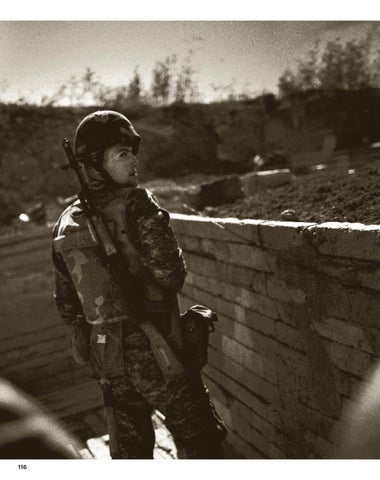
103. Stepanakert as seen from the road from Shushi (Shusha); Nagorno-Karabakh, April 2011. 105. Levonid Oganisyan attending a football match between the youth teams of Lernayin Artsakh (FK Karabakh Stepanakert) and a team from Yerevan. The match is played in the stadium of Stepanakert in commemoration of the fallen soldiers of the Nagorno-Karabakh conflict; Stepanakert, Nagorno-Karabakh, October 2011. 106. Page in a three-book encyclopaedia on Ağdam by Azerbaijani historian Surkhay Alibeyli. The image shows the Ağdam-football team in 1976 featuring Levonid Oganisyan, whose face was erased by the author; picture from Surkhay Alibeyli, ‘Ağdamım - Qibləgahım’ (My Ağdam – My Mecca) (Baku (2006), Baku, Azerbaijan, May 2010. 107. Hotel Eklektika, colloquially known as Titanic, in Vank. The pleasure resort is an investment of Levon Hairapetyan, an Armenian businessman based in Russia and a native of Vank; Vank, Nagorno-Karabakh, October 2011. 109. Manifestation in the centre of Stepanakert commemorating the Armenian Genocide (1915-1923) and appealing for recognition of Nagorno-Karabakh; Stepanakert, Nagorno-Karabakh, April 2011. 111. A T-72 tank stands as a memorial, commemorating the battle of Shushi (Shusha) in 1992; Shushi (Shusha), NagornoKarabakh, March 2010. 113. Manifestation in the centre of Stepanakert commemorating the Armenian Genocide (1915-1923) and appealing for recognition of Nagorno-Karabakh; Stepanakert, Nagorno-Karabakh, April 2011. 114. Drawing in a military outpost on the line of contact with Azerbaijan, showing the battle for Shushi (Shusha) in 1992; NagornoKarabakh, October 2011. 116. An observation post on the line of contact, 200 meter away from the Azerbaijani side; Nagorno-Karabakh, October 2011. 117. Sacrificial chicken claws in a giant tree that is believed to be 2,000 years old near the village of Skhtorashen. The ritual goes back to ancient times and is supposed to lead to a better future. By adding a napkin locals believe their wish will come true; Skhtorashen, Nagorno-Karabakh, April 2011. 119. It is a tradition to visit the church in Stepanakert in the evening before the commemoration of the Armenian Genocide (1915-1923); Stepanakert, Nagorno-Karabakh, April 2011. 121. Sahro Saryan, chief of the Refugees Initiative Group in Nagorno-Karabakh, showing the former university of Shushi (Shusha) that was destroyed during the war and plundered after the war when people where lacking construction materials; Shushi (Shusha), Nagorno-Karabakh, April 2011. 122. An illuminated cross next to the road from Stepanakert to Shushi (Shusha); Nagorno-Karabakh, October 2011. 124. Site used for playing paintball in the centre of Stepanakert; Nagorno-Karabakh, October 2011.
126. Levonid Oganisyan attending a football match between the youth teams of Lernayin Artsakh (FK Karabakh Stepanakert) and a team from Yerevan. The match is played in the stadium of Stepanakert in commemoration of the fallen soldiers of the Nagorno-Karabakh conflict; Stepanakert, Nagorno-Karabakh, October 2011. 127. Ağdam in the 1950’s; personal archive Vahid Gazi, Baku, Azerbaijan, May 2010. 128. Levonid Oganisyan and Allahverdi Bagirov celebrating holidays in Crimea in 1975-76; personal archive of Levonid Oganisyan, Stepanakert, Nagorno-Karabakh, October 2011. 129. Ağdam; March 2010. 130. The museum for perished persons in the centre of the Stepanakert is dedicated to the Armenians who died during the Karabakh conflict between 1987 and 1994; Stepanakert, Nagorno-Karabakh, October 2011. 132. The official commemoration of the Armenian Genocide from 1915 at the memorial complex of Stepanakert; Stepanakert, Nagorno-Karabakh, April 2011. 134. The sculptures ‘We are our mountains’ (1969), also known as Tatik and Papik (Grandmother and Grandfather) just outside Stepanakert. The sculptures made by Armenian sculptor Sargis Bagdasaryan are the national symbol of Nagorno-Karabakh; Stepanakert, Nagorno-Karabakh, March 2010.
105
106
107
111
112
114
115
116
117
118
119
120
121
122
123
124
125
128
129
130
131
132
133
Լեոնիդ Օգանիսյան 103. Ստեփանակերտը Շուշիի ճանապարհից. Լեռնային Ղարաբաղ, ապրիլ 2011։ 105. Լեոնիդ Օգանիսյանը՝ «Լեռնային Արցախ» («Ղարաբաղ Ստեփանակերտ» ՖԱ) և երևանյան երիտասարդական թիմերի միջև ֆուտբոլային մրցախաղի ժամանակ։ Խաղն ընթանում է Ստեփանակերտի մարզադաշտում՝ ի հիշատակ Լեռնային Ղարաբաղի հակամարտությունում զոհված զինվորների. Ստեփանակերտ, Լեռնային Ղարաբաղ, հոկտեմբեր 2011։ 106. Էջ ադրբեջանցի պատմաբան Սուրխայ Ալիբեյլիի՝ Աղդամի եռահատոր հանրագիտարանից։ Պատկերը ներկայացնում է Աղդամի 1976-ի ֆուտբոլային ակումբը՝ Լեոնիդ Օգանիսյանի մասնակցությամբ, ում դեմքը ջնջել է հեղինակը։ Լուսանկարը՝ Սուրխայ Ալիբեյլիի՝ ‘Ağdamım - Qibləgahım’(«Իմ Աղդամ՝ իմ Մեքքա») գրքից (Bakoe (2006). Բաքու, Ադրբեջան, մայիս 2010)։ 107. «Էկլեկտիկա» հյուրանոց,՝ խոսակցականում հայտնի է իբրև Վանքի «Տիտանիկ»։ Հանգստավայրը ծագումով վանքեցի, ռուսաստանաբնակ հայ գործարար Լևոն Հայրապետյանի ներդրումն է. Վանք, Լեռնային Ղարաբաղ, հոկտեմբեր 2011։ 109. Հայկական ցեղասպանության (1915-1923) հիշատակին ու Լեռնային Ղարաբաղի ճանաչմանը նվիրված ցույց Ստեփանակերտի կենտրոնում. Ստեփանակերտ, Լեռնային Ղարաբաղ, ապրիլ 2011։ 111. T-72 տանկը կանգուն է՝ իբրև 1992-ի Շուշիի ճակատամարտին նվիրված հուշարձան. Շուշի, Լեռնային Ղարաբաղ, մարտ 2010։ 113. Հայկական ցեղասպանության (1915-1923) հիշատակին ու Լեռնային Ղարաբաղի ճանաչմանը նվիրված ցույց Ստեփանակերտի կենտրոնում. Ստեփանակերտ, Լեռնային Ղարաբաղ, ապրիլ 2011։ 114. 1992-ին Շուշիի ճակատամարտի պատկեր Ադրբեջանի հետ շփման գծի ռազմական ֆորպոստում. Լեռնային Ղարաբաղ, հոկտեմբեր 2011։ 116. Դիտակետ շփման գծում՝ ադրբեջանական կողմից 200 մետր հեռավորության վրա. Լեռնային Ղարաբաղ, հոկտեմբեր 2011։ 117. Զոհաբերված աքաղաղների ճանկեր Սխտորաշենում մի հսկայական ծառի մեջ, որն ասում են՝ ավելի քան 2000 տարեկան է։ Ծեսը գալիս է հնագույն ժամանակներից և ենթադրաբար ավելի լավ ապագային է ուղղված։ Թաշկինակ կապելով՝ տեղացիները հավատում են, որ իրենց երազանքը կիրականանա. Սխտորաշեն, Լեռնային Ղարաբաղ, ապրիլ 2011։ 119. Հայկական ցեղասպանության (1915-1923) հիշատակի օրվա նախորդ երեկոյան եկեղեցի գնալն ավանդույթ է Ստեփանակերտում. Ստեփանակերտ, Լեռնային Ղարաբաղ, ապրիլ 2011։ 121. Լեռնային Ղարաբաղում փախստականների նախաձեռնության ղեկավար Սահրո Սարյանը ցույց է տալիս Շուշիի նախկին համալսարանը, որն ավիրվել է պատերազմի ժամանակ և քարուքանդ արվել պատերազմից հետո, երբ մարդիկ շինանյութերի մեծ պակաս ունեին. Շուշի, Լեռնային Ղարաբաղ, ապրիլ 2011։
135
Մոռացության պատանդը Մինչպատերազմական Աղդամի բառարան կազմելը նախկին լրագրողի և պատմության սիրահարի կյանքի մեծագույն գործն է։ Գրքում կա Աղդամի ֆուտբոլի թիմի նկարը։ Տասնմեկ հոգի՝ սև շալվարով և մուգ գույնի վերնաշապիկով կանգնած են երկու շարքով։ Մեկի դեմքը ջնջված է։ Դեմք չունեցող մարդը Լեոնիդ Օգանիսյանն է՝ հայը։ Ներկայումս նա ապրում է Ստեփանակերտում՝ Լեռնային Ղարաբաղի չճանաչված հանրապետության մայրաքաղաքում։ «Այո՛, երևի դա ես եմ, - ջղաձգված ասաց նա՝ կռանալով լուսանկարի վրա»։ Նա բարձրացրեց արևային ակնոցը, որ կրում էր՝ թեպետ ողջ օրն անձրևում էր։ Աչքերից մեկը շիլ էր։ Ի վերջո՝ նա ասաց. «Իմ կողքին կանգնած մարդը Ադիլ Նադիրովն է, սա Նազիմն է, սա՝ Էլդար Բաղիրովը, իսկ սա Վասիֆն է։ Աղդամի թիմն է։ Որտեղի՞ց քեզ այս նկարը»։ Լեոնիդը (Աղդամ, 1946) ծնվել էր տեղացի սափրիչի ընտանիքում։ Այն ժամանակ Աղդամում մինչև 70 հայ ընտանիք կար՝ դրանցից յուրաքանչյուրը կազմված էր չորսից վեց անդամներից։ Խորհրդային բանակում ծառայություն անցնելուց հետո Լեոնիդը վերադարձել էր Աղդամ՝ խաղալու պետական «Ղարաբաղ Աղդամ» ֆուտբոլային ակումբում։ Հայկական և ադրբեջանական համայնքներն ապրում էին կողք կողքի, բայց այդպես էլ լիովին չէին մերվել միմյանց։ Ժամանակ առ ժամանակ լարումները երևան էին գալիս, բայց Լեոնիդը հարազատ քաղաքում իրեն միշտ հարմարավետ էր զգում։ Նա և նրա ընտանիքը տեղական ֆուտբոլային աստղի յուրահատուկ կարգավիճակն էին վայելում։ Դրա շնորհիվ նա գտնվում էր թիմակից ազդեցիկ ընկերների պաշտպանության ներքո։ Սափրիչի որդին Աղդամի զավակն էր, և թվում էր՝ ոչինչ չէր կարող դա փոխել։ 1968-1976-ին նա բարեկեցիկ կյանք էր վարում իբրև թիմի շարժուն եզրային պաշտպան՝ Ալլահվերդի Բաղիրովի և Ադիլ Նադիրովի հետ, ովքեր նրա լավագույն ընկերներն էին դարձել։ Երբ 1975-ին Ալլահվերդին ստիպված թաքնվում էր ոստիկանությունից, Լեոնիդն այն մարդկանցից մեկն էր, ով իրեն ժամանակավոր կացարան էր տրամադրել։ Երբ որոնումների սաստկությունը սկսեց մարել, Լեոնիդը միացավ իր փախստական ընկերոջը՝ ծովափին ամառային արձակուրդներն անցկացնելու։ 1977-ին Լեոնիդի վրա սևեռվեց հարևան հայկական թիմի՝ «Ղարաբաղ Ստեփանա-
կերտ» ՖԱ-ի ուշադրությունը, որը մեկ տեղով ավելի բարձր էր վարկանիշային աղյուսակում, և հայտնի էր իր «պետական, սիրողական խաղացողներին» ավելի լավ վարձատրելու համար, քան «Աղդամը»։ Նրա տեղափոխությունն Աղդամում շատ հոնքեր չբարձրացրեց։ Լեոնիդը պահեց իր տունը հարազատ քաղաքում. նա մշտապես քշում էր Ղարաբաղի լեռներով մեկ՝ ընկերներին և ընտանիքն այցելելու համար։
«Ղարաբաղ Ստեփանակերտ» ՖԱ-ում անցկացրած իր ամենաառաջին տարին հայկական թիմն ավարտեց ադրբեջանական ֆուտբոլային առաջնության բարձունքում։ Որոշիչ մրցախաղն անցնում էր Բաքվի Լենինի անվան պետական մարզադաշտում։ Մթնոլորտը թշնամական էր, բայց Լեոնիդն ու իր թիմը ամրակուռ էին։ Թեև Ստեփանակերտն առաջնությունը լիովին արդար հաղթեց, Ադրբեջանական ԽՍՀ-ի ֆուտբոլի ասոցիացիան սպառնում էր արգելել թիմի առաջընթացը միջտարածաշրջանային լիգա։ Թիմի կատաղած ղեկավարությունը հաջողությամբ հարթեց խնդիրը՝ բարձր մակարդակի ֆուտբոլ ապահովելով առաջիկա գրեթե տասը տարիների համար։ Առաջին անգամ Լեոնիդը զգաց իր հայրենակիցների ապրած դժվարություններն ու խտրականությունը։ «Ղարաբաղ Ստեփանակերտում» նա շարունակում էր խաղալ մինչև 1986-ը։ Ղարաբաղում հայկական հարցի
Լեոնիդ Օգանիսյան հանդեպ իր հավատարմությունն այդ ընթացքում անխուսափելիորեն աճեց։ 1987-ի վերջերից ի վեր քաղաքական բողոքի ցույցերը լցրեցին Ստեփանակերտի
փողոցները։ Նույնիսկ այդ ժամանակ Լեոնիդն այցելում էր Աղդամի իր ընկերներին և բուռն քաղաքական քննարկումների մասնակցում։ 1988-ի փետրվարի 22-ին Աղդամի հարյուրավոր քաղաքացիներ, այդ թվում՝ նախկին շատ թիմակիցներ և ընկերներ երթով ուղևորվեցին Ստեփանակերտ՝ Լեռնային Ղարաբաղը Հայաստանին փոխանցելու հարաճուն պահանջների դեմ բողոքի ցույց անցկացնելու համար։ Ամբոխը կանգնեցվեց Ասկերան գյուղի մոտ, ուր երկու աղդամցիներ ընկան թշնամական կրակից։ Սա պատերազմի պատրվակ հանդիսացավ, որը խլեց ավելի քան 25,000 կյանք և հայրենի հողից ավելի քան մեկ մլն մարդու տեղահանության պատճառ դարձավ։ Զոհերից մեկը Ալլահվերդի Բաղիրովն էր։ Լեոնիդը հայտնվել էր քաղաքական գժտության մեջ, որում ինքը ոչ մի կողմի համար ցանկալի չէր։ Աղդամում խոսակցություններ էին պտտվում։ Ենթադրում էին, որ նա կռվում էր հայ ապստամբների կողմում։ Արդյոք կարո՞ղ էր նա կռվել Աղդամի բնակչության, իր հարևանների և ընկերների դեմ։ Միտքն անտանելի էր, իսկ լուրերը՝ անբավարար։ Երբ ասեկոսե տարածվեց, թե Լեոնիդը վիրավորվել է մարտում, ենթադրաբար՝ այդ պատճառով աչքի վնասվածք ստանալով, ընկերներն իրենց դառնորեն դավաճանված զգացին։ 1995 -ին՝ հրադադարի վերջնական համաձայնագիր կնքելուց հետո, որը ամրացրեց
ստատուս-քվոն, հայ զինվորների կողմից գրավված Աղդամն էլ վերածելով ուրվական-քաղաքի, Լեոնիդը Մոսկվայից զանգահարեց Բաքու։ Ցանկանում էր խոսել հին ու բարի ժամանակների իր մտերիմ ընկեր Ադիլ Նադիրովի հետ, ով նկարի մեջ կանգնած էր իր կողքին։ Լեոնիդը մտածում էր ասելիքի մասին։ Ուզում էր ասել՝ սիրտը կոտրվել էր այն բանից, ինչը տեղի էր ունեցել հարազատ քաղաքի հետ։ Ցանկանում էր բացատրել՝ ինչ էր զգում հարկադիր արտաքսման ենթարկված մարդկանց հանդեպ։ Պարզապես ուզում էր հայտնել՝ որքան էր կարոտել հին ընկերներին։ Ադիլի պատասխանը հակիրճ էր. «Ասա՛ ինձ, Լյոնիկ, աչքդ ո՞նց է»։ Լեոնիդը հանկարծակիի եկավ այդ հարցից։ Փորձեց փոխել թեման, բայց Ադիլը շարունակում էր պնդել։ «Խնդրում եմ, Ադիլ, արի՛ դրա մասին չխոսենք, - ևս մեկ անգամ ասաց Լեոնիդը. նրա արդարացումն արագ ընդհատվեց. – Լյոնիկ, շնորհակալո՛ւթյուն զանգահարելու համար։ Այլևս երբե՛ք չզանգես։ Եթե երբևէ քեզ հանդիպեմ, կսպանեմ։ Հաջողությո՛ւն»։ Տասնհինգ տարի անց Լեոնիդն ադրբեջանական հեռուստատեսություն բռնող հին անտեննայի միջոցով երբեմն դիտում է Ղարաբաղ Աղդամ ֆուտբոլային ակումբի խաղերը։ Մեկ կամ երկու անգամ ստուգում է՝ արդյոք իր հին ընկեր Ալլահվերդի Բաղիրովի գերեզմանը դեռևս կանգո՞ւն է ավիրված Աղդամի գերեզմանատանը։ Տանը նա մի փխրուն, կանաչ գրքույկ է պահում։ 1991-ի մրցաշրջանի «Ղարաբաղ Աղդամ» ՖԱ-ի ֆուտբոլային ծրագիրն է։ Լեոնիդն այն փրկել է Իմարեթ մարզադաշտից՝ մինչ քաղաքի ավիրումը։ Նա մտադիր է այն վերադարձնել ակումբին և իր սիրելի մարդկանց, երբ անիծված պատերազմն ի վերջո ավարտվի։
136
122. Լուսավորված խաչ Ստեփանակերտից Շուշի ճանապարհին. Լեռնային Ղարաբաղ, հոկտեմբեր 2011։ 124. Փեյնթբոլի խաղահրապարակ Ստեփանակերտի կենտրոնում. Լեռնային Ղարաբաղ, հոկտեմբեր 2011։ 126. Լեոնիդ Օգանիսյանը՝ «Լեռնային Արցախ» («Ղարաբաղ Ստեփանակերտ» ՖԱ) և երևանյան երիտասարդական թիմերի միջև ֆուտբոլային մրցախաղի ժամանակ։ Խաղն ընթանում է Ստեփանակերտի մարզադաշտում՝ ի հիշատակի Լեռնային Ղարաբաղի հակամարտությունում զոհված զինվորներին. Ստեփանակերտ, Լեռնային Ղարաբաղ, հոկտեմբեր 2011։ 127. Աղդամը՝ 1950-ականներին: Վահիդ Գազիի անձնական պահոցից. Բաքու, Ադրբեջան, մայիս 2010։ 128. Լեոնիդ Օգանիսյանն ու Ալլահվերդի Բագիրովը 1975-76-ին Ղրիմում հանգստանալիս. Լուսանկարը՝ Լեոնիդ Օգանիսյանի անձնական պահոցից. Ստեփանակերտ, Լեռնային Ղարաբաղ, հոկտեմբեր 2011։ 129. Աղդամ, մարտ 2010։ 130. Զոհերի թանգարանը Ստեփանակերտի կենտրոնում նվիրված է 1987-1994-ին Ղարաբաղյան հակամարտության ընթացքում զոհված հայերին. Ստեփանակերտ, Լեռնային Ղարաբաղ, հոկտեմբեր 2011։ 132. 1915-ի հայկական ցեղասպանության հիշատակի պաշտոնական արարողություն Ստեփանակերտի հուշահամալիրում. Ստեփանակերտ, Լեռնային Ղարաբաղ, ապրիլ 2011։ 134. «Մենք ենք մեր սարերը» (1969) քանդակը, որը նաև հայտնի է «Տատիկ ու պապիկ» անվան ներքո՝ Ստեփանակերտի մոտակայքում։ Հայ քանդակագործ Սարգիս Բաղդասարյանի քանդակը Լեռնային Ղարաբաղի ազգային խորհրդանիշն է. Ստեփանակերտ, Լեռնային Ղարաբաղ, մարտ 2010։
Levonid Oqanisyan 103. Xankəndinin Şuşa şəhərindəki yoldan görünüşü: Dağlıq Qarabağ, aprel, 2011-ci il. 105. Levonid Oqanisyan Lernayin Artsakh (FK Qarabağ Stepanakert) klubunun gənclərdən ibarət komandası və İrəvandan olan bir klub arasında baş tutan matçı seyr edir. Xankəndi stadionunda keçirilən oyun Dağlıq Qarabağda həlak olmuş əsgərlərin xatirəsinə həsr olunub: Xankəndi, Dağlıq Qarabağ, oktyabr, 2011-ci il. 106. Azərbaycan tarixçi Surxay Əlibəyli tərəfindən Ağdam haqqında tərtib olunan üç cildli ensiklopediyadan bir səhifə. 1976-cı ildə çəkilmiş şəkildə Levonid Oqanisyanın da daxil olduğu Ağdam futbol komandası əks olunub. Şəkildə Oqanisyanın sifəti müəllif tərəfindən pozulub; Surxay Əlibəylidən əldə olunan şəkil, ‘Ağdamım - Qibləgahım’, Bakı, 2006-cı il, Bakı, Azərbaycan, may, 2010-cu il. 107. Vankda yerli əhali arasında Titanik kimi tanınan Eklektika mehmanxanası. Buradakı istirahət obyektləri Rusiyada fəaliyyət göstərən erməni əsilli iş adamı və əslən Vankdan olan Levon Hairapetyanın qoyduğu sərmayənin hesabına yaradılıb; Vank, Dağlıq Qarabağ, oktyabr, 2011-ci il. 109. 1915-ci ildə törədildiyi iddia edilən erməni soyqırımının ildönümünü qeyd etmək və Dağlıq Qarabağın müstəqilliyinin tanınması ilə bağlı çağırışlar etmək məqsədilə Xankəndinin mərkəzində etiraz aksiyası; Xankəndi, Dağlıq Qarabağ, aprel, 2011-ci il. 111. A T-72 tankı 1992-ci ildə baş vermiş Şuşa döyüşünü xatırladır; Şuşa, Dağlıq Qarabağ, mart, 2010-cu il. 113. Erməni soyqırımının ildönümünü qeyd etmək və Dağlıq Qarabağın tanınması ilə bağlı çağırışlar etmək məqsədilə Xankəndinin mərkəzində etiraz aksiyası; Xankəndi, Dağlıq Qarabağ, aprel, 2011-ci il. 114. Cəbhə xəttinin Azərbaycan hissəsində hərbi məntəqənin qurulması, Şuşa uğrunda gedən döyüşləri əks etdirən şəkil, 1992-ci il: Dağlıq Qarabağ, oktyabr, 2011-ci il. 116. Cəbhə xəttində, Azərbaycan tərəfindən 200 metr aralıda müşahidə məntəqəsi. Dağlıq Qarabağ, oktyabr, 2011-ci il. 117. Qurbanlıq toyuq yaşının 2000 olduğu güman olunan və Sxtoraşen adlı kənddə nəhəng bir ağacda budaqdan-budağa çırpınır. Bu ritualın tarixi qədim zamanlara gedib çıxır və daha yaxşı gələcək vəd edəcəyi güman olunur. Bu oyuna yaylığı əlavə etməklə yerli camaat arzularının gerçəkləşəcəyinə inanır. Sxtoraşen, Dağlıq Qarabağ, aprel, 2011-ci il. 119. Erməni soyqırımının ildönümü ərəfəsində insanlar Xankəndidəki kilsəyə baş çəkir; Xankəndi, Dağlıq Qarabağ, aprel, 2011-ci il. 121. Qaçqınlar üzrə Təşəbbüs Qrupunun rəhbəri Sahro Saryan müharibə zamanı dağıdılan və müharibədən sonrakı dövrdə insanların tikinti materiallarına ehtiyac duyduğu bir vaxtda talan edilən keçmiş Şuşa universitetini göstərir; Şuşa, Dağlıq Qarabağ, aprel, 2011-ci il. 122. Xankəndidən Şuşaya aparan yola yaxın ərazidə yerləşən işıqlandırılmış xaç; Dağlıq Qarabağ, oktyabr, 2011-ci il. 124. Xankəndinin mərkəzində peyntbol oyunu oynamaq üçün ərazi; Dağlıq Qarabağ, oktyabr, 2011-ci il.
137
Unudulmaq Keçmiş jurnalist və həvəskar bir tarixçi bütün həyatı boyu çalışaraq müharibədən əvvəlki Ağdamın lüğətini tərtib edib. Kitabda Ağdam futbol klubunun da şəkli var. Şəkildə ağ şortlar və tünd rəngli köynəklər geyinmiş on bir nəfərin iki cərgədə dayanması təsvir olunub. Şəkildə futbolçulardan birinin sifəti pozulub. Şəkildə sifəti pozulmuş şəxs erməni əsilli Levonid Oqanisyandır. O, tanınmamış Dağlıq Qarabağ Respublikasının “paytaxtı” olan Xankəndidə yaşayır. “Bəli, bu, elə mənəm”, deyə o, şəkil tərəfə əyilərək həyəcanla bildirdi. O, havanın yağışlı olmasına baxmayaraq geyindiyi gün eynəyini qaldırdı. Onun bir gözü çəp idi. Nəhayət o dilə gəldi: “Mənim yanında dayanan oğlan Adil Nadirovdur. Bu, Nazim, bu, Eldar Bağırovdur. Bu, Vasifdir. Bu, Ağdam komandasıdır. Bu şəkli haradan tapmısız”? Levonid (Ağdam, 1946) dəllək ailəsində anadan olub. Həmin vaxt Ağdamda hər birinin 4-6 üzvü olan 70 erməni ailəsi yaşayırdı. Sovet ordusunda hərbi qulluğunu başa vurduqdan sonra Levonid dövlət tərəfindən maliyyələşdirilən Qarabağ Ağdam Futbol Klubunda oynamaq üçün Ağdama qayıtdı. Erməni və Azərbaycan icmasının yan-yana yaşamasına baxmayaraq, onlar heç vaxt bir-birinə inteqrasiya olmadılar. Arabir gərginlik baş qaldırsa da, Levonid özünü doğma şəhərində rahat hiss edirdi. Futbol ulduzu olduğundan Levonidin ailəsi şəhərdə xüsusi statusa malik idi. Bu səbəbdən futbol komandasındakı nüfuzlu dostları onu qoruyurdular. Dəlləyin oğlu elə ağdamlı olaraq qalırdı və heç nə bu faktı dəyişə bilməzdi. O, 1968-ci ildən 1976-cı ilədək ən yaxın dostları Allahverdi Bağırov və Adil Nadirovun da daxil olduğu komandanın müdafiəçisi olmuşdu. Allahverdinin 1975-ci ildə polisdən gizləndiyi zamanlarda Levonid ona bir müddət sığınacaq verənlərdən biri olmuşdu. Axtarış əməliyyatlarının səngidiyi zaman isə Levonid yay tətilini öz qaçaq düşmüş dostu ilə birgə dəniz kənarında keçirmişdi. 1977-ci ildə Levonid qonşu erməni klubu olan Qarabağ Stepanakert komandasının diqqətini cəlb etdi. Bu komanda Ağdam komandasından bir səviyyə yüksəkdə durur və “həvəskar dövlət oyunçularına” daha yüksək maaş ödəyirdi. Onun erməni klubuna keçməsi Ağdamda etirazla qarşılanmadı. O, doğma şəhərindəki evini hələ də qoruyub saxlayar, tez-tez Qarabağ dağlarını aşaraq dostlarına və ailəsinə baş çəkərdi. Levonidin Qarabağ Stepanakert komandasındakı ilk ilində erməni klubu Azərbaycanın futbol liqasının qalibi oldu. Həlledici oyun Bakıda Lenin stadionunda baş tutdu. Düşmən münasibətə baxmayaraq, Levonid və onun komandası möhkəm dayanmışdı. Stepanakert çempionatı qazansa da, Azərbaycan Futbol Assosiasiyası klubun regionlararası diviziyaya gedən yolunu bağlamaqla hədələdi. Lakin komandanın qəzəbli rəhbərliyi məsələni uğurla həll etdi və futbolun növbəti on il və daha sonrakı dönəmdə yüksək səviyyədə qalmasını təmin etdi. İlk dəfə olaraq Levonid öz həmyerlilərinin üzləşdiyi çətinliklər və ayrı-seçkilik ilə qarşılaşdı. O, Qarabağ Stepanakertdə 1986-cı ilədək oynadı. Bu müddət ərzində Qarabağ məsələsində erməniləri müdafiə etməyi də öyrəndi. 1987-ci ilin sonlarından başlayaraq etiraz aksiyaları Xankəndinin küçələrini bürüdü. Buna baxmayaraq Levonid Ağdamdakı dostlarına baş çəkər və qızğın siyasi müzakirələrə qatılardı. 1988-c il fevralın 22-də Levonidin keçmiş
Levonid Oqanisyan komanda yoldaşları və dostları daxil olmaqla Ağdamdan yüzlərlə dinc vətəndaş Xankəndiyə addımlayaraq Dağlıq Qarabağın Ermənistana verilməsi tələbinə etirazını bildirdi. İzdihamın qarşısı Əskəran kəndində alındı və iki ağdamlı qarşı tərəfin açdığı güllə nəticəsində həlak oldu. Bu, 25,000 insanın həyatına son qoyan və bir milyona yaxın insanı öz doğma torpağından didərgin salan müharibə üçün katalizator rolunu oynadı. Müharibə nəticəsində həyatını itirənlərdən biri də Allahverdi Bağırov idi. Levonid artıq heç bir vaxt arzulamadığı siyasi münaqişəyə qatılmışdı. Ağdamda şayiələr tüğyan edirdi. Güman olunurdu ki, o, erməni qiyamçıları ilə birgə mübarizə aparır. O, Ağdamdan olan insanlar, qonşular və dostlarına qarşı döyüşə bilərdimi? Çətin ki bu belə idi. Levonidin döyüşlərin birində gözündən yaralanması il bağlı xəbər yayılanda dostları məyus oldular. 1995-ci ildə, yəni atəşkəs müqaviləsinin status-kvonu möhkəmlətməsindən və Ağdamın erməni əsgərləri tərəfindən işğal olunan viranə şəhərə çevrilməsindən sonra Levonid Moskvadan Bakıya zəng etdi. O, bir zamanlar yaxın dostu olan və şəkildə onun yanında dayanmış Adil Nadirovla danışmaq istəyirdi. Levonid nə barədə danışacaqlarını müəyyənləşdirmişdi. O demək istəyirdi ki, doğma şəhərində baş verənlərdən çox mütəəssir olub. O, yurdundan qovulmuş insanların halına necə yandığını dilə gətirmək istəyirdi. O sadəcə olaraq köhnə dostları üçün nə qədər darıxdığını demək istəyirdi. Adilin cavabı qısa oldu: “Leunik, gözün necədir”? Levonid verilən sualdan təəccübləndi. O mövzunu dəyişmək istəsə də Adil təkid etdi. “Xahiş edirəm, Adil, gəl bu barədə danışmayaq”, deyə Levonid təkrar etdi. Adilin cavabı özünü çox gözlətmədi: “Leunik, zəng etdiyin üçün çox sağ ol. Bir daha mənə zəng etmə. Nə vaxtsa qarşılaşsaq, mən səni öldürəcəyəm. Sağ ol”. Levonid Azərbaycan televiziyalarını seyr etməyə imkan verən köhnə antena vasitəsilə Qarabağ Ağdam Futbol Komandasının oyunlarını arabir izləyir. İldə bir neçə dəfə o, köhnə dostu Allahverdi Bağırovun dağıdılmış Ağdam qəbiristanlığındakı qəbrini yoxlayır. O, evində kövrək, yaşıl bir kitabça saxlayır. Bu, Qarabağ Ağdam FK-nın 1991-ci il mövsümünün futbol proqramıdır. Levonid onu şəhər dağıdılmamışdan qabaq İmarət stadionundan götürə bilmişdi. O, lənətəgəlmiş müharibə qurtardıqdan sonra kitabçanı kluba və bir vaxtlar sevdiyi insanlara qaytarmaq arzusundadır.
138
126. Levonid Oqanisyan Lernayin Artsakh (FK Qarabağ Stepanakert) klubunun gənclərdən ibarət komandası və İrəvandan olan bir klub arasında baş tutam matçı seyr edir. Xankəndi stadionunda baş tutan oyun Dağlıq Qarabağda həlak olmuş əsgərlərin xatirəsinə həsr olunub: Xankəndi, Dağlıq Qarabağ, oktyabr, 2011-ci il. 127. Ağdam 1950-ci illərdə; Vahid Gazinin şəxsi arxivi, Bakı, Azərbaycan, May 2010. 128. Levonid Oqanisyan və Allahverdi Bağırov 1975-76-cı illərdə tətili Krımda keçirərkən; Levonid Oqanisyanın şəxsi arxivindən, Xankəndi, Dağlıq Qarabağ, oktyabr, 2011-ci il. 129. Ağdam; mart, 2010-cu il. 130. Xankəndinin mərkəzində yerləşən muzey 1987-1994-cü illərdə Qarabağ müharibəsi zamanı həlak olmuş ermənilərə həsr olunub; Xankəndi, Dağlıq Qarabağ, oktyabr, 2011-ci il. 132. 1915-ci ildə törədildiyi iddia edilən erməni soyqırımının Xankəndidə rəsmi anım mərasimi; Xankəndi, Dağlı Qarabağ, aprel, 2011-ci il. 134. Xankəndidən kənarda həm də Tatik və Papik (nənə və baba) kimi tanınan “Biz və bizim dağlar” (1969) abidəsi. Erməni heykəltəraş Sarqis Baqdasaryan tərəfindən hazırlanan heykəllər Dağlıq Qarabağın simvoluna çevrilib; Xankəndi, Dağlıq Qarabağ, mart, 2010-cu il.
139
In anticipation of the Europa League encounter with the Norwegian team Rosenborg BK, FK Qarabağ Ağdam asked UEFA if it could hold a minute’s silence before kick-off. The match against Rosenborg took place on 23 July 2009, exactly 16 years after KarabakhArmenian soldiers captured Ağdam. ‘No problem’ was the European Football Association’s routine response. ‘Who died?’ ‘Who? Hundreds of people died. It was a war!’ UEFA promptly vetoed the tribute. FK Qarabağ Ağdam eliminated Rosenborg BK with a sensational 1-0 victory. It was a fitting tribute to those who had led the team through the war. When the war over Nagorno-Karabakh was at a low point after the bloodbath in Khojaly in February 1991, a delegation of football players from FK Qarabağ Ağdam approached the city’s
Football diplomacy: a form of diplomacy, where countries that previously had a conflict cautiously try to strengthen relations by organising a football match between the national teams. [cf: ping-pong diplomacy]
Diplomacy
commander. ‘We want to defend our city,’ they said, ‘let us go to the front.’ ‘Absolutely not,’ was the commander’s reply. ‘It is your job to keep playing football. Thanks to the matches, people can think about something else than war once a week. Footballers don’t fight!’ FK Qarabağ Ağdam continued playing and even won the championship in 1993. The achievement was not celebrated. Ağdam was captured just before the final. The fate of the FK Karabakh Stepanakert players took a different course. They stopped playing football and took up arms in the Karabakh-Armenian separatist forces. The success in the war was a poisoned chalice for them. FIFA and UEFA took the official position that prohibits professional football in disputed territories. As a result, football in Nagorno-Karabakh has become a game of schoolboys. Year after year, the football association of the unrecognised Republic of Nagorno-Karabakh submitted a petition asking for permission to join the Armenian football leagues. FIFA repeatedly rejected the request. FIFA and UEFA do everything they can not to burn
their fingers on political rifts. Sometimes the taboo of politics puts the football associations in a difficult position. The draw for the 2008 European Champion-ships in Austria and Switzerland put Armenia and Azerbaijan together in the same qualifying group. The two sides argued relentlessly about safety measures and possible neutral grounds for the fixtures, but failed to reach an agreement. In the end, UEFA took an unprecedented decision to cancel the games altogether with no points awarded to either team. At the next draw for the qualifying round of the European Championships in 2012, both teams were back in the pots. The two countries would have ended up in the same group again, were it not for the fact that UEFA had decided in advance that the adversaries could no longer be drawn against each other. Armenia and Azerbaijan were not ready to take advantage of football diplomacy, but the failure may have inspired the Armenian leadership to tackle another political cul-desac. In 2008, Turkish President Gül received an invitation from his Armenian counterpart
In the 1980s, FK Qarabağ Ağdam and FK Karabakh Stepanakert occasionally played friendly matches against each other. Following the game, the host team always invited its opponents to a banquet. Back then, football diplomacy between the two communities was perfectly natural. In hindsight, even memories of the Karabakh derby seem delusional.
Sargsyan to attend the Armenia-Turkey match in the qualifying series for the 2010 World Cup in Yerevan. Gül accepted. One year later Turkey and Armenia issued a joint statement in Zürich, Switzerland on restoring bilateral diplomatic relations. Gül and Sargsyan’s football diplomacy ultimately proved too good to be true. The Swiss ink had hardly dried when Turkish Prime Minister Erdoğan clarified, at Baku’s insistence, that the treaty would not be ratified. Only if Armenia committed in the treaty to withdrawing from Nagorno-Karabakh would the Turkish government consider opening its borders.
Facts
Republic of Armenia
Republic of Azerbaijan
NagornoKarabakh
Line-of-contact
Area
29,743 km2
86,600Â km2 (of which 11,458 km2 (13.2 %) is under the control of the unrecognised Republic Nagorno-Karabakh)
11,458 km2 (territory of Azerbaijan under the control of the unrecognised Republic of Nagorno-Karabakh)
Compare
5.4% of France
15.8% of France
2.1% of France
Capital
Yerevan (pop. 1,121,900)
Baku (pop. 2,064,900)
Stepanakert (pop. 53,000)
177 km of trenches, fortifications, underground tunnels, minefields and permanent snipers. The northern positions are naturally well protected by the roughly 3,000-metre high Murov Mountains, while the lower eastern flanks are mined and fortified by several lines of trenches.
Geography
Demography Population
3.3 million
9 million
141,000
1979 Armenians
2,724,975 (89.7%)
475,486 (7.9%)
123,076 (75.9%)
Azerbaijanis
160,841 (5.3%)
4,708,832 (78.1%)
37,264 (23.0%)
Armenians
3,083,616 (93.3%)
390,505 (5.6%)
145,450 (76.9%)
Azerbaijanis
84,860 (2.6%)
5,804,980 (82.7)
40,688 (21.5%)
Armenians
3,145,354 (97.9%)
2,000 to 3,000 est. (0.0%)
137,380 (99.7%)
Azerbaijanis
30 to 500 est. (0.0%)
7,205,464 (90.6%)
6 (0.0%)
Displaced Persons during Conflict 1987-1994
353.000 (Armenians from Azerbaijan and border regions)
750.000 (Azerbaijanis from Armenia, NagornoKarabakh and the occupied territories surrounding Nagorno-Karabakh)
—
Remaining Internally Displaced Persons
8.399 (2009 est.)
586.000 (2011 est.)
10.000 (2005 est.)
Armenian Apostolic Church (more than 90% nominally affiliated; religious practice in daily life much lower)
Shia Islam (more than 90 % nominally affiliated; religious practice in daily life much lower)
Armenian Apostolic Church (more than 90% nominally affiliated; religious practice in daily life much lower)
Gross Domestic Product (GDP - official exchange rate)
$1,287 billion (1995) $1,912 billion (2000) $4,900 billion (2005) $9,371 billion (2010)
$2,258 billion (1995) $5,278 billion (2000) $13,245 billion (2005) $51,698 billion (2010)
$0.3 billion (2010 est.)
Imports
$4.1 billion (2011)
$6,746 billion (2010 est.)
$122,000 (2008)
Exports
$1.3 billion (2011 est.)
$26.5 billion (2010 est.)
$160,000 (2007)
GDP per capita (PPP)
$1,228 (1995) $1,952 (2000) $3,904 (2005) $5,100 (2010)
$1,650 (1995) $2,372 (2000) $4,456 (2005) $10,062 (2010)
$1,729 (2008 est.)
Population below poverty line
45% (1999) 30% (2005) 26.5% (2010)
60% (1999) 24% (2005) 11% (2009)
unknown
Miltary budget
$390- $600 million (2011 est.)
$3.1 billion (2011 est.)
unknown (shared budget with Armenia)
1989
1999 (2005 Nagorno-Karabakh)
Religion Denomination
Economy
283
Recent casualties along the line-of-contact (both military and civilian): 2008: 30 2009: 19 2010: 25 2011: 30 2012 (January-March): at least 4 [Note: Total amount of frontline-casualties is estimated up to 3,000 since 1994. Neither Armenian nor Azerbaijani defence ministries disclose full information on their losses].
284 1st century BC-822
Chambarak founded by Christian Molokans from Russia. Molokans were banished to the Southern Caucasus in the 19th century because they refused to accept the authority of the Russian Orthodox Church.
Around 1830
Panah Ali Khan dies in Shiraz, Persia. His body is buried in Ağdam. Until the early 20th century, his successors are also buried in the grounds of Imaret.
1761
The death of the Safavid ruler Nadir Shah ends Persian sovereignty over Karabakh.
1747
Shah Ismail I establishes the Safavid dynasty in the Persian province of Azerbaijan. Shi’ite form of Islam becomes the state religion.
1501
Karabakh is governed by Caucasian-Albanian and Armenian principalities (meliks) under Caucasian-Albanian, Arab, Turkish and Persian rulers. The rest of presentday Azerbaijan and Armenia is made up of semi-independent Islamic Khanates.
10th-18th century
Arab invasion brings Islam to the Caucasus. From the ninth century most inhabitants convert to Islam. Nagorno-Karabakh also comes under Arab rule.
639
The territory that makes up present-day Nagorno-Karabakh and a large part of Azerbaijan are part of Caucasian Albania, a collection of 26 tribes with their own languages. Eastern Azerbaijan belongs to the Persian Empire, while parts of modern Armenia and Eastern Turkey are an Armenian Kingdom.
Nagorno-Karabakh Short history
First oil well drilled just outside Baku.
1848-49
Treaty of Gulistan ends the Persian-Russian War. Karabakh is incorporated into the Russian Empire.
1813
Panah Ali Khan gains control of five of Karabakh’s Armenian principalities and establishes the Khanate of Karabakh. The first Khan of Karabakh builds fortresses in Shusha and Askeran and a country manor (Imaret) in Ağdam.
1750
Persian Safavid dynasty conquers Karabakh and most of the Caucasus. Most people convert to Shi’ite Islam.
1555
Oghuz Turks from Central Asia settle in what is now Azerbaijan. The Arabs are driven out by Central Asian Seljuks. Turkish begins to replace Iranian and Caucasian languages.
11th-12th century
Sunni dynasty Shirvanshah rules East Azerbaijan. Under the Shirvanshahs, Baku becomes an important trading centre on the caravan routes. The shah builds a palace and the Maiden Tower, which make up the old town of present-day Baku.
861-1538
301
Tiridates III the Great converts to Christianity and declares it the official religion of the Kingdom of Armenia (331 BC-428). St Gregory the Illuminator becomes the first head of the Armenian Apostolic Church in Echmiadzin. Parts of Caucasian Albania are also Christianised.
The timeline published here, is first of all, an attempt to provide historic references to the personal stories in this book. Many of the events presented here have multiple interpretations. An on-line version (adapted) version of the timeline can be found here: http://www/paradox.nl/offside/timeline.
Karabakh is a historical region consisting of Upper Karabakh, Lower Karabakh and parts of the Armenian province of Syunik. The name Nagorno (Russian for ‘Upper’) Karabakh has been used since the region’s incorporation into the Soviet Union. Karabakh is believed to originate from Persian and Turkish and means ‘black garden’. Other sources claim the word has a western Armenian background.
100 BC
285
Azerbaijani army captures Karabakh and sacks the Armenian quarters of the capital Shusha. The number of Armenian casualties are estimated from 500 to several thousand.
20 March 1920
September Days in Baku. Turkish troops capture Baku in the name of the Azerbaijani government and massacre an estimated 10,000 to 30,000 Armenians, in retaliation for the slaughter of Azerbaijanis in March the same year.
15 September 1918
Azerbaijani liberal intellectuals proclaim the Democratic Republic of Azerbaijan in the Georgian capital Tbilisi. The first democratic republic in the Muslim world has its seat in Ganja because Baku is in the hands of a Bolshevik Commune. The nationalist Armenian Revolutionary Federation (Dashnaktsutyun) proclaims the Democratic Republic of Armenia in Tbilisi.
28 May 1918
March Days in Baku. A coalition of Bolsheviks and Armenian nationalists (Dashnaks) slaughters Azerbaijanis in Baku in an attempt to seize power. An estimated 3,000 to 12,000 Azerbaijanis and Muslims are killed.
30 March-2 April 1918
First World War. The South Caucasus becomes the frontline of the Ottoman and Russian wars. The Ottoman government suspects Armenian nationals of pro-Russian sympathies. Between 600,000 and 1.5 million Armenians are massacred or die during deportations Anatolia to the deserts of modern Syria.
1915-1918
The Armenian Revolutionary Federation is founded in Tbilisi. The ARF, better known by its Armenian name Dashnaktsutyun, is a militant party with an ideology that combines Armenian nationalism with socialism. The Dashnaks make a name for themselves with a series of terrorist attacks on Russian tsarist targets.
1890
Russian-Turkish war. The Russian army, led by commanders from Armenian descent, takes the Ottoman area around Kars.
1878
Second half of the 19th century
National identity begins to play a role among Armenian and Azerbaijani intellectuals. Armenian nationalism focuses in cultural terms on ancient Armenian history and the Armenian Apostolic Church and in political terms on the creation of a separate state. The idea of Great Armenia, an Armenian homeland stretching from north-east Turkey to the Caspian Sea becomes popular. The Azerbaijani national awakening that follows is strongly influenced by the Young Turks movement in the Ottoman Empire. The Azerbaijani national movement has liberal, elitist leanings, while the Armenian movement is broader and more militant in nature.
Karabakh under a British mandate.
1919
Central Caspian Dictatorship in Baku. An anti-Bolshevik government of Russian Socialist Revolutionaries, Mensheviks and Armenian nationalists (Dashnaks), backed by British troops (Dunsterforce), take power from the 26 Commissars. All but one Commissars are killed; Anastas Mikoyan was the only Commissar able to escape and would later become one of Stalin’s most trusted allies in the Politburo in Moscow.
26 July-15 September 1918
Baku Commune. The city is governed by 26 Bolshevik commissars from different ethnic backhgrounds, led by the Armenian communist Stepan Shaumyan.
13 April-25 July 1918
Bolshevik October Revolution in Saint-Petersburg. With the Russian Revolution unfolding, central command in the Caucasus disappears. Chaos and violence in various parts of the Caucasus-region erupts, among which Nagorno-Karabakh. The crisis continues until 1922.
7-8 November 1917
Armenian-Azerbaijani riots in Karabakh.
1905
The Swedish Nobel brothers start an oil company in Baku. The French family Rothschild, Royal Dutch Oil, John D. Rockefeller and others take substantial interests in the oil industry. Baku changes rapidly. Oil barons build palaces in the centre of the city and the oil fields of Balakhany, Surakhany and Bibi Heybat become surrounded by slums populated by Russians, Armenians and Azerbaijanis from the countryside. Around 1900, Azerbaijan supplies nearly half of the world’s oil.
1879
Karabakh becomes part of the Azerbaijani-Russian province Elizavetpol (Ganja). As a result of Russian migration policy, the number of Armenians in the Southern Caucasus increases, while many Muslim Azerbaijani families emigrate to Iran. The Russians see the ethnic Turks in Azerbaijan as potential allies of the Ottoman Empire, their adversary in a series of consecutive wars in the second half of the 19th century.
1868
1868
286
Azerbaijani referee Tofik Bahramov plays a key role in the World Cup final in England. As a linesman he approves a goal by the English player Geoff Hurst, even though the ball does not cross the German goal line. In 2006 the national stadium in Baku is named after him.
1966
Valide Bağirova is born in Ağdam, Azerbaijan Soviet Socialist Republic.
1963
FK Qarabağ Ağdam is established in Ağdam. The club plays in the Imaret stadium on the land of the Karabakh Khans, which had previously been used for horse racing. The club’s name is subsequently changed to the socialist Mehsul (‘Harvest’) Ağdam. The name is changed twice more to Shafaq Ağdam and Kooperator Ağdam, before reverting to FK Qarabağ Ağdam in 1987.
1950
Levonid Oganisyan is born in Ağdam, Azerbaijan Soviet Socialist Republic.
Allahverdi Bağirov is born in Ağdam, Azerbaijan Soviet Socialist Republic.
1946
Football Club Karabakh Stepanakert established in Stepanakert.
1928
The Soviet Union is officially established. The Soviet Union is a combination of the Russian Socialist Federative Soviet Republic, the Transcaucasian Socialist Federative Soviet Republic, the Ukrainian Socialist Soviet Republic and the Belarusian Soviet Socialist Republic.
30 December 1922
The Russian, Georgian, Armenian and Azerbaijan SSRs and republican Turkey sign the Treaty of Kars. Russia gives up control over north-east Turkey.
13 October 1921
Bolsheviks capture Yerevan and proclaim the Armenian Soviet Socialist Republic (SSR).
29 November 1920
Demonstrations in Yerevan result in the construction of a memorial to the victims of the Armenian Genocide on a hill outside the city (Tsitsernakaberd).
1965-1967
Yasem Guliyev is born in Nemirli, Azerbaijan Soviet Socialist Republic.
1965
Geghetsik Kirakosyan is born in Artsvashen, Armenian Soviet Socialist Republic.
1955
After the Second World War, Stalin attempts to reclaim the Kars region from Turkey. To put the Turks under pressure, the Politburo decides to reduce the Azerbaijani presence in the neighbouring Armenian Soviet Socialist Republic. Tens of thousands of Azerbaijanis in the Armenian Soviet Socialist Republic are forcibly rehoused in Azerbaijan’s central river delta. The Soviet Union invites Armenians from the diaspora to settle in Armenia, offering housing and jobs as inducement. More than 100,000 Armenians, predominantly from the Middle East, settle in the Armenian Soviet Socialist Republic. One of them is future president Levon Ter-Petrossian.
1948-1950
The Nagorno-Karabakh Autonomous Oblast is established within the Azerbaijan Soviet Socialist Republic. In the Soviet Union, some areas were given the status of autonomous oblast if the majority of the population had a different nationality from the republic of which it was part. Not Shusha, but the smaller town of Khankendi (literally: Village of the Khan) becomes the new capital of the region. The name of the capital is changed to Stepanakert, after the Baku Commissar Stepan Shaumyan.
7 July 1923
The Georgian, Armenian and Azerbaijan SSRs form the Transcaucasian Socialist Federative Soviet Republic.
22 March 1922
On Stalin’s initiative, the Kavburo declares Nagorno-Karabakh part of the Azerbaijani Soviet Socialist Republic.
5 July 1921
Bolsheviks seize power in Azerbaijan and proclaim the Azerbaijan Soviet Socialist Republic (SSR). Authority over Karabakh is informally promised to the Armenian Bolsheviks, who are fighting to establish a socialist republic. The reward is withdrawn, however, because of the Armenian nationalist Dashnaks’ role in Armenia’s political developments.
28 April 1920
1920
1967
287 Karabakh Armenians send petitions asking to become part of Armenia to the Communist Party’s Politburo in Moscow.
August 1987
Mikhail Gorbachev takes office as Secretary General of the Soviet Union’s Communist Party. He introduces the glasnost (openness) and perestroika (political and economic reforms).
11 March 1985
Growing discontent among the Armenian population of Nagorno-Karabakh over the Azerbaijan Soviet Socialist Republic’s policies. The criticism focuses on compulsory Azerbaijani education, repression of Armenian cultural expressions, the enclave’s economic position (which is not worse than the economic average in Azerbaijan but lags behind economic growth in Armenia), and the suspicion of a population policy whereby Azerbaijanis from other areas are settled in the region.
1980s
The unmanned American space probe Voyager I is launched. On board is the ‘Golden Voyager Record’, a gramophone record with images and sounds meant to represent life on earth in case it is found by intelligent extra-terrestrial life. The recordings include a fragment of Azerbaijani muğam music.
5 September 1977
The Marxist-Leninist terror group Armenian Secret Army for the Liberation of Armenia (ASALA) is founded in Beirut, Lebanon. From 1975 to 1990, the group carries out attacks on Turkish targets in Europe, killing 46 people and injuring at least 299. From 1991 ASALA members, including the Californian-born Monte Melkonian, become commanders of the Karabakh-Armenian troops.
1975
The Armenian football club Ararat Yerevan wins the all-Soviet Supreme League.
Aslan Kerimov is born in Baku, Azerbaijan Soviet Socialist Republic.
1973
Heydar Aliyev, head of the Azerbaijani KGB, becomes first secretary of Azerbaijan’s Communist Party.
1969
‘We Are Our Mountains’ (also known as Tatik and Papik – Grandfather and Grandmother), a sculpture symbolising Armenian heritage in the region, is erected just outside Stepanakert.
Escalation of intercommunal violence in Armenia and Azerbaijan. Between 1987 and 1989, an estimated 186,000 Azerbaijanis are expelled from the border regions of the Armenian Soviet Socialist Republic.
November 1987
Gorbachev launches an anti-alcohol campaign in the Soviet Union (also known as the ‘prohibition’). Wine production in Ağdam declines, but the city’s black market booms.
1985-1987
Azerbaijan’s leader Heydar Aliyev becomes a permanent member of the Communist Party’s Politburo in Moscow and first deputy chairman of the Council of Ministers.
1982
In a census of the Soviet Union, 123,000 Armenians living in the Nagorno-Karabakh Autonomous Oblast (NKAO) are counted, compared to 37,000 Azerbaijanis.
1979
Levonid Oganisyan makes a transfer from the Ağdam football team to FK Karabakh Stepanakert. In the same year, the predominantly Armenian FK Karabakh Stepanakert becomes champion of the Azerbaijani zone and is promoted to the Soviet Second Division (third level Soviet football).
1977
Levonid Oganisyan enjoys a holiday a summer trip in the Crimea with his then still fugitive friend. Allahverdi Bağirov is arrested in 1976 and sentenced to two years in prison.
Allahverdi Bağirov goes into hiding after a stabbing.
1975
Vartan Martirosyan is born in Ganja, Azerbaijan Soviet Socialist Republic.
1970
Levonid Oganisyan makes his debut in the first team of Mehsul Ağdam, which also includes Allahverdi Bağirov.
1968
1967
288
Azerbaijan’s Popular Front opposition movement holds mass demonstrations on Lenin Square in Baku. In the shadow of the demonstrations, riots and anti-Armenian pogroms claim an estimated number of 90 Armenian lives, 700 people are injured. Most of the 145.000 Armenians from Baku flee the country, among them World Chess Champion Gary Kasparov.Between 1988 and 1991, an estimated total of 335,000 Armenians flee Azerbaijan.
13-15 January 1990
Bomb explodes on Tbilisi-Baku bus. At least five people are killed. The Azerbaijani authorities hold Armenian terror groups responsible, but no one claims the attack.
16 September 1989
The Azerbaijan Popular Front is officially registered. It is a nationalist opposition movement with a pan-Turkish ideology. The movement was founded by intellectuals, led by the humanist poet Abülfaz ‘Elchibey’ Aliyev, but also attracted many populists and militants.
11 September 1989
Members of the Armenian majority in the Shahumyan district (north of NagornoKarabakh) join the separatists in Stepanakert and demand to become part of the Nagorno-Karabakh Autonomous Oblast. The Azerbaijan Soviet government refuses to comply with their demands.
July 1989
Azerbaijani residents of Stepanakert are driven out. The same happens to Armenian residents of Shusha. Moscow appoints a ‘Special Government’ in Nagorno-Karabakh.
18-20 September 1988
Gorbachev receives the Armenian nationalist writers Zori Balayan and Silva Kaputikian, who urge him to transfer Nagorno-Karabakh to Armenia. Gorbachev does not respond to the request.
26 February 1988
Levonid Oganisyan evacuates his mother from Ağdam with the help of his friend Allahverdi Bağirov and takes her to Stepanakert.
23 February 1988
The Armenian separatist Krunk (‘Crane’) movement holds demonstrations in Nagorno-Karabakh. The regional Soviet in Stepanakert votes to transfer NagornoKarabakh to Armenia. Azerbaijani delegates boycott the vote. Demonstrations are held in the Azerbaijani capital Baku, while in the Armenian capital Yerevan a broad Karabakh-movement stages massive solidarity demonstrations.
13-20 February 1988
September 1987
In response to the unrest in NagornoKarabakh, football club Kooperator Ağdam reverts to its original name FK Qarabağ Ağdam.
Under the name of Artsakh Stepanakert, FK Karabakh Stepanakert withdraws from Azerbaijani Soviet League football and takes part in the Armenian Soviet Socialist Republic football league in 1990 and 1991. No football is played from 1992 to 1995 because of the war in Nagorno-Karabakh.
1990
The Armenian Supreme Soviet and the Karabakh-Armenian National Council declare unification without consent from Moscow.
1 December 1989
At a meeting in Stepanakert’s theatre, Karabakh Armenians elect 79 delegates to the National Council of Nagorno-Karabakh.
16 August 1989
An earthquake hits Spitak in North Armenia. At least 25,000 people are killed and around 500,000 are made homeless.
7 December 1988
Presidium of the Supreme Soviet in Moscow decides that Karabakh should remain part of Azerbaijan.
18 July 1988
Pogroms against Armenian residents in Sumgayit. The official death toll, released by Azerbaijani Soviet authorities, is estimated at 32; other estimates exceed several hundred. Almost all of Sumgayit’s 14,000 Armenian residents leave the city and flee to Russia and Armenia. Several thousand Armenians in the rest of Azerbaijan follow their example.
25-29 February 1988
March to Askeran. Ağdam residents march towards Stepanakert, but are stopped at the Askeran fortress. In the chaos, two young men from Ağdam are killed. A radio report about the march leads to unrest in the Azerbaijani industrial city of Sumgayit.
22 February 1988
Gorbachev removes Heydar Aliyev from the Politburo. Aliyev returns to his home in the Azerbaijani exclave Nakhichevan.
21 October 1987
1987
289 Mikhail Gorbachev resigns as leader of the Soviet Union.
26 December 1991
Commonwealth of Independent States is founded. The CIS is a loose association of former Soviet states led by Russia. Armenia joins in 1991, Azerbaijan in 1993.
8 December 1991
Shortly after take-off, a helicopter carrying Russian and Karabakh observers and Azerbaijani diplomats and journalists is shot down above Nagorno-Karabakh: 22 people are killed, including members of Nagorno-Karabakh’s Soviet leadership. The Zheleznovodsk peace plan is scrapped.
20 November 1991
Zheleznovodsk Communiqué: peace plan for NagornoKarabakh mediated by Presidents Yeltsin (Russia) and Nazarbayev (Kazakhstan) is signed in Zheleznovodsk, Russia. The plan is based on the principle of Azerbaijan’s territorial integrity. Nagorno-Karabakh is promised a far-reaching autonomous status within Azerbaijan.
23 September 1991
Azerbaijan secedes from the Soviet Union and declares independence.
30 August 1991
Start of Operation Ring. Azerbaijani Soviet troops invade Nagorno-Karabakh to subdue armed Armenian rebels. Since 1988 there had been daily skirmishes between Armenians and Azerbaijanis in Nagorno-Karabakh. Fighting had intensified in early 1990, mostly because more and better weapons had become available. Operation Ring marks the start of open war between Azerbaijani military troops and Karabakh-Armenian separatist forces.
30 April 1991
Bomb explodes on the Tbilisi-Ağdam bus. The blast, which claims 15-20 lives, is attributed to Verzh (‘Revenge’ in Armenian), a terrorist group linked to the Armenian nationalist Dashnaktsutyun party.
10 August 1990
13-20 January 1990
The 17-year-old Aslan Kerimov takes food to his father who is guarding the barricade blocking the entrance to Baku in the Bilajari neighbourhood. At dawn on 20 January he sees Soviet tanks break through the barricades.
Soviet Union is dissolved.
31 December 1991
Karabakh Armenians vote for independence in a referendum, in which no Azerbaijani citizens of Nagorno-Karabakh take part.
10 December 1991
Azerbaijani parliament revokes Nagorno-Karabakh’s autonomous status and reconfirms Azerbaijani control of the region. The capital Stepanakert’s name is changed back to Khankendi. In reality, Armenian separatists still control Stepanakert and the majority of the Nagorno-Karabakh area. Shusha becomes Azerbaijan’s stronghold.
26 November 1991
Eldar Bağirov (b. 1953) is murdered in Baku.
31 October 1991
Armenia secedes from the Soviet Union and declares independence.
21 September 1991
Failed coup in Moscow. Boris Yeltsin, leader of the Russian Soviet Republic, plays a major role in the coup’s failure and increases his power at Gorbachev’s expense.
19-21 August 1991
In a referendum on the Soviet Union’s continued existence, 78% of voters in nine participating Soviet republics vote to continue as a federation. In Azerbaijan, 94% vote in favour. Armenia boycotts the referendum.
17 March 1991
Eldar and Allahverdi Bağirov are among the founders of the Ağdam branch of the Azerbaijani Popular Front.
28 May 1990
Black January. Soviet troops break up the demonstrations in Baku, killing at least 137 Azerbaijani citizens.
19-20 January 1990
1990
290
Yasem Guliyev’s mother Naile takes her daughter-in-law Kamale to a safe place behind the front line. Yasem stays behind to defend his village Nemirli. For months the women live on the side of the A317, the main road running from Yevlakh via Ağdam to Stepanakert.
Spring 1993
Armenians occupy the Kelbajar region on Azerbaijani territory outside Nagorno-Karabakh.
17 March-5 April 1993
On the beach at Bilgeh, Aslan Kerimov prepares for his first season as a player for FK Qarabağ Ağdam.
January 1993
Vartan Martirosyan and Ramilla Ghazaryan meet at a party. Ramilla becomes pregnant.
Early September 1992
Azerbaijani army launches a counteroffensive in the north of Nagorno-Karabakh. On 1 September, Azerbaijan again controls half of Karabakh’s territory.
June-September 1992
The Collective Security Treaty Organisation, a military alliance of countries in the Commonwealth of Independent States (CIS), is created. The treaty is comparable by nature, but less stringent than the NATO-treaty and contains the clause that aggression against one member state would be perceived as aggression against all. Signatories cannot become full members of any other security organisation. Armenia is one of the signatories, Azerbaijan is not.
15 May 1992
On his return from the front, Allahverdi Bağirov, former captain of FK Qarabağ Ağdam and military commander of Ağdam during the war, drives over a mine and is killed near the mountain village of Nakhichevanik (Ağdam).
12 April 1992
Allahverdi Bağirov negotiates with the Armenian army command and is given permission to evacuate the survivors and bodies of Khojaly. Back in Ağdam, he makes a statement on Azerbaijani television.
25-26 February 1992
Khojaly massacre. In the aftermath of the seizure of the Azerbaijani populated town of Khojaly, Armenian troops open fire on civilians trying to flee across the mountains to Ağdam. The number of deaths is estimated from 213 to 636 people.
Semi-final of the Azerbaijani Cup; FK Qarabağ Ağdam - Turan Tovuz 1-0; (Ağdam, Imaret stadium, 8,000 spectators) It is the last match in the Imaret stadium in Ağdam.
12 May 1993
The UN Security Council adopts Resolution 822, demanding the withdrawal of Karabakh-Armenian troops from Kelbajar. A timetable for the withdrawal is agreed at the diplomatic level.
30 April 1993
Allahverdi Bağirov is posthumously declared an Azerbaijani National Hero.
24 February 1993
Under pressure from the Armenian lobby in the United States, the United States Congress adopts Section 907 of the Freedom Support Act, which prohibits any assistance by the American government to the Azerbaijani government. The resolution is still in force, but declared ‘not applicable’ by Presidential Decree every year since 2001 (the so-called waiver).
24 October 1992
The Azerbaijani army occupies the Armenian enclave Artsvashen, as part of the offensive in the north of Nagorno-Karabakh. The inhabitants are deported to Armenia. Geghetsik Kirakosyan is also forced to flee and ends up in Chambarak.
8 August 1992
The Karabakh-Armenian army captures Lachin, establishing a direct link between Nagorno-Karabakh and Armenia (the Lachin corridor).
18 May 1992
Karabakh-Armenian forces capture Shusha.
8-9 May 1992
Tehran Communiqué. Mediated by the Iranian President Rafsanjani, Armenian President Ter-Petrossian and the Azerbaijani representative Mamedov sign a statement intended to end the war in Nagorno-Karabakh. The plans fail when Karabakh-Armenian troops capture Shusha a day later. Iran is regarded in Azerbaijan as being partly responsible, while Iran hardens its stance towards Armenia. The Karabakh-Armenian army’s capture of Shusha, thought to be impossible, signals a reversal in the war.
7 May 1992
At the OSCE Conference in Minsk, the Minsk Group is established with a mandate to mediate in the conflict in Nagorno-Karabakh. Nagorno-Karabakh is represented in the peace negotiations by negotiators from the Republic of Armenia.
24 March 1992
1992
291 A second bombing in the Baku metro kills 13.
3 July 1994
Karabakh-Armenian army gains ground everywhere and begins a new offensive outside Nagorno-Karabakh (Terter to the north-east of the autonomous oblast).
April 1994
Heydar Aliyev sharply criticises the leadership of the Azerbaijani army, in what is reminiscent of Stalin’s show trials of the 1930s.
11 December 1993
Azerbaijan joins the CIS military alliance. Both Armenia and Azerbaijan are now members.
24 September 1993
Final of the Azerbaijani Championship; FK Qarabağ Ağdam - Khazar Sumgayit 1-0 (Baku, Respublika stadium, 5,000 spectators) Aslan Kerimov celebrates the victory with a can of Coca Cola on the promenade in Baku. The victory is not officially celebrated.
1 August 1993
Karabakh-Armenian troops occupy Ağdam. In protest, Turkey closes its borders with Armenia indefinitely.
23 July 1993
Aliyev is given extraordinary presidential powers; incumbent President Elchibey flees to his native Nakhichevan.
24 June 1993
Army commander Surat Husseinov marches from Ganja to the capital Baku in a coup-attempt against Azerbaijani President Elchibey. Heydar Aliyev is appointed parliamentary chairman to avert the coup.
4-15 June 1993
28 May 1993
Final of the Azerbaijani Cup; FK Qarabağ Ağdam - Insaatchi Sabirabad 1-0 (after extra time); (Baku, Respublika stadium, 10,000 spectators)
A ceasefire in Nagorno-Karabakh is signed in Bishkek, Kyrgyzstan. The governments of Azerbaijan, Armenia and the Armenian leadership of Nagorno-Karabakh sign the Bishkek Protocol, the outcome of a series of negotiations led by Russian President Boris Yeltsin. A temporary ceasefire goes into effect immediately; a final peace treaty will be negotiated later. The agreement ‘freezes’ the conflict. Based on the military positions occupied at the time, both armies dig themselves in. A front line (called ‘line of contact’ in diplomatic communications) of approximately 177 km is created, with fortifications, trenches, underground tunnels, minefields and snipers. 14% of Azerbaijani territory comes under the control of the Karabakh-Armenian authorities, comprising the Nagorno-Karabakh Autonomous Oblast (with the exception of 300 km² that remains in the hands of Azerbaijan) and seven adjacent Azerbaijani provinces around the region. The district of Ağdam is partially occupied (77%). The war claims an estimated 25,000 to 30,000 lives; over 20,000 on the Azerbaijani side and more than 6,000 on the Armenian side. A further 350,000 Armenians and 750,000 Azerbaijani civilians are displaced. Incidents along the front line between 1994 and 2011 claim an additional 3,000 lives. Even in recent years, some 25 to 30 soldiers and civilians have been killed annually along the frontline.
12 May 1994
Baku metro bombing kills 14 people.
19 March 1994
Heydar Aliyev is elected president of Azerbaijan.
3 October 1993
Vartan Martirosyan is reported missing after an Azerbaijani army ambush near Khanlik. His son David Martirosyan is three months old.
4 September 1993
The UN Security Council adopts Resolution 853, which denounces the violation of Azerbaijan’s territorial integrity and sovereignty and calls for immediate withdrawal from Ağdam. The resolution is ignored by the Karabakh-Armenian leadership.
29 July 1993
Semi-final of the Azerbaijani Championship; FK Qarabağ Ağdam Turan Tovuz 1-0 (after extra time); (Sumgayit, 1,500 spectators)
18 July 1993
Karabakh-Armenian forces start their attack on Ağdam after months of shelling.
12 June 1993
David Martirosyan is born in Stepanakert, Nagorno-Karabakh.
Early June 1993
1993
292
FK Qarabağ Ağdam is the first Azerbaijani club to survive a (qualifying) round in Europe. They defeat the Israeli side Maccabi Haifa in the Intertoto Cup.
Shooting in Armenian parliament. Six leading politicians are shot during a parliament session in Yerevan. Among the victims are Karen Demirchian, speaker of parliament and former leader of the Armenian Soviet Republic and Vazgen Sargsyan, the Armenian primeminister and former minister of Defence during the Nagorno-Karabakh War. The motives of the shooters, led by the young extremist journalist Nairi Hunanian, remain unclear.
27 October 1999
Azerbaijan and Armenia become part of the European Union’s European Neighbourhood Policy. The ENP is a foreign relations instrument, which seeks to tie countries to the east and south to the political and economic principles of the EU. The EU offers financial assistance, on strict conditions of government reform, economic reform and democratic transformation.
July 1999
Artsakh Brandy Company is established in Askeran, Nagorno-Karabakh. The factory specialises in fruit vodka and employs 16 to 50 people.
1998
Azerbaijani President Heydar Aliyev and Armenian President Levon TerPetrossian accept the OSCE proposal for a phased diplomatic solution to Nagorno-Karabakh. Ter-Petrossian is heavily criticised for allegedly making too many concessions and resigns.
September 1997
The OSCE Minsk Group’s rotating presidency is replaced by a presidium of three superpowers. France and the United States join Russia, which has been a permanent member of the Minsk Group since 1994. This construction is met with suspicion in Azerbaijan, because all three countries have a significant and influential Armenian population.
January 1997
Ramin Guliyev is born in one of the refugee camps between Ağdam and Barda, Azerbaijan. At the time the family lives in an abandoned train carriage.
Levonid Oganisyan rings his old friend and teammate Adil Nadirov. Nadirov makes it clear he never wants to speak to him again.
1995
4 May 1994
Azerbaijan joins the Partnership for Peace programme, a NATO initiative intended to increase mutual trust between NATO and former Soviet republics.
FK Qarabağ Ağdam is taken over by Azersun Holding, a Turkish-Azerbaijani multinational specialised in food-products. The sponsorhip enables the club to professionalise. For the next three seasons, the club takes the name of its sponsor: FK Qarabağ-Azersun.
2001
Presidential elections in Azerbaijan. Heydar Aliyev (YAP) wins with 92.8% of the votes. The international community criticises irregularities in the run-up to and during the elections.
11 October 1998
The first oil from the ‘Contract of the Century’ is produced.
12 November 1997
Robert Kocharian, the first president of the unrecognised Republic of NagornoKarabakh, becomes prime minister of Armenia.
20 March 1997
In the 1995/1996 season, FK Karabakh Stepanakert returns to the Armenian Premier League. Due to FIFA regulations, the club is forced to move to Yerevan. Until the end of the season, the club plays as Karabakh Yerevan in the Armenian Premier League, but never finishes higher than seventh place.
FK Qarabağ Ağdam finishes at the top of the league, but has to look on as the title is awarded to Neftchi Baku based on the results of reserve teams which are calculated by exception that year. FK Qarabağ Ağdam does, however, qualify for European matches for the first time. In its first appearance in the Europa Cup, FK Qarabağ Ağdam scores a European victory, the first Azerbaijani club ever to do so. Despite this, FK Qarabağ Ağdam is eliminated by the Finnish side MyPa after extra time.
1996
Armenia joins the Partnership for Peace programme.
5 October 1994
President Aliyev signs the ‘Contract of the Century’, a series of lucrative contracts worth at least $7.4 billion to develop oilfields off the coast of Baku. Western companies invest tens of millions in the development of oil and gas reserves in the Caspian Sea. The Azerbaijani economy is focused entirely on the exploitation of raw materials. It takes years, however, before the population benefits from the oil revenues.
20 September 1994
1994
293
The first oil flows through the Baku-Tbilisi-Ceyhan (BTC) pipeline. Thanks to the new pipeline, Azerbaijani oil can be transported directly to the West, without the intervention of Russia or Iran. The pipes are deliberately laid around Armenia’s territory.
July 2006
FK Qarabağ Ağdam wins the Azerbaijani Cup for the second time.
May 2006
Launch of programme aimed at improving living conditions of Internally Displaced Persons (IDPs) in view of a future return to Nagorno-Karabakh and the occupied territories. The Azerbaijani government starts replacing refugee tents with prefab settlement housing.
2005
FK Lernayin Artsakh (Karabakh Stepanakert) returns to Armenian professional football and for the next two years plays out of Yerevan at the highest and second-highest level.
May 2004
Heydar Aliyev dies in a hospital in Cleveland, Ohio (United States).
12 December 2003
The military alliance of former Soviet states led by Russia signs the treaty converting the Collective Security Organisation into a Treaty Organisation. Part of the treaty is a collective security guarantee stating that aggression against one member would be considered aggression against all members. Armenia militarily commits itself to Russia. Azerbaijan does not become a member.
7 October 2002
Georgia, Ukraine, Azerbaijan and Moldova establish GUAM, an association aimed at limiting Russian influence in the region.
6-7 June 2001
Armenia and Azerbaijan join the Council of Europe.
25 January 2001
Before the start of the 1999/2000 season, Karabakh Yerevan changes its name back to Karabakh Stepanakert. As a result of financial problems, the club is unable to finish the competition and is disqualified. The club does finish the next two seasons as Karabakh Yerevan.
Armenia takes part in the Eurovision Song Contest in Athens (Greece) for the first time and finishes eighth.
18-20 May 2006
During the draw for the qualifying stage of the European Championship 2008 in Montreux (Switzerland), Armenia and Azerbaijan are placed together in Group A. The two teams have not played against each other since the war in Nagorno-Karabakh.
27 January 2006
Azerbaijan and Armenia send troops to Iraq as part of the American Coalition of the Willing. Both countries also supported international peacekeeping efforts in Kosovo and Afghanistan.
29 December 2004
Armenian army-lieutenant Gurgen Mangaryan is murdered by Azerbaijani army-lieutenant Ramil Safarov during an English language course in the frame of the NATO Partnership for Peace program in Budapest. In 2006 Safarov was sentenced to life imprisonment.
19 February 2004
In early October, the terminally ill Azerbaijani President Heydar Aliyev appoints his son Ilham as his successor. On 15 October, Ilham Aliyev is elected with 77.9% of the votes.
15 October 2003
In the 2002/2003 season, FK Karabakh Yerevan decides to play its home games in Kapan, a short 50 km from Stepanakert. Despite ending in ninth place in the Armenian Premier League, financial problems once again force the club to withdraw from the 2003/2004 season.
Azerbaijan’s premier division clubs refuse to play under football federation chairman Musayev, who is accused of corruption and match-fixing. Instead, they organise their own league, won by FK Qarabağ Ağdam. UEFA and FIFA do not recognise this shadow league. In fact, the entire Azeri federation is suspended for the 2002/2003 season over corruption concerns. In May 2003, the Azerbaijani professional league is resumed.
May 2002
A series of informal meetings between President Aliyev of Azerbaijan and President Kocharian at Armenia lead to peace talks in Key West, Florida (United States). Despite considerable expectations based on signs of good will by both parties, the summit fails.
3-7 April 2001
2001
294 Mass wedding in Nagorno-Karabakh: 675 Armenian couples get married simultaneously, encouraged by the local government’s efforts to boost the birth rate. Private investor Levon Hairapetian sponsors the happening by rewarding the couples with large sums of money and a living cow.
16 October 2008
At the invitation of Armenian President Sargsyan, President Gül of Turkey attends the Armenia-Turkey football match (so-called ‘football diplomacy’). Since Armenian independence in 1991, the two countries have not established official diplomatic relations. After the Karabakh-Armenian army captured Azerbaijani districts in the summer of 1993, Turkey also closed its border with Armenia.
6 September 2008
FK Qarabağ Ağdam makes a formal request to the football association to be allowed to play home games in Guzanli. At the same time, plans are presented for the construction of a new training complex near the airport in Baku.
29 July 2008
Serzj Sargsyan, former Nagorno-Karabakh defence minister and kindred spirit of the incumbent President Kocharian, defeats former president Levon Ter-Petrossian in the presidential elections. A ten-day demonstration against the election results starts the next day. On 1 March 2008, the demonstrations are brutally dispersed and President Kocharian declares 20 days of martial law. Ter-Petrossian is placed under house arrest and all anti-government activities are prohibited.
19 February 2008
The last refugee tentcamps in Azerbaijan are closed. Self-made housing and poor living conditions, however, remain abundant along the frontline.
November/December 2007
The Azerbaijani capital Baku officially announces its bid to host the Olympic Games in 2016. The costs are estimated at around $20 billion. Ultimately, Baku does not make it through the first selection round.
July 2007
2007
The Azerbaijani Ministry of Agriculture drafts a 15-year plan for the preservation of Karabakh horses.
‘Azerbaijani muğam’ is added to UNESCO’s list of Masterpieces of the Oral and Intangible Heritage of Humanity. The traditional music is closely related to the tradition of troubadours (ashiks/ashougs).
November 2008
Ilham Aliyev wins a second term as president of Azerbaijan. The elections are accompanied by reports of irregularities.
15 October 2008
Georgian-Russian war over South Ossetia. Georgia attempts to invade South Ossetia, but is halted by a Russian counteroffensive which is continued until Russian troops reach the outskirts of Tbilisi.
7-16 August 2008
Azerbaijan debuts at the Eurovision Song Contest in Belgrade (Serbia) and finishes in eighth place.
20-22 May 2008
President Ilham Aliyev opens the new Ağdam Olimpiya Idman Kompleksi, a football stadium in Guzanli (Ağdam region).
17 January 2008
At the OSCE meeting in Madrid, the ‘Document on Basic Principles’ (also known as the ‘Madrid Principles’) is announced. The main points in the document are: — phased return of all occupied Azerbaijani areas around Nagorno-Karabakh — an interim status for Nagorno-Karabakh with security guarantees and self-governance — a corridor connecting Nagorno-Karabakh with Armenia — a referendum at an unspecified time to determine Nagorno-Karabakh’s final status — the right for all internally displaced persons (IDPs) and refugees to return — international security guarantees, including a peacekeeping operation.
November 2007
At a meeting in Heerenveen (the Netherlands), UEFA decides to cancel the European Championship qualifiers Azerbaijan-Armenia (8 September) and ArmeniaAzerbaijan (12 September) because the two countries cannot reach an agreement on security. UEFA allocates both countries 0 points.
23 June 2007
FK Lernayin Artsakh Yerevan ceases to exist. As a result of FIFA rules, almost all links to its home base in NagornoKarabakh have disappeared and no one is willing or able to invest in the club.
2007
2007
295
FK Qarabağ Ağdam fails to turn the football season’s nerve-wracking climax to its advantage. The team draws 0-0 against an upgraded youth team from Neftchi Baku. Inter Baku is crowned champion, while FK Qarabağ Ağdam finishes in third place, qualifying once again for the first stage of the Europa League.
15 May 2010
Prime Minister Erdoğan declares that Turkey will not ratify the Armenian-Turkish treaty as long as Armenia does not withdraw from the seven occupied territories around Nagorno-Karabakh. In his turn, President Sargsyan withdraws the treaty for ratification by the Armenian parliament.
22 April 2010
FK Qarabag Ağdam striker Vagif Javadov signs a contract with the Dutch football club FC Twente.
11 January 2010
Football diplomacy part II. Armenian President Sargsyan and his Turkish counterpart Abdullah Gül both attend the Turkey-Armenia football match (2-0) in Bursa, Turkey. Turkish fans jeer and whistle during the Armenian national anthem.
14 October 2009
‘Azerbaijani ashik’ included on UNESCO’s list of Masterpieces of the Oral and Intangible Heritage of Humanity.
October 2009
Azerbaijani authorities arrest bloggers Emin Milli and Adnan Hajizade for making a satirical video about the government’s purchase of two donkeys for $41,000 each. The ‘donkey bloggers’ are sentenced to 2.5 and 2 years in prison respectively.
8 July 2009
FK Qarabağ Ağdam plays three home games in Guzanli (Inter Baku 1-1, Khazar Lenkaran 1-0 and Olimpik Baku 0-0). Shortly thereafter, FK Qarabağ Ağdam wins the Azerbaijani Cup for the third time in its history and earns a ticket to the second qualifying round of the Europa League.
4-10 June 2009
Georgian-Azeri shooter kills 13 people in the Oil Academy in Baku. The government prevents memorial initiatives by students.
30 April 2009
After years of growth, the Armenian economy shrinks by 14.4%. The sharp decrease is due to the global economic crisis. The Armenian economy relies heavily on external investment from the diaspora and support from national governments (in particular the United States) and international funds. Azerbaijani economic growth stalls in 1999 as well, but is still 9.3%.
2009
Yasem Guliyev buys a lottery ticket for the Taleh Açari Lotereyasi, the top prize for which is a furnished apartment in Baku.
Early May 2010
The draw for the European Championship in 2012 takes place in Warsaw. Azerbaijan and Armenia are initially drawn in the same group again. Considering the past, UEFA decides to put the countries in two different groups.
7 February 2010
Azerbaijan and Turkey sign a military treaty of cooperation. Turkey promises support if the war in Nagorno-Karabakh flares up again.
December 2009
Negotiations between Armenia and Turkey in Zürich (Switzerland) result in a treaty that provides for establishing diplomatic relations between both countries. The treaty will not come into effect before ratification by both parliaments.
10 October 2009
FK Qarabağ Ağdam’s impressive run in the Europa League comes to an end in the decisive play-offs against FC Twente (3-1 and 0-0).
27 August 2009
On the date that Ağdam was captured in 1993, FK Qarabağ Ağdam defies expectations by defeating Norwegian team Rosenborg BK in the Europa League (0-0, 1-0).
23 June 2009
The Football Federation of the Republic of Nagorno-Karabakh organises its own junior football league (Artsakh League) for the first time in years. The youth teams from eight regions take part. Lernayin Artsakh Stepanakert wins the competition. Despite annual appeals to FIFA, professional senior football is still prohibited.
May 2009
Referendum in Azerbaijan on abolishing the law limiting a presidency to two terms of five years is adopted by nearly 92% of the votes. This allows Ilham Aliyev to run for a third term.
18 March 2009
At the same time, the ‘Armenian duduk and its music’ is added to UNESCO’s list of Masterpieces of the Oral and Intangible Heritage of Humanity. The duduk is a type of flute that was also used by the ashiks/ashougs.
2009
296 In Azerbaijan, several hundred opposition members also take to Baku’s streets to protest against the government. The demonstrations are crushed.
11/12 March 2011
‘The Azerbaijani carpet’ is added to UNESCO’s list of Masterpieces of the Oral and Intangible Heritage of Humanity. The Karabakh carpet is considered one of the four variants of the Azerbaijani carpet.
Armenia and the Republic of Nagorno-Karabakh hold a large-scale military exercise in the occupied Ağdam region. After visiting the exercise, Armenian President Sargsyan says: ‘I have no doubt that if the time comes, we will not only do again what we did in 1992-1994 but will go even further and solve the issue for once and for all; the issue will be closed for good.’
12 November 2010
The authorities of the unrecognised Republic of Nagorno-Karabakh officially change the name of the ghost town Ağdam to Akna.
2 November 2010
British Petroleum announces plans for a gas pipeline from Azerbaijan via Georgia and Turkey to Europe. The Nabucco project is intended to reduce European reliance on Russian gas supplies.
September 2010
Turkey and Azerbaijan sign an agreement for strategic partnership and mutual support in the event of aggression.
16 August 2010
23 July 2010
The fall of Ağdam is commemorated at the new memorial near Guzanli. The monument is the first in Azerbaijan with a picture of National Hero Allahverdi Bağirov.
The duo Ell & Nikki win the Eurovision Song Contest for Azerbaijan in Düsseldorf (Germany).
14 May 2011
Inspired by the Arab Spring, Armenian activists take to the streets to demand democratic reforms. It is the beginning of a long series of anti-government protests in Armenia in 2011 and 2012. Demonstrations focus on political reforms, police conduct and the release of political prisoners jailed after the elections in 2008. President Sargsyan is able to keep the situation under control by complying with a number of demands
19 January 2011
Azerbaijani president Ilham Aliyev says in a speech to internally displaced families in the Ağdam region: ‘Our army will act at any moment. We do not want to have war. But we will never reconcile with this situation. Armenia knows and should know that our patience also has limits.’
11 November 2010
FK Qarabağ Ağdam defender Reshad F. Sadigov scores the winning goal against Turkey in Baku (1-0) in their qualification group for the European Championship 2012. Also Belgium is unexpectedly kept at 1-1 in Baku. Nevertheless, Azerbaijan plays no significant role in the qualifying group. The team finishes in fifth place with seven points.
12 October 2010
Russia and Armenia sign an agreement to extend Russia’s use of a military base in Gyumri to 2044. Russia promises to help Armenia modernise its arsenal.
18 August 2010
FK Qarabağ Ağdam defeats Metallurg Skopje (Macedonia), Portadown (Northern Ireland) and Wisla Cracow (Poland) in the first qualifying rounds of the Europa League. In the play-offs, the team is eliminated after losing both matches against Borussia Dortmund (Germany; 0-4; 0-1).
July/August 2010
Azerbaijani soldier Mubariz Ibrahimov crosses the front line and kills at least four Armenian soldiers near the abandoned village of Chaylu. Photos of the dead soldier with his hands tied in an Armenian trench provoke emotional reactions. Ibrahimov is posthumously declared an Azerbaijani National Hero.
18-19 June 2010
2010
297 Armenia announces it will boycott the Eurovision Song Contest in Baku.
7 March 2012
Baku, Azerbaijan submits a bid to host the Olympic Games in 2020.
1 February 2012
The number of people in Azerbaijan internally displaced as a result of the conflict in Nagorno-Karabakh is estimated at around 593,000 (including some 230,000 children born to internally displaced families). In 2009, more than 40% (at least 249,024) of the internally displaced people (IDPs) in Azerbaijan lived less than 50 km from the ‘line of contact’. In Armenia, the number of remaining IDPs is estimated to be at least 8,000 in the Republic of Armenia and 10,000 in the unrecognised Republic of Nagorno-Karabakh.
2012
The Armenian national football team surprises the football world with resounding victories over Slovakia and others, but fails by a very small margin to qualify for the play-offs for the European Championship 2012. A win would have been enough, but the team loses unfortunately 2-1 to Ireland in Dublin. Armenia finishes in third place with 17 points.
11 October 2011
FK Qarabağ Ağdam defeats FK Banga (Lithuania) and EB/Streymur (Faroe Islands) in the first qualifying rounds of the Europa League. In the third round, a 1-0 victory in Baku is not enough to go through against the Belgian side Club Brugge (1-4, 1-0).
July/August 2011
26 May 2011
Deauville Statement: Presidents Obama (US), Sarkozy (France) and Medvedev (Russia) jointly call on the Armenian and Azerbaijani authorities to bring the dispute over NagornoKarabakh to a definitive end.
Eurovision Song Contest held in the new Crystal Hall in Baku, Azerbaijan.
22-26 May 2012
Azerbaijan and Georgia announce preparing a joint bid to host the European Football Championship in 2020.
7 March 2012
Aslan Kerimov retires from professional football.
January 2012
The General Assembly of the United Nations elects Azerbaijan as a new non-permanent member of the Security Council for 2012 and 2013.
24 October 2011
David Martirosyan has to stop playing football on his 18th birthday. As his father is missing, he is temporarily exempt from military service in the unrecognised Republic of Nagorno-Karabakh. He enrolls in the University of Stepanakert.
Autumn 2011
Peace talks held in Kazan (Russia) to find a permanent solution for the NagornoKarabakh conflict fail after only four hours, despite high hopes. Both parties assume that postponing a solution is in their advantage. Armenia takes the stance that constitutional development in the unrecognised Republic of Nagorno-Karabakh will eventually be regarded as a fait accompli by the international community. Azerbaijan expects that the economically weaker Armenia will eventually have to drop out of the arms race.
24 June 2011
2011
Note from the authors Nothing is as fleeting as the news. Only when the cycle of violence has escalated to its highest point or when there is sufficient economic or political self-interest at stake, does the international news machine grind into motion. If the event takes too long to unfold or wrap up, becomes too complicated or other attractive ‘news’ presents itself, these ‘big stories’ quickly disappear from view. That is what happened with Darfur, Bosnia, Zimbabwe, Kosovo and many other hotbeds in recent history. The war between Azerbaijan and KarabakhArmenian separatists over Nagorno-Karabakh meets the criteria for invisibility. The conflict has now simmered, unresolved, for nearly 20 years. Although it could escalate from one day to the next, we focus our attention on other regions, other conflicts. In the summer of 2009 we, Arthur Huizinga and Dirk-Jan Visser, started talking about FK Qarabağ Ağdam’s incredible story. Arthur, a writer and passionate football fan, had already discovered the club and its history. This history proved to be a peg on which to hang a story about the ‘forgotten’ conflict over NagornoKarabakh. In August we travelled to Baku for the FK Qarabağ Ağdam-FC Twente match and subsequently visited the refugee camps on the border with the military buffer zone and met the relatives of deceased war heroes. We went back in March 2010, this time to Nagorno-Karabakh – on the one hand to see Ağdam and the Imaret stadium with our own eyes, and on the other to record the consequences of the conflict and Nagorno-Karabakh’s permanent isolation. The demise of the once thriving football culture again seemed to be a rewarding metaphor to illustrate the isolation. In total, we made six trips between the Netherlands and Azerbaijan and the Netherlands and Armenia. We were forced to travel on two passports to avoid awkward questions about our visits to the neighbouring country. In order not to be expelled, we could not always be open about the project’s purpose and development. It would be ludicrous to pretend that OFFSIDE offers even an attempt at a solution for the ongoing conflict in Nagorno-Karabakh. However, providing insight into its implications for people’s lives by telling their stories in words and images must be achievable. Without taking a stance, we have tried to show how people relate to the daily reality, to the past and to each other. This is unconnected to the political motives and official positions that dominate daily life in the South Caucasus. We decided to publish the personal stories in this book in three languages, based on the belief that there is a mutual interest in reading each other’s stories. It is telling that in the past few years we have been asked to convey messages to people with whom there has been no contact for 20 years. A comment we heard often on both sides was: ‘We never had problems with our neighbours, it was all politics.’ At the end of 2009 we came into contact with Paradox. Under their guidance we spent a year and a half structuring the story and eventually hung it on six people who embody the football culture, the refugee 299
situation and the suffering caused by war. The colour photographs in the book relate to places that are important to the stories of the various protagonists. The black-and-white photography portrays their daily life. The historical photographs, both those from archives and private photo albums, form the link between past and present. Being aware of the political implications in the use of geographical names, we decided to use the contemporary or common used transliterations in English-language. In some occasions particularly relevant to the story, we added the name by which the location was known before the conflict, e.g. Bashkend (Artsvashen) and Shushi (Shusha). We would like to express our gratitude to the six main characters and their families for their patience, hospitality and candour in sharing often painful memories with us. Dozens of people helped to make this project a reality. Our thanks goes out to them. In Armenia and Nagorno-Karabakh, we are particularly grateful for the assistance of Karen Ohanjanyan, Irina Hovhannisyan and Armen Ohanian. In Azerbaijan, we would particularly like to thank the people at FK Qarabağ Ağdam. Special thanks to all the players in FK Qarabağ Ağdam’s first team squad and technical staff, notably captain Aslan Kerimov and head coach Gurban Gurbanov who tolerated our intrusions even at times when his team’s interests were greatest. Finally, a special mention of appreciation should go to Kenan ‘saghbi’ Kafarov, who was invaluable to us both in the Netherlands and Azerbaijan. Dirk-Jan Visser & Arthur Huizinga, April 2012
Հեղինակների կողմից Ոչինչ այնքան վաղանցիկ չէ, որքան նորությունները։ Միայն, երբ բռնության պարբերաշրջանը հասնում է իր գագաթնակետին, կամ էլ՝բավականաչափ վտանգվում է տնտեսական կամ քաղաքական անձնական շահը, միջազգային նորությունների մեքենան սկսում է ճռռալ շարժումից։ Եթե նորությունները շատ են երկարաձգվում՝ դառնում չափից բարդ, կամ էլ՝ այլ «նորություններ» են ինքնաընծայվում, այս «մեծ պատմություններն» արագորեն անհետանում են տեսադաշտից։ Ահա, թե ինչ պատահեց Դարֆուրի, Բոսնիայի, Զիմբաբվեի, Կոսովոյի և նորագույն պատմության այլ թեժ կետերի դեպքում ։ Ադրբեջանի և ղարաբաղահայկական անջատականների միջև պատերազմը Լեռնային Ղարաբաղի համար համապատասխանում է անտեսանելիության չափանիշներին։ Հակամարտությունը մարմանդ եփվում է է՝չլուծված լինելով արդեն մոտ 20 տարի։ Թեև այն կարող է օրերից մի օր սրվել, մենք մեր ուշադրությունը կենտրոնացնում ենք այլ խնդիրների վրա։ 2009 -ի ամռանը մենք՝ Արթուր Հաուզինգան և Դիրկ Յան Վիսերը, սկսեցինք խոսել “Ղարաբաղ Աղդամ» ՖԱ-ի անհավատալի պատմության մասին։ Գրող և ֆուտբոլի մոլի երկրպագու Արթուրն արդեն բացահայտել էր ակումբն ու դրա պատմությունը։ Այս պատմությունն, անշուշտ, դարձավ մի «մեխ»՝ վրան Լեռնային Ղարաբաղի «մոռացված» հակամարտությունը «կախելու» համար։ Օգոստսին մենք մեկնեցինք Բաքու՝«Ղարաբաղ Աղդամ» ՖԱ-Տվենտե ՖԱ մրցախաղին, իսկ հետագայում/արդյունքում այցելեցինք սահմանային՝ զինվորական բուֆերայինգոտում գտնվող փախստակաների ճամբարը և հանդիպեցինք պատերազմի զոհված հերոսների բարեկամներին։ Մենք վերադարձանք 2010 -ի մարտին, այս անգամ՝ Լեռնային Ղարաբաղ, մի կողմից՝ Աղդամը և «Իմարեթ» մարզաադաշտը սեփական աչքերով տեսնելու, մյուս կողմից՝ հակամարտության ու Լեռնային Ղարաբաղի հարատև մեկուսացման հետևանքները արձանագրելու համար։ Ժամանակին ծաղկուն ֆուտբոլային մշակույթի անկումը կրկին շրջասող փոխաբերություն էր թվում մեկուսացումը լուսաբանելու համար։ Ընդհանուր առմամբ՝Նիդեռլանդներից Ադրբեջան և Հայաստան վեց ուղեվուրություն կատարեցինք։ Ստիպված էինք երկու անձնագրով ճամփորդել, որպեսզի խուսափեինք հարևան երկիր կատարած այցելության մասին անհարմար հարցերից։ Եվ որպեսզի չարտաքսվեինք, միշտ չէր, որ կարող էինք նախագծի նպատակների և զարգացման մասին բացահայտ խոսել։ Ծիծաղելի կլիներ ձևացնել, թե «Խաղից դուրս»-ը Լեռնային Ղարաբաղի շարունակական հակամարտությունը լուծելու անգամ առաջարկի փորձ է անում։ Ինչևէ, մարդկանց պատմությունները բառերով և պատկերներով պատմելու միջոցով դրա հետևանքների ըմբռնումը նրանց կյանքում ներկայացնելը պետք է հասանելի լինի։ Առանց դիրքորոշում բռնելու՝ փորձել ենք ցույց տալ, թե ինչպես են մարդիկ հարաբերվում իրենց առօրյա/առօրեական իրականությանը, անցյալին ու միմյանց/մեկը մյուսին։ Սա կապված չէ քաղաքական դրդապատճառների և պաշտոնական դիրքորոշումների հետ, որ իշխում են Հարավային Կովկասի ամենօրյա կյանքում։ Անձնական պատմությունները որոշեցինք 301
այս գրքում հրապարակել երեք լեզուներով՝ հավատալով, որ միմյանց պատմությունները կարդալու ընդհանուր հետաքրքրություն կա։ Այն շարադրում է, թե ինչպես անցած մի քանի տարիների ընթացքում մեզ ուղերձներ էին խնդրում փոխանցել մարդկանց, որոնց հետ վերջին 20 տարվա ընթացքում որևէ կապ չէր եղել։ Մեկնաբանությունը, որ երկու կողմերից էլ հաճախ լսում էինք, հետևյալն էր. «Երբեք հարևանների հետ խնդիրներ չենք ունեցել, ամենը քաղաքականությունն էր»։ 2009 -ի վերջին կապվեցինք «Պարադոքս»-ի հետ։ Նրանց առաջնորդությամբ շուրջ մեկուկես տարի անցկացրինք՝ պատմությունը ստրուկտուրավորելով և ի վերջո՝ այն կառուցեցինք վեց մարդու շուրջ, որոնք մարմնավորում էին ֆուտբոլային մշակույթը, փախստական իրադրությունը և պատերազմի պատճառած տանջանքները։ Գրքի գունավոր լուսանկարները վերաբերում են վայրերին, որոնք կարևոր են տարբեր հերոսների պատմություններում։ Սևուսպիտակ լուսանկարչությունը պատկերում/ դիմանկարում է նրանց առօրյա կյանքը։ Պատմական լուսանկարները՝ թե՛արխիվինների ու թե՛ անձնական լուսանկարչական ալբոմների, ձևավորում են կապն անցյալի ու ներկայի միջև։ Տեղյակ լինելով աշխարհագրական անվանումների կիրառության հետ կապված քաղաքական հետեւանքներից՝ մենք որոշեցինք օգտագործել ընդհանուր ժամանակակից անգլերեն տրանսլիտերացիան: Երբ, մասնավորապես, այն հարակից է պատմությունը, մենք ավելացրել ենք այն անվանումը, որով վայրը հայտնի է եղել հակամարտությունից առաջ, օրինակ՝ Բաշքենդ (Արծվաշեն) եւ Շուշի (Շուշա)։ Կցանկանայինք մեր երախտագիտությունը հայտնել վեց հիմնական հերոսներին և նրանց ընտանիքներին՝իրենց համբերատարության, հյուրընկալության և հաճախ՝ ցավալի հիշողություններով պարզասրտորեն կիսվելու համար։ Մի քանի տասնյակ մարդ օգնել է այս նախագիծն իրականություն դարձնել։ Մեր շնորհակալությունը ուղղված է նրանց։ Հայաստանում և Լեռնային Ղարաբաղում աջակցություն համար հատկապես շնորհակալ ենք Կարեն Օհաջանյանին, Իրինա Հովհաննիսյանին և Արմեն Օհանյանին։ Ադրբեջանում շնորհակալություն կցանկանայինք հայտնել հատկապես «Ղարաբաղ Աղդամ» ՖԱ-ի ժողովրդին։ Առանձնահատուկ շնորհակալություն «Ղարաբաղ Աղդամ» ՖԱ թիմի առաջին հավաքականին և տեխնիկական անձնակազմին, հատկապես՝թիմի ավագ Ասլան Քերիմովին և գլխավոր մարզիչ Գուրբան Գուրբանովին, ով մեր ներխուժումները հանդուրժում էր նույնիսկ, երբ գերակշռում էր իր թիմի շահը։ Վերջապես՝շնորհակալության հատուկ հիշատակման պետք է արժանանա Քենան«սաղբի» Քաֆարովը, ով մեզ համար անգանահատելի էր Նիդեռլանդներում և Ադրբեջանում։ Դիրք Յան Վիսեր և Արթուր Հաուզինգա. ապրիլ 2012
Müəlliflərdən bir neçə söz Heç bir şey xəbər qədər sürətlə yayılmır. Hər hansı bir zorakılığın pik həddə çatdığı və ya müəyyən bir iqtisadi və siyasi maraqların ortada olduğu zaman beynəlxalq xəbər maşını işə düşür. Bu zorakılığın çox sürdüyü və ya mürəkkəbləşdiyi halda yaxud da digər bir “xəbər”in ortaya çıxdığı anda isə onlar nəzər-diqqətdən kənarda qalır. Darfur, Bosniya, Zimbabve, Kosovoda və son dövrlərdə meydana çıxan bir çox başqa münaqişə ocaqları buna misal ola bilər. Azərbaycan və Qarabağ erməniləri arasında Dağlıq Qarabağla bağlı baş verən müharibə nəzərlərdən kənarda qalmış münaqişələrdən biridir. Bu münaqişə artıq 20 ildir ki, həllini tapmayıb. Münaqişənin hər an alovlana biləcəyi təhlükəsinə baxmayaraq, biz diqqətimizi digər regionlara, digər münaqişələrə yönəldirik. 2009-cu ilin yayında bizim, yəni Artur Huizinga və Dirk-Jan Visserin Ağdamın Qarabağ Futbol Klubunun heyrətamiz tarixçəsi barədə söhbətimiz oldu. Yazar və eyni zamanda qızğın futbol azarkeşi olan Artur bu klubun tarixçəsi ilə maraqlanaraq artıq onu ətraflı araşdırmışdı. Bu tarixçə “unudulmuş” Dağlıq Qarabağ münaqişəsi haqqında bəhs etmək üçün bir giriş rolu oynadı. Biz “Qarabağ” və “Twente” matçını izləmək üçün avqust ayında Bakıya yollandıq. Bu arada fürsətdən istifadə edib hərbi buffer zona ilə sərhəd olan qaçqın şəhərciklərinə baş çəkərək həlak olmuş müharibə qəhrəmanlarının qohumları ilə görüşdük. Biz Ağdamı və İmarət stadionunu öz gözlərimizlə görmək, münaqişənin nəticələri və Dağlıq Qarabağın müvəqqəti təcrid olunması ilə bağlı qeydlər aparmaq məqsədilə 2010-cu ilin martında bir daha Azərbaycana səfər etdik. Bir vaxtlar intişar tapmış futbol mədəniyyətinin məhv olması bu təcridolma vəziyyətini təsvir etmək üçün uğurlu bir metafora kimi görünür. Ümumilikdə, biz Niderland-Azərbaycan və Niderland-Ermənistan marşrutu üzrə altı səfər həyata keçirdik. Qonşu ölkəyə səfərimiz barədə qəribə suallardan yayınmaq üçün səfərlərimiz zamanı iki pasportdan istifadə etməli olduq. Ölkədən çıxarılmamaq üçün biz bir çox hallarda layihənin məqsəd və gedişatı haqqında xəbərləri açıqlamamağı üstün tuturduq. OFFSİDE-ın Dağlıq Qarabağda davam etməkdə olan münaqişənin həll yolunu təklif etdiyini söyləmək bir qədər gülməli səslənə bilər. Lakin sözlər və şəkillər vasitəsilə bu münaqişənin insanların həyatında hansı izi buraxdığını göstərmək mümkün görünür. Neytral mövqedən çıxış edərək biz insanların bu günə, keçmişə və bir-birinə olan münasibətini göstərməyə çalışdıq. Bu, Cənubi Qafqazda üstünlük təşkil edən siyası motivlər və rəsmi mövqelərdən çox uzaqdır. Biz bir insanın həyat tarixçəsinin digəri üçün nə qədər maraqlı olması fikrindən yola çıxaraq bunları bir kitabda üç dildə çap etmək qərarına gəldik. Kitabda göstərilir ki, son bir neçə ildə biz iyirmi il ərzində bir-birilə əlaqəsi olmayan insanlar arasında vasitəçi rolu oynamışıq. Hər iki tərəfdən bizim daha çox eşitdiyimiz sözlər bu oldu: 303
“Bizim qonşularımızla heç vaxt problemimiz olmayıb. Bunlar hamısı bir siyasət idi”. 2009-cu ilin sonunda biz Paradox ilə əlaqə yaratdıq. Onların bələdçiliyi ilə biz danışılacaq tarixçələri il yarım ərzində işləyib hazırladıq və onu futbol mədəniyyətini əks etdirən altı şəxs, qaçqınların vəziyyəti və müharibənin ağır nəticələri ətrafında qurduq. Kitabdakı rəngli fotolar müxtəlif baş qəhrəmanların həyatında mühüm rol oynayan məkanları, ağ-qara şəkillər isə onların gündəlik həyatını əks etdirir. Həm arxivlərdən, həm də şəxsi foto albomlarından toplanan şəkillər keçmiş və indiki zaman arasında bir növ əlaqə rolu oynayır. Biz coğrafi adların istifadəsinə də siyasətin qarışdığını bilirik və belə halların nəticələrindən xəbərdar olduğumuz üçün qərara gəldik ki, müasir ingilis dilindəki transliterasiyadan yararlanaq. Tarixə tərəfsizlik nümayiş etdirmək üçün bəzi adları konfliktdən öncə istifadə edildiyi kimi qeyd etmişik. Məsələn, Başkənd (Artvaşen) və Şuşi (Şuşa). Biz təmkin, qonaqpərvərlik və acı xatirələri bizimlə bölüşməkdə səmimiyyət göstərdikləri üçün altı baş qəhrəmana və onların ailələrinə təşəkkürümüzü bildiririk. Biz bu layihəni reallaşdırmaqda yardımçı olan bir çox insana təşəkkürümüzü bildirmək istərdik. Ermənistan və Dağlıq Qarabağda Karen Ohancanyan, İrina Hovhannisyan və Armen Ohanyana minnətdarlığımızı bildiririk. Azərbayana gəldikdə isə biz xüsusi olaraq FK Qarabağ Ağdam-da çalışan hər bir kəsə təşəkkür edirik. Eləcə də FK Qarabağ Ağdam-ın komandasının ilk tərkibindən olan bütün oyunçulara, xüsusui olaraq komandanın maraqları daha üstün olduğu hallarda belə bizim müdaxiləmizi sakit qarşılayan kapitan Aslan Kərimov və baş məşqçi Qurban Qurbanova da minnətdarlığımızı çatdırırıq. Sonda həm Niderlandda, həm də Azərbaycanda bizə əvəzsiz yardım göstərən Kənan Qafarova öz təşəkkürlərimizi çatdırmaya bilmərik. Dirk-Can Visser & Arthur Huizinga, aprel, 2012-ci il
Authors Dirk-Jan Visser (1978) is an independent documentary photographer based in Rotterdam, The Netherlands. He works freelance for different media, focusing on social, economic and political issues around the world. In his photography he focuses on personal stories, giving the individual a face and voice as a metaphor for larger and more complex issues. In 2005 he photographed the people of Kosovo on the brink of transformation, which resulted in the book Brave New Kosovo. He won a number of awards for his photobook Zimbabwe Exodus, including Dutch Photojournalist of the Year 2007 and a special recognition in the POYi World Understanding Award. The Human Rights Watch lobby used the book to help bring about a change of asylum policy in South Africa towards Zimbabweans. In 2009 he participated in the World Press Photo Joop Swart Masterclass. Arthur Huizinga (1980) is a freelance journalist and writer living in Utrecht, The Netherlands. Since 2008 he has been a regular guest at FK Qarabağ Ağdam, researching its remarkable story and general refugee-issues in the South Caucasus, which led to several publications in among others De Groene Amsterdammer, NRC Handelsblad and NRC Next. His non-fiction novel Nooit een thuiswedstrijd. Een voetbaloorlog in de Kaukasus (Never a home game. A football war in the Caucasus) will be published by Uitgeverij Prometheus in June 2012.
305
The following people and institutions Âsupported this publication by pre-ordering a numbered and signed copy: 1. Erhard van der Vries 2. Marco Sanders 3. Ilvy Njiokiktjien 4. O laf Kraak 5. Susan Eikenaar 6. Sybren Kuiper 7. Michelle Q Hamers 8. Alex Visser 9. Jan & Grietje Visser 10. Marc Komen 11. R ob & Corline 12. M arga Komen 13-16. Hans en Hennie Huizinga 17. R oger Cremers 18. M artijn van Tol 19. D avid Galjaard 20. C hristine Hermans 21. Sander Veeneman 22. A ndrea Stultiens 23. P eter Dejong 24. F riso Wiersma 25. NRC Handelsblad – fotoredactie 26. L eo Erken 27. Hanneke Claessen 28. Evert van Werven 29. Hennie Mones 30. Frank Rohrig 31. P etra Cardinaal 32. M erlin Daleman 33. L eo van Velzen 34. J oyce Walters 35. Wijnand Wustrov 36. T essel Linders 37. R ob Hornstra 38. M arion & Martijn 39. R utger van Essen 40. S imon Visser 41. Mark Nozeman 42. R uken Baris 43. L eon Willems 44. G erben Blom 45. O scar van Winden 46. Rogier Falkena 47. Micha Bruinvels 48. Esther Mones 49. Olaf Hartong 50. Peter Pitstra
306
51. G ijsbert Rispens 52. Miriam Boer 53. Jan Heerkens 54. Frederick Swinnen 55. Jeroen Visser 55. Evelien Kunst 57. Jan Dirk van der Burg 58. David Azia 59. Joost Janmaat 60. B rigitte van der Sande 61. N iels Massink 62. Frits van der Velde 63. Dick Wittenberg 64. Sheila Kamerman 65. David Jan Godfroid 66. Thijmen Komen 67. Laurens Rinsma 68. T heo Captein 69. Roelof en Lineke Mones 70. Matthieu Rytz 71. J ildou Timmer 72. Michel Slagter 73. Jeroen Zwart 74. Pieter Franken 75. Luuk Kramer
Sources Background information: Thomas Goltz, Azerbaijan Diary. A Rogue Reporter’s Adventures in an Oil-Rich, War-Torn, Post-Soviet Republic (M.E. Sharpe inc., New York and London 1998). Mark Malkasian, Gha-ra-bagh! The Emergence of the National Democratic Movement in Armenia (Wayne State University Press, Detroit 1996). Markar Melkonian, My Brother’s Road. An American’s Fateful Journey to Armenia (I.B. Taurus, London and New York 2005). Thomas de Waal, Black Garden. Armenia and Azerbaijan through Peace and War (New York University Press, New York and London 2003). Thomas de Waal, The Caucasus. An introduction (Oxford University Press, Oxford and New York 2010). Timeline and statistical facts: CIA World Factbook (available online: https://www. cia.gov/library/publications/the-world-factbook). International Crisis Group: different Country Reports by on Armenia, Azerbaijan and Nagorno-Karabakh (available online: http://www.crisisgroup.org). Internal Displacement Monitoring Centre (available online: http://www.internal-displacement.org/). International Monetary Fund: 2011 World Economic Outlook Database, April 2012 Edition (available online: http://www.imf.org). Online resources of Radio Free Europe (http://www. rferl.org), Eurasianet (http://www.eurasianet.org), Conciliation Resources (http://www.c-r.org). Index Mundi, online database of country statistics, charts, and maps compiled from multiple sources (http://www.indexmundi.com). Football statistics: Mahir Rüstamli, Qarabağ Ağdam 20, 1987-2007 (Baku 2007), Rec.Sport. Soccer Statistics Foundation (http://www.rsssf.com) and UEFA (http://www.uefa.com). Numerous Wikipedia sources on all mentioned subjects.
307
Cultural texts: ‘Azerbaijan Wants to Sell Rare Karabakh Horses to Preserve the Breed’, Eurasianet.org, published 22 July 2010, http://eurasianet.org/node/61579. Gulzada Abdulova, ‘The Colourful Carpets of Karabakh’, Visions of Azerbaijan, July/August 2011, pp. 34-38. Eduard Gasparyan, ‘Specialist advice again about the development of horse-breeding’, Azat Artsakh, published 29 June 2009, http://www.armtown.com/ news/en/aza/20090629/2890/. Thomas Goltz, ‘Pillage’, crimesofwar.org, http://www. crimesofwar.org/a-z-guide/pillage-2/. Lena Nazaryan, ‘Carpet Weaving in Armenia’, hedqonline, published 17/9/2007. Emily Wither, ‘Azerbaijan fights to protect national animal from extinction’, CNN.com, published 16 November 2011, http://edition.cnn.com/2011/11/10/ world/asia/azerbaijan-karabakh-horse/index.html. Images cultural texts: Page 5: Postage stamp issued by the Armenian Soviet Republic in 1962 based on the portrait of the famous ashik (ashoug) Sayat Nova holding a kemancha (Arabian one-string violin). Sayat Nova was Armenian by origin, served at the Georgian court and wrote most of his work in Azerbaijani. Picture: http://en.wikipedia. org/wiki/Sayat-Nova Page 47: Karabakh horse by the name of Alyetmez, from the Agdam-stud of Khurshidbanu Natavan during the Second All-Russian exhibition in 1867. Photo: http://en.wikipedia.org/wiki/Karabakh_horse. Page 97: Bottles of wine and cognac from the Agdam cooperative wine factory. Still from Soviet documentary about Agdam, personal archive of Vahid Gazi, Baku, 2009. Page 139: German goalie Hans Tilkowski looks on as Geoff Hurst’s shot hits the post, but doesn’t cross the line in the 101st minute of the FIFA World Cup Final at Wembley, England in 1966. Photo: http://www. schwarzundweiss.co.uk/tournaments/fifa-worldcup/england-1966/tournament-results.html. Page 181: Detail from the revived Carpet Museum in Shushi (Shusha). Photo Dirk-Jan Visser, Shushi(Shusha), Nagorno-Karabakh, 2011. Page 231: The 190 metres high Flame Towers in Baku, a residential complex designed by HOK, were completed in 2012. The estimated costs of the Flame Towers are $350 million. Image: http://buildipedia. com/operations/engineering-operations-news/ reigniting-baku-hok-s-flame-towers.
Colophon Photography: Dirk-Jan Visser www.dirkjanvisser.com Text: Arthur Huizinga www.arthurhuizinga.nl Editor: Bas Vroege Design: Kummer & Herrman, Utrecht Colour correction: Colour & Books, Apeldoorn Printing & binding: Platform P, Rotterdam Project management: Valentijn Brandt Translation: Cecily Layzell Aytac Movsumova Taguhi Torosyan Editorial advice: Nazareth Karoyan Durna Safarova Copy editing: Isa Yusibov Carina Mkrttsjan Support and advice: Kenan Kafarov Karen Ohanjanyan Funding: European Cultural Foundation / Step Beyond Mondriaan Fund Sem Presser Archief
Publisher: YdocPublishing and Paradox Distribution: YdocPublishing www.ydocfoundation.org
Thanks to: Surkhay Alibeyli, Rauf Aliyev, Rauf Allahverdiyev, Vagif Allahverdiyev, Arkady Akopian, Artur Apresyan, Mahammad Aslanov, Valeriy Ayriyan, Alexander Badalov, Taleh Bağiyev, Bakhsheyish Hatamov, Vagif Balakesheyev, Ton Broekhuis / Noorderlicht, Ester Bullens, Heleen Bulthuis, Simon Burer, Rena Effendi, Susan Eikenaar, Rüstam Fataliyev, Vahid Gazi, Anna Grigorian, Michelle Q Hamers, Hamlet Harutyunyan, Irina Hovhannisyan, Svetlana Jangiryan, Jolien Jong, Nadir Kamaladdinov, Sybren Kuiper, Jeroen Kummer, Myrte Langevoord, Anar Mammadli, Ershad Memmedguliyev, Rüstam Mikayilli, Evaz Mirdanov and family, Lusine Musayelyan, Armen Ohanyan and family, Elnur Pashayev, Asmara Pelupessy, Eldar Pharzaliyev, Nicole Robbers, Kamal Safarov and family, Emin Seferov, Evgenia Sveshinsky, Asya Torosyan, All members of the FK Qarabağ Ağdam organisation: notably president Abdolbaari Gözel and vice-president Tahir Gözel, Rauf Abdullayev, Settar Aliyev, Baran Aras, Fevzihan Aras, Asif Askerov, Emrah Çelikel, Oktay Gürsoy, Ramin Hajiyev, Elkhan Hasanov, Mubariz Hasanov, Sahid Hasanov, Meherrem Huseynov, Müsfiq Hüseynov, Yashar Hüseynov, Tenghiz Hasanova, Nurlan Ibrahimov, Vasif Iskenderov, Umit Kara, Elchin Khudadatov and family, Izzet Mahmudov, Zaur Mammadov, Humay Mammadova, Nazim Mehreliyev, Sedreddin Memmedov, Rafiq Mordokhayev, Adil Nadirov, Elchin Rahmanov, Elvin Suleymanov, Serpil Hamdi Tüzün and all players and technical staff – in particular head coach Gurban Gurbanov. Private photo archives: Elbrus Abbasov, Surkhay Alibeyli, Rauf Allahverdiyev, Vagif Allahverdiyev, Valeriy Ayriyan, Svetlana Bağirova, Valide Bağirova, Younik Chilingaryan, Vahid Gazi, Sahid Hasanov, Maqrouhi Iskandaryan, Mamikon Kechoyan, Aslan Kerimov, Elchin Khudadatov, Geghetsik Kirakosyan, Svetlana Martirosyan, Nazim Mehreliyev, Ershad Memmedguliyev, Adil Nadirov, Levonid Oganisyan, Nargiz Sardaryan. Special thanks to all the protagonists and the people close to them: Svetlana Bağirova, Valide Bağirova, Yasem Guliyev and family, Aslan Kerimov, Geghetsik Kirakosyan, David Martirosyan and family, Levonid Oganisyan and family, Garnik Sharmazanyan, and the communities of Dörd Yol, Guzanli and Chambarak. Also available: Arthur Huizinga, Nooit een thuiswedstrijd. Een voetbaloorlog in de Kaukasus (Prometheus, Amsterdam 2012). A non-fiction novel on FK Qarabağ Ağdam Dutch language ISBN: 978-90- 446-1665-1
308
Paradox is supported by the Mondriaan Fund
First edition 2012 © 2012 Dirk-Jan Visser for the images © 2012 Arthur Huizinga for the texts © 2012 Paradox for this edition All rights reserved. No part of this publication may be reproduced, stored in a retrieval system, or transmitted in any form or by any means, electronic, mechanical, photocopying, recording or otherwise, without the prior written permission of the publisher. ISBN: 978-90-818876-0-1
PO Box 113 1135 ZK Edam The Netherlands info@paradox.nl www.paradox.nl
PO Box 113 1135 ZK Edam The Netherlands info@ydocfoundation.org www.ydocfoundation.org
In OFFSIDE, photographer Dirk-Jan Visser and writer Arthur Huizinga tell the stories of two football teams from Azerbaijan and Nagorno-Karabakh, a region of forgotten conflict in the South Caucasus. The Azeri football team, FK Qarabağ Ağdam, enjoys impressive results in the national league and across Europe, despite being forced to play in exile since 1993. Meanwhile, FK Karabakh Stepanakert, an Armenian team from Nagorno-Karabakh’s capital, sinks into obscurity due to the breakaway region’s lack of international recognition. The status quo in the conflict that started in 1987 is a daily reality for hundreds of thousands of Azerbaijani and Armenian refugees, unable to return to their homeland. This human tragedy is revealed through the eyes of six people on both sides, representing a community of players and coaches, fighters and refugees, sons and daughters, wives and widows.