1
EXPERT T●PIC
by Tilman Wilke, Susanne Kirwan (Dr. Eckel GmbH, Niederzissen, Germany), and Niti Chuchird, Hataitip Niyamosatha (Aquaculture Business Research Center, Kasetsart University, Bangkok, Thailand)
D
r Eckel, a leading supplier for research-based functional feed additives is about to launch its Shrimp product line in Thailand and South-East Asia in 2015. New research results from Thailand corroborate the strength of these future standards in plant-based health promoters. Early Mortality Syndrome (EMS) is still a big problem in shrimp production in South-East Asia as well as in Latin America. EMS experts know that classical approaches like antibiotics and chemical disinfection are no solution: “Disinfectants are only good for a couple of minutes, so they are not the answer. Antibiotics are not the answer, either. The vibrios are there, and we have to keep them in check with balanced systems,” says Scott Horton. Centrepieces of such balanced systems are farms with strictly managed biosecurity and well-considered genetic resources and breeding practices. Another task is to strengthen the natural defence mechanism of the animals in order to cope with any kind of disease pressure. Functional feed additives are one way to fulfill this task.
Demand for natural solutions
For several years customers and retailers in Europe have become more and more sensitive to the abundance of antibiotic drugs usage in animal production systems. Consumers and policymakers oppose unjustified use of antibiotic drugs either from an individual health perspective or from a global sustainability perspective. Shrimp farming enterprises who want to keep pace with that development have to change their practices and have to look for alternative ways to cope with disease pressure in intensive shrimp farming systems.
R&D efforts come to fruition
Dr Eckel was one of the first European feed additive producers who expanded its business to aquaculture and aquafeed industries. The success stories in livestock feed was encouragement to transfer the natural nutraceutical concepts to aquafeed applications. Hence, the target was to develop a functional feed additive that has positive effects on growth and immune defence of Pacific White Shrimp. After two years of research and development Dr Eckel is proud to reap the fruits of its labours. In 2014, the Dr Eckel research partners of the Aquaculture Business Research Centre at Kasetsart University in Bangkok reported a breakthrough. The tested phytogenic feed additives proved to have positive effects on growth, survival and immune response of shrimp. In a series of tank trial experiments at Kasetsart University the effects of dietary supplementation of phytogenic feed additives was
evaluated at different inclusion rates (400 ppm and 800 ppm) on growth, survival, intestinal bacteria, immune responses and tolerance to Vibrio parahaemolyticus infection in Pacific White Shrimp (Litopenaeus vannamei). Postlarvae 12 (PL12) were kept in 500-litre tanks with seawater of 20-25 ppt salinity and controlled water temperature of 29+ 1°C. PL12 were stocked at a density of 50 PL per tank (100 PL/m2). In the growth experiment shrimp were fed for 60 days, the challenge experiment lasted 30 days, with Vibrio being added before stocking and at day 14 of the experiment. Each feeding group was carried out with four replicates.
Increased body weight gain
The Dr Eckel feed additive enhanced the growth rate of shrimp in laboratory condition in a dose-dependent manner. After 60 days of dietary administration, shrimp with 800 ppm inclusion rate showed the highest average body weight of 3.48 ± 0.18 g, followed by the 400 ppm group with 3.42 ± 0.22 g. Shrimp from the control group showed the lowest average body weight of 2.64 ± 0.43 g. These differences were statistically different at a p-level of five percent. The researchers presume that the feed additive improved digestibility of nutrients leading to higher feed efficiency and faster body weight gain. This hypothesis is underpinned by the improved feed conversion ratio observed in the treatment groups.
Better survival rates after Vibrio challenge
Survival rates did not differ between groups in the growth experiments. However, in the challenge experiment shrimp from the group fed with Dr Eckel feed additives at 800 ppm and at 400 ppm had significantly higher survival rates (78 percent and 67 percent respectively) compared to shrimp in the control group (64 percent) when challenged with a virulent strain of Vibrio parahaemolyticus.
Researchers marvel at immunological effects
During the experiments, special emphasis was put on immunologi-
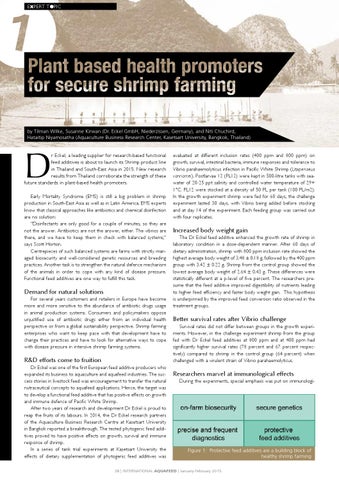
Figure 1: Protective feed additives are a building block of healthy shrimp farming
38 | INTERNATIONAL AQUAFEED | January-February 2015