supply chain logistics
Reining in complexity Having attended Sapics 2015, the single largest gathering of supply chain management professionals in Africa, Tristan Wiggill learns that the supply chain of today is a highly complex animal.
T
he three-day conference and exhibition,
held at the Sun City resort in the North West province, played host to numerous local and international speakers and supply chain experts. It also hosted over 75 exhibitors involved in the industry, filling the Superbowl and its surrounds with all things supply chain. This year’s theme, which marked the event’s 37th recurrence, was: ‘The Pulse of Africa’s Supply Chains’. In his opening address, Sapics president Cobus Rossouw said it was exciting to see over 1 000 people actively engaging with each other over the three days, all of whom, he said, were leveraging their supply chain networks. “I have no doubt that this conference will live up to all our expectations, even with us raising expectations again,” he remarked. Rossouw said the individual members of Sapics continue to form the backbone of the organisation and thanked the event’s volunteers, sponsors, and exhibitors for their contributions. He
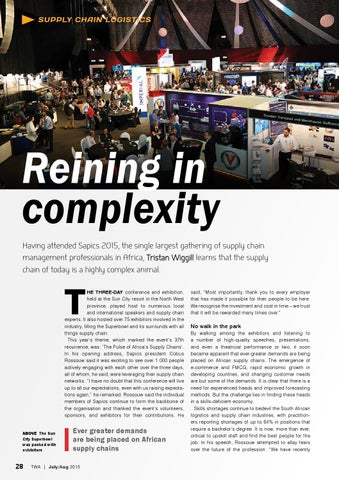
ABOVE The Sun City Superbowl was packed with exhibitors
28
Ever greater demands are being placed on African supply chains
TWA | July/Aug 2015
said, “Most importantly, thank you to every employer that has made it possible for their people to be here. We recognise the investment and cost in time – we trust that it will be rewarded many times over.”
No walk in the park By walking among the exhibitors and listening to a number of high-quality speeches, presentations, and even a theatrical performance or two, it soon became apparent that ever-greater demands are being placed on African supply chains. The emergence of e-commerce and FMCG, rapid economic growth in developing countries, and changing customer needs are but some of the demands. It is clear that there is a need for experienced heads and improved forecasting methods. But the challenge lies in finding these heads in a skills-deficient economy. Skills shortages continue to bedevil the South African logistics and supply chain industries, with practitioners reporting shortages of up to 64% in positions that require a bachelor’s degree. It is now, more than ever, critical to upskill staff and find the best people for the job. In his speech, Rossouw attempted to allay fears over the future of the profession. “We have recently