043
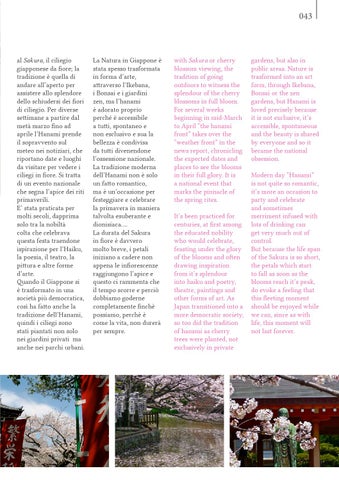
al Sakura, il ciliegio giapponese da fiore; la tradizione è quella di andare all’aperto per assistere allo splendore dello schiudersi dei fiori di ciliegio. Per diverse settimane a partire dal metà marzo fino ad aprile l’Hanami prende il sopravvento sul meteo nei notiziari, che riportano date e luoghi da visitare per vedere i ciliegi in fiore. Si tratta di un evento nazionale che segna l’apice dei riti primaverili. E’ stata praticata per molti secoli, dapprima solo tra la nobiltà colta che celebrava questa festa traendone ispirazione per l’Haiku, la poesia, il teatro, la pittura e altre forme d’arte. Quando il Giappone si è trasformato in una società più democratica, così ha fatto anche la tradizione dell’Hanami, quindi i ciliegi sono stati piantati non solo nei giardini privati ma anche nei parchi urbani.
La Natura in Giappone è stata spesso trasformata in forma d’arte, attraverso l’Ikebana, i Bonsai e i giardini zen, ma l’hanami è adorato proprio perché è accessibile a tutti, spontaneo e non esclusivo e sua la bellezza è condivisa da tutti divenendone l’ossessione nazionale. La tradizione moderna dell’Hanami non è solo un fatto romantico, ma è un’occasione per festeggiare e celebrare la primavera in maniera talvolta esuberante e dionisiaca.... La durata del Sakura in fiore è davvero molto breve, i petali iniziano a cadere non appena le infiorescenze raggiungono l’apice e questo ci rammenta che il tempo scorre e perciò dobbiamo goderne completamente finchè possiamo, perchè è come la vita, non durerà per sempre.
with Sakura or cherry blossom viewing, the tradition of going outdoors to witness the splendour of the cherry blossoms in full bloom. For several weeks beginning in mid-March to April “the hanami front” takes over the “weather front” in the news report, chronicling the expected dates and places to see the blooms in their full glory. It is a national event that marks the pinnacle of the spring rites. It’s been practiced for centuries, at first among the educated nobility who would celebrate, feasting under the glory of the blooms and often drawing inspiration from it’s splendour into haiku and poetry, theatre, paintings and other forms of art. As Japan transitioned into a more democratic society, so too did the tradition of hanami as cherry trees were planted, not exclusively in private
gardens, but also in public areas. Nature is trasformed into an art form, through Ikebana, Bonsai or the zen gardens, but Hanami is loved precisely because it is not exclusive, it’s accessible, spontaneous and the beauty is shared by everyone and so it became the national obsession. Modern day “Hanami” is not quite so romantic, it’s more an occasion to party and celebrate and sometimes merriment infused with lots of drinking can get very much out of control. But because the life span of the Sakura is so short, the petals which start to fall as soon as the blooms reach it’s peak, do evoke a feeling that this fleeting moment should be enjoyed while we can, since as with life, this moment will not last forever.