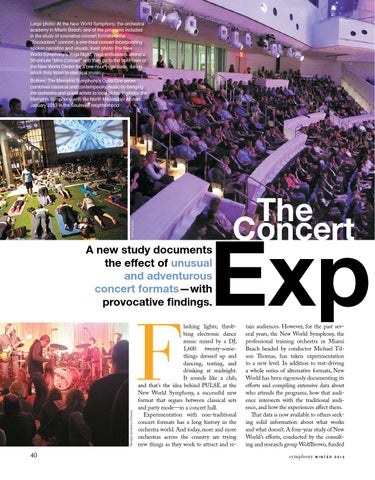
Large photo: At the New World Symphony, the orchestral academy in Miami Beach, one of the programs included in the study of innovative concert formats is the “Encounters” concert, a one-hour concert incorporating spoken narration and visuals. Inset photo: For New World Symphony’s Yoga Night, yoga enthusiasts attend a 30-minute “Mini-Concert” and then go to the front lawn of the New World Center for a one-hour yoga class, during which they listen to classical music.
Rui Dias-Aidos
Bottom: The Memphis Symphony’s Opus One series combines classical and contemporary music by bringing the orchestra and guest artists to local clubs. In photo: the Memphis Symphony with the North Mississippi Allstars, January 2013 in the Soulsville neighborhood
Exp
A new study documents the effect of unusual and adventurous concert formats—with provocative findings.
Memphis Symphony Orchestra
F
40
The Concert
lashing lights; throbbing electronic dance music mixed by a DJ; 1,600 twenty-somethings dressed up and dancing, texting, and drinking at midnight. It sounds like a club, and that’s the idea behind PULSE at the New World Symphony, a successful new format that segues between classical sets and party mode—in a concert hall. Experimentation with non-traditional concert formats has a long history in the orchestra world. And today, more and more orchestras across the country are trying new things as they work to attract and re-
tain audiences. However, for the past several years, the New World Symphony, the professional training orchestra in Miami Beach headed by conductor Michael Tilson Thomas, has taken experimentation to a new level. In addition to test-driving a whole series of alternative formats, New World has been rigorously documenting its efforts and compiling extensive data about who attends the programs, how that audience intersects with the traditional audience, and how the experiences affect them. That data is now available to others seeking solid information about what works and what doesn’t. A four-year study of New World’s efforts, conducted by the consulting and research group WolfBrown, funded symphony
winter 2014