GENDER JUSTICE AND YOUNG WOMEN’S HUMAN RIGHTS
foReWoRD
In my job I speak with young women about human rights on a regular basis and I am always impressed by their deep understanding. Of course, law students are expected to know about such things but, nonetheless, I am struck by how easily they can relate what they learn to their own lives and experiences. This is why this year’s report by The Young Women’s Movement, which explores how young women understand, access and advocate for their human rights in Scotland, is so important. By identifying barriers to accessing justice, the report considers what can be done to help young women realise their human rights in Scotland today.
It is particularly important that young women are equipped with such access given the worrying trends and feminist backlash we are currently experiencing, fuelled by the global political environment. The rise of misogyny, particularly online, and threats to our bodily autonomy highlight the need for action. Many young women do not feel safe in public places and so are denied the same freedom as their male counterparts to move around without fear. Yet, as the report shows, despite a strong shared belief that women’s rights are human rights, most feel that they are rarely discussed as such.
Against this challenging backdrop, the views of young women recounted in this report give cause for some much-needed optimism. The vast majority of those surveyed identified as feminist and most believe in the power of collective voice and action to increase awareness of and confidence and assertiveness in human rights discourse.
This report signals a clarion call for us to come together to claim and assert our place in a fairer Scotland in which all women can enjoy the same rights and freedoms as men. Let’s hope that those in positions of power and influence respond by giving greater recognition to women’s rights as human rights.
Professor Nicole Busby, Professor in Human Rights, Equality and Justice at the University of Glasgow, and member of our Advisory Group
foReWoRD
Before contributing to this research, I had never discussed how I felt about my human rights as a young woman in Scotland. As a politics student, I can recite the opinions scholars and politicians have regarding my rights. It seemed my human rights belonged to those inside to the outdated patriarchal system of laws, bureaucracy and acronyms.
I realised I felt estranged from my human rights. As this report highlights, this sentiment is not unique. This alienation experienced by young women can prevent us from fully realising our rights and advocating for their advancement. The failure to understand the experiences of women accessing their fundamental freedoms has aided in the preservation of gender-based discrimination in Scotland. Centring young women in intersectional and evidence-based research is the first step towards dismantling systemic misogyny. The next step is being heard.
Although this report indicates that we as young women are concerned for the future of our rights, it also articulates the many ways we are overcoming archaic barriers. We are expressing our fundamental freedoms with innovative fashion. We are expanding our rights in spite of those who seek to undermine them. We are rebuilding communities to exchange our knowledge and support. This research project asked hundreds of young women the questions I had never been asked. Listening to their answers has challenged my disillusionment. It is time to reclaim my human rights.
Kirsty Arnaud, Peer Researcher
This year, to celebrate our centenary birthday, the Status of Young Women in Scotland 2024–25 (SYWS 24–25) report explores how young women understand, access and advocate for their human rights in Scotland, uncovering what barriers they might face when attempting to access their human rights, and asking what can be done to help young women realise the full extent of their human rights in Scotland today.
As this report shows, young women across Scotland are very concerned about a regression in their human rights, expressing fear and anxiety as changes in society, culture and politics make their rights feel more precarious than ever.
Delving into our history is an important part of this research. When we formally broke away from YWCA Great Britain and established as a standalone organisation in Scotland in 1924, young women across Scotland were finally beginning to gain more rights and independence, including more employment opportunities, easier access to birth control and divorce, and suffrage. One hundred years on, we are reflecting on how far we have come as an organisation and wider movement and asking ourselves what we can do to strengthen young women’s human rights and create a better and brighter future for young women and girls.
2025 also marks ten years since the publication of the first Status of Young Women in Scotland research report. The first report intended to fill a glaring gap in research, policy influencing and reporting in Scotland – a holistic, evidence-based and intersectional picture of what it was like to be a young woman in Scotland. We could not have predicted how this project would evolve to become a keenly anticipated exploration, with a progressive and robust methodology, which empowers young women to be part of the process of researching and telling the story of key issues they face at the time of the research.
The first report in 2015 centred around what gender equality meant to young women, their ‘gender lightbulb moment’ – when they first realised they were experiencing life differently because of their gender. In doing so it covered a broad brush of environments and explored the ways in which young women were experiencing gender inequality in their everyday lives in Scotland.
Ten years on, this report returns to many of these issues by exploring young women’s feelings about their human rights in Scotland in a markedly different world and context. We were incredibly inspired by their stories and their resilience in the face of adversity, and we thank every young woman who took the time to speak with us about their experiences of human rights in Scotland.
baCKGRoUnD ReseaRCH
When deciding on the theme of SYWS 24–25, the young women involved in our movement told us that they want a better understanding of their own human rights, and how they might access high-quality, evidence-based information when they feel their human rights may have been breached, violated, or ignored. We also conducted desk-based research, which included a literature review exploring key areas lacking data and key focus areas for policy teams at the Scottish Government. The literature review identified a research and data gap on young women’s experiences of their human rights in Scotland.
aDVIsoRY GRoUP
An advisory group was established at the start of the project, comprising young women, human rights experts, and professionals from across the academic and third sector. The advisory group informed the research at each phase of the project, contributing to survey design, group discussion engagement, analysis, and write-up. The advisory group met three times between August 2024 and April 2025.
onlIne sURVeY
An online survey was used to generate both quantitative and qualitative data about young women’s human rights. The survey also asked young women to provide suggestions on what needs to change for young women’s human rights to be fully realised in Scotland, and their hopes for the future. The survey allowed us to reach a much wider range of young women who might not have had the opportunity to have their voices heard through this research. Potential participants were reached through our social media campaign. A link to the survey was also sent to individuals and groups with a strong reach among young women interested in human rights and gender justice in Scotland. We sent posters and flyers to libraries, students’ unions, and youth organisations across Scotland to encourage young women from diverse backgrounds and communities to complete the survey.
The survey was open from September to December 2024 and received 576 responses, 538 of which were eligible to be included in this research (i.e., a response from a young woman/person of a marginalised gender who lives in Scotland). Young women from across every Scottish local authority and our target age group (16–30) responded to our national survey. We also included responses from those under 16 (3.6%) and 31–35 (4.3%). The survey included at least one respondent from every local authority across Scotland, with around 2 in 5 participants based in Glasgow or Edinburgh.
Other survey participant demographics include:
AGE
16% of respondents are aged 16-18
13% are aged 19-21
24% are aged 22-25
40% of respondents are aged 26-30
7% of respondents are aged 31-35
GENDER
93% of respondents identify as women (including trans women)
womenincltranswomennon-binary/genderfluidtrans/havetranshistory
6% identify as non-binary/gender fluid
7% of respondents identify as trans or having a trans history
SEXUALITY
45% of respondents identify as heterosexual
as bisexual
ETHNICITY
as lesbian 74% of respondents are white Scottish/British
DISABILITY AND LONG-TERM
32% of respondents consider themselves to be a disabled person
63% are living with a neurodiversity
63% are living with a mental health condition
27% noted a long-term health condition
OTHER DEMOGRAPHICS
4% of respondents are care-experienced
66% of respondents attended state-run, non-selective schools
One-fifth (20%) of respondents qualify/qualified for free school meals
34% of respondents said they belonged to no specific religion
34% of respondents said they belonged to no specific religion
28% identified as atheist
28% as atheist
11% as Roman Catholic
11% as Roman Catholic
5% were Church of Scotland
5% as Church of Scotland
6% as other Christian
6% as other Chirstian
4% were Muslim
4% as Muslim
1% were Buddhist
1% as Buddhist
DIsCUssIon GRoUPs
Four in-person discussion groups took place between December 2024 and March 2025. The research team contacted organisations working with young women to promote the survey and raise awareness among potential discussion group participants. This was to ensure we were gaining a wider perspective on human rights issues affecting young women from across Scotland who were not necessarily engaged with The Young Women’s Movement. The discussion groups helped us to explore topics in greater depth and capture varied experiences, voices and opinions. Discussion groups took place in Glasgow, Edinburgh and Dumfries and Galloway, engaging with a total of 48 young women and girls across Scotland. The discussion groups were conducted with young women from rural areas; girls and young women aged 14–16 in school; young women engaged in politics and activism; and young women from asylum seeking and refugee backgrounds.
The discussion groups focused on various human-rights issues, including: the right to play; the right to participation and voice; and the right to a life free from violence and discrimination, the right to access justice, the right to healthcare, among other human-rights issues. These focus areas were decided on by the research team and advisory group based on an initial analysis of the survey, and gaps in demographics as well as areas that deserved a deeper dive.
During the discussion groups we used a range of aids to stimulate discussion, such as emerging findings from the survey results and reflecting on current debates. A large degree of flexibility was needed when using our discussion guide to ensure accessibility. Although participants joined groups relevant to their identity or issue, we encouraged them to share experiences or reflections beyond the main topic discussion if they felt comfortable. Participants received a copy of our participant information sheet and consent form prior to attending the discussion group to enable them to give informed consent. Discussion groups typically lasted an hour, with all dialogue recorded and transcribed for analysis using NVivo software. All participants were compensated with £25 vouchers for their time and expertise.
PeeR ReseaRCH eRs
We worked with six volunteer peer researchers, most of whom already volunteered with The Young Women’s Movement or had previously participated in our research projects and programmes. All research volunteers received formal peer research training, which was delivered online by the research team. Four peer researchers had previously received formal training through The Young Foundation’s ‘Introduction to peer research’ course in 2024, which was also attended by the core research team at The Young Women’s Movement. The peer researchers interviewed six other young women about their experiences of human rights in Scotland. Four volunteer peer researchers also sat on the
Advisory Group, and were involved in research design, data collection and analysis at every stage of the research process. All volunteer peer researchers and interviewees were compensated with £25 vouchers for their time and expertise.
ReseaRCH eTHICs
We included self-identifying young women, including trans women, and non-binary young people in this research. We refer to participants as young women throughout this report, while acknowledging that not all participants may identify as such. Names have been removed, and quotations remain anonymous throughout to protect participants’ identities. At every stage of this research project, we followed relevant ethical and data protection obligations, adhering to UK GDPR principles. All participants of discussion groups and peer research interviews were provided with a consent form and a participant information sheet prior to the research activity taking place. Participants under 16 required opt-in parental/guardian consent prior to the participant taking part in the discussion group and/or peer research interview. We identified and removed survey data from non-genuine participants or bots by analysing language, patterns and inconsistency in responses.
GaPs anD lIMITaTIons
Although our research methods and approach have many strengths, we acknowledge the limitations of the methodologies employed. The findings should not be considered representative of the experiences of all young women/people of marginalised genders in Scotland; they shine a light on the lives, views and experiences of those who participated in this research. Although we received 538 eligible survey respondents, the rate of responses was not consistent. When a percentage is stated, it is representative of those who responded to the question, not the full sample.
This report highlights the diversity of human-rights issues faced by young women and girls in Scotland, but it does not capture the full range of human-rights issues, nor the full extent of the barriers they face when accessing their human rights. For instance, while we spoke with young women from refugee and asylum-seeking backgrounds, we acknowledge that this report does not reflect in any detail on the experiences of young women who are subject to immigration control and/or don’t have British citizenship. Furthermore, while we explored young women’s access to justice, we did not directly meet with young women in prisons/secure units, or young women who have had direct experience of the justice system. Finally, while many trans and non-binary young people responded to our survey, we acknowledge that our report does not fully reflect on the range of human-rights violations facing the trans community in Scotland today.
We elevate the work of specialist human rights organisations, researchers, lawyers and activists who are campaigning for the realisation of all people’s human rights in Scotland today, including the Human Rights Consortium Scotland, JustRight Scotland, Just Fair, Lawmanity, Equality Network, Scottish Human Rights Commission, Scottish Refugee Council, Children First, Scottish Women’s Rights Centre and the Emma Ritch Law Clinic at the University of Glasgow, to name a few.
THe ReseaRCH TeaM
At The Young Women’s Movement our research is guided by the young women that we work with and aims to address the intersecting root causes of inequality and discrimination by amplifying underrepresented voices. Our research approach is explicitly feminist and participatory. This research was co-led by Dr Rebecca Mason, Research and Policy Lead at The Young Women’s Movement and Saffron Roberts, Research and Policy Coordinator at The Young Women’s Movement. Research consultancy and data analysis support was offered by freelance researcher Rhianna Mallia. A literature review was completed by Katrina Lambert. We were supported by a team of six peer researchers from The Young Women’s Movement, who conducted peer interviews and helped us shape the survey, discussion group questions and report recommendations.
*Content warning: This report contains descriptions of gender-based violence, including sexual assault and rape.*
The Status of Young Women in Scotland 2024–25 (SYWS 24–25) report explores young women’s human rights in Scotland. Themes include how young women feel about their human rights, what they were taught about their human rights and what barriers they face when attempting to exercise their human rights.
Our research engaged with 600 young women and people of marginalised genders aged 16–30 from across Scotland. This research collected a wide range of findings on issues relating to young women’s human rights:
KnoWInG YoUR HUMan RIGHTs
1 in 3 young women surveyed feel that they have not been taught what they need to know about their human rights. Young women who feel uninformed about their own rights noted a lack of widespread education on women’s rights and human rights, with many calling for greater rights awareness to empower self-advocacy.
Young women are very anxious about a regression in women’s human rights, expressing fear and anxiety as changes in society, culture and politics make women’s human rights feel more precarious than ever. Specific concerns were raised about the rise of far-right politics at home and globally, increasing populism, as well as increasing misogyny and the radicalisation of young men online as barriers to young women exercising their human rights.
8 in 10 young women surveyed want to develop their knowledge about their human rights. Most young women feel that human rights are rarely discussed in relation to gender or women’s rights, though young women largely view women’s rights as human rights. Young women ask for a better understanding of human rights and women’s rights, including what to do if they’re worried about their rights not being respected or upheld.
aDVoCaTInG foR YoUR HUMan RIGHTs
1 in 2 young women surveyed do not trust politicians and decisionmakers in Scotland to advocate for their human rights. Young women feel as if their human rights are often sidelined or overlooked due to a lack of women in decision-making positions, or people who represent them as young, working class, LGBTQ+ or disabled. Young women want to see greater diversity in representation in public life and more awareness of the importance of gender equality amongst the political classes.
80% of young women surveyed describe themselves as a feminist. While young women’s individual interpretations of feminism varied, the most common theme was the belief that women and men should be equal or have equity. Many highlighted that feminism is about ensuring women’s human rights are recognised and upheld. Overall, most young women expressed a strong belief in social, economic, and political equality for all genders as the core of feminism.
72% of young women surveyed advocate for themselves by speaking with friends and peers about their human rights. Young women described the importance of speaking with their friends and peers as a way of challenging mis/disinformation online, and to avoid relying solely on sources that confirmed their existing beliefs. Young women believe in the power of collective voice and action to increase their self-awareness, confidence and assertiveness when discussing their human rights.
I
Across the world, young women’s human rights are facing unprecedented growing threats, from higher levels of discrimination to weaker legal protections, and less funding for programmes and organisations that support them.
We were interested in finding out about what young women felt about the language of human rights, including their knowledge of human rights and how they feel about the state of their human rights in Scotland today.
In recent years, the language of human rights has become commonplace in Scottish public life. Those with the responsibilities to uphold young women’s human rights – from Scottish ministers to local authorities – increasingly talk of a rights-based approach and the importance of putting human rights at the centre of what they do.
Our survey asked young women: ‘How much do you know about your human rights in Scotland?’ Nearly one-third (31%) of survey respondents said that they ‘know a little’ about their human rights, while nearly one-fifth (19%) said that they ‘know a lot’.
HOW MUCH DO YOU KNOW ABOUT YOUR HUMAN RIGHTS IN SCOTLAND?
When looking at differences between age groups, 31–35-year-olds were the least likely age group to say that they ‘know a lot’ about their human rights (13%) and the most likely group to say that they ‘know a little’ (47%). White Scottish/British young women responding to our survey were more likely to answer that they ‘know a lot’ about their human rights (21%) compared to 15% of Black Asian and minority ethnic (BAME) young women.
UnDeRsTanDInG HUMan RIGHTs
We explored young women’s understanding of human rights in more detail in discussion groups and peer research interviews. Overall, young women view women’s rights as human rights, though they feel as if human rights are rarely discussed in relation to gender or women’s specific rights.
When young women think about human rights in general terms, they reflected on their own lives and how they understand their rights in Scotland today. For example, a young woman on a waiting list for surgery reflected on her right to adequate healthcare, while a young woman who recently gained refugee status reflected on her housing rights while still living in temporary hotel accommodation. When young women think about their human rights in general terms, they typically think of their own lives and how their human rights are impacted by structural inequalities.
Many young women also had awareness that not all women in Scotland experience equal access to rights and resources, particularly those from marginalised groups.
Many young women expressed that they felt largely positive that their human rights were mostly respected, or that they felt ‘okay’ or ‘comfortable’ about their human rights in Scotland. This sentiment often came with the qualification that this was relative to other countries, most often compared to England, and then globally.
Some young women expressed more trust in the Scottish Government than in Westminster to uphold women’s rights, due to some progressive policies in Scotland, like access to free period products, and the roll-back of rights in England, like the right to protest. Many young women also had awareness that not all women in Scotland experience equal access to rights and resources, particularly those from marginalised groups.
I feel Scotland is more progressive than England in terms of policies and laws that help women. But feel the global, political, and social climate and the attitudes it breeds could threaten all women’s rights.
I do feel more positive toward the Scottish Parliament than I do the UK [Parliament] but I think everyone is just feeling distrustful in general. I do feel quite lost with it all and I often think they don’t make education on politics accessible for people either, especially for those who live rurally, which can make it even harder to feel like you do have a say.
I feel I can truly express myself as a young woman in Scotland and express my rights. However, I do feel as though not every woman has access to her rights and is not educated on what her rights are.
Some young women reflected on recent legislative and policy changes introduced by the Scottish Government, noting that more needs to be done to safeguard and advance young women’s human rights.
I think we’re safe for now in Scotland and our rights are still being progressed, like the buffer zone legislation, but the concern is for how long and will changes to government in 2026 decrease and remove our rights rather than further progress them. I also worry for younger women and their rights being breached on social media and digital spaces. Violence against women and girls is increasing and it’s a scary place to be a woman at the moment. Worse than 5–10 years ago.
I think things are getting better – we have started to speak about periods, period products are much easier to access, we have women to represent us in the Scottish Parliament, girls are given mostly equal opportunities to reach their goals – but there are still many things to be improved, like equal pay, more women in positions of power, less women losing out on opportunities and sacrificing them for the unpaid labour of tending to the home and raising children, and reproductive rights, just to name a few.
Some young women expressed disappointment in the Scottish Government’s decision to delay the Human Rights Bill, and reflected on how this decision has impacted progress on advancing a human rights culture in Scotland.
PeRCeIVeD THReaTs To HUMan RIGHTs
Young women are very concerned about a regression in women’s rights within the context of human rights, expressing fear and anxiety as changes in society, culture and politics make women’s rights feel more precarious than ever. Specific concerns about the rise of far-right politics at home and globally, increasing populism and global events, like the rollback of abortion access in the USA and eradication of women’s rights in Afghanistan, as well as increasing misogyny and the radicalisation of young men online, were frequently shared by young women.
I think it’s scary how anti-women’s rights rhetoric is increasing, and far right governments are coming into power and rolling back on our rights.
As a whole I feel I can access most of my rights and have the privilege to fulfil them. However, with current culture wars I am often concerned about pressure groups and some politicians attempting to roll back on progress.
It’s a scary time to be a young woman with the rise in misogyny, violence and intolerance. Coupled with being a queer woman, it’s frightening. The rise of the far-right is a threat to us all, and Scotland is not immune to radicalisation as the past couple of years have evidently shown us.
When reflecting on their human rights, young women described frequently not feeling safe, and the actions they take to protect themselves from the daily threat of violence. Safety is one of young women’s top three concerns, with most young women responding to our survey commenting on the right to be safe from violence as the most fundamental human right that they want to see realised for all women and girls in Scotland.1
Women experience sexual and gender-based violence at catastrophic rates, and it has extremely harmful effects on our physical and mental health and wellbeing, safety in our own homes, ability to access healthcare, and ability to achieve justice.
1 Young women’s top three concerns were: the right to be safe from violence, the right to adequate healthcare, and the right to fair and equal pay.
Young women do not feel safe in public spaces and mainly are fearful of going out alone and being harassed in public. On average, young women surveyed rated feeling least safe on public transport (2.8/5 on average). In discussion groups, BAME young women told us that they regularly experience racism and misogyny when travelling on public transport.
I often feel unsafe in public places. Every woman I know has been at a minimum harassed by men on public transport; in their place of work or education; on the street, etc.
Many young women reflected on the actions they take to protect themselves from the threat of violence when navigating the world around them. Two-thirds of young women surveyed described carrying keys in their hands while walking home at night, while two-fifths (60%) of young women have shared their phone’s live location with friends and/or family.
If I’m getting off from public transport and feel unsafe, I’ll get off on another stop than my home so people can’t know where I live. If I feel unsafe walking home, I phone my partner and ask them to walk to meet me.
Keeping a close eye out while out in public, never walking with both earphones in after dark, choosing routes through more densely populated streets, especially after dark; keeping a distance and/or obstacles between myself and people I perceive to be men, especially after dark.
Young women also described feeling unsafe online, with many commenting on the rise of bullying and misogynistic harassment and abuse on messaging apps and social media.
To keep safe online, the majority of young women responding to our survey use passwords (90%) and block/report abusive social media accounts (81%). The most popular answer for under 16s was keeping their social media profile private (70%).
Young women expressed a desire for more proactive efforts from the government to address the growing levels of violence online, particularly the dangers of online misogyny and largely unregulated use of Artificial Intelligence (AI) to abuse young women and girls in the digital sphere.
I just wish the Government would do more to hold social media companies to account, particularly to stop accounts and channels that are spreading violent misogynistic messaging and ideas against women’s equality.
I find the rise in AI Technology to perpetrate violence against women online deeply scary. I feel like it’s not taken as seriously as it should be.
Pervasive misogyny in society, culture and politics is impacting young women’s feelings about the future of human rights in Scotland. They are perceiving the rise of severe misogyny in online spaces influencing the real world, and specifically shared fears about the impact of extreme misogynists with large social media followings and incel culture at large.
leaRnInG aboUT HUMan RIGHTs
Over a third (38%) of young women surveyed felt that they had not been taught what they need to know about their human rights.
Over a third (38%) of young women surveyed felt that they had not been taught what they need to know about their human rights.
Young women and girls aged 18 and under were most likely to say they’ve been taught what they need to know about their human rights (35% of respondents aged under 16 and 36% of respondents aged 16–18), while the older age groups were most likely to say that they had not been taught what they need to know about their rights (46% of 26–30-year-olds and 53% of 31–35-year-olds, compared to between 20% and 40% across other age groups).
In discussion groups, young women still in school reflected on UNICEF’s Rights Respecting Schools Award programme, funded by the Scottish Government to all state primary and secondary schools in Scotland to integrate children’s rights into the curriculum, with many noting that they weren’t specifically taught about girls’ rights or gender equality as part of the programme.2 Young women who felt uninformed about their own rights noted a lack of widespread education, with many calling for greater rights awareness to empower self-advocacy.
I’m just not that well versed in the full range of rights. You know, on a personal level, like what you feel that you should be allowed to do, but I’m not actually well versed in what the international law treatises say what rights you actually should have, so perhaps that would be a good place to start and then and then build from there.
When asked about where they would look for information about their human rights, the majority of young women responding to our survey (86%) told us that they look online on Google or by reading online articles, while over half of respondents (54%) refer to literature produced by human rights or women’s rights charities.
2 See UNICEF, Rights Respecting Schools, Funding for Schools in Scotland, published 20 May 2022. https://www.unicef.org.uk/rights-respecting-schools/funding-for-schools-in-scotland/ (Accessed 4 February 2025).
One third of young women (33%) surveyed reported learning about their human rights through formal education. Those who described their experiences of learning about human rights at school showed varied experiences; some felt human rights education was basic, boring, or lacking in depth and detail, while others said that human rights issues were covered in depth. Most agreed, though, that human rights were rarely discussed in relation to gender or women’s specific rights, though young women largely viewed women’s rights as human rights.
Young women who attended university, and specifically studied on courses involving human rights, said this was revolutionary in building their understanding of their human rights as individuals. Some mentioned specific courses, lecturers and information that had been impactful in their learning and understanding of human rights.
I studied social policy and politics at university and did a human rights course as part of this so [I] feel informed about my rights. I also stay up to date with current affairs and would read about this topic.
Something that I kind of didn’t view as a human rights issue in my life until I was studying [...] was the right to education.
Over one-third (38%) of young women responding to our survey look to friends and family for information about their human rights. Family and friends, particularly women family members, were discussed as crucial in building knowledge around human rights and how to advocate for your human rights. Next, young women most commonly learned about human rights through specific training, their workplaces and volunteering roles, where human rights were important to their roles.
I don’t feel I learned much at school about [human rights] at all, but definitely through youth projects I was involved in as a volunteer as a teen.
If my mum wasn’t in healthcare, I wouldn’t have known that having two periods a month wasn’t normal. She booked an appointment to see the GP for me.
ARE YOU INTERESTED IN DEVELOPING YOUR KNOWLEDGE ABOUT YOUR HUMAN RIGHTS IN SCOTLAND?
The majority of young women (84%) are interested in developing their knowledge about their human rights.
Young women want a better understanding of their own human rights, and how they might access high-quality, evidence-based information when they feel their human rights may have been breached, violated, or ignored. Young women want to know how to access their human rights in everyday life and safely advocate for their rights in public and online spaces. Young women need a place to go with their problems, and to know that action can be taken when their rights are breached or violated. They want to confidently name and claim their human rights and be empowered and encouraged to participate in decision-making and the development of policy and practice that affects them and their rights.
Young women want a better understanding of their own human rights, and how they might access high-quality, evidence-based information when they feel their human rights may have been breached, violated, or ignored.
Young women’s human rights include the right to be free from discrimination and violence, to adequate healthcare, to be educated, and to earn a fair wage. Yet, for young women and girls across Scotland, these rights remain unfulfilled. Despite existing legal protections, there is a gap between human rights standards and young women’s practical enjoyment of their rights in everyday life. From equal pay to freedom from violence, this section explores how young women access their human rights in Scotland.
aCCess To JUsTICe
1 in 4 young women surveyed do not trust service providers or public authorities in Scotland to uphold their human rights.
*Content warning: This section contains descriptions of gender-based violence, including sexual assault and rape.*
Young women are lacking trust in institutions that are responsible for upholding their human rights in Scotland. When asked if they trust service providers or public authorities to uphold their human rights, 15% of young women surveyed said ‘yes’, whilst over a quarter said ‘no’ (29%), and the majority said ‘sometimes’ (52%).
1 in 4 young women surveyed do not trust service providers or public authorities in Scotland to uphold their human rights.
Our survey also asked: ‘If you felt your human rights had been breached or violated, how confident are you that a complaint would be dealt with by the appropriate body?’, with nearly two-thirds (60%) of young women feeling ‘not confident’ (2.3 average on a scale of 1 to 5, 1 being not confident at all to 5 being very confident).
Young women shared their feelings about specific institutions and explained why they lack trust in them. Some noted that while they may trust certain individuals within these systems—such as a supportive officer in the justice system or a GP who has met their needs—they do not trust the systems those individuals represent. Young women with intersecting identities described feeling additionally marginalised by institutions due to their race, disability or gender identity.
Even if I have trust in individual practitioners, I don’t have trust in the system.
I am a Black woman, and sometimes public authorities are not as sensitive to racialised issues as they ought to be. I feel more comfortable when service providers are also Black/person of colour.
I feel that agencies will be more confident to support me if I withhold my marginalised status where possible. That is, my rights will be fulfilled if I’m perceived as a straight cis woman compared to a queer person, the case is similar if I mask my neurodivergence. This is not always down to explicit exclusion but lack of knowledge or confidence as well as historical lack of policy and accommodations in place to fully understand how everyone can access rights and advocate for them.
Young women from rural areas described the inaccessibility of services, which hinders their ability to exercise their human rights.
It takes me 2 hours to travel to a GP appointment as the bus service is really poor in my area. It often takes me a full day to attend a 30-minute appointment. I sometimes don’t bother, even if I feel really unwell.
Some people in the Highlands have to travel really far to access things, or it’s very, you know, there is limited hours of operation.
Overall, young women were least likely to trust the criminal justice system and the healthcare system to uphold their human rights. Young women described experiences and perceptions of ingrained misogyny and ageism within the criminal justice system and in healthcare provision. There were some comments describing the general sense that institutions do not have the interest of women – and particularly women from marginalised backgrounds – at their core. Many young women commented on personal experiences and how this has impacted their trust in service providers or public institutions to uphold their human rights.
I’m worried about abortion rights and worried about transgender rights, budget cuts in the health and social care system, strain and pressure of those systems such as the justice system, and its consequences.
I do not trust the police or other justice institutions to uphold any accusations of violence seriously or do anything to prevent action. Similarly with stalking or unwanted behaviour – it feels like it’s up to me to navigate this alone without support from a system that is meant to protect me.
I have had bad experiences with both the justice sector and healthcare sector where my rights weren’t upheld or considered. I don’t think professionals in these spaces consider the needs and rights of young women, especially the police. We often see the police let down young women in situations rather than support and keep them safe. I wouldn’t trust them to keep me safe, never mind uphold my rights.
Many young women described a deep mistrust of the criminal justice system, particularly the police, in the handling of domestic abuse allegations, sexual assault, and violence against women and girls (VAWG) generally. In discussion groups, many young women reflected on highprofile cases in the media, and how this has impacted their ability to trust the police and the criminal justice system in Scotland. These observations
resonate with recent data from the Scottish Police Authority, which highlighted that trust among women aged 16–24 is lower than other age groups.1
I cannot say I particularly trust the police – especially male officers – not to take advantage of their position of power and public trust. While the most notorious cases of sexual assault and murder of women by police officers were in England, the overall public perception of law enforcement was negatively impacted and for a good reason.
I do not trust that police officers within the force are reporting their colleagues for misconduct.
Many young women reflected on the lack of access to justice in relation to domestic abuse, sexual assault, and gender-based violence, and how specific experiences had influenced their view of the criminal justice system. They referenced their own experiences of police misconduct and inherent misogyny and bias within the criminal justice system, the experiences of their friends and family, and the prevalence of corruption, misconduct, and the widespread lack of justice for women reported in the media.
Prosecution for sexual crimes in Scotland is so low it’s practically legal. I don’t feel confident that if I was harassed anywhere that an authority figure would take it seriously unless I was physically injured really badly.
In general, it’s statistically almost impossible to convict men for gender-based violence in the UK, so I don’t trust that institutions can protect me.
I don’t feel confident that the structure will be put in place and the investment will be made to uphold existing rights, such as changing prosecution for rape and sexual assault to actually result in convictions.
I’m quite lucky in the situation that I am in my life but there was a time where my rights were violated and looking back on it, I shouldn’t have allowed it to happen, because I was raped myself, I was only 14 at the time and it was awful, it wasn’t right and in that you kind of feel like you’ve got no one to talk to obviously. I told my mum and stuff but it felt so out of touch for me to say anything that I just felt if I stayed quiet, it’s best for everyone.
Young women shared how difficult it is to report rape or sexual assault due to a lack of trust in the criminal justice system, commenting on how legal proceedings can take an unimaginable toll on young women’s mental and physical health and wellbeing. Many young women feel that they would not be treated sensitively and with respect, taken seriously or
Scottish Police Authority, Women’s Trust and Confidence in the Police in Scotland, published 20 June 2024. https://www.spa.police.uk/ news-insights/insights/women-s-trust-and-confidence-in-thepolice-in-scotland/ (Accessed 2 February 2025).
believed if they reported a rape or sexual assault. Young women described a feeling of hopelessness at the idea of reporting sexual assault or domestic abuse; a feeling of ‘what would be the point?’ was widespread. In summary, young women feel let down by an institution that is supposed to protect them.2
A feeling of ‘what would be the point?’ was widespread.
I’ve seen police respond inappropriately and unhelpfully to sexual assault within my close friend group. I also felt due to the culture of the time that I didn’t have the information I needed, and I was unable to recognise that I was in an abusive relationship in my late 20s and that I had experienced a sexual assault in my late teens which significantly impacted my physical and mental wellbeing. I feel now there is more information and conversation but although institutional attitudes may on the surface be changing, more could be done to change systems.
My faith in the criminal justice system is very minimal. I myself have been a victim of gender-based violence and did not report it to [the] police. I was conflicted about this at the time but, having seen and heard how women who do report these crimes are treated in the criminal justice system, I’m confident that the choices I made to protect myself in the aftermath were correct.
The way rape and sexual violence is handled by the police and the criminal justice system is so far from fair and just.
Young women clearly believe that the government, justice system and other public bodies should be doing more to tackle violence against women and girls (VAWG). Young women report low levels of trust in the police, and a lack of understanding of their rights when they are exposed to gender-based violence. As it stands currently, young women believe that the criminal justice system is not fit for purpose in addressing human rights violations, particularly in relation to gender-based violence.
aCCess To HealTHCaRe
Within healthcare settings, many young women do not trust that their human rights will be upheld. Young women feel that they are not taken seriously, that their health concerns are dismissed, and they have experienced discrimination and misogyny due to their multiple identities. Young women described a lack of medical understanding of issues relating to menstrual, reproductive and hormonal health, feeling like their pain and symptoms are often minimised and that they haven’t received the treatment, care and follow up that they think they deserve.
2 In an LGBT Youth Scotland’s survey of young women and girls, 73% of those who experienced incidents of violence, abuse, or harassment did not report these to police. Respondents stated concerns about their experiences not being “serious enough to report”, not being taken seriously, being “outed”, and a general lack of trust in police and criminal justice. See LGBT Youth Scotland, LGBT Young Women & Girls in Scotland 2020 Consultation – Briefing. Available at: https:// lgbtyouth.org.uk/lgbt-young-women-girls-in-scotland-2020- consultation-briefing/ (Accessed 15 March 2025).
As a young woman in Scotland I feel some services do not take me seriously when I approach them… I feel I am brushed off quite often when I contact doctors about my mental health. I personally believe I need a further diagnosis but have struggled to gain this from a GP.
I feel that it is a gamble whether my rights will be protected and upheld. Women’s access to healthcare is a lottery based on area and practitioner. I know when I enter a clinic that it’s a game of luck whether I’ll be taken seriously or not. As a survivor of domestic abuse, I know my rights may or may not be taken seriously, protected or upheld. It is, again, a gamble.
Young women described feeling like there is a lack of awareness about women’s health and women’s rights within the NHS, reflecting on the prevalence of medical misogyny, institutional ableism, racism and fatphobia. There were references to the NHS being a service that is underresourced and over-burdened, with some young women suggesting that their lack of trust in the NHS is mainly down to a lack of capacity and years of under resourcing. They discussed the difficulty of accessing healthcare due to stretched services, waiting lists and location of GP surgeries and hospitals, and how this impacted their right to adequate healthcare.
I feel insecure. With continuing pressures on the health services, I have to say I am scared, particularly as I am going through tests for my reproductive health. I feel lucky I can currently access this for free, frustrated that it has taken so long, and fearful for the future.
I think, particularly with healthcare, I feel there’s at times not the resources or capacity for healthcare workers to truly offer me rightsinformed care. There appears to be a lot of hiding behind processes and cutting corners, and whilst I do sympathise and understand why, it does concern me.
I would like to trust the NHS and have generally had good experience using their services, but access issues to its services and their overburdening in care and admin make me doubt their ability to uphold my rights.
When reflecting on their menstrual health, young women discussed access to period products, with nearly half of young women surveyed only seeing free period products ‘sometimes’ or ‘rarely’ in public bathrooms.
Many young women in school noted that they often only feeling comfortable asking certain members of staff for period products, with some schools keeping period products at reception and requiring students to ask for them if needed. In discussion groups, young women reflected on the importance of learning about what a ‘normal’ period looks like in school, and how it can impact your mood, energy levels and academic performance.
eQ UalITY beTWeen YoUnG WoMen anD YoUnG Men
1 in 4 young women surveyed feel that they have not had the same educational or employment opportunities as boys or young men their age.
Young women aged 31–35 were most likely to give this response over any other age group (53%), compared to 11% of under 16s, with many reflecting on general experiences of ageism, misogyny and bias in education and the workplace.
DO YOU FEEL LIKE YOU’VE HAD THE SAME EDUCATIONAL OR EMPLOYMENT OPPORTUNITIES AS BOYS OR YOUNG MEN YOUR AGE?
Young women reflected in great detail on the social and cultural expectations that still exist for girls and women, and how prevalent gender stereotypes are within educational and workplace settings across Scotland. There were many comments about how hard young women must work to access the same opportunities as young men and fight gender stereotypes.
There is still a push during schooling that men and boys are navigated in certain directions and to qualify in certain career fields and young women do not receive the same encouragement, nor do they receive the respect and can face outdated male-dominated working environments fuelled by insecure and at times, sexist men.
Inequality in educational opportunities were consistently discussed by young women in the survey responses and discussion groups, most commonly in relation to access to STEM subjects both within school and in further education. In general, young women and girls feel as if they are
In general, young women and girls feel as if they are still not encouraged to pursue courses that are seen as traditionally for boys and young men.
still not encouraged to pursue courses that are seen as traditionally for boys and young men. It was also highlighted that entry-level positions and apprenticeships are often more catered to young men because they are in traditionally more ‘masculine’ or STEM fields which hinders career advancement.
…while it didn’t stop me from pursuing these opportunities, I have felt uncomfortable or disappointed by the gender imbalance in my STEM classes. In a class of 20 for Advanced Higher Physics I was the only girl, when I went for an open day at Edinburgh University the students attending the computer science sample lectures were almost all male. It certainly feels isolating, even if it doesn’t inherently prevent me from pursuing these opportunities.
I … tried to choose Woodwork/Technical as an elective but was told by a teacher that this was ‘not typically a girl’s subject’ so was directed into traditional art instead.
I dropped Engineering because I was the only girl in the course. I was ignored by the other boys in my class. They just think they’re much cooler than girls.
eQ Ual aCCess To eDUCaTIon anD eMPloYMenT
Young women shared how challenging taking up space can be within classroom settings and how this impacts educational opportunities, feeling like young men and boys were louder, more confident and assertive, leaving little room for them to explore and express themselves in a learning environment. There were some descriptions of favouritism at school, with young men receiving more support or encouragement from teachers than young women.
Boys are much more confident in putting their views across than young women. They have a natural bravado, women tend to be more quiet and reserved and don’t want to rock the boat too much.
“Boys will be boys” attitude is still very much prevalent – in schools, in college, in uni [sic], at work.
Boys are treated differently at my school. If a lad turned up greeting [crying] at the principal’s office, and it turned out that a lassie made him cry, it would be taken so seriously, and she would get in so much trouble, but that never happens when it is the other way round.
Disabled young women described a lack of support at school, feeling like their needs had not been met or that they were not supported to
succeed, and that there was less room for them to make mistakes. Some respondents who are neurodivergent talked about their difficult experiences at school and reflected that if they had been a boy, they would have likely been diagnosed earlier and therefore received better support and accessed more opportunities.
Where boys in my primary/secondary education could be loud, playful and slack off, I could not do this. Even if I modelled my best behaviour there were always double standards – boys were natural leaders and I was ‘mean and bossy’. Boys were confident and I was ‘big headed’. Boys were knowledgeable and I was an ‘obnoxious know-it-all.’ My education also felt inferior as girls in my school were not only less likely to be supported with neurodiverse diagnoses (for me, autism) but also receive any support for it.
My brother has the same diagnosis as myself and has had a much easier time accessing support. The support I have managed to access is much poorer comparatively.
When reflecting on their experiences, many young women were explicit about their experience of intersecting forms of oppression. Young women reflected that because they were from a working-class background, they were not afforded the same opportunities as those from middle or upperclass backgrounds. Others talked about their neurodivergence, disability or health issues as barriers to equal access, because support was simply not there to deal with these issues at school or in their early careers.
I’m a neurodivergent working-class woman who would have had a lot more opportunities if I had been diagnosed as a child rather than an adult. If I was a boy, the noticeable differences that have always been commented on would have been attached to a diagnosis and support. I could have opened up more doors for myself.
Many young women reflected on how progress in women’s rights has led to some young men feeling as if they are losing out to women on educational or employment opportunities. For instance, in discussion groups, young women reflected on DEI backlash and how this is impacting how they feel about their successes and career opportunities.3
I feel like young men can be bitter about [young women’s] success. When you look at statistics, that’s where you see young women achieving, and I don’t know if that’s why men feel left behind. Some men are aggressive or don’t like the fact that women are taking up spaces they used to dominate.
Once an industry becomes female-dominated it becomes ‘less cool’. As a young woman of colour, I’ve been told by men that my achievements are due to being young, female and mixed-race.
3 A recent poll by Ipsos has found that while young women are more likely to identify as feminists, Gen Z men are significantly more likely to agree that efforts towards gender equality have gone too far and discriminate against men. See Ipsos, International Women’s Day 2025, https://resources.ipsos.com/Download_the_IWD25_report.html (Accessed 4 March 2025).
Across a decade of reporting, gender inequality and discrimination in education and the workplace have remained persistent barriers for young women, limiting their opportunities and shaping their experiences in ways that continue to disadvantage them.
In our first annual report in 2015, young women shared their experiences of being discouraged from participating in sports and STEM subjects.4 In our 2020/21 annual report, young women shared their employment experiences and the impact of the COVID-19 pandemic, with many experiencing sexism and harassment in the workplace.5
In 2025 we see these inequalities persisting, with young women continuing to experience discrimination due to pervasive gender stereotyping. Despite progress, young women still feel they must work harder than their male peers to achieve the same success, and access to opportunity is often influenced by factors like race, disability, and socioeconomic background.
Despite
progress, young women still feel they must work harder than their male peers to achieve the same success, and access to opportunity is often influenced by factors like race, disability, and socioeconomic background.
4 The Young Women’s Movement (2015), Status of Young Women in Scotland, https://www.youngwomenscot.org/ research-reports/status-of-young-women-in-scotland-2015/ (Accessed 1 February 2025).
5 The Young Women’s Movement (2021), Status of Young Women in Scotland, https://www.youngwomenscot.org/ research-reports/status-of-young-women-in-scotland-2020-2021/ (Accessed 1 February 2025).
Every day, young women across the world bravely advocate for their human rights and those of their peers, addressing issues affecting them at local, national and global levels. This section explores how young women in Scotland advocate for their human rights, understanding how they exercise their right to participation and voice and engage in decisionmaking processes on issues that matter to them.
PaRTICIPaTIon anD VoICe
1 in 2 young women surveyed do not trust politicians to represent their needs and advocate for their human rights.
Trust in politics has reached a record low amongst young women. Many young women do not feel empowered to affect change. Many young women described feelings of hopelessness, believing their singular voice could not make a difference, and that their opinions and views do not matter. They recognised that as a young person it was harder to influence the way Scotland is run. Many also described their working-class background and how this adds to feeling powerless.
1 in 2 young women surveyed do not trust politicians to represent their needs and advocate for their human rights.
There are rarely opportunities to feel directly involved in local and national decision-making. Voting at elections and sending emails to my MSP does not feel like I am having an impact or even reaching anyone in particular.
I don’t really feel involved. I vote, I sometimes email my MSP or MP, I take part in surveys, but I don’t feel like I have a lot of power. I don’t feel in general that Scotland has a lot of power in the UK when we vote either.
Young women felt as if their rights were overlooked due to a lack of women in decision-making positions, or people who represent them as young, working class, LGBTQ+ or disabled. Some highlighted the need for better representation because of how crises like the ongoing cost of living, rising levels of violence and misogynistic rhetoric, and the COVID-19 pandemic, disproportionately affects women and girls.
DeCIsIon MaKInG
More than half (58%) of young women surveyed feeling like they have no involvement in decisions about the way Scotland is run.
Young women described how a lack of representation in politics does not support their ability to have their needs met in decision making or feel like they have any influence in how Scotland is run. Some expressed frustration or feelings of powerlessness due to Scotland being governed by Westminster, and how this impacts how they feel about decision
making in Scotland. Others recognised how under-represented they are in politics, feeling like those in power do not represent their views or values.
As a 17-year-old I often feel like the decisions that will affect me the most in the future have often been made for me.
Many young women described voting as the only way they knew how to meaningfully influence decision making and exercise their right to participation and voice; some went further to say they had voted but that they felt this did not affect decisions about the way Scotland is run.
Sure, we are given a vote, but we are never listened to. Everything seems to continuously crumble for those of us who aren’t in the top percentage. They are simply all out for themselves and making the rich richer only continues. I feel no one in real power has made a real attempt to improve anything for the general population.
According to data from the Electoral Commission, those aged 16–34 in Scotland have the lowest numbers registered to vote in comparison to older age brackets.1 Many young women want to make sure their peers are exercising this fundamental human right, with many calling on politicians to do more to support young people’s political participation.
Scotland also has such a high percentage of young people who do not turn up for elections, so it must be [politicians’] priority to make sure we feel excited and confident to exercise this right.
There were descriptions of other forms of participation, like writing to an MSP/MP or signing petitions but feeling that this also did not influence meaningful change. Some young women commented on personal experiences with local councilors and MSPs, and how this influenced their understanding of decision-making in Scotland. Others commented that they did not know where to start when it came to influencing decision making.
I feel there is so much more to be done and would like to see more active work being done by my representatives to support communities disproportionately experiencing discrimination, inequality, and jeopardy of their human rights. Where the government invests its funding says a lot about its priorities, and can really go a long way for rights protections across the board by charities/orgs who are doing the on-the-ground work.
1 Electoral Commission, ‘Who is and isn’t registered to vote?’ https://www.electoralcommission.org.uk/who-is-registered (Accessed 1 March 2025).
Young women from refugee and asylum-seeking backgrounds told us that they had no trust in the UK Government or Westminster, because they felt like asylum seekers were constantly scapegoated and blamed by politicians for systemic issues, such as the housing crisis. The Rwanda project in particular was described as “traumatic” by multiple discussion group participants.2 There was, however, more openness to engage with Scottish Government, and the general feeling was that the racism they experienced in Scotland was on more of an individual level when engaging with people.
In our 2018 annual report, young women overwhelmingly called for more opportunities to engage in politics.3 In 2025, they feel like even if they had opportunities to engage, they would not have the power to affect change given the global political narrative.
To advocate for human rights, the majority of young women surveyed (72%) talk about their human rights with friends and peers, highlighting the power of collective voice and action in challenging systemic inequalities in Scotland. Young women described the importance of speaking with their friends and peers as a way of challenging mis/disinformation online, and to avoid relying solely on sources that confirm your existing beliefs. Young women believe in the power of collective voice and action to increase their self-awareness, confidence and assertiveness when discussing their human rights.
I think that we need to be very conscious of how do we create safe and empowering spaces without isolating and ostracizing some voices, and I think we’re really struggling to find that balance, that we’re creating safe and empowering voices for some people and not others.
2 The “Rwanda project” refers to the UK government’s policy, now cancelled, to send asylum seekers to Rwanda for processing and potential resettlement, aiming to deter irregular migration to the UK.
3 The Young Women’s Movement (2018), Status of Young Women in Scotland, https://www.youngwomenscot.org/ research-reports/status-of-young-women-in-scotland-2020-2021/ (Accessed 1 March 2025).
IN WHAT WAYS DO YOU ADVOCATE FOR HUMAN RIGHTS IN EVERYDAY LIFE?
ORGANISING OR JOINING
OR SIGNING PETITIONS
WRITING OR SIGNING LETTERS TO MSPS AND MPS
VOLUNTEERING IN YOUR LOCAL COMMUNITY OR YOUTH CENTRE
WORKING FOR OR WRITING TO SCHOOL/UNIVERSITY COUNCILS
SOCIAL MEDIA CAMPAIGNS E.G. SHARING OR CREATING CONTENT TO FOLLOWERS
STANDING UP FOR YOUR PEERS IN SOCIAL SITUATIONS
TALKING ABOUT YOUR HUMAN RIGHTS WITH FRIENDS/PEERS
NONE OF THE ABOVE
Some young women described turning to charities or other advocacy organisations to support them when exercising their human rights, highlighting the importance of non-governmental organisations in helping young women access their human rights in everyday life.
Women’s Aid supported me in ensuring I understood the legal process and felt supported emotionally when the criminal proceedings where I was the victim in domestic abuse were ongoing.
There may be information I would declare to some people/agencies more than others depending on how safe I and others around me would feel.
I think I would know what to do with a violation. I would probably also go to, like an advocacy organisation, like the Scottish Women’s Rights Centre [...] I feel like I’m well equipped ++for that.
aRe YoU a feMInIsT?
Four-fifths (80%) of young women responding to our survey would describe themselves as a feminist.
While young women’s individual interpretations of feminism varied, the most common theme was the belief that women and men should be equal or have equity. Many highlighted that feminism is about ensuring women’s human rights are recognised and upheld. Overall, most respondents expressed a strong belief in social, economic, and political equality for all genders as the core of feminism.
Four-fifths (80%) of young women responding to our survey would describe themselves as a feminist.
I think defining yourself as a feminist has never been harder to do, because there are so many different types of feminism that by following the rules of one, you will be breaking the rules of another. I still struggle to find where my belief system fits into the larger umbrella term of feminism. I care about women, I want equal rights, I will stand up for women, I will call out misogyny. However, I shave, I wear makeup, I purposefully conform to beauty standards and social norms placed on women in order to appeal to men. I think I would find it hard to not do this.
People still like to think because women can vote and work feminism is done but that just simply isn’t the case.
There were many comments suggesting everyone should be a feminist, as to them feminism just means believing in equality. Young women understood that patriarchy negatively affects both men and women. Young women also described the rights that women should have access to, like safety, being free from violence, access to equal opportunities and equal pay, bodily autonomy, and equal representation in the decisions that affect their lives.
Young women described the ongoing need for feminism and recognised the historical efforts of feminists that have secured what we would now understand as basic human rights for women in Scotland, including the right to work and the right to vote. They felt a sense of pride and responsibility to continue the movement, while also acknowledging the need to adapt and expand feminism to be more inclusive.
I believe in equality. I understand how the patriarchy impacts both men and women negatively (but mostly women). I am happy to use the term feminist to describe myself as without previous feminists in history I would not have my basic rights today – bodily autonomy, right to vote, be seen as an individual without a man, etc. History has been unkind to women and I take pride in being able to practice the rights they fought hard for.
Many young women acknowledged their own privilege (for example, being white, economically and/or class privileged) and felt that feminism is about advocating for more marginalised groups, with an awareness that feminism requires continuous learning and self-reflection.
Young women emphasised that feminism should address not just gender inequality but also issues related to race, class, sexuality, and other forms of oppression. Young women are aware that traditional feminist movements have often centred white and middle-class women, leading to the exclusion of marginalised groups such as BAME women, LGBTQ+ people, and working-class communities. Some young women explicitly linked feminism with other social justice movements, such as racial equality, queer and trans liberation, class struggles, and anti-capitalism, and viewed these struggles as interconnected.
I am an intersectional feminist who believes every single person should have access to their rights and highest quality of life. To me being a feminist is not just rights for women (of course this is a component) but the social, economic, political and legal equity amongst all individuals regardless of gender. I believe and advocate for racial equality, working class solidarity and trans/queer liberation, all of which requires understanding that capitalism, white supremacy and class division are what must be eradicated to make this happen.
Feminism just means believing in equality, at its baseline. Everyone can be a feminist. I would also say I’m an intersectional feminist; I am always keen and open to hearing more perspectives and insights into how gender intersects with other structural powers to create inequality, and I actively do what I can to promote and work towards a more safe, equal world.
It’s all intertwined and connected, and when one isn’t fulfilled, then none of them are fulfilled.
The majority of young women who have taken part in our research over the years, express firm beliefs in feminism and want to see gender equality realised.
Our research fosters a space for young women to explore their feminist beliefs, prompting reflection about gender inequality, and how this shows up in their individual lives. The majority of young women who have taken part in our research over the years, express firm beliefs in feminism and want to see gender equality realised.
Although all previous Status of Young Women in Scotland reports have explored young women’s feelings about gender inequality, only two others explicitly discuss the term ‘feminism/feminist’. In 2018, some participants discussed the labelling of ‘activist’ as being undesirable for women; they compared it to being called a ‘feminist’, that if you call yourself an activist or feminist, you run the risk of being labelled as ‘mouthy, triggered easily, too sensitive and a leftie’ and that perhaps you are someone ‘who goes too far’ or is ‘extreme’.4
This echoes feedback from 2025, with how the term feminism has evolved and has become potentially even more politically charged. A few young women used the term ‘weaponised’, causing division even among those who support gender equality. Some went further to say they felt the term feminism had been co-opted by harmful narratives, which aim to prioritise the rights of some women over others. Some discussed how feminism is portrayed negatively in the media, contributing to harmful and inaccurate stereotypes, such as being seen as ‘man-hating’, so some respondents were wary of judgement from others if they were to openly identify with feminism.
Many young women shared the view that all human rights are interdependent, connected and should all be prioritised, as they are mutually reinforcing. Again, young women recognised intersecting forms of oppression and reinforced that human rights should be upheld for all women, regardless of gender, sex, ethnicity, race, class background or disability.
4 The Young Women’s Movement, (2018), the Status of Young Women in Scotland, https://www.youngwomenscot.org/ research-reports/status-of-young-women-in-scotland-2018/ (Accessed 1 March 2025).
This year’s discussions have highlighted the variety of ways young women experience their human rights across Scotland. We are grateful to every young woman who took the time to share her views and experiences with us.
We uncovered some common themes regarding the limitations and barriers facing young women, from staying safe online in an increasingly hostile digital environment to accessing justice when their human rights have been breached or violated.
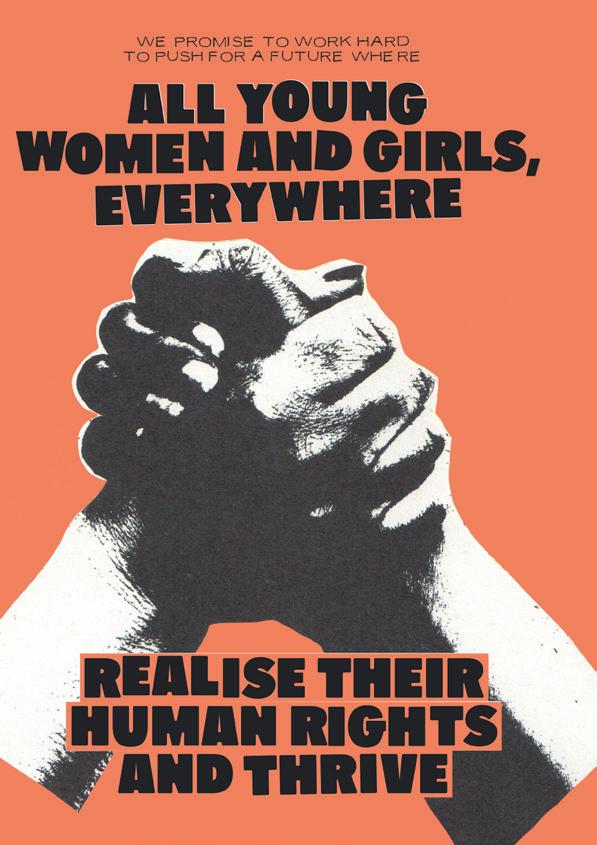
Only by ensuring the human rights of young women and girls – in all their diversity – will we achieve equality, justice and protection for all. At The Young Women’s Movement, we promise to work hard to push for a future where all young women and girls, everywhere, realise their human rights and thrive. These are our commitments to action:
1. CAMPAIGN TO INCREASE KNOWLEDGE ON YOUNG WOMEN’S HUMAN RIGHTS
Throughout the report young women told us that they don’t feel that they are equipped with the knowledge and tools to understand, access and advocate for their human rights. At The Young Women’s Movement, we are committed to ensuring that young women have access to the information they need in an accessible format. We will ensure our communications and campaigns reach young women across Scotland, so they have the information they need and deserve to realise the full extent of their human rights.
2. IMPROVE YOUNG WOMEN’S ACCESS TO PUBLIC SERVICES
The Young Women’s Movement has significant experience in platforming young women’s voices and experiences to influence change on a systems and policy level. We are committed to continuing our policy and influencing work off the back of our previous two reports to ensure young women can access the healthcare they need and deserve. This includes continuing to work with the Scottish Government’s Women’s Health Plan team as they develop the next phase of women’s health work, collaborating with Health and Social Care Alliance Scotland to host online information webinars on young women’s healthcare rights, and participating in a sector-wide campaign to modernise abortion law in Scotland.
3. WORK WITH SCHOOLS
The Young Women’s Movement is committed to working with schools to tackle gender expectations and stereotyping through our Learning and Engagement programmes. Our new 6-week Girls with Goals programme, co-designed by and for young women aged 14–18, explores issues that impact their everyday lives, empowering young women to have their voices heard in a safe space. We are committed to introducing this programme to as many schools as possible and will continue to work closely with teachers and youth workers on how to best support young women’s needs and provide further opportunities for personal development.
4. WORK WITH POLITICAL PARTIES
The report indicated a mistrust in political and democratic processes. We will continue our work with Scottish Parliament and elected officials to create pathways for young women to participate in politics and democratic processes. This will be a key focus of our work in the lead up to the 2026 Scottish elections. We are also committed to challenging prejudice and discrimination within political parties about how young women feel within their parties and how to make their young women members feel more welcome.
5. WORK WITH HUMAN RIGHTS ORGANISATIONS
At The Young Women’s Movement, we are committed to challenging the lack of accessible information about young women’s human rights by working with other human rights organisations and experts to disseminate evidence-based information on how to see women’s human rights fully articulated, protected and fulfilled in Scotland.
6. SUPPORTING YOUNG WOMEN ONLINE
Anti-rights actors are increasingly using online spaces to push back against women’s human rights, creating a hostile digital environment. The Young Women’s Movement will continue to deliver prevention-based work to support the elimination of violence against women and girls online. The next evolution of our Young Women Know project will focus on tackling digital violence against young women, and we will continue to conduct further research on young women’s experiences of violence and abuse online to inform policy change in Scotland.
As well as celebrating our centenary as an organisation, this year also marks thirty years of the Beijing Declaration and Platform for Action, where 189 governments from around the world unanimously adopted a ground-breaking agenda for gender equality and the human rights of all women and girls.
Time alone does not drive progress. As this report shows, young women and girls across Scotland are struggling to have their human rights realised due to poor access to justice, precarious employment opportunities, the prevalence of gender stereotypes in schools and in the workplace, and the persistence of gender-based violence, among many other rights-based issues. We are still waiting for young women and girls’ human rights in Scotland to be fully articulated, protected and fulfilled.
We Call on THe sCoTTIsH GoVeRnMenT To
* Prioritise the incorporation of international human rights treatises by reintroducing the Human Rights (Scotland) Bill, ensuring young women can realise the full range of their human rights in Scotland.
* Intensify efforts to combat misogyny and negative gender stereotypes in schools and educational settings to tackle discrimination against young women and girls.
* Work with the UK Government to ensure the forthcoming Employment Rights Bill will address and remove the persistent barriers that hold young women back at work.
* Action the recommendation from the National Advisory Council for Women and Girls (NACWG) by integrating intersectional gender budget analysis into the Scottish Budget process, and to give this a statutory footing.
* Improve access to justice for young women and girls by reforming the legal aid system and specifically considering the availability of legal aid for victim/survivors of genderbased violence.
* Modernise abortion law in Scotland to ensure safe, accessible, and stigma-free reproductive healthcare for all.
* Reform the criminal law to address rising levels of misogynistic harassment and abuse against young women and girls by introducing the proposed Misogyny (Scotland) Bill.
* Work with the UK Government and international partners to improve online safeguarding mechanisms for young women and girls on public platforms and strengthen accountability mechanisms and procedures to report a complaint or cybercrime.
* Develop more credible and accessible information and guidance for young women and girls regarding what to do and who to contact if they feel threatened or unsafe or if they are victims of gender-based violence, both online and offline.
* Meaningfully engage and listen to the voices of young women and girls, involve them in decision-making processes and create policies that address their specific needs and concerns.
* Invest in the youth work sector to ensure there are sufficient resources and experienced staff and volunteers available to support young women and girls in their communities.
* Promote greater awareness about economic, social and cultural rights, especially the right to education and employment at all stages of a woman’s life. This could be achieved by integrating financial literacy and entrepreneurship into school and college curricula.
* Establish a Young Women’s Economic Advisory Council to advise Scottish Parliament and Government on young women’s inclusion, access to and participation in gender budgeting, entrepreneurial opportunities, STEM and closing the gender pay gap.
* Ensure the trauma-based practice provisions in the proposed Victims, Witnesses and Justice Reform (Scotland) Bill take cognisance of young women’s experiences within the criminal justice system.
* Work with Police Scotland to ensure greater institutional knowledge of the dangers of gender-based violence, particularly the impact of stalking and harassment, coercive control, economic abuse and intimate-image abuse and the specific impact these crimes have on young women and girls.
It is important to note that many of these recommendations must be accompanied by tangible actions amongst those working in different sectors such as, in policing, education, healthcare, transport, equalities and more. A joined-up approach can help to challenge discrimination, promote human rights and ultimately improve the lives of young women and girls across Scotland.
The Young Women’s Movement is committed to continuing to harness existing and develop new partnerships that will support the implementation of the recommendations in this report and ensure young women’s human rights are met and upheld.
FURTHER SUPPORT
If you are a young person who has been affected by any of the issues raised in this report, please get in touch with:
Childline
Free and confidential service to help anyone under 19 in the UK with any issue they’re going through.
Helpline: 0800 11 11 (24-hour service, 7 days a week)
Email and online chat available: childline.org.uk
Rape Crisis Scotland
Provides a rape crisis helpline and email support for people aged 13+ affected by sexual violence. They can also put you in touch with local rape crisis centres or other services for ongoing support.
Helpline: 08088 010302 (5pm to midnight, 7 days a week),
Text: 07537 410 027
Email: support@rapecrisisscotland.org.uk
Webchat: rapecrisisscotland.org.uk
Scottish Women’s Aid
Should you require further support, Scottish Women’s Aid run a 24-hour Domestic Abuse and Forced Marriage Helpline. If you feel scared of your partner or if you are worried about someone you know, get in touch with Scotland’s 24-hour Domestic Abuse and Forced Marriage.
Helpline: 0800 027 1234
Email: helpline@sdafmh.org.uk
Website: sdafmh.org.uk
Message the text/WhatsApp service: 07401 288 595.
Scottish Women’s Rights Centre
Free legal help for women affected by violence, such as domestic abuse, rape, stalking, forced marriage and human trafficking. Phone the daytime helpline or the evening helpline (Tuesdays 6–8pm) to speak directly to a solicitor for initial advice and information.
Helpline: 08088 010 789
(Mondays 10am–12.30pm and Wednesdays 10am–1pm)
Victim Support Scotland
Provides information and support for victims and witnesses of crime.
Helpline: 0800 160 1985 (8am–8pm Mon–Fri, 10am–4pm Sat–Sun)
Webchat service and self-referral form online: victimsupport.scot/contact
We are immensely grateful to the young women who found the time to share their experiences, opinions and ideas with us in our online survey, discussion groups and interviews. The report would not have been possible without your contribution. Thank you!
SYWS 24–25 DONORS
Paul Hamyln Foundation
Joseph Rowntree Charitable Trust
Scottish Government, Equality and Human Rights Fund managed by Inspiring Scotland – a heartfelt thank you from The Young Women’s Movement
ADVISORY GROUP
CEMVO Scotland
Close the Gap
Equality Network
Human Rights Consortium Scotland
The Poverty Alliance
Scottish Trans
Scottish Youth Parliament
Third Sector Human Rights and Equalities
Together (Scottish Alliance for Children’s Rights)
Zero Tolerance
Dr Mindy Ptolomey
Professor Nicole Busby
PEER RESEARCHERS
Kirsty Arnaud
Arrate de la Cruz
Wiktoria Orlicka
Iona Rogers
Mairead Rowan
Bethany Spain
DESIGN
AND
ILLUSTRATION
Phoebe Willison and Thea Bryant WITH SPECIAL THANKS TO Dumfries and Galloway’s Young Women’s Network
Possibilities for Each and Every Child (PEEK)
Scottish Youth Parliament
Women’s Support Project
WE WOULD LOVE TO HEAR FROM YOU!
We would love to hear your thoughts on the themes and topics discussed in SYWS 24–25.
Reach out on social media using the #SYWS25 or email us at hello@youngwomenscot.org.
youngwomenscot.org
The Melting Pot 15 Calton Road
Edinburgh EH8 8DP
Scottish charity SC034132 | Registered company SC246153