For the members and customers of Ozarks Electric and OzarksGo
For the members and customers of Ozarks Electric and OzarksGo
The skill and teamwork behind keeping the power on / 6
+ Student Mountain Biking / 12 + Q&A with Apple Seeds / 14
Volume 1, Issue 2
Ozarks Connections is published bimonthly by Ozarks Electric Cooperative. Subscription rates $7.50 for non-members and free for members. POSTMASTER: Send address changes to Ozarks Connections, PO Box 848, Fayetteville, AR 72702.
Executive Staff
President/CEO
Mitchell Johnson
Chief Business Officer
Derrick Redfearn
Chief Financial Officer
Barrett Breeding
Chief Operations Officer
Grid Operations
Troy Scarbrough
Chief Technology Officer
Steven Bandy
Board of Directors
District 1 / Jerry Bolinger
District 2 / Luke G. Parsons
District 3 / Frank Ray
District 4 / Dax Moreton
District 5 / David Verucchi
District 6 / Pam Smith
District 7 / Lynn Carson
Editor / Amy Merck
Vice President of Marketing and Communications / Ashley Harris
Manager of Marketing and Communications / Erin Rogers
Digital Editor / Caleb Fort
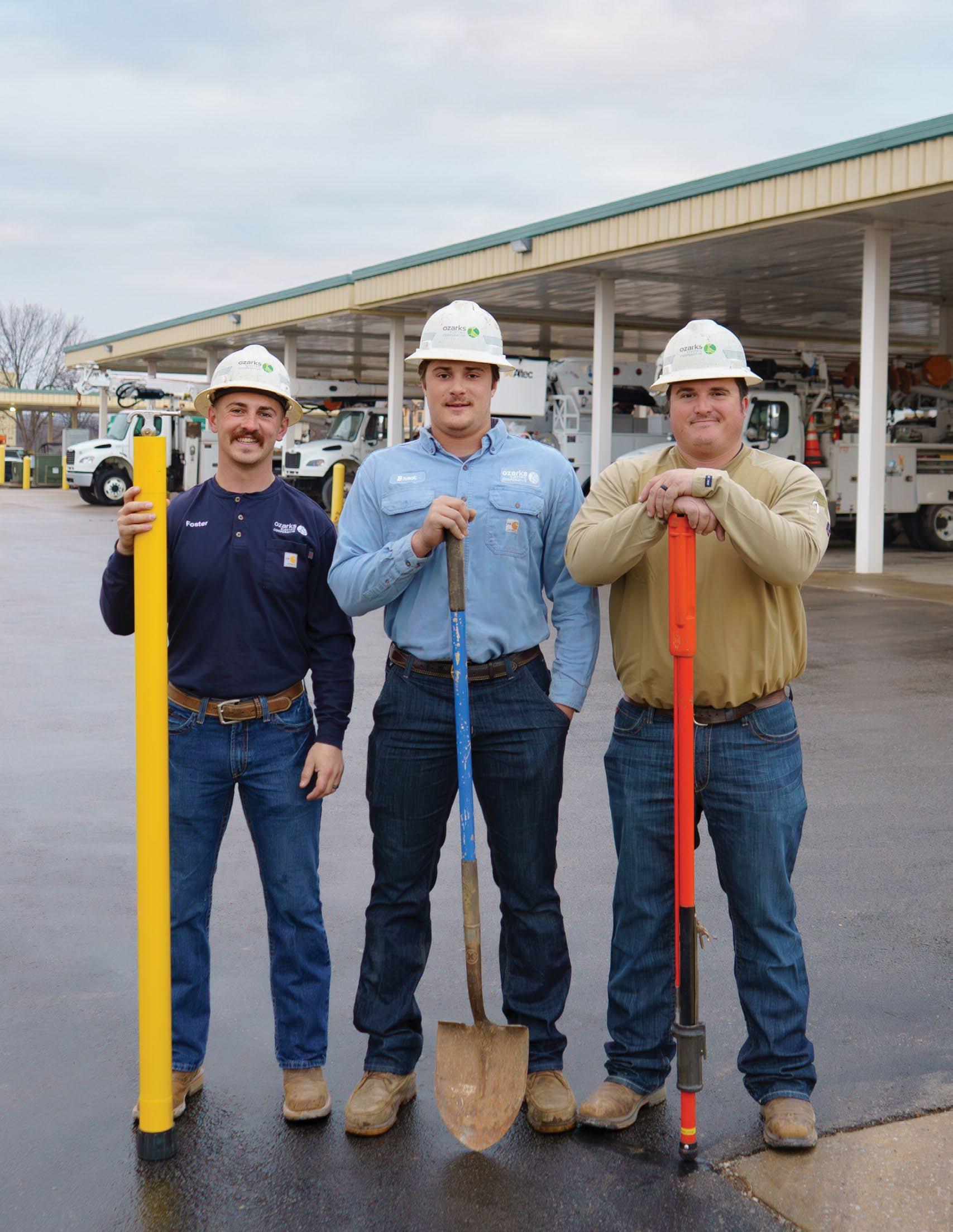
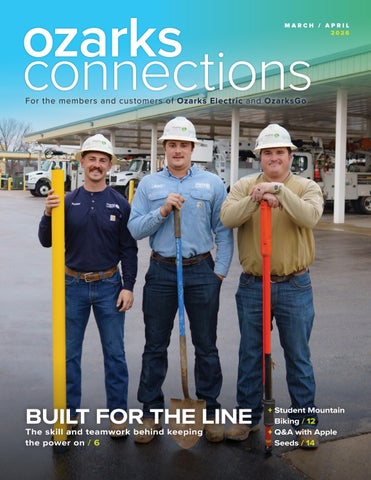
On the cover: We recognize Lineman Appreciation Day on April 18. From left, Foster Layman, Brock Oktay and Wyatt Simco are three of Ozarks Electric's linemen on duty. (Photo by Alex Boyd.)
Ten years of broadband and the work behind keeping service reliable
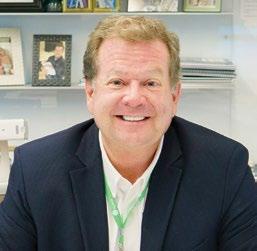
Most people don’t give much thought to their electricity or internet, and that’s usually a sign we’re doing our job. In my role, I spend a lot of time thinking about what our members need today and what they’re going to need 10 years from now.
Ten years ago, that meant expanding beyond electricity and launching OzarksGo. Reliable internet access had become a requirement to participate in modern society, and many people lacked that access. Because Ozarks had spent decades building an electric infrastructure to service rural areas, we were in a position to offer it.
Today, OzarksGo serves more than 45,000 broadband customers across Northwest Arkansas and Northeast Oklahoma. In many cases, we were able to connect homes and businesses that had dial-up service or no service at all.
Electricity and broadband are different systems, but the expectation is the same: they need to work when they’re needed. Meeting that expectation takes planning, coordination and long-term investment. Most of that work happens before anyone notices, whether it’s upgrading equipment, staging materials, coordinating fiber attachments or managing vegetation along rights-of-way.
Spring puts that planning to the test when severe weather places stress on our grid. Storm response tends to draw the most attention, but the outcome is shaped months earlier by the investments and preparation that happen quietly in the background.
Our linemen and fiber technicians are central to that work. They maintain the systems our members rely on and often serve as the face of the cooperative in members’ yards and neighborhoods. We’ll recognize Lineman Appreciation Day on April 18, and I hope you’ll join me in thanking the crews who do that work every day.
Costs change. Technology evolves. Expectations increase. Our responsibility as a cooperative is to make measured decisions that protect reliability today while preparing for what members will need tomorrow. That principle guided our decision to invest in broadband 10 years ago, and it will guide our investments in the years ahead.
Sincerely,
3641 Wedington Drive
Fayetteville, AR 72704
479-521-2900
ozarksecc.com
ozarksconnections.com
editor@ozarksconnections.com
Mitchell Johnson President/ Chief Executive Officer
OUR MISSION
To provide non-profit, competitively priced electrical and related services for the benefit of our members and communities in the safest and most reliable method with integrity, commitment and accountability.
The more we see, the easier it is to participate
Welcome back to Ozarks Connections!
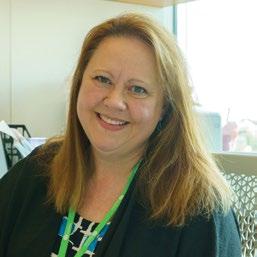
Since our first issue hit mailboxes in January, we continue shaping what this magazine can offer. Our goal is to give members a clearer view of the cooperative and the communities we serve.
This month, we’re highlighting youth mountain biking. We hear a lot about mountain biking in this region, but many people may not know about the student mountain biking teams. I found out about them from a flier from my kids’ middle school.
Both of my kids joined the Fayetteville team as 6th graders, and the community was welcoming from the start. Coaches, parents and employees at bike stores patiently answered my questions. I met moms and dads who were coaches and rode with the kids. I assumed they’d already been active in biking; I was wrong. They only started once they saw how much their kids enjoyed it.
When my daughter wanted to ride her first trail, I wasn’t even sure where to go. I’d heard about the trails at Mount Kessler, but I’d never seen them (it turns out the trail markers are staked in the ground, not visible from the street). It was a reminder that opportunities can be nearby and still feel invisible if you don’t know how to find them.
The same applies to the cooperative’s work. Preparing our lineman appreciation feature gave me a new understanding of how technical, coordinated and precise the job is, especially as electric and broadband crews work side by side.
Whether the topic is student riders or line crews, the theme is visibility. The more we understand how our region works and who makes it happen, the easier it is to engage.
As we continue building this publication, we’d like your input. What should we cover? What would be useful to you as a member? Send ideas or feedback anytime to editor@ozarksconnections.com
Sincerely,
page 4
Amy Merck Editor
+ Scholarship Applications Due + Ozarks Donates to SPSFNWA
+ Electric Vehicles at ICTC
+ CSC Honors Partners
+ Linemen Rely on Skills and Judgment
+ From Classroom to Career
+ Reading the Weather with Dan Skoff
page 10
ozarksgo
+ OzarksGo Celebrates Connecting 45,000 Customers
+ Honoring the People Who Keep Our Communities Connected
+ Westville Esports Team Wins State
page 12
students send it
+ Mountain Biking Teams Welcome Newcomers
page 15 ozarks
+ Find Events in our Community
Celebrating 50 years with a “golden ticket” theme, the Hogeye Marathon returns to Springdale on April 11 and 12. The weekend features a full slate of races, including a marathon, half marathon, 10K, 5K and a four-person marathon relay. A portion of the proceeds will benefit five local charitable organizations.
Each year, Ozarks Electric Cooperative invests in the future of local students by awarding a $1,000 scholarship to one graduating senior from each of the high schools in its service area and one home-schooled or virtual student.
Ozarks Electric also awards one scholarship annually for the High Voltage Lineman Certification Program at Arkansas State University-Newport. The scholarship covers tuition, fees, books and equipment for the 10-month program. (See related story on page 8.)
Visit ozarksecc.com/community/scholarships to learn more and apply.
Race Registration Volunteer Sign Up
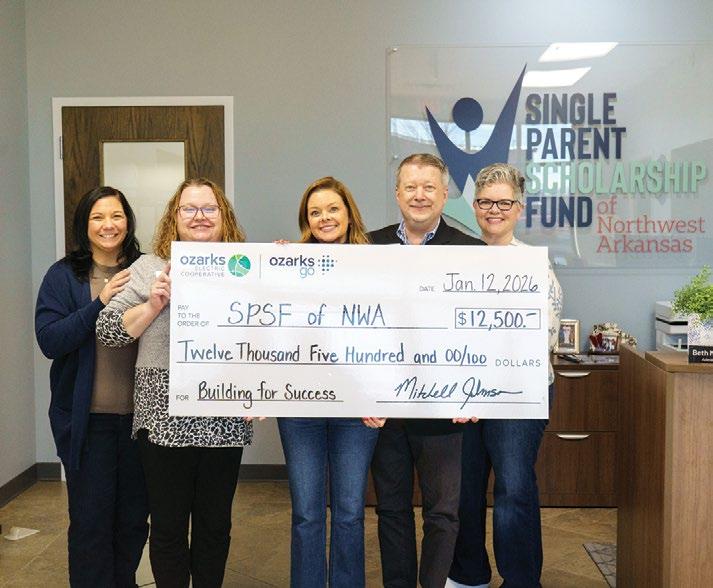
Ozarks Electric has donated $12,500 to long-time partner Single Parent Scholarship Fund of Northwest Arkansas (SPSFNWA) in support of its new building campaign, Building Our Future.
The new SPSFNWA campus in Springdale will provide a welcoming space designed to better support families by providing direct financial assistance and supportive services to those pursuing higher education across Benton, Carroll, Madison and Washington counties. Located along the I-49 corridor, the 13,000+ square foot facility will expand access to critical resources, including counseling services, study and training spaces, a supply pantry, wellness areas for new mothers, and a therapy garden.
This investment helps strengthen stability, opportunity, and brighter futures for families across Northwest Arkansas. To learn more about SPSFNWA’s building campaign or how you can help, visit spsfnwa.org/bfs/building-for-success/
Applications Due April 1
grants and donor engagement.
Alex Boyd.)
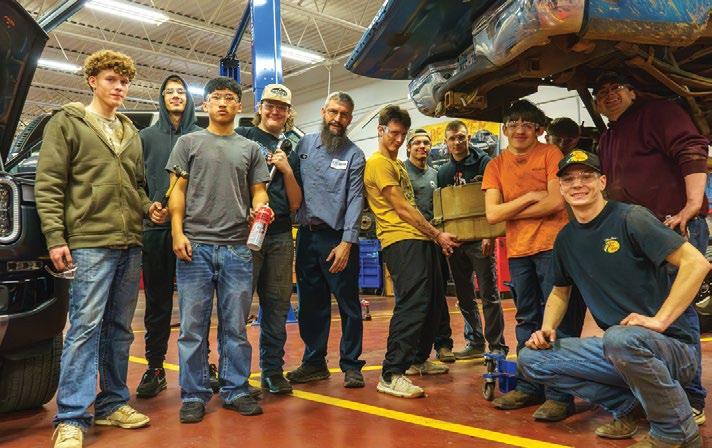
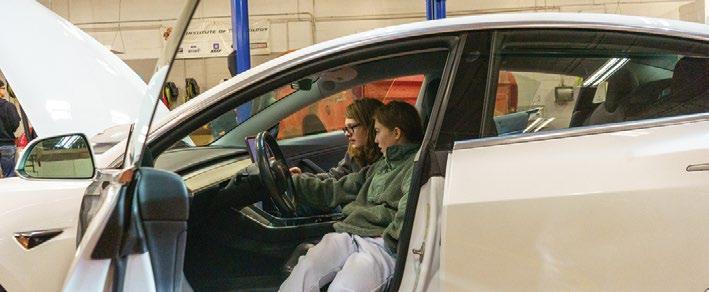
Ozarks recently took several electric vehicles to the Indian Capital Technology Center (ICTC), in Stilwell, Okla., for a hands-on experience with the Automotive Service Technology Program. The one-year full-time program or two-year part-time program gives students the opportunity to get a career in auto collision and auto service repair.
MARCH 13–15
The annual NWA Home Show returns March 13-15 at the Rogers Convention Center, bringing together the region’s builders, remodelers, designers and home improvement professionals.
The show is a one-stop shop for homeowners looking to update or add space, compare contractors, explore remodeling ideas or learn how new materials and technology could improve comfort and energy efficiency.
The three-day event, sponsored by Springdale-based Northwest Arkansas Home Builders Association, typically features hundreds of exhibitors and draws thousands of visitors.
For more information, visit nwahba.com/page/nwa-homeshow.
The Children’s Safety Center will host its annual Handprints for Hope Luncheon on March 10 at the Fayetteville Town Center. The event recognizes community members who support children and families affected by abuse and raises awareness about the services the CSC provides.
This year’s Helping Hand Awards will honor:
+ Outstanding Organization: The Founders Group of Arkansas
+ Outstanding Partner Agency: Det. Corey Horton, Fayetteville Police Department
+ Outstanding Business: Fayetteville Town Center
+ Chris Thornton Sidekick Award: Mike Luttrell and Adrian Luttrell
The luncheon runs 11:30 a.m. to 1 p.m. and is open to community supporters, partners and advocates. For more information, visit childrenssafetycenter.org.
By Amy Merck, Editor
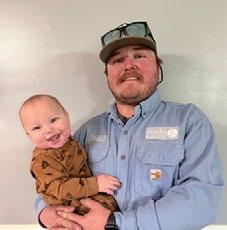
It was late afternoon when Pace Maddox, a senior line technician, wrapped up his workday. He was headed home to his wife and new baby. Then the radar shifted. A storm was rolling in.
That night, he would swap one sleeplessness for another — restoring power instead of being up with his newborn.
When you’re a lineman, you get used to missing nights like these — birthdays, holidays, the first months with a new baby. You go when you’re called, and you stay until the job is done.
For Maddox and the Ozarks Electric Cooperative crew working that night in June 2025 in Adair County, Okla., the pattern was familiar. They watched the radar, waited for the winds to pass, then headed out to assess the damage — cutting through downed trees, navigating blocked roads, and figuring out how to safely make repairs.
Storm restoration follows a rhythm. But no two storms are the same. Each brings different hazards and decisions, and each demands preparation and a methodical approach.
“You normally know it’s going to be bad before you even leave,” Maddox said. “If you can prepare for it, you do. You shower. You eat. You get your clothes ready. You don’t wait, because you may not get the chance.”
More than storm work
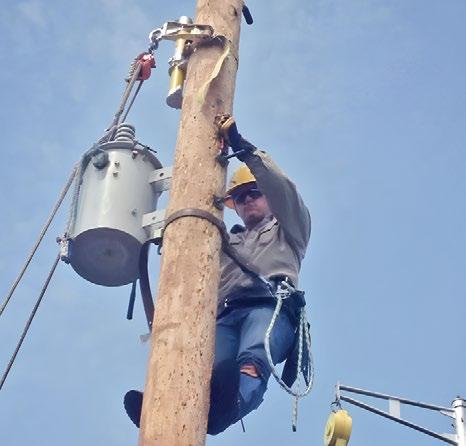
Storm work may be the most visible part of a lineman’s job, but it’s only one piece of it. On a typical day, Ozarks Electric linemen are replacing poles, running new line as the service area grows, trimming rights-of-way, and responding to everyday emergencies — like poles broken by car accidents or lines pulled down by dump trucks.
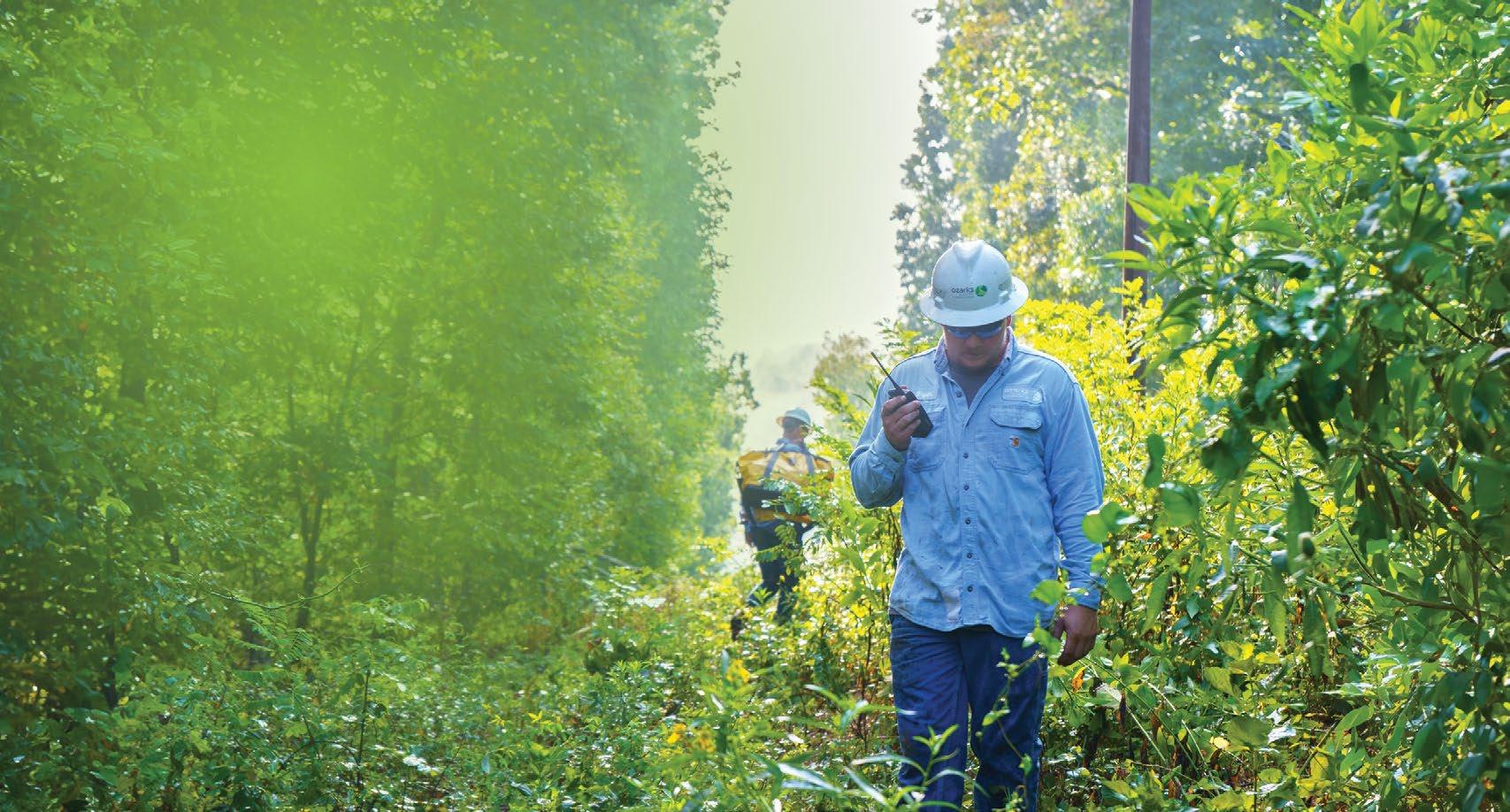
Much of that work happens far from the road. Reaching damaged equipment might mean walking in on foot or using ATVs to navigate steep terrain where trucks can’t go.
“You’re always thinking a few steps ahead,” said senior line technician Tristian Rector. “What’s energized. What’s not. And what has to happen before you can even touch the line.”
Before power can be restored, multiple steps must happen first — isolating circuits, grounding lines, clearing hazards, setting poles, stringing wire, and testing equipment.
Method over muscle
The job is physically demanding, but linemen say it’s less about strength and more about thinking through problems safely.
“THERE’S TIMES WE’VE GONE HOME AND HAD NO POWER OURSELVES, THEN YOU’RE BACK THE NEXT MORNING WORKING ON SOMEBODY ELSE’S POWER, KNOWING YOURS IS STILL OUT.”
– PACE MADDOX Senior line technician
Each shift starts with a briefing, where the crew chief lays out the plan and each person’s role. But plans change.
“Pretty much anything can change your whole day,” Rector said. “You hit a water line. A rock. Something breaks on the truck. You get called off to a broken pole somewhere else.”
When that happens, crews stop, regroup, and communicate.
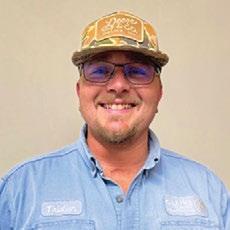
"YOU’RE ALWAYS THINKING A FEW STEPS AHEAD"
– TRISTIAN RECTOR Senior line technician
“You talk about it on the ground,” he said. “You get up there and see something else that’s wrong. So you back up, rethink it and then go again.”
From the roadside, a pole replacement might look simple. In reality, it can take hours.
“People see it and think, ‘You’re just hooking two lines together,’” Maddox said. “They don’t see the ten or eleven things that have to happen before that.”
Long hours, shared responsibility During major outages, 16-hour days aren’t unusual. Crews leave the field when needed to eat and rest.
“There’s times we’ve gone home and had no power ourselves,” Maddox said. “Then you’re back the next morning working on somebody else’s power, knowing yours is still out.”
Restoration follows clear priorities. Crews start with the largest lines first to restore power to the most people — hospitals, schools, neighborhoods — and then work down the system until each meter is restored.
Sometimes the work takes linemen far from home. When disasters strike elsewhere, Ozarks Electric crews are dispatched to help neighboring cooperatives restore power — one of the seven cooperative principles, Cooperation Among Cooperatives.
“I’ve seen a big guy, maybe 6’7”, probably 350 pounds, break down crying when we showed up,” Rector recalled of a response in Louisiana. “They’d been without power for weeks. That’s just what we do. We show up, fix it and move to the next one.”
For many linemen, that mix of challenge and responsibility is part of the draw.
“There’s always something different,” said apprentice lineman Foster Layman. “You might be climbing one day, changing a pole the next and then working with wire. It’s never the same.”
Senior lineman Wyatt Simco agreed. “You can go somewhere you’ve been a hundred times and still get surprised,” he said. “It keeps you on your toes.”
No two jobs are ever exactly alike, and linemen don’t work alone.
“You depend on each other,” said level-one apprentice Brock Oktay. “You can’t do this job by yourself. Somebody’s always watching out for you, and you’re watching out for them.”
Journeymen teach apprentices on the job — how to frame a pole, read a system and slow down before acting. It’s hands-on learning built on trust and shared responsibility.
“Everything about this job is hard at the start,” Maddox said. “It’s a lot to learn, and it takes all four years [of apprenticeship], if not longer.”
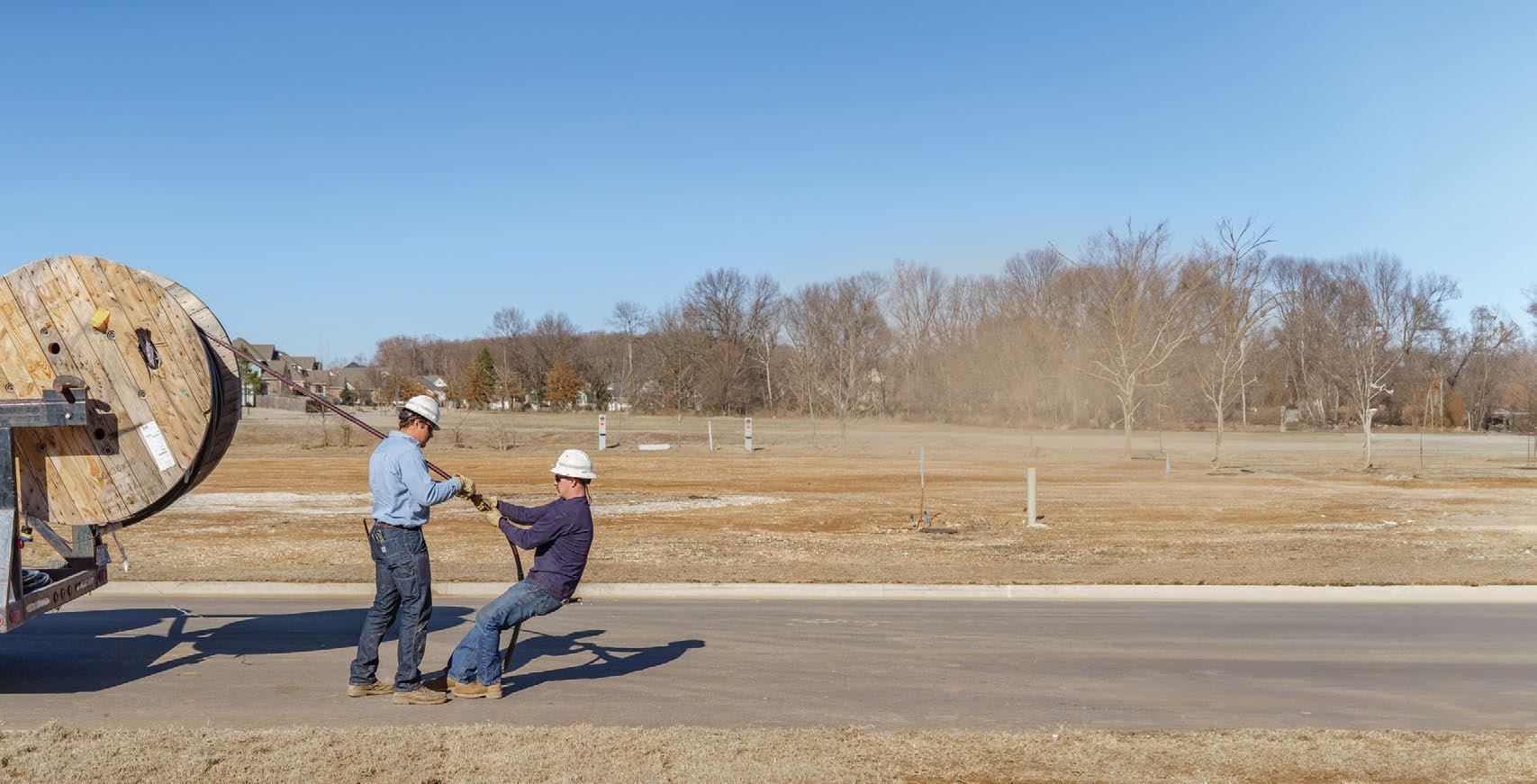
Cooperatives and other electric utilities recognize Lineman Appreciation Day in April, but inside the crews, appreciation looks different. It’s the daily teaching, the shared decisionmaking and the quiet understanding that someone else’s safety depends on your focus. Because when the lights go out, the work is just beginning. <

By Amy Merck, Editor
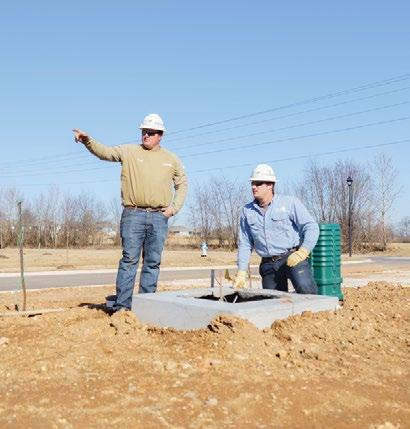
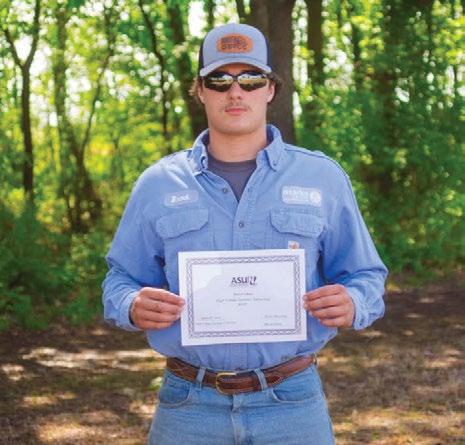
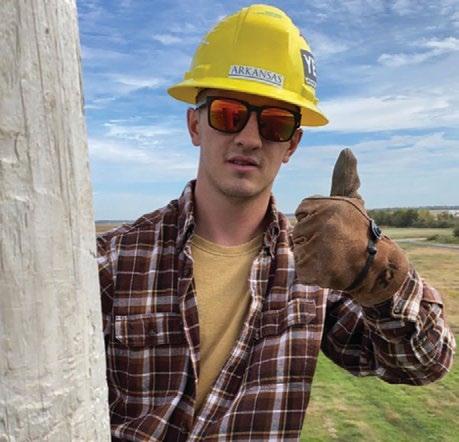
For many linemen at Ozarks Electric, the road into the trade begins the same way: figuring out what comes next after high school. For Brock Oktay, Foster Layman and Wyatt Simco, the answer was line work — a career built outdoors, on skill, teamwork and responsibility.
All three earned Ozarks Electric’s High Voltage Lineman scholarship and attended the High Voltage Lineman Technology program at Arkansas State University-Newport.
School as the foundation
The Newport program introduces students to safety, climbing, tool use and working as part of a crew.
“Climbing is a big one,” said Layman, level-three lineman apprentice. “That alone makes a huge difference when you start working. You come in more comfortable and ready to learn.”
Students also earn a Class A CDL. “That's a huge part of it,” said Oktay, a level-one apprentice. “You can't drive our trucks without a CDL.”
The apprenticeship: where the job becomes real New linemen at Ozarks Electric become part of a four-year structured apprenticeship program. They participate from day one, digging and tamping holes, framing and setting poles, assisting with underground work, prepping tools and supporting linemen in the bucket.
Progress isn’t just about tasks. It’s about judgment and sequencing — thinking through a job, recognizing
hazards and anticipating what the bucket truck operators need before they need it.
“You learn how to think through a job before you ever leave the ground,” said Layman, a third-generation lineman. “To slow down, communicate and make it safe.”
Why Ozarks invests Ozarks Electric views the scholarship as workforce development, not just short-term recruitment.
“Line work is a skill set you can’t just go out and hire overnight,” said Larry Kelly, Ozarks’ manager of field operations. “It takes time, training and a culture that passes knowledge down. Supporting the scholarship helps us build that pipeline locally.”
A trade with longevity Utilities across the country face an increasing demand for trained lineman because of growing communities, stronger storm events and retirements of veteran linemen.
“It’s a career with staying power,” Kelly said. “We’re going to need linemen for a long time.” Once they complete the apprenticeship, linemen continue to learn — through storm deployments, leadership opportunities and by teaching new apprentices.
“You’re always learning,” said Simco, senior lineman. “Every day is different. You might be working an hour away or five miles down the road, and it’s never the same job twice. That’s what keeps it interesting.”
Is this career right for you? Scan this code to find more information.
By Amy Merck, Editor
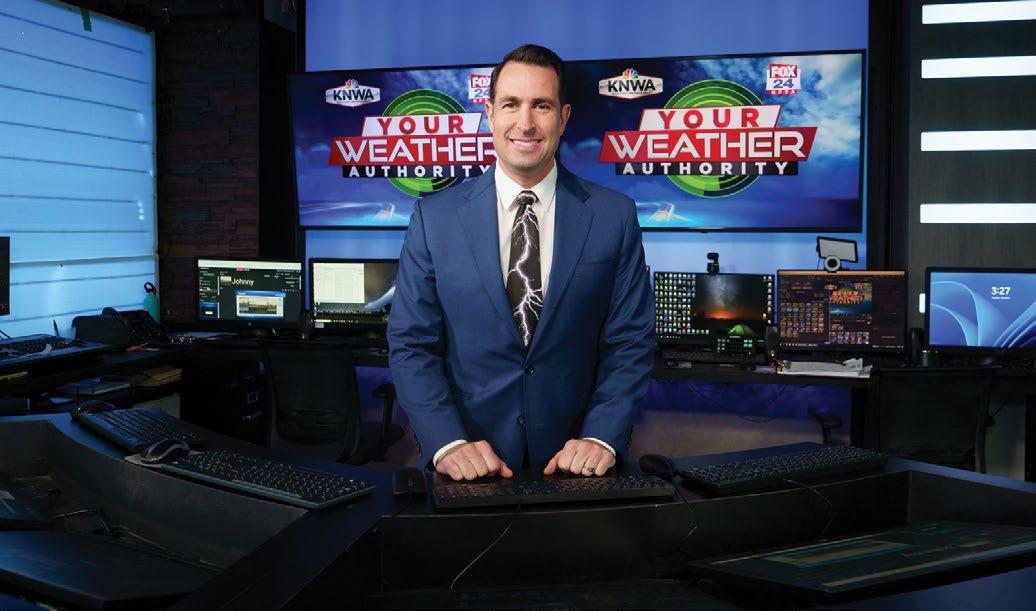
Ask Dan Skoff about severe weather in Northwest Arkansas and he doesn’t answer in generalities. He answers in dates, paths and places.
“April 10, 2008,” he said without hesitation. “A half-mile-wide tornado on the southeast side of Fayetteville. About 5:30 in the morning. My wife heard the roar.”
He keeps going just as easily: March 21, 2019, when a tornado tracked through east Fayetteville near Mission and Crossover. Last May 19, when a tornado tore through Greenland, visible on live cameras.
For Skoff, the chief meteorologist for KNWA since 2006, storms aren’t just glowing lines on a radar. They’re tied to neighborhoods, highways and everyday lives.
Spring marks the beginning of the Ozarks’ most active severe weather season, with activity peaking in April and continuing into May. Even with familiar timing, Skoff knows no two storms behave the same. Some of the most dangerous don’t look dramatic at all.
“STORMS ARE PART OF LIVING HERE. THE GOAL ISN’T FEAR, IT’S AWARENESS.”
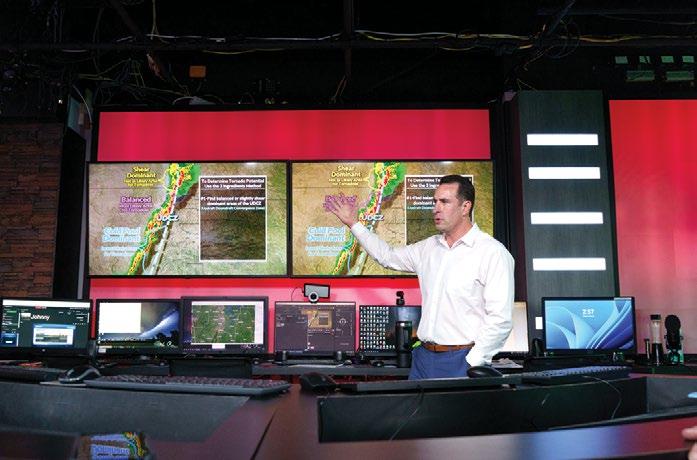
“In this area, about 85 percent of our tornadoes come from fast-moving lines of storms,” he said. “They’re wind-wrapped. You don’t see a classic funnel.” These storms, called quasilinear convective systems, can produce widespread wind damage while spinning up brief, embedded tornadoes that form and fizzle quickly. “It’s like whack-a-mole,” Skoff said. “One pops up, then another.”
Fayetteville Fizzle?
Many newcomers ask whether the Ozark Mountains offer protection. There’s some truth, Skoff said, but it’s often misunderstood. Hilly terrain can disrupt weaker storms, but strong systems behave differently. He compares them to a lawnmower with the engine fully cranked: once it’s going, it keeps moving until it runs out of fuel.
Residents need to be aware of approaching storms. “Situational awareness is huge,” Skoff said. “Sometimes the warning comes late, and sometimes the storm develops fast. But we may have been talking about the setup for days.”
When sheltering, Skoff teaches DUCK — Downstairs, Under something sturdy, Center of the house, and Keep away from windows. Head protection helps too. Sports helmets or hardhats reduce injuries from flying debris and broken glass.
Skoff cautioned people against relying on tornado sirens as their main alert. Not every city has them, they may fail with power outages and they’re meant for people outdoors, not families asleep inside their homes. “They’re not a bad thing,” he said. “They just shouldn’t be your only alert.”
Awareness also matters after storms pass and power goes out. “I have to give the linemen their props,” Skoff said. “That’s a tough, dangerous job. Lightning is one of the biggest threats they face, and safety has to come first.”
At Ozarks Electric, restoration begins with transmission and main feeder lines before moving into neighborhoods and individual services, allowing the largest number of members to be reconnected as safely and quickly as possible.
Living in tornado country doesn’t mean living in fear, Skoff said. It means being ready. “Storms are part of living here,” he said. “The goal isn’t fear. It’s awareness.”


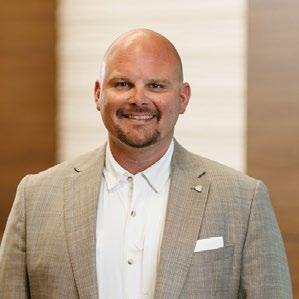
Ten years ago, we connected our first customer to our fiber network. That moment started OzarksGo’s mission to bring reliable, affordable broadband to our communities from a local provider you trust. Today, over 45,000 customers count on us to stay connected, and our all-fiber network has grown beyond what we ever expected. As we celebrate OzarksGo’s 10th birthday, I want to look back on our journey and thank everyone who made it possible.
Technology is important, but people are what make a company strong. Our world-class fiber linemen prove this every day. Their skill and hard work have built and maintained the network our communities rely on. Last May, even during severe storms, our fiber linemen and technicians worked through tough conditions to restore service for families who lost connection. These moments show their dedication to our community and customers. They work in all kinds of weather to keep homes, schools, and businesses connected.
As we celebrate Linemen Appreciation Day this year, I want to thank not only our crews for everything they do, but all of our employees who have gotten us where we are today. Their dedication shows the best of us as a cooperative and as a broadband provider.
I also want to thank you, our customers. Your support and trust have been key to our success over the past ten years. Thank you for being part of our story. We have exciting projects ahead, like expanding our all-fiber network to reach more communities and finding new ways to improve reliability and speed. These efforts show our commitment to giving you great service for many years to come. Here’s to the next decade of connection.
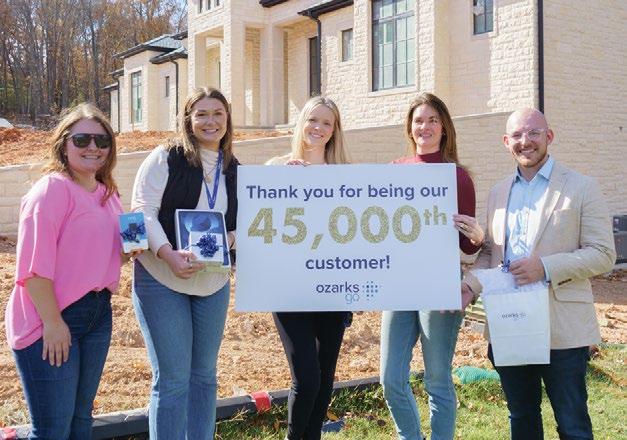
OzarksGo has now connected its 45,000th customer to its all-fiber network in Northwest Arkansas and Northeast Oklahoma. This milestone marks years of steady growth, strong community support, and a promise to provide reliable, highspeed internet with a personal approach.
“Every new connection represents more than just a customer,” said General Manager Chris Holloway. “It’s a household, a student, a small business, and a community member gaining access to the opportunities that fiber makes possible.”
To celebrate, OzarksGo held a special event at its Fayetteville headquarters to thank employees and recognize the teams who make each connection possible. The company also surprised its 45,000th customer, the Elesber family, with smart-home prizes to go with their new fiber service.
Looking ahead, OzarksGo sees this milestone as a reminder of what can happen when technology, teamwork, and community work together.
Chris Holloway General Manager, OzarksGo
To connect our communities through innovative technology and provide reliable, affordable broadband services from a local name you trust.
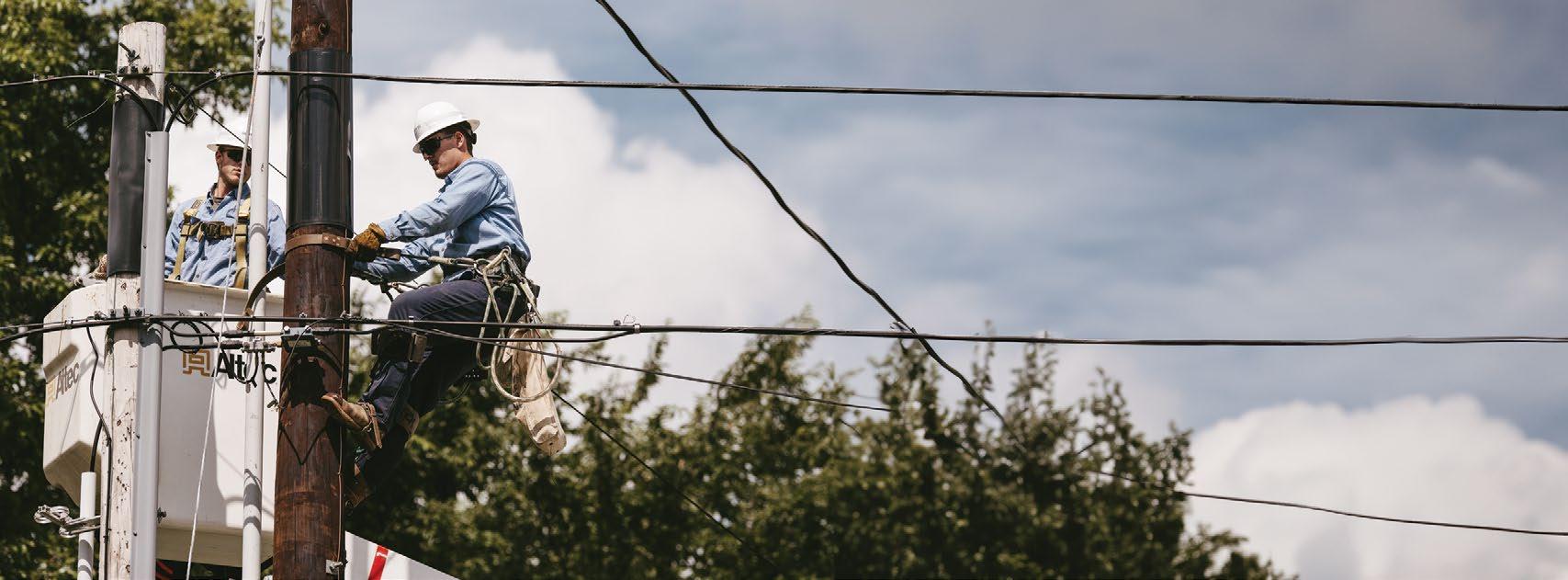
Linemen Appreciation Day is on April 18 and is our chance each year to thank the people who keep things running. At OzarksGo, our linemen are the backbone of our fiber network, delivering fast, reliable internet to homes and businesses throughout Northwest Arkansas and Northeast Oklahoma.
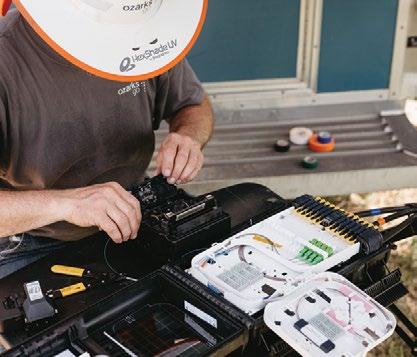
Our linemen use both traditional skills and new technology. They climb poles, install fiber lines, splice cables, fix outages, and keep our network running. When storms hit, they are often the first to respond along with our electric linemen, working long hours to restore service safely. Their work is both physical and technical, requiring strength, accuracy and a strong focus on safety.
Most importantly, being a lineman means being part of something bigger. Our crews work in the same communities where they live. They know the roads, the people, and why staying connected matters. Every fiber they install, every repair they make, and every customer they help represents a neighbor who counts on them.
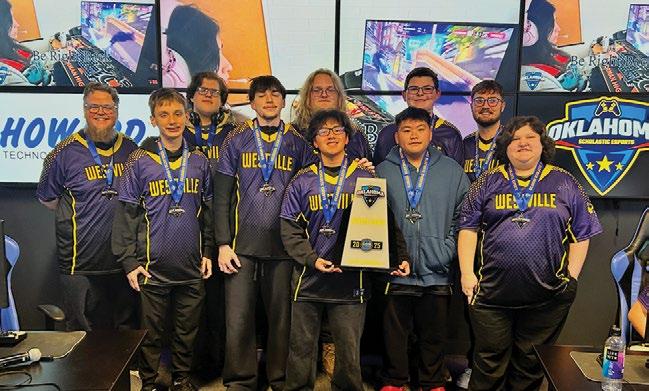
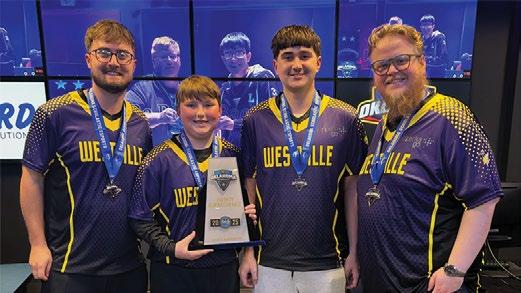
Westville High School Esports entered the spring season with momentum after a strong showing at the Oklahoma High School Fall State Championship on Dec. 15 at the University of Central Oklahoma. The Marvel Rivals team earned a state championship in its division, and the Fortnite team finished as runner-up.
This semester, Westville Esports is competing in the upper division of its league, facing the largest schools in the state in Overwatch Two, Fortnite and Marvel Rivals.
OzarksGo, the program’s first official sponsor, is proud to support Westville Esports as the teams grow and compete!
We are proud to honor our linemen every day, not just today. They are the unsung heroes behind our service, and OzarksGo would not be the same without them.
To all our linemen, thank you for your hard work, skill, and dedication to keeping our communities connected.
By Amy Merck, Editor
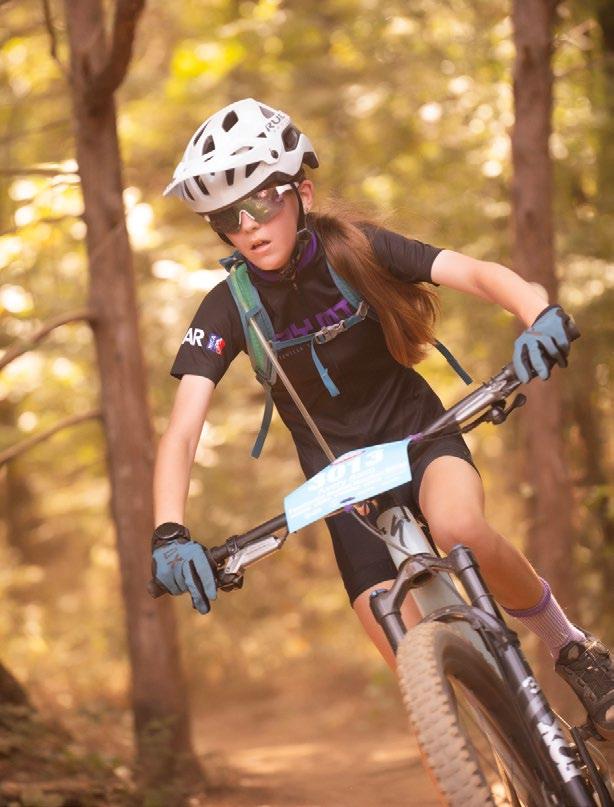
Mountain biking can be full of surprises. Kids who thought they weren’t athletic find out they can ride. Parents go from chauffeurs to coaches. And families are often surprised by who shines, who keeps going and who finds belonging.
Mountain biking has become a part of Northwest Arkansas’s outdoor culture. The region hosts international events at Centennial Mountain in Fayetteville, and Bentonville markets itself as the Mountain Biking Capital of the World. From the outside, the sport can seem intimidating. One group extends a welcoming hand to beginners, inviting students and families to discover it together at an early age.
The National Interscholastic Cycling Association (NICA) has 36 teams in Arkansas. After racing in Arkansas for a few years, Oklahoma joined the association last year and plans to field 14 teams next season.
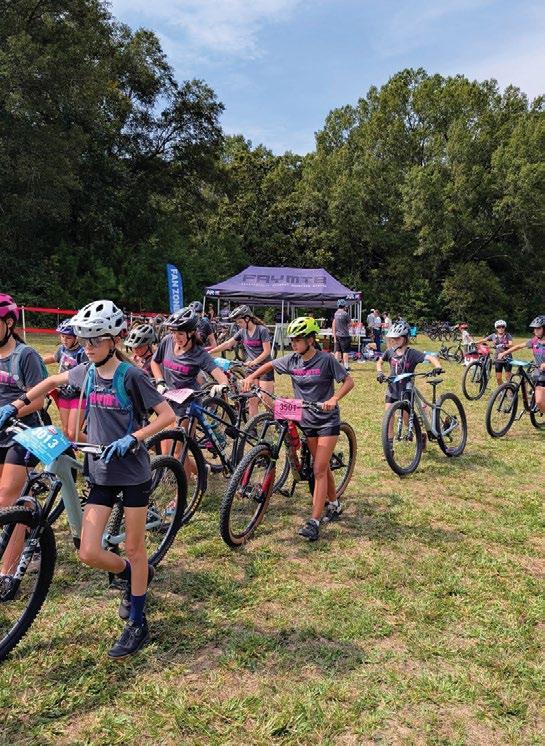
The Fayetteville Student Mountain Biking Team, or FayMTB, has tripled in size in the past three years to about 100 members. It’s open to students in grades 5-12, including homeschoolers and private school students. The NICA season runs July through November and includes four races and a time trial, though racing isn’t required.
Sixth grader Audrey Denham hadn’t planned to race when she joined last season. She finally signed up for the last race of the year, which happened to be the state championship at Centennial Mountain.
“I was so scared,” said Audrey, who attends John L. Colbert Middle School. “I was like, Oh gosh, what did I get myself into? But then, like halfway through the race, I realized ‘oh, this is fun.’ Then I looked around and thought, ‘this is pretty.’”
Her friend Avery Reno was also nervous when she first joined with her triplet sisters, Elle and Ireland. “I thought it was going to be this whole really, really competitive team,” Avery said. “But it was just a big old friendly environment for all skill levels and all ages.”
That atmosphere is by design. Inclusivity is one of NICA’s core values, along with fun, equity, respect and community.
“On the outside, it’s youth cycling,” said Arkansas league director Terry Coddington. “But we’re really youth development on two wheels.”
That development starts with access. Scholarships and loaner bikes help make the sport possible for riders who might not otherwise try it.
Access continues through community. Fayetteville High School sophomore Eli Park expected racing to feel serious and cutthroat. “I thought it’d be a lot more competitive and focused and serious,” he said. “But the communication and camaraderie on the course were surprising.” In one race, he and a rider from another team took turns drafting off
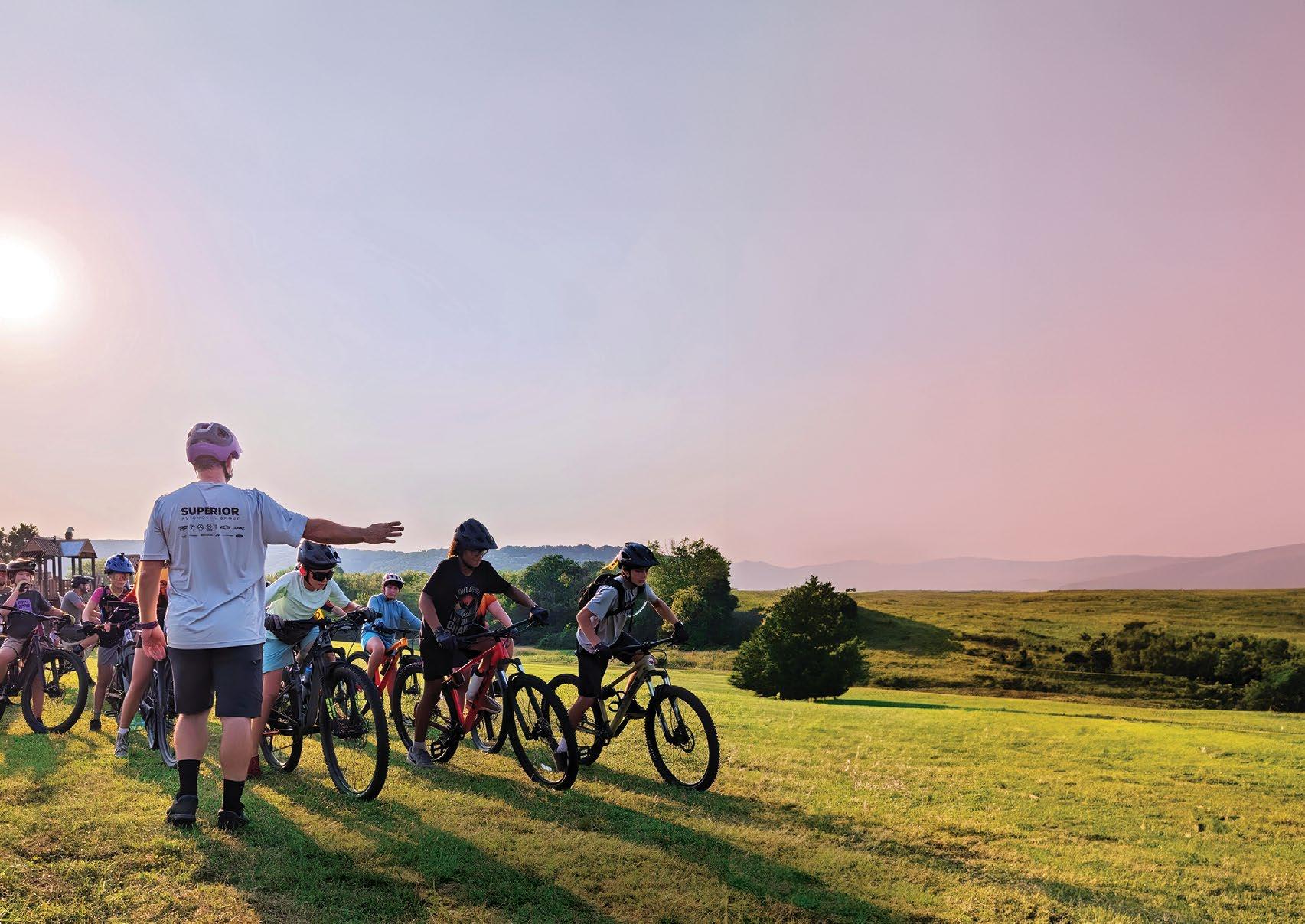
The FayMTB team will have “try it out” events for interested students to take a ride around Lake Fayetteville and meet coaches and riders. No bike? No problem. Loaner bikes will be available. Look for the purple and black FayMTB tent next to the Botanical Garden of the Ozarks, 4703 N. Crossover Road.
April 25, 12 – 3 p.m. May 23, 12 – 3 p.m.
Confirm details by visiting faymtb.org
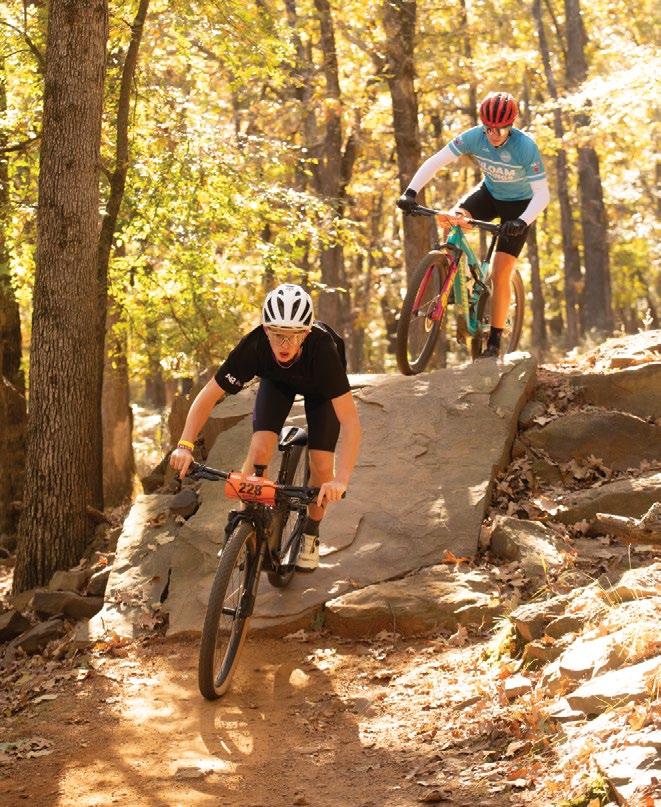
each other’s back wheels before a sprint to the finish — a cooperative move that makes sense in cycling but is rare in school sports.
That camaraderie stretches across teams. Kids in different jerseys cheer for one another, swap tips and often keep in touch. “It’s a community you never know existed 'til you’re a part of it,” said FayMTB rider Makaela Rogers.
Makaela’s dad, coach Adam Rogers, helped grow FayMTB into one of the biggest NICA teams in the state. “People ask how we grew the team,” he said. “It’s simple — we got the parents involved.”
Parents don’t just watch from the sidelines; many become certified NICA coaches who ride with the kids at practices.
“IT’S A COMMUNITY YOU NEVER KNOW EXISTED 'TIL YOU’RE A PART OF IT.”
MAKAELA ROGERS, FayMTB rider
Coddington calls this the NICA effect: “When you get a kid on a bicycle, you often get a family on a bicycle. When you get enough families riding bicycles in communities, then a community starts to change.”
The ripple continues. Former FayMTB riders branched off to start a Farmington team last season. All it takes to form a team is a couple of kids and adults — extensive trail network not required. “We have a three-mile trail in Conway now because the NICA kids built it,” Coddington said. “Now there are hundreds of kids running cross country on a trail built by their peers.”
NICA teams in Ozarks Electric’s territory:
+ Haas Hall Academy
+ Madison County Cyclists
+ Springdale Trailblazers
+ Farmington Composite
+ Fayetteville Composite
+ Tahlequah Composite (Okla.)
For more information, visit arkansasmtb.org and oklahomamtb.org
The benefits go beyond the trails. “We teach the kids mountain bike skills for six weeks,” said Oklahoma league director Dave Weaver. “Once a race starts, that kid has to make 982 decisions — how to start, how to pace themselves, when to drink, how to do the turns.” That means judgment, risk management and quick thinking.
“There are businesses who’ve hired some of the NICA kids who tell us they think differently when they come to work,” Weaver said. “They have a different work ethic and decision-making abilities.” <
There's more! Read about NICA's Girls Riding Together program, becoming a parent coach, race days and more at ozarksconnections.com.
Q. What is the history of Apple Seeds?
Apple Seeds was founded in 2007 by a team from Ozark Natural Foods who recognized the importance of connecting students to fresh, healthy food. Today, we serve about 20,000 students each year through handson learning in growing, harvesting and preparing food. After inspiring kids with a love of fresh food, we deliver thousands of pounds of produce from our farm to their schools for students to take home to their families.
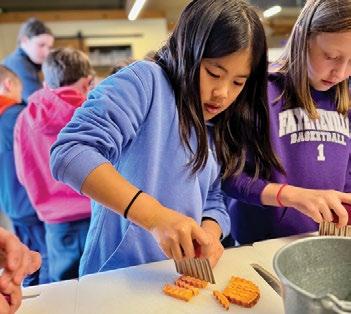
Q. What do kids respond to most when they visit the farm and get to cook or harvest something themselves? Kids respond to the sensory, hands-on nature of the experience and the sense of discovery and ownership. Being in the garden helps them understand where food comes from and realize food doesn’t just appear on a plate. Cooking continues the magic — washing, cutting and preparing what they harvested. When kids have this much interaction with fresh food, they start to associate fun and social activities with eating vegetables. That’s the starting point for lasting, healthy habits.
Q. What’s coming into season at Apple Seeds this time of year, and how do you incorporate it into classes? This is the time when fresh greens come to life. In addition to baby greens and sprouts, we overwinter carrots and kale, which students harvest throughout the cold months. We also use high tunnels with passive heating to keep crops growing year-round. Students make kale chips, vegetable dips, roasted roots and smoothies using what they harvest.
Q. Ozarks Electric was created to bring electricity to farms and rural homes. How can people today keep a connection to the land, even without a big garden? Any size garden keeps you connected to the seasons and to fresh food. Even a pot of thyme builds that connection as it flowers, sends up new sprouts or dies back for winter. Our farm manager, Paul Deer, pays attention to the whole environment — lightning bugs, migrating birds, caterpillars making cocoons. All of it is part of a broader seasonal cycle that builds connection.
Q. What recipe are you sharing and why?
We share recipes that are simple, flavorful and designed to be made almost entirely by kids. Our Sunrise Skillet uses sweet potatoes, turnips and leafy greens. It’s easy for kids to prepare and has been enjoyed by thousands of fifth graders.


TIP: Try adding other root vegetables like radishes or carrots!
2 Tbsp olive oil
2 Cups of sweet potato, diced
½ Cup of turnip, diced
1 Cup packed greens like kale or chard
3 Cloves garlic, minced
4 Fresh sage leaves, or ½ tsp dried (optional)
½ Lime, juiced
¼ Tsp salt
¼ Tsp black pepper
½ Tsp paprika
½ Tsp onion powder
2 Tbsp chives or green onion, chopped (optional)
1. Heat oil in a large pan over medium-high heat. 2. Dice sweet potatoes and turnips into equal sized 1/2 inch pieces and measure. 3. Add potato and turnip to pan, stir to coat pieces in oil, cover, and let cook for 5 minutes. 4. Cut or tear greens into small pieces. 5. Peel garlic cloves and mince with garlic press.
6. Cut sage leaves with scissors. 7. Juice the lime. 8. Cut chives with scissors. 9. Add greens, minced garlic, spices and sage to the pan. Stir to combine. 10. Cook for about 5 minutes or until the potatoes are browned. 11. Add lime juice and chives. Stir to combine, then turn off the heat. 12. Serve hot topped with an egg, nutritional yeast or yogurt sauce!
The Jones Center in Springdale will host its first-ever Muttminster Dog Show on Saturday, March 7, from 11 a.m. to 3 p.m. Participants can compete in nontraditional categories such as Most Fashionable, Human-Dog Lookalikes, Best Trick and more. A performance of Puppy Pals will wrap up the day. This high-energy show features adopted and rescued dogs performing stunts and thrilling acts. For the safety of the animal performers, Puppy Pals requires a dog-free audience. For ticket and entry information, visit thejonescenter.org/muttminster.

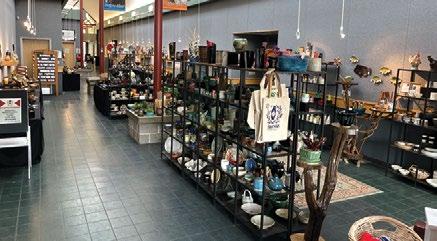
The 5th Annual Arkansas Pottery Festival will be held May 1-3 at the Community Creative Center in Fayetteville. There will be pottery demonstrations and lectures by nationally recognized artists, a pottery sale by over 50 potters from around the region and live music and after-party Saturday night. Buy a planter, get a free plant for a great Mother’s Day gift. The festival is free and open to the public. For more information, go to communitycreativecenter.org or contact Bryce Brisco, 479-571-2706.

AVIATOR DAY
April 4, 9 a.m. to 3:30 p.m.
Drake Field, Fayetteville
An aviation activity day for kids ages 7-11. Activities include ground school, gravity experiments, airplane building and information from aviation experts. arkansasairandmilitary.com.
CC CAMP 5K AND FUN RUN
April 4 Stilwell, Okla.
Part of the Cherokee Nation Wings Club. Register at runsignup.com.
NORTHWEST ARKANSAS NATURALS
April 7, 7 p.m.
Arvest Ballpark, Springdale

The Arkansas Naturals start a new season. milb.com/northwest-arkansas
MOM PROM
April 11, 7 p.m. to 10 p.m.
Mount Sequoyah, Fayetteville
A ladies’ night out benefitting Habitat for Humanity. eventbrite.com
EARTH DAY CELEBRATION
April 22, 9 a.m. to 5 p.m. Botanical Garden of the Ozarks
At the Earth Day Celebration, visitors of all ages can explore activities and resources that highlight the importance of protecting our planet. bgozarks.org.
NEW BOOK CLUB
Every first Thursday, 5:30 p.m. Farmington Library

Farmington Library has a new Book Lovers' Social and Conversation Club. cityoffarmington-ar.gov/library