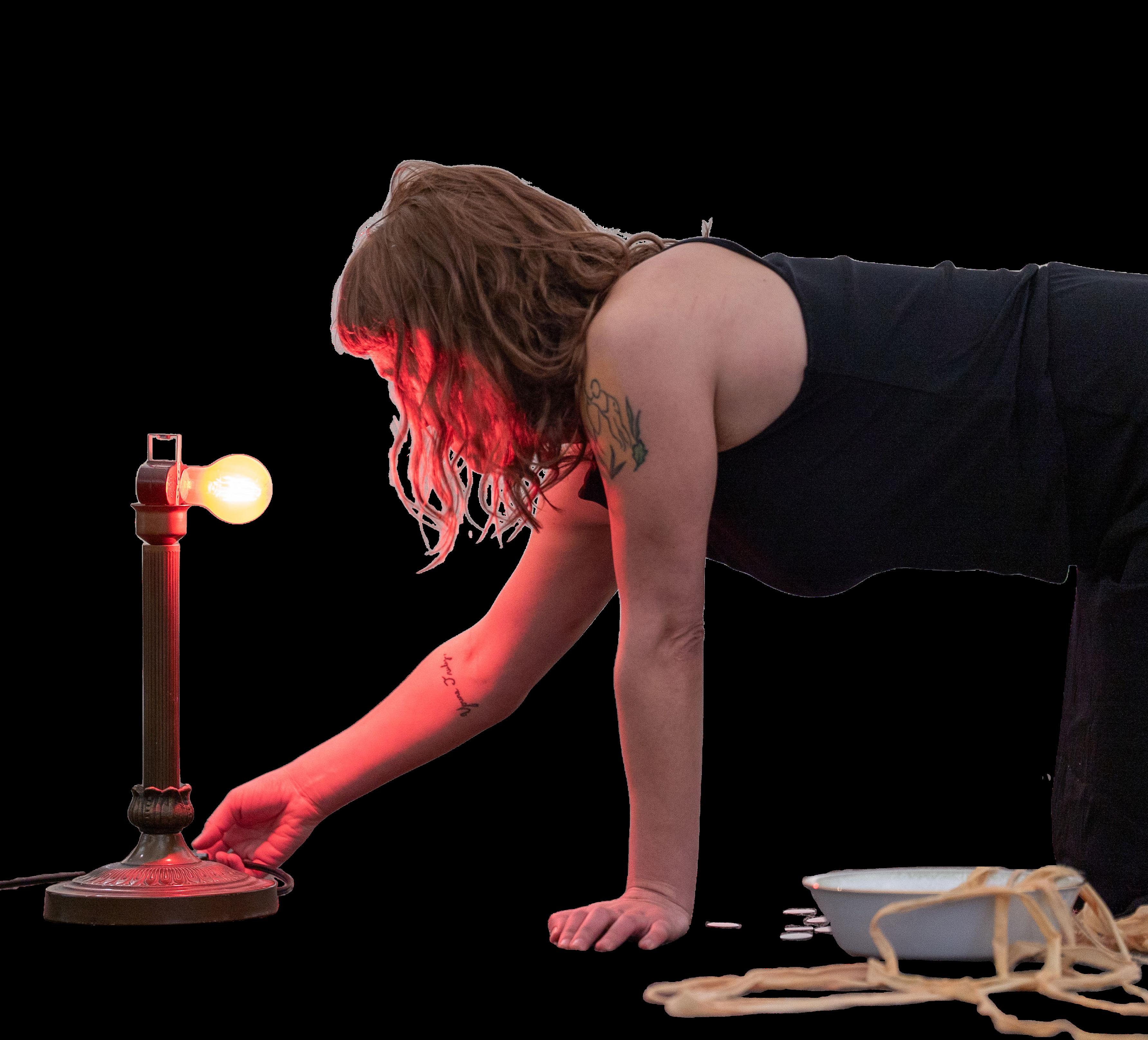

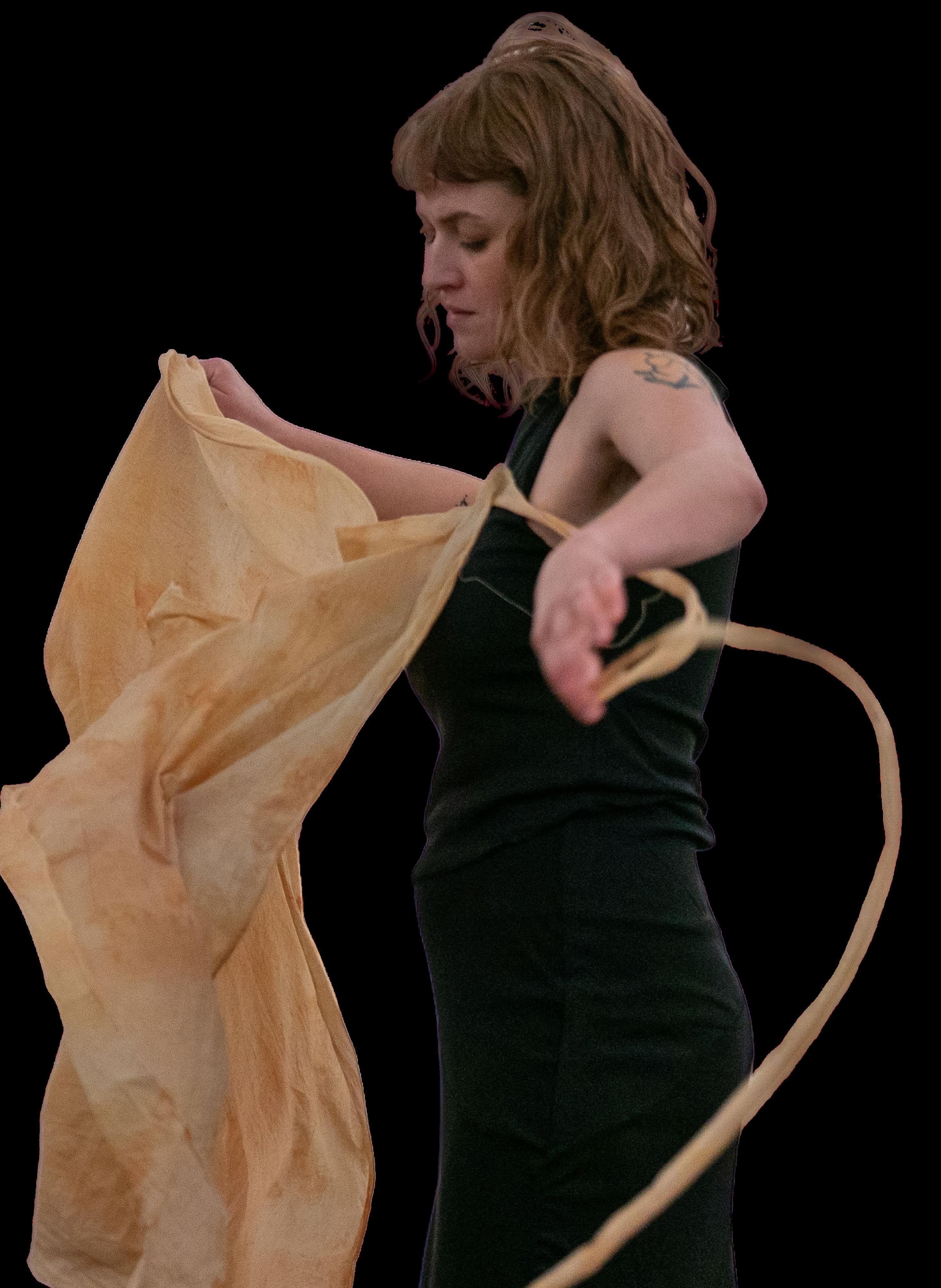
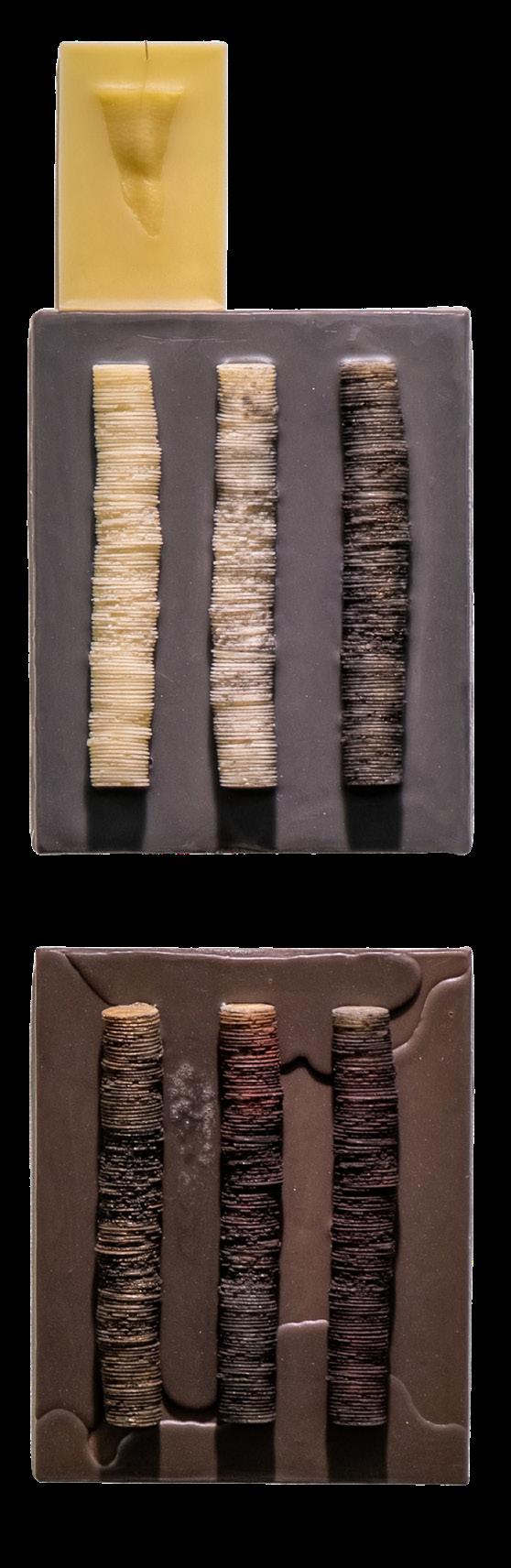
by Mikey Mosher. The works shown are by Lillian Herredia from her exhibit Survival of the Sickest, which examines survival, fitness, and value through the lens of Darwin’s theory of evolution, drawing parallels to Western religious and cultural frameworks that divide bodies and lives into binaries of fit and unfit while centering disability and illness to challenge rigid definitions of worth and highlight persistence, adaptation, and resistance.
2.WELCOME STATEMENTS
3.PROGRAM ON DISABILITY ART, CULTURE, AND HUMANITIES
5.STUDENT HIGHLIGHTS
7.DOCTORAL DISSERTATIONS
8.DHD SCHOLARSHIP RECIPIENTS
9.ALUMNI HIGHLIGHTS
11.2025 ACTIVE GRANTS AND CONTRACTS
13.POSTDOCTORAL FELLOWS
14.FACULTY HIGHLIGHT
15.STAFF HIGHLIGHTS
17.GREAT LAKES ADA CENTER
19.ASSISTIVE TECHNOLOGY UNIT
21.DEVELOPMENTAL DISABILITIES FAMILY CLINIC
23.COGNITION, BEHAVIOR, AND MINDFULNESS CLINIC
24.DISABILITY RESEARCH
25.IDHD COMMUNITY
26.FAMILY SUPPORT RESEARCH & TRAINING CENTER
27.NEW PROJECTS
28.LEND PROGRAM
29.DHD RETIREMENTS
30.DHD CELEBRATES
31.ACADEMIC PROGRAMS
32.SUPPORTING DISABILITY INCLUSION
33.CONTACT DHD/IDHD
34.CONSUMER ADIVSORY COMMITTEE
It has been my privilege to serve as Interim Head of the Department of Disability and Human Development for the past two years. Each year, we embrace a theme that reflects our growth. My first year was dedicated tolayingastrongfoundation—rebuildingour“new normal”afterthepandemicandreconnectingour communitywithinDHDandbeyond.
Thispastyear,wehavefocusednotonlyon supportingfaculty,staff,andstudentstosurvive uncertaintimesbutalsoonhelpingthemthrive. Despitefundingchallenges,ourfacultyhave achievedextraordinarysuccess,securingover$8.9 millionresearchgrantawardsthisyearwithan
unprecedented 80% success rate in funded proposals. They continue to earn prestigious awards and innovate in teaching.
Our department’s remarkable interdisciplinarity— spanning clinical services, training, arts and humanities, health promotion, and social policy— remains a defining strength. We are also advancing the well-being of faculty and staff through sabbaticals, promotion pathways, and recognition efforts, while moving forward with our five-year strategic plan. Enhancing student success is central, with an emphasis on expanded mentoring, recruitment, and inclusive academic programming.
In the pages ahead, you’ll see how these efforts come to life—stories of resilience, creativity, and impact that demonstrate why our work matters. Together, we are not just adapting; we are shaping the future of disability scholarship and advocacy.
Carrie Sandahl, PhD Interim Head, Department of Disability and Human Development
In this year of uncertainty in public funding for disability programs, the Institute on Disability and Human Development (IDHD) focused much attention on educating the public about the importance of public services and supports for people with disabilities. Our activities included outreach and dissemination to legislators, policy makers, advocacy organizations, and the public. We also expanded our community engagement, model programs, technical assistance, and research to practice activities.
In partnership with key state-wide partners in developmental disabilities (DD), IDHD serves an integral role in helping to transform the DD service system. With the theme of bridging across state systems, several IDHD projects are working across DD, aging, and mental health networks. In addition, a new initiative evaluates a federally funded project on employment for adults with disabilities.
To promote pre-service education, IDHD supports DHD students, post-doctoral fellows, and students with intellectual disabilities in a community college.
Please visit our updated website: https://idhd.ahs.uic.edu/
I look forward to the coming year and thank you for your continued support.
Tamar Heller, PhD Director, Institute on Disability and Human Development
Founded and directed by Carrie Sandahl the Program on Disability Art, Culture, and Humanities celebrates disability as a source of creativity and cultural transformation. The program studies and creates art that explores the disability experiences and serves as the administrative home of Bodies of Work, a network of artists and organizations that amplify the work of disabled artists through residencies, performances, and public programs. Together, these initiatives reimagine cultural spaces as sites of inclusion and innovation. What follows are three of our annual programs that embody this mission—each demonstrating how disability art and culture challenge norms, spark dialogue, and inspire change.
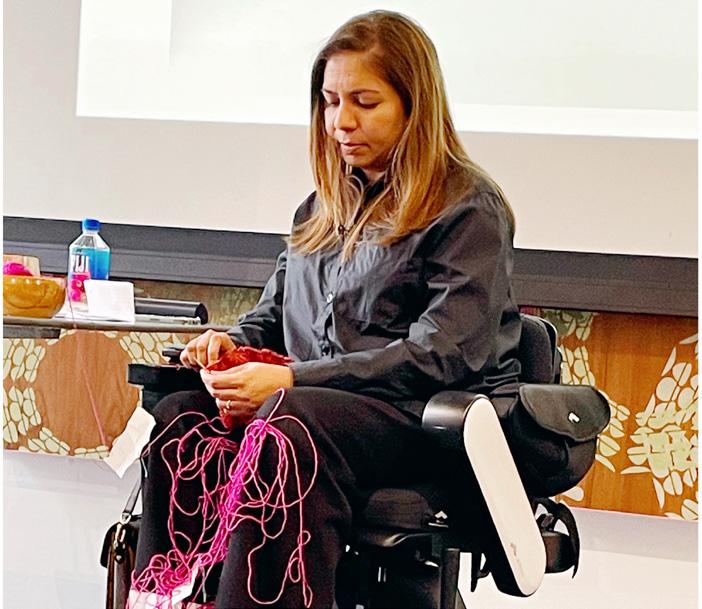
AccessPraxis,acollaborationbetweenBodiesof WorkandtheMuseumofContemporaryArtChicago, isaparticipatoryprograminTheCommonsthatbrings disabilityartsandculturetolife.Eachyear,artistslead conversationsandcreativeactivitieswithdisabilityaccess supports.In2025,painterandfiberartistPoojaPittieled aninteractiveweavingsessionthatexploredmemory, heritage,anddisability,invitingparticipantstocreateand connectinanimaginativespace. Cripping the Gal
AcollaborationbetweenBodiesofWork,Museumof ContemporaryArtChicago,andtheArtInstituteof Chicago,CrippingtheGalleriesimaginesmuseums assitesofresistanceandcreativity.Thisyear,artist MattBodettledtwotransformativeactivations.At theMCA,participantsrewrotelanguagefrom historicalandpsychologicaltexts,dismantling imposedcategoriesandreclaimingspacethrough voicesthatechoedacrossgalleriesandthe Commons.AttheArtInstitute,Bodettexposedart history’sappropriationof“madness”inaguided tourofDadaandSurrealism,theninvitedvisitorsto co-createamuralinspiredbythe“outsiderartisit” HenryDarger,turningcritiqueintocollectiveartmaking.
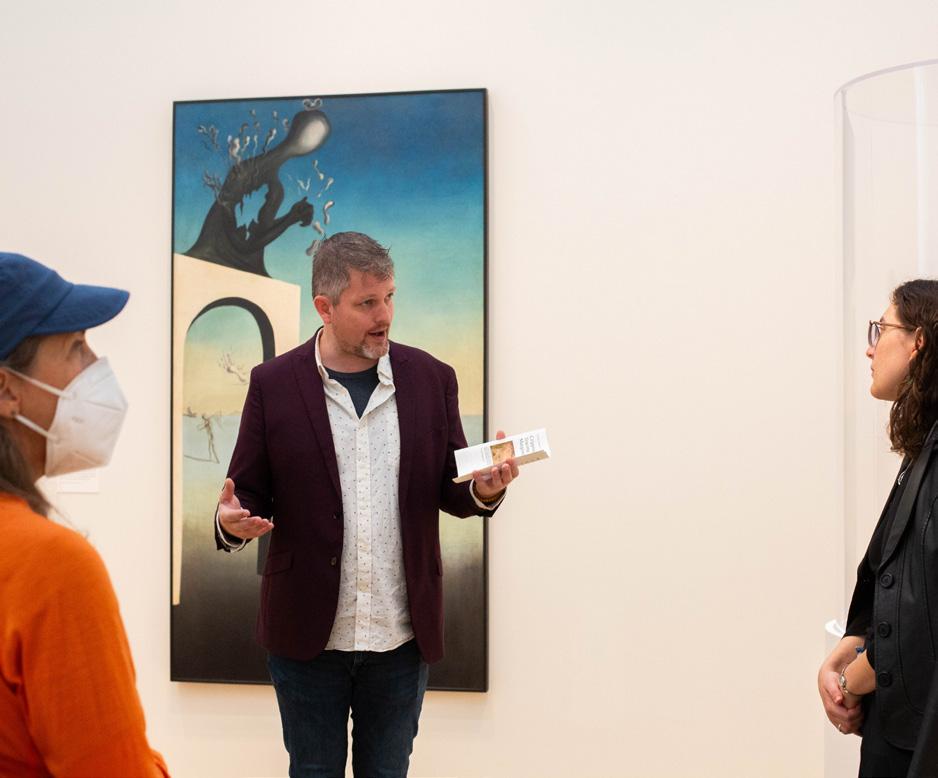
The3Arts/BodiesofWorkArtistResidencyProgram,createdin partnershipwith3Arts—aChicagononprofitthatchampions women,artistsofcolor,andDeaf/disabledartists—supports disabledChicagolandartiststhroughcustomizedthree-month residencies.Designedtoremovebarriersandimmerseartistsin disabilityculture,theprogramoffersstipends,accesssupports,and institutionalresources.Residentsengagewithstudents,lead workshops,andhostpublicevents.In2025,artistsBriBeck(visual artist),CamCollins(videogamedesigner),EstebanAndresCruz (theaterartist),andLillianHeredia(visualartist)broughtbold perspectivestoclassroomsandcommunityspaces.
03
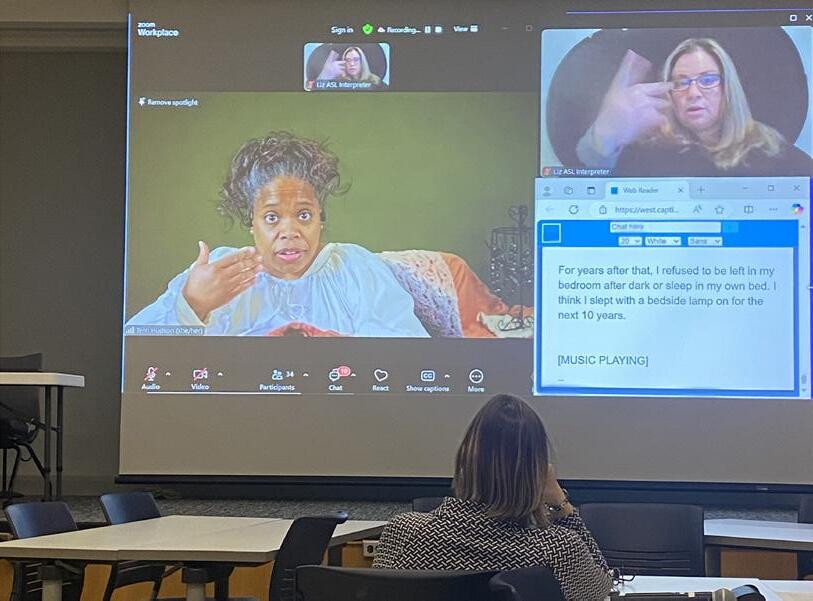
The3Arts/BodiesofWorkArtistResidencyProgramgivesstudentsunparalleledopportunitiestoapplyclassroom learninginreal-worldsettings.Second-yearPhDstudent,LibbyEvan,shareshowmentoringResidentArtist, LillianHeredia,resultedinbuildinginclusive,transformativeartspaces.
BY LIBBY EVAN
Transitioning from being a full time artist to being a PhD student was difficult. I searched for how to combine my creative sensibilities with my gained knowledge in Disability Studies. Serving as Lillian Heredia’s residency mentor was an opportunity to find joy in the overlap between art and Disability Studies.
Lillian’s artwork is almost intangibly bodily. Looking at her work, I sensed a fellow disabled artist. I asked Lillian if she identified as disabled. In response, she described her experiences with chronic pain and illness. While new to disability as an identity, she was not new to disability embodiment. Lillian and I planned her workshop, developed her solo exhibition, and talked about Disability Studies and experiences with chronic illness. As research for new work, she read Disability Studies books and articles.
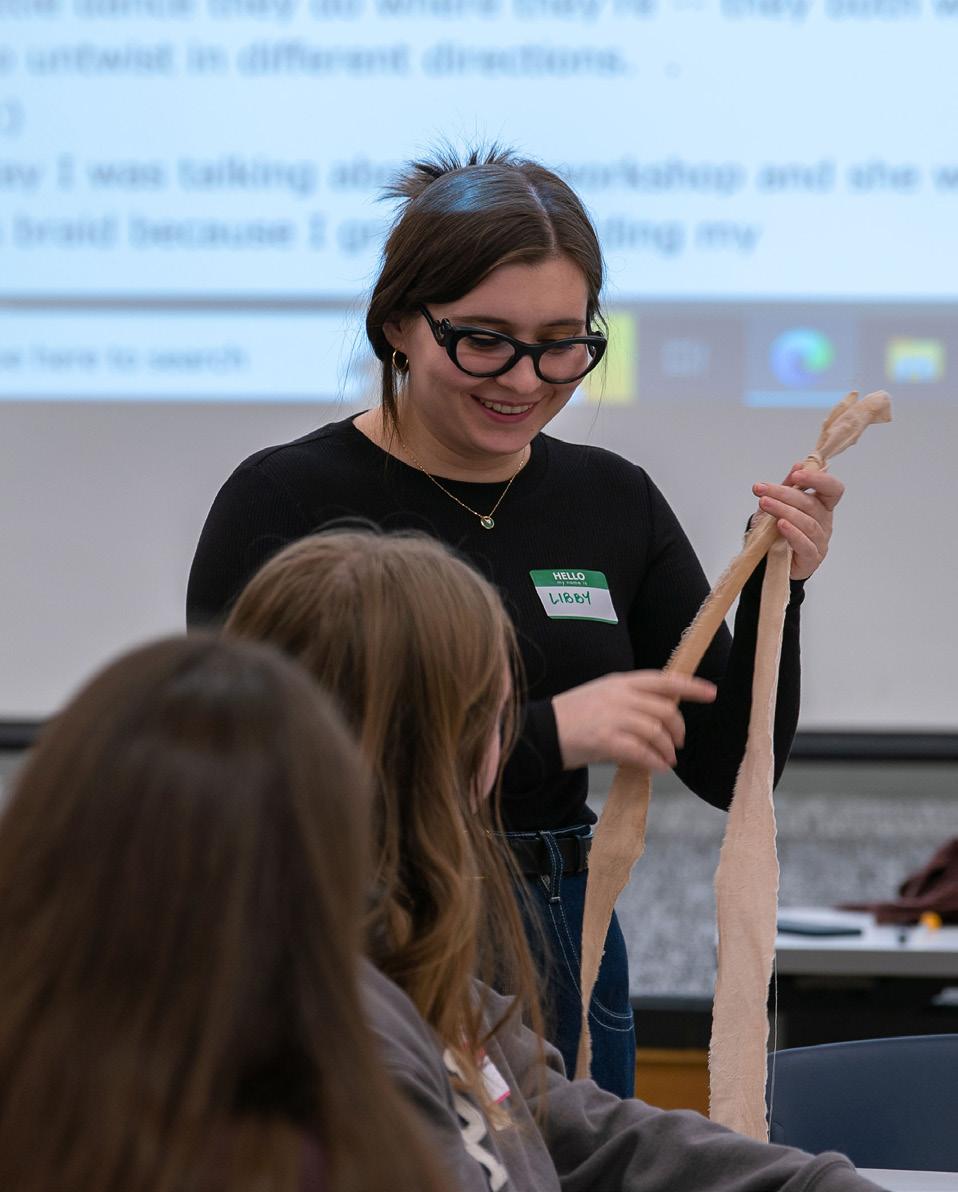
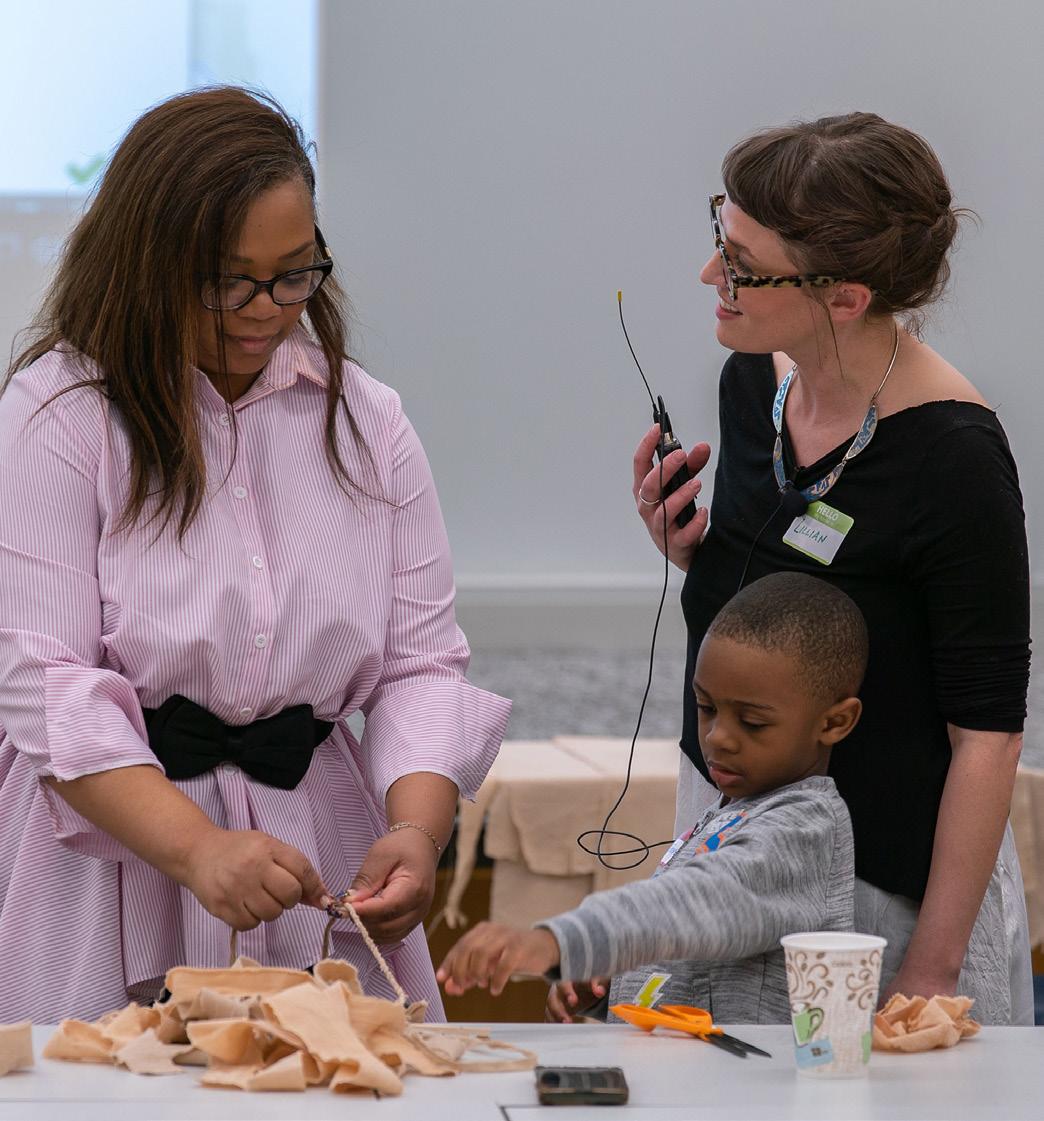
Lillianbeganherhands-oncordmakingworkshopby readingareflectiononherexperiencewithpain,makingthe workshopasafespacetoexplorehowbodiesreacttothe processofartmaking.Lillianguidedparticipantsinripping andtwistingcottonintocord.Withmycollaborators’help,I madethiseventaccessible.Makingcordrequiresconstant tension,soweorderedclampstoensurethatparticipants avoidedpainfullyexertingtheirhands.Thisaccesshack camefrommyownpersonalexperienceasachronicallyill artist,anditwasreallyrewardingtosharemyaccesstools withothers.
Lillian’ssoloshowSurvivaloftheSickesttookplaceat AccessLiving.Aspreparationfortheshow,Itaughther howtowriteimagedescriptions.Wediscussedotheraccess considerationslikeatwhatheighttohangartwork.This experienceinspiredmetothinkabouthowIcanconnect disabilitycuration,chronicillness,andfiberartinmyown research.Iamcurrentlycuratinganexhibitioncentering chronicillnessandcraftthatwillbeatAccessLivingnext fall.IamthrilledthatLillianandotherformerandfuture ResidentArtistswillbefeaturedintheexhibition.
PierreispursuingaPhDinDisability Studieswithafocusonassistive technologyandisthefounderandCEO ofWeHearYouInc.,anationally recognizedstartupbreakingbarriers forpeoplewithdisabilities.
AsaResearchAssistantintheAssistive TechnologyUnit(ATU),Pierresupports clientsinintegratingassistive technologyintotheirdailylives.He worksontheColbertandWilliams programanddevelopsdevicesfor ActivitiesofDailyLiving(ADLs)and InstrumentalADLs(IADLs).Hisrole includesclientfollow-ups,identifying gaps,anddocumentingexperiences— allofwhichhelptrackoutcomesand unmetneeds.
Pierre’sresearchexploresthevalue andimpactofassistivetechnology throughframeworkslikethe TechnologyAcceptanceModel (TAM)andPosthumanism.Healso looksatthetechnologies’adoption, embodiment,anddecision-makingfor AI-powereddevicessuchas communicationtoolsandprosthetics. Hisdissertationgoalistounderstand howassistivetechnologysupports everydaylifeandhowdesigncan betterrelectdisabledperspectives andexpertise.
Throughhiscompany,Pierrecreated
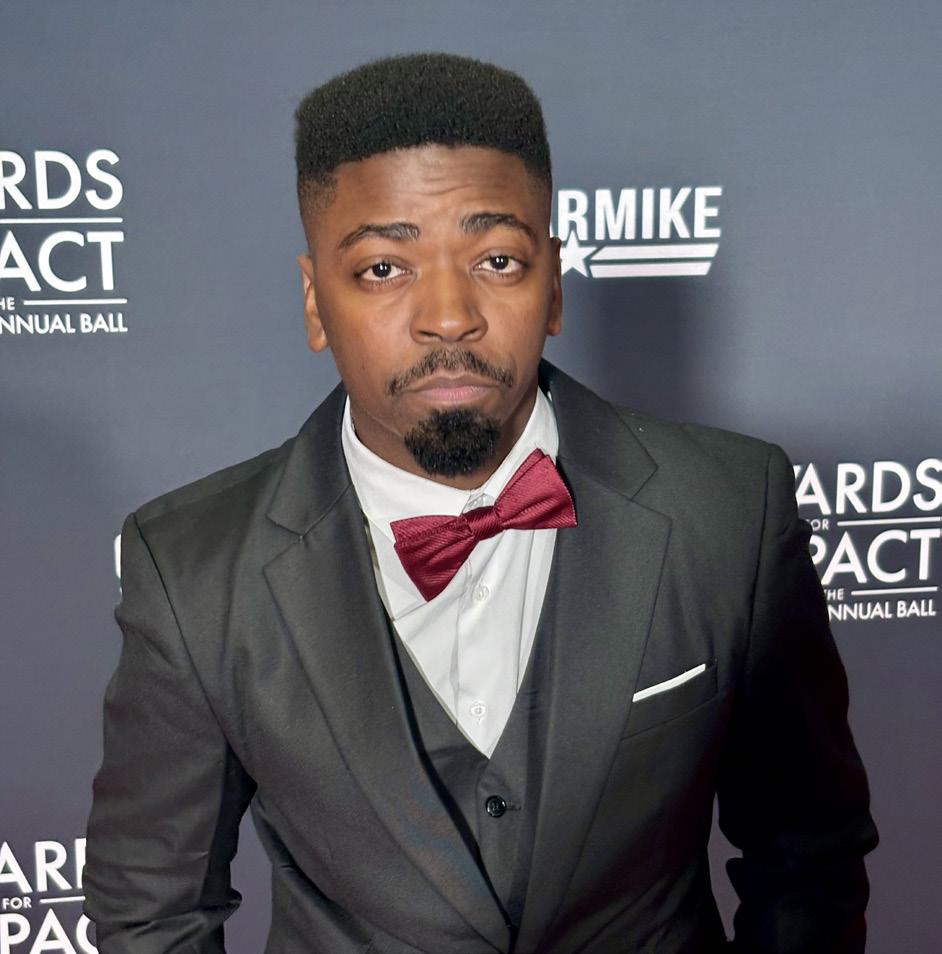
theHeroDoorOpener,anADAcompliant,portablesolutionenabling voiceorapp-controlleddoors.The Heroisslowlybeinginstalledaround UICandisexpandingtoNavajoNation thankstoapartnershipwiththe CerebralPalsyAllianceResearch Foundation.
Pierre’sleadershipspans entrepreneurship,education,and advocacy.HehasservedasDirectorof DevelopmentfortheUnitedStates AssociationforSmallBusinessand Entrepreneurship(USASBE),Access CoordinatoratBradleyUniversity,and CommunityEngagementCoordinator atPeoriaRiverfrontMuseum. RecognizedbyForbes’100Accessibility Companies(2025)andhonored withawardssuchasChampionsfor Diversity&Inclusionand40Under40, Pierre’simpactisshapingtechnology, education,andaccessibility.
Andrew is a 22-year-old graduate from the class of May 2025 with a degree in Disability and Human Development. He first discovered the DHD program during his sophomore year while he was still undeclared. His interest in the program stemmed from having a brother with autism; growing up, he became closely familiar with the lifestyle and attitude changes that accompany caring for a disabled family member.
Completing the DHD program helped Andrew better understand his own experiences and how to apply them to his career goals as a special education paraprofessional. He is currently working as a paraprofessional at Easterseals Metropolitan Chicago Academy, where he often draws on his DHD education to support his students.
He believes the most significant takeaway from this chapter of his education was learning to let go of expectations about how things should be and to make room for things as they are in the moment, whether that means accepting changing relationships with one’s body and
The DHD program gave me invaluable experiences and learning opportunities that I draw on in my career and life in general and will continue to do so for years to come.
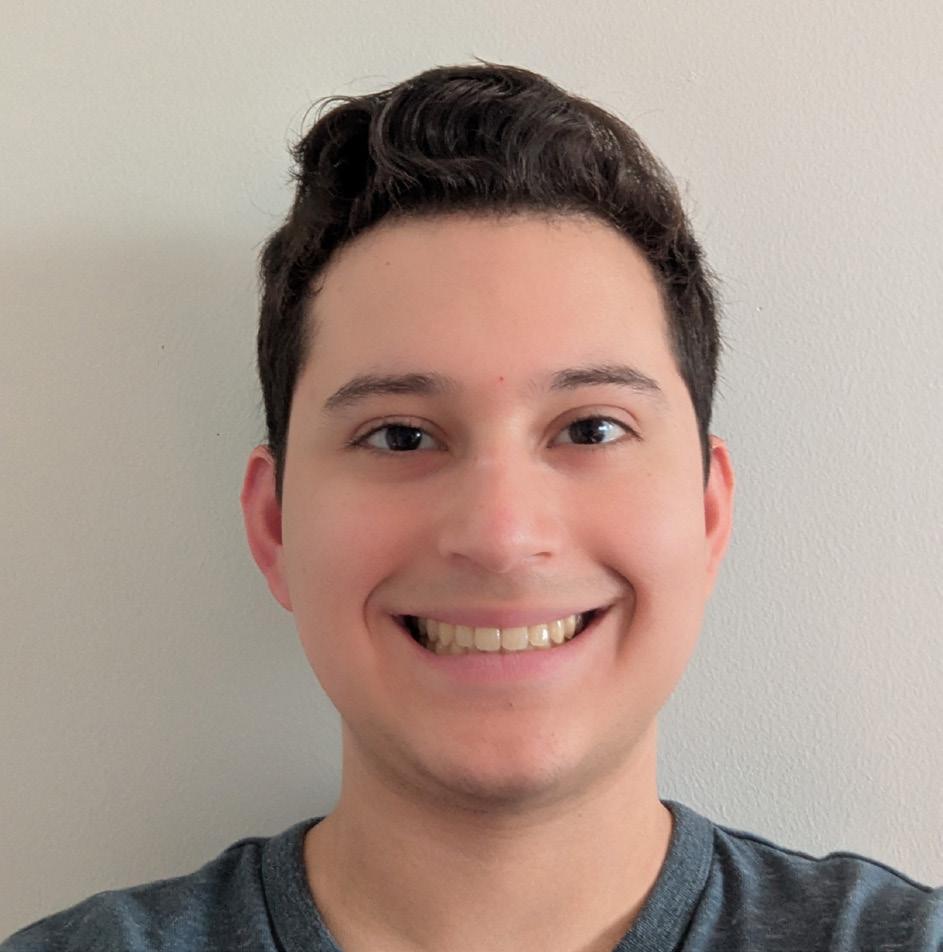
mind or being flexible with students who have diverse learning needs.
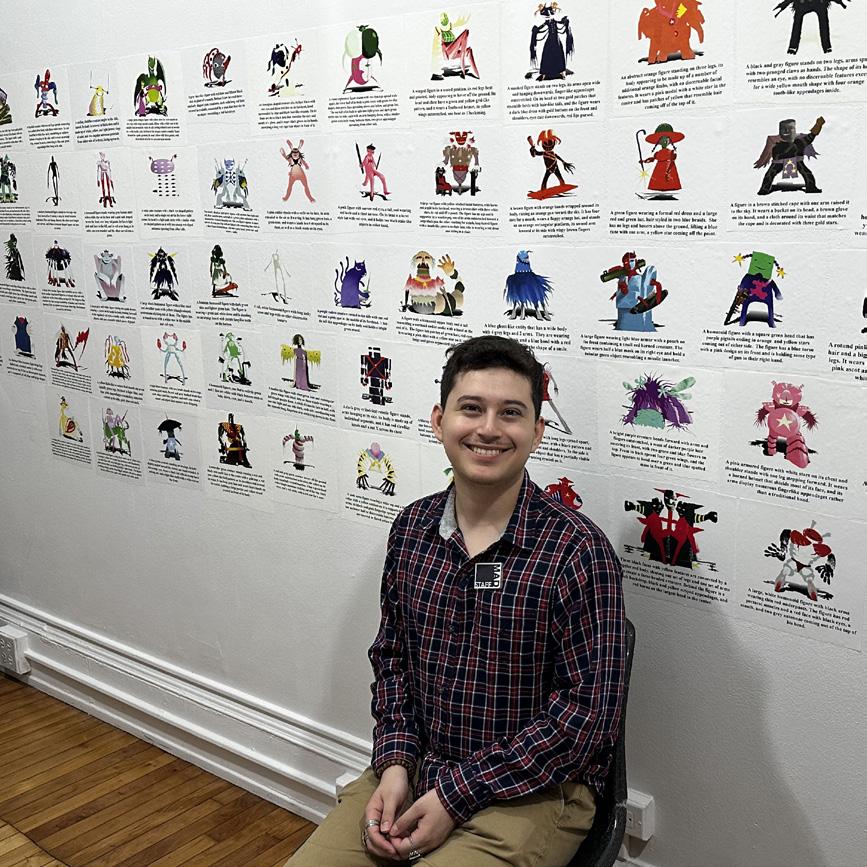
Andrew gained hands-on experience in arts accessibility through his BS capstone project by collaborating with 3Arts/Bodies of Work Resident Artist Cam Collins. He wrote visual descriptions for Cam’s video game characters (seen pictured below), supported disability access for workshops and a gallery opening, and interviewed gallery director Matt Bodett for Andrew’s podcast Someone You Know, available on YouTube and Spotify.
Andrew participated in the 3Arts/Bodies of Work Residency at The Center for Mad Culture.
Valerie Barich
Understanding How Disabled Persons Negotiate in the Practice of Informal Family Support
This study fills a gap in disability theory related to disabled persons’ negotiations for informal support in the complex, power-imbalanced relationship of family. It explores the ways disabled persons construct, negotiate for, and describe the similarities and differences between informal supports with formal supports.
Drew Egli
Fostering Self-Determination Through Improv for Adults with Intellectual and Developmental Disabilities
This study conducted, developed, and tested an improv intervention with a single group of ten individuals with intellectual and developmental disability to explore the effect of improv exercises on the participants’ self-determination and training experience.
Sydney Erlikh
An Ethnographic Look at Inclusive Dance and Dancers with Intellectual Disability
This dissertation is a critical performance ethnography about two inclusive dance companies, South Africa’s FLATFOOT Downie Dance Company and Finland’s Kaaos Dance Company.
Ellyn McNamara
Communication Equity: Perspectives from Spanish-Speaking Families
This qualitative study, grounded in a human rights framework, explores the experiences and perspectives of Spanishspeaking family communication partners through in-depth interviews.
Michael McNicholas
Contrasting Perceived Barriers to Recreation for People with Disabilities in Maywood Park District
This study identifies barriers to the Maywood Park District policies, practices, and spaces, as well as internal attitudes that inhibit perceived access.
Helen Rottier
A Disability Studies and Critical Autistic Analysis of Peer Mentoring for Autistic Postsecondary Students
This study explores the current landscape of peer mentoring programs at colleges and universities in the United States and proposes a novel mentoring model, constellation mentoring, to support this population.
Adrienne Smith
Exploring Trauma and Its Impact on Disabled Students: An Analysis Using the Future of Families Study
This dissertation explores the current intervention strategies for students with disabilities in education who have experienced trauma, the impact of adverse childhood experience (ACE) on education outcomes for students with disabilities compared to their non-disabled peers, and critiques the methodology used to study ACEs.
Hope Sparks
Guardianship Experiences: People with Intellectual and Developmental Disabilities and Their Caregivers
A review of guardianship history and alternatives, both from the federal and state perspectives, gives context and framing to the reported experiences and perspectives.
DHDisproudtoofferarangeofscholarshipsthatsupportourstudents’research,travel,andcommunityengagement activities.Congratulationstothisyear’swinners,whorepresenttheinterdisciplinaryscopeandinnovativenatureof DHD’swork.
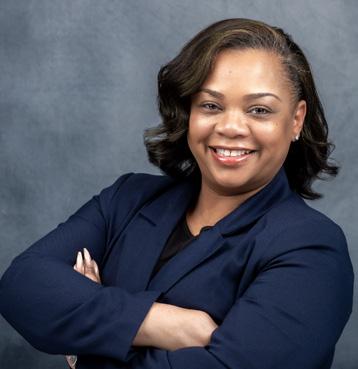
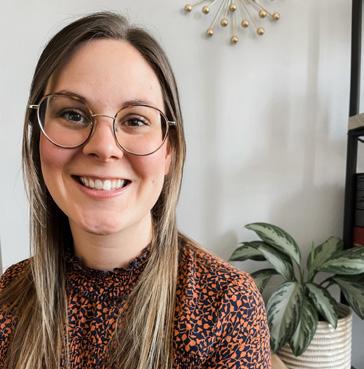
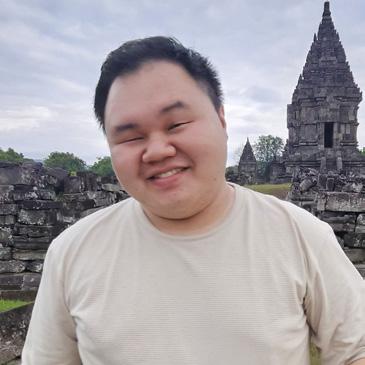
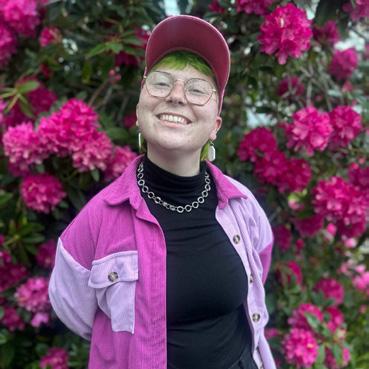
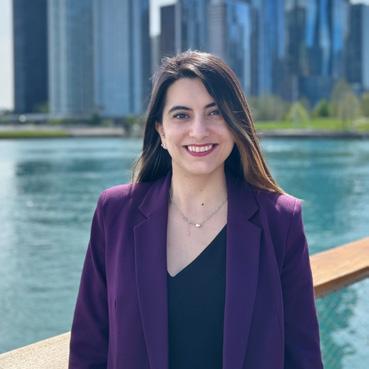
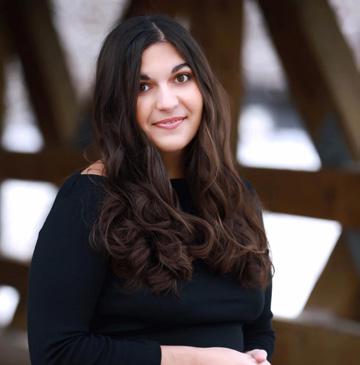
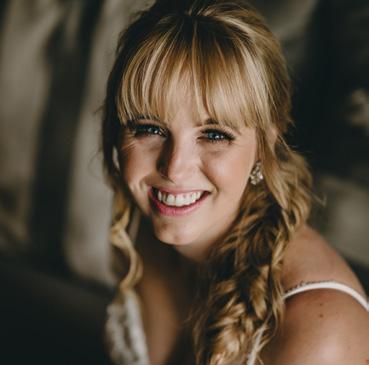
Shanita Jones
Carlos Drazen Memorial Scholarship
Awarded to support educational opportunities for a graduate student interested in the intersection of race and disability.
Chelsea Wallaert
Ann & Edward Page-El, M.D. Scholarship
Award to recognize academic excellence and to support educational opportunities for a graduate student interested in the social or medical aspects of neurological disabilities.
Daryl Yao
Anne Hopkins Scholarship
Presented to two graduate students pursuing studies in Disability and Sex, Relationships and Dating, the Social Model of Disability, or Social Entrepreneurship.
Fletcher Weiss
Anne Hopkins Scholarship
Presented to two graduate students pursuing studies in Disability and Sex, Relationships and Dating, the Social Model of Disability, or Social Entrepreneurship.
Claudia Castillo
UIC DHD/OT Black and Latinx Student Scholarship
Presented to a student who aims to serve or do research with Black and Latinx communities or is involved in or interested in student organizations at UIC that promote Black and Latinx interests in society.
Tia Khan
Neal H. Gottlieb Memorial Scholarship
Awarded to an outstanding junior or senior undergraduate student in DHD.
Emilie Lacy
Charlotte A. Tate Award
Presented to an outstanding student in DHD who demonstrates a multidisciplinary approach across health, society, and disability.
Bridging Disability and Human Development an Assistive Technology in Education and Practice
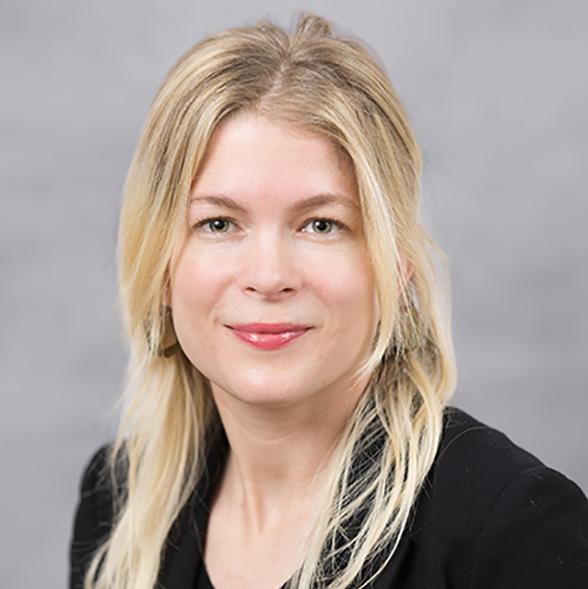
Julia Bates, OTD, OTR/L, ATP, is a Clinical Instructor in DHD where she combines her expertise as an occupational therapist and assistive technology specialist to advance inclusive care and education.
Her professional journey began with a strong academic foundation: Julia was part of the first cohort to complete the minor in Disability and Human Development in 2015. This experience shaped her commitment to accessibility and equity, principles that continue to guide her work today.
In her current role, Julia mentors students who aspire to careers in assistive technology and rehabilitation, encouraging them to integrate innovative solutions into client-centered care. She teaches courses such as DHD 441: Adaptive Equipment Design and Fabrication, equipping future practitioners with practical skills to design and implement adaptive tools that improve independence and quality of life.
Julia’s impact extends beyond the classroom. She plays a key role in grants that support the Assistive Technology Unit and participates in projects that advance independence and accessibility. These include supporting students at the Illinois Center for Rehabilitation and Education-Roosevelt through adaptive equipment recommendations; contributing
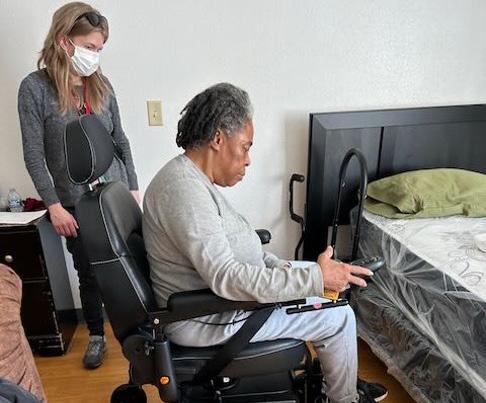
to the Accessible Housing and Assistive Technology projects, where she identifies assistive technology to help individuals safely transition from skilled nursing facilities into community living; and making recommendations for home modifications that enable individuals with disabilities to age in place. Her work ensures the safe completion of activities of daily living and promotes the ability to navigate within the household.
Her dedication to research and national presentations underscores her leadership in advancing the intersection of technology, accessibility, and occupational therapy. Julia Bates exemplifies how a strong academic foundation in Disability and Human Development can transform clinical practice and education, ensuring that individuals of all abilities have the tools they need to thrive.
Clinical Instructor, Julia Bates, observes her client, who recently moved out of a skilled nursing facility and into her own home, transfer from her power wheelchair to her bed with newly installed bedrails.
DHDalumnusVictorZhuangconnected withDHDfaculty--TamarHeller,KellyHsieh,and SumithraMurphy--attheInternational AssociationfortheScientificStudyofIntellectual andDevelopmentalDisabilities(IASSIDD)5th Asia-PacificCongress,heldinSingaporein October2025. VictorearnedhisPhDinDisability StudiesfromUICin2021andwassupervisedby LennardDavis,CarrieSandahl,andSandySufian duringhiscourseofstudy. Heisthankfulfor theirmentorshipandforthesupportofothersin thedepartment.
VictoriscurrentlyAssistantProfessorinDisability CommunicationattheWeeKimWeeSchoolof CommunicationandInformation, NanyangTechnologicalUniversity, Singapore.
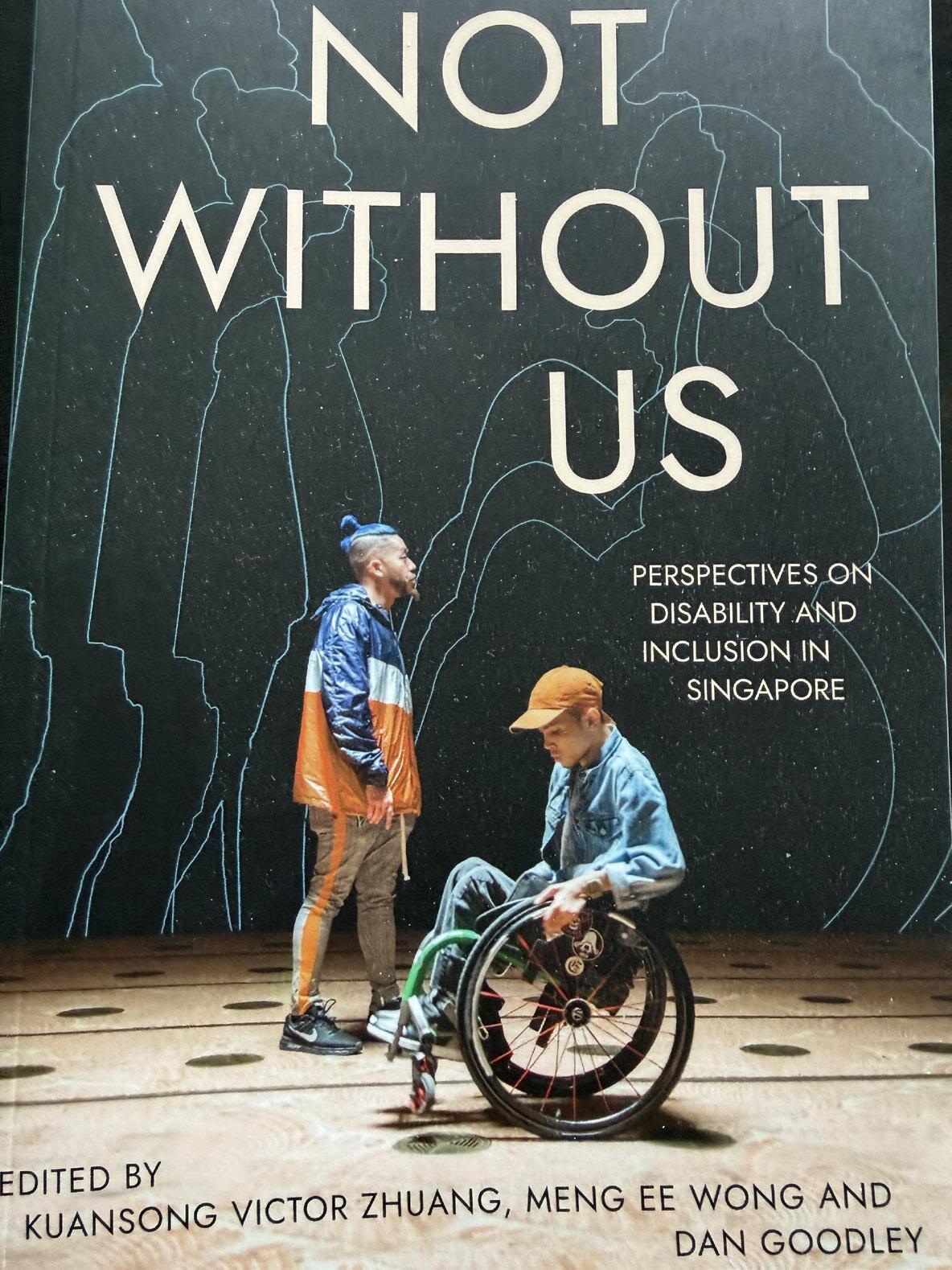
In2023,Victorco-edited--alongwith MengEeWongandDanGoodley-Singapore’sfirstDisabilityStudies Anthology,NotWithoutUs,which wonBestNon-FictionattheSingapore BookAwardsin2024. Thebookhas amajorityofcontributionsbypeople withdisabilitiesandiscomprised oflivedexperiencesandacademic essaysacrossmultipleformats includingpoetry,art,interviews,and personalreflections. Beyondthis work,Victorisdevelopingabook manuscriptthatdiscussesaspectsof contemporaryinclusioninSingapore. Healsofocusesontheintersectionsof emergingtechnologiesanddisability, inAsia-Pacificcontexts. Helooks forwardtoengagingmorebroadly withDisabilityStudiesasadiscipline advancingdisabilityinclusion,and flyingtheDHDflagwhereverhegoes!
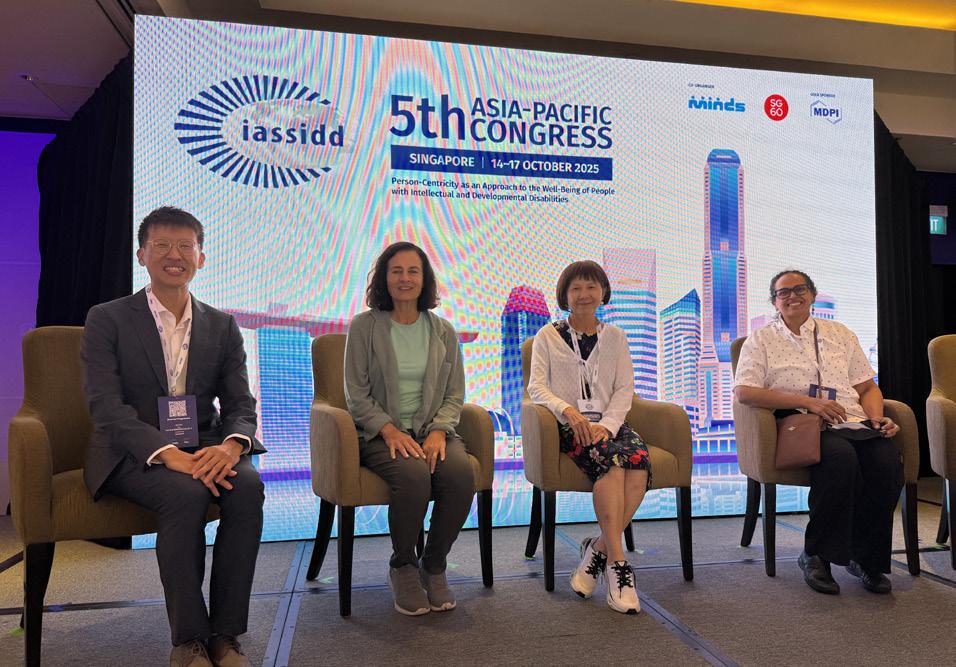
From left to right, Victor and DHD faculty (Tamar Heller, Kelly Hsieh, and Sumithra Murthy) at the 5th IASSIDD Asia-Pacific Congress.
Accessible Cities for All: Translating Knowledge to Support Better ADA Implementation. US Department of Health and Human Services (Administration for Community Living), 9/1/25-8/31/28 (PI: Yochai Eisenberg, Co-PI: Delphine Labbé, Co-Is: Robert Gould, Sarah Parker Harris)
Accessible Housing and Assistive Technology (AHAT) (791) - Suffix CCD. Illinois Department of Human Services, 7/1/256/30/26 (PI: Stephanie Bay, Co-PI: Angelica Martinez Perez)
Accessible Housing and Assistive Technology (AHAT) (791) - Suffix WCD. Illinois Department of Human Services, 7/1/256/30/26 (PI: Stephanie Bay, Co-PI: Angelica Martinez Perez)
Accessible Technology Services to ILDHS-DRS Customers. Illinois Department of Human Services, 07/01/2025-06/30/2026 (PI: Stephanie Bay, Co-PI: Angelica Martinez Perez)
Access to Fly: Development of Userbased Recommendations to Support Air Travel for People with SCI. Craig H Neilsen Foundation, 4/30/24-4/29/26 (PI: Delphine Labbé)
Acknowledging Latino Diversity in the Study of Chronic Pain: An Examination of Subgroup Differences and the Role of Social Determinants of Health. Clin-STAR Coordinating Center Aging Research Development and Training Award, 10/01/2024-04/30/2025 (PI: David Camacho)
AD-2020C3-21046 Supplement: Behavioral Health Stratified Treatment (BEST) to Optimize Transition to Adulthood for Youth with Intellectual and Developmental Disabilities (I/DD). Patient-Centered Outcomes Research Institute (PCORI), 5/1/24-11/30/27 (Co-PIs: Kristin Berg, Benjamin Van Voorhees)
ADA Knowledge Translation Center. University of Washington, 9/1/21-8/31/26 (PI: Sarah Parker Harris, Co-Is: Robert Gould, Robin Jones, Delphine Labbé)
ADA National Network Regional Center V. US Department of Health and Human Services (Administration for Community Living), 9/1/218/31/26 (PI: Robert Gould, Co-Is: Yochai Eisenberg, Robin Jones, Delphine Labbé, Sarah Parker Harris)
Advanced Training in Translational and Community Engaged Scholarship to Improve Community Living and Participation of People with Disabilities. US Department of Health and Human Services (Administration for Community Living), 6/1/20-5/31/26 (PI: Tamar Heller, Co-I: Yolanda Suarez-Balcazar)
Analysis of Movement from Illinois Developmental Centers. Illinois Department of Human Services, 07/1/25-6/30/26 (PI: Caitlin Crabb, Co-PI: Kelly Hsieh)
Assistive Technology Services to IL-DHSDRS Customers. Illinois Department of Human Services, 7/1/25/-6/30/26 (PI: Stephanie Bay)
AT Training for South Carolina Department of Education K-12 Professionals. South Carolina Department of Education, 8/1/25-8/31/26 (PI: Stephanie Bay)
Autism Awareness Project (The Autism Program of Illinois). The Hope Institute for Children and Families, 7/1/25-6/30/26 (PI: Mark Dixon, Co-PI: Tamar Heller)
Autism Speaks. Autism Speaks Project, 1/1/2512/31/25 (PI: Tamar Heller, Co-PI: Mark Dixon)
Autism Awareness Project. Illinois Department of Human Services, 7/1/25-6/30/26 (PI: Tamar Heller)
Barriers and Facilitators to Healthcare for South Asian Adults with Developmental Disabilities. WITH Foundation, 7/1/25-1/1/27 (PI: Sumithra Murthy, Co-PI: Rooshey Hasnain)
Bridging the Aging and Disabilities Network to Support Future Planning of Adults with ID/DD and Their Families. National Association of Councils on Developmental Disabilities, 10/1/21-9/29/26 (PI: Tamar Heller, Co-I: Kelly Hsieh).
COVID 19 Expanding the Public Health Workforce with the Disability Network Program. US Department of Health and Human Services (Administration for Community Living), 4/1/22-9/30/2025 (PI: Tamar Heller, Co-PI: Kelly Hsieh)
Crossroads Seed Grant Fund. 07/01/202406/30/2025 (PI: Timotheus Gordon, Co-PI Jae Jin Pak)
Evaluation of Aspire’s Employment Training Program (AETP). Aspire of Illinois, 5/1/25-11/1/29 (PI: Kelly Hsieh, Co-PI: Tamar Heller, Co-I: Rooshey Hasnain)
Everybody Moves! Supporting Access to Leisure-Time Physical Activity for Individuals with Disability from Racial and Ethnic Minority Backgrounds. US Department of Health and Human Services (Administration for Community Living), 9/1/238/31/26 (PI: Delphine Labbé, Co-Is: Yochai Eisenberg, Cassandra Herman)
Family Support Research and Training Center (FSRTC) to Bridge Aging and Disability. US Department of Health and Human Services (Administration for Community Living), 9/1/24-8/31/29 (PI: Sumithra Murthy, Co-PI: Tamar Heller, Co-Is: Kelly Hsieh, David Camacho, Randa Abdelrahim, Tanvi Bhatt, Spyros Kitsiou, Jae Jin Pak, Timotheus “TJ’ Gordon, Jr.)
IDD System Redesign Coalition. Illinois Association of Rehabilitation Facilities, 7/1/253/31/26 (PI: Caitlin Crabb)
Improving Inclusion by Addressing Gaps in Measuring Disability in Transportation Data Systems. Transpo Group, 11/1/24-10/31/26 (PI: Yochai Eisenberg)
People with Intellectual and Developmental Disabilities Healthy Brain Initiative. US Centers for Disease Control and Prevention, 9/30/20-9/29/26 (PI: Beth Marks, Co-PI: Jasmina Sisirak)
SCC-IRG Track 1: Crowd+AI Tools to Map, Analyze, and Visualize Sidewalk Accessibility for Inclusive Cities. University of Washington, 10/1/219/30/26 (PI: Yochai Eisenberg, Co-Is: Joy Hammel, Delphine Labbé)
Strive to Thrive. Florida Developmental Disabilities Council, 5/1/23-8/31/25 (PI: Sumithra Murthy, Co-PI: Tamar Heller)
University Center for Excellence in Developmental Disabilities (UCEDD). US Department of Health and Human Services (Administration for Community Living), 7/1/237/30/28 (PI: Tamar Heller, Co-PI: Kelly Hsieh)
UIC Professional Medical Education. IL Department of Public Health, 7/1/23-6/30/25 (PI: Sumithra Murthy)
The UIC Certificate in Co-Operative Career Experience (Co-Op program). US Department of Education, 10/1/20-9/30/26 (PI: Tamar Heller)
UCEDD National Training Initiative to Support People with Intellectual and Developmental Disabilities with Co-Occurring Mental or Behavioral Health Disabilities. US Department of Health and Human Services (Administration for Community Living), 9/1/21-8/31/26 (PI: Tamar Heller, Co-Is: Frances Aranda, Judith A. Cook, Caitlin Crabb, Beth Marks)
University of Illinois Maternal and Child Health Leadership Education in Neurodevelopmental Disorders Training Program (IL LEND). US Department of Health & Human Services (Health Resources and Services Administration), 7/1/21-6/20/26 (PI: Kruti Acharya)
Virtual Future Planning for Adults with IDD and Aging Families. US Department of Health and Human Services (Administration for Community Living), 9/1/218/31/25 (PI: Tamar Heller, Co-I: Kelly Hsieh)
2025 Workshop on Developmental Disabilities Services in Illinois. Shimizu Foundation, 12/16/2024-10/15/2025 (PI: Kiyoshi Yamaki)
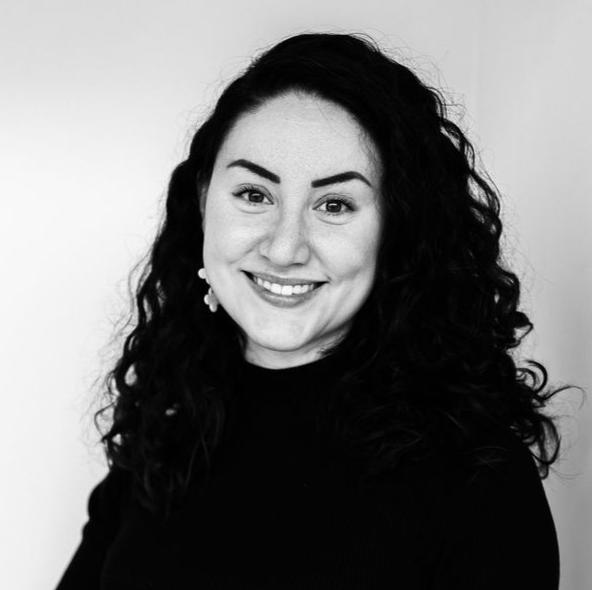
Marissa Andréah Diaz earned her PhD in Health Sciences from the University in Lucerne in 2024 and received funding as part of the Disability Advocacy Research in Europe (DARE) initiative under the European Union’s Horizon 2020 research and innovation program. She was then Postdoctoral Research Associate in Community and Behavioral Health, at Washington State University. Her research is informed by her experience growing up as a part-time caregiver for her sister with intellectual disabilities (ID), and motivated by an awareness of the shortage of empirical evidence on end of life care for the US ID population and on the impact of social determinants of health on access to care for people with ID.
MarissaandRobertGouldwererecentlyawardedaJohnNuveenFundInternationalizationGranttodevelopa “GlobalVirtualExchangeClassroom(G-VEC)projectonDisabilityandInternationalHumanRights,”focusingon DisabilityStudies,humanrights,andinternationaldevelopment.Thisprojectwillworkwithnon-government organizationsthatprovidecommunity-basededucationandresearchtoidentifycriticalissuesimpactingdisability inclusion.
How can implementation science better support the health and well-being of people with disabilities?
This is a central question Cassandra Herman examines in her research. With a PhD in Health Education and Health Promotion and postdoctoral training at DHD, she brings a strong methodological rigor to her work and integrates implementation science throughout her projects. Cassandra leads an ongoing multi-state community health implementation study that has made a significant contribution to understanding the role of public health professionals in implementing inclusion. Sheisaco-investigatoronanNationalInstituteonDisability,IndependentLiving,andRehabilitationResearch (NIDILRR)studyresearchinghowleisure-timephysicalactivityprogramscanbemoreinclusiveandmore ethnicallyandraciallydiverse.Shehaspublishedwidelyintopjournals,mentorsfuturescholarsintheCHADI program,andservesasaSectionCouncillorfortheAmericanPublicHealthAssociation’sDisabilitySection.

Sabrina Ali Jamal-Eddine is a health humanities nurse scientist, disability justice scholar-activist, and DHD postdoctoral researcher.
This year, Sabrina received awards as a 2025-26 Hispanic Serving Research University Postdoctoral Fellow, 2025 National Institute for Health (NIH) ButlerWilliams Scholar, and 2026 Johns Hopkins’ Nursing Science Incubator for SDOH Solutions (N-SISS) Fellow. Additionally, she published in four high-impact journals including Social Science & Medicine, Journal of Professional Nursing, Nurse Education in Practice, and JAMA Network Open. Sabrina was an opening presenter forStanfordUniversity’s2025ConferenceonDisabilityinHealthcareandMedicine,andshechairedapaneland presentedtwocriticalDisabilityStudiespapersattheAmericanStudiesAssociation’sAnnualMeeting.This summer,sheparticipatedintheinternationalArtsinHealthResearchIntensiveandtheCincinnati-basedNational EndowmentfortheHumanities(NEH)SummerInstitute.Finally,sheservesontheNationalLeagueforNursing’s 2025StrategicActionGroupon‘DisabilityAccess,Retention,andCurriculuminSchoolsofNursing.’
David Camacho joined UIC in 2023 and leads research focused on improving the health of racial/ethnic and sexual minority older adults in the U.S. and Latin America. His work addresses chronic pain, loneliness, and cognitive impairment, issues that carry significant public health and economic burdens. Camacho examines how social and contextual factors shape these experiences to guide strategies that accelerate implementation of psychosocial interventions in real-world settings. He has secured multiple grants as Principal Investigator, including projects funded by the UIC Institute for Research on Race and Public Policy, the National Institute on Aging, and the National Institute on Minority Health and Health Disparities. These studies explore important subgroup differences and social determinants of health among Latino populations, gerontological workforce training needs and development, and community health worker-led programs to improve pain management and emotional well-being. David also serves as Co-Investigator on the federally funded Family Support Research and Training Center to Bridge Aging and Disability.
In 2025, David published in leading journals such as Journal of Cross-Cultural Gerontology, Research on Aging, and Archives of Medical Research. His scholarship has earned national recognition, including a collaborative effort with scholars from the University of Southern California and the University of Puerto Rico to investigate memory problems among older adults in Puerto Rico. This effort earned him the 2025 Southern California Clinical & Translational Science Institute Team Culture Award, which honors teams that foster the most robust
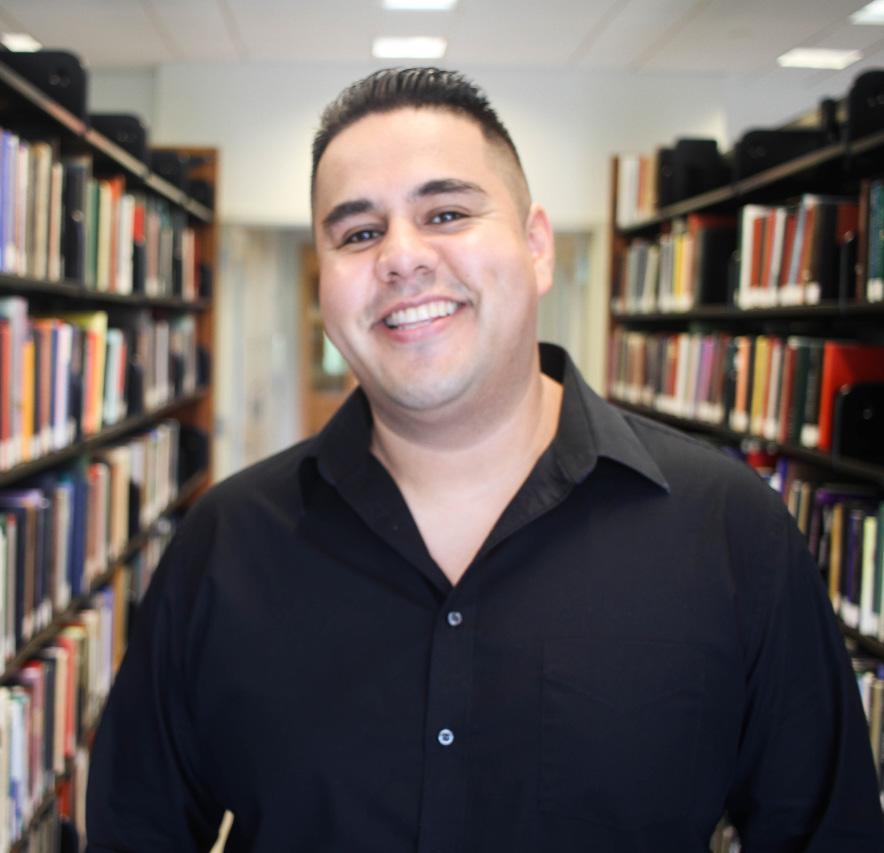
scientific collaboration across disciplines and institutions.
At UIC, David teaches courses on Disability and Human Development; Disability, Sexuality, and Health; and Disability and Inclusive Health. He contributes to student development through his teaching and committees roles such as the Diversity, Equity, Inclusive, and Access Committee; Research and Scholarship Committee; Enhancing Cross-disciplinary Innovation and Training Opportunities; among others. He regularly delivers bilingual, traumainformed presentations in collaboration with community organizations that address aging and mental health among Latino populations. In addition, he consistently shares his research findings at national and international academic conferences, advancing culturally responsive approaches to aging and health equity. He has recently presented at the Gerontological Society of America, the American Society on Aging, and the Institute on Violence, Abuse and Trauma Conferences.
David’s work exemplifies UIC’s commitment to advancing inclusive excellence in health equity through research, education, and community engagement. His work is shaping a future where aging research reflects diversity, fairness, and the lived experiences of all communities.
Claudia Diaz joined the Great Lakes ADA Center in 2004, shortly after graduating from UIC, where she earned a Bachelor of Science in Business Administration with a concentration in Information Technology Management. She successfully completed the ADA Coordinator Certification Training Program (ACTCP) in 2016. Claudia Diaz plays a key role in directing and supervising the Great Lakes ADA Center’s Information Technology team, which is responsible for developing and maintaining the Center’s web-based programs and services, including its online and live distance-learning initiatives. Additionally, she trains graduate IT students in accessible design, enabling them to apply these practices in the workplace. Her goal is to ensure that the techniques students learn helps them become web developers who consistently apply best practices.
Claudia serves on multiple national leadership committees within the ADA National Network, addressing issues related to social media, knowledge translation, and national network collaboration. She is a key resource for ADA
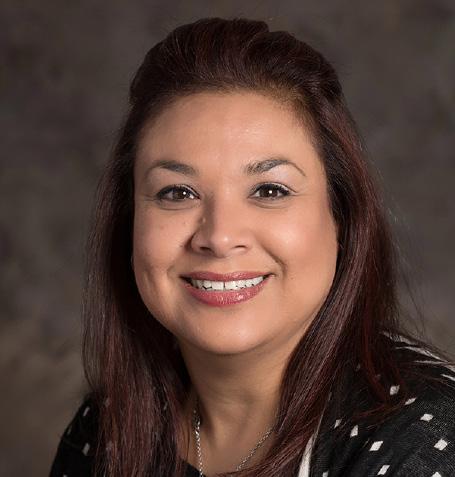
information and technical assistance, and her knowledge is a vital resource to the broader ADA National Network. She collaborates with ADA professionals and Center staff to advance the mission of the ADA to “assure equality of opportunity, full participation, independent living, and economic self-sufficiency for individuals with disabilities.”
Recently, Claudia expanded her role by joining the department as a student. She is currently completing her Master’s degree in Disability Access and Inclusion to complement her applied experience with a deeper understanding of the history of the disability community, which will support her continued growth and contributions to the Center’s projects.
As a student, I enjoy reading about the historical movement of the disability community that led to the passing of the ADA. It helps me maintain perspective on what has been accomplished and what remains to be done.
Adrian Tabungar is a maker, designer, and creative problem-solver whose work centers on accessible, user-driven design. As the Equipment Specialist for the Rehabilitation Engineering Lab (“The Shop”) within UIC’s Assistive Technology Unit (ATU), he designs and fabricates adaptive equipment for clients with disabilities across the Chicagoland region. His practice blends thoughtful design with hands-on ingenuity, turning small but meaningful ideas into practical tools for people who often lack access to individualized solutions. Whether modifying a commercial product or building something from scratch, Adrian approaches each project with curiosity, empathy, and a sense of possibility.
At the UIC ATU, Adrian collaborates with clinicians serving Colbert and Williams Consent Decree Class Members through the Comprehensive Class Member Transition Program (CCMTP). His work supports individuals transitioning into community living by improving safety, independence, and home accessibility. Examples include adding a softer surface to a Hoyer lift boom to reduce the risk of injury if bumped, creating a tether attachment to keep a TV remote within reach, fabricating a sturdy water bottle holder that securely attaches to a bed-rail for independent hydration, and building a raised platform to make a low kitchen cabinet accessible for someone with
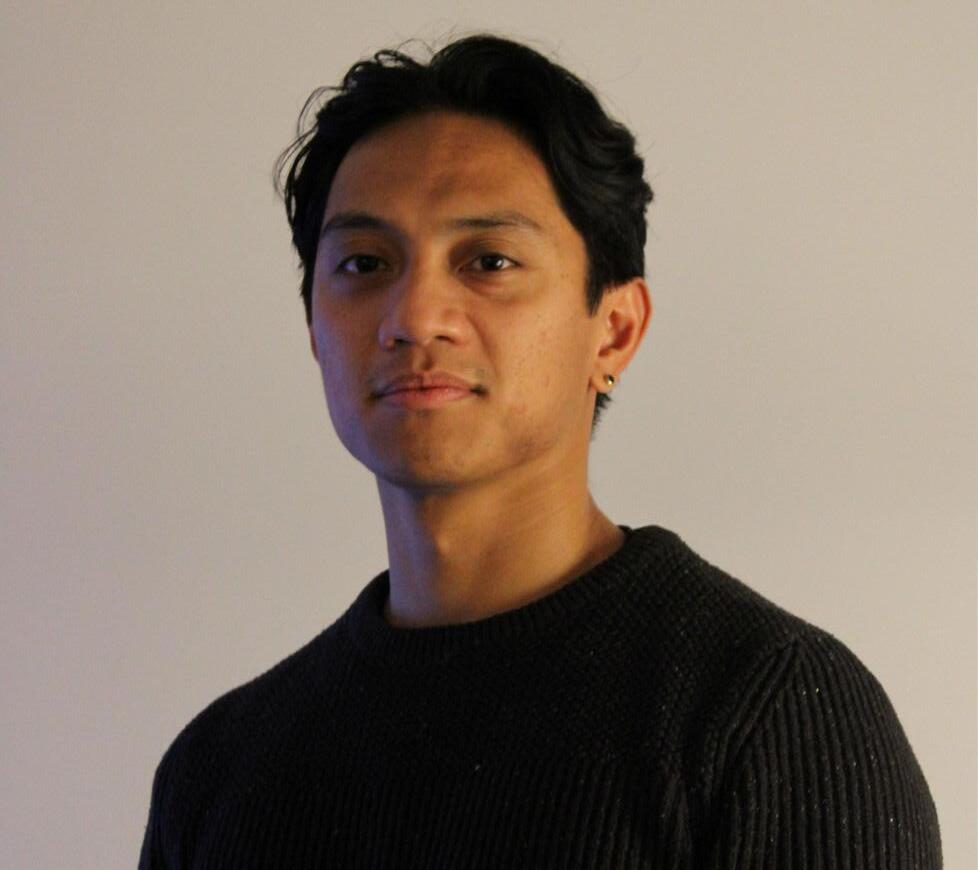
chronic back pain.
Adrian is also a key team member of the Adaptive Equipment (AE) Clinic at the Illinois Center for Rehabilitation and Education-Roosevelt (ICRE-R), which supports students with disabilities as they transition into community living, employment, and adulthood. Through an iterative, collaborative process, he works closely with clinicians and students to design custom equipment that promotes participation and supports transition goals. Recent projects include designing a 3D-printed cup holder and bracket system that attaches to a wheelchair armrest instead of the footrest for improved access and fabricating a custom elevator stick with a flexible tip and builtup grip for a student with limited arm strength.
Across programs, Adrian shapes decisions about equipment needs, function, and form through conversations with consumers and insights from clinical evaluations. His work results in functional, aesthetic, and empowering tools that reflect each person’s unique identity, environment, and goals.
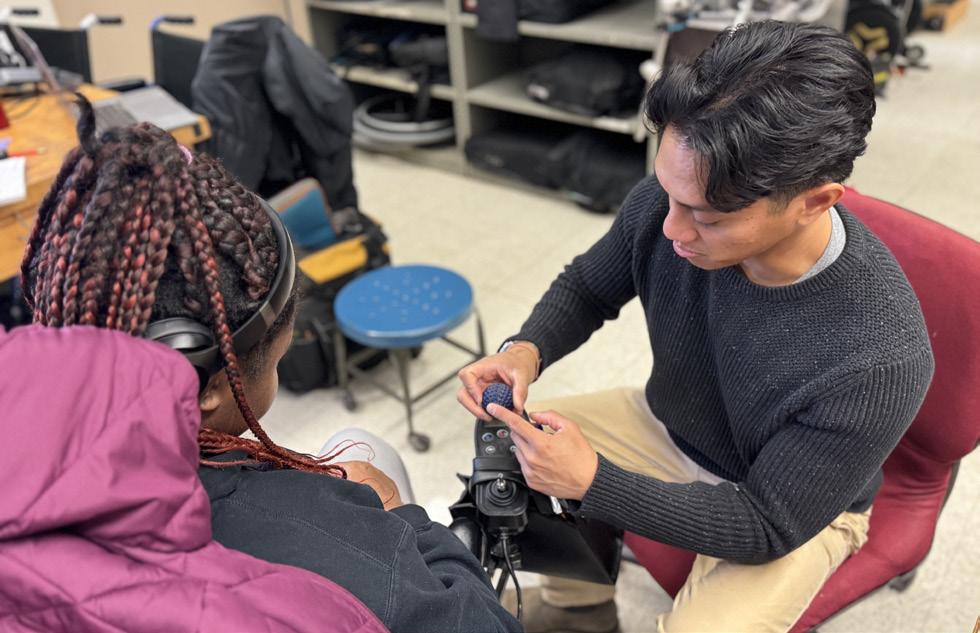
For one ICRE-R student, Adrian, designed and 3D-printed a custom cup holder for the right armrest of their wheelchair, adjusting the size, color, and placement to meet the student’s needs and preferences.
While the Center primarily serves the states of Illinois, Indiana, Michigan, Minnesota, Ohio, and Wisconsin, many of its products reach a wide national audience. Its services include:
•Tailored ADA training sessions for groups and organizations.
•Expert technical assistance by phone, text message, or through its website.
•Innovative research on barriers to ADA compiance and strategies to address them.
•Critically acclaimed webinars and education on a diverse range of ADA topics.
ThisyearmarkedthreeandahalfdecadesoftheADA andtheCenter.Highlightsfromtheyearofcelebration include:
•Delivering more than 500 webinars, reaching an audience of more than 303,000, including an ADA Audio Conference Session: Celebrating the ADA Through the Decades.
•Growing its network of trainers through the Train Leadership Network, a collaborative program to enhance nationwide capacity to advance ADA knowledge, to more than 70 certified trainers across the region.
•Publishing six peer-reviewed manuscripts in academic journal on its research related to accessibility and public rights of way, outreach to underserved populations, and disability inclusion in the workplace.
The Great Lakes ADA Center, funded by the National Institute on Disability, Independent Living, and Rehabilitation Research, serves as an educational resource to help individuals understand their rights and responsibilities under the Americans with Disabilities Act (ADA). The Center’s mission is to increase awareness and knowledge with the goal of achieving voluntary compliance with the ADA. As part of a national network of ten federally funded centers, it provides information, guidance, training, and research on how to implement the ADA to support the law’s mission to “assure equality of opportunity, full participation, independent living, and
economic self-sufficiency for individuals with disabilities.”
The Center prides itself on its advanced expertise and stays informed about changes and issues related to disability legislation to support the broad range of individuals and organizations who contact it. From individuals asking about their ADA rights, to employers seeking workplace accommodations, to architects asking about accessibility standards or guidelines, to educators and service providers asking how to assist with accommodations – the Center is equipped to answer a wide range of questions across all the stakeholders impacted by the law.
The ADA Center is celebrating its 35th Anniversary under the leadership of Robin Jones. Jones grew up in southern Wisconsin in a family filled with healthcare professionals. It came as no surprise when she volunteered as a candy striper at her local hospital and dreamed of becoming a nurse. During high school, a weekend movie outing to see The Other Side of the Mountain reshaped her future. Influenced by the rehabilitation therapists portrayed in the film, she discovered her passion for working with people with disabilities.
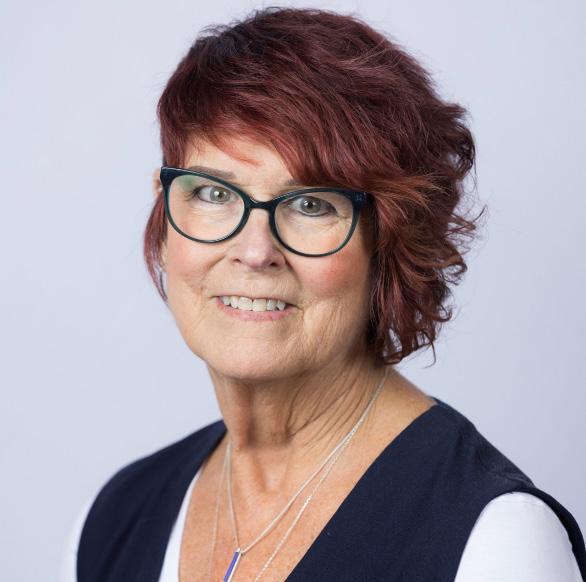
“I learned the power of people with disabilities’ voice if it was organized and if individuals were empowered with the right information,” Robin says.
Her career includes serving as the founding director of the Progress Center for Independent Living, a nonprofit in Forest Park, Illinois, dedicated to helping people with disabilities live independently in the community while also serving as a resource to the broader community.
Under Robin’s leadership, the Center Webinar Series has reached 171,731 training participants, educated 303,929 participants, and responded to over 50,000 phone calls. Follow Great Lakes ADA Center on Instagram @greatlakesada. Page 18
Foranaccessibleversionof'ATUThroughtheYears'visit: https://go.uic.edu/ThroughtheYears

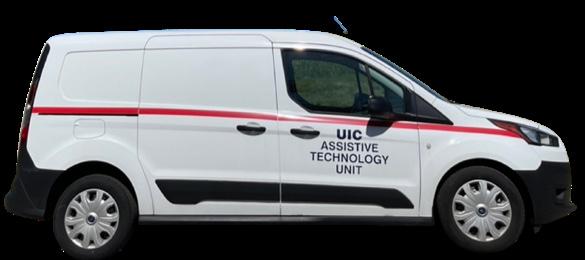
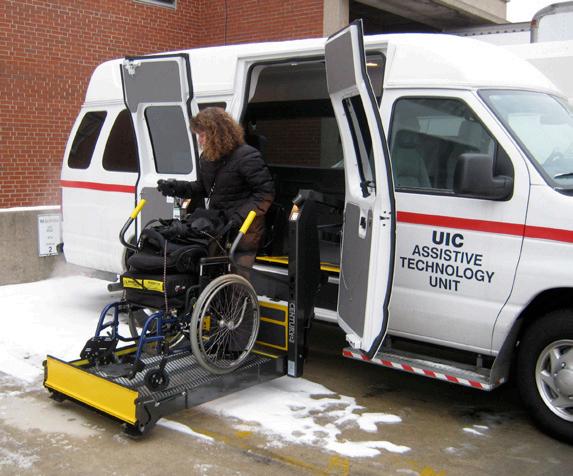
Founded by Glenn Hedman, the Assistive Technology Unit becomes a hub for innovation in AT and rehab engineering, launching the first mobile AT unit with state support from IL agencies to expand staff and services.
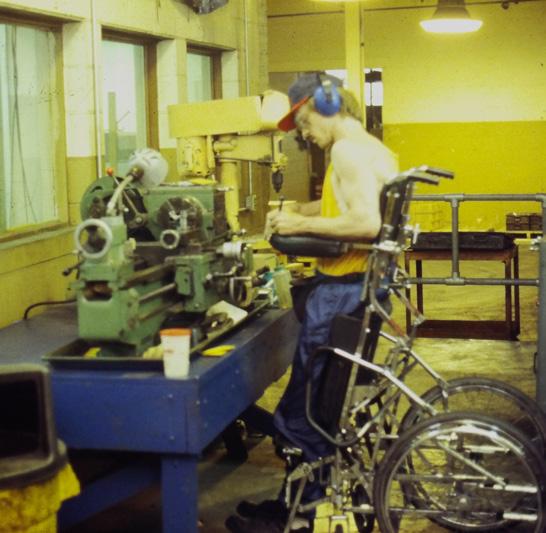
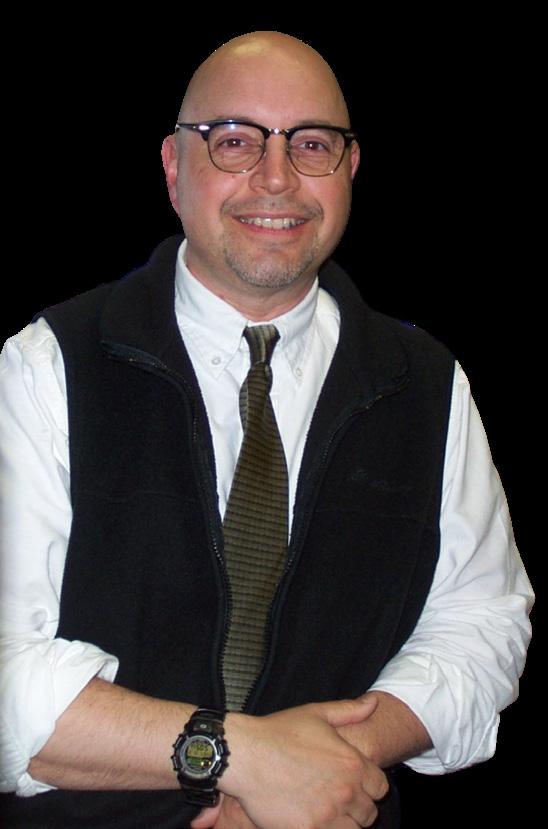
RSA-funded Project TechTeam launches, offering full scholarships to six AT students each year. ATU partners with Chicago’s MOPD to provide AT services, showing impact of AT on increased independence and reduced need for outside assistance.
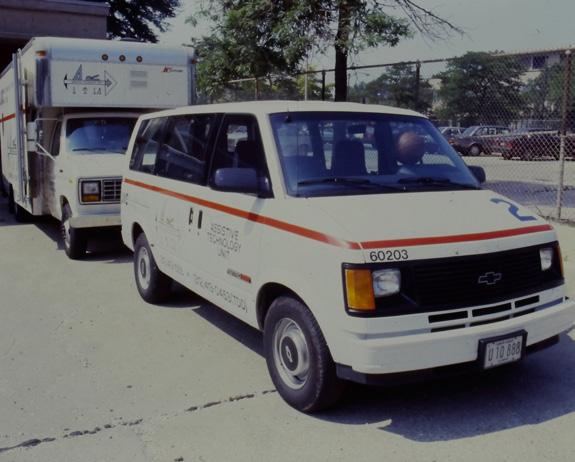
Rehab Engineer Brenda Bonfiglio, Patricia Politano, and Advocate/OTA Robin Jones join the team, expanding services to Seating, Wheeled Mobility, and Augmentative Communication. IL Division of Rehabilitation Services support adds two mobile units for community services.
The AT Certificate Program receives UIC certification, giving working professionals official recognition for completing a structured sequence of courses centering on Assistive Technology.
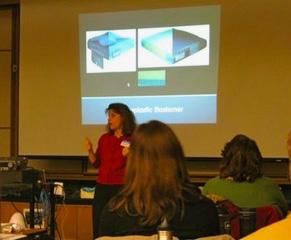
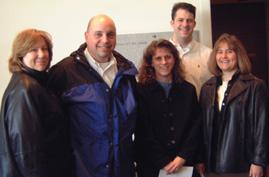
IDHD becomes the research and service arm of UIC’s new DHD Department. Rehab Technology is designated a master’s concentration, and evening AT courses are co listed with Continuing Education to serve working professionals.
ATU begins work with the IL Department on Aging on the Colbert Consent Decree, supporting the transition of people with physical disabilities from nursing homes to community living through AT for mobility, accessibility, and daily living.
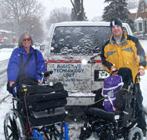
TheAssistiveTechnologyUnithasbeenacornerstoneofUICfor 35years,housedintheDepartmentofDisabilityandHuman DevelopmentandlongaffiliatedwiththeInstituteonDisabilityand HumanDevelopment.Itsinterdisciplinaryteamprovidesindividualized, community-basedassistivetechnologyservicesthatsupportpeople withdisabilitiesacrossthelifespaninachievingtheirgoals.
ATU expands its work with IL DHS–Division of Mental Health under the Williams Consent Decree, providing clients full access to ATU services to support transitions from institutional settings to community based living, mirroring Colbert work.
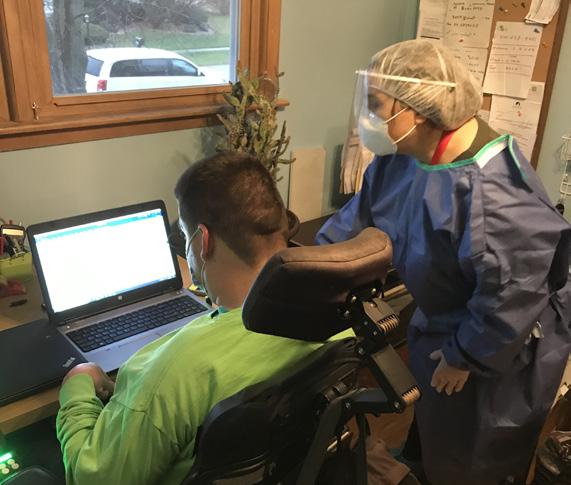
ATU maintains community-based services during COVID, with faculty and staff rapidly shifting to telepractice and remote delivery to ensure uninterrupted access to AT, supporting clients’ safety and independence throughout the pandemic.
2.0
As it looks to the next 35 years, the Assistive Technology Unit is expanding its focus on education, research, and partnerships. In 2025, it welcomed Clinical Assistant Professor Stephanie Bay as director. The AT Certificate Program has been redesigned, research on AT in community transition is growing, and partnerships across UIC and Illinois continue to expand.
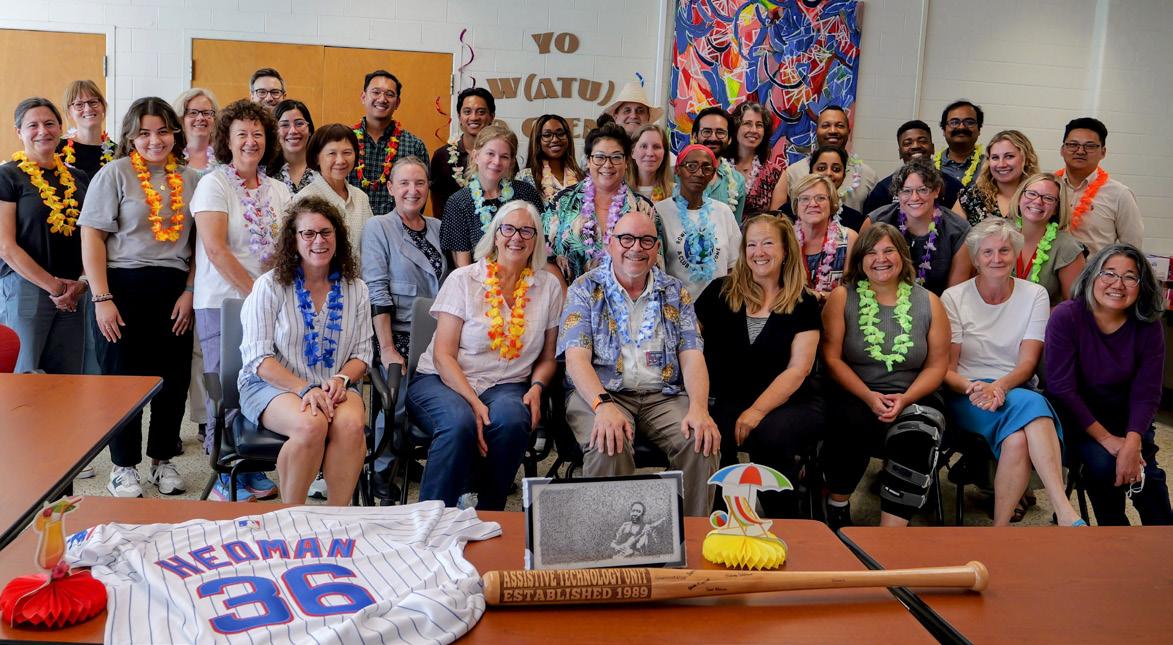
The Assistive Technology Unit bids farewell to Dr. Glenn Hedman and celebrates 35 years of advancing independence through education, research, service delivery, and advocacy. ATU marks this milestone year by providing 2,065 assistive technology services to 1,458 unique clients, reflecting its enduring impact and commitment to accessible, community based care.
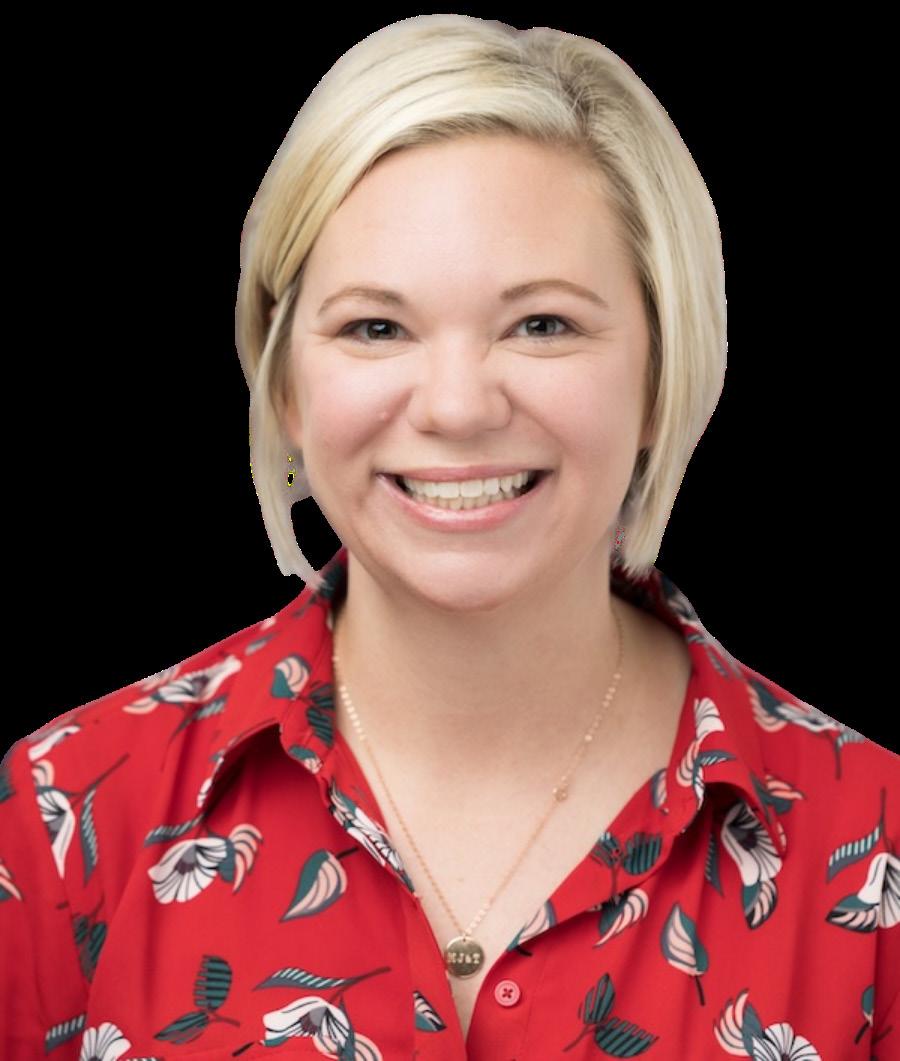
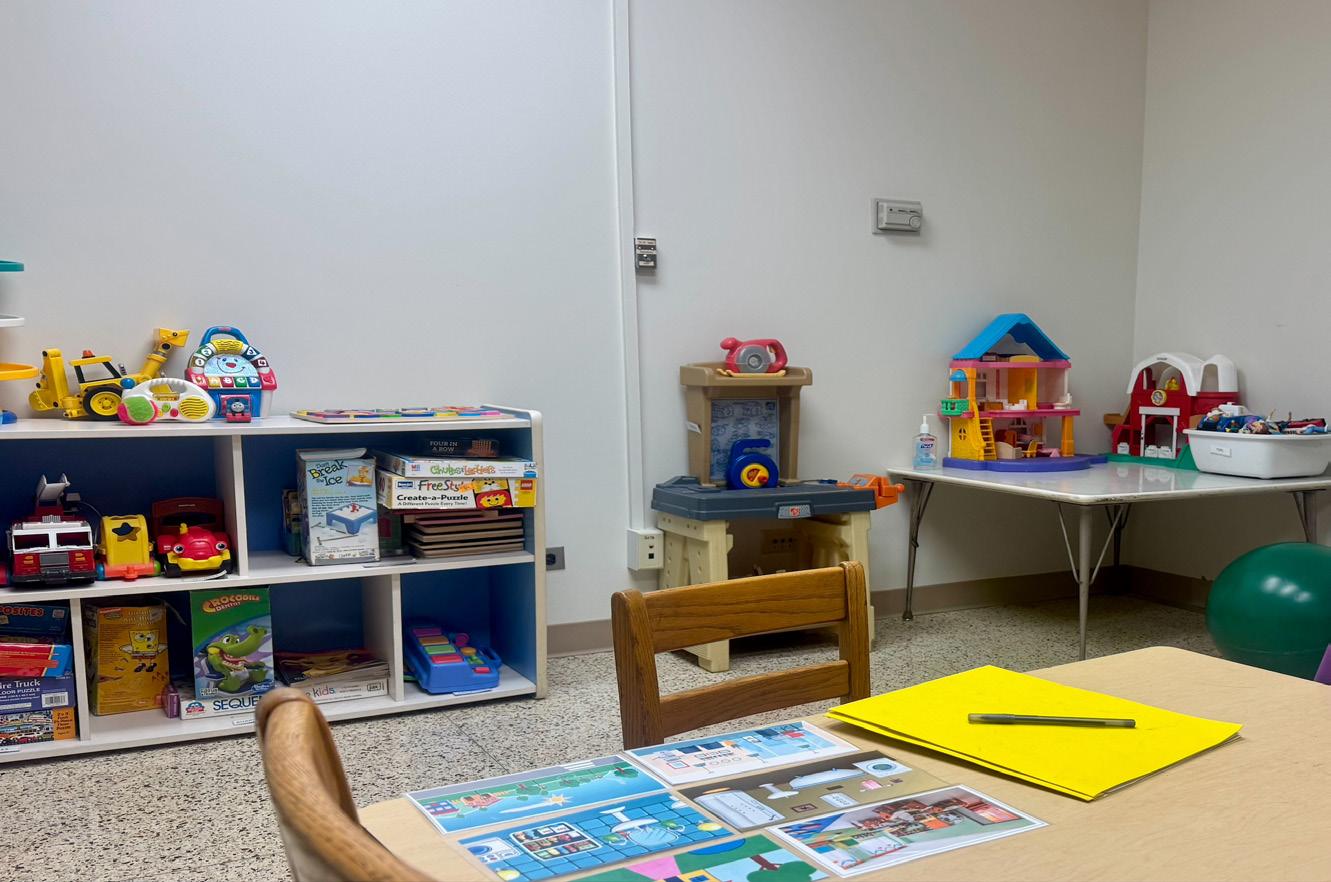
The Developmental Disabilities Family Clinic has worked hard in 2025 to expand collaborations both across the University and into the community. In addition to clinical work, the expertise of clinicians in developmental disability and autism has contributed to the education, training, and support of a broad range of professionals, including disability services providers, educators, law enforcement, advocates, community organizations, and healthcare providers.
Assistive Technology Unit (ATU) – Providingexpertise inSpeechandCommunication
Cognition Behavior and Mindfulness (CBM) Clinic –Workingtogethertoprovideservicesforchildrenwith autismandtheirfamilies
Academics – Guestlectures,capstone,andclinical opportunitiesforstudents
The Leadership Education in Neurodevelopmental and related Disabilities (LEND) Program – Clinical andtrainingopportunities
Research – Cliniciansinvolvedinseveralongoing researchprojectsthroughIDHD
Lifespan Disability Clinic – Providingmentalhealth careforpatientsandtechnicalassistanceforclinicians
Cranio-Facial Clinic – SpecializedSpeechand LanguageandFeedingservices
Occupational Therapy Department – Clinical opportunitiesforstudents
Physical Therapy Department – Hostingand supportingthePTDepartmentTrunk-or-TreatDayfor clinicclientsandfamilies
Developmental Pediatrics – Observationandtraining inEarlyInterventionfortheDevelopmentalPeds
Residentsprogram
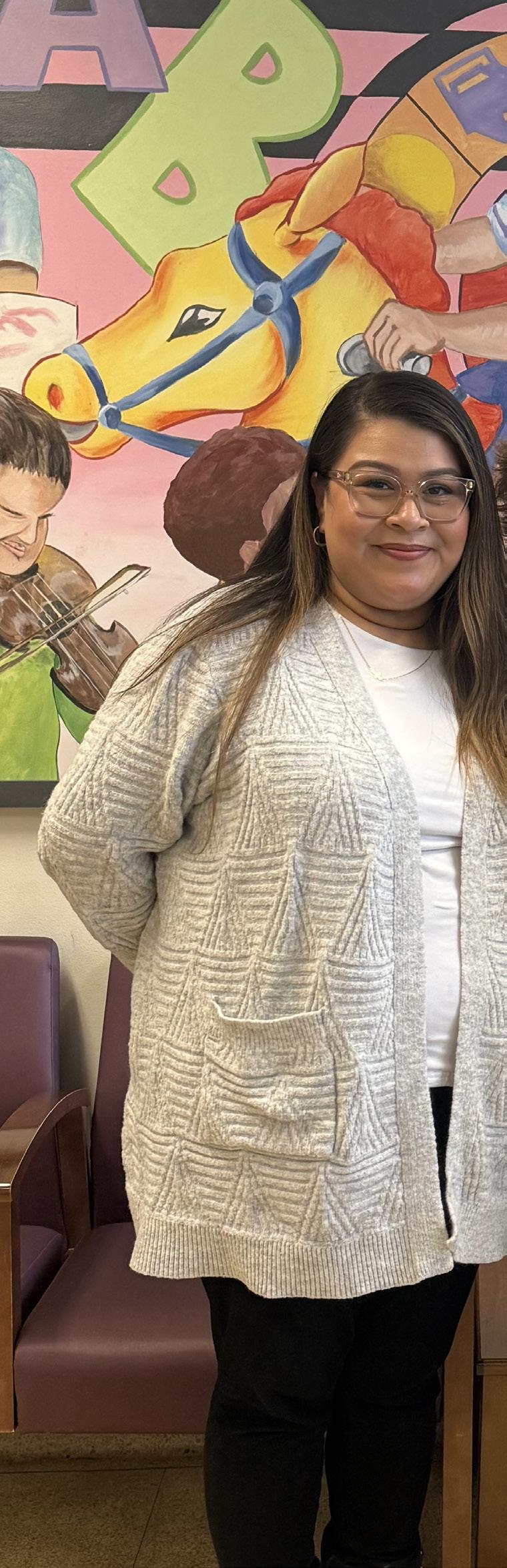
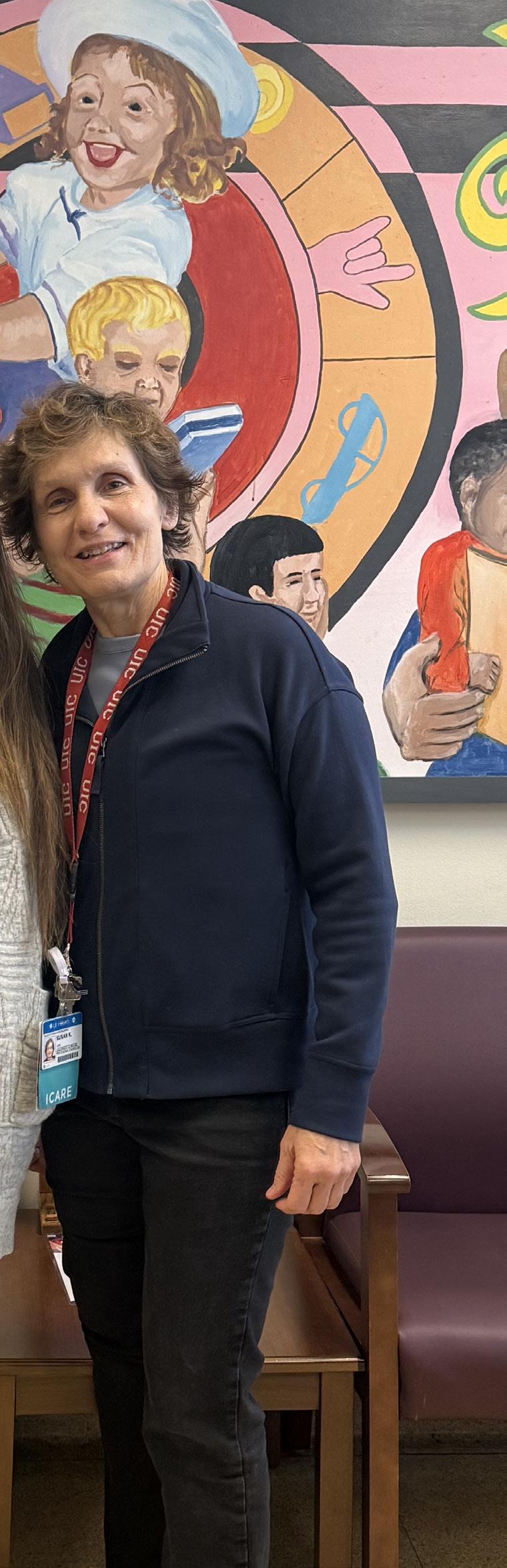
Equip for Equality – Expert consultation, evaluation and testimony for people with developmental disabilities exercising their rights
Devices for the Disabled – Volunteer support for the distribution and fitting of donated mobility equipment for under-resourced communities
Envision Unlimited – Mental health support and consultation for the Short-Term Stabilization Housing program
School Districts and Community-based Program –Training and technical support on topics including behavior intervention, trauma-informed environments, and healthy sexuality and relationships
Chicago Police Department and Chicago Children’s Advocacy Center – Consultation and training for cases involving victims and witnesses with Developmental Disabilities
Cook County Sheriffs and Illinois State Police –Training and consultation on Crisis Intervention for individuals with autism and other Developmental Disabilities
•Diagnostic Evaluation
•Speech and Language Therapy and Evaluation
• Occupational and Physical Therapy and Evaluation
• Mental Health Therapy
• Group Therapy
• Consultation and Training for Individuals and Families
2025wasanextremelybusyandproductiveyearattheCognition,Behavior, andMindfulness(CBM)Clinic.Itcontinuestoreceivesubstantialfundingfrom TheAutismProgram(TAP)ofIllinois,whichaffordsittheabilitytodoarange ofresearch-to-practiceservicesforautisticchildrenandyoungadults.These includeparenttraining,diagnostics,skillassessments,anddirecttherapy interventions.TheClinicreachedhundredsofchildrenthisyearandpresented itsworkatlocal,regional,andnationalconventions.TheDirectorandClinical Professor,MarkDixon,wenttoPortugaltopresentontheclinic’slatest innovationsonmindfulnessandacceptancetreatmentstoadiverseinternational audience.Additionally,theClinicreceivednewfundingfromAutismSpeaks.
CBMtakesprideinpushingtheboundariesoftraditionalbehavioralcaremodels. Thisyearitstartedaparent-initiateddrop-inserviceoptionwherebyfamilies canchoosedaysandinterventiondosagesthatfitthemeachweek.Thismakes theCBMschedulingteamquitebusy,butthe“family-first”approachisvery rewardingandallowsmorefamiliestobeseenthaninprioryears.TheClinic continuesitsserviceoptionsoflanguageandexecutivefunctioningdevelopment wherebyindividualizedprotocolsdeliveredbytalentedstaffproducemeaningful andmeasurableoutcomesformanychildren.Someofthisworkwasrecently publishedinpeer-reviewedjournals.
Amajorchangein2025istheadditionofmorepermanentstaffingforservices. Historically,CBMoperatedentirelybyUICundergraduateandgraduatestudents providinganamazingtrainingsitetolearnmanyreal-worldclinicalskills. Recently,afewnon-studentworkingprofessionalswereaddedtotheteamto serveasmid-level caseandoperational managers.Asaresult, theClinicexpectseven moreresearchand clinicalactivityinthe yearahead!
Together, these two articles spotlight IDHD’s innovative, disability-inclusive efforts that expand access, promote health, and support participation across the lifespan.
The Assistive Technology Unit (ATU) is committed to providing comprehensive, high-quality services to community members and ensuring continued access to Assistive Technology (AT). As advocates for AT and AT services, the ATU works to address systemic barriers that limit access, particularly in low- and middleincome communities. These barriers include attitudinal challenges, lack of awareness, medical-model healthcare, and funding constraints (IDA, 2023). Research on AT access, especially for adults with disabilities, remains limited. To address this gap, ATU faculty under Stephanie Bay’s leadership used a mixed-methods approach to examine barriers to clinically based AT services in urban settings. Preliminary findings, presented at the 2025 Assistive Technology Industry Association National Conference, identified transportation and caregiver burden as key barriers.
In addition, the ATU conducted an 18-month workload analysis to assess service provision under a traditional clinical model. Using a survey, the study tracked minutes spent per discipline and activity to evaluate AT specialists’ workload and reimbursement ratios. Findings inform the feasibility of clinically based AT services and highlight community needs. The ATU looks forward to continuing this work to strengthen access and advocacy.
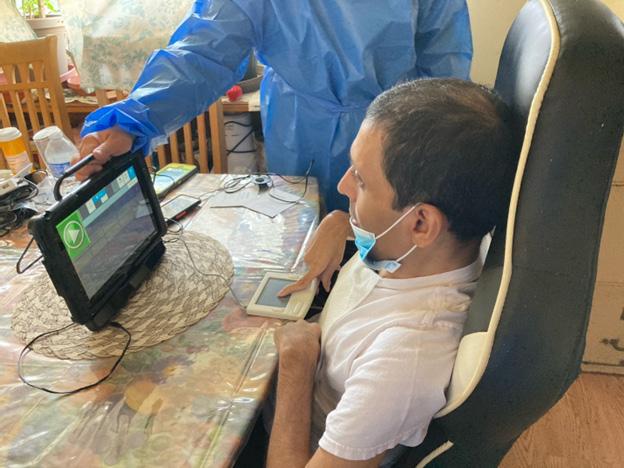
ATU clinician works with Anil (client) to set up his new communication device.
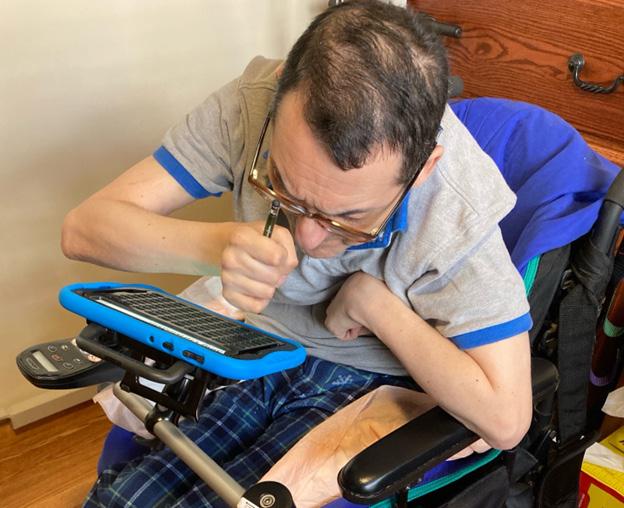
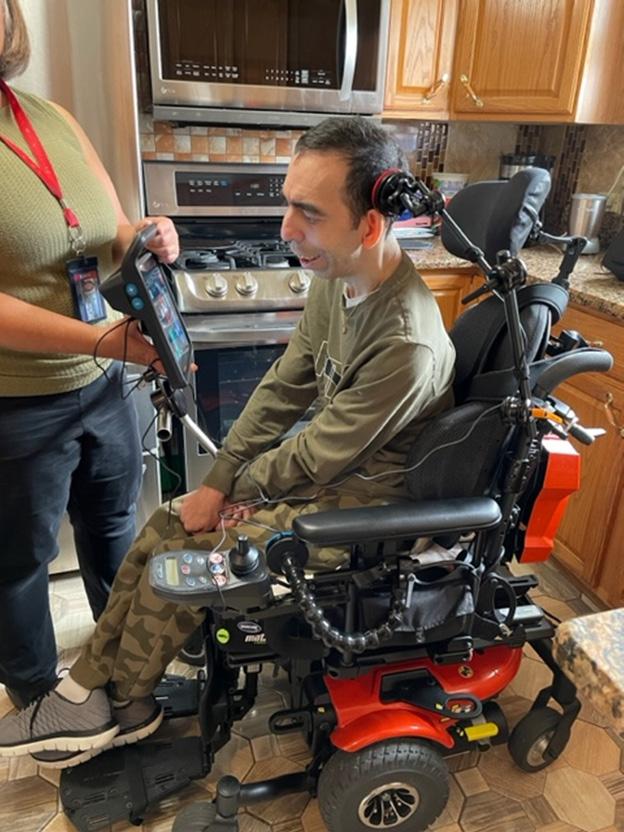
ATUclient,Alberto, exploreshisnew communication devicemountedto hiswheelchairwith anadaptedstylus customizedbyATU clinicians.
ATUclinician,Kathy Hooyenga,evaluates Enriqueforanew computer.
In2025theHealthMattersProgram(HMP)ledbyBethMarks andJasminaSisirakcontinueditsnationalleadershipthrough theHealthyBrainInitiativeforPeoplewithIntellectualand DevelopmentalDisabilities(HBI-PwIDD)byadvancingapublic healthframeworkforbrainhealthpromotion,dementia-capable care,anddisabilityinclusionacrossthelifespan.HBI-PwIDD expandsupstreamprevention,strengthensinterprofessional workforcecapacity,andelevatescommunitypartnershipsto reducedementiariskandpromotehealthyaging[doi:10.1093/geront/gnaf222].TheACL-approvedevidence-basedHMP initiativesextendedthisimpactglobally.InAustralia,theNepeanAreaDisabilitiesOrganization(NADO)Disability &AgedCarelaunchedavibrantmovementfeaturingawellnesscommittee,walkinggroups,nutritioneducation,and partnershipstoimprovehealthbehaviorsamongparticipants.TheHamiltonCountyHealthDepartment’sStepONEProgram inTennesseeisintegratingtheHMPintoTigerAccess’inclusivepostsecondaryeducationtoimprovelifelonghealthyhabits amongstudentswithIDDforemploymentsuccess.TheSonoranCentertailorsHealthMatterswithSpanish-speakingand Indigenouspartnerstoexpandcross-generationalbrainhealthwithstudents,adultswithIDD,andoldermembers.These effortsdemonstratethereshapingandstrengtheningofdisability-inclusivepublichealthtoenhancecapacityforinclusive brainhealthpromotion.
TheInstituteonDisabilityandHuman DevelopmentpromotedUIC’sengagementwith thecommunitybyconductingoutreachtraining andspecialevents,translatingthelatestresearch topractice,andparticipatingonkeyboardsand communityinitiativesthatadvancetheadvocacy andinclusionofpeoplewithdisabilities.TheTAP/ IDHD/LENDwebinarseriesprovidedthelatest informationonsuchtopicsasneurodiversity, augmentedalternativecommunication,traumainformedmentalhealthcare,HCBSwaivers, trainingprogramsforparentswithautistic children,andsummercampprogramsforautistic youth.
InaspecialcommunitycampuseventCIRCAPintigpresentedastagedreadingandcommunity talkbackofPantherintheSky,LaniT.Montreal’s acclaimedplay,whichexploresgunviolence throughthelivesoffourmothersfromworkingclassChicagoneighborhoodswholosttheirsons tothistragedy.Theproductionbroughttogether studentsfromthreeofDHDprofessorRooshey Hasnain’sclasses.
ChicagolandDisabledPeopleofColorCoalition (ChicagolandDPOCC),aself-advocacygroup supportedbyIDHDandledbydisabled,deaf, andneurodivergentpeopleofcolor,hadmany accomplishmentsthisyear:
•Partnered with the Northwestern’s Center on Racial and Disability Justice and the UIC
Disability Cultural Center to host two annual events: Disability Day of Mourning and Accessible Juneteenth.
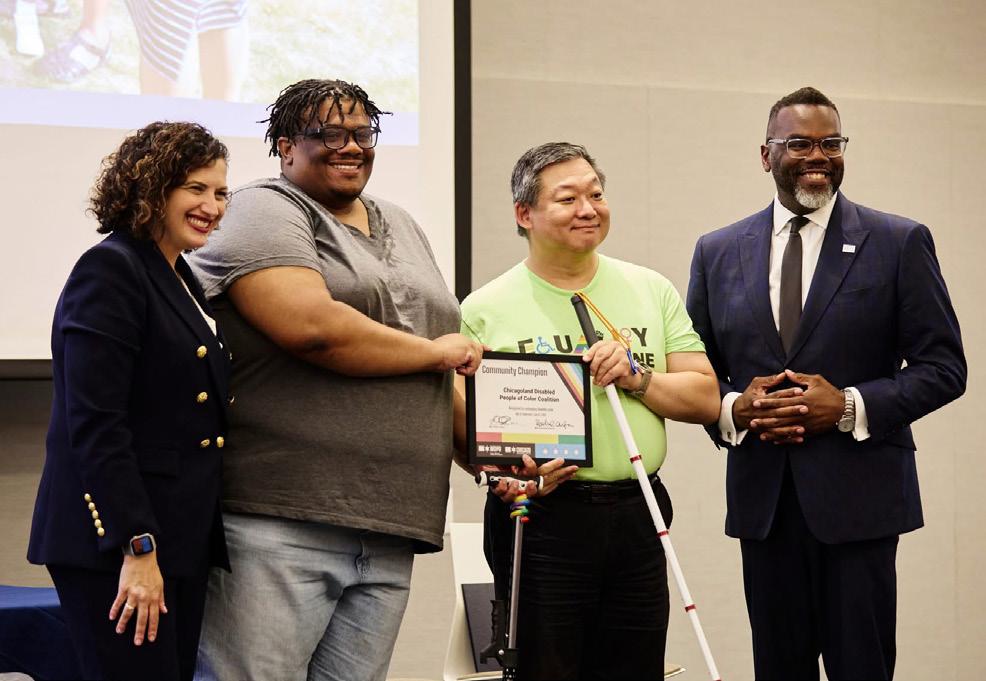
• Received the Chicago Mayor’s Office for People with Disabilities’ 2025 Community Champion Award.
•Conducted a Resource Mapping Project which pooled essential resources for disabled people into a visual map.
•Collaborated with LEND to translate The Unteachables: Disability Rights and the Invention of Black Special Education by Keith Mayes into plain language materials for people with intellectual and developmental disabilities.
Two UIC websites showcase new disability data and narratives:
Career Opportunities and Leadership Council (COLEAD), a self-advocate-led initiative centering the voices of people with disabilities from intersecting identities which recently developed interactive employment dashboards that visualize data from the US Census and Rehabilitation Service Administration. Link: https://co-lead.ahs.uic.edu/
Wellness through Asian American Narratives and Theater (WAANT)’s new website features a collection of first-time narratives collected by UIC students from community storytellers. The collection showcases storytelling as an advocacy tool to advance mental health justice. Link: https://waant-program.ahs.uic.edu/
DPOCC Co-PIs, T.J. Gordon and Jae Jin Pak of IDHD (center), receiving MOPD ’25 Community Campion Award with Rachel Arfa, Commissioner of the City of Chicago’s the MOPD (left), and Brandon Johnson, Mayor of the City of Chicago (right).
The Family Support Research and Training Center (FSRTC) is spreading knowledge on caregiving across aging and disabilities networks to researchers, family members, people with disabilities and policymakers. Through FSRTC’s five key research projects, and its dissemination, training, resources, and technical assistance activities, it aims to improve family systems nationwide.
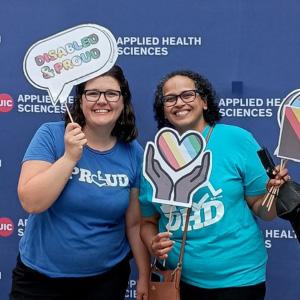
FSRTC Abby Schindler, Project Coordinator, and Sumithra Murthy, PI, at the ‘25 Disability Pride Parade.
The Family Support Stories podcast amplifies the voices and stories of unpaid family caregivers, strengthening the connections between aging and disability networks, and bridging the gap between research, policy, and the lived experiences of families providing support. Recent episodes focused on respite care, Latino families raising children with intellectual and developmental disabilities (IDD), and family caregiving in rural communities. These stories are crucial for understanding the real-life challenges that families face. To listen to the podcast now, visit https://go.uic.edu/FamilySupportStories.
In December 2025, the FSRTC Stakeholder Advisory Committee welcomed a new group of self-advocates with IDD to provide valuable input on the center’s activities. This committee guides the work of the center and is composed of a diverse group of organizations, including those for people with disabilities, aging populations, and others working to support families. The perspectives of self-advocates are particularly critical in shaping policies and programs that truly meet the needs of families. These partnerships help create more opportunities and improve access to support for family caregivers across the country. The group’s involvement ensures that the FSRTC’s efforts remain aligned with the real needs of the people the center serves.
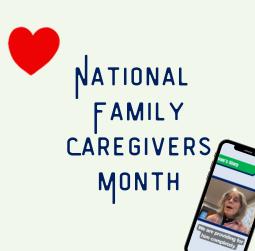
November is National Family Caregiving month, and the FSRTC used this as an opportunity to shine a light on the stories and voices of family caregivers across the country. Throughout the month on social media channels, videos were shared that highlighted real caregiving experiences: the challenges, the joys, and the powerful moments that demonstrate why family support matters. These videos offer a glimpse into the daily lives of caregivers and showcase their strength, resilience, and dedication. To engage with these stories and join the conversation on how we can better support family caregivers, please see the FSRTC’s social media posts: https://linktr.ee/fsrtc.
Despite decades of systems change advocacy, Illinois’ developmental disabilities (DD) system remains complex, fragmented, and inflexible. To address some of these challenges, five Illinois statewide organizations came together to form the Illinois Intellectual and Developmental Disabilities (IDD) System Redesign Coalition, funded by the Coleman Foundation. These organizations include The Illinois Association of Rehabilitation Facilities, The Institute on Public Policy for People with Disabilities, The Center for Developmental Disabilities and Community Supports, The Arc of Illinois, and UIC’s Institute on Disability and Human Development (IDHD) (with Caitlin Crabb as the IDHD project lead). In collaboration with
partners,theoverarchinggoaloftheprojectisto orientIllinoistowardsamoreperson-centeredDD system.Amajorpartofthisprojectiscollecting feedbackfromfamiliesandpeoplewithDD throughlisteningsessionsandsurveysconducted byTheArcofIllinois.IDHDissupportingThe ArcofIllinoisthroughtooldevelopmentanddata analysis.IDHDisalsoplanningforadata dashboardtosupportadvocacyforchangein Illinois.Lastly,weareconductingananalysison bestpracticesincertainMedicaidprogramsacross theUSforpeoplewithDD.
Learnmoreaboutourworkat https://disabilitypartnersil.org.
Creating Pathways to Employment: Aspire’s
Manypeoplewithdisabilitiesseekjobtraining opportunitieswiththegoalofsecuringfull-time employment.Aspire,aChicagolandnonprofit, received9.2milliondollarsinfederalfundingfrom theU.S.DepartmentofEducation’sRehabilitation ServicesAdministration(RSA)toaddressthe persistentunemploymentandlaborshortages acrossvariousbusinesssectors,startingwith thewarehouseanddistributionindustry.This grantsupportsaworkforcedevelopmentandjob trainingprogramthathelpsyoungadultswith disabilitiesgainhands-ontrainingindistribution andwarehousingskills,alongwithother transferablework-relatedabilities.Theprogram includes10-weeksofintensiveskillstrainingin asimulatedwarehouseenvironment,followed byaguaranteed8-weekpaidinternshipwith anemployerpartner,withthepossibilityofjob
placement after completion. Their future plans are to expand to other industries.
Researchers at the Institute on Disability and Human Development-- Kelly Hsieh, Tamar Heller, and Rooshey Hasnain--lead the evaluation of this initiative. The team examines how well the program works, what outcomes trainees achieve, and whether the model can be expanded to other industries. They conduct surveys and interviews to learn about trainees’ experiences and ask job coaches to track skill development of trainees before and after training. Their findings will help strengthen the program, meet funder requirements, and inform how this training model could be adapted for other jobs and settings. To learn more about this training program, please visit https://tinyurl.com/5n79bzkk.
The Leadership Education in Neurodevelopmental and related Disabilities (LEND) Program provides graduate-level interdisciplinary training designed to improve the health and well-being of individuals with disabilities across the lifespan. LEND trainees come from diverse professional disciplines and include those with lived experience with disabilities through family or self-
advocacy. The program prepares trainees as leaders in their fields through training and mentoring in policy, advocacy, research, and clinical skills, with the goal of bringing about positive change at all levels. Illinois LEND is in UIC’s Department of Disability and Human Development and has partnerships throughout the state with universities and community organizations.
The 2024-2025 LEND cohort consisted of 38 trainees across 14 disciplines. There were three selfadvocates and two family members in addition to the other 12 disciplines. Each year, LEND trainees complete research projects in partnership with faculty or community organizations. The projects are submitted by program partners or may be related to the trainees’ academic research for their degree. The past year’s project topics included plain language writing, accommodations for disability in education, and work with caregivers. Trainees work in interdisciplinary groups on their research projects throughout the year, culminating in the IL LEND Open House in the spring. Each group
presents on its research to peers, LEND faculty, community partners, and members of the public.
Some examples of projects from last year include: Exploring Patterns in Stigma about ADHD Undergrads Who Identify as a Minority, Telehealth Assessment of ASD in Populations with Neurogenetic Disabilities, Establishing a Patient Registry of Individuals with the 12p.13.1 Microdeletion, and Contributing to the Illinois Lifespan Respite Task Force in Support of Caregivers Project Supervisor.
Join us for the LEND 2026 Open House April 30th from 11-1.
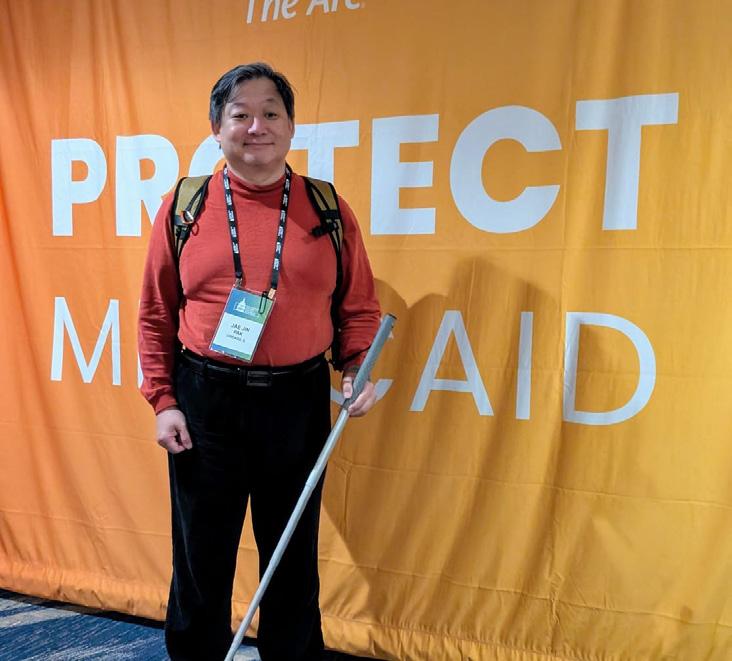
IL LEND offers scholarships for trainees to attend conferences and obtain training around disability. In April 2025, four LEND trainees and Jae Jin Pak, LEND Self-Advocacy Training Mentor, attended the annual Disability Policy Seminar (DPS) in Washington, D.C. The trainees attended sessions on advocacy, disability issues, and grassroots organizing. They were able to connect with selfadvocates, disability professionals, and policy experts from across the country who share a passion for advancing highpriority issues affecting disability populations. LEND attendees collaborated with representatives from the Arc of Illinois to schedule meetings with IL legislators and their staff on Capitol Hill. As a group, they met with representatives from multiple Illinois districts as well as staff for Senator Tammy Duckworth.
DHD recognizes and honors the many years of dedicated service its faculty and staff have contributed to the field of Disability Studies and the meaningful impact they have made on the community.
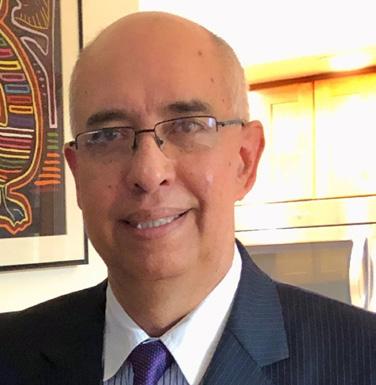
Fabricio Balcazar
“Fabricio Balcazar lives the themes of social responsibility and caring about the world, especially underserved people with disabilities. He has had an amazing track record of research grants, publications, and service to the university and his community. After moving from Colombia with his wife Yolanda, Fabricio pursed his doctorate under the guidance of Steve Fawcett, a leader in community psychology and the empowerment of people with disabilities. That training along with Fabricio’s interest in serving Hispanics and other underserved groups has guided his work. He came to the Institute on Disability and Human Development over 35 years ago where he established the Center on Capacity Building for Minorities with Disabilities Research and had many funded state and federal grants. His scholarship, interventions, and societal contributions have focused on such issues as advocacy, empowerment, peer mentoring, participatory action research, vocational rehabilitation, entrepreneurship, and cultural competence, particularly for underserved racial/ethnic minorities with disabilities.” – Tamar Heller
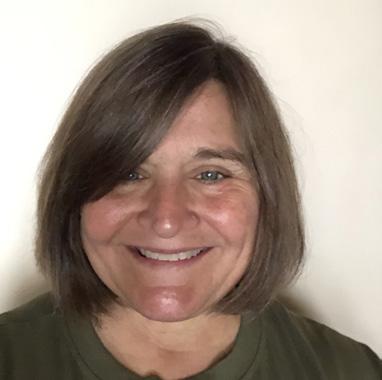
Kathy Hooyenga
“After work at the Rehabilitation Institute of Chicago and Children’s Memorial, Kathy joined the ATU in 1995. She immediately began to use her diverse skills in not only Computer Access, but also in special design projects which included Artist’s Choice (a modular system that enables an artist with a disability to change between drawing and painting media independently-a collaboration with the Family Clinic’s Ellyn Trenn) and the Panda Tray (a laptray for children to enable them to personalize their mobility base and work surface). Add to that many unique 3D-printed designs for young adults with disabilities at the Illinois Center for Rehabilitation and Education –Roosevelt (ICRE-Roosevelt) location just west of UIC, and you get a sense of the wide positive impact she has had with so many ATU clients. She also designed the re-vamp of ICRE-Roosevelt’s classroom space for increased accessibility and flexibility of the learning space.” – Glenn Hedman
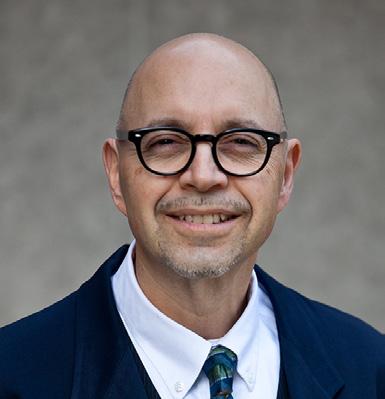
Glenn Hedman
“Glenn is a visionary who had a dream to establish an Assistive Technology Unit. He was successful in developing the ATU with loyal staff for whom he was a fierce advocate. In addition to developing an interdisciplinary team that goes out to provide services, where people work and live, he spearheaded the popular assistive technology certificate program, which achieved accreditation in 2018. In addition, Glenn and the ATU team successfully received extensive funding, especially from local and state agencies. Over the years in working with Glenn, I valued his strong commitment to serving people with disabilities and to his unflinching tenacity on behalf of the ATU.” – Tamar Heller
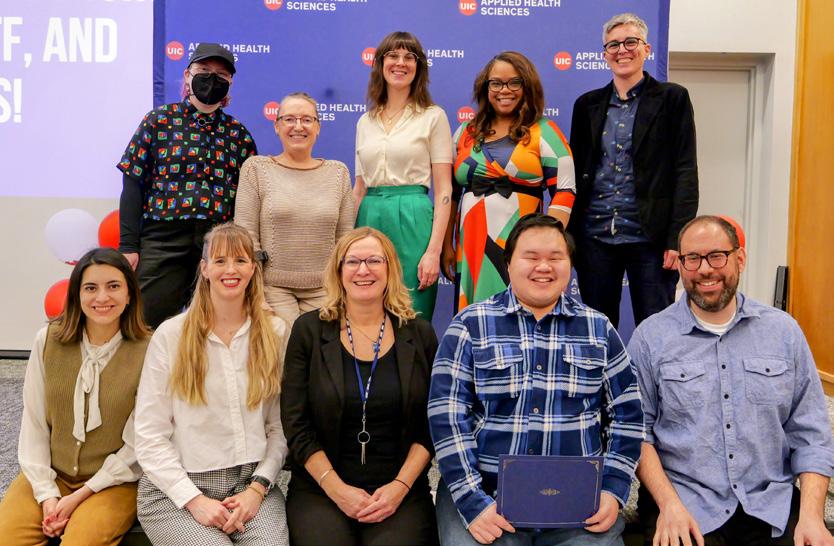
InApril,DHDhostedaceremony recognizingstudentswhonotonly receivedscholarshipsbutalso demonstratedsignificantdedication throughoutthesemester.Scholarship recipientsarelistedonpage8.
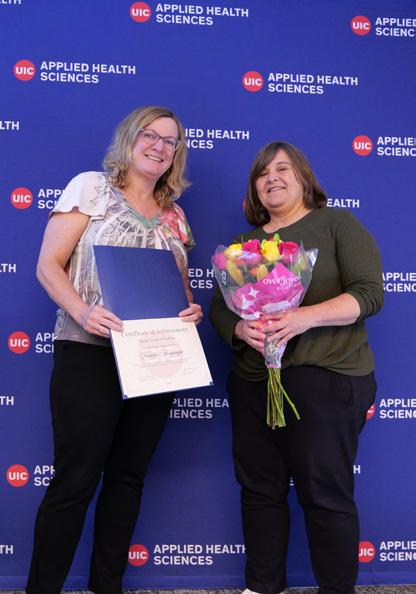
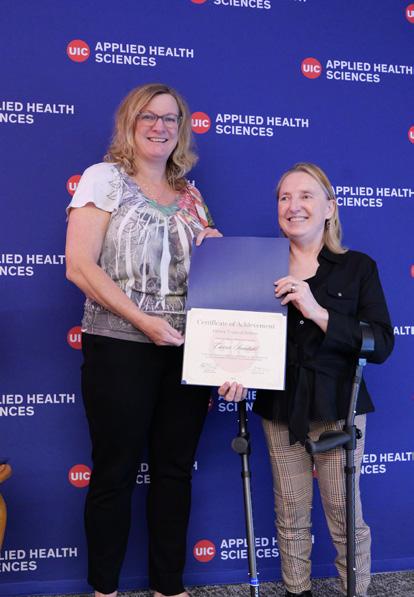
In May, DHD recognized faculty and staff for achieving departmental work milestones and honored retirees for their contributions and service.
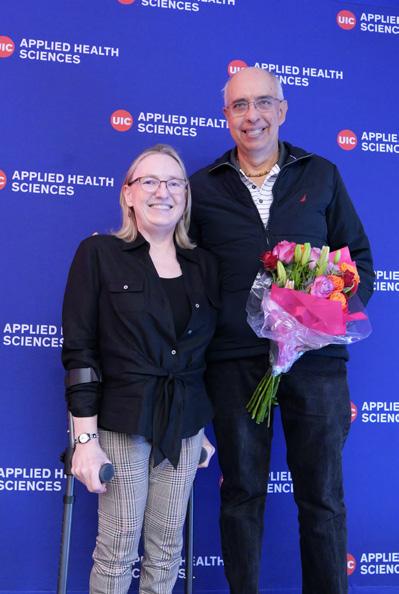
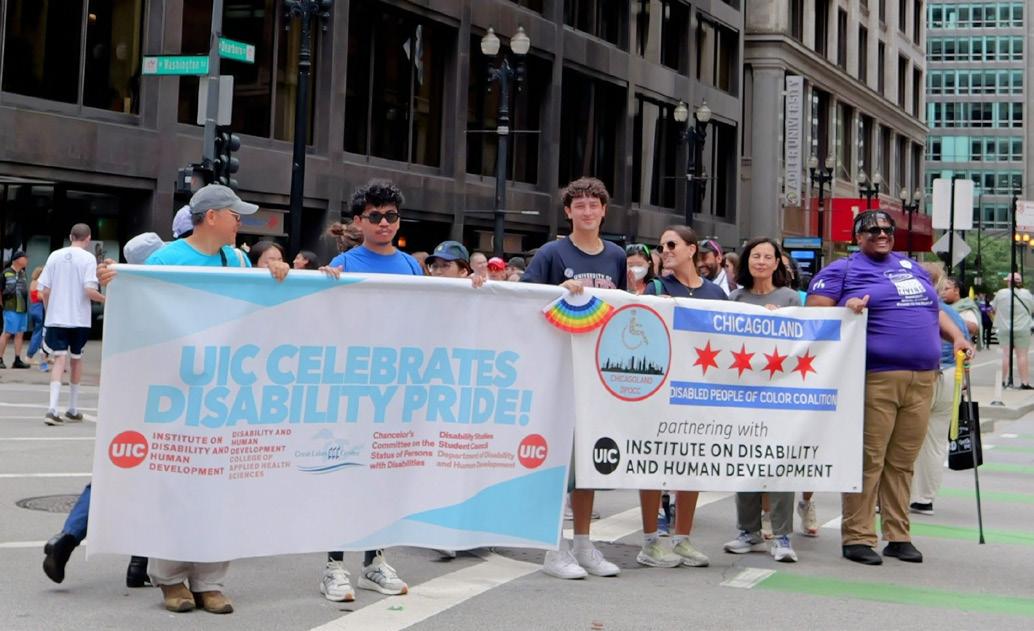
On July 26th, faculty, staff, students, and family members from DHD/IDHD participate in the Disability Pride Parade.
In December, Sarah Parker Harris stepped down from her roles as Director of Graduate Studies, and as her successor, Aly Patsavas was appointed Director of Graduate Studies. Yochai Eisenberg was appointed Associate Head, while Sarah is on sabbatical.
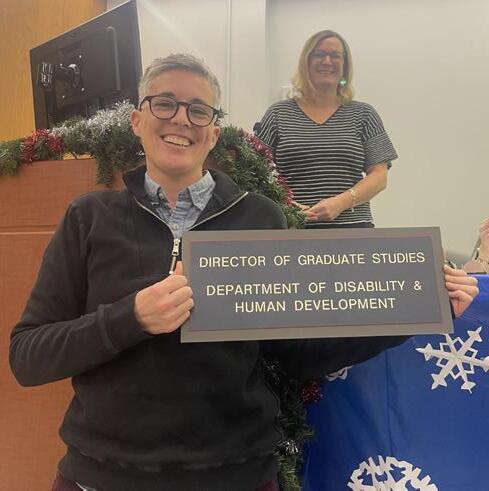
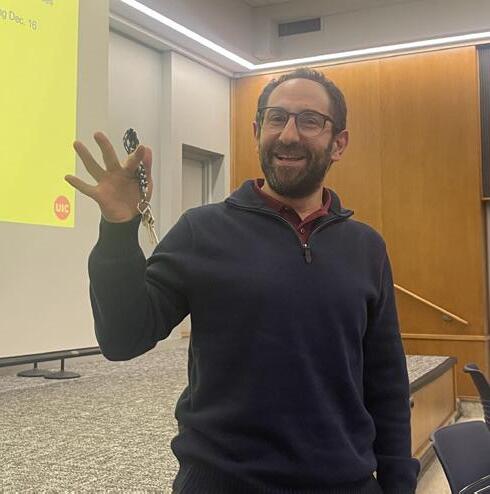
Thanks to Jae Jin Pak for capturing through his photography so many incredible moments in the department. Page 30
TheDepartmentofDisabilityandHumanDevelopment(DHD)isaleaderin disabilityresearch,scholarship,andeducation.Itsinterdisciplinaryapproach anduniversaldesignprovideaccesstodiversefacultymentorsandresources acrosshealthfields,socialsciences,andhumanities.
Thisprogrampromotessocialjustice,self-determination,andthefullparticipationofpeoplewith disabilities.Scholars indisabilitystudiesviewdisabilityasacomplexinterplaybetweensocietyand individualswhofunctiondifferentfromthenorm.UIC'sPhDprogramtrainsresearcherstoaddress thiscomplexity,fosteringanunderstandingofhowaccess,supportservices,andsocialchangecan empowerindividuals.
go.uic.edu/DHDPhD
Studentsexploredisabilityasacomplexexperienceshapedbybiological,social,cultural,political, historical,andeconomicfactors.Theylearnstrategiestoremovebarriersforpeoplewithdisabilities andcriticallyanalyzehowtoreshapesocietyandthebuiltenvironmentjustly.Theprogram emphasizesuniversallydesignedinstruction,fosteringbarrier-freelearningenvironments. go.uic.edu/DHDBachelor
UIC’sminorinDisabilityInclusionprovidesstudentsfromanydisciplinewithafoundational understandingofkeyissuesshapingthelivesofpeoplewithdisabilities.Studentscanapplywhat theylearntoadvocateforinclusionandshapechangeinmanydifferentareas,including healthcare,education,non-profitorganizations,culturalsettings,government,andtheprivate sector.
go.uic.edu/DHDMinor
Studentslearntodelivercutting-edgeassistivetechnology(AT)services.InstructionfromATexperts enablesthemtounderstandATprinciplesandcollaboratewithindividualswithdisabilitiestoselect effectivedevicesandstrategies.Thecoursescomplementstudents’uniquescholarshipand professionalbackgrounds,preparingthemtobecomeleadersinAT.
go.uic.edu/ATCert
Do you want to be contacted when there are updates to the master’s program? Have questions about how to pursue the PhD in Disability Studies instead? Reach out when you need help, and the team will make sure you get the answers you need.
You can contact DHD’s Office of Student Affairs: Email: dhdosa@uic.edu Phone: 312.996.1508
UIC Disability and Human Development Annual Fund for Excellence
For unrestricted use in the Department of Disability and Human Development.
Anne Hopkins Scholarship Fund
For DHD graduate students interested in any of the following research topics: disability and sex, relationships and dating, social model of disability, social entrepreneurship.
Bodies of Work Support Fund
Supports disability art and cultural programming that benefits students, artists, and the larger community.
Carlos Drazen Memorial Research Award
To support educational opportunities for DHD graduate students interested in the intersection of race and disability.
Edward Page-El Fund MD Student Award Fund
To support educational opportunities for DHD graduate students interested in social or medical aspects of neurological disabilities.
UIC Gary Albrecht Global Disability Impact Fund
To support DHD Disability Studies doctoral students conducting evidence based global research, scholarship, practice, education, and policy.
UIC Assistive Technology Unit (ATU) Fund
For support of the ATU, including but not limited to equipment purchase and modification, community distribution, and educational efforts.
UIC Institute on Disability and Human Development Annual Fund
For funds to support community engagement, public service, and applied research activities of the Institute on Disability and Human Development.
UIC DHD/OT Black and Latinx Student Scholarship Fund
For support of DHD and Occupational Therapy students. Preference is given to students who contribute to the diversity of each unit, with further preference given to students that aim to serve or do research with Black and Latinx communities or that are involved in or interested in student organizations at UIC that promote Black and Latinx interests in society.
UIC Disabled People of Color Coalition (DPOCC) Fund
For support of the collaborative work between IDHD and the Chicagoland DPOCC including a DHD student scholarship fund, accessibility accommodations, travel costs, and seminar support.
UIC Dr. Carol J Gill Disability Ethics Memorial Fund
To advance work in disability culture, identity and ethics.
UIC Neal H. Gottlieb Memorial Scholarship Fund
For junior or senior undergraduate students enrolled in the BS in DHD program who have a physical disability.
We appreciate your donations to our funds at: https://www.givecampus.com/campaigns/48414/donations/new
To donate, select one of the Main Funds from the drop-down menu under Gift Designation. If you want to donate to one of the Other Funds, choose “Other” and write in the specific fund you would like to support.
DHD Interim Department Head
CarrieSandahl csandahl@uic.edu
Associate Head
YochaiEisenberg yeisen2@uic.edu
Director of Graduate Studies
AlysonPatsavas,PhD apatsa2@uic.edu
Director of Undergraduate Studies
RobertGould rgould3@uic.edu
Associate Director of Undergraduate Studies
MarisFujiura mfujiu2@uic.edu
Department of Disability and Human Development
Mailing Address:
1640 W. Roosevelt Rd. (M/C 626), Room 236
Chicago, IL 60608
Phone: 312.355.0551
Email: dhd@uic.edu
Website: https://go.uic.edu/dhdahs
TTY: 312.413.0453
Follow DHD and IDHD on Facebook @uicdhd Follow DHD on Instagram @uicahs
Director
Tamar Heller theller@uic.edu
Associate Director
Kelly Hsieh hsieh@uic.edu
Institute on Disability and Human Development
Mailing Address:
1640 W. Roosevelt Rd. (M/C 626), Room 436
Chicago, IL 60608
Phone: 312.413.1647
Email: IDHD@uic.edu
Website: https://idhd.ahs.uic.edu/
Providing Meaningful Guidance to IDHD and the IL LEND Program
The Consumer Advisory Committee brings together self-advocates, family members, state agencies, and community organizations to make sure that our work is useful in improving the lives of people with disabilities.
Self-Advocates and Family Members
Julie Buchanan
Jessica Buettner
Lisa Cesal (Co-Chair)
Diane Compton
Sarah Demissie
Marty Fox
Nora Handler
Sandra Heidt
Ellen Marie Herbert
Brittany King
Vincent Smith
Jada Mercedes Thompson
Monica Thorns
Consumer Advisory Committee Organizational Representatives
Tara Ahern/Adam Wiser, IL Self Advocacy Alliance
Samantha Alloway, The Arc of Illinois
Rachel Arfa/Latosha Haywood, Mayor’s Office for People with Disabilities
Kathy Carmody (Chair), Institute on Public Policy for Persons with Disabilities
Ryan Croke, Illinois Department of Human Services
Donald Dew, Habilitative Systems, Inc.
Thane Dykstra, Trinity Services, Inc.
Thomas Jerkovitz/Patricia Perez, UIC-Specialized Care for Children
Kimberly Mercer-Schleider/Mariel Hamer-Sinclair/Gary Arnold, Illinois Council on Developmental Disabilities
Leanne Mull, Blue Tower Solutions, Inc.
Tonya Piephoff/Meg Cooch, IL Department of Human Services Division of Developmental Disabilities
Zena Naiditch/Nicol Beaumont, Equip for Equality
Teresa Parks, Illinois Guardianship and Advocacy Commission
Clint Paul/Jennifer Simpson, The Hope Institute for Children and Families
Annual Report 2025
Department of Disability and Human Development
Institute on Disability and Human Development