The Melbourne Jewish Report | December Edition 2026
DORRON KLINE CEO TELFED AROUND THE COMMUNITY
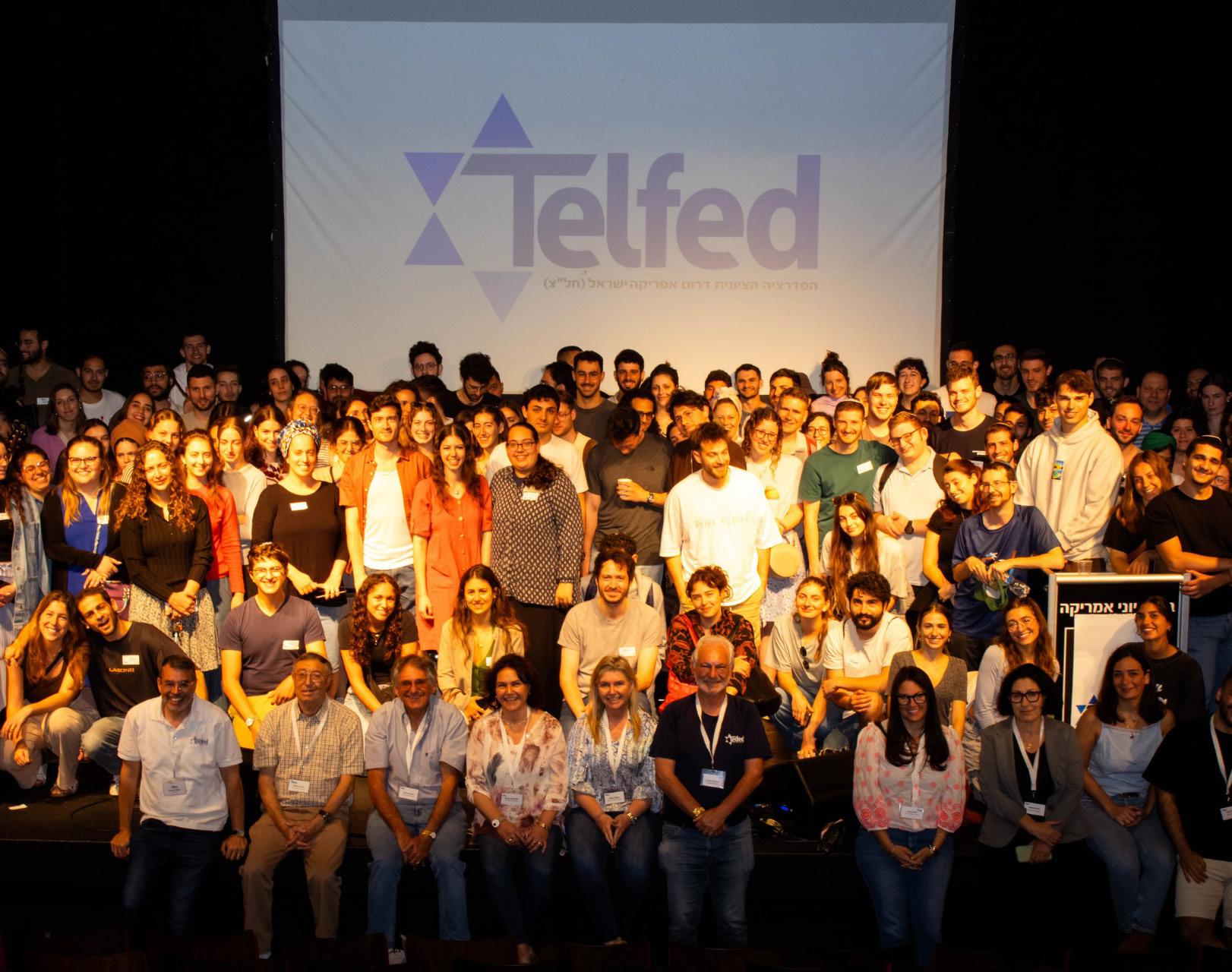
Telfed was born in 1948 out of a remarkable chapter in Jewish history. South African volunteers came to fight for the newborn State of Israel in such numbers that Afrikaans briefly became the unofficial language of the Israeli Air Force. From those early days, Telfed’s purpose was clear: to care for those who came to help build and defend the State of Israel.
Over the years, our work grew and expanded.
We supported the klita (integration) of immigrants from Yemen, Russia, Iran, the Netherlands, and today, an evergrowing community of Australians. No matter where they come from, Olim share a common dream: to build a meaningful life in Israel. Our role is to help them get there.
To fulfil the Aliyah dream, we work in partnership with the Zionist Federation of Australia and the professional teams at the Aliyah Centre. Telfed is not an Aliyah organisation; we are an integration organisation.
Helping Aussie Olim land on their feet in Israel
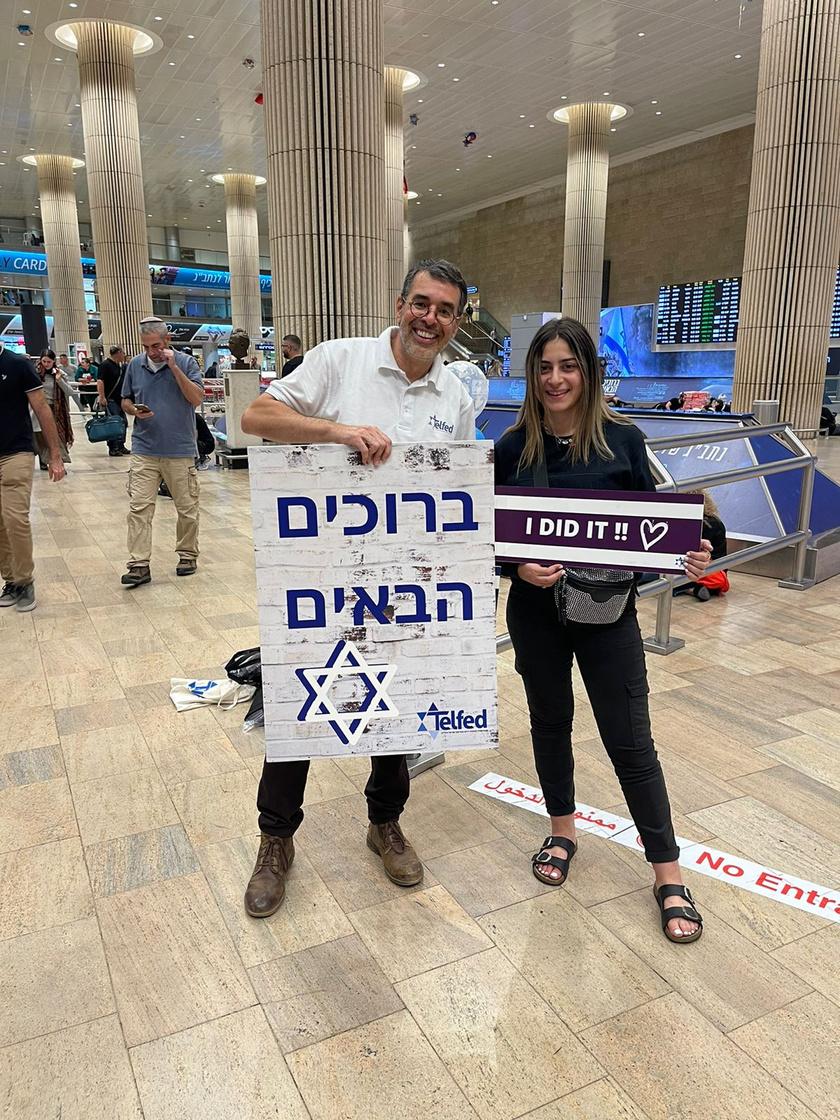
The Aliyah Centre guides you through the steps needed to reach Israel. From the moment you land at Ben Gurion Airport, we take over.
Our services are free and our goal is simple: to ensure Australian Olim arrive informed, prepared and with realistic expectations. We always encourage people to ask and to keep asking. Where should we live? What about schools? Is my profession transferable? What support is available for seniors? For lone soldiers? What are the options for higher education? How do we connect with other English speakers and become part of a community?
My advice is the same for everyone: prepare well, learn as much Hebrew as you can and reach out early. Begin your journey with the ZFA’s Aliyah Centre and then contact Telfed. Together, we are committed to helping every Australian Oleh build a strong, successful and meaningful life in Israel.
To find out more, go to www.telfed.org.il
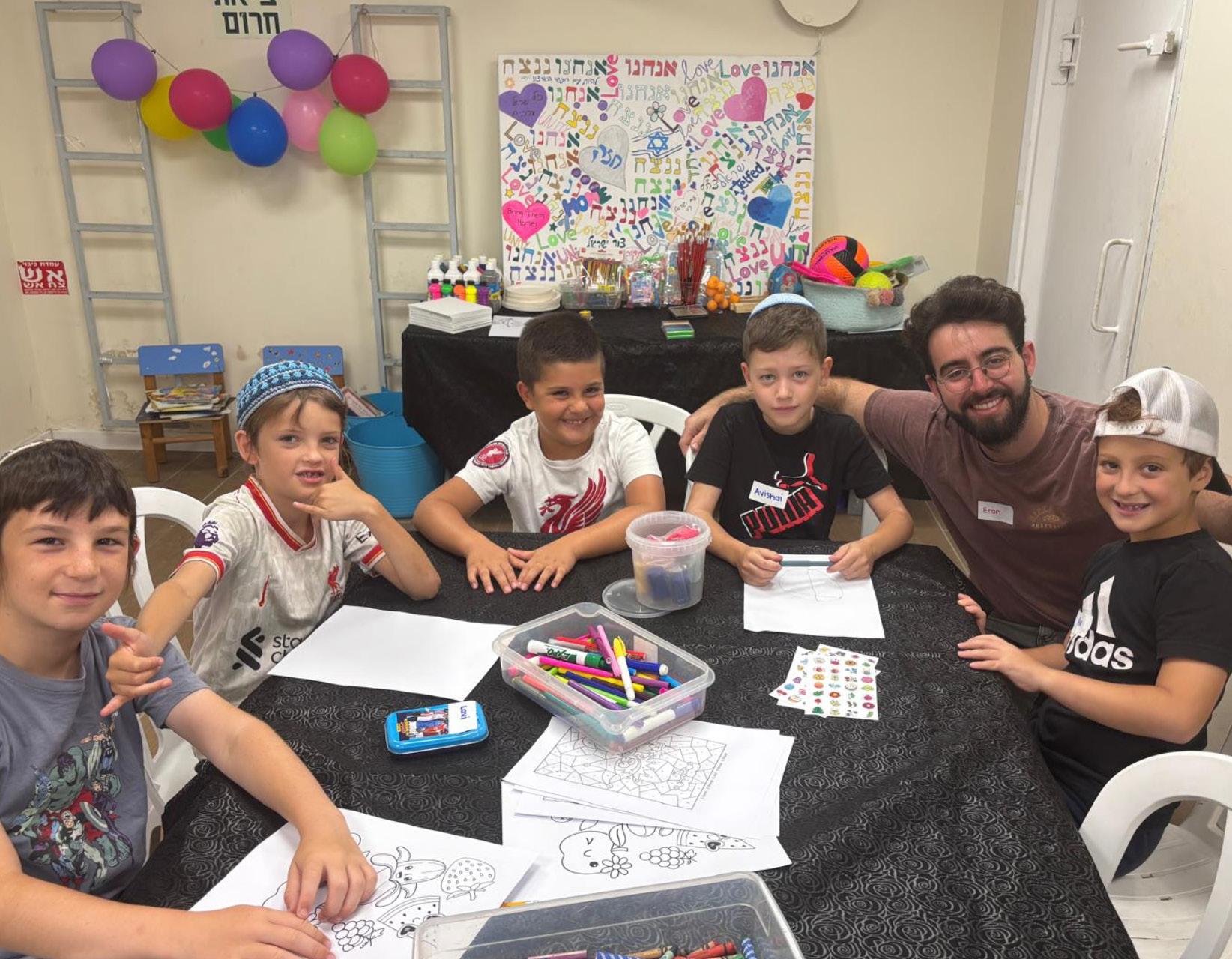
A scholarship recipient volunteering with Olim children during the Israeli summer
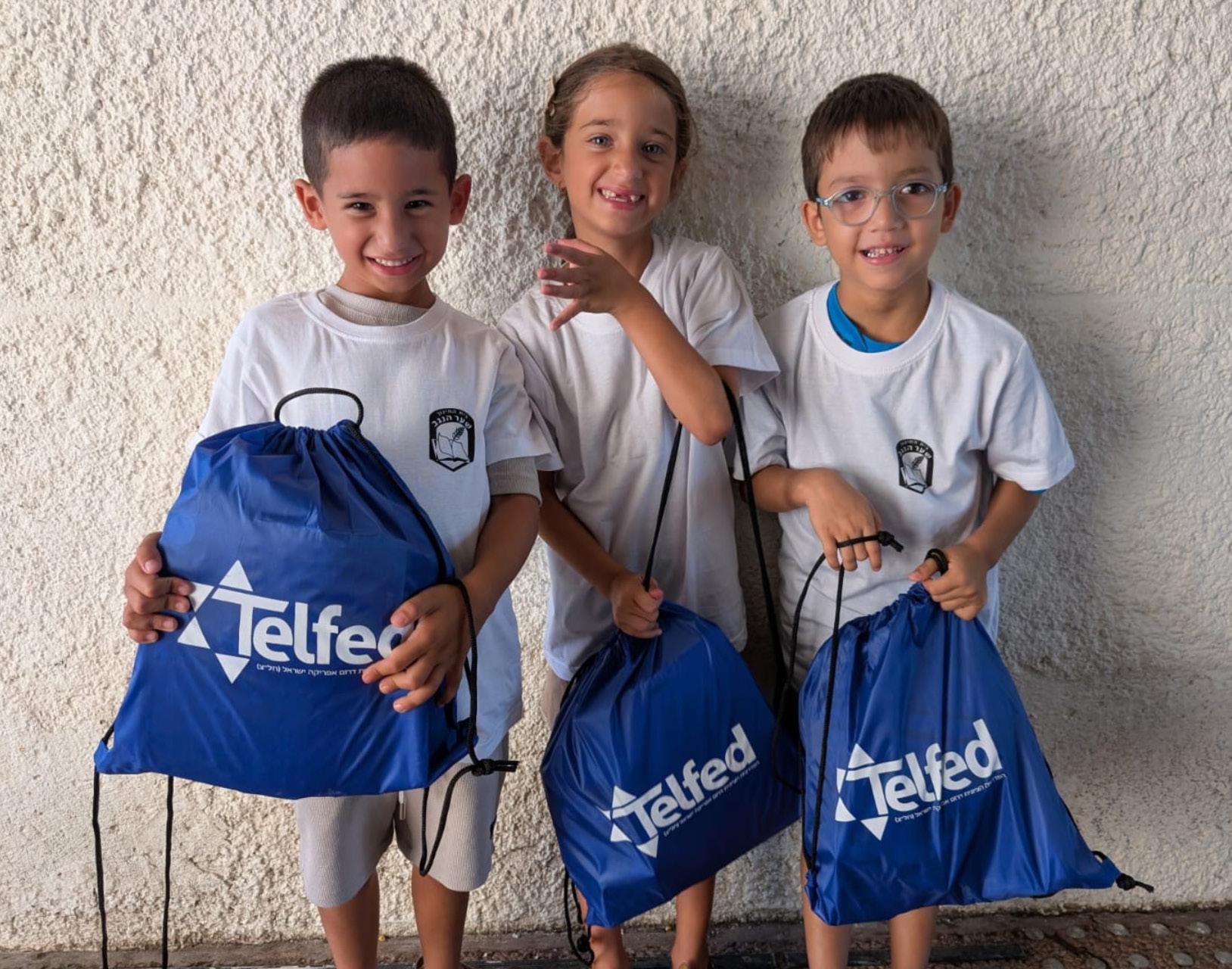
Olim volunteers in Raanana prepared more than 400 back-to-school packs for Grade 1 children from Gaza-envelope communities during the war
At Telfed’s annual scholarship ceremony, $1 million is allocated to further students’ education
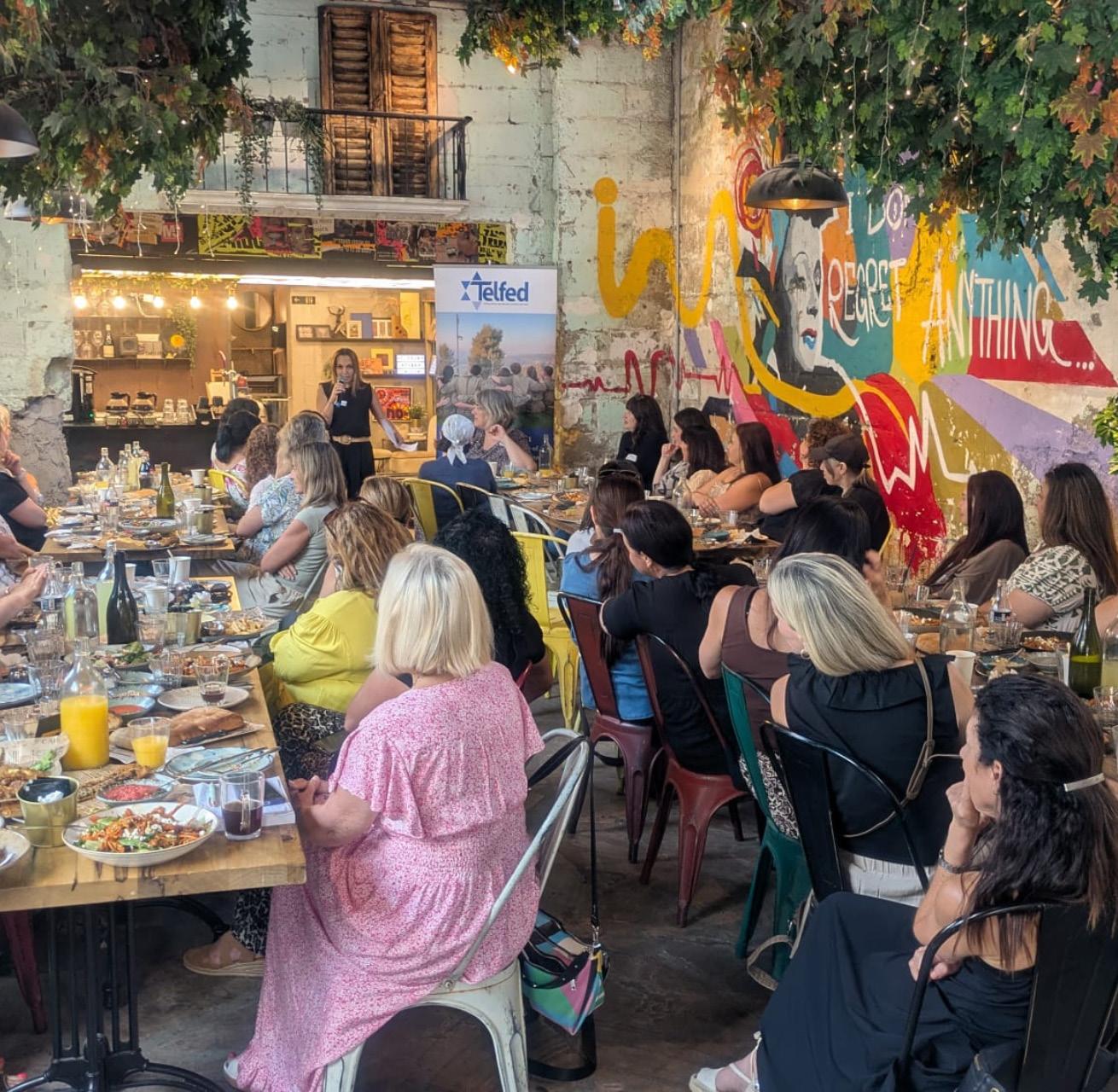
Trauma therapist and Australian Olah Liza Kramer led a Telfed breakfast session for mothers of soldiers this Israeli summer
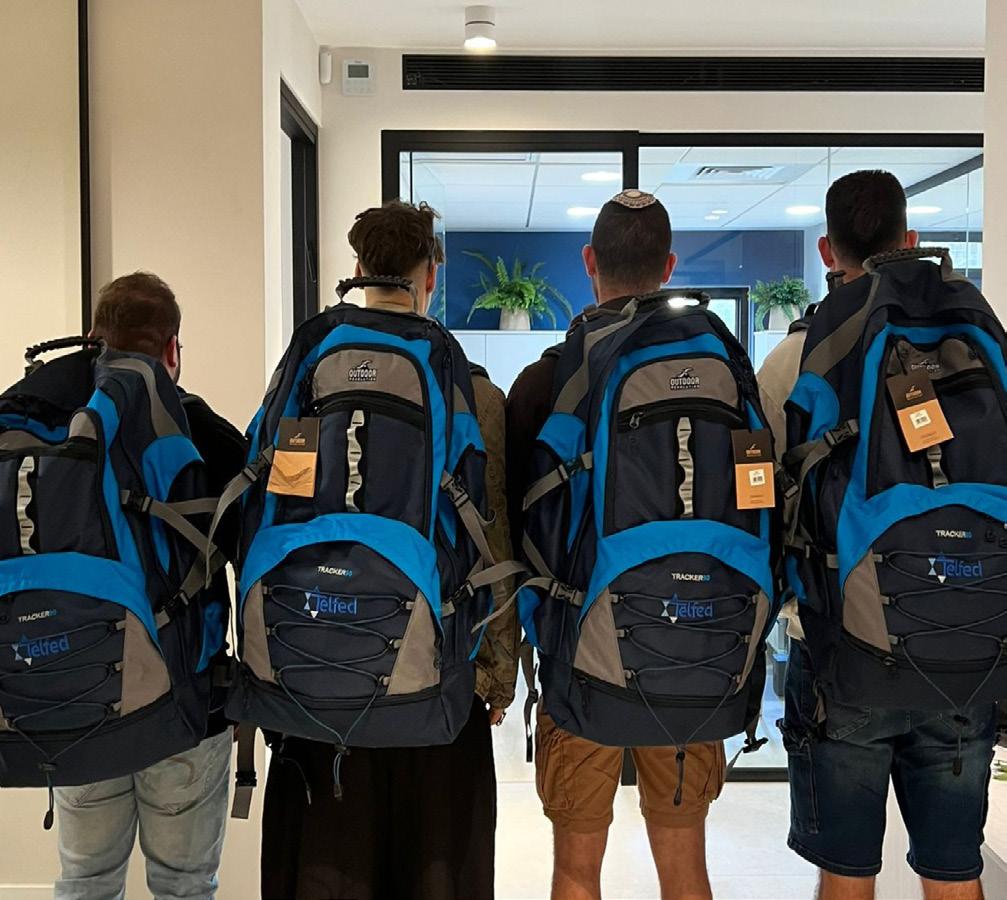
In 2025, Telfed launched the “Gear Up Gift” for lone soldiers, consisting of a backpack of required army supplies for every new draftee
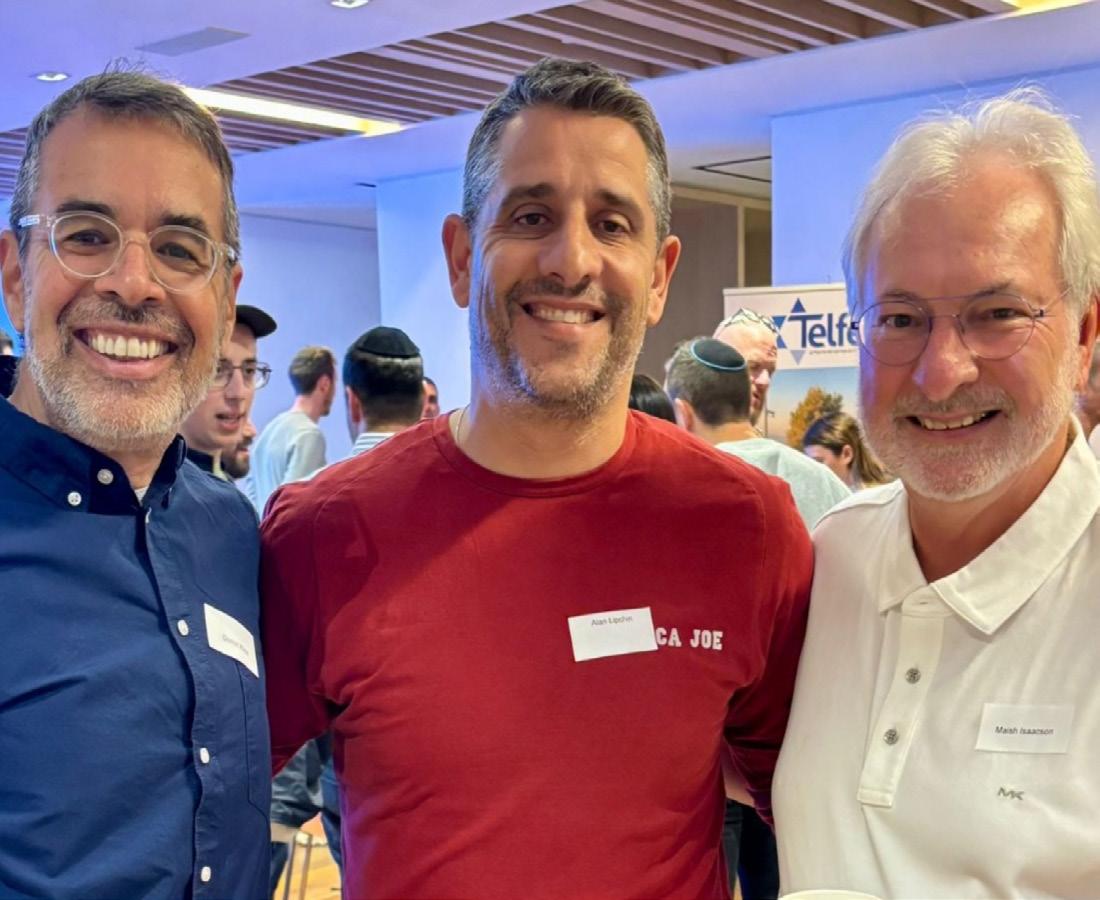
From left: Telfed CEO Dorron Kline, Chairman of Employment Alan Lipchin and Telfed Chairman Maish Isaacson
So, you ’ re thinking about Aliyah...
When I made Aliyah, people were genuinely excited to meet a new Olah. Comments ranged from ‘Why?’ to ‘What took you so long?’ It seems everyone in Israel has an opinion and they don’t hold back! - Lara
No one told me that I need to take a number in places where there’s usually a queue (like a lottery ticket but who really wins at the doctor, bank or butcher?). Bureaucracy can be frustrating, especially if you have limited Hebrew. But once you’ve completed the process and you have your passport or driver’s license, you feel like a winner. Really! - Joel
You know you’re in Israel when the messages in your building WhatsApp group include:
‘Couch to give away – no legs ’
‘Does anyone have a cup of sugar?’
‘Whose dog just *%^& by the entrance?’ and ‘We’re one short for a minyan ’ - Daniel
I was shopping online and ordered six onions Apparently, I clicked for six kilos!
So I spent the week handing them out to neighbours Turns out, even onions can open doors to new friendships I’ve learned never to be shy to ask for help - or to offer it.
- Talia
sy. It’ s home. ure, and if you ’ re set. rael, and to mily.
DVIR ABRAMOVICH CONSIDERED OPINION
DR
I stepped into the night air and felt the past seize me by the throat. Hard, sudden, merciless. Glen Huntly Road, in Melbourne, hummed like any other Sunday.
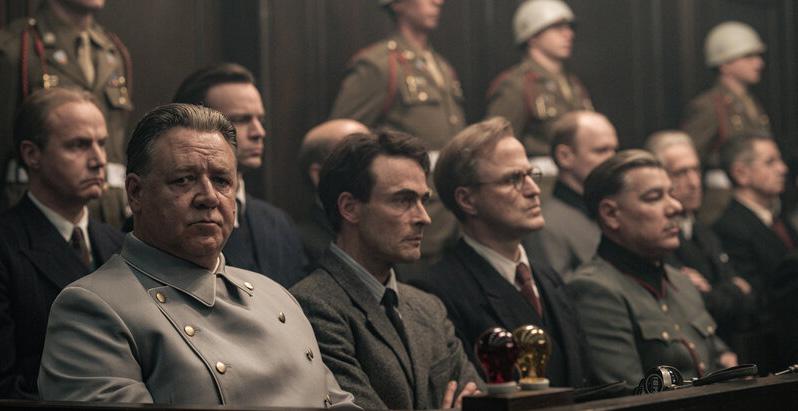
But inside my mind, the image of the Jerusalem courtroom of 1961 was still thundering, as Adolf Eichmann sat there in his neat suit, with the mild manners of a bank teller who has never lost a minute’s sleep.
His voice was quiet, almost apologetic, the sort that offers you a seat on the tram while planning your annihilation.
I had just watched The Eichmann Trial at the Jewish International Film Festival. For two hours, I sat as history peeled back its skin, revealing the machinery of evil in its purest, most bureaucratic form. Behind that glass booth sat the man who once decided who would live and who would turn to ash.
He adjusted his headphones, straightened his papers, spoke in the rhythm of a bookkeeper and described the destruction of the Jewish people as if reciting a shipping schedule.
He did not snarl or erupt. He did not spit hate in wild tirades. He was polite. Measured. Almost forgettable.
Yet, this was the architect of the ‘Final Solution’, who once declared, with the serene glee of a man recalling a perfect holiday, “I will leap into my grave laughing because the feeling that I have five million human beings on my conscience is for me a source of extraordinary satisfaction.”
“Extraordinary satisfaction.” That sentence is a blade that has never left my flesh. It twists every time I hear a young Australian voice repeat the same ideology in a new accent.
I stood on the footpath and understood the booth Eichman was in was no museum piece. It was a warning flare. And it is aimed directly at us.
Because the poison Eichmann consumed is breathing again on Australian soil, the glass box has now been opened.
Across Australia, the neo-Nazi NSN (National Socialist Network) is trying to drag this country into the same sewer of hatred that once drowned a continent. Its members are Hitler worshippers, the contemporary heirs of the SS guards who pushed mothers clutching their children into the gas chambers, who watched smoke rise from crematoria and called it success.
And they want political power. Not metaphorically. Literally.
The NSN has spent years training, recruiting, hijacking rallies and terrorising communities.
This is what they believe: “We want to deport all Third World immigrants and Jews as well, regardless of how they feel about that,” said Jack Eltis, NSW leader of the NSN, in his PowerPoint slides.
And now they are trying to register as a political party under a name ripped from the bones of our own racist past: White Australia.
When neo-Nazis file paperwork, they’re already halfway inside the house.
We were warned this was coming.
This month, ASIO Director-General Mike Burgess, the man we pay to keep us safe while we sleep and who chooses his words with surgical precision, has
Eichmann smiles from the grave: the Neo-Nazi threat in Australia is no longer coming. It’s here.
looked the country in the eye and said that neo-Nazi networks like the NSN pose “the single greatest threat to Australia’s liberal democracy”.
We know exactly where this road ends. We have watched the credits roll in blood again and again and again.
In Christchurch, Brenton Tarrant, an Australian the NSN once tried to recruit, walked into two mosques and murdered 51 worshippers.
In Charleston, Dylann Roof executed nine African/American parishioners in a church.
In Pittsburgh, Robert Bowers slaughtered 11 Jews in the Tree of Life Synagogue.
In Norway, Anders Breivik murdered 77 people, hunting down children and teenagers at a summer camp.
Different accents, different continents. Same delusion. Same fever. Same fantasy of a race war. Same ideology, burning like acid in the veins. Same lie, poured into lonely ears: you are the last pure thing left and only murder will save the white race.
Every white-supremacist lone-wolf shooter began the same way: a man in a room, nodding along to someone else’s hate or scrolling alone through digital venom until he convinced himself he had been chosen to strike the first blow.
The road from a whisper on an encrypted app to a headline of blood is shorter than any of us wants to admit.
Only days ago, the Australian Federal Police arrested two men for threatening federal MPs. Joel Davis, a leading member of the NSN, was charged after urging his followers to “rhetorically rape” MP Allegra. Another man, Stefanos Eracleous, was charged with defacing an Indigenous flag inside Senator Lidia Thorpe’s electoral office.
For Holocaust survivors, watching Hitler’s disciples march in Australian streets is shattering beyond words. If the children of Auschwitz survivors must
watch this horror show, then we have already lost something sacred.
The NSN is not slowing down. In August, they infiltrated the anti-migrant marches that rolled through our cities, slid their slogans into open microphones, draped their venom in borrowed patriotism.
Thomas Sewell climbed the steps of Victoria’s Parliament house, planted himself behind a podium draped in our flag, and delivered the keynote speech at the city’s March for Australia rally. All this while ordinary Australians clapped, looked away or told themselves it was just words.
Three weeks ago, 60 members of the NSN unfurled “Abolish the Jewish Lobby” outside NSW Parliament. They disrupted an Indigenous ceremony on Anzac Day. They marched through Adelaide shouting, “Australia for the white man”. They’ve built a network of camps to draw disaffected teenagers into their ranks.
Leader of the NSN, Thomas Sewell, faces more than 20 charges for the violent attack at Camp Sovereignty in Melbourne. Prosecutors say Sewell screamed, “Let’s get them” and 30 men charged like hounds released from hell, pinning bodies, smashing ribs, breaking a woman’s nose, splitting another’s scalp open and hurling missiles. Sewell himself punched and kicked in a frenzy until even his own followers dragged him away.
In October, a magistrate looked straight at Sewell, who had marched his black-clad paramilitary column through the heart of Ballarat, boots hammering the ground, mouths roaring “Australia for the white man” and “No more Chinamen” and found him not guilty of acting in an offensive manner.
And now, they are exploiting Australia’s party registration rules with a clinical focus that would make Eichmann grin. In their latest communiqué, the NSN announced that they have already crossed the 1,500 signatures needed
to register their federal party, “White Australia”.
And the most chilling part? The Australian Electoral Commission has admitted it is powerless to stop them, no matter how openly racist and how violent they are. And there is a deeper terror. The membership lists are confidential. Sealed tighter than a coffin lid.
No employer will ever know. No neighbour. No journalist. No light will ever fall on the names of those who put the gun to the temple of everything we swore to defend.
A private army swelling in the dark.
And somewhere down that road, if we keep blinking, keep shrugging, we may see a neo-Nazi rise in the House of Representatives or Senate, smoothing his tie, clearing his throat and promoting Hitler’s ideology to the country.
Not from some gutter, not from a prison cell, but from the green leather of Parliament itself, under the same flag the diggers died for.
That is not a nightmare. That is the next station on the line we are already boarding.
And at some point, PM Albanese and every premier must face a brutal truth: we have built laws strong enough to register a party, but not strong enough to prevent a party that dreams of a Fourth Reich.
The NSN is a contagion. A black sun rising. A reviled ghost clawing its way out of the grave, seeking living hosts.
Some evils are not to be tolerated, discussed, accommodated or reasoned with. They are to be driven out, as the ancient world cast out plagues, as fire purges rot from the timber, as lightning splits the tree to save the forest.
A society that cannot reject the worshippers of annihilation has forgotten the meaning of its own heartbeat.
A nation that allows the agents of racial purity to recruit in daylight has already forgotten the smell of burning synagogues and the sound of trains that never stopped.
Our elected representatives must ban them, not as a gesture, but as a commandment. Ban them because there are children alive today who will one day ask what we allowed, what we excused, what we ignored and there must be an answer that does not taste like shame.
The gates must be shut before the wolves walk through wearing human faces. We are at that point. The line is here. It glows red.
And when I think of Gideon Hausner, the Israeli Attorney-General who stood in the Jerusalem courtroom as the prosecutor of Eichmann, speaking for a people obliterated, I hear again the blast in his voice: “I am not standing alone. With me are six million accusers.”
Those words are not just echoes from our past. They are a live detonation under our feet. And the shrapnel is screaming one command: Speak now, or choke on the silence forever.
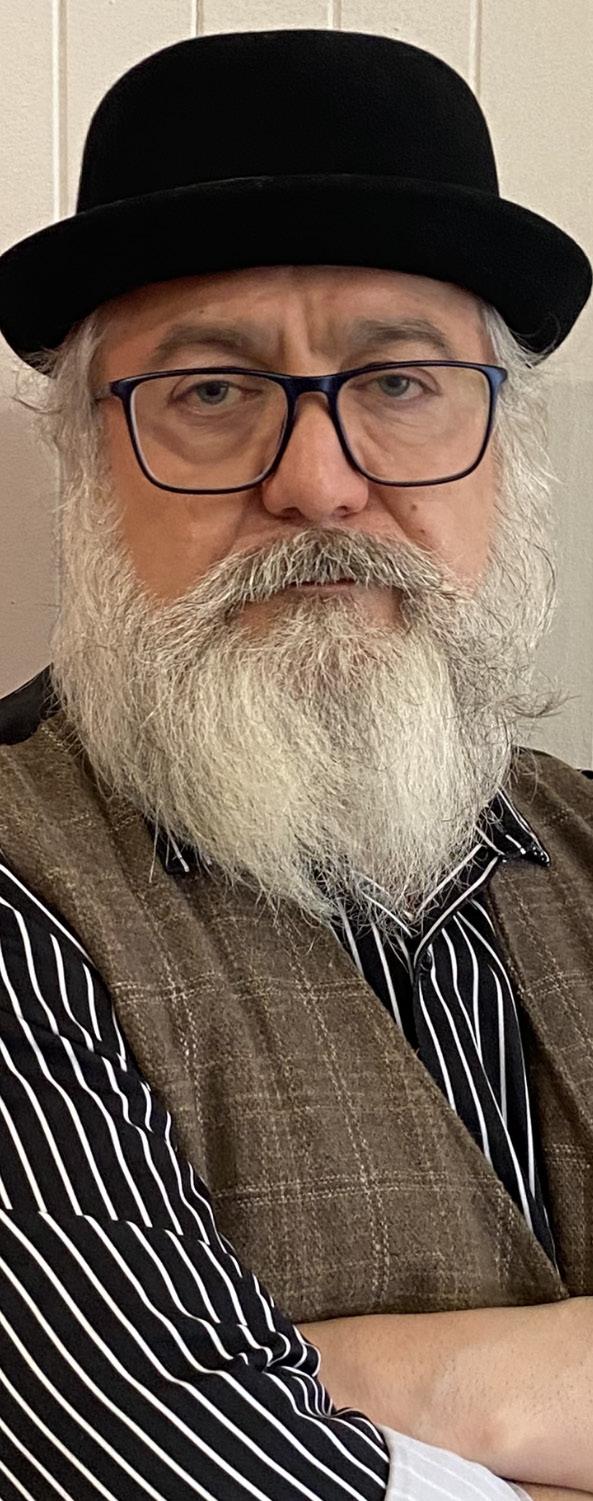
Dr Dvir Abramovich is chair of the AntiDefamation Commission and the author of eight books.
Dr Dvir Abramovich
AROUND THE COMMUNITY
ROBERT GREGORY, CEO AUSTRALIAN JEWISH ASSOCIATION
This year, the Australian Jewish Association (AJA) held its inaugural Israel tour. It was the trip of a lifetime for a brave and diverse group from the Jewish community and even a couple of non-Jews. I say, ‘brave’ because as soon as the trip was advertised, war with Iran broke out. We decided that the tour would go ahead no matter what and thankfully the war ended shortly before our departure.
No trip to Israel today is complete without visiting sites connected to the October 7 atrocity. We were honoured to be escorted around the Nova Festival grounds by a survivor, to hear firsthand testimony from an IDF hero, and to visit the home of another hero in Kibbutz Kfar Aza.
Our guide, former Sydneysider Josh Koonin, ensured the itinerary was packed with unforgettable experiences: a jeep tour along the Syrian border, lunch in the home of a Druze diplomat, and a high-level security briefing on Hezbollah at the Alma Centre.
What made the trip unique were the activities you simply won’t find on any other Australian tour. We ascended the Temple Mount on Tisha B’Av to pray with thousands of fellow Jews
See a side of Israel that you’ve never seen before
and visited Ariel University, the only Israeli university in Judea and Samaria, which is doing extraordinary work bringing Jews and Arabs together in a world-class academic environment
We spent a large part of the tour over the so-called “green line,” connecting with Jewish history in places like Chevron, the city of our forefathers, and Gush Etzion. Our partnerships added even more depth. With Regavim,
we toured the strategic E1 area and saw firsthand the illegal construction around Jerusalem threatening Israeli sovereignty. With Ateret Kohanim, we visited newly acquired Jewish properties in Jerusalem’s Old City basin. A highlight for many was visiting one of the pioneer outposts recently established in the Shomron, meeting the residents who are living the Zionist dream.
The trip was enhanced by linking with Australian-connected organisations like the Israel-Australia Chamber of Commerce and Australian Friends of United Hatzalah of Israel.
New friendships were formed and the group has continued to stay in touch. We’ve already had a reunion.
If this sounds like the kind of adventure you would like to be part of, AJA has organised another trip to Israel in June 2026. This tour will be different from the one I have just told you about. We plan to explore the Jordan Valley, near Jericho and visit Shiloh in Samaria, where the Mishkan (Tabernacle) once stood. We’ll take you to the Negev, to witness firsthand the challenges involving the Bedouin community, and to South Tel Aviv, to understand the social issues reshaping that area. We plan to visit Kibbutz Be’eri, the Gaza border, Mount Gerizim, Jaffa and so much more. Whether it’s your first time in Israel or your twentieth, I guarantee you’ll discover new things on the AJA 2026 Israel trip.
To learn more, subscribe for updates at www.jewishassociation. org.au/subscribe or contact office@ jewishassociation.org.au
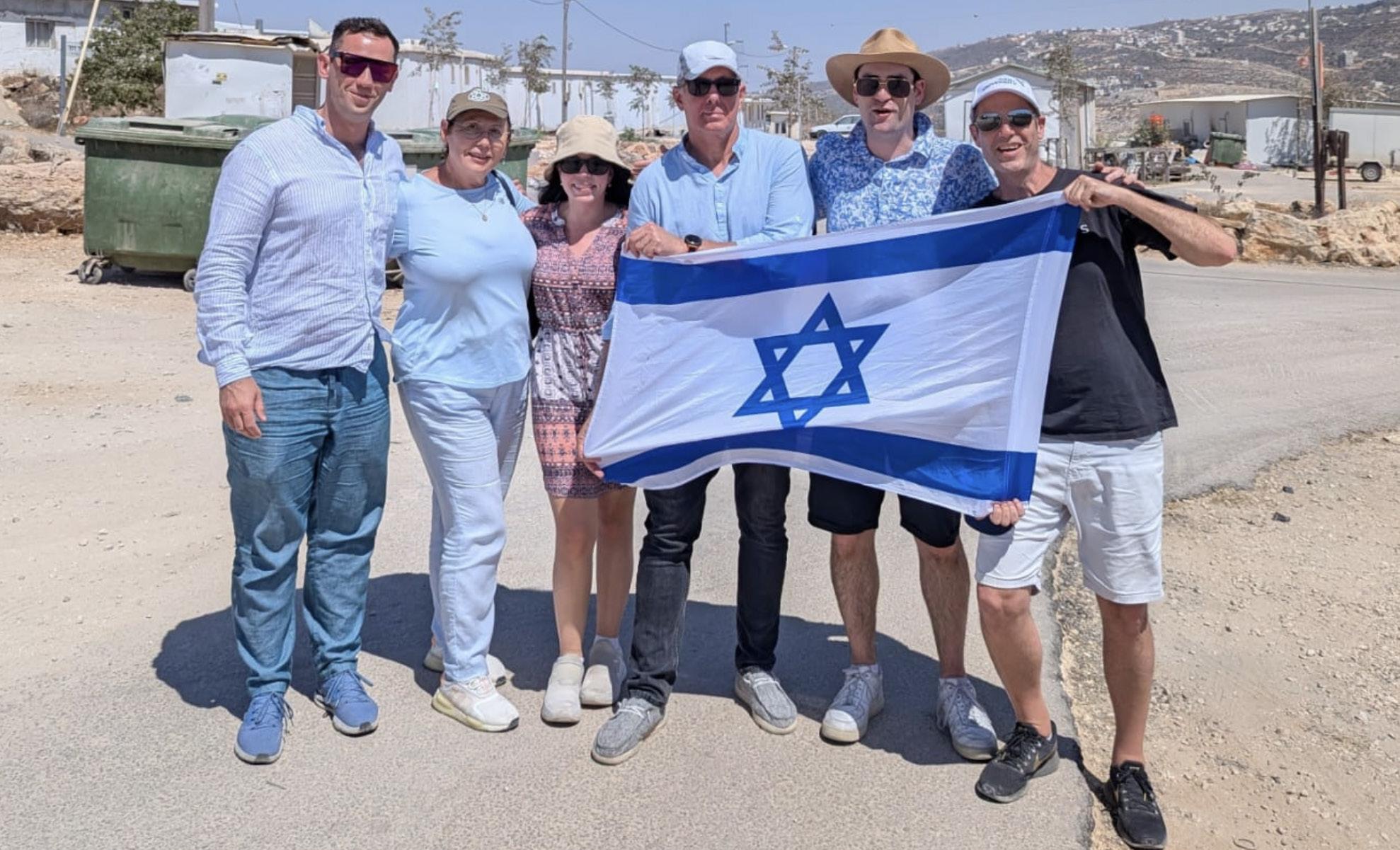
The AJA team visiting a newly established Jewish community in the Shomron
CONSIDERED OPINION
DAVID SCHULBERG
Ariella Noveck is a broadcast journalist and the co-founder of BottomLine Media and the nonprofit ShieldGiving. She brings more than a decade’s experience in news, public affairs and nonprofit communications, contributing to CNN, Bloomberg, CNBC, ABC, FOX, MSNBC and CBS News.
Ariella specialises in political and strategic communications, and is deeply committed to combating antisemitism, supporting humanitarian efforts and addressing bias across media and politics.
Joining us in conversation is Eva Migdal, an educator, writer and community radio producer, with a long history in media and social innovation.
Eva:
When you read the news now, what alerts you that a story might be distorted?
Ariella:
Look at the centre of the article. Most people start from the top. Some people scroll straight to the bottom. If you look at the centre of the article, it'll often say: 'X organisation cannot independently verify the following information from here or there.' It doesn't matter what topic you're discussing. It doesn't matter what day of the week it is.
This is a common practice. And something that is done in different parts of the world, because it buries the truth. You see the top, you see the bottom, you miss the middle and you assume it is factual, but it hasn’t been corrected.
Eva: Is that found across all media?
Ariella:
Yes, I've noticed it at almost all the networks where I've worked. As a general reader, I've noticed it quite often.
Another pattern I always notice is how misinformation slips into reporting through indirect news alerts.
A typical example is when a bulletin says something like: “ABC News, according to Reuters, reports that three militants were killed.” But later it turns out the victims weren’t militants at all – they were 10 children murdered while playing soccer.
Why does this happen? Because most news organisations don’t have reporters everywhere. They depend heavily on wire services from
Media manipulation
independently confirmed or verified by the reporting network.
Eva: Does that mean the ABC doesn’t have to follow up because they’ve said, “according to”? Does that mean it’s not their responsibility anymore?
Ariella:
Exactly. By saying “according to” they shift the responsibility onto another news organisation. They’re essentially saying, “We’re just passing on what they reported.” That’s why you’ll often see a note like: “This article was updated at …” many hours later. That’s when they’ve realised the wire service got it wrong. Sometimes the correction is minor, but often it’s significant. Here’s the problem – the update isn’t always reflected in the original headline or the initial push notification people saw. So even when they correct it, the damage and the misinformation may already be out in the world.
Eva:
What are the main forces – funding, ideology, or peer pressure – that actually encourages dishonesty or bias in journalism today?
Ariella:
People often point to money: the more clicks
My superior told me to do it, so I did. Why would I question it? Then, on the day it was supposed to happen, I got a panicked phone call: “Didn’t you check the map? We don’t even operate in that area.” How was I supposed to know? I wasn’t acting out of bias. I was simply following instructions from a superior. That’s exactly how newsrooms function. Almost every decision a journalist makes is because someone higher up told them: “Run this. Don’t run that. Phrase it this way.”
Individual reporters often aren’t making ideological choices. They’re executing directives. The bias we see publicly is just a fraction of what exists. There is far more happening above the journalists themselves –decisions we never see and layers of influence that remain hidden.
Eva:
You’re saying journalists are mostly just doing what they’re told and the real decisions are happening above them?
Ariella:
Absolutely.
David:
There's an industry partnership called the Trusted News Initiative (TNI). It has the cooperation of many media outlets, the big players, combined with the social media giants like Facebook, Google, Microsoft and X. Is the TNI central to the issues we're talking about?
And if it isn't, are there other similar agreements that are ... seriously shaping the media landscape that we're in?
Ariella:
I can say transparency in these decisions is what's missing. TNI is just one example, but it's part of a broader trend, in my opinion, of collaboration between big media and tech companies, under the idea of protecting the public from misinformation.
The intention may be good, but when a few powerful organisations decide to get together, it's risky. That narrows down the conversation for me.
David:
There’s a growing group of online news publishers whose reporting often challenges or contradicts mainstream media narratives. Many independent outlets believe they are being pushed out or quietly censored through what appears to be a coordinated effort among major players in the media landscape. These bigger organisations promote themselves as “trusted”, as if that label alone grants them total authority, while simultaneously reducing the visibility of other voices. Independent publishers
Ariella:
I'm not on the top of where the case is going, but what I can say is this: In Canada a friend of mine was scrolling through social media and she said “I really can't see the story you sent because, in Canada, they've blocked all the content having to do with this topic about Israel.” They had this ruling that it was legal for them to block what was being seen across social media. To me, that's crazy and damaging. It's not right to just learn about one side. You have to learn about everything, whether you're passionate about it or you're not passionate about it. It's not just the algorithm in that case failing; it's a country failing to give the rights of learning about what is around you and I think that's a terrible thing.
I started emailing her different things that I had put up, because she was otherwise not allowed to see them. I can absolutely see how something similar could happen in Australia. It’s not happening right now, but the possibility is there. Information can be censored so heavily that you’re only shown what certain institutions want you to see. They decide what’s “right” and what shouldn’t be shown, but that’s not how journalism should work. It’s quote scary to think that this level of control is even possible.
David:
Just to bring everyone up to speed, Children’s Health Defense and its allies have filed an antitrust lawsuit against the Associated Press, the BBC, Reuters and The Washington Post. These organisations are all part of the TNI – a partnership launched by the BBC in March 2020, bringing together major news outlets and big tech companies to coordinate what information is allowed or suppressed online. The BBC is a founding member of the TNI and, importantly, the ABC in Australia is too. What makes this lawsuit significant is that it’s an antitrust case. In simple terms, antitrust laws exist to stop powerful companies from colluding in ways that restrict competition or harm the public. The lawsuit argues that the TNI acted like a coordinated “gatekeeping cartel”, deciding which views were permitted and which were silenced – effectively shutting out independent publishers and alternative viewpoints from the digital public square.
Ariella:
It’s all about the right to access information freely. It asks whether large media outlets can legally agree to exclude smaller voices online
Ariella Noveck
As we approach Chanukah, we recall the story of the Maccabean victory over the Seleucid Empire and the rededication of the Temple in Jerusalem. With only a small amount of oil, enough to shed a light for one day, it miraculously burned for eight, symbolising resilience, faith and the enduring light of the Jewish people.
What is light and why does it resonate so deeply not only in Judaism, but across many faiths and cultures?
Light is profoundly human. It appears in our prayers, metaphors, art and our most sacred rituals. It speaks of hope when circumstances grow dim, wisdom when confusion threatens and connection at times when we most need one another. Across religious traditions, light expresses the yearning of the human spirit to reach beyond itself, toward truth, community and the divine.
This universal idea of light became real at several recent multicultural events in Victoria.
Earlier this month, the Council of Christians and Jews Victoria celebrated its 40th anniversary, a milestone honouring four decades of dialogue, relationship-building and shared purpose. The event also marked the launch of Gesher, its beautiful magazine.
Gesher means “bridge”, an apt name for a publication that brings together Jewish and Christian voices, exploring ideas, texts and experiences from both traditions.
Jewish, Christian and Indigenous community members gathered to celebrate continuity, mutual respect and the power of conversation. What
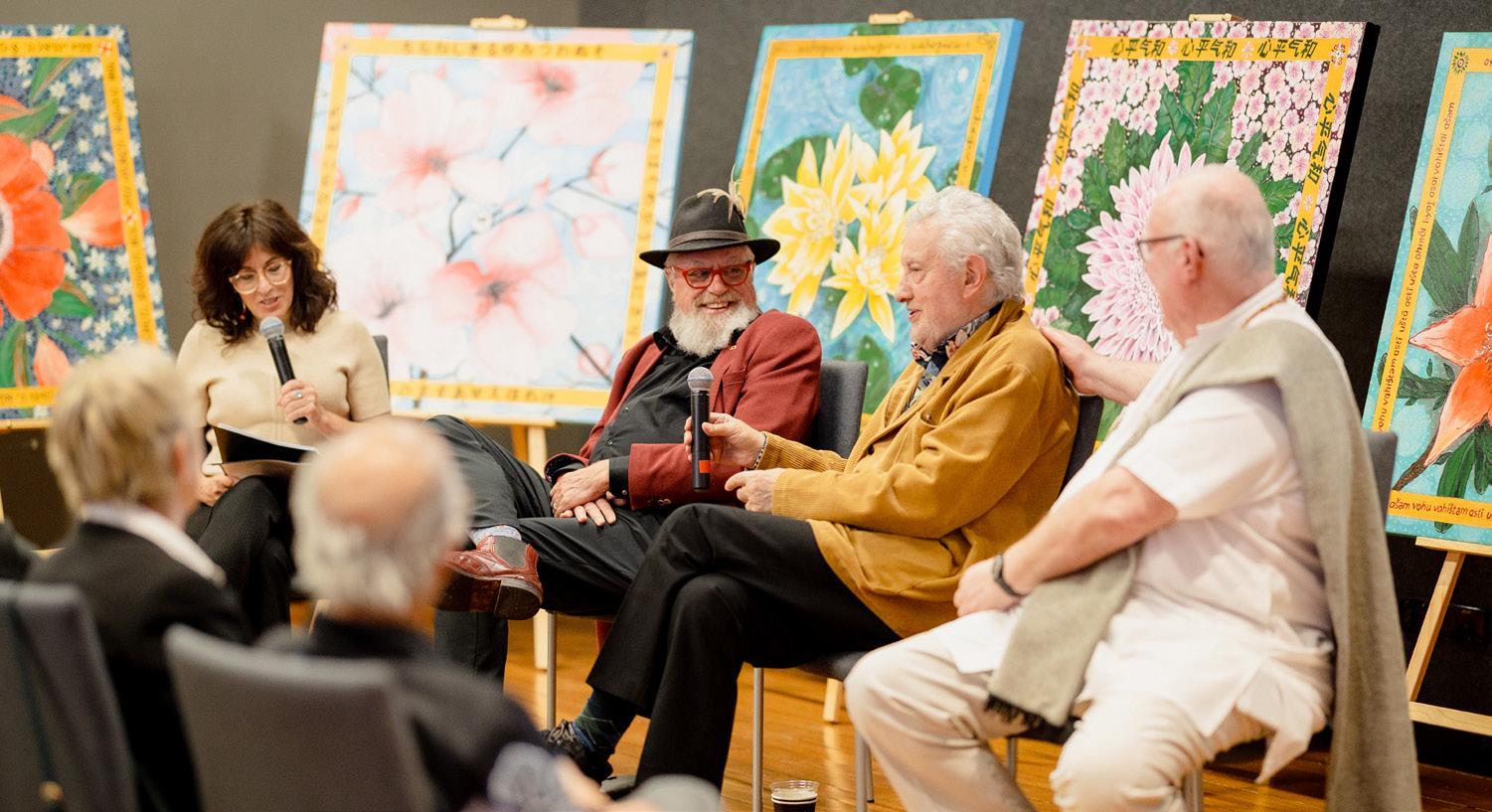
participate in the Victorian Interfaith Festival in Broadmeadows. We chaired a workshop titled “What Is Sacred Art?”, featuring three acclaimed artists from different traditions: Victor Majzner, who is Jewish, Uncle Glenn Loughrey, a Wiradjuri man and Anglican priest, and Reverend Bhakta Dasa, a Vaishnava Hindu priest.
instinctively nodded in recognition, as though sharing a common knowing. Our central question, “What is sacred art?” opened dialogue about intention, interpretation and the definition of what is sacred.
Each artist offered a quote expressing their relationship with art, pointing to different expressions of light in its truest sense: spiritual, emotional and human:
• light as self-discovery – “Art enables us to find ourselves and lose ourselves at the same time.” (GL)
• light as revelation – “Art is a means of making the invisible visible.” (VM)
• light as insight and inner stillness
– “Art is a tool for contemplation, meditation, ritual and practice.” (BD)
Their reflections echoed something deeply familiar to us as Jews: that light is not merely physical, rather what we kindle in ourselves and what binds us to others.
Chanukah reminds us that even the smallest flame can carry immeasurable strength. That resilience can be luminous. That identity can shine, even in darkness. And that light, when shared, only grows. May the lights of Chanukah illuminate our homes and the bridges we build with
May they be bridges of understanding, friendship and hope, bringing more light
info@jewishfunerals.org.au
From left: Maureen Barten, Uncle Glenn Loughrey, Victor Majzner and Reverend Bhakta Dasa. The artworks by Reverend Dasa are “flowers of faith”, each painting representing one of 12 different faiths, along with sacred texts around the borders.
AROUND THE COMMUNITY
THE KING DAVID SCHOOL
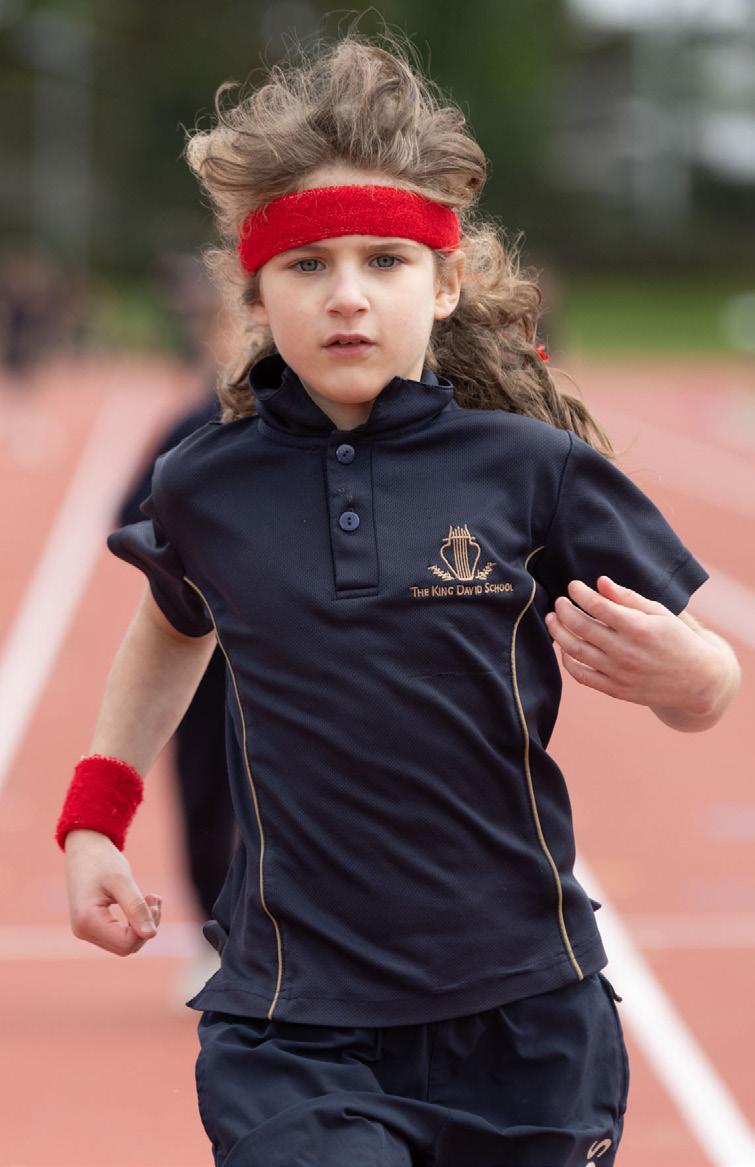
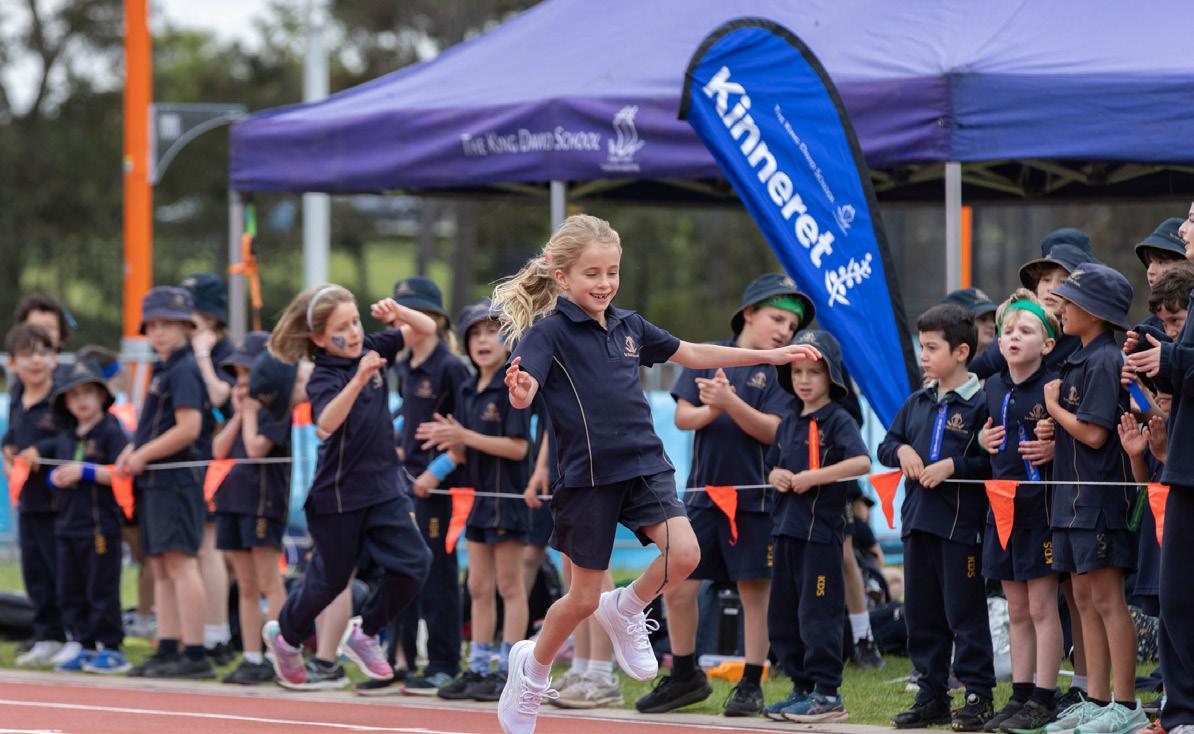
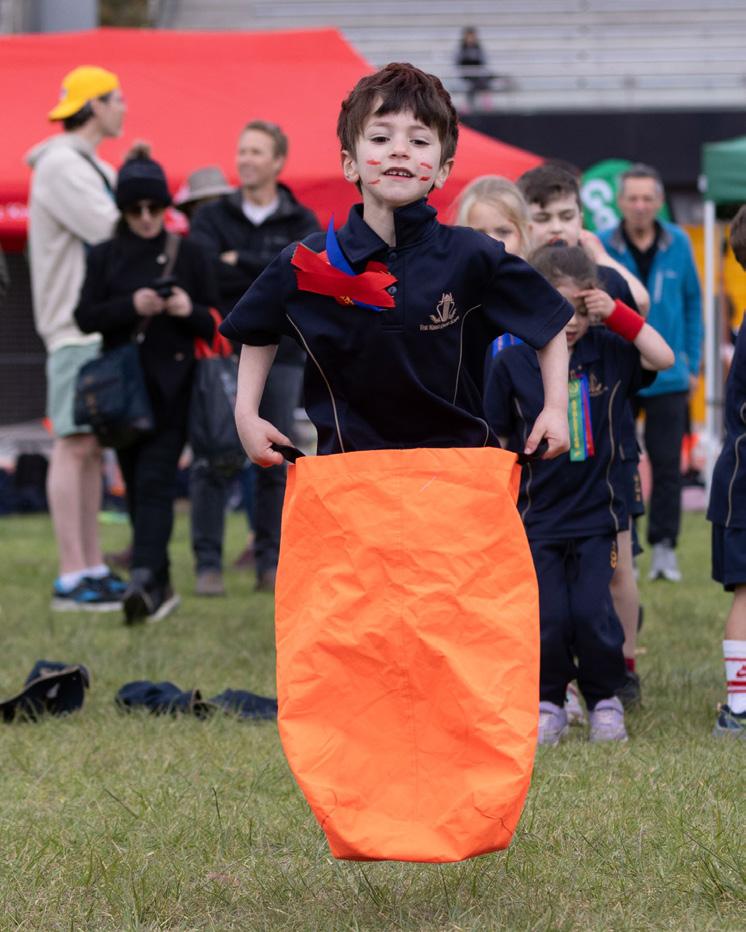
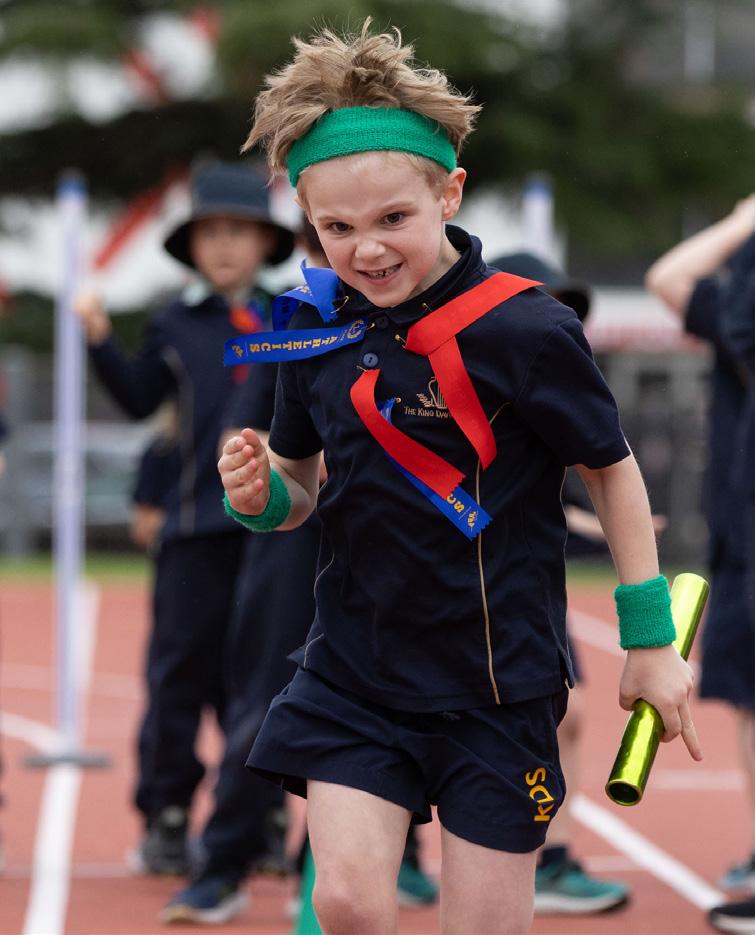
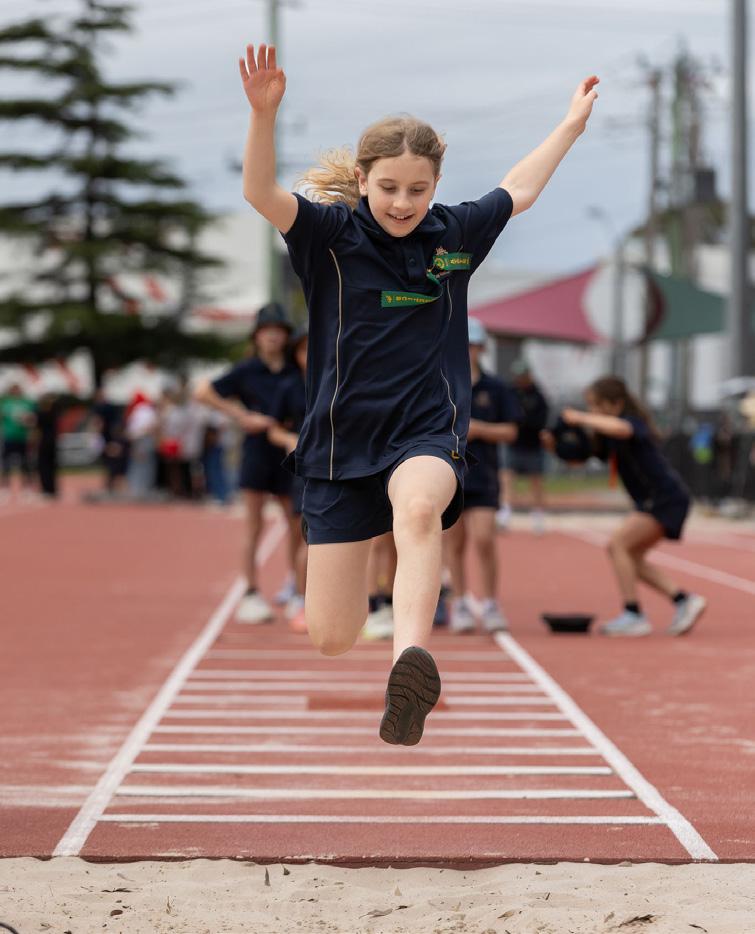
In a celebration of teamwork, determination and pride, The King David School recently held its end of year prep to year 5 Interhouse Athletics Carnival. Sportsmanship and spirited competition were on display, with Galil claiming the trophy for the fourth time in five years.
Athletics carnival
Care with a capital "C"
downstairs offers residents easy access to prayer, ritual and spiritual grounding. The gold-class cinema fosters joy, entertainment and meaningful shared moments.
Jewish Care's Residential Home in Windsor offers so much more than residential aged care. It provides a luxurious heymish home, where warmth, dignity and connection are part of everyday life. In a Jewish environment where values, traditions and community spirit are shared, residents feel understood and deeply supported.
Living in a culturally aligned facility means emotional wellbeing is strengthened. Familiar foods, the rhythms of Shabbat, festivals and the comfort of Yiddishkeit create a sense of belonging that reduces isolation and enhances quality of life. This is care that nurtures the whole person – mind, body and soul. Windsor’s beautiful facilities elevate this experience even further. A stunning shule
The onsite café serves some of the best barista-made coffee in the community, creating a lively spot for families and residents to connect (and is now open Sundays due to demand). A hairdresser downstairs adds a touch of pampering, ensuring residents feel confident, cared for and celebrated.
At Jewish Care Windsor, every detail is designed to create comfort, joy and community. It’s not just a residence, but a place where people feel cherished, uplifted and truly at home.
To book a private tour, have a free barista coffee and to ask any questions about aged care you want answered, please phone Jewish Care on 8517-5999.
modern and beautiful
and compassionate staff who treat residents like family On-site amenities including a cafe, cinema, exercise options, beautiful
and
Meaningful daily activities, Jewish Life and community connection Only 5 minutes from Caulfield
outdoor
Ceci (Year 1)
Sasha (Prep)
Asher (Prep)
Ravi (Year 4)
Eden (Prep)
From left: Evie and Jagger (Year 2)
UIA communities in Victoria and New South Wales have gathered for their AGMs and report back events, marking a clear post-ceasefire shift from emergency response to the long-term rebuilding of Israel.
In Melbourne, UIA Victoria president David Slade framed the moment simply but powerfully. “I believe in our people’s future,” he said. “I stood in Israel on and after October 7. I saw the hurt. I also saw the strength Jewish strength, Israeli strength, your strength. And I saw the impact we, Keren Hayesod-UIA, have had on the ground in Israel. As we leave the acute period of war, hear this clearly: UIA’s commitment to the People of Israel is for life. Through the rebuild. Into renewal. For as long as Israel needs us, we will be there.”
The core priorities that will guide UIA Australia’s allocations in the coming year are: rebuilding the resilience of southern communities through Communities2Gether, scaling Shavim so trauma does not define a generation, expanding absorption capacity for the expected Aliyah wave, strengthening seniors’ safety and dignity through Amigour, and backing youth resilience through HaGal Sheli and other partner
Two years of impact, marking a lifelong commitment
there was a sense that Israelis had “some space to breathe”. Perlstein told the audience he was moved by the sight of communities in the north and south picking up the pieces while still carrying deep trauma. “The country will rebuild physically because there is no other choice,” he said. “But the emotional scars will test everyone for a very long
more than $140 million, including $29.5 million from NSW and $18 million from Victoria in 2025.
Both presidents reminded attendees that UIA is “the only organisation in Australia raising funds for Israel that holds a seat at every table of decision-making mandated to rebuild the country,” and that every dollar is aligned with Israel’s
Guests also heard from acclaimed Channel 12 Arab affairs correspondent Ohad Hemo, who has spent more than two decades reporting from Gaza and the West Bank and maintains rare access to senior figures in Hamas, Islamic Jihad and the Palestinian Authority. Hemo’s overall message was sobering but not despairing: Israel has paid a terrible price, but its deterrence and strategic position remain strong and can underpin the rebuild, if supported wisely.
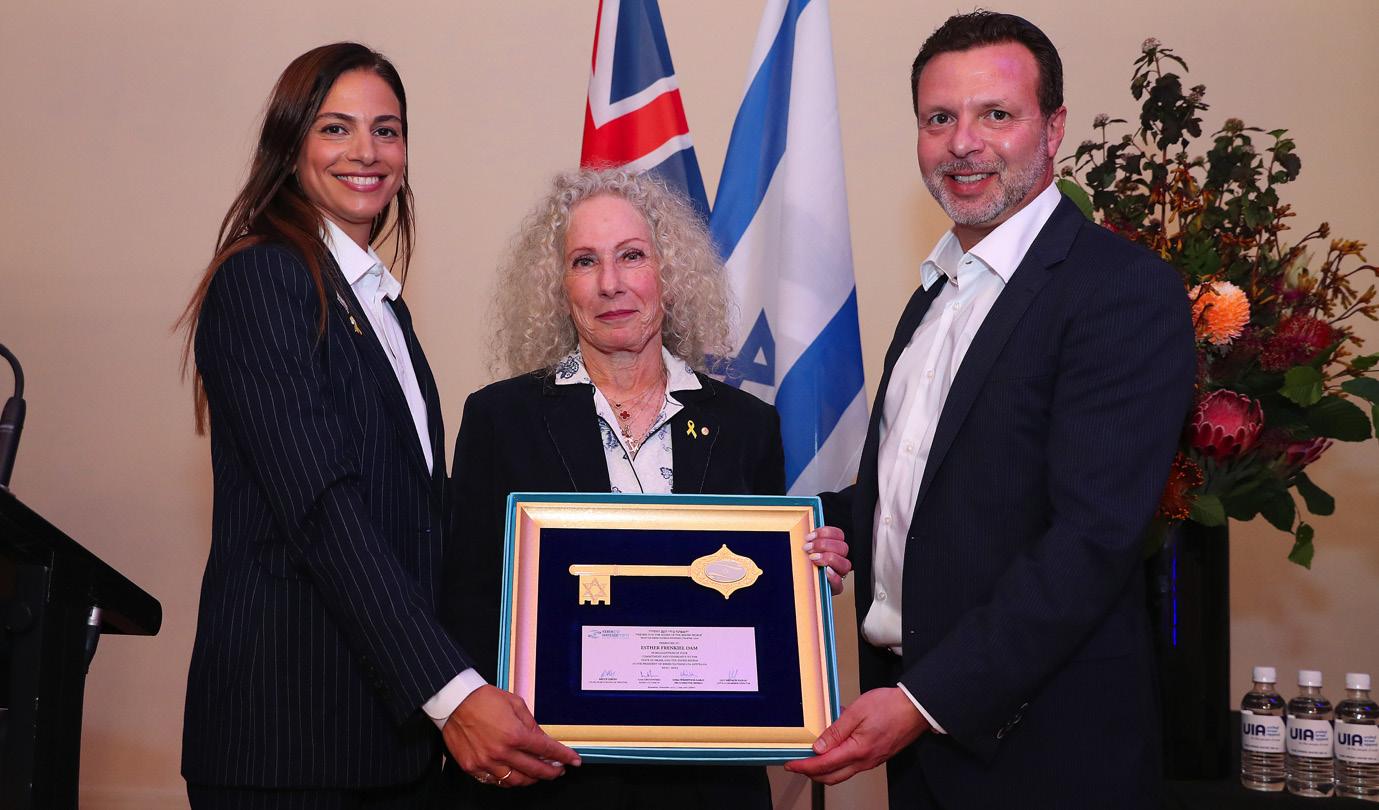
Outstanding service and leadership were recognised at both events. Longtime Women’s Division leader Bev Michaelis was honoured with the Max Freilich Award for Longstanding Service to Israel and the Jewish People, in recognition of her decades of tireless work. In Victoria, outgoing Federal president Esther Frenkiel OAM was honoured by UIA regional director Liat Shevach Dahan with a presentation of ‘The Key to Jerusalem’ award, in gratitude for her leadership during some of the most difficult years in Israel’s recent history. Outgoing federal treasurer Julian Black OAM was recognised for 27 years of devoted service, with the announcement of a bursary in his name
UIA
From left: Liat Shevach Dahan, Esther Frenkiel OAM and David Slade at the Victorian AGM
ANNE-MARIE ELIAS CONSIDERED OPINION
At different times in our lives we may have consulted someone we considered to be wise. Conversely, we may be sought out by others who believe we possess wisdom.
The psychological definitions of wisdom are:
• Expert knowledge in the fundamental pragmatics of life, allowing for exception insight and judgment.
• The ability to make smart choices, especially in difficult situations, using experience and knowledge.
• Integration knowledge, experience and good judgment to make thoughtful decisions that benefit the individual and society.
• The capacity to make sound decisions and provide advice on complex problems of everyday life.
These definitions highlight the multifaceted nature of wisdom, emphasising its role in decision-making and life challenges.
While many associate wisdom with age, studies suggest that wisdom can develop at any stage of life. Young adults can exhibit wisdom in specific
Wisdom
situations, especially when they have had diverse experiences.
Different cultures have unique views on wisdom. For example, in some Eastern cultures, wisdom is closely related to harmony and balance, while in Western cultures it has links to knowledge and decision-making.
Wisdom is also associated with emotional intelligence, which involves recognising and understanding emotions in oneself and others. This emotional awareness can enhance decisionmaking and interpersonal relationships.
Wise people tend to report higher levels of happiness and life satisfaction, as they often have a broader perspective on challenges and a deeper appreciation of life.
Wisdom also has a practical base. Take these as examples.
• If you are tired, take a nap or time out.
• Reflect before reacting. Thinking before acting leads to a deeper understanding of the complexities involved in human relationships and enables better
Chanukah movies
___ HaMikra (Hebrew cantillation)
"Go this way" sign
Condo grp.
Bothers 18. Sebastian's twin, in "Twelfth Night"
19. "Enchanted" actress Adams
20. What might be seen on two chanukiyot on the seventh night of Chanukah? (1984)
23. Bread box, for short?
24. Irish boy
25. Margarine, by a less common name
26. Bodega owner, e.g.
28. Assassin who provides a need for oil lamps? (2014)
32. Tough item to get upstairs, often enough
33. Where the floor is always wet?
34. One igniting the first flame of Chanukah? (1984, 2022)
39. Stanley of "The Devil Wears Prada"
40. AKA Rabbi Moshe Isserles
43. Time when a chanukiyah might be set up? (2008)
46. Evil Nasrallah
48. Loveable cartoon bear
49. The Raptors, on the scoreboard
50. Use a crowbar
51. It's figuratively heard while singing Maoz Tzur? (2023)
57. Salute in stanzas
management of personal and professional conflicts.
• Seek other perspectives. It, too, builds understanding and leads to personal growth.
• Embrace uncertainty for life is inherently uncertain. So, it is not about having all the answers, but being comfortable with not knowing everything.
• Practice empathy. This requires an active engagement with the emotional experiences of others, putting ourselves in their shoes to better understand their perspectives and actions.
• Cultivate humility. Humility is often misunderstood as self-deprecation or weakness but it is a powerful aspect of wisdom. It involves recognising our own limitations and the value of others' contributions, opening ourselves up to additional knowledge and new experiences.
The former chairman and CEO of IBM, Thomas John Watson Sr., put it well, when he said: “Wisdom is the power to put our time and our knowledge to the proper use.”
Anne-Marie Elias is a psychologist in clinical practice for 25 years.
8. Nile creature, for short
9. Coke nut
10. Graceful avian swimmer
11. "Need me to do that?"
12. Class for cooking, sewing, etc.
13. Gives approval
21. Piece of corn
22. They're a drag
23. Merrick Garland and Edward Levi, for short
27. Major (first) name in women's sports
28. ___ down (take notes)
29. Edible South American tuber
30. Every other hurricane
31. Met or Phillie rival
35. Laker Hachimura
36. Heart chart, for short
37. MIT or MTA, e.g.
38. Answers
41. Burrowers found at the Grand Tetons
42. Some quantity of
43. Cicely and Mike
44. Full of 49-Down
45. "Yeah, maybe"
46. Weed-removing tool
47. Big acts play them
49. Plains generally lack them
52. Anchorman's spot
53. Lena who has played both a Holocaust survivor and a nazi
54. Get out of Dodge
55. Total sons of Esau
56. Half of a Friday night standard
60. Bean option
58. "Burn" singer Goulding 59. Doughnuts and latkes, to dieters 61. "The Legend of Zelda" console, for short 62. Cook's strainer
Build up, as a collection
Vietnam War protest gp.
What the devout might fall on
Oscar winner Spacek
Down
Beach buggy, briefly
Baton waver
Last name of Marvel witch Wanda
"Don't leave home without it" card, briefly
Toll House cookie dough maker
Covered with concrete
Sportscaster Andrews
Extreme disaster drills
responders were ready for any situation.
The important role of MDA
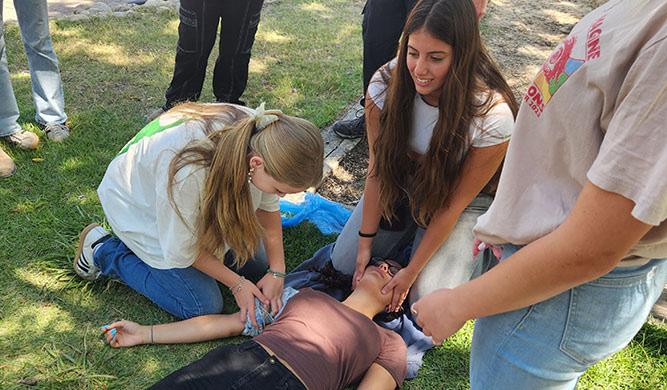
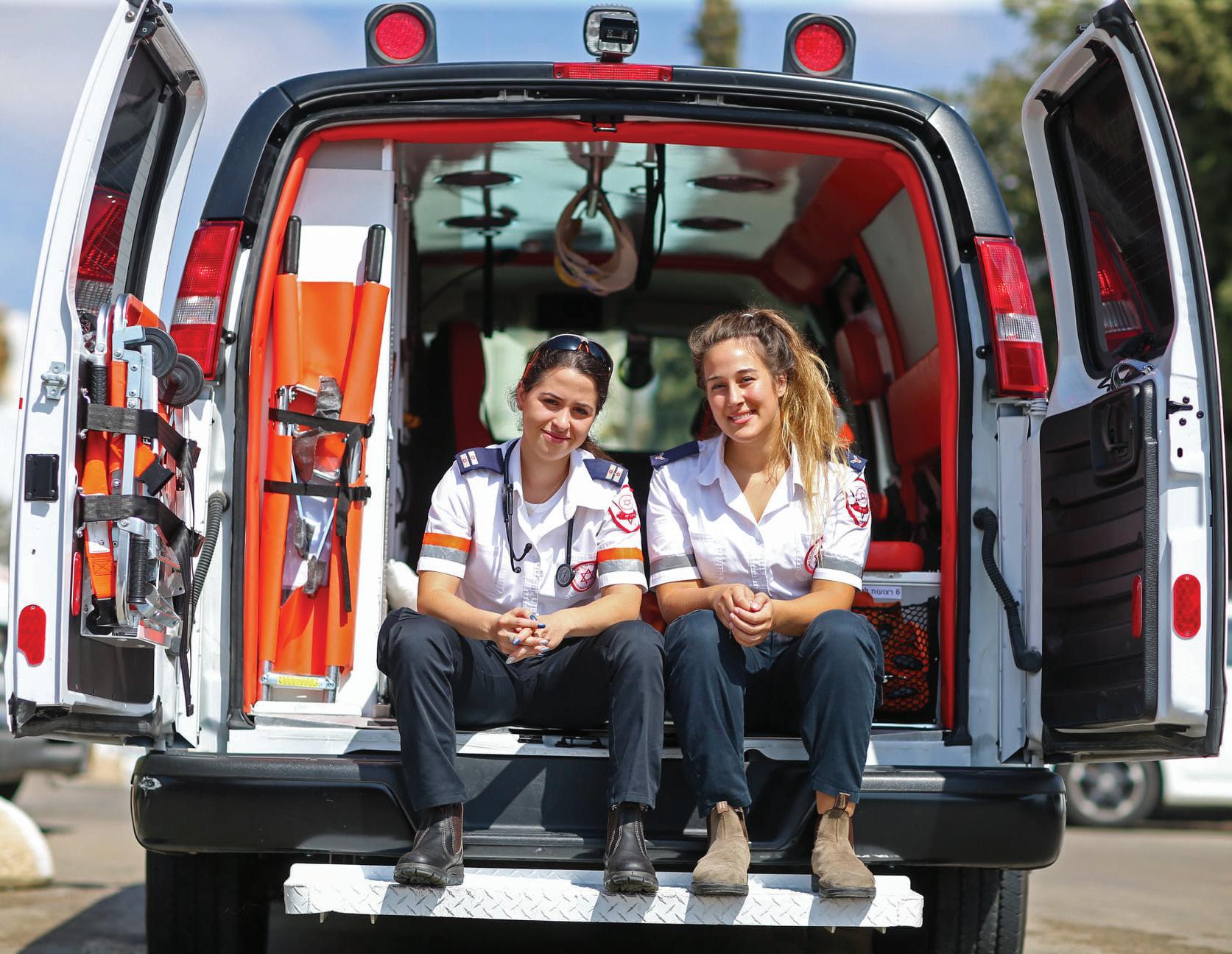
Hundreds of young MDA volunteers have taken part in a unique Red Cross-led exercise, learning to treat the wounded using improvised materials.
This may be particularly pertinent in the case of a missile strike, a natural disaster or other mass casualty incident.
Using everyday items such as cloth and sticks, the volunteers honed their skills dealing with blood loss, airway management, burn treatment and stabilisation techniques.
Deputy director of the MDA youth instructor course, Shemi Waldman, said the goal of the training was to ensure
“We saw that during the most recent attacks on civilian areas by Iran that MDA volunteers were often already treating casualties before ambulances arrived. “These drills aim to ensure the next generation of MDA leaders can step up when it matters most and to prepare our youth for events where help may be delayed.” Tel Aviv participant Yonathan Shemesh said they were taught how to stay calm, yet act quickly.
Training exercises and preparedness drills are an essential part of MDA’s national preparedness strategy, ensuring staff and volunteers can provide effective care in even the most challenging environments.
A tour of Israel by Magen David Adom Australia chairperson Glynis Lipson has cemented her appreciation of MDA’s commitment to unity, service and community resilience.
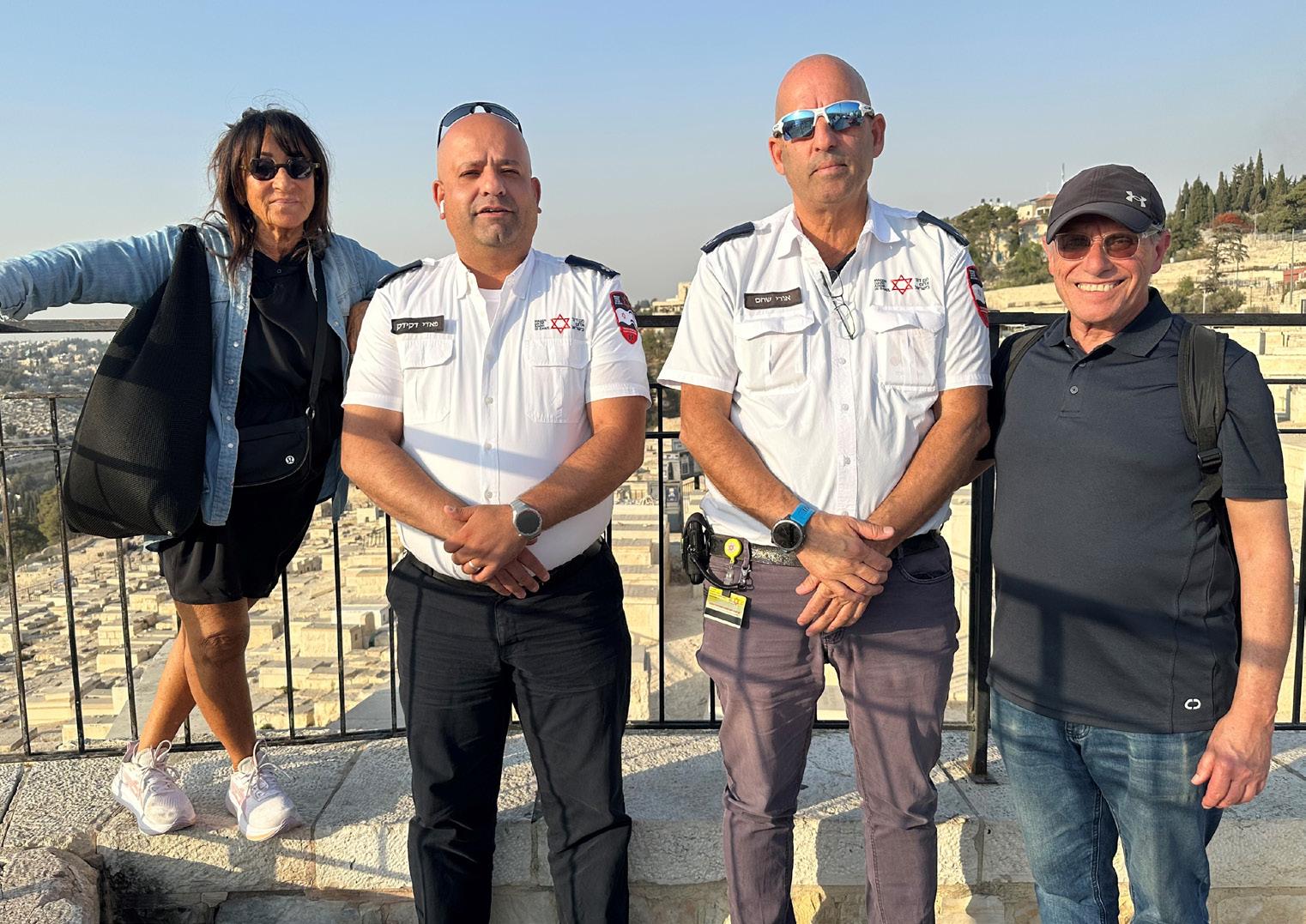
She learnt directly about the tireless work of MDA and its dedicated volunteers by spending time with Ori Shacham and Fadi Dekaidek. Fadi is an Israeli Arab from East Jerusalem and is
responsible for all MDA volunteers in the area. He and Ori share the belief that by training and educating young people, they will influence their families and communities to understand the value of becoming first responders.
It is not always easy for MDA to engage with villages in the region.
The organisation has been known to encounter hostility from Palestinian neighbourhoods.
Some are friendlier than others, but Fadi remains hopeful that change will come and understanding with grow.
Visit Magen David Adom in Israel and experience our world-class emergency dispatch centre, cutting-edge training facilities, and frontline ambulance and blood services. Meet the heroes, see the technology, and witness firsthand how Israel’s national EMS organisation saves lives every day. Book your visit now and be inspired by the people and power behind Magen David Adom For more information: (03) 9989 3655 info@magendavidadom.com.au
MAGEN DAVID ADOM
MAGEN DAVID ADOM
An MDA special training drill
From left, MDA Australia committee member Anita Baker, with Fadi Dekaidek and Ori Shacham, and Jack Lipson in Israel
CONSIDERED OPINION
NOMI KALTMANN
Lately, there’s been a lot of talk in the media about the so-called “baby bust” in Australia, focusing on millennials having fewer children and governments around the world worrying about population decline. As a millennial who has bucked the trend, I follow these discussions with interest. I’m in my early 30s and a mum of five children under eight. In this day and age, I know that makes me unusual. When I gave birth to my youngest this past January, people kept asking if she was my first. I’d smile and say, “No, she’s number five” and watch their jaws drop.
I’ve always known that I wanted a big family and I feel blessed that I’ve been able to have one. I grew up with lots of siblings, noise and laughter, and I loved it. I feel deeply grateful for my children. Being their mum has been the most joyful, exhausting and meaningful experience of my life.
Still, I can see why many people delay or avoid having children. To me, not having children is not just about lifestyle or priorities. It’s about cost and how little our entrenched systems support families. Childcare in Australia is expensive and rarely matches working hours. Most jobs give four weeks of annual leave a year, but schools close for 13 weeks. My husband and I have some flexibility to work from home, but even then, school holidays are a challenge. There are never enough spots in holiday programs
Babies
and not all our kids want to go, plus even between us, we don’t have enough weeks of leave. If governments are serious about encouraging people to have children, to me, the solution is clear: make childcare affordable, flexible and accessible. Support families, so parents aren’t constantly forced to juggle the impossible.
I’m also lucky to be part of a strong community. As an Orthodox Jew, I’ve seen the power of the village. Each time we’ve had a baby, people have cooked meals and checked in. That kind of
Lessons from memory
AB BOSKANY
There is a story Jews keep folded like a crease in a prayer shawl: the neighbour who smiles by daylight and whispers at night. It travels easily across centuries because it is not an episode, but a pattern. In fifteenth-century Toledo, within the industrious murmur of convivencia, Jewish translators ferried Aristotle from Arabic into Latin, beside Muslim physicians and Christian clerics.
The neighbour then was urbane, a companion at the lectern, liberal with ink, argument and bread. Then, the summer of 1492 arrived and the music altered. Carts creaked from the gates under candlesticks, books and cradles; domestic life became luggage. The same hands that once exchanged manuscripts fixed the decree of expulsion to the city door. Another turn of the wheel occurs beside the Tigris. Baghdad had long been a Jewish city in habit and intellect. Its Jews spoke in the language of their neighbours, wrote poems to the same cadences and counted themselves citizens of a civilisation confident in learning. In June 1941, the Farhud split that confidence.
Doors splintered, families were dragged into streets, houses were stripped to bare walls.
Two millennia of residence were not erased, yet they were made precarious in a weekend. After the riot, there hung a silence heavier than the clamour that produced it.
Europe rehearsed the betrayal to its most terrible score. In Vienna, Berlin and Kraków, Jews were not visitors, but participants, doctors and lawyers, violinists and shopkeepers, tutors and lovers, the indispensable fibres of a modern weave. Then the grammar altered.
They were marked and excluded, defined by symbols and statutes, and finally shunted into trains by those who had borrowed sugar across the yard wall. The thunderclap was preceded by a thousand quiet closures of doors. Hence, in Jewish memory, the neighbour is never neutral.
He has been teacher and ally; he has been informer, looter and executioner.
The distance between these roles is measured in hours rather than generations. That is the hard sediment history leaves behind.
So, when the world speaks of a Palestinian state, of a flag raised at Israel’s border and a trust placed in
support makes all the difference, but not everyone has it and that’s where public policy should step in. Governmentbacked community hubs could provide new parents with practical support, things like subsidised childcare, parenting advice and social connection. They could act as a modern “village”, helping families navigate the early years and school holidays. Other ways policy could help include extending paid parental leave, increasing access to affordable before and after-school care, and offering programs that connect new
parents for mutual support and advice. Together, these measures could make raising children more manageable for everyone, not just those with flexible jobs or strong networks.
Having children has been the greatest joy of my life, but joy shouldn’t come with such a steep cost. If Australia wants to have a baby boom, we need to make it genuinely affordable and doable.
This article originally appeared in the Herald Sun.
a neighbour’s keeping, Jews do not hear diplomatic abstractions. They hear proposals sounding within the vault of experience, accompanied by chants that promise not coexistence but annihilation.
They recall how the language of peace has sheltered, more than once, a dream of disappearance.
Yet, to stand on the edge of Gaza and look into streets narrowed by rubble is to meet sorrow face to face. Pity is not forbidden by memory. Compassion insists on being counted. But recollection compels distinction. Hamas chose massacre, entered sleeping houses and authored the present tragedy.
Compassion for misery cannot cancel the truth that Gaza’s rulers declare erasure, not accommodation. What others call hesitation is, for a people schooled by such neighbours, vigilance: a wary knowledge of how quickly the smile can fail and how near the whisper lies to the shout.
Peace, for them, is never a blank cheque, but a ledger balanced against centuries. Trust can be extended, cautiously. Trust is a bird that lands only after the storm has named itself.
Ab Boskany
THE COMMUNITY
DAVID SOLOMON, CEO
AUSTRALIAN FRIENDS OF TEL AVIV UNIVERSITY AROUND
An international research team from Tel Aviv University has identified a key molecular mechanism driving the early stages of amyotrophic lateral sclerosis (ALS), the fatal neurodegenerative disease for which no effective treatment currently exists.
The researchers demonstrated that a targeted RNA-based gene therapy may not only halt nerve cell degeneration, but actually reverse it.
ALS gradually destroys motor neurons, the nerve cells responsible for muscle movement. As these neurons deteriorate, patients lose the ability to walk, speak and ultimately breathe. Most succumb within three to five years of diagnosis. For decades, scientists have understood the devastating progression of the disease, but not the underlying molecular trigger. Without that, drug development has remained severely constrained.
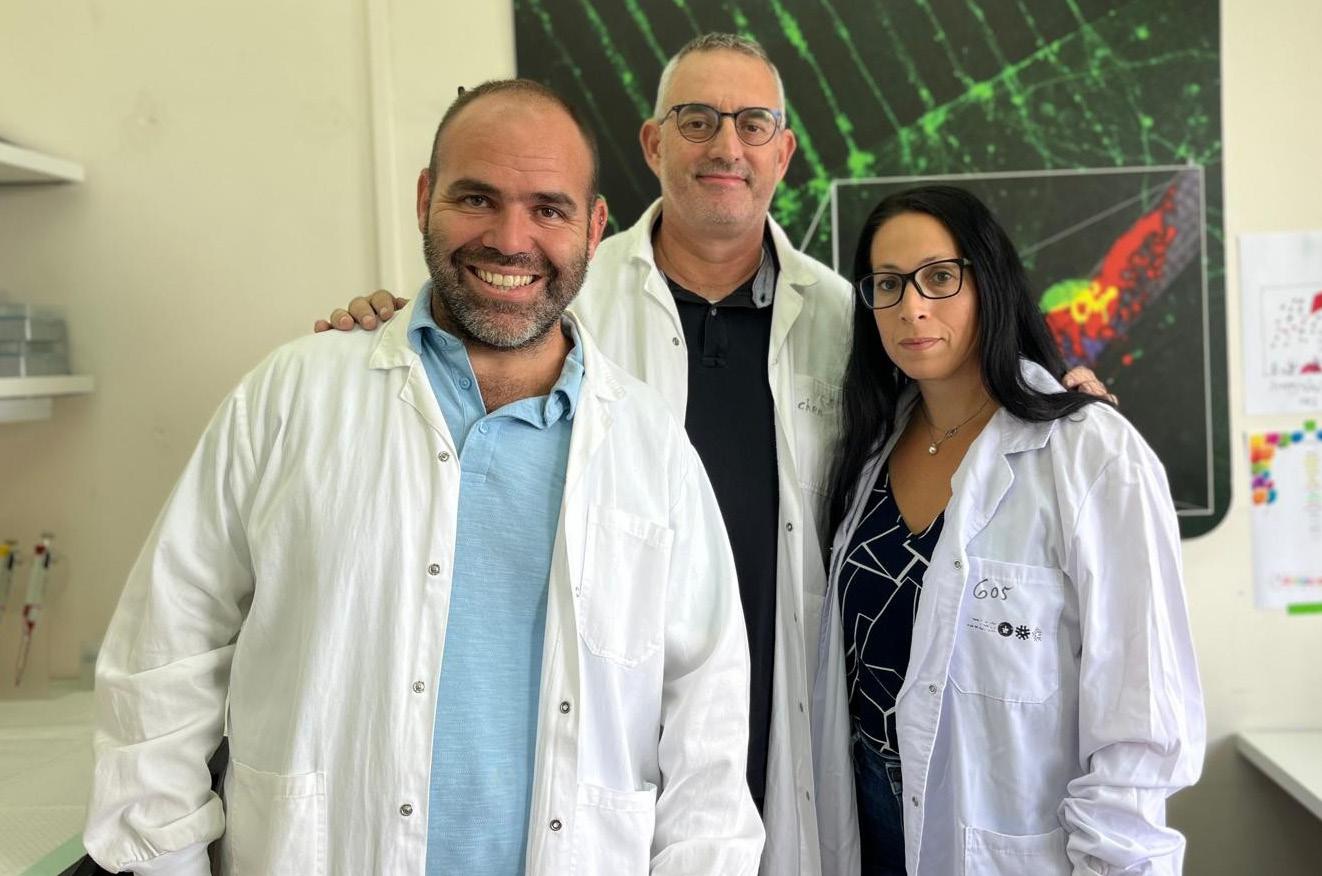
This new study, published in Nature Neuroscience, marks a significant step forward. Led by Professor Eran Perlson of TAU’s Gray Faculty of Medical & Health Sciences and Sagol School of Neuroscience, with Dr. Ariel Ionescu and Dr. Lior Ankol, the project brought together collaborators from Sheba Medical Center, the Weizmann Institute, Ben-Gurion University, and research
Breakthrough brings hope for ALS patients
groups in France, Turkey and Italy.
Professor Perlson’s lab had previously observed that in ALS toxic clusters of a particular protein (TDP-43) accumulate at the neuromuscular junction, the tiny connection point where nerve cells connect with muscle fibres.
These aggregates disrupt the mitochondria, the structures that supply energy to the cell, leading to a catastrophic decline in neuronal function. In the current study, the team
Tel Aviv University Optimism at work
A
solution
sought to understand why these toxic clusters form in the first place. Using ALS mouse models, human stem-cell cultures and tissue from ALS patients, they uncovered a surprising mechanism. In healthy systems, muscle cells send tiny RNA messages, called microRNA-126, to nearby nerve cells. These messages help keep the TDP-43 protein in balance.
In ALS, however, the muscle produces far less microRNA-126. The result: unchecked levels of TDP-43, the
Countless TAU students have lost loved ones or endured unimaginable trauma, and many now suffer from PTSD. To address this crisis TAU established Israel’s most advanced post-trauma clinic, providing cutting-edge, evidence-based treatments developed by our globally-renowned researchers over the last 30 years. The clinic has become a critical resource for Israel, treating many TAU students struggling to rebuild their futures.
formation of toxic aggregates, damage to mitochondria and, ultimately, the destruction of motor neurons.
The really remarkable finding is what happened when researchers restored the missing molecule. By adding microRNA-126 to human ALS cell cultures and ALS-model mice, the team was able to reduce TDP-43 levels, protect neurons from degeneration and even spark regeneration of damaged nerve cells. Essentially, topping up this single RNA molecule reversed much of the disease’s destructive cascade.
For a condition long considered untreatable, such results are striking. While significant work remains before this can be developed into a clinical therapy, the study points to a new path: gene therapy focused on replenishing microRNA-126. If successful, such an approach could stabilise the neuromuscular junction before irreversible damage sets in, changing the prognosis for millions of ALS patients worldwide.
As Professor Perlson said, “By identifying a critical early mechanism of ALS and showing that we can intervene, we now have a real basis for developing effective gene therapy.”
It is a breakthrough grounded in rigorous science, one that finally offers a measure of hope.
The research team. From left: Dr Ariel Ionescu, Professor Eran Perlson and Tal Pery Gradus
The Australian Friends of Tel Aviv University
AROUND THE COMMUNITY
AROUND THE COMMUNITY
YOASH DVIR TECHNION AUSTRALIA AROUND COMMUNITY
Hebrew Language Day
YOASH DVIR, CEO TECHNION AUSTRALIA
YOASH DVIR CEO TECHNION AUSTRALIA
A century of innovation: celebrating 100 years of the Technion
A professor, a chief and a potter dived into the ocean
“We cannot tolerate such indifference toward our language ...”
In 1924, on a hillside in Haifa, the Technion – Israel Institute of Technology opened its doors, igniting a journey that would intertwine scientific rigour with visionary ambition. Born from the aspirations of a fledgling community, the Technion set out to train engineers and scientists that would help shape the nation of Israel. Today, as we approach its centennial, the Technion stands as a beacon of innovation and resilience, a living testament to how education can transform societies and push the boundaries of human potential.
Every year, Israel marks Hebrew Language Day on the birthday of Eliezer Ben-Yehuda (7th January, 1858 – 16th December, 1922), the man credited with reviving Hebrew as a modern, living language. The commemoration (on the 21st of Tevet) serves as a reminder of the transformative power of language in a nation’s identity. Ben-Yehuda, a linguist, journalist and ardent Zionist, viewed Hebrew not only as a link to Jewish history, but as a cornerstone for the modern state of Israel. His tireless efforts turned an ancient tongue into a vibrant, evolving medium for daily life, literature and academia.
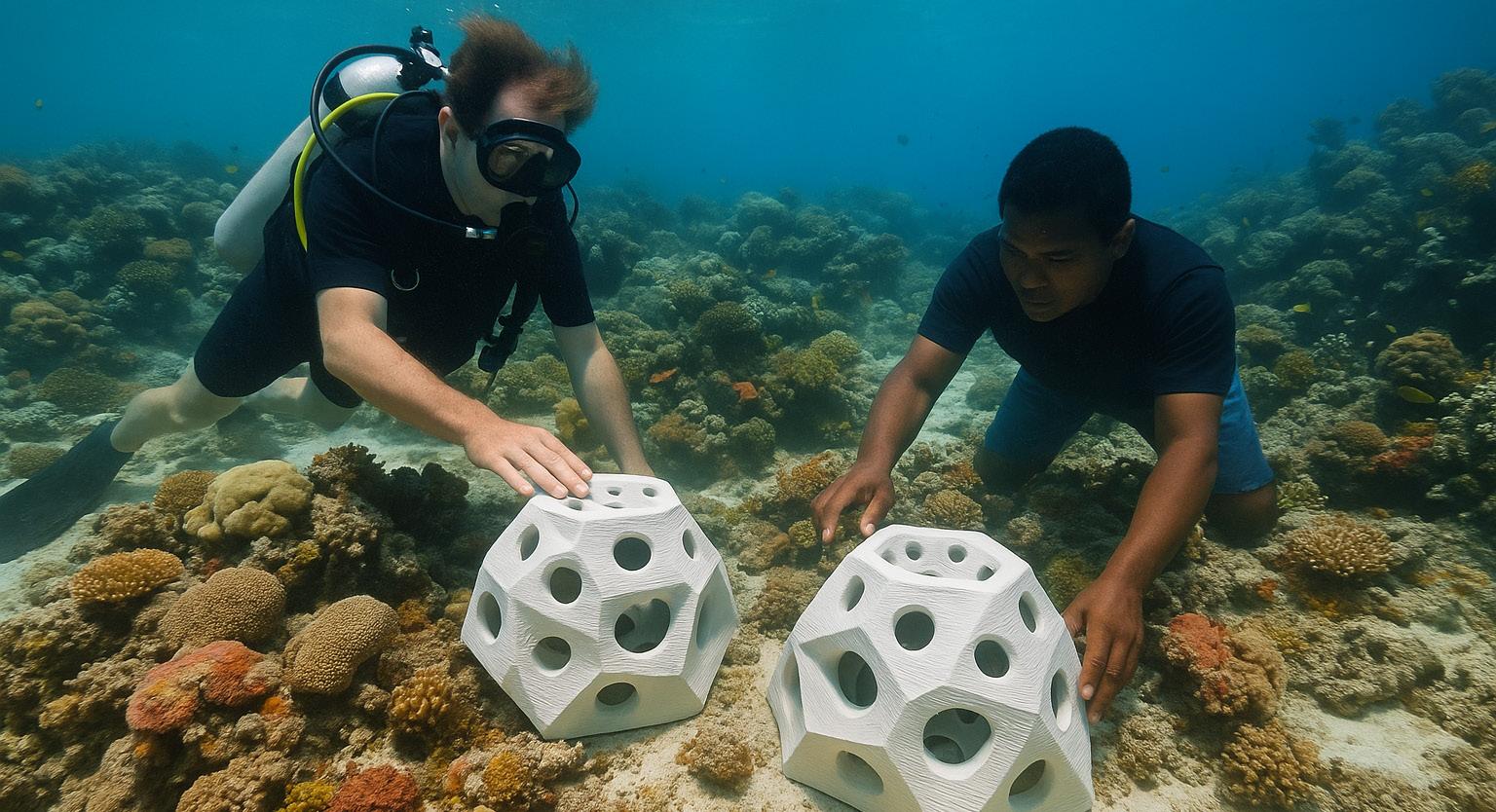
In a year dominated by global turbulence, it is easy to lose sight of the quieter stories, the ones unfolding far from the headlines, where innovation, patience and unlikely partnerships reshape what is possible. One such story takes place not in a laboratory in Haifa or a startup hub in Tel Aviv, but in the lagoons of Fiji, where Israeli researchers, led by Professor Ezri Tarazi from the Faculty of Architecture and Town Planning, at the Technion – Israel institute of Technology, local chiefs and village potters are working together to restore threatened coral reefs.
Coral reefs, which support a quarter of all marine species, are among the world’s most endangered ecosystems. Warming oceans and increasingly intense storms have devastated large sections of the Pacific’s coral landscape. The Israeli team – marine scientists, materials engineers and 3D-printing specialists –entered the project with a simple idea: to design ceramic structures that mimic the intricate architecture of natural coral, creating a foundation on which damaged reefs can regrow.
Throughout the years, the Technion’s contributions have rippled across the world, impacting fields from medicine to computer science and clean energy. Among the Technion’s storied achievements, one of the most remarkable was the 2004 Nobel Prize in Chemistry awarded to Professors Avram Hershko and Aaron Ciechanover for their discovery of ubiquitin-mediated protein degradation. Their breakthrough has had far-reaching implications for cancer treatment, shining a light on processes that control protein breakdown in cells and opening doors to novel therapies (source: NobelPrize.org, 2004).
At the time, Germany was the leading country in the world in science and Hebrew didn’t even have all the words for the teaching of engineering. Ultimately, the Technion yielded to the movement’s demands, cementing Hebrew’s role as the language of instruction. This victory not only solidified Technion’s place as a pioneer in integrating Hebrew into higher education but also made the institution one of the places where the Hebrew language was formed. It showed that the language could handle the complexities of scientific and technical discourse.
lens. It shows an ability to lead in fields that demand not only technical sophistication, but environmental sensitivity and human partnership. The technology is advanced, but its success depends equally on dialogue, trust and the meeting of two very different knowledge systems.
The revival of Hebrew was never merely a linguistic endeavour. It was a cultural and national mission. In the early 20th century, as waves of Jewish immigrants began to rebuild their homeland, there was no guarantee that Hebrew would take its place as the common language. Many in the Jewish community spoke Yiddish, Russian, German, or Ladino and there were fierce debates about which language should dominate. Nowhere was this debate more evident than at the Technion – Israel Institute of Technology, one of the country’s first modern academic institutions. Whilst the Technion only opened its gates in 1924, its corner
firmly established as the academic and national lingua franca.
What makes the initiative striking is not only the technology, but the method. Instead of importing prefabricated solutions, the researchers spent months
In the field of technology, Technion graduates were early pioneers in Israel’s emerging high-tech industry,
working with local Fijian potters who use techniques passed down through generations. The result is a hybrid form: clay vessels shaped with traditional craftsmanship, enhanced with 3D-printed components that replicate coral micro-texture with precise accuracy. The substrates are then positioned on the ocean floor, where they attract coral larvae and encourage new reef formation.
The collaboration is deliberate and slow-moving (the opposite of quickturnaround innovation), yet it reflects a
contributing to critical advances like the microprocessor, which has fuelled digital transformation worldwide. This legacy lives on today with innovations in AI, nanotechnology and autonomous vehicles. Technion alumni lead groundbreaking companies such as Mobileye, which has been at the forefront of self-driving car technology. However, this remarkable journey has not been without its challenges. The Technion’s story is one of forged in times of conflict, global
stone was set in 1912, and the prospect of its opening became a battleground for the infamous “Language War”. At the time, the German-speaking Ezra youth movement proposed that the institution adopt German as the primary language of instruction, particularly for teaching science and engineering. This sparked widespread outrage among Hebrew revivalists, who saw the move as a betrayal of the Zionist dream. What followed was an extraordinary grassroots movement known as “The War of the Languages”, in which activists demanded that Hebrew, the language of the Bible and Jewish heritage, be
deeper strength of Israeli science: the ability to merge rigorous research with cross-cultural cooperation. The team works with village leaders, respects local ecological knowledge and adapts its models to the rhythms of the communities that live by the reefs. The project is funded for three years, giving it time, continuity and scientific followthrough.
upheaval and scientific frontiers that demanded perseverance and courage.
It’s a story that resonates with the spirit of so many Israelis who, while contributing to science and society, carry the weight of history and hope. This spirit is reflected in the experiences of current Technion students, including those who serve in the reserves, balancing their studies with a commitment to protecting their country.
To honour these 100 years of excellence, innovation and determination, Technion
The resistance to German and the insistence on Hebrew were not just symbolic. They were practical. The Jewish pioneers of the time believed that a shared language was essential to unify a diverse population and forge a distinct national identity. The protests were fierce and the Technion’s administration faced immense public pressure. Letters from groups like the “Hebrew Language Battalion”, an organisation founded by graduates of the Herzliya Hebrew Gymnasium, articulated the community’s sentiments:
For Israel, whose scientific footprint is often associated with cybersecurity, medical devices and artificial intelligence, this initiative offers another
There is also something quietly resonant in the choice of material. Clay, one of humanity’s oldest technologies, sits at the centre of an effort that uses cutting-edge modelling to protect one of the planet’s most delicate habitats. It is a reminder that innovation is not always about replacing the old with the new; sometimes it is about placing them side by side.
Today, Technion continues to stand as a testament to the power of cultural resilience. Hebrew Language Day reminds us that languages are more than tools of communication. They are vessels of identity, history, and pride.
Australia warmly invites you to share two special evenings that will celebrate the past, present and future of this extraordinary institution. On December 3 in Melbourne and December 4 in Sydney (venues TBA), we will gather for an event that goes beyond commemoration –it’s a chance to connect with the spirit of the Technion and the minds shaping tomorrow. The events will feature talks by distinguished figures, including Nova Peris OAM, Mr David M. Weinberg from Misgav Institute for National Security and a Jerusalem Post contributor, Professor Wayne Kaplan, vice president at the Technion and Professor Moti Segev, a Technion graduate who has seen firsthand the intersection of education and service. Alongside these voices, an art exhibit by Melbourne-born Avraham Vofsi will offer a glimpse into the heart of Israeli culture and creativity, reminding us that science and art often go hand in hand. We invite you to share in a night of brilliance, resilience and soul. Join us in celebrating the Technion’s enduring impact and look forward to the remarkable contributions that still lie ahead.
In the coming years, the Israeli/Fijian project will be measured by its data: survival rates of new coral, biodiversity returns and long-term resilience. But it is already a compelling example of the kind of work that matters in a volatile world: precise, collaborative and anchored in a belief that science can repair, as well as invent.
To be part of these events, go to https:// collections.humanitix.com/technion100-years-grand-event
It is a story worth paying attention to – not because it is spectacular, but because it is hopeful.
As we celebrate Eliezer Ben-Yehuda’s legacy, we honour the visionaries and activists who fought for the Hebrew language’s rightful place. Their efforts have ensured that Hebrew remains not only a link to the past but also a vibrant thread in the tapestry of Israel’s future. You will be able to see more on this subject when a documentary about Technion premieres in Australia at the Jewish International Film Festival later this year.
For 100 years, Technion – Israel Institute of Technology has strengthened the State and people of Israel. No institution holds more promise for its future.
It educates global entrepreneurs, develops pioneering technologies, expands our scientific frontiers and betters life around the world.
Technion 102 will screen at JIFF 2025
Graduation ceremony at Technion – Israel Institute of Technology
Divers working at a coral reef (AI created photo)
THOUGHT
RABBI DR BENJI LEVY RABBINIC
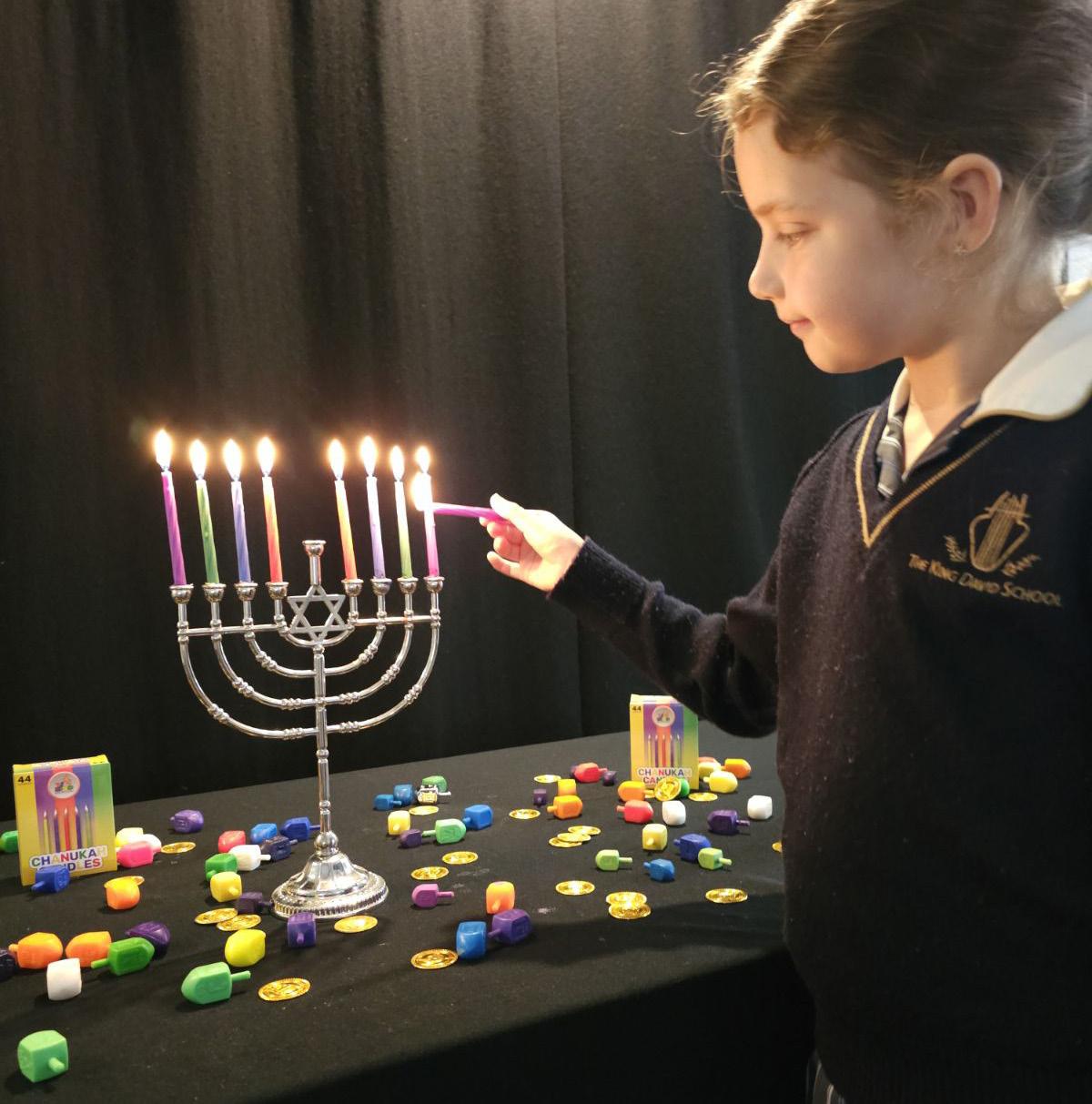
Every year, when Chanukah arrives, I am struck by how something so small can hold so much meaning. A candle is tiny. It makes no sound, demands no attention and takes up almost no space. Yet, for generations, it has reminded us of one of the most powerful teachings in Jewish life. Light is not meant to be hidden. It is meant to be revealed, nurtured and shared.
When I first began speaking about the idea of sharing the light, my intention was simple. I wanted people to recognise that every one of us carries a spark within. We sometimes assume that only extraordinary people can make a real difference, but Judaism reminds us that influence begins with presence. A single flame can transform a dark room and, in the same way, a single act of kindness, clarity or courage can illuminate another person’s life. Sharing our light does not ask us to be perfect. It asks us to be authentic. It asks us to show up as the truest version of ourselves.
Over time, my interest in this idea deepened as I reflected on the spiritual framework that guides it. Judaism does not simply tell us to shine. It gives us a language for understanding what our inner light is made of. I call this the
How we share the light within
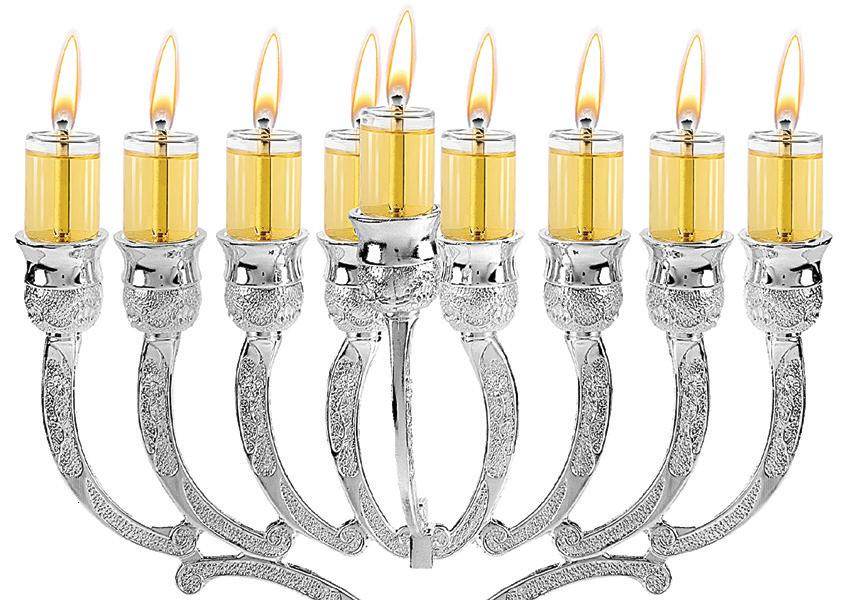
Rabbi Benji’s menorot
language of light. It is rooted in the Sefirot, the divine attributes through which God interacts with the world. These concepts may sound abstract, but they were never meant to remain theoretical. Each attribute describes a dimension of the soul and offers a pathway for personal growth.
On the first night we focus on Bina, the gift of understanding. Bina encourages
Leadership without fanfare
RABBI DANIEL RABIN
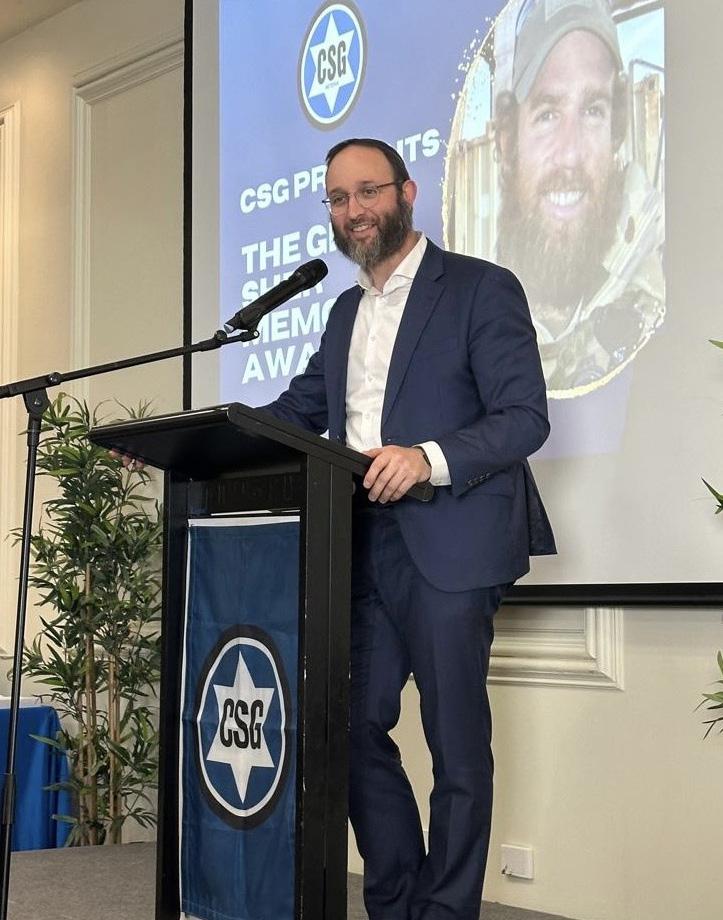
Every generation has its quiet heroes: people who stand up, step in and take responsibility, often without fanfare. In our Melbourne Jewish community, one of those was Private Greg Sher. A proud Jew, a dedicated CSG volunteer and a soldier in the elite 1st Commando Regiment, Greg lived a life shaped by service and humility. He was killed in a rocket attack while serving Australia in Afghanistan in 2009. His values live on each year through the Greg Sher Memorial Award, which recognises young leaders in our community.
Something remarkable happens at this award ceremony that goes far beyond certificates and applause. It becomes a mirror. A reminder. A gentle nudge to all of us about the kind of community we want to build and the kind of leaders we hope to raise. Walk into the hall and you feel it immediately. The energy is warm, hopeful, almost buzzing. Families sit a little taller. Teachers beam. Students look proud and slightly surprised that their everyday choices have brought them to this moment. There is no ego in the room, just a sense of shared celebration. And perhaps that is the real beauty of the award. It highlights the quiet acts that shape our community far more than we realise. The students honoured are not being recognised for grand gestures. They may have helped a peer through a difficult time. They may have stepped up in their youth movement. They may have
supported a school initiative or simply made sure no one was left out.
In a world where leadership is often equated with being the loudest voice in the room, the Greg Sher Memorial Award offers an alternative. Leadership can be thoughtful. Leadership can be humble. Leadership can be about showing up consistently, caring for others and choosing to contribute, one moment at a time. Greg’s own story brings this message to life. He did not set out to be a hero. He made steady, meaningful choices, serving community, serving country, acting with integrity, and those choices showed us what true strength looks like. The students who receive the award each year carry a spark of that same spirit.
For anyone in the room, it is hard not to feel hopeful. These young people represent the future of our community and they carry themselves with a pride that is both grounded and inspiring. They remind us that the next generation is not only ready to step in, but eager to do so, with heart and conviction.
For those reading this, perhaps the message is simple. Leadership is not reserved for certain people or certain ages. It is available to all of us, through small acts of kindness, moments of courage and the quiet decision to contribute wherever we stand.
May the memory of Greg Sher continue to inspire our community, and may we keep nurturing a generation of leaders who lift others, serve with humility and carry our values forward with strength and humanity.
control live in balance, creating a beauty that feels both grounded and elevated. Netzach invites resilience, reminding us that perseverance itself is a form of light. Hod cultivates gratitude and humility, qualities that soften us and make room for others. Yesod focuses on building connections and foundations that last, enabling our actions to have real impact. And Malchut brings all the previous traits into expression, teaching us that true leadership begins with listening, receptivity and presence.
As the menorah grows brighter each night, we are invited to grow along with it. These reflections help us notice which parts of ourselves shine naturally and which require more attention. Through this process, our light becomes steadier and more intentional.
us to look beneath the surface and to recognise complexity, rather than rushing to judgment. The next nights move us through qualities like Chesed, the expansive love that compels us to give of ourselves, and Gevurah, the disciplined strength that allows us to set boundaries and hold firm to our values. Tiferet teaches the harmony that emerges when kindness and self-
The miracle of Chanukah was not only that the oil endured. It was that a small group of individuals believed their light mattered enough to protect and rebuild. That belief continues to sustain us.
This Chanukah, I invite you to listen for your own language of light and to share it generously. When we illuminate our world from within, we help others discover the light they have carried all along.
Rabbi Daniel Rabin
RABBI YAAKOV GLASMAN AM RABBINIC THOUGHT
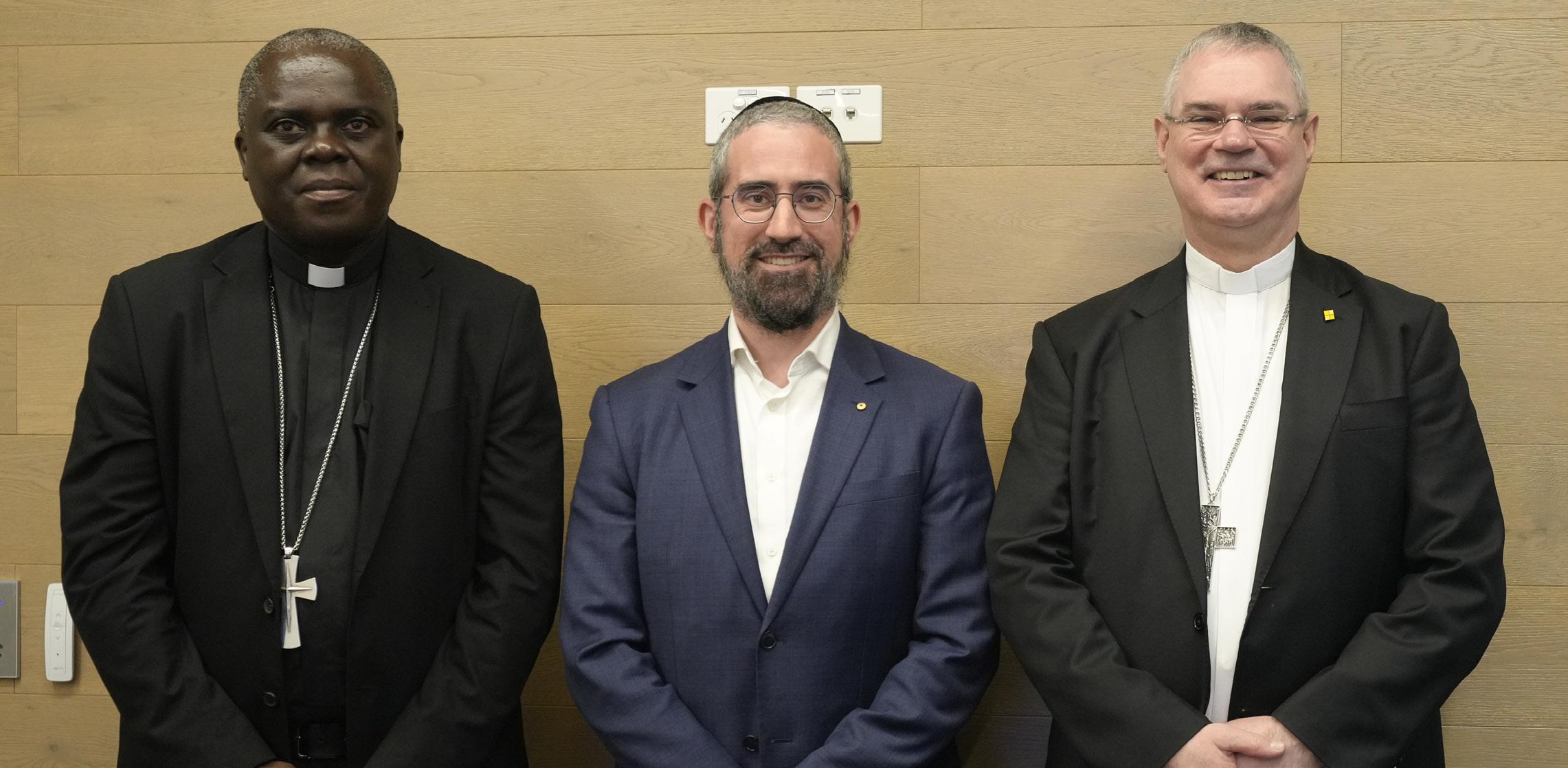
Recently, I met Bishop Edwin Mwansa Mulandu of Zambia during his visit to Australia. He was welcomed at the offices of the Catholic Archdiocese of Melbourne in East Melbourne by Archbishop Peter Comensoli. Conveniently, the Archdiocese offices sit next door to the East Melbourne Hebrew Congregation, which provided a fitting setting for our inter-faith encounter.
With the permission of Rabbi Dovid Gutnick of the East Melbourne shule, I took Bishop Mulandu and Archbishop Comensoli on a brief tour of the synagogue. Marked by curiosity, warmth and mutual respect, it was the bishop’s first visit to a Jewish house of worship. It provided a good example of how faithbased communities can come together in a spirit of genuine connection.
During our conversation, Bishop Mulandu spoke about his work in Zambia, particularly his efforts to support vulnerable girls. He described how many of these students walk long distances to school daily and how he is working to build a dormitory that will provide safety. During his visit, he also showed interest in the Torah scroll and other religious artefacts in the shule.
We discussed pastoral care. I explained that our synagogue serves some 1,500 members, which is above the average
Interfaith learning
size for an Australian synagogue. In turn, he told me he provides pastoral care for about 300,000 people in his diocese, underscoring the magnitude of his responsibilities.
Bishop Mulandu was appointed to the Diocese of Mpika in 2021 and is leading work in a remote and under-resourced region of Zambia. He is striving to provide access to education, healthcare and dignity for young women in rural Zambia,
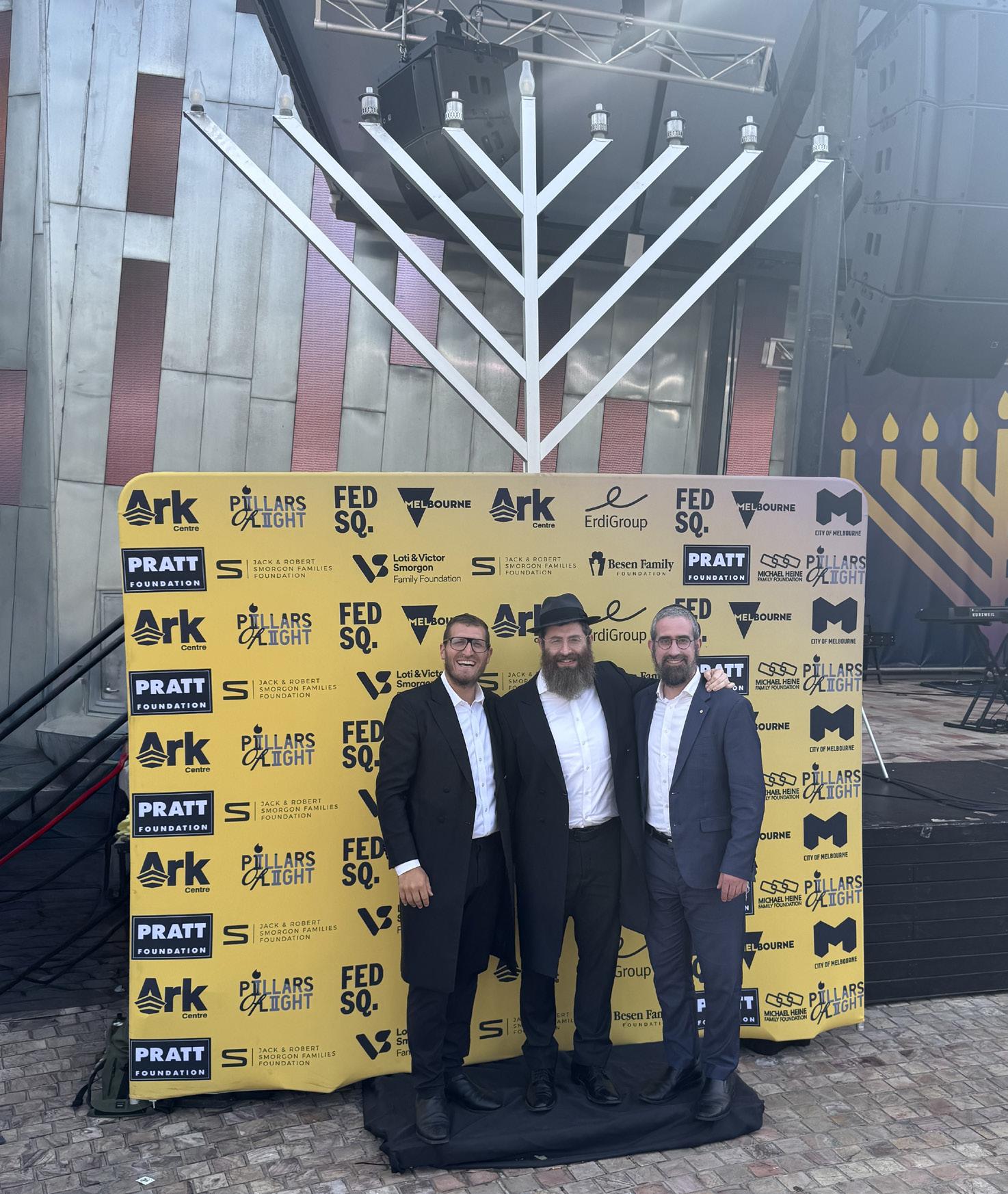
Pillars of Light
This week has been a busy one at the Ark Centre as we prepare for the Pillars of Light Festival. Anyone who came along last year will remember how those eight nights of Chanukah took on a life of their own. Each evening had its own rhythm and energy, and together they created something that felt both deeply traditional and wonderfully new.
Chanukah has always been about light and a return to what anchors us. When the festival was created in 2020, it had a clear purpose. Bring light. Share it widely. Offer something hopeful and generous to Melbourne and beyond. It was never meant to stay within our own walls.
Even though it feels like we have only just caught our breath after the High Holidays, Chanukah is suddenly close. This year the festival will again be held in Federation Square. It has grown in size and scope. Each of the nights will highlight different multicultural ways of celebrating, welcoming and carrying light. It will be a reminder that the story of light is not only ours and that the act of bringing light into the world is something many cultures hold dear.
Across the eight nights we will welcome dignitaries, state and federal parliamentarians, performers, multicultural leaders and faith leaders from across Victoria.
It is one of those times that Melbourne shows what it does best. We take a Jewish festival that is small in origin and we use it to say something bigger. A little bit of light can reach far and make the darkness less overwhelming.
The festival also reflects the values that guide our work at the Ark Centre. We care about cross-cultural connection, inclusivity, diversity and creating a community that feels cohesive and calm. I would also like to extend a warm invitation to join us.
If you have the time and the inclination, we are still looking for volunteers. Families, young people, older community members, anyone who wants to pitch in is welcome.
In its own way, organising a multicultural festival is also a labour of love. There are countless details and more than a few sleepless nights as we work to get each evening right.
But, from its beginning, this festival has revealed the beauty of our tradition in one of the most open and vibrant cities in the world.
I hope you feel the same sense of anticipation I do. So, please feel free to bring your family and friends, and join us at the Pillars of Light Festival for at least one of the nights of Chanukah.
For more information, go to https:// fedsquare.com/events/pillars-of-light
objectives that resonate with Jewish values of kindness and social justice.
The Torah teaches that Moses was chosen for leadership because he cared for each member of his flock with patience and empathy. This principle suggests that true leadership begins with concern for those who rely upon us.
Moreover, the mitzvah of loving one’s neighbour is among the most central in Judaism. The commentaries explain
that this means seeking the wellbeing of another person with sincerity and respect. It is a call to recognise the worth of every human being.
As my meeting with Bishop Mulandu ended, it became clear how faith can serve to unite, rather than to divide. His mission in Zambia is a story of compassion, courage and hope that speaks to the highest ideals shared across faiths.
RABBI GABI KALTMANN
From left: Rabbi Gabi Kaltmann, Rabbi Dovid Gutnick (East Melbourne Hebrew Congregation) and Rabbi Yaakov Glasman AM (St Kilda Hebrew Congregation) at the Pillars of Light Festival last year
From left: Zambian Bishop Edwin Mulandu, Rabbi Yaakov Glasman AM and Melbourne’s Catholic Archbishop Peter Comensoli
RABBI ARON MOSS RABBINIC THOUGHT
Question:
I attended the funeral of my exhusband. I wouldn’t have gone for his sake. I’m still angry at him. I went for my kids. I was surprised to be told that because we were civilly divorced, but I never bothered to get a Jewish divorce, we are still considered married and that I have to observe the mourning laws. Does it really make sense for me to sit shiva for a man I barely spoke to for 17 years, just because we once had a wedding ceremony together?
Answer:
In Judaism, we don’t have ceremonies. We have surgeries.
A ceremony, such as a graduation ceremony, is a symbolic act that marks something that has already happened. Nothing really changes from before to after. Graduation took place when you passed the exams. The ceremony only celebrates it. If you missed it, you are still a graduate.
A surgery, on the other hand, is not symbolic. You have to be there and you come out different.
Judaism doesn’t deal in symbols. We deal in realities. Our rituals are spiritual operations.
Sit shiva for an ex?
Take a bris. The child is not the same before and after. He is physically circumcised and spiritually bound in a covenant with G-d. That is not a ceremony. It’s spiritual surgery. The same is true of a wedding. The chuppah is not a ceremony. It is a spiritual operation. Under the canopy, the souls
of the bride and groom are fused into one. Beyond the emotional bond that already exists, a new connection is formed, a metaphysical bond on the level of souls. You arrive at the chuppah as two and you leave as one.
This bond is lasting. Even if the couple lives apart, their souls remain linked. To
dissolve that spiritual bond, another operation is needed, a get, being a Jewish divorce. The Torah calls divorce k'ritut, a cutting off. It severs the soul connection.
The relationship may have ended long ago, but without a get the souls are still joined. This means your soul cannot fully connect with another until the previous bond is released. And it also means that when his soul leaves this world, yours feels it too.
That’s because Jewish mourning is also not a ceremony. It is the soul’s response to loss. Close family members are joined by blood and by spirit. When one of them passes, their soul leaves this world and draws with it a part of those who were connected to them. We grieve not only their absence, but also the part of our own soul that has gone with them. This is why we must mourn even estranged relatives or separated spouses. The emotional bond may not be there. The spiritual bond is.
He is gone now and with him has gone that part of your soul that was tied to his. You do need to sit shiva, not so much for him, but for the part of you that was bound to him and is now released.
May this bring you closure and peace. His soul has graduated to somewhere up there. You can do the same down here.
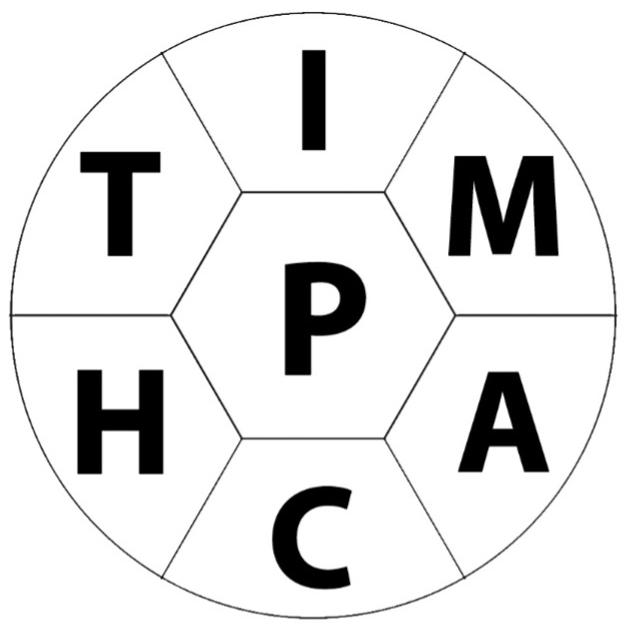
How many common words of five or more letters can you spell using the letters in the hive? Every answer must use the centre letter at least once. Letters may be reused in a word. At least one Jewish word will use all seven letters at least once.
Proper names and hyphenated words are not allowed. Score one point for each answer and three points for a Jewish related word that uses all seven letters.
Rating: 6 = Good; 9 = Excellent; 12 = Genius
Glatt has published more than 1,000 crossword puzzles worldwide, from the LA
and Boston Globe to The
He has also published two Jewish puzzle books: "Kosher Crosswords" and the sequel "More Kosher Crosswords and Word Games".
ANSWERS PAGE 19
Yoni
Times
Jerusalem Post.
CONSIDERED OPINION
RAMONA FREEDMAN
ALIYAH ADVENTURES
Whether you walk, skip or run down the streets of Israel, irrespective of which town you are in, there are several key slang words that you will hear frequently. Like ‘sababa’ for starters, which means cool, or ‘yalla’, which means let’s go, or ‘achla’, which means great.
There is one other word that is on the tip of Israeli tongues daily. It is ‘walla’ and it is borrowed from Arabic. Walla is used in a multitude of ways, mostly in response to hearing something surprising and yet compelling. Lower the tone and it is used in agreement or confirmation meaning “yeah, you are right about that”.
Walla can also be used as irony, sarcasm and sometimes even as a conversation filler. It is truly versatile and therefore heard on repeat. Linguistically, this is interesting as the ‘w’ sound doesn’t even exist in Hebrew.
With Israel being the mad, yet blessed holy land that it is, you don’t need to search far and wide for any walla moments – they seem to find you!
Rain is rare here in Israel. When rain is predicted by excited meteorologists I can understand their anticipation, after all they typically tell all and sundry the weather the next day will be precisely the same as the day before – blue sky, sunny, no clouds. At least that is the case here in Ra’anana.
Rain is revered. Rain is respected. It becomes a huge topic of the week, discussed in fruit shops, at the bakery and on public transport. Small and large outdoor events are quickly cancelled. School students whisper about it and share their collective dream to hear rolling thunder.
I try and make a point of only listening to Hebrew in the car, so I couldn’t help but smile the day the rain came bucketing down and the radio stations started playing any and every English song that had the magical word ‘rain’ in it.
The eclectic compilation was oddly intergenerational. I kid you not. I heard Singin’ in the Rain by Gene Kelly, Purple Rain by Prince, Set Fire to the Rain by Adele and, even, Rain on Me by Lady Gaga and Ariana Grande.
But that was not my Walla moment about rain. That came when I saw giant raindrops seeping into my bathroom straight through a new, square window. How can that be? Well, after it had been installed, the Russian builder said he had decided not to seal that new window and thought that instead he would wait for a rainy day to see if it leaked. Only then would he arrange to come back and seal it, if necessary.
If I knew colourful Arabic swearwords I may have thrown those into the conversation, but as I didn’t (and still don’t), Walla had to suffice. I will never be truly fluent in Hebrew, but I really do try. In Israel, de-boned, skinless chicken thigh fillets are nationally known as ‘pargiot’. In fairness, it is quite handy to have one word describing this. Yet, in a supermarket the other day, I saw what looked like
Walla!
pargiot, yet I didn’t see the expected corresponding Hebrew word on the label.
Not to worry, surely my old friend Google Translate will help me. So, I studiously stopped my shopping, typed in the two words written on the label and paused. The two English words staring back at me were: ‘dislocated knee’. I looked up completely bewildered. With determination, I went to find an employee, before asking what type of chicken I held. He said: “Don’t you know that is pargiot, of course.” Walla.
We had a fly screen installed recently. The guy installing it had to come back three times because each time he inadvertently brought one with a rip in it. That didn’t seem to bother him at all, but we kept explaining to him in simple Hebrew that that totally defeated its purpose.
Finally, with his mission successful, on his way out I offered him a drink. He took it and then, astonishingly, he proceeded to open my pantry, lock his eyes on raw almonds, take the jar, scoop out a generous handful (with his unwashed, dirty hands) and throw them into his mouth.
He then smiled unapologetically, oh so at home, oh so comfortable. Rather than thinking for too long about how that would culturally never happen in Australia, I smiled back and said, take the whole container. What was I going to do with it after he left anyway? Walla.
Wherever you are in the world, going to Ikea is never a quick dash in, quick dash out trip. The same is true in Israel. Except here, the bonus is there are two separate, strictly kosher cafeterias, with full milk and meat menus. You can also get a dairy-free vanilla soft serve for only two shekels. That has got to be the cheapest in Israel.
So, there I was, second in the queue, waiting patiently at the internal all-kosher Ikea food store, full of Swedish treats. There was an older couple in front of me about to pay and suddenly the cashier pressed some sample chocolates into their hands. It was clear each customer was meant to discreetly take one, yet she claimed more than half a dozen of them.
She said, “Nu, you will need energy to get back to your car, to schlep all your purchases back home. Don’t go hungry. Take more!” The husband and wife beamed and gratefully opened their chocolates. That is Israel in a nutshell. Walla.
Growing up in Australia, you are taught that when there is an emergency, dial ‘000’. It is not something we ever consciously feel we need to memorise; it is ingrained from so young that it is just innately known. In Israel, there are three separate numbers to call – one each for police, fire and ambulance.
Luckily for me, our shul, Kehillat Lev Ra’anana (which, by the way, is attracting
more and more Aussies each week), produced a large fridge magnet with these numbers and more.
One morning I found myself needing to call for an ambulance – long story short: it was a family member with an appendix issue and all was ultimately okay.
My mind went totally blank on what to dial, yet I was so grateful for that magnet. Walla – nice to know that wherever you live, shul merch can come in handy.
So often Israel feels like it is one frenetic family. One Thursday, Ra’anana locals were informed that a major supplier of roses from the south had a huge order cancelled at the last minute and he was left with thousands of roses.
A few volunteers drove down, filled their cars with the blooms, arranged a collection of money from residents and quicker than you can say Ra’anana to the rescue, the supplier was relieved and countless homes in our neighbourhood were elevated for Shabbat, with roses that symbolised so much more than a mere table decoration. Walla.
It is citrus season here in Israel. The oranges, the lemons, the grapefruits and pomelos are in abundance. Walla to all that and to so much more. For now it is over and out from Ramona in Ra’anana.
Israeli roses from the south
CANDLE LIGHTING TIMES
Friday, Dec 5, 2025 8:12 pm
Shabbat ends, Dec 6, 2025 9:18 pm
Friday, Dec 12, 2025 8:18 pm
Shabbat ends, Dec 13, 2025 9:24 pm
Friday, Dec 19, 2025 8:23 pm
Shabbat ends, Dec 20, 2025 9:29 pm
Friday, Dec 26, 2025 8:26 pm
Melbourne Jewish Report Disclaimer:
Spelling bee answers
CANDLE LIGHTING TIMES
Jewish word: MITPACHAT. Here is a list of some common words (“yes”, we know there are more words in the dictionary that can work, but these words are common to today’s vernacular): CAPTCHA, CHAMP, CHIMP, IMPACT, PATCH, PITAPAT, PITCH and TIPCHA.
Friday, Nov 22, 2024 8:00 PM Shabbat ends, Nov 23, 2024 9:04 PM
Questions/comments/compliments: email Yoni at koshercrosswords@gmail.com
Friday, Nov 29, 2024 8:07 PM
Crossword answers
Shabbat ends, Nov 30, 2024 9:12 PM
Friday, Dec 6, 2024 8:13 PM
Shabbat ends, Dec 7, 2024 9:19 PM
Friday, Dec 13, 2024 8:19 PM
Shabbat ends, Dec 14, 2024 9:25 PM
Friday, Dec 20, 2024 8:23 PM
Shabbat ends, Dec 21, 2024 9:29 PM
Except where expressly stated otherwise, content in The Melbourne Jewish Report is provided as general informations only. The articles in this paper have been contributed by a third party. The opinions, facts and any media content here are presented solely by the author, and The Jewish Report assumes no responsibility for them. It is not intended as advice and must not be relied upon as such. You should make your own inquiries and take independent advice tailored to your specific circumstances prior to making any decisions. We do not make any representation or warranty that any material in the papers will be reliable, accurate or complete, nor do we accept any responsibility arising in any way from errors or omissions. We will not be liable for loss resulting from any action or decision by you in reliance on the material in the papers. By reading the papers, you acknowledge that we are not responsible for, and accept no liability in relation to, any reader’s use of, access to or conduct in connection with the papers in any circumstance. Photographs submitted by individuals or organisations are assumed to be their property and are therefore not otherwise credited. All articles in this paper have received the expressed consent of the author to publish in this paper.
The Jewish Report; ISSN 2204-4639
Publisher: The Jewish Report Pty Ltd (ACN 167302981)
Distributor: TJR Distribution Pty Ltd ACN 165158029
Comments or suggestions to: editor@thejewishreport.com.au
Article submissions to: www.thejewishreport.com.au/article-submission-guidelines
Advertising: editor@thejewishreport.com.au
Website: www.thejewishreport.com.au
Printer: Spotpress Pty Ltd
Shabbat ends, Dec 27, 2025 9:31 pm When you love them that much, they deserve the
Except where expressly stated otherwise, content in The Melbourne Jewish Report is provided as general informations only. The articles in this paper have been contributed by a third party. The opinions, facts and any media content here are presented solely by the author, and The Jewish Report assumes no responsibility for them. It is not intended as advice and must not be relied upon as such. You should make your own inquiries and take independent advice tailored to your specific circumstances prior to making any decisions. We do not make any representation or warranty that any material in the papers will be reliable, accurate or complete, nor do we accept any responsibility arising in any way from errors or omissions. We will not be liable for loss resulting from any action or decision by you in reliance on the material in the papers. By reading the papers, you acknowledge that we are not responsible for, and accept no liability in relation to, any reader’s use of, access to or conduct in connection with the papers in any circumstance. Photographs submitted by individuals or organisations are assumed to be their property and are therefore not otherwise credited. All articles in this paper have received the expressed consent of the author to publish in this paper.
The Jewish Report; ISSN 2204-4639
Publisher: The Jewish Report Pty Ltd (ACN 167302981)
Distributor: TJR Distribution Pty Ltd ACN 165158029
Comments or suggestions to: editor@thejewishreport.com.au
Article submissions to: www.thejewishreport.com.au/article-submission-guidelines
Holocaust deniers should be made to sit with an audience of Jewish survivors to witness the horrors in the film Nuremberg.
Specifically, I speak of deeply traumatising, black and white footage of corpses piled high, like animal carcases, being shunted by a bulldozer.
Its unmistakable impact is that of a sledgehammer.
That is but one of the unfathomable revulsions in an excellent film about the landmark, world-focused trial held in Nuremberg against Nazi leaders.
It is 1945 and the chief protagonist is the second in charge to Adolf Hitler, Reichsmarschall Hermann Göring, played by an accented Russell Crowe.
What I found so difficult to take was the smugness in Crowe’s characterisation, great that his representation is.
Not only was that apparent in the way he carried himself, but in the smirk that went with it.
It is so distressing because it was Göring who authorised millions to be sent to their wretched deaths.
This is a man who is shown to care deeply for his wife and child, but is totally dismissive of six million Jews who were brutally starved and slaughtered.
Göring’s downfall
Nuremberg tells the story of Göring’s incarceration and trial, along with that of several fellow high ranking Nazi officials.
It does so through the lens of an army psychiatrist brought in to “get into Göring’s head” and the impact that had on the former. His name is Lt. Colonel Douglas Kelley (Rami Malek), engaged to evaluate the Nazi king pin’s psychological fitness.
When Kelley is summoned to the bombed out German city, he has no idea of the nature of his assignment.
There to assist, as a German-speaking translator, is Sergeant Howie Triest (Leo Woodall).
In charge of the Nuremberg prison, where the captured Nazis are held, is no nonsense Colonel Burton C. Andrus (John
Slattery). His major dictate is to ensure Göring and others are prevented from committing suicide. Among those in the spotlight is the lead prosecutor, US Supreme Court Associate, Justice Robert H. Jackson (Michael Shannon).
What went down at Nuremberg after the war had never been seen before.
It was the first trial in history for “crimes against the peace of the world” and was only possible because of a historic collaboration between the Allies.
Written and directed by James Vanderbilt (Zodiac), Nuremberg has been adapted from Jack El Hai’s non-fiction work The Nazi and the Psychiatrist (2013).
The film is a powerful psychological drama cum thriller, which leaves an
indelible imprint. You feel the weight of expectation on the key players, primarily the Americans, but also the British, to get this right.
By that, I mean ensuring, as far as possible, a successful prosecution … and that starts with the psychological evaluation.
The movie highlights the litany of costly mistakes and tactical blunders made along the way.
Crowe is assured in representing Göring’s single minded narcissism, as he forms a friendship with the psychiatrist (which, I should quickly add, is mighty hard to countenance). Malek navigates a tricky role, in which he is asked to elicit empathy and revulsion, with aplomb. He presents as a tormented figure.
Woodall earns his stripes with a bravura showing in a single scene, in which we learn about Sergeant Howie Triest’s background. Like Malek, Shannon walks an unsteady line as a man with a broader personal agenda, who quickly realises he has his work cut out to bring down Göring.
Slattery is strong and resolute – mission driven – throughout as the Colonel who engages the psychiatrist.
Nuremberg shows the lengths the Allies went to and the toll it took to try to bring to account those leading the atrocities perpetrated by the Nazis.
Two and a half hours in length, it is a film that needs to be seen.
Rated M, it scores an 8½ out of 10.
For more of Alex First’s reviews, go to https://www.itellyouwhatithink.com