Thessaloniki International Documentary Festival
March 16 2023

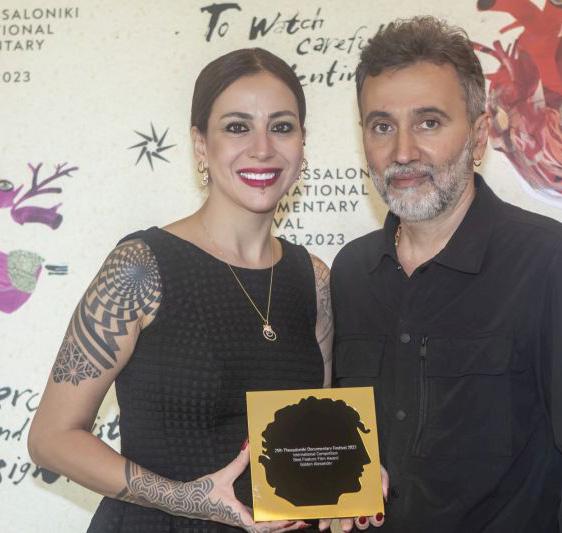
Under the Sky of Damascus took home the top prize at the 25th Thessaloniki International Documentary Festival (TiDF), where its three director Heba Khaled, Talai Derki and Ali Wajeeh won the International Competition’s Golden Alexander. The win secured the film a place next year on the selection shortlist for the Academy Award for Best Documentary Feature Film. Exploring questions of gender violence and an oppressive patriarchy.
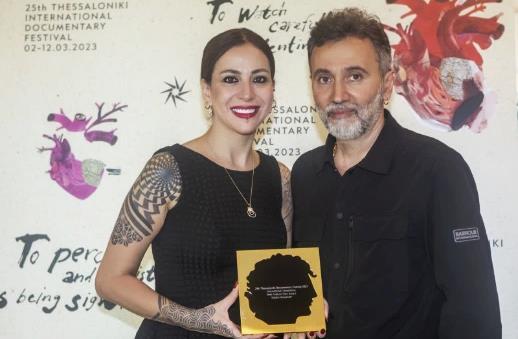
It was a difficult year for this veteran festival, which unfolded March 2 to 12 just days after the tragic Tempi train crash in southern Greece. (Continues page 2)
Lucia Borgonzoni has been undersecretary of Italy’s Ministry of Culture since 2018, the same year in which she won a seat in the Italian Senate for the Northern League party becoming one of her country’s youngest senators.

Although Borgonzoni has been involved in politics since the age of 16 when she became the leader of Giovani Padani, the Northern League’s youth organization, she is a graduate of Bologna’s fine arts academy, Accademia di Belle
VERDICT: A riveting cinememoir that breaks through all the pitfalls of film-as-therapy, accompanying artist Lisa Selby as she tries to come to terms with her largely absent heroin-addicted mother as well as her own struggles with addiction, that of her partner, and her fears of continuing the cycle of maternal dysfunction.
Jay Weissberg, March 11, 2023
Arti di Bologna, and an interior designer.
Here she tells The Film Verdict about her trip to the United States, aimed at reviving and strengthening historic ties between the American and the Italian film industries, seeking what she calls “new collaboration opportunities,” and enticing American filmmakers and studios to use Italian locations while taking advantage of the country’s tax credits for international coproductions. (Continues page 3)
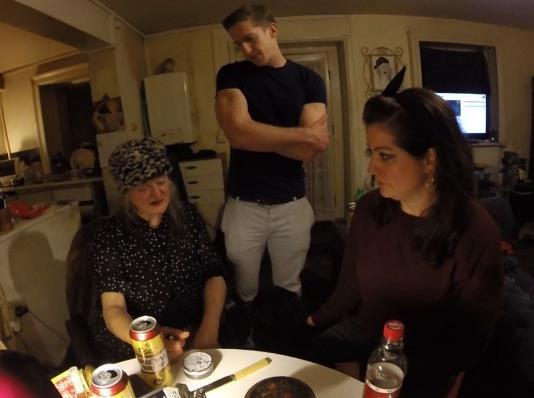
How is it possible that no international sales agent has yet to nab Blue Bag Life? The exceptional documentary won the Audience Award at the London Film Festival in late 2022 and just had its international premiere in Thessaloniki, but notwithstanding Modern Films acquiring the UK and Ireland rights, it appears no one has yet to board on sales.
Full Review
As a result, the festival respectfully canceled the opening and closing ceremonies and other planned events.

The Silver Alexander went to the documentary Who I Am Not by director Tunde Skovran, which explores gender identity in highly emotional terms. Receiving a Special Mention, Kata Olah’s Narrow Path to Happiness is a love story that challenges family and gender conventions.
In the Newcomers Competition for young and emerging directors on their first or second film, the Golden Alexander ‘Dimitri Eipides’ Award was handed to The Voice by Dominika Montean-Pankow. It is the story of Jesuit novitiates who are preparing to enter the priesthood and find their place in the world.
The Silver Alexander in this category went to In the Sky of Nothingness with the Least by Christos Adrianopoulos, an intimate but unsentimental portrait of an elderly couple. Ioanna Tsoucala’s Ladies in Waiting, which aims at destigmatizing mental illness, won the Special Mention In
Rebecca Lloyd Evans and Lisa Selby for its depiction of an intergenerational struggle to transform addiction into connection. The Silver Alexander was awarded to Gregoris Rentis’ film about stereotypical masculinity, Dogwatch. Yet another documentary category was Immersive: All Around Cinema, which focused on new films that offer an exciting interactive viewing experience across film genres. Receiving the Golden Alexander was Darkening by Ondrej Maravec which brought the viewer face to face with mental illness and depression. Director Singing Chen got a Special Mention for The Man Who Couldn’t Leave and its vision of what true 360° cinematography can look like.
Best Podcast to From a Wonder to a Trauma Director: Constantinos Vrettos
Special Mention to Halcyone Director: Phaedra Chatzopoulou
Scholarship Award ENS Louis Lumière Award
Dimitris Roidis for A City Walk
Mermaid Award for the best LGBTQI+ themed film
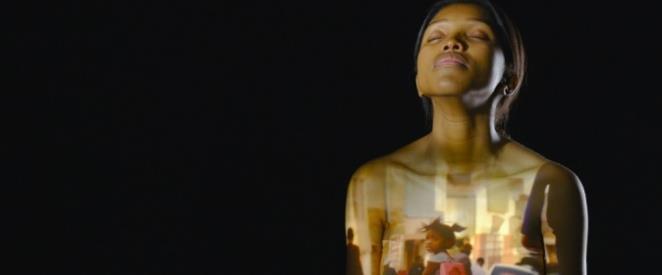
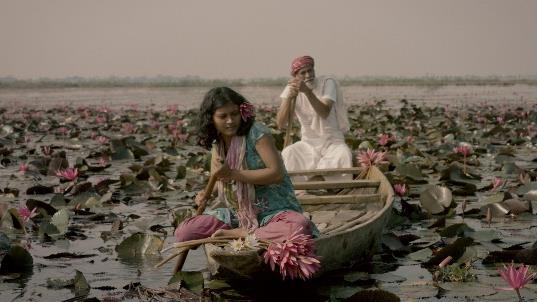
VERDICT: The border between documentary and fiction is troublingly blurred in this exquisitely composed immersive story of a young girl living in the flooded plains of the Brahmaputra River who goes to Dhaka in search of her father.
Jay Weissberg, March 15, 2023
and
Forward Competition, the Golden Alexander went to Blue Bag Life by Alex Fry,
Who I Am Not by Tunde Skovran
Special Mention
Leon by Wojciech Gostomczyk
There’s a wealth of philosophical exegesis on why blurring the borders between documentary and fiction is the more honest approach, since absolute truth is an impossible goal and fiction can reveal a more essential reality. It’s a highly debatable line of argument, especially for a film like Mighty Afrin: in the Time of Floods which keeps dodging easy categorization. Shot over five years along the Brahmaputra River and the Bangladeshi capital Dhaka, the film has a striking contemplative beauty and a protagonist whose off-the-charts charisma could easily overshadow any number of trained actresses. Not unwarranted accusations of poverty porn will dog director Angelos Rallis, and most viewers will question how much has been written and staged, Full Review
TFV: Let’s begin with Los Angeles. Is this your first visit to LA? What is your overall impression?
LB: I had already been to Los Angeles during my first assignment as Undersecretary of State at the Ministry of Culture. That was in 2018. Once again, I have been very positively impressed on this trip. The air was buzzing with excitement for the big events dedicated to Italian and international cinema that were expected during those very days. And everyone I had the pleasure of meeting showed great passion and attention for the big screen and the film industry, but above all for Italy.
TFV: You had a very busy schedule over the last week in Los Angeles, meeting the Studios. What was the mission?
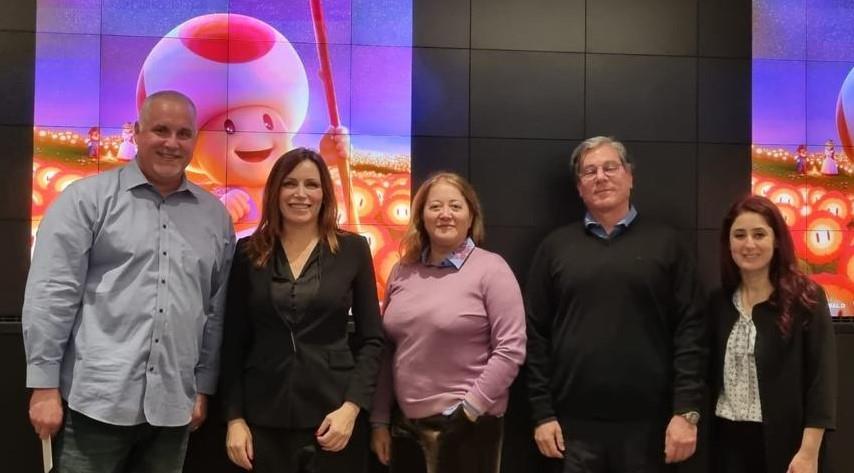
LB: I planned my visit to Los Angeles with the intention of achieving several goals. These included supporting the development of the Italian film system through new collaboration opportunities with the United States, a strategic partner for us. In order to pave the way for exchanges aimed at the economic and cultural growth of both countries, it was first of all necessary to strengthen the direct
dialogue with the entertainment giants and present them with the Italian government's plan of action for the coming years.
TFV: Are the Studios receptive to your message and mission? What was the outcome and results of your meetings?
LB: They were all very fruitful meetings: I had the opportunity to discuss the main issues of interest to both Italian and American companies in the sector. Common points of view and goals emerged. I am happy with these meetings, especially because they gave me the opportunity to explain how focused and committed the Italian government is to host international productions on its territory and the great effort it is making on this front and, more generally, to support the Italian film system with increasingly more efficient tools.
TFV: What were the topics most frequently addressed in the meetings?
LB: Among other things, we talked about existing studios in Italy and those to be built, locations throughout the country in which to shoot films and audiovisual products, Cinecittà and the 300 million euro invested in its studios. Then we talked about
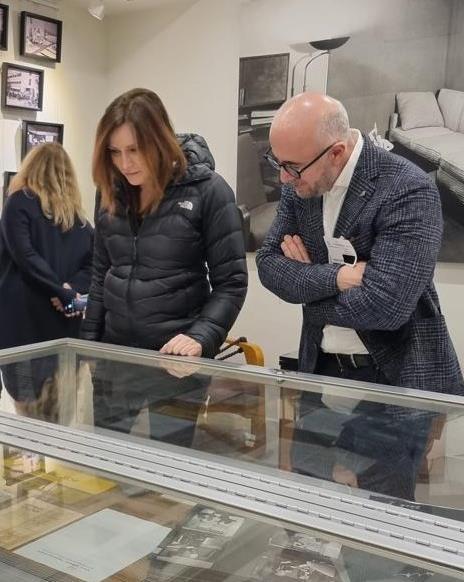
training courses to provide the market with new highly qualified professionals in cinema-related sectors. Through the National Recovery and Resilience Plan, we have about nine million euro managed by Cinecittà and the Experimental Centre of Cinematography with the involvement of Italian local public entities. But we also talked about the fight against piracy, artificial intelligence, and tax credit for the production of international works. And with regard to this last point, I made it clear that it will be maintained at 40% and that the funds have never been questioned, despite the rumours that have been circulating lately in America.
TFV: When one thinks of Italy, one thinks of all things Cultural, from literature, art, design and of course cinema, making your position as Undersecretary of State at the Ministry of Culture very important. At the same time some may say that Italy has not curated its culture and image as much as it did in the past, as a representative of the new government what do you say to this and what are the plans to once again globalize Italy?
Full Interview
By Max Borg
We’re all bundles of contradictions yet few of us embody them as theatrically as performance artist Krzysztof Leon Dziemaszkiewicz, the subject of debuting director Wojciech Gostomczyk’s affectionate, at times touching documentary Leon. A deeply insecure masochistic exhibitionist (how’s that for opposites!), Leon had a modest career in Poland, but performance art is generally a young person’s mode of expression; now he’s middle aged and in the shadow of his partner, the designer Manfred Thierry Mugler. The documentary’s focus is on a new show he’s putting together in Gdansk, partly to feel validated again, partly to impress Mugler whose love and support is the film’s true heart. Including some discussion of Leon’s artistic process would have accorded him at least a modicum of intellectual weight, but Gostomczyk is more interested in his vulnerable self-image, balanced by Mugler’s quasipaternalistic emotional strength. Leon the film will fit comfortably into docu and LGBTQ programs.
Performance art, as a rule, is inherently transgressive and spectacular, which pretty much describes Leon’s brand of 1980s-style happenings in which he appears painted in garish colors, often decorated in feathers like a fanciful bird of paradise. At times he pours honey over himself in a forest and rolls around in the earth, or on-stage takes a scissor to his clothes until his heavily painted naked body is exposed while he
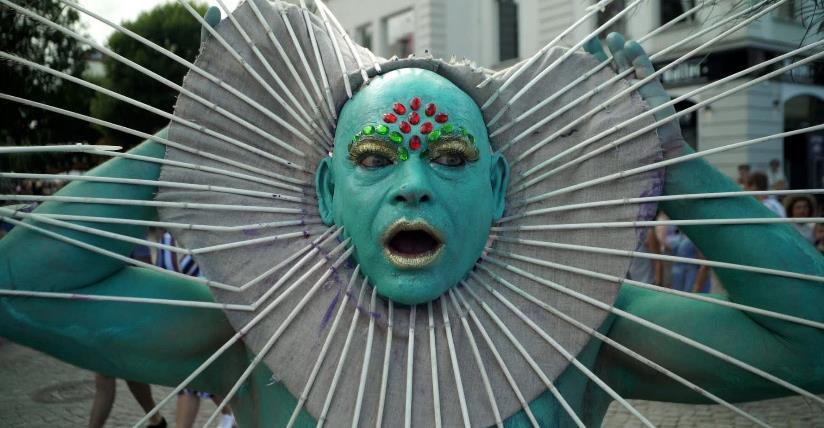
VERDICT: Thierry Mugler’s steadfast love for his partner, the Polish performance artist Krzysztof Leon Dziemaszkiewicz, lies at the heart of “Leon,” a sympathetic look at what it’s like for a deeply insecure exhibitionist to live in the shadow of the world-famous man he adores.
Jay Weissberg, March 14, 2023
writhes on the floor. At least as seen in the documentary, his works are largely wordless, though he sometimes makes peacock or gorilla sounds, and by the end he’s usually nude.
It all feels pretty derivative, just a more colorful, queerified version of the sort of thing done in the 1980s when Karen Finley’s “Yams Up My Grannie’s Ass” was creating such a fuss. Full Review

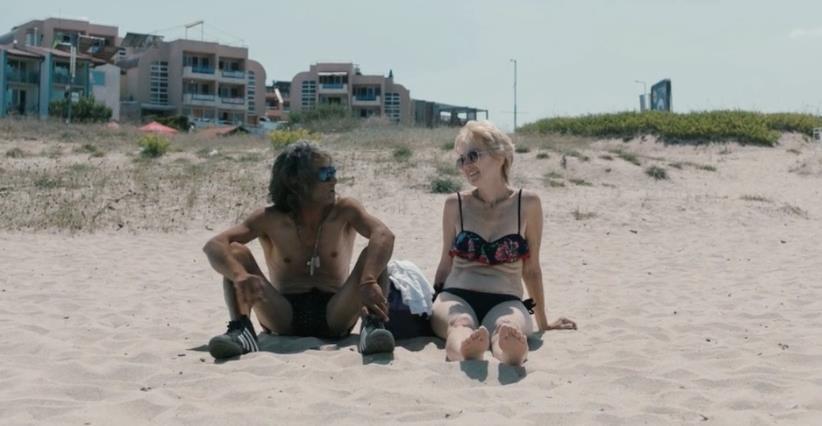
VERDICT: Noted Bulgarian director Tonislav Hristov turns his camera on an aging beachside charmer whose years as a gigolo for women tourists are nearing their end just as the pandemic and the war in Ukraine make him rethink his future.
Jay Weissberg, March 15, 2023
For the past twelve years director Tonislav Hristov has been returning to the small Bulgarian village of Dervent, on the Turkish border, filming the everdwindling community now reduced to some thirtyfive inhabitants from an earlier population of just over a thousand. It was the setting for his acclaimed documentary The Good Postman and is also a key location in his latest, The Last Seagull, though here Hristov employs the locale as one element in the
fluctuating state of Bulgarian society as it faces rural flight, COVID and the war in Ukraine. “Seagulls” as used here are beachside gigolos who spend the tourist season picking up foreign women, and Ivan Halachev, the titular “last” of them, is the film’s protagonist, an aging, frequently drunk charmer realizing his lifestyle isn’t sustainable for much longer. Hristov’s years of familiarity with his subject and his unfailingly well-curated approach to documentary shooting, with the kind of crew and setup usually used for fiction films, results in an impressionistic portrait of greying ideals and shifting life goals in an ever-changing world. Following its premiere in Thessaloniki, The Last Seagull flies to CPH:DOX.
For forty years Ivan has supported himself through the generosity of foreign women, usually East European and Scandinavian, willing to pay for romance during their summer holidays at Sunny Beach, just north of Burgas. He’s maintained a lean physique and long hair, and with his sunglasses on he can still give the illusion of suave studliness for aging ladies with modest wallets and adjusted expectations who are willing to overlook the bad teeth. But he’s beginning to think more about the future, partly prompted by news from his estranged son’s wife in Kyiv that he’s just become a grandfather. Full Review



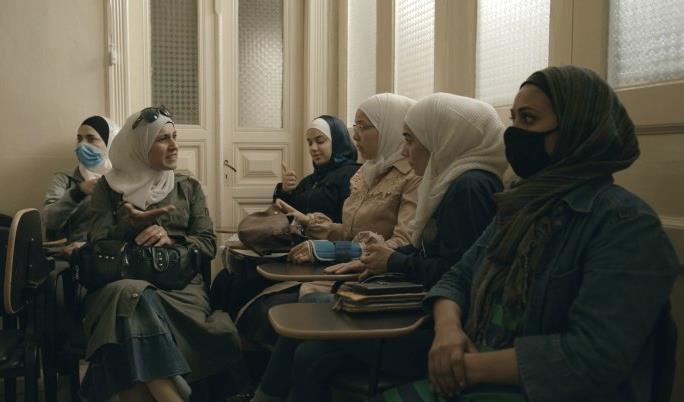
VERDICT: A superficial, ethically problematic documentary about gender-based violence in Syria whose “topic-of-the-moment” theme can’t paper over glaring flaws in structure, scope, and treatment of its subjects.
Jay Weissberg, March 13, 2023
Certain topics command attention on the international documentary scene, with sexual harassment undoubtedly among the top three. Connect it to an Arab country and the added bonus of knee jerk orientalism makes for an irresistible pull, far stronger than
any cinematic or even ethical consideration. That was true with Samaher Alqadi’s deeply flawed As I Want, and it’s equally the case with Under the Sky of Damascus, a slapdash exercise in “topic-of-the-moment” manipulation whose shoddy

structure and dreadful use of music are just two of the film’s glaring problems. For directors Heba Khaled and Talal Derki, the goal was to draw attention to violence against women in Syria, but since their anti-regime stance precluded them from entering the country, they brought onboard Ali Wajeeh, whose questionable contribution, not to mention the exploitative way the documentary treats a group of young women drawing attention to the issue, should be raising red flags. Instead, the film was awarded the top prize at the Thessaloniki Documentary Festival following its premiere at the Berlinale.
Derki’s documentaries – The Return to Homs, Of Fathers and Sons – received acclaim even outside the festival circuit for their exceptional visual style and wellcalibrated sense of drama, notwithstanding the nagging sense that many of the scenes were at least partially staged.
TFV’s Matt Micucci shares insight on different initiatives that promote the cinema of the future. This episode features a conversation with Darryl C. Marks, CEO and Founder of Adapt Entertainment, a creative technology company that developed a proprietary AI neuro-rendering process to sync a film or series’ original performance with a new language, allowing for a more inclusive storytelling experience without dubbing or subtitling. He also speaks with Marco Orsini, Found of International Emerging Film Talent Association (IEFTA) and Paul Robinson, CCO. Of NEFT Vodka. Together, they talk about the NEFTI Awards, designed to celebrate and challenge filmmakers from emerging economic regions to showcase their creative skill and to expand their reach into regions that may otherwise not have been available to them.

The nature of relationships between men and women is the primary focus of Cheng Yu’s peculiar but compelling Daughter and Son, which screened in this year’s Berlinale Shorts competition. Inspired partly by the manga artwork of Yoshiharu Tsuge and the writing of Peng Jianbin, Cheng crafted a story almost by accident. Originally conceived as a chamber piece about a couple being visited by one partner’s mother, instead, it became a two-hander in which the two younger actors took on multiple roles. It creates a fascinating labyrinth of meaning as they alternate playing the mother and thus have a variety of direct-but-indirect dialogues about their own relationship.
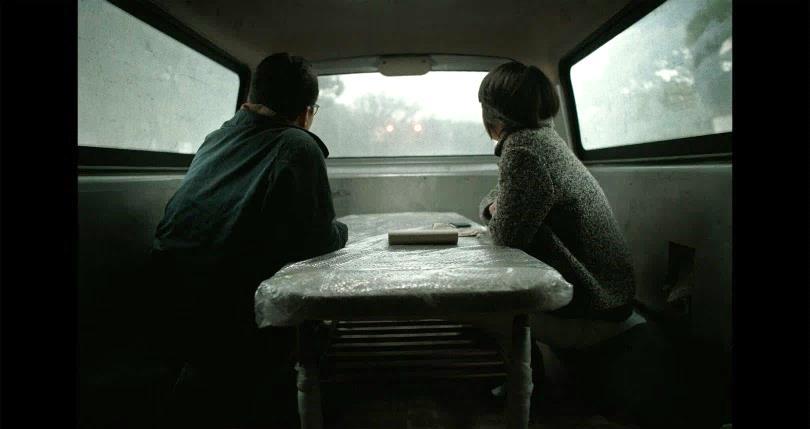
Initially, Sachiko (Wuchen Xingzi) and Ming (Li Minghao), who share a pokey apartment, just seem to be having mundane conversations. They talk about preparing dinner, whether the air conditioning is fixed, and where the cat is. Potential tension rears its head when Sachiko announces that her mother will be visiting, and, when asked by Ming, that she will be introducing him as her “roommate.” However, any such tension falls by the wayside when instead of the mother arriving in the form of a separate physical entity, she is interchangeably personified by Sachiko and Ming.
VERDICT: Sachiko and Ming share an apartment and predilection for role-play in Cheng Yu’s enigmatic and intriguing exploration of one relationship through the prism of many.
Ben Nicholson, February 26, 2023
Through this method, ‘Sachiko’s mother’ has discussions with both Sachiko and Ming as they seamlessly morph in and out of their own identities. Not only does it make a pointed comment on the various roles we play within our relationships, but more so it allows for some uncomfortably frank exchanges which are, perhaps counter-productively, mediated by their unusual context. Full Review
friendship and personal trauma – is entwined with a more abstract but striking meditation on historical exploitation and its echoes into the contemporary day. A blend of restrained drama, almost essayistic connections between past and present, and some creative flourishes, it’s a complex and energising film worthy of award.

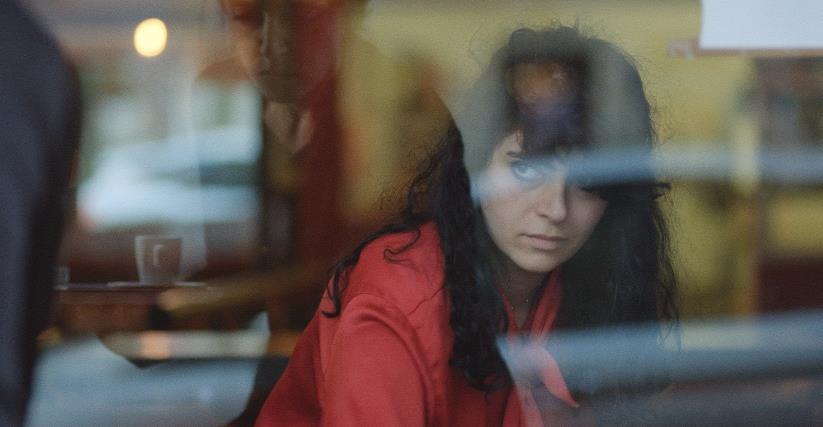
VERDICT: Two Levantine immigrants working in a Lyon café bond in this meditation on friendship and the long fingers of history which claimed the Berlinale Shorts top prize.
Ben Nicholson, February 26, 2023
Two women from different parts of The Levant find themselves thrown together in a French café in Michelle and Noel Keserwany’s Les Chenilles, which was awarded the Golden Bear for Best Short Film in Berlin and became the festival’s candidate for the 2023 European Film Awards. The film’s narrative thrust – a tactile tale of a burgeoning female
The two women in question are Sarah (director, Noel Keserwany), who has recently moved to Lyon and Asma (Masa Zaher), who has lived there for several years already. “She’s a butterfly – she won’t last ten days,” claims Asma to one of their co-workers, seeing in Sarah and fragility that has followed her from the upheavals of her homeland. However, Sarah also understands the effect that Asma’s life has had on her – the walls she has built to protect herself and patiently goes about navigating them. When Asma is locked out of her apartment for the night, Sarah walks the streets with her and the threads that bind them knit evocatively together.
Threads also play a role in the historical analogues that both women observe regarding the effects that the silk road has had on their region and their lives. From the title translating to ‘caterpillars’ – in reference to the silkworms Full Review