International Film Festival Rotterdam






VERDICT: The ghosts of Playland Cafe, Boston's oldest gay bar pre-demolition, return in this heartfelt, multi-layered tribute to marginalised history, DIY spirit and queer performance. Carmen Gray, February 2, 2023
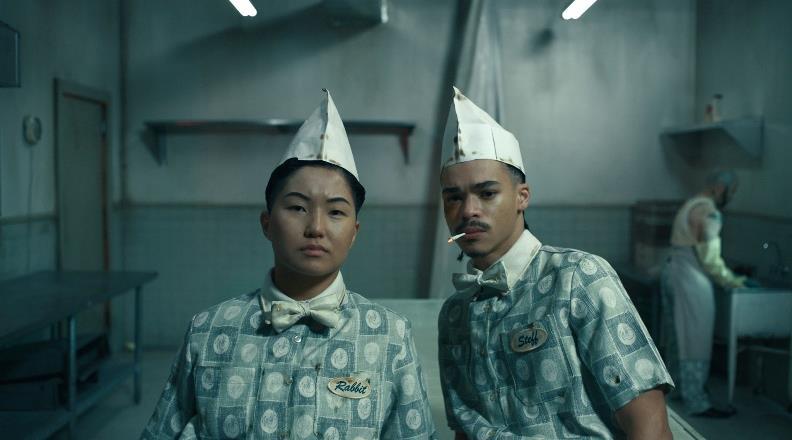
With their haunting and heartfelt feature debut Playland, screening in the Tiger Competition at Rotterdam, director Georden West has created along with their queer cast and crew a spectral memorial to the Playland Cafe and its regulars. Before its 1998 closure, it was the oldest gay bar in Boston. Lady (Danielle Cooper), clad in head-to-toe leather, sits in a booth in the empty establishment on the eve of its demolition, and conjures ghosts of its past decades. Established in 1937, Playland was a meet-up spot for a uniquely diverse community until aggressive urban renewal drives led to it losing its entertainment license and being sold off to developers. In its resurrection of a boozing hole that served as a lifeline to the marginalised, West’s film is in a similar spirit to Bloody Nose, Empty Pockets, the
recent docufiction and festival success by Turner Ross and Bill Ross IV that lamented the aggressive erasure of places of meaning by chain-store commercialisation. But while the Ross brothers’ Las Vegas dive-bar was a pure invention to convey a general tendency of gentrification, West honours real and specific history of targeted oppression, basing their film on research carried out at Boston’s LGBTQ archive, The History Project. This inventive, multilayered assemblage of archive and performance should easily find slots in festivals granting space to LGBTQ and community history, appealing especially to those feeling cultural precarity keenly and mourning the loss of beloved venues that has accelerated in the pandemic era.
We slip between 1943, 1965, and 1977 as employees and regulars materialise and fade away, with uncanny surrealism. The set of flickering fluorescent lighting and discoloured tiles has been recreated with palpable loving care. Recorded media reports and personal anecdotes sound in and out as ghostly snippets of time past, punctuating the queer performance elements (a drag artist emerges from behind tinsel curtains; a DJ recalls teaching herself to spin records on the job.) Gathering in Playland was highly politicised, a haven of free expression that was never far from the brutal realities of discrimination and oppression that fuelled the urgent need for its existence in the first place. It was in a part of Boston where the adult entertainment industry was concentrated, which became known as the “Combat Zone” due to its crime and violence, and was a frequent target of police raids and restrictive zoning laws. Full Review
characters for their occasional navel-gazing narcissism, but she treats them sympathetically, allowing for complexity and contradiction. Reflecting her own mixed heritage, she also depicts 21st century France as a more refreshingly colourful, socially diverse, multi-racial place than typically seen on screen.
VERDICT: Prize-winning French novelist Alice Zeniter makes a confident directing debut with this lively mystery drama about bed-hopping bohemians in emotional crisis.
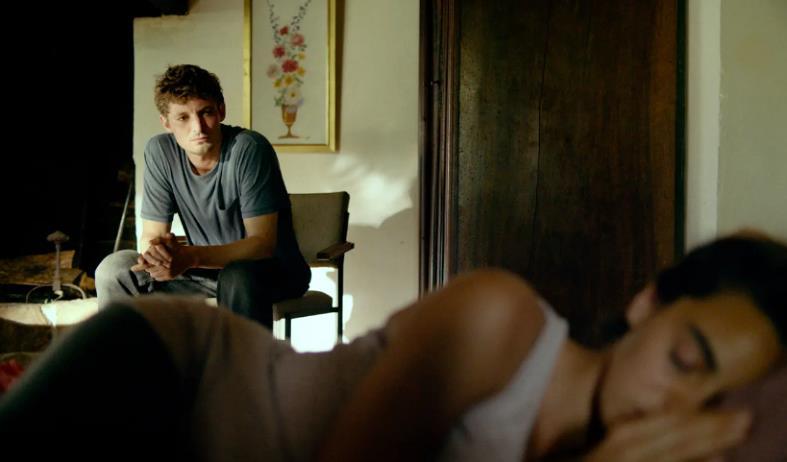
Stephen Dalton, February 2, 2023
Feted French author and screenwriter Alice Zeniter makes her co-directing debut with Before the Collapse, a compelling tangle of personal and political stories set in contemporary Paris and Brittany. Best known internationally for her prizewinning 2017 novel The Art of Losing, Zeniter is working in tandem with her husband Benoît Volnais here. Together they wrap a fairly straight story of thirtysomething angst in sharp-eyed social critique and playful literary devices including chapter divides, wry voice-over commentary and occasion breaks in the fourth wall. World premiering in Rotterdam this week, this lively emotional rollercoaster ride is set for domestic release in April. The buzzy profile of its author and rising-star cast should generate healthy art-house interest in other territories too.
At heart, Before the Collapse is a fairly familiar Gallic melodrama about arty young Parisians in romantic, sexual and ethical turmoil. Viewer enjoyment levels will partly depend on how tiresome you find selfabsorbed young-ish bohemians and their bedhopping dilemmas. Zeniter does not excuse her

Invested with wiry, dishevelled intensity by FrenchCanadian Cesar-winner Neils Schneider, Tristan is a 35-year-old campaign manager for a left-wing political candidate in a poor, multicultural district of Paris. He shares an apartment, and a commitment to progressive causes, with his long-time confidante and platonic female friend Fanny (Greek weird wave veteran Ariane Labed). In the thick of a sweltering heatwave, just as the election contest hits fever pitch, Tristan receives an anonymous letter containing a positive pregnancy test and nothing else. This cryptic message throws him into panic, not least because of the rare medical condition that killed his mother, which he may have inherited and could pass on to his own children.
Tristan’s odyssey become a gently farcical detective story as he tries to narrow down which of his recent sexual partners might have sent the letter, and why. Aided by Fanny, his frantic quest leads him back home to Brittany, where his old flame and occasional lover Pablo (Souheila Yacoub) still lives, and where his ailing father hovers on the brink of death. Leaving the city for the country throws up other unexpected tensions for Tristan too: with his estranged half-brother, with the staff of his father’s nursing home, with old friends whose small-town attitude he now casually disdains with haughty Parisian snobbery. Visually, these Brittany scenes are particularly alluring as cinematographer Jean-Louis Vialard finds a utopian sense of liberation in the region’s rugged coastline and verdant elysian fields. Full Review
VERDICT: Acclaimed Iranian director
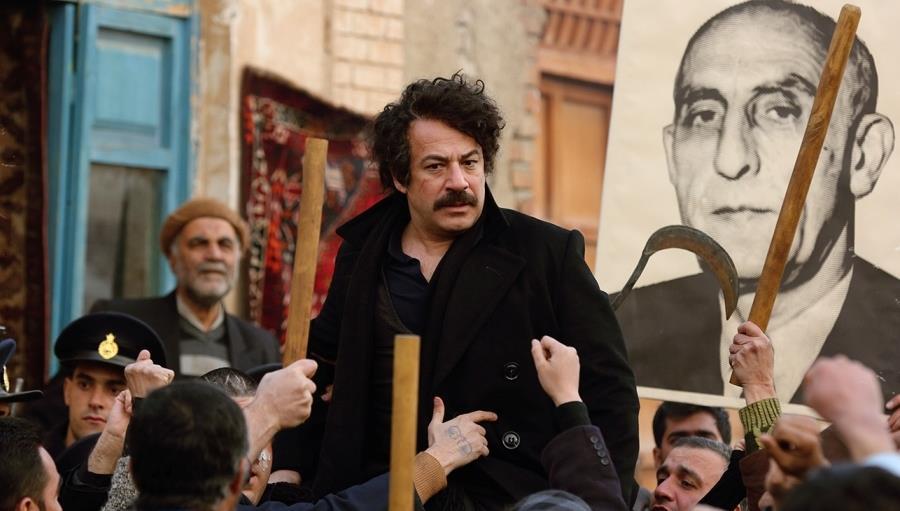
cinematic rage into his recreation of a 1952 politically-motivated bank robbery that resonates with the protests of today. Deborah Young, February 2, 2023
Bound to be interpreted as a blatant metaphor for the mass rebellion now sweeping the streets of Iran and claiming
lives, Killing a Traitor (Khaen Koshi) is ostensibly an emotional recreation of an ill-conceived bank robbery staged 70 years ago
by a group of high-minded, college-educated partisans and working-class supporters of the new prime minister, who was promising sweeping social reforms. Perhaps this pro-reform sentiment is the reason why the current Iranian government confiscated the passport of 82year-old director Masoud Kimiai at the airport and prevented him from boarding a plane to Rotterdam to be present at the film’s international premiere. It is the latest attack on the creative freedom of filmmakers, one that will certainly boomerang and increase interest in this difficult film.
Kimiai’s 30th movie is a wild and confusing ride through American cinema as well as Iranian history, an odd merger that overlays the excitement of action filmmaking
Full Review


Ren Scateni is Head of Programme at Encounters Film Festival. They are also a freelance writer and curator mostly interested in experimental and artists' moving image works whose writing has appeared on ArtReview and ArtReview Asia, Hyperallergic, MUBI Notebook, and Sight & Sound among others.
 By Ren Scateni
In White River, debuting filmmaker Ma Xue captures the dread of a woman, Yang Fan (Tian Yuan), whose days – and nights – are entirely spent within the confines of Yanjiao, a "commuter town" separated from Beijing by the White River, where dwellers return to sleep at the end of their working day. A focus on repetition and subtle acts of subversion invigorate the somewhat lacklustre main storyline, a love triangle between a young married couple and a noodle shop owner. The film's intense sessions of domestic sex show a male-gazed penchant for inquisitive shots of Yang's body, while the many expressionistic and elliptic tableaux featuring the female protagonist’s younger self open pathways to explore her psyche and desires.
To counteract the overbearing predominance of stereotyped cis-heterosexual intercourse shown in the film, Ma cautiously plays with stereotypical gender roles, occasionally upending expectations. When Yang Fan has her lover wear her bra while having sex, he doesn’t succumb to his wounded masculinity but instead thrives in the act. Male characters are often portrayed in their most fragile moments. Through their tight framing, these scenes ooze a refreshing and unassuming flair.
White River is ultimately a film about captivity – both physical and emotional – and the binding nature of quotidian, repetitive gestures of meal-prepping and house-cleaning, themselves evoking Chantal Ackerman’s Jeanne Dielman, 23 Quay Commerce, 1080 Bruxelles, although devoid of its explosive and empowering urgency and rage.

Alonso Aguilar is a writer and audiovisual producer from Costa Rica. He began his journey into film criticism in 2016, and soon became part of Krinégrafo, a Central American critics collective. Since then, he has worked with Costa Rica’s International Film Festival and his interviews, reviews and essays have been featured by Mubi Notebook, Film International, Cinema Tropical and photogénie, among other international publications. With his writings, Alonso aims to explore the intersections between creative expressions and social issues, particularly those in Latin America and other often underrepresented regions of the world.
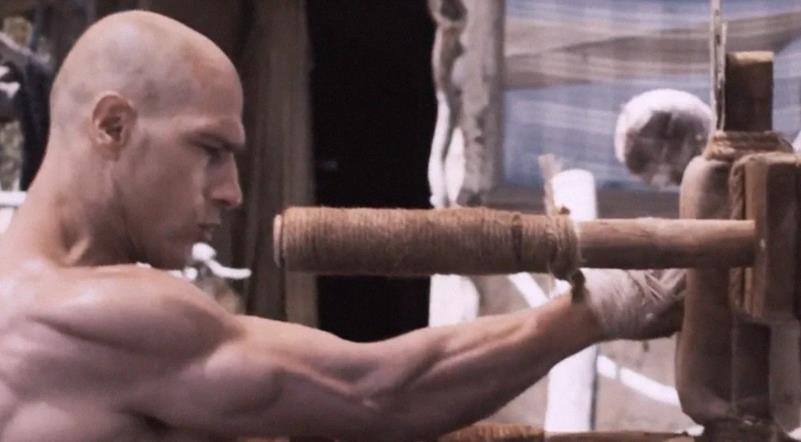
By Alonso AguilarEl puño del cóndor, the newest genre venture from eclectic Chilean filmmaker Ernesto Díaz Espinoza, starts its foray into martial arts territory with imposing images of the Andes mountains. Their immenseness is underlined by hypnotic flute melodies from the Chilean cordillera and a solemn voice-over that recounts the last days of the Incan empire and its enterprising resistance to Spanish colonization. This palpable sense of mythology is not only an engaging introduction to the stylized rural Chile of El puño del cóndor, but also gives an almost spiritual resonance to the expressionistic blood splatter and slow-motion round kicks that follow.
Díaz Espinoza’s film is built on the storied foundations of Hong Kong martial arts films from the 70’s and 80’s, embracing the hectic narrative pace and inventive fighting sequences that were the trademark of Shaw Brothers and Orange Sky Golden Harvest. The blood-stained journey of El Guerrero (Marko Zaror) takes him through a kaleidoscopic timeline of relentless physical tests, melodramatic outbursts and vibrant fight choreographies. His laborious search for a Master’s sacred book and inevitable showdown with an evil twin might look like most other martial arts films’ excuse to connect their set-pieces. Nevertheless, El puño del cóndor boasts a surprisingly effective emotional anchor thanks to Zaror’s hypnotic screen presence and melancholic characterization.

El puño del cóndor is an energetic love letter to cinematic physicality and low-budget resourcefulness that simultaneously recontextualizes martial arts mythology in Andean folklore and creates its own universe of filmic possibilities (hopefully explored in a sequel).
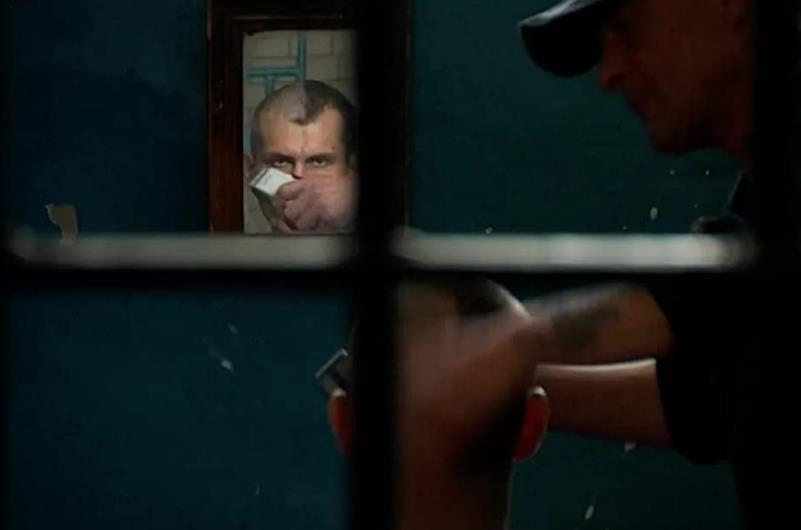
A kaleidoscopic experience of Ukraine in the 90s that’s how Philip Sotnychenkos's La Palisiada can easily be described. It offers an unpredictable journey into a world of poverty, corruption and bandits through an investigation into the death of a murdered Ukrainian militiaman.
The film is divided into two parts set in the present time and in 1996. The first tells the story of a young guy, Kyril, who meets a woman from his past. The second part is about his father (Andrii Zhurba), a psychiatrist involved in a murder investigation.

Each part echoes the other, though at the visual level, they are different. While the first is shot like modern Ukrainian cinema, the second and main part is shown as a compilation of footage from a VHS camera, ranging from amateur shots of a children's concert to a police report. This method not only allows the director to fully convey the texture of the era, but shows a visual perception of 90s Ukrainian reality. Sotnychenko is inspired not only by pseudodocumentaries, but also by Ukrainian television of that era.
But this method has another important goal to blur the line between reality and fiction. In this manner, the director equalizes viewers and his characters. If the main goal of the investigation is to understand the reason and motive for the murder, the viewer needs to understand the nature and plot of the movie. Although La Palisiada is challenging to grasp, it offers us numerous opportunities for interpretation.
My name is Kyrylo. I was born on 22 July 1992 in the small Ukrainian town of Putyvl. In 2009 I moved to Kyiv to study philosophy at National Pedagogical Dragomanov University. I graduated in 2014 with a Philosophy/Practical Psychology degree. After university, I became actively interested in cinema and began to write my first amateur reviews. 2019 is the beginning of my professional career as a film critic. At the beginning of 2022, I became a member of the Union of Ukrainian Film Critics. Later, a full-scale Russian invasion of Ukraine began. A few months later I returned to writing reviews.