


20 MAY 2023 •
Glamour(c)AurelienVelia/FDV
day 5

day 5

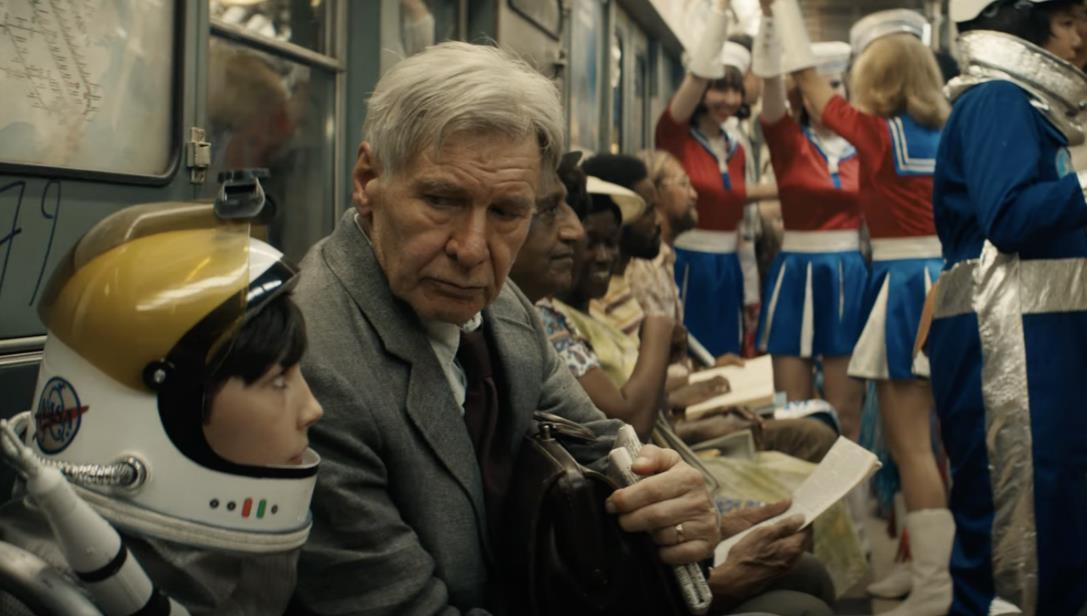
VERDICT: Harrison Ford's fond farewell to maverick tomb raider Indiana Jones balances formulaic blockbuster elements with soulful nostalgia and an audacious time-jumping plot. Stephen Dalton, May 19, 2023

Picking up the bullwhip and battered brown fedora for one last victory lap, Harrison Ford completes his unprecedented trio of late-career comebacks with Indiana Jones and the Dial of Destiny. Now 80 years old, the grizzled action star has pulled off a remarkable feat over the last decade by reviving his three most beloved characters: Han Solo in Star Wars: The Force Awakens (2015), Deckard in Blade Runner 2049 (2017), and now
maverick tomb raider Henry “Indiana” Jones, back for a fifth adventure in a swashbuckling franchise that began more than half Ford’s lifetime ago.
The final chapter in the Raiders of the Lost Ark (1981) series, and the first not to be helmed by Steven Spielberg, Dial of Destiny is a predictable but solidly entertaining effort from director James Mangold (Walk The Line, Logan, The Wolverine) Full Review
The French-Senegalese director of 'Banel & Adama' talks to TFV about shooting on location, writing, and having a first film in the main competition in Cannes.
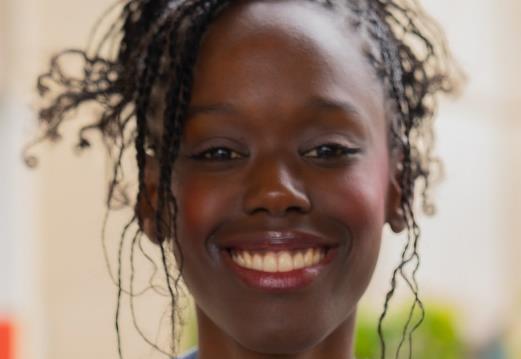
The Film Verdict: What was your reaction when you found out your film had been selected in the main competition, which is unusual for first features?
Ramata-Toulaye Sy: I was surprised. [Thierry Frémaux’s deputy] Christian Jeune called me a little after midnight, the night before the press conference, and at first I thought it was a joke because when they first invited us, a few months ago, it was for Un (Continues page 2)

Certain Regard. I guess they were trying to keep the Competition slot a surprise, because people would say to me they had heard we were selected in Un Certain Regard. The funny thing is, we’d already had posters and flyers made with the section printed on it, so we had to change them! (laughs).
TFV: Frémaux referred to this year’s selection as featuring a resurgence of African cinema. How does it feel to be part of that new generation?
RTS: I’m thrilled and honored. Then again, I wish it wouldn’t be considered a big deal when multiple African films are selected. It should be normal: there are many great films produced in Africa every year, and they deserve to be spotlighted at festivals.
TFV: Previous films you’ve worked on have played in Locarno, Toronto and Clermont-Ferrand, among others. How is Cannes going to compare?
RTS: I didn’t attend any festivals for the films where I was a co-writer because they don’t usually invite us. I did go to a few for my short film Astel, but not that many and basically just in France and Belgium because I started working on Banel & Adama immediately after finishing the short, I did them backto-back. So this is going to be my first major festival premiere experience.
TFV: This was your graduation script at [Paris-based film school] La Fémis in 2015. Did it stay the same, or were there changes over the years?
RTS: A few things changed, on account of my having gained experience as a writer and a director in the interim, but the essence of it, the story of this young woman in Senegal, stayed the same.
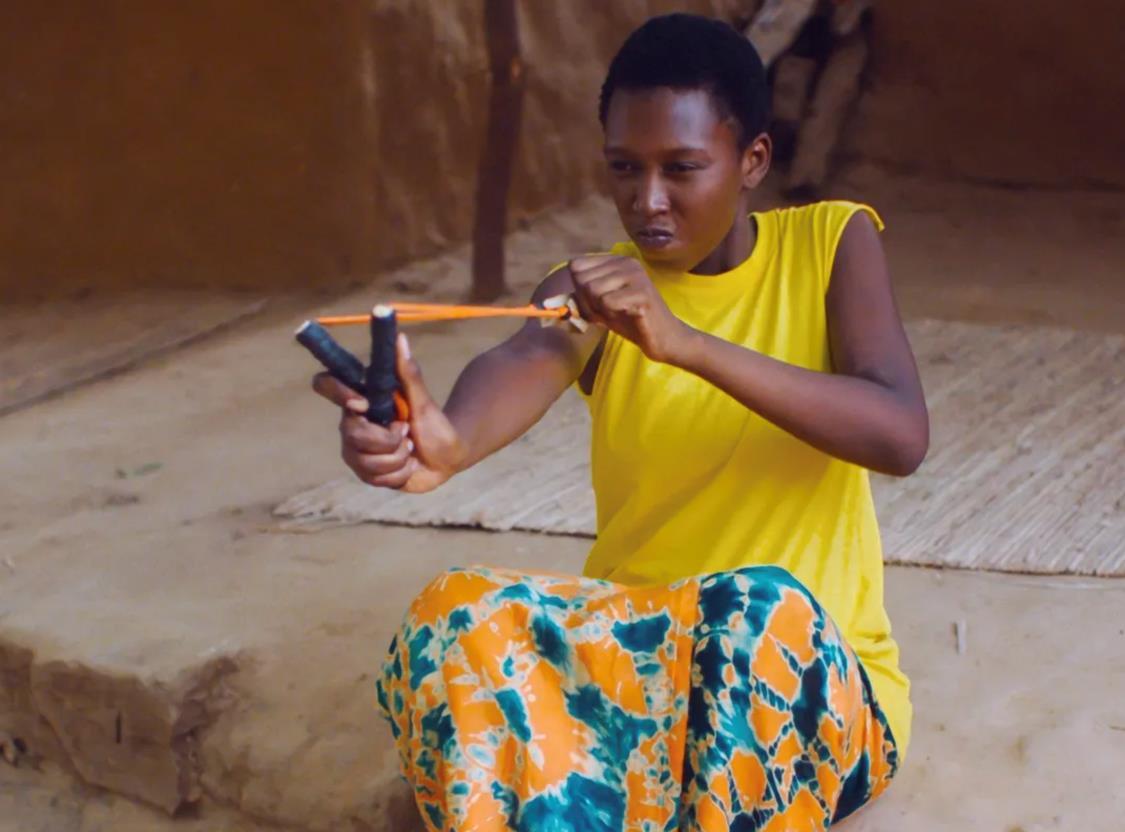
TFV: What was the most challenging aspect of making the film?
RTS: Shooting on location in Senegal. We were in this village in the northern part of the country, and the temperatures were around 50 degrees Celsius on a daily basis. Everybody got sick at some point,
even my main actress, and she’s from the region. In fact, the entire cast consists of non-professionals from the area.
TFV: You co-wrote Sibell, a Turkish film, and Our Lady of the Nile, a Rwandan film. After the Senegalese experience, will you try something different again for your next project?
RTS: Definitely. I like switching things up and not repeating myself. I might work on something set in France. I have dual nationality, I travel to Senegal whenever I can because my family is from there, but I was also born and raised in France, so there’s that side of me to explore as well.
– By Max BorgVERDICT: Nuri Bilge Ceylan’s melancholy, dialogue-heavy rumination on personal responsibility, politics and the weight of provincial isolation is intellectually rigorous and always engrossing but largely lacks the wellearned emotional gifts of his more recent masterworks.
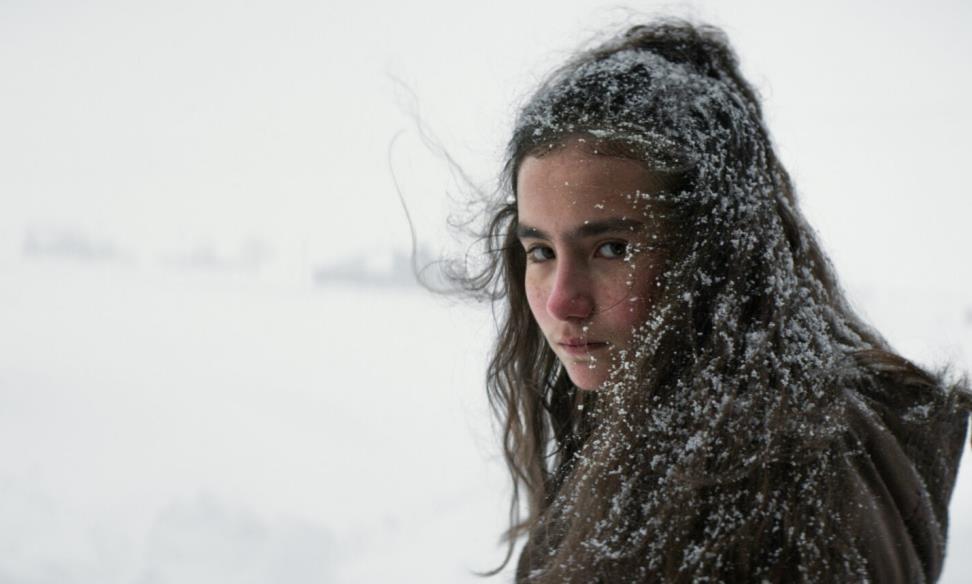
Jay Weissberg, May 19, 2023

Does cinema burden any landscape with as much sorrow as
Anatolia? For decades the vast spaces of central Turkey have
been used as sites of lassitude and lost dreams, either a crushing place of exile or a life-sentence of inescapable dead ends for those unlucky to be born there. With masterworks like Once Upon a Time in Anatolia, Winter Sleep and The Wild Pear Tree, Nuri Bilge Ceylan has significantly contributed to this concept, pushed even further by his longawaited About Dry Grasses. It’s a film with the auteur’s unmistakable touch, both visually – though it’s his first time collaborating with these two d.o.p.s – and thematically with long, indeed very long conversations that directly and circuitously touch on desiccated expectations, personal responsibility in a blighted world, and withered social relations. About Dry Grasses is about many things, and while being, as ever, intellectually rigorous, it largely lacks the wellearned emotional Full Review
VERDICT: Warwick Thornton's latest may star Cate Blanchett but newcomer Aswan Reid steals the show in this historical drama. Boyd van Hoeij, May 19, 2023
An Aboriginal boy finds himself in a remote religious institution in the Australian outback in The New Boy, the seventh feature from
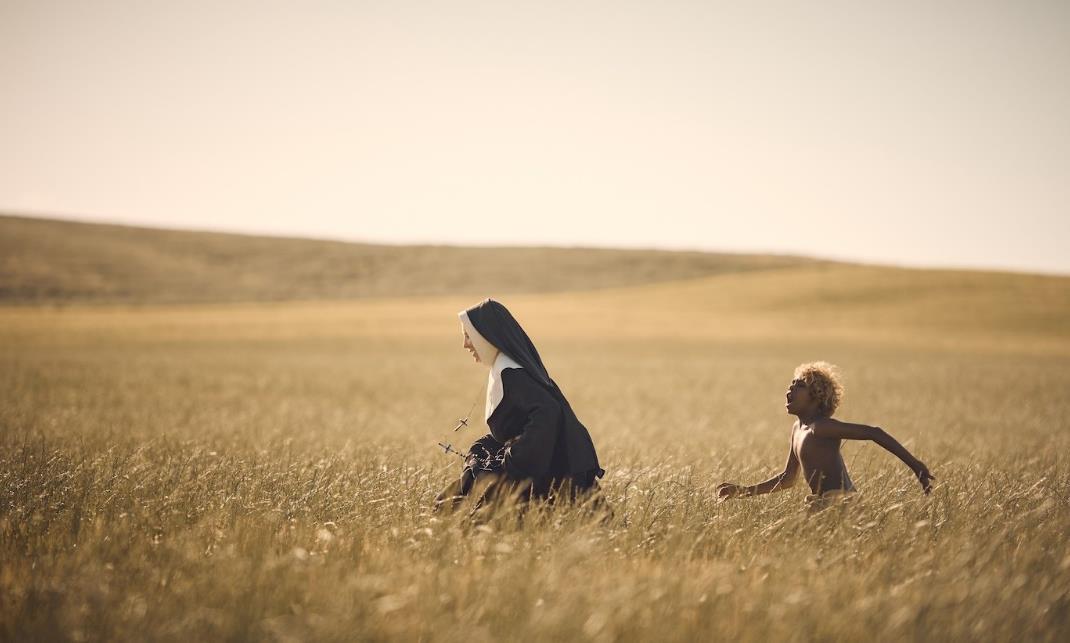
writer-director-cinematographer Warwick Thornton. This time, he has cast a major Australian star, Cate Blanchett, as the female lead,
though the titular boy, played by newcomer Aswan Reid, is really the star of the show and all the more because he only utters two different words over the course of the film’s two-hour running time. Through the story, set in the early 1940s, of an indigenous boy who is delivered to a monastery headed by Cate Blanchett’s Sister Eileen, Thornton explores complex topics related to colonisation and religion as well as the basic concepts of decency, care and education. With Blanchett’s star power, this should have a better-than-usual chance of pickups internationally, further reinforcing the name-recognition factor for Thornton, whose first film, the Cannes Un certain regard title Samson & Delilah, won the Camera d’Or back in 2009.
It’s an interesting configuration that Thornton, who also wrote the screenplay, has cooked up, because it gives Eileen a set of her own problems Full Review
VERDICT: A punishing, loud plunge into the brutality of EMT work in Brooklyn’s grittiest hoods that banks on Sean Penn’s stardom but is tone-deaf to its problematic treatment of immigrant communities and women.
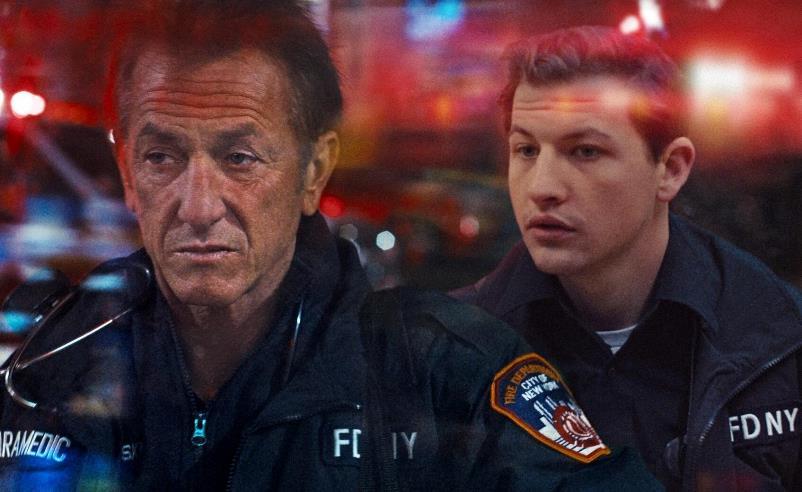
Jay Weissberg, May 19, 2023
Never one to shy away from jacked-up displays of testosterone, Jean-Stéphane Sauvaire continues his punishing display of male violence in Black Flies, a loud, pulsing evocation of Emergency Medical Technicians working Brooklyn’s most unrelentingly mean streets. Based on a novel by Shannon Burke that dug deep into a world where ambulance workers become either mad dogs or empty casings, Sauvaire aims to match the book’s harrowing descriptions of death’s stench with pounding scenes of rage accompanied by flashing lights, cacophonous sounds and handheld camerawork. Lacking the mesmeric surface beauty of Johnny Mad Dog and ultimately more formulaic than A Prayer Before Dawn, the director’s third feature has multiple problems, not least its treatment of New York’s immigrant communities and complete lack of interest in the sketchy female characters. Sauvaire’s inauspicious Cannes competition debut is unlikely to get box offices buzzing.
Citing The French Connection as a major inspiration, the director shot in some of the same locations, wanting to pretend the clock remains stuck in 1971 even though the film is designed as a contemporary take on NYC as an unending war zone. Even more curious is Sauvaire’s belief, expressed in press notes, that he’s made a hard-hitting statement about the dire state of the U.S. health care system; nothing in the film warrants such a reading since its far more interested in the impact of soul-crushing violence perpetrated by tattooed, expletive-spouting immigrants than any engagement with health care inequities. Full Review

CINE VERDICT: Una deliciosa ensoñación sobre cómo escapar de la adormecedora esclavitud diaria del capitalismo y encontrar el verdadero significado de la libertad. Los delincuentes es increíble hechizo de tres horas que seguramente será captado por múltiples territorios.
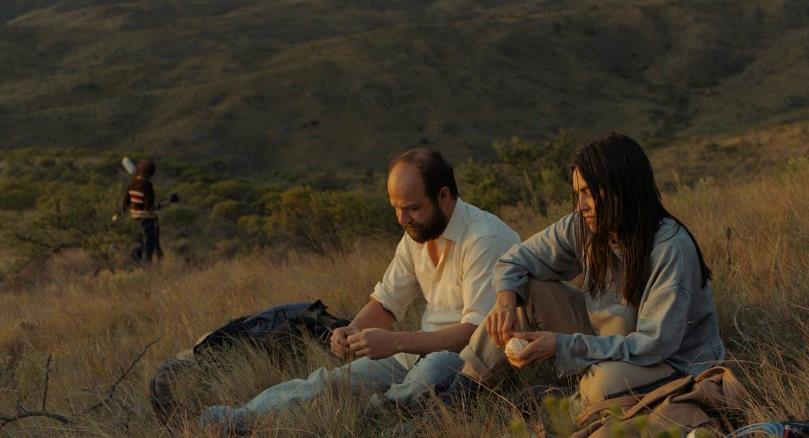
Jay Weissberg, May 19, 2023; Traducido por Lucy Virgen
En casi todos los Cannes hay uno o dos títulos de Una cierta mirada que hacen que todos se pregunten por qué no están en competencia en lugar de alguna de las participaciones mediocres de autores
establecidos. Los delincuentes de Rodrigo Moreno, como Godland de Hlynur Pálmason el año pasado, es esa película; está garantizado que será comentada y celebrada mucho más que varias en la sección más llamativa. Poniendo un gran centro de diana en el viejo y conocido capitalismo, pero haciéndolo con una gran cantidad de humor sutil, Los delincuentes usa su ingenio tan a la ligera que apenas nos damos cuenta de cuán expertamente Moreno (Un mundo misterioso, El Custodio) está entretejiendo personajes y temas, sensacionalmente acompañado por selecciones musicales tan atractivas como la vida fuera de la carrera de ratas. Paralelamente a un par de empleados bancarios que buscan escapar de las garras sofocantes del reloj checador, la película da marcha atrás al tema del atraco para provocar un despertar a conceptos más amplios de libertad y auto realización. Los únicos delincuentes aquí serán los compradores dudosos que deberían atrapar esta joya, larga pero maravillosamente gratificante.
Todo sobre Morán (Daniel Elías) es anodino, desde los apagados colores tierra de su traje y su peinado para tapar la naciente calvicie, hasta su trabajo como tesorero en un banco del centro de Buenos Aires cuya sosa decoración de madera no ha cambiado desde principios de la década de 1970. Full Review
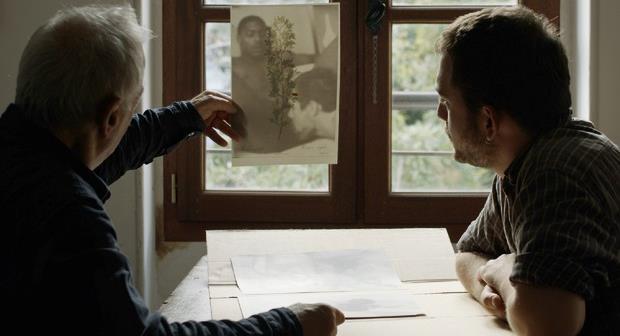
to recreate a primitive forest in his garden in Normandy. Beneath a flow chart listing the plants he seeks to bed into his realm, Brown opts for poetic allegory. Rather than just a natural science, gardening should be about the visualisation of something intangible, “just like a musical score,” he says.
VERDICT: French farmer-filmmaker Pierre Creton combines his professional horticultural knowledge and his idiosyncratic cinematic language to produce an enigmatic, enthralling and intensely erotic film about a young gardener’s rite of professional and sexual passage in rural Normandy.
Clarence Tsui, May 19, 2023
At the beginning of Pierre Creton’s A Prince, British botanist Mark Brown delivers a talk to a group of French horticultural students about his real-life plans
In more ways than one, Creton has indeed achieved something along those lines with what he describes in the press notes as his first work of fiction. Set largely among flower farmers and beekeepers in Pays de Caux, a region in northern France where the art school graduate has lived and worked both as a farmer and filmmaker for the past three decades, A Prince teases mesmerising sensuality out of its horticultural protagonists. Revolving around the slow rite of passage of a young gardener as he grapples with his professional calling and his sexual desires, the film offers enigmatic drama delivered through elliptical storytelling, mixed with sporadic dollops of rapturous black humour.
A veteran roundly celebrated among French cinephiles for his singular dedication to his milieu and métier – most of his films are set in Pays de Caux, and all of them cast a sympathetic eye on the largely invisible agricultural communities Full Review
worlds those take me to,” he admits. “I’ve always wondered why this medium influenced me more than those around me.” He also uses words that connect with this writer deeply, when he explains that “during my school and university years, cinema became a bridge for me to connect with other cultures and understand the world. Every film was a gateway to an ocean of questions that helped me understand myself better.”
No one could have predicted that just five years after cinemas reopened in Saudi Arabia in 2018, the Kingdom would become a hub for entertainment. In fact, as part of HRH Crown Prince Mohammed bin Salman Al Saud’s Saudi Vision 2030, there will be at least 300 theaters with over 2,000 movie screens by that date, and the numbers may well surpass the estimate.
The Saudi film industry is still in its burgeoning years, but nevertheless impressive. At its core is the Saudi Film Commission, a government body affiliated with the country’s Ministry of Culture, which was established in early 2020 and based in Riyadh. The website describes the Commission’s vision to “establish Saudi as a world-class film centre in the heart of the Middle East.”
And if the past -- the not-sodistant past -- is any indication of the future of KSA, they may just pull that off.
In June of 2020, the Minister of Culture HH Prince Badr bin Abdullah bin Farhan Al Saud, who is also the Governor of the Royal Commission for AlUla, appointed Engineer Abdullah Al-Eyaf as the CEO of the Saudi Film Commission.
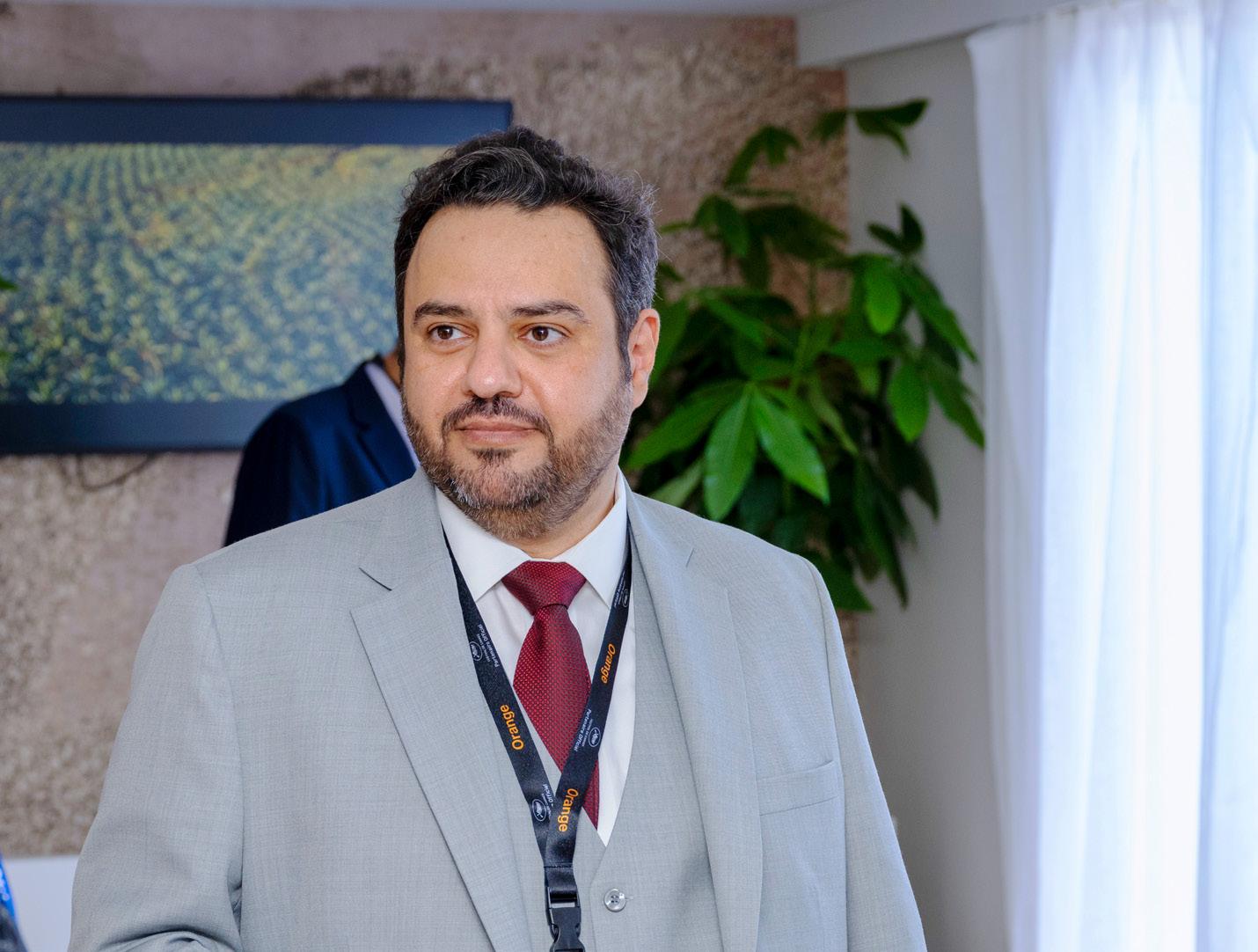
But how did Al-Eyaf, who holds a degree in Mechanical Engineering and comes to the Commission after having held various roles at the Saudi Arabian Oil Group Aramco, envision himself as a filmmaker and a novelist, in a country devoid of cinemas during the years when he was growing up?
“I grew up watching animation on TV. I’ve always been fascinated by films and TV series and the
Cinema has had undeniable power as a change-maker in Saudi Arabia in the past decade. Just think of the award-winning filmmaker Haifaa al-Mansour — whom Al-Eyaf counts among his favorite Saudi directors, along with veteran documentary filmmaker Abdullah Al Muhaisen — a woman who famously had to direct her debut feature Wadjda from the back of a van. That was in 2012 and look at her now, several films and series later; her work includes The Perfect Candidate shot in 2019 in Saudi, for which, as al-Mansour noted in Venice, “I didn’t have to be in the van anymore!”
When I ask Al-Eyaf what is the hardest point to drive across to Westerners about the Kingdom, he says it is how “Saudi Arabia is changing rapidly at an unprecedented rate.” At dizzying speed, I would personally add. “The country is witnessing a transformation at the economic, social, and creative levels the world has never seen before. There is so much to tell and communicate about what’s happening in Saudi Arabia.” He reminds me of the exceptional demographics of the Region. “At the same time, the Middle East in general is very dynamic, with a large young population and
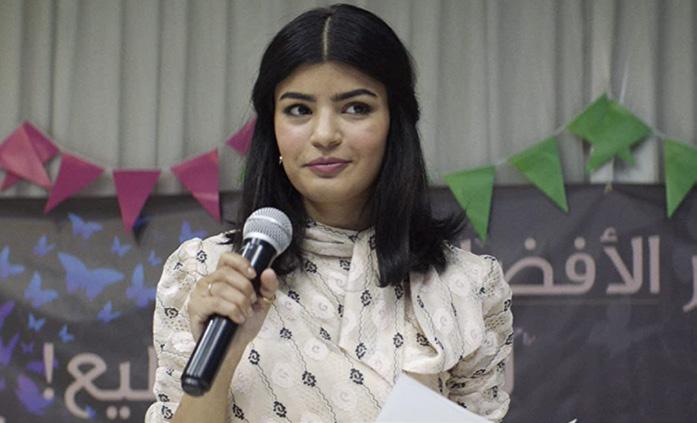 The Perfect Candidate
great creative potential. I believe there is huge room to improve the communication between the world and this region.” Young Saudis are hungry for everything that is cool and modern, especially in entertainment, and that doesn’t seem so different from, say, American audiences or South Asian film-goers.”
Al-Eyaf admits that the challenges faced by the Saudi Film Commission go hand in hand with the dynamics of the industry. “The global film industry is going through fast changes in how films are financed, developed, produced, distributed, and exhibited. For example, it is exciting to see the advancement of technology in the film industry and the vast possibilities that could come through that, and yet it is hard to foresee the challenges it may bring.” However, he finds working in what he calls a “fast-changing and unpredictable sector” very rewarding because of “how the films we help get made inspire generations and connect people together.”
This unpretentious, humble quality is something that is ever-present when meeting people from KSA, and the Region in general. As Al-Eyaf confesses, quite unassumingly, “I’m really privileged now to be part of the grand transformation in Saudi Arabia to build a film industry that allow
industry that allows many filmmakers to make this their full-time career. My generation got into cinema as a hobby, not a profession. I’m an engineer by education. I would use my salary and annual vacation to make low-budget films and to travel to film festivals around the world.”
The Commission currently has some enticing incentives available and Al-Eyaf lists them for The
Film Verdict “We currently have film grants through our Daw program, up to 40% cash rebate on productions that are shot in Saudi Arabia, and our colleagues at the Cultural Development Fund have recently introduced a new scheme to finance films, production companies and business — this is a comprehensive cycle that covers small, medium, and large businesses.” He adds that the Commission is “constantly monitoring, improving the value chain of the film industry. Our vision is to have attractive and competitive incentives reflecting the changes in the film industry in the Region and worldwide.”
As a final question I ask Al-Eyaf who are the filmmakers that have influenced him and continue to guide him on this important mission. “I liked the poetic cinematic language of Andrei Tarkovsky, the mastery and depth of Stanley Kubrick,” he says, continuing, “the unique perspectives of Werner Herzog, the dynamic visuals of Akira Kurosawa, and the touching humanity in Miloš Forman’s films.”
For more information on the Saudi Film Commission, click here
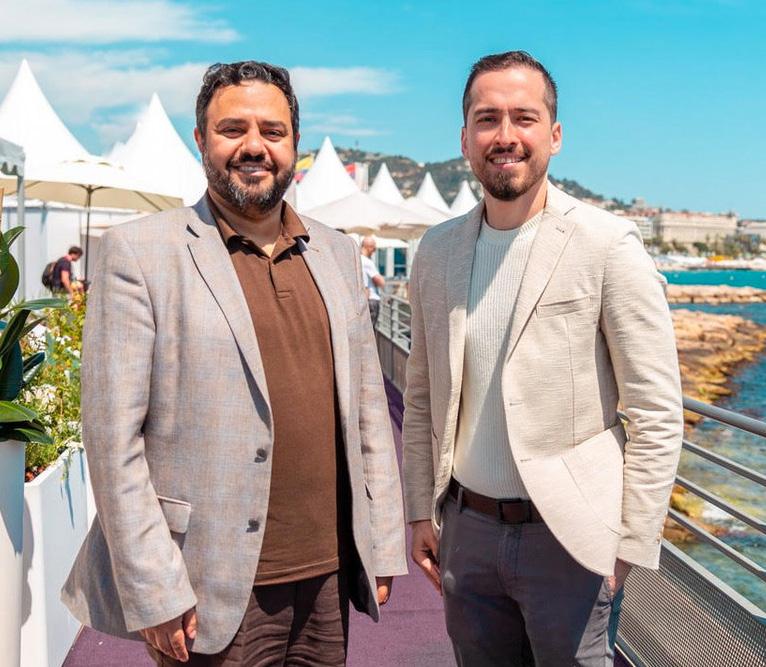
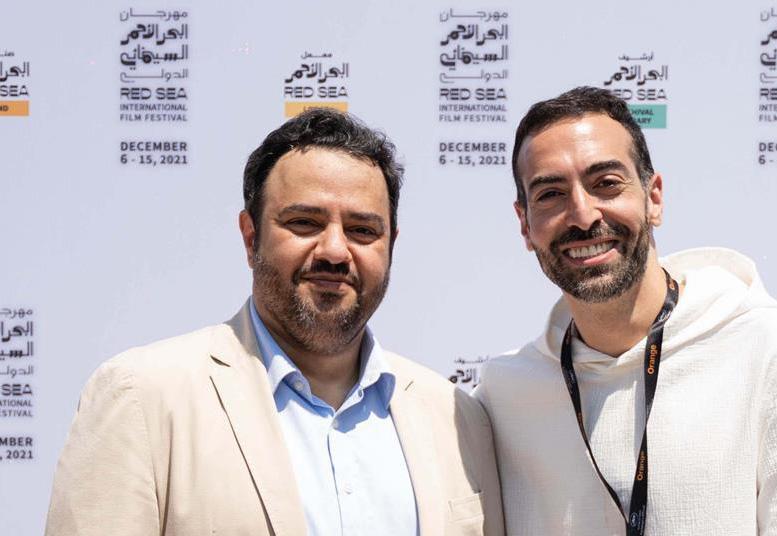
Abdullah Al-Eyaf (left) in Cannes Abdullah Al-Eyaf with Mohammed Al Turki at Red Sea Film FestivalSaudi-backed projects have made headlines at international festivals in the last two years, the latest being Cannes’ opening night film Jeanne du Barry, which was supported by Red Sea International Film Festival.
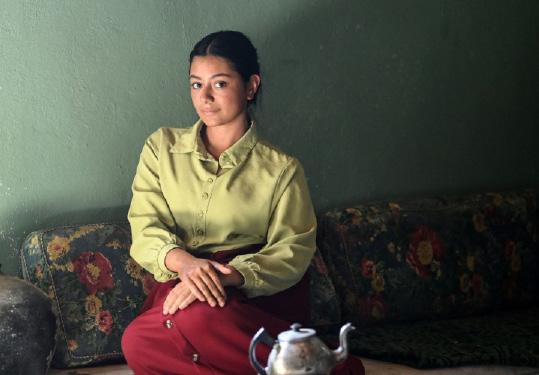
In Cannes, Berlin and Venice, films from the region have screened after receiving funding and support from Saudi Arabia; the latest example being Amr Gamal’s Al Murhaqoon (The Burdened), a social drama about a married couple with three children, hoping to get an abortion in war-torn Yemen.
While earlier cultural restrictions limited local talent from making films, occasionally titles made some noise abroad as well as inside the country, such as Haifaa Al-Mansour’s Wadjda (2012), Mahmoud Sabbagh’s Barakah Meets Barakah (2016), all the way to The Perfect Candidate (2019), Shahad Ameen’s Scales (2019), Abdulaziz Alshlahei’s The Tambour of Retribution (2020) as well as Becoming. Most of these were made by filmmakers who have not yet benefited from the kingdom’s aggressive steps to mark its
territory on the post-COVID international production scene
Ever since the establishment of the Saudi Film Commission in 2020, local productions have started to rise and to benefit from the country’s diverse institutions, such as the Red Sea Festival, Film AlUla, NEOM, MBC Group, and Shahid.
This year there are several productions worth waiting for. While some have garnered success only in local markets, others have the potential to make it to international festivals. For example, Hajj to Disney by Maha Al-Saati is expected to capture the attention of critics and film festivals. Starring the Saudi Arabian-Palestinian actor Dina Shihabi, who appeared in the Amazon series Tom Clancy’s Jack Ryan and Netflix’s Altered Carbon, it includes a semi-autobiographical sequence exploring how the holy city of Mecca became, like Disneyland, commercialised. Al-Saati who grew up in Mecca secured technical and financial support from the CineGouna Platform, the Red Sea Lodge Residency, and TorinoFilmLab.
Investigating the east/west dichotomy will attract foreign audiences, especially exploring the conservative city of Mecca from a female perspective.
Hajjan, formerly known as Sea of Sands, will be Egyptian director Abu Bakr Shawky’s second feature. His debut Yomeddine (2018) was well received in Cannes and in festivals worldwide; it followed the two main char-acters, a leper and an orphaned Coptic child, on a road trip across the Nile.This time, he takes his camera to the desert to explore the traditional and vibrant culture of camel racing.The film will be a co-production between Saudi Arabia and Egypt’s Film Clinic of producer Mohamed Hefzy.The reputation of Hefzy and Shawky and the exotic angle of camel racing could garner the film an audience in the West.
Another highly anticipated local production is Norah by veteran director Tawfik Alzaidi, who was making films during the peak of conservatism in the Kingdom. Making a comeback, this time with the support of the Saudi Film Commission,Alzaidi’s film explores the stigma of being an artist in the late 1980’s, a scene the director was part of. Starring rising Saudi Arabian actorYaqoub Alfarhan, famous TV actor Abdul-lah Alsadhan, and Maria Bahrawiu, it is the first film to be shot in the AlUla area.While social dramas remain the most popular cinematic import from the Middle East to international theatres, Saudi Arabia’s production has expanded its scope to include comedies, action, and psychological thrillers. While the dark comedy Raven Song (2022), supported by the Saudi Film Commission, was the country’s entry for the Academy Awards, other projects embrace humour to propel the narrative. Films such as Al-Hamour H.A. by Abdulelah Alqurashi, Alkhallat+ by Fahad Alamari, and Sattar by Abdullah AlArak use comedy to highlight different social and personal tensions, a fresh take that reflects Saudi’s continuously changing society, still struggling between
2023 marks a strong starting point for Saudi cinema, locally and internationally aggressive tradition and aggressive modernisation. Alkhallat+ tells four humorous stories of deception between highly pragmatic characters, while Sattar features a bored employee fascinated by professional wrestling (very popular in the Arab

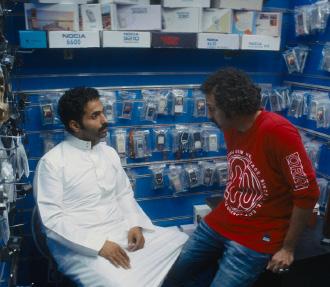
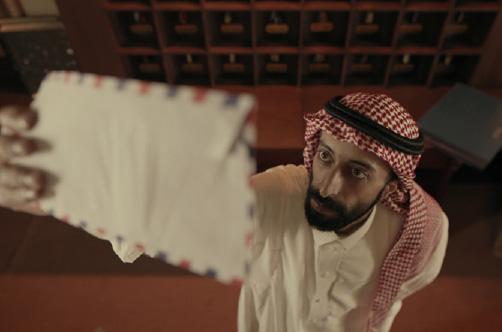
world), offering a fresh take on masculinity and corporate life. Inspired by true events, Al-Hamour H.A. follows a security guard who wants to get rich quick selling prepaid phone cards.
While these films might not gain international recognition, they can liberate local filmmakers from sticking to an old checklist that had to include politics or gender and allow them to reflect themselves as Saudis and artists.
--Adham YoussefRaven-Song
The Ministry of Culture of Saudi Arabia was formally launched in 2019 as part of Vision 2030, the Kingdom’s ambitious transformation program. Its mission is to support a vibrant, forward-looking Saudi culture that nevertheless remains true to its past, and to enable it to contribute to the Kingdom’s economic growth while creating opportunities for international cultural exchange.The Kingdom’s first minister of culture is Prince Badr bin Abdullah bin Mohammed bin Farhan Al-Saud.
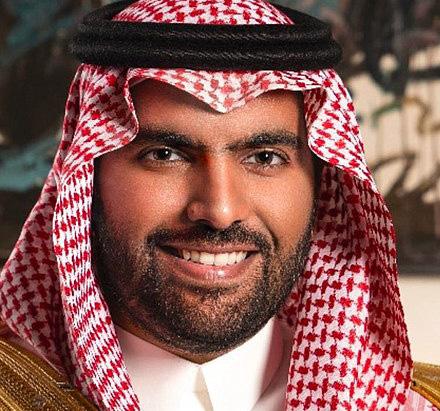
To reach its goals, the Ministry singled out areas to focus on and assigned itself six specific roles: Leading the sector by setting funding priorities and making sure appropriate laws and policies are in place to allow the cultural ecosystem to flourish; developing the eco-system by providing tangible support to the existing public and private entities in Saudi Arabia’s cultural sector; enabling creativity to flourish by establishing a clear regulatory environment through appropriate regulations consistent with international best practices and domestic requirements; becoming a bridge to the world through cultural exchanges; recognizing and sup-porting Saudi talents, and documenting and preserving Saudi heritage and culture.
The areas of focus identified by the Ministry are archeology and landscapes; architecture and interior design; books and publications; cultural festivals and events; fashion design; films and video; food and culinary arts; heritage; language; libraries; museum; music; natural heritage; performing arts; poetry, and visual arts.
The first group of cultural initiatives launched by the Ministry are ambitious and include 27 projects aimed to fulfill the vision of “a flourishing of arts and culture across Saudi Arabia that enriches lives, celebrates national identity, and builds understanding among people.” Some of the initiatives include the King Salman Inter-national Complex for Arabic Language in Riyadh; the Red Sea International Film Festival; the National Film Archive; a cultural scholarship program; the Ad-Diri-yah Biennale; and a series of cultural festivals, like the National Culinary Festival.

access, production and location scouting support, and offering to finance 40% of the budget of films shot in the country.
AlUla and NEOM are betting on their diverse filming locations, vast desert, mountainous areas, valleys, lakes, coastlines, dunes, and ancient ruins. Since 2022 several films have been shot in various genres: action, thriller, horror and war dramas.
In the last three years, Saudi Arabia has attracted a good slice of the post-Covid, international film production scene – producers who invest their time, talent and effort on its territory and launch aggressive marketing and investing campaigns in industry circles worldwide.
In 2020 the Royal Commission for AlUla established Film AlUla, led by Stephen Strachan, an industry expert and veteran producer. This is one of several different government initiatives aimed at promoting cultural and touristic collaborations with the outside world, ending 35 years of conservative societal and religious restrictions on culture and media, gender segregation, and female participation in public life. Yet the country was not a stranger to the entertainment business in these years, producing a great deal of content for mass TV consumption. And despite the movie ban, some pictures were partially filmed in the kingdom, including Lawrence of Arabia (1962) and Malcolm X (1992).
AlUla is not the only Saudi giga-project. NEOM, Saudi Arabian Crown Prince Mohammed bin Salman’s trillion-dollar futuristic fund, also seeks to establish a regional center for creative industries, supporting international and local projects and establishing connections with media schools. Taking note of the logistical and bureaucratic (and sometimes security) challenges faced by international film crews in Egypt, Jordan, and Morocco, Film AlUla and NEOM appear focused on establishing a suitable infrastructure for the film industry in the northwestern part of the country. Incentives to shoot in Saudi Arabia include providing and renting equipment, easier visa requirements and
Following the success of Anthony and Joe Russo’s war drama Cherry, parts of which were shot in AlUla and the country’s economic capital, Riyadh, more productions are expected to benefit from the industry- and foreign-friendly environment the Kingdom has been establishing.
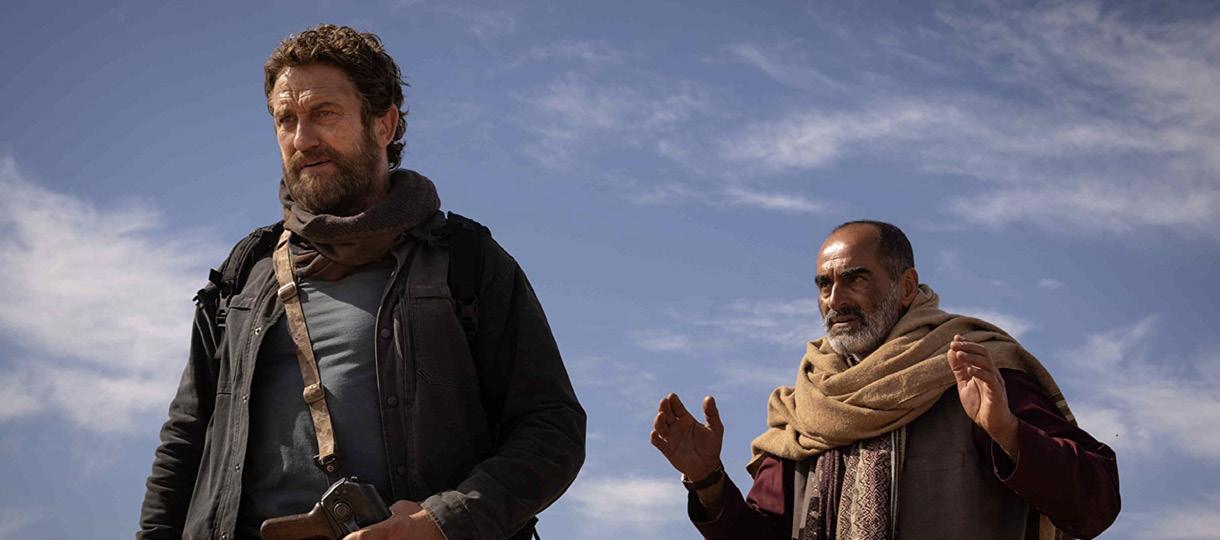
The upcoming American action thriller Kandahar directed by Ric Roman Waugh was shot in AlUla and Jeddah. Gerard Butler plays an undercover CIA agent fleeing Iran to a pick-up point in Afghanistan’s notorious Kandahar, as he joins forces with his local translator (played by Navid Negahban). It’s expected to hit the theatres in May.
Then there is Darren Lynn Bousman’s English- and Arabic-language tentpole Cello starring Jeremy Irons and Tobin Bell along with an international cast and production team. Currently in post-production, the film is expected to be released this year.
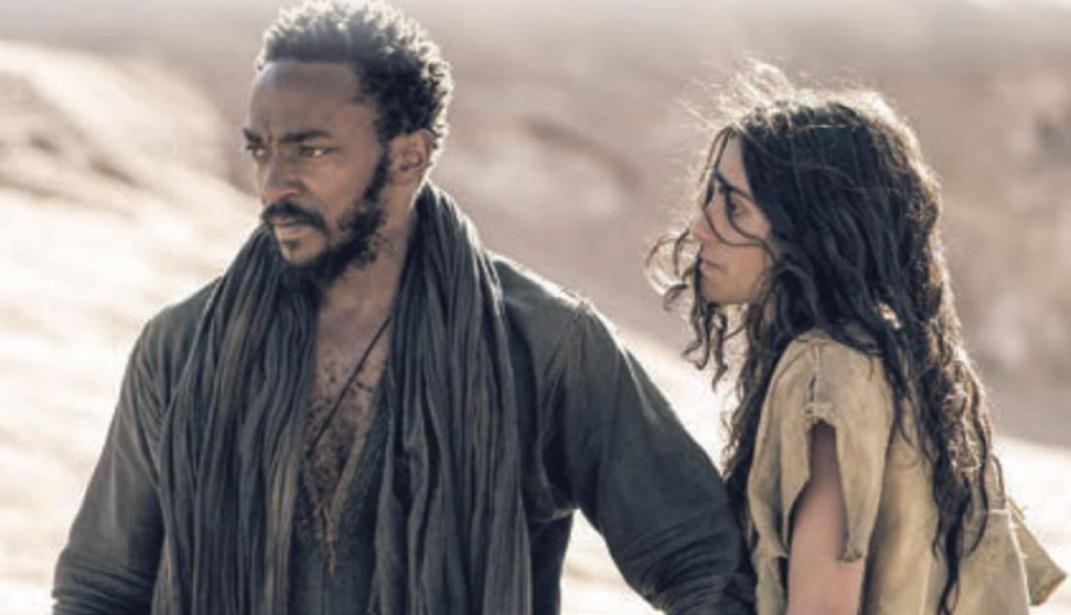
Another much-awaited mega production is British direc-tor Rupert Wyatt’s Desert Warrior spearheaded by Captain America star Anthony Mackie. Shot with NEOM, the film is produced by MBC, the kingdom’s most prominent media and entertainment company in the pre 2018 years, and AGC Studios of Hollywood. Mackie plays a bandit in 7th century Arabia who unites conflicting tribes and takes arms against the ruthless armies of Emperor Kisra (played by Ben Kingsly).
Kandahar