School Stories at EDUtech 2026
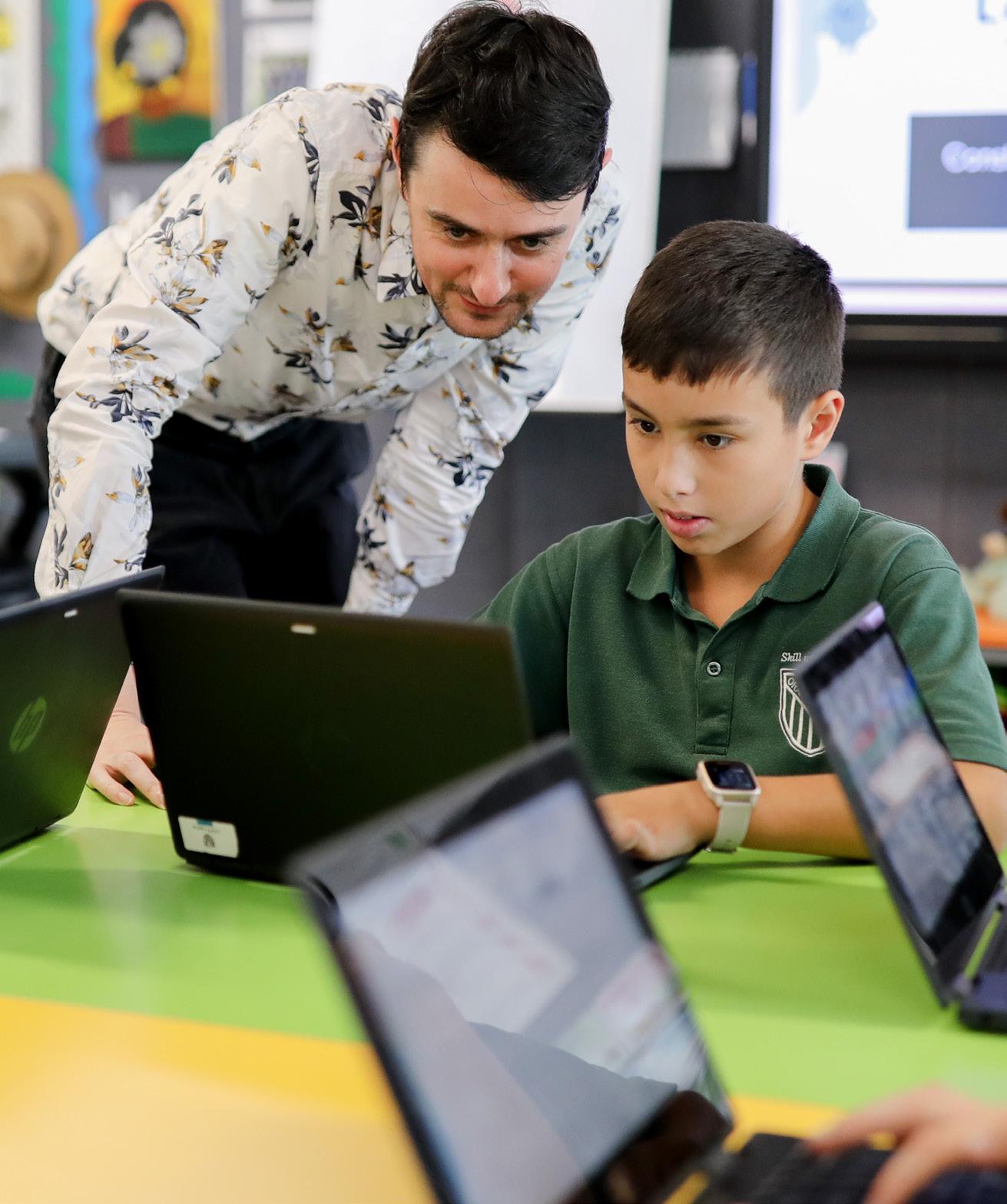

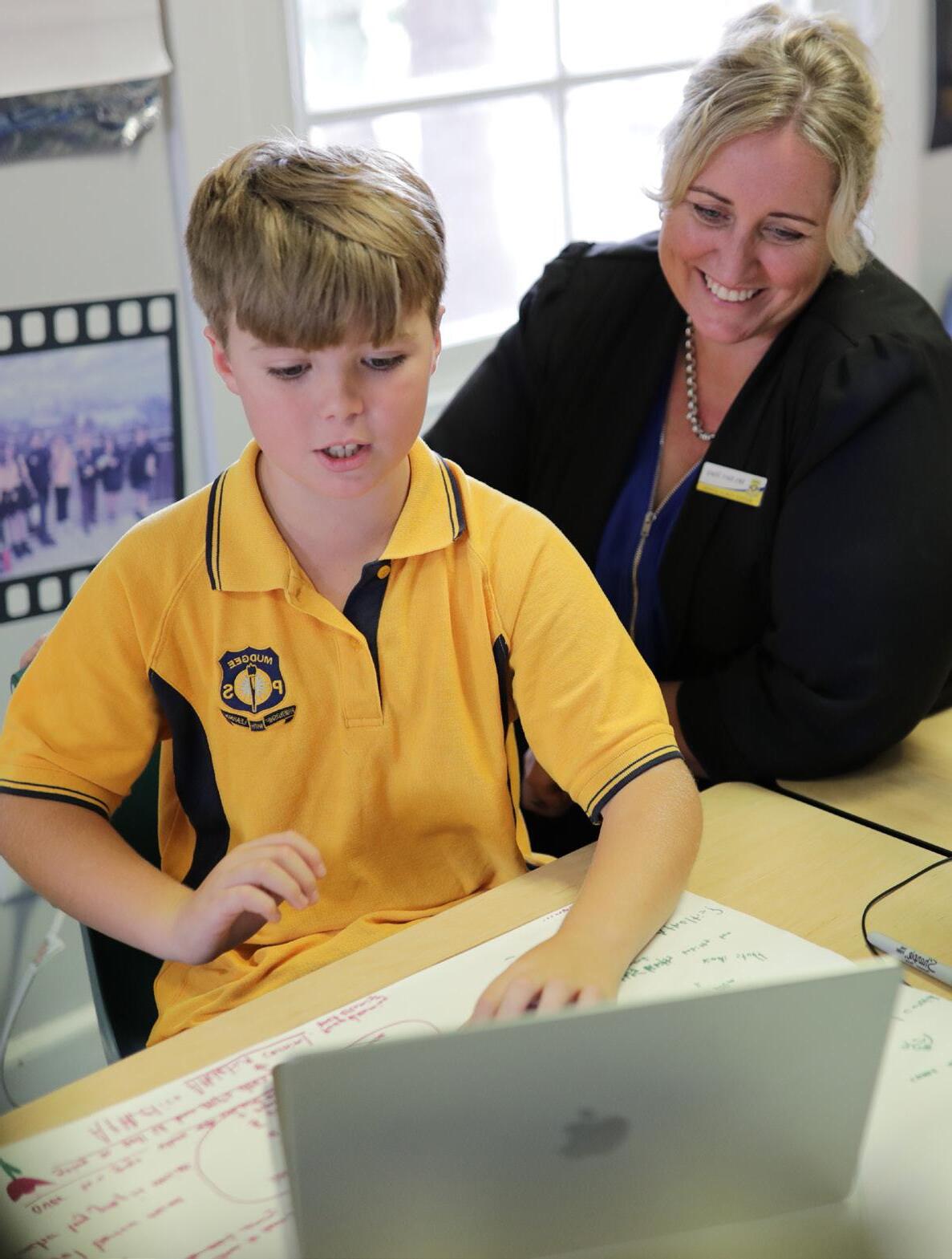

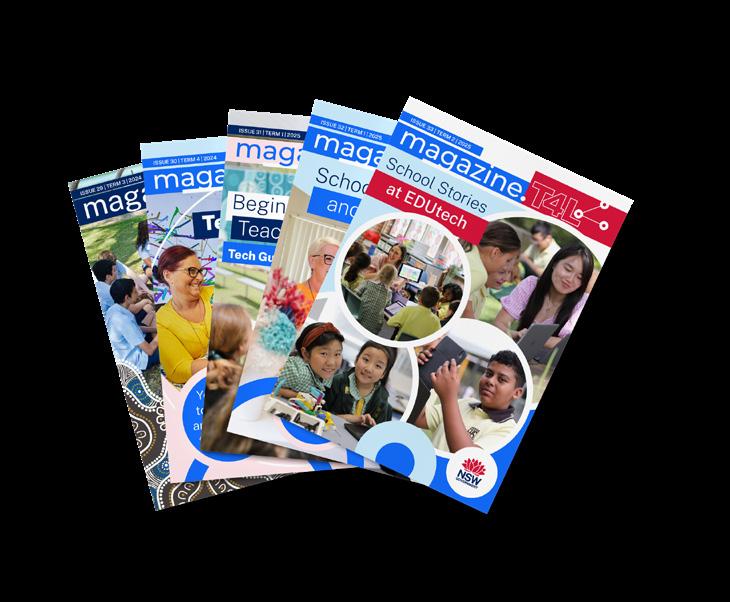
Welcome to our second special edition of magazine.T4L where we spotlight the schools presenting alongside us at EDUtech 2026.
Their stories serve as a good reminder that digital transformation isn’t just about the tools we buy; it’s about the incredible ways our classrooms come alive because of them. These schools aren’t just keeping pace with change, they have tried something new, and taken their school on a journey of growth with technology.
Inside this edition you will learn about their progress, discover how schools are utilising technology to build stronger community connections, create learning experiences that encourage curiosity, support personalised learning needs, and embed STEM technologies into teaching and learning.
A heartfelt THANK YOU to the incredible schools featured in this edition. Your willingness and commitment to showcasing the vast opportunities technology brings to our students is truly inspiring.

Thank you also to the T4L and Digital Support Team for your enthusiasm in supporting all schools, and ensuring we capture learnings in order to share stories of success more broadly!
I hope this edition inspires you!
Linda Lazenby Director – Technology Enablement, Schools and Skills
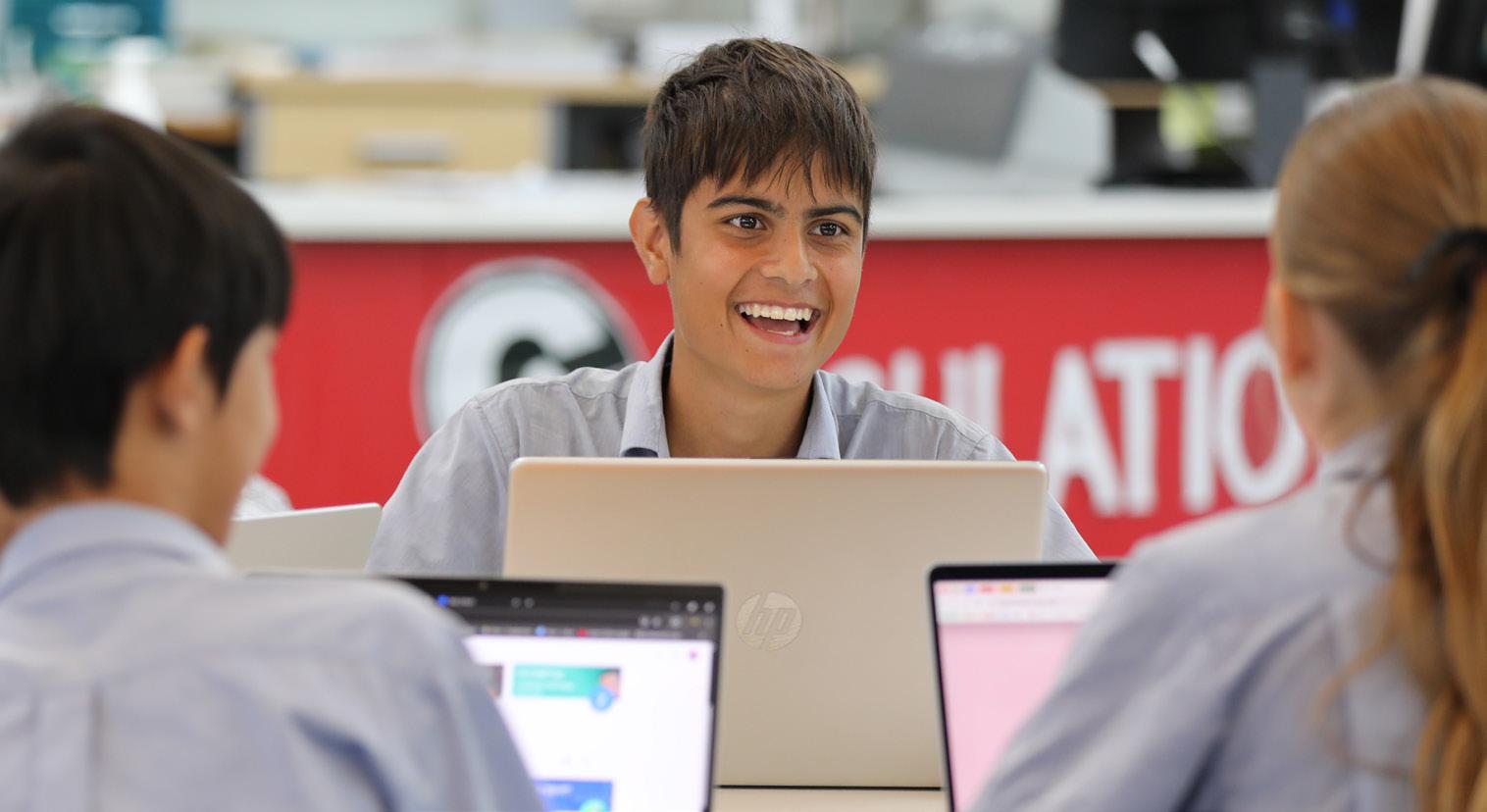
A huge thank you to all of the staff and students who represented the NSW DoE at EDUtech 2026. An equal thanks to all who have contributed content and photos to enable this magazine to be created. It is a pleasure sharing your school stories!

. Fardon
We acknowledge the lands of the Gadigal people of the Eora nation where this magazine was created and acknowledge all lands that are represented in each school story presented.
Time Topic
9:30am NSWEduChat
10:00am
School Story
STEM - Integration & engagement @ South Grafton PS
Student Showcase
11:00am
2:00pm
3:00pm
Student voice & engagement @ Cambridge Park HS
School Story
Engagement in STEM learning @ Bayside HS
School Story
Leading technology uplift @ Orange Grove PS
4:00pm T4L Resources showcase
Time Topic
9:00am School Story
STEM - Student engagement @ Edgeworth PS
10:00am School Story
Digital & STEM engagement @ Newrybar PS
11:00am
School Story
STEM - Podcasting @ Mudgee PS
2:00pm
Student Showcase
Student voice & engagement @ Kellyville HS
3:00pm Q&A / Tips and tricks
Presenter
Kate Jones & Dale White
Kimberley McPhillips, Naomi Heyman & Zrinka Krivosic
Stephanie Haskett & Dale White
Ehab Gerges & Adam Astill
Scott McBain & Kate Jones
Tim Cassell & Megan Anderson
Presenter
Kendall McCallum, Alex Montgomery & Megan Anderson
Renae Leeson & Kate Jones
John Carters, Kerri Sharp & Tim Cassell
Glenn Kayes, Sandy Free & Adam Pullinger
Dale White & Adam Astill
STEM - Integration & engagement
Size 564 students
Network Grafton
Context Regional Primary School
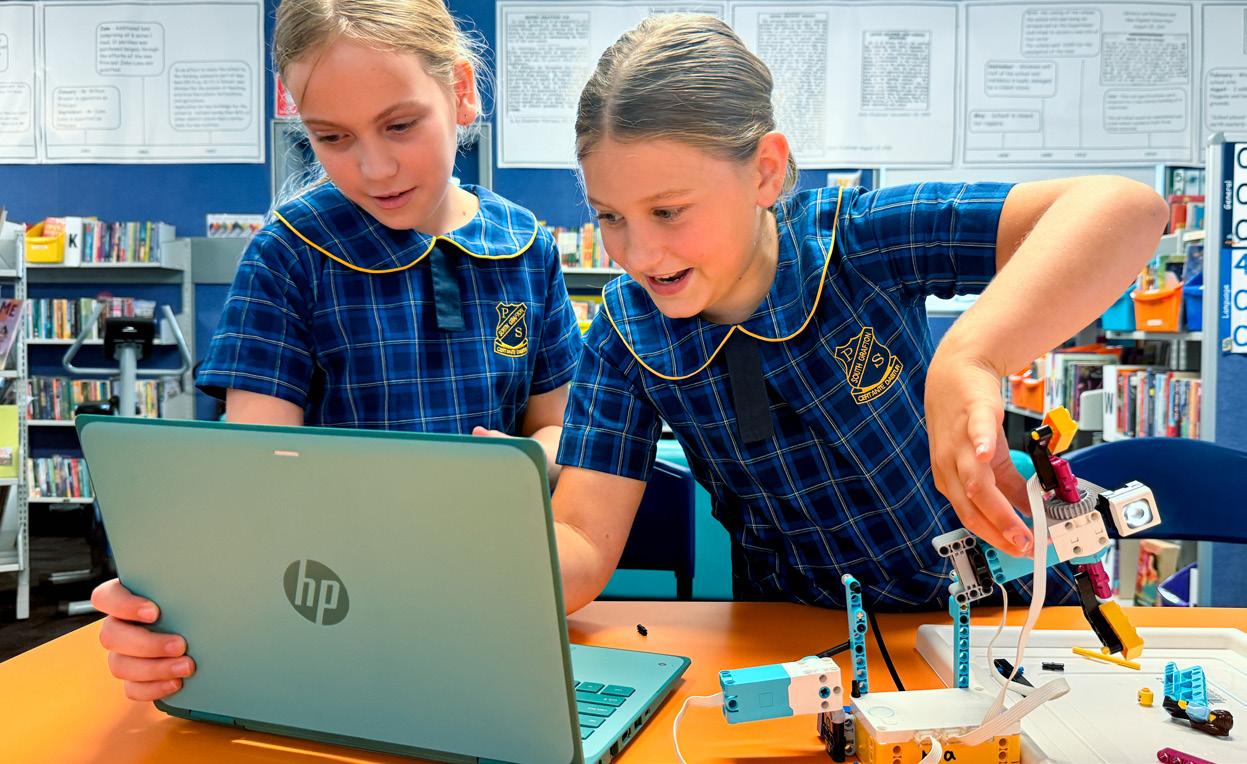
South Grafton PS is bringing learning to life through school-wide STEM integration and the library is at the very centre!
Tell us a little bit about your school and the journey you’ve been on with STEM.
Our school has been on a journey of high expectations, consistent leadership and programming. This has allowed the library to become integral across teaching and learning. During weekly sessions, Teacher Librarian Naomi integrates literature, technology and 21st-century skills. This collaborative model encourages all teachers to upskill alongside their students and is also supported by Naomi’s resource website for teachers to take back to their classroom. This approach has delivered outstanding results across both the curriculum and extra-curricular programs.
Be brave and courageous and give things a go! Naomi’s tip
What are your tips and strategies to best support staff with STEM integration?
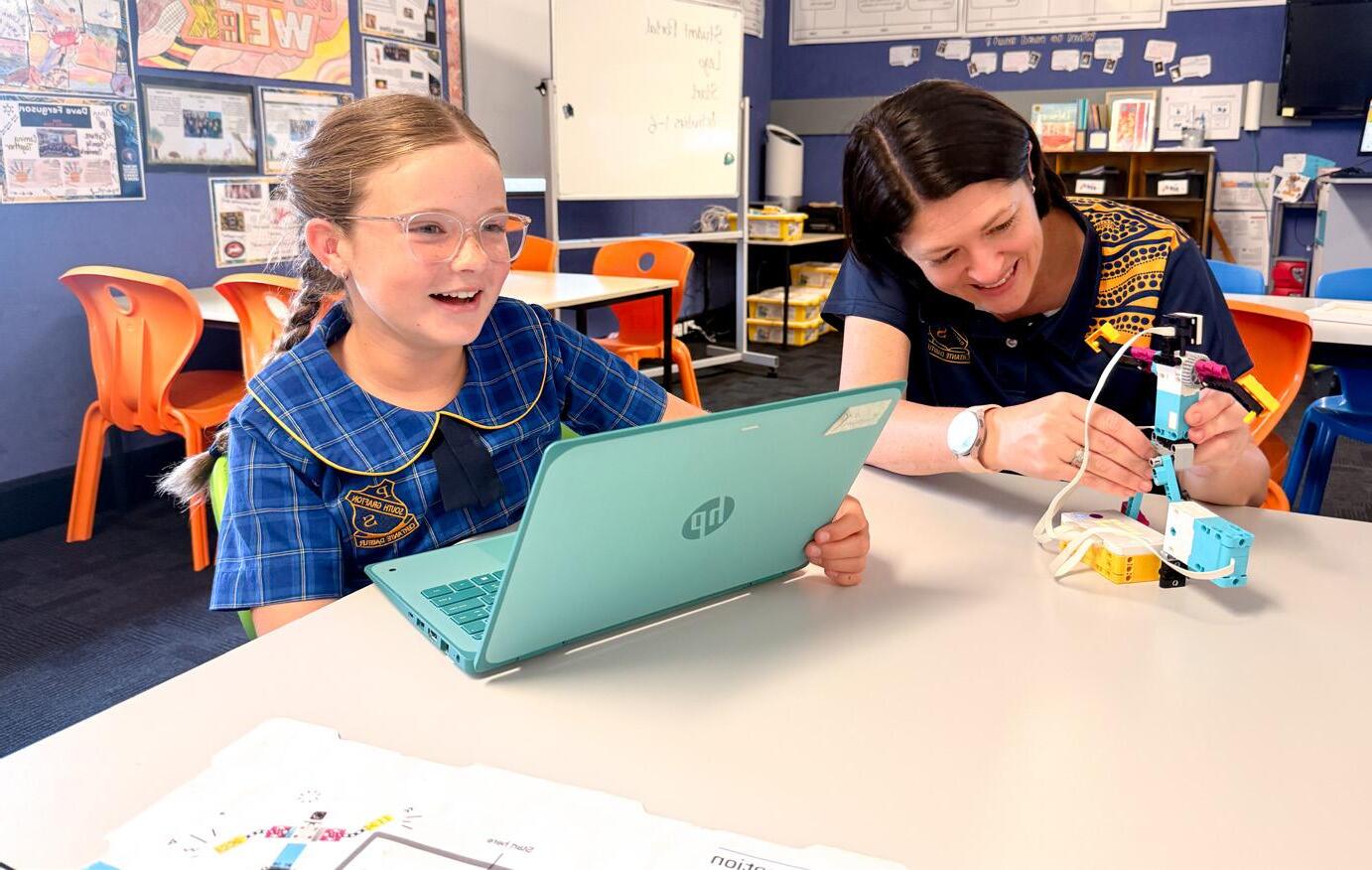
Successful STEM integration starts with a collective, staged approach. Key advice from us would be to get your leadership team onboard early!
For teachers, think of it as scaffolding your own learning: start with a tool you are confident using, tap into T4L resources for training and don’t be afraid to learn alongside your students. You don’t have to know everything, so embrace a growth mindset and remember where the “undo” button is!
Use the right tool at the right time and not just because.
What are some of the future goals you hope to drive across the school with STEM?
Any other advice for schools?
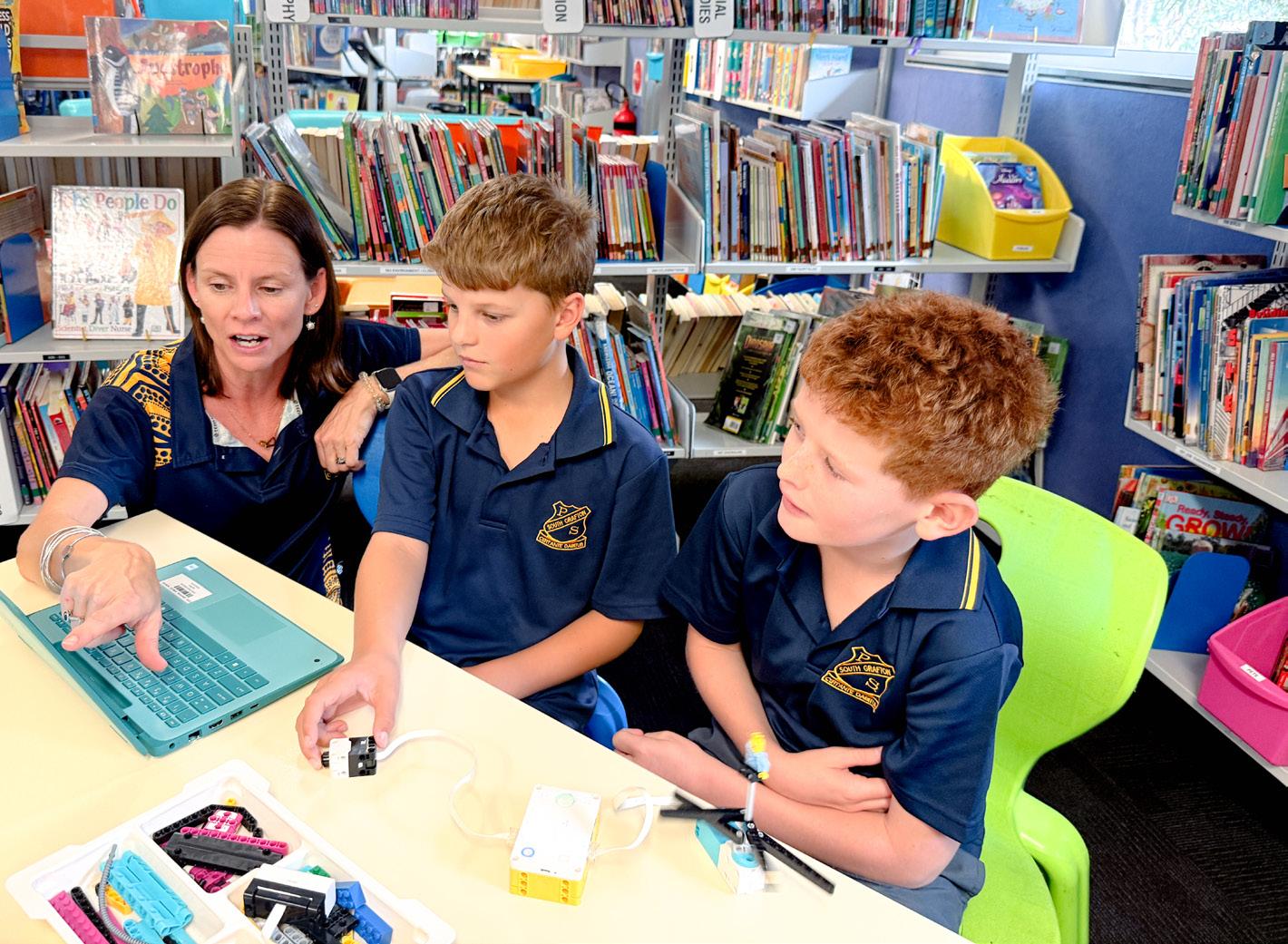
Naomi: I am excited to use the new CHPS units with micro:bits this term. The aim is to continue to valueadd what happens in the classrooms in the library program, so teachers always feel supported.
Kimberley: Keep providing a space where people are willing to try technology. I want to empower teachers to use tech to enhance teaching, not as an added extra.
Support from stem.T4L is invaluable. Everyone should feel confident to reach out. Borrow the kits, teach yourself, and get amongst it!
Size
667 students
Network Cambridge Park
Context Metro High School
Cambridge Park High School is amplifying student voice through purposeful, project-based digital learning experiences.
Tell us a little bit about your school and the journey you’ve been on with technology.
Our school serves a diverse community near Penrith. Over time, we have built strong technology foundations through devices and STEM opportunities, including an after-school club. The focus has now shifted from access to impact, using technology to genuinely enhance learning and student voice.
From a leadership perspective, this journey has been about learning alongside staff and modelling curiosity rather than expertise.
What success have you seen with students by taking this approach?
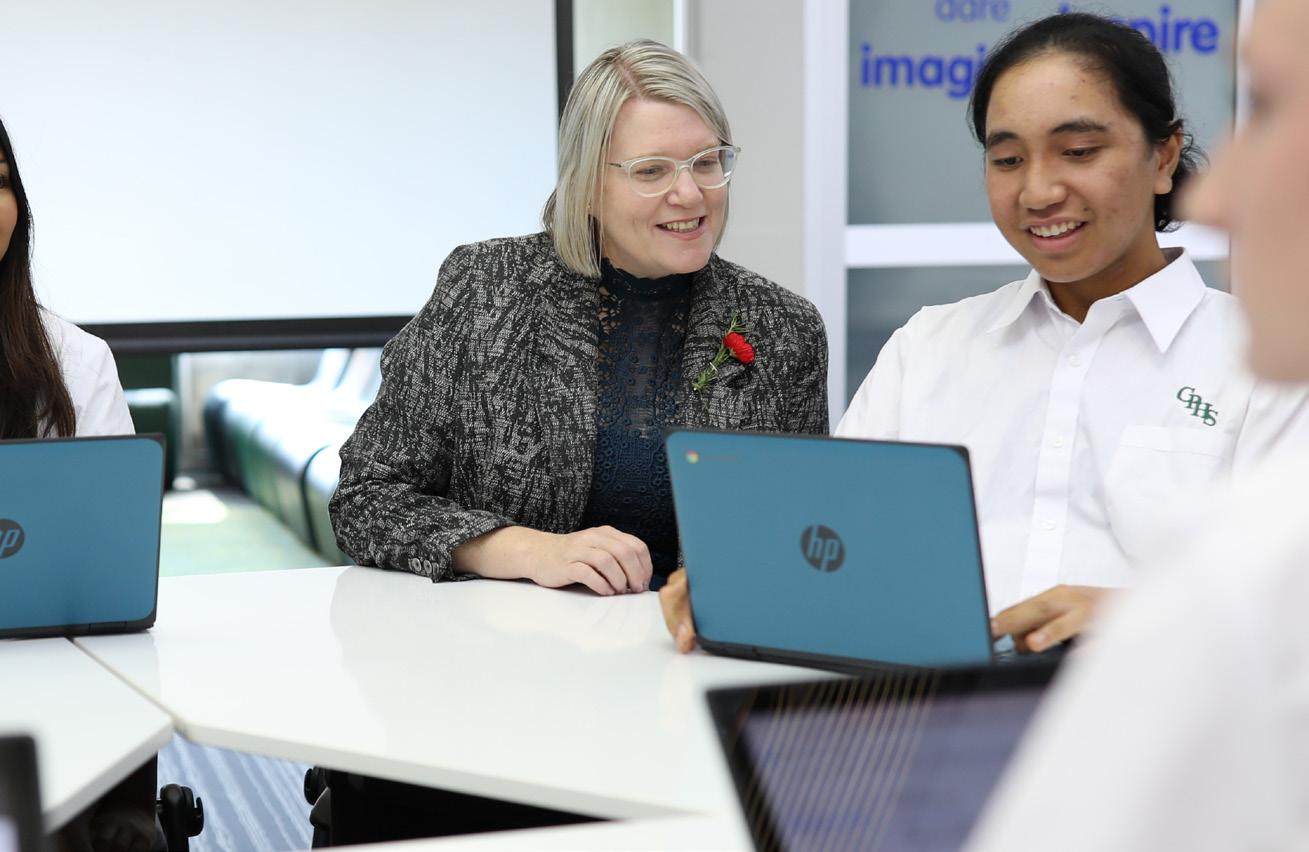
One of the strongest outcomes has come through the school’s Collaborative Projects program, where students use technology to deepen thinking, collaborate and real-world problem solving.
Students engage in the full design process, from ideation through to prototyping, using a range of digital tools for a range of tasks. A standout example was the development of an app called Blink, designed to support digital wellbeing by encouraging more mindful phone use.
This approach has led to stronger engagement and a greater sense of ownership over learning.
What are your tips and strategies for other schools trying to implement these types of engaging digital projects for students?
Designing engaging digital projects requires a shift in mindset, from focusing on content delivery to creating space for students to use technology creatively. Teachers also have to embrace a shared learning approach, recognise students’ strong digital skills and allow them to take more ownership in the classroom. Ultimately, it’s the conditions of time, trust and curiosity that drive engagement and impact.
space for students to play with technology, have time to test, experiment and even fail a little, their confidence and creativity lift significantly!
What are some of the future goals you hope to drive across the school within technology?
Looking ahead, our focus is very much on leaning into the potential of technology in a purposeful way. There’s a strong narrative in education around the risks, but our school is committed to exploring what technology can enable when it’s used well.
Ultimately, the goal is to create a culture where technology is used with intention: to deepen learning and open up opportunities that feel relevant to the world our students are stepping into. It’s not about chasing the newest tool, it’s about building a shared understanding of how technology can improve outcomes across the school.
Size 800+ students
Network Kogarah Network
Context Metro High School
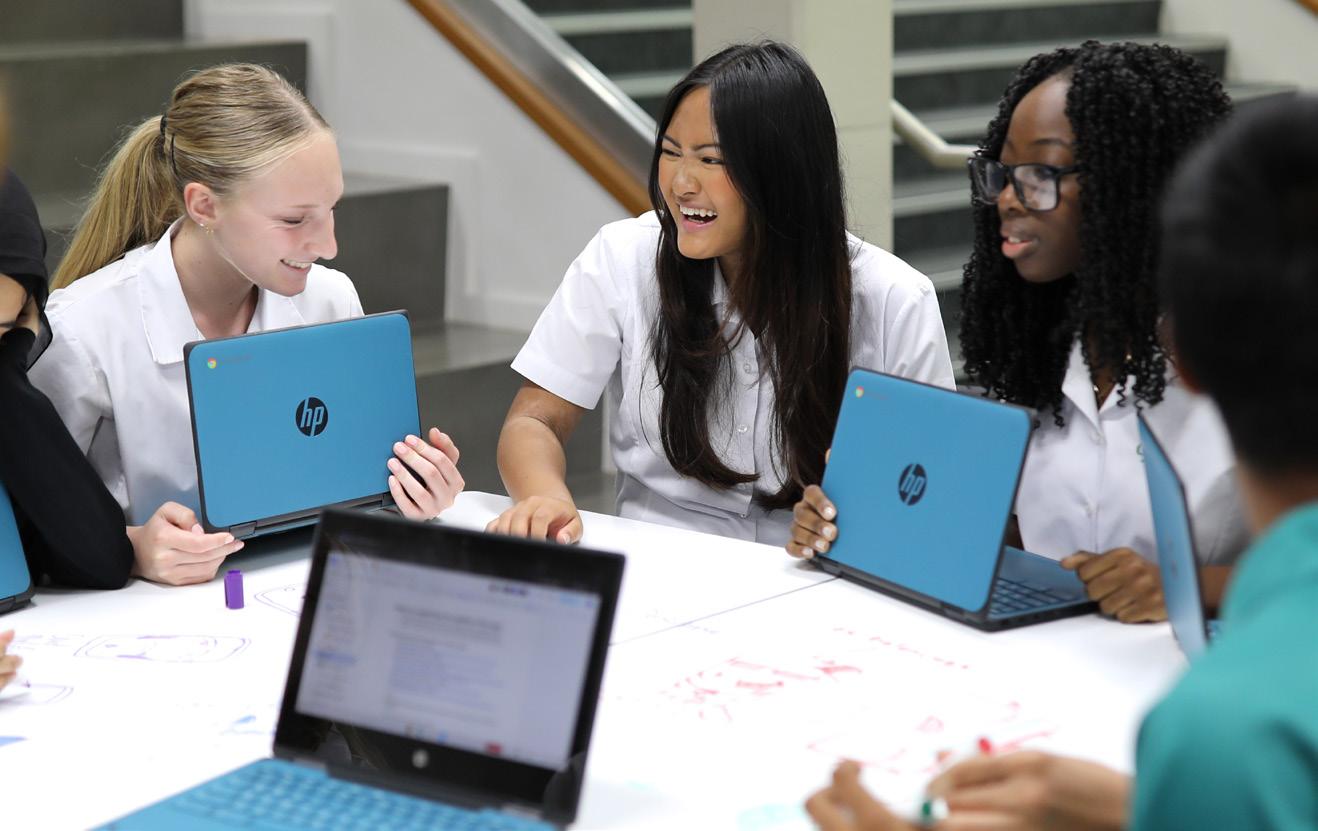
The goal is not the tool itself, but the pedagogical shift toward inquiry, iteration and feedback loops, which aligns closely with how STEM operates in real-world contexts.
At Bayside High School, Ehab’s passion drives the ideology that technology is more than a tool, it’s a pathway to creativity, collaboration and innovation.
Tell us a little bit about your teacher journey and why are you so passionate about STEM and Digital technology in your classroom?
What skills can you see from STEM that link to students in their choices beyond school?
At Bayside High School, STEM learning helps students build critical thinking, collaboration, adaptability and problem-solving skills that are essential for future career pathways. Through digital technologies and real-world learning experiences, students develop the confidence and flexibility needed for emerging industries and an evolving workforce.
Where have you seen in terms of success for students?
My passion for STEM and digital technologies has been shaped through experiences across classroom practice, academic research and industry connections, all of which have reinforced the importance of preparing students for a rapidly evolving future. I strongly believe STEM education creates equitable opportunities for students, makes learning more authentic and empowers young people to become creators, innovators and problem-solvers rather than simply consumers of knowledge.
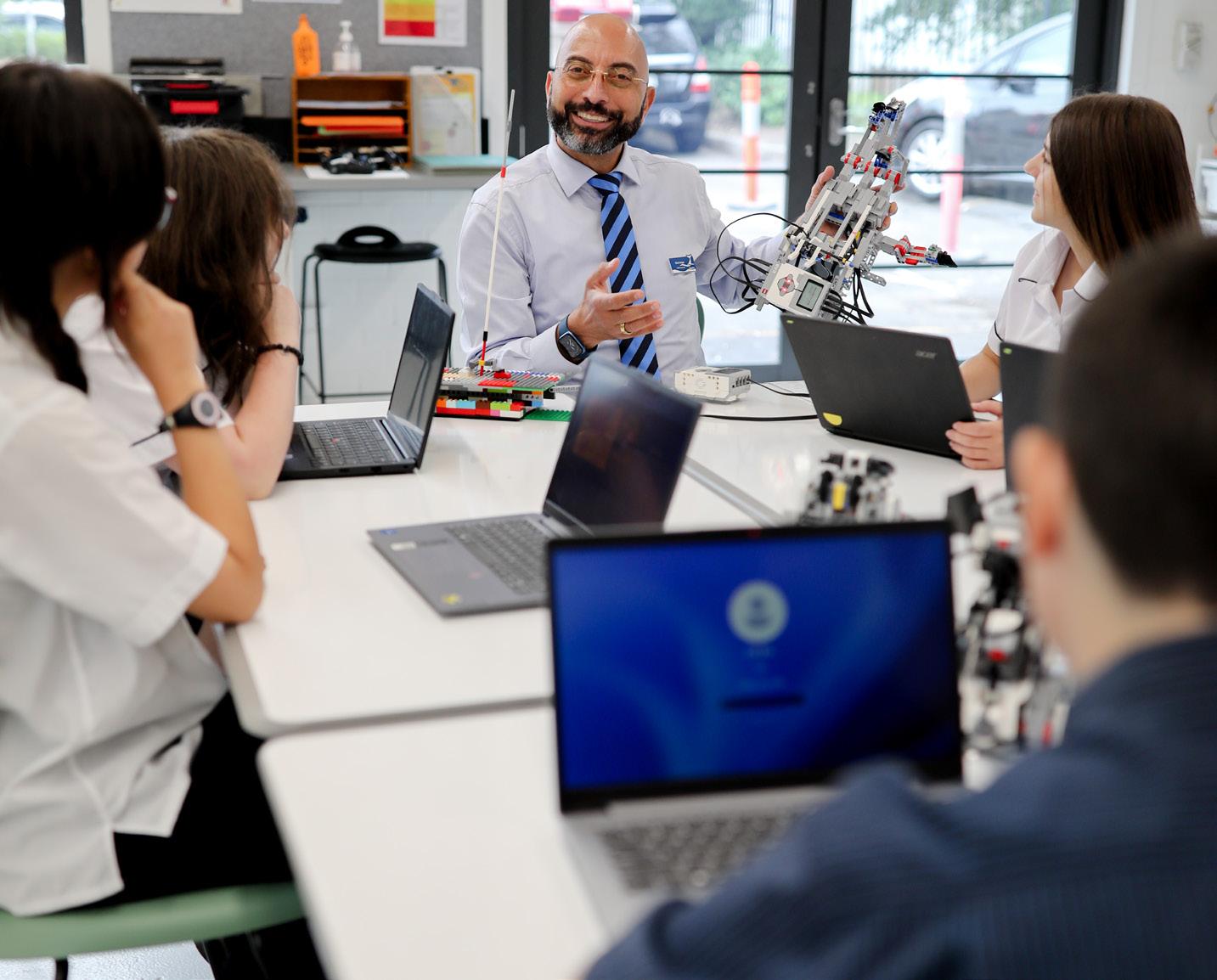
Integrated, project-based STEM programs allow students to use robotics, coding and digital fabrication to solve authentic problems. This hands-on, transdisciplinary approach ensures students actively apply their knowledge in meaningful real-world contexts.
We have observed a powerful shift in classroom dynamics, highlighted by a transition toward higher-order thinking where students now ask, “How can we solve the problem?” This approach has sparked deeper learning, stronger collaboration and a massive boost in student confidence, particularly among learners who haven’t always thrived in traditional academic settings.
What are your tips and strategies for other teachers to embed more STEM in their teaching practice?
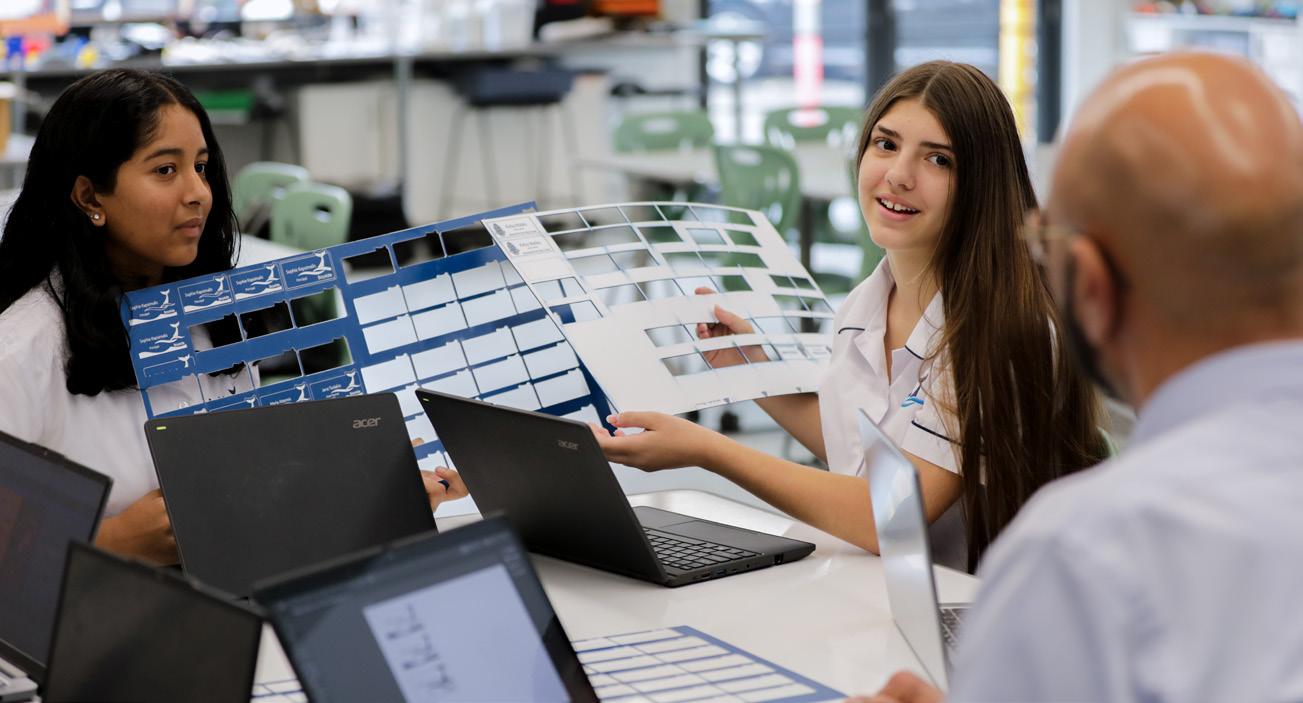
To successfully integrate STEM, frame learning around real-world projects that allow students to design, test and iterate solutions. Collaborate across faculties to design these experiences, ensuring technology enhances learning rather than distracting from it. Finally, use formative feedback, connect with the community for authentic pathways and foster a growth mindset that normalises failure as a vital part of innovation.
Leading technology uplift
Size 526 students
Network Iron Cove
Context Metro Primary
Driving a school-wide technology change is a massive undertaking. Meet Scott McBain, who tackled the challenge head-on at Orange Grove PS with fantastic results!
Tell us a little bit about your school and the journey you’ve been on with technology.
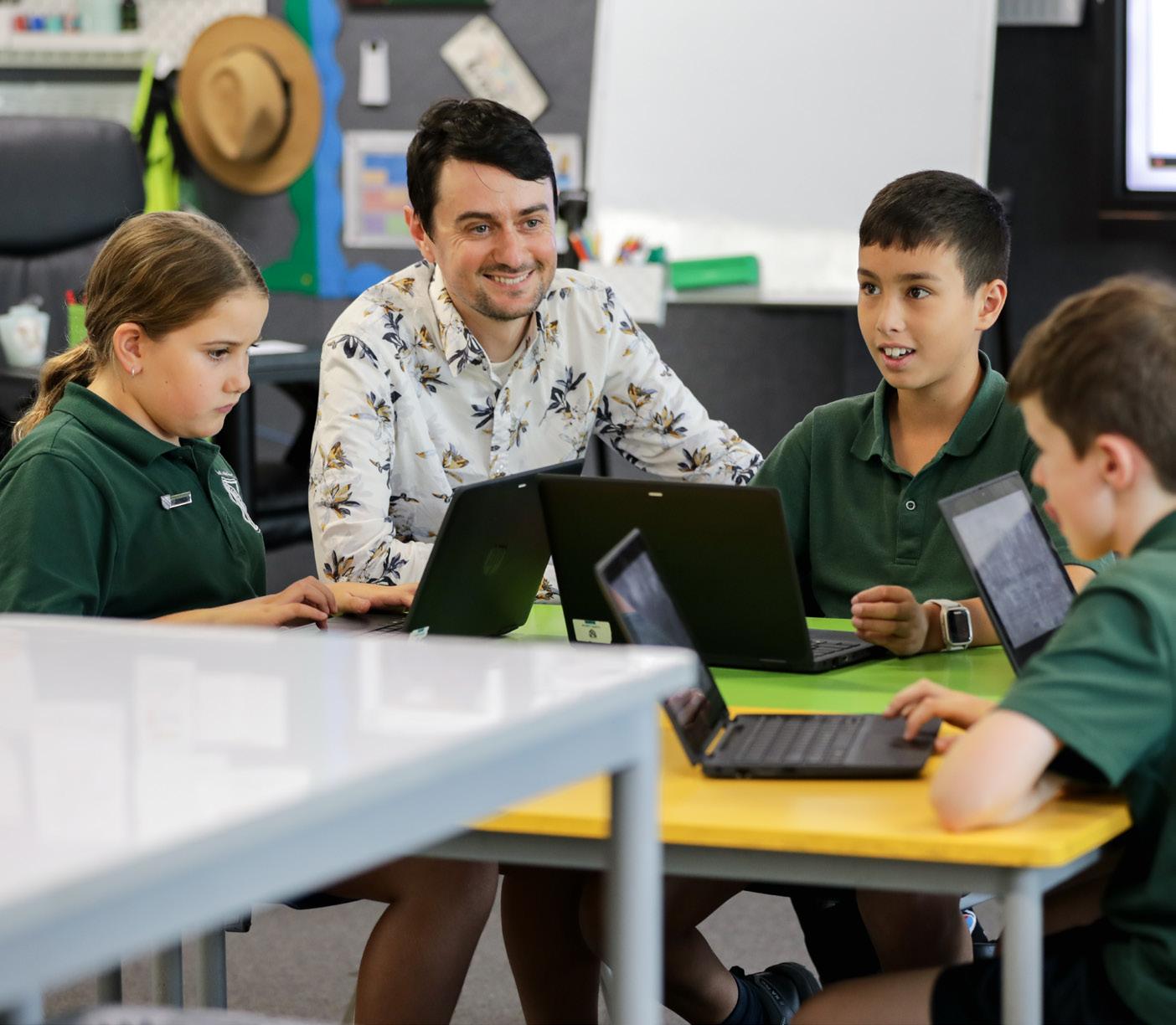
Since 2023, we have focused on using technology more efficiently and purposefully, always keeping students at the heart of our decisions. We have transitioned to MS Teams for all communication, School Bytes for administration and use our professional learning time to upskill staff in using technology effectively in their classrooms.

Leading school wide change can be challenging, what were the goals of the school in this work and how did you set out what you needed to achieve?
Technology changes for staff can be daunting, so our goal was to implement improvements in a way that was manageable and sustainable for staff. We focused on taking small, deliberate steps and did not move on until staff felt confident.
For example, our transition to MS Teams for cloud storage was broken into multiple stages, allowing staff time to gradually move from the old system to the new one. This approach helped build confidence, reduce overwhelm, and ensure lasting success.
Use Canva!
It allows teachers to easily set and assign work. This can make managing tasks and engaging students more efficient and visually appealing.
Scott’s tip
What are your tips to best support staff with technology changes?
To successfully navigate change, introduce it in gradual stages. Upskilling leaders first creates a strong, confident support system to guide the rest of the staff through the transition.
What are some of the future goals you hope to drive across the school within technology?
Continue building staff capacity in using emerging technologies. With ongoing developments in Canva and the rapid growth of AI, I aim to upskill staff in new features and tools they can use both in their classrooms and in their own teaching and learning!
Size 680 students
Network Lake Macquarie North
Context Metro Primary School
Designing with purpose: Inside Edgeworth Public School’s blueprint for high-engagement, real-world STEM.
Why do you think authentic real world projects/ STEM focused projects are important for students?
Tell us a little bit about your school and the journey you’ve been on with technology.
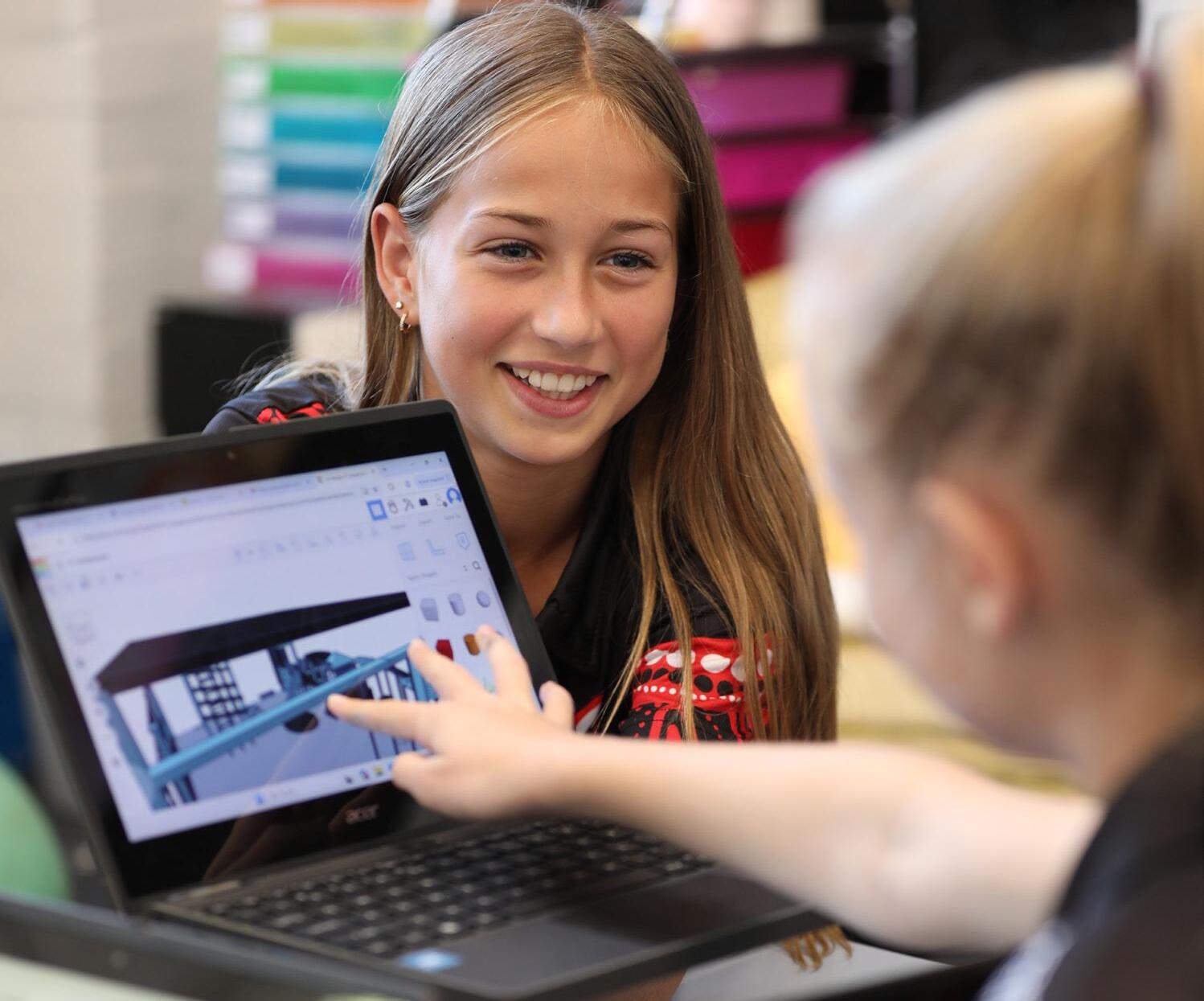
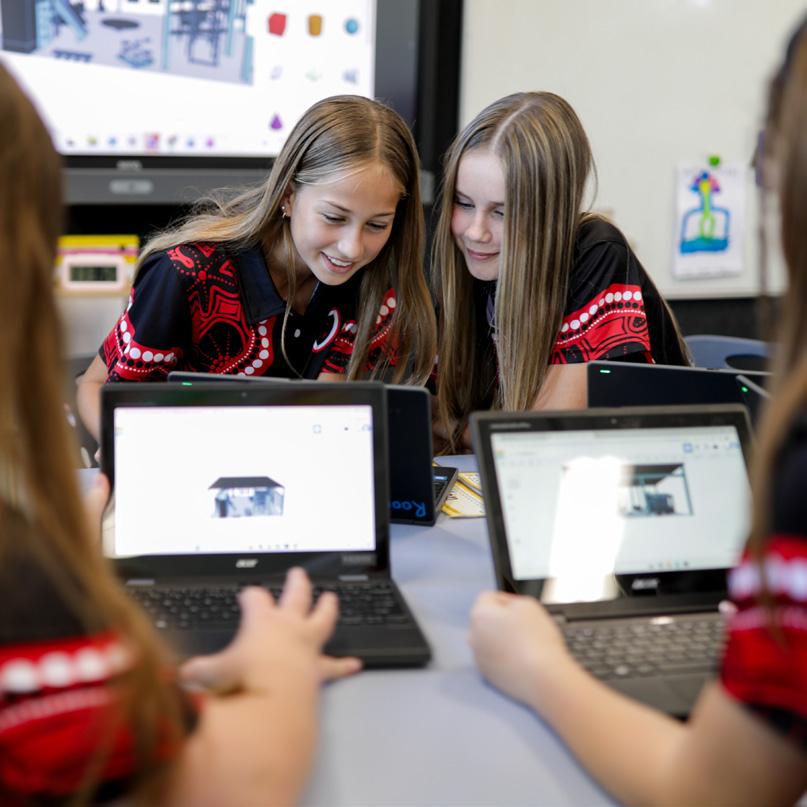
Our technology journey has centered on using digital tools to amplify student voice and drive authentic problem-solving. Through our “Play it Forward” project, launched after our school playground was removed, students embraced the real-world challenge of redesigning the space. They used Google Forms to survey their peers’ needs before leveraging programs like Tinkercad and CoSpaces to design future-focused, inclusive play spaces.
What success have you seen with students through this project?
The project’s greatest success was the immense pride and ownership students developed by solving a real-world problem that directly impacted them. Driven by exceptionally high engagement, students confidently presented ideas, refined their designs based on feedback, and fostered massive growth in collaboration, communication, and confidence. Ultimately, a defining feature of this project was that student voice remained central throughout, allowing students to shape a vision for their school’s future with ideas that were genuinely valued by adults and the wider community.
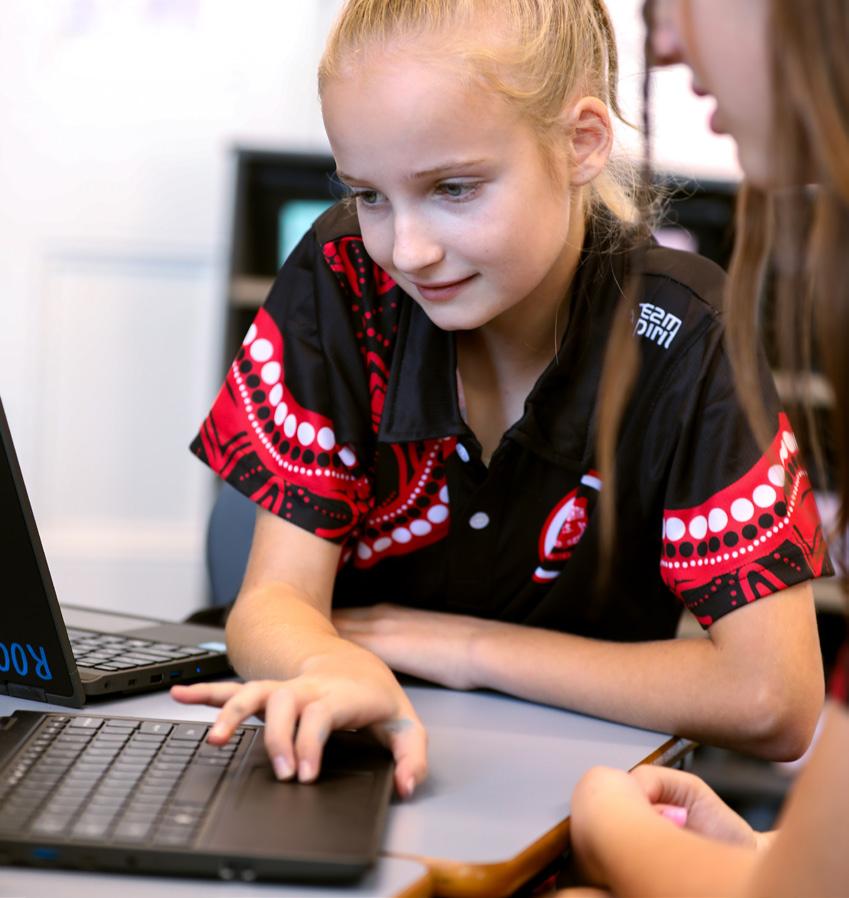
Authentic STEM projects give students a genuine reason to care about learning. When working toward a real-world outcome, students become deeply engaged, curious and resilient when facing challenges. By encouraging critical thinking and problem-solving, these projects allow students to experience success through creativity, innovation, and teamwork. This approach builds vital confidence, proving to students that their ideas have a meaningful, lasting impact beyond the classroom.
What are some of the future goals you hope to drive across the school within technology and STEM?
Our future goals focus on embedding authentic, inquiry-based STEM across all stages, ensuring students regularly use design thinking and digital tools to solve real-world problems. We are currently exploring this by partnering with the community to design an inclusive Aboriginal sensory garden. Moving forward, we aim to continue building staff confidence with emerging technologies while expanding opportunities for student voice through media, podcasting, and digital storytelling.
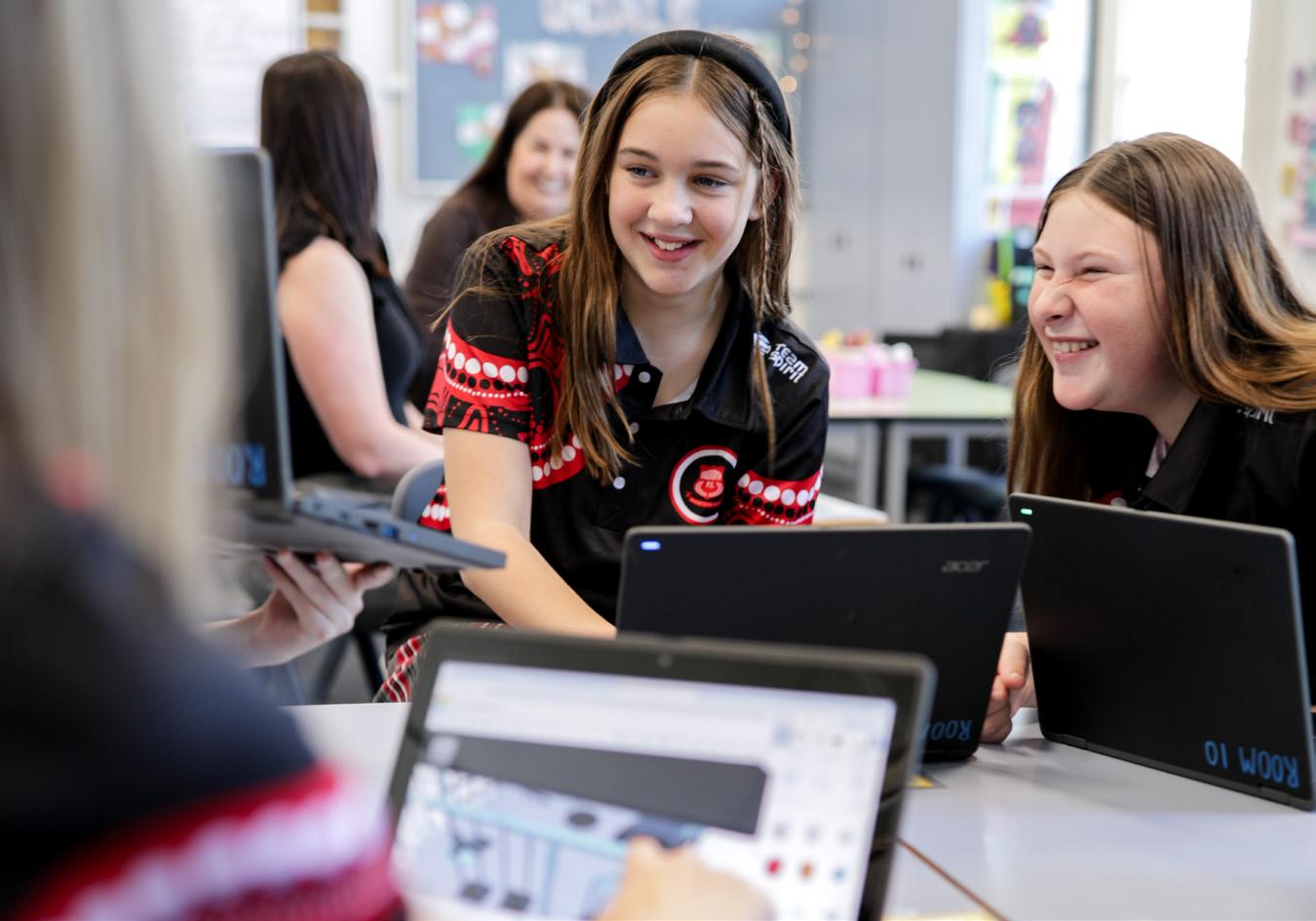
Reach out to the Digital Support Team and take advantage of the support available!
Digital & STEM engagement
Size 61 students
Network Lennox Coast
Context Regional Small Primary School
Small school, big impact! Newrybar Public School is showing how thoughtful technology integration can transform student learning and engagement.
Tell us a little bit about your school and the journey you’ve been on with digital engagement.
Newrybar Public School is a small, rural school on the Far North Coast of NSW where personalised learning and strong relationships are at the heart of its approach. Our school’s digital journey has focused on thoughtfully integrating technology, STEM resources and interactive learning tools to enhance student engagement and support quality teaching and learning. Through mentoring and collaboration, staff have built confidence in using digital technologies, creating a culture where technology supports pedagogy.
What are your tips and strategies to best support staff in a small school with technology changes?
Personalised support and collaboration have been key to successfully managing technology change. Ongoing, hands-on professional learning, peer mentoring and strong networks have helped build staff confidence and capability. By introducing technology gradually, demonstrating practical classroom applications and allowing time for experimentation, our school has created a supportive culture where staff feel empowered to integrate digital tools.
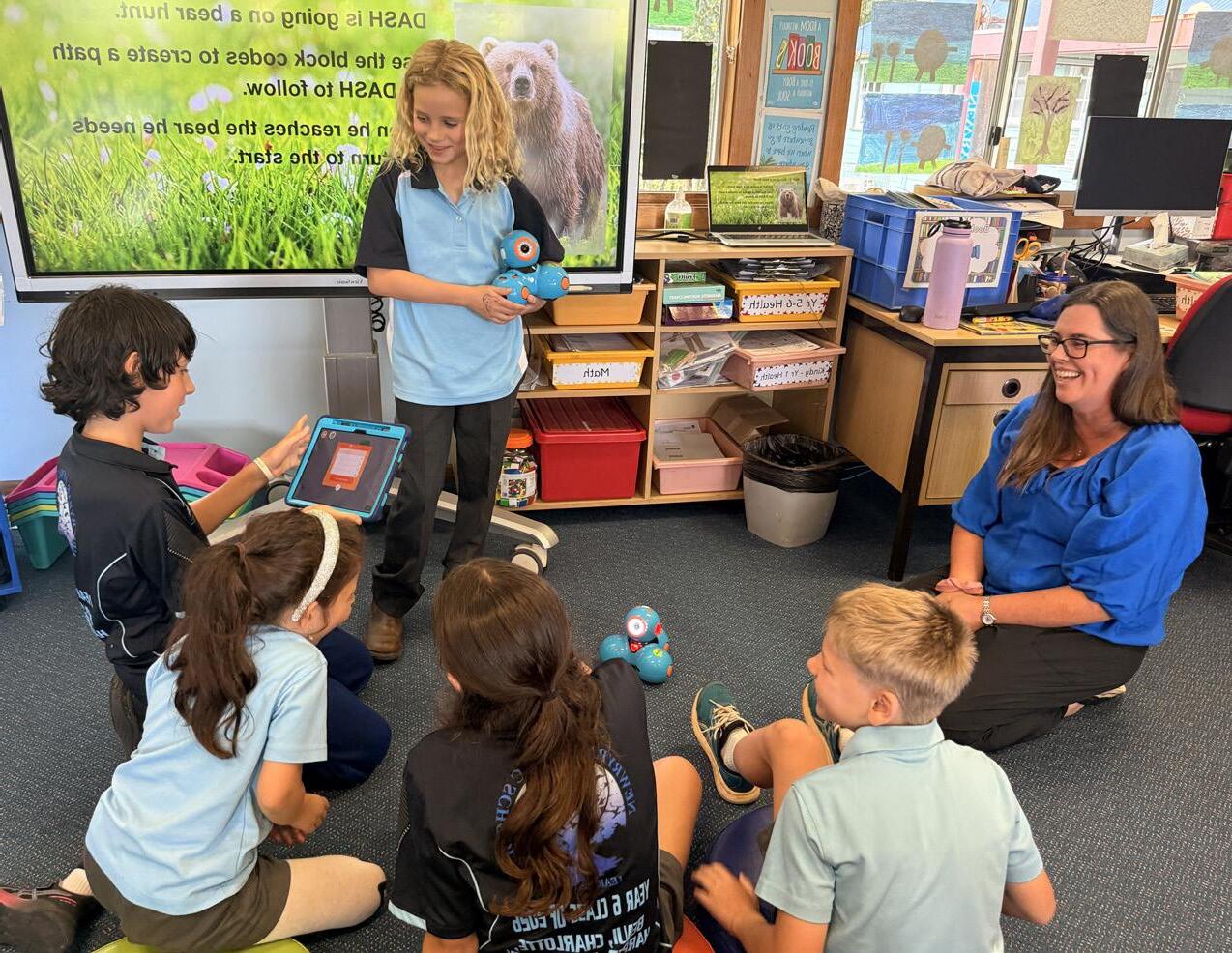
What are some of the future goals you hope to drive across the school within technology?
Looking ahead, we aim to further expand STEM learning through coding, robotics and problemsolving activities, while continuing to strengthen digital citizenship education and personalised learning support. Ongoing professional learning and collaboration through the T4L community will also remain a priority to ensure staff stay connected with emerging technologies and best practice.
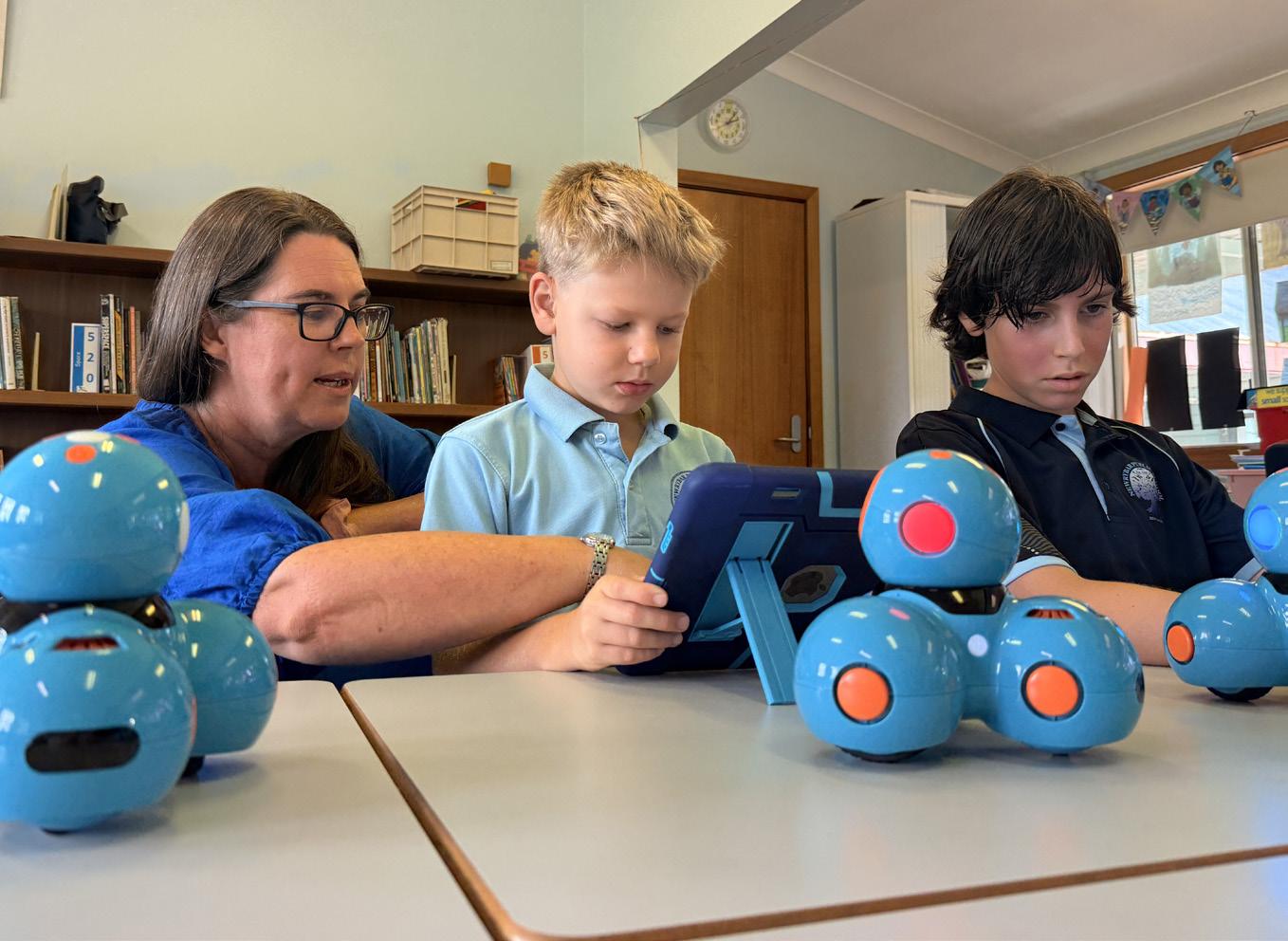
Engage students as partners in the technology journey, they often bring valuable insights!
What other advice do you have for schools who are ready to push ahead with digital engagement?
For schools on a similar journey, the key is to ensure technology always serves learning goals, start with pedagogy, then explore the tools that best support it. Leverage collaboration and personalised support and build confidence and capability over time. Alongside skills, focus on teaching digital citizenship as an essential part of digital learning. Together, these principles support meaningful, sustainable technology integration that empowers both teachers and students.
Size 545 students
Network Mudgee Network
Context Rural Primary School
Tuning into ‘The Hive’: How Mudgee Public School is building confidence and community through podcasting.
Tell us a little bit about your school and the journey you’ve been on with technology.
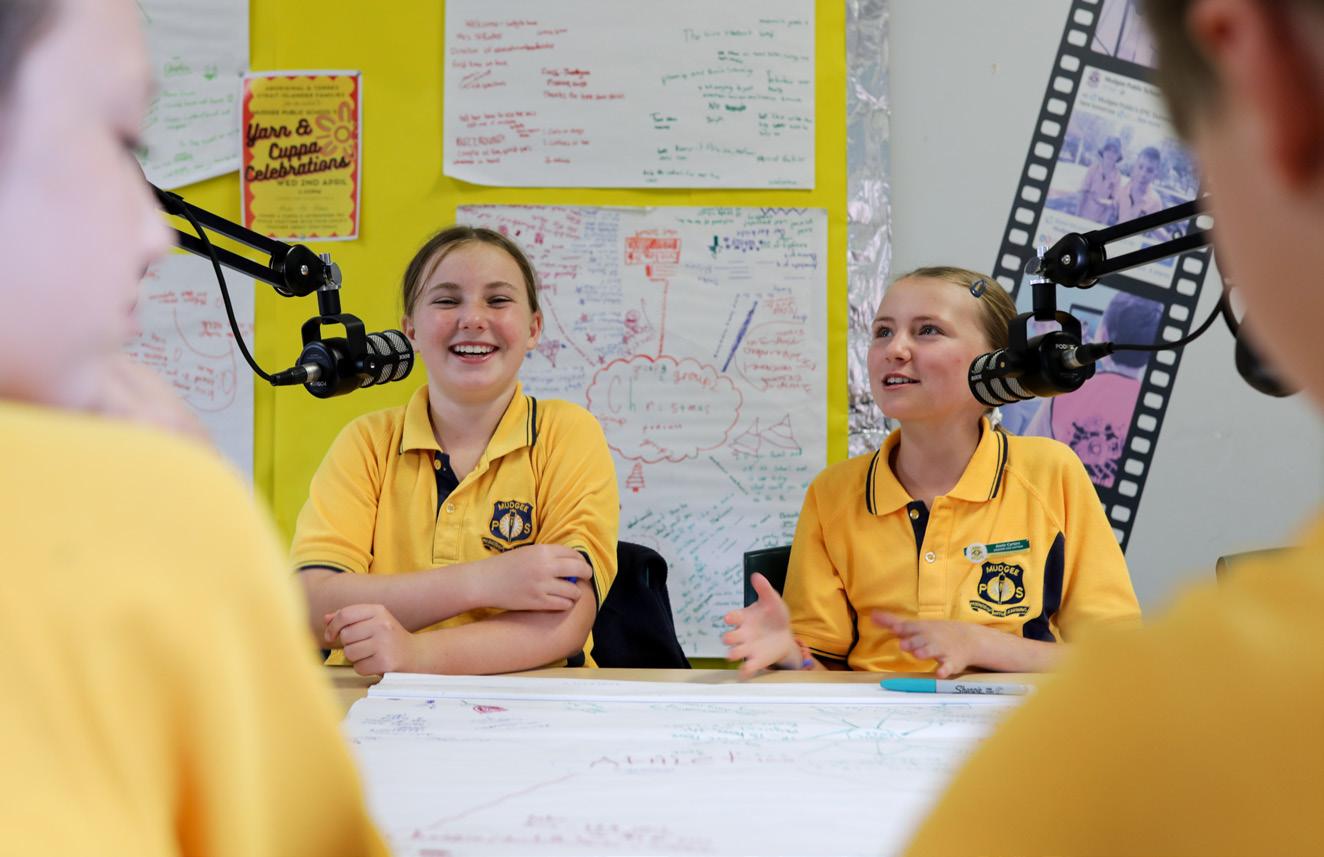
Podcasting has hit a huge boom in schools. As a school, what interested you in podcasting and its use in the classroom?
Our mantra is “Every Voice Matters and Every Story Counts”. We use unscripted podcasting to empower student voice and foster authenticity. This innovative approach has dramatically improved students’ collaboration and communication skills, turning standard literacy planning into a highly engaged process. The true magic lies in the global connection; students are thrilled to track their audience statistics, analysing views from around the world while proudly promoting the value of NSW public education.
Our school has successfully driven technology engagement through a deliberate, staged approach. We have ensured staff build long term confidence through dedicated tech support roles and the stem.T4L kits. This strategy has fuelled a massive surge in student engagement, most notably through our student-led podcast, “The Hive,” which has improved speech and behaviour. We have also built staff capacity through a second, professional learning podcast focused on inclusive education, establishing the school as a global hub for tech-integration support.
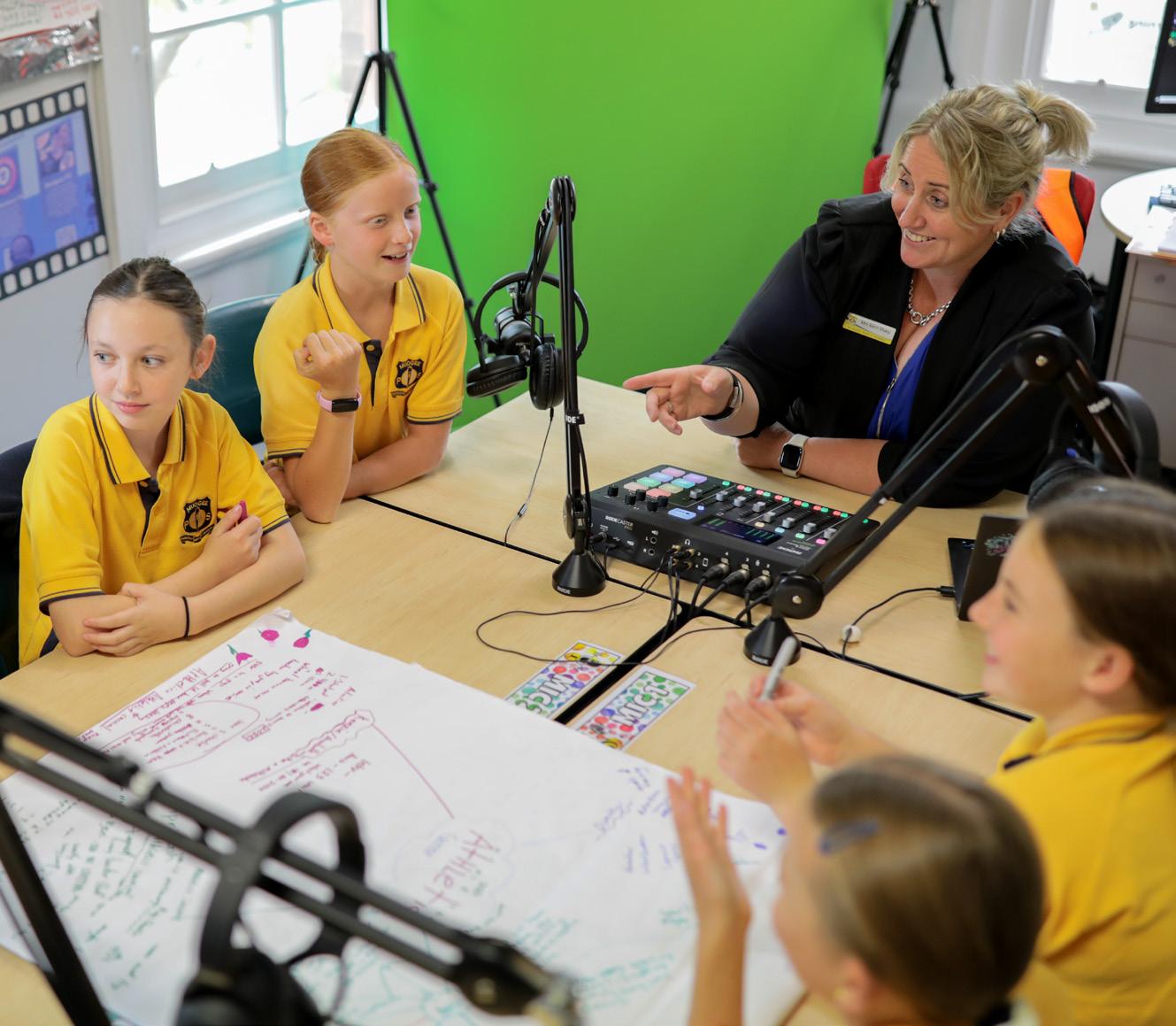
Tools like podcasting and student-generated videos work best when students create content without scripts, encourage genuine conversation and creativity.
What does podcasting look like in classrooms or at Mudgee PS?
Our school podcast is unscripted. Students must work in teams to plan, record, and edit, which has dramatically improved their collaboration, speech, and active listening skills while significantly decreasing negative behaviours. This project continues to expand digital literacy and critical thinking as students analyse their content for their two public channels.
What are your best tips for getting an engaging podcasting project off the ground?
We reassure teachers that they don’t need to be experts to start! Focus on student-led learning and exploration. We suggest starting small with simple recording tools, short episodes and theme-based discussions.
There are so many resources out there that you can leverage such as the stem.T4L Learning Library or other DoE schools already on the journey!
Our SRC Technology portfolio has been an effective way to help bridge teacher and student knowledge gaps. Our trained student leaders support staff with classroom implementation and utilising software.
Student voice & engagement
Size 872 students
Network The Ponds
Context Metro High School
Lights, camera, innovation: Learn how student voice takes centre stage at Kellyville High School.
Tell us a little bit about your school and the journey you’ve been on with technology.
At the end of 2025, Kellyville High School reset its direction with a renewed wholeschool strategy and a revitalised BYOD approach. Moving beyond simple device access, the focus centers on purposeful technology use to deepen engagement and enhance learning outcomes. This shift ensures every student benefits from meaningful, future-focused learning that prepares them to thrive in a technologydriven workforce.
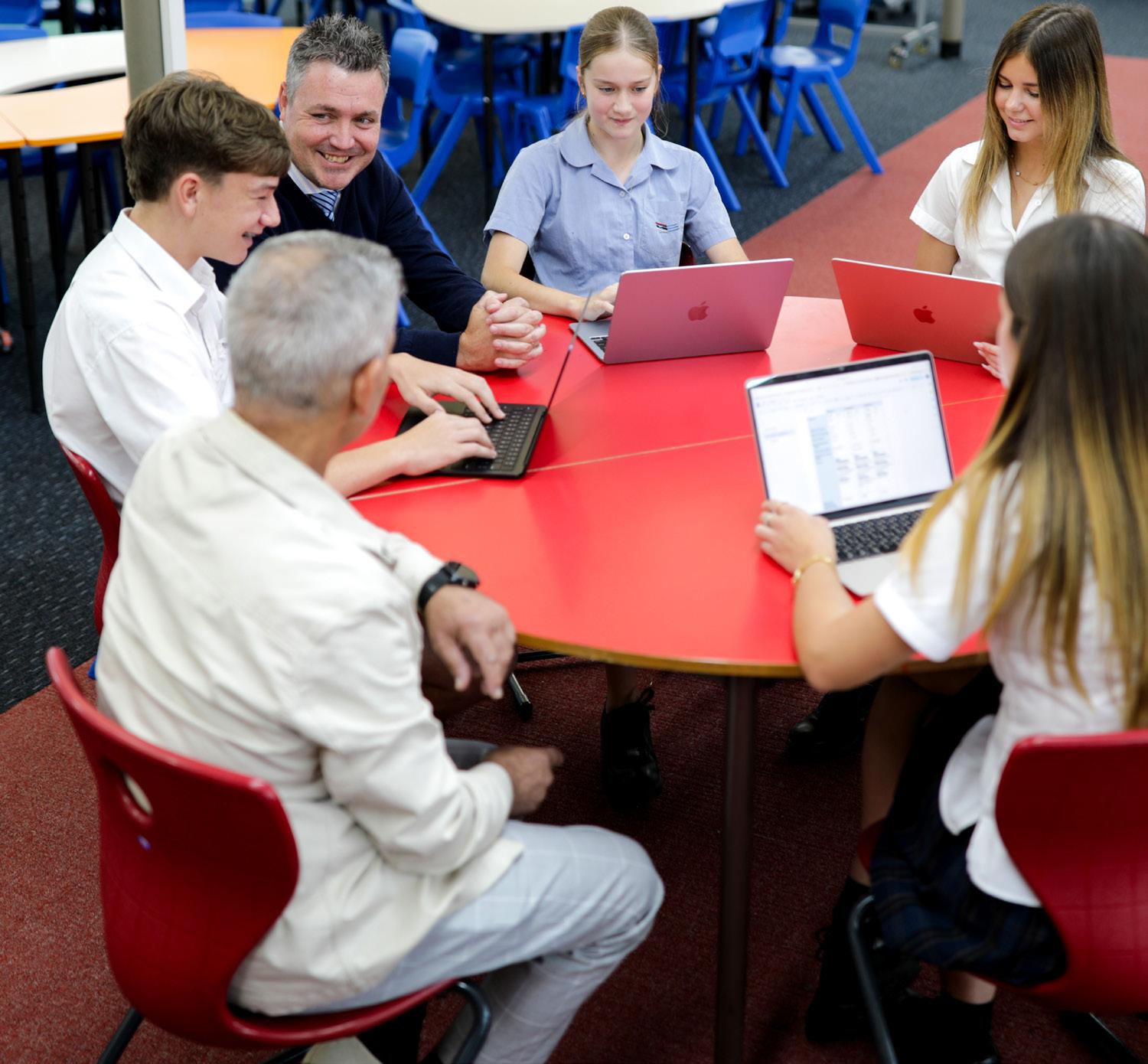
Stuck for ideas with BYOD?
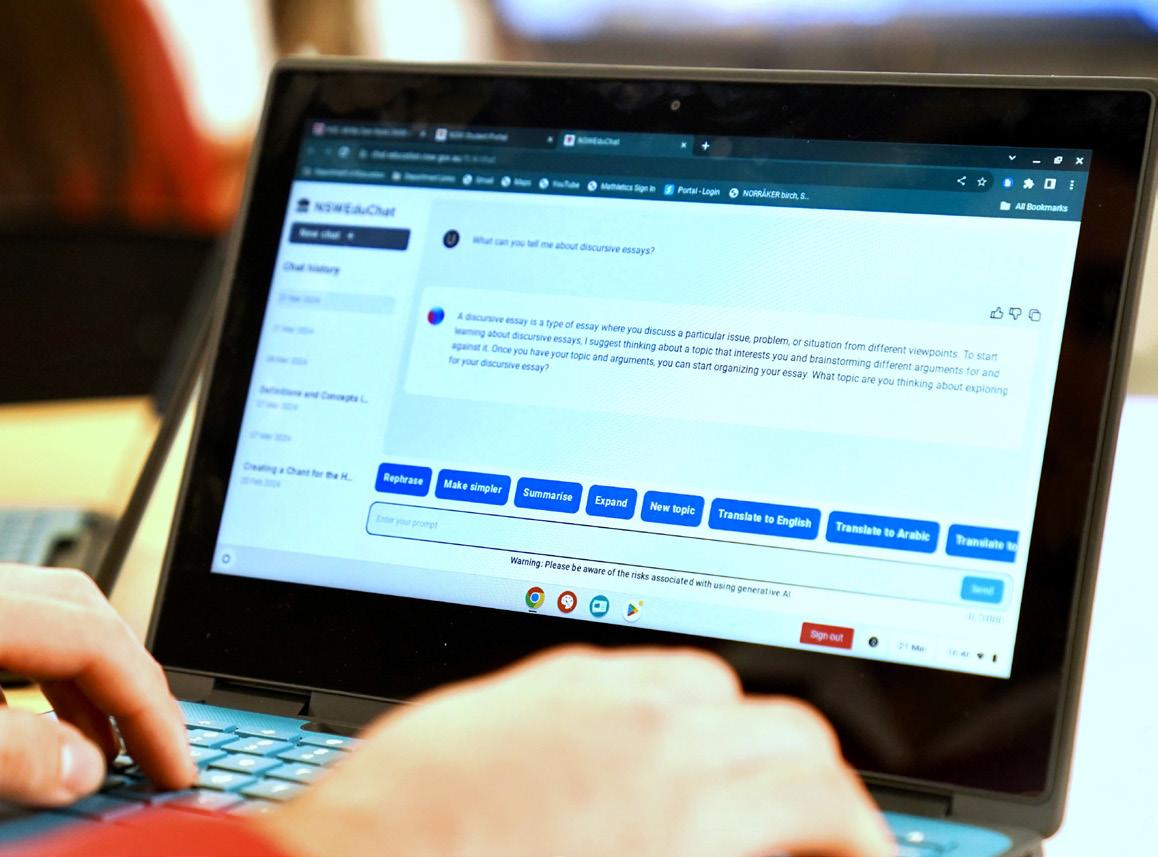
Ask EduChat what you’re planning to teach and ask how you can use the BYOD tools you have access to, to make an engaging lesson.
What success have you seen as a result of your BYOD strategy across the school?
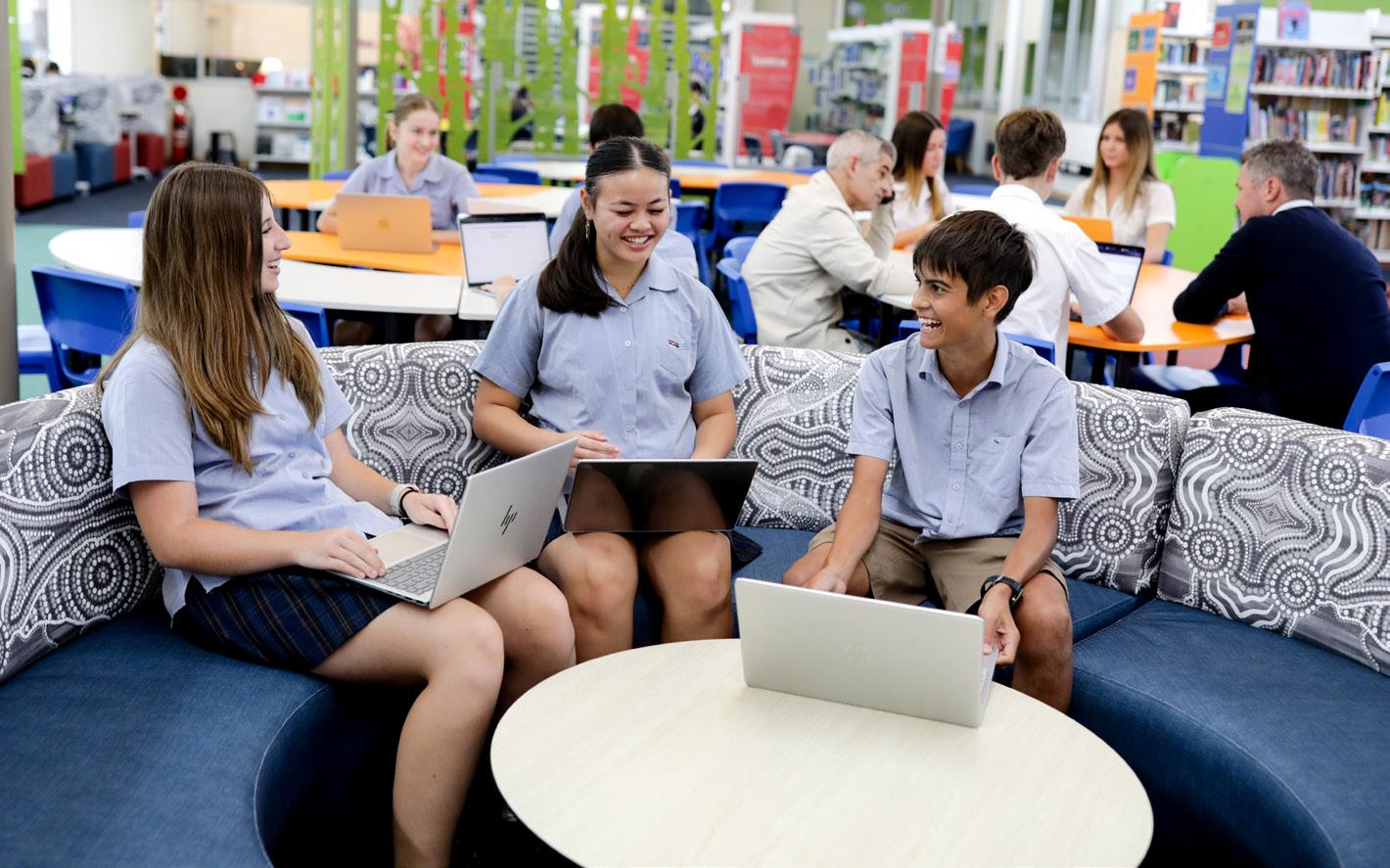
BYOD has transformed learning at our school. Students receive immediate, meaningful feedback through formative assessment, driving stronger progress and deeper reflection. Engagement is higher, and students are producing longer, more thoughtful written responses.
What are some of the future goals you hope to drive across the school within technology?
Kellyville High’s award-winning media team is a massive success. What is key to running a program like this
The key to a successful media program is giving students genuine ownership and trust to create meaningful projects. This approach has opened direct pathways to employment and media scholarships. Our media team has won multiple short film competitions and earned a qualification for consideration at the Oscars-level, while also partnering with local police to create community education and awareness campaigns.
Moving forward, our goals focus on seamlessly integrating technology focused pedagogy into new syllabus teaching programs. We are also exploring stage and subject based Google Classroom lesson repositories, allowing staff to deploy content quickly and free up valuable time for differentiated learning.

The Technology for Learning (T4L) team operates out of the NSW Department of Education’s Information Technology Directorate (ITD), Technology Enablement division. Bringing together a diverse group of educators, ICT professionals, and innovation specialists, the team is dedicated to equipping teachers, students, and schools with expert guidance and a range of support strategies to facilitate impactful professional development growth and enhance digital learning across a multitude of areas.

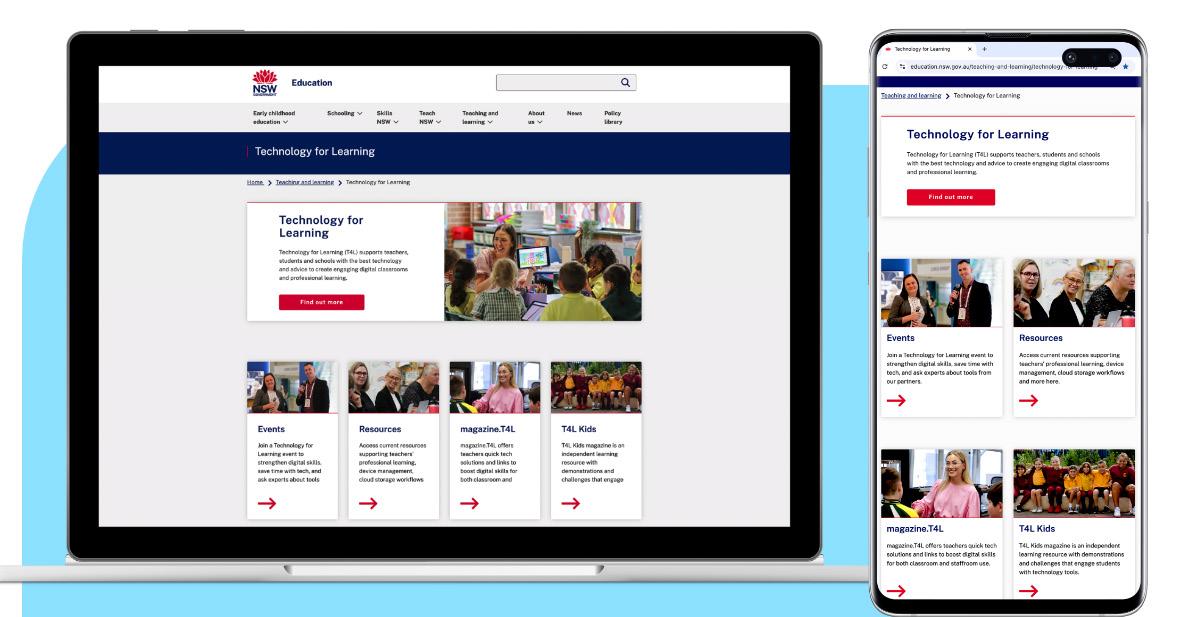
The T4L website brings together a wide range of resources, including bite-size videos that showcase your favourite tools and platforms. With new content added regularly, it’s an easy way to keep your lessons fresh and your students engaged.


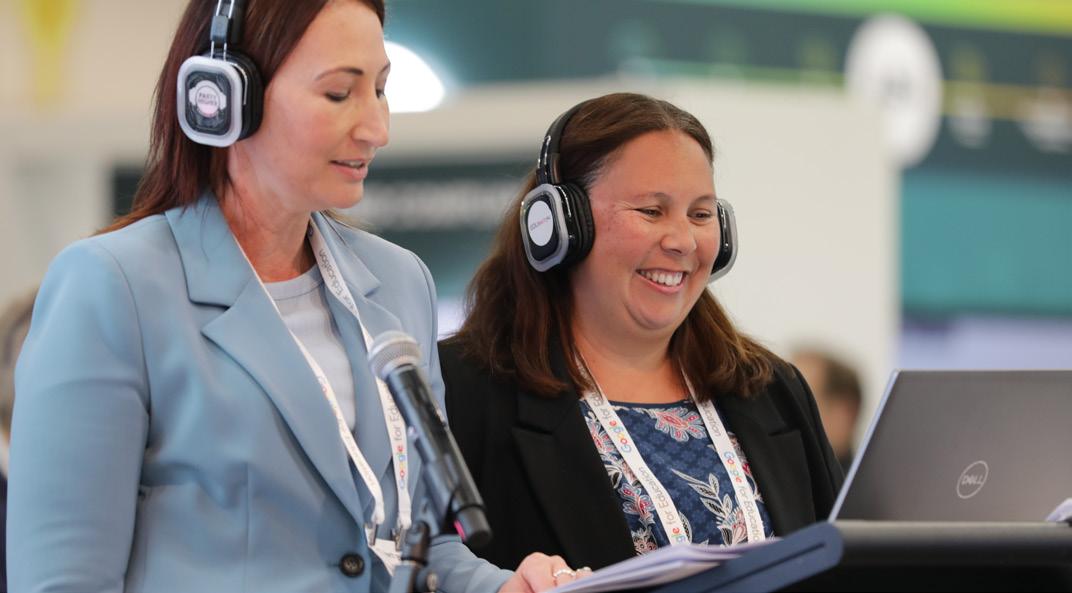
NSWEduChat is a generative artificial intelligence (GenAI) tool owned and designed by the NSW Department of Education. It is safe, secure and free of charge for staff and all students in Years 5-12.
You can access NSWEduChat directly via the NSWEduChat website. You will need to log in using your staff credentials. You can also access NSWEduChat through the Staff Portal by adding it to ‘My essentials’.