
LIFE STYLE SUMMER
2026

CURATED DESIGN & DECOR

EDITOR IN CHIEF
Dan Charles dan@lifeandstyle.fm
MARKETING & OPERATIONS MANAGER Tiara Govender tiarag@lifeandstyle.co.za
MANAGING EDITOR Sue Charles sue@lifeandstyle.fm
COPY EDITOR Shannon Devy
DESIGN The Lake Design
ADVERTISING 032 946 3112 info@lifeandstyle.fm
DISTRIBUTION MANAGER
Skumbuzo Manyoni
WEB & SOCIAL MEDIA www.lifeandstyle.fm @lifeandstylemagazine
PUBLISHER
North Coast Publishing (Pty )Ltd info@lifeandstyle.fm
The Life & Style print or electronic publication is provided with the explicit understanding that neither the publisher, its employees, agents nor respective contributors are rendering any legal, financial, investment or other professional advice or services. Questions relevant to those areas should be addressed to competent members of the respective professions. Readers should not place undue reliance on the content of this publication or website but should seek professional legal advice where necessary. The information provided in this publication or website, newsletter or social media as is, without any warrantee or representation by the publisher and the publisher, its employees, agents or contributors accept no responsibility for any loss or damage caused in whatsoever way by the reader’s reliance on any information contained in this publication or website.
ON AIR, ONLINE & IN PRINT
Our publications, website and social media platforms have shaped opinion in the KZN North Coast region for over twenty years creating a media brand that is credible, authoritative, and universally acclaimed.
Having expanded the platform to include Ballito’s only commercial radio station - Radio Life & Style 88.0FM that also streams digitally via free apps on every platform, we now own the local media scene.

Our advertisers enjoy the unique advantages of cross-platform marketing in a local economy that is small enough to dominate yet big enough to excite those who appreciate the value that is available to be unlocked here.
MAIN DISTRIBUTION OUTLETS
Durban King Shaka International Airport :
SAA Discovery Lounge Premium & Platinum - Bidvest Premier Lounge
SLOW Lounge KSIA - King Shaka Entrance
Cape Town International Airport :
Slow Lounge Domestic & SAA/Discovery Baobab
SAA/Discovery Cycad - Bidvest Premier Lounge
JHB O.R. Tambo Airport
British Airways International Lounge
Aspire International Lounge
Standard Bank Library Lounge
Slow Lounge Domestic - Slow Lounge International
Lanseria SLOW XS Lounge
We are also part of the online magazine selection on the SAA flights. Select Coffee Shops, Hotels and Retail Zones
WHY WAIT FOR THE NEXT ISSUE OF LIFE & STYLE?
Subscribe to your free dose of inspiration and recieve our fortnightly newsletter THE L&S EDIT in your inbox.

Subscribe
DOWNLOAD OUR RADIO LIFE & STYLE APP
Free on Android or IOS for live streaming or to listen to our catch up podcasts.







HEARING IMAGES

Friends, welcome to a particularly picturesque issue of Life & Style.
WHAT WOULD YOU LIKE TO BE REMEMBERED FOR?
You might have an answer to that question but, personally, I can’t think of an eloquent enough one for myself. The other day, I was listening to a four-hour-long interview with one of my favourite writers and comedians, Brennan Lee Mulligan, on a podcast called 99 Questions where, at the end of this absurdly long episode, he was asked that question. After a bit of thought, he arrived at a simple and, frankly, beautiful response: “What I hope that I’m remembered for is that I lived my life in such a way that people can use whatever is remembered of my life to help their lives.”
Because this issue features articles about photography and memory, I’ve been thinking a lot about the photographic legacy that I might one day leave behind and I became anxious at the thought that I haven’t cared to take enough pictures of myself or the people that I love. I am terribly reluctant to post anything on social media (something that my friend Tiara insists that I should work on) and so there is very little documentation of the life that I have led so what is there to one day remember of it?

But then I thought of how Mulligan hopes to be remembered and then reminded myself of how exceptionally grateful I am for the photos of me that do exist and were taken by people that I love - particularly the ones stuck on the fridge in the house that my friends Shannon and Mia live in. I remember the first time noticing that they had stuck a small polaroid of me on their fridge along with some others that had been taken of some of our other dear friends during a gathering at their house one night. I remember being startled by the feeling of realising how much it meant to me to see physical evidence of the place that I held in their life. To be placed amongst the people that I cherish most in the world on the vessel that stores their snacks? To know the memory of my life has a place in the memory of theirs? I can’t think of a greater honour and I think that is all the documentation of my living that I will ever really need.


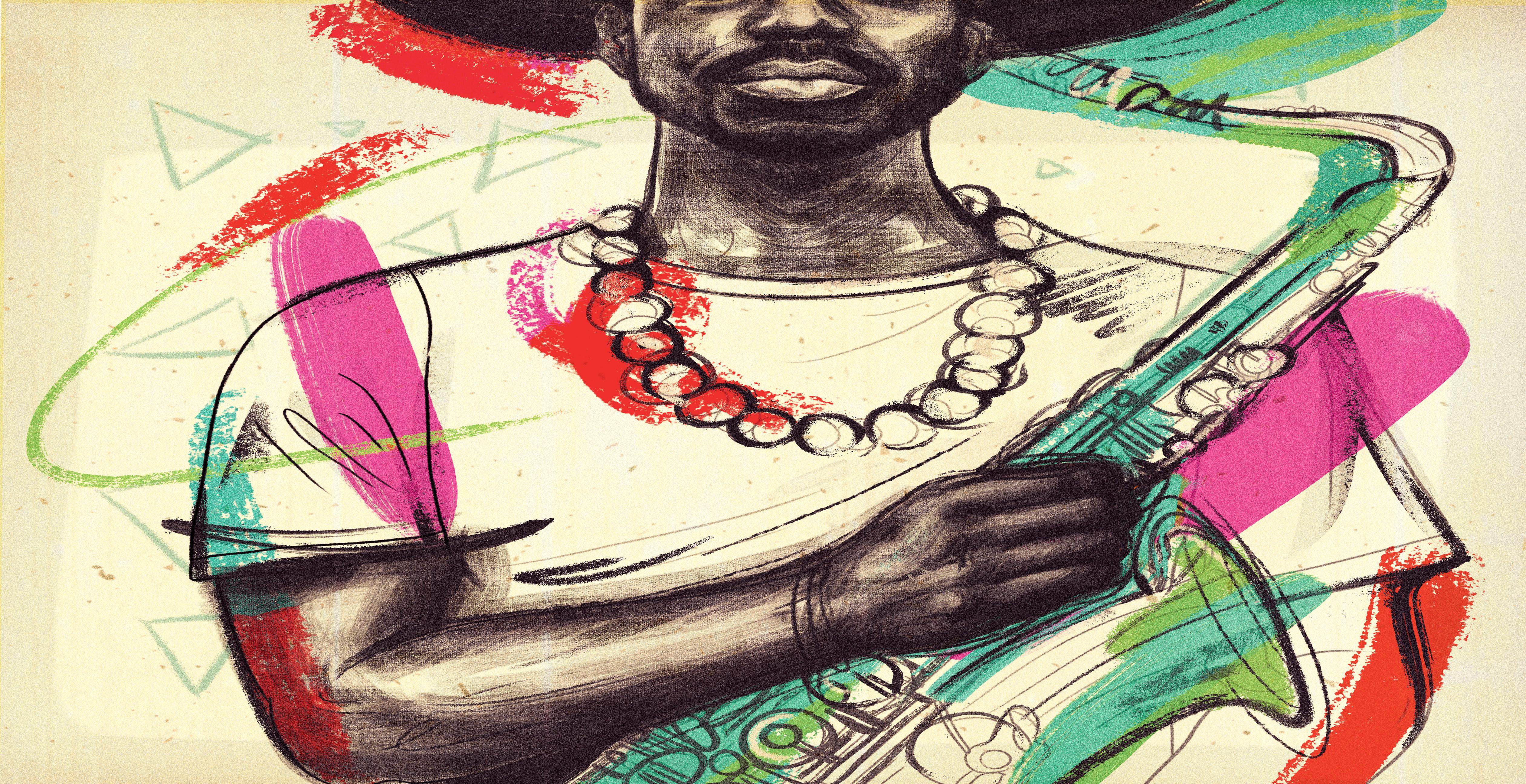
A while ago, the artist Alka Dass (who you can see beautifully illustrated on the cover of this magazine by our friends from Studio Muti and read more about later in this magazine) told me about Tina Campt - a renowned theorist of visual culture and contemporary art who studies the history of Black diasporic communities by engaging with archival photographs not just visually but through a sensory, multi-dimensional experience that she calls “listening to images.” In a far more generalised context, she suggests that photos were initially made to be held as well as looked at - like in the way that photograph would be kept in someone’s pocket or wallet because they couldn’t be around their loved ones all the time. In that way, photographs were not taken for the sake of vanity but for the sake of memory and connection - hearing the memories of someone’s voice or laugh through them.
The photos that you take tell the story of the things that matter to you and this issue of Life & Style is full of stories of images that matter to our wonderful team of writers. I hope that they matter to you as well. And I hope that you take more pictures of your own and that they find their place on the fridge of someone that you love.
Yours looking-into-buying-a-cheap-film-camera-online,
Dan Charles


CONTRIBUTORS
Dave Charles - award winning broadcaster, television producer, editor, musician, and writer. Dave is a Fellow of the Royal Geographical Society, the SA representative of the international Anglo Zulu War Historical society. He holds a BA Dram Art (Hons) Wits degree and he was an inaugural recipient of the Prince Mangosuthu Buthelezi Gold Medal for Service to the Zulu people. He currently owns the Life & Style Media group.
Shannon Devy - is currently completing her Masters in English Literature at the University of Cape Town. An avid musician, reader and writer, Shannon enjoys coffee more than most things in life, and can often be found hunkered down at her favourite local coffee shop, tapping away at a new piece for Life & Style Magazine in a caffeinated frenzy.
Atiyyah Khan- is a journalist, arts writer, cultural worker, activist, DJ and sound practitioner, originally from Johannesburg but based in Cape Town. For the past 17 years, she has documented arts and culture in South Africa and her work has been published in major publications in South Africa and abroad. Common themes in her work focus on topics like spatial injustice, untold stories of apartheid, colonisation, jazz history and underground art movements.
Lisa Smith - a freelance graphic designer and marketer who loves the heartbeat of the North Coast. With her newspaper and magazine industry experience Lisa has a passion to nurture brands with their online and offline presence through concise copy and creative design. When not sitting behind her laptop, Lisa spends time with homeless cats and getting outdoors.




Tara Boraine - Cape Town-based artist and writer who moves fluidly between music production, speculative fiction, and botanical perfumery. Through her organic creative methodology - she harnesses natural cycles of chaos, integration, and emergence across multiple artistic mediums. Currently working on a climate fiction novel and essays about neurodivergent perception, her writing has been described as 'ruthlessly tender.'
Dan Charles - is a writer, musician and therapy enthusiast based in Cape Town, and spends a good deal of time profiling and analyzing some of the most esteemed and up-and-coming local and international artists in the alternative music scene.
Cameron Luke Peters - a long-suffering, erstwhile PhD candidate in Film Studies at the University of Cape Town who sunlights as a historical tour guide of the Western Cape under the alias @capetownheritagetours. When he’s not procrastinating on various pieces of writing, you can find him yearning on a beach somewhere, shooting film in dodgy places and picking up plastic bottles off the street whilst shaking his head and tutting under his breath.
Mia McCarthy - is a young writer based in Cape Town. She is an avid collector of coffee shops, tidal pools, and interesting true stories. Mia has a passion for creating magic in the kitchen and much of her writing reflects this. She continues to inspire readers through her contributions to this magazine and The Edit, our fortnightly digital newsletter.

WHERE COASTAL CHARM MEETS DENTAL EXCELLENCE
Dr Kevin Maguire and his team — Dr Lee-Ann McEwen, Dr Dorien De Sousa, and Melinda Williams believe that a healthy smile is the foundation of confidence. At Shoreline Dental, we are committed to providing personalized, high-quality care in a welcoming and comfortable environment for patients of all ages.
From routine check-ups and cleanings to advanced restorative treatments, our skilled professionals use the latest technology and techniques to ensure outstanding results. We focus on building lasting relationships and creating a dental experience that’s both gentle and effective.
Whether you’re visiting for a simple cleaning or a more complex procedure, our goal is to make every visit a positive experience.







Dr Kevin James Maguire Founder & Principal Melinda Williams Oral Hygienist Ballito
Dr Lee-Ann McEwen Dentist Ballito
Dr Dorien De Sousa Dentist Umhlanga




























STOP & SMELL THE ROSES
La Motte’s
New Art Experience Blooms This Summer
THERE’S
SOMETHING MAGICAL about summer at La Motte — the vineyards lush and green, the air fragrant with possibility. And this season, the iconic Franschhoek wine estate is adding a new kind of bloom to its landscape.
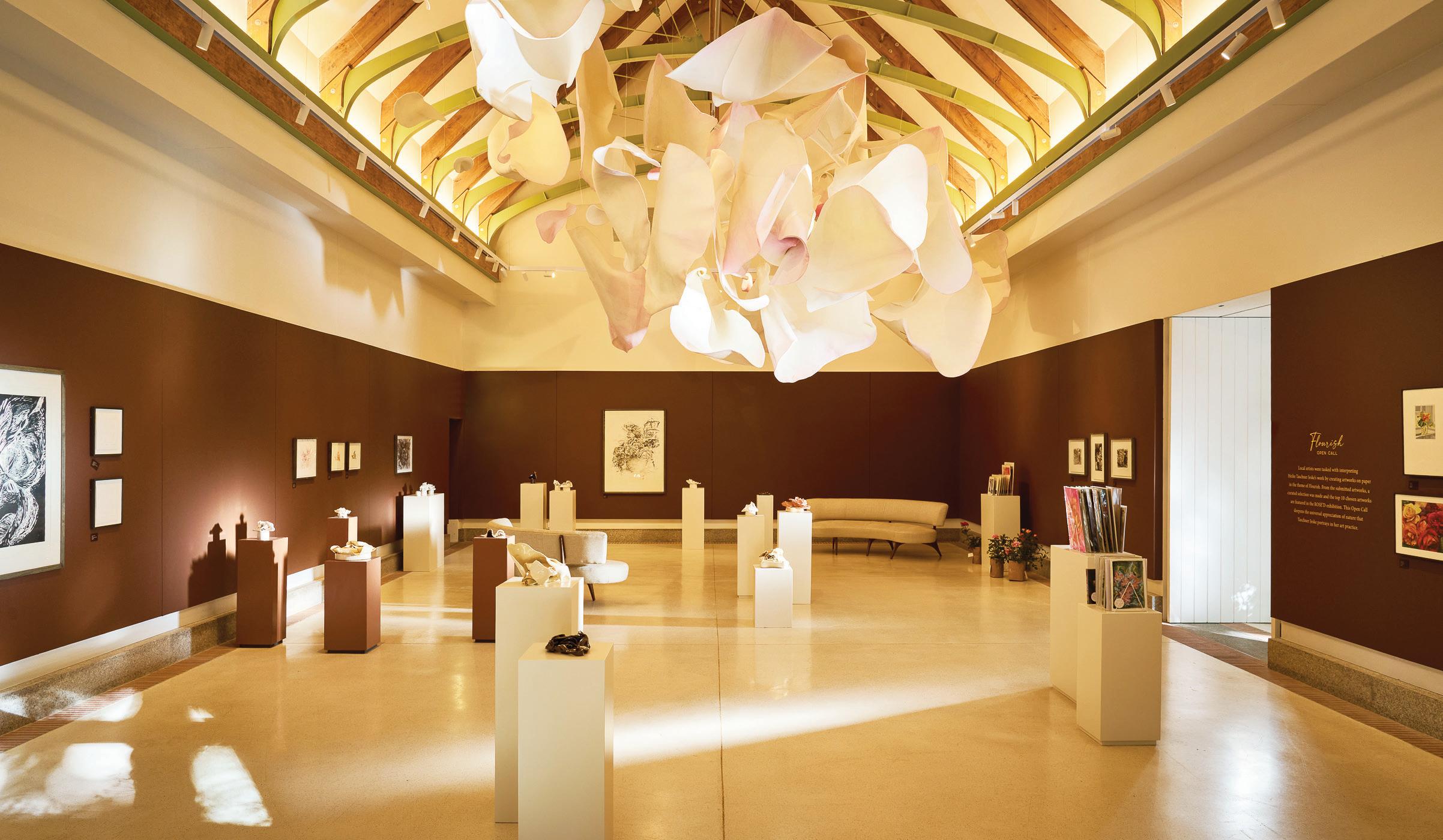
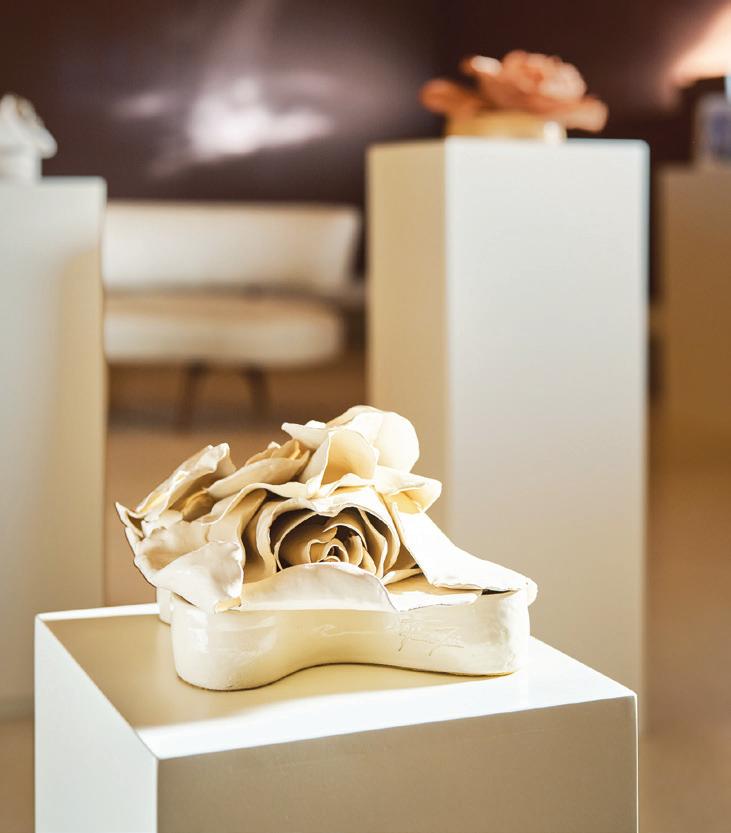
Opening on 18 October 2025 and running until 22 February 2026, ROSE’D is a brand-new art exhibition that celebrates the beauty, mystery, and sheer joy of the rose. Drawing inspiration from the colours and energy of spring and summer, it’s an experience that promises to be as uplifting as it is unforgettable.
At the centre of ROSE’D is artist Heike Taschner Jeske, whose lifelong love affair with roses began in childhood. Her father, Ludwig Taschner, is a name many South Africans will recognise — one of the country’s most respected rose farmers. Now, Heike channels that legacy into her art, transforming her father’s fields of blooms into bold, imaginative creations.
Her showpiece for this exhibition is nothing short of breathtaking: an enormous, immersive rose that seems to burst from the gallery walls and climb across the ceiling. Step inside, and you’ll feel as though you’ve been shrunk to the size of a honeybee — surrounded by colour, light, and texture in a world where every petal tells a story.
But ROSE’D is more than one artist’s vision. Through an Open Call, La Motte has invited other creatives to explore the theme of Flourish, resulting in a stunning variety of works that pay tribute to nature’s most iconic flower — in paint, sculpture, photography, and beyond.
To make the experience even more special, La Motte will host a series of floralinspired workshops at La Motte Ateljee from October to January. Whether you’re into flower arranging, botanical illustration, or simply looking for a creative escape, these sessions are the perfect way to get hands-on with the theme.
And because La Motte loves a complete sensory experience, the rose will be making appearances across the estate — think rosy flavours and aromas in the Tasting Room, Bakery, and L’Ami Family Brasserie, plus a gorgeous collection of rose-themed gifts and treats in the Farm Shop.
This summer, follow the scent to Franschhoek and let La Motte’s ROSE’D remind you that art — like the perfect rose — is made to be experienced, not just admired.
If You Go
What: ROSE’D — La Motte’s summer art exhibition
When: ends 22 February 2026
Where: La Motte Wine Estate, Franschhoek
More to Explore: Rose-themed touches in the Tasting Room, Bakery, L’Ami Family Brasserie, Spens, and Farm Shop www.la-motte.com
MIND YOUR MIND
Words: Tara Boraine
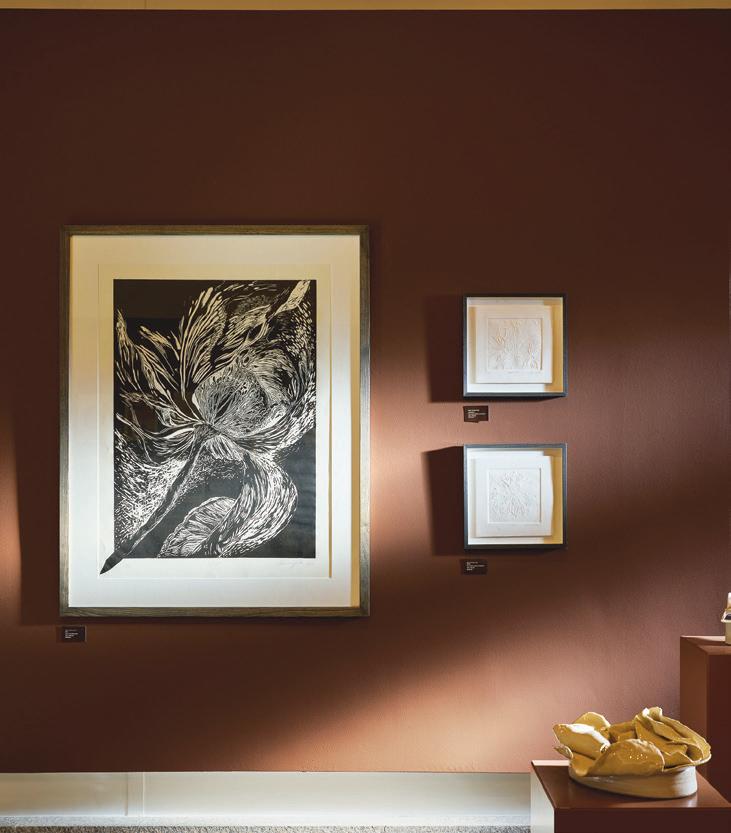
I'MSITTING ON THE FLOOR, SURROUNDED BY HIS LIFE. Dust and detritus everywhere—costume fragments, etching plates, drawings, photographs, paintings. The birds are loud outside, and so is the sea. It's quiet otherwise. Just me and the accumulated weight of it all.
There’s a sign he used to make and stick up on the building site of our childhood home, where I grew up: “Mind Your Mind.” A warning about bumping your head. I feel mine bumping against something heavier now—the architecture of our relationship, its impossible geometry.
They don't tell you what it's like to lose someone like this. It doesn't matter if they were a difficult man or an emotionally absent father. Everything hurts in its own, complex, bittersweet way.
As my dad retreats further into the fog of dementia, it’s recently felt like I was handed a baton. Well, perhaps not a baton. A brush. I look over at the mountain of cobwebbed brushes and sigh, almost irritated at his compulsive need to hoard. So many things to sort through.
I feel he has left me clues—breadcrumbs scattered across decades, readable only to someone who shared his neurological language. As I attempt to tackle his abandoned piles of artwork, a recurrent motif begins to play in my mind. It haunts me like a neurological carnival—a chaotic polyrhythm of bittersweet glitches.
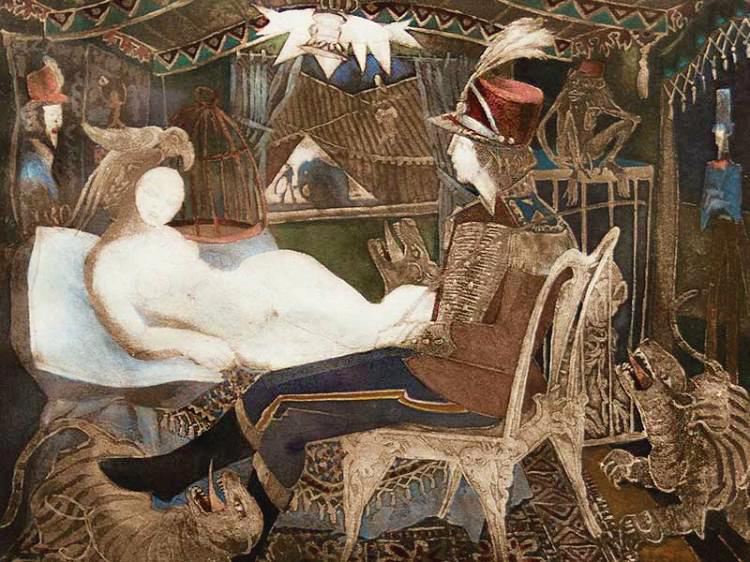
My father, Hardy, was born Gerhardus Petrus Botha in Kroonstad in 1948. There were no words for autism or ADHD back then—only Afrikaans ones like simpel and onnosel. He was the stationmaster’s only son and greatest disappointment. His mother tried to shield her sensitive boy, but she, too, was delicate—often a victim herself of the Free State’s stubborn cruelty. The first time my father saw the circus, a particularly colourful train rolled into his father’s station. The spectacle—tents, caged animals, freak shows,
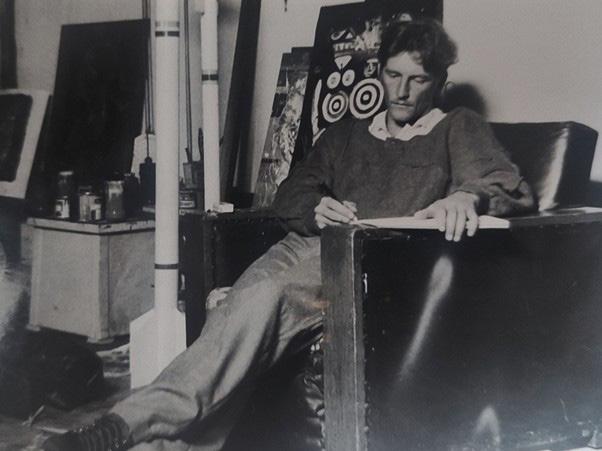
performers, the sheer simultaneity of sensory information—would forever haunt his work. In many ways, I think, it offered his first notion of a parallel universe: a place where his carnival of differences wasn’t a liability, and where eccentricity was witnessed and liberated.
From an early age, my father intuited an ancient survival tactic: play the fool. Make your difference visible before the world can weaponise it. Seize narrative control through self-deprecation and spectacle.
At first, it worked brilliantly. After all, it got him out of Kroonstad. It got him out of national service to the dreaded apartheid state. It enabled him to go to university, make friends, travel through Europe, hold solo exhibitions, represent the country at the São Paulo Bienal, and lecture for years at UCT and Stellenbosch.
Fools, jesters, clowns… throughout history, they’ve been simultaneously celebrated and enslaved, visible and invisible, powerful and utterly constrained. After all, they were often people existing outside the normal social order—frequently neurodivergent or disabled—whose particular way of perceiving the world made them dangerous to systems built on conformity.
One day, it was no longer a game. The fool’s identity became inescapable. The mask had fused to his face. His eccentricity was no longer performance—it was simply who he was, forged in the difficult apprenticeship of being different.
He was a brilliant artist, but a tragically flawed human being—restless, anxious, and captive to his demons. His passion was infectious, but he had little capacity to think beyond his immediate needs. I think of my own impulsive youth and wince at our neurological similarities.
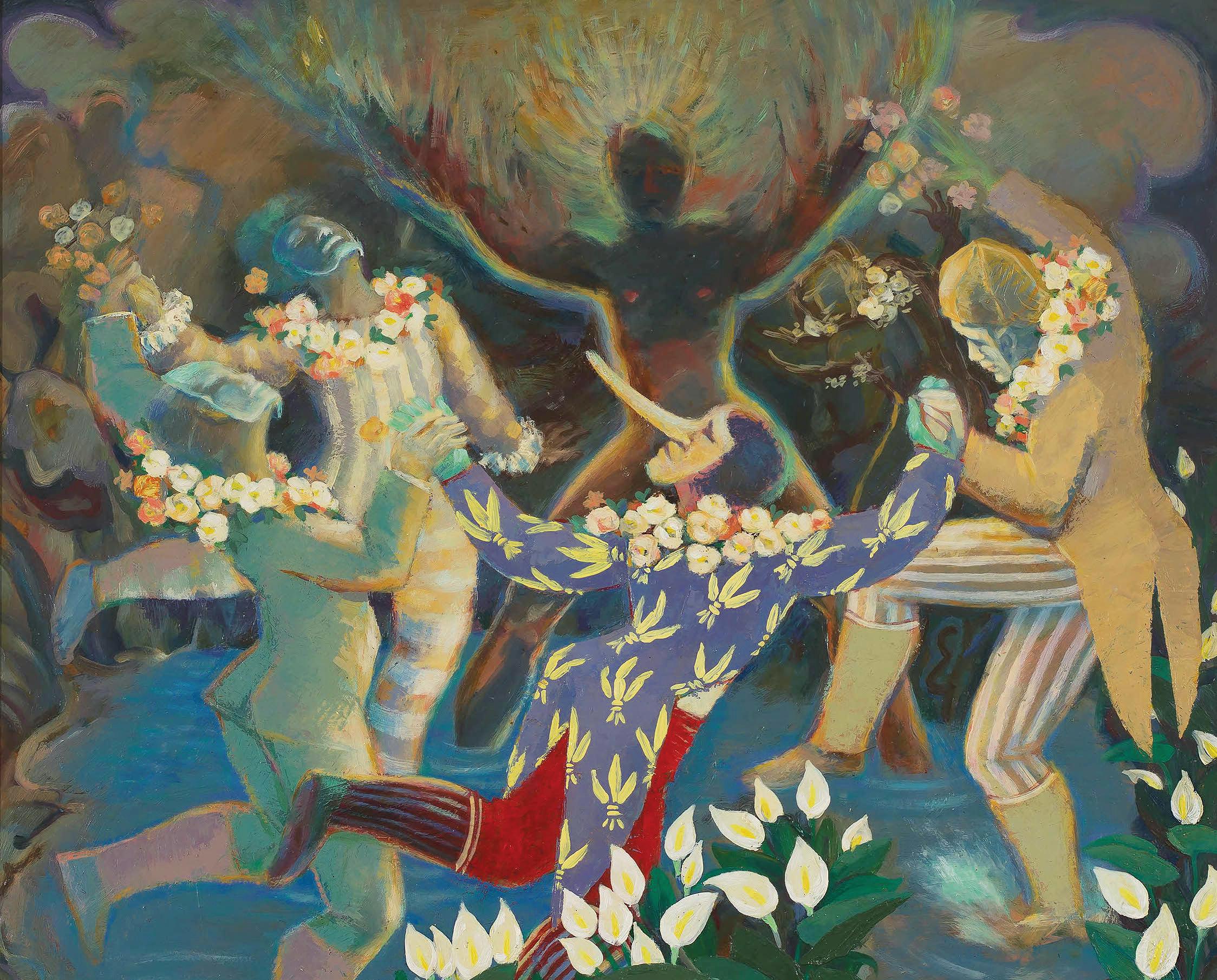
I, too, lived like a fool. I worked hard at it. I performed for crowds; I drank like a fish, danced like a monkey, sang like a bird. But before long, I found myself at the mercy of my impulses, my vices, and a desperate need to be adored. That was when I realised that foolishness would only get me so far. Like my father, I had found solace in forgetting myself. But I’m witnessing now how that story ends—often to the detriment of those closest to us. And I don’t want that. I want to create the conditions for a different ending—for myself, for my beloveds, and for the world at large.
When I was a child, my father painted in the lounge, late into the night. Sometimes he'd let us mix his oils—the smell of moerkoffie and linseed oil and turpentine settling into everything around him.
Despite growing up in galleries, I looked at paintings and felt little to nothing. Colours seemed almost inconsequential. For years, I found it hard to access the visual world. I could do it—but not like he could. In retrospect, I think I’d always associated fine art with my father’s territory: obscure, out of reach, something I couldn’t quite tune in to, something I wasn’t really allowed to.
I’ve always known I was different. But so was my family, and so at first it didn’t seem to matter much. Still, I’ve spent my whole life trying to understand my mind.
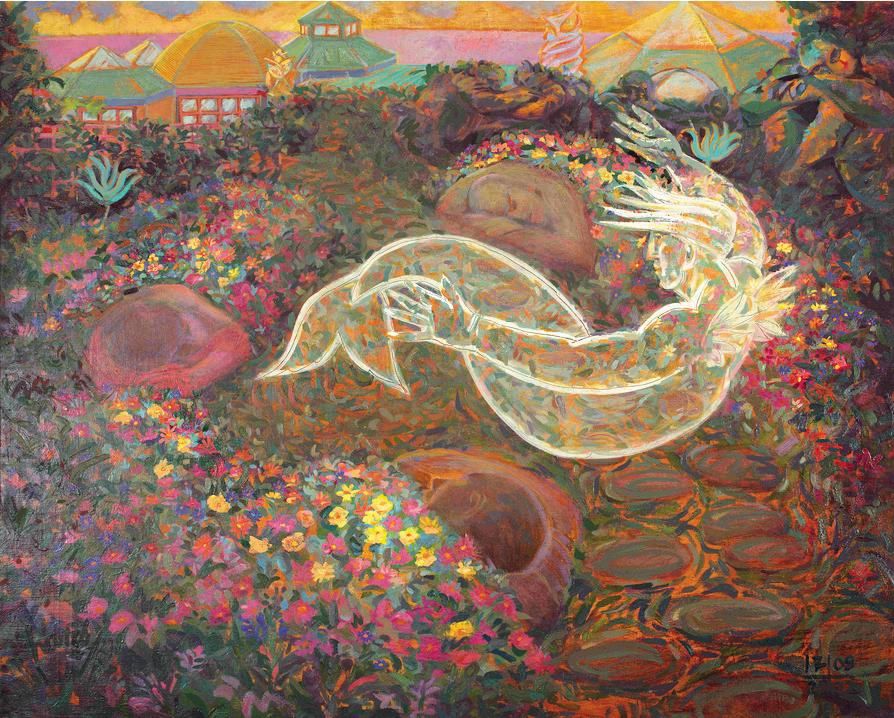
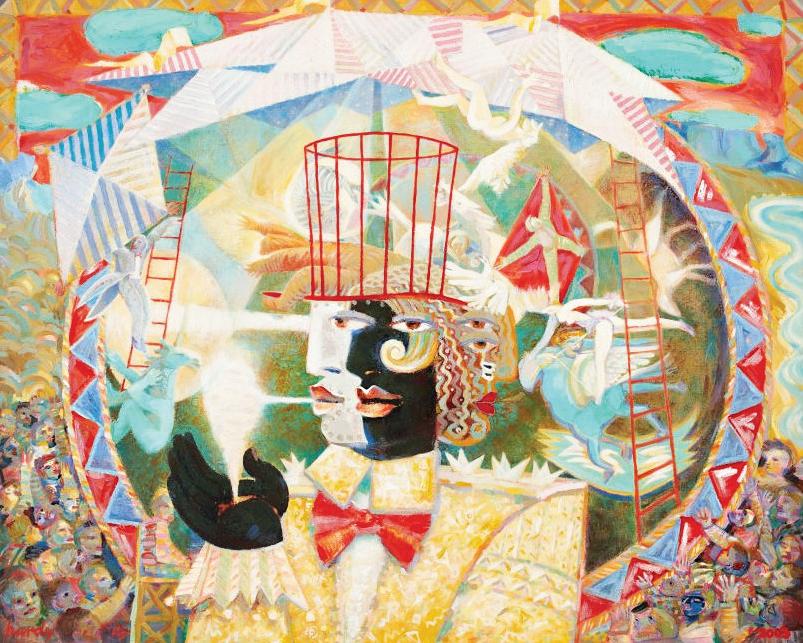
I began piecing things together as a teenager. I’d chosen music as a refuge for my complex inner worlds. One day, after reading Oliver Sacks’s Musicophilia, I discovered that not everyone experienced the world the way I did. Not everyone saw the scale of G minor as viridian, or D major as scarlet vermillion. Not everyone perceived letters, numbers, and days of the week as having colours or distinct personalities. Not everyone moved through a traversable, dreamlike topography of ideas, or held a geometric understanding of concepts and their connections. But I did. Synesthesia, it’s called - a lack of neural pruning leading to enhanced connectivity across the senses. The result? A mind that
experiences the world so intensely that it feels vivid, electric, and frequently overwhelming. In retrospect, I have no doubt my father's mind had this kind of architecture too.
Now, I had a name for this phenomenon, one facet of my restless cognition, but no framework for understanding what it meant, in the broader context of my neurology. It wasn't until I was twenty-seven that I was diagnosed with AuDHD—the combined neurotype of autism and ADHD.
It was a homecoming. Suddenly I had words for my chaotic inner world, and the two forces that pulled in opposition inside me, turning the wheel of my fortunes and misses.
And suddenly, I had words for my father. There was a similarity to our differences: we shared difficulties in social communication, repetitive behaviours, restricted, often compulsive interests, and decidedly atypical sensory processing. He, like me, had dynamic capabilities and was often disabled by his own chaotic and traumatised mind. But now and again, from the cacophony of the nonsensical, there emerged an occasional melody: coherent and crystal clear. A brilliant joke. A pithy insight. A prophetic vision. As his mind fades into a timeless obscurity, I make a conscious choice to remember him this way.
Heartbreakingly, by the time I had language, by the time I figured it out why our family struggled so, his capacity to comprehend was already dissolving.
These days, I am learning to have compassion. For him, yes, but also for myself. I know what it's like to be wired this way; the cacophony of it all. The world doesn't look like something and sound like something. The world is the compound thing—image-soundfeeling-meaning all at once, inseparable, and deeply, indescribably complex. You don't just perceive the world; you become permeable to it.
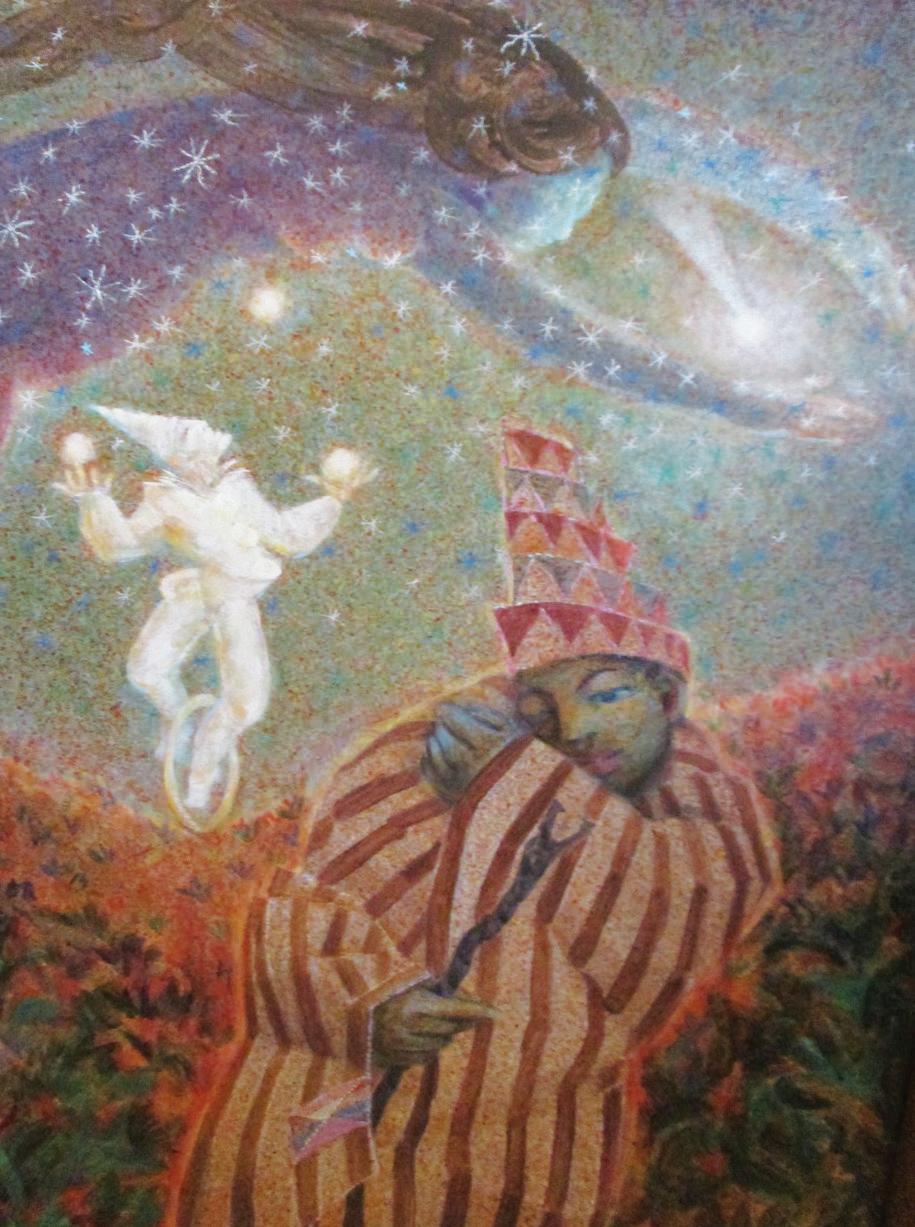
I know what it’s like to feel permeable. I think about my own prophetic artifacts: some of my earliest include graffiti on a school desk that read “where do I end? Where does the world begin?”.
Art was his way of making sense—converting this overwhelming simultaneity into something coherent. I can relate. And this sensemaking work is lifegiving, but exhausting. Especially if you don’t have the right kinds of understanding and support.
Over time, as his world grew more traumatic and complex and incomprehensible, my father withdrew from it. First from society, from friends, and finally even from himself. The noise of his mind and the chaos of the outside world fused into an unbearable din. His tragic optimism slowly morphed into a stubborn misanthropy. He stopped making art. And slowly, but surely, he stopped making sense.
The circus packed up. The fool's ship began to sink. A sensitive lifetime of complex trauma cascaded into a years-long depression, which ended in a desperate desire to forget.
He was not a man of many words or obvious affections. But he gave me my first music production setup—a Scarlett Focusrite 2i2 and microphone, bought on a maxed-out credit card. He loved music. Still does— blaring obnoxiously loud 60s rock n roll from the TV whenever my mum’s just laid herself down for a nap.
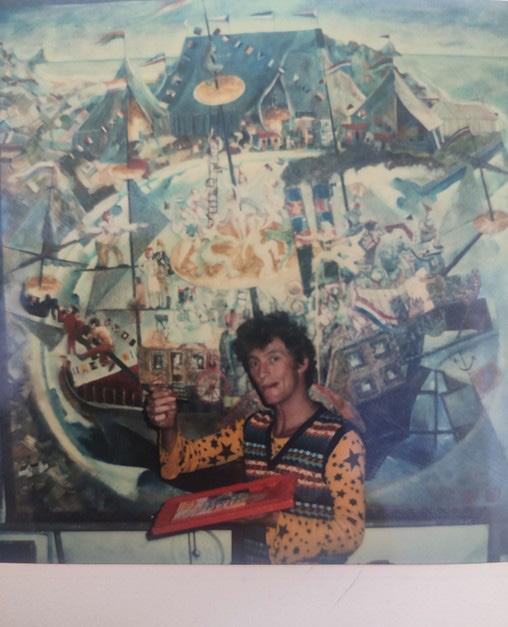
As my dad slips further into the fog, his continuity dissolves. His narrative collapses. His capacity to construct meaning evaporates. Ironically, as his past collapses into a featureless present, I find mine is crystallizing into something I can finally see. There's an arithmetic to this that feels both utterly unfair and cosmically precise. I feel that he would have laughed at these patterns.
I’ve started archiving his work, and it’s started to influence mine in new ways. I don't know yet what the full shape of this will be. But I'm trying my best to pay attention. To really listen. Not just to his imaginary worlds, to the weight of all that complicated legacy, but to the sweet call of my own. Hearing, after all, isn't passive reception. It's the work of consciousness actively deciding, moment by moment. I might not be able to choose entirely what to listen for. But I can choose what to do with what I hear. I’m beginning to realise that I must choose differently. I can be the jester AND do the mindful work of a capable captain, steering my ship (and all the fools aboard her) to safe and better harbour.
I’ll take the baton from him, be it brush, microphone, pen, or wand. I’ll never stop making music. I’ll never stop writing, never stop seeking to make sense. I’ll never stop trying to communicate my inner circus, because I truly believe that sharing our worlds can help midwife new ones – better ones, for all neurologies. I will heed my father's strange and subtle signs. I will mind my mind.











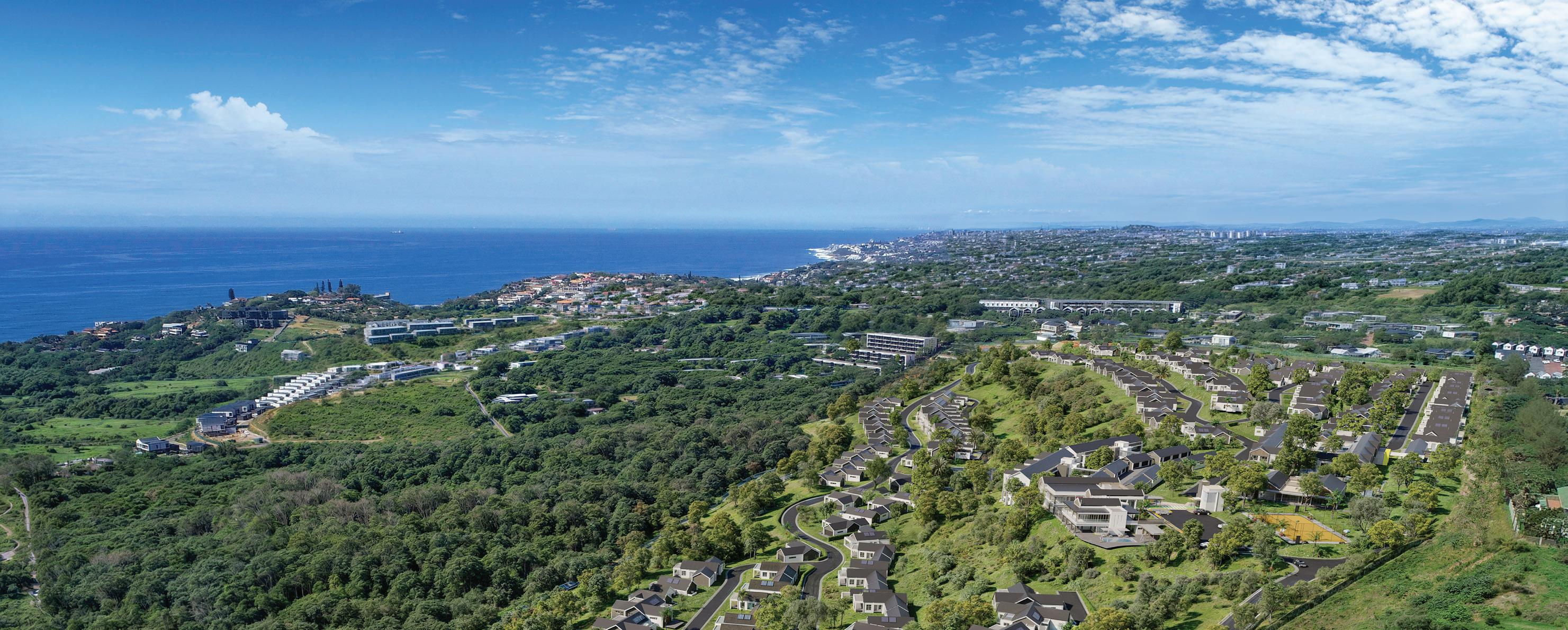
APARTMENTS NOW SOLD OUT
Jawitz Properties North Coast - Connecting People, Homes and Community.
At Jawitz Properties North Coast, real estate is about more than just buying and selling homes — it’s about building relationships, creating connections and becoming a true partner in every client’s property journey. Guided by a purpose to connect people to homes and grounded in values of integrity, excellence and genuine relationships, the team at Jawitz North Coast takes pride in going beyond transactions to make a meaningful impact in both their clients’ lives and their community.
Our vision is to be a real partner — not just in property, but in people’s journeys. This means offering expert guidance, trustworthy advice and exceptional service from the first conversation to long after the keys have been handed over. Every interaction is underpinned by authenticity and care, ensuring clients feel valued, heard and supported throughout the entire process.
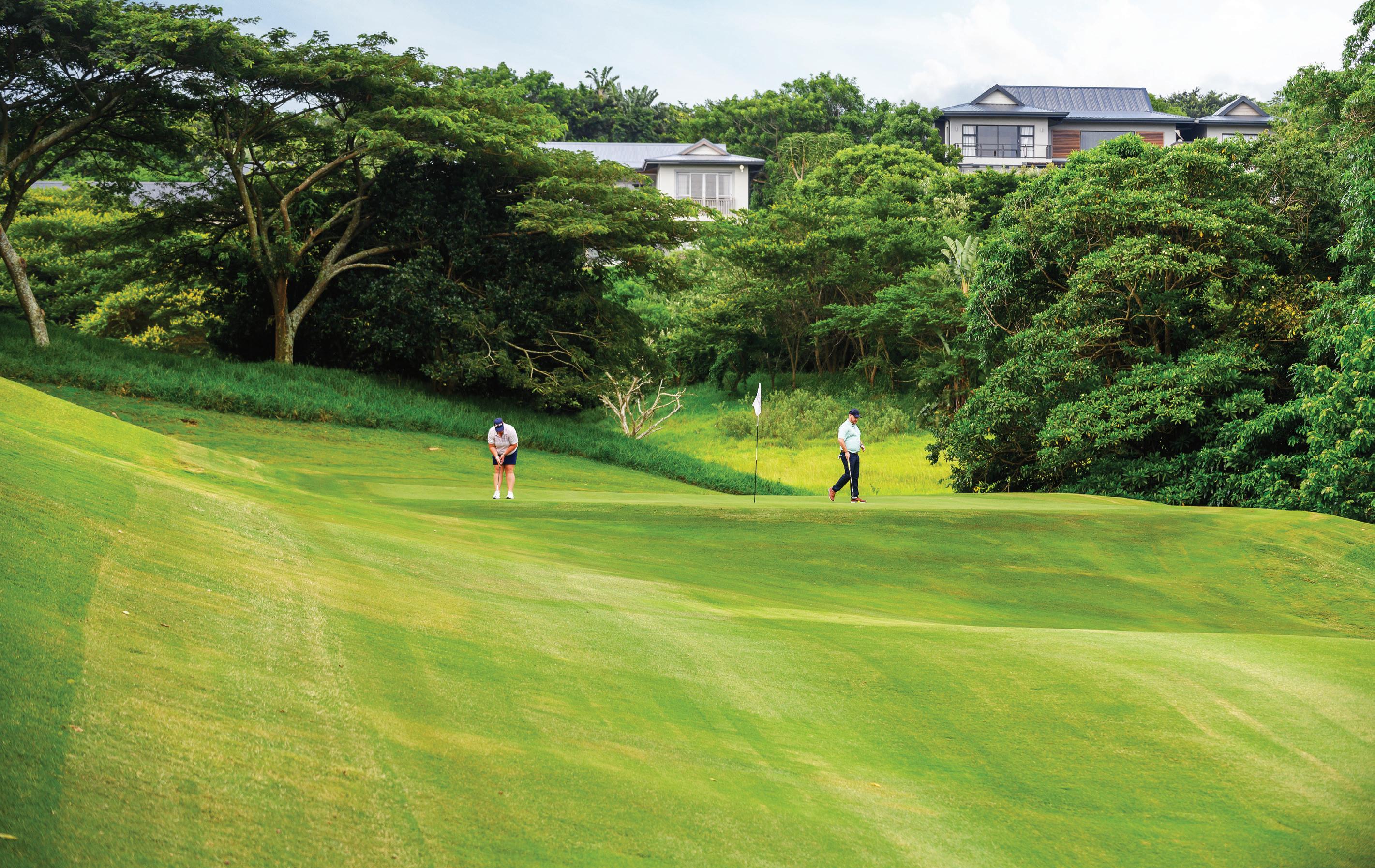
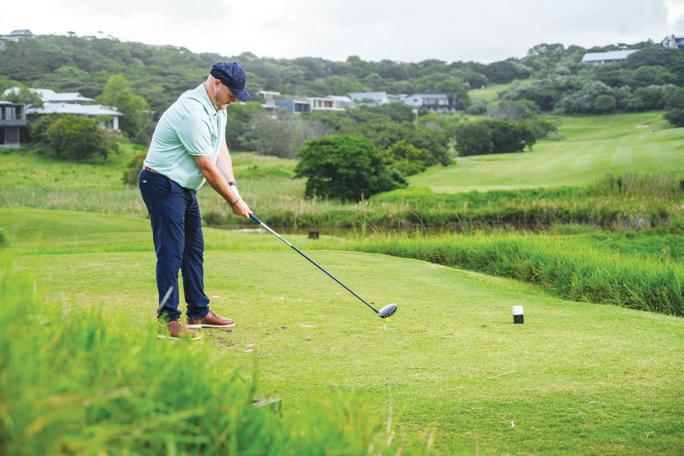
Community is at the heart of everything Jawitz North Coast does. The team is passionate about giving back and fostering a sense of belonging through local events and initiatives. From tennis days and estate braais to sponsoring paddle events and golf days like the Rhino Cup for the WildSky Foundation, Jawitz actively supports causes and gatherings that bring people together.

Jawitz North Coast also embraces creativity and fun through their social media campaigns, such as one of the crowd favourites, “Find the Cruiser,” and with our local favourite, Doughpamine to delight prize winners and welcome every new homeowner to the Jawitz family with a delicious pizza voucher. Jawitz uses their digital platforms to connect people, share stories, and showcase the vibrant lifestyle that makes the North Coast such a special place to call home.
Jawitz North Coast continues to prove that their purpose goes far beyond property. It’s about people — their dreams, their homes, and the shared spaces that make up this thriving coastal community. With integrity, excellence, and relationships at its core, Jawitz North Coast isn’t just selling homes — they’re building the foundation for a connected, inspired and authentic North Coast way of life.
At Jawitz Properties North Coast - we’re not just selling property, we’re helping you find your place to belong. jawitz.co.za 032




SUMMER LOVIN’ SPACES
ENDLESS SUMMER - A FRESH RESET WITH OLALA INTERIORS
Where Airy Fabrics, Effortless Style, And Nature-Inspired Spaces Invite You In
Words: Lisa Smith
SEASIDE SERENITY
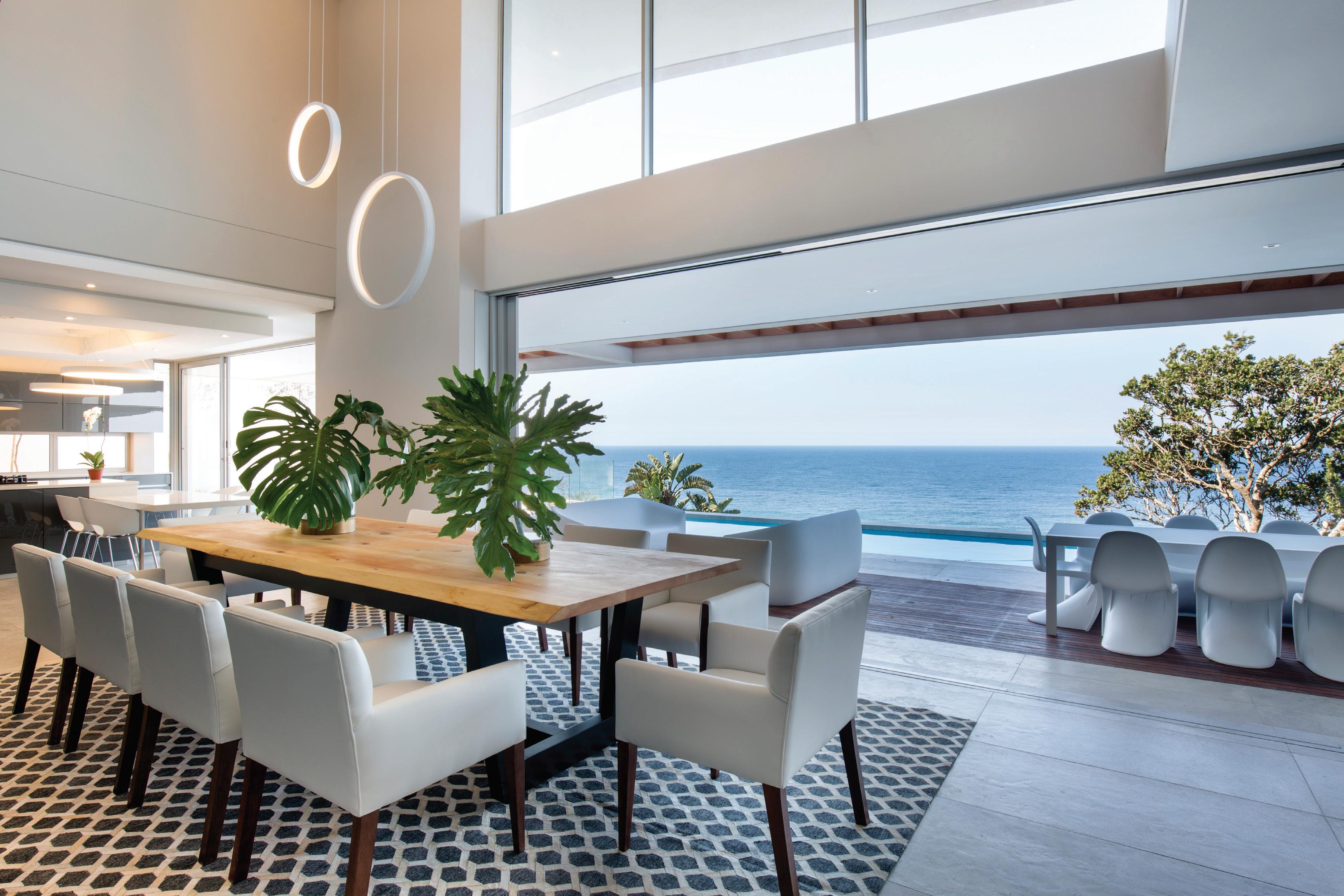
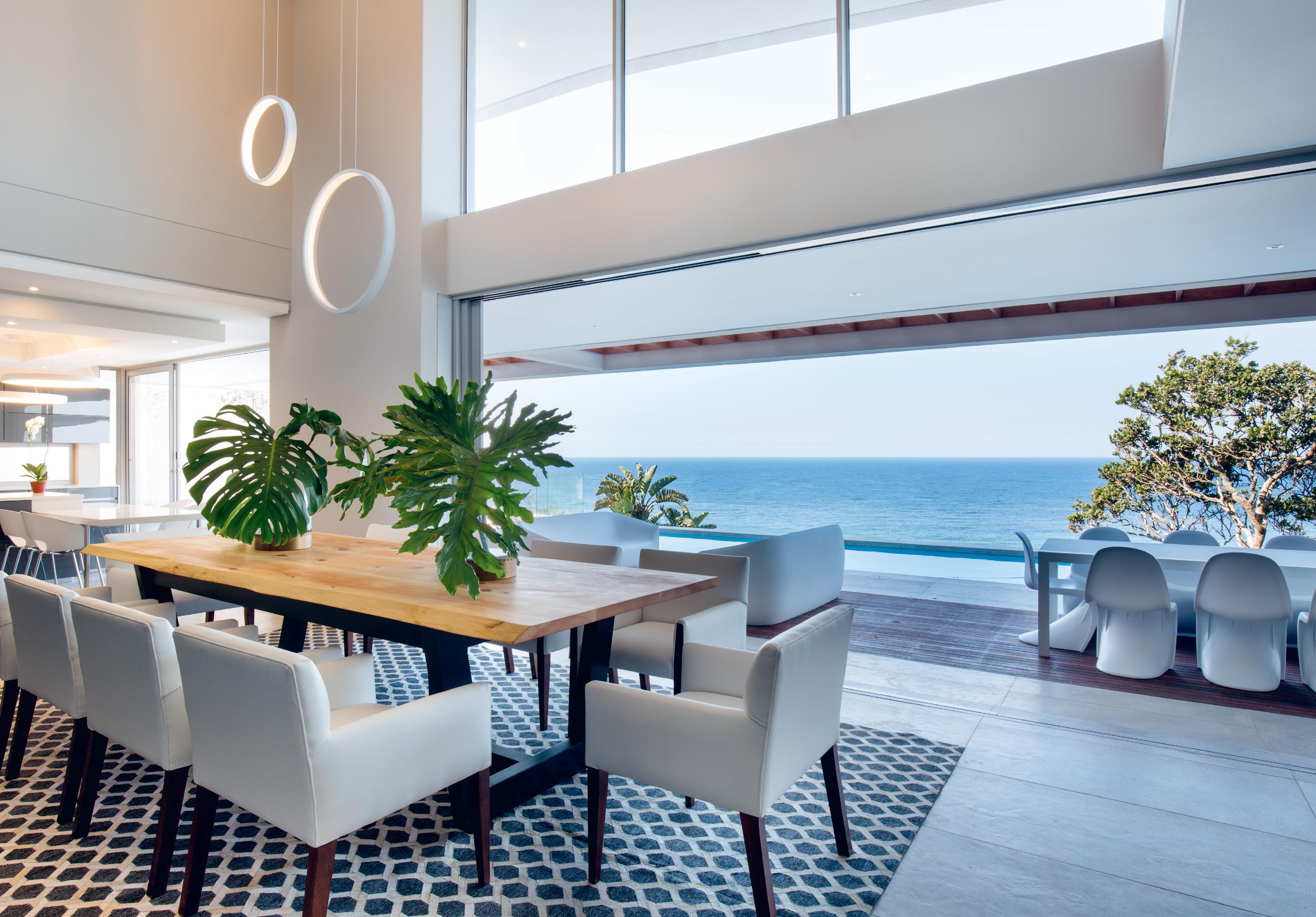
Perched on KZN’SNorth Coast coastline, this magnificent home featuring breathtaking seafront views deserved an interior to complement its setting. For OLALA Interiors, a modern contemporary living space with understated elegance was designed to embrace the sea from every angle.
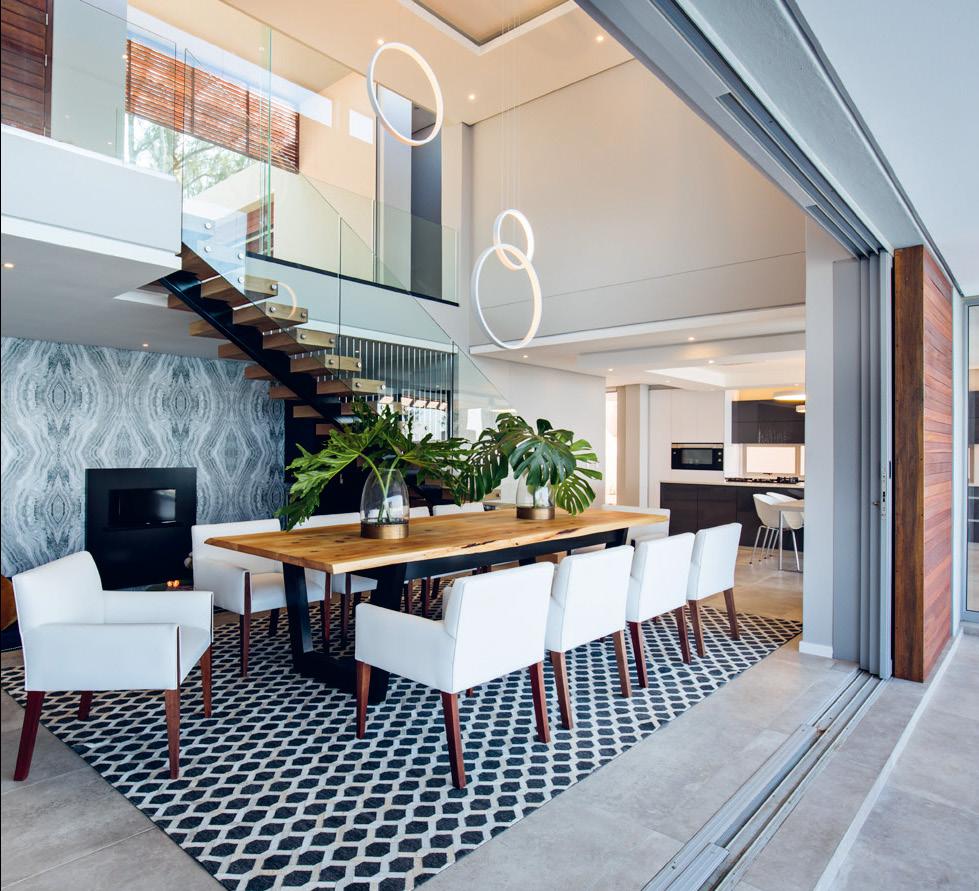
The ground floor open-plan living space offers a seamless flow of indoor, outdoor living opening onto an expansive wooden deck and lap pool set against the backdrop of endless ocean views. At its heart, a refined and inviting dining space was designed for casual dining and elevated coastal entertaining.
The introduction of a raw-edge detail by OLALA Interiors on the dining’s table top is a sculptural form of nature’s imperfect organic beauty. Large monster leaves in clear glass vases introduces a biophilic harmony, infusing the space with organic elegance.
Bespoke dining chairs upholstered in a white eco-friendly Supaletha with metallic stud detailing offers a striking contrast to its sleek wooden frame. The Supaletha’s smooth grainy texture evokes a sense of opulence and allure.
Sleek circular pendants gracefully suspend midair in the double-volume open-plan space. Although minimalist in form, they are a sculptural focal point, casting poetic halos of luminous light with atmospheric glow.
Underfoot, an exquisite bamboo leather rug in a black-and-white hexagonal pattern grounds the interior with rhythmic flow and tactile richness. Overall, the space embodies what it means to live intentionally and connected to nature.
INDOOR DINING ALFRESCO STYLE
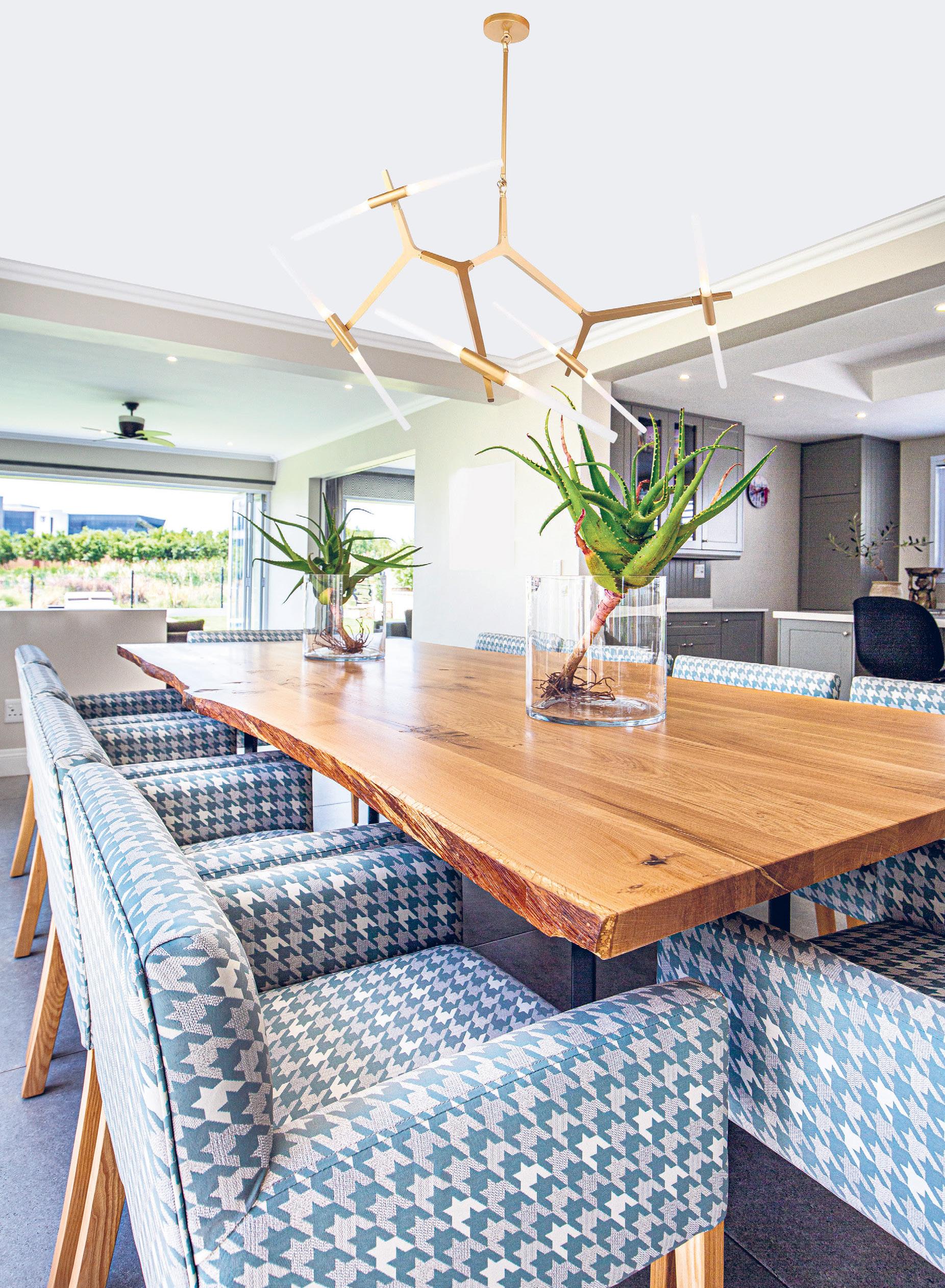
The interior of this open-plan dining area celebrates a modern contemporary simplicity balanced with minimalist elegance and functionality.
At its heart, a natural wooden tabletop with an organic edge introduces a raw tactile elegance, its natural grain texture radiates warmth and natures timeless character.
Modern contemporary chairs upholstered in a blue-jeans patterned chevron adds tonal contrast and textural depth against the chairs light oak frame echoing the table’s organic texture. The chevron geometry creates visual interest and a sense of rhythm elevating the space with subtle sophistication.
Accents of indigenous aloe set in large glass vases introduce visual lightness, allowing form and fauna to float effortlessly within the space. Light filtering through the transparency of the glass creates openness and spatial rhythm, while the fleshy green of the aloe reinforces the connection to nature.
The dining areas lighting pendant, a sculptural statement of ‘nature re-imagined in form’. The pendants branching silhouette in satin gold extends sleek arms with organic poise, tipped with frosted glass globes, diffuses light with a soft glow enhancing the overall ambiance of the space.
Overall the space offers a subtle minimalist sophistication, yet tailored and inviting.
BOTANICAL ELEGANCE
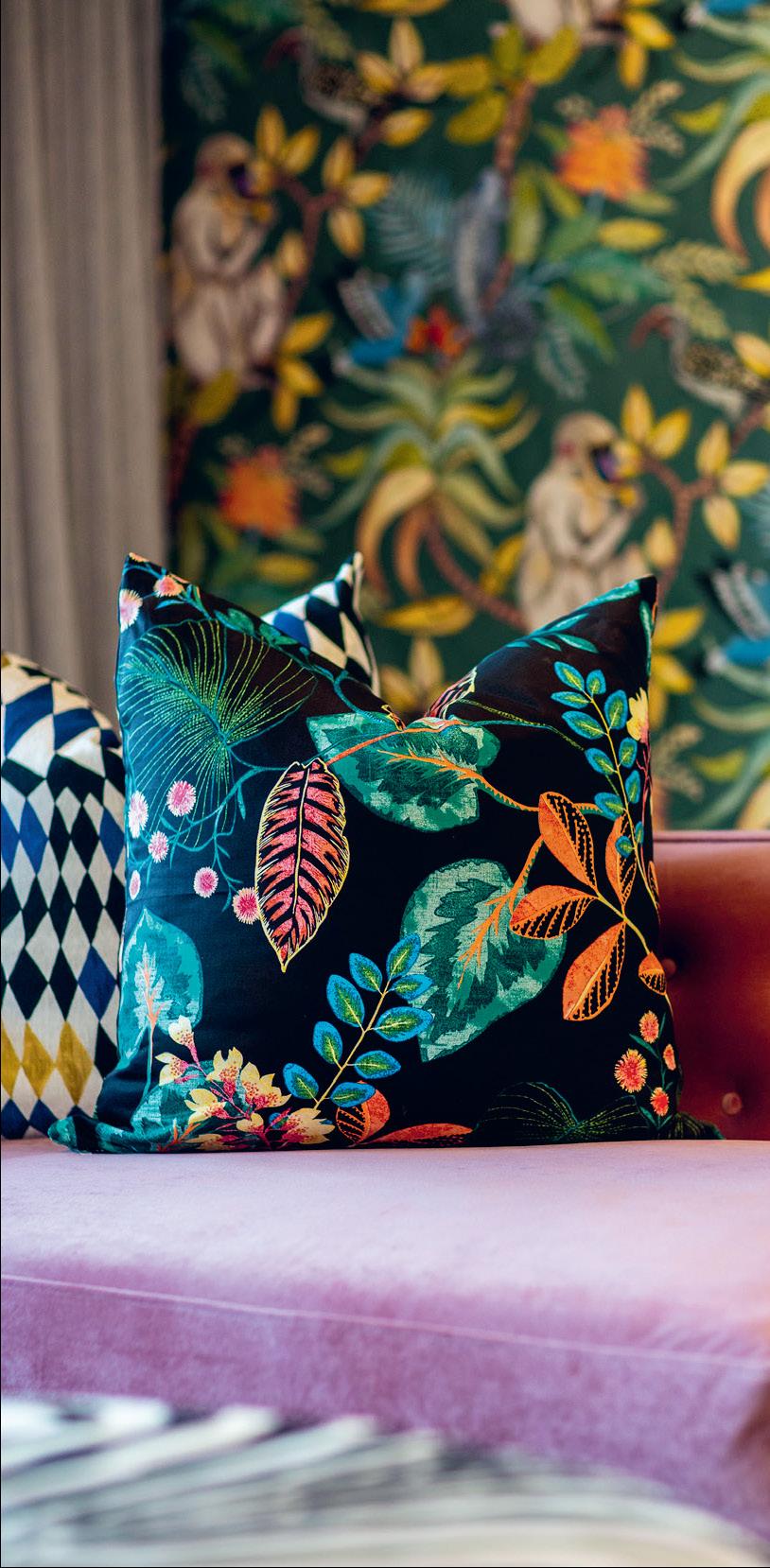
The timeless allure of nature-inspired fabrics evokes the emotional connection to nature. Celebrated for adding freshness, texture, and organic beauty to an interior, botanical prints have the ability to transform spaces into living narratives through their intricate woven patterns of earthy colours bringing an uplifting grounded energy.
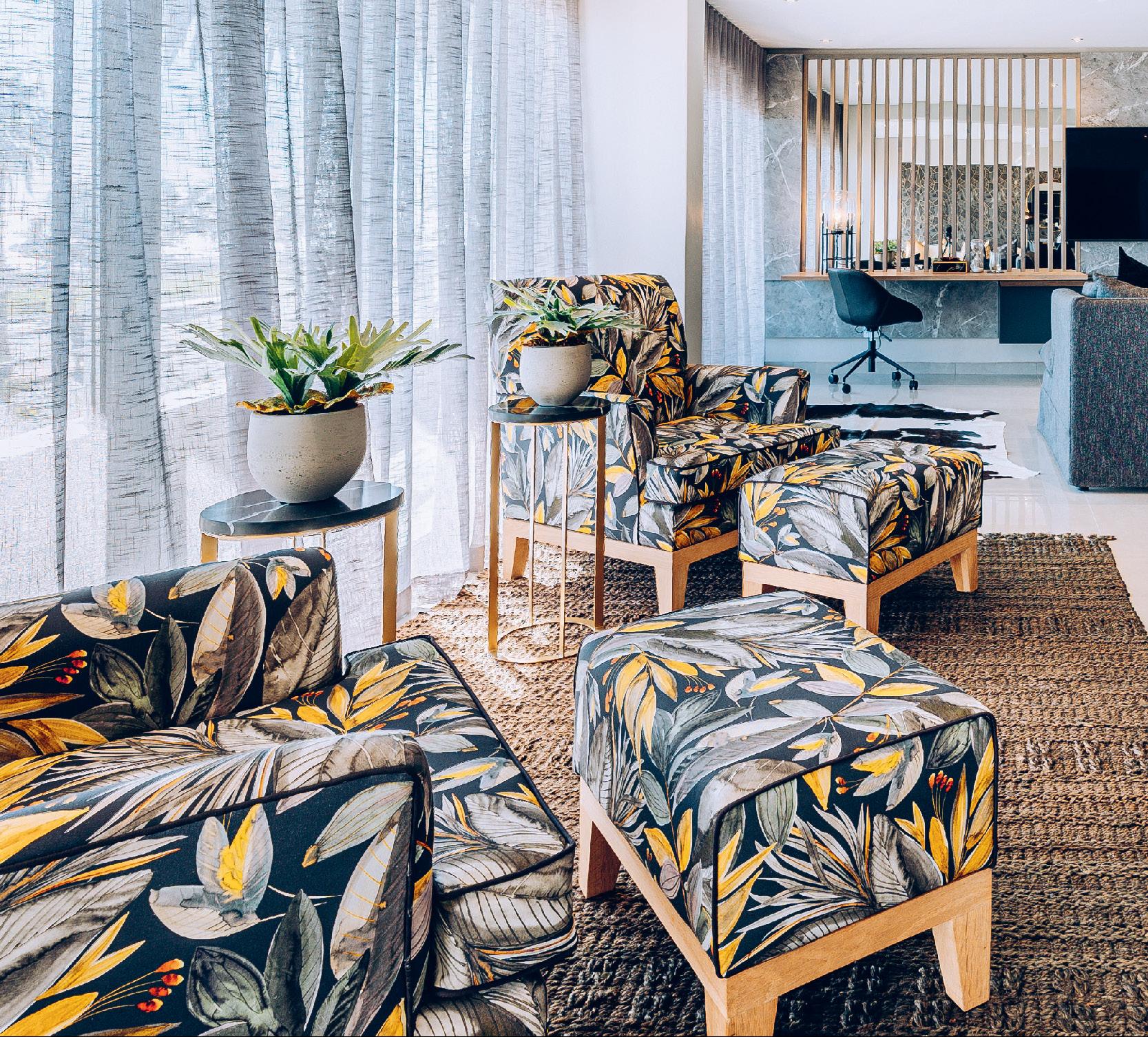
BRINGING SUMMER IN: A CELEBRATION OF NATURE AND COMFORT
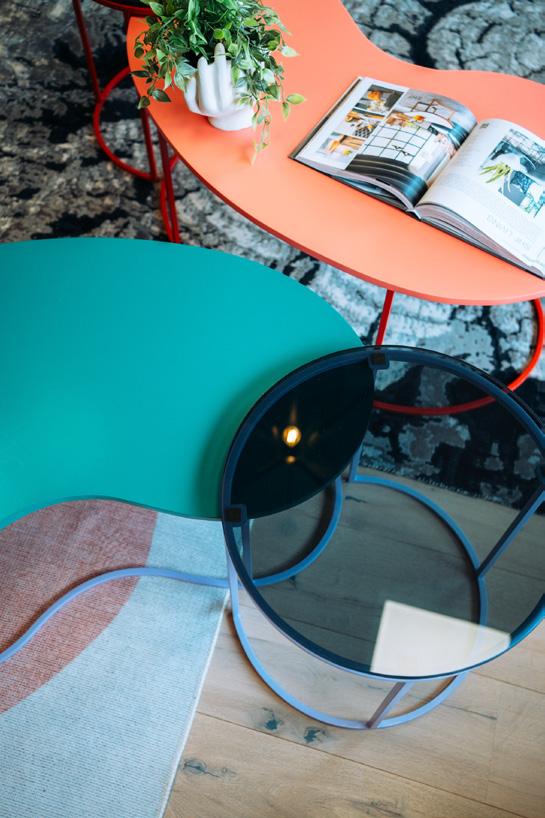
Summer-inspired interiors joyfully elevate a space infusing it with warmth, vitality, and rhythm through colour, design and texture.. A ‘pause and relax’ area with summer flair was designed with modern contemporary chairs and matching ottomans. A floral-patterned fabric in a 100% cotton introduces a breathable, tactile softness complementing the chairs light oak frame.
The colourful botanical motif on a deep navy palette visually contrasts against the frame with piping detail offering a tailored, refined finish. Paired with matching ottomans, the ensemble is a visual ode to summer’s serenity with the invitation to ‘pause and relax’. A sea grass rug with its unique texture adds a natural organic elegance. Light sheer curtains introduces a layer of softness, allowing natural light to gentle filter through whilst maintaining a sense of openness and airiness.
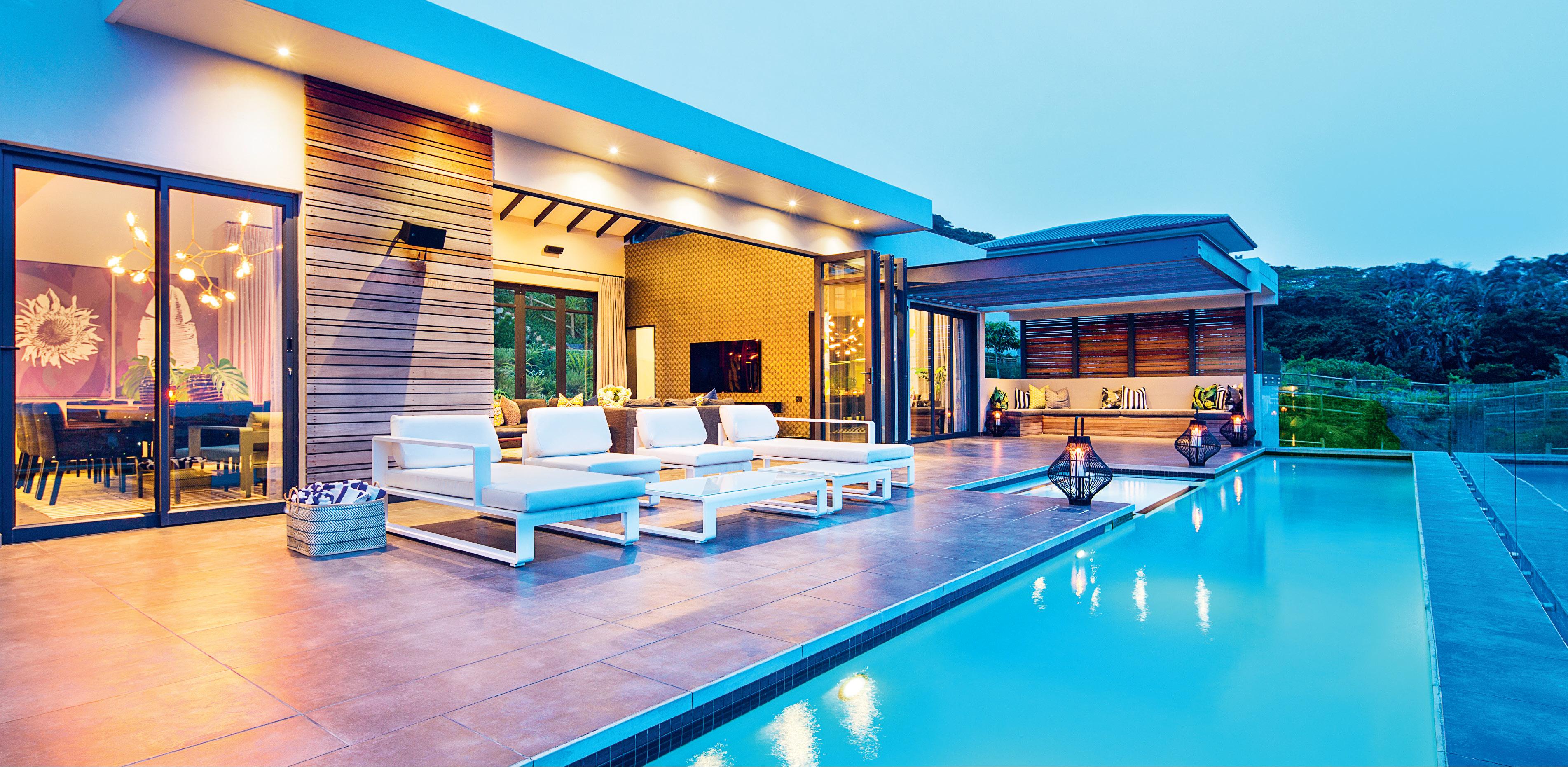
SUMMER SOLACE
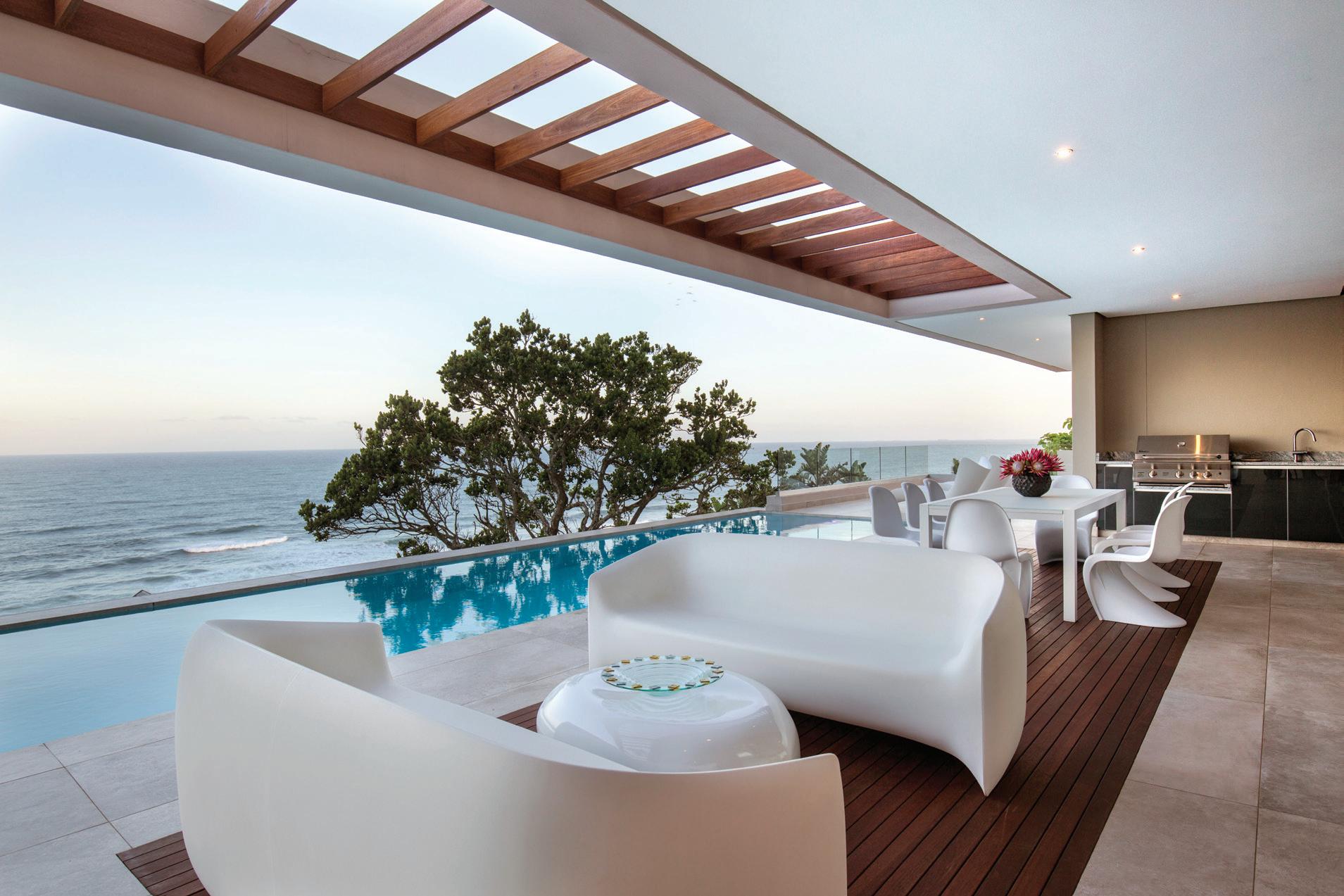
As summer unfolds, its time to enjoy life outdoors and unwind in style! Here’s to sun-lounging leisure, poolside bliss and fire pit evenings. An outdoor leisure space for this KZN coastal home was curated to not only capture the essence of summer but to suit the personality and lifestyle of its owners.
Modern contemporary urban style outdoor furniture with facing pool views, evokes a resort-style escape - their sleek form and soft curved edges embodies
quiet sophistication. Cushions are covered in a practical outdoor collection fabric in a light stone-beige, offers durability and an invitation of quiet comfort.
Shifting the mood from the daytime sun to a shaded sanctuary, an undercover pergola is layered with character and visual interest. Pancake cushions in a soft sandy hue is accentuated with a mix of scatters in colourful prints, classic black and white stripes, and nature-inspired prints. Black slatted lantern candle holders, in an organic sculptured form are stylish accents that elevate the ambience to the outdoor space.
Fire pit areas designed as stylish extensions of outdoor living spaces, integrate as focal points of interest, enhancing outdoor living spaces.
Anchored by a cement-top, the outdoor fire pit space of this north coast home exudes a quiet, contemporary confidence. Its classic modern look was achieved through an interplay of contrast and cohesion with dark hues softened
by white. For the slatted timber seating, textured grey pancake cushions accentuated with scatters in stripes of black, white and charcoal, and an abstract graphite and white print, adds visual interest and subtle sophistication. Organic shaped black slatted lantern candle holders are stylish accents that add to the outdoors ambience.
The space feels both modern and soulful perfect for slow evenings, shared stories, or quiet solace.

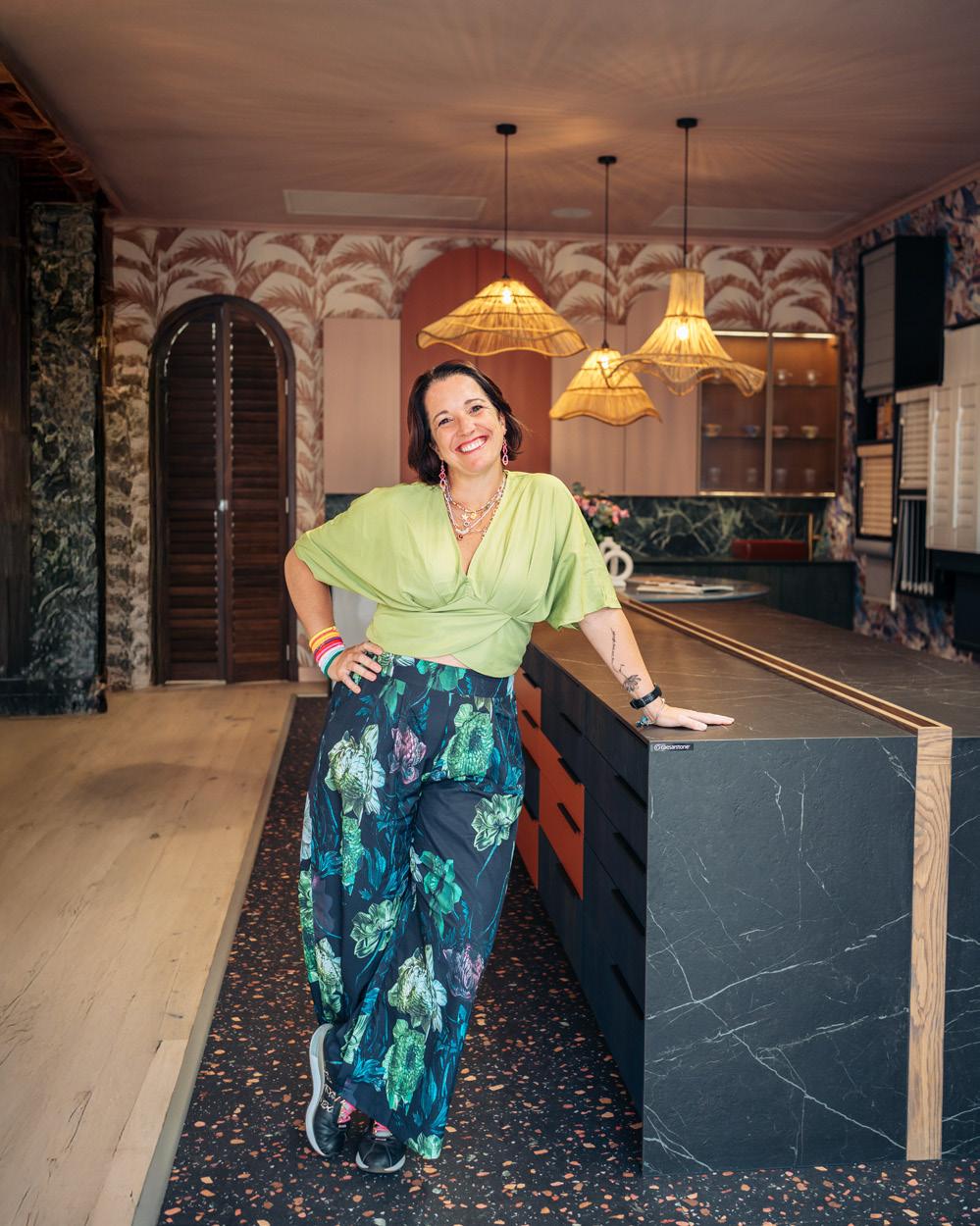
Luxury, sublime and subtle, or bold and fabulously over the top! This underpins the design style of OLALA INTERIORS. With over 30 years of good standing in the interior design world, OLALA INTERIORS celebrates crafting and curating interiors that radiate responsive, mindful design. With meticulous attention to detail, and unique approach to interiors, our award-winning team of designers and craftsmen create perfect habitats for discerning clients assured of receiving the best service and attention to detail.
OF IPHONES & ARCHITECTURE
What do cellphones and modern architecture have in common?
More than you might think.
CONSIDER APPLE’S LATEST DESIGN
decision for the iPhone 17: a return to an aluminium body after an era of premium titanium-alloy phones. This seemingly technical choice reveals something profound about how the world’s most design-conscious company thinks about materials… And the logic applies remarkably well beyond your pocket.
Apple’s engineers didn’t abandon titanium on a whim. Aluminium, it turns out, manages heat more efficiently (increasingly important as smartphone processors grow more powerful). It’s lighter too, making the device more comfortable

for daily use. On the aesthetics front, advanced anodising techniques now achieve surface finishes with texture and colour possibilities that rival titanium’s luxury appeal. But perhaps most tellingly, aluminium’s workability allows for tighter manufacturing tolerances and more seamless integration with glass.
That last point matters. The iPhone 17 represents a masterclass in material harmony: aluminium and glass flowing together so naturally that the phone feels like a single, unified object rather than an assembly of components. Hold one in your hand and you’re experiencing the culmination of obsessive attention to how different materials meet, align, and perform together.
Now walk into a building with exceptional frameless glass facades or precision-engineered aluminium systems. That same sense of material harmony should be present, just at architectural scale. The principles don’t change: only the dimensions.
Great architecture, like great product design, succeeds when materials perform flawlessly while appearing effortless. It’s about achieving simplicity through sophisticated problem-solving. It’s about thermal performance and structural integrity coexisting with visual refinement. It’s about tolerances measured in millimetres: not just meeting specifications, but exceeding expectations.
This is where North Shore Group (NSG) has earned its reputation as South Africa’s answer to Apple
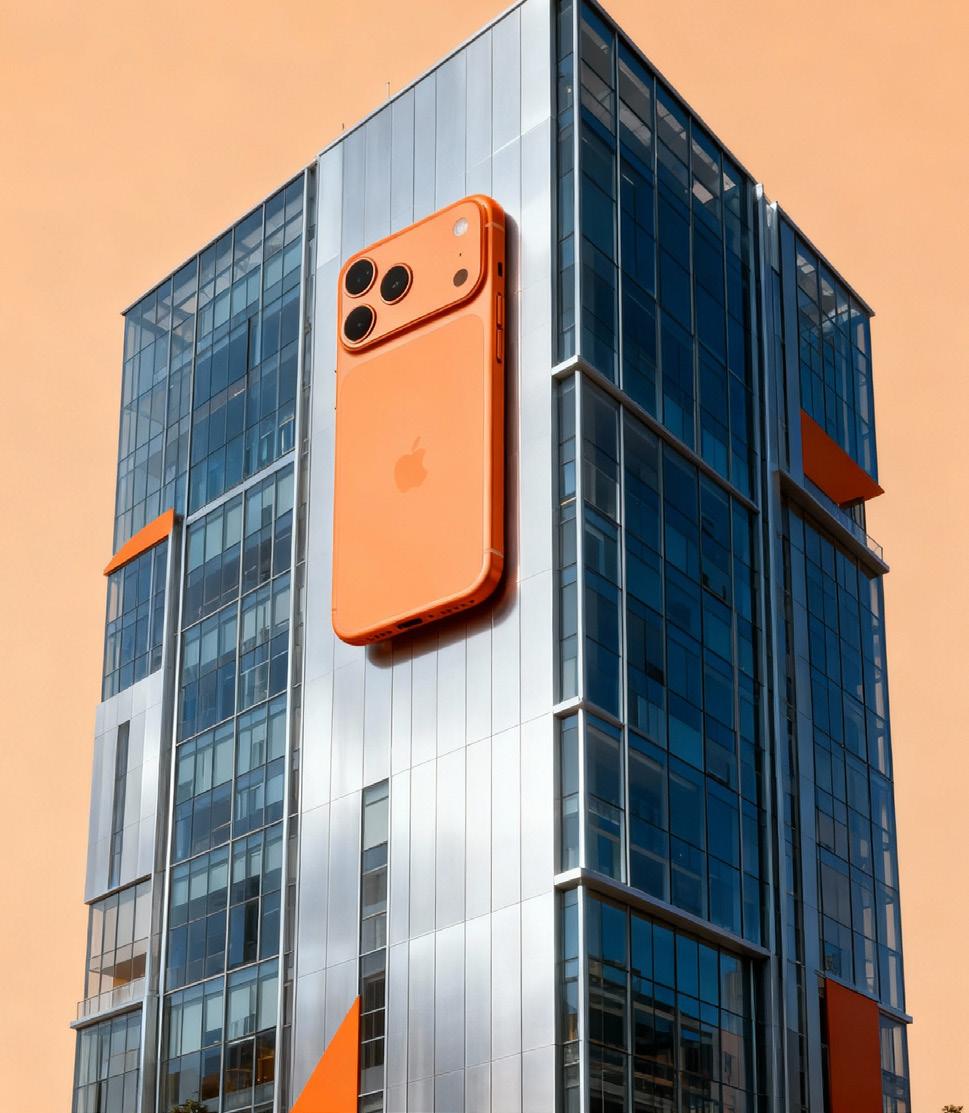
in the architectural aluminium and glass arena. Under founder Deon Olivier’s leadership, NSG approaches each project with the same designforward thinking that makes the iPhone compelling: state-of-the-art manufacturing capabilities, uncompromising quality standards, and continuous innovation.
Like Apple recognising that aluminium could outperform titanium when properly executed, NSG understands that innovation often means perfecting fundamentals rather than chasing novelty.
Both companies have built their success on a simple truth: when you control manufacturing to exacting standards and deeply understand your materials’ properties, you can create solutions that feel premium, not through ornamentation, but through fundamental quality.
The cellphone in your pocket and the building around you may seem worlds apart, but the best examples of each share the same DNA: a relentless commitment to materials mastery and design excellence.

KRAMER STUDIO
WHY PHILIP KRAMER MAKES
Words: Shannon Devy
AWARD-WINNING
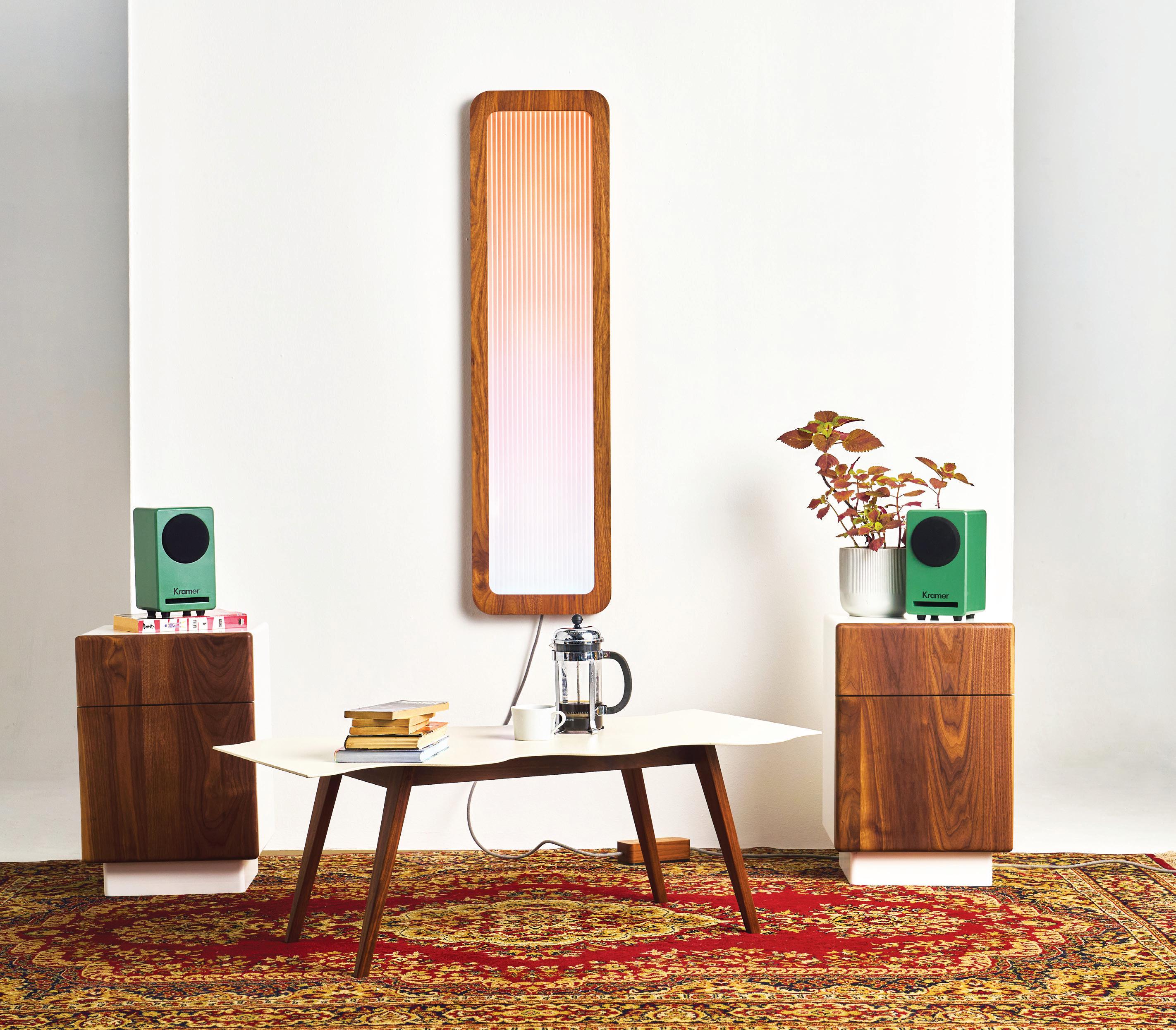
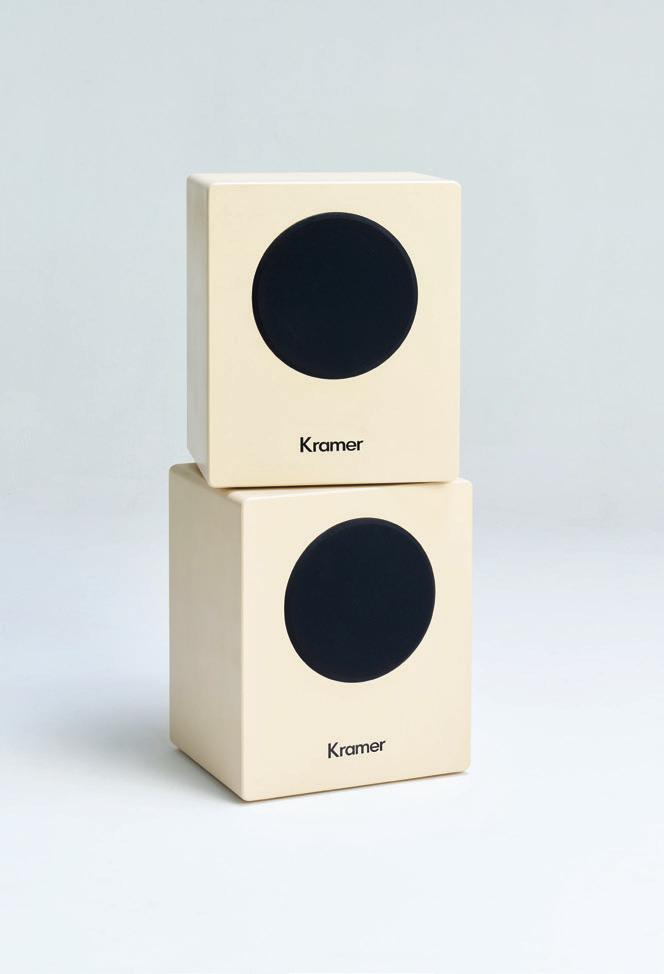
DESIGNER PHILIP KRAMER fantasises about full-time employment. “I have a fantasy where I earn a salary. Yeah, I'll tell you that. I have a fantasy where, like, it's the 28th (of the month) and I have R50,000, and I have my expenses covered, and my job does not require me to spend half the money I make on the job itself. It’s like, you don't work in an office, and then they're like, Phil, it’s your turn to buy paper for the office, and you're in it for R10k”. He’s referring, of course, to the cost of prototyping new ideas. Every new project can represent around R20,000 in material costs, which may or may not be recoupable depending on whether you find a willing buyer for the final product. It’s a common problem in the design world, and it explains why some studios only have one or two new products a year. It also means Kramer has a very long list of ideas waiting to be pursued, from beautiful computers to video game hardware to bi-directional loudspeakers. He tells me he lies in bed at night, turning them over in his mind, thinking of all the things he’d like to make and do – the right way to make them, a better way to do them. He finds it comforting. “I don’t really think of anything else anymore,” he says. There’s work to be done.

We meet on a particularly blustery Wednesday evening in Cape Town. Kramer is refreshingly candid about the economics of running a design studio – it’s not easy. But while the idea of having a boss telling him what to do “sounds weirdly relaxing”, he wouldn’t have it any other way. “I’m not suitable for any other type of work,” he says.
“I love it dearly, and it is very much a part of who I am.”
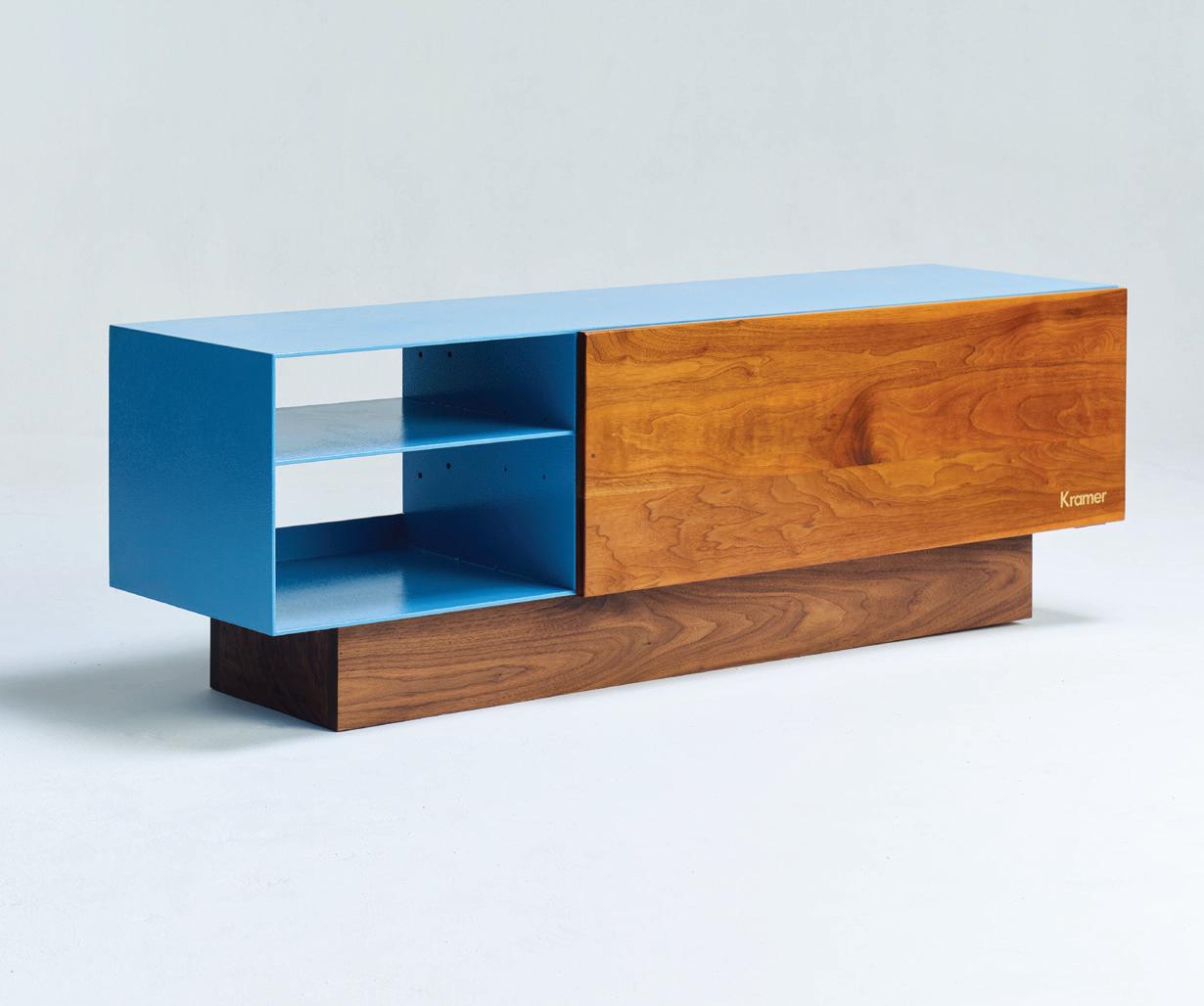
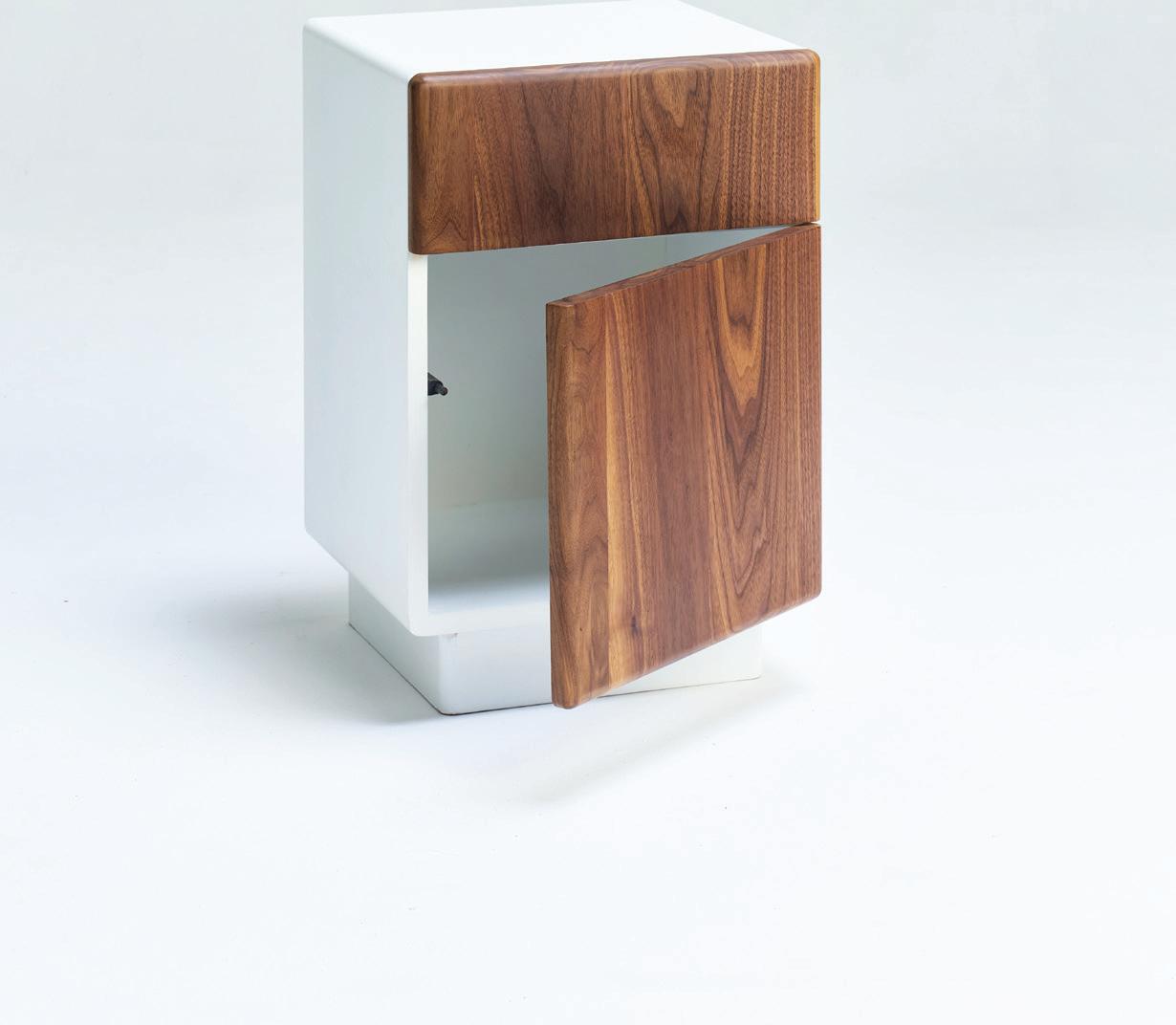
And we can all be grateful for that. Kramer’s work is exceptional, standing apart even amongst the increasingly excellent (and increasingly crowded) field of South African design. His signature hand-built loudspeakers and monitor speakers sound as good as they look, delivering high-fidelity audio via a sleek, brutalist design, softened by sound and colour. His moody, colourful Gradient Light won the New Design Award for lighting at the inaugural CTFW X Visi Awards, and the Quiet Cabinet is a future heirloom to be coveted.
I ask him how it started. After matriculating, Kramer studied animation, but struggled to find animation work after the stock market crashed. He worked at a record store, started DJing full-time, then opened a recording studio. But the bedroom production era was taking off. Everyone had a sound card and a microphone, and they were loath to pay for proper recording time. Kramer pitched music for ads and threw some successful parties. But when a flatmate moved out and asked to take the dining room table with him, Kramer decided to make a new one – one that fit the space better. He borrowed welding equipment from a friend’s mom, looked up how to use it


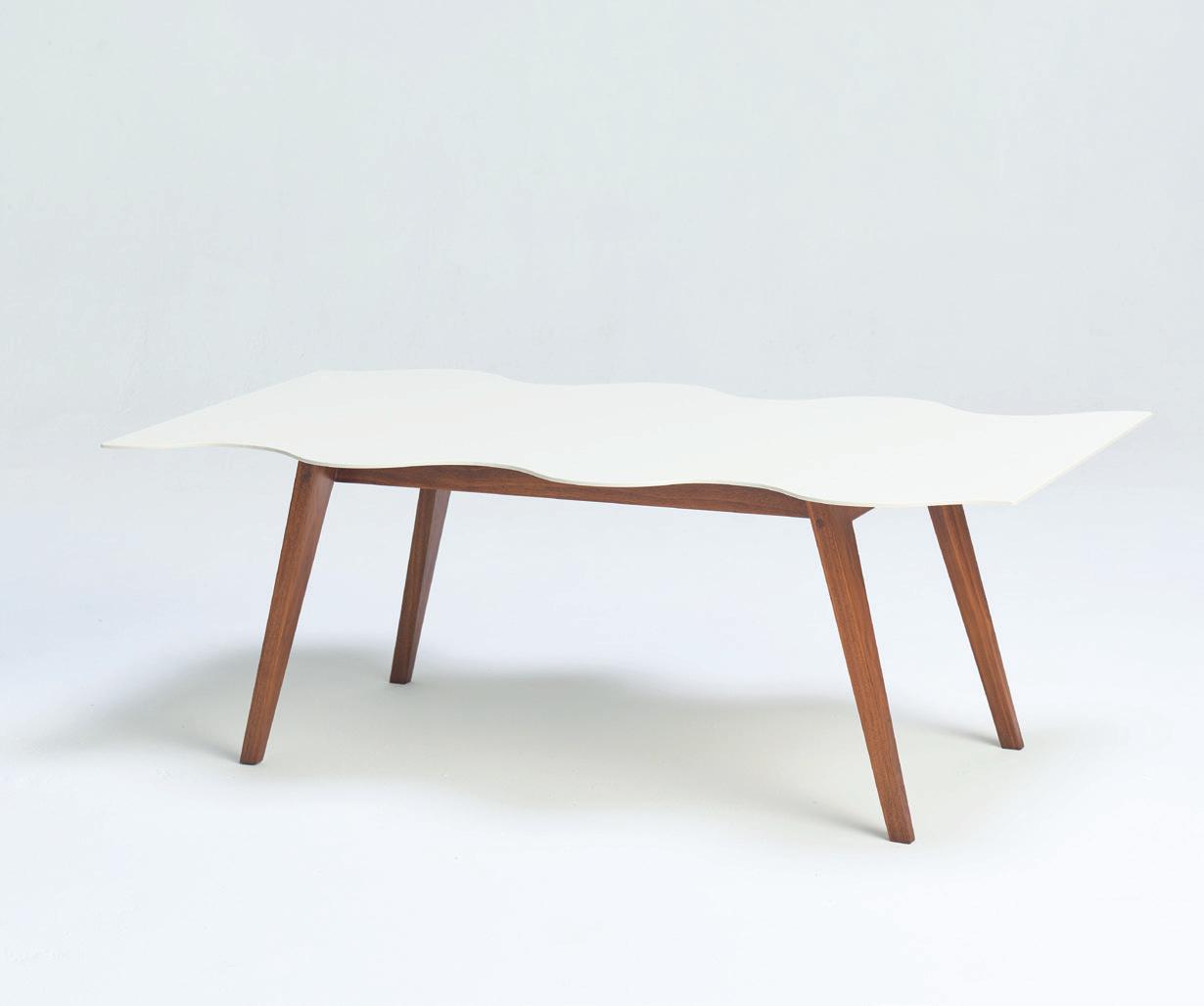
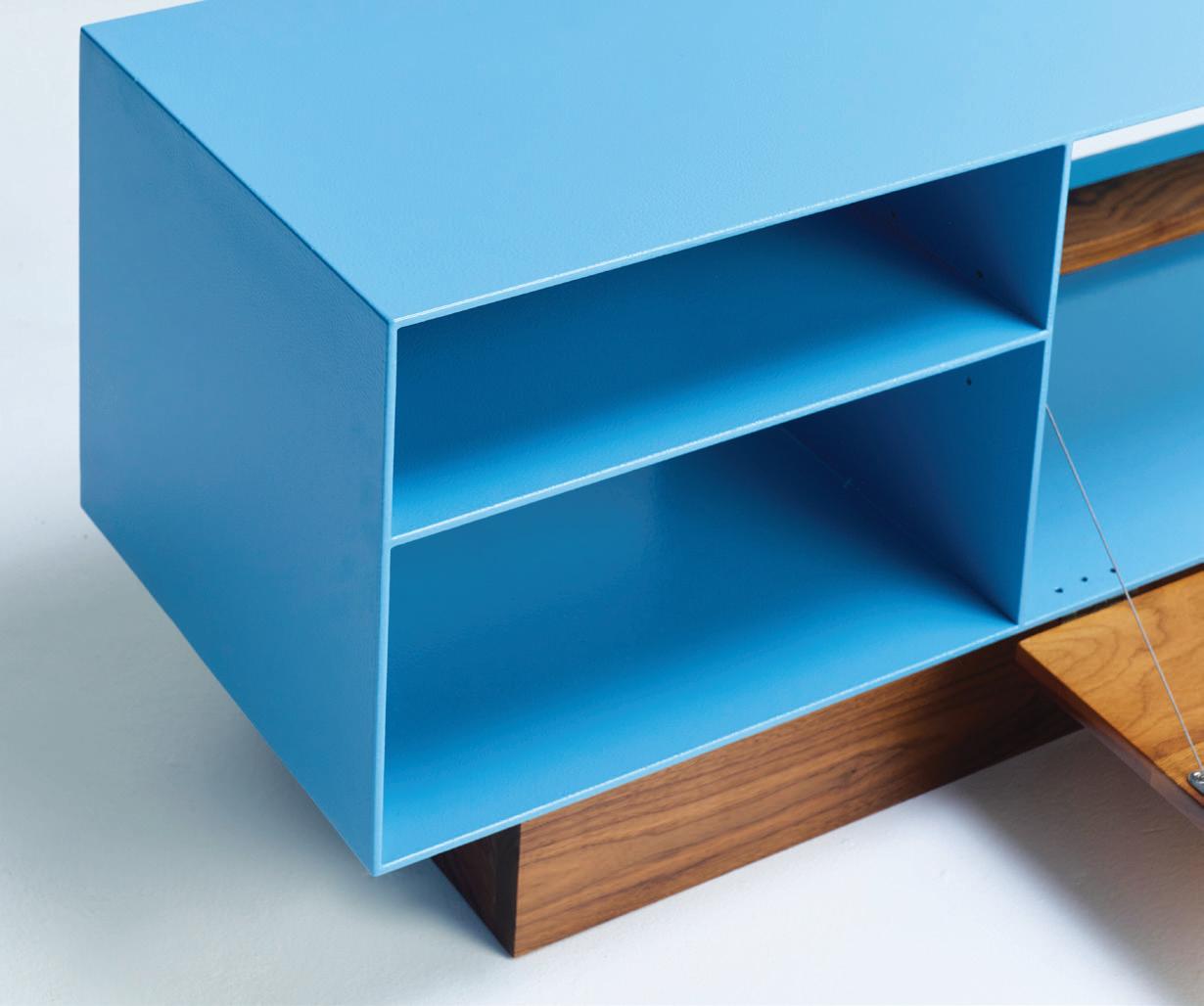
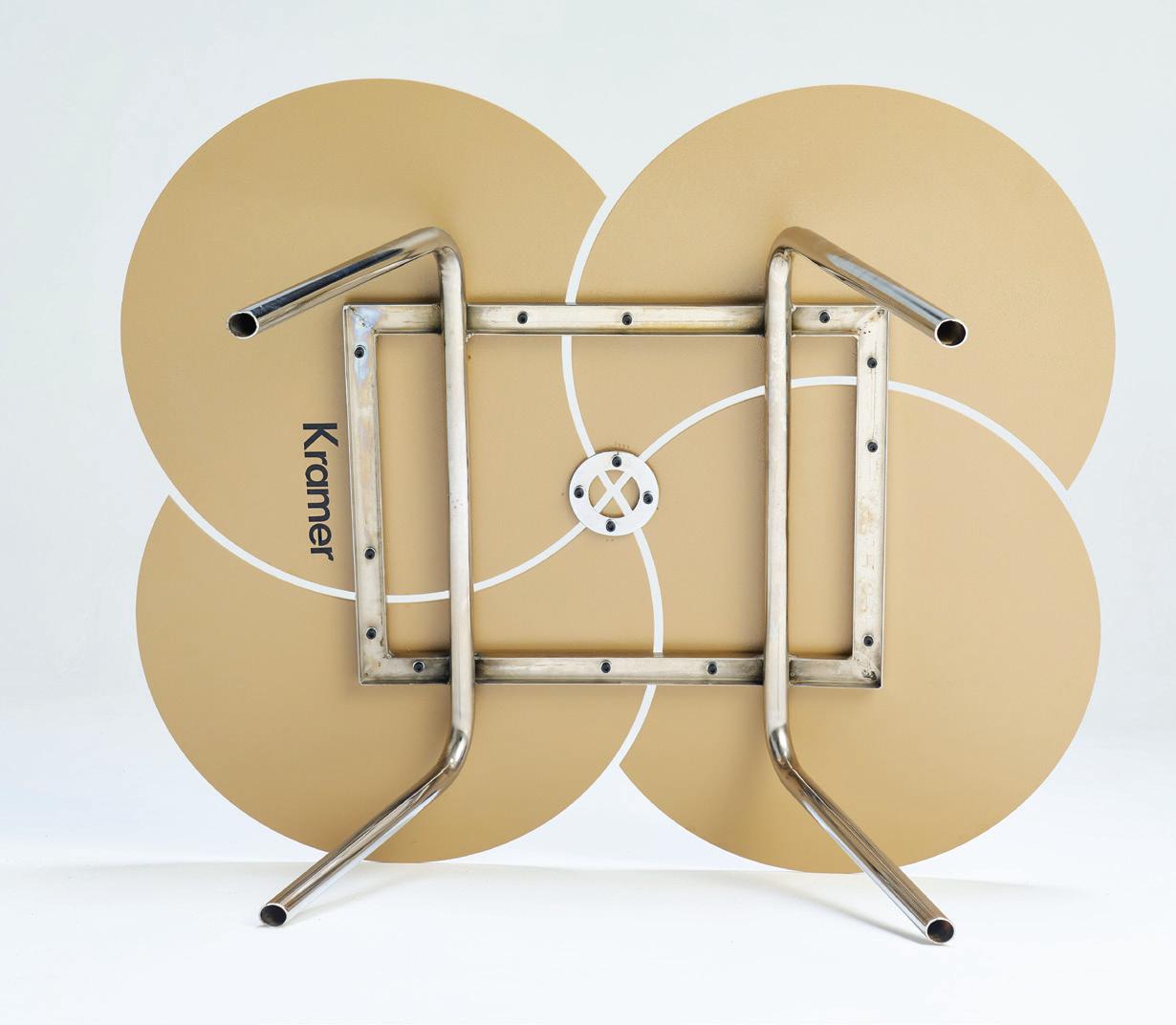


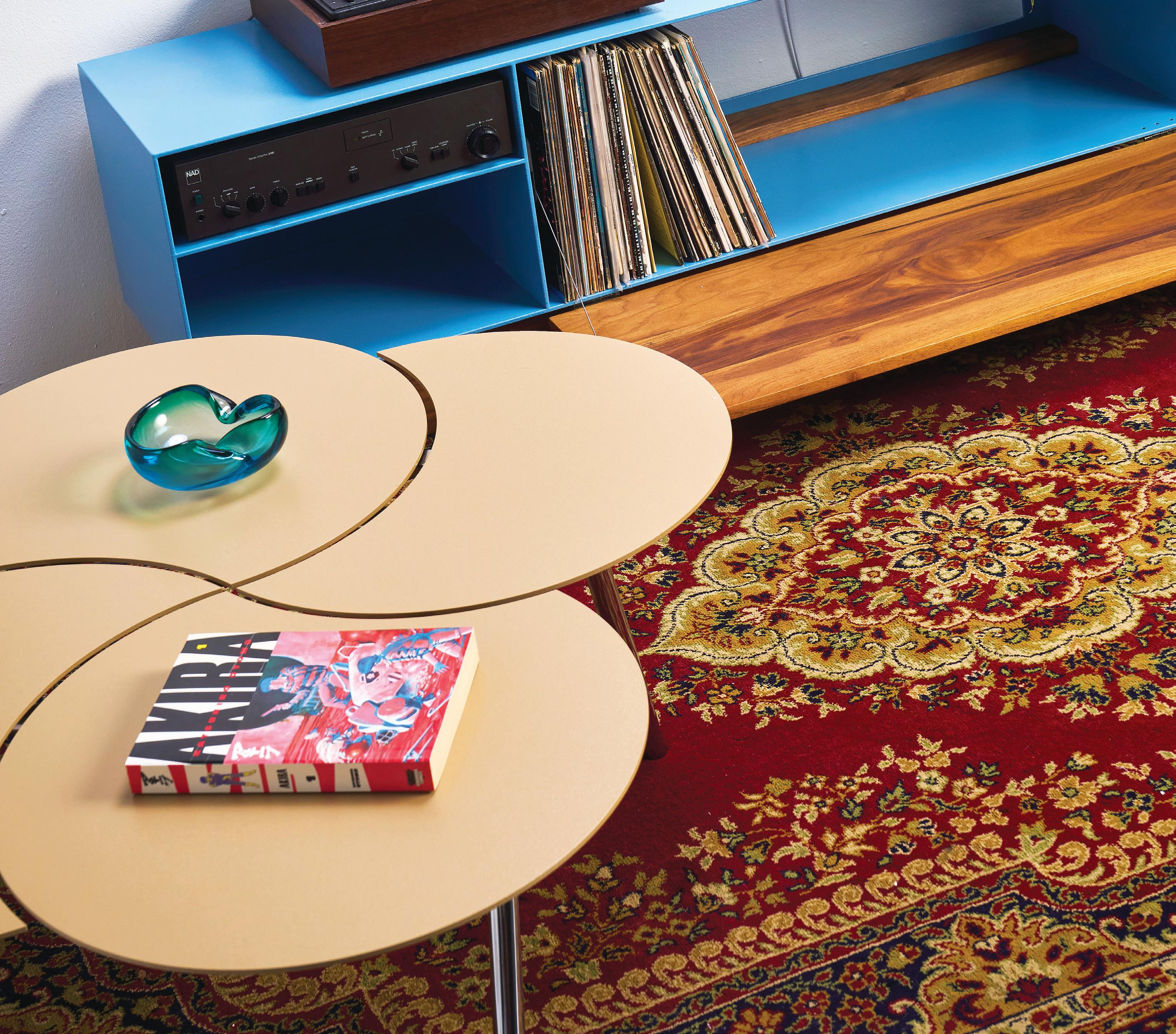
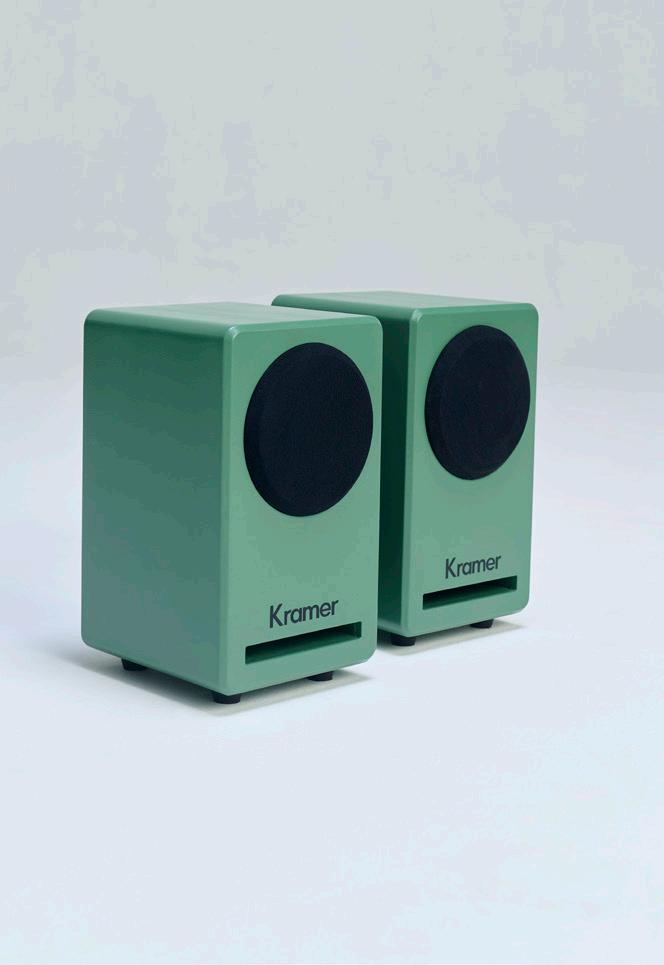

on YouTube, and he was off. “I was shocked that people were more interested in the table than anyone had ever been in anything I’d ever written musically... I was like, well, I like making things. People care more about this…and this was a first try. I could probably do better than this on a second try, on a third try. And I just kept going.”
Over the years, he’s developed a unique set of skills, simply figuring things out as he went along (“Everything I know is, to be totally honest with you, from YouTube videos”).
Now, he makes work only he can make – each piece, whether it be a loudspeaker or the most beautiful computer you have ever seen, is a product of his singular confluence of interests, skills, history and ambitions. He makes great speakers because he has an audio engineer’s ear from his time running the studio.
His animation background allows him to work easily in CAD, producing 3D renderings of designs and speaker horns, which he can then 3D print and cast in resin. The rest is just problem-solving and trying really, really hard. “At a certain point,” says Kramer, “if you throw your body against the wall enough times, you are going to get some kind of result… and if you don’t know how to do something, you’re doing your research.” It’s a refreshingly accessible design philosophy, because it implies that the ability to make – to bring something into being and effect change in your environment – is available to anyone willing to put in enough work, research and persistence.
And Kramer certainly puts in the work. He’s in his garage workshop seven days a week, unassisted, with very little time off. It’s physically extreme. “I am aware of the fact that I genuinely do think it is killing me,” he says. So why continue? “Making things is my whole life. I think you know you’re doing the right thing when, even in your darkest moments, you still wouldn’t be doing anything else.” He leans in across the table. “I have a new speaker I’m working on right now,” he tells me, a certain glint in his eye. “It was so complex to make. It took weeks to work through all the steps and stages…But like, man, it's gonna be nice when it's done.”
PHILIPDKRAMER www.kramer.studio @thebijouobservatory
THE QUIET WORK REBELLION IN BALLITO
THE QUIET WORK REBELLION IN BALLITO
The format of work, as we once knew it, has shapeshifted from the traditional rigid office lease to a world that values flexibility without isolation, professionalism without pretence, and collaboration. At the centre of this shift is Workshop17 Ballito, a coastal hub for remote professionals, entrepreneurs, and hybrid teams who’ve traded glass towers for ocean air, and embraced a workspace shaped by lifestyle-led productivity.
The format of work, as we once knew it, has shapeshifted from the traditional rigid office lease to a world that values flexibility without isolation, professionalism without pretence, and collaboration. At the centre of this shift is Workshop17 Ballito, a coastal hub for remote professionals, entrepreneurs, and hybrid teams who’ve traded glass towers for ocean air, and embraced a workspace shaped by lifestyle-led productivity.
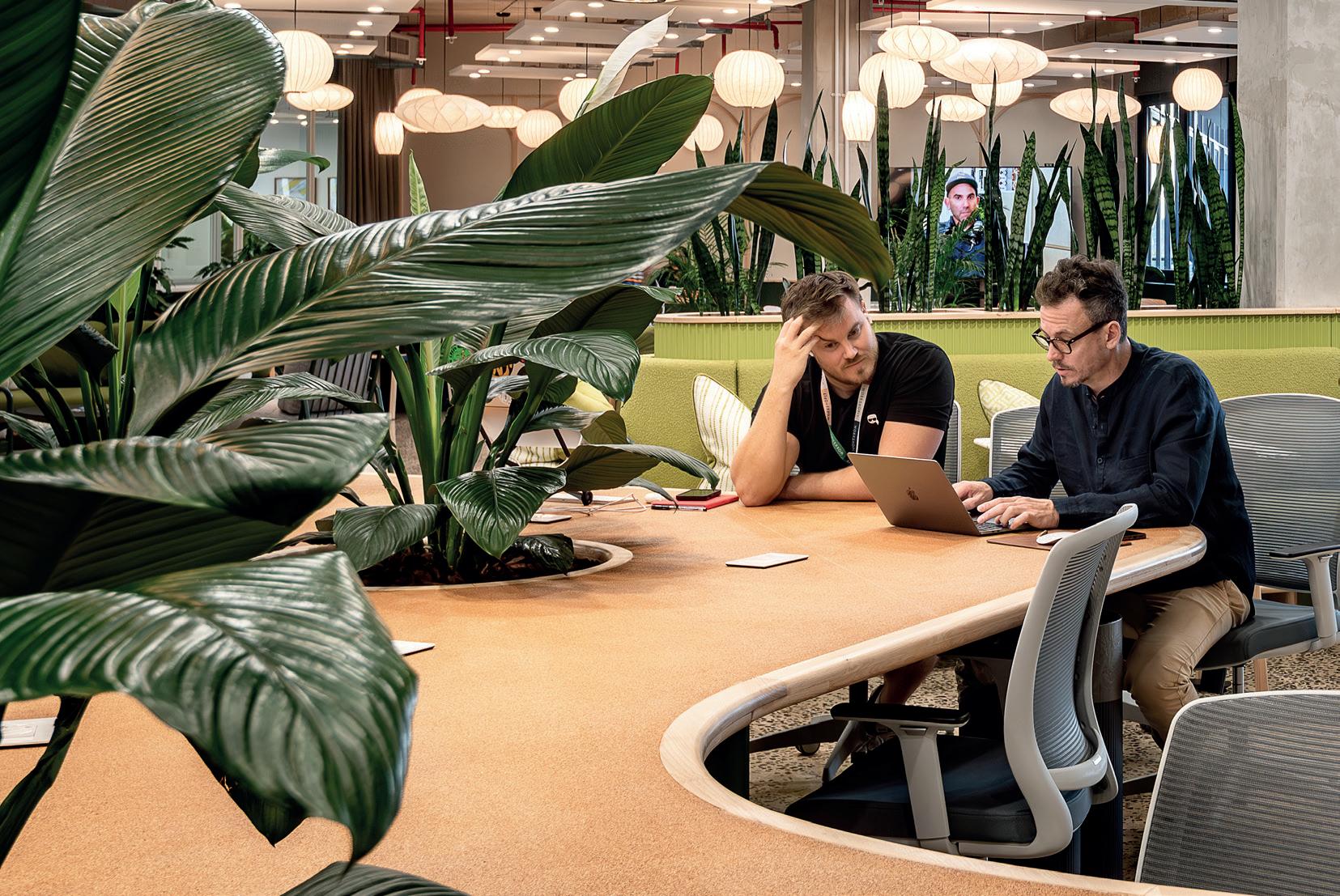
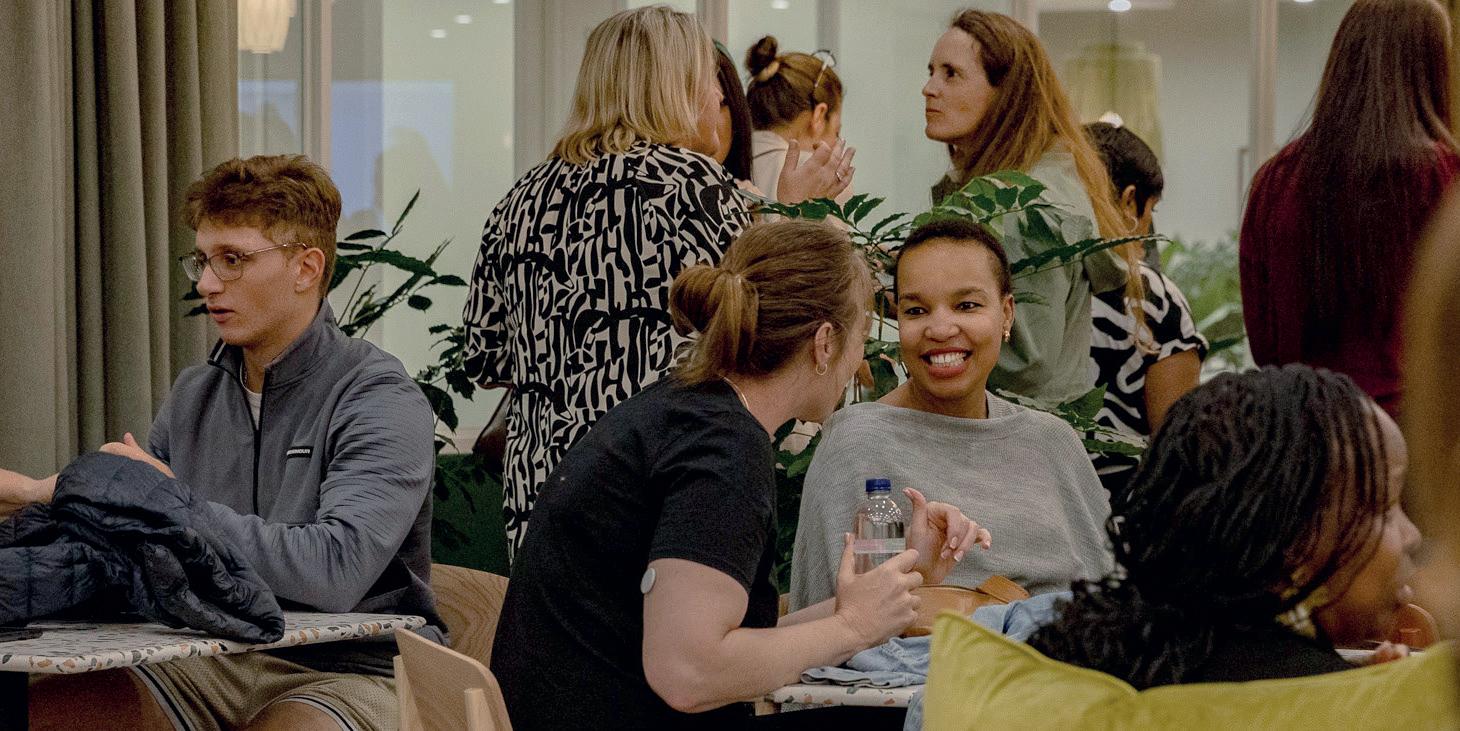
Enter Club17, Workshop17’s new coworking Membership designed especially for the Ballito market. For R1500 ex VAT per month, members get access to fully serviced coworking space, lightning-fast Wi-Fi, meeting rooms, and a community of like-minded professionals, all without the commitment of a lease. It’s the simplest expression of what so many workers now crave; autonomy with structure, focus without formality, and community without the noise.
Enter Club17, Workshop17’s new coworking Membership designed especially for the Ballito market. For R1500 ex VAT per month, members get access to fully serviced coworking space, lightning-fast Wi-Fi, meeting rooms, and a community of like-minded professionals, all without the commitment of a lease. It’s the simplest expression of what so many workers now crave; autonomy with structure, focus without formality, and community without the noise.
Ballito captures the contradiction most professionals are chasing, an era of ambition without burnout - It’s not escapism; it’s
efficiency disguised as lifestyle. Club17 plugs into that rhythm. A refreshingly simple work model of no overheads, no surprise costs, just a Monday to Friday access to work the way that works for you. It’s easy to dismiss coworking as a luxury, but in truth, it’s the most cost-effective way to access premium infrastructure in a volatile economy. For the price of a daily cappuccino habit, you get professional Wi-Fi, curated space, and the quiet energy of people building things, adds the team
efficiency disguised as lifestyle. Club17 plugs into that rhythm. A refreshingly simple work model of no overheads, no surprise costs, just a Monday to Friday access to work the way that works for you. It’s easy to dismiss coworking as a luxury, but in truth, it’s the most cost-effective way to access premium infrastructure in a volatile economy. For the price of a daily cappuccino habit, you get professional Wi-Fi, curated space, and the quiet energy of people building things, adds the team
Club17 is a proof of concept. It’s what happens when lifestyle becomes infrastructure, when we admit that people don’t just want to live where they work; they want to work where they live. So yes, the future of work might be digital, but it’s also deeply human, sun-drenched, and caffeinated, in Ballito. Work harder for less. Work smarter for life.
Ballito captures the contradiction most professionals are chasing, an era of ambition without burnout - It’s not escapism; it’s
Club17 is a proof of concept. It’s what happens when lifestyle becomes infrastructure, when we admit that people don’t just want to live where they work; they want to work where they live. So yes, the future of work might be digital, but it’s also deeply human, sun-drenched, and caffeinated, in Ballito. Work harder for less. Work smarter for life.
Club17 at Workshop17 Ballito +27 (0)31 100 2110 ballito@workshop17.co.za workshop17.co.za/club-17
Club17 at Workshop17 Ballito +27 (0)31 100 2110 ballito@workshop17.co.za workshop17.co.za/club-17
THE MYTH OF BILLY MONK
Words: Mia McCarthy
HOW DO YOU WRITE A MYTH? With difficulty, I’ve found. It’s not that there is little to say about the one-time nightclub photographer Billy Monk. His short but spectacular life has spawned a veritable archive of hundreds of photographs and thousands of words, many of them rumours. Nevertheless, the abundance of the archive is refracted through an abruptly premature death, rendering the man a kaleidoscopic figure: never fixed, always colourful.
To start: Billy Monk was an odd-job man. He was a leather shop owner, a traffic cop, a railway worker, a crayfish poacher, a diamond diver and, most famously, a bouncer and photographer at The Catacombs nightclub. Chronically peripatetic, Monk resisted definition. It was precisely this intransient quality that enabled him to turn such an unchallenged gaze on his subjects, and possibly encouraged such fervent speculation on his personal life.
“In jail”, writes journalist Lin Sampson in her 1982 essay Now You’ve Gone ‘n Killed Me, “he learned to box and some say it was where he learned a sexual ambivalence because, for the rest of his life, some people would say of Billy he liked men and women. When I asked a friend of his about this, he said, carelessly, ‘Oh, there simply weren’t enough women for Billy. He needed to double up.’”
Further speculation about the infamous photographer is ill-advised, not least because the archive is already heavy with apocrypha. However, poring over Monk’s own work, one thing is undeniably clear: his subjects were at ease under his eye which, considering the context, tells us as much as we can reasonably hope to know about Billy Monk.
It was the late 1960s, the height of apartheid. Inside a dockside dive bar that paraded as a pet parlour during daylight hours, insouciant drag queens, Coloured jazz musicians, and good-time girls of every imaginable class and creed allowed themselves (and their transgressions) to be captured with pellucid candour by the flash of Monk’s camera. The allure of his personal mythology notwithstanding, Billy Monk is worth remembering because his work represents a culturally significant history: a then-unseen and now easily-forgotten underworld of sexually and racially deviant couplings refuting the national Calvinist myth that humanity was something to be purified through separation.
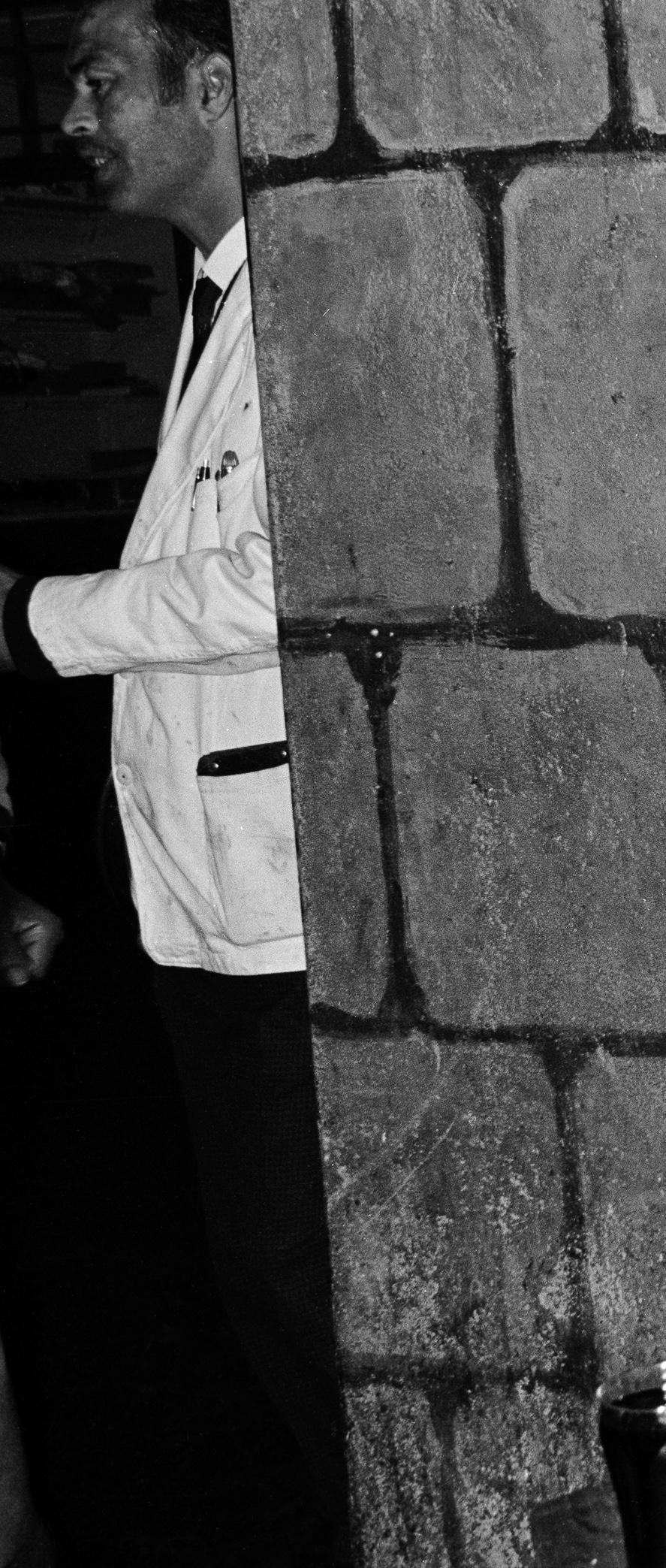
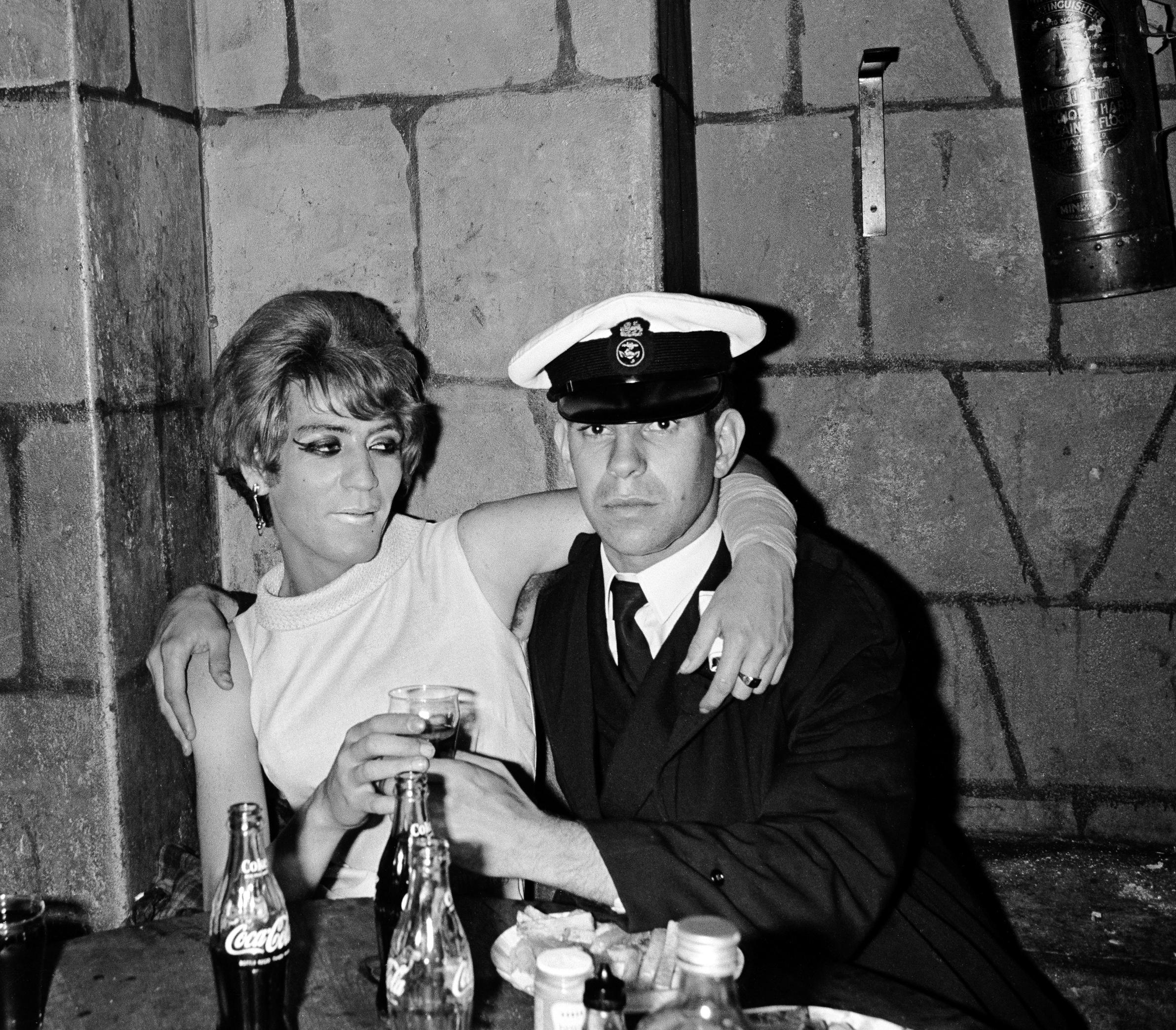
“Immanence is key. We are in the midst of an event. The energy is electric. What we see, when we choose to do so, are arabesques of feeling, rueful tenderness, entangled heat, spent pleasure, fleeting complicity. But, above all, human connection.”
– Ashraf Jamal. ‘A Delicious Icky-sticky Freedom’. 2020
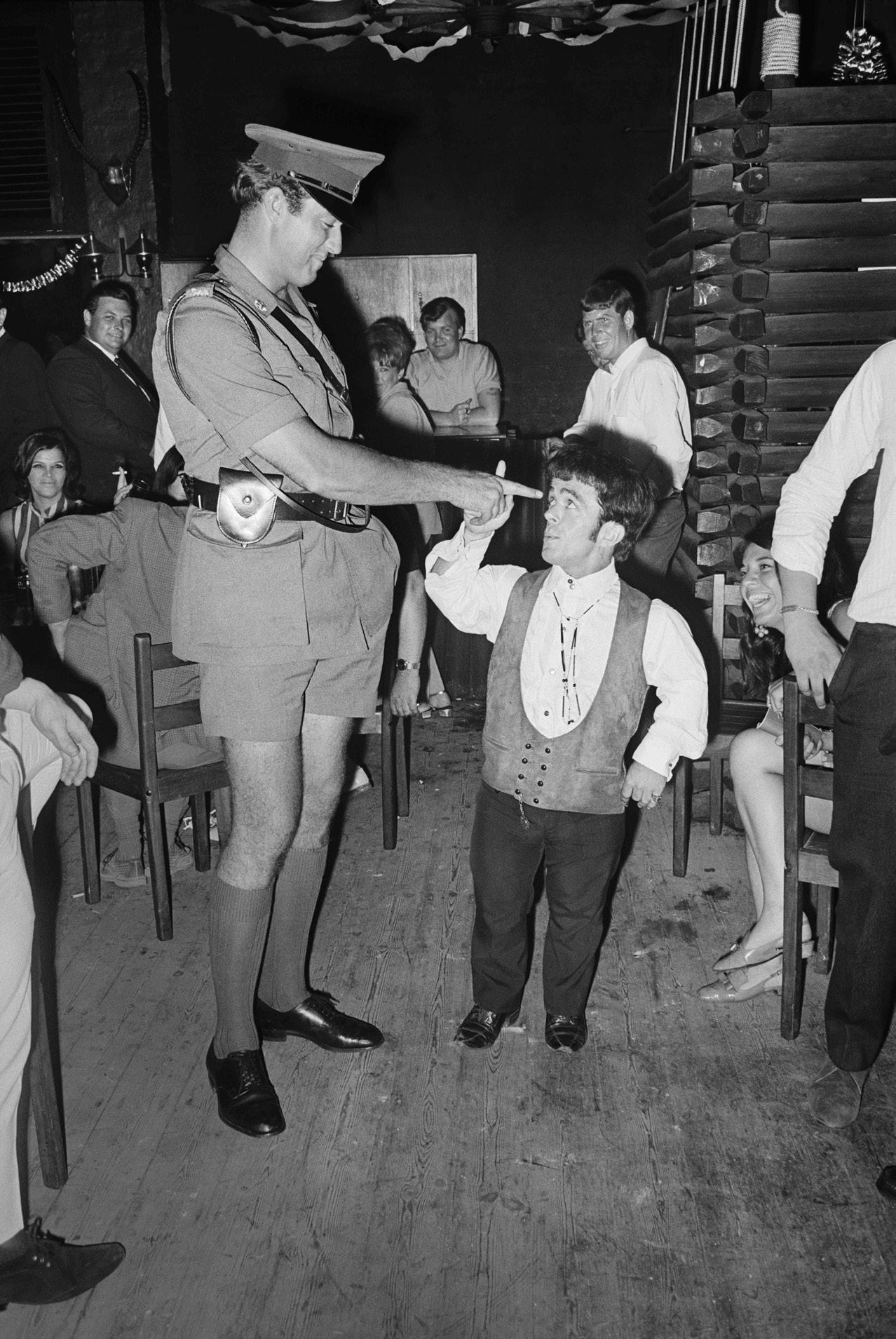
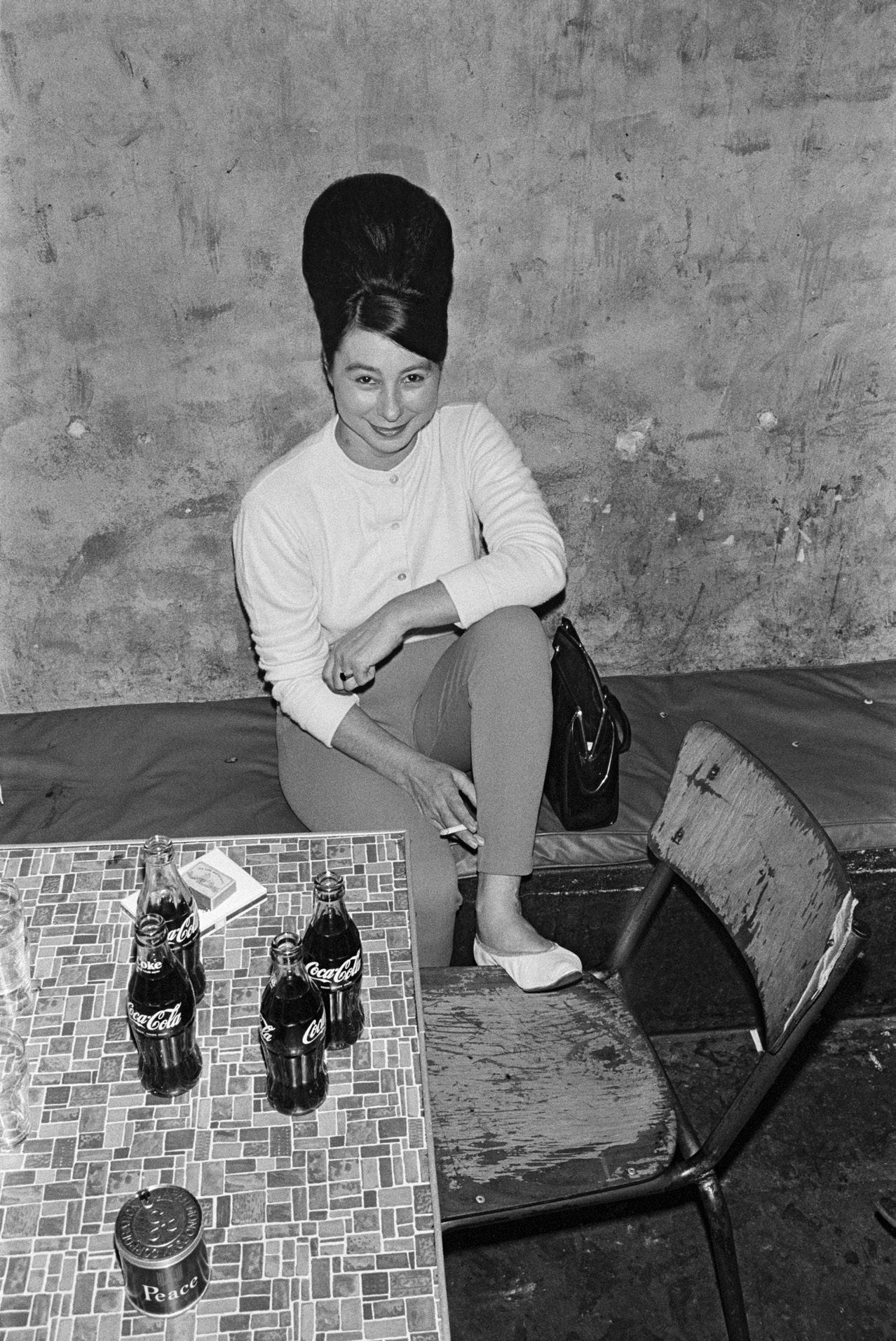
“They were a documentary of the time in the true sense of the phrase. Women with beehive hairstyles wielding half-jacks of Limosin brandy, ducktail couples welded together in the darker corners of the club, a dwarf and cop in mock confrontation.”
– Chris du Plessis. ‘Beats Me’ Column. Cape Times. 1982
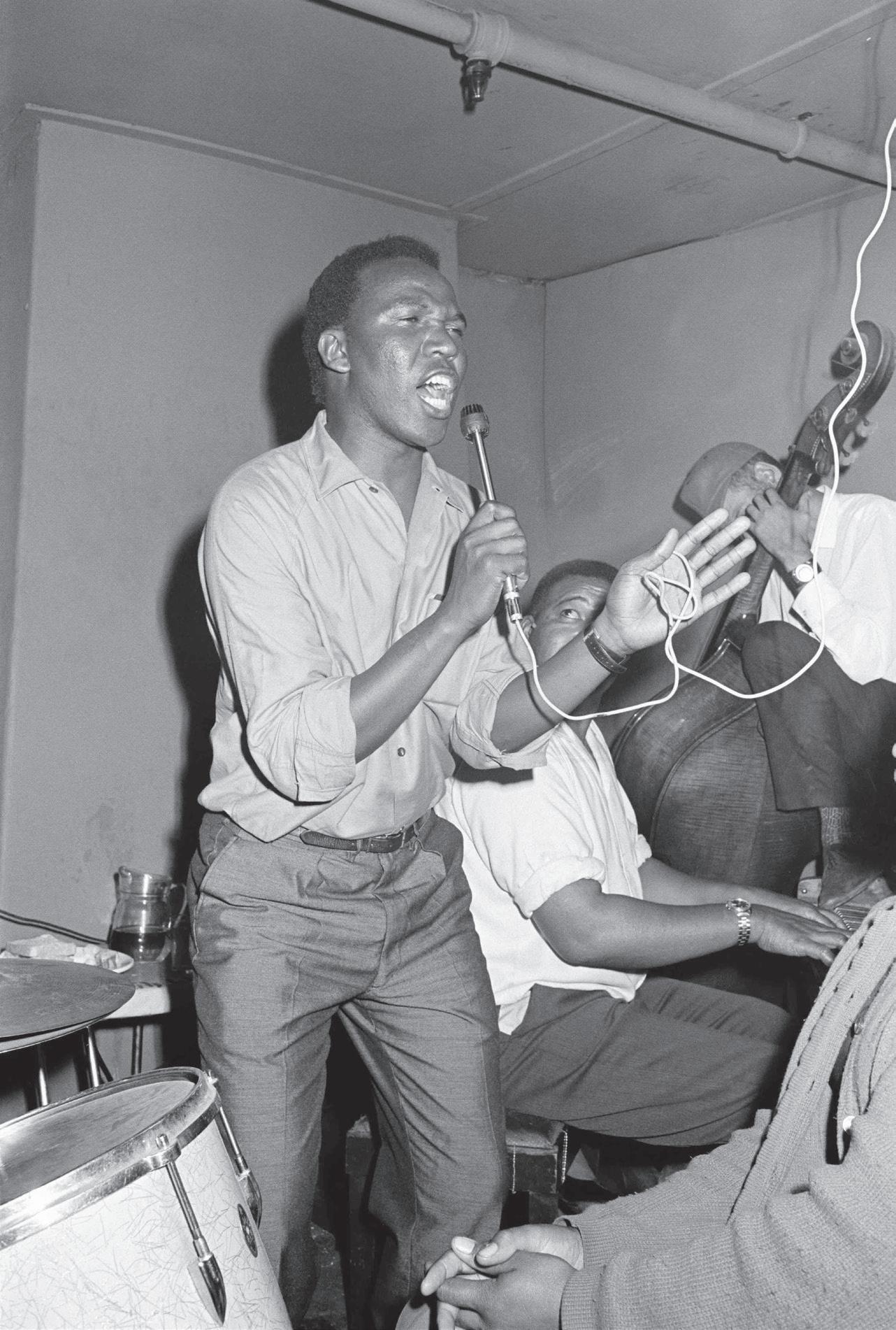
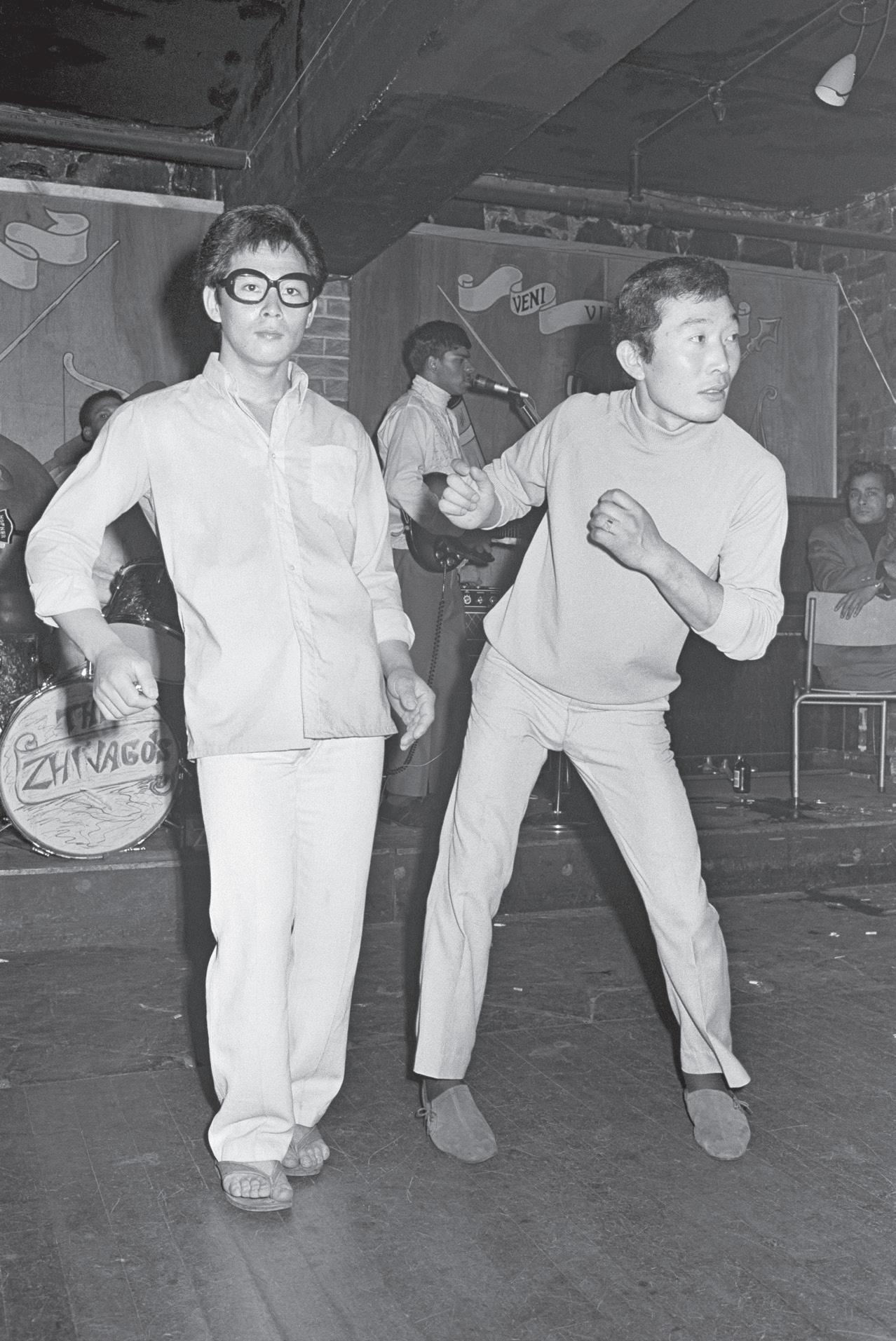
“Billy’s body of work reveals a unique and hidden gathering place in apartheid South Africa. A bubble of existence, a place for jazz music, dancing and drinking and unbridled joy, all captured by Billy, not an outsider but one of them. A gent yet a bruiser, a saint and a sinner, straight versus gay, an artist and a lowbrow. It’s a stunning collection where the bizarre and tragic is as prevalent as the joyful and humorous.”
– Craig Cameron-Mackintosh. ‘The Brilliance of Billy’. High Life Magazine. February 2019
Were it not for an historical tour of the Waterfront led by my unparalleled guide and fellow writer for the magazine, Cameron Peters, I myself would never have guessed at the seedy history of Cape Town’s docks. Beautified as it is by a thin but glossy veneer of commercial development, it’s difficult to imagine the city’s harbour as anything other than an anodyne monument to late-stage consumerism.
However, Peters’ insights and Monk’s stark compositions erode the harbour’s modern-day veneer like acid, throwing into relief an underbelly portrait of the Tavern of the Seas as a lush and sordid bed of inequity — the refuge of soldiers, sailors, sugar daddies, and sex workers.

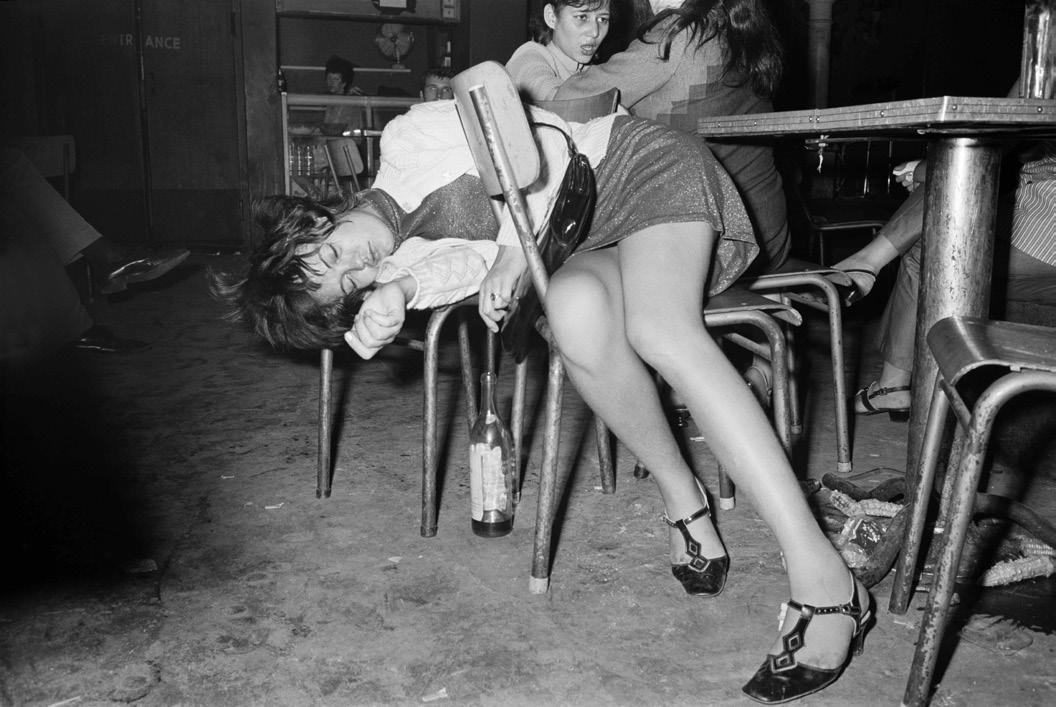
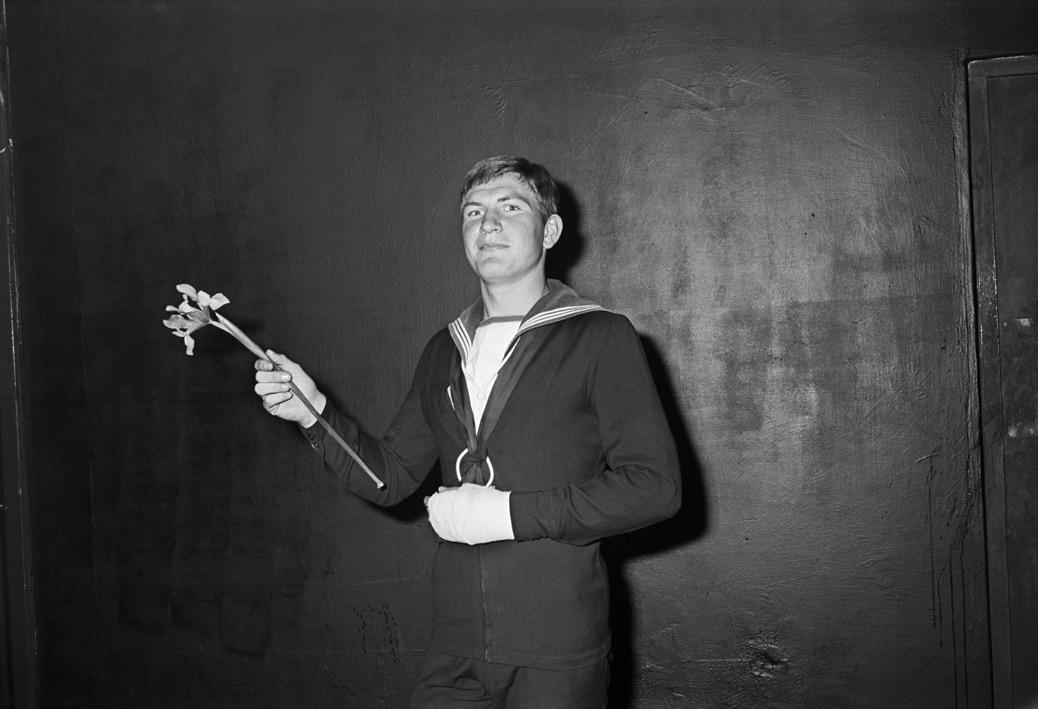
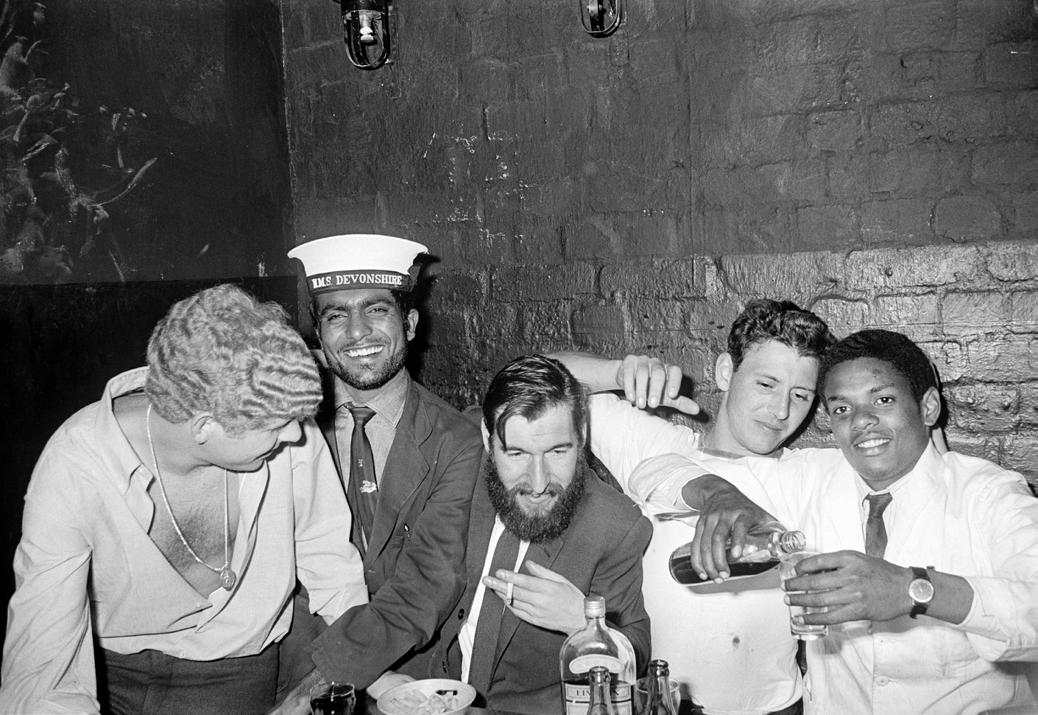
What is most remarkable to me is not just the directness of Monk’s monochromatic gaze, but the equivocal honesty with which his subjects are prepared to meet it. Here they are, posed coquettishly, slumped over coffin-shaped tables, bellowing into saxophones and karaoke microphones with abandon. Monk was no voyeur. Ostensibly employed as a bouncer for the club, he didn’t keep misfits out nearly as much as he let them in. This, perhaps, was his side of the bargain; in exchange, his subjects offered themselves up to his mechanical eye, collaborating in his capture of the ineffable pathos of the partygoer.
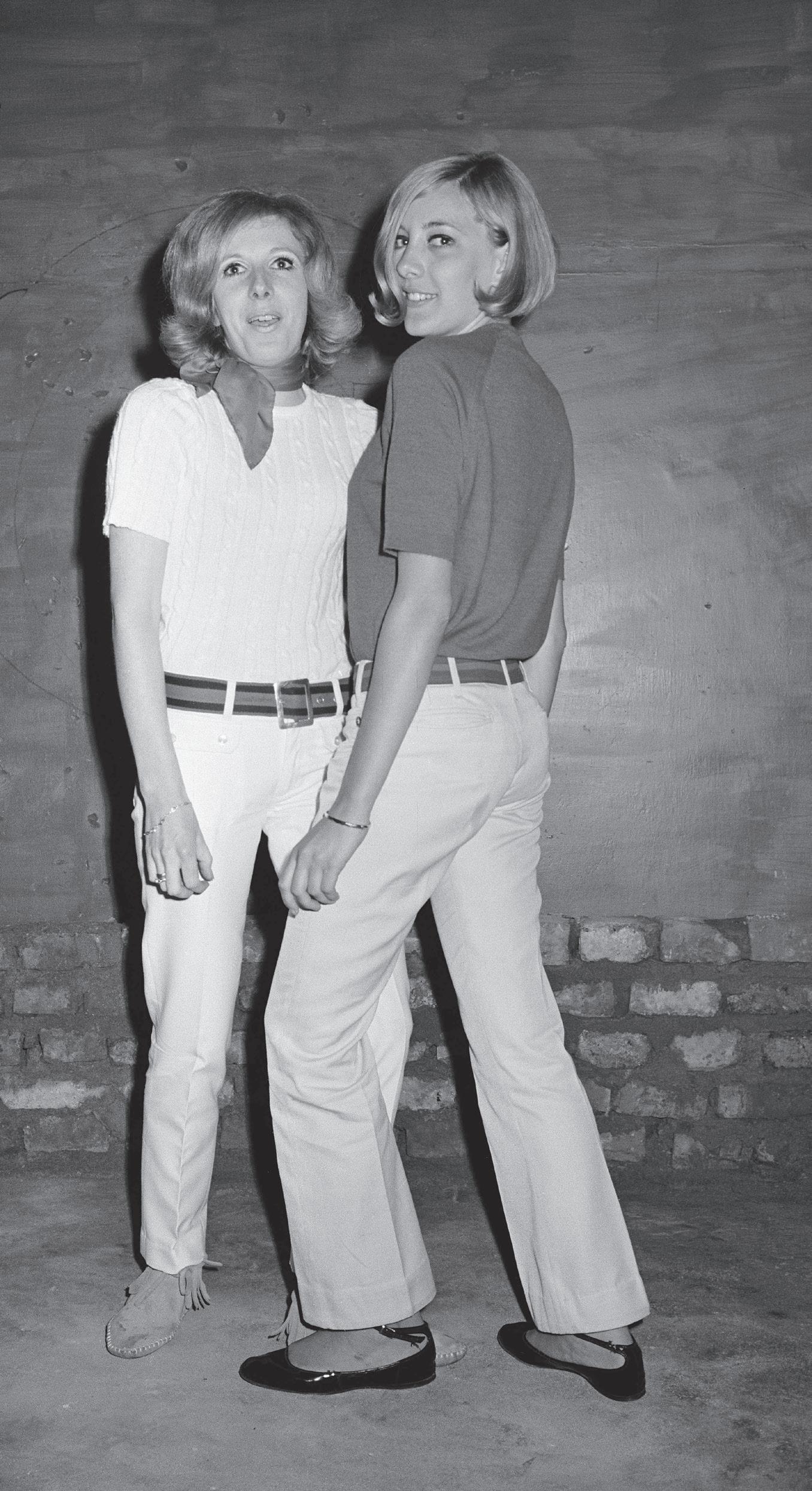
“In the context of photographic history, Monk’s images might recall Brassaï’s 1930s images of Paris nightlife or, more recently, Yoshiyuki’s essay on peepers in the park; both of these, however, are the work of fascinated outsiders, records of documentary excursions into private worlds. Similarly, Diane Arbus - whose images of twins are recalled in Monk’s several photographs of women dressed identically - was an outsider of her ‘freak’ subjects and, habitually, isolated her subjects from any sense of action whereas Monk evidently saw them as part of the flow of life in the clubs.”
– Michael Godby. ‘Billy Monk: Nightclub Photographs’. Photoworks. 2010
Monk endeavoured without contrivance to document his habitat with an honesty that reads like tenderness. Even his careful naming conventions look like diary entries, listing simply the location and the date of capture. Though he is posthumously lauded as a man who lived for his art, it’s likely that Monk was, like other photographers of the time, taking pictures to sell to the sailors who frequented the docks. If anything, his savviness ingratiated him even more to his equally mercenary subjects and made possible the inimitable intimacy for which his photographs have become renowned. We forget, after all, that even Shakespeare was primarily motivated by the promise of a paycheck.
He left his collection in a studio space he shared with Paul Gordon, an editorial photographer, before executing one of his period disappearances to the sea to make money. The meticulously labelled negatives were on the verge of being thrown out before they were uncovered by Sampson and delivered into the hands of South African photographers Jac de Villiers and David Goldblatt who, with Monk’s blessing, staged an exhibition at the The Market Gallery to critical success.
Monk never learned how well his work was received. On his way to Johannesburg to see the show for himself, he was fatally shot in a trivial argument. “Now you’ve gone an’ killed me,” he admonished the shooter. How could he have known, then, that he would never die?
BILLY MONK
Billy Monk images copyright and courtesy of the Billy Monk Collection. www.billymonk.com @ billymonkcollection


































CREATIVE TECH COURSES FOR EVERYONE
Keyline is a multi-award-winning, disruptive, and evolutionary multidisciplinary creative learning institute. We are focused on teaching the skills that matter - fast - through engaging, interactive, and meaningful learning experiences both inside and outside the classroom.
Our digital design courses equip individuals and teams with the latest tools, techniques, and evolving workplace practices - enabling them to maximise productivity and create high-quality, on-point visuals that drive engagement and sales.
Ballito 1 Lozi Park, Phezulu Drive
Durban Central 136 Florida Road Tel 031 312 8560 | 082 936 9554
COMPUTING FUNDAMENTALS
XPRESS GRAPHIC DESIGN
WEB DESIGN AND UX
INTERACTIVE MEDIA
MOBILE APP DESIGN
DIGITAL MARKETING
DIGITAL ENTREPRENEURSHIP
3D MODELLING AND ANIMATION

VIDEO PRODUCTION & PHOTOGRAPHY
GUARDRAILS FOR AI IN THE CLASSROOM
AI WORKFLOWS IN DESIGN AND BUSINESS
3D PROTOTYPING & PRINTING
3D VISUALISATION & CAD
ROBOTICS READINESS
GAME DESIGN
CONTACT CLASSES
Classroom-based learning with direct instructor interaction, real-time feedback, and practical, hands-on activities.
LIVE VIRTUAL CLASSES
Live, instructor-led sessions conducted online, providing realtime engagement, and interactive learning experiences.
BLENDED SELF-PACED CLASSES
A combination of self-paced learning and live online support - offering flexibility while ensuring comprehensive guidance when needed.





How to believe the house you wake in is your home
Words: Dan Charles
ALKA DASS
“I think that, at the heart of all my bodies of work there always lies the sense of belonging. Whether it is in this land, whether it is within yourself and also within the day to day routines.”
- Alka Das
NOTLONG AFTER LEAVING her studio in Woodstock, my phone buzzed with a barrage of texts from the artist Alka Dass. She had sent an assortment of screenshots and links to the poems we had spent a good portion of the afternoon gushing over while drinking multiple pots of tea, sharing a packet of cheap biscuits that failed their packaging’s attempt to pass themselves off as macaroons from the corner store next door, and listening to jazz records that punctuated our conversation every time the needle called for Side A to be flipped to Side B.
One of the links was to Brad Aaron Modlin’s poem What You Missed That Day You Were Absent from Fourth Grade, a reflection on what might have been taught alongside a typical school curriculum if children were given tools to fortify a sense of mindfulness and emotional intelligence—skills far more useful in adult life than, say, algebra. The poem imagines lessons in noticing meaning in the ordinary—pumping gas, peeling potatoes; learning how to remember the voice of a loved one; understanding that the words “I am” form a complete sentence. One lesson in particular stayed with me: “how to believe the house you wake in is your home.”
I think that might be the very lesson Alka is trying to teach both the viewer and herself through her art.
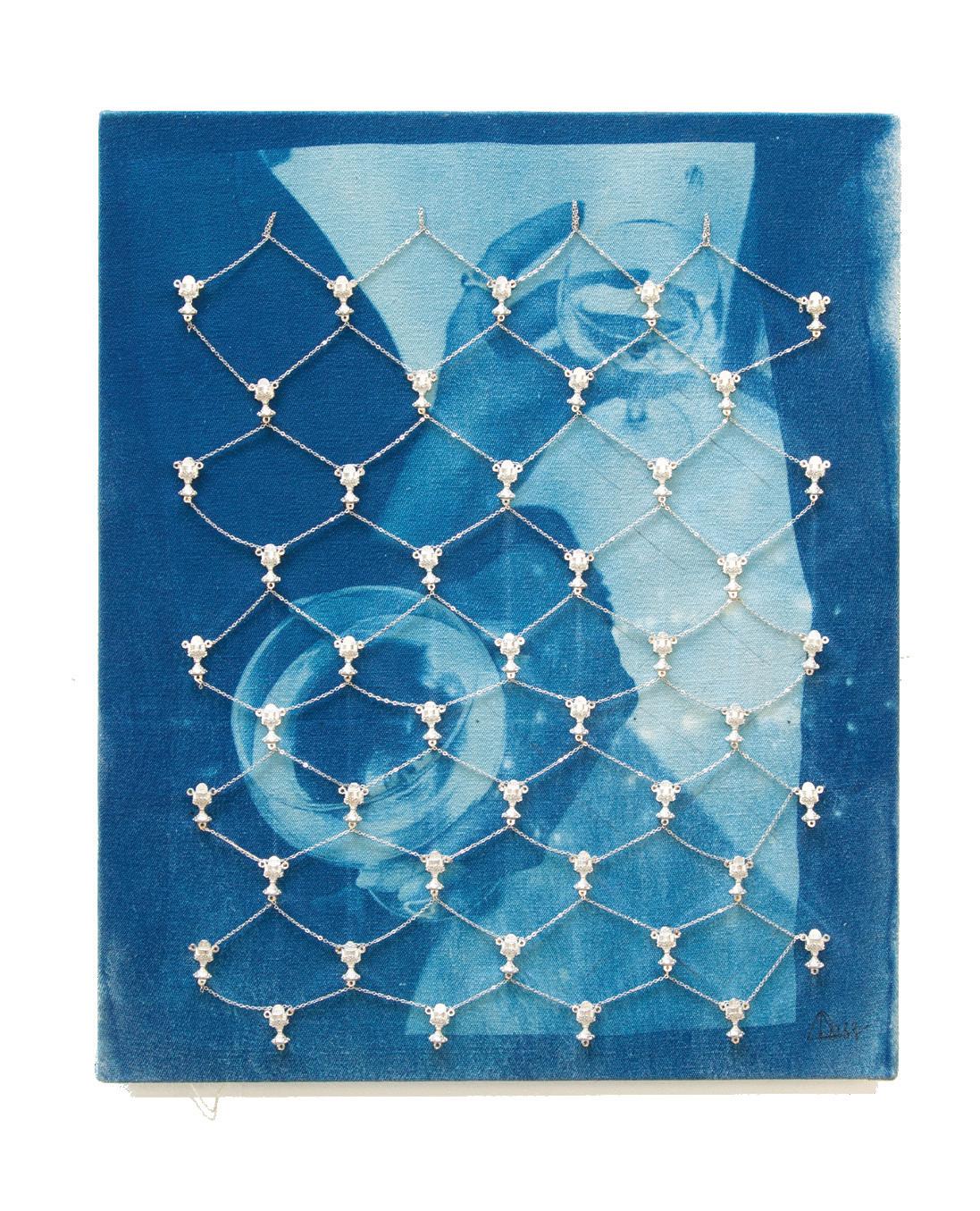
27 of cups
Alka Dass,
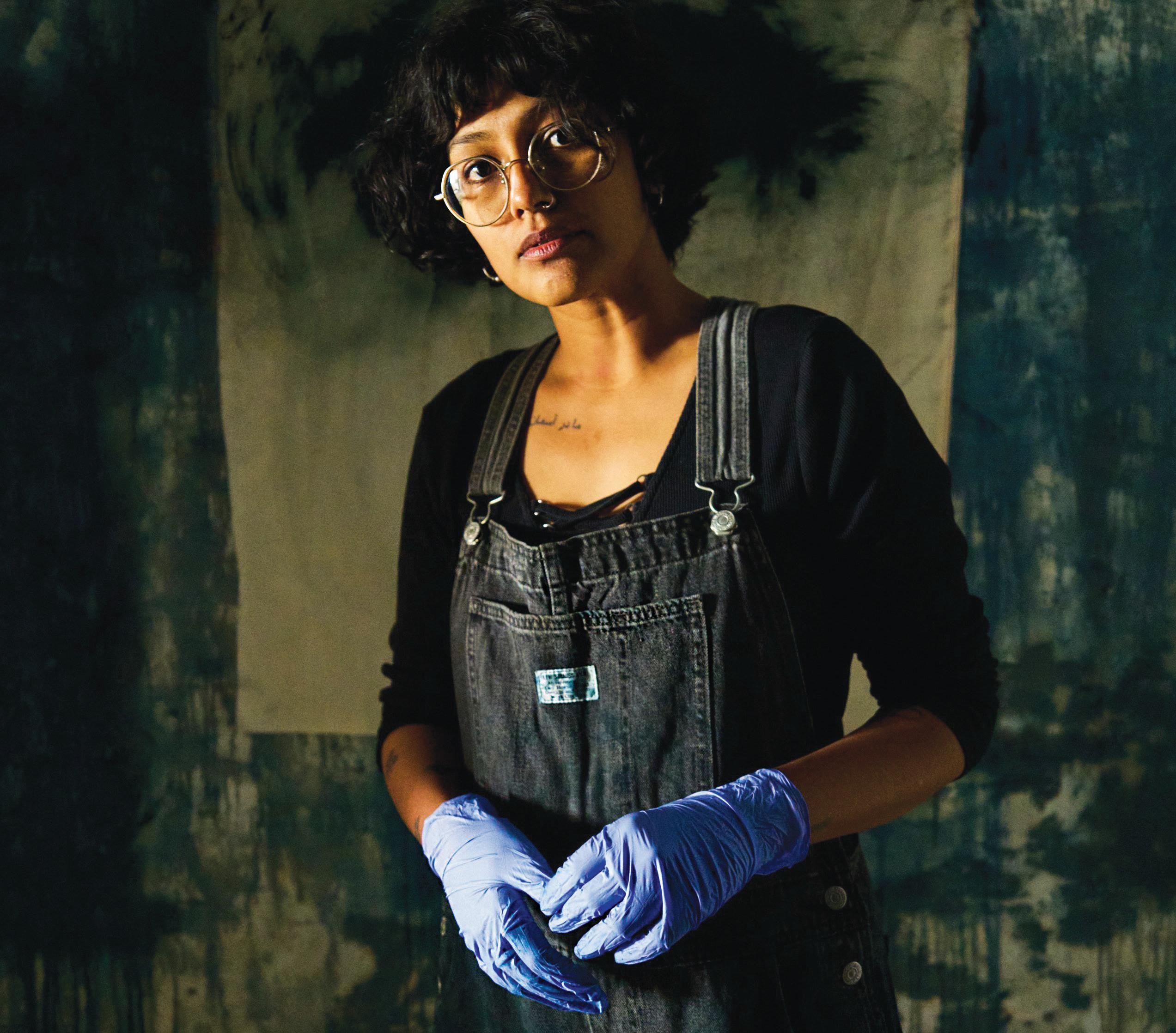
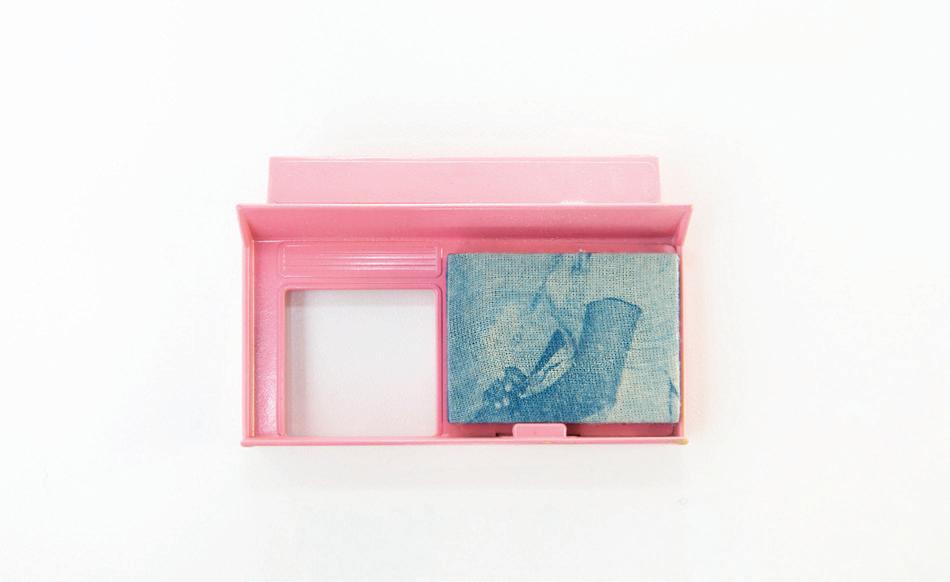
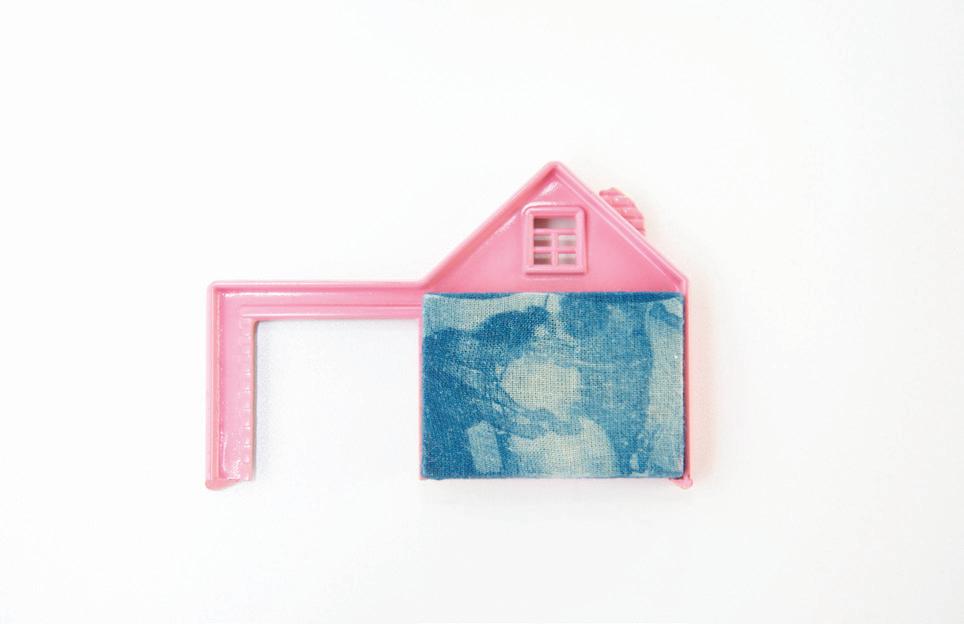
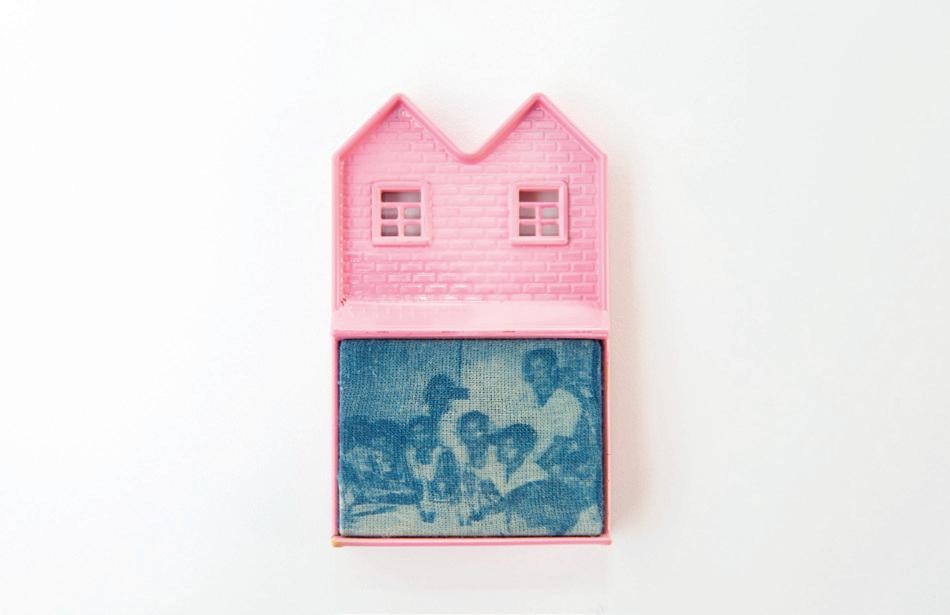

Alka Dass, 4 Ramlaken road, Isipingo 1
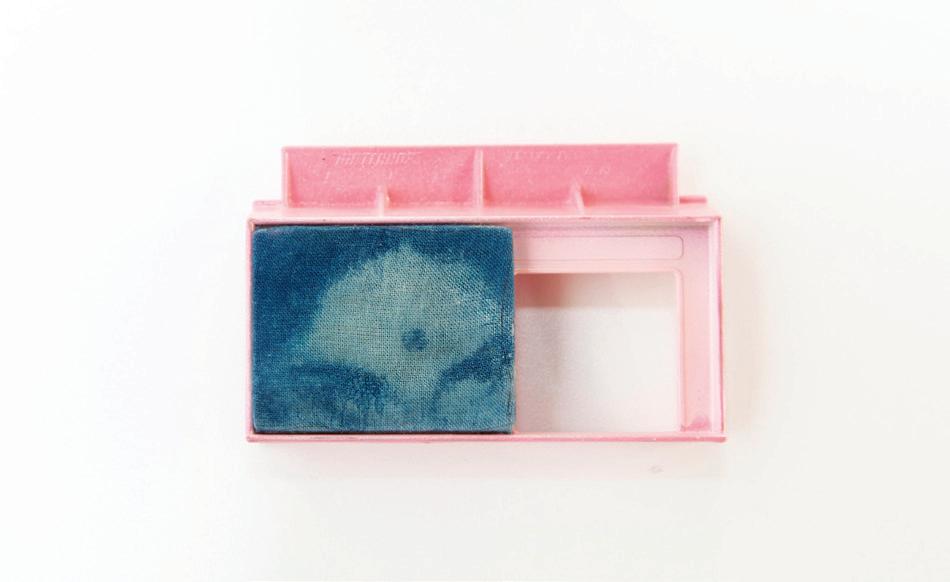
Alka Dass, 4 Ramlaken road, Isipingo 2
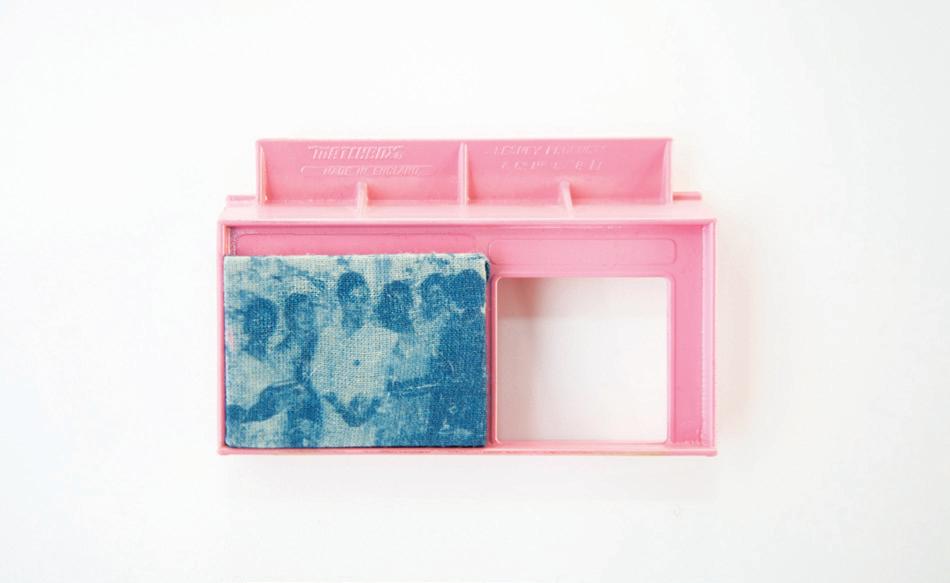
Alka Dass, 4 Ramlaken road, Isipingo
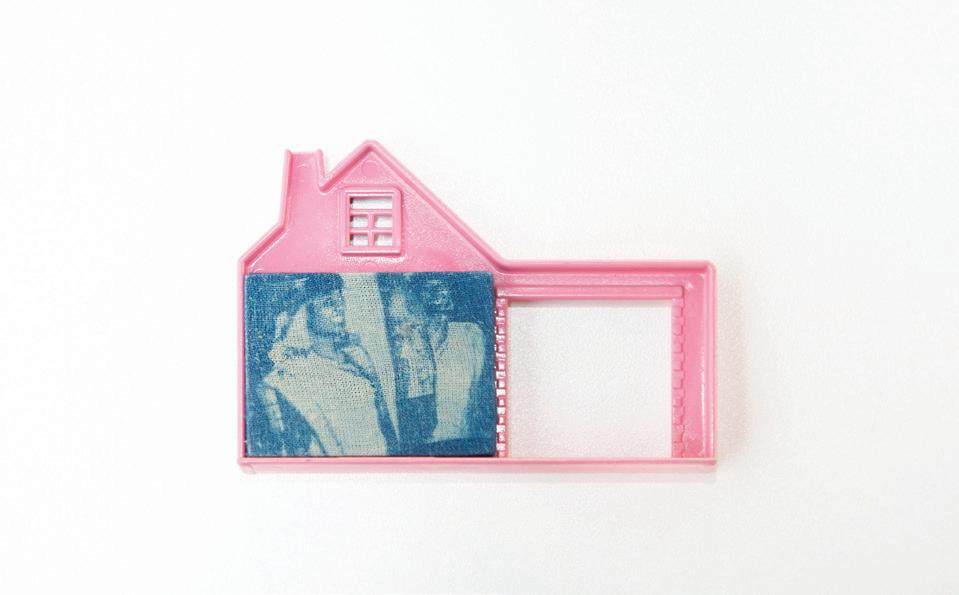
Alka Dass, 90 Granada Street, Shallcross 2
Alka Dass, 90 Granada Street, Shallcross
Alka Dass, Court Road, Umzinto

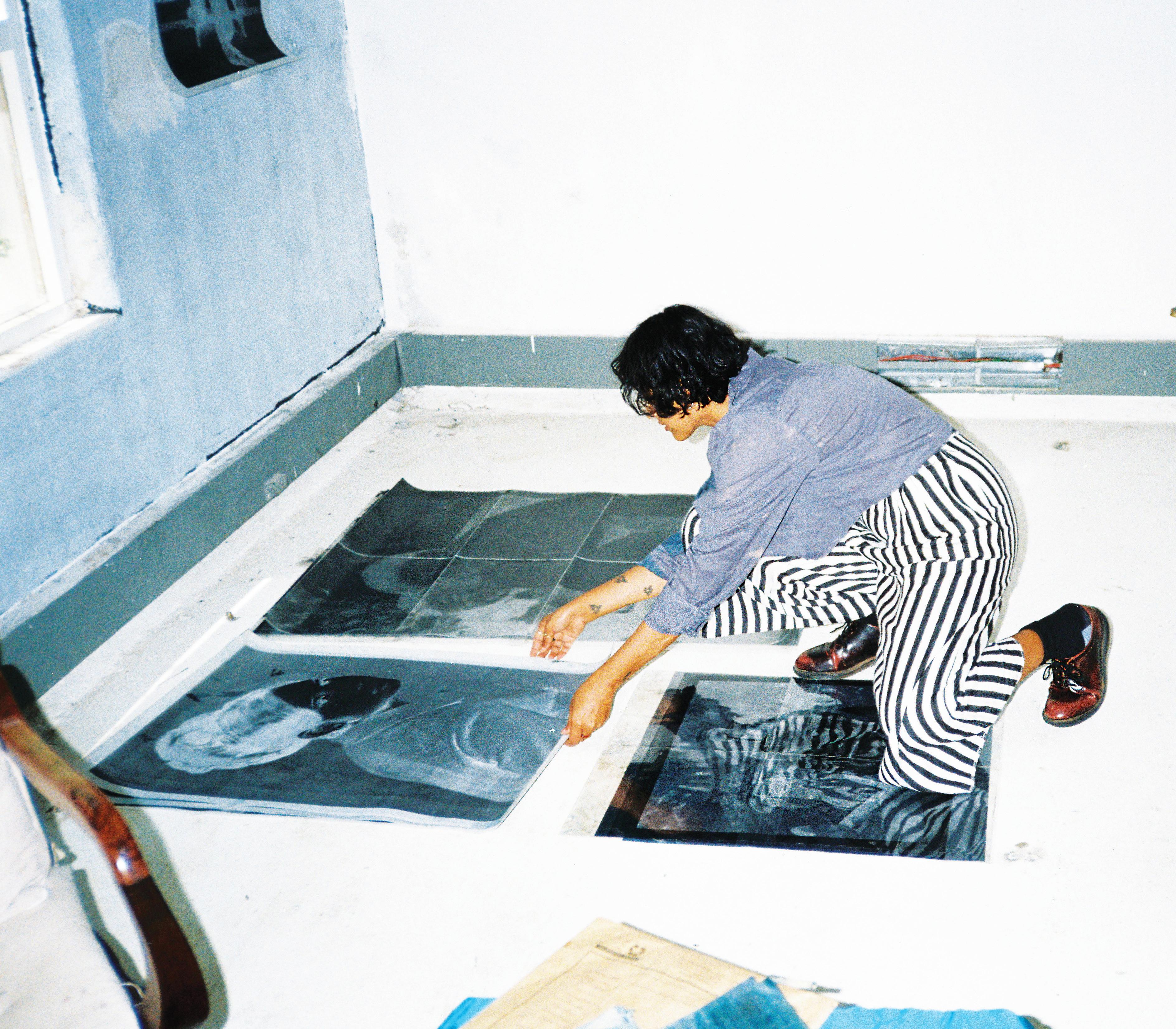
Pics : Jonathan Kope
Over our first pot of tea, while Sarah Vaughan’s voice floated through the room, I asked Alka whether she ever worries about how her work might be perceived. I knew it wasn’t a particularly insightful question—most artists, whether they admit it or not, feel some anxiety about releasing their work into the world and risking its meaning being reshaped by people hunched over keyboards like me. But I was curious because Alka’s work is particularly personal: she takes old family photographs and translates them into explorations of identity and belonging, especially for Indian South African women and the histories attached to their heritage. Some artists place a protective distance between themselves and their work. Alka does not. She cannot. And she feels the weight of that vulnerability.
“I think because I am working with memory, and I'm working with oral histories that aren't necessarily written… there's not much written on Indian indentureship in South Africa—although it’s become more popular recently, which is amazing. But I also feel like it’s a bit stuffy, because it's coming from the side of timelines and history in a very academic sense, but we don't get to have the real feel.
“A lot of the pictures I used were taken in my family’s homes in Cato Manor before the race riots and before the Group Areas Act. And I mean, I’ve read things about it, but actually listening to my Nani, who lived in that area with her in-laws, makes it very different. I’m hearing someone’s first-hand experience versus something written online by an academic who’s probably never experienced it. One side is emotional, fragile, delicate—she’s talking about something that happened to her, something she witnessed and couldn’t stop—as opposed to just dates and times.
“So I do feel scared and vulnerable about how that’s perceived, because I’m taking information told to me by someone I absolutely love and adore and trying to translate it in my own visual language while being sensitive to the topic.”
Academia plays an important role in documenting the facts of history, of course, but perhaps the forced removal of nearly 100,000 residents of Cato Manor in 1959—an area subdivided from 1914 and sold largely to Indian market gardeners newly released from sugar-plantation indenture—is lesser known today than the removals in Sophiatown or District Six simply because fewer stories of it have been told. Fewer stories mean fewer emotional anchors to help us understand the magnitude of loss, or how that legacy of loss is passed down through generations.
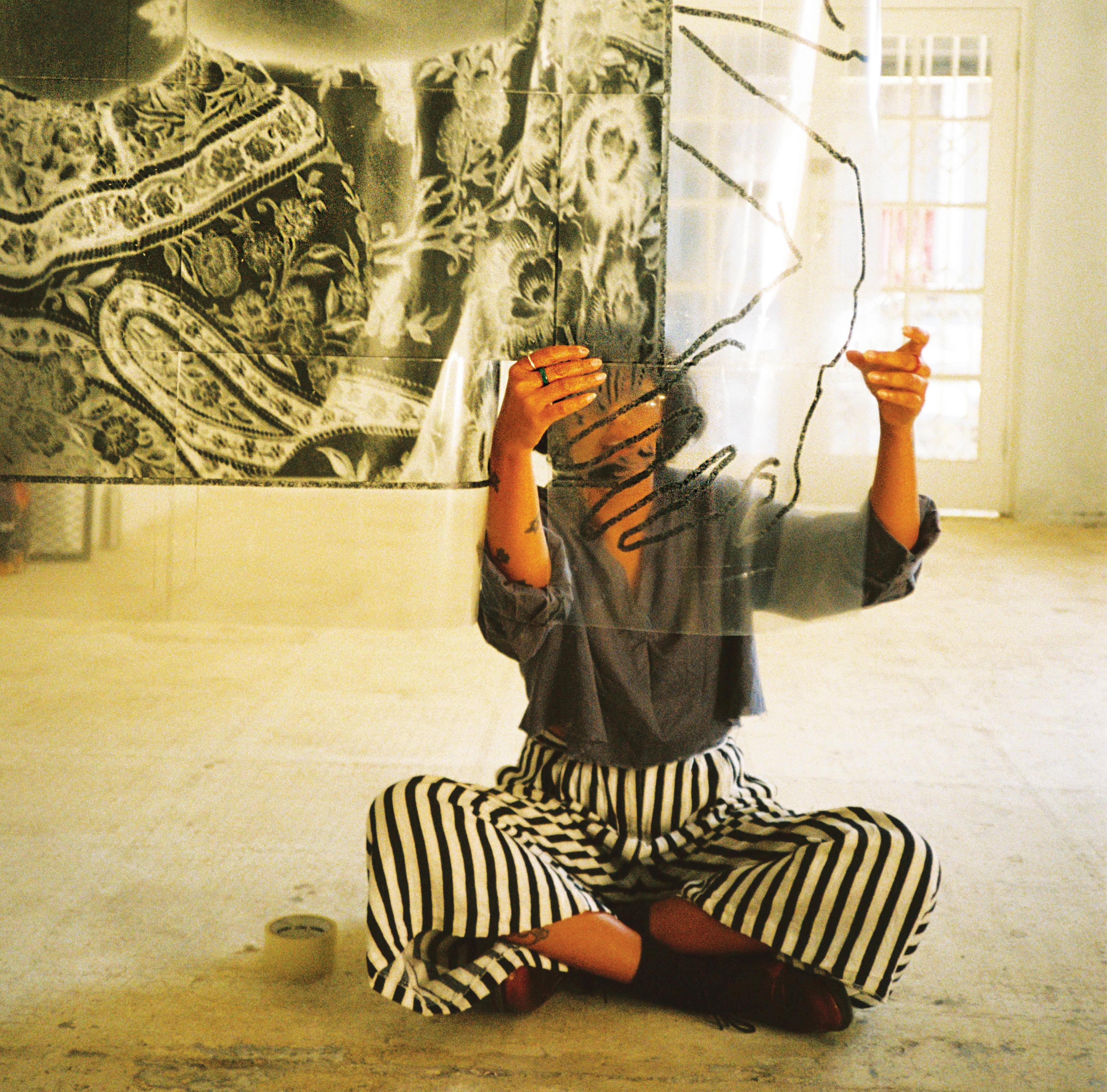
“I don't think a lot of South African Indian artists are given the spotlight to talk about these things. And it’s difficult, because we are not technically of this land, so how do you tell this history without seeming entitled? How do you say, ‘I’m of this land’ when you’re not of this land?
“But many of my ancestors were indentured labourers, so they knew the land so well. A lot of them were farmers and agricultural workers. They loved the land. My Nani always talks about her father’s beautiful, lush garden—he knew how to tend plants instinctively. They had guavas, avocados, pineapple, mangoes, lychees… all the delicious tropical food you get from Durban soil.
“So it’s strange. It’s not your land, but you’re entwined with it—your life and your ancestors’ lives bound up in that soil, in those gardens—but it has never truly been yours.”
After high school, she and her family visited India to find the village their ancestors came from, only to learn that everyone tied to them had left on the ships generations earlier. The village no longer held their traces. While there, people would ask where she was from. When she replied “South Africa,” they would ask where she was really from. When she said India, they would tell her she wasn’t really of that country either.
“It feels weird because I grew up in a very, very strong cultural home. We practiced our culture; my whole family speaks Hindi; we did the day-to-day things you’d do in a normal Indian home in India. So it felt strange to be told you’re not really an Indian, and then being here and feeling inherently South African, but also not being native here.”
Just like in Modlin’s poem, there is no school lesson teaching children how to navigate the inherited displacement and diasporic legacy of their ancestors— how to feel belonging to the land they were born in, and also to the land their families came from but never returned to.
So, in 2021, Alka began teaching herself cyanotype printing—a photographic process invented in 1842 for reproducing mathematical and technical drawings, later known for creating blueprints. Blueprints are the beginnings of buildings; in a way, Alka’s use of cyanotype makes her a kind of architect, laying out plans for a house she can call her own. This house is built on
foundations of family photographs—moments that may seem mundane but carry deep meaning in their ordinariness and in the ways viewers recognise themselves within them.
“These are pictures taken in people’s homes. Someone found a camera; nothing was staged. People were laughing in the kitchen, cooking, and a picture was taken. These little glimpses into lives that everyone can relate to—you look at them and think, ‘Wait, I’ve had a similar experience.’ It’s not reinventing the wheel, but there’s beauty in recognising oneself - Again, there’s that sense of belonging - even though you might not know these people in these photographs, you can still see a part of yourself in them.’”
Alka’s process is laborious. Cyanotypes are typically printed on paper; she prints onto fabric that needs careful stretching to transfer the image clearly. Once the image is set, she spends hours arched over the material, beading and embroidering motifs—flames referencing Hindu rituals and prayers— while also honouring the lineage of women in her family who worked as seamstresses.
“The practice of weaving and stitching is labour-intensive but also meditative. It’s not sporadic; it’s cathartic. You’re going in and out of something constantly, and it gives you peace of mind. Belonging is at the heart of the work, but labour is too. My family mostly worked blue-collar, labour-heavy jobs. So how do you reiterate that labour into something that can be acknowledged?”
The lives lived inside these photographs are honoured through Alka’s immense care—care that requires labour, in the way bell hooks remind us that love is an action. And there is a tremendous amount of love in Alka’s work, just as there is in the home she has made within her studio—one she is always ready to share with anyone who stops by.
@alka_the_artist

Audiologists play a multifaceted role in managing hearing and related disorders for all ages from birth to older life.
•Hearing: Audiologists and acousticians conduct thorough assessments to determine the degree and type of hearing loss, recommending appropriate interventions such as hearing aids, assistive listening devices, or cochlear implants.
•Balance: Audiologists evaluate and treat balance disorders, which can be linked to inner ear problems, ensuring patients
HEARING MATTERSIT SHAPES HOW WE EXPERIENCE THE WORLD
Yet, many individuals overlook the importance of regular hearing assessments, often attributing subtle changes to aging or environmental factors. However, early detection and intervention are crucial in maintaining overall well-being.
WHAT IS HEARING LOSS?
Hearing loss can manifest in various ways, from difficulty understanding speech in noisy environments to complete deafness. It can result from aging, prolonged exposure to loud noises, infections, or genetic factors. Regardless of the cause, untreated hearing loss can lead to communication challenges, social isolation, and in certain cases, cognitive decline.
TAKE THE FIRST STEP
Hearing is a vital sense that connects us to our families, communities, and the world around us. If you have noticed changes-whether it's difficulty following conversations, balance concerns, or persistent tinnitus-the sooner you seek help, the better. Choosing an independent audiologist means choosing care that puts you first.
THE INDEPENDENT CONNECTED AUDIOLOGY NETWORK (ICAN) iCAN is
a network of Audiologists and Acousticians across South Africa who share the same mission: to deliver accessible, ethical hearing healthcare that puts patients first.
THE NETWORK STRIVES TO:
•Promote Early Detection - Encourage regular hearing checkups to identify issues before they progress.
•Provide Comprehensive Services - From hearing tests and tinnitus management to balance assessments.
•Ensure Informed Choices - Empower patients to select the best solutions with unbiased guidance.
•Collaborate Across Practices - Work as a collective, pooling knowl edge for the benefit of every patient.
•Advocate for Accessibility - Make quality hearing care available regardless of socio-economic background.

WRITING RANJITH KALLY INTO THE HISTORY BOOKS
Words : Atiyyah Khan
DESPITE
SIX DECADES OF DOCUMENTING SOUTH AFRICA’S HISTORY, Ranjith Kally is not a household name. His legacy deserves to be remembered and his name etched into history books. Kally’s images span a time period of 1946-2010 and his diverse repertoire captures the South Asian community in KwaZulu Natal, political heroes, labour, apartheid, protests, jazz, beauty contests, street-life, sports and other forms of social history. In it, we find a kind of genuine solidarity and togetherness of the various segregated communities during apartheid, more so than we find today.
Kally was self-taught and had immense skill with a camera, something he carried with him until his last days. Born in 1925 to a family of second-generation Indian immigrants in Reunion, a village in Isipingo on the outskirts of Durban, Kally was a descendant of indentured Indian labourers who worked in British sugarcane field plantations; his father worked as a sirdar or overseer, and so did his grandfather. This rural upbringing reflected an empathy for the working class, evident in his images.
He left school in Standard 6 (Grade 8) at the age of 14 and went to work in a shoe factory. At the age of 21, he picked up his first camera, a Kodak Postcard, which he bought for sixpence at a jumble sale. This was enough to ignite a passion for photography and he recalls spending all his free time practicing the art form. Soon he started working at the Leader newspaper on weekends to supplement factory wages. He said in an interview, “I used to put soles on ladies shoes every day. I did that for 15 years, but I knew that it was not what I wanted to do for my whole life. I didn’t want to be inside a factory when history was happening outside.”
Turning to photography professionally from 1955, he started working from 1956 - 1965 and then again from 1968-1985 for the legendary Drum (national magazine populated by black intellectuals and photographers) and the Golden City Post. Kally produced some of his finest work while there and he was among the first generation of Indian photographers to work for Drum, alongside people like Farook Khan, Moosa Badsha and G.R.Naidoo – all important figures to be remembered.
Both these publications were significant for black communities during apartheid. During these early years around 1957, Kally won third place out of 150 000 entries in an international competition held in Japan and he was selected for membership to the Royal Photographic Society in London in 1967. Later he worked for publications like Graphic, Leader, The Sunday Times and freelanced until he retired.
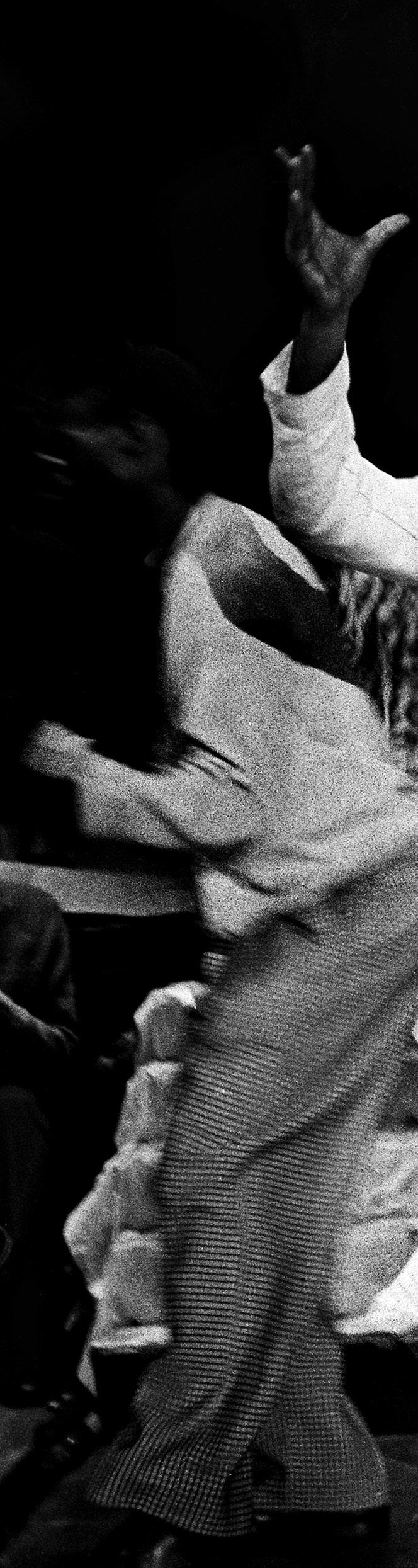
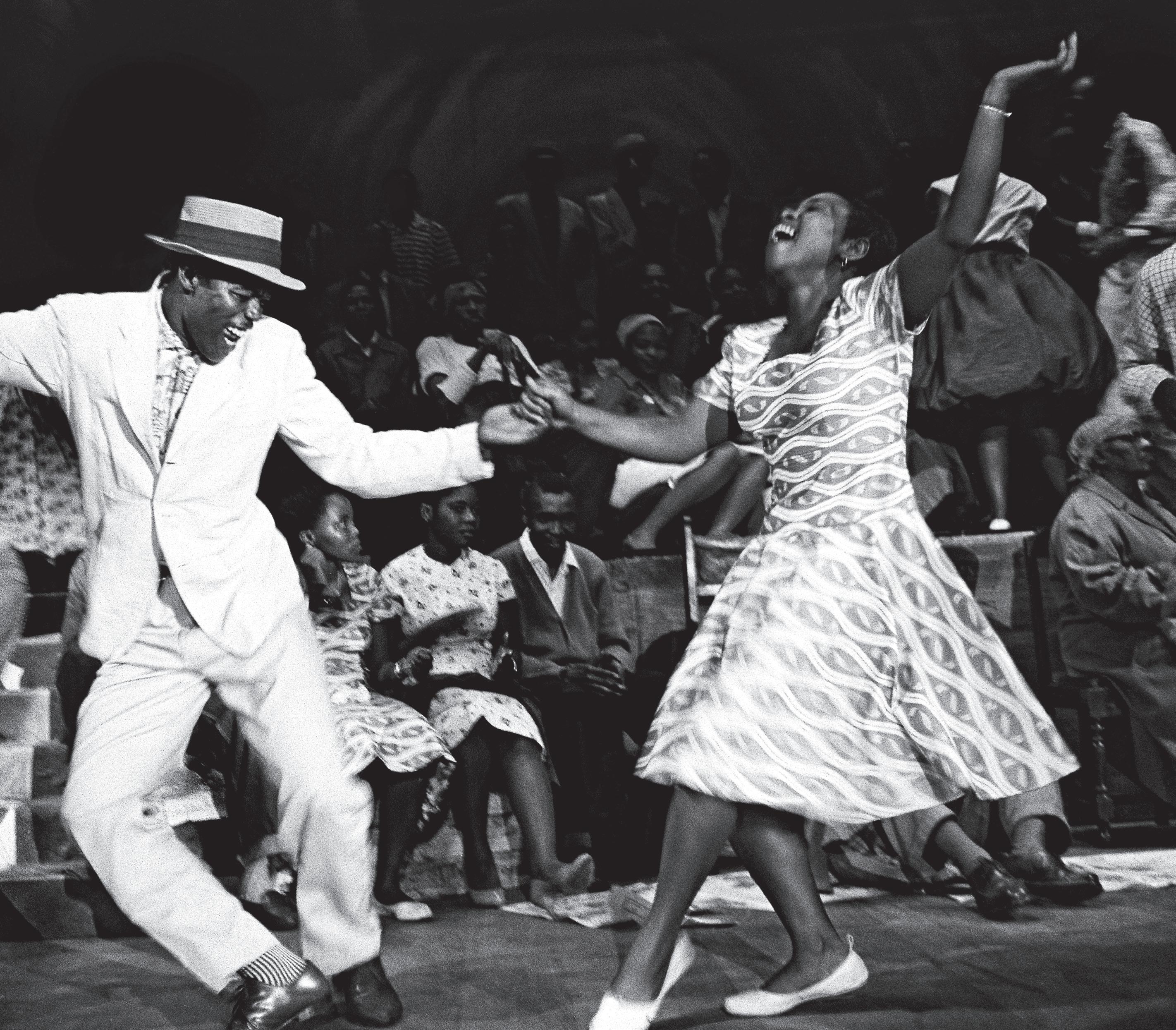
A scene from Alan Paton's play Mkhumbane from 1960.
Photograph by Ranjith Kally
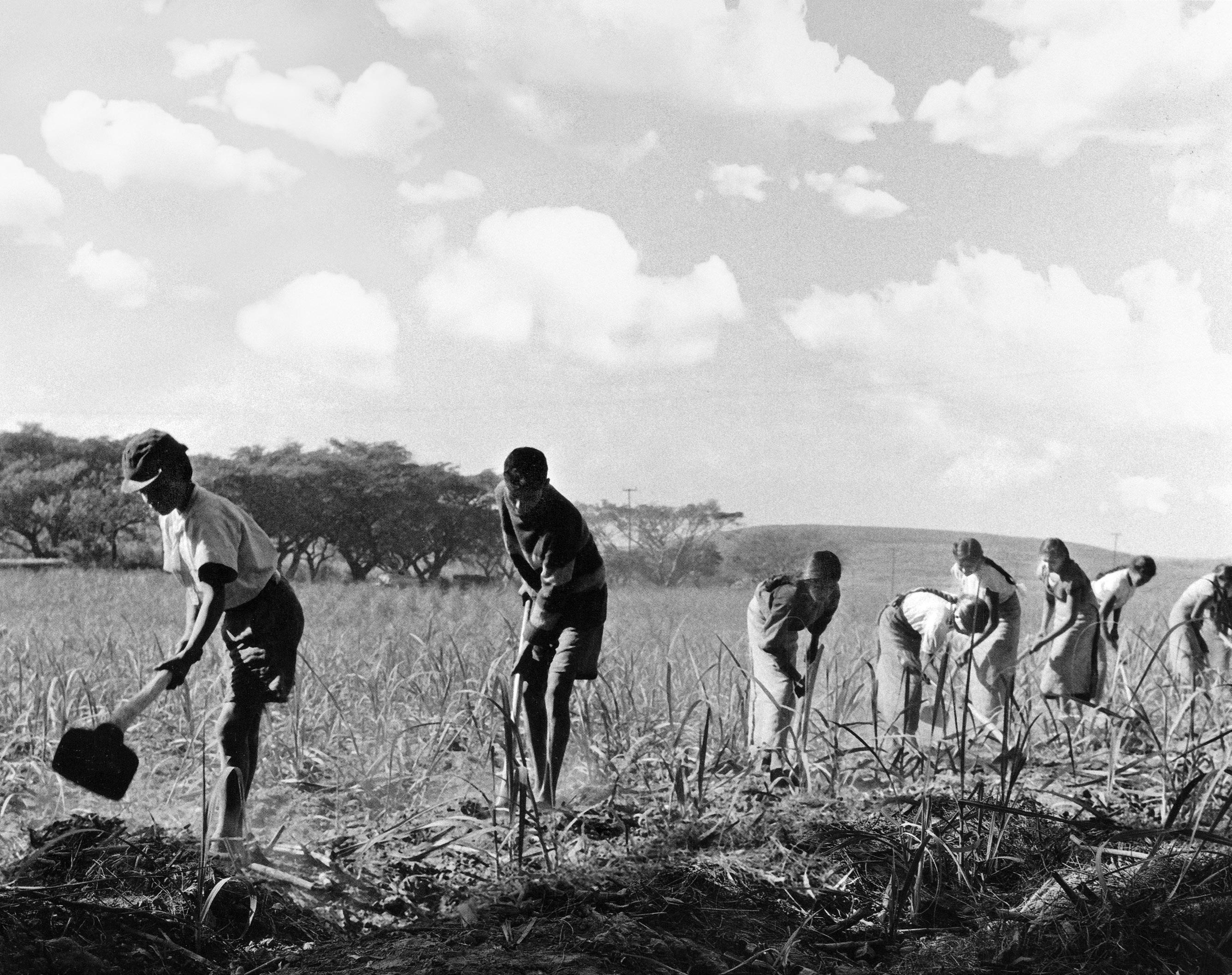
Indian sugar cane labourers working on the north coast of Natal, 1957. Photograph by Ranjith Kally
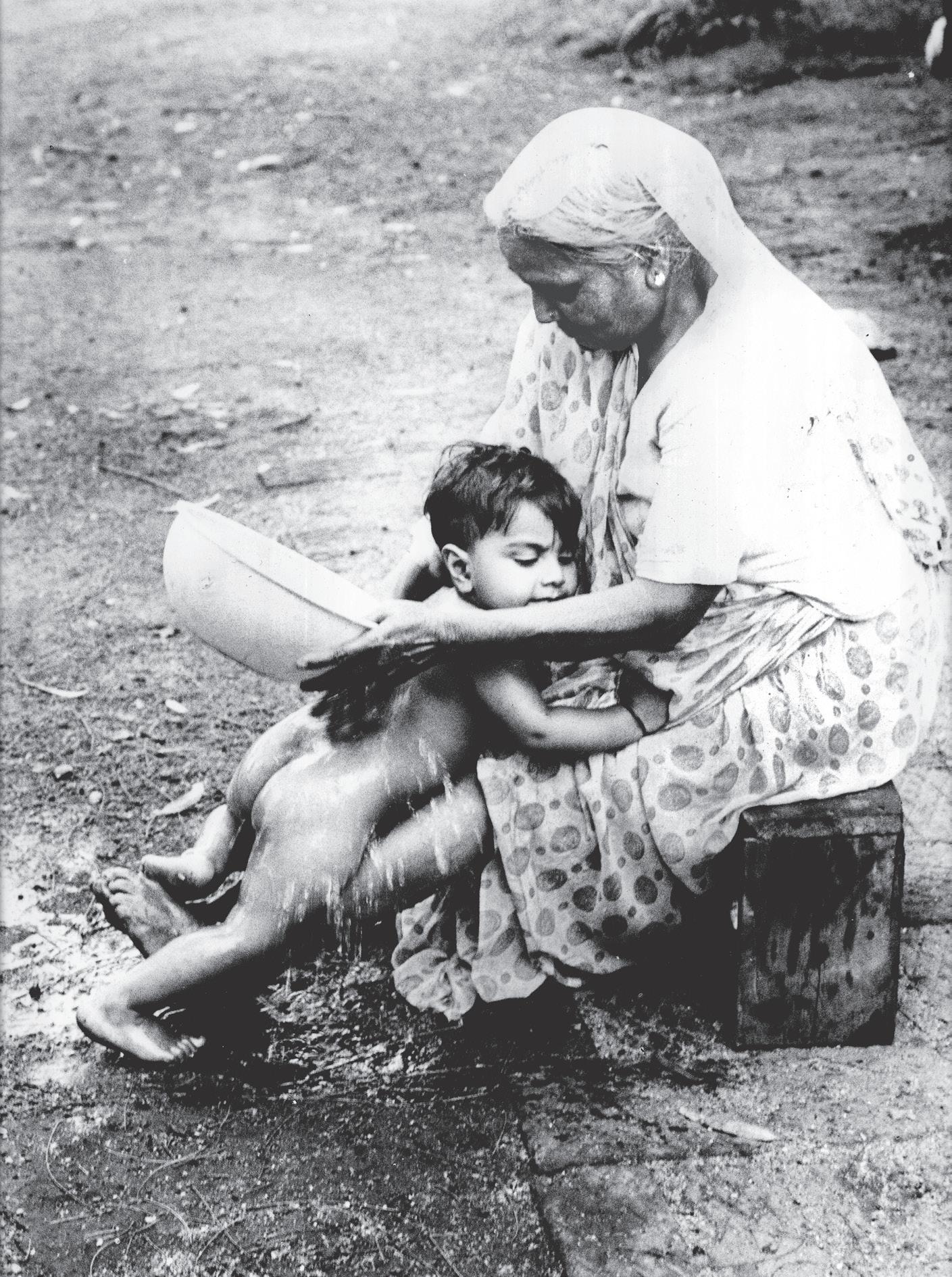
A beautiful portrait in 1947 is an image of his mother draped in a sari sitting on the ground and sorting out stones from dhal. About the photo Kally said, “I had recently joined the Royal Photographic Society of London, and a group of us amateur photographers would eagerly study the magazines that they would send by post. We would then try to replicate the compositional techniques they showcased. In this portrait, I tried to reproduce the classic ‘pyramid’ composition.”
During the 1950s, Kally documented poor working conditions of sugarcane fields on the north coast of Natal where child labour was prevalent – remnants of the British colonial system. He photographed the multi-racial community Cato Manor, similar to District Six and Sophiatown, which was destroyed by apartheid’s forced removals. He captured anti-apartheid political heroes like Oliver Tambo, Albert Luthuli, Monty Naicker, Nelson Mandela, Yusuf Dadoo and important historic moments like the Treason Trial and the Rivonia Trial. Throughout her life, Kally frequently photographed anti-apartheid activist Fatima Meer and his images featured in her book Portrait of Indian South Africans released in 1969.
He also frequently photographed then President-General of the African National Congress (ANC) Albert Luthuli. Especially outstanding is the photograph of Luthuli receiving the news of being awarded the Nobel Peace Prize in 1960, taken in his spaza shop in Groutville, which he had been banished to by the apartheid government. Kally said, “Even though he had faced extreme hardship from the State, and was isolated even from his own party because of his adherence to non-violent principles, he was such a jovial, humble person that it made him a joy to photograph.” He also said in one interview that photographing Luthuli was the highlight of his career.
Though his work was so artistically brilliant and the subject matter so compelling, he was largely overlooked in South Africa. Kally only had his first solo exhibition at the age of 79 in 2004 – a retrospective at the Goodman Gallery in Johannesburg titled A Life Behind The Lens. In the same year he self-published a book titled The Struggle, 60 Years in Focus: Ranjith Kally but it is impossible to find. Ten years later, at the age of 88, his first proper dedicated anthology of photographs was published, titled Memory Against Forgetting.
Aside from Meer’s book, some images of his were included in the books The Finest Photos in Old Drum (1987) and Sof’town Blues: Images from the Black ‘50s (1994) – both by photographer Jürgen Schadeberg; From Canefields to Freedom: A Documentary on Indian South African Life (2000) by Uma Duphelia-Mesthrie and The Indian in DRUM magazine in the 1950s by Riason Naidoo (2008).
Exhibitions which used some of Kally’s images were Margins to Mainstream: Lost South African Photographers’ at the Mayibuye Centre in Cape Town curated by Gordon Metz (1996) and In/sight: African Photographers, 1940 to the Present at the Guggenheim Museum in New York (1996). His work also featured in Birmingham, Barcelona, Vienna and Reunion Island.
Kally was awarded an Honorary Doctorate in Literature by University of Kwazulu-Natal as well as the Living Legend Award by the eThekwini municipality in 2013. He passed away at the age of 91 in 2017.
MEMORY AGAINST FORGETTING
This book sits alongside the best collections of photography in South African history. It was produced by Kalim Rajab who grew up knowing Kally as a family friend. In his opening essay Rajab writes, “Ranjith’s journey, in many ways, reflects the hardships of the Indian working class. Largely self-taught and often harnessing the power of only rudimentary cameras, he worked his way up from a shoe factory to a part-time photographer in Plowright Lane in the Durban Casbah, to finally taking up the profession full-time but never enjoying the benefits of permanent employment. Yet despite the nature of his climb, his work never suffered from over-cynicism or darkness.”
Rajab grew up knowing the elder photographer from a young age and the pair developed a wonderful friendship. His granduncle A.K Rajab ran the family’s
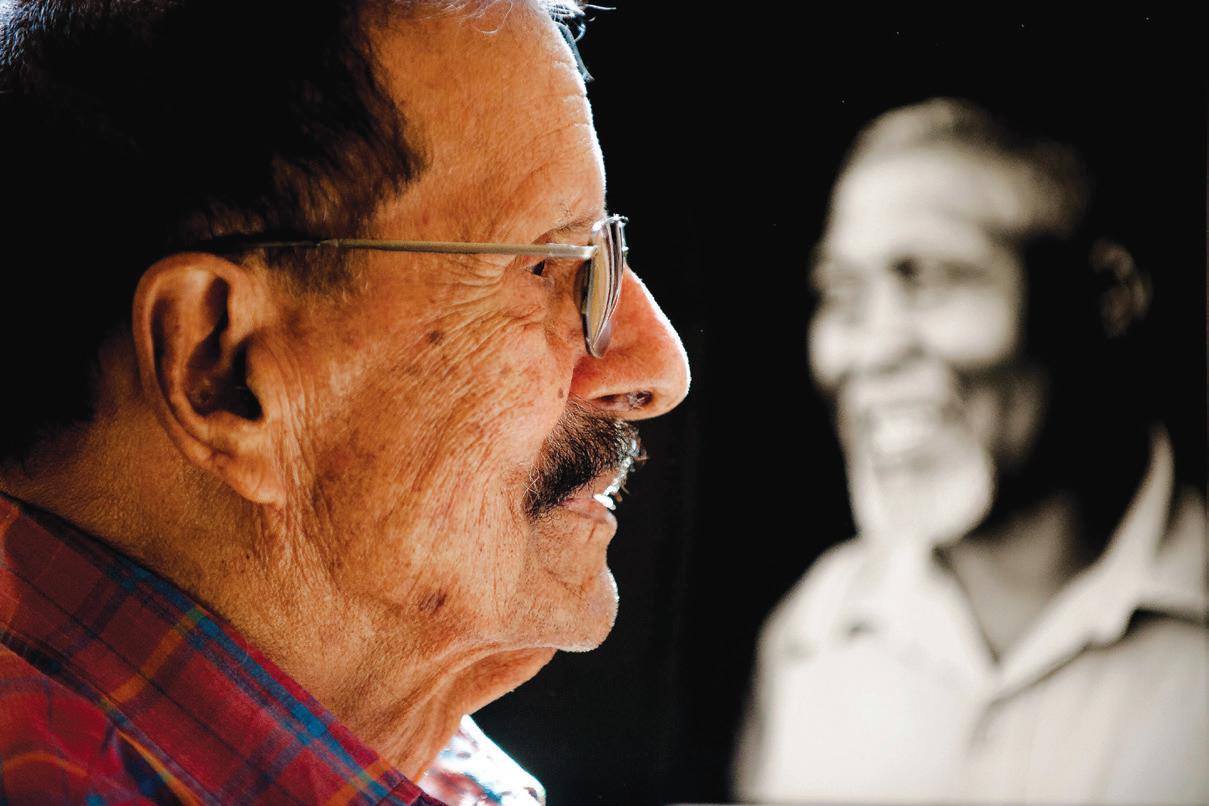
Image of Ranjith Kally with his book, supplied by Kalim Rajab
cinema, the grand Shah Jehan in Durban, and was good friends with Kally. “We had a darkroom in the cinema and Ranjith would come and work with AK in the darkroom and develop photographs together. Then my mother later on did a book with him, and then I came along.”
Describing Kally as a kind of ‘father figure’ he says he was inspired to create the collection due to his extensive documenting of the Natal Indian community, from journalistic work to ordinary life, Kally captured it all. He would go to weddings and would be asked to shoot the occasion, so his work became a chronicle of community.
Another reason was that “he was not given the due recognition he deserved, certainly in the South African sense, he isn't nearly as well-known as he should be. I felt that many people used him. They reproduced his work without giving him acknowledgement and often would just not pay him for work that he had done. It was important for me to give him recognition for the works that he had done.”
Rajab is referring to the misattribution of Mkhumbane – an iconic image of a couple dancing which was attributed to G.R.Naidoo. It’s been used several times to sell everything from CD covers to albums and even a tin-fish brand. The image is from a play by Alan Paton with music by Todd Matshikiza that premiered in Durban in March 1960.
“I know that it was his because he was able to tell me vividly ‘I remember taking the photograph. This is where I stood. This is where G.R stood. G.R was with me, but he didn't take this photograph. I remember how I took the photograph’.”
This was one of several of Kally’s works that was misattributed in the archives and many of those works have been sold. “The book was important to acknowledge his work,” Rajab says.
“G.R Naidoo was a great journalist who dabbled in photography. They would have both been at the event as Drum would have sent them on the story. It was the day after the State of Emergency was declared in 1960, just after the Sharpeville massacre happened. No one knew what would happen. The play is done in heightened political circumstances, so it's unsurprising that Drum sends two people, a writer and a photographer, to cover it. It was misattributed to G.R years before my book came out and before those photographs were
printed and then sold by Bailey's African History Archives, and then those images have a life of their own.”
For the book, Kally allowed him to sift through his boxes of archives and select images. He assembled them inspired by the method of the legendary Yousef Karsh’s books, with images set alongside anecdotes by the photographer, something which is so useful today.
“I knew these photographs and these stories, so writing it up wasn't that difficult. Ranjith was wonderful. He had a laser sharp memory. I would say, Well, take me there. Let's just go and check that your memory is correct. We'd go and find the places in the photographs. We even went to Groutville. He showed me exactly where the house is – now a museum. He would show me exactly, ‘This side of the road was the main entrance. Everyone would come through there, but I wouldn't come this way because the Security Branch would be parked there. So I would come the other way around’.”
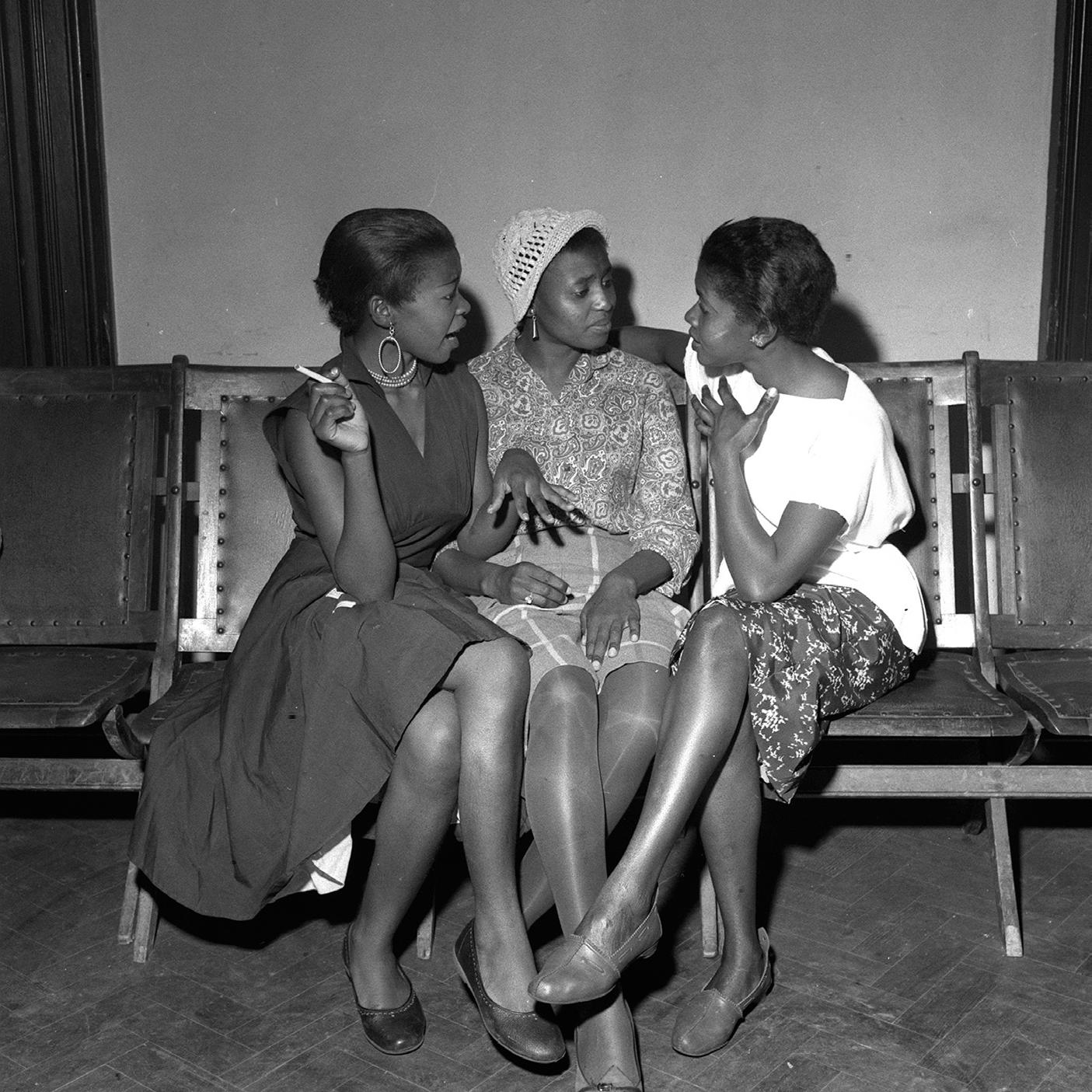
Miriam Makeba, Dolly Rathebe and Dorothy Masuka at the Durban City Hall. Photograph by Ranjith Kally
The book was well received. It sold many copies and was supported greatly by businesses in the Indian community. Kally loved the book and Rajab says,“It gave him a new lease on life. It came from the recognition that it gave him and he loved meeting new people all over the country.” Kally was 88 years old at the time and the pair flew to all the major cities in South Africa to promote the book.
Rajab describes him as “an incredibly warm and friendly person” which was evident in his images. “The word I use is lyricism. There is a warmth to lots of the subject matter. I think that's because of him. He had hardships in his life. His son died very young, and that really hurt him. It continued to hurt him right up until the end. There was the financial impact, where he was not given the financial rewards that he was deserving of. But despite all of that, he was incredibly warm and would always go around, even to the end walking around in Durban, always with his camera and his cane, taking photos.”
LEAVING A LEGACY
Legendary photographer and historian Omar Badsha says that Kally was a household name in Natal when he worked for Drum and the Golden City Post. His uncle Moosa Badsha was a peer of Kally’s and they were members of the International Photography Club, formed in the 1950s by activist Cassim Amra ¬– a banned member of the Communist Party who was very passionate about photography.
Badsha says, “There were very few outlets for Indians journalists and photographers in the mainstream. Ranjith worked under Jim Bailey
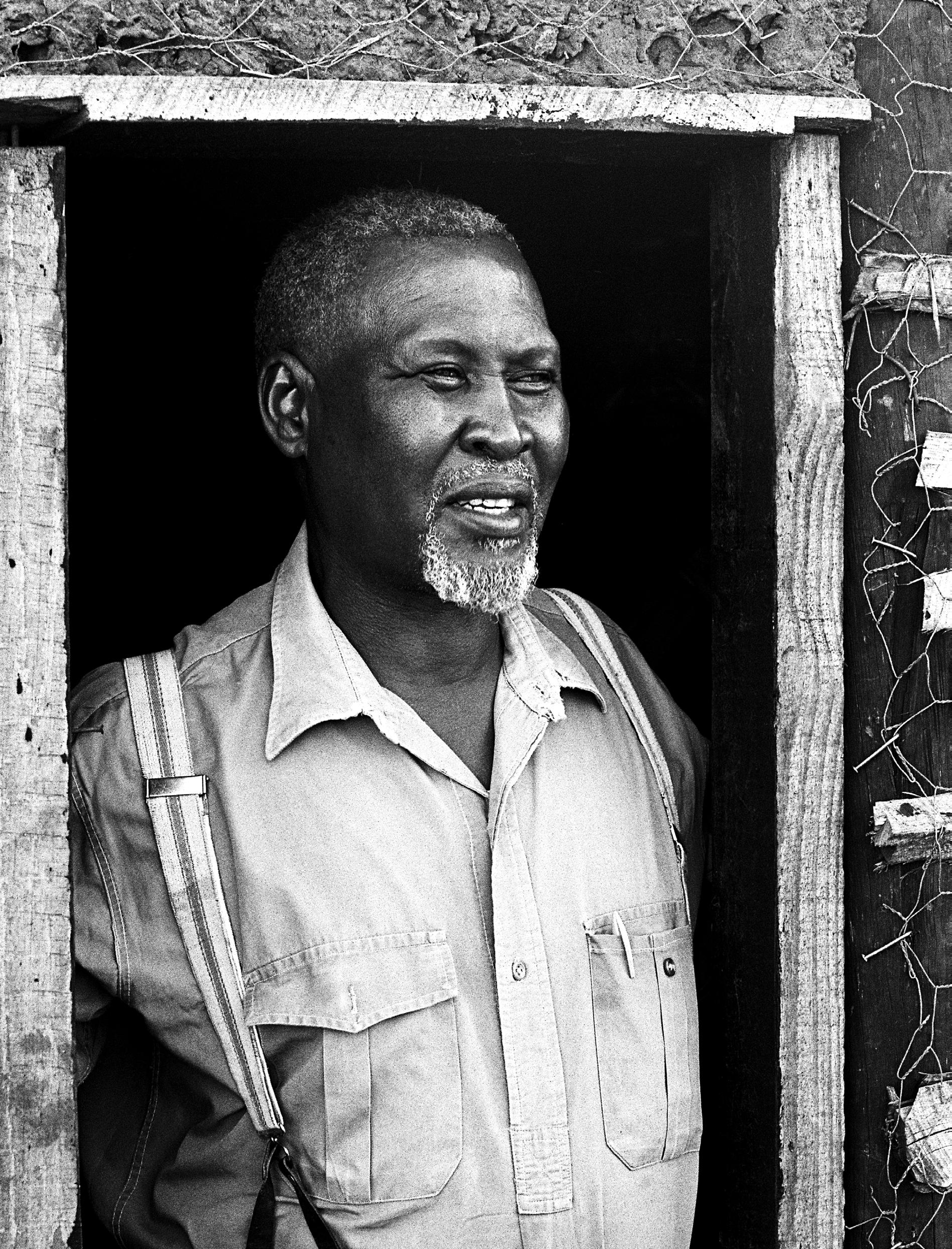
Chief Albert Luthuli outside his spaza shop in Groutville. 1960. Photograph by Ranjith Kally
in Drum. He had the flare and the energy and the know-how and he had that Drum background which allowed him to move all over the place. It opened a lot of doors for him.”
Omar had also inherited Kally’s darkroom, located on the first floor at the Goodhope Centre in Queens Street in Durban. There is a beautiful lineage of generations of black photographers tied to that darkroom, that being Kally’s then Badsha’s and then used when he formed Afrapix – created to mentor young photographers on how to shoot, process and publish photographs and
document what was happening in the townships. Among these mentored were great contemporary photographers like Rafs Mayet and Cedric Nunn.
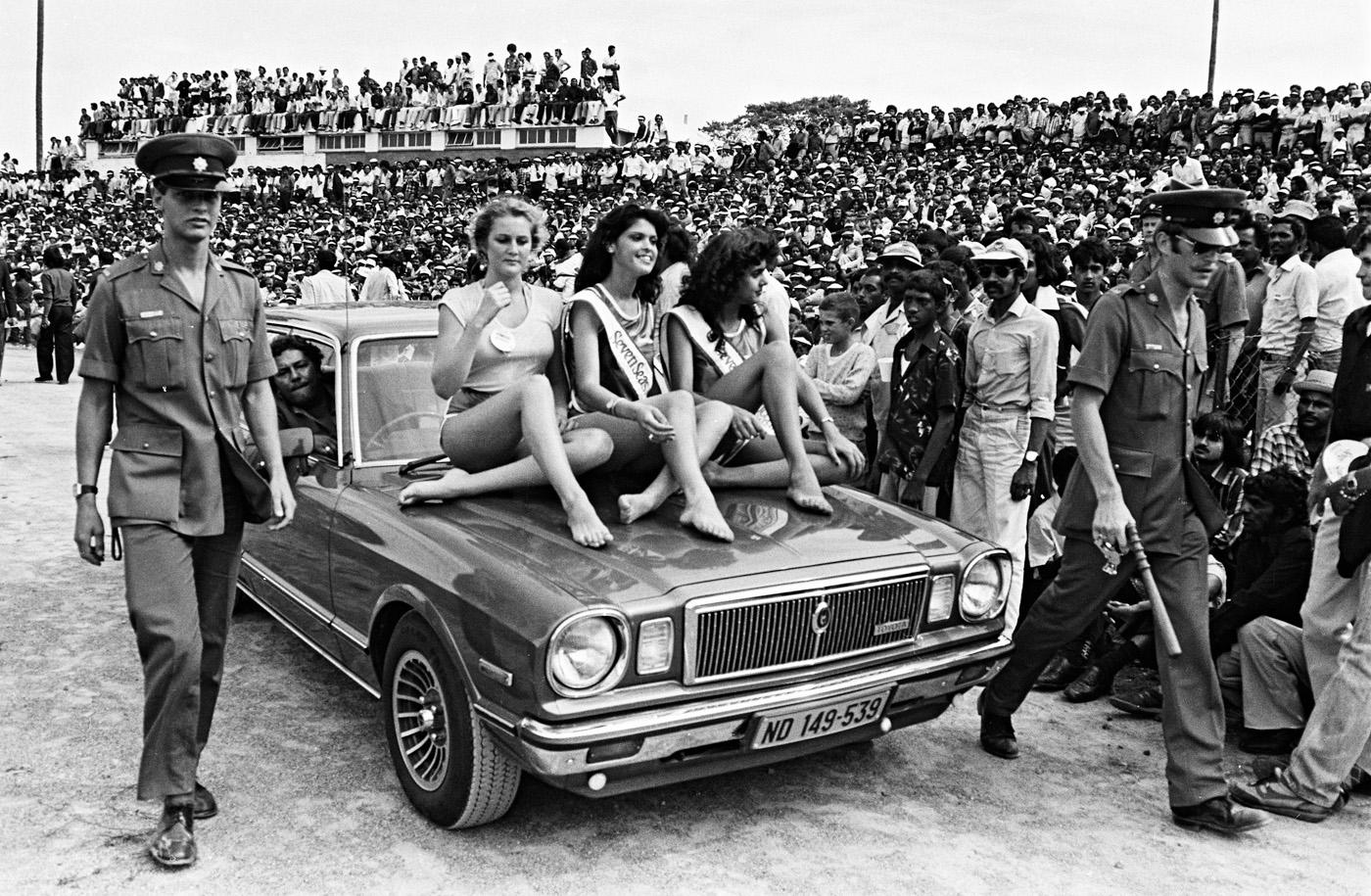
Mayet has many stories to share about Kally and recalls seeing him on different jobs and they used to buy the same chemicals and paper from a shop called Modisons. The pair had met in the early 80s and worked together on a book about Curries Fountain – ‘the mecca of non-racial sport’ – a stadium in Durban known for sports and political events.
Cup Final Day at Curries Fountain in the 1970s where soccer teams presented beauty queens on top of cars.
Photograph by Ranjith Kally
“Ranjith was a very tall, elegant character. He spoke a lot about photography,” Mayet says.
Not living far from him, Mayet started visiting Kally in the 90s. “I'd go there and he was just sitting alone at home with all his memories. The TV would be on top of the filing cabinets and always be tuned to horse racing.”
He described how Kally kept all his negatives in a filing cabinet with three draws in his room. “He used to stay at the back of his daughter's house. He had a little spot there with a room and a shower and then next to it was the garage and the main thing was it had a cupboard. He had all pretty much the history of Durban in the 50s, 60s and 70s. He kept all of that. He had a huge collection of work, and so he could select them, and he could tell you about them, because he remembered all those articles. It's an incredible archive, and I wish someone would actually go out and digitize it.”
“In the 60s, there were very few photographers around, so everyone knew them. There were household names back then, because there weren't many people doing photography. It was very expensive; a hobby of the rich.” He names other photographers like M.S. Roy, Morris Reddy, Mickey Padyachee, Moosa Badsha and Ralph Johns.
“These guys were pioneers in the community. Ranjith did a correspondence course with a London School of Photography and he followed the concepts of that. He had a classical way of composing and he adhered to the rule of thirds and all those different kinds of rules. That's how he structured his work.”
Another striking image is of Shana ‘Sonny’ Pillay and Mariam Makeba just after they got married, sitting in a flat and looking at a King Kong record. Mayet says, “It's a beautiful picture. That was Ranjith's signature, taking pictures in a classical way. He took composition very seriously and used it effectively.”
Many of Kally’s images have been published in newspapers, documentaries and books but often without permission or royalties, Rajab notes, “As such, there was a very real risk of us remembering the image, but forgetting the man.” We have yet to dig deeper into the world of Ranjith Kally and remember him for the significant work he left all of us with.
A ritual bath given by a grandmother to her grandson, 1958. Photograph by Ranjith Kally
HERE’S THE SCOOP
Where Happiness Comes in Small Batches
WHATBEGAN AS ONE WOMAN’S KITCHEN EXPERIMENT in the heart of Salt Rock, where ocean breeze meets village charm, has blossomed into one of KwaZulu-Natal’s most beloved artisanal ice cream brands. Scoop is a handcrafted homage to joy, community, and the creamiest confection imaginable.
Founded in 2014 by Amanda Maidman, a dreamer with a sweet tooth and a flair for flavour, Scoop started humbly in a home kitchen, with a few pots, a lot of passion, and two debut flavours: Gin & Tonic sorbet and 70% Chocolate ice cream. The first batch sold out in just fifteen minutes, thanks to Amanda’s then seven-year-old daughter, Maya, who sold every cup at a local kids’ entrepreneurs’ market. The rest, as they say, is delicious history.
Today, Scoop has grown to four thriving locations each one a cheerful celebration of craftsmanship and community. Despite its success, Scoop has stayed true to its roots: every batch is still lovingly made by hand, the old-fashioned way, on the stovetop. From the creamy churn of Madagascan vanilla to the silky richness of Belgian chocolate, each ingredient is carefully sourced to honour both flavour and sustainability. The milk and cream come from the happiest Jersey cows in KZN, and much of the fruit comes fresh from nearby farms. Even the sugar cones are made by hand, one golden swirl at a time.
Scoop’s values are more than just words they’re the secret ingredient in every bite. “We believe in happiness,” says Amanda. “If our ice cream doesn’t make you smile, we haven’t done our job.” That philosophy has guided the brand through growth, innovation, and even the milestone of earning Halaal certification from SANHA in 2021, ensuring that everyone can enjoy a little Scoop of happiness.




SCOOP, THE MAIN EVENT
BUT SCOOP ISN’T JUST ABOUT INDULGENCE it’s also about experience. Their vibrant mobile ice cream bars have become a highlight at weddings, corporate events, and celebrations across the province. Whether you’re hosting 100 guests or 600, Scoop can transform your event into something unforgettable with custom flavours, playful presentation, and their signature creations like Scoop rolls or Scoop on a Stick.
From intimate weddings to collaborations with big brands dreaming up wild, limited-edition flavours, Scoop has made its mark not only as a dessert company but as a purveyor of joy.
So, the next time you find yourself near one of their stores or planning a celebration that calls for something truly special remember this: there’s always a reason to smile. And at Scoop, that reason comes one small batch at a time.

Locations: Florida road, Durban North, Ballito Lifestyle Centre, Sugar Rush, Ballito
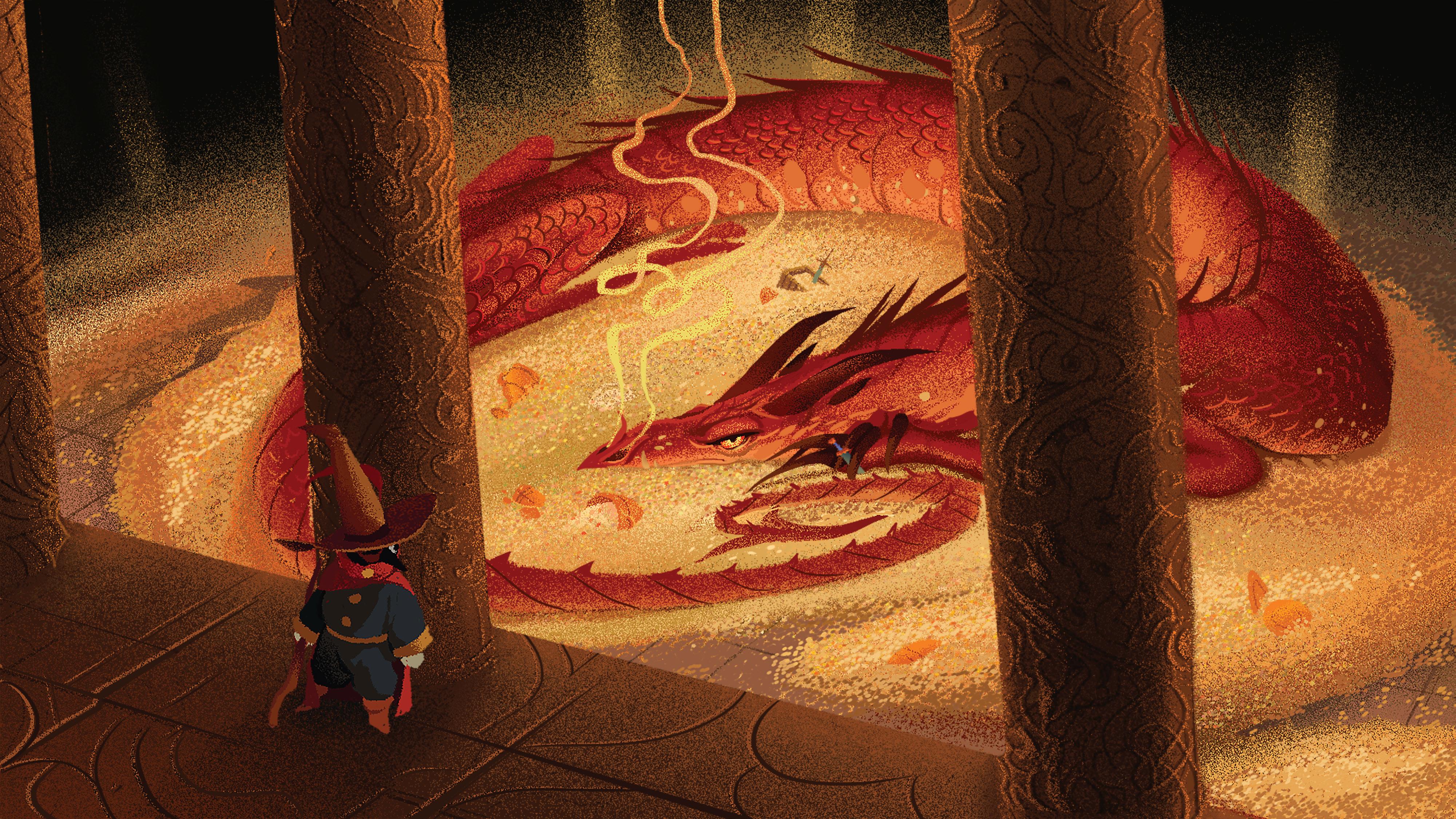


Let's
meet
on EAT STREET
For the perfect al-fresco dining experience look no further than EAT STREET at the Ballito Lifestyle Centre.
With its elegantly comfortable atmosphere and exceptional dining options, Eat Street is the ideal place to indulge in delicious food, enjoy the outdoors, and soak up the lively ambience.
Each restaurant along Eat Street offers the choice of indoor or outdoor seating, enhancing the street-side dining experience.
Enjoy sundowners between 4pm - 6pm daily as well as live music by local artists over weekends.
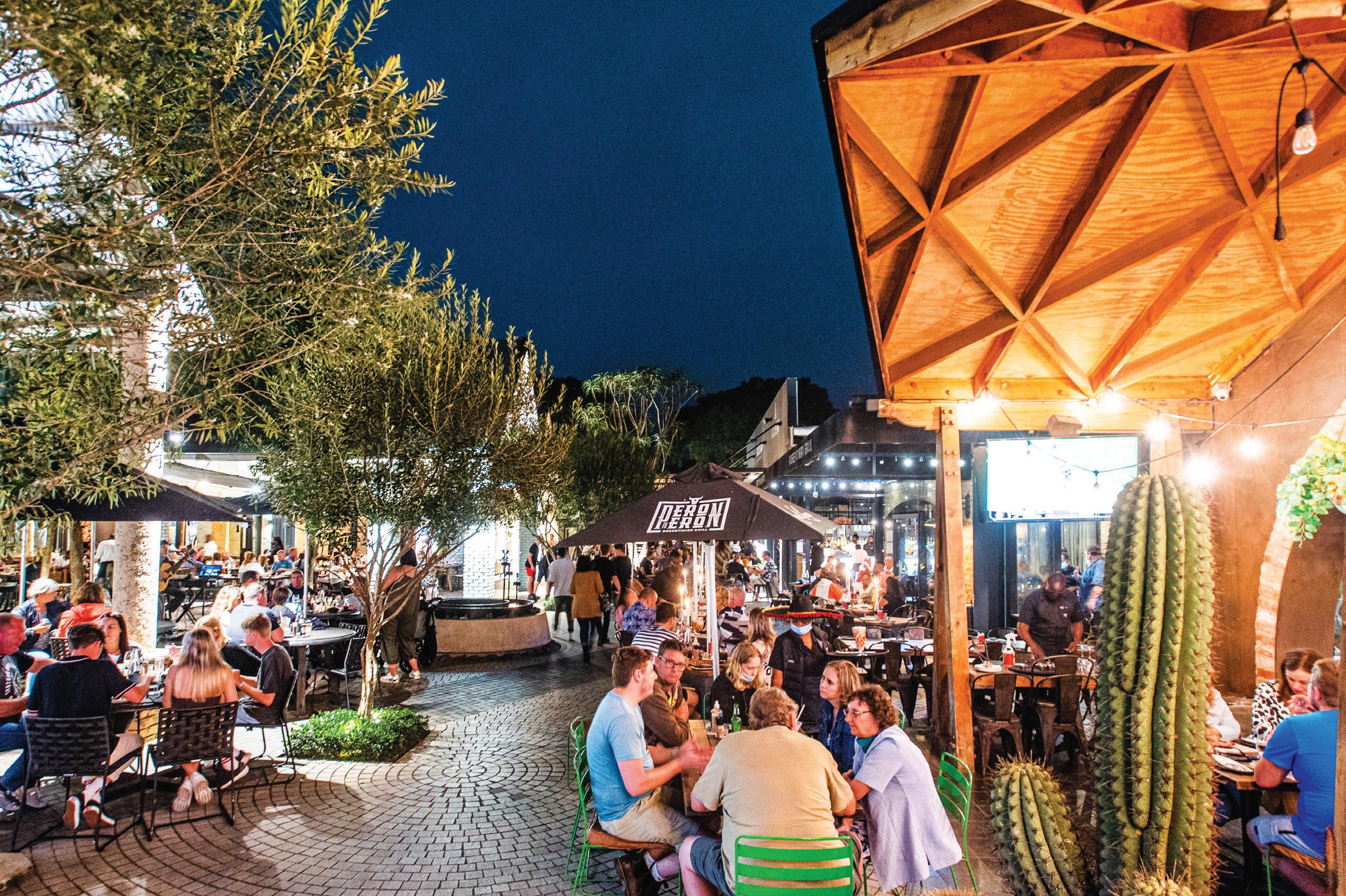
LUPA
A neighbourhood trattoria that serves up delicious Italian food with generosity and warm hospitality. Using only the freshest ingredients, they offer wholesome, seasonal pizzas, pastas, seafood and secondi, seasoned with distinctly Italian flavours.
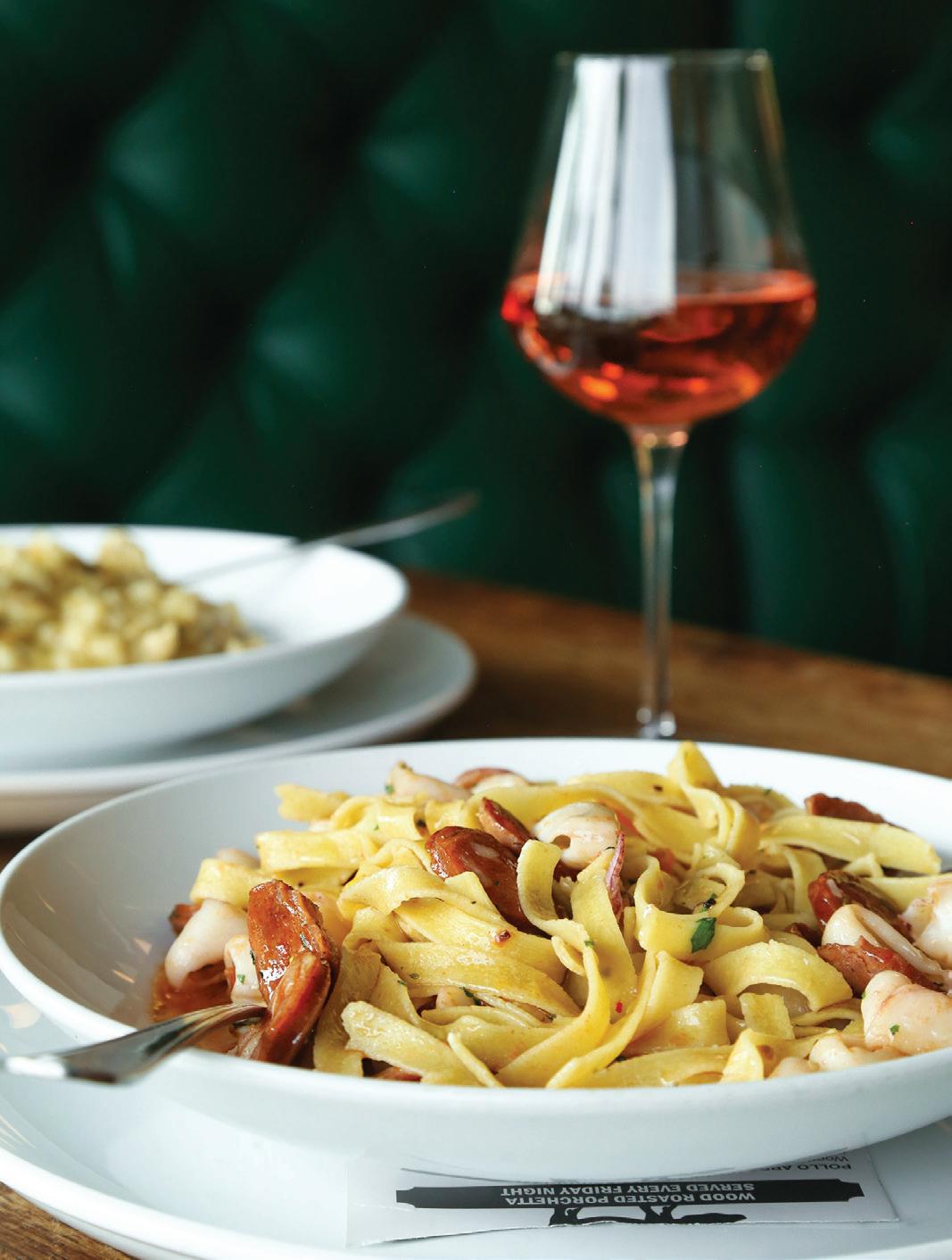
ALCHEMY
Come for the cocktails, stay for the vibe! Crafted to perfection with local flair, Alchemy's cocktails and small plates are anything but ordinary. At Alchemy you can enjoy your favourite cocktail while nibbling on a selection of snacks ranging from topped Bruschetta to a deliciously spicy prawn bowl.
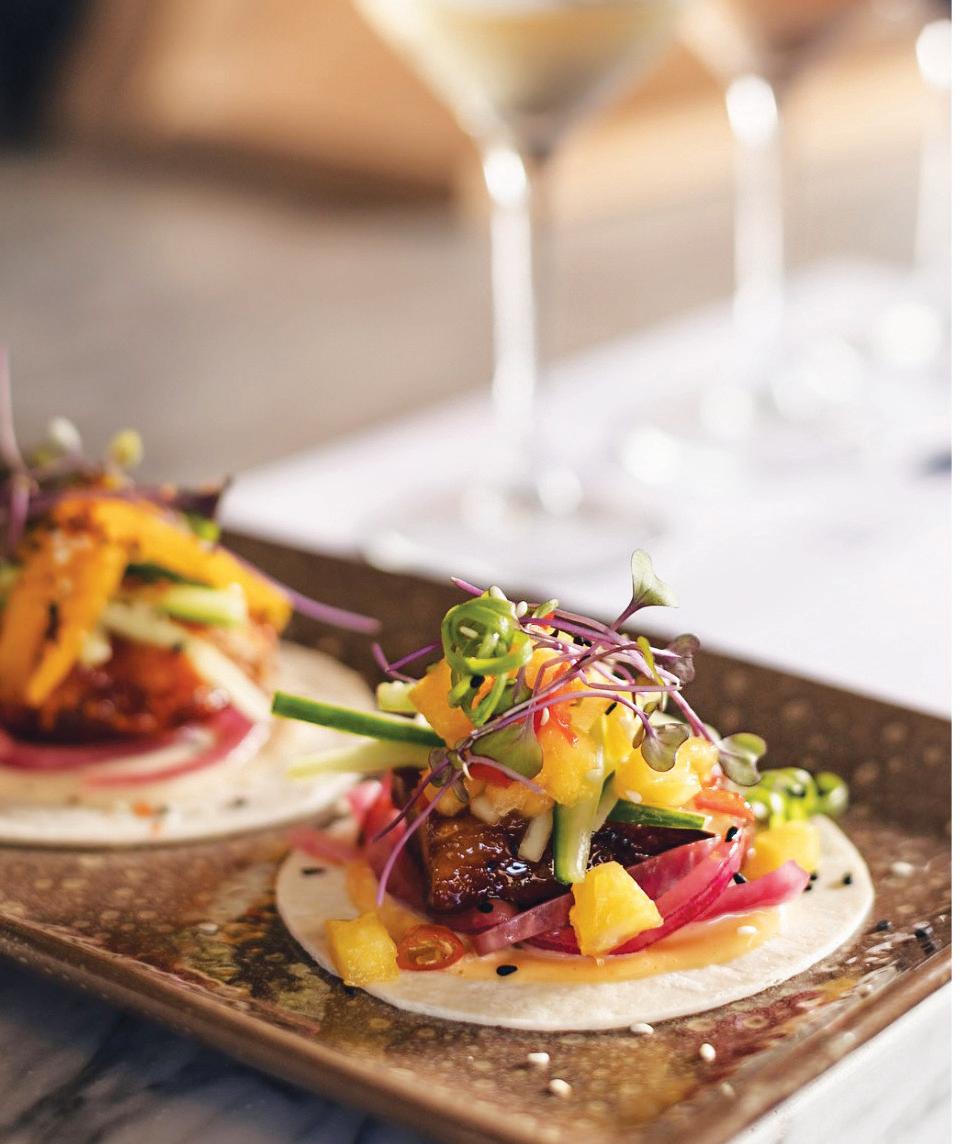
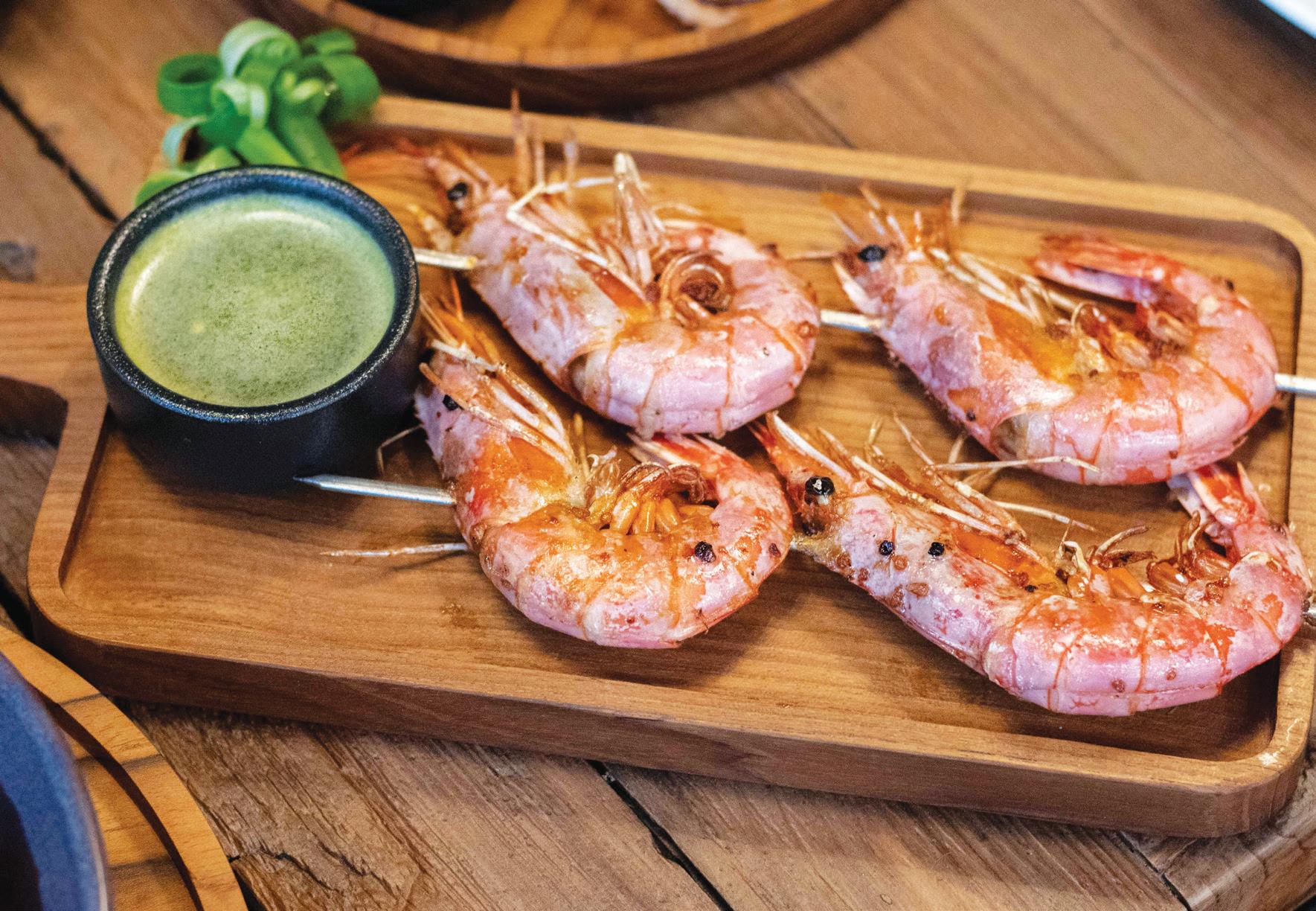
SOI 55 THAI EATERY
This exceptional Thai eatery promises to take your taste buds on a journey through the alleys of Thai street food culture, presenting a harmonious fusion of traditional dishes with contemporary flavours and an upscale ambiance. Soi 55 has become the go-to destination for food enthusiasts seeking an authentic Asian culinary adventure.
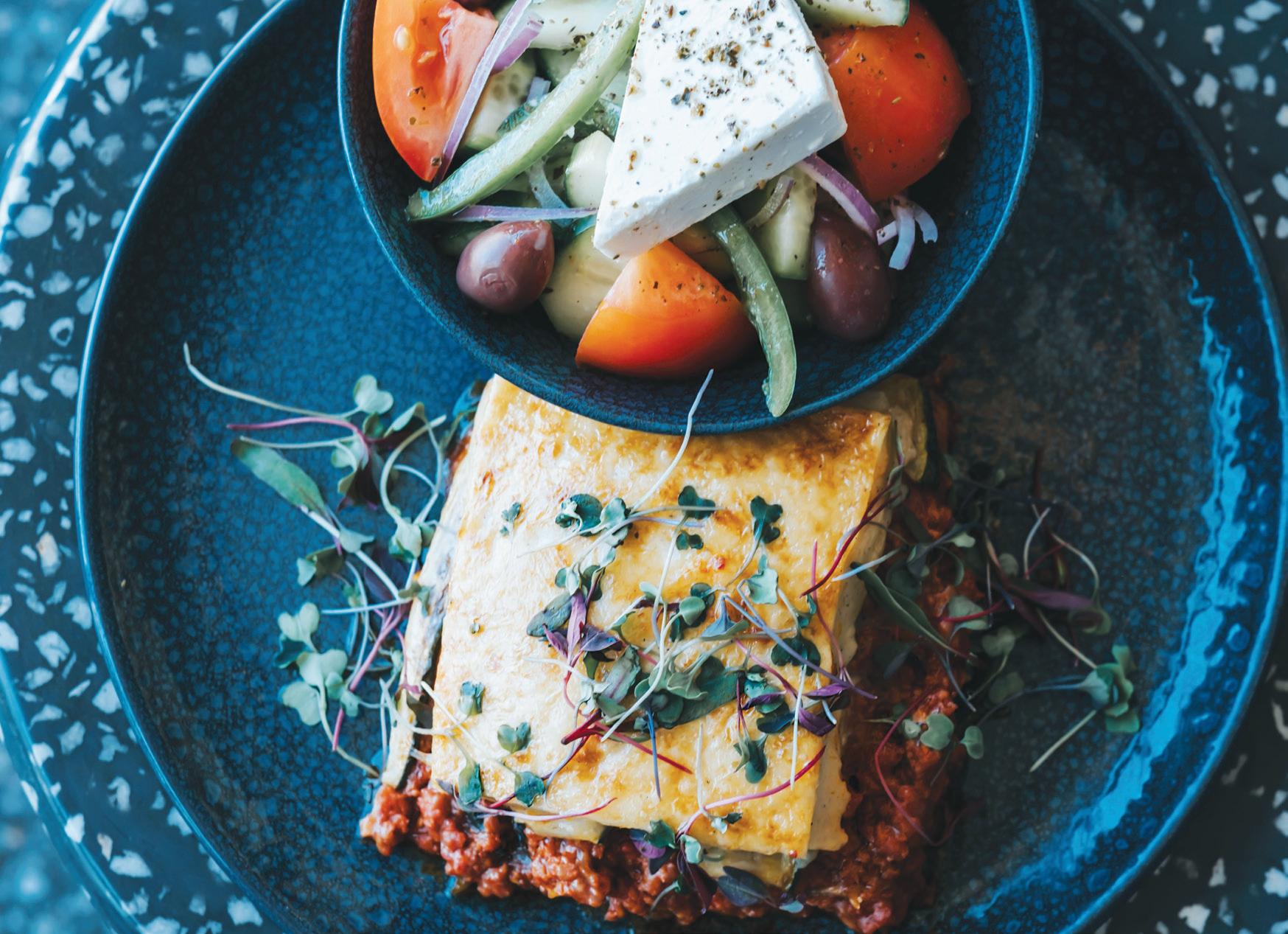
ATTIKOS
Attikos Mediterranean Grill is passionate about fantastic food, hospitality, long Greek meals, and making it easy for you to relax and enjoy a celebration of sun, sea and casual dining. Many of their dishes are designed for sharing, thereby bringing the authentic feel of the Mediterranean to Ballito. Share a meze, a succulent dish from the Souvla Coal Grill or Yiro Bar, or indulge in a traditional Greek meal from the family kitchen.

YORI OKI
An intimate, beautifully designed space in which to indulge in the flavours of Japan. Yori Oki prides itself on flavour, precision and perfection. Their approach is focused on representing the time-honoured art of sushi and presenting the distinctive flavours of contemporary Japanese fusion as part of a unique and immersive culinary and sensory experience.

45 ON EAT STREET
Experience discernment made simple at 45 on Eat Street – a place for Ballito families and friends to connect and feel comfortable in a sophisticated, yet casual environment. At 45 on Eat Street you can be with the ones you cherish, share incredible food, great conversation and good music. Take it slow… and make it count!
PERON PERON
An authentic Argentinian grill with an emphasis on the flavours of Buenos Aires and a focus on different cuts and choices of beef. Their forte is aged steaks cooked in front of you on open fires over wood and charcoal. Signature dishes include charcoal-grilled fillet on the bone, ribeye and picanha.



THE POTTERY
The perfect spot to unwind and let your creativity flow as you explore the colourful retail space or get hands-on by selecting and painting your own ceramics. They offer a fresh menu featuring specialty coffees, smoothies, smoothie bowls, juices, and indulgent milkshakes.
WAXY O’CONNORS
Waxy O’Connors brings the charm and warmth of a traditional Irish pub to the heart of Ballito. With a menu that pairs hearty, robust dishes with the quintessential Irish stout, Guinness, Waxy O’Connors offers a truly authentic Irish experience. The bar also serves a wide selection of local and imported beers, including Castle Tank beer, which is delivered fresh from the brewery to your glass.

BEIRA ALTA
Beira Alta’s family tradition is to cook from the heart with recipes handed down from generation to generation, which has evolved into Portuguese cuisine with an African influence. The menu has earned a reputation for its flame grilled chickens and platters piled high with pan-fried prawns, smothered with a blend of spices, olive oil, lemon juice and garlic. Traditional recipes to tickle your taste buds are served plain or spicy.
TIGER’S MILK BALLITO
Tiger’s Milk Ballito is the best destination for ‘dude food’, made good. With a menu that takes pizza, grills and burgers to the next level, pair these with their locally made Tiger’s Milk Lager and you’re sure to leave satisfied.

ZARAS CAFE
A trendy daytime hotspot with a fantastic menu featuring a fresh fusion of continental-style dishes with Greek, Italian, and South African influences, including unique breakfasts, salads, specialty meals, pastries, breads, and aromatic coffees.
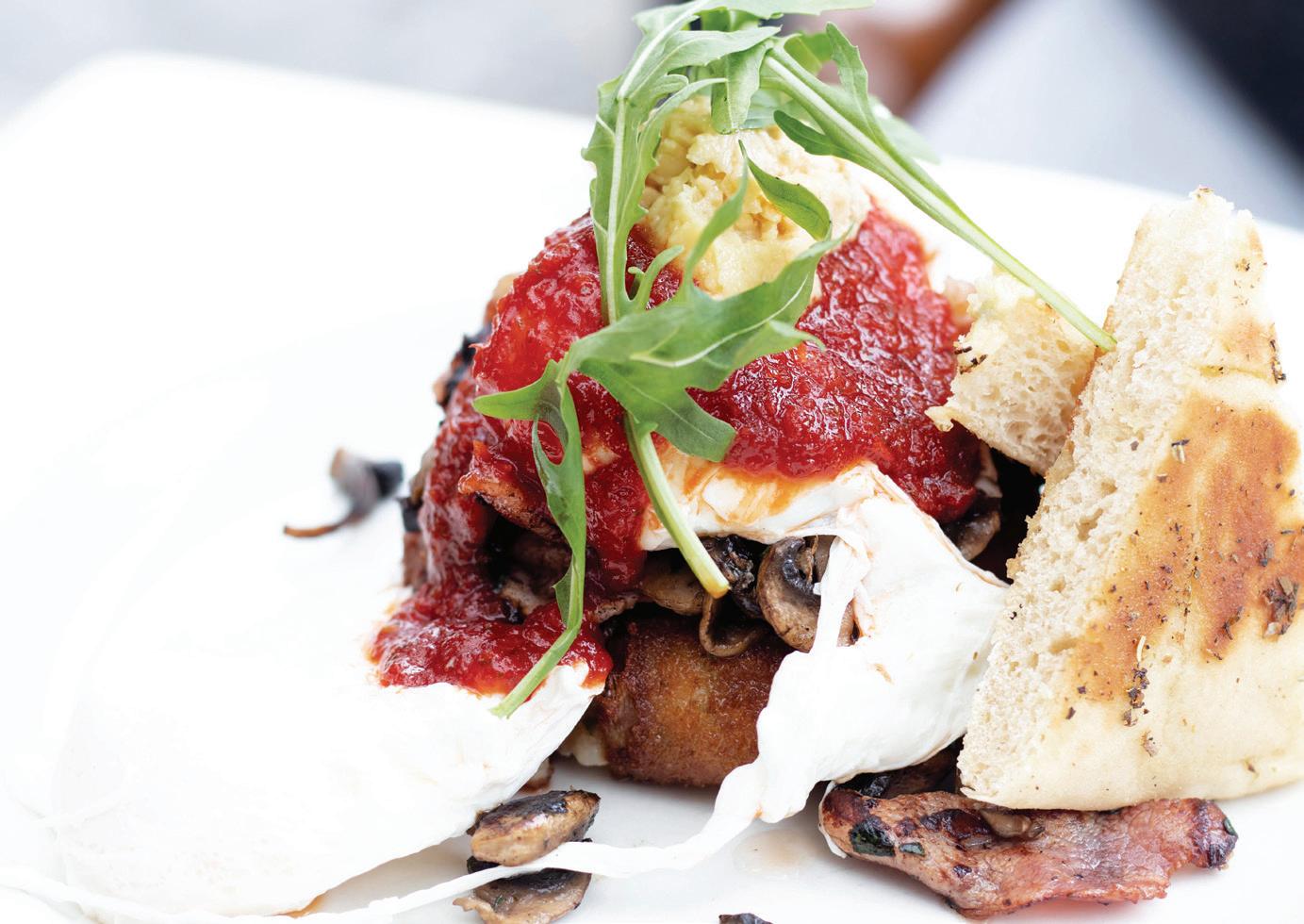
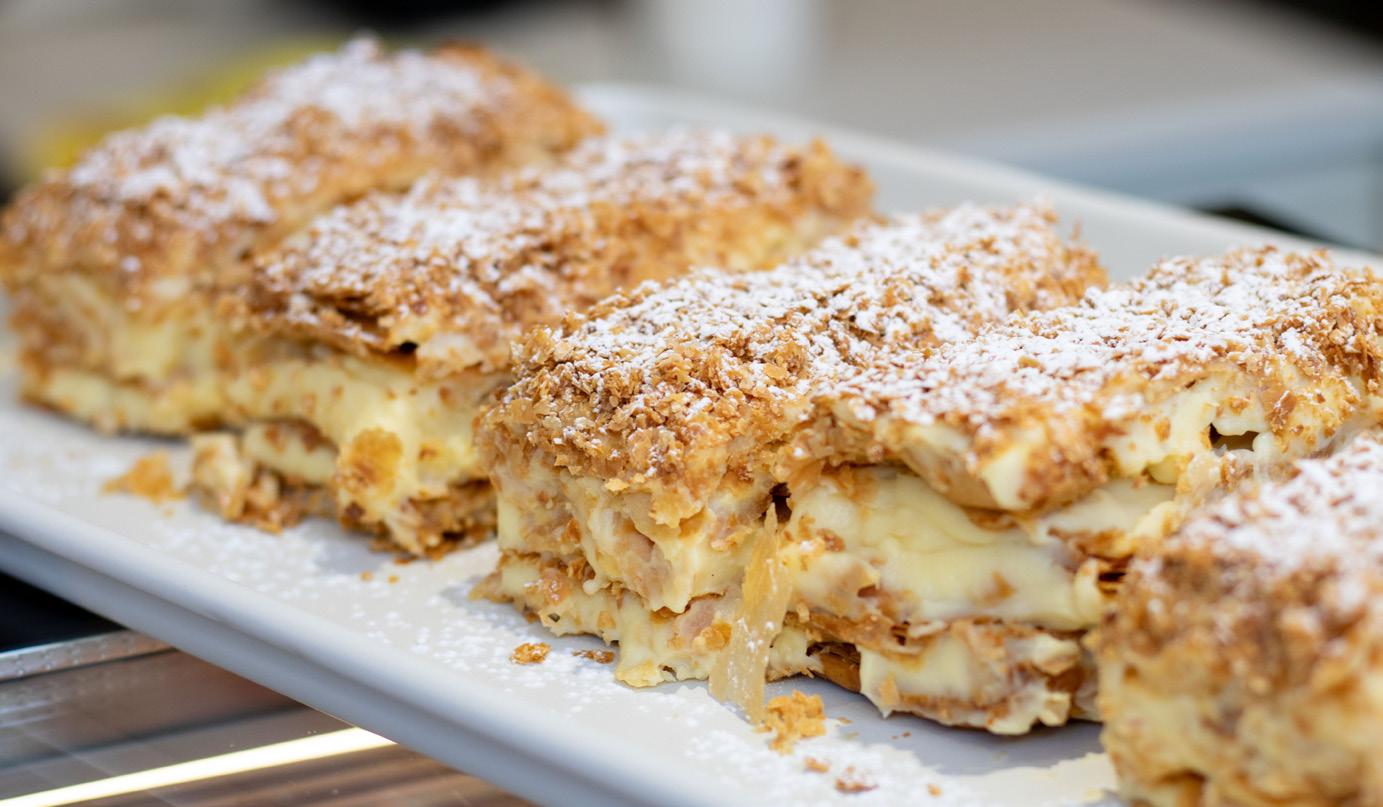
DEAR CUSTARD
Located within Zaras Cafe, it aims to delight custard enthusiasts with a variety of mouthwatering custard desserts and pastries that will keep you coming back for more!
There is something for every occasion on Eat Street at Ballito Lifestyle Centre.
Explore more at www.ballitolifestylecentre.co.za

TOYOTA LAND CRUISER 300 THE SUV FOR LIFE WELL LIVED
FOR THOSE WHO SEE A VEHICLE not merely as transport, but as an extension of taste, ambition, and lifestyle, the Toyota Land Cruiser 300 is in a class of its own. In South Africa, where the road shifts seamlessly from pristine coastline to rugged hinterland, this SUV promises both sophistication and capability—without compromise.
A Statement of Presence
From the moment it appears on the horizon, the Land Cruiser 300 commands attention. Its bold grille, sculpted lines, and poised stance give it a quiet authority, while the refined finishes—from Raven Black to Glacier White—ensure it turns heads for all the right reasons. Whether navigating city streets or coastal byways, it signals confidence and style.
Luxury in Every Detail
Step inside and the Land Cruiser 300 reveals a sanctuary of craftsmanship. Plush leather seating, ambient lighting, and thoughtful design make every journey a first-class experience. The cabin balances luxury with practicality, offering generous space for passengers and luggage alike. Every detail—soft-touch surfaces, elegant trims, and intuitive controls—feels deliberately curated, creating an environment where comfort meets sophistication.
Technology That Elevates Life
Luxury isn’t just about looks; it’s about experiences. The Land Cruiser 300 blends refinement with intelligence. A sleek digital interface, premium sound system, and smart connectivity options ensure that each drive is effortless, whether on a coastal escape or a weekend retreat to the bush. The technology adapts to your lifestyle, offering both convenience and quiet indulgence.



Designed for Lifestyle Adventures
While undeniably luxurious, the Land Cruiser 300 is equally ready for adventure. Its commanding presence and smooth ride make it perfect for weekend getaways along the KwaZuluNatal coast, trips to the Drakensberg, or spontaneous escapes into the countryside. It’s a vehicle that complements an active, experience-driven life, while keeping comfort and style firmly in focus.
A Companion for Your Narrative
For the discerning driver who values experiences, storytelling, and memorable journeys, the Land Cruiser 300 is more than an SUV—it’s a companion. Picture arriving at an intimate music
soirée, coastal retreat, or design project in a vehicle that conveys quiet elegance, confidence, and refinement. Every journey becomes part of the lifestyle story you are crafting.
Final Word
The Land Cruiser 300 is where luxury meets versatility, and presence meets practicality. It’s for those who don’t settle for ordinary. It’s for those who want a vehicle as capable as it is sophisticated, as commanding as it is comfortable—a vehicle that fits seamlessly into a life well lived.
GREAT

FOOD LOCAL MOOD
Designed as a communal space for relaxation and connection, The Market offers fresh, local produce, a variety of eateries and shared seating areas.
Weekday morning vibes are created by the resident pianist, while live local music features on weekends throughout the year, enhancing the experience and making The Market the heartbeat of Lifestyle Centre.
















OPENS 8AM DAILY


Scan for live music & events





The Antique Utopia
A Forgotten Story of South African Garden Cities and the Quest for Affordable Housing
“Perhaps [building ‘smart cities’ is a way] of ignoring the old stupid cities that we already have…”
shopping centres is named after a British utopian socialist urban-planner from the late Victorian era. This is, of course, the Howard Centre in the heart of Pinelands. It was named for Sir Ebenezer Howard OBE (18501928), a city thinker who probably did more to influence the shape and substance of the neighbourhood you grew up in than anyone else born in the last 200 years. For comparison, imagine if there was a mall in Randburg called the Marx & Engels Lifestyle Estate and Leisure Park. I suppose it’s no weirder a concept than the ‘Mandela-Rhodes Foundation’, but still.
What makes this tribute doubly intriguing is that Pinelands, if you don’t know, is a by-word in the Mother City for absurd conservative taste (amongst both residents and neighbours). I find the place charming and fascinating, but even my friends who grew up amidst its thatch Tudor cottages and esoteric geometries describe it affectionately as a kind of free-range retirement home, boasting a dozen churches, next to no liquor licences and an Ou Meul Bakery. And yet the developers are presently moving in, fresh from the Atlantic Seaboard. ‘Affordable Luxury Blocks’, like Conradie Park and The Signal, are popping up like glass toadstools, and semigrants from all over are preferring its pruned avenues to the high asks of the CBD. In a sense, they’re just repeating a deep cycle in South African (and modern) history: aspiring to live in ‘town’ without giving up the country.

How august.
By the way, what is a Garden City? In brief, it’s Sir Howard’s romantic vision of a less miserable England. With a name like ‘Ebenezer’, it’s no surprise his childhood was somewhat Dickensian. Born to a baker in the City of London, London, at the peak of the British Empire, he started work as an office clerk at the age of 15 and undoubtedly bore witness to some of the most startling juxtapositions of wealth and poverty to exist since ancient Babylon. At 21 he emigrated to the USA and lived for a few years in Chicago just after that

metropolis had suddenly burned to the ground. According to lore, he was strongly affected by the experience of watching the city resurrect itself, seeing how leafy suburbs were established to help prevent future towering infernos. He is also said to have met and admired Walt Whitman and Ralph Waldo Emerson, the twin laureates of American nature-loving who would later come to influence Jan Smuts, Olive Schreiner and innumerable South Africans.
When he returned to London later in the decade, Howard found consistent work as a parliamentary reporter and gradually became obsessed in his spare time with thinking up practical ways to make the city an easier place to live in. On the face of it, this was not a surprising turn. He had found himself working mere metres away from the dead centre of power in the capital of the richest empire the world had ever known, and yet the society which surrounded him was an unignorably awful home for millions of its citizens. Surely something could be done? In thinking so, Howard joined a radical milieu of moderate reformers. You can easily compare him to contemporaries like John Ruskin (1819-1900), the rock-star art critic who preached that even coal miners deserved the time and opportunity to learn how to draw, or to William Morris (183496), the fantasy writer and textile artist who proved that even the wallpaper in mass-produced housing could aspire to beauty (and inspire the ‘broekie-lace’ iron-work of so many South African balconies). These men didn’t want to destroy the new world, but to save it from itself.
"Belatedly, after decades of mulling over his ideas, Howard published his sole manifesto in 1898 - ‘To-Morrow: A Peaceful Path to Real Reform’ (later revised as ‘Garden Cities of Tomorrow’). The subtext of the sub-title is plain as day: the choice is between humane housing or guillotines. The decision was made that much easier by the inclusion of some of the prettiest infographics ever published. Just have a look at the assortment over the page.
The crux of his argument was that ‘Garden Cities’ were a bonafide third-way solution - a ‘third magnet’ for citizens between the pros and cons of the slums and the farms. But, in point of fact, Garden Cities weren’t ‘cities’ at all but spacious, autonomous satellite towns of sprawling municipalities that served to steady their explosive growth."
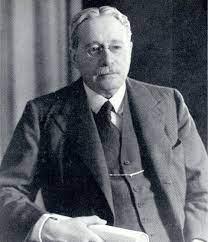
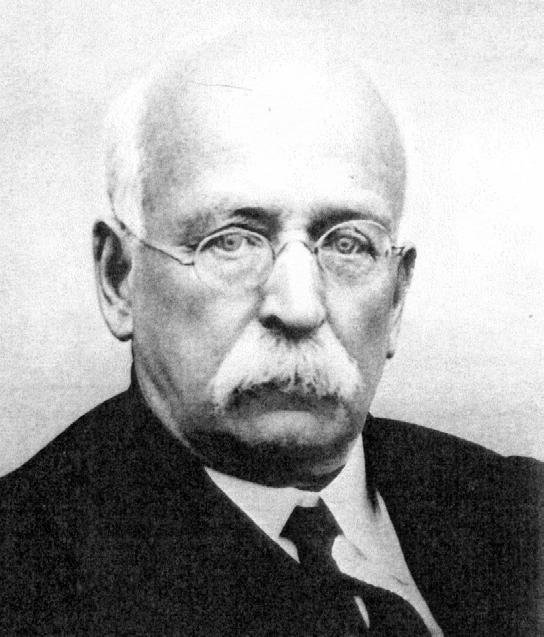
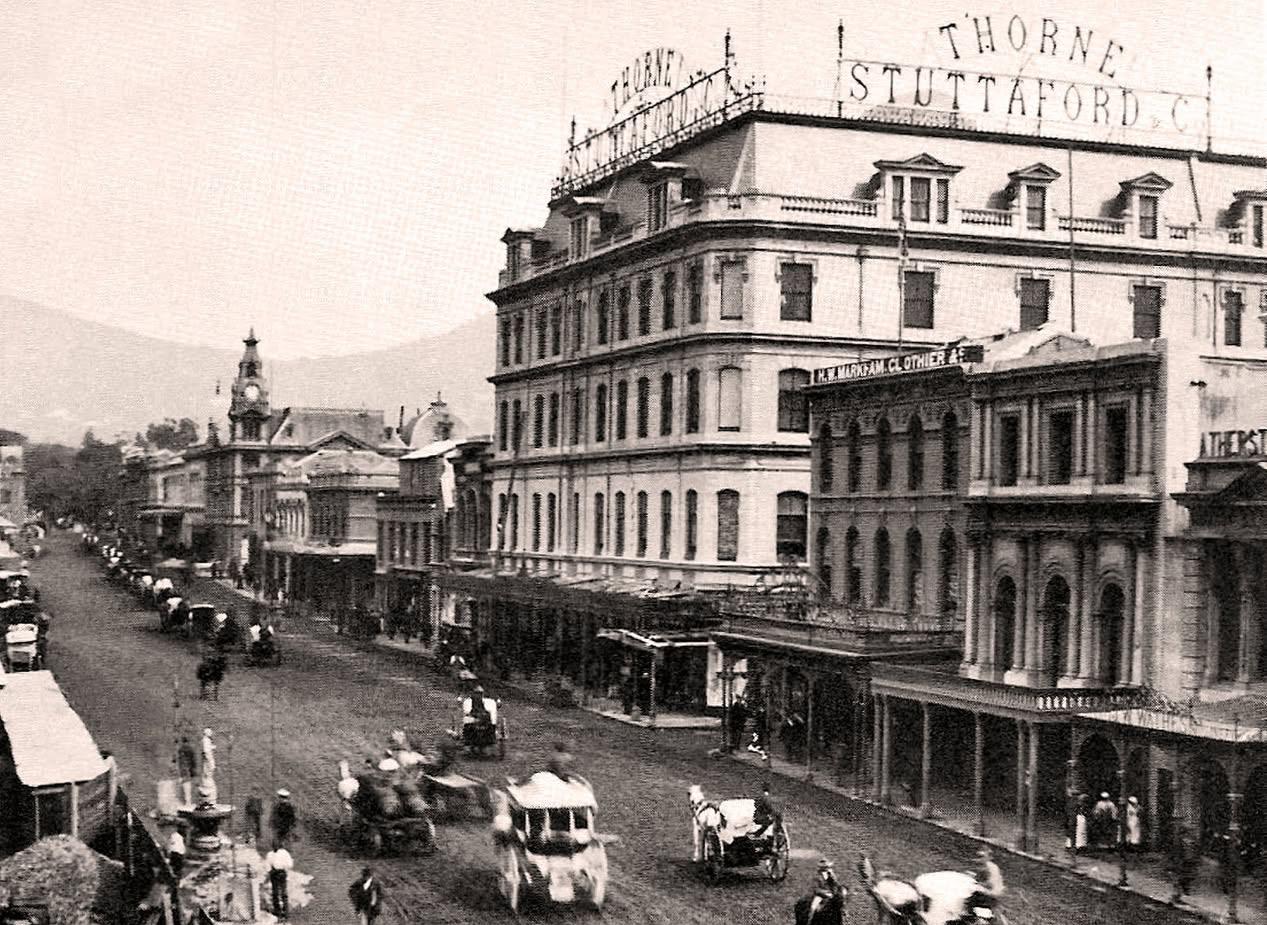
Richard Stuttaford Sir Ebenezer Howard
Stuttaford's Adderley Street in the middle of Cape Town's first great housing crisis

The book was an instant, deserved success. In a sense, it did for urban planning what Darwin’s The Origin of Species had done for biology a few decades earlier, effortlessly reconfiguring the everyday vocabulary of millions of ordinary people. The modern concept of urban ‘zoning’ can be traced back to its influence and even Walt Disney was inspired to copy quite a few of Howard’s ideas whilst designing Disneyland, as well as his iconic EPCOT Centre in Disney World, Florida. (EPCOT originally stood for Experimental Prototype Community Of Tomorrow). But the book’s most enduring influence was felt and expressed right here, in
The man who translated Howard’s ideal across the empire and the equator was the aforementioned Richard Stuttaford. And yes, as you rightly guessed, he was the heir to “the Harrods of South Africa” - the son of Samson Rickard Stuttaford, founder of the most iconic department store in our history. After spending his salad days in England, Richard had returned to Cape Town in 1898 at the age of 28 and soon, quite unsurprisingly, rose up the ranks of his father’s company to become a Director of the firm’s HQ on Adderley Street. However, the old CBD was now a very different beast to the ‘Kaapse Vlek’ he’d been raised in.
Following the endless wake of diamonds and gold upcountry, its population had “more than doubled from 67,000 to 171,000 between 1891 and 1901 alone”. In other words, the city bowl’s size and complexion changed more in the decade building up to the Boer War than in the 240 years preceding it. This was the time when District Six was busy being born and the seediness of the V&A Waterfront was reaching its zenith (or nadir). It’s hard to imagine any other port outside of America around this time more interesting to experience or more unliveable to reside in. After the British finished burning down the platteland, the new rich colonials began their white flight to Oranjezicht, Newlands and Muizenberg while the petit bourgeoisie decamped to Observatory, Green Point and Milnerton et al. But for the new immigrants and working poor of all races, Cape Town became an abusive parent. Plus ça change.
Richard Stuttaford, for one, could not ignore this truth. As his career flourished, his conscience rattled. Having caught wind of the work of the new ‘Garden Cities Association’, in 1917 he made sure to tour Letchworth on a return-trip to the home counties, and even met with a now-wizened Sir Howard in person. When he got back, he pitched a local vision of the concept to his fellow big-wigs in the Cape Town
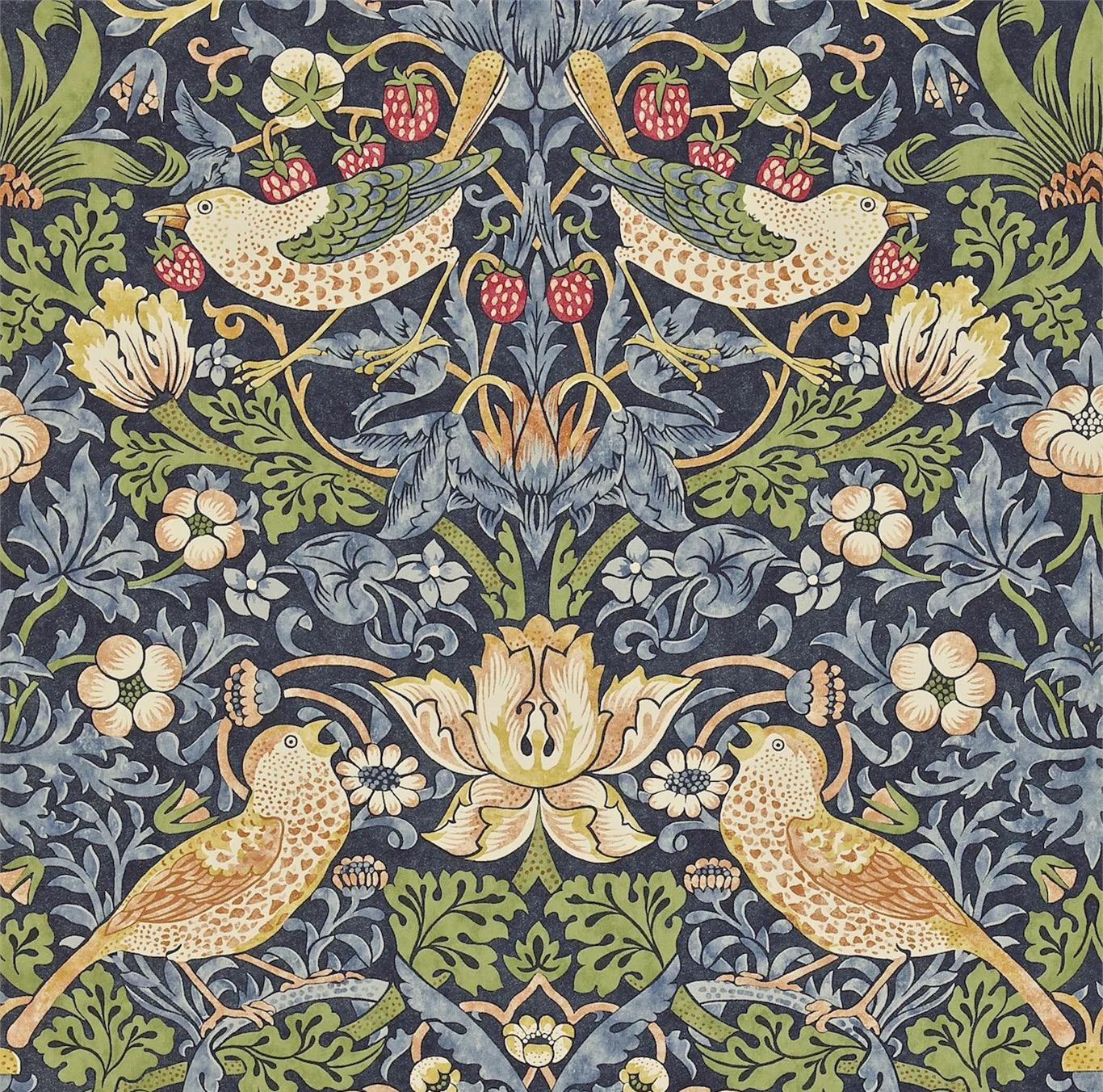
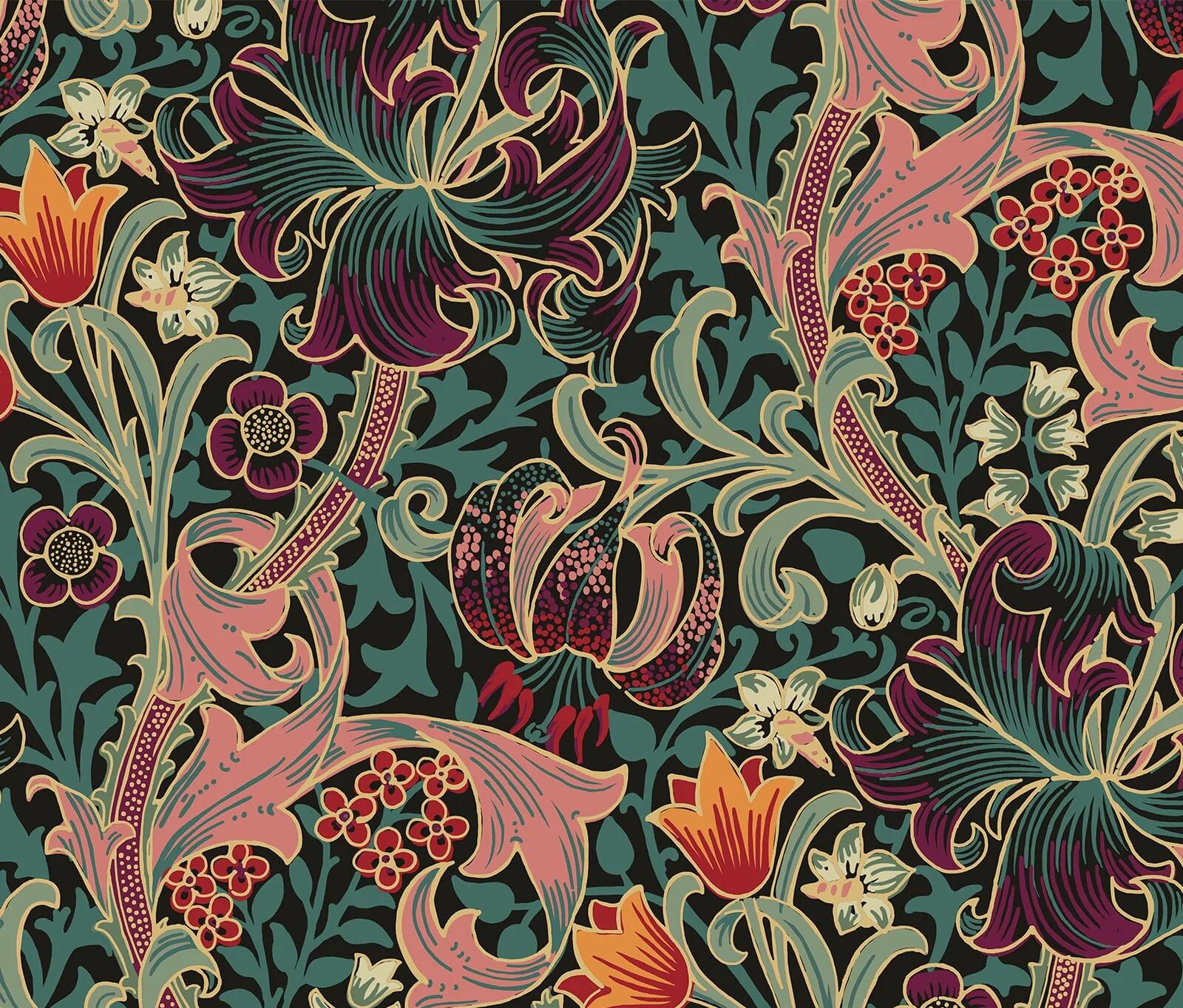
Morris's Arts & Crafts wallpaper prints
William Morris (1834-96), fantasy writer and textile artist
Chamber of Commerce. They shut him down. Undeterred, he took his proposal to the top. On the 28th of January 1919, he wrote a letter to the acting prime minister of the Union of South Africa, F.S. Malan (Louis Botha and Jan Smuts were busy waging peace in Paris):
Will you give me a quarter of an hour to discuss [Garden Cities] with you, when if you approve my suggestions, you might introduce me to the Minister who is responsible for this part of the public welfare. I may say at once that I do not propose to ask the Government for financial help.
With kind regards,
I am, Yours Truly, Richard Stuttaford
Malan granted him the 15 minutes. During the meeting, he took him up on his offer and promised to contribute next to nothing else. A few months later, Stuttaford, as first chairman, signed the deed of the non-profit Garden Cities Trust with six other trustees, dropped £10,000 of his own money into its coffers and accepted the government’s gift of 365 morgen of Uitvlugt, a timber plantation beyond the Black River set aside as the laboratory for the country’s first planned community. By 1921, the English architect Albert J. Thompson was laying out the iconic concentric grid and designing the first thatch properties on the Meadway. By the end of the decade, in spite of budget cuts, influenza epidemics, rinderpest, famine, political chaos and a sizeable worldwide depression, Pinelands was:
[A]n object lesson to the whole country, with 270 houses of the cost value of £350 000, with approximately 6 miles of tree-planted roads and 6 miles of footpaths, provided with water and electricity, light and power, gas, telephones, bus service, post office, hall, tennis courts, bowling green, school [...] in fact, all the amenities necessary for comfortable, convenient, sunny, healthy, beautiful homes…
For old colonials like Stuttaford and Jan Smuts, who had spent all their decades watching the rustic South Africa of their childhoods be ravaged and mangled by war and money, the suburb must have shone like a harbinger of national redemption.
So what was the catch, you may ask? For most residents of Pinelands, then and now, there wasn’t one. It remains a beautiful, if slightly eerie,

Howard's many, many world-changing diagrams
arcadia. But it is enclosed. Unlike Cape Town itself, it is not an oasis, a crossroads, or a smorgasbord. It doesn’t need gates to invoke its boundary. To read the Trust’s anniversary publication Fifty Years of Housing (1972) is to marvel at a kind of extended cruise-ship brochure for a fixed residential area. There are clubs, societies and public jaunts and haunts galore but you won’t have to frequent them long before you start running out of new faces. And, of course, whether Howard or Stuttaford meant it to or not, the Garden Cities solution can slide seamlessly into the blueprint of segregation.
Indeed, Thompson (Pinelands’ architect) was immediately re-hired by the city council to design Langa, the first permanent black township in Cape Town, right next door. Uitvlugt itself had first been earmarked as a military camp during the Boer War and then re-used as a quarantine location for thousands of black labourers who were forcibly removed from the city when a wave of Bubonic plague and Swart Gevaar paranoia hit the dockyards in 1901. This desultory slum, renamed Ndabeni (‘the place of debate’), was left to fester for two decades. Finally the tents and shacks were cleared, and spacious boulevards and segmented plots rose in their stead farther out on the flats. However, instead of shady, homely lanes and generational wealth, the black working-class were given concrete barracks, panopticon surveillance policing and sheds with asbestos roofs. The centre of the settlement resembled the mining hostel schemes of Alexandra and Soweto far more than any English village. Langa’s people made it workthey had no other choice - but the location stands today as a memorial to the many ways in which apartheid preceded Apartheid.
And so it went for the rest of the 20th Century. The Garden Cities Trust was laudably committed to social progress for all Capetonians, but under the Group Areas Act this required them to build separate communities for white and coloured families. The development of Meadowridge in Constantia in the 1950s was matched by the layout of Square Hill in Retreat a decade later. Edgemead in Goodwood was set out in tandem with Elfindale in Princess Vlei. The mass social housing developments on the Cape Flats that the Trust was not involved in consciously took their cues from some Garden City principles, but seemed to fatally forget that the ‘Garden’ part of the name was as crucial as the ‘City’. Manenberg, Mitchell’s Plain, Atlantis, Khayelitsha, Ocean View and so many other communities were designed in the years of Grand Apartheid as ‘model unit suburbs’ meant to replace bulldozed neighbourhoods and accommodate thousands of new migrants from the countryside, but they were thorny trees planted in poisoned soil.
Of course, Cape Town might have pioneered these schemes, but the other metros were just as culpable. White-zoned Yellowwood Park (1960) in the

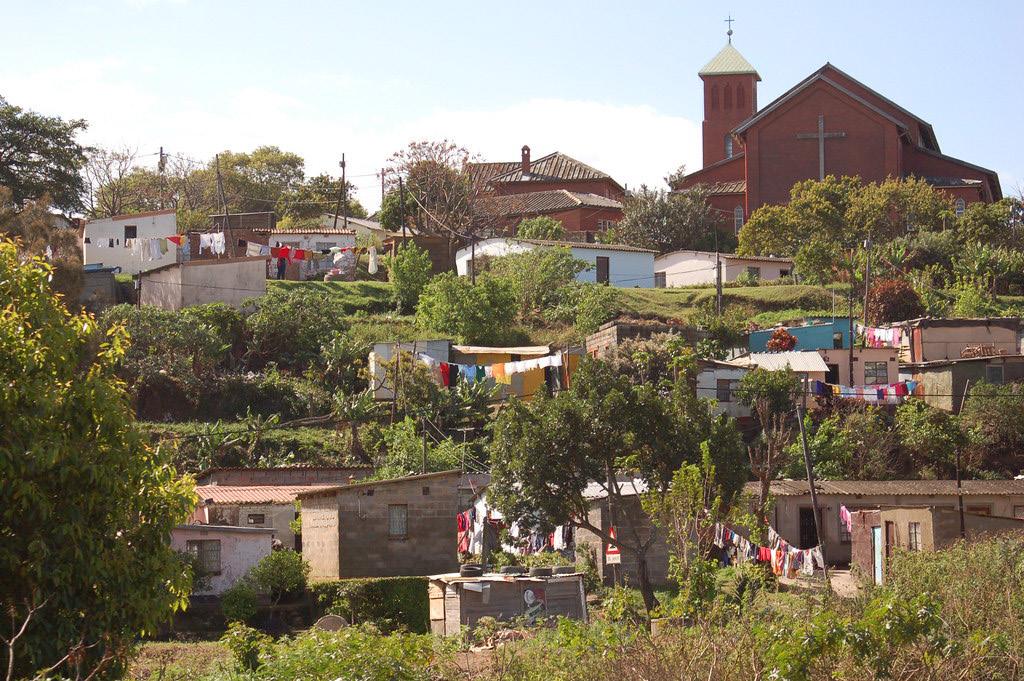
The Garden Cities of Today, spanning the world from North London to South Durban
Kenneth Stainbank Nature Reserve south of Durban was everything its labyrinthine neighbour Umlazi (1967) was not. Verwoerdburg (later Centurion, 1967) near Midrand was balanced out by Soshanguve (1974) on the other side of Pretoria. Take your pick of examples from Jozi. I hope you can tell that I’m not writing this condemnation from a cynical or reactionary position. The best-laid plans of mice and men can always be soured by dilution. Garden Cities can never work as hand-me-down versions of themselves.
But equally, their most well-executed examples are threatened by their own success. The Mount Edgecombe Estate in Umhlanga and Steyn City near Fourways are nothing if not autonomous luxury visions of 21-Century Garden Cities for the well-heeled. And in a city like today’s Kaapstad, where the Edgemead-born Mayor Geordin Hill-Lewis admits that even he can’t afford to live in the CBD, the drive to preserve property values and collective security has spawned dozens of Community Improvement Districts. For many home-owners and businesses, these public-private partnerships have been a godsend salve for the evils of persistent vagrancy and urban decay. But for others (like my friend K.’s parents, who’ve lived in Edgemead all their adult lives), the raised rates they entail might force them to sell their homes in a matter of months. The more beautiful the garden, the more tempting it becomes to build a higher and higher wall.

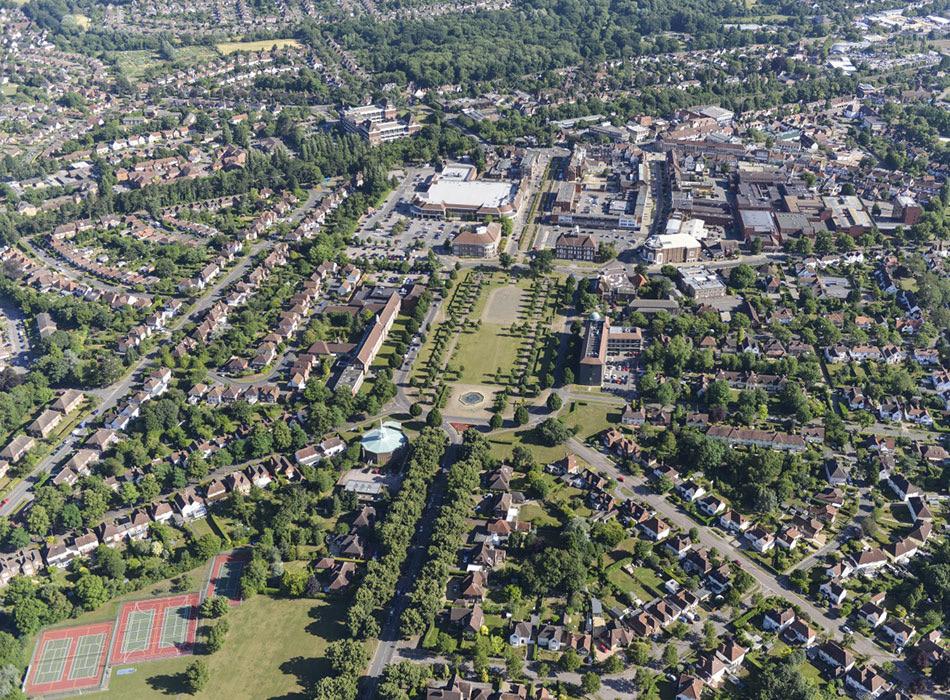
As for the Garden Cities Trust itself, the board has held on to its soul for longer than almost any other non-governmental institution in the city. Seven other members of the Stuttaford family have served in executive roles over the last century and its current director, Sean Stuttaford (Richard’s great-grandson), only started getting paid a salary for his duties after 96 years of schemes. Inspired by the speedy assembling of Cosmo City in Johannesburg, the Trust has recently pioneered the Greenville Garden City Development near Durbanville, building 3,000 houses so far of a projected 16,000. These add to the many thousands of estates and properties they’ve completed since 1994 in Sunningdale, Pinehurst, Marlborough Park, Norton Square and Mfuleni, along with dozens of new school halls built by their Archway Foundation. Oh for a hundred more such vanguards!
Can Cape Town still reclaim this, or any other practical vision of paradise? To reappropriate a quote by old Slim Jannie: a city is not defeated by its opponents but by itself.
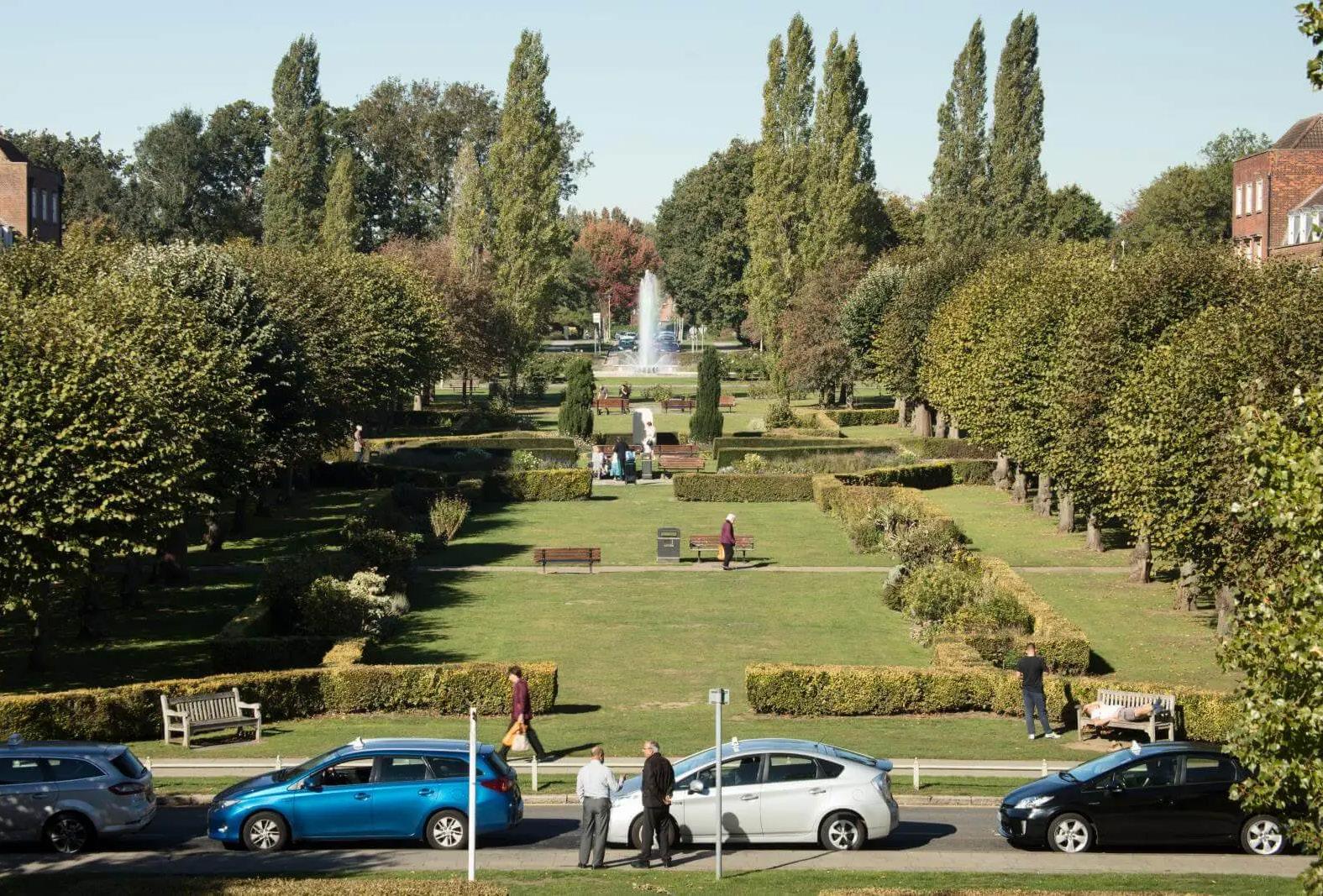
Welwyn Garden City in Hertfordshire. View along Howardsgate to Coronation Fountain from the Howard Centre
Letchworth Garden City




Eat Street features an array of fine restaurants in a lively street scene setting, offering everything from pub fare to fine dining. With exclusive lunch menus, sundowner specials from 4pm – 6pm daily, DJs on Thursday to Saturday evenings, live musicians on weekends and a welcoming atmosphere, Eat Street is the destination of choice for those seeking exceptional food in a relaxed, stylish environment.
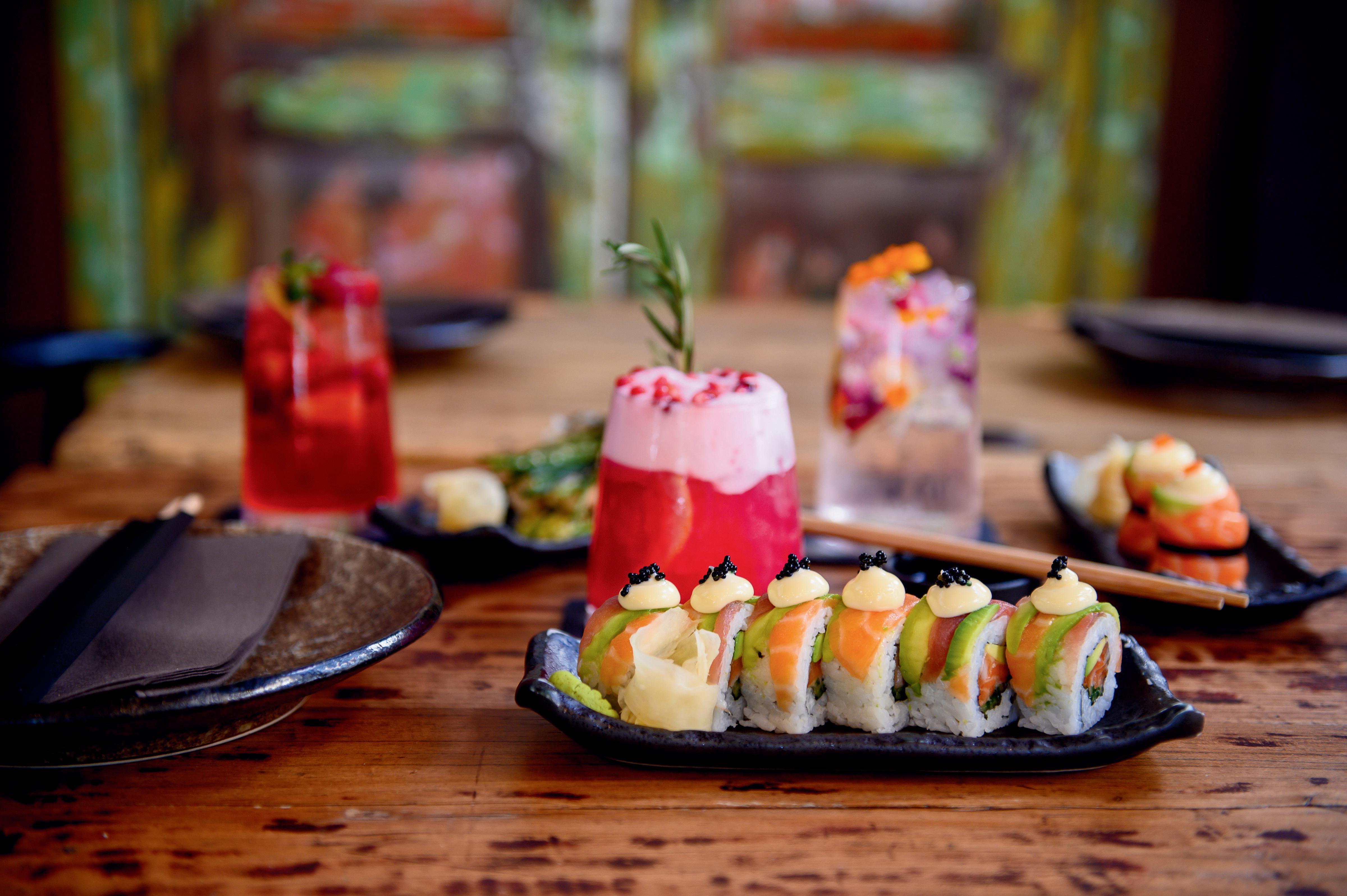













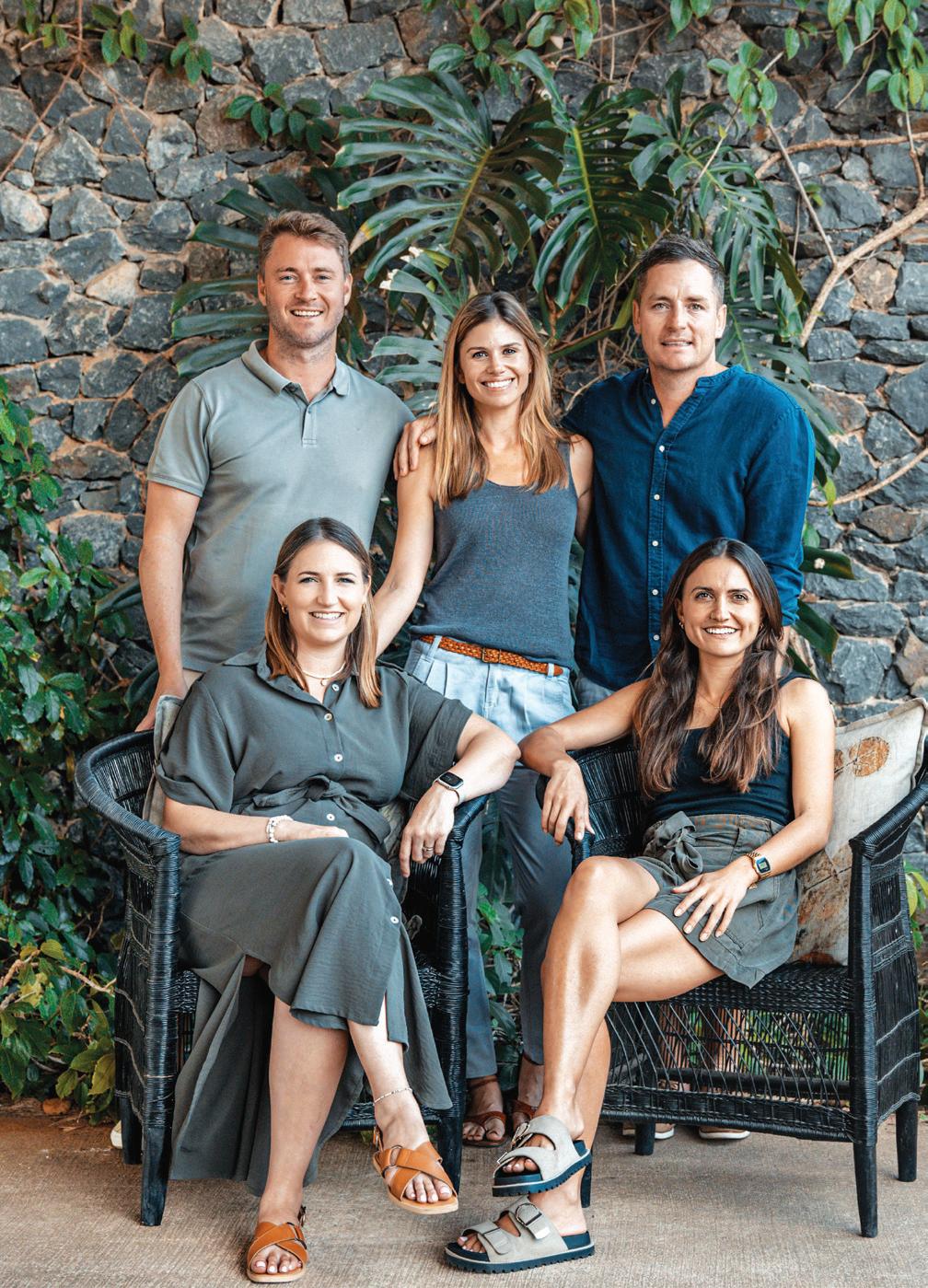
Discover Fable Salt Rock
DWELL PROPERTIES SHOWCASE
Your Gated Estate Specialists
AT DWELL PROPERTIES, we’re more than just a real estate agency — we’re a passionate, fullservice team dedicated to connecting people with exceptional homes and developments across the North Coast’s most sought-after gated estates. With a unique two-tiered approach that blends strategic marketing, deep local insight, and hands-on sales expertise. We are so proud to have built a reputation for delivering results with integrity, energy, and heart.
DWELL DEVE LOPMENTS
From blueprint to sold-out success, our bespoke sales solutions are tailored for standout residential developments. We’ve proudly partnered on some of the region’s most iconic projects — offering developers a trusted, whiteglove service that spans every stage of the journey.
Discover a rare opportunity to build your legacy in one of the North Coast’s most intimate residential estates. Welcome to Fable Salt Rock, where coastal living meets country charm — a boutique estate offering just 13 exclusive farm-style homesteads, thoughtfully designed for families who value space, serenity, and timeless craftsmanship. Set in the heart of the KZN North Coast, Fable Salt Rock invites you to experience the best of both worlds: Enjoy coastal convenience — just minutes from the beach, schools, and everyday essentials and make the most of Countryside calm — generous plots, lush surrounds, and the privacy to truly unwind.
Fable is more than a place to live — it’s a place to belong. Whether you’re dreaming of wide-open spaces, a slower pace, or a home that honours your heritage, Fable Salt Rock offers the perfect setting to bring it all to life.
Smallholding land sites from R7,000,000 – R9,000,000

LIVE DWELL
Our team doesn’t just sell the estate lifestyle — we live it. As residents and investors in the very communities we represent, we bring unmatched knowledge and authenticity to every transaction. Whether you’re buying, selling, or simply exploring, we’re here to guide you with insight and care.
Our portfolio includes premier estates such as Elaleni, Dunkirk, Brettenwood, Springvale, Simbithi, Zimbali, Zululami, and Seaton — each offering a unique blend of lifestyle, security, and natural beauty.
With over two decades of experience in the North Coast property market, we’re proud to be a trusted name in real estate — known for our commitment to excellence and our deep roots in the community.
Explore our latest new developments, and find your place in paradise

Discover The Vineyards Elaleni
Nestled within the bespoke Elaleni Lifestyle Estate, The Vineyards Elaleni invites you to experience a new standard of modern living. This exclusive development offers a curated collection of residences — from fashionable apartments and spacious simplexes to luxurious villas — each designed with timeless sophistication and contemporary comfort in mind.
Whether you’re drawn to serene forest views, seamless indoor-outdoor living, or the convenience of a secure, nature-rich community, The Vineyards delivers. Residents enjoy access to world-class amenities including the Elaleni Leisure Centre, Forest Clubhouse, Harvest Barn, scenic boardwalks, fishing dams, lap pools, padel and tennis courts, and the private Elaleni Beach Club.
Expected completion: October 2026
Live where lifestyle, nature, and community come together — welcome to The Vineyards Elaleni.
2 Bed Apartments from R2,225,000, 2 Bed Villas from R2,395,000, 3 Bed Villas from R2,655,000
3 Bed Simplex Homes from R3,150,000

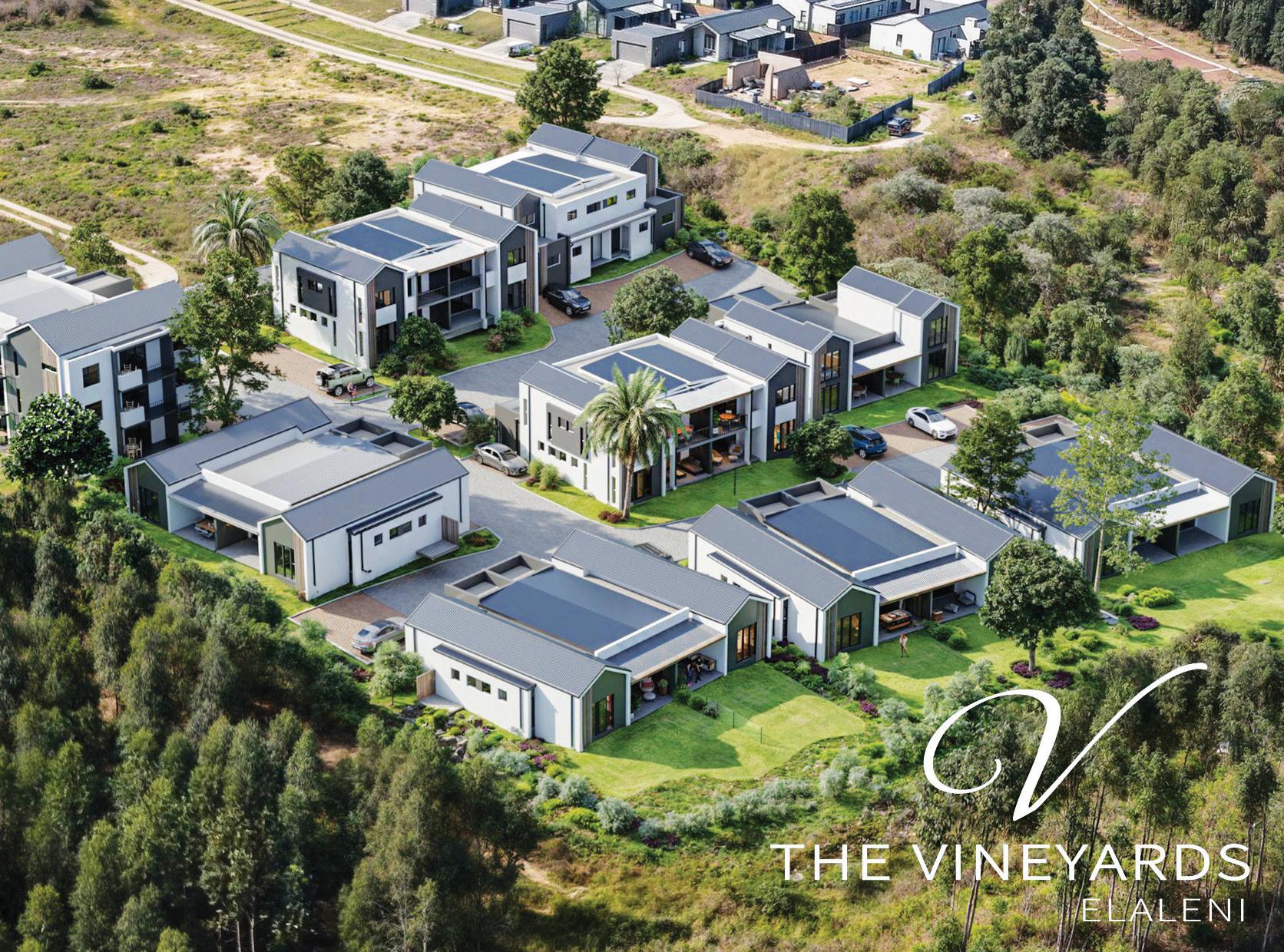
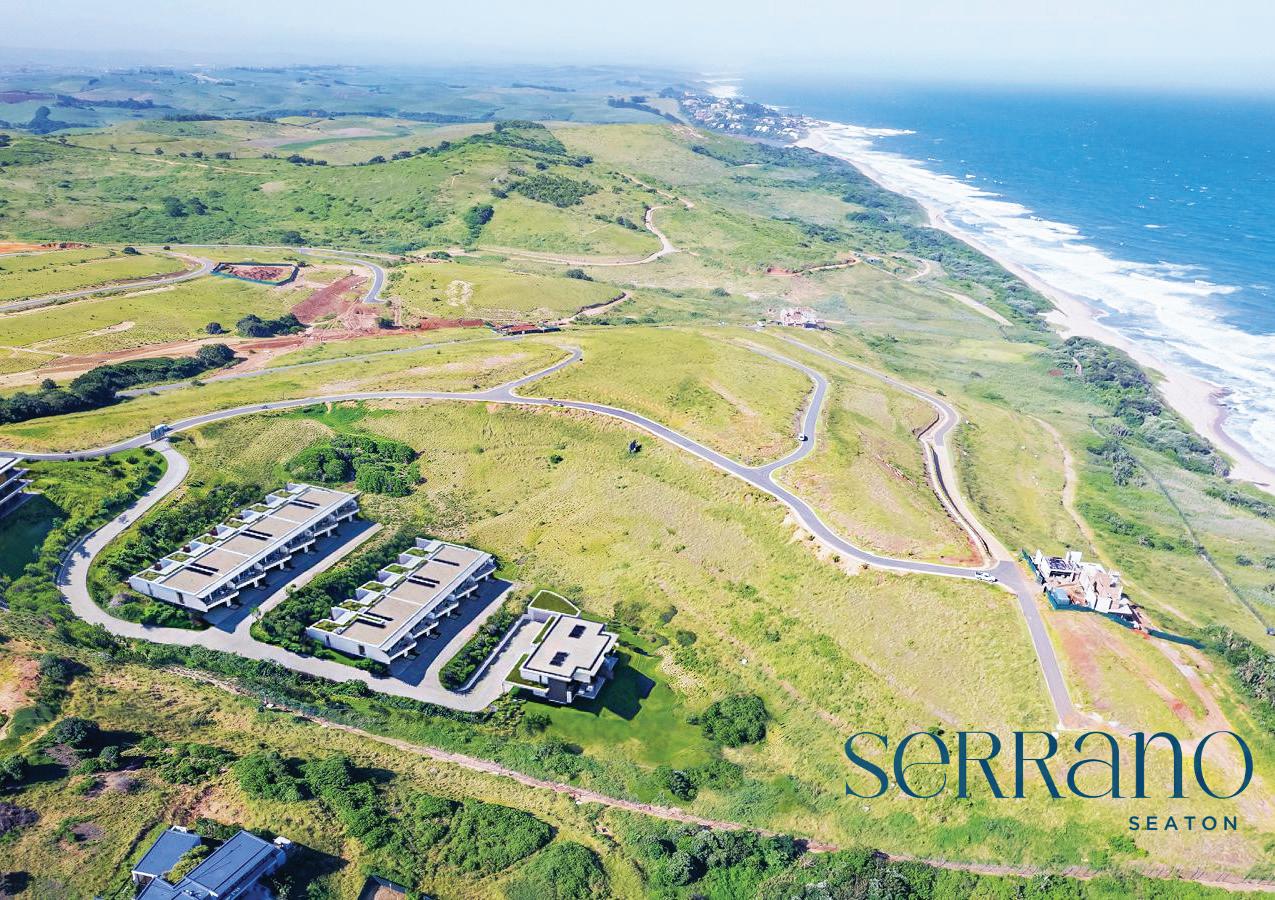
Discover Serrano Seaton
A limited collection of ocean-facing residences, perfectly poised for seaside living and delivering coastal elegance above Christmas Bay Welcome to Serrano Seaton — an exclusive enclave of 2, 3, and 4-bedroom apartments and homes, gracefully positioned on the slopes of Seaton. With uninterrupted views of the Indian Ocean and direct access to the untouched shores of Christmas Bay, this is coastal living at its most refined.
Here, every detail is designed to elevate your lifestyle. Residents enjoy seamless access to the beach, forest boardwalks, and scenic running and biking trails right on their doorstep. Premium sports facilities — including tennis, padel, and squash courts — offer endless opportunities for recreation, while luxurious clubhouses provide the perfect space to unwind and connect. With full access to the world-class amenities of both Seaton and Zululami, Serrano Seaton delivers a harmonious blend of nature, wellness, and community. Whether you’re seeking a permanent residence or a coastal escape, Serrano Seaton invites you to relax, recharge, and reconnect — all with the ocean as your backdrop.
Expected completion: September 2026
Your seaside retreat is taking shape. Let’s help you find your place in it.
Villas from R5,900,000

This Summer, Imagine It All
Imagine the views and leisure at your doorstep. Imagine building your forever and the life you deserve.
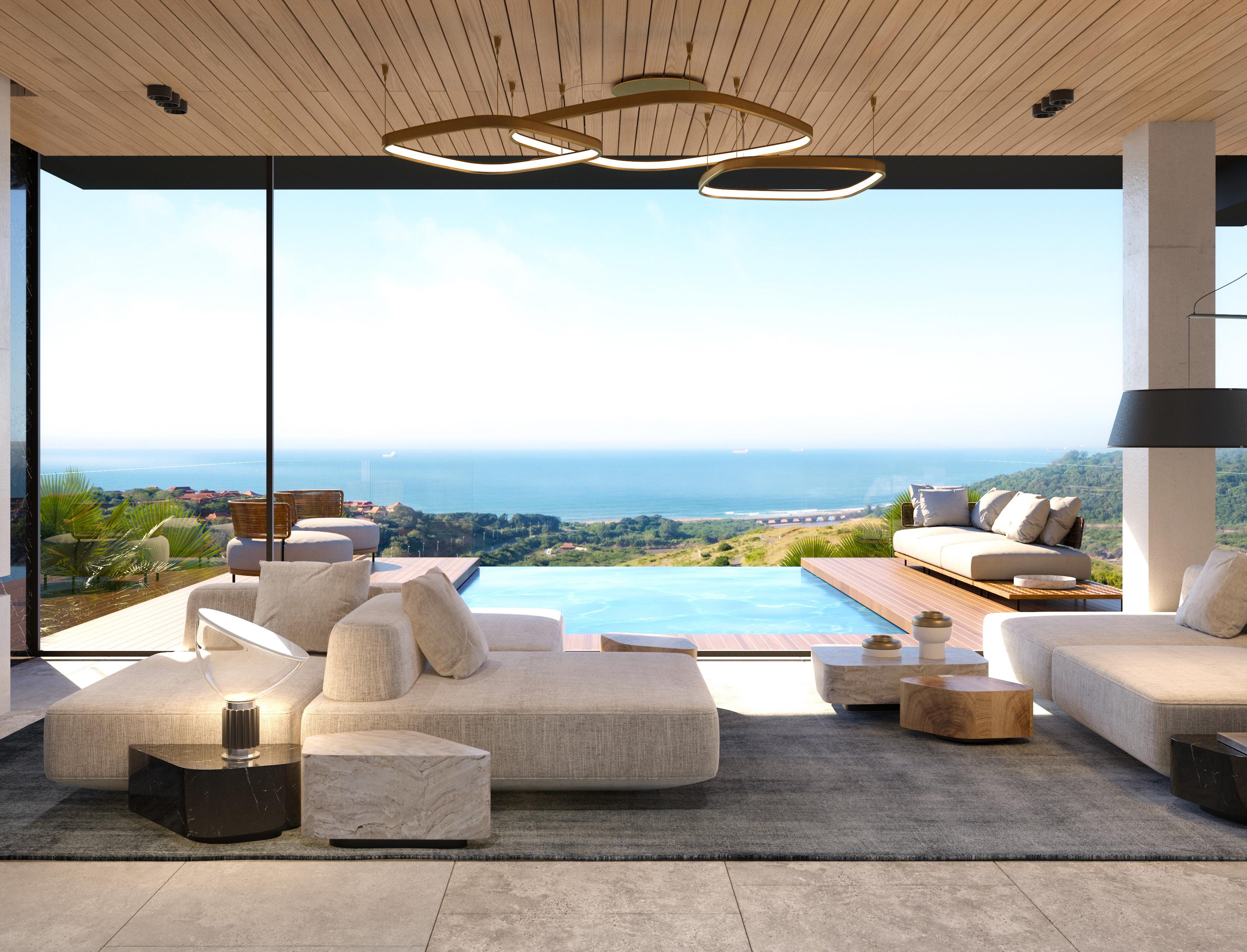

18-Hole Golf Course of Precision, Beauty and Challenge
Imagine... A Game that inspires. Answer with a Perfect Swing at the Ernie Els Signature Course.
NATURALLY YOURS, NATURALLY HOME IMAGINE LIFE AT ZIMBALI LAKES
ZIMBALI LAKES RESORT - a new chapter in the Zimbali Story
Zimbali Lakes Resort sets the standard for modern multi-generational living by offering families, young professionals and retirees the opportunity to live the Zimbali lifestyle on their own terms.
Our pet-friendly estate will offer residents a wide variety of fabulous amenities to suit all ages and all fitness levels including a stunning new 18-hole player-friendly golf course and Sports Club.
KZN North Coast as a major domestic and international tourist destination and further enhance the value of investment for both current and future buyers.
Zimbali Lakes Resort is the perfect choice in luxury estate living. Join us as we continue to build this vibrant, trend-setting new community in Ballito.
Tatali, the magnificent R11 billion retail mixed use development, will re-position the www.zimbalilakes.co.za
EXPERIENCE THE ART OF LIVING AT ZIMBALI LAKES
IMAGINE... YOUR LAND. YOUR CANVAS...



OLD FRIENDS
Words: Dave Charles
Old friends, old friends
Sat on their park bench like bookends
A newspaper blown through the grass
Falls on the round toes
Of the high shoes of the old friends
Old friends, winter companions, the old men
Lost in their overcoats, waiting for the sunset
The sounds of the city sifting through trees
Settle like dust on the shoulders of the old friends
PAUL
SIMON HAS WRITTEN MUCH OF THE SOUNDTRACK
of my life. You might also have a Simon and Garfunkel tune or two stored safely in your personal memory bank that reminds you of someone or something from the past. If you don’t, you probably won’t relate to this story so turn the page…
I came across an old photograph the other day that instantly conjured up a more obscure Paul Simon song. It was a song that, years ago, I used to listen to and wonder about. It was rather sad and nostalgic but also a little menacing. The idea of two old friends sitting together in the park waiting for the sunset reminded me of my grandfather and how I really couldn’t bear the thought of losing him. Also, the concept of actually getting old and reaching the full allotment of your life – three score years and ten the Good Book proclaims –was so foreign to me that I honestly didn’t give it much thought back then. I was young and life was an adventure waiting to happen.
But back to the photograph.
Can you imagine us years from today
Sharing a park bench quietly?
How terribly strange to be 70
I had a friend called David who was larger than life. We met as kids at boarding school and remained friends through all of the trials and tribulations of growing up and settling down. He had an extraordinary intellect and was an
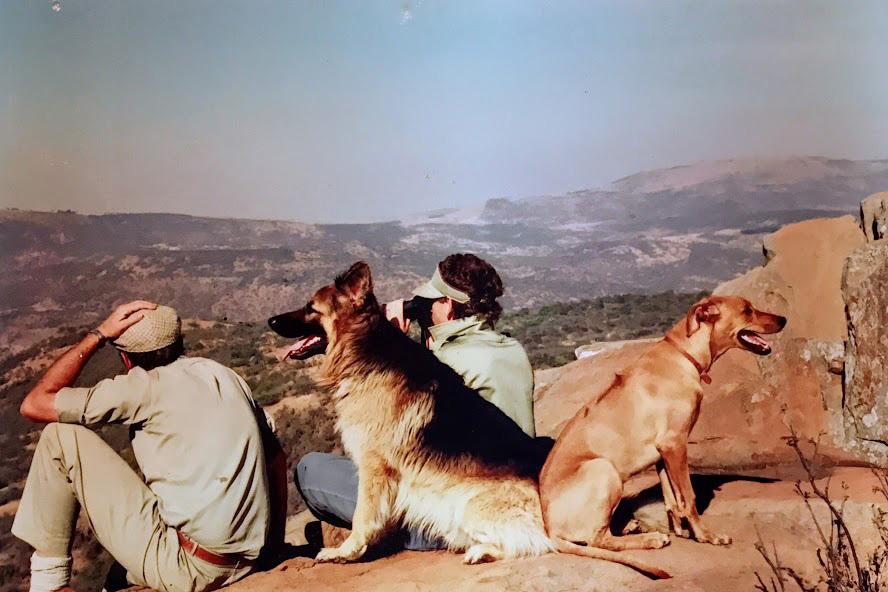
outstanding raconteur. He would become one of the foremost South African authorities on the Zulu War and the various battles that took place during that terrible conflict with the British in 1879.
David and I had a dream of creating a life for our families in a beautiful place on a wild river in Natal. The Fugitives’ Drift was a rundown cattle farm that his dad had bought years before to preserve the monument to two brave British officers – the first posthumous recipients of the Victoria Cross – that stood overlooking the mighty Buffalo River here. Over the years the land recovered and would, in time, become a spectacular private game reserve that we would come to live on.
It was a dream that through hard work and tough times became a reality and it was here that we developed the finest battlefield tours in the country. It was a hard road to travel, and the challenges were huge.
After nearly five years of living off the grid in a wild and dangerous paradise, Sue and I were offered an opportunity to move to Ballito, and we took it. That was over twenty years ago but it seems like yesterday.
The photograph that surfaced recently instantly took me back - back to a cliff on the Fugitives’ Drift overlooking the Buffalo River and the vast expanse of territory towards the Isiphezi Mountain in Zululand. There we sit, two old friends and our dogs framing us like bookends. If only we had known how little time was left before they would all be taken across the dark mountain…
Old friends, memory brushes the same years
Silently sharing the same fears
Time it was, and what a time it was, it was
A time of innocence, A time of confidences
Long ago, it must be, I have a photograph
Preserve your memories; They're all that's left you
SPACE, SECURITY, AND SERENITY: Execustore Ballito Answers Your Storage Demands!
Ballito, KZN - In a town celebrated for its vibrant lifestyle and beautiful homes, a common challenge persists: where do you put all your “stuff”?
From seasonal holiday gear and cherished outdoor toys to business inventory and family heirlooms, the need for secure, accessible, and affordable storage has never been greater.
Answering the call with resounding success, Execustore Ballito has just unveiled a major expansion, opening a further 100 brand-new ground floor storage units to meet overwhelming popular demand.
Tucked away in the ultimate convenient location - a mere 1.2km from the main Ballito Interchange - this brand-new storage development is now open and ready to suit every storage requirement imaginable. Forget long, inconvenient drives; Execustore offers easy access, making it a simple pit stop on your daily routine.
PEACE OF MIND, BUILT IN
What truly sets Execustore apart is its unwavering commitment to security. This isn’t just a yard with some lockers; it’s a fortress for your valuables. The facility boasts a multi-layered, state-of-the-art security system designed to give you complete peace of mind.
IMAGINE:
• Access-controlled gates ensuring only authorised personnel enter.
• Electric fencing, beams, and alarms creating a formidable first line of defence.
• Comprehensive CCTV coverage monitoring the premises around the clock.
• The human touch: a night guard and a live-in caretaker provide an ever-present watchful eye.
“Our philosophy is simple: your possessions should be safe, accessible, and well-protected, making your storage experience completely stress-free,” says the Execustore team.
With access from 6am to 6pm, seven days a week, you have the flexibility to pop in whenever you need, on your schedule.
MORE THAN JUST STORAGE: A LIFESTYLE SOLUTION
Execustore understands that storage needs are as diverse as its clients. That’s why they offer a range of large and practical units to fit everything from furniture and documents to boats and bikes. And for those with a passion for the coastal lifestyle, an added bonus awaits: dedicated wash bay facilities for your watercraft and bikes, making clean up after a day on the water, or the trails a breeze.
For visitors, tenants, and anyone needing a safe spot to leave their vehicle, the facility also features a 24-Hour Secure Park with its own access control and CCTV, adding another layer of convenience.
AFFORDABLE SECURITY, UNCOMPROMISED QUALITY
In today’s economy, value is key. Execustore Ballito prides itself on providing premium storage solutions that won’t break the bank. They have crafted their offerings to be affordable, ensuring that safety and security are accessible to everyone.
The message is clear: you don’t have to choose between cost and peace of mind. With its recent expansion, top-tier security, and prime location, Execustore Ballito has firmly positioned itself as the North Coast’s premier storage solution.
Ready to Declutter Your Life?
Don't let a lack of space cramp your style.
Contact Execustore Ballito today to book your storage unit and discover a stress-free way to store what matters most.