













In this issue of Springs, we highlight practical ways to access grants and incentives that can benefit your business. These programs can help fund new equipment, support workforce training, encourage innovation and offset compliance costs.
As you read through this issue, you’ll discover opportunities to secure funding and drive meaningful improvements within your organization. These resources put real dollars back into your business and we’re proud to share them with our members.
Our goal with this issue is twofold: to keep you informed and to provide education through expert-led articles that both instruct and inspire. We welcome your feedback and encourage you to share your experiences, especially when something you read here sparks new ideas or direction.
Over the next two years, my priority is to ensure every member gains measurable value from their SMI membership. I encourage you to get involved, share your perspectives and challenge us to deliver even greater value for the industry.
As our industry evolves, so must SMI. While we will always respect our history, we are focused on embracing the future — one that reflects the modern spring manufacturing landscape. This includes expanding educational offerings, building new relationships and actively engaging the next generation of leaders. It also means amplifying the voices of women in manufacturing and encouraging greater participation across our organization.
With the depth of knowledge and expertise within our membership, we have a tremendous opportunity to strengthen SMI and continue delivering meaningful value.
It is an honor to serve as SMI President. I look forward to working alongside each of you, sharing knowledge, learning from your experiences and continuing to grow together.
Committed to our shared success,
David DeVoe
John Evans’ Sons
dbd@springcompany.com
SMI Executive Committee
President: David DeVoe, John Evans’ Sons
Vice President: Dave Deerwester, The Yost Superior Co.
Secretary/Treasurer: Joe Devany, Betts Company
Past President: Don Jacobson III, Newcomb Spring
At-Large: Julie Arenz, R&L Spring/Medicoil
Executive Director: Gary McCoy, SMI
SMI Board of Directors
Markus Arnold, WAFIOS I Tim Bianco, Iowa Spring I Jodi Boldenow, IDC Spring I Kelley Christy, Diamond Wire Spring I Adam Jacobson, FENN/ Torin I Chris Kozka, MW Components I Katherine Pepka, Renton Coil Spring I Sanjeev Rivera, Lee Spring I Timo Roeger, Kern-Liebers USA I Monica Shaffer, Novi Spring I Jason Sicotte, Associated Spring I Bernie Taylor, Hoosier Spring
Springs Magazine Staff
Gary McCoy, Executive Director/Publisher, gary@smihq.org
Phil Sasso, Managing Editor, phil@smihq.org
Gaby Carrasco, Associate Editor, gaby@smihq.org
Lisa Plefka Haskin, Art Director, lisahaskin95@gmail.com
Communications Committee
Chair, Kelley Christy, Diamond Wire Spring I Reb Banas, Stanley Spring & Stamping I Hale Foote, Scandic Springs, Inc. I Patrick Gillum, Gilco Spring of Florida, Inc. I Adam Jacobson, FENN/Torin I Lucas Karabin, Acme Monaco I Gary McCoy, SMI I Phil Sasso, SMI I Michael Shapiro, Gibraltar Corporation I Bill Wynn, Gardner Spring, Inc.
Advertising Sales I Japan
Ken Myohdai, Sakura International Inc.
Head Office: 3F,4F, ENDO Sakaisuji Bldg., 1-7-3, Bingomachi, Chuo-Ku, Osaka 541-0051, Japan
Phone: 81-6-6624-3601 I Fax: 81-6-6624-3602
Tokyo Global Office: 5F Kamei No. 2 Bldg., 2-17-13, Kiba, Koto-Ku, Tokyo, 135-0042, Japan Phone: 81-3-5646-1160 I Fax: 81-3-5646-1161
E-mail: info@sakurain.co.jp
Advertising Sales I Taiwan
Charlie Yu, Worldwide Services Co. Ltd. 11F-B, No 540, Sec. 1, Wen Hsin Rd. Taichung, 408 Taiwan
Phone: +886-4-2325-1784 I Fax: +886-4-2325-2967
E-mail: marketing@acw.com.tw
Springs (ISSN 0584-9667) is published quarterly by SMI Business Corp., a subsidiary of the Spring Manufacturers Institute: PO Box 5668, Elgin IL 60121 Phone: 847-450-6848; Website: smihq.org
Address all correspondence and editorial materials to this address.
The editors and publishers of Springs disclaim all warranties, express or implied, with respect to advertising and editorial content, and with respect to all manufacturing errors, defects or omissions made in connection with advertising or editorial material submitted for publication.
The editors and publishers of Springs disclaim all liability for special or consequential damages resulting from errors, defects or omissions in the manufacturing of this publication, any submission of advertising, editorial or other material for publication in Springs shall constitute an agreement with and acceptance of such limited liability.
The editors and publishers of Springs assume no responsibility for the opinions or facts in signed articles, except to the extent of expressing the view, by the fact of publication, that the subject treated is one which merits attention.
Do not reproduce without written permission.
Cover designed by Lisa Plefka Haskin utilizing Shutterstock imagery.
Please archive or
Contact Us
Spring Manufacturers Institute
Main phone z 847-450-6848
PO Box 5668 Gary McCoy z 847-450-6240
Elgin IL 60121


Gaby Carrasco z 847-857-6432








Associated Metal Forming Technologies (AMFT), a global manufacturer of precision-engineered components, has acquired P&B Metal Components Ltd., a United Kingdom-based maker of precision contact assemblies, stampings, rivets and welded components. The deal gives AMFT its first manufacturing presence in the U.K. and Malaysia.
Founded in 1961 and headquartered in Sheffield, England, P&B brings more than 60 years of expertise in electromechanical contact manufacturing and precision metal stamping, with additional operations in Johor Bahru, Malaysia. The company serves more than 200 customers in more than 30 countries across the automotive, aerospace, renewable energy, rail, HVAC and industrial control sectors.
“This acquisition expands our global footprint and strengthens relationships with OEM customers worldwide,” said Todd Smith, president and CFO of AMFT.
With the addition of P&B, AMFT now operates six precision manufacturing brands across North America, Europe and Asia.
JN Machinery has relocated to a new plant at 1350 Chase St. in Algonquin, Illinois, effective July 1. The new facility, about four miles north of the company’s current Carpentersville, Illinois, location, offers greater electrical capacity for simultaneous oven testing and improved handling of incoming and outgoing shipments. Phone and email contacts remain unchanged.
Lesjöfors AB, parent company of the Lesjöfors Group, will change its name to Beijer Components AB to reflect the company’s growth and diversification within Beijer Alma
The new name is intended to establish a broader business platform. Beijer Components will operate alongside Beijer Tech as one of Beijer Alma’s two subsidiaries.
The Lesjöfors brand will remain independent within Beijer Components, continuing to serve spring and pressing customers.
R-R Spring Corp. has acquired RC Coil Spring Company, Inc., in Glendale Heights, Illinois. The acquisition adds coil spring production capabilities and an expanded customer base to R-R Spring’s existing precision spring and engineered metal component operations.
RC Coil Spring will continue operating under its name as a subsidiary of R-R Spring Corp.
The acquisition broadens the company’s manufacturing and engineering capabilities while maintaining existing service standards, said Randy Richter, vice president of R-R Spring.
The deal is expected to expand product offerings, increase production capacity and give customers access to additional engineering and technical resources.
The name change applies only to the parent company and will not affect Lesjöfors’ market position, brand identity or daily operations.
“This evolution reflects both continuity and ambition,” said Johnny Alvarsson, acting president and CEO of Beijer Components and Beijer Alma. Alvarsson said the change is intended to support future growth through acquisitions in new component sectors.
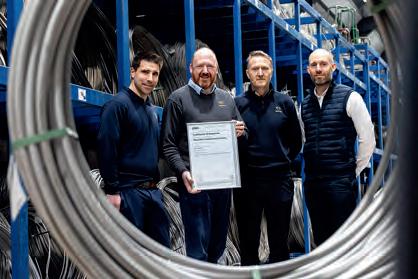
Alloy Wire International (AWI) has received ISO 19443 certification, a quality standard for suppliers to the nuclear sector. The certification could support $2.7 million in new business, the company said.
The certification process was completed in nine months with no nonconformities in the company’s quality management systems, employee training or internal communications, ISO assessors said.
Nuclear-sector sales account for about 10% of AWI’s $22.3 million in annual revenue. Its materials are used in nuclear reactors, small modular reactor development and decommissioning applications.
The review focused in part on workforce understanding of quality requirements and traceability standards, said Kevin Guest, head of quality, health, safety and environmental management at AWI.
“Increased nuclear investment in the U.K. and internationally could create additional supply-chain opportunities,” said Managing Director Tom Mander
Exhibitor registration is open for wire and Tube Mexico 2027, scheduled for Feb. 23–27 at CINTERMEX Centro Internacional de Negocios in Monterrey, Mexico.
The show will be co-located with Expo Manufactura and organized by Messe Düsseldorf and Informa Markets
Wire-focused exhibits will showcase wire and cable manufacturing equipment, testing technology and software. Tube-related exhibits will feature metallic tube processing and OCTG technologies. National pavilions will include Germany, Italy and Austria, along with a French group exhibit and participation from the International Wire and Machinery Association.
Organizers cited growth in Mexico’s automotive, infrastructure and energy sectors as drivers of regional demand. The 2025 event drew 168 exhibitors from 20 countries and more than 13,600 attendees.
To register, visit www.wire-tube-mexico.com.
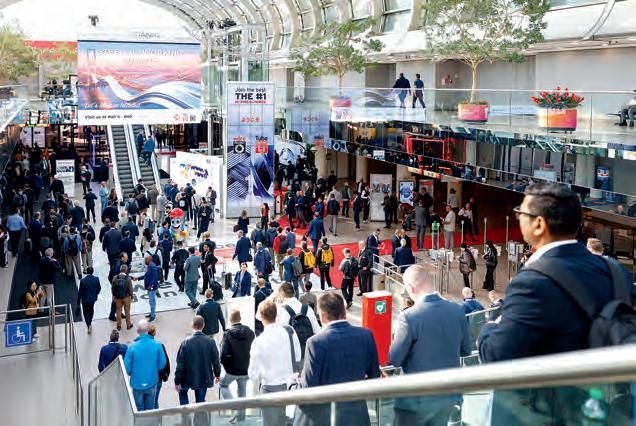
Manufacturers, suppliers and buyers from across the global wire industry attended wire and Tube 2026 in Düsseldorf, Germany. Attendees discussed supply chain resilience, material availability and emerging applications.
The trade show featured more than 2,600 exhibitors from 65 countries across 16 exhibition halls. Visitors represented 130 countries. Industry discussions focused on shifting supply chains, demand for high-performance materials and the growing role of defense, energy and advanced manufacturing sectors.
Technologies on display included artificial intelligence, robotics and applications tied to renewable energy and electrification.
The next wire and Tube show is scheduled for April 3–7, 2028, in Düsseldorf. Information is available from Messe Düsseldorf North America at info@mdna.com.

By Chris Kozka, MW Components, CASMI President
Thank you to our SpringWorld Visionary Sponsor, Industrial Steel & Wire (ISW)!

SpringWorld Expo and Symposium will return to the Donald E. Stephens Convention Center in Rosemont, Illinois, Oct. 7–9, 2026. It will bring together international sponsors, exhibitors and attendees for three days of information, education, networking and industry insights.
Since 1959, SpringWorld has served as a showcase for spring industry materials, technology and resources. The biennial event includes three days of exhibits, demonstrations and relationship building.
Want to learn more about CASMI events, sponsorship, involvement or anything else CASMI-related? Reach out to us!
Tessa Disch, Executive Director t.disch@casmi-springworld.org
Nicole Kuhnz, Association Specialist n.kuhnz@casmi-springworld.org
Bob Timmins, Industry Relations Manager r.timmins@casmi-springworld.org
Aug. 28, 2026
CASMI Evening at the Ballpark Schaumburg Boomers Schaumburg, IL Oct. 7–9, 2026 SpringWorld Rosemont, IL
Events are subject to change. Visit www.casmi-springworld.org for the latest information.
In 2024, SpringWorld expanded to include an educational Symposium in partnership with SMI. The Symposium features three mornings of programming, including an economic forecast keynote by Thomas Walstrum, an economist at the Federal Reserve Bank of Chicago.
Sponsorship and exhibitor opportunities are still available. For information, contact Bob Timmins at 856-380-6938 or r.timmins@casmi-springworld.org.
Attendee registration and hotel reservations are now online at www.springworld.org.
CASMI members came together for networking, food and bowling at Pinstripes in Oak Brook, Illinois, in March. Between dinner and bowling, the group paused to share their memories about late CASMI member Larry Lieberum who died Feb. 3, 2026. He retired from Industrial Steel and Wire (ISW) in 2023. For more about Lieberum, visit www.smihq.org/go/lieberum26.

Follow CASMI on Facebook and LinkedIn for news, information and event updates. Like, share and comment.
Facebook: www.facebook.com/profile.php?id=100090082190759
LinkedIn: www.linkedin.com/company/90511236/admin/
By David DeVoe, John Evans’ Sons, NESMA President
The New England Spring and Metalstamping Association (NESMA) continues to support manufacturers across the region through education, workforce development, legislative advocacy and member engagement.
Through its active involvement with the Connecticut Manufacturers’ Collaborative, NESMA represents member interests on workforce development, labor policy, economic growth and regulatory issues affecting manufacturers. Legislative updates, workforce pipeline programs and apprenticeship initiatives keep members informed and represented at the state and regional level.
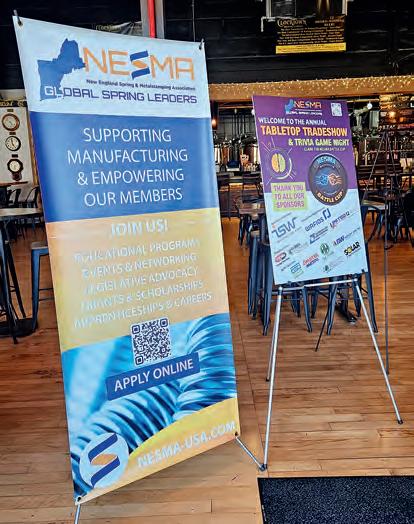
NESMA’s Annual Tabletop Tradeshow was held March 24 at Clocktown Brewing Co. in Thomaston, Connecticut. Attendance and exhibitor participation increased again, continuing a positive trend that has made the event one of NESMA’s most anticipated annual gatherings. Members, suppliers and partners came together for networking, innovation and business development.
Congratulations to Konrad Domiczek and Aubrey Cruz, 2026 NESMA scholarship recipients. Domiczek, a high school senior from Barkhamsted, Connecticut, is pursuing a degree in aerospace mechanical engineering. Cruz, of Bristol, Connecticut, is a student at the University at Albany in New York, studying psychology with a minor in Latin American and Caribbean Studies. For more information on NESMA scholarships, visit www.nesma-usa.com/scholarships-funding.
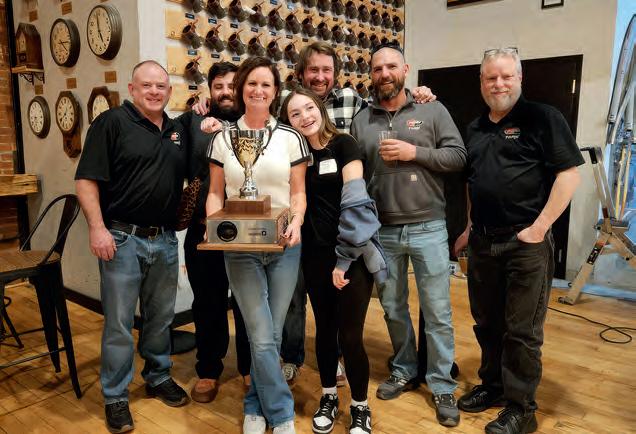
This year also marked the debut of the Trivia Night Competition, where teams competed for the inaugural NESMA Battle Cup, a new traveling trophy presented by NESMA member WAFIOS. The trophy adds a new level of fun and friendly competition.
FENN/Torin won the first Battle Cup. Team members included Ryan Bohn, John Gaughan, Ernie Leblanc, Alex Ney, Gaby Noga, Kate Trider and Craig Watterson who are pictured below.
The Yard Goats Game Night Out in May at Dunkin’ Park in Hartford allowed attendees a chance to connect in a relaxed, social setting while enjoying an evening of baseball. Presented by NESMA’s Future Leaders in Manufacturing Committee, the annual event brought together industry professionals, customers, coworkers, family and friends for a night of networking and community.

NESMA will host its Annual Golf Outing Aug. 31 at Farmington Country Club. The historically sold-out tournament brings together members, suppliers and industry leaders for a full day of golf, networking and camaraderie. Participants enjoy a premier course, contests, prizes, an on-course lunch and a post-tournament awards dinner. For golf outing registration or sponsorship, visit www.nesma-usa.com/nesma-golf-outing-registration-form/.
Aug. 31 NESMA Golf Tournament
Farmington Country Club
Farmington, Connecticut
Dec. 3 NESMA Annual Holiday Party
Farmington Country Club
Farmington, Connecticut
Dec. 4 NESMA Annual Membership Meeting
Farmington Country Club
Farmington, Connecticut
For an updated calendar of NESMA events, visit www.nesma-usa.com.
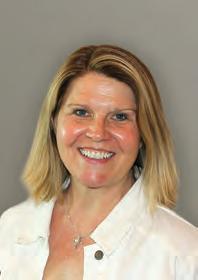
SMI helps members meet OSHA requirements, reduce injuries and avoid costly fines with expert audits, tailored training and free safety webinars led by Dr. Laura Helmrich-Rhodes, CSP, Ed.D., SHRM-SCP.
Give your team the tools to work smarter and safer with SMI’s trusted compliance support—and protect your people and your bottom line with our comprehensive regulatory resources.
Visit www.smihq.org/regulatory-compliance or contact Gaby Carrasco at gaby@smihq.org.
Laura Helmrich-Rhodes, CSP, Ed.D., SHRM-SCP
Many springmakers leave grant money on the table, not because they don’t qualify but because they don’t realize there’s funding or know where to look. If you’re working to reduce injuries, improve the safety culture and build disaster preparedness, funding is available. While most of these grants are at the state level, small businesses can uncover some federal funding as well. Allow me to share a few hidden treasures.
In September 2025, the U.S. Department of Labor’s Employment and Training Administration awarded more than $86 million in grants to 14 states to accelerate innovation, strengthen domestic production and address critical workforce needs across the country. State grants usually focus on training, equipment, fire prevention and workforce development. You can locate these through community and economic development groups within your state, local government, insurance company and chamber of commerce resources.
Often state grants support local volunteer fire companies. This can improve your municipality’s emergency response and rescues. Remember, you need technical rescue plans if you work in permit-required confined space entry or greater than 4 feet – 6 feet in construction activities like roof work. Supporting your local fire department’s grant applications improves the skills of those dedicated to serving you and your community. But the need to partner with your local emergency management efforts deserves a whole article.
Some states, like my home state of Pennsylvania, provide funds to support small businesses in providing employee training. WEDnetPA provides up to $2,000 per employee, not to exceed $100,000, for training such as OSHA 10- or 30-hour, forklift, confined space, emergency response,
lockout/tagout and fall protection. Other states have similar programs, branded differently and administered through various state or private partners. A simple search using the term “WEDnetPA” for comparison led to the chart on page 14 of state opportunities similar to those available in Pennsylvania. Some are one-time grants, while others are renewable. Their underlying premise is workforce and economic development enhancements.
Pennsylvania also supports risk-reduction equipment, such as dust collection, ergonomic, gas detection, fire suppression devices and PPE purchases. I’ve talked to several springmakers who have acquired explosion prevention dust collection. Check your state or insurance carrier for help paying for engineering risk-reduction devices and technology innovations.
Some very large grants, approaching $1 million, are for larger organizations, but small businesses can still reap the benefits of free or reduced-cost safety training through those larger organizations. A good example is the Susan B. Harwood training grants. These are awarded to large organizations — unions, universities and nonprofits. They aim to create and provide training to companies in their region as well as contract training services with organizations outside their region. Contact information for those services is provided in the resources section on page 15.
Insurance companies are interested in reducing risk and reducing their exposure to payout. The largest payouts for workers’ compensation focus on ergonomic-related injury and illness. Check with your insurance carrier or state bureau of workers’ compensation for opportunities to install improvements that reduce lifting, twisting and other repetitive motions. Lindsay Gray, senior HR manager for the Anderson-DuBose Co. in
Laura Helmrich-Rhodes, CSP, Ed.D., SHRM-SCP, is SMI’s regulatory compliance consultant. She is an associate professor in the Safety Sciences Department at Indiana University of Pennsylvania, teaching graduate and undergraduate classes. Contact Rhodes at SMI: 847-450-6848 or laurahrhodes@gmail.com.
Ohio, recently described in a LinkedIn video how she partnered with loss control representative Brian Zaketti to obtain a grant for a dock restraint system. These are an excellent engineering control to prevent deaths and serious injuries due to forklifts falling off the back of tractor-trailers. The Ohio Bureau of Workers’ Compensation website shares multiple grant opportunities for customers. It is worth checking with both your bureau of workers’ compensation and your carrier to see what incentives they offer — not just in the form of grants but perhaps matching funds or dividends for safety innovations.
After a successful search for grant opportunities from your local community college, insurance company, economic development resource or other sources, it is important to follow the grant instructions carefully. Applications are often competitive and require careful preparation. The granting body wants to be able to show that implementing those dollars results in reduced injuries, reduced downtime and insurance savings. You will likely have to provide information from your OSHA logs, but you may also support the need with near-miss data and risk assessments, such as a job safety analysis or a quantitative risk matrix, before installation and the predicted scores after the safety device is installed.
The impact of those grants is shown by the number of employees trained, especially in high-risk jobs such as machine shop work, and by protecting new hires. The goal is to
reduce or eliminate risk, improve workforce development and enhance community safety. You may also consider hiring, on a shortterm basis, a professional in the grant writing arena. Grant writers bring a knack for locating opportunities and crafting compelling applications — a highly valued skill set. Hiring for their expertise would be a worthwhile investment, especially if you are new to the process. Consider this route not only for identifying hidden grant opportunities but also for completing and objectively reviewing the application, as this may not be in your team’s skill set.
Choosing the right safety trainer to get the most out of your grant money can be a challenge. Ask for references from businesses they’ve served. Some other questions worth asking: Was the training interactive? Did employees retain the information? Has the training improved the reference’s safety culture? Placing employees in the hands of someone you don’t know can be risky. Hiring a certified safety professional is important because they pass a rigorous exam, are required to obtain continuing education and must abide by a code of ethics — ensuring your employees receive current and correct information.
In the resources section on page 15, I’ve included a website to help locate OSHAauthorized trainers. Note, OSHA does not certify trainers — it authorizes them. That list also includes trainers who provide training in Spanish.
Any safety trainer should also be committed to helping you with compliance reporting on their assigned training topics. Will they be available to assist if questions arise about the content of the training or their qualifications, should OSHA ask?
As a side note on recent developments from OSHA: no portion of forklift training can be virtual. If someone is offering that, move on to another trainer — they are not staying current with the regulations, and you will not be in compliance. The recent letter of interpretation is listed in the resources box to the right.
Whether you’re applying for your own equipment and training grants or supporting a local fire company or Red Cross chapter, the economic impact reaches everyone. Workforce development and community disaster preparedness ultimately helps all businesses thrive. These resources are out there — don’t leave them untapped. z
Find an OSHA-Authorized Trainer (OSHA 10-hour excellent leadership development for supervisors) www.smihq.org/go/sum26-ba1
Forklift Training — OSHA Letter of Interpretation (virtual training not permitted) www.smihq.org/go/sum26-ba2
Susan B. Harwood Grant Recipients (fiscal year 2025) www.smihq.org/go/sum26-ba3
Susan B. Harwood Training Grant Program (topics and materials) www.smihq.org/go/sum26-ba4
Ohio Bureau of Workers’ Compensation Grant List www.smihq.org/go/sum26-ba5
What Is a Risk Matrix? (YouTube explainer) www.smihq.org/go/sum26-ba6
U.S. Department of Labor — grant opportunities through 2029 www.smihq.org/go/sum26-ba7
Attend an upcoming safety webinar: Basic Machine Guarding — Self Assessment Considerations & Resources Thursday, July 23, 2026 I 1–2 p.m. ET
As an additional member benefit, SMI’s safety and compliance webinars are complimentary to members. Nonmembers may participate at a cost of $149.
For a full list of upcoming safety and regulatory compliance webinars and services, visit: www.smihq.org/go/safety.
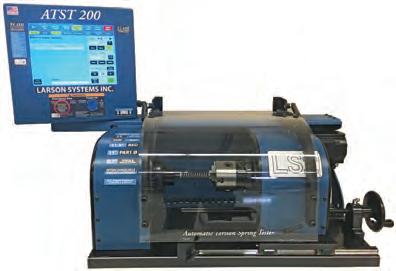
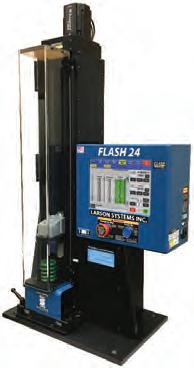

From high-resolution compression testers to automated torsion and fatigue systems, SAS equipment is built for accurate load measurement, repeatability, and real production environments.
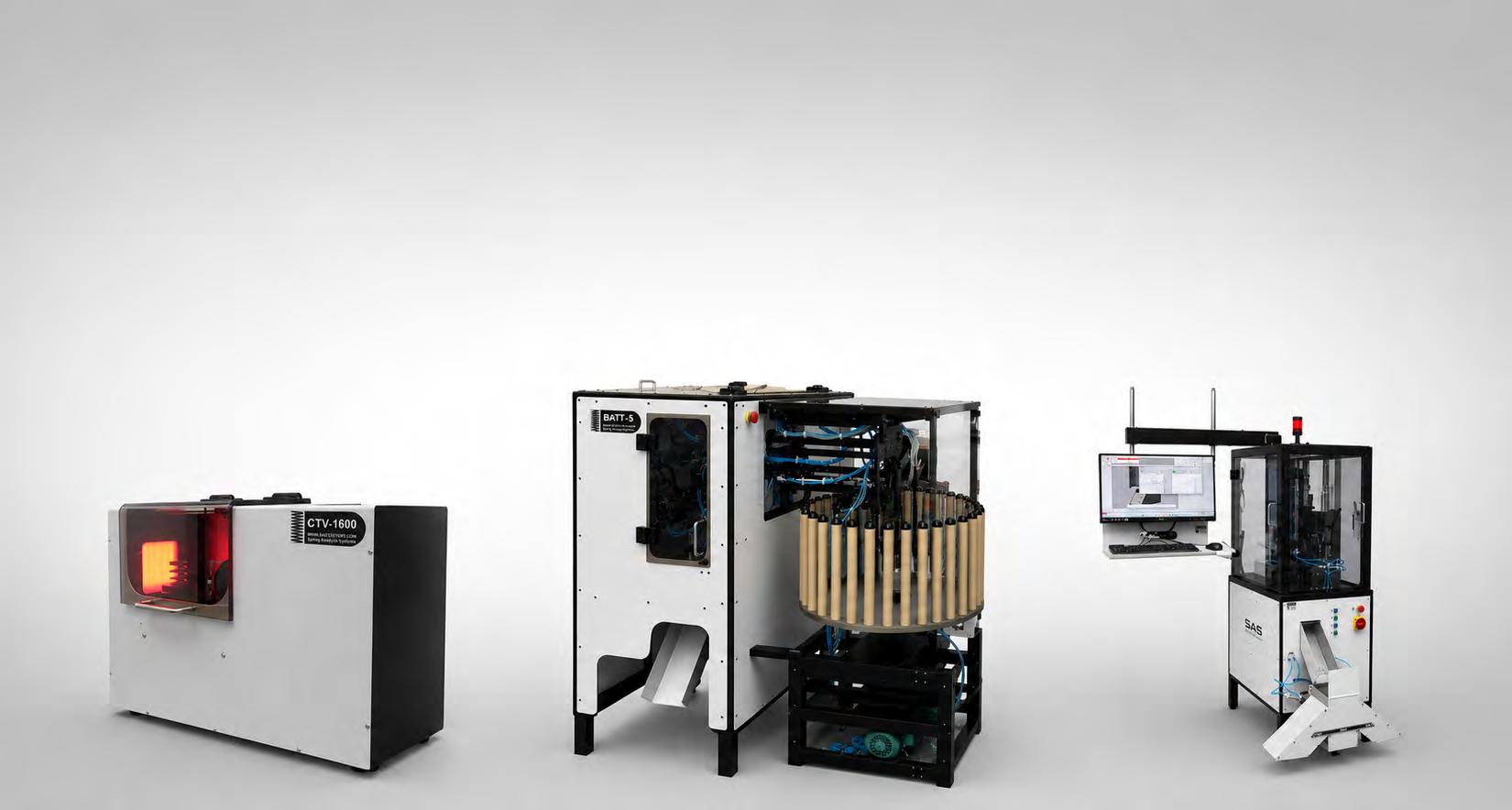
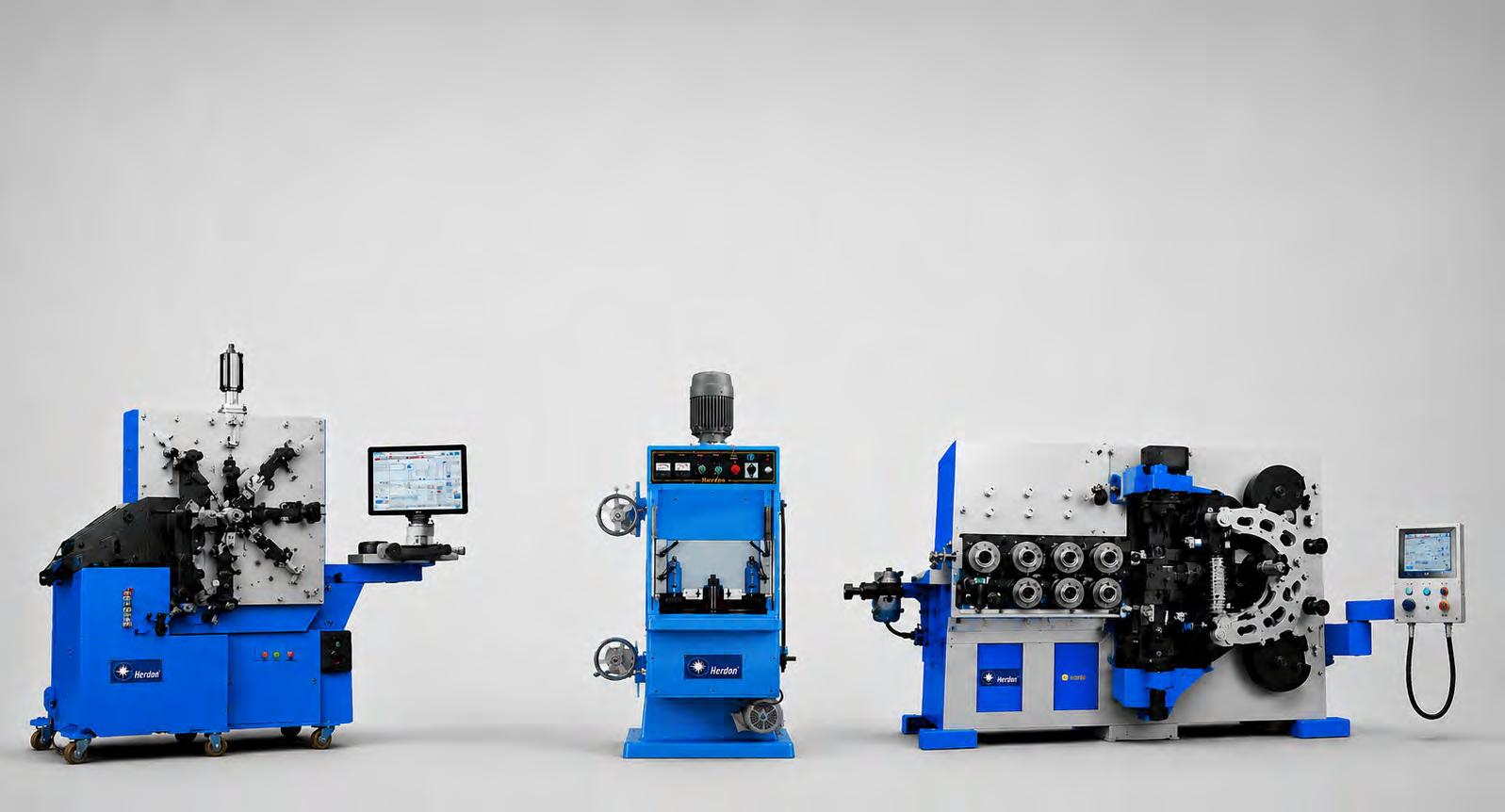
If you bend, form, coil, or grind spring and wire products, Herdon has the quality equipment you need to succeed in today’s demanding marketplace.


By Rodney Poore
Behind every spring is mathematics. While modern CNC coilers and design software perform many calculations automatically, every new springmaker should know the basic formulas that control spring design, manufacturing and function.
Understanding these calculations will help engineers, setup personnel, operators and inspectors communicate, troubleshoot and consistently build quality springs.
A spring may look simple, but a small change in wire size, diameter or number of coils can dramatically affect:
• Spring rate
• Stress levels
• Load capacity
• Material usage
• Machine setup
• Cost
• Fatigue life
Learning the basic math behind springs will help you understand why springs behave the way they do. The formulas here are for compression springs, the most common form of spring, specifically for cylindrical helical springs.
This is a primer. A Winter 2024 Springs article on compression springs1 covers spring terminology and symbols in more depth.
1. Mean Diameter (D) Calculation
D = (OD+ID)/2 (1a)
Where:
OD = Outside Diameter
ID = Inside Diameter
Alternate formulas include:
D = OD – d and (1b)
D = ID + d (1c)
Where:
d = wire diameter
Example calculation:
OD = 0.500 in.
d = 0.050 in.
D = 0.500 – 0.050 = 0.450 in.
2. Spring Index (C)
C = D/d (2)
Example:
D = 0.450 in.
d = 0.050 in.
C = 0.450 in. ÷ 0.050 in. = 9
The recommended range for compression spring index is: 4 to 12 (6–10 is ideal).
3. Amount of Material in a Spring (Wire Length)
Formula:
Wire Length ≈ π*D*Nt (3)
Where:
π = 3.1416
Nt = Total number of coils
Example:
D = 0.450 in.
Nt = 10
Wire length = 3.1416* 0.450 in. * 10 = 14.14 in.
4. Spring Rate (k or R) — How to Determine Spring Rate When Load and Deflection Are Known
Formula: k = P/f (4)
Where: P = Load
f = Deflection
Example: Description English Metric (Imperial) (SI)
Load (P) 128 lb
569.37 N
Deflection (f) 0.800 in 20.32 mm
Spring Rate (k) 160 lb./in. 28 N/mm
5. Solid Height (Ls)
Formula for open or plain ground ends or squared and ground ends:
Ls ≈ Ntd (5a)
Formula for open or plain ends not ground or squared only ends
Ls = (Nt + 1)d (5b)
6. Stress in a Compression Spring Formula:
S = 8PD/(πd3) (6)
Where S = Torsional Stress
Higher stress generally means shorter fatigue life.
7. Pitch (p)
Pitch will vary based on the compression spring end type:
Example formula for squared and ground ends:
p = (Lf – 2d)/Na (7)
More pitch formulas for other spring end types can be found in the article noted below.
Modern spring manufacturing uses advanced equipment and software, but the fundamentals still rely on simple mathematics. Team members who understand mean diameter, spring index, wire length, spring rate, solid height, stress and pitch develop stronger troubleshooting skills and become far more valuable to their teams.
In spring manufacturing, math is not just a theory, it is part of everyday production. The better you understand the formulas, the better springs you can build. z
Reference:
1. Gordon, C.R., Back to Basics — Compression Springs, Springs, Winter 2024, p.19
Rodney Poore, training manager at R&L Spring Company in Lake Geneva, Wisconsin, has more than 48 years of experience in spring manufacturing. He’s created onboarding and training curriculum for R&L covering coiler operations, blueprint reading, precision measurement, tolerances, CNC techniques, CNC coilers and Baird fourslide machines.
For 11 years, Poore has also taught technical classes at McHenry County College in Crystal Lake, Illinois.

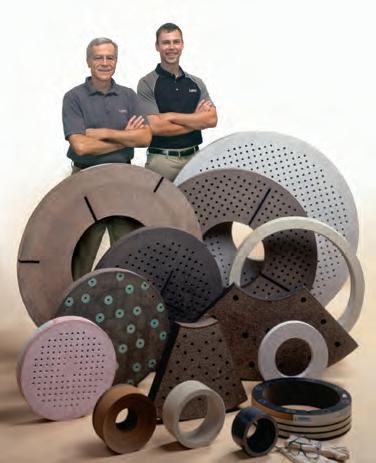
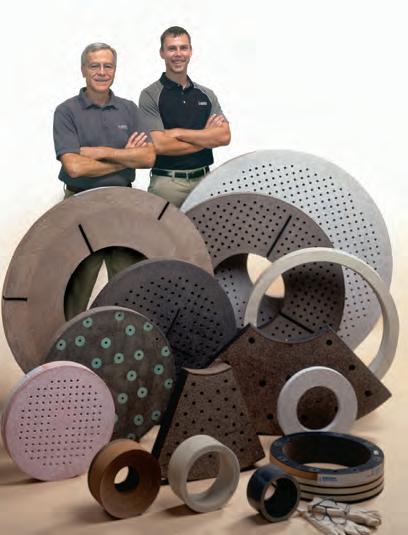

At Anchor Abrasives we specialize in the design and manufacture of resin, epoxy and oxychloride bonded nut inserted discs and cylinders...plus centerless and rollwheels.
At Anchor Abrasives we specialize in the design and manufacture of resin, epoxy and oxychloride bonded nut inserted discs and cylinders...plus centerless and rollwheels. Today, in our modern manufacturing facility, we are ready to continue our tradition of innovative quality products and unmatched customer service. For more information contact Anchor Abrasives Company, 7651 West 185th Street, Tinley Park, IL 60477 U.S.A. Phone: 708-444-4300; Fax: 708-444-1300.
Today, in our modern manufacturing facility, we are ready to continue our tradition of innovative quality products and unmatched customer service. For more information contact Anchor Abrasives Company, 7651 West 185th Street, Tinley Park, IL 60477 U.S.A. Phone: 708-444-4300; Fax: 708-444-1300. www.anchorabrasives.com
At Anchor Abrasives we specialize in the design and manufacture of resin, epoxy and oxychloride bonded nut inserted discs and cylinders...plus centerless and rollwheels. Today, in our modern manufacturing facility, we are ready to continue our tradition of innovative quality products and unmatched customer service. For more information contact Anchor Abrasives Company, 7651 West 185th Street, Tinley Park, IL 60477 U.S.A. Phone: 708-444-4300; Fax: 708-444-1300.
At Anchor Abrasives we specialize in the design and manufacture of resin, epoxy and oxychloride bonded nut inserted discs and cylinders...plus centerless and rollwheels. Today, in our modern manufacturing facility, we are ready to continue our tradition of innovative quality products and unmatched customer service. For more information contact Anchor Abrasives Company, 7651 West 185th Street, Tinley Park, IL 60477 U.S.A. Phone: 708-444-4300; Fax: 708-444-1300.

In the final article of a three-part series published in Springs on advances in springmaking materials,1,2,3 the discussion on wire drawing and heat treating3 included a focus on oil tempering heat treatment of wire.
This article expands on the information presented on oil tempering heat treatment because oil tempered wire is one of the most popular and cost-effective materials for springs.
“Oil tempered” is a commonly used term in the wire industry to designate a type of wire that has received a hardening and tempering heat treatment after it has been drawn to the desired size.4 It is somewhat of a misnomer because, in the heat-treating process, oil is not used as a tempering medium. “Quenched and tempered” or “oil hardened” may be more technically correct. Because the term “oil tempered” has been commonly used throughout history, it is doubtful it will be replaced.
Processing elements included in an oil tempering line are shown schematically in Figure 1. In the past, lines were designed with multiple elements for two or more wires processed in parallel. Austenitizing was done in direct fired or a muffle tube type furnace with atmosphere control. Wires were quenched in a temperature-controlled oil bath and tempered in a molten lead furnace. In addition to oil, quenching has evolved to include hot water and water treated with synthetic polymers as substitutes.
Lead was the tempering medium of choice because of its high thermal conductivity. As environmental issues were identified and subsequent legislative actions taken, suitable substitutes were pursued, including induction, fluidized bed and molten salt. Some companies were able to have their lead furnaces grandfathered in and continue to use lead for heat treating today.
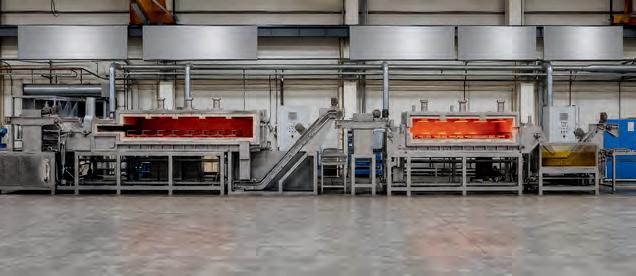
Oil tempered wire acquires its mechanical properties by heat treatment after it has been drawn to its final size. The oil tempering process involves three essential heat-treating steps: austenitization, quenching and tempering. The heat treatment is done in sequential steps as the wire passes through the process or in batch processing of parts. Figure 2 is a plot of temperature versus time showing the austenitize-quench-temper sequence. Figure 3 is a typical layout of an oil tempering line for part processing.
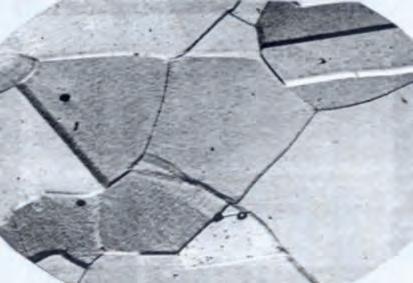
The first step involves heating the wire to the austenite region of the iron-iron carbide phase diagram (Figure 4). Steel is heated to a temperature above A3 or above Acm, depending on the steel composition. The purpose of this step is to completely dissolve the prior structure into a single homogeneous phase. The size of the austenite grains is an important consideration because grain size has an impact on what happens to the microstructure, or transformation kinetics, during quenching. The effect of larger austenite grain size is to shift the transformation curves to the right. That is why published time-temperature-transformation (TTT) diagrams will typically show the austenite grain size with the diagram. An example of the microstructure of austenite is shown in Figure 5.
Austenitization is followed by rapid quenching to prevent transformation to any of the equilibrium phases such as ferrite, cementite or pearlite.
The quenching and tempering processes are shown schematically in Figure 6 superimposed on the TTT diagram where temperature is shown on the y-axis and log time on the x-axis. The quench should be rapid enough to remain to the left of the transformation start temperatures. Note that the surface and center cooling rates are different. This difference results in thermal stresses which can cause distortion of heat-treated parts and cracking of sensitive alloys. The martensite start temperature (Ms) is shown along with the martensite finish temperature (Mf). Austenite, a face-centered cubic microstructure transforms to martensite, a body centered tetragonal microstructure. Because the crystal structure change is rapid, it is characterized as diffusionless. The

as-quenched martensite is hard and brittle with high tensile strength and little ductility. Quenching is followed by tempering below the A1 temperature (Figure 4).
Heating the wire to an elevated temperature results in an increase in ductility and toughness. The increase in ductility is accompanied by a loss in tensile strength. The carbon in the body-centered tetragonal martensite precipitates out as cementite (Fe3C) in a ferrite matrix. Figure 7 is an electron micrograph showing the microstructure of tempered martensite tempered at 595°C (1100°F) in a eutectoid steel.
Tempering temperature is selected based on the desired properties as shown in Figure 8 for a 0.120-inch diameter 0.65% carbon-0.80% manganese steel spring wire.5
The oil tempering process for wire is done in two ways: 1) on lines processing multiple filaments and 2) on lines processing as a single filament.
For smaller wire diameters multifilament processing lines are used, as shown schematically in Figure 9.
Austenitizing is done in a direct-fired furnace or muffle-tube-type furnace with atmosphere control. Quenchant options include oil, the historical quenchant of choice, hot water and water with a synthetic polymer quenchant. Systems using oil have sophisticated fire suppression systems.
Tempering can be done in a fluidized bed type furnace. Some manufacturing facilities have lead grandfathered into their permits,
so you may find some operations continue to temper in molten lead today.
Single-filament lines use induction heating for austenitizing and tempering. The process is shown schematically in Figure 10. Induction heating was found to be an effective technique for austenitizing and tempering. This method is ideal for processing wire sizes ranging from 0.162 in. to 0.625 in. diameter products.6 Quenchant options are the same as for multifilament processing lines and include: oil, hot water and water with a synthetic polymer quenchant.
Some examples of oil-tempered products include:
• Valve springs
• Suspension springs
• Screen cloth
• Clutch springs
• Garage door springs
• Steel brush wire
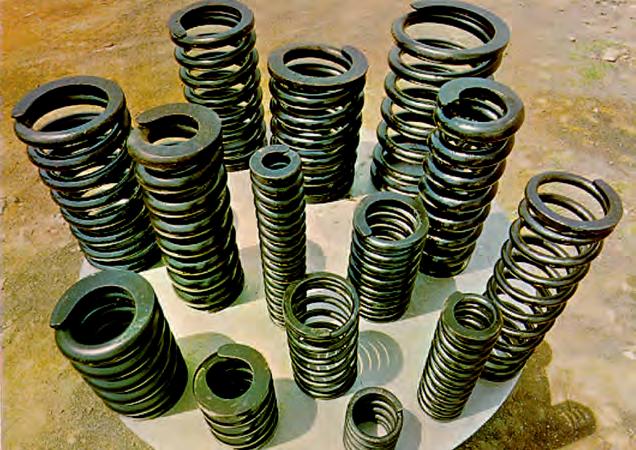
Figure 11 shows examples of springs produced from oil-tempered wire.
Oil tempering is an important heat-treating process for producing high-strength –high-ductility wire for springs used in many applications. The process is useful when a combination of high strength and ductility is required. z
1. Gordon, C.R., “Advances in Springmaking Materials,” Springs, Spring 2021, p. 30.
2. Gordon, C.R., “Advances in Springmaking Materials – Part 2: Rod Rolling,” Springs, Fall 2021, p. 21.
3. Gordon, C.R., “Advances in Springmaking Materials” – Part 3: Wire Drawing and Heat Treating,” Springs, Winter 2022, p. 21.
4. Shemenski, R.M., editor, Ferrous Wire Handbook, WAI International Inc., (2008).
5. Ferrous Wire Handbook, WAI International Inc., (2008), p. 515.
6. Becker T., “Induction Tempered Wire,” Wire Forming Technology International, October 2001.
For a more detailed treatment of torsion springs, enroll in the next 205 — Power, Constant Force, and Spiral Spring Training Webinar Thursday, Sept. 10, 2026, 1-5 p.m. ET. To register for this class or others, www.smihq.org/go/tech-classes.
C. Richard (Rick) Gordon is SMI’s technical director. He has more than 50 years’ experience in the steel and wire industries and is available to help SMI members and non-members with metallurgical challenges such as fatigue life, corrosion, material and process related problems.
Contact Gordon at 574-514-9367 or c.richard.gordon@gmail.com.
From the smallest to the largest
nG-07MM

0,10 - 0,70 mm
.004 - .028 inches

PAYOFFS
24 - 3000 Kgs
44 - 6620 pounds
BB-25MM
15,0 -25,0 mm .590 - .984 inches
SPRING COILING MACHINES
0,10 - 25,0 mm .004 - .984 inches
REVAMPING BOBBIO


By Phil Sasso

Some treasure is buried. Some is hidden in plain sight, like workforce program funding, safety incentives, insurance rebates and manufacturing grants.
This issue of Springs puts that treasure map in your hands. Funding is a tool for prepared manufacturers with clear plans, documented needs and projects that align with a funder’s goals. For springmakers, that can mean support for training, equipment, safety upgrades, workforce development and market expansion.
The question isn’t whether the opportunities exist. It’s whether springmakers know where to find them and how to prepare before they apply.
For many spring manufacturers, grants may seem like something reserved for universities, nonprofits or large corporations with full-time development staffs.
In Grants and Incentives for Springmakers (p. 26), grant writer Micki Vandeloo, president of Lakeview Consulting Inc., says, “One of the biggest misconceptions is that there aren’t any grants that support manufacturing investments.”
Funding opportunities exist for manufacturers of all sizes.
“For springmakers, understanding manufacturing grants starts with knowing where to look, how to prepare and which opportunities are worth pursuing,” Vandeloo explains.
Follow the Map
Grants are not charity. They are structured agreements built around measurable outcomes such as workforce development, technology investment, productivity improvement, market expansion and job creation.
Her article explains how manufacturing grants differ from loans and tax incentives, why they are typically reimbursed only after milestones are completed and why companies should never issue a purchase order before a grant agreement is in place.
Vandeloo also provides a link to Lakeview Consulting’s free and paid online search tool with a database of more than 800 grants.
In the companion piece Q&A: Insights from a Grant Writer (p. 29), Vandeloo goes deeper into the practical side of grant readiness. She explains what project and training plans should include and how far in advance manufacturers should begin their search.
“We recommend starting at least three months before submitting a purchase order, though six months is ideal,” she writes. “The most important step is to avoid issuing a purchase order before the grant is awarded.”
She also dispels the myth that only larger companies get government funding.
“Smaller companies absolutely can apply for grants,” she clarifies. “In fact, many funders restrict very large companies from applying.”
Her most important advice is simple: The more clearly a company can define the project, timeline, costs, outcomes and people involved, the stronger its chances of finding the right funding fit.
In her Be Aware column, Hidden Safety Dollars (p. 13), SMI regulatory compliance consultant Laura Helmrich-Rhodes brings the discussion onto the shop floor with a safety-focused look at “hidden” funding.
“Many springmakers leave grant money on the table,” Rhodes says. “Not because they don’t qualify but because they don’t realize there’s funding or know where to look.”
She highlights grants and incentives that can support OSHA training, forklift instruction, confined-space preparation, ergonomic improvements, dust collection, gas detection, fire suppression, PPE and other risk-reduction investments.
She also notes that funding may come not only from state programs but from insurance carriers, workers’ compensation bureaus, local economic-development groups and even partnerships with fire departments and emergency responders.
“The goal is to reduce or eliminate risk, improve workforce development and enhance community safety,” Rhodes says. “These resources are out there — don’t leave them untapped.”
One thing is clear: Grant readiness is business readiness. Springmakers with a written strategic plan, a capital expenditure plan, training goals, safety data and documented project needs are better positioned to act when funding becomes available. Waiting until after the opportunity arises might be too late. By then, the treasure may already be claimed. z
By Micki Vandeloo

The U.S. spring manufacturing industry is growing at a rate of 4-6% annually. This is considered moderate growth. But many factors, including the global increases in the electric vehicle (EV) market, increased reshoring due to tariffs and the miniaturization of products such as medical and electronic devices will likely drive up demand for new and innovative spring designs.
As springmakers experience more growth, they will likely invest in technological advances and workforce development to stay competitive. Grants can help offset these costs.
For springmakers, understanding manufacturing grants starts with knowing where to look, how to prepare and which opportunities are worth pursuing.
Find grants by state and industry using Lakeview Consulting’s free database search: www.smihq.org/go/mfg-grant-db
A manufacturing grant differs from other incentives such as tax credits and loans in a few ways:
Grants don’t have to be repaid. A grant is money that is paid to companies who show they can meet the outcomes the funder desires. Outcomes are what is going to change as the result of getting a grant. Some examples include increased employee skills, increased capacity to meet new market demand, growth of market share through trade show attendance and increased productivity.
Grants are provided on a reimbursement basis. The manufacturer must find a funding source, apply for a grant, get the grant approved and execute an agreement with the funder before they can get reimbursed for the work. For example, if a manufacturer applies for an equipment grant, they cannot purchase the equipment until the grant is approved, and an agreement is executed with the funder. In some cases, the process can take 2–6 months. Grants are agreements. An approved grant is an agreement the funder and the manufacturer both sign. The agreement contains milestones and activities. If the manufacturer doesn’t complete the agreed milestones or activities, the funder has the right to “claw back” or reclaim part or all the funding.
One of the biggest misconceptions is that there aren’t any grants that support manufacturing investments. The map below provides a much different picture.
As I write this, there are more than 892 state and 21 federal grant opportunities for manufacturers. The darker states on the map offer more grants to manufacturers.
The primary source of state funding for manufacturers is the economic development department for each state in which they have manufacturing facilities. As you can gather, the research for multi-location manufacturers can be very cumbersome, as each state incentivizes manufacturing growth differently.
State grants for manufacturers may fund the following types of activities:
• Workforce Development
• Apprenticeship Program Design and Implementation
• Recycling
• Expanding Markets Through Trade Show Attendance
• Technology and Capital Investment
• Energy Efficiency/Renewable Energy Investment
• Product Development
• Job Creation
Most federal grants (or grants states offer funded by federal agencies like USDA’s Rural Energy for America Program or REAP) currently are not available to manufacturers due to the change in administration and the new federal administration’s priorities. This is slowly changing but it may be a while before federal grants to support manufacturing projects make a comeback.
In general grants fund outcomes, or goals. The table on the next page provides examples of manufacturing projects, grants and sample outcomes.
It can be difficult, if not impossible to use a Google search to uncover most manufacturing grants. See “Manufacturing Grant Search” on
page 26 for Lakeview’s free online manufacturing grant database tool.
I tell clients the most important document they can develop to help us research and apply for grants is a formal written business plan and/or strategic plan. These documents should include a capital expenditure plan and sufficient detail to find grants to support future growth and investments.
If you don’t have a written business or strategic plan, the next best document is a project plan for each of your planned projects. This provides an outline of a project that includes the activities, a timeline and costs or a budget.
If you’re seeking training grants, a training plan is also a useful document.
In addition to the above documents, applications often require the following information which you should gather whether you are applying in-house or working with a professional grant writer:
• EIN number documentation from the IRS
• An updated organizational chart
• A list of employees to be trained (for workforce development grants)
• Short biographies for each of the key project team members
Funders may also require you to register on your state grant portals or SAM.gov (the federal grant portal) prior to applying. While state portal registrations are usually simple, the SAM.gov registration process is more complicated and can take weeks to get approved. I suggest you register well before you need to submit a grant application.
To summarize, spring manufacturers in any state can fund innovation and technology, workforce development and other activities through grants. What are you waiting for? z
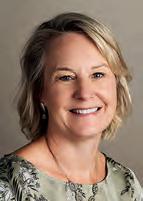
Micki Vandeloo, president of St. Louis-based Lakeview Consulting, Inc., has more than 25 years’ experience in manufacturing. She helps clients clarify project goals, plan new services and programs and secure grant funding to support their missions. Vandeloo’s team has written more than 850 grant proposals and obtained more than $260 million in grant funding. Contact Vandeloo at micki@lakeviewconsulting.net, 618-977-8570 or visit www.lakeviewconsulting.net
1
How far in advance should a manufacturer begin looking for grants before making a major investment?
We recommend starting at least three months before submitting a purchase order, though six months is ideal. This gives companies time to identify a grant, prepare the application and receive a funding decision.
2
What should a company do before buying equipment or starting a project to avoid disqualifying itself from reimbursement?
The most important step is to avoid issuing a purchase order before the grant is awarded. Companies can, however, complete activities not covered by the grant, including gathering quotes, negotiating pricing and doing any necessary prep or engineering work for the capital purchase.
3 How detailed does a project plan need to be for grant purposes?
As detailed as possible. At a minimum, the plan should outline the activities to be completed, the timeline for each activity, who will conduct each activity and the estimated costs.
4 Do you help write business and project plans?
Do most grant writers?
Yes. We help companies develop business and project plans. Most grant writers will either help a client create a plan or review and edit one supplied by the client.
5 What should a training plan include?
Do you help write those, too?
A training plan should list each course name, when and where it will be delivered, who will teach it, whether the trainer is internal or external, a quote if the training is externally provided and the expected number of attendees.
6 Can smaller spring manufacturers compete successfully for grants, or are these opportunities mainly geared toward larger companies?
Smaller companies absolutely can apply for grants. In fact, many funders restrict very large companies from applying.
7 What makes springmakers good candidates for certain manufacturing grants?
As manufacturers, springmakers are often eligible for a wide variety of manufacturing grants. As long as the funder does not exclude certain industries that would preclude springmakers, they can apply.
8
Are there common mistakes manufacturers make when applying for grants?
Yes. Many manufacturers do not fully read or answer the questions on a grant application. Often, the funder wants a detailed answer, and many manufacturers do not provide the level of detail funders need.
9
Have you ever advised a client not to apply for a grant? What are some reasons?
Yes. The primary reason is that the project is not a good fit or is not eligible for the funding. In the request for proposal, funders typically specify eligible applicant types, such as for-profit companies, nonprofit organizations or educational institutions. Companies that are not on the list of eligible applicants cannot apply.
10 Has anything changed with federal funding lately?
More federal grants are being issued or reissued, but we are still not back to the level we were before the administration change. There is also a strong federal and state focus on workforce development and apprenticeship grants.
We recently launched the Apprenticeship/Workforce Development Funding Engine, a service that provides ongoing research and writing assistance to help companies track and align their workforce development programs with apprenticeships. It is designed for companies with one or more locations that either have existing apprenticeship or workforce development programs or want to expand or establish them.
By Phil Sasso

Set against Puerto Rico’s beaches, tropical weather and lush rain forest, SMI’s 2026 Annual Meeting in March brought together springmakers, suppliers and business leaders to focus on the future of manufacturing and the evolving role of leadership, workforce development and technology.
Held at the Wyndham Grand Rio Mar Resort, the event blended several days of education, association business and relationship-building. Attendees participated in keynote sessions, committee meetings, networking events and friendly golf and pickleball competitions.
Presenters discussed coaching, leadership, risk management and artificial intelligence (AI) in manufacturing.
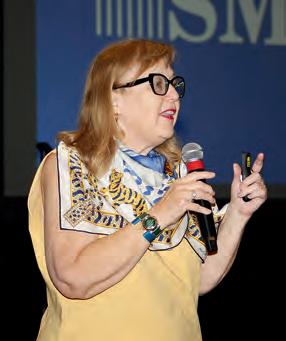
Drawing on more than two decades of business experience, spring industry veteran and President and CEO of Global Leadership Resources, Raquel Chole spoke on “Learning to Be the Coach They Need.”
Chole reminded springmakers that their work extends far beyond components.
“We make the parts that ensure when cars crash, people don’t die,” she said. “We make the things that make everything work.”
Her presentation focused on coaching, communication and employee retention.

Citing research showing employees often leave managers rather than companies, Chole urged attendees to move beyond
command-and-control management and embrace a coaching mindset built on mentoring and open-ended questions.
“What kind of coach are you?” she asked. “Are you helping people grow?”
She encouraged attendees to invest knowledge in young leaders rather than guard it.
“When you give away all your knowledge, you become richer,” Chole said. “The person you give it to carries on your legacy.”
Business owner and former NFL tight end Desmond Clark, who spent eight seasons with the Chicago Bears during a 12-year NFL career, delivered an engaging and personal keynote presentation.
In “Principles of Winning,” Clark challenged attendees to define success clearly and refuse to shrink their ambitions.
“Let’s stop being small so we don’t offend somebody else,” he said. “Be big.”
“ The process of greatness is executing the details in excellence consistently over time.” — Desmond Clark
In one of the meeting’s most personal moments, Clark shared the story of traveling to Africa to bring home his young son after a difficult custody situation — a journey that became a metaphor for leadership under pressure.
“My thoughts, my emotions and my actions had to align,” he said. “Nothing was going to stand between me and getting my son back.”
He closed with a defining idea: “The process of greatness is executing the details in excellence consistently over time.”
SMI regulatory compliance consultant Dr. Laura Helmrich-Rhodes presented “Smart Safety: How Technology and Innovation Are Redefining Worker Protection in Manufacturing.” She outlined common injuries and OSHA’s most-cited violations before turning to emerging technologies reshaping workplace safety.
She shared how QR codes on machines can take employees directly to lockout/tagout instructions, AI-generated accident animations for hazard alerts and 3D renderings that allow teams to identify risks before changing layouts or processes.
Other tools include AI-assisted monitoring systems, wearables, virtual reality training, ergonomic exoskeletons and drone inspections.
She also spoke about the growing focus on fatigue and employee wellness, noting that “fatigue impacts safety, quality and productivity.”
She highlighted wearables, sensors and vision AI as emerging tools for safer workplaces. Wearables can track fatigue, heat stress and biometric warning signs, while sensors help prevent forklift crashes and track equipment.
Vision AI, she said, could eventually show employees “what safe looks like” during training.
“Our DNA and our businesses now are about to change. It’s not a matter of just using AI tools. It’s a matter of adjusting how we think and how we do business.”
— Susan
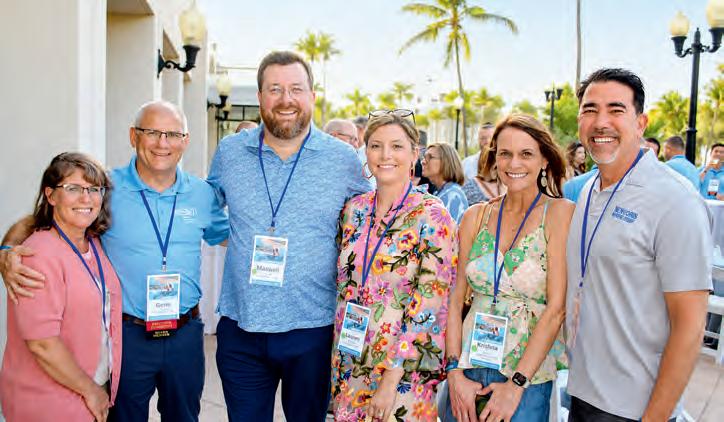
Business strategist and author Susan Frew challenged attendees to rethink how their companies operate in an increasingly AI-driven environment in “Compete on Awesome with AI.”
“Our DNA and our businesses now are about to change,” Frew said. “It’s not a matter of just using AI tools. It’s a matter of adjusting how we think and how we do business.”
She opened with the story of her lifechanging personal DNA test, using it as an analogy for a business’s DNA.

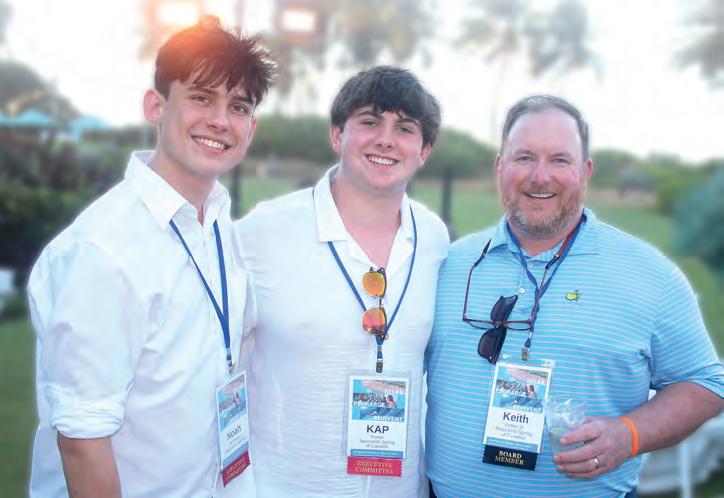
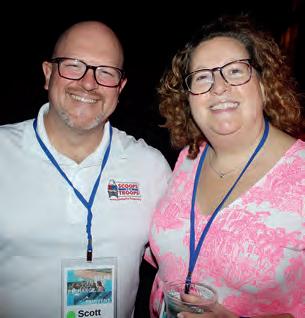
She urged companies to move away from “bolting on” AI to existing systems and instead rebuild processes so AI is integrated from the ground up. Frew recommended starting with proven, practical applications like multilingual standard operating procedures, automated office tasks, operational analysis, forecasting and streamlined onboarding.
She advised manufacturers to simplify workflows before adopting new technology.
“Go old school before you go new school.”
Her call to action came with a warning: “If you are not getting on board [with AI], your competitors are going to be getting on board.”
The annual meeting also continued SMI’s growing emphasis on next-generation leadership through Emerging Leaders programming and networking opportunities designed to connect younger industry professionals to each other (see p. 35).
The meeting also included the inaugural Women in Springs Luncheon, focused on networking, mentorship and expanding leadership opportunities for women in manufacturing.
Outside the meeting rooms, members enjoyed golf, pickleball and other networking activities that have become longstanding SMI Annual Meeting traditions.
At the closing dinner, attendees recognized the golf and pickleball winners and celebrated the volunteer leadership and industry relationships that continue to shape the organization.
The meeting also marked a transition of leadership. Don Jacobson III, vice president of business development at Newcomb Spring Corp., Ooltewah, Tennessee, passed the mantle to David DeVoe, president of John Evans’ Sons in Lansdale, Pennsylvania and vice president of North American operations for Lesjöfors Group U.S.
In addition to welcoming DeVoe as president, SMI advanced a new slate of officers. Dave Deerwester, president of The Yost Superior Company, Springfield, Ohio, is SMI’s new vice
president. Joe Devany, vice president of manufacturing, Betts Company, Fresno, California, will serve as secretary/treasurer and Julie Arenz, president of R&L Spring and Medicoil in Lake Geneva, Wisconsin, joined SMI’s executive committee as the at-large member. Jacobson will now serve as immediate past president.
A major highlight of the SMI closing dinner was the biennial leadership transition. Jacobson passed a gavel to DeVoe to symbolize the change in SMI presidency.
“Gene [Huber Jr.] started a very bad tradition now that we’re handmaking gavels for the next president,” Jacobson joked.
“No one ever thought Don was going to give up his gavel,” DeVoe laughed. “He had to make another one!”
Jacobson’s two-year term focused heavily on education, workforce development and member engagement. During his presidency, SMI expanded educational programming, supported Emerging Leaders, revamped ASD7 software, built a partnership with SkillsUSA and launched SpringWorld Symposium educational programming.
In remarks honoring Jacobson, incoming SMI President David DeVoe praised his commitment to education, collaboration and industry connection.
“Don leaves SMI stronger, more connected and more future-focused,” DeVoe said.
Jacobson reflected emotionally on the relationships and memories built through SMI and thanked the board, staff, volunteers, sponsors and members who supported the organization during his term.
“Alone we can do little — together we can do so much,” Jacobson said, quoting Helen Keller.
The meeting also included recognition of outgoing board members for their service.
“I want to listen. I want to engage the members. Together we’re going to make SMI a better place.” — David DeVoe
Lyons, president and owner at JonSpring in Springfield, Massachusetts; Alex Melnikow, president and CFO at Midstate Spring in Syracuse, New York; Keith Porter Jr., general manager at Newcomb Spring of Carolina in Gastonia, North Carolina; and
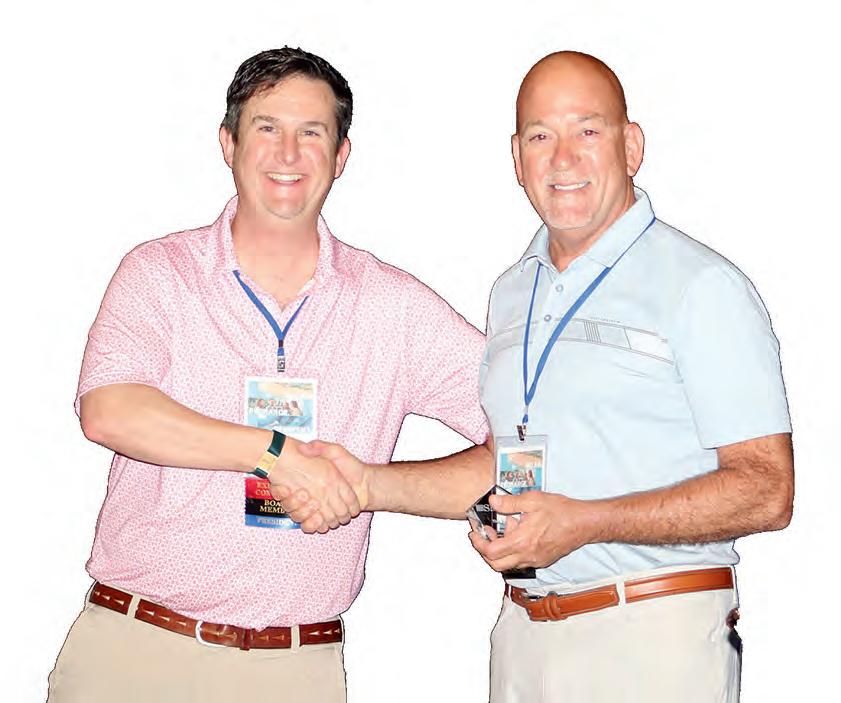
Tim Zwit, vice president of operations at Motion Dynamics Corporation in Fruitport, Michigan. All four individuals served two terms on the SMI board of directors from 2020 to 2026.
DeVoe closed the meeting by outlining his vision for SMI’s future, emphasizing member engagement, relationship-building, workforce development and strengthening the association’s role as a technical resource for the spring industry.
DeVoe emphasized the role of family support, noting that volunteer leadership in SMI comes on top of running a company and serving in other organizations. “Without family support, this job can’t be done,” he said. “It’s not the only job we have.”
Stepping into the audience, he introduced his family, including his two children, their spouses, his five grandchildren and his two stepdaughters.
“This is a special occasion for me because I have so many friends in this audience,” DeVoe said, adding that SMI has been a steady source of learning.
“The biggest thing when you’re in this room is that you’re never the smartest person,” he said. “There are some smart people in this industry. We learn things every single time we sit down.”
Calling on board members, committee chairs, past presidents and past board members to stand, DeVoe pointed to the room as evidence of SMI’s strength. “Half the room has supported
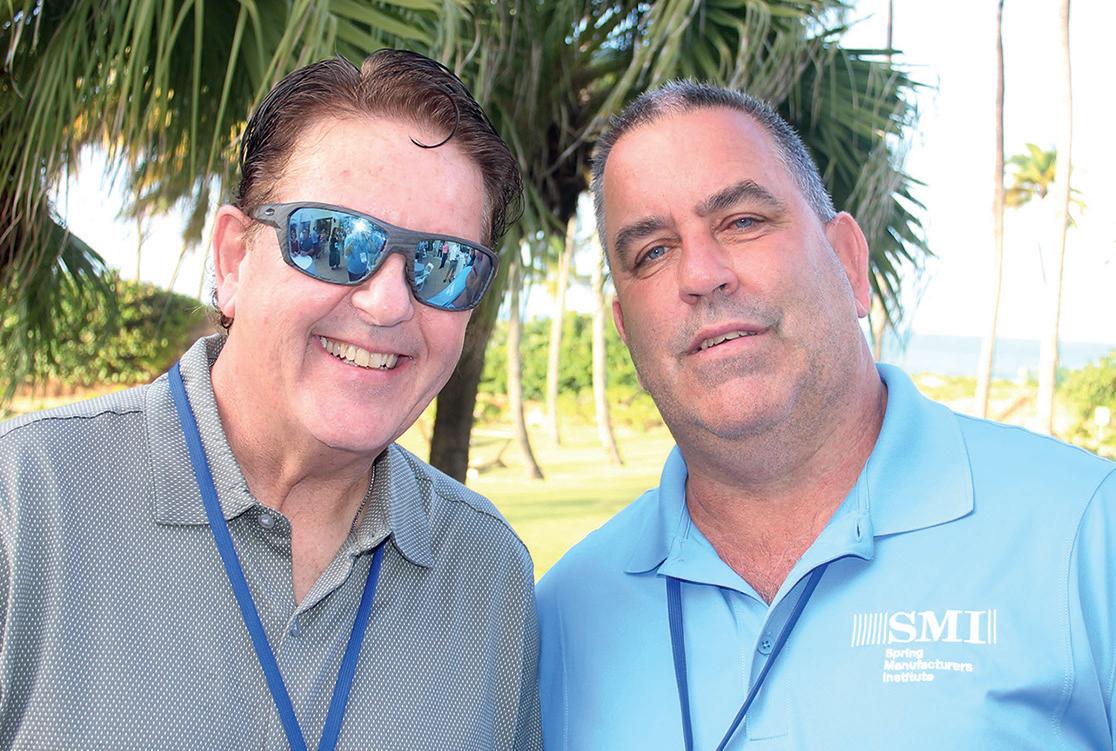
us throughout the years,” he said. “This is the organization that I stand for.”
DeVoe traced his career from tool and die apprentice to supervisory, production control and executive roles, saying each step prepared him for the next. “Every experience you have helps you make the future decisions better,” he said.
Looking ahead, he said SMI must continue to develop emerging leaders and support women in manufacturing and reinforce its standing as the industry’s expert resource.
“If anyone wants anything in the spring industry — we want them to call SMI,” he said. “You guys are all experts, which means that SMI is all experts.”
He closed by emphasizing listening, participation and engagement.
“I want to listen. I want to engage the members,” DeVoe said. “Together we’re going to make SMI a better place.” z

Mark Your Calendar 2027 Annual Meeting April 12–15
Omni Rancho Las Palmas Resort & Spa Rancho Mirage, California
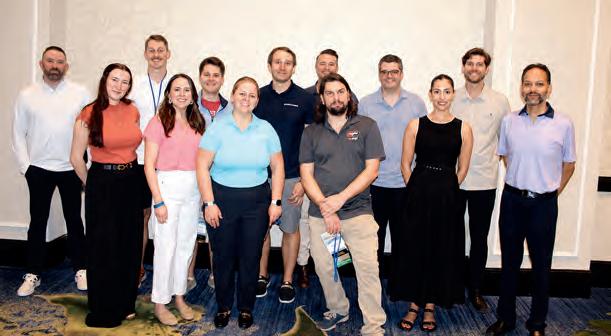
SMI’s Emerging Leaders Conference hit its stride at this year’s SMI Annual Meeting in Puerto Rico, welcoming 16 attendees, including two “green dotters” who attended an SMI meeting for the first time.
“The Emerging Leaders group is a great opportunity to get involved with SMI and build meaningful connections within the industry,” said SMI President David DeVoe. “The SMI board has recognized the strong leadership within the group and has begun identifying future board members from its participants.”
Since the inaugural conference at the 2024 Annual Meeting in Coronado, California, the group has refined the program to create a meaningful and effective experience for attendees. Each year, the format is evaluated and adjusted to encourage stronger engagement, valuable discussion and practical takeaways.
One of the conference’s core components remains the peer tips session, where each emerging leader is given time to share insights and recommendations with the group. Topics included:
• A source of inspiration, such as a book, podcast or other resource
• A helpful technology or workplace tool
• A longer-form personal share, including leadership lessons, professional experiences or meaningful life advice
The collaborative format encourages open conversation and peer learning while creating an environment where attendees can connect through shared experiences and challenges.
This year’s conference also featured keynote speaker Raquel Chole, whose presentation, “Think Strategically, Plan Strategically,” offered insight into leadership development and strategic thinking.
SMI also extends its appreciation to outgoing Emerging Leaders Chair Alex Melnikow of Midstate Spring for his leadership, time and dedication to the program’s continued growth.
“I was motivated to work with Adam (Jacobson) to make Emerging Leaders a welcoming bridge for the future leaders of our industry,” Melnikow said.
By Gaby Carrasco
“As my board tenure ends, I’m proud of what we’ve accomplished. I’m blown away by the level of talent, insight and quality of character in this group. The future of our industry is bright!”
The Emerging Leaders chair position has transitioned to Timo Roeger of Kern Liebers.
“I am grateful to Alex for his hard work. The Emerging Leaders group plays a vital role in helping younger members onboard and connect — something I personally found incredibly helpful when I joined,” Roeger said. “It provides a safe space for sharing experiences and discussing relevant topics, fostering both personal and professional growth … My goal is to keep the current momentum going and to support it with networking opportunities and meaningful discussion.”
Members interested in joining Emerging Leaders should contact Roeger at timo.roeger@kern-liebers.com. z
Speaker Raquel Chole led Emerging Leaders teams to explore four key topics: creating value, measuring growth and profits, monitoring external influences and navigating global trends. Attendees then developed individual action plans. Summary outcomes and action plans are online at www.smihq.org/go/EL26


By Jason Sicotte
rom a high level, all manufacturing operations follow the same model.
Raw material is put through one or more processes and a finished product is delivered to the customer. In metalforming, this is the same whether the product is a spring, a stamping or a complex assembly. The customer pays for value added.
However, viewing manufacturing strictly through this lens can be misleading. While physically transforming material is necessary, it is not sufficient to fully define added value. In practice, value can be created in many different ways and not all customers require the same type of value.
The most visible type of value is processdriven. In springmaking and metal stamping operations, forming establishes geometry, heat treatment improves mechanical properties and finishing operations, such as shot peening or ISO polishing, optimize fatigue performance. Finally, inspection and testing ensure conformance to design requirements. When these fundamental steps are executed properly, they convert raw material into a component capable of predictable performance.
In springmaking, this type of value creation is well understood and generally consistently executed. Whether producing high-volume automotive springs or precision stampings, the objective remains the
same: deliver a repeatable, reliable product. However, process capability alone does not differentiate one supplier from another.
A different type of value is added through engineering. The design of a spring or stamped component directly impacts both its performance and its manufacturability. An optimized design balances stress, material usage and cost while ensuring the required life. This is not simply an analytical exercise — it requires an understanding of real-world manufacturing constraints.
In many cases, engineering-driven value is realized before production even begins. A design that’s aligned with process capability will improve yield, reduce variation and eliminate unnecessary costs. Conversely, a poorly aligned design can create downstream inefficiencies that no amount of process control can fully correct.
Beyond design, there’s also value in technical support and application expertise. Customers often face challenges related to performance, failure modes or system integration. The ability to diagnose issues,
interpret test results and recommend practical solutions is a significant differentiator. In many cases, this type of support prevents problems before they occur or resolves them quickly when they do.
Another increasingly important type of value is supply chain localization and responsiveness. Close proximity to the customer can reduce lead times, improve communication and mitigate risk associated with global supply disruptions. In many cases, regional manufacturers can respond faster and be more flexible. For some customers, this may be as important as the product itself.
These different types of value — process capability, engineering optimization, technical expertise and supply chain alignment — do not carry equal weight in every situation. The relative importance depends on the customer, the application and the risk profile of the component.
This makes it critical that business development aligns with actual customer needs. Selling based solely on price or basic manufacturing capability overlooks the broader value proposition. In some cases, the customer may prioritize cost, volume or lead time. In others, performance, reliability or engineering support may be the primary driver.
Success requires identifying which types of value are most relevant to a customer and clearly communicating it. This may mean focusing on process capability for high-volume programs, engineering support for complex applications or local manufacturing presence for time-sensitive needs. Ultimately, customers are not purchasing raw material or individual processes. They’re selecting a partner who can deliver the right mix of value for a specific application. Recognizing this reality better positions a springmaker to differentiate themselves and build long-term relationships. z
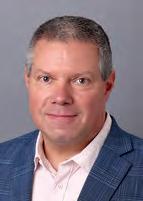
Jason Sicotte leads product strategy, engineering and innovation at Associated Metal Forming Technologies (AMFT). During his 31-year career, he’s advanced materials science and spring technologies through patents and engineered systems for automotive, industrial and aerospace markets.
He’s a member of SMI’s board of directors, chair of the Technical Committee and a frequent event speaker. He’s also on the advisory board of the Connecticut Manufacturing Simulation Center at the University of Connecticut. Contact Sicotte at 860-385-3213 or jsicotte@amft.com.
Nine students from across the U.S. earned $20,000 in SMI scholarships this year.
“I am currently a junior entering my senior year majoring in nursing at the University of Saint Joseph. Because of this scholarship, I will be able to focus more on my studies and participate in campus life without the stress of financial burden.”
— Angelina Fasci
“I am incredibly grateful and honored to have been selected as a recipient of your scholarship. Thank you for your generosity and support in helping me reach my goals.”
— Ava Higginbotham
SMI members’ full-time employees and their dependents are eligible for scholarships. For details visit www.scholarshipamerica.org/scholarship/smi/.
“The SMI Scholarship Program is an investment in the next generation,” said SMI President David DeVoe. “By supporting students in their educational journeys, we are helping create future leaders, innovators and skilled professionals who will strengthen our industry for years to come.”
SMI is committed to educational programs that support professional and personal growth. In addition to the annual scholarship program, SMI offers ongoing spring design and safety webinars. It is also involved in SkillsUSA and hosts the biennial SpringWorld Educational Symposium.
In 2026, SMI awarded two regional scholarships of $2,000 each. Additional at-large scholarships included:
Alexander and Joanne Rankin Scholarship • $4,000
Ronald and Adrienne Banas Scholarship • $2,000
Callaghan-Hart Scholarship • $2,000
Gibraltar Company Scholarship • $2,000
Lynne Carr Scholarship • $2,000
Goldberg Family Foundation Scholarship • two $2,000 awards
“Thank you for awarding me one of the SMI Scholarships this year. This opportunity means a lot to me. I truly appreciate your support in helping me continue my education and for believing in me and investing in my future.”
— Russell Devany
By Gaby Carrasco

Robert Mayorga
Hometown: Delavan, Wisconsin
SMI member parent: Karen Mayorga, Medicoil
Attending: University of Wisconsin-La Crosse
Major: Finance
Gibraltar Company Scholarship

Russell Devany
Hometown: Clovis, California
SMI member parent: Joe Devany, Betts Company
Attending: San Jose State University
Major: Business
Goldberg Family Foundation Scholarship

Angelina Fasci
Hometown: Bristol, Connecticut
SMI member parent: Rita Fasci, Acme Monaco Corp.
Attending: University of Saint Joseph Major: Nursing
Ronald and Adrienne Banas Scholarship

Ava Higginbotham
Hometown: Bristol, Connecticut
SMI member parent: John Higginbotham, Rowley Spring & Stamping Corp.
Attending: Central Connecticut State University
Major: Nursing
Callaghan-Hart Scholarship

Gretchen Radcliff
Hometown: Bristol, Connecticut
SMI member parent: Charles Radcliff, Radcliff Wire Inc.
Attending: Undecided
Major: Biology/health sciences

Elsa Westra
Hometown: Holland, Michigan
SMI member parent: Peter Westra, Automatic Spring Products Corp.
Attending: Lipscomb University
Major: Marketing and entrepreneurship
Alexander and Joanne Rankin Scholarship

Tara Schmitz
Hometown: Cedar Grove, Wisconsin
SMI member parent: Jim Schmitz, Exacto Spring Corp.
Attending: Dordt University
Major: Elementary education
Goldberg Family Foundation Scholarship

Katy Westra
Hometown: Holland, Michigan
SMI member parent: Peter Westra, Automatic Spring Products Corp.
Attending: Calvin University
Major: Speech pathology
Lynne Carr Scholarship

Lily Yax
Hometown: Peru, Indiana
SMI member parent: Ryan Yax, Myers Spring
Attending: Oklahoma State University
Major: Agricultural education
“I wanted to thank you and everyone at SMI for selecting me as a recipient for this scholarship. I truly appreciate the time and consideration.”
— Robert Mayorga

Editor’s Note:
The year was 1962. Astronaut John Glenn had just become the first American to orbit the Earth and the Space Race against Russia was accelerating. President John F. Kennedy famously declared, “We choose to go to the Moon,” setting NASA’s Apollo program in motion.
Springmakers would go on to support a variety of NASA missions in the decades that followed.
The first issue of Springs mailed in May 1962, and SMI held its 29th Annual Meeting in French Lick, Indiana, May 27–29 of that year.
Entertainment included performances by the Ballard Jug Band and the Derbytowners barbershop quartet.
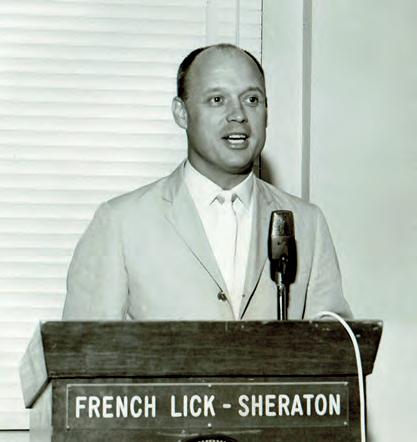
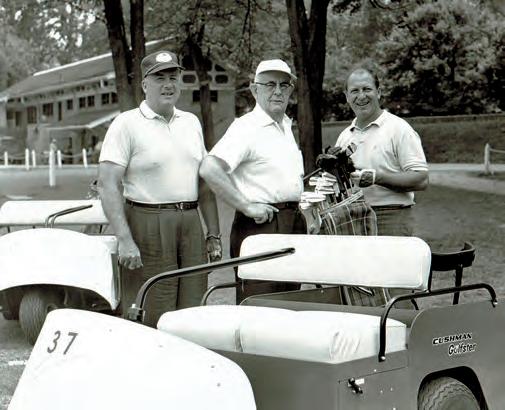
Fast forward to April 1, 2026, Artemis II launched a 10-day mission to circle the moon igniting a new era of U.S. space exploration — and the need for more advanced precision springs.
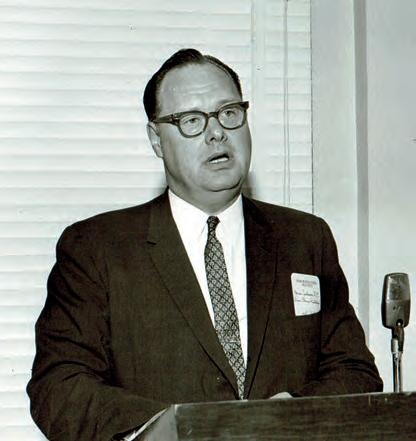
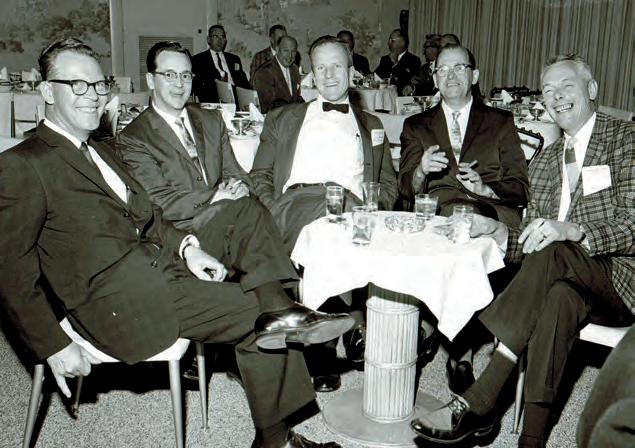
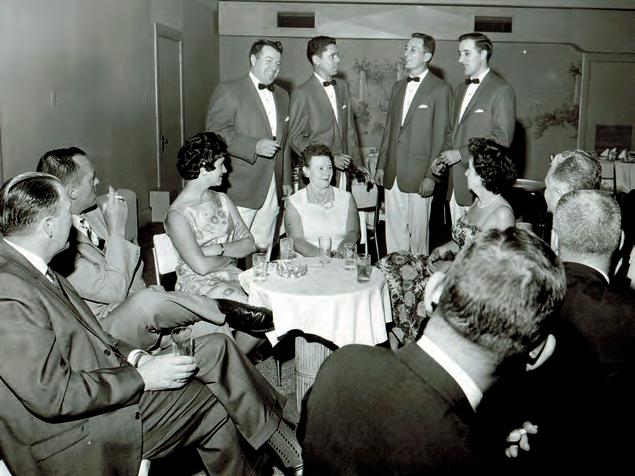
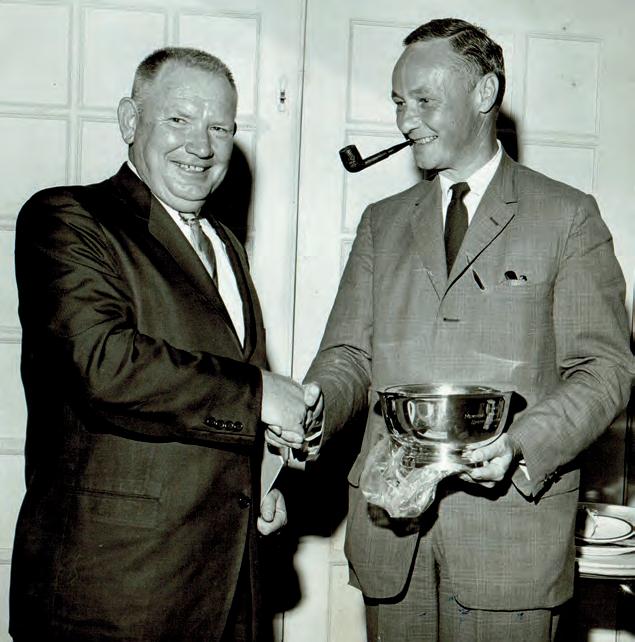
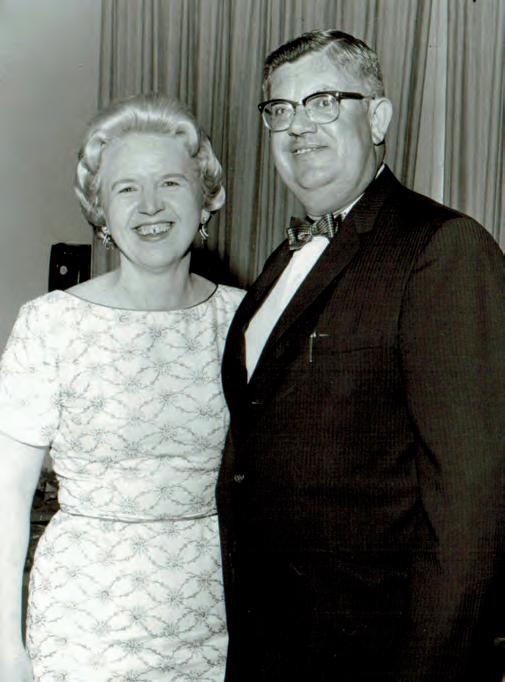
Explore these and other archival images of the 1962 Annual Meeting on our website. And if you see yourself or someone you know, please let us know.
www.smihq.org/go/am62-photos


Five Questions allows SMI associate members to tell the spring industry about their products and services. In this edition, we talk with Stephen Rodgers from
1
Tell us your company’s history and products.
Founded in 1951, Jowitt & Rodgers Co. is an abrasive manufacturing company based in Philadelphia, Pennsylvania. Our focus is on meeting the needs of selected niches within the abrasive market. We custom design and formulate resin and epoxy bonded conventional abrasives as well as cubic boron nitride (CBN) and diamond super abrasives to meet industry needs. SAK Abrasives acquired Jowitt & Rodgers in 2023 and Buffalo Abrasives in 2019 to join their portfolio of abrasive products.
2
What trends are impacting your industry? How does it affect springmakers?
The most recent, notable event impacting our industry is the conflict in Iran. With the global oil supply down roughly 20%, many raw material costs have increased significantly and supply has been restricted. The increase in energy costs coupled with an uncertain tariff landscape puts European suppliers in a tough situation. I assume these same issues affect the spring industry.
3 What products and services do you provide springmakers?
We custom formulate disc grinding wheels ranging from 8-53" diameter solid wheels and have the capability of producing segmented wheels up to 72" in diameter. Our product ranges from 16-220-grit conventional abrasive and up to 1600 grit super abrasives. This range gives us the ability to serve the broad spring market spanning from tiny springs for pacemakers to massive springs for railroad cars.
4 What role does logistics play in serving springmakers?
Logistics plays a very important role in serving springmakers. We source raw materials from all over the world. Having a reliable and resilient supply chain is important to meet our normal 3–4-week lead-times and customer demand. Also, working closely with trucking companies gives us the best opportunity to get our products to our customers quickly and in the same condition the wheels leave our factory.
5 What was a recent challenge you solved for a customer?
At Jowitt & Rodgers we pride ourselves on having a nimble manufacturing process that allows us to produce a custom wheel set in as little as 48 hours. Our highly trained technical sales team can provide onsite evaluations and recommend the optimal abrasive wheel solutions based on exact job requirements and customer specifications. z
Stephen Rodgers
Project Engineer
Jowitt & Rodgers
9400 State Road Philadelphia PA 19114
Phone: 215-824-0400, ext. 335 srodgers@jowittandrodgers.com www.jowittandrodgers.com
Follow SMI on social media for bonus content on Stephen Rodgers and Jowitt & Rodgers.

By Gary McCoy, Executive Director
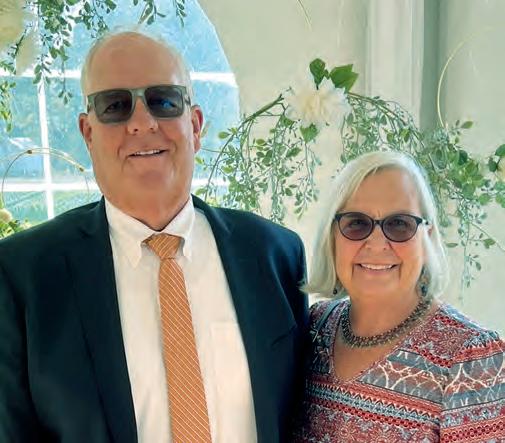
When Tom Armstrong looks back on his career, he doesn’t start with springs, standards or boardrooms. He starts with family roots. It helps explain nearly everything about the way he approached business, leadership and change.
“I’ve
been one of those people who … have absolutely no fear of change,” he said. That mindset, he explained, was “built into my DNA.”
It’s a fitting foundation for a man who would later guide the U.S. delegation in the ISO/TC 227 committee, ensuring that American springmakers had not just a voice, but a respected presence in the global standards arena.
Armstrong, an honorary SMI member, retired from springmaking after a more than 30-year industry career with Duer Carolina Coil. An established leader in hot-wound and cold-wound spring production, Duer Carolina Coil in Greer, South Carolina, was sold to MW Industries in 2021. The company now operates as MW Components – Greer Springs.
Armstrong recently announced that he is stepping aside from his role as head of delegation for ISO/TC 227, passing the mantle to Don Jacobson III, SMI’s immediate past president. Armstrong will continue to be part of the committee and participate in international events as he is able.
Armstrong was born in Ann Arbor, Michigan, while his father attended law school at the University of Michigan, but Pittsburgh was home. He has always had an affinity for Michigan due to his birth there, but also because his mother’s side of the family (Gliem) immigrated from Germany to St. Clair, Michigan.
“We still have the burlap bag that my great-grandfather, Simon Gliem, used when he sailed one way on a ship from Germany to the U.S.,” Armstrong said. “Every single one of his personal possessions was in it.”
Armstrong’s family’s history in Pittsburgh stretches back generations. His great-great-grandfather, Alexander Gilliland, immigrated from Dunfermline, Scotland, after receiving a letter from Andrew Carnegie urging friends to come to Pittsburgh and seize new opportunities.
That ancestor became a successful builder and entrepreneur in Pittsburgh. In fact, the
rowhouses featured in the movie “A Man Called Otto,” starring Tom Hanks, were built by him. “I lived in one of those houses as a toddler,” Armstrong recalled.
Armstrong grew up and went to high school in Mount Lebanon, Pennsylvania, just five miles from downtown Pittsburgh. The area has been described as the heart and soul of the city’s South Hills.
In 1925, Armstrong’s great-great-grandfather started the family business, SSS Management (originally known as Standard Steel Specialty Company), a manufacturer of elevator guides and other products.
But the family legacy came with an unusual rule: no Armstrong could work in the family business except at the director level. His great-great-grandfather had four sons, and he didn’t want them fighting over who would work in the business.
“So, he actually made an edict that no family members would ever work actively in the business other than at the director level,” Armstrong explained.
His grandmother, who was raised by that grandfather, kept that rule in place and enforced it “literally till the day she died,” he said.
His father, an attorney, was a director and general counsel for the business. Armstrong, a fifth-generation shareholder, also served as a member of the board of directors.
Armstrong’s daughter, Lauren Garber, joined other family members on the board as a sixth-generation director. All six of his grandchildren became seventh-generation shareholders.
Armstrong attended Washington and Lee University in Lexington, Virginia, earning a bachelor of science degree in business administration with a major in accounting and commerce.
Fresh out of college, he spent six grueling years with Price Waterhouse as an auditor. “We were well compensated but worked to the limit of our endurance,” he said, recalling a year with 2,800 billable hours and 40 weeks of travel.
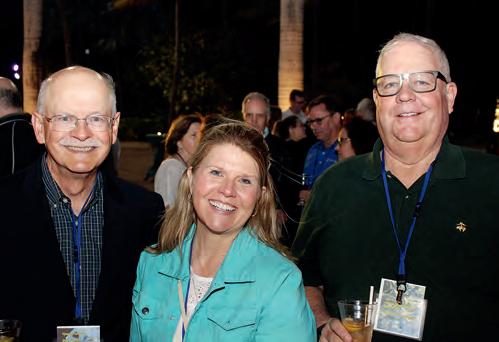
He moved from Price Waterhouse to a small building-products wholesale company in Pittsburgh that also manufactured replacement windows. He worked there four years.
Eventually, the family business needed him. Armstrong’s dad and the rest of the directors decided that the executive management were loyal and outstanding business operators but lacked long-term strategic vision for the future.
His dad convinced the rest of the family shareholders it was time to break the edict, and in 1983 Armstrong joined the family business full time. He was given the title “assistant to the president.”
The president of SSS at the time “had no idea what to do with me,” Armstrong said with a laugh. So, he sent Armstrong to the manufacturing plant.
It was the best thing that could have happened.
Armstrong immersed himself in manufacturing — elevator guide rails, gear racks, machine keys, woodruff keys, taper pins and eventually hot-wound and cold-wound springs. He credits his success to the mentors he found there: machinists, metallurgists, plant managers and engineers who taught him the craft.
There was never a job I would give to an employee that I wasn’t willing to do myself or get right beside them to help out.
Back at his days with Price Waterhouse, Armstrong said, “I loved every time I got a chance to take a plant tour … instead of sitting in the office working on accounting numbers.” The only time he turned down a tour was an offer to go 1,000 feet deep into a coal mine to see a machine cutting out a three-foot-tall seam of coal.
Armstrong does not exude an ounce of arrogance. His motto has always been, “There was never a job I would give to an employee that I wasn’t willing to do myself or get right beside them to help out.”
He later proved this in their hot-wound business when he cleaned the scale and
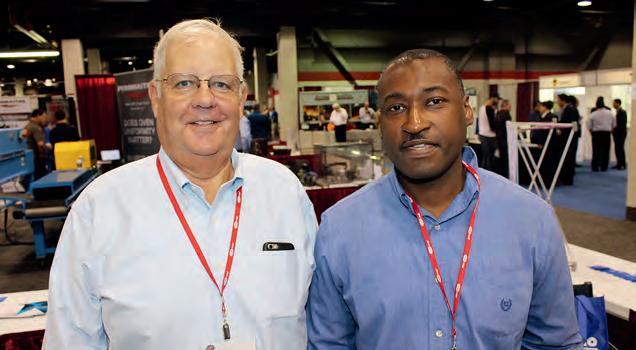
oil that collected at the bottom of a quench tank. “It’s the coolant that’s essential to the heat-treating process, and periodically its effectiveness degrades so it needs to be pumped out and cleaned.”
Armstrong recalled a classic initiation on the shop floor. He picked up a “cold-wound” spring that was anything but cold. “I must have thrown the spring 20 yards down the aisle,” he said.
SSS purchased Duer Manufacturing in 1960, so Armstrong entered the spring industry on day one. Duer was a charter member of SMI, with its history dating back to 1898.
The company later bought Carolina Coil from the Chestnut Group in 1984.
His early mentors included John M. “Jake” Thornton, a Yale trained engineer who had taken a blank slide rule of wood with ivory inserts and hand-built a fourpower slide rule to calculate spring rates. Armstrong later passed that slide rule on to Jay Weaver, who continues to work at MW Components –Greer Springs.
He met former SMI president Dan Sebastian at his first SMI meeting in Puerto Rico. They were two young newcomers who would become lifelong friends and industry leaders.
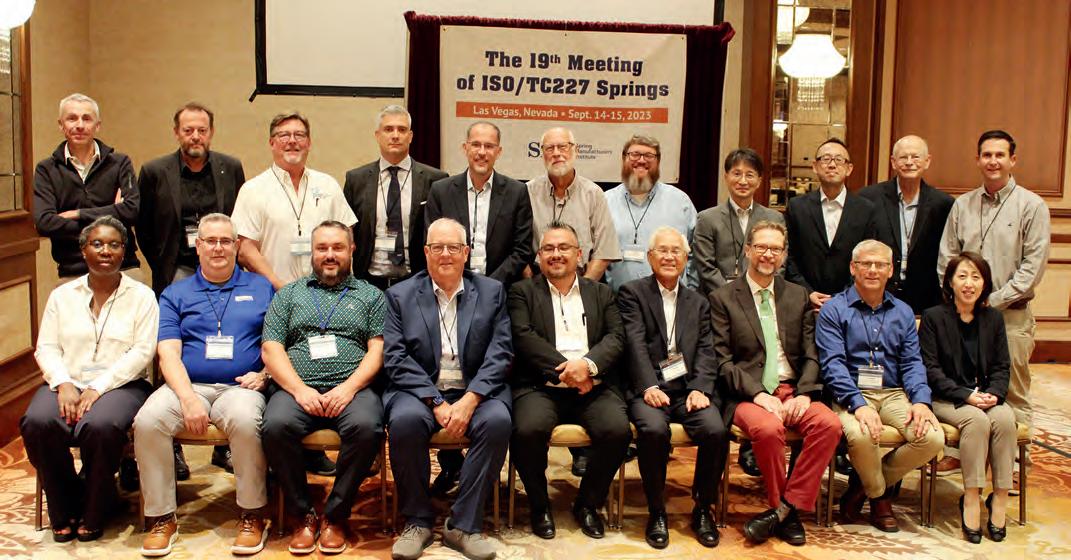
One of the most crucial chapters of Armstrong’s career came in 1989, when the Duer plant in Coraopolis, Pennsylvania, endured a 20-month United Steelworkers strike. It was a period marked by picketers outside his home, slashed tires and state police escorts for replacement workers.
“It was a nightmare beyond your wildest imagination,” he said. The event eventually led the company to move its entire operations to Greer, South Carolina.
Yet out of that turmoil came two of the most loyal employees he ever had — former union members who later moved to South Carolina to work for him and stayed for decades. One even filed the petition to decertify the union. “Talk about a guy with courage,” Armstrong said.
Armstrong’s most lasting contribution to the industry is his leadership in ISO/TC 227, the international standards committee for springs.
He is unapologetic about his worldview: “National isolationism has not been a legitimate political goal for almost 200 years … anyone who’s fighting for that today is fighting a losing battle.”
He credits past SMI presidents Scott Rankin and Dave Weber for supporting his push to get SMI involved. The turning point came when Shigeo Aiba, the Secretariat of the ISO/TC 227 committee, visited an SMI meeting at Green Valley Ranch in Las Vegas to recruit U.S. participation. Armstrong listened and acted on Aiba’s request with Rankin’s assistance.
When ISO announced work on a hotwound spring standard, Armstrong told SMI
leadership plainly: Either SMI participates, or others will form a separate group to represent U.S. hot-wound manufacturers.
His favorite line, borrowed from a friend in South Carolina who worked for Berkshire Hathaway, became his rallying cry: “When it comes to international standards, if you’re not at the table, you’re on the menu.”
Armstrong learned this lesson up close in SSS’s business with elevator guide rails. “In the ’70s, 80% of the guide rails made worldwide were manufactured in the U.S. By 2000, there wasn’t a single piece left made in the U.S., and that’s because the international standard was 4 meters and the U.S. standard was 16 feet, and you can’t make it four inches longer.”
For the company’s gear business, the opposite was true. The association for that business was heavily involved in U.S. standards and that business thrived as a result.
“Pushing for SMI to get involved was because I had seen the good and the bad of participating or not participating in international standards,” Armstrong said.
Under his leadership, the U.S. delegation became a respected, consistent presence. He led an ISO/TC 227 meeting SMI hosted in Washington, D.C. that included a private Capitol tour for international delegates, and more recently one SMI hosted in Las Vegas. He also traveled the world — he saw the terra-cotta warriors in China and visited places like Nagoya, Japan, and Kuala Lumpur, Malaysia.
Get to know your people and get them to trust you — and trust them.
He tells a funny story about the Kuala Lumpur meeting. One night after the formal meetings had ended, some of the delegates went out. It was a group of three Americans, two Japanese, two Germans and one Malaysian.
“We ended up at an Irish pub in a Muslim country listening to a Malaysian Elvis impersonator,” Armstrong said. “You can’t make that up!”
Armstrong often says he encountered two types of leaders in his career: mentors and bullies. He chose to be the former.
For the last decade of his working life, he estimates that “mentoring and training other people was 50% of my job.” His favorite leadership lesson is simple: “Get to know your people and get them to trust you — and trust them.”
One story captures the loyalty he inspired. An hourly employee dying of cancer asked if he could be buried in a Duer Carolina Coil
Several past SMI presidents who had the privilege of working with Tom Armstrong offered their reflections and fond memories of his contributions to SMI.
I want to personally thank Tom Armstrong for the incredible dedication he has shown to ISO/TC 227. Tom has always worked tirelessly to ensure the United States stayed present, engaged and respected in every discussion. His commitment to keeping our voice strong and doing what’s truly best for the industry has made a lasting impact on all of us.
On a personal level, I’ve always admired Tom’s steady leadership and the respect he has earned from our international colleagues. He has consistently shown a willingness to listen and it has been inspiring to watch the genuine connections he built with team members both in the U.S. and abroad. As I step into the role of Head of Delegation for SMI on behalf of ANSI, I’m grateful for the example he set and the strong path he leaves behind.
Tom, thank you for everything you’ve done and for keeping the U.S. firmly in the conversation.
— Don Jacobson III SMI Immediate Past President (2024–2026)
golf shirt. Armstrong said yes without hesitation. At the funeral, the man lay in his black company shirt beside a lifesize cutout of his favorite NASCAR driver.
“That’s the strangest request I ever had,” Armstrong said, “but also one of the most meaningful.”
Today, Armstrong lives in Austin, Texas, with his wife, Patty. They have two daughters and six grandchildren. He has served on the board of the Biltmore Company in Asheville, North Carolina, for many years and still plays golf — a passion since age 12.
Armstrong was a golf caddy, a job he started at about 13 and continued through college. His first taste of mentorship came through the influence of Bobby Cruickshank, an outstanding player and the head professional at Chartiers Country Club in Pittsburgh, where Armstrong worked.
He’ll soon play in the Wednesday ProAm of the new PGA Tour event sponsored by Biltmore, set for The Cliffs at Walnut Cove in
In the early 1990s, I had just reported to Logansport, Indiana, for a new assignment when the company owner asked me to attend an SMI meeting in Puerto Rico. Although I had served as president of the Michigan Spring Association for several years, this was my first official SMI meeting. I was a bit of a newcomer, and my first acquaintance was Tom Armstrong, who had recently taken the helm of his family’s company.
That meeting marked the beginning of a long journey together through SMI. Tom and I served on numerous committees and took on a variety of assignments. Even as newcomers, we were welcomed into the organization, and Tom quickly became instrumental in several key SMI outreach efforts, including the work that helped establish international standards.
When I later had the opportunity to serve as SMI president, Tom was one of the people I relied on most. His steady experience, thoughtful guidance and commitment to the industry were essential in advancing SMI’s mission both in the United States and abroad.
Without Tom’s leadership and vision, SMI would not have emerged as the global presence it is today.
— Dan Sebastian
SMI Past President (2005–2008)
Asheville in September. “I’m trying to mentor my sons-in-law through the process,” he said.
Some things never change.
For more than 20 years, Armstrong served as the U.S. head of delegation for ISO/TC 227. He represented SMI members with clarity, conviction and a global perspective that
strengthened the entire North American spring industry.
He ensured that U.S. spring manufacturers had a seat at the table — and that they were never on the menu.
His legacy is one of mentorship, integrity and unwavering commitment to the craft and community of springmaking. z
During my time as SMI’s regulatory chair, I saw how quickly international standards were evolving and how far behind the U.S. risked falling. While traveling overseas, I realized other countries were shaping rules that would eventually influence our own market. I approached SMI President Dave Weber about joining ANSI, did the research and began connecting SMI to the global standards community. Early member interest was low, but I kept pushing, even inviting international leaders to our convention to start building relationships.
Tom was the first to grasp the urgency. At the time, global discussions about standardizing elevator rails threatened to sideline U.S. manufacturers. Tom immediately recognized the danger and the opportunity. His engineering insight and industry connections made it clear that SMI needed a voice in these conversations.
When I secured an invitation to an international standards meeting but couldn’t attend, Tom stepped in. He paid his own way to travel across the world. He made the key connections that opened the door for SMI to become the U.S. delegate. From there, he took on the responsibility of representing our industry, reviewing standards and advocating for American manufacturers.
Tom’s leadership, technical expertise and willingness to show up — everywhere — put SMI on the global map. His work ensured that U.S. springmakers could compete internationally and helped shape the standards that guide our
industry today. It was a massive undertaking and an enormous success for all of us.
As Tom steps aside from his active role as head of delegation for the U.S. in the work of ANSI ISO/TC 227, I applaud his long commitment to SMI and the spring industry.
— Scott Rankin
SMI Past President (2010–2012)
One of my earliest memories of Tom goes back to my first SMI board meeting as chair of the Technical Committee. He was reporting on the ISO planning committee’s work on springs when he delivered a line I will never forget: “If you are not on the committee as a country … you are on the menu.” In that moment, he reminded all of us — industry stewards in the United States — why representation matters.
That was Tom’s gift. He didn’t just communicate; he educated. Every conversation with him left me with another piece of his experience, another insight shaped by decades of thoughtful leadership. He had a rare ability to teach without ever making it feel like a lesson. Talking with Tom felt like discussing a challenge with a trusted friend — warm, direct and always grounded in what truly mattered.
I sincerely wish this wise gentleman the very best as he steps aside from his active role as the U.S. head of delegation for worldwide spring standards.
— Gene Huber Jr.
SMI Past President (2022–2024)

By Sara Scullin
Molly Chiccino on Supporting Employees and Families

If you want to grow, get involved in as many aspects as you can and make yourself invaluable.
Molly Chiccino’s curiosity and willingness to try new things have served her well—from recreational curling to leading James Spring & Wire Company in Malvern, Pennsylvania.
Chiccino’s rise from the production floor to president reflects a leadership style grounded in process knowledge, employee investment and a willingness to embrace uncertainty.
From the very start at James Spring & Wire, Chiccino immersed herself in every aspect of the business.
“Maybe I’m a process nerd, but I love it — understanding how things work and how they can work better,” she says. What began as a short-term role turned into a long-term career. “I thought I’d be here for a couple of months. Seventeen years later, I’m still here.”
Over time, she made her way from department supervisor to quality control manager and then operations manager.
Her various roles helped her understand the full manufacturing process. This curiosity and a supportive company culture fueled her rise through the company.
“Because I started on the floor, I have a good sense of the workflow and how a part moves from concept to production,” she says. “I’ve worked in almost every department, so I understand how things work — and how they don’t. I pride myself on being able to take on whatever needs to be done.”
The Pennsylvania company designs and manufactures springs and wireforms for applications including Amish buggy brakes, medical device components and HVAC clips.
“HVAC clips have been a surprise growth area over the past decade,” Chiccino notes. James is also a sub-tier supplier for companies that sell to the U.S. Department of Defense.
“We’ll often say that we will do things other companies won’t,” she says. “We like a challenge.”
Chiccino credits the company’s in-house tool and die shop with supplying tooling quickly and cost-effectively. This, plus a large fourslide department, contribute to faster run rates.
As president, Chiccino keeps a close eye on geopolitical shifts and their impact on material costs and availability.
“It’s not something that will be resolved quickly,” she says of tariff and supply chain fluctuations. “You have to take a wait-andsee approach while managing it day by day.”
She applies a similar lens to new technology — prioritizing investment only when it delivers clear value. This includes watching the combination of AI and 3D printing.
“I’m interested in how AI and 3D printing could streamline prototyping and help us scale faster,” she says. “It’s a niche I’m looking forward to.”
Chiccino has fostered a family-friendly environment during her nearly two decades at James, where she works with her own family. Her mom, Colleen Myers, started with James a month before she did. She is a bookkeeper and greets people at the front door of the business. Her father, Jim Myers, followed a couple of years later in production.
“I could go on forever about how much I love this place and the people who work here,” she says. “In a lot of manufacturing places, people work alongside family members. That doesn’t really happen in banking or finance. It’s something that I am supremely proud of, that we create an environment where people want their family members to work here.”
Chiccino says they also employ a significant number of young people who find opportunities through family or temporary staffing agencies and stay to build their skills.
While the company keeps her busy, Chiccino makes time for the people and activities she loves outside of work. This includes traveling to compete in curling competitions.
“Curling is, above all else, a team sport,” she says. “It’s incredibly strategic while being extremely collaborative, which is similar to manufacturing.”
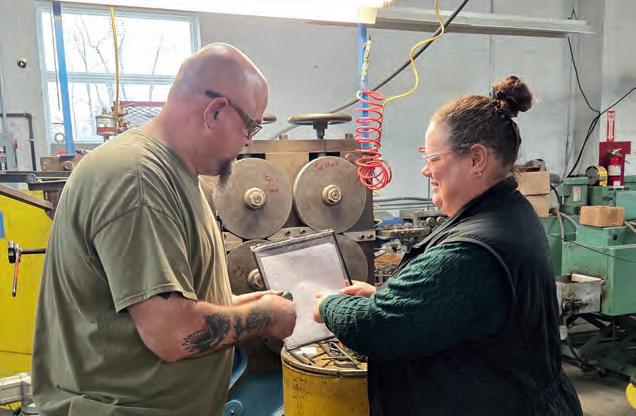
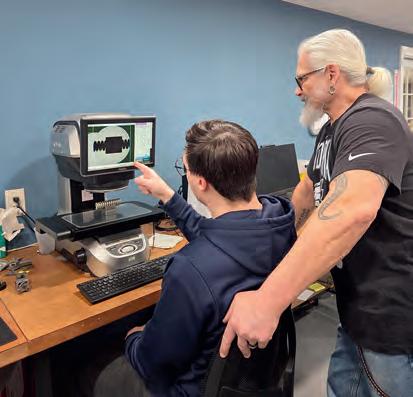
To Chiccino, the best part of leadership is knowing it’s up to her to prioritize both an inclusive environment and a robust sales effort.
“I like having the high-level view, because I care so much about our employees,” she says.
Her desire to reach people and improve systems extend beyond manufacturing to the local community. The company supports Bridge of Hope, a local organization that helps single mothers find housing.
“It’s a wonderful organization that works hard to help women who need a hand,” says Chiccino. “My grandmother used to volunteer long before I worked here. When I found out [the board] supported the Bridge of Hope, it was a pleasant surprise to me,” she says.
Chiccino encourages other springmakers to look beyond narrow roles to achieve maximum impact. “It’s important to understand the whole process,” she says. “If you want to grow, get involved in as many aspects as you can and make yourself invaluable.” z

By Phil Sasso
Even before Career Technical Education Charter High School (CTEC) opened in Fresno in 2017, SMI member Betts Company was one of the first manufacturers in line to get involved. And the springmaker has participated in the CTEC senior internship program every semester since it launched in 2022.
A School Built for the Trades CTEC’s mission is to restore the practical, skills-based education that disappeared when wood shop, auto shop and similar programs were cut from California’s public schools. The technical high school offers two pathways: manufacturing and construction, each giving students real, career-relevant training paired with academic coursework.
“Not every kid goes from high school to a two or four-year school,” says Joe Devany, vice president of manufacturing at Betts.
Career Technical Education
(CTEC) opened in Fresno County for the 2017–18 school year, its mission was clear: Give students more than a traditional high school education. Give them a career pathway.
“The goal was to give kids an opportunity to understand what they’re going to do after they graduate,” says Jonathan Delano. “Education was not just about learning English, math and science, but putting it in a space where they have the ability to have a career.”
CTEC’s first graduating class completed the program in 2022. The school combines academic coursework, hands-on technical training, dual high school-college enrollment and senior-year internships with industry partners.
Local Guidance
Area manufacturers helped shape the school from the start. The San Joaquin Valley Manufacturing Alliance was “a huge part in helping to support what we were trying to do here,” Delano says. SMI Past President Mike Betts of Betts Company was involved early and remains a strong supporter — taking senior interns every year, developing them and occasionally hiring them.
“Some want to get skills and get ready to go to work.”
As an early champion of CTEC and its manufacturing pathway, former SMI President Mike Betts, CEO of Betts Company, provided guidance and mentorship as the program took shape.
“Mike’s been a very big advocate for what we do here and takes interns from us and helps to develop them. He hires them as well,” says Jonathan Delano, CTEC director. “So, it’s been a great partnership.”
Serving as the day-to-day liaison for the interns, Production Manager Javier Gonzalez coordinates students’ activities on the floor and completes the performance assessments required by the school.
A third-party nonprofit called Career Nexus manages the administrative and liability infrastructure behind the scenes — handling
CTEC offers two pathways: commercial construction and advanced manufacturing. Freshmen explore both before choosing.
“Kids start out freshman year learning about both,” Delano says. “They’ll learn about construction, they’ll learn about manufacturing and then they’ll pick a pathway around March, identifying what direction they will go.”
Once students decide, coursework becomes more focused, with some overlap, including welding and CAD.
Small School, Big Goals
The school is approaching 400 students, with a projected cap of 440 to 460. Freshman classes are limited to 120 and individual classes to 24 — an intentional design that lets teachers develop students’ technical skills alongside character and communication.
“Character is a huge component to what we do because we want kids to, when they walk into Betts, know how to engage with the adults,” Delano says.
“So, there is a huge soft skill focus in helping kids understand how to communicate, how to work alongside, how to ask questions.”
workers’ comp coverage and transportation logistics — making it significantly easier for companies like Betts to participate without getting bogged down in details.
Each semester, Betts invites two to five CTEC seniors as interns. Because the students are high school age, there are practical and legal limits on what they can do on the production floor. Insurance requirements preclude equipment operation. But student experience goes beyond loading ovens or packaging parts.
“We try to expose them to not only the manufacturing process, but the engineering side as well, including some of the continuous quality improvement, and just try to educate them,” Devany says.
Onboarding alone is a lesson. Interns go through the same process as regular employees from safety videos and system setup to getting ID badges to enter and exit the facility. The full onboarding takes two and a half to three hours and gives students a genuine feel for joining a professional manufacturing operation.
Once on the floor, the workers at Betts tend to take the students under their wing.
“The team on the floor loves the interns,” Devany says. “They really mentor them and teach them stuff. Some of them will say, ‘You don’t want to do what I do. You want to try to get to this type of position.’”
That floor-level guidance may be the most valuable thing an intern takes away.
Because the internship is unpaid, Betts Company created a way to recognize and reward students who complete the program: a $500 scholarship.
“We go to their scholarship and awards ceremony and present it,” Devany says. “It’s really just a ‘thank you’ — there are no strings attached.”
The ceremonies have also opened an unexpected channel of community connection. Parents — many of them firstgeneration workers who didn’t have access to these kinds of opportunities themselves — regularly approach Devany to express their appreciation.
One parent even reached out via LinkedIn after a recent ceremony.
“He works at an ag manufacturing facility here and was just saying how much he
Students are expected to stand, introduce themselves, welcome guests and explain their work — preparation for senior-year internships.
About 30 industry partners come to campus each year to interview juniors for senior-year placements. By senior year, students spend 16 hours of their school week in a real workplace.
“That’s partly why a lot of them get hired because industries already have worked a year with them,” Delano says. “They’ve already had the ability to train them and so they’re like, ‘Why would I let them go?’“
Delano says 40% to 50% of graduates are offered or take industry jobs. Others enter apprenticeships or pursue degrees in engineering, architecture or construction management.
“I’m not trying to push everybody to college,” he says. “I want them to be able to identify what it is that they want and know that all of them are great options.”
Through a dual-enrollment partnership with Fresno City College, students begin college courses as freshmen. Last year, 90% earned an associate degree and high school diploma; this year the figure is about 67%, near the school’s typical range.
CTEC works with industry partners through advisory committees, campus visits and ongoing conversations. They adapt curriculum when employers identify specific skill needs.
“It’s not about me serving them or them serving us. We work together,” Delano says of keeping up on manufacturing trends. “So, we teach those skills right off the bat.”
CTEC is tuition-free and state-funded, with additional career technical education grants. Schools like CTEC may be part of a larger solution to the workforce skills gap, says Delano.
“The benefit of charter schools like mine is we have some flexibility to try something new and to recognize a niche like we do to support manufacturing and construction,” he says.
appreciates that we participate and give the students an opportunity,” Devany recalls. “That was rewarding to hear.”
The scholarships can be used for anything — continuing education, trade school, community college or entering the workforce. Devany knows of at least one recent recipient who is heading to Fresno State for engineering. A few years back, some went into the military. Others went straight into the workforce.
Perhaps the most tangible proof of the program’s benefits is Betts has hired interns.
About three years ago, two CTEC seniors who wanted to go straight into the workforce after graduation were brought on as entry-level quality technicians at Betts HD, the company’s subsidiary. They’re still there today, now working as mid-level quality techs — performing inspections, calibrations and a wide variety of quality tasks, including supporting ISO certification work.
“From what I understand, they really, really love what they’re doing and are doing a great job,” Devany says.
Earning a Degree Before a Diploma
CTEC’s dual-enrollment partnership with Fresno City College is unique. Students begin taking college courses as freshmen, with classes connected to the college’s technical program. In many cases, students earn an associate degree after four years in high school.
“The kids actually graduate from Fresno City College and become college graduates before they become a high school graduate,” Delano says referencing the two schools’ staggered graduation dates.
Typically, the school has 65-67% of students earning an associate degree. Last year was an anomaly with 90% of CTEC students earning associate degrees.
“I’m not trying to push everybody to college,” he says. “I want them to be able to
identify what it is that they want and know that all of them are great options.”
Students with Skills
One thing Devany wants other springmakers to understand is these aren’t blank-slate beginners. CTEC’s manufacturing pathway is legitimately well-equipped. The school has a full shop with CNC mills, lathes, welding equipment, laser cutters and 3D printers. Students learn design software and how to read engineering prints.
“They’re coming in with a lot of those skills,” Devany says. “They have to complete a project their senior year utilizing all the skills they’ve learned and present it.”
The school has also been receptive to feedback from industry partners. Devany and his team don’t hesitate to tell educators when a technique is outdated or when the curriculum doesn’t reflect how modern manufacturing actually works, and the school, he says, has been responsive.
“Technology is changing very fast, and it is hard for education to keep up. But we’re very honest with them: ‘What you’re teaching is outdated –this is how we do it now.’ And they’ve been good at making adjustments.”
Devany advises other springmakers to investigate their local CTE programs.
“We’ve kind of taken the approach of we have to educate them about us,” Devany says. “We have to go find them — they’re not going to necessarily find us. These kids drive by these big buildings every single day and have no clue what’s going on in them.”
Betts does more than sponsor internships. It participates in tours, classroom visits and speaking engagements at CTEC and other local schools, including Duncan Polytech and Fresno State’s engineering program. It builds community goodwill and positions Betts as an employer of choice. That’s important, but especially in a region where many young people only dream of working for Silicon Valley giants.
“In California, a lot of kids think Apple, Google and Tesla,” Devany says. “And they don’t really realize what manufacturing there is here in the Central Valley.” z
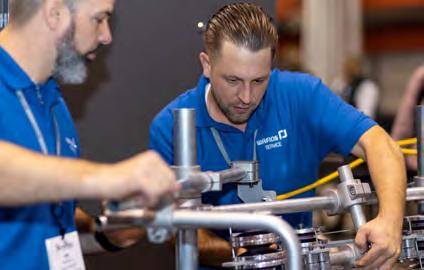
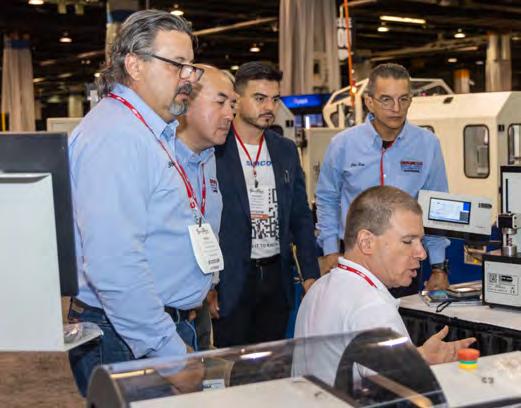
O
ROSEMONT, ILLINOIS • OC T 7-9
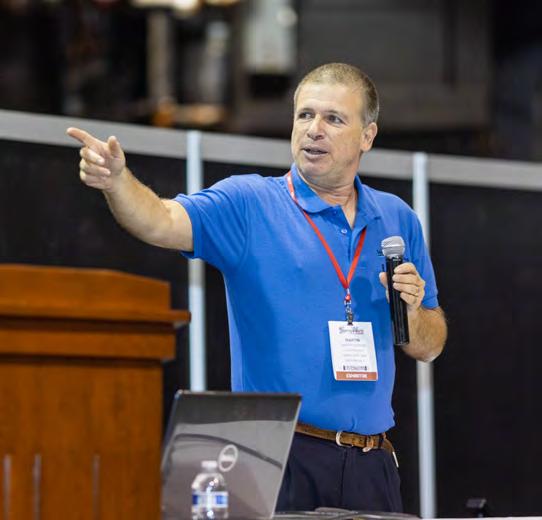
Don’t miss SpringWorld!
Hear from the top companies and professionals, explore cutting-edge tech, and learn more during the educational sessions.
Chicago Association of Spring Manufacturers, Inc. (CASMI) and The Spring Manufacturers Institute (SMI) have again partnered to combine the two organizations’ biennial events into one industry foremost event. The joint SpringWorld Expo and Symposium will be held October 7-9, 2026, at the Donald E. Stephens Convention Center in Rosemont, Illinois.
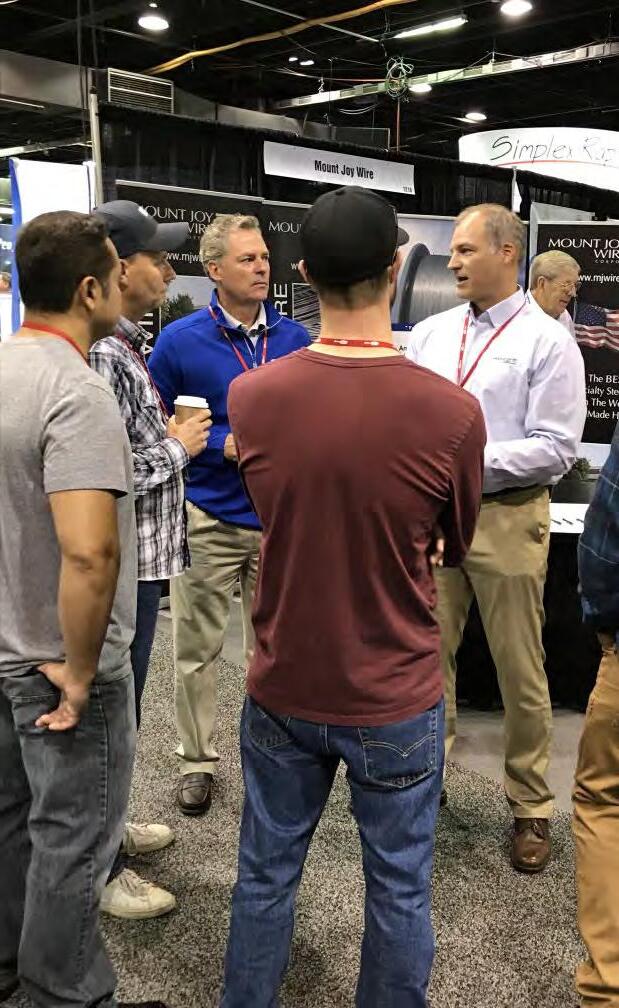
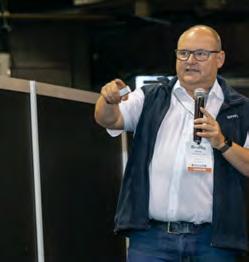
In addition to the CASMI hosted exhibit hall, SMI will also host two mornings of business and technical content, including many educational sessions. Exhibit hall hours will be similar to prior years and the technical theater and receptions return! Don’t miss this comprehensive educational and networking event to learn the latest from suppliers and educators.
Industrial Steel & Wire is the proud Visionary Sponsor of SpringWorld 2026!
Wire that keeps your business moving FORWARD®. Learn more at: InduSteel.com

Three Days of EXPO
Two Mornings of Educational Sessions
Technical Theater Sessions
Same Great Networking Events

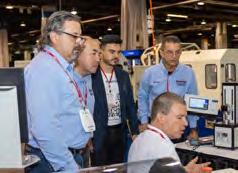
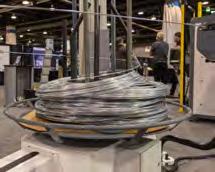

By Phil Sasso
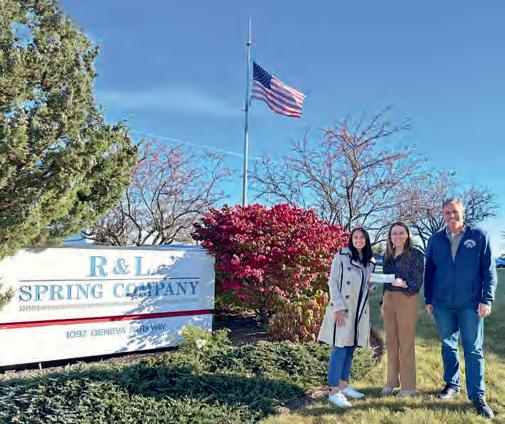
The smell of food grilling outside drifts through the plant floor at SMI member company
R&L Spring in Lake Geneva, Wisconsin. Team members wait in line laughing and chatting, knowing this is about more than a burger or hot dog. It’s about raising money for a good cause.
At R&L, giving back isn’t a once-a-year event or corporate budget item — it’s a year-long commitment to the community.
The company’s quarterly fundraising program, Spring into Action, connects employees at this third-generation family-owned springmaker with local nonprofits. Together with team members from neighboring sister company Medicoil, they raise small individual contributions that make a big difference.
“I feel a responsibility to give back to the community in which we work and serve,”
says Julie Arenz, R&L Spring and Medicoil CEO and president. “It impacts everyone.” Before Spring into Action took shape, the company was sporadically involved in charitable events like the American Cancer Society’s annual run/walk.
“R&L had a long history of charitable support,” says Human Resources Director Sheila Baumann. In 2022, when Baumann joined the company, employees showed an interest in growing their giving and broadening the causes they support.
Helping the community helps everybody out in some way.
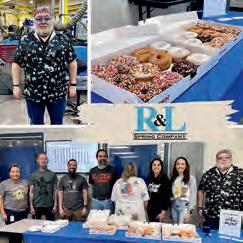


The result is a giving program that’s part fundraiser, part employee engagement and part community outreach. Each quarter, employees raise money primarily through food-centered events such as bake sales, cookouts, picnics, ice cream socials and themed lunches. Lunch ticket prices typically range from $5 to $7, though many employees give more when the funds support a cause they care about.
The Spring into Action team also organizes food and supply drives, regularly giving to groups like the Lake Geneva Food Pantry and Elkhorn Food and Diaper Bank.
At the end of the quarter, R&L matches employee donations dollar for dollar.
“If we raise $1,500 as an employee group, the company matches it, and the organization gets a $3,000 check at the end of the quarter,” Baumann says.
The program is intentionally employee driven. Most of the two companies’ 260 employees are involved in some way, including the events committee, organizing activities, purchasing meals or donating food and preparing meals.
Even the name “Spring into Action” was suggested by an employee and chosen by the committee. But it’s more than a clever name, it’s about putting feet to the company’s values.
“In our employee meetings we talk about our core values, and one of those values is centered around kindness,” Arenz says. “Helping the community helps everybody out in some way,”
R&L holds committee meetings to plan fundraisers and select charities. The committee or employees are free to suggest causes.
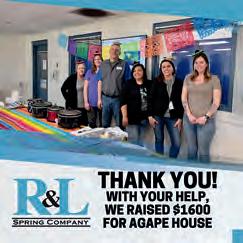

“If any employee comes forward and is passionate about an organization, we’ll review and consider it,” says Arenz. “It’s really about employee involvement and what they feel is important.”
Spring into Action has supported organizations that are local and personal. Many are based in Walworth County, where employees live and work to keep the giving closer to home. The company has supported local homeless shelters, animal rescues, food pantries, children’s services, veterans’ groups and literacy programs. They have also supported regional or national organizations like Wounded Warrior Project and Children’s Wisconsin.
“We’re doing Scoops for Troops this quarter,” Arenz says, referencing a charity started by then-8-year-old Michael Ahern — the subject of this magazine’s first Difference Makers feature (Springs, Spring 2024). Michael is the son of Rebecca Karabin-Ahern and nephew of Lucas Karabin, co-presidents of SMI member Acme Monaco Corporation in New Britain, Connecticut. Arenz met Michael and his mom, along with his sister, Kara and father Scott at the 2026 SMI Annual Meeting in Puerto Rico.



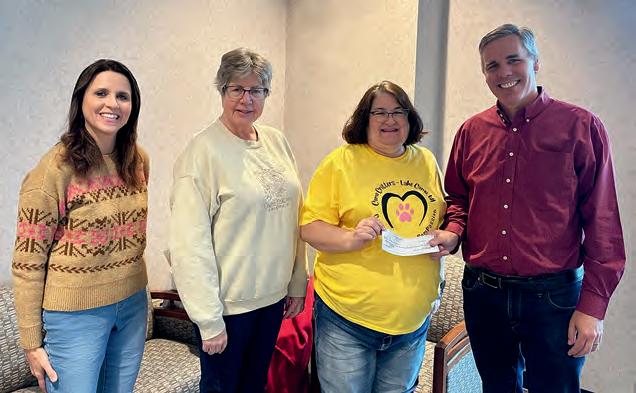
“I was really proud to share Michael’s story with all the employees here,” Arenz says.
The company also runs an annual holiday giving program, adopting families through Head Start of Walworth County and purchasing gifts for children in need.
“I think that’s my favorite event,” says Arenz. “Anything that touches children really gets at the heart. And you get to physically see all the presents — it’s just such a special time of year. You want everybody to have a great holiday and not have to worry.”
Rather than simply cutting a check, R&L invites a nonprofit guest on-site to receive the donation whenever possible, so team members can hear firsthand about the charity’s work, how the funds will be used and what their support means.
“I always like to share that back with employees, so they really understand how they touch somebody’s life,” Baumann says.
Organizations have been genuinely surprised by the amount R&L team members raised in a single quarter.
“They’ve been pretty taken aback by it,” Baumann says. “They’ll say, ‘Do you have any idea how much this is going to impact our organization?’”
The events create a genuine sense of fun and belonging. The committee often plans menus around seasons, holidays or popular themes like March Madness, Cinco de Mayo or summer cookouts. Some employees enjoy cooking. Others prefer eating. Either way, the shared meal is a small but meaningful break from the workday — and a reminder that the people around you are more than coworkers.
“It’s a good way to engage people in the workplace around things other than problems and work,” Baumann says.
The program also gives newer employees a chance to connect with coworkers and find their footing in the company. Using social media, the giving extends R&L’s reach into the broader community — where people may come to see the company as a good neighbor and perhaps a good place to work.
“Visibility isn’t the purpose, but it is a meaningful byproduct,” Arenz says.
Since Spring into Action launched, R&L has supported more than a dozen organizations. Quarterly donations typically range from $1,000 to $1,500 — and with the company match, a single quarter has generated up to $3,700 for one cause. To date, the program has delivered more than $25,000 to local and national organizations in addition to uncounted food and supply donations.
For Arenz, the numbers tell only part of the story. She hopes Spring into Action can serve as a simple model for other springmakers: rally your team around causes they care about, make giving fun and engaging, match their generosity — and watch kindness become part of your culture.
“Spring into Action is a program we’re excited about,” says Arenz. “We’re happy to share it, and hopefully it inspires others.” z
Email your suggestion to Phil Sasso at phil@smihq.org

Gary McCoy
I started working as editor of Springs in 2008. Early on, one of my favorite activities was visiting the SMI office and digging through old issues of the magazine for ideas. I could get lost reading the articles, studying the ads and absorbing the eras they reflected.
While recently searching issues from the 1960s, I came across a President’s Message by L.V. Barnes of The Yost Superior Co. It appeared in the April 1966 issue and captured the spirit of an industry determined to grow together.
“Whether a spring manufacturer has been in the business one year or 20 years, membership in SMI is invaluable.”
At a time when the industry was rapidly modernizing, SMI positioned itself as a shared engine of progress — uniting manufacturers, elevating standards and strengthening technical knowledge across the country. His message still resonates today.
“By pooling the experience of hundreds of spring manufacturers … SMI not only serves its members well but also increases the stature of the entire industry.”
Barnes emphasized collaboration as a competitive advantage. Through shared expertise in spring design, testing, shot peening, grinding, heat treating, plating, new materials and modern management practices, SMI helped members stay ahead of the curve.
“Objectives include keeping industry members informed on new technological advances and modern management practices … [and] working with materials and equipment suppliers to improve industry capabilities.”
His invitation was simple — and timeless: join together, learn together and advance the craft together.
Today, Barnes’ vision of strengthening technical knowledge still guides our work at SMI. Our technical committee has launched a project to create an archive of Springs technical articles — a searchable repository of technical know-how.
One challenge has been discovering that some issues of the magazine are missing. We’ve been able to fill several gaps, but a few holes remain.
I’d like to ask for your help. If you or your company has a library of Springs or extra issues you can part with, would you consider donating it to SMI to help complete our collection? If you can assist us, please email me at gary@smihq.org.
Those old issues drew me in for a reason. They hold exactly the kind of knowledge Barnes believed was worth preserving. As an organization led by and for springmakers, we remain committed to ensuring SMI membership is an invaluable part of your business — connecting members, generating new business and technical information and safeguarding our shared history.
Gary McCoy Executive Director
Listen to “Springs Are Everywhere”
The bimonthly podcast, hosted by SMI Executive Director Gary McCoy, features leading experts discussing issues especially relevant to manufacturers of springs, wireforms and stampings. Stream on your favorite platform: www.smihq.org/go/sae


Thomas Walstrum, a principal business economist in the economic research department at the Federal Reserve Bank of Chicago, will be the keynote speaker for SMI’s Educational Symposium at SpringWorld 2026. His presentation, “Outlook for the U.S. Economy and Manufacturing,” will take place Wednesday, Oct. 7, 8 to 8:50 a.m.
A ribbon-cutting ceremony will immediately follow at 9 a.m. to officially open SpringWorld 2026.
Walstrum’s responsibilities include the Seventh District’s contribution to the Beige Book, the Chicago Fed Survey of Economic Conditions and briefings for the Chicago Fed president on Seventh District economic conditions. He is also a contributing author to the bank’s Chicago Fed Insights article series.
“My presentation will review a forecast for key macroeconomic indicators for the U.S. economy, including GDP, unemployment and inflation, along with a discussion of how current events may affect them,” Walstrum

Simon Fleury, a licensed mechanical engineer with a degree from Université Laval in Québec, has served as SMI’s technical adviser for the past two years. He recently announced that he will step away from his responsibilities with SMI to focus on his private consulting practice.
Fleury retired from full-time employment in 2021 after spending most of his career as a partner at a major Canadian spring manufacturer active in the automotive, aerospace and recreational vehicle industries.
said. “The presentation will then turn to the outlook for the manufacturing sector, with a focus on understanding long-run trends.”
Walstrum holds a B.A. in economics from Wheaton College, Illinois, and a Ph.D. in economics from the University of Illinois at Chicago, with concentrations in labor and urban and regional economics.
Fifteen
A robust lineup of business and technical content will follow on days two and three of SpringWorld. The schedule for Thursday, Oct. 8, includes 12 sessions, with three additional sessions planned for Friday, Oct. 9.
SMI’s Educational Symposium at SpringWorld is sponsored by ISW, the Visionary sponsor for the 2026 event. Gibbs Interwire is the Platinum sponsor, and Neturen and WAFIOS are Ruby sponsors. Other sponsorship opportunities are available. Contact Gary McCoy at gary@smihq.org for details.
To learn more, visit www.springworld.org.
“I want to thank Simon for his assistance to SMI with various technical matters,” said SMI Executive Director Gary McCoy. “His knowledge in materials, spring design and failure analysis was a great asset in assisting our members.”
Fleury will remain a member of the SMI Technical Committee and will complete work on a new spring design course he developed, 302.1 Stress Relieving and Heat Treatment of Springs. The course will be presented for the first time at SpringWorld 2026.
In partnership with WAFIOS, SMI will once again offer a special webinar on spring end grinding on Thursday, Nov. 5, 2026, from 1 to 5 p.m. EST via Microsoft Teams. The class is part of SMI’s spring design and manufacturing education series.
The Spring End Grinding Training Course provides an in-depth overview of the fundamental principles of spring end grinding. Participants will gain advanced technical knowledge of machinery, processes, technology, automation and software used in spring end grinding applications.
Students will learn about the grinding process within the broader context of spring manufacturing, including the correlation between process parameters and influencing factors — knowledge essential for efficient process control and cost optimization. Each student will receive presentation slides, a
commemorative T-shirt and a certificate of completion.
Students will be able to ask spring end grinding-related questions about issues they’ve had.
The course instructor, Simon Haase, is an applications engineer for WAFIOS at the company’s Midwest training center in Mokena, Illinois. He specializes in spring end grinding technology and applications for the EV industry. Prior to moving to the U.S. in 2023, he spent six years with WAFIOS in Reutlingen, Germany, as the technology engineer for the spring end grinding department. He studied mechanical engineering in Dresden, Germany.
The cost for the program is $170 for SMI members and $450 for nonmembers (with discounts for multiple students). For more information and to register, visit www.smihq.org/go/wafios26.
Jim Wood, former SMI regulatory compliance consultant, died Oct. 18, 2025. He was 91. His beloved wife of more than 70 years, Colleen, passed away a month later, according to their daughter Lynda White.
During his 21-year career with SMI, Wood conducted nearly 650 safety audits for members, always with the same steady purpose: to protect people and help companies thrive.
Upon his retirement 12 years ago, a tribute article about Wood appeared in the Fall 2014 issue of Springs (www.smihq.org/go/fal14-53).
Reflecting on his time with SMI, he said, “The memories that stand out to me are just meeting a whole lot of fine people.”
He added, “Springmakers are the greatest group of manufacturers in North America. I have belonged to other associations, but nothing compares to the camaraderie and the pure pleasure of being with people that treat each other with respect. And they treat the staff with respect.”
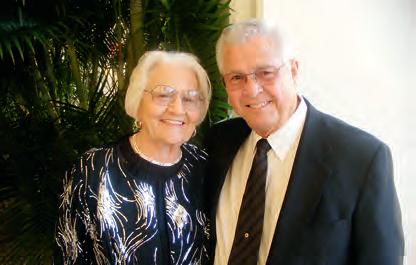
White said, “Dad very much enjoyed SMI and all the people affiliated with it.”
A small graveside ceremony was held among immediate family members.
“Jim enriched the lives of everyone who had the privilege of knowing him,” SMI Executive Director Gary McCoy said. “His legacy lives on in safer workplaces, stronger companies and the countless people he encouraged, taught and protected along the way.”
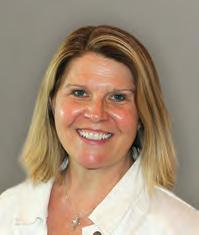
SMI is presenting a series of four safety webinars in 2026 to highlight vital compliance issues spring manufacturers should understand. The first session, “OSHA’s Top Ten Citations for Spring/Metal Manufacturing,” took place May 22 with nearly 40 attendees.
The remaining one-hour webinars are designed to help manufacturers strengthen their safety culture and improve overall performance. Each session includes a certificate of completion, which can be used to demonstrate to workers’ compensation carriers or state agencies that safety committees are meeting training requirements.
All seminars are led by Dr. Laura HelmrichRhodes, SHRM-SCP, CSP, who is celebrating her 12th year with SMI as a safety compliance consultant. She has more than 35 years of experience as a safety professional and is a full-time professor at Indiana University of Pennsylvania in the Safety Sciences Department.
Basic Machine Guarding — Self-Assessment Considerations and Resources
Thursday, July 23, at 1 p.m. EST
This session will focus on OSHA standards for machine guarding, including those most frequently cited in the industry. Participants will explore improvement strategies, review real-world examples and examine visual safeguarding examples.
Supervisors’ Leadership: Interactive and Practical Skills
Thursday, Aug. 13, at 1 p.m. EST
This interactive webinar will explore the characteristics of effective supervisors and provide strategies to improve communication, productivity, quality and workplace safety.
Additional leadership training — both in-person and virtual — is available through Dr. Rhodes.
All safety webinars are presented at no charge to SMI members. To register, visit www.smihq.org/go/cal.
If you need further assistance or would like to schedule a visit from Dr. Rhodes, please contact Gaby Carrasco at gaby@smihq.org.
As previously reported, SMI is working on a new educational partnership with Wire Association International (WAI) to provide SMI members with exclusive educational content at a low SMI/WAI-member only rate of $45.95 per course.
WAI’s online training provides flexible, on-demand learning designed for real-world application. The following courses are now available:
• Introduction to Ferrous Metallurgy
• Ferrous Testing and Properties
An additional course, Ferrous Heat Treatment, is in the final stage of development.
The classes are based on material presented in WAI’s annual Fundamentals of Wire Manufacturing course.
The courses provide an introduction to the world of materials, processes, metallurgical structures and properties that make up wire and springs. The courses may be of interest to everyone from new hires, nontechnical staff and technical staff including engineers, designers and inspectors.
To secure the SMI/WAI member rate, please contact SMI Technical Director Rick Gordon at c.richard.gordon@gmail.com.
SMI is committed to training and supporting North American springmakers with outstanding technical assistance.
SMI’s spring design training program continues to grow and is highly rated by both members and nonmembers.
The remaining 2026 training schedule is shown below. In addition to webinars, SMI plans to offer an in-person class at the 2026 SpringWorld Expo and Symposium, sponsored by CASMI and SMI, Oct. 7–9, 2026 (subject matter to be determined).
As a component of SMI’s Advanced Spring Design (ASD7) software, SMI offers training programs for industry newcomers and veterans seeking to increase their knowledge. Training is available to both members and nonmembers.
205 Power, Constant Force, Spiral, & Torsion Bar Spring Design
In-Person Class at SpringWorld 2026 (subject matter TBA)
201 Compression Spring Design
300 Strength of Materials and Spring Material Manufacturing
202 Extension Spring Design
203 Torsion Spring Design
Webinars are scheduled from 1–5 p.m. EST. *Dates are subject to change.
10
6
15
12
19
17
For more information and to register for classes, visit www.smihq.org/go/tech-classes or contact Gaby Carrasco at gaby@smihq.org.

SMI members receive priority placement for their product, company, personnel and events announcements in the magazine. Your news releases should be roughly 50 to 100 words and may be accompanied by color photos (high-resolution .JPEG photos at 300 dpi preferred). Send to gaby@smihq.org.
SMI is pleased to welcome our newest members
Carco Incorporated Jacob Gordon 313-925-9000 jgordon@carcousa.net www.carcousa.com
Mount Joy Wire
Jackson Edwards 717-653-1461 jedwards@mjwire.com www.mjwire.com
2026
Sept. 16–17
ISO/TC227 — Springs Warsaw, Poland
Oct. 7–9
2026 SpringWorld Symposium and Expo Donald E. Stephens Convention Center Rosemont, Illinois www.springworld.org
Oct. 21–23
2026 Fabtech Expo
Las Vegas Convention Center Las Vegas, Nevada www.fabtechexpo.com
2027
April 12–15
2027 SMI Annual Meeting
Omni Rancho Las Palmas Resort & Spa Rancho Mirage, California www.smihq.org/annual-meeting
We’d love to hear from you! Springs welcomes your notes and comments on the contents of our publication. Please email Phil Sasso, managing editor, at phil@smihq.org.
SMI regularly surveys members to help them understand performance relative to the industry. We respect participants’ privacy and recognize the importance of confidentiality. No company data is shared with SMI members, SMI or any third parties.
2026 Schedule: Surveys and Reports
Key Business Trends (regular and associate members) Survey Sent Responses Due Results Sent
Second Quarter 2026
Third Quarter 2026
Fourth Quarter 2026
Wages & Benefits (every other year — regular member contacts)
July 7, 2026
Oct. 4, 2026
Jan. 6, 2027
July 17, 2026
Oct. 14, 2026
Jan. 16, 2027
July 18, 2026
Oct. 15, 2026
Jan. 17, 2027
Survey Sent Responses Due Results Sent 2026
Salary (every other year — regular member contacts)
Sept. 3, 2026
Oct. 1, 2026
Nov. 15, 2026
Survey Sent Responses Due Results Sent 2027
Annual Market Survey (regular member contacts)
Oct. 1, 2027
Oct. 30, 2027
Nov. 29, 2027
Survey Sent Responses Due Results Sent
Industry Report to SMI April 2, 2027 May 31, 2027
July 15, 2027
Individualized Reports to SMI Members July 31, 2027
For more information about participating in SMI’s benchmarking programs, contact Gaby Carrasco at gaby@smihq.org.

SWP-B; EN10270-1; AMS5112N; military specifications, and others. Call for special wire needs and solutions, including restricted tensiles and size tolerances.

Gaby Carrasco
Aspire with Emma Grede
April 28, 2026 | 1 hr. 8 min.
During the peer tips session at the 2026 SMI Emerging Leaders Conference, Katherine Pepka of Renton Coil Spring shared the Aspire podcast as a standout listen for anyone interested in leadership and entrepreneurship. It feels less like a traditional business interview and more like a masterclass in building a global brand while navigating identity, ambition and change.
In this episode of Aspire, Tory Burch reflects on her path from stay-at-home mother to founder of one of the world’s most recognizable fashion brands. The conversation moves between business strategy and personal experience, offering a candid look at the realities behind building a billion-dollar business. She talks about how early decisions, instinctdriven risks and a willingness to learn on the job shaped both her leadership style and her company’s trajectory.
The brand began not as a polished business plan but as a scrappy experiment while she was raising young children. After an attempt to revive a vintage label fell apart, Burch launched her own line with limited resources, leaning on early e-commerce, public relations and word-of-mouth at a time when digital luxury retail was still unproven. That momentum scaled into a global business with hundreds of stores. Instinct, adaptability and resilience, she says, mattered more than formal experience in fashion or retail.
One central theme is how ambition is perceived differently in women. Burch reflects on initially resisting the label, then reframing it as autonomy and the ability to define success on her own terms. The episode covers the pressures of building a

company while raising children, managing divorce and facing public scrutiny.
She also opens up about stepping down as CEO after 14 years. It was not a retreat, she says, but a realignment, returning to design and creativity while acknowledging that operational leadership at scale requires different strengths. The conversation closes discussing her work at the Tory Burch Foundation, which provides mentorship, capital and education to women entrepreneurs. She defines success less by scale than by purpose, impact and the ability to help other women build independent lives. z
Want to share a business development podcast for me to review? Please send your suggestions to gaby@smihq.org.


At Admiral Steel, we understand that your product is your reputation. That’s why we take pride in specializing in premium quality high carbon steel that meets specs such as AMS, QQS, and ASTM certified. Our commitment to providing certified material means that you can trust that you are receiving the highest quality steel available. Don’t settle for seconds and rejects. Choose Admiral Steel for the assurance of premium quality steel products. Call us at 800-323-7055 or email sales@admiralsteel.com
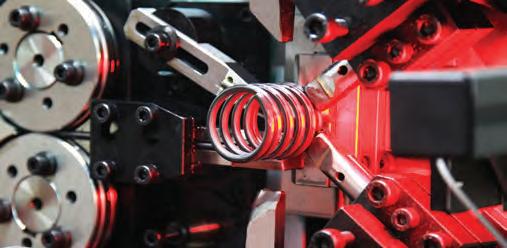
STS has been making tooling for spring manufacturers for nearly 50 years. We also provide tooling for manufacturers of coiling machines as needed.
Complete line of carbide and steel tooling for spring coiling machines: Fenn (TORIN) | Itaya | MEC | Samuel | Sleeper & Hartley and more... (see website for complete list)
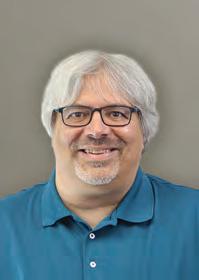
Reviewed by Phil Sasso
I met Susan Frew at the 2026 SMI Annual Meeting in Puerto Rico, where she presented on transforming your operation with artificial intelligence (AI) using the humorous analogy of her own DNA test.
In “Recoded: Upgrade Your Business DNA with AI,” she also uses a DNA analogy and delivers a practical, people-first approach to AI.
The buzz around AI either overhypes the technology or predicts certain doom. Frew avoids these extremes. You can tell she is a business owner discussing real-world experiences not an academic or a pundit.
Every organization has a “business DNA” made up of four elements: history, habits, tech stack and people. And at the DNA-level, many still operate with outdated, pre-AI systems and workflows.
“AI is the biggest operational shift since the internet,” Frew writes. “If you don’t learn to use it strategically, someone who does will eat your lunch.”
To stay competitive, leaders must rethink how work gets done and where AI can create leverage, according to Frew. That doesn’t mean replacing employees. It means replacing drudgery.
“The value isn’t that you eliminated tasks,” she observes. “The value is that you elevated your people.”
Frew also discusses dealing with the fear and resistance many employees feel toward AI.
The final part of “Recoded” includes workflows, prompts, checklists and exercises designed to help readers take immediate action.
But the book is less about the technology and more about implementation.

“AI gives you insights,” Frew reflects. “Leadership drives transformation.”
“Recoded” offers a grounded, practical starting point for anyone interested in incorporating AI in their business from the ground up.
“Building AI culture isn’t optional anymore. It’s not a nice-to-have or a future initiative,” Frew concludes. “It’s the difference between companies that adapt and companies that become cautionary tales.” z
Have a favorite business book you would like us to review? Email your suggestion to phil@smihq.org.






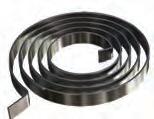


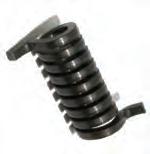


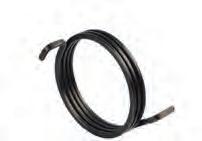




The WAFIOS MULTI-FMU 32 modular CNC system produces extension springs with extended loops for wire diameters from 0.047-0.126 inches.
The machine uses mandrel coiling to form spring bodies, and a patent-pending transfer system to move parts between independently operating bending stations. Its modular design allows configurable processing stations with as many as 65 CNC axes.
Designed for medium and large production runs, the WAFIOS MULTI-FMU 32 achieves output rates of up to 55–60 springs per minute, depending on spring dimensions. Optional equipment includes trimming, sorting and camera-based measurement systems.
The system is delivered configured to meet project-specific requirements, with the flexibility to expand by adding bending stations and automation components. The machine uses WAFIOS’ WPS 3.2 EasyWay for configuration and programming, reducing setup time and streamlining operation.
For details on the WAFIOS MULTI-FMU 32 visit www.wafios.us.
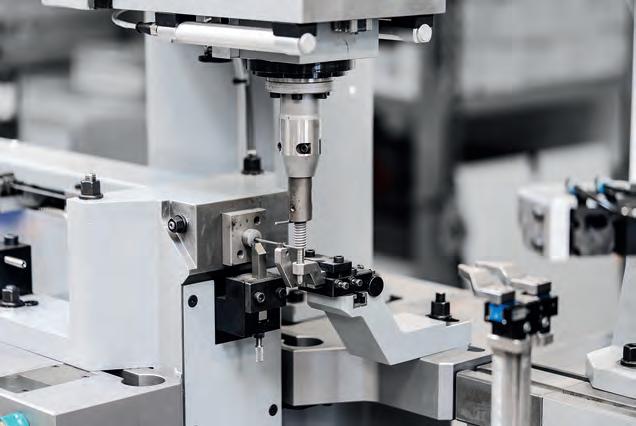
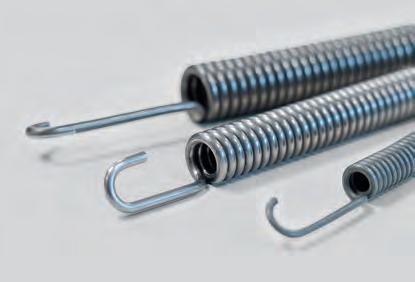
Send Us Your News
SMI members get priority placement of their product news. News releases should be roughly 50 to 100 words and may be accompanied by color photos (HiRes .JPEG at 300 dpi preferred). Send to gaby@smihq.org.
HSI and Forming Systems Inc. introduced new configurations of cooling conveyors and parts-collection systems for springmaking operations.
The cooling systems include flat (HDC series) and elevating (FTC/ STC series) conveyors, with optional variable-speed cooling fans that cool parts as they move from the oven to the collection system. The recently added STC series is designed for oil-free operation.
Complementing the cooling systems is a range of parts-collection solutions. Parts can be counted by piece, time or weight and collected in standard HSI bins or in customers’ existing containers or cartons for easier handling.
For details, email Forming Systems Inc. at info@formingsystemsinc.com or call 269-679-3557. z




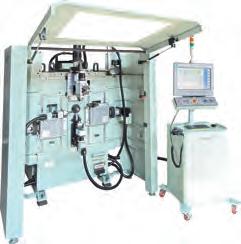




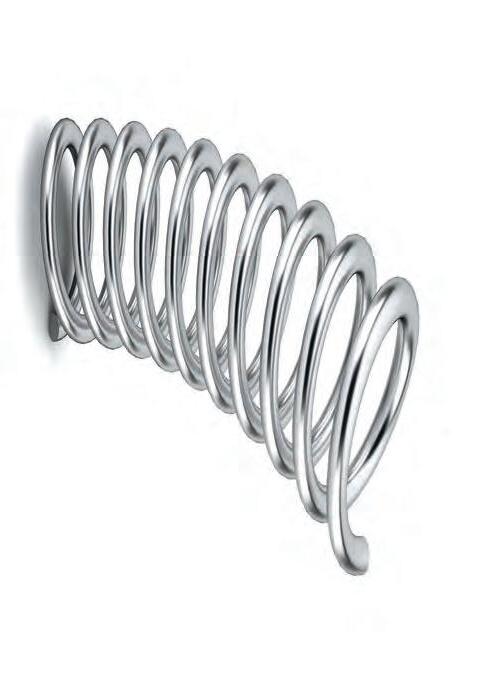



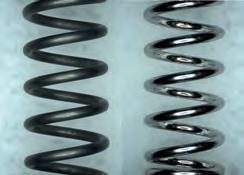

Name: Timo Roeger.
Company name and city: Kern Liebers USA, Inc.
A brief history of your company: Kern Liebers, founded in 1888 in the Black Forest region of Germany, began by producing springs for the watch industry.
As part of our international growth plan, Kern Liebers established its first U.S. production site in Toledo, Ohio, in 1975.
Job title: Managing Director.
What I like most about being a springmaker: Being flexible and resistant when a load is applied.
Spring industry affiliations: SMI Board of Directors.
Birthplace: Neuss, Germany.
Current home: Perrysburg, Ohio.
Family: Wife, Jennifer, daughter, Emilia and son, Phil.
Favorite food: Spaghetti Bolognese.
Favorite books/authors: “Getting Things Done” by David Allen.
Favorite songs/musicians: Metallica, System of a Down and Deichkind.
Your hobbies: Running, motorcycling and working on my Harley.
Favorite places: Perrysburg, Ohio.
Podcast you’re listening to: Handelsblatt Today, a German daily business and finance podcast produced by Germany’s leading financial newspaper.
What’s on your bucket list: Watching my kids grow up.
Best times of my life: Is always right now.
A great evening for me is: Watching a Disney movie with my family.
The one thing I can’t stand is: Being on the waitlist for food when I’m hungry. I still do not understand how Americans can be so patient.
My most outstanding qualities are: Eating all day.
I knew I was an “adult” when: My daughter said I am not funny anymore and I had to stop saying “Hi” to her friends.
If I weren’t working at my company, I would like to: Sail around the world.
The most difficult business decision I ever had to make was: Deciding which industry to go into after graduating from university.
I wonder what would have happened if: I would not have entered the spring industry. I’d probably still be solving the same problems — just without springs.
My role models: Think like Batman. Decide like Iron Man. Lead like Captain America.
I’d like to be remembered in the spring industry for: Turning chaos into structured energy — just like a good spring.
But people will probably remember me for: Being the guy with the German accent who always asked one more question.

Precision-drawn wire and strip engineered for your mission-critical springs. Trusted by spring makers worldwide, Elgiloy Specialty Metals supplies over 125 high-performance alloys—including our Elgiloy® alloy—for the most demanding applications.
Our metals don’t just meet expectations—they perform where it matters most. Elgiloy.com