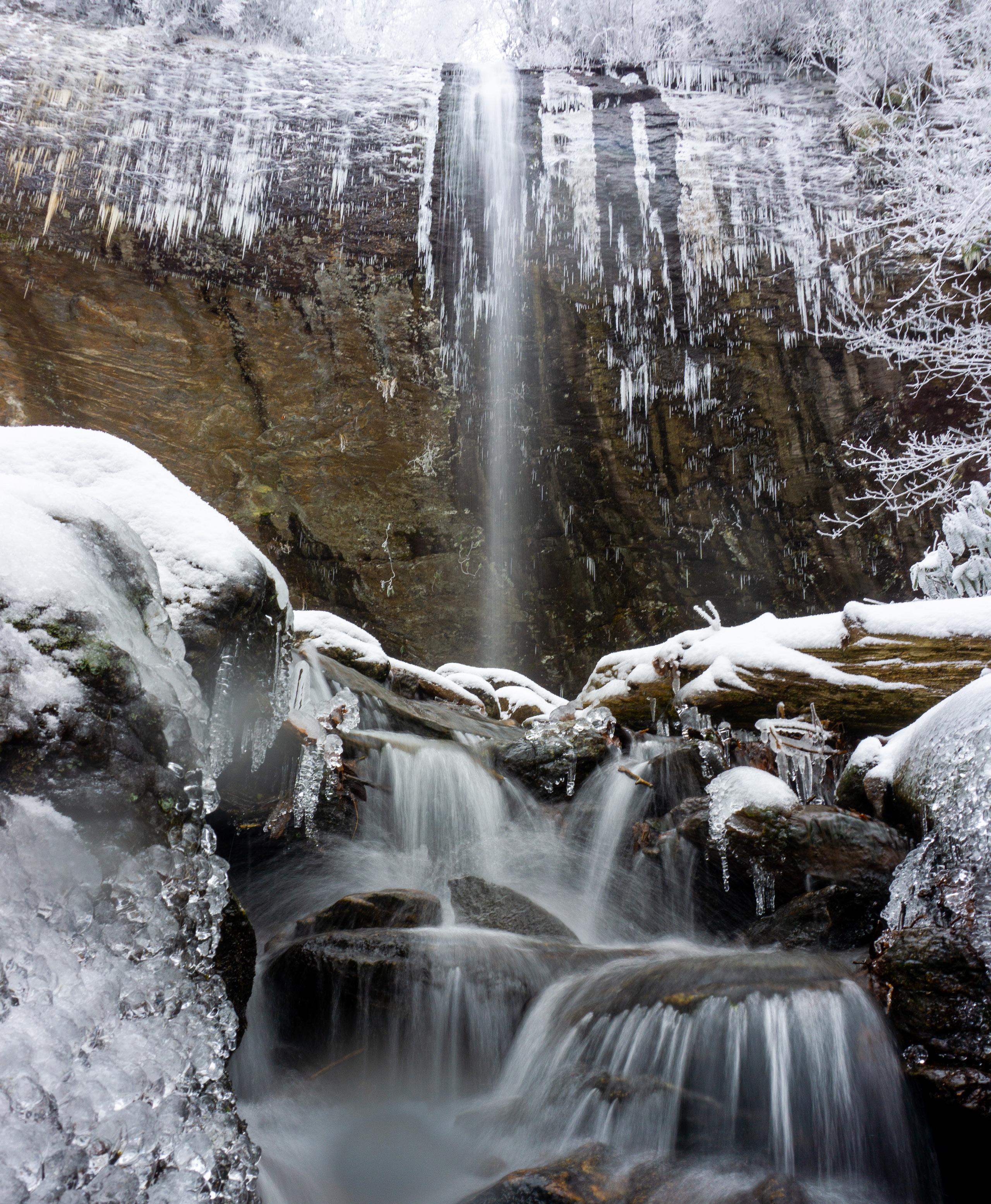
View from the Highlands
Protecting the World’s Oldest Mountains
Photo by Travis Bordley
372 Merrimon Avenue Asheville, NC 28801-1222
828.253.0095
sahc@appalachian.org
Board of Trustees
Larry Pender, President Statesville, NC
Janet Garrett, Vice-President Asheville, NC
Pam Kelley, Treasurer Kingsport, TN
Kevin Fitzgerald, Secretary Waynesville, NC
Maria Palamar, At-Large Asheville, NC
Paul Bonesteel Asheville, NC
Kayla Carter Johnson City, TN
Chris Coxen Asheville, NC
Ted Ghiz Asheville, NC
Jeff Hatling Minneapolis, NC
Gary Kauffman Fairview, NC
Erica Malpass Johnson City, TN
John McLendon Pittsboro, NC
Spencer Scheidt Asheville, NC
Jay Leutze Senior Advisor to the Board
Staff
Carl Silverstein Executive Director
Kristy Urquhart Associate Director
Anna Kuhlman Director of Development
Lisa Fancher Finance Compliance Director
Michelle Pugliese Land Protection Director
Jess Laggis Farmland Protection Director
Hanni Muerdter Conservation Director
Kyle Shute Land Protection Associate
Sarah Sheeran Stewardship Director
Chris Kaase GIS & Stewardship Manager
Mike Szymkowicz Stewardship Manager
Marquette Crockett Roan Stewardship Director
Travis Bordley Roan Stewardship Technician
Cheryl Fowler Membership Director
Angela Shepherd Communications Director
Emma Goldrick Development & Communications Manager
Chris Link Community Farm Manager
Park Greer South Yellow Mtn Preserve Manager
LaKyla Hodges Community Engagement & Education Manager
Erin Goodpaster Outreach Program Manager
Kirin Battaglia Weddings & Events Coordinator
Tim Arrowood IT Manager
Josie Cohen Stewardship Technician
Connor Hovendon Stewardship Technician

Letter from the Director Carl Silverstein
As 2025 approaches its end, I find myself thinking about what it means for SAHC to uphold our forever promise for future generations.
A year ago, Helene reshaped the Southern Appalachians in ways we will be continuing to learn about for years to come. The storm altered landscapes, damaged infrastructure across protected lands, and changed our communities profoundly. In response, our team worked to assess damage, repair access, and support regional recovery, work that continues today.
We’ve documented this journey in an interactive StoryMap that shows the challenges and response efforts through maps, video, and imagery. I invite you to explore it and see how land conservation organizations are adapting to meet the realities of climate change in our region.
Your support this year makes critical work possible:
Our mountains are threatened by accelerating real estate development, the warming climate and heavy use of our natural resources and destinations. Essential to addressing these threats is SAHC’s proactive, innovative and holistic approach to conservation.
We’ve distilled our mission into three overarching organizational goals:
p Protect the most important land from loss to real-estate development.
p Steward land responsibly to fulfill our promise of permanent conservation.
p Connect people with land for recreation, health, fitness, wellbeing, learning and sustainable economic development.
Protect Steward Connect
The mission of the Southern Appalachian Highlands Conservancy is to conserve the unique plant and animal habitat, clean water, farmland, scenic beauty, and places for all people to enjoy outdoor recreation in the mountains of North Carolina and Tennessee, enduring for future generations. We achieve this through long-term conservation relationships with private landowners and public agencies and owning and managing land. We are committed to creating and supporting equitable, healthy and thriving communities for everyone in our region.
SAHC acknowledges that the land we work to conserve is the current and ancestral land of the Cherokee, Yuchi, Catawba, and Miccosukee people. We hold deep respect for the indigenous stewards who preceded us. We are committed to fostering meaningful connections with indigenous communities, and we recognize that we have a great deal more to learn.
Since 1974, we’ve conserved more than 95,000 acres of the most significant places in the Southern Appalachians.
This past year, your gifts helped:
p Add 2,820 more acres to permanent conservation through 20 new acquisitions and transfer 1,200 acres to public ownership in the Roan Highlands and other destinations
p Manage rare grassy balds habitat; monitor and uphold conservation on our portfolio of more than 300 conservation easements and preserves, totaling more than 67,000 acres and growing; and upgrade monitoring technology to respond to storm damage.
p Connect communities and individuals to farmland protection, sustainable agriculture, and nature at the SAHC Community Farm and dozens of other key locations in our mountains.
Helene showed us that land conservation must evolve. We need to steward lands for resilience, manage for changing conditions, and maintain the capacity to respond when needed. This requires resources, planning, and community support.
Your support ensures we’re ready. It means we can continue protecting the farms, forests, and wild places that sustain us and that future generations will find the same wonder in these mountains that we do.
Thank you for standing with us and for helping us uphold our forever promise to the Southern Appalachians.

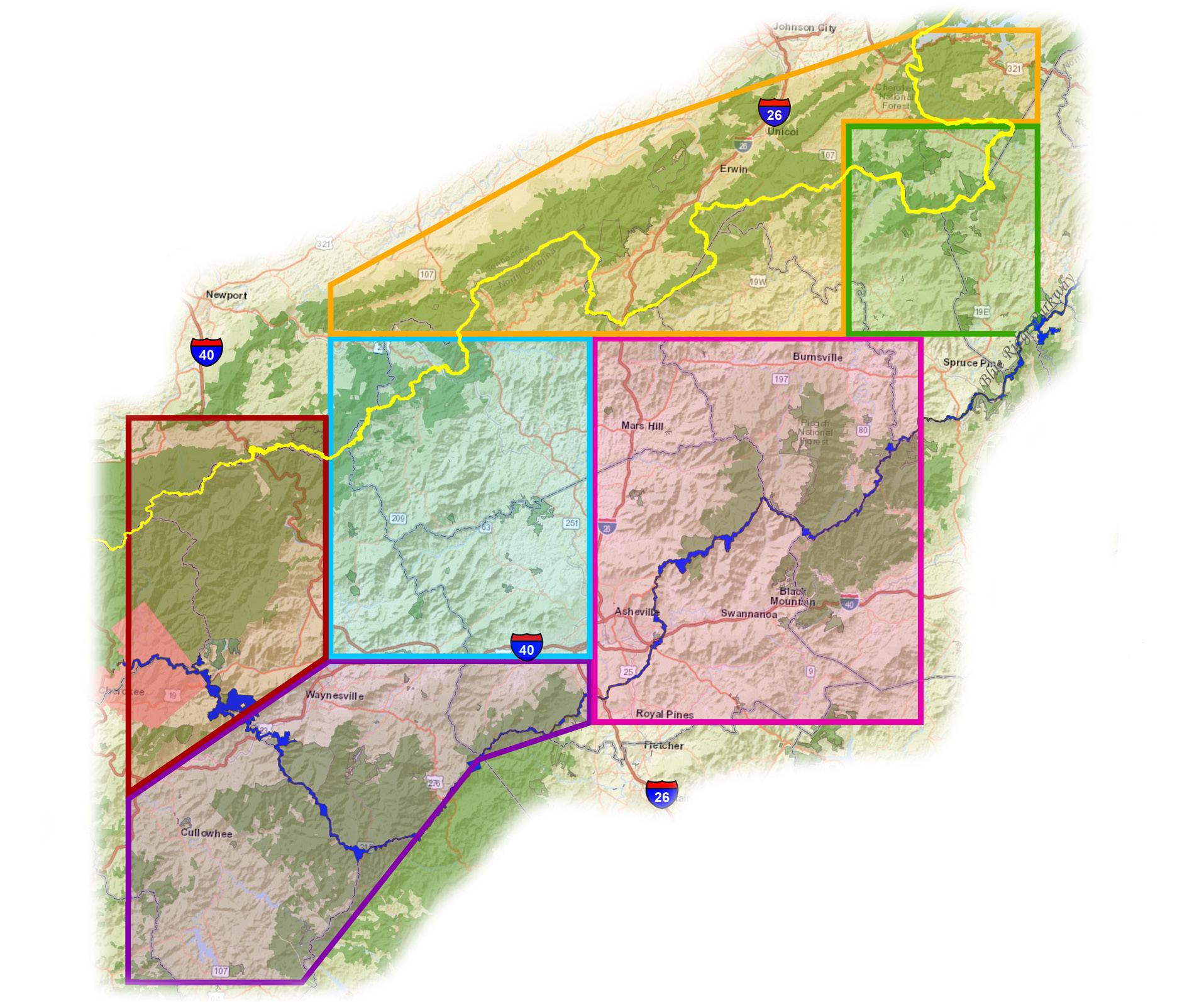
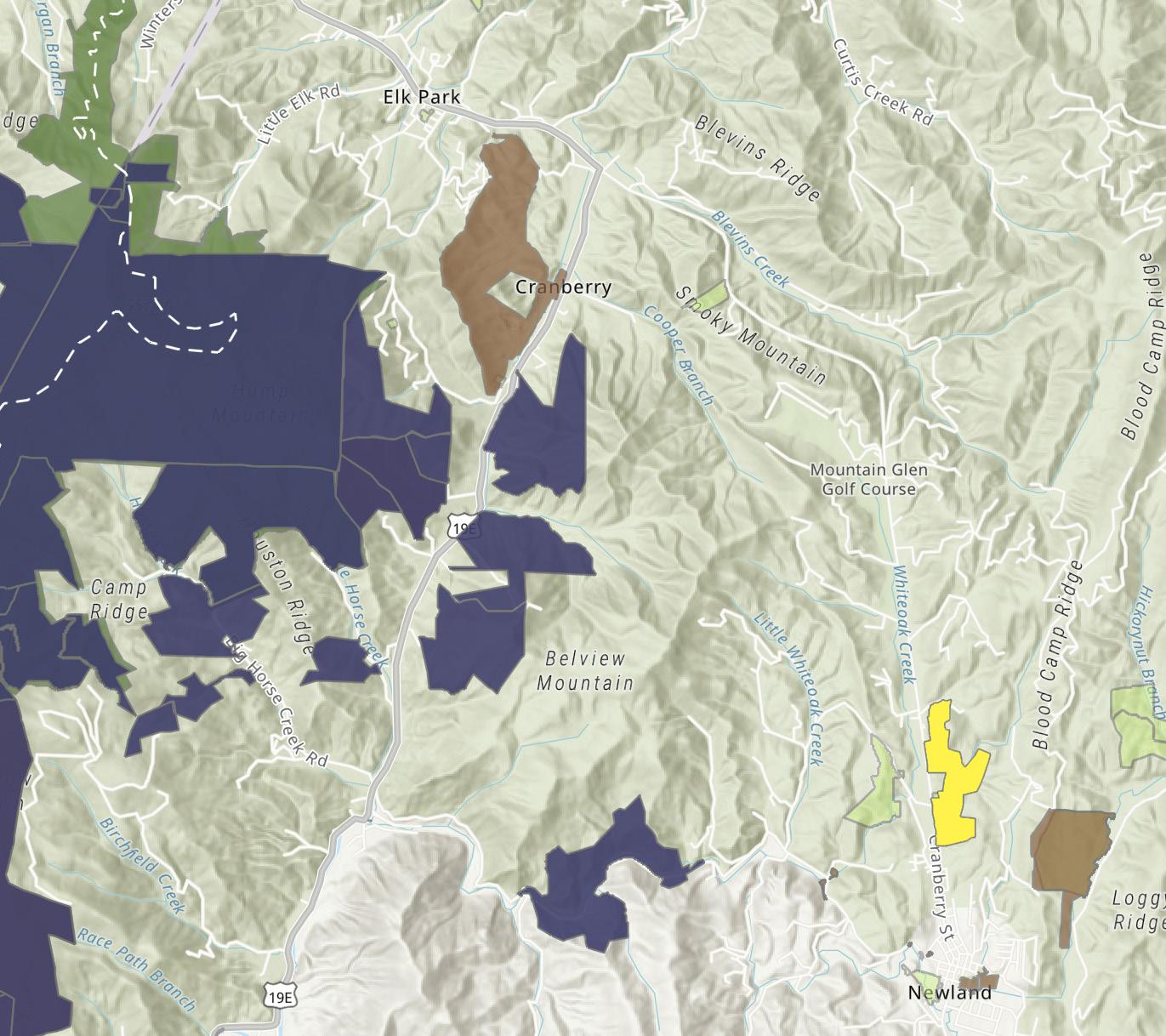
Map: SAHC’s Conservation Focus Areas with New Conservation Projects in this Issue
Roan High Preserve Addition
120 Acres on Gouges Creek
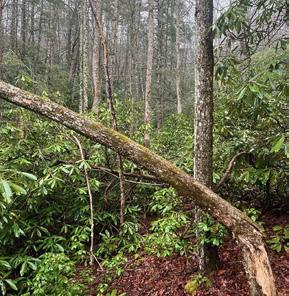
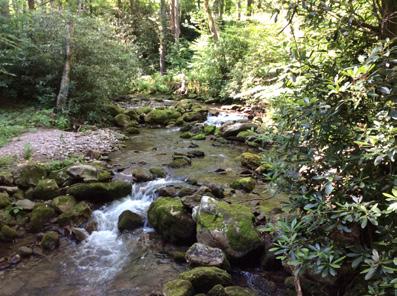
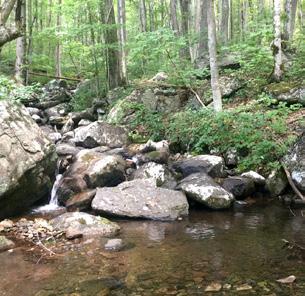
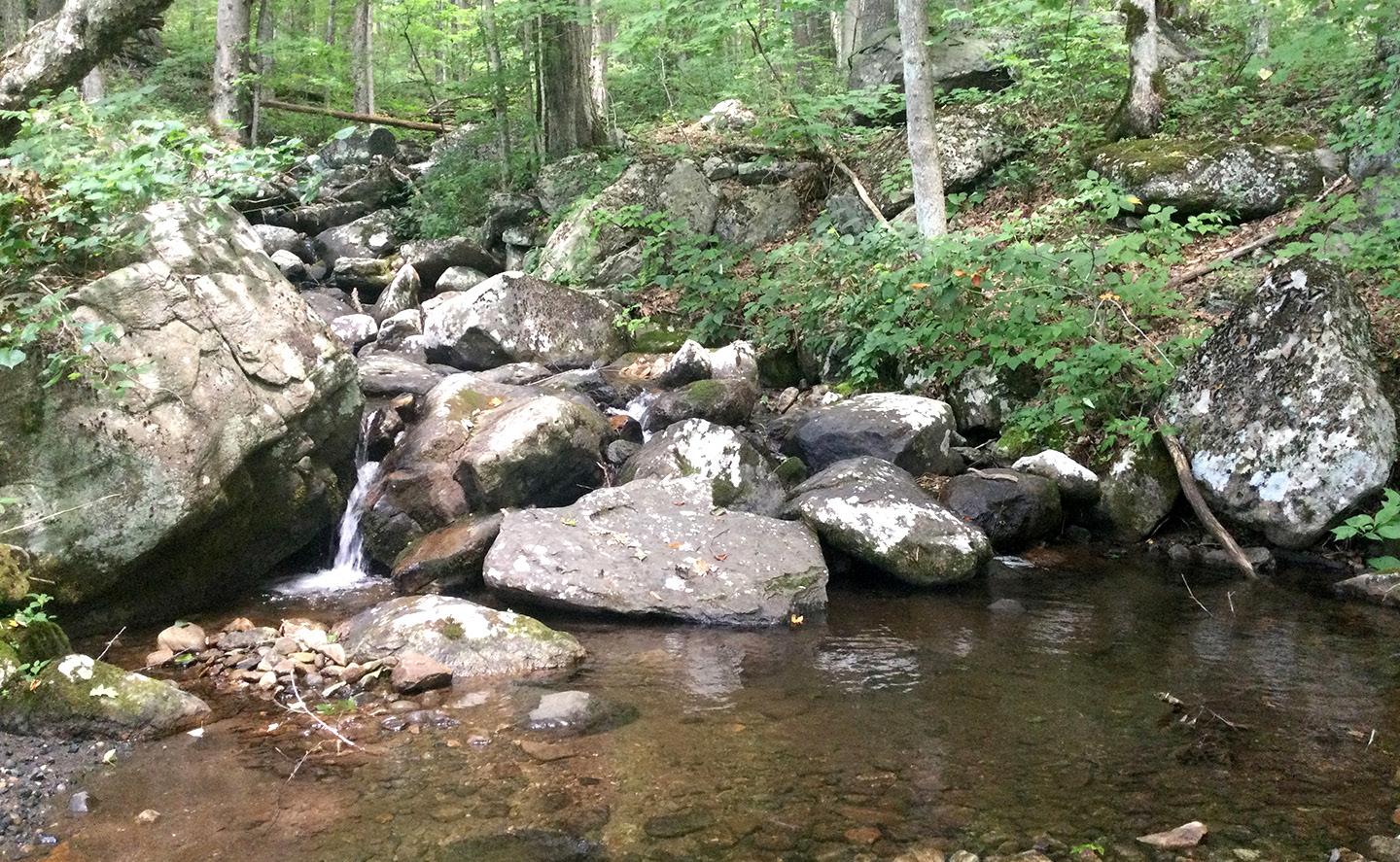
The property contains high quality headwater streams, including tributaries of Gouges Creek and Little Rock Creek.
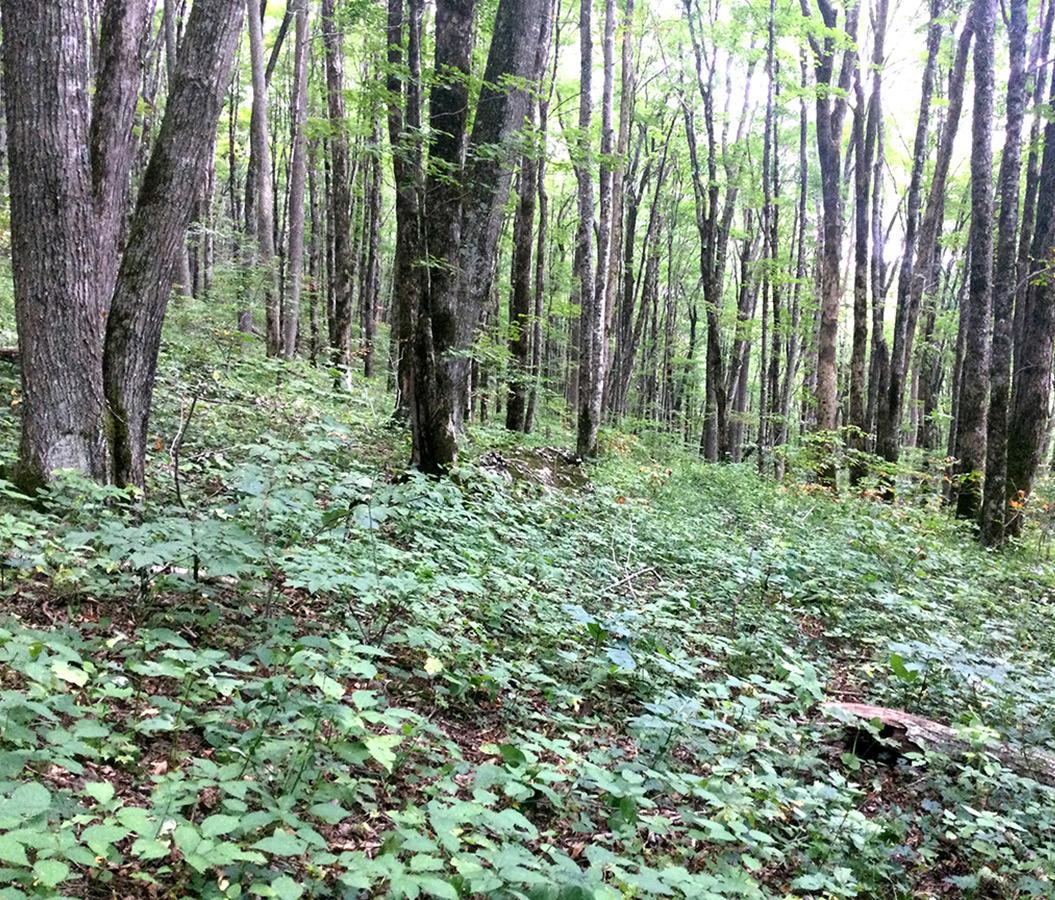
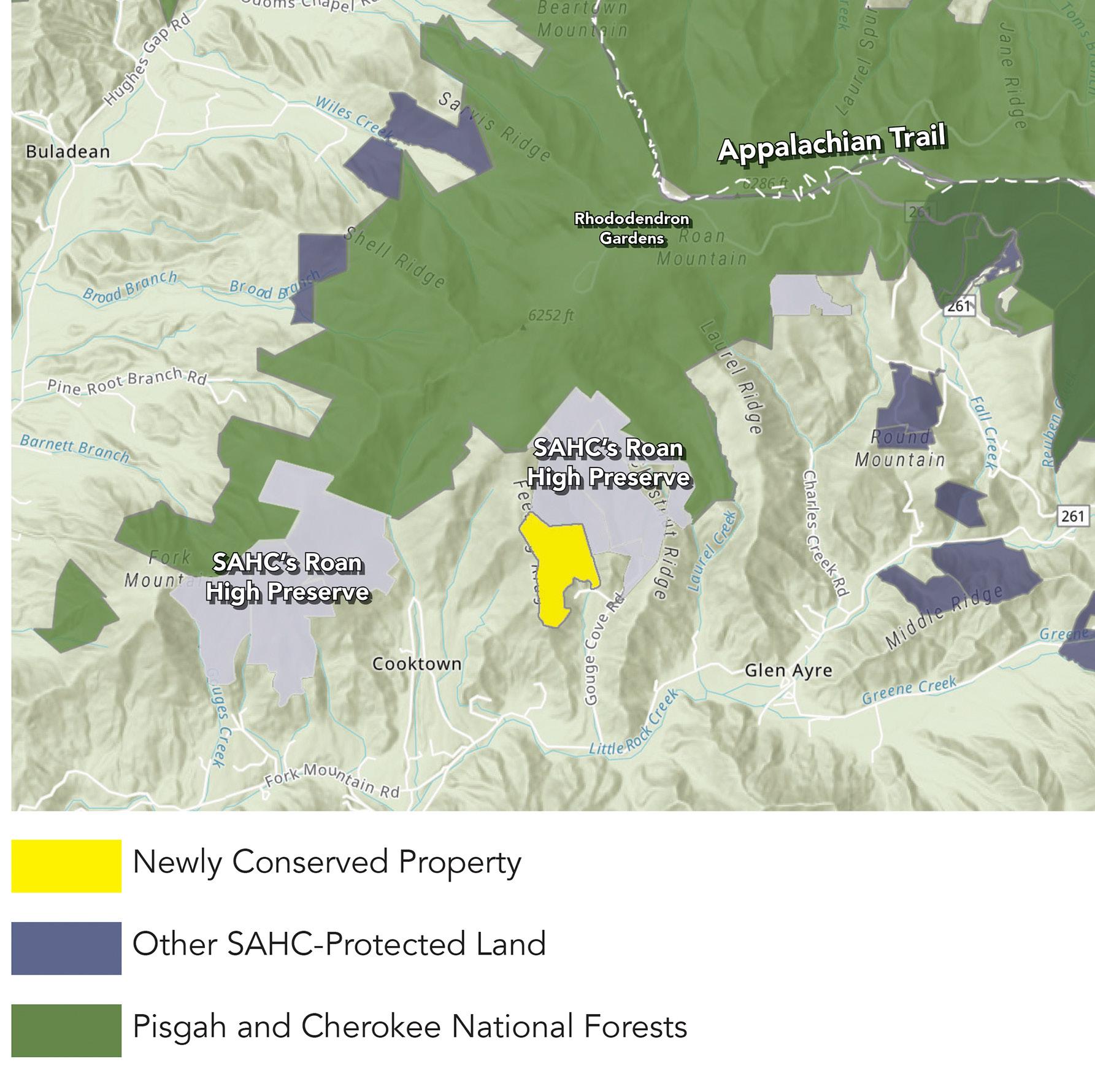
Just below the brow of the Roan massif, our Roan High Preserve spans more than 1,200 acres, contiguous with tens of thousands of acres in the Highlands of Roan that we have been instrumental in protecting over the decades. The preserve adjoins Pisgah National Forest and protects high elevation habitat and safe havens for endangered species. SAHC recently accepted a donation of 120 MORE acres for the Roan High Preserve. This acquisition expands a network of connected, protected land in this globally significant location.
Ecological Importance
The recently conserved property includes headwater tributaries and portions of the main branch of Gouges Creek, a tributary of Little Rock Creek.
“These streams provide clean water sources and trout habitat in the Nolichucky River watershed,” says Land Protection Director Michelle Pugliese. “Preserving the land prevents sedimentation of these pristine waterways, and
maintains scenic landscape views for local residents and people visiting the area for outdoor recreation to enjoy.”
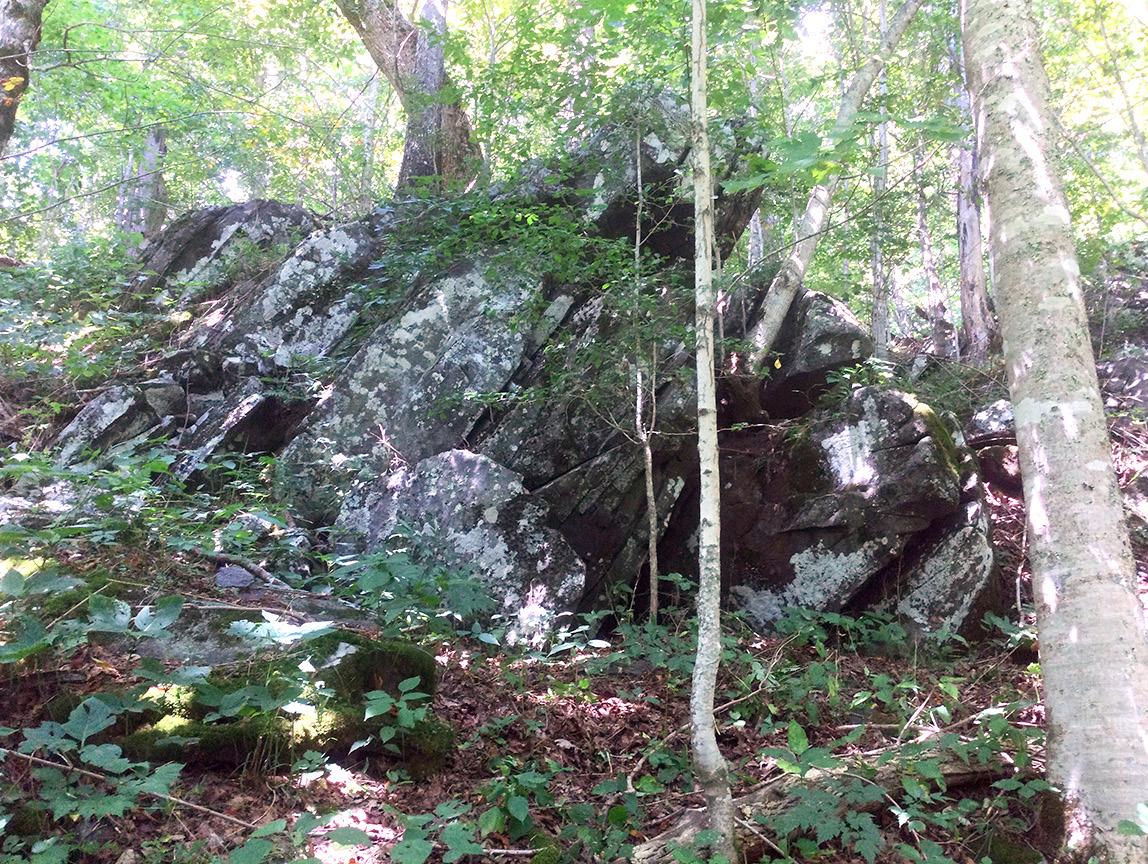
The acquisition also strengthens a wildlife corridor that connects conserved ridgelines to Pisgah National Forest, supporting species movement and resilience. Located in an area rich with biodiversity, the land falls within the Roan Mountain Important Bird Area and the Grandfather Unaka Priority Reptile and Amphibian
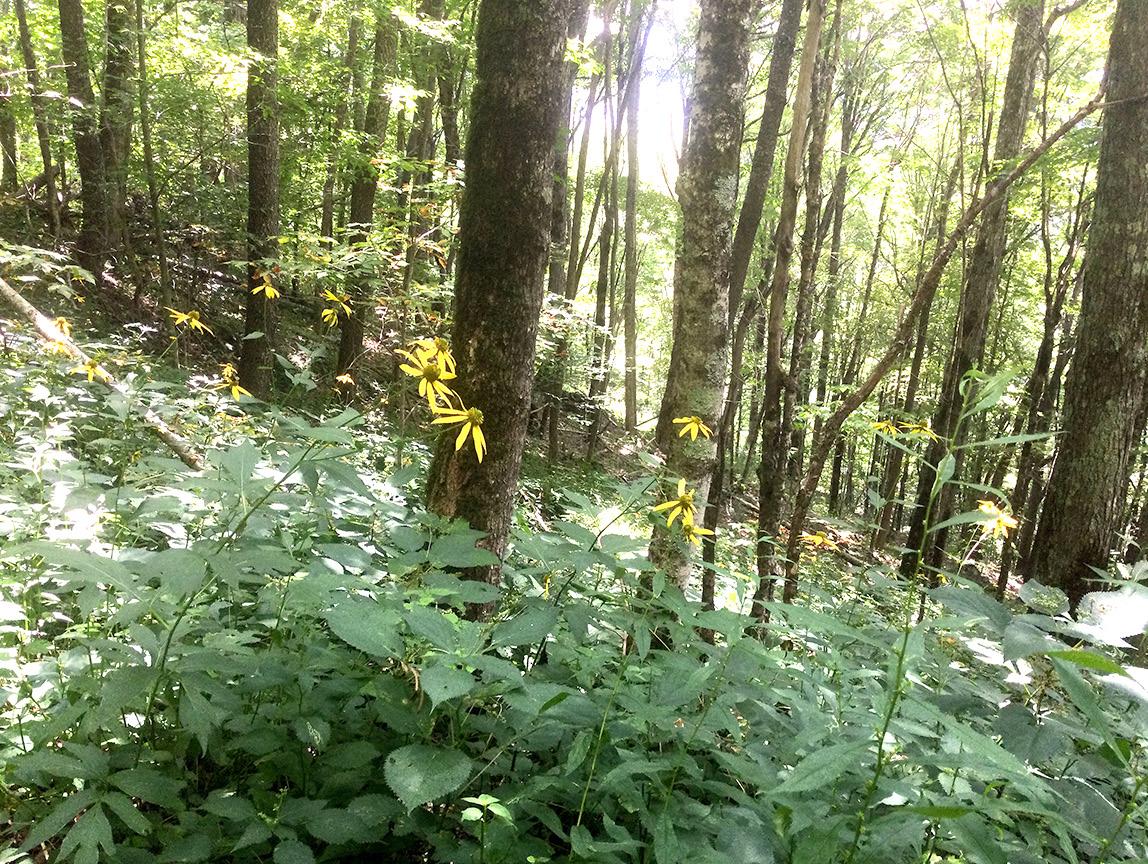
Forests, streams, and rocky outcrops provide a wide array
Conservation Area. Records of rare species found on or adjacent to the property include the Blackbilled cuckoo, Alleghanian spotted skunk, and Gray’s lily.
Protecting the Heart of the Roan, One Piece at a Time
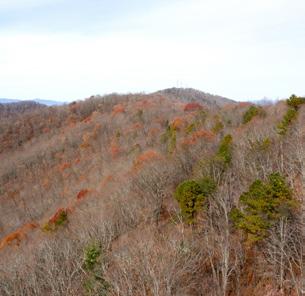
The new addition to the preserve is located on the southern slopes of Roan Mountain, just below Roan High Knob and the Rhododendron Gardens. It rises to nearly 5,000 ft. elevation, visible from the Roan High Bluff Trailhead area.
“For over 50 years, SAHC has led partnerships to conserve and manage a protected landscape of more than 23,000 acres in the Highlands of Roan, including some of the highest elevations and richest repositories of biodiversity in the Appalachians,” says Roan Stewardship Director Marquette Crockett. “SAHC’s Roan High Preserve protects pristine high elevation habitat, supporting a host of high elevation endemic or rare species. The addition of these 120 acres to the Roan High Preserve continues our commitment to protecting
globally important ecosystems in the heart of the Roan Highlands.”
Protection of this land was made possible thanks to generous philanthropic leaders and an Appalachia Rising grant through Re:wild.

Appalachia-rising.org
A collaboration of community-led organizations and leaders who love our Appalachian home, Appalachia Rising supports diversity of life, natural climate solutions, and healthy local communities by protecting the lands and waters of Appalachia. Appalachia Rising is an initiative sponsored by Re:wild.
Waterfalls Park
Newland, in Avery County
“It is so exciting to ensure permanent protection for a place loved by so many for so long,” says Jay Leutze, Avery County resident and SAHC’s Senior Advisor to the Board. “Unlike some of the places that SAHC protects – which are remote and preserved mainly for habitat or rare species – this property can be seen and enjoyed from the windshield of a car while leaving the local grocery store. Avery County leaders have long hoped that the temporary park could someday become a permanent park. They reached out to SAHC six years ago to
explore this possibility, and now the immediate threat of losing it has passed.”
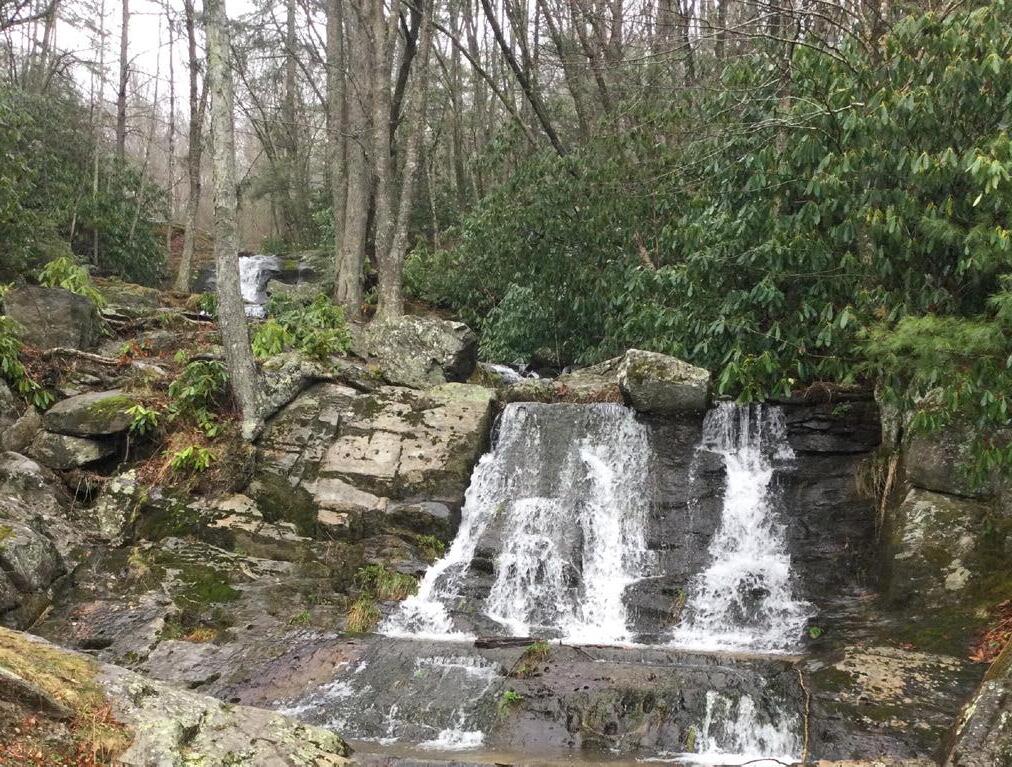
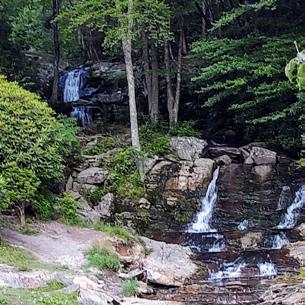
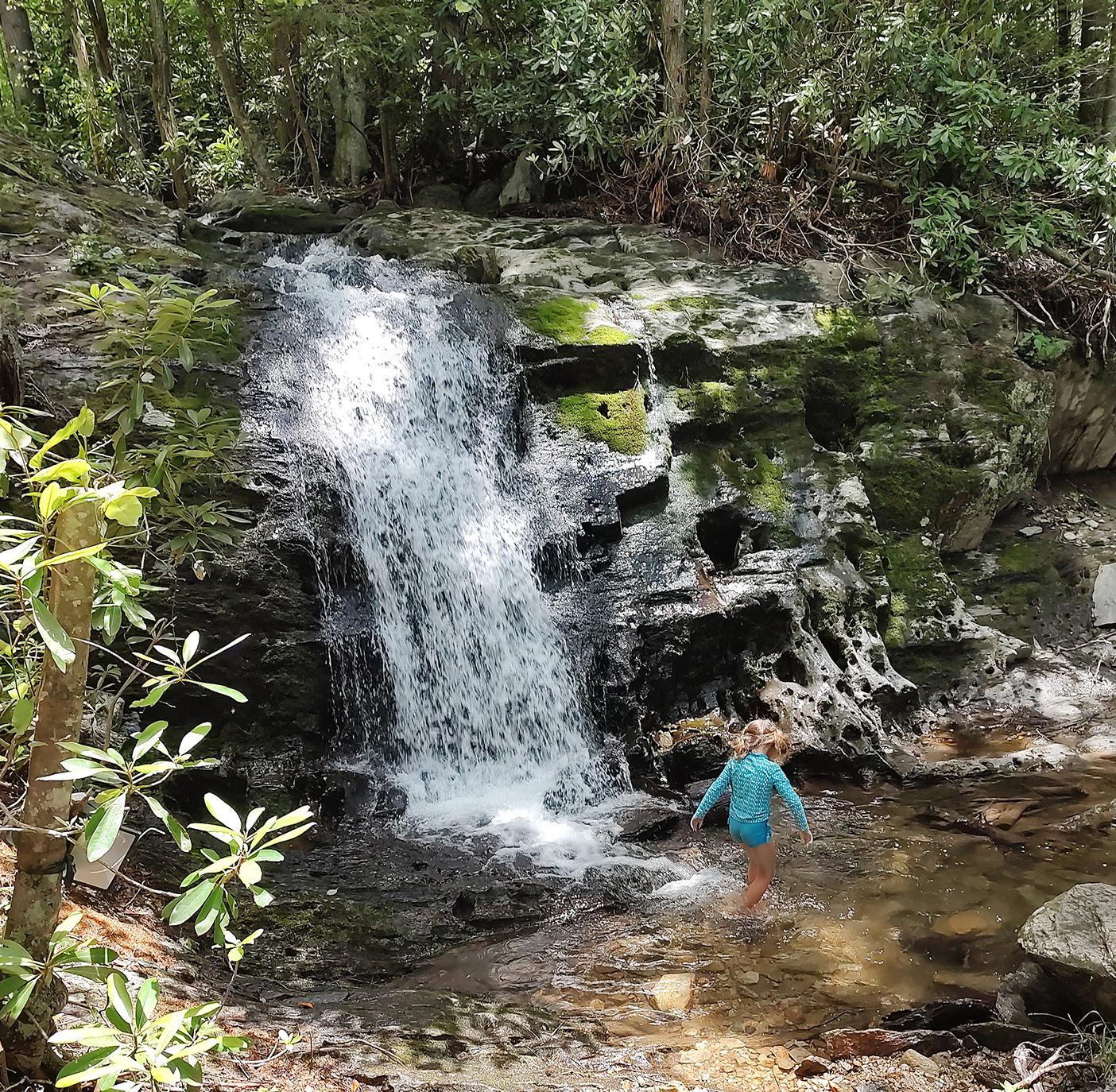
Located on Elk Park Highway very close to the center of Newland, NC, this 92-acre tract features a beautiful cascading waterfall. The former owner, Thelma McLean, had shared the tract with the public for hiking and enjoyment.
SAHC purchased the Waterfalls Park property to permanently protect the land from future development. We are continuing this tradition of public access.
Elk Park Highway runs along one side of the property. Blood Camp Branch flows through the property and empties into Whiteoak Creek,
which eventually flows into the North Toe River. The land features wooded trails and mountain views – along with the creek and waterfall.
“As an Avery County resident, I’ve enjoyed this place for years thanks to the McLean family’s generosity” continues Jay. “This privately-owned land has always felt like a public park because of their willingness to share it in honor of the late Mr. Bobby McLean. Now, we have this exciting opportunity to ensure that future generations can make the sacred connection to nature right here in town. Many hands have made a difference here. We all owe a debt of gratitude to Junior Sluder and to the firefighter and
Residents of Avery County and visitors alike enjoy the cool spray of the cascades in summer.
The waterfalls create a memorable backdrop for experiences and photographs.
AppalachianTrail
Boy Scout volunteers who have long helped to maintain this place. Their work is visible in every trail and every bench and in the general care for the land.”
“Hurricane Helene may have washed away the picnic tables and pulled down massive trees around the cascades, but she couldn’t wash away the community spirit
“It is exciting to ensure permanent protection for a place loved by so many for so long.” – Jay Leutze, Avery County resident and SAHC’s Senior Advisor to the Board
SAHC’s purchase of the land was made possible by generous contributions and a bridge loan. In the future, the land may be transferred to Avery County to serve as a community park.
that makes this a favorite site for wedding and graduation pictures,” adds Jay. ”When the raging water receded, the waterfall magic quickly returned.”
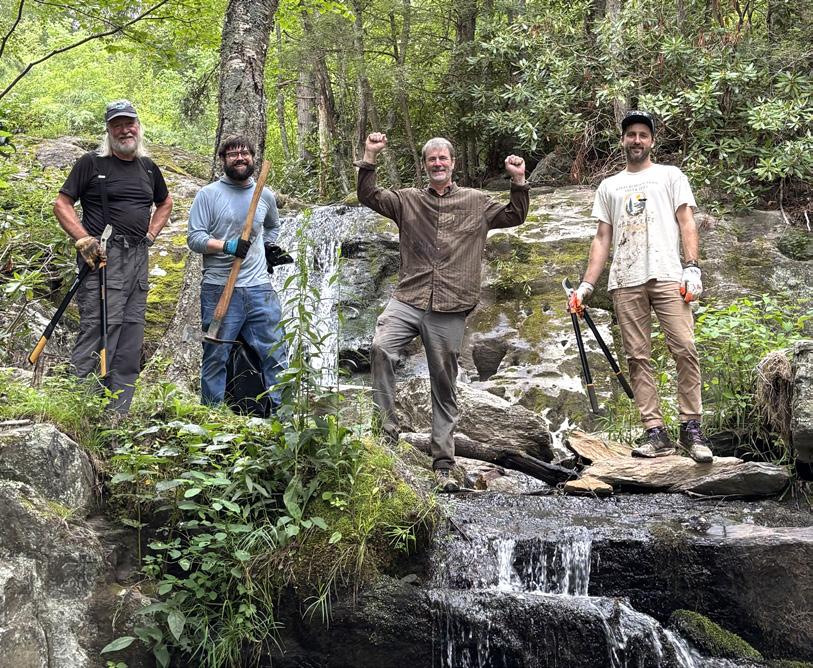
Thank You, Volunteers!
Downed trees and flooding from Helene left scars on the beloved space at Waterfalls Park. SAHC is working with partners in the community to make the site welcoming and safer. We have replaced picnic tables washed away by the storm and applied for grant funding for additional improvements, to make the site both safer and more welcoming.
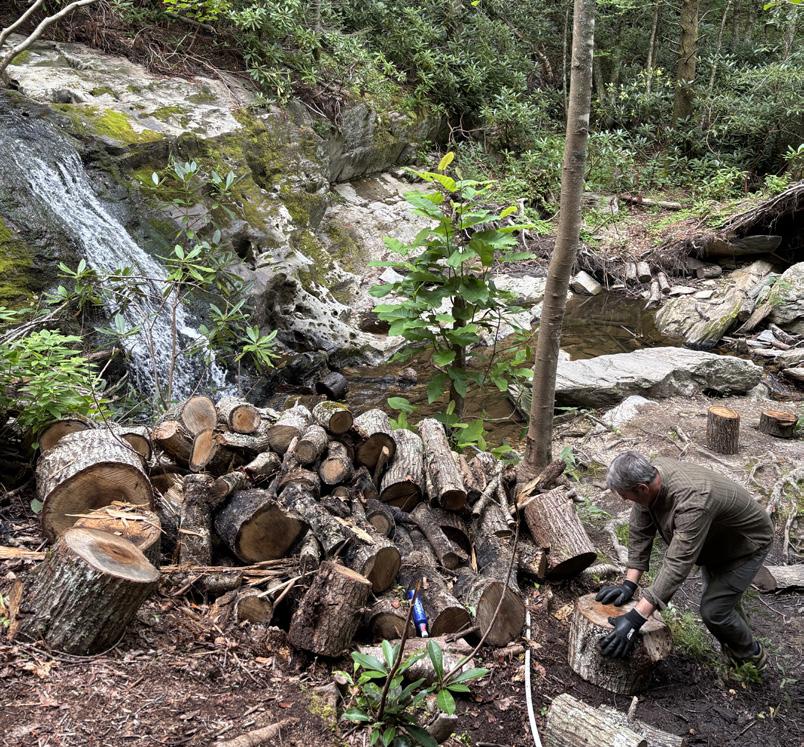
Thank you to the volunteers who helped out at the preserve in late summer. A small but dedicated volunteer and SAHC staff team conducted trail work and cleared stacks of cut wood that had been left from storm-downed trees.
Want to get involved in projects like this? Sign up to volunteer with SAHC at Appalchian.org/volunteer.
Waterfalls Park
Lost Cove
Ghost Town in Pisgah National Forest
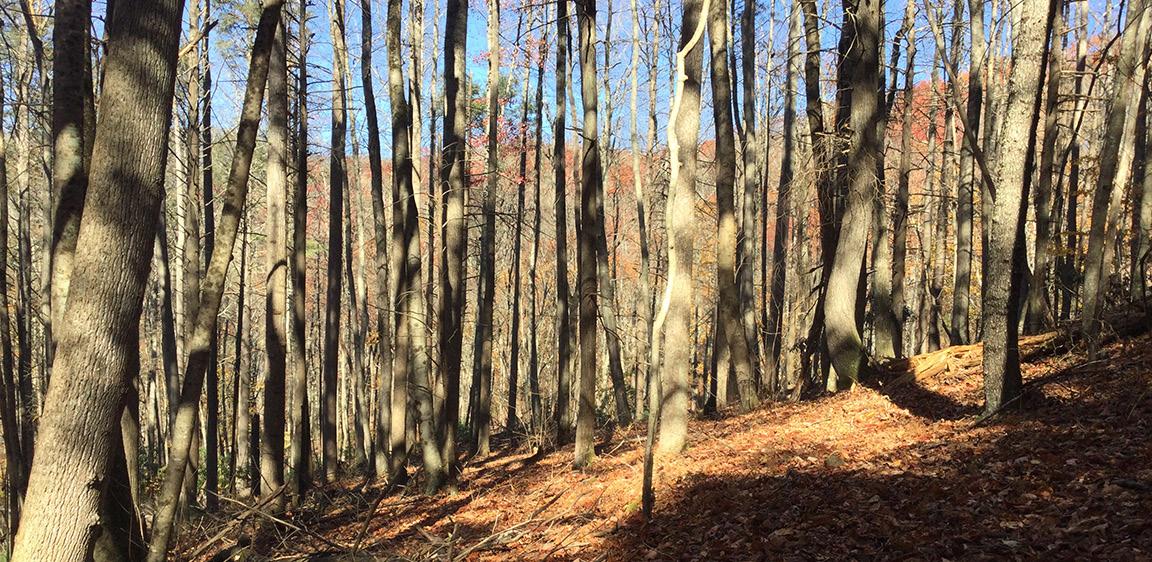
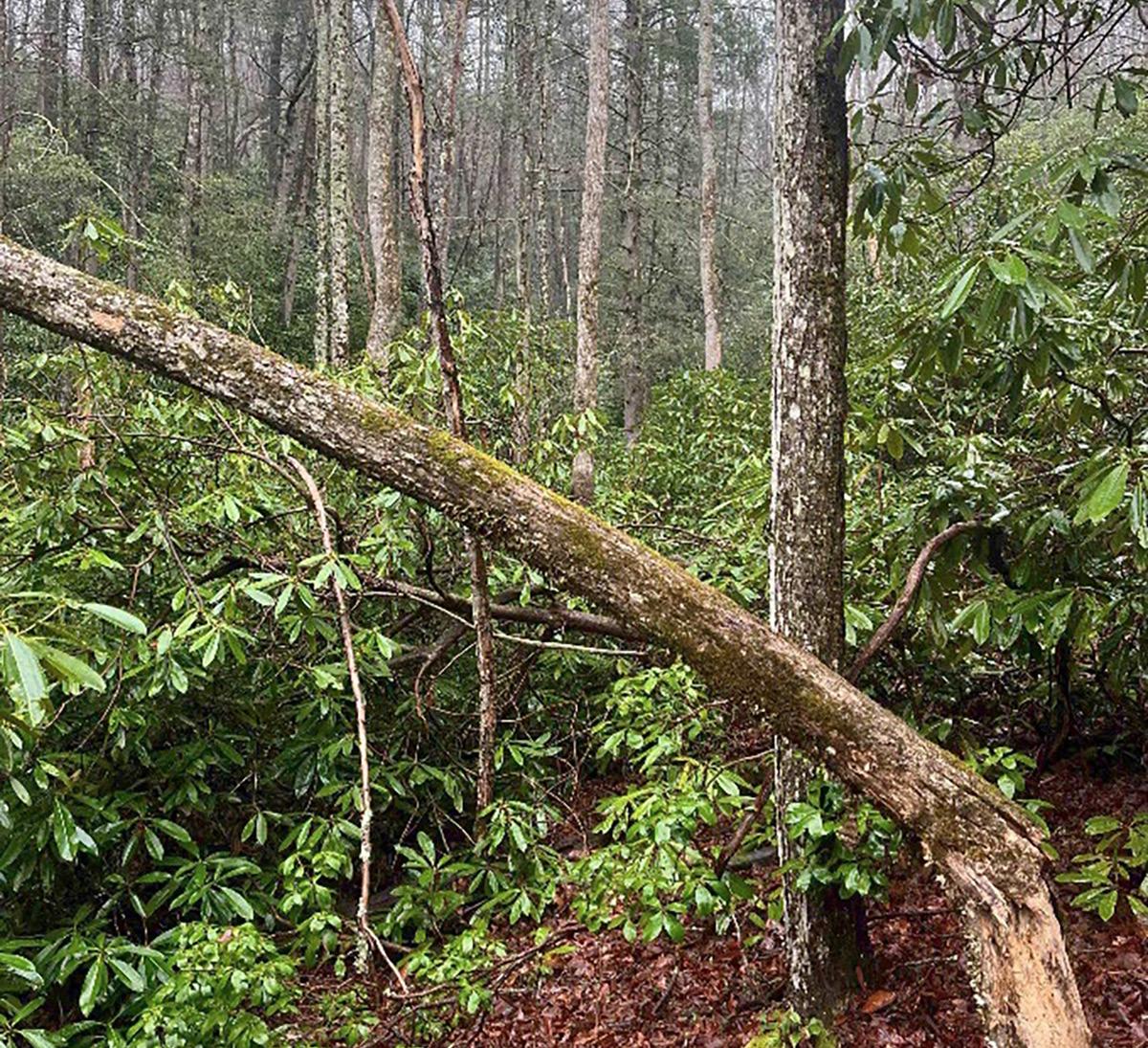
This 56-acre Lost Cove property is mostly forested.
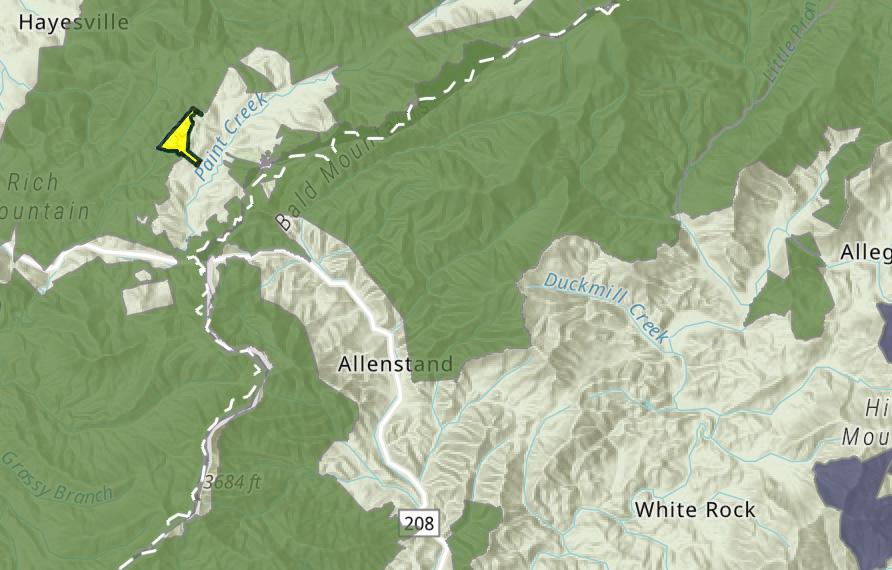
Tucked into an isolated, forested perch above the Nolichucky River near the NC/TN border, the abandoned settlement of Lost Cove inspires the imagination. Pisgah National Forest surrounds this former community, touted as a ‘ghost town’ in the mountains. SAHC recently purchased a 56-acre tract in Lost Cove that adjoins the 95-acre tract that we purchased in 2012 and transferred to the US Forest Service in 2017. We plan to own and manage this new property as a nature preserve, until it also can be transferred to become part of Pisgah National Forest.
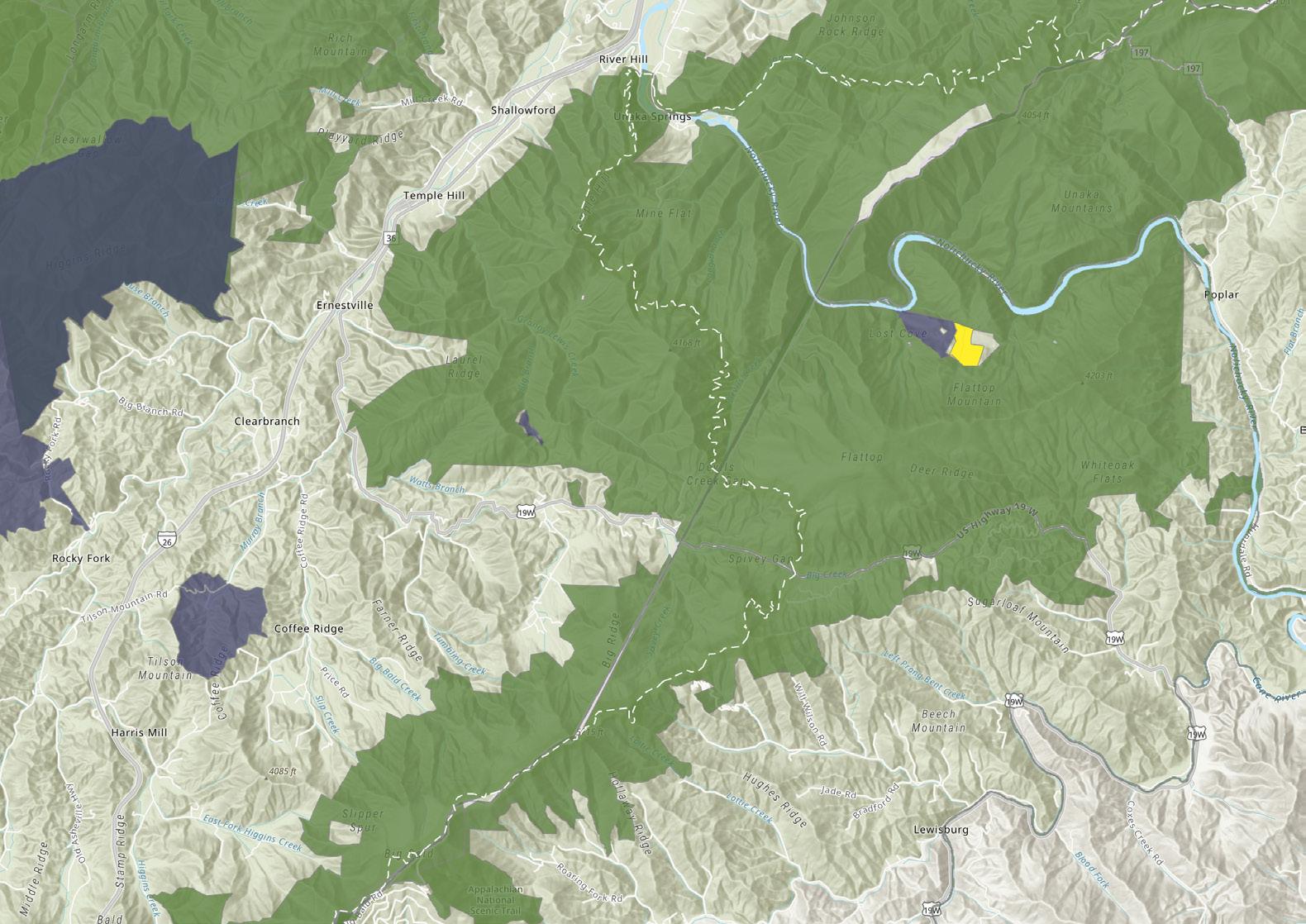
Protecting the land helps preserve scenic views from the Appalachian Trail, cultural history of the Appalachian mountains, and wildlife habitat, within an ‘inholding’ almost entirely surrounded by Pisgah National Forest. Golden eagle (Aquila chrysaetos) research conducted by the NC Wildlife Resources Commission and partners has tracked migratory raptors to sites nearby.
“This project provided a rare intersection between protecting important natural resources and celebrating a unique part of Appalachian history,” says Land Protection Director Michelle Pugliese. “My work to protect this portion of the Lost Cove ghost
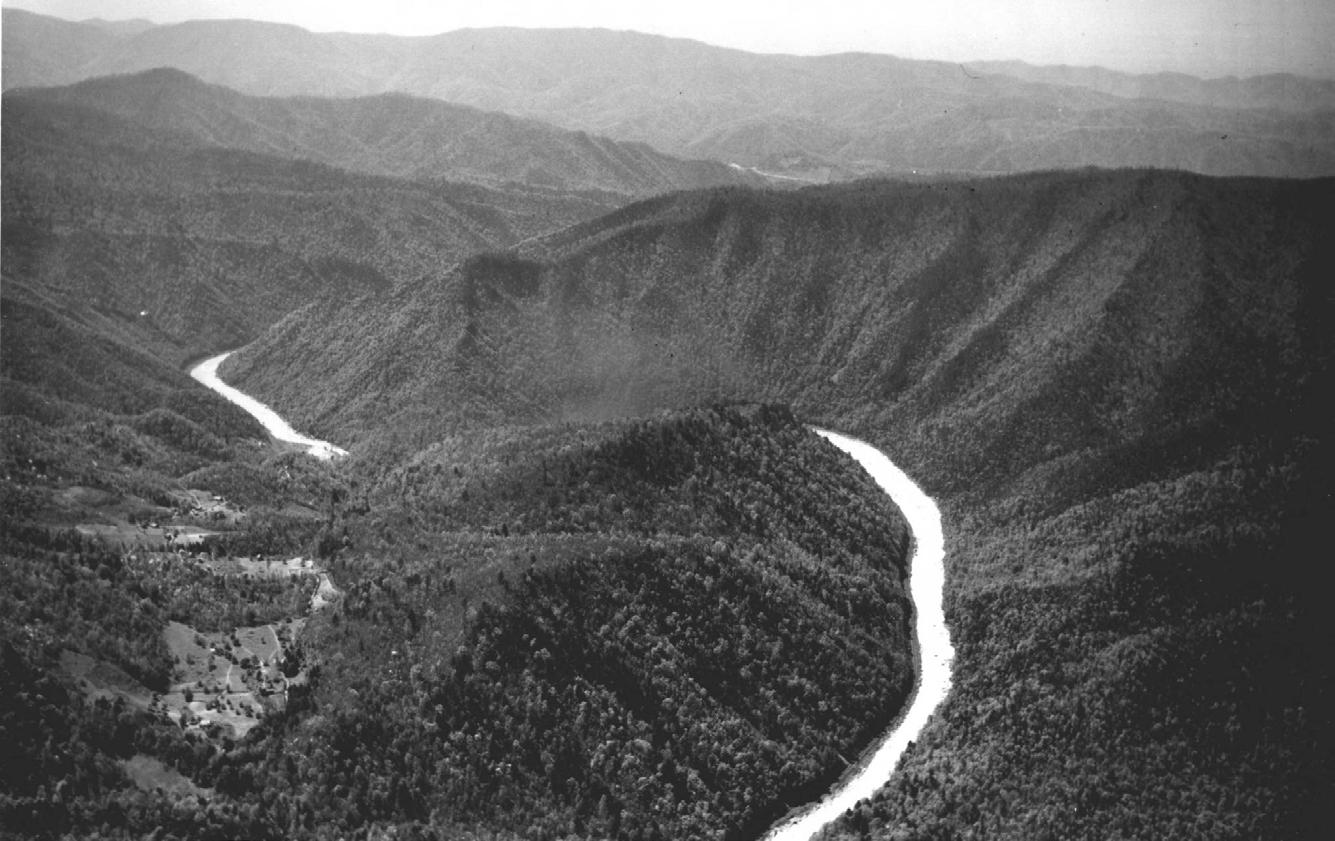
A historic photo of the cove above the Nolichucky River shows open areas (farms and fields, to the left) that once parted the forest.
town opened for me a door into the past. According to local history, for nearly 100 years this land was part of a small but thriving community. The homesteads on SAHC’s newly acquired land once contained apple orchards and corn fields, and the high quality moonshine produced there was legendary. Hearing the stories about this community was a real delight!”
Settled in the 1800s, the last family moved out of the Lost Cove community in the 1950s – leaving several privately-owned tracts now almost entirely surrounded by national forest land.
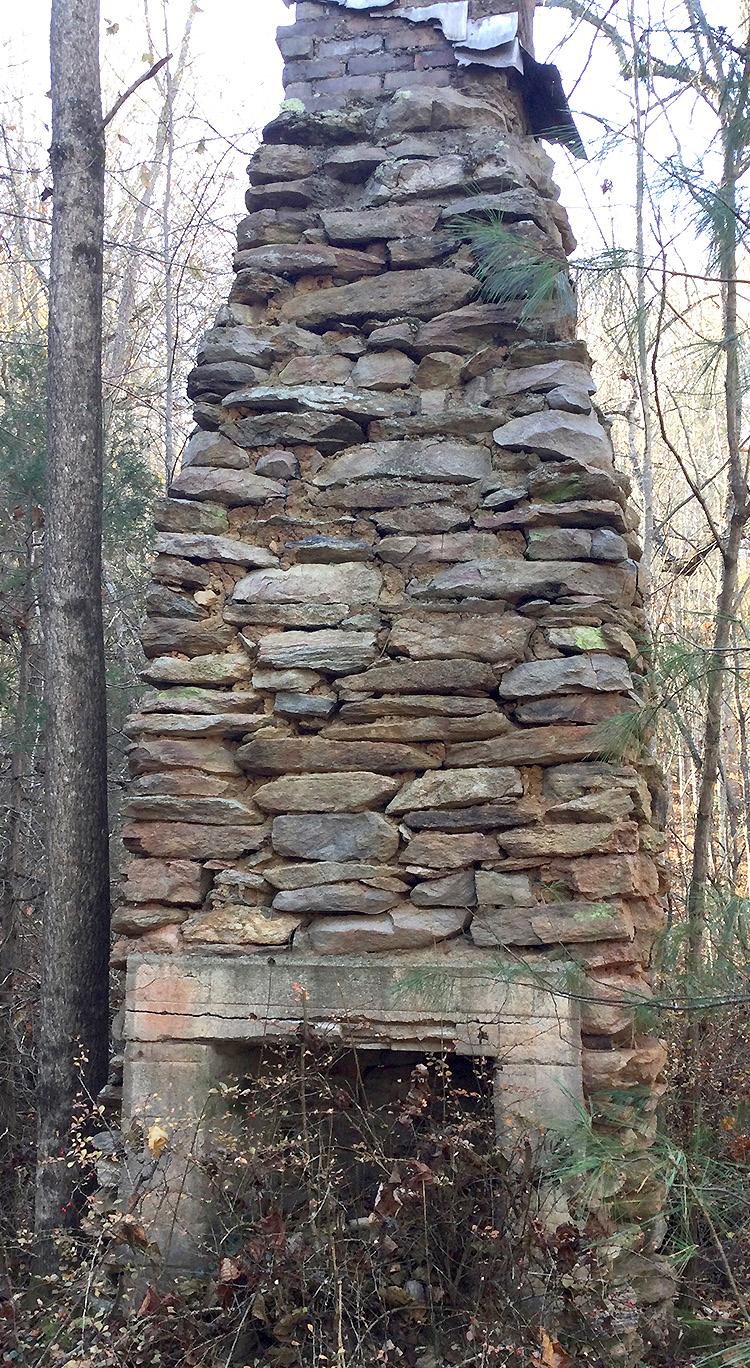
A stone chimney stands as a reminder of people who once called the cove home.
“From SAHC’s beginning, we have worked with partners such as the US Forest Service and state parks to help conserve land for outdoor recreation,” adds Michelle. “In-holding gaps of privately owned land within public lands can make it harder for agency partners to manage their lands, and can be confusing for people enjoying outdoor recreation in the forest. By helping to fill in the missing puzzle pieces, SAHC assists our agency partners in meeting their goals and contributes to public lands that help connect people with nature.”

There’s something alluring about a ghost town in the middle of the forest, where stone chimneys and building remnants hearken back to more vibrant days. You can almost imagine that the stones in fallen walls whisper stories about the families who once lived here.
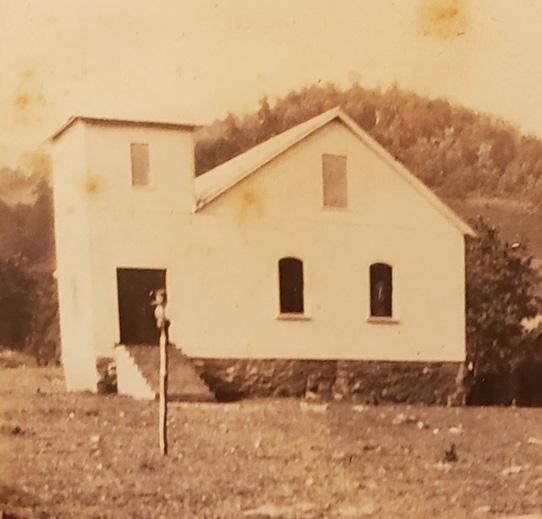
Rebecca McCuiston contacted us to share information about her family’s connection with the former settlement. Her maternal grandparents served in mission work in Lost Cove from March to September of 1921.
“My mother, Anne Smith McCuiston, recalls that her parents were just 26 (William Robert Smith, Jr.) and 25 (Nancy LaVena Marion Smith) when they lived in Lost Cove,” shares Rebecca. “They had been married in 1919, while my grandfather was at seminary. Both of them had completed their high school education, which at that time was sufficient for them to be able to teach children in school. They taught in Lost Cove, and my mother thinks that the schoolhouse where they taught was a one-room schoolhouse.”
Rebecca shared several historic photos taken during the time her grandparents lived in Lost Cove. A few years after the young couple left the cove, Rebecca’s mother was born in Banner Elk, NC, in 1928.

Viking Mountain
Adjoining Cherokee National Forest
The east side of the property sits prominently in views from the Appalachian Trail. A tributary and portion of the main branch of Rough Creek flows through the land, and less than 1,000 feet away, the Cutshall Bog Ecological Site in Cherokee National Forest hosts two rare species (Swamp Lousewort and Marsh Bellflower). The rest
SAHC purchased 55 acres adjoining Cherokee National Forest on Viking Mountain in Greene County, TN.
The property was a top priority for partners at the US Forest Service, as it shares a nearly 1-mile border with the Cherokee National Forest.
A beautiful, forested tract with road access, it could have easily been developed. Now, this portion of the landscape – and views of it from surrounding outdoor recreation areas – has been protected.
of the property is dominated by rhododendron, tulip poplar, red oak, American beech, red maple and striped maple, representing an intact forest typical in this region.
Members of the Broyles family who had inherited the property wanted to sell it. They reached out to the US Forest Service, who recommended contacting
SAHC as a step to ensure the property will ultimately be transferred to the US Forest Service. The family was happy to sell the land for conservation rather than development, pleased that it would be preserved and later added to the national forest.
“When SAHC buys land in order to hold it temporarily and then transfer it to the Forest Service or another public agency, we’re helping make new places for people to enjoy outdoor recreation – now and for future generations,” says Executive Director Carl Silverstein.
“SAHC playing this role is of great benefit to people.”
SAHC bought the property with generous support from a private donor and a bridge loan to cover the remainder of the purchase cost; we will carry the loan balance until the property can be transferred to the US Forest Service.
SAHC’s purchase of the land protects lush forest habitat and scenic views from the Appalachian Trail.
Public Lands
Transfers to US
Forest Service
This summer, we transferred three parcels of land to the US Forest Service, for Nantahala and Cherokee National Forests.
“SAHC purchased these properties at the Forest Service’s request specifically to be transferred to the agency for longterm ownership and management,” explains Executive Director Carl Silverstein. “They were longtime Forest Service priorities for acquisition because they fill gaps in Forest Service ownership caused by private inholdings, and enhance recreation opportunities for the public. The land is within areas in the Forest Management Plan that emphasize recreation and scenic protection. The Forest Service used federal Land and Water Conservation Fund dollars to purchase the parcels from SAHC, allocated by Congress for conservation purposes. These factors give us confidence that the Forest Service is an appropriate long-term owner for these treasured resources.”
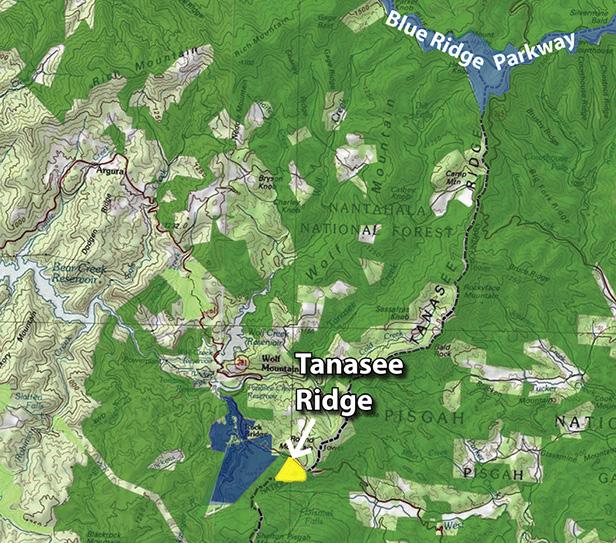
Tanasee Ridge
The Tanasee Ridge property encompasses 109 acres at a ridge on the border between Jackson and Transylvania Counties, surrounded by Nantahala National Forest on three sides. SAHC purchased the land in 2020 to protect important water resources in the Wolf CreekTuckasegee River watershed and forested habitat in a significant wildlife corridor. The tract also provides an alternative public access to popular outdoor recreation areas in Panthertown Valley.
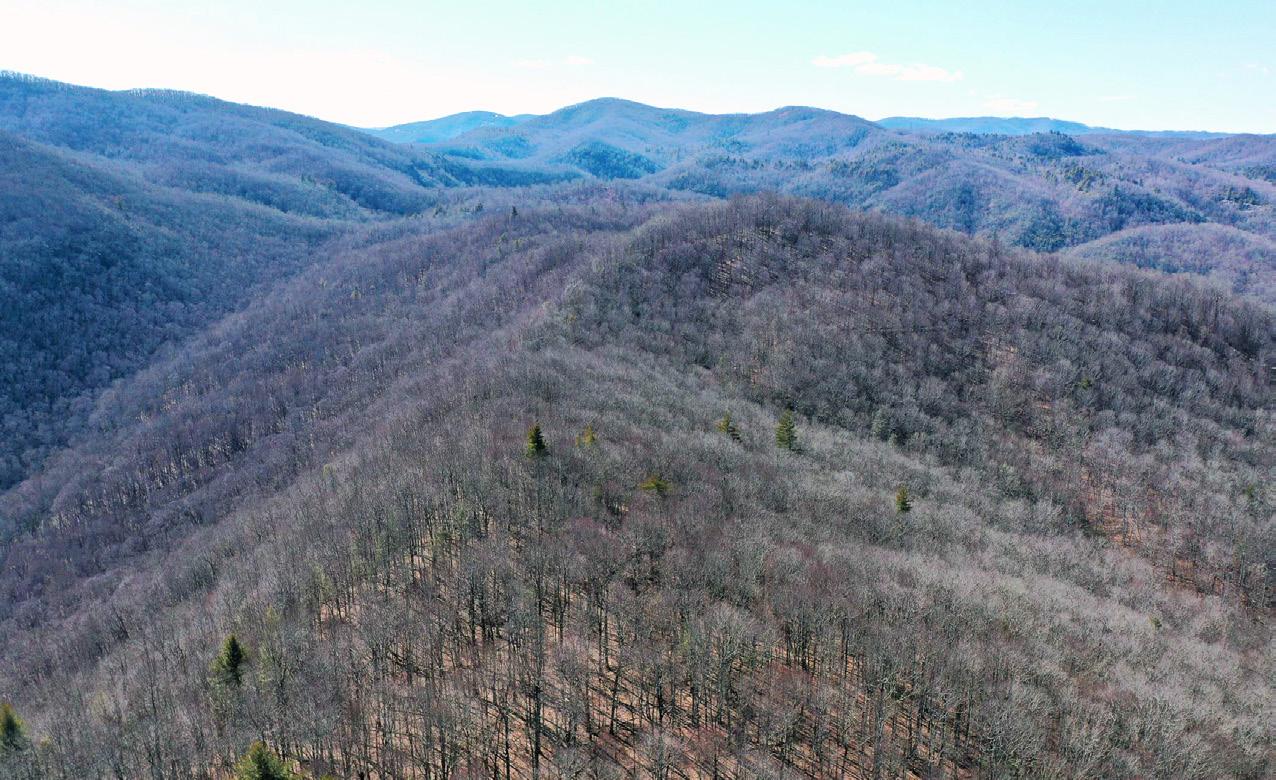
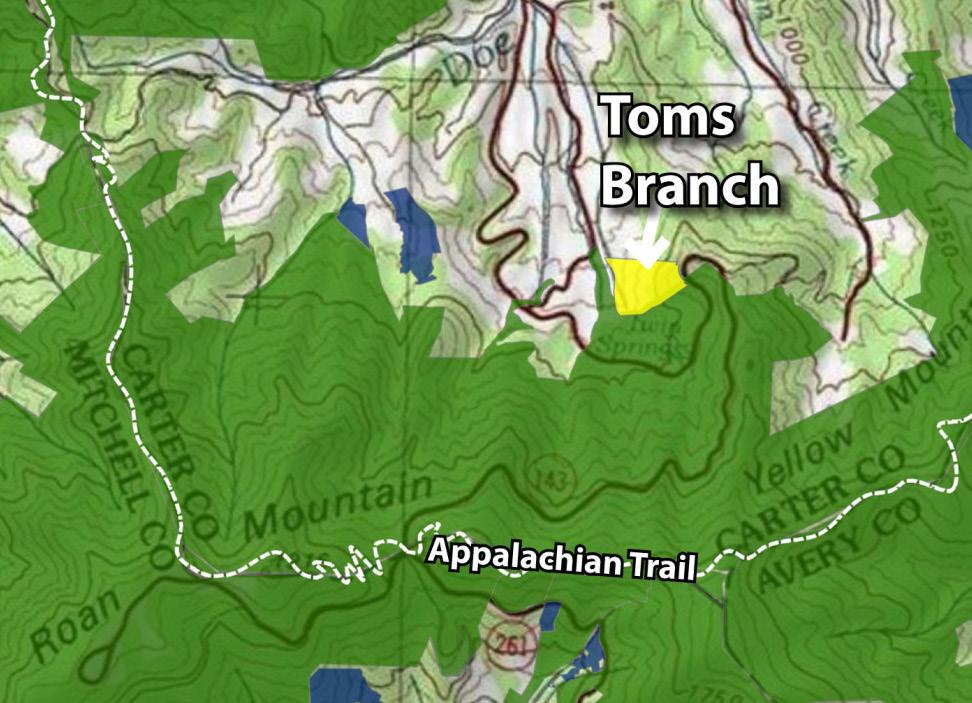
Tom’s Branch
Originally purchased by SAHC in 2022, these 52 acres are located off TN Hwy 143 – adjoining Cherokee National Forest just north of Carvers Gap in the Roan Highlands. The property is highly visible to hikers on the Appalachian Trail at Round Bald and Jane Bald. Its location, and the protection of water quality in Toms Branch, meant that it had been a conservation priority for SAHC, the US Forest Service and the Appalachian Trail Conservancy for forty years. Now, it is part of Cherokee National Forest.
SAHC land transferred to US Forest Service
Other SAHC Conservation Easements/Preserves
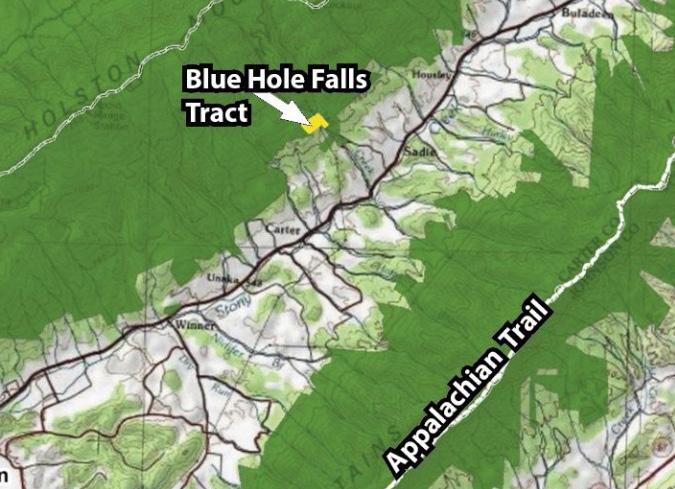
Blue Hole
In 2023, SAHC purchased 29 acres just upstream of the popular Blue Hole waterfall and recreation area in the Cherokee National Forest. The upper part of Mill Creek runs through the property and directly into Blue Hole Falls downstream. When the land came up for sale, SAHC purchased it to protect water quality and trout habitat downstream in the Blue Hole Falls, as well as scenic views from the Appalachian National Scenic Trail. Protecting land around the Blue Hole recreation area is a high conservation priority for the US Forest Service, and now this property enhances visitors’ enjoyment of the popular swimming hole.
Tanasee Ridge, near the entrance to Panthertown Valley.
Bull Creek Preserve
At Warren Wilson College
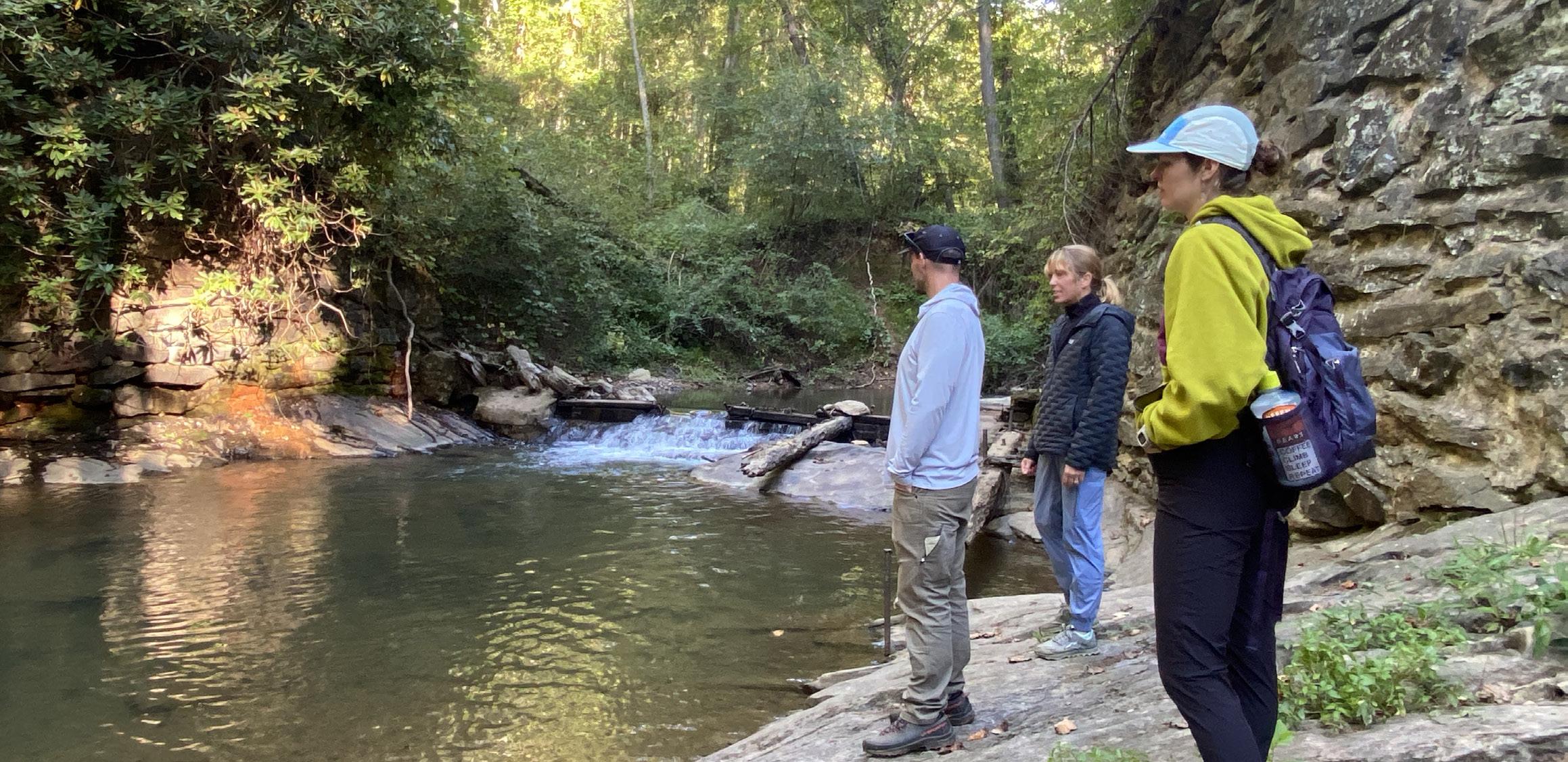
A section of Bull Creek runs through the preserve.
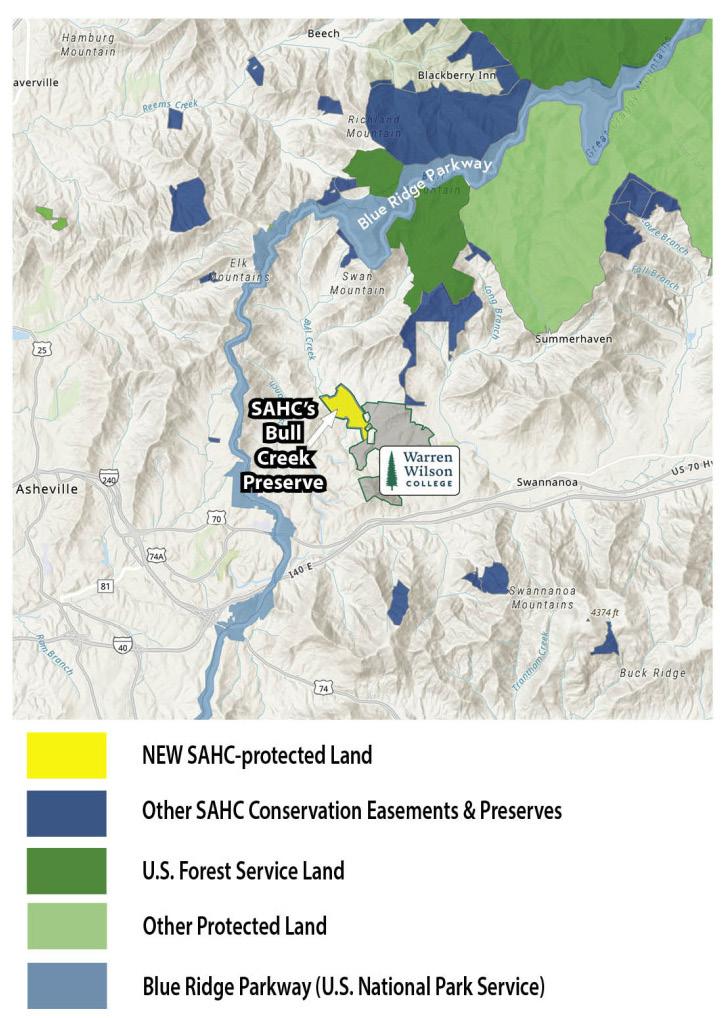
The Southern Appalachian Highlands Conservancy purchased 191 acres on the shoulder of Warren Wilson College in the Swannanoa valley – conserving forest, open pasture, and a section of Bull Creek. SAHC’s purchase ensures the property will be protected forever from real estate development, preserving its scenic beauty, and its water resources, habitat, and trails for people to enjoy. We will own and manage the land for the long-term as a nature preserve, and partner with Warren Wilson College, which will continue to use the property for education and landmanagement training.
“This property on Bull Creek is beloved in the Swannanoa community,” shares Farmland Protection Director Jess Laggis.
“I grew up visiting the trails and bends of Bull Creek with my family. My husband and I hiked here the night before our son was
born. SAHC’s purchase of the land conserves a highly-developable property, so that it will remain here for people to enjoy and wildlife to thrive. This acquisition also provides an exciting opportunity to forge a strong partnership with the College.
SAHC will own the land for the long term and partner with Warren Wilson College in a cooperative management agreement.”
The partnership between SAHC and the college will support managing the land responsibly, and student education about land stewardship and sustainable practices.
Preserving the Land
“This acquisition adds to a highly visible legacy of conservation in Swannanoa,”
says SAHC Executive Director Carl Silverstein. “We are deeply grateful to the generous conservation leaders who made it possible for SAHC to purchase and permanently protect this important community resource with hiking trails through the working farm and forest.”
The property, to be known as the Southern Appalachian Highlands Conservancy’s Bull Creek Preserve at Warren Wilson College, consists of a beautiful cove and mixed forest, an open 17-acre pasture with stunning views of the Black Mountains, and lovely sections of Bull Creek with rocky streambanks and wading pools. A tributary of the Swannanoa River, Bull Creek originates in the Black Mountains just south of Rattlesnake Lodge and the Blue Ridge Parkway,
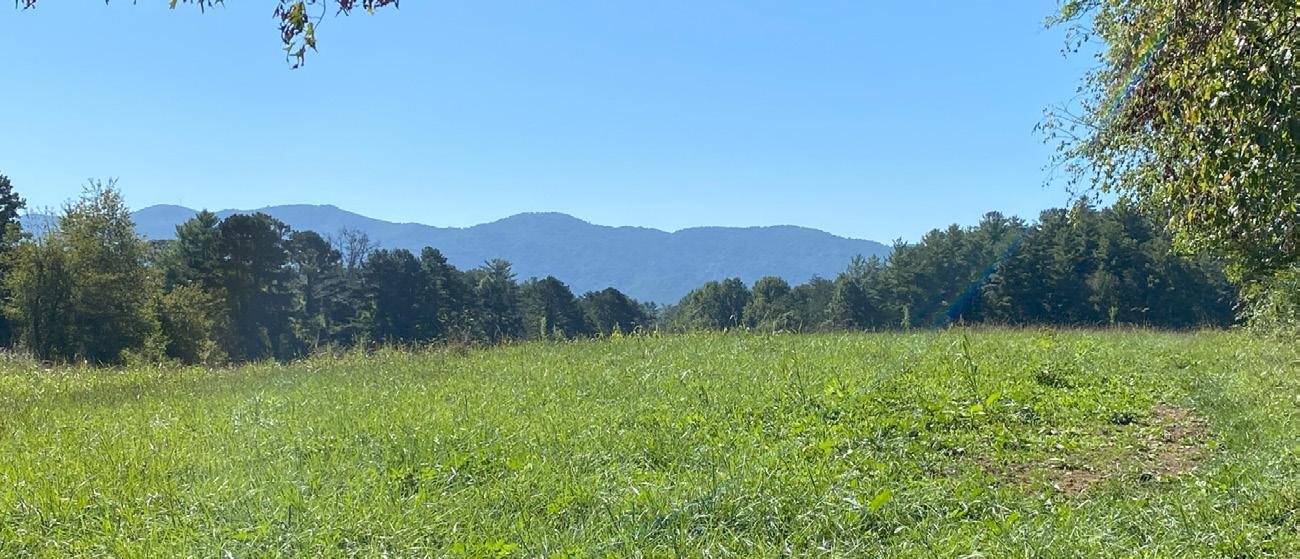
Dam Pasture, named for the dam which briefly stood nearby, will still be used as part of the college’s regenerative agriculture program.
draining an area of more than 10 square miles. Approximately 3 miles of single track hiking and biking trails traverse the property in an existing trail system.
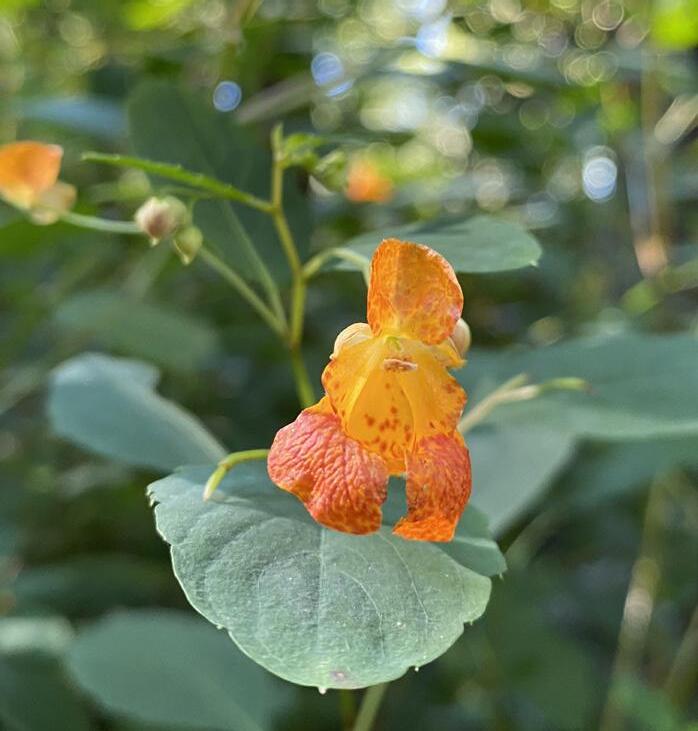
On one section of the Bull Creek Preserve land stands remnants of a decommissioned hydroelectric dam, built in 1910 to supply power and light to the Asheville Farm School (now Warren Wilson College). The dam, which briefly created Dodge Lake, served just six years before it was destroyed by the historic flood of 1916. Local residents still refer to the open field as ‘Dam Pasture.’ Both the forest and open pasture provide habitat for a variety of wildlife and native pollinator plants.
Continuing Trail Access and Education
The trails along the Bull Creek Preserve
property that have been created and maintained by the College will continue to remain open to the public for daytime recreation. Warren Wilson College will continue to use the pasture area in their rotational grazing program and the forest as part of the “living laboratory” of their campus.
return to visit another time if these are full. Recreation uses include hiking and biking; no fires or camping.
A small gravel parking area opens to the Dam Pasture Trailhead off Riceville Road. Parking at the trailhead is limited, and visitors are asked to be considerate of the surrounding community and neighboring church and businesses. Please park only in designated areas, or
Learn more about visiting this preserve at Appalachian.org/BullCreekPreserve (or scan QR code).

Partner Perspective: Warren Wilson College
“The preserve is a major win for the College, our neighbors and the natural systems that will be protected from development in perpetuity,” says Dave Ellum, Dean and Director of the Center for Working Lands at Warren Wilson. “The Center for Working Lands will continue to serve our mission of providing students with hands-on, applied learning, skill-building and research in forest management and regenerative agriculture. The preserve will also strengthen our recently launched programs in Animal Science and Applied Climate Studies by serving as an in-situ learning lab. Our neighbors in the region will still have access to recreational activities on the preserve and will benefit from increased engagement with Warren Wilson College and Southern Appalachian Highlands Conservancy. It is not often that a single effort provides this many wins!” Learn more at www.warren-wilson.edu.

Snowball Mountain
Off the Blue Ridge Parkway
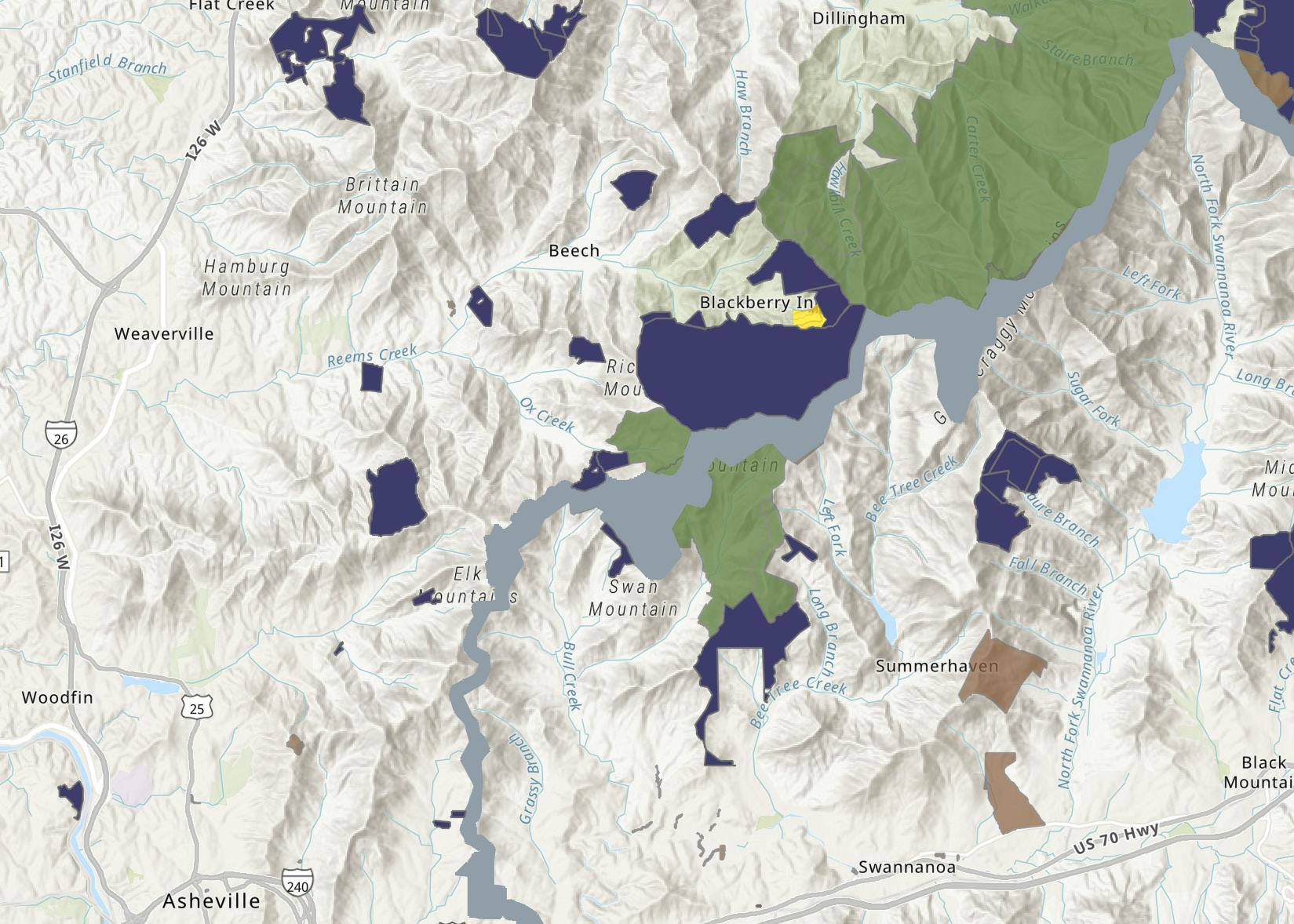
This fall, Southern Appalachian Highlands Conservancy purchased 64 acres on Snowball Mountain, just off the Blue Ridge Parkway northeast of Asheville and Woodfin. The purchase fills a gap in the protected landscape between the Woodfin Watershed (conserved in 2005) and SAHC’s existing Snowball Mountain Preserve (conserved in 2011).
“We are thrilled to protect this addition to SAHC’s Snowball Mountain Preserve,” shares Land Protection Director Michelle Pugliese. “This purchase permanently protects land below the headwaters of Reems Creek, and fills a gap in the conserved landscape very near the public
Snowball Mountain Trail and Blue Ridge Parkway. It also protects views from the Mountains-to-Sea Trail, and preserves high elevation wildlife habitat. This is truly an exceptional property, and we are deeply grateful to the donors and grant funders who made the purchase possible.”
Reaching elevations of more than 4,300 feet, the 64-acre tract is situated within the Audubon Society’s Black and Great Craggy Mountains Important Bird Area, and the adjoining properties contain exceptional examples of rare habitat types. The property also includes three mountain streams; one is a
headwater stream that originates on the property, and one is the main stem of Reems Creek that originates on SAHC’s adjoining Snowball Mountain Preserve. Reems Creek is a designated Trout Stream by the NC Division of Water Resources that flows directly into the French Broad River.
“SAHC has been working in this vicinity since 1996 when we accepted the donation of two adjoining conservation easements in the headwaters of Ox Creek, a tributary of Reems Creek,” adds Michelle. “Today, with this addition to our Snowball Mountain Preserve,
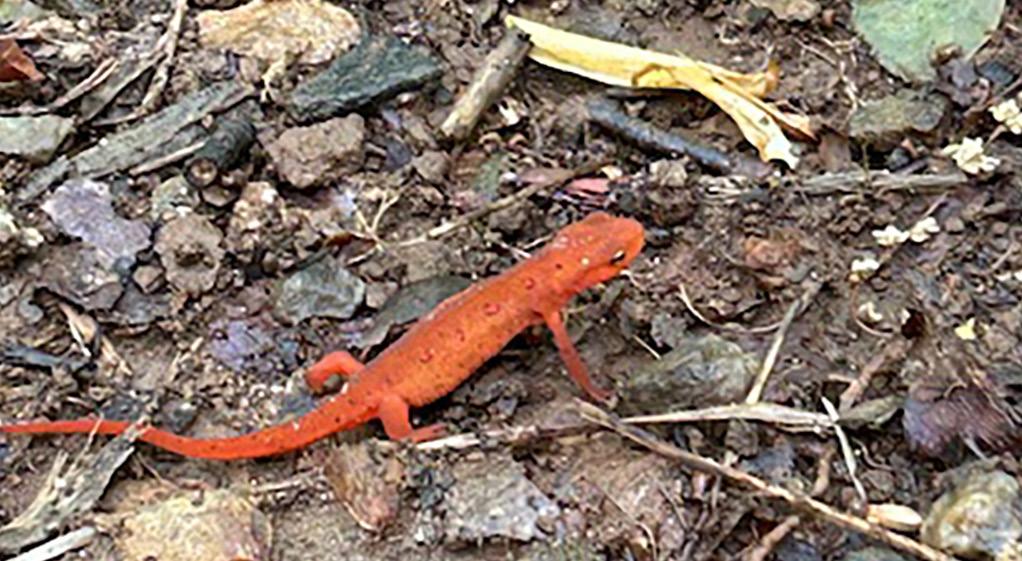
Red eft, the terrestrial (juvenile) stage of the red-spotted newt.
SAHC-protected conservation easements and preserves in this Reems Creek area total nearly 3,000 acres.”
In 2011, SAHC purchased its original 90-acre preserve on Snowball Mountain in Buncombe County, permanently preserving scenic views for recreational visitors and habitat for native species. Nestled in the beautiful Craggy Mountains, this tract is highly visible from the Blue Ridge Parkway and national forest land, and it adjoins the publicly accessible Snowball Mountain Trail. The Snowball Mountain Preserve was one of the marquee parcels that pushed SAHC past the 50,000-acres protected milestone mark at the end of 2011. Now, this purchase of the adjoining 64-acre tract from the same landowner, continues our commitment to conservation in the area.
“I’ve loved this special mountainside for most of my adult life,” shares former landowner Christine Cupido. “It’s been a remarkable healing refuge for me, and it gives me peace of mind knowing that SAHC will keep it conserved forever as an integral part of their network of nature preserves and conservation easements in the Reems Creek headwaters and Craggy Mountains.”
The purchase was made possible by generous donations from our Gray’s Lily Leadership Circle members, and an Appalachia Rising grant through Re:Wild.
Snowball Mountain Trail
From the Snowball Mountain Trail in the Great Craggy Mountains, hikers enjoy views of SAHC-protected

BlueRidgeParkway
lands. The Snowball Mountain Trail branches off of the Mountains-To-Sea Trail near the Craggy Gardens Picnic Area at milemarker 364.4 on the Blue Ridge Parkway. This public trail skirts the crest of SAHC’s Snowball Mountain Preserve and Reems Creek Bowl Preserve, with views of more SAHC-protected land in the 1,840acre Woodfin Watershed Conservation Easement. Please note, the trail access is currently closed due to damage from Hurricane Helene, although we look forward to the point when it will be reopened in the future.
SAHC’s nature preserves and conservation easements in the Craggy Mountains area join a significant swath of state and federal public lands, contributing to a vast network of over 125,000 acres of contiguous protected forestlands!
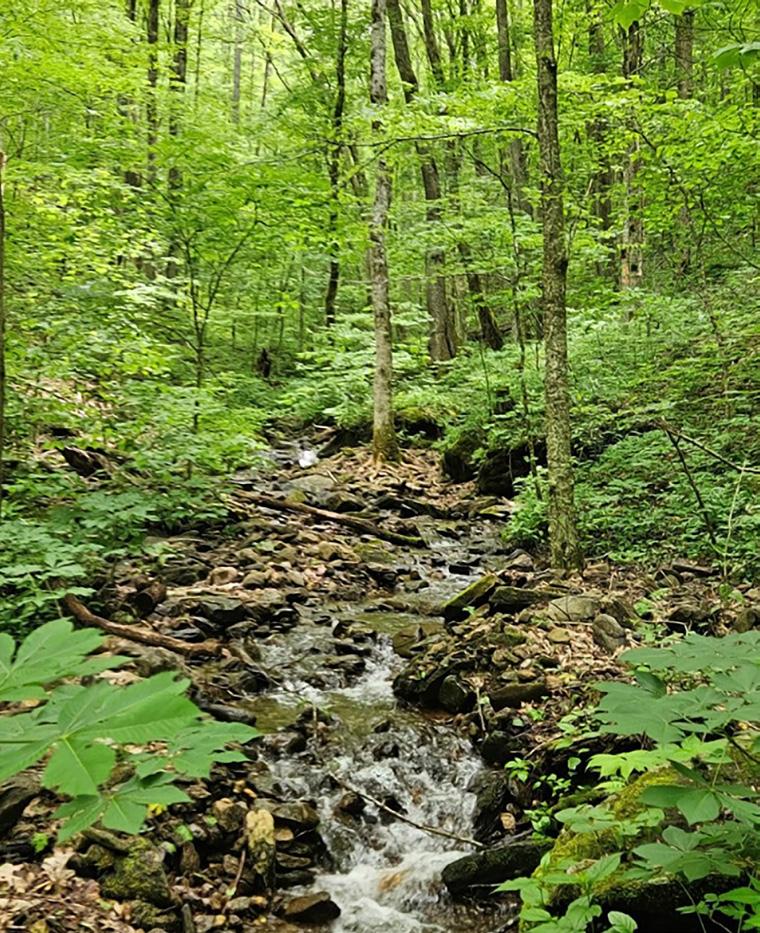
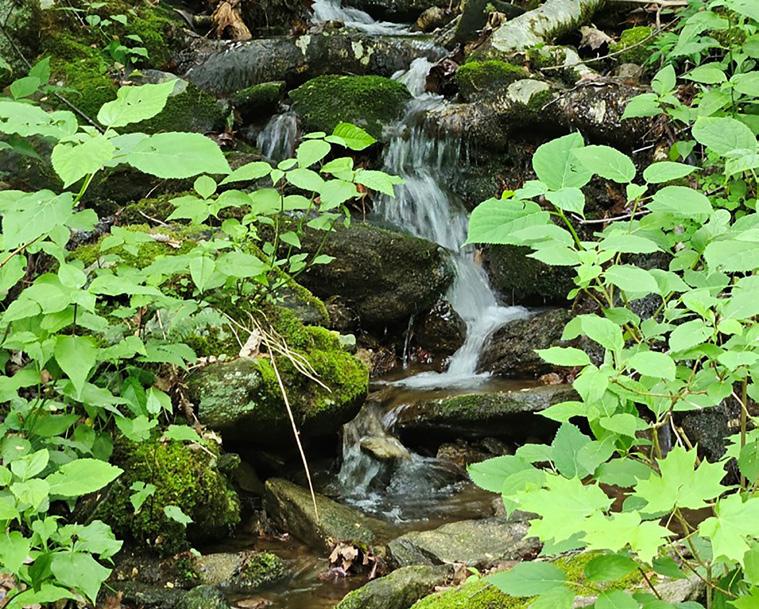
A tributary headwater and part of the main branch of Reems Creek flow through this mountain land.
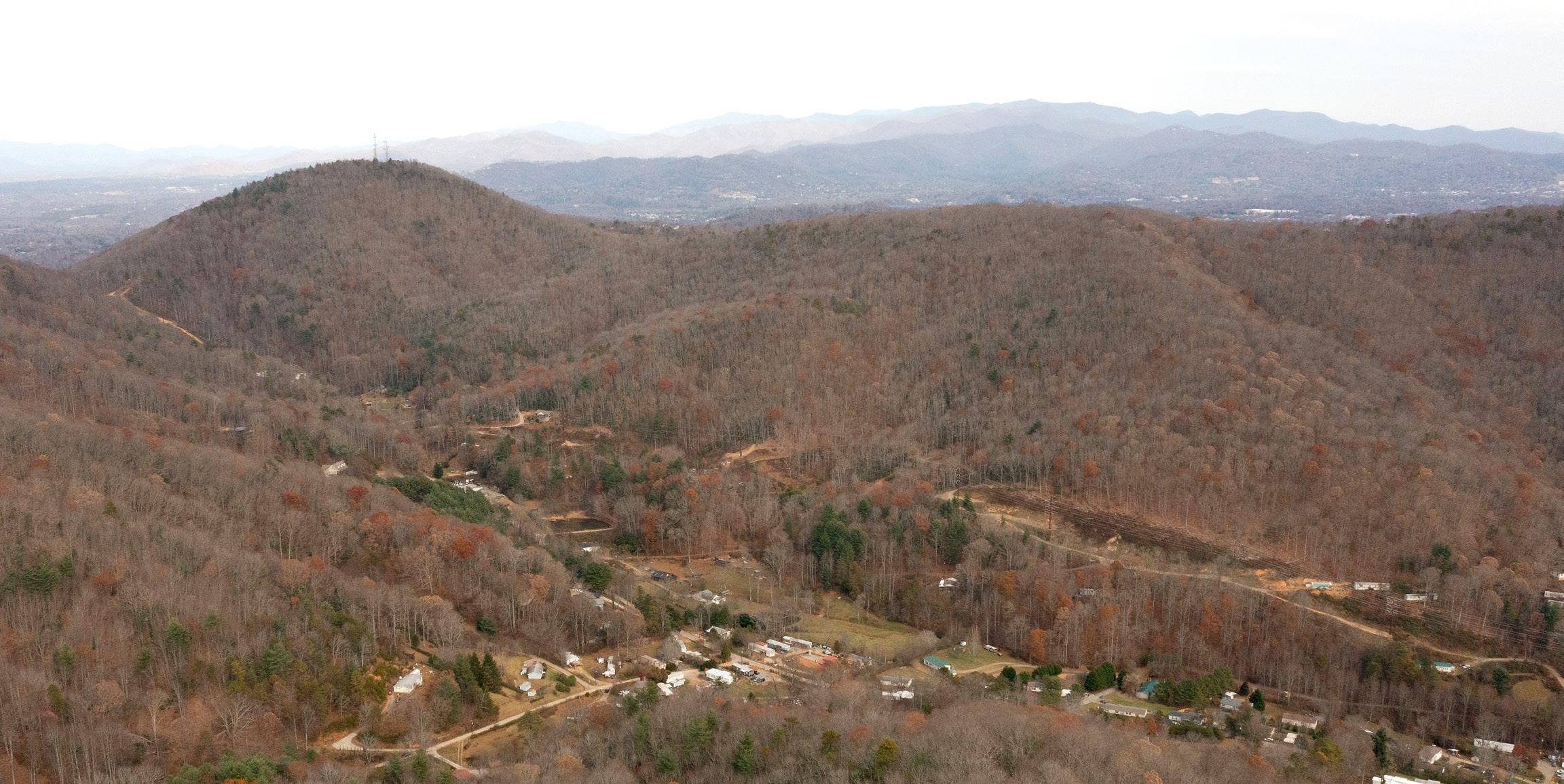
High Top Starnes
Cove
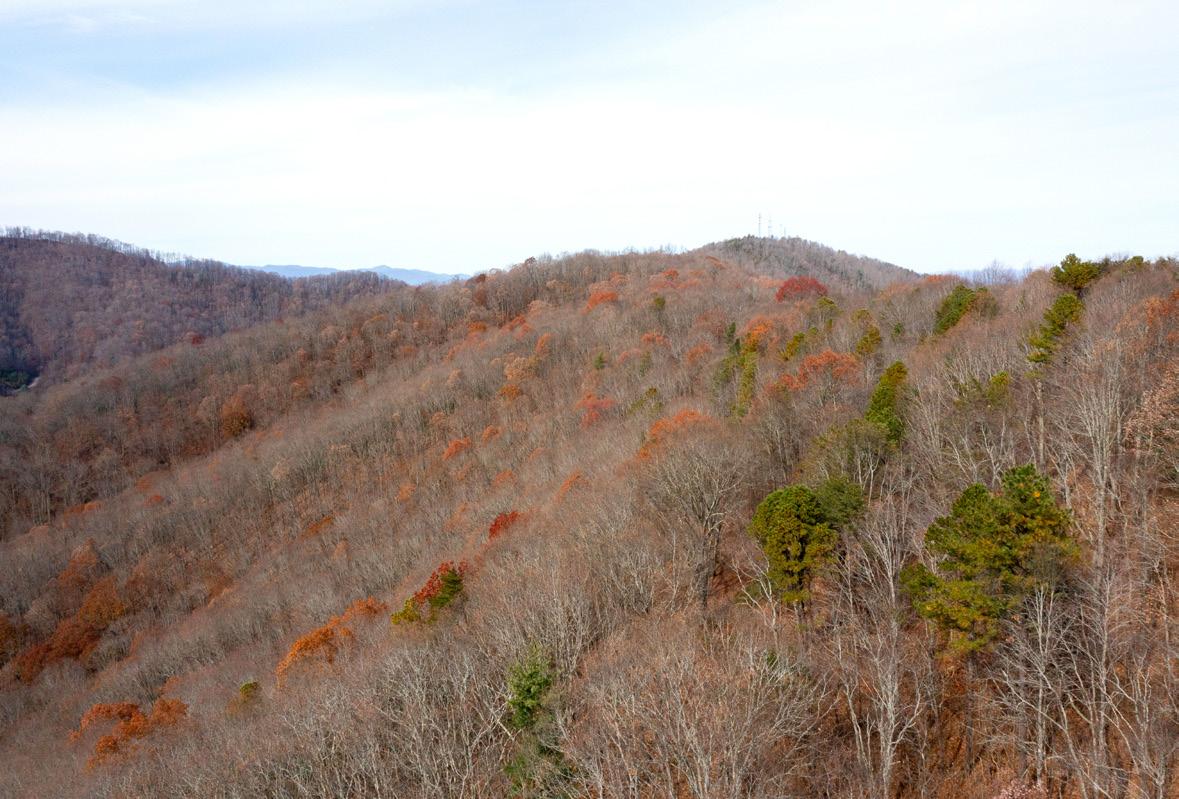
The 130 acres at High Top, rising up ridgelines above Starnes Cove, now permanently protected. Photo by Frank Nullet, Carolinas Nature Photographers Association (CNPA).
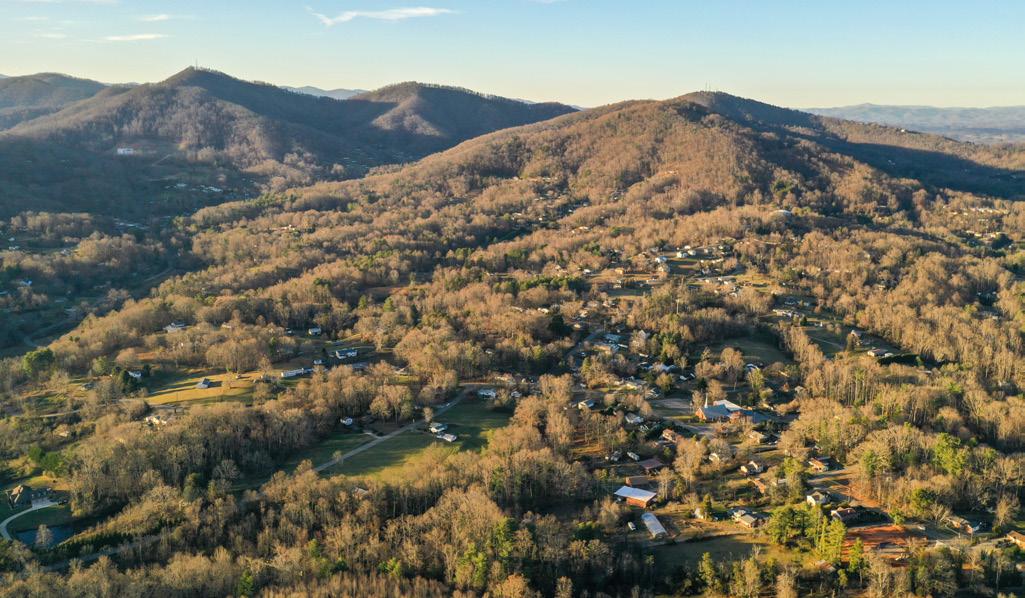
Southern Appalachian Highlands Conservancy purchased 130 acres at Starnes Cove in West Asheville, protecting scenic views from surrounding communities and wildlife habitat near Deaverview Mountain. The property had been sought after to expand a nearby development, but landowner Kathy Hamilton preferred to sell it to SAHC for permanent conservation instead. Thank you for helping protect the mountain habitat, and the scenic views from surrounding communities!
“This property is one of the few large, undeveloped tracts of land just outside the Asheville City limits,” said Land Protection Director Michelle Pugliese. “The 3,500-foot
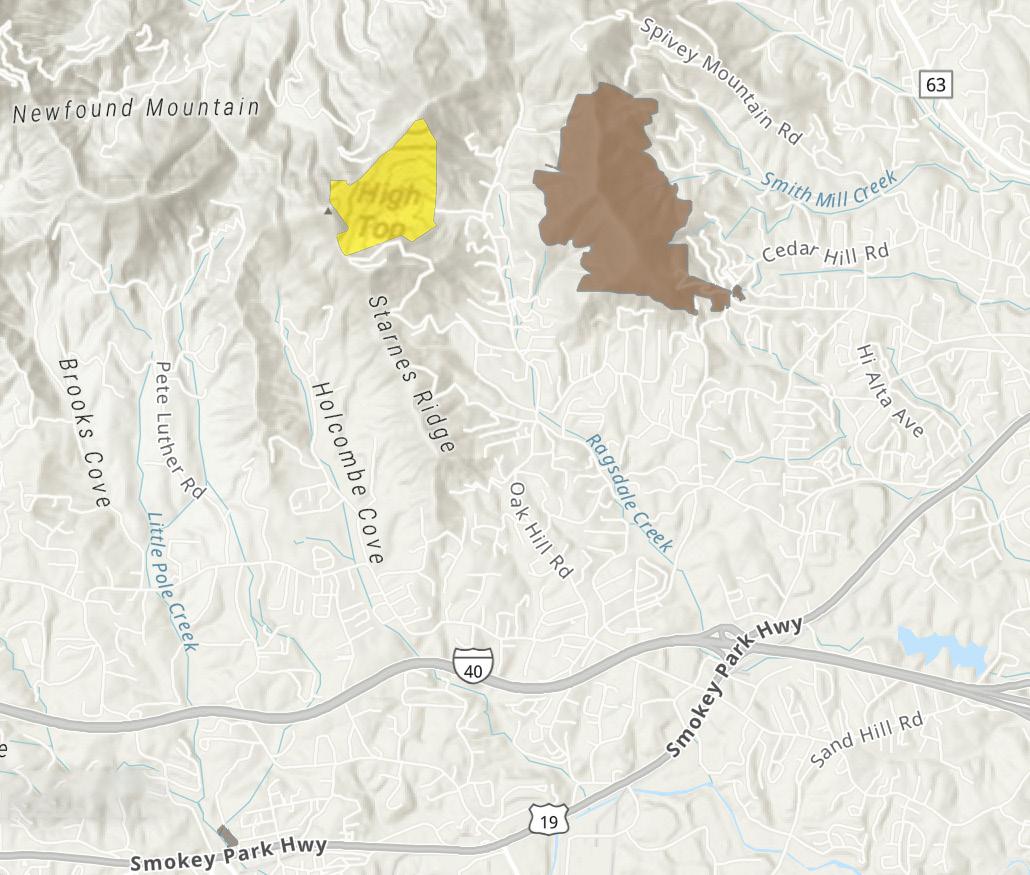
High Top peak is visible from the Biltmore Estate, Candler and other points in the region. This tract was under development pressure, and thankfully the landowner chose to conserve the land. As our community continues to recover from Hurricane Helene, protecting the six headwater streams that originate on this property and the surrounding forest will help safeguard water quality in Hominy Creek downstream.”
Former landowner Kathy Hamilton
wanted to preserve the land and honor the legacy of her mother, Syble Hamilton.
“We talked about protecting it before she passed away, and I know she’d be thrilled this has happened,” shares Kathy. “A visionary businesswoman and environmentalist, she loved Asheville. She helped start recycling in Buncombe County, at the Westgate Recycling Center. She also worked with conservationist and Grandfather Mountain’s founder, Hugh Morton –along with many others – in the North Carolina Travel Council. She had her fingers in a lot of pies!”
A Bucolic Paradise
“When my mother bought this land,
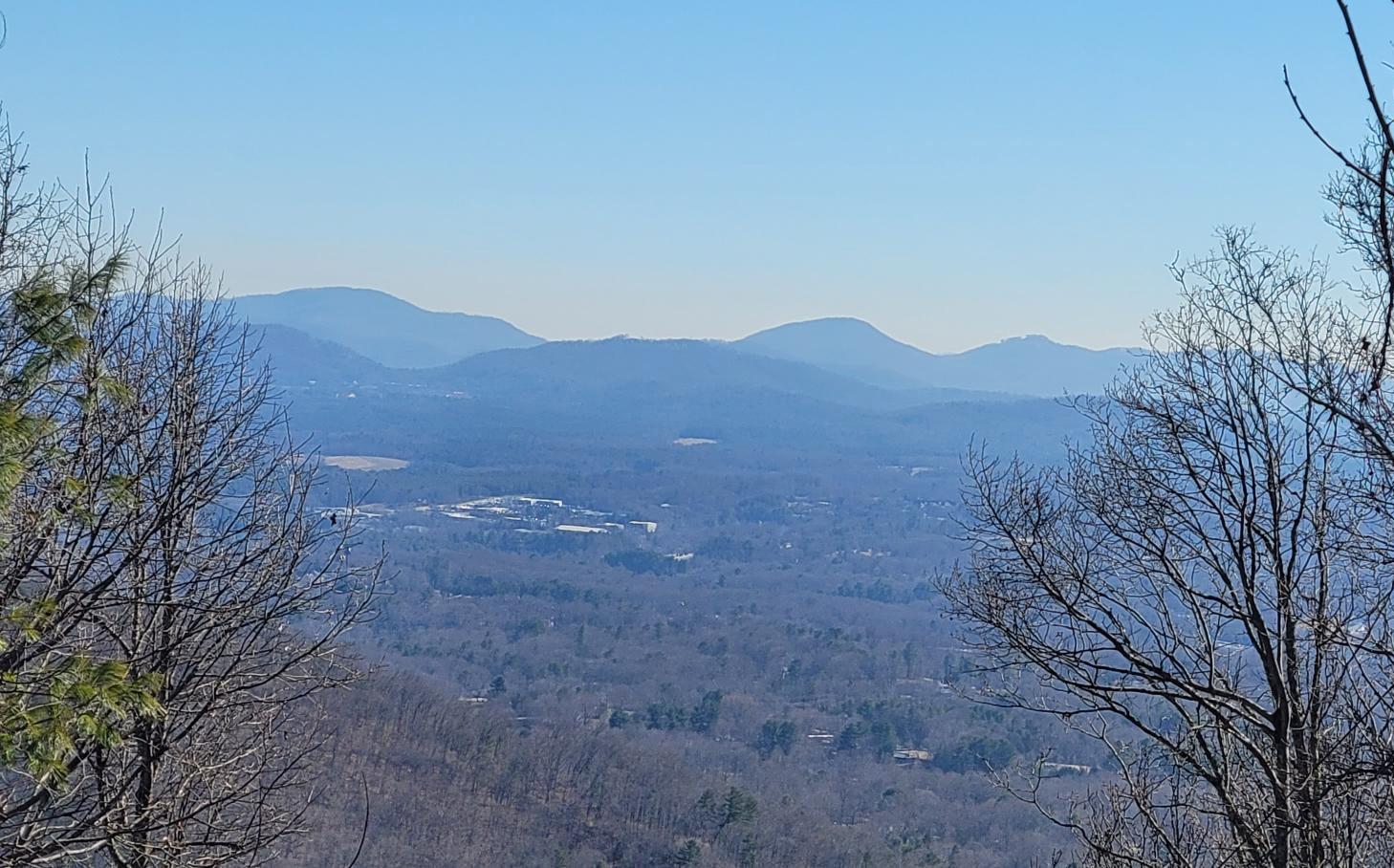
I thought it was positively bucolic,” continues Kathy. “There was a forest and pasture, grazed by Black Angus cattle, Hereford cattle, and horses.” Syble purchased the mountaintop property from Mr. Hipps in 1968. The High Top tract had been logged in the early 1960s, leaving an open area used as pasture.
“The most magical place on the mountain was the poplar grove,” adds Kathy. “Mother and I would ride the horses up there. I loved hiking on the mountain, too, especially when the wildflowers bloomed. I’ve seen all kinds of wildlife on the property – deer, bear, foxes, and more. And all kinds of birds. I even spotted a Blue Heron up there once!”
Syble Hamilton
Syble was born in East Flat Rock, NC, the third of Ziffie and Belva Allison Nicholson’s nine children.
In the late 1920s, Syble and her late husband Woodrow opened Hamilton’s Grocery and General Merchandise in Enka, which Syble successfully operated while her husband was away in Germany during WWII. In 1950, the couple built and opened the Hamiltonian Motel on Patton Avenue, now the Hamiltonian Business Park. Syble helped to pave the way for women in business in WNC and was a strong force in the Asheville business community for many years. She served as the first female president of the Asheville Tourist Association.

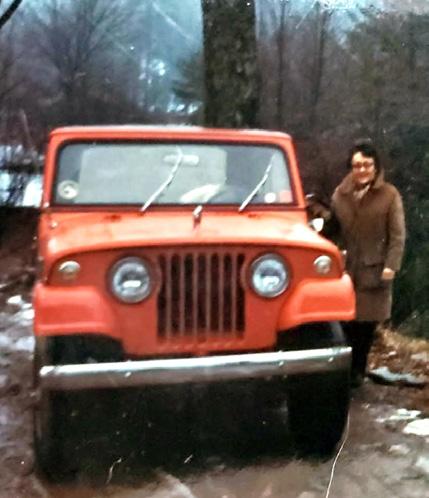
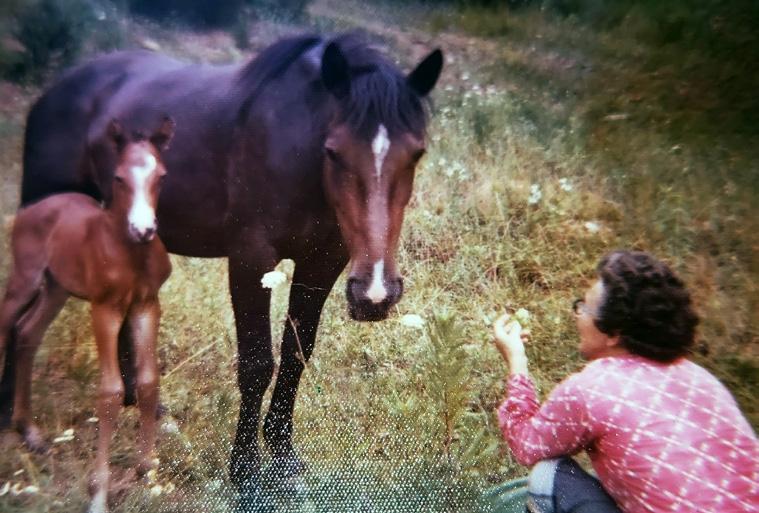
Syble Hamilton, at home on the mountain property she loved so much. She passed away in 2008
Deaverview Mountain Project Update
Protection of the nearby Deaverview Mountain is an ongoing project. Grants have been approved for the full purchase price of the land – including grants from the NC Land and Water Fund and the National Park Service’s Outdoor Recreation Legacy Partnership grant program. However, large scale conservation projects like this one take years to complete, with many stages before grant funds begin flowing. SAHC, Buncombe County, and other partners are diligently moving forward with this process.
Photo of Deaverview Mountain (right, foreground, with High Top/Starnes Cove in the background) by Travis Bordley.
The forest slopes of the property had been sought after by developers. Photo by Frank Nullet, CNPA.
View from the High Top/Starnes Cove property.
Completing the Puzzle
Land protection adjoining Great Smoky Mountains National Park
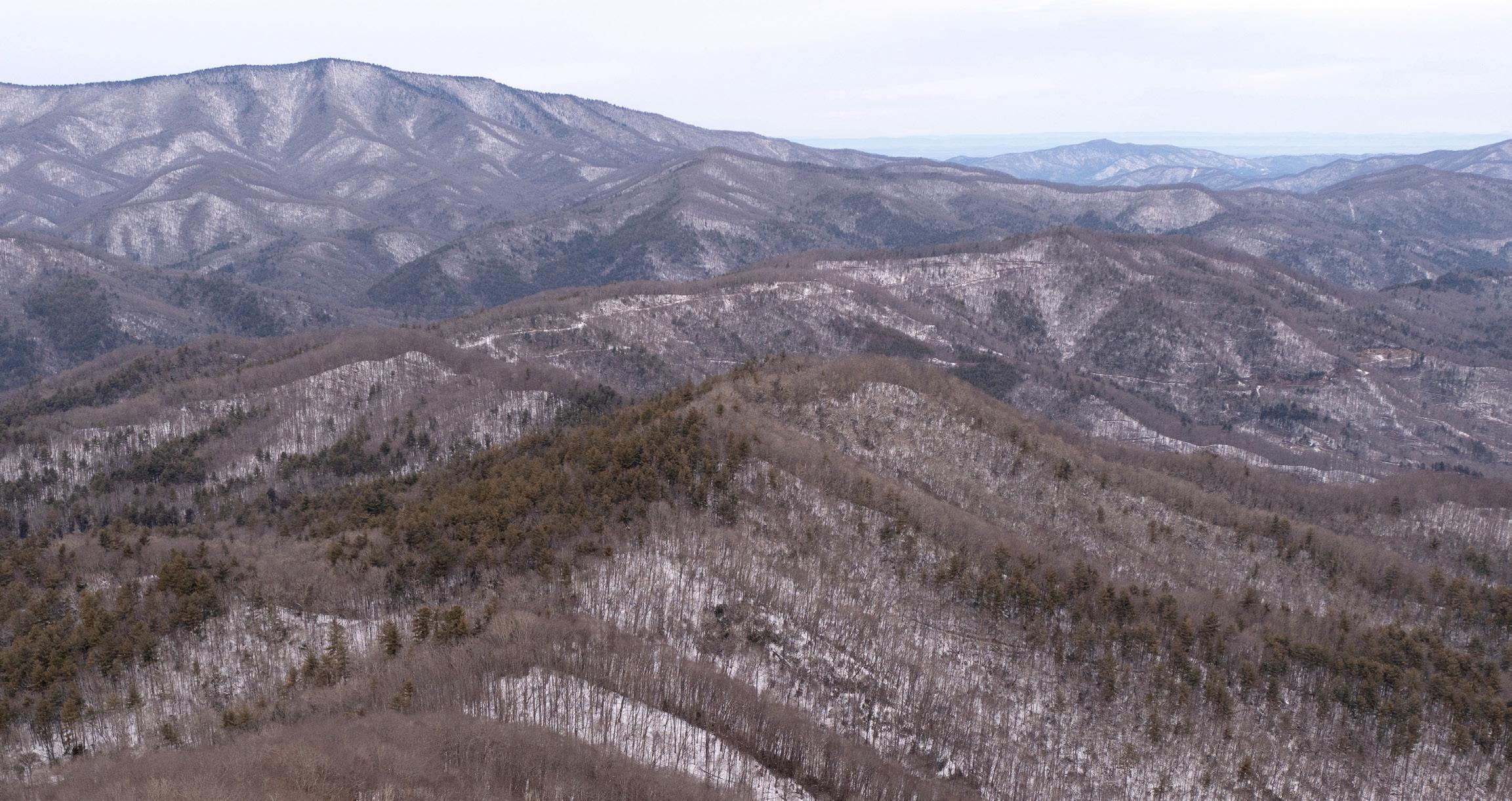
This acquisition solidifies protection of a ridgeline on the edge of the national park.
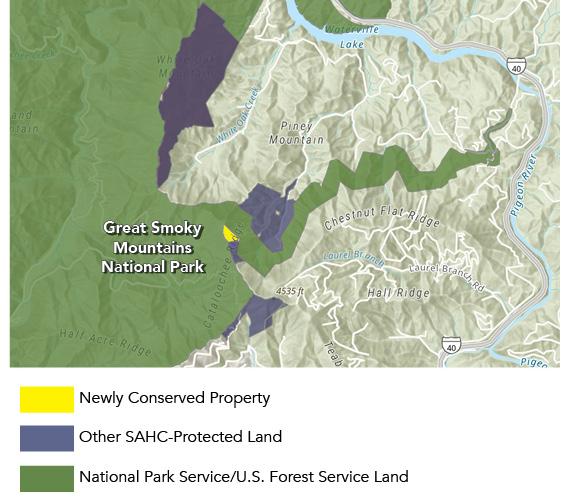
SAHC purchased a 9-acre tract surrounded by the Great Smoky Mountains National Park and another SAHC-owned preserve, neatly filling a gap in the protected landscape. The acquisition solidifies conservation of a ridgeline on the eastern edge of the national park near the Cataloochee Valley. Water sources on the property drain into Stevens Creek, a tributary of the Pigeon River.
Filling in the Puzzle
“We are thrilled to finally complete this piece of the puzzle,” says Conservation Director Hanni Muerdter. “SAHC purchased the adjoining 13-acre tract in 2021, and we have been waiting for the
opportunity to close this unprotected ‘hole’ on the Cataloochee Ridge.”
SAHC will own and manage the recently protected 9-acre tract and adjoining 13-acre tract together as a nature preserve; in the future, the land could become part of the national park.
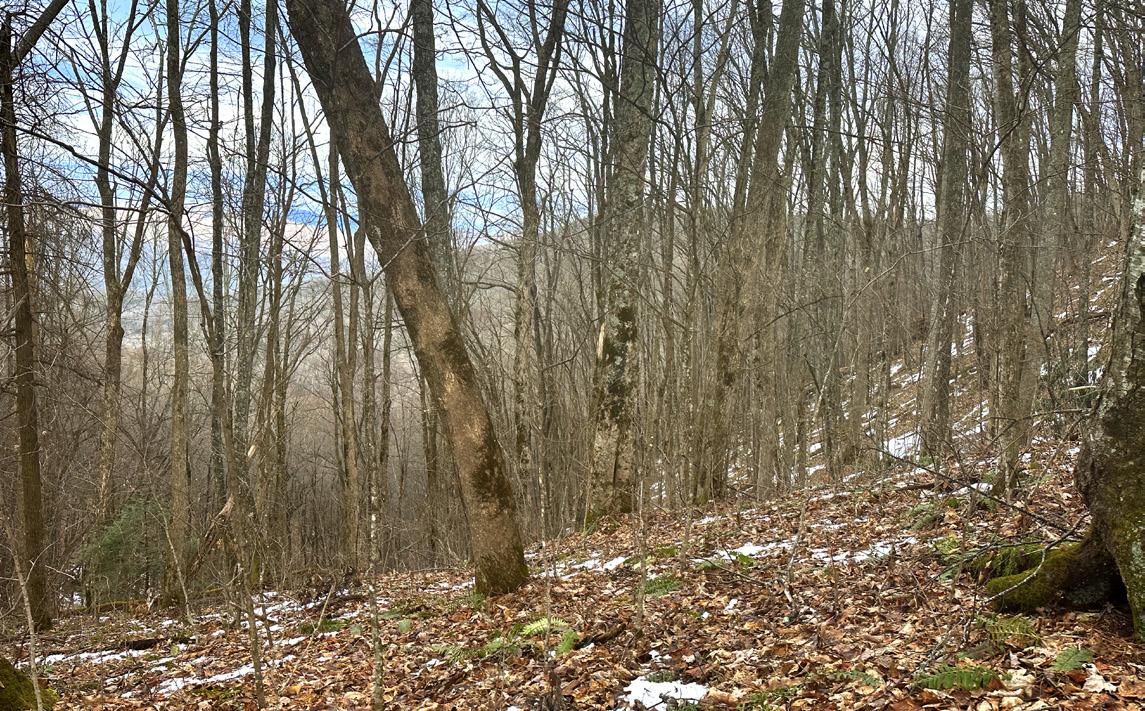
The Asbury Trail skirts the edge of SAHC’s adjoining preserve, passing just to the west of the recently conserved land.
Land Conservation Benefits Wildlife Movement
Very close to these properties, SAHC owns
another 147-acre tract in the Stevens Creek watershed – purchased in 2017. This nearby Stevens Creek property provides wildlife habitat for a variety of species, with forest cover and an open area that has been managed by our partners at NC Wildlife Resources Commission (NCWRC) to improve the quality of habitat. In 2024, SAHC hosted a virtual Lunch and Learn with guest speaker Justin McVey of NCWRC, highlighting their land management work to benefit elk and other wildlife.
“The acquisition of the Stevens Creek tracts along the boundary with Great Smoky Mountains National Park by SAHC is significant in terms of broadening the protection of wildlife habitat
The forested ridge provides habitat and space for wildlife to move.
and corridors immediately adjacent to the Park,” says Kevin Fitzgerald, SAHC Board Trustee and former Deputy Superintendent at Great Smoky Mountains National Park.
“When the Park completed its General Management Plan in 1981, it was decided that construction of a new 5-mile entrance road from I-40 at Fines Creek to Hoglen Gap, just east of Cataloochee Valley, would never take place in the future. SAHC’s Stevens Creek tracts, including this recent 9-acre purchase, add to the existing 500 acres that were originally acquired by the State of NC and donated to the park for an entrance road. Now, those lands serve as an important wildlife corridor for the movement of numerous species headed north and south between Cataloochee and I-40, as well as important habitat for the ever growing elk population in that area.”
Continuing a Conservation Legacy
Just south of Stevens Creek, at Cove Creek Gap and the Cataloochee entrance to Great Smoky Mountains National Park, landowner Kay Hultquist had worked with SAHC to permanently protect her family’s 65-acre tract through a conservation easement. The conservation easement project closed in 2000, preserving wildlife habitat, scenic views, and 2,000 linear feet of stream. Kay and Charles Hultquist’s children – Kathy Overholser (husband Jim), Chip Hultquist (wife Teri), and Joe Hultquist – carried on the conservation legacy of their parents, honoring their love of the mountains and continuing to help preserve these important natural spaces. The
Overholser and Hultquist families made it possible for SAHC to purchase and conserve 10 acres adjoining the national park at Cove Creek Gap in 2020. In an interview in 2021, Kathy reflected that it was important to the family to stay involved in SAHC and conservation in general.
SAHC’s recent purchase of the 9 acres at Stevens Creek continues our conservation work in the area while also continuing the conservation legacy of the Hultquist/Overholser families. We are deeply grateful for generous gifts from the Overholser and Hultquist families, who made this conservation purchase possible. Kathy Overholser passed away in April of this year (2025), and conservation of the land honors her memory.
“When Kathy passed away, our world lost a champion of conservation,” adds Hanni. “Kathy’s love for the mountains was generational, inherited from her mother, Kay, whose adventurous spirit and passion for nature helped shape her family’s legacy of conservation.”
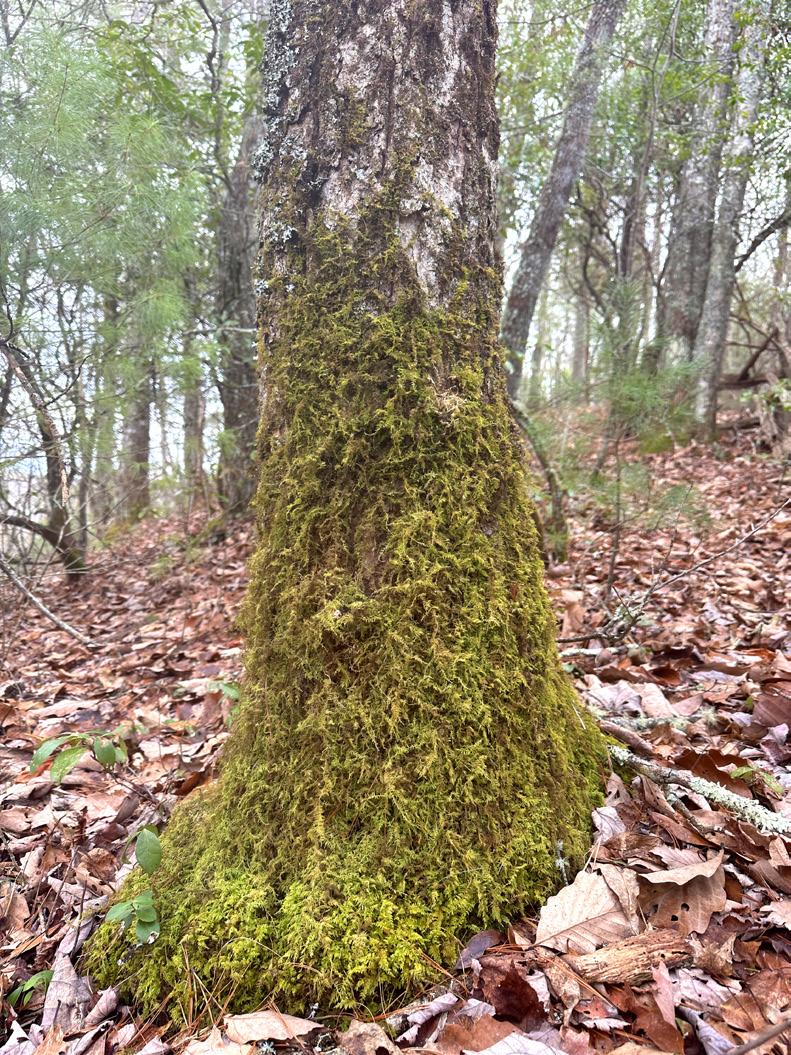
Moss doesn’t just grow on the north side of trees – but in our region, north-facing orientation commonly provides shade and moist conditions that help it thrive.
Public Lands in Haywood County
SAHC Transfers 1,060 to NC Wildlife Resources Commission
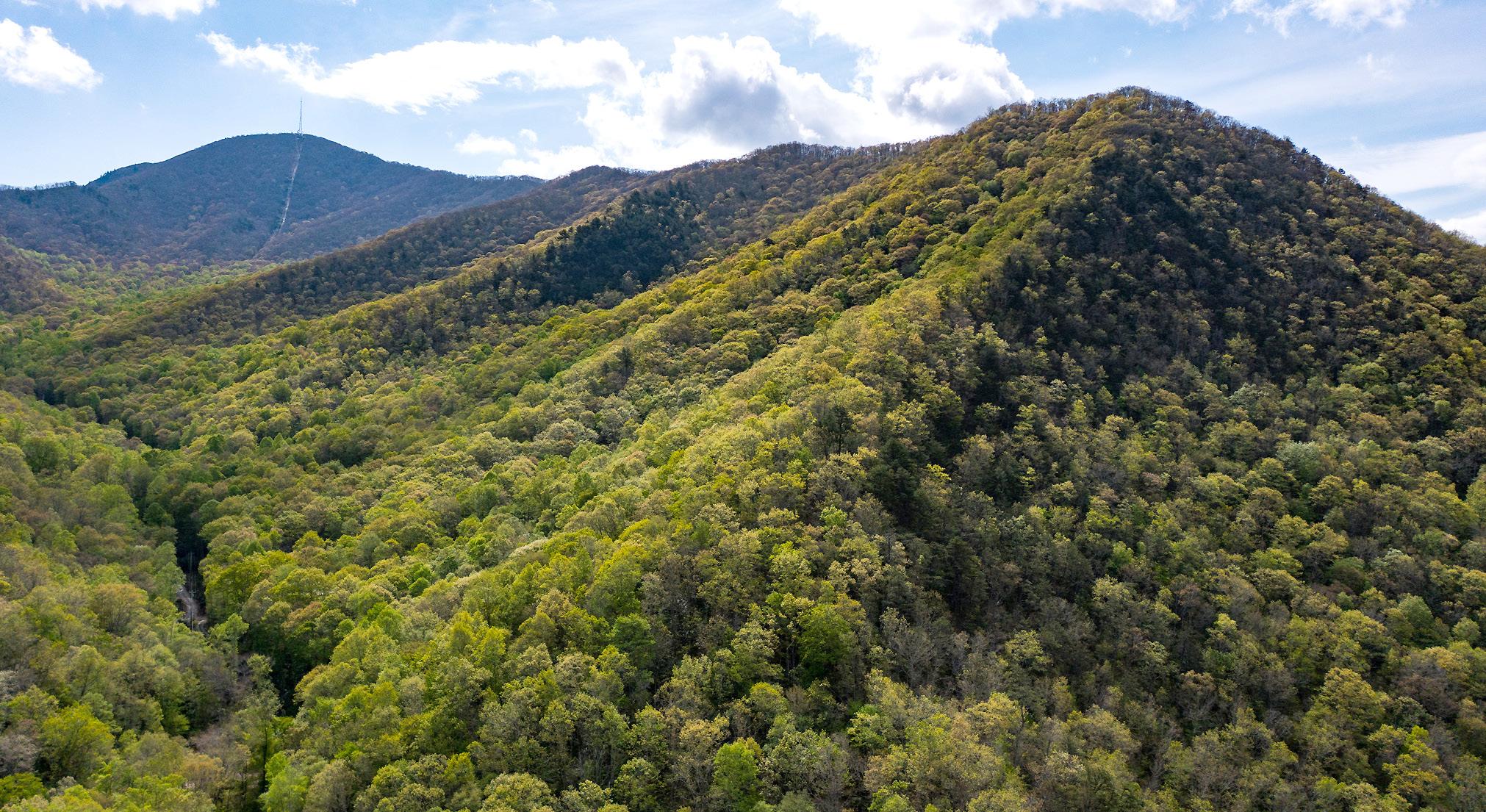
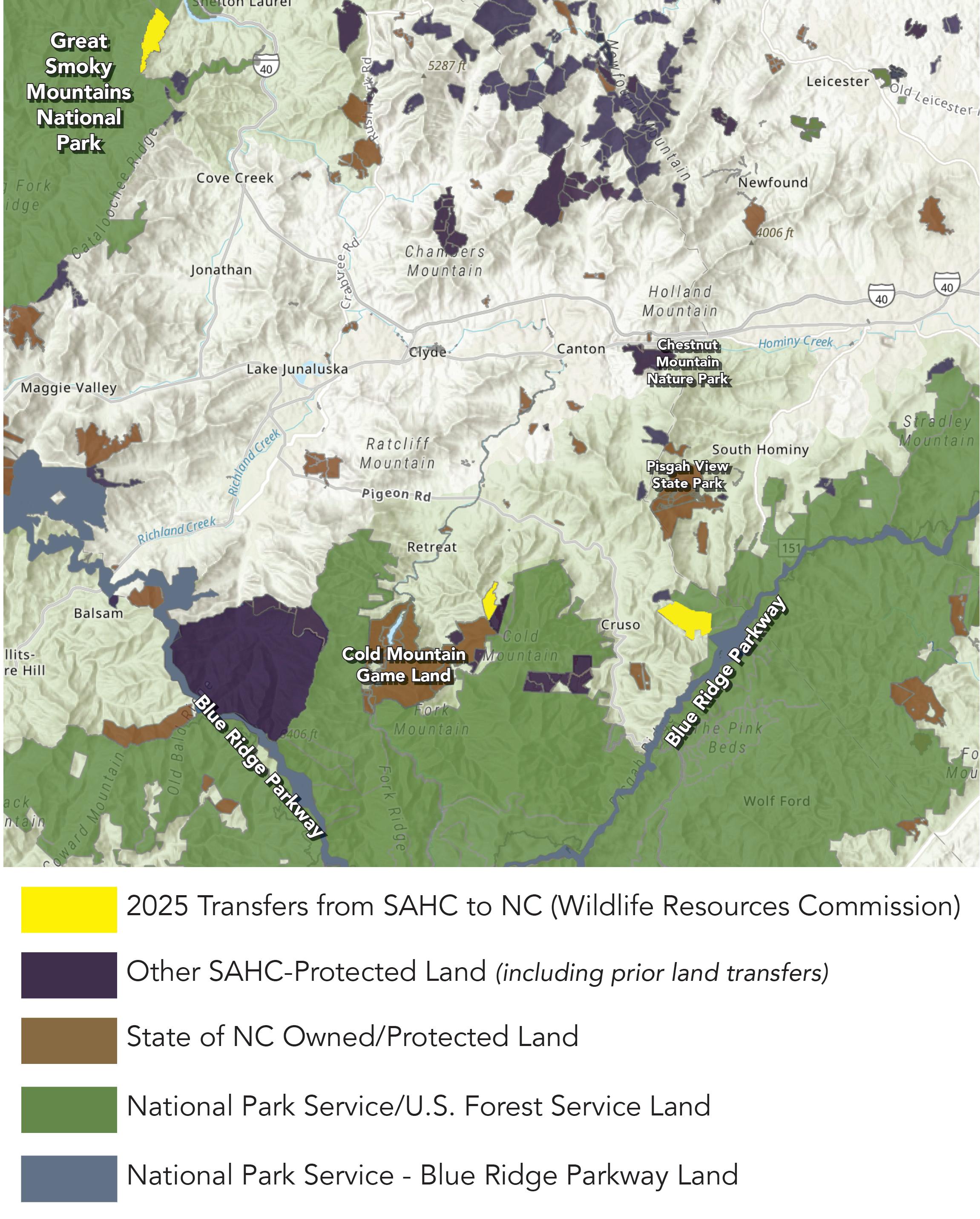
This year, Southern Appalachian Highlands Conservancy has transferred 1,060 acres in Haywood County to the State of NC to become part of public lands managed by the NC Wildlife Resources Commission (NCWRC). These tracts include land for the Cold Mountain Game Land and Pisgah Game Lands – including the 409-acre White Oak Mountain tract adjoining the Great Smoky Mountains National Park that SAHC purchased in December 2024. These transfers continue a long-standing partnership between SAHC and the NCWRC, in conserving and managing land, and opening outdoor recreation access to the public.
“For decades, SAHC and the NCWRC have worked together to preserve land and water resources that benefit our local communities while supporting populations of fish and wildlife,” says Conservation Director Hanni Muerdter. “These transfers, totaling more than 1,000 acres for new public lands, represent a milestone of successful partnership. I’m so gratified to be able to help preserve land in the Cruso, Bethel and upper White Oak communities, for the people of Haywood County and the state.
Together, SAHC and NCWRC have worked on protecting the beauty of our mountains and conserving vital spaces for native species to thrive and for people to enjoy getting outdoors and connecting with nature. We very much appreciate our ongoing partnership with NCWRC.”
The 1,060 acres of recently transferred land are located in three corners of Haywood County – on the southwestern slopes of Mt. Pisgah, the northwestern edge of Cold Mountain, and in the northwest
The Reed Cove Forest and Pisgah Creek tracts span 485 acres of beautiful, forested slopes on the western flank of Mt. Pisgah.
Photo by Stephanie Long.
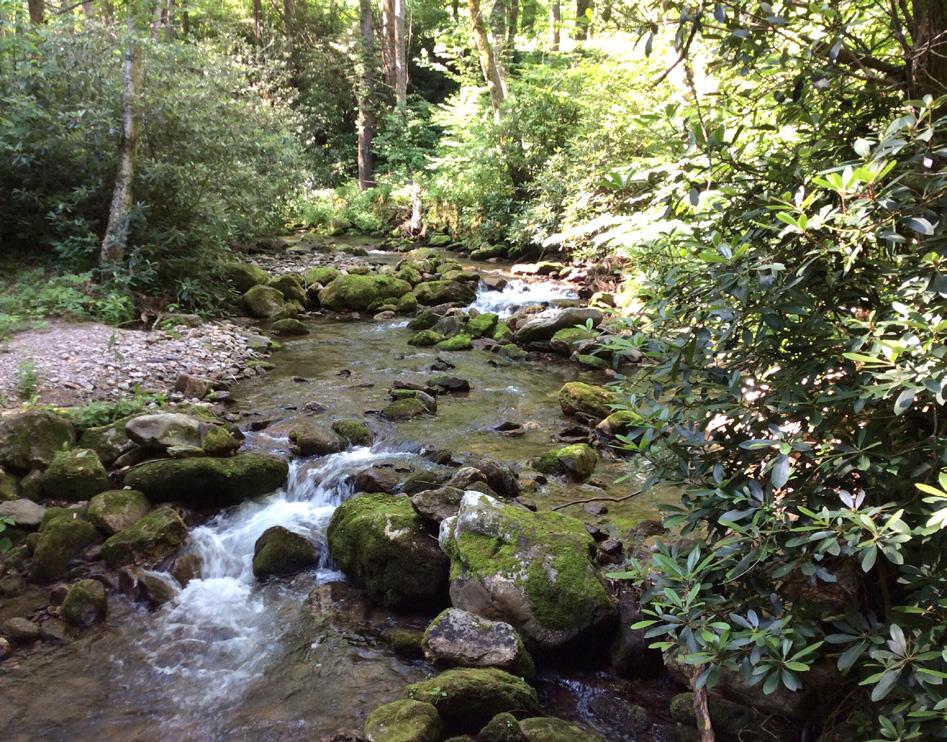
The Pisgah Creek property contains exceptional water sources and tributary streams in the watershed of the east fork of the Pigeon River.
corner of the county on White Oak Mountain, bordering the national park. Each of the transferred tracts is now managed by the NCWRC.
Pisgah Creek
Near the Cruso community of Haywood County, SAHC purchased and transferred 409 acres on the slopes of Mt. Pisgah around Pisgah Creek to the state for the Pisgah Game Land, along with the adjoining 76-acre Reed Cove Forest property that SAHC had acquired in 2020.
“Conservation of these lands helps protect water quality in mountain streams within the Pigeon River watershed,” says Hanni. “Development on tracts in the headwaters of the east fork of the Pigeon River would make flooding even worse in areas that have already experienced severe flooding impacts, so additional land protection in these areas is vital.”
The upper east fork Pigeon River watershed area provides significant terrestrial and freshwater habitats. Pisgah Creek and seven of its feeder creeks flow on the property. The tract contains an abundance of boulderfield forest, with elevations reaching up to 5,000 ft, and it is located entirely within the Balsams Pisgah Priority Amphibian Reptile Conservation Area. The Pisgah Creek property adjoins Pisgah National Forest, very near the Blue Ridge Parkway and the Mt. Pisgah Campground. Protecting the Pisgah Creek
tract helps buffer and preserve views from the parkway.
SAHC’s purchase of the Pisgah Creek tract was made possible by a grant from the NC Land and Water Fund (NCWLF), support from generous conservation donors, and a grant from the Pigeon River Fund of the Community Foundation of Western North Carolina.
Conservation of the Pisgah Creek property adds to a contiguous swath of
high-elevation protected land in a wildlife corridor connecting Mount Pisgah to the Newfound Mountains.
Dix Creek
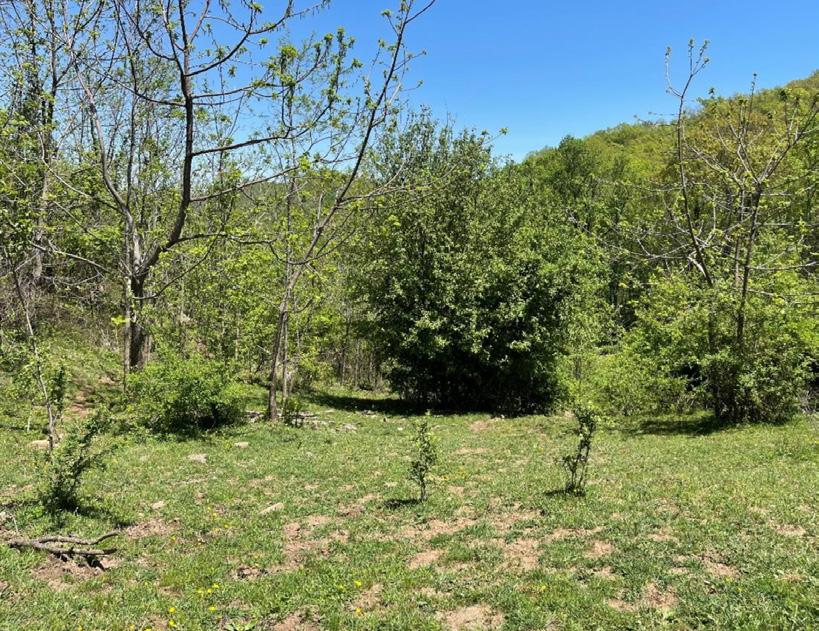
A little further west in Haywood County, SAHC transferred 167 acres at Dix Creek for the Cold Mountain Game Land. SAHC had acquired this tract in 2022, and the transfer is the latest in a series of projects in which SAHC has partnered with NCWRC to fill out the Cold Mountain Game Land. Portions
of the land had once been farmed. The old pasture and apple orchard, combined with forested slopes and a spectrum of elevations, provide habitat to support a wide variety of species, particularly grouse and songbirds. NCWRC recently completed a new gravel parking area on the property, and access through this tract is open to the public.
“This property helps people better access the Cold Mountain Game land from Cruso Rd/US Hwy 276,” said David Stewart, land management biologist with NCWRC. “A wonderful mosaic of habitats occurs on the land, and it connects directly to the national forest. It’s rewarding to know I’ve been part of a process to preserve land for my children, grandchildren, and generations to come – to help preserve land for people to come to hike, fish, hunt, and birdwatch.”
White Oak Mountain
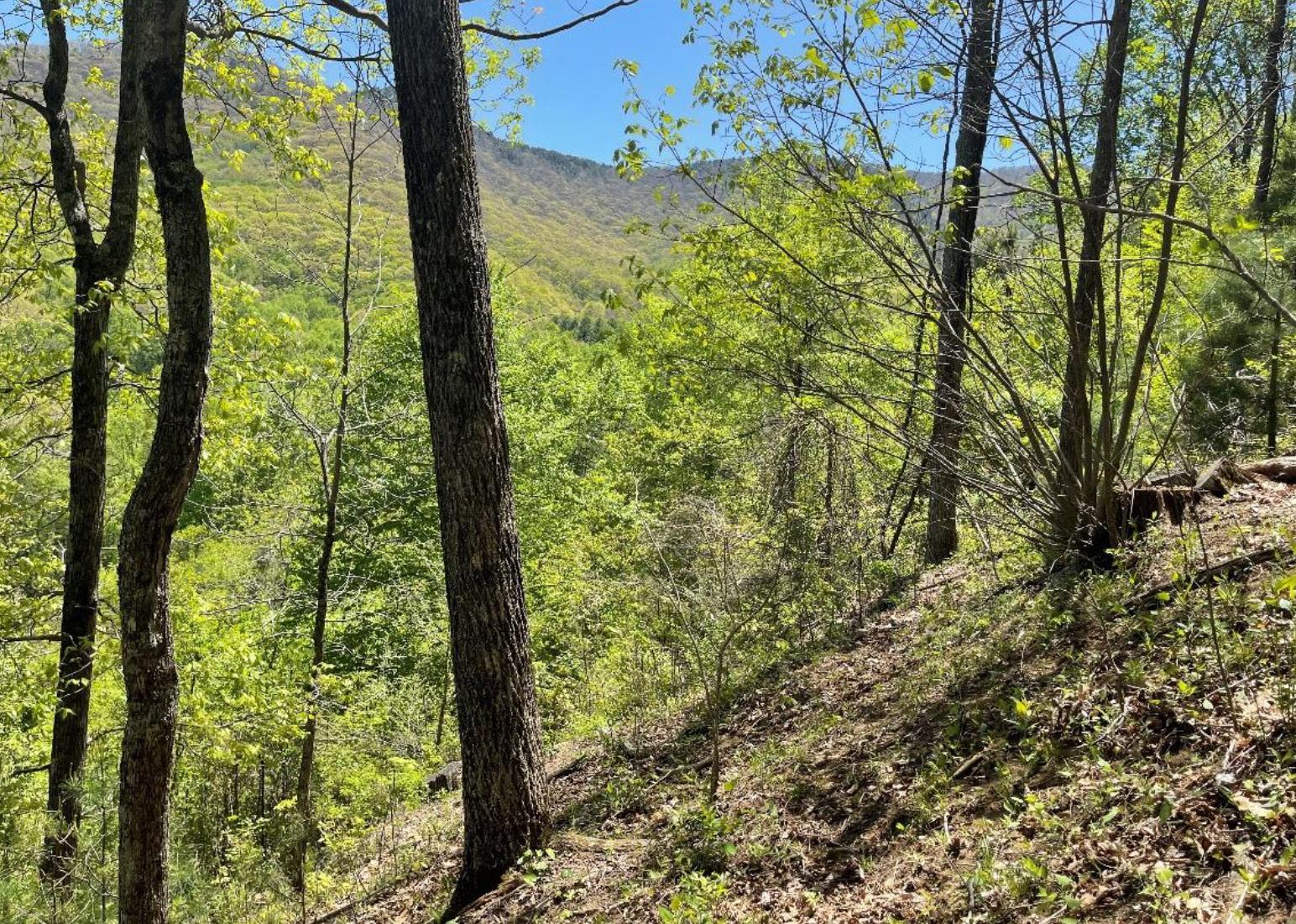
In the northwest corner of Haywood County, SAHC transferred the 408-acre White Oak Mountain property to the state of NC to be managed by NCWRC. The property adjoins both the Great Smoky Mountains National Park and Pisgah
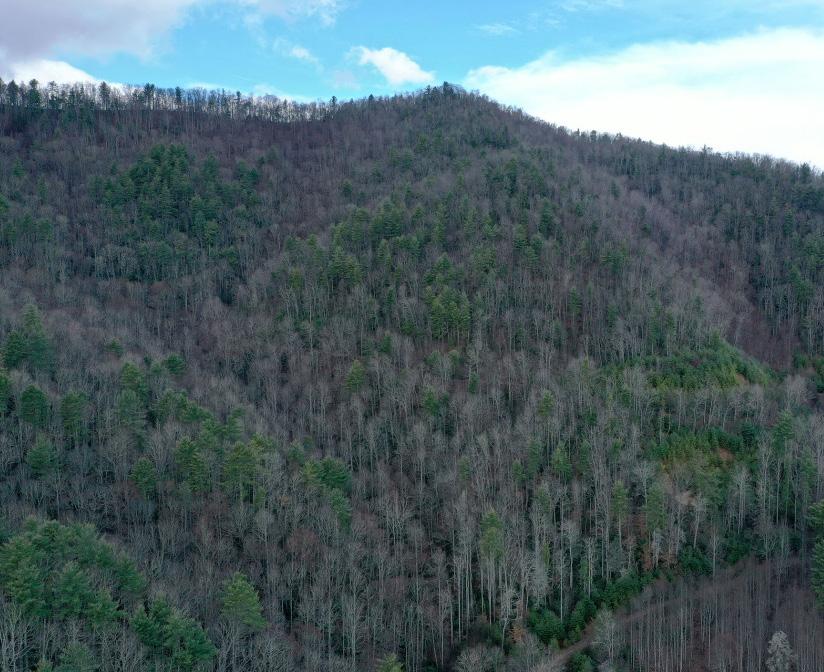
The White Oak Mountain tract shares a long ridgetop boundary with the Great Smoky Mountains National Park
National Forest, creating an important corridor for wildlife movement. Habitat here supports a wide range of species, including birds, deer, elk, bear, and more. SAHC purchased the property last year to protect wildlife habitat and prevent real estate development on the edge of the national park.
Grants from the NCLWF and the Rocky Mountain Elk Foundation (RMEF), along
with generous support from conservationminded donors, made the protection of the White Oak Mountain property possible.
“RMEF is grateful to work alongside SAHC and the NCWRC on this important conservation project, which supports RMEF’s mission of ensuring the future of quality big game habitat and public access in the eastern United States,” says RMEF President and CEO Kyle Weaver.
RMEF also recently awarded a grant to NCWRC to improve access and wildlife habitat on the property. We look forward to sharing more
The Dix Creek property, now part of Cold Mountain Game Land, provides a mosaic of different habitat types.

“For decades, SAHC and the NC Wildlife Resources Commission have worked together to preserve land and water resources that benefit our local communities while supporting populations of fish and wildlife.” – Conservation Director Hanni Muerdter.
about NCWRC’s plans for active management and habit improvement over the next few years.
NC Land and Water Fund
Grants from the NCLWF supported both the Pisgah Creek and White Oak Mountain projects.
“The North Carolina Land and Water Fund is excited to support SAHC’s work to conserve and transfer these lands to the public trust,” says Will Summer, NCLWF Executive Director. “They
Request for Public Comment: SAHC’s
not only protect some of the cleanest mountain trout waters in the State, but also provide public access for hunting, fishing, and hiking in areas of Haywood County that have before now been difficult to access. This is an excellent addition to the hundreds of thousands of acres of game lands already protected with NCLWF grants.”

Application for Accreditation Renewal
The land trust accreditation program recognizes land conservation organizations that meet national quality standards for protecting important natural places and working lands forever. Southern Appalachian Highlands Conservancy is pleased to announce it is applying for renewal of accreditation. A public comment period is now open.
The Land Trust Accreditation Commission, an independent program of the Land Trust Alliance, conducts an extensive review of each applicant’s policies and programs.
“Being an accredited land trust lends weight to our long-standing reputation as a conservation organization that upholds the highest standards in professionalism,” says Executive Director Carl Silverstein. “Accreditation is a mark of distinction, showing that SAHC demonstrates fiscal accountability, strong organizational leadership, sound transactions and lasting stewardship of the lands we conserve.”
The Commission invites public input and accepts signed, written comments on pending applications. Comments must relate to how Southern Appalachian Highlands Conservancy complies with national quality standards. These standards address the ethical and technical operation of a land trust.
For the full list of standards see http://www.landtrustaccreditation.org/ help-and-resources/indicator-practices.

To learn more about the accreditation program and to submit a comment, visit www.landtrustaccreditation.org, or email your comment to info@landtrustaccreditation.org.
Comments may also be mailed to the Land Trust Accreditation Commission, Attn: Public Comments, 36 Phila Street, Suite 2, Saratoga Springs, NY 12866.
Comments on Southern Appalachian Highlands Conservancy’s application will be most useful by March 22, 2026.
Roan Stewardship
Ongoing Habitat Management, from the Forests to the Balds
In addition to our annual habitat management activities to support Appalachian grassy balds, SAHC’s Roan Stewardship team has been busy conducting Helene recovery efforts, supporting partner agencies, and introducing the next generation of conservationists to field research opportunities.
Grassy Ridge Mow-Off
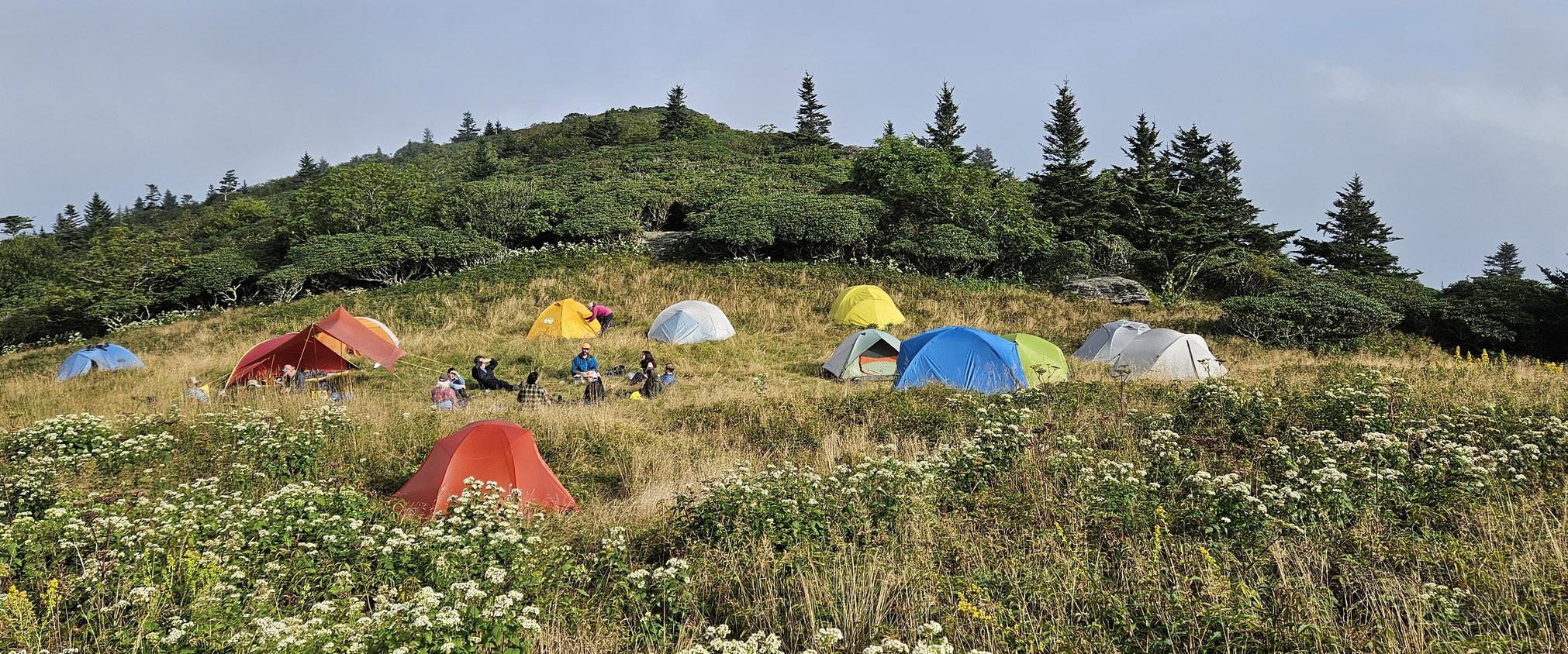
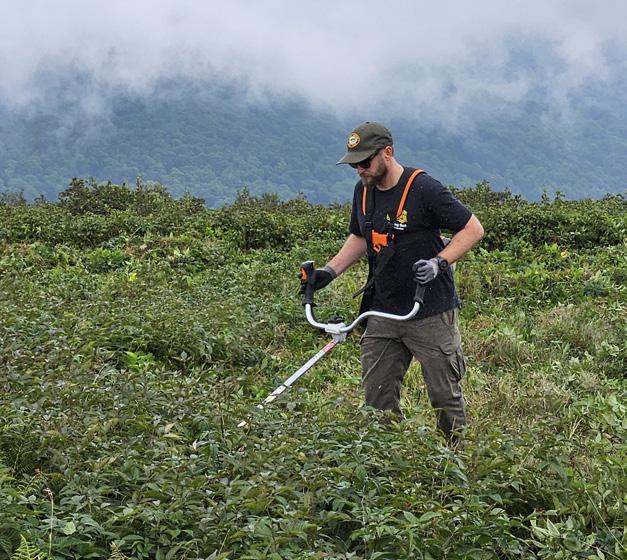
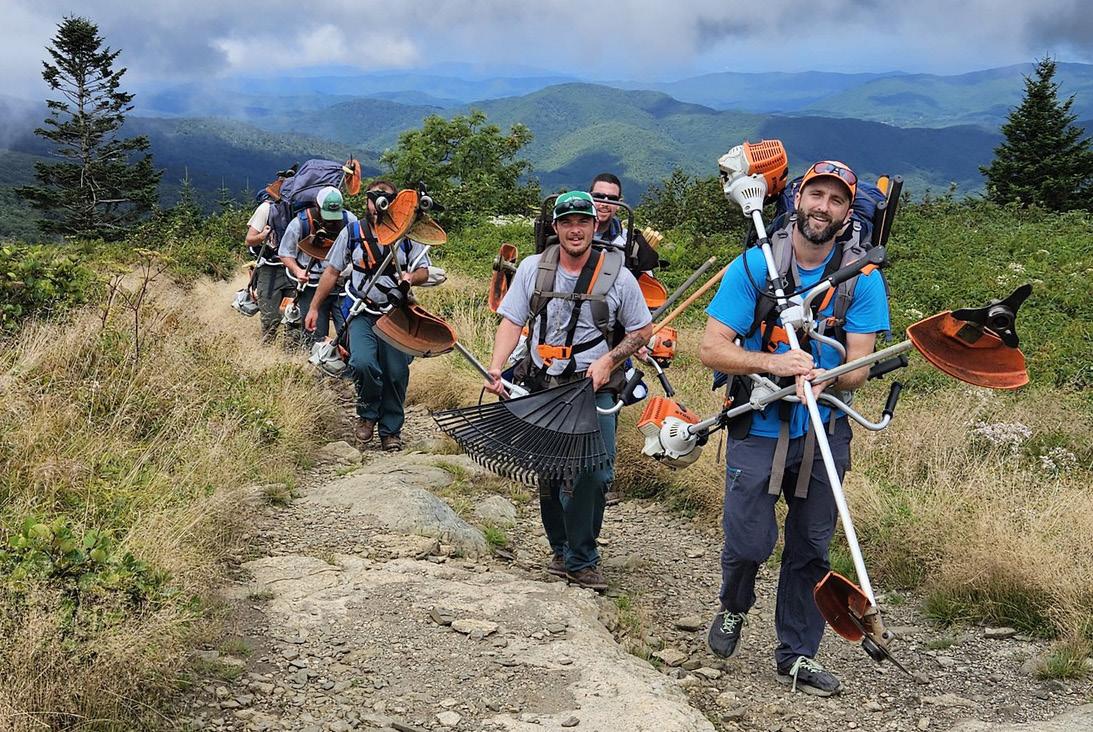
A wonderful crew of volunteers came out for SAHC’s annual Grassy Ridge Mow-off in August. Despite rain and foggy weather, the dedicated Roan stewardship staff and habitat volunteers completed grassy balds management work, including hand-mowing almost 14 acres on Round Bald, Jane Bald, and Grassy Ridge. Additionally, SAHC staff coordinated with US Forest Service and the Appalachian Trail Conservancy to complete 11 acres of track mowing on Round Bald. This habitat management work is supported by the National Forest Foundation through their MAP grant program. Thank you to all our amazing volunteers and partners, and to the NC Forest Service
BRIDGE crew. We couldn’t accomplish this work without you!
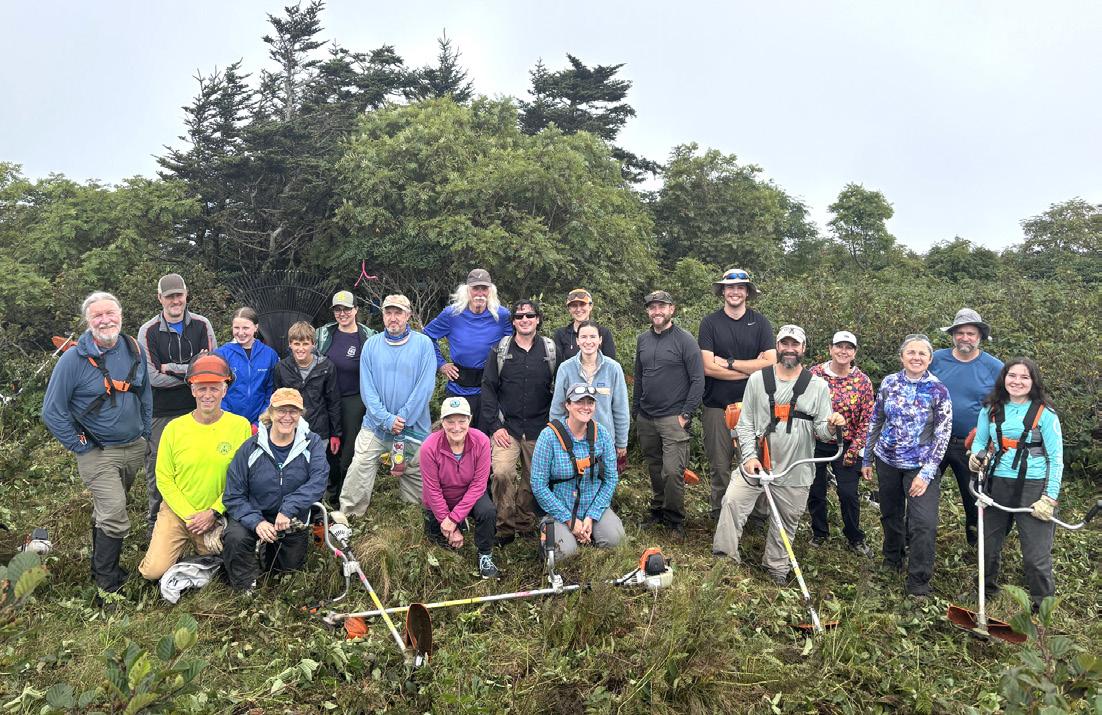
Thank you Grassy Ridge Mow-off Volunteers!
Free the Fir
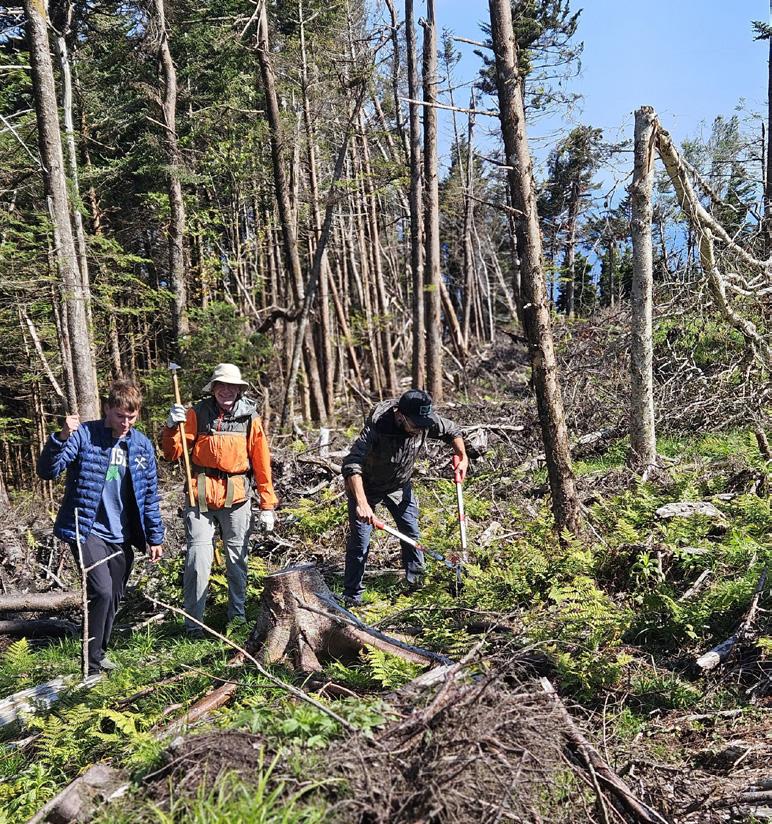
More than 30 volunteers and partners from all over the region joined SAHC in September for the ‘Free the Fir’ workday. In just about 3 hours, volunteers were able to “free”
approximately 1,200 small spruce and fir seedlings from debris left by Helene clean-up work. These seedlings ranged from a couple of inches tall to some reaching more than 20 feet.
“The most touching aspect of that day, for me, was the number of partners and volunteers who came together so quickly to do the work,” shared Roan Stewardship Director Marquette Crockett.
“It is a testament to how special the Roan Highlands are, and a great example of how we will get the best recovery work accomplished – as a conservation community.”
We are grateful to all the volunteers and partners who helped, including Tennessee Eastman Hiking and Canoeing Club, the US Forest Service,
Grassy Ridge Mow-off volunteers, and Saturday evening camp. Photo by Travis Bordley.
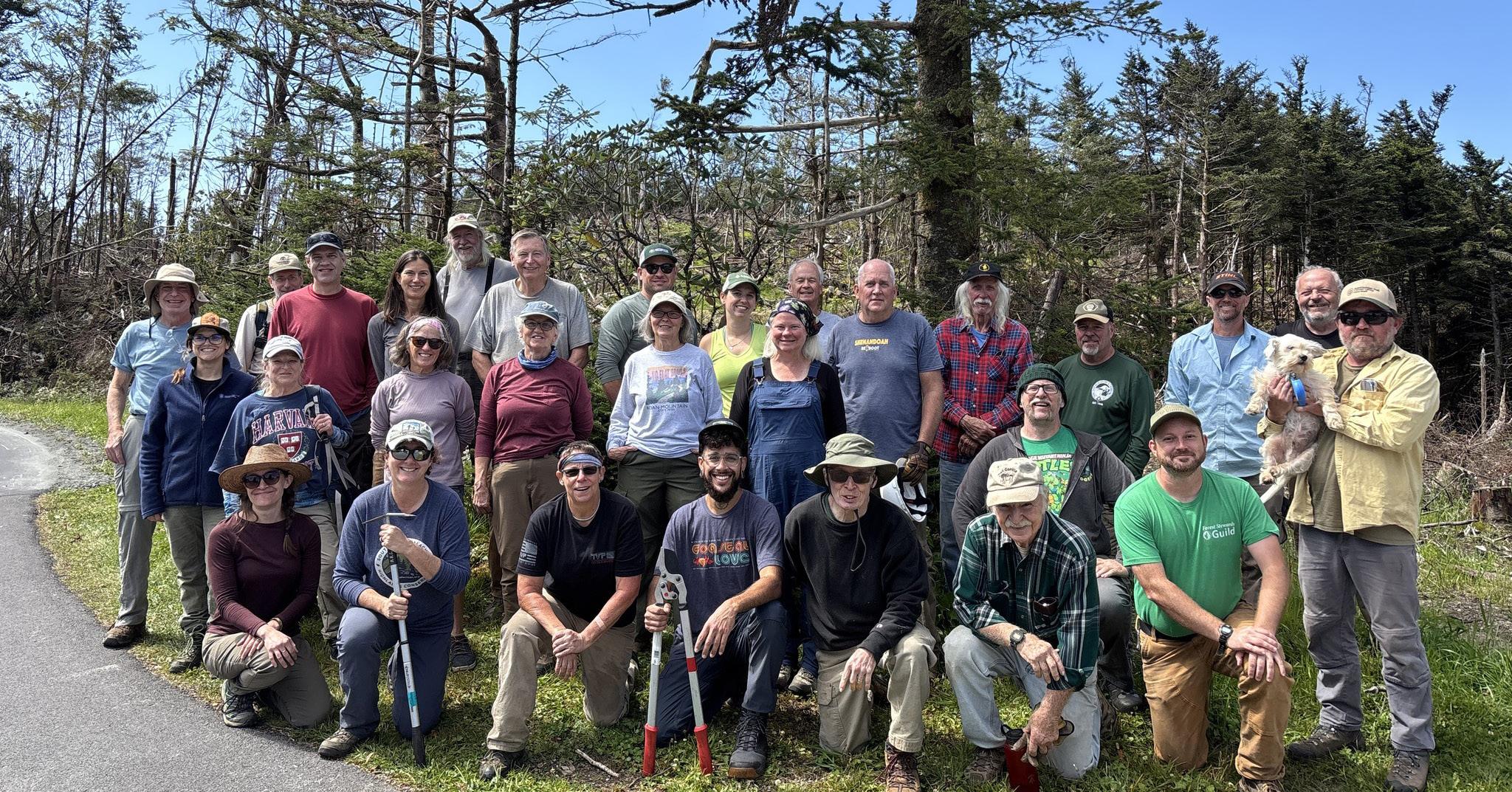
the US Fish and Wildlife Service, the National Forest Foundation, the Appalachian Trail Conservancy, the Forest Stewards Guild, the Conservation Trust for North Carolina, Wicked Weed Brewing, and SAHC Board members and local volunteers.
Grant Funding for Recovery
The Cornell Lab of Ornithology’s Land Trust Bird Conservation Initiative Small Grant Program awarded SAHC a $25,000 grant to address devastating impacts from Tropical Storm Helene on fragile high elevation habitats at SAHC’s Roan High Preserve. The grant funds support habitat management work that reduces wildfire risk and restores globally rare habitats.
“We are grateful to be able to contribute to recovery efforts in our landscape
and community by reducing wildfire risk on the Preserve, as we actively work with partners to begin restoration of rare high elevation habitats,” says Marquette. “We also look forward to learning more about avian response to this natural disaster by using automated recording units to inventory the bird community currently using the site and to monitor changes over time.”
Burn Ban Around AT
The US Forest Services has extended fire restrictions for national forest land along the Appalachian Trail from Hughes Gap to Doll Flats. The order will help protect both habitat and public safety. It prohibits outdoor burning in the area of Roan Mountain on the Pisgah National Forest’s Appalachian Ranger District and Cherokee National Forest’s Watauga Ranger District. The restriction includes all campfires, portable stoves, and all other forms of outdoor burning, with the exception of using a device solely for cooking that is fueled by liquid petroleum/LPG and can be turned on and off. These devices should only be used in an area that is barren or cleared of all overhead and surrounding flammable materials within 3 feet of the device.
Little Rock Creek Preserve
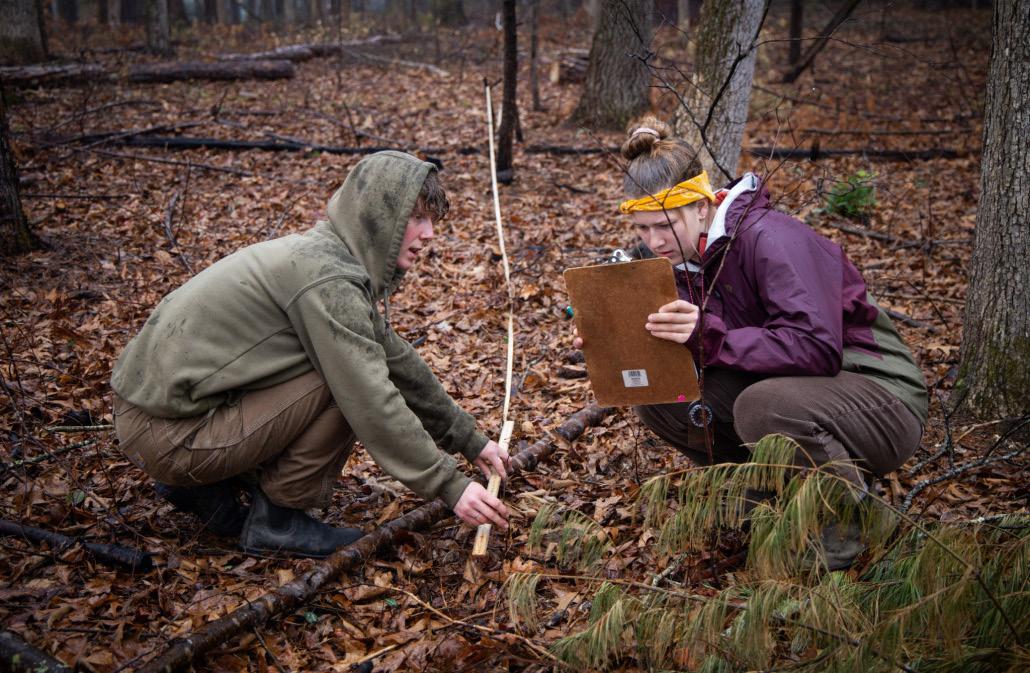
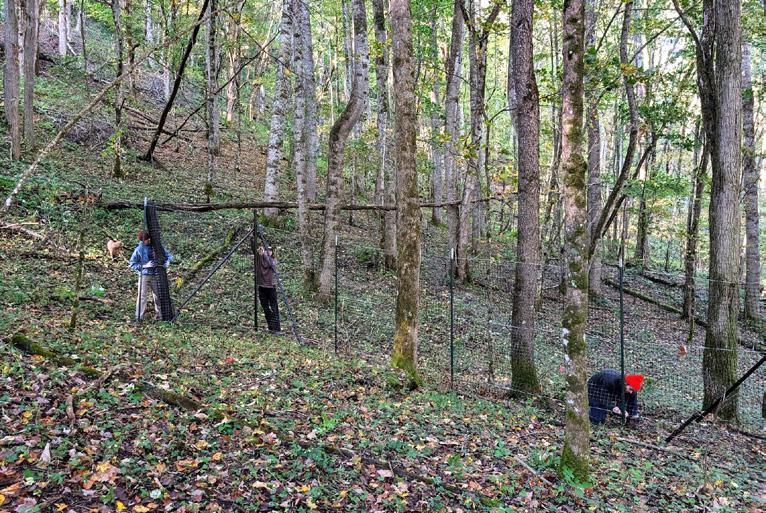
Warren Wilson College students are conducting a multi-year research project at SAHC’s Little Rock Creek Preserve off NC 261. Forestry Professor Eric Griffin and his students installed seven 10 meter x 10 meter deer exclosures throughout the property to investigate the impacts of deer browse on understory vegetation, flowering species, and woody regeneration at the preserve. Warren Wilson students will conduct an initial vegetation/woody species survey in early May 2026, which they will continue to do twice per year over the next several years.
“We’re excited to see what the research results tell us about how deer browse impacts vegetation on the preserve, which may inform land management strategies,” adds Marquette.
During the Free the Fir volunteer work day, volunteers from a wide spread of agencies and partners joined together to find and release fir saplings in the spruce-fir forest atop Roan High Bluff, which sustained immense tree damage from Helene.
Roan Technician Travis Bordley (front) leads a NC BRIDGE crew for grassy balds habitat management.
Warren Wilson students putting up fences to exclude deer from research plots.
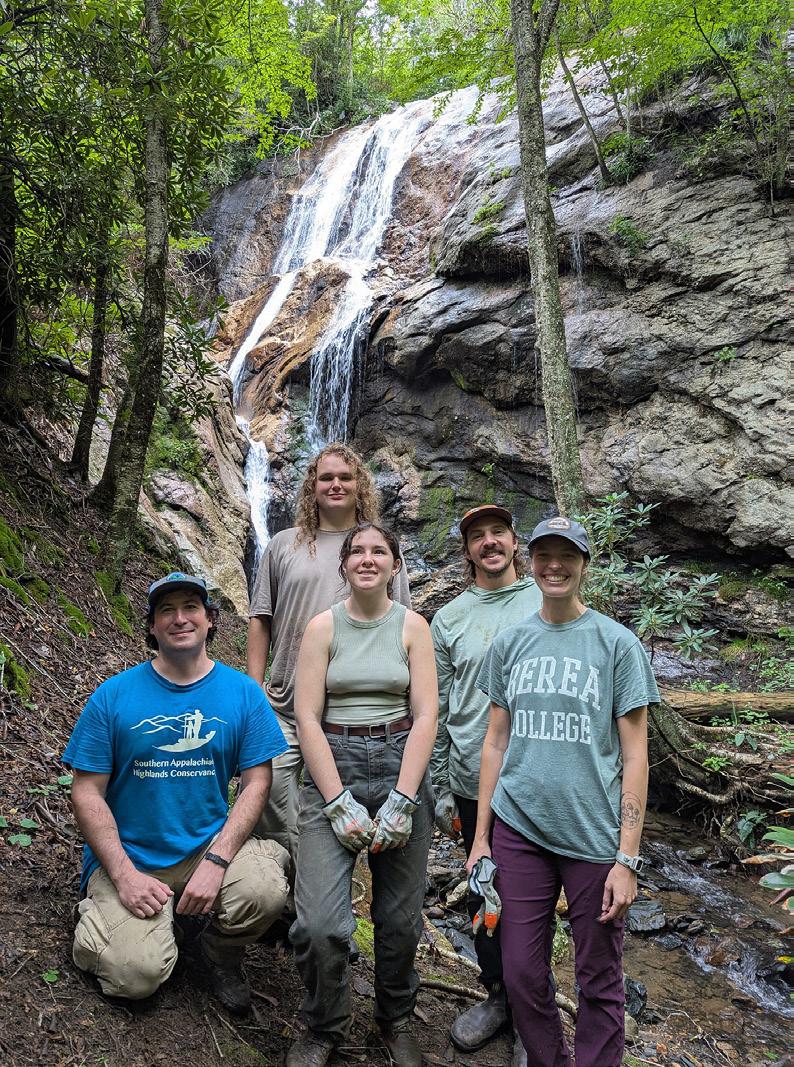
Park Greer, far left, led volunteers to repair and improve the Pine Knob Trail on the preserve.
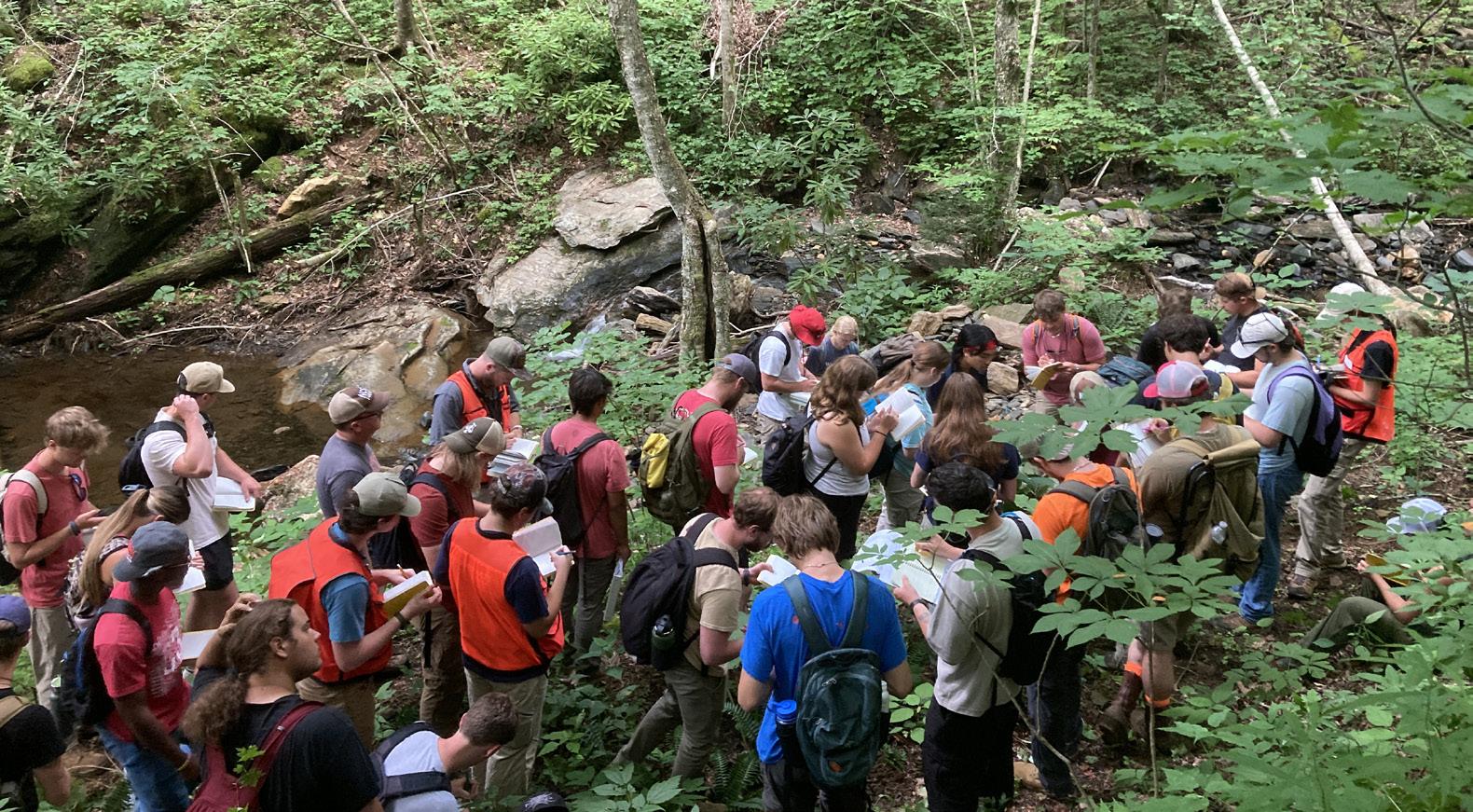
A group of 34 NC State University students studied species diversity on the preserve.
South Yellow Mountain Preserve
Conservation Education and Preserve Management
A remarkable repository of biodiversity, SAHC’s 7,500-acre South Yellow Mountain Preserve also serves as a learning space for young ecologists. Preserve Manager Park Greer has been busy hosting hikes and educational outings, building relationships with local communities, completing the preserve management plan, and organizing volunteers.
NC State University Visit
As part of a statewide field course focused on NC’s diverse plant life and forest communities, 34 students from NC State University visited SAHC’s South Yellow Mountain Preserve (SYMP) this summer. Over several weeks, the students journeyed from the coast to the mountains.
“The students seemed especially grateful to spend time in the cooler elevations of the Southern Appalachians this summer,” says Preserve Manager Park Greer. “I enjoyed having the opportunity to lead
this outing and share in the students’ curiosity.”
The group visit to SYMP began in the Beaver Creek Watershed, where they explored rhododendron thickets, mountain laurel groves, and forests of basswood and tulip poplar. Tasked with identifying 15-20 species, the students carefully documented their findings with detailed field notes. Later, the group moved into a neighboring creek basin to study an acidic cove forest. They welcomed the misty spray of a nearby waterfall while examining the region’s unique ecology.
Pine Knob Trail
The Pine Knob Trail is used to connect people with nature on this preserve. It showcases a scenic overlook, waterfall, and historic mine. We’re grateful to the small but mighty group of volunteers who have helped repair Helene storm damage, clear access, and improve the trail to prevent erosion. Park leads small, guided group hikes for people to experience the preserve along this trail. Join us! Check Appalachian.org/events for upcoming outings and subscribe to our e-mail newsletter for updates.
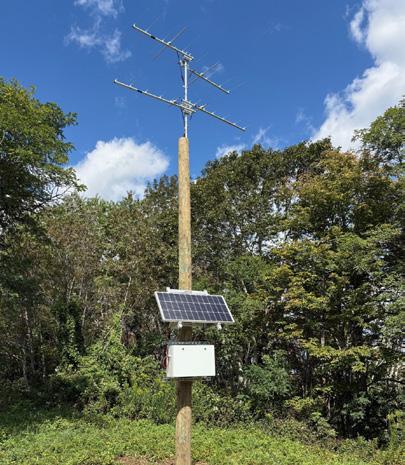
Motus Tracking station at SAHC’s Cane Creek Preserve
The brand-new MOTUS (wildlife tracking station) in the Roan Highlands captured bird and butterfly migration data this fall. We’ve recorded visits from Wood Thrush, Swainson’s Thrush, Saw-whet Owl, Sharp-shinned Hawk, and a monarch butterfly. Our station is part of the Motus Wildlife Tracking System, an international collaborative research network that uses radio telemetry to study the movements of birds, bats, and insects. Explore with us at Appalachian.org/MOTUS.
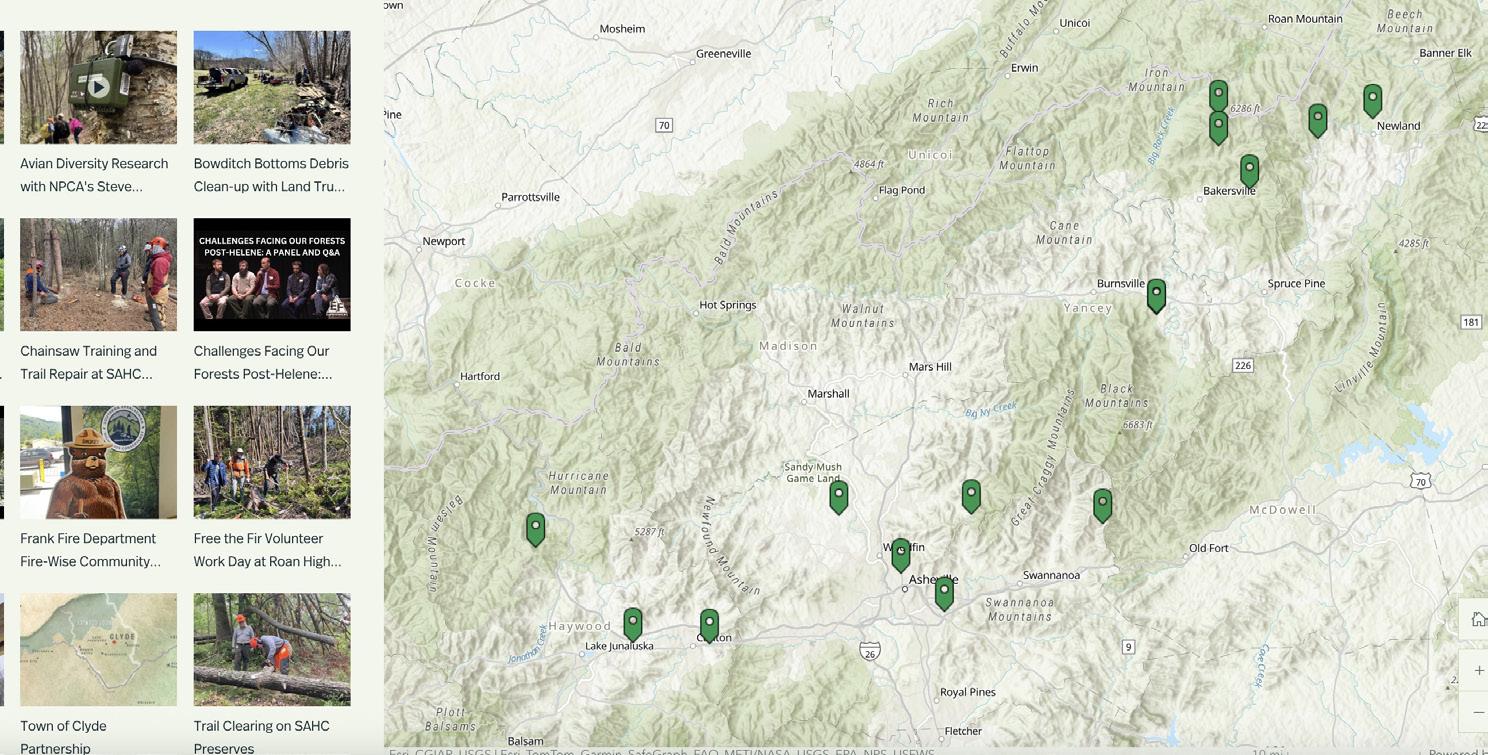
This interactive StoryMap allows viewers to click through maps and expanded features to learn more about impacts caused by Helene, and how SAHC and our partners responded.
Stewardship After the Storm
An Interactive Online StoryMap

Marking the one year anniversary of Helene, Southern Appalachian Highlands Conservancy published an interactive online StoryMap that enables you to walk through challenges and storm response over the past year. We invite you to explore these maps and stories, and celebrate the strength of our community, partners, and team members. Use the QR code for a direct link to view the StoryMap or visit Appalachian.org/helene-story-map.
Last year, Helene caused widespread damage across the mountains of NC and TN, altering ecological conditions and severely impacting many of the lands protected and managed by the Southern Appalachian Highlands Conservancy. The storm triggered landslides and flooding, wrought
catastrophic wind damage, impaired streams and rivers, and blocked access across a range of high-priority conservation properties.
Bowditch Bottoms Volunteer Work Days
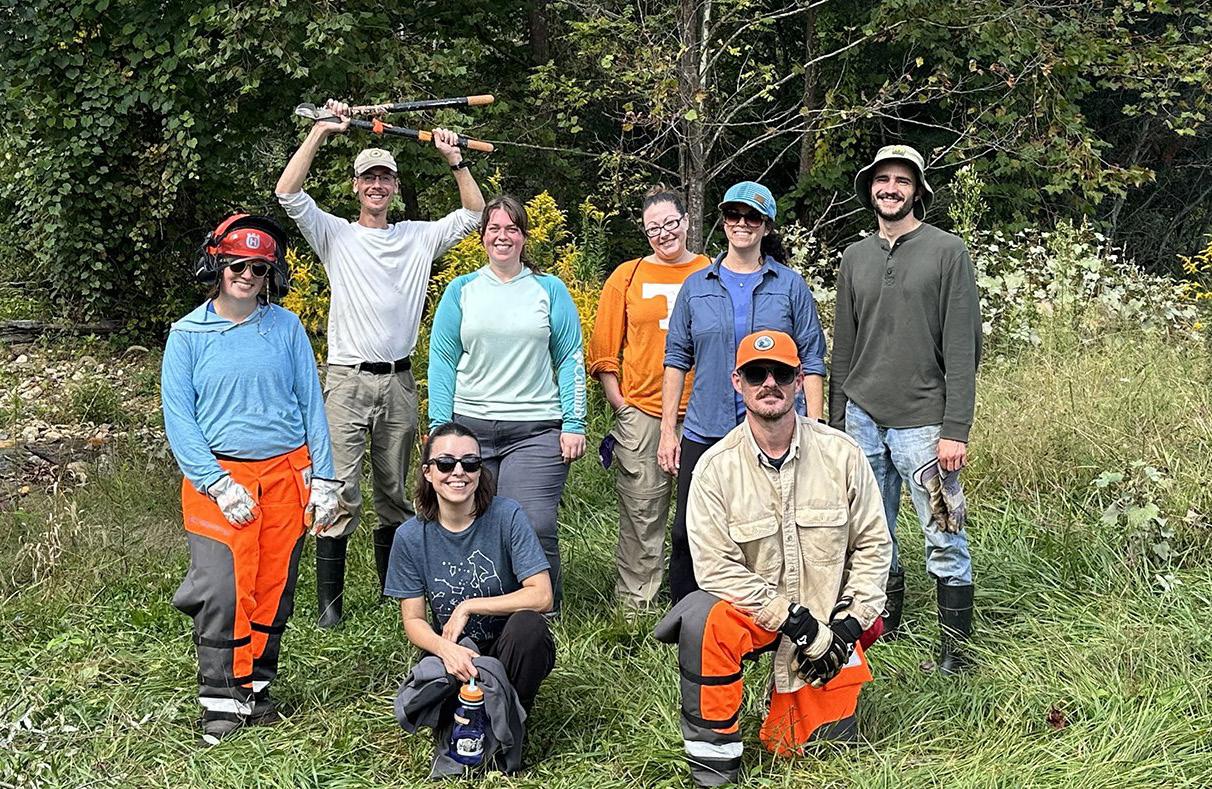
North Carolina Wildlife Federation partnered with SAHC to host six successful workdays at our Bowditch Bottoms preserve in Yancey County. Together we removed invasive plant species such as autumn olive and Japanese knotweed from the property’s wetland area. These non-native and highly invasive plant species reduce biodiversity and diminish wildlife habitat by spreading quickly and outcompeting native species. Removal efforts go a long way toward reclaiming habitat for native plants and wildlife.
In response to this unprecedented challenge, SAHC drew on support from our community and partners, coordinating efforts to assess damage, assist landowners, and develop restoration strategies that build long-term resilience in protected landscapes. This work highlights the critical role land trusts can play in disaster response, adaptive stewardship, and climate-informed land management in the Southern Appalachians.
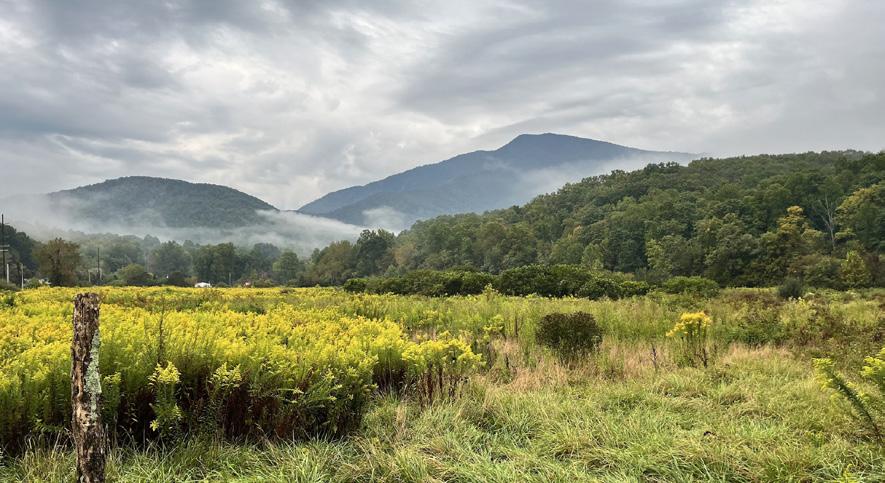
“Bowditch Bottoms is truly a remarkable place, tucked into the shadow of Mt. Mitchell in the South Toe River watershed,” shares Stewardship and GIS Manager Chris Kaase “These partnership volunteer work days have made a visible, positive impact in the landscape, restoring the stream corridor flooded by Helene and removing invasive plant species to create improved habitat and water quality.”
Our partners at EcoForesters also assisted with restoration efforts on the preserve, removing an enormous clump of invasive multiflora rose.
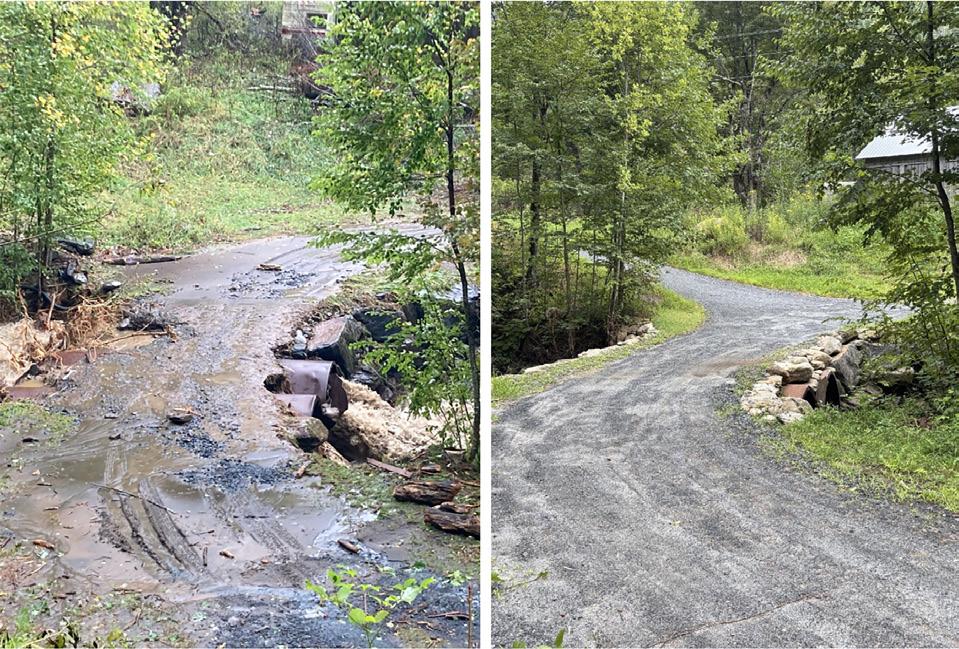
The StoryMap includes visual before/after comparisons, such as the storm-damaged road access to SAHC’s Little Rock Creek Preserve, repaired thanks to grant funding from The Community Foundation of Western North Carolina.
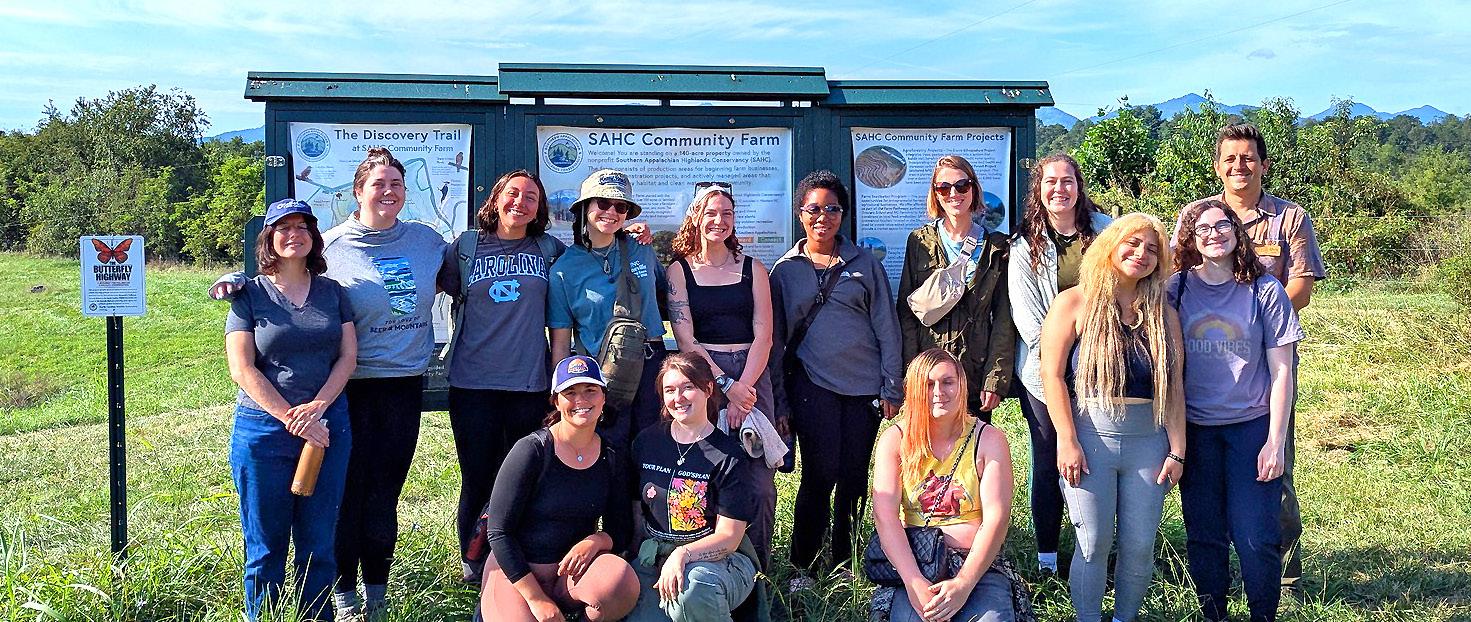
SAHC Community Farm Conservation •
Education • Celebration
Located in Alexander, NC, the 140-acre SAHC Community Farm hosts production space for burgeoning farm businesses, demonstration projects for land management, an event venue for special gatherings such as weddings or reunions, and education resources for groups and individuals. Visit Appalachian.org for a schedule of upcoming tours and workshops.
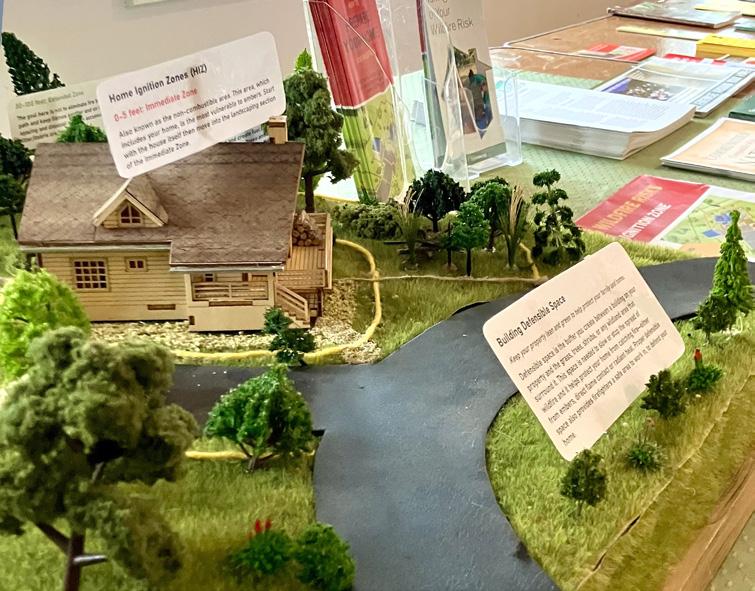
Promoting Fire Safety
SAHC hosted a Fire Safety and Land Management Workshop with partners from Blue Ridge RC&D, Mountain Valleys RC&D, Carolina Land and Lakes, Piedmont Prescribed Burn Association, and NC Forest Service.
Participants learned about forest management at the SAHC Community Farm, firewise basics, homeowner risk assessments, prescribed fire as a land management strategy, and more.
SAHC’s Farm Incubator Program fosters success for young and growing agricultural businesses – including current program participants Daisy Chain Flower Farm and Blazing Star Flowers. Congratulations to proprietor Suzanne Nolter of Blazing Star Flowers, who has purchased her own tract of land nearby and will be graduating out of the program after this year.
We also support the creation of resilient local food systems by providing growing and work space for partner non-profit organization the Utopian Seed Project. This fall, Utopian Seed Project processed more than 700 lbs. of squash through the SAHC Community Farm!
Inspiring the Next Generation of Conservationists
In addition to ongoing, active farming operations, the farm creates an engaging space for youth and adults alike to interact with land management in a meaningful
way. In recent months, we hosted recurring volunteer programs for students of the French Broad River Academy and an exciting workday with FernLeaf Community Charter School. A group of 35 students from the charter school helped clip 3,000+ small pine trees in the stream restoration area and potted 30 blueberry plants and 35 hazelnut trees.
“We were able to meet the needs of the class with ADA projects, accessible for everyone,” says Community Farm Manager Chris Link. “The workday was a success, and we look forward to working with this school again in the future.”
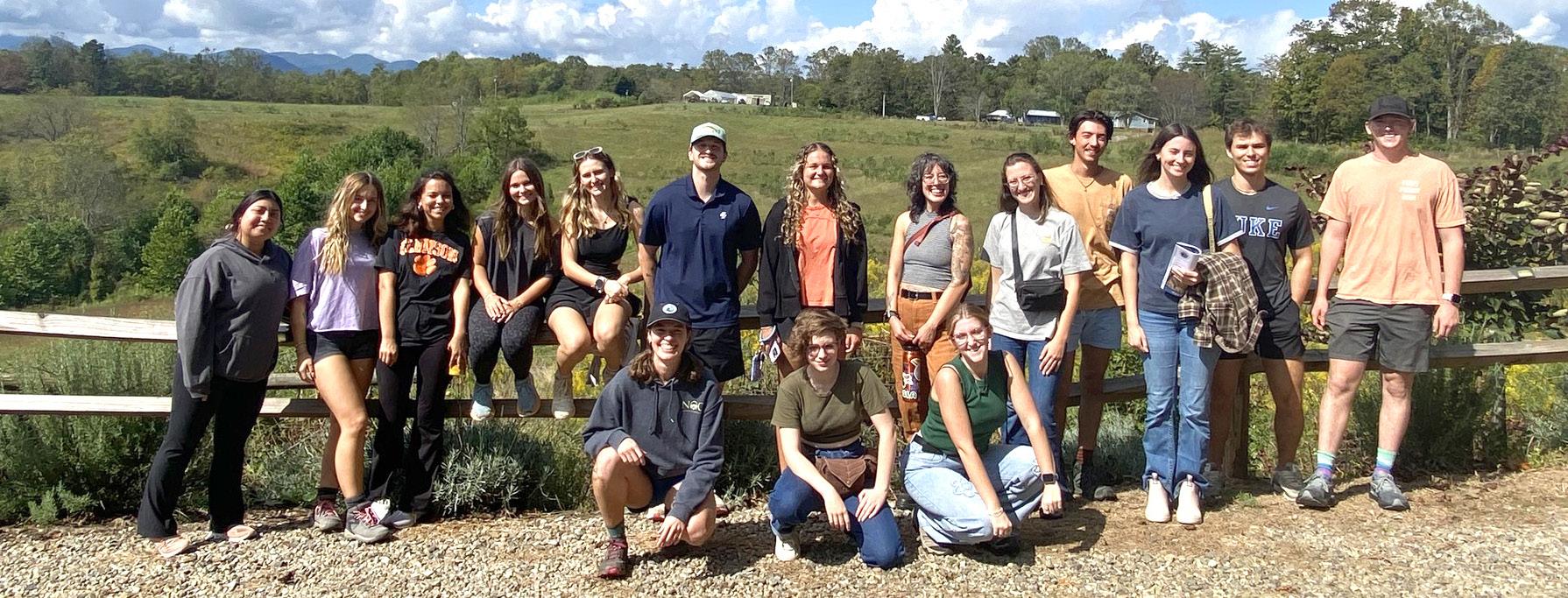
The farm serves as an outdoor classroom and a working example of land use design with beneficial management techniques. Students from the Landscape Architecture department at Clemson University visited the SAHC Community Farm to explore practical concepts and career paths.
Our Outings program offers monthly guided activities at the farm - from invigorating hikes along the Discovery Trail to relaxing yoga sessions.
Have you ever wondered how to access funds for farm improvements, or how to get started in a farm-related vocation? This fall, we helped answer those questions for farmers, local landowners, and high school students. SAHC hosted a full-day workshop with NC Farmlink and the NC Conservation Outreach Program (NCCOP), which included a Natural Resources and Conservation Services (NRCS) Environmental Quality Incentives Program (EQIP) training. Participants enjoyed an intensive farm design and planning workshop, followed by a 1-hour hike across the farm to look at NRCS-funded projects in real life. Then, students from TC Roberson High School asked the panel of five presenters about how they navigated careers in conservation.
“We hosted about 30 participants in this workshop, from a wide range of backgrounds,” says Chris. “It was a great mix – from farm managers to local residents, students to professional NC Cooperative Extension agents. We

shared effective and helpful content for farmers to take action and feel empowered to apply and go through the process for NRCS funding. Many farmers who attended had heard about NRCS but didn’t know how to get started. This training helped pave the way for them to get info and take action. We used on-the-ground examples of NRCS-funded infrastructure improvements that have help improve water quality on the farm and prevent erosion. And we covered a lot of additional info – tips about efficiency and how to make farm improvements without wasting money.”
“But my favorite part was inspiring young students to go into this field,” Chris continues. “It was so refreshing to hear from these students about their dreams and visions. One student said ‘This is why I’m here. This is what I want to do. I want to help the environment, and don’t want to be in an office.’ We were able to share real-world experiences from all the panelists, and we were all enlivened by the day.”
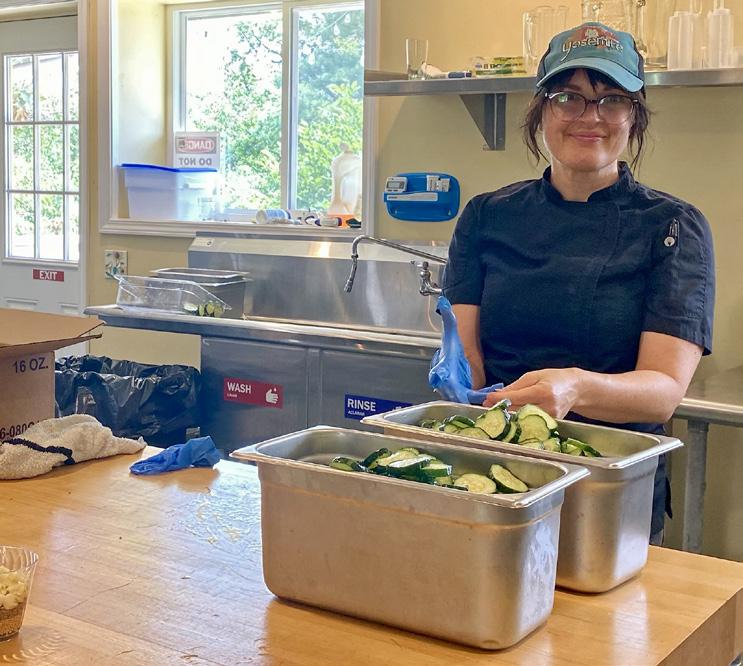
One of the local businesses using the certified food-safe kitchen at the SAHC Community Farm, The Scullery crafts small batches from organically grown produce. Best known for flavor-forward hot sauces, The Scullery also produces tasty pickles and jams made naturally with low sugar.
“When you support our micro business, you’re not just buying a product – you’re investing in our community,” says Founder/proprietor Natalie Miller. “Your purchase keeps money circulating locally, supports the unique character of our town, and fuels future growth and innovation. One of the greatest benefits of supporting a micro business is the direct connection you have with us. You can communicate with us directly, share your feedback, and be a part of our journey to keep bringing you amazing products.”
Visit them at www.thescullery.org

SAHC Community Farm work is funded in part by grants from The Community Foundation of Western North Carolina, a grant from the USDA National Institute of Food and Agriculture Beginning Farmer and Rancher Development Program (under grant award number 2021-70033-35717), and a costshare grant from USDA Natural Resources Conservation Service.
Natalie making horseradish bread and butter pickles and spicy dill pickles at the SAHC Community Farm Kitchen. Yum!
Students from the Landscape Architecture department at Clemson University visited the farm to learn about SAHC and potential career pathways.
Thank
You, Corporate Partners!
Our Corporate Partners are business supporters who contribute to SAHC at an annual level of $1,000 or more. We are so grateful that these businesses choose to support land and water conservation in the mountains of NC and TN.
Mt. Mitchell: $25,000+
The Biltmore Company
Wicked Weed Brewing
Witherspoon, Platt & Associates
Waterrock Knob: $15,000+
Mast General Store Salesforce
Roan Mountain: $10,000+
Highland Brewing Company
Cold Mountain: $5,000+
Hunter Hometown Foundation
Kee Mapping and Surveying
Big Yellow: $2,500+
Ballad Health
Hickory Nut Gap Meats
Pisgah Map Company
TE Connectivity
Max Patch: $1,000+
Altura Architects
B Local AVL & WNC
Coca-Cola Company
Equinox Environmental
French Broad River Garden Club Foundation
Gartner
Grandfather Mountain Stewardship Foundation
Jennings Environmental
Jus’ Running
Moni Hill, Artist
New Belgium Brewing Co.
Roberts & Stevens, Attorneys at Law
Shell Oil Company Foundation
Steelcase Foundation
Webb Investment Services
Wildlands Engineering
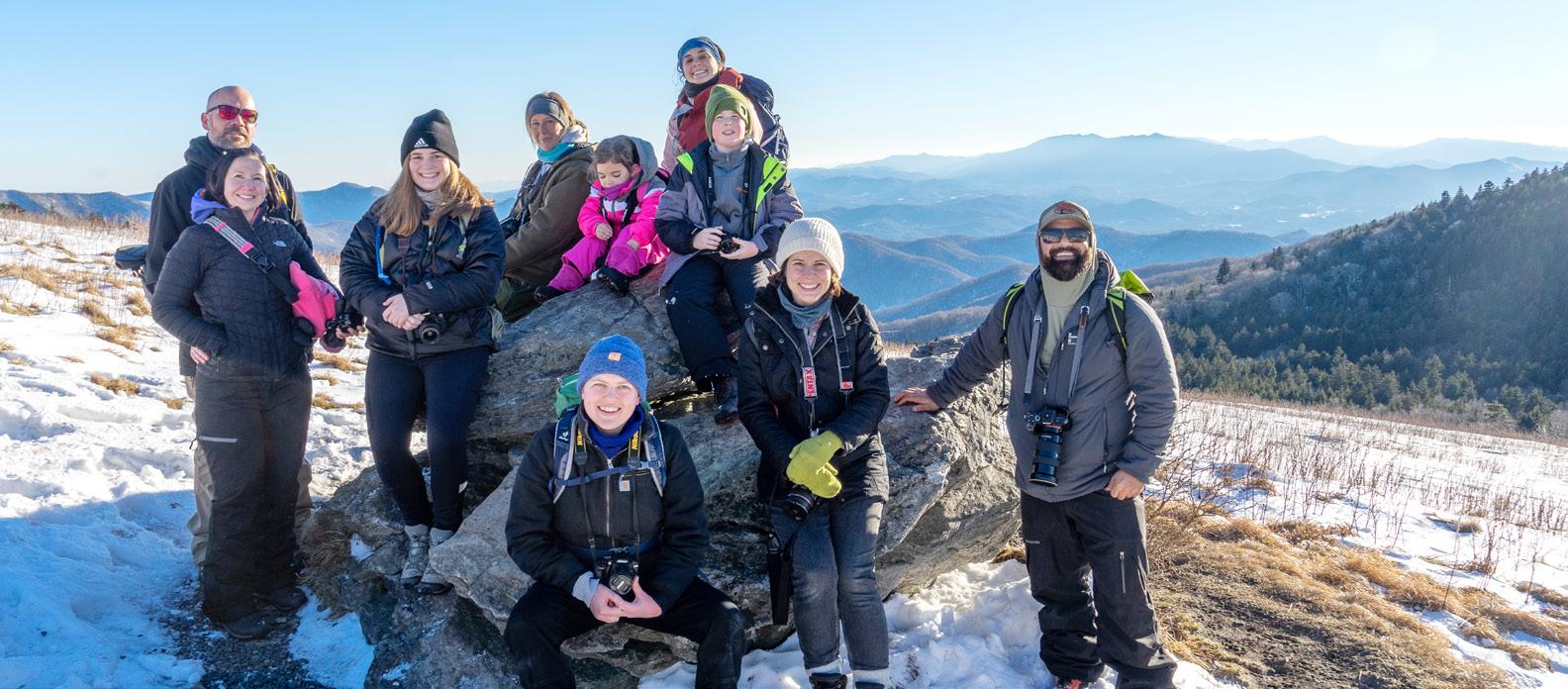
2026 Winter Hiking Challenge
60 Miles in 60 Days - January 1 to March 1
Registration is open for SAHC’s 6th Annual Winter Hiking Challenge!
The Winter Hiking Challenge sets a goal of 60 miles in 60 days, to be completed in your own time and at your own speed. Those can be miles you’ve walked, run or hiked – in your neighborhood or through the woods – just make it 60 miles within the 60-day challenge time period (January 1st to March 1st, 2026). No matter your background or ability this event is designed to get folks outside in the cold winter months! Registration opens December 1 and ends on February 25. The $25 registration fee directly supports SAHC’s conservation work. If you cannot afford the registration fee at this time, please use the coupon code: SAHC2026.
All participants will receive informative emails throughout the challenge with suggestions for some of our favorite places to hike across the mountains of NC and TN, including some new properties SAHC has recently protected. You may enter miles at any date during the 60 days, as long as they are all entered by March 1.
Those who complete the Winter Hiking Challenge will receive a NEW commemorative SAHC patch, designed by Solstice Handmade, and all participants will be invited to an in-person celebration in March.
Info and sign up at Appalachian.org/winterchallenge
Thank you, 2026 Winter


Hiking Challenge Sponsors:



Did You Know? Some of our Corporate Partners are recognized for matching employee gift donations. Does your employer have a matching gifts program? If so, your contributions to SAHC could be doubled! For information about supporting conservation through SAHC’s Corporate Partner or Real Estate Partner Programs, contact Cheryl Fowler at cheryl@appalachian.org.
Outdoors with SAHC
My Favorite Place in the World
Personal Perspective: Outreach Program Manager Erin Goodpaster
“I was raised in the small town of Robbinsville, NC, right on the Tennessee border. Growing up here, I was surrounded by rich Appalachian and Cherokee culture. Almost 70% of Graham County is National Forest land, so that was a big influence on how I spent my free time. I grew up hiking, backpacking, biking, kayaking on the Nantahala River, swimming at Lake Santeetlah, and any other way I could recreate outside.
My favorite place in the world to this day – where I spent a lot of my time – is Joyce Kilmer Memorial Forest. It’s here that I heard my first land protection
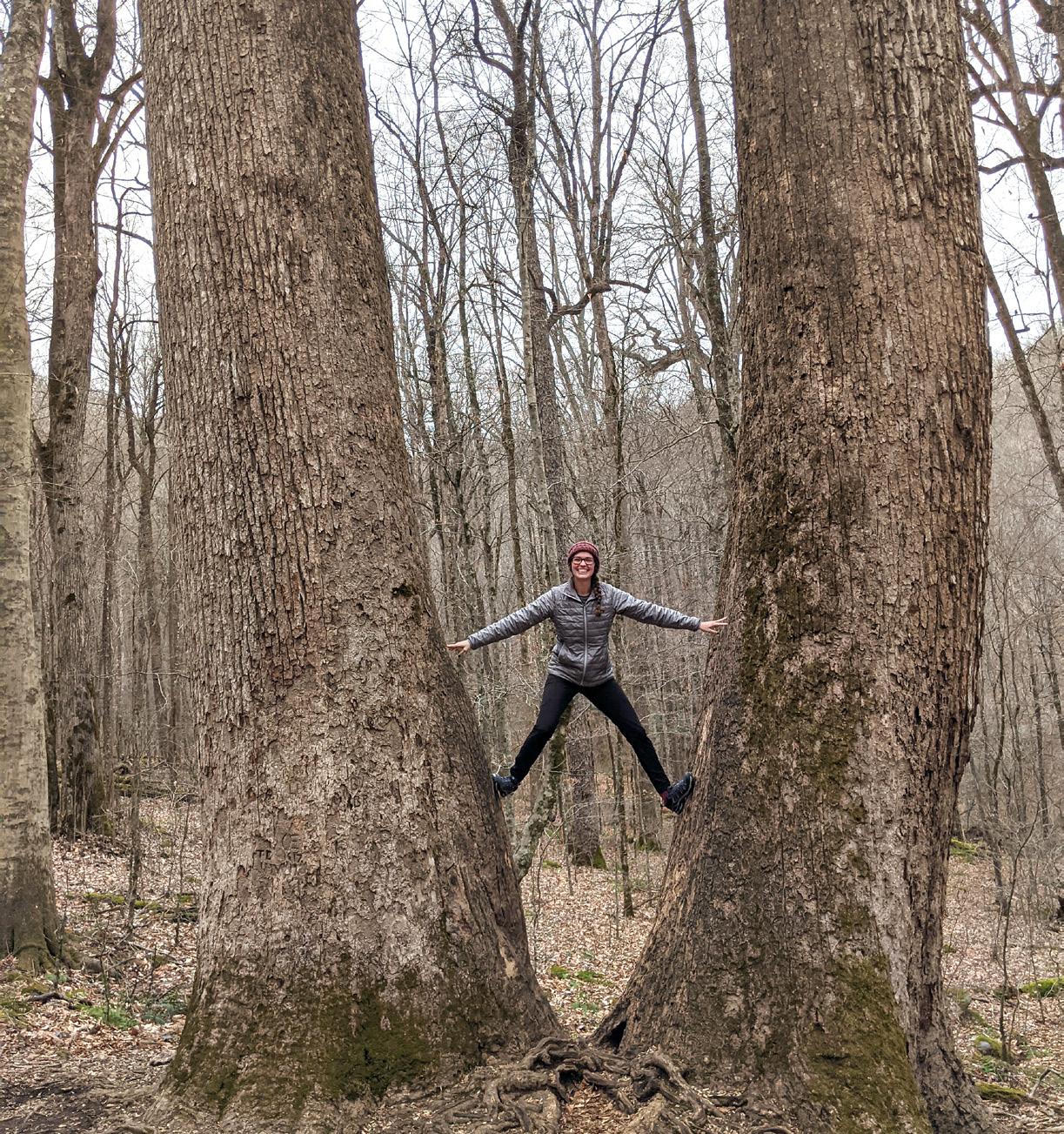
story. The land that became the memorial forest in 1936 had once been scheduled to be clear-cut for lumber in the 1920s. Now, it is one of the largest stands of old-growth trees in the eastern U.S. Standing under the sheer majesty of the towering 100-foot-tall poplars inspired the start of my love story with the woods.
My Papaw would take me on hikes throughout the Nanathala National Forest and show me how to forage for food like ramps. We walked for miles, naming flowers, trees, plants, and fishing holes while he told me stories of how our family and the Cherokee people would respect and use the earth to sustain them. These experiences instilled a deep sense of connection to the land and a desire to show other people the beauty, history, and culture our mountains have to offer.
I was really drawn to this role at SAHC because it allows me to now be a part of the conservation process and share the opportunity to tell meaningful stories of the land. I want to inspire other people, as the story of the Joyce Kilmer Memorial Forest influenced me.
I’m so excited to be a part of the Southern Appalachian Highlands Conservancy team and to help connect people to the land I grew up recreating on throughout Western North Carolina and East Tennessee.”
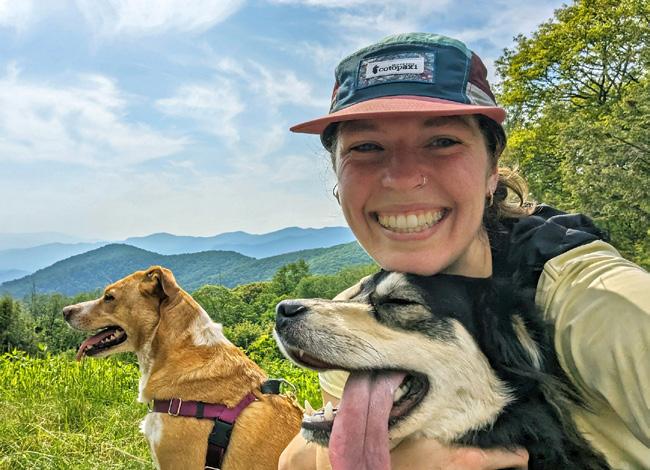
Welcome to the team! In August, Erin joined SAHC as our new Outreach Program Manager. She loves being outside, especially in the mountains of NC/ TN. While obtaining a BA in Communications from Berea College, Erin planned and led rock climbing, canoeing/kayaking, caving, backpacking, and front-country camping student trips for the Outdoor Recreation Program. This role inspired a passion for leading outdoor programs. After graduating college, she obtained a job with Western Carolina University’s Project Discovery-Talent Search Program, which serves students in rural WNC by providing college access services. While in this role, Erin helped develop and lead experiential outdoor classroom programs and bike expeditions. She has also served as the Assistant Director for Community Outreach and Admissions at UNC Chapel Hill. Erin is currently busy planning upcoming SAHC hikes and outings — please join us! For the most up-to-date info about upcoming events, subscribe to our e-News, find us on socials, or visit Appalachian.org/events.
Erin at Joyce Kilmer Memorial Forest
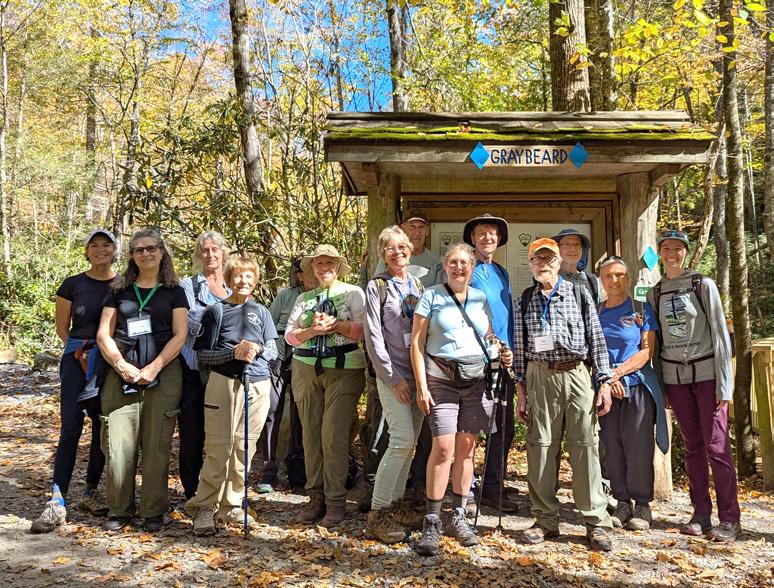
Erin (far right) led SAHC outings for the Osher Lifelong Learning Institute this fall.
Welcome! New to the SAHC Board of Trustees
As a non-profit organization, Southern Appalachian Highlands Conservancy’s Board of Trustees provides conscientious and capable guidance for the organization through dedicated volunteer service. SAHC Board members contribute professional expertise from a wide range of backgrounds. Welcome and thank you to the five folks joining our Board this year.

Paul Bonesteel
Paul is president of Bonesteel Films in Asheville. He has produced many awardwinning documentaries and recently completed film and book projects A Life Reimagined: the George Masa Story. Paul is a longtime SAHC member. He serves on the Blue Ridge Parkway Foundation Council of Advisors. He brings strong communications, story-telling skills, and connections with the conservation and arts communities throughout the region.
Ted Ghiz
Chris Coxen
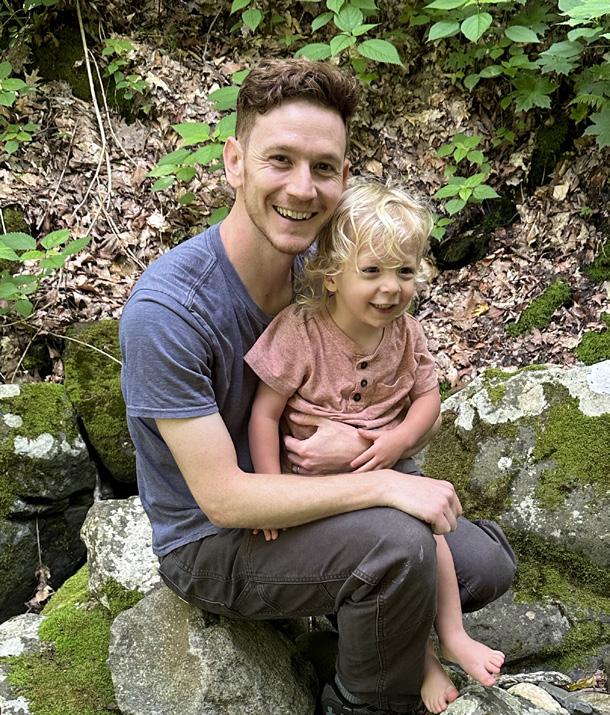
Chris served as an Americorps member with SAHC in 201012, and as a part-time field ecologist in 201214. Afterward, he worked as a wildlife biologist with the National Wild Turkey Federation. Chris is currently a principal
AI/ML engineer at Gainwell Technologies after working as a research data scientist with RTI International. He brings insight to the Board from his experience as a wildlife biologist, data scientist and past conservation staff member.
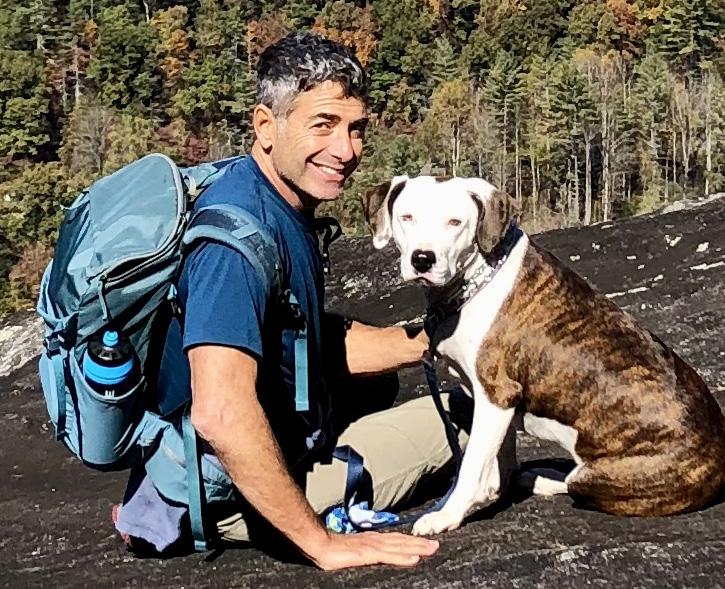
A native of West Virginia, Ted has always been most comfortable in a mountain setting. He developed a passion for the outdoors in Alaska, where he lived for two years. In his work life, he was a corporate tax lawyer, employed by several large corporations, including his last job of 23 years with The Coca-Cola Company. Ted’s love for the WNC mountains attracted him to the work of SAHC where he has been a donor through the Gray’s Lily Leadership Circle for many years. Ted is an active guy – hiker, cyclist, gardener, skier/snowboarder, diver, and will play any sport involving a racquet or paddle. His great loves in life are his husband Ronnie and his dog Finley.
Gary Kauffman
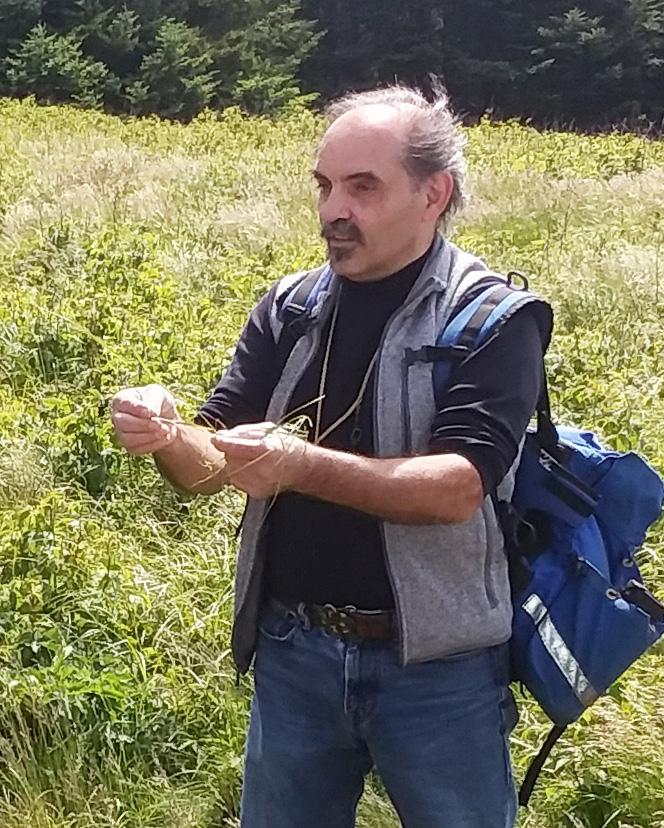
Gary recently retired from the US Forest Service, where he served as the Botanist/ Ecologist for National Forests in NC. He’s volunteered with SAHC since the 1980s and has served on the Roan Stewardship committee. As a hike leader for SAHC’s June Jamborees, Gary engaged people in botanical explorations in the Roan Highlands. He brings plant and plant community knowledge to the board, having explored the southern Appalachians for the last 40 years.
Erica Malpass
Erica works as an Environmental Assessment Planner with DR Horton home builders. She previously worked as the Sustainability Coordinator at ETSU and as a community planner with First Tennessee Development District. Erica has volunteered for six years on the planning team of the Meet the Mountains Festival.


Fulfilling a Promise: For Future Generations, Forever
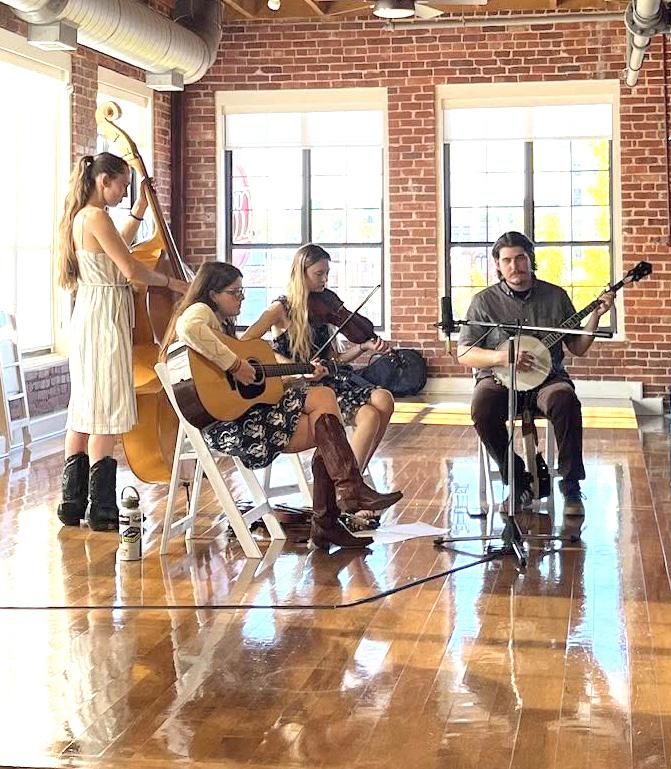
On October 9, friends and supporters gathered in Johnson City to celebrate the success of Fulfilling a Promise: For Future Generations, Forever . The evening featured inspiring remarks, lively Appalachian music by ETSU students, and heartfelt connections that reflected the strength of our conservation community.
Publicly launched in 2024, the campaign set out to raise $10 million in long-term investments and endowment funds to strengthen SAHC’s core operations and ensure lasting capacity for conservation. Thanks to the vision, generosity, and trust of our supporters, we have surpassed that goal, raising $10.9 million in cash and commitments.
For more than fifty-one years, the Southern Appalachian Highlands Conservancy has protected biodiversity hotspots, breathtaking scenic views, the headwaters of pristine streams, working farms, and beloved trails. Together, we have helped create new parks, filled critical gaps in our national forests, preserved family farms, and inspired naturalists young and old.
The Fulfilling a Promise campaign strengthens our ability to continue this legacy at a time when the Southern Appalachians face intensifying development pressures, climate impacts, and overuse of recreational lands. Funds raised through the campaign are being invested to:
• Act swiftly when critical land conservation opportunities arise.
• Implement cutting-edge stewardship strategies to defend and uphold conservation on more than 67,000 acres of protected land and easements.
• Expand community impact by connecting thousands of people to nature through youth education, our Community Farm, public hikes, and virtual learning.
• Strengthen organizational resilience so SAHC can respond to challenges like wildfires, floods, and future natural disasters while providing fair compensation and growth opportunities for conservation professionals.
With this campaign, SAHC is investing in the future by building an enduring source of strength that will allow us to meet conservation challenges across the Southern Appalachians for generations to come.
We are deeply grateful to everyone who helped make this milestone possible. Together, we are keeping our forever promise to protect, steward, and connect people with the lands we love.
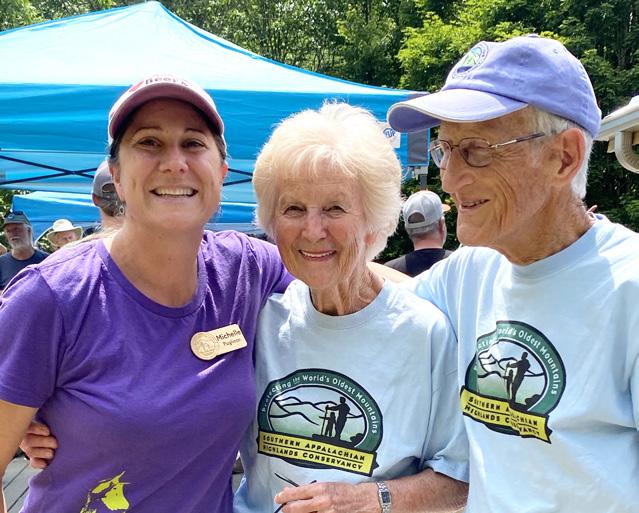
During the celebration, longtime SAHC supporter and former Board Chair, Jeanette Blazier reflected on the spirit that drives this work, honoring “the dreamers, visionaries, and idea generators who first put this in motion.”
She reminded us that “conservation work never ends, and even though we have raised $10.9 million, we must keep working to ensure that those who follow us will be able to find the same joy and inspiration in these mountains that we do today.”
Jeanette (center) at the 2023 SAHC June Jamboree.
Members’ Corner

In Memoriam: Sarah Carter
Thomason
Born in Asheville, Sarah was known for her bright spirit, kind nature, and the way she made others feel welcome. She had a lifelong appreciation for beauty and creativity, often expressed through her love of photography. Above all, she valued her family and friends and will be remembered for her warmth and sense of humor.
The Carter and Kimberly families have deep roots in WNC and a long history of connection to the land. Sarah’s parents, Foster Piercy Carter and Marguerite Kimberly Carter, were both active members of the Carolina Mountain Club, where her father served as president. Their shared love of hiking and the mountains helped inspire a family appreciation for the natural world that continues to this day.
Sarah’s aunt, Dorothy Stikeleather, owned the Reems Creek Bowl property near the Snowball Mountain Trail. That land was sold to SAHC by Dorothy’s children in 2022 to ensure its permanent protection.
SAHC is honored to have been chosen by the family to receive memorial gifts in Mrs. Thomason’s memory. We are grateful for the family’s enduring ties to this landscape and their shared commitment to the mountains and communities of the Southern Appalachians.
Memorials
— as of November 6, 2025
Memorial contributions to SAHC honor the memory of special individuals. A memorial gift is a gift of flowers in perpetuity. You can remember a loved one by making a gift to SAHC to help permanently protect the places they loved.
In memory of Norma Jean Cannon
Mountain View Garden Club
In memory of Captain Stephen L.
Christopoulos
Beth Christopoulos
In memory of Judy Coker
Sima Cooperman
In memory of Charles Cornwell
Marty Cornwell
In memory of Jim Eison
Mary Ault
HomeSource Builders
David and JoAnne Rittenberg
Joan and Edward Steiner
Judith Taylor
In memory of Amy Esposito
Ray and Debbie Hitt
In memory of Mrs. Ruth Z. Ewald
Linda Ewald
In memory of William Hamilton
Karl Brandspigel and Nita Coleman
In memory of Bernice Carter Harris
Charles and Gibbie Harris
In memory of Miles O. Hayes
Mya Hayes
In memory of Bryan Hoofnagle
Bess Milliron
In memory of Riley Howell
Nancy Blevins
In memory of Joan Loftquist
George Lofquist
In memory of Bill Lowndes
Kenneth and Lucy Dierks
Kim Lowndes
In memory of John Lowndes
Kim Lowndes
In memory of Katherine Ann Overholser
Lynn and Chipper Edwards
Stephen Gregory
James Overholser
Linda Parks
Linda and Bill Schafer
In memory of Daniel Russo
Rosalie Russo
In memory of Glenn Shepherd
Kay Shepherd
In memory of Beverly ‘Bev’ Skordal
Bettye Boone and Saylor Fox
In memory of David Taylor
Debbie Taylor
In memory of Sarah “Sallie” Carter Thompson
Pam and Phillip Hardin
Francina and Gloria Rogers
In memory of Kent Urquhart
Vicki Clark
In memory of Jean Webb
Laura A. Webb and John R. Hoskins
In memory of Evan G. Westall
Cynthia Van Deusen
In memory of Wendell Wiley
Helen C. Gift
Sarah’s parents Marguerite & Piercy Carter on the Roan
Sustaining Members Make a Difference Tributes —
At the heart of the Southern Appalachian Highlands Conservancy’s work are people who give consistently to protect the mountains they love. Patty and Ben Woolf and Doris Gove are members of the Gray’s Lily Leadership Circle through their monthly gifts, providing reliable support that helps SAHC protect the forests, streams, and mountains of the Southern Appalachians.
Patty and Ben Woolf are longtime monthly supporters whose connection to the region runs deep. Patty remembers the smell of the dense forests on foggy mornings while camping and searching for salamanders in the cold mountain streams (which she still loves to take plunges into).
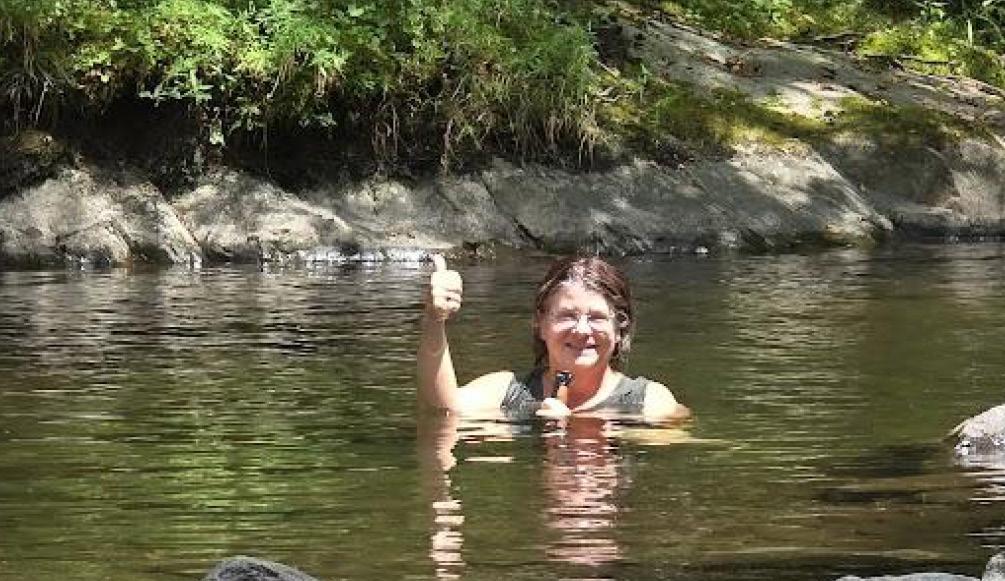
“Those mountains shaped who I am,” she says. “Now, through monthly giving, I get to help protect them for the next generation.” Both she and Ben share a passion for protecting the natural heritage of the area, and Patty has served as an SAHC Trustee.
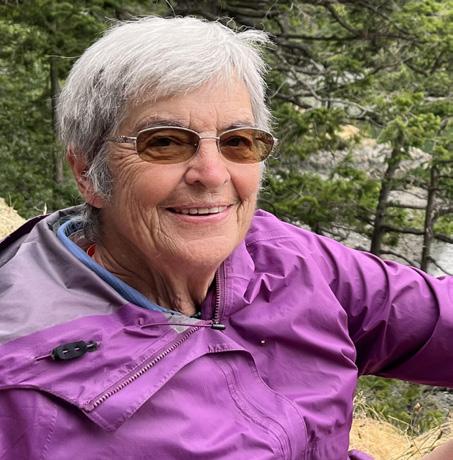
Doris Gove’s relationship with SAHC stretches back to 1979, making her one of the organization’s longest-standing members. As a naturalist and author whose work has helped others understand and appreciate the intricate beauty of the natural world, Doris brings both passion and deep knowledge to her conservation commitment. Her monthly giving, through IRA contributions, reflects decades of dedication to protecting the landscapes that have inspired her writing and research. A former SAHC Trustee, Doris has witnessed firsthand how consistent support translates into preserved forests and protected watersheds. “Protecting land is, to me, the best environmental action--not controversial or political. Protected land will always be here.”
Why monthly giving matters.
Recurring donations create a reliable foundation that allows SAHC to respond immediately to conservation opportunities, plan multi-year stewardship projects, and focus resources on protecting land rather than constant fundraising. This steady support provides the flexibility and confidence to act quickly when time-sensitive opportunities arise.
Join the Gray’s Lily Leadership Circle.
The Gray’s Lily Leadership Circle recognizes donors who contribute $1,000 or more annually. Monthly giving offers a manageable path to this level of impact—$84 per month adds up to meaningful conservation action.
Ready to make a difference? Visit Appalachian.org or contact Anna@appalachian.org to set up your recurring gift and join a community ensuring these mountains remain wild for generations to come.
as of November 6, 2025
Tributes are gifts made to SAHC that celebrate a person, achievement, or special occasion.
In honor of Dr. Nathan Burkhardt’s 90th Birthday
Penelope Ponder
In honor of Nancy Edgerton
Gail and Ron Manheimer
In honor of Art and Charlotte Ellis
Jack and Amy Boyles
In honor of Saylor Fox
Rick Ruczko
In honor of Tom Gatti and Judy Murray
Jack and Amy Boyles
In honor of Jeff Hatling
David and Joan Andrews
In honor of Keith and Crista’s Wedding
Rebecca Hare
Alice Sebrell
In honor of Land Trust Day
Gary and Anne Kauffman
In honor of Jay Leutze
Greg Abernathy
Elizabeth, Jamie and Mary Cate Kiser
James Leutze
In honor of The Palmer Family of Haywood County
Charles and Charlotte Jones
Roe
In honor of Rich Preyer III
Mary Norris Oglesby
In honor of Carl Silverstein
Jeanne Conerly
In honor of UNCA Woods
Linda Frankl
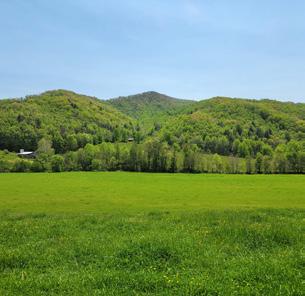
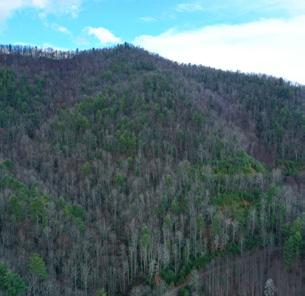
ANNUAL REPORT 2025
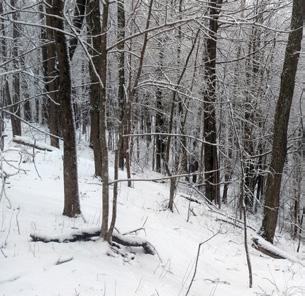
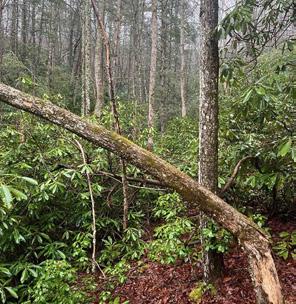
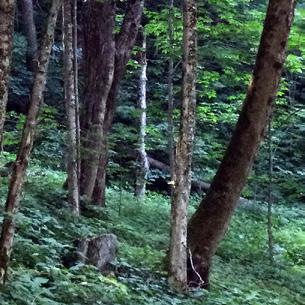
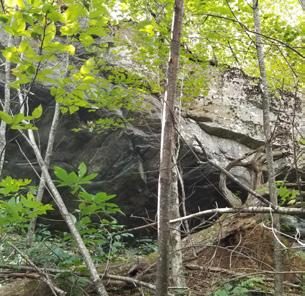
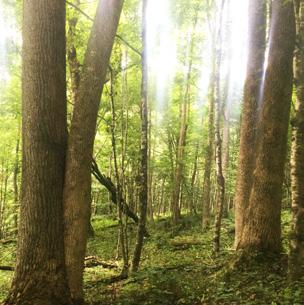
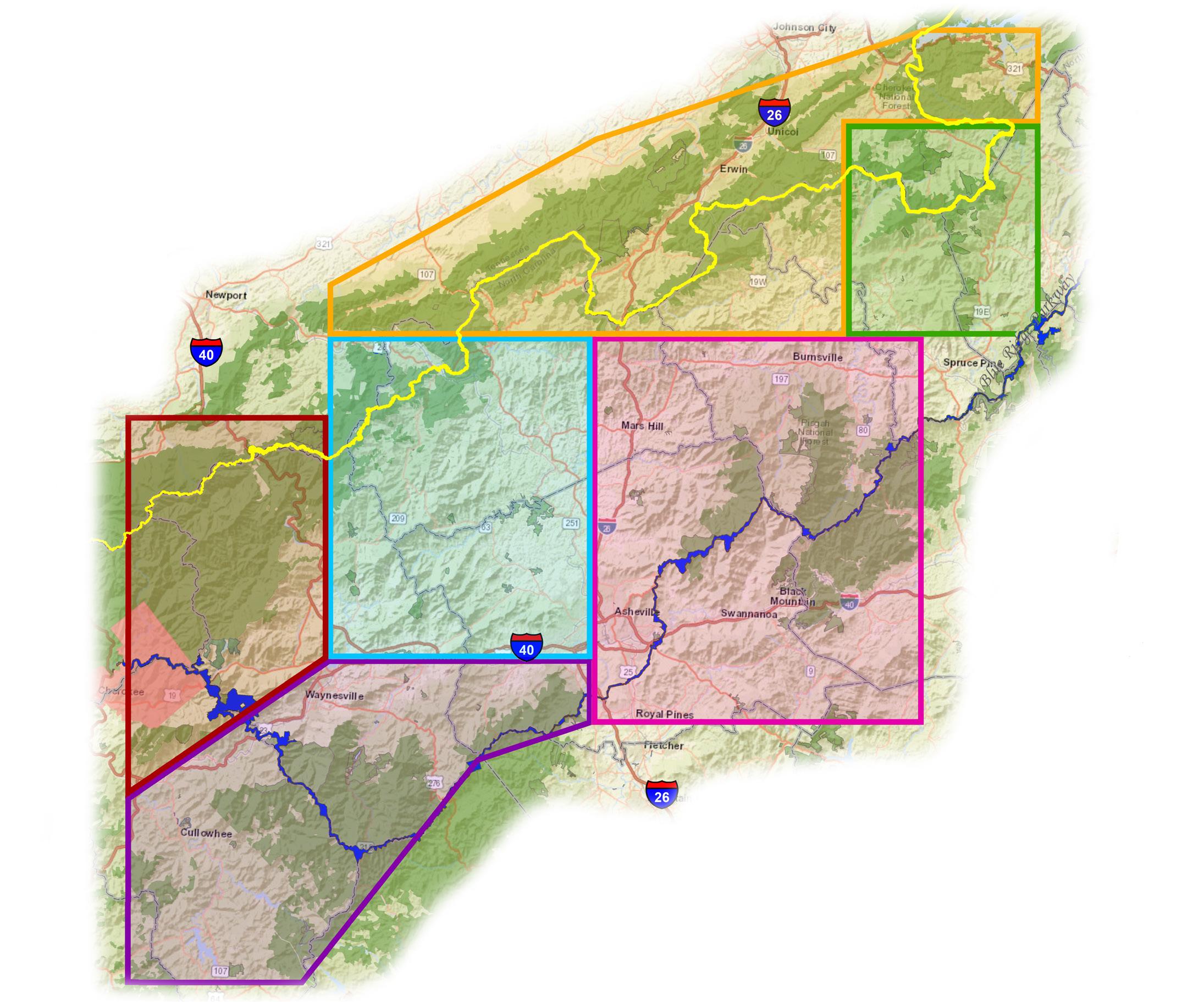
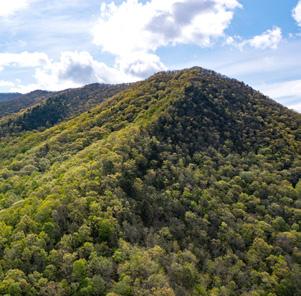
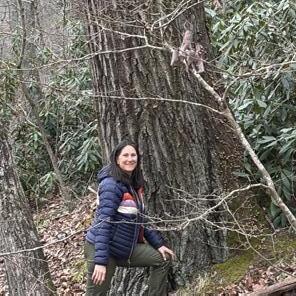
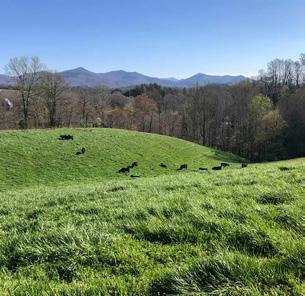
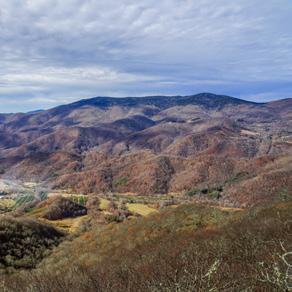
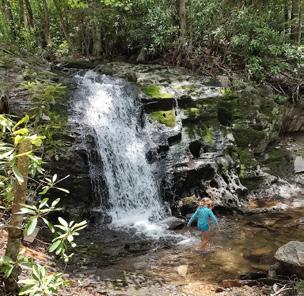
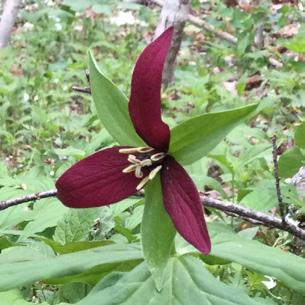
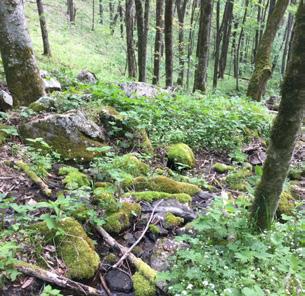
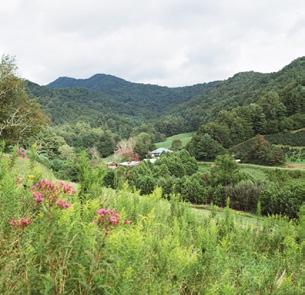
CONNECTING PEOPLE WITH NATURE
In the past year, SAHC’s outreach and education programs have been robustly active, catering to people of all ages eager to connect with conserved land. Your support makes an impact in our communities.
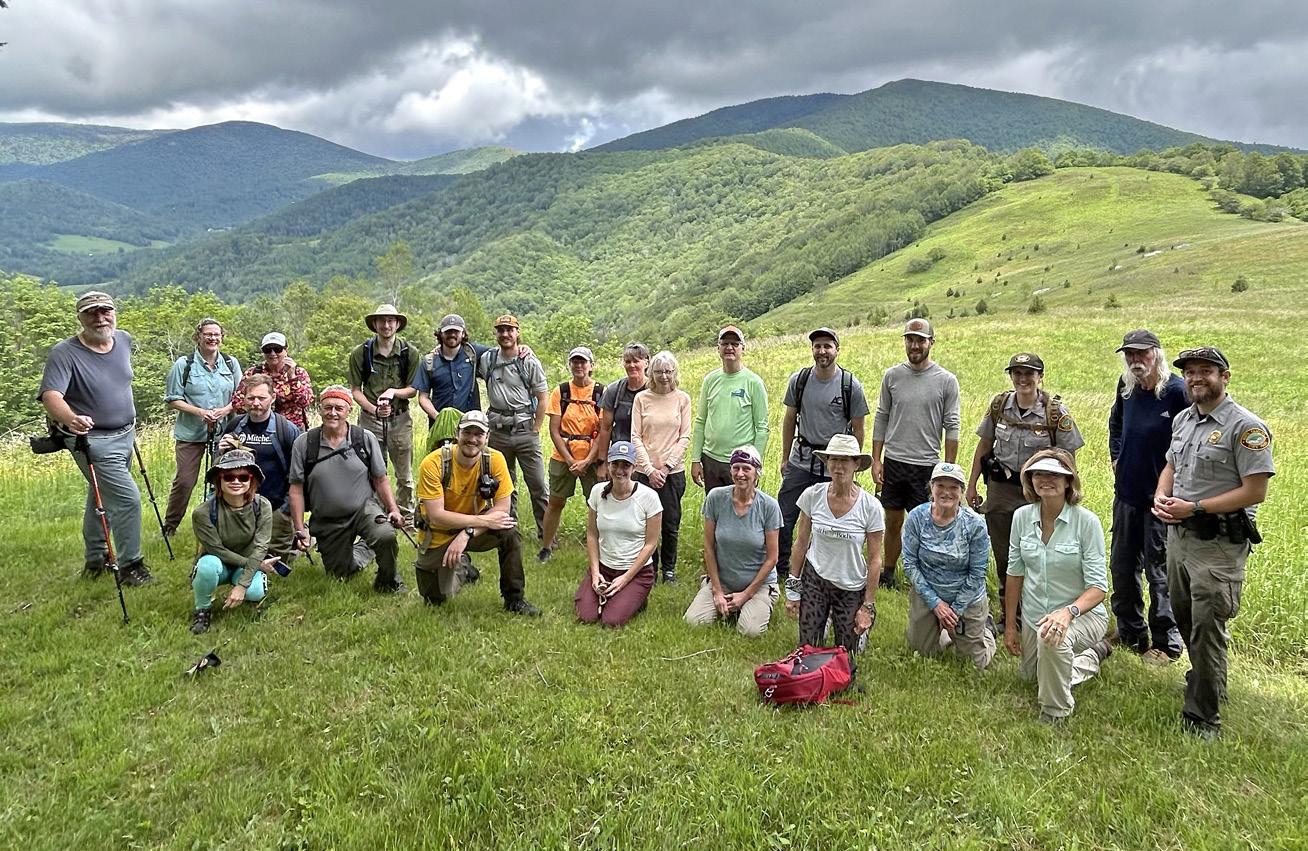
729 People Connected
34 Hikes and Outings during
1,919 Youth & Adults Educated
9 Virtual Lunch & Learn Programs
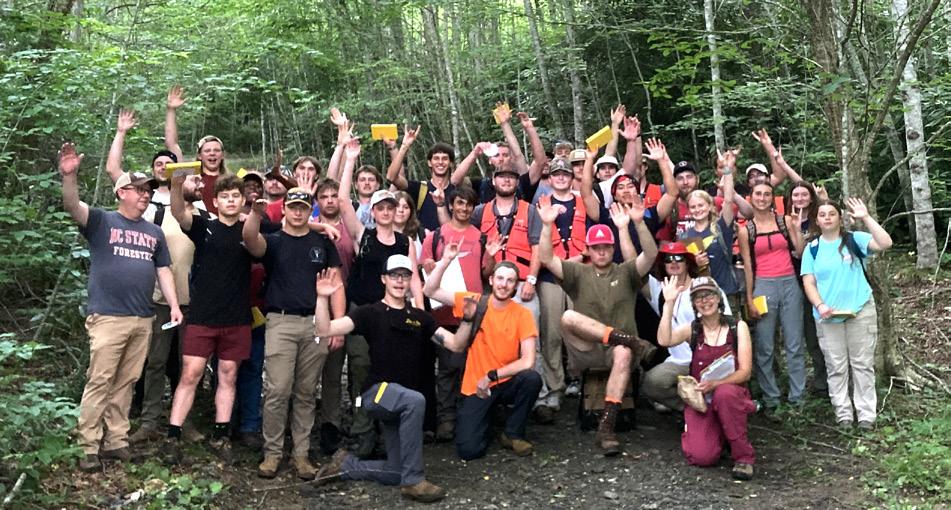
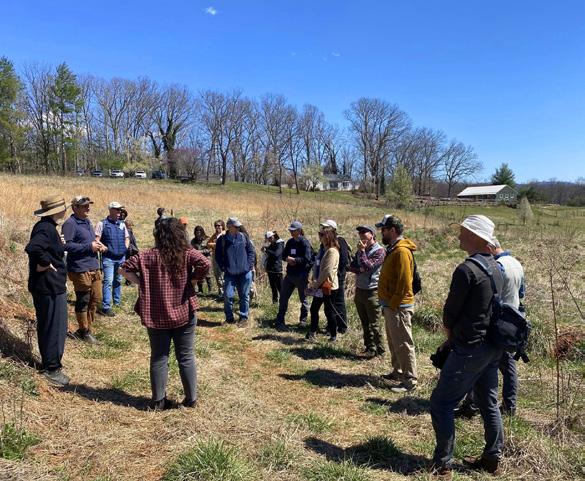
STEWARDING CONSERVED LAND
11,880,000 Gallons of Water conserved in orchard and silvopasture projects through in-person programs, PLUS
8 Farm Workshops hosted 92 Attendees
Stewardship = SAHC’s ongoing commitment to care for conserved land. When you contribute to SAHC, you support ongoing monitoring and management of protected land, including globally important grassy balds habitat in the Highlands of Roan.
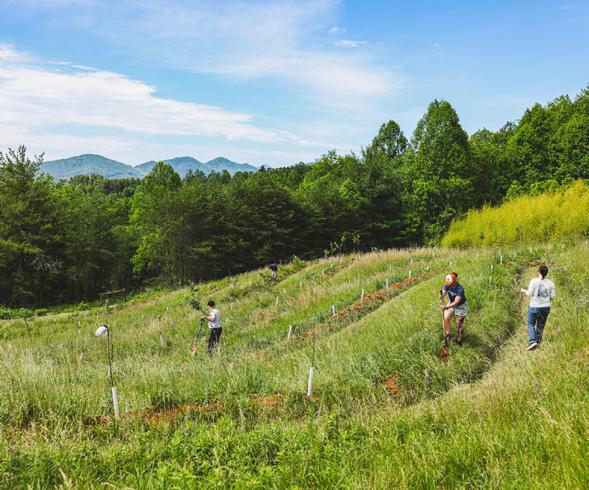
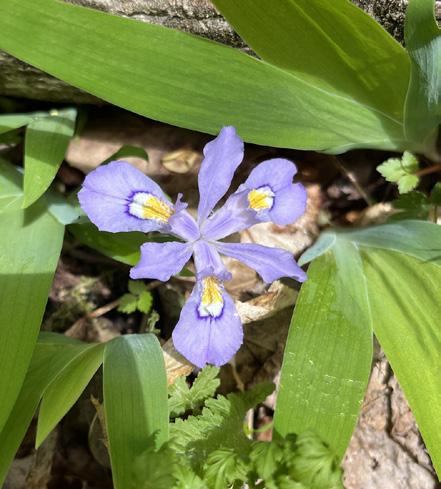
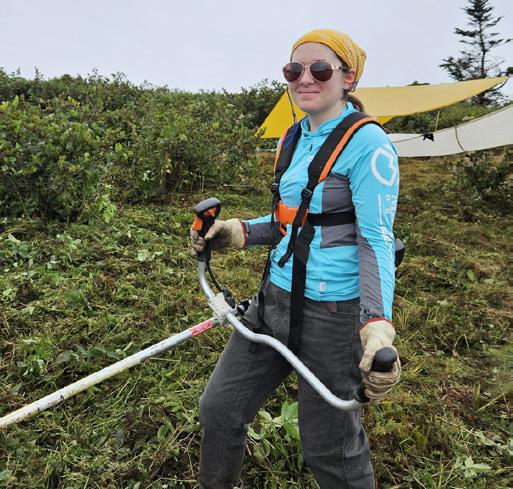
36 Acres managed for grassy balds habitat
25 Acres managed for early successional habitat on SAHC preserves in the Roan
65,113 Acres Monitored across 191 conservation easements and 321 SAHC-owned preserves 1,450 Volunteer Hours served at SAHC Community Farm
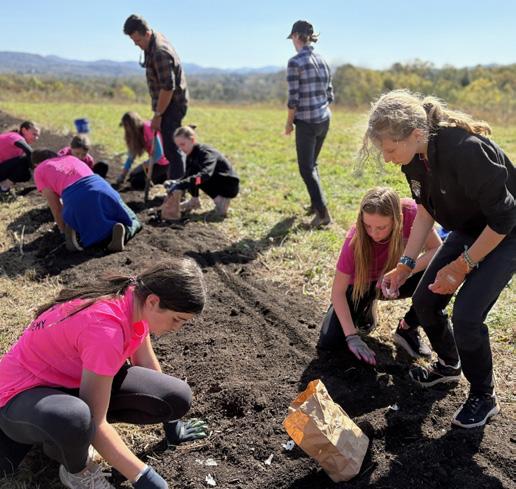
PROTECT • STEWARD • CONNECT
Program Grants and Supporting Funds
Thank you to the following organizations and foundations for their support of SAHC’s conservation work. (Funding provided in the 2024/2025 fiscal year)
American Farmland Trust – $25,546 for Land Transfer Training for our farmland program work.
Beattie Foundation – $5,000 for our conservation and stewardship work.
Buncombe County Recreation Services –$6,000 for our education programs.
Buncombe County Tourism Development Authority – $2,500 event sponsorship.
Community Foundation of Western North Carolina –$451,500 for Emergency and disaster repairs on SAHC properties and hurricane Helene recovery work; Federal grant writing support.
Cornell University – $20,000 for habitat restoration.
Land Trust Alliance – DC – $6,000 for Southern Appalachian Spruce Restoration Initiative and forest stewardship planning.
National Forest Foundation – $15,747 for sustainable recreation and habitat restoration in the Highlands of Roan.
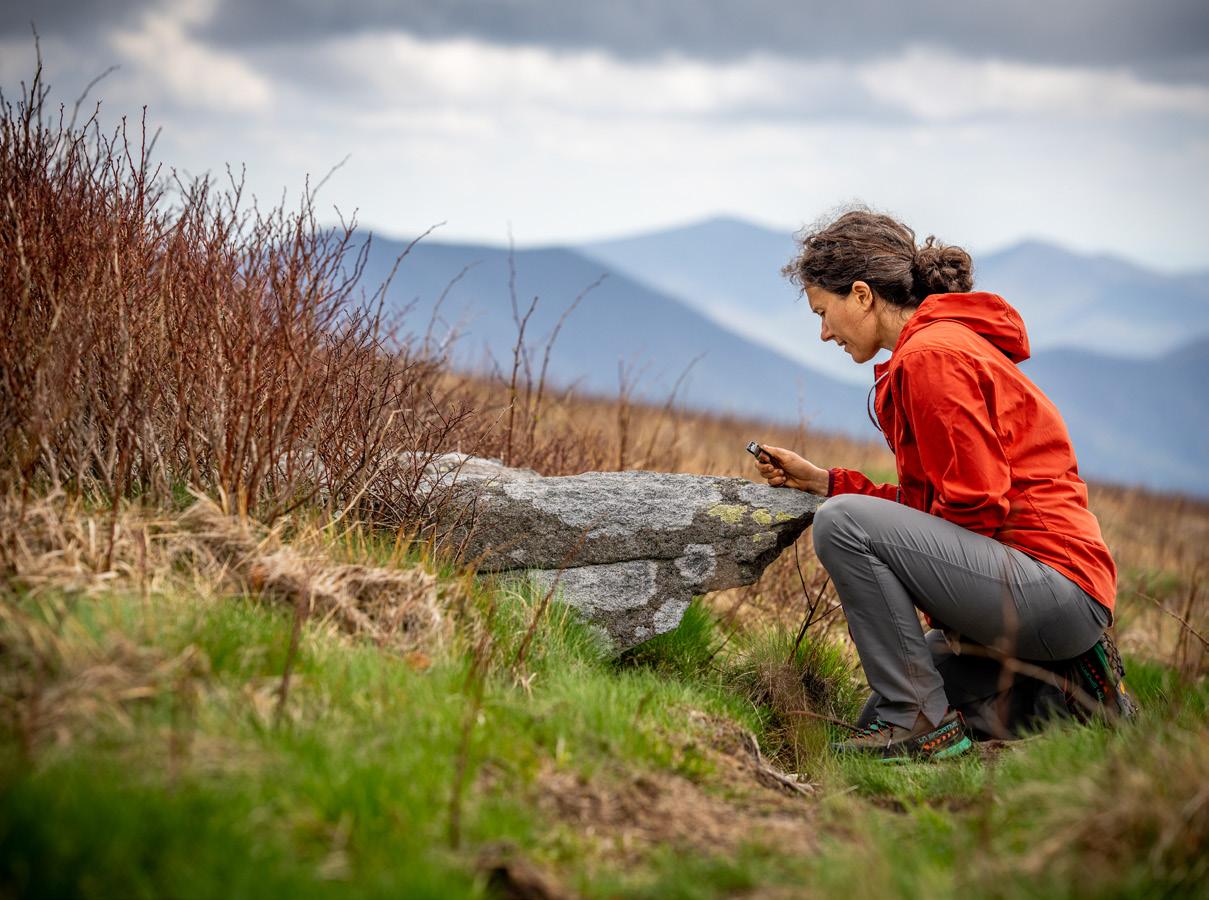
Fernandez Pave the Way Foundation – $50,000 for our conservation and stewardship efforts.
Flora Family Foundation – $20,000 for our conservation and stewardship efforts.
Lampton Family Foundation – $15,000 supporting hurricane Helene recovery.
NC Land and Water Fund – $25,731.80 to support hurricane Helene recovery.
NC Humanities – $20,000 grant for Bonesteel Films – George Masa documentary.
REI Cooperative Action Fund – $10,000 for Opening Appalachia – Ensuring Equitable Outdoor Recreation for All (Year 2).
Steven C. Leuthold Family Foundation –$10,000 to support our conservation and stewardship efforts.
WNC Futures Fund – $15,000 for the Well-Being Outdoor Space at the Community Farm – Healthy Outdoor Path.
Conservation Easement & Land Acquisition Supporting Funds
Buncombe County Land Conservation Advisory Board – $32,200
The Conservation Alliance – $20,000
NC Department of Agriculture and Consumer Services – $492,050
NC Land and Water Fund – $928,872
Pigeon River Fund – $55,000
Re-Wild / Appalachia Rising – $300,000
Rocky Mountain Elk Foundation – $250,000
US Dept. of Agriculture – Natural Resources Conservation Services – $646,053
Private and Individual Giving – $21,557,883
Laura Boggess of Mars Hill University on a research visit in the Highlands of Roan. Photo by Travis Bordley.
Fiscal year July 1, 2024 through June 30, 2025
SAHC Assets 2024/2025 2023/2024
Cash & Equivalents
Receivables
Prepaid Expenses
Other Assets
Mitigation Credit
Total Current Assets
Permanently Protected Properties
Endowments/Investments
Planned Giving Receivable
Life Estate Land Assets
Property & Equipment
Escrow Accounts
Trade Lands
Total Long-Term Assets
TOTAL ASSETS
$122,081,468, 17,945,969 2,169,575 3,814,564 19,305 $146,030,881 $148,373,858
$120,516,929 $125,041,070 Total Liabilities
Net Assets
Operating Profit & Loss
Revenue
$3 million
Contributions $2,046,483 (67%)
Grants $652,925 (21%)
Other $364,090 (12%)
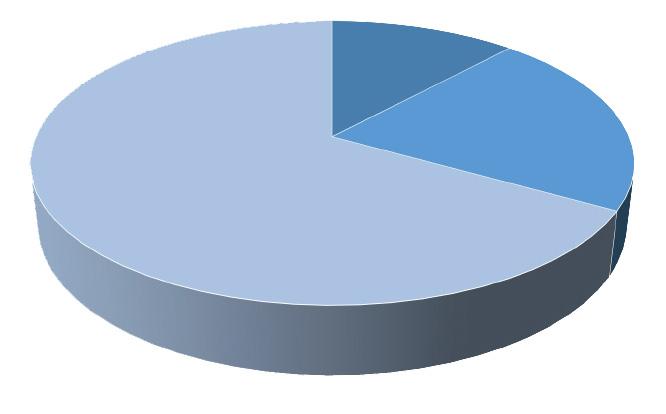
To
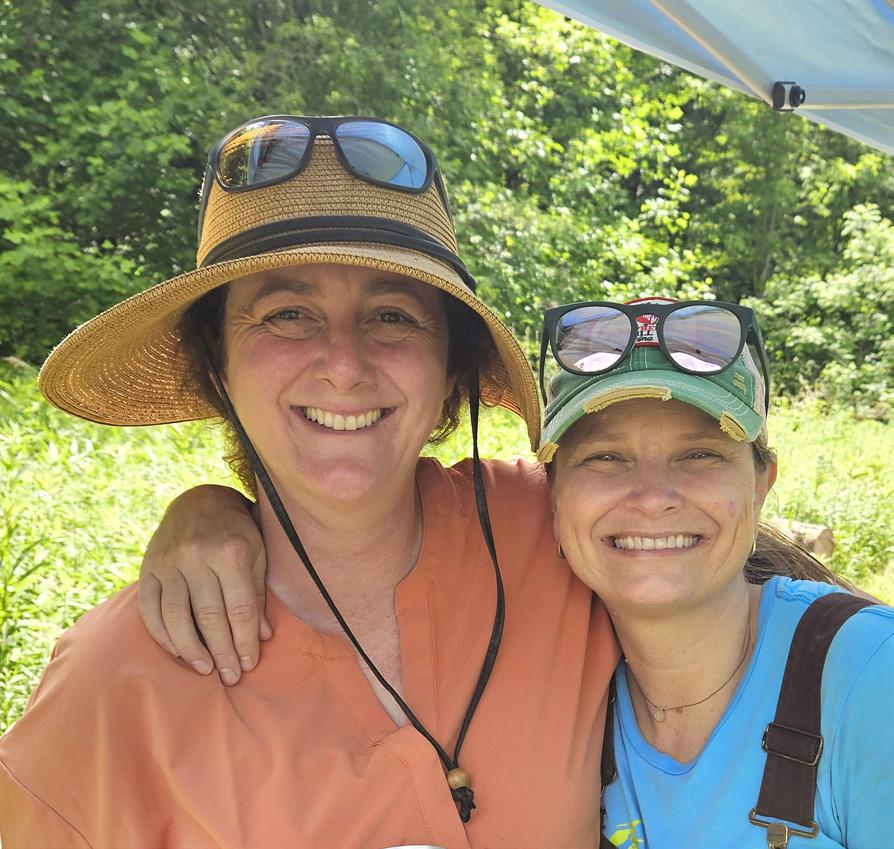
in protecting sources of clean water, threatened wildlife habitats, places for people to connect with the natural world, and farms to feed our communities.
Your generous contributions leveraged substantial grant funds, land donations, and matching support that carries forward critical land and water conservation in NC and TN. SAHC completed 18 land conservation projects in the 24-25 Fiscal Year, and we are working on an overflowing slate of potential new projects in progress!
We could not accomplish this work without you.
million
(85%)
(8%)