SEQ
SOUTH EAST QUEENSLAND APARTMENTS REPORT OCTOBER 2025


SOUTH EAST QUEENSLAND APARTMENTS REPORT OCTOBER 2025
RPM is at the forefront of the property industry, setting new standards in market intelligence, expertise, and creativity. With a proven track record spanning three decades, our unsurpassed market knowledge and data-driven insights have ensured our partners achieve excellent outcomes, and our clients, exceptional returns.
Our services include:

Research, Data & Insights
Transactions & Advisory
Project Sales & Marketing
Respected development partner
Research partner of the UDIA
40,000+ lot yield on current projects
$10B+ land transactions
100+ team of property experts
55+ active projects across Queensland, Victoria and New South Wales
RPM’s Research, Data & Insights division provides in-depth analysis on current local and overseas economic and property market conditions. The team consists of economists, property experts, and GIS analysts that provide real-time market intelligence, and analytical and strategic advice.
Our knowledge and expertise are an invaluable resource for RPM’s developer clients, empowering them to make intelligent, informed, and strategic decisions when evaluating residential developments and investment opportunities.
Our data and analysis help clients maximise their marketing efforts and achieve sales targets on their projects.
We collate and analyse data on Australia’s medium and high-density markets, providing insights on past and present product and pricing, as well as upcoming supply.
This comprehensive understanding of the different markets forms the foundation of our in-depth reports and bespoke analysis.
This rich data helps our team and clients to better understand:

General Manager
Research, Data & Insights
Research Manager - QLD
Research, Data & Insights

• Apartment demand is shifting to larger products.
• Average apartment build cost up 14% in Queensland, up 14% over the year to $713K.
• Supply constrained by high costs and labour shortages.
While Queensland’s approvals have ticked up, the number of dwellings actually reaching completion is falling behind demand. Rising construction costs and labour shortages are slowing new projects, while apartment developments are competing with major infrastructure works for the same workforce.
Across Brisbane, the Gold Coast, and the Sunshine Coast, supply is tightening fast. New stock is skewed toward mid to larger sized apartments, leaving smaller, lower revenue projects largely unfeasible. Entry level buyers are being priced out, while demand for quality, well located apartments keeps climbing.
Costs continue to drive the squeeze. In Brisbane, the average build cost per dwelling rose 39% in the year to June 2025, pushing the average completed apartment build cost to $658,000 – above Sydney and Melbourne. Across the rest of the state, average build costs hit $794,000, lifted by high end developments on the Gold Coast and the Sunshine Coast. Buyers are chasing bigger, better designed apartments, with three bedroom units particularly popular; recording over 2,300 sales across the three regions. The demand for larger two and three bedroom units from owner occupier buyers has seen rental bonds for these units dropping and rents for two and three bedroom units rising much faster than one-bedroom units.
Supply pressures aren’t letting up. Most materials are more expensive (steel aside) and builders are competing with civil projects for labour. The value of unfinished work is climbing as the 2032 Olympics approach. Density is also decreasing, with supply still favouring mid-rise buildings of up to eight storeys, which limits overall density compared to high rises.
Despite these challenges, demand remains strong. Population growth continues, interstate arrivals are steady, and households want space. For developers, well located, larger apartments remain the safest play but delivering them requires careful balancing; navigating costs, managing approvals, and building homes that buyers want without pushing entry level options further out of reach.
Clinton Trezise
Managing Director
Queensland & New South Wales
clinton@rpmgrp.com.au
Peter Neale
Managing Director
Queensland & New South Wales petern@rpmgrp.com.au
Queensland’s economy is
and
Source: Australian Bureau of Statistics (Gross State Product expressed as FY24 vs FY23. Employment growth expressed as change over 12 months to August 2025. Unemployment rates expressed as August 2025 vs. August 2024. Weekly earnings is at May 2024. Change is annual)
The third rate cut for 2025. Now sits at its lowest level since April 2023.
Continued the downward trajectory from 3.81% in June 2024.
Remaining steady but below the national average of 1.8%.
Marking a 14% increase in the year to June 2025. Brisbane Median Unit Price $730,000 June 2025


ANZ Associate Director of Property, Daniel Gradwell, examines the SEQ apartment market from a finance perspective.
What major changes have you seen in development financing in Queensland over the past few years?
One of the biggest changes is around developerbuilders*. That’s probably the largest piece that has changed for us over the last couple of years. Builders are expensive right now, and often hard to get a hold of, so developers are asking themselves how they can bring the expertise in house.
From a finance perspective, the gap between lending for a developer-builder versus a third party builder has really closed. The industry has standardised processes and due diligence, so banks feel confident supporting these projects.
The other big change, over maybe five years, is just a lot more comfort and appetite around the Queensland market. It’s not just Brisbane anymore; the Gold Coast and Sunshine Coast have their own centre of gravity. Young professionals, downsizers, and owner occupiers are driving demand, not just tourists. That has really strengthened confidence across the board.
What are the major differences in financing for a developer-builder and a developer who engages a third party builder?
Previously, there was probably a 5%-10% gap in leverage between developer-builders and third party contractors. Today, for the right project with the right expertise and track record, that gap has narrowed. It requires deeper due diligence, but it’s absolutely doable.
Like in Victoria, we’re also seeing more collaboration between major banks and private lenders, especially for early stage funding. Developers may start a project with non-bank finance before presales have arrived, and then a major bank steps in later, on cheaper terms. That helps get projects moving faster and supports overall supply.
How do current risk profiles vary across different regions and product types?
SEQ. Other centres such as Townsville, Cairns and Toowoomba also look more solid than in previous cycles, albeit not to the same extent as SEQ.
Product wise, things have evolved a lot. Ten years ago, we were focused on small one bedroom units, mostly investor driven. That has largely eased, and today, there is recognition that the market needs a larger range of product types from townhouses to low, medium, and high density apartments – including two and three bedroom units. Three bedroom units are still in short supply nationally.
Owner occupiers, downsizers, and first time buyers’ needs all matter. We really need an increase in supply and a variety of product types.
Are certain areas more attractive to lenders?
Sydney or Melbourne. Cash buyers are a big part of the market, which adds confidence. Presales activity in SEQ is also the strongest in the country, which is a big positive from a lending perspective.
Construction costs are the obvious one, but the bigger piece is around builders. Insolvencies are still high, so we need to be confident in both the developer and builder, particularly when they are entering a new market.
Presales requirements have also eased. Previously, we were at 100% presales requirements, largely APRAdriven. Now, around 50% to 70% is sufficient, with the market demonstrating that further sales will come.
* A company who develops, builds, and sells a property from start to finish
We tend to view SEQ as a whole, rather than separating Brisbane from the rest. There is a strong outlook for the Gold Coast and Sunshine Coast, and we’re encouraged by the fundamentals around factors like population growth which are driving activity in
Population growth is key. SEQ, particularly Brisbane and the Gold Coast, continues to outperform other states. People are moving from New South Wales and Victoria, and overseas migration is strong.
Even with record valuations on the Gold Coast, affordability isn’t stretched – especially compared to
We are still optimistic. Strong population growth, relative affordability (supported by the recent rate cuts), and upcoming events like the Olympics give us confidence. Policies like the Home Guarantee Scheme for first home buyers help drive confidence, which is great, but it doesn’t address the supply side issue –which is the real challenge.
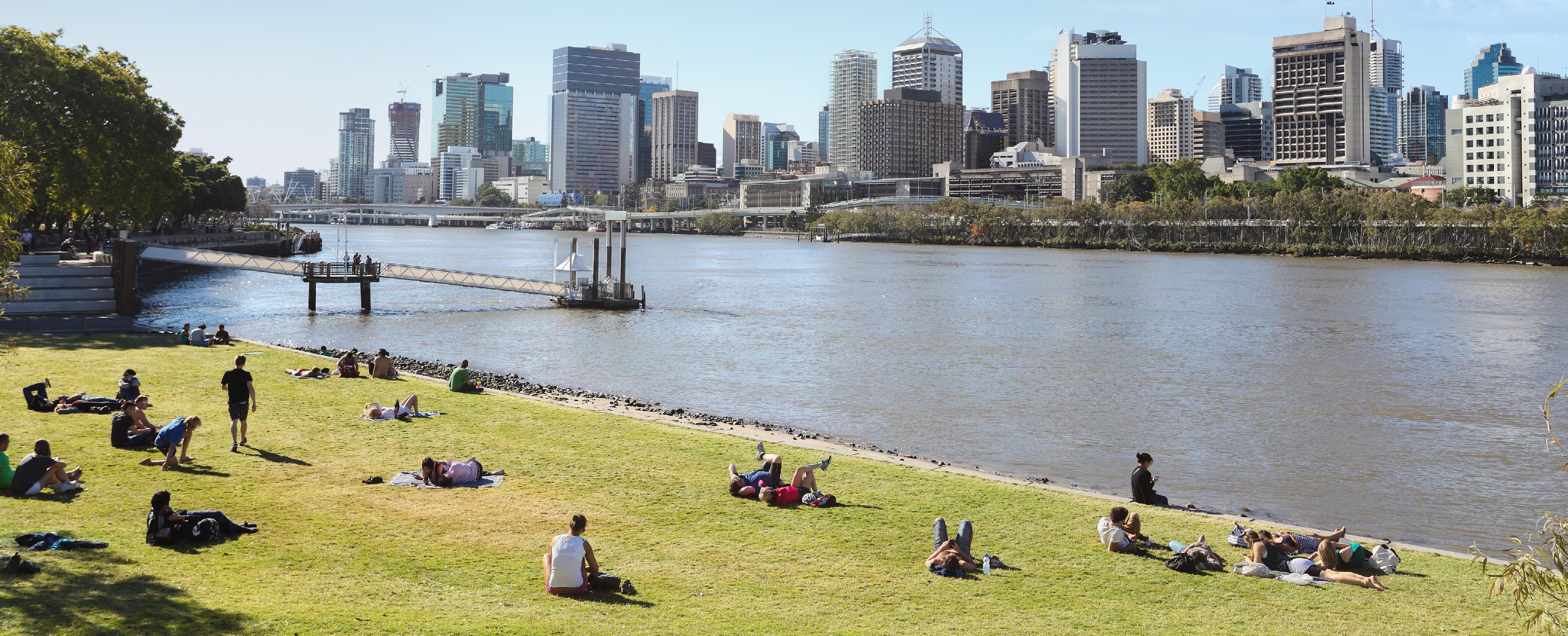
Queensland’s population grew by 98,636 over the year to March 2025, a 1.8% increase that outpaced the national 1.6% rate. Quarterly growth added 28,409 people from December, continuing Queensland’s run as one of Australia’s fastest-growing states.
Net overseas migration was the largest driver, contributing 54,535 people, just over half the annual lift. Skilled workers, students, and family reunifications remain key sources. Interstate migration added 24,015, mostly from NSW and VIC, attracted by more affordable housing, lifestyle, and job opportunities. Natural increase added 20,086.
Queensland accounted for 23% of Australia’s total growth, highlighting its outsized role in national demographic expansion.
Investor lending in Queensland saw a strong lift over FY2025, with new loans rising 16% to 47,143 showing continued confidence in the state’s market fundamentals. Average investor loan sizes also grew, climbing 11% to $616,679, in line with ongoing price growth across the region.
Owner occupier lending increased more modestly, up 7% to 71,292. While this is the highest level in three years, it remains below the FY2021 peak of 94,189. The average owner occupier loan reached $636,520, up 13% over the year and slightly above the investor average.
Both investor and owner occupier loan sizes remain below the average cost of building a new apartment highlighting how new supply is increasingly targeted to downsizers who are typically less reliant on finance.
Building approvals in Queensland strengthened over the year to July 2025, with all three main residential types recording gains. Townhouse approvals rose most sharply, up 28% on the previous year, while apartment approvals saw a similar increase.
Detached house approvals grew more moderately, climbing 10% over the same period, providing an important contribution toward meeting the state’s housing targets.
Australian Bureau of Statistics
Despite an uptick in approvals over the past 12 months, this has yet to translate to on-the-ground work. Unit commencements in Queensland fell to a four year low in March 2025, with just 2,123 recorded for Q1. Rising construction costs and ongoing labour shortages are weighing heavily on new project starts, leaving the state with one of the smallest apartment pipelines in recent memory.
The picture is even more pronounced across South East Queensland. Unit registrations in Q2 dropped to a record low of 862, showing just how quickly supply is tightening. With demand supported by strong population growth, these cost and labour constraints risk widening the supply-demand gaps unless policymakers act decisively.
Queensland apartment build costs hit record highs in FY2025, widening the gap between Sydney and Melbourne.
Apartment construction costs in Queensland surged 14% in FY2025, lifting the average to $713,000 per unit. Costs reached $658,000 in Brisbane, the highest on record, and for the first time, outpaced both Sydney and Melbourne.
Elsewhere in the state, the average climbed even higher to $794,000 per unit, driven by strong activity on the Gold Coast and Sunshine Coast.
This increase is the result of rising build costs as well as the growing dominance of larger, higherend apartments in the pipeline, which continue to push average figures upward.
Construction input costs in Queensland rose 0.9% in Q2, the sharpest lift so far this year but still modest compared to the surges of 2021-2022.
Output costs also edged higher, up 0.3% in Q2. This marks a clear slowdown from the spikes recorded in June and September 2024. Over the year, Brisbane’s construction output costs rose just 1.2%, well below the national pace of 3% and a far cry from the 10% growth seen in FY2024. The trend points to easing inflationary pressures and stabilising construction costs.
That said, risks remain. Queensland’s construction pipeline sits above $26 billion* heading into the 2032 Olympics, a workload that is expected to increase pressure on labour costs in the years ahead.
Steel prices have fallen, yet costs for early and late stage materials like cement, concrete, sand, and electrical equipment are rising.
Construction Material Cost
Installed Gas and Electrical Appliances
Plumbing Products Electrical Equipment
Other Metal Products
Cement Products Steel Products
Concrete, Cement, and Sand
All Inputs to Housing Construction Timber and Joinery
Inputs to Housing Construction
Other Materials vs Last 2 Years vs Last Year vs Last Quarter
Source: Australian Bureau of Statistics - Producer Price Index
Value of Construction Work Yet To Be Done - Queensland
Source: Australian Bureau of Statistics

Unit prices continued to rise over the past 12 months across Brisbane, the Gold Coast, and the Sunshine Coast, with all three markets recording solid annual gains. Brisbane led the charge, climbing 12% to a median of $730,000. One bedroom apartments drove much of this growth, jumping 16% over the year, showcasing ongoing demand for entry level units in the city.
The Gold and Sunshine Coast markets saw steadier increases. Gold Coast units rose 6% over the year to $820,000, while Sunshine Coast units gained 5% to $785,000. One bedroom apartments were again the standout, with both markets recording 11% growth.
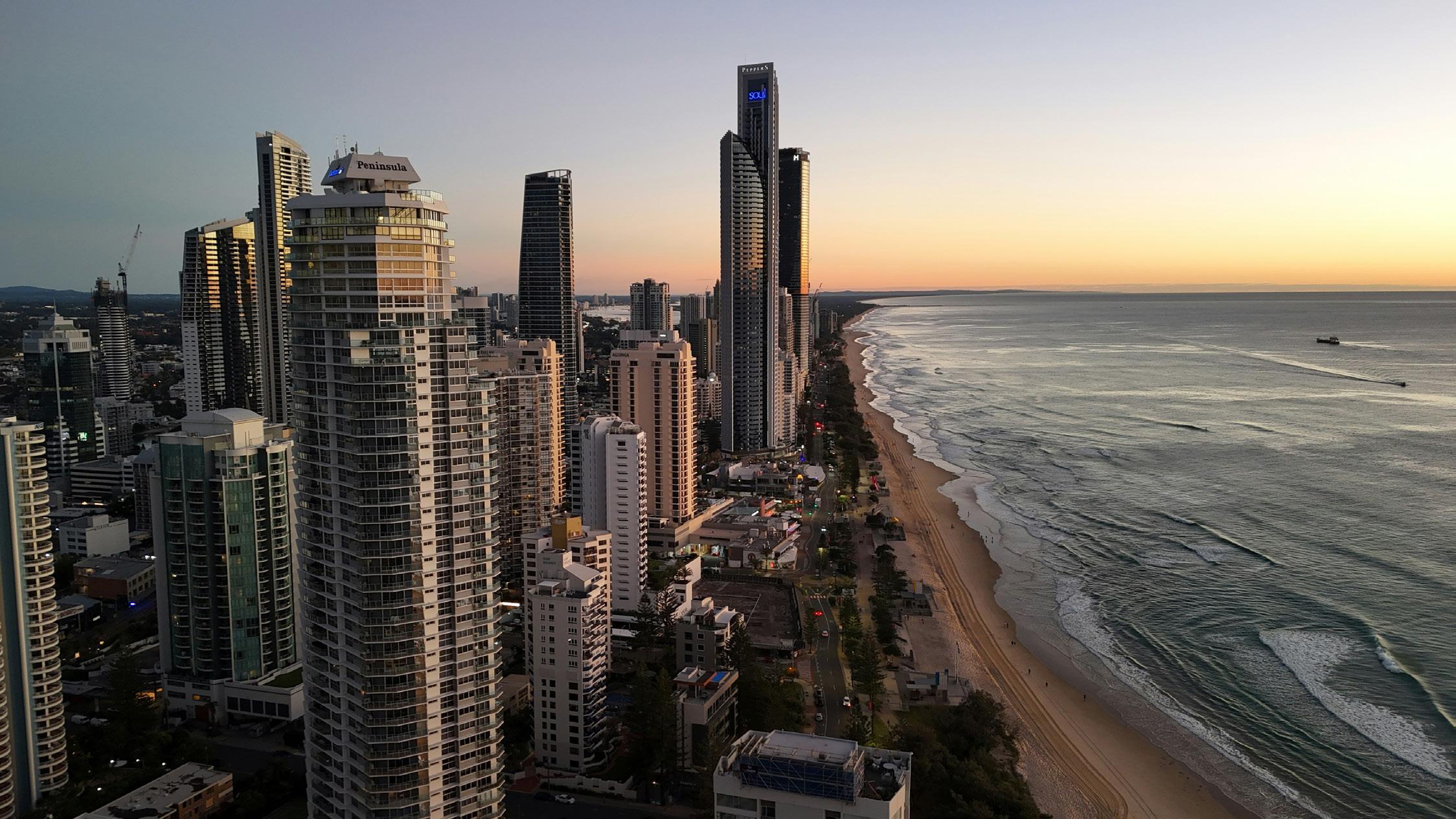
While easing in its pace of growth, on the back of a robust economy and continued demand, price growth will continue to be recorded moving forward.
Source: PriceFinder
Unit sales lifted across Brisbane, the Gold Coast, and the Sunshine Coast in Q2 2025, with all three markets posting solid annual gains.
Brisbane led the way with sales up 14% in Q1 and 3% over the year. Larger units drove much of this rise, with three bedroom sales up 18%, and four bedroom units climbing 24%. One and two bedroom units eased slightly but still made up the bulk of activity.
The Gold Coast saw a 14% annual increase, led by smaller units. One bedroom sales jumped 20%, while two bedroom units rose 18%. Three bedroom sales also grew, though demand for four bedroom units eased after earlier price surges.
On the Sunshine Coast, sales rose 13% year on year, with growth concentrated in midsized apartments. Two and three bedroom units both lifted around 20%, highlighting the ongoing appetite for flexible, family friendly formats.
After largely easing over the six months to Q1, strong sales activity took place to end the Financial Year.
Source: PriceFinder
The gap between house and unit prices is still one of the biggest forces driving apartment demand in South East Queensland. When house prices rise faster than units, apartments quickly become the more practical choice for buyers.
Brisbane shows the widest gap by far. While it has narrowed since the post-Covid peak (when houses were nearly twice the price of units) detached homes are still selling at an 82% premium. This presents units as relatively good value in comparison.
The market has been steadier on the Gold and Sunshine Coasts. The Gold Coast median house price is 50% higher than its median unit price, the same as this time last year. The Sunshine Coast is nearly identical, with houses at a 51% premium, also unchanged from 2024.
These gaps show why apartments continue to attract buyers. For many, they remain the most attainable way to get a foothold in markets where detached housing has simply moved out of reach.
RPM Research, Data & Insights, PriceFinder
$1,400,000
$1,200,000
$1,000,000
Unit rents have surged across Brisbane, the Gold Coast, and the Sunshine Coast over the past year. Brisbane led with one bedroom apartments climbing 8%, while three bedroom units on the Gold and Sunshine Coast both jumped 10%.
At the same time, rental bonds declined across most of these LGAs, suggesting more units are being snapped up by owner occupiers rather than being offered as rentals. The five year trend makes it clear that rental stock is shrinking across all three regions as demand for not only well located, but also large and liveable products (ie 2 and 3 bedroom dwellings) continues to intensify.
Declining active rental bonds show owner occupiers are buying larger units, leaving mainly smaller apartments available for rent.
Source: RTA
New apartment prices remain highest on the Gold Coast, with a median rate of $17,204/sqm. Brisbane follows at $14,922/sqm, while the Sunshine Coast sits lower at $13,216/sqm.
Across all three markets, the price per square metre tends to rise with size and the number of bedrooms. The Gold Coast shows the starkest contrast, where four bedroom apartments average $29,063/sqm. This is more than double the $13,559/sqm for one bedroom apartments.
These figures highlight that ultra premium products are still being delivered along the Gold Coast waterfront, where larger floorplans continue to command significant premiums.
The bulk of new apartments on the South East Queensland market fall into the 75100sqm range, making up almost one-third of available stock. Another 42% sit in the 100-125sqm and 125-150sqm brackets, reinforcing the dominance of two and three bedroom products.
$10,000,000
$9,000,000
$8,000,000
At the other end of the scale, just 3% of apartments measure under 75sqm, showing how limited one bedroom supply has become. Developers have struggled to deliver smaller formats within an acceptable price ceiling as construction costs continue to climb, eroding affordability at the lower end.
$7,000,000
$6,000,000
$5,000,000
Price distribution tells a similar story. Only 11% of apartments are currently priced below $1 million, leaving buyers with few genuinely affordable options. The most common price point is $1.25m-$1.49m, accounting for 15% of surveyed stock. At the top end, a large share of prestige apartments sits in the $2m+ range, with much of this concentrated on the Gold Coast.
$4,000,000
$3,000,000
$2,000,000
$1,000,000
We’re seeing a market skewed toward premium projects, where mid to larger sized apartments dominate, and affordability pressures keep smaller, lower revenue projects largely unfeasible.
$10,000,000
$9,000,000
$8,000,000
$7,000,000
$6,000,000
$5,000,000
$4,000,000
$3,000,000
$2,000,000
$1,000,000
$20,000/sqm
$15,000/sqm
$10,000/sqm
Source: RPM Research, Data & Insights - new apartments on market


James Matley
Sales Director - QLD / NSW Transactions & Advisory james@rpmgrp.com.au
Strong buyer appetite and limited supply continue to underpin the resilience of South East Queensland’s Apartment development site market, with even modestly sized parcels drawing intense interest from local, interstate, and international capital.
The market for apartment development sites in South East Queensland remains constrained, with strong competition continuing despite higher construction costs and tighter funding conditions. Population growth, limited new supply, and stronger revenue assumptions are keeping buyer demand focused on well located, A-grade sites.
Scarcity fuels fierce competition for SEQ development sites.
This demand was on clear display during our recent on market campaign at Auchenflower, where a 1,430sqm riverfront parcel, dubbed ‘Coronation & Lang’, drew 130 qualified enquiries and six competitive offers on close. RPM Transactions & Advisory received interest from private builders/ developers, syndicates, institutional groups, and offshore capital; evidence of the weight of money targeting Brisbane and the pressure that emerges when rare opportunities are brought to market.
The intensity is sharpened by today’s economic landscape. As mentioned earlier in this report, Queensland apartment construction costs surged 17% to their highest in more than a decade and now sit above Sydney and Melbourne. Rising costs have thinned out feasible projects, meaning well located sites that can justify premium pricing, like Coronation & Lang, are increasingly scarce and fiercely contested.
The depth of demand also contrasts with the lack of new supply. Queensland unit commencements fell to a four year low in March this year, showing how sharply new stock is drying up.
Very few parcels combine river frontage, dual access, proximity to the CBD, and zoning for eight storeys with the prospect of further uplift. This scarcity, coupled with a rising demand from downsizers and interstate buyers, explains the intense competition we witnessed when bringing Coronation & Lang to market.
Recent inner city transactions have shown a similar pattern. Local developers remain active, but interstate and offshore groups are moving earlier in the cycle than they had in the past, signalling that Brisbane is firmly on the radar of sophisticated capital positioning for the long term.
Enquiry levels are expected to hold through late 2025, with competition concentrated on a narrow pool of A-grade opportunities. Rising construction costs will continue to test feasibilities, but the fundamentals (migration-led population growth, infrastructure investment, and a shortage of new supply) point to sustained demand.
The following pages detail the price per square metre rates achieved for both apartments (NSA) and development sites.
For more information on development site opportunities, contact James Matley james@rpmgrp.com.au
Gold Coast and Sunshine Coast are seeing steady activity with quality-focused developments.
Premium apartment projects in Queensland continue to attract strong demand despite tight supply and rising costs.
Queensland’s apartment market is facing tight supply and rising costs, with unit commencements at a four year low. In Q2, only 862 new units were registered across SEQ, showing just how quickly stock is tightening. Population growth continues to drive demand, but labour shortages and higher construction costs are slowing new project starts. The gap between what the average buyer wants and what developers can deliver is widening, and without intervention, affordability pressures will persist.
The projects being delivered highlight these constraints. The market is skewed towards premium developments, with mid to larger sized apartments dominating pipelines. Smaller, lower-revenue formats have become largely unfeasible. That’s pushing entry-level buyers further out of reach and reinforcing a focus on higher revenue, well located sites.
We’re seeing a similar story in the development land space. Even modest parcels in Brisbane are attracting intense competition from local, interstate, and international buyers. Recent sales demonstrate both the scarcity of well positioned sites and the depth of capital chasing them. Buyers are willing to pay for quality location, particularly where zoning and development potential justify the cost.
Construction costs remain a key pressure. Inputs are climbing and feasibility is being tested more than ever, particularly on smaller projects. Yet the fundamentals underpinning demand remain strong. Migration led population growth, major infrastructure projects, and a shortage of new apartments are supporting interest and pricing.
The path forward appears clear, though narrow. Feasible, well located apartment projects will attract strong demand but opportunities remain limited. Those who can navigate costs, labour constraints, and approvals will certainly find a market willing to pay for quality. At the same time, smaller, lower cost projects are becoming increasingly difficult to deliver profitably, leaving affordability gaps unaddressed.
Queensland & New South Wales petern@rpmgrp.com.au
For more information, please visit: www.rpmgrp.com.au
For a detailed market analysis or a tailored report, email the team at: contactus@rpmgrp.com.au
Project Sales & Marketing
Peter Neale
Managing Director
Queensland & New South Wales petern@rpmgrp.com.au
Research, Data & Insights

Michael Staedler
General Manager
Research, Data & Insights m.steadler@rpmgrp.com.au
Transactions & Advisory

James Matley
Sales Director Queensland
Transactions & Advisory james@rpmgrp.com.au
Clinton Trezise
Managing Director
Queensland & New South Wales clinton@rpmgrp.com.au

Jasmin McDougall
Project Marketing Manager
Queensland & New South Wales jasmin@rpmgrp.com.au

Andrew Raponi
Senior Research Manager
Research, Data & Insights a.raponi@rpmgrp.com.au
Simon Brinkman
Research Manager
Queensland & New South Wales simon@rpmgrp.com.au

Megha Saha
Research Analyst
Queensland & New South Wales megha@rpmgrp.com.au

Tim Hyland
National Strategy Manager
Transactions & Advisory tim@rpmgrp.com.au

Phillip Nguyen
Transactions Analyst
Transactions & Advisory phil@rpmgrp.com.au
View our latest reports through the QR code below, or for detailed insights or custom reporting, contact the team at: contactus@rpmgrp.com.au