5 minute read
Career - Pushback Operator - Hola - October 2025

What are the key skills and qualifications needed to thrive in the Airport Pushback position and why are they important?
It is all from here and here.
clude early mornings, nights, weekends, and holidays, as air travel operates around the clock.
The position is physically demanding, often requiring prolonged periods outdoors in varying weather conditions and tasks like climbing, lifting, and operating heavy equipment.
Teamwork is crucial, as you’ll frequently coordinate with ramp agents, ground control, and flight crews to ensure safe and efficient aircraft movement. If you’re considering this role, be prepared for a fast-paced environment where safety, precision, and effective communication are prioritized every day.
current features of aircraft damage during pushback:
• Use of hand signals rather than intercom communication,
• Lack of intercom clarity in communications between the aircraft and the ground crew supervisor,
• Ground crew totalling less than three people,
• Departure from non-airbridge gates,
• Failure of vehicle driver to maintain adequate communication with supervisor,
To thrive as an Airport Pushback operator, you need a solid understanding of ground operations, aircraft movement procedures, and a valid driver’s license, often accompanied by specialized training or certification such as an Airport Movement Area Permit.
Familiarity with pushback tractors, radio communication systems, and safety protocols is essential for performing the job effectively. Attention to detail, teamwork, and strong communication skills help ensure safe and efficient operations on the ramp.
These competencies are vital to prevent accidents, coordinate closely with pilots and ground crew, and maintain punctual aircraft departures.
What are the typical work shifts and physical demands for an Airport Pushback operator?
Airport Pushback operators generally work in rotating shifts that may in-
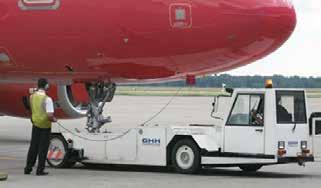
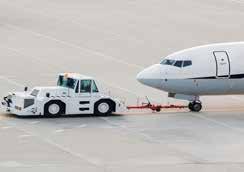
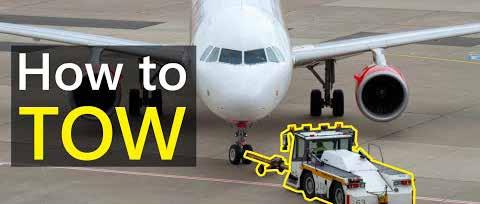
The ‘traditional’ method of allowing the ground vehicle to move an aircraft is to attach it to the aircraft nose landing gear by means of a towbar. These must be approved for use with a particular aircraft type and clearly marked as such, since there is no universal towbar specification.
The same towbar attachment and ground vehicle may also be used for Aircraft Towing in the forward direction.
An alternative method which is becoming more common for pushback is the use of a specialised vehicle called a ‘towbarless tug’. This positions two low level ‘arms’ either side of the aircraft nose landing gear and these are used to engage with the aircraft gear leg and raise it slightly off the ground. These specialised vehicles can also be used to tow aircraft forward, Both pushback methods are subject to the observance of any aircraft limits for maximum nose landing gear steering angle, but these are not usually especially restrictive.
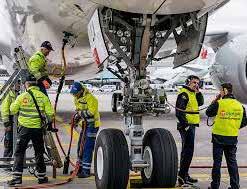
The responsibilities of the ground crew team carrying out a pushback include ensuring that no part of the aircraft structure will impact any fixed object or other aircraft and may include giving clearance to start one or more engines just before, during or immediately after a pushback.
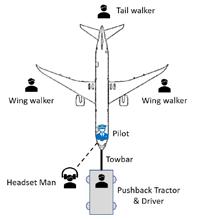
The number of people assigned to a ground crew team for a pushback may vary according to aircraft size, but in most cases will be at least three.
One will be driving the pushback vehicle, one will be walking in the vicinity of one of the aircraft wingtips and looking beyond the aircraft tail and one will be in charge of the manoeuvre and in communication with the person with aircraft responsibility in the flight deck.
Communication between the ground crew supervisor is usually by means of a plug in to an aircraft ground intercom circuit; if so, this is facilitated by a ground crew microphone which acquires the voice of the user whilst excluding background noise, which if the aircraft engines are running can be considerable.
Risk Management
The evidence of accidents and incidents is that there are a number of re-
• Lack of clearance between horizontal stabilisers of adjacent ‘T’ tail aircraft,
• Pushback commenced from a parking position different from that marked,
• Ground crew poorly trained or unfamiliar with the immediate pushback environment,
• Unserviceable towbars attributable to lack of ownership clarity,
• Surface contamination obscuring pavement markings.
The pushback tractors are also evolving: wiki: “Robotic tractor/tug.
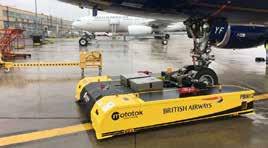
The Lahav Division of Israel Aerospace Industries has developed a semi-robotic towbarless tractor it calls TaxiBot that can tow an aircraft from the terminal gate to the take-off point (taxi-out phase) and return it to the gate after landing (taxi-in phase).
The TaxiBot eliminates the use of airplane engines during taxi-in and until immediately prior to take-off during taxi-out, potentially saving a lot of fuel.
The TaxiBot is remote controlled by the pilot from the cockpit using the regular pilot controls