
Building Trust, Easing Access, Overcoming Barriers :
Improving Delivery of Cash Aid to Low-Income Families
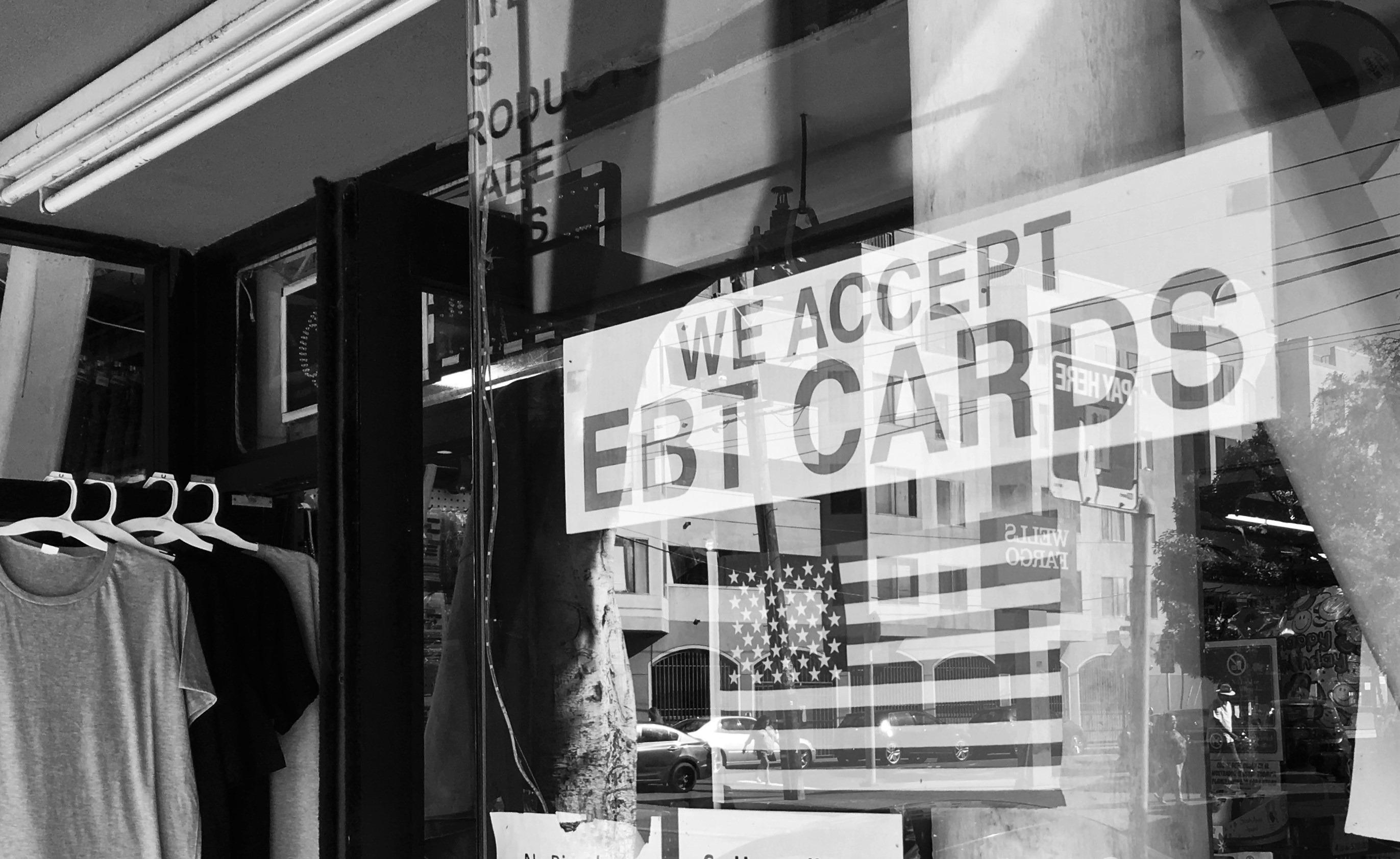
Research Findings and Recommendations

September
This report was prepared by Andrea Luquetta-Kern.
The California Reinvestment Coalition builds an inclusive and fair economy that meets the needs of communities of color and low-income communities by ensuring that banks and other corporations invest and conduct business in our communities in a just and equitable manner.
California Reinvestment Coalition

474 Valencia Street, Suite 230, San Francisco, CA 94103 (415) 864-3980
www.calreinvest.org
Executive Summary and Recommendations
Over 90% of families that receive cash aid in California receive it by electronic benefit transfer (EBT) cards. During the past three years, the California Reinvestment Coalition has conducted surveys, focus groups, meetings, and one on one conversations with scores of women and men who receive cash aid for their families. This report brings together the insights we have gathered throughout that process, including how to address the fact that millions of dollars a year in benefits are diverted when recipients are forced to pay ATM fees to access their benefits. Increasing the use of direct deposit has the potential to greatly reduce the cost of receiving and accessing cash aid. Simply recommending that families sign up for direct deposit through awareness and education campaigns, however, will not work. To effectively increase secure, affordable access to public benefits, CRC suggests that social service agencies, community organizations, and financial institutions work together to adopt the following recommendations:
1) Ensure access to safe, affordable bank accounts. Families need meaningful access to truly safe, affordable accounts they can trust that will not lead to hefty overdraft or other financial service fees. Without this, direct deposit could well lead to even heavier financial losses for families with the least resources to spare.
2) Provide timely sign-up for direct deposit. Timing the setup of direct deposit is key: families often need access to cash aid immediately and EBT cards that can be provided on the same day as program enrollment is still the most efficient way to make sure household members get the resources they need as soon as possible.
3) Educate aid recipients on their privacy rights. Social services agencies at the state and county level must build trust by assuring families that they will not and legally cannot peer into personal bank account activity or directly confiscate aid already deposited into accounts.
4) Keep direct deposit as a choice, not a requirement. Direct deposit into a personal bank account must remain a choice (not a mandate) that families can opt for as their needs and preferences dictate. Unlike bank accounts, the EBT system can provide simultaneous access to both cash aid and to food assistance programs through the CalFresh, or Supplemental Nutrition Assistance Program (SNAP), and the program for Women, Infants and Children (WIC). We believe that families who prefer to access their resources through one card should be able to flex that option, so long as the state minimizes costs of using the card.
CRC is continuing our work to remove the cost of financial services from the list of items that make being poor so expensive. One way we do this is by listening directly to families who know best their needs, the barriers they face, and ways to reform systems that inadvertently perpetuate inequity even when they are intended to reduce it. As such, we also include recommendations from benefit recipients who shared their thoughts with us about other ways to improve the cash aid delivery system.
Introduction
Since the release of our report, The $19 Million ATM Fee, the California Reinvestment Coalition has led the fight to end policies and practices that divert public benefits (like CalWORKS) away from families who need them and instead into the pockets of owners of ATMs who charge these families fees in order to access their benefits. Our first priority was to change the way California administers the EBT system. In what we began calling the “EBT Fee Avengers Coalition,” welfare rights advocates, social service providers, and EBT card users across California told their personal stories, developed reform proposals, and repeatedly met with state officials. As a result, California will soon stop charging families for using their EBT cards at the ATM. We will soon become the first state in the country not to pass on the cost of the EBT system to the families that need the aid in the first place. In addition, as a result of the state’s new contract that will take effect in 2018,access to free ATMs will more than double by providing unlimited withdrawals at no cost through at least two major ATM networks, including all Bank of America ATMs across the state.
We have also explored expanding access to free direct deposit of cash aid to families’ personal accounts as a second way to lower costs and increase financial capacity. Our research has uncovered new findings about how aid recipients use EBT cards on a dayto-day basis, and how they think about bank accounts and perceive the option to use direct deposit. More broadly, EBT users have shared their preferences and recommendations for improving the cash aid delivery system. Many of these suggestions have been highlighted throughout our report, and should be of interest to public benefits administrators,
policy-makers, and other community stakeholders who share CRC’s vision of improving a more just, equitable economy.
1. EBT cards work, albeit at a significant cost and with limitations
California delivers cash assistance by EBT cards to the vast majority of families that receive assistance, most of whom qualify for aid through the CalWORKs program (the state’s implementation of the federal program of Temporary Assistance to Needy Families [TANF]), and many who receive aid through other programs such as California’s Refugee Cash Assistance, and county run programs like General Relief/General Assistance for individuals without children. The card is also used to administer “food stamps” through the state’s CalFresh program (California’s implementation of the federal Supplemental Nutrition Assistance Program [SNAP]) Soon, families who receive assistance through the Women, Infants, and Children program (WIC) will also use EBT cards to receive and access this aid.
For the most part, the EBT system works.
EBT cards effectively deliver access to multiple public assistance programs: Each family gets access to cash and other assistance electronically at the beginning of the month. Card users who swipe the card can choose between accessing their food stamps to pay directly for qualifying food items or accessing their non-food stamp cash funds, which can be used to pay directly for purchases or can be converted to cash at the ATM or as “cash back” with purchases. (Unlike cash aid, food stamps and WIC cannot be converted to cash.) Every month, more than half a million
families in California use the cards to help meet their household needs.
… but the system has its limits and can cost a lot to use, including one’s pride.
The largest complaint that cash aid recipients have is that EBT cards simply are not widely enough accepted for the purposes families need them. For example, although they can be used at many grocery stores and big box chains for non-food items, and they can be used at many gas stations to buy food through CalFresh or non-food items through cash aid, they cannot be used to buy gas. A person who needs gas must first use their card to get cash by either using the gas station ATM (at a likely fee of $3 or more per withdrawal) or by buying some item they likely did not need, getting cash back, and using that cash to pay for the gas Unlike bank account owners, an EBT card user cannot use their EBT account to pay bills directly Instead, they must buy money orders or go to a retailer that provides walk-in bill pay services at a fee.
The limited acceptance of the cards makes families jump through costly hoops and hurdles to use their aid. Families that use cash aid to help pay for large household purchases, like paying rent or another major bill, will often try to get the cash out first in as few transactions as possible given that each one will cost a fee. People consistently report that finding a free ATM can be difficult, and fees at different ATMs can vary greatly, from as low as 50 cents to as high as $6 per withdrawal. A typical withdrawal at a major bank that does not voluntarily waive fees for EBT card users will charge $3 per withdrawal and comes with a limit to the amount that can be withdrawn, usually $200 or $300. This means that a person who receives $500 in aid must conduct at least two transactions, costing $6 total, and will only be able to access the amount that
can be withdrawn in the currency providedtypically in $20 increments. That means walking away with $480, paying $6 in fees, and leaving behind $14 that cannot be accessed by ATM.
Recipients also highlighted that in some areas there are so few ATM providers that waive fees for EBT card users that there can be a line at the free ATMs of people trying to get their cash out at the beginning of the month. Beneficiary recipients report that it can be embarrassing to be in that line.
Families that use cash aid for smaller purchases have a greater ability to use the cards directly in stores. However, card users face the significant stigma associated with receiving “welfare” if the store does not clearly post that they accept EBT and the person must ask if their EBT card is accepted there. Once a cardholder finds a store that accepts EBT, “it becomes your store,” as one card user put it. Even where it is accepted, there can be a stigma associated with using the California EBT card. As another user put it, “it is a clearly identifiable card that communicates a narrative about the person using it, and that becomes who that person is to every store clerk that sees the person using that card repeatedly.”
Still, many users say that having their resources on one card is very convenient, especially when shopping at big box stores like Walmart or Target that carry both CalFresh qualifying items that can be purchased with food stamps on the card, and non-food items that can be purchased with cash aid. In addition, those who apply for emergency cash aid and food assistance can walk out of their county social services office with a card that can be used that same day. This feature is priceless to someone who walks in hungry or with a child with ill-fitting shoes. Finally, users have
said that once they learn the system, and have found “their” stores that have the most convenient or cheapest ATMs, changing their routines can be challenging, especially when they have so many requirements to qualify for continued assistance, such as working long hours, taking college courses, or simply trying to get through the daily hectic pace of life as a low-income person with children.
2. Direct deposit can lower the cost of accessing cash aid and increase flexibility in money management
EBT card users who consider using direct deposit to a personal bank (or credit union) account appreciate the dramatically increased flexibility they could gain through use of an account and debit card. Access to free, unlimited ATM withdrawals at the institution of their choosing was not even the most valuable aspect of using direct deposit. Discussions have focused on the fact that unlike EBT cards, debit cards are accepted virtually everywhere; those that have a MasterCard or Visa logo function as universal payment instruments. They can be used over the phone, to pay bills directly through recurring payments, and online all functions EBT cards cannot currently deliver. Increased functionality provides access to better quality food and other household items: cash aid recipients no longer have to frequent “their” store that accepts EBT cards and can shop in stores where they won’t be shamed for using an EBT card.
Bank debit cards are universally accepted, carry no stigma, and can be used to manage multiple sources of income.
Some EBT card users also have other sources of income besides cash aid,
including paid work Card users told us they would find a lot of value in the ability to deposit this income into the same account where they have cash aid. Being able to manage larger amounts of money in a single, more flexible account increases the ways they can manage and use their money. For example, a person could use their account to make a large purchase directly at no cost rather than having to withdraw cash through multiple transactions, going through the hassle of purchasing money orders, or walking into a store to pay bills. Several card users said they would be better able to spread their resources throughout the month if they could pool their income in one place. Others would appreciate the ability to walk into a bank and withdraw money in increments of less than twenty-dollar bills if that is what they need and all they have left.
Using a generic bank or credit union account debit card for purchases would also remove the stigma associated with using the state EBT card. One EBT card user described there being “invisible lines between those who use EBT and those who don’t.” In a discussion of accounts that could be used to receive cash aid by direct deposit, EBT users specified emphatically that they would not want to use debit cards that marked them different than any other bank or credit union customers. The notion that some banks would designate a special card for cash aid recipients was soundly rejected as it would simply perpetuate the stigma of the EBT card.
Still, for EBT card users who receive both cash aid and food assistance through CalFresh or WIC, gaining increased flexibility and convenience to cash aid could come at the cost of being able to collect all sources of assistance in one instrument. Managing different forms of income in a single account could mean having to adopt two different payment tools for families that
buy food through EBT cards. This discussion led to a smart idea: “Wouldn’t it be great to have a bank card that you can also use for food stamps?”
3. To increase use of direct deposit, banks and government social services agencies must first earn the community’s trust
For direct deposit to be useful and costeffective, the accounts being used must be affordable and safe; families must be able to trust that the banks and the social service agencies that administer cash aid programs will not search through a person’s account without permission to use the information against them or suddenly freeze or withdraw funds in their account; and the direct deposit setup must be efficient, reliable, and timed so that the family never has to wait for access to their cash aid.
In addition to offering affordable accounts that will not overdraft, banks should accept nontraditional forms of ID, require no or very low opening deposits, and waive most reports about prior banking activity.
CRC categorically opposes encouraging people to use direct deposit with accounts that are capable of overdrafts and related fees or that will otherwise divert the family’s cash aid to fees and costs above the costs of using EBT cards. Beyond overdraft fees, however, there are other barriers to opening an account that must also be addressed.
For families that qualify and need cash assistance, even $25 can be a significant opening balance requirement, especially if that opening amount will be held for even a short amount of time. For example, the average General Relief recipient receives
only $200 per month to cover living expenses. A parent with a child receives about $500 per month on average through the CalWORKs program. Requiring a person with such little income to leave $25 in an account that cannot be accessed for several days is more than can be reasonably asked when, after bills, that $25 may be all the money a person has left.
Additionally, some cash aid recipients do not have a driver’s license or state ID card. To apply for aid, counties only require a social security number, along with any form of identification, no photo necessary. Unfortunately, banks typically require at least one form of photo ID. Without this, cash aid recipients will not be able to open a bank account.
Other initial barriers that prevent aid recipients from opening bank accounts can be related to their previous banking history. ChexSystems or Early Warning Services are the two largest consumer reporting agencies that banks use to monitor and report accusations of negative account use by account holders. Millions of Americans have negative reports in either or both system without knowing it, often because of old overdrafts or other similarly forgotten incidents. Similar to credit bureaus, consumers have also raised concerns about the two companies basing their reports on inaccurate information Previous studies and CRC’s own investigations indicate that negative history with high-cost overdrafts are a major reason that public benefit recipients no longer have or want to use bank accounts. Simply put, they’ve been burned and reported, and they feel both unwelcome and wary of new banking relationships.
For direct deposit to be a useful method of reducing financial costs and increasing financial capacity of families that receive public assistance, social service agencies,
community organizations, and financial institutions must work together to ensure that they have access to accounts that will not present these barriers. CRC has long advocated that all banks adopt personal accounts that meet our SafeMoney or national BankOn standards.
At a minimum, this means the account has all of these features:
Will not overdraft or face an overdraft fee.
Requires no opening deposit or a very low opening deposit
Can be opened with nontraditional forms of identification including municipal or local governmentissued ID cards (in addition to drivers’ licenses or state IDs)
Past reports about bank accounts ownership (other than proven fraud) are waived as a prohibition against opening an account
EBT card users recommend that social services agencies and nonprofits offer free screening to identify whether a person has been reported to ChexSystems or Early Warning Systems. Additionally, CRC has advocated that banks drop all reliance on these except in the case of proven (not mere accusations) of fraud.
However, even with these precautions in place, some EBT card users will still be wary of banks. Those with previous negative experiences, such as cycles of overdraft that led to spiraling debt that could not be repaid and involuntary account closures, say it is “scary” to put money in the bank. In their experience, banks can and will suddenly withdraw or hold a person’s money, leaving them without access and in debt with little to be done to remedy the problem.
Fear of government overreach is widespread: we must address the fear that “since it’s the government’s money, they can take it out of your account whenever they want.”
There is an urban myth that has spread in the San Francisco Bay Area about a lawsuit involving a major bank and instances in which the county or the bank (it is not clear which) withdrew substantial amounts of money from people’s accounts who had been receiving aid by direct deposit and who were later, after the withdrawals, informed that they had received overpayments (a cash aid amount that was later determined to have been more than the person was eligible for). In a focus group held in Alameda County, one EBT card user recounted the story and attributed it to a county worker who warned her against using direct deposit However, we have heard various versions of the same story in other conversations with EBT card users and service providers. The basic premise is the same: a warning that since the government is providing the benefits, banks will allow them to reach into a person’s account and take what they want when they want, without warning and with little recourse.
Fears about asset limit tests, overpayments, and account privacy keep cash aid recipients mistrustful of collusion between government and financial institutions.
This deep-seated fear is based on actual practices that make low-income families fearful of violating the many requirements to show continued eligibility to receive aid. One such rule is the asset limit for CalWORKs Only 0.1% of total CalWORKs cases are disqualified because they exceed cash and vehicle asset limits, yet county workers are required to screen all applicants and recipients to verify their eligibility under
the rule. Most aid recipients do not know the exact asset limits (which vary depending on the type of asset- for example, cars are treated differently than cash), but they do know they can be kicked out of the program for having too many resources. As a result, even though aid recipients are barely scraping by to make ends meet, they are also often wary of being judged to have too much money. Miscalculations of need and eligibility result in overpayments to families frequently enough and without sufficient explanation or understanding about why they occur or how they are remedied Understandably cash aid recipients often fear that the county will simply deduct funds from future months’ assistance to make up for mistakes that recipients feel powerless to prevent or address.
Coupled with their prior experience of banks freezing accounts or withdrawing funds for overdrafts, cash aid recipients’ fear of government and bank collusion is reasonable. EBT card users have shared versions of these fears repeatedly to us over the years. Some people fear that by setting up direct deposit, they would be giving the county permission to look into their account at any time. Already some aid recipients say that the requirement to show bank statements at re-certification is reason enough not to have an account for fear that this information will be used against them for eligibility purposes. For them, having less paperwork to show means fewer opportunities to be denied assistance for reasons that they cannot control. (As one person put it, “I always ask myself, how can this information be used against me?”) For others, fear of the government or the bank freezing or withdrawing funds from their accounts is reason enough to keep their cash aid separate from any other income they may receive.
A program to increase direct deposit use will not succeed without addressing the fears
and misconceptions about asset limits, overpayments, and account privacy. For one, the asset limit test must be ended. Alabama, Colorado, Hawaii, Illinois, Louisiana, Maryland, Ohio, and Virginia have all already removed asset limits for their state TANF programs. Ending the asset test in California would allow and encourage people to save without fear of losing critically needed aid while also decreasing the administrative burden on case workers who must conduct the asset tests At the very least, removing the asset limit test would stem the widespread fear that even a small amount of resources could jeopardize continued eligibility in the program.
Addressing overpayments could be more complicated since determinations of grant sizes involves verification of multiple factors. Nonetheless, the methods for fixing overpayments should be made affordable and predictable, so that families who fall victim to miscalculations aren’t suddenly faced with repaying large sums. In fact, counties could treat overpayments as opportunities to build financial capacity: a family could be given the opportunity to pay back an overpayment over time as if it were a loan, with regular payments being reported to credit bureaus to help the family build a strong credit history.
Finally, both social service agencies and banks must emphatically communicate that an individual’s personal bank account is his or her own private property, that account privacy is sacrosanct, that neither the state nor the county can make changes to a person’s account unilaterally, and that no county or state government agency can access the information about an account without the owner’s express permission or a warrant or similar legal order. Conversations with EBT card users reveal a persistent idea that, when a person uses direct deposit, the primary relationship is between the
government and the bank, making the cash aid recipient a third party, someone to be managed and policed. One person theorized that banks are hesitant to provide accounts to cash aid recipients because “they could face trouble with their contract with the government because of your failure to comply with unknown rules.” As long as this perception persists, cash aid recipients will not feel comfortable establishing their own accounts or providing county agencies with the authority to deposit money into their accounts.
Setting up direct deposit must be easy, predictable, and timed for when families are not in crisis.
Many families that participate in cash aid programs are introduced to aid in moments of crisis. Often, they have no or almost no money at all and they and their children may be experiencing both hunger and homelessness or near homelessness. In these situations, a person may be determined to qualify for emergency aid whereby they can leave the county office that same day with an EBT card in hand with resources immediately available. By contrast, the current process for setting up cash aid by direct deposit to a personal account can take weeks, is confusing, and requires documents that many people simply do not have None of the cash aid recipients we have interviewed know how long it takes to set up direct deposit- we have heard speculation of between “48 hours to process”, to “two weeks to set up,” or longer with “a grace period” to determine whether the bank will accept certain county forms. (In fact, there are no forms for banks to review from the county.) Alameda County officials have explained that the process can take about a month to six weeks. They have also advised that families submit paperwork early in the month so that the first direct deposit will occur in time for the beginning
of the following month. Otherwise, the family will continue to receive aid by EBT for at least one more month.
Counties must also change the forms required to set up direct deposit. Focus group participants immediately picked up on the fact that the form required in Alameda County requires sign off by an eligibility technician. To many, this fact implies that there is a time limit to when they can ask for direct deposit- at initial enrollment or when eligibility is recertified. In fact, by California law, counties must allow cash aid recipients the opportunity to sign up for direct deposit, or to switch back to EBT, at any time. The current form also requires people to provide a copy of a voided check, even though most people who have accounts do not have checks either because the account doesn’t provide them or because the individual has chosen not to buy them, reflecting the national trend of a dramatic decrease in the use of paper checks as people shift to mobile banking. Instead, the forms should ask only for the account owner’s name, address, and their account and bank routing number. Banks can verify account ownership.
Finally, because direct deposit cannot be set up for same day access the way EBT cards can, cash aid recipients recommend that social services agency present the option to sign up for direct deposit not at enrollment but soon after, and be given the opportunity to choose which system works best for them. At enrollment, aid recipients should be given the resources they need immediately, including a fully loaded EBT card that will work the same day. A few days after, families should receive and be coached through written guidance for choosing a safe and affordable account, determining whether EBT or direct deposit would work better for them, and instructions for how to set up direct deposit. County workers should follow up two to three
months later to determine if the person has opened an account and help the person set up direct deposit.
4. Other recommendations to increase aid recipients’ financial health
People who receive cash assistance live on extremely tight budgets and most must juggle competing demands, including children, work, and program requirements. For this reason, they are always looking for ways to stretch their dollars and use their time more efficiently, even though these two goals are sometimes in conflict (such as the choice to use a local ATM at a fee rather than searching for a distant free one, or when money is even tighter, sacrificing other errands or scarce leisure time to travel to the free ATM). In our conversations about how to improve the cash aid delivery system, the recommendations cash aid recipients suggest consistently reflect these two themes
For example, people invariably want to know whether it is possible to deliver food stamps through a bank account that comes with a Visa or MasterCard branded debit card- an all-in-one tool that will allow families to receive non-cash aid, cash aid, and other income into a single repository that can be managed through one system. However, aid recipients do not seem interested in simply adding the Visa or MasterCard functions to the existing EBT card. They are familiar with this feature because it is the one used currently to deliver unemployment, state disability, and paid family leave benefits through a prepaid card with a Visa logo issued by Bank of America. Though the Visa logo adds universal acceptance, recipients cannot add
1 California Code, Welfare and Institutions CodeWIC § 11006.2
other sources of income to the account and food assistance cannot be delivered through the card. People are also wary that if the EBT card were to add a Visa or MasterCard payment feature, their fees would increase.
Several EBT card users have asked whether it would be possible to set up direct deposit to a prepaid card account. Although this is legally an option, most people do not know that this feature is available, and the forms used to set up direct deposit do not offer it One major consideration is that California law prohibits prepaid card companies from accepting cash public benefits to an account that does not meet all of the requirements of a qualified account, defined as one that:
Is held at an insured financial institution,
Insures the card holder’s funds through the Federal Deposit Insurance Corporation or the National Credit Union Share Insurance Fund,
Does not provide credit or overdraft features, and,
Complies with all the consumer protections that apply to a payroll card account under the rules of federal Electronic Fund Transfer Act (EFTA).1
There is currently no requirement in state or federal law that requires prepaid card companies to provide these protections to all accounts. Although liability for compliance with this law falls on the prepaid card company, rather than on the county issuing assistance or to the individual receiving aid, we believe the difficulty of enforcing the rule would place the aid recipient at risk of losing access to aid already deposited. For this reason, we
recommend that California not encourage deposit to prepaid accounts until all or most card companies are required by law to provide these protections or the state is able to verify that an aid recipient’s prepaid account qualifies before depositing public funds.
People are constantly interested in finding other ways to become more financially capable. Living on such meager resources can be a real shock for people whose income has suddenly fallen and who may not have had to scrimp and look for money saving opportunities. Some card users have suggested that social service agencies provide resources to help them save money, such as a list of ways to cut expenses for utilities, food, transit and other costs. Some people would like to see monthly grants paid in installments spread throughout the month to ensure that they have some funds available in the middle and end of the month (though other aid recipients strongly disliked this idea).
In our conversations during focus groups and other meetings, people had many tips to share that others found useful, such as sharing that many museums offer free or reduced admission to EBT card users. People would rave about a particularly helpful county aid worker who had helped them save money- as some have said “a good worker is priceless!” Others raved about the ability to use food stamps at farmers’ markets, especially since many farmers’ markets will double the value of food stamps for purchases.
Often, aid recipients are angry at the fees they pay and hurdles they must clear for daily living. We were often asked, “Who gets the fees? Is there a way to get the fees back?” Some have suggested that the state refund at least part of the fee, a service that some credit unions and banks without extensive ATM networks offer. As one
person put it, “Why can’t I get some part of the fees back, half or something? It shouldn’t be our responsibility to worry about the fees… I’m homeless, I need to eat, when I’m using the card I’m not going to worry about $2 or $3 now, but on the 17th of the month when I have nothing, I want those fees back.” Usually, people want to know why the policies on fees aren’t based on a version of the Golden Rule, “How would you want to be treated if you found yourself in need?”
Conclusion
The EBT Fee Avengers Coalition’s advocacy resulted in meaningful changes to the way that EBT is administered in California. The most effective advocates have been EBT card users themselves who have described the burdens that the current system places on them, and who shared coping strategies and tips to help each other save their most important and scarce resources: time and money.
Enrolling in direct deposit could save many families substantial time and money, but only if necessary policies and infrastructure exist including: meaningful access to safe, no overdraft accounts they can open cheaply and easily; crystal clear assurances that neither the government nor banks will violate their privacy rights or suddenly refuse them access to resources because of a miscalculation by an agency or accumulation of a modest amount of money; and an enrollment process that honors their need for immediate aid while supporting the choice to opt for direct deposit soon thereafter.
In the meantime, state policymakers should be primarily concerned with making sure that the EBT card system will provide both cash and food assistance without stripping families of the very aid they need to get by. We are excited for the roll out of the state’s new cash access plan featuring Bank of America and other major ATM providers and believe this will be the first major, radically needed step to fixing the EBT system in California.
CRC gratefully acknowledges the financial support from the Rose Community Foundation for Arts and the Environment, the Y&H Soda Foundation, the Walter and Elise Haas Fund, and the Firedoll Foundation for making this report possible.