Q3 2026
The New Business Context for Leaders
Rita Gunther McGrath The human and the algorithm
The Z-curve Preparing for technological disruption
Change is good The rise of the transformation economy
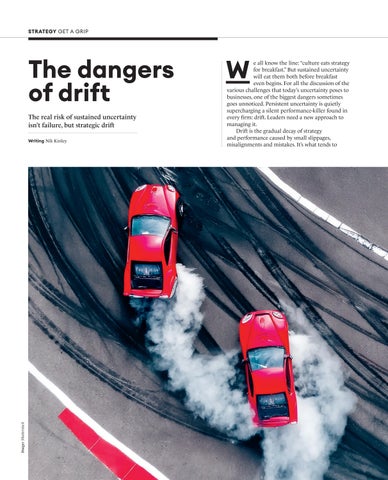
Strategic dri How to get back on track

Q3 2026
Rita Gunther McGrath The human and the algorithm
The Z-curve Preparing for technological disruption
Change is good The rise of the transformation economy
Strategic dri How to get back on track
Leading customer-centric organizations in the AI era






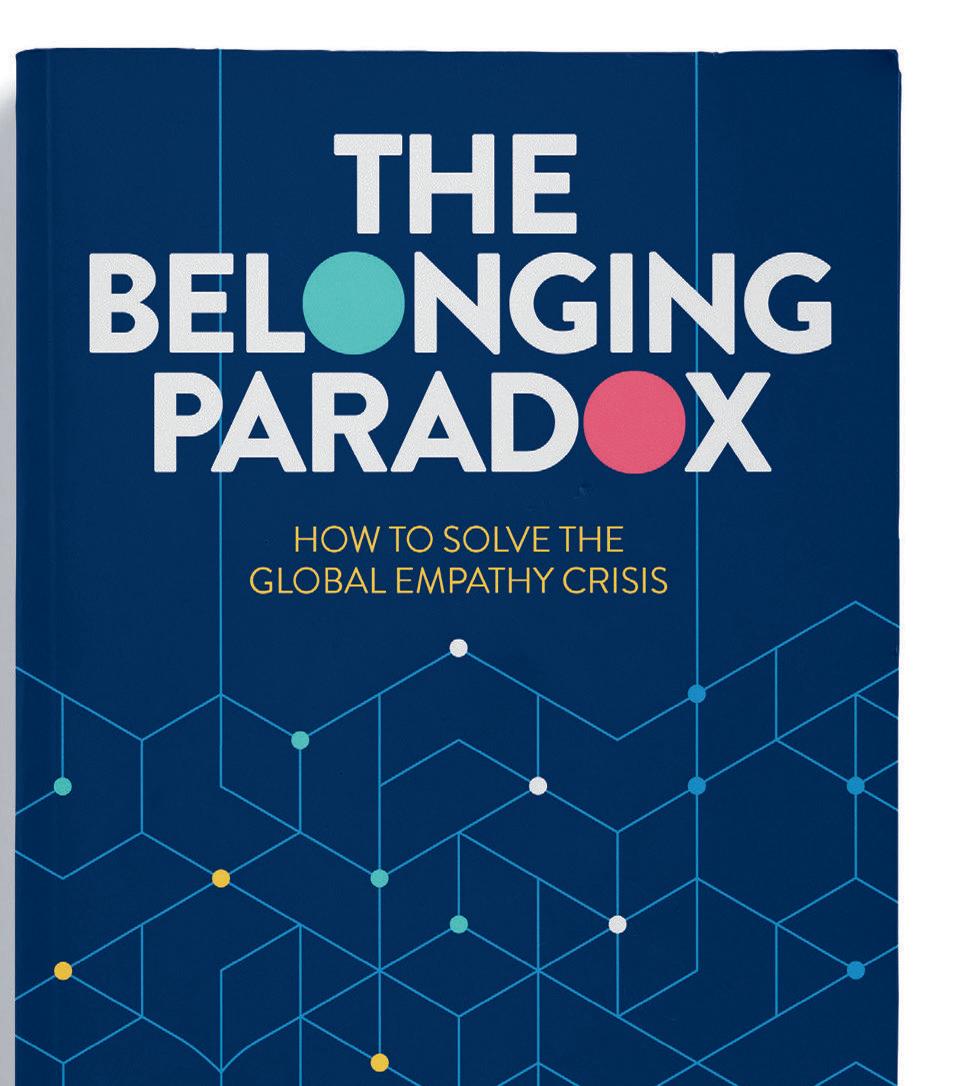

“In The Belonging Paradox, Danny Gal offers powerful methods for bridging divides in our increasingly polarized world. Drawing on his extensive work, he reveals that transformative connection is only possible when we develop the capacity to see the human behind the perceived enemy –a skill that feels more urgent than ever.”
PROFESSOR DANIEL L. SHAPIRO

Author of Negotiating the Nonnegotiable and Founder and Director, Harvard International Negotiation Program

“In this important book, Danny Gal distils decades of work building empathy, showing that building trust with the ‘other’ is not a task limited to saints but a practice that all of us can – and must –take up if our world is to survive.”


DOUGLAS A. JOHNSON
Lecturer in Public Policy at Harvard Kennedy School and former Faculty Director of the Carr Center for Human Rights Policy

“Danny Gal explores the empathy crisis at the heart of global challenges, revealing how disconnection fuels polarization and systemic breakdowns. He presents a compelling call to reclaim democracy and cocreate models of collective belonging rooted in empathy, deep listening and generative leadership. A vital guide for changemakers, this book provides the tools to shape a more inclusive and just future.”

OTTO SCHARMER
Senior Lecturer, MIT School of Management, author of Theory U and Co-founder of the Presencing Institute
The commercial transaction that lies at the heart of organizational life remains, in theory, as simple as it ever was. I can offer you something you want; you’re prepared to pay for it. From the humble town square market stall to today’s complex corporate ecosystem, that exchange of value has shaped our economic model.
Over past decades, organizations built ever more sophisticated systems to serve customers at scale, shaping the mass markets that have defined business as we know it. Understanding customers and meeting their changing needs has long been a critical source of competitive advantage. Yet many of the assumptions that corporations have relied on are now being ripped up. Consumers are more empowered than ever. Old certainties are eroding as economic and geopolitical volatility increase. And artificial intelligence is rewriting the rules of the game entirely.
Most business conversations about AI focus on organizational adoption, yet that overlooks its impact on the other side of the equation. AI is set to quickly become a major factor in how consumers make purchases – even, in many cases, taking over the act of purchasing, removing humans almost entirely from the exchange of value.
That could have dramatic, disruptive, consequences, as this issue of Dialogue begins to unpack. For one thing, it will compel organizations to refocus on what their customers truly value as they recalibrate their offering and ensure they remain relevant to the end customer. Rita Gunther McGrath breaks down the strategic implications and explains how leaders can navigate a world where the customer is not always human (p16). Tiffani Bova takes the discussion further, exploring how the old marketing funnel is going dark. Organizations risk being excluded from buying decisions without knowing what’s happened, or why. She explains what leaders can do (p24).
We also look at the enduring importance of human aspiration and lived experience. B Joseph Pine II explores the rise of the transformation
economy and explains why there’s huge unrealized potential in guiding customers through transformations, be they personal, professional, or organizational (p20). Innovation expert Tom Pullen warns of the dangers of AI reliance: after all, it can only work with data already collected, the answers to questions already asked (p28). There is no substitute for getting out and talking to real, live customers. And Michaela Merk explains why, for some sectors in particular, human connection can never be replaced by machines. As automation spreads, the value of relational intelligence only increases (p32)
Elsewhere, Peter Whealy explains how leadership has to change as AI becomes increasingly embedded in organizations: orchestration is the new watchword (p56). Alberto Torres warns that old strengths can become fatal weaknesses; preparation for disruption has to start now (p52).
The risk of disruption amid global economy is reflected in other features. Ann Padley and Jenny Millar offer a guide to raising prices without trashing customer relationships (p70). Igor Pejic analyses the new economics of the defense industry (p64). And Nik Kinley highlights the dangers of strategic drift at a time when uncertainty seems permanent (p74)
This issue also marks the final installment of the brilliant Vivek Wadhwa’s innovation column, after a full decade in post. He signs off with an urgent reminder of the need for ethical leadership and vigilance as the AI revolution accelerates (p51)
Enjoy the issue.

Consumers are more empowered than ever. Old certainties are eroding
Dialogue is brought to you by:
LID Business Media
Editor Patrick Woodman
patrick.woodman@lidbusinessmedia.com
Creative director Kate Harkus
Chief subeditor Luisa Cheshire
Editor-at-large Ben Walker
Publisher Martin Liu
Associate publisher Alec Egan For advertising sales: alec.egan@lidbusinessmedia.com
Duke Corporate Education
Chief marketing officer
Christine Robers
Publisher
Published in the United Kingdom by LID Business Media Ltd, LABS House (3.12), 15-19 Bloomsbury Way, London WC1A 2TH
Disclaimer
Copyright 2026 by Duke Corporate
Education and LID Business Media Ltd. All rights reserved. Material may not be reproduced without permission of the publisher. While we take care to ensure that editorial is accurate, independent, objective and relevant for the readers, Dialogue accepts no liability for reader dissatisfaction rising from the content of this publication. The opinions expressed or advice given are the views of individual authors and do not necessarily represent the views of Dialogue. This journal is also supported by Knowledge Partners, including Duke Corporate Education as Lead Knowledge Partner. Whenever an author is related to a Knowledge Partner it will be noted as such. Dialogue takes every effort to credit photographers but we cannot guarantee every published use of an image will have the contributor’s name. If you believe we have omitted a credit for your image, please email the editor.
Cover image Al-Musharraf
ISSN 2053-4361
Printed by Paragon www.paragon.world
Editor’s letter Patrick Woodman on the act of buying
Upfront Vishal Patel on the paradox of

The culture ecosystem It’s your system, not your people
Career development True job satisfaction requires purpose and precision
Bosses behaving badly How to hold senior leaders accountable



























DORIE CLARK Wall Street Journal bestselling author of The Long Game and executive education faculty of Colombia Business School

THOMAS WEDELL-WEDELLSBORG author of What’s Your Problem?







“The best companies want to tap into the full potential of their employees – and that means recognizing the unique needs of morning and evening people. Chronoleadership revolutionizes the way we create inclusive work cultures and equips leaders with strategies for embracing a diversity of chronotypes to improve health, productivity and overall wellbeing in the workplace.”


“With this manifesto against our culture’s time tyranny, Camilla Kring points the way to a brighter future: one where employees flourish, students learn more, and society becomes just a little bit more human. Can we get this revolution started now, please?”



“A must-read for anyone interested in unlocking the full potential of their workforce.”
ALEX WUERFEL Executive Coach and former Vice President at AbbVie Inc.












B Joseph Pine II
Rita Gunther McGrath
A best-selling author, sought-after speaker, consultant to CEOs, and longtime professor at Columbia Business School. McGrath is consistently ranked among the top 10 management thinkers in the world, including the #1 award for strategy by Thinkers50. She is the author of several books, including Seeing Around Corners and The End of Competitive Advantage, and teaches with Duke Corporate Education. Focus p16
An internationally acclaimed author, speaker and management adviser to Fortune 500 companies and entrepreneurial startups alike. Pine is the co-founder of Strategic Horizons LLP and co-author, with James H Gilmore, of Authenticity and The Experience Economy, which was twice named one of the top 100 business books of all time. His latest book is The Transformation Economy: Guiding Customers to Achieve Their Aspirations. Focus p20
Peter Whealy
A leadership strategist and founder of Elevate Potential, a consultancy specializing in AI-enabled leadership transformation. Whealy is a former Big Four equity partner who led learning and leadership across Switzerland, and has spent 30 years helping Fortune 500 organizations navigate transformation. He is the author of Lead with AI. Stay Human (LID Publishing). Innovation p56
Tom Pullen


The awardwinning author of Innovator: 10 simple steps to innovate with speed, scale and confidence and CEO of Innovinco®, helping large corporations maximize business growth. Pullen spent the first 18 years of his career driving business growth inside major companies, including Boots, Mars and Danone, where he was global innovation director. Focus p28

A change maker with a track record of transforming culture and business, Mallick is on a mission to fix what’s broken in our workplaces. Previously a marketing and HR executive, she’s a LinkedIn Top Voice who has advised Fortune 500 companies and startups alike. Her latest book is The Devil Emails at Midnight: What Good Leaders Can Learn From Bad Bosses. Leadership p46

Join the Dialogue
A globally recognized thought leader on growth and innovation, Bova is currently chief strategy and research officer at Futurum Group. She previously held senior leadership roles at Salesforce, where she was growth and innovation evangelist, and Gartner. She is the author of GrowthIQ and The Experience Mindset. Focus p24

A quick look at the key themes and topics covered in this issue

consumers
The era of mass production is at an end. How do leaders create customer-centric organizations for the era of AI – when the customer is no longer necessarily a human? Start by reassessing your organization’s true value, writes Rita Gunther McGrath (p16). Then focus on how customers will find you when the sales funnel goes dark, advises Tiffani Bova, as she sheds light on how leaders can adapt to AI’s fast-expanding role (p24).

the standard
Transformation guides Profoundly human aspirations for change and growth are creating a new type of economy, writes B Joseph Pine II (p20) Tom Pullen warns leaders not to get lost in the data: opportunities for innovation are found through authentic, human, engagement (p28)


Beware the Z-curve Technological disruption is not linear. Surviving when it accelerates is not a matter of prediction but of preparation, writes Alberto Torres (p52). Peter Whealy explains why orchestration, not automation, should be leaders’ priority as AI is increasingly adopted (p56).
How do leaders create stronger cultures for sustained success? By taking a multidimensional approach that recognizes it is shaped by the organizational ecosystem, argues John Childress (p40). Action on multiple fronts is also required when it comes to addressing poor behavior at the top of organizations. A changing social contract and the risk of costly reputational damage means businesses can no longer turn a blind eye to badly behaved bosses, as Mita Mallick explains (p46)
This year, business lost a great thinker.
Professor Edward Deci was a pioneering psychologist who, with university colleague Richard Ryan, gave the world selfdetermination theory.
The theory demonstrates how the satisfaction of three core human needs predicts organizational success: people must feel relatedness – a connection with others, a sense of belonging and being cared for. They desire competence – the need to be effective and master their tasks and projects. Yet they must also command autonomy – having agency and choice. “The proper question is not, ‘How can people motivate others?’,” Deci once said. “But rather, ‘How can people create the conditions within which others will motivate themselves?”
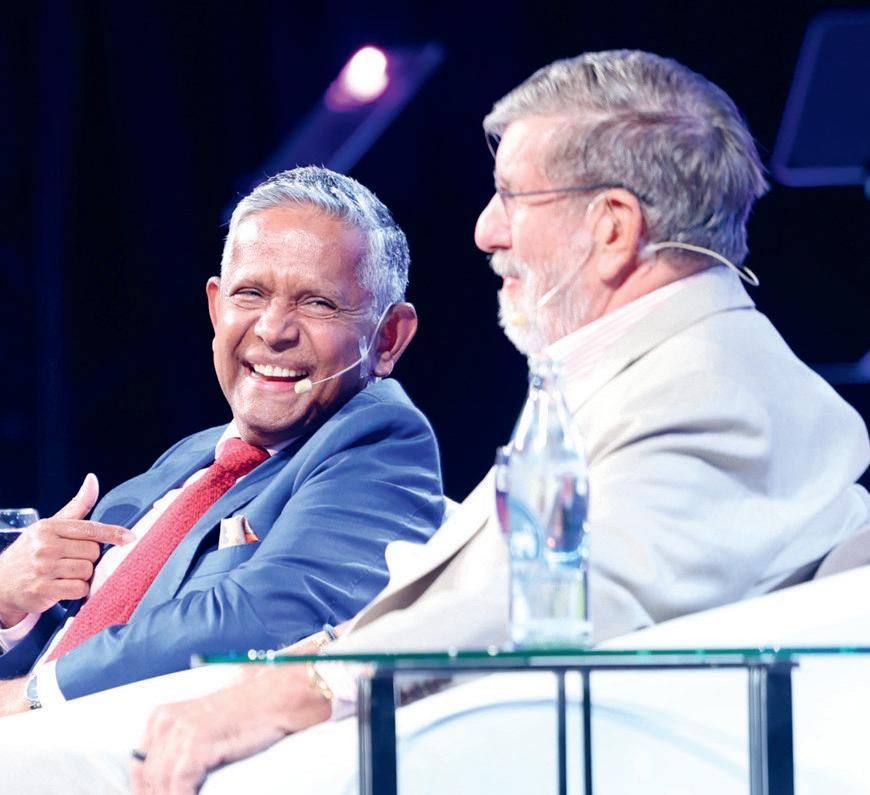
I was struck by the testimony of Deema Alathel, executive director of global strategic initiatives at tech giant IBM. Alathel used Duke Corporate Education’s Lead with Her conference in London to explain how she used her influence –rather than rank – to inspire others to success. Her thinking recalled Deci’s wise words.
“Influence really starts with how you show up,” Alathel told delegates. “If people feel you’re there to help move something forward – to solve a problem with them – rather than add another layer of oversight, everything shifts. In situations where teams are already stretched, they don’t need another person telling them what to do. They need clarity, context – and someone who helps remove the frictions that they’re facing.”
This reality can be hard for leaders to master. Leaders are charged with ensuring projects are successful, that they run on time and on budget. Yet they cannot be heavy-handed with those on the frontline: people work best when we create the environment for them to succeed on their own terms. “I’m often working across teams, geographies and stakeholders that don’t necessarily report to me,” says Alathel. “And, in many cases, they have

People work best when we create the environment for them to succeed on their own terms
their own priorities, their own leadership and their own constraints. What I’ve noticed is that people don’t usually resist because they’re difficult… it is just because they feel ‘managed’, or they don’t see how something connects to what they care about –or they feel like it’s being imposed on them.”
Alathel leads by giving people the relatedness, competence and autonomy that Deci extolled. She recalls a global initiative across multiple regions “where no one really owned the full picture.”
She adds: “Everyone had a piece of it, but no one was accountable for bringing it all together.”
Alathel spoke to the different teams involved in the initiative, helped them define a shared vision – then let each carve their own paths toward the goal. The project became something that they were building, not merely something that they were being asked to execute. Once that shift happened, explained Alathel, resistance disappeared and the project built momentum. The central principles: alignment, trust, and shared ownership.
Deci died in February 2026 at the age of 83. In his time on Earth, he had discovered an immortal truth: when people are controlled, they tend to comply. But when they are autonomous, they tend to engage.
and future-ready capability
Alathel might agree: great leaders create space for others to thrive.

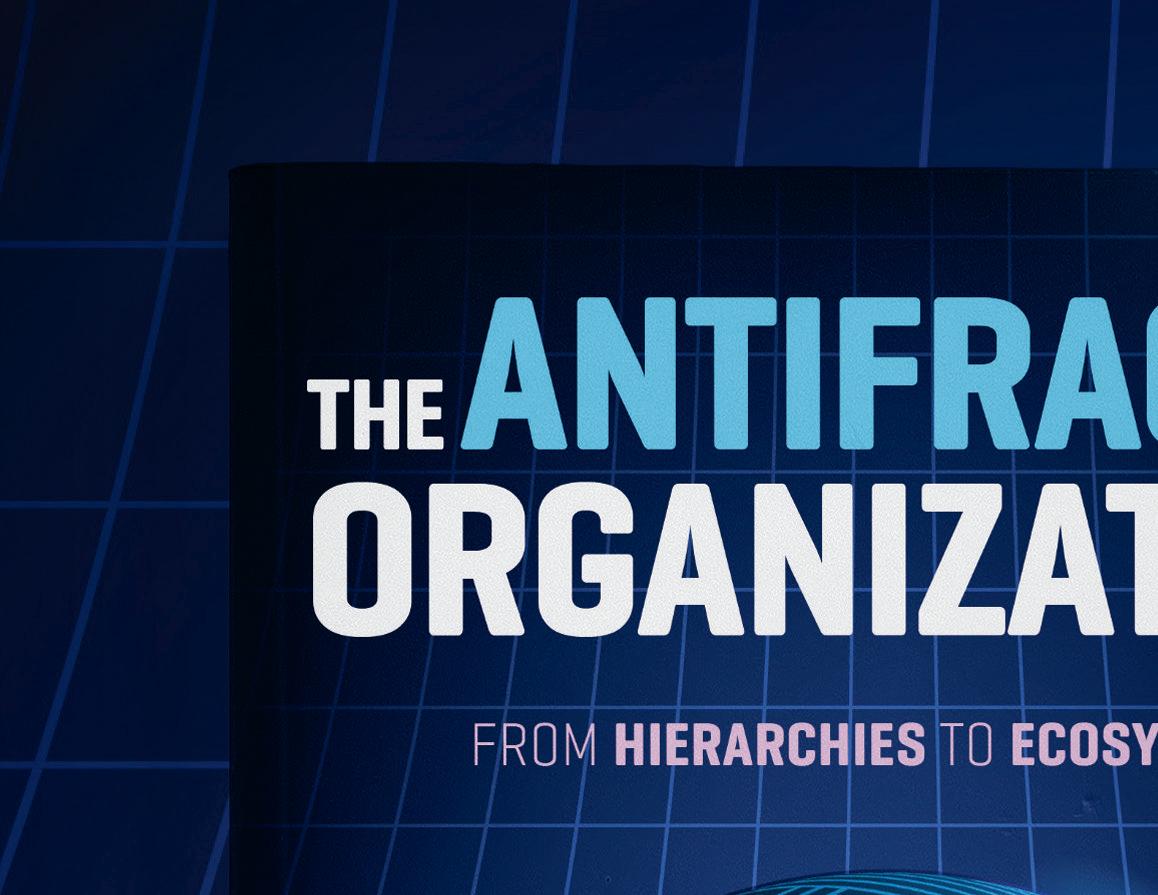

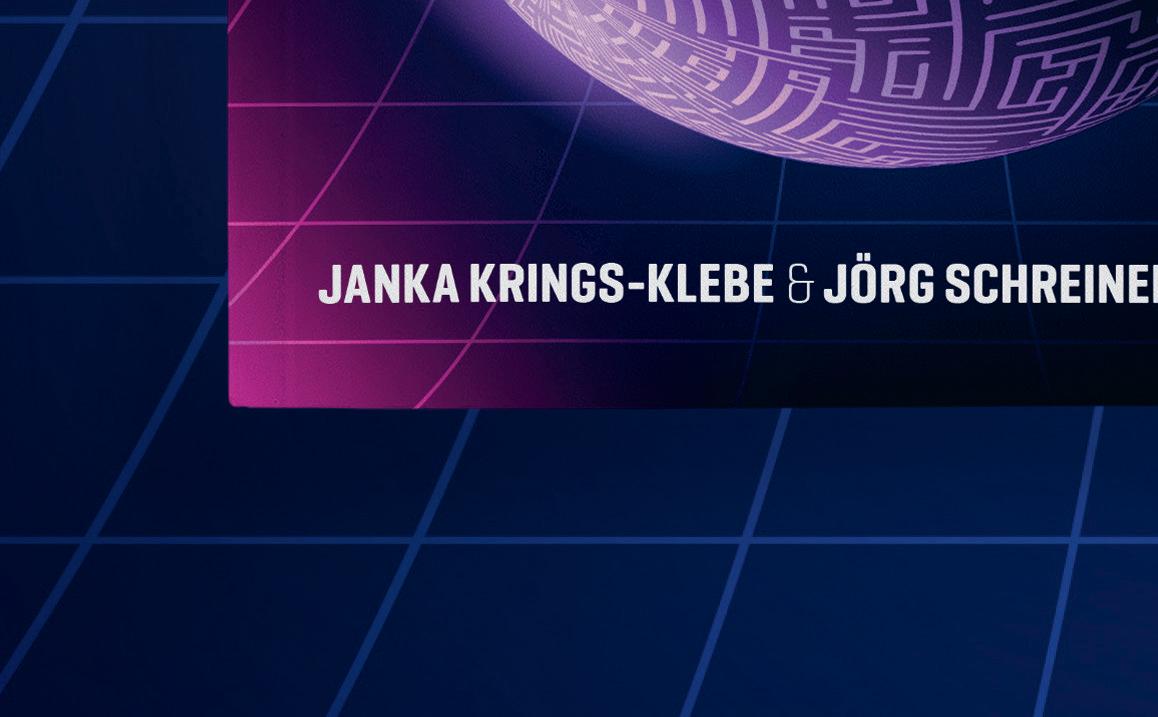



“This book is essential reading for any leader who is serious about breaking free from legacy thinking. If you want your organization to continuously evolve and thrive, you need to stop being afraid of disruption and start seeing it as the opportunity it is. The Antifragile Organization perfectly captures that shift.”
KEVIN NOLAN, President & CEO, GE Appliances, a Haier company

“The Antifragile Organization explains why top-down command-and control businesses cannot survive in today’s world and describes the kinds of dynamic organizations that are able to navigate the unending change that lies ahead. The book’s diverse examples and well explained principles make it a useful resource for anyone interested in the future of business.”
AMY C EDMONDSON, Novartis Professor of Leadership, Harvard Business School, and author of Right Kind of Wrong: The Science of Failing Well

“In The Antifragile Organization Janka Krings-Klebe and Jörg Schreiner take challenging, complex and abstract concepts and make sense of them in a truly compelling way. Their insights are backed by in-depth and highly practical examples from some of the world’s most progressive organizations. If you are simply interested in organizations or wrestling with managing in complex global corporations, this is required reading.”
STUART CRAINER, Co-founder Thinkers50


Print edition: ISBN 978-1-915951-87-8 Published by LID Publishing (
Available through all good book retailers | E-book edition: ISBN 978-1-915951-88-5 www.lidpublishing.com)



The paradox of experience risks dragging business to the depths
In the modern enterprise, the waters have never looked flatter. The rise of agentic ecosystems – AI systems capable of automating complex, yet predictable, workflows – promises a permanent sea-state of boundless efficiency.
We are witnessing the tokenization of the workforce, where incremental value is measured in LLM tokens rather than human hours. On paper, the ROI is undeniable: the mundane, the routine, the tedious are devolved to machines while our executives think – and thrive.
Yet beneath this serene ocean lurks a threat. The paradox of experience is a riptide that clutches organizations, pulling them under. Even those that survive risk critical damage. As this nasty undercurrent stirs, it renders organizations too intellectually weak to face the gathering storm of complexity.
The paradox is born from a simple trade-off: machines cost less than humans and work faster. Yet as we pursue the agentic at the expense of the analog, we winnow out the entry-level and mid-tier feeder layers of our organizations. These are the traditional training grounds. They are the places where high-potential talent once learned the art of navigation – by making mistakes.
Harvard’s Amy Edmondson framed this as “intelligent failure”: for organizations to become master navigators, they must first allow their people to take wrong turns in uncharted waters. Automate too much of the lower-level work that was once performed by the crew, and the ship is starved of future officers. The pipeline of human judgment lays broken on the seafloor.
The late, great behavioral economist Daniel Kahneman famously posited that intuition is no
As this nasty undercurrent stirs, it renders organizations too intellectually weak to face the gathering storm of complexity
mystical gift. It is the application of judgment within a deeply understood context. Intuition fails when applied to the unfamiliar. In a world where knowledge is no longer scarce – where any algorithm can retrieve a fact – the only premium is on human discernment.
Remove the opportunity for young leaders to become ‘scarred’ by the business – to miscalculate the winds and sail into squalls – and we create a future where too few command the intuition to steady the ship when the machines fail us.
A seacraft powered entirely by AI is efficient. But it lacks the precious instinct of a captain who can sense the swell of a rogue wave before it appears on the radar. AI is the ultimate exemplar of Kahneman’s System 1 – a rapid, pattern-based calculus. But it lacks System 2 – deliberative, contextual judgment that humans develop through trial and error. Rely too heavily on technology, and we build ships that run on code, not craft.
How do we find safe harbor? To survive the tokenization of industry, organizations must make a counterintuitive move. The war for talent, in its broad, traditional sense, is no longer the priority. We must instead chart a course toward a highlybounded, selective strategy: protecting a smaller, elite group of high-potentials, ensuring they remain tethered to the analog. These prospective commanders must be given the space to fail, the context to learn – and the experience to lead.
In an automated age, the ultimate competitive advantage is not your tech stack. It is the quality of the judgment that steers it.












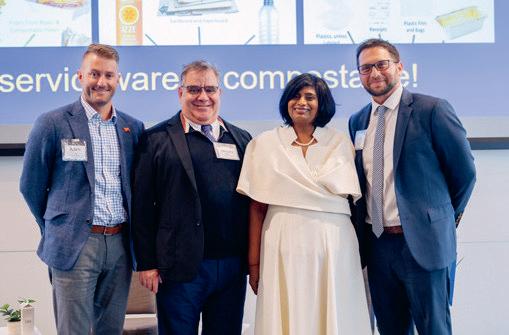

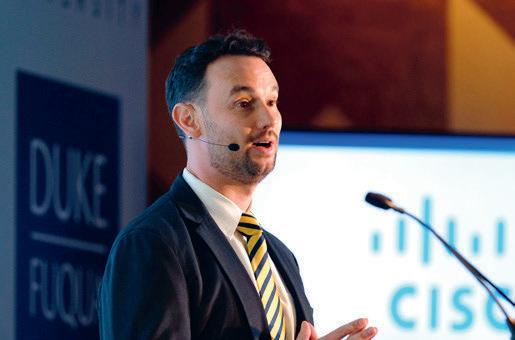








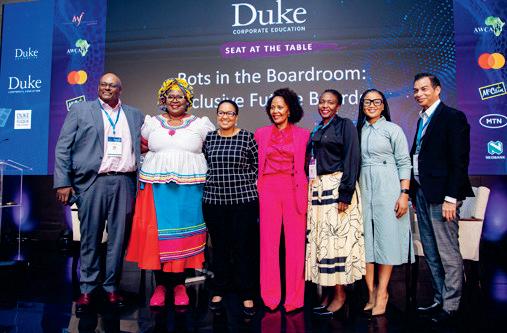

For 25 years, Duke Corporate Education has partnered with organizations across the globe to meet defining moments — and shape what comes next. We don’t deliver off-the-shelf answers. We co-create learning that is custom designed for the challenges organizations face. Whether navigating disruption, building future-ready leadership, or transforming cultures, we walk alongside our clients to fuel purposeful business change — across the globe, at every level.
At the heart of every transformation is a partnership — and every partnership, a story. Let’s shape the next chapter, together.
Consumers have never been more empowered or more fragmented. How and what consumers buy is shifting rapidly – and technology is a major factor. After all, AI isn’t just a tool for reengineering organizations: it’s also revolutionizing how consumers shop. Indeed, it’s forcing us to redefine what a ‘consumer’ even is. This issue of Dialogue examines what it means to lead a customer-centric business in this new era. How can organizations rethink their true value to customers? And how can organizations adapt for a world where the buyer is an algorithm? We also consider changes in the enduring, inherently human dimension. How are consumer aspirations driving the rise of the transformation economy? And how can leaders engage meaningfully with customers to understand their evolving needs and build stronger connections?


which they simply don’t care about. The emotional relevance of these attributes varies. Some are basic, meaning they are taken for granted. Some are discriminating: customers notice differences between different providers’ offerings. And some are energizing – the kind that customers stand outside in the rain overnight to get their hands on.
The mass production paradigm is at an end; the AI era has arrived. Here’s what it means for consumer marketing
Writing Rita Gunther McGrath
We are in the midst of a great transition: from mass production and marketing of just about everything, to hyperpersonalized and targeted services. Understanding consumers is at once easier and harder: we have more data and feedback to work with, yet value increasingly comes from complex relationships in which straightforward features and benefits don’t dominate purchasing decisions. Despite the changing consumer landscape, the fundamental strategic question remains the same. What do customers actually value and are we delivering it? The question sounds simple. In practice, it is fiendishly difficult to answer. Customers frequently cannot accurately articulate what drives their decisions. Companies frequently confuse what is easy to measure with what is strategically important. The result is product and service design that optimizes for the wrong things, leading to overinvestment in attributes customers don’t value, and underinvestment in those they do.
Understanding what consumers value
A rigorous approach to categorizing the attributes of your product or service, which I call attribute mapping, offers a path through the confusion. For any given customer segment, there will be attributes that are positive – things they are willing to pay for. Inevitably, there will also be negatives – things they would prefer to do without. And for many customers, there will be neutral attributes,
A rigorous approach to categorizing the attributes of your service offers a path through the confusion
Basic positive attributes are non-negotiables: baseline expectations that any credible offering must meet. A bank’s mobile app must allow balance checking; a hotel must provide a bed. These attributes don’t win customers, but their absence loses them instantly. Companies rarely gain competitive advantage by investing further in non-negotiables once they meet the threshold.
Discriminating positives are differentiators; features where superior performance actively shifts purchase decisions in competitive situations. In the early days of smartphone cameras, for example, photographic quality was a differentiator for different models. Other discriminators operate at the ecosystem level. Having a green text bubble rather than a blue one – signaling the use of a device other than an iPhone – led some teenagers to fear for their social lives if they left the Apple ecosystem. Differentiators are worth investing in, but only to the extent that the investment yields competitive separation. Once competitors match performance, the differentiator migrates toward non-negotiable status, and further investment yields diminishing returns.
Energizing positives are arguably the most strategically interesting. These are exciters –attributes that customers didn’t know they wanted until they encountered them. Financial technology firm Stratyfy, for instance, is using AI pattern recognition to allow banks to confidently offer loans to people who would otherwise be rejected for reasons unrelated to their creditworthiness. It’s energizing for the banks – it opens up a whole new set of customers – and energizing for the customers, giving them access to financial resources. Unfortunately, once an exciter is accepted by customers, such features eventually become discriminators and eventually, through competitive matching and customer adaptation, non-negotiables.
Basic negatives are tolerables – attributes that customers dislike but accept because all competitive options share the same flaw.
Discriminating negatives are dissatisfiers, which can create competitive differentiation: if you can credibly claim to eliminate something customers
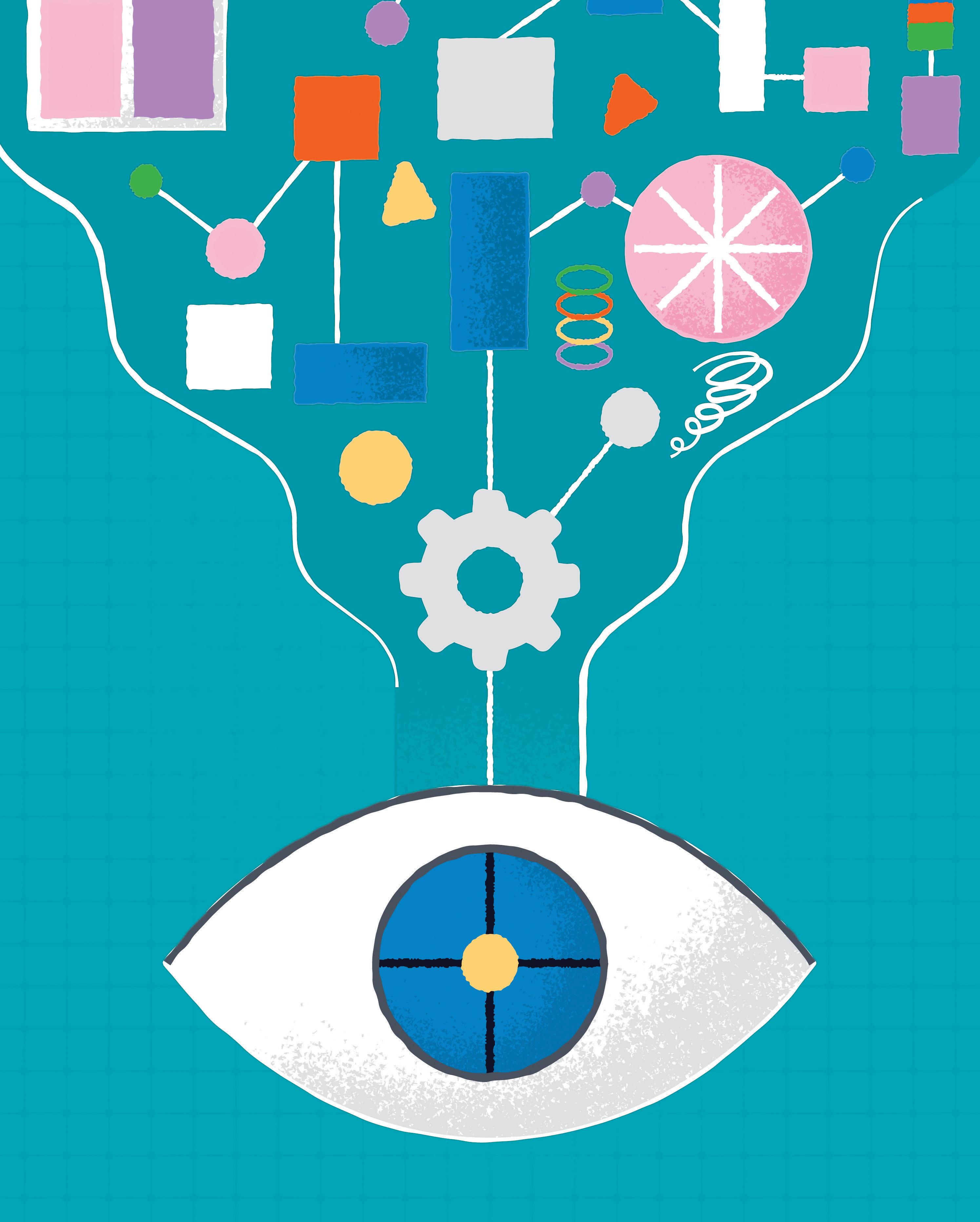
used to tolerate, it can become an advantage. Amazon’s one-click purchasing experience, for example, made buying far easier.
Energizing negatives are enragers: features that cause customers to abandon an offering. Lululemon’s Get Low yoga pants enraged many customers when they were found to be see-through, inflicting serious damage on the brand.
When using the attribute mapping approach to assess your offering, it’s important not to focus solely on attributes within your own category. As the world becomes more digitized and product categories blur, changes from elsewhere can radically transform how customers respond to the attributes you offer. Consider how the advent of GLP-1 weight loss drugs – now reportedly taken by 1 in 8 Americans – have led to attribute ripple effects across industries. Traditional weight loss firms such as WW (formerly Weight Watchers), which preached discipline, rigorous measurement of portions, and group support, have found those attributes squarely in the negative category, as consumers warm to the new attributes of GLP-1 drugs – such as their ability to ‘eliminate food noise.’ Food producers and restaurants are also having to adjust, offering high-protein formulations and smaller portions.
Having rigorously assessed your offering, you should invest in discovering new exciters and differentiators, work urgently to neutralize dissatisfiers and enragers, bring costs down on attributes that are becoming non-negotiables, and ruthlessly eliminate neutrals that add cost without adding value to any segment you care about. Then, with the attribute mapping framework in mind, consider two big shifts in consumption patterns: the shift from products to services, and consumption activities mediated by digital agents.
From products to services: the feedback revolution
In the mass production paradigm that we are now leaving behind, the moment of sale was also typically the moment of ‘goodbye.’ A manufacturer designed a product, sourced materials, made it, pushed it through a distribution chain, and handed it off to a retailer. What happened next –how the customer used it, what frustrated them, what delighted them – filtered back slowly and imperfectly through market research, customer surveys, and lagging sales data. The product was frozen at the moment of manufacture.
That world is disappearing. In industry after industry, offerings that used to be sold as discrete products are now delivered as continuous services. The implications for understanding consumer
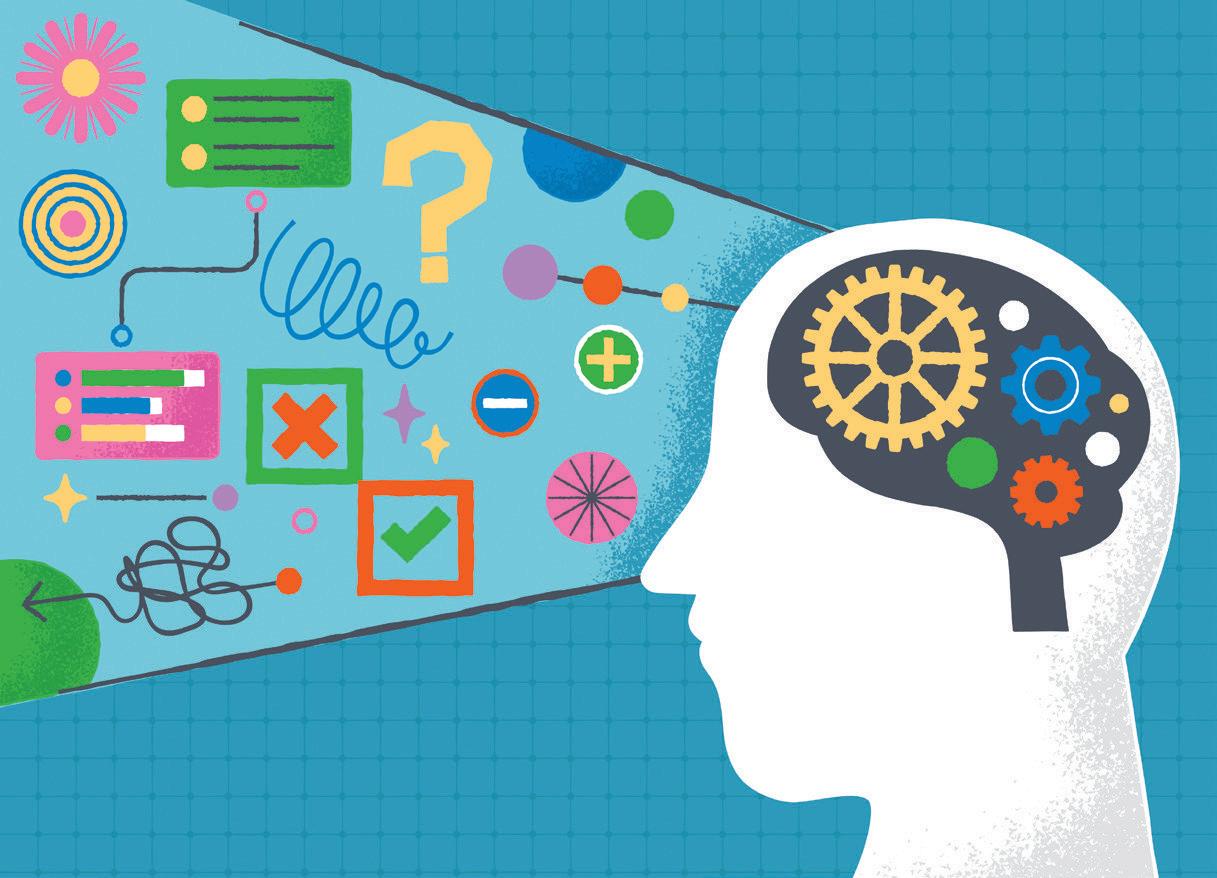
The rise of agentic AI changes something fundamental: who the ‘consumer’ is
attribute maps are profound. Consider the differences between buying a car and subscribing to a mobility service; purchasing software on a disc and paying a monthly SaaS fee; or buying a treadmill and joining a Peloton membership. In each case, the shift from product to service transforms the information architecture of the relationship. The service company receives realtime signals about how consumers actually behave, not how they say they behave in surveys. Every dropped session, every feature ignored, every workflow abandoned is a data point. The gap between stated preference and revealed preference – one of the great frustrations of market research –begins to close.
The mass market paradigm brought wonders to consumers. Economies of scale meant that companies could sell hard-to-manufacture goods affordably. Mass media, such as paid television ads, became a staple of marketing. Brands represented quality and idiosyncratic positioning in the minds of consumers. But now, economies of scale are giving way to hyper-local, digitized and personalized offerings. Mass media is being supplanted by social media, where it is possible –even probable – that no two people see exactly the same messages. Brands no longer carry the clout they once did.
All of this represents a fundamental reconception of what a company is selling. Increasingly, the answer is outcomes, not objects. Customers of cloud software don’t want servers; they want computing capacity on demand. Patients using digital therapeutics don’t want an app; they want managed health outcomes. When the product is the outcome rather than the artifact, the
company has the potential to remain permanently in the feedback loop – if it designs its systems appropriately.
The strategic implication is significant: companies that complete this shift gain a continuous, iterative capability to map attributes and refine what they offer. Those that remain in a product mindset are operating with one hand tied behind their back. In competitive markets, that lag is increasingly fatal.
When AI does the shopping
The shift to services changes how companies can adapt the attributes they offer. The rise of agentic AI changes something even more fundamental: who the ‘consumer’ is. For a growing category of purchases, the answer will be a machine.
Amazon’s Subscribe & Save program offers an early glimpse of the direction of travel. Consumers set parameters – brand preference, quantity, frequency – and the system handles replenishment automatically. The consumer’s role in the recurring transaction is essentially zero. Multiply that logic across the full range of routine, predictable, low-involvement purchases – household staples, personal care products, standard office supplies, recurring B2B inputs – and the implications are massive. For a substantial share of commerce, the consumer making the purchasing decision may not be a human being at all.
Agentic AI systems, now emerging from every major technology platform, extend this logic further. These agents don’t merely automate repetitive buying; they can evaluate options, compare prices at speed, assess suppliers, negotiate terms and execute transactions – all without human involvement. Even more interesting from a game-theory perspective is that agents will likely be interacting with other agents, each trying to outsmart the other on behalf of the humans who set them loose. There is also the revealed preference issue: what consumers tell AI they want may not be what actually matters to them. Perhaps AI will be smart enough to figure that out!
The assumptions underlying how commerce works will be utterly undone. Marketing has long been in the business of influencing human psychology: structuring choice architectures, arousing aspirations, triggering emotions, and creating brand affinity. Those levers work on people. They don’t work on algorithms. An AI purchasing agent evaluating laundry detergent is not susceptible to aspirational advertising or choice architectures that capitalize on human bias. It is evaluating a structured set of criteria: price per unit, delivery reliability, environmental rating, compatibility with previous purchases, and whatever other parameters its human principal has established.
This is not the end of brand or emotion in commerce. But for the vast categories of routine purchases, the rules are changing
The second-order effects cascade quickly. Brand loyalty as traditionally understood may matter far less. What will matter is performing well on the attributes that agents are programmed to optimize. A company whose product scores well on those attributes wins the transaction; one focused on brand sentiment may find itself bypassed entirely. This is not the end of brand or emotion in commerce. For high-involvement, highconsideration purchases – a car, a vacation, a piece of furniture – human judgment, aspiration and feeling will remain central. But for the vast categories of routine purchases, the rules are changing. Companies need to understand, urgently, which of their sales are vulnerable to agent disintermediation, and redesign their offerings accordingly.
What makes the attribute mapping framework especially relevant for the AI age is that it applies with equal force to the two very different consumers companies must now design for. For the human consumer making a considered, high-involvement purchase, exciters matter enormously. Experience, emotion and surprise are strategically powerful. Investments in discovery – understanding what delights customers before they can articulate it – pay off in the form of genuine competitive separation. Yet for the AI agent handling routine procurement, what matters is performance on a structured set of criteria. The relevant question is: what attributes will the agent optimize for, and how does our offering perform against those parameters? Companies that understand this can design explicitly for agent-legibility – ensuring their products are rated, certified and structured in ways that score well on the criteria that agents apply.
The companies best positioned for what comes next will be those that maintain simultaneous mastery of both. They will use real-time data to close the gap between what customers say and what their behavior reveals they value. They will design routine offerings to be visible and attractive to AI agents, while investing in the experiential and emotional dimensions of high-involvement categories where human judgment remains central. And they will maintain the discipline to keep asking, for every attribute in their offering: is this a non-negotiable, a differentiator, an exciter – or a cost we’re carrying for no competitive reason?
Rita Gunther McGrath is professor of management at Columbia Business School and a Duke CE educator
The consumer has never been more empowered, more fragmented, or more technologically augmented. The companies that understand what ‘consumer’ now means – and design their offerings accordingly – will find that the AI age is not a threat to customer centricity, but its most demanding expression.
always been around – but as lower-level economic offerings increasingly become commoditized, transformations come to the fore. We are beginning to shift into a transformation economy.
Why is this happening? Thanks to the productivity and technology improvements that began with the Industrial Revolution, people in the developed world today live lives of abundance. We have what once was unimaginable. Therefore, the opportunity cost of our time has grown dramatically. We only have so much time; it has become our most precious resource. Commodities, goods and services all save our time so we can spend more of it enjoying, learning, doing and just being in the countless experiences available today. (See my previous article with James H Gilmore, ‘Competing for Customer Time’, Dialogue, Q4 2021.)
Businesses unlock vast value when they help customers realize their true aims
Writing B Joseph Pine II
Whatever you sell today is not what your customers want. Commodities, goods, services and even experiences merely offer the means for the ends that customers really desire: to be transformed.
To be healthier, wealthier and wiser. To have meaning in their lives and purpose in their businesses. To flourish as human beings and thrive as enterprises. To become who they want to be.
Transformations are a distinct economic offering, the fifth and final category in the Progression of Economic Value model that I defined with James H Gilmore as long ago as 1999. They’ve
We continue to spend hardearned money and precious time on largely recession-proof experiences
Transformations, however, enable us to not just spend time, but to invest time in our future selves – with companies using experiences as the raw material to guide us in achieving our aspirations.
On the supply side, the emergence of the transformation economy is also the result of business’s constant search for differentiation, lest their offerings be commoditized. Transformations impart the ultimate level of value for they recognize that the customer is the product. The outcome of transformations are customers that become who they want to become. Everything else is just input. Such businesses prove difficult to imitate and resist commoditization, for customers are inherently unique. What’s more, the value companies create within each customer can yield greater profits.
This shift has been happening for a long time, but it accelerated with the Covid pandemic. Coming out of it, we finally could have the experiences we craved for so long. That’s why whenever an experience opened up, it filled to capacity – and why we continue to spend our hard-earned money and precious time on largely recession-proof experiences. Consider their progression.
Memorable experiences Experiences are memorable events that engage each individual in an inherently personal way. If customers –‘guests’ is the best term – don’t walk away with a memory, it isn’t an experience. To create memories, the offering must be engaging, reaching inside people and affecting them emotionally, physically, intellectually or spiritually.
Meaningful experiences It was also in the pandemic’s wake that we realized it wasn’t just creating memories that we missed, but the

meaningful time we spent with family, loved ones, friends, colleagues, and even complete strangers at inspiring collective happenings. Meaningful experiences add a level of significance to us as individuals, going beyond engaging who we are to connecting with our identity.
Transporting experiences These transport us out of ourselves, through awe, flow, or euphoria. They instill wonderment, shift us beyond the present space or time, and move us metaphorically to another realm, to a transcendent and liminal space and time.
Transformative experiences Simply put, transformative experiences change who you are. Sometimes, it is that one rare life-changing experience, but more often, transformations entail a series of experiences – memorable, meaningful and transporting – that create the conditions under which people (and businesses) change themselves. Change is difficult to accomplish on our own, so we hire companies that know how to make it happen – whether to go from poor health to having wellbeing, from financially insecure to prospering, from being uninformed to highly competent, and even from feeling insignificant to having
meaning. Such from/to statements are a hallmark of transformations – and they can apply not just to consumers, but to employees and businesses.
Transformations, therefore, are effectual outcomes that change individuals in a sustained way. To guide transformations, you must continue to work with customers – ‘aspirants’ is the best term here – to not only achieve their outcomes but to ensure those changes last into the future.
Consider Burning Man, filled as it is with peak experiences, flow, and awe. At the end of each annual event every participant, to a person, declares: “Burning Man changed my life!” In fact, the organization recommends that Burners, as they now call themselves – signifying their change in identity – not make any major life decisions for at least two weeks afterward.
Ah, but what happens when participants return to their daily life? The new memories, knowledge, and behaviors dissipate over time. You do not truly transform your customers unless the changes are sustained through time.
Sustaining change over time – and developing a full transformation offering – requires that guides encapsulate experiences. This is done through three activities: preparation beforehand, reflection afterward, and integration on an ongoing basis (Figure 1).
Preparation helps aspirants imagine the experience in advance, understanding its transformative implications and its potential effect. It puts them in the right frame of mind, so the experience can have greater impact.
Reflection means asking a series of questions about what happened, what effects it had in the moment, and what further impact it could have in the future. This retroactively enhances the value of any experience – and it is much more powerful in combination with good preparation.
Recognize that the experience itself is an integral part of encapsulation – don’t think of preparation and reflection as ‘bolted on’ to the
You do not truly transform your customers unless the changes are sustained through time
experience. Rather, they flow together to create one offering. Integration then continues that flow by putting reflection into action, enabling aspirants to do the hard work of bringing change into their life or business, under your guidance. By guiding and sustaining the transformation through time, it shifts transformative experiences into full transformation offerings.
The Delta Model represents how transformation guiders can make the shift to providing full transformation offerings (Figure 2).
The lowest segment shows how transporting experiences create more value than meaningful experiences or merely memorable ones.
Transformative experiences emerge above these, yet they are not full transformations. Only through the integration of the series of experiences can they be sustained through time and yield the fulfillment of each customer’s aspiration.
Finally, the top segment signifies that some transformations are so life-altering – or employment- and business-altering – that they yield a metamorphosis: a permanent transformation in some core aspect of identity.
It’s well known that having a baby forever alters mothers physiologically – and research shows the same is true for fathers. That metamorphic transformation may not seem very businessrelated, but think of the money spent on parenthood before, during, and after delivery. Yet is there any parent that truly feels prepared for the responsibilities of having and raising a child? Is there not a business opportunity here? No company involved, from hospitals to diaper manufacturers, offer such transformations.
There are many other metamorphic transformations that also offer great business opportunities, including every level of education, from kindergarten to PhD, not to mention getting that first job, joining the army, getting married, becoming a manager, starting a business, retiring, and so forth. But how many financial ‘service’ companies go beyond helping with the finances to guiding customers in their journey into a completely different phase of life? Of all these examples, perhaps the only one where an organization effectively transforms almost every person that comes to it is the military: think of the US Army and its boot camp, and then of how that pales in comparison to the Navy Seals. Human beings are capable of incredible transformation if –and only if – they have the right guides.
Most of these examples come out of a desire to change in some way, shape, or form. One of the most frequent catalysts for change is trauma –perhaps a cancer diagnosis, a severe car accident,
what they aspire to become. Ask them why they buy your offering, whatever it is. And why they want that. And why they want that. And why, again and again – however many times it takes to get down to a core aspiration.
losing a loved one, or being fired from a job. Here, the trauma immediately changes you; the challenge is to transform back to whole, albeit as a different person. There may be many companies involved in the aftermath of such trauma, but few, if any, metamorphic transformation guiders.
All transformation is identity change, and in addition to metamorphoses, there are many other opportunities for transformations in non-core or peripheral aspects of identity that comprise the middle segment of the Delta Model. Aspirants may want to gain a refinement of some aspect of identity, whether on a personal, professional or organizational level: perhaps to learn more about wine, to become more adept at work, or to be more efficient in answering customer queries.
On a larger scale, aspirants might want to attain an ambition of expanding themselves: becoming a single-digit handicap golfer, a better user of AI, or a more customer-focused company.
Or, they may desire to enrich a cultivation for new, but non-core, aspects of identity: becoming a gardener, gaining a certification, or innovating a new offering.
Embracing the Delta Model may seem a very distant and impractical possibility for many commodities, goods, or even services businesses. Remember, however, that whatever you sell today is but a means to the end of what your customers really want. So start by embracing the manufacturing technique of ‘asking five whys’ –questioning your external customers to ascertain
Human beings are capable of incredible transformation if – and only if – they have the right guides
Such analysis lets you think more deeply about how your offerings contribute to customer aspirations, collectively (if you do the right research) and individually (if you have the right design tool to mass customize your offerings). Perhaps then you can design one or more offerings that subsume what you currently sell into a transformation offering.
Even if you can’t imagine going that far, the sequence of whys can prove valuable: every step along the sequence can yield valuable information that you can apply to your business. If you can’t guide transformations, you may partner with other companies that do the full transformation, or even just determine how your current offerings can create more value for aspirants as the authors of their own transformations.
You can at least become more transformational – and the further along the sequence of whys you go, the greater the value you create, even if you don’t guide customers in achieving their core aspirations at the end of the chain.
As a manufacturer, for example, you may find that there are services you could offer – such as taking over the ownership and management of your goods to help clients improve alignment across the organization – or even experiences, such as workshops on how to use your goods to better effect.
If you’re already an experience stager, you may want to first see how you can shift up the Delta Model. Use customer research to determine what types of transformations you could guide, from enhancing refinements to expanding ambitions, enriching cultivations, and perhaps even altering metamorphoses. The higher your reach up the Delta Model, the greater the value of your offerings.
And whatever the genre of offerings you have today, do not neglect the opportunities for guiding transformations for whatever communities you or your customers interact with – whether families, neighborhoods, locales, suppliers, investors, or the general public and society at large.
B Joseph Pine II’s latest book is The Transformation Economy: Guiding Customers to Achieve Their Aspirations (Harvard Business Review Press)
The transformation economy speaks to customers’ greatest desires and their dreams for the future. To remain relevant in this new economy, businesses must think more deeply about how they foster human flourishing; about how they can help customers achieve better health, greater prosperity, new learning and meaning in life; about how they help their customers become who they want to be.


The marketing funnel is going dark. AI is rewriting the rules of how customers find you
Writing Tiffani Bova
There was a time you booked travel by calling an agent. They knew the airlines, the hotels, the routes; they shortlisted the options for you. Then the intermediary dissolved, replaced by Expedia, Priceline and a browser full of tabs. The traveler did the work directly. Now, the intermediary is returning – but it isn’t human. It’s an AI assistant that books the trip based on your preferences, your budget, and what it already knows about you.
The same pattern is playing out in how buyers find companies to fulfill their needs, personally and professionally: human intermediary, to selfservice search, to AI mediation. And it’s happening faster in business-to-business (B2B) than most leaders realize.
The top of the marketing funnel hasn’t disappeared. It’s gone dark. Buyers are still in it –you just can’t see them.
Leaders have spent the last decade getting better at understanding their customers, mapping their journeys, listening to their voice, meeting them in the moments that matter. The harder question now is the reverse. How do your customers – and the AI systems increasingly advising them – understand you? That is the frontier most organizations haven’t yet crossed.
This is the Dark Funnel – and it’s arriving at a moment when top-line growth is already harder to come by than it has been in a decade.
How the funnel went dark
The Dark Funnel didn’t emerge because buyers became secretive, but because buyers outsourced early-stage discovery to AI. According to LinkedIn’s 2025 Sales Leader Compass, 94% of B2B buyers now use AI at every stage of the buying process: from problem identification through research, vendor comparison, pilot and testing, and even negotiation (Figure 1). The early funnel is where you used to see and measure buyers. It is now the most AI-mediated part of the journey.
Inside that AI-mediated layer, two decisions are made about your brand, every day, in real time, and at scale. Some buyers discover you because AI surfaces your name in an answer, frames you credibly, and puts you on a shortlist you didn’t know you were being considered for. Others eliminate you for exactly the same reason, from exactly the same answer, because a competitor was framed more favorably or a concern in your story was amplified. Both happen in the same conversation. Neither produces a signal that your marketing or sales organization will ever see. You can be eliminated from consideration without ever knowing you were in it.
By the time a human enters your journey, the shape of the decision has already been set – not just in the impression formed by one buyer, but in the cumulative framing across thousands of conversations that are happening right now.
From SEO to GEO and now AEO
The demand generation discipline has to evolve. Search engine optimization (SEO) isn’t dead, but it is no longer enough. It was built for a world in which humans scanned a page of blue links and decided which one to click. That world is shrinking.
What’s replacing it is generative engine optimization (GEO) – the practice of shaping whether and how AI systems reference your brand when they synthesize answers for buyers. If SEO helped customers find you, GEO determines whether AI speaks for you. Close behind is agentic engine optimization (AEO), which prepares your brand, content and data for a world in which the entity evaluating you isn’t human at all. It’s an agent acting on a human’s behalf, with goals, budget and constraints already loaded.
Consider how Netflix’s recommendation engine changed the way films and shows are discovered. The “Because you watched” row is, in effect, an AI-generated answer to what to watch next. A film climbs, more people watch it, it climbs further, and a flywheel has started spinning outside of studio control. Studios spent a century perfecting how to create demand – the poster, the trailer, the opening weekend – and a recommendation engine quietly rewrote whose work gets found.
The same mechanism is now shaping how your company gets found. AI doesn’t invent. It assembles. It takes the fragments available –outdated positioning, a disgruntled review from 2019, a competitor’s white paper that frames the category in their favor, an executive interview with your CEO three CEOs ago – and builds a composite. That composite is what gets presented to your prospective buyer. Companies with a coherent point of view give AI good material to work with. Fragmented ones get a fragmented telling.
Adapting to this new reality starts with two moves that most leaders haven’t made. First, audit what AI says about your company. Go to the top five AI platforms and ask the questions your buyers are asking. Note what’s wrong, what’s missing, who you’re being compared to, and where you’re being excluded. Second, identify the three or four attributes you most want to be known for, and check whether AI is currently associating your brand with them. Most leaders assume they know the answer. They rarely do.
Here is the bigger mistake. Leaders assume their existing brand equity will carry over into AI-mediated discovery. It won’t. AI doesn’t weigh brand awareness the way humans do. It doesn’t care how many impressions you bought last quarter or how familiar your logo is to the buyer’s CFO. It cares about whether your story is coherent,
consistent and present in the sources it draws from. Decades of marketing spend can produce a brand that AI still describes poorly.
Then comes the harder question – and the one most organizations haven’t answered. Who owns GEO? The work sits across marketing, communications, product marketing, analyst relations, data and IT. Most companies don’t have a home for it and that means no one is accountable for the answer AI gives about the company. Naming that accountability, before building the capability, is often the first real move.
In the Dark Funnel, visibility is binary. Either AI includes you in its synthesized answer, or you don’t exist
In the Dark Funnel, visibility is binary. Either AI includes you in its synthesized answer, or you don’t exist. Traditional search optimization, paid media and website polish don’t guarantee inclusion. GEO does the work of making sure you’re in the room when the room is made of models.
Three stages of the B2B buyer journey are already routinely mediated by AI. Buyers use large language models (LLMs) to shortlist companies, narrowing a category of 50 down to three worth a conversation. They use LLMs to help write the RFP, which means the criteria you are being evaluated against were co-authored by a model trained on the public internet’s version of your industry. And then they run responses back through an LLM to decide who to go with.
The next stage is the most disruptive of all: agent-to-agent (A2A) negotiation. Enterprise platforms and brands are actively preparing for A2A commerce by making their data and workflows machine-readable and agent-ready. A buyer’s agent will go out into the market with goals, a budget and a negotiating strategy already in place. It will engage with seller agents, run scenarios, compare terms and stress-test claims. It will return to the human with a recommendation and, sometimes, a completed draft agreement for approval.
This changes the revenue function more than anything that has come before. Until now, AI has been shaping how buyers research and evaluate –but when agents negotiate, AI makes commercial decisions. The human moment moves from “decide who to buy from” to “approve or override what the agent already did.” Every earlier shift compressed the buyer journey, but this one compresses the revenue function itself.
It’s easy to dismiss this as a concern for tomorrow, but the infrastructure is already being built and the first transactions are already running. In late 2025, Stripe and OpenAI released the Agentic Commerce Protocol (ACP), an open standard that lets an AI agent complete a purchase from inside ChatGPT, end to end, on behalf of a human. Etsy merchants are already transacting
on ACP. Over a million Shopify sellers, including Glossier, Skims and Spanx, are in the rollout. The proof that agents can execute purchases autonomously is no longer theoretical.
For B2B, the infrastructure is arriving just as quickly. Salesforce has announced Agentforce Commerce support for ACP, giving existing B2B organizations a path to expose their catalogs, pricing and policies in a form a seller agent can safely transact with external buyer agents over emerging protocols. Commercetools has published an explicit A2A blueprint for B2B, with agents handling quoting, replenishment and multi-stakeholder negotiation that traditional automation could never solve.
The companies that will compete well in this world are already preparing. Some are structuring their data so an agent can read it. Some are making their pricing logic legible, their terms machineparsable. What they share is a recognition of where this is going. They are designing for the moment when the buyer isn’t the buyer.
Where growth is actually earned
If AI is doing the shortlisting, the comparing, the eliminating, and eventually the purchasing, a reasonable question is: what is the human still doing? The answer is, three things. They’re setting the outcome; choosing where to stay in the loop; and deciding how much to delegate.
Setting the outcome is the part no AI can do for you. The human still decides what budget to commit, what risk to take, which partner to trust with a strategic initiative, and which trade-offs matter when two options look equivalent on paper but feel different in the room.
Choosing where to stay in the loop is the new leadership skill, and the most under-examined of the three. When the loop is an agent, staying in it doesn’t mean reviewing every step. It means knowing which stages reward your attention and which you can safely let AI handle.
Leaders who default to how they used to oversee a deal – approving each stage, weighing in at each gate – will slow their organizations to a standstill. Leaders who disengage entirely will be surprised by outcomes they would never have signed off on. The judgment call is where your experience changes the answer. Everywhere else, the agent is probably faster and often better.
Deciding how much to delegate is the quietest of the three, and another factor that most leaders haven’t thought about. Every company will draw the line differently. Some will let agents negotiate routine purchases and keep humans on strategic ones. Others will delegate more, faster, for speed. Not making the choice is itself a choice – and the companies that don’t make it consciously will have
Setting the outcome is the part no AI can do for you. The human still decides what budget to commit, what risk to take
it made for them. Sellers feel all of this first. They walk into meetings where the buyer already knows who they are, has already formed a view, and has already narrowed the field – and the seller has no visibility into how any of it happened. They are entering at confirmation, not discovery.
That changes the profile of the seller you hire, train and promote. Discovery skills matter less. Synthesis, credibility in the room and executive presence matter more. The demo, the proof of concept, the executive sponsor conversation and the reference call each now carry the weight that used to be distributed across the whole funnel.
This is a people strategy question as much as a sales enablement one, and most organizations have not yet rebuilt around it.
Businesses face a tough outlook and delivering top-line growth will keep getting harder. The Dark Funnel is a big reason why – yet most growth plans don’t yet account for its emergence.
The companies that do grow from here will do two things at once. They will invest in the mechanisms – GEO today, AEO next – that determine whether AI includes them at all. And they will raise the bar on the human moments that remain, because those moments are where growth actually gets earned now.
Tiffani
The buyer journey used to begin with a search. Increasingly, it begins with an answer. That answer was written before the buyer ever arrived, by systems that don’t know you but are already speaking for you.
being customer-centric and what their calendars say – is one of the most persistent and costly problems in business today. Managing internal stakeholders has often become the primary focus, meaning customers and their needs fall into second place; not by design, but by default. Closing the gap should be a priority – and that means reconnecting with customers directly at a human level.
As important as AI is for powering innovation and reshaping how we do business, there is something about it that does not get said clearly enough in discussions about customer understanding.
AI knows what your customers have said. It has no idea what they haven’t
Writing Tom Pullen
Here’s a question that makes most leaders uncomfortable. Look back at your calendar for last week. How much of your time was spent either getting to know your customers better or making changes to your business based on their input? Not reading a report about them. Not having a meeting about them. Actually with them, or acting directly on what you learned from them.
For leaders and managers in many organizations, the honest answer is “very little.” That gap – between what companies say about
Here is what AI cannot do: it cannot surface the insight that has never been expressed
AI and large language models are, by their nature, backward-looking tools. They are trained on data that already exists: things customers have said, searched for, clicked on, written, reviewed, or recorded in some form. AI is extraordinarily efficient at processing that material – quickly, consistently and at a scale no human team could match. Its capability extends even to niche, less digitally connected customer groups. I recently used a generalist AI tool to surface key pain points that farmers experience with tractor tires, and it delivered remarkably accurate results, mapping closely to far more extensive – and expensive –customer research.
But here is what AI cannot do: it cannot surface the insight that has never been expressed. It cannot find the frustration that customers never thought to articulate because they assumed it was simply how things are. It cannot tell you what is hiding in plain sight – visible only to someone who goes to look.
This is not a minor limitation. While there are significant growth opportunities in innovation based on known pain points, there is an infinite stream of opportunities that simply cannot be found in existing data – ones that can lead to breakthrough innovation, strong customer loyalty and sustainable competitive advantage. These are topics that nobody has thought to ask about yet. They are sitting in kitchens, warehouses and living rooms, waiting for someone to show up.
There is a second, more structural problem with AI. When every competitor has instant access to the same tools and the same data, the resulting insight ceases to be an advantage. It becomes the lowest common denominator. The organizations that win will be those that go beyond – combining AI’s analytical capability with something it cannot replicate, and developing the innovation skills to turn what they find into tangible business growth.
AI is an incredibly powerful tool. Use it as your only tool, however, and you risk producing a polished picture of what is already known, while the most valuable insights remain invisible.
The insight that changed everything Around 15 years ago, working in the beverage industry, I visited a consumer called Marie as part of a consumer connection exercise – where you go to meet people in their real environment and simply observe and listen. Marie was a senior woman with plenty to say. We had been talking for a while when her voice grew hoarse. I encouraged her to take a drink.
She reached for a bottle of one of our brands – and proceeded to open it with her teeth. I remember my feeling of surprise and disbelief. As a company, we had huge amounts of consumer research. Excel sheets full of data. Years of accumulated knowledge about our market and our best-selling brands. We thought we understood our consumers intimately.
Marie explained that arthritis in her lower arm meant she didn’t have the strength to open the bottle by hand. But we shouldn’t be concerned, she added – all her friends opened our bottles the same way.
Marie had never complained to the company. Never written a review about packaging. Never searched for “how to open a stiff bottle cap.” She had simply adapted – found a hack, as consumers often do – and got on with her life. Her frustration was entirely invisible to any tool trained on what consumers had chosen to express.
That single moment was found only because someone showed up, sat down, and stayed long enough for a voice to grow hoarse. It led directly to a new product concept with a full packaging redesign that addressed real consumer problems – and became one of the brand’s most successful product innovations in years.
Marie’s pain point was not hiding in the data. It was hiding in Marie’s apartment. The only way to find it was to go there.
Why asking is not enough either
There is a related misconception worth challenging: that simply asking customers questions is sufficient. It isn’t, and for a similar reason.
Customers are often unreliable narrators of their own behavior. They rationalize, simplify and answer within the limits of what they consciously know. I have listened to a consumer describing herself as “healthy” while opening a cupboard full of chocolate. I have heard of a team presenting a beautifully designed hand-soap dispenser, only to discover it takes up far too much space on a bathroom sink for anyone to buy it.
In such cases, the problem lies in the question asked. Asking more questions is a good starting point, but it is the quality of those questions that determines the value of the insight gained. Questions that introduce bias produce skewed
answers. Asking whether someone prefers new product A or B assumes they want either. Better questions are grounded in real moments: What were you trying to achieve? What happened? Why did you do it that way? The goal is not to get customers to hand you the solution – that is your job. It is to get them to supply the raw material from which you can build one.
Get out of the office and meet customers in their real environment, at the moment most relevant to your product
This is where I part ways slightly with the “jobs to be done” framework, valuable as it is. “Job” implies an action, yet the key is surely to focus on the desired end result. A more helpful framing centers on outcomes and obstacles – what customers ultimately want, and what is preventing or hindering them from achieving those outcomes today. Together, these form a powerful basis for successful innovation.
A better approach to understanding customers comes down to two disciplines that are simple in principle – and consistently underused in practice.
First, immerse. Get out of the office and meet customers in their real environment, at the moment that’s most relevant to your product or service. Not in a research facility. Not through a dashboard. In context.
Second, inquire. Ask sharp, simple, powerful questions that surface real pains, real needs and real
desires – without leading, steering, or projecting what you hope to hear.
Together, these two disciplines do something AI fundamentally cannot: they access the unarticulated. The unknown unknowns. They find the Marie moments – frustrations customers have adapted to so thoroughly that they no longer think of them as frustrations at all.
Immerse and inquire should be nonnegotiables for understanding customers, and businesses that make them their starting point find the same things. It is easier than expected to find willing customers; the experience is genuinely enjoyable; and the team learns something actionable. Often, ‘truths’ that have circulated inside a business for years turn out not to be true at all. AI, trained on what has already been recorded, is unlikely to challenge such orthodoxy. Only proximity to real people does that.
What getting it right looks like
None of this requires a major transformation program. It starts with a decision about how leaders spend their time – and whether that decision is made visible.
I once worked with the global CMO of a major corporation who built consumer visits into every international work trip he made – going into people’s homes, observing how they lived, understanding their context directly. Not delegated, not occasional – this was simply part of how he operated. He set a tone that spread through the entire organization.
At another company, an insights manager found an effective mechanism. He placed a grid on the wall near the CEO’s office. Each member of the executive team had a box to tick when they completed their customer visit for the month. What had been easy to deprioritize became something those leaders actively scheduled – and made a priority for their teams, too.
In both cases, customer-centricity was not driven by rhetoric. It was driven by visible, consistent action. The most common reason leaders don’t do this is not a lack of interest – it’s not knowing how to start without it becoming a cumbersome project.
Start by finding real customers to speak with. Don’t overthink it. You can organize it directly – a simple LinkedIn post can work wonders. People are more willing to share their experiences than most organizations assume. Just ensure the customer is representative of your target audience, not someone who will simply tell you what you want to hear.
Then meet them in context. Go to where they use your product or service. Observe. Ask simple, open questions rooted in real moments. And then
The power of AI is limited: it is backward looking, reliant on data that has already been collected and on questions that have already been asked of your consumers. It cannot surface the insight that has never been expressed. There are no substitutes for real conversations with customers.
Two simple principles can drive a better understanding of customers. First, immerse: go and meet customers in their environments, to see how your product or service is used in context. Second, inquire: by asking sharp, simple, powerful questions, without leading, steering or projecting what you hope to hear.
None of this requires a major transformation program. It starts with a decision about how leaders spend their time
debrief your team – not just on what you heard, but on the ‘so whats’: the observations that warrant further investigation or immediate action. Customer insight that stays in a notebook changes nothing.
And note that this kind of approach is not only relevant for consumer-facing businesses. I have applied it in varied B2B contexts, including electrical equipment, mining, construction and materials handling.
Different environments, same underlying truth: the closer you are to your customer’s real world, the better your decisions will be.
The opportunity ahead
With AI continuing to evolve rapidly, the organizations best placed to benefit will not simply be those with the most sophisticated tools. They will be those who understand what AI is for – and what it isn’t for. Those who use it to process and scale what is already known, while investing time and energy into uncovering what isn’t.
Look at your calendar again. Did you honestly spend enough time with your customers or working on what they’ve told you? If not, that is simply a prioritization problem. It is entirely within your power to change it.
Tom
Pullen is CEO of Innovinco and author of Innovator: 10 simple steps to innovate with speed, scale and confidence (Practical Inspiration Publishing)
The question is not whether your organization has access to customer insight. In the age of AI, everyone has more than ever before. The question is whether you are willing to go and find the insight that doesn’t yet exist – because that is now the only kind your competitors cannot simply download.
Authentic human connection still beats big data.
Writing Michaela Merk
In the race to understand customer behavior and boost sales, organizations have invested heavily in big data and artificial intelligence. These tools offer prediction and accuracy –but they also risk reducing people to mere patterns and transactions. And there is a real danger of overlooking the human aspect: the subtle cues, trust and empathy that foster lasting relationships. This is where relational intelligence offers a vital counterbalance – and it is more essential than ever.
For over 20 years, I have been working with leading premium and luxury brands, where relational intelligence is not just a ‘nice to have’ but the bedrock of customer experience, retention and growth. In these markets, trust and authenticity are everything. The bond a client feels with a heritage house is built on more than just flawless craftsmanship or exclusivity. It relies on people and their talents – on the ability of sales advisers, managers, and leaders to understand, connect, and nurture relationships over time. Data can tell you what a customer has purchased, but it cannot replace the intuition, emotion and care that create true loyalty. The same principle holds well beyond the luxury industry – it is true for any company that puts people at the heart of its business.
Relational intelligence is an innate human trait: the ability to connect meaningfully with people of all ages, personalities and backgrounds, based on authenticity rather than manipulation. However, in today’s competitive world, relational intelligence is often eclipsed by professional pressures or the sense of superiority that can come with power – both of which tend to undermine the value of real human connection. That’s why relational intelligence is so crucial in leadership.
It is every bit as critical in marketing. It allows brands to move beyond campaigns and customer data to build trust, loyalty, emotional resonance and memorable experiences – the foundations of long-term growth. Through my research and observation working with large teams in premium and luxury companies, I have witnessed that the real difference between brands lies not only in the quality of the product, but in the quality of relationships a brand is able to build over the long run. Whether in the boardroom or at the point of sale, relational intelligence is vital for engaging teams, confidently leading change, winning over even the most demanding clients, and enhancing organizational performance. When individuals and customers alike feel heard, valued, and genuinely understood, the conditions are set for cohesive, high-performing teams and enduring brand relationships to thrive.
The challenge, of course, is how to put relational intelligence into practice. Five universal qualities stand out – each requiring self-reflection and growth, and each essential for building genuine, lasting connections. These are the five powers of relational intelligence.
Relational intelligence is a unique human trait: the ability to connect with people
At its core, relational intelligence is about building genuine connections – considering others’ perspectives and understanding their emotions. This means practicing active listening and showing real interest in what people say. Empathy allows us to connect more deeply with colleagues and customers, fostering trust and loyalty. Non-verbal communication is equally powerful: a smile, an open posture or a steady tone can all shape how messages are received. Thanks to mirror neurons, we are wired to respond to these cues, forming deep and lasting bonds when empathy is authentic.
Authenticity is essential and takes many forms, but the key to building trust is staying true to yourself. It is not about ‘acting professional,’ but about letting strengths, values and vision shine through – while also being open about weaknesses and doubts. Sharing personality and emotion,

and fostering genuine relationships, builds trust and encourages others to do the same. It creates a culture where openness, vulnerability and the right to make mistakes are embraced.
Share passion
When you are passionate about your work, you captivate your audience and inspire those around you. Passionate individuals are naturally better at motivating their teams and engaging customers toward shared goals. Knowing how to express passion enables us to radiate charisma: we become vibrant, listened to, and able to transform and influence those around us. This is particularly important in times of transformation and crisis, when passionate people continue giving their best while others give up.
4 Generate gratitude
Gratitude has become a buzzword – and rightly so. It brings powerful benefits for health, wellbeing and lasting happiness. Its impact is greatest when it is genuine, unprompted and freely given. Praise promptly and personally: not only when results excel, but also when real effort is made. Genuine appreciation reinforces positive behavior, builds trust, and strengthens relationships. Whether expressed through a kind word in a meeting or a handwritten note, gratitude helps people feel seen and valued.
5Spark pride
This isn’t pride rooted in arrogance, but pride that comes from belonging – to a family, a company, a brand or a shared mission. This authentic pride arises from deep-seated values
As the workplace continues to evolve, the human ability to connect is becoming more important
that are clearly defined, demonstrated and shared across the organization and among peers –providing direction, perspective and inspiration. Like magnets, they attract people together and foster unity. The more consistently managers embody them, the stronger the bonds within the organization become.
Why connection cannot be replicated
Relational intelligence is much more than a ‘soft skill.’ It is the ability to understand, connect and respond to others in ways that no algorithm can truly replicate. While AI identifies patterns and correlations, relational intelligence uncovers context and meaning – thereby offering organizations a deeper understanding of what customers genuinely value.
For managers, relational intelligence translates into resilience, adaptability and the capacity to build strong networks of support. Individuals with high relational intelligence are more likely to excel as mentors and coaches, recognizing potential and nurturing it within their teams. They foster cohesion and motivation, even during periods of uncertainty or pressure, and are better equipped to navigate and resolve conflict with empathy and clarity.
As the workplace continues to evolve –especially under the influence of artificial intelligence – the human ability to connect is becoming more, not less, important. In a world where machines are growing ever more capable, it is relational intelligence that will distinguish successful managers and leaders – and sustain meaningful customer relationships across all sectors.
Entrepreneurial spirit
Born in the US, Heinecke arrived in Thailand aged 14 when his father, a former Marine turned diplomat, moved the family to Bangkok. He started his first company in 1966 aged just 17, focusing on radio advertising and office cleaning, drawing inspiration for the company’s name from his legal status. Minor was born.
Heinecke quickly moved into food, serving the aspirational consumers emerging as Thailand’s economy boomed. “That focus on the consumer was always there,” he recalls. “Even in my advertising days – before I owned restaurants, hotels, or even retail stores – I always had this great belief in life that people are very similar. Teenagers in Asia were no different than teenagers in America – it was just a question of how much money they had in their pocket.”
The ability to meet changing consumer needs has been central to Minor International’s growth over several decades – and is the key to its future
Writing Vishal Patel & Patrick Woodman
hat drives the sort of leader who embarks on their business career before they’ve even reached adulthood – and who remains deeply involved in their business 60 years on? And how does the required leadership evolve as the organization changes – and new leaders come in to write the next chapter?
Those questions were at the heart of Dialogue’s recent conversations with two remarkable business leaders: William E Heinecke and Dillip Rajakarier, respectively the founder and chairman, and group CEO, of Minor International – the Bangkok-based multinational group with interests spanning hospitality, restaurants and lifestyle brands.
People, profit, passion – they’re the three Ps I always talk about
William E Heinecke
One of Heinecke’s signature moves was bringing winning brands to the Thai market – such as the Minneapolis-based Mister Donut, which he had noticed succeeding in Japan. “You start with the basis that people are more similar than dissimilar,” he explains. “From music and movies, to food, cars, cosmetics, fashion – anything you want to name. The only thing where you can get it wrong is you can be too early sometimes, and the purchasing power isn’t there.”
Insight is not the same as a long-term strategy, though. Heinecke’s goals were primarily personal and short-term. “You don’t start out with a fiveyear plan. All I really wanted to do was survive and be able to indulge my hobbies – my go-karts, motorcycles, and cars – so you go step by step,” he explains. The future was unknowable – and would have been scarcely believable. “When we opened our first restaurant, if you’d told me that we’d have a few thousand restaurants 30 years down the line, I wouldn’t have believed you.”
Fortune favors the bold
Some steps were lucky, he admits. Opening pizza restaurants was riskier than he realized: many Thai people are lactose intolerant. Yet a strong sharing culture around food meant it quickly became popular. Fortune also played a part in the move into hotels. “We bought a hotel with the idea of selling it – and then we couldn’t sell it. So by default, we were in the hotel business.”
There was much to learn. “I discovered that hotels are much more capital intensive than restaurants, and require much longer-term thinking,” says Heinecke.
Cash from his restaurants kept the fledgling hotel business afloat as he found his feet. “We found that things weren’t that dissimilar after all. You have to give good service and you have to be reasonably priced.”

It’s a reminder that a thriving business empire can be built opportunistically. “It all starts with that very first brick you put into a wall,” reflects Heinecke. “Finally, you look back and think – geez, you’ve got a wall with thousands of bricks in it! But it all starts with that one brick.”
As Heinecke’s portfolio grew, what were the unifying threads running through his leadership?
“People, profit, passion – they’re the three Ps I always talk about. If we don’t make a profit, we can’t give back. It’s not a dirty word for me. It’s what allows me to give more back.”
His risk-taking, pioneering spirit continues to shine – and it’s embedded in the company he’s built. “There’s an entrepreneurial spirit – call it boldness or bravery, or whatever. We always thought: ‘Why can’t we do it?’ If we didn’t have the money, that was one thing. But if it was within our range, then we’d want to do it.”
That restless impulse remains central to Heinecke’s leadership philosophy. “We had a culture that was often referred to as a drive culture. If I’m anything, I’m impatient – so when we get onto a good thing, we can move very quickly.”
By the late 1990s, Heinecke was being profiled in the business press with an estimated $100 million fortune – inaccurately, he says – yet a shock was about to unfold. In 1997, the Thai baht crisis hit when the currency floated and promptly tanked, losing half its value. Thailand was plunged into recession and turmoil followed across Asia.
Minor was directly affected. “Our interest rates shot up to 25%,” recalls Heinecke. “I counted up my position and figured I was worth minus $25 million. We’d built hotels on dollar loans, because there was no long-term baht money market in those days. Suddenly your assets had halved and your debts had doubled. That was a pretty aweinspiring, come-to-Jesus moment.”
Yet the company survived – and came out the other side stronger for it. The ability to move fast has proved invaluable time and again. “Change can happen awfully quickly,” he observes. “Every time we face a crisis as a company, we react and pivot very quickly – whether it’s Covid, SARS, the tsunami, or any of the other crises we’ve been through.”
Maintaining that capability is a priority. “The role of the founder is to continue to make sure that spirit continues – and hopefully you’ve got people who will take the reins and keep it going.”
The person who has taken the reins in recent years is Rajakarier. The Sri Lanka-born executive joined in 2007, having held the post of deputy CFO at

Orient Express – at a time when few outside Asia had heard of Minor. His former boss was skeptical, recounts Rajakarier. “He said, ‘Look at Minor – no one knows this company.’ I said to him, ‘I hope one day I can make Minor as good as Orient Express.’ He laughed.” A few years later, Minor’s share price had overtaken his former employer’s. Rajakarier had the utmost respect for his former boss, but felt compelled to send him a printout of the two share values, without comment. A simple note came back: “I knew you could do it.”
What has underpinned that success? A key element has been adhering to a simple, streamlined organizational structure. Where larger rivals are slowed by layered hierarchies, Minor moves fast, says Rajakarier. “We only have three layers in the company,” he notes. Lean regional teams holding full P&L responsibility sit between a small corporate center and individual hotels. The structure has enabled Minor to grow without being dragged down by overburdening bureaucracy – while maintaining crucial local connections. “They’re very close to the hotel. They know exactly what’s happening,” he explains.
Knowing exactly what’s happening is something that could be said of Rajakarier too – especially when it comes to his analysis of the evolving opportunities and challenges of serving demanding consumers in the luxury market. He points to the Anantara brand – a number of whose luxury hotels have featured in the HBO series The White Lotus. Launched in 2000, Anantara was positioned as a luxury offering from the outset, giving it an advantage over mid-market competitors attempting to move up the value chain. “It’s very, very difficult to float upwards, because you don’t understand luxury. It’s easier to float downwards – and when we do that, we carry the luxury mindset with us.”
Giving customers authentic experiences is key. “Anantara here is going to feel different – it’s very Thai,” explains Rajakarier. “In the Maldives, it’s very Maldivian. In the Middle East it’s very Middle Eastern. It’s not a cookie-cutter approach.”
That has been institutionalized through the use of local architects, local guest amenities, and local identities across the company’s hotel portfolio. There are minimum brand standards – but above that threshold, each general manager is encouraged to think and act like an owner. “Our hotels are run with an entrepreneurial spirit. The GM takes ownership and accountability – all corporate is doing is supporting them.” This is Minor’s original entrepreneurial spirit in action.
And the focus remains on the customer, just as it was when the company was founded. “If a
guest can say, ‘I stayed at this Anantara and this is what they did’ – that word of mouth is more than enough for us,” reflects Rajakarier.
Building the future
Minor may be entering its seventh decade but speak to Heinecke and Rajakarier and there is no sense that the company is slowing down – far from it. One of the most consequential moves in recent years was the 2018 acquisition of Madrid-based NH Hotel Group, now known as Minor Hotels Europe and Americas. Today, Minor is working on a $1 billion real-estate investment trust in Singapore, due to launch later in 2026, and pursuing the goal of increasing its hotel portfolio to 850 by 2027 –and over 1,000 by 2030.
Our hotels are run with an entrepreneurial spirit. The GM takes ownership and accountability
Dillip Rajakarier
Given the respective tenures of the founder and CEO, the question of succession is a natural one to raise. It’s the topic that Heinecke says he gets asked about most often – and the one he worries about least. “I sit there smiling because we’ve got such great bench strength – we’ve got at least three or four people who can run this company,” he says. Going outside the organization would risk diluting the culture, he points out.
Indeed, ensuring continuity is a priority across the business, given the pace of growth. Heinecke recognizes the need to support the company’s emerging leaders as well as integrating new talent. “The company is still growing so quickly – not everybody grows at the same speed. You can have great people but then find that the company’s grown faster than they have. You’ve got to be in a position to evolve as the challenges get greater.”
That has shaped Minor’s approach to its many acquisitions over the years – often opting to keep high-performing acquired teams in place. It has helped Minor avoid the classic pitfalls inherent in M&A, says Rajakarier. “Most companies don’t die of starvation – cash is something you can find. Most companies die of indigestion; they cannot integrate.”
When Minor took over NH Hotel Group, Rajakarier met the then-CEO. “He asked, ‘What do you want to do? How many board meetings do you want?’ And I said, ‘No, I’m not running the company. You’re running the company. We’re here to support you.’” The result: Minor Hotels Europe and Americas’ EBITDA has grown from €264 million at acquisition to €425 million.
Vishal Patel is president of global markets at Duke Corporate Education. Patrick Woodman is editor of Dialogue
Heinecke believes such growth will lead investors to reappraise Minor’s value. “We’re a $4 to $5 billion company, and we’ve been that for several years. My view is that we are a $10 billion company – unfortunately, the market doesn’t recognize it. My job is to make sure they do.”
Given his and Rajakarier’s track record, it would probably be unwise to bet against Heinecke succeeding.

















































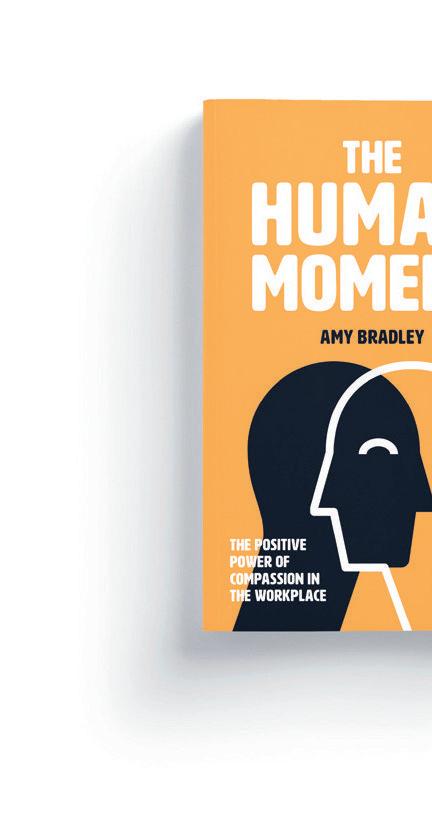
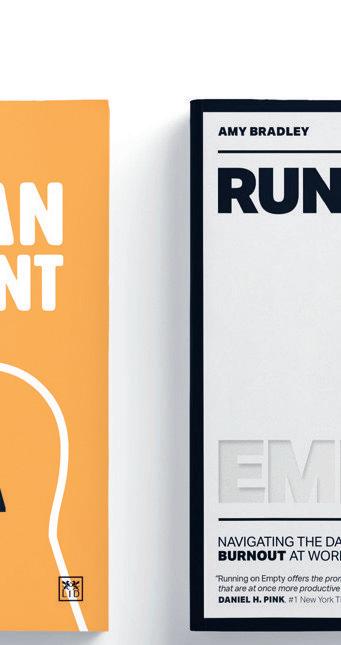



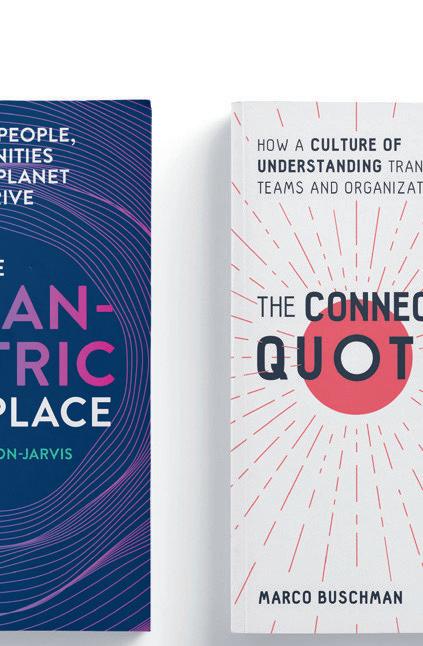




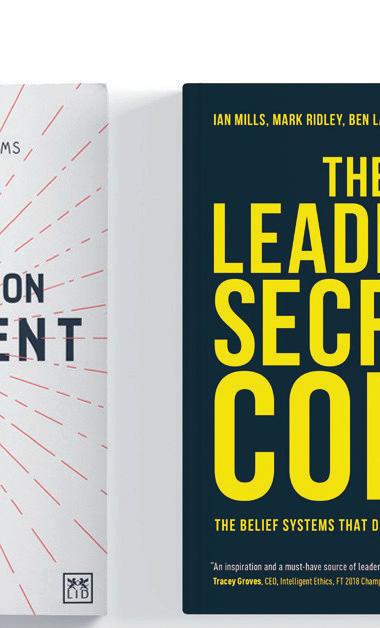







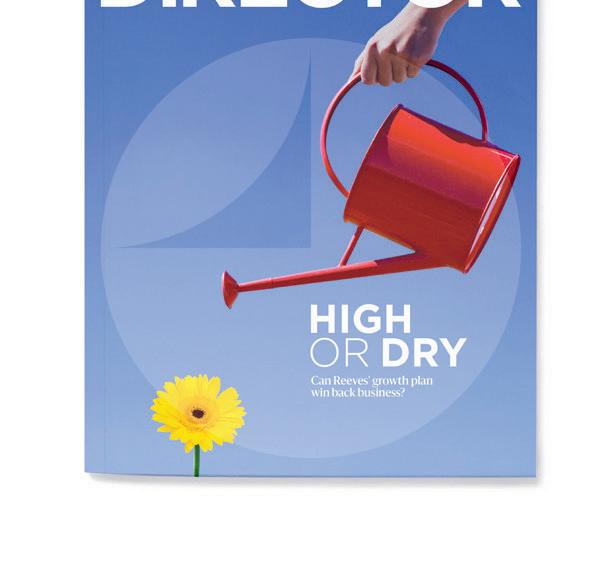





































that improving their firm’s culture would increase the value and performance of their company. But only 16% believed that their own firm’s culture is where it needs to be for future success. What is driving this massive gap?
Most culture change programs don’t work. Here’s an ecosystem approach that does
Writing John Childress
Picture this: a Ferrari sits in your driveway – gleaming red, powerful engine, pristine leather interior. You slide into the driver’s seat, turn the key, and... nothing. The problem? An empty tank.
This is precisely how most organizations approach performance improvement. They’ve invested millions in the vehicle – their strategic plan, technology and marketing campaigns – but they’ve neglected the fuel. That fuel is corporate culture. You might have the most brilliant strategy in the world, but without the right culture to enable it, at best you’re limping along.
Culture is not an initiative. It’s the foundation that enables all your business initiatives.
power of culture
Over the past 20 years, major studies by McKinsey, PwC, Harvard and others have established an irrefutable connection between culture and business performance. Companies with strong, aligned, fit-for-purpose cultures outperform their competitors across nearly every metric: from revenue growth to employee retention, to innovation and customer service.
Yet culture still features more in slogans than in strategic initiatives. In one survey of 1,348 corporate executives, an impressive 92% believed
Culture is not an initiative. It’s the foundation that enables all your business initiatives
Ask most executives what shapes their organization’s culture, and you’ll hear familiar answers: attitudes, behaviors, management actions. These elements matter of course. But they’re not the root cause. So what really creates and sustains culture? It’s the organizational ecosystem: an interconnected network of policies, work processes, business systems and leadership, plus multiple external pressures, that influence how people think, behave and perform – positively or negatively.
Consider the culture in investment banking. After the 2008 financial crisis, nearly every major bank proclaimed new values emphasizing integrity, risk management and customer focus. Many sent their executives to ethics training. Yet scandals continued. TD Bank agreed to a $3 billion fine for failing to monitor money laundering. BNP Paribas paid $8.9 billion for sanctions violations. Many major banks have racked up fines for fraud.
The hidden causal factor? Not a few bad apples, but compensation policies that reward secretive and excessive risk-taking. The organizational ecosystem inadvertently incentivizes the very behaviors that the stated values were meant to prevent.
You can’t change culture with training and new proclamations. You have to change the ecosystem of causal factors – and many of these are not well understood.
Don’t say, “Our people are disengaged.” Tell the truth: “We’ve got an ecosystem that creates disengaged people.” Your corporate culture is the product of an interconnected ecosystem. When executives return from a leadership program fired up to transform their department, they walk back into the same meeting structures, performance metrics, approval processes, HR policies and resource allocation systems that created the culture in the first place. The established ecosystem of causal factors hasn’t changed.
This explains why culture change efforts that focus solely on behaviors consistently fail: they’re treating symptoms, not causes. In my book, Culture 4.0: The Future of Corporate Culture, I map out a new framework for understanding and shaping organizational culture – one grounded in ecosystem analysis.
The 4.0 designation reflects the evolution of how we understand culture.

Culture 1.0 – 1950–1980 The emergence of corporate culture focusing on vision, values and mission statements
Culture 2.0 – 1980–2000 Linking culture to business performance
Culture 3.0 – 2000–2020 Using data to measure culture
Culture 4.0 – 2020 onwards A multidimensional ecosystem view, recognizing that corporate cultures are shaped by both external and internal forces
Culture 4.0 identifies multiple external factors reshaping the business landscape, and the ways that they impact both corporate culture and business performance.
These include the shift to hybrid and remote work; artificial intelligence and automation; rising cybersecurity threats; generational shifts as Gen Z enters the workforce; an aging workforce delaying retirement; the climate crisis and demands for sustainability; evolving customer expectations; changing gender dynamics; toxic workplace behaviors and psychological safety concerns; immigration and global talent mobility; and the rise of the gig economy and outsourcing.
These and other powerful external forces influence employee attitudes, behaviors and actions – and, ultimately, business performance. Leaders who ignore these cultural causal factors are, in effect, trying to garden without acknowledging the weather.
There are also multiple hidden internal causal factors. To identify them, leaders must examine their organization honestly.
Policies, budgeting and procedures What do your approval processes, decision rights and operating guidelines incentivize? Do they reward collaboration or silos? Speed or caution?
Accountability or presenteeism? Innovation or compliance?
Resource allocation Where does the money go? Which projects get funded? Which teams grow? Your budget is a truth-teller: it reveals what your organization truly values
Meeting dynamics How are decisions made? Are people afraid to speak up? Who gets heard? These patterns reinforce your culture Career advancement Who gets promoted, and why? Do people rise through results and values, or politics? Promotion decisions send powerful signals about what matters
Reshaping the culture ecosystem
To reshape your organization’s culture ecosystem requires action in nine key areas: change the system, change the culture.
1Design culture to support the strategy
Too often, culture and strategy are viewed as two separate issues, with culture seen as an HR matter and strategy as a leadership and board concern. In reality, they are two sides of the same coin; they cannot be separated. As culture transformation expert and veteran chief human resources officer Elaine Page says, “Culture is how strategy breathes.” When a culture document does not align with strategy and enable its execution, it becomes useless, or even a barrier to business success. Senior leaders must identify the key cultural elements and behaviors necessary to execute their business strategy effectively. These form the backbone of an effective and aligned corporate culture.
2 Identify the causal factors
Begin with an honest appraisal of your current culture. Senior leaders and the board must begin this journey using multiple data sources. Identify the policies, processes and systems that most directly influence attitudes and work behaviors. Don’t rely on org charts or policy manuals –observe what actually happens. Gather employee feedback, customer feedback and leadership assessments, including 360-degree feedback. Secure candid input from suppliers and former employees. Use best-practice research to determine and quantify each causal factor’s relative impact. For example, does your incentive compensation system drive collaboration and innovation, or silo thinking
and excessive risk? Are managers and supervisors trained to spot and deal with peer pressure that negatively impacts productivity?
3 Map the causal factor interconnections
Using structured and unstructured data measured against best practices, use ecosystem mapping software to build a visual map of your culture ecosystem. Which organizational elements are primary causal factors, and which are enablers of others? This reveals how cultural elements interact and where leverage points exist. [See graphic p42.] By using a color-coded system based on internal data, you will be able to easily spot those causal factors that pose the biggest risks to the culture ecosystem.
4 Identify elements that are out of alignment
Which causal factors conflict with your business and cultural objectives and drive unintended negative outcomes? Which currently incentivize behaviors you don’t want? Legacy hiring, performance management policies, rewards and governance structures often drive unintended behaviors. These must be reviewed and reshaped so that your systems reinforce, rather than undermine, the fit-for-purpose culture you are building.
5 Engage all employees
Employee understanding and active involvement are essential for sustainable cultural change. It is critical at this stage to bring employees together in teams tasked with identifying policies and work processes that are not aligned, and with helping to describe the culture in terms that everyone – from the night shift to the boardroom – can understand. This includes implementing culture champion networks across all levels as culture sounding boards and support. Southwest Airlines’ Culture Committee, comprising employees from throughout the organization, plays a central role in sustaining its distinctive culture through various activities, recognition initiatives and storytelling efforts.
6 Target high-leverage changes
Not all causal factors are equally influential. Focus on the handful of policies or processes that, if changed, would create a fit-for-purpose culture. As you redesign these, assign clear ownership by appointing an informed ‘captain’ responsible for each significant causal factor improvement. Give them the accountability to cross functional boundaries to review and recommend improvements. Spotify’s reorganization into squads, tribes, chapters and guilds exemplifies a deliberate structural realignment aimed at preserving the
nimble, entrepreneurial spirit of a startup while scaling as a rapidly growing organization.
7
Monitor external
Cultural alignment with strategy and external realities is never complete. Track how major technological, social and economic shifts are impacting your culture and business performance. Build regular review forums where teams gather customer and partner perspectives; benchmark against industry trends; and experiment with new practices to keep your culture adaptive and resilient.
8
Measure, measure, measure
Building a fitfor-purpose corporate culture means reshaping the organizational ecosystem
Effective measurement includes tracking leading indicators of cultural health before they impact business results, conducting regular pulse surveys to monitor causal factor changes across the organization, connecting cultural outcomes to strategic objectives with clear metrics, and implementing leadership accountability for cultural progress as part of performance evaluations. Adobe’s regular ‘check-in’ system replaced traditional performance reviews with ongoing conversations about expectations, feedback and growth – a systemic change designed to reinforce its culture of continuous improvement.
Cultural alignment with company strategy and external business realities is never complete. Leadership must build mechanisms for ongoing adaptation, including regular culture update conferences. At these meetings, teams from across the organization reflect on current cultural strengths and challenges, discuss external perspectives, review industry benchmarking and trend analysis to identify emerging cultural shifts, and experiment with new cultural practices that might better serve future conditions. Mars Inc developed ‘Associates in Conversation,’ a program that brings together employees across levels to discuss cultural strengths and opportunities.
John R Childress advises CEOs and leadership teams on culture, and is author of Culture
4.0: The future of corporate culture (LID Publishing)
Building a fit-for-purpose corporate culture means reshaping the organizational ecosystem. Without making changes to the underlying causal factors, sustainable culture change is impossible. The good news? Once you understand culture as an ecosystem, you gain powerful leverage points for change. Instead of trying to change the behavior of 10,000 employees, redesign a handful of key causal factors and let the ecosystem do the work. The question isn’t whether culture matters. It does: it’s the fuel that drives your business forward. The question is whether you’re willing to change the organizational systems that create it.

Purpose drives career satisfaction, but only when employees can translate it into a credible plan
Writing Angela Lane & Sergey Gorbatov
When it comes to career satisfaction, purpose isn’t the problem. Precision is. Do you know what ‘next’ looks like for you?
Over past decades, our understanding of careers has become clearer in important ways. We know that people are more successful – and more fulfilled – when they find meaning in their work, grow and develop, and do great work. But knowing what matters is not the same as knowing what to do on Monday.
Our most recent research helps unpack broad truths, like “purpose matters,” to reveal what
actually drives sustained career satisfaction: the kind that fuels performance, engagement and retention.
Our findings rest on the results of the Career Edge diagnostic, a practical framework of ten key practices for taking ownership of your career. Across 863 respondents, we discovered that alignment with purpose was the strongest single lever associated with satisfaction. That finding will not surprise most leaders. People want to feel that what they are doing connects to something that matters to them – to their values, interests and sense of contribution.
What’s more revealing is how people create that alignment in practice. Career satisfaction rises most when people can answer two precise questions: “What do I need to do to reach my career goals?” and “What roles will get me there in the next few years?” When meaning is turned into a credible next step, satisfaction follows. In other words: purpose without precision doesn’t produce satisfaction.
Many people can articulate what they want in general terms – more impact, more growth, more of a particular type of work. Far fewer can describe the concrete steps, trade-offs and scenarios that might get them there: what they’ll say yes to, what
they’ll say no to, and what they’ll test next. The work of unpacking purpose into options, pathways and priorities is demanding. It requires reflection, exploration and a willingness to think beyond a single, linear future.
For leaders, this has important implications. Many organizations have invested heavily in career ladders, experience maps and – increasingly – technology-enabled tools that surface roles, skills and opportunities. These investments help. But they do not replace the harder work: having employees define success criteria, assess options and choose among multiple paths.
This challenge is becoming more complex, not less. Roles are evolving, skills have shorter shelf lives, and the real opportunity set of viable career alternatives for any individual sits both inside and outside their organization and its career maps. Precision, in this context, means enabling individuals to think clearly about possibilities in a world that keeps changing. Only then do they feel confident they’re making an informed choice, rather than drifting into one.
The responsibility here is shared. Leaders can create clarity, provide context and make space for career conversations. Employees, in turn, must do the work of imagining scenarios, testing assumptions against their career goals, and making deliberate choices. There’s no way around this effort. Without it, purpose stays aspirational – and satisfaction stays fragile.
The second strongest predictor of career satisfaction in our research is the ability to develop and grow. Growth matters. Learning matters. But here, too, the research highlighted a less obvious insight. The strongest signal isn’t, “I’m learning.” Rather, it is: “I feel fully supported in my professional development.”
When growth feels solitary or risky, it doesn’t translate into satisfaction. When it’s visibly encouraged – through coaching, feedback, stretch opportunities and psychological safety – it does. This matters profoundly in today’s environment, where technology is reshaping tasks, roles and expectations at a rapid pace. Continuous learning is no longer optional; neither is the requirement for leaders to reassure and support employees as they take on new challenges.
This has important implications. Organizations should recognize that the notion that employees “own their development” is incomplete: yes, employees own development, but support makes it work. For employees, the message is equally important. Satisfaction with development will not happen by default, and support rarely arrives uninvited. Ask for it explicitly: request feedback,
Align to purpose
Develop intentionally
Plan your pathways
Do great work
Multiply your options
Choose a winning context
Make yourself and your work known
Connect (to) others
Ace transitions Be
volunteer for a stretch assignment, name the skill you’re building, and agree on what good looks like.
Career satisfaction is a process
Taken together, these insights point to a more demanding – and more honest – view of career satisfaction. Purpose matters, but only when translated into achievable plans. Development matters, especially when it is intentional and supported.
Career satisfaction is ultimately defined by the employee. It is personal, subjective and shaped by individual values and aspirations. But it’s closely tied to the outcomes that organizations care most about: performance, engagement and retention.
Our work confirms that career satisfaction relies on the often-unseen work of being intentional – translating purpose into clear goals and credible plans, finding support for development and engaging others in your growth.
Leaders must build precision as a capability: helping people define success criteria, compare options and turn development into a supported plan. Broad ideas about purpose, growth or excellence provide direction, but they do not substitute for the precise thinking required to navigate real choices in a fast-changing environment.
The responsibility here is shared. Leaders shape the conditions – through clarity, context and support. Employees shape their outcomes –through reflection, planning and action. When both sides take that responsibility seriously, career satisfaction stops being a sound bite and becomes a repeatable outcome that benefits individuals and organizations alike.
Organizations rightly no longer tolerate workplace behavior that was once widely accepted. It’s time to hold bad bosses accountable
Writing Mita Mallick
Bad bosses used to be able to hide in plain sight, but no longer. From inappropriate relationships with employees to harassment, from indifference to mental health to racist remarks, employees are fed up. And in many cases, so are the companies they work for, recognizing the harm that bad bosses can do to corporate reputations – and valuations.
The evidence is not hard to find: from the Nestlé CEO terminated for an undisclosed romantic relationship with an employee, to the Kohl’s CEO fired when they were found to have funneled business to a romantic partner, to the Primark CEO forced to resign following an investigation into his behavior toward a woman in a social setting. Boards, shareholders and customers are no longer willing to tolerate bad leadership behavior – particularly when it threatens the stock price, the bottom line, and the company’s reputation.
Social media has fundamentally changed the dynamic. Every employee now has their own microphone. They are less afraid to call out bad bosses publicly, whether on Glassdoor, LinkedIn,
or through media outlets – and less willing to keep their company’s secrets. Behaviors that were once tolerated in the workplace, including sexual harassment and bullying, are increasingly unacceptable. The underlying reason is simple: the old corporate social contract is broken. The era of unwavering loyalty in exchange for a paycheck every two weeks has passed. Long gone are the days of comfortable pensions, guaranteed job security, and a gold Rolex after 30 years of service. When employees know they could lose their job tomorrow, they have little reason to put up with bad bosses today.
Here’s how organizations can hold bad bosses accountable for their actions – and stop them thriving in the first place.
A zero-tolerance policy may seem a straightforward proposition: most organizations have red lines that cannot be crossed. Leaders, employees, partners and suppliers may all be held accountable for meeting such standards. Yet they need to be implemented with care. The Equal Employment Opportunity


Commission’s anti-harassment task force has highlighted that zero tolerance policies can be misleading and counterproductive if they are not properly defined.
A policy needs to be specific – for example, prohibiting weapons, drugs, alcohol and pornographic materials at work. It should outline the behaviors that the organization has zero tolerance for, such as the use of sexist, racist and homophobic language, and threatening or intimidating behavior. Ensure you have a clear stance on behavior outside of work and on social media, too; in an always-on world, we are all ambassadors of our company, even when we are not at work. Then make sure the policy is shared widely and consistently.
It’s time to think differently about how we evaluate talent in our organizations – especially when it comes to those who are in charge of other people’s careers. Make 360-degree feedback the heart of how leaders are evaluated, tied to their compensation and affecting career progression. Each individual in a leader’s team or department should be asked for feedback; some bad bosses are exceptional at managing up, so this provides a holistic view of their leadership. Ensure that feedback is anonymous and ideally delivered by a third-party coach along with the individual’s line manager. When bad behavior is identified, leaders should have the opportunity to change rather than be
It’s time to stop bad bosses from thriving in our organizations and hold them accountable
immediately ‘canceled.’ However, the runway for behavior change needs to be well defined and time-bound. Consider hiring a coach for the leader, accountable to their manager, or asking the leader to take a leave of absence – perhaps to seek anger management support or therapy. If behavior change doesn’t occur, and it’s not sustained, they need to leave the organization.
What if the boss who is behaving badly is the chief human resources officer? What if they are close friends with the organization’s general counsel, or sit on the business integrity team that reviews complaints? A boss accused of bullying cannot be involved in their own investigation. If a conflict exists, place the individual on a leave of absence so they cannot influence or intimidate individuals while the investigation proceeds.
Some forms of retaliation are clear. They may occur during or after an investigation: firing people who were involved in a complaint, or denying them pay increases and promotion opportunities. Others are more difficult to document, including exclusion from meetings, denying employees access to leadership, or removing them from choice assignments. If the boss accused of improper conduct is on a leave of absence, a fairer process for all involved is more assured.

Many investigation processes are ripe for improvement. Too often, HR business partners are tasked with conducting investigations when they have not been properly trained – which can lead to inadequate investigations, and jeopardize the wellbeing of all parties involved. Instead, consider investing in third-party investigators –ensuring, of course, that they follow the company’s investigation protocol, understand applicable law, and are able to work with legal counsel.
When leaders investigate other leaders, checks and balances are difficult to maintain. Complaints can be too easily dismissed – as I’ve experienced. I once reported a boss’s bad behavior to another senior leader, only to be told, “They are a major a-hole – but you need to move past it.” The individual had a long history of inappropriate behavior, yet they were protected by the company; internal investigations never materialized for fear of the leader retaliating. In such cases, organizations should bring in law firms to investigate claims of bad behavior, free of such fears.
If you have a code or business integrity committee, consider nominating select employees from different functions and levels to serve on it. When I was an MBA student at the Fuqua School of Business at Duke University, the
Eva Wahyuni, Naila Conita
institution’s Code Committee included both professors and students who were nominated by the community. Creating a shared responsibility promotes a real climate of integrity. Then, share investigation themes with the leadership team and board to inform discussions about appropriate interventions.
Treat exit interviews like customer reviews
Employees are our forgotten consumers. If we receive a customer complaint, we move to fix the issue immediately. We should act on employee complaints raised in exit interviews with the same sense of urgency.
Exit interviews are the most undervalued tool we have. Sometimes they are not conducted at all or are poorly documented. Employees may not be honest about their experiences. Start by standardizing the process, putting in place consistent questions to be used in every exit interview. Ensure that the employee conducting the exit interview is not the departing employee’s manager or even from their department, and that they are properly trained. Then follow up with a short questionnaire to capture anything missed. Consider offering exit interviews several weeks after the employee has left, to give them time to collect their thoughts.
The themes that emerge from exit interviews should be shared regularly with the leadership team and board. Leaders should be held accountable for attrition, too: if a departmental leader has had five women of color resign from their team within the same month, start asking tough questions. Attrition data should then feed into performance reviews; if a lot of people leave a team, it may be time for that leader to leave as well.
As a South Asian woman and a woman of color, I grew up and entered the world of work at a time when people who looked like me weren’t always accepted and celebrated. As a child, I was bullied –both verbally and physically – by my peers.
Those bullies thrived because no one stopped them: not the teachers, not the parents, not law enforcement. They were born into ecosystems that enabled their behavior. No one warned me that those same schoolyard bullies would be waiting for me in corporate America.
I was renamed Mohammed because a former boss couldn’t pronounce my full name, Madhumita, and refused to call me Mita. I was told I was incompetent and that no one else would ever want me on their team. I was screamed at over and over again. I was called a rat; my work was questioned and undermined; my job was threatened. In each of those moments, when I
Social media scrutiny, a broken employment contract and shareholder interests have aligned to redefine the standards of behavior that are acceptable from senior executives. Bosses’ bad behavior creates substantial reputational risk – and, as a string of high-profile corporate firings suggest, is no longer tolerable for many businesses.
Discouraging bad behavior and holding bad bosses accountable requires a cohesive approach from organizations, including a clearly-defined policy that outlines unacceptable actions; performance reviews that use 360-degree feedback to expose bad behavior; robust conflict-of-interest protocols; rigorous investigation processes; and exit interviews that are handled with the same urgency as customer complaints.
Mita Mallick is a marketing and human resources executive and author of
couldn’t find my own voice, I wondered why no one around me was standing up for me.
For decades, harassment training led by HR and legal has focused on the perpetrator. By the time an employee calls the ethics line or reports an individual, it may already be too late – the matter has escalated to a point of no return.
In an interview with the Harvard Business Review, employment lawyer Asha Santos (with whom I have previously worked) warned of exactly this problem: the “gateway behavior” that begins as relatively minor, but is allowed to grow unchecked.
“When people look the other way during an incident of low-level harassment, it allows the harassment to intensify over time,” says Santos.
“By intervening early, at the first sign of a redflag moment, bystanders can break the cycle and prevent the problem from worsening.”
As leaders, we each have a responsibility to protect the culture we have worked so hard to build. When we see something, we cannot look the other way. Intervene in the moment or quickly after an incident occurs. Check in on the person being impacted. Document what you witness and ask trusted colleagues – particularly those with more authority – to help.
It’s time to stop bad bosses from thriving in our organizations and hold them accountable. Employees expect to work in places where they are respected, supported and feel they belong. Talent will no longer tolerate the behavior it once did. It’s time to protect our people – because without them, there is no company.
Better is the yardstick for management with agile, people-centric and dynamic features. As such, it turns management into a competitive advantage – one of the few advantages left in a time where they dissolve faster than ever before. Better Management gets work done, creates value; it is unique and hard to copy, it prevents short cuts and is deeply rooted in culture. That’s why it deserves the attention of every manager.






“Better management is badly needed. We learn about it daily from the media. Failures in management are often attributed to managers. Lukas Michel makes the case that theory and practice need an upgrade and offers six principles for the fix.”







MICHAEL KÜHNER CEO, Strametz & Associates


“Lukas Michel’s new book provides every leader with compelling insights and tools and serves as a time-tested and validated blueprint that will help to shift an organization from activity-based leadership to true and sustainable organizational effectiveness.”

Better Management an , ISBN 978-1-911687-26-9 | E-book edition:



MARK W BELICZKY, President and CEO, ProHome Holdings, LLC
Print edition: ISBN 978-1-911687-27-6 Published by LID Publishing (www.lidpublishing.com)


Anthropic’s exposure of blue-chip security flaws is a seminal moment
Ten years ago, almost to the day, I used my inaugural Dialogue column to muse that ‘Apple needs its man from Mars.’ Said Martian was none other than Elon Musk, who told me he planned to retire to the Red Planet.
I urged him to wait and instead partner Tesla with Apple so the Cupertino giant could launch a car. The Apple Car has yet to arrive, but the intervening years have seen many greater innovations. Prime among them is AI – something Musk has warned will take all our jobs. He may be right. Yet the immediate concern is not our employment, but our cybersecurity.
This spring, Anthropic revealed that its latest AI system, Claude Mythos, can run riot over elite operating systems. It can discover, chain and weaponize software vulnerabilities at warp speed – far beyond anything humans can achieve. Its efficacy at identifying thousands of security holes triggered a meeting of minds.
The greatest menace is that of speed. The Claude case rewrites the rules of cyber conflict. Once, cybercriminals relied on hoodwinking humans into clicking malicious links. Now, that seems vaguely quaint. The advent of robotic superhackers means the entire lifecycle of an attack – the reconnaissance, exploitation and persistence –can now run as a continuous, autonomous process operating faster than humans can respond. If the threat is huge in the West, it is monumental in emerging economies. I live in California. Given that the state is the home of AI, you would hope businesses here would be more cybersecure than they are. Incompetence – even denial – is commonplace just a few miles from Silicon Valley. Yet compared to my native India, the Americans look like geniuses. Communications in the world’s most populous nation – from
Anthropic revealed that its latest AI system, Claude Mythos, can run riot over elite operating systems
businesses to government – run mostly on WhatsApp. Thus commercially – even perhaps militarily – sensitive information is being traded on a platform owned by Big Tech.
The increasing power of a handful of tech giants over the world economy is the critical shift of the modern age. Major governments have noticed and are uneasy; note the growing tension between the US Department of Defense and Anthropic. The Pentagon is right to worry. AI is no longer merely a commercial technology. It now sits at the crucible of national security. The Valley retains autonomy over its epoch-defining products. In them, it holds the levers to shape the global balance of cyberpower.
Back in 2016, when I began this column, nothing worthy of the name ‘artificial intelligence’ existed. In my ten years as Dialogue’s technology columnist I have tried, as best a mere-mortal can, to keep pace with and analyze the great opportunities – and profound threats – machines can deliver. I remain hopeful that the gains will exceed the losses: cures to global diseases are possible with the might of today’s computational power.
Yet, as I depart after a fascinating decade, I urge Dialogue readers to remain inventive, industrious and ethical. Above all, they must be vigilant. It was once the command of armadas and arsenals that delivered power to nations. Now it is the command of AI. The hand that rocks that cradle will rule the world.


Prepare now if you want your organization to survive – and thrive – in the face of accelerating technological disruption
Writing Alberto Torres
Early in 2009, I received a call offering me a position on Nokia’s top executive team. I had joined the company five years earlier, leading corporate strategy and various businesses. In those years, I saw Nokia grow from under €30 billion to over €50 billion. Yet after a flat 2008 – with Nokia still at the top of the mobile industry by most indicators – 2009 felt like a crisis. It would be the start of one of the most consequential disruptions in business history. In retrospect, the signals had been clear. Apple had launched the iPhone two years earlier. Android was gathering momentum. The market was moving toward smartphones – a technology that Nokia had invented, but others had perfected. Nokia had many cards to play, but had been, and would remain, too slow to make drastic moves. I was called because I had been among those who had advocated for change. Yet two years later, I left the company, frustrated. After 2011, the decline accelerated, destroying a once-great tech giant.
The story of Nokia has been told many times and now feels remote. But it is not unique –think of Kodak, Blockbuster, DEC, Yahoo, AOL, Toys R Us, and Tower Records. The patterns that destroyed them persist. Companies rarely collapse because they are poorly managed. More often, it happens when they are managed exactly as they were designed to be – efficiently, rationally, and in alignment with a business model that is about to become obsolete. As disruption sneaks in, with high uncertainty and little early impact on the business, incumbents often act rationally and continue on their current course at full speed –until it is too late.
Today, artificial intelligence and other new technologies threaten companies that, like Nokia then, look utterly solid – companies run by highly competent people. Perhaps your company is one of those that faces an existential threat. Understanding the patterns of disruption matters. Beyond the particulars of every failure and success, there is a structure, and there are clear lessons to be drawn that can help you survive and thrive.
Disruption has a pattern
For decades business leaders have been taught to think in S-curves. New technologies emerge slowly, improve through experimentation, then accelerate sharply once an inflection point is reached –when price, performance and usability align with mainstream demand. Eventually they plateau, as markets mature.
The S-curve is one of the most enduring patterns in business, but so is the pattern of our reactions. Linear thinking leads us to believe early hype, expecting rapid progress that is not possible. Hype is followed by disillusionment, when we begin to dismiss the technology for failing to meet our own inflated expectations. When a successful technology reaches its inflection point, we are often surprised by its rapid rise.
In a technological disruption, an incumbent technology is replaced by a newer, superior one that follows an S-curve. The disrupted technology follows the inverse pattern. This is what I call the Z-curve. Early on, the disruption sneaks in, barely perceptible. Yet when the inflection point is reached, the decline becomes obvious as it gathers speed.
After the inflection point, when the decline accelerates, the range of viable options collapses. This begs the question: why do so many incumbents fail to act before the fall, when there is more time and more opportunity?
In its early stages, the Z-curve is easy to dismiss. Initial concern often mirrors the hype of the new technology; when the effects are not immediately visible, relief tends to follow. Uncertainty is high.
Financial performance often masks any underlying problems. Experienced leaders disagree about the threat and the appropriate response. Boards and key stakeholders resist radical change.
Disruption is not dangerous because it is sudden. It is dangerous because it is gradual – until it isn’t.
Nokia illustrates this pattern with unusual clarity. During 2007, the year the iPhone launched, the company continued its meteoric ascent. Nokia reported 24% sales growth and an even more remarkable 75% growth in earnings per share. In Q4, it achieved its long-standing goal of a 40% global market share. In November 2007, Nokia’s CEO graced the cover of Forbes with a headline reading, “Nokia: One Billion Customers – Can Anyone Catch the Cell Phone King?”
The other key reason leaders fail to change course is that the very mechanisms that made them strong – optimized for yesterday’s logic – become hurdles. Strategies and beliefs extrapolate from what has worked. Culture may discourage dissent just when dissent is most needed. Processes block course corrections. Incentives reward continuity. The board and other stakeholders demand caution amid uncertainty.
These dynamics make disruption uniquely hard to manage. Breaking the stalemate to act early requires extraordinary leadership, which can often be provided only by the CEO. It requires an unusual combination of vision, courage, humility and the power to persuade. It requires taking enormous personal risk.
Yet CEOs and management teams at the top of companies are typically optimizers. They are peacetime leaders, whose skills and decisionmaking approaches – as remarkable as they may be – are often ill-suited to the needs of wartime that lie ahead.
Most incumbent leaders do not fail because they are weak. They fail because they are strong in the wrong ways – the ways of the past.
Contrary to what pundits claim, surviving a Z-curve is not primarily a forecasting challenge. Perfect prediction is impossible. The timing, speed
Breaking the stalemate to act early requires an unusual combination of vision, courage, humility and the power to persuade
and scale of disruption are inherently uncertain. The real challenge is organizational.
The lessons of success and failure Disruption can be an existential threat, but surviving and even thriving is always possible. Netflix disrupted itself before streaming made its DVD business obsolete, eventually becoming a media behemoth. Qualcomm reshaped its vertical business model to emerge as a leader in wireless semiconductors and intellectual property. Microsoft reacted to the existential threat posed by the early internet by rapidly embracing the new technology to extend beyond its core. Adobe followed a similar path, powered by programmatic acquisitions, to become a leader in content, marketing and digital experience. The Swatch Group, facing obliteration by quartz watches, reinvented the Swiss timepiece industry by migrating its value proposition from accuracy to luxury.
These examples are archetypes of potential responses to disruption that I call Dreams – disrupt, reshape, extend, acquire, migrate, and stall. Each has their place – even stalling to slow attackers. (While this is not often a sustainable strategy, it can
Most companies do not fail because they are poorly managed, but because they are well-managed for a world that no longer exists. Technological disruption follows a Z-curve: gradual at rst, then sudden. By the time decline is obvious and executives agree on urgent action, the options have already narrowed – and the odds of survival reduced.
Five disciplines can improve the odds of surviving technological disruption: building an open culture; driving innovation from the top; making strategy truly strategic; simplifying relentlessly; and developing the capacity for wartime leadership, with a readiness to take bold steps. Thriving in the face of technological change demands preparation, starting now.
be a useful tactic when combined with other actions.)
Success in fighting disruption rarely depends on predicting the future better than others. It relies on early action, often while the present still looks comfortable and uncertainty is high. When you compare winners and losers, some patterns emerge. There is no single, easy recipe, but five key disciplines improve the chances of surviving and thriving when facing a Z-curve.
1
Build an open and humble culture – with a touch of paranoia. Success naturally reinforces confidence; it rarely reinforces curiosity. Leaders must actively create environments where dissent is encouraged and weak signals are taken seriously. A culture that tolerates challenge is not enough; it must reward it.
2 Embrace product, innovation and transformation from the top Many successful companies are run by optimizers – highly capable leaders focused on improving and developing the current model. Their discipline is necessary, but insufficient during disruptive times. Leadership teams need people who stay close to evolving technology and customer needs – people who can champion renewal, not just efficiency.
3 Make strategy strategic again Strategy is too often an exercise in incremental planning, when it needs to acknowledge and confront uncertainty. Real strategy must explore scenarios, build optionality, drive meaningful resource reallocation, and seriously explore bold moves. It should challenge existing beliefs and put you in your attackers’ shoes to explore how they can win.
4 Simplify relentlessly Complexity is the silent enemy of change. Organizational layers, processes and unclear decision rights slow response times when speed matters most. In disruption, simplicity is not elegance – it is survival.
5
Prepare for wartime leadership Peacetime organizations rely on consensus and decentralization – strengths, until they are not. When facing existential threats, companies need speed, alignment and decisive action. The ability to shift modes is itself a strategic capability.
These disciplines do not guarantee success but they do improve the odds, because they enable action before the Z-curve steepens. Moreover, they bring benefit at all times, not just during disruption. Vision, courage and the determination to act are critical leadership qualities – and they can be fostered through preparation.
Success in fighting disruption rarely depends on predicting the future. It relies on early action

We live in an era of unprecedented technological change, in which the process of creative destruction is faster than ever before. AI in particular is poised to change the rules of virtually every industry. It may take longer than the hype suggests, but it is hard to foresee the magnitude of change being anything other than massive.
The trajectory of change will not be that of a single S-curve, but of many – generating multiple Z-curves across industries, functions and technology layers. Some effects will be immediate; others will begin at the edges, subtle, cumulative and easy to underestimate. Some companies will face head-on disruptions that threaten the entire business, as Nokia did. Others will face partial disruption, with only part of the business at stake. Several will face functional disruption, where the business continues, but the ‘how’ is radically different. Banking offers a clear example, where ATMs and digital banking did not replace existing institutions, but reshaped operations, fueled consolidation and created opportunities for new entrants to capture massive value, especially in payments.
Alberto
Torres is a consultant, CEO, board member, and author of The Z-Curve: Navigating Your Business Through Technological Disruption (LID Publishing)
Disruption of any kind shifts how value is created. It cannot be precisely predicted or entirely avoided. But you can prepare for it and improve your odds. In hindsight, disruption always looks obvious – there is a clean story, a clear turning point, a moment when everything changed. Living through it feels nothing like that. At the top of a Z-curve, everything is noisy, contested and ambiguous. Problems look temporary. Waiting feels reasonable. But clarity is a lagging indicator. By the time it arrives, the curve has already bent. Ask yourself what you would do in times of disruption – but, more importantly, ask what you can do now to be ready.
We need a better leadership operating system to create enterprise value in the AI era
Writing Peter Whealy
Over three-quarters of AI transformations fail to deliver expected value. Technology is advancing at an extraordinary speed, yet the leadership architecture governing it is not.
Technological revolutions have always exposed organizational lag. Early factories installed machines but kept management built for manual workshops. Railways expanded before anyone designed a system to run them safely. In both cases, the technology outpaced the thinking around it.
The same pattern is once again emerging today. AI is being deployed at scale, yet leadership systems designed for hierarchy, siloed expertise and sequential execution remain intact. That structural mismatch is exactly where enterprise value leaks. AI does not fail because of technology immaturity, but because organizations attempt to run a new intelligence architecture on a leadership system designed for a slower, more predictable world. As

Our challenge is not AI adoption. It is redesigning the leadership system so that orchestration becomes possible
a result, most organizations deploy AI in isolated pockets, aiming to improve individual functions without redesigning an integrated system.
AI can accelerate individual functions, but until the leadership operating system is rebuilt for the AI era, acceleration will compound fragmentation rather than resolve it. Our challenge is not AI adoption. It is redesigning the leadership system so that orchestration becomes possible.
Three tensions defining the leadership crisis
In researching my book Lead with AI. Stay Human., I conducted more than 50 interviews with senior executives across global organizations. Three tensions surfaced consistently regardless of industry, geography or seniority. They are structural realities shaping enterprise performance today.
The identity tension
Senior leaders have built their careers through

credibility and mastery – being the person with the answers, the one who applied experience under pressure and brought clarity to complexity. Then AI democratized those core abilities.
Ernst Wühr, CEO of EMS Medical Devices, describes the shift: “My role has shifted from primary decision-maker to the orchestrator of humans and AI intelligence.”
What has emerged is not a skills gap but a credibility disruption. It is common across industries, yet it is rarely discussed explicitly inside organizations. Leaders who cling to behaviors that once signaled competence now signal constraint. Those who insist on being the final verifier become a bottleneck – and as AI systems improve, that bottleneck becomes more visible and more costly. Decisions begin to stall and transformation slows. The hidden cost is not technological failure, but decision latency and talent friction created by an outdated leadership model.
Leaders who cling to behaviors that once signaled competence now signal constraint
Governance structures still assume that authority equals insight, and therefore the right to make the decision. AI destabilizes that equation because insight is now distributed, but authority remains concentrated. That gap is where friction accumulates.
This tension shapes how quickly organizations move, how much autonomy teams truly have, and whether leaders feel empowered or exposed. Without resolving the identity shift, no structural redesign will hold.
Since late 2022, AI has been used to accelerate isolated use cases, usually for individuals or within business functions. However, enterprise value only emerges once all functions benefit together. That gap is currently where transformation stalls. Creating islands of capability within IT, finance, legal or commercial functions limits a firm’s
ability to coordinate when convergence demands enterprise-wide synchronization.
Research from McKinsey, MIT, BCG and Gartner places AI transformation failure rates between 70% and 95%, attributing most failures not to technical defects but to people, culture and coordination breakdowns. In most enterprises, coordination cost is rarely measured – yet it is often one of the largest hidden expenses. Rework, duplicated analysis, delayed decisions, compliance reversals and talent churn are all symptoms of coordination failure. AI reduces processing cost but not coordination cost. Without orchestration, it almost always increases it.
When functions move faster individually but cannot integrate at the same tempo, acceleration amplifies misalignment.
human potential tension
Efficiency gains from AI are visible, measurable and easy to celebrate. Capability erosion is invisible until it becomes expensive. When leaders automate work previously completed by people, they remove the experience that allowed sound judgment. System output might increase and the organization might move faster on paper, but beneath the surface, human confidence, trust, psychological safety and critical thinking all erode.
Organizations that lose trust and psychological safety during transformation spend far more on rework, recovery and rehiring than those that preserve human potential. Talent attrition in AIdriven transitions is frequently a coordination and communication failure, not a technological one.
Alessandro Ventura, Unilever’s VP for technology transformation, captures the challenge succinctly: “AI can be incredibly helpful doing the groundwork and providing objectivity, but the process and quality of decision-making still rest with our critical human judgment. We are a long way off AI making strategic decisions itself.”
In AI-accelerated environments, the problem intensifies because faster and more analysis does not guarantee better alignment. The harder challenge, as Massimo Muzzi, VP strategy and sustainability at ABB, observes, is “maintaining coherence at the same speed the data arrives.” AI might remove friction, but only leadership can determine whether the friction being removed was doing important work.
These three tensions – identity, coordination and human potential – are symptoms of the same underlying condition: an operating system that has not evolved as quickly as the environment it is attempting to lead.
The four conductor capabilities
In organizations that capture sustained AI value,

four leadership capabilities consistently appear. They are observable patterns across leaders navigating AI transformation effectively.
When leaders automate work previously completed by people, they remove the experience that allowed sound judgment
As AI makes analysis commonplace, the premium shifts from having answers to framing better questions. Leaders who excel here do not rely on speed alone. They know when to slow down, when to challenge the model, and when to override a recommendation because context, ethics or longterm consequences cannot be fully captured in data. Judgment under ambiguity is the discipline of framing better questions and clearer trade-offs.
In AI-enabled organizations, leaders cannot personally verify every output. Trust must therefore become systemic rather than interpersonal. Transparent reasoning, visible decision logic, and governance structures that allow safe challenge of algorithmic recommendations are structural necessities. Trust stewardship turns speed into stability.
Organizations that succeed with AI embed learning into the flow of work. Every decision leaves a trace. Assumptions are documented. Experiments are visible. Dissent produces
refinement rather than defensiveness. Learning problems are usually system problems: fix the system and capability compounds. Organizations that treat learning as an event accumulate learning debt and build capability for a context that has already moved on.
4Enterprise orchestration
The fourth capability is a meta-capability that maintains coherence across boundaries while ensuring context travels as fast as information itself. It is the ability to synchronize functions without suppressing autonomy, maintain compliance without stifling experimentation, and align incentives before deployment rather than after failure.
The business case for these capabilities is clear. Organizations that cultivate them reduce coordination costs, accelerate decision velocity while preserving judgment quality, and sustain the trust that anchors performance during change. When these foundations are present, AI no longer fragments organizations through isolated optimization. It amplifies coherent enterprise performance – economically, operationally and psychologically.
Building capability in sequence
Understanding which capabilities are required is not the same as knowing how they are developed. The capabilities examined above do not appear through instruction alone. They emerge through practice, reflection and deliberate experimentation. Across organizations navigating AI transformation, progress tends to follow a recognizable sequence. I call this developmental rhythm Spar: Strengthen, Partner, Amplify and Reshape. Spar provides a leadership pathway designed to ensure human capability evolves as quickly as the technology surrounding it – trading control for curiosity, isolated expertise for human judgment amplified by AI, and siloed thinking for collaboration and shared ownership.
Strengthen (leadership identity) Build trust through visible decision-making and transparent learning while letting go of control habits that no longer serve. When teams see your reasoning and trade-offs, they trust your judgment and learn to act with it. Strengthening identity shifts leadership from proving competence to enabling capability.
Partner (with intelligence) As AI commoditizes knowledge, value shifts from having answers to stress-testing assumptions. Treat AI as a sparring partner that exposes blind spots and expands perspective. Frame problems with better questions,
ask for a challenge rather than confirmation, and integrate AI insights with human context.
Amplify (team capability) As boundaries blur, teams need distributed judgment rather than delegated tasks. When leaders model effective human-AI collaboration, teams learn integration thinking, make better cross-boundary decisions, and replicate that discipline across the organization.
Leaders today face a choice. They can treat AI as a productivity layer or as a catalyst for sustained growth
Reshape (for flow) When learning and execution merge, sequential workflows become costly delays. Design work around outcomes rather than departments. The shift is from linear handoffs to parallel collaboration, where diverse expertise converges across the value chain to create enterprise value.
The prevailing narrative suggests leaders must simply understand AI better and move faster. That framing is incomplete and misleading. The challenge is architectural.
Leaders today face a choice. They can treat AI as a productivity layer added onto existing hierarchies, which will offer short-term efficiency. Or they can treat AI as a catalyst for sustained growth by redesigning how judgment, trust and coordination move through the organization. One path accelerates output. The other compounds enterprise value.
Rita McGrath, professor at Columbia Business School, puts it precisely: “Leaders who follow these principles will learn to orchestrate across that divide and, in doing so, shape not just competitive advantage, but the value and progress of organizations for future generations.”
Organizations capturing sustained AI value share a stance of curiosity over control, trust as an operating principle, and coordination as a strategic asset. They are not necessarily the ones automating most aggressively. They are the ones orchestrating most deliberately.
Without orchestration, AI’s speed fragments the organization. The question for leaders is whether they have redesigned their organizations to convert acceleration into alignment. The organizations that succeed will not be those that simply deploy more AI tools. They will be those that redesign how judgment flows, how trust is maintained and how learning compounds across their systems.
Peter
Whealy is the founder of Elevate Potential and author of Lead with AI. Stay Human: How Modern Leaders Orchestrate Enterprise Value (LID Publishing)
In those organizations, technology is used to elevate human capability. The result is not just faster execution, but greater coherence, stronger decision quality and a workforce that grows more capable as the technology evolves around it. The AI era does not diminish human leadership. It exposes it.
matters profoundly for organizations. A workforce that defers the majority of its judgment calls to algorithms may appear efficient, but it can quickly become fragile. Overreliance on AI, the report warns, has emotional as well as cognitive consequences: “detachment, reduced confidence, and a diminished sense of purpose.” When people stop thinking, they stop feeling ownership of their work.
Organizations will suffer if employees devolve critical thinking and judgment to artificial intelligence
Writing Nicole de Fontaines
Generative AI now sits quietly inside everyday workflows: drafting emails, summarizing reports and scheduling meetings. A significant question for leaders is no longer whether AI will be adopted – or whether it will take our jobs – but how it will impact the way people think. As AI becomes more powerful and more embedded, there are real grounds for concern about the phenomenon of cognitive offloading.
Cognitive offloading occurs when people rely on external tools to perform mental tasks they once did themselves. It is natural and advantageous for humans to cognitively offload some things – however, with GenAI, there is evidence that employees are going far beyond offloading calculation, analysis or data retrieval. The recent CEMS report, Augmented Leadership: Navigating the New Age of Intelligence, notes that people are now “outsourcing even the smallest decisions to GenAI – from scheduling, to choosing outfits or meals.”
In doing so, employees risk eroding the critical thinking that makes them valuable. This
A workforce that defers the majority of its judgment calls to algorithms may appear efficient, but it can quickly become fragile
The risk demands that organizations and educators focus not only on technical skills, but, critically, on the cognitive risks and opportunities created by AI – with a strong emphasis on critical judgment and self-awareness.
Artificial intelligence does not arrive in organizations as a neutral force; it is shaped by incentives, norms and role modeling. Leaders set the tone for how tools are used or misused. If speed is rewarded above reflection, autopilot thinking will follow.
“Thinking must come before prompting,” explains Guillaume Delacour, global head of people development at ABB. In his organization, leaders actively tell employees: “Think first, prompt second. Build your own ideas, structure your thinking, and only once you’ve hit your limits, then turn to AI.” AI becomes valuable only after human reasoning has done its work.
This principle challenges the common misconception that digital natives will naturally excel with AI. In reality, judgment matters more than technical fluency. A graduate whose only skill is prompting a chatbot offers an organization little that a manager couldn’t obtain directly. Today, what differentiates talent is not access to AI or technical skill, but the ability to question, interpret and apply its outputs.
One of the most useful ways of reframing leaders’ role was suggested by Aleksandra Kjemhus, CEO of Black Door Technology. In an AI-augmented workplace, Kjemhus explains, the focus moves “from execution to deep thinking about purpose, audience and message, then guiding AI toward that vision.”
This is a subtle but important reframing. AI removes the specter of the blank page, but it does not replace the need for strategic direction. Someone still has to decide what matters, what quality looks like, and what should not be done at all. In this sense, AI is “a tool, not a colleague.” Treating it otherwise invites complacency.
Leaders who function as strategic directors tend to do three things well. Firstly, they insist on clarity of purpose before technology enters the conversation. Secondly, they interrogate outputs

rather than accepting them at face value. Thirdly, they model restraint. Responsible use requires that people, not AI, are in the driver’s seat.
Designing against autopilot
Combating cognitive offloading is certainly not about banning AI. It is about designing work differently, so technology is used to accelerate brilliance. “Critical thinking is like a muscle,” Kjemhus notes. “It weakens without exercise.” Leaders therefore have a key role to play in creating environments where thinking is practiced constantly – expected, visible and rewarded. This can be as practical as building in pauses before AI use, asking teams to define the problem and success criteria first. It can involve assessing not just outputs, but the reasoning behind them. It also requires ethical literacy. “Make sure you ask – what’s the source? What biases might be in the model? How do you cross-check outputs?” asks Delacour.
Crucially, ethics is not a technical add-on. Kourosh Bahrami, CEO of Tesa, makes the point
strongly. “We must remember that ethics is not a ‘digital subset’. It is the same foundation of responsible behavior that has always guided good business.”
Keeping humans in control
We can be hugely positive about AI’s capacity to transform the world of work. It can undoubtedly amplify human potential, enhance creativity, and unlock new possibilities. “AI now adds a new dimension: it enables people to be more creative, more innovative, and quicker to learn,” says Bahrami.
Yet as AI’s impact grows, organizations must keep in mind a fundamental truth: people come first. Evelyne Léonard, professor at Université Catholique de Louvain, captures the core message succinctly: “Don’t let AI be your master. Be AI’s master.” AI is a tool, not a substitute for judgment. In the age of augmented leadership, the most effective leaders will be those who protect judgment, cultivate creativity and ensure that convenience never replaces human thought.




“The book provides a classic methodology that extends from personal time management to leveraging time management as a tool for corporate strategic management…In the opening passage of the book, Guo writes that ‘Resources are limited, while human desires and needs are infinite.’ It is a fact too easily forgotten. The role of business leaders is to find ways to meet demand with a finite supply of this most precious resource. The Power of Time is a great place to start.”

PATRICK WOODMAN Editor of Dialogue leadership magazine

“Time is the scarcest resource for everyone. Guo Wei is an expert in time management, and his book can inspire courage and strength on the battlefield of time, helping you achieve more. It is also an excellent and practical guide for both personal and corporate time management, especially for entrepreneurs… The Power of Time not only helps individuals achieve excellence in the race against time but also provides significant opportunities for business growth.”
MICHAEL YU Founder
and Chairman, New Oriental Education & Technology
Group


Artificial intelligence has quietly become the organizing principle of modern banking – more akin to a new operating system than a bolt-on technology. Yet the way banks use AI will have to change dramatically if they’re to keep customers loyal.
Today, banks deploy AI most visibly in customer service. Chatbots and virtual assistants triage routine queries, adjust card limits, reset passwords, and even help restructure debt – often with human-like fluency. Behind the scenes, these systems use natural language models and realtime account data to deliver responses around the clock, at far lower cost than call centers. In many banks, these tools are no longer experiments, but scaled platforms that are embedded across mobile apps, branches and contact centers.
Risk and fraud are where AI earns its keep. Machine learning models ingest millions of transactions and behavioral signals to spot anomalies – a card used in two distant cities within minutes, or a business suddenly changing its payment patterns. These systems continuously learn from confirmed fraud cases, improving their hit rate and reducing false alarms.
Efficiency provides a quieter but equally important rationale. Banks use robotic process automation to handle back-office work, such as onboarding, identity checks and regulatory reporting. Combined with AI, this can turn multiday workflows into near-real-time processes, cutting operating costs and freeing staff for more complex tasks. With a ‘ZeroOps’ mindset, manual intervention in systems becomes the exception rather
than the norm. As margins are squeezed by competition and higher capital requirements, this type of automation is less a choice than a necessity.
But what of the future? The next phase will be less about sprinkling AI across existing processes and more about redesigning the bank around the technology. The AI-first bank will be designed to personalize offers, manage risk and orchestrate interactions across every channel in near real time.
Hyper-personalization is likely to become the main competitive battleground. Rather than segmenting
AI could unlock up to $1 trillion in annual value for banks; it may equally destroy value

customers by crude demographics, banks are beginning to analyze context – location, time of day, recent spending, even inferred emotional state – to tailor products and advice. A customer browsing flights might be offered travel insurance; a pattern of missed payments could trigger early, empathetic intervention rather than automated penalties. Done well, this promises to turn commoditized financial products into bespoke services. Done badly, it risks feeling intrusive or exploitative.
The possibilities are vast – yet in truth, the future of AI in banking will be defined as much by constraints as by possibility. Regulators are sharpening their focus on explainability, bias and model risk, wary of opaque systems making consequential decisions – be it about access to credit or about financial crime. Decision traceability – being able to show why a model produced a particular outcome – is emerging as a central requirement, forcing banks to build governance frameworks and AI ethics committees into their architectures. Not to do so risks both fines and costly reputational damage.
There is also a competitive shock looming from outside the industry. As agentic AI evolves on the consumer side, shopping agents could automatically move deposits to higher-yield accounts, or refinance mortgages without the customer ever speaking to a banker – eroding the inertia on which many banks rely and compressing profitability significantly. McKinsey has long estimated that AI could unlock up to $1 trillion in annual value for banks; it may equally destroy value for laggards.
The strategic question is no longer whether to adopt AI, but how fast and on whose terms. Those that deploy it to build transparent, resilient, customercentric models will define the next era of finance. Those that treat it as a cost-cutting gimmick risk finding that the technologies automating their workflows can just as easily automate their customers away.
The new paradigm of AI and software warfare has dramatically altered the finances of the defense industry
Writing Igor Pejic
In 2011 Marc Andreessen famously declared that “software is eating the world.” Tech has indeed conquered industry after industry, not only adding new products and companies, but often rewriting the rules of competition from the ground up. Shopping, communication, financial services – the list is long. Now, software and AI are having their moment on the battlefield. The transformation of the defense sector is deep, stretching from how wars are led – with increasing quantities of autonomous war assets and the emergence of new forms of asymmetric warfare – to the financial dynamics around critical manufacturers. How defense companies make money and how investments perform has changed.
Defense corporations in the tech age
The shift away from legacy defense contractors to military technology specialists means reckoning with two key characteristics of the tech world: exponentiality and severe volatility. Uncertainty in defense tech is even larger than in the broad tech sector. The real test of a new technology or a specific product only comes once the first missiles are fired: a company that specializes in decentralized communication encryption can only find out how good its system really is when the enemy tries to break it, and a drone defense

system can only truly be evaluated after thousands of enemy drones have flown over your territory. Adoption is therefore always the gold standard for assessing a technology or product, because it tells us about customer willingness to pay and about the quality of the product. Unlike with a data center or a new corporate blockchain, the quality test for defense tech might only come years after the investment decision – or never at all.
The software age has upended the financial profile of a typical defense company
That means that diversification across multiple technologies is more critical for defense tech companies than for producers of tanks or munitions. The probability that diversified players will survive and thrive is significantly higher, as they are less vulnerable to singular failures.
Even more successful than diversified companies are those with dual-use business models. Unlike pure defense players, they have a strong commercial footprint. Data integration and analytics specialist Palantir, for example, makes 46% of its revenue with private sector customers. Even its government revenue is diversified. Beyond its military software, Palantir also helps the Department of Homeland Security keep America’s borders safe. While legacy defense contractors invariably face a slump in valuations once a war is over, dual-use companies can take their battlefield innovations and gain an edge in commercial

markets. Palantir can easily apply what it has learned from its data aggregation and reasoning platform in wartime to improve decisions taken by executives in banks and hospitals.
Some legacy manufacturers like Boeing work with a dual-use model too. But it is much harder to translate experience from building a stealth bomber to a Boeing 747, than it is for a defense tech company to transfer lessons about operating a data-aggregation system. Furthermore, specializing too narrowly not only leaves a company vulnerable to changes of administration, but puts it in a much weaker negotiating position.
Not all defense tech companies are equal. The size of a company’s share of software revenue determines the impact of the new rules of the tech world upon it.
The new paradigm of AI and software warfare has altered battlefield economics dramatically. For the first time in history, the restrictions of the physical world no longer apply. From swords and spears to tanks and submarines, the outbreak of wars has always meant a period when supply is unable to keep up with demand. This is why most defense stocks underperform in times of war –something dubbed the defense stock paradox.
Yet defense tech companies have solved this paradox. For software, there are no scaling limitations. A server might need to be added here and there, but marginal costs are close to zero. The more people and machines use a software, the better the business case. Thus, the bigger the software revenue share, and the more compatible a software is with multiple hardware models, the lower the supply constraints.
Indeed, defense tech companies are not just immune to the defense stock paradox – they may exacerbate it for legacy suppliers. The software age has given rise to powerful tools that enable asymmetric warfare on a new level. Relatively cheap drones can wreak havoc on critical infrastructure and destroy traditional – expensive – war assets like tanks and fighter jets, thus exacerbating the mismatch of supply and demand.
The software age has upended the financial profile of a typical defense company. A much-loved metric among investors is the price-to-earnings (P/E) ratio, because it measures the value of a company by its profitability.
For the new generation of defense tech firms, margins are secondary
Warren Buffett reportedly once said he was looking for companies with a P/E ratio below 15; everything above was too expensive for him. Today’s technology sector is different, however. Most big tech companies have P/E ratios above 30 – yet they are among the best-performing equities of recent years. And defense tech often goes much higher. Palantir has a trailing P/E ratio of above 220 (down from more than 450 in 2025).
Another significant difference with traditional contractors like Lockheed Martin is that for the new generation of defense tech firms, margins are secondary. Of course, it is a big advantage if a company is profitable, especially because the free cash flow makes future investment in innovation cheaper. Yet most companies with a steep growth curve are unprofitable. The widelyhyped drone weapons manufacturer Anduril does not expect to turn a profit until 2030 – yet investors have accepted that prospect, because the company expects to double its revenue in 2026. The value of other defense tech companies is reflected in similar growth metrics.
Igor Pejic is a keynote speaker, banker and author of Tech Money: A Guide to the New Game of Technology Investing (Diversion Books)
Technology has remade the defense sector on every possible level, including the financial. Understanding the industry’s new logic isn’t only vital for generals. Managers, governmental purchasers and investors alike can no longer think in terms of the common wisdom built during a now-obsolete industrial war paradigm. The defense industry is an object lesson in the power of technology to disrupt long-established business models.








“ We know that brands change behaviour. We know that if the world is to have any kind of a sustainable future, our behaviour must change. This book shows how sustainable, regenerative brands can be that future. So this might be about the most important book this decade about human behaviour and how to change the world.”
JONATHAN CHENEVIX-TRENCH
be about the most important book this Morgan Co-owner, Madresfield Court and



Former Chairman, Morgan Stanley, Co-owner, Madresfield Court and Co-founder, Mad About Land



“Brands and branding are concepts that everyone seems to know about today, but the difference between brands as veneer and brands we can believe in has never been more stark or more important. Bob’s book gives valuable guidance on how to build brands that will succeed and last.”
SIMON MOTTRAM

“Brands and branding are concepts that but the difference between brands brands







Founder, Rapha Performance Roadwear
Founder, Rapha Performance Roadwear







“Sheard is a marketing savant who mutually beneficial relationship brands action for global unity to protect our
“Sheard is a marketing savant who channels his expertise by exploring the mutually beneficial relationship brands must embrace to ensure their legacies. His passion for this union is a call to action for global unity to protect our one shared gift.”
PHYLICIA FANT
Global Head of Music, Amazon






When consumers are hit by economic shocks, brands can refocus on emotional connection
In times of economic upheaval, brands need to change and adapt. Economic shocks can mean recession, lower consumer confidence, and reduced discretionary spending as the cost of living soars. Such crises are precisely when the emotional side of brands comes to the fore, taking precedence over rational price considerations. The aim should be maintaining relevance through hard times. This hinges on brands’ ability to cultivate crucial emotional bonds: building and maintaining strong relationships that sustain consumer loyalty.
One of the most effective strategies is to focus on how brand-led activities can deliver relief and respite from the challenges that customers face –offering small moments of joy in dark times. Take two famous examples.
In 1931, Coca-Cola faced the Great Depression, yet still wanted to grow. The company turned to Haddon Sundblom, a talented commercial artist, to create a lovable Santa figure. His vision created a unique emotional engagement with customers that endures to this day, while implying that people could add to their enjoyment of Christmas for the minor expense of a Coke.
Next, consider the example of Charles Revson, an executive at a US cosmetics firm who left his job in 1932, believing he could do better. With $300 in capital, he teamed up with his brother Joseph and chemist Charles Lachman to start Revlon –the “L” being a nod to Lachman. Their original nail polishes were thick, smooth, and offered more colors than any competitor. They were also given exotic names, such as Fire and Ice, Plum Lightning, or Moon Drops. Revson rightly believed that although many women were cutting back on overall household spending, they would still be open to a small, inexpensive treat – a moment of pleasure in hard times.
Given the importance of emotional connection, it can serve brands well to maintain
advertising spend during tough periods – even when marketing budgets come under pressure. Yet brands cannot focus only on the emotional dimension; there are numerous other functional approaches to growing, or at least maintaining, your brand during a recession. Depending on your starting position and relative strength, an obvious first move is to squeeze suppliers, making them – not the consumer – carry the burden of cost increases. This is a strategy widely used by retailers.
Another option is to increase the number of discounts, promotions or bundled packages on offer, to maintain or increase purchases of your brand and stop consumers switching to cheaper rivals. Increase emphasis on digital media is also likely to make sense: costs for social media, content marketing and email campaigns are typically lower than those of traditional media.
A final strategic option worth noting is “shrinkflation” – an often unannounced reduction in the size or weight of a product without a corresponding reduction in price. This is risky, however. It relies on consumers not knowing exactly what they are paying for. This strategy has been so widely used in recent years that consumers are increasingly alert to it – and annoyed by companies that attempt it.
For any brand leader, understanding how economic shocks and market upheaval affect your customers is critical. It pays to consider not only the functional necessities of riding out a crisis – but the opportunities to reinforce emotional connections, too.
is an independent brand consultant and writer

The rise of AI makes storytelling the number-one skill for modern marketing professionals
Writing Zoë Arden
Artificial intelligence has transformed marketing, enabling unprecedented personalization and efficiency. Yet as AI-generated content floods digital channels, a new challenge emerges: trust. Consumers increasingly question what is real and what is machine-made. For marketing professionals building today’s brands, the antidote to this skepticism is not more automation – it is authenticity. And the most powerful vehicle for authenticity is storytelling.
Stories have always been central to human communication. They help us make sense of complexity, connect emotionally and remember what matters. In a marketplace where AI can mimic tone and style, the differentiator is no longer speed or scale. It is sincerity. Authentic stories rooted in lived experience and purpose create the emotional resonance that algorithms cannot replicate. Research on narrative psychology underscores this point: humans are wired for stories. Data informs, but human stories connect with us. They can move hearts, minds and markets. For brands navigating the AI era, storytelling is not a creative luxury: it is a strategic necessity.
The AI paradox: promise and peril AI offers remarkable capabilities, from language
Used thoughtfully, AI can ampify human creativity rather than replace it
translation and cultural adaptation, to content optimization. As Elliot Grove, founder of the Raindance Film Festival, has noted, AI can make narratives more accessible globally while maintaining cultural nuance. Used thoughtfully, AI can amplify human creativity rather than replace it.
Yet there is increasing commentary on the rise of “AI slop” – generic, soulless content that threatens to erode consumer trust. Public narratives about AI often oscillate between utopian and dystopian extremes, shaping perceptions in ways that marketers cannot ignore. The Royal Society’s recent AI Narratives Project highlights how centuries-old stories about humans and machines still influence our perceptions and today’s debates. Against this backdrop, brands must work harder to demonstrate that their stories are grounded in human-centered reality and authenticity, not generated by code.
Principles for authentic brand storytelling
In an AI-saturated world, how can marketing professionals craft stories that cut through skepticism? Follow these five guiding principles.
1 Lead with meaning
Consumers want to know what a brand stands for, not just what it sells. Purpose-driven
storytelling connects brand values to societal impact. Patagonia’s environmental activism or Dove’s commitment to real beauty are powerful examples of narratives that transcend transactions. When purpose is clear, stories feel less like marketing and more about meaning.
2 Make the customer the hero
Too many brands position themselves as the solution or the protagonist when actually the real hero is the customer. Making this narrative shift is important because it starts to transform marketing from a monologue into a dialogue, fostering deeper engagement.
3
Show, don’t tell
Authenticity is demonstrated, not declared. For example, instead of saying, “We care about sustainability,” show the impact: innovations in product sourcing and delivery in the supply chain, communities thriving, ecosystems restored. Concrete details, real voices and positive impacts on real lives build credibility in ways that slogans cannot.
4 Embrace vulnerability
Perfection is passé. Audiences connect with honesty, even when it means admitting mistakes or sharing lessons learned. At the very least, it starts with asking questions, saying “We don’t have all the answers,” and being genuinely curious to get insights and inputs from many different stakeholders. Vulnerability shows we are human, and sharing our humanity builds trust. In an age of polished AI outputs, asking the right questions –rather than perfecting a polished answer – can be a competitive advantage.
5 Design for participation
Stories that invite co-creation travel further. Encourage user-generated content, behind-thescenes glimpses and interactive formats. When audiences feel they have a voice and can contribute to the brand narrative, they become its most passionate advocates.
Balancing AI and authenticity
AI is not the enemy of authenticity; misuse or overreliance on AI certainly is. The key is transparency and intentionality. Use AI to enhance, not replace, human creativity. Let machines handle repetitive tasks so humans can focus on better listening, building empathy, nuance and cultural context –the elements that make stories truly compelling. Contrary to what some people think, curiosity about AI does not mean losing our storytelling ‘mojo.’ Instead, it means expanding our horizons and probably growing our market in the process. The question is not whether AI will shape

Zoë Arden is a fellow at the University of Cambridge Institute for Sustainability Leadership and author of Story-Centred Leadership: Crafting Cultures of Change
storytelling – it already has. The question is how marketers will harness its potential while keeping ‘humanness’ at the heart of their brands. For marketing professionals, storytelling is not just a communication technique. It is a leadership skill. It enables them to navigate complexity, build trust, drive change and promote ethical, inclusive narratives. In a world where stories shape perceptions, behaviors and even societal values, the ability to craft and share compelling stories is the number-one skill for modern marketers to develop. While we spend a lot of time ensuring our technology is up-to-date, we often neglect our own human operating system. It’s time we started seeing storytelling as a technology, too. It’s one of the most remarkable skills anyone can learn. For those who aspire to lead in marketing, mastering the art and science of storytelling is not optional; it is essential.
Your pricing strategy just might be your best investment in sustainable growth
Writing Ann Padley & Jenny Millar
Two companies raised their prices. One lost 18% of its customers; the other increased profit by 22%. The difference wasn’t the market or the product. It was how they approached the price increase.
With rising costs and shrinking margins, the leadership team of the first company implemented a blanket 10% price increase across the board. Frontline teams weren’t consulted. The product team’s next quarterly release was forgotten. When the price change hit customers’ inboxes, it caused confusion. Cancellations increased as internal teams struggled to explain the changes. Revenue dipped and morale followed.
The second company faced similar cost pressures but took a more strategic approach. They spoke with frontline teams to understand what they were hearing from customers and prospects. They worked with the product team to understand the next release. And they talked to customers to understand what they valued most.
Instead of a blanket increase, the second company repackaged parts of their offering, linked price changes to product improvements, and tested communications before rolling them out widely. When the changes were introduced, the rationale was clear – and the business saw profits rise.
For many businesses, price increases are not only about maximizing profit. Responding to
rising costs driven by tariffs, fuel prices, wage pressures, inflation and shifts in demand is critical to maintaining a resilient business. While many leadership teams revisit pricing only when external pressures force their hand, it’s the companies that make pricing central to their commercial strategy that gain a distinct advantage. They have built the confidence and insight needed to make deliberate decisions about value, positioning and growth. According to research by McKinsey, with every 1% price improvement, operating profit increases by 11% – a greater financial impact than equal changes in volume or cost reductions.
Ask better questions about price
Organizations looking to build pricing into their commercial strategy must start by asking a few key questions.
What do customers truly value in our offer? Which parts of our product or service matter most in their decision to buy, and how much are they willing to pay?
Where are we delivering value that isn’t fully reflected in our price?
What message is our price sending about our brand?
These questions sound simple, but the answers are rarely obvious. Many companies discover that the features they invest the most time and resources in are not, in fact, the elements that customers value most. Others find that their customers will happily pay more for convenience, reliability or support, even when the core product remains unchanged.
Build the evidence to inform decision-making
The answers to those strategic pricing questions typically come from four places: internal expertise and data, customer insight, market data, and experimentation.
Sales, customer success, product and finance teams each see pricing from a different angle. Sales hears objections, customer success sees retention risks, product understands upcoming changes, and finance tracks profitability. Combined with internal data – such as discount patterns, upgrade behavior and profitability by segment – these insights reveal where pricing is working and where it isn’t.
Customer interviews are powerful tools for understanding value. The underlying goal is to

understand how customers make decisions. What problem are they solving? What alternatives do they consider? What makes one option feel worth paying for over another? Only then can we begin to understand willingness to pay.
When asking about price, don’t just ask, “What would you pay?” Instead, use well-established pricing research techniques, such as the Van Westendorp method, to identify a realistic price range. For example: “At what price would this represent great value for money?” and “At what price would this be getting expensive, but you might still consider it?”
Validate patterns with quantitative research
Once early insights emerge, surveys can help size the opportunity by identifying who they apply to, and how many customers in the market share those views.
Quantitative surveys help organizations measure willingness to pay at scale, identify meaningful price thresholds, and anticipate how different customer segments may respond. This step reduces the risk of relying on a handful of anecdotes or internal assumptions.
Test before committing
Rather than implementing a single large change, organizations can run controlled tests: trialing
new packages, adjusting price presentation, or introducing changes to a limited group of customers first. These experiments provide real behavioral data and allow teams to refine their approach before rolling them out more widely.
Build pricing into a strategic capability
Pricing decisions involve multiple teams, competing priorities, and uncertainty that can slow progress. While pricing functions often excel at analysis and financial modeling, many lack a structured process for making pricing decisions that are collaborative and evidence-led. We developed our approach, the Pricing Sprint, to address this challenge.
The price a company sets does more than determine revenue. It signals value, shapes customer expectations, and influences how a brand is positioned in the market. Taking a structured approach shifts pricing from a reactive task to a far more strategic capability. Rather than pushing through price changes in isolation, teams build a shared understanding of value and the confidence to act on it.
For leaders navigating uncertain markets, building the capability to make pricing decisions that reflect both customer and business value may be one of the most important investments you can make for sustainable growth.


Traditional banks have a future. But they must accept that they have a different future. If bank leaders fail to make radical changes, they will perish. The time for those changes is now.
In the face of fast-moving, low-cost disruptors, bank leaders must acquire the ability to balance the short- and longterm, to reconcile equally the need to exploit existing markets and experiment with new ones – banks and their leaders must become ambidextrous








IGNACIO GARCIA ALVES is the Global CEO, PHILIPPE DE BACKER is Managing Partner and Global Practice Leader of Financial Services, and JUAN GONZALEZ is a Partner at ARTHUR D. LITTLE , one of the world’s leading management consulting firms.

Three principles from game theory can shape successful strategies for a chaotic world
There’s a video of celebrated Yale professor Ben Polak orchestrating a sponge-throwing competition between two academics to demonstrate game theory. Its essence is thinking through rational choices when the outcome depends on the actions of others – and Polak’s old video offers three principles with new resonance for leaders navigating today’s chaotic environments.
The dominance principle: do X regardless
The first is deceptively simple. If in circumstance P you should do X, and in circumstance not-P you should also do X, then just do X. Don’t wait to see how things develop. Act now. This is called a dominant strategy.
Organizations waste huge amounts of time and money on unnecessary analysis. Jeff Bezos once observed that while people ask him what will change in 10 years, almost no one asks what won’t change. Yet that’s the more important question, because it can be the foundation for a winning strategy.
Bezos was articulating a dominance principle. It’s why Amazon relentlessly invests in logistics infrastructure and deepens its fulfillment capabilities, regardless of how competitors or the wider economy are performing. The implication for leaders: ask regularly whether there is a move you should be making regardless of what happens next. If the answer is ‘yes,’ the strategic debate is over. Don’t analyze it – do it.
Backward induction: begin at the end
The second principle is about sequence. Backward induction means starting from
a desired end state and working back to identify the steps required to get there. Amazon calls this “working backward.” Every new product or initiative begins with a mock press release, written as if the initiative has already succeeded. From that imagined future, teams map the decisions, milestones and investments required.
This is the same logic behind reverse income statements – starting with the profits a venture must generate, and working backward to reveal the assumptions that need to hold true. It disciplines the organization to ask: what would have to be true for this to succeed, and what does that require of us today?
Bezos observed that while people ask him what will change in 10 years, almost no one asks what won’t

The casino mistake
The third principle is perhaps the most psychologically challenging. Research on casino behavior reveals a consistent pattern: players don’t quit when they’re ahead, only when they’ve lost enough to feel the pain. They let winning positions erode and hold losing ones too long, hoping things will turn around.
Corporate strategists do the same. Companies that achieve market leadership – Nokia in mobile phones, Sears in retail – rarely exit at their peak. Instead, they continue to invest as the evidence mounts that their position is deteriorating. Accumulated gains are squandered defending a game that has already changed. The rational move is the opposite: when you are ahead, harvest the value of your position and redirect resources to the next game.
Monica Nassif, founder of premium home-fragrance and cleaning brand Caldrea, understood this. As Caldrea grew, she reasoned that it would attract imitators – so she launched a second line, Mrs Meyer’s Clean Day, targeting consumers who loved Caldrea’s aesthetic, but not its premium price. She cannibalized her own business before anyone else could. And when homeware retailer Williams-Sonoma inquired about producing a white-label version of her products, she said yes. Securing a position as the retailer’s partner created a deeper relationship that a competitor couldn’t easily displace. The lesson? Never confuse a winning position with a permanent one.
The strategic imperative
These three principles point toward a common discipline: clarity about what you’re actually deciding, rigor about the sequence of decisions, and the emotional fortitude to act on logic rather than wishful thinking. The question for every executive is simple: are you playing the game intentionally and proactively – or are you still at the table hoping your luck will change?
The real risk of sustained uncertainty isn’t failure, but strategic drift
Writing Nik Kinley
We all know the line: “culture eats strategy for breakfast.” But sustained uncertainty will eat them both before breakfast even begins. For all the discussion of the various challenges that today’s uncertainty poses to businesses, one of the biggest dangers sometimes goes unnoticed. Persistent uncertainty is quietly supercharging a silent performance-killer found in every firm: drift. Leaders need a new approach to managing it.
Drift is the gradual decay of strategy and performance caused by small slippages, misalignments and mistakes. It’s what tends to

happen when activity isn’t tightly controlled by targets, plans and processes. Even if those are in place, there’s almost always a little drift in every business. Decisions can be delayed, priorities diverge, and standards soften.
In high-performing businesses, drift is kept in check. But the sustained nature of today’s uncertainty is radically altering the balance of things, as it is simultaneously strengthening drift while also reducing firms’ ability to contain it. And for the past six years, in a series of studies – some with Shlomo Ben-Hur – we’ve been studying how this happens and how to rectify it.

The reason uncertainty can increase organizational drift lies in the psychology of how it affects employees’ brains. It activates neural systems involved in threat, which changes how people process information: typically narrowing attention, reducing flexibility, and making them both more cautious and more likely to be distracted by immediate and salient issues. These are precisely the types of behaviors that can slow pace and create the minor slips and mistakes that lead to drift. The most common impact is decay in one of four things.
1 Focus Understanding what is important and what should be prioritized
2 Decision-making How and by whom decisions should be made
3 Coordination Collaboration within teams and across departments
4 Execution Operational standards, pace and productivity
Drift is the gradual decay of strategy and performance caused by small slippages, misalignments and mistakes
Moreover, the past few years have witnessed a shift in the amount and type of uncertainty businesses are facing. Commercial environments that 5-10 years ago were characterized by episodes of volatility have now become more or less permanently, systemically, uncertain. This has not just mildly increased the potential for drift, but supercharged it.
In part, this is because there is simply more uncertainty around – meaning it has a greater impact on people and thereby leads to more drift. But it is also because the continual nature of today’s uncertainty means there are no periods of relative relief. This compounds the accumulation of drift. Mistakes build on mistakes without being rectified. As a result, drift has greater potential to develop more rapidly than ever before. And heightening this risk is the fact that uncertainty is not just supercharging the development of drift, but also significantly limiting organizations’ ability to counter it.
High-performing firms have effective containment mechanisms that enable them to identify and course-correct drift. At the heart of these defenses are their leaders – the core structural mechanism through which every business organizes, monitors and steers activity. Sustained uncertainty, however, fundamentally undermines organizations’ defenses by reducing leaders’ ability to do these things.
One way uncertainty does this is by having the same direct effects on leaders’ brains as everyone else’s – activating the neural pathways linked to threat, with the same behavioral results. This can
be damaging to organizations as it affects leaders’ decision-making.
But through our research, we’ve discovered three other indirect effects that uncertainty can have on leaders, which – though less visible – can be much more damaging to their ability to control drift. They occur because of how uncertainty changes the environment leaders work in.
1
Instinct Uncertainty increases cognitive load and reduces the relative time leaders have to process information. Consequently, it pushes them to rely more on instinctive ways of thinking and behaving that may not fit the challenges of the present moment. This might include their attitudes to risk, their preference for certain solutions, and their default approach to managing conflict. When tendencies like these become more internally driven, leaders are both less sensitive to signs of drift and less reliably able to correct it.
2
Power Uncertainty also amplifies people’s reactions to authority, which can distort information flows. It increases the degree to which people filter what they say to leaders, slows the passage of bad news and upward challenges, and increases leaders’ susceptibility to overconfidence. The consequences can be that leaders are blindsided by drift, make ill-informed decisions, and overdo their efforts to exert control.
3
Impact Finally, uncertainty also changes leaders’ environment by heightening followers’ sensitivity to their actions, especially negative ones. This amplifies leaders’ potential to harmfully impact behavior and culture – which both limits their ability to contain drift and increases the chances they may inadvertently accelerate it.
These effects often work in combination. Consider Paul, the CEO of a European manufacturing company we worked with. The business already struggled with drift, evident in slow decision-making, a lack of initiative, and a tendency for information and ideas not to flow upwards. Unfortunately, Paul’s style only made it worse.
Beefed up by sustained uncertainty, drift is growing muscles and attitude
His instinct was to move at pace, be decisive and sound confident. However, focused on highlevel ideas, he often moved forward without providing details, creating lag as people tried to work out exactly what he wanted.
His directive, authoritative manner inadvertently exacerbated this. Even though he would have welcomed discussion, his style was interpreted as a signal to not raise issues or ask questions. People began to filter what they told him, too, which meant Paul lacked a reliable mechanism to help him understand what was happening below him.
Wary of making mistakes and displeasing their boss, people began watching Paul’s every word and deferring decisions to him. The pace of work slowed and bottlenecks formed. Paul could feel this and became frustrated with it, but his instinct to step in with decisive directions invariably just worsened the problem. As a result, drift accelerated and results slipped – and he could never quite pinpoint why.
Making strategy stick has never been easy; drift has always been part of the challenge. But beefed up by sustained uncertainty, drift is growing muscles and attitude. As a result, the central leadership challenge in today’s organizations is evolving from being agile in the moment, to maintaining grip over time. The kicker is that uncertainty is quietly undermining leaders’ ability to contain drift and sustain strategic grip. What, then, can they do about it?
Because individual symptoms of drift can be easily overlooked and overall results can mask its presence, businesses tend to underestimate its spread and impact. The critical step that organizations need to take is to acknowledge drift as an issue and implement a plan to counter it. These obviously need to be tailored to organizational needs, but the most successful responses build on three foundations.
Relying on individuals to implement their own solutions under pressure is unreliable.
Uncertainty used to be episodic, but now seems nearpermanent and systemic. This affects leaders directly, activating neural networks linked with threat, changing their behavior. But it also has indirect effects: on the value of leaders’ instincts, on employee reactions to power, and on how leaders’ actions are received. That leaves leaders vulnerable to being blindsided by drift.
Strategic durability will be the defining strategic strength of the next decade, built on countering drift. For organizations, that means taking a system-based approach, not relying on individuals to implement their solutions. Yet individual leaders have a key role to play: defining shared understandings, interrupting instincts, strengthening signals, and clarifying ownership.
Consequently, solutions should be organizationally driven and system-embedded, not leaderdependent.
The best responses combine three factors: support for key individuals to minimize uncertainty’s direct effects on their judgment; development input for leaders to mitigate the three traps created by uncertainty’s indirect effects; and system-wide monitoring of potential drift weak points.
With development input, focusing on different leadership traps tends to yield different types of grip improvement. For instance, targeting the instinct trap can improve the detection of drift signals. Countering the power trap can improve information flow and reduce decision drag. And addressing the impact trap can improve initiative and reduce cultural drag.
Recommendations for leaders
Through our research and coaching, we have developed the DISO model, to help leaders ensure they steer activity in a manner that contains drift. These activities are rarely sufficient alone, but are a common required foundation that almost all leaders need to maintain strategic grip.
D – Define a simple, shared understanding
Uncertainty increases people’s cognitive load, cutting their capacity to think things through. The easiest way to reduce this load this is to create and communicate a few simple points of clarity that remind people what is important and what they need to focus on. It is as simple as saying, “What is important is A, B and C,” and then checking that everyone understands the priorities. Everyone can have individual targets, of course – but a shared objective, or a shared way of working, is essential. It binds people together and can balance the uncertainty.

when it is okay to escalate them, and when it is not. Do not enable, normalize or allow decision creep, where decisions continually get escalated upwards. Yes, this is sometimes necessary, but it should not be standard practice. This is both good empowerment, and key to avoiding a common form of decision drift.
I - Interrupt instincts In our research, leaders report on average that they spend 72% of their day running on autopilot, relying on instincts, without the time to properly think things through. It’s in these moments that leaders are most likely to make mistakes or fail to spot others’ small errors – when they are least aware and least in control of their impact. Leaders need to develop techniques to stop responding automatically and buy time to be more thoughtful and deliberate, even if only for a moment or two.
S - Strengthen their signal It is a basic law of power and authority that it kills the flow of information. Yet to identify where and how drift is
Nik Kinley is a leadership
assessor, consultant and coach, and author of The Power Trap: How Leadership Changes People, and What
to Do About It (Palgrave Macmillan)
For years, the leadership mantra has been agility: pivot faster, adapt quicker, embrace change. But we’re beyond that now. The challenge today is staying power. Speed and adaptability will always be important, of course – but they’ve become the price of admission, rather than a source of competitive advantage. What separates highperforming organizations now is something less visible but far harder to build: the ability to identify and counter drift before it takes hold. Sustained uncertainty isn’t just a strategic challenge. It quietly gets inside people’s heads, reshaping the cognitive landscape that employees and leaders have to navigate, triggering neurological responses that make people more prone to the small slips that let drift silently take root. Strategic durability will be the defining strategic strength of the decade. Countering drift is how it’s built.
Similarly, Maria’s business was poised to develop a subdivision of detached homes near a wetland. They would have fantastic views of the wetlands and wildlife. Well-conducted demographic research indicated her region was set for an influx of young professionals who would be eager to buy such homes. Her company started to develop the subdivision, and the young professionals were moving into the region, as predicted. Yet they weren’t buying in Maria’s subdivision: the newcomers tended to prefer infill row houses that had first been developed in the 1950s.
Both David and Maria fell short in their strategic planning because of their overconfidence in scientifically based claims about social trends and human behavior. They equated scientific findings with certainty. Like David and Maria, many of us may assume that mathematically derived findings using empirical methods are indisputable.
To create strategy in the face of uncertainty, leaders need to recognize the limitations of the scientific method
Writing Haywood Spangler
Evidence-based practices and data-based decision-making are intended to reduce uncertainty and minimize risk. They ground choices in empirical evidence. But how can you trust the empirical evidence itself?
Assessing evidence presented as scientific findings is foundational to planning and making decisions with foresight. To avoid oversimplifying complexity and falsely reducing uncertainty, leaders must adopt the mindset and practices used by researchers themselves.
Consider this example: David sought to develop policies that would encourage commuters to reduce driving. Several credible sources told him that commuters would change their behavior if they had the option of rapid bus transit. Local public-private partnerships spent millions of dollars creating such a system – yet ridership was low and freeway usage remained almost unchanged.
In a world where every business decision is based on research, leaders would do well to think like scientists more often
Cultivating a scientific mindset
David and Maria’s stories illustrate that, ironically, we may adopt an unscientific mindset toward information labeled as scientific. An unscientific mindset isn’t irrational, but it can be less discerning and over-credulous.
Defaulting to an unscientific mindset involves accepting information without seeking disconfirming evidence to verify or discredit that information. It also involves relying on conventional, received wisdom, sometimes represented as ‘best practices,’ and getting on the bandwagon with solutions that peers and competitors seem to employ to achieve success.
These undiscerning habits may lead us to embrace scientifically validated information without asking whether the information is, in fact, relevant to our specific situation.
You can counter these tendencies by deliberately developing your own scientific mindset, and ascertaining the quality and relevance of the scientific data you encounter. Here are four ways to develop a scientific mindset.
Science involves a process of developing hypotheses (theories to answer a question or solve a problem) and testing them, statistically and through controlled experiments. Moreover, it is a process of inquiry, relying on the refinement of theories, generating an evolving body of knowledge.
Be clear that scientific research is an iterative, communal process. A finding based on a few experiments is provisional and likely to be altered by further research. More conclusive findings result from a lengthy process of replication involving
many researchers. Unless findings have been robustly replicated, they may not provide sound evidence for planning and decision making.
2 Look for findings that have been replicated
Just because a specific researcher says, “I conducted a series of experiments. Therefore, I have concluded x, y, and z about human behavior,” doesn’t mean the researcher reached a definitive conclusion.
To be credible, specific findings have to be replicated by multiple people, at different times, in different contexts. Investigate how frequently a particular finding you want to use as evidence has been replicated. Just as you might seek a second medical opinion upon receiving a physician’s diagnosis, seek multiple sources of data to ascertain the degree to which the data is accepted by multiple experts.
3 Realize that methods used in research rely on induction
Researchers test theories about human behavior through statistical hypothesis-testing and controlled experiments – such as experiments examining how we make decisions under conditions of uncertainty. The information we use for evidence-based practice and data-driven decision-making often relies on induction, which involves drawing inferences from features in a sample of data to reach a broader conclusion about a category of events or a population.
Yet induction has a fundamental limitation: we can’t know unobserved things based on what we know of observed things. Notions that the future looks like the past, or that a whole population looks like its sample, are always assumptions that could be disproven at any time by unforeseen events.
For the purposes of strategic planning, information based on induction provides good but not conclusive grounds for accepting a conclusion or prediction.
4 Enhance your uncertainty tolerance
One reason we may misinterpret forecasts and scientifically based findings is a need for certainty. Yet as David and Maria’s scenarios illustrate, when we project certainty onto situations that actually have indeterminate elements, we can make unsound strategic decisions.
Enhancing uncertainty tolerance is foundational to developing a scientific mindset. Recognize that being uncertain doesn’t undermine your credibility.
Identify your areas of adaptive expertise – your core knowledge and skills that can be applied in different situations where there’s uncertainty. Apply

what you know: insights from previous experiences, interactions with peers, and sense of purpose.
Scientific thinking
Haywood Spangler is the founder and principal of Work & Think and author of Reasoning for Business: The Inquirer’s Guide to Decision Making (Routledge)
Adopting these four elements of a scientific mindset could have helped David and Maria examine the research they received more critically. They could have developed strategies better aligned with the reality of populations they sought to engage.
In a world where every category of business decision is based on research, analytics, and claimed insights about what different datasets tell us, leaders would do well to think like scientists more often.
of these challenges. It is that they are all deeply connected,” she observed. “No nation, organization or leader can operate in isolation. The issues shaping our world are interconnected, which means the responses must be as well.”
How can leaders navigate a complex and unpredictable world? Lead with Her 2026 offered essential insights
Writing Patrick Woodman
Duke Corporate Education’s annual Lead with Her conference brought together an impressive roster of speakers and guests to mark International Women’s Month in London. Wide-ranging conversations spanned the power of authentic leadership, the challenges of influencing without authority, and the role of creativity in a world increasingly shaped by AI –alongside celebrations of remarkable initiatives to increase opportunities for women leaders.
Guests enjoyed the stunning setting of The Peninsula, London, with sweeping views of Buckingham Palace, Hyde Park, and – fittingly, on St Patrick’s Day – the Irish Embassy. Yet despite the sunshine, the shadow of conflict in the Middle East was inescapable, as Duke CE’s CEO Dr Sharmla Chetty acknowledged. “Behind the headlines and the geopolitics are human stories,” she said. “Families are hoping for stability. Communities are trying to show resilience, and individuals are navigating this ambiguity when their sense of certainty has become more fragile.”
War in Iran has been the latest in a series of disruptive and destabilizing events, she pointed out. “We are seeing economic pressures affecting households across continents. Social divisions are visible in many societies. We are seeing more and more technological changes happening at a pace that our institutions are unable to absorb.”
These dynamics create deep complexity. “What truly defines this moment is not only the scale
Leaders need to convene diverse voices and draw on varied perspectives
Leaders need to convene diverse voices and draw on varied perspectives, said Chetty. “The challenges facing our world today will not be solved by one group alone. They will be solved when we recognize the value of many voices, many perspectives, many cultures.”
Those opening themes were echoed by panellists throughout the day. Adele Trombetta, senior vice president and general manager for customer experience in EMEA at Cisco – the Platinum Sponsor for Lead with Her 2026 – discussed the challenge of leading across divergent groups operating in complex ecosystems. “With authority, you can command compliance. With influence, you can inspire commitment. That’s a huge difference.”
Deema Alathel, executive director of global strategic initiatives at IBM (and our interviewee in Dialogue Q2 2026) underlined the point. “Influence without authority is built on alignment, trust and shared ownership,” she said. “When teams feel accountable for shaping the outcome, change stops being imposed and starts being driven from within. That’s when execution accelerates.”
Leaders also need to recognize how technology has changed their role. “In the past, a leader had all the answers, but now someone else will know more: AI,” said Alathel. “What will really make the difference is our ability to ask the right questions.”
Trombetta’s advice was to the point. “Give your ego a day off! If we do that, we can create the space and environment for others to shine.” New realities also demand comfort with course corrections. “Don’t be afraid of saying: ‘I’m changing my mind, I’m changing my priorities, because the context has changed and the information I have has changed.’ If you do that, you will be credible and adaptable.”
Transformative investment in women was another enduring theme across the conference. Seema Hingorani, managing director at Morgan Stanley and founder of Girls Who Invest, shared her experiences of opening doors for women in investment management. “Of the roughly $100 trillion invested professionally globally, women manage 2%. Women of color – we don’t even show up in the data,” she pointed out. “That’s not good for business, and not good for societies.”
When founding Girls Who Invest, Hingorani regularly met senior – male – executives. “They all said: ‘Of course we’d want to hire more women,



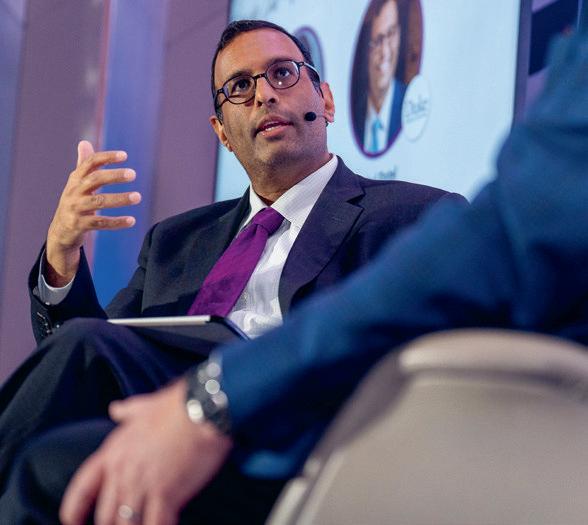
we just don’t get résumés from women. We have a pipeline problem.’ I looked at them and said: ‘Maybe that’s true. We can fix that.’“ In its first ten years, the organization has reached more than 4,000 women – investing in their development and nurturing their ambition through a supportive community.
The conference also heard about the impact of the remarkable #1,000Women initiative in South Africa, via a discussion between Charmaine Houvet, senior director Africa at Cisco and a past board member of the International Women’s Forum of South Africa (IWFSA); Ayanda Mafuleka, CEO of the Finance and Accounting Services Sector Education and Training Authority (Fasset); and Duke Corporate Education’s Angie Naidoo (see Dialogue Q2 2026 for more).
The critical role of funding was highlighted by Dr Sindi Mabaso-Koyana, managing partner at AWCA Investment Holdings (AIH), a private equity firm in South Africa. “Capital is not neutral. It carries the values of the person deploying it,” she said. It is an insight central to AIH’s approach. “We’ve started asking a different question: not just ‘What are the returns?’ but ‘What kind of society is this investment shaping?’”
Finding inspiration
Lead with Her also included an inspiring conversation between Chetty and luxury fashion


Culture and the arts can be powerful catalysts for reshaping our perspectives and how we lead
designer and CEO, Dame Anya Hindmarch. “I’m a great believer that if you do things from a point of passion and curiosity, great outcomes happen. That has to be the best starting point,” she said. Staying humble, curious and keeping common sense as your guide have served as her North Star as a leader, she reflected.
Lady Linda Wong Davies, founder and chairman of the KT Wong Foundation, shared lessons from a career in the arts dedicated to deepening understanding between the West and China. “What drives me is a concept called metanoia – a Greek word meaning a fundamental transformation in how we see the world,” she reflected. Culture and the arts, she suggested, can be powerful catalysts for reshaping our perspectives and, by extension, how we lead.
It was a fitting reflection on the power of dialogue and connection in a fast-changing and uncertain world, where the capacity to transform our worldview is a prerequisite for leadership –and an endorsement of the power of Lead with Her 2026. As Chetty put it: “When people come together with openness, respect and a willingness to listen, something greater becomes possible: not just stronger organizations, but stronger societies.”
“drained, depleted, and quietly overwhelmed.” For leaders, this rarely presents as collapse. More often, it shows up as diminished clarity, shorter patience, reactive decision-making, and the subtle erosion of leadership quality.
I was reminded of a senior leader I worked with recently. A highly capable, deeply committed senior leader, this individual was increasingly frustrated with their own responses: “I’m not thinking as clearly as I used to. I’m reacting more than leading. My brain feels like it’s constantly in fog.” Nothing dramatic had changed in their role, but the cumulative effect of sustained pressure without sufficient recovery was taking its toll.
Leaders are under incessant pressure. Learning how to manage its effects is essential for sustained performance and wellbeing alike
Writing Neil Francis
If there is one consistent theme in my work as a leadership adviser, it is this: most leaders are operating at or near capacity, cognitively, emotionally, and physically. They are not struggling because they lack capability, but because the demands placed upon them rarely pause. Decision-making is constant, attention is difficult to sustain, and rest and recovery are often treated as optional.
It is in this context that The Wellbeing Book by Andrew Sharman is so relevant. This is not simply a book about feeling better; it is a book about sustaining performance in environments that do not naturally allow for it – that is, the modern workplace.
Sharman opens with a stark, but familiar, observation. Modern life is leaving many of us
This
is not a book to read and admire; it is a book to apply. It speaks directly to the pressures leaders face
This is where Sharman’s emphasis on small, deliberate changes resonates. The book is structured around four areas – Wellbeing, Mind, Body and Soul – connected by a consistent message. Wellbeing is not built through grand gestures, but through repeatable daily choices. In leadership terms, this is critical. Large-scale change is difficult to sustain; marginal gains are not.
One of the most practical ideas explored is attention management. Leaders are rarely short of information, but they are often short of uninterrupted thought. Sharman rightly focuses on the need to “turn off” and create space. I often encourage leaders to ask themselves where their best thinking actually happens. It is rarely in back-to-back meetings, nor in the office. For one executive, it was during a daily walk initially dismissed as “time away from work.” It gradually became their most valuable thinking space. Sharman’s discussion of mindful walking reinforces this: everyday activities can become moments of cognitive recovery and clarity if approached intentionally.
This links directly to a broader leadership challenge: the illusion that constant activity equals effectiveness. Sharman captures this powerfully through the metaphor of caterpillars marching endlessly in a circle, mistaking motion for progress. It is a striking image and one that will feel uncomfortably familiar to many leaders.
This plays out at the organizational level too. Teams work relentlessly, calendars fill up, outputs are high – yet there is a limited sense of direction or progress. The issue is not effort, but reflection and rest. Without pause, leaders risk reinforcing activity that is damaging not only to themselves, but to the teams they lead.
The section on the body brings another often-overlooked dimension into focus: physical wellbeing as a leadership variable. In many leadership environments, sleep, nutrition and recovery are secondary considerations, if they are considered at all. Sharman makes clear that these are not lifestyle choices – they are performance

enablers. His framing of sleep as enabling “repair and cognitive renewal” is particularly important. Leaders who pride themselves on minimal sleep often recognize, too late, the impact on judgment, emotional balance and resilience. The shift required is not just behavioral, but cultural: moving from valuing endurance to valuing effectiveness.
Similarly, Sharman’s exploration of everyday habits – from hydration to alcohol consumption – is grounded and realistic. There is no preaching, just a steady reminder that what we do consistently shapes how we perform. Our personal habits are not separate from our professional performance; they are foundational to it.
Perhaps the most significant insights are found in the book’s final section, Soul. Leadership is
often described in terms of strategy, vision and execution, but in practice it is deeply relational. The ability to build trust, create connection and foster psychological safety is central to effective leadership. Sharman brings a scientific lens to this through his discussion of the vagus nerve and social connection. The idea that supportive relationships directly influence our capacity to regulate stress and remain resilient is both compelling and practical. In simple terms: the quality of our relationships shapes the quality of our leadership.
This aligns closely with the observable reality in many organizations. Leaders who invest in genuine relationships – who create environments where people feel safe, heard and valued – consistently outperform those who focus solely on task and output. As Sharman puts it, relationships are “the scaffolding of a meaningful life.” In leadership terms, they are also the scaffolding of sustainable performance.
He also invites reflection on purpose and direction. One of the recurring challenges in leadership is not a lack of effort, but a lack of clarity – leaders and teams moving quickly, but not always intentionally. The simple prompt to ask “why?” – to reflect and reconnect with what matters – is powerful.
Reading The Wellbeing Book prompted me to revisit some of my own routines. I was encouraged to make small, structured adjustments: the kind that are easy to implement and, importantly, easy to sustain. This is the strength of Sharman’s approach: it is practical, realistic and grounded in the realities of modern working life. This is not a book to read and admire; it is a book to apply. It speaks directly to the pressures leaders face and offers a framework – not for escaping those pressures, but for managing them more effectively.
In a leadership landscape that continues to demand more, faster and with greater complexity, the message is both simple and significant: sustained leadership performance is not just about what we do, but how well we sustain ourselves while doing it. That is where this book earns its place.


Wellbeing Book: 50 ways to focus your mind, boost your body and supercharge your soul
The ability to correctly identify the root challenges facing our organizations is a leadership skill that remains all too rarely taught
I2 See the system What interactions, incentives, structures or feedback loops are producing this outcome?
3 De ne the future state If the organization worked exactly as intended, what would be di erent?
4 Find leverage points Where might small structural changes shift behavior or performance?
5 Experiment and learn Treat change not as implementation, but as learning.
The goal is not to produce a long list of issues. It is to define one strategic problem that, if solved, would change the performance of the system itself.






n leadership teams around the world enormous energy is spent solving problems. Yet many of those problems persist – sometimes for years – despite repeated initiatives, restructures and strategy refreshes. Why?










One answer can be found in the work of the late systems-thinker Russell Acko , who argued that organizations rarely su er from isolated problems. Instead, they experience what he called “messes” – complex sets of interrelated challenges where solving one issue often creates another.

Acko believed that the central leadership failure is not poor execution, but poor problem definition. Leaders rush to solutions before fully understanding the system that produces the issue.
In other words, they optimize parts of the organization while the whole system continues producing the same outcomes.
Shifting the system
Traditional management thinking treats challenges as discrete technical issues: improve engagement, reduce turnover, increase productivity. Each becomes a project, owned by a function or team.
But Acko challenged this reductionist thinking. The performance of an organization, he argued, depends less on how well each part performs individually, and more on how those parts interact as a system. This means the problem we see is often only a symptom of deeper system design. For example, burnout may not be a wellbeing issue, but













The question that matters





One practical way to do this is by framing a problem as a strategic tension: “How do we achieve X when Y is happening, without creating Z?”




An example might be: “How do we increase organizational capability when revenue is reducing, without increasing workload and burnout?”



This type of question forces leaders to confront real trade-o s rather than pursue simplistic solutions.
a capacity problem. Slow decision-making may not be a leadership issue, but a structural one. Innovation challenges may not be cultural, but tied to incentives and risk tolerance.
The critical point is this: leaders who treat symptoms rarely shift the system.
The discipline of strategic problem structuring
Acko proposed a di erent leadership discipline: strategic problem structuring. Rather than immediately solving problems, leaders should first structure them. This involves following a five-step process that begins with simple, but powerful, steps questions.
1 Start with the real problem What is actually happening in the system (as opposed to being merely the visible symptoms)?



Although Acko ’s insight is rooted in the distant world of the late-20th century economy, it remains deeply relevant today. Organizations face increasing complexity: technological disruption, workforce transformation, and shifting societal expectations.
In such conditions, the most valuable leadership skill may not be strategy design or operational execution. It may be the ability to define the right problem.
Once a problem is properly understood as a system challenge rather than a symptom, entirely new possibilities for change begin to emerge.
And, as Acko famously reminded us, leadership is not simply about doing things right – but about doing the right things.
Perry Timms is founder and chief energy o cer of PTHR, a consultancy aiming to create better businesses for a better world. He is a TEDx speaker, top-selling author, and a member of HR Magazine’s Most Influential Hall of Fame
The West has relied on sanctions to exert geopolitical pressure in recent decades, but at what cost to the globalized economy?
Edward Fishman’s Chokepoints: How Economic Warfare Is Changing the World is a clear and authoritative account of how sanctions have evolved into central tools of geopolitical competition. Drawing on his experience inside the US government, Fishman shows how control over financial systems, technology and global trade infrastructure has become a form of strategic leverage as consequential as military power.
At its best, the book works as both history and operating manual. Fishman traces sanctions back to the League of Nations, where they were conceived as a rules-based alternative to war. In practice,
Banks and corporations became the de facto executors of foreign policy

they proved slow, leaky and socially regressive – hitting the vulnerable while elites adapted. That early failure explains why sanctions fell out of favor, and why their recent resurgence reflects not continuity but reinvention.
That reinvention is the book’s central insight. After costly and inconclusive military campaigns in Iraq, Afghanistan and Libya, US policymakers turned to a different question: how to impose maximum pressure at minimal domestic cost. The answer was to weaponize “chokepoints” – the structural dependencies of globalization itself. Dollar clearing systems, insurance markets, semiconductors and intellectual property law all became levers of coercion. Crucially, enforcement shifted from governments to markets: banks and corporations, facing existential legal risk, became the de facto executors of foreign policy.
Fishman is strong on how this system works. His explanation of the intersection between legal jurisdiction, financial plumbing and corporate risk management is clear and highly relevant for any business leader charged with navigating heightened geopolitical risk in a world where geopolitical strategy is embedded in compliance functions, capital allocation and supply chain design.
The book’s implicit thesis, however, deserves more robust interrogation. Fishman largely frames economic warfare as a necessary response to rule-breaking states. That framing is incomplete. The US did not simply discover these tools – it built and scaled them. From a non-US perspective, the weaponization of global systems may look less like the enforcement of norms, and more like
the assertion of structural advantage. That distinction matters, particularly in understanding why rivals are investing heavily in alternative financial and technological ecosystems.
A second tension runs through the book: what begins as targeted intervention often comes to resemble permanent economic confrontation. Sanctions aimed at discrete objectives – curbing Iran’s nuclear program or Russia’s territorial ambitions, say – expand into broader strategies of containment, most notably with China. Fishman acknowledges this shift, but stops short of questioning its end state. If economic warfare becomes continuous, what does success look like?
There are also structural blind spots. The ratchet effect, whereby administrations escalate rather than unwind sanctions, is well observed, but the exit problem is underdeveloped. The Iran nuclear deal illustrates the point: sanctions may lead to negotiation but not necessarily to durable resolution.
For business, the most material issue is risk transmission. As sanctions deepen, they cease to be targeted tools and become system-wide shocks. Energy markets, supply chains and capital flows all become exposed. Fishman acknowledges this “blowback” but underplays its strategic significance. The more these tools are used, the more they incentivize decoupling – whether through parallel payment systems, regional supply chains or technology bifurcation.
The reality is that economic warfare is not costless. It may reduce reliance on military force, but it accelerates the fragmentation of the global economic order on which Western prosperity has depended.

Chokepoints: How Economic Warfare Is Changing the World Edward Fishman (Elliott & Thompson)
When everything goes smoothly, we may be hollowing out the foundations of our decision making
It started with a dinner conversation extolling the virtues of AI in scheduling. AI can make everything seamless, saving time in the tedious back-and-forth among colleagues trying to set up a simple coffee date. But then a friend piped up: is there something we actually gain in that exchange, frustrating as it may be? Doesn’t it provide insights into how a person thinks and communicates? The conversation took a turn. In our pursuit of a frictionless society, made possible by AI, what are we giving up?
This is not a question that asks us to give up technology for routine tasks. Rather, it’s an invitation to think through the costs to individual growth and collective innovation, so that we can wisely design friction into an increasingly frictionless world.
My colleague Brinnae Bent, executive in residence in AI at Duke University’s Pratt School of Engineering, designed a DisagreeBot in her Trust Lab. When someone inputs “2 + 2 = 4,” the bot argues – using alternative mathematical frameworks such as non-Euclidean mathematics –that this might not hold true. She wanted to highlight a fundamental limitation of current large language models: unless explicitly prompted otherwise, generative AI is designed to validate you. It tells you that your ideas are wonderful and your logic is sound. Life feels more pleasant when an intelligent system agrees with you. But constant agreement is not something we experience when interacting with fellow human beings – and for good reason.
AI is built on past probability, yet human progress is driven by imaginative improbabilities. It rarely follows the path of least resistance. We didn’t send astronauts to the Moon on “Yes” alone. There had to be friction. Friction highlights blind spots and missing perspectives, builds conviction by testing the strength of our arguments, defines a team’s values, and cultivates trust. It is only in
We must resist the urge to automate away the ‘messy’ parts of teamwork. The value of working through disagreements cannot be traded away
moments of disagreement that we find out what truly matters to colleagues, bosses and stakeholders.
In the 1930s, Alfred P Sloan listened as his fellow General Motors board members quickly reached a unanimous decision on an important issue. Instead of calling for a vote, he stopped the room: “I propose we postpone further discussion to give ourselves time to develop disagreement and perhaps gain some understanding of what the decision is all about.”
Reconvening for the sake of disagreement might be a frustrating prospect. When someone stalls a meeting with a question that might alter the trajectory of your project when it’s close to the finish line, the natural instinct may be to move on; to just get it done. But Sloan had a point. Friction is the crucible of conviction. When you let something pass without careful debate, do you truly have conviction in the outcome? When we bypass the messiness of differing human perspectives, we save time but hollow out the foundation of our decisions. Conviction is forged in the moment when someone dares to say, “Wait” – forcing the team to defend and refine. Without that heat, the resulting product is brittle, destined to crack under real-world pressure.
So we must resist the urge to automate away the ‘messy’ parts of teamwork. Great teamwork comes from a willingness to sit with that messiness – because human beings are fundamentally messy. Friction sharpens vision. The value of working through disagreements to find collective clarity cannot be traded away.


Are people cogs in a machine –or the life blood of a living organization?




“The bible for the life-centred economy.”
STEVEN D’SOUZA
Senior Partner, Korn Ferry, and author of the award-winning Not Knowing
“The future of work requires us to break free from preconceived notions of how organizations are shaped and managed. Paul’s insights spur us to think about organizations as living organisms, providing a fresh perspective and roadmap to create thriving, sustainable organizations.”
MARY CIANNI
Clinical Associate Professor of Organizational Consulting, New York University
“Just as artificial intelligence threatens to further dehumanize organizations, Alive is an urgent reminder that businesses thrive when they are built around motivated and engaged people. I love the analogy to a living organism –in an era of digital transformation, it brings back into focus the need for humanity at the heart of our organizations.”
STEPHEN GRAHAM
Executive Vice President and General Manager, Hexagon













































SMART THINKING AND SELF-DEVELOPMENT FOR A NEW GENERATION
• Dynamic and practical
• Concise and to the point
• Clever, smart and savvy advice
• Relevant to all levels of readers – from students to CEOs
• Appeals to different generations and age groups











































Publisher: LID PUBLISHING (info@lidpublishing.com) Distributor: HACHETTE UK DISTRIBUTION www.lidpublishing.com/product-category/concise-advice-series