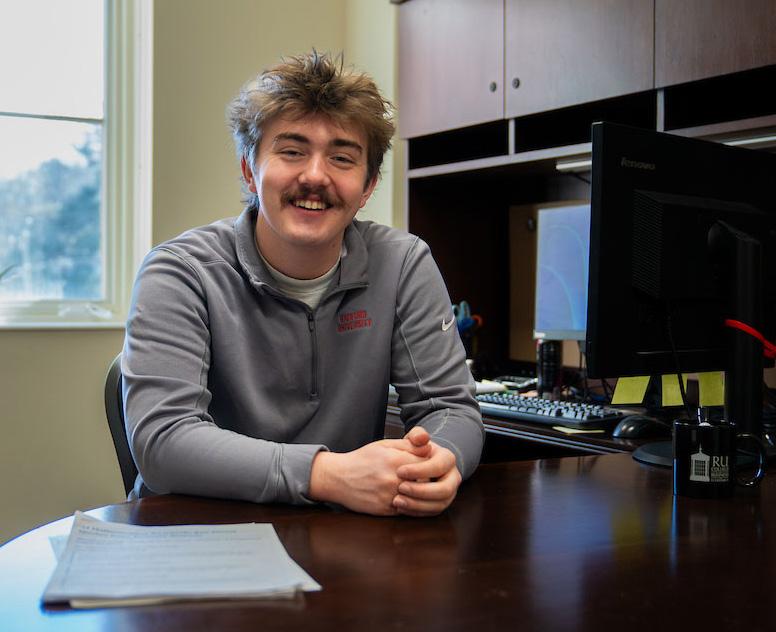
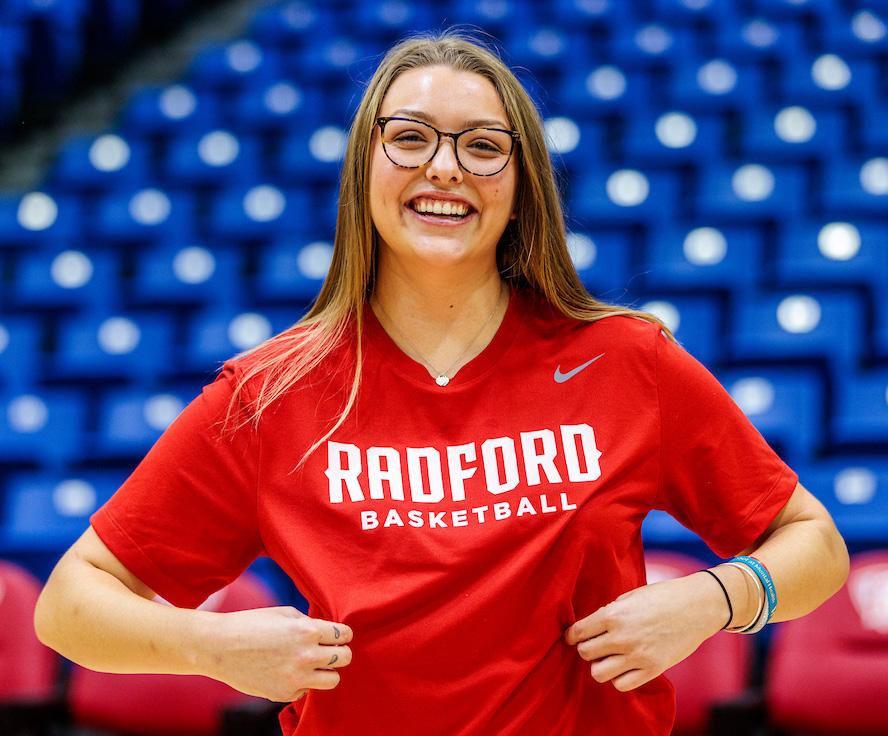
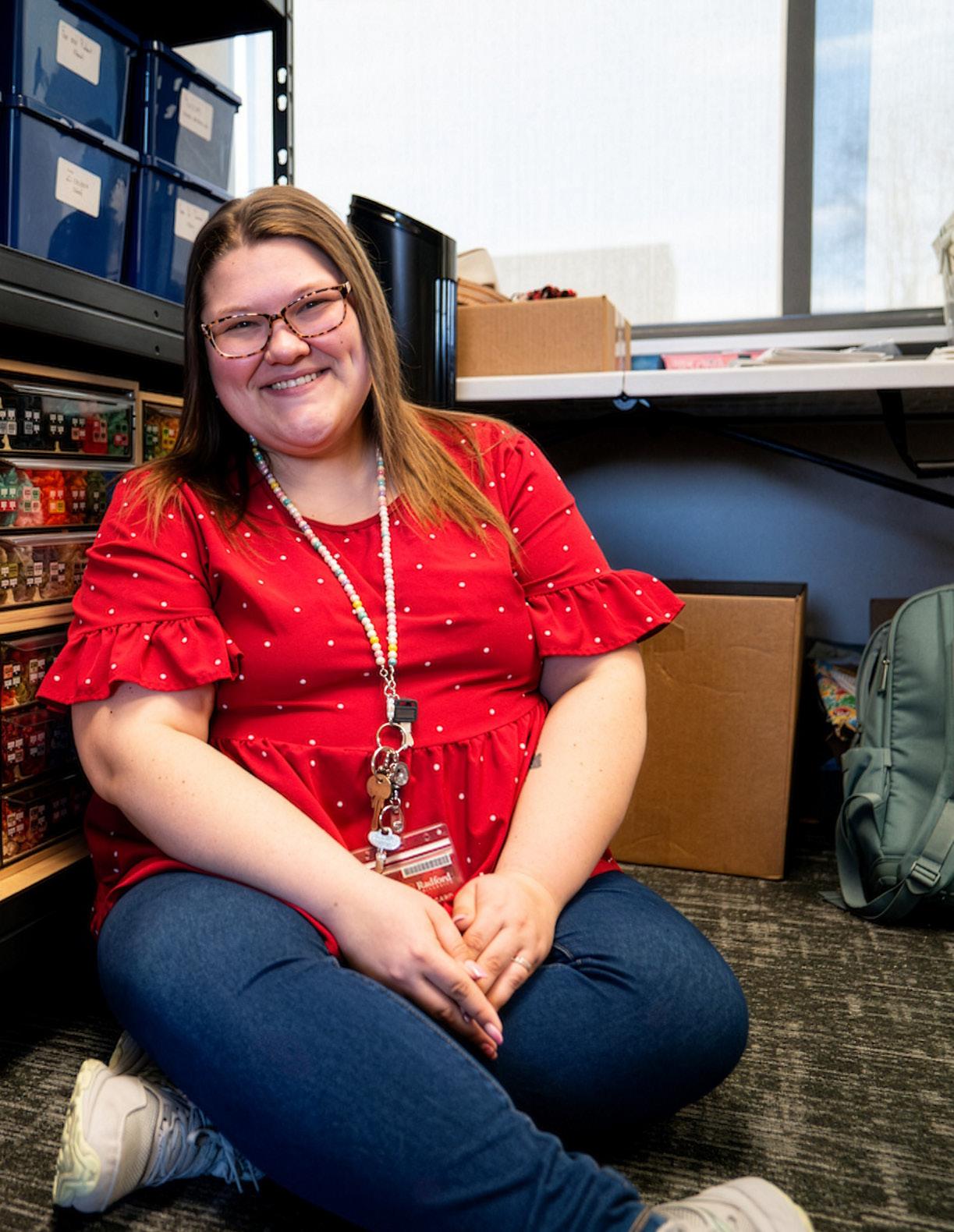
It encourages students to explore interests outside their major, experiment with new skills and express themselves in ways that go beyond the classroom.”
Braxton Tyson
While many students and faculty are using makerspaces for educational purposes, Cayden Shorter took on a larger, more personal and fun project when he learned the capabilities of the Artis Center’s CNC.
“I knew exactly what I wanted to make when I saw that machine,” said the junior business management major, speaking from Sweden, where he was part of a Radford study abroad program this spring. “I’m from [Panama City,] Florida, and I love to surf. So, I wanted to make a full-scale surfboard.”
With Hasler’s help, and some discounted polystyrene expanded foam Shorter found in Virginia Beach, the surfer and student entrepreneur designed and then machined his project on the CNC router. It was a process that took hours, but it was well worth the wait.
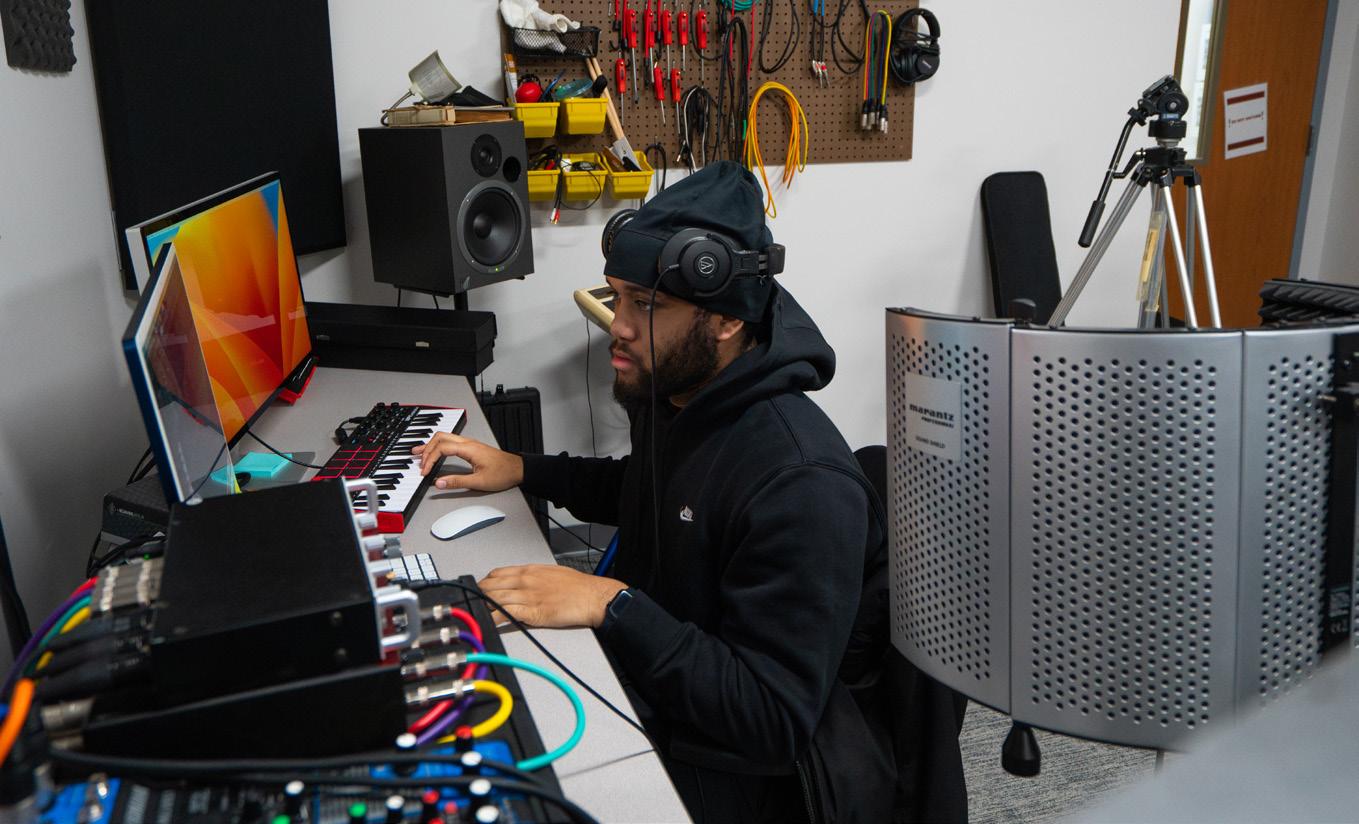
As the foursome of Johnson, Metzel, Micket and Sharma sawed, drilled and hammered their way toward the completion of their Victorian-style doghouse, Braxton Tyson was a five-minute walk away, vibing inside the recording studio at CITL, the Center for Innovative Teaching and Learning.
“Making beats and recording vocals is something I genuinely enjoy as a creative
outlet,” the freshman information systems major from Alexandria, Virginia, said. “It’s also a way I regulate myself and process experiences. It’s fun for me, but it’s also meaningful.”
The CITL makerspace benefits creatives like Tyson because it gives students access to equipment and inventive spaces they might not have otherwise. “Not everyone has studio gear or a quiet place to create, so having that resource on campus makes a big difference,” he said. “It encourages students to explore interests outside their major, experiment with new skills and express themselves in ways that go beyond the classroom.”
The studio space is available for both personal and academic projects. Assistant Professor of Nursing Amy Woods ’08, D.N.P. ’15, assigned a podcast production project to her students as an innovative way of measuring their understanding of a particular topic and strengthening their communication skills.
Having access to makerspaces is critical, Woods explained, “because it offers the recording equipment, software and technical support needed to produce high-quality podcasts. These spaces ensure all students can fully participate and give faculty the support and training needed to integrate innovative assessments effectively.”
Two doors down from the studio in the CITL makerspace, located on the second floor of McConnell Library, is another large room John Hildreth ’00 describes as “a perfect place for fiber arts and digital making.” Inside the room is a laser cutter and engraver, a heat press, vinyl cutters, sewing machines and computers for processing photographs.
It’s a busy space, said Hildreth, CITL’s associate director, who oversees the makerspace. He is aided by a staff of five work study students that he, and the center’s additional professional staff, train to help their fellow Highlanders carry out a variety of projects, whether it be sewing Greek letters onto clothing or making buttons for Club Fair.
Sam Wilner is one of the skilled work study students who sees the value in helping others through campus makerspaces.
“These spaces sometimes help people get out of their shell and encourage them to do things for themselves,” said the junior graphic design major from Wytheville, Virginia. “College is the best time get out and learn to do things on your own, and for us at CITL, we help with that by saying, ‘I’m going help you with this project, but you’re going to learn how to do it yourself.’”
Activities in CITL’s workshop and stu-
Braxton Tyson making beats in the recording studio at CITL.
New strategic plan reflects best ideas, common goals and shared values of university community
By David E. Perryman
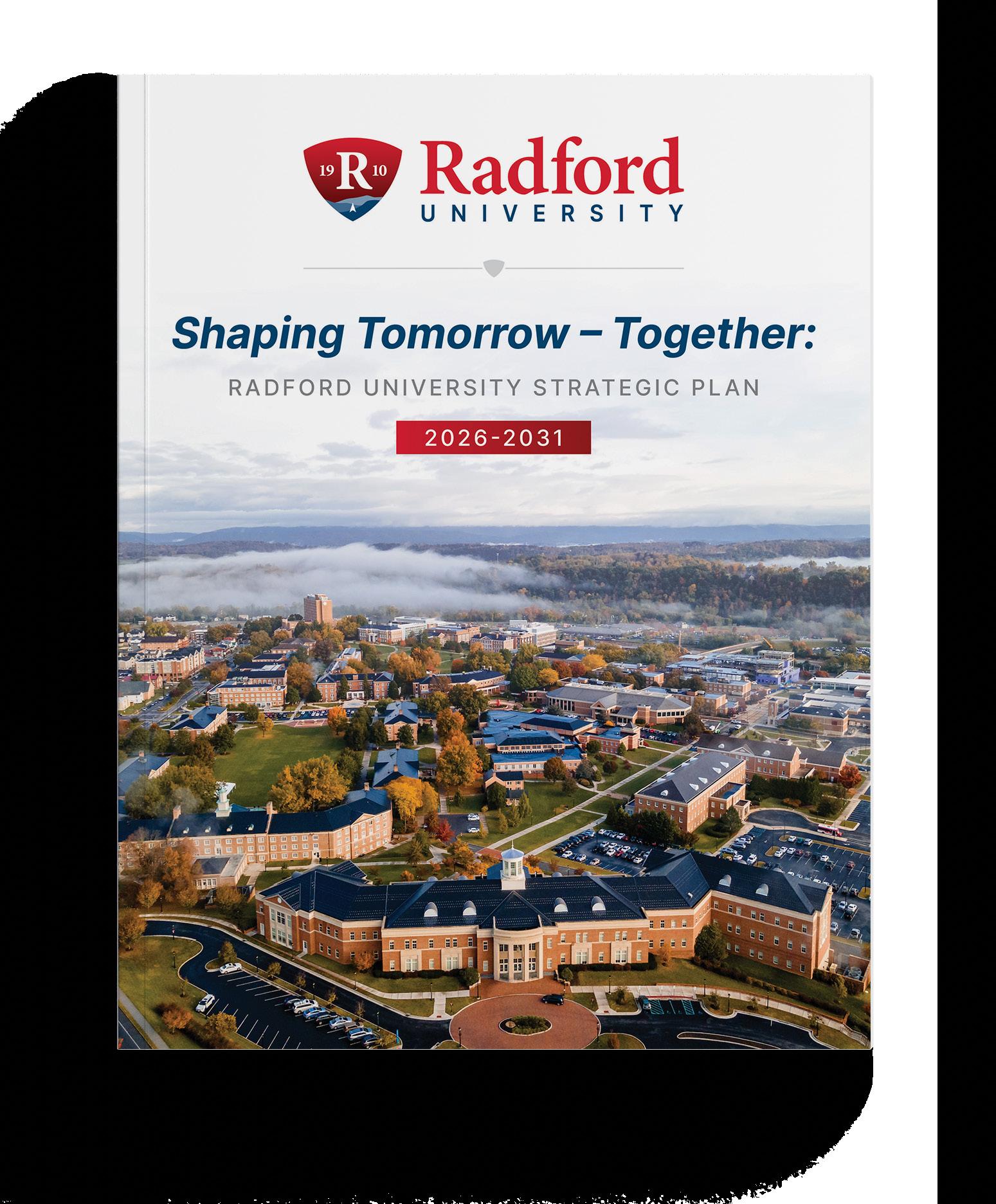
Following nearly a year and a half of intensive work, on Jan. 23, 2026, Radford University officially launched Shaping Tomorrow – Together, its new strategic plan for 2026-2031.
“Today marks an important moment in Radford’s history –one that celebrates how far we’ve come and sets the stage for where we’re going next,” President Bret Danilowicz said at the launch event in Davis Performance Hall.
The plan features new vision and mission statements, along with six strategic themes that represent the best ideas, common goals and shared values of the Radford community. Corresponding bold commitments translate the themes into more tangible activities and outcomes while addressing statewide needs and leveraging Radford’s proven strengths.
The strategic planning effort began in September 2024 with the formation of a planning committee comprising students, employees, administrators, alumni and community members.
Led by co-chairs Sharon Roger Hepburn, professor and chair of the university’s Department of History, and Angela Joyner, vice president of Economic Development and Corporate Education, the committee participated in numerous planning meetings while orchestrating one-on-one interviews, group feedback sessions and a survey to capture the voices of Highlanders across every corner of campus and beyond.
Addressing the gathering in the auditorium and those watching online, Danilowicz provided detailed insight into the plan’s six themes, which include culture of care.
“We want every Highlander to feel valued, supported and empowered to thrive,” he said.
To accomplish that goal for students, Radford will leverage innovative technologies and support tools to proactively connect them with the services and resources they need to succeed. For employees, the university will develop more robust onboarding programs, mentorship opportunities and other knowledge-sharing approaches so that all faculty and staff feel supported and are able to flourish.
Additional strategic plan themes include academic achievement and intellectual discovery; student success and experiential learning; strategic partnerships and community engagement; organizational excellence and continuous improvement; and communication and collaboration.
“Culture of care” holds each of these themes together, Danilowicz noted, and “is the single most important thread woven throughout the plan.”
STRATEGIC PARTNERSHIPS AND COMMUNITY ENGAGEMENT CULTURE OF CARE
ACADEMIC ACHIEVEMENT AND INTELLECTUAL DISCOVERY
ORGANIZATIONAL EXCELLENCE AND CONTINUOUS IMPROVEMENT
STUDENT SUCCESS AND EXPERIENTIAL LEARNING
COMMUNICATION AND COLLABORATION
To learn more about the strategic plan and follow updates on the university’s progress, visit radford.edu/strategic-plan.
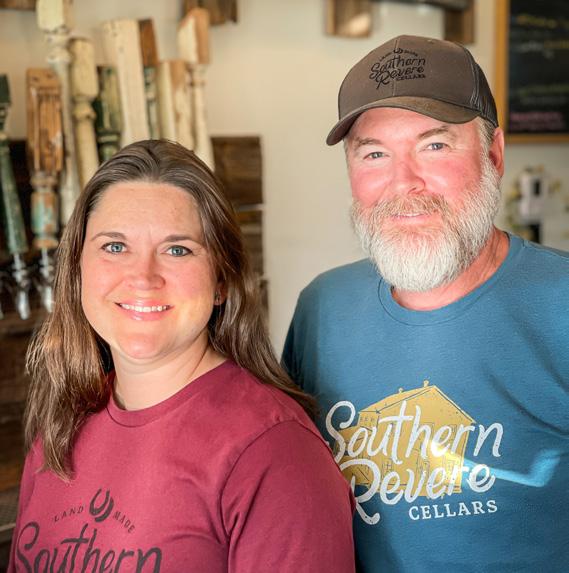
5. Southern Revere Cellars
1100 E Jack Jouett Rd., Louisa, VA 23093
540-260-5494
www.southernrevere.com
Rustic, regal and situated on a wide expanse of Louisa County farmland, Southern Revere Cellars promises patrons a family-run farm brewery and winery, together, as a setting for events, food trucks or just kicking back with a cold one. The Central Virginian newspaper recently awarded Southern Revere a trifecta in its local 2025 rankings – Best Brewery, Best Winery and Best Bar... as well as a runner-up spot for Best Entertainment, which the Spencers owe to their karaoke nights. “Our real aim has been to offer a variety of craft beverages, so that we appeal to all different tastes,” Paula Spencer said, “and then really, to bring community together.”
6. The Damascus Brewery 32173 Government Rd., Damascus, VA 24236
276-469-1069
www.thedamascusbrewery.com
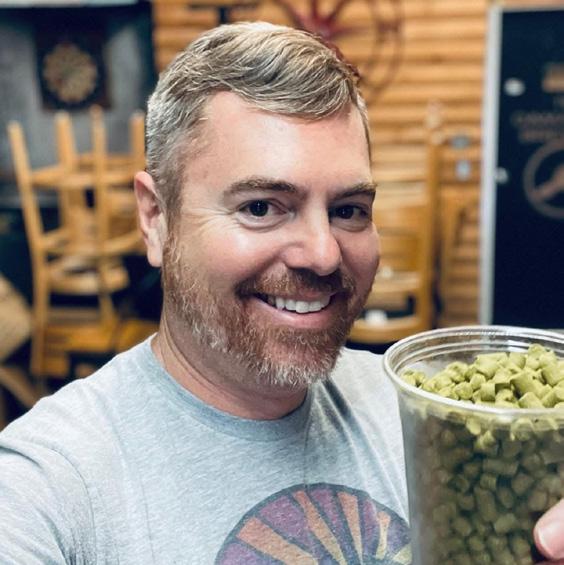
Asked if there’s a Radford connection to his current line of work, biology and chemistry graduate Woodson answered in the affirmative: “That’s where I learned to brew. I made my first batch of beer on Dark Side, just me and a buddy of mine, and before we graduated, we probably produced 20 [to] 25 batches.” That practice paid off. Today, Woodson owns and operates Damascus Brewery, which is neatly adjacent to two welltrod trails in the southwest part of the state: the Appalachian and the Virginia Creeper. Founded in 2013, Damascus serves up more than 80 different craft beers, as well as 32 oz. growler cans sealed for take-out.
7. Back Bay Brewing Co./Back Bay’s Farmhouse
1805 Kempsville Rd., Virginia Beach, VA 23464 757-904-3183 www.backbayfarmhouse.com
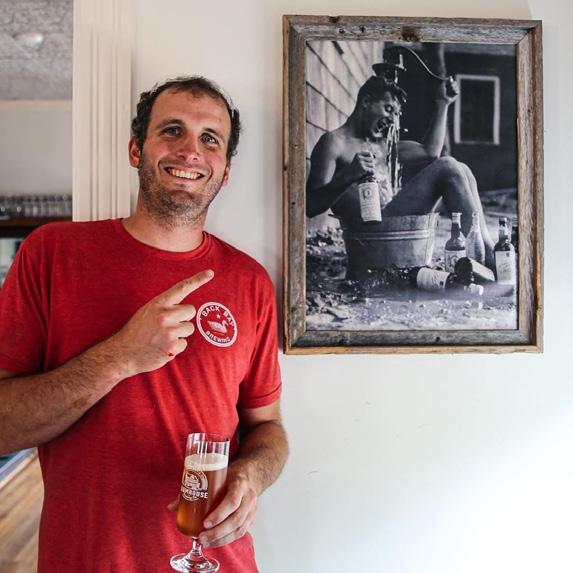
Travis majored in chemistry and minored in biology, then worked for years as an analytical chemist in the New River Valley. But all that time, he was also producing his own beer, crafting dozens of different styles. In 2015, he said, “I got bored, and I wanted a change, so I took a massive pay cut and started a new career as an assistant brewer.” The place? Back Bay Brewing in his hometown of Virginia Beach, Virginia. Today, he’s one of the co-owners, providing a regular rotation of about 20 different beers, as well as its own cider made on-site “with all Virginia-grown apples,” Powell said.
Where ideas have impact
At Radford, creativity is an on-ramp for active learning
By Pam McCallister
ighlanders are doers. Here, learning is active by design, fueled by curiosity and grounded in a commitment to putting ideas to work. The notion of creativity doesn’t fit neatly into a single studio, lab or performance space. It shows up wherever learning meets purpose: in classrooms, recording studios and data labs where imagination is paired with discipline to solve real problems.
Across campus, three very different programs – a children’s music initiative, a social media research lab and a graduate design program – share a philosophy. Creativity at Radford is instructional, collaborative, rooted in research and applied to challenges that extend beyond campus.
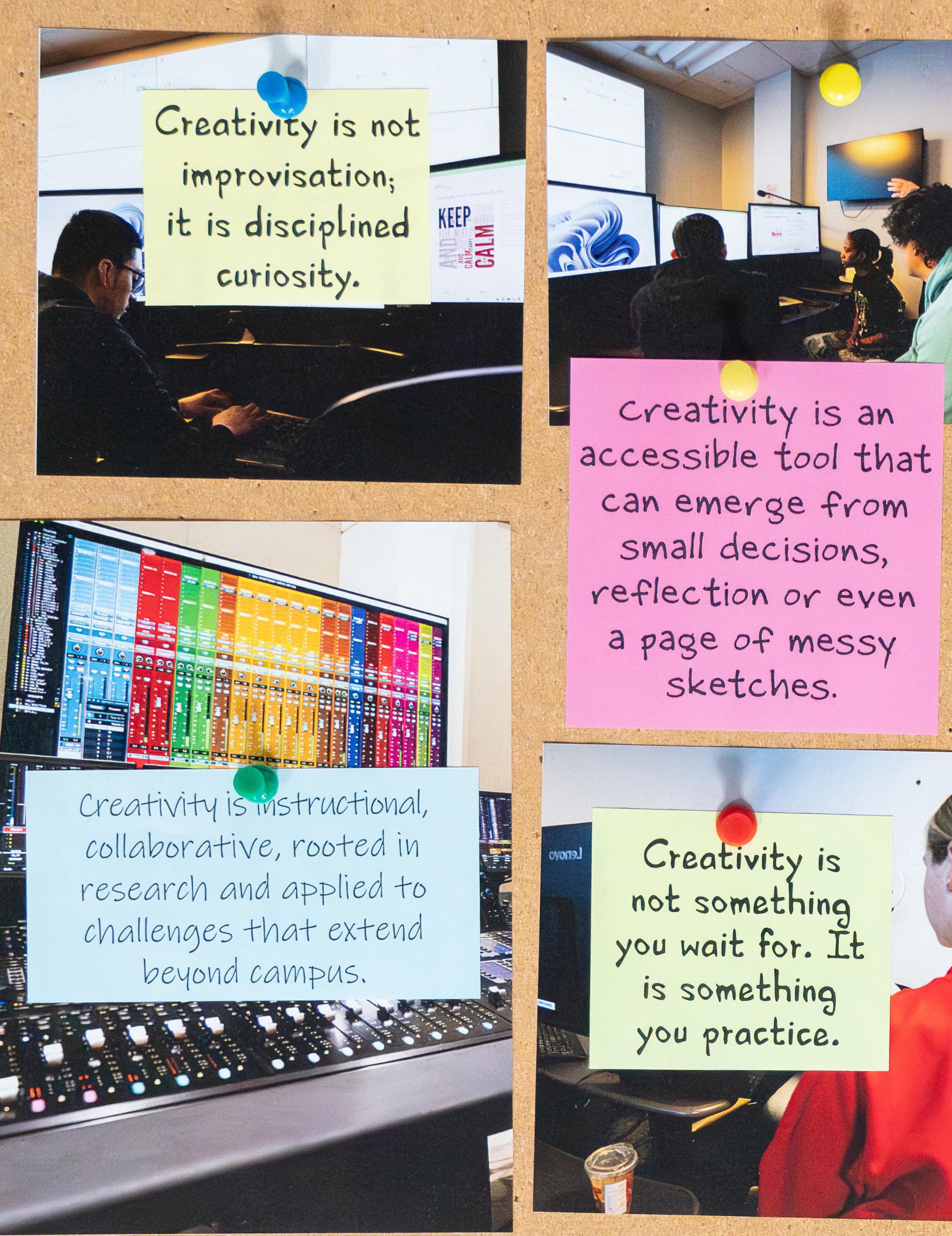
At Radford University, creativity is not something you wait for. It is something you practice.
Little Beats: Music as early STEM instruction
The first sound in a Little Beats song is always the same: a melodic “bahm bahm bahm, here we go.” To an adult, it might sound playful. To a young listener, it’s both an invitation and a lesson disguised as fun.
For two Radford music faculty members, Associate Professor David Rivers and Jennifer McDonel, professor and associate dean of the College of Visual and Performing Arts, those opening notes reflect a deliberate approach to songwriting that blends musical craft, early childhood research and the belief that children deserve music that is not just educational, but original and engaging.
Little Beats began as a collaboration with the national nonprofit Zero To Three. Building on their multi-album project, “Little Beats: Counting, Shapes and Sets,” McDonel and Rivers compose original, curriculum-based songs that weave math and science vocabulary, language development and playful melodies into an experience designed to spark curiosity and participation.
The goal is not simply to entertain children but to strengthen early STEM learning through music. Lyrics and movement cues mirror play-based learning strategies drawn from research-based curricula. Repetition, rhythm and melody reinforce key concepts in ways that feel natural rather than instructional.
When they began the project, McDonel said, they wanted to elevate the quality of children’s educational music.
“Commercial music for young children is often overproduced or highly autotuned to the point where the vocals sound unnatural,” she said. Educational music, she added, often relies on familiar folk tunes with replacement lyrics or songs that feel overly simplistic.
Instead, Little Beats features original compositions and a variety of musical styles. Children are exposed to different tonalities and meters, subtly building listening skills alongside math and language development.
Behind the playful sound is a clear set of goals: music grounded in best practices across disciplines, vocally clear and natu-
ral, engaging for adults as well as children.
“We added musical ‘Easter eggs,’” McDonel said. “They’re homages to musical styles adults may recognize, so parents and educators can enjoy the music, too.”
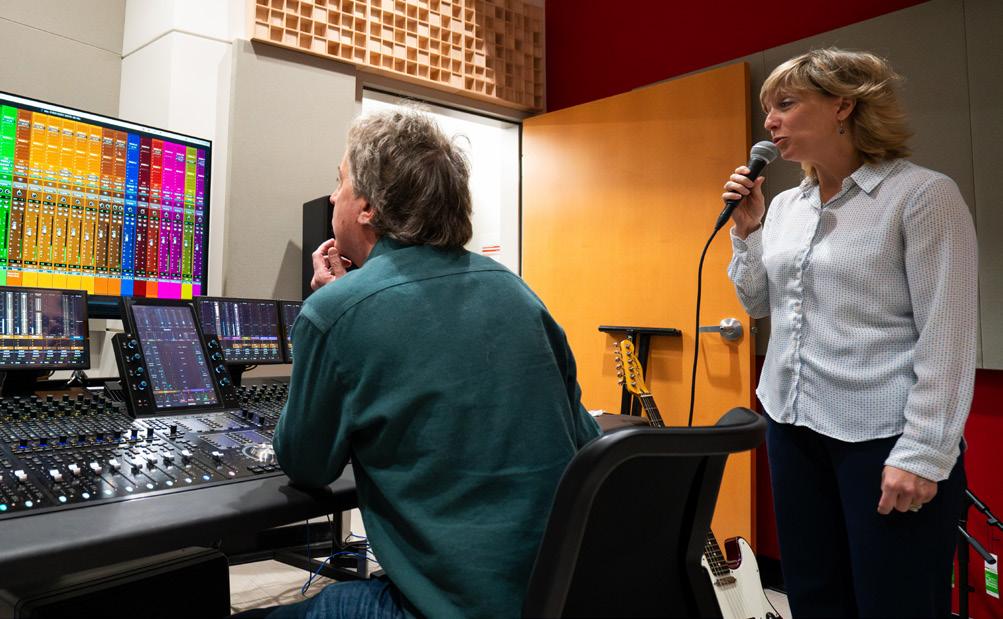
McDonel and Rivers look forward to even more possibilities on campus with the completion of a state-of-the-art recording studio in the Artis Center, where professional equipment and institutional support will continue to allow the project to reach listeners well beyond campus as a resource for teachers nationwide – one that still delights its audience.
Inside the SMART Lab: Creativity as disciplined curiosity
If Little Beats transforms music into a teaching tool, the SMART Lab transforms curiosity into research.
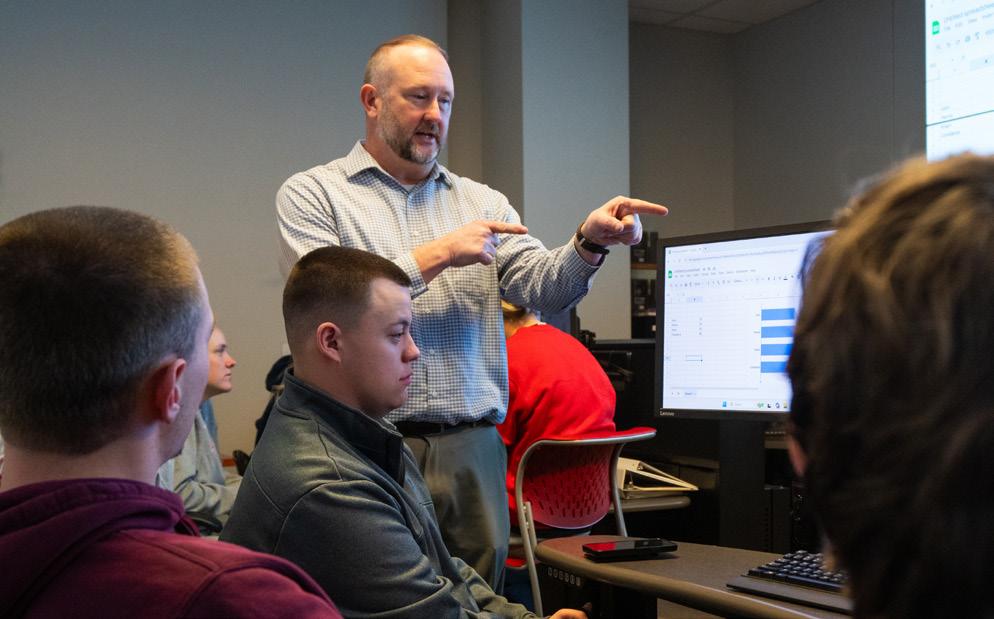
When students first walk into Radford’s Social Media Analytics and Research Technology Lab, many arrive with uncertainty. They’ve been assigned a major research project and don’t know where to begin. John Brummette, M.S. ’03, professor of communication and SMART Lab director, meets them there.
“Show up with curiosity and a research question,” he tells them.
The SMART Lab serves as a collaborative research hub where students design studies, refine interview questions, build surveys and analyze social media data. The lab works across disciplines, supporting projects from communication and business to health sciences and beyond. Its purpose is not to tie research to a single field but to strengthen students’ ability to think critically and produce knowledge.
“The research question drives the method,” Brummette said. “Our job is to make that method feel manageable rather than overwhelming.”
Creativity, in this context, is not improvisation; it is disciplined curiosity. “We define creativity as the ability to approach questions from different angles, recognize patterns others overlook and imagine new ways to generate knowledge,” he said.
If you’re going to wait for inspiration, it’s hard to tell how long you might be sitting there.”
Associate Professor of Design Thinking Bruce Parsons
In the lab, students are pushed beyond summarizing existing research. They collect and analyze original data. They define variables, test assumptions and refine their methods. Fear, Brummette said, is often the greatest obstacle.
“Students worry about being wrong,” he said. “Once they realize they’re allowed to test ideas, adjust course and refine their thinking, their work becomes stronger.”
That shift becomes especially vivid during live-event monitoring sessions, when the lab takes on what some describe as a “war room” feel. Wall-sized monitors display traditional news coverage of elections, crises or major events alongside real-time social media feeds. Students watch public discourse unfold across platforms, analyzing how narratives evolve.
“They’re seeing traditional media and public reaction side by side,” Brummette said. “They begin to question what they see rather than accept it at face value.”
Why does a story look different across platforms? Whose voices are amplified? Which perspectives are missing? What patterns are emerging and why?
Working with live data forces students to confront complexity. Data sets are messy and incomplete. They require interpretation, skepticism and ethical judgment. Over time, Brummette sees a shift.
“Students stop seeing themselves as completing an assignment,” he said. “They begin to see themselves as scholars who can create knowledge.”
Design thinking: Creativity as practice
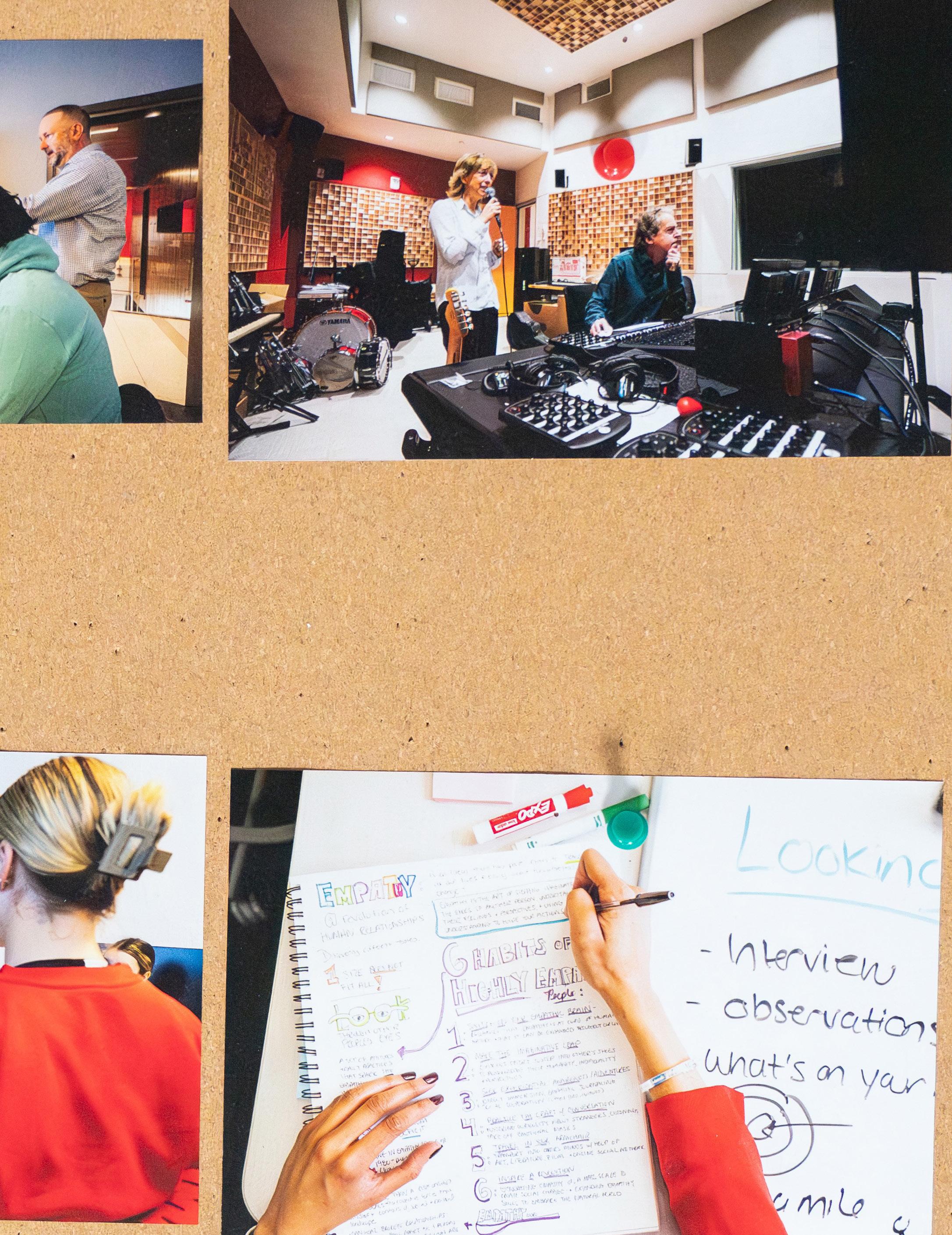
In the Master of Fine Arts in design thinking program, Bruce Parsons says, creativity is treated less like a lightning bolt and more like a muscle – something strengthened through practice, discipline and attention.
Parsons, an associate professor of design thinking, challenges one of the most common misconceptions students bring with them: the idea that creativity arrives only in sudden bursts of inspiration.
“Do those moments happen? Sure,” Parsons said. “But if you’re going to wait for inspiration, it’s hard to tell how long you might be sitting there.”
Instead, students learn to view creativity as an accessible tool that can emerge from small decisions, reflection or even a page of messy sketches. The obstacle, Parsons said, is often trying to be perfect, defining creativity too precisely or executing something flawlessly the first time.
The program’s structure counters that impulse. Students are taught first to ask better questions, Parsons said. What is happening beneath the surface of a problem? Whose story is being told? Whose is missing?
They are also encouraged to resist the urge to rush toward solutions. Building an app or launching an initiative may feel productive, Parsons said, but without fully understanding the people involved, early solutions can narrow possibilities.
“Design thinking as a discipline is the ability to bring ideas together and then explode them into a hundred pieces,” Parsons said, “just to bring them back together once we have more information.”
Students apply that approach to projects ranging from helping small businesses improve their web presence to developing podcast guides about healthcare in America. Thesis work has explored virtual reality environments for patients undergoing chemotherapy, innovative game design curricula and the use of Appalachian cryptid storytelling as a tool for economic development.
Throughout the program, the emphasis remains community-first. Using a “Yes, and?” methodology, students design not for people but with them, combining empathy, research and experimentation to address real-world challenges.
Whether in a corporate setting or a local community center, Parsons said, the goal is consistent: equip graduates to navigate complexity thoughtfully and collaboratively.
Associate professor of music, David Rivers and Jennifer McDonel, associate dean and professor of music, record audio.
Professor of Communication and SMART Lab Director John Brummette, M.S. ’03, guides students.
From the Venture Lab to the AI Sandbox and CoWorks@The HUB, Radford University offers an entrepreneurial ecosystem that helps students form fruitful collaborations
By Neil Harvey
Students’ strongest and most innovative ideas need the means to expand beyond classrooms, the campus and graduation, and Radford’s entrepreneurial ecosystem provides a range of such pathways.
It’s a virtual network with myriad entry points and conduits, all aimed at connecting enterprising Highlanders with faculty and community partners in meaningful collaborations.
One key component is the Venture Lab, located in Kyle Hall, run by the Davis College of Business and Economics and open to all.
Designed as a bridge between student ideas and concept creations, the Venture Lab hosts events like Innovation Challenge and IdeaFest and operates under program coordinator Macie Rice ’22, MBA ’23. Her staff of six “brand ambassadors” are work-study students who specialize in graphic design, event planning, research and social media.
“We’ve transitioned into something like an all-purpose hub for student ideas,” Rice explained. “It’s an entrepreneurship
‘learn-by-doing’ lab. That starts with a meeting, with coming in and talking to me and working out a plan for what your goal looks like.”
When Sam Williams ’25 developed a concept for the cybersecurity film Action Guard, the lab helped him secure a $15,000 grant from the Commonwealth Cyber Initiative (CCI) to launch it and hire employees.
Demetrio Vallejos, a freshman management and marketing double major, worked with the facility to create his own clothing line, BMD Apparel, with the motto “Daring to dream big and taking consistent action to turn those dreams into a reality.”
Another innovative option Radford offers is the AI Sandbox, which opened this spring and is dedicated to today’s rapidly evolving technologies. The Davis College’s central hub for generative artificial intelligence in business, it’s directed by Samantha Steidle ’04 and seeks to ethically accelerate students’ applied AI abilities, while also offering career preparation, discussion, competitions and events.
“We’re learning that, with AI, there’s an important place for expertise, knowledge and skills, and the outputs of AI prompts are very closely tied to those skill levels,” Steidle said.
“Many people think anybody could go in and input questions and information, but the quality of the outputs is tied to a certain level of education.”
A recent Sandbox collaborator, Aaron Chappell ’25, MBA ’26, of Hillsville, Virginia, worked as a graduate teaching assistant while balancing jobs in retail and restaurant management. Since last year, he’s helped Steidle research, test and audit information to gain faculty and leadership buy-ins for future AI efforts. Through that work, Chappell became proficient in the field, a process he attributes to Radford University’s size.
“It creates a really intimate environment” for meeting experts and making contacts, he said. “You get a lot more opportunities to have important conversations. That really helps.”
His drive paid off – his work was noticed on LinkedIn, and he was recruited this year by an Amazon talent acquisition specialist. Following an extended interview process, Chappell was hired by Amazon to manage the operations of a robotic fulfillment center in Wilmington, North Carolina. He credits his work in Sandbox as “a major selling point” and is optimistic about AI’s prospects.
“I think if you use it as a tool and you really work with it the way that you can, it can make people more intelligent than they’ve ever been before,” he said.
Ashlee Owens ’24, M.S. ’26, from Potomac Falls, Virginia, earned bachelor’s degrees in marketing and business management and her master’s in strategic communications. She remains active at the intersection of education, business and technology.
Owens helped Steidle pre-test Radford’s AI Olympic challenges and uses Boodlebox, an AI platform geared toward higher education, to help tailor her resume and strengthen her application as she pursues the competitive job opportunities in her field.
At this relatively early stage in the AI timeline, Owens said, students and faculty are navigating the landscape together, devising ways to educate and learn and use new technologies in tandem.
“Professors are teaching students, but I think also, in the same way, students are teaching the professors what we know,” she said, adding that this exposure had an impact: “The Radford University experience is unmatched to anything else I’ve seen, because they’re so focused on allowing students to prepare for the real world and use our knowledge of different applications for different goals.”
Emerging technology amplifies classroom methods as well. Jack Mason, an assistant professor in the management department, leads 200- and 300-level courses – “Entrepreneurship and Innovation” and “Managing New Venture Creation.”
He employed AI chatbots to turn his classes into student teams and to help them identify consumer needs and solutions as they pursue the goals of launching and marketing their own ventures. But he’s also requiring a necessary level of external interaction. Director of Economic Development and Community Engagement Nichole Hair recently met with Mason’s entrepreneurs to help them find local figures whose expertise matches their teams’ goals.
“You have to go out and basically talk to people, open the aperture of what the possibilities are before you have something to sell,” Mason explained.
Andy Travers, who taught those courses last year, said he witnessed genuine promise: “I had multiple projects that have real community potential and a couple of very well-developed niche interests.”
Aaron Chappell ’25, MBA ’26
Ashlee Owens ’24, M.S. ’26
It was important to me to have a space that created structure; that’s when I found CoWorks. It provided a space dedicated solely to my business, free from the usual distractions.”
Sarah Pullman ’19, M.A. ’20
Among those student concepts: a golf simulator; a publishing strategy to connect writers and illustrators; a 3-D printing system for gaming figures; and a plan for a do-it-yourself pottery studio, pitched by visual arts major Katherine Dickinson.
“Her project was one of the most developed I’ve had over the past three years and was supported by her personal passion and knowledge of the subject,” Travers said. “The entrepreneurship track is open to all majors. I’ve had multiple dance and design students develop great projects, in addition to business majors.”
As part of her work with economic development, Nichole Hair oversees CoWorks@The HUB, Radford University’s dynamic downtown space designed to foster collaborative connections between the university and broader community. The vibrant facility offers dedicated desks, private offices and meetings rooms, as well as a coffee bar, mail room, meditation space, Zoom booth and high-speed internet.
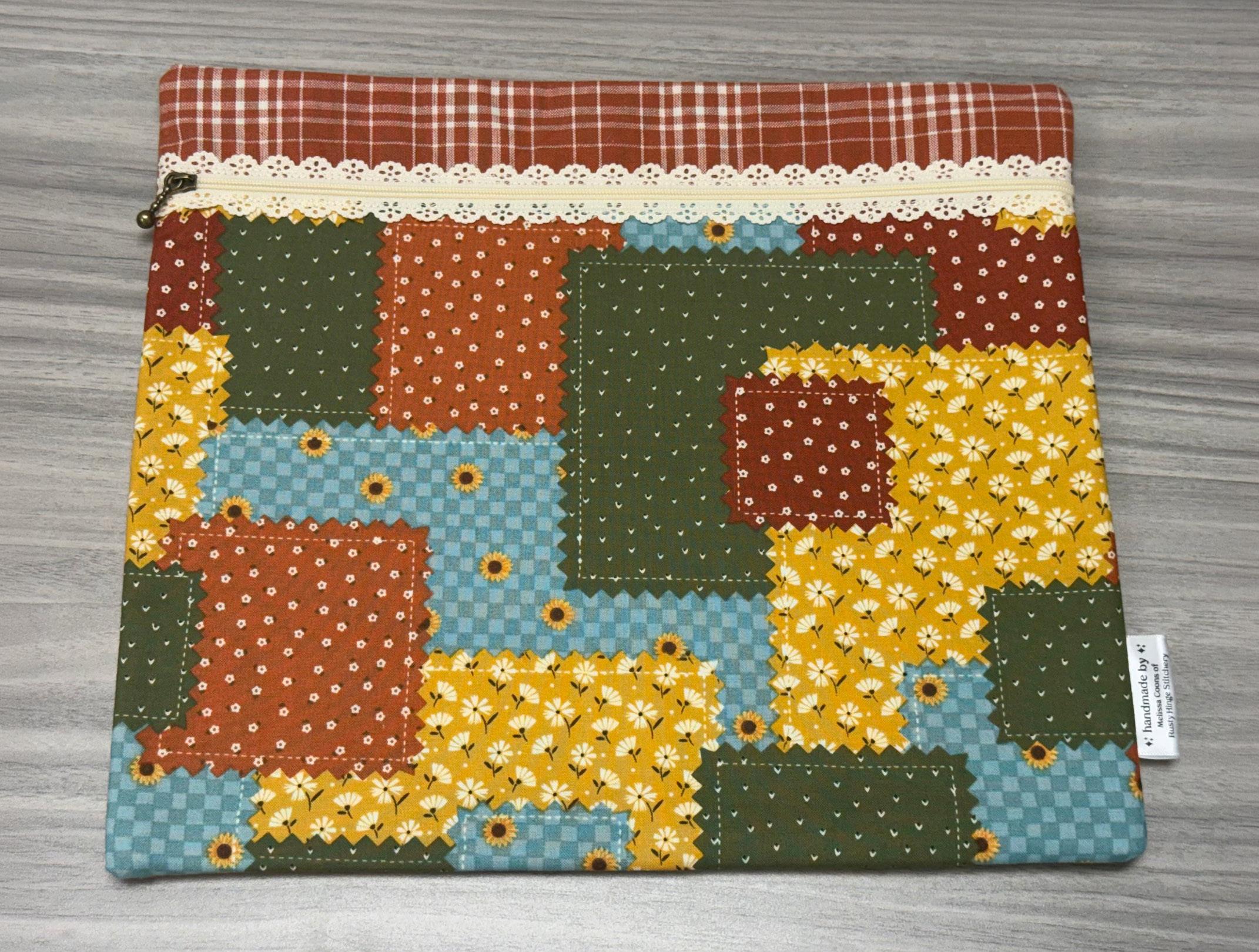
Sarah Pullman ’19, M.A. ’20, uses a CoWorks office as the headquarters for Millennial Fabrics, her online cross-stitch and hand-dyed fabric company, which evolved from a hobby into a full-time
business that now ships orders across the country. She said she applies the skills she gained through her teaching degree into business planning.
“Millennial Fabrics grew rapidly, gaining a loyal following and naturally evolving into what it is today,” said Pullman, who uses her office to separate her work from her home life.
“It was important to me to have a space that created structure,” she said. “That’s when I found CoWorks. It provided a space dedicated solely to my business, free from the usual distractions. After my initial tour, I knew CoWorks was the right fit.”
Four businesses currently operate out of CoWorks, and there’s room for more.
“They have a place to come in and be part of the Radford University community,” Hair said, “and if they are small businesses, this is where they can also connect with the university through internships and micro-internships. We provide those opportunities and those services to help them.”
Millennial Fabrics’ quilt patch traditional project bag.
A business built on Radford connections
By Justin Ward ’10, M.S. ’23
Ginny Ball ’01
There are ups and downs, but it’s the people around you that make the whole ride fun.”
Ginny Ball ’01
On a quiet stretch of Huguenot Road in Midlothian, Virginia, there’s a studio with a green door that’s hard to miss. Step inside and you’ll find leather jewelry, tea towels and coasters designed to make people smile, along with the kind of warm, come-on-in energy that makes a small business feel like a community. It’s also where Ginny Ball ’01, co-owner and CEO of KEVA Style, has helped turn a basement dream into a brand carried in hundreds of retail stores across the country.
Ball describes KEVA as an “art-driven lifestyle brand that designs home, gift and accessories.” Women-owned and operated, the company primarily wholesales to specialty retailers, boutiques, museum shops and historic sites such as Historic Jamestown, Mount Vernon and Monticello. KEVA also sells online and at its Midlothian studio, which serves as both an event space and company headquarters.
Ball’s road to entrepreneurship didn’t begin with a perfectly mapped plan. It began with curiosity and a willingness to say “yes” to an industry she didn’t even know existed.
A marketing major at Radford, Ball remembers a professional selling class that stuck with her, though she didn’t yet see wholesale sales as a career path. After graduation, she moved to the Washington, D.C., area to work in marketing and sales. A Radford connection led to a job as a sales rep covering Northern Virginia. “I never knew this industry existed,” she said. “I was as green as they come and started my career driving all over Virginia selling products to retailers with a Virginia map and fax machine.”
Over time, those miles added up to expertise, roles with companies based in New York and California and eventually leading sales and marketing for industry leaders. But as her career grew, so did a steady, familiar tug toward building something of her own.
“There’s an entrepreneurial spirit that is part of who I am as a person,” Ball said. “Growing up, I would babysit, dog sit, plant-sit, make jewelry and walk around my neighborhood selling it. So, I guess you can say that spirit has been with me for my entire life.”
The moment to leap arrived in a season that many parents know well: Ball was parenting a 3-year-old and a 1-year-old while juggling a relentless schedule. She stepped away, began consulting and soon found herself on the doorstep of KEVA’s beginnings.
The connection to her future business partner, Eva, happened through neighbors, family ties and Radford friendships. When the two finally met, the partnership clicked quickly because their strengths fit together cleanly; Ball’s confidence in sales, marketing and business development paired naturally with Eva’s expertise in sourcing, production and operations.
And as KEVA has grown, so has Ball’s appreciation for what connections can do, not only for business, but for people. “There are simple ways you can make a big impact in someone’s world: a kind word, a funny text, an introduction, sharing a lesson learned or an opportunity. I’m a believer that we all benefit from helping others.”
Ball still talks about Radford as a place that made her feel both supported and inspired. “It’s the quintessential college town, where you feel safe and part of a community,” she said. “It was big but still had a small-town feeling to it.”
When she thinks about what to tell others who want to start something of their own, Ball doesn’t romanticize the road. “It takes a lot of courage,” she said. “That courage can morph into being scared, having anxiety, stress or excitement, so many different feelings.”
Her advice is practical. “Instead of thinking of it as a challenge, embrace that uncertainty: take baby steps to start, plant lots of seeds, listen to your gut, know there’s power in vulnerability and celebrate all of the big (and small) wins.” Plus, she said, don’t forget to take time for yourself.
Because, as she often says, entrepreneurship isn’t just a job – it’s a roller coaster. “There are ups and downs,” Ball shared, “but it’s the people around you who make the whole ride fun.”
Special offer for Radford Magazine readers: Visit kevastyle.com and enter code RADFORD at checkout to receive 15% off any order.
How generosity shapes innovation in service to others
By Hunter Q. Gresham
At Radford University, creativity and innovation do not begin with an idea – they begin with belief, supported by generosity. When students are given access, encouragement and room to try, their learning turns outward, shaping communities and lives far beyond campus.
That belief takes many forms - in scholarships that remove barriers, in spaces designed for connection and in faculty who insist learning be tested and shared. Innovation here is not novelty for its own sake. It is about people – imagining what students might become and building the conditions that help them get there.
Across generations, Highlanders have carried that mindset forward. Nancy Sullivan Ray ’55, Frances A. “Bonnie” Hurlburt ’58 and Monica “Moni” Weinzapfel each shaped Radford in distinct ways – through philanthropy, leadership and mentorship. What unites them is a shared conviction that investing in others is the most enduring form of innovation.
Opening doors you may never walk through Nancy Sullivan Ray ’55 understood that some of the most meaningful gifts are those whose impact you may never personally witness.
A 1955 graduate of Radford College with a degree in business education, Ray devoted her life to learning and service. After teaching in Virginia and earning a graduate degree from the University of Tennessee, Knoxville, she remained deeply engaged in higher education alongside her husband, Dr. John R. Ray. Together, they were steadfast supporters of both Radford University and the University of Tennessee.
At Radford, they established the John R. Ray and Nancy Sullivan Ray Scholarship in 1997, followed by the Teachers for Tomorrow Initiative in 2017. Both were created to help ensure that students could access an education capable of changing their lives.
Recognized as Tartan Fellows - the university’s highest philanthropic honor - the Rays gave from a place of trust: trust that opportunity, once extended, would do its work.
That same belief took communal shape in the Nancy Sullivan Ray ’55 Schoolhouse Living-Learning Community, named in recognition of the Rays’ enduring philanthropic commitment and dedicated March 20, 2026, in tribute to Ray’s birthday. Originally established in 2018, the Ray Schoolhouse LLC brings together future educators in a residential environment that connects coursework, field experience and community engagement from their first days on campus.
Together, the scholarship initiatives and the Ray Schoolhouse LLC reflect her long view of impact. The scholarships open doors. The Ray Schoolhouse LLC shapes what happens once students walk through them, supported by programmatic funding designed to sustain the experience for generations.
She believed that removing barriers—financial and otherwise—could create space for leadership, creativity and confidence to grow.
For today’s students, that belief is tangible.
“The John R. Ray and Nancy Sullivan Ray Scholarship has had such a positive impact on my education and future career,” said Maggie Remington ’26, an elementary education major from Pulaski County. “It was not just a scholarship, but an investment in me and my future career.”
Another scholarship recipient, Haley Freeman ’26 of Marion, Virginia, echoed that sentiment, noting, “The scholarship and my multi-year involvement with the Ray Schoolhouse allowed me the opportunity to fully engage as well as excel in my coursework at Radford University. I am thankful for this scholarship and the encouragement and support that it represents,” she said.
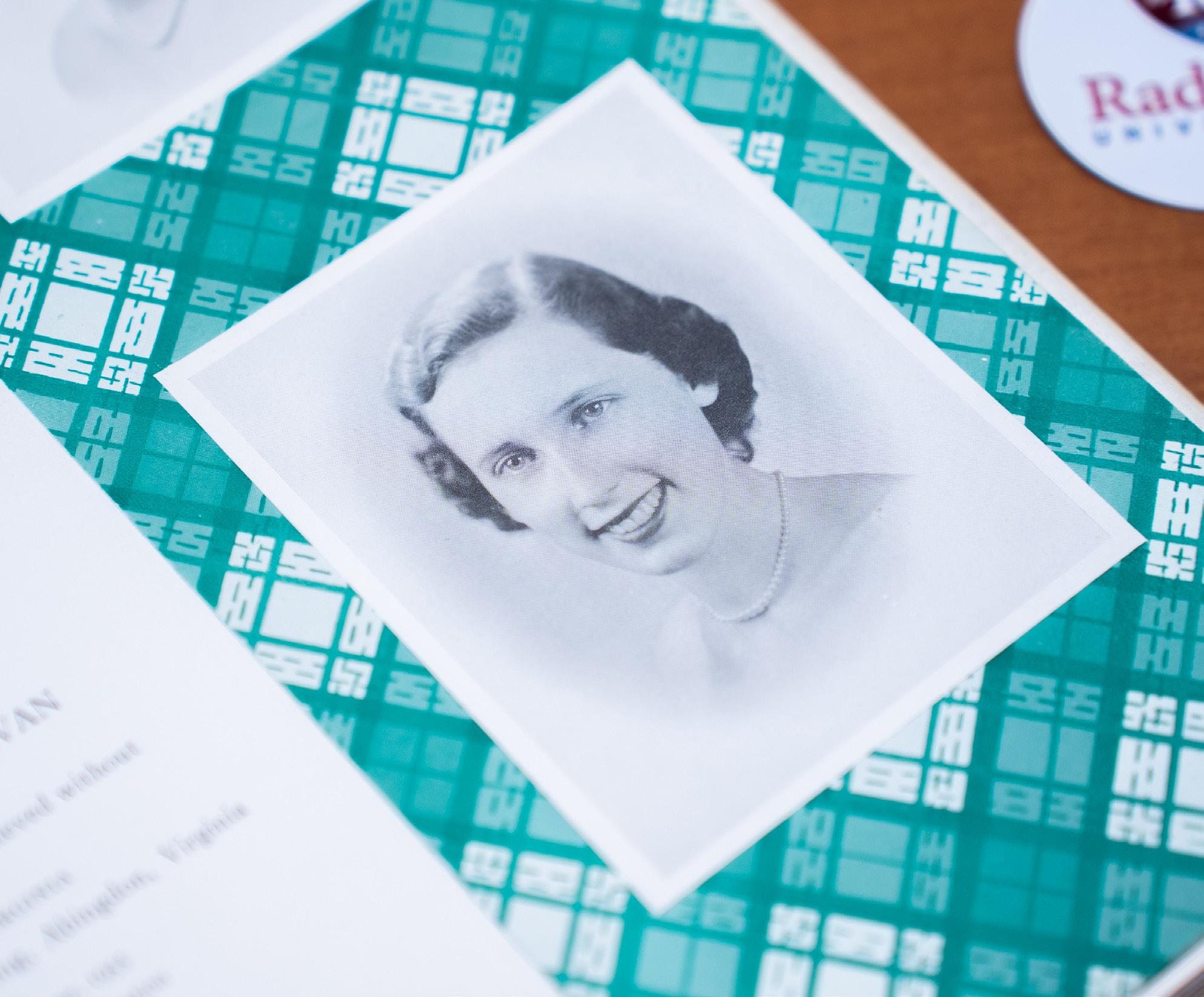
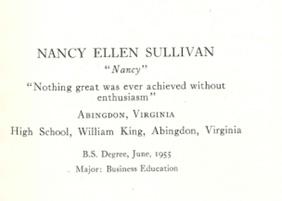
Ray’s 1955 Beehive Yearbook photo and information.
Designing a campus where leadership belongs to everyone
Where Nancy and John Ray focused on opening doors, Frances A. “Bonnie” Hurlburt ’58 ensured that once students arrived, they found a campus that trusted them to lead.
Hurlburt returned to her alma mater soon after graduation and spent nearly four decades shaping the character and culture of the institution. As dean of students, she became known for balancing warmth with accountability – often described as “tough love,” always grounded in a deep belief in students’ potential.
She understood innovation not as invention, but as design. She reshaped systems – student government, campus culture and town-gown relationships – so that leadership was not reserved for a few but expected of many. Under her guidance, Radford’s Student Government Association became a national model for student responsibility and advocacy.
Former student leaders recall being trusted with real responsibility, even when it meant learning through missteps. Hurlburt set high expectations – and students rose to meet them.
That philosophy lives on in the Bonnie Hurlburt Student Center, named in her honor in 2005 and known simply as “The Bonnie,” the heart of campus life.
“Dean Hurlburt pushed us to think beyond our comfort zones, trusting in our potential even when we doubted ourselves,” said George Mendiola Jr. ’00, MBA ’02, former Student Government Association president and current member of the Radford University Board of Visitors. “Her challenges were never obstacles but invitations to grow, shaping my understanding that leadership is about empowering others to rise.”
A loyal donor and Tartan Fellow, Hurlburt’s generosity extended well beyond a single scholarship. She established funds of her own, and others were created in her honor to reflect the impact of her leadership. She also supported women’s athletics and programs such as Selu, reflecting her belief in the full student experience. Like the Rays, her philanthropic legacy was designed to endure—gifts structured to support students in perpetuity.
But Hurlburt gave more than financial support. She gave her time, her mentorship and her steady presence. Her longtime involvement with the Radford College Golf Society deepened her connection to alumni, strengthening a community she believed should always invest in the next generation.
Turning creative practice into lived experience
In the Department of Theatre, Monica Weinzapfel translated that same belief into fabric, light and long evenings in the costume shop.
Affectionately known as “Moni,” Weinzapfel joined Radford’s faculty in 1987 after earning her Master of Fine Arts degree from Northwestern University. For more than three decades, she mentored generations of students, shaping productions and people with equal care until her retirement in 2019.
Frances A. “Bonnie” Hurlburt ’58 and George Mendiola Jr. ’00, MBA ’02.
Former students present at Hurlburt’s retirement in 2002.
Her work was meticulous and deeply human. Colleagues remember her as the first to arrive, the last to leave and a tireless advocate for students.
“Monica was invested enough to watch not just that I was learning, but how I learn,” said Brian James ’95. “She helped me understand that my brain needed space to explore, to step away and return. Because she took the time to see that and to teach me how to work with it, I didn’t just finish projects: I learned how to learn. And that changed everything.”
For Weinzapfel, learning was incomplete unless it extended beyond the classroom.
That philosophy lives on through the Carl H. Lefko and Monica Weinzapfel Endowed Travel Scholarship, which supports students as they step into professional spaces – auditions, conferences and internships where theory meets reality. The scholarship funds more than travel. It fuels transformation, helping students test ideas and see themselves as professionals in the world beyond campus.
In doing so, Weinzapfel ensured that creativity at Radford would remain outward-facing – shared and put to work in service of others.
She helped me understand that my brain needed space to explore, to step away and return. Because she took the time to see that and to teach me how to work with it, I didn’t just finish projects: I learned how to learn. And that changed everything.”
Brian James ’95
A
Radford story, carried forward
Taken together, their legacies reveal something essential about Radford University.
Creativity here is applied, relational and grounded in care. It widens access. It cultivates leadership. It prepares students to engage the world.
Ray created space for students to imagine more.
Hurlburt built the culture where those ideas could take root.
Weinzapfel walked alongside students as they stepped into professional practice.
Each understood that generosity – giving back and paying forward – is not a conclusion. At Radford, it is a beginning carried forward, shaping not only individual lives but the communities and professions those lives will touch.
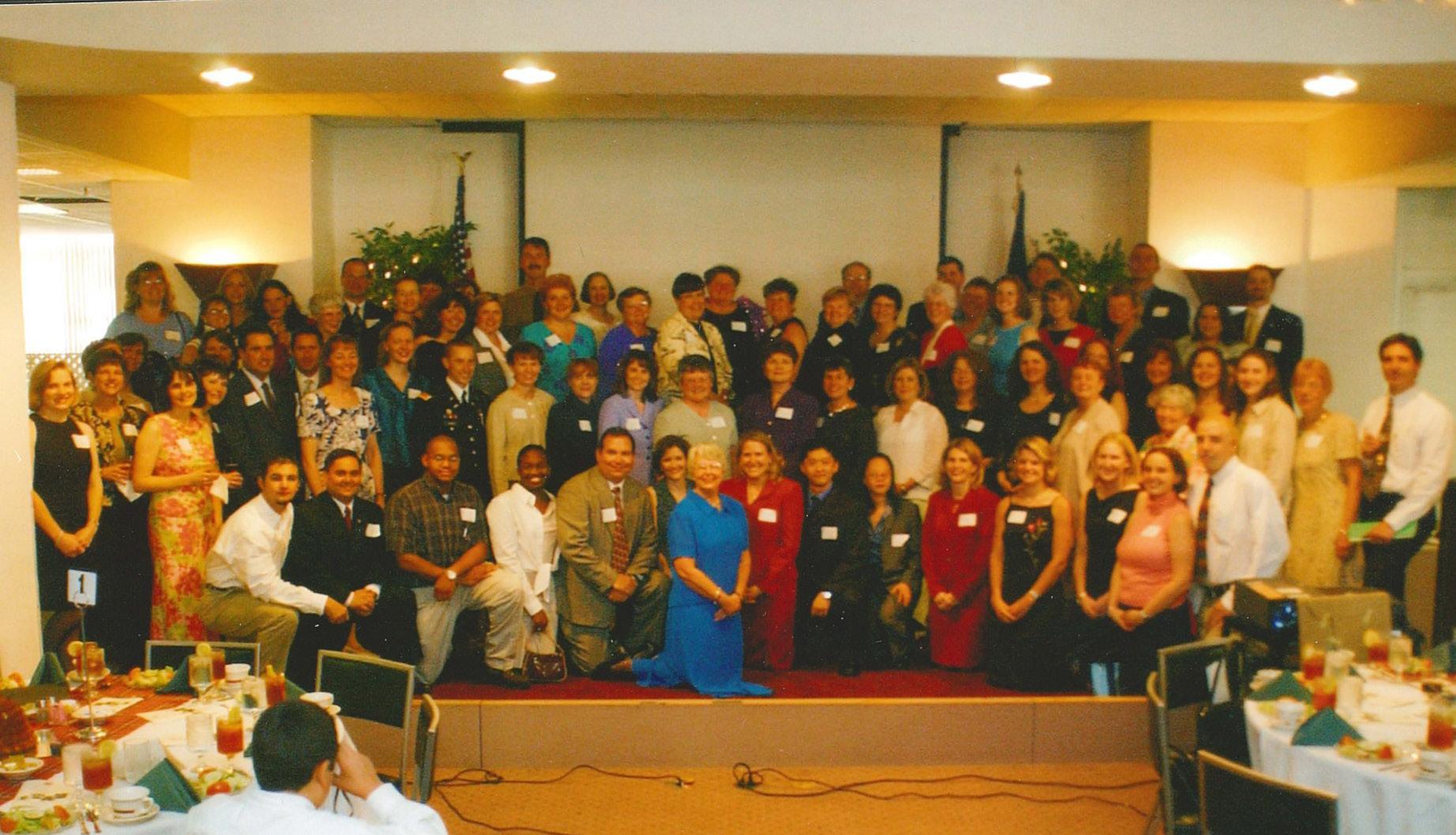
Alumni who worked as students with Weinzapfel in the costume studio, taken at her 2019 retirement.
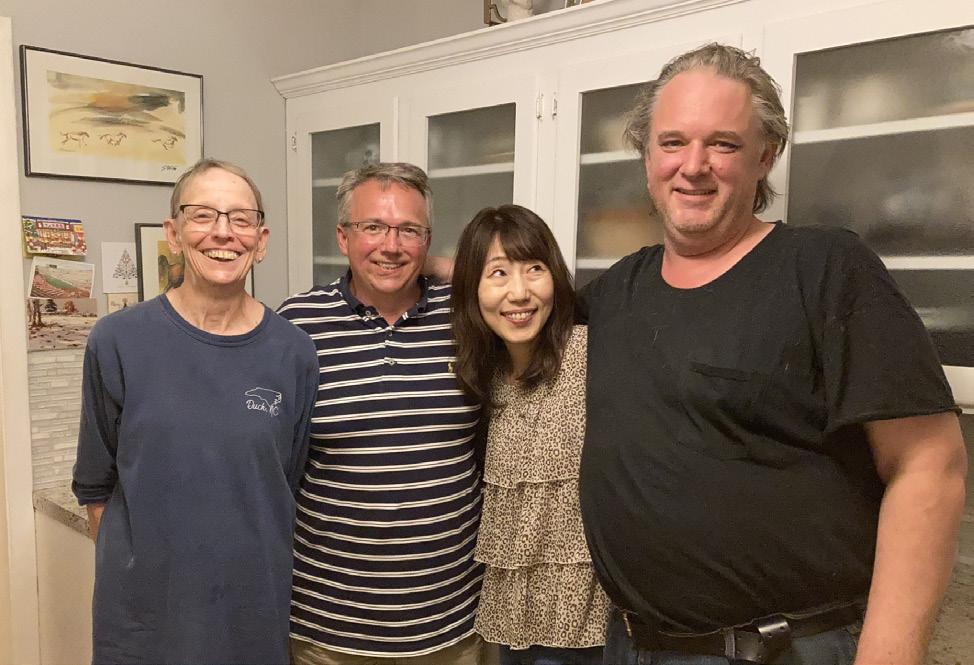
Weinzapfel with Jimmy Ward ’95, Sakiko Someki ’96 and Brian James ’95.
Life is a series of the right doors opening at the right time.”
Kelsey Isaacs ’15
Finding a talent, a career and a life in support of her values Kelsey Isaacs ’15
When Kelsey Isaacs ’15 took a student wage position at Radford University’s former phonathon program to help pay the bills, she didn’t realize she was stepping into the first chapter of her life’s work.
That job did far more than provide money; it revealed a natural talent for connecting with people and ultimately sparked a career that would carry her across the country into a leadership role in higher-education fundraising.
Today, Isaacs is the director of development for the School of Music and Dance at the University of Oregon, where she raises funds for programs that reflect the passions she has carried since childhood. But back in 2011, none of that was part of the plan.
Radford entered Isaacs’ life long before she enrolled. Her older sister attended the university, and Isaacs vividly remembers helping her move into Floyd Hall on a crisp August morning.
“I distinctly remember thinking, ‘This is such a beautiful place; I want to come here,’” she recalled. Isaacs participated in Radford University’s Ballet Youth summer intensive for two years and lived with her sister on campus for those activities.
A few years later, when Isaacs began considering college options, Radford was a natural fit. It felt personal and approachable and allowed her to be close to her grandmother, who lived in Wytheville. Receiving scholarship support sealed the deal for her.
As a student, Isaacs balanced classwork with visits to her grandmother and jobs on campus. She worked in the dance department in addition to the phonathon program, where she started as a student
By Vanessa Conner ’12, M.S. ’15
caller and was promoted to manager. She not only found lifelong friends but discovered a surprising talent in connecting with donors. “There’s nothing like that rush when someone says ‘yes’ to a gift,” she said. “That feeling of excitement has never left.”
As a double major in dance and history, Isaacs initially planned to teach. But once she began her education coursework, she quickly realized the classroom wasn’t the right fit. When the spring semester of her senior year began, Isaacs felt the pressure. Graduation was looming, and she needed a plan.
When she asked for advice from her former supervisor from the phonathon program, Travis Byrd ’10, he suggested that her ability to connect with donors could be leveraged into a career. “He helped me understand that what I was doing – this thing I thought was just a job – could actually be a fulfilling profession.”
With Byrd’s encouragement, Isaacs launched into the field immediately after graduation, joining Ruffalo Noel Levitz to manage university call centers. She went on to work at several universities before landing in the Pacific Northwest, drawn by the region’s lifestyle and a development position that blended higher education with the arts.
“Life is a series of the right doors opening at the right time,” she reflected, “and Radford opened the first one.”
Isaacs has immense gratitude for her current position at the University of Oregon, where she uses her talent to support one of her passions. The arts have been woven into Isaacs’ life from the beginning; her mother is a pianist, and
she grew up immersed in music. At Oregon, she works in a building filled with rehearsals, creativity and the energy of students pursuing their craft.
“I can’t imagine a world without the arts,” Isaacs said. Whether supporting dance, music or visual arts, her professional work allows her to champion the transformative power of creativity.
For Isaacs, philanthropy is more than a profession; it’s an extension of her values. She grew up watching her grandparents give their time and resources to their community without expecting anything in return. Their example instilled a lifelong belief that service to others is essential.
“Philanthropy means being of service,” she says. “It’s supporting your community in ways that are deeply impactful, but you might not ever see that impact.”
Isaacs has given to Radford every year since she was a student. Her first gift was $5 at Byrd’s request. Fifteen years later, she still gives, often to the dance and history departments, because, as she said, “I can’t ask someone to give to something I wouldn’t support myself.” Her consecutive years of giving qualify her for the Red Brick Society.
She also named Radford as the primary beneficiary of her retirement account, hoping someday to create a scholarship. “I want the next version of me to have the same opportunities I had,” she said. “Radford made my professional life possible.”
To current Highlanders, Isaacs offers simple guidance: “Be open to new experiences. Be curious. Try things, even the small things, because you never know what door they’ll open.”
The Role of the highlander club
Through annual contributions, Highlander Club members help provide essential resources that strengthen the scholar-athlete experience across all Radford Athletics programs.
Highlander Club recognition status is determined annually based on gifts made specifically to the Highlander Club Annual Fund between July 1-June 30.
$100–$499: Highlander Lineup
Essential annual support that helps strengthen the scholar-athlete experience across all sports.
$500–$1,249: Highlander Varsity
Consistent annual giving and deeper engagement.
$1,250–$4,999: Highlander Premier
Elevated commitment through leadership-level annual support that drives competitive excellence and scholar-athlete success.
$5,000+: Highlander Champions
Transformational annual support that fuels scholarships, programs and opportunities for scholar-athletes to thrive.
HIGHLANDER TRADITION SOCIETY
The Highlander Tradition Society honors individuals whose cumulative philanthropic support has helped shape the past, present and future of Radford Athletics. Recognition reflects sustained commitment from donors whose generosity strengthens opportunities for scholar-athletes across the department.
$10,000–$19,999: Tradition Builders
Entry-level lifetime recognition for donors whose generosity helps lay the groundwork for continued growth and long-term success.
$20,000–$49,999: Tradition Bearers
Sustained lifetime commitment from donors who play a vital role in strengthening athletics programs and the scholar-athlete experience.
$50,000+: Tradition Keepers
Enduring leadership in athletics philanthropy by donors demonstrating a deep commitment to preserving and advancing the traditions that define Radford Athletics.
Together, these pathways create a stronger future for Radford Athletics. Ensuring scholar-athletes continue to compete, grow and represent the university with pride.
Winning has a nice ring to it
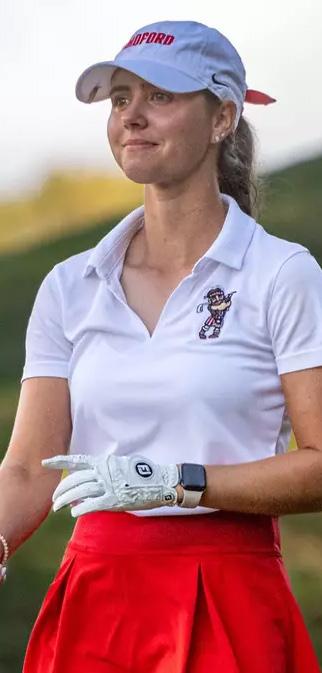
Radford women’s golf followed its historic, championship-winning 2024-25 season with a strong beginning to the new campaign in the fall. The Highlanders’ two top results came in a runner-up finish at the Elon Invitational and a tie for third at the UNCG Collegiate. Shea Smith equaled the Radford record for lowest single round at 5 under par while competing at the Edisto Island Invitational. She now shares the record with teammate Macy Johnson. McKenzie Weddle won the individual championship at the Elon Invitational and was named Big South Golfer of the Week for her efforts. Before the fall season teed off, the Highlanders received their 2025 Big South Championship rings at a ceremony among family and friends in the Dedmon Center.
On the men’s side, Radford began the 2025 fall schedule with a runner-up finish at the Carolina Cup and a top-five finish at the Elon Phoenix Invitational. CJ Peterson earned two Big South Freshman of the Week honors. Kieran McCarthy also earned a pair of Player of the Week nods.
Another banner year for soccer
Radford’s women’s soccer was nearly perfect in 2025 conference play, winning seven of eight Big South contests against a formidable group of Big South opponents. That consistency resulted in the team’s seventh conference regular-season title in Highlanders women’s soccer history. The collective team effort also brought to Radford a number of individual conference awards for the Highlanders. The honors included Amani Green, defender and newcomer of the year and Lilly Short, midfielder of the year. Lexi Radvanyi, Ary Oliver, Jashyra Johnson, Paige Olson, Jillian Silverstone, Amani Green and Lilly Short received all-conference recognition. Oliver was named to the all-freshman team. Head coach Ben Sohrabi and his assistants were selected as the Coaching Staff of the Year. Olson finished her Radford career with 28 assists, the second most to ever be recorded by a Highlander in program history and most since Amanda Lebo finished her career with 27 in 1998.
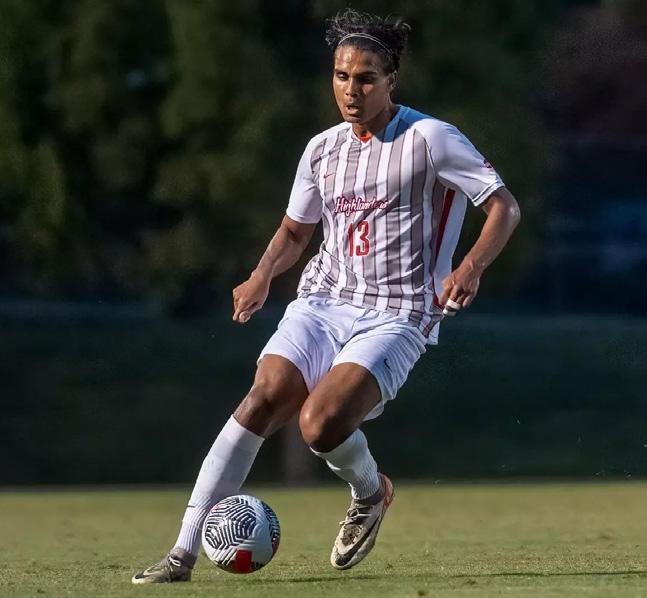
Radford men’s soccer squad ended its postseason drought in 2025 by advancing to the Big South Conference tournament quarterfinals. It was the Highlanders’ first appearance in the tournament since 2019. Multiple Radford players, including Ben Miller, Kenshin Akimoto and Hiromasa Iwai, earned Big South Player of the Week nods throughout the season. It was the team’s most weekly awards since 2021. Akimoto earned all-conference honorable mention for his play in the Big South tournament. In January, Radford Athletics announced that Andy Cormack would be taking over as the tenth head coach in program history.
Can you dig it? Volleyball serves up memorable wins
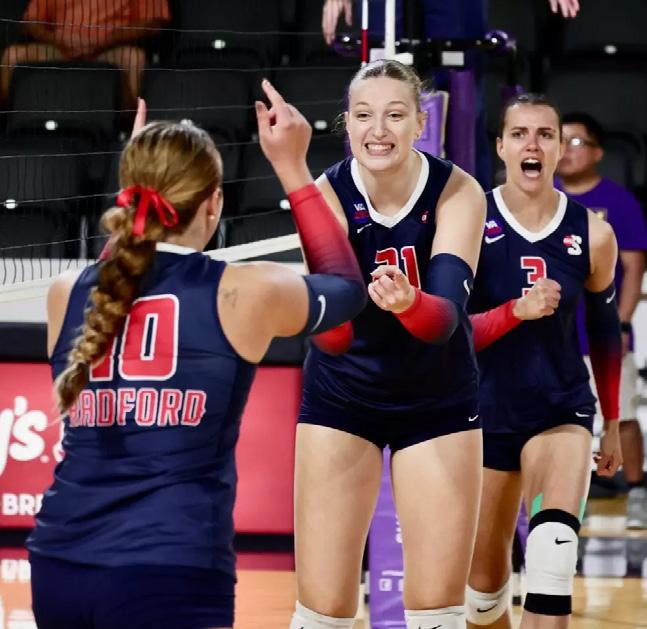
Fans of Radford volleyball witnessed the team pull off some remarkable wins throughout the 2025 campaign. First, the team knocked off New River Valley rival Virginia Tech in only three sets. Later, in the Big South Conference quarterfinals, the Highlanders eliminated three-seed Charleston Southern. The conference tournament appearance, which ended after a hard-fought semifinal loss, was the second straight for the Highlanders. Olivia Ryno was named to the Big South postseason all-freshman team. Throughout the regular season, seniors Miranda Howard and Jackeline Nerro achieved career milestones.
Putting the ‘scholar’ in scholar-athletes
Radford University’s scholar-athletes achieved a 3.45 fall term GPA. Students in 15 of Radford’s 16 athletics programs earned a 3.0 GPA or better, with 55% of all athletes earning a 3.5+ GPA. One hundred and four student-athletes earned a 3.75+ GPA, and 48 achieved a remarkable perfect 4.0.
Five Highlanders earned Big South all-academic honors, including Hayat Khan (men’s cross country), Katelyn Campbell (women’s cross country), Ashley Loundermon (women’s soccer), Tyler Pulik (men’s soccer) and Rylee Sloss (volleyball).
Nine Highlanders earned College Sports Communicators Academic All-District awards. Those honorees included men’s soccer player Tyler Pulik, women’s soccer players Jashyra Johnson, Paige Olson, Ashley Loundermon and Ava Kertgate and volleyballers Sierra Moore, Aubrey Hatch and Lea Gage.
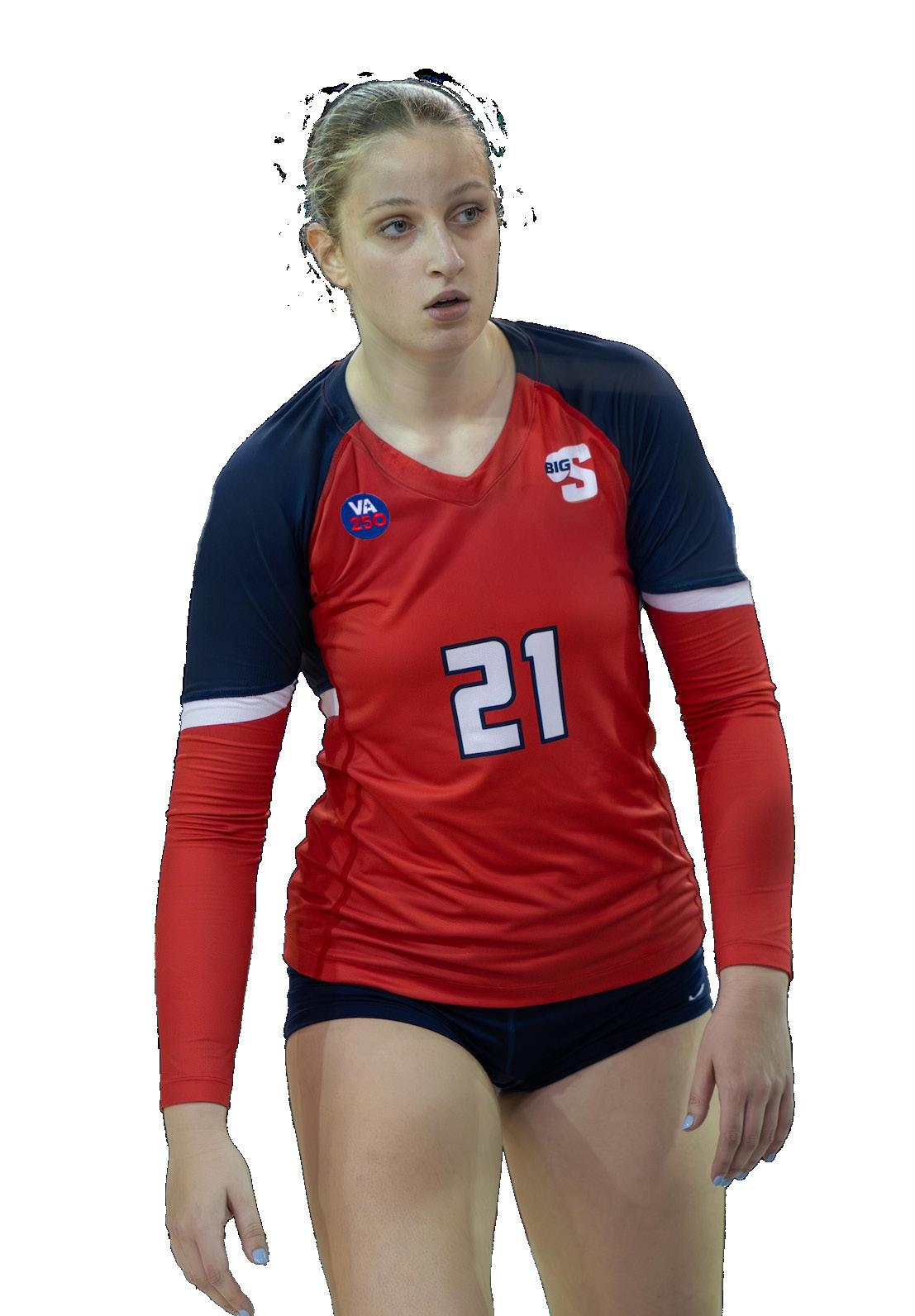
SMOLENSKA THE MAKING OF A HIGHlANDER
GABRIELA SMOLENSKA
Hometown: Warsaw, Poland
Major: Exercise, sport and health education
Sport: Volleyball
Senior opposite hitter and middle blocker Gabriela Smolenska has embraced the challenge and opportunity of competing far from home.
What does it mean to you to represent Radford University – both in competition
It means playing with pride, discipline and resilience; knowing my performance reflects not just me but my teammates, coaches and the entire Radford community. It means being someone that younger athletes can look up to and someone classmates and professors can respect.
How has being a scholar-athlete shaped you outside your sport?
Being a scholar-athlete has made me disciplined. It has shaped my character. I’ve learned how to lead, communicate with different personalities and keep going on days when I feel exhausted. Those skills translate into life, relationships and my future career.
What motivates you on the days when the balance between academics, athletics and life feels hardest?
As an international scholar-athlete, being here is an opportunity many dream about. I think about my family, the sacrifices behind the scenes and the younger version of myself who would have given anything for this chance. Growth isn’t supposed to be comfortable. Those hard days are the ones shaping me the most.
When people look back on your time at Radford, what do you hope they remember most?
I want to be remembered as someone who raised the standard in practice, competed with heart and brought positive energy to the team culture. Wins matter, but the way you show up every day matters more.
How is Radford shaping the direction you hope to pursue after graduation?
It’s shaping me into someone who can lead, adapt and thrive in high-performance environments. I know the discipline and mindset I’ve built here will guide me.
HIGHlANDER
by challenge, community and opportunity
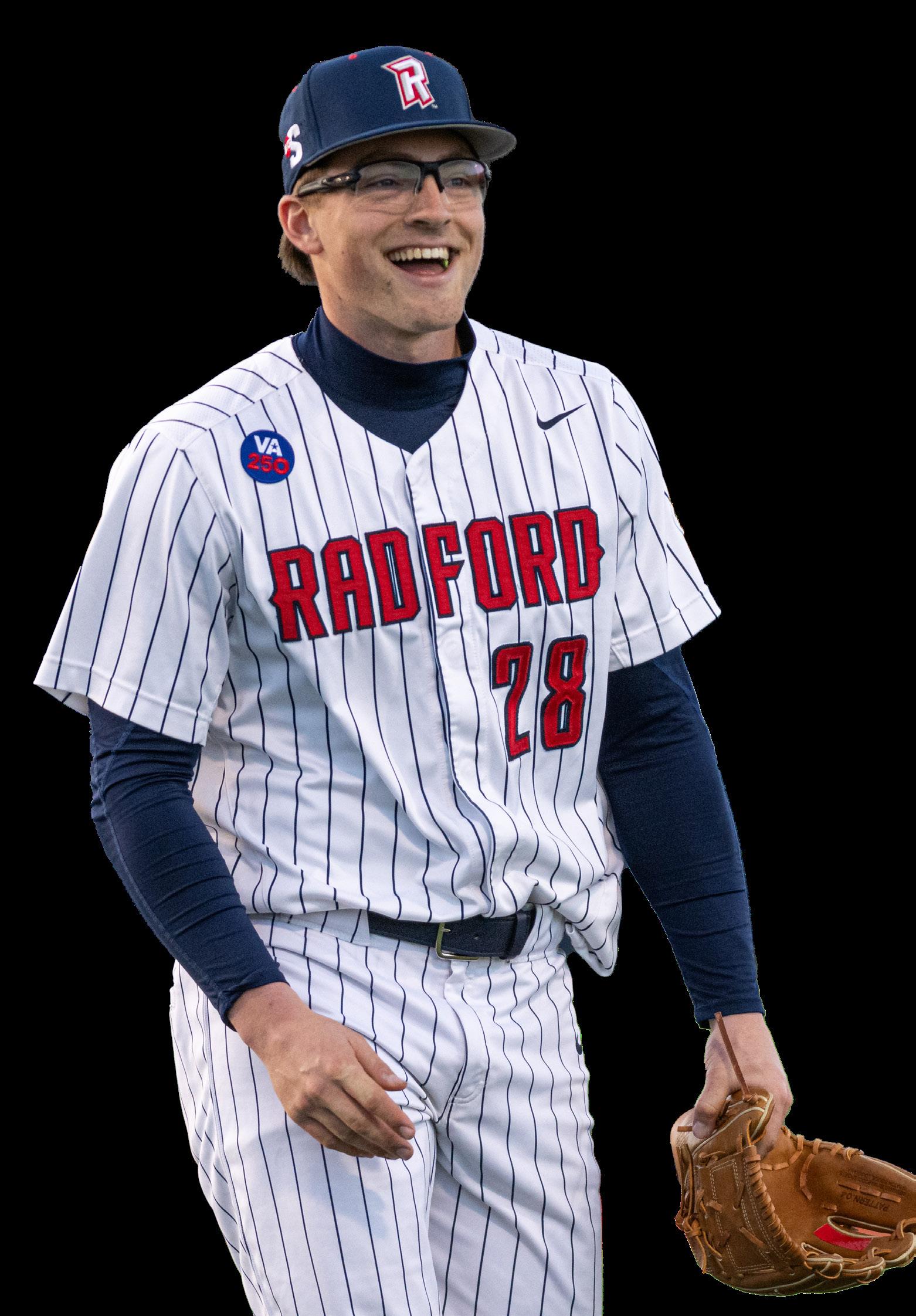
WILLIAM PALMER
Hometown: Lynchburg, Virginia
Major: Finance
Sport: Baseball
Junior left-handed pitcher William Palmer brings gratitude and steady optimism to his Radford experience.
What does it mean to you to represent Radford Universityboth in competition and beyond it?
Representing Radford University means showing this institution the respect it deserves and holding myself to a higher standard.
How has being a scholar-athlete shaped you outside your sport?
It’s taught me discipline and how to handle pressure. Balancing baseball and school has helped me grow up.
What motivates you on the days when the balance between academics, athletics and life feels hardest?
My mother. She works so hard all the time and takes care of me and my siblings. She is such a blessing but also such a motivator to do the same.
When people look back on your time at Radford, what do you hope they remember most?
I hope they remember that I was always smiling. That I was always happy.
How is Radford shaping the direction you hope to pursue after graduation?
Radford’s really helped shape me into being a better person, but it’s also helped me create a meal prep company thought I would start (though not yet public) through the help of professors and friends I’ve met here. It’s helped shape what my life will be like after Radford University.
Shaped
Class Notes
In a fast-moving, scroll-by world, it’s easy to think your update is “old news.” But not here. Highlanders give back – stories included. Send us your Class Note today!
Email ClassNotes@radford.edu or scan the QR code.
1970s
Ellen Hanley ’74, M.S. ’79, represented the United States of America at the 2026 Milan Cortina Winter Olympic Games as an international doping control officer.
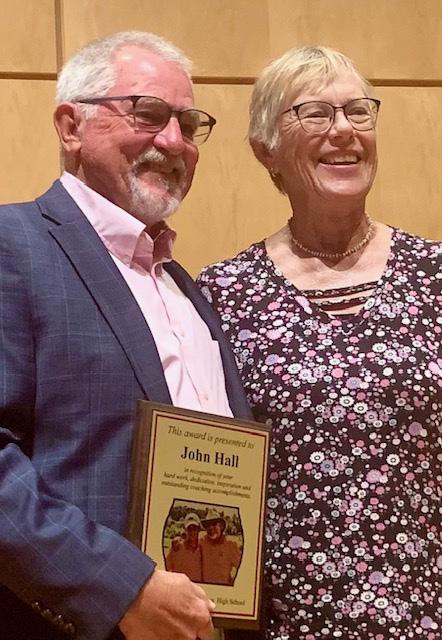
John Hall ’78 was inducted into the Matoaca High School Hall of Fame in September 2025. Hall recently retired after 45 years of coaching – predominantly track, cross country and golf. He also assisted with basketball and started the school’s soccer program. Hall is believed to be the only coach in Virginia to take both a cross-country team to the state meet and a golf team to the state tournament.
1980s
Cushman & Wakefield, a leading global real estate services firm, hired Sherry Freitas ’88 as its new president of Asset Services Multifamily.
1990s
Retired teacher Suzanne Foster ’91 fulfilled her dream of publishing a children’s book on March 4, 2025. “Eby Lundy: Once Upon a Chestnut Tree,” inspired by her family’s efforts to grow chestnut trees, tells the story of a squirrel who searches for special ingredients for a baking competition in the kingdom of Monterey.
In addition to authoring the book, Foster has launched a children’s apparel business, Eby Lundy LLC.
Samuel Jones ’93 is the associate vice president for campus life at California State University-Sacramento.
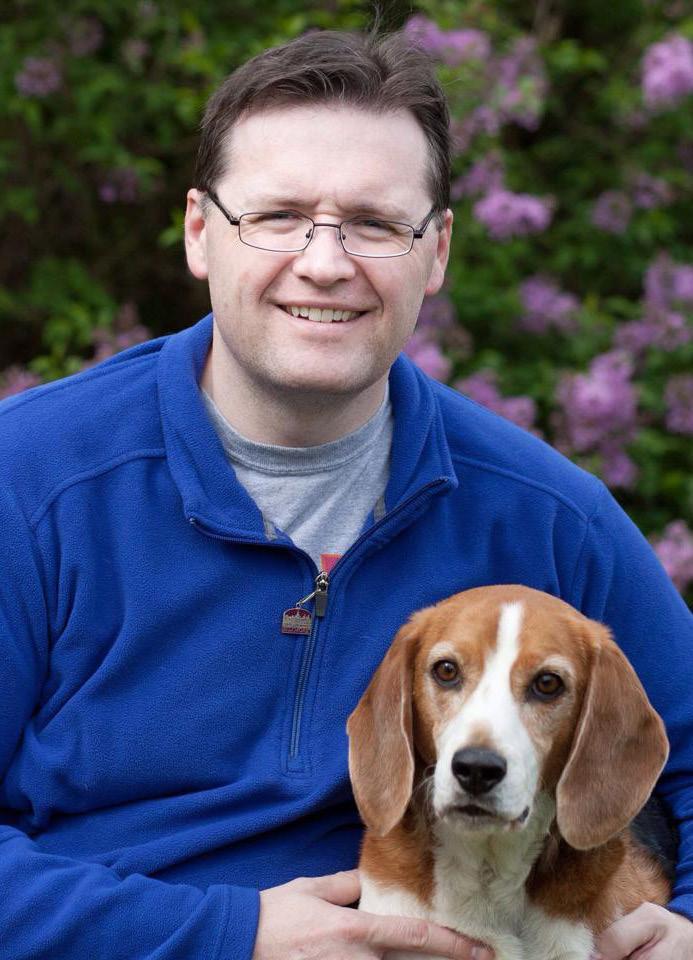
In September 2025, Mark Lambert, M.S. ’97, took on the role of president of the Roanoke Valley SPCA (RVSPCA) Board of Directors. Lambert joined the board in 2021 after the passing of his 16-year-old beagle, Roscoe, whom he adopted from the RVSPCA.
2000s
Kelly Clark Hathaway ’04 is the RISP early intervention intake and service coordinator at MPNN Behavioral Health.
Shai Cullop ’06, M.S. ’08, was named principal of Marion Middle School in Smyth County, Virginia. Cullop resides in Abingdon, Virginia, with her wife, Meredith Cullop ’25, and their son, Grayson.
2010s
Cara Nagel ’11 is the vice president/ operations manager at Trombold Equipment Company, Inc. (TEPCO).
Justin Hairston ’12 was promoted to senior principal cybersecurity analyst/information system security officer at Northrop Grumman.
Hannah John ’15, vice president/ commercial risk adviser at HAWK Advisers, Inc., was promoted to partner in 2025.
The Society of 1910 recognizes individuals who are providing a future gift to Radford University through their financial and estate plans and, in doing so, are creating a lasting legacy. If you’ve included, or thought about including, Radford University in your will or estate documents, we’d love to hear from you.
Contact:
Rebekah LaPlante ’99, M.S. ’01, Director of gift planning 540-831-5167
giftplanning@radford.edu
Sept. 22–23, 2026 Noon to noon
On Feb. 1, 2026, Matthew Bagley ’15, who performs and records as Alexander Mack, won his first Grammy Award for Best Spoken Word Poetry Album for his role as music producer on the album, “Words for Days Vol. 1” by Mad Skillz. Mack is a recording artist who has garnered millions of streams internationally. His music has been used by Nike and the television show, “Demascus.” In the fashion industry, Mack has collaborated with companies such as Rowing Blazers and has a current brand partnership with luxury shoe brand, TAFT.
Dalton Okolo ’15, a filmmaker based in Fredericksburg, Virginia, is currently producing his third short film, “Virginia is For Lovers.” Okolo also runs the Fredericksburg Film Festival and creates video content for the Fredericksburg Arts Commission.
Jordan Hurst ’16 is the advanced analytics consultant at Elevance Health.
Rudolph Soltesz ’16 joined ECS Group of Companies in Roanoke, Virginia, as an assistant laboratory manager. Emily Trexler ’17, began a new role as a physical therapist at Pelvic Prescription Physical Therapy & Wellness. Andrew Addison ’18 joined Walt Disney Imagineering as a project coordinator.
Former Radford men’s soccer player Khori Bennett ’19 signed a multi-year contract with the Colorado Springs Switchbacks FC in January 2026. Bennett was previously called up to the Jamaica national team for its quarterfinal game against the United States in the CONCACAF Nations League in 2024.
Sarah Cofflin ’19 is the human resources payroll administrator at RSG Landscaping, LLC.
Colton Grant ’19 and Jordan Whelan ’19 got married on Aug. 30, 2025. The couple met at Radford, both graduating in the spring of 2019.
Kayleigh Poggioli ’19 began a new role as the director of alumni engagement at Virginia Wesleyan University.
Following the completion of her master of public health degree at the Colorado School of Public Health at the University of Colorado Anschutz Medical Campus, Mckenzie Schrank ’19 began a new role as health and safety specialist at Winter Park Ski Resort.
2020s
Will Krause ’20 began a new role as senior solutions engineer at BST Global.
Ryan Pike ’20 was promoted to principal business management analyst at Northrop Grumman.
Rinnah Jubilee Melton ’21 married Spencer Santiago Dunn ’22 on Oct. 25, 2025.
Bailey Saville ’21 is a clinician at Assertive Community Treatment at New River Valley Community Services.
Mason Collins ’22 is the new assistant director of compliance at the University of Iowa.
Dominic Hafner ’22 is the new assistant varsity lacrosse coach (defensive coordinator) at Bishop England High School. Hafner also serves as an account executive at BlueRidge Data.
Adam Szalankiewicz ’22 was promoted from technical service representative to regional sales manager at Dometic.
Amanda Bishop ’23 is a park ranger law enforcement for the Department of Conservation and Recreation at Claytor Lake State Park.
Jake May ’23 joined the Division of Student Affairs at Virginia Tech as an accounting associate.
Emily Wheeler ’23 married Patrick McKenney ’23 in May 2025.
Mark Lambert, M.S. ’97
Suzanne Foster ’91
John Hall ’78
Colton Grant ’19 and Jordan Whelan ’19
Matthew Bagley ’15 aka Alexander Mack
In Memoriam
Remembering those who have passed between Aug. 1, 2025 and Jan. 31, 2026
ALUMNI
1940s
Alva Johnston Lucas ’47 of Blacksburg, Virginia, Aug. 26, 2025.
Frances Stafford Bowling ’47 of Grantsville, Maryland, Oct. 22, 2025.
1950s
Mary Elizabeth “Boots” Richards Spath ’52 of Kimberton, Pennsylvania, Aug. 14, 2025.
Georgia Louise Reeves Clark ’52 of Marion, Virginia, Oct. 22, 2025.
Wilma Crabtree Snuffer ’54 of Christiansburg, Virginia, Dec. 23, 2025.
Nancy Ellen Sullivan Ray ’55 of Knoxville, Tennessee, Jan. 4, 2026.
Edna Ann Shelor Williams ’58 of Roanoke, Virginia, Aug. 11, 2025.
Betty Louise Sargent Black ’58 of Roanoke, Virginia, Sept. 28, 2025.
Elmetta Fletcher Linder ’58 of Waynesboro, Virginia, Oct. 3, 2025.
Frances Alice “Bonnie” Hurlburt ’58 of Williamsburg, Virginia, Oct. 19, 2025.
Shirley Macfarlan Hunsicker ’58 of Harrisonburg, Virginia, Dec. 14, 2025.
Merle Craddock Mead ’59 of Lynchburg, Virginia, Jan. 21, 2026.
1960s
Mary Ruth Shutters ’61 of Greenville, South Carolina, Dec. 28, 2025.
Denise Holloran Pendergrass ’61 of Wellington, Florida, Jan. 6, 2026.
Mary Emily Badger James Perkins ’62 of Charlotte, North Carolina, Aug. 18, 2025.
Eva Blanche McGuire Owen ’64 of Dublin, Virginia, Aug. 10, 2025.
Ann Shelton Haskins Lovingood ’64 of Chesapeake, Virginia, Oct. 22, 2025.
Margaret Harman Hubbard ’64 of Floyd, Virginia, Dec. 31, 2025.
Gaylean Joy McDowell ’65 of Muncie, Indiana, Aug. 8, 2025.
Sandra Moran Brown ’65 of Warrenton, Virginia, Oct. 13, 2025.
Susan Greenbacker Oller ’65 of Raleigh, North Carolina, Dec. 21, 2025.
Patricia Ella Ballard Johnson ’66 of Staunton, Virginia, Sept. 9, 2025.
Betty June Mason Conner ’66 of Marion, Virginia, Oct. 31, 2025.
Sybil Oliver Agee ’66 of Kernersville, North Carolina, Nov. 15, 2025.
Mary June Miller, M.S. ’67, of Peterstown, West Virginia, Jan. 16, 2026.
1970s
Sharon Gail Dalton Dobbins ’70, M.S. ’71, of Hillsville, Virginia, Oct. 2, 2025.
Robert Mulvahill Lent ’82 of Monmouth, Maine, Sept. 15, 2025.
Fran Ellen Kreider ’82 of Lima, New York, Oct. 1, 2025.
Derek Erdmann ’83 of Oak Hill, Virginia, Sept. 14, 2025.
Jo Ann Allen Houchins, M.S. ’84, of Forest, Virginia, Sept. 27, 2025.
Donald Lee Stewart ’86 of Woodstock, Georgia, Aug. 6, 2025.
Thomas Joseph Keyes Bolvari ’87, M.S. ’88, of Kingsport, Tennessee, Dec. 28, 2025.
Iva Sue Potter ’89 of Rocky Mount, Virginia, Jan. 25, 2026.
1990s
Clidia Rebecca Burnette Harvey Lewis ’90 of New River, Virginia, Sept. 16, 2025.
Joseph “Patrick” Davis ’90 of Richmond, Virginia, Oct. 22, 2025.
Anastasia “Ann” Apostolou Deeds, M.S. ’91, of Roanoke, Virginia, Dec. 28, 2025.
Linda Gravely Tate ’92 of Draper, Virginia, Oct. 23, 2025.
Donald Ray Just ’93 of Manteo, North Carolina, Jan. 1, 2026.
Douglas Kenneth Parker ’95 of Monticello, Indiana, Sept. 30, 2025. Rakesh “Rick” Patel ’95 of Little Rock, Arkansas, Oct. 26, 2025.
KD Linkous-Smith ’96, M.S. ’98, of Baton Rouge, Louisiana, Oct. 25, 2025.
Edward “Ted” Comerford ’97 of Newport News, Virginia, Jan. 16, 2026.
Solomon Wilder Jefferson ’99 of Chesterfield, Virginia, Nov. 24, 2025.
2000s
Michelle Camille Behrman, M.S. ’00, of Monticello, New York, Oct. 14, 2025.
Michael R. Norton ’00 of Portsmouth, Rhode Island, Dec. 13, 2025.
Deanna “Teensy” Simmons Stepp, MBA ’00, of Salem, Virginia, Jan. 16, 2026.
Shane Joseph McBreen ’04 of Glastonbury, Connecticut, Nov. 6, 2025.
Allen Sean Blickle ’05 of Lexington, Virginia, Sept. 5, 2025.
Amy Denay Stanford, MBA ’06, of Christiansburg, Virginia, Sept. 21, 2025.
Cynthia Ann Preston Smith, MSN ’07, of Rocky Mount, Virginia, Jan. 15, 2026.
2010s
Wanda Dianne Morgan ’12 of Dothan, Alabama, Sept. 18, 2025.
FACULTY/STAFF
Monica Marie Weinzapfel of Christiansburg, Virginia, Aug. 13, 2025
Molly Sifford Nester of Parrott, Virginia, Sept. 11, 2025.
Sandra Brown Kelly of Roanoke, Virginia, Sept. 27, 2025.
Elizabeth “Betty” Dore of Hallowell, Maine, Oct. 11, 2025.
Myer Stratton “Butch” Reed, Jr. of Phoenix, Arizona, Oct. 16, 2025.
Thelma Steele Saunders of Radford, Virginia, Nov. 9, 2025.
Gary Harding Phillips of New River, Virginia, Nov. 24, 2025.
Virginia “Ginger” Bottone Burggraf of Covington, Louisiana, Dec. 25, 2025.
Patricia Diane “Pat” Farmer of Radford, Virginia, Jan. 2, 2026.
National Capital Region
Evergreen Country Club
Haymarket, Virginia Thursday, June 25
Richmond Chapter
Meadowbrook Country Club
Richmond, Virginia Friday, Sept. 18
From the archives
Ashley Palazzo | University archivist and head of Archives & Special Collections
McConnell Day 2026
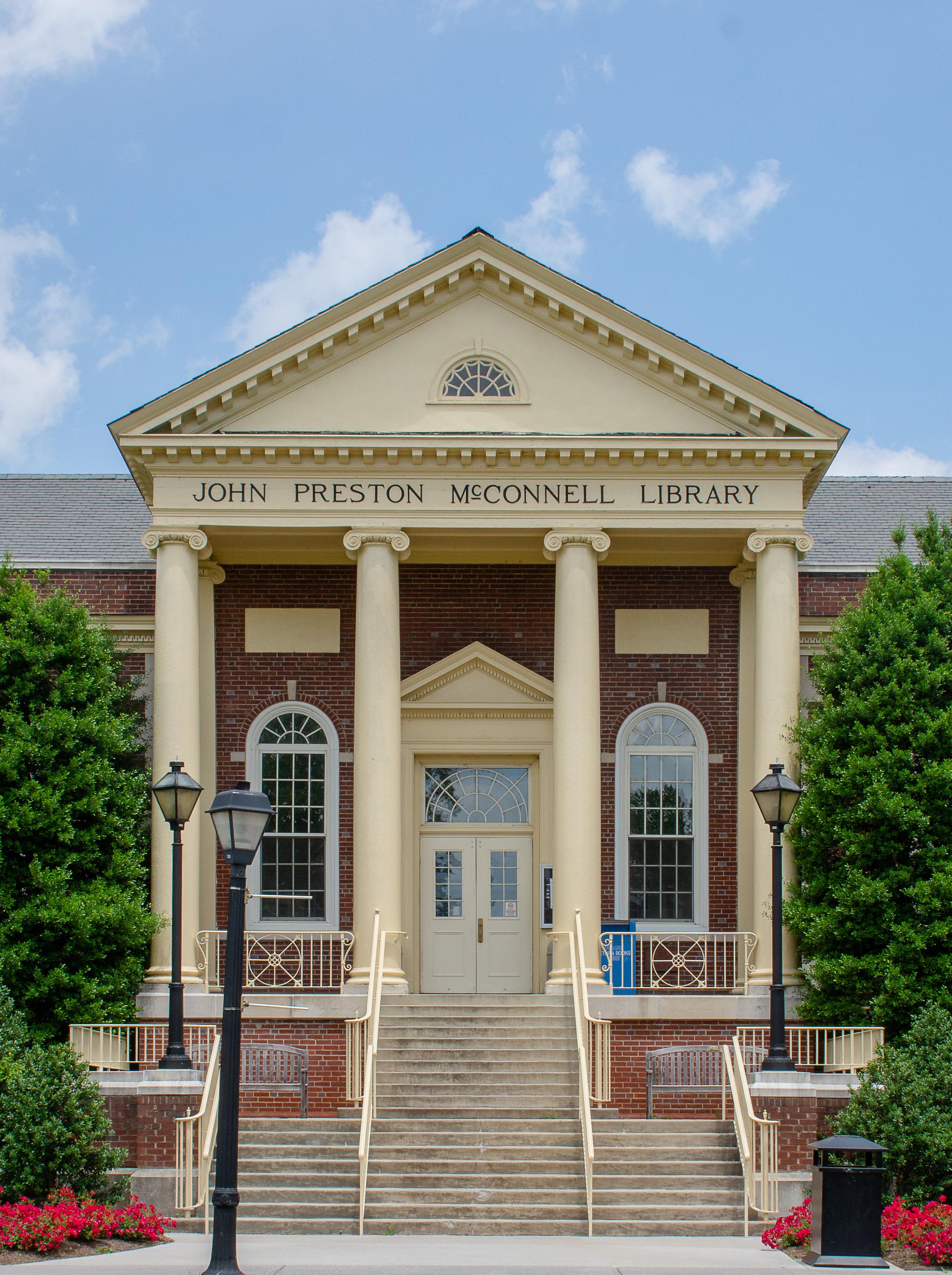
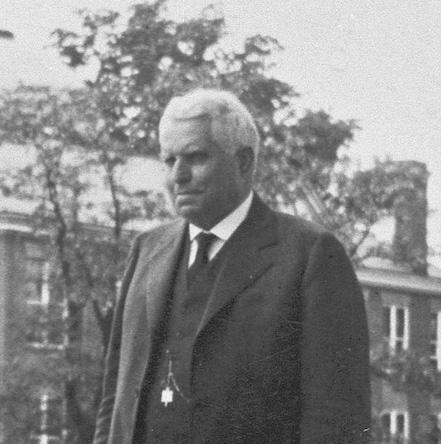
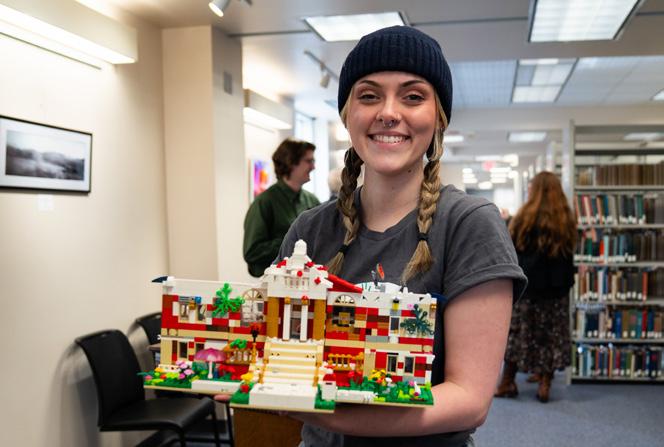
On Feb. 25, the university commemorated McConnell Day in honor of founding President John Preston McConnell. Appointed in 1911 to lead the State Normal and Industrial School for Women, McConnell championed women’s access to education and helped lay the foundation for the university we know today. McConnell Library stands as a lasting tribute to his leadership and vision. McConnell Day, held just a few days after what would have been his 160th birthday, was a special moment to reflect on his enduring impact and contributions to the institution.
of 1976, your
Reunion awaits!
us at Homecoming 2026, Oct. 22-24, for a weekend of memories and celebration as you reconnect with classmates. For more information, scan the QR code below or visit:
McConnell Library Legos built by Sydney Jones, M.S. ʼ26, who served as a graduate assistant for Library and Archives/Special Collections.
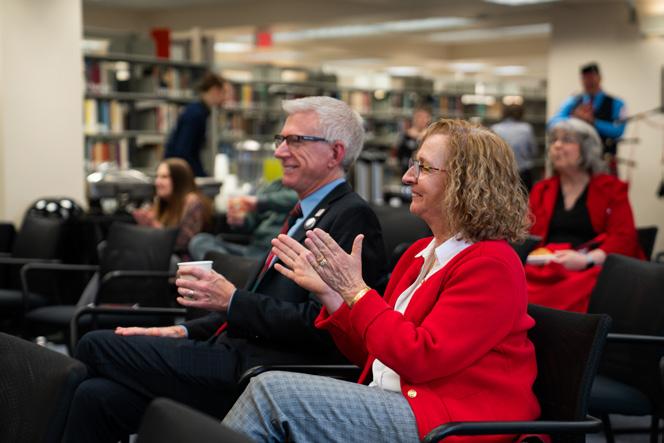
President Bret and First Lady Kay Danilowicz at the event.
President John Preston McConnell
Dear Highlanders,
I don’t think it is any secret that the world today is changing at a rapid pace. In fact, more has changed in the past five years than arguably the past 15 years, and I expect that trend to continue. But what truly matters is what we choose to do with that change.
During my tenure at Radford, I was fortunate enough to know some incredible people – individuals who were doing remarkable things to challenge the norm, think creatively and pursue new ideas with courage. They were innovators, entrepreneurs and problem-solvers. But what stood out most was that their efforts didn’t just accelerate their own lives; they elevated the lives of those around them.
That spirit is something special about Radford University and about this alumni community. Our Highlanders carry a mindset that goes beyond personal success. Whether it’s launching a business, leading an organization, mentoring the next generation or simply bringing along a positive attitude, our alumni consistently find ways to create opportunity and move things forward – not just for themselves, but for the greater good.
Creativity, innovation and entrepreneurship aren’t just buzzwords. They are ways of thinking. They are ways of serving. And when those ideas are paired with a commitment to pay-
ing it forward, the impact multiplies. Every time a Highlander mentors a student, speaks to a class or shares time and talents within their communities, they strengthen the network that once supported them while helping spark new interest in Radford and the opportunities it creates for future students. In many ways, it embodies what it means to be a Highlander and carry forward Radford’s culture of care.
I believe that’s what makes this university – and this alumni family – different. No matter where you go, you’ll find Highlanders going above and beyond, finding ways to lead, support and uplift others. It’s a shared commitment to building something bigger than ourselves.
As we look ahead, I challenge each of you to continue being a strong Radford presence in your communities. Keep creating, keep innovating, keep supporting one another and most importantly, keep paying it forward. When we do that, we honor the opportunities we were given and ensure that future generations have even greater ones.
Go Highlanders!
Landon Hinton ’13 President, Radford University Alumni Association Board
2026 Highlighted Events
calendar.radford.edu
June 25
July 11
July 17
Aug. 7
Aug. 13
Aug. 22
Aug. 25
Sept. 4
Sept. 16
Sept. 18-20
Sept. 18
Sept. 18
Sept. 22-23
Oct. 10
Oct. 20-21
Oct. 22-24
Oct. 22
Oct. 23
Nov. 5-6
Nov. 7
Dec. 1
Dec. 11
Dec. 12
National Capital Regional Golf Tournament (Haymarket, Virginia)
Young Alumni Gathering at Bunnyman Brewery (Chantilly, Virginia)
Radford Night at Richmond Flying Squirrels (Richmond, Virginia)
Radford University Night at Nationals Park (Washington, D.C.)
Radford Night at Party in Elmwood Park (Roanoke, Virginia)
Radford Community Fest
Athletic Kickoff Event
National College Colors Day
Wear your Radford Red!
Admissions Open House
Family and Friends Weekend
Tartan 5K Twilight Run
Richmond Golf Tournament
RAD Giving Day
#RiseAndDonate for Radford Athletics
Highlanders Festival
Radford Gives Back
Homecoming Weekend
Class of 1976 Golden Reunion
Athletics Hall of Fame Induction Ceremony
Days of Gratitude
Admissions Open House
Giving Tuesday
Graduate Hooding and Commencement Ceremony
Undergraduate Winter Commencement Ceremony
BOARD OF DIRECTORS
PRESIDENT
Landon Hinton ’13
Steven Arkon ’91
JP Beckham ’87
Hilary Blackburn ’84
Tawanna Blassingame ’92
Pete Campbell ’92
Byron Chafin ’90
Stephanie Cifuentes ’05, M.S. ’06
Sherry Fisher ’85
Susy Furr ’86
Gina Gallagher ’85
Tony Johnson ’07
Nana T-Chee Kum ’09
Susan Marchi ’70
Rebecca Phillips ’06
Lara Ramsey ’90, M.S. ’91
Kevin Rogers ’87
Ellen Rorrer ’91
Tommy Slusser ’79
Chance Smith ’12
Jennifer Stanford ’93
Tyler Swarmer ’16
Sarah Thorpe ’20
Correy Watkins ’02
Learn how you can get involved and inspire the next generation of Radford leaders.
Together, we can ensure that the journey of finding one’s place continues for generations to come.