A new season offers fresh opportunities, but agronomy must be tailored accordingly. Autumn lays the foundation.
Irrespective of grain price, harvested tonnage is what drives crop margins, points out ProCam Northern region technical manager, Nigel Scott.
And with some fresh agronomy challenges this season, protecting that tonnage starts with attention to detail from autumn onwards, he maintains.
“Margins are tight, but even at £150/t overall yield still drives the crop’s profitability. You can’t farm to a blueprint. Agronomy needs to adapt to the situation. Simply cutting back could be foolish.”
PRECISION IN PARTNERSHIP
FUNGICIDE FINDINGS
LEARNING MAIZE LESSONS
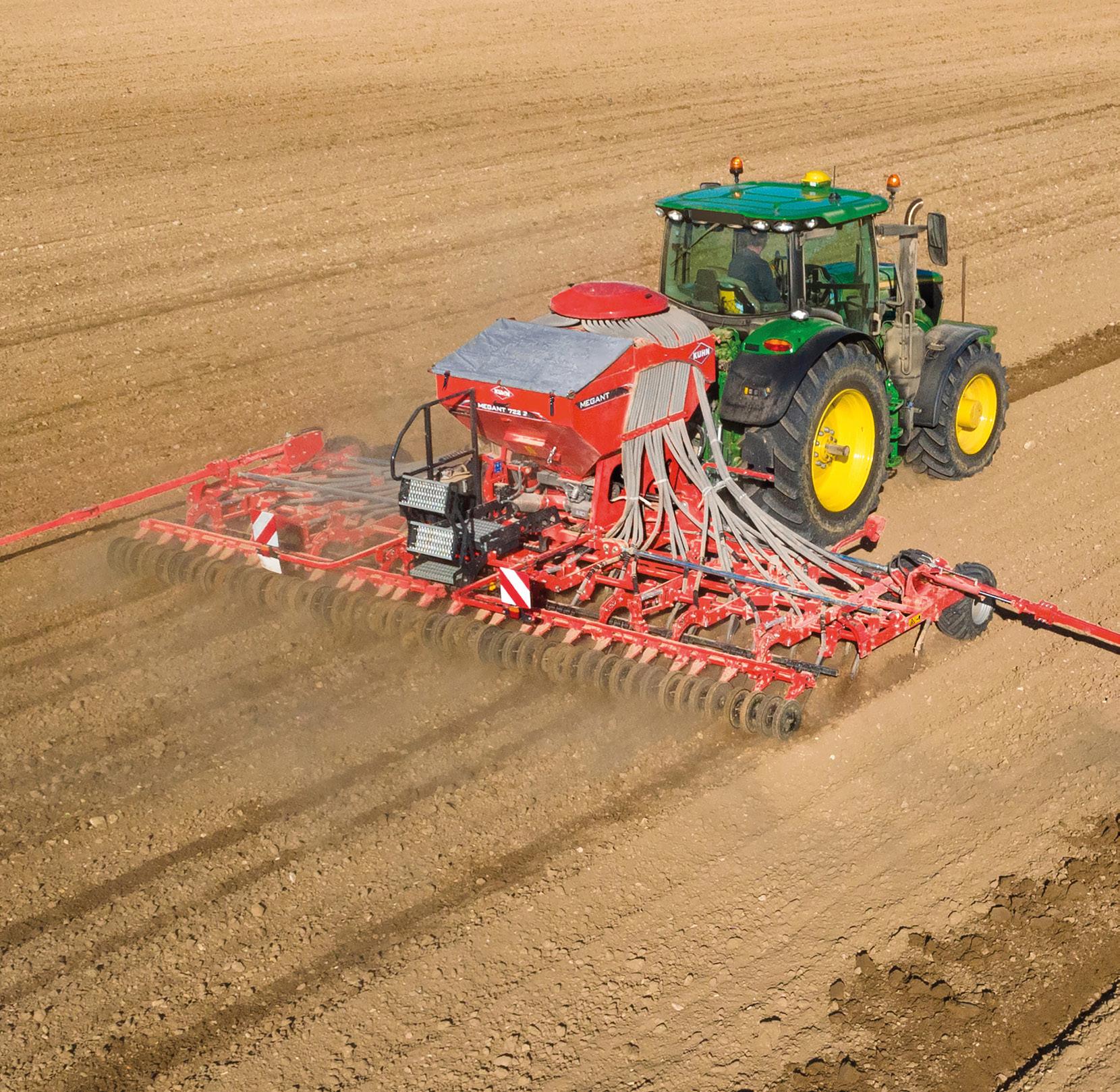
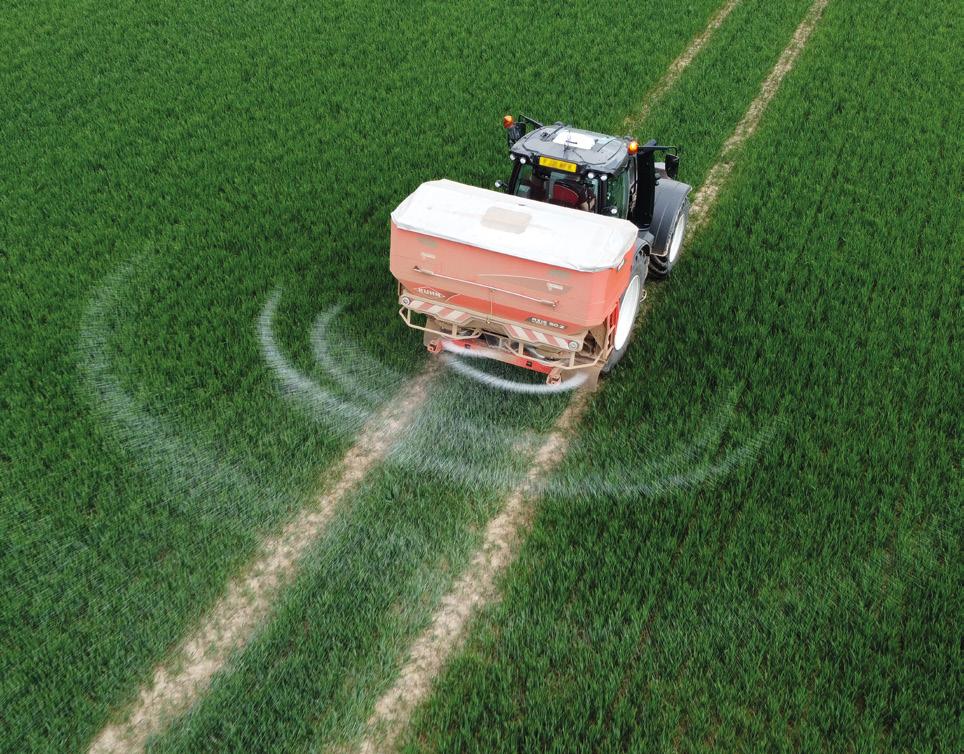
Image supplied by KUHN Farm Machinery
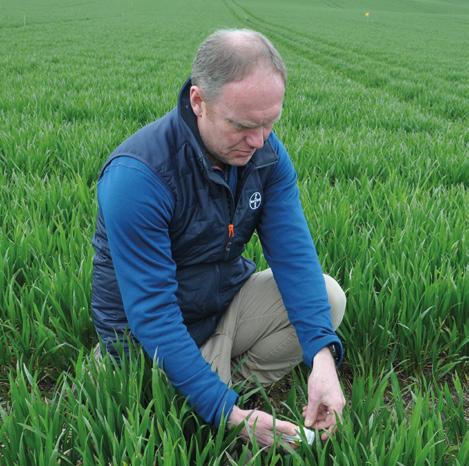
Adapting the agronomy of early-drilled crops starts in autumn but needs to continue into spring, says Nigel Scott
NORTH EAST
With two-thirds of winter wheat and winter barley crops already drilled by midSeptember in his region this year, Nigel Scott says fields are starting with good potential, but it is important to remember that early drilling brings increased grassweed and barley yellow dwarf virus (BYDV) risks.
“After pre-emergence herbicides, effective follow-up herbicides need to be high on peoples’ agendas,” says Nigel. “Also, if aphid numbers remain high, multiple aphicide applications will be needed. We’ve not had bad BYDV for a while, so don’t be blasé.”
Adapting the agronomy of early-drilled crops also needs to continue into spring, Nigel explains, given the potential for excess tillering, increased lodging risks, and pressure from certain diseases.
“There’s also the breakdown of winter wheat YR15 yellow rust resistance to consider. If growing an affected variety, we need to consider rust-active T0 fungicides. Even with varieties with higher resistance, we need to be vigilant.
“Winter oilseed rape (WOSR) crops also look fairly good. A lot went in early. These are now big crops, so will also need careful management in spring.”
OXFORDSHIRE
Oxfordshire ProCam agronomist, Patrick Rossiter, agrees that early-planted winter wheat needs careful management. By drilling early, cultural control of blackgrass is inevitably compromised. So he says herbicide programmes must be suitably robust with a sequence planned.
“Cultural control must kick off with an effective stale seedbed. We’re in a hard water area, so when glyphosate is deployed, it’s key to ensure water conditioning has been accounted for to ensure the best control of weeds present.
“Once the crop is in the ground, in-crop herbicide programmes should target blackgrass using multiple modes of action, stacked and alternated. If you’ve started with a pre-emergence application of cinmethylin — for example, mixed with tri-allate or aclonifen in dry conditions, or ethofumesate (Xerton) or Tower if ample moisture — Cadou Met is a good follow-up option. It targets weeds with metribuzin and flufenacet, as well as diflufenican.
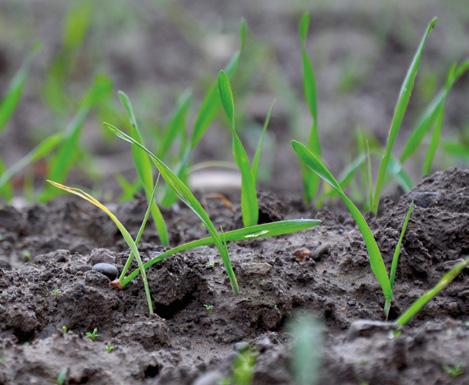
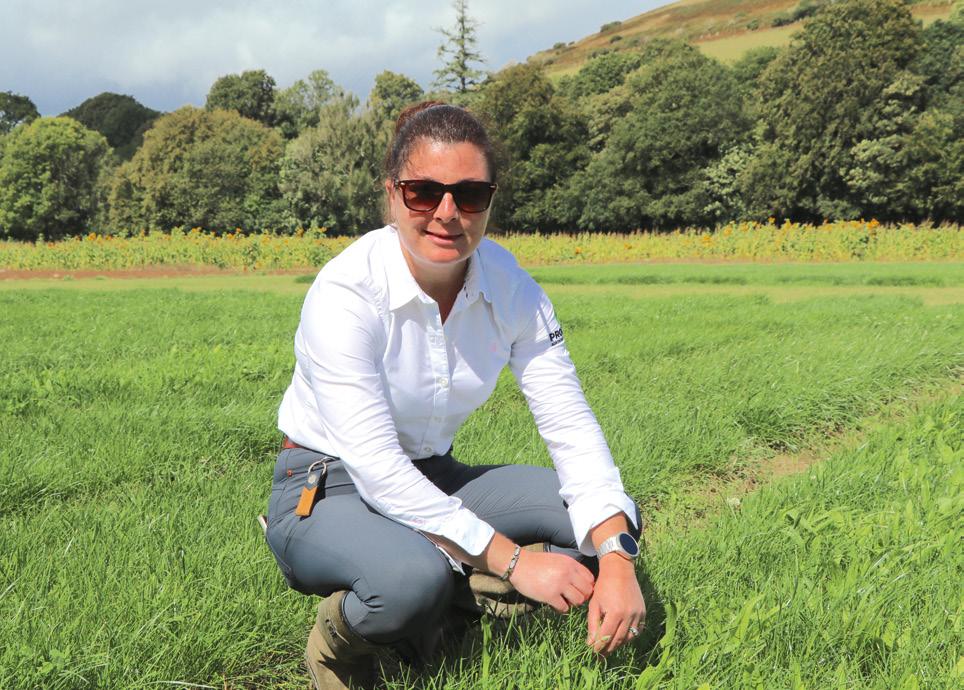
Shallow-rooted crops in last autumn’s wet soils struggled in the dry spring and summer, so set up roots properly this autumn, advises Patrick Rossiter
“Remember also the importance of correct nozzles, water volumes, sprayer speeds, boom heights and adjuvant usage with residual herbicides. All of these build up to maximise soil coverage and subsequently programme performance.”
For all crops, Patrick says optimising autumn rooting is also key. Shallow-rooted crops in last autumn’s wet soils struggled in the dry spring and summer, so set up roots properly this autumn, he advises.
“Alkaline soils around here can lock up phosphate (P), which is important for rooting. So consider pre-emergence Pro+ LibPhos, which binds to calcium in the soil, freeing up soluble P.”
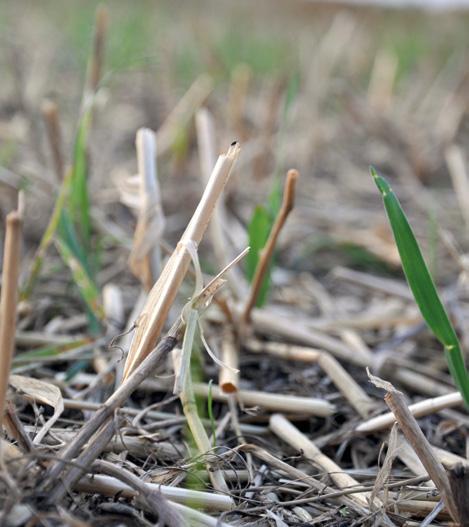
If crops are drilled too soon after destroying green bridges, aphids might not have fully died off
SOUTH WEST
In Somerset, ProCam agronomist Henry Lucas says farmers have been delaying winter wheat drilling until early October on blackgrass land.
He advises higher seed rates to increase crop competition, and agrees that Cadou Met is a good addition to programmes, with additional activity against a range of broadleaved weeds.
“Storms can wash residual herbicides down the soil profile, which can affect efficacy but also crop safety if the chemical reaches the crop root zone. This is where the adjuvant Velomax comes in. It helps to ‘hold’ the active ingredient nearer the surface, and can improve spray deposition and reduce drift. In trials it’s improved grassweed control by 8%.”
Henry Lucas says reduced yellow rust ratings among winter wheat varieties adds to the argument for creating healthier, better-rooted crops
With mild autumns in the South West, vigilance applying aphicides according to T-sum thresholds is also needed, says Henry. If crops are drilled too soon after destroying green bridges, he says there is a risk that aphids will not have died off.
“With a lot of feed wheat grown in the South West, and several varieties having their yellow rust resistance ratings reduced, we also need to be mindful of this.
“Later-drilled winter wheat doesn’t root so well, and stressed crops are more susceptible to yellow rust. So anything we can do to create a healthier crop by encouraging better rooting in autumn is a good thing — such as applying the seaweed-based biostimulant Zodiac, or the pidolic acid and phosphite based Incite.”
SOUTH
Hampshire and Sussex ProCam agronomist, Philippa Baptist, agrees that rooting is crucial.
By driving roots down early it helps plants better scavenge for soil nutrients and improves resilience to stress, says Philippa Baptist
By driving roots down early it helps plants to better scavenge for nutrients and improves stress resilience, she adds.
“There are several ways of boosting rooting, including seaweed-based or phosphitebased biostimulants.
“These types of treatment are a sensible cost and can be included in certain autumn tank mixes, saving on an extra spray pass. Even in good soils, anything you can do to help crops cope with weather extremes makes sense.”
When targeting BYDV-carrying aphids, Philippa says it is important to maintain protection according to risk and thresholds. “Esfenvalerate (Gocha) is a useful aphicide because it combines good persistence with being relatively safer to beneficials compared to alternative pyrethroids.“
Also, be prepared to use a two-spray herbicide approach against grassweeds, especially after early drilling. Diversity of modes of action is key, so Cadou Met and Tower are both really useful tools — being two of very few products to deliver three active ingredients in a single can. They are therefore useful starting points for developing robust blackgrass strategies,” she adds.
WEST
Watch out for early aphids, weeds and slugs in arable crops, urges Simon Evans who covers West and South Wales.
Soil bacteria present after old grass leys can reduce nitrogen availability in following cereal crops, says Simon Evans, so cereals can benefit from a biostimulant boost
“Last season saw massive aphid numbers and aphids do not necessarily die off but simply move into hedgerows,” he says. “Apply aphicides as soon as treatment thresholds are reached.
“Similarly, it’s easy to think that after the dry summer, slugs won’t be there. But colleagues spotted them early in WOSR, so check for leaf stripping in cereals. Formulation quality is also important to ensure that ferric phosphate pellets keep their shape and work for the maximum amount of time.”
From a nutrition perspective, with plenty of livestock in the area, Simon says crops receive plenty of P and K from manure, but soil bacteria present after old leys reduce N availability in following cereal crops. So he opts for a humic acid and seaweed biostimulant to give cereals a boost.
“Where Italian ryegrass and Westerwold leys are being grown after maize, it’s important to ensure these establish well. Use soil testing to ensure the correct pH; they prefer it around 6.5. Alternatively, forage brassicas grown over winter prefer a neutral soil pH, so Calciprill is used if needed. Good nutrition and an appropriate pH ensures that ground cover is maximised as soon as possible after the maize, protecting the soil and minimising soil and nutrient loss.”
SCOTLAND
After good WOSR establishment this year, do not be complacent with the crop, urges Tom Mutter of Robertson Crop Services’ Cuminestown depot.
“There’s been some CSFB damage, so it’s for debate whether crops will need a pyrethroid. And light leaf spot can almost halve yields if it reduces leaf area of juvenile plants. So monitor leaves for ash-like speck symptoms and treat appropriately with a triazole or SDHI.
“In winter cereals, annual meadow grass is coming more into focus. It looks innocuous but more growers are realising it competes for nutrients. Tower herbicide is a simple option.
“In the hot summer, slugs were hiding, but they come out with the rain especially after trashy crops. So assess levels. Pellets nowadays are ferric phosphate which is environmentally more favourable. Aphids are also already prevalent, so monitor and be prepared to apply Gocha aphicide,” he adds.
Do not be complacent with winter oilseed rape management after it has established well this year, says Tom Mutter
Variable rate fertiliser applications planned through FieldSense use current and historical data to build accurate maps
CAN YOUR DATA DO THIS?
ProCam’s FieldSense is a targeted agronomist-led service that can be tailored to the requirements of each grower, without any unwanted or costly add-ons.
Mike Thornton, head of crop production at ProCam, says FieldSense has evolved further this season, with improved variable rate planning and user interfaces, but the amount of data used to form plans can still be daunting for growers. This is where FieldSense is different to other options.
“Growers don’t just get technology, they get tailored support, smart tools and solutions,” says Mike. “First and foremost, FieldSense is a partnership, and growers won’t feel on their own to decipher the data. The agronomist takes the lead in collating, analysing and presenting solutions to the grower to influence on farm decisions, such as variable nitrogen rates based on historical crop biomass imagery to improve tiller numbers and leaf area.”
FieldSense relies on satellite mapping data, historical considerations and data such as soil nutrient tests, all underpinned with detailed field experience from both the agronomist and the farmer.
COST CONSIDERATION
A barrier to grower uptake of these management tools can be the cost and ProCam’s approach with FieldSense has been to start small and allow users to add services as required.
“FieldSense is made up of separate tools, such as soil mapping or variable rate drilling, and the grower has full visibility and flexibility to change these. This flexibility avoids growers signing up to a bundled package for services that may never be used,” explains Mike.
“This can differ from other platforms that could appear more integrated from the outset but include options that aren’t required by some growers.”
Growers can start with just a few hectares and then scale it up to multiple fields and whole farms when they are ready. Mike says this will keep costs in check from the outset as growers are only paying for the services they use.
“ProCam’s FieldSense doesn’t have a platform fee and only charges for the features used. Grower’s time input to manage these services should also be factored into costings. FieldSense puts a lot of responsibility on the agronomist to provide recommendations to the grower, rather than the grower spending hours trawling through data.”
FieldSense integrates with Gatekeeper and ProCam Nutrient Planner to share data across farm management platforms.
HISTORY IS ESSENTIAL
Historical data is a large part of the FieldSense package. Without it, agronomists and growers can’t identify regularly underperforming areas of the field and influence crop performance by changing nutrition or seed rate.
“Historical satellite imagery is a key data set for decision-making. FieldSense offers independently verified satellite imagery from the previous seven years. This data helps to reduce risk as growers have evidence of crop performance across multiple seasons. Combined with bootson-the-ground experience, current satellite imagery and yield data, we can build a comprehensive plan tailored to each field,” concludes Mike.
Mike Thornton says the separate packages in FieldSense allow full visibility and flexibility to add or remove services as the grower or agronomist decides
Image supplied by KUHN Farm Machinery
CUSTOMISE FUNGICIDE PLANS TO KEEP CROPS IN THE BLACK
After a lacklustre harvest and with grain prices remaining stubbornly low, the temptation to shortcut on fungicide inputs in 2026 is understandable. But data from 2025 trials shows a tailored fungicide programme can still provide a valuable return on investment even in a low disease year.
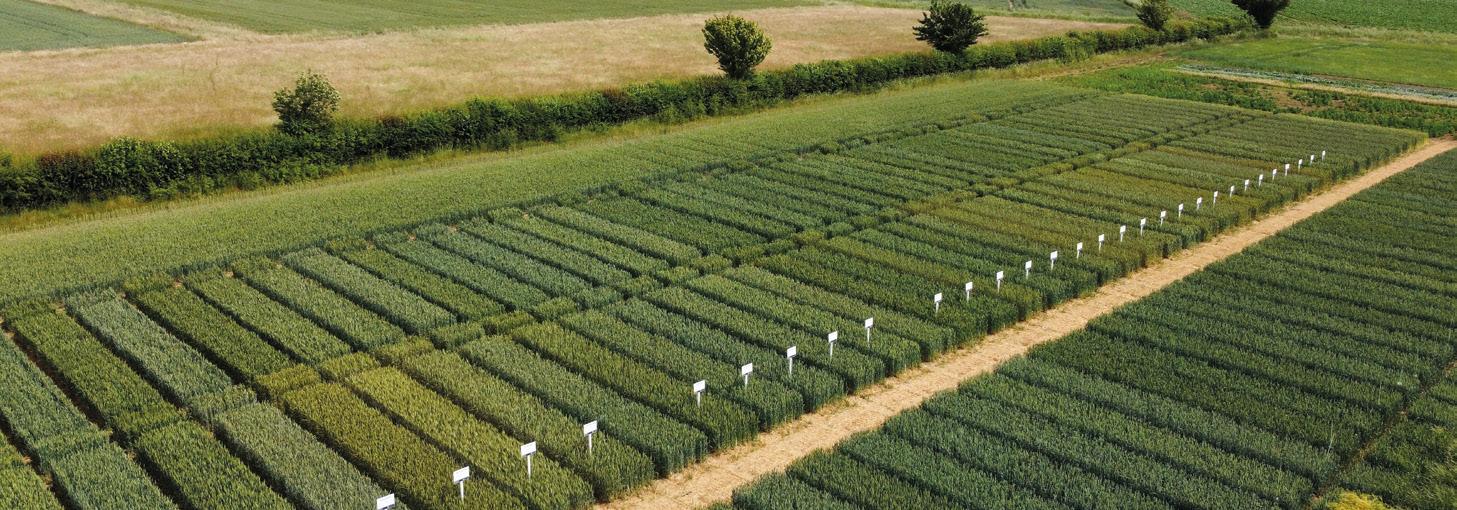
As part of its variety screening programme to test the strengths and limitations of a range of wheat varieties, ProCam has also been carrying out work to determine the cost-effectiveness of different septoria, yellow rust and brown rust fungicide programmes.
Rob Adamson explains that as well as assessing untreated plots and plots treated as per the AHDB Recommended List (RL) protocol, ProCam is also testing a range of programmes which have been tailored to suit each variety’s specific diseaseresistance profile.
“Our aim is to ensure each variety is tested in a manner more akin to real world conditions,” Rob explains. “The RL testing process uses a zero-disease tolerance policy to get the absolute most in terms of yield from the varieties being assessed. This is achieved by using full rates of fungicides at each application timing, with an additional T1.5 treatment sometimes included to really bolster fungicide performance.”
To put this in perspective, Rob explains that the 2025 RL fungicide protocol would cost approximately £200/ha. “That’s unrealistic in a commercial situation, not least because not every variety needs such an intense regime to achieve its yield potential. We have therefore been carrying out our own research to evaluate yield performance under more sustainable and economically practical regimes.”
Although ‘yield is king’ and a minimum level of investment is required to ensure crops produce a large enough heap of grain, the law of diminishing returns is also applicable. “In other words, there is a point
at which any additional spend, whether on fungicides, fertiliser or herbicides, no longer pays for itself,” Rob adds. “With this in mind, we’ve been working to understand where the sweet spot is so that we can make agronomically-considered recommendations to complement the variety being grown. This is especially useful with newer varieties that are yet to be tested on farm.”
The trials are also timely considering the ever-changing resistance challenge.
“For example, the breakdown of the YR15 gene made some supposedly resistant varieties such as Champion much more susceptible to yellow rust in 2025,” Rob describes. “It was noted early in the season at ProCam’s flagship screening site at Cawood that what might have seemed a sensible fungicide programme at the start of the season wasn’t going to be robust enough as the resistance challenge developed. It is therefore important that programmes and recommendations remain dynamic so that they can be amended as the season progresses. Our continued internal work provides useful, real-time information that enables our agronomists to react as the situation evolves.”
PROOF OF CONCEPT
Initial findings from the work carried out in 2025 indicate a clear yield response to fungicide inputs despite the low-pressure year. “Even though a tailored fungicide programme might not offer the same absolute level of disease control as the RL protocol, a bespoke approach is typically more cost-effective and offers a higher return on investment,” Rob explains.
ProCam has been testing the cost-effectiveness of different septoria, yellow rust and brown rust fungicide programmes
“At an average of an extra £50/ha in additional fungicide cost, it was often not cost-effective to invest in the full blanket RL protocol as the extra spend was not covered by the marginal yield increase.”
THINKING AHEAD
Similar trials will be carried out at all three of ProCam’s variety demonstration hubs in 2026 Rob concludes: “Extending the trial over a wider geographical footprint will enable us to understand how different varieties respond in each location and to make better agronomic recommendations for a wider range of diseases. And even if we get another dry spring, with early drilling being common practice this year, there should still be plenty of inoculum around so we should be able to gain even greater insights into how and when to keep crops protected.”
ProCam’s internal trials provide useful, real-time information that enables our agronomists to react as the season evolves according to Rob Adamson
LEARNING LESSONS FOR LESS STRESSFUL MAIZE
The 2025 season might not have been the kindest for growing forage maize, but it has offered some potentially valuable lessons.
DRILLING DATE & MATURITY
Drill according to field conditions, not diary date. That is the suggestion from ProCam head of seed development, David Ramdhian, after the 2025 season.
David says: “In 2025, crops drilled earlier — for example early April — often benefitted from sufficient soil moisture. But those drilled around late April to early May struggled because rains had stopped by then and soil moisture was already in deficit.”
Additionally, David says 2025 saw another shift towards growing very early maturing varieties, with growers willing to sacrifice some yield for the prospect of an earlier harvest in case of another wet autumn.
But with the hot, dry summer causing maize to mature particularly early this year, he has concerns this could lull growers into selecting varieties for yield at the expense of earliness next season. While yield is important, growers should not undervalue an early harvest, he stresses.
David says: “An earlier harvest is easier to manage than a later wet harvest. But it
also allows more time to repair damaged soils and establish following crops, such as ryegrass for extra forage or a winter cereal.
“Ultimately, farmers need to assess the pros and cons of earliness versus yield for their situation. But the safest strategy might be to drill as early as sensible and to harvest early,” he adds.
AGRONOMY & VARIETIES
Simon Montgomery, ProCam technical lead for Field Options Performance Seeds, agrees with the merits of drilling early, if conditions allow.
Simon says: “Soil temperature for planting should ideally be 10°C. Some say 8°C, but if the weather turns, soil can quickly fall to 6 or 7°C, resulting in seedlings going into cold shock.
“Work with your agronomist to understand how your field situations interact with the crop — including heat units available; average rainfall; altitude, which affects wind and temperature; and soil type and fertility. Finally, plant at the seed rate most suitable for the conditions.
“Very fertile soils and windy locations make susceptible varieties more prone to lodging. And know your disease pressures, especially if growing continuous maize, for example because of risks of smut. The descriptive list is a useful guide in this regard.”
When selecting varieties, Simon says that for yield, crop height is not the be-all and end-all, and growers in the west will generally need earlier-maturing varieties than those in the east.
“When assessing variety quality, scrutinise starch and energy contents and cell wall digestibility, plus whether the variety stays green at harvest. Agronomically, check the variety’s disease and lodging resistance and its rooting habit; varieties that put down bigger roots are less prone to drought and lodging,” he maintains.
“As well as these factors, a variety’s genetic stability and resilience are crucial. A thoroughbred variety might promise stellar yield, but might not perform unless conditions are ideal. Conversely, a variety suited to the farm’s location that offers consistent performance over a range of seasons might be at a slight yield deficit, but that could be a small price to pay for a safely harvested crop.”
As examples, Simon highlights Jardinero, Rodriguez and Marcopolo as dependable, consistent types. “Jardinero is an early variety with big yield that stays green for longer offering an extended harvest window. It is stable in a range of conditions, has excellent cold vigour and is ideal for lighter or less fertile soil but manage it carefully on very fertile land.
“Rodriguez appeals despite its older genetics. It resists lodging well, is very dependable, suitable for forage or grain, and can be grown from the side of a Welsh mountain to the flatlands of East Anglia.
“Finally, Marcopolo is a big, do-it-all variety with large grains and stiff stems, suitable for a range of end uses, and for all but the very heaviest land. Towards harvest, it has rapid grain dry down while staying green.”
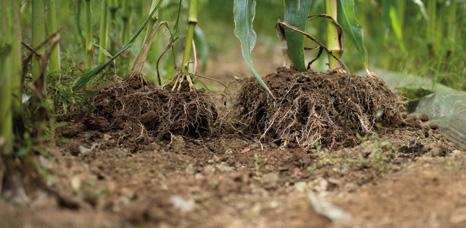
Roots of maize under film with the Samco system can be five times the size of those of maize in the open, says ProCam south west agronomist, Barry Mills
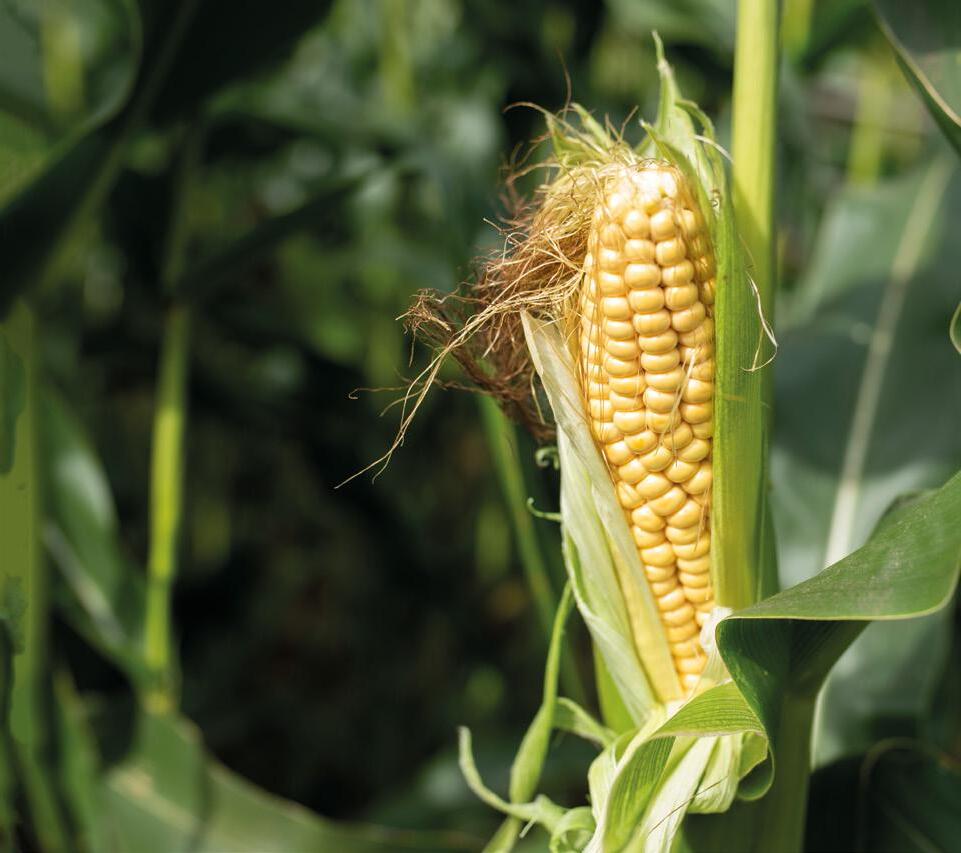
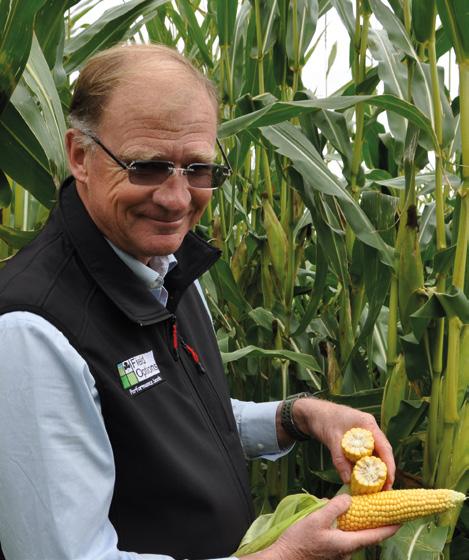
Work with your agronomist to understand how your field situations interact with the crop, to get the best out of it, urges Simon Montgomery of ProCam
Although this season brought maize maturity forward, David Ramdhian says do not be lulled into thinking early harvests are guaranteed
SAMCO FILM, & NUTRITION
Devon dairy farmer Patrick Palmer has had strong results from growing maize under film again this season, and from feeding the crop using novel nitrogen-fixing bacteria.
Using film for the last 18 years to allow earlier planting and harvesting, with 247ha (610 acres) under film this year and 36ha (90 acres) grown in the open, he admits there were some timely summer showers. Nevertheless, compared to his typical fresh weight yield of 44t/ha (18t/acre), yields this year topped 54t/ha (22t/acre), at 38% dry matter (DM) and a massive 43% starch.
“We started planting maize in the second week of April and finished the fourth week of April,” says Patrick, who milks 1,250 yearround housed cows in a family partnership at Well Park Farm, Buckfastleigh.
“It was dry at the end of April, but because we had rain earlier and with the moistureretaining benefits of film, it got its roots down quickly. It was then very dry but with periodic rain it had enough to keep going.
“We used to grow 300-320 acres under film, but realised by using film we could grow a really high starch product. We have a forage lab on the forager and can see the difference between the two crops.
“With film, we can also get the following crop in by the end of October. Without film, we struggle to do this.”
Milk is sold for cheesemaking, with yields averaging 11,500 litres/cow at 3.6% protein and 4.3% butterfat. The silage ration typically comprises 60% maize and 40% grass silage, along with concentrates, crushed homegrown cereals and rapemeal.
A nitrogen-fixing endophyte bacteria, Encera, was also used on the maize this season, applied with the post-emergence herbicide and a biostimulant plus trace elements.
Patrick says: “We’ve had very high starch from the film and the Encera. They have worked well together.
“We used Encera on all the maize this year because we could see a visual difference when we treated half the maize last year. I’d say it has helped keep the plant alive.”
ProCam agronomist, Barry Mills, who works with Patrick providing seed, advice and inputs, and with Samco who provide the film system, says film effectively gives maize more heat units and helps retain soil moisture by trapping condensation.
Barry says: “The benefits start in the first few weeks of the crop’s life. If you look at the roots with the Samco system they can be five times the size of maize in the open.
“You get more fresh weight tonnage but the real benefits come in increasing the %DM; in a typical year expect a significant increase in %DM with the Samco System. You can also increase metabolisable energy (ME). When you calculate the MJ/ha from a higher yield, higher %DM and higher ME, you really see the benefit of film.”
That said, Barry only recommends certain maize hybrids under film, and says postemergence weed control can be more challenging, although film can be slit and opened up so post-emergence herbicides can be applied.
Applying Encera with the post-emergence herbicide makes a very cost-effective operation, he explains.
Barry says: “Encera inoculates the plant with bacteria that fix N inside the cells, and drip feed this through the season. The aim is to make the plant more nutrient efficient — especially if soil N is limited, for example if it is dry — and to improve overall yields. But we are finding it also improves grain yields, which is important for starch.”
A variety that offers consistent performance over a range of seasons might be at a slight yield deficit, but that could be a small price to pay for a safely harvested crop, says Simon Montgomery
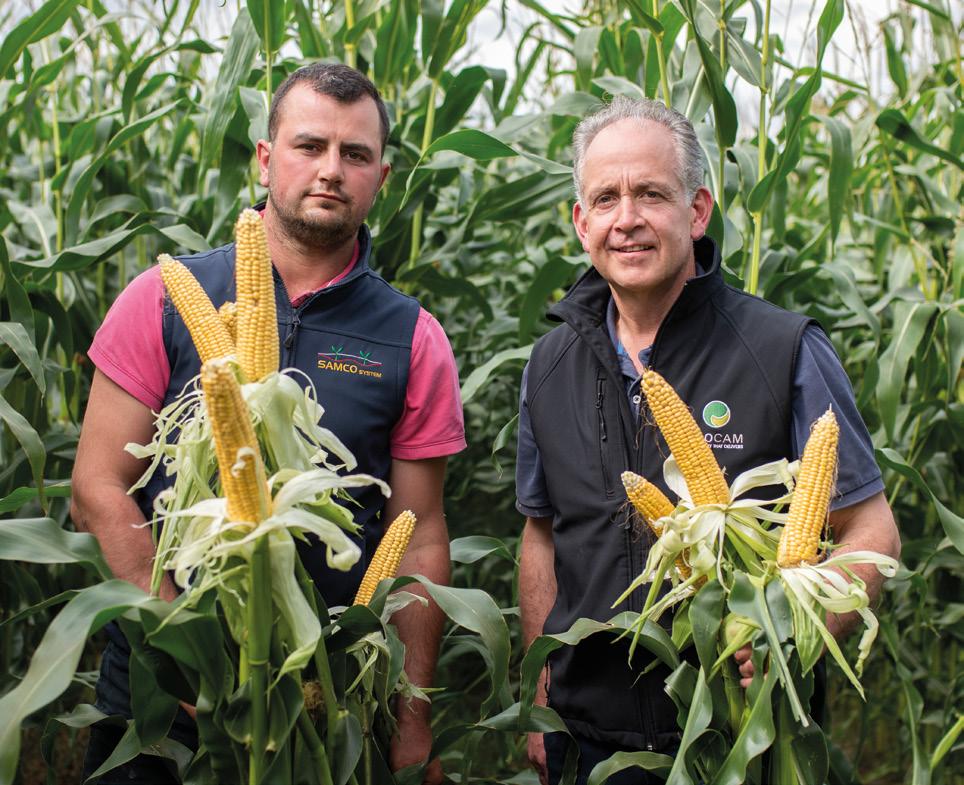
Devon farmer Patrick Palmer (left) and Barry Mills of ProCam (right) agree that growing maize under film can also boost energy from starch
Hayley Wellings says late season cover crop mixtures should be tailored to varieties that thrive in cooler temperatures and can potentially offer an income
LATE-SEASON COVER CROP OPTIONS
There are still viable options for growers considering October and early November cover crop drilling, but mixtures should be adjusted to suit the time of year.
Hayley Wellings, technical seed specialist with ProCam, says selecting the right varieties to suit drilling date for overwinter cover crops will offer good establishment for crops drilled during October and early November.
“Keeping soil covered during the winter helps prevent erosion and retains nutrients, along with increasing soil organic matter. Growers should choose varieties that have good vigour if they’re going to thrive following establishment as late as November.”
Hayley suggests crops such as forage rye and forage triticale, both part of ProCam’s Field Options range, have similar quick growth habits, and will establish in cooler temperatures allowing them to still perform well from late-season drilling.
“A further benefit of forage rye, for arable growers, is that it is take-all resistant, so can slot in with cereal rotations. While forage triticale is not a complete ‘break’ crop, it also offers better tolerance than other cereal species. Both crops are fast-establishing and continue to grow in all but the coolest conditions, so can help suppress weeds over the winter to provide a cleaner seedbed in the spring.”
She continues: “Rye and triticale are excellent nitrogen scavengers, which can help reduce the potential for nitrogen leaching, while making the best use of the significant residual nutrition that hasn’t been utilised during last season’s poor growing conditions for commercial crops.”
Rye is also proficient at extracting moisture from the soil, which is especially useful in wet winters and for growers farming alongside
water courses. There is also an option to generate income from either crop with an early spring silage cut.
“Where appropriate seed rates and inputs are used, a very high yielding early silage cut can be taken from forage rye or triticale before spring drilling,” says Hayley. “Livestock producers have been forced into feeding out their winter forage supplies during the drought this summer, so an additional spring cut, or early season grazing ground, could be vital.”
LOOKING TO 2026
With many mixtures on the market, growers should talk to their agronomist about the reasons for growing a cover crop, which could include soil structure benefits from different rooting depths, providing nitrogen fixation, or creating dense cover for organic matter improvements.
“White mustard is incredibly fast to establish and produces rapid ground cover although has fewer rooting advantages than other options. However, phacelia has an excellent fibrous root network in the drilling zone and, from a rotational perspective, benefits from having no UK relatives,” says Hayley, “Buckwheat is a great phosphate scavenger, so can help reduce lock up in certain soils”.
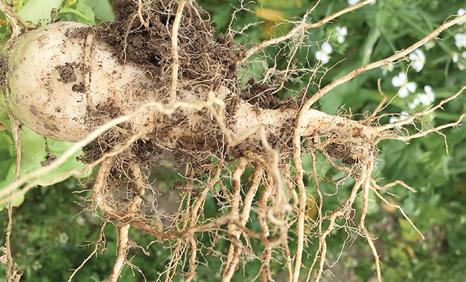
“For nitrogen fixation, berseem and crimson clover can generate rapid biomass and start fixing nitrogen for following crops. It’s also worth mentioning smart radish, which has a penetrating tap root, with strong lateral offshoots to reduce soil compaction and aid water percolation. With any of these crops, the biomass can also be mulched in, returning nutrients to the soil,” concludes Hayley.
Smart radish has a deep tap root and strong lateral offshoots to help alleviate compaction and aid water percolation