Cumanana
Virtual Bulletin of Peruvian Culture for Africa
MINISTRY OF FOREIGN AFFAIRS
Jonathan Quevedo Tello
Let’s harness Ghana-Peru trade and investment potential
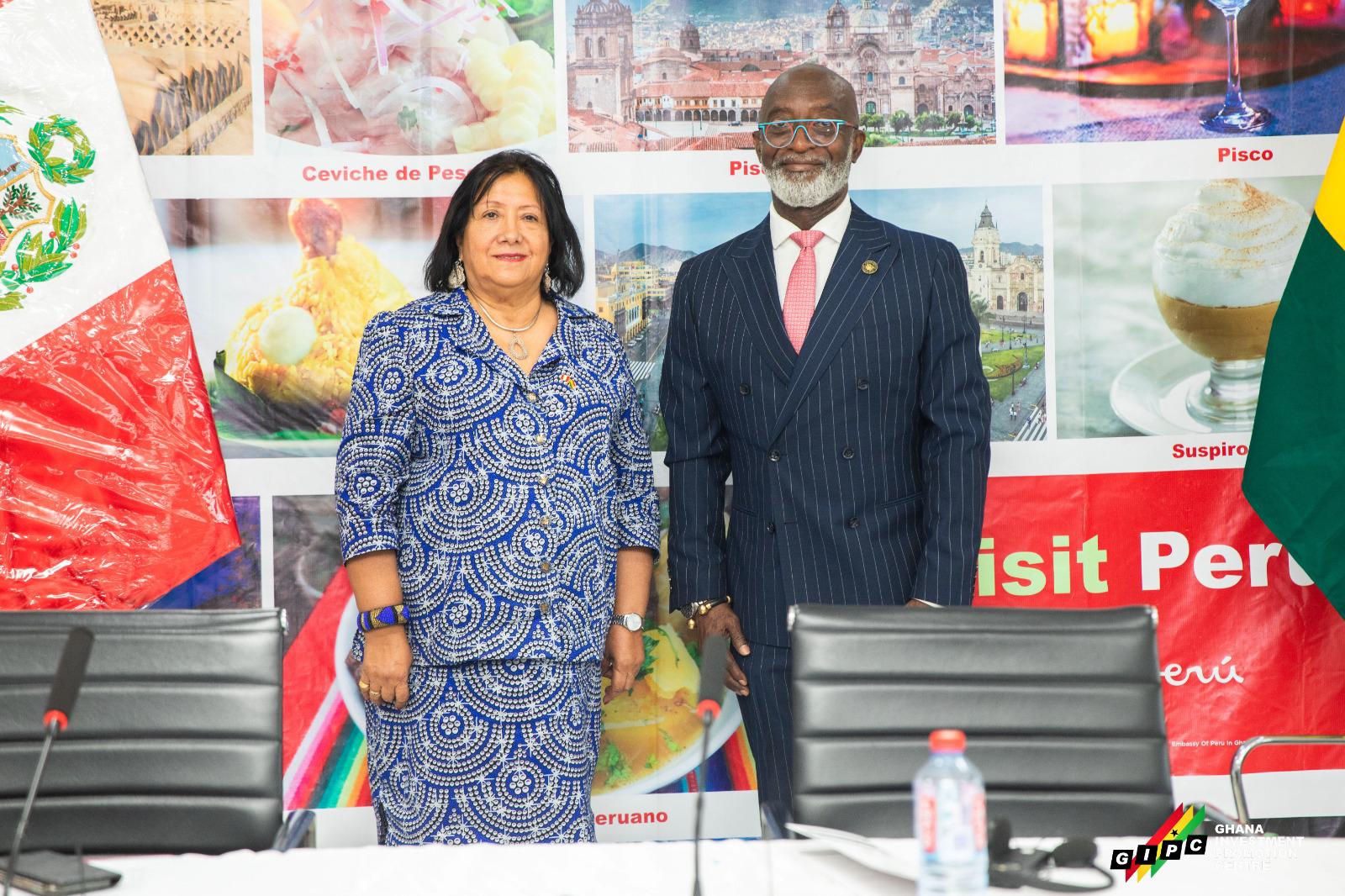
Ambassador Rosa Liliana Gómez Cárdenas de Weston, Ambassador of Peru to the Republic of Ghana
The Ambassador of Peru to Ghana, Rosa Liliana Gómez de Weston, has urged Ghanaian private sector players and government agencies to collaborate with the Embassy of Peru to harness the great trade and investment potential and the cordial relations between Ghana and Peru for the economic benefit of the two countries as well as the prosperity of their citizens.
Rosa Liliana Gómez de Weston made the call during the Ghana–Peru Trade and Investment Seminar organised by the Embassy of Peru in Ghana in partnership with the Ghana Investment Promotion Centre (GIPC) on Thursday, August 8, 2024, in Accra, Ghana. The well attended seminar was held at the offices of GIPC in Cantonment, Accra.
According to the Ambassador, bilateral trade between Peru and Ghana has significant untapped potential and the seminar is an opportunity to identify new areas of collaboration, particularly in sectors where our strengths complement each other.
“Through the entrepreneurs present, we hope to create new bonds between our nations. Peru and Ghana recently signed a Memorandum of Understanding to establish political consultations, which is the framework for the continuous development and strengthening of bilateral trade between the two nations,” she added.
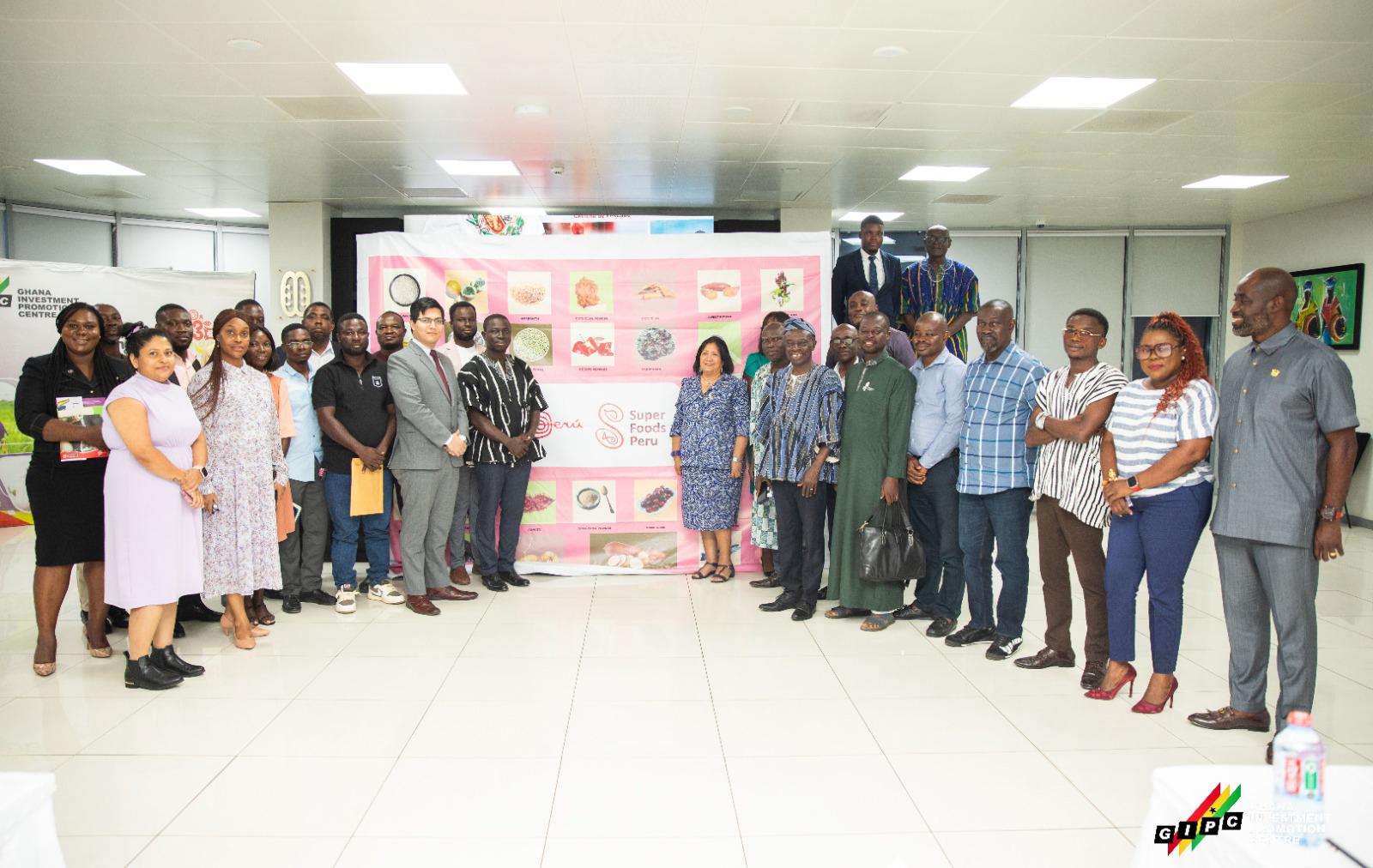
Ghana - Peru Trade and Investment Seminar (2024)
On his part, Reginald Yofi Grant, the Chief Executive Officer of GIPC highlighted that there is a new Ghana that is emerging with a sense of urgency and purpose and “we have set our sights on becoming self-reliant and moving beyond aid”, and we need you our investors as partners on this journey.
He further stated that Ghana’s strategic location as the ‘Centre of the World’ makes it a prime location for firms looking for quick access to the African market and beyond. The country’s policies are well-coordinated to ensure that entrepreneurs, both local and foreign, benefit from rewarding returns.
The ultimate objective of the Trade and Investment Seminar is to promote trade and investment relations between Ghana and Peru, with a key focus on business-to-business engagement to explore opportunities. In addition, the aim of organising the seminar was to increase the level of interest of businesses and investors in Ghana to trade to engage and do business with their counterparts in Peru.
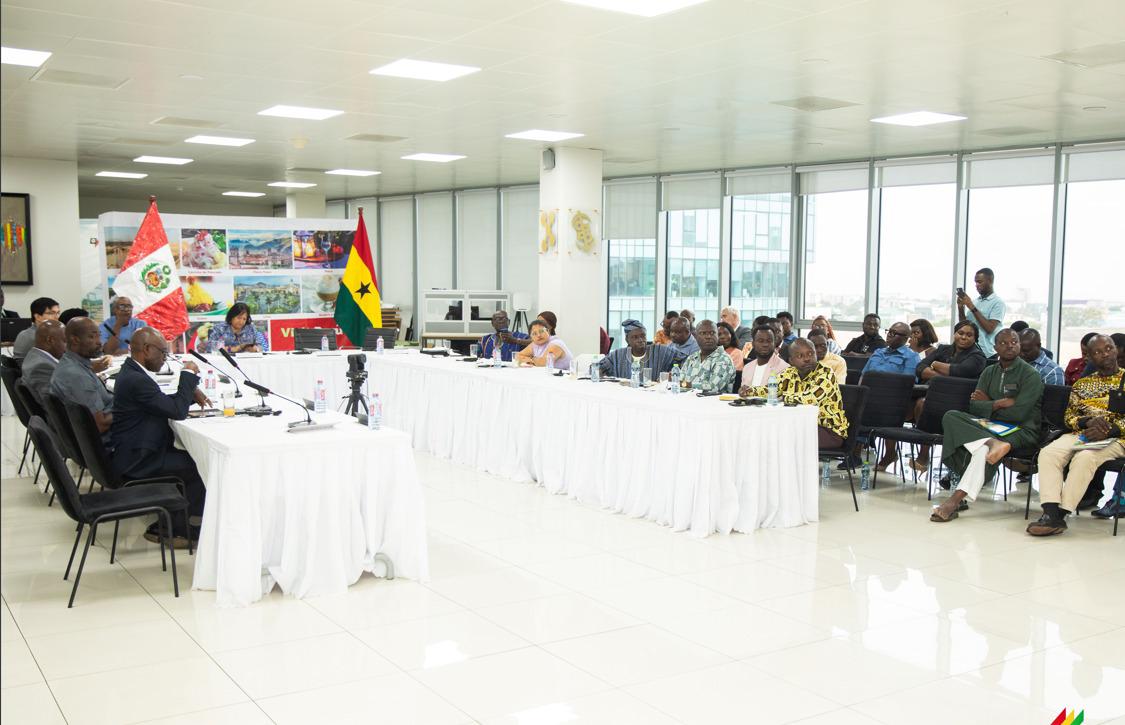
The hybrid seminar witnessed participation by key Ghanaian and Peruvian public agencies and private stakeholders. The Ghanaian agencies included the Ministry of Foreign Affairs and Regional Integration, Ministry of Trade and Industry, Ghana Investment Promotion Centre, Ghana National Chamber of Commerce and Industry, Association of Ghana Industries, Ghana
Export Promotion Authority and Ghana Free Zones Authority.
Some of the Peruvian Institutions that participated in the seminar were the Ministry of Foreign Affairs- Economic Division, Ministry of Foreign Trade and Tourism, Lima Chamber of Commerce, Commission for the Promotion of Peru for Exports and Tourism, Association of
Source: Shutterstock
Ghana - Peru Trade and Investment Seminar (2024)
Main cultural links between Peru and Ghana
Jonathan Quevedo Tello, Third Secretary of the Diplomatic Service of Peru
Introduction
Peru and Ghana are two countries that, although geographically distant, share significant cultural similarities which have been forged through historical processes and contemporary global exchanges. These similarities and links are the result of viceregal dynamics, migrations, and the economic and cultural flows that have transformed both countries in the context of globalization.
These similarities, at the level of cultural diplomacy, open the possibility of closer cooperation and relations between the two countries, since they allow greater understanding between the two nations, facilitate the exchange of ideas and, above all, open the possibility of greater cooperation, both political and technical, in the different spaces of dialogue present around the world.
African heritage in Peru
Peru, like many other Latin American nations, has a considerable African heritage dating back to the viceregal era. During the viceregal era, thousands of Africans were brought to Peru under conditions of slavery to work on plantations, mines and in domestic service, coming from regions such as present-day Angola, the Congo and, of course, Ghana.
This flow of people gave rise to an integration and intertwining between the culture of Africans and local cultures in Peru, thus contributing to the creation of new cultural manifestations, product of mestizaje, which make up the current Peruvian cultural heritage, where the Afro-Peruvian heritage plays a fundamental role.
Afro-Peruvian music and dance, for example, have been deeply influenced by African traditions. Instruments such as the Peruvian cajon have origins in the African community brought to America, whose members developed ways of expressing their culture despite the restrictions of the viceregal system.
In the field of gastronomy, the links between the two countries are present in the similarities of some characteristic dishes of both countries, taking wakye and tacu-tacu as an example, where both stews have as a basis for their preparation the mixture of rice with beans.
Likewise, it is impossible to understand current Peruvian gastronomy without the influence and participation of the Afro-Peruvian community, present in dishes as characteristic as anticucho, picarones, Doña Pepa's turron, among others.
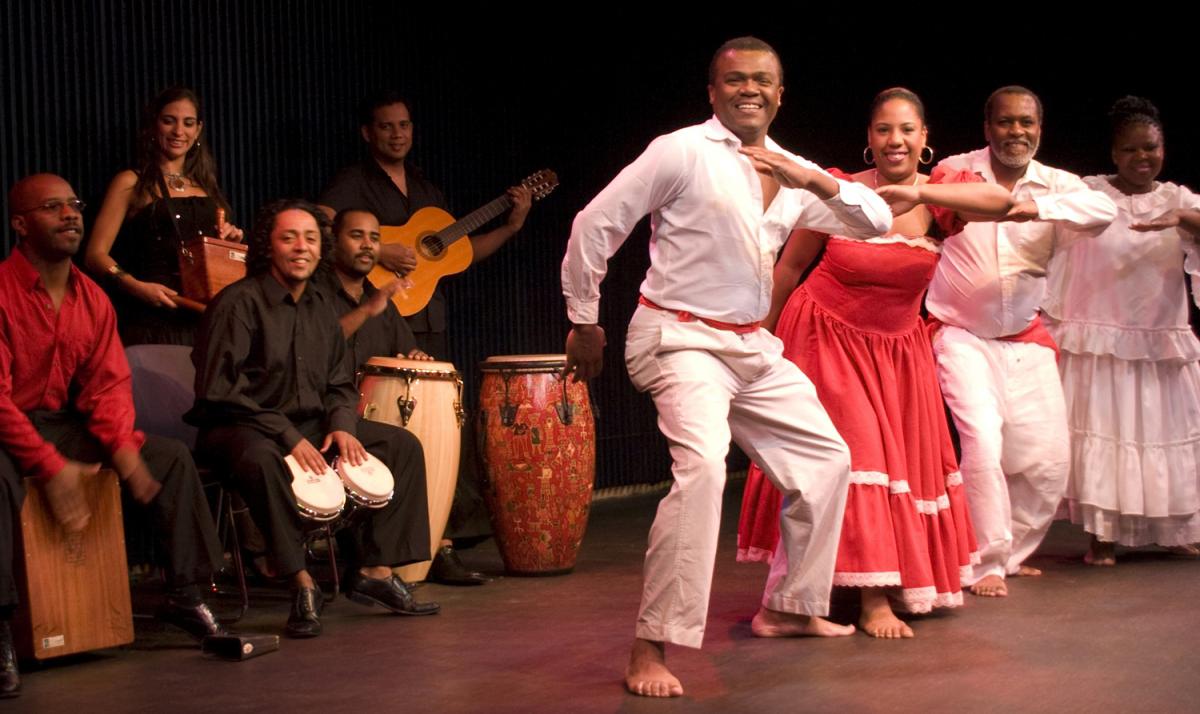
In the field of artistic expressions, such as dance, the similarities between Ghanaian and Peruvian culture are also remarkable. The similarity between festejo and the traditional Ghanaian dances is notable and translates both in the costumes used and in the dance steps
themselves.
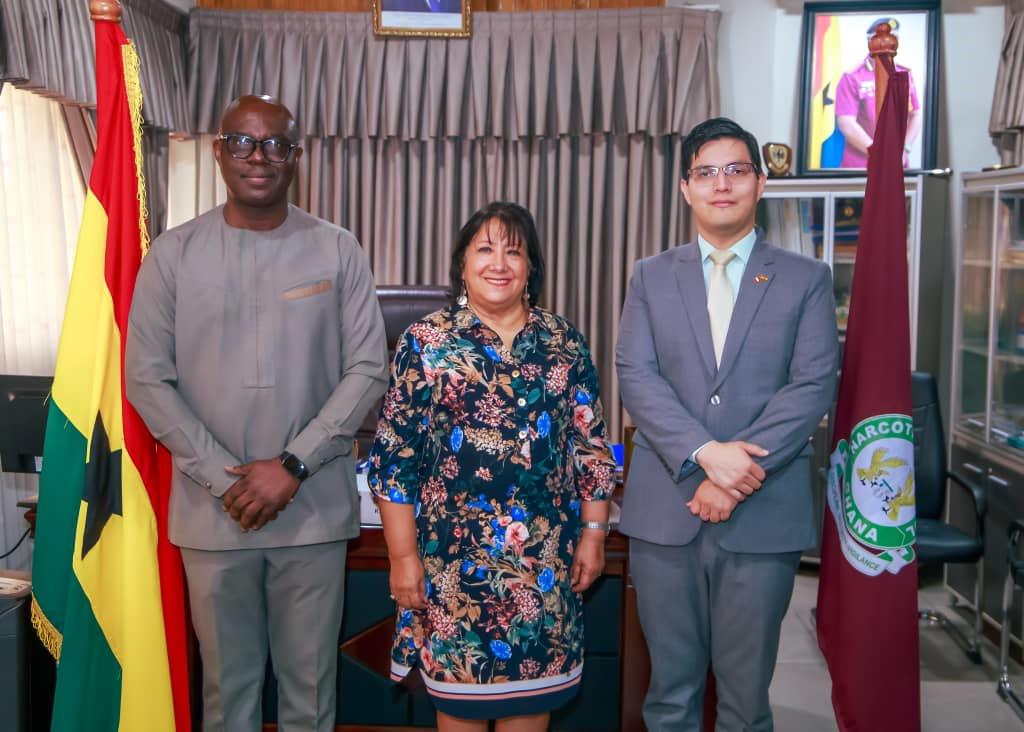
Work meeting with ghanaian authorities
As for the costumes used, the similarity between the costumes of festejo and the traditional Ghanaian costumes is notorious, and the former can be understood as an adaptation to the Peruvian context of Ghanaian costumes. As for the dance, the similarity between the festejo and traditional Ghanaian dances has facilitated the incorporation of Peruvian artistic expressions in the Ghanaian student community, specifically at the University of Ghana, who have been practicing
Contemporary exchanges
In the modern context, Peru and Ghana have developed more visible and direct links. Both countries have engaged in cultural exchanges through film, music and dance festivals that promote cooperation and mutual understanding. Peru has been part of cultural initiatives in Africa, and in recent years, several African countries, including Ghana, have explored deeper relationships with Latin American countries, fostered by globalization and the expansion of diplomatic and trade
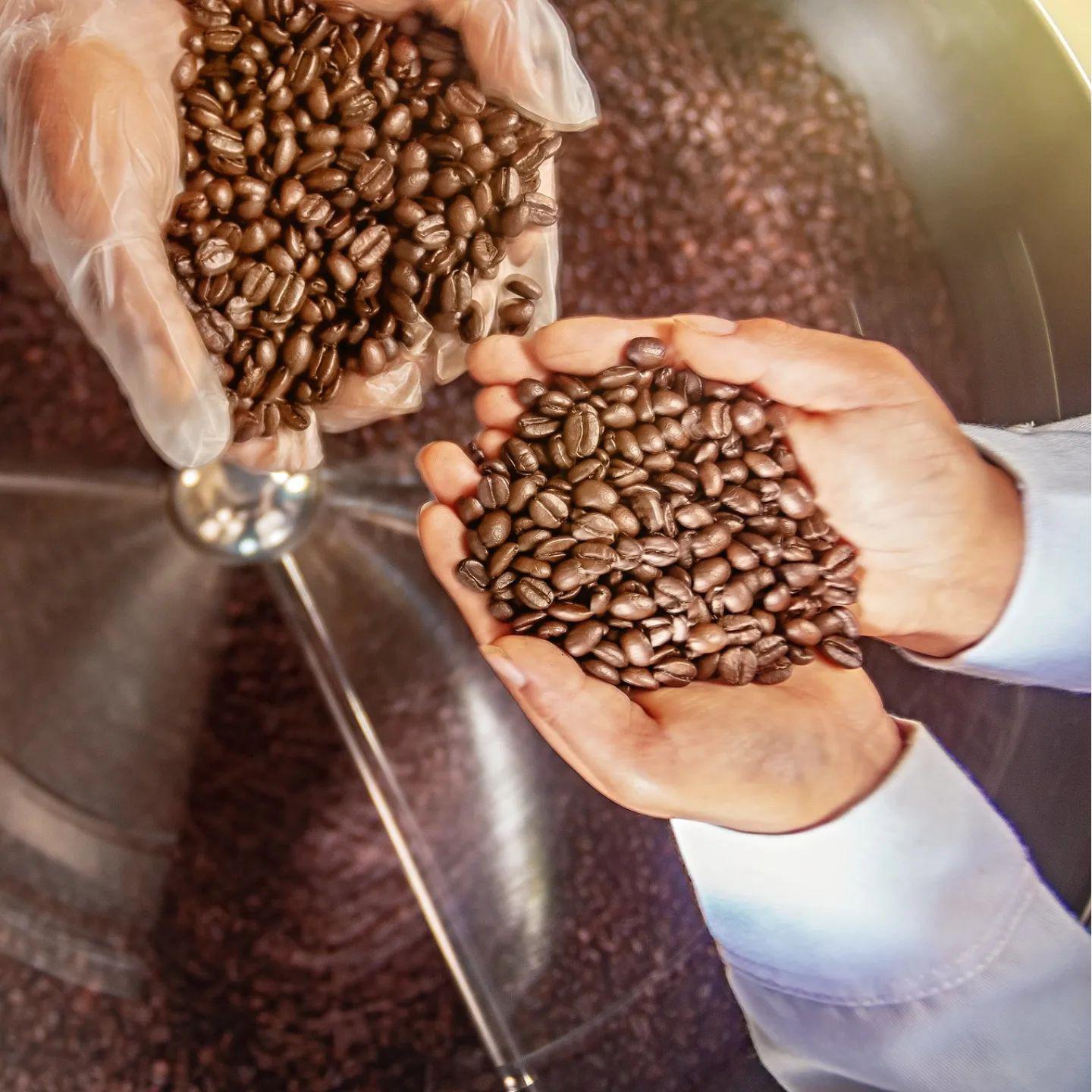
In the economic sphere, Ghana and Peru share the experience of being exporters of primary products such as minerals (gold in both cases), cocoa in the case of Ghana and agricultural products such as coffee and cocoa in Peru. These sectors have allowed for greater commercial interaction, where sustainability practices and fair-trade policies have been a point of convergence, promoting knowledge exchanges
festejo. relations. between the two countries.
Conclusion
The ties between Peru and Ghana are rooted in a common heritage, which has its roots in the viceregal era and which, over the years, through the African diaspora, has led to cultural exchanges that have fundamentally enriched Peruvian culture. Today's Peru cannot be understood or appreciated in its entirety without the Afro-Peruvian heritage. The parallels present in the cultures of both nations, as well as contemporary exchanges, offer fertile ground for further deepening of cultural ties. Music, art, commerce and education will continue to be key points to strengthen relations between Peru and Ghana in the years to come.
Traditional dance of the “Festejo”
Source: Shutterstock
Ingredients
2 kg of cassava
250 gr of brown sugar
1 teaspoon anise
1 teaspoon ground cinnamon
1/2 L vegetable oil
For the honey:
1 kg of brown sugar
3 whole cinnamon sticks
1 Pineapple
1 teaspoon anise
1 teaspoon ground cloves
1 orange
1 lime
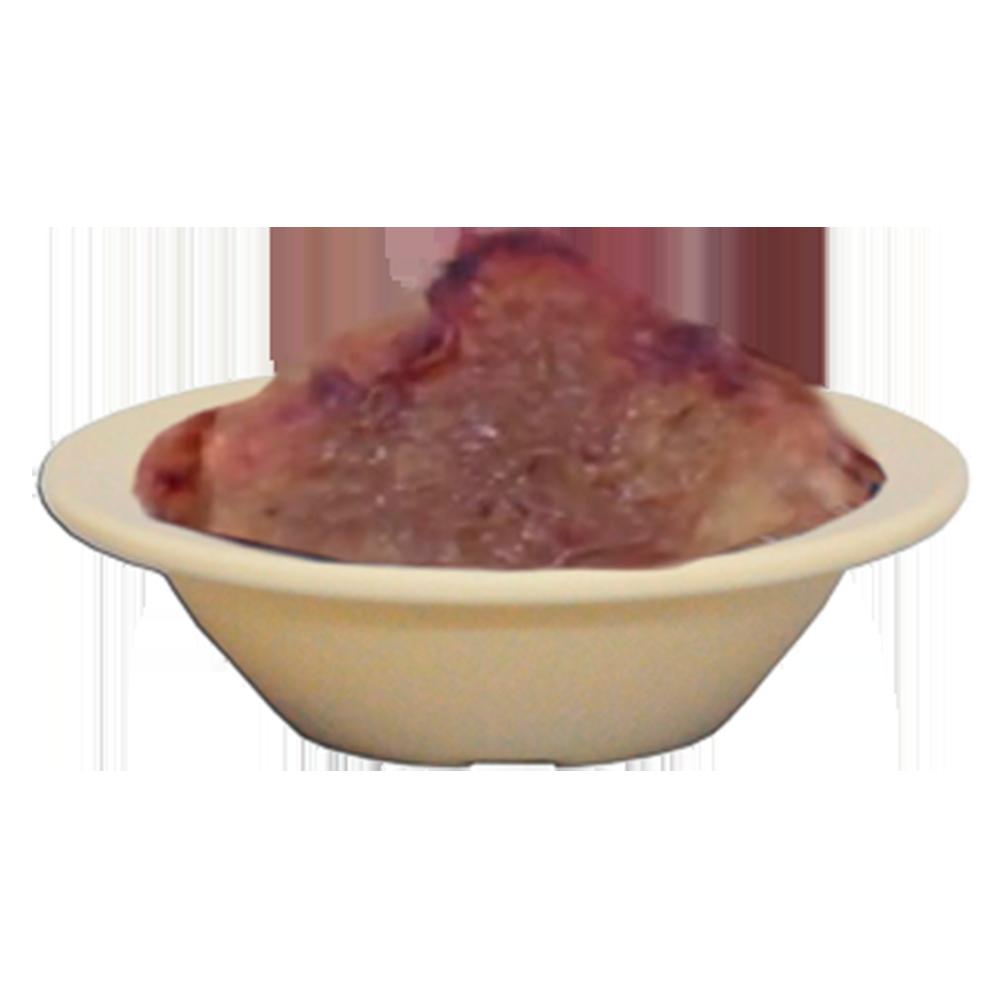

Recipe: Come y calla
Preparation
Peel the cassava, wash it and grate it through the finest part of a grater. Add anise, ground cinnamon and sugar to taste. Mix all the ingredients. Heat oil in a pan and pour portions of the mixture with a soup spoon forming circumferences similar to the palm of your hand.
For the honey, add 1 kg of sugar, cinnamon, anise, cloves and half a pineapple to a pot with 1 1/2 L of water. Peel an orange and add the peel and a sliced lime. Let it simmer over low heat until the honey reaches a medium-thick consistency. Serve the honey on top of the fried doughs.
PERUVIAN-AFRICAN
follow us on social networks