Cumanana
E - Newsletter of Peruvian Culture for Africa
MINISTRY OF FOREIGN AFFAIRS
“In that quarter lived the marketwomen, the laborers, and the porters, who did the daily work of the city, the policemen, and the clerks from the few stores. Here also were found the inns where litigants from the country, mule drivers, and mestizo travelers stayed. It was the only quarter with chicha bars. On Saturdays and Sundays, they played harp and violin in the most popular ones and danced huaynos and marineras.
José María Arguedas, "Deep Rivers", 1958.
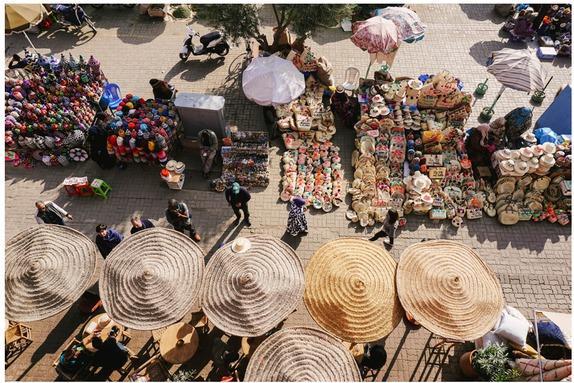
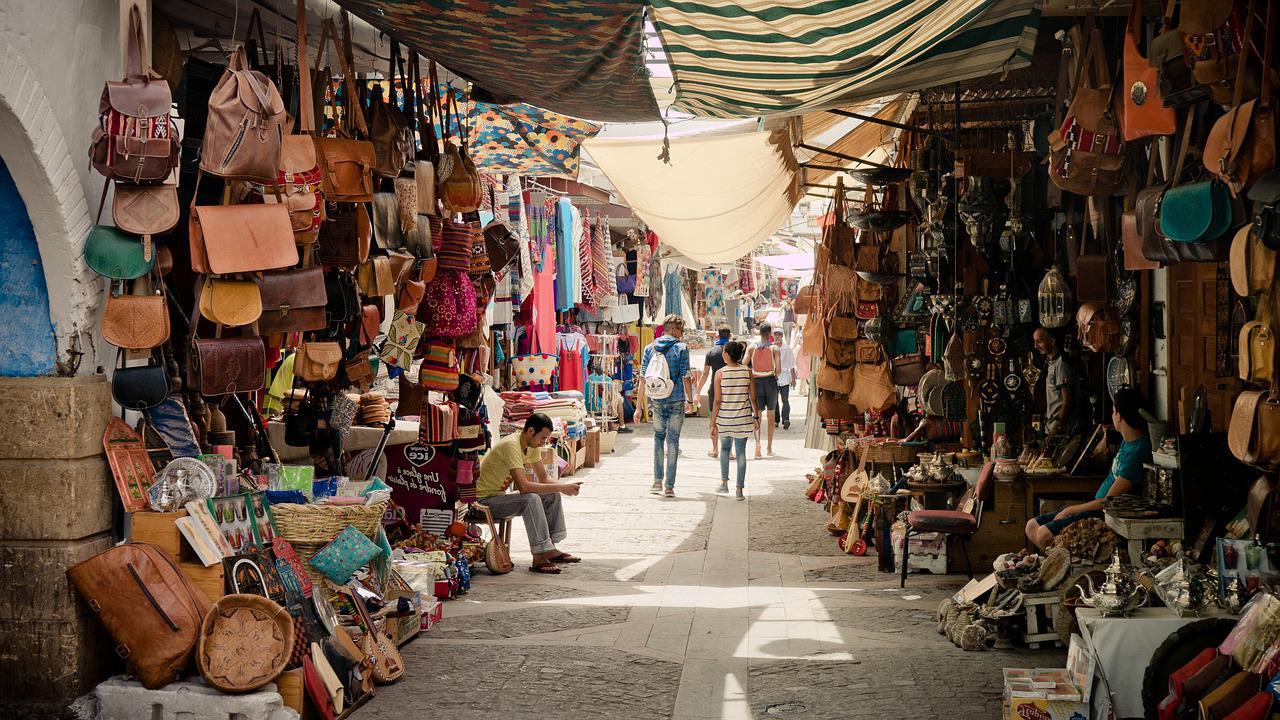
On the one hand, the Moroccan souks – the name given to the traditional street markets of Arab countries – since their origin in medieval times, have been the epicentre of trade and urban life in cities such as Marrakech, Fez and Tangier. As an anonymous author points out, "for the Moroccan, the Souk is as necessary as food: in it he gathers news, in it he solves family problems; in it he acquires commitments or makes contracts" (Azzuz, 1952, pp. 66). The structure – both spatial and social – of these street markets has been intrinsically linked to the guiding principles of the Islamic religion. While the Spanish occupation and French influence introduced a series of commercial reforms that challenged traditional dynamics, the recognition of the architectural, historical, and aesthetic values of the souks constituted the pillars of the tourism
Unlike the colonial era, with the independence of Morocco in 1956, the objective of maintaining the authenticity and integrity of traditional street markets was left out of urban politics, through the adoption of bazaar-like characteristics and outsourcing – understood as the abandonment of the manufacture of products and the rise of the pure commercialization of these –, the adoption of boutique-like characteristics – or the sale of luxury goods at high prices and the marketing of fake or low-quality products that are attractive to tourists (Kania and Kalaska, 2018). Although these changes caused by the development of the tourism industry in a globalized context have deepened since the beginning of the twenty-first century, the inclusion of various Moroccan cities on UNESCO's World Heritage List allowed both traditions and local products to once again take on a central role in the dynamics of trade and
tourism in the souks.
In this context – although originating from the commercial practices of medieval souks and street markets – haggling was consolidated as a way of establishing relationships and ensuring justice in transactions, reflecting the art of negotiation that was essential in trans-Saharan trade. Although the informal rules of haggling have evolved, the ability to negotiate prices is still an integral part of the buying and selling experience in Morocco; to the point of becoming a central component of Moroccan economic life, reflecting not only the commercial dynamics, but rigen el intercambio
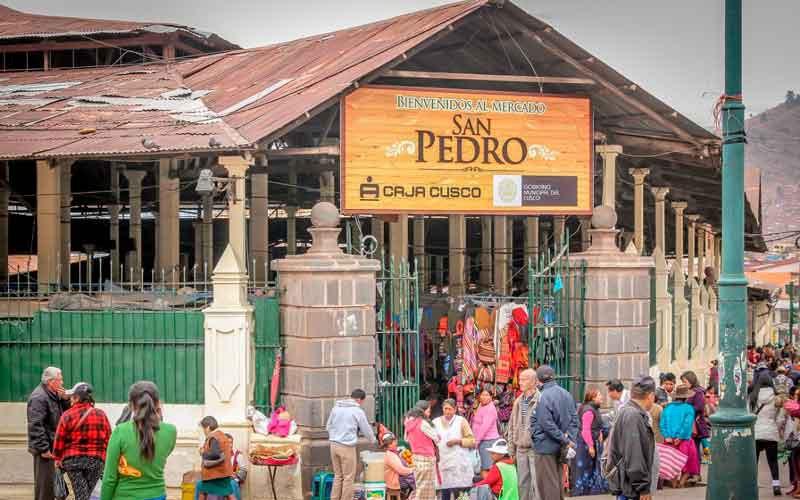
On the other hand, Peruvian commercial exchange during pre-Columbian times was based on the principles of barter and ayllu. The street markets of the villages or ccatus – an institution with pre-Inca origins that later had the supervision of the Inca authorities – followed a barter dynamic based on the productive surplus or retail exchange for products. Even practices such as yapa or adehala -which refers to asking for something extra- were part of the commercial exchanges of pre-Columbian Peru (Quiroz, 2020). However, with the arrival of the Spaniards in the sixteenth century, local trade and street markets underwent significant transformations. Both the introduction of European products and the imposition of new economic and political structures modified consumption patterns and the products available in Peruvian street markets. As a result, colonial street markets became centres of exchange not only of goods, but also of ideas and cultures, generating indigenous commercial practices to adapt to the new
Amid the dynamics fostered by cultural exchange among street markets, haggling as a widespread practice in Peru – although no data is found on it from the pre-Columbian period –had an important influence on the part of Arab migrants. By the end of the nineteenth century and the beginning of the twentieth century, not only was the arrival of a wave of Arab, Palestinian and Turkish migrants experienced, but also their active participation in the southern and Andean commercial circuit, among the cities of Arequipa, Cuzco and Puno. Although Arab trade practices were itinerant – that is, they were not fully integrated into the street market –during this period, the culture of haggling and payment facilities as sales tools were introduced
by, especially, immigrants of Arab origin (Cosamalón, 2020).
On the other hand, similar to the Moroccan case, with Peru's independence in the nineteenth century, street markets continued to evolve, reflecting the tensions between tradition and modernity. Although there was a process of diversification of goods and production itself, traditional street markets remained an important pillar of daily life in many communities. However, the biggest transformation for Peru came hand in hand with the boom in tourism as a driving force of the economy. Although street markets saw a positive increase in the influx of tourists, vendors began to focus more on items that attract visitors than on traditional products. Although this adaptation has generated a kind of commercialization of traditions –with the creation of products specifically designed for the tourism market – the street markets have managed to reinvent themselves over time while continuing to be a vibrant reflection of
Peruvian culture and identity (Kani & Kalaska, 2018).
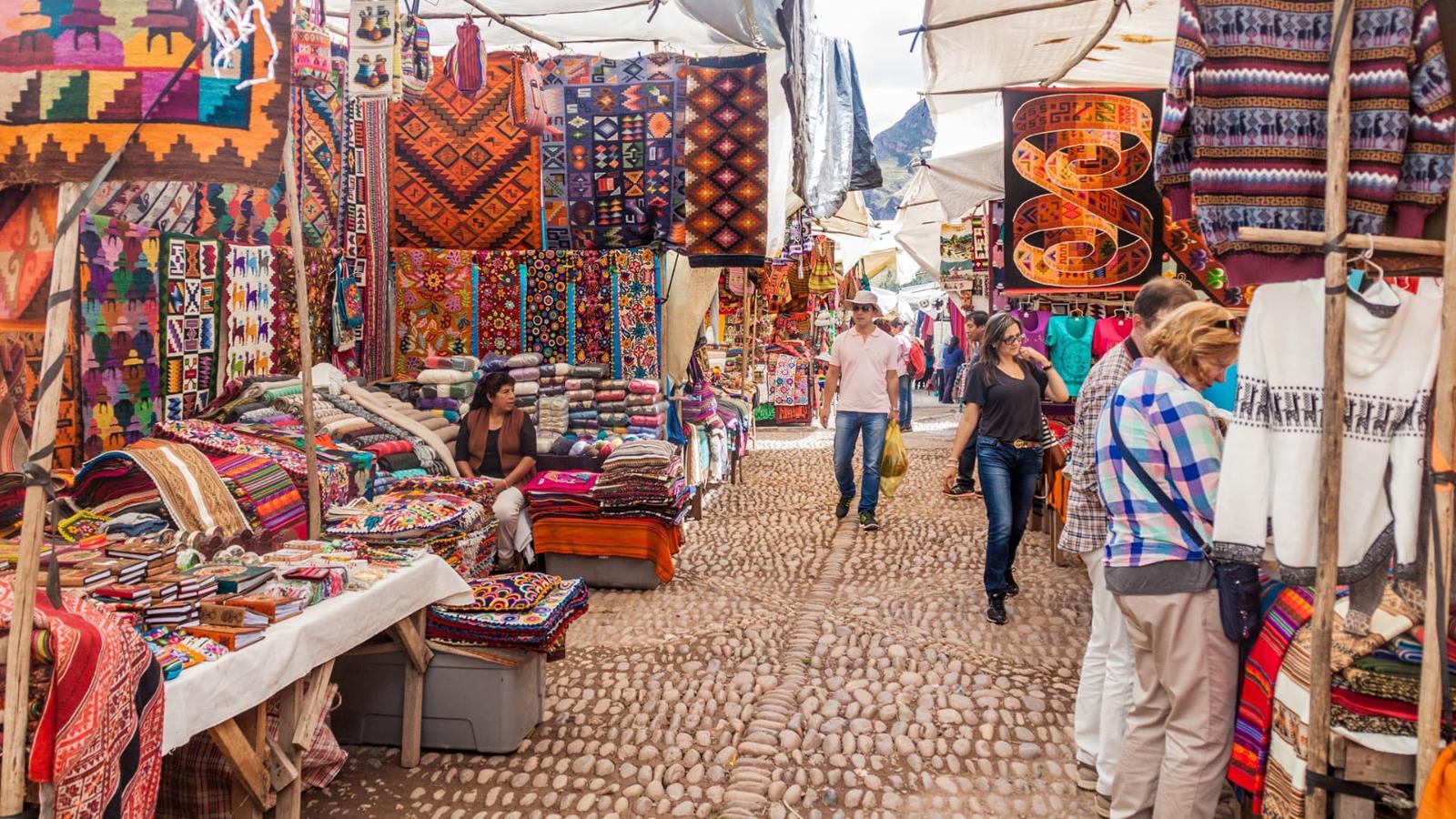
Despite the differences in the temporal, cultural and religious contexts of Peru and Morocco, both countries exhibit remarkable similarities in their business practices to this day. In addition to the evident resistance of traditions in Peruvian and Moroccan street markets, there is a shared commercial dynamic: haggling, which ends up functioning as a mechanism to preserve and express local cultural identities. This custom is not only a way of negotiating prices, but also a social ritual that fosters the relationship between buyer and seller (Ogliastri & Salcedo, 2008). Between the bustle of the souks of Marrakech and Fez or the street markets of San Pedro in Cusco and San Camilo in Arequipa, haggling is almost an art: sellers expect customers to participate in the bargaining game, and buyers, in turn, seek to get a bargain through lively and insightful dialogue. This process – far from being a simple economic exchange – involves a series of codes and norms that allow both parties to show respect, cleverness, and a certain
shrewdness, three characteristics of both societies. contemporary world.
In conclusion, the common elements of Peruvian street markets and Moroccan souks – both in terms of shared history and similar practices – highlight the ability of cultural practices to adapt and survive through historical changes, evidencing the resilience of commercial traditions in an ever-evolving world. As much as external influences – whether religious, colonial or tourism dynamics – have influenced the development of street markets, the persistence of haggling and particular cultural practices highlights the richness of the historical legacies of Peru and Morocco and the importance of keeping the essence of their commercial traditions alive in the
References
Functional and spatial changes of souks in Morocco’s imperial cities in the context of tourism development. https://sciendo.com/article/10.2478/mgrsd-2019-0002
The Souq and the Foundouk. The Genesis of the Markets and Medinas of Morocco (Book Architecture and Urban Transformation of Historical Markets: Cases from the Middle East and North Africa). https://www.taylorfrancis.com/chapters/edit/10.4324/9781003143208-12/souq-foundouk-hassane-kharmich -khalid-el-harrouni
El zoco, centro de actividad comercial en marruecos. https://dialnet.unirioja.es/descarga/articulo/2494080.pdf
La moneda en el mercado interno peruano colonial. https://www.bcrp.gob.pe/docs/Publicaciones/libros/2020/historia-de-la-moneda-en-el-peru.pdf
Compendio de Historia Económica del Perú. https://www.bcrp.gob.pe/docs/Publicaciones/libros/historia/4-economia-de-la-primera-centuria-independient e.pdf