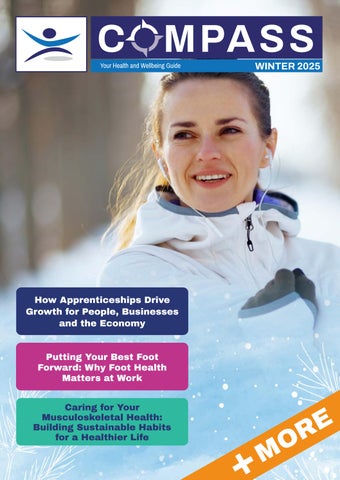
Compass Magazine | Your Health & Wellbeing Guide | Winter Edition 2025
How Apprenticeships Drive Growth for People, Businesses and the Economy
Putting Your Best Foot Forward: Why Foot Health Matters at Work
Caring for Your Musculoskeletal Health: Building Sustainable Habits for a Healthier Life
“The career development provided by PAM Academy is amazing. As soon as a joined, I was told about all the things I could learn and given training and mentoring to move into a senior position.”
Luke, MSK senior clinician, PAM Group
“The training opportunities provided by PAM Academy have enabled me to acquire the clinical best practice needed to progress from joining as an OH nurse to mentoring others.”
Hanna, OH nurse advisor, PAM Group
C O MPASS
Your Health and Wellbeing Guide
CONTENTS
Celebrating apprenticeship week:
How Apprenticeships Drive Growth for People, Businesses, and the Economy
Page 4-5
Managing Grief in the Workplace
Page 6-7
Putting Your Best Foot Forward: Why Foot Health Matters at Work
Page 8-11
Time to Talk
Page 12-13
Why random acts of kindness are an important part of health and wellbeing at work
Page 14-15
Caring for Your Musculoskeletal Health: Building Sustainable Habits for a Healthier Life
Page 16 - 20
Here to support you and your people every step of the way
Want to have the latest research, case studies and opinions delivered stright
by
Celebrating apprenticeship week: How Apprenticeships Drive Growth for People, Businesses, and the Economy
“Starting as an apprentice at PAM Group gave me the chance to connect across departments and build skills like project management and minutetaking. I’ve grown professionally while contributing to the company’s success, and I’m excited to keep learning!”
– Kaisha Scholes | Business Administrationat PAM Group
In today’s fast-paced world, finding smart ways to grow your team and support the next generation of talent is more important than ever. That’s where apprenticeships come in. A powerful tool that benefits individuals, businesses, and the economy alike
For individuals: A career path that pays off
Apprenticeships offer more than just training, they open doors. Whether you're just starting out or switching careers, they provide:
• Hands-on experience in real work environments.
• A salary while learning, making education more accessible.
• Clear progression routes, often leading to permanent roles and leadership opportunities.
They’re also a great way to promote diversity and inclusion, helping people from all backgrounds build meaningful careers.
Kaisha Scholes | Business Administrationat
For businesses: Building talent from within
Hiring apprentices isn’t just good for the apprentice, it’s a smart move for your business. Here’s why:
• Tailored training ensures apprentices meet your specific needs.
• Higher retention rates mean less turnover and stronger teams.
• Fresh perspectives from apprentices can spark innovation.
Plus, developing talent internally helps reduce recruitment costs and future-proof your workforce.
For the economy: A long-term investment
Apprenticeships are a win for the wider economy too:
• They help fill critical skills gaps in sectors like healthcare, engineering, and digital tech.
• They boost productivity and innovation.
• They support social mobility, creating a more inclusive workforce.
In fact, for every £1 spent on apprenticeships, the UK economy gain £21 in return, a compelling case for continued investment.
Support and funding: Making it work for you
If your organisation pays the Apprenticeship Levy (0.5% of your annual pay bill over £3 million), you’ll receive funds to spend on training and assessment with a 10% top-up from the government.
You may also be eligible for £1,000 support payments if your apprentice is:
• Aged 16–18
• Aged 19–25 with an EHC plan
• Aged 19–25 and previously in care
These payments are made in two instalments and managed by your training provider.
2025 Highlights: The numbers speak for themselves
• 128,290 apprentices completed their training, up 8% from last year.
• Level 6 and 7 apprenticeships grew by 13%, showing strong demand for advanced skills.
• 60% of apprentices stay with the same employer after training.
• Apprenticeships contribute £550 million annually to the UK economy - and are projected to add £25 billion over their lifetime.
Managing Grief in the Workplace
Sadly, having to manage grief in the workplace is a regular occurrence, whether that be the sad passing of a loved one, friend or colleague. And whether that is managing our own grief or supporting others in our team with their grief.
Bereavement and grief impacts all organisations whatever their size, with most being impacted every year. The Sue Ryder charity’s Grief in the Workplace1 report estimates that 24% or ¼ of working age people or 7.9 million employees have experienced a bereavement in the last 12 months. With 2 million or a ¼ of bereaved employees experiencing intense grief. This group of colleagues is more likely to take compassionate leave, be absent from work for longer periods, or engage in presenteeism (working at reduced capacity). It is important to be respectful of an employee’s preference as whilst some may need to step away from work, for others it provides a sense of normality.
Managing your own grief
Grief is a natural process as it gives each of us time to remember the person who has departed and for us to adapt to life without them being physically present in it. When it comes to grieving there is no right or wrong and no timeframe. Our grief is a reflection of our relationship, love and respect for the person who has departed.
In the initial days, weeks or months after a bereavement it can be useful to know that we will not feel like ourselves. We will likely have less energy, be more distracted and forgetful, find it hard to make decisions, notice that we are not paying attention, feel sad, feel angry, feel guilty, feel empty. We may experience sleep disturbance, loss of appetite or increased alcohol consumption.
All of these and more are normal psychological, emotional and physical responses to our grief.
It is important to give ourselves time to express our grief whether that’s going to a favourite place, lighting a candle, making a photo album, talking about or even to the person, or going somewhere else.
This is not about racing to the finish line. It is about allowing ourselves time to slow down and be ok with not being ok.
In the first year or so following a significant loss, there will be many firsts and many poignant occasions that we will want to recognise whether that be their birthday, our birthday, other family members birthdays, significant cultural and religious holidays like Christmas or other events important to them and us.
In 2025 the National Grief Awareness week organised by the Good Grief Trust is focusing on Growing with Grief. More information about this is on their website www.thegoodgrieftrust. org
Cruse Bereavement Support have lots of useful information about grief on their website Home - Cruse Bereavement Support. There are also many other specialist charities who provide information about and support for grief. Your Employee Assistance Programme, such as PAM Assist, will be able to provide in the moment emotional support and if beneficial, bereavement counselling.
Supporting others managing their grief in the workplace
As a manager, it is important to be aware that whilst some people may need to step away from work, for others they may need to remain in work.
If someone chooses to remain in work, there may need to be temporary adjustments with duties and responsibilities and that other team members may need to complete additional tasks. Or to be flexible with working hours, especially if the person grieving is responsible for or involved with funeral arrangements and other legal matters.
If someone takes compassionate leave, arrange regular check-ins with them. If you are asked about work, provide reassurance that all is being managed by yourself and others. It is important to refrain from exerting pressure on the person to return to work before they are ready. You may need to seek HR guidance about managing this depending on your organisation’s absence performance management policies.
Whether your team member is in or out of work, it is important to understand whether they will benefit from talking about the person who they are grieving for. For some of us, it is hugely beneficial to know that we can talk about the person who is gone. For others of us, especially soon after the bereavement, we may feel more emotionally vulnerable or raw and will talk more about the practical aspects of bereavement or want to talk about other things.
Remember that we all grieve in our own way, and that this is likely to be different for each person that we grieve for as our relationships with each of them will be different.
You can signpost your team member to your organisation’s Employee Assistance Programme, such as PAM Assist, for in the moment emotional support and if beneficial, bereavement counselling.
You can also contact the EAP yourself for support about how best to support a colleague with their grief and/or if it has brought up concerns for yourself.
If the service is available, bereavement counselling can also be accessed via PAM’s Psychological Services through making a mental health assessment referral. Evidence suggests that for those who would like to access counselling support it reduces the business costs of absenteeism and presenteeism1.
If it is a colleague who has passed and it is impacting on many in the team, then arranging via PAM’s critical incident team for a counsellor to support remotely or onsite in the days immediately after can be very beneficial, especially as the passing of a colleague often brings up other previous losses for us.
If you would like to know more about grief then PAM offer a 60-minute workshop about the impact of grief and loss on everyday life that can be delivered to managers in your organisation or to a wider audience. This can be delivered as a workshop for up to 16 people or as a webinar for up to 50 people.
References:
1) Grief in the workplace: how employers can provide better bereavement support, Sue Ryder Charity, 2020
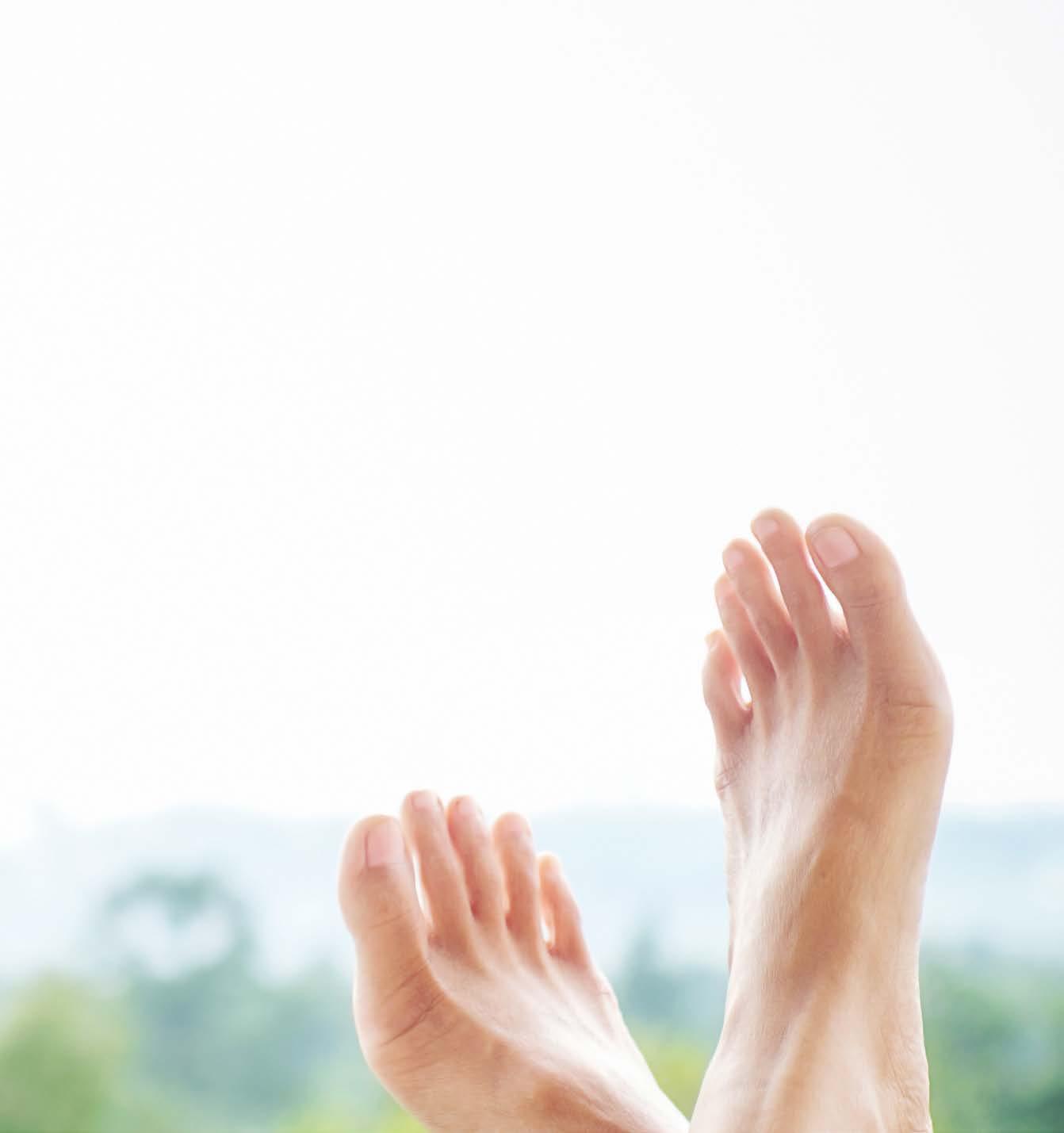
Putting Your Best Foot Forward: Why Foot Health Matters at Work
Every day, our feet quietly carry us through the demands of working life. Whether it’s walking factory floors, standing for hours in a bakery, or sprinting to emergencies in heavy boots, our feet absorb the impact of every shift. It’s little wonder that one in five adults experience some form of foot or lower-limb pain during their working life, and yet, foot health is one of the most overlooked aspects of workplace wellbeing.
As a podiatrist, I see first-hand how foot pain can affect not only comfort but also productivity, mobility and even confidence. Many people accept sore feet as “part of the job,” but most issues can be prevented and treated with early advice and simple interventions.
What Is a Podiatrist?
A podiatrist is a degree-level healthcare professional specialising in the assessment, diagnosis and treatment of the feet and lower limbs. The word comes from the Greek “pod” (foot) and “iatros” (healer) — describing someone who helps people move comfortably and stay pain-free on their feet.
What Does a Podiatrist Treat?
Podiatrists assess and manage a wide range of foot and lower-limb problems from heel and arch pain to skin, nail and postural issues. They help prevent, diagnose and treat conditions linked to standing, walking, footwear or sport, supporting mobility and comfort in daily life.
When Should I See a Podiatrist?
If you have ongoing foot or ankle pain, changes in how you walk or skin and nail problems that don’t improve, it’s time to see a podiatrist. Early assessment and treatment can prevent small issues from becoming long-term problems, keeping you healthy, active and on your feet.
The Everyday Strain
Different jobs place different stresses on our feet.
• Retail and catering staff, such as bakers or baristas, often spend long hours standing on hard floors. This constant pressure can lead to heel pain (plantar fasciopathy) or forefoot discomfort from loss of natural cushioning.
• Drivers and delivery staff who sit for long periods may experience swelling or numbness, especially if circulation is reduced.
• Emergency service workers such as police officers or firefighters carry heavy kit and wear restrictive boots, which can alter posture, strain the Achilles tendon or cause toenail trauma.
• Even office workers aren’t exempt, tight dress shoes or unsupportive flats can cause arch pain, bunions or callus build-up.
Poorly fitting footwear is one of the most common and preventable causes of foot discomfort. Shoes that are tight in the toe box restrict natural movement of the toes, preventing the foot from functioning efficiently during walking.
Over time, this can lead to bunions, clawed toes, corns and nail damage, as well as changes in gait that place strain on the ankles, knees, and hips. Conversely, shoes that are too loose or lack support can cause friction, blisters, and instability, increasing the risk of slips and falls.
Small Problems, Big Impact
When foot pain develops, it rarely stays isolated. The body naturally compensates, changing the way we walk or stand, which can in turn cause knee, hip, or lower-back pain.
A simple issue such as athlete’s foot is common when feet stay warm and enclosed all day and can also spread quickly or lead to secondary infections if untreated. Left unchecked, these conditions not only cause discomfort but can contribute to time off work and long-term musculoskeletal problems.
What is my Foot Pain?
Understanding where the pain is coming from can help you decide when to seek help. Here are some examples:
• Pain in your heel: Most often due to plantar fasciopathy (previously called plantar fasciitis), where the thick band of tissue under the foot becomes irritated from repetitive strain. Common in those standing or walking on hard floors for long hours.
• Pain in the ball of your foot: Could be metatarsalgia, caused by pressure on the forefoot, often from tight shoes, high heels, or loss of fat padding. Occasionally, a trapped nerve between the toes (known as a Morton’s neuroma) can cause a sharp or burning pain in this area.
• Aching in your arches or inner ankle: May indicate strain in the posterior tibial tendon, often linked with poor footwear support or collapsing arches.
• Stinging or itching between your toes: This is a tell-tale sign of athlete’s foot, a common fungal infection that thrives in warm, damp conditions and particularly when shoes
If any of these problems persist, worsen or affect how you walk, it’s time to see a podiatrist for assessment and tailored advice.
Case Study: Getting Back on Her Feet
A recent patient came to clinic with persistent heel pain that had been troubling her for around two months. The discomfort was focused on the centre and underside of her right heel, particularly first thing in the morning or after long periods of standing.
Assessment revealed restricted ankle movement and tight calf muscles, both of which were placing extra tension on the heel and the soft tissue beneath it. This is a common pattern seen in people who spend long hours on their feet or wear unsupportive footwear.
A rehabilitation plan was set to strengthen and stretch the foot and lower leg. We focused on improving flexibility through the ankle joint and activating the small intrinsic muscles of the foot; the ones that often don’t get the chance to work properly when footwear is too rigid or unsupportive.
Top Tips for Healthy Feet at Work
Choose the right footwear
To reduce pain during recovery she was fitted with temporary arch supports to help offload pressure and allow her tissues to heal.
Within a month, she reported significant improvement. After three months, having followed her exercise plan and paying close attention to her footwear choices her symptoms were fully under control. Every patient is different but this is a great example of how early assessment and compliance with simple rehab strategies can prevent a minor issue from becoming chronic.
In contrast, another patient, a delivery driver presented with pain across the ball of his foot from long hours in rigid safety boots. A footwear review and a simple metatarsal pad helped redistribute pressure and within weeks his symptoms had eased. It’s a reminder that even minor adjustments can make a big difference to daily comfort.
Persistent soreness, swelling, or numbness are signs that something’s not right; see a podiatrist for assessment. 1 2 3 4 5
Pick shoes with a roomy toe box, supportive sole, and cushioned insole. Avoid high heels or flat pumps for prolonged standing or walking.
Change your socks daily
Opt for breathable, moisture-wicking materials to reduce odour and fungal infections.
Vary your posture
Alternate between sitting, standing, and moving whenever possible to keep joints mobile and circulation healthy.
Keep your feet clean and dry
Dry between your toes after washing and let shoes air out overnight.
Don’t ignore pain
Seasonal Foot Health
The time of year can also influence foot health. In warmer months, sandals or lightweight shoes often provide less support and can lead to sore arches or cracked heels. In winter, heavier boots and thicker socks may cause rubbing, pressure areas, or fungal infections if feet stay warm and damp for too long.
Rotating footwear, using supportive insoles and keeping skin moisturised are simple ways to adapt to seasonal changes and prevent discomfort.
Early Reporting at Work
It’s important that employees feel able to report foot discomfort early. Small problems such as mild heel ache or skin irritation can quickly worsen if ignored, leading to more significant pain and time away from work.
Employers can help by encouraging a culture where foot and leg symptoms are taken seriously and referring to occupational health promptly. Early intervention often prevents chronic problems and keeps staff healthy and productive. How Podiatry Supports the Workforce Podiatry isn’t just about nails and corns, it’s about keeping people mobile and pain-free. In workplace health, this means assessing posture, gait, and footwear to identify small changes that prevent bigger issues.
Through occupational health referrals, podiatrists can:
• Assess foot and ankle pain early to prevent chronic injury.
• Recommend orthotic insoles or footwear modifications.
• Advise on rehabilitation exercises for balance and strength.
• Advise on skin and nail conditions that affect comfort and hygiene.
• Promote awareness of foot hygiene, particularly in hot or enclosed footwear.
When employees understand the link between their feet and overall wellbeing, they’re more likely to stay active, comfortable, and productive, a benefit to both staff and employers.
If you notice persistent foot pain, changes in your gait or skin irritation, speak to a podiatrist or occupational health professional. A simple asswessment could keep you, quite literally on your feet and ready to face whatever the working day brings.
Find out more about our podiatry services here
by Jenny Taper | Psychological Servies Manager at PAM
Time to Talk
Time to Talk Day is an initiative led by Time to Change, a social movement in England that works to end the stigma and discrimination surrounding mental health. Time to Change is a partnership between the charities Mind and Rethink Mental Illness. The campaign was launched in 2011 with the goal of changing the way people think and act about mental health.
Time to Talk Day takes place each year on 6th February, and helps to highlight the importance of discussing our mental wellbeing and to help to break the stigma which can still surround those experiencing mental health difficulties.
The Big Mental Health Report 2025, reports that there has been a decline in the nation’s mental wellbeing since 2016/17, and it is now estimated that 1 in 5 adults are experiencing common mental health problems, such as anxiety and depression.
So, how do we begin these conversations? How do we create an environment where employee’s feel safe to share their difficulties, and break down the barriers of shame and stigma which often get in the way, not just on Time to Talk Day, but every day?
Firstly, it is important to recognise the barriers which may be faced by the individual experiencing the difficulty, and to be pro-active in creating a psychologically safe environment. This can mean,
ensuring that individuals feel included, that they feel safe to learn, contribute and to challenge the status quo, without fear of being embarrassed, marginalized or punished in some way, in their dayto-day experience in the workplace. It can also mean, demonstrating a genuine interest in their wellbeing, in order to open up such conversations.
In order to allow an individual some ‘time to talk’, we need to be prepared to listen, without judgement, to enable the individual to express how they are feeling. It can be helpful to ask open questions, and to encourage the person to open up further by using active listening. It is important to validate the person’s experience, not rush to offer advice or solutions, and to bear in mind that being heard and understood is often what an individual is hoping for, particularly if this is the first time the individual is discussing their mental wellbeing, opening up about a difficult set of feelings or situation, is an important first step in seeking further help and support.
The Time to Talk initiative offer these top tips:
1 – Ask questions and listen
2 – Use positive body language and encourage them
3 – Don’t try and fix it
4 – Challenge myths
5 – Be patient
It is helpful for us all to be aware of other services which may be beneficial for those facing mental wellbeing challenges, and whilst we know that there are long waiting lists for NHS services, there are many other sources of support available to individuals, including Employee Assistance Programmes such as PAM Assist, for in the moment support, and the Champion Health App.
As managers you may also make referrals into Occupational Health or Psychological Services, which can provide guidance on how to better support employees facing mental health challenges.
If you would like to understand more about creating a psychologically safe environment, PAM offer a 60-minute workshop that can be delivered to managers in your organisation or to a wider audience. This can be delivered as a workshop for up to 16 people or as a webinar for up to 50 people.
References:
The Big Mental Health Report 2025, www.mind.org.uk Time to Talk Day, www.rethink.org
by Janet O'Neill | Head
Why random acts of kindness are an important part of health and wellbeing at work
In today’s fast-paced world, we often hear talk of stress, burnout, and disengagement. Deadlines and workload mean that one simple, yet powerful tool commonly goes overlooked: Random acts of kindness. These small, spontaneous gestures, like offering a genuine compliment, helping a colleague with a task, or bringing someone a coffee, can improve the wellbeing of both the giver and the receiver.
The science behind kindness
Kindness is not just a feel-good concept; neuroscience and psychology back it up. When we perform acts of kindness, our brains release dopamine, which activates the reward system, and oxytocin, often called the “bonding hormone.” Oxytocin helps lower blood pressure and promotes feelings of trust and connection. Kindness also boosts serotonin, which regulates mood and reduces anxiety. In a study reported by the Random Acts of Kindness Foundation, about half of the participants reported feeling stronger and more energetic after helping others, with others reporting feeling calmer, less depressed, and with increased feelings of self-worth. Research from the American Psychological Association found that prosocial behaviours (altruism, cooperation, trust and compassion), including random acts of kindness, are linked to improved mental health and even physical health outcomes.
Reducing stress and anxiety
Chronic stress elevates cortisol levels, which can harm cardiovascular health and immune function. Acts of kindness counteract this by reducing cortisol by up to 23%, according to studies cited by the Random Acts of Kindness Foundation. When we focus on
helping others, we shift attention away from our own stressors, creating a sense of purpose and calm. Even small gestures, like sending an encouraging message or acknowledging someone’s effort, can create micro-moments of positivity. These moments help buffer stress and build resilience.
Boosting workplace wellbeing
Kindness fosters a culture of psychological safety and inclusion. Employees who experience kindness at work report higher engagement and lower burnout. A study published in Discover Psychology found that kindness in workplace interactions predicts happiness and reduces stress. Similarly, HR Dive research highlights that kindness strengthens team cohesion and improves overall morale. In environments where kindness is normalised, employees feel valued and supported, which enhances collaboration and creativity. This is particularly important in hybrid or remote settings, where social connection can be harder to maintain.
Physical health benefits
The benefits of kindness extend beyond mental health. Acts of kindness can lower blood pressure, reduce inflammation, and even boost immune function (Harvard Health). These physiological changes occur because kindness reduces cortisol and promotes positive emotional states, which influence our bodies. In other words, kindness is a natural, low-level, side-effect-free health intervention.
The ripple effect
One of the most powerful aspects of kindness is its contagious nature. When someone experiences kindness, they are more likely to pay it forward. This creates a ripple effect that can transform workplace culture. A single act—like sharing knowledge or offering help—can inspire dozens more, amplifying its impact far beyond the original gesture.
Practical ways to practice kindness at work
We do not need grand gestures to be effective. Here are a few simple ideas:
• Compliment a colleague on their work.
• Offer to help with a challenging task.
• Share positive feedback publicly.
• Bring in snacks or coffee for the team.
• Send a message of appreciation to someone who helped you.
The key is sincerity and spontaneity. Kindness does not have to cost money; it just requires intention.
Why it matters now more than ever.
With rising rates of stress and mental health challenges, kindness is more than a nicety; it is a necessity. It strengthens social bonds, improves health, and creates a positive work environment where people thrive. For leaders, promoting kindness can be a strategic tool for improving wellbeing and productivity by supporting a community.
Random acts of kindness enhance mental and physical health, reduce stress, and foster workplace wellbeing. In a world where pressure and isolation often dominate, kindness is a universal language that costs nothing but yields immeasurable returns. So, the next time you have the chance to brighten someone’s day at work, you will be helping them and yourself more than you realise.
by Louise Howell, Senior
and Luke Griffiths, Operations
Caring for Your Musculoskeletal Health: Building Sustainable Habits for a Healthier Life
As the New Year approaches it is common for people to sets targets or resolutions to achieve throughout the year. These resolutions or targets can be related to Career, Health or Lifestyle changes we wish to make. One of the key resolutions that people make is a commitment to improve their physical activity or “exercise more”. Yet, despite good intentions, sustaining exercise routines can be challenging, especially when faced with pain, uncertainty, or lack of motivation. Here, we highlight the importance of regular exercise and healthy lifestyle behaviours relative to how this can help us optimise our fitness and strength, whilst minimising pain.. This will be emphasised by exploring practical ways for building and maintaining healthy habits. Drawing on insights from our clinical team at PAM Physio Solutions, we aim to empower you to take proactive steps towards a stronger, more resilient body and mind.
Understanding Exercise and Its Role in Health
Exercise is defined as activity requiring physical effort, carried out to sustain or improve health and fitness. It is not merely a tool to look good or for weight loss; it is a foundation for your overall wellbeing. The benefits of exercise span three key areas:
Physical Health: Regular activity improves your heart health, increases your muscle strength and bone health. It also reduces your risk of other medical conditions such as Type II diabetes and Chronic Obstructive Pulmonary Disease (COPD).
Mental Health: Exercise stimulates the release of endorphins and dopamine, hormones which are known to contribute to improved mood, reduced anxiety, and better stress management.
Social Wellbeing: Engaging in physical activity can foster social connections, build confidence, and support a sense of community.
These benefits work together. When you feel better physically, your mood and social life often improve too. reinforcing the value of a balanced approach to health.
Debunking the Myth: Is Exercise Risky?
A common concern is whether exercise, particularly strength or weight training, poses a risk of injury. While all physical activity carries some level of risk, the greater danger lies in inactivity. Inactive lifestyles contribute to muscle weakness, poor heart health, and increased likeliness of other long-term conditions.
Research shows that just 60 minutes of resistance or strength training per week can reduce the risk of death from any cause by up to 15% and lower the incidence of illness by as much as 27%.
This means that even a small weekly commitment—such as two 30-minute sessions—can have a significant impact on your long-term health and wellbeing. Wear and tear is a natural part of life—our bodies are always working to repair and renew themselves. But without regular movement, this repair process slows down. Over time, this can lead to stiffness, weakness, and a greater risk of injury or illness. With this in mind it becomes clear: the only bad exercise is the one you don’t do. Rather than avoiding movement out of fear, individuals should focus on safe, progressive activity tailored to their needs and abilities.
Exercising with Pain: A Balanced Approach
Chronic pain is complex. It’s shaped by physical, psychological, and social factors— not just the body or the brain, but everything in between.
For those living with persistent pain, it’s common to feel weak, fragile, and lacking confidence. This can make exercise feel intimidating. But here’s the truth: your body is strong and resilient. Movement is often part of the solution.
Pain education is key. Learning to tell the difference between “good pain” (like muscle soreness after exercise) and “bad pain” (which may signal injury) helps you make informed choices. Flare-ups are normal— and manageable. Gentle, regular movement can improve how your body functions and reduce discomfort over time.
Strength training is often misunderstood. Lifting weights—especially exercises like squats and deadlifts—are not common causes of disc injuries. When done correctly, they’re safe and can support spinal health.
The most effective approach is individualised. Tailored exercise plans that match your condition, goals, and preferences—alongside recovery strategies and pain management techniques—can lead to long-term success.
Building Exercise into Everyday Life
Starting a new exercise routine can be overwhelming, but the secret lies in simplicity and consistency. Programmes like “Couch to 5K” succeed because they use graded increases in activity, a scientific principle where the body adapts gradually to increasing demands.
Motivation is another key factor. Fear-based approaches rarely work. Instead, individuals should seek activities they enjoy. Whether it’s dancing, swimming, hiking, or team sports, enjoyment fosters adherence.
Social support is equally important. Exercising with friends or joining community groups can enhance accountability and make the experience more rewarding.
Finding your “why?” will help with this. Often for individuals who build exercise into their routine, weight loss is a key desire. Understanding energy expenditure is helpful for this. The principle that underpins weight loss that is supported by evidence is the number of calories we consume vs the amount we burn. Our total Daily Energy Expenditure (TDEE) is a sum of all of the calories that we burn. This includes NonExercise Activity Thermogenesis (NEAT), which refers to everyday movements like walking or household chores. These activities often contribute more calories burnt than structured exercise sessions, so just being generally more active in your day-to-day life, by: parking further away from your location, walking around while brushing your teeth, or standing up from your desk frequently throughout the day, can help with burning more calories than the super intense workout you had planned.
Maintaining Momentum: Strategies for Long-Term Success
Starting is one thing – staying consistent is another. Behavioural science offers valuable insights into habit formation. James Clear’s
“Atomic Habits” outlines four pillars of behaviour change:
• Make it obvious
• Make it attractive
• Make it easy
• Make it satisfying
These principles can be applied to exercise routines. For example, laying out workout clothes the night before makes the habit obvious. Choosing enjoyable activities makes it attractive. Starting with short sessions makes it easy. Tracking progress or celebrating milestones makes it satisfying.
Another useful mantra is: “Don’t skip twice.” Missing one session is understandable; missing two can derail momentum. Goal setting also plays a crucial role. SMART goals – Specific, Measurable, Achievable, Relevant, Time-bound – help individuals stay focused and motivated:
Specific: Clearly define a goal
Measurable: Ensure it is easy to track progress and measure the outcomes
Achievable: Ensure the goal is realistic and can be accomplished
Relevant: Make sure the goal is aligned to your overall objective
Time-bound: Look to set a deadline for your goal
Lifestyle factors such as sleep, nutrition, stress management, and social interaction influence exercise adherence. Managing Delayed Onset Muscle Soreness (DOMS), allowing adequate rest, and avoiding negative comparisons on social media are all part of a sustainable approach.
The Role of Mindset in Physical Health
Mindset is a powerful determinant of success. Viewing exercise as a form of self-care rather than punishment shifts the narrative. It becomes a way to honour the body, build resilience, and enhance quality of life.
Personalisation is key. What works for one person may not work for another. Flexibility, curiosity, and self-compassion are essential. Progress may be slow, but consistency yields results.
Ultimately, the goal is not perfection but persistence. Small, regular actions lead to meaningful change. As one quote from the presentation states: “Every action you take is a vote for the type of person you wish to become.”
Your Body Is Strong and Capable
Musculoskeletal health is foundational to overall wellbeing. Exercise is not a luxury, it is a necessity. Whether you’re starting from scratch, managing chronic pain, or looking to enhance your routine, the message is the same: start small, build big, and do something you enjoy.
Top tips to achieve your goals and stay motivated:
1 3 2
Ensure that your goal is attainable: often we think of the bigger picture and focus on the end result. Therefore, setting smaller more achievable goals can help us build towards the bigger picture and stay motivated.
Focus on one goal at a time: Often we have a few targets we are aiming for and therefore this can make it difficult to stay driven. We may need to prioritise or reorganise our goals. This will ensure that we progress through our goals quicker and not have our focus pulled into achieving several goals at once.
Have a plan on how to achieve your goal: Research has found that people are more likely to stick to their goals if they structure when, where and how they plan to reach their target. You may find writing your goal down with your plan will help to have a clear picture.
from PAM Groups businesses:
PAM OH Solutions is a national Occupational Health provider. We work with clients across all industry sectors, delivering a flexible range of high quality, pro-active and cost-effective services. Combining the traditional values of professional integrity and good customer service with a modern progressive approach to service delivery.
We deliver efficient and fit for purpose Occupational Health solutions to improve attendance and reduce absence in full compliance with legislation. Our approach extends beyond simply providing a reactive management referral service, we aim to forge strong working relationships with our clients, working in partnership to deliver tailored absence management solutions.
PAM Wellness Solutions was born out of a need to support our customers and their employees from a holistic health and wellbeing perspective in 2009, expanding on the physical health and rehabilitation services that our occupational health sister company has expertly provided since 2004.
Our suite of corporate health, neurodiversity, psychological and wellbeing solutions enables organisations the option to engage with a strategic wellbeing partner to support their employee’s whole health and wellbeing needs, and for their employees to benefit from the multidisciplinary expertise of our extensive team. We work strategically to implement proactive workplace health and wellbeing solutions, to help organisations and their people thrive.
• Corporate Health Assessments
• Psychological Services
• Employee Assistance Programme
• Trauma and Critical Incident Support
• Neurodiversity diagnosis and screening
• Menopause Support
• Drug and Alcohol Programme
• Mediation and Whistleblowing
• Workplace Needs Assessments
• Assistive Technology & Ergonomics
• Management Coaching
• Wellness Training, Workshops & Webinars
• Corporate Blood Testing
We are a specialist business under PAM Group and are proud to offer an extensive range of highquality services, focussing on all of the five pillars of wellbeing.
PAM Physio Solutions provide a variety of physiotherapy solutions and specialist services to ensure speedy, proactive, and early intervention with a focus on clinical excellence and healthy outcomes for clients. We’re committed to client and customer wellbeing and offer comprehensive, end-to-end physiotherapy solutions bringing clinical excellence and product-based solutions to our client’s workspaces.