FOCUS TOPICS BEHAVIORAL HEALTH • SENIOR HEALTH/END OF LIFE ISSUES • ENDOCRINOLOGY
October/November 2026 >> $5 ON ROUNDS
PhysicianSpotlight
Interventional Thyroidology & The Art of Treating Thyroid Disease Behavioral Health is No Longer Separate from Medical Care A patient with diabetes struggles with medication adherence because of depression. A cardiac patient repeatedly visits the emergency department because of untreated anxiety. An older adult experience falls, and confusion related to psychotropic polypharmacy. These scenarios are increasingly common across every healthcare setting. Behavioral health is no longer a specialty issue affecting only psychiatrists and mental health professionals. Depression, anxiety, substanceuse disorders, sleep disturbances, cognitive impairment, trauma, and suicide risk are now recognized as significant drivers of medical outcomes, healthcare utilization, and quality of life.
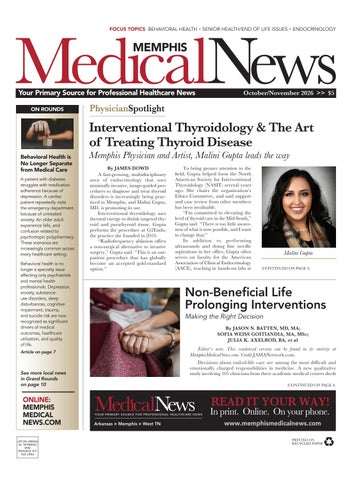
Memphis Physician and Artist, Malini Gupta leads the way By JAMES DOWD A fast-growing, multidisciplinary area of endocrinology that uses minimally invasive, image-guided procedures to diagnose and treat thyroid disorders is increasingly being practiced in Memphis, and Malini Gupta, MD, is promoting its use. Interventional thyroidology uses thermal energy to shrink targeted thyroid and parathyroid tissue. Gupta performs the procedure at G2Endo, the practice she founded in 2010. “Radiofrequency ablation offers a non-surgical alternative to invasive surgery,” Gupta said. “This is an outpatient procedure that has globally become an accepted gold-standard option.”
Malini Gupta (CONTINUED ON PAGE 3)
Non-Beneficial Life Prolonging Interventions Making the Right Decision By JASON N. BATTEN, MD, MA; SOFIA WEISS GOITIANDIA, MA, MSc; JULIA K. AXELROD, BA, et al Editor’s note: This condensed version can be found in its entirety at MemphisMedicalNews.com. Credit JAMANetwork.com.
Article on page 7
Decisions about end-of-life care are among the most difficult and emotionally charged responsibilities in medicine. A new qualitative study involving 101 clinicians from three academic medical centers sheds
See more local news in Grand Rounds on page 10
ONLINE: MEMPHIS MEDICAL NEWS.COM
To bring greater attention to the field, Gupta helped form the North American Society for Interventional Thyroidology (NASIT) several years ago. She chairs the organization’s Ethics Committee, and said support and case review from other members has been invaluable. “I’m committed to elevating the level of thyroid care in the Mid-South,” Gupta said. “There is too little awareness of what is now possible, and I want to change that.” In addition to performing ultrasounds and doing fine needle aspirations in her office, Gupta often serves on faculty for the American Association of Clinical Endocrinology (AACE), teaching in hands-on labs at
(CONTINUED ON PAGE 4)
READ IT YOUR WAY!
In print. Online. On your phone. Arkansas > Memphis > West TN
www.memphismedicalnews.com PRINTED ON RECYCLED PAPER
PRST STD U.S. POSTAGE PAID FRANKLIN, TN PERMIT NO.357
2 > OCTOBER/NOVEMBER 2026
memphismedicalnews.com
Interventional Thyroidology, continued from page 1 these meetings. She served as AACE chair of Thyroid Disease State Network in 2025, and is a candidate for the AACE Board of Directors. “The work I do is to increase awareness of thyroid issues, because that landscape is changing and I want patients to benefit from research Untitled, Malini Gupta and new techniques,” Gupta said. “There and trained at the University of are many conditions related to the Tennessee Health Science Center. thyroid that are prevalent across In addition to her medical work, the Mid-South, including diabetes, Gupta finds great satisfaction in purand we must continue to update our suing creative outlets. After launching medical practices to offer the best care G2Endo, Gupta found that she could possible.” use the arts to teach her patients about Gupta grew up in Memphis in endocrinology. She uses non-toxic a household where endocrinology medical waste as her medium in her was the family business. Her father, art, and collects outdated textbooks, Dr. Ramesh Gupta, is a respected old journals, contact lens cases, and rheumatologist and immunologist. plastic vial flip tops to create works And she is passionate about raising of art. the standards for thyroid and solid “I’m always doing something in tumor care, in the arts to edupart because she cate patients no longer has a and express my thyroid. creative side,” “I found my Gupta said. own cancer while “There’s so much fixing my ultrato learn, and I sound machine,” love exploring Gupta said. new things. I find “It has really great satisfaction helped me better in creating and understand what sharing.” patients need.” Many of Gupta, who the pieces bring has a special attention to the interest in thyissue of endoroid eye disease, crine disrupting pituitary disease, chemicals, Gupta and autoimmune said. Locally, she thyroid disease, hopes to encourhas been invited age schools and to speak on these hospitals to Mottenai: Regret Over topics in national adopt the reducwebinars and lecMedical Waste, Malini Gupta tion of plastics, tures in India and Styrofoam, and Indonesia. She flame retarconducts clinical dants and start more eco-sustainable research through Shelby Research, practices. founded by her father. Gupta emphasized that while “Working with my father is one considered a relatively new area of of the great pleasures of my career,” research, environmental endocrinolGupta said. “I’ve learned so much ogy is vitally important. One of her from him, not only in the medical goals is to bring greater awareness of field, but also in realizing the imporhow these exposures impact health. tance of work-life balance.” A graduate of St. Mary’s “There is a growing acknowlEpiscopal School, Gupta received edgement that chemicals and plastics bachelor’s degrees in biology and change the way humans metabolize English Literature and Creative hormones,” Gupta said. “We have Writing from Washington University. a responsibility to keep pushing ourShe won awards in medical school at selves to help create better lives for University College Cork in Ireland, others.” MEMPHISMEDICALNEWS.COM
Your patients shouldn’t have to wait any longer. Living with hip or knee pain changes everything. Getting relief shouldn’t mean waiting months for a consult. OrthoSouth’s growing team of joint replacement specialists helps patients move more quickly from consultation to treatment.
orthosou th. o rg | 901.937.3242 SCAN TO LEARN MORE
ORTHOPEDICS & SPINE
2026
OrthoSouth Germantown ASC has been named a Best Ambulatory Surgery Center by both Newsweek and U.S. News & World Report.
OCTOBER/NOVEMBER 2026
> 3
Non-Beneficial Life Prolonging Interventions, continued from page 1 light on how physicians and other health care professionals approach situations in which life-prolonging treatments are unlikely to improve patient outcomes or quality of life. The fi ndings reveal both the challenges clinicians face when following established ethical guidelines and the alternate strategies some use when those approaches prove difficult to implement. Researchers interviewed attending physicians, trainees, advanced practice clinicians, nurses, chaplains, and social workers from emergency medicine, hospital medicine, critical care, geriatrics, and palliative care. Participants described the realities of caring for seriously ill patients in a health care system that often defaults toward continuing treatment. Clinicians reported that while professional society guidelines emphasize shared decision-making and formal institutional processes, real-world circumstances frequently create barriers to those recommended pathways. The study identified six distinct decision-making approaches used to limit potentially nonbeneficial life-prolonging interventions. These interventions can include mechanical ventilation, dialysis,
cardiopulmonary resuscitation, transfer to intensive care, and other treatments designed to extend life when recovery may be unlikely. The framework developed by researchers illustrates a continuum of physician influence. At one end are approaches centered on providing information and supporting patient or family choice. At the other end are approaches in which physicians or institutions take a more direct role in limiting interventions. The first approach involves providing an informed choice. Physicians present options, including those that limit treatment, while explaining likely outcomes, quality of life, and prognosis. Clinicians reported that carefully framing information often helps patients and families make decisions that align with realistic expectations. A second approach involves making a professional recommendation. Rather than simply listing options, physicians actively recommend limiting interventions they believe are unlikely to provide meaningful benefit. Families retain the ability to choose differently, but the recommendation offers guidance during a diffi cult decision-making process.
The third approach, stating a plan to limit interventions, occupies a middle ground. In this scenario, a physician proposes a care plan and proceeds unless the patient or surrogate objects. Respondents explained that some families appreciate this approach because it reduces the emotional burden of making a lifeending decision entirely on their own. The remaining approaches move beyond the boundaries of traditional shared decision-making. Physicians may explicitly decline to off er a treatment they view as inappropriate, or they may omit discussion of interventions they believe would not benefit the patient. These approaches remove some options from consideration and can significantly influence the course of care. The sixth and fi nal approach involves invoking a formal institutional process to limit treatment despite objections from patients or family members. Such processes typically involve ethics committees, hospital leadership, or established policies designed to address disputes over potentially nonbeneficial treatment. Clinicians consistently described this option as a last resort and one that is used relatively rarely.
A central fi nding of the study is that clinicians often struggle to follow the approaches recommended in professional guidelines. Shared decision-making, while ethically valued, can become prolonged and emotionally exhausting. Participants described situations in which families wrestled with guilt, uncertainty, and grief while trying to decide whether to continue aggressive treatment. Multiple family meetings sometimes occurred over days or weeks before consensus was reached. During these delays, clinicians worried about patient suffering. Respondents recounted cases in which patients remained restrained, underwent invasive procedures, or continued receiving burdensome treatments while family members struggled to accept a poor prognosis. Many clinicians reported significant moral distress when they felt treatments were causing more harm than benefit. The emotional burden extended beyond patients and families. Nurses, physicians, and other members of the care team described feelings of frustration and ethical conflict when they believed they were providing interventions that prolonged suffering without improving outcomes. continued on page 6 >
feel strong feel confident
feel your best. All your rehab needs in one place: Home.
Inpatient | Outpatient | Physical | Occupational | Speech | Aquatic 4 > OCTOBER/NOVEMBER 2026
MEMPHISMEDICALNEWS.COM
Together, we are
stronger. Collaboration and Innovation For physicians seeking an evidence-based option for patients with treatment-resistant depression, Lakeside Behavioral Health System offers a comprehensive Transcranial Magnetic Stimulation (TMS) outpatient program. Our non-invasive, FDA-cleared TMS therapy targets the neurocircuitry associated with mood regulation, providing an alternative for patients who have not responded adequately to medication. We offer a specialized referral process especially for healthcare professionals to help make the admissions process easier and more efficient. We accept most insurances.
We Can Help Direct referrals: 901-598-7700
Individual results may vary. There are risks associated with any medical procedure. Talk with your doctor about these risks to find out if Transcranial Magnetic Stimulation (TMS) is right for you.
2911 Brunswick Road | Memphis, TN 38133 | lakesidebhs.com Physicians are on the medical staff of Lakeside Behavioral Health System, but, with limited exceptions, are independent practitioners who are not employees or agents of Lakeside Behavioral Health System. The facility shall not be liable for actions or treatments provided by physicians. For language assistance, disability accommodations and the nondiscrimination notice, visit our website. Model representations of real patients are shown. 264865621-4936838 10/26
MEMPHISMEDICALNEWS.COM
OCTOBER/NOVEMBER 2026
> 5
Non-Beneficial Life Prolonging Interventions, continued from page 4 Some respondents acknowledged that these experiences infl uenced their willingness to rely exclusively on shared decision-making in every circumstance. Institutional processes presented a different set of challenges. Clinicians reported concerns that invoking ethics committees or formal policies could damage relationships with family members and create lasting resentment. Some feared legal action, media scrutiny, or administrative confl ict. Others noted that institutional processes
are only effective when supported by a united clinical team and hospital leadership. Because of these challenges, clinicians sometimes turned to alternate approaches that are not explicitly supported in professional society policy statements. Respondents described signifi cant variation in how individual physicians and hospitals approached these situations. Some clinicians felt strongly that treatments unlikely to provide meaningful benefi t should not be offered. Others worried that
limiting options risked imposing physician values on patients and families. The study found considerable disagreement regarding the ethical acceptability of these alternate approaches. Some clinicians argued that physicians are not obligated to off er interventions they believe will not help the patient. Others cautioned that assumptions about quality of life can vary widely and may not reflect the values of individual patients. Participants also highlighted
differences across specialties. Surgeons have long exercised discretion in determining whether an operation is appropriate, but respondents questioned whether hospitalists, intensivists, and other specialists should have similar authority when deciding whether to offer interventions such as dialysis, mechanical ventilation, or resuscitation. Another important theme was uncertainty. Clinicians were often unsure where ethical boundaries should be drawn. For example, respondents noted that withholding discussion of a highly specialized continued on next page >
Alzheimer’s Disease Research Study Are you or someone you know showing signs of Alzheimer’s Disease?
PUBLISHER Pamela Z. Haskins pamela@memphismedicalnews.com EDITOR P L Jeter editor@memphismedicalnews.com PHOTOGRAPHER Greg Campbell ADVERTISING INFORMATION 501.247.9189 Pamela Z. Haskins
You may be able to participate in the M25-804 Research Study if you are:
• Between the ages of 50 and 90 • Known to have increased risk of, showing signs of, or diagnosed with Alzheimer’s Disease
GRAPHIC DESIGNER Sarah Reimer sarah@memphismedicalnews.com CONTRIBUTING WRITERS Julia K. Axelrod Jason N. Batten James Dowd Sofia Weiss Gotanda All editorial submissions and press releases should be sent to editor@memphismedicalnews.com All press releases sent to Memphis Medical News for Grand Rounds placement are the responsibility of the sender for accuracy.
If you qualify and choose to participate, you will receive all study-related visits, tests, and study drugs at no cost. You may be reimbursed for travel expenses. If you are interested in participating, the study doctor or staff will review additional study criteria with you.
Subscription requests can be mailed to the address below or emailed to pamela@memphismedicalnews.com. Memphis Medical News© is now privately and locally owned by Ziggy Productions, LLC. P O Box 164831 Little Rock, AR 72216-4831 President: Pamela Z. Haskins
For more information, please contact: Clinical Research Center, Neurology Clinic, P.C.
email: research@neuroclinic.org or call: 901-300-2755 M25-804 Patient Recruitment Poster | V1.0 | 11Mar26 | ABBV-US-0593-RM
Reproduction in whole or in part without written permission is prohibited. Memphis Medical News will assume no responsibility for unsolicited materials. All letters sent to Memphis Medical News will be considered the newspaper’s property and unconditionally assigned to Memphis Medical News for publication and copyright purposes.
memphismedicalnews.com 6 > OCTOBER/NOVEMBER 2026
MEMPHISMEDICALNEWS.COM
intervention might be viewed differently from withholding discussion of a more commonly used treatment. These distinctions contributed to variability in practice and uncertainty about what constitutes ethically appropriate care. Researchers argue that these alternate approaches can be understood as pragmatic workarounds. In other words, clinicians may resort to them when existing processes seem unable to address what they perceive as harmful or nonbeneficial treatment. Rather than viewing these decisions solely as departures from ethical norms, the study suggests they may reflect efforts to navigate a system that often favors continued intervention. The findings also highlight the broader culture of American hospitals. Participants described a persistent tendency toward initiating, escalating, and continuing life-prolonging treatment. Against that backdrop, physicians often feel compelled to actively redirect conversations when they believe additional treatment is unlikely to improve outcomes. Ultimately, the study raises important questions for health care organizations, policymakers, and
memphismedicalnews.com
professional societies. While current guidelines emphasize shared decision-making and institutional review processes, clinicians report substantial practical and ethical challenges in implementing those recommendations. The gap between policy and clinical reality may help explain why alternative approaches continue to emerge in everyday practice. The authors conclude that additional discussion and professional consensus are needed regarding when, if ever, clinicians should limit life-prolonging interventions without a shared decision or formal institutional process. They also suggest that hospitals and professional organizations should develop strategies that better support clinicians, patients, and families facing these difficult choices. As medicine continues to grapple with questions about quality of life, patient autonomy, and the limits of treatment, this study offers a valuable framework for understanding how clinicians actually make decisions at the bedside. More importantly, it highlights the ongoing challenge of balancing ethical ideals with the realities of caring for patients nearing the end of life.
Behavioral Health is No Longer Separate from Medical Care A patient with diabetes struggles with medication adherence because of depression. A cardiac patient repeatedly visits the emergency department because of untreated anxiety. An older adult experience falls, and confusion related to psychotropic polypharmacy. These scenarios are increasingly common across every healthcare setting. Behavioral health is no longer a specialty issue affecting only psychiatrists and mental health professionals. Depression, anxiety, substance-use disorders, sleep disturbances, cognitive impairment, trauma, and suicide risk are now recognized as significant drivers of medical outcomes, healthcare utilization, and quality of life. As healthcare continues the march toward integrated care models, physicians in nearly every specialty are expected to identify behavioral health concerns, initiate appropriate interventions within their scope of practice, and coordinate care effectively. Several developments in 2026 underscore this shift and highlight why behavioral health has become a core component of modern medical practice. 1. Integrated Care Is Becoming the Standard The traditional approach of identifying a behavioral health concern and referring patients elsewhere is becoming increasingly inadequate.
Patients rarely present with purely medical or purely psychiatric conditions. Behavioral health concerns frequently affect treatment adherence, chronic disease management, symptom control, and recovery from illness. Likewise, chronic medical conditions often contribute to depression, anxiety, and other behavioral health challenges. Healthcare organizations are increasingly adopting collaborative models that combine primary care, behavioral health services, care management, and psychiatric consultation. For physicians, the important question is no longer simply whether a patient needs a referral. The more relevant question is: What behavioral health factors are affecting this patient’s medical care, and what can be addressed today? 2. Measurement-Based Care Is Expanding Behavioral health has traditionally depended heavily on clinical interviews and subjective assessment. While those remain essential, measurement-based care is becoming increasingly important. Validated tools such as the PHQ-9, GAD-7, and AUDIT-C provide clinicians with objective ways to establish a baseline and monitor response to treatment over time. The value of these instruments is not continued on next page >
OCTOBER/NOVEMBER 2026
> 7
Behavioral Health, continued from page 7 in replacing clinical judgment. Rather, they help answer a critical question: Is the patient improving? Patients whose symptoms remain unchanged despite treatment may require reassessment of diagnosis, medication strategy, adherence, psychosocial stressors, substance use, or treatment intensity. The most effective approach follows a straightforward cycle: Screen → Assess → Treat → Measure → Reassess For busy practices, even simple measurement strategies can improve clinical decision-making and help identify patients who require additional intervention. 3. Psychotropic Medication Stewardship Is Increasingly Important As healthcare systems place greater emphasis on medication safety and quality, psychiatric medication stewardship is receiving more attention. For many patients, psychotropic medications are highly effective and essential components of treatment. However, ongoing medication review is increasingly recognized as a best practice, particularly among older adults and medically complex patients. Clinicians should periodically evaluate: • Clinical benefit • Treatment duration • Adverse effects • Drug interactions • Polypharmacy risks • Monitoring requirements • Continued appropriateness of therapy The goal is not to reduce medication use indiscriminately. The goal is to ensure that every medication remains clinically justified and aligned with the patient’s overall treatment plan. This is particularly relevant as healthcare organizations continue to confront the challenges of polypharmacy, cognitive impairment, falls, and medication-related complications. 4. Substance-Use Disorders Have Become Mainstream Medical Conditions Substance-use disorders are increasingly encountered in primary care, emergency medicine, hospital medicine, pain management, obstetrics, and specialty practice settings. As a result, physicians must become comfortable identifying and addressing substance use as part of routine clinical care. Alcohol, opioids, stimulants, nicotine, cannabis, and prescription-drug misuse can significantly affect health outcomes and complicate management of other medical conditions. Importantly, identification should lead to action. Patients with substance-use disorders benefit most when healthcare organizations establish clear treatment pathways that include assessment, evidence-based treatment, referral resources, overdose prevention strategies, and follow-up. The expectation is that substanceuse disorders should be treated with the same systematic approach applied to 8 > OCTOBER/NOVEMBER 2026
other chronic diseases. 5. Stimulant Use Requires Greater Clinical Attention Although opioid-related morbidity has received substantial attention, stimulant use involving methamphetamine and cocaine remains a major clinical concern. Stimulant use can affect multiple organ systems and may present through cardiovascular complaints, sleep disturbances, psychosis, anxiety, depression, cognitive changes, and suicidality. For many physicians, stimulantuse disorder remains less familiar than opioid-use disorder. However, the associated medical and behavioral health consequences are often severe. Clinicians should maintain a high index of suspicion when evaluating patients with unexplained psychiatric symptoms, cardiovascular complications, or recurrent emergency care utilization. Recognition and referral pathways for stimulant-use disorder deserve the same attention increasingly given to opioid-related conditions. 6. Suicide Prevention Is Becoming a System Responsibility Suicide prevention is viewed as an organizational responsibility rather than solely an individual clinician responsibility. Screening remains important, but modern suicide prevention extends beyond a single assessment question. A positive screen should trigger a structured evaluation of: • Suicidal thoughts • Intent and planning • Access to lethal means • Psychiatric illness • Substance use • Protective factors • Available support systems Organizations are increasingly developing protocols that incorporate safety planning, crisis intervention, follow-up procedures, and care coordination. For physicians, documentation should reflect clinical reasoning and risk assessment rather than merely noting the absence or presence of suicidal ideation. 7. Every Practice Needs a Behavioral Health Crisis Plan Many clinicians are familiar with the 988 Suicide & Crisis Lifeline. Fewer are familiar with the broader crisis-care infrastructure available in their communities. Every medical practice should understand: • Local crisis response resources • Mobile crisis services • Psychiatric emergency services • Crisis stabilization programs • Post-crisis follow-up options Behavioral health emergencies often occur without warning. Having established pathways before a crisis arises improves both patient safety and clinician confidence. The objective is to reduce the need for improvised decision-making during high-risk encounters. 8. Telebehavioral Health Has Become Routine Telebehavioral health remains an important access point for patients who memphismedicalnews.com
face transportation barriers, geographic limitations, workforce shortages, or scheduling challenges. For many organizations, telebehavioral care has moved from an emergency solution to a permanent component of care delivery. However, clinicians must continue to consider: • Licensure requirements • Patient location • Emergency response procedures • Privacy protections • Controlled-substance prescribing requirements Importantly, providers conducting telebehavioral visits should know where high-risk patients are physically located and understand how emergency services can be activated if needed. The goal is to improve access while maintaining appropriate safety standards.
Healthcare organizations and clinical practices should focus on several practical priorities: • Establish clear behavioral health screening and response processes. • Incorporate measurement-based care when appropriate. • Review psychiatric medications systematically. • Develop defined pathways for substance-use disorders. • Strengthen suicide prevention and crisis-response protocols. • Build relationships with behavioral health partners before urgent referrals are needed.
• Create governance frameworks for the appropriate use of AI. Most importantly, clinicians should recognize that behavioral health is increasingly part of routine patient care rather than a separate domain managed exclusively by specialists. The Bottom Line The most significant behavioral health development of 2026 is not a new medication, technology platform, or federal initiative. It is the continued integration of behavioral health into mainstream medical practice.
Physicians do not need to become psychiatrists. They do, however, need to become increasingly comfortable recognizing behavioral health conditions, identifying risk, initiating appropriate interventions, and coordinating care across disciplines. The future of healthcare will depend less on whether a problem is categorized as “medical” or “behavioral” and more on whether clinicians can deliver coordinated, patient-centered care that addresses both. That shift is already underway, and it is affecting virtually every medical specialty.
9. AI and Behavioral Health Data Sharing Are Reshaping Clinical Practice Artificial intelligence is beginning to influence behavioral healthcare through documentation tools, decision support systems, patient communication platforms, and workflow automation. At the same time, improved interoperability and behavioral health data exchange may help address long-standing information gaps between medical, psychiatric, and addiction-treatment providers. These developments hold considerable promise. Better information sharing can support care coordination, reduce duplication, and provide clinicians with a more complete view of patient care. However, AI also introduces important questions regarding validation, privacy, bias, reliability, and accountability. Healthcare organizations should approach AI implementation thoughtfully and maintain clear governance standards. While AI may support clinical decision-making, responsibility for patient care remains with the clinician. 10. Treatment Options Continue to Expand Behavioral health treatment continues to evolve rapidly. New medications, expanded indications, and emerging therapies are creating additional options for patients with psychiatric and substance-use disorders. At the same time, ongoing research into psychedelic-assisted therapies continues to generate interest among clinicians and patients alike. While innovation is encouraging, physicians should maintain a disciplined, evidence-based approach. New does not necessarily mean better for every patient. As the treatment landscape expands, clinicians must remain current regarding indications, contraindications, safety considerations, monitoring requirements, and the quality of supporting evidence. What Physicians Should Do Now Despite the pace of change, the implications for most physicians are straightforward. memphismedicalnews.com
OCTOBER/NOVEMBER 2026
> 9
GrandRounds Baptist Memorial HospitalMemphis Names Daniel McFarland COO Daniel McFarland began his career at Baptist Memorial Health Care as a summer administrative resident in 2017 and has most recently served as assistant vice president of Robert Wood Johnson University Hospital in New Brunswick, New Daniel Jersey. McFarland After leaving Baptist Memorial, McFarland served at Baptist Health System in Little Rock as administrative graduate assistant from 2017 to 2018 and then joined Johns Hopkins Medicine in Baltimore as administrative fellow and interim assistant administrator
of cardiothoracic surgery from 2018 to 2020. He served as assistant administrator of adult cardiac surgery and pediatric heart services within The Johns Hopkins Hospital in Baltimore from 2020 to 2022, followed by service line administrator of neurosciences, spine and digestive services for The Brigham and Women’s Hospital in Boston from 2022 until 2024. He obtained his Bachelor of Science in Animal Science from the University of Arkansas and earned his Master of Health Administration from the University of Arkansas for Medical Sciences.
Le Bonheur Installs New Advanced IMRIS Surgical Theatre Le Bonheur Children’s Hospital has announced the arrival of its new IMRIS
Surgical Theatre, featuring a state-ofthe-art mobile 3 Tesla intraoperative MRI system designed to enhance precision during complex brain surgeries. The system reflects the hospital’s continued commitment to investing in advanced technology that supports care for children with neurological conditions. The investment further strengthens Le Bonheur’s nationally recognized Neuroscience Institute, among the nation’s leading pediatric Neurology and Neurosurgery programs. The new IMRIS Surgical Theatre features an innovative three-room configuration centered around a mobile 3 Tesla high-field MRI scanner that travels on demand between two dedicated operating rooms, allowing surgical teams to obtain high-resolution MRI images
Don’t miss out on being a part of
InCharge 2027! Publish date - end of January 2027!
Reserve your ad space now! Available Spaces go from 1/3 page up to a 2-page spread! Make your own size SPLASH! Special rates may apply! Call or email: Pamela Z. Haskins pamela@memphismedicalnews.com direct: 501.247-9189
Also send Nominations for Memphis Healthcare Leaders: pamela@memphismedicalnews.com
during procedures without moving patients from the operating room. By providing real-time imaging during surgery, the system enables neurosurgeons to immediately assess results, confirm surgical objectives and make critical decisions while a procedure is still underway. The technology supports complex pediatric neurosurgical procedures, including brain tumor surgery, epilepsy surgery and other advanced neurological interventions. The system will become operational in 2027.
Campbell Clinic Continues Partnership with University of Memphis Tigers Athletics Campbell Clinic is proud to announce that Dr. Frederick M. Azar has been named Head Team Physician for the University of Memphis. Azar will work alongside Campbell Clinic partners Dr. Austin T. Hardaway and Dr. J. Houston Dove, who will also serve as team physicians. Campbell Clinic’s sports medicine team brings decades of experience caring for athletes at every level. Azar has Frederick Azar provided team physician coverage for University of Memphis Athletics for more than three decades. His experience includes more than 25 seasons with the NBA. At Campbell Clinic, Azar previously served as Chief of Staff and currently serves as the Harold B. Boyd Professor and Chair of the University of Tennessee Health Science - Campbell Clinic Department of Orthopaedic Surgery and Biomedical Engineering and the Director of the Sports Medicine Fellowship Program.
UTHSC Names Inaugural Director of Wellness The University of Tennessee Health Sciences has named Corinne Webster, PhD, LPC-MHSP, as its inaugural director
G. Coble Caperton Licensed Tennessee Attorney
46 years of experience
Practicing in the following areas: • Business and Commercial Law • Family Law • Personal Injury • Contracts Rule 31 General Civil/Family Mediator
901.526.6701 10 > OCTOBER/NOVEMBER 2026
MEMPHISMEDICALNEWS.COM
GrandRounds of Wellness, a newly created role connecting wellness efforts across the university’s Memphis, Nashville, Knoxville and Chattanooga campuses. In the role, Webster Corinne Webster oversees Student Counseling Services and supervises the counselors who provide therapy directly to students. She also serves as the mental health and wellness representative on UT Health Sciences’ CARE Team, co-leads alcohol and drug use education, and represents UT Health Sciences on the UT System Mental Health Collaborative. Webster holds a communication degree from the University of Texas, a master’s in counseling from Texas Woman’s University and a doctorate in counseling from the University of North Texas.
The approximately 34,000-squarefoot clinic includes 50 exam rooms and offers primary care, mental health, women’s health, audiology, clinical pharmacy, laboratory services, nutrition counseling, social work and telehealth. Veterans can also access same day primary care and mental health services, subject to availability, and schedule routine hearing evaluations without a referral. Five primary care providers support the clinic’s Patient Aligned Care Teams (PACT), with plans to expand to six providers in fiscal year 2027. The clinic currently has approximately 5,000 patients assigned to primary care, including pending assignments, with that population projected to grow more than 40 percent to approximately 7,200 Veterans. Women Veterans are the fastestgrowing demographic in the U.S. Veteran population, projected to represent 18 percent of all Veterans by 2040, according to VA. The Millington VA Clinic offers two dedicated women’s health exam rooms and two female providers, expanding access to comprehensive, gender-specific care closer to home. Future planned services include cardiology, endocrinology, gastroenterology, neurology, rheumatology, physical therapy and diagnostic radiology.
New Millington VA Clinic Expands Access to Care for Mid-South Veterans VA Memphis Healthcare System celebrated the June opening of the Millington VA Clinic during an October ribbon-cutting ceremony. Since the June opening, more than 3,500 veterans have received care at the clinic.
IN-HOME INFUSION THERAPY that fits your patients' schedule
Unravelling the Rising Cost of Living Understanding What Drives Higher Prices Can Help Improve Retirement Planning According to the Employee Benefit Research Institute’s 2024 Retirement Confidence Survey, 83% of workers are concerned that the higher cost of living will make it harder to save as much as they want toward retirement. If you’re like most retirement savers, you’ve likely had concerns over the rising cost of living over the past few years. And for younger workers, it’s the first time you’ve experienced an elevated inflation rate as an investor. The cost of living, which reflects the amount of money required to maintain a certain standard of living, is influenced by several forces. Better understanding these factors and how they fit into your retirement planning process can help you prepare for future financial challenges. It can also motivate you to create an investment strategy that aims to stay ahead of rising prices over the long term. In addition, it can help you forecast a more accurate budget to meet your needs during retirement.
Key Forces Behind the Rising Cost of Living 1. Inflation. Inflation is the general increase in prices of goods and services over time. It reduces purchasing power, meaning that consumers need more money to buy the same amount of goods and services. Inflation can be driven by excess demand over supply, rising production costs or other factors. 2. Housing costs. Housing is often the largest component of living expenses. Rising demand for housing, limited supply, and increased costs of construction and land can drive up home prices and rents. Urbanization and population growth further worsen
this issue, particularly in Chirag Chauhan, AIF®, CFP® major cities. 3. Wages and labor costs. When wages increase, businesses may pass these costs onto consumers in the form of higher prices. While wage growth can boost living standards, if it outpaces productivity, it can contribute to inflation and higher living costs. 4. Energy prices. Energy costs, including electricity, gas and fuel, significantly impact the cost of living. Fluctuations in global oil prices, geopolitical tensions and supply constraints can lead to higher energy costs, affecting transportation, heating and manufacturing expenses. 5. Healthcare costs. Rising healthcare costs, due to advancements in medical technology, increased demand for services and an aging population, contribute significantly to the overall cost of living. Higher insurance premiums and out-of-pocket expenses add to household financial burdens. 6. Education expenses. The cost of education, including tuition fees, books and related expenses, has been rising steadily. This places a financial strain on families and students, impacting their overall cost of living. 7. Supply chain disruptions. Events such as natural disasters, pandemics and trade conflicts can disrupt product supply chains, leading to shortages and higher prices for goods. These disruptions affect everything from food to consumer electronics, contributing to a higher cost of living.
Informational Sources: Nationwide: “How Does Inflation Affect Your Cost of Living” (March 26, 2024); Investopedia: “How Inflation Affects Your Cost of Living” (October 26, 2023); SoFi: “The 7 Factors That Cause Inflation” (September 28, 2023). LPL Financial and its advisors are only offering educational services and cannot offer participants investment advice specific to their particular needs. If you are seeking investment advice specific to your needs, such advisory services must be obtained on your own separate from this educational material. Kmotion, Inc., 12336 SE Scherrer Street, Happy Valley, OR 97086; www.kmotion.com ©2024 Kmotion, Inc. This newsletter is a publication of Kmotion, Inc., whose role is solely that of publisher. The articles and opinions in this newsletter are those of Kmotion. The articles and opinions are for general information only and are not intended to provide specific advice or recommendations for any individual. Nothing in this publication shall be construed as providing investment counseling or directing employees to participate in any investment program in any way. Please consult your financial advisor or other appropriate professional for further assistance with regard to your individual situation.
+
+
+
LOCALLY OWNED & OPERATED
PATIENT-FIRST APPROACH
SEAMLESS COORDINATION
PHONE
FAX
WEB
901-322-8380
901-328-5664
www.dcvcis.com
MEMPHISMEDICALNEWS.COM
Chirag Chauhan, MBA, AIF®, CFP® is the managing partner of Bluff City Advisory Group in Memphis, Tennessee. For more info, please visit bluffcityadvisory.com.
OCTOBER/NOVEMBER 2026
> 11
12 > OCTOBER/NOVEMBER 2026
memphismedicalnews.com